Suriname
Chapter 3. Suriname, a New Babylon
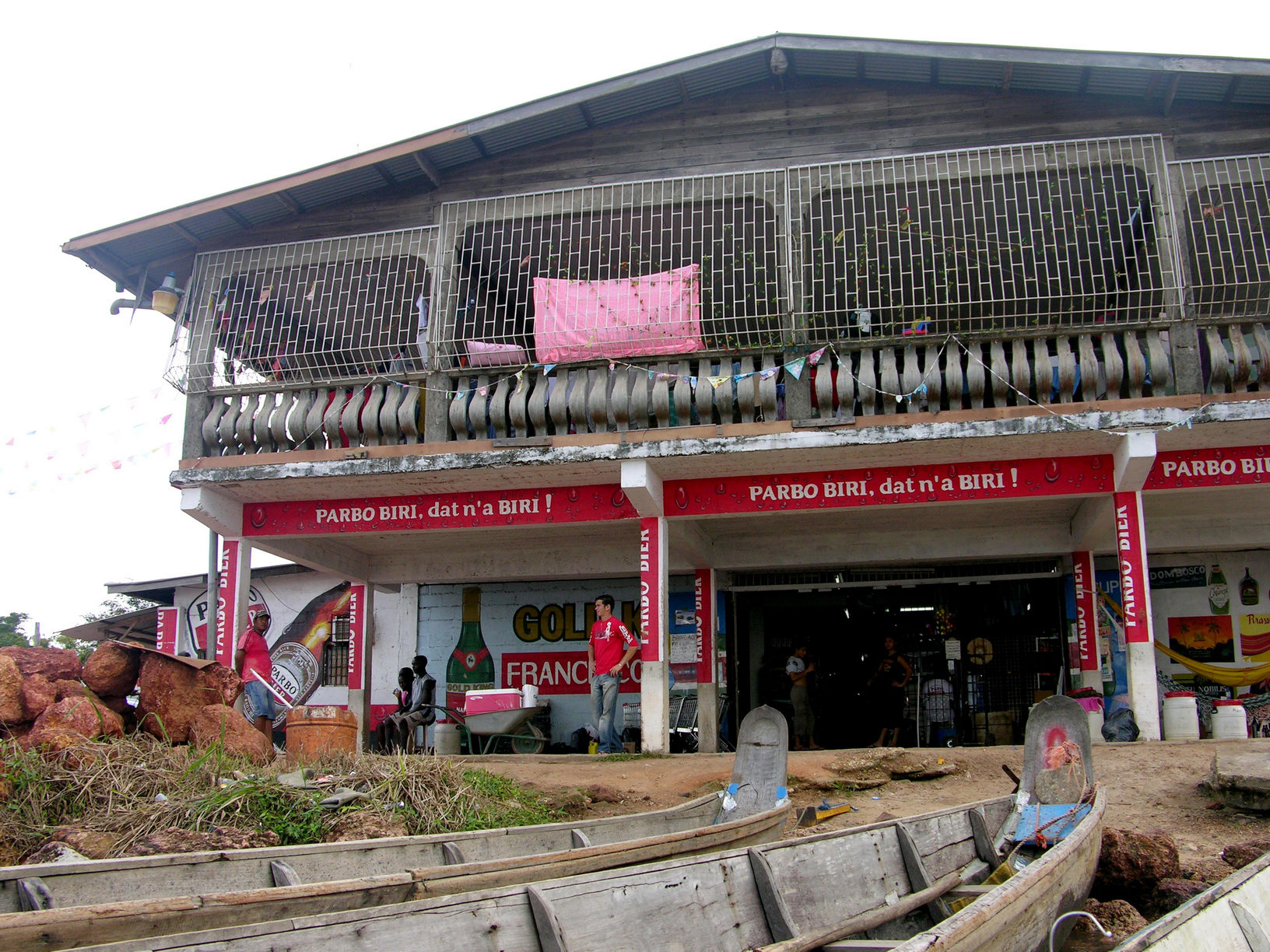
We crossed the Maroni River, Marowijne in Dutch, in a dugout and reached the town of Albina. Midway across, it emerged that some of the locals who'd jumped in weren't freeloading passengers at all, but taxi drivers. A boat is a place where a fussy European can't wave them away and run. After all, where could he go? All the crocodiles in the river might have died out long ago, but that didn't mean jumping overboard. So you have to listen to the boatman and the taxi driver giving you the hard sell. “He's a friend of mine, a good man. He's got lots of little children who are hungry. He needs your money, and so do I, for introducing you to the best taxi driver in Suriname.”
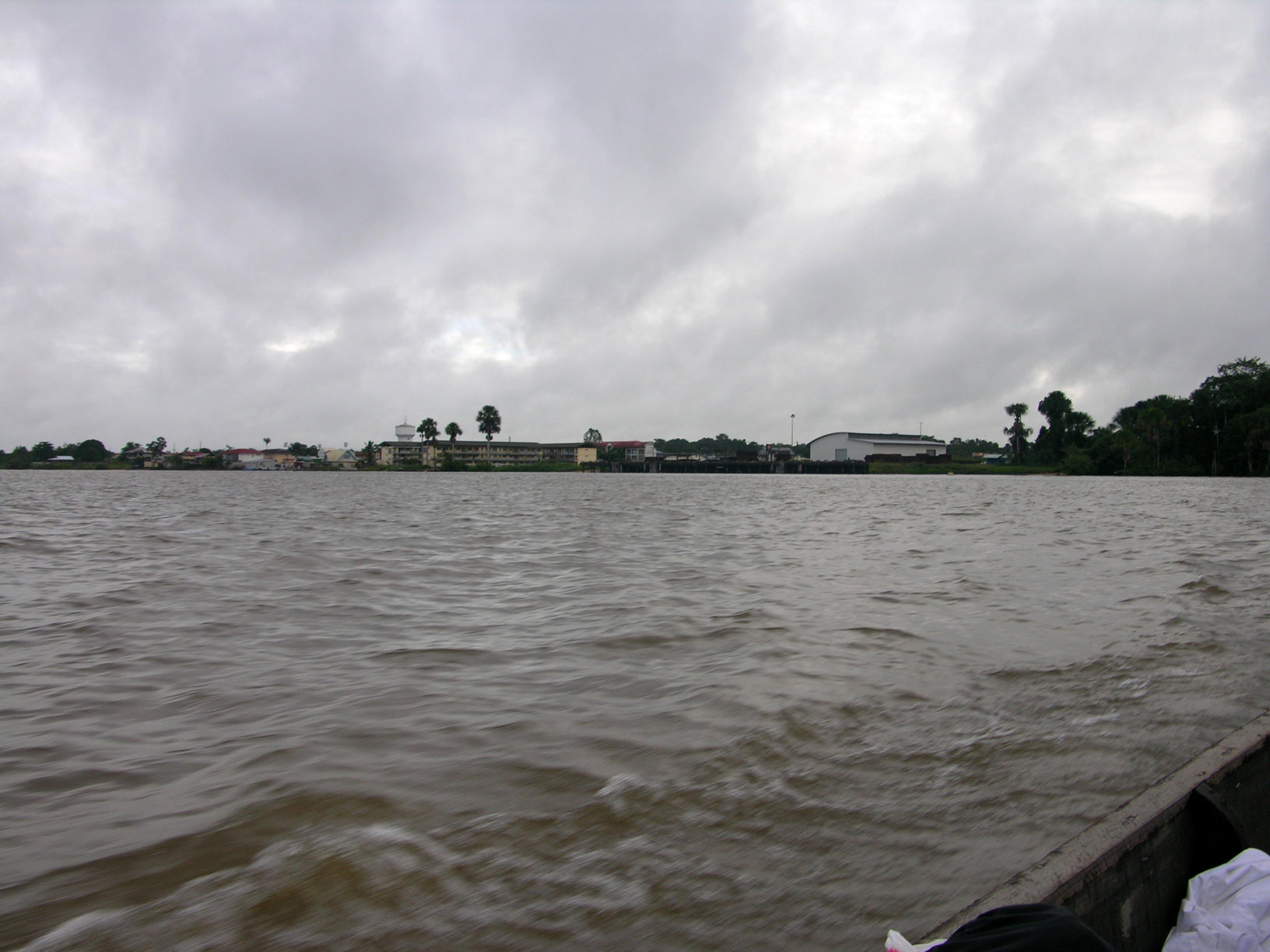
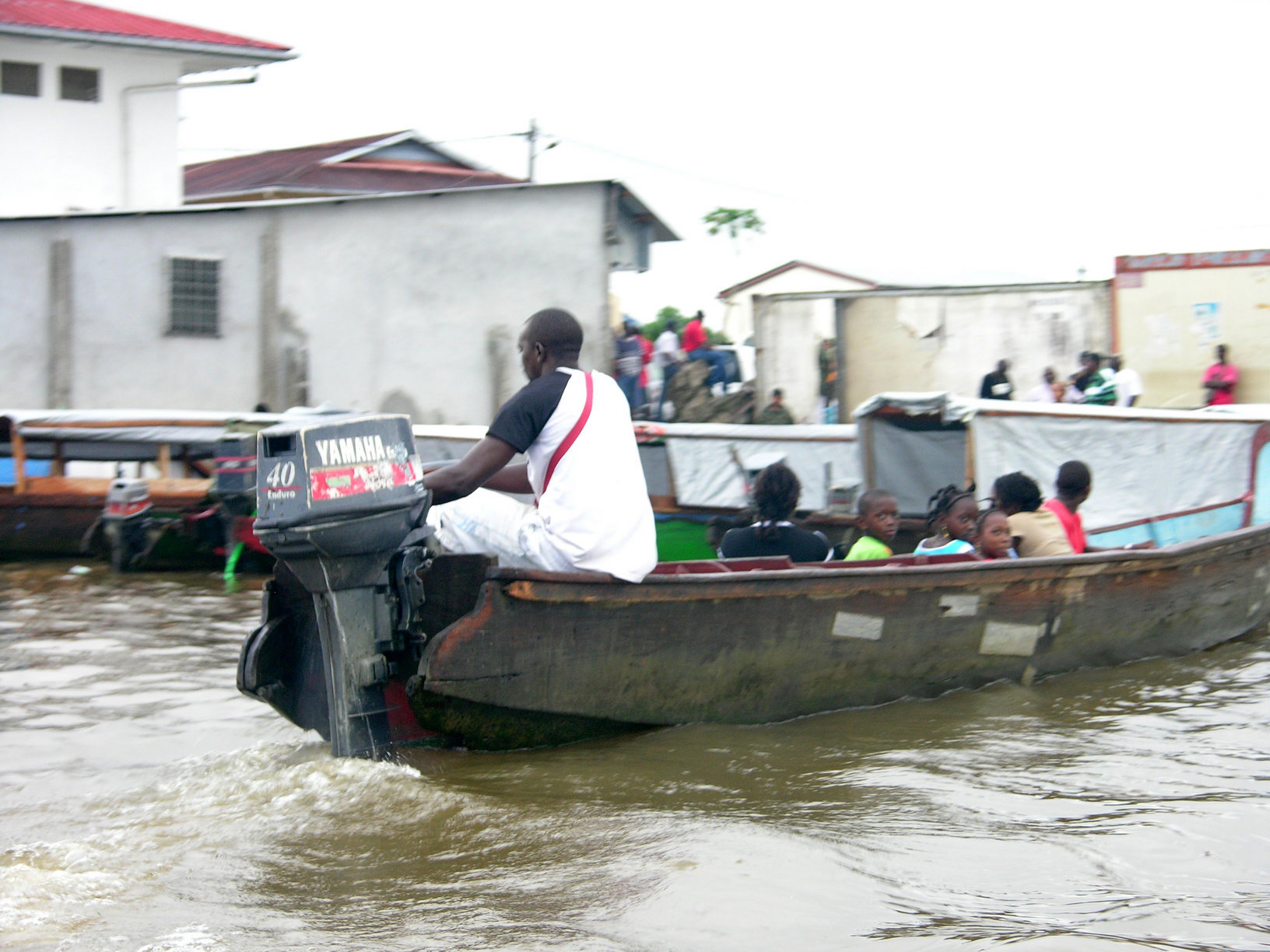
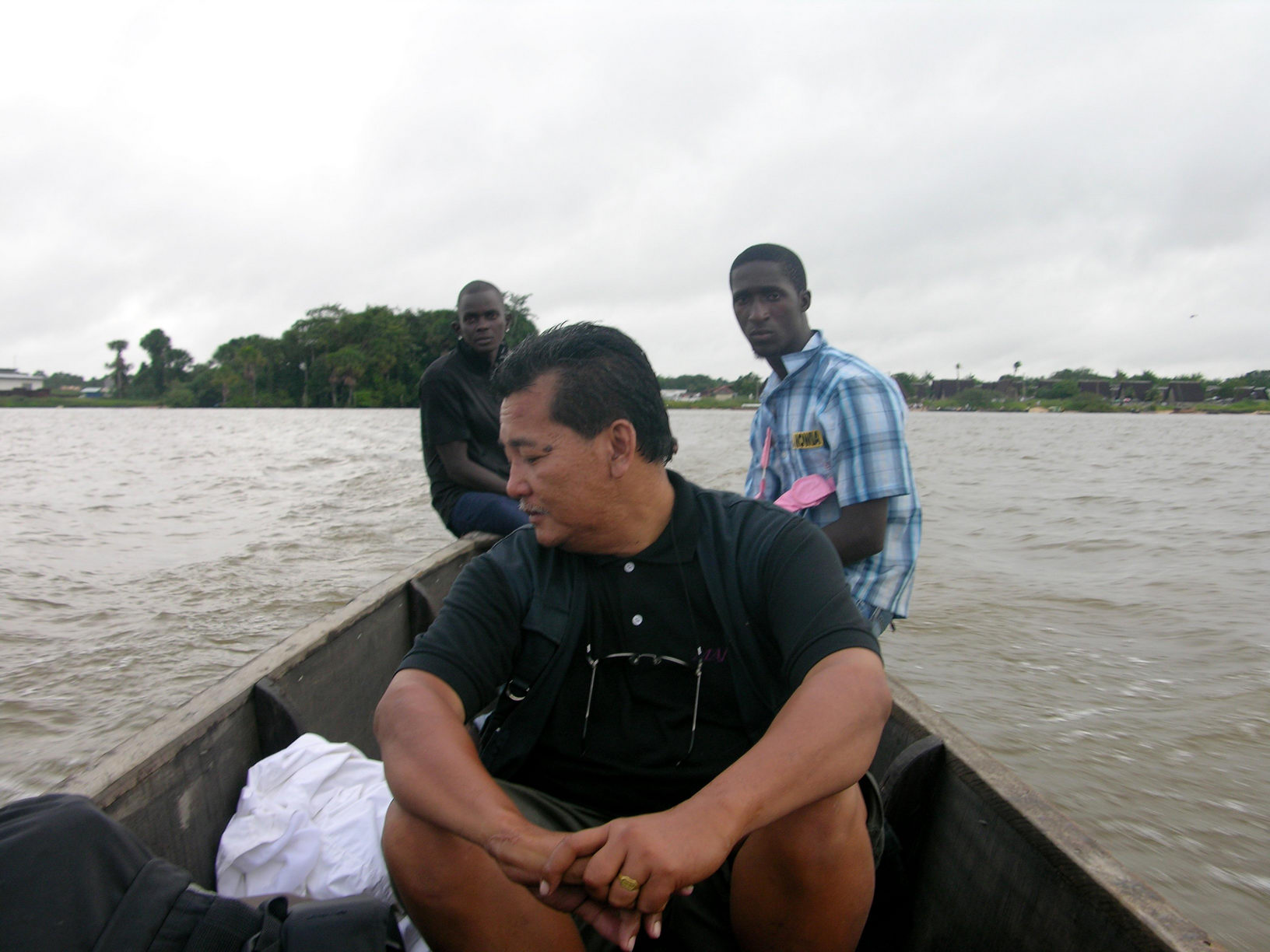
I hate being taken for a ride that easily. As a matter of principle I wasn't going with him. Especially since there was plenty of competition at the landing, an awful lot of it, and they all had little children. They were all hungry. They rushed up to the boat yelling, “I'm better, I won't rob you! That bandit there robbed and cheated two Frenchwomen yesterday!” The reply came back, “At least my car runs. Yours lost a wheel yesterday and you killed two Americans last year!” They pushed each other. It felt as though a fight could start any second.
One way or another, you have to choose. When I finally pointed at someone who wasn't the loudest, it turned out that the men on the landing weren't the taxi drivers themselves, but their agents. The show wasn't over. Now the drivers and their agent were arguing about who would take us, while the agent tried to get more for his services. I had to point at a car myself and name my own price, twenty per cent less than the one agreed before. It worked. We shook on it and they took us to immigration. The officer sat at a little table under a shelter in the open air. We were the only people there. Having missed having anything to do, he spent a long time looking at the passport, checking the entry form and asking about the hotel we'd put down as our address in Suriname. Out of boredom, I think, more than zeal for the job.
We were lucky. With our passports stamped, the border guard picked up his stamp and went home. It was about five in the evening. If we'd arrived ten minutes later, we'd have spent the night there.
Then it came out that they didn't want to drive us yet. They wanted to wait for two more passengers to appear at the landing so the car would be full. That wasn't our agreement. I opened the boot and said we'd go and take a shared minibus. It made no difference to us where we waited.
The ultimatum worked and soon our car was tearing at a tremendous speed along an appallingly rutted road. It seemed impossible to drive like that. Any moment we'd sail into a ditch or ram a truck coming the other way. There isn't much traffic and people drive down the middle, making room for oncoming vehicles at the last possible second. You start fearing for your life. The only way to calm down is to tell yourself that the value of a life here is close to zero, but the bloke owns a car. Battered as it is, it's worth actual money, a thousand or two dollars. If he's taking us for fifty euros, his business plan can't allow him to crash more than once in a thousand trips.
You might, of course, assume the driver was so upset at the fare that he'd decided to die today in particular.
Suriname drives on the left, which is surprising for a Dutch colony. Petrol cost 2.75 Surinamese dollars a litre (US$1), diesel SRD 2.65 (US$0.965).
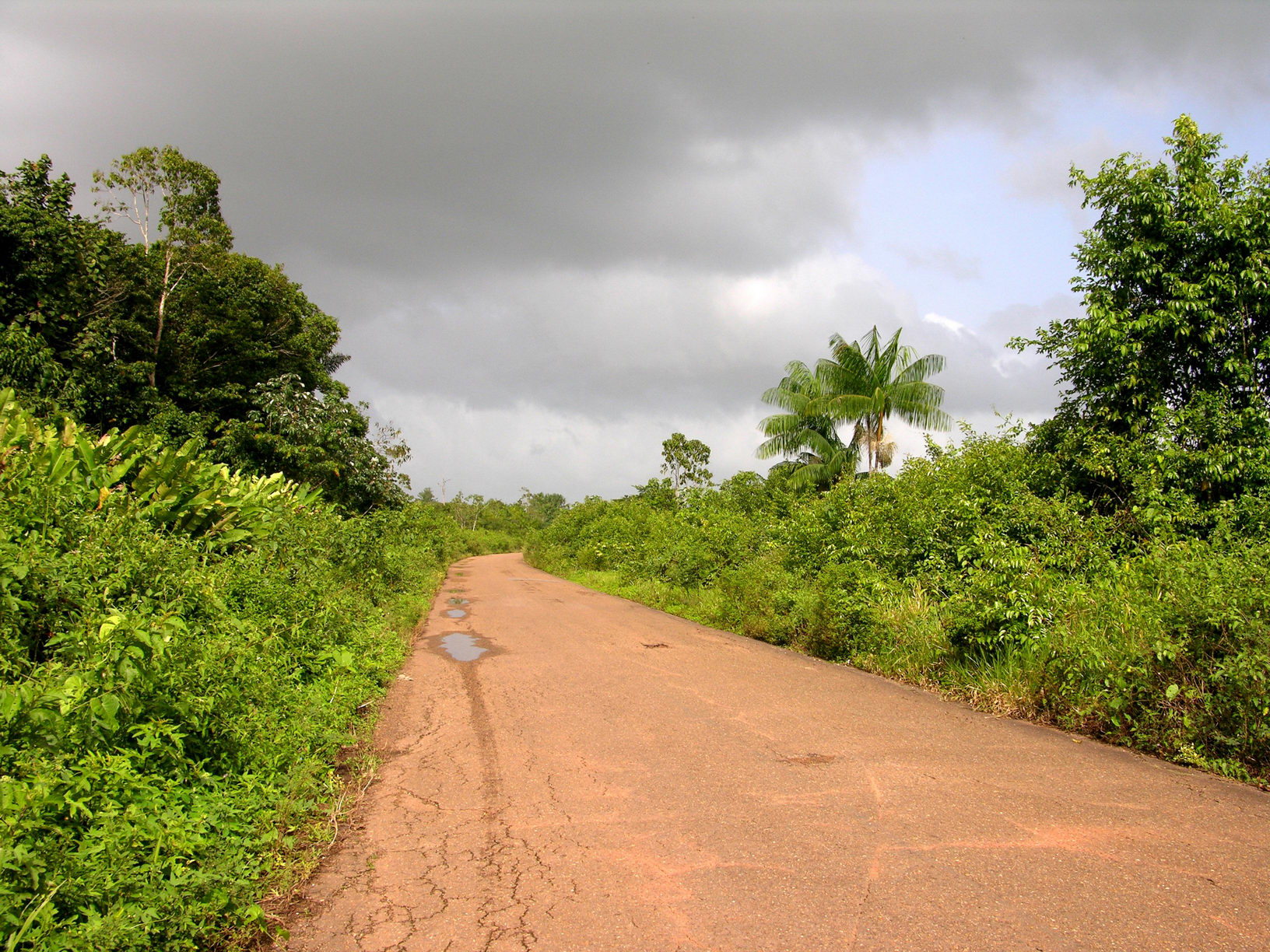
Paramaribo was 140 kilometres away and it took us two hours. The first half of the road goes through sparsely populated country. Once in a while you see a desperately poor village by the road. Then the built-up area starts and never lets up. The road is wider and better, but there are speed humps every hundred metres. Locally they're called drempels. A wonderfully colourful little word. I liked to think it came from “dream policemen”.
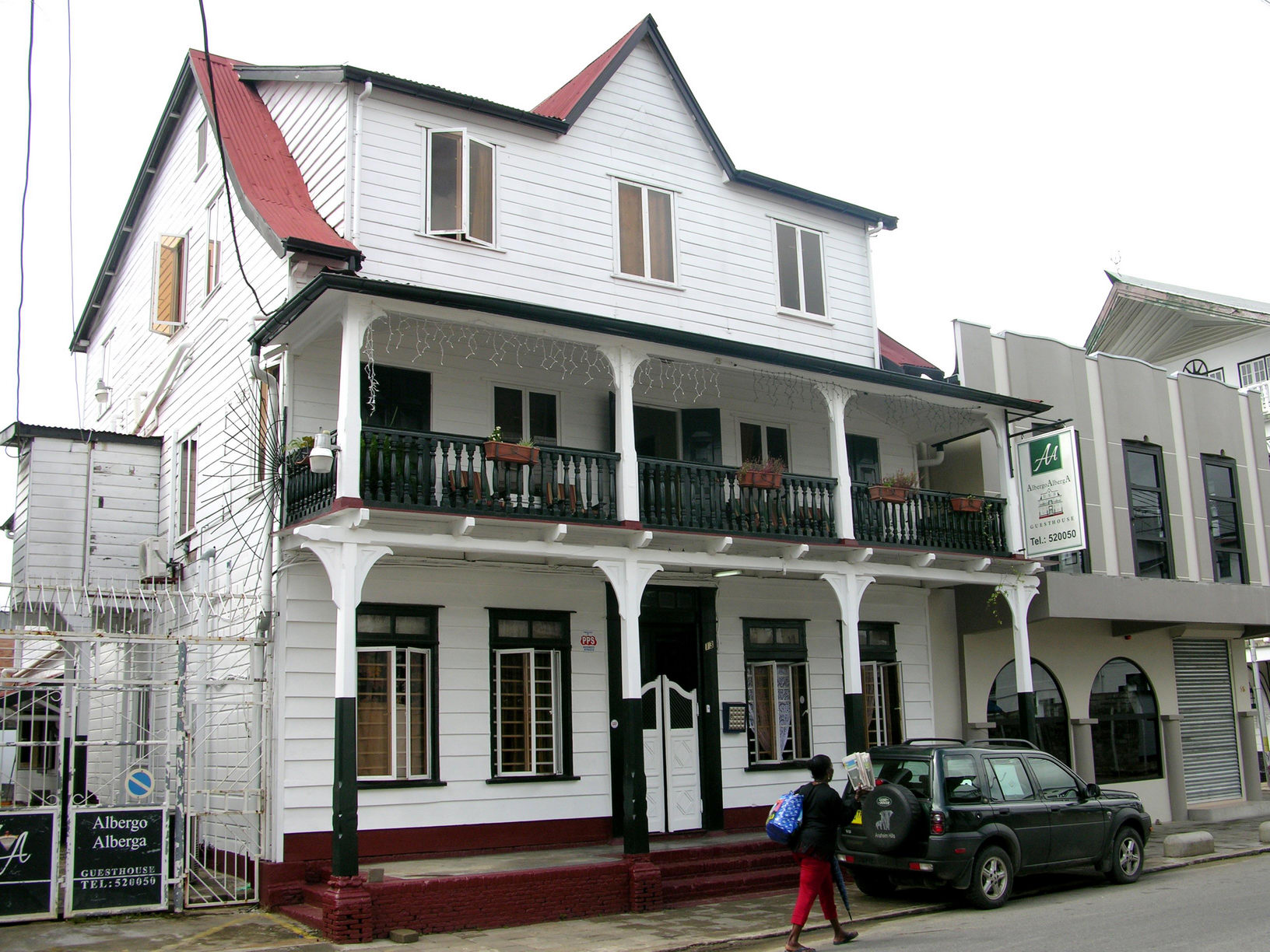
On Lonely Planet's advice we picked the Albergo Alberga, where thirty euros got us an air-conditioned room (5°49.597′N, 55°09.214′W). We wanted to eat. We'd had nothing but roadside buns all day. At eight in the evening finding food was quite a business. On top of that I was coming down with something and barely keeping up with Tanya, who never tired of looking for a place to eat. After an hour wandering around town we were about to give up and go to McDonald's. Then, unexpectedly, there was a little Chinese restaurant right opposite it. For thirty-eight Surinamese dollars we got an excellent portion of noodles with meat washed down with local lemonade.
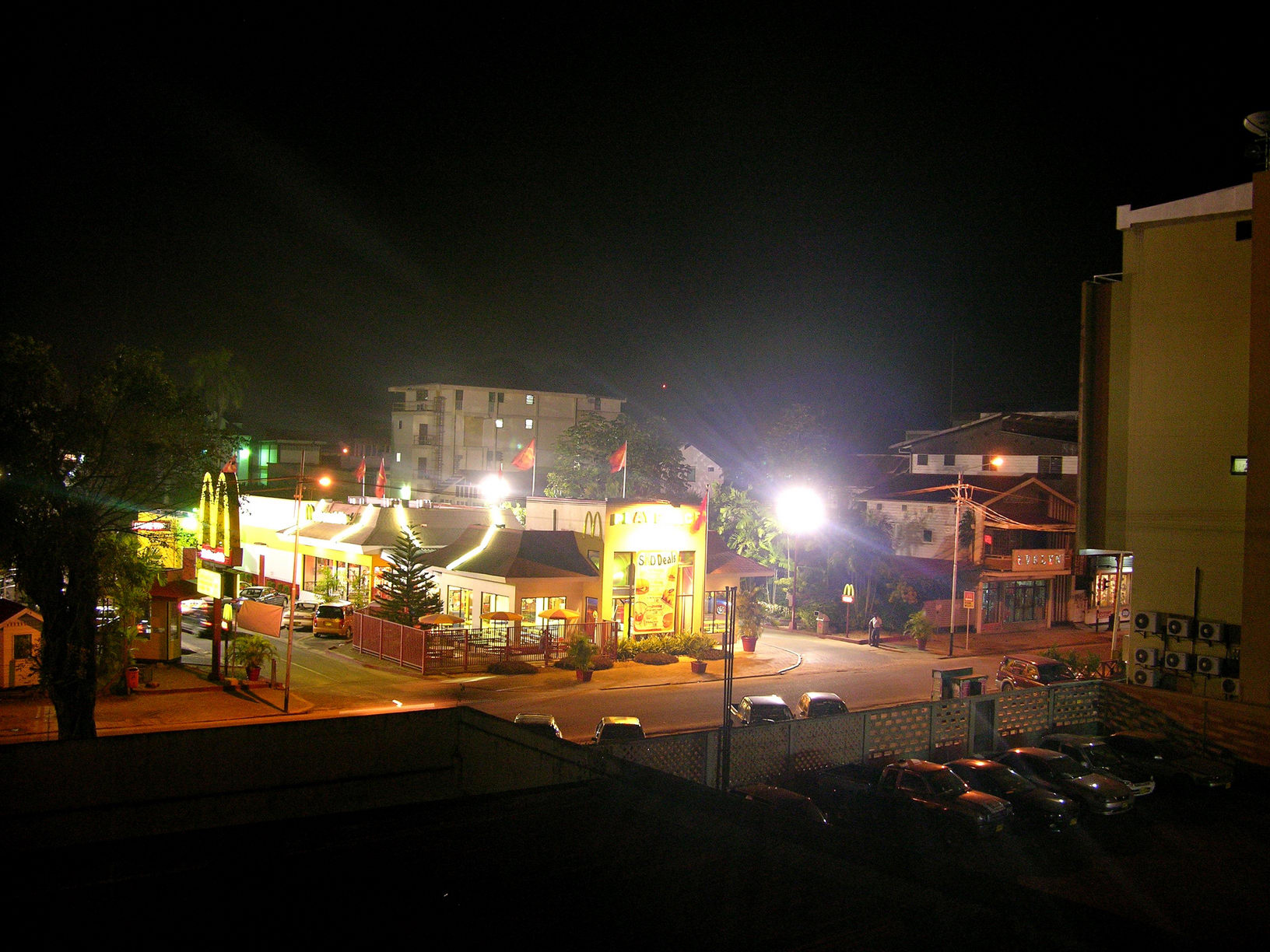
As in neighbouring French Guiana, just about all the restaurants are Chinese. Even in central Amsterdam there's a Surinamese restaurant with the words “Chinese cuisine” in parentheses after “Surinamese”.
According to Lonely Planet, Suriname has no cash machines and credit cards are accepted only in a few tourist places with a hefty surcharge. The latter was true, but there were plenty of cash machines. Some, or rather most, only took local cards. In the hope of getting lucky we put our card into every machine we came across, and the fifth time worked. The RBTT bank recognised our card and gave us money. Another interesting thing: it gave us the money at once, but it wasn't debited from our Russian Citibank account for three months.
Suriname has its own currency, the Surinamese dollar. The exchange rate was SRD 1 to US$0.364300. People don't have much faith in their own currency, to judge by the well-developed network of exchanges. They're not simply little counters attached to banks, they're drive-throughs. Like McDonald's. You drive up, roll down the window and change money without opening the door. You can walk up too, of course, but they say it's safer in a car. And this is in Paramaribo, supposedly the safest big city in South America. Perhaps it's a holdover from earlier times and the civil war twenty years ago.
As far as safety goes, things really do seem all right here. Possibly it's best not to walk near the market late in the evening, or around the jetties on the waterfront of the Suriname River, and especially not in the Palmentuin. We did, as it happened, and nothing happened to us. Still, the stares of the men sleeping rough near the port hardly put us at ease.
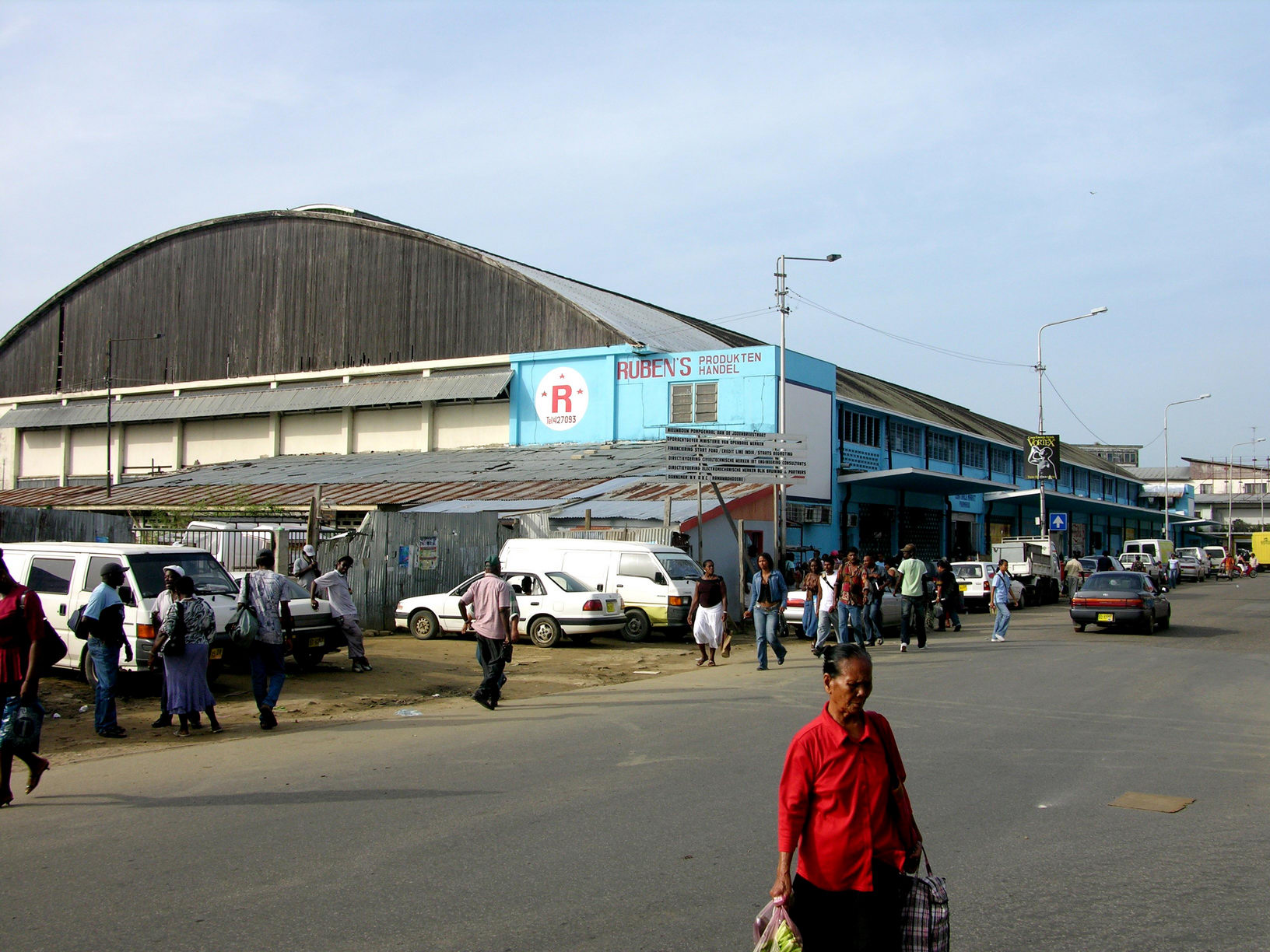
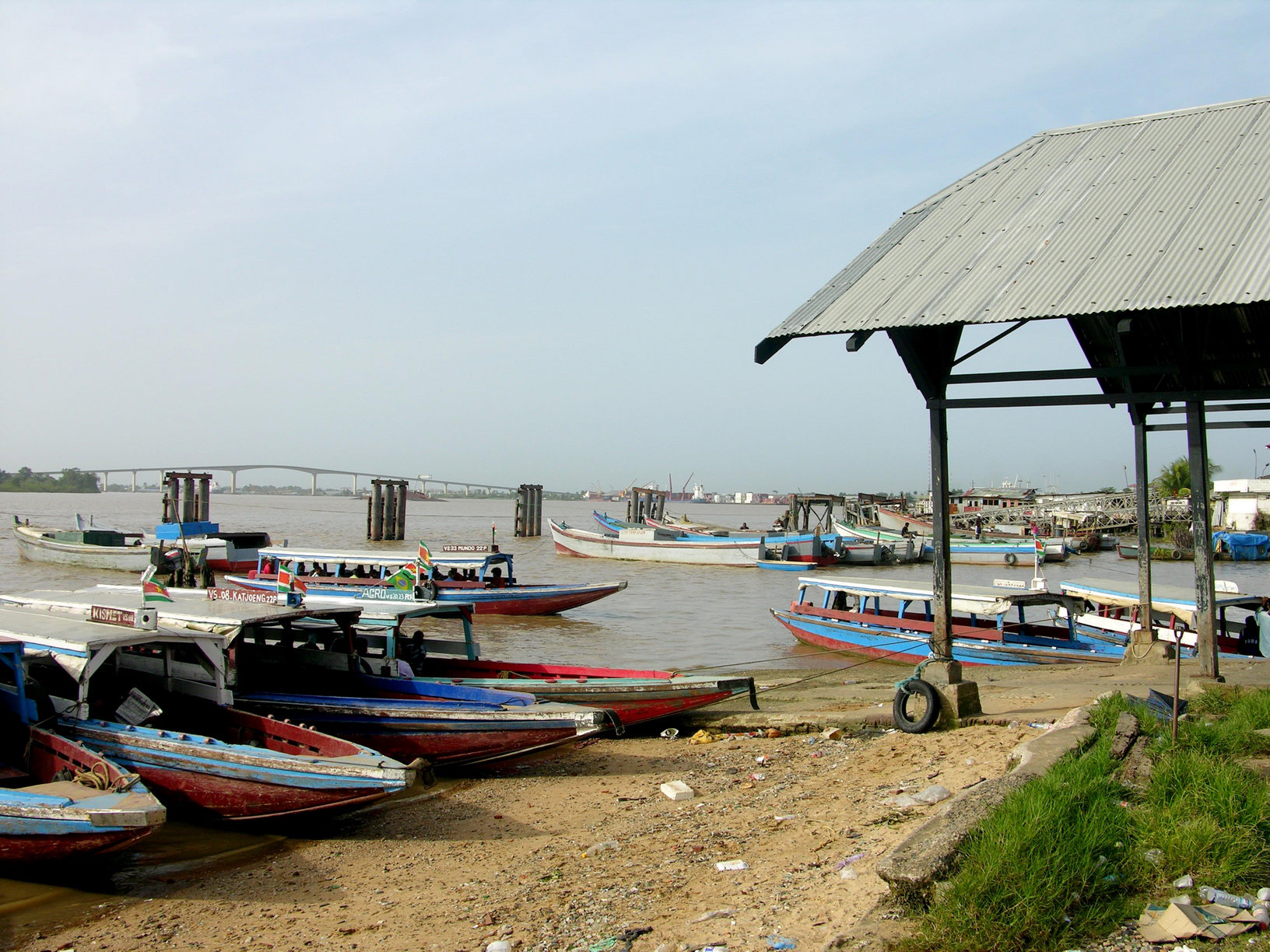
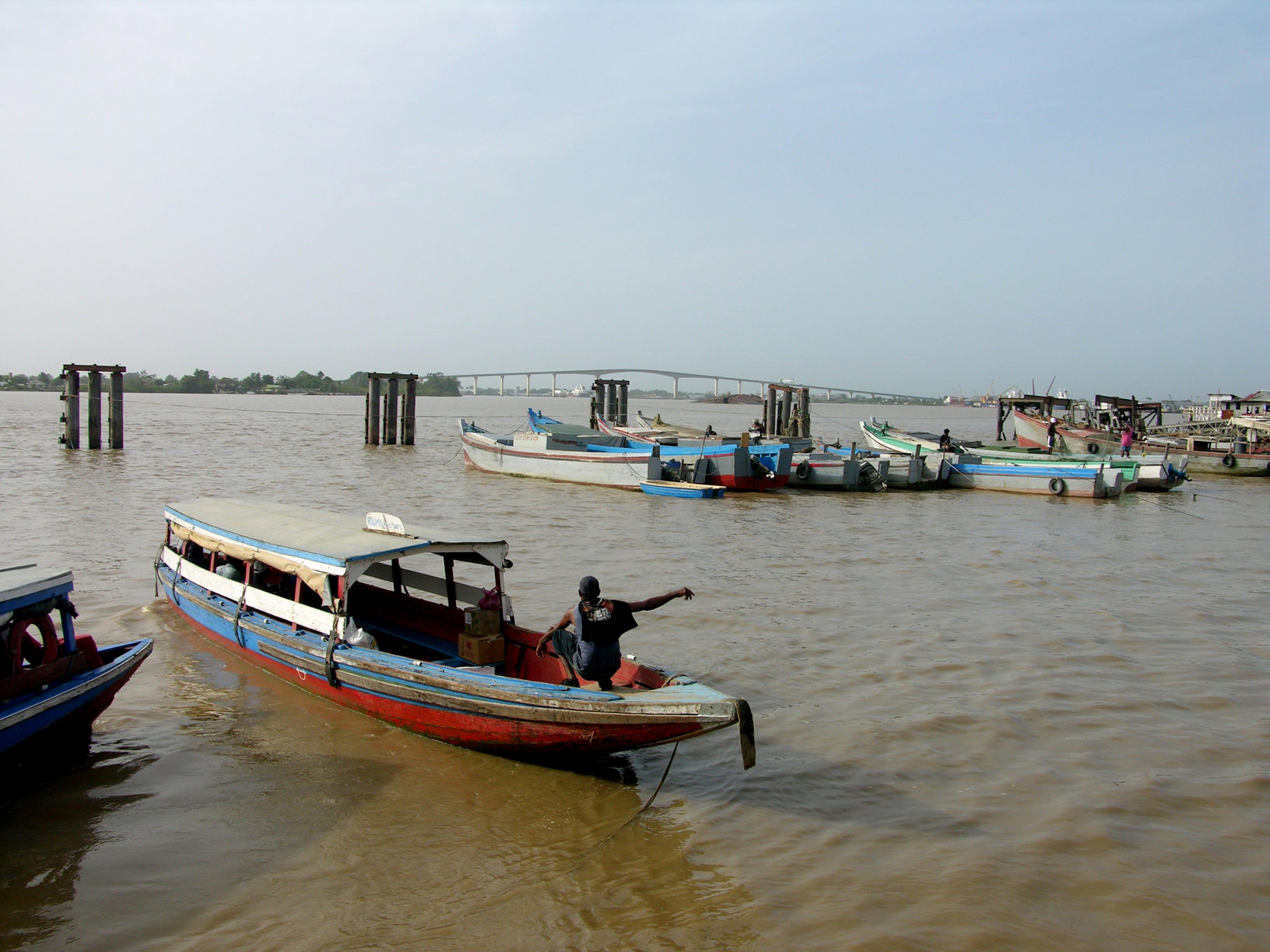
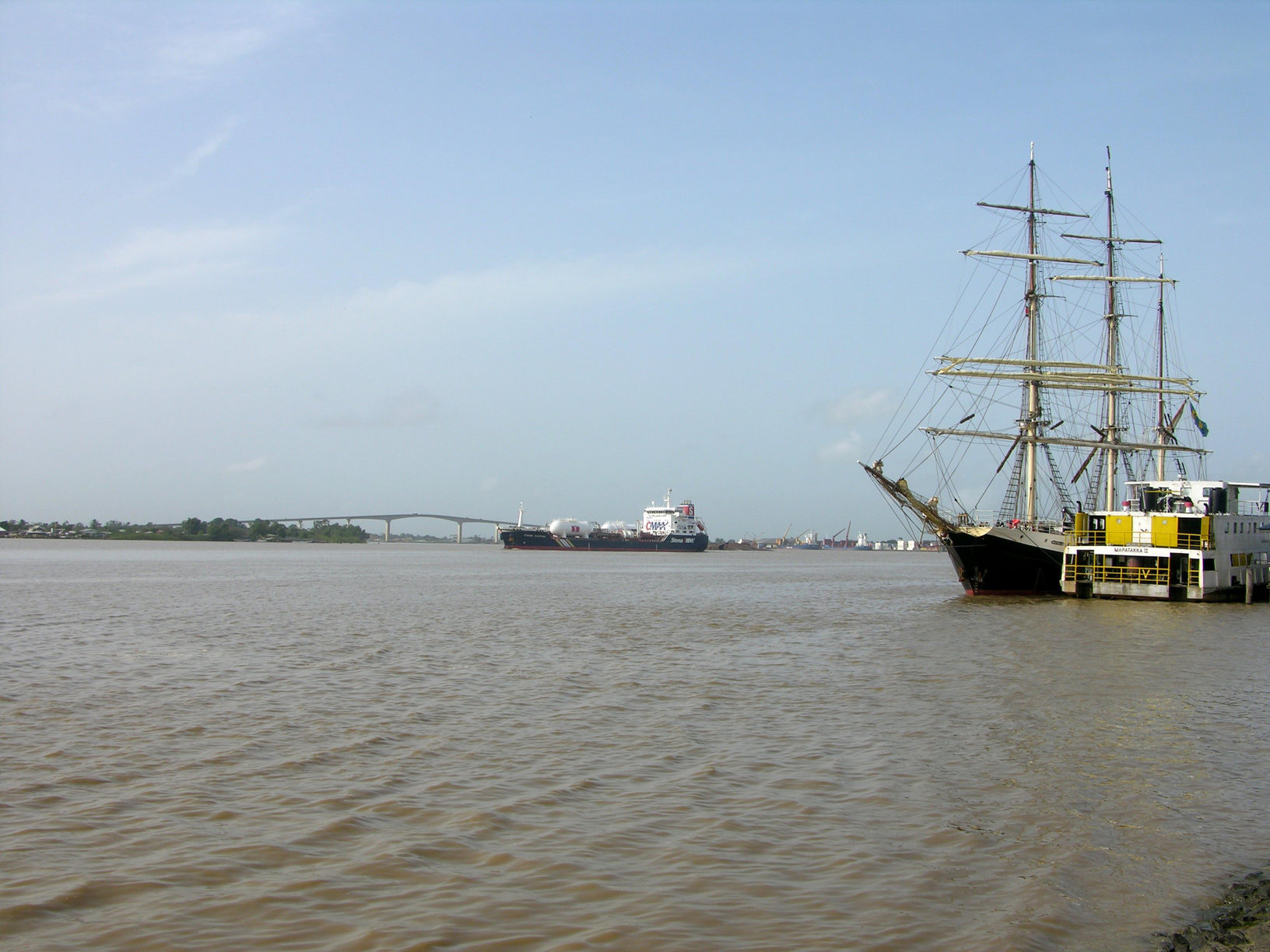
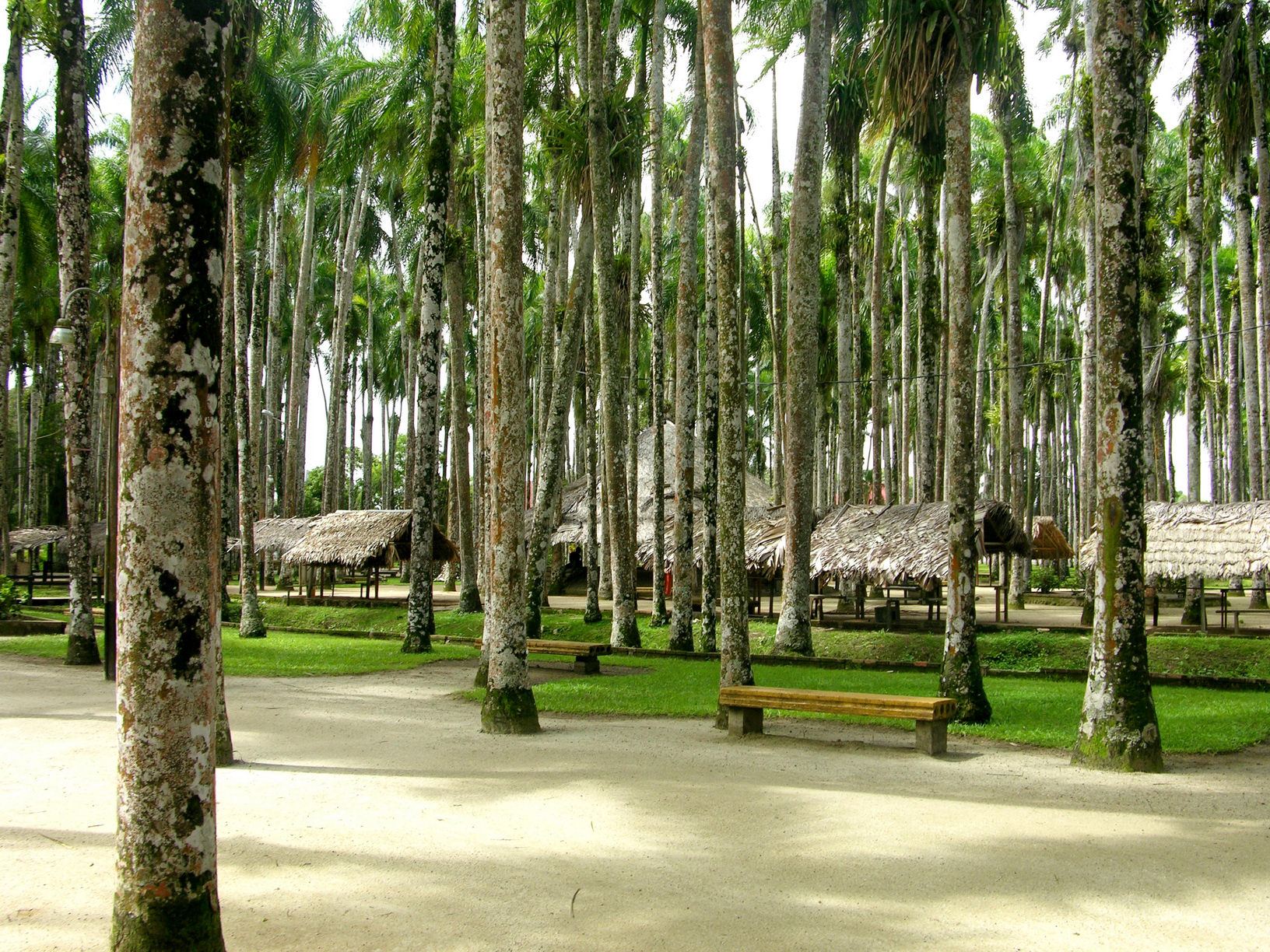
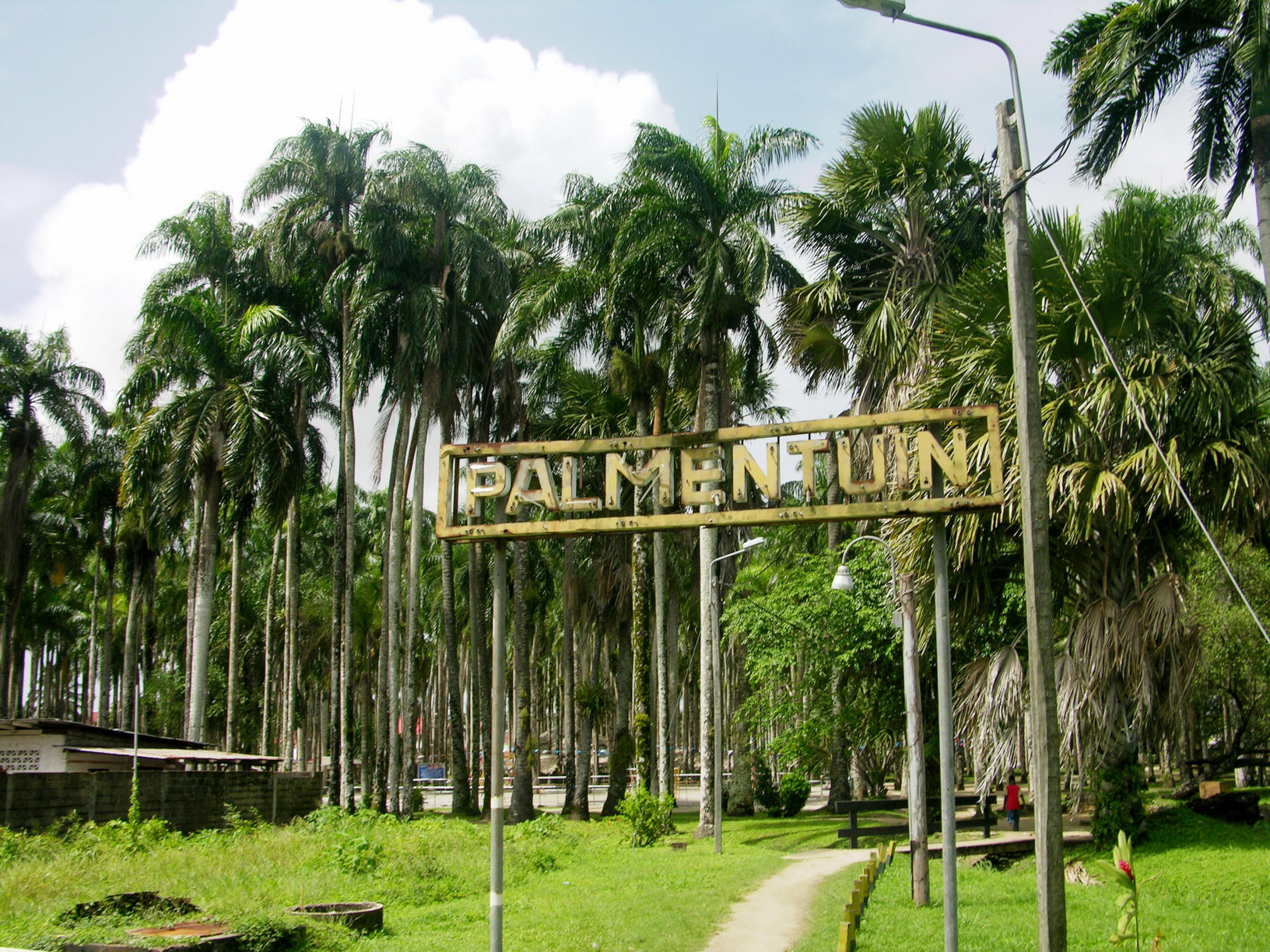
We began the first day with a walk around town and a visit to the STINASU travel agency (http://www.stinasu.com/). They have a virtual monopoly locally. Perhaps they'd tell us who flew into the interior, and where.
Unfortunately we were talking at cross purposes. They talked about tours and next week's bookings. We talked about timetables, air fares and where to find a pilot. They talked about a hotel with every convenience, we about places with no guides where we could pitch a tent. How often have I told myself that travel agencies are useful as middlemen for visas and only get in the way with everything else? And I still hope for a miracle. STINASU turned out to be more than useless. It was genuinely harmful. Three times they just gave us wrong information, costing us time and disappointment.
Never mind. At the Avis office we got a Nissan Patrol. Now there's something a traveller can use. Now that is freedom! €1,095 for eight days.
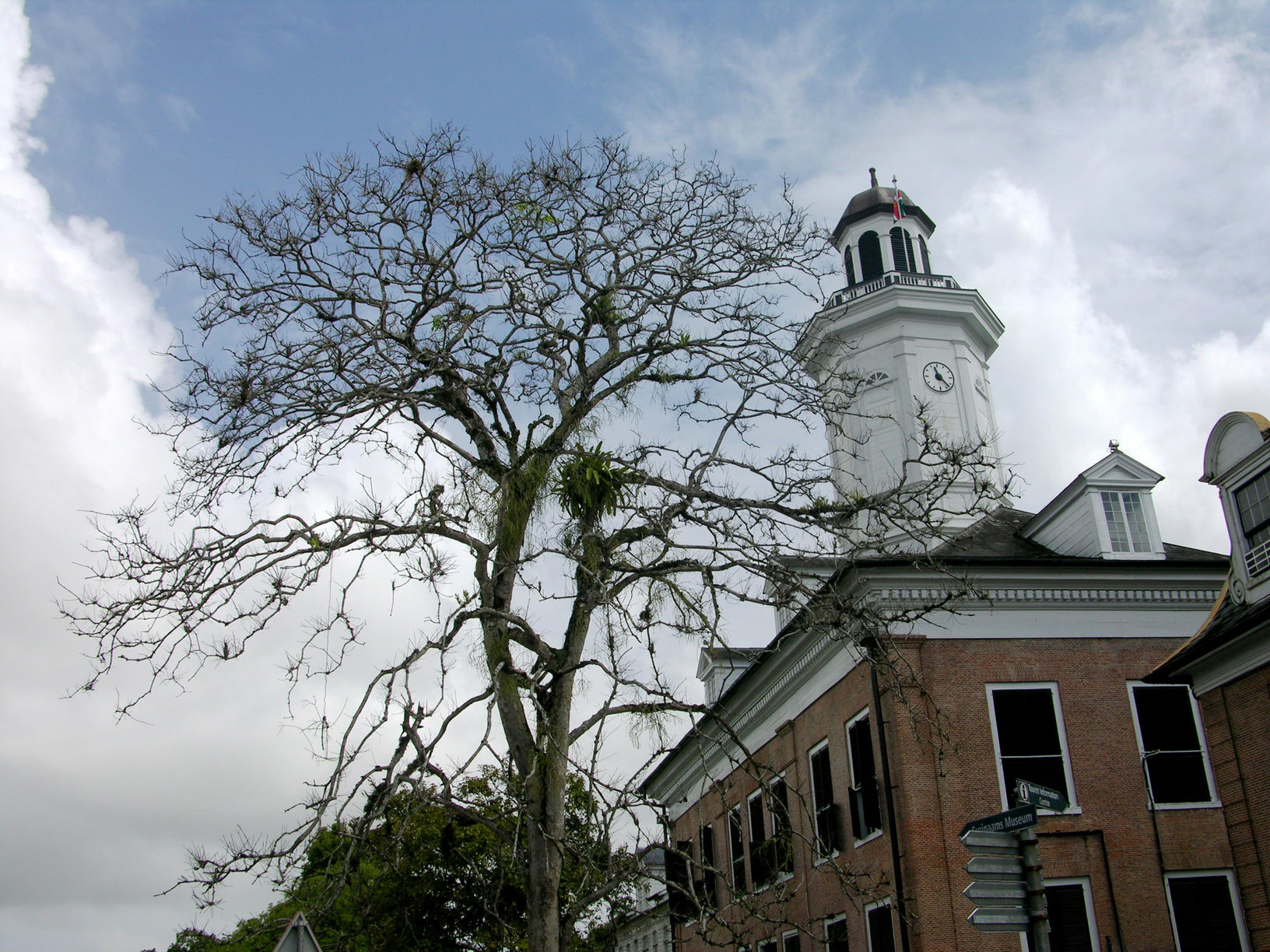
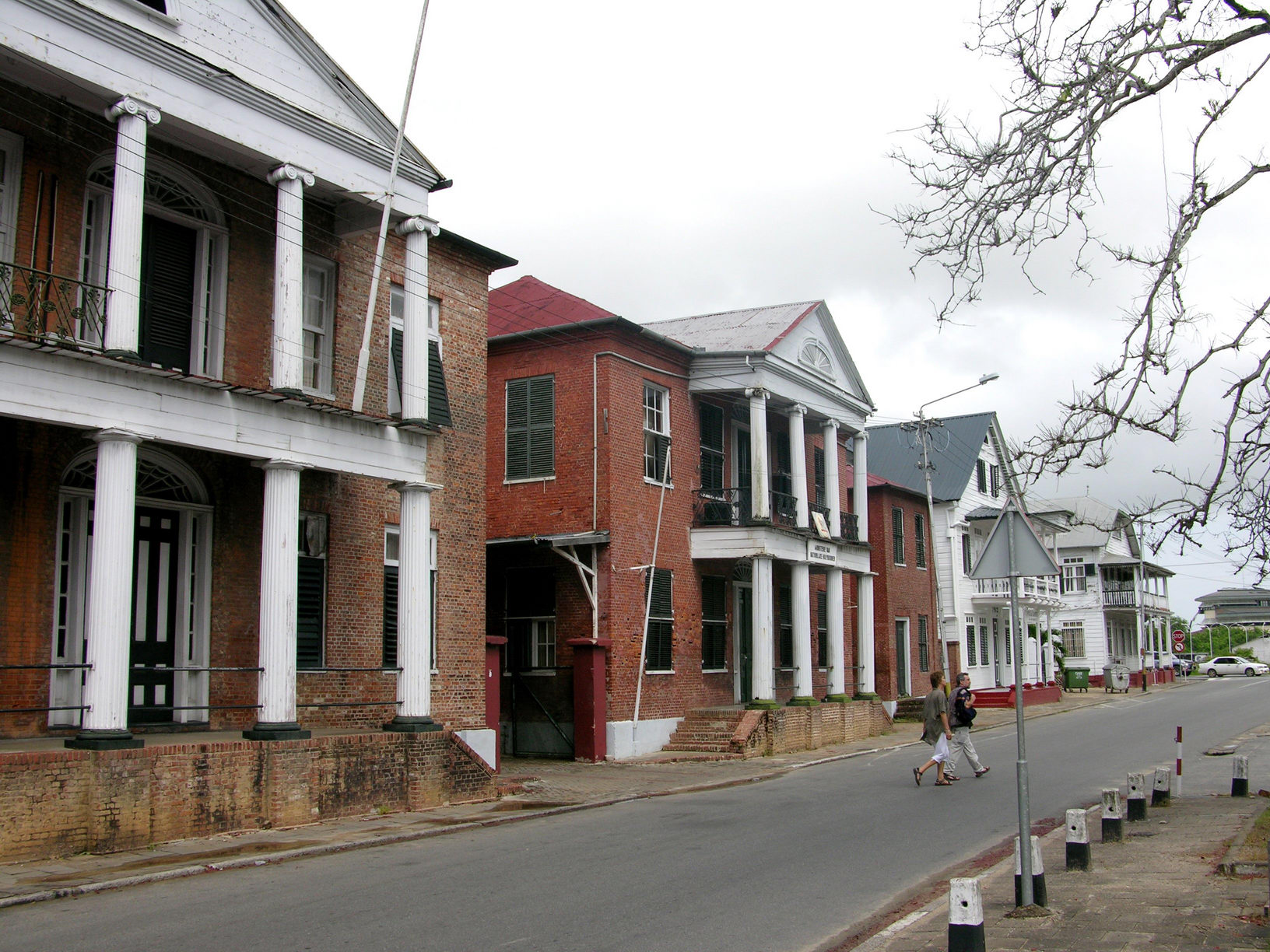
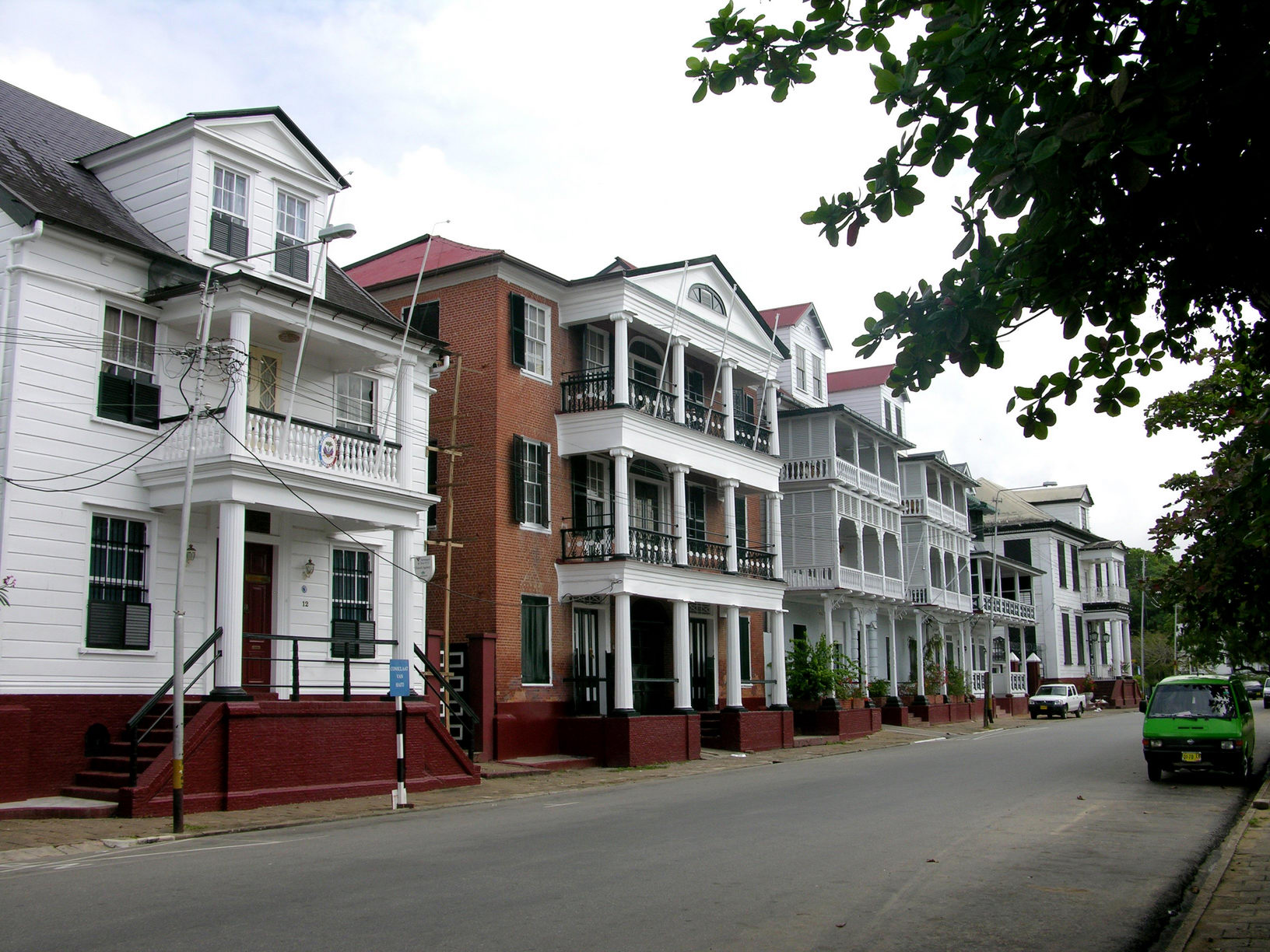
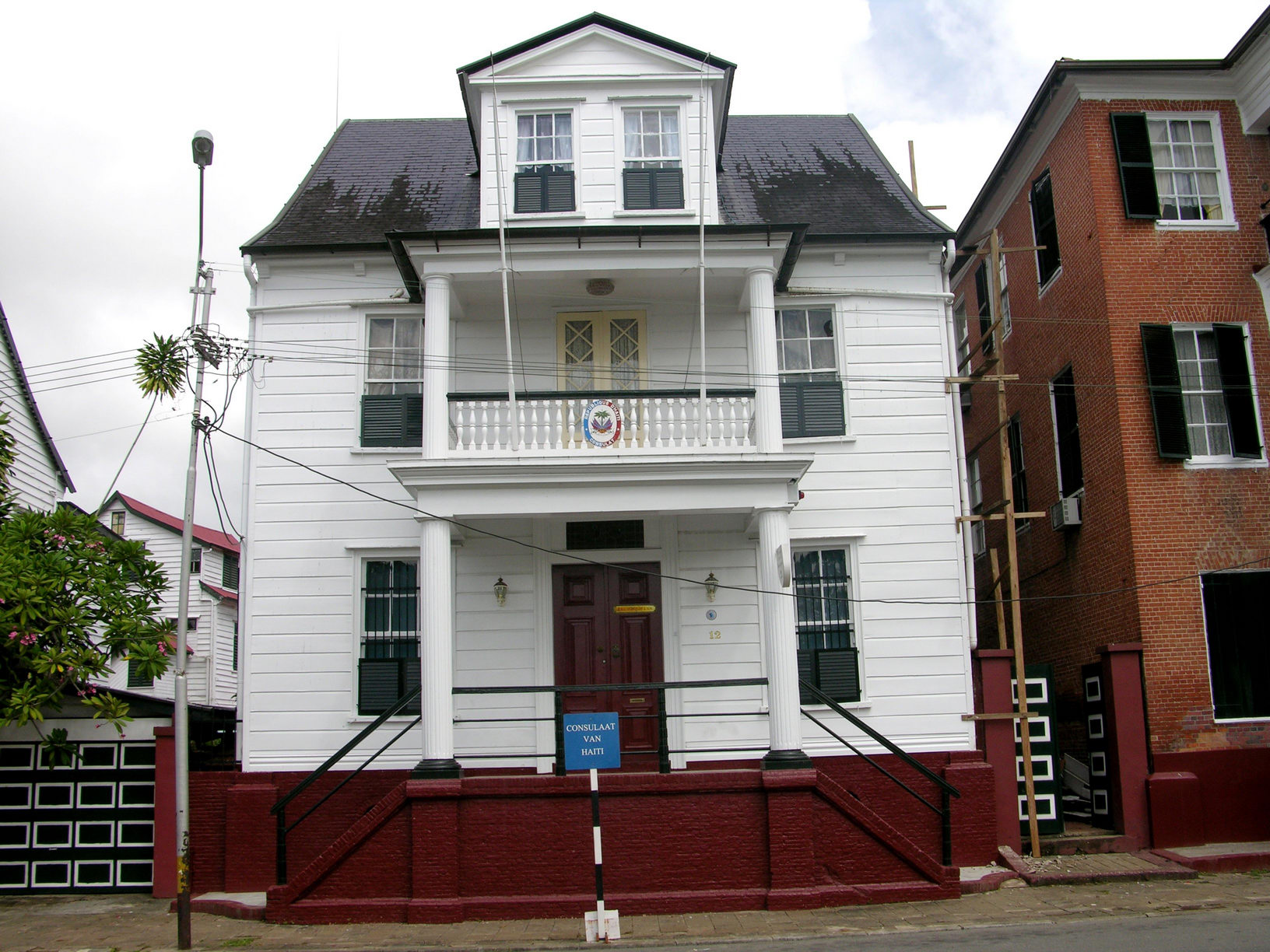
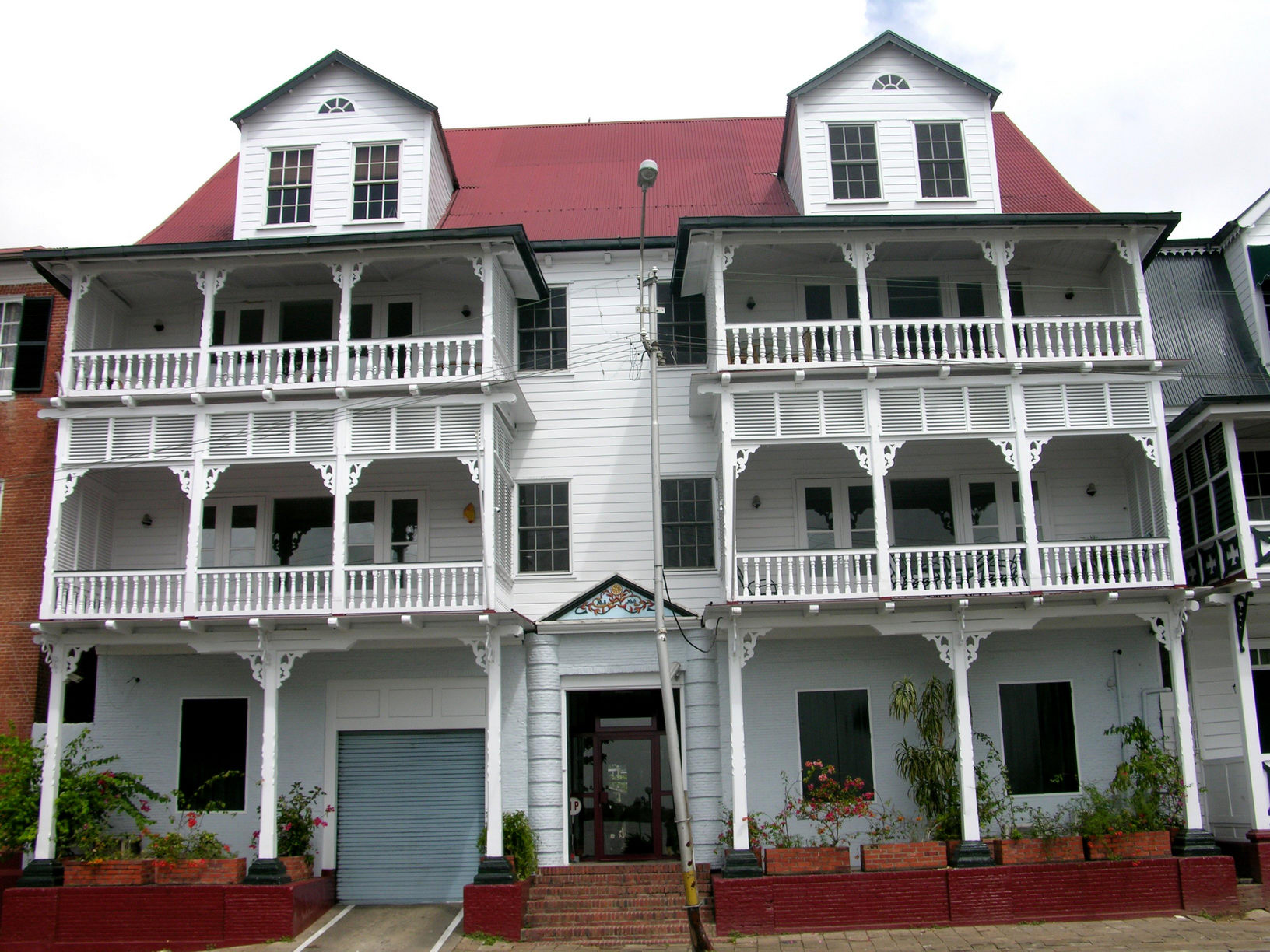
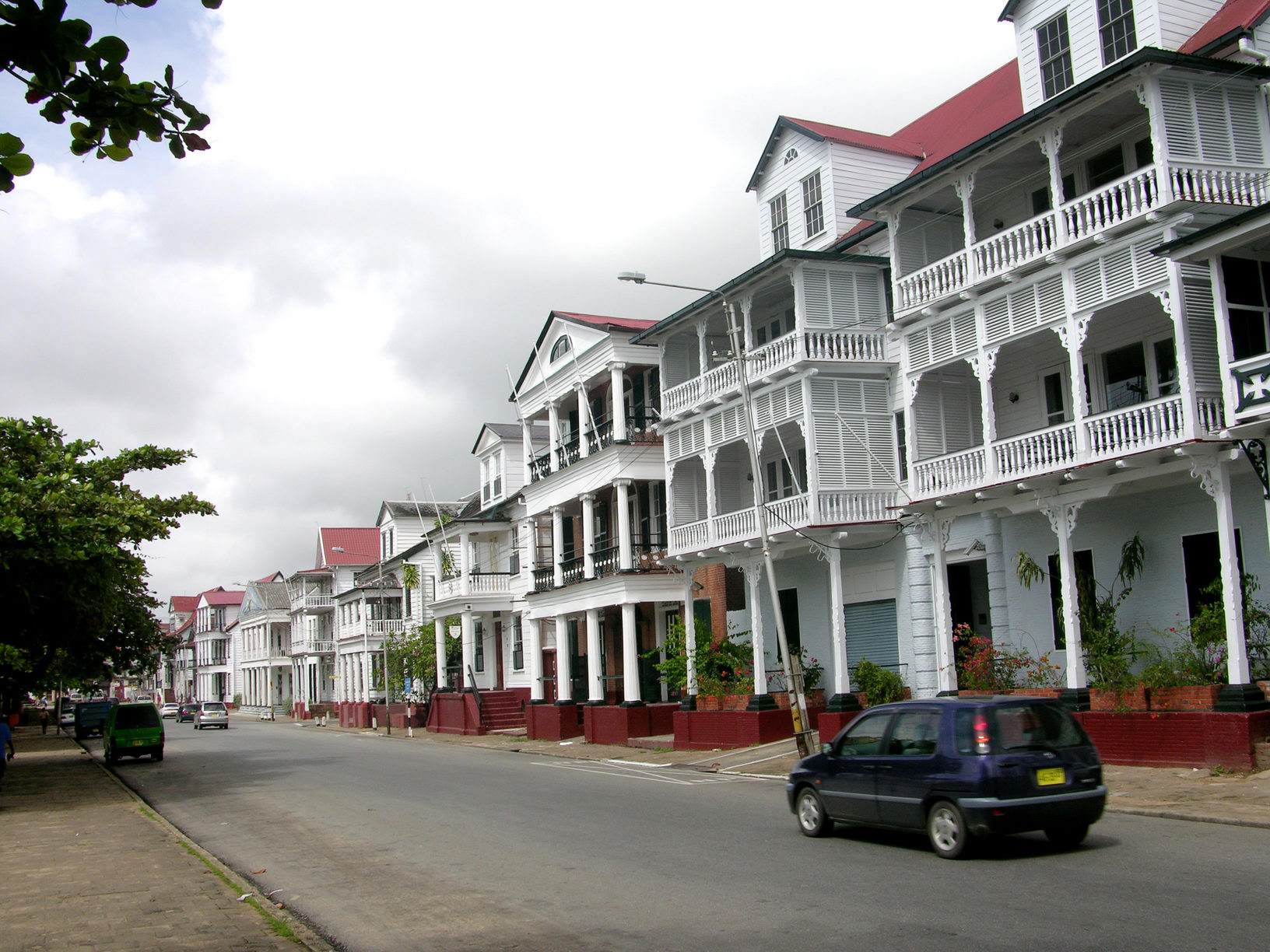
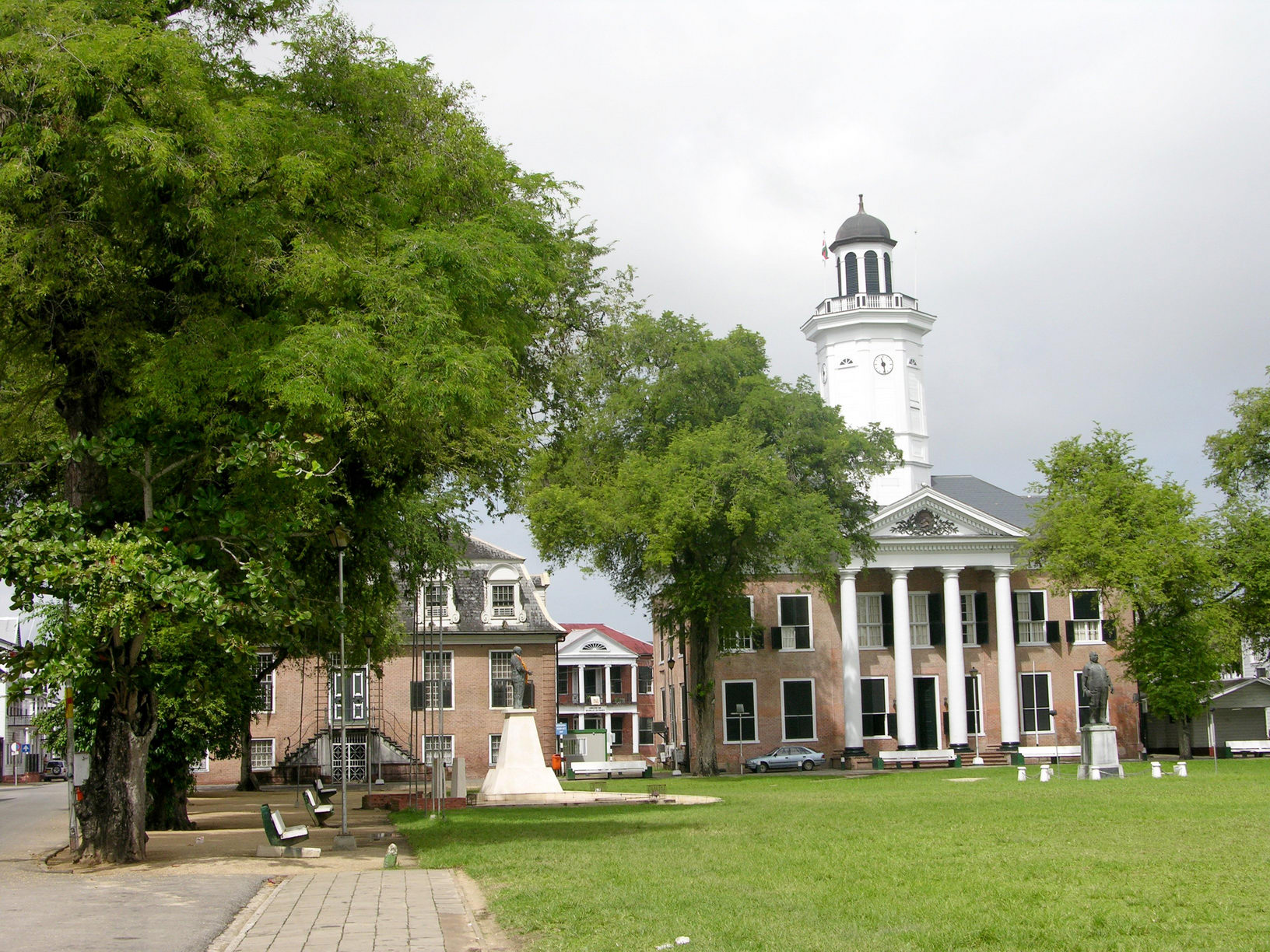
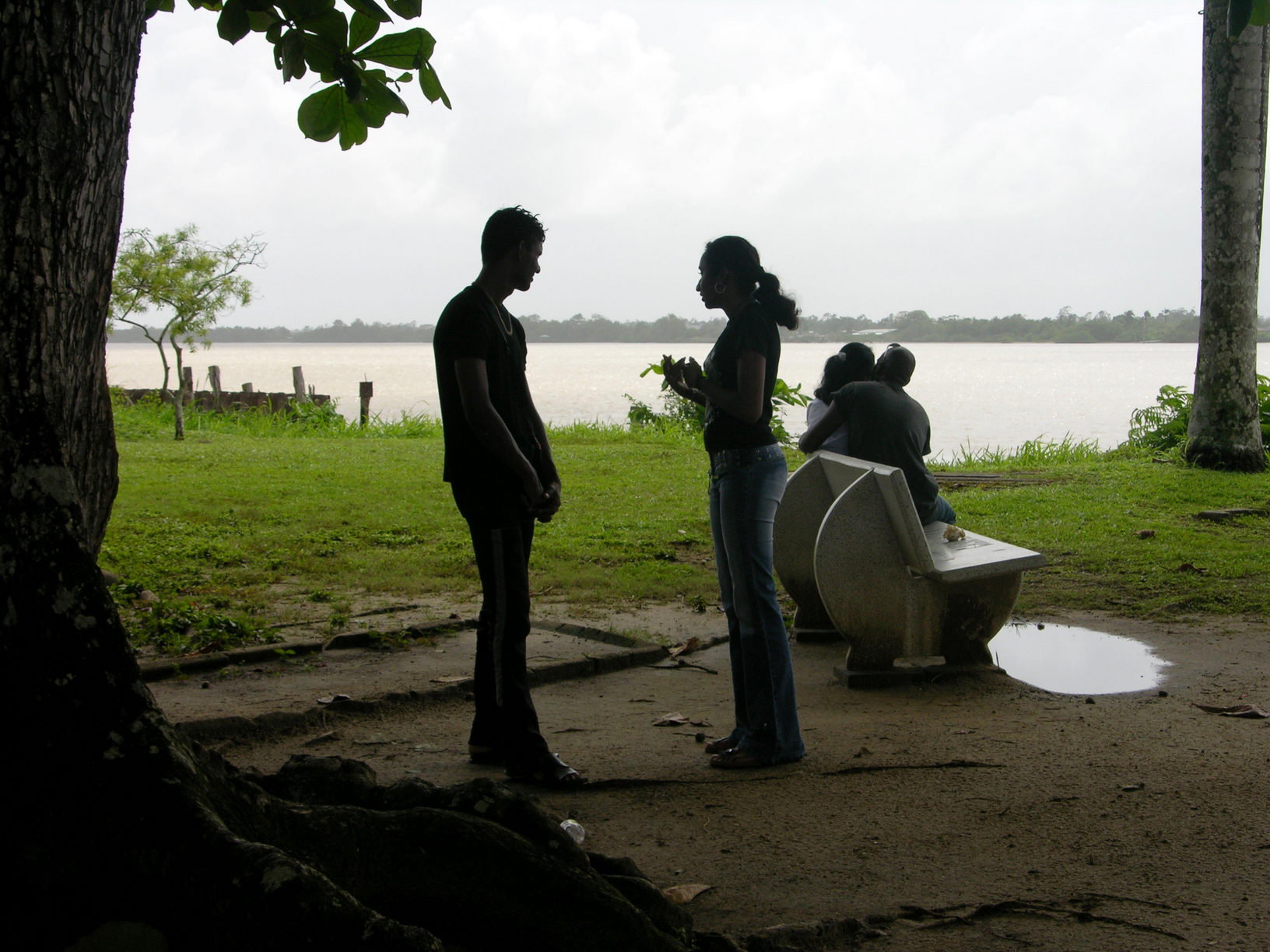
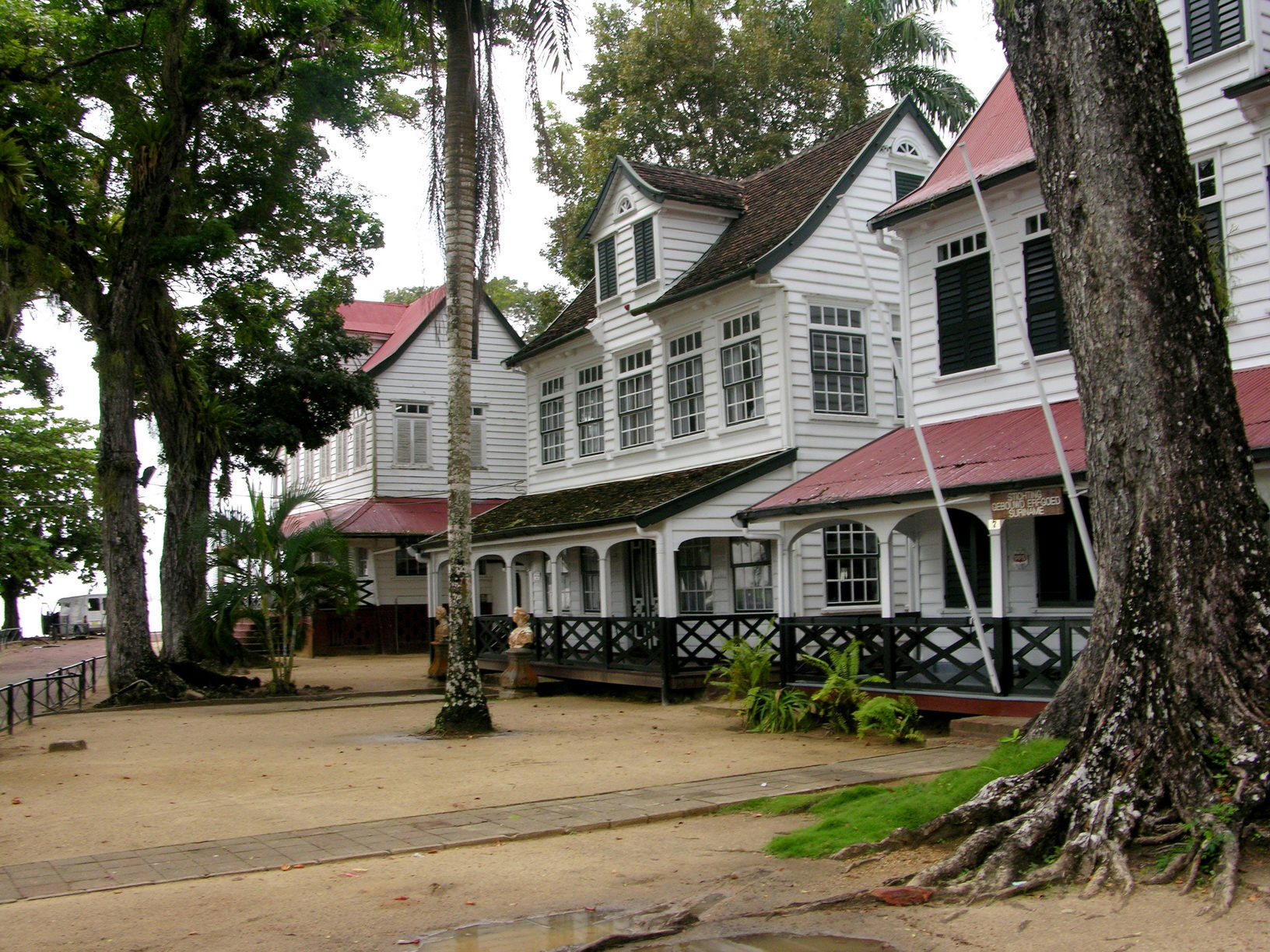
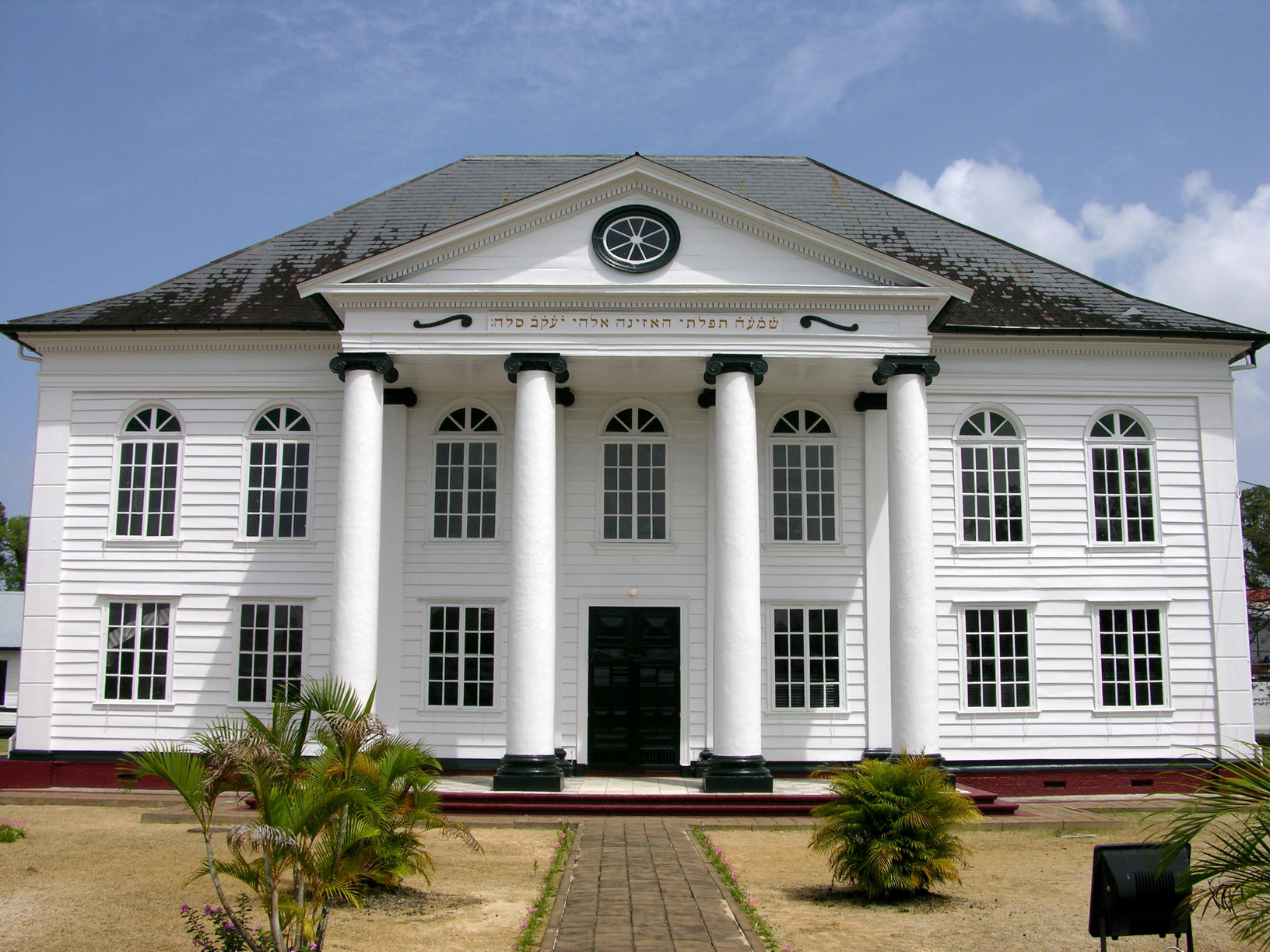
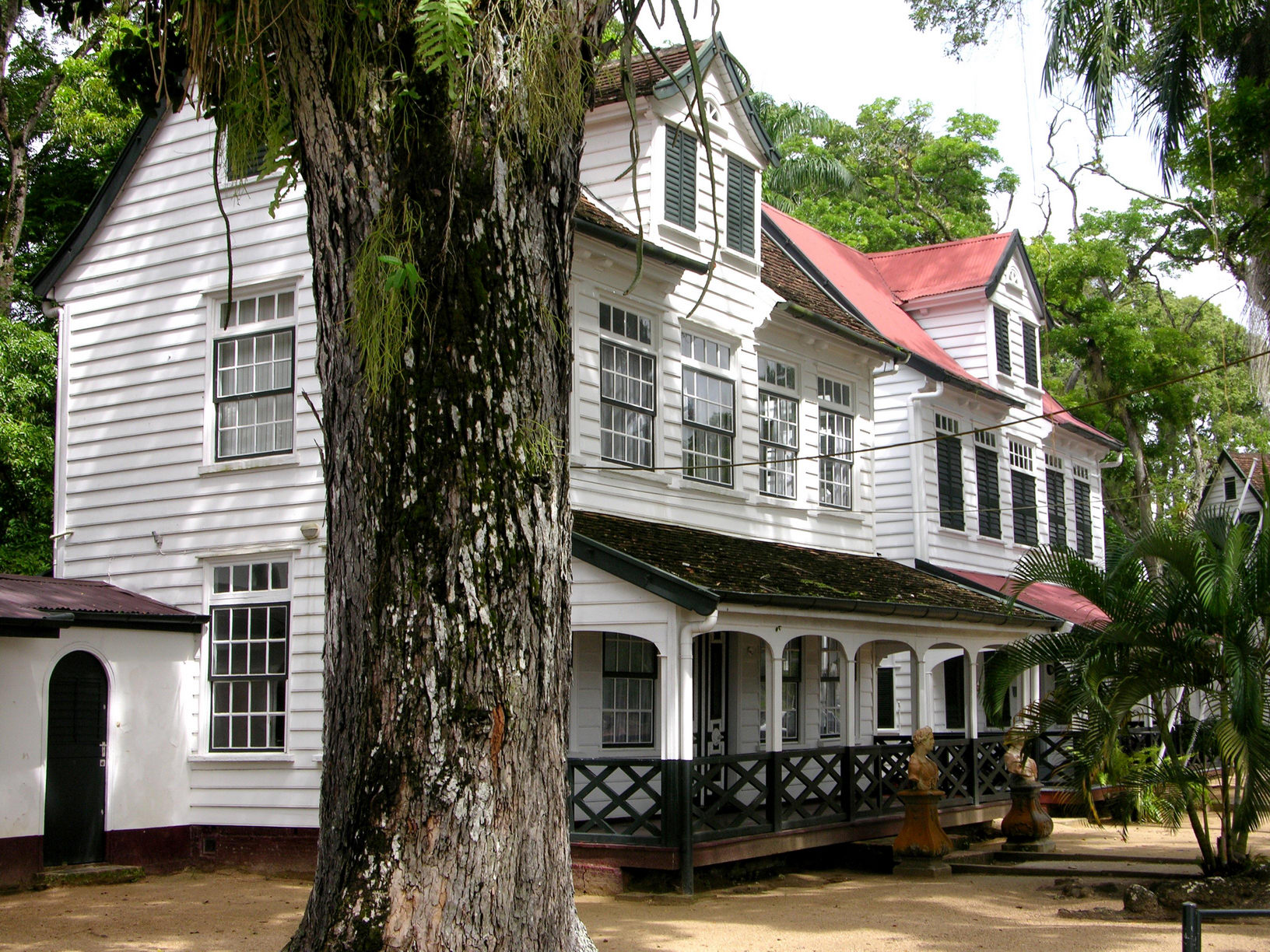
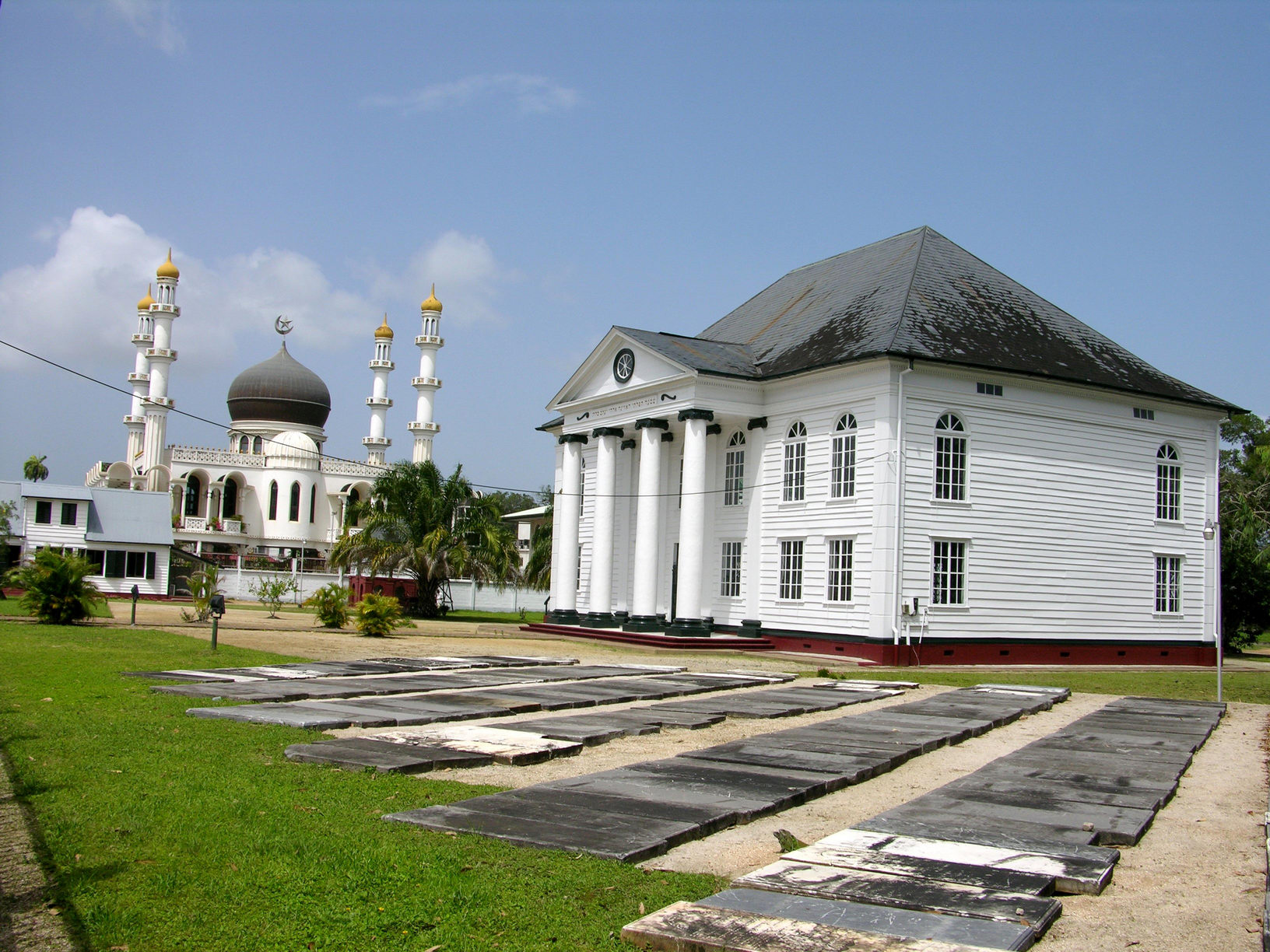
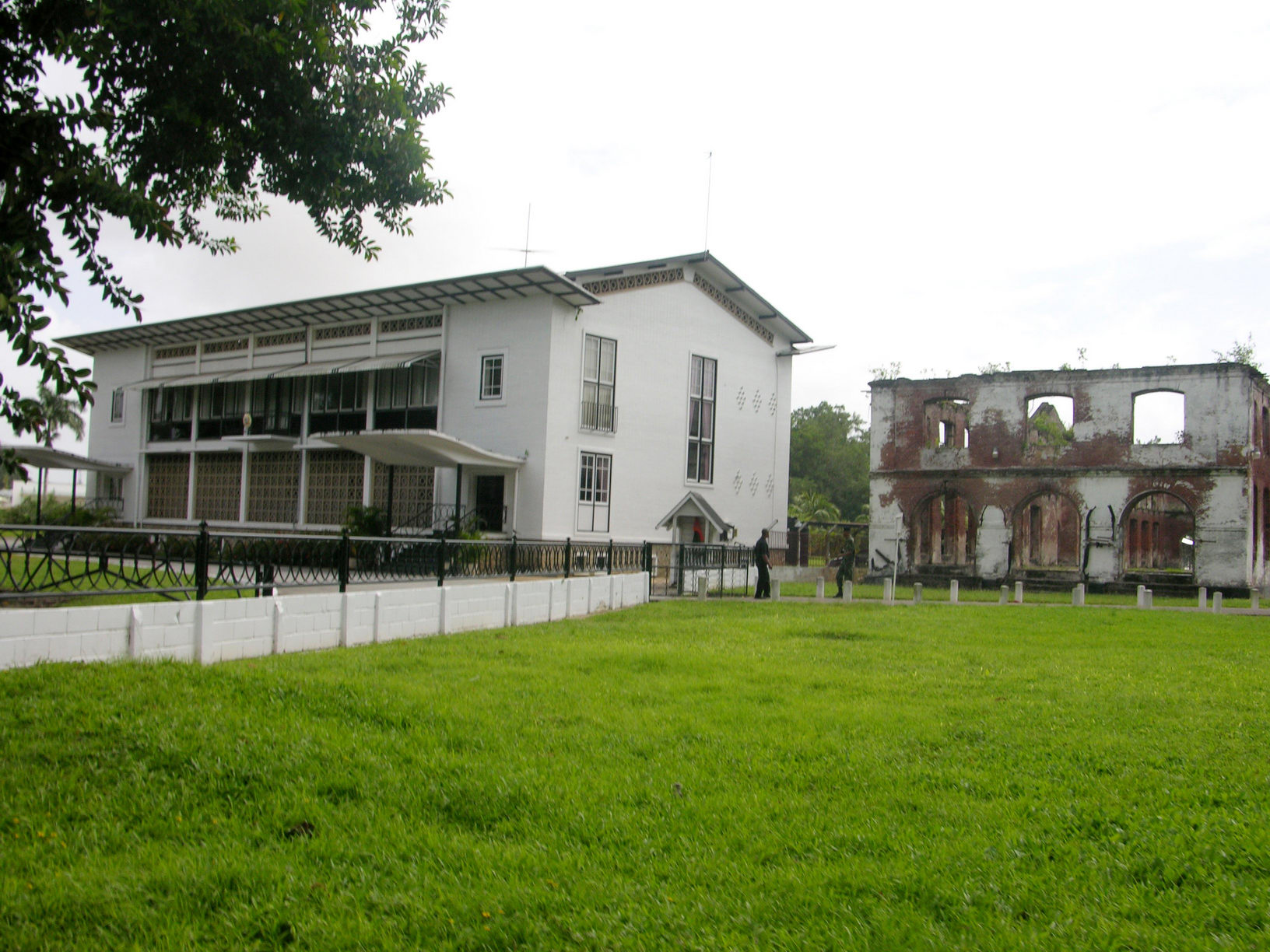
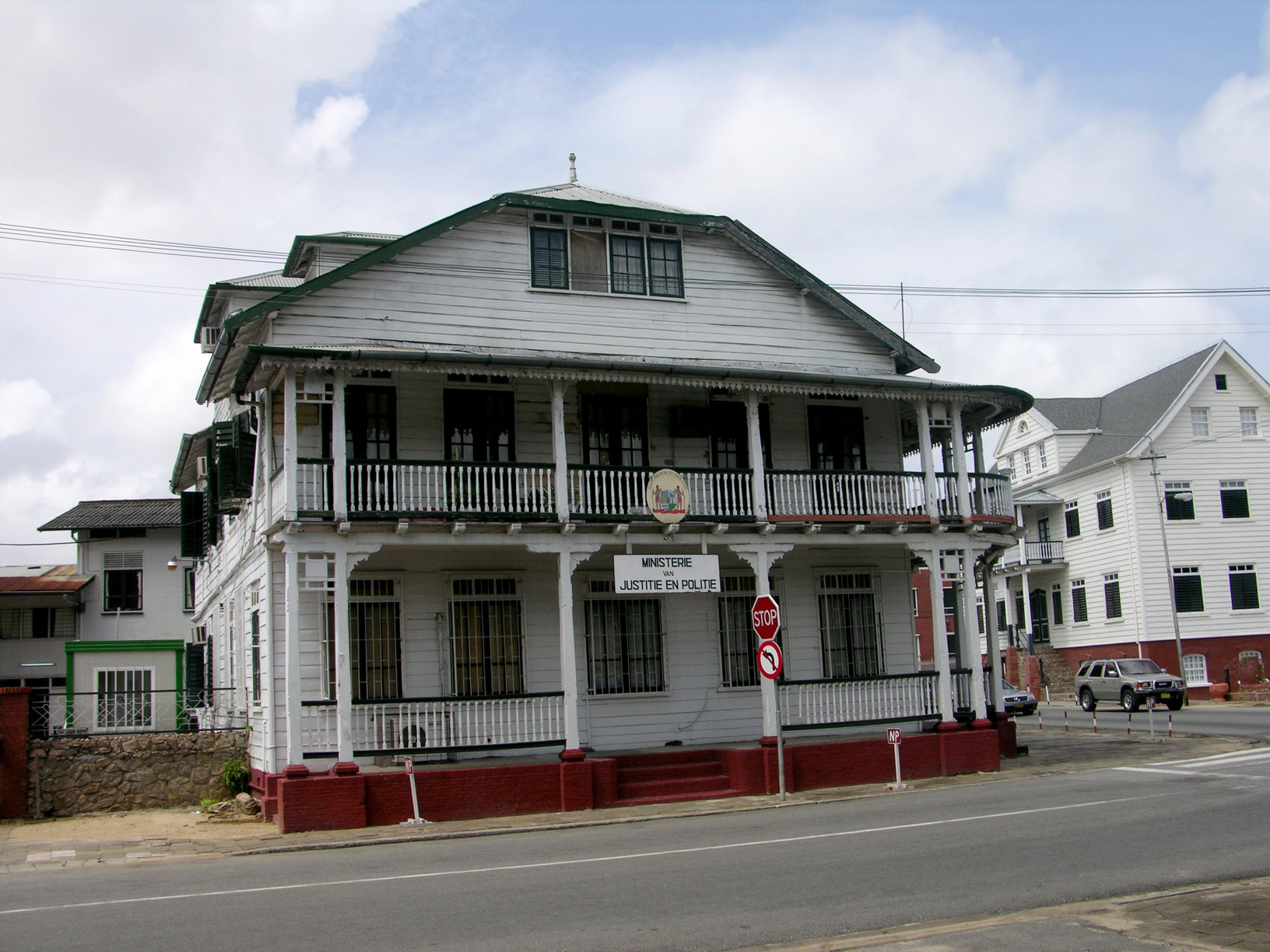
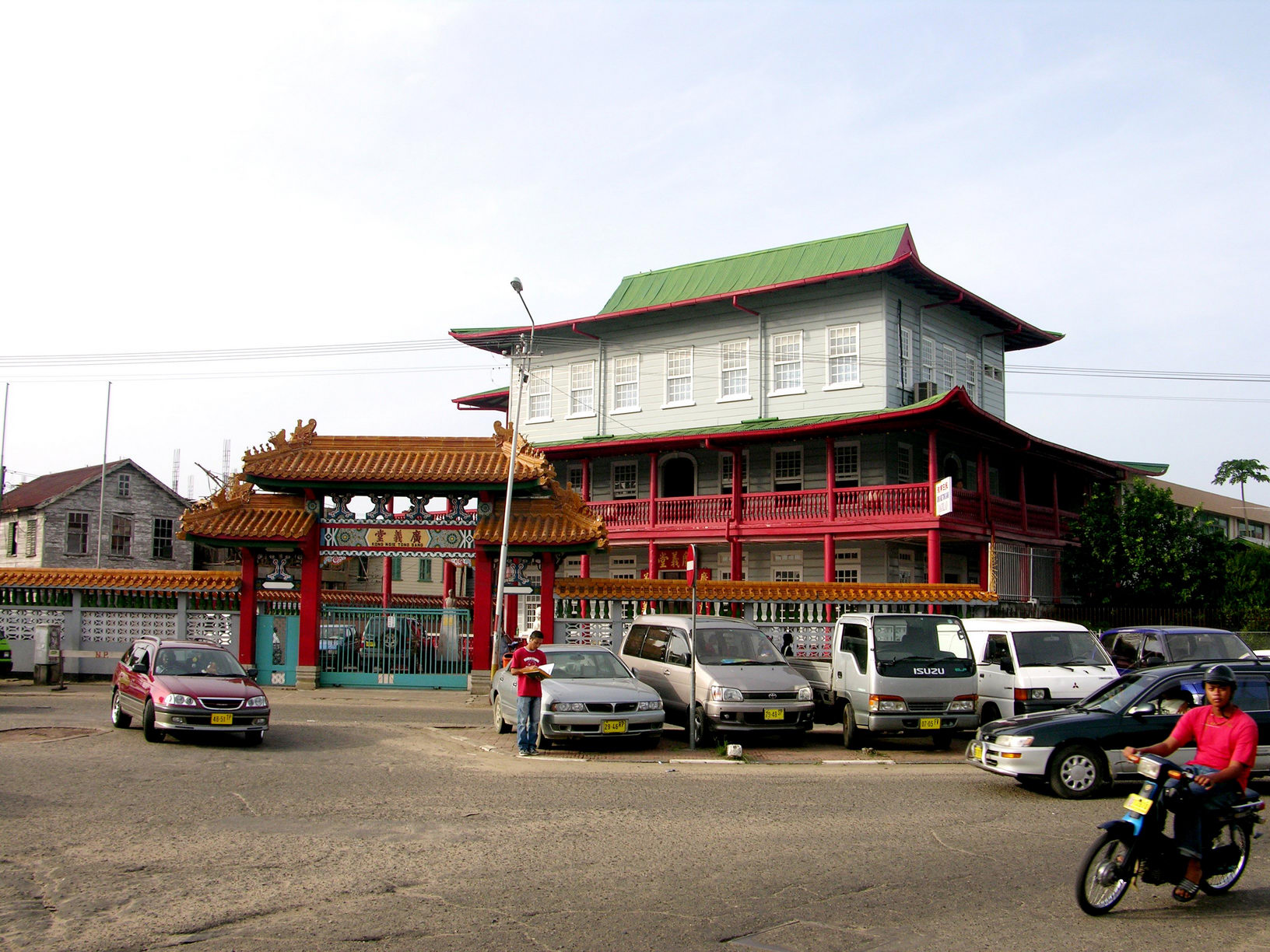
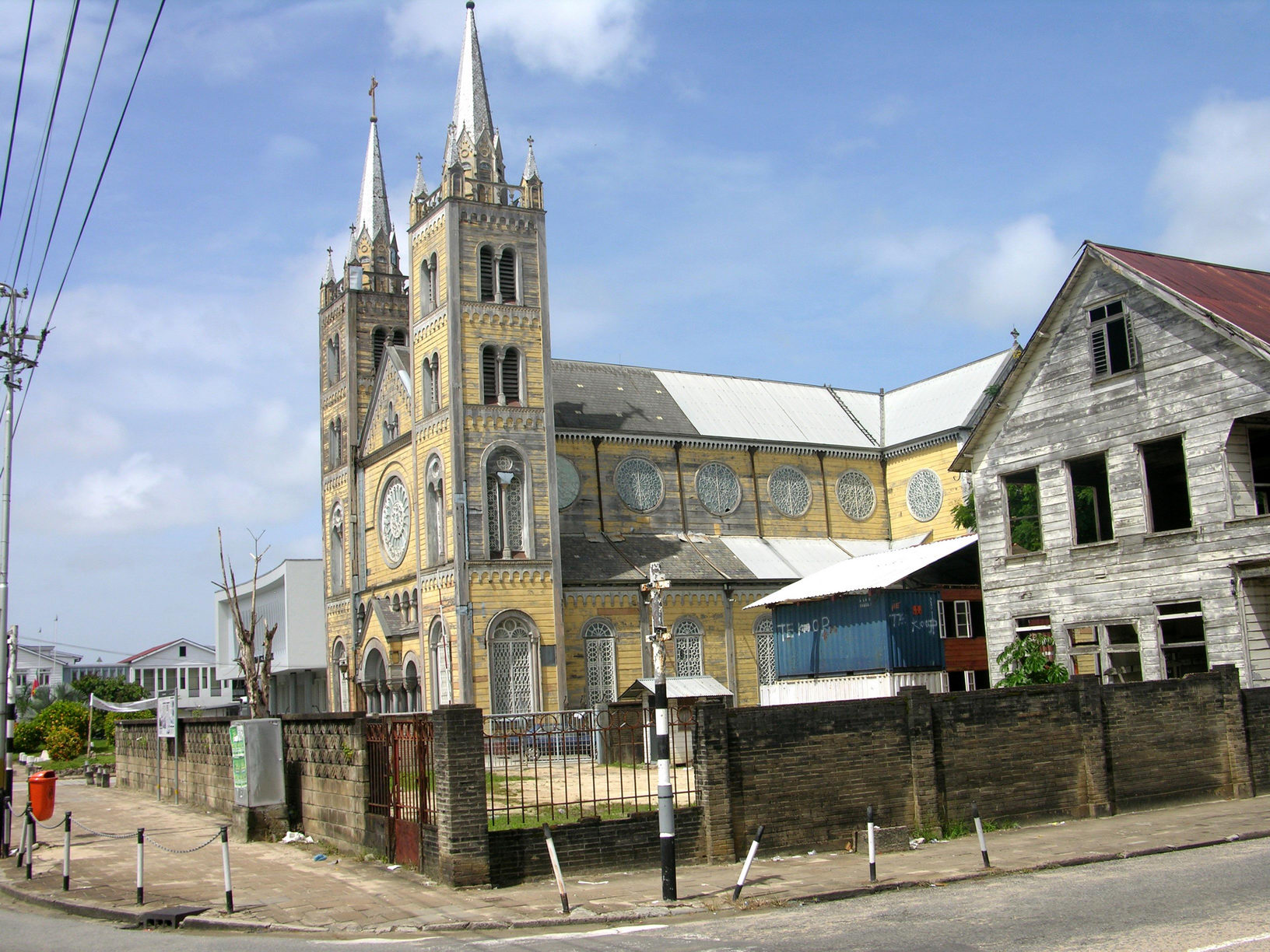
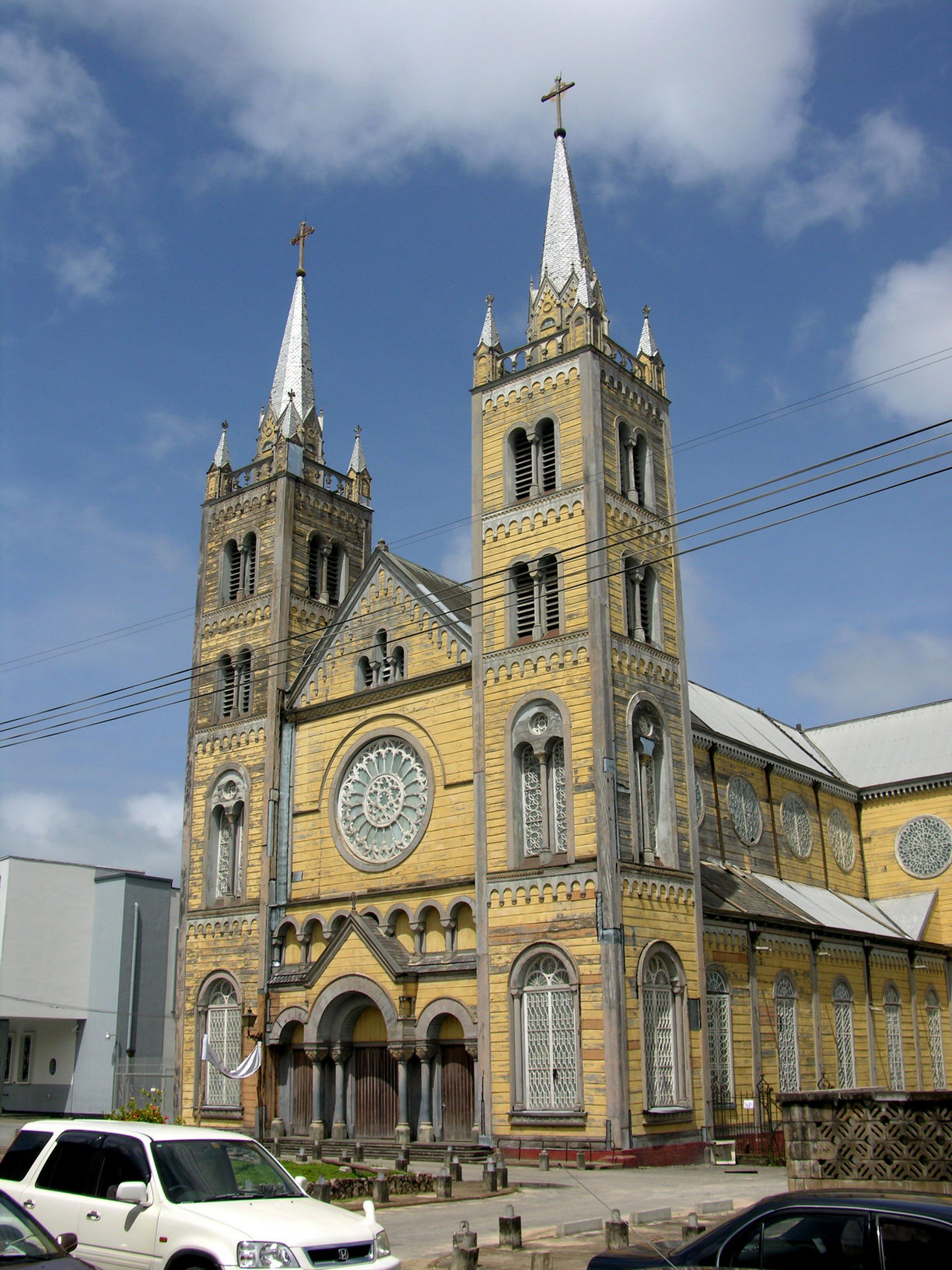
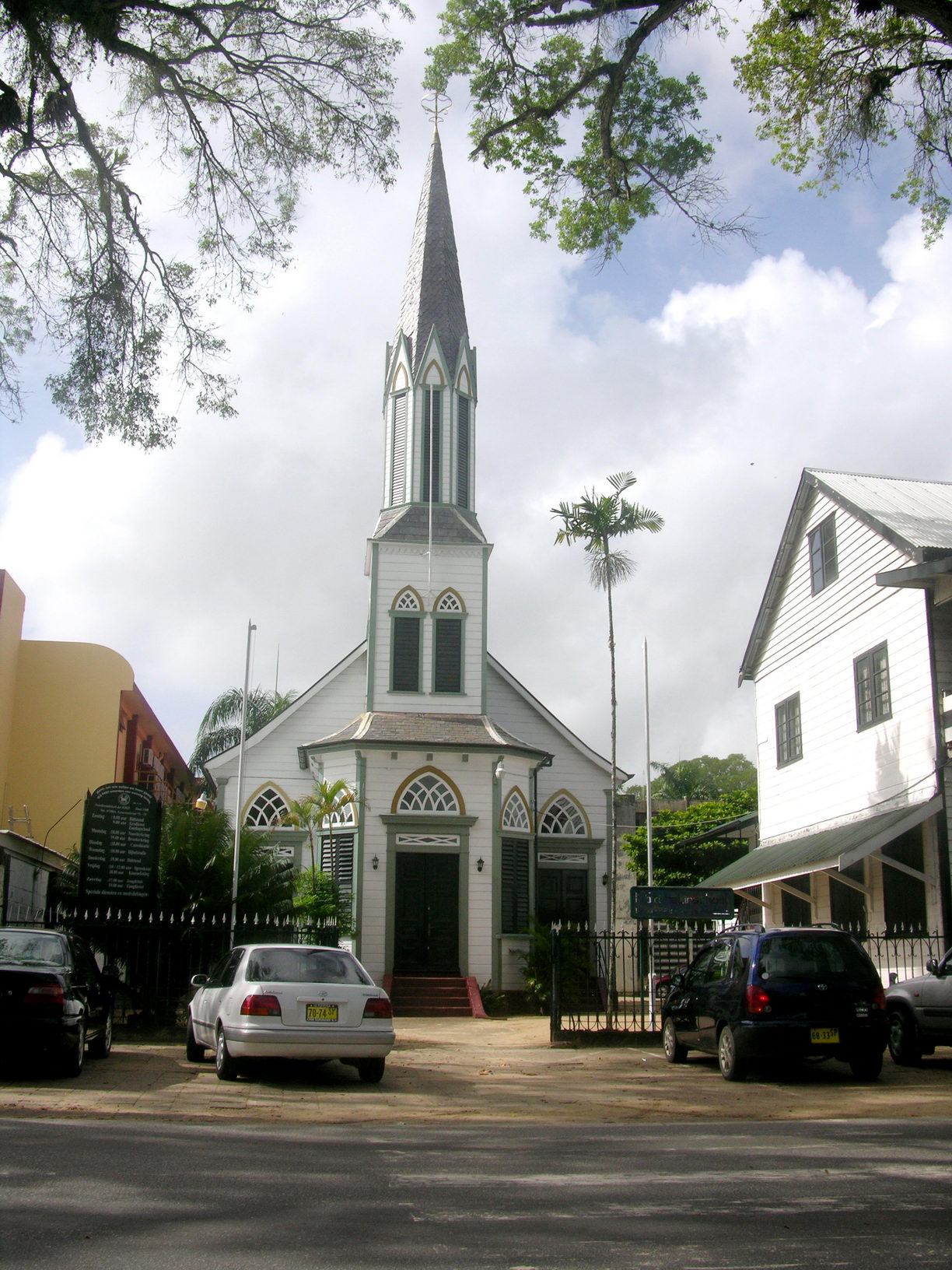
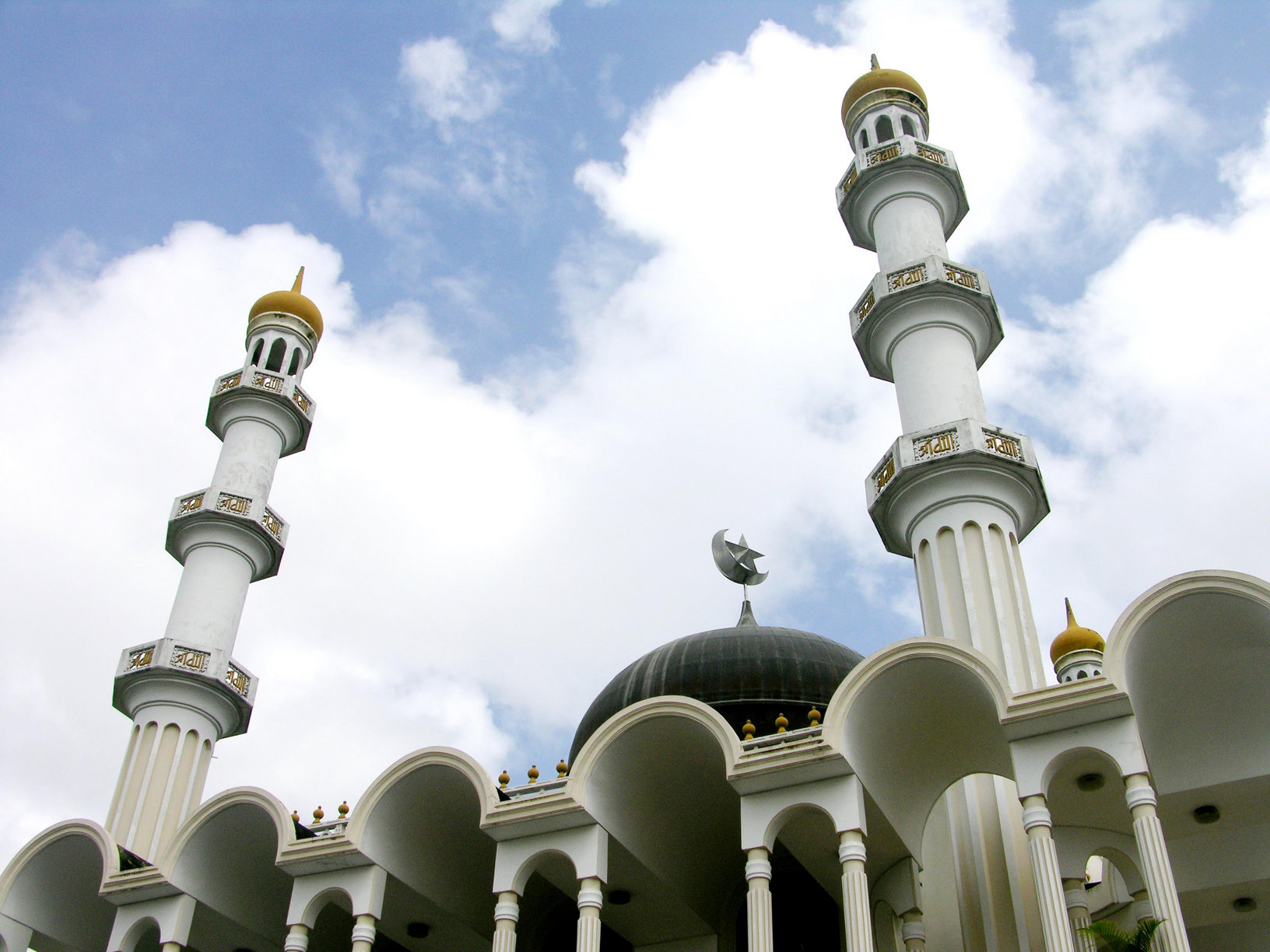
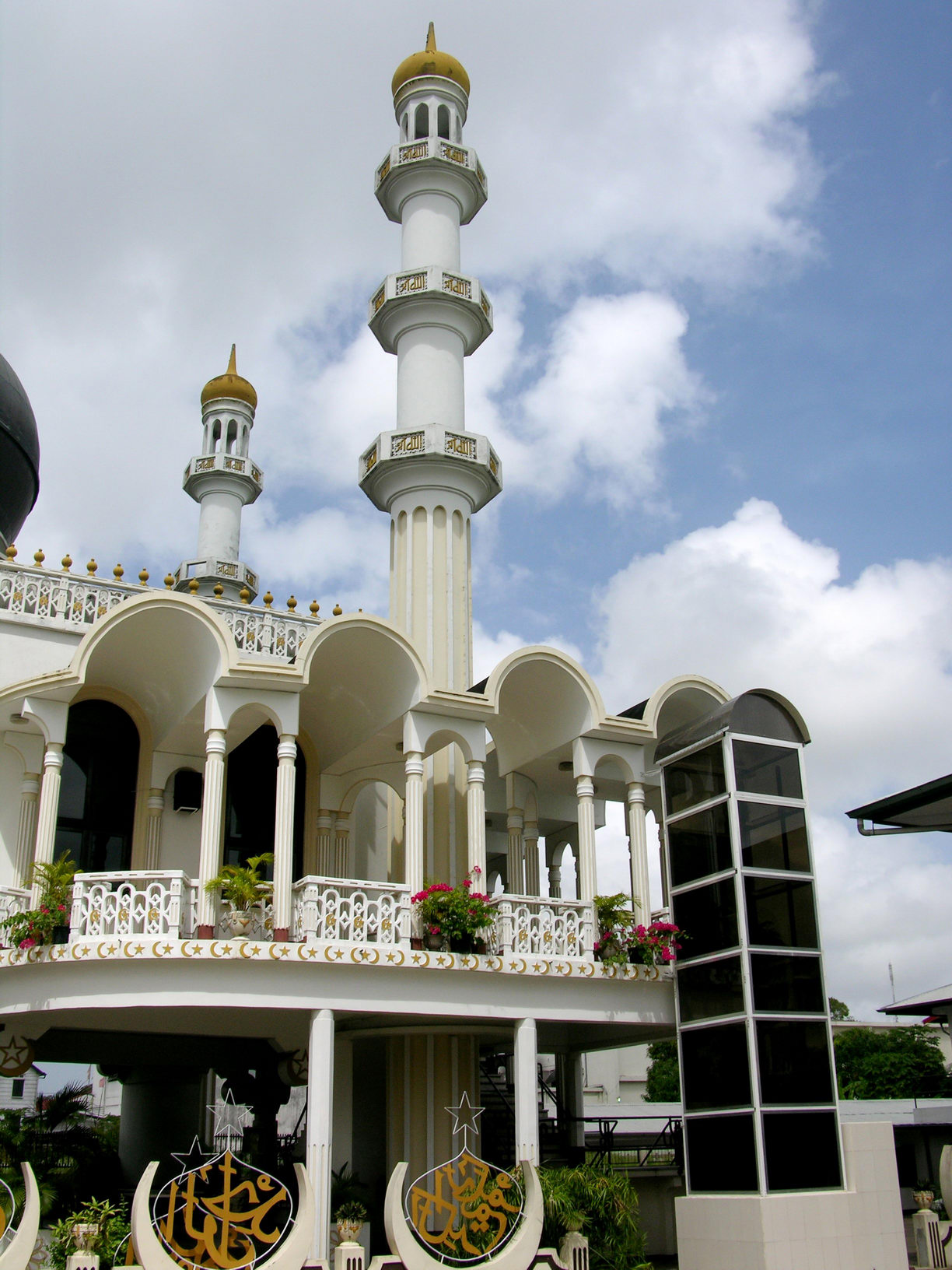
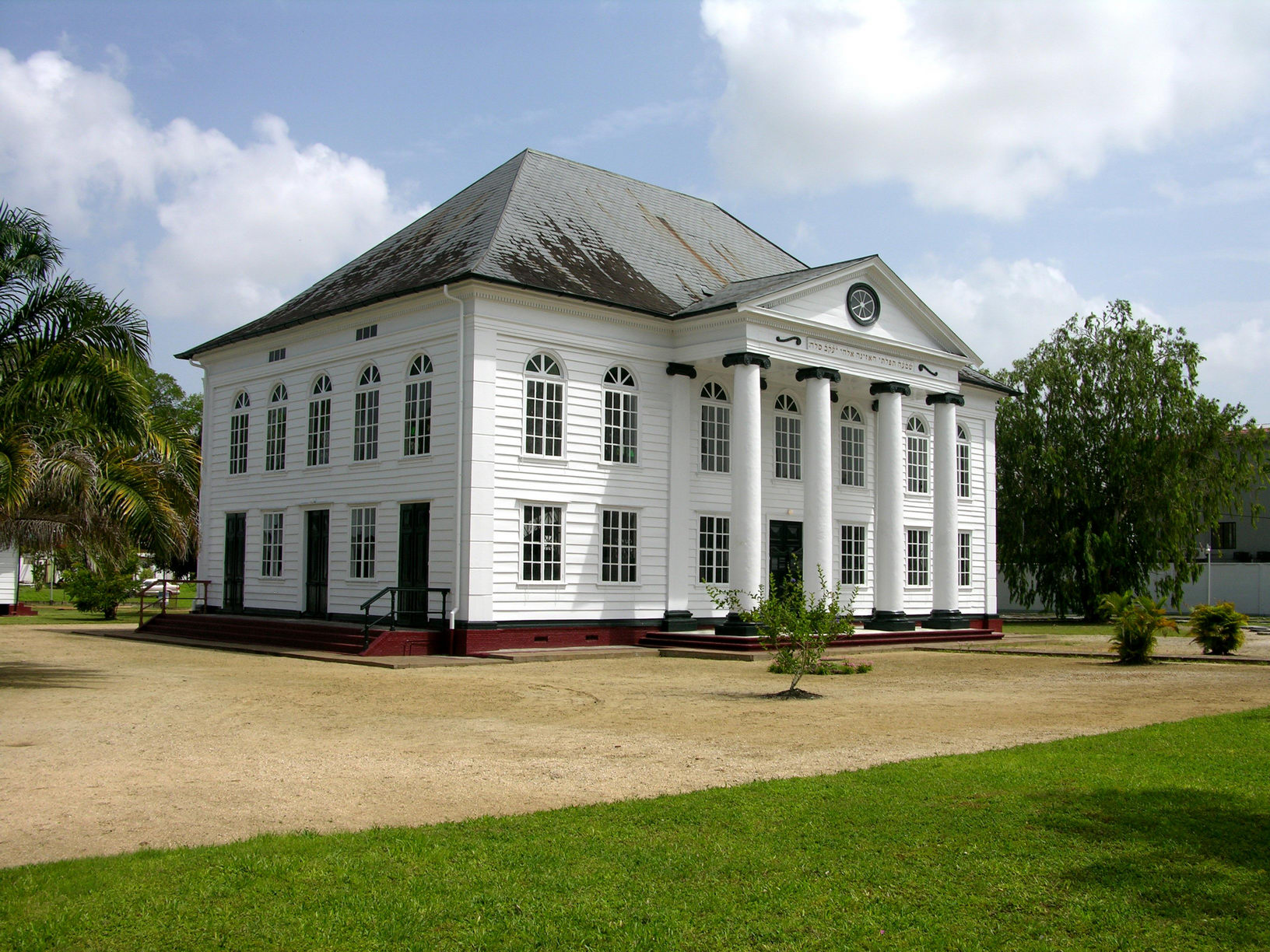
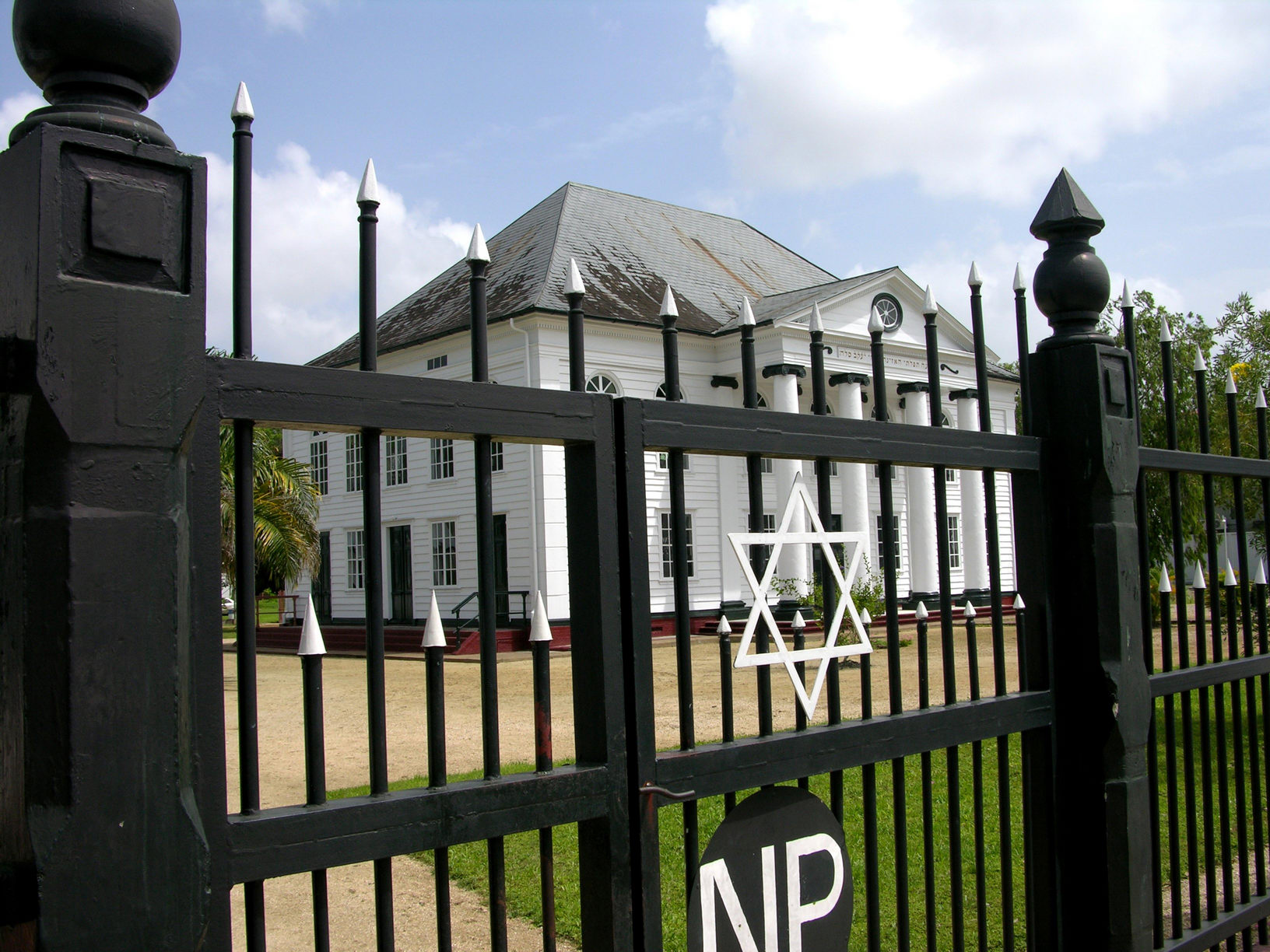
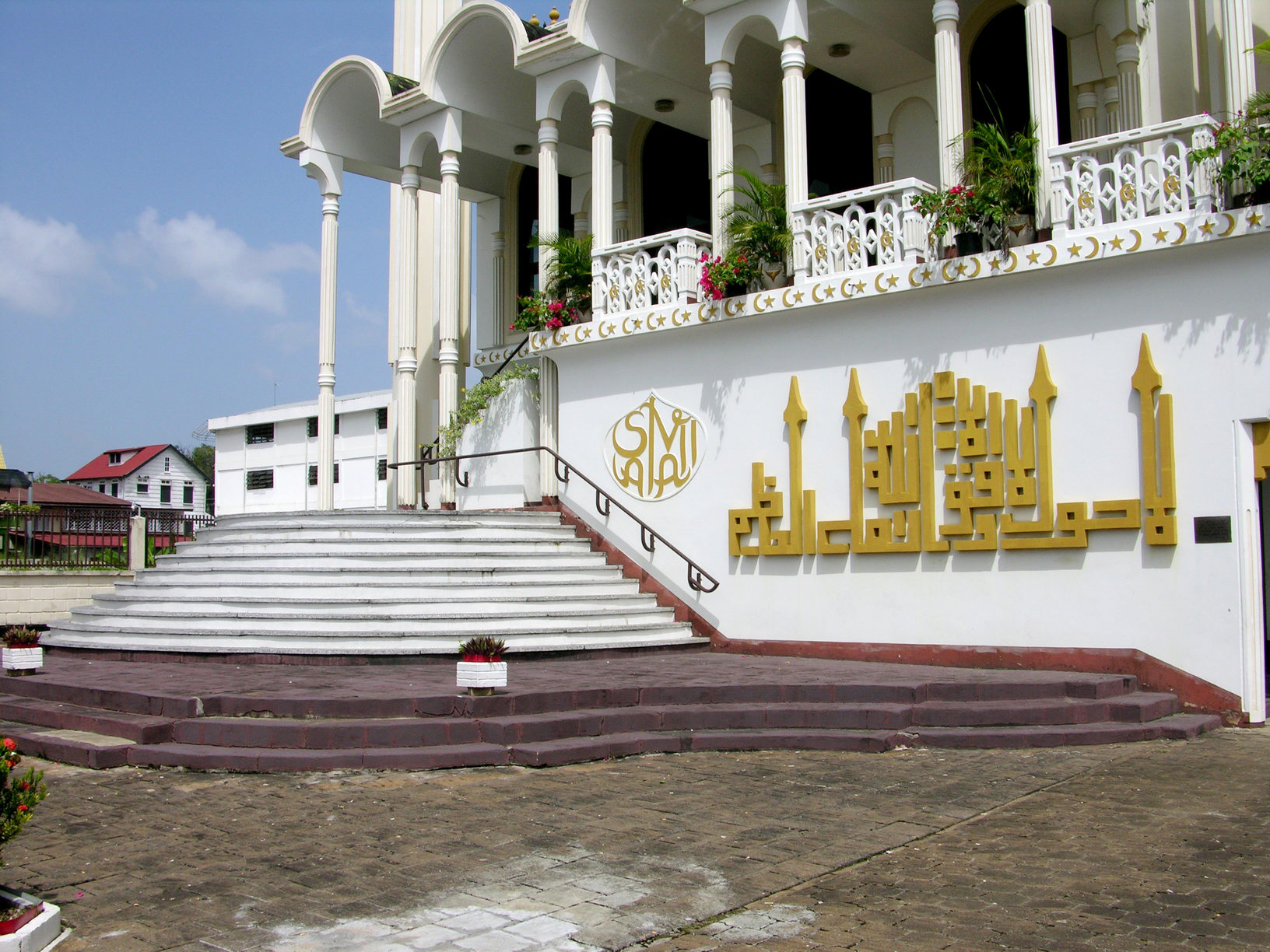
But first, let the jeep sit for a while. We wanted to walk around Paramaribo. It's the fairy-tale city from the song. Remember “Paramaribo, city of the morning dawn”? A city where people from all over the world have mixed into one great jumble. Every sort of immigrant has come here. Now there isn't a single dominant nationality. White people, Black people, Indians, Chinese, Jews, Indigenous people, Pashtuns and Indonesians are all here in roughly equal numbers, it seems. They live together remarkably peacefully. The synagogue and mosque are neighbours, almost behind one fence. In the cemeteries, on a single grave, you can see a cross, a crescent and a Star of David together. The international family has stayed together even after death, irrespective of religious differences.
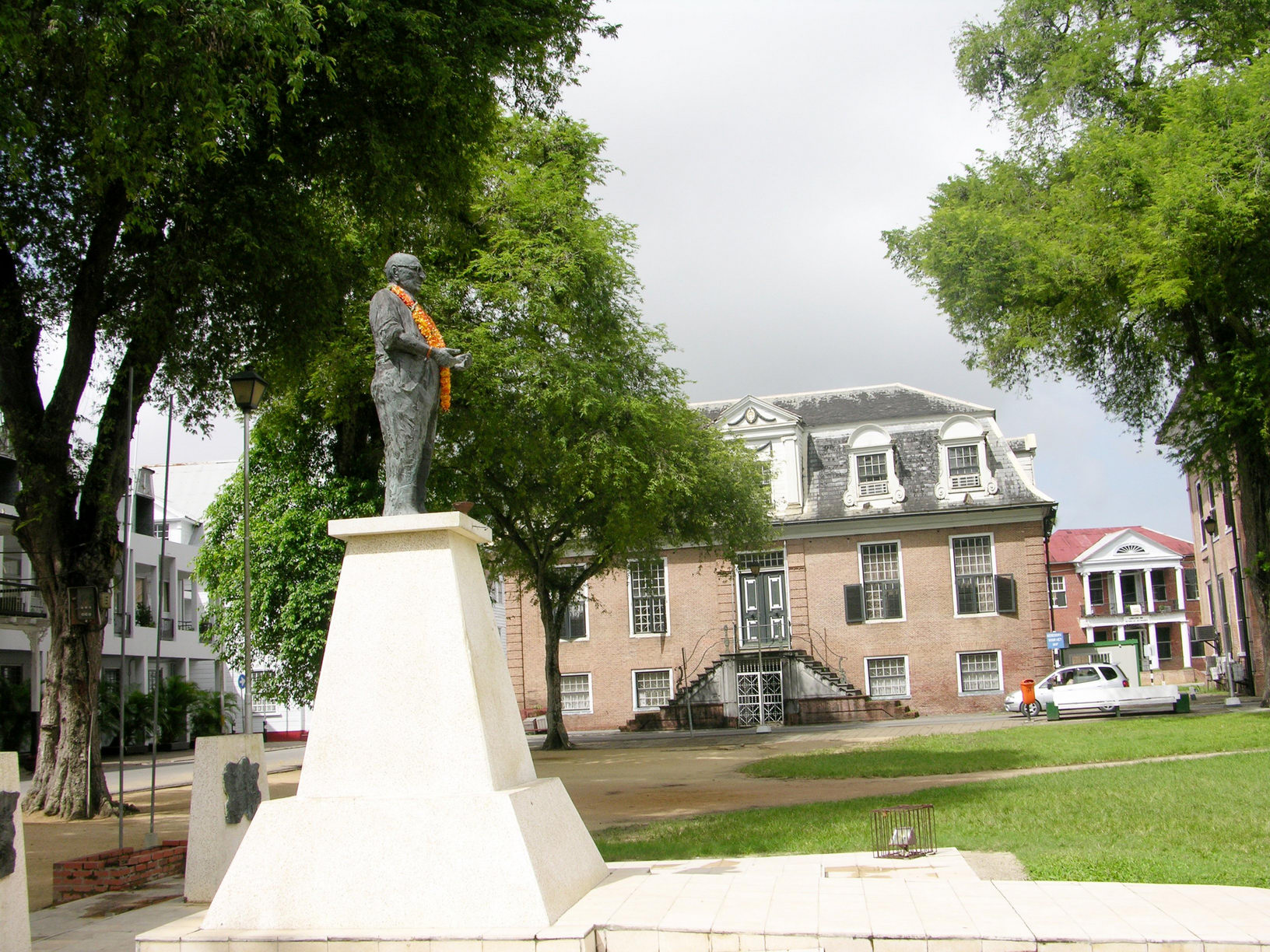
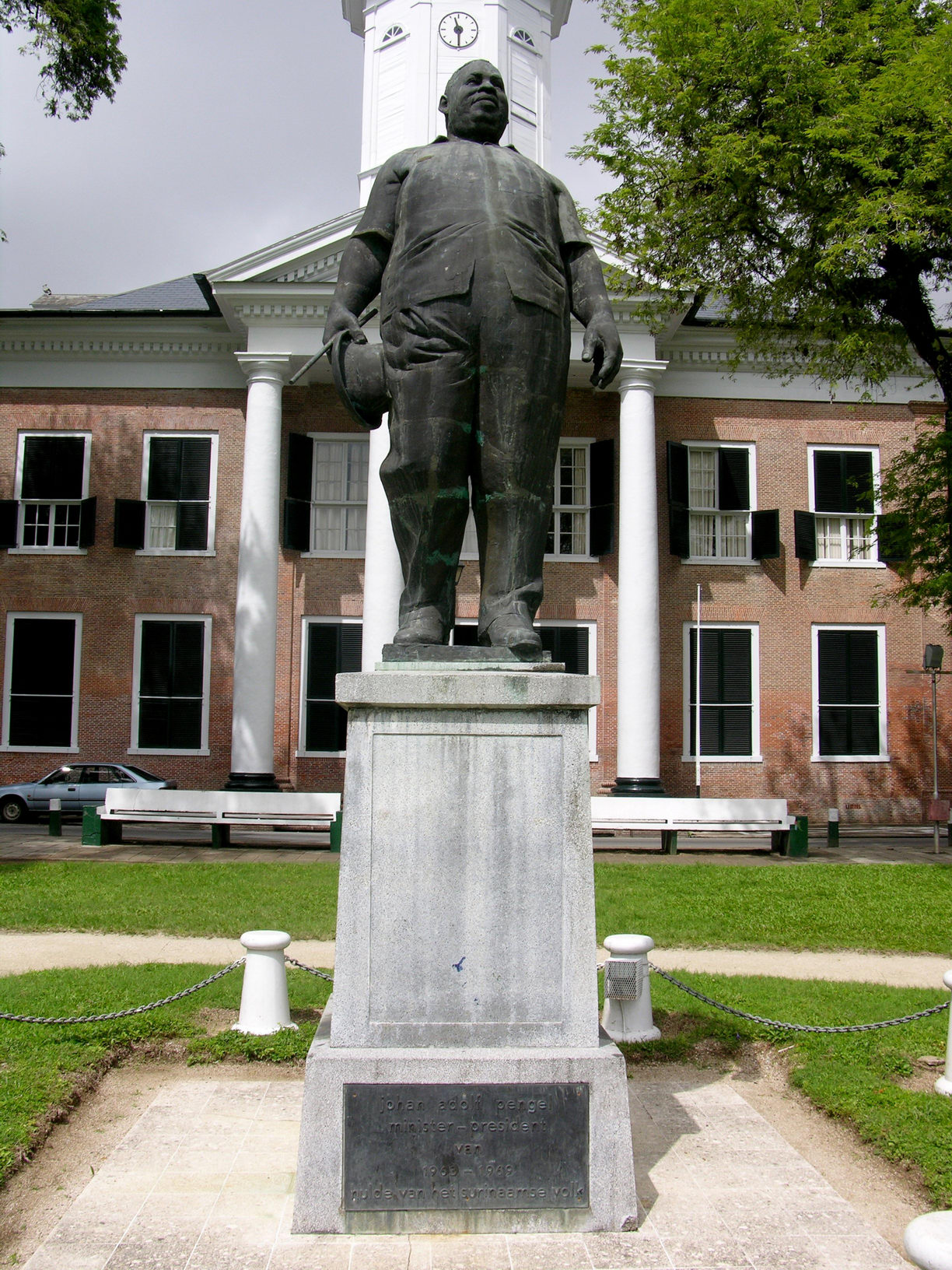
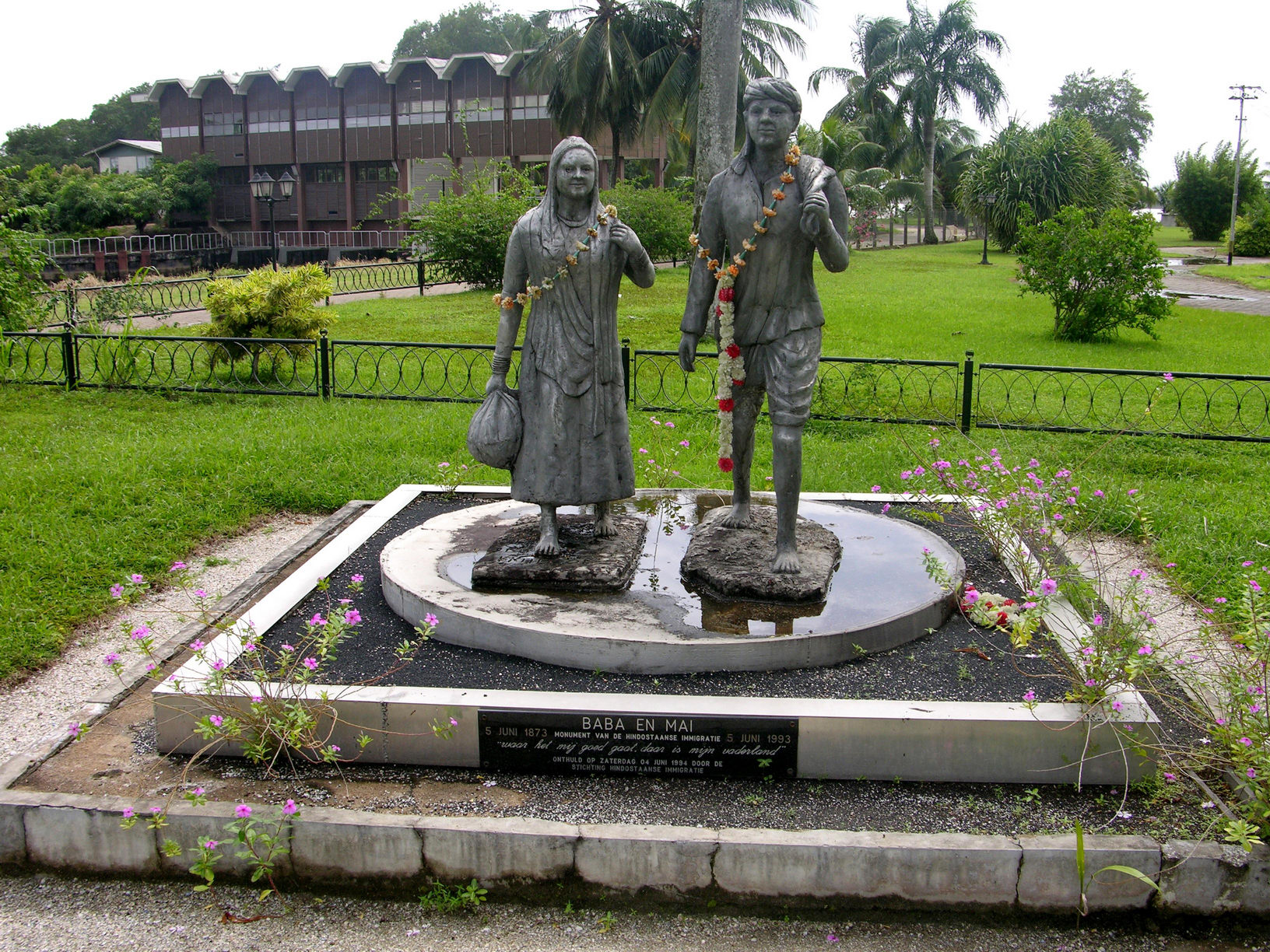
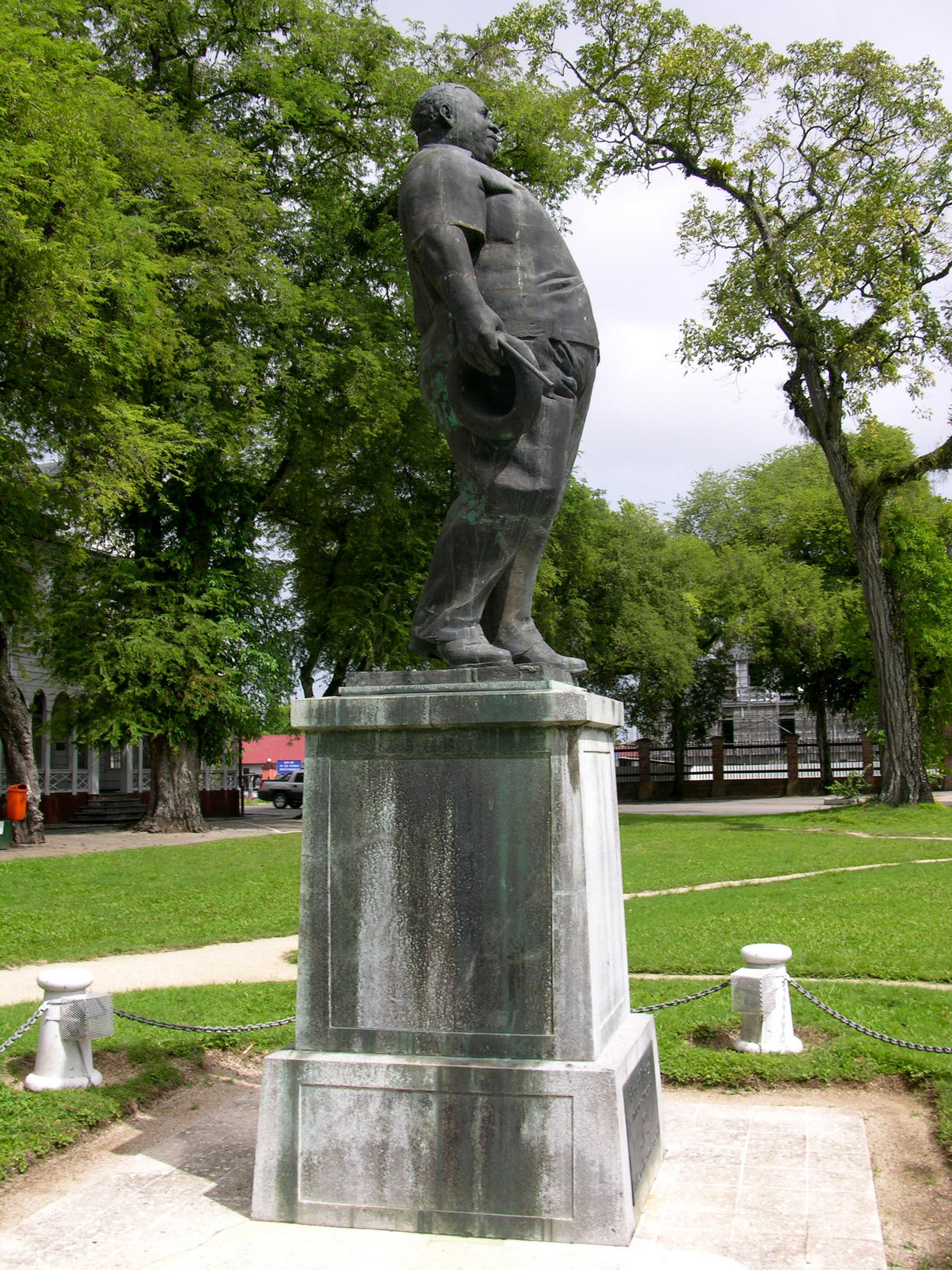
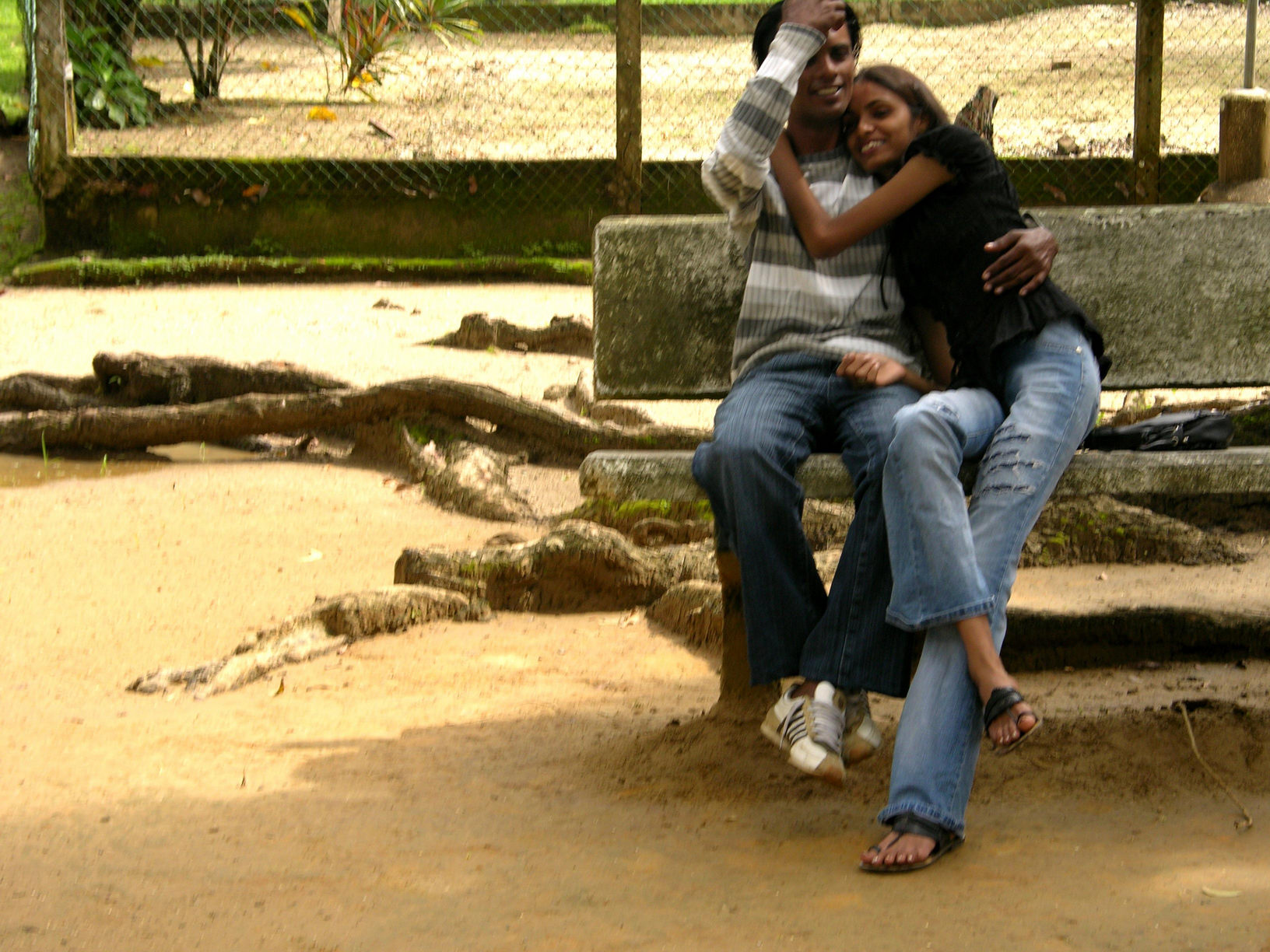
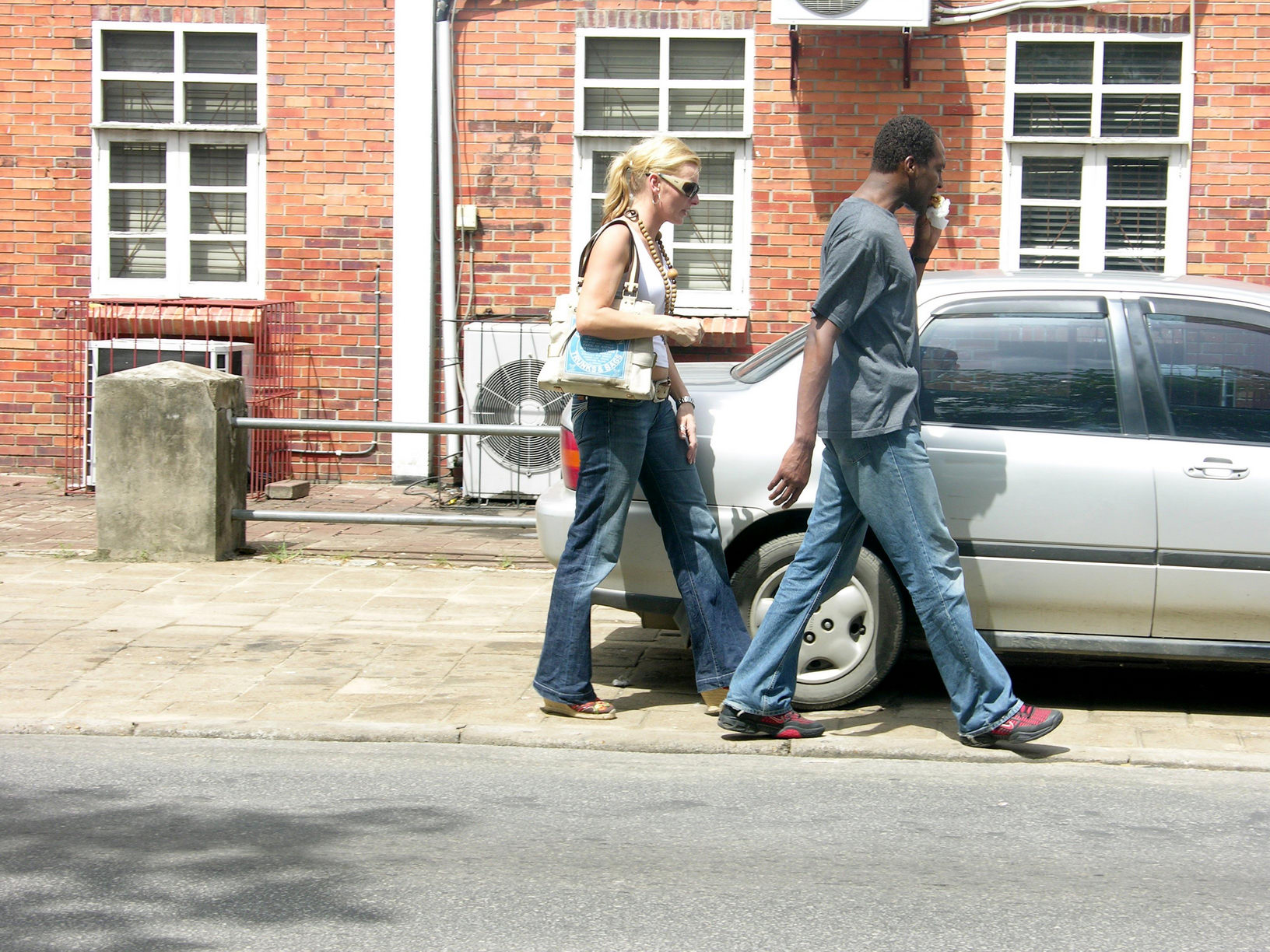
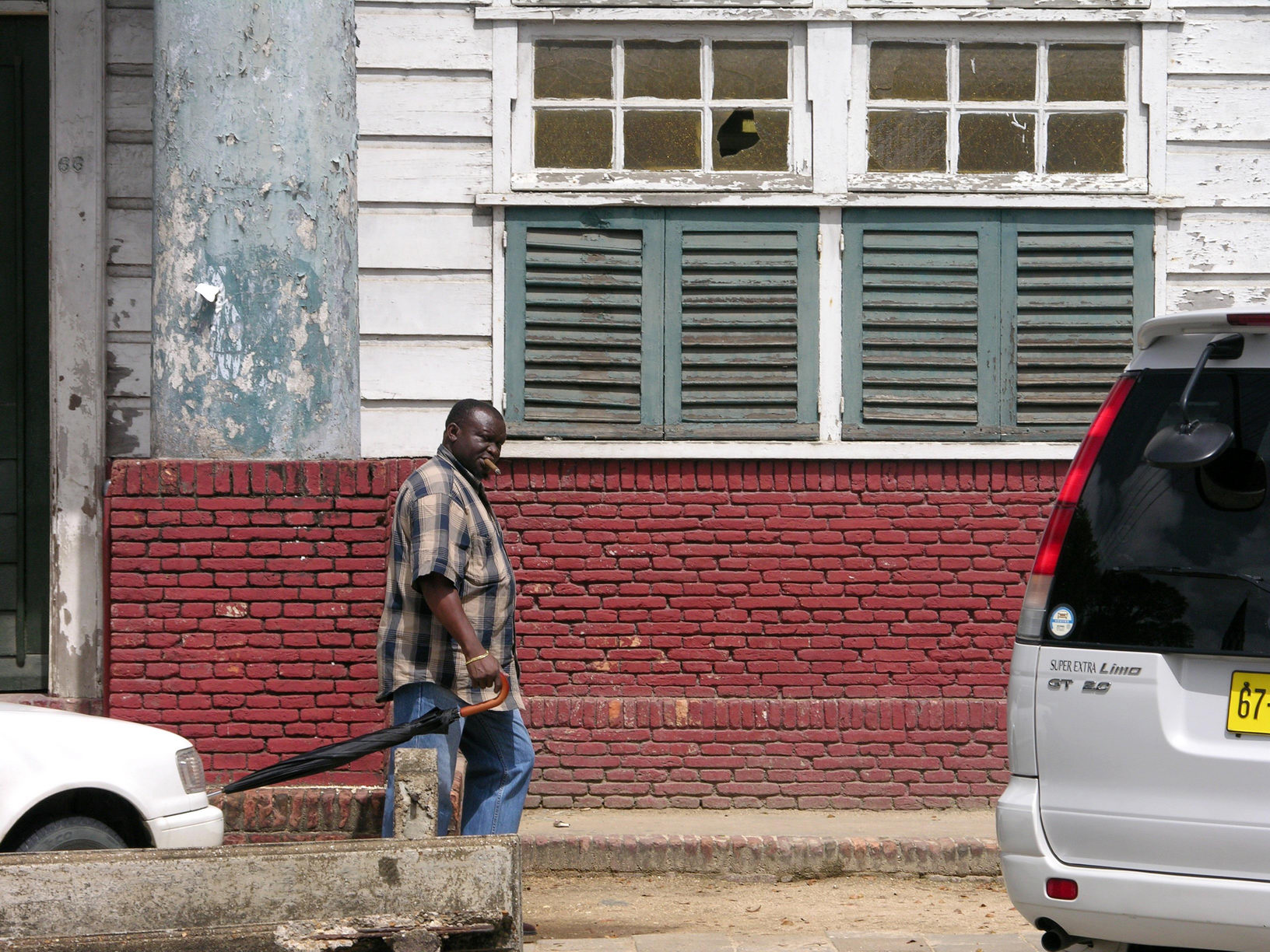
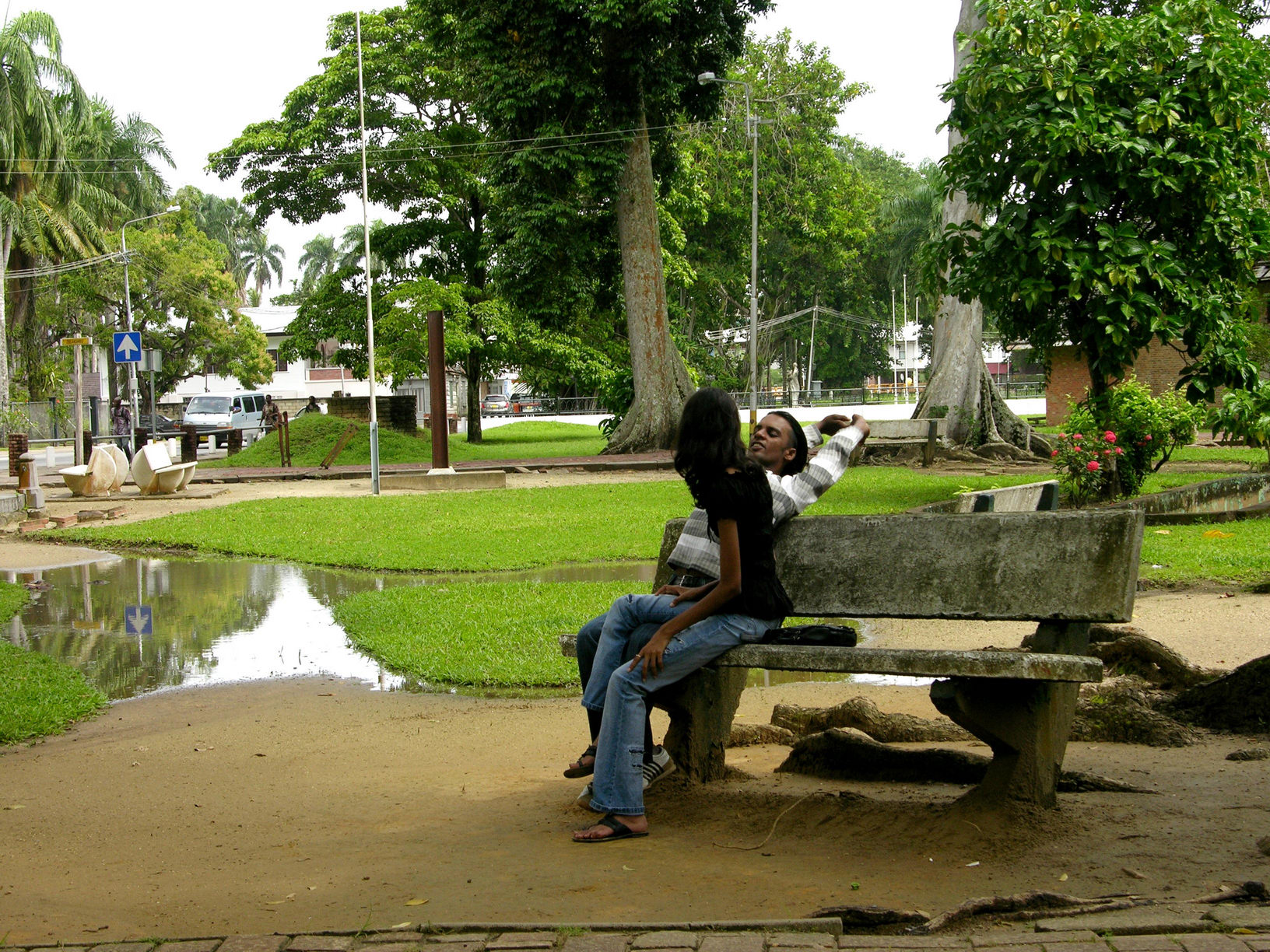
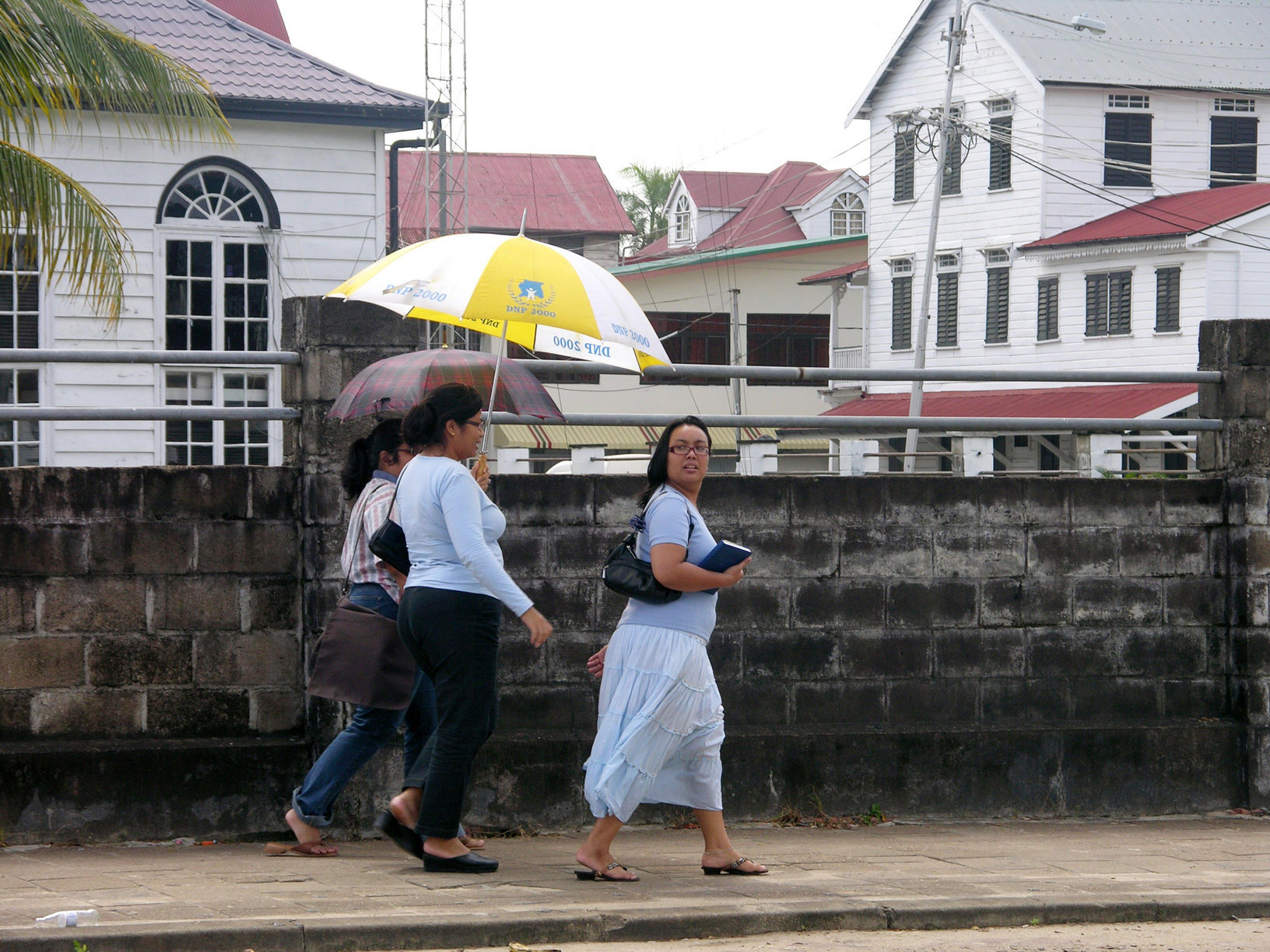
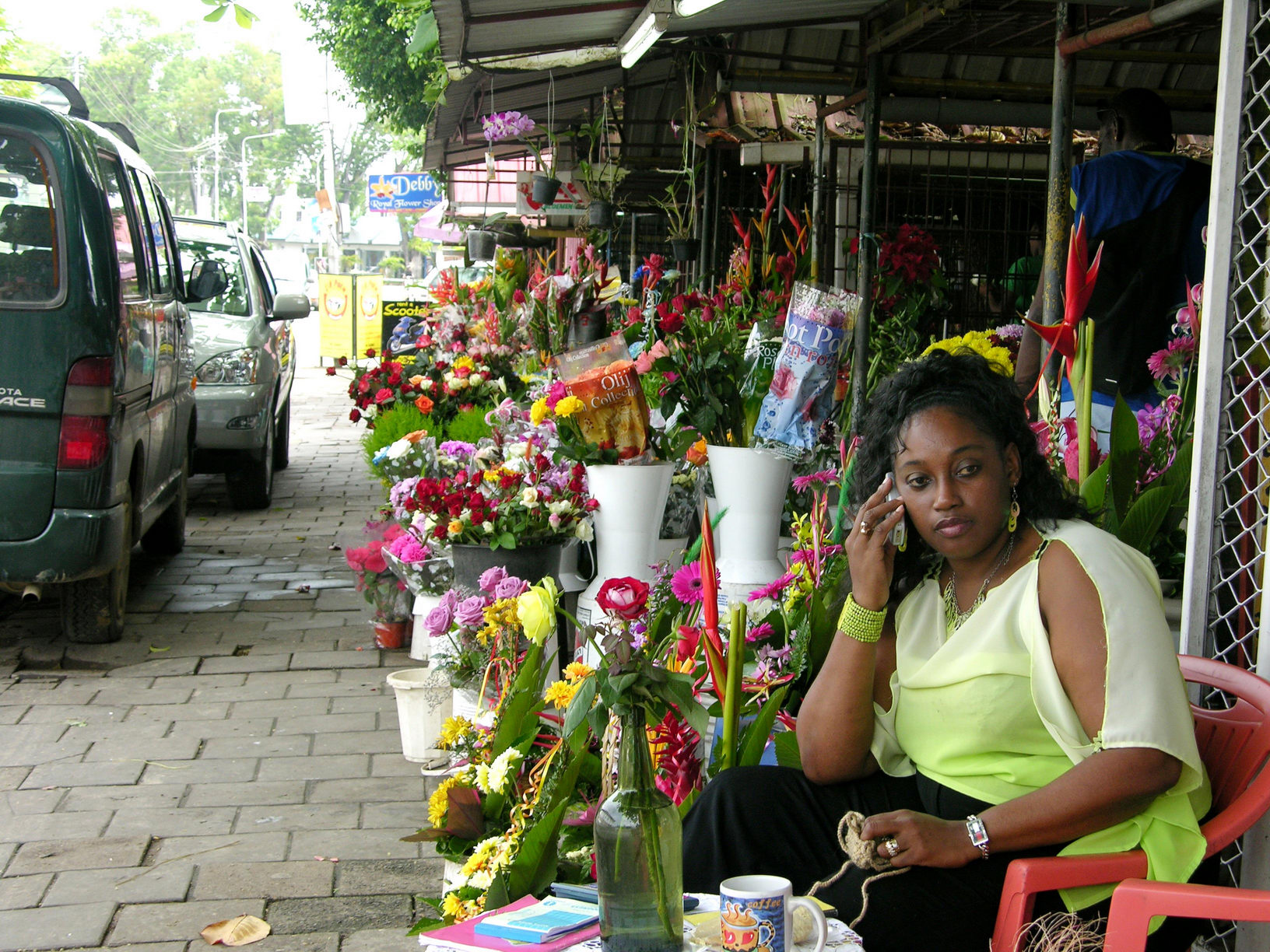
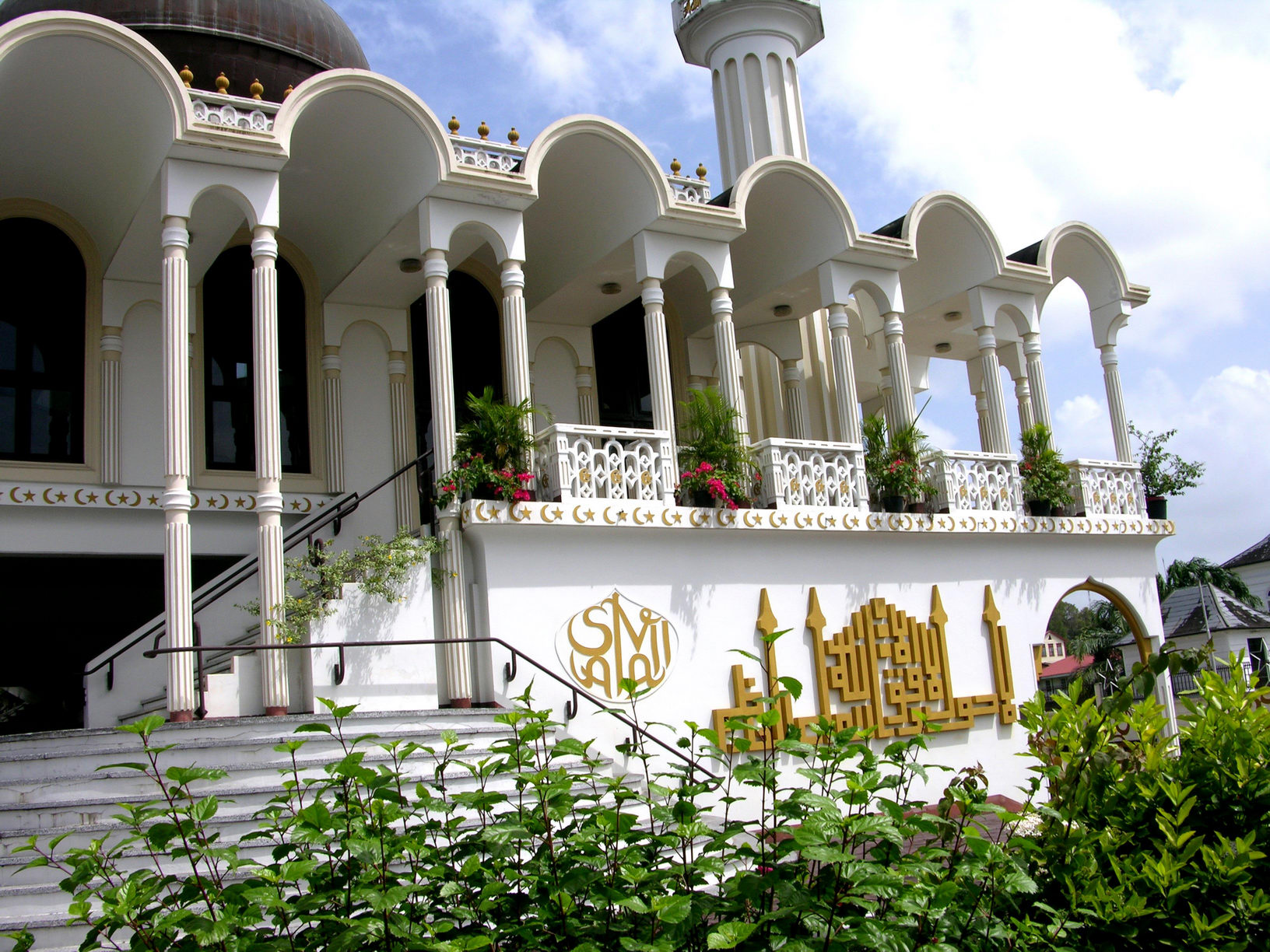
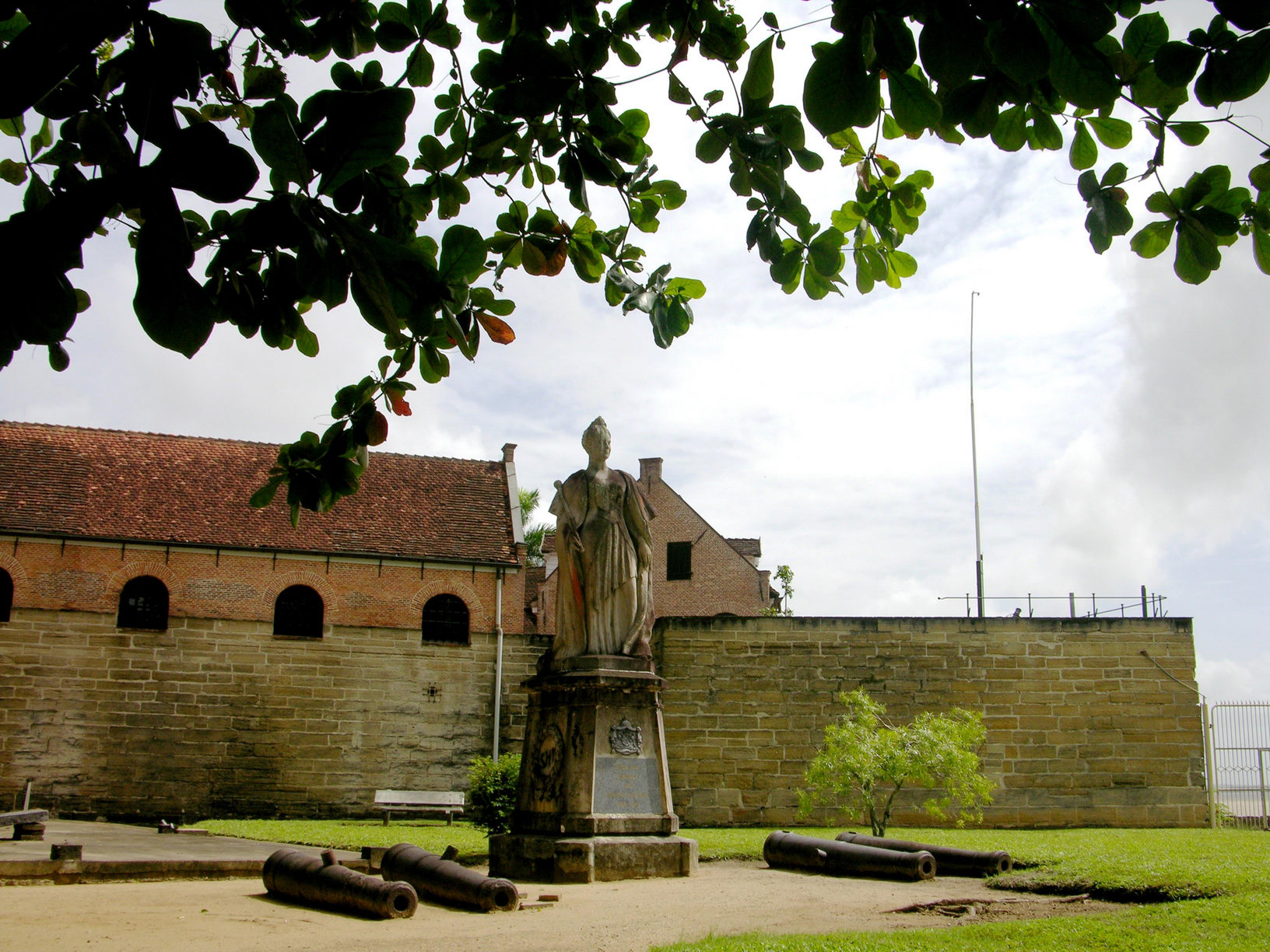
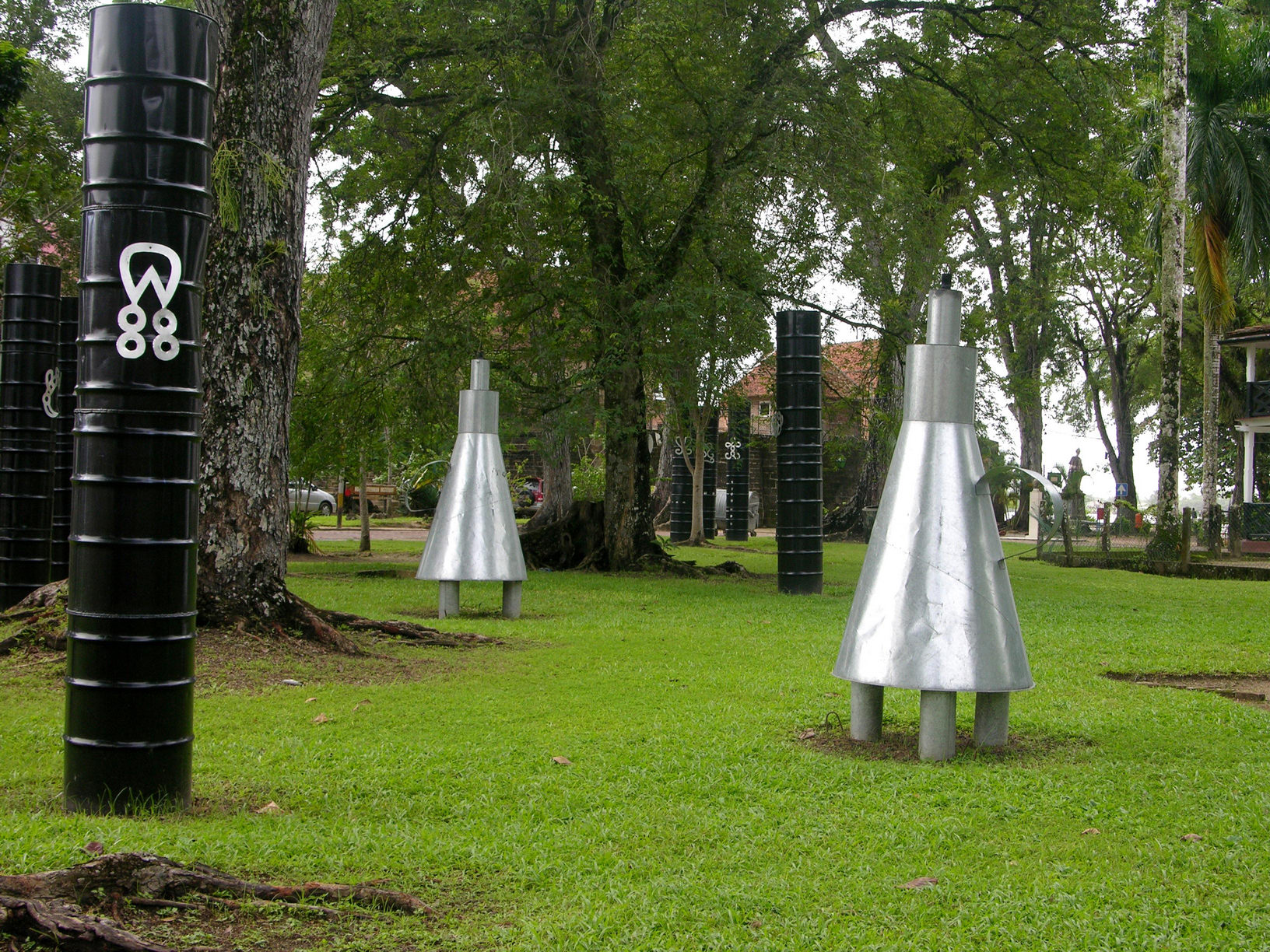
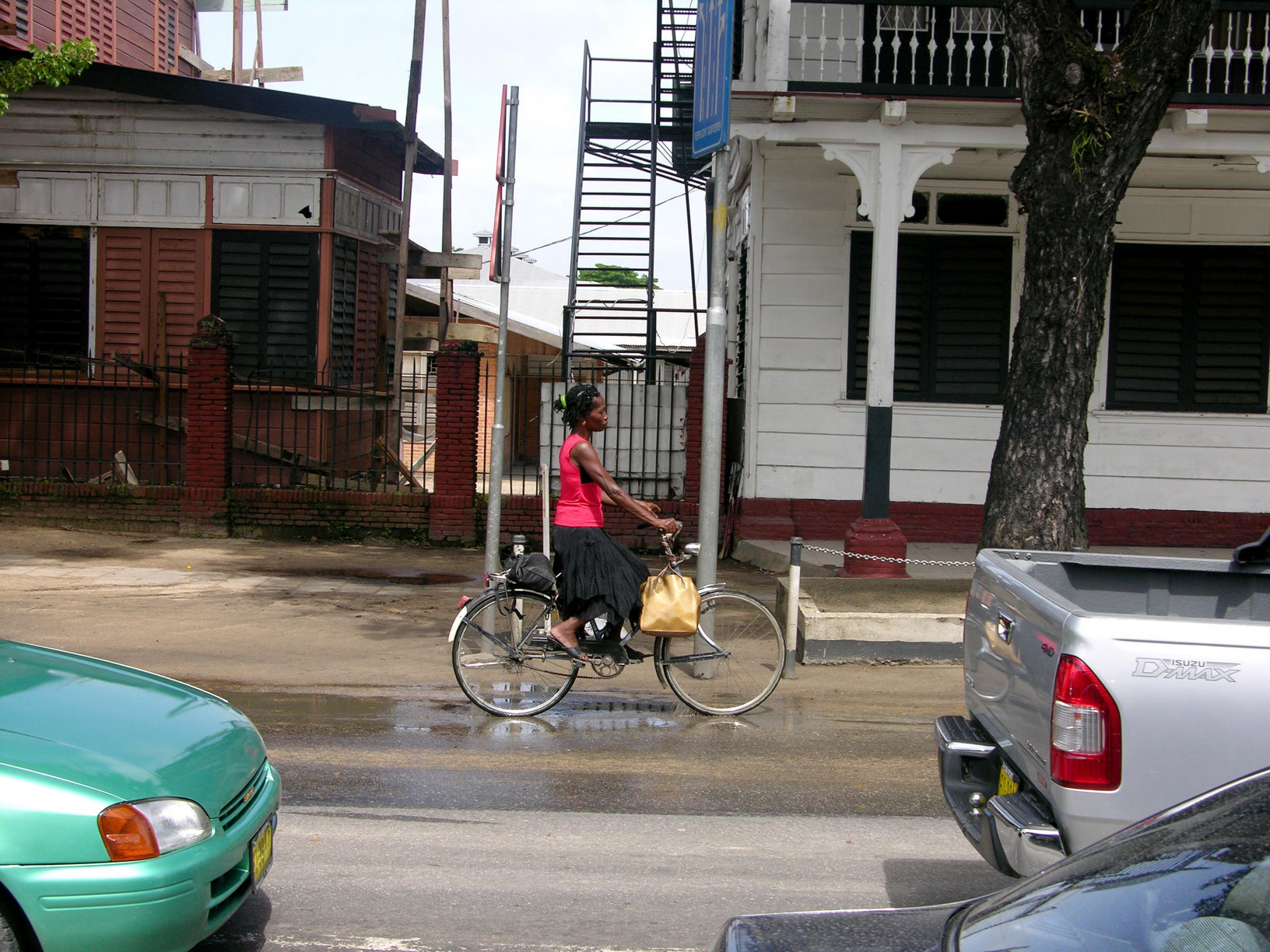
There are a great many languages here: Dutch, English, Sranan, Hindi, Javanese, Maroon languages, Chinese, not to mention several Indigenous languages. What people actually speak is hard to tell. Mostly Dutch, it seems, but it's completely impossible to understand. Not one word. Almost everybody knows English, even in remote villages, but they don't speak it among themselves.
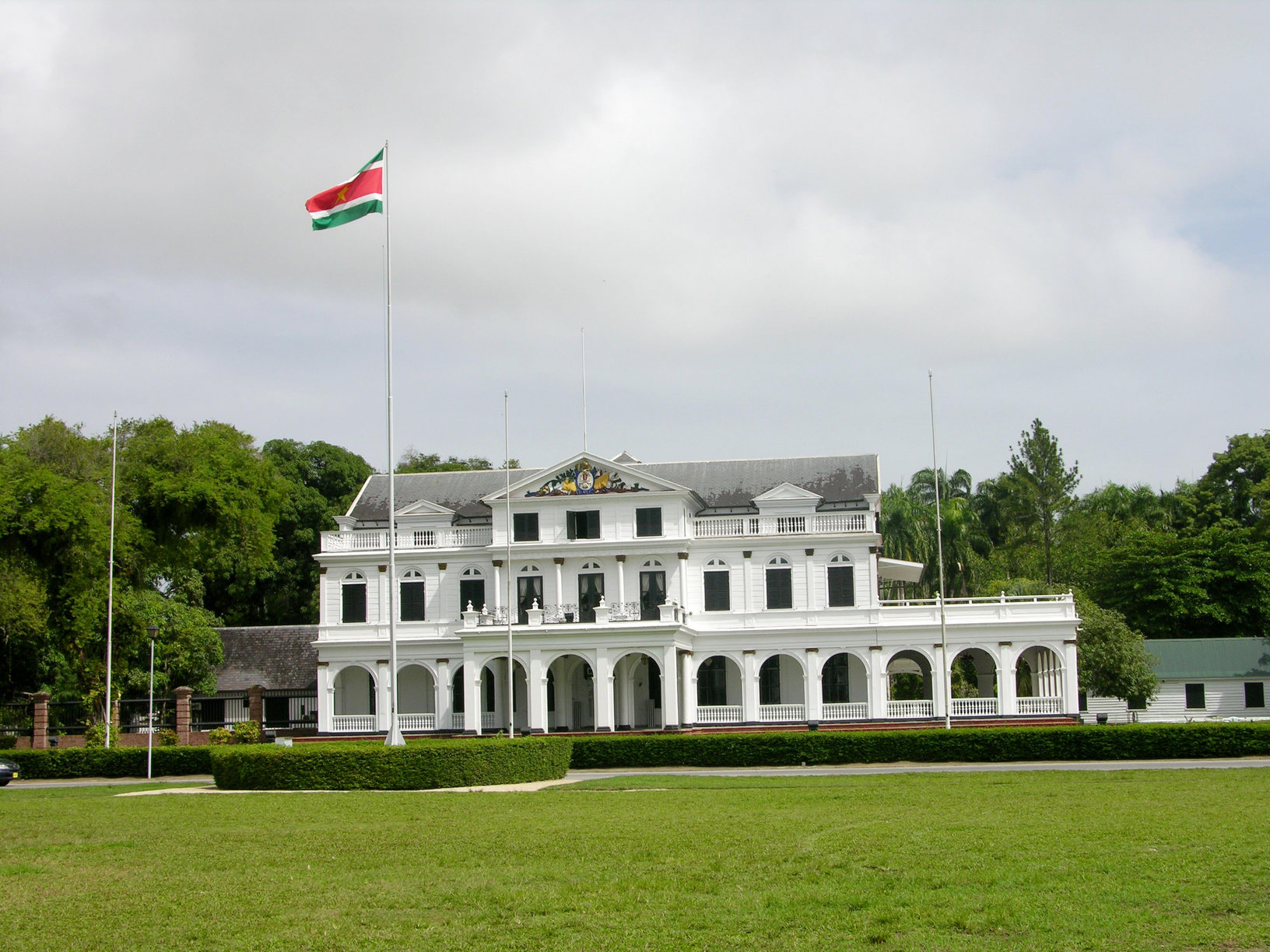
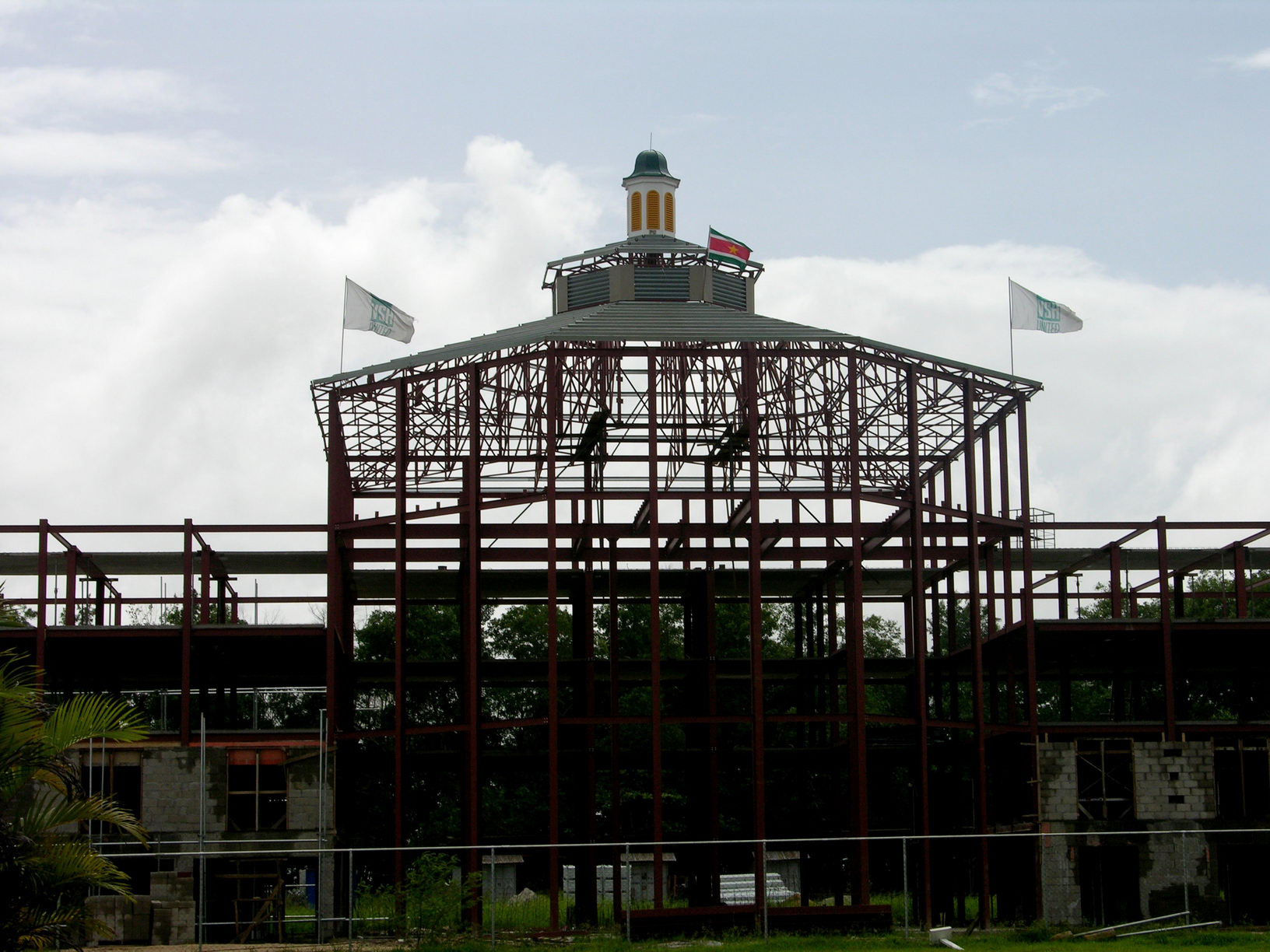
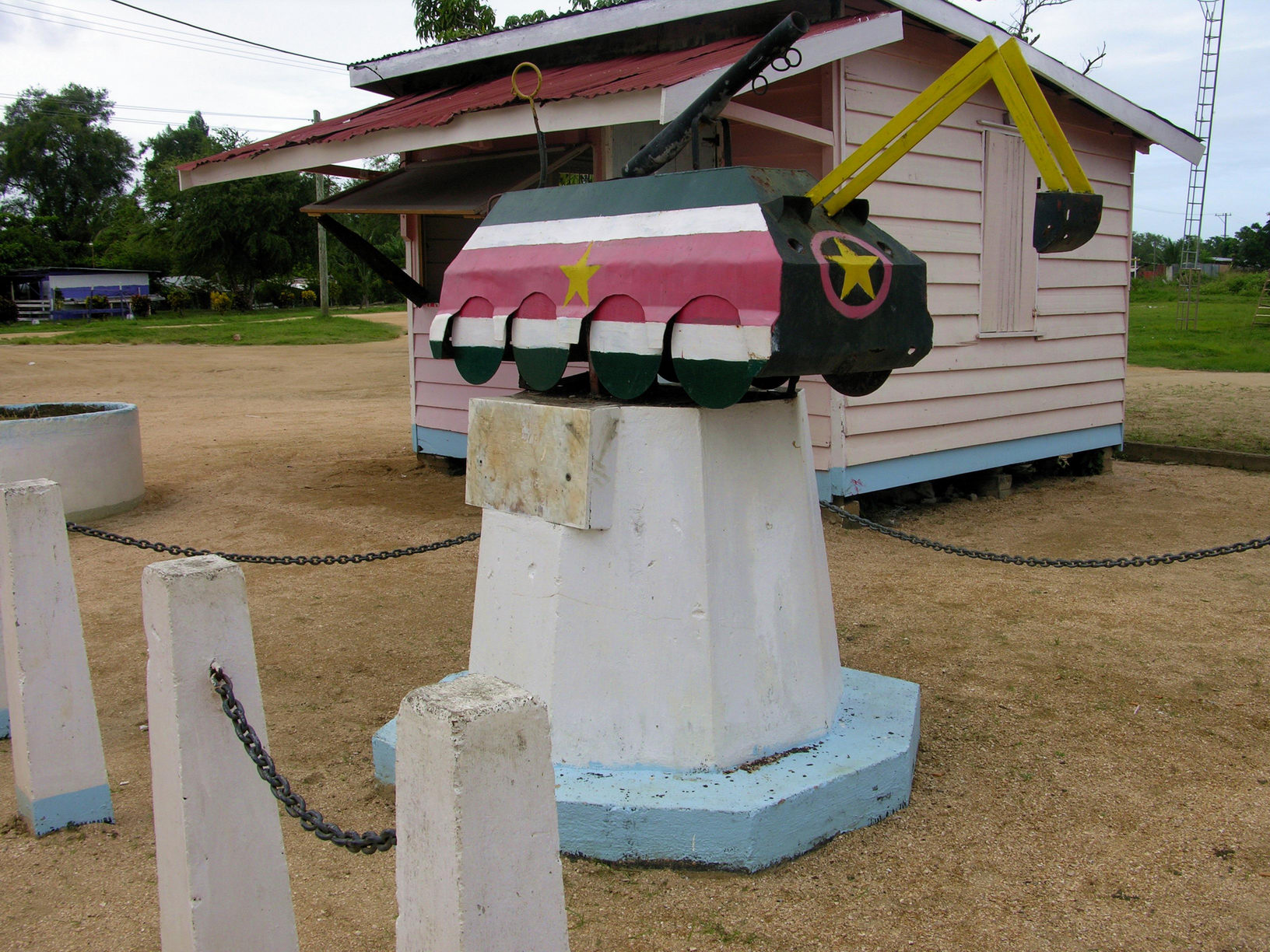
The Surinamese flag looks a lot like North Korea's. The moment you see it, you flinch, but the country has nothing to do with Korea. Suriname was Dutch Guiana, one of the last Dutch colonies in South America, which only gained independence in 1975.
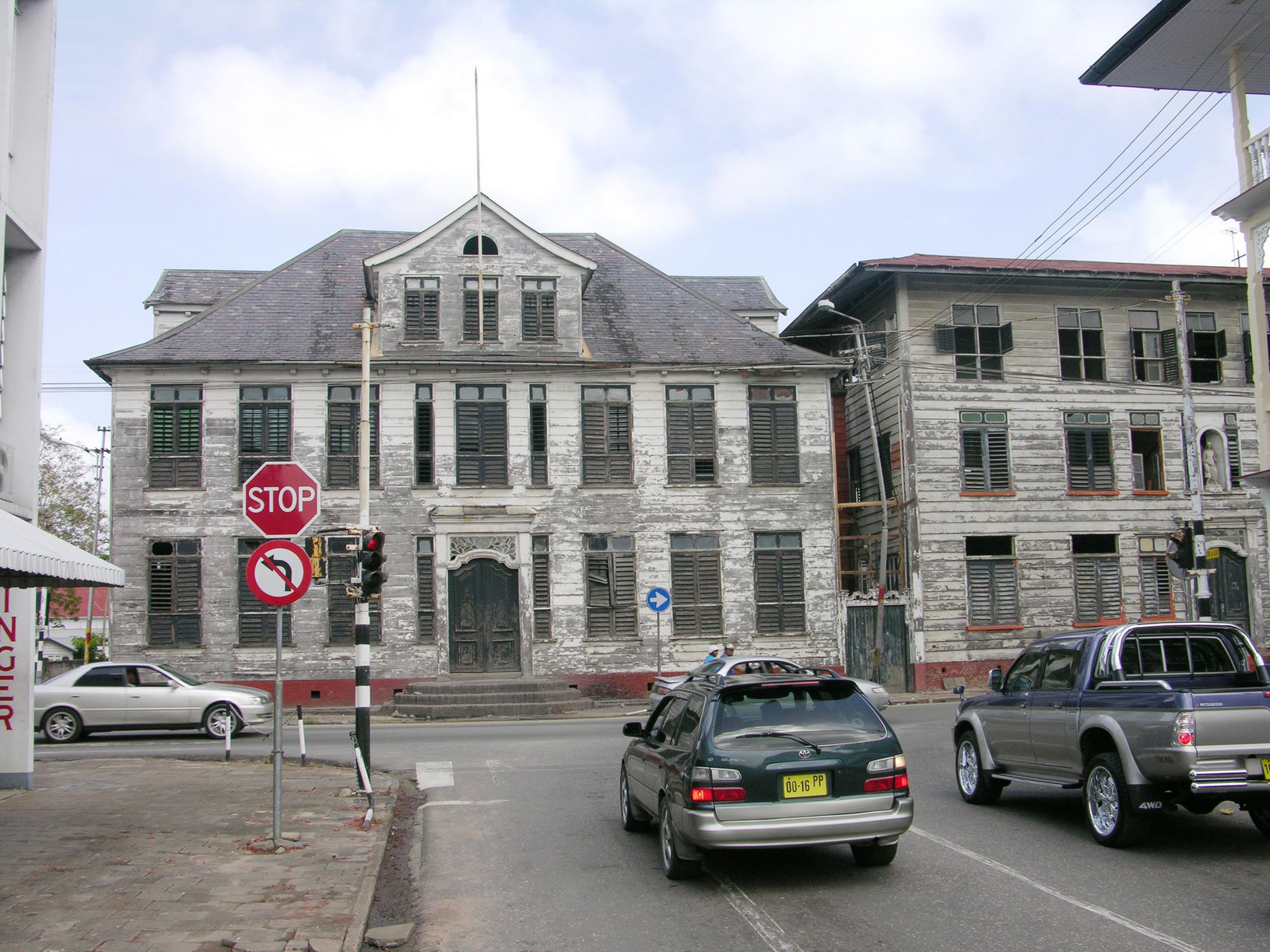
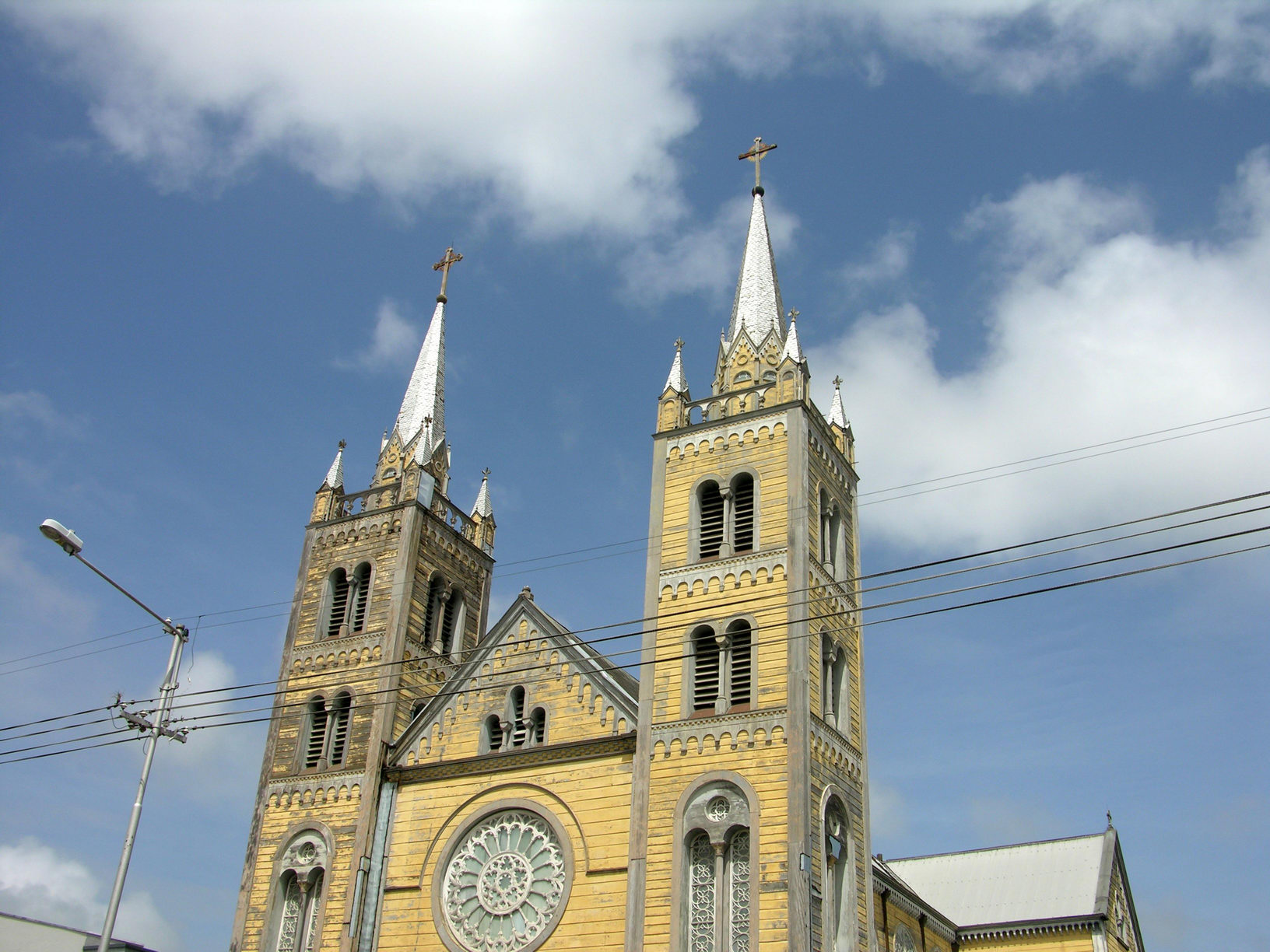
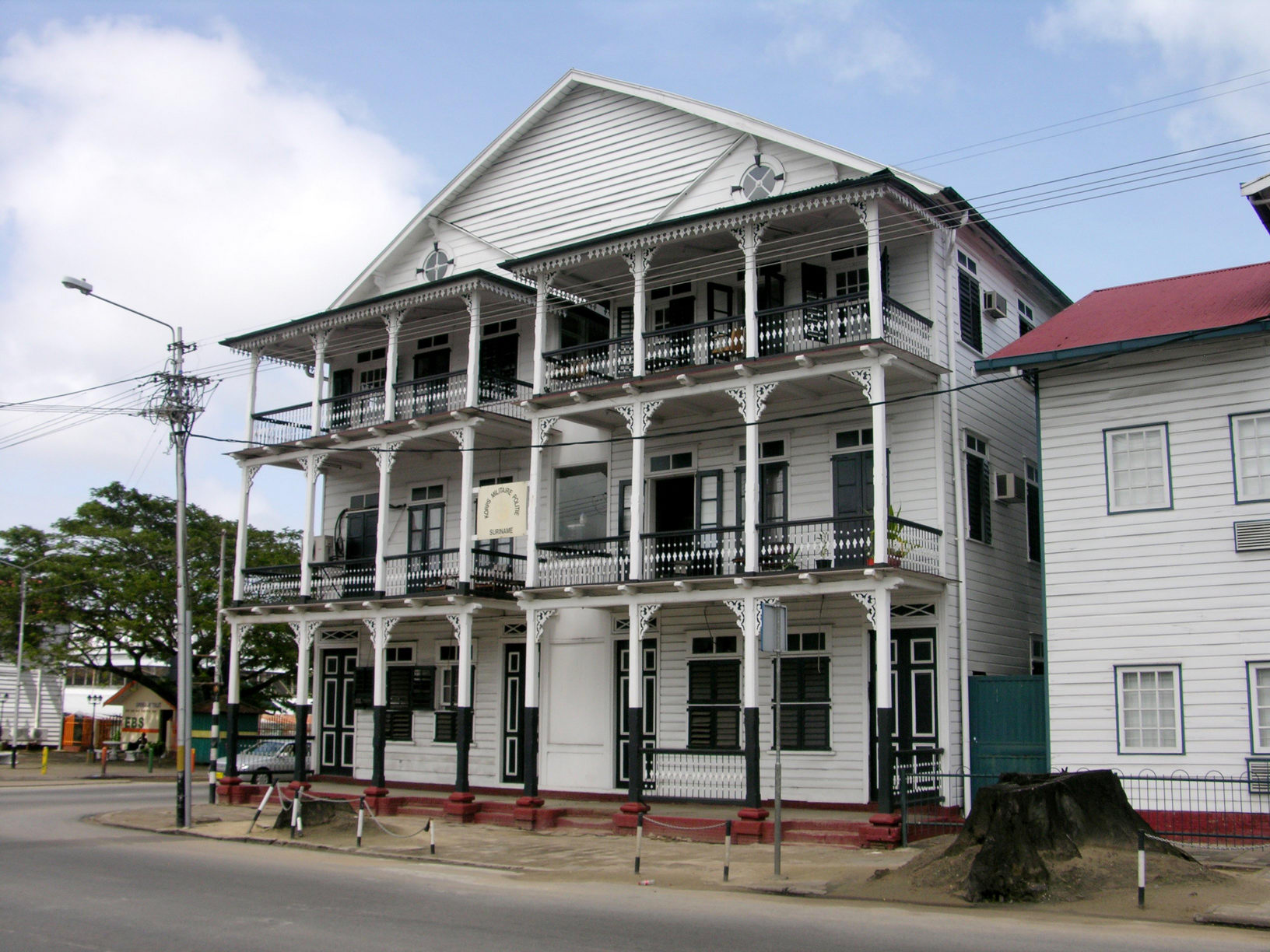
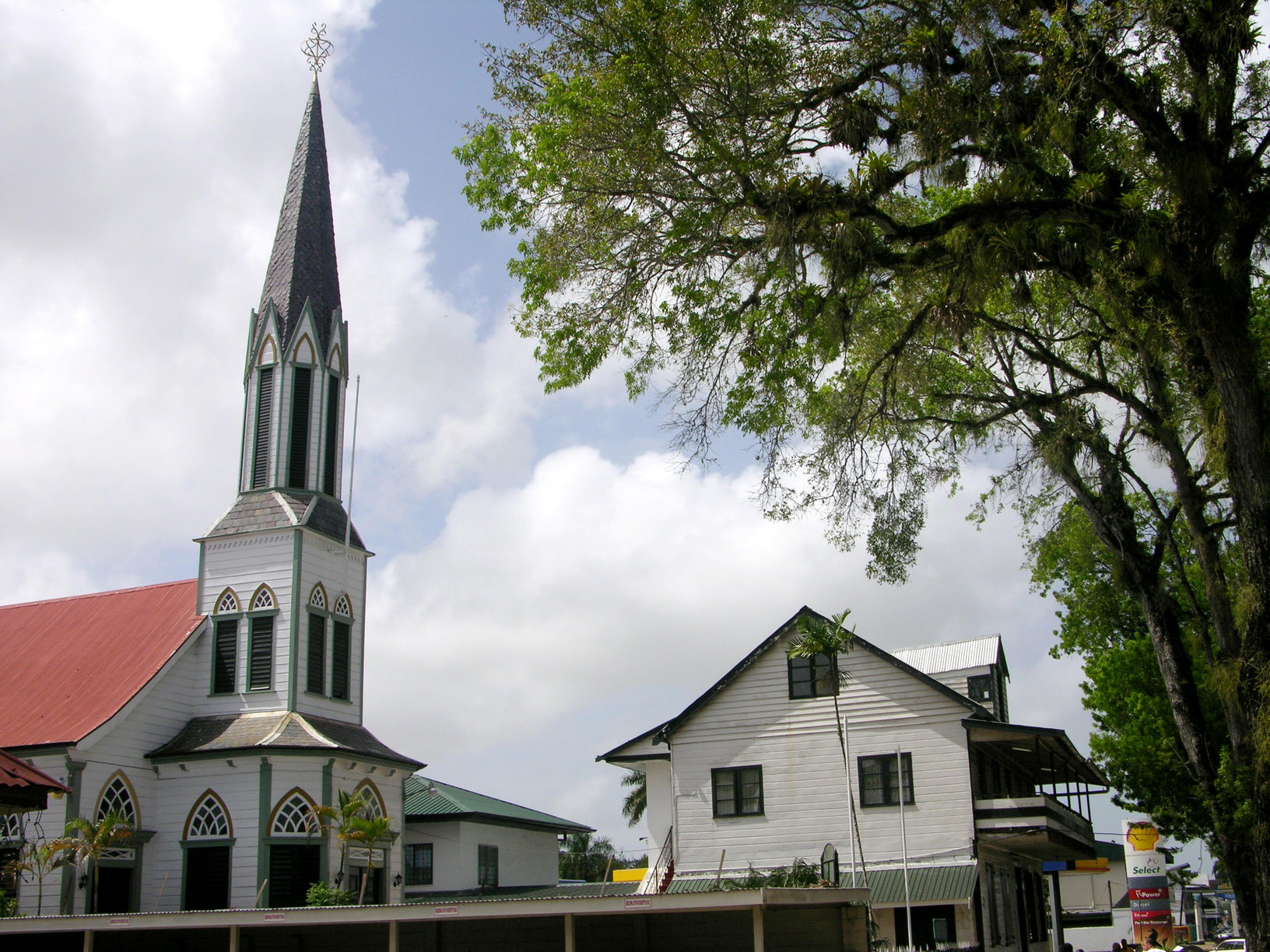
Independence was followed, as usual, by civil war, but things had settled down by then. The Netherlands gives its former colony financial aid. The country has vast deposits of bauxite, and now they've found oil, too. Suriname isn't exactly poor as a result. There's not much reason to work, mind you. All those things fell out of the sky. A Dutch colony in short, with the Dutch disease to match.
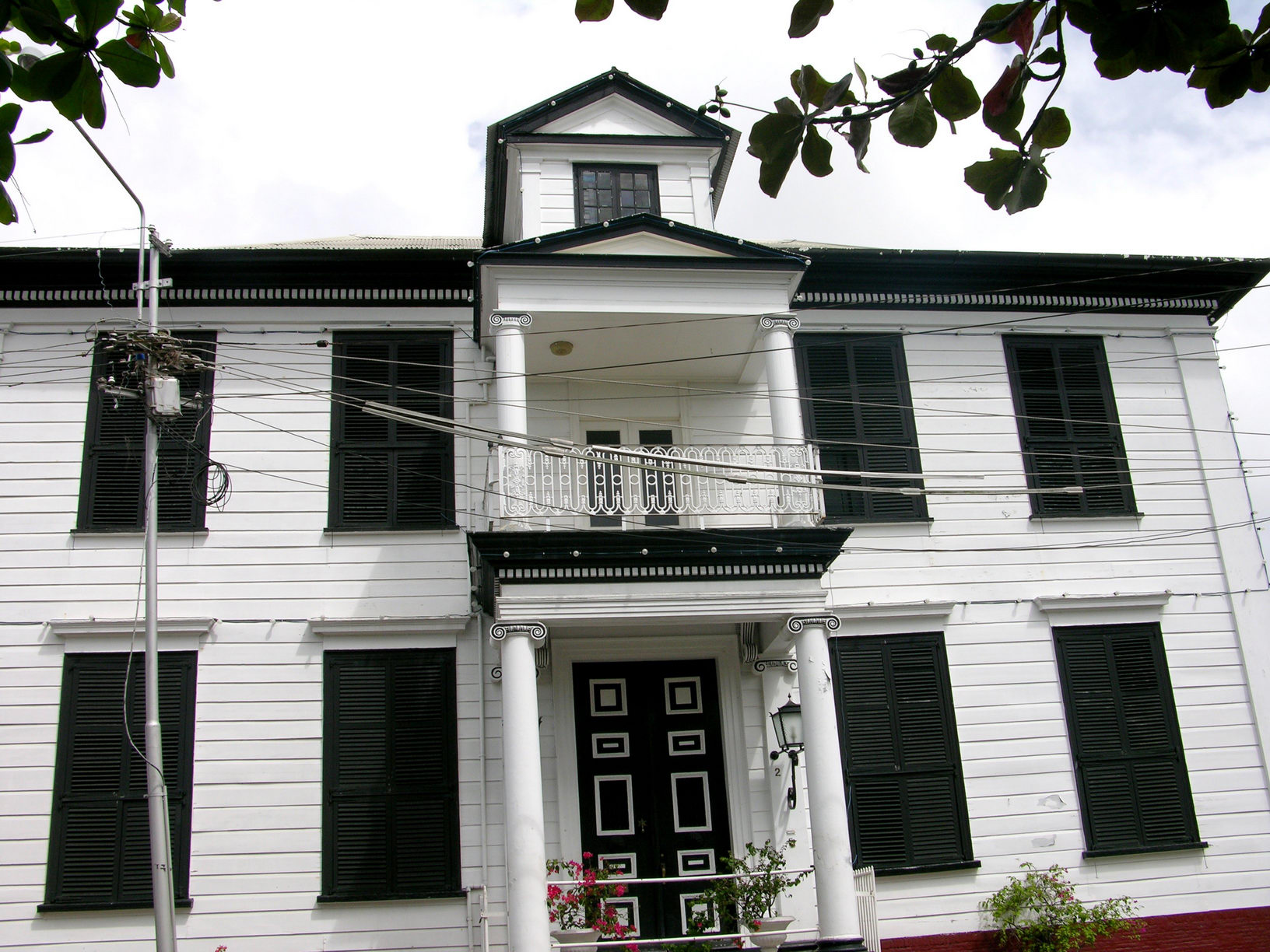
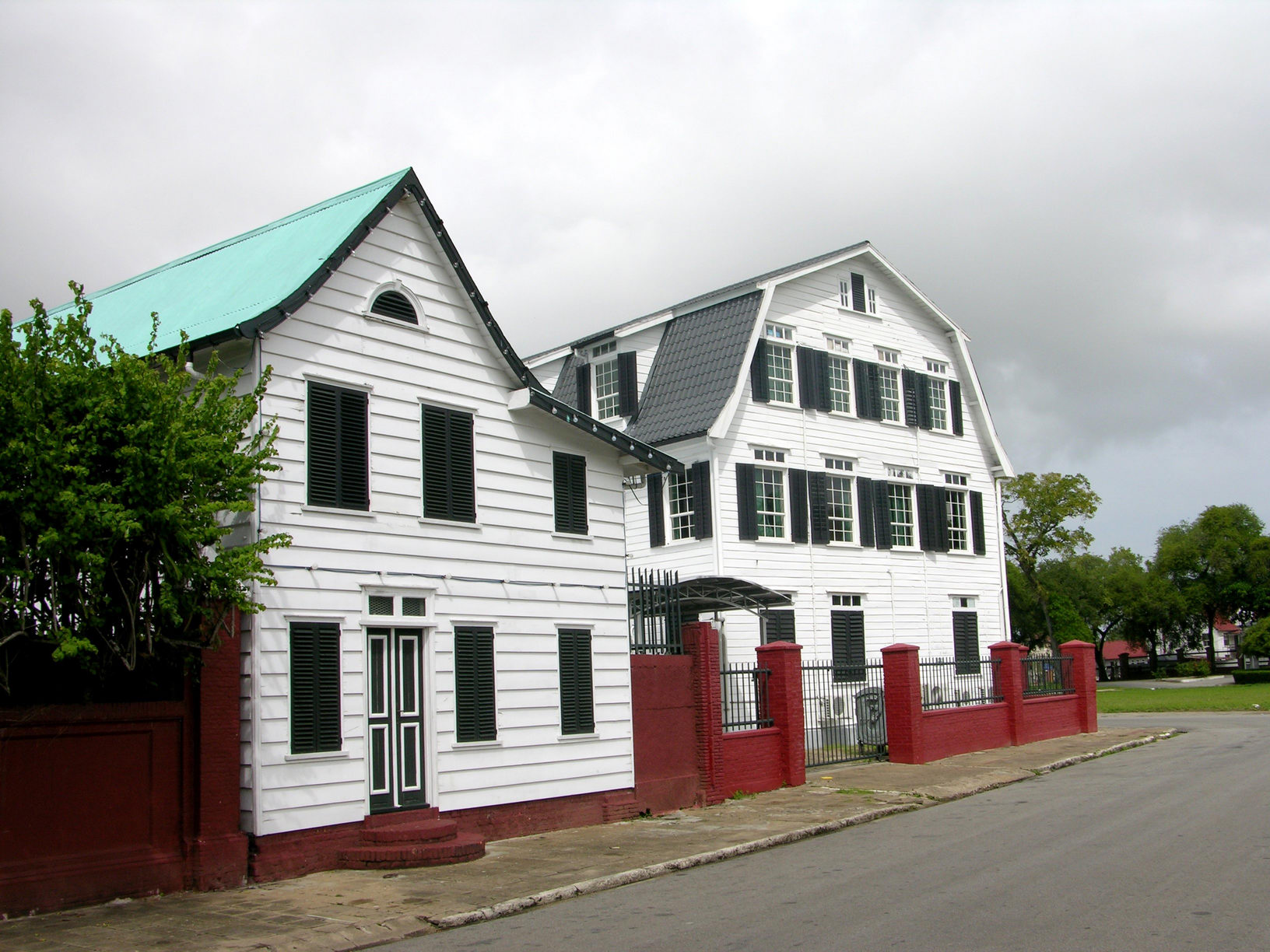
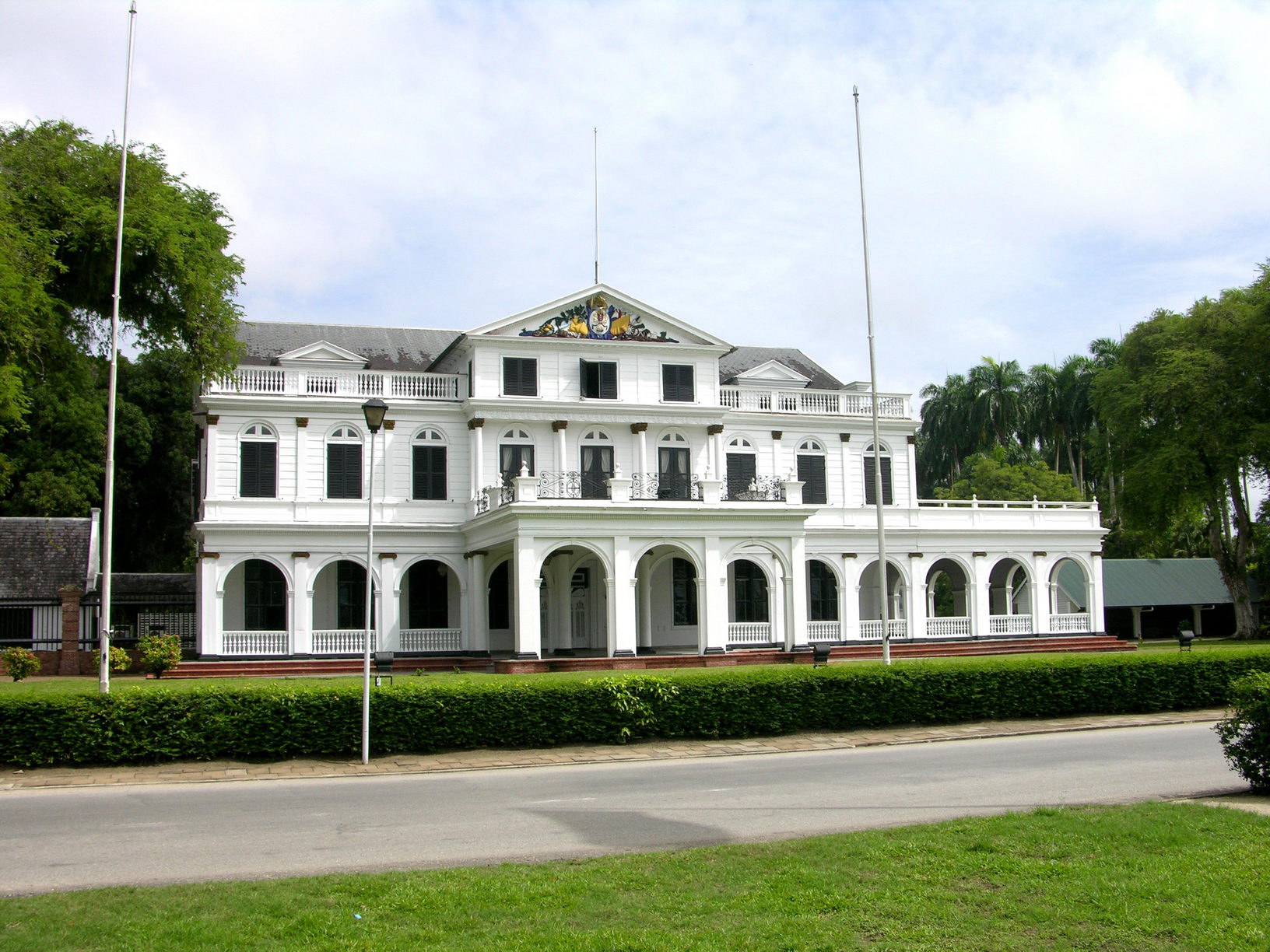
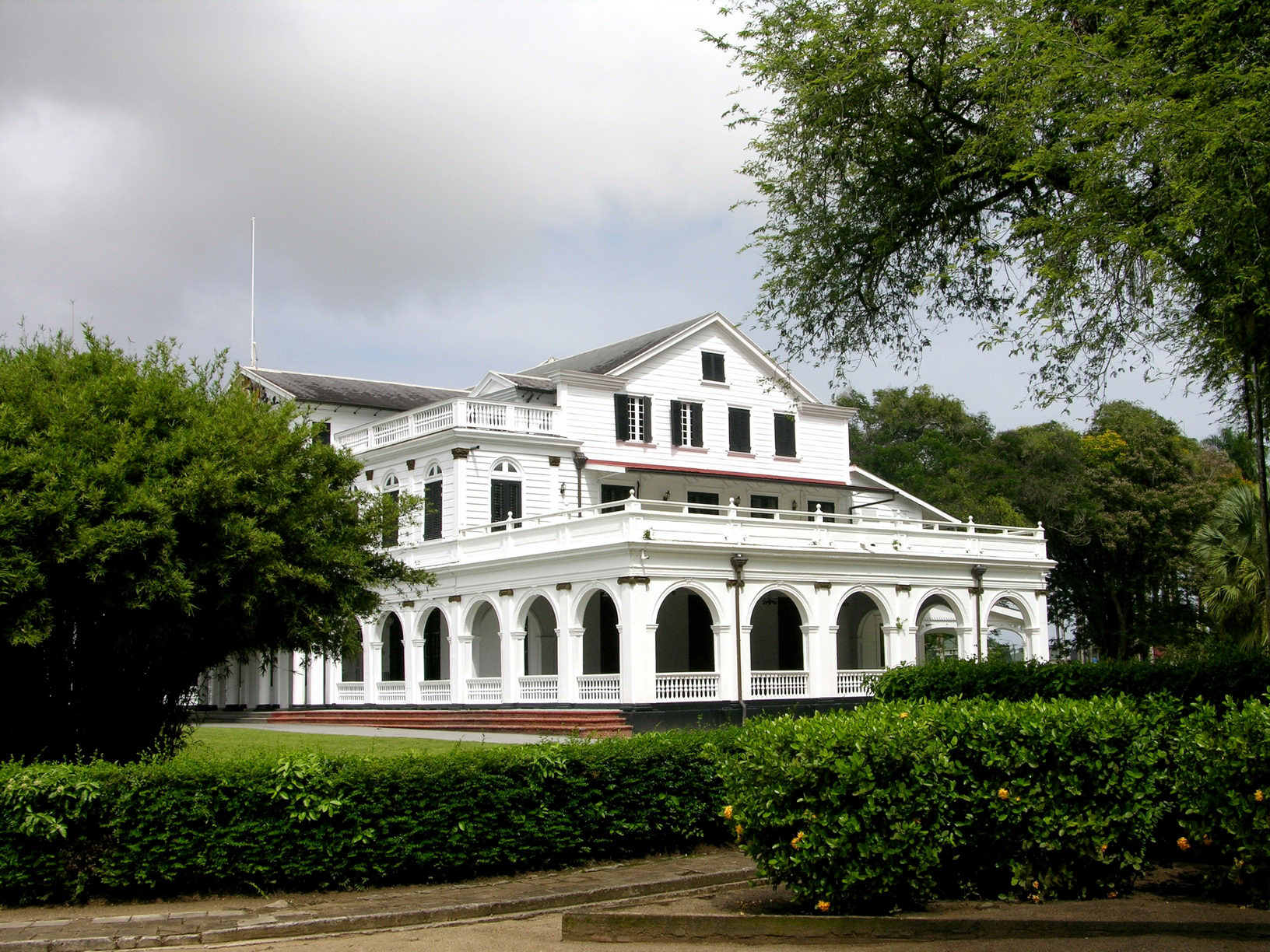
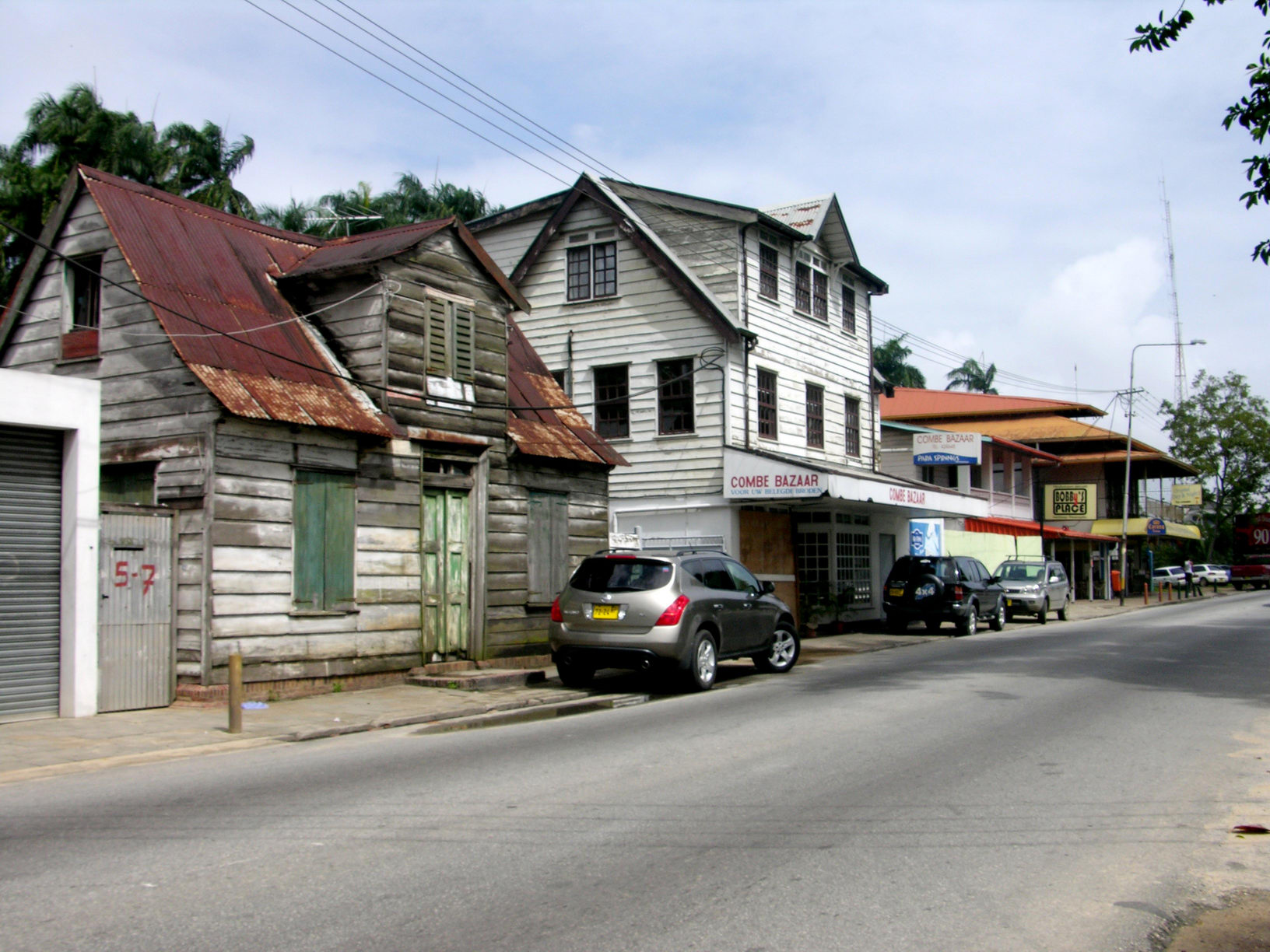
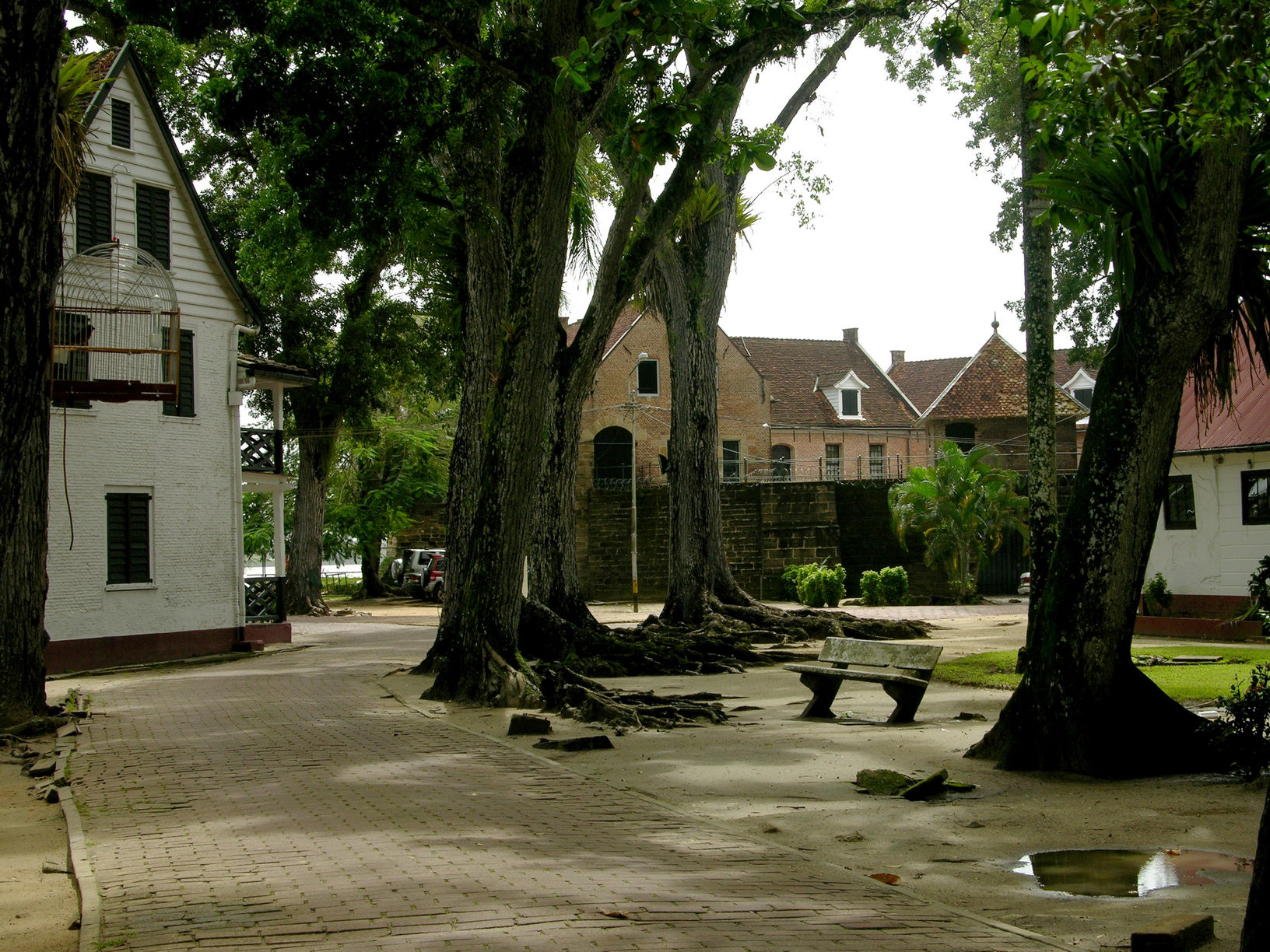
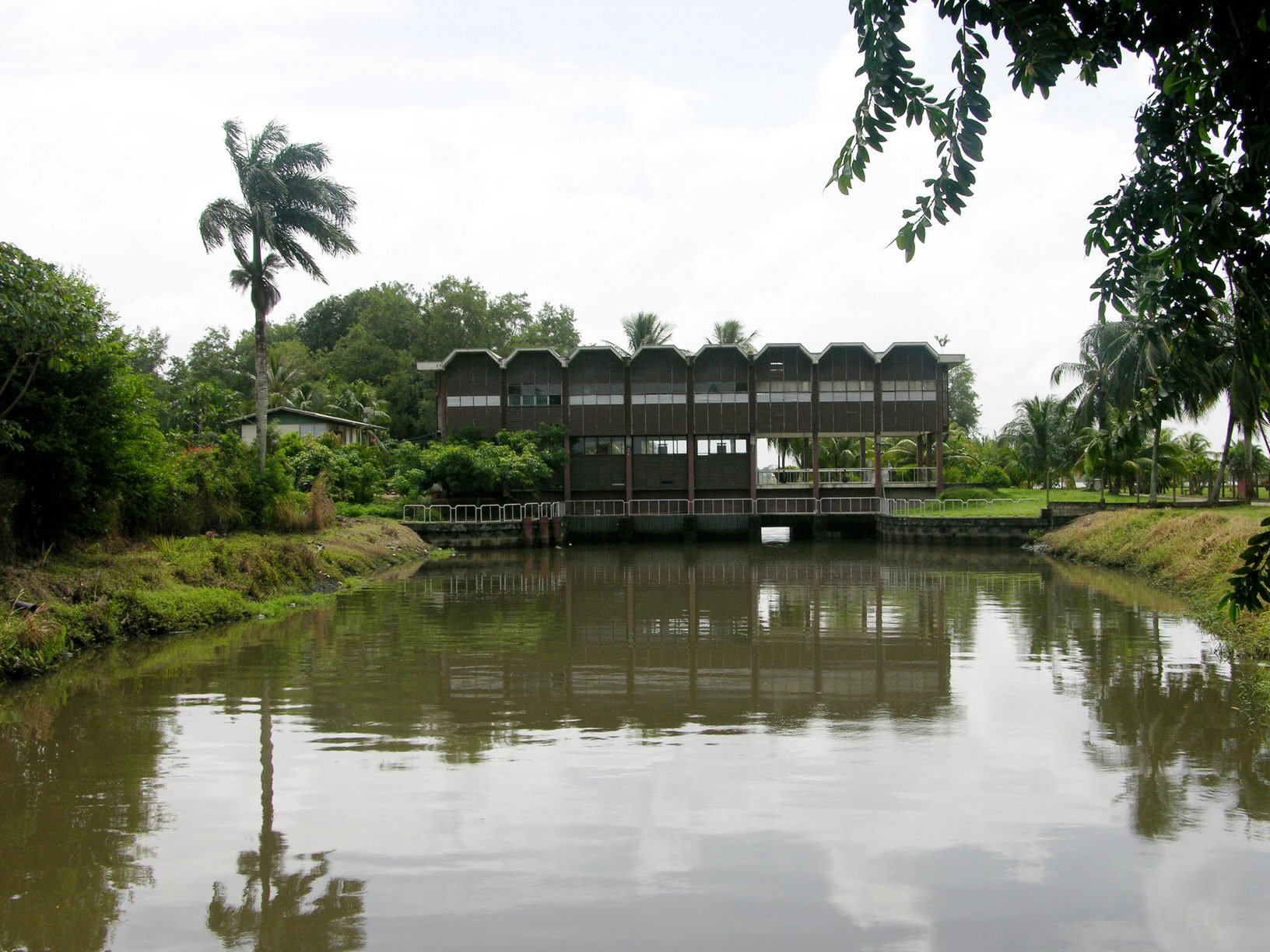
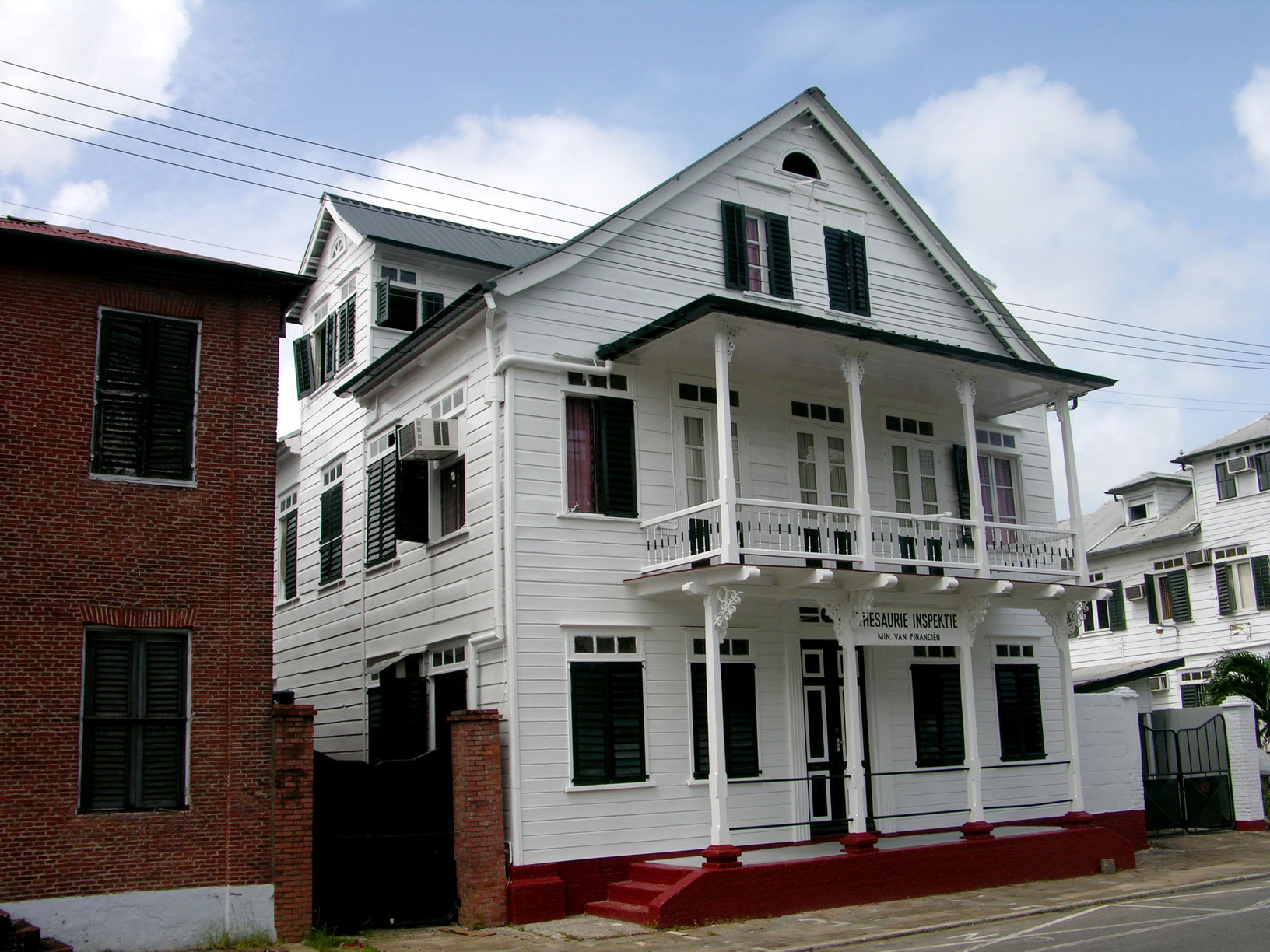
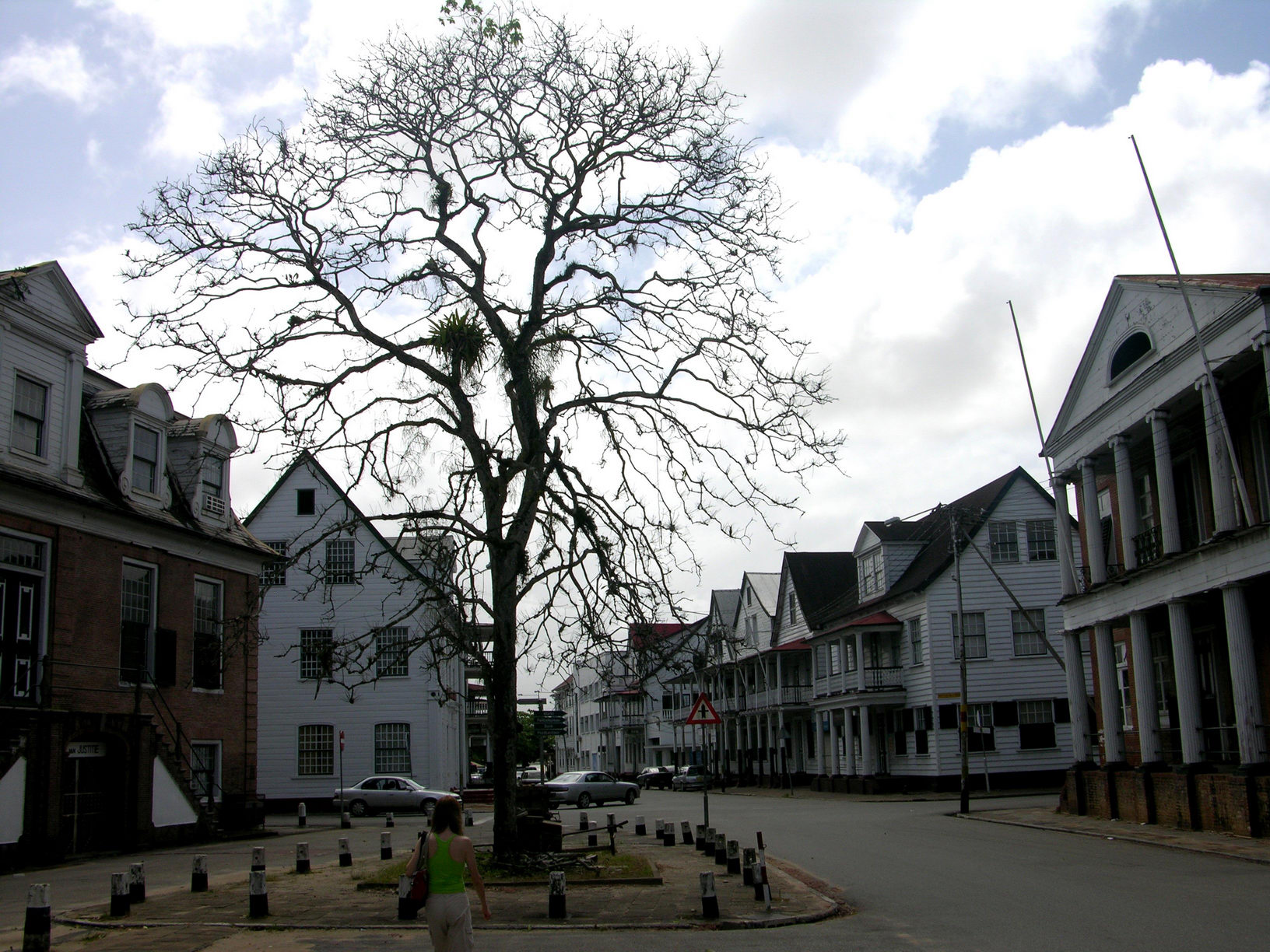
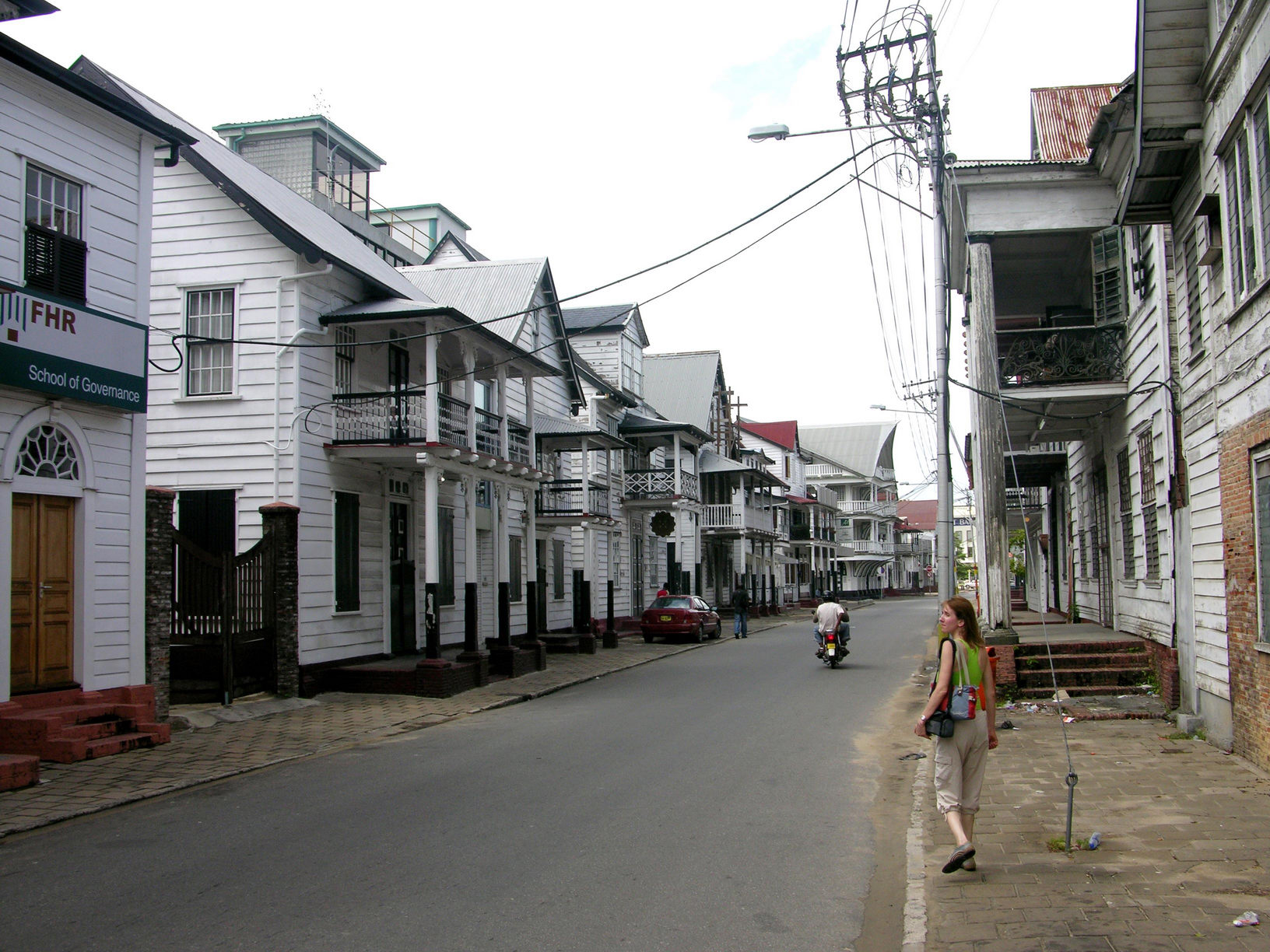
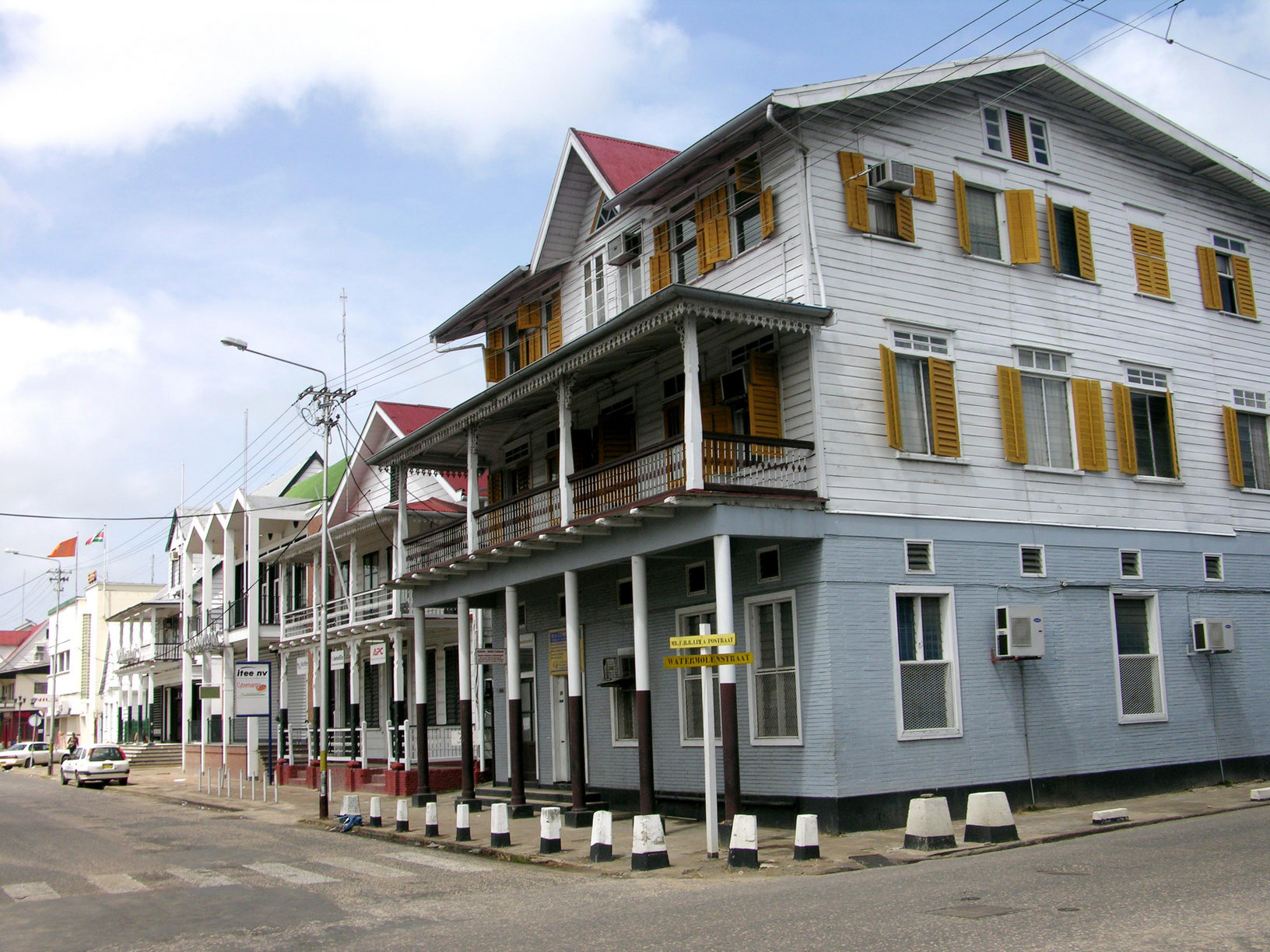
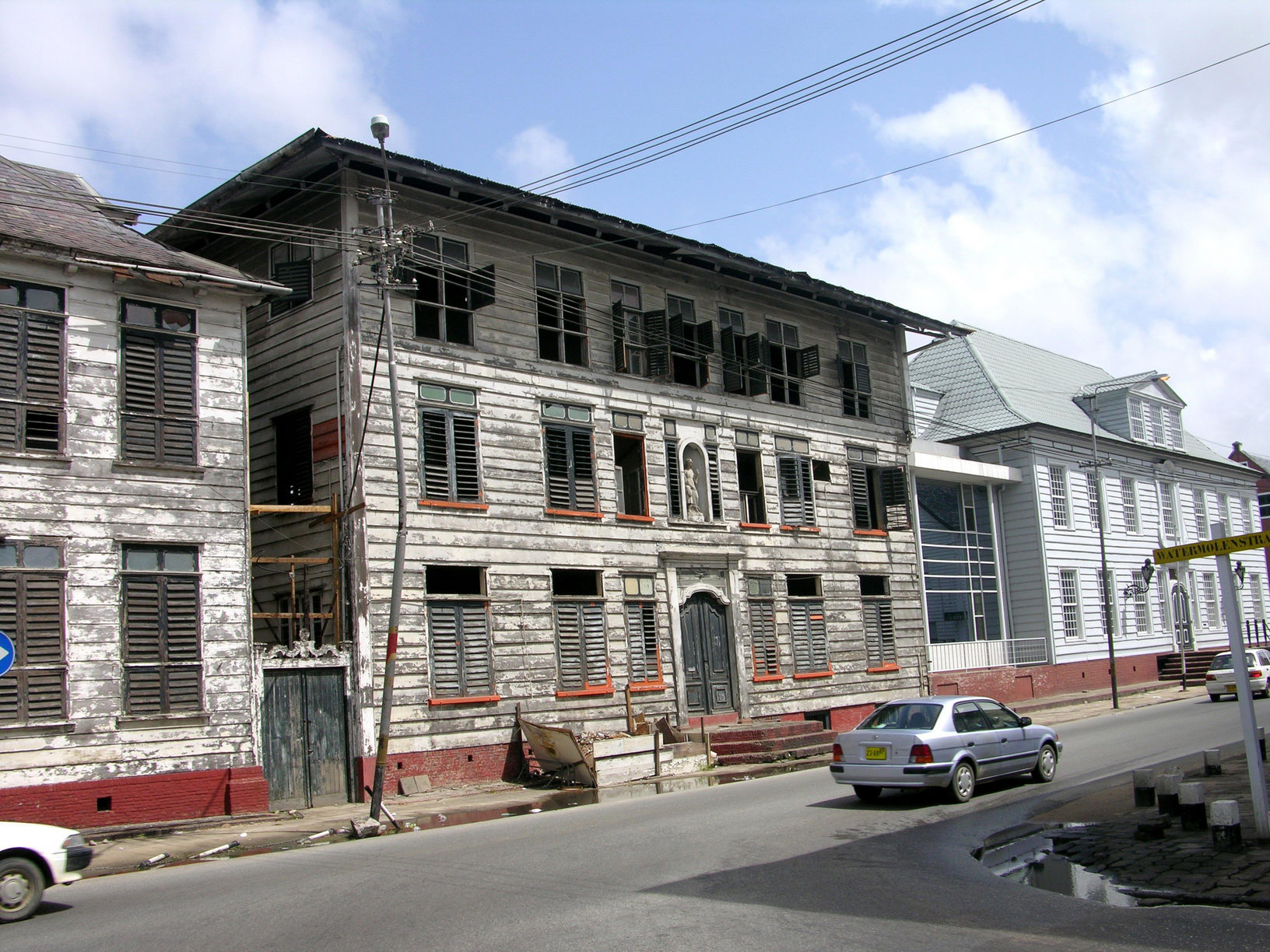
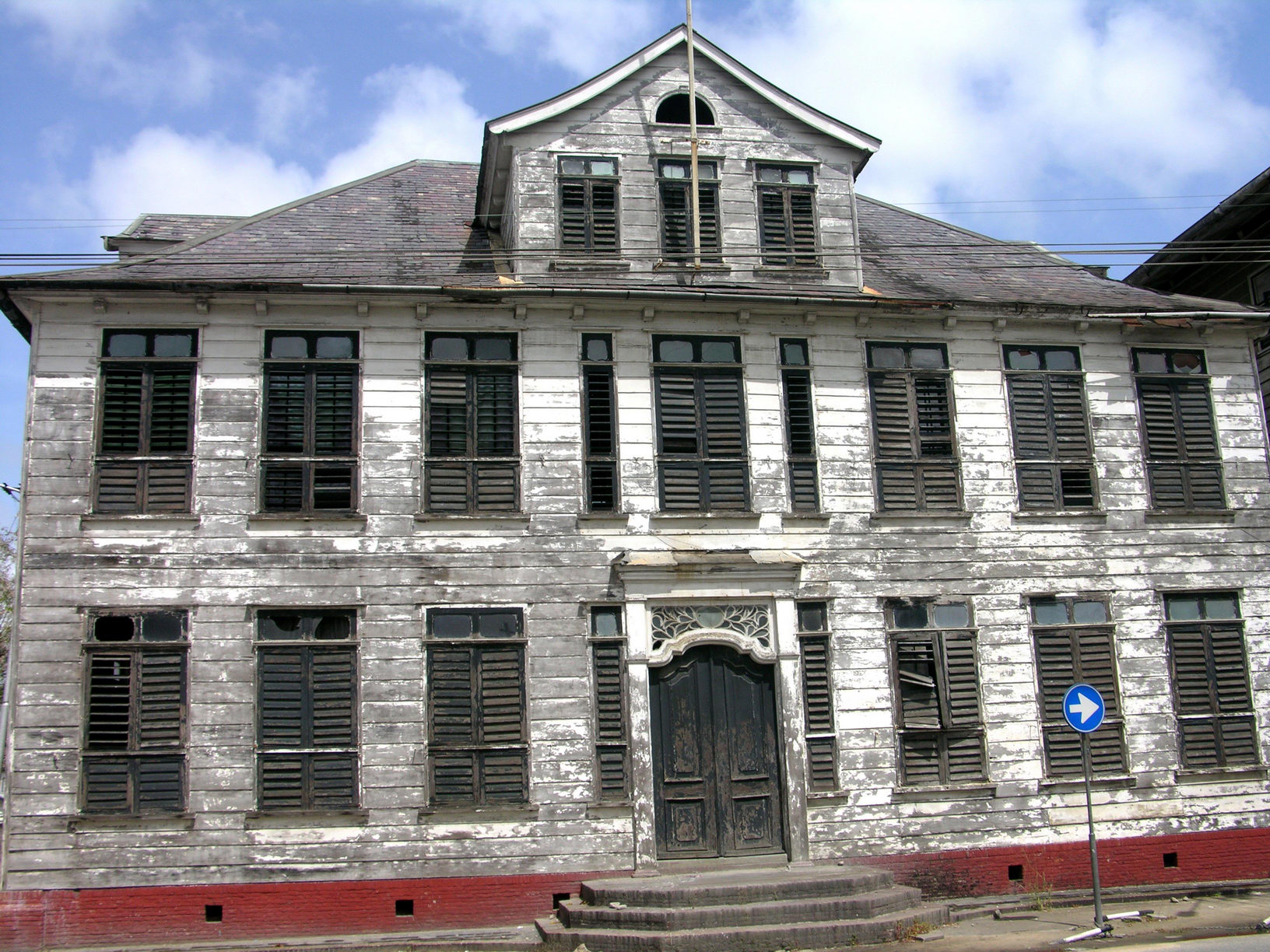
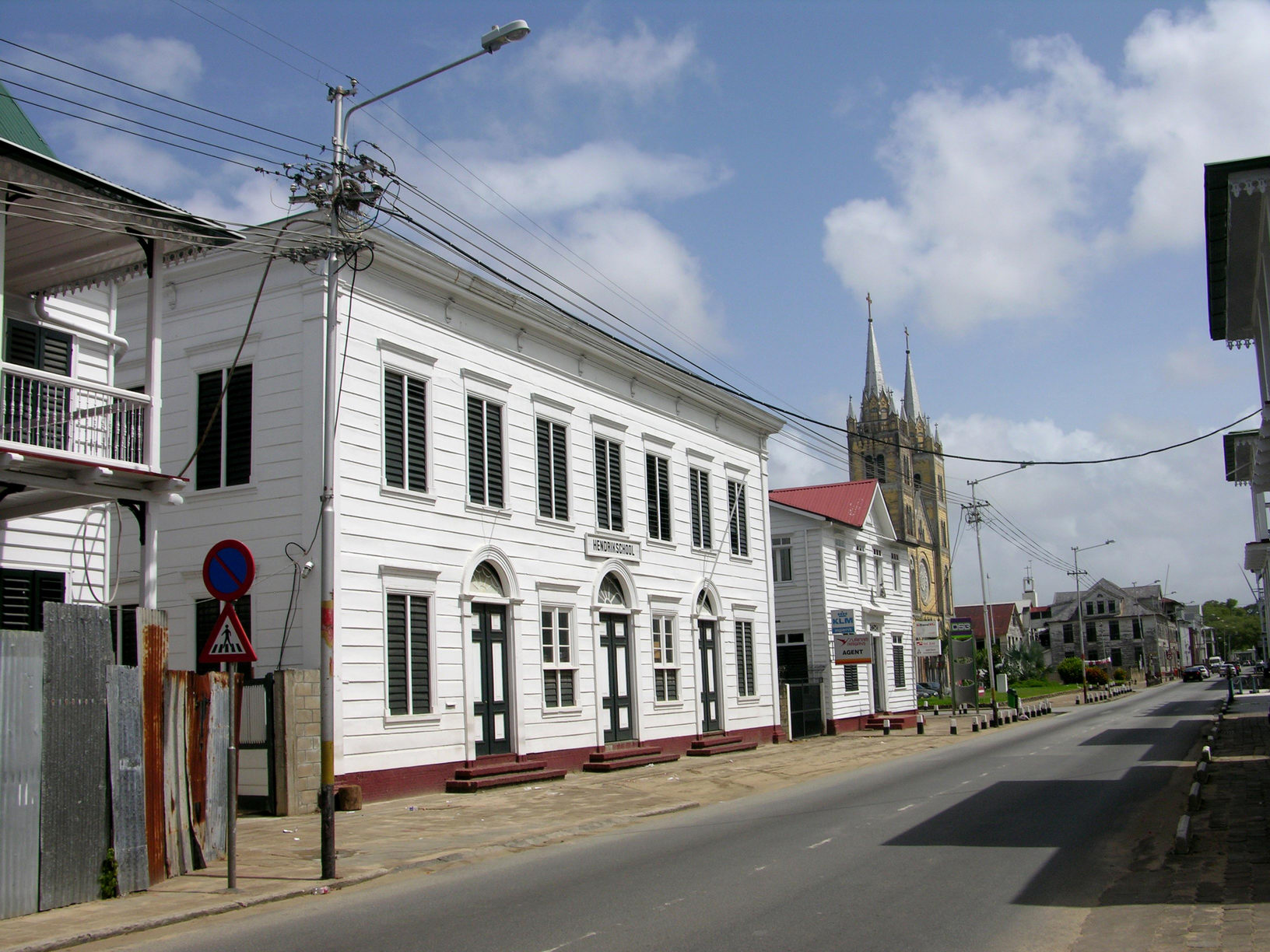
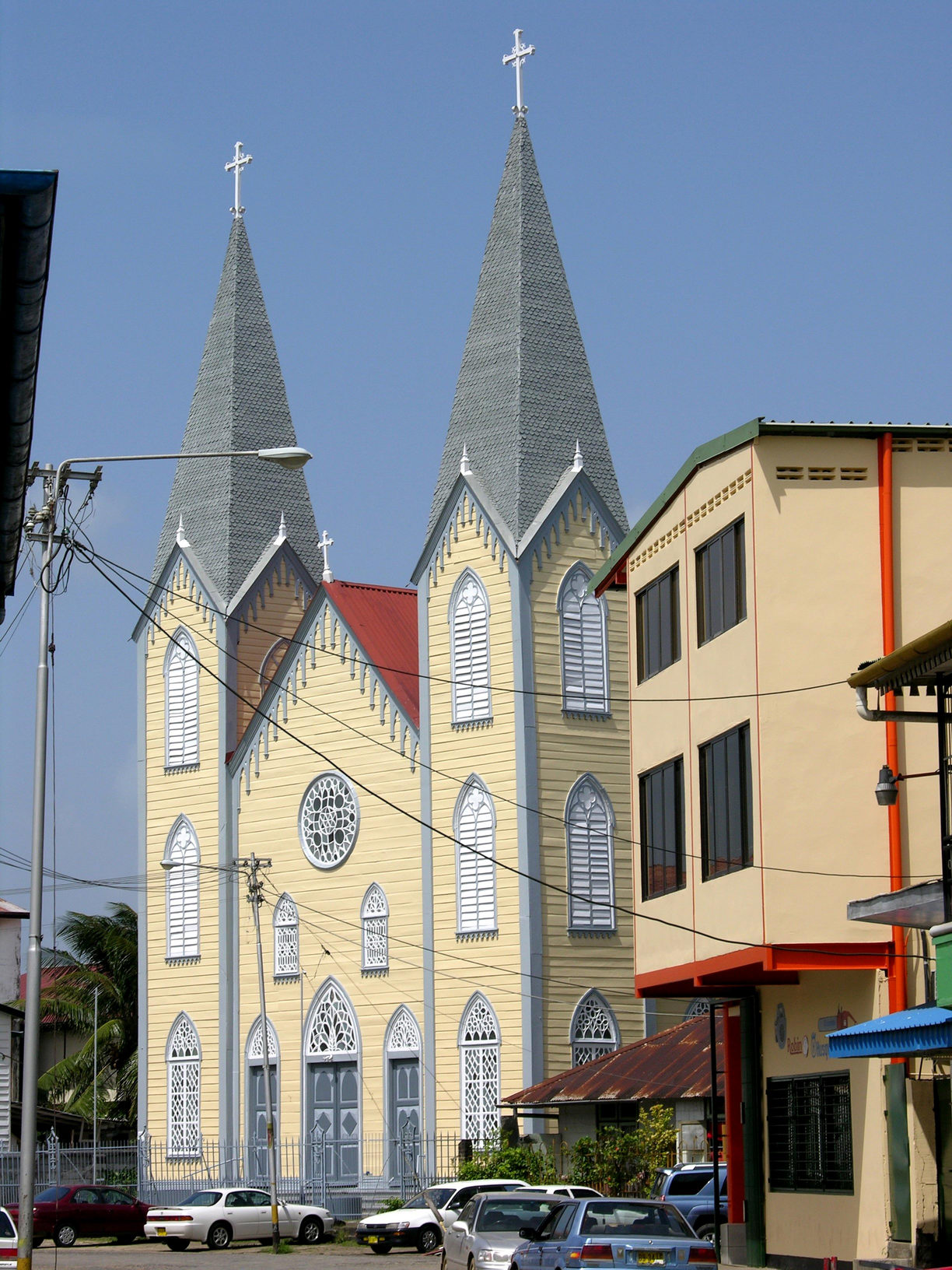
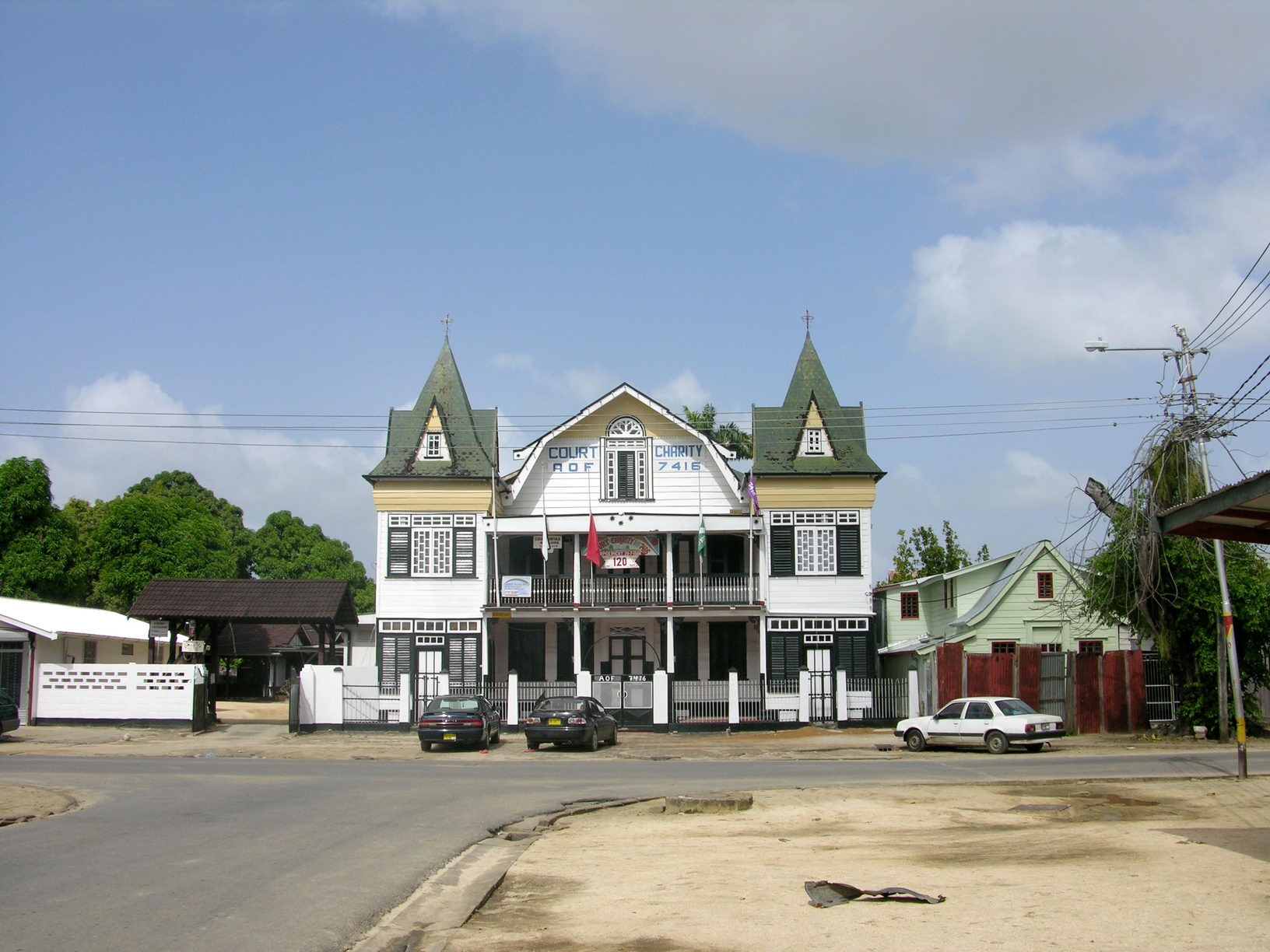
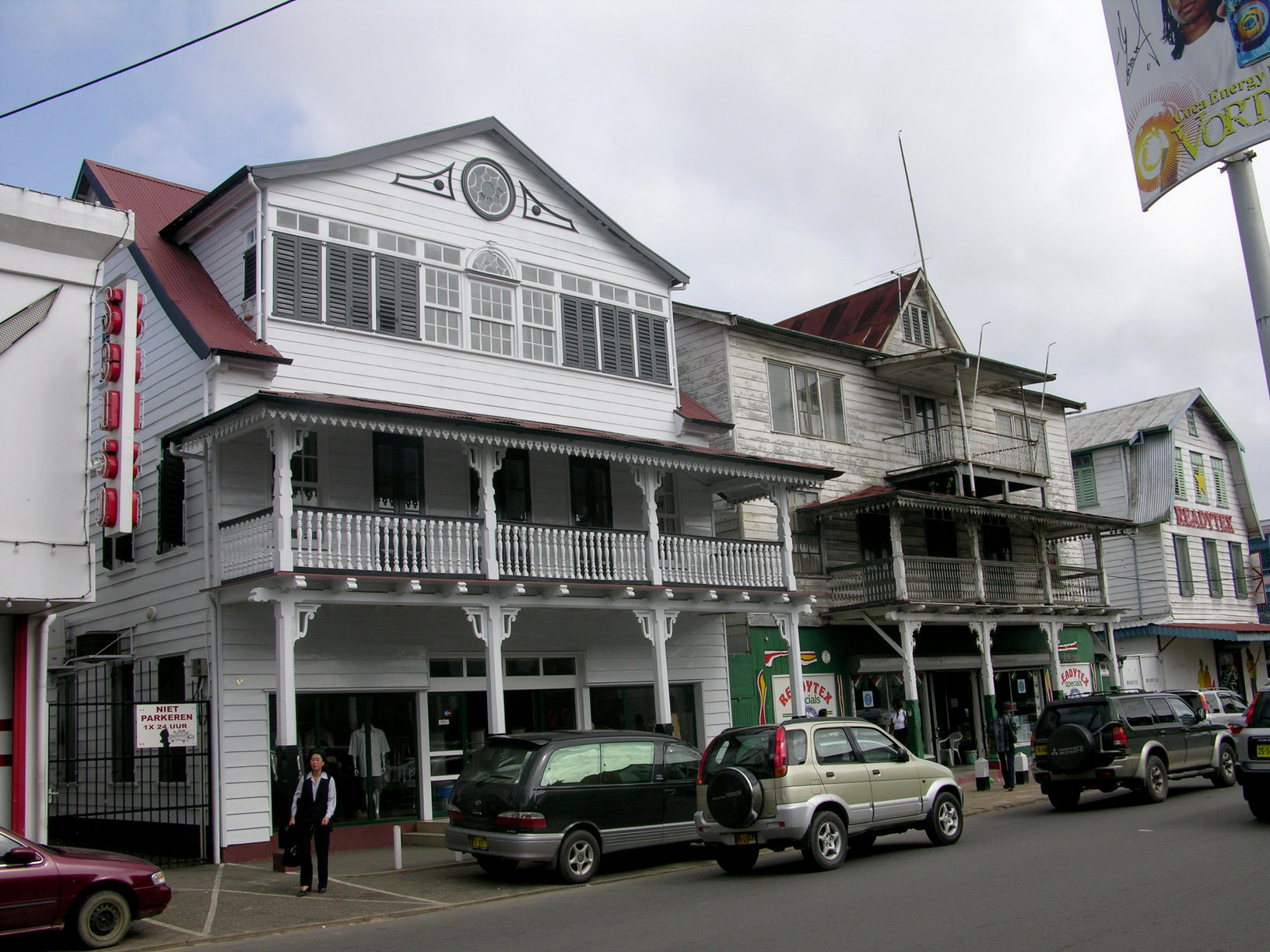
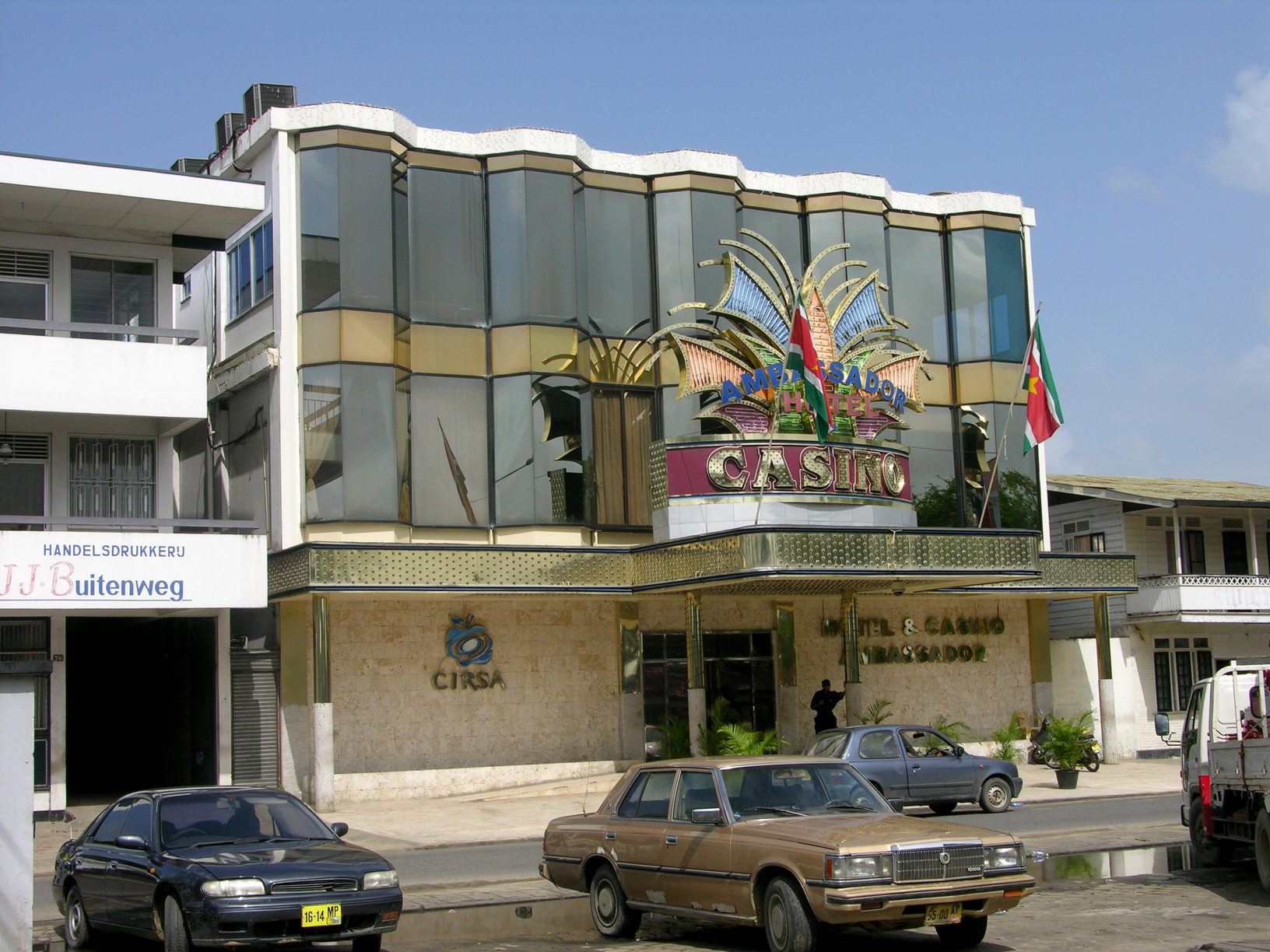
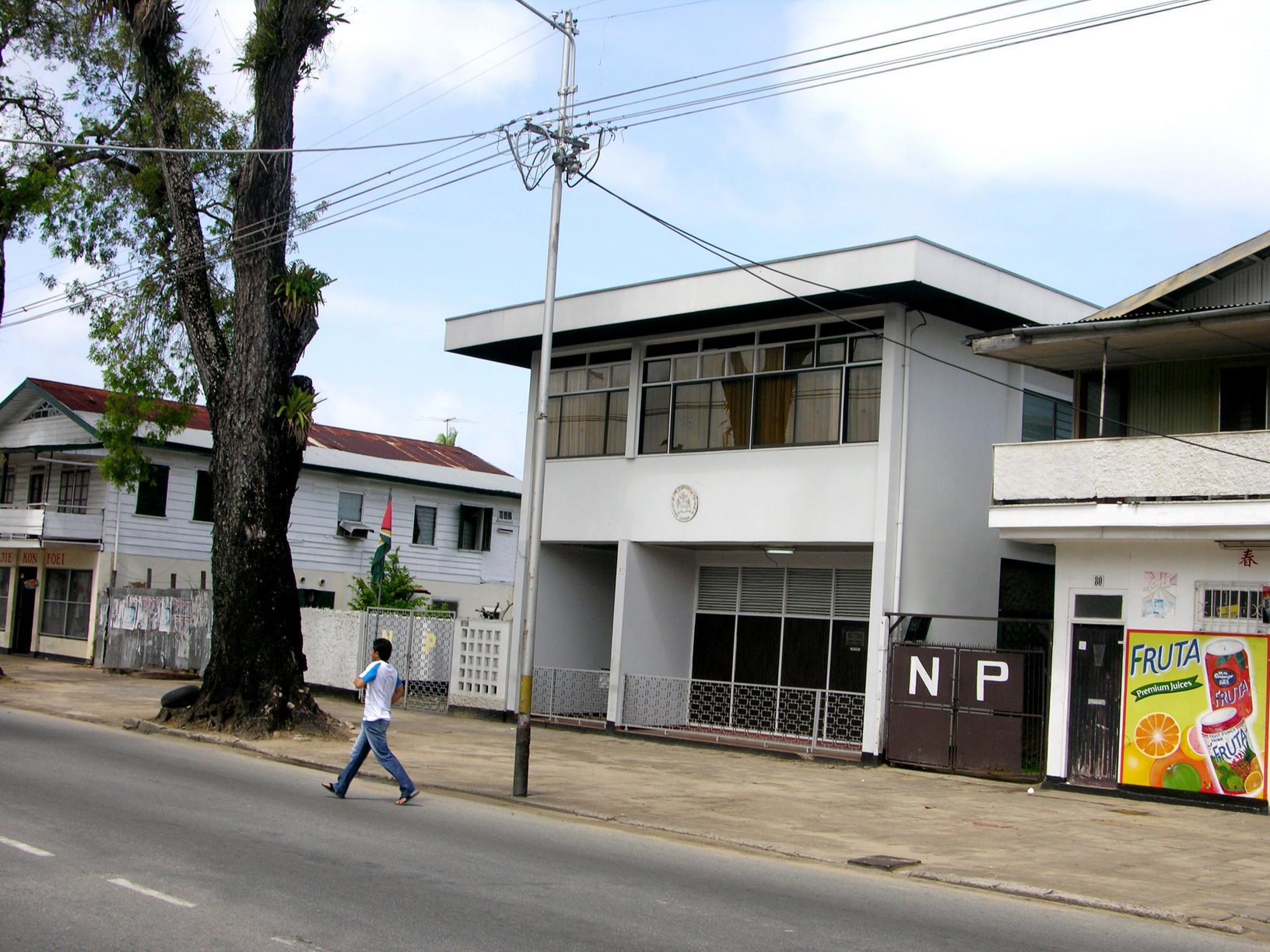
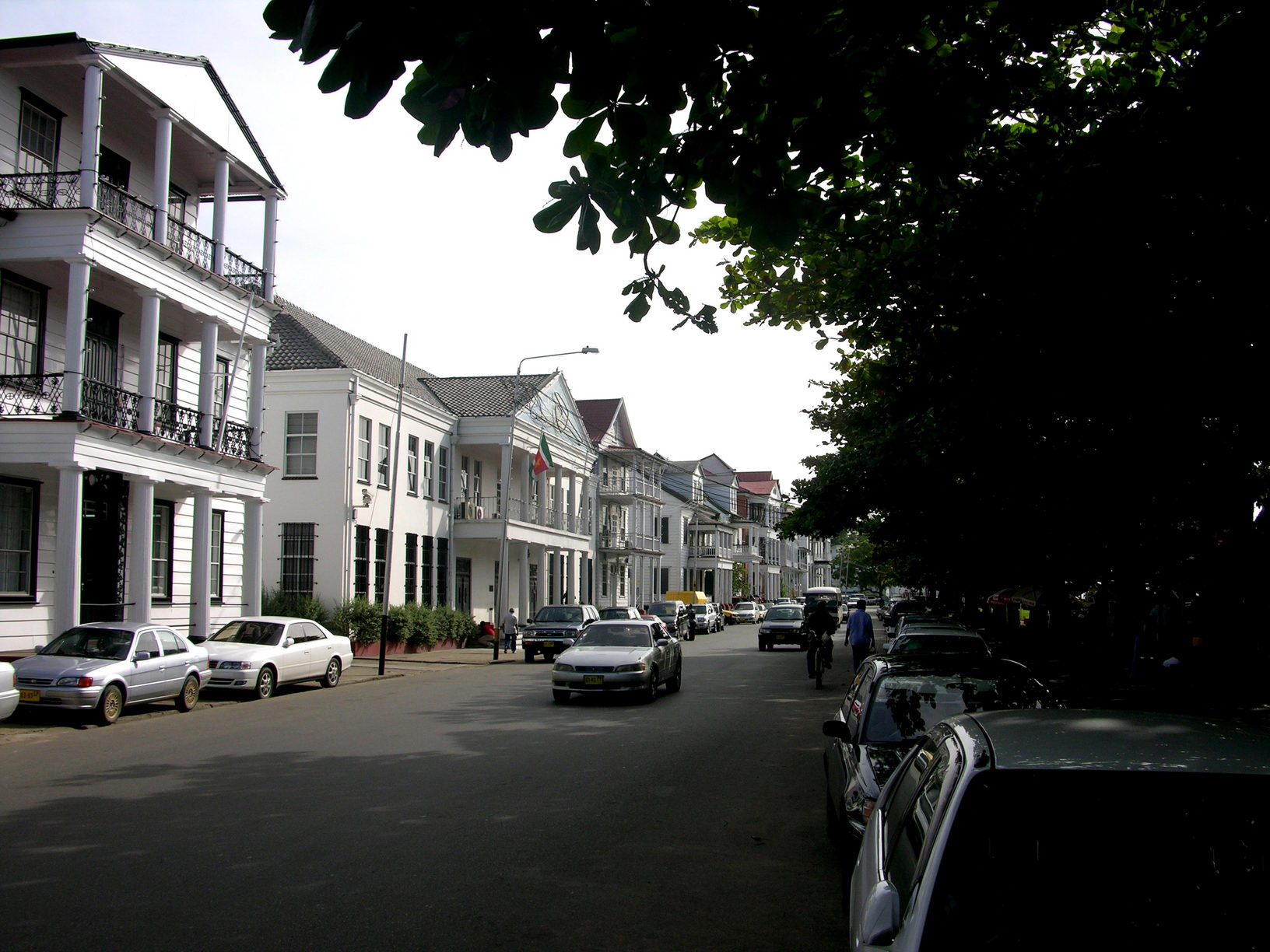
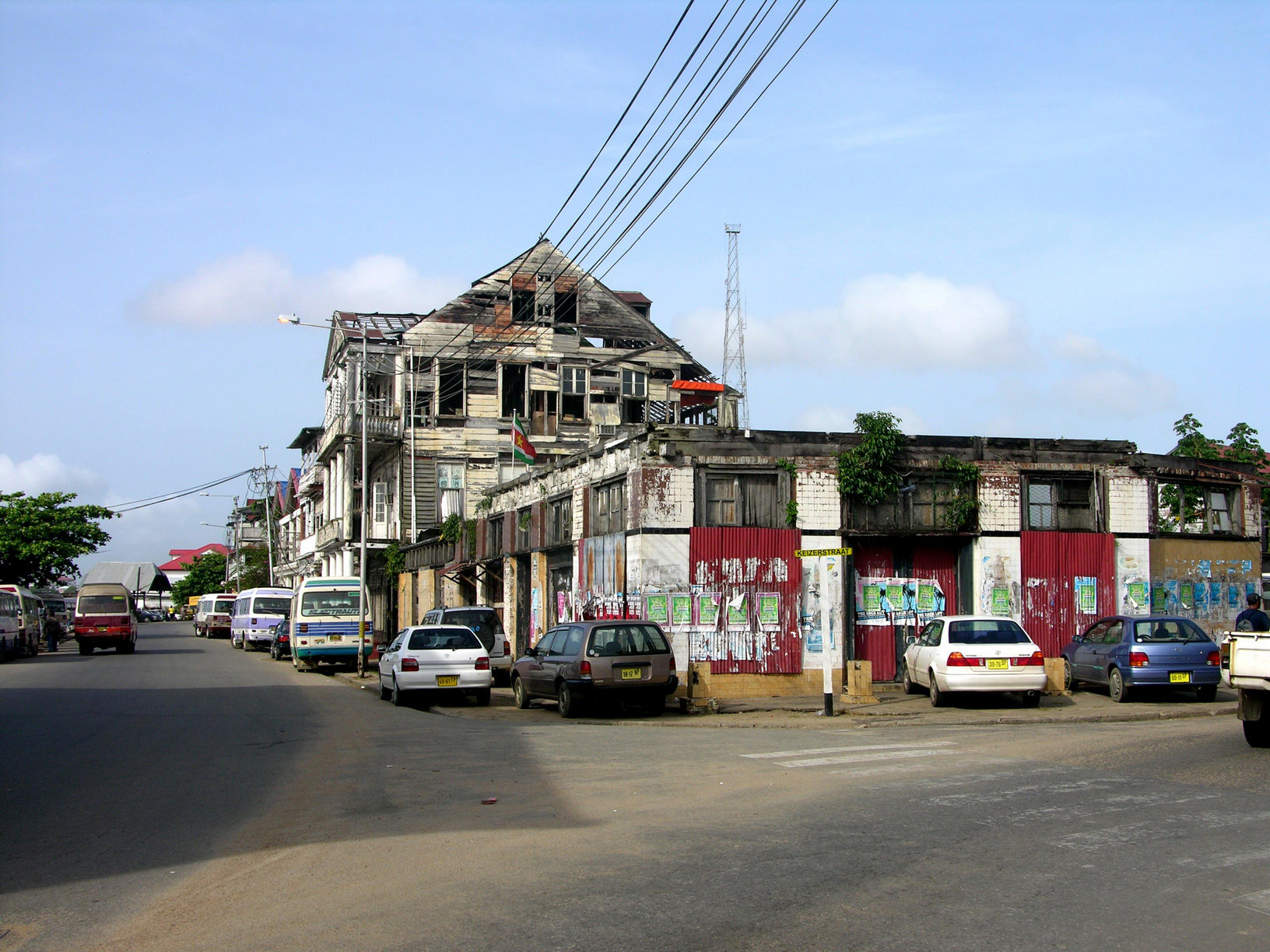
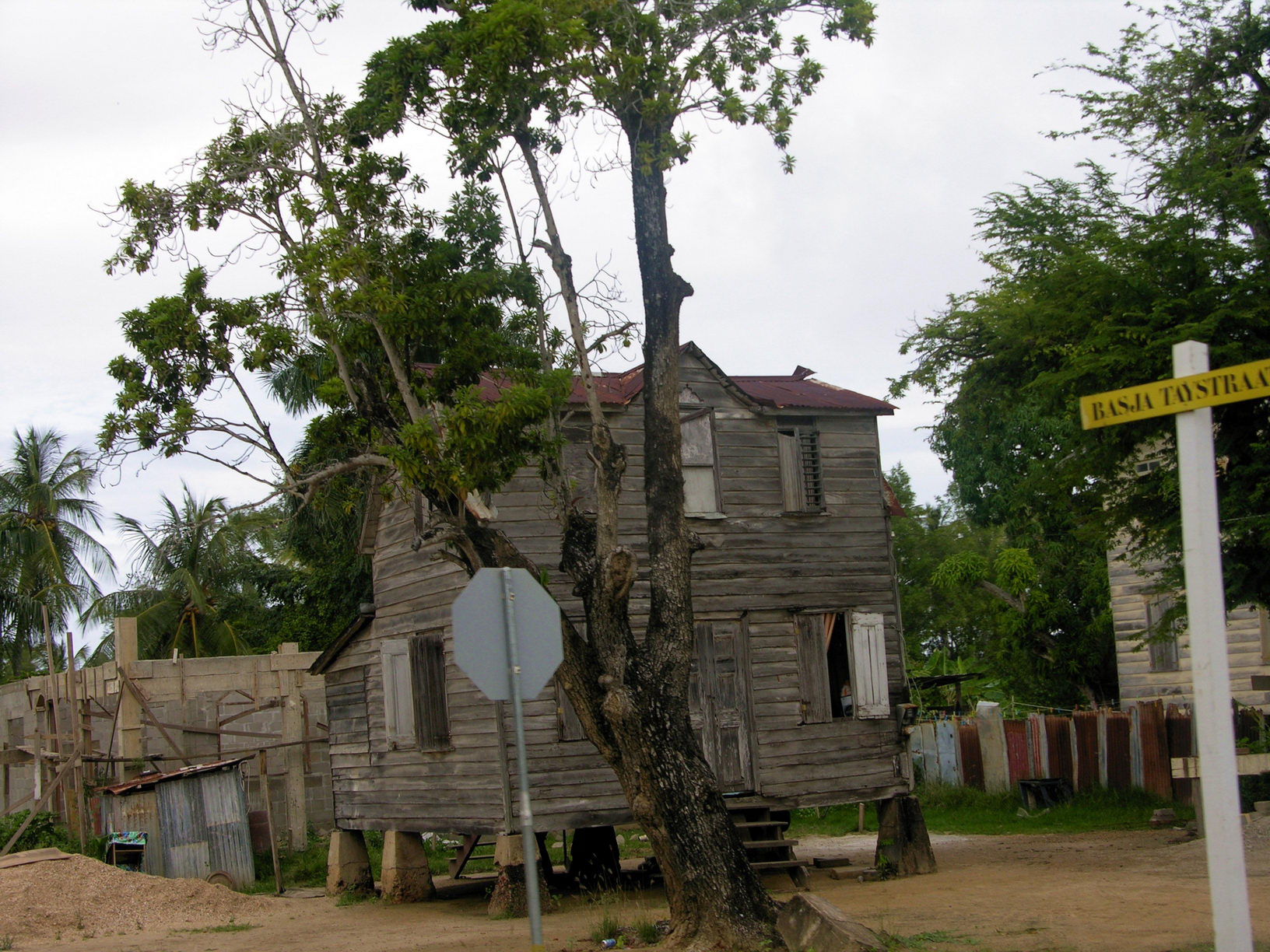
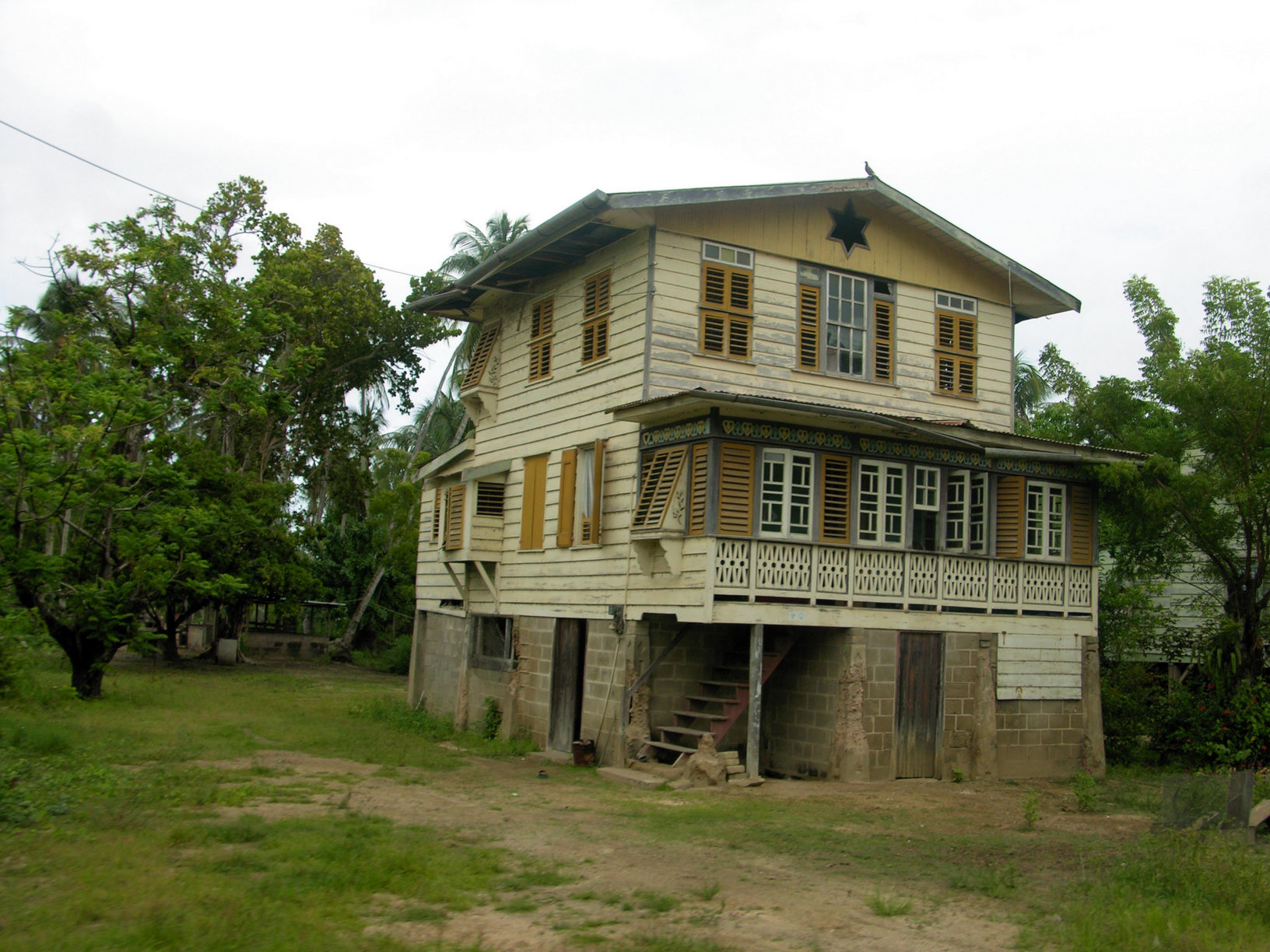
Paramaribo is immaculate and in places cleaner and better kept than Amsterdam. Many of the colonial wooden houses have been restored and freshly painted. The lawns are mown and the rubbish cleared away. Perhaps it's the cleanest capital in South America. Even the suburbs are quite civilised.
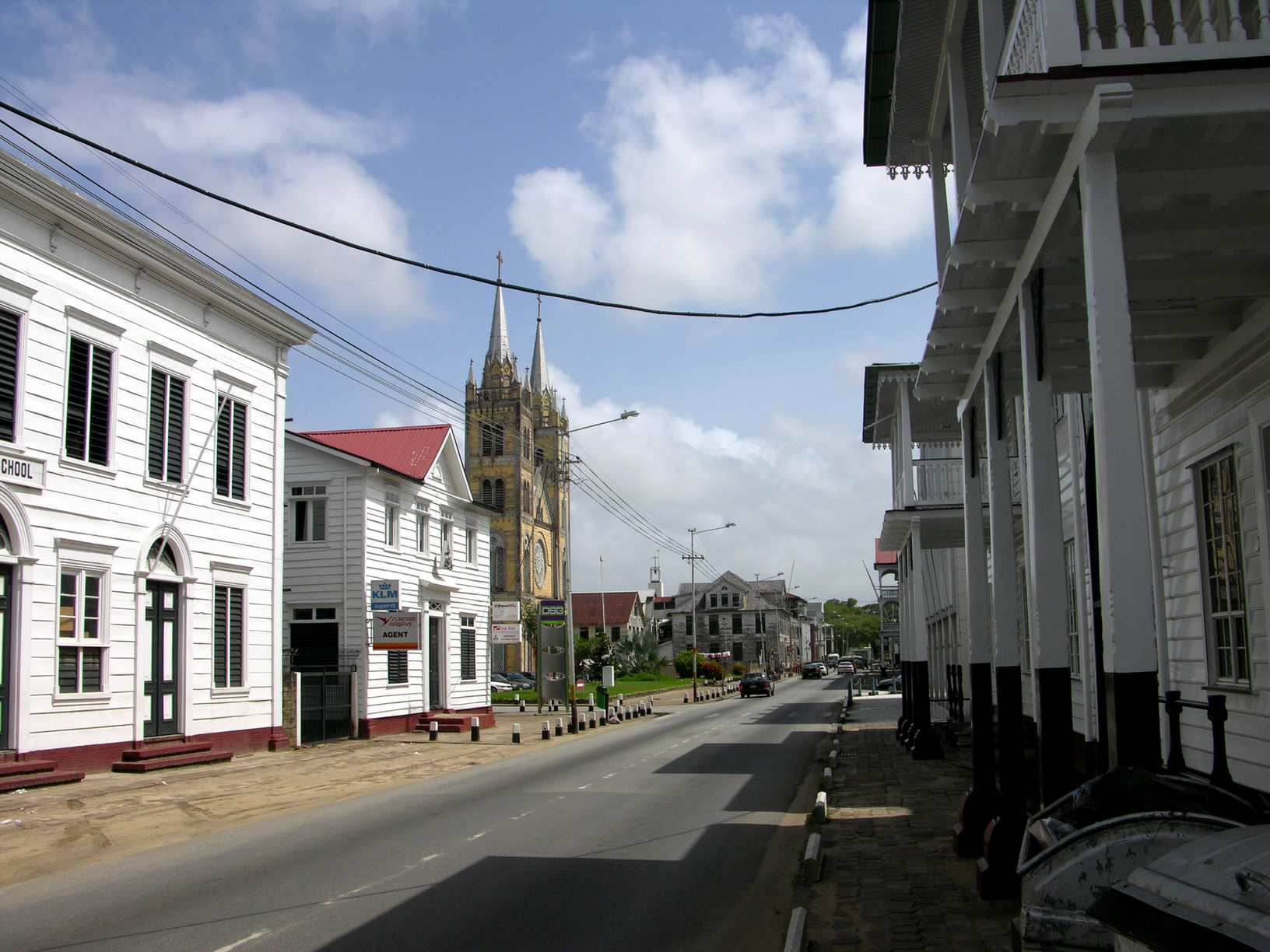
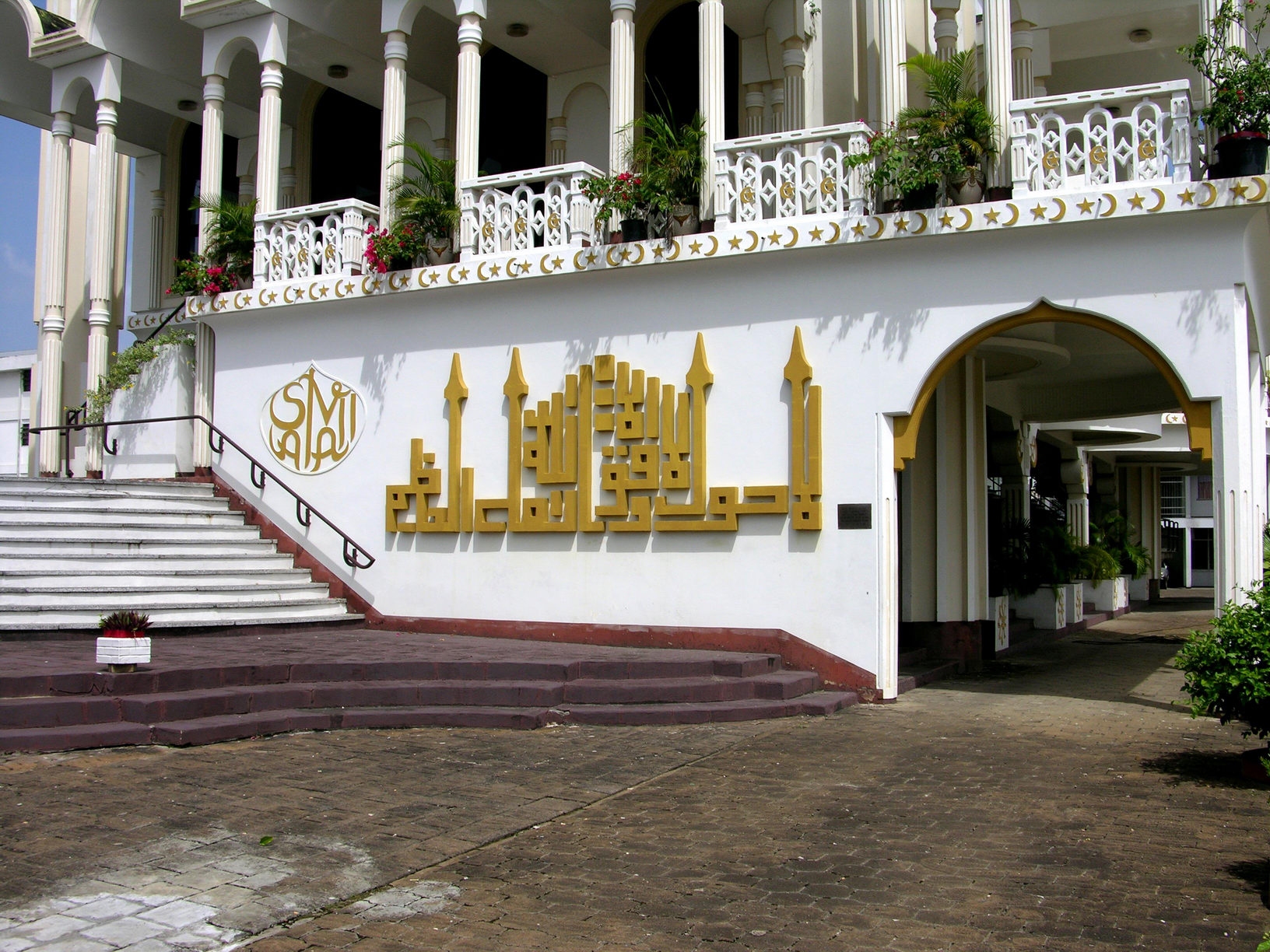
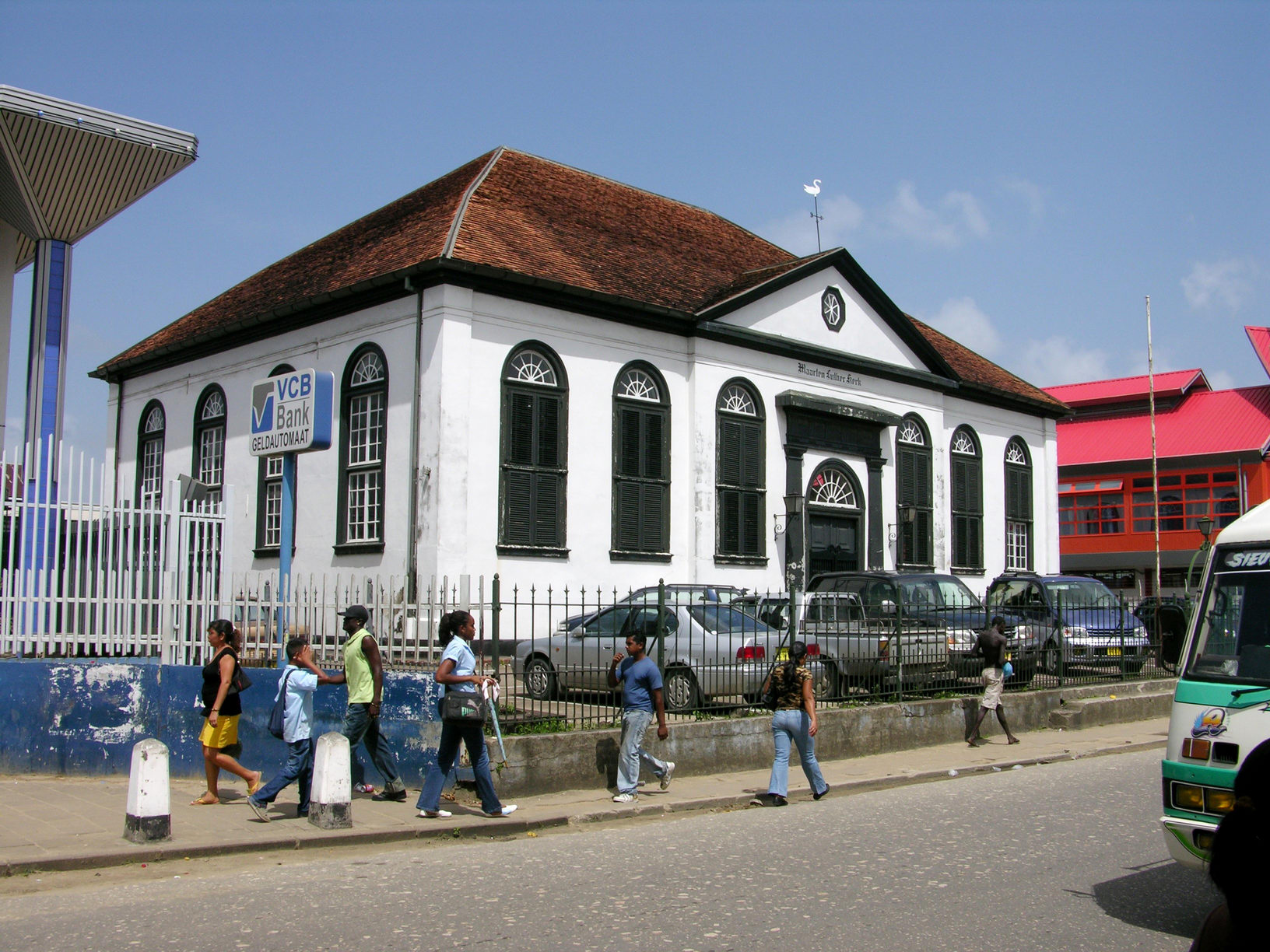
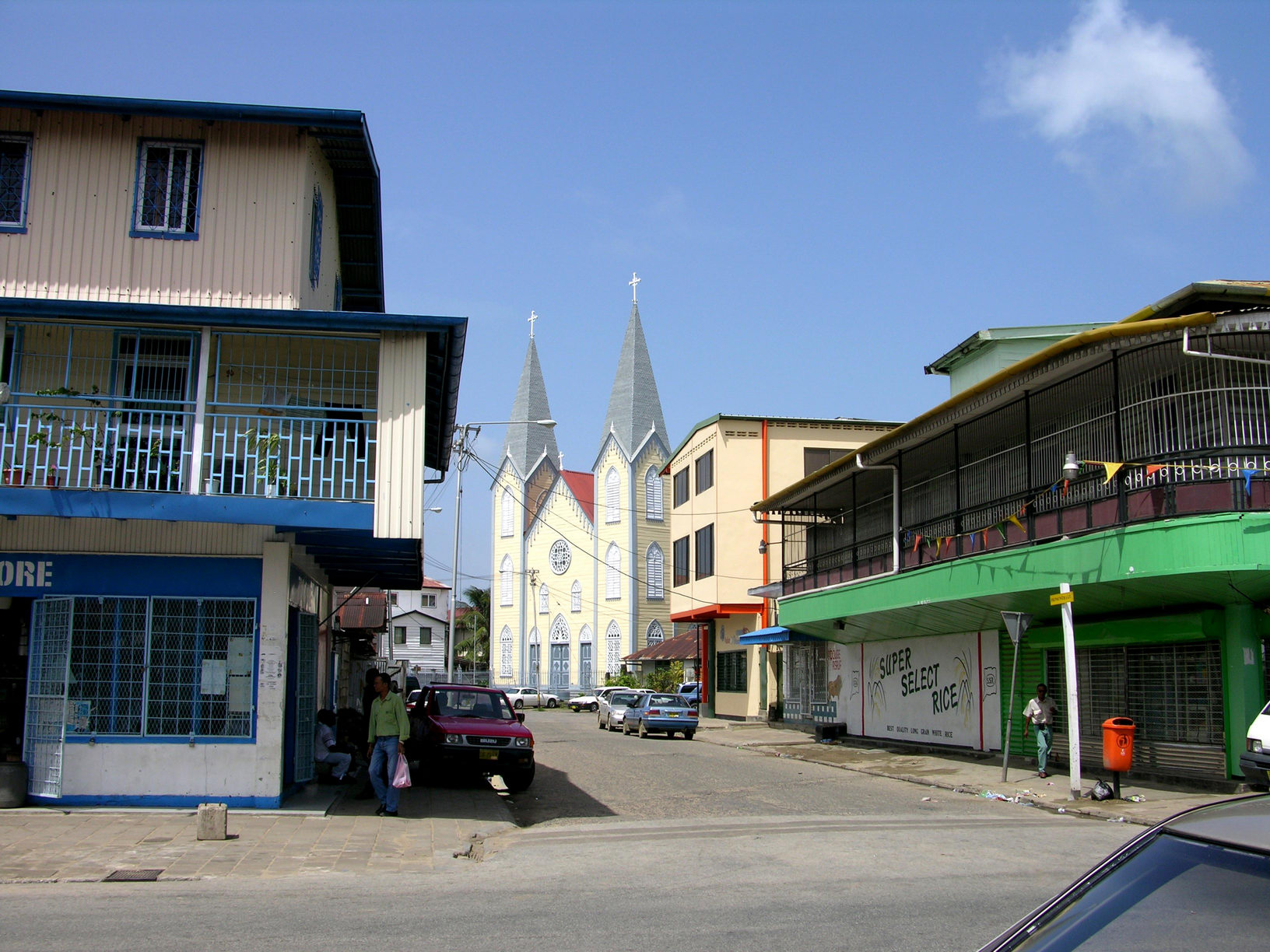
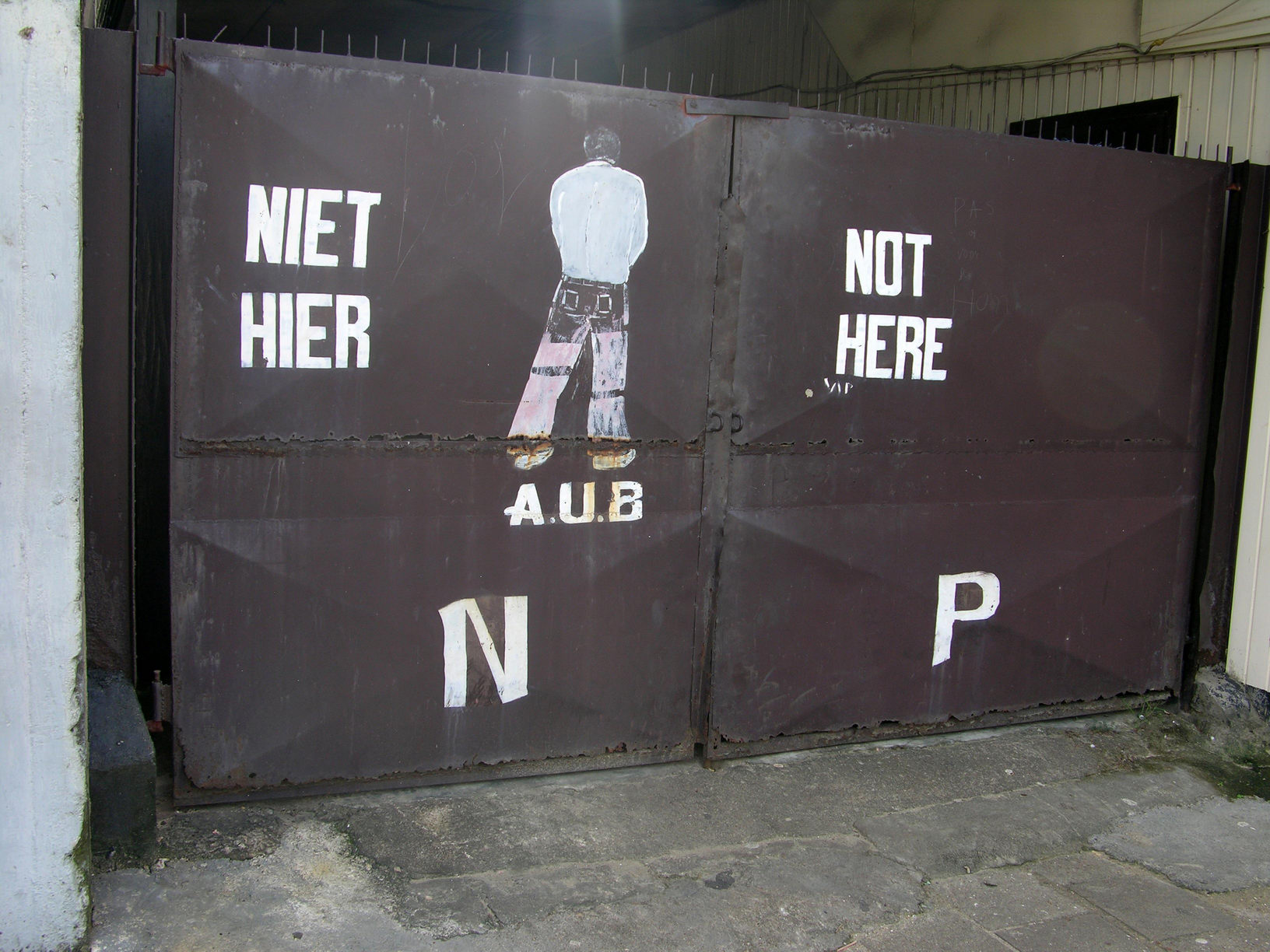
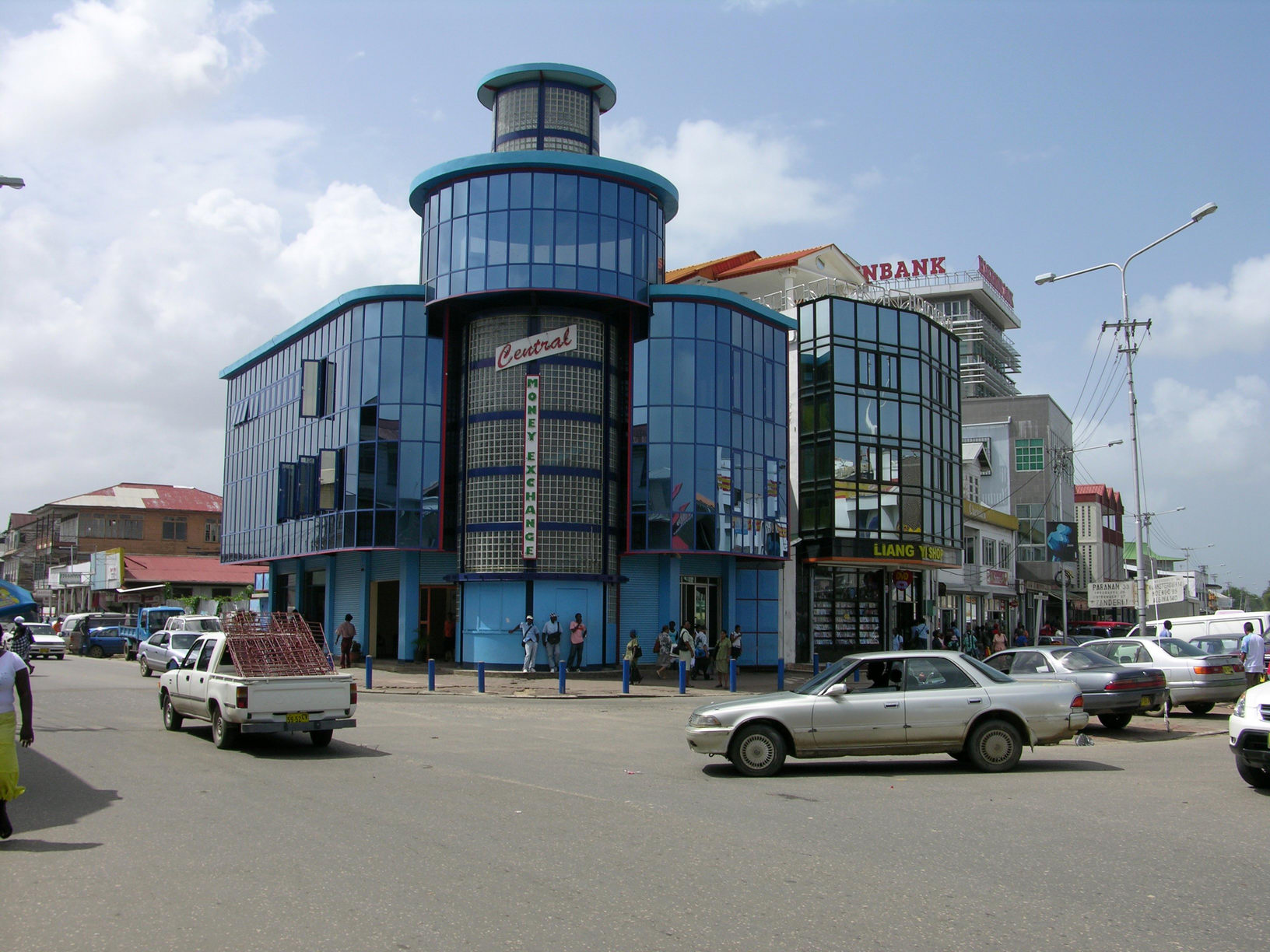
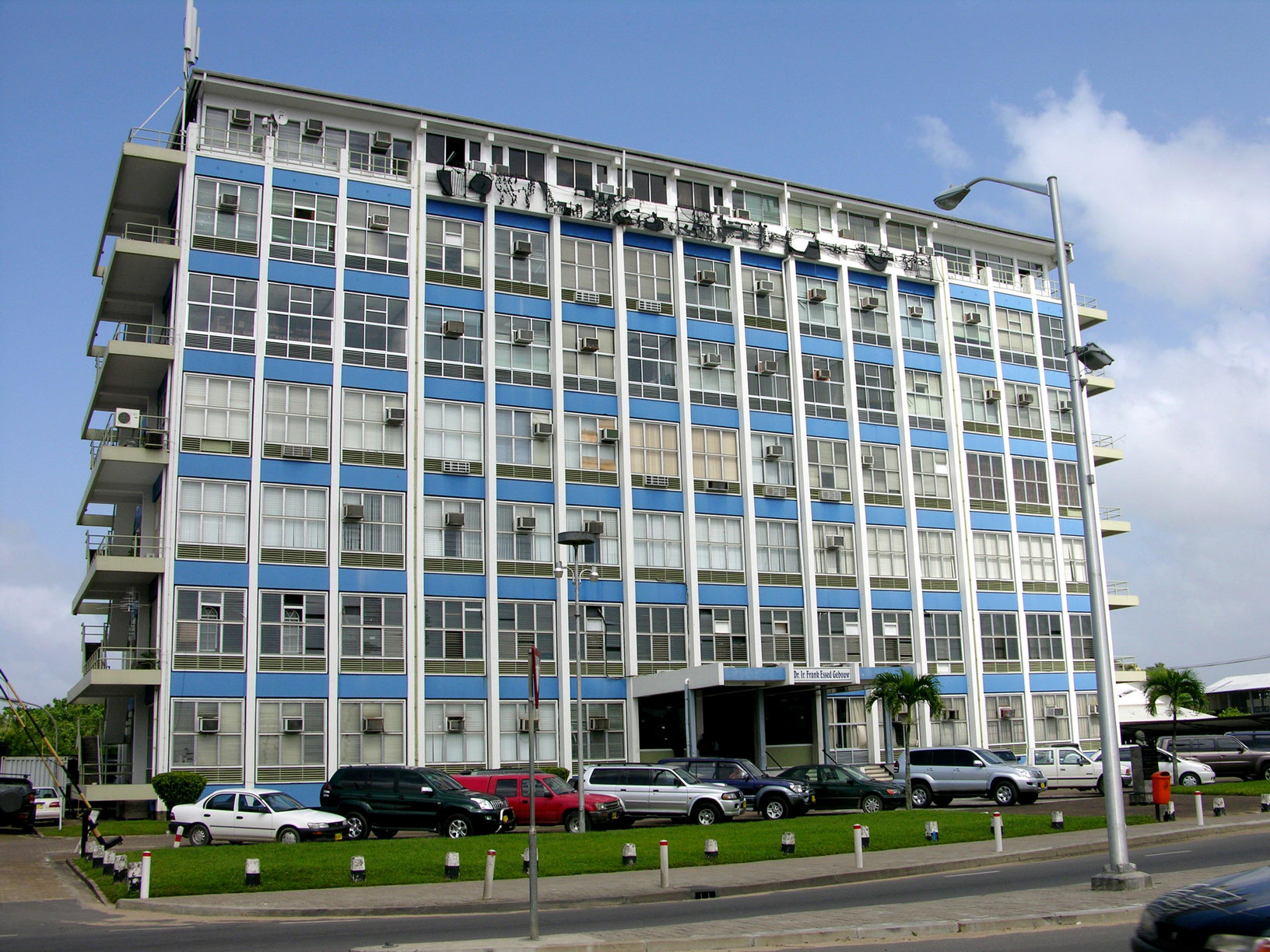
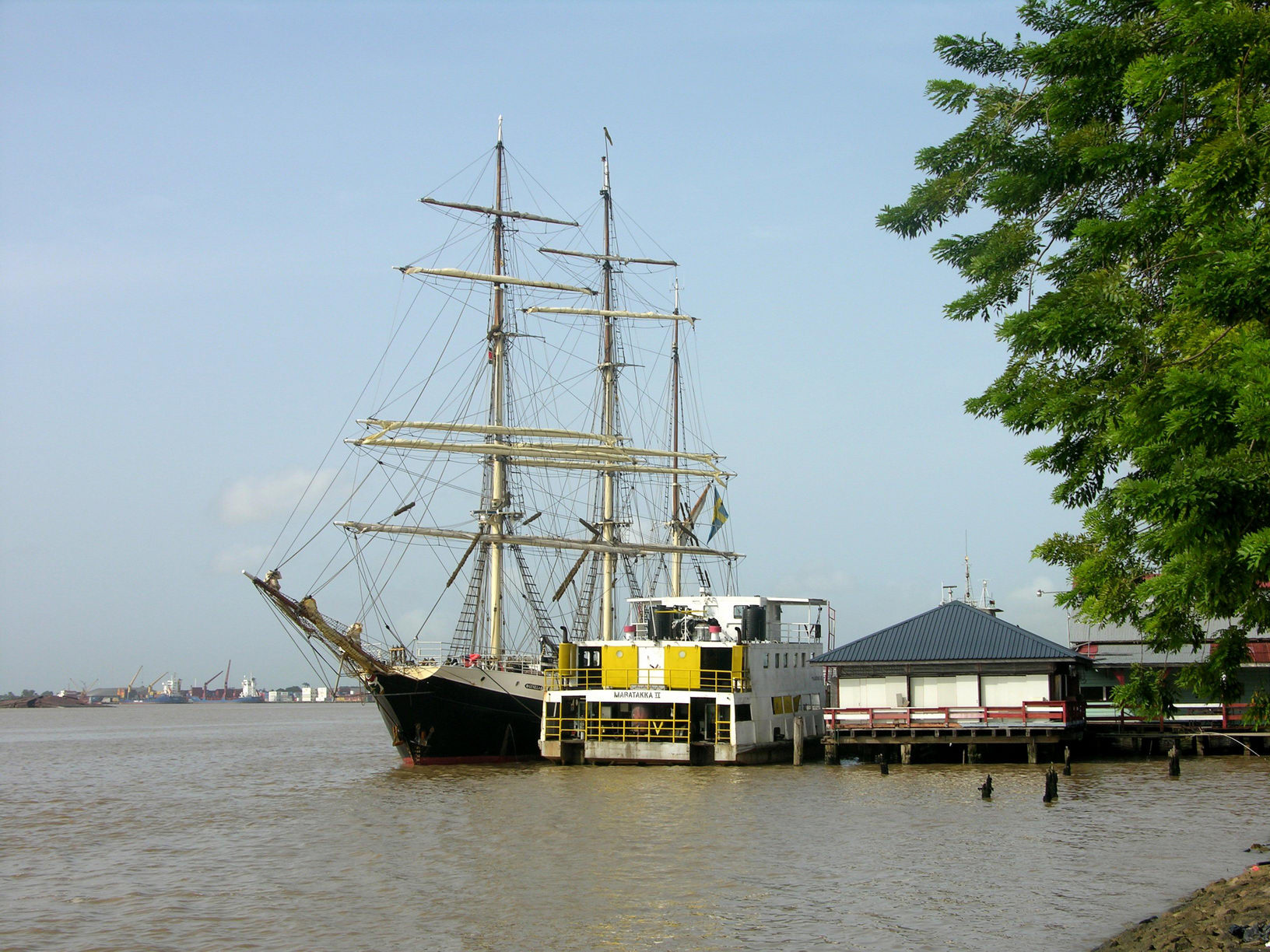
We needed a Guyanese visa. What day of the week do you suppose it was? Quite right, Saturday. That being the case, we'd drive somewhere nearby for a walk and be back at the embassy on Monday.
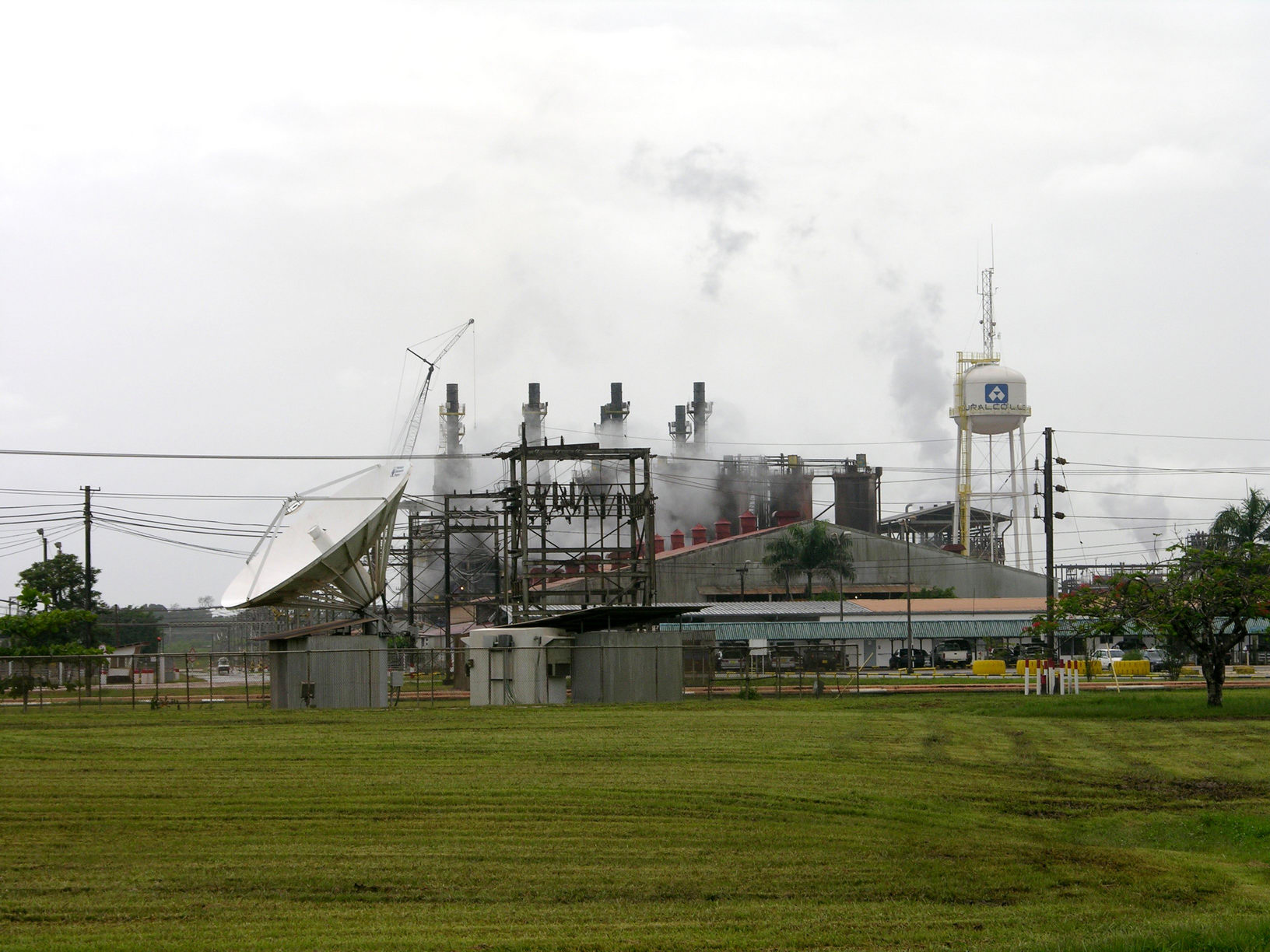
The Brokopondo national park is four hours from Paramaribo. First the road goes as far as the huge aluminium plant in Paranam. The whole thing breathes heat. If it's over thirty outside, what must it be like in there?
After that comes the bauxite road. It's a tremendously wide unsealed road, built for quarry trucks to hurtle along. Other people are allowed on it too, preferably with a good jeep.
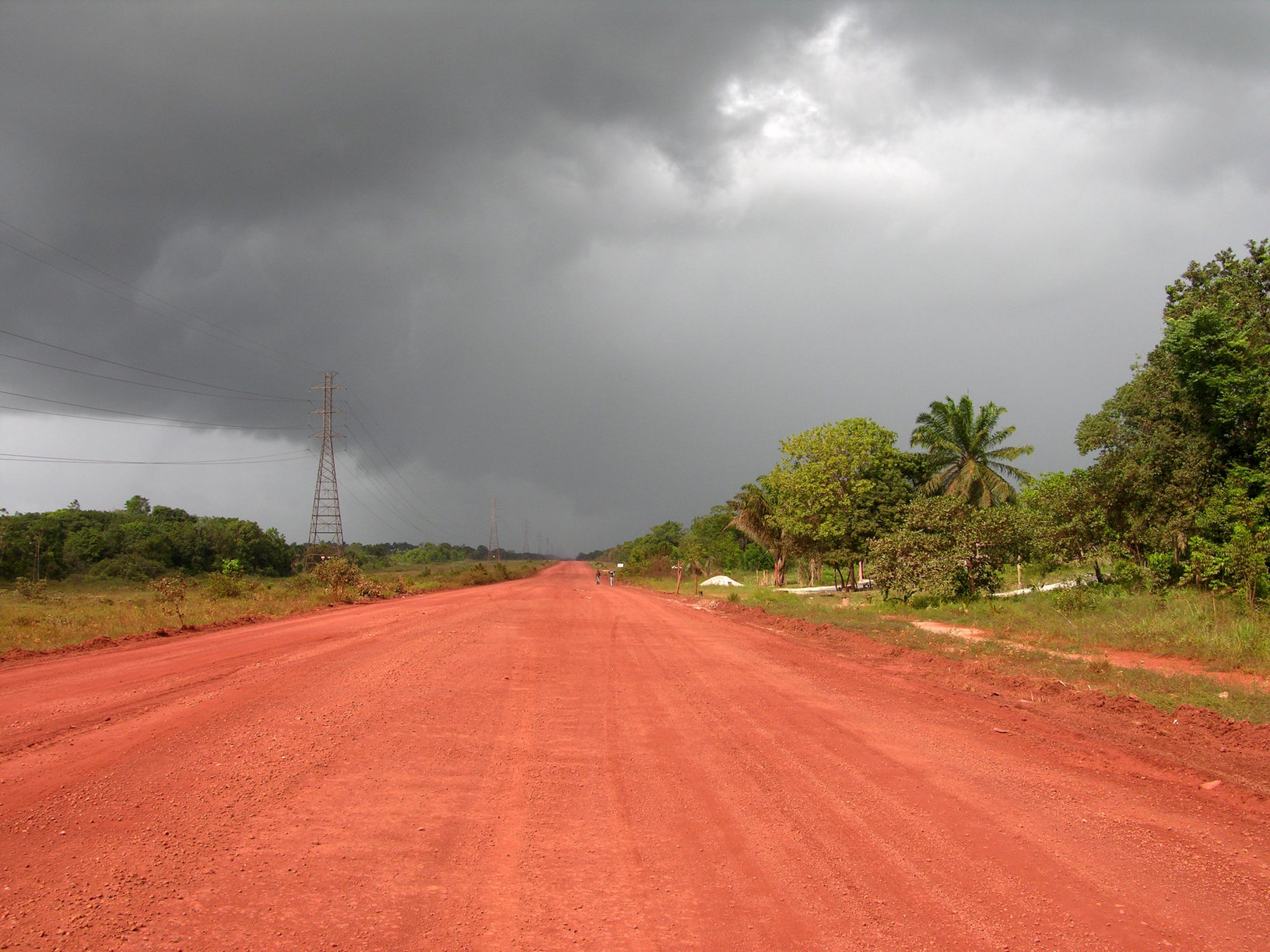
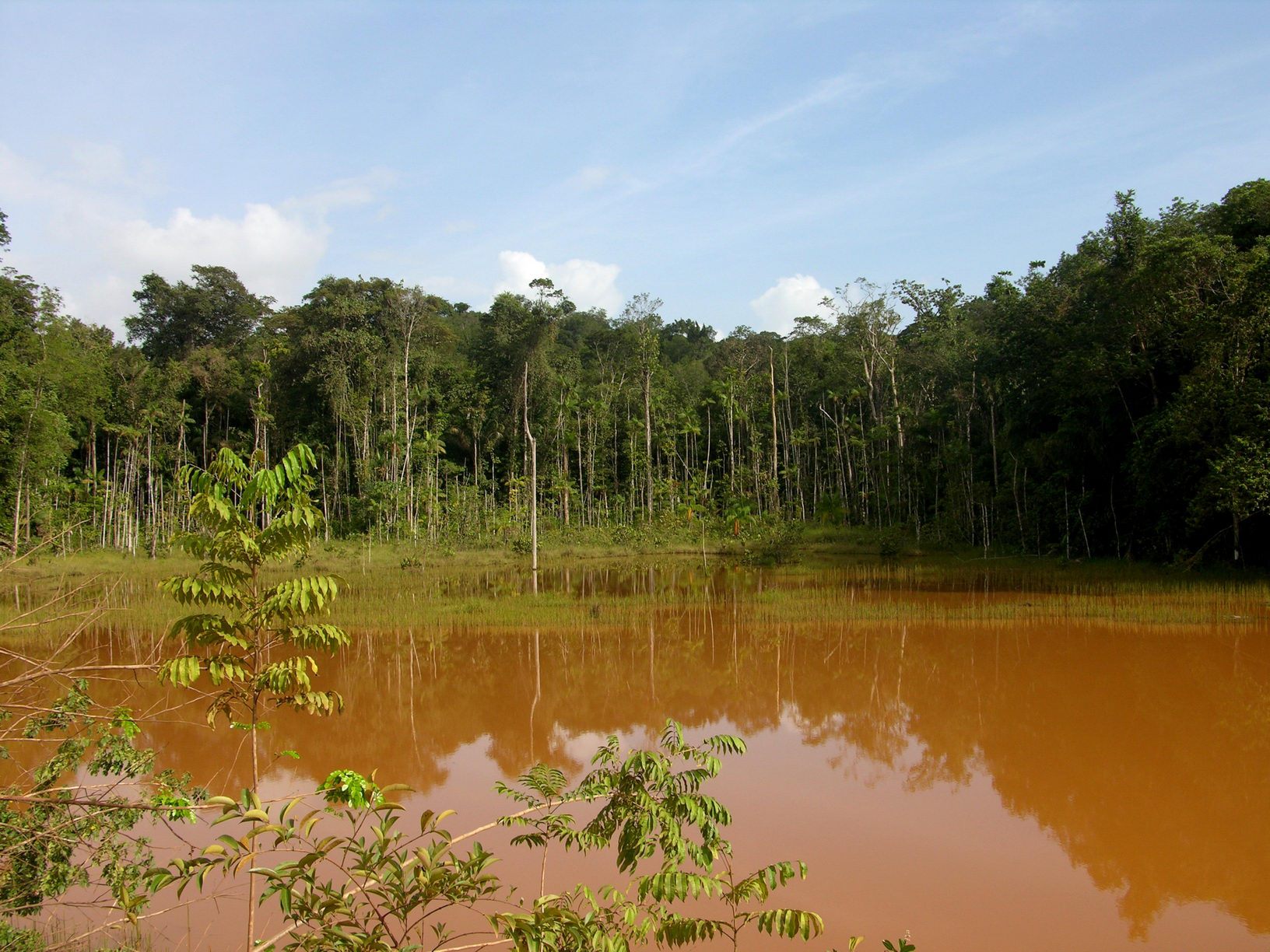
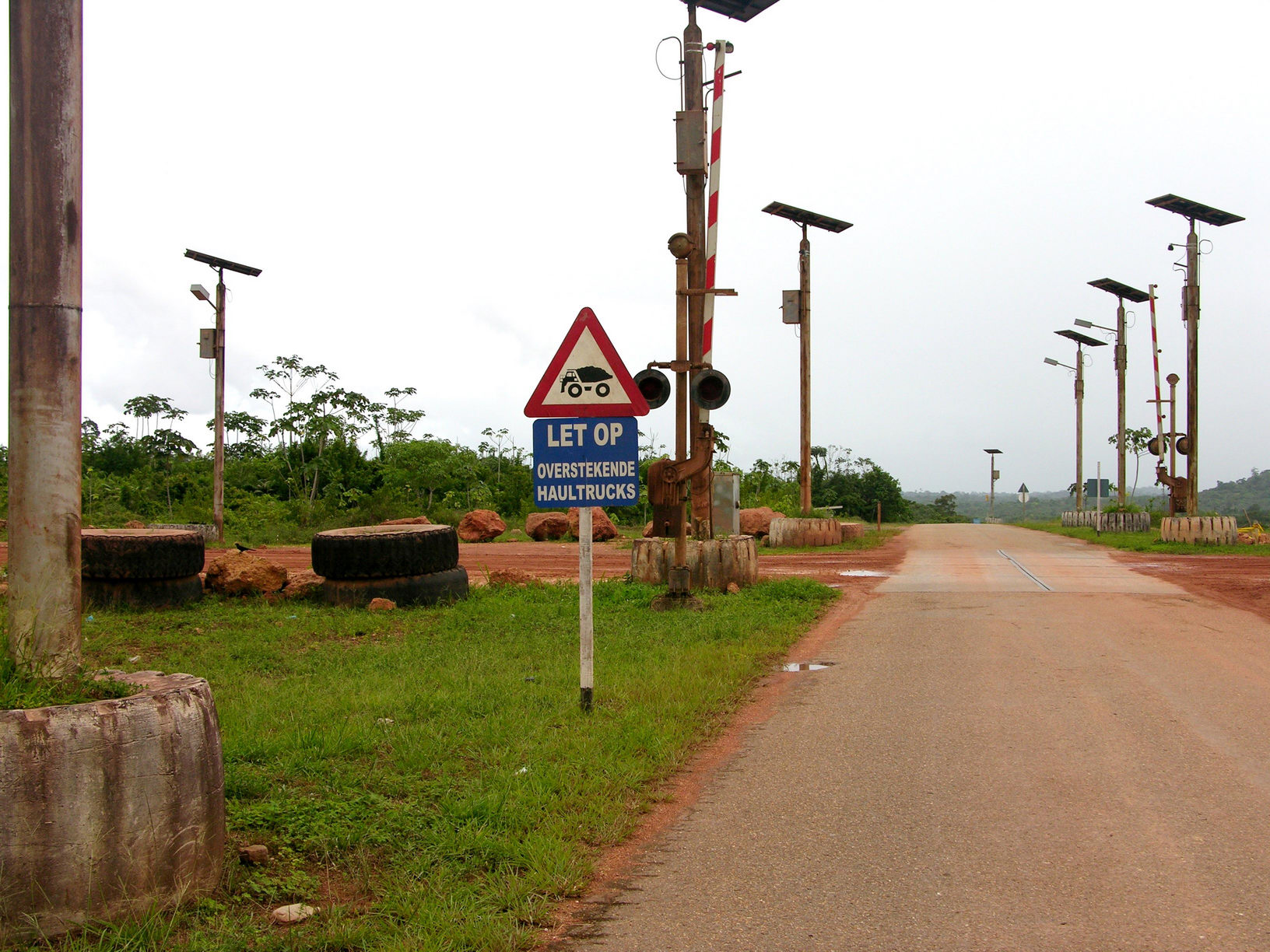
In Suriname there are also “paved highways” and “unpaved highways”. The only paved ones are the main coast road and a few approaches to Paramaribo. The rest are dirt roads where you could get a tank stuck.
Bauxite is a source of white alumina, and there is bauxite everywhere here. There are villages on white ground, with Black children running around. It looks as if they're playing in the snow, except it's hot and there are palms. The bauxite is broken up by red clay, making the whole scene more fantastical still.
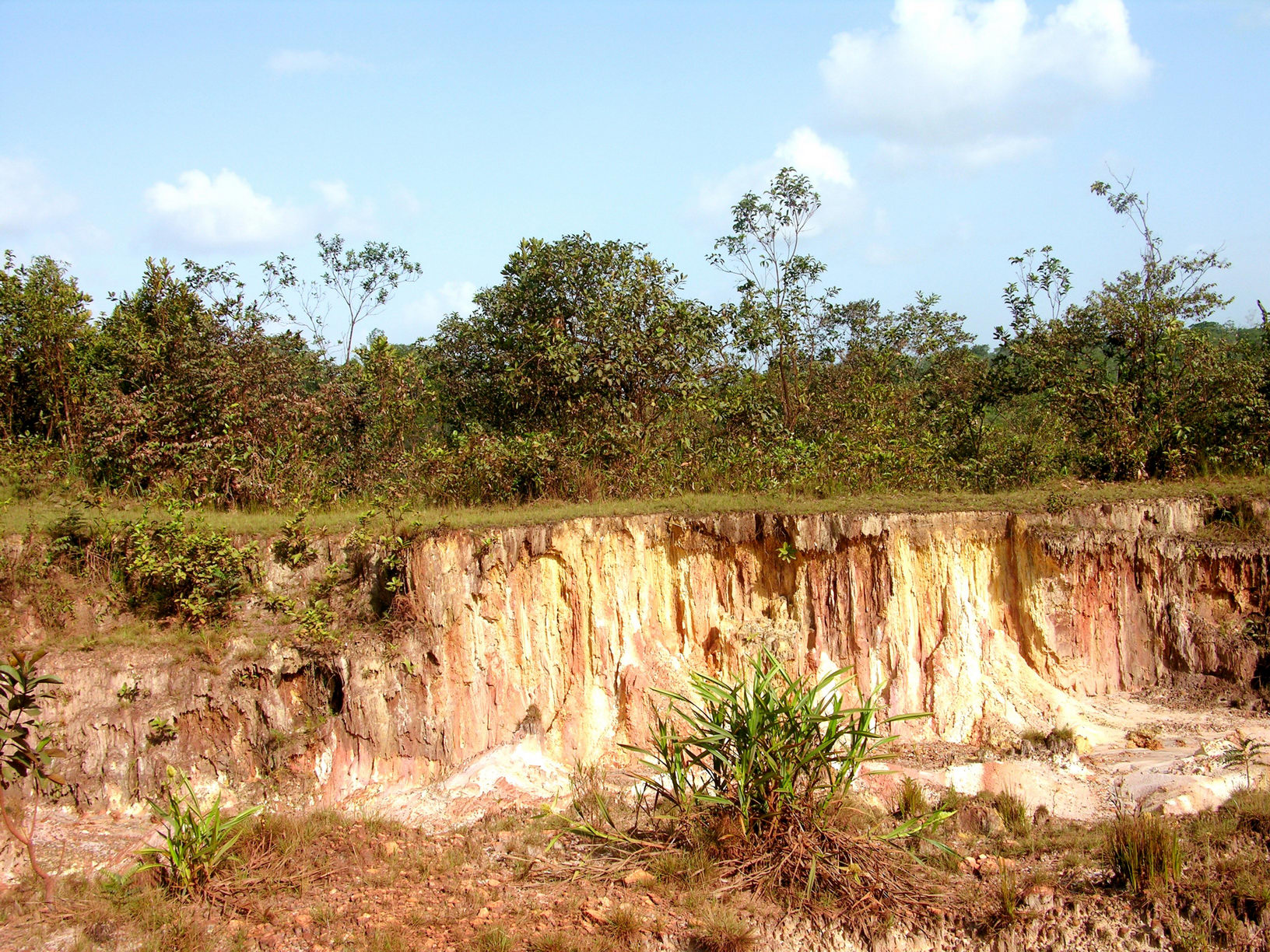
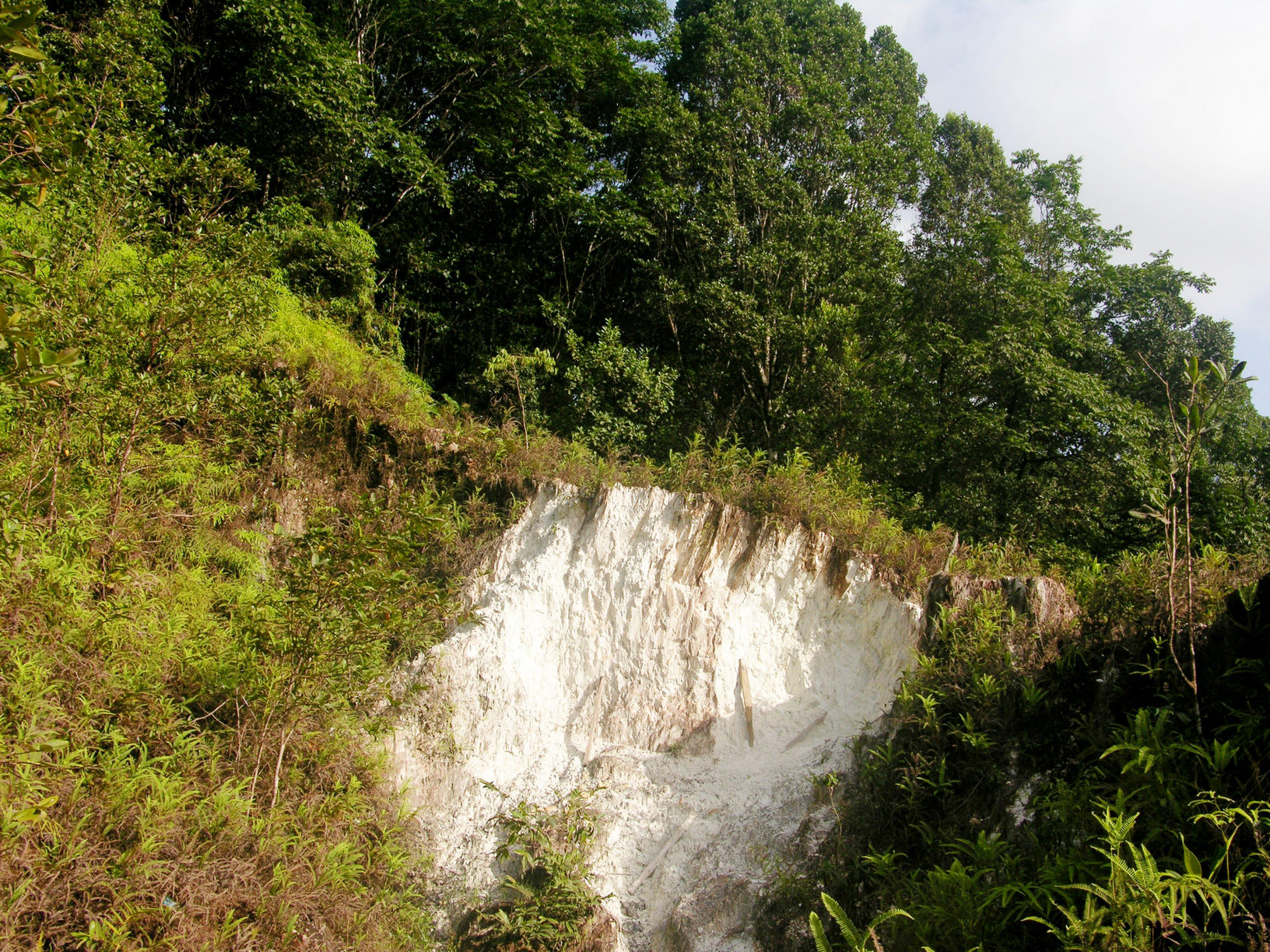
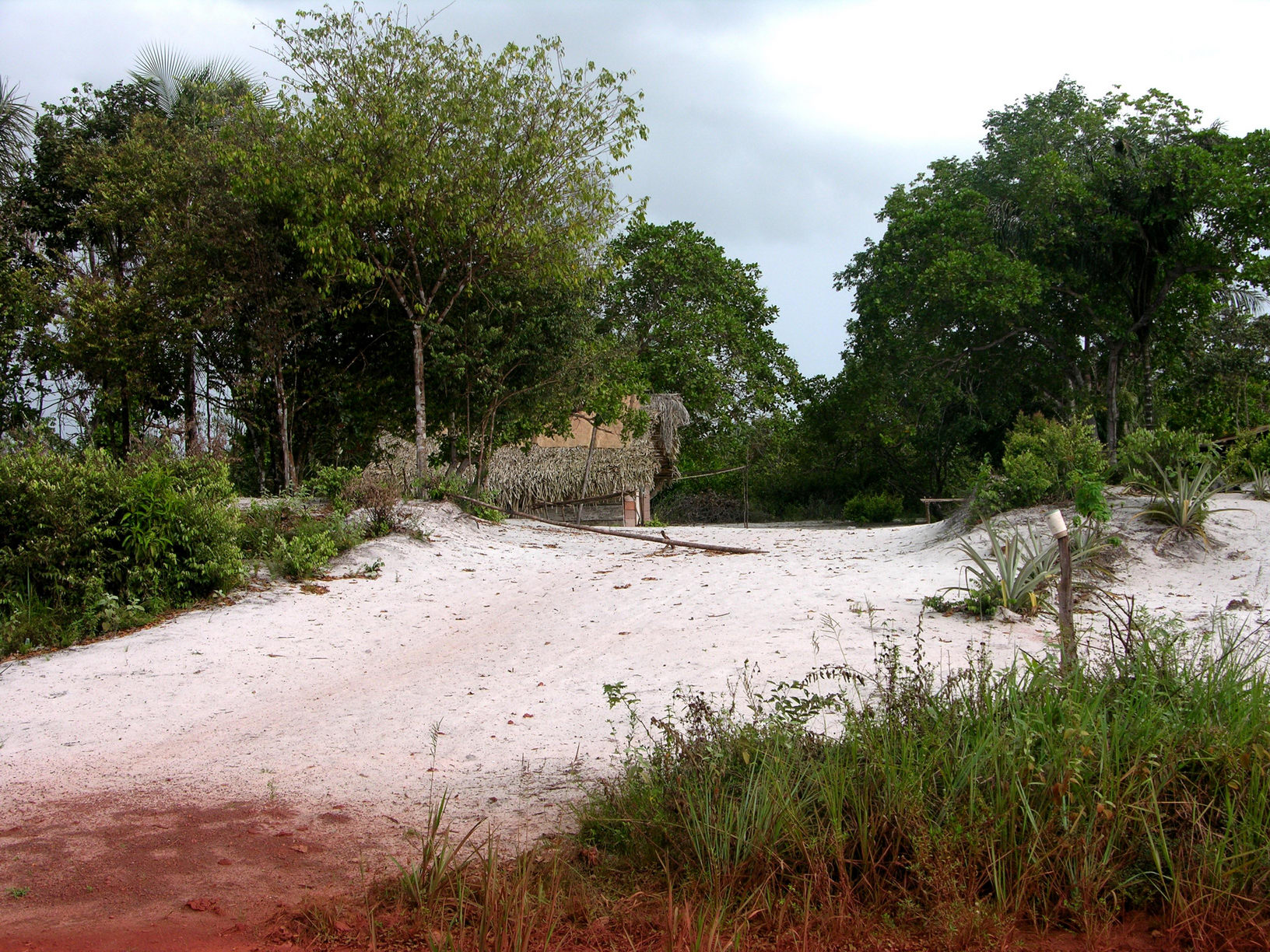
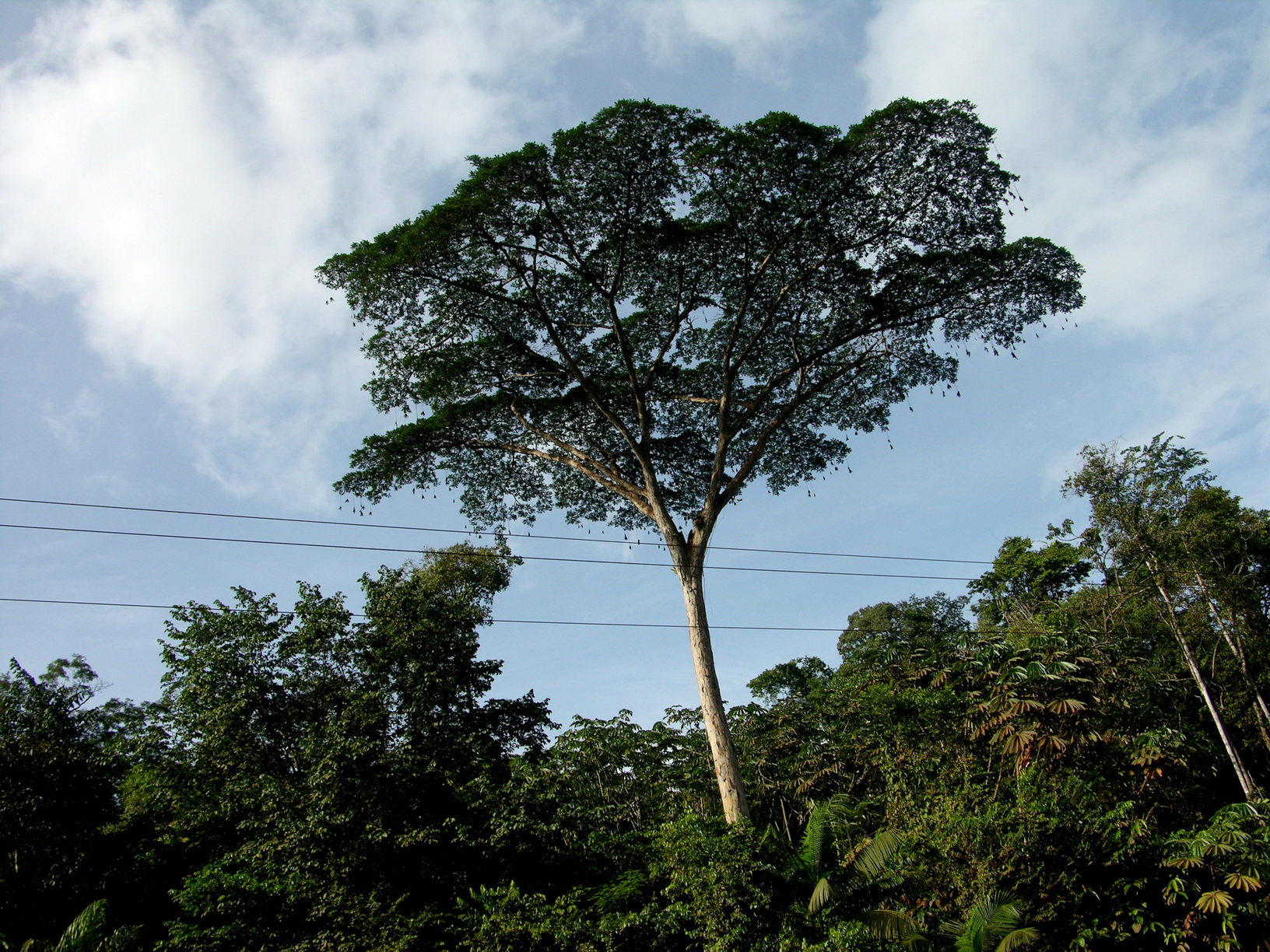
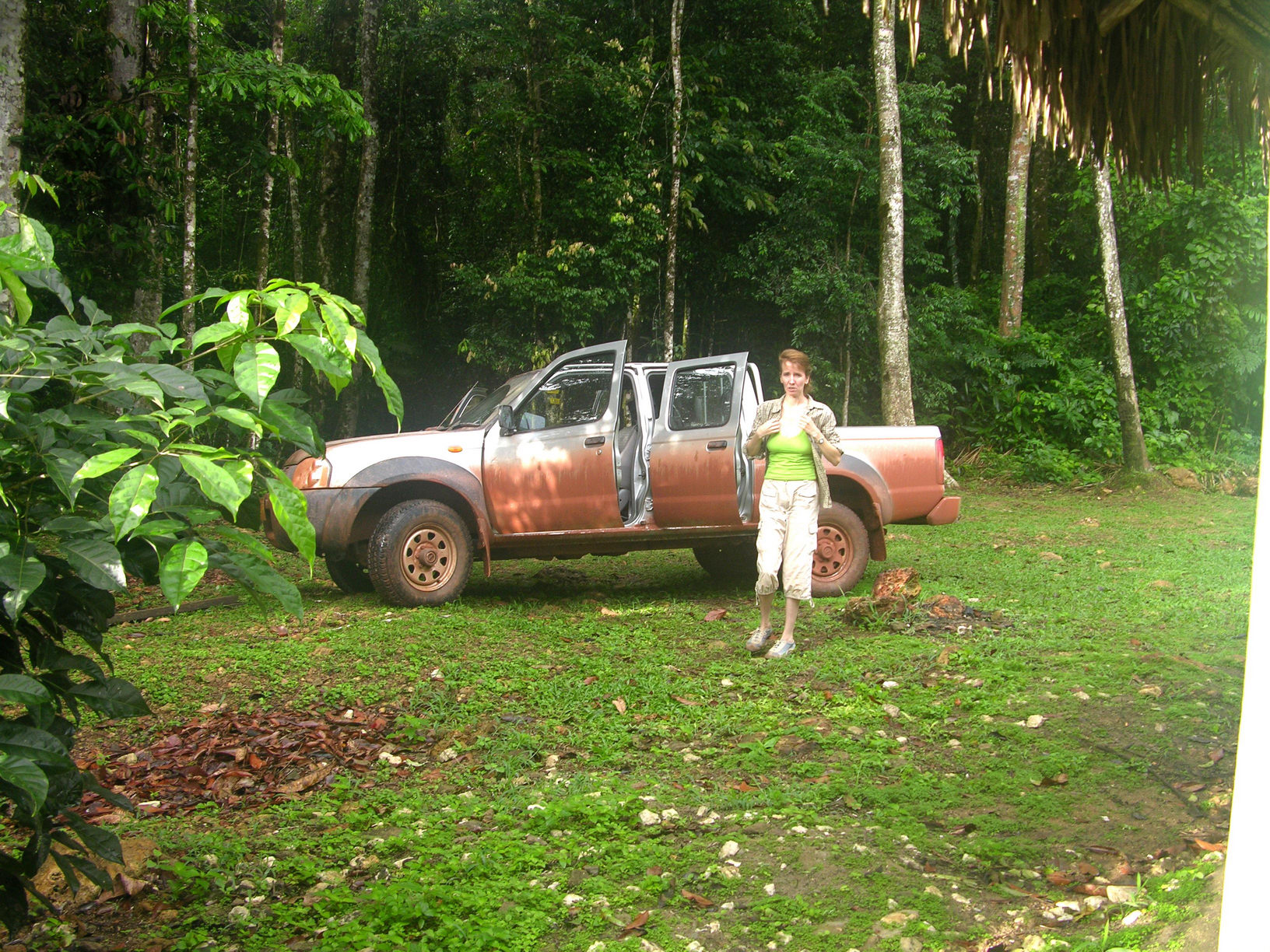
The bauxite road ends at Brownsweg. From there an unsealed forest road runs uphill into the park. At first you think you've gone the wrong way. That's just your first impression. Once you've driven around the country you realise it's a highway, an unpaved one, but a good one. In four-wheel drive I got stuck just once on the climb and even got myself out.
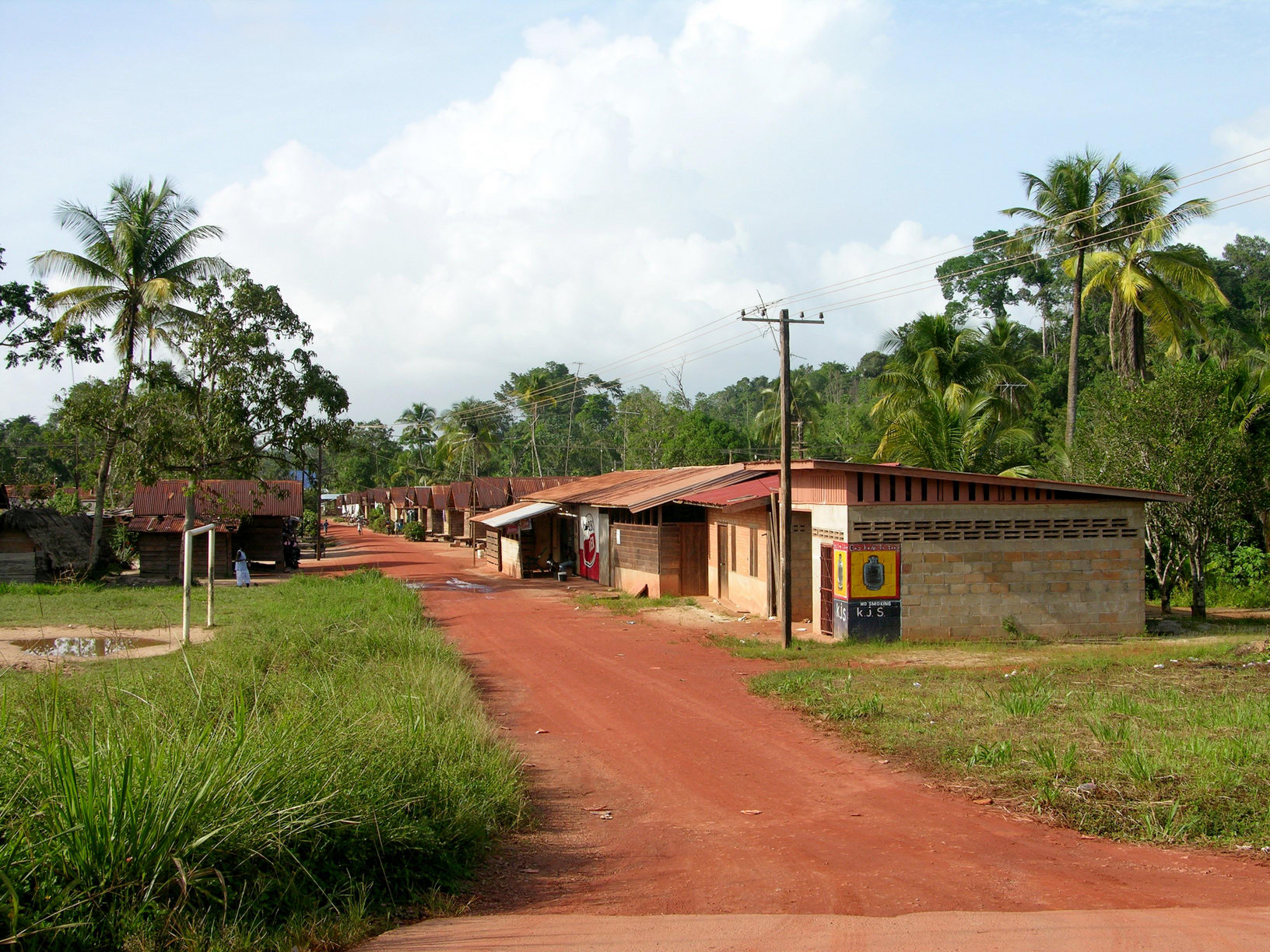
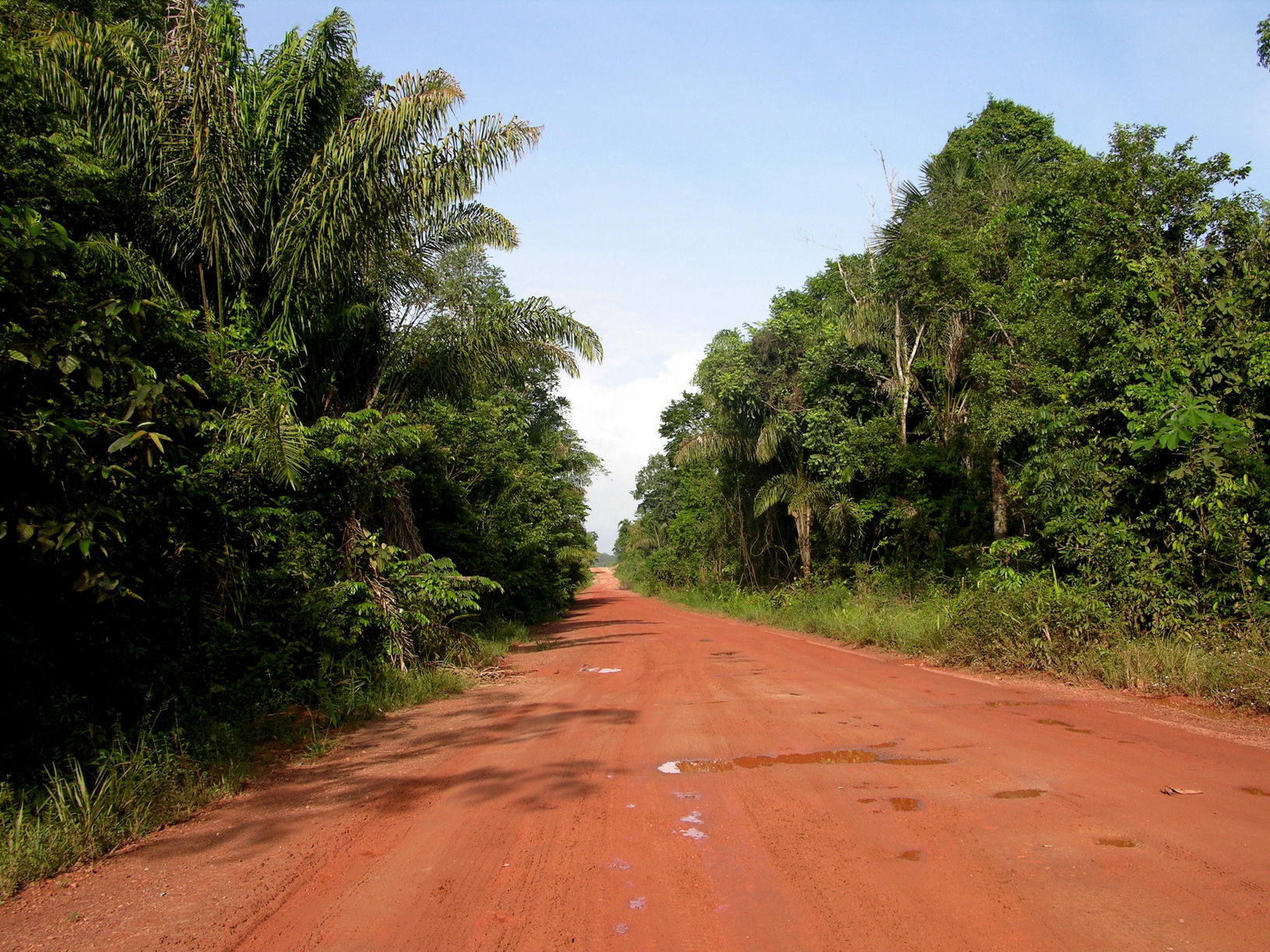
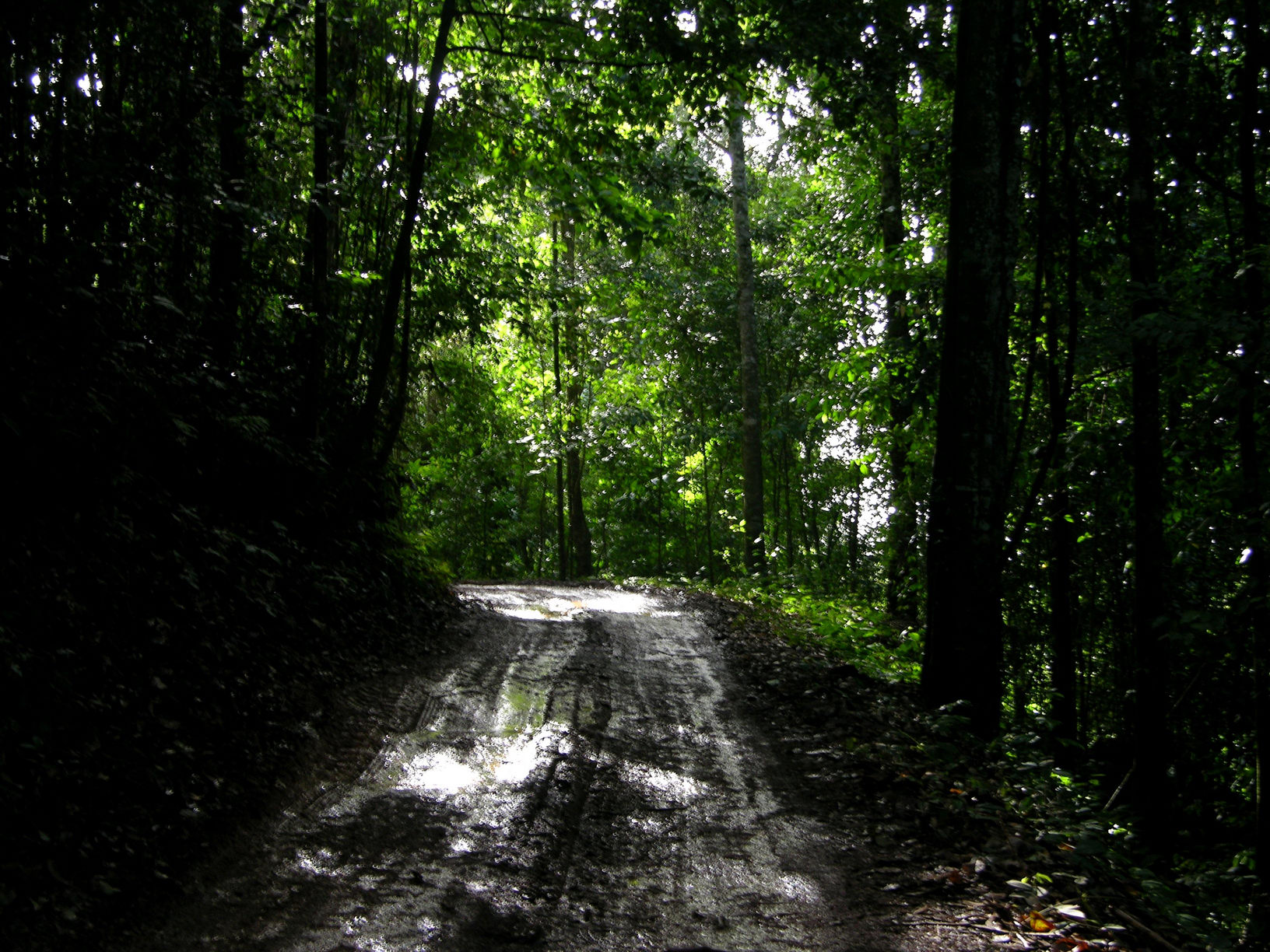
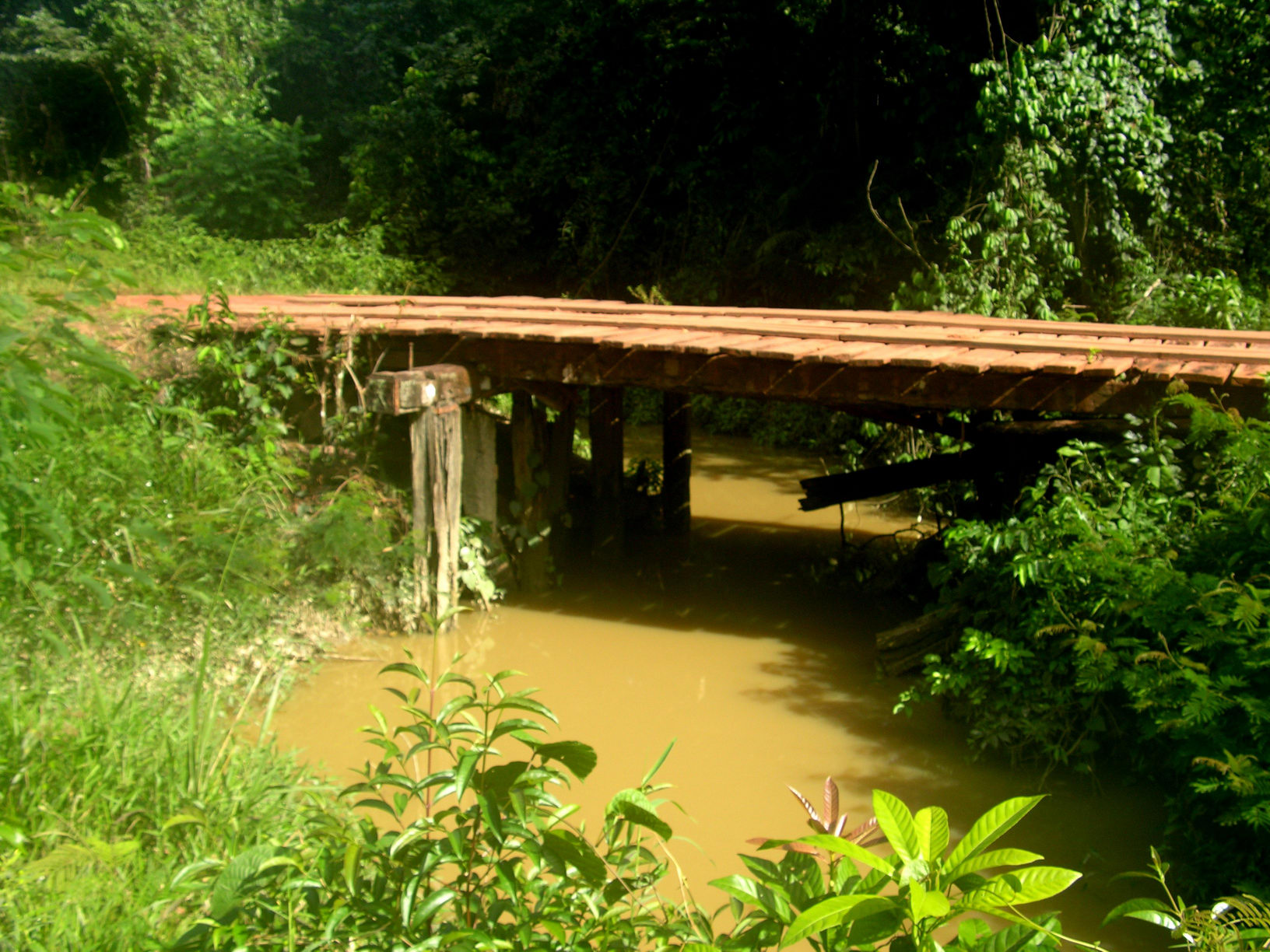
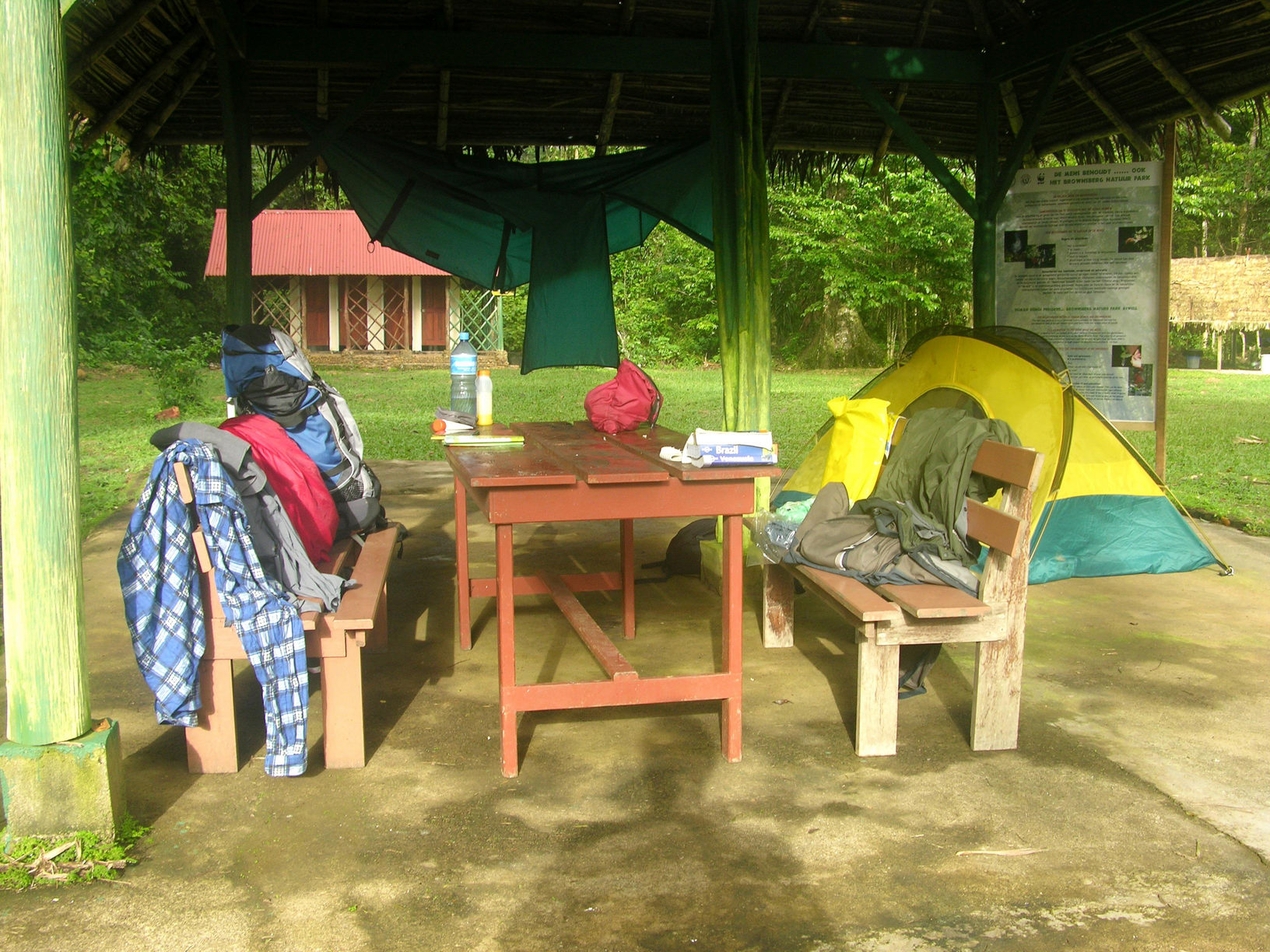
There were a surprising number of people in the Brokopondo park. It was all quite civilised, like a European campsite. There were a lot of foreign tourists, including French Guianans in their own cars.
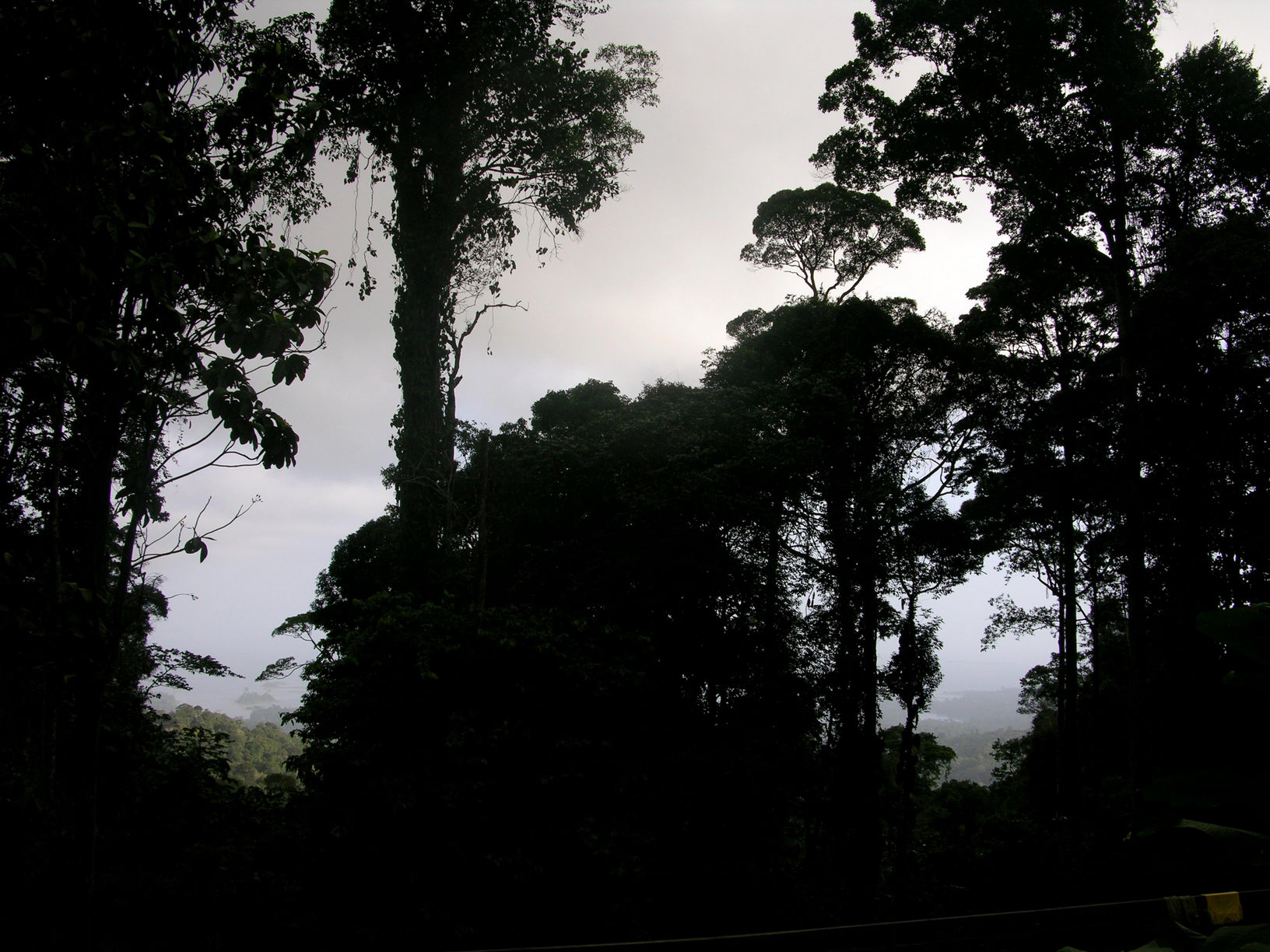
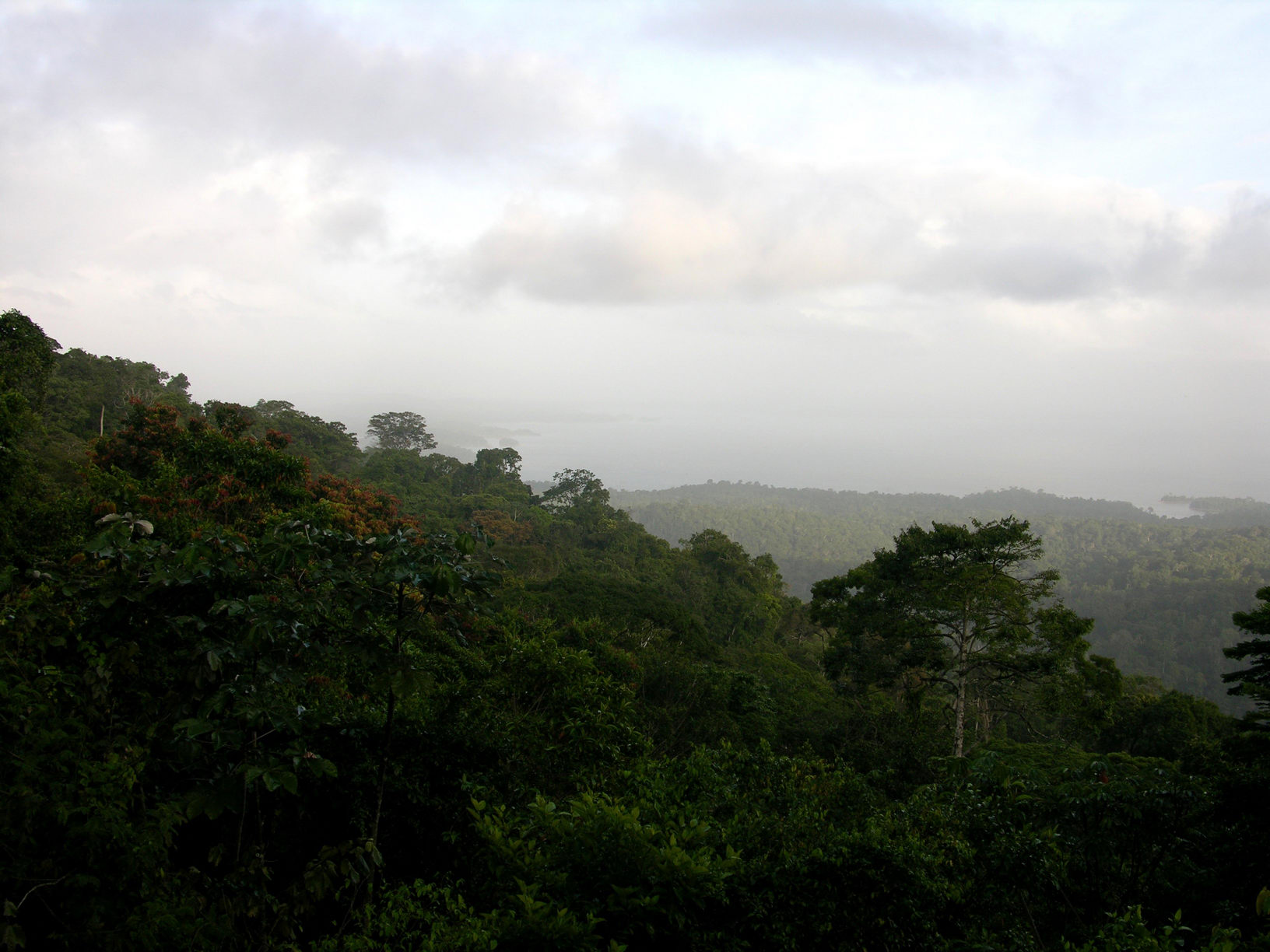
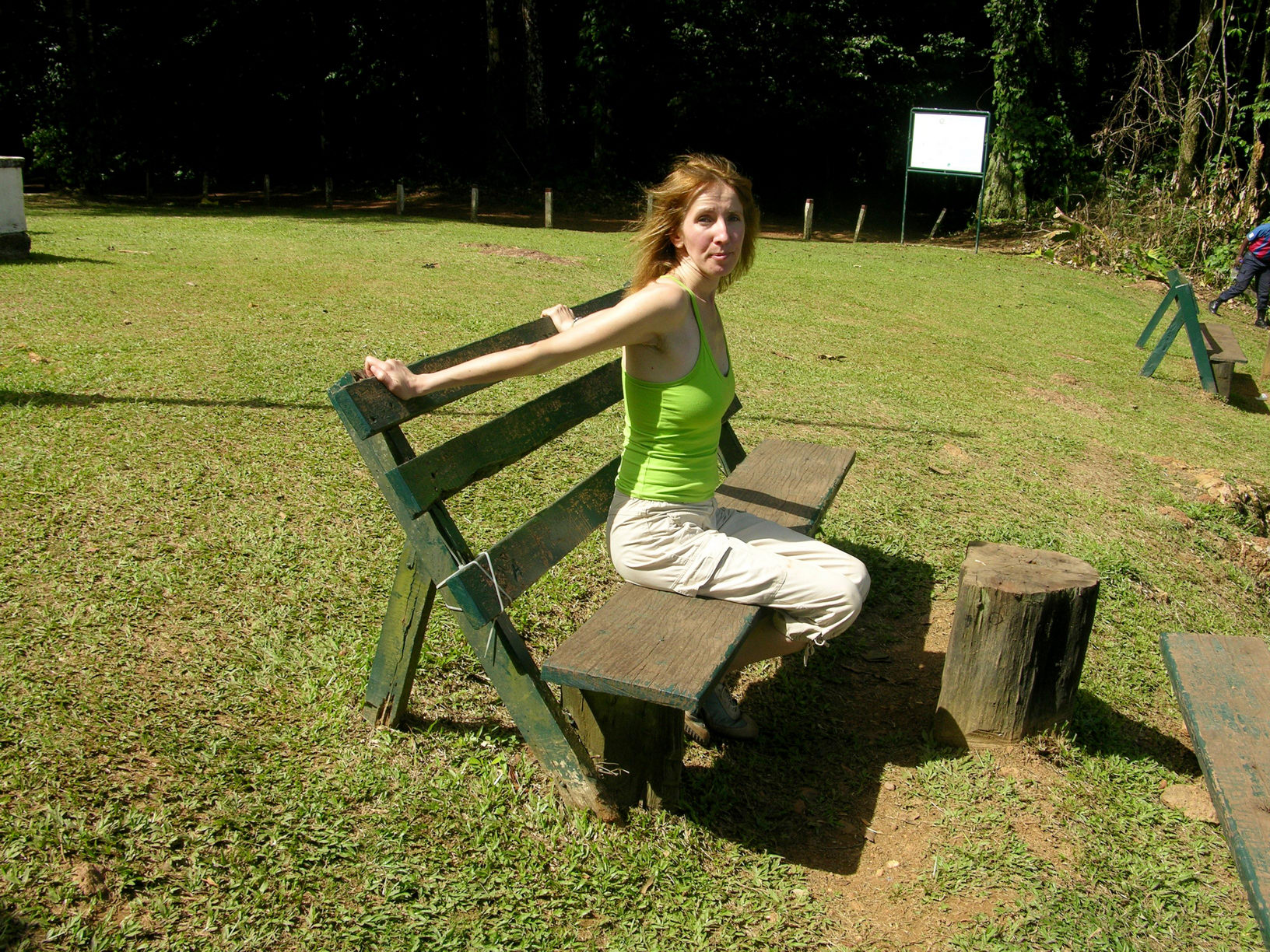
Even the mobile phone worked. Suriname then had one network, Telesur. Call quality was dreadful and the coverage patchy. The only place you could talk properly was in the capital. Elsewhere the sound dropped out even if you stood right under the base station. Texts got through perfectly well, and there was roaming with Russia.
The sockets are European-style in Suriname, but the voltage is 110.
Up in the nearest trees the baboons were settling their differences. They don't need mobiles for that. An awful roar rang out. If it's your first time in a jungle you think a pride of lions is tearing into a herd of antelope, or something worse. In fact it's only two little monkeys deciding whose tree it is and who gets to smell and eat the flowers on it.
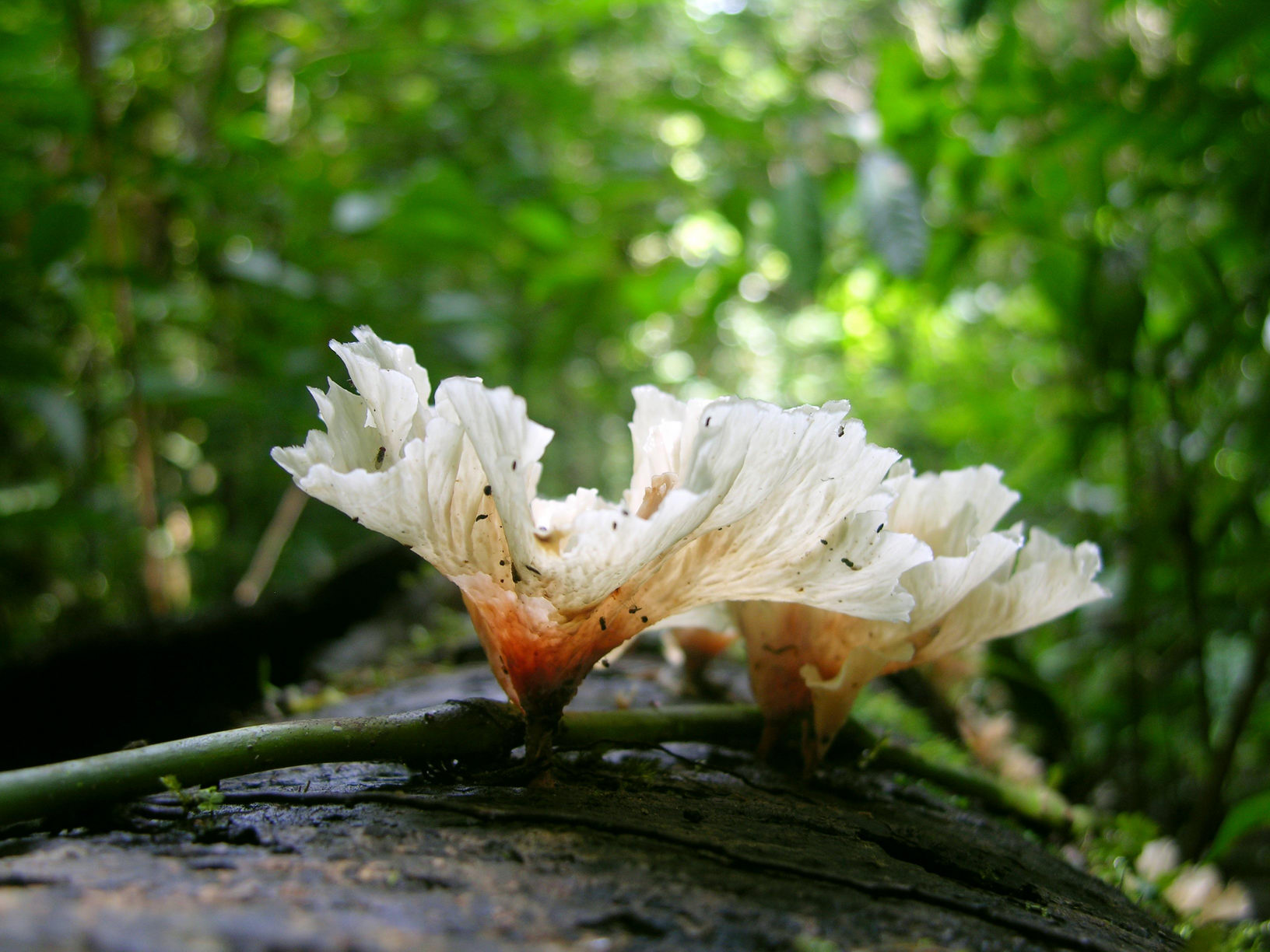
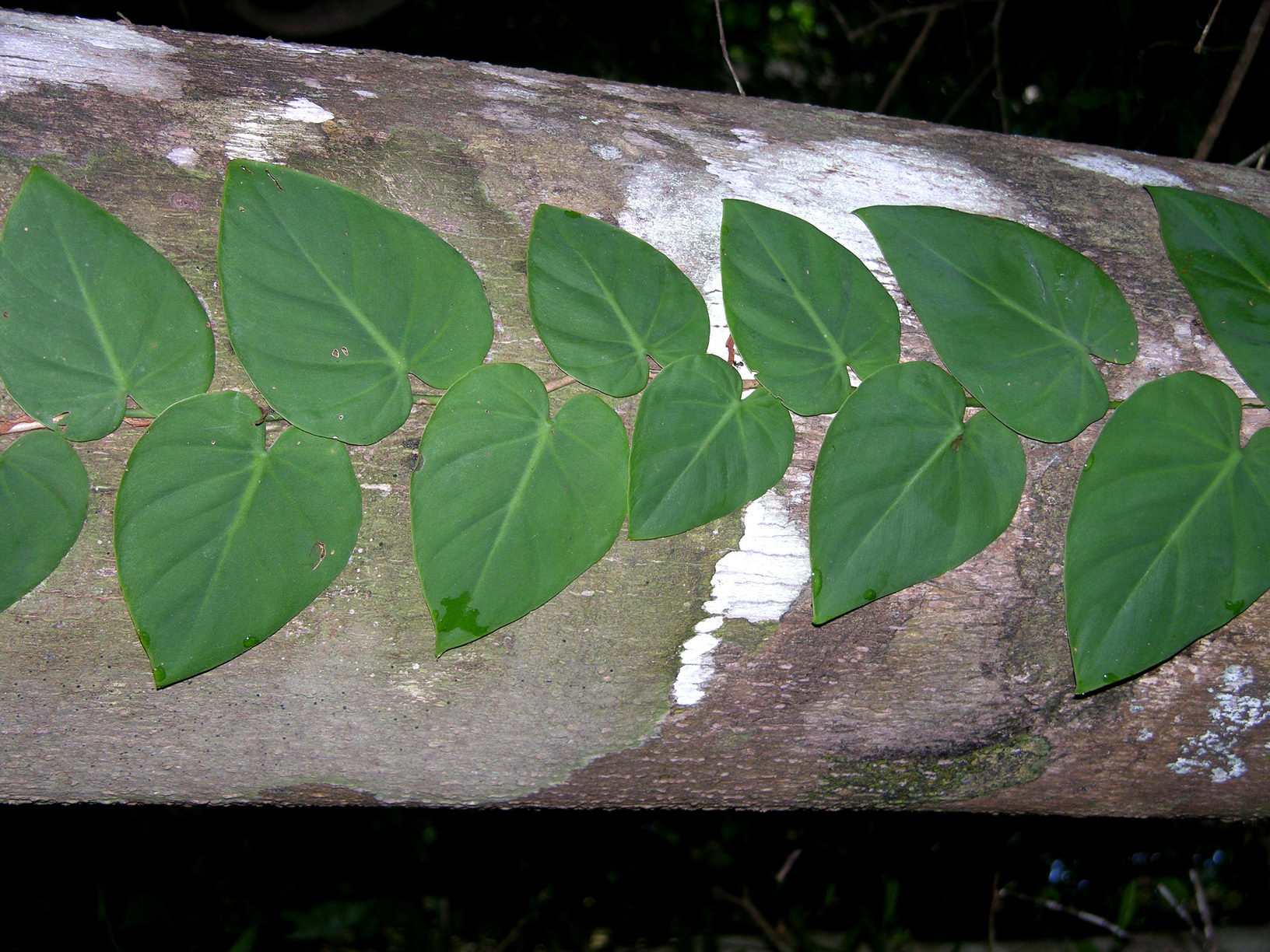
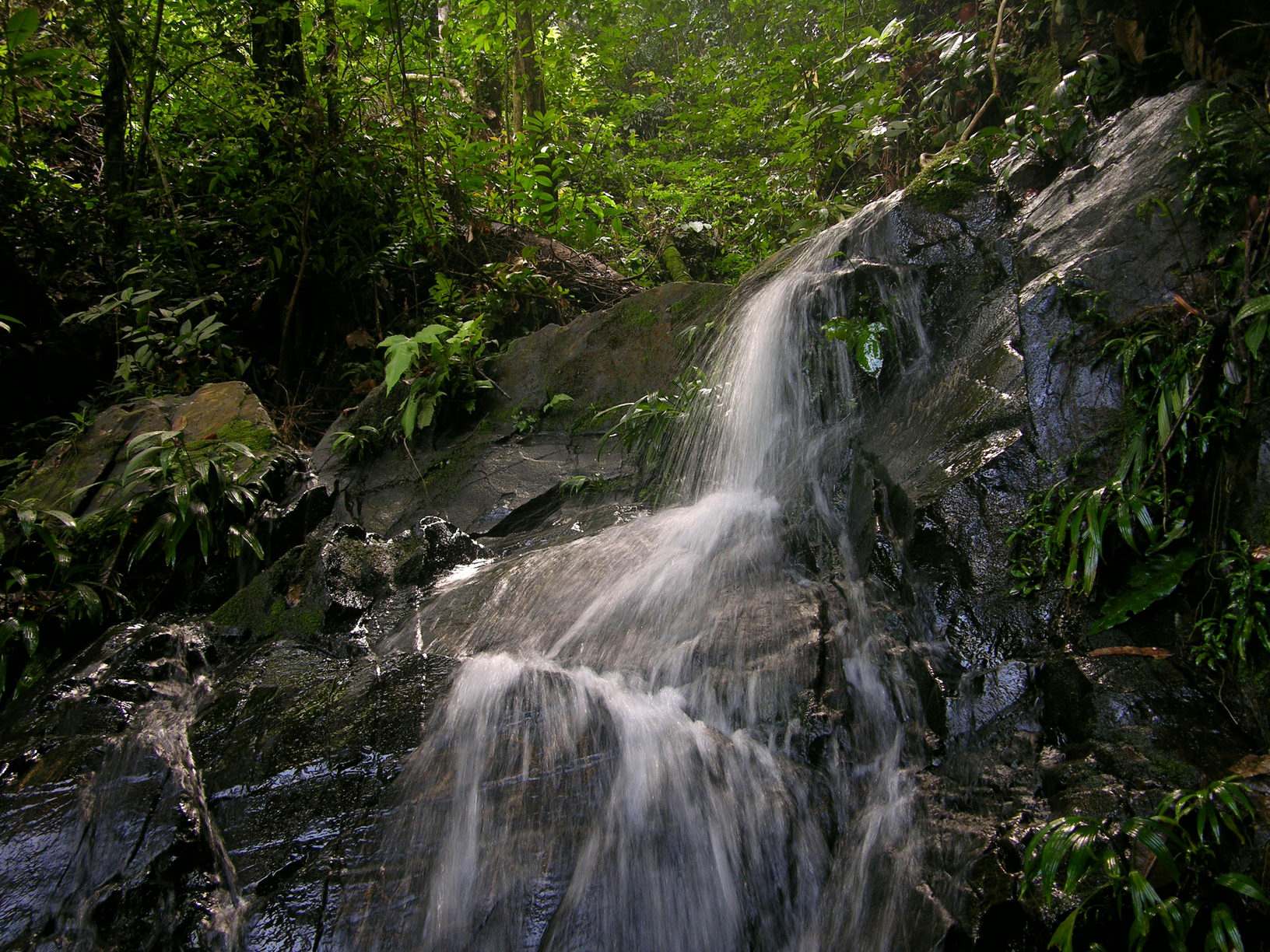
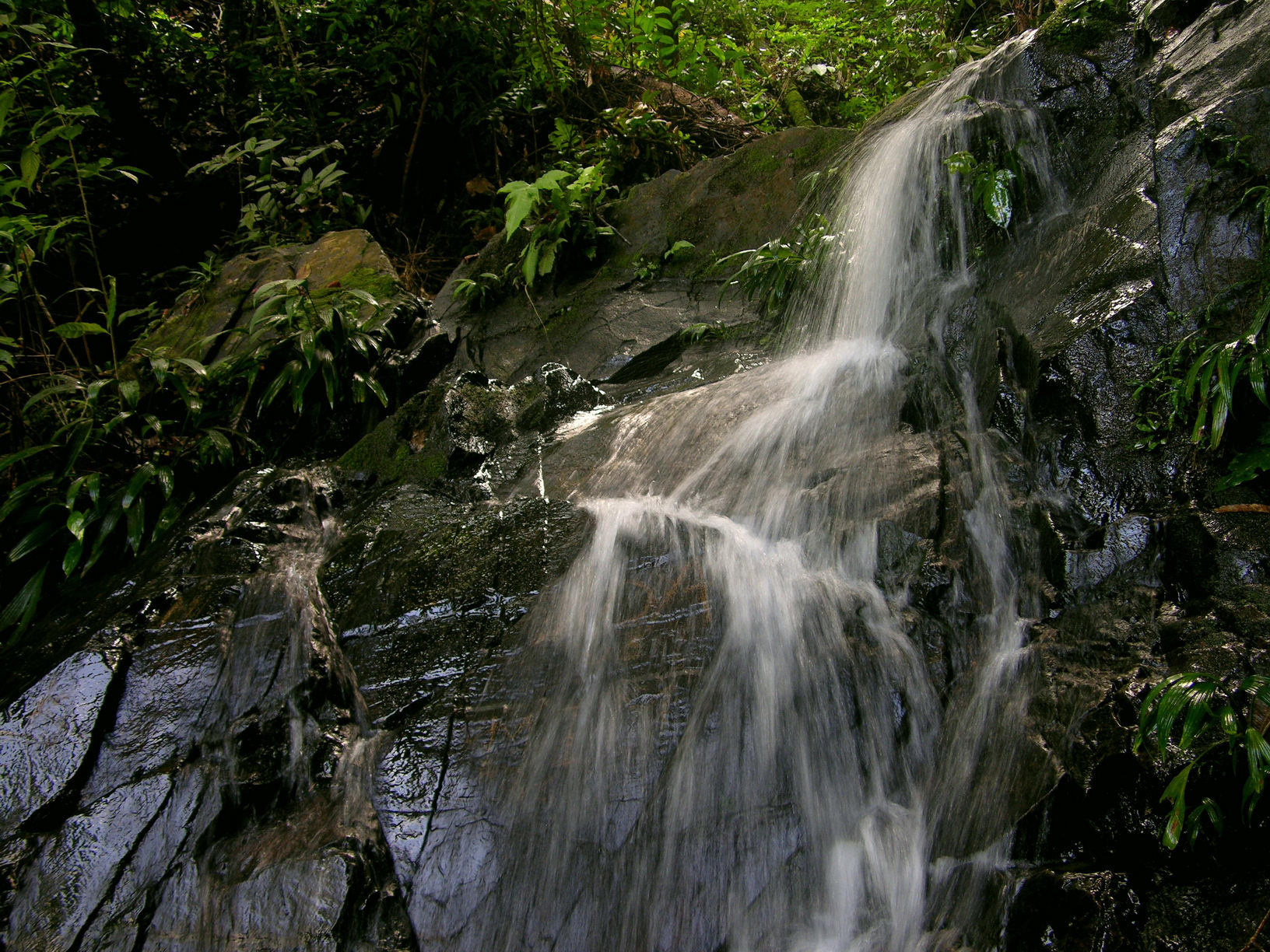
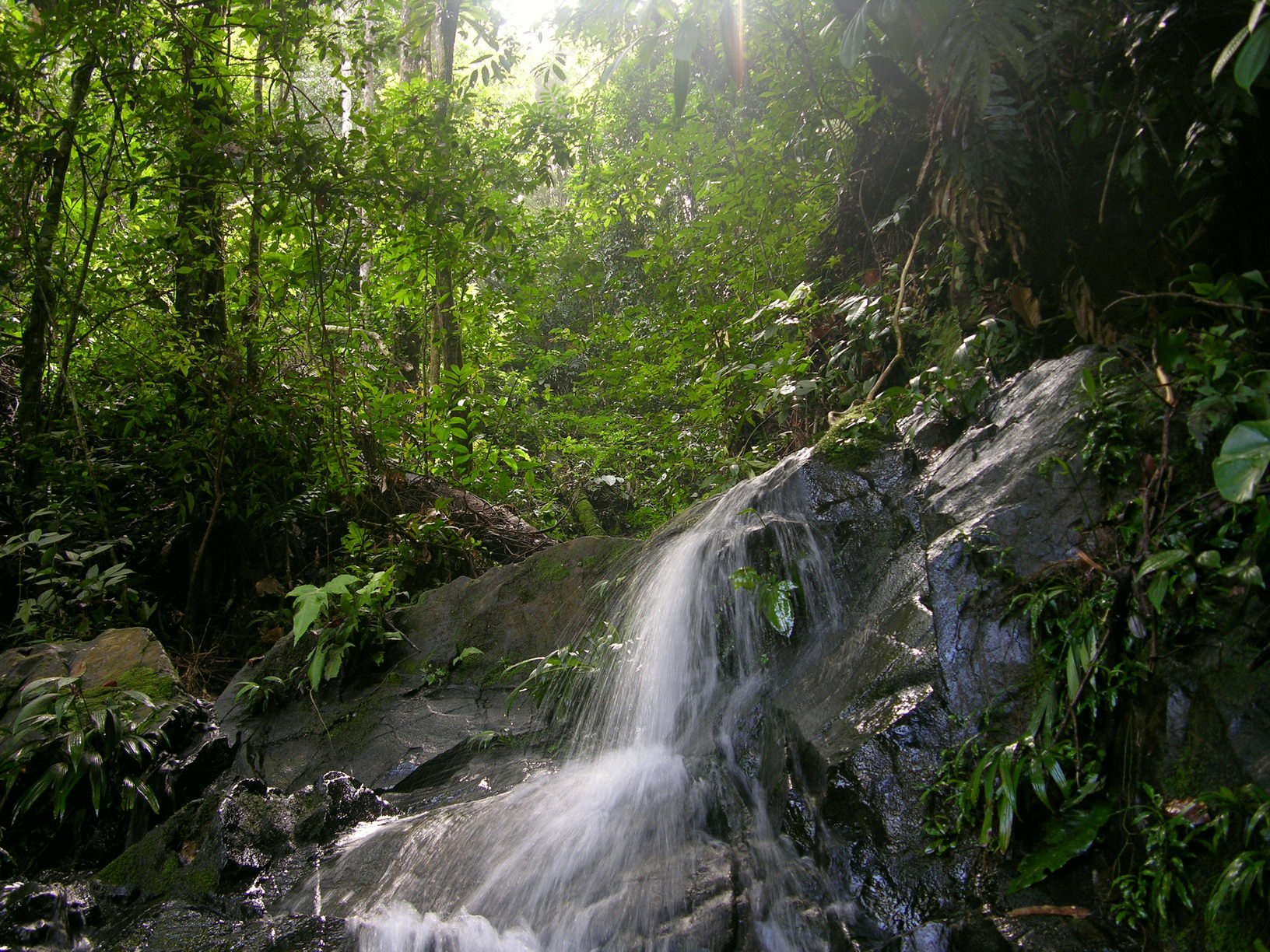
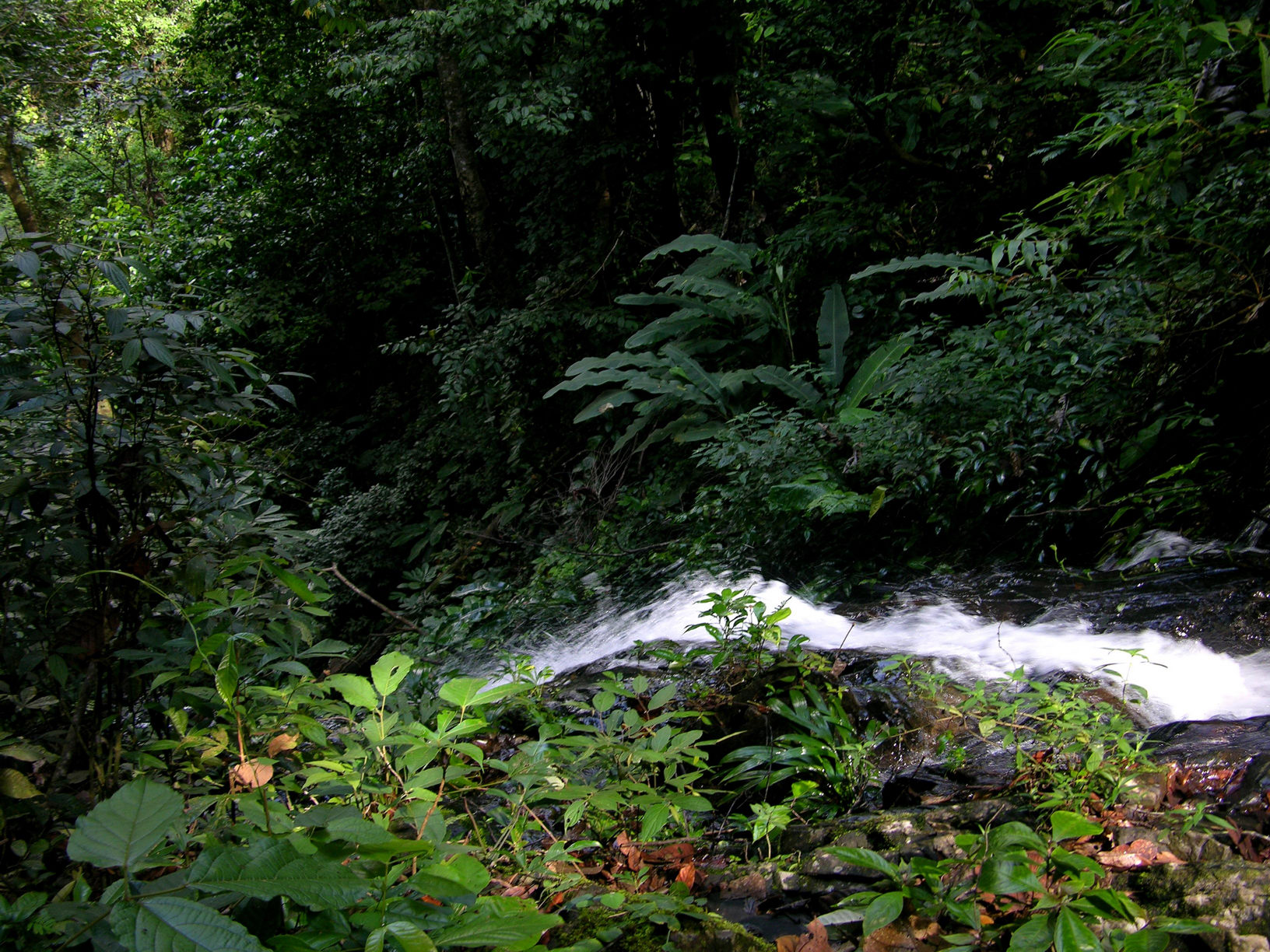
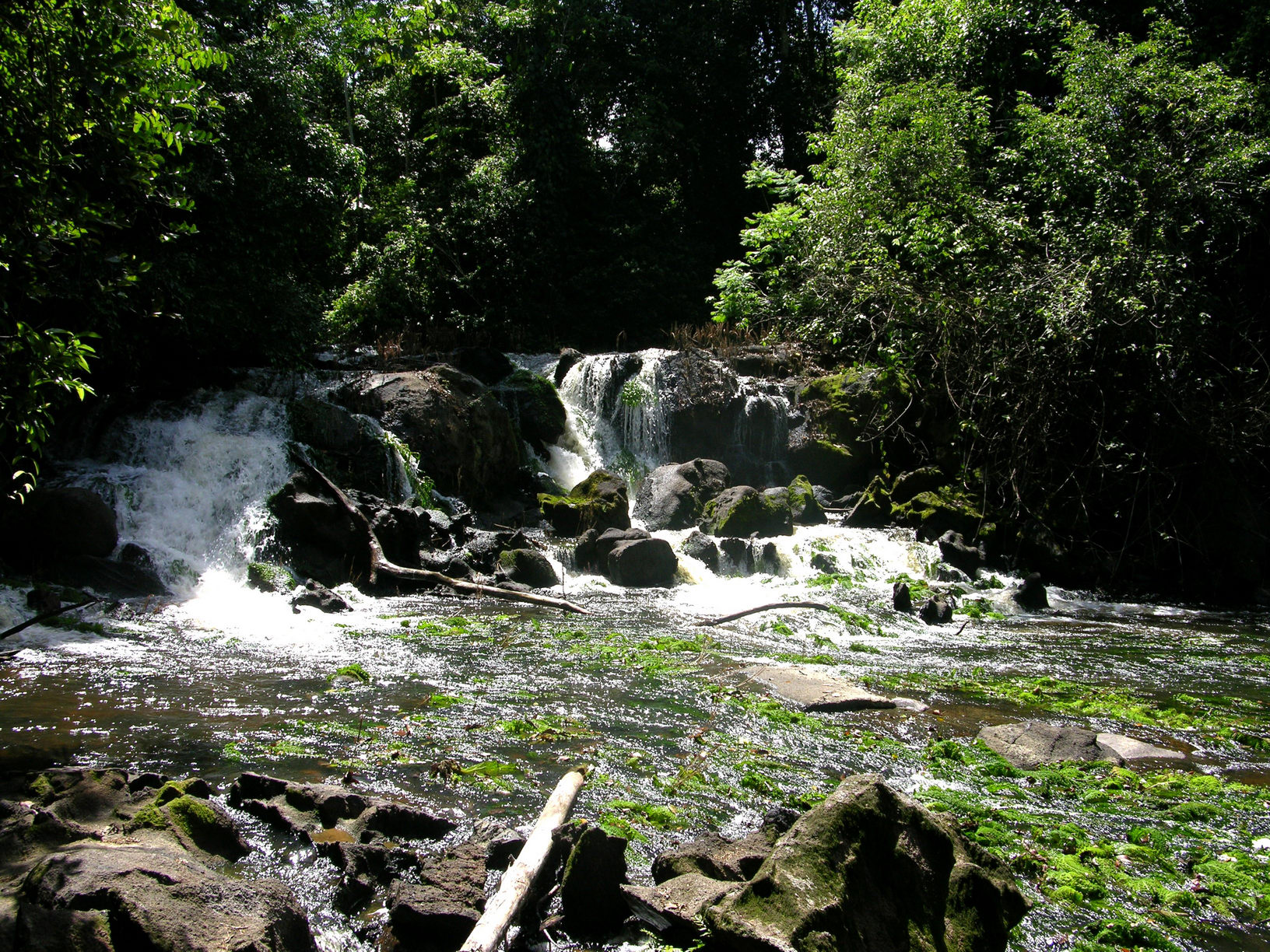
Agoutis run around in the scrub and parrots flit from branch to branch. Lots of other birds too. There are tapirs, but we didn't see any. There are lots of paths to walk around here. The greater part of them is quite empty. That evening and the next day in the morning we covered about half the paths marked on the map. We reached the waterfalls and had a swim there.
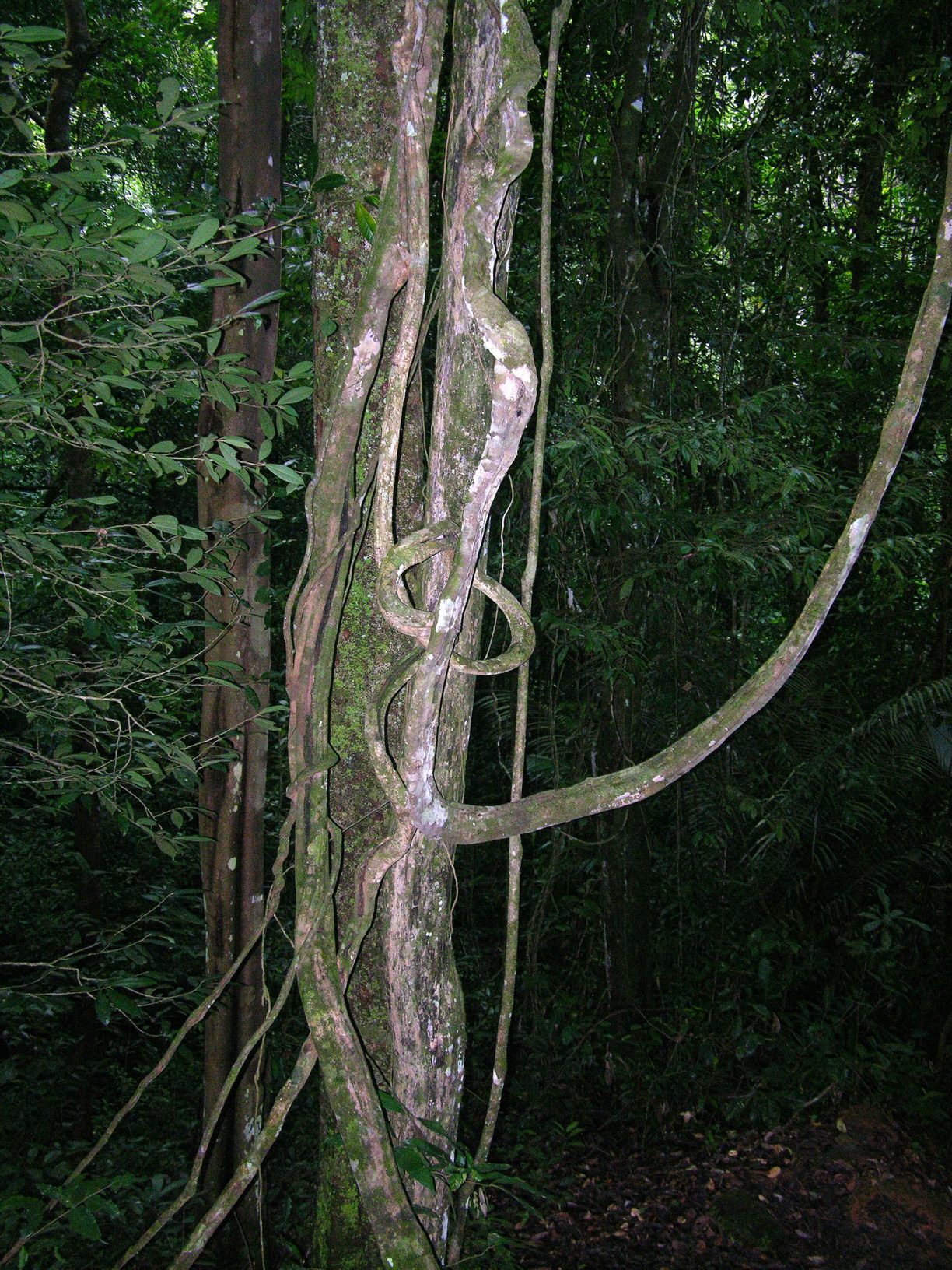
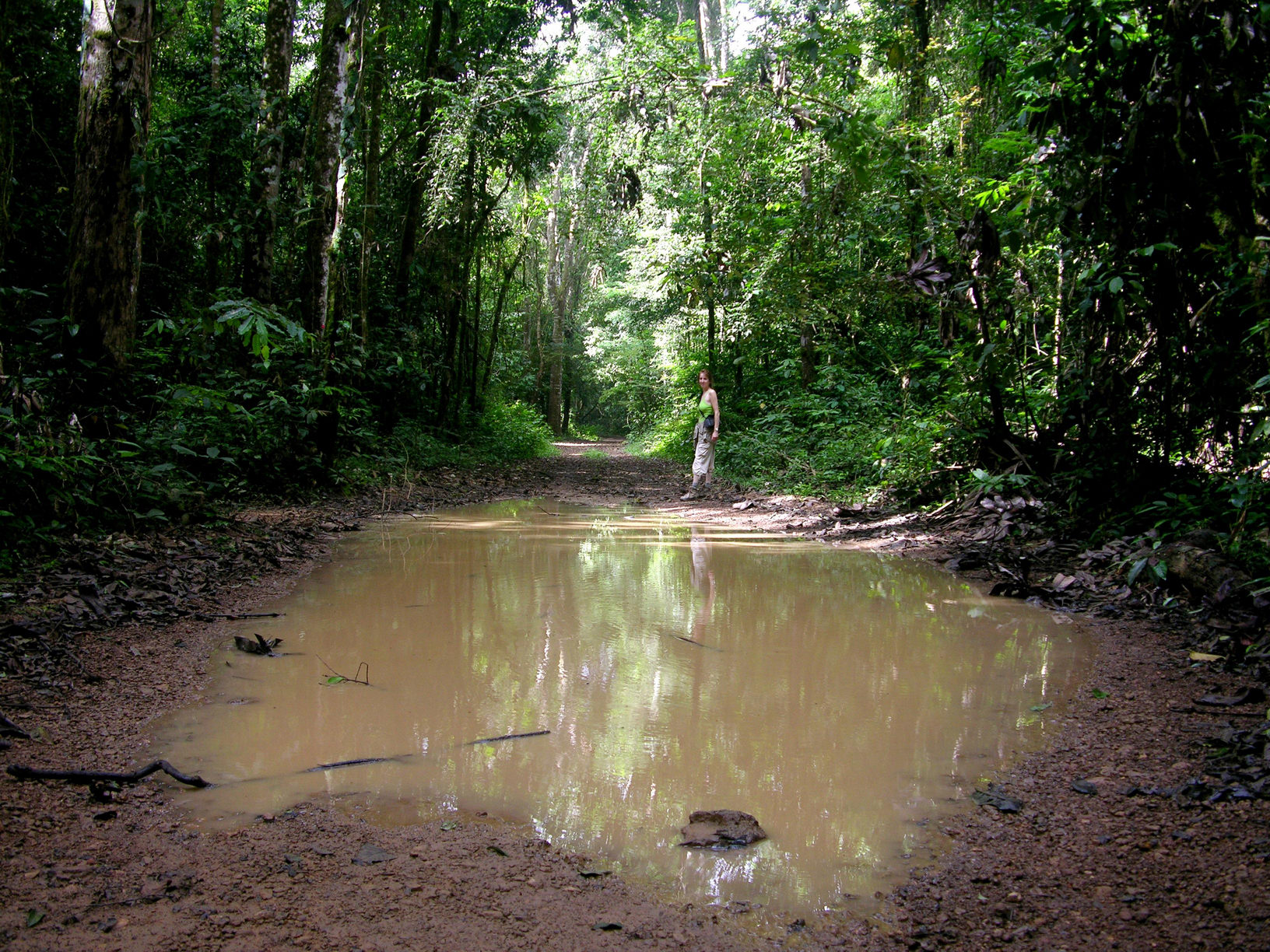
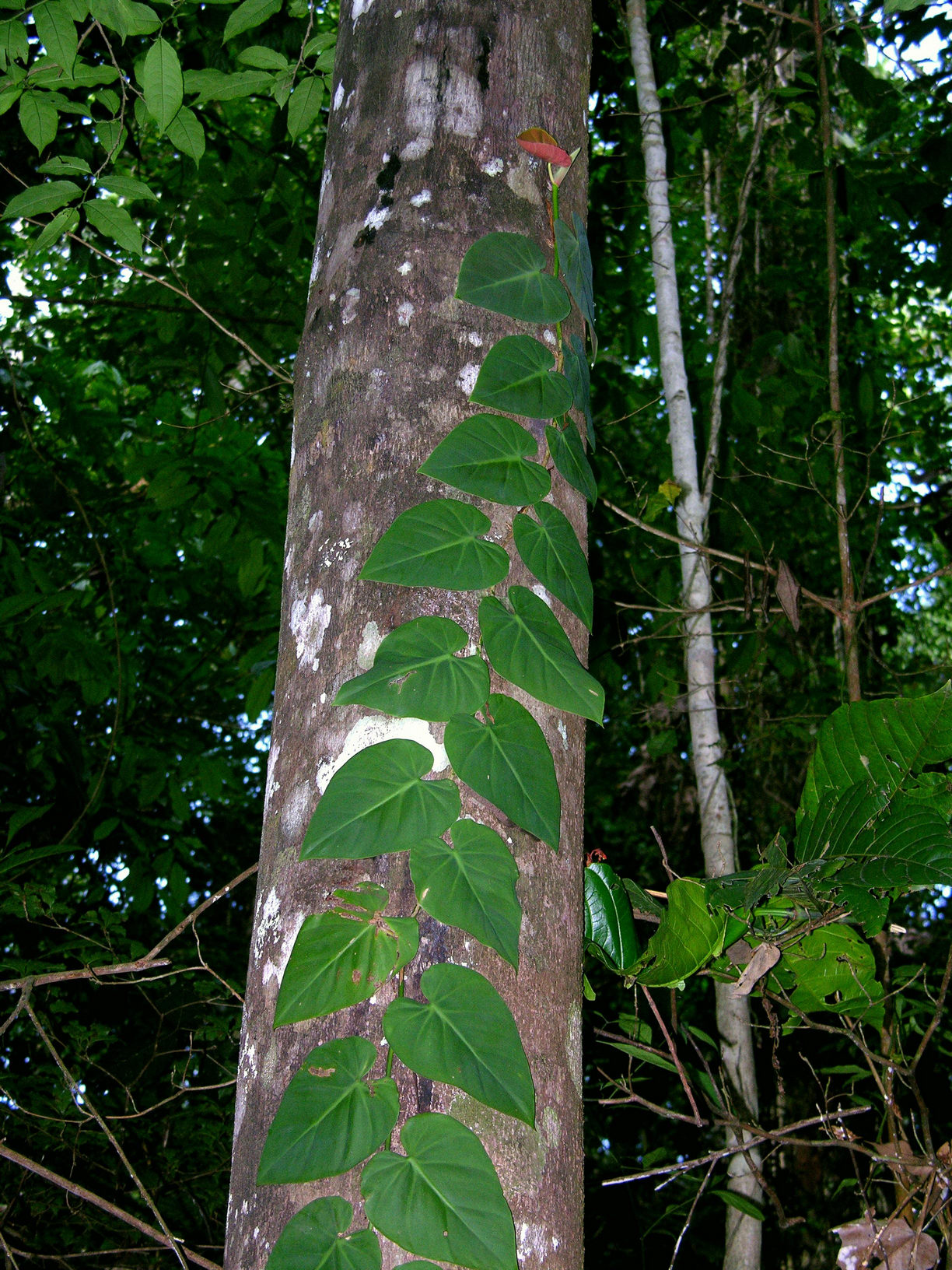
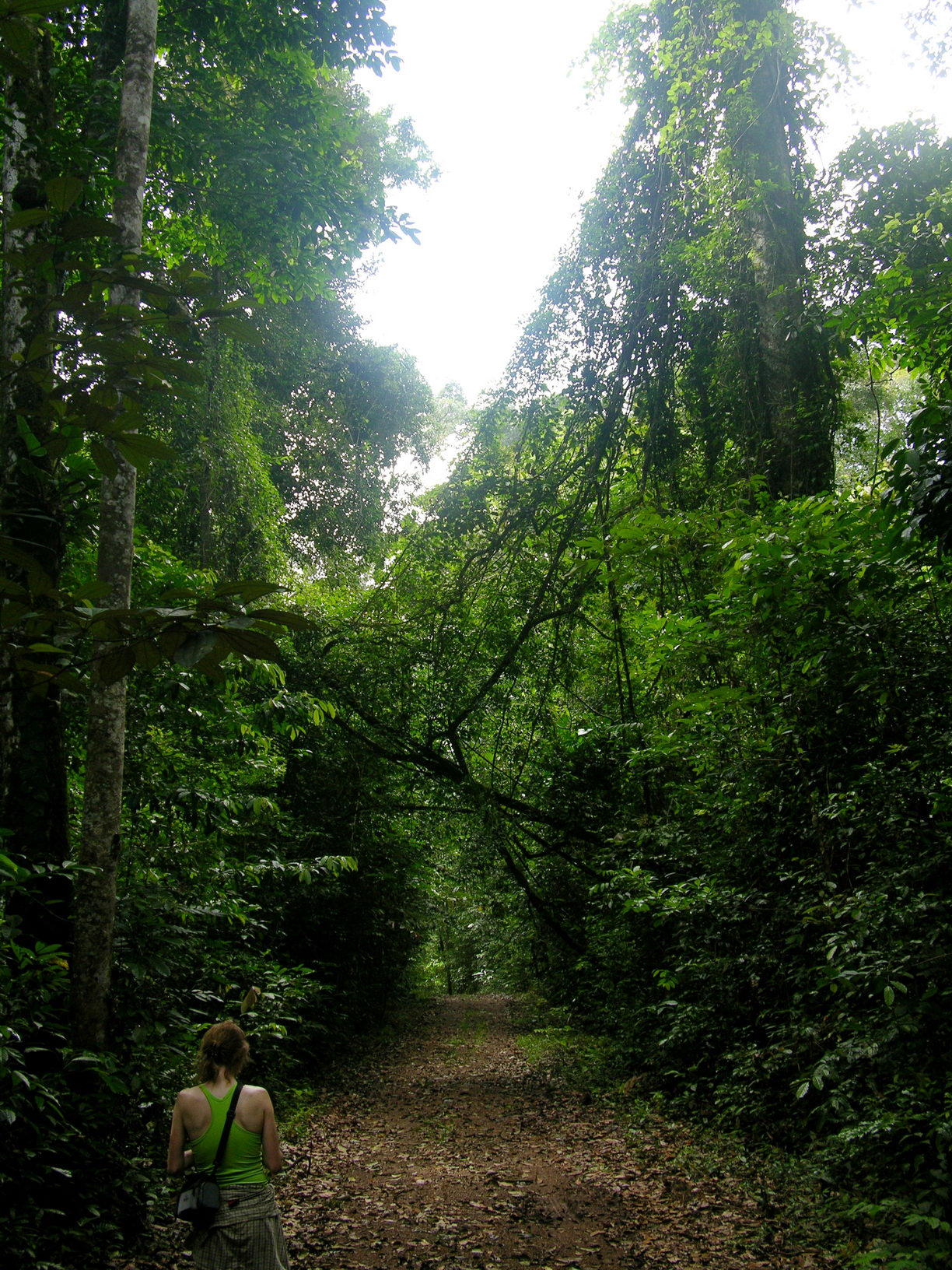
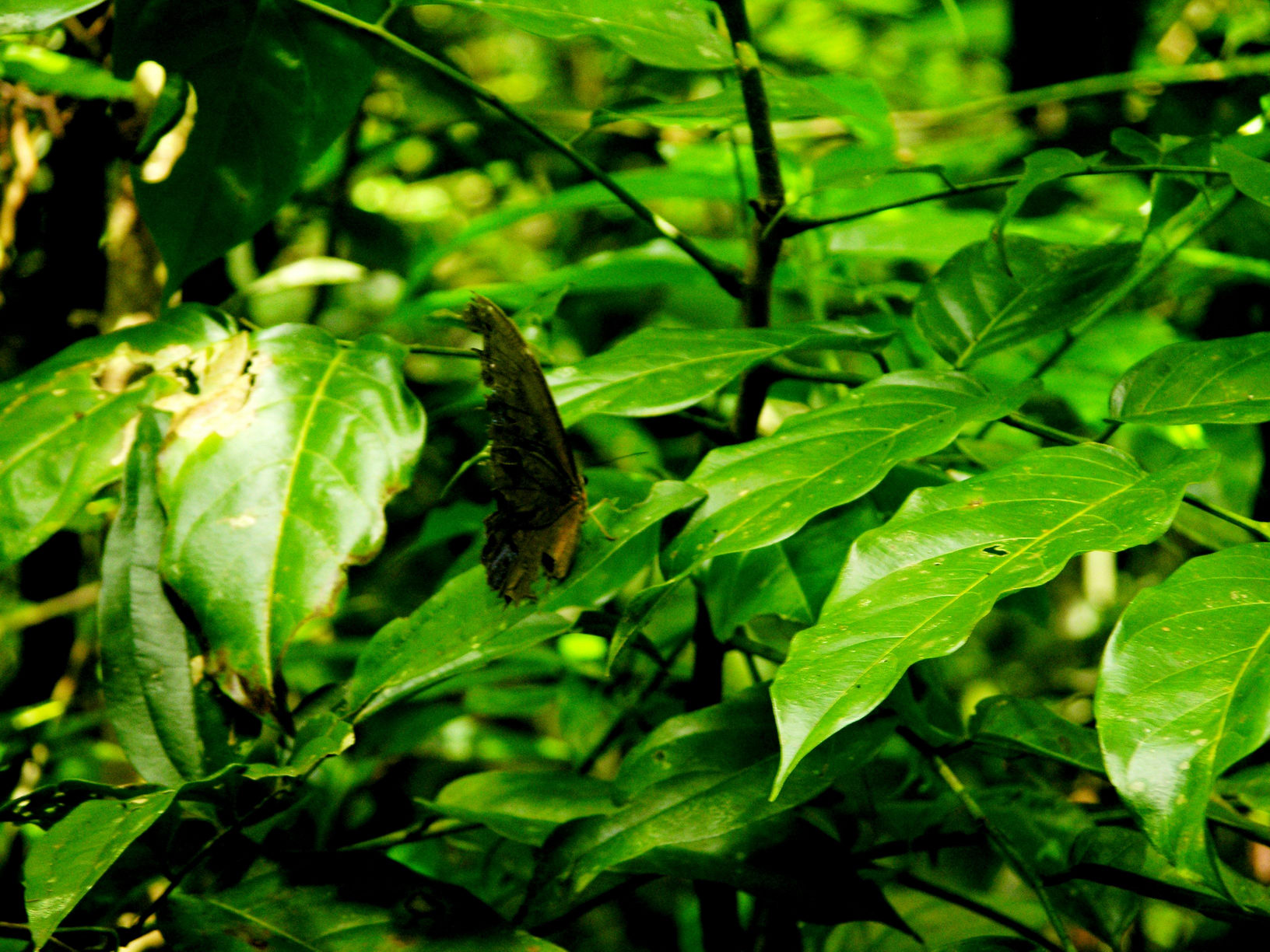
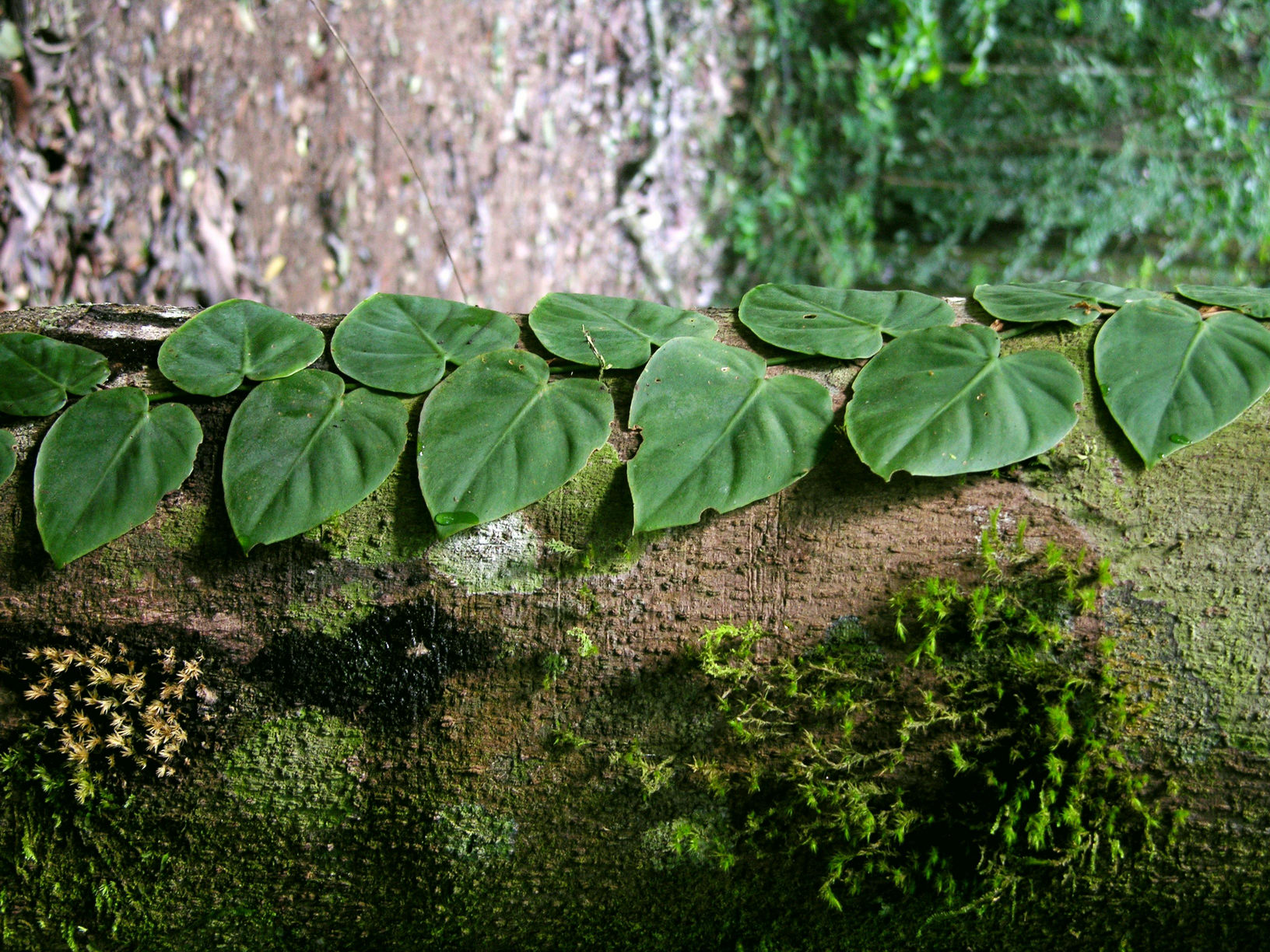
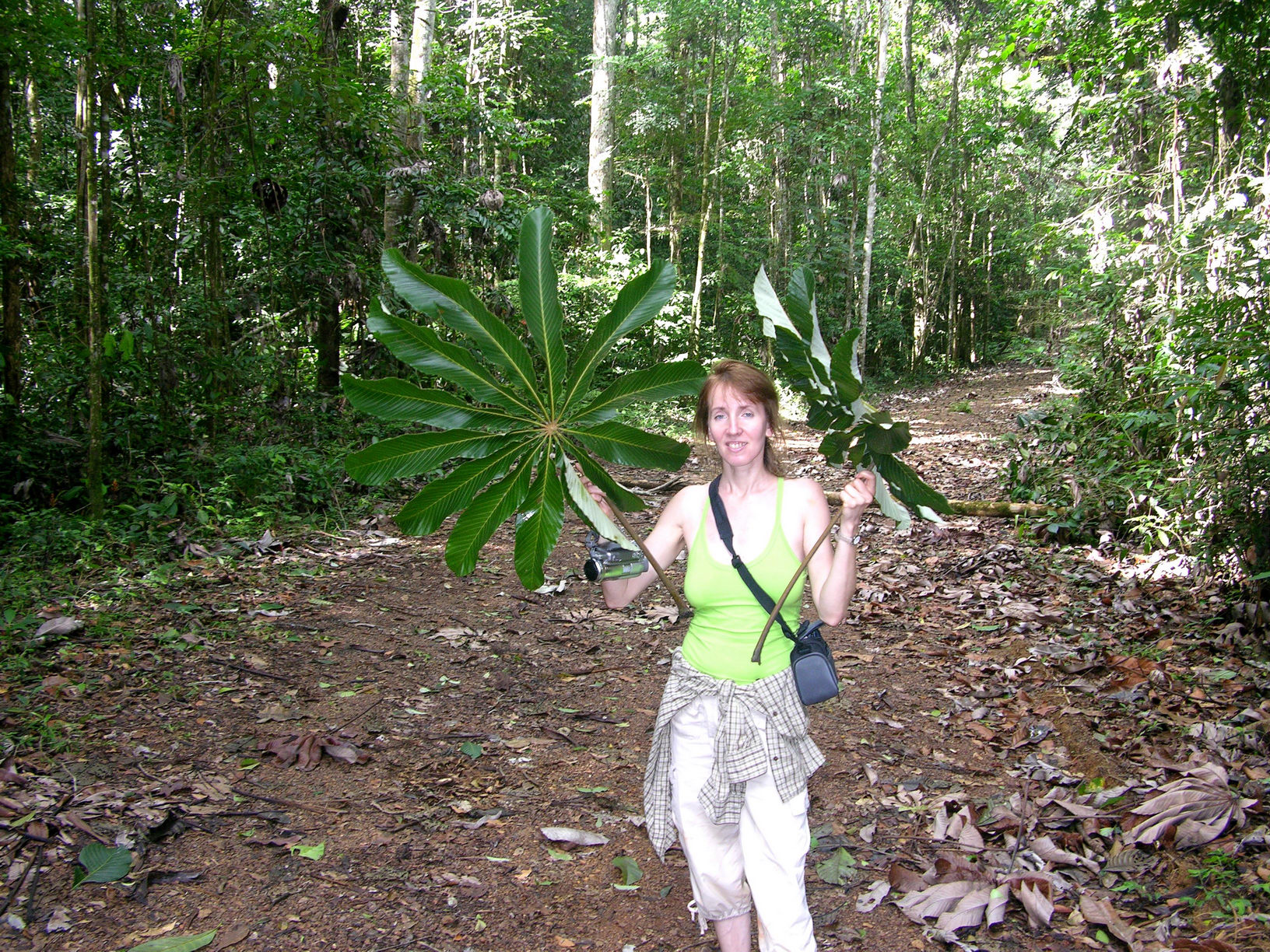
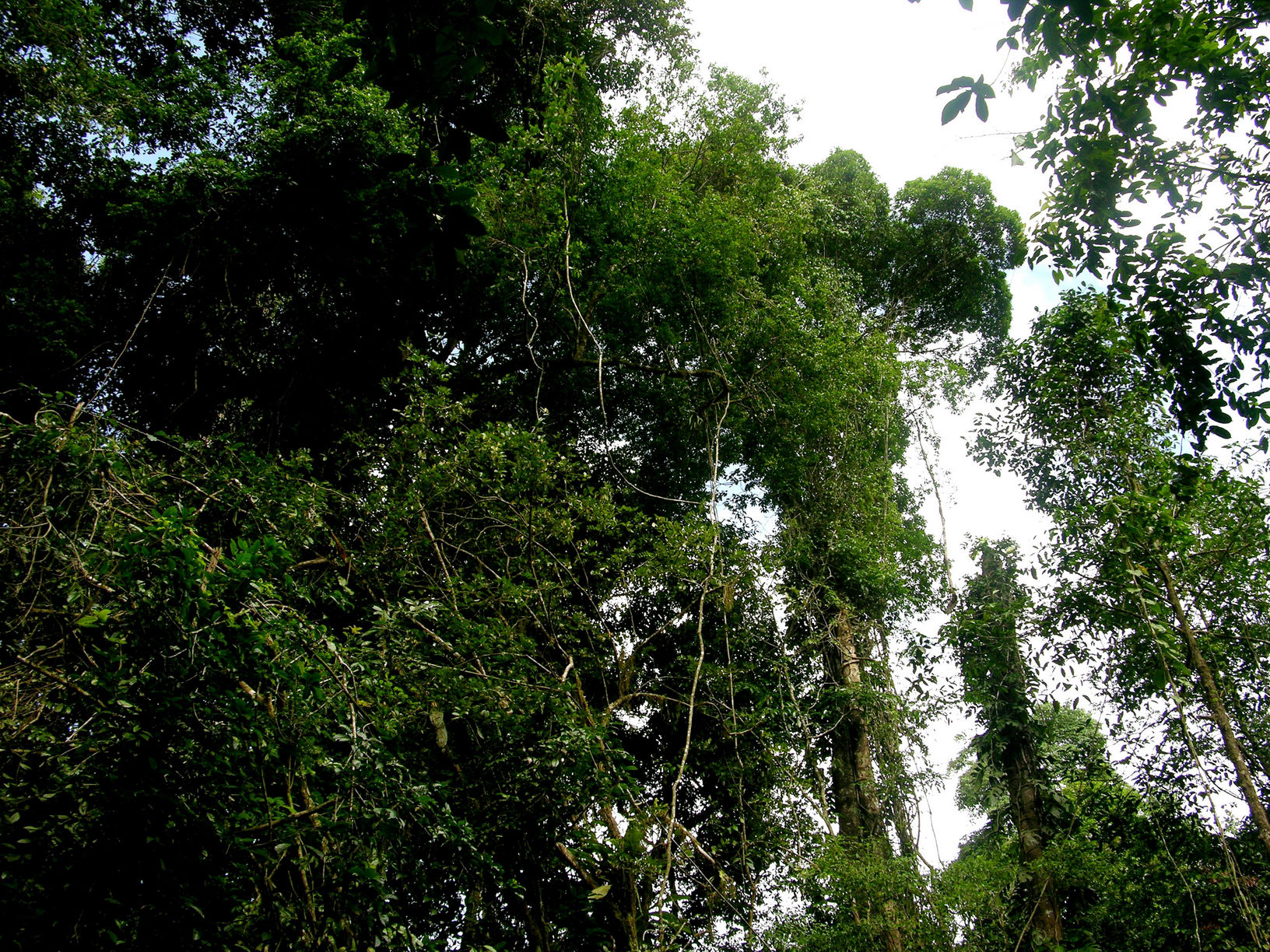
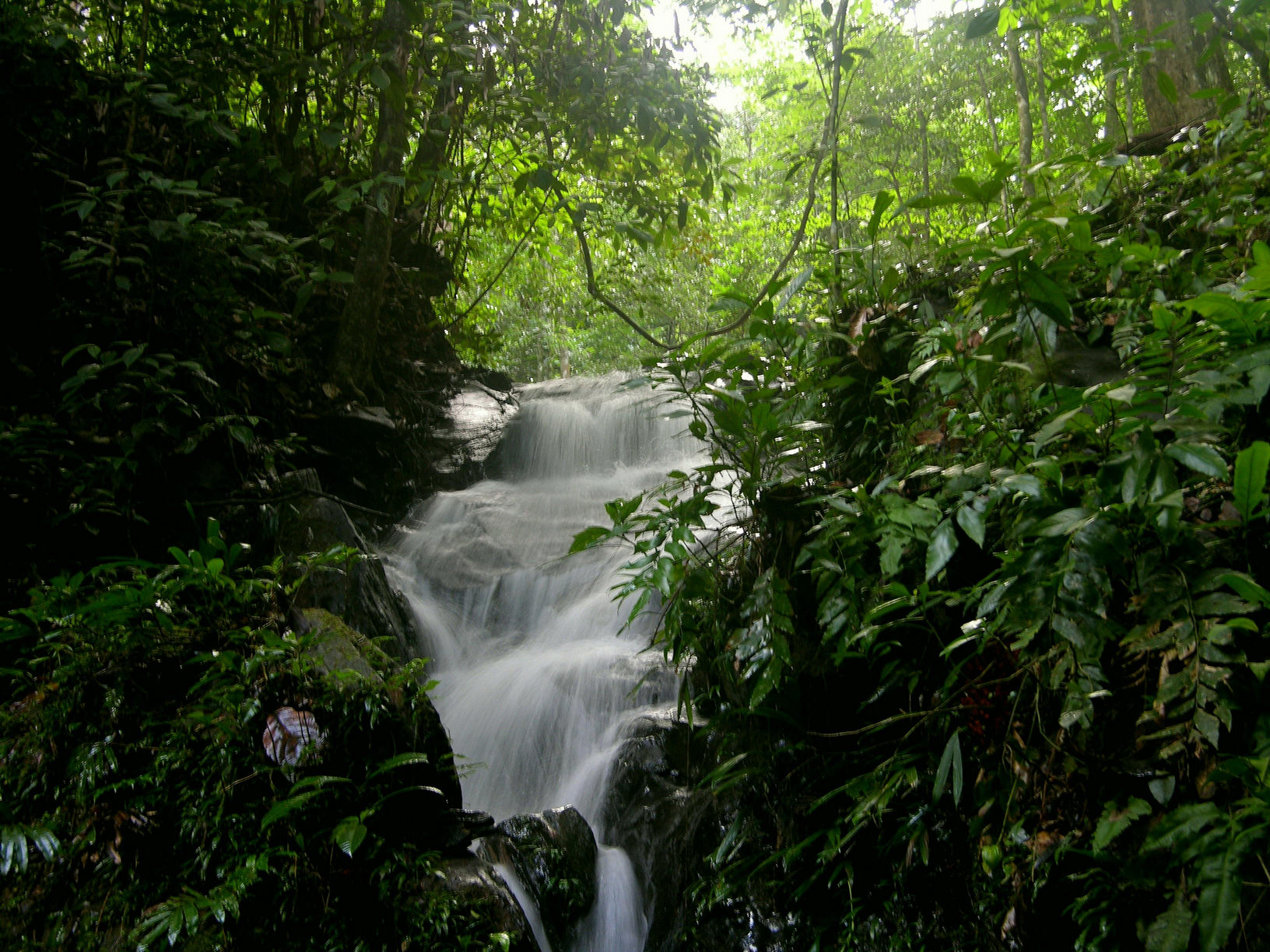
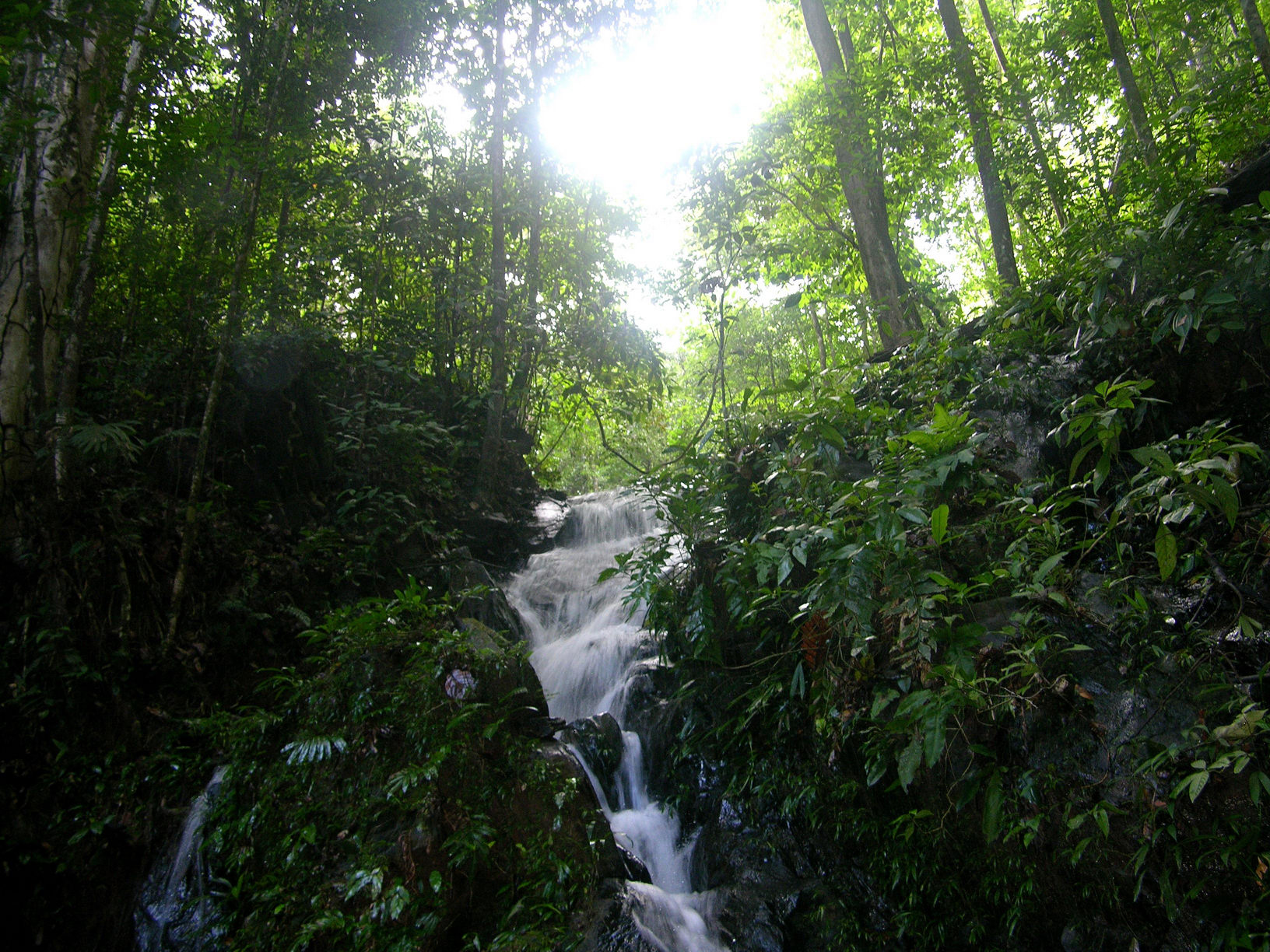
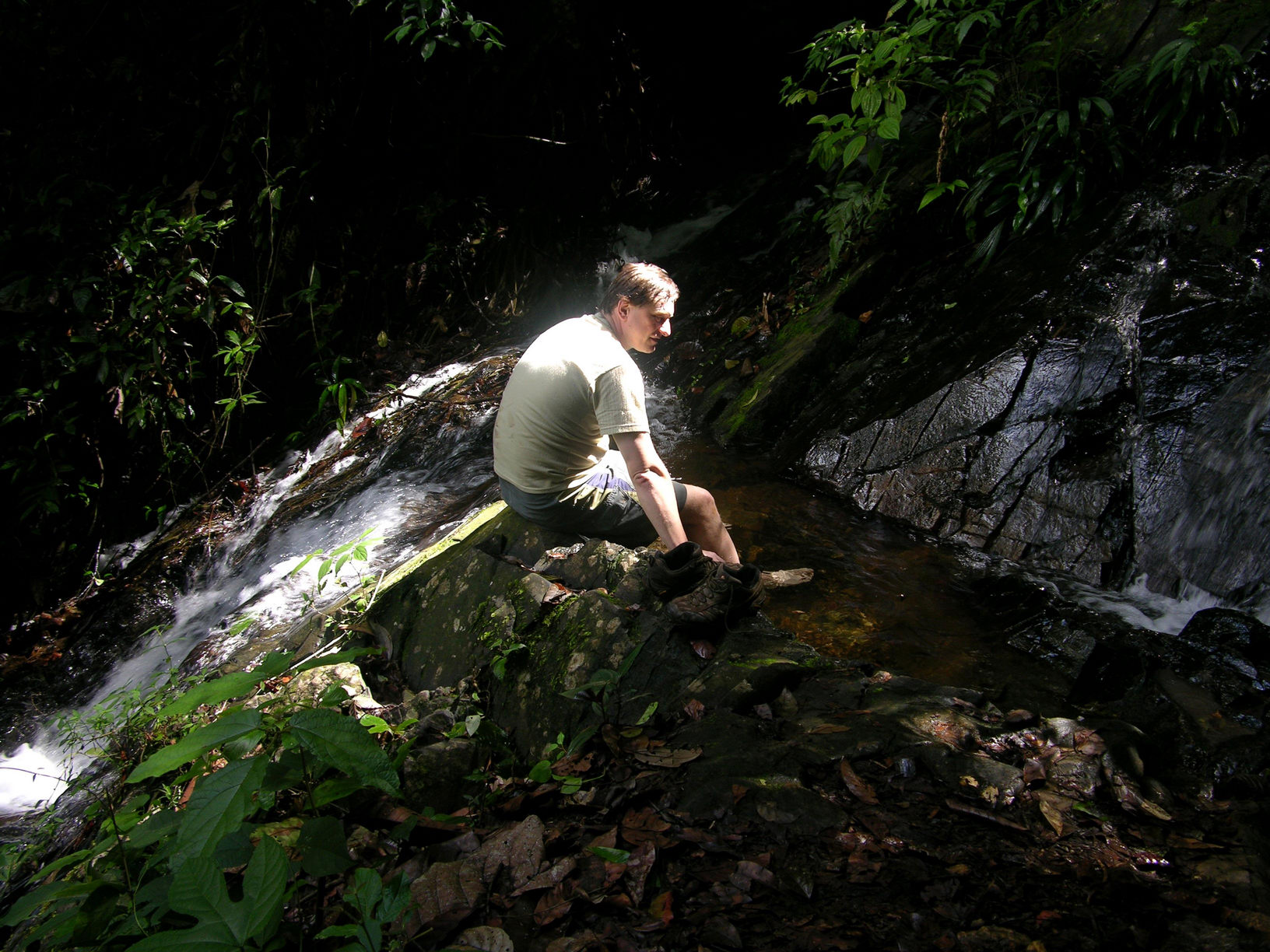
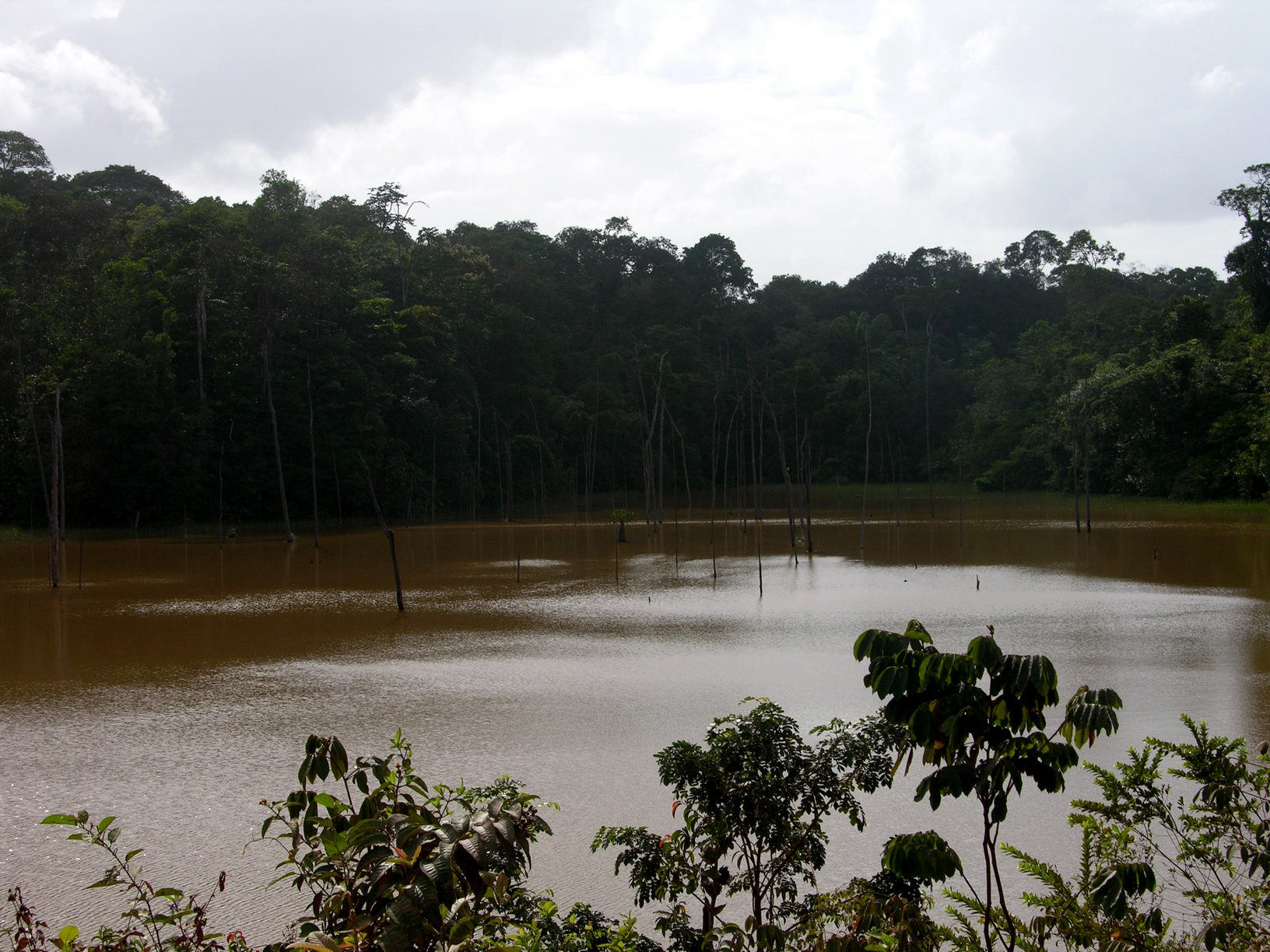
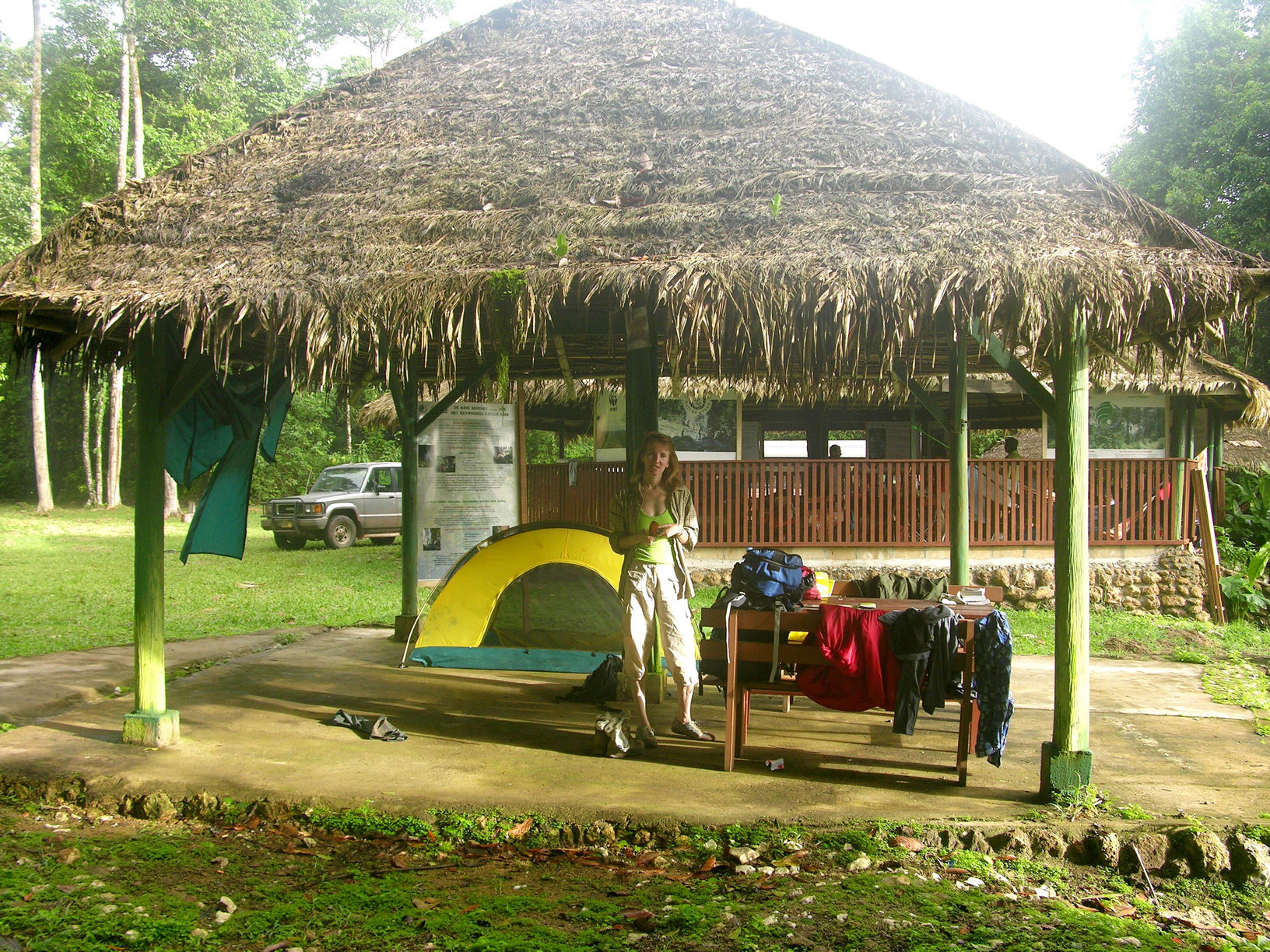
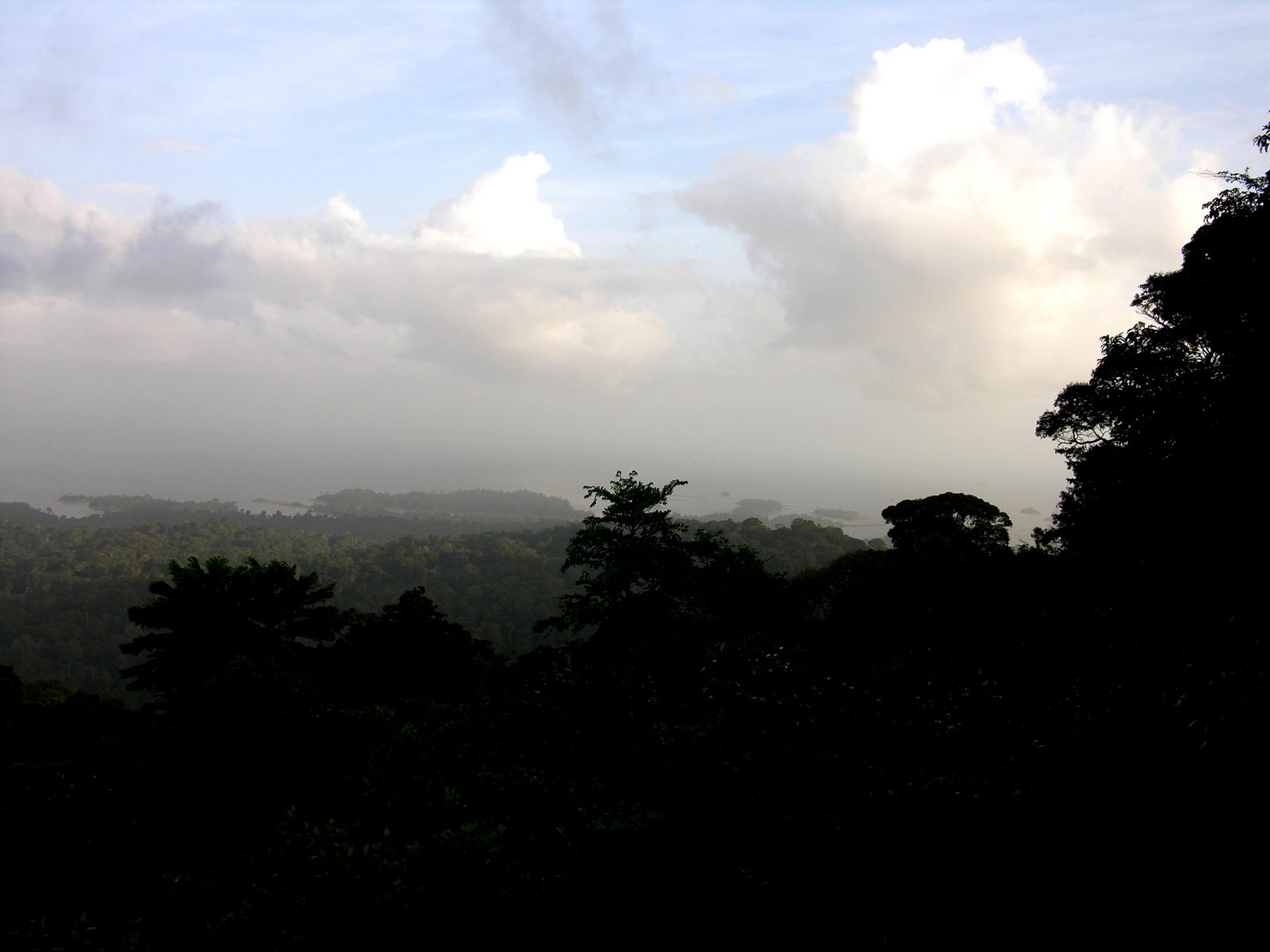
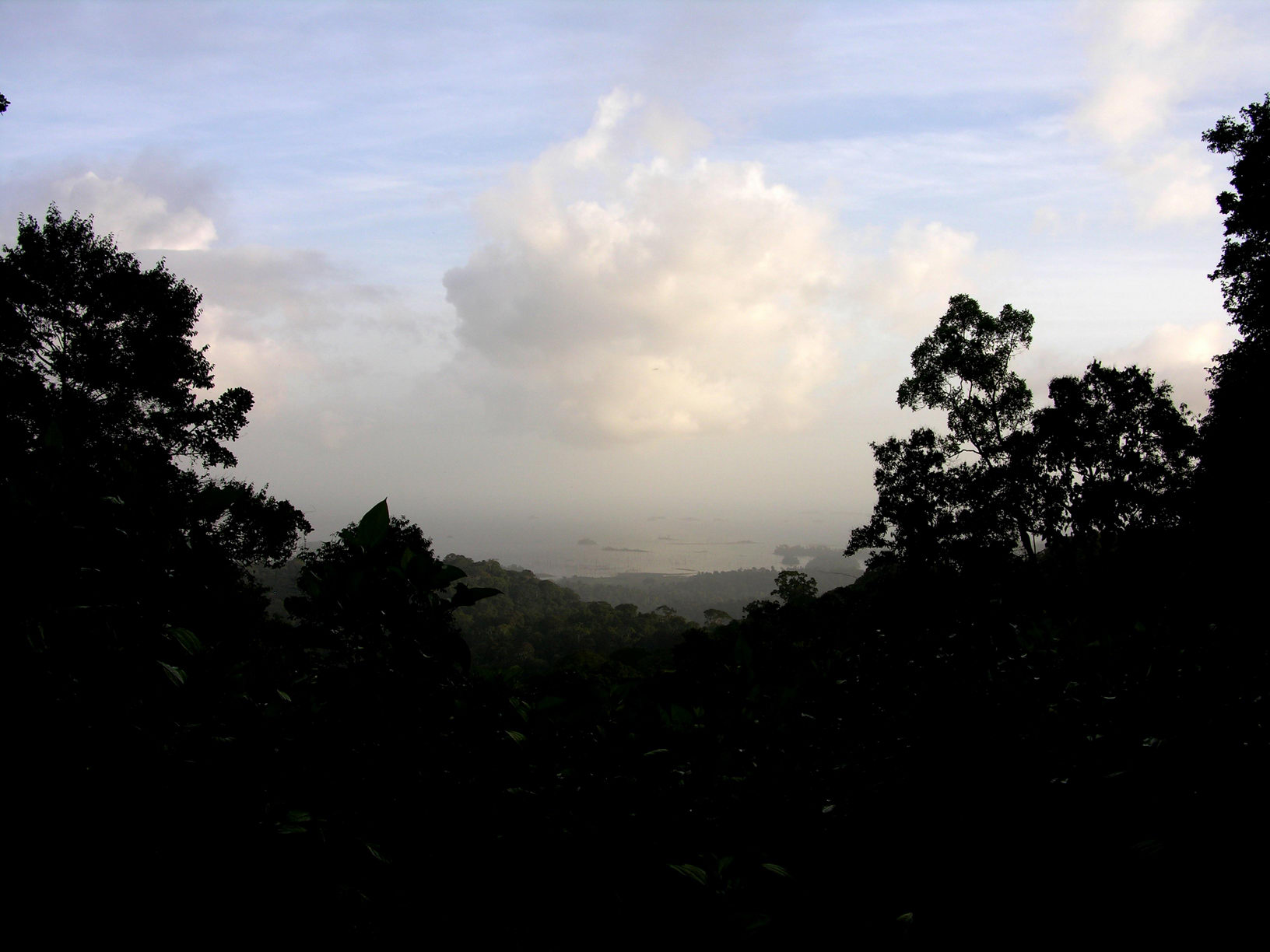
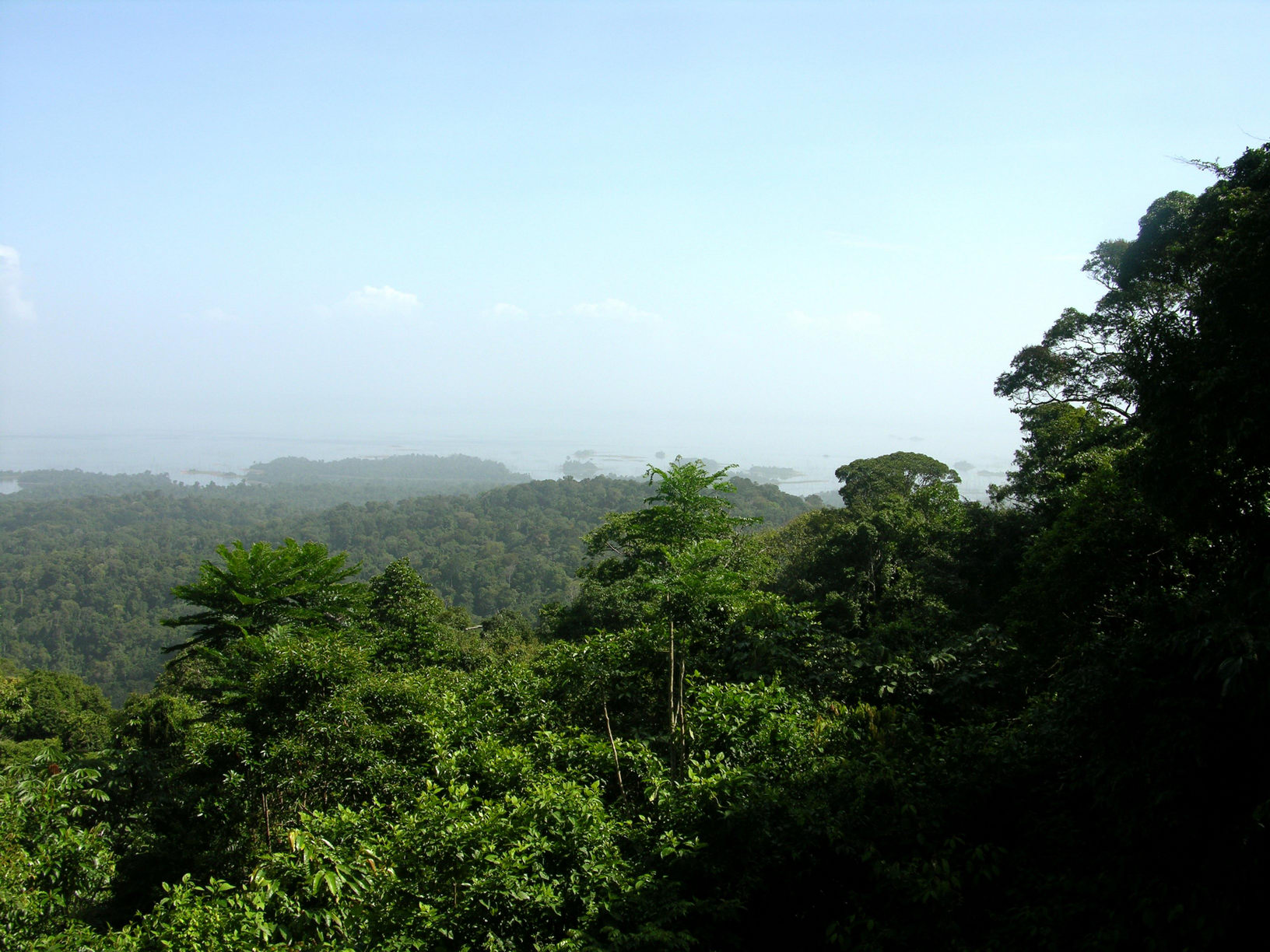
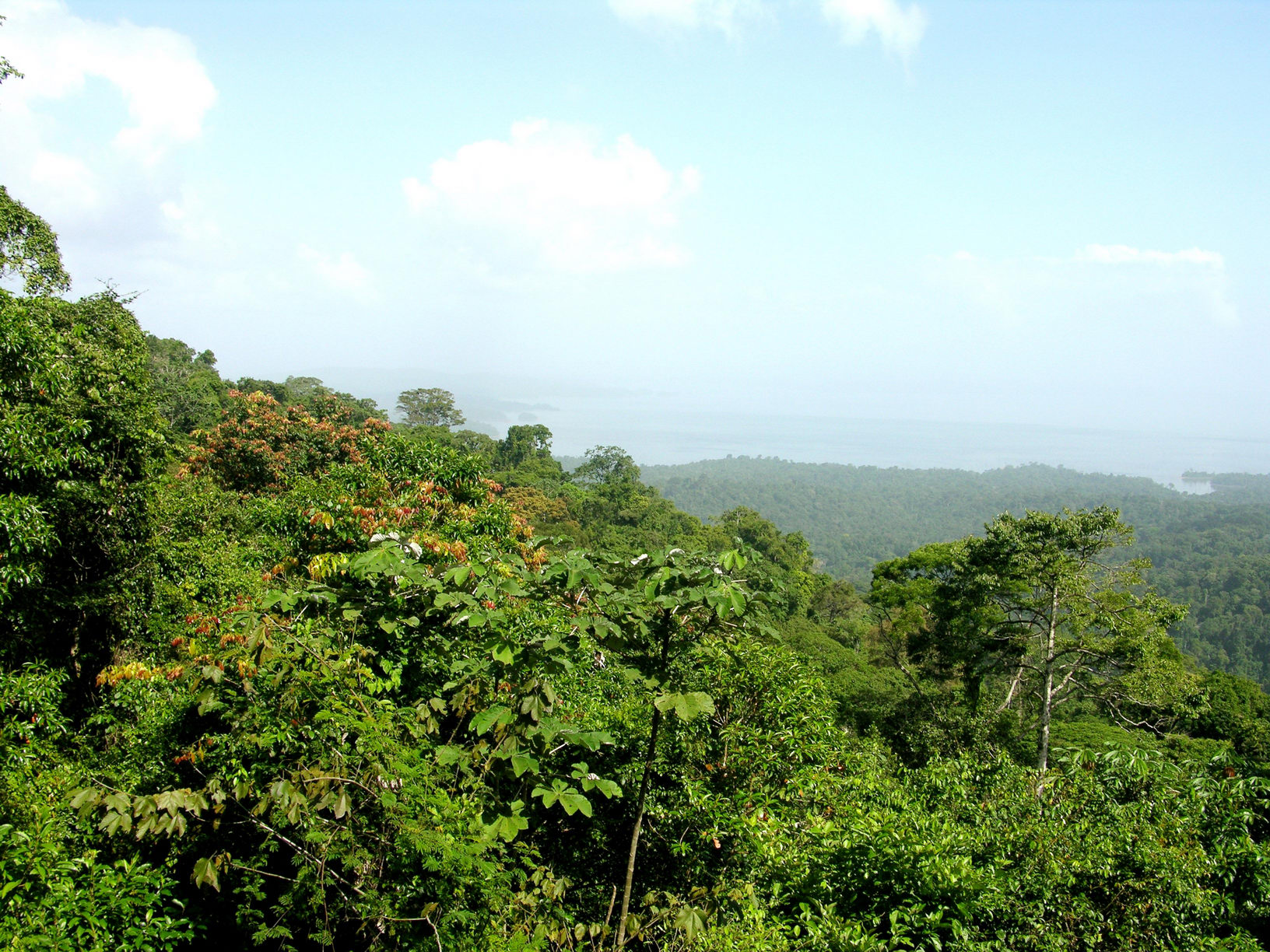
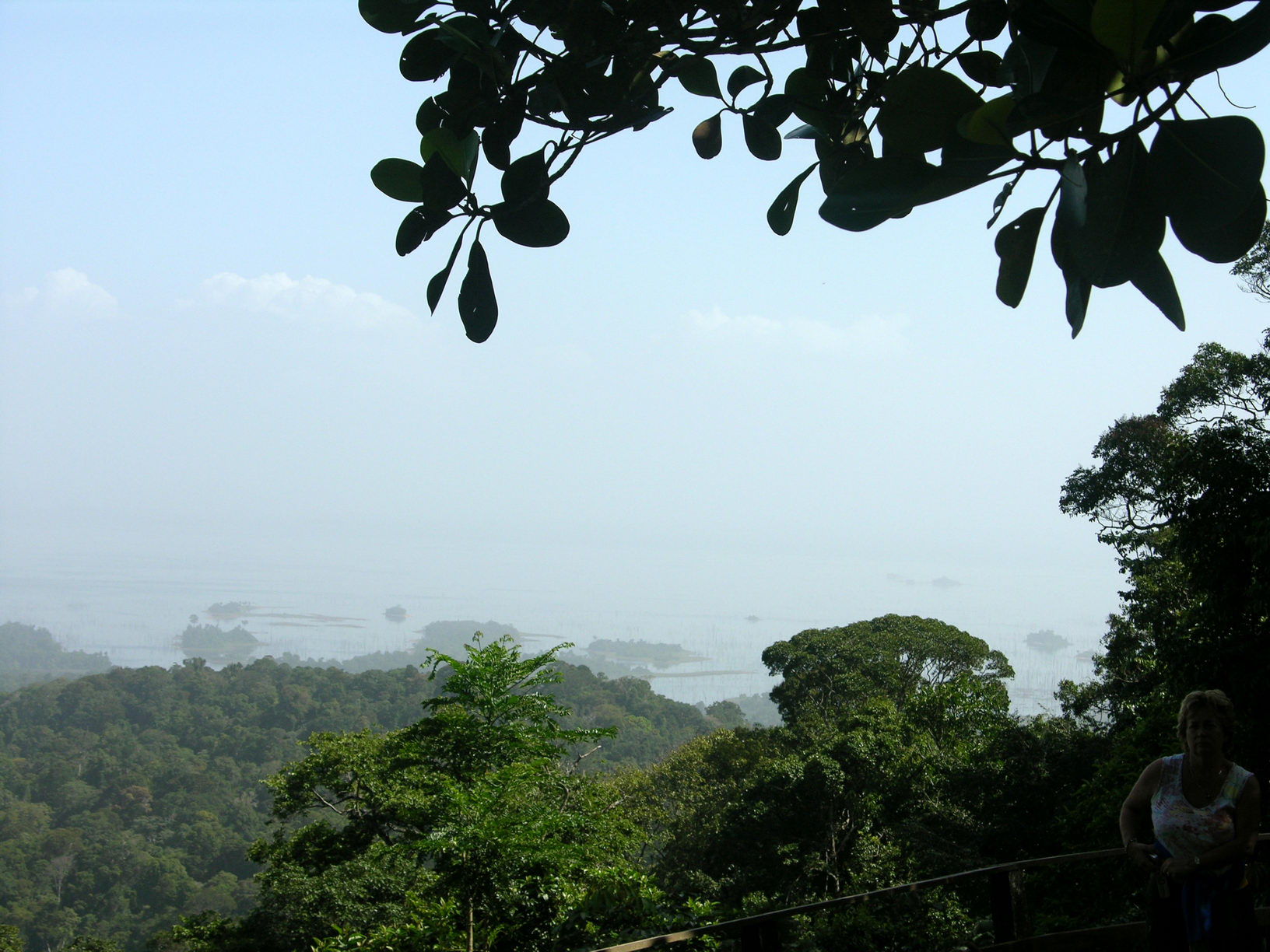
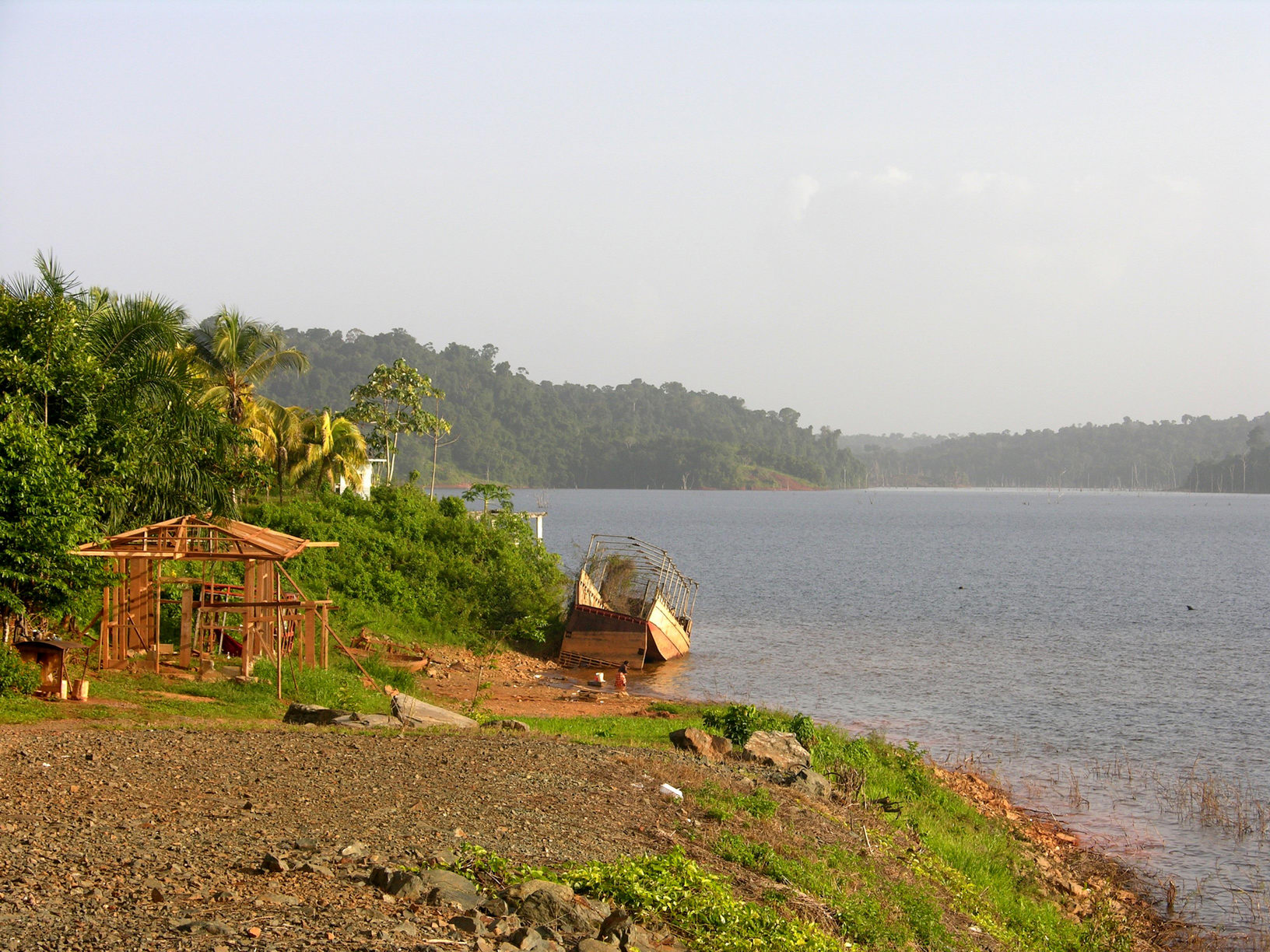
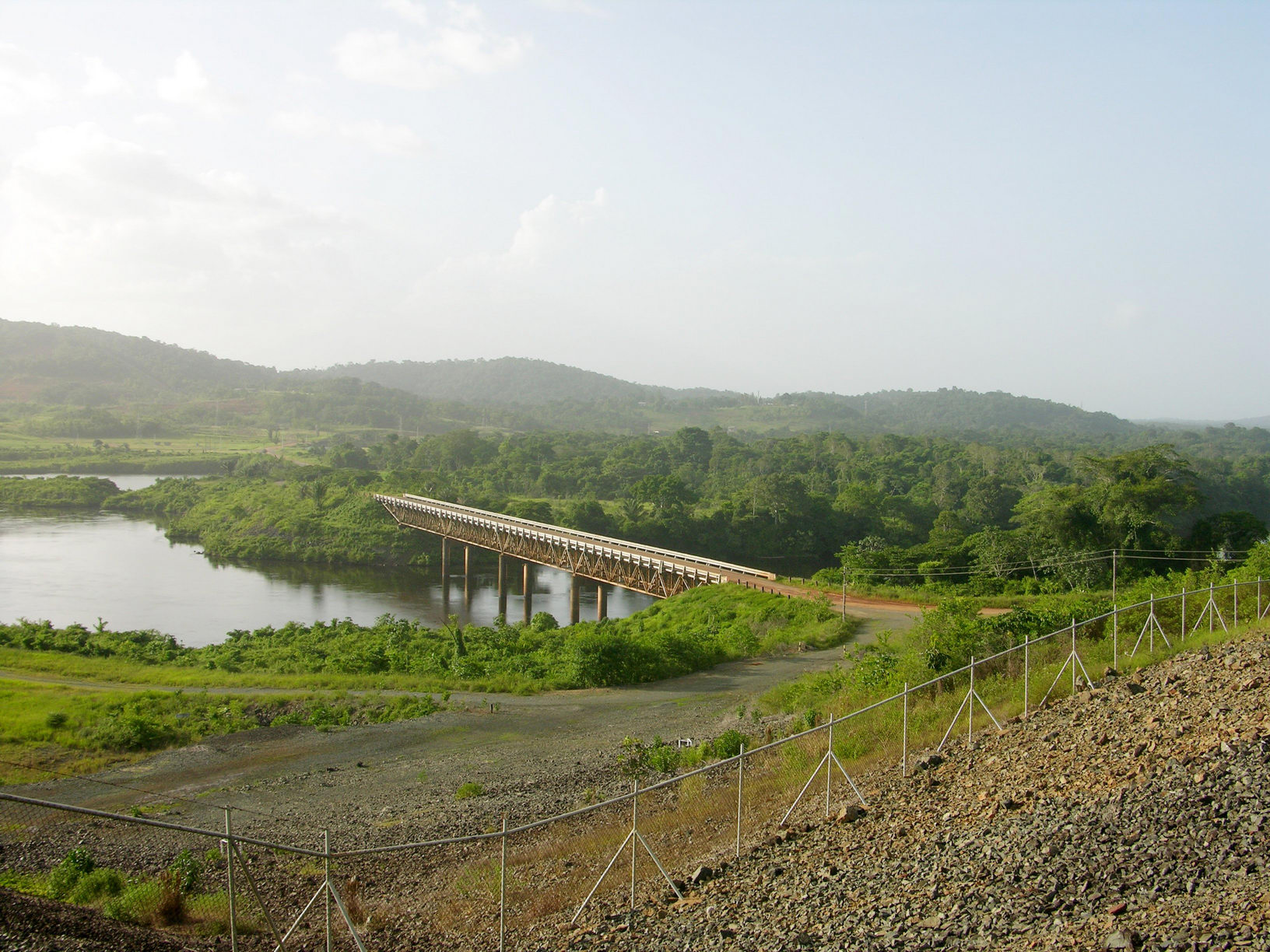
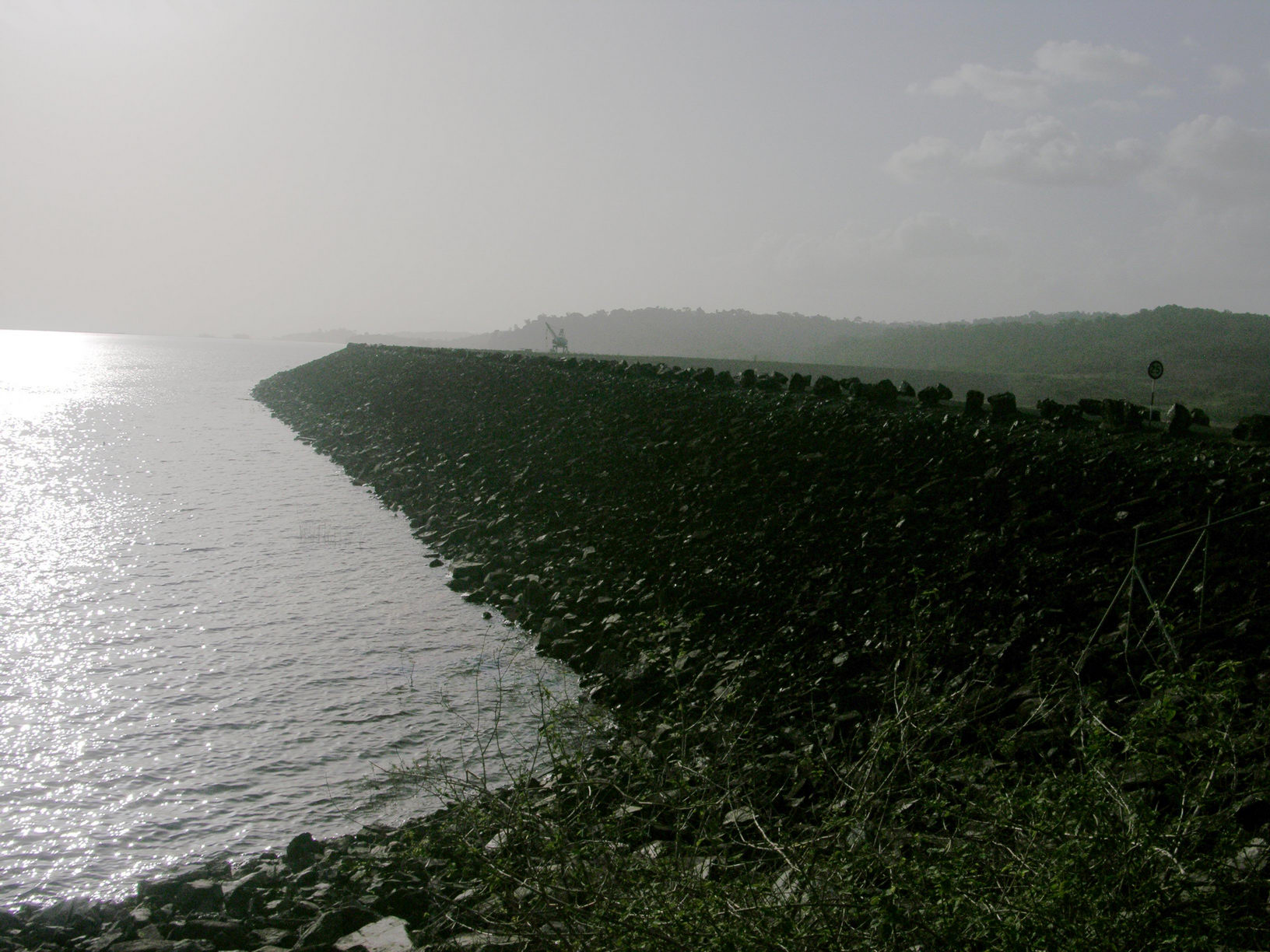
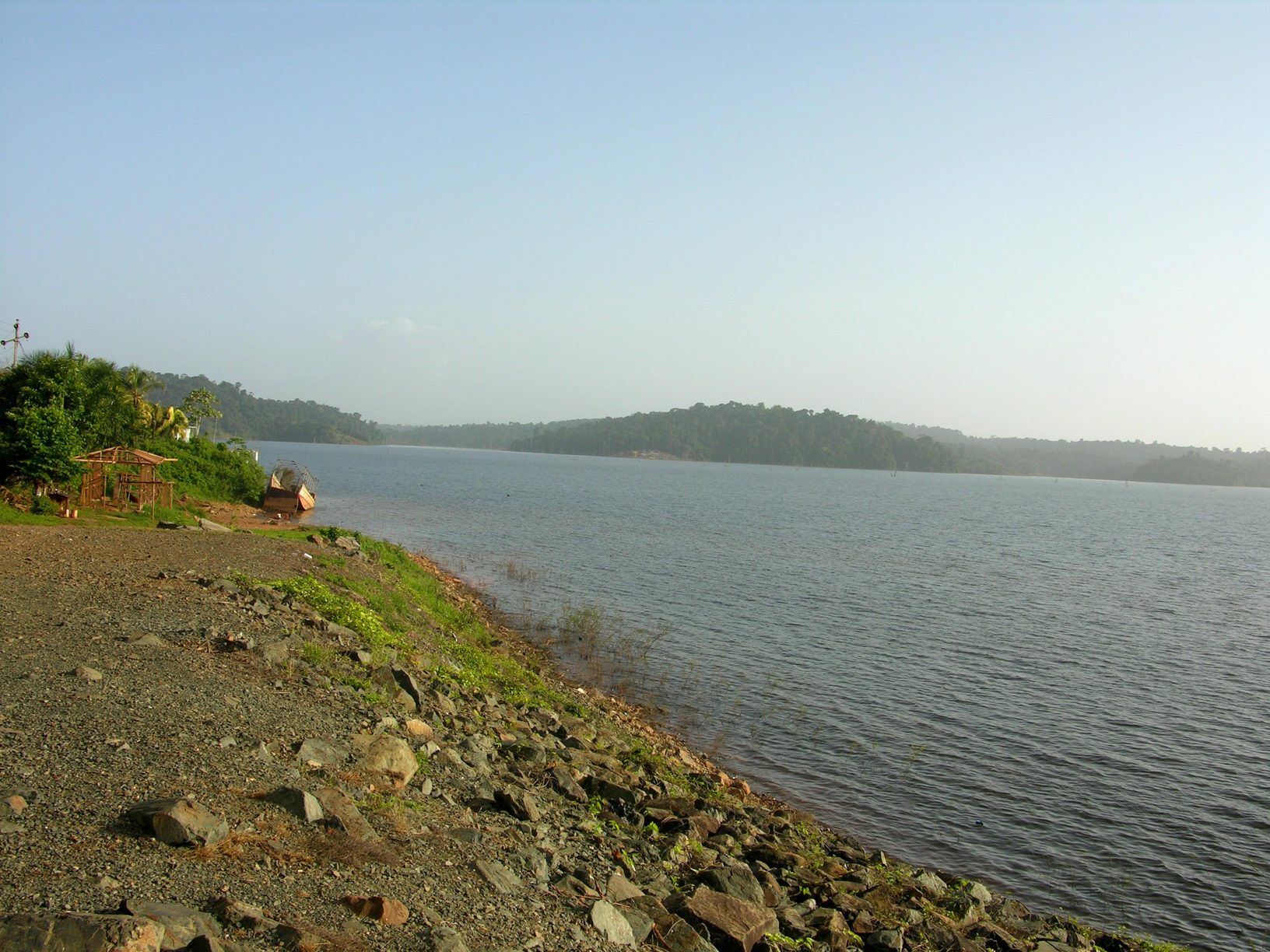
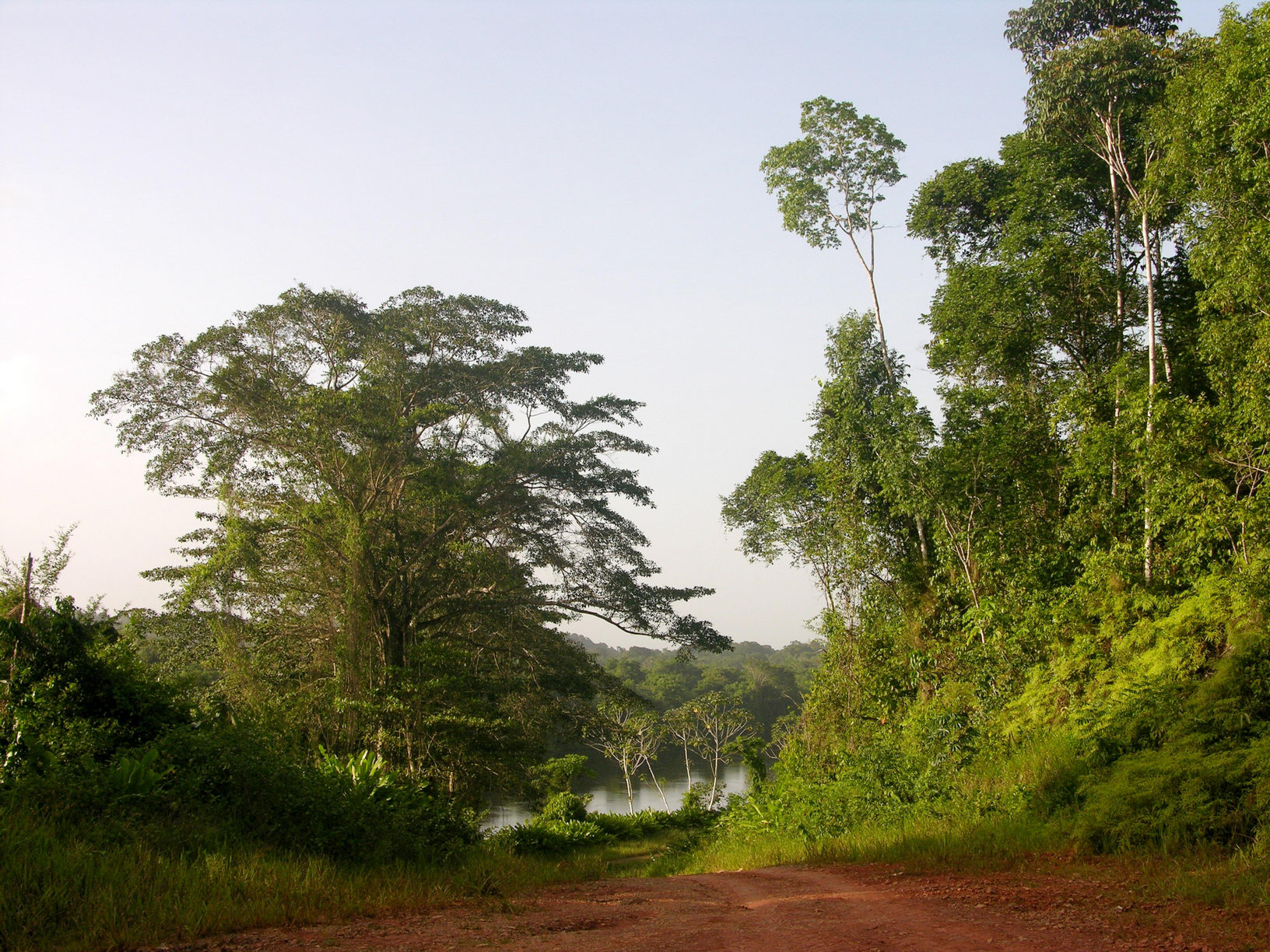
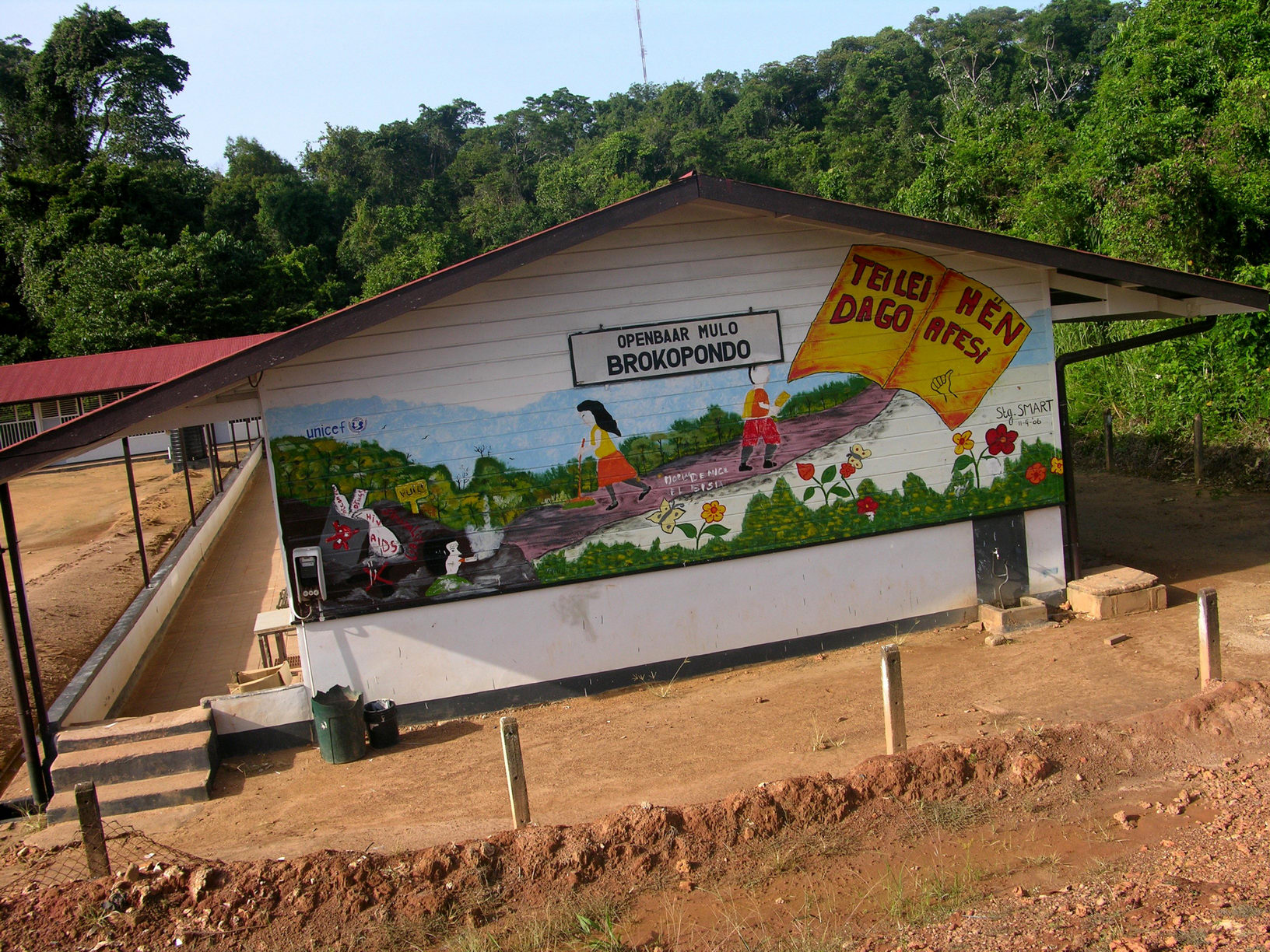
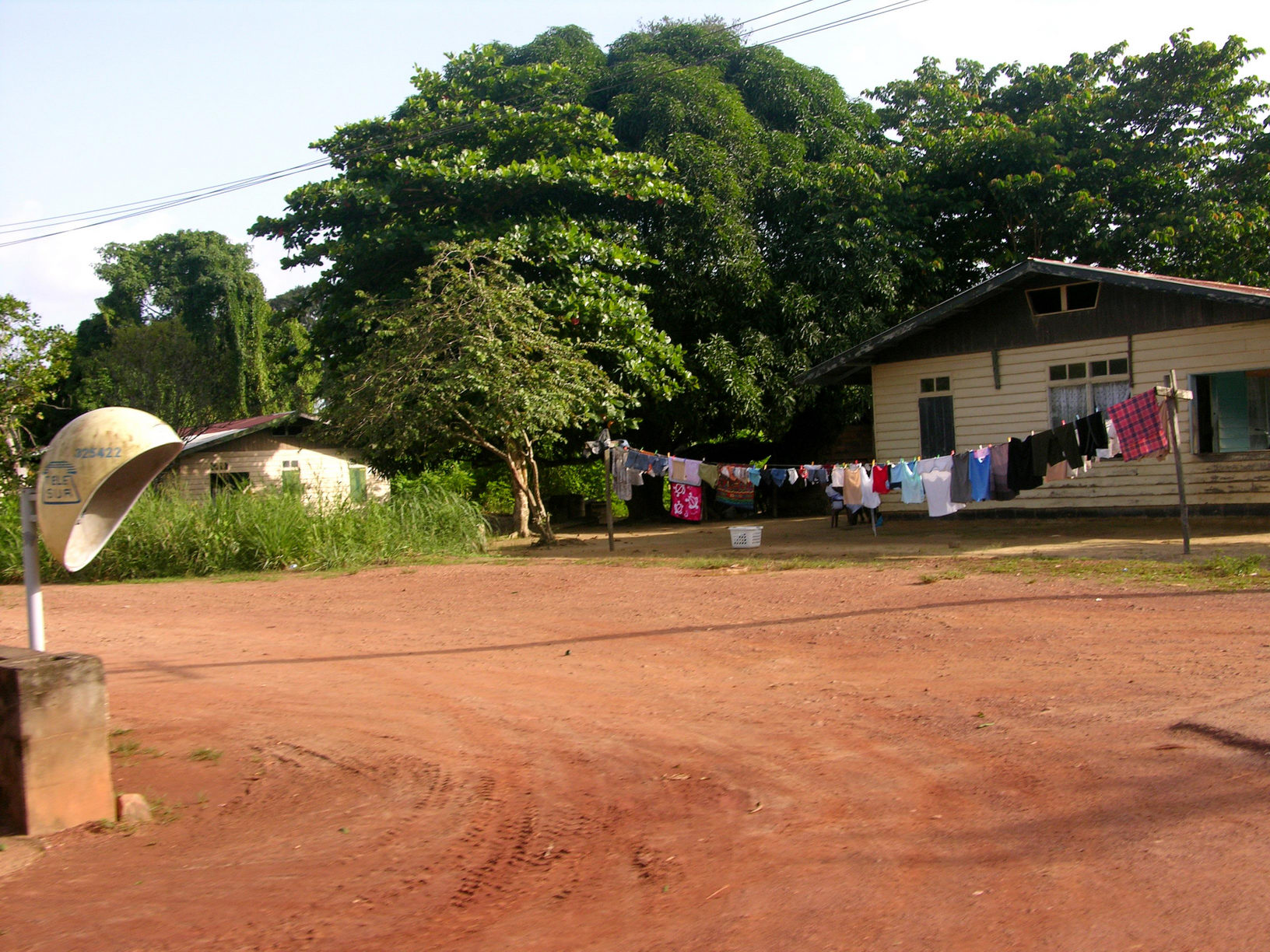
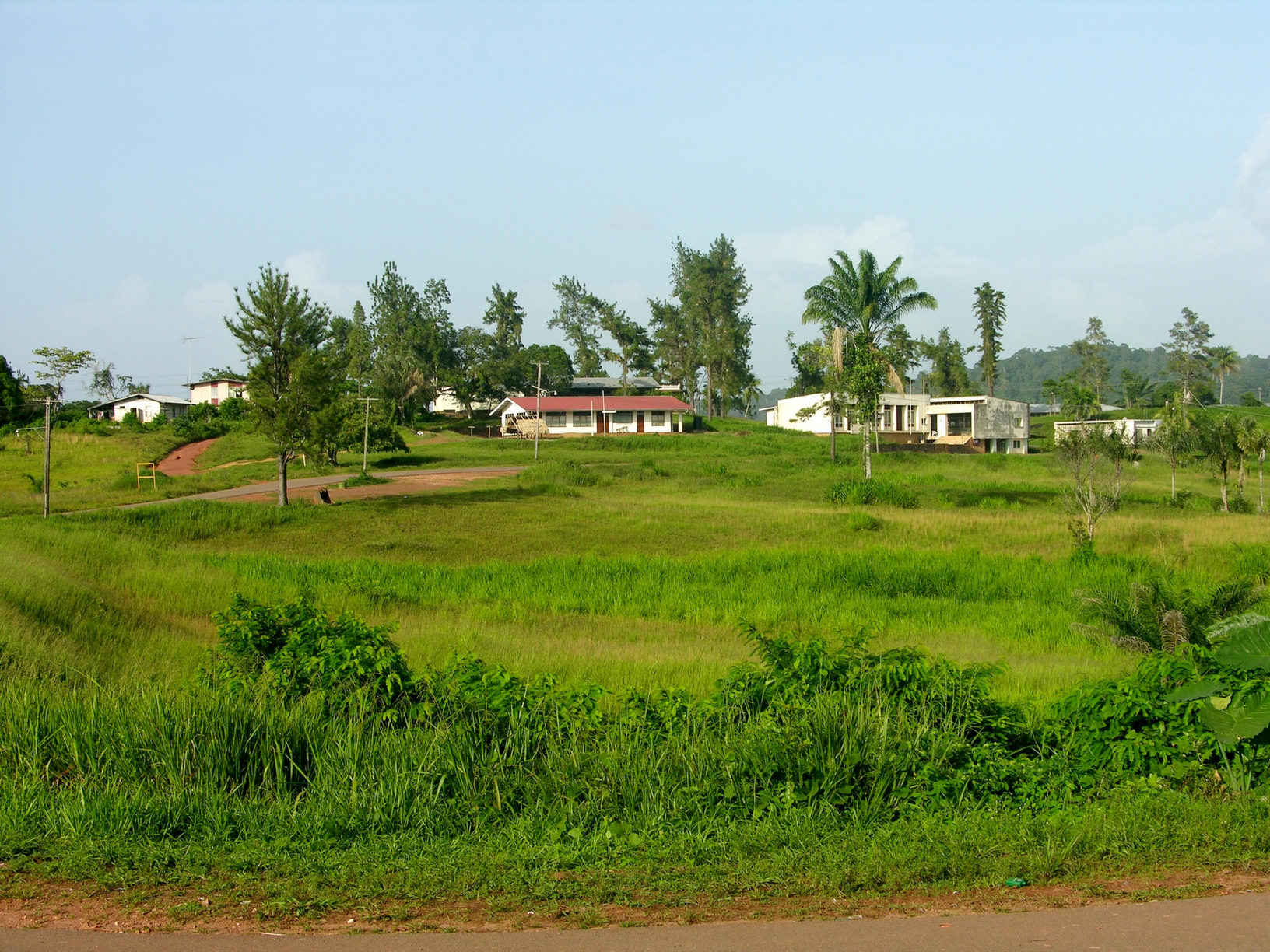
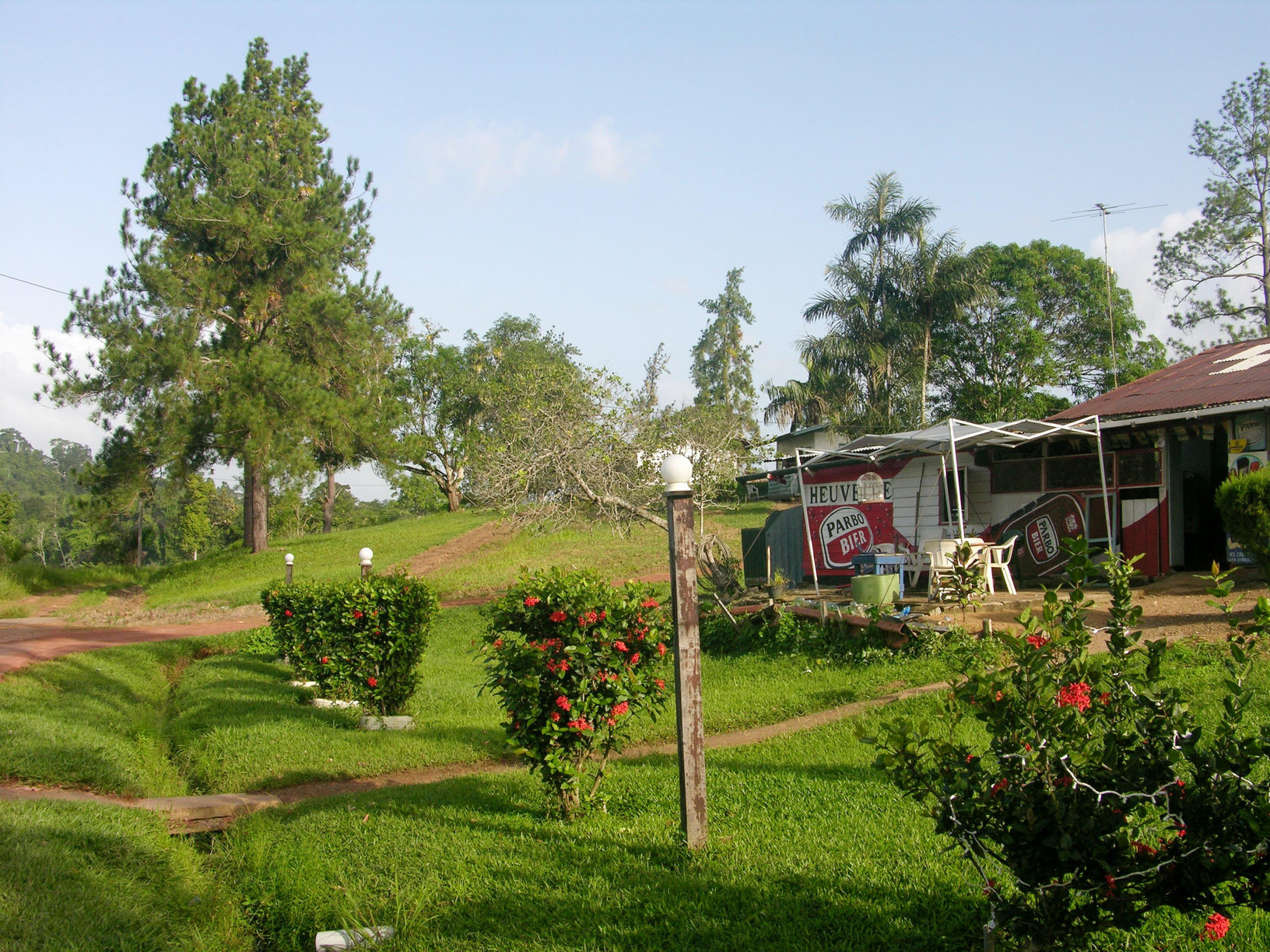
We spent the night in a tent at the campground (4°56.791′N, 55°10.964′W, 376 m) for thirty euros. The campground sits at the top of a hill at an altitude of 380 metres, with a view of the enormous reservoir, covering 1,560 square kilometres. It was created in 1965 when the power station was built on the Suriname River to supply the aluminium plant. Seventy-five per cent of the power goes into aluminium and the remainder keeps Paramaribo going. They hadn't even bothered to cut down the rainforest. The huge trees died and still stick out of the water, which rose by fifty-four metres. Little sandy beaches formed on the many new islands. It's worth hiring a boat and going for a cruise. From the park it's a long way to the water and there isn't a road, so we drove to Afobaka (Afobaka), a settlement lying by the dam on the Suriname River. Unfortunately nobody wanted to take us out, and it was already getting dark. We had to head back to town, stopping in on the way at the settlement of Brokopondo on the bank of the same Suriname River.
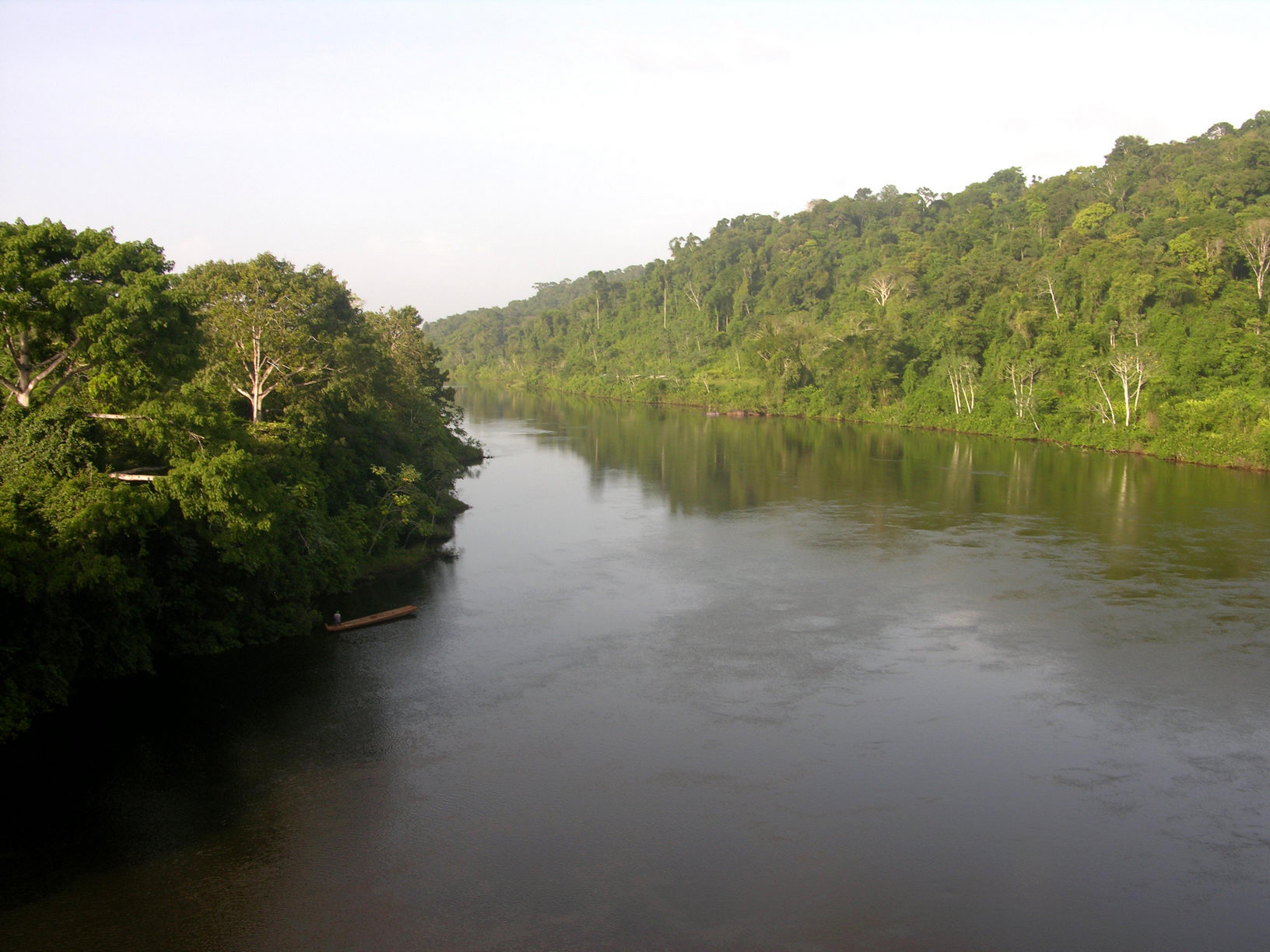
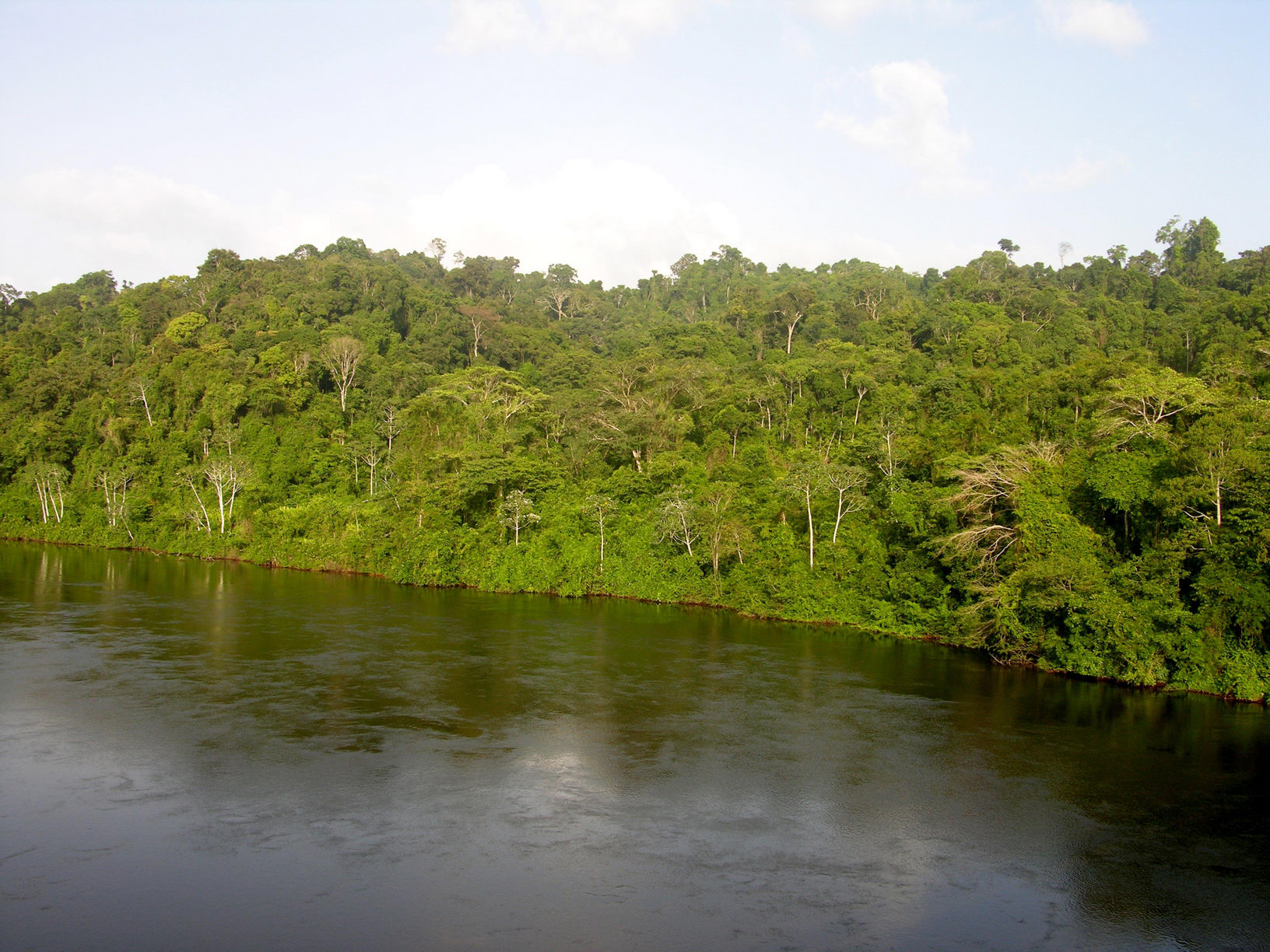
We were back in Paramaribo in the dark.
In the morning we went to the Guyanese embassy for our visa. It was open from as early as seven. We turned up at nine. First you fill in an application form. They give you a visa for a week, two weeks or a month. The visa starts on the day you apply, so it isn't worth getting one in advance.
As normal people don't need a visa, applicants are objects of great interest. First the secretary took the form to the ambassador's assistant, who called us in for an interview. She took against us right away. She announced that there were corrections on the application and that this made us suspicious. Showing on her face all the contempt she felt for people who'd never mastered penmanship, she said we'd have to wait for an interview with the ambassador. The embassy closed at twelve, but the ambassador was in no hurry. Ten minutes before closing, they let us into his office. The assistant introduced us, reminded him that it was nearly lunchtime and advised him to deal with us another day.
The ambassador had evidently been bored for quite some time. He began asking what had brought us here and what life was like in Russia, not from any official zeal but out of personal interest. Possibly that interest consisted in wanting to get back at his assistant. You could see on their faces that they loved each other like a cat and a dog. And, as everyone knows, my enemy's enemy is my friend.
The ambassador gave us a free magazine about Guyana, then told us what was in it and recommended every hotel in Guyana in turn. His assistant kept trying to get across that it was lunch and time to wrap up. But the ambassador went into ever greater detail about how glad he was to strengthen Guyanese-Russian relations and promised to telephone the Russian ambassador in Guyana and arrange a reception for us at the Russian embassy. After an hour and a half he finally ran out of things to say and went to lunch. His assistant hissed like a snake that she'd do the visas tomorrow. Ordinarily they did them the same day, but we'd come too late. All right, then. The ambassador had melted into the depths of the embassy and there was nobody to complain to.
We'd have to drive somewhere nearby again. In spring giant sea turtles come ashore to lay their eggs. It usually happens in March or April, but the woman at STINASU said they started arriving in January. It sounded worth seeing, so we'd go to the village of Galibi, where the Marowijne flows into the ocean. To get there we had to return to Albina (Albina), on the border with French Guiana.
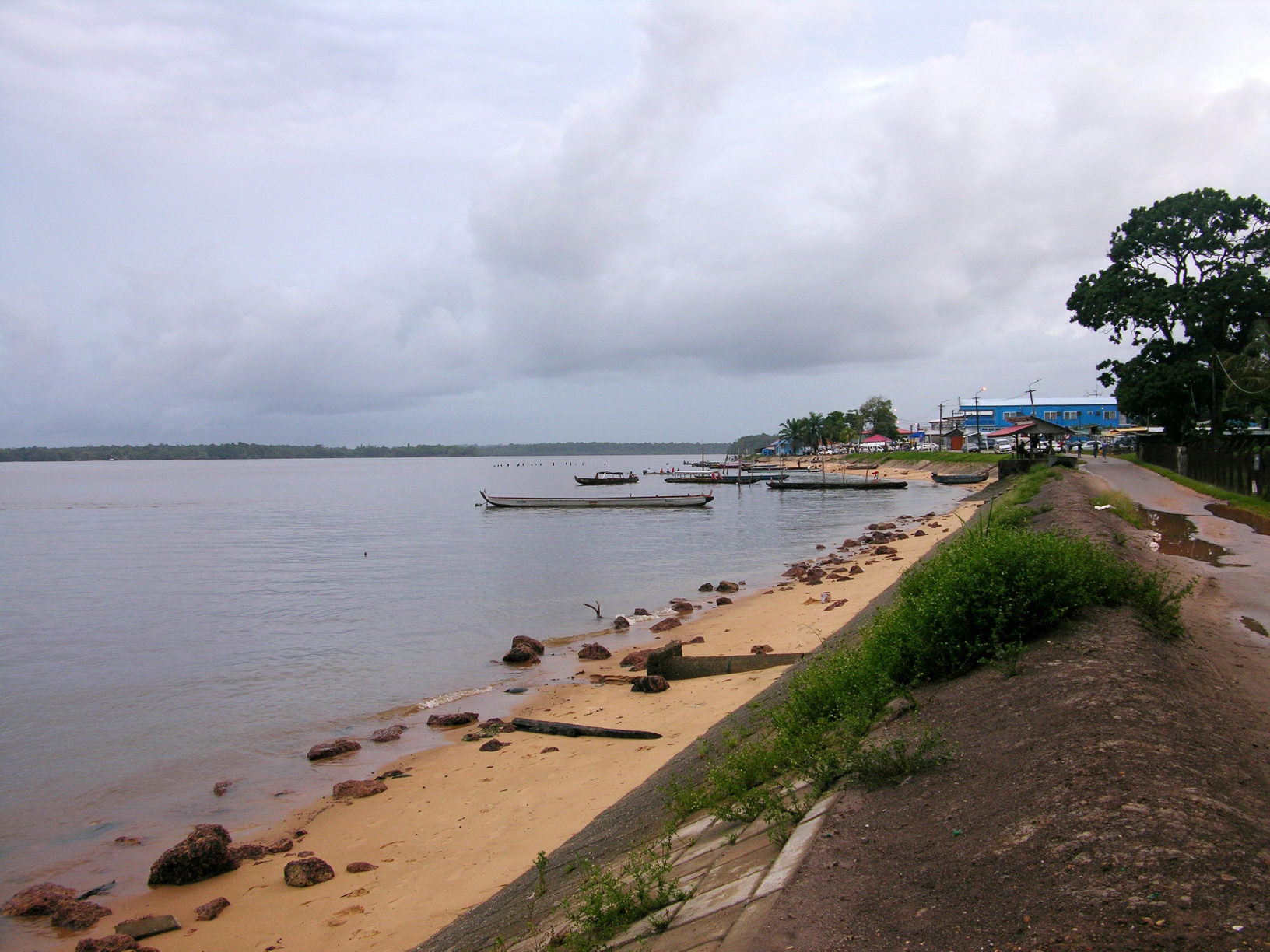
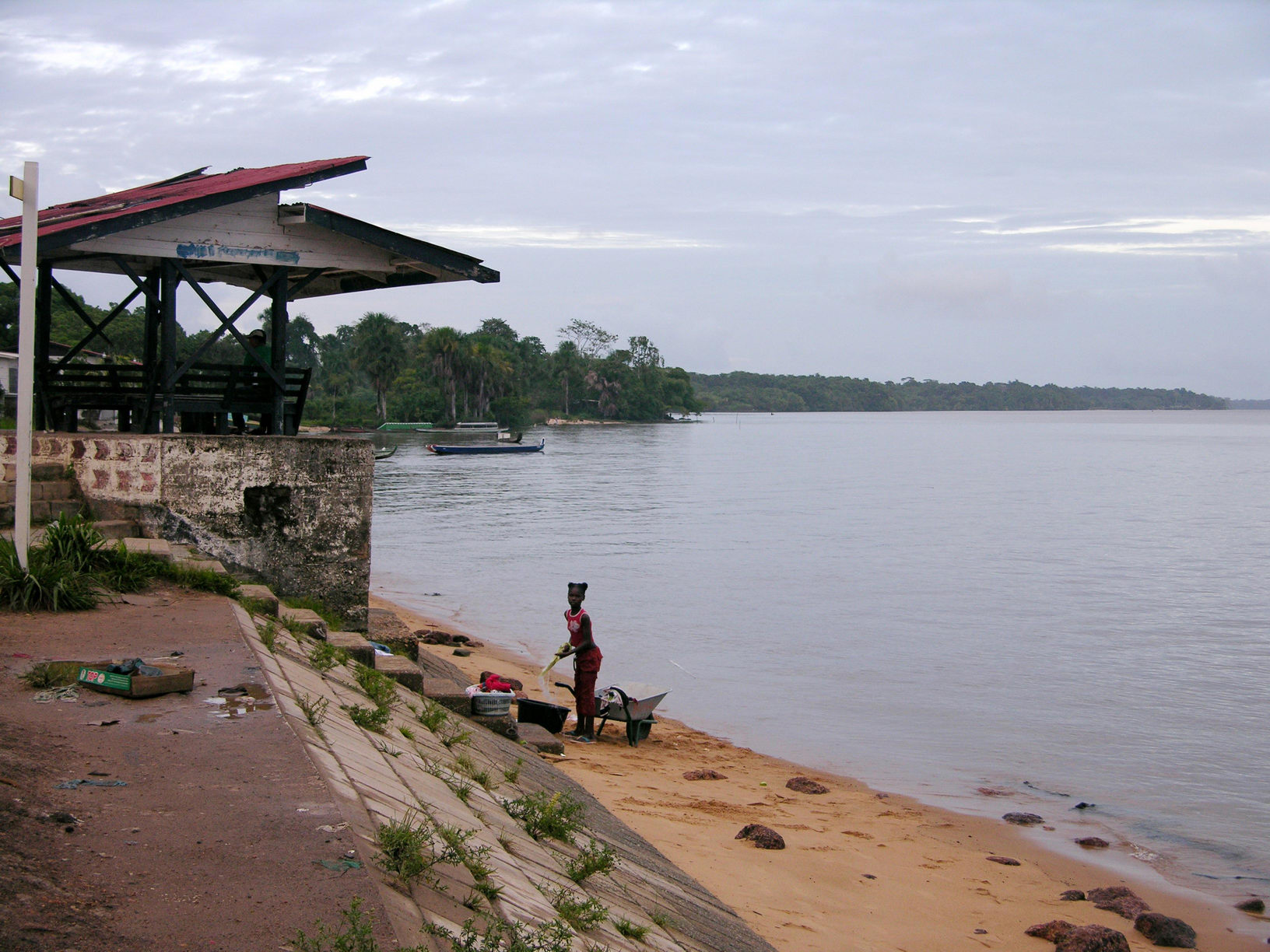
By the time we'd stocked up on provisions, eaten at an Indian restaurant and driven out there, it was already getting dark. From Albina to Galibi it was twenty kilometres down the river. There's no road and you can only get there by dugout canoe.
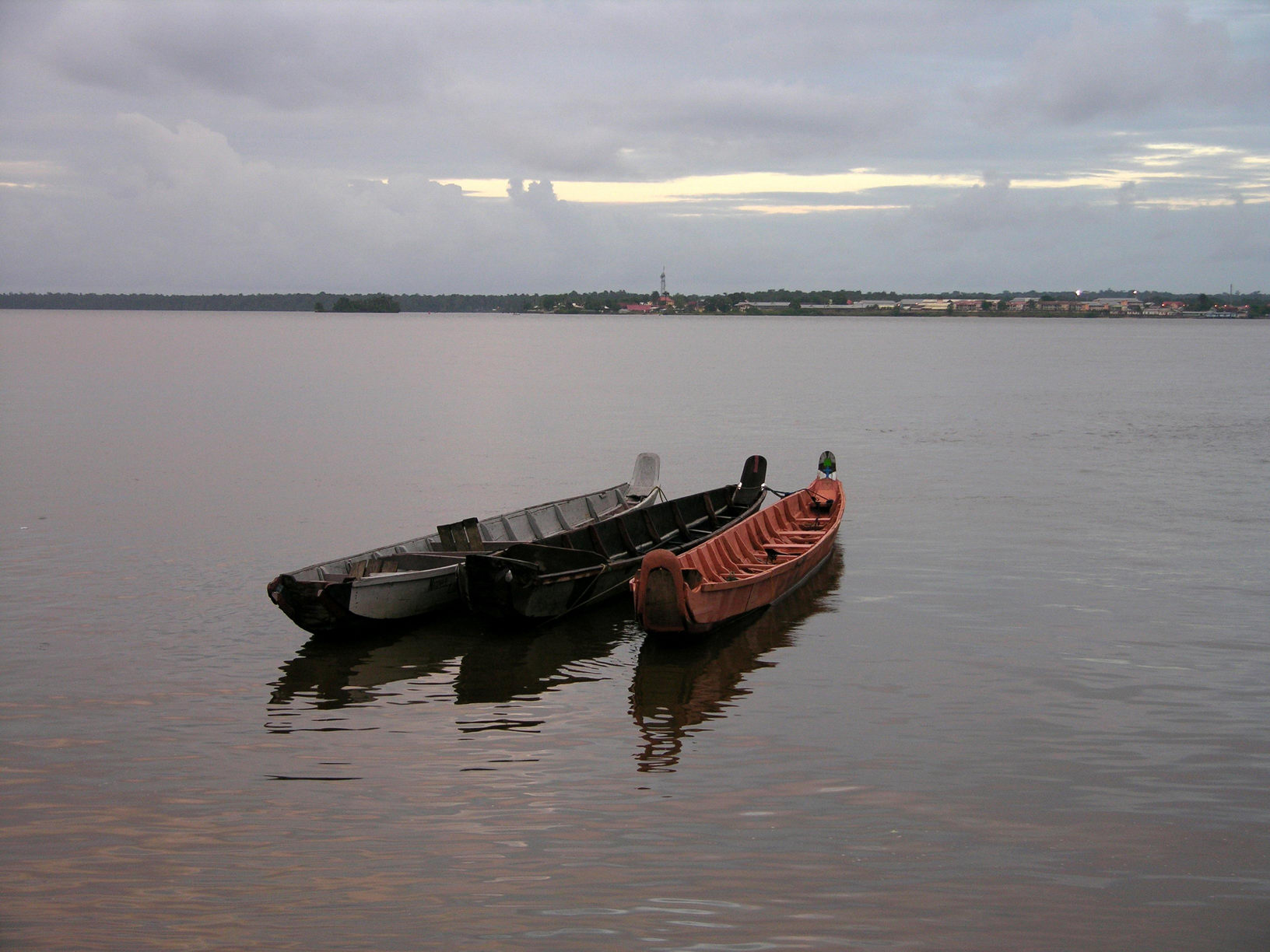
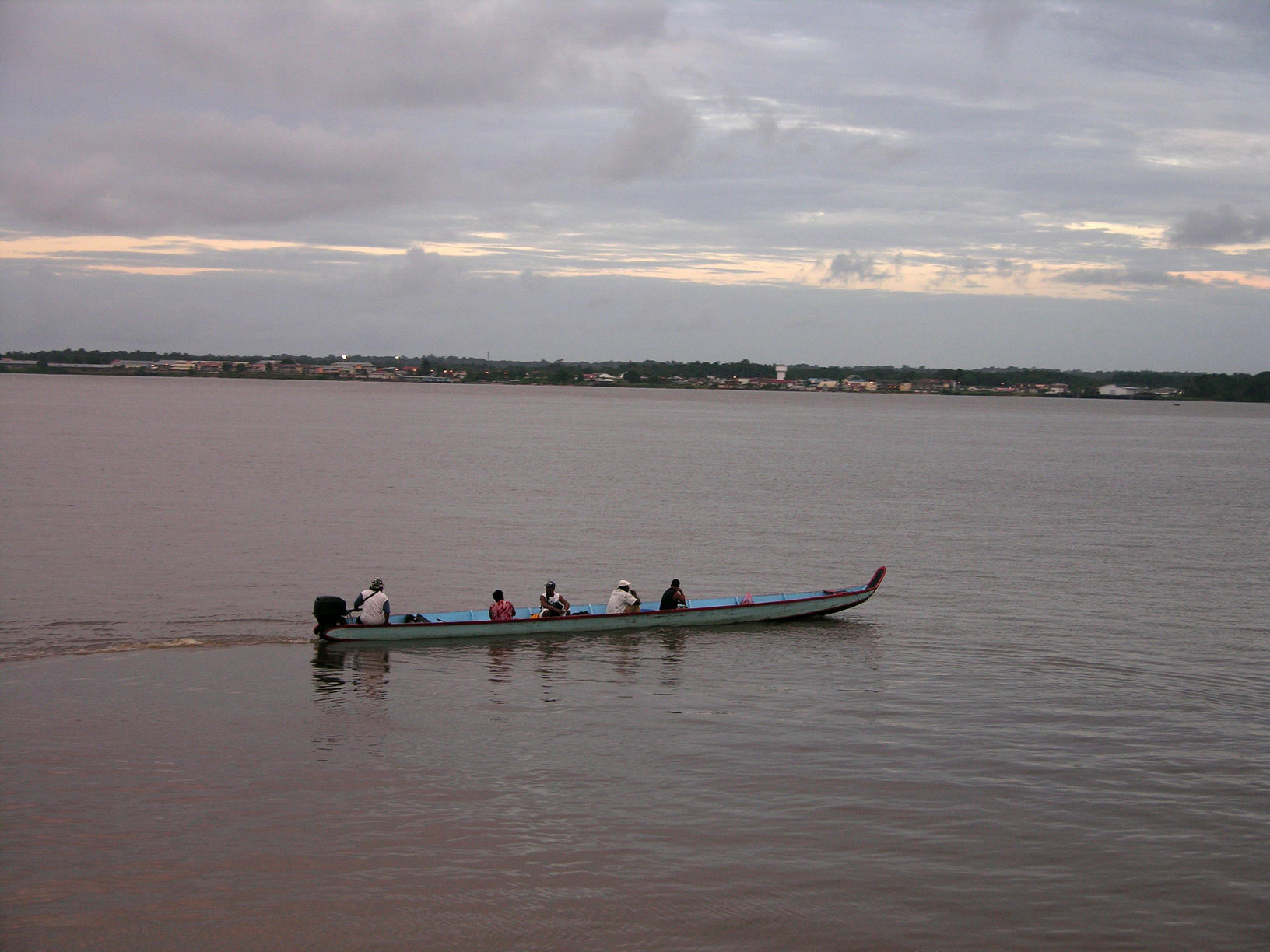
No boats ran that late, so we had to spend the night in Albina, at its only hotel, Creek Guesthouse, for SRD 50. “Hotel” is a strong word. There were little cells in a plywood house, each just big enough for a bed. Mosquitoes flew in through every gap.
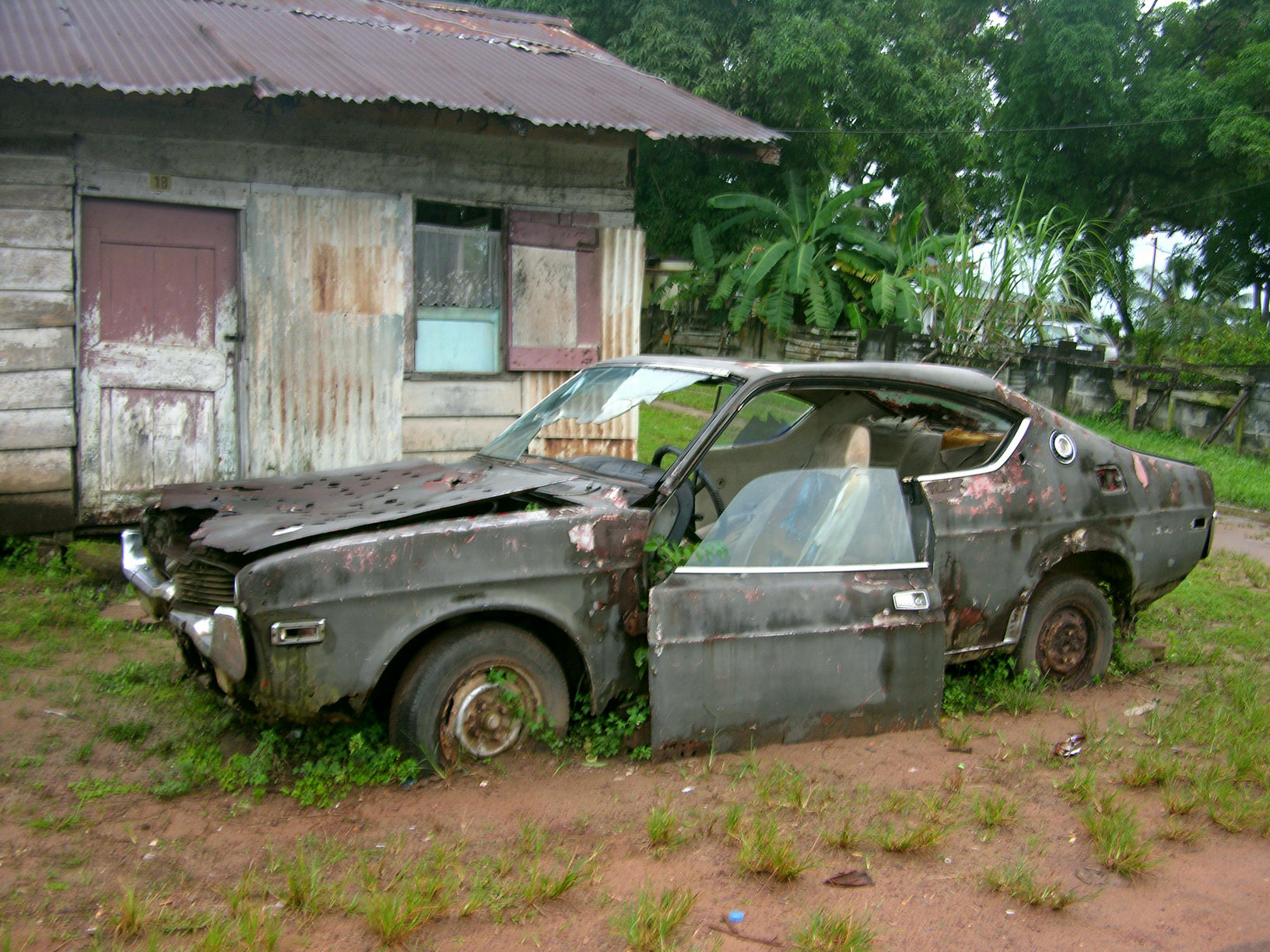
Finding dinner was much the same. There are a few bars in the whole town, but they only do beer and snacks. All there is to eat is chicken legs from an open-air stand on the street, and there's only one of those, and only for the first hour after sunset.
Albina, on the whole, is a poor, run-down town. Probably a legacy of the civil war in the eighties. Historically it was home to descendants of escaped slaves, the Maroons, who recognised no authority. When they rose up again, the government decided to solve the problem radically with carpet bombing. Albina was wiped off the face of the earth, along with most of its inhabitants.
The town had been rebuilt since then and only scattered ruins recalled the bombing, but you could still feel the tension.
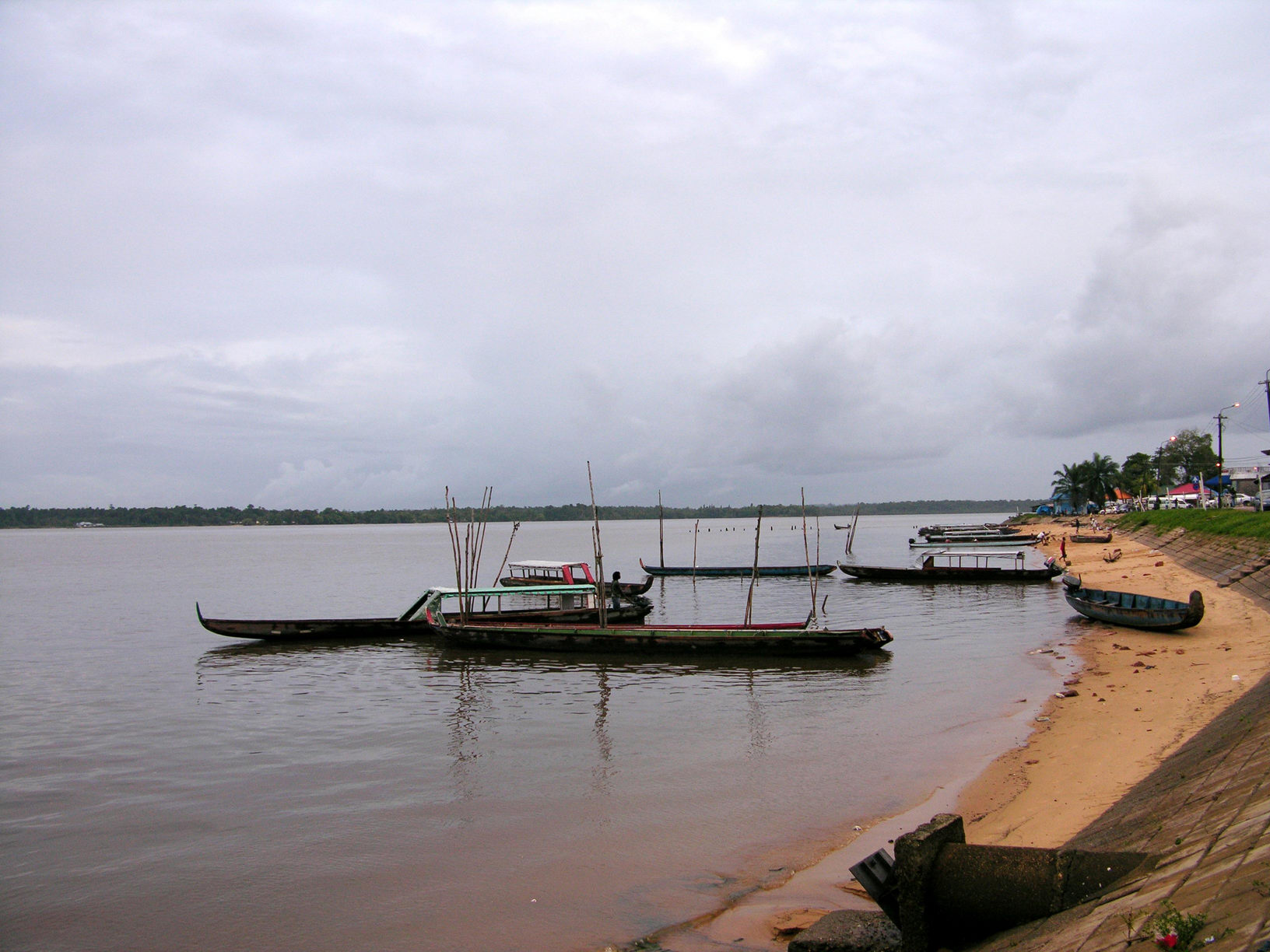
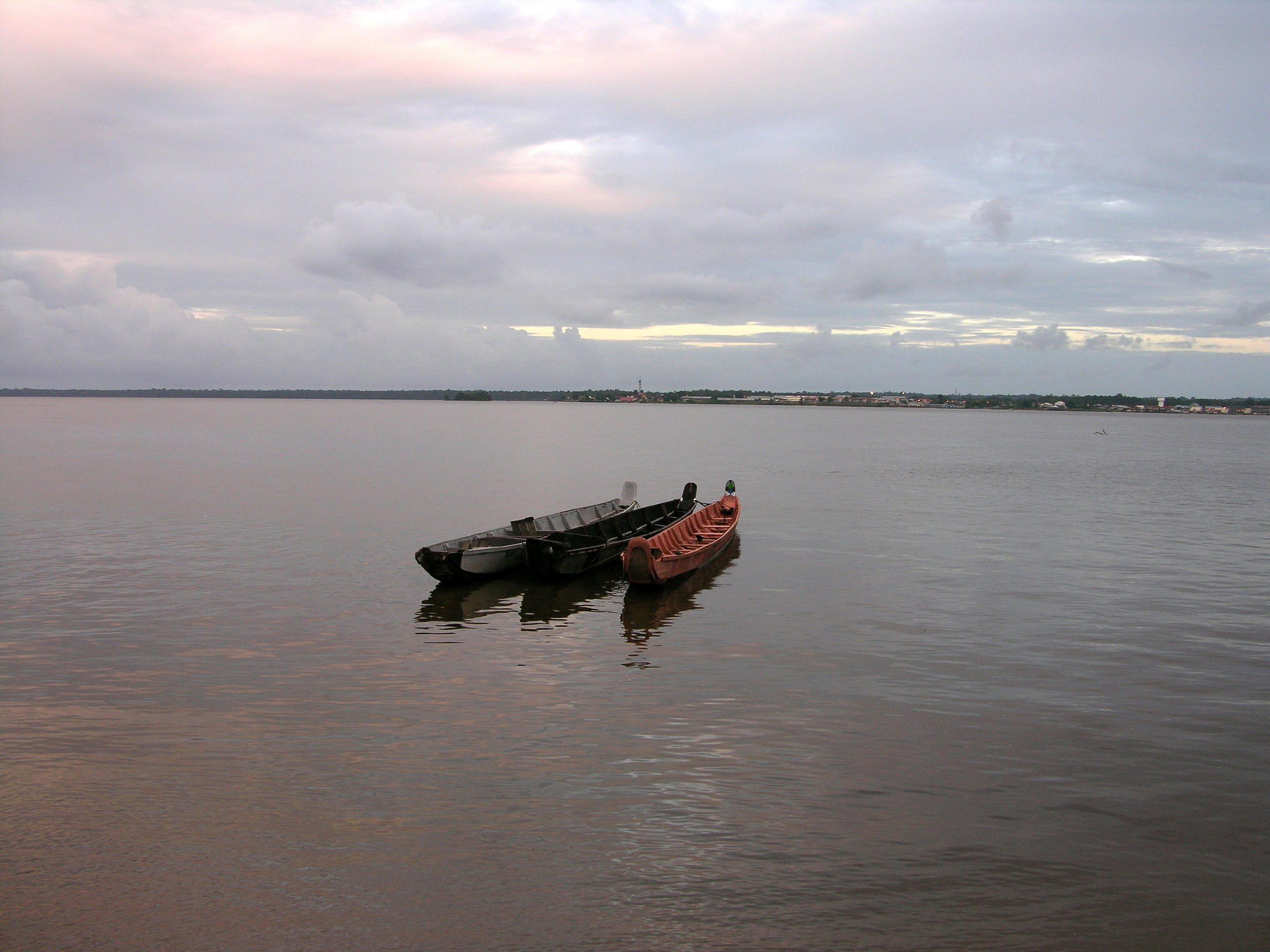
Early in the morning we set out for the jetty. The first scheduled dugout had left at first light before we turned up, and the next wouldn't go until ten. We'd had quite enough of hanging around Albina, so we agreed on a special trip for a hundred euros. As a bonus the boat owner offered to keep an eye on our car in the yard of his house.
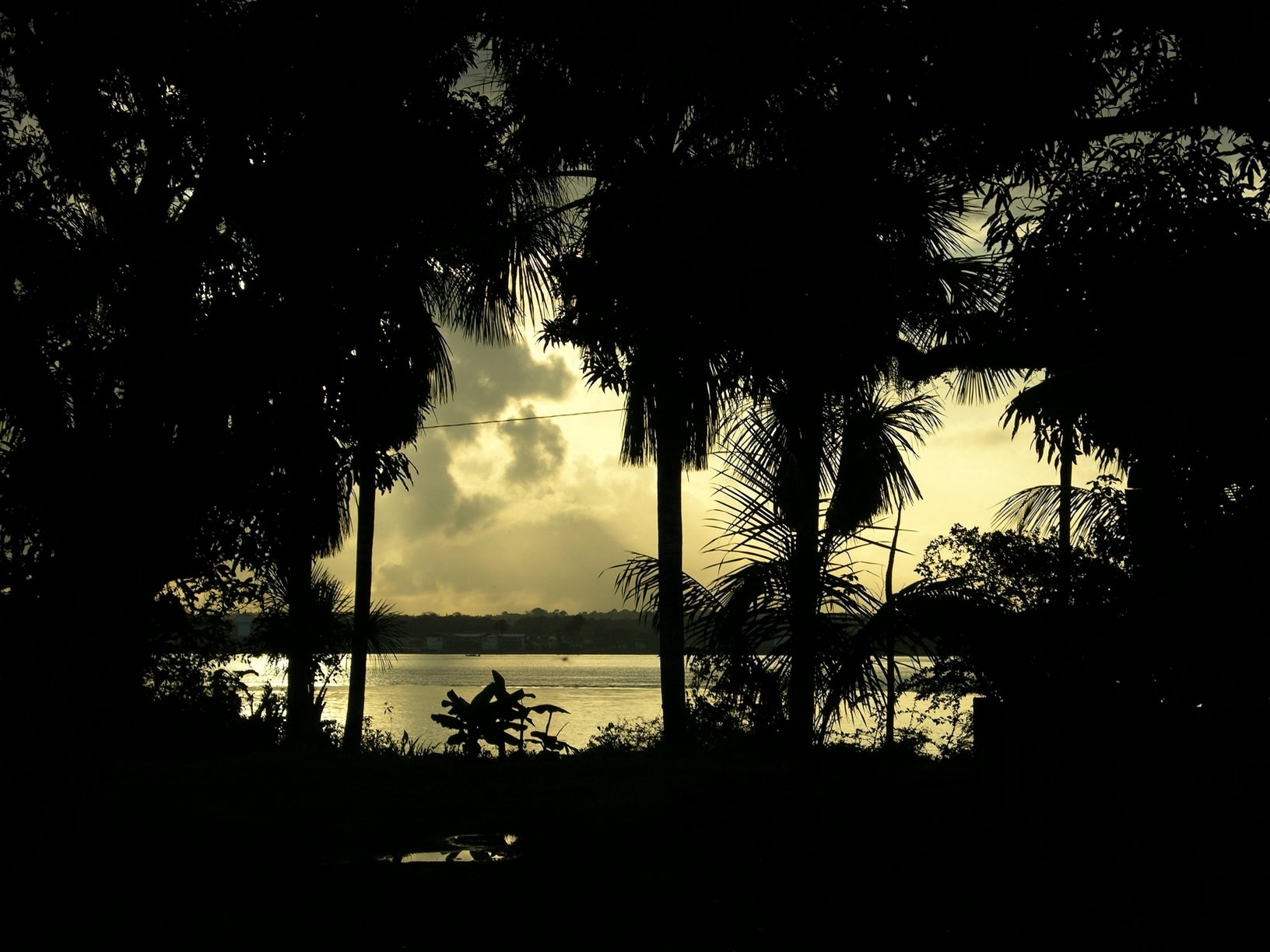
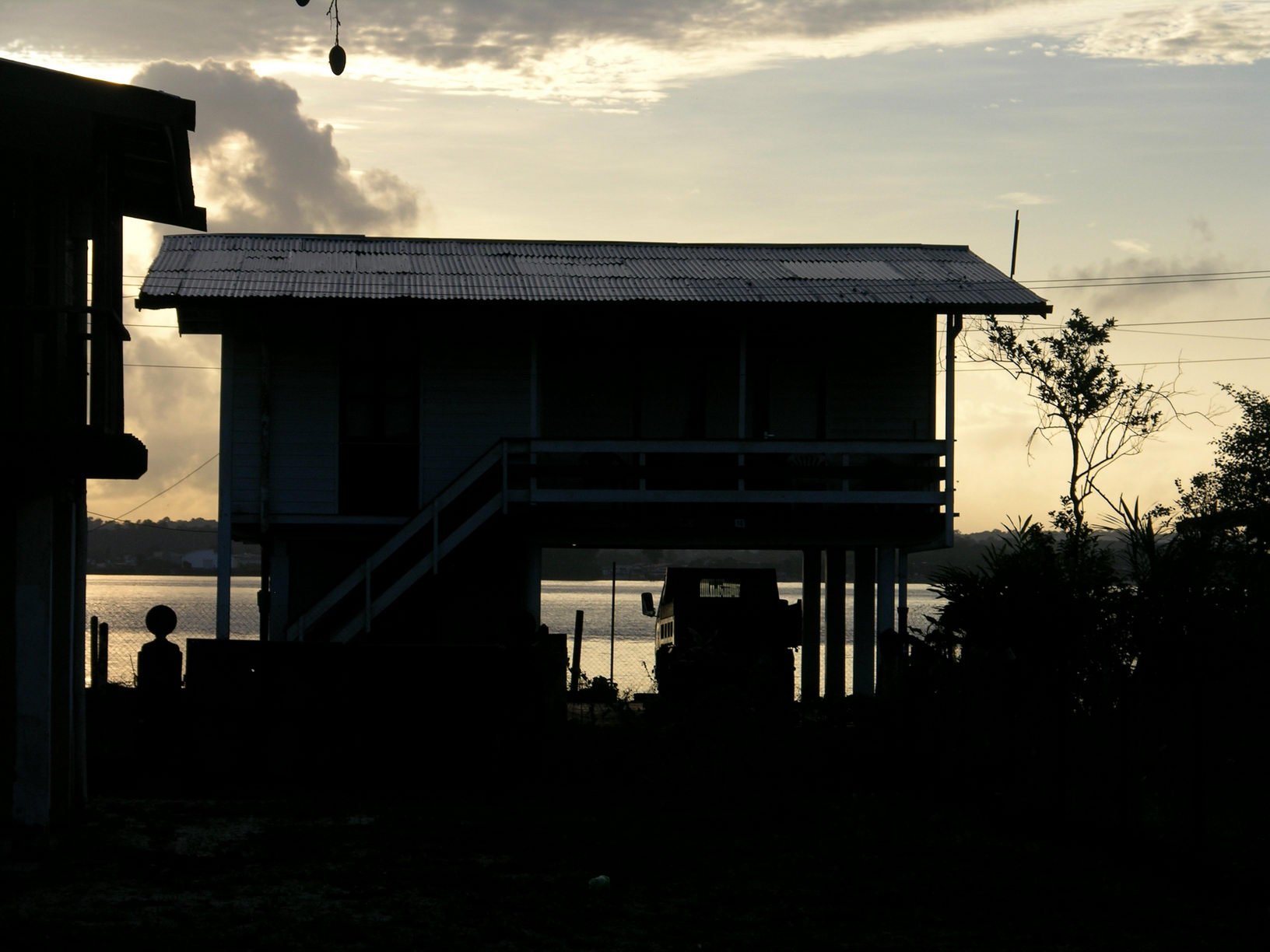
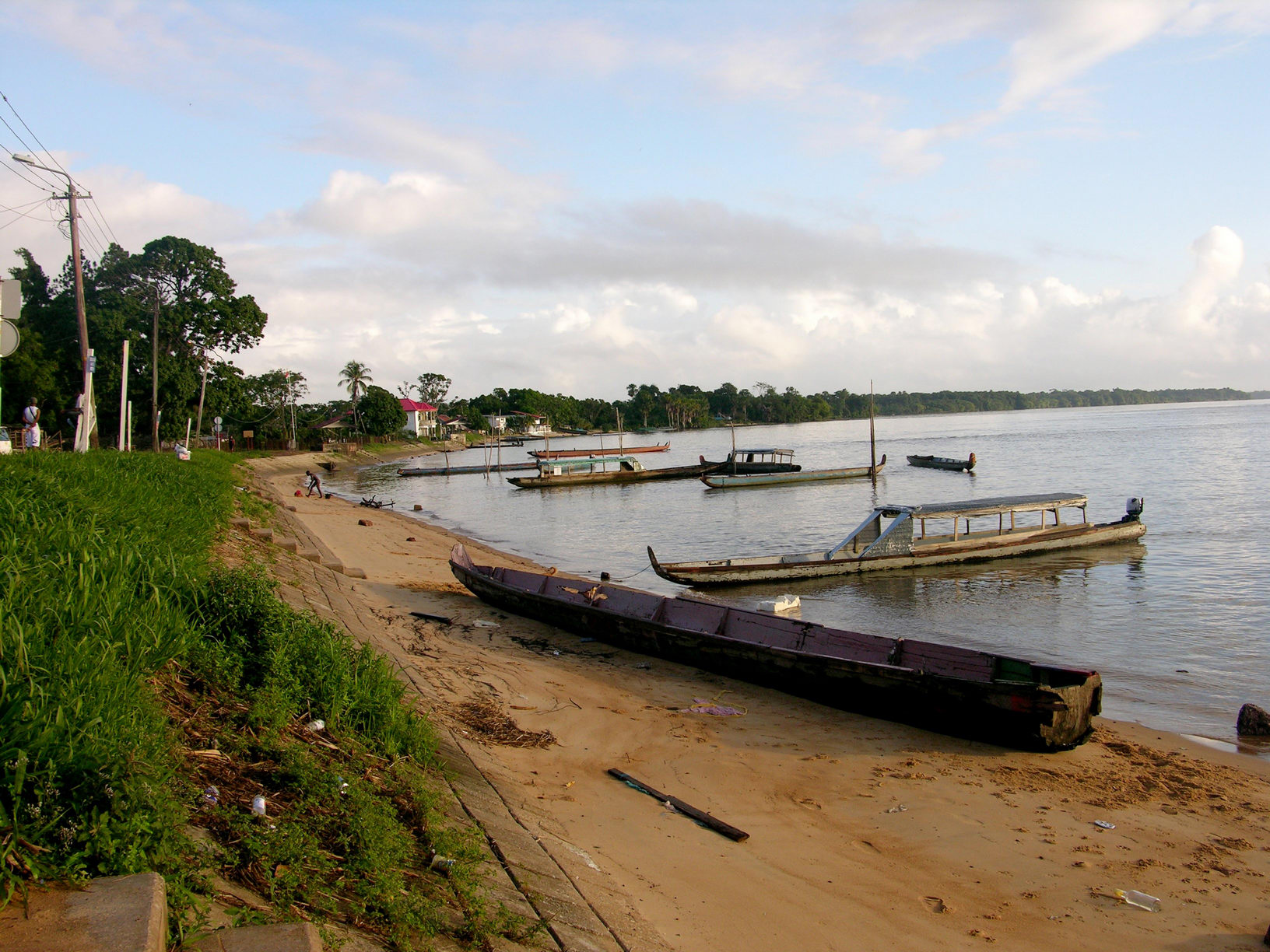
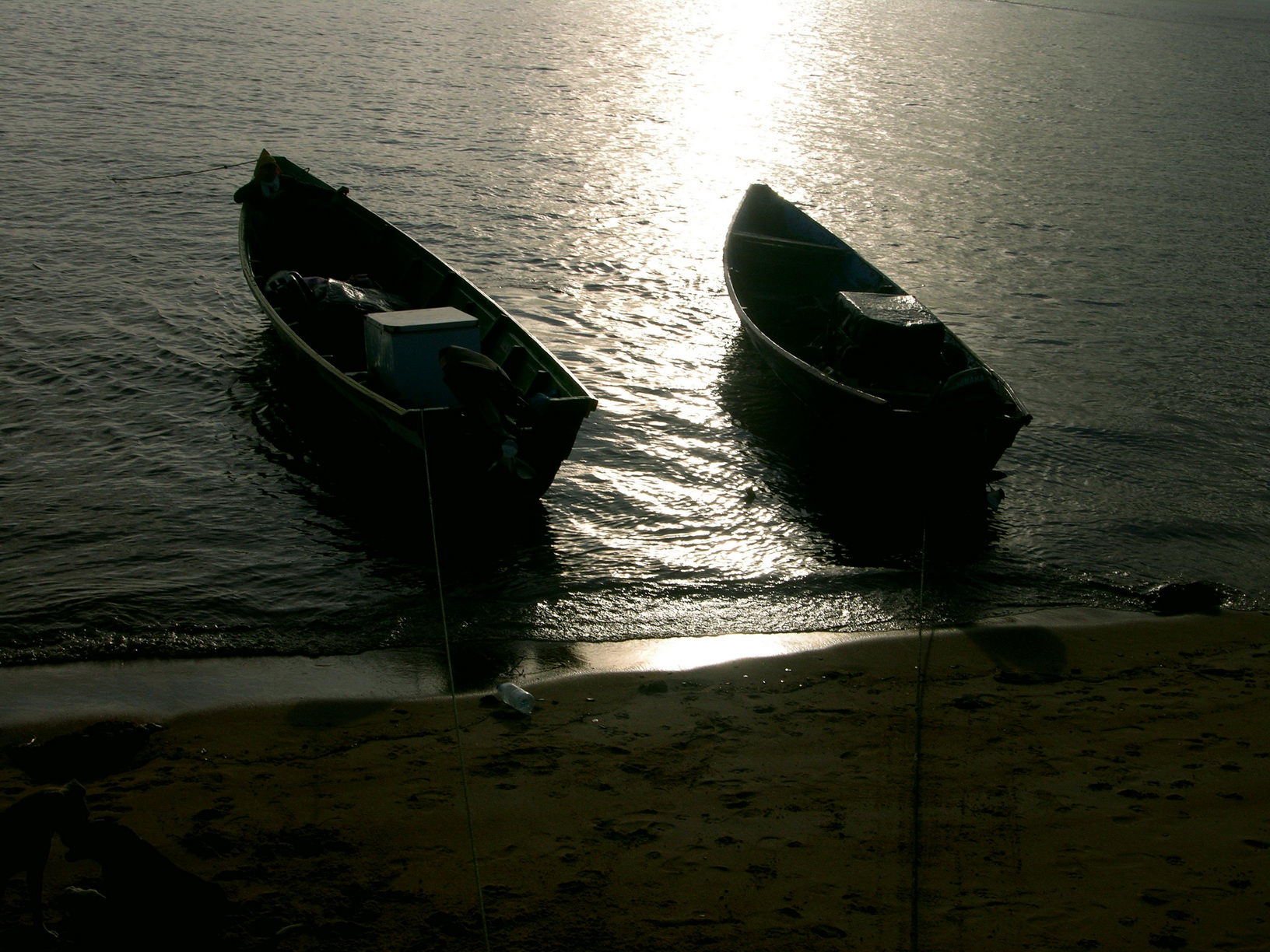
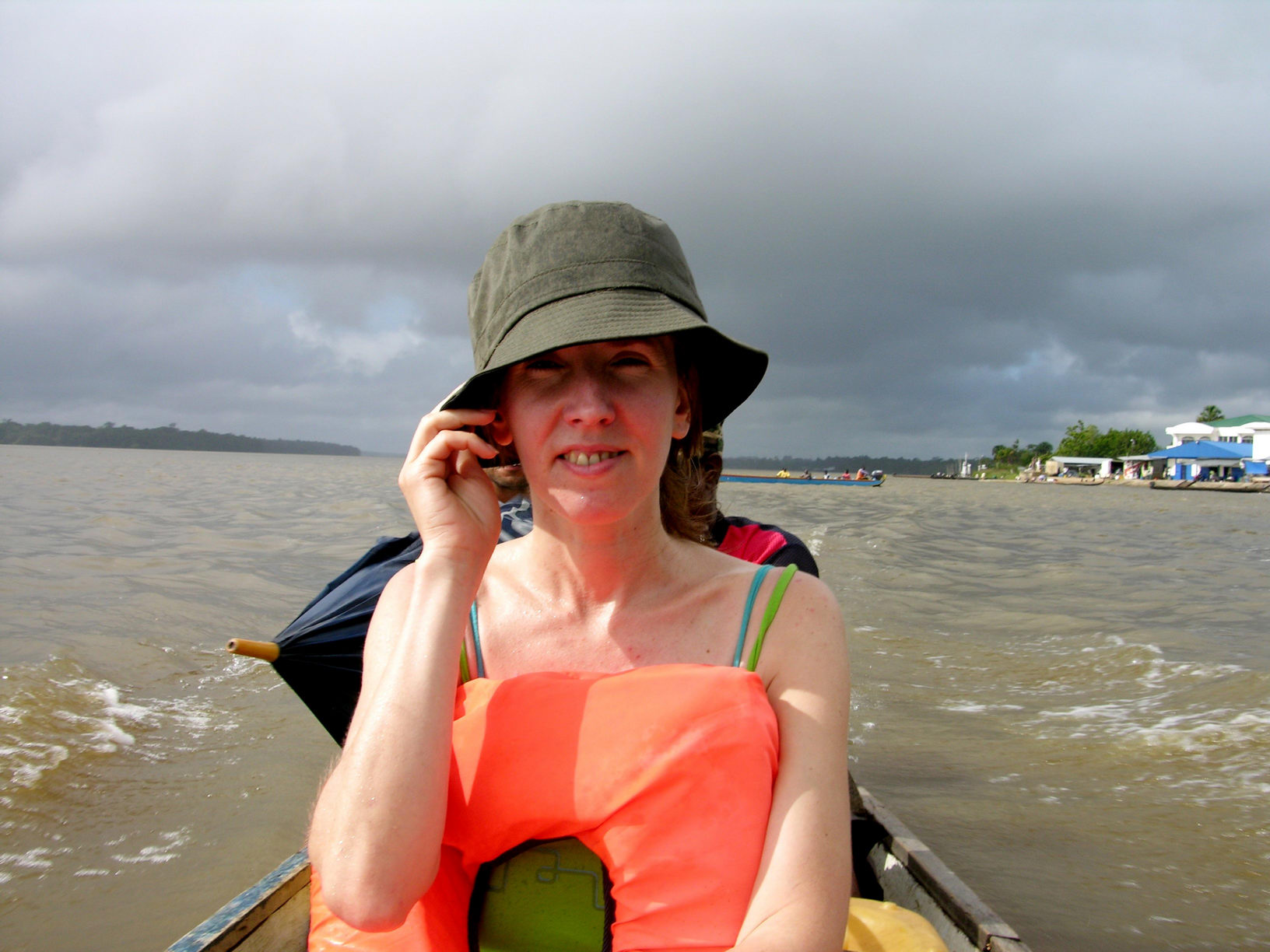
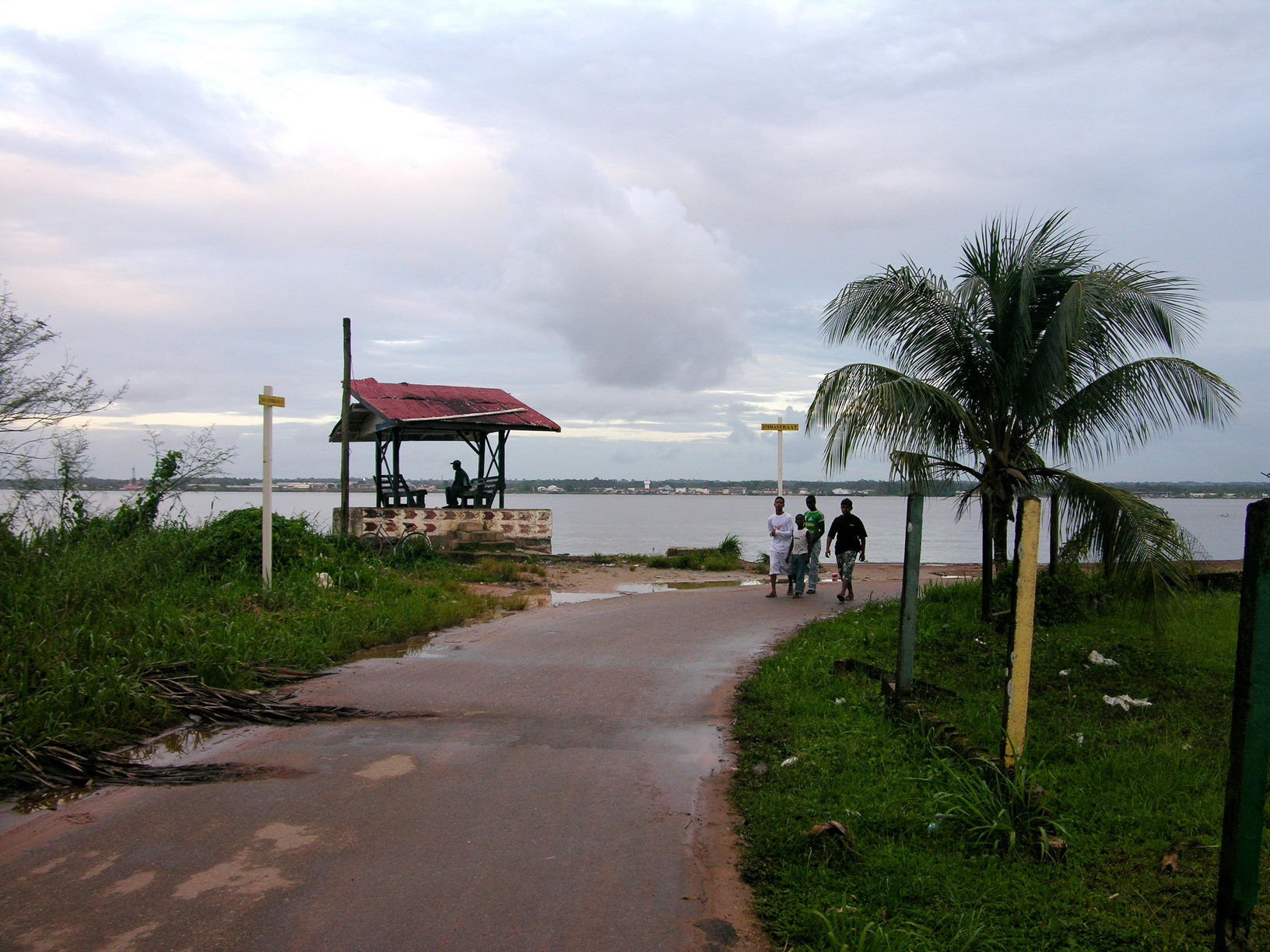
It was thirty-five kilometres down the river to Galibi, which we covered in an hour. Here the Marowijne is a very broad river. There's hardly any current, but the water is still fresh. We were caught in several showers on the way. It's a peculiarity of the local climate. The sun is quite clearly shining and the sky blue. A few minutes later clouds appear from nowhere, it grows dark and down comes a tropical deluge. The clouds vanish just as promptly and the sun comes out again. You have to be ready for rain all the time. The boat had a sheet of plastic for the purpose.
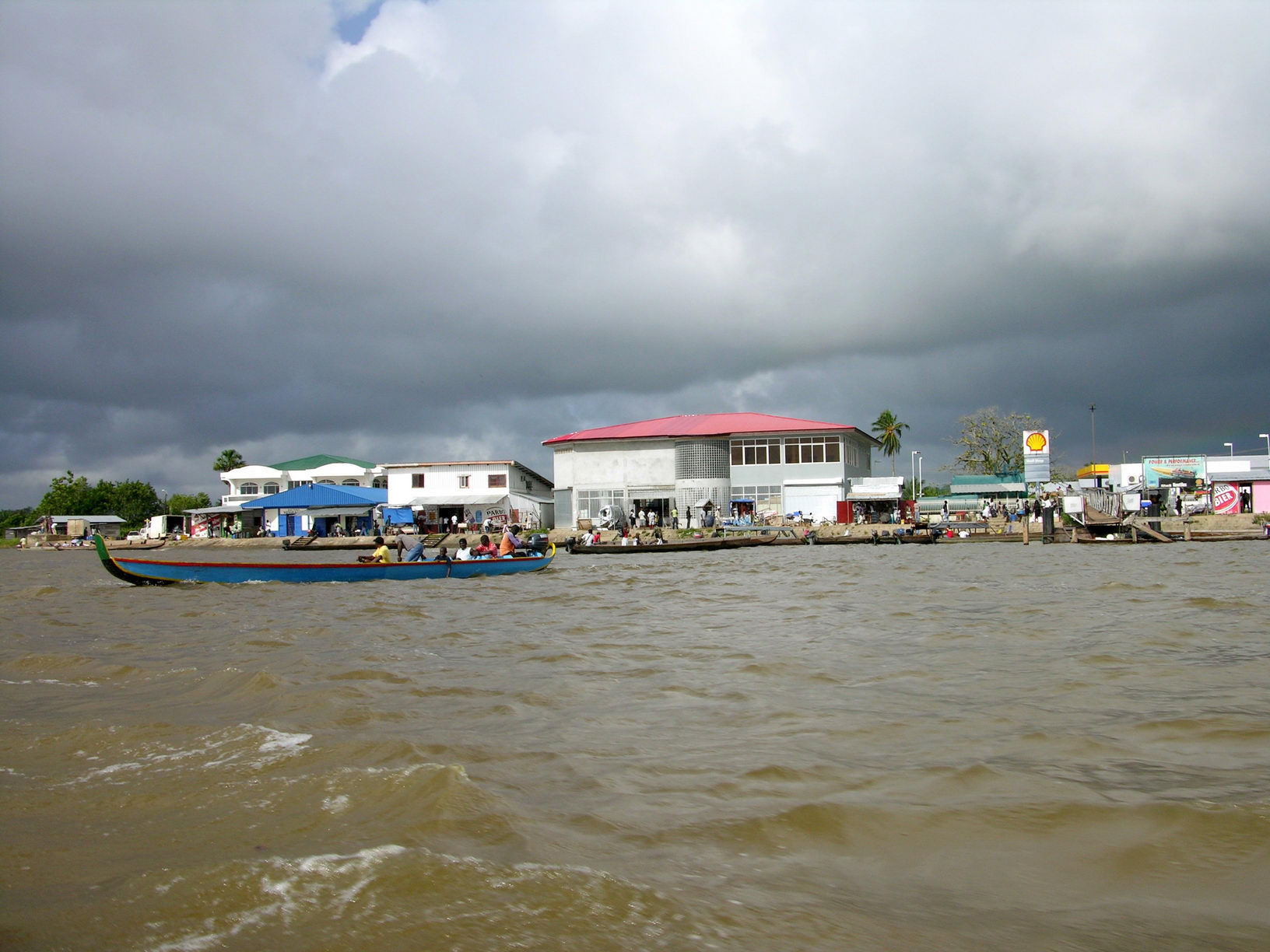
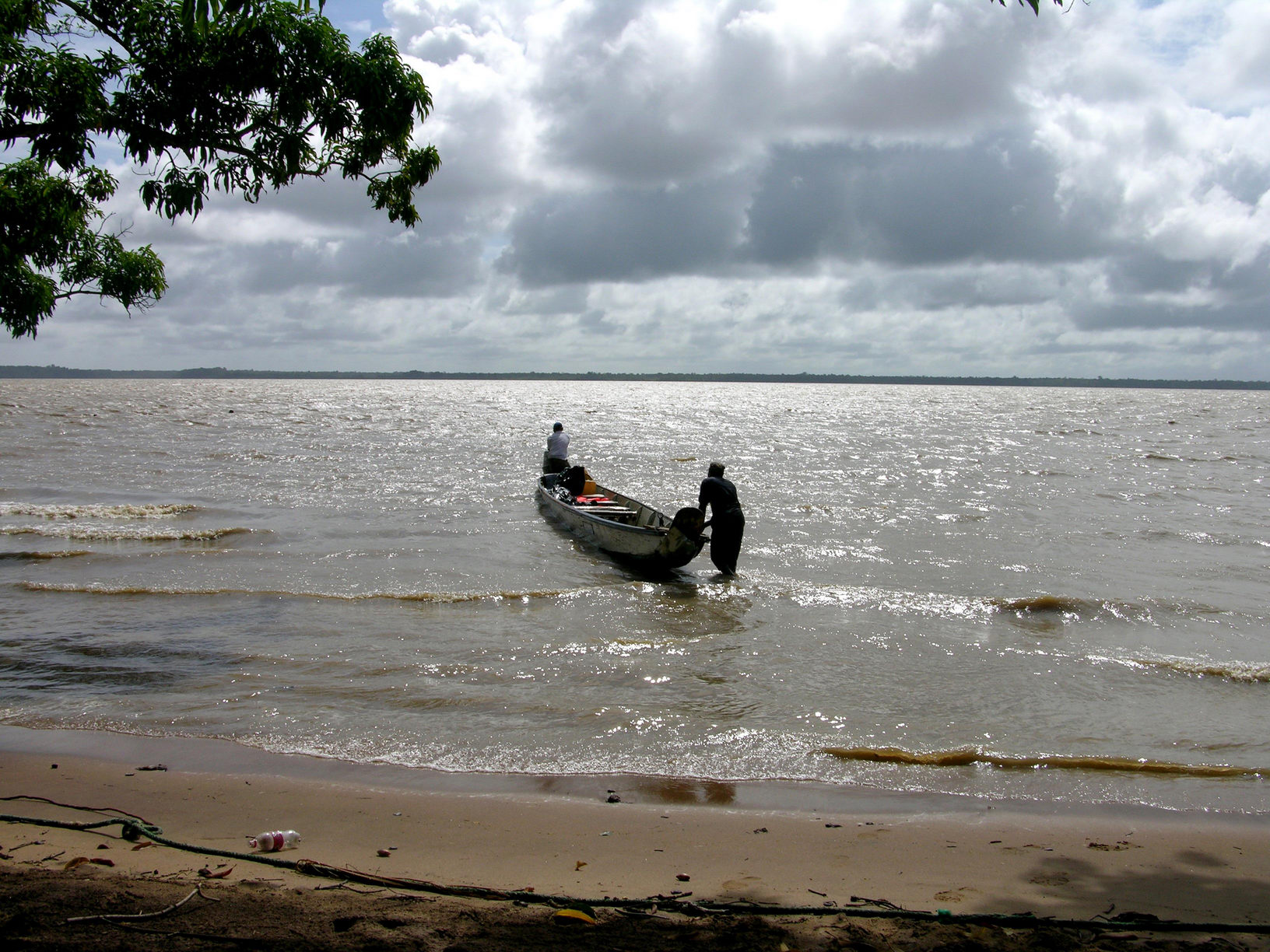
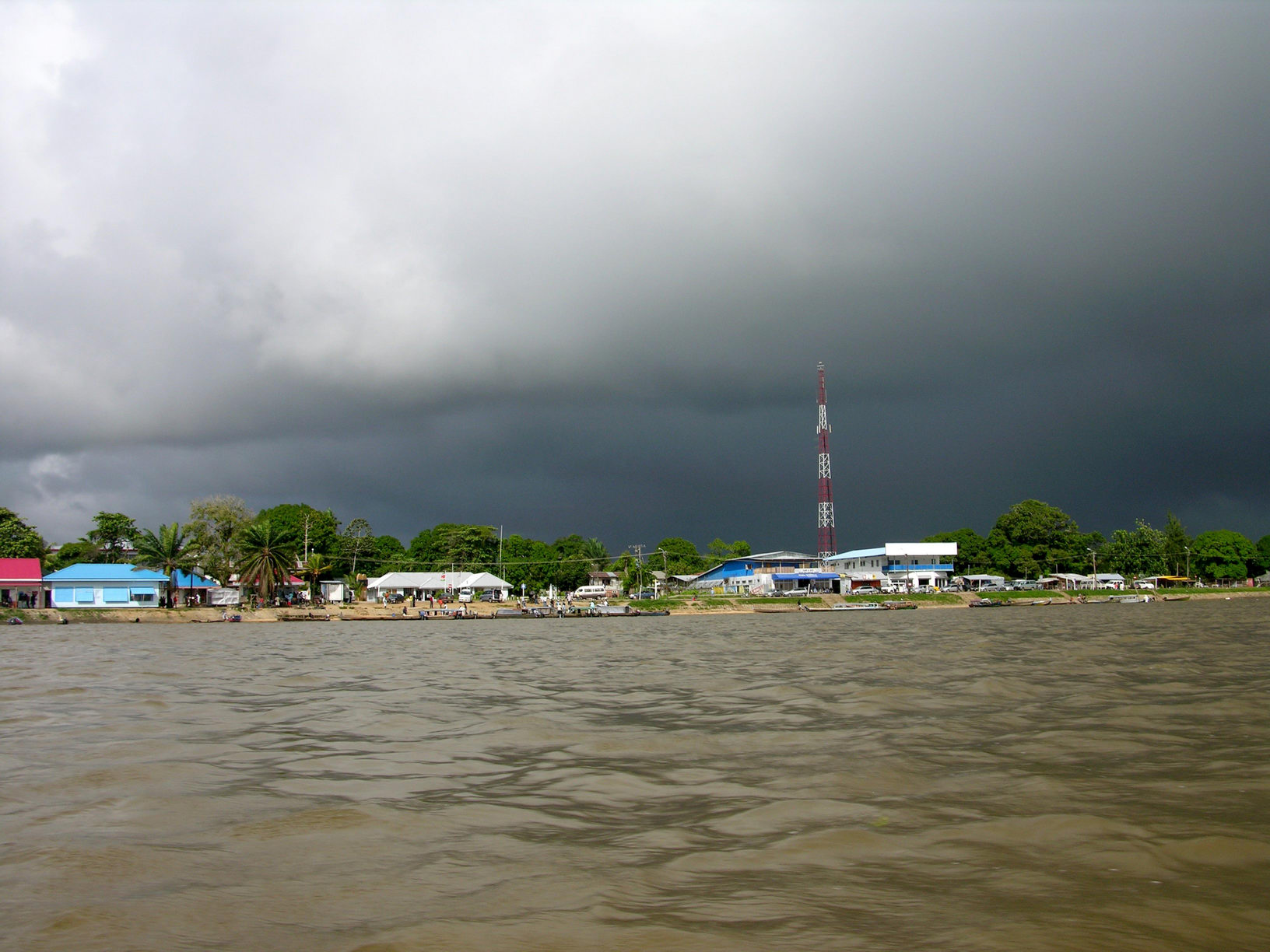
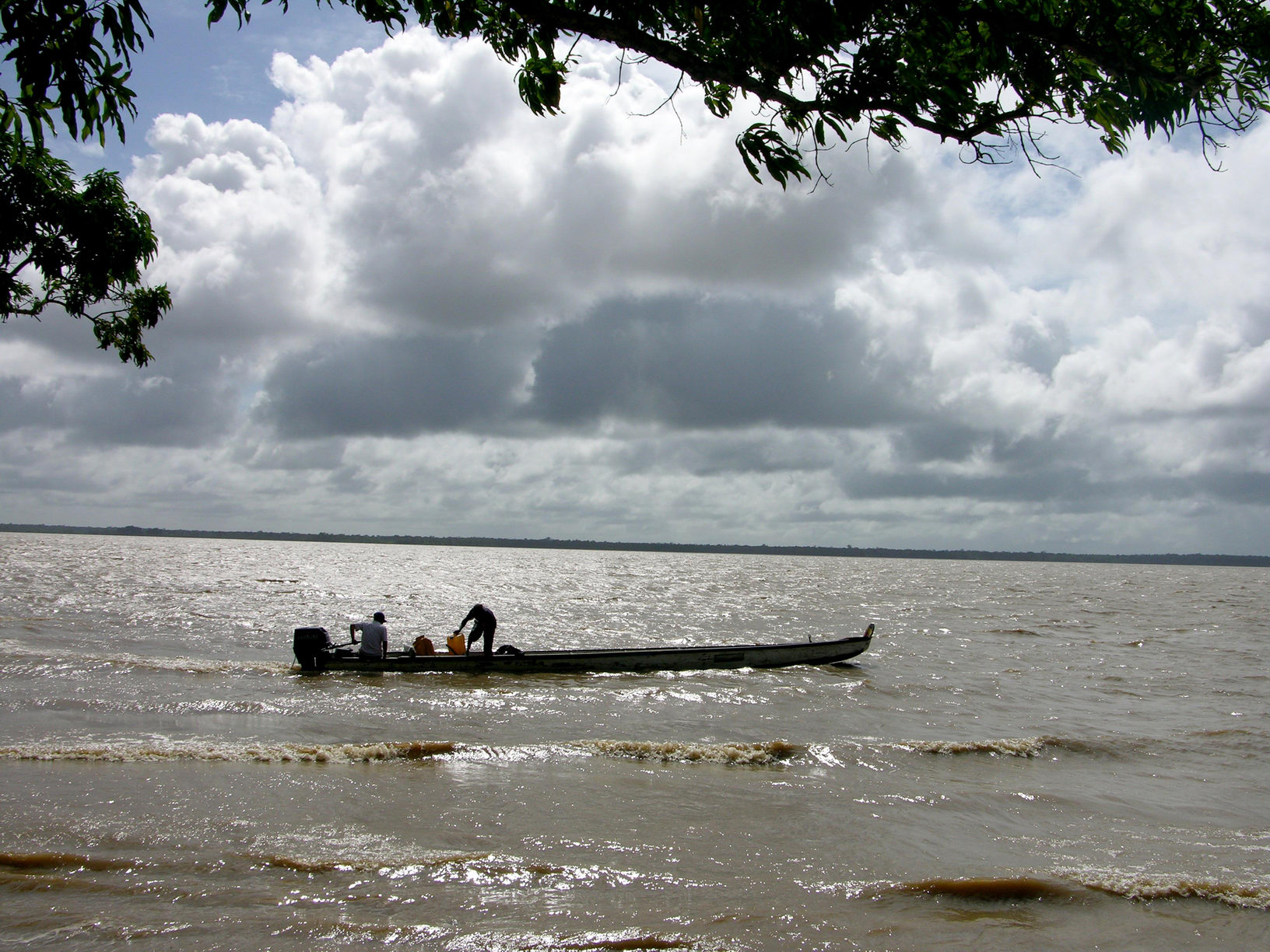
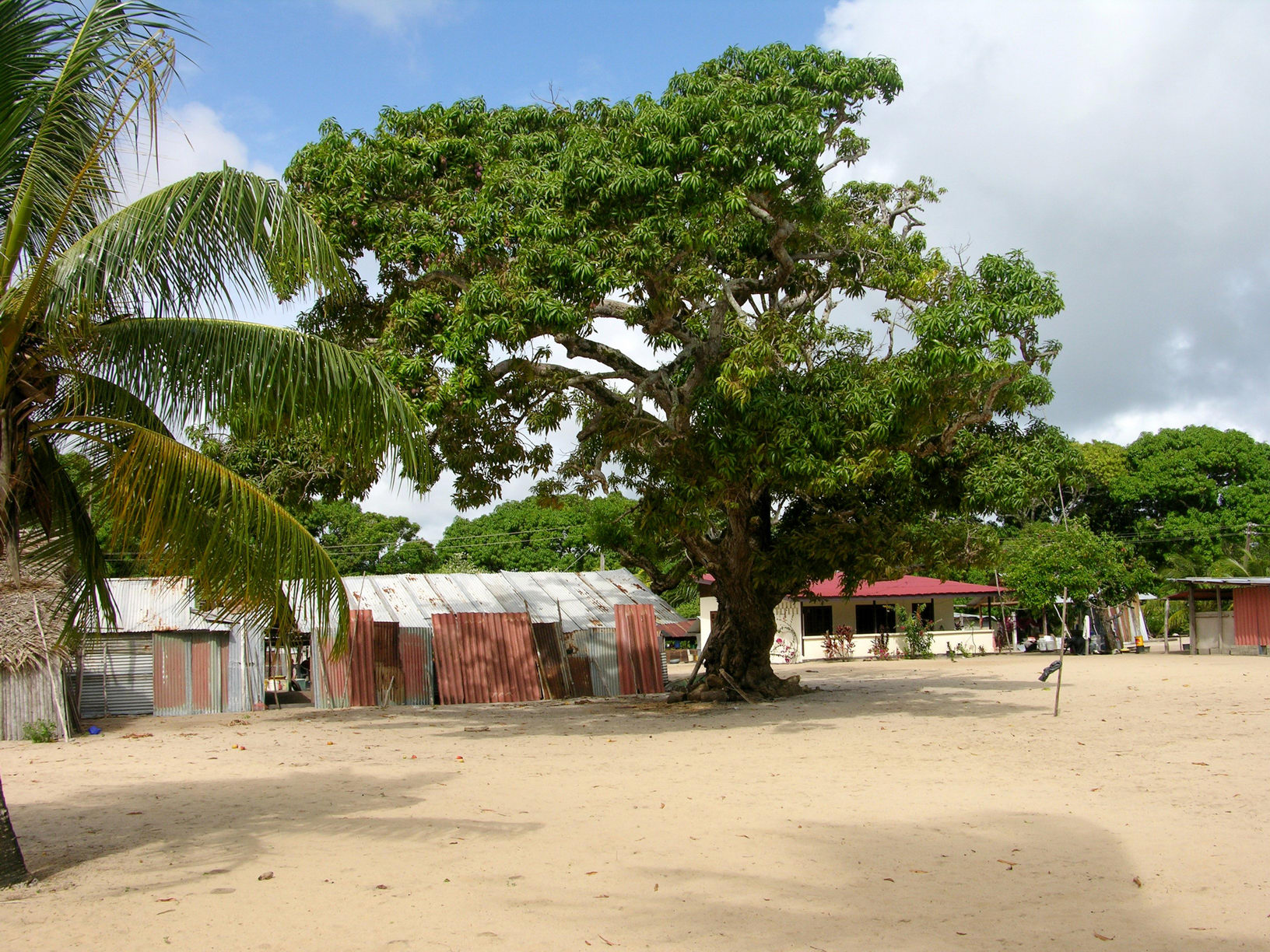
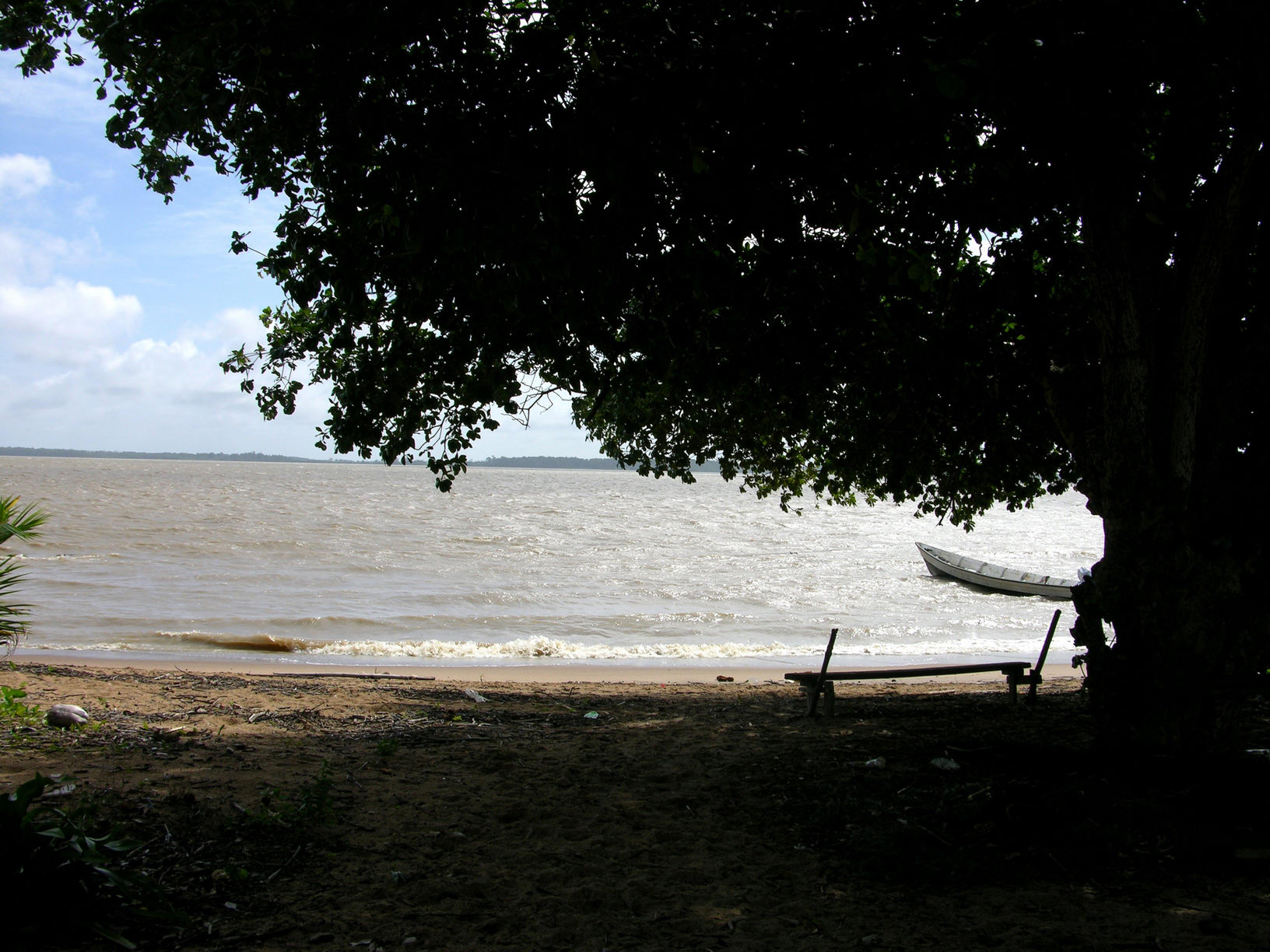
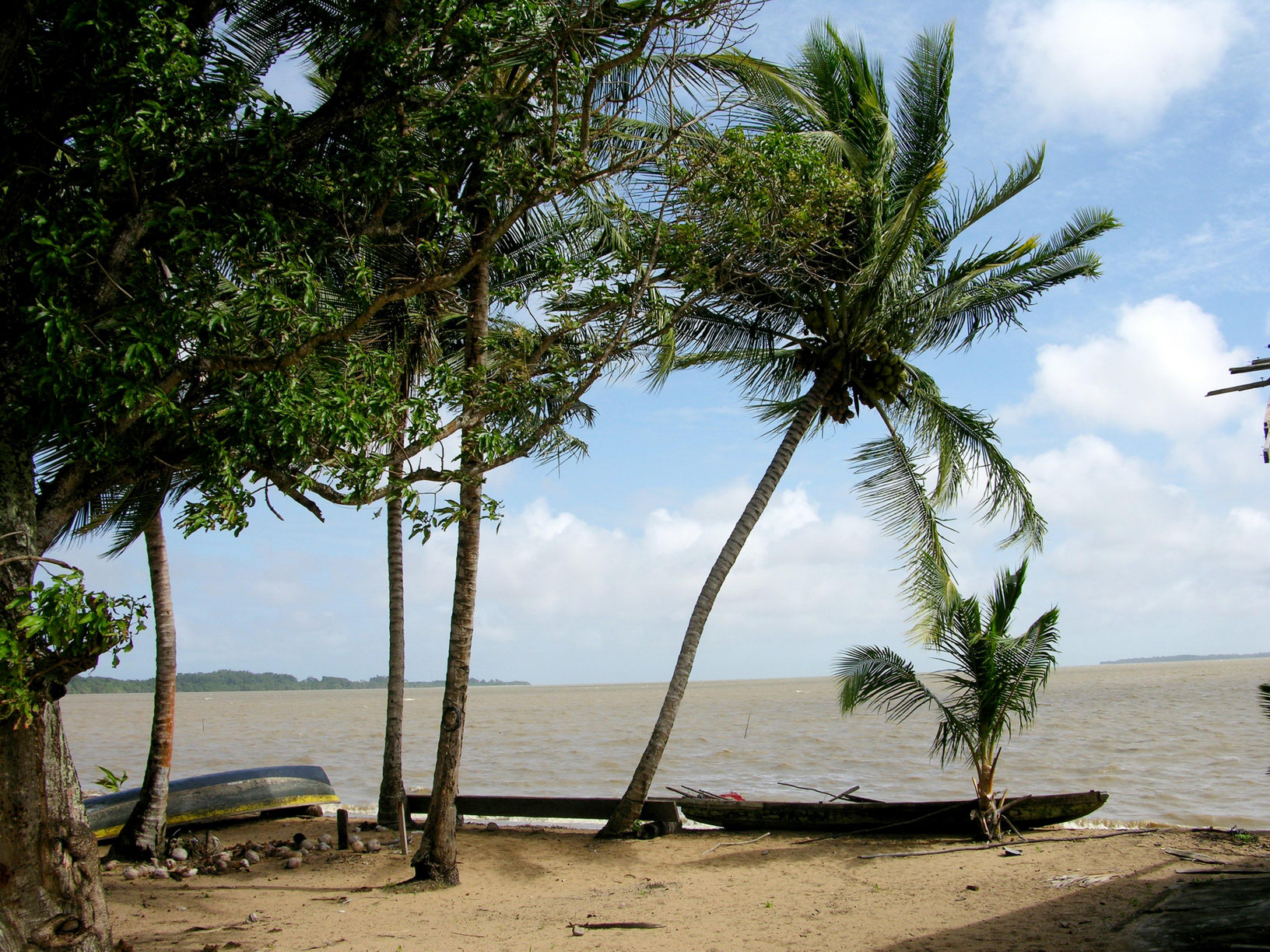
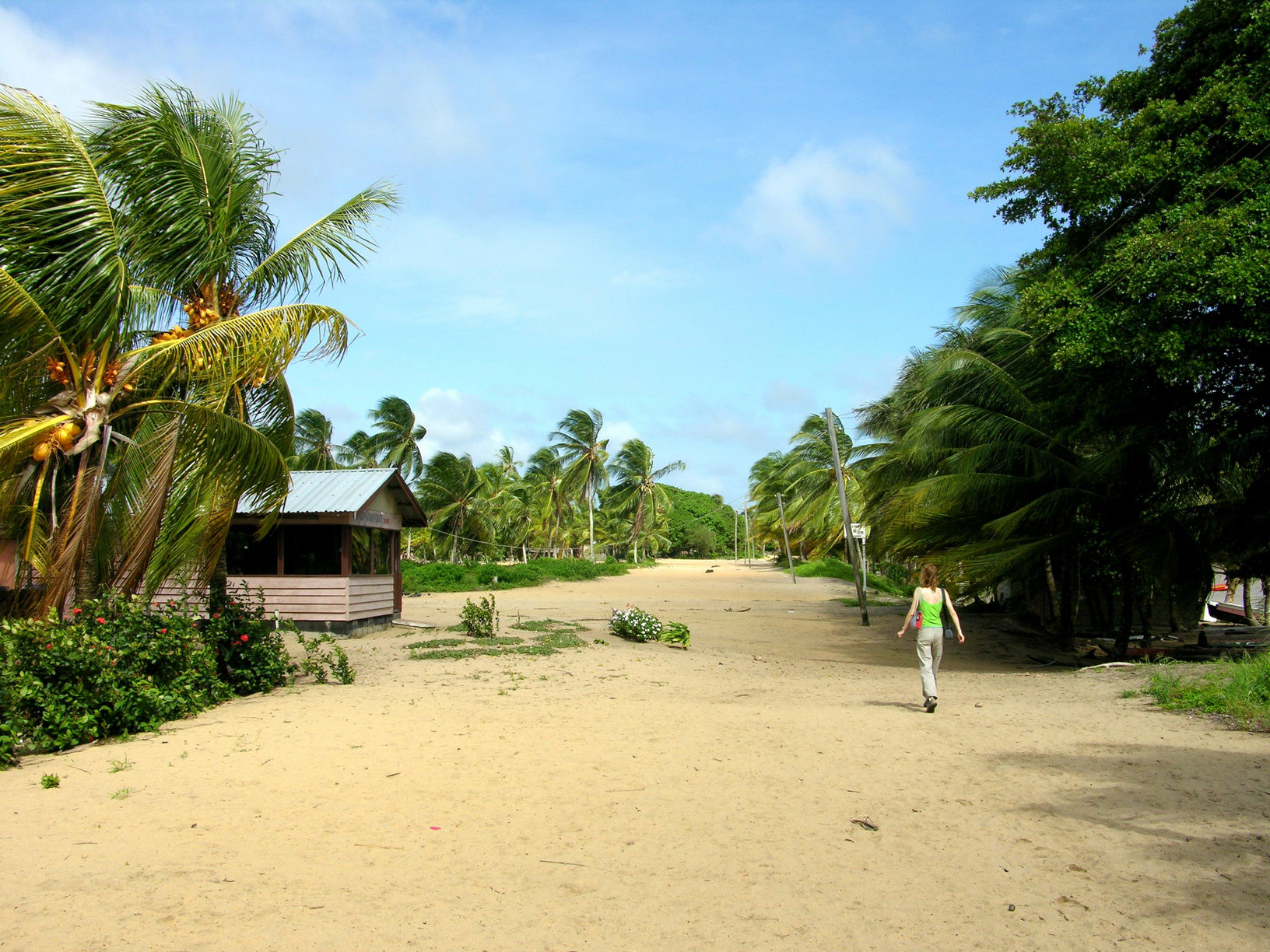
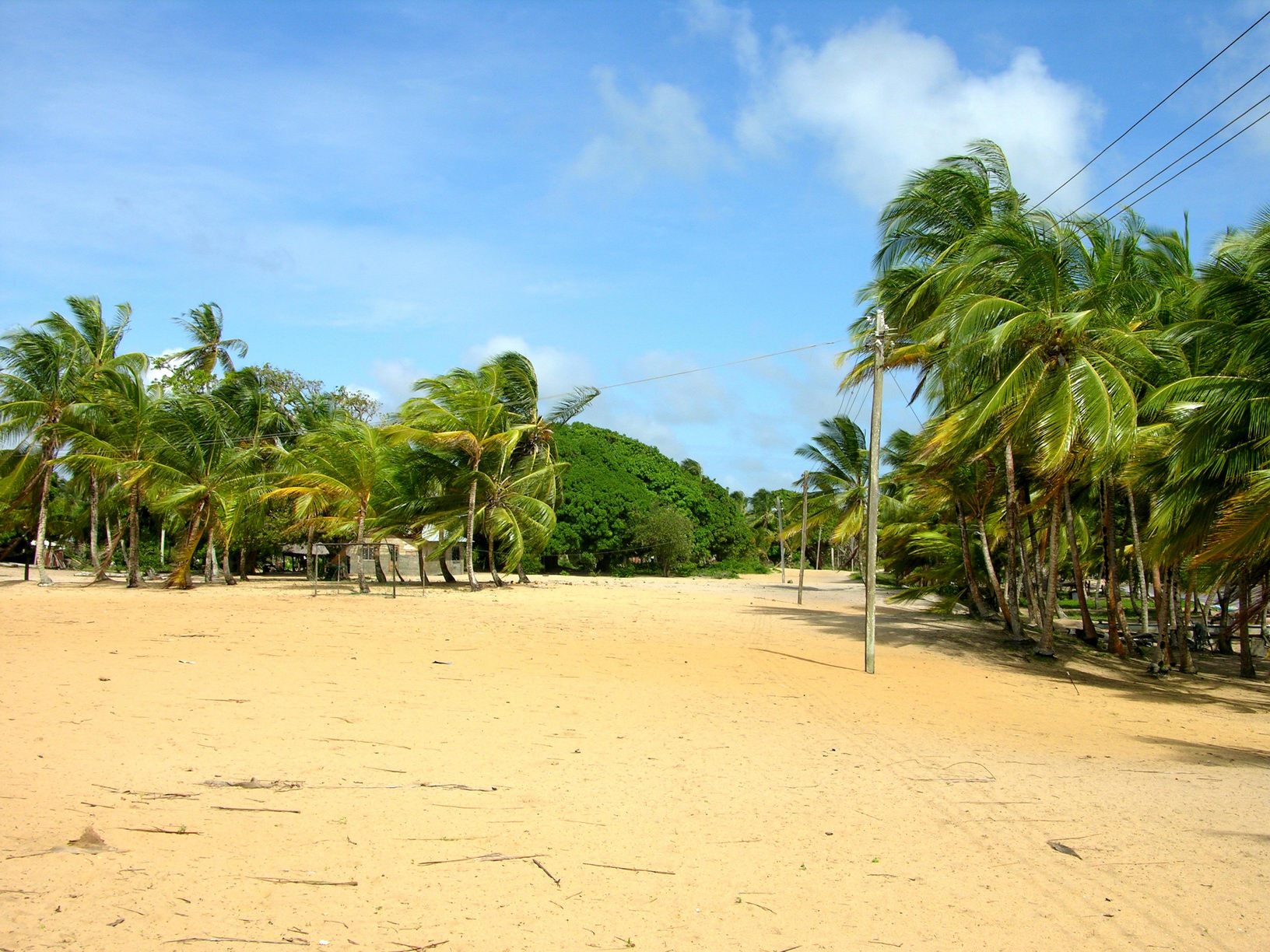
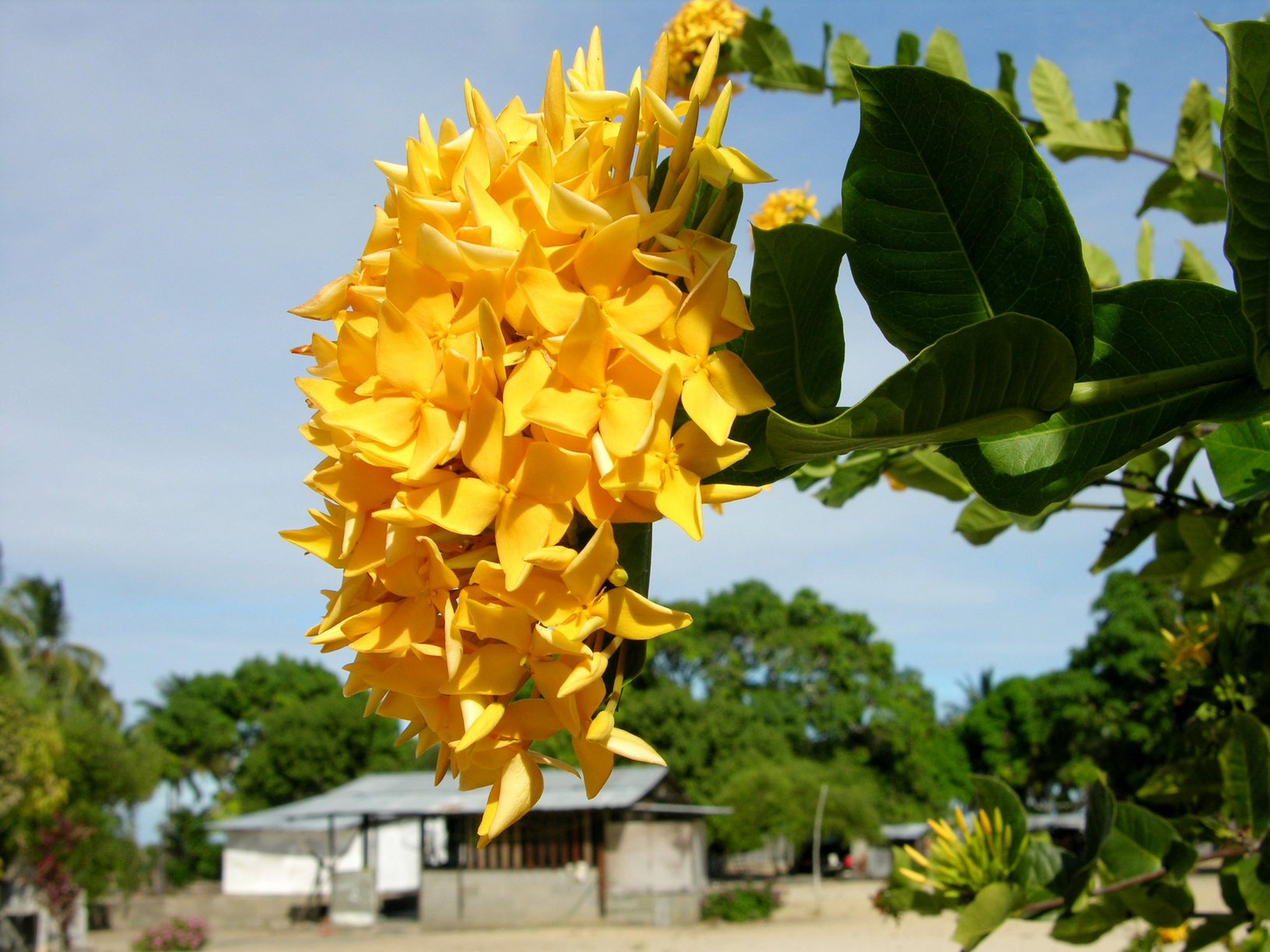
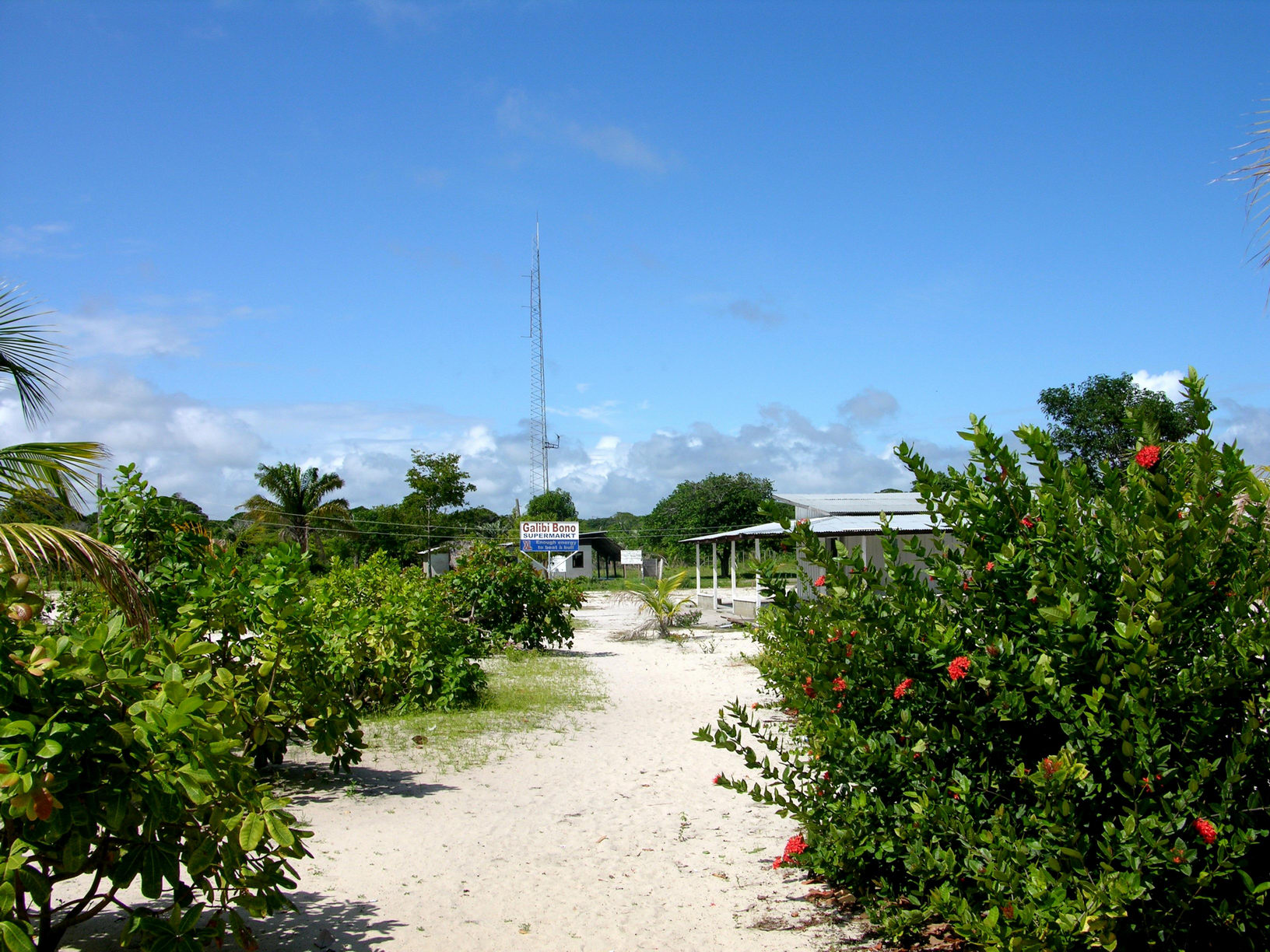
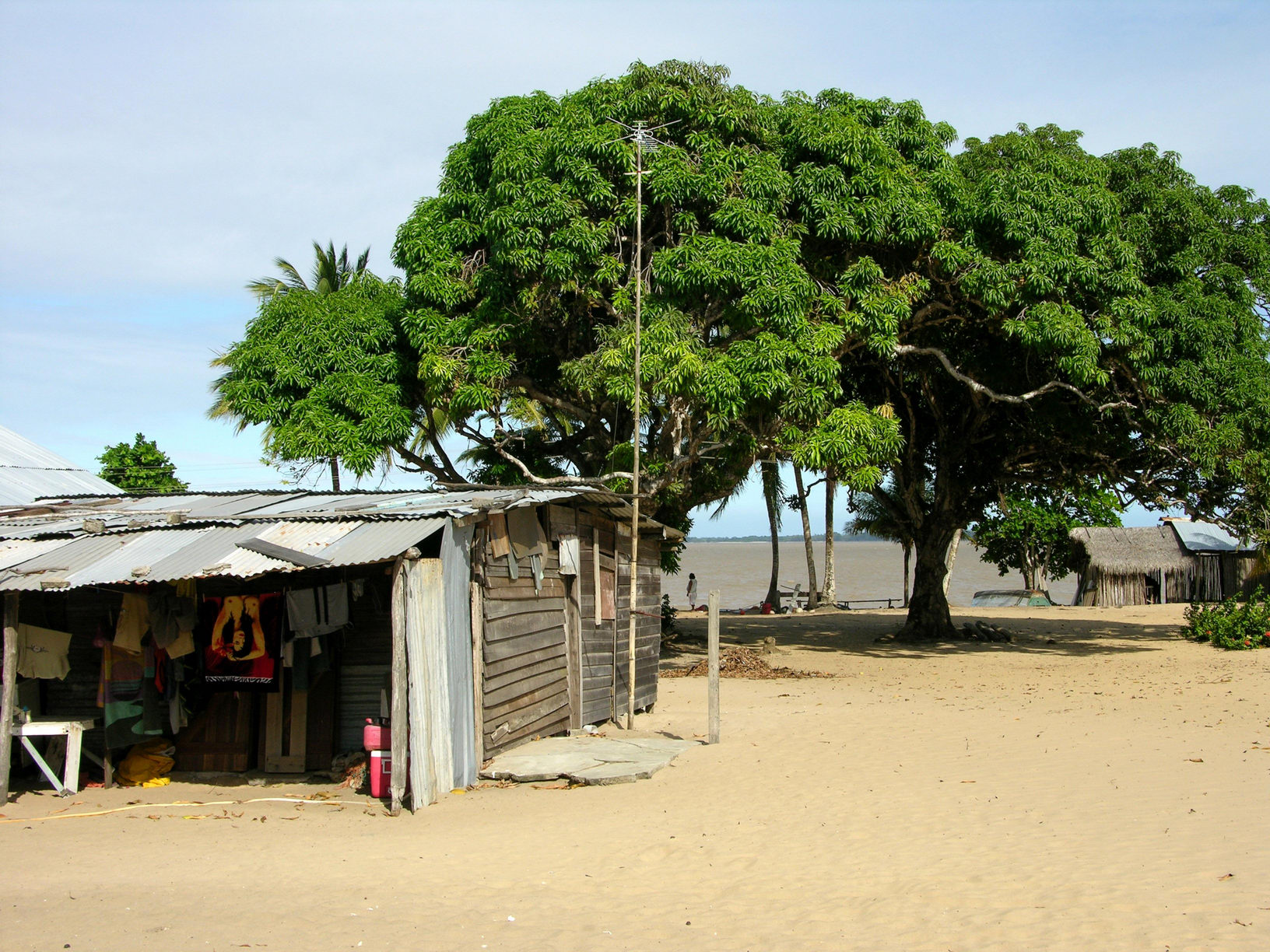
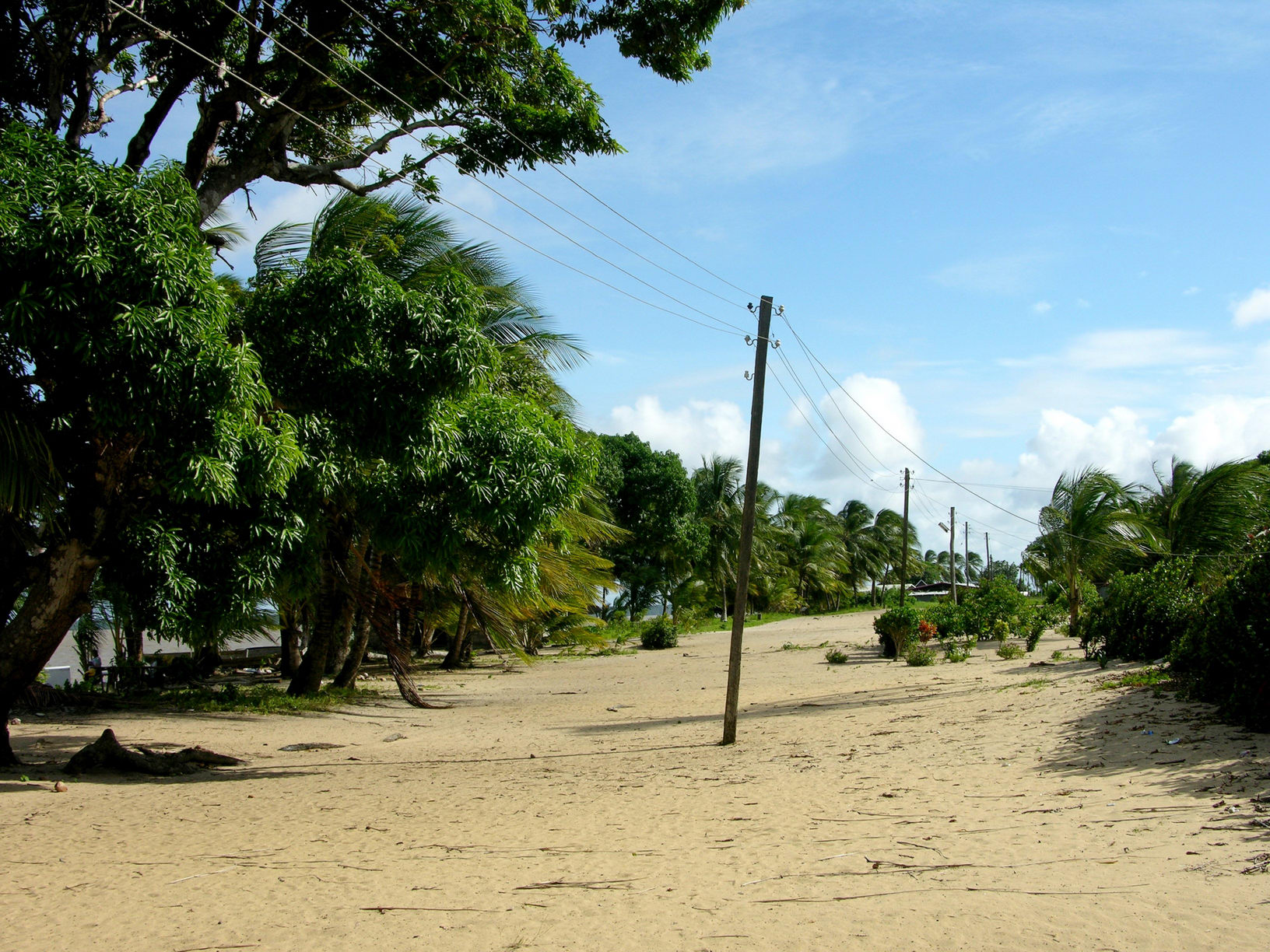
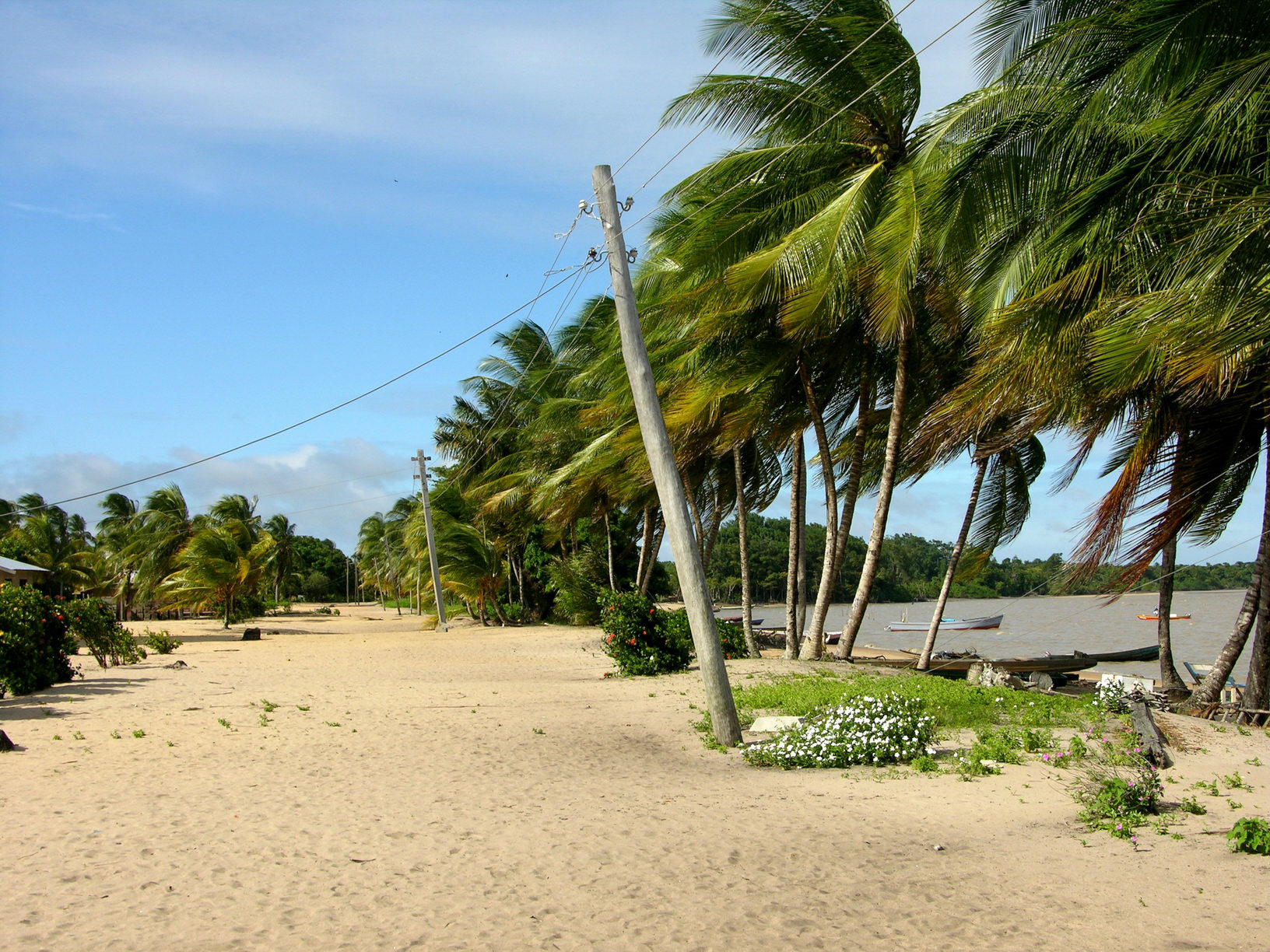
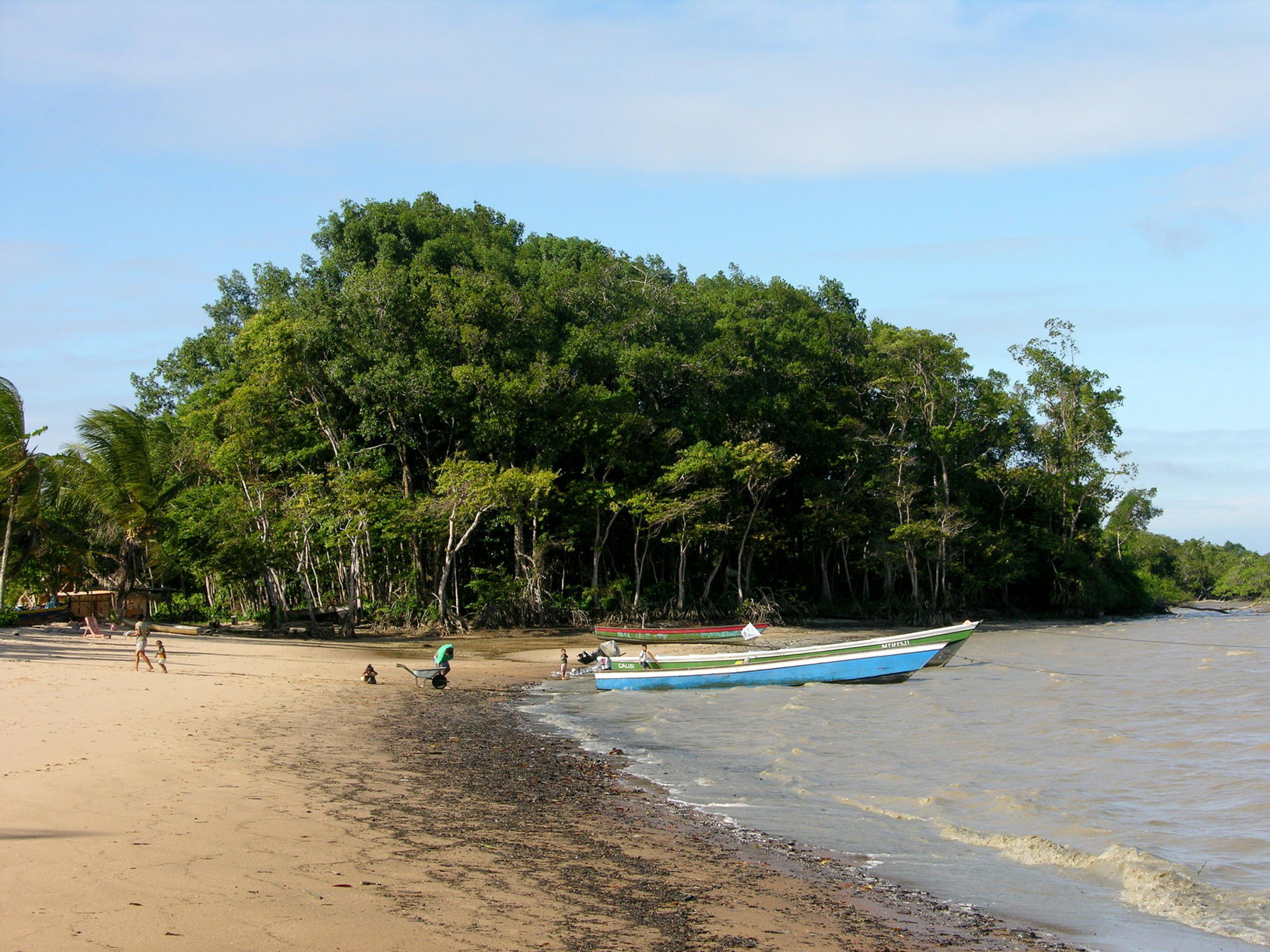
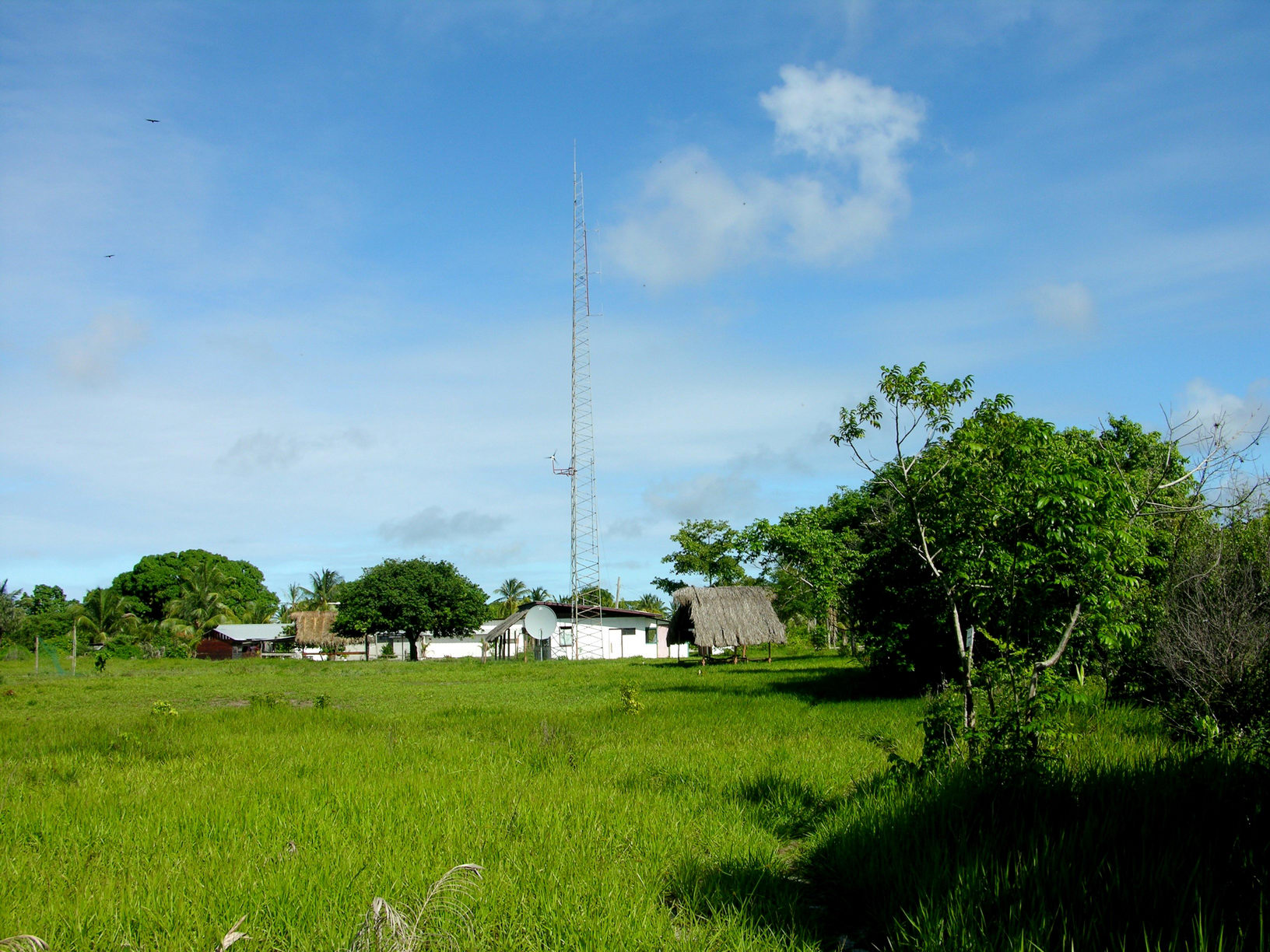
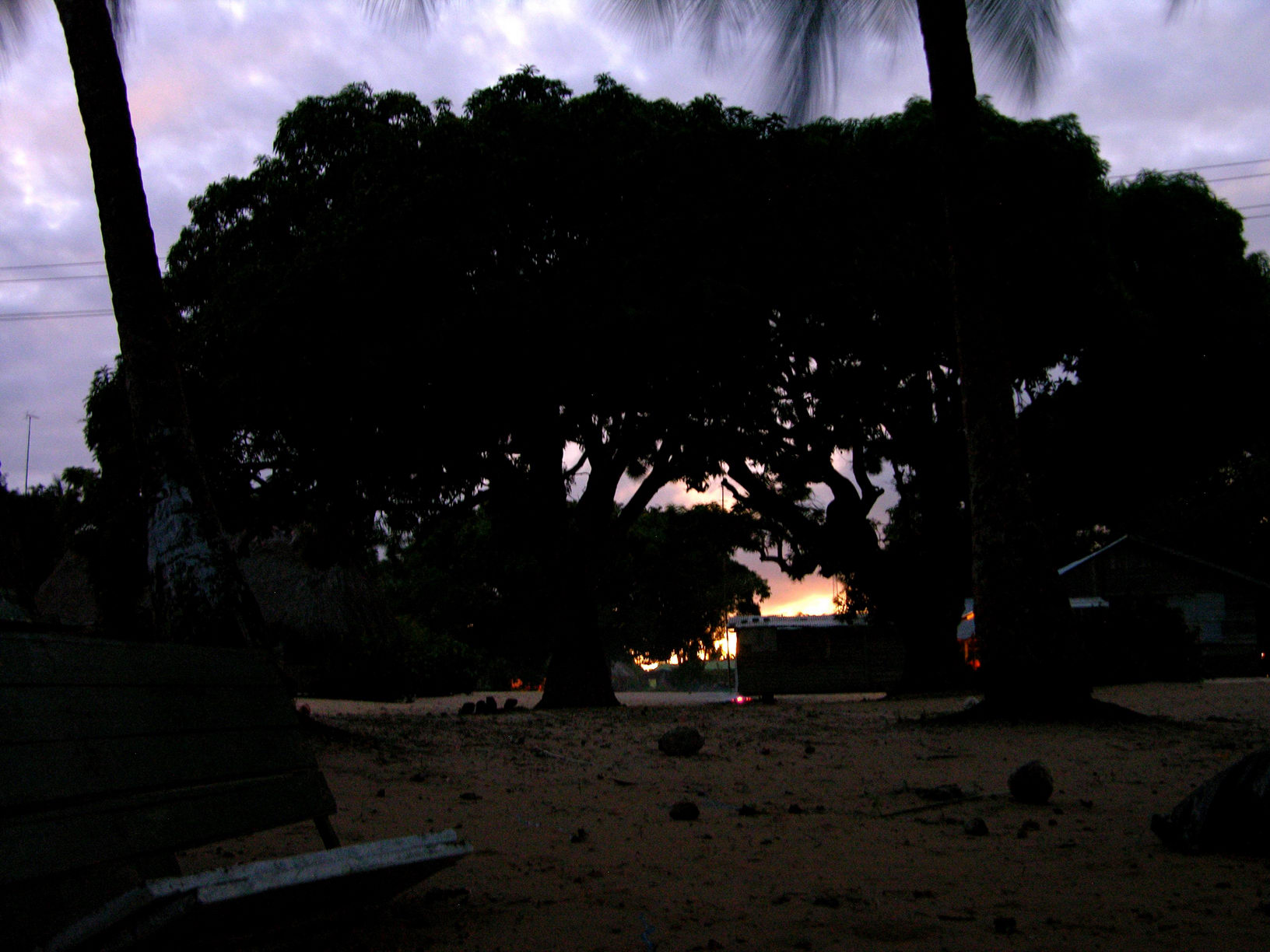
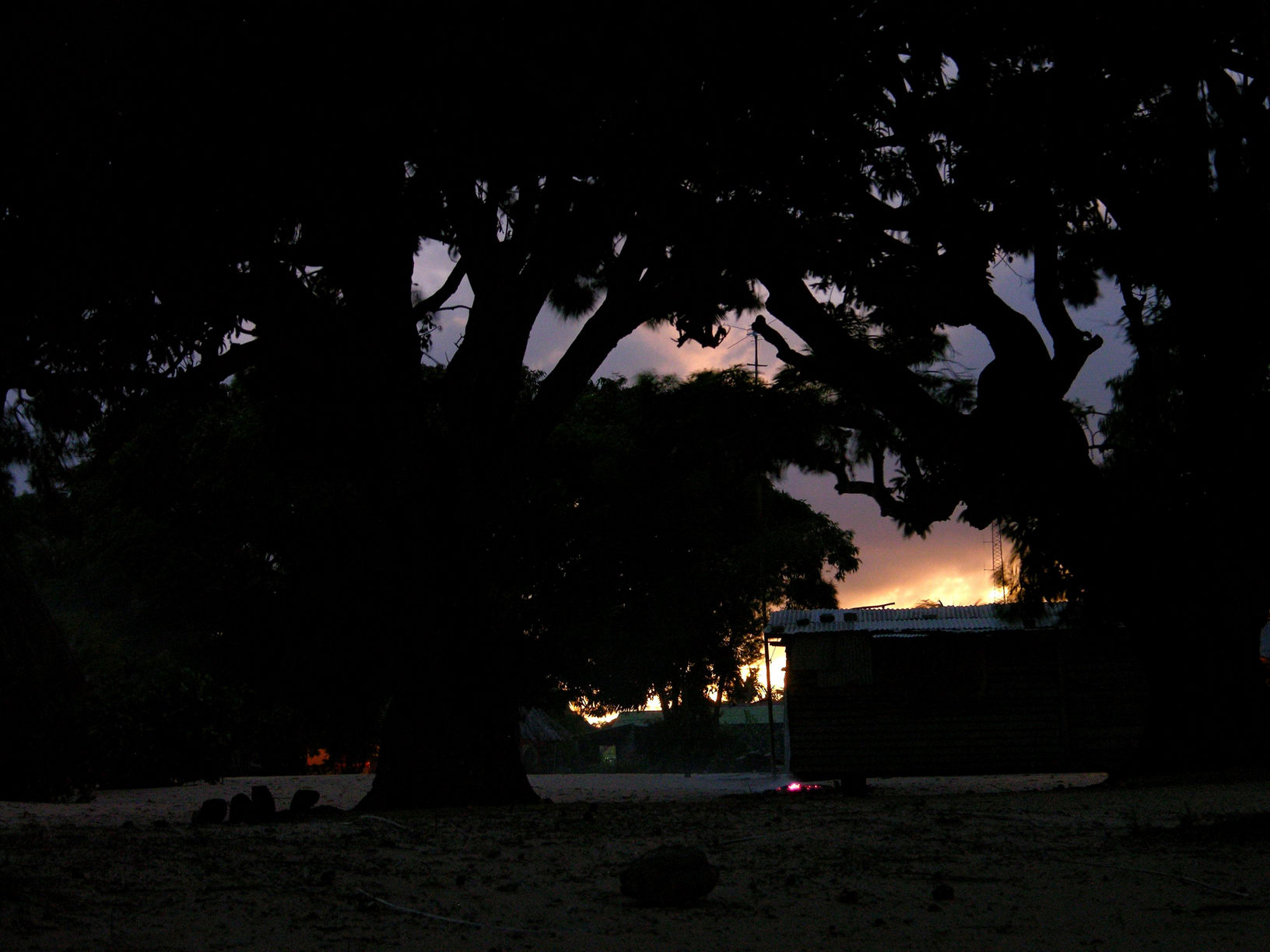
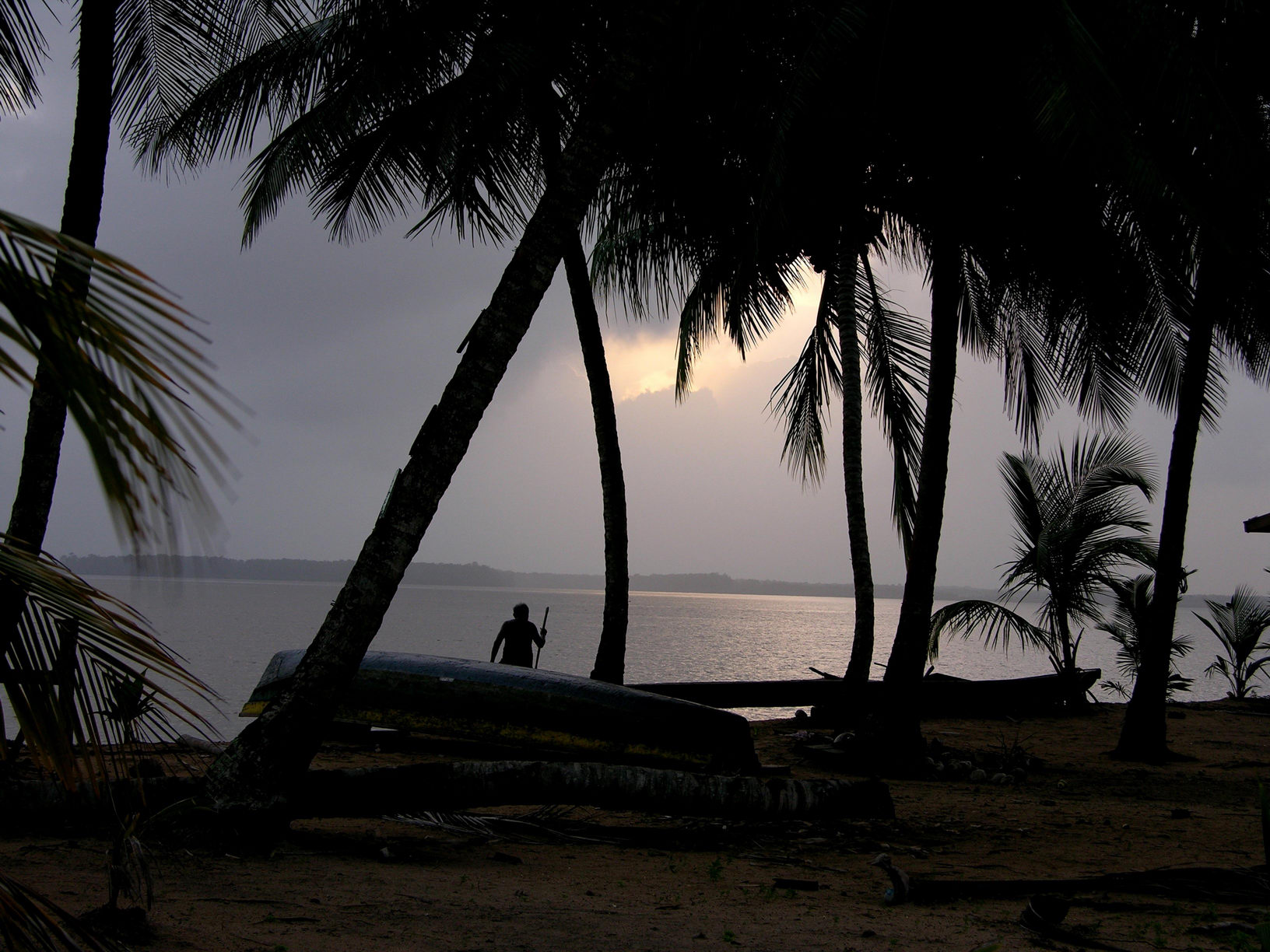
Galibi turned out to be a small village on a sandy beach. The streets were sand and the palms swayed in a fresh sea breeze. People? Nobody about. The scene gave you a sense of something boundlessly free and peaceful. It's a fishing village, but tourists are getting here in growing numbers. It has three hotels and even a local FM radio station, abandoned now. There are boards with maps and information for tourists all over the place.
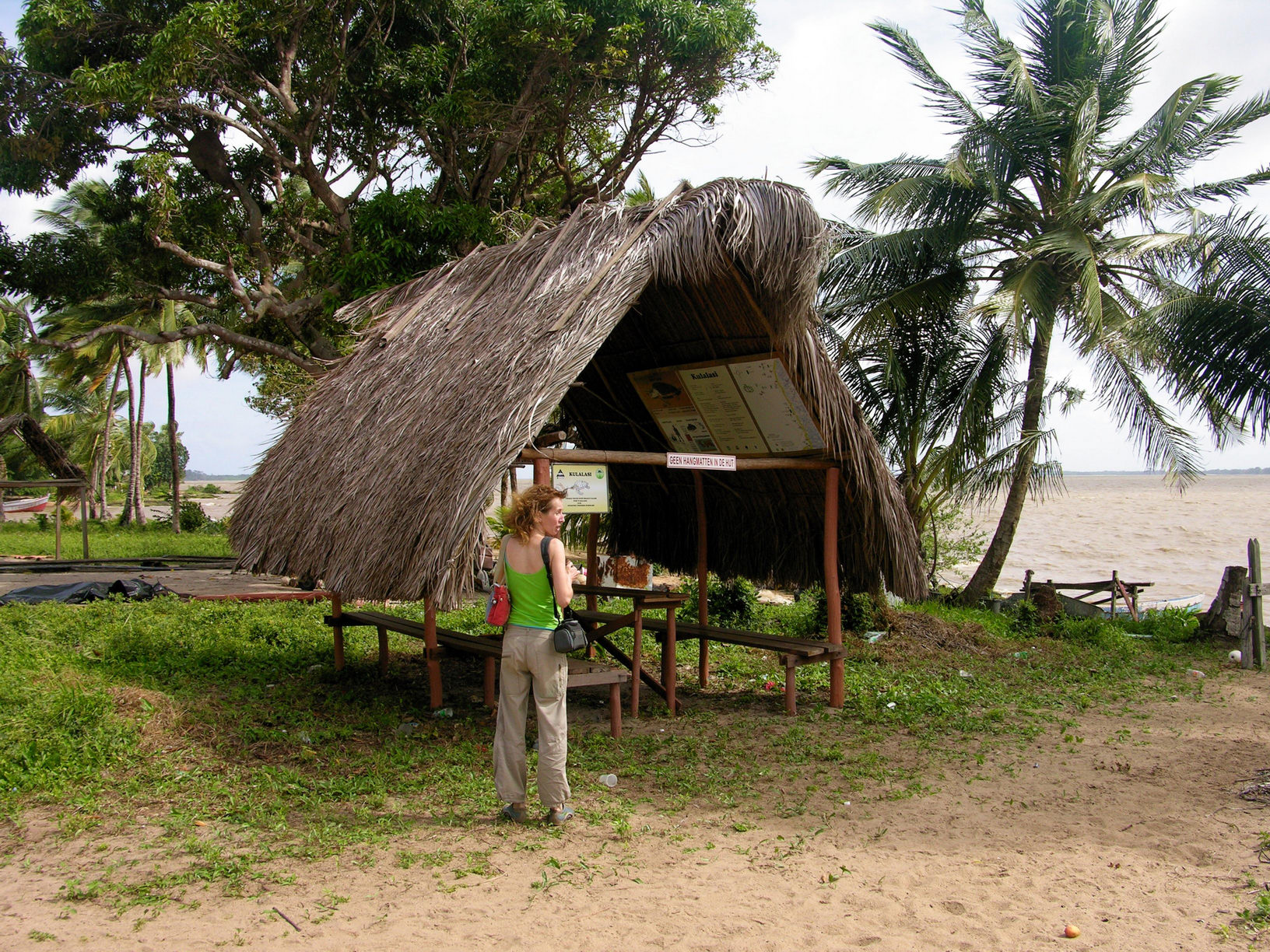
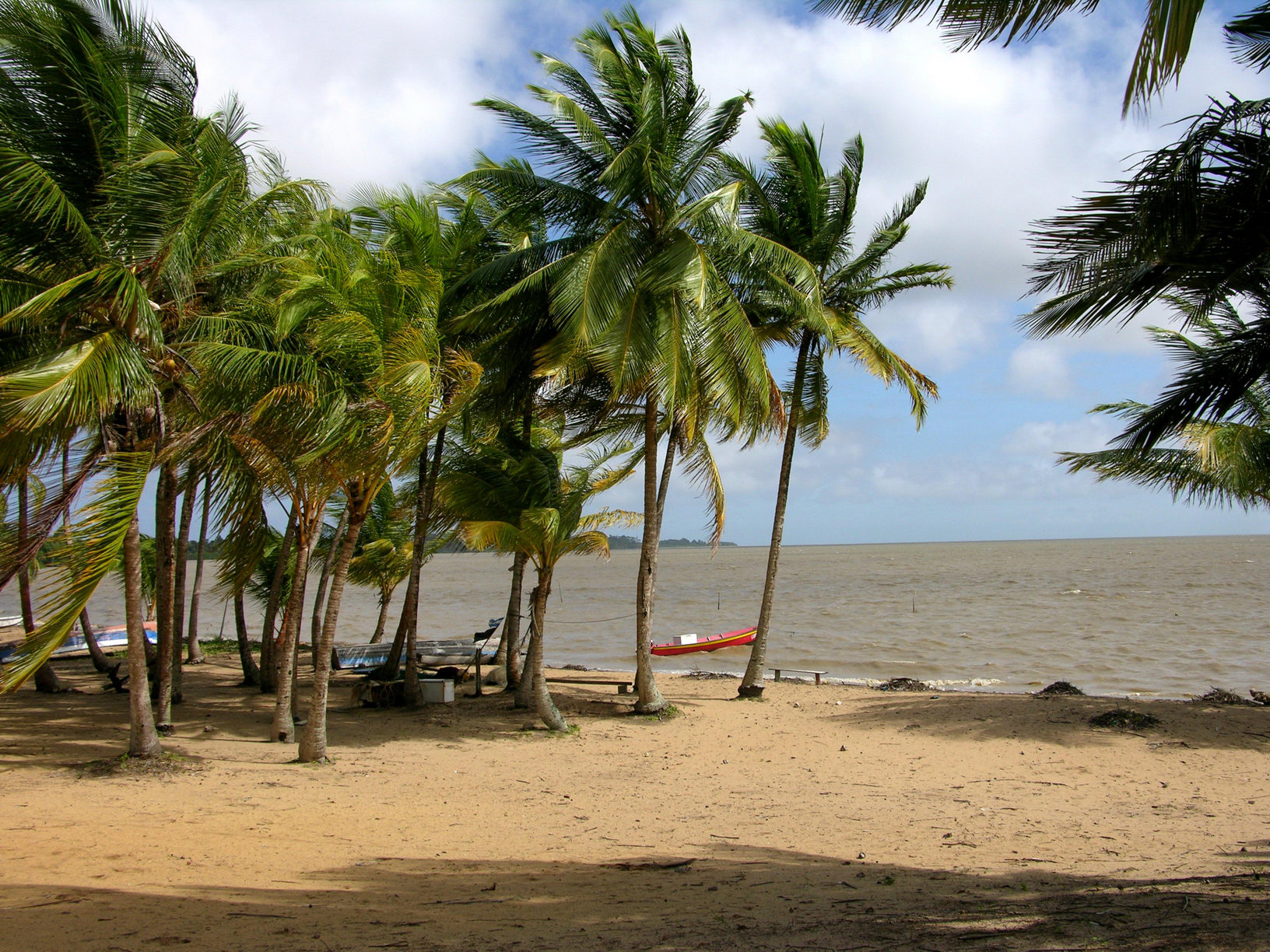
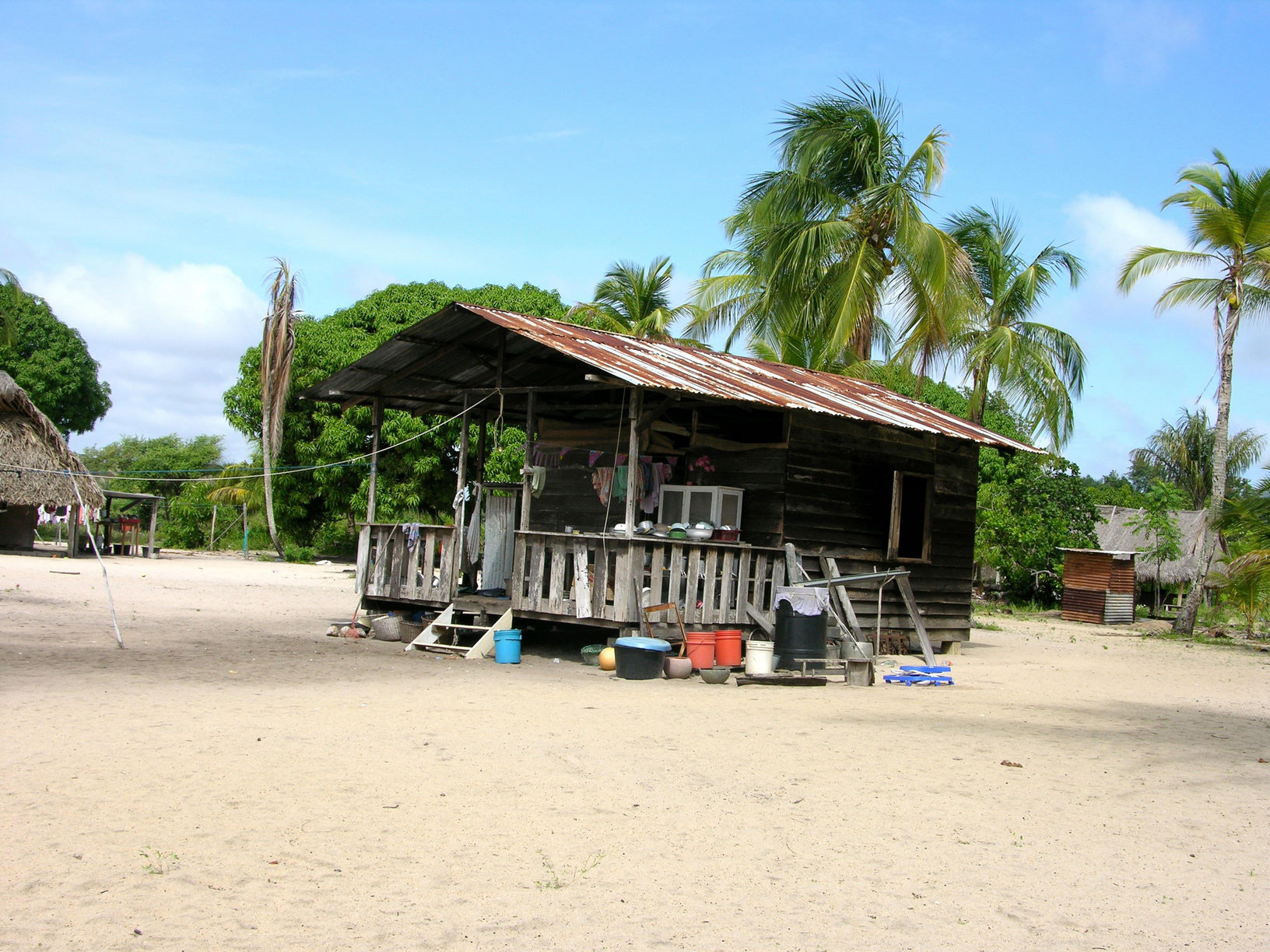
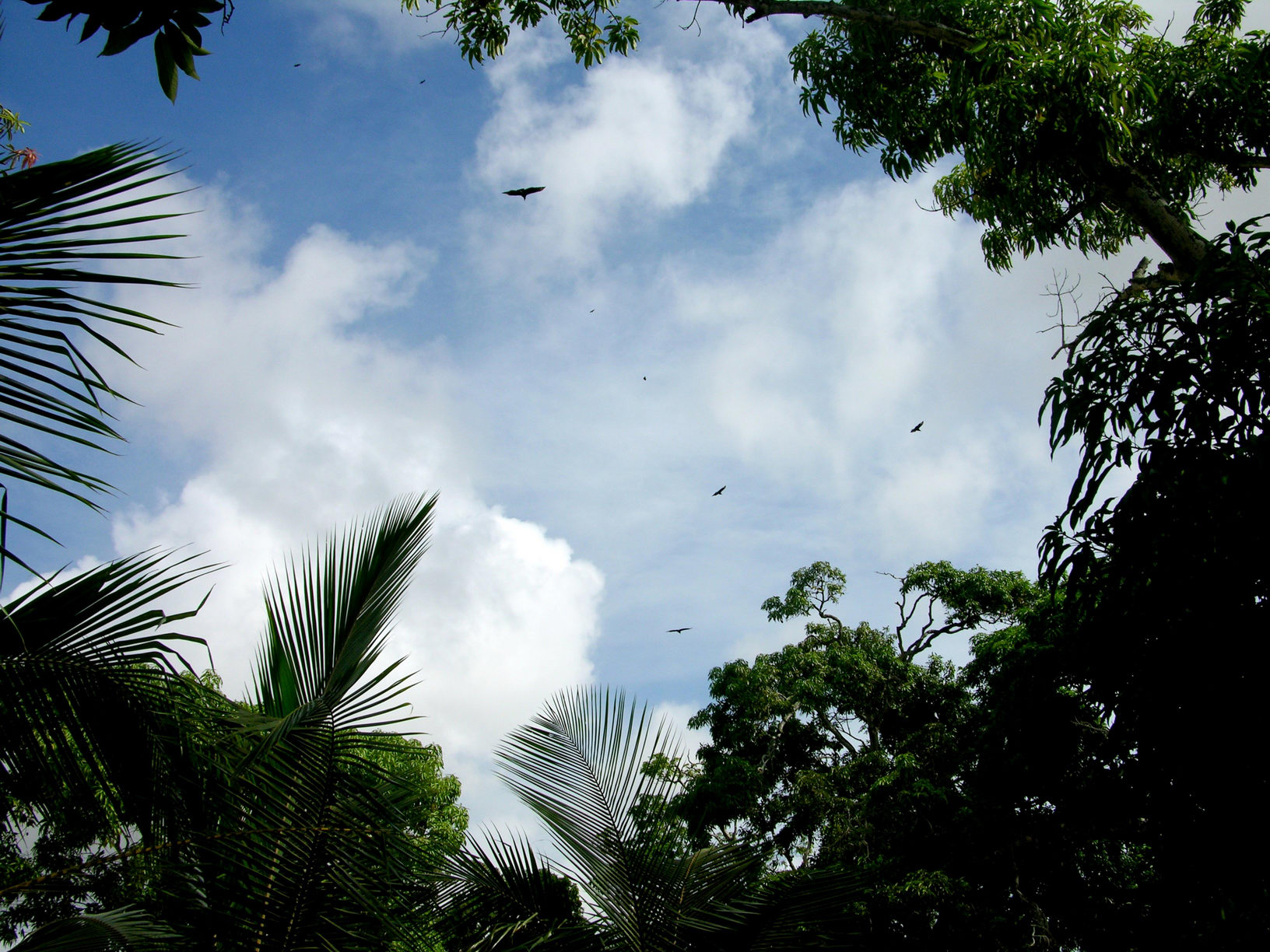
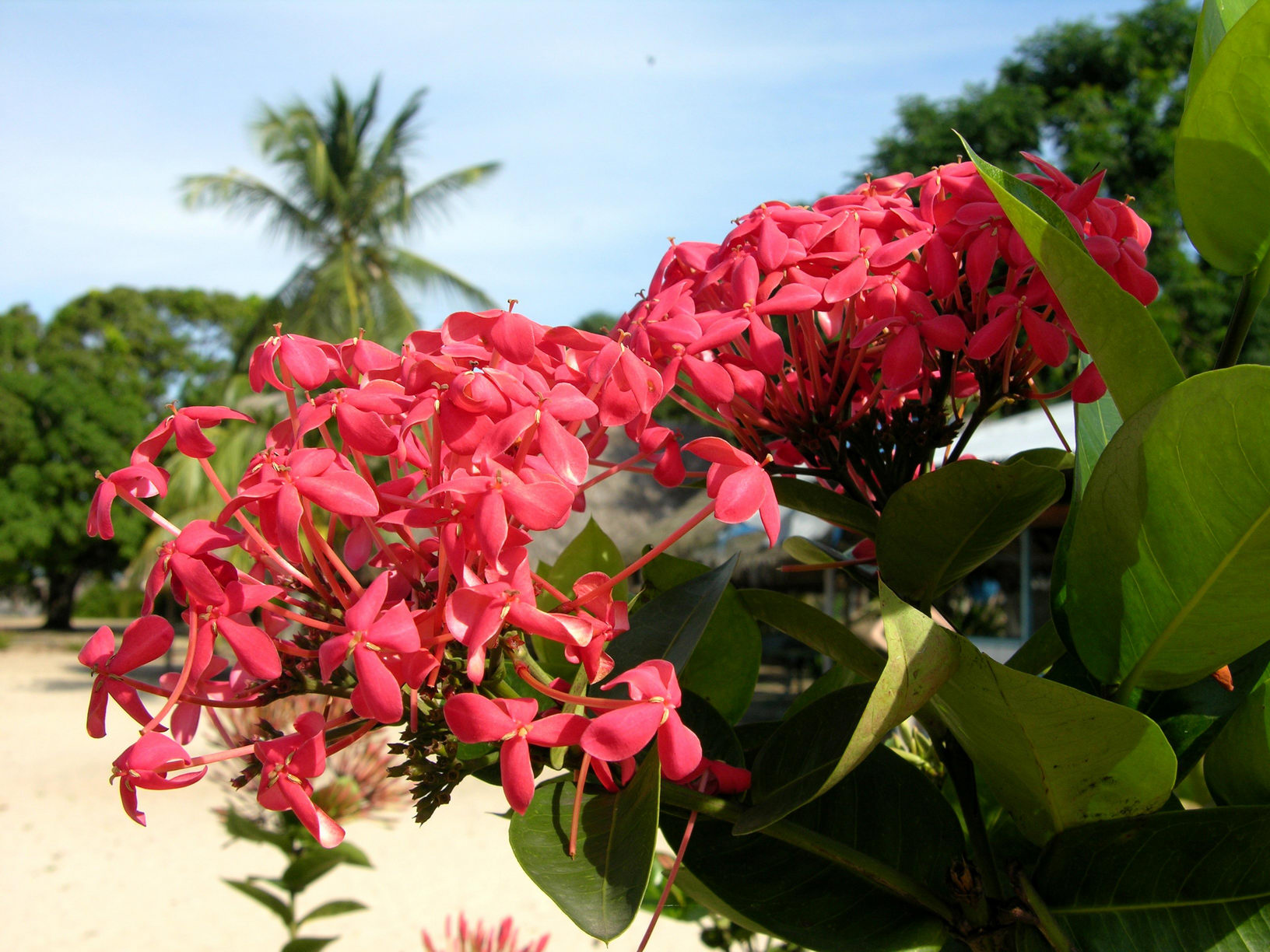
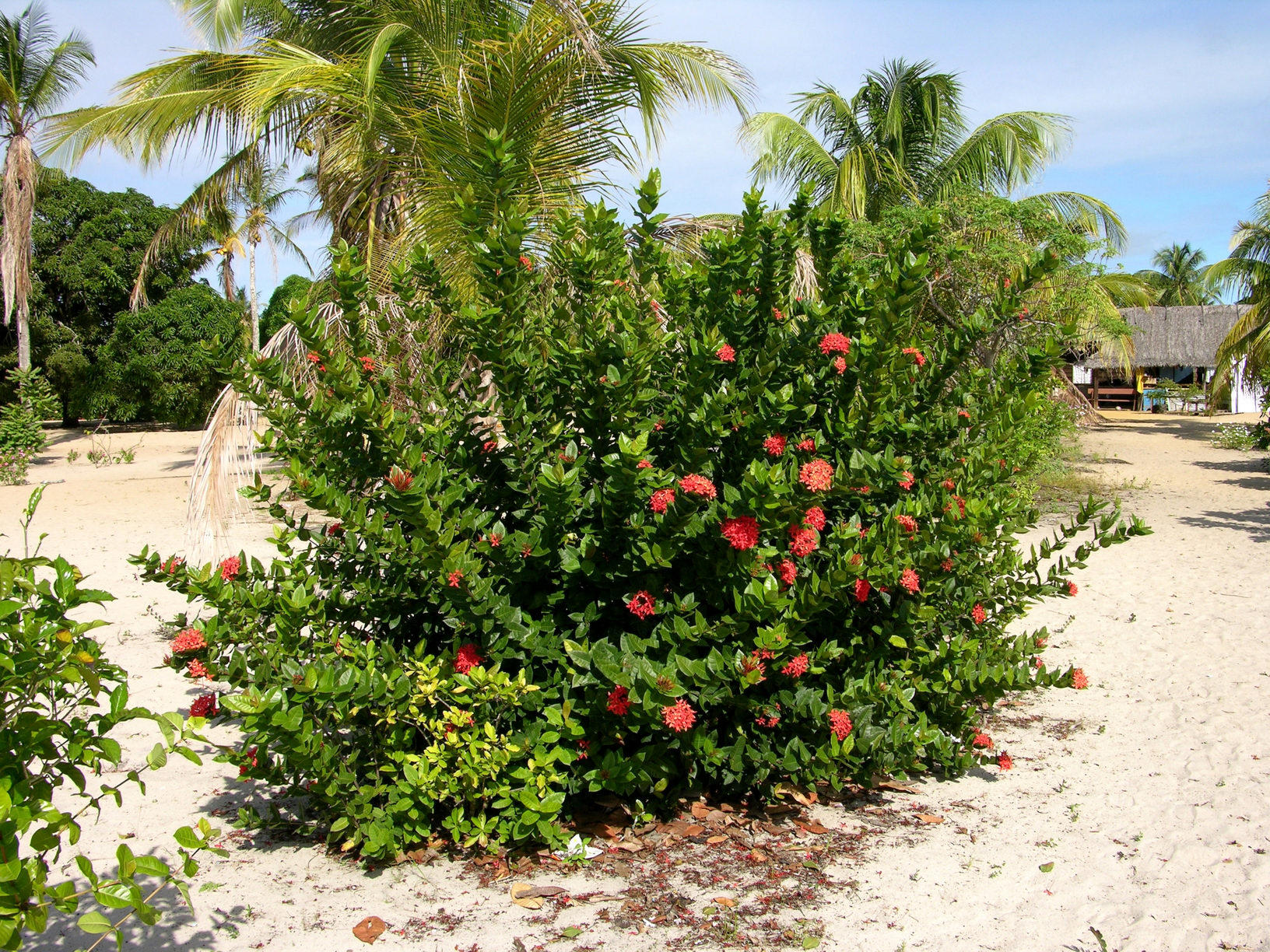
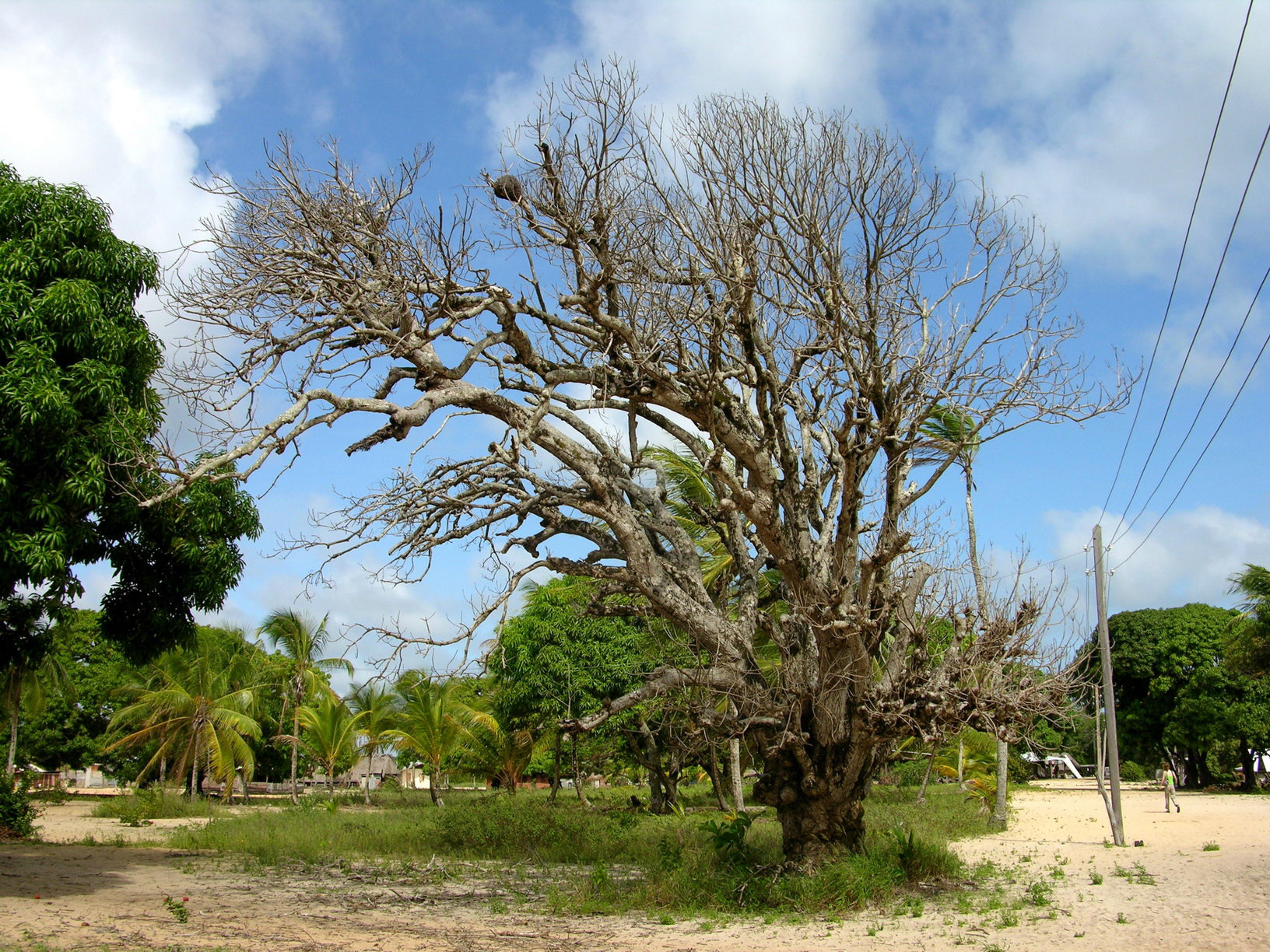
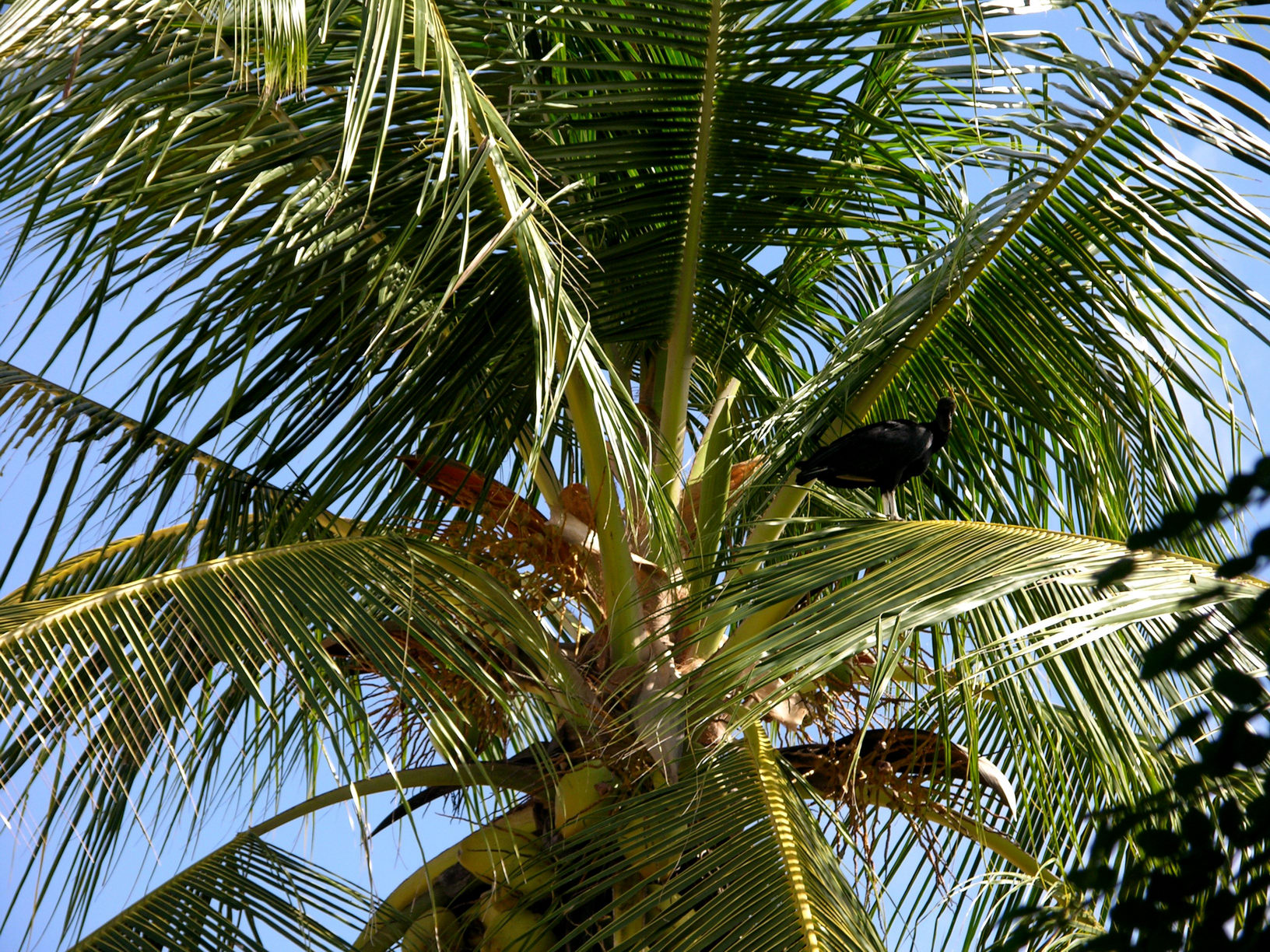
One hotel was even entirely full of some organised group. Twenty people went along the appointed route, herded by a guide. A sorry sight. Being out in the open and going everywhere in a crowd make no sense together. I almost felt sorry for them. Ah well, each to their own.
We got a room in another hotel for SRD 50. We were the only people there. There was a kitchen with a gas stove. We bought provisions in the one shop and made soup. No need to hurry. If the turtles really were there, they wouldn't come out of the sea until dark. They hardly ever crawled into the village itself. You'd have to hire a boat for another few kilometres to the beach on the ocean. You couldn't walk there because the path was blocked by coastal mangrove swamps.
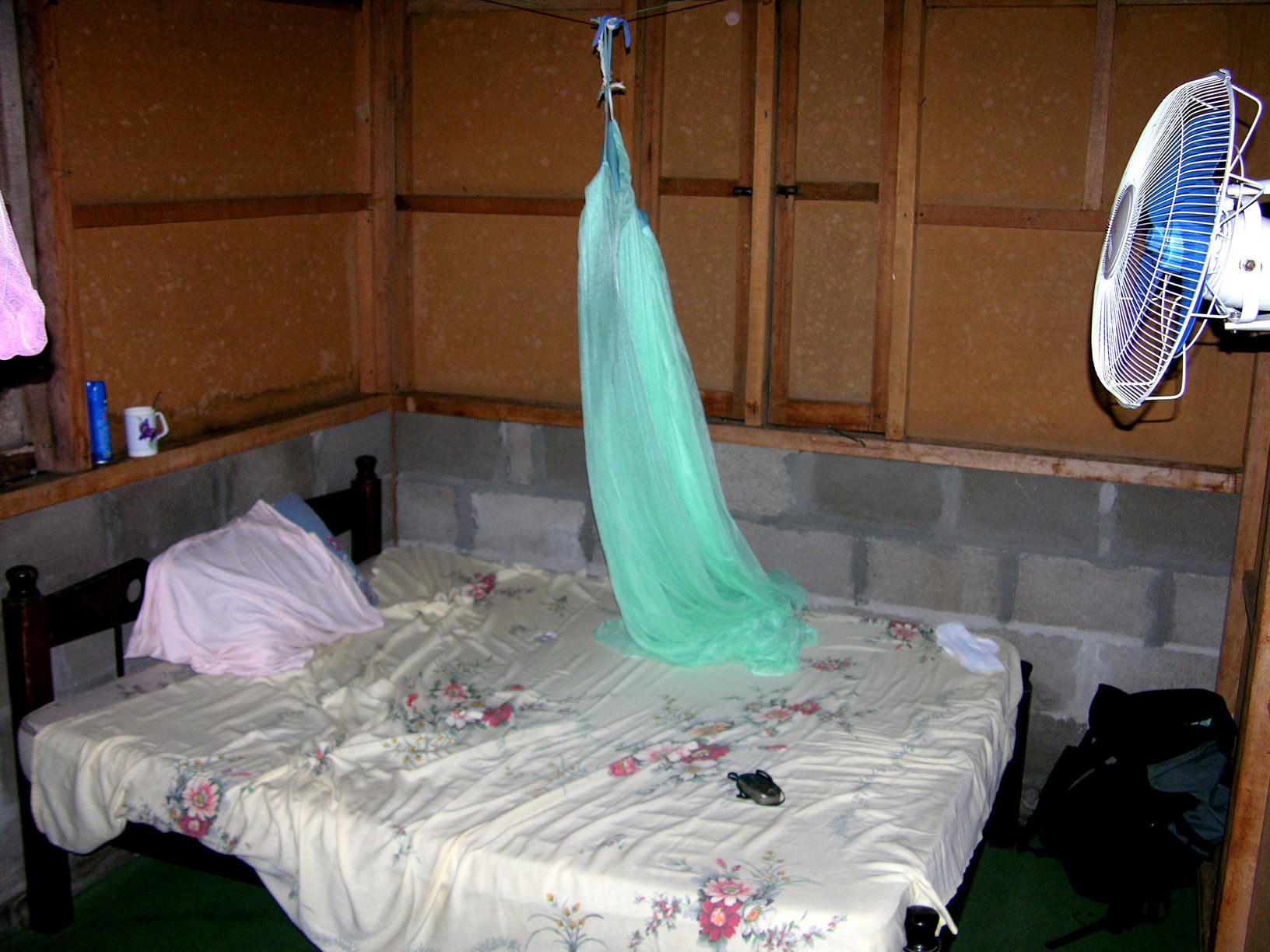
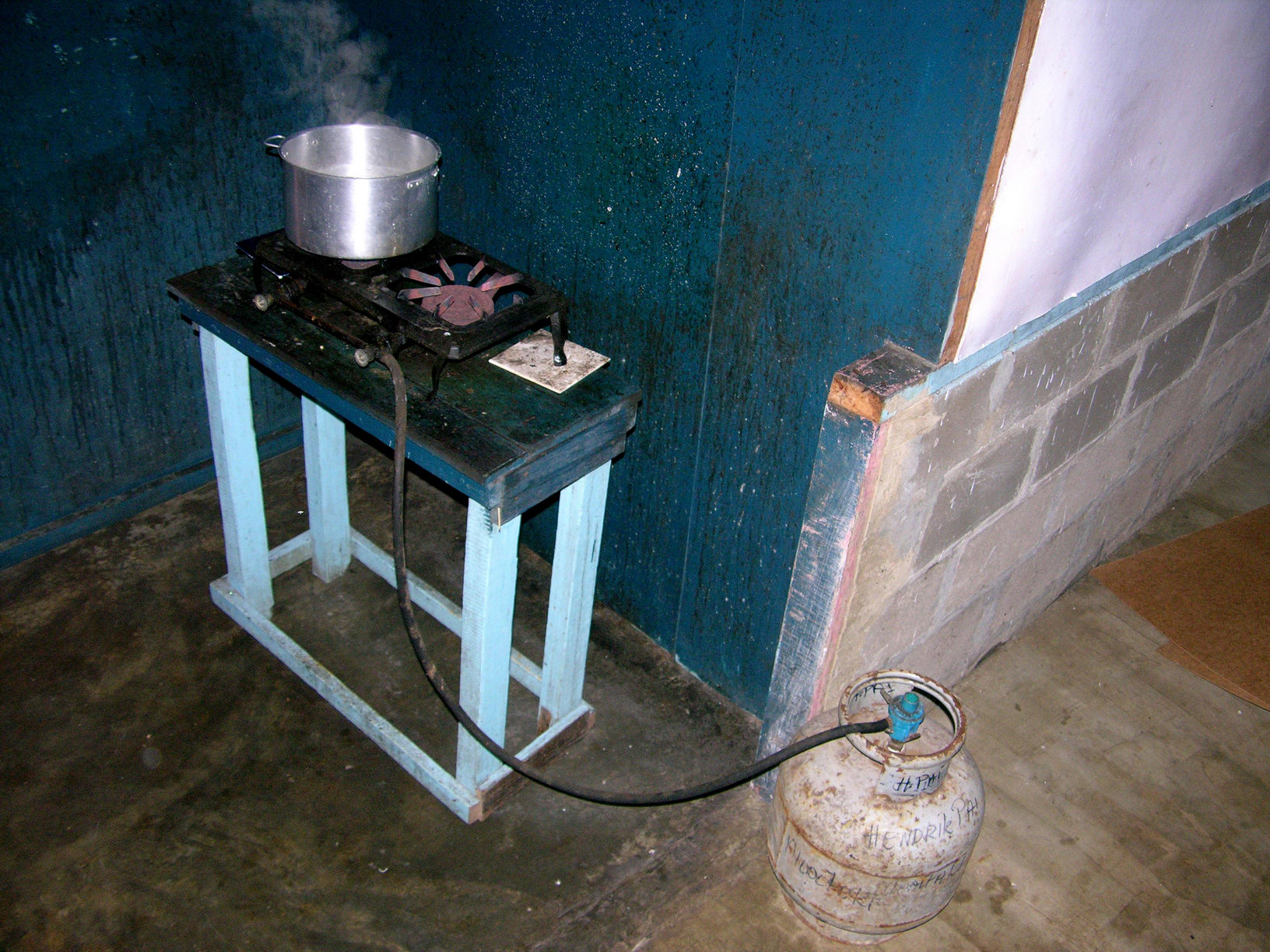
Our hopes of seeing the turtles were getting thinner. The villagers didn't know either about the turtles or about the calendar. There's no winter here and nobody cares whether it's January or March. A piece of folk wisdom says the turtles and tourists are somehow connected and turn up together. Everybody sent us to the fishermen, and they were at sea.
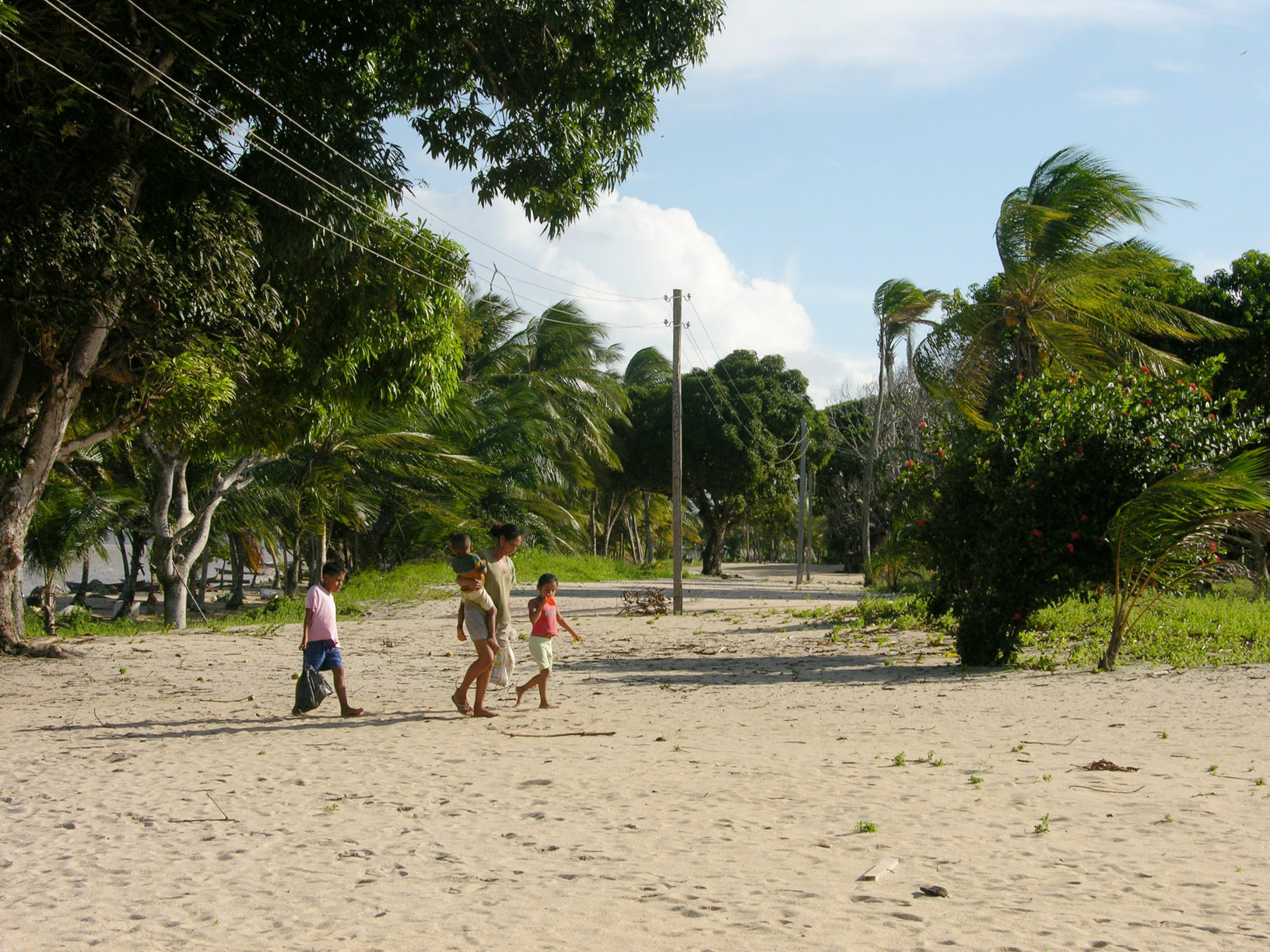
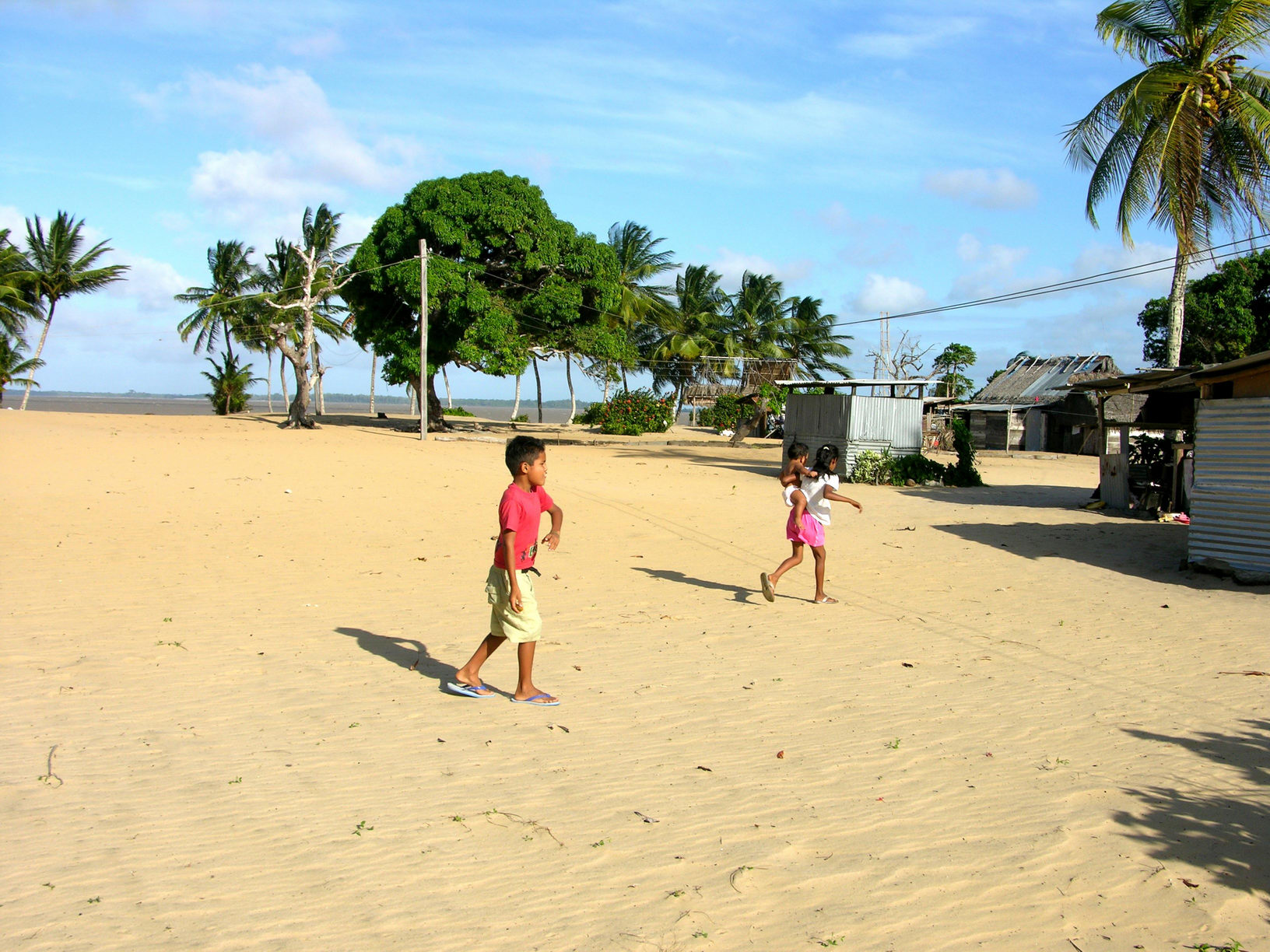
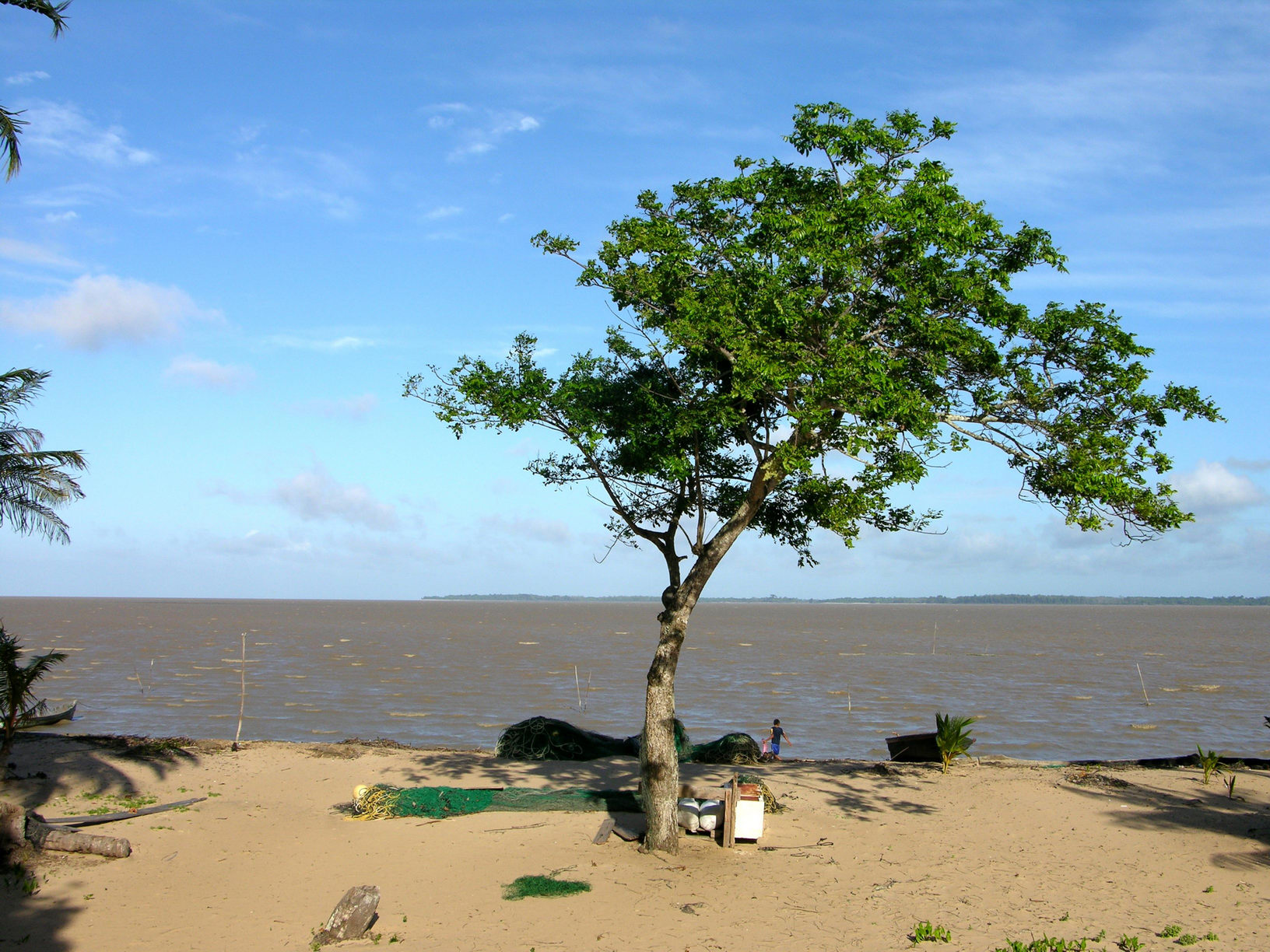
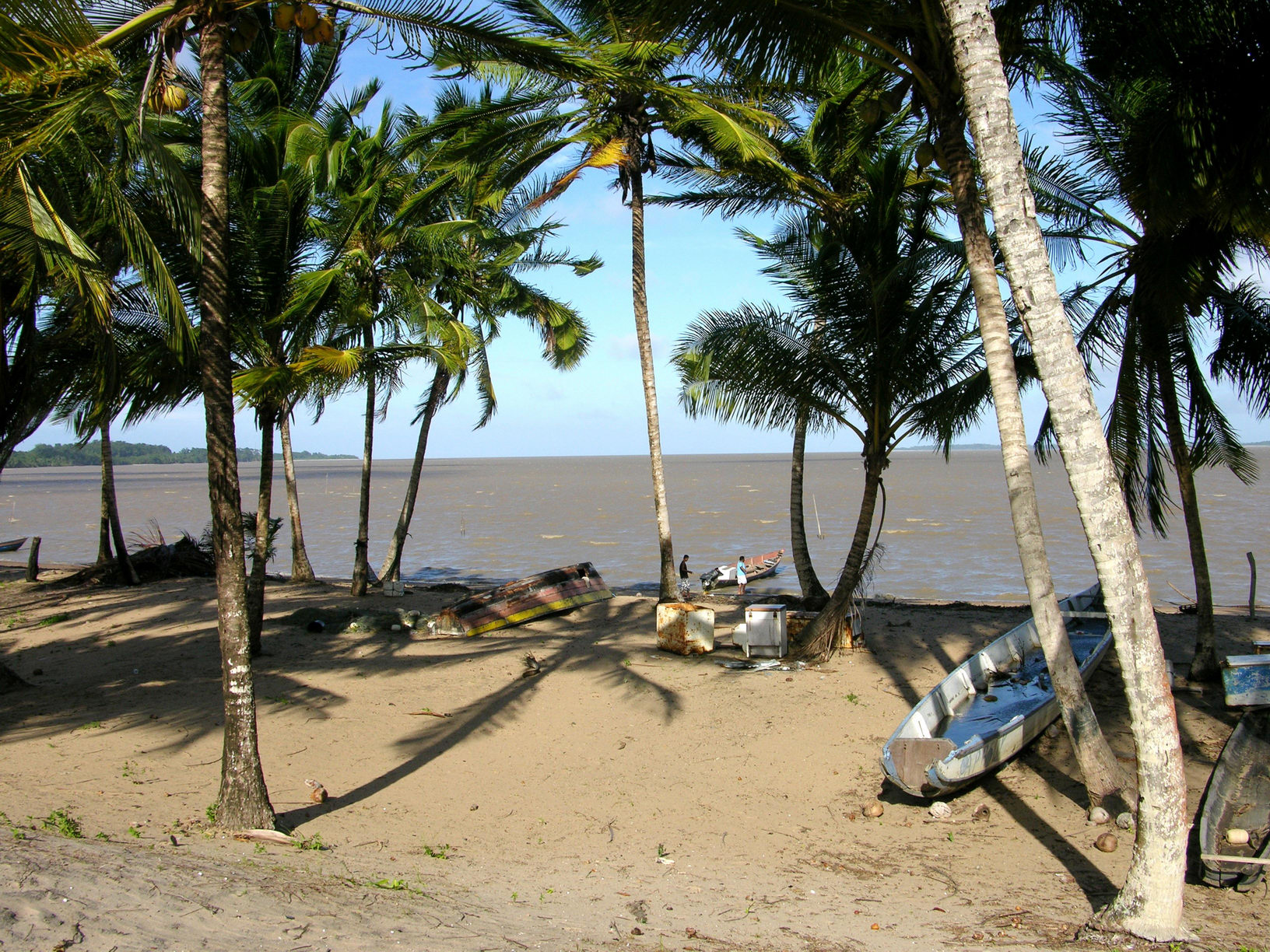
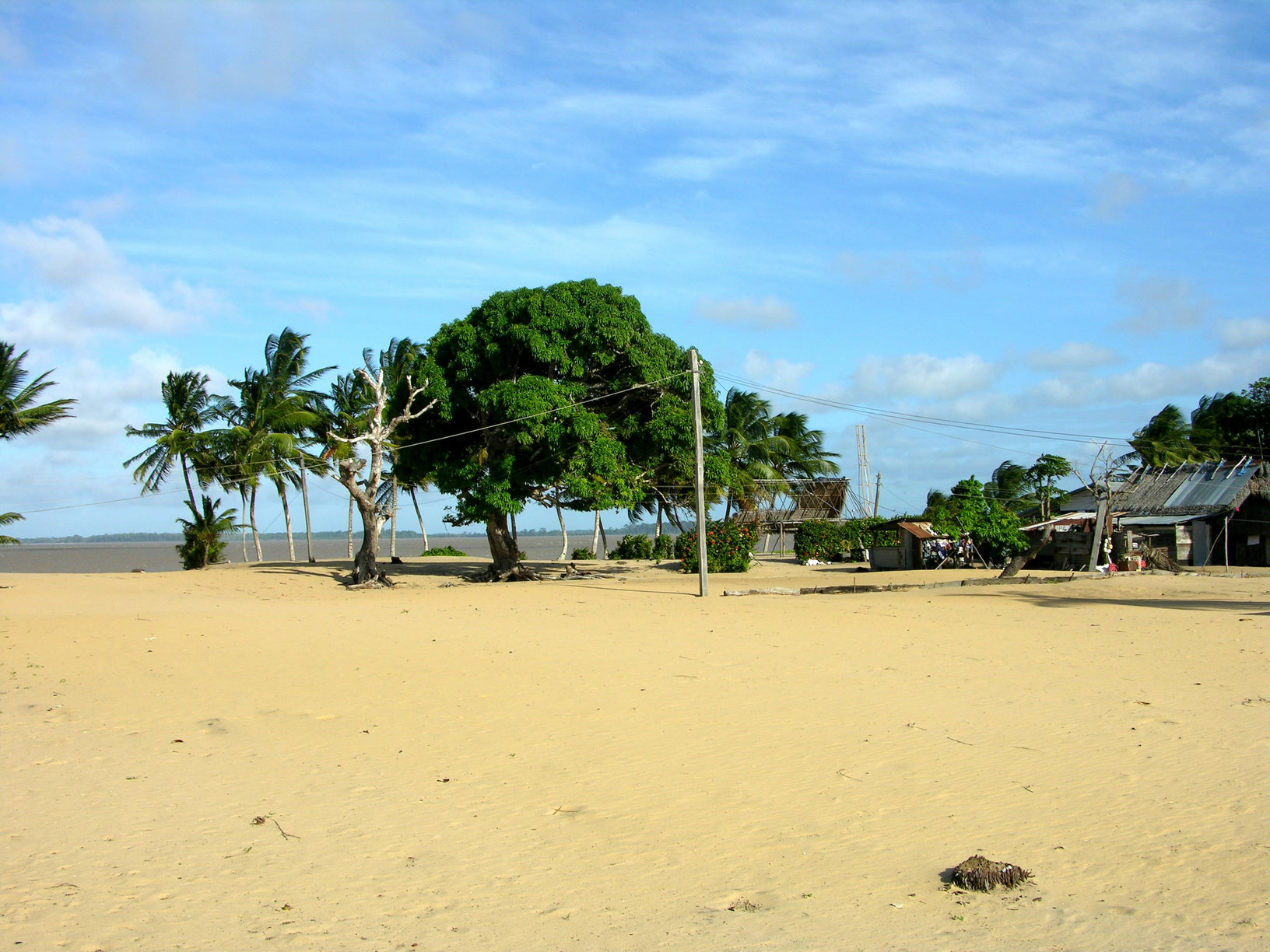
So we drank local Parbo beer, ate soup and breathed the fresh air.
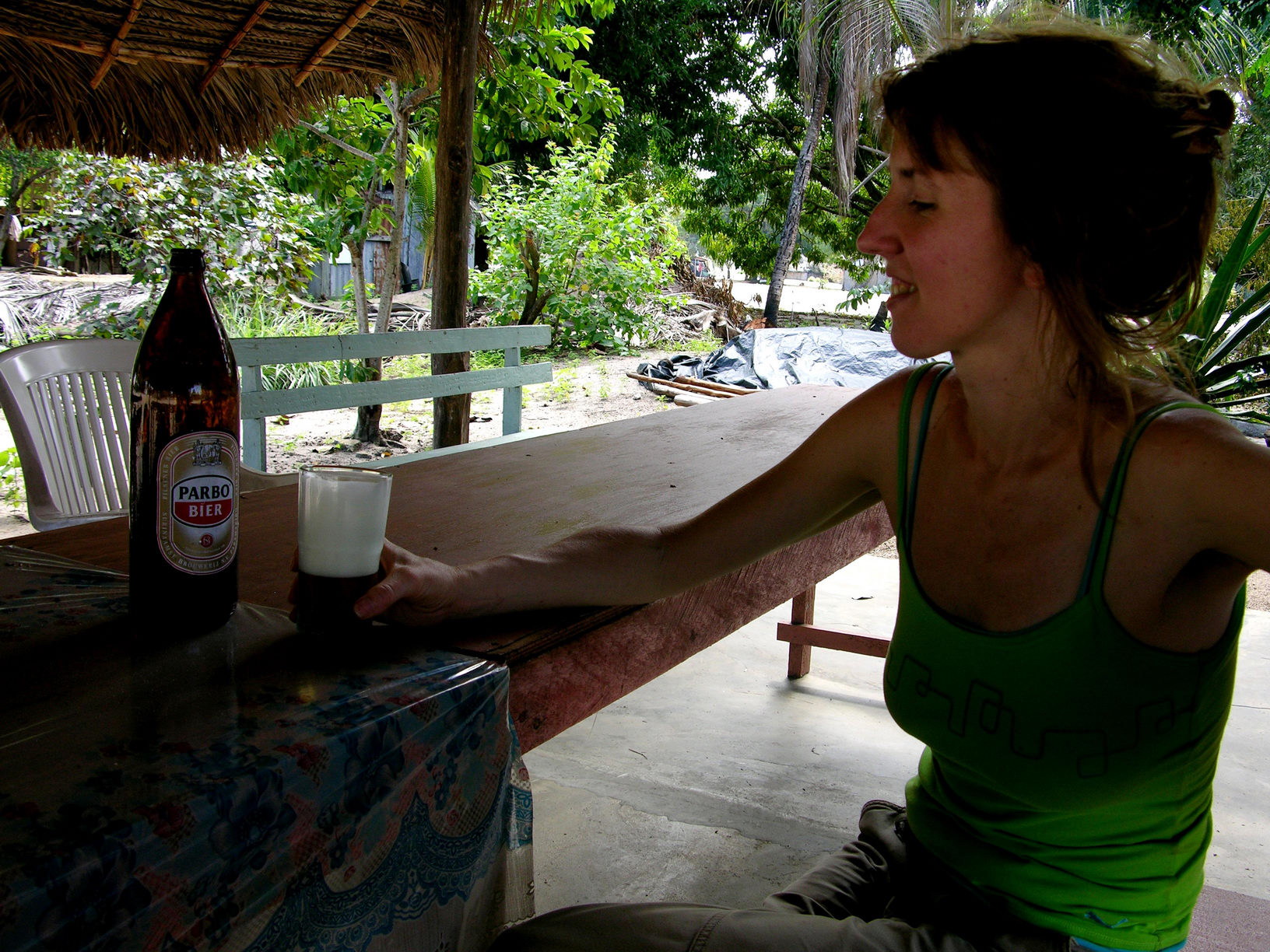
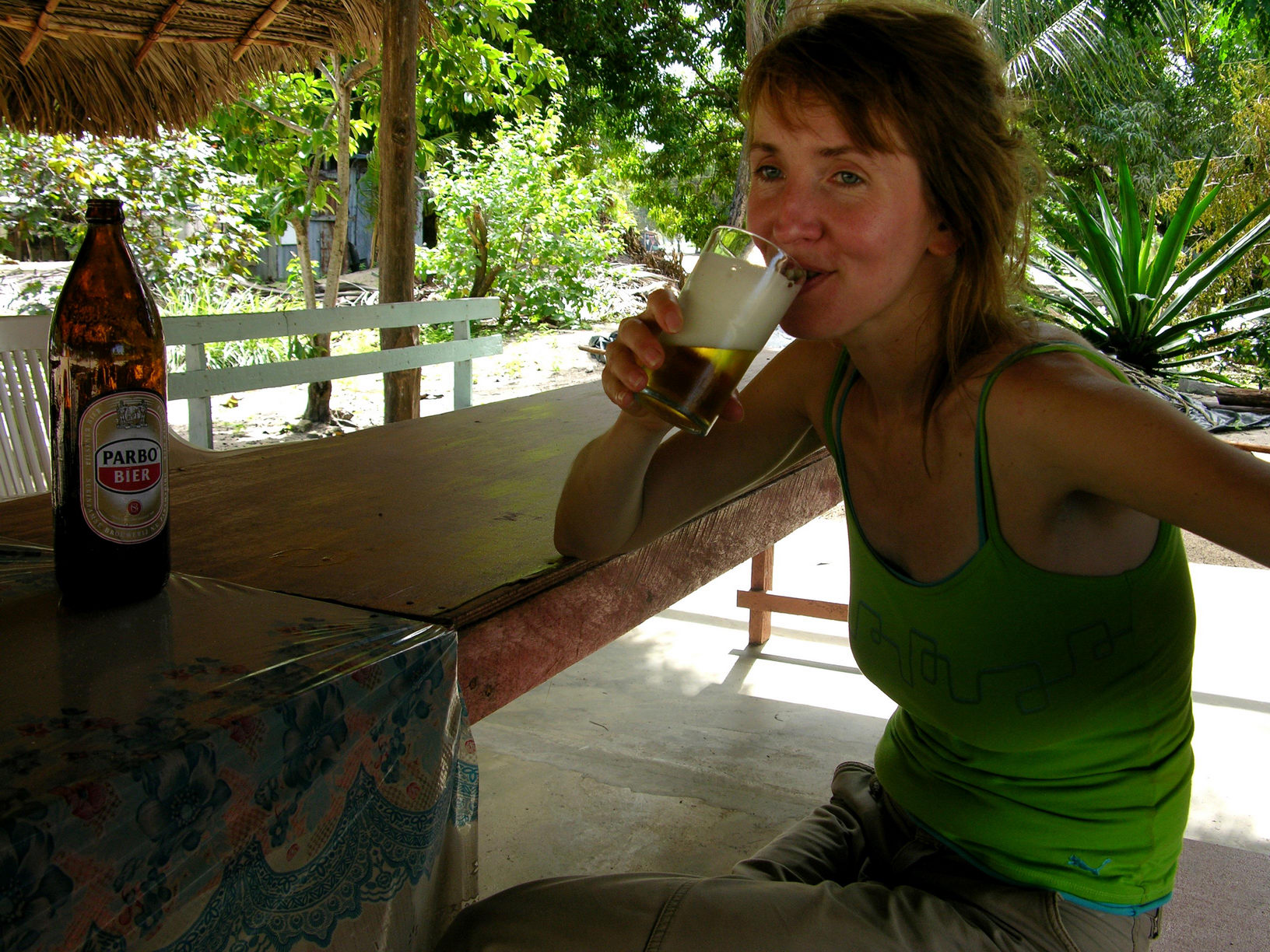
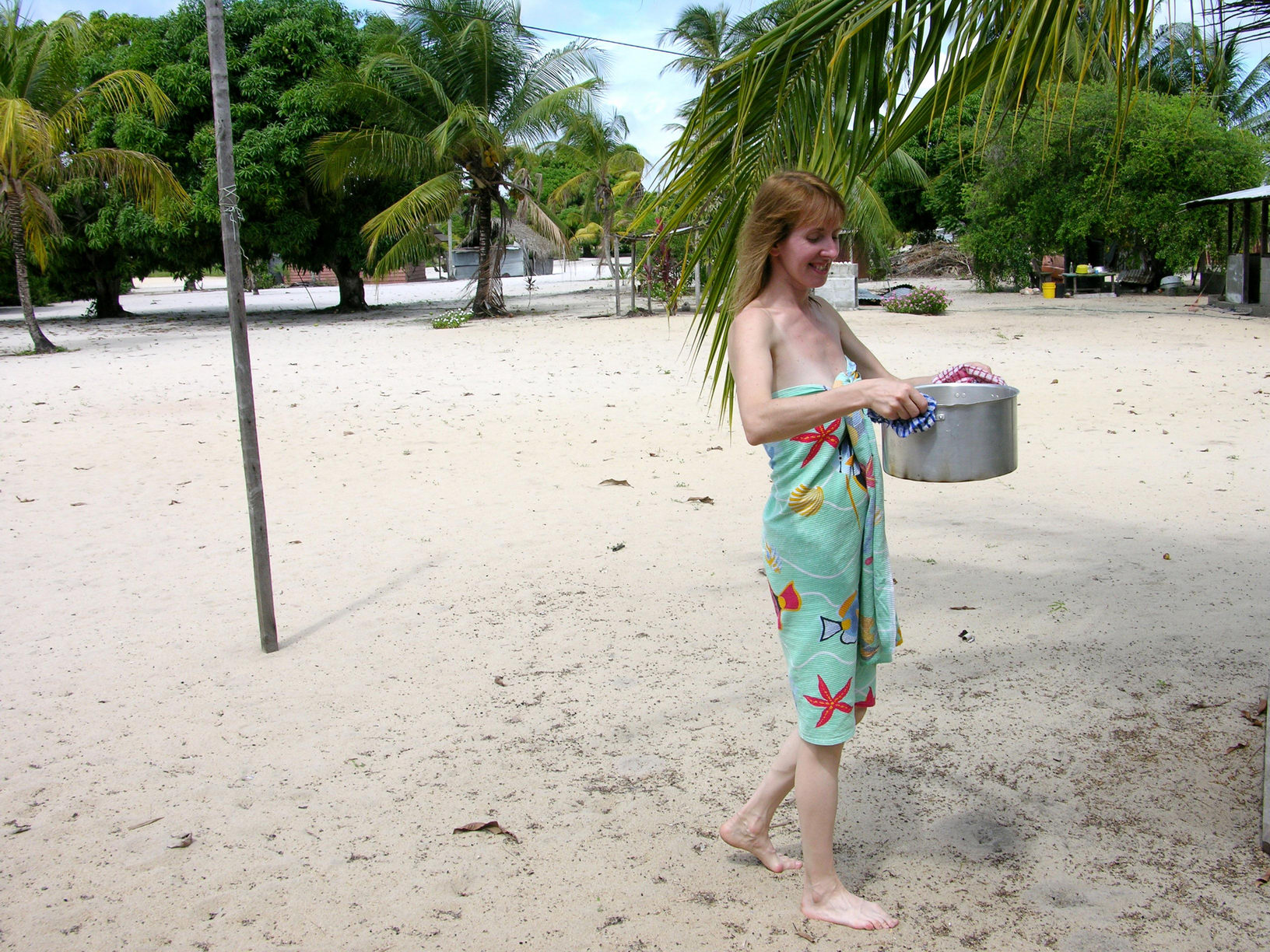
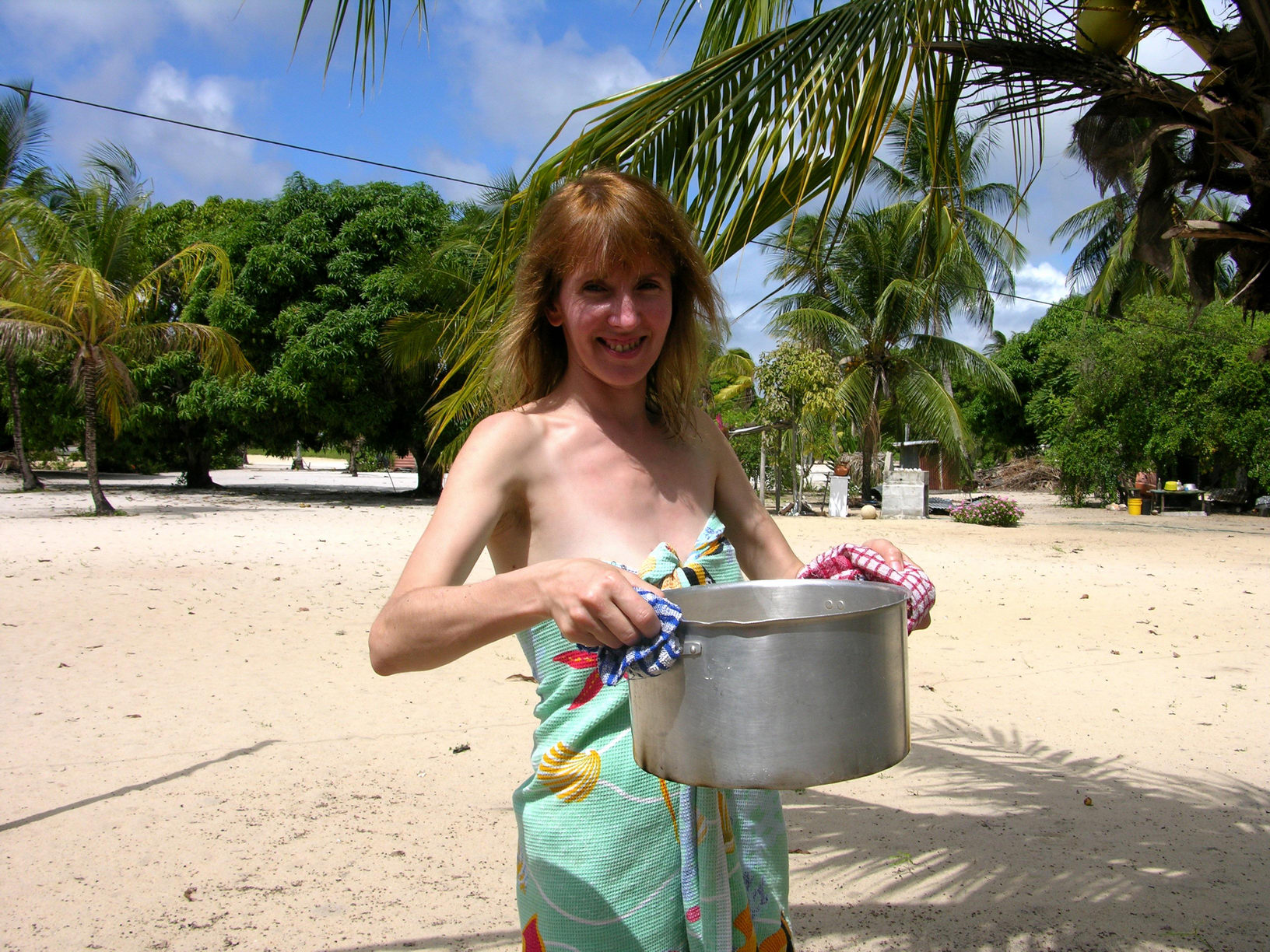
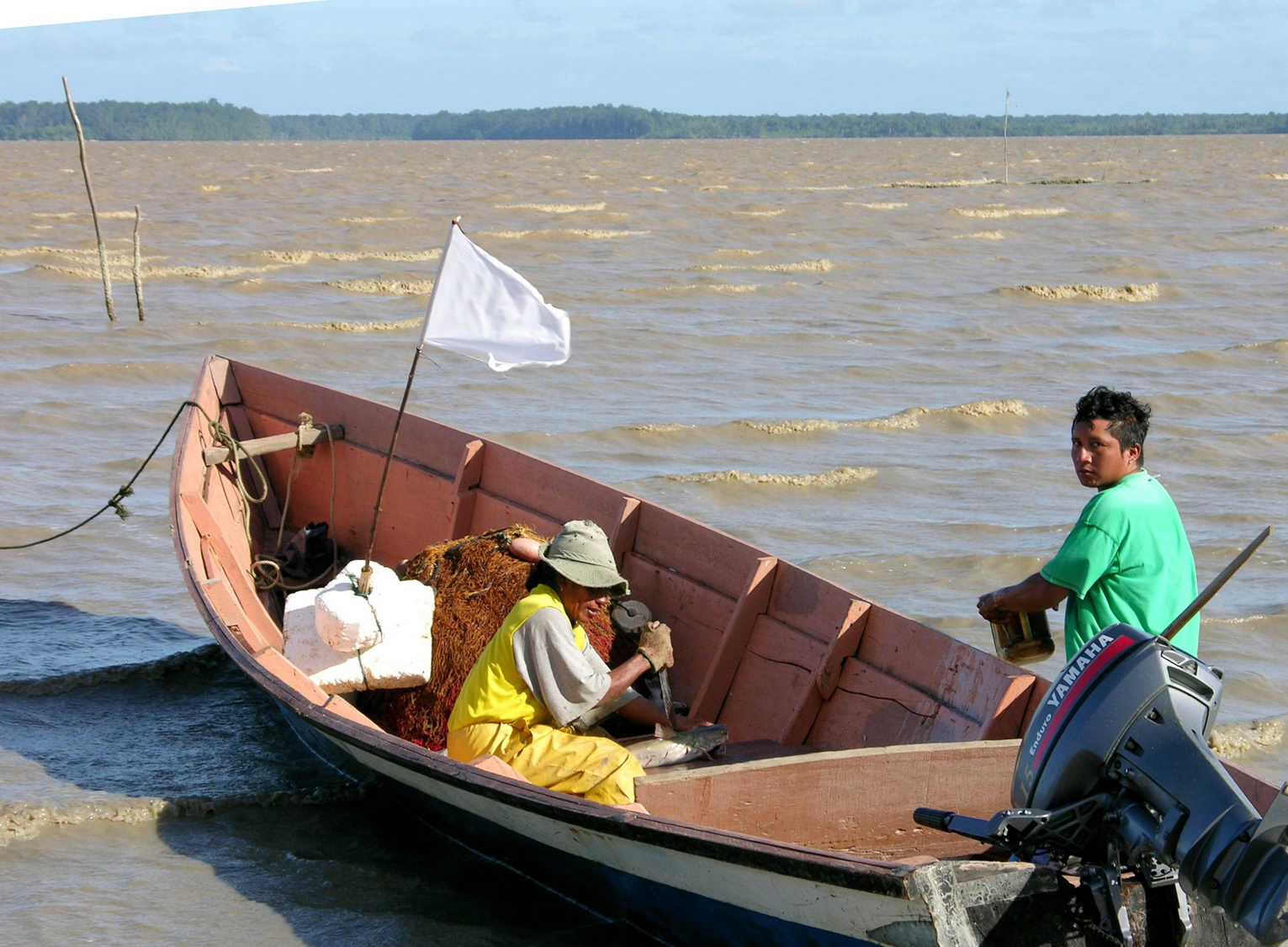
By evening, when the dugouts came in from the sea with their catch, it was clear we would have to wait two more months for turtles. Even invoking STINASU didn't help. They'd managed to corner the tour business, but the turtles for some reason took no notice of them and quietly enjoyed life in the blue sea. The fishermen laughed. “Look who you chose to listen to. For money they'll promise anything.” How often I'd told myself that going to organised tour agencies was unsporting and downright harmful. But there was nobody to blame but me. The village was lovely even without the turtles. It was quiet, for one thing. We hadn't come here for nothing. In the morning one of the local fishermen was going to Albina, so we went with him.
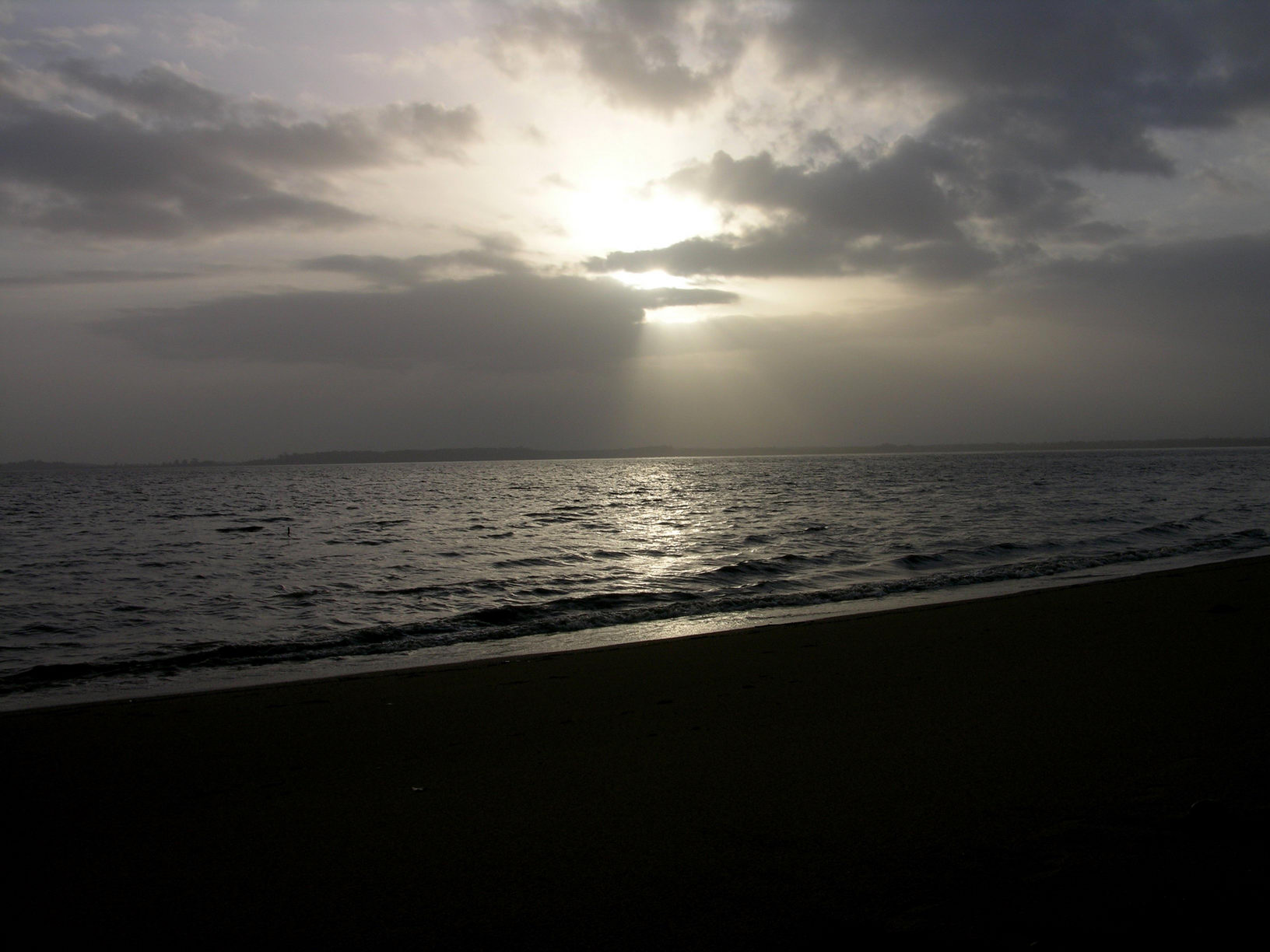
We picked up the car in a hurry and were at the embassy in the capital by ten. It turned out nobody had done anything about the visas, and our passports were lying where we'd left them two days before. Just as well we hadn't come before closing, or we'd have been too late this time too. The visas cost thirty US dollars each. They wouldn't take local currency or give change, so we had to go to an exchange. In addition the application form was supposed to cost five Surinamese dollars apiece.
They stamped the visas in front of us the moment we brought the money.
Now our future was settled, but it wasn't quite that simple. A foreigner staying in Suriname for longer than seven days had to get a stamp from the police. Something like the old Soviet residence registration. Lonely Planet gave the address. We decided to walk. There's almost always a traffic jam in Paramaribo, and a car might have been slower. Unfortunately we underestimated the size of the city and the heat. It turned out to be over an hour on foot. We almost evaporated. The police station closed at two and we were running late. We had to hurry and almost run. We made it, only to find that you no longer got the stamp at the police headquarters. It was done by immigration, ten kilometres farther away. Naturally all the taxis vanished as soon as we tried to hail one. Time ran out and we had to spend the night in Paramaribo. Perhaps that was a good thing. The city is big and we were still a long way from seeing all of it.
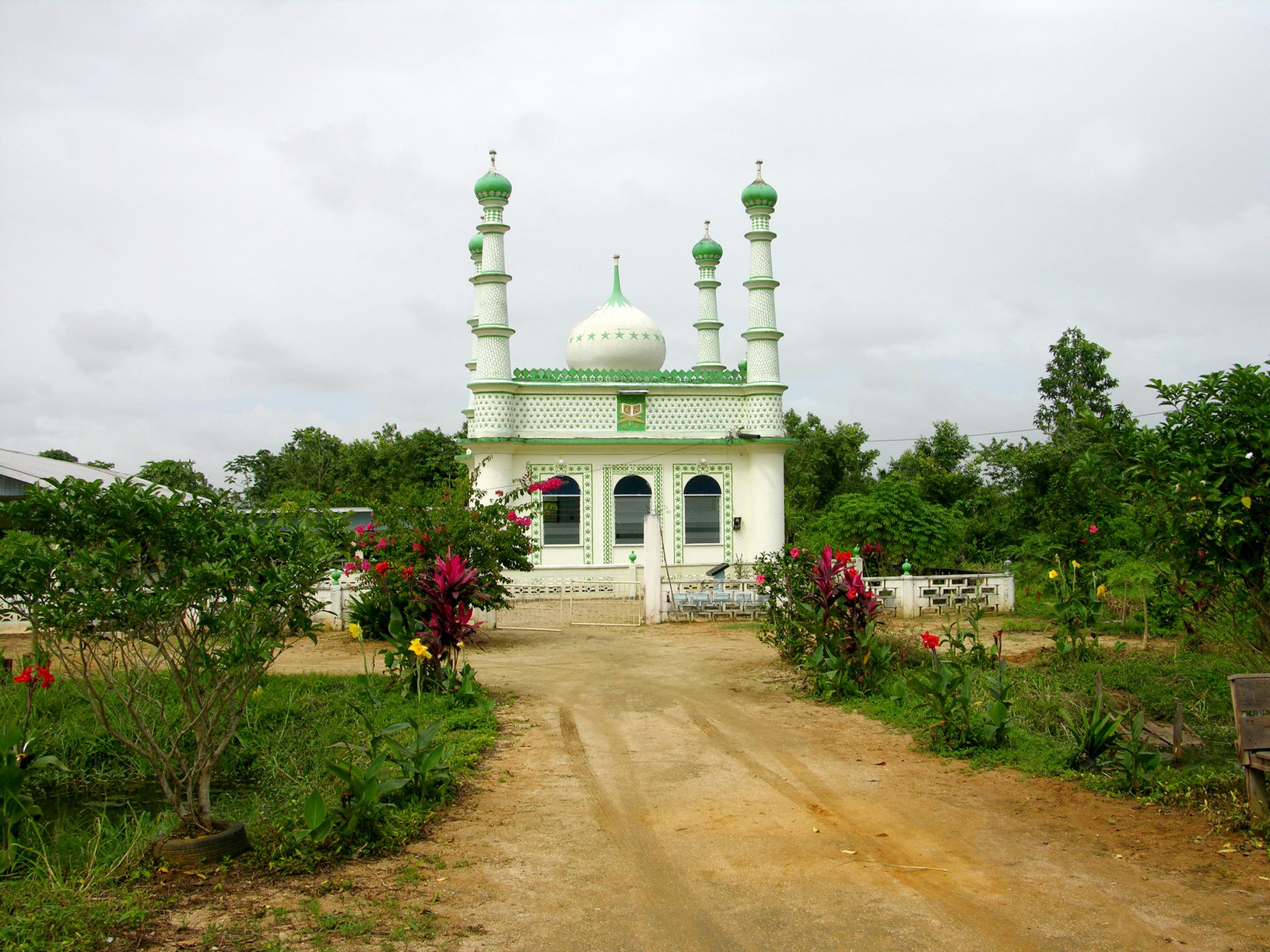
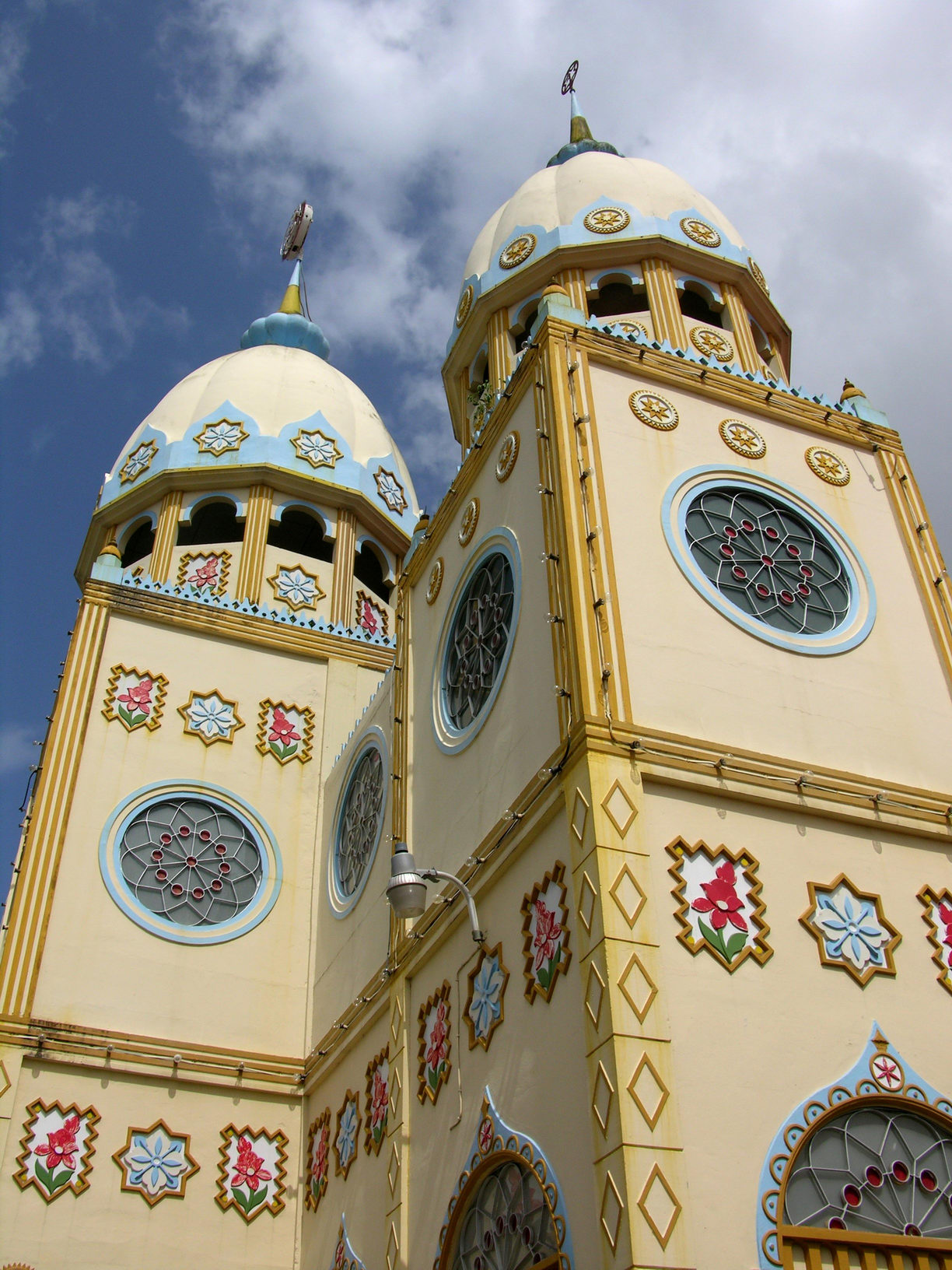
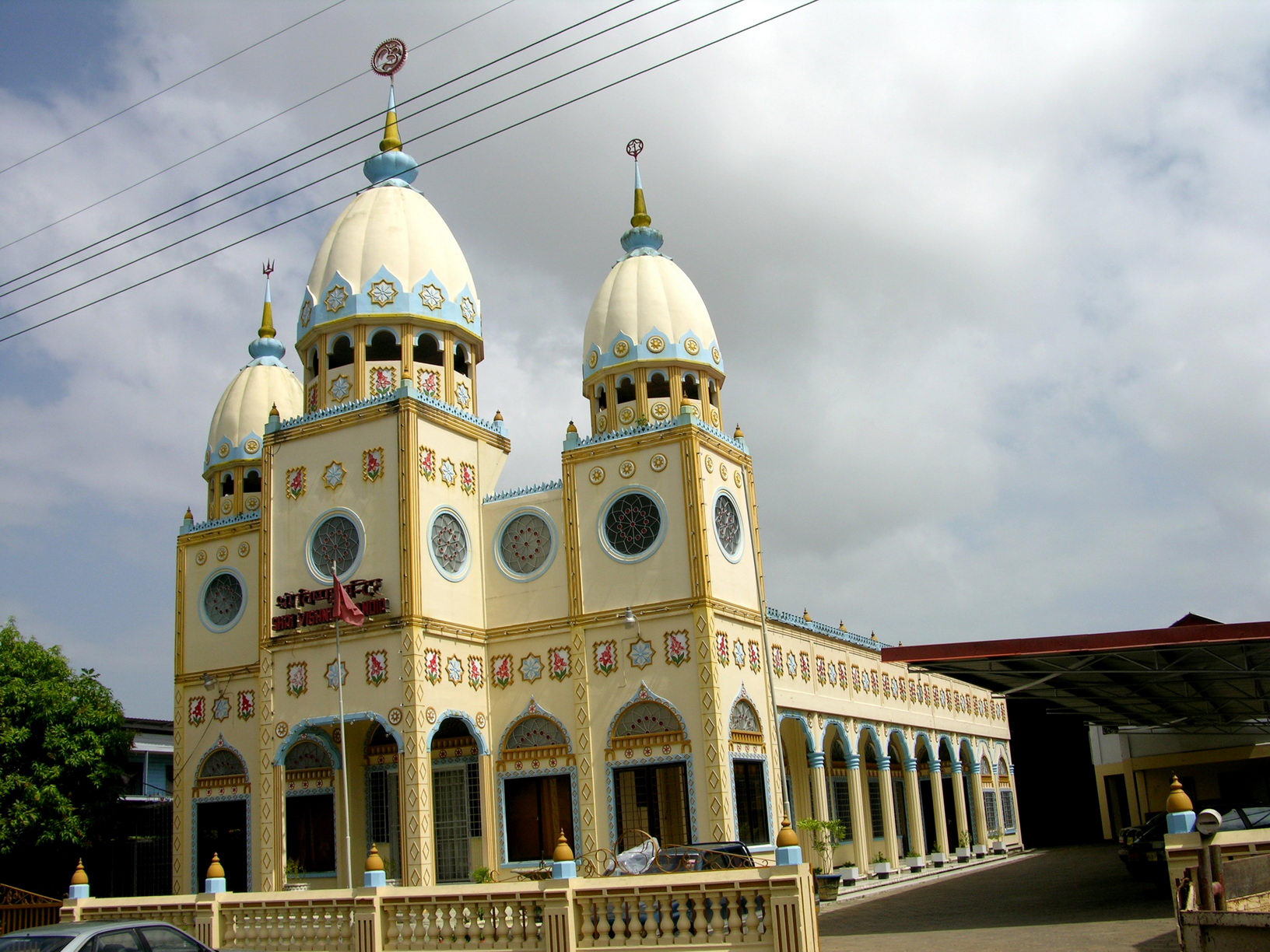
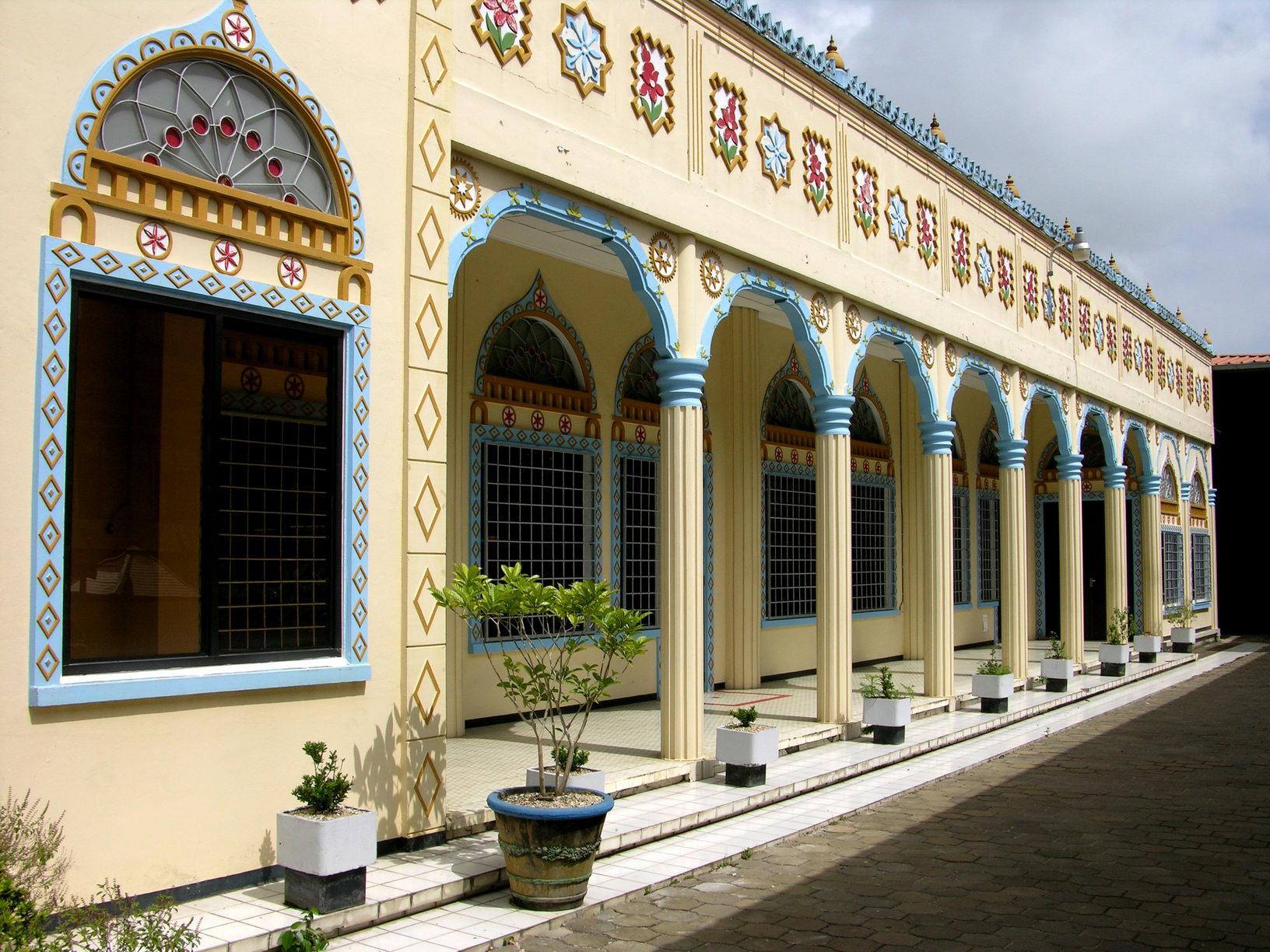
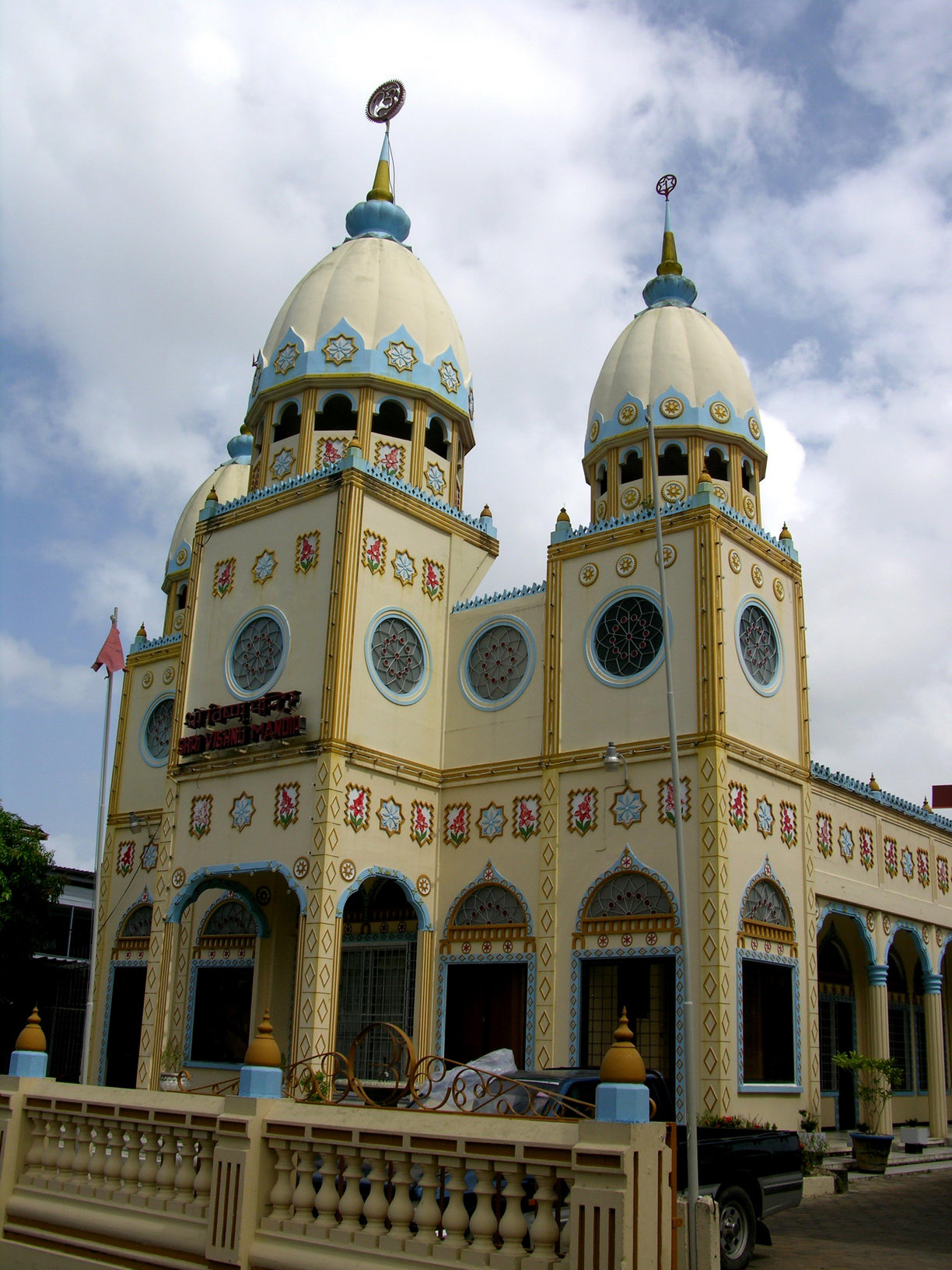
Among the places we hadn't seen were a Buddhist place of worship, its temple, and the Vedic centre of the Arya Samaj. They're across the road from one another. The Arya centre is particularly beautiful, with ornate little towers and a red roof. For some reason it was empty inside.
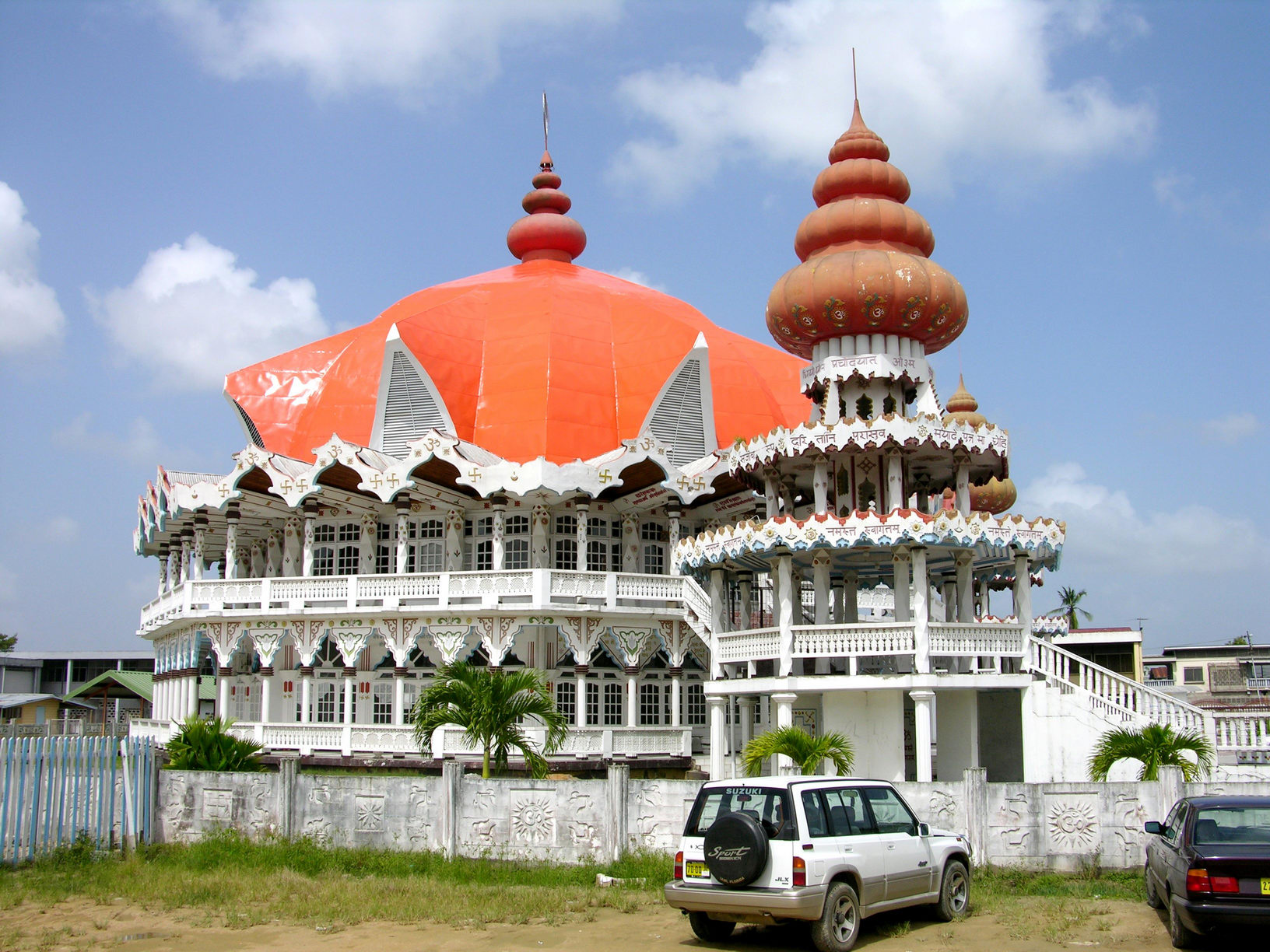
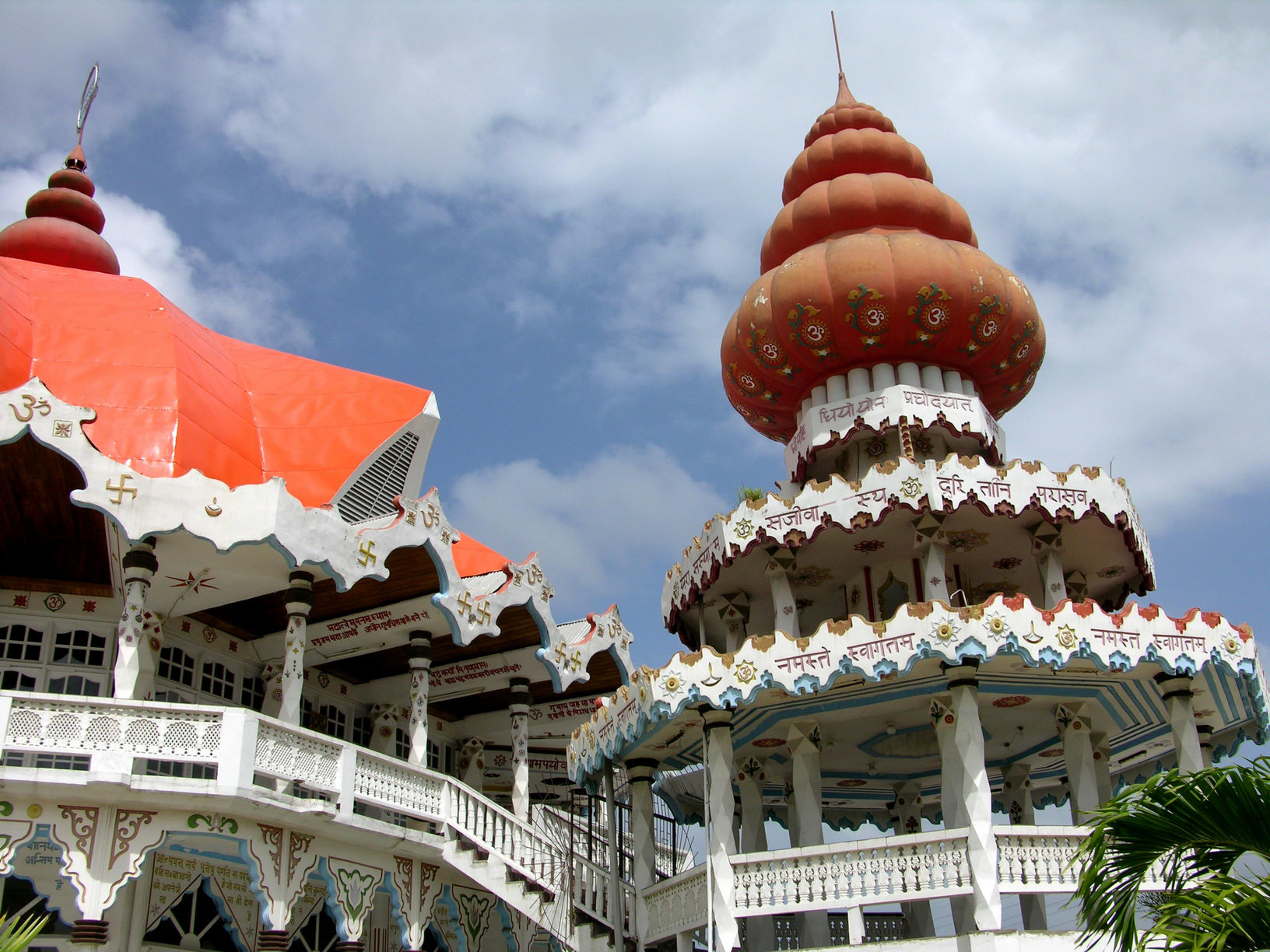
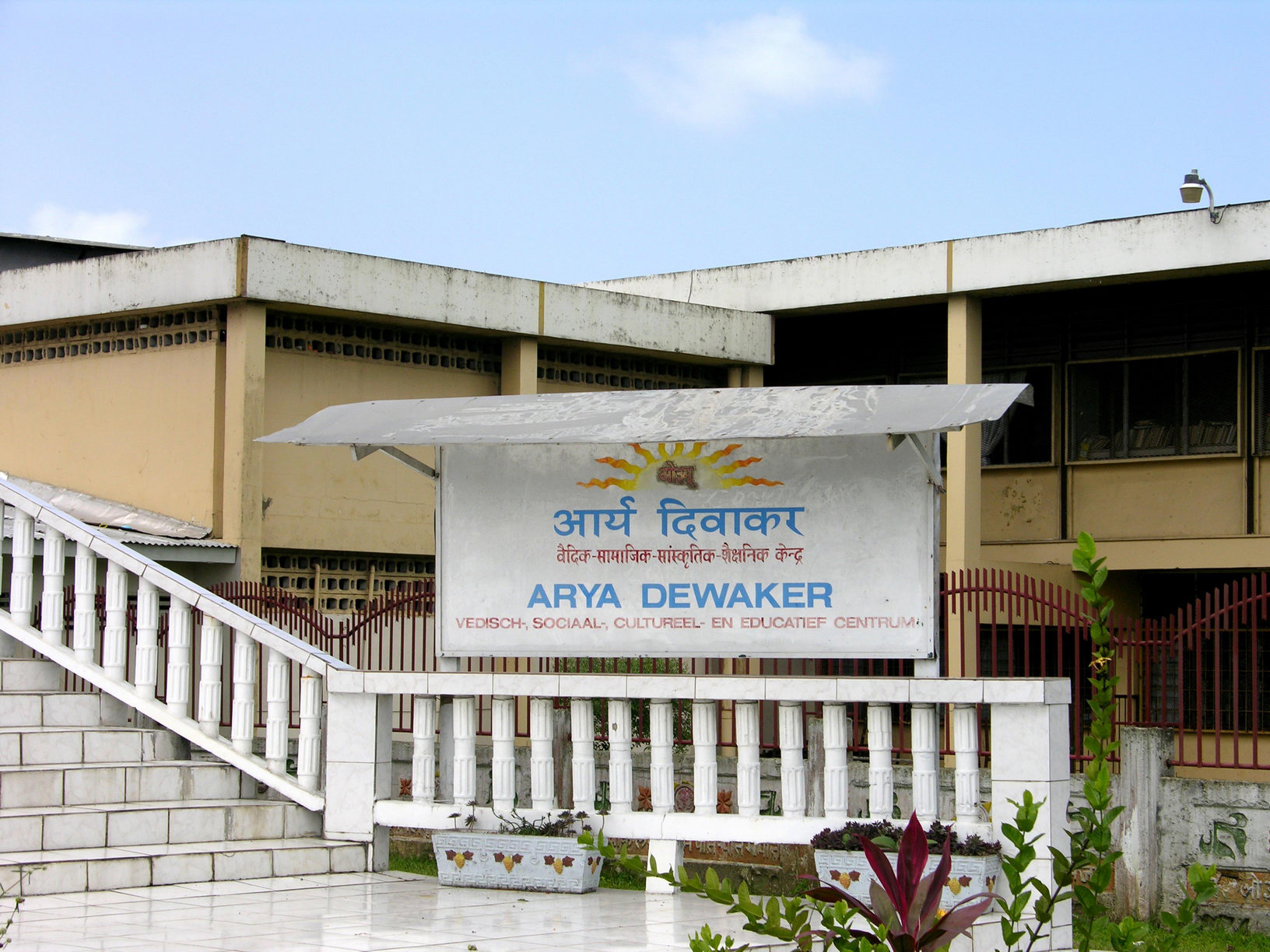
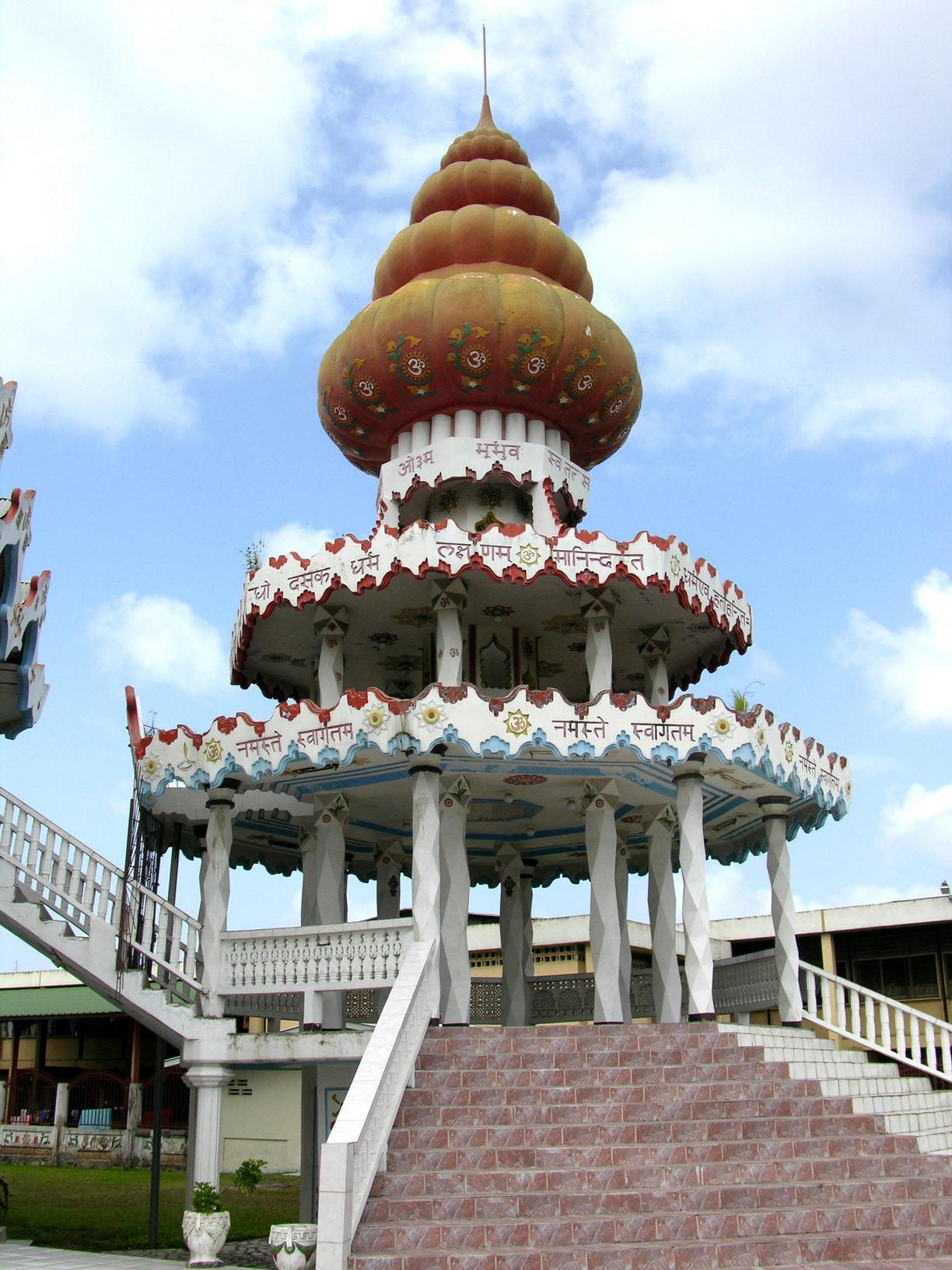
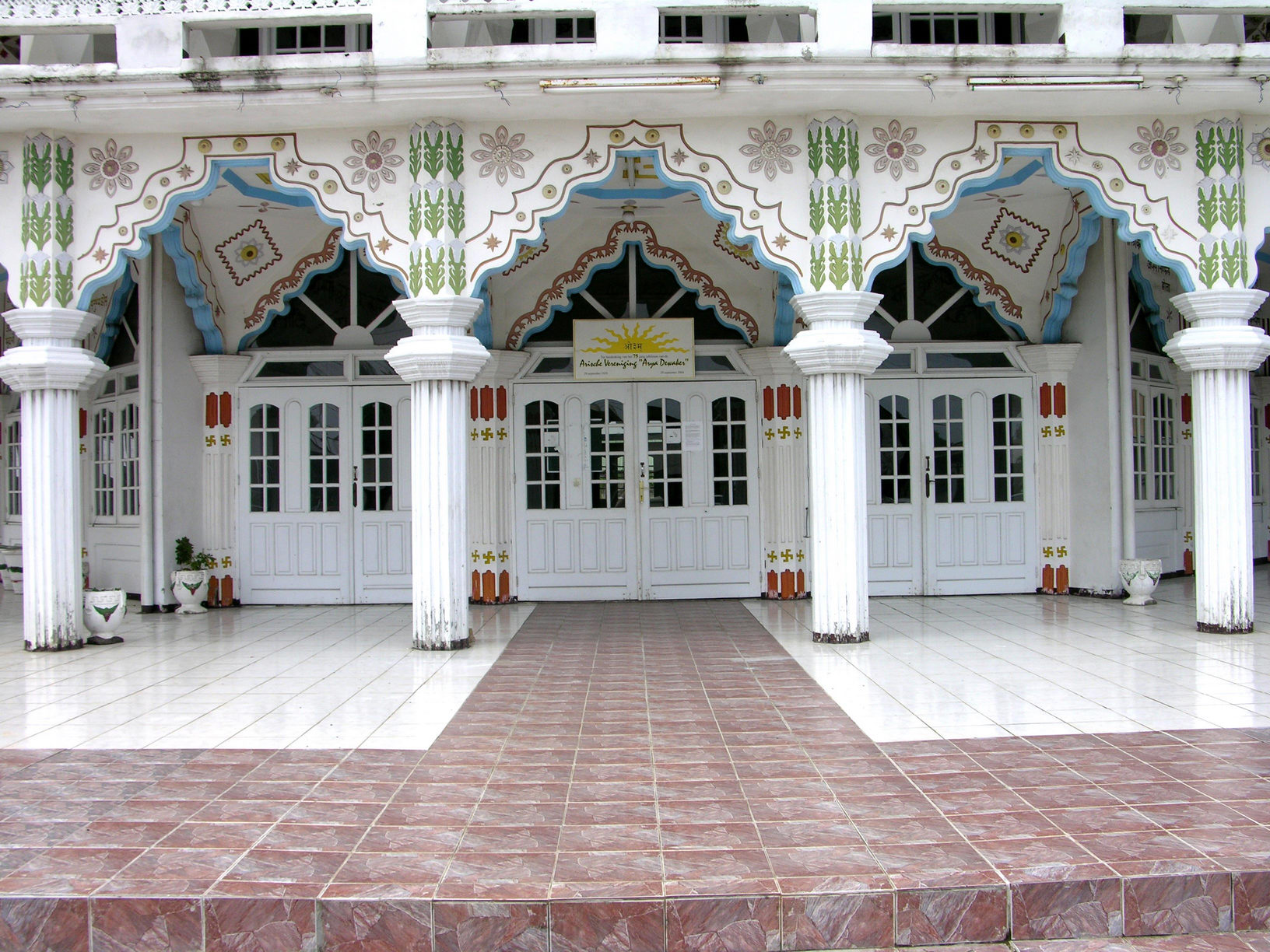
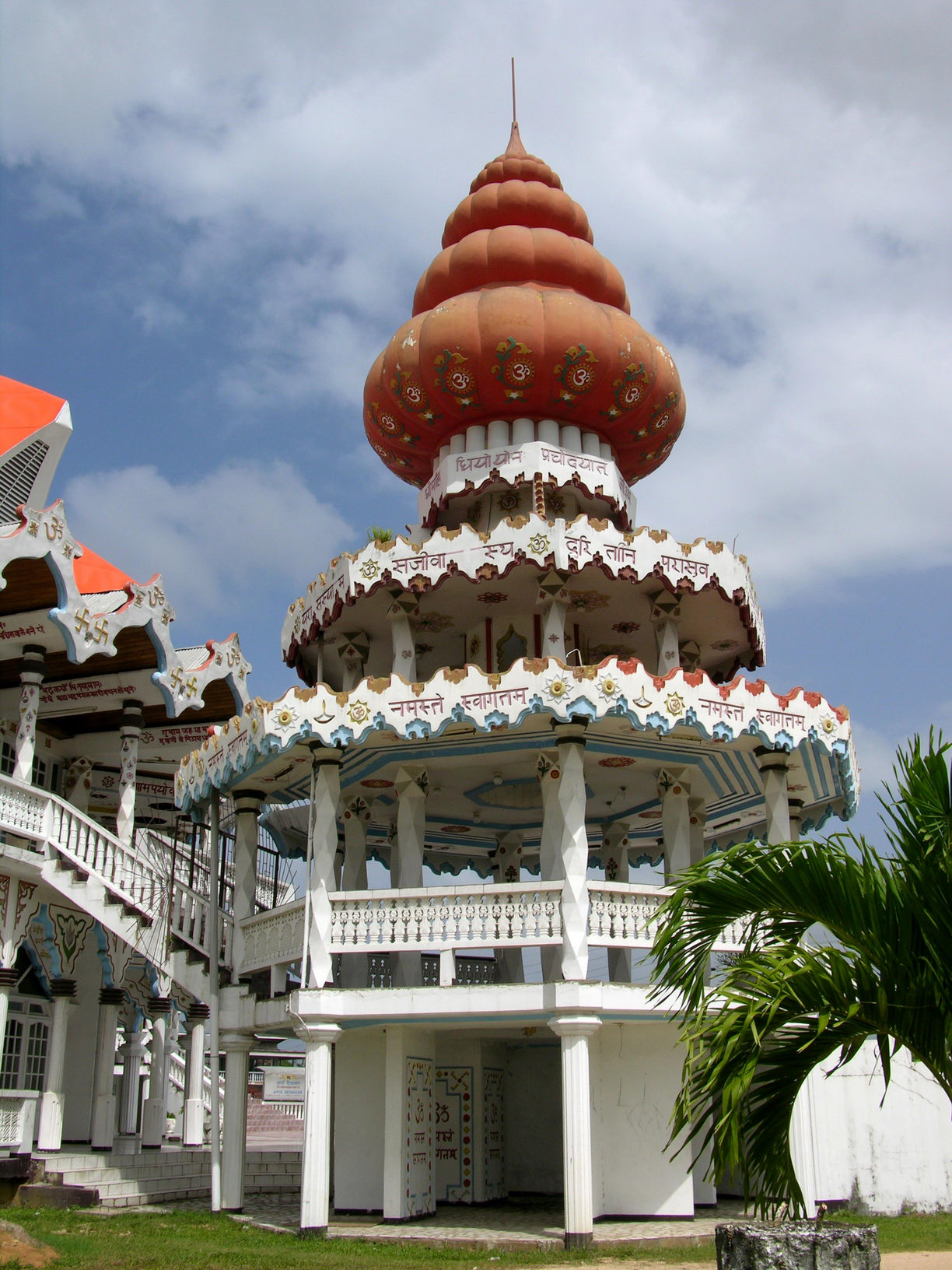
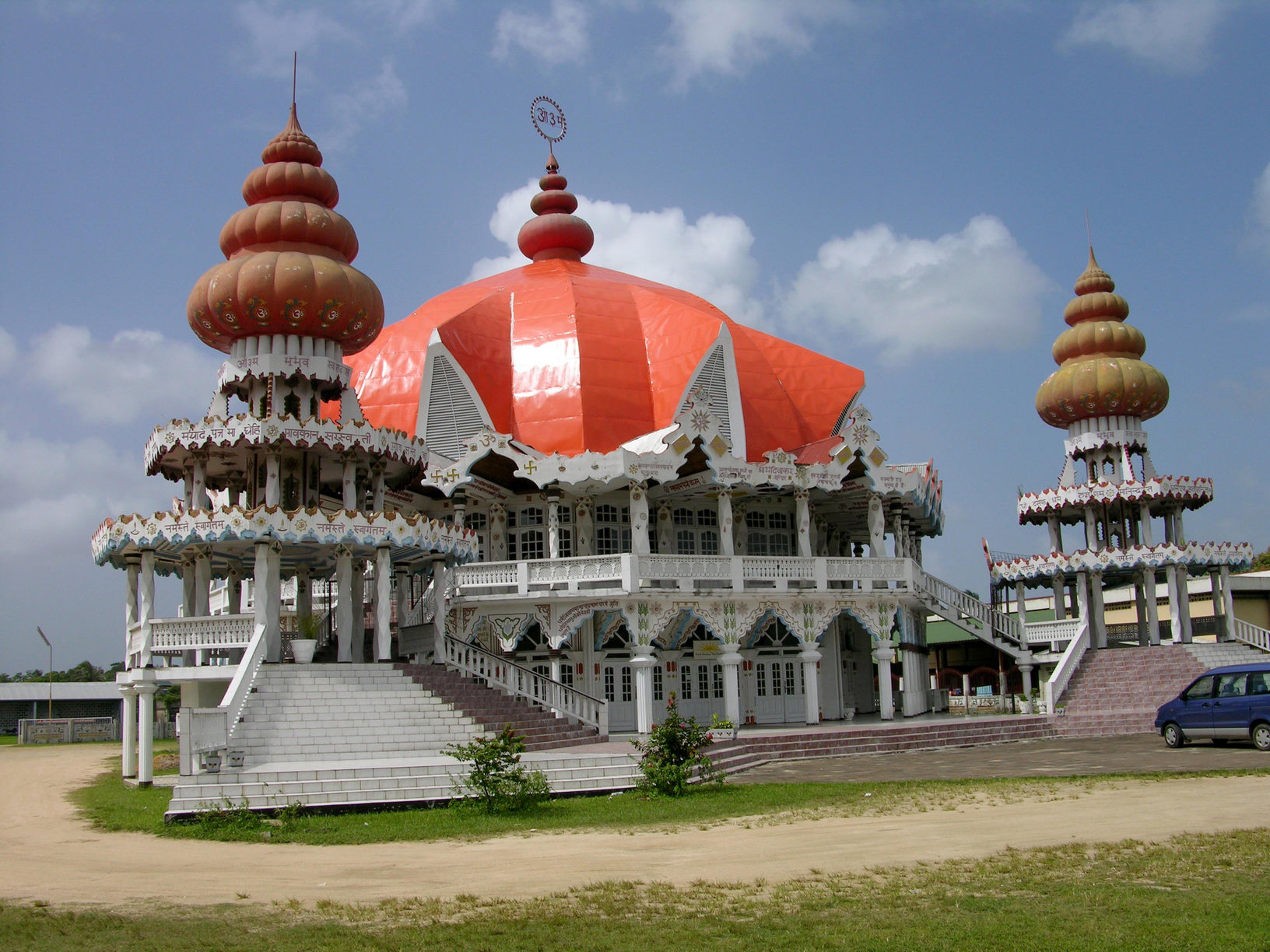
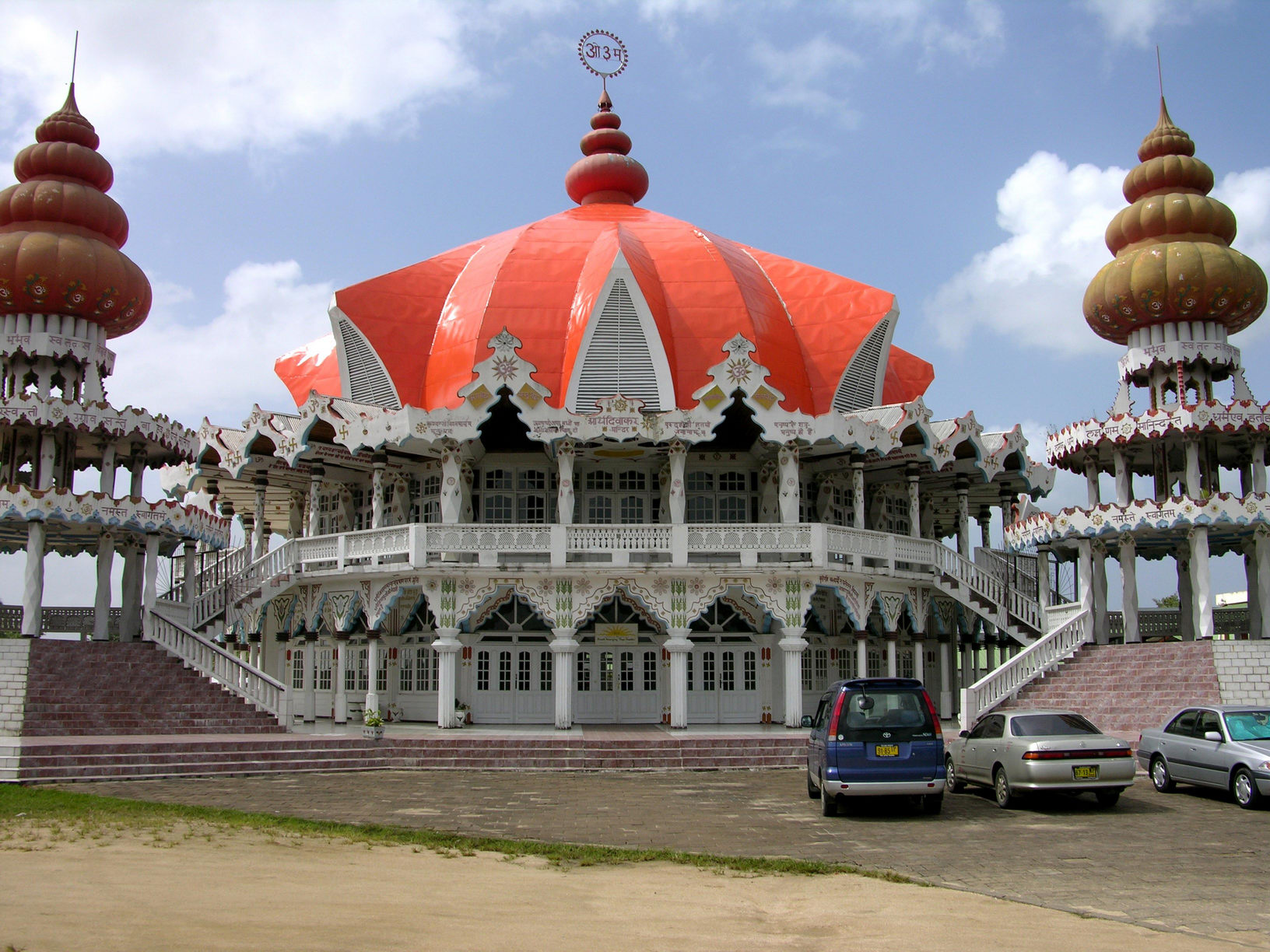
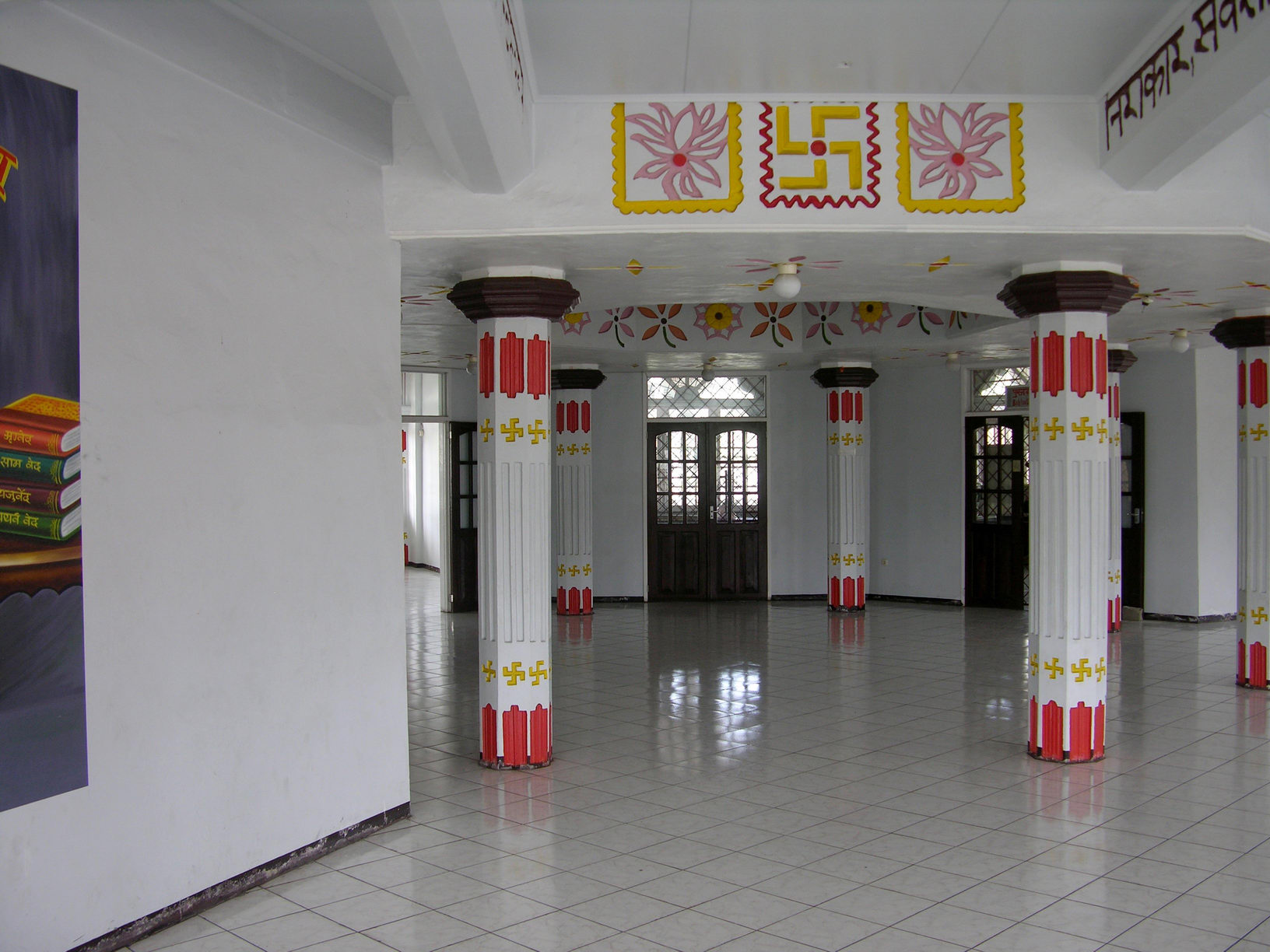
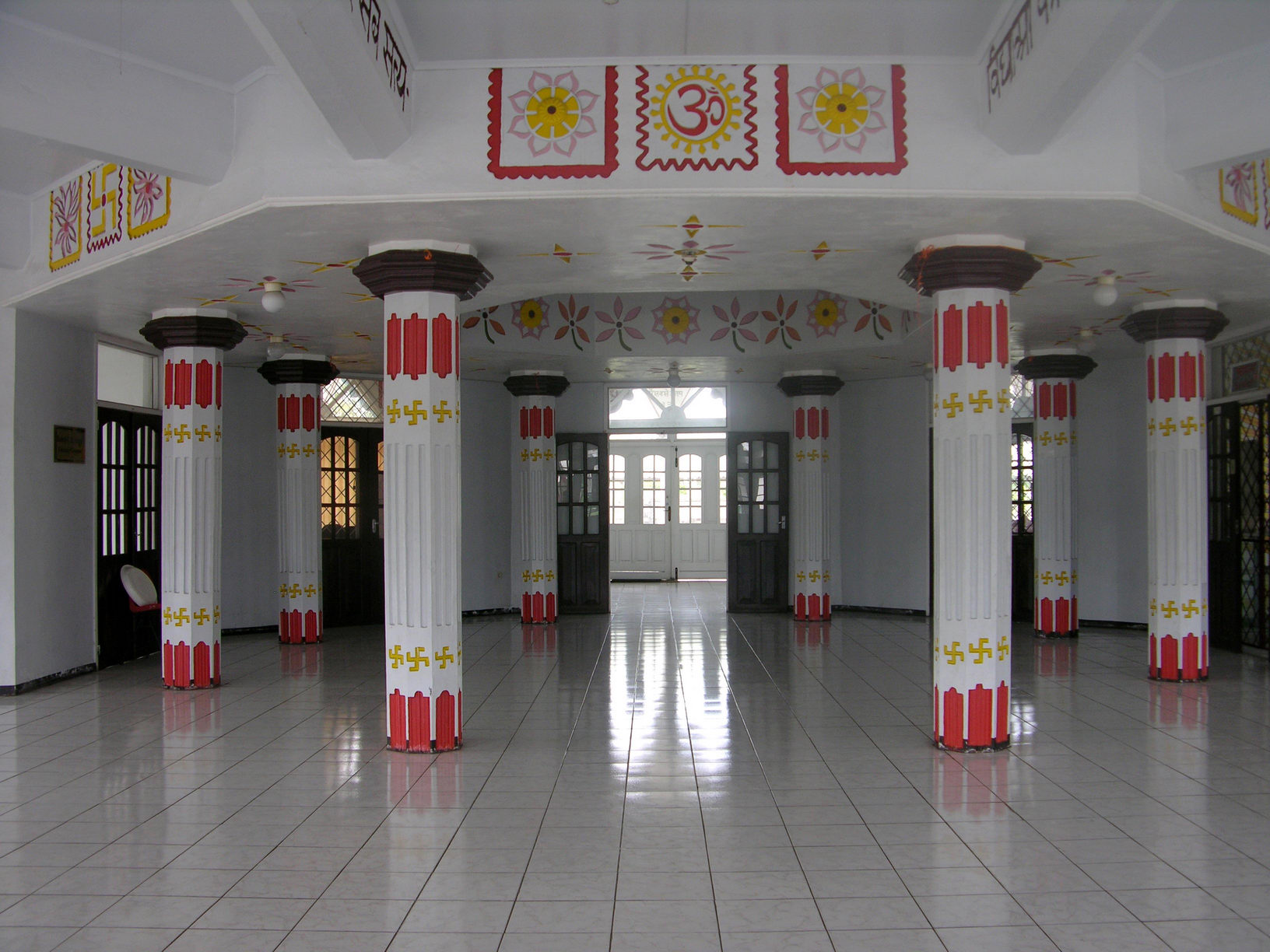
The walk in the midday sun had quite worn us out. Then we found the Albergo Alberga, the hotel where we'd spent the other nights, was full. More running around looking for a room.
We found one in a small, untouristy Pashtun hotel across from the synagogue (5°49.615′N, 55°09.474′W).
As soon as we got into the room Tanya took to her bed. We'd both been coughing for more than a week. We'd picked up some nasty virus back in French Guiana. It was like bronchitis, except we couldn't cure it and the antibiotics did nothing. A bad cough that brought up pus, and fevers that came and went. Three days earlier I could hardly walk. Now it was Tanya's turn.
When I realised she wouldn't be getting up that day, I went to walk around town on my own. I also had time to copy the pictures from the camera onto discs.
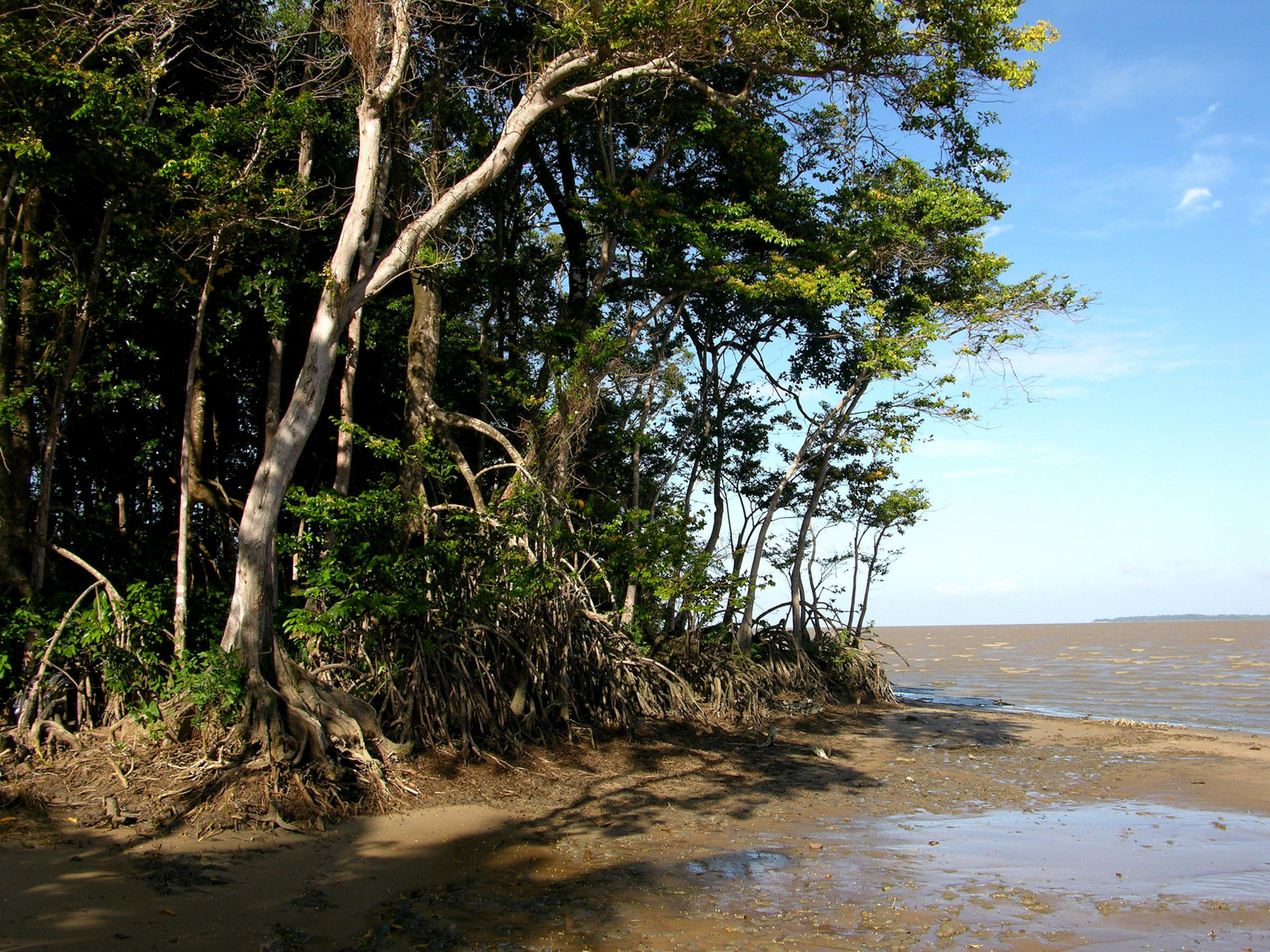
After a walk through the centre I got into the car and drove around the suburbs of Paramaribo. To start with, I followed the left bank of the Suriname River all the way down to the sea. Oddly, the coast near the capital is uninhabited. People live along the river but the swamp starts a kilometre short of the mouth. Northern Paramaribo itself is built on drained swamp, by the way. To make that possible there's a canal alongside nearly every street. Just like Amsterdam. The Dutch built it, after all. They can't do without canals. They built sea dykes too, to reclaim a little piece of dry land. The town across the river from Paramaribo is called Nieuw-Amsterdam.
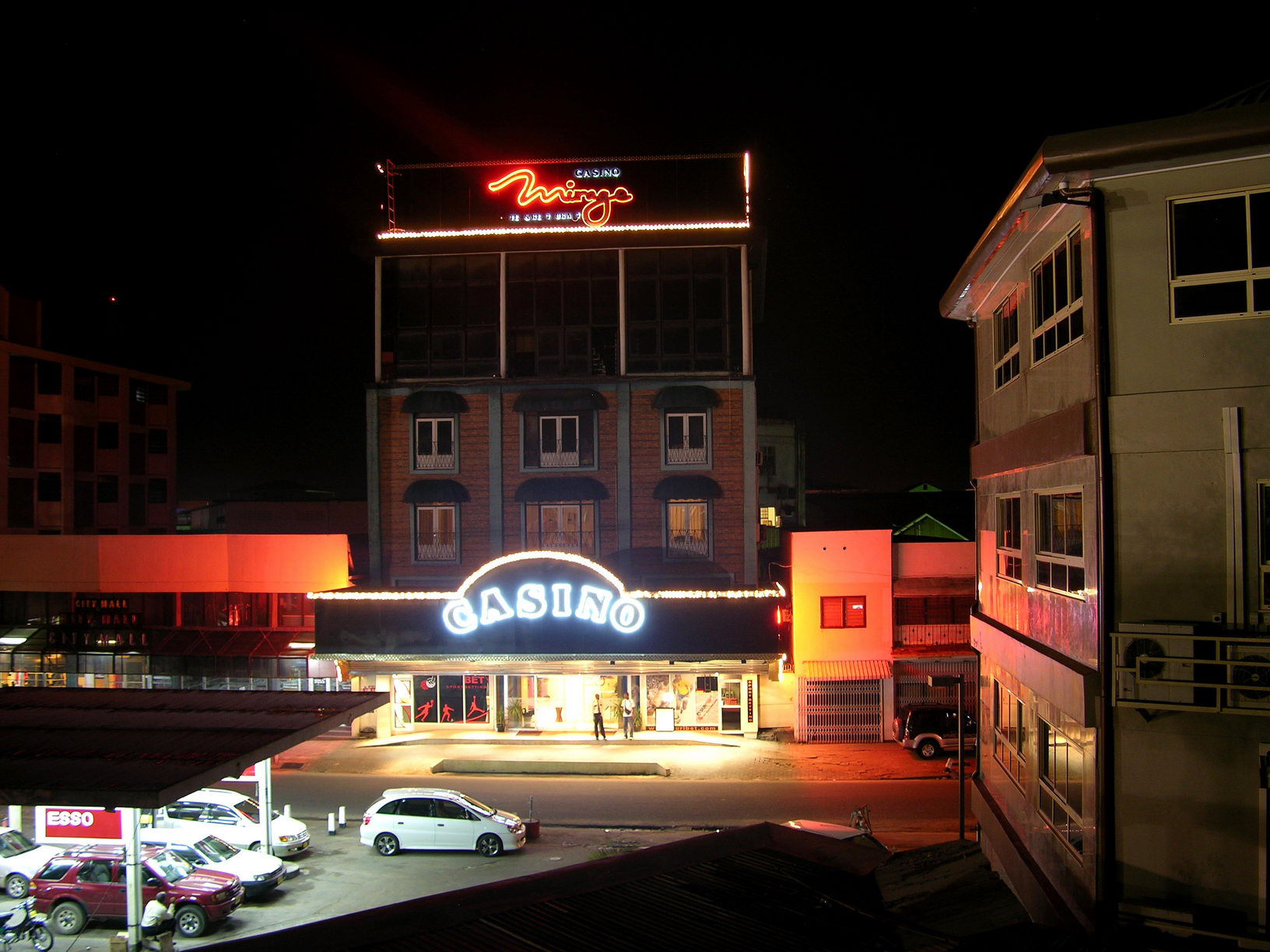
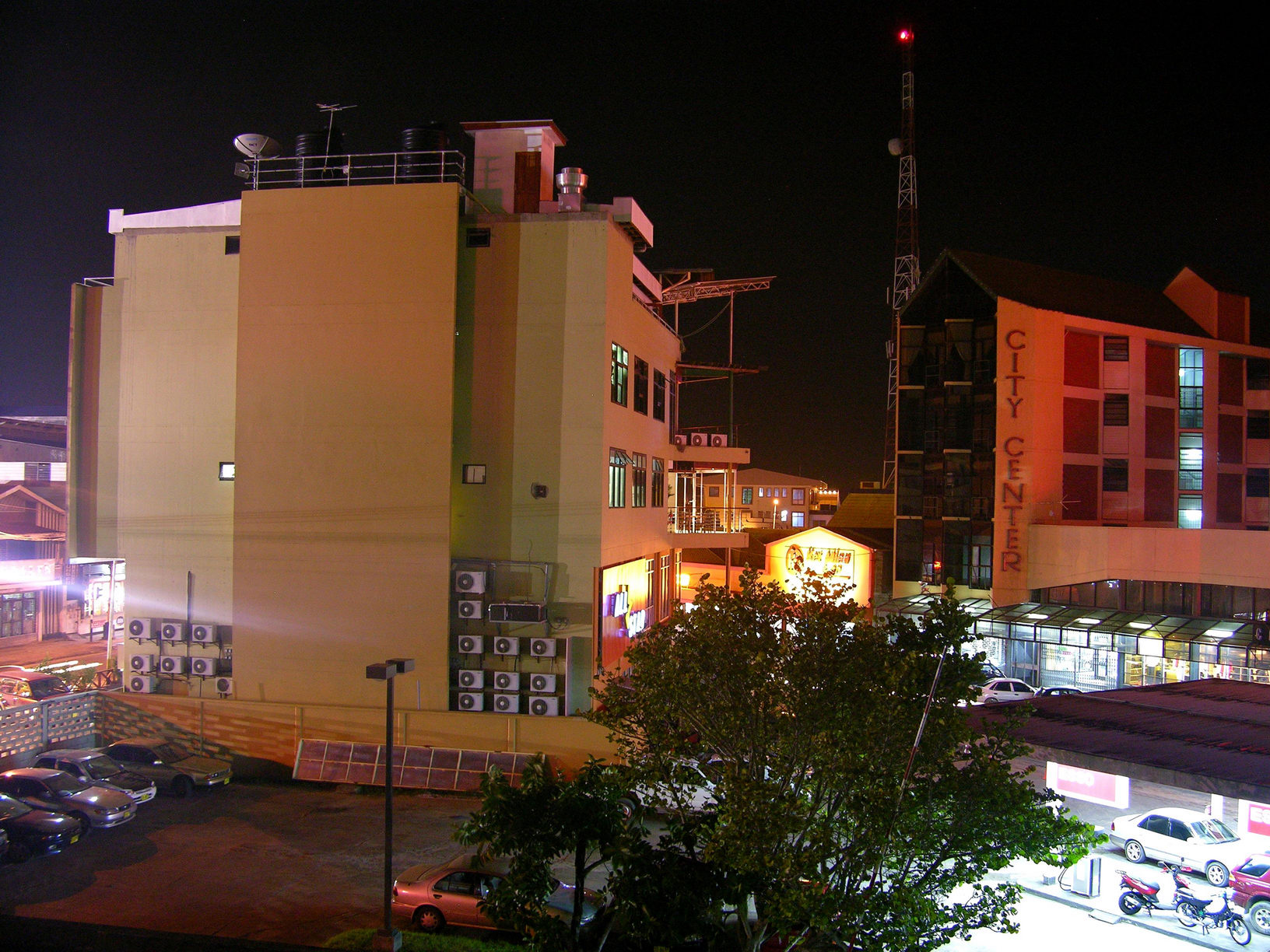
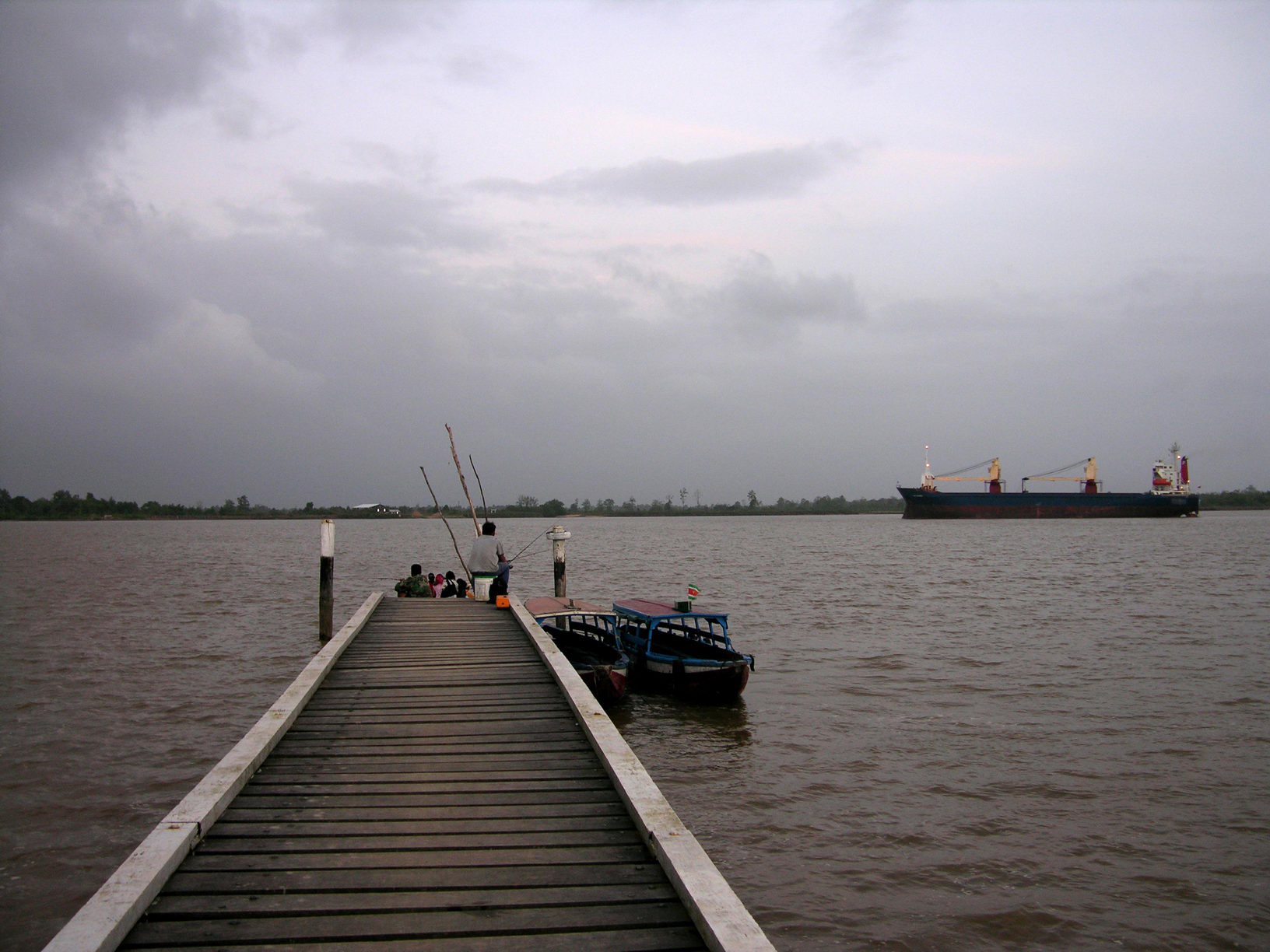
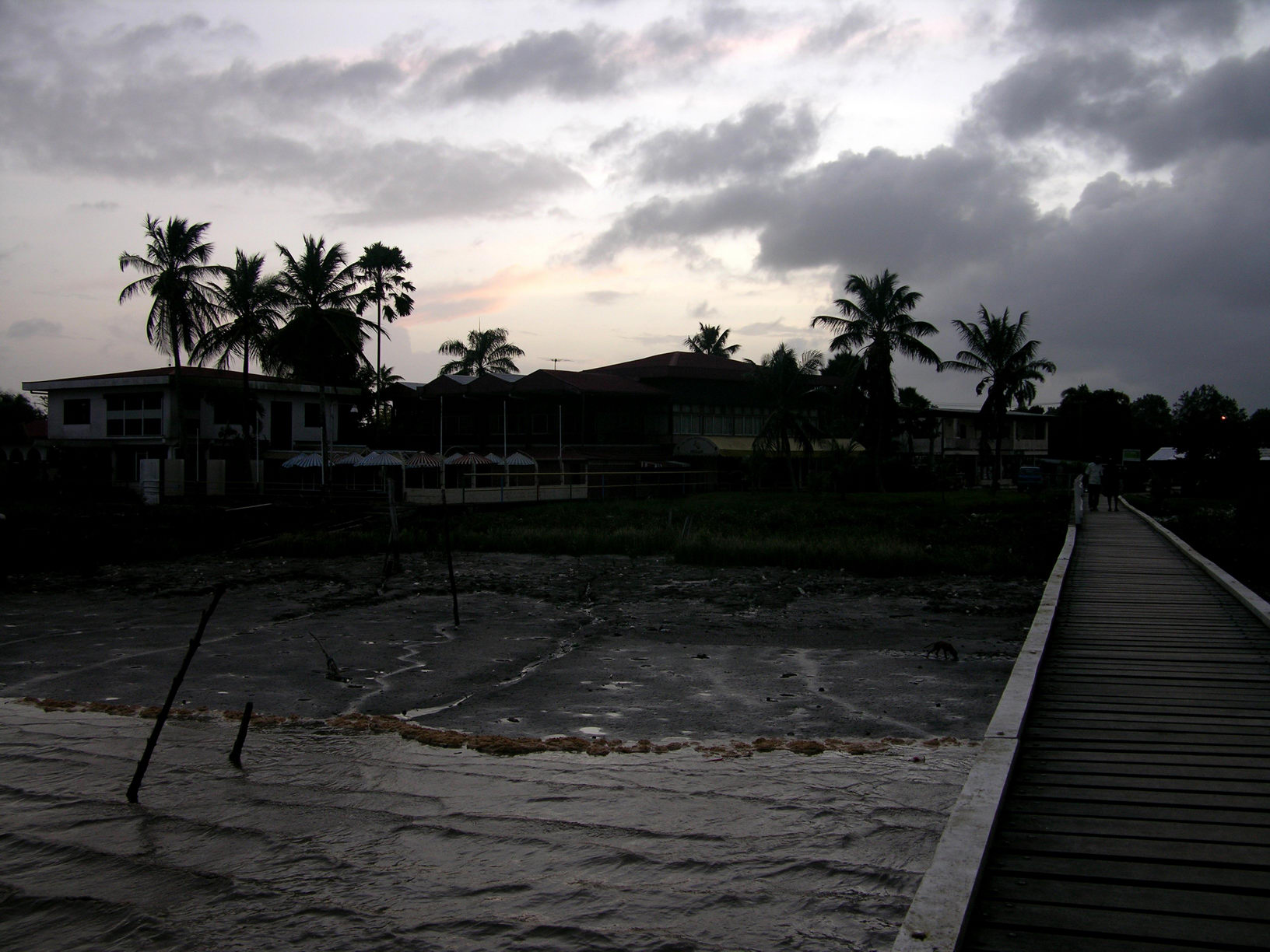
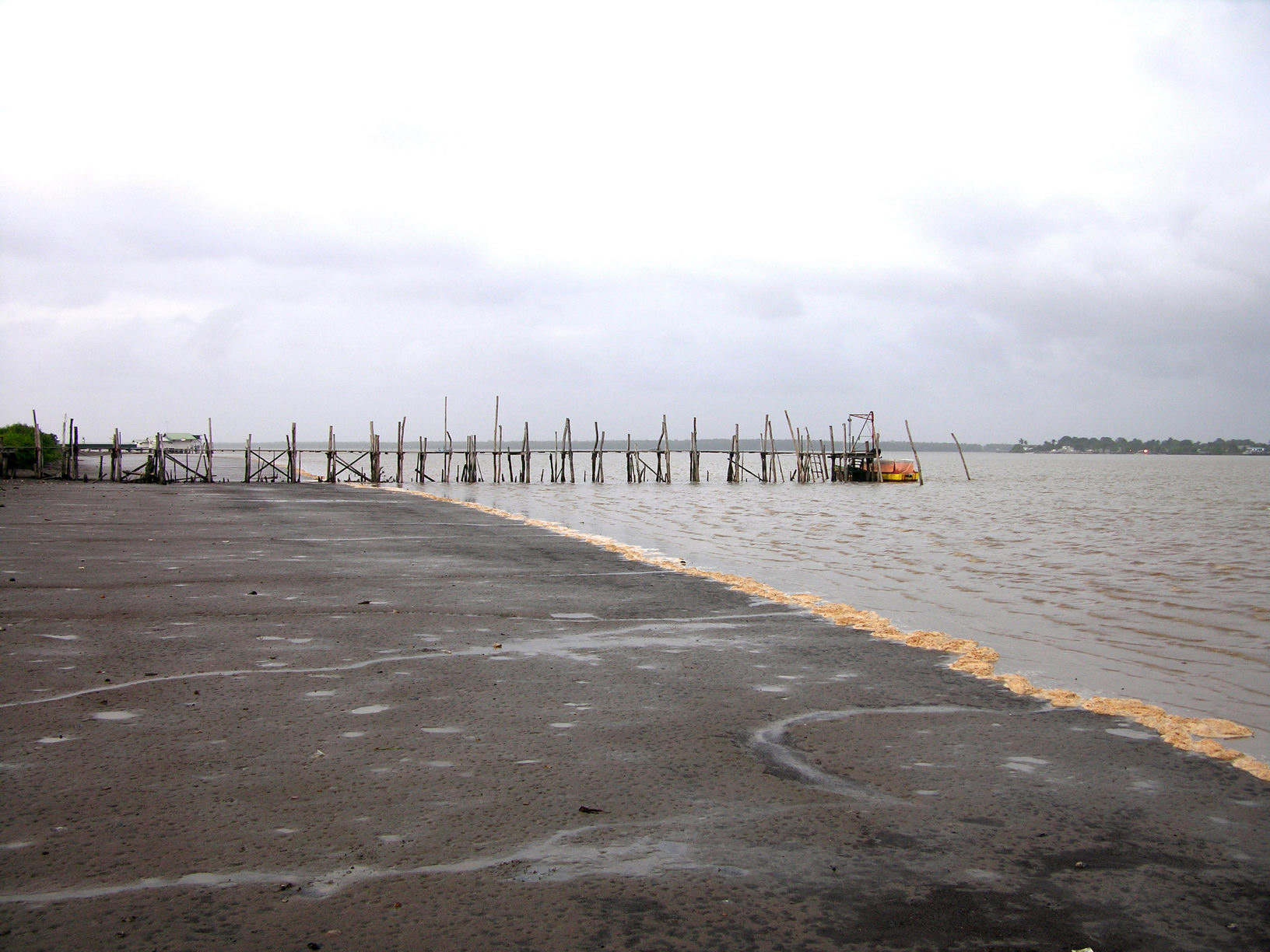
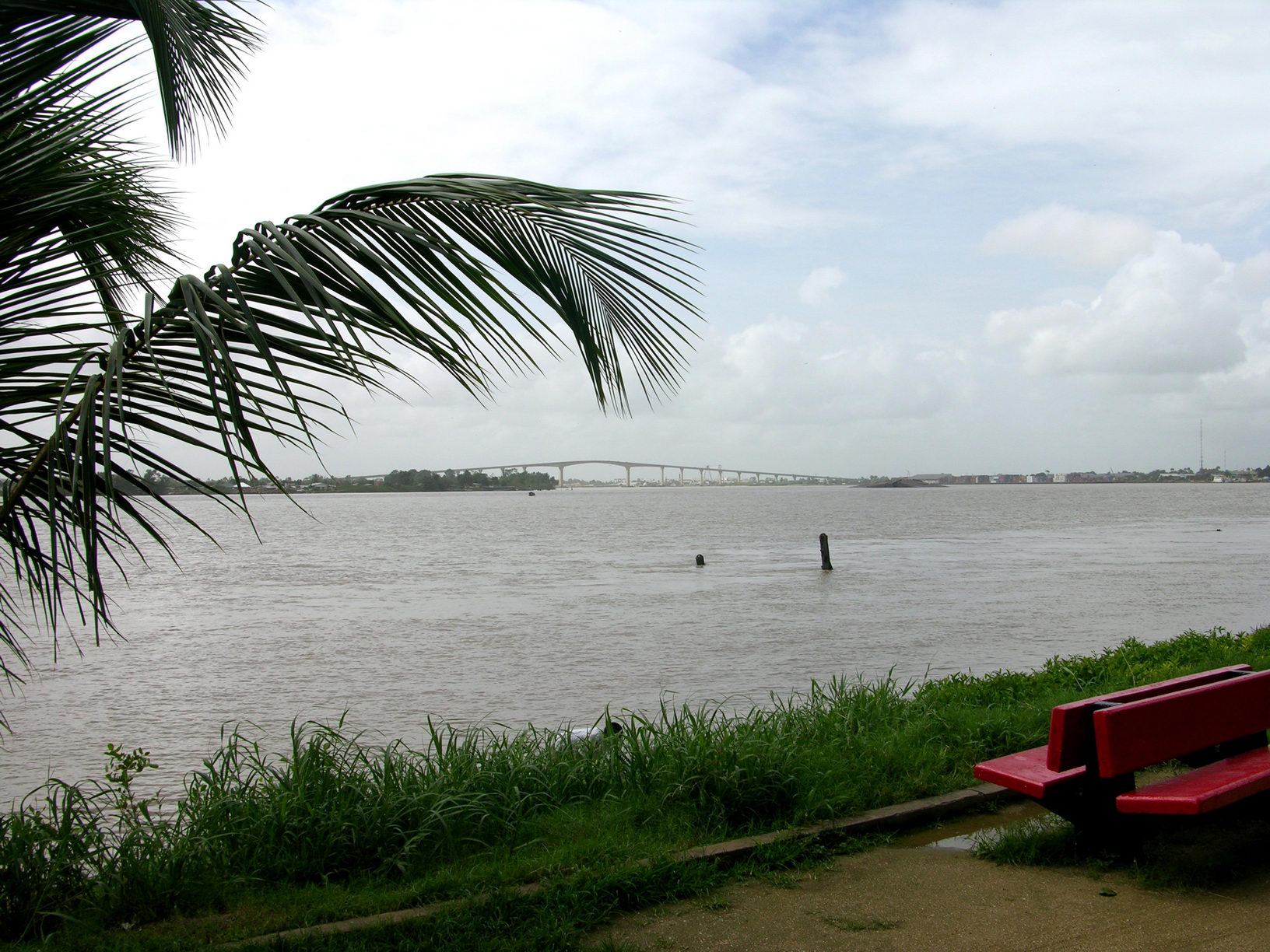
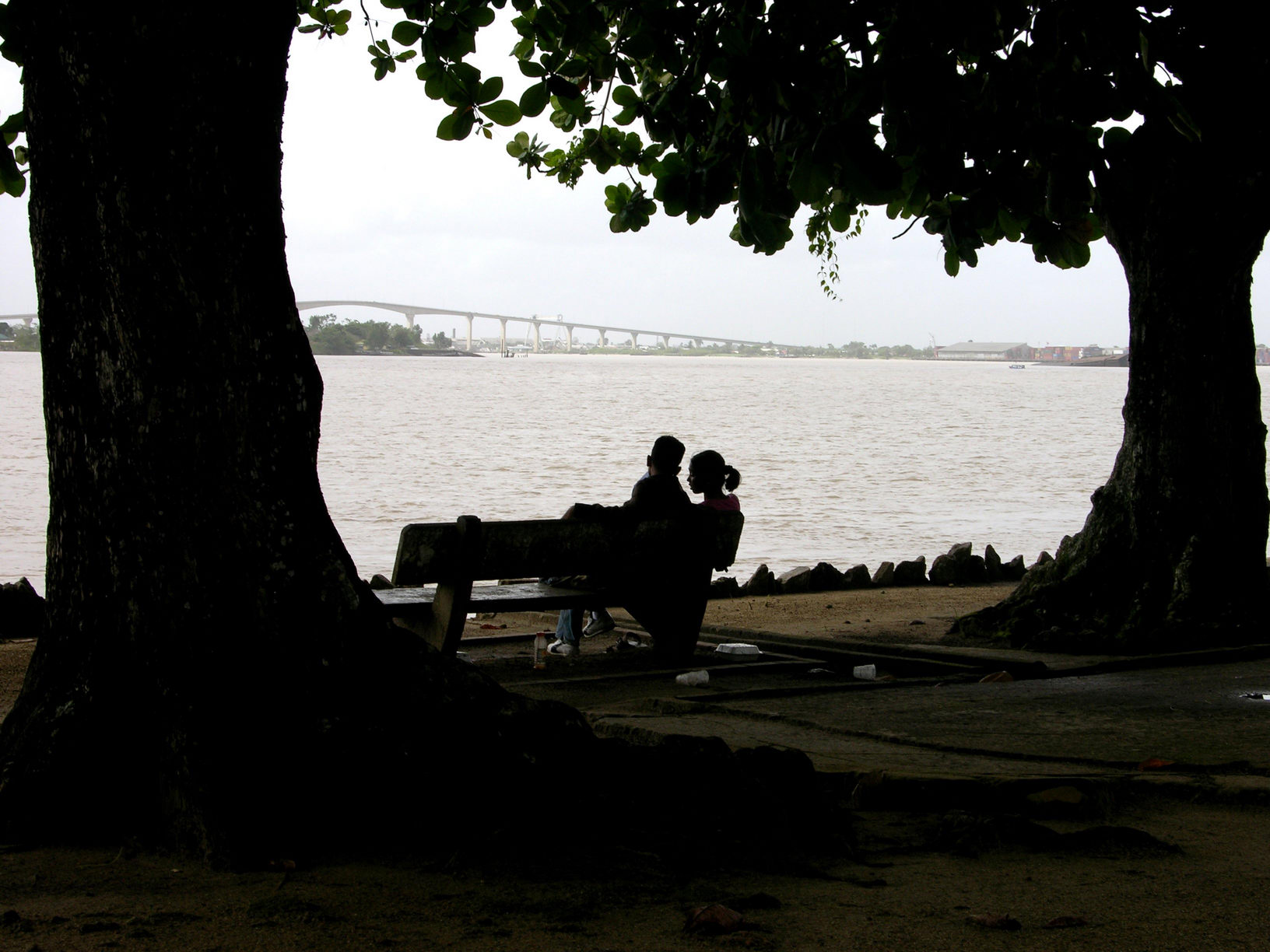
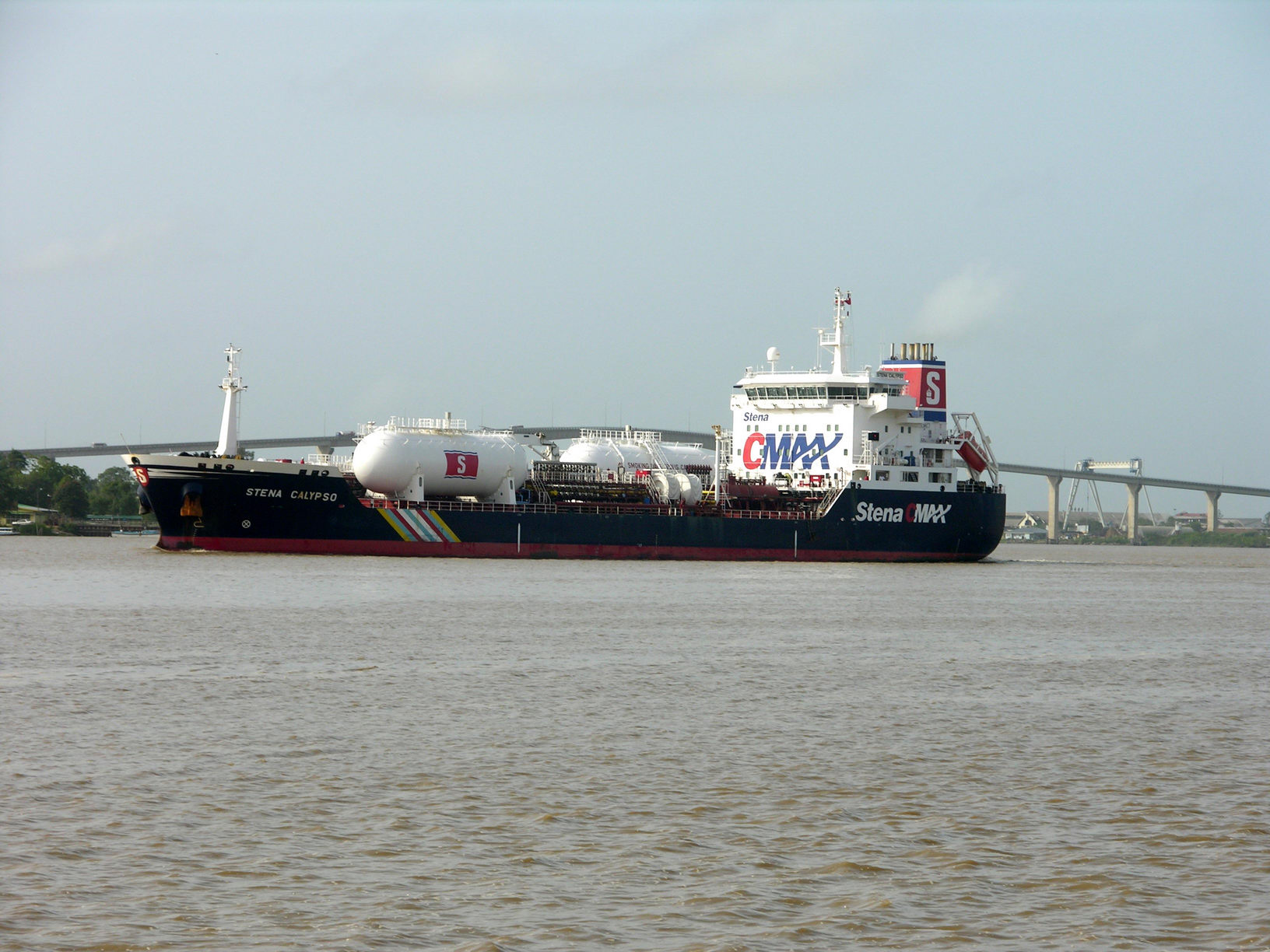
It takes a long time to get there. Even though they'd recently built a huge high bridge across the Suriname River, with room for ocean-going ships underneath, to reach the other bank you still have to sit through traffic several times, get all the way to the southern edge of the city, and wind through the built-up area on the far side of the bridge for ages. In the end I got to Nieuw-Amsterdam in pitch darkness. There isn't much to it. A few old wooden houses and cannons at the fort.
In the morning Tanya was alive again and we went to immigration together. There was no queue. In about ten minutes our passports, having passed through the hands of three officials, received a little square stamp. Now we could travel around the country for another month.
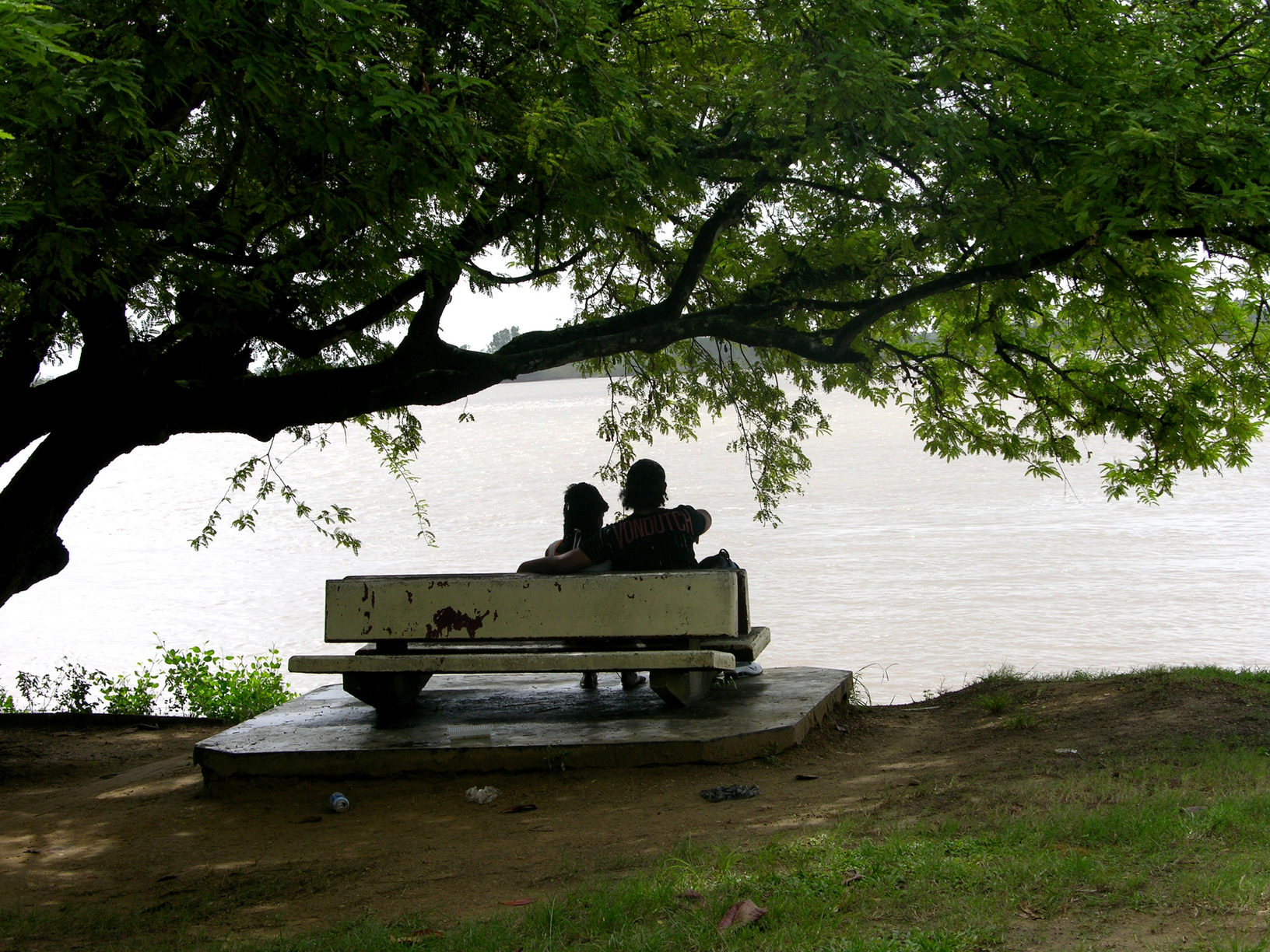
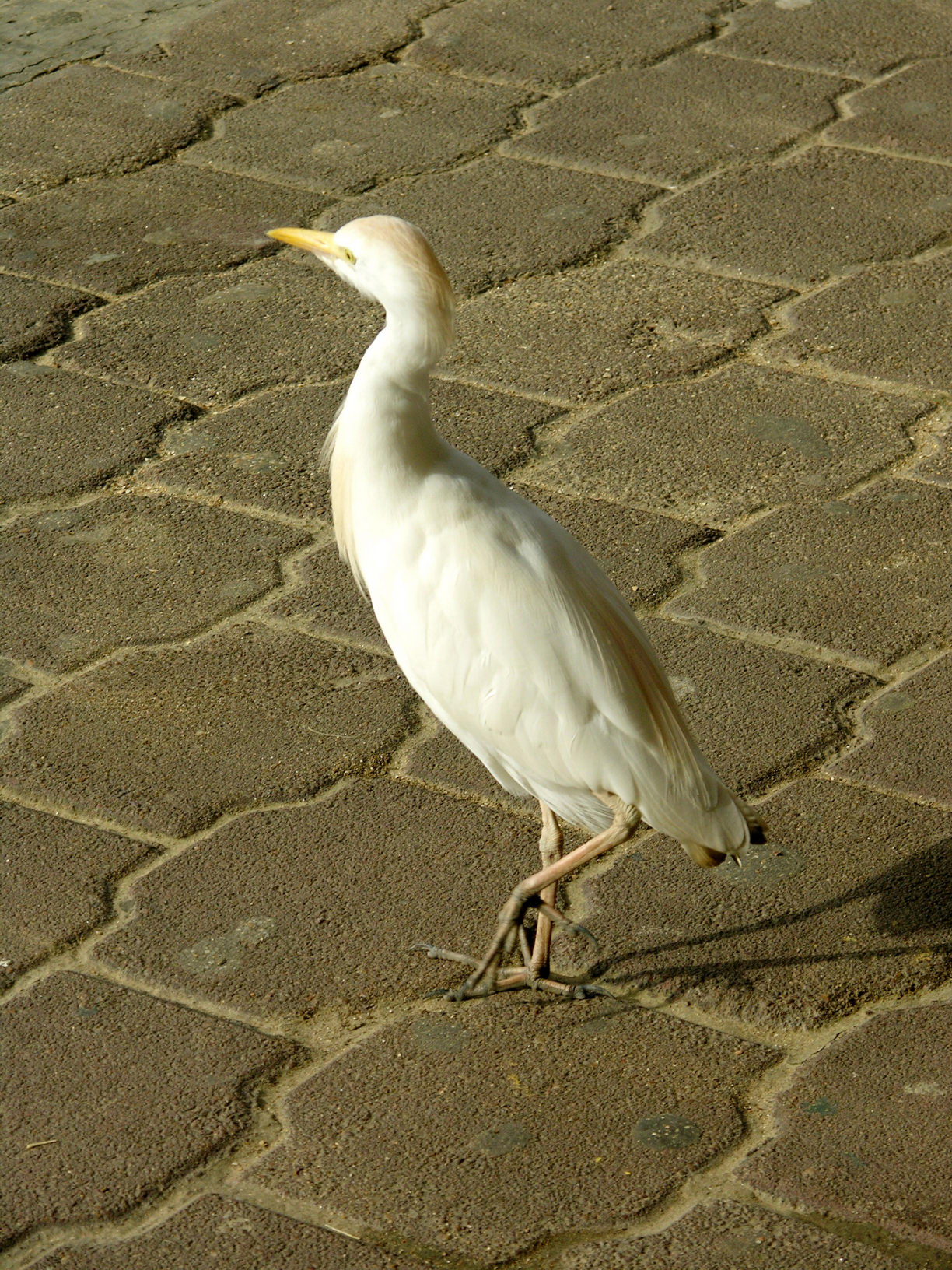
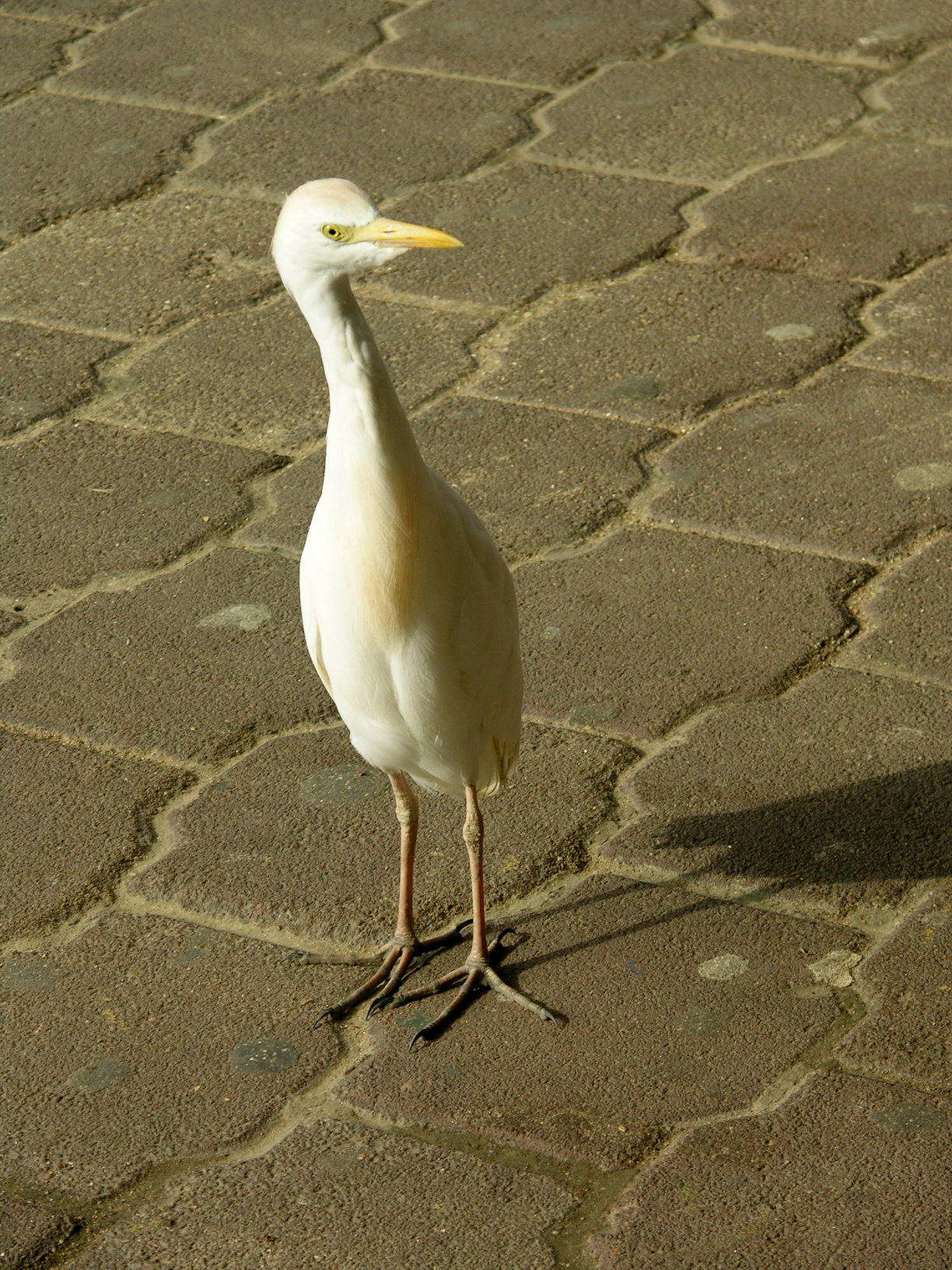
First we needed something to eat. The nicest way to do that is at the little cafés along the Suriname waterfront. The tables are in the open air. Herons walk among them begging.
We also sent postcards to our friends from the main post office at one and a half Surinamese dollars apiece. Separately, we found a DHL office, stuffed all our unnecessary things, especially warm clothes, into a big box and sent it home. Even as we sent it, they told us parcels were collected once a week on Wednesdays. Today, naturally, was Wednesday, but it was already too late. The parcel was in transit a long time, then lay at customs in Saint Petersburg for fifteen days. The world's fanciest express post eventually did it in a month. Ordinary postcards beat it.
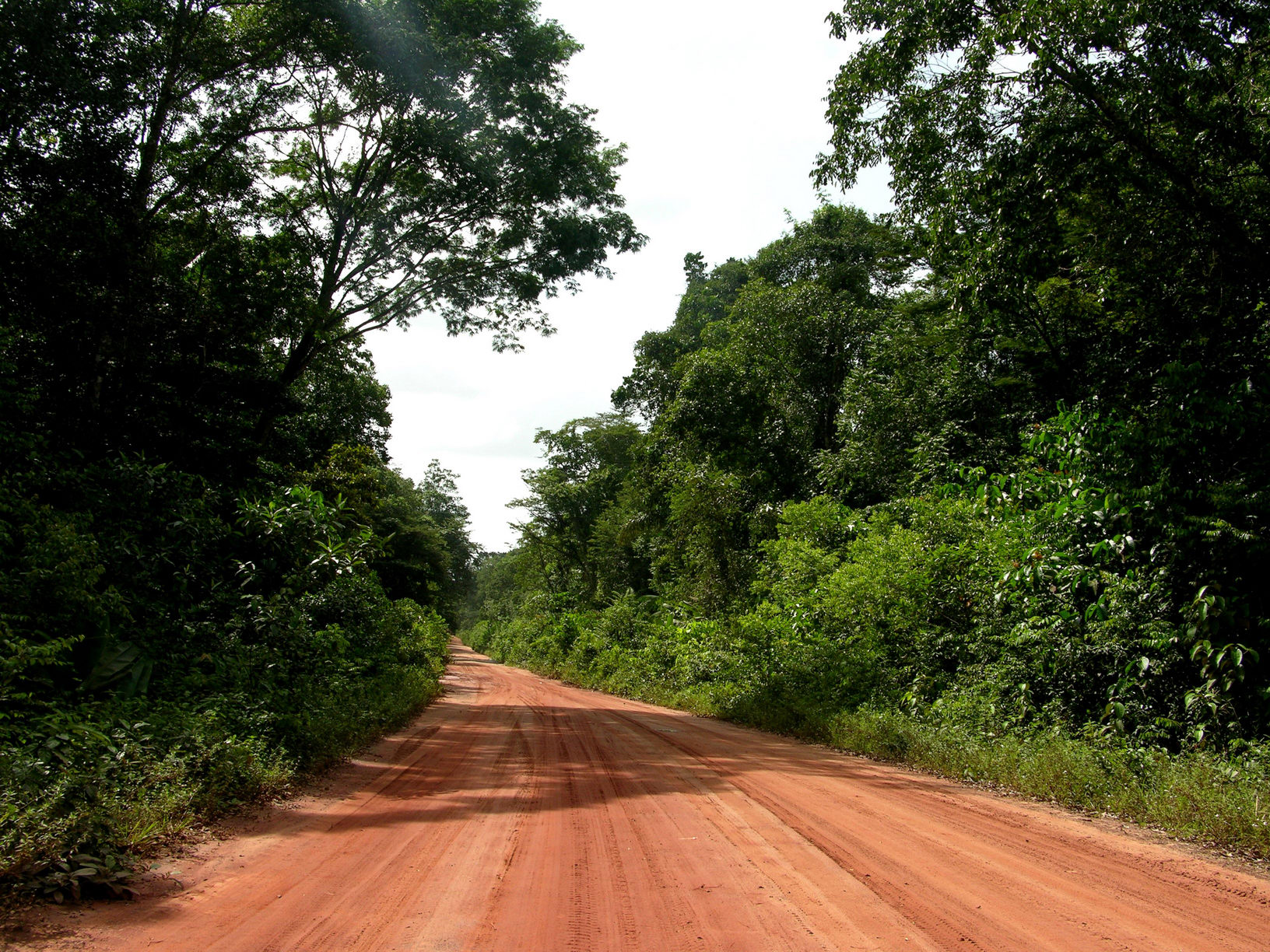
We'd done all our business in the capital and could at last head out on a long trip across the country. Suriname is settled only along the coast. A hundred kilometres inland you're in wild jungle. Just one road goes to the interior. The map lists it as an unpaved highway. I'm not sure about highway, but they hadn't lied about unpaved, unless a layer of mud qualifies as paving. The road starts near the country's main airport at Zanderij. There's tarmac as far as there, then a little farther to the Saramacca River on a dirt road that hadn't seen a grader in a long time. After that it's strictly four-wheel drive.
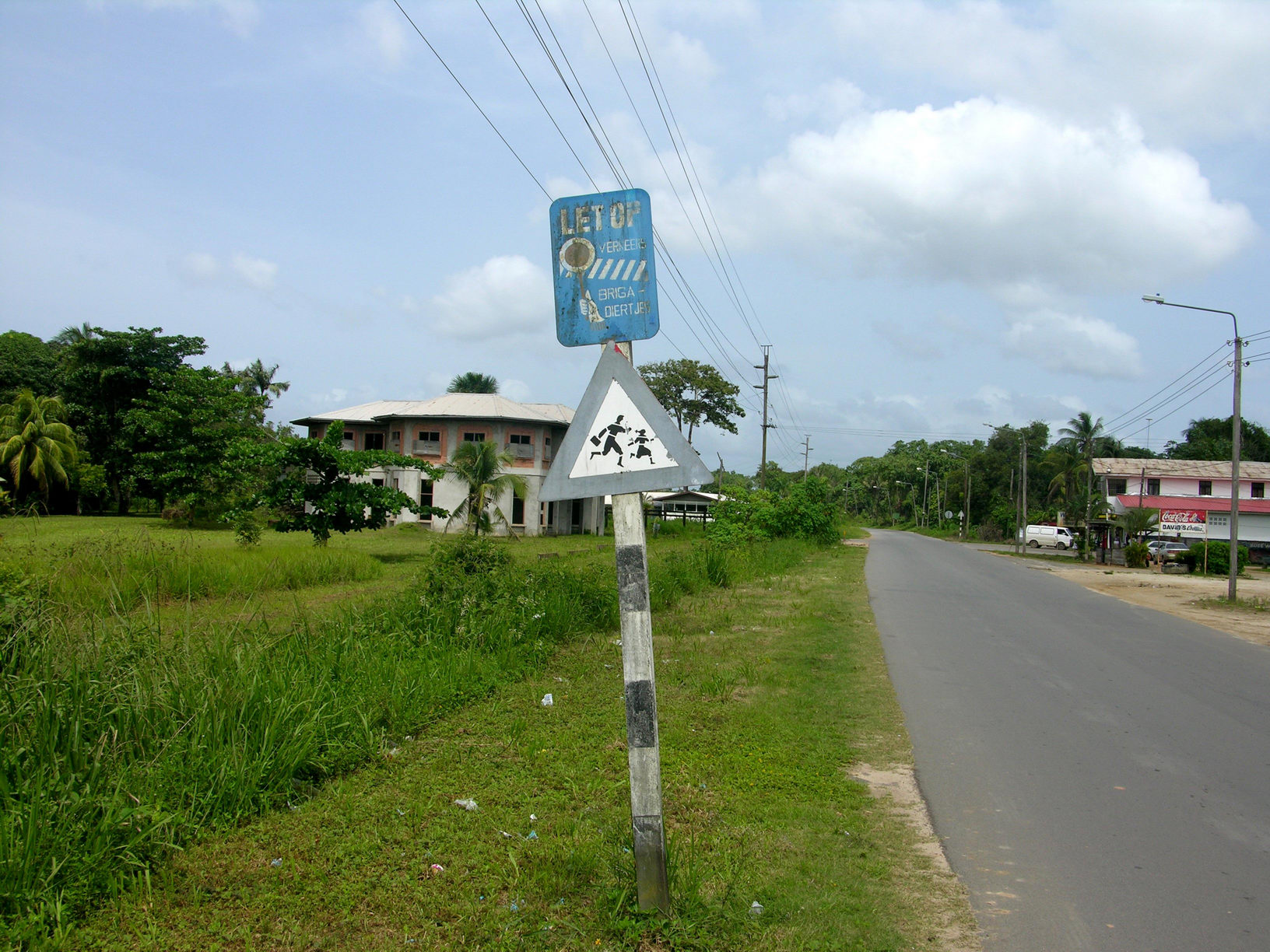
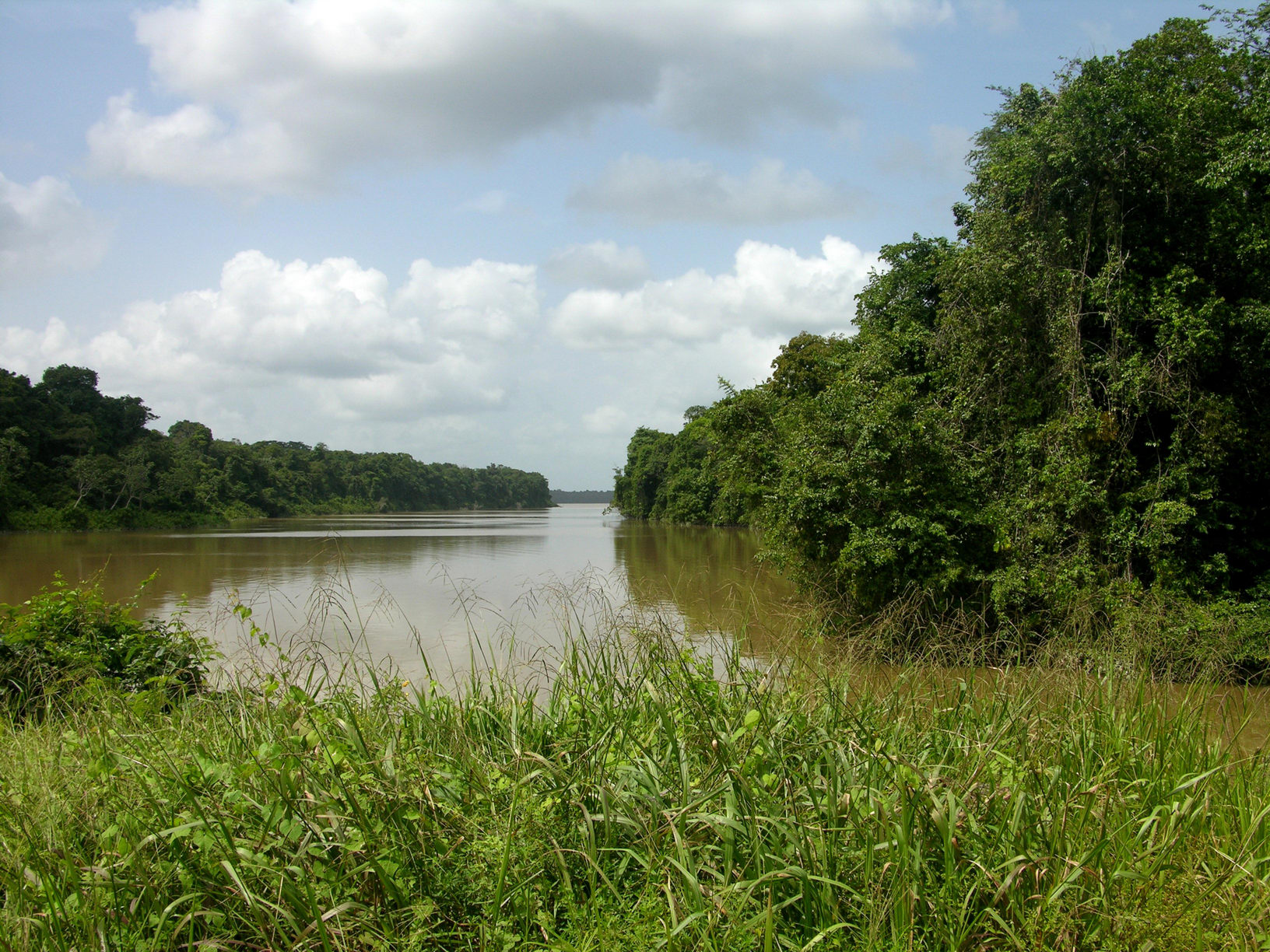
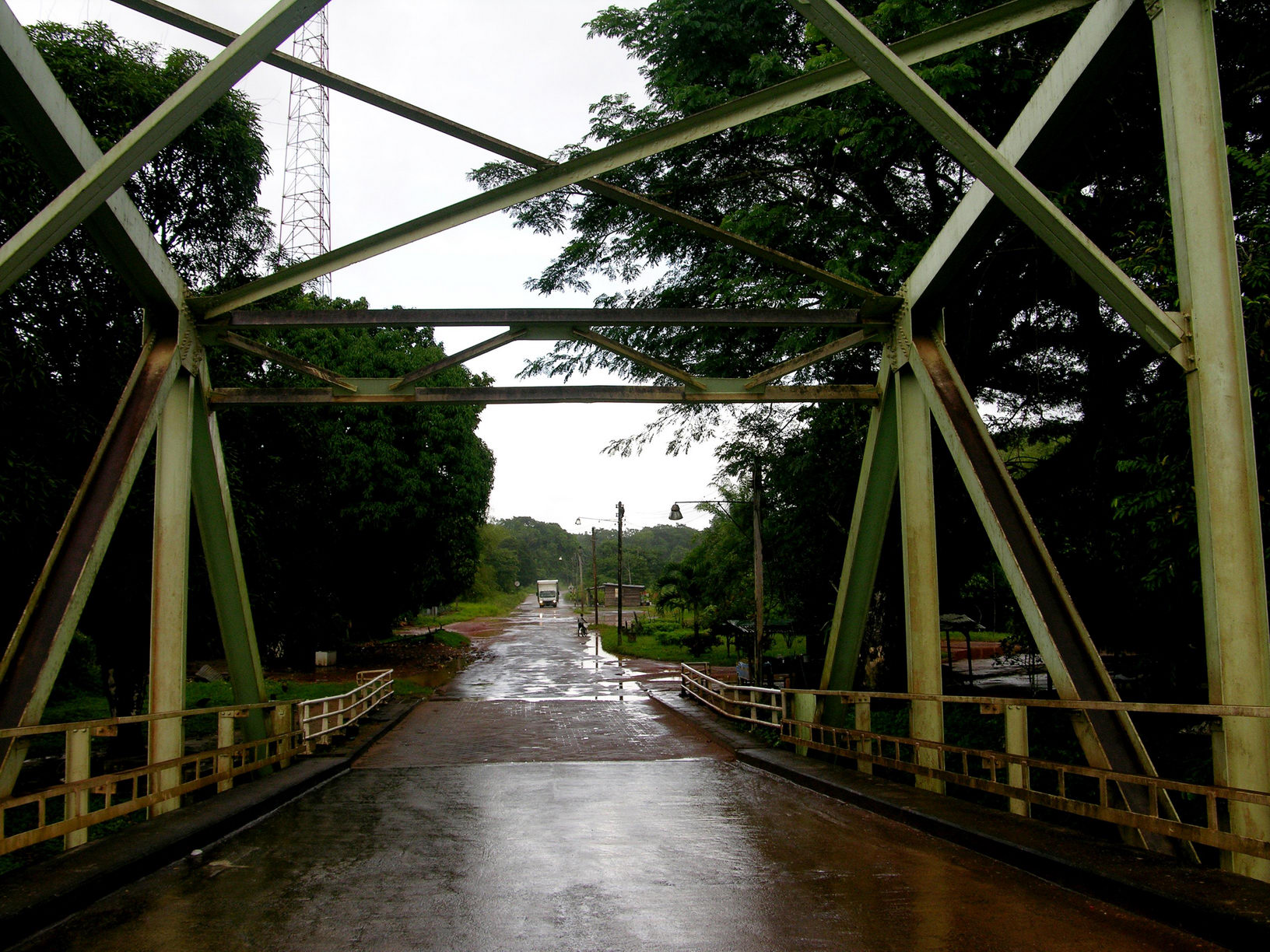
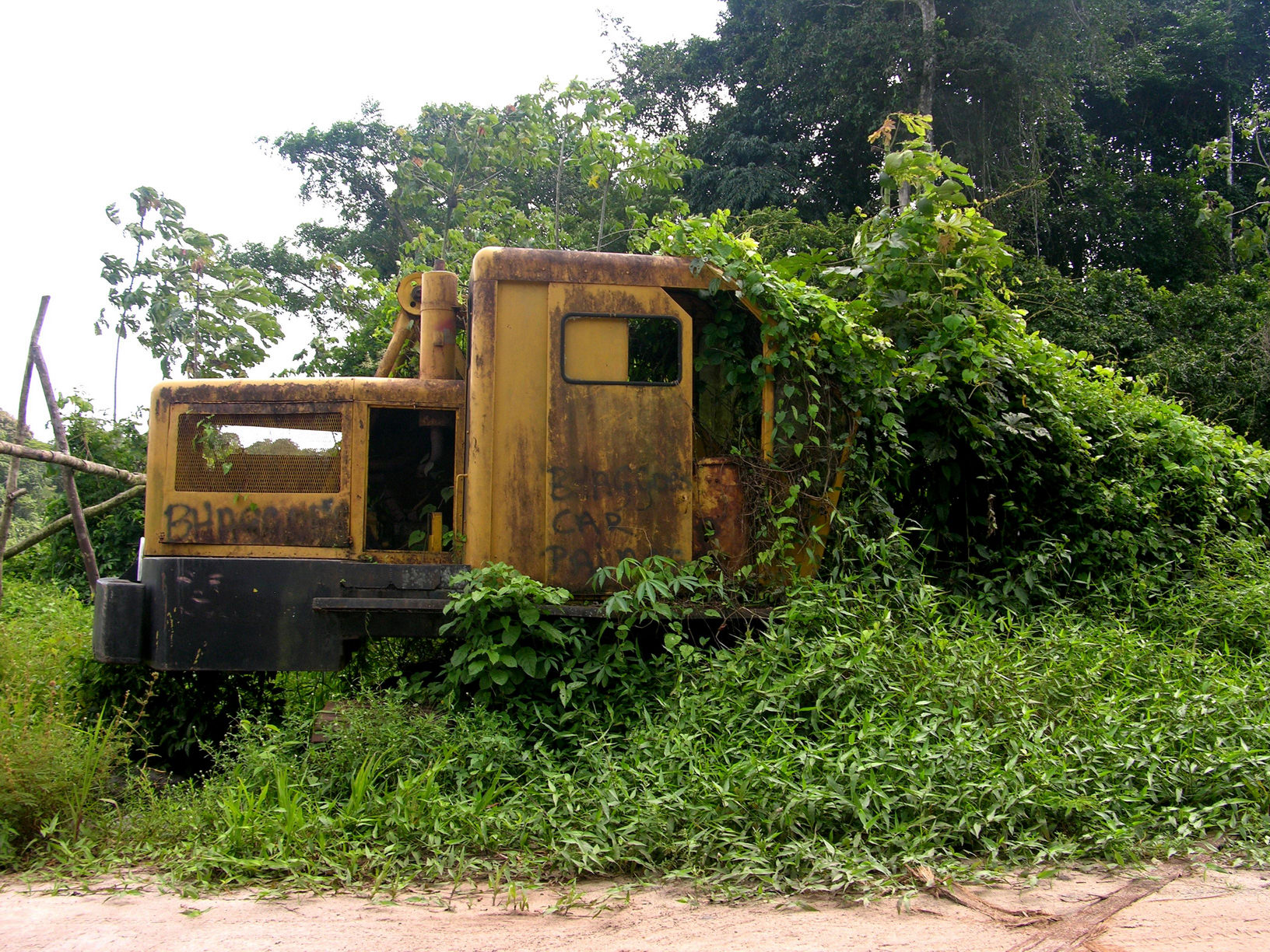
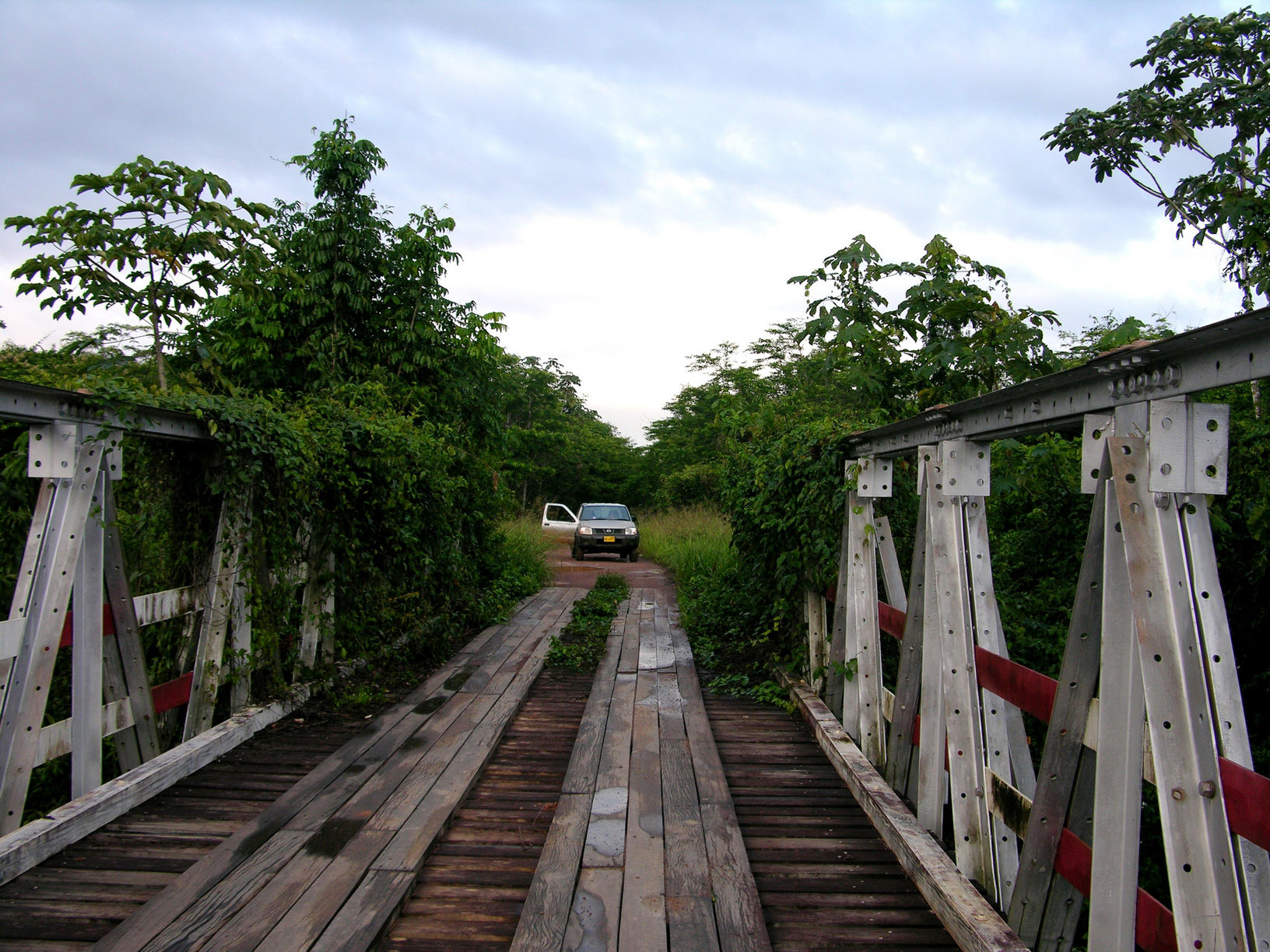
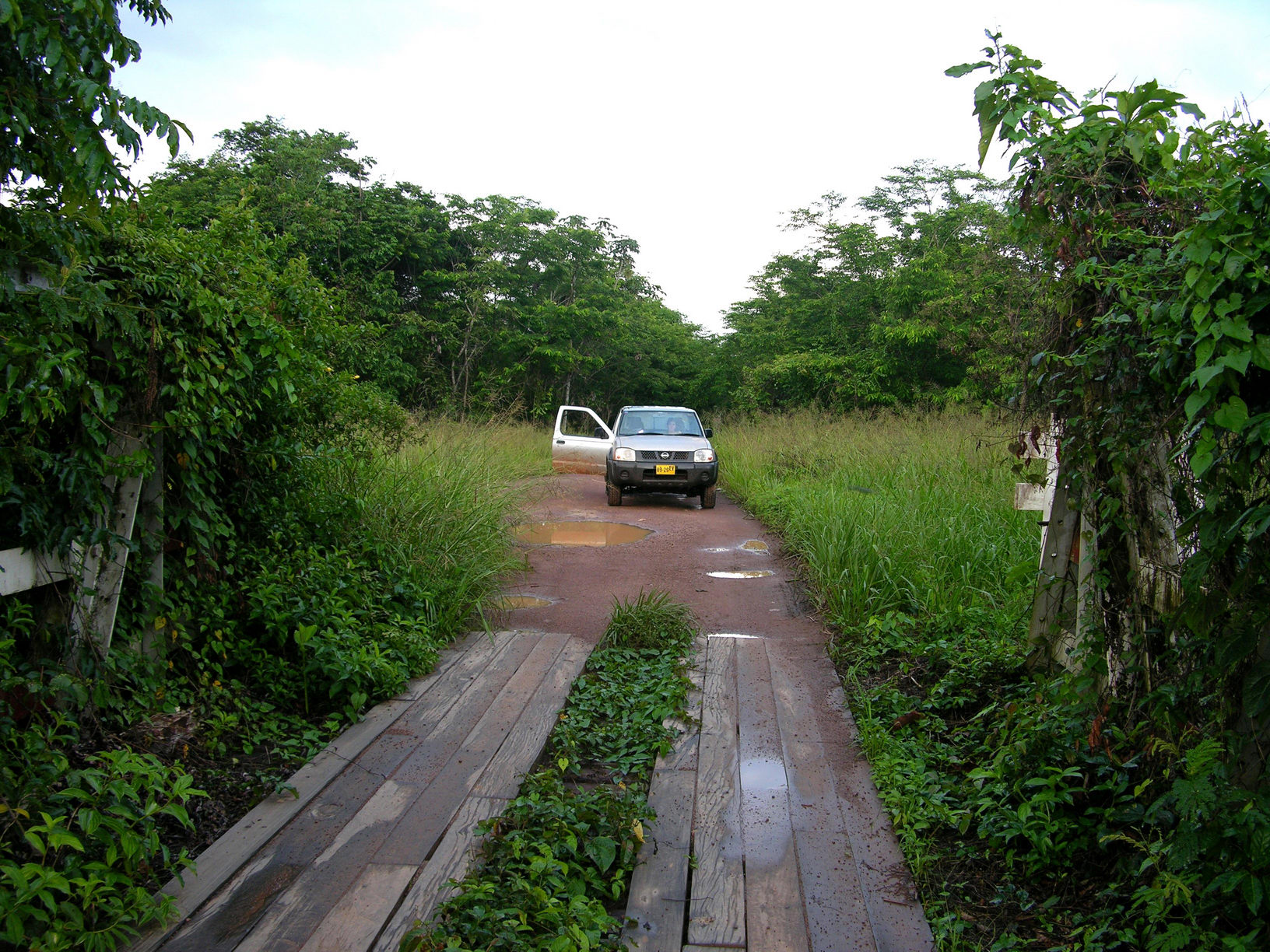
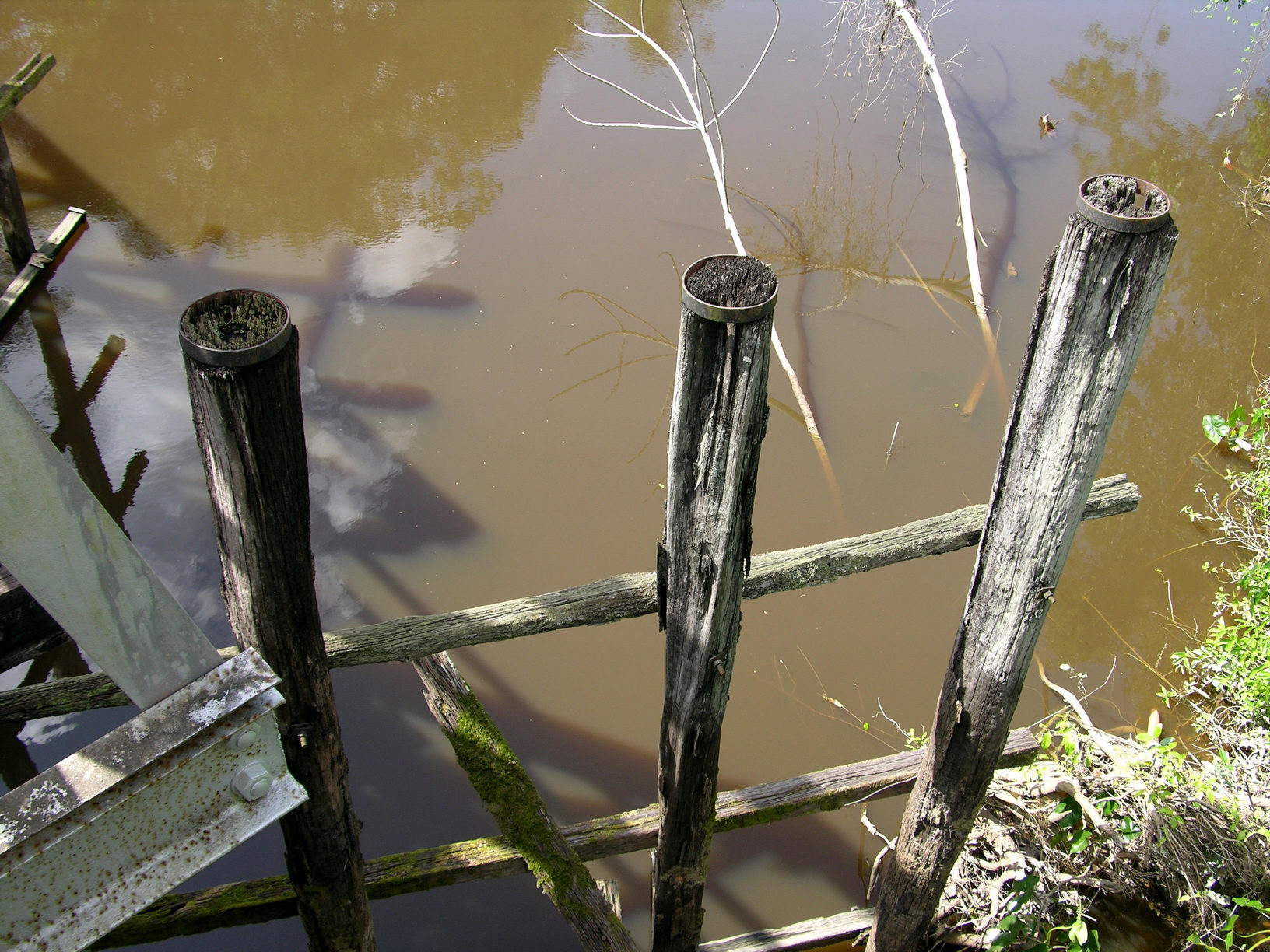
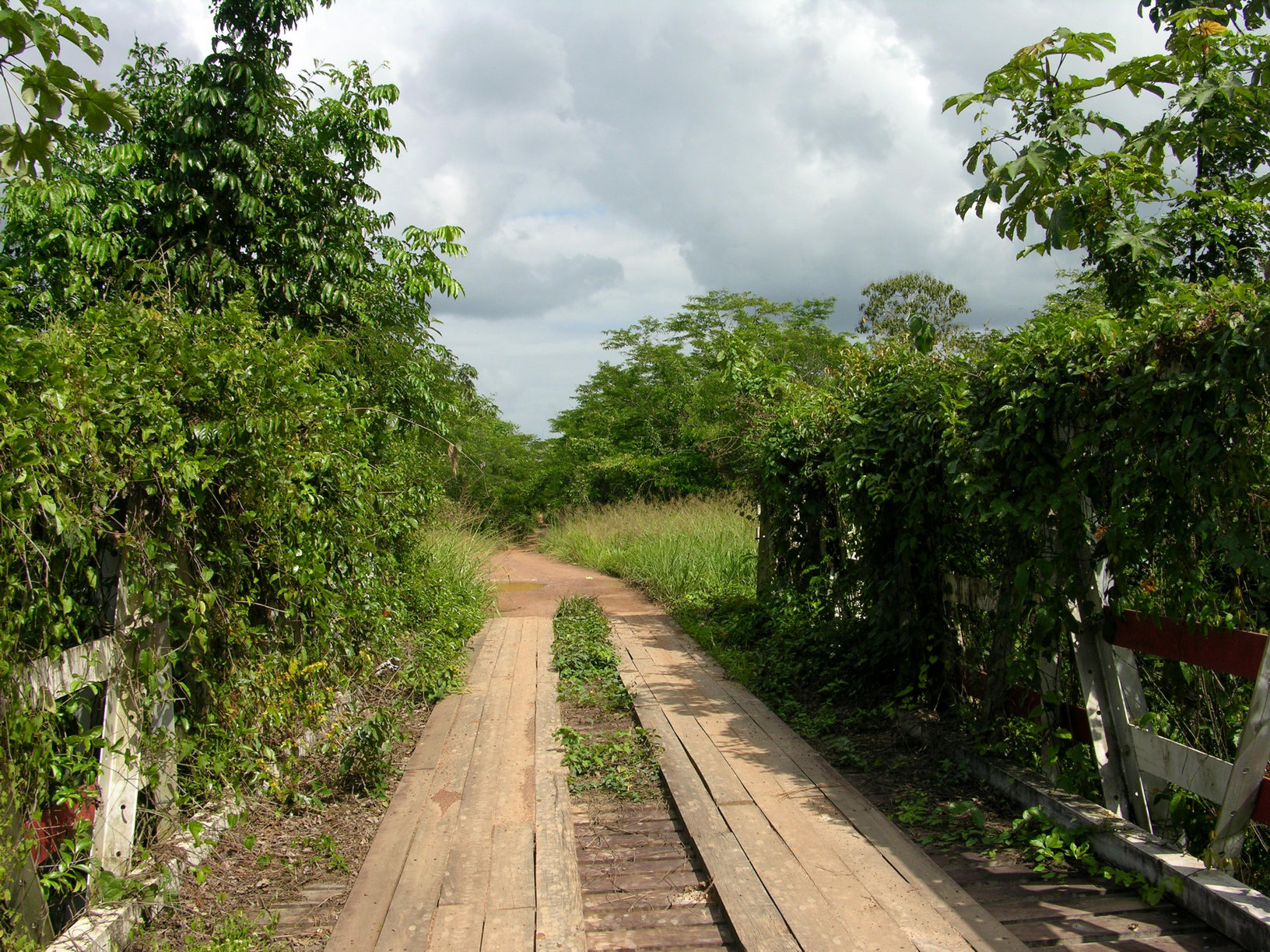
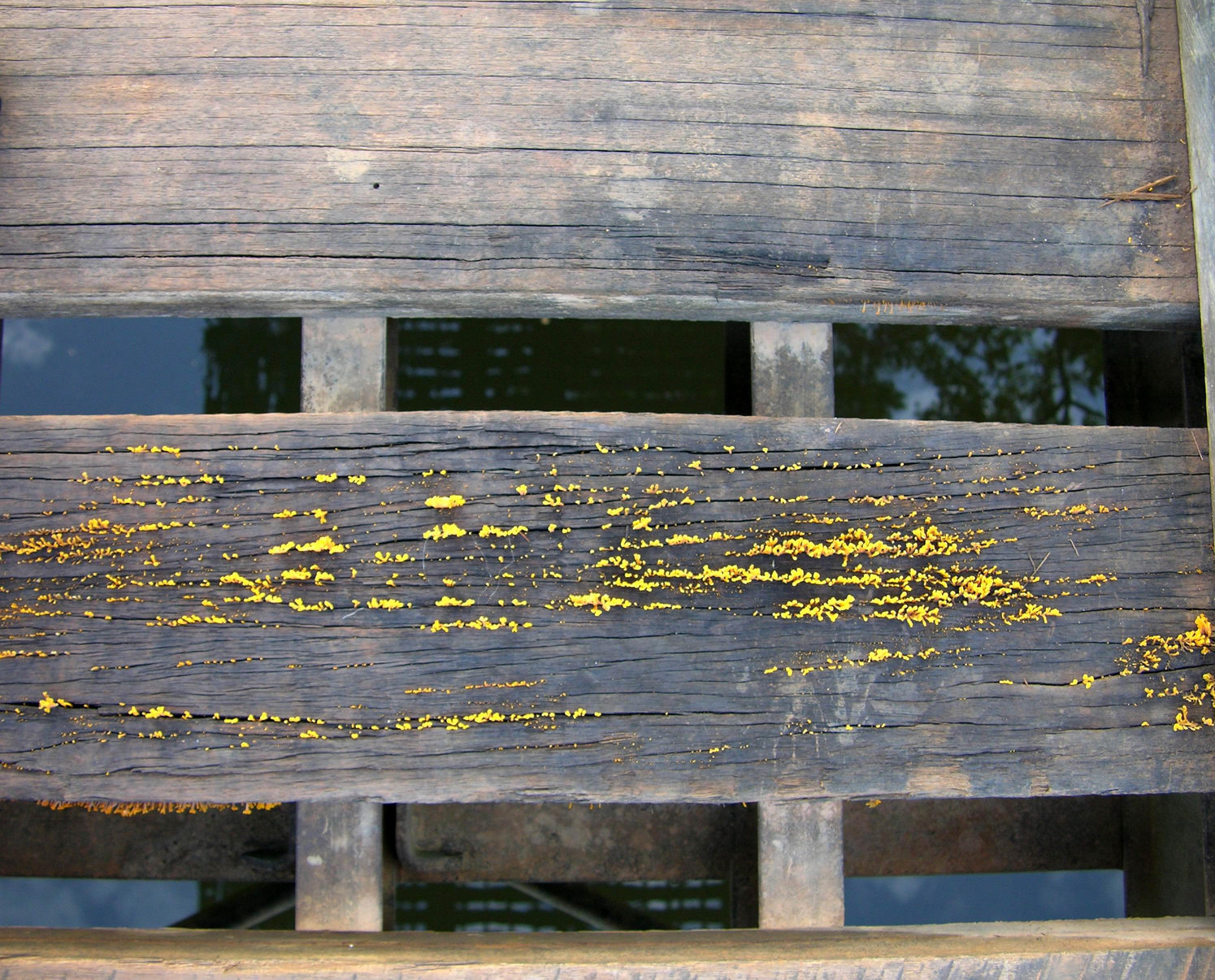
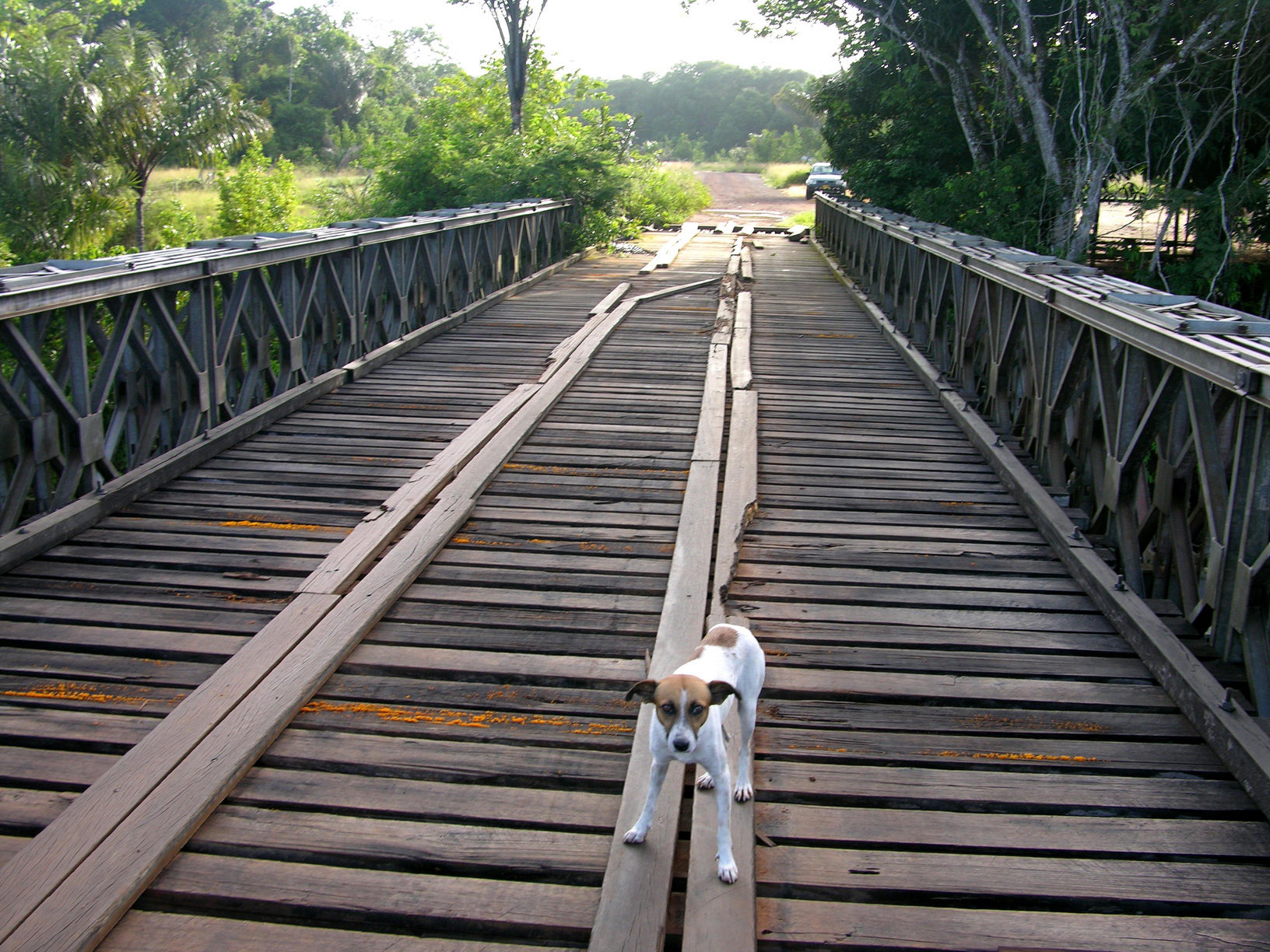
There's a toll for the bridge over the Saramacca River. They charge five Surinamese dollars only on the way into the jungle. Back out is free, which makes sense. A car can't spring into being in the jungle, but it can certainly sink in the mud. And the money's already paid. Let the car sink, then; less wear on the bridge. It was made of rotten wood. They'd tried to build a new one but abandoned it. Not only the work but the plant and machinery itself, which was soon overgrown with vines and became green little hills by the river.
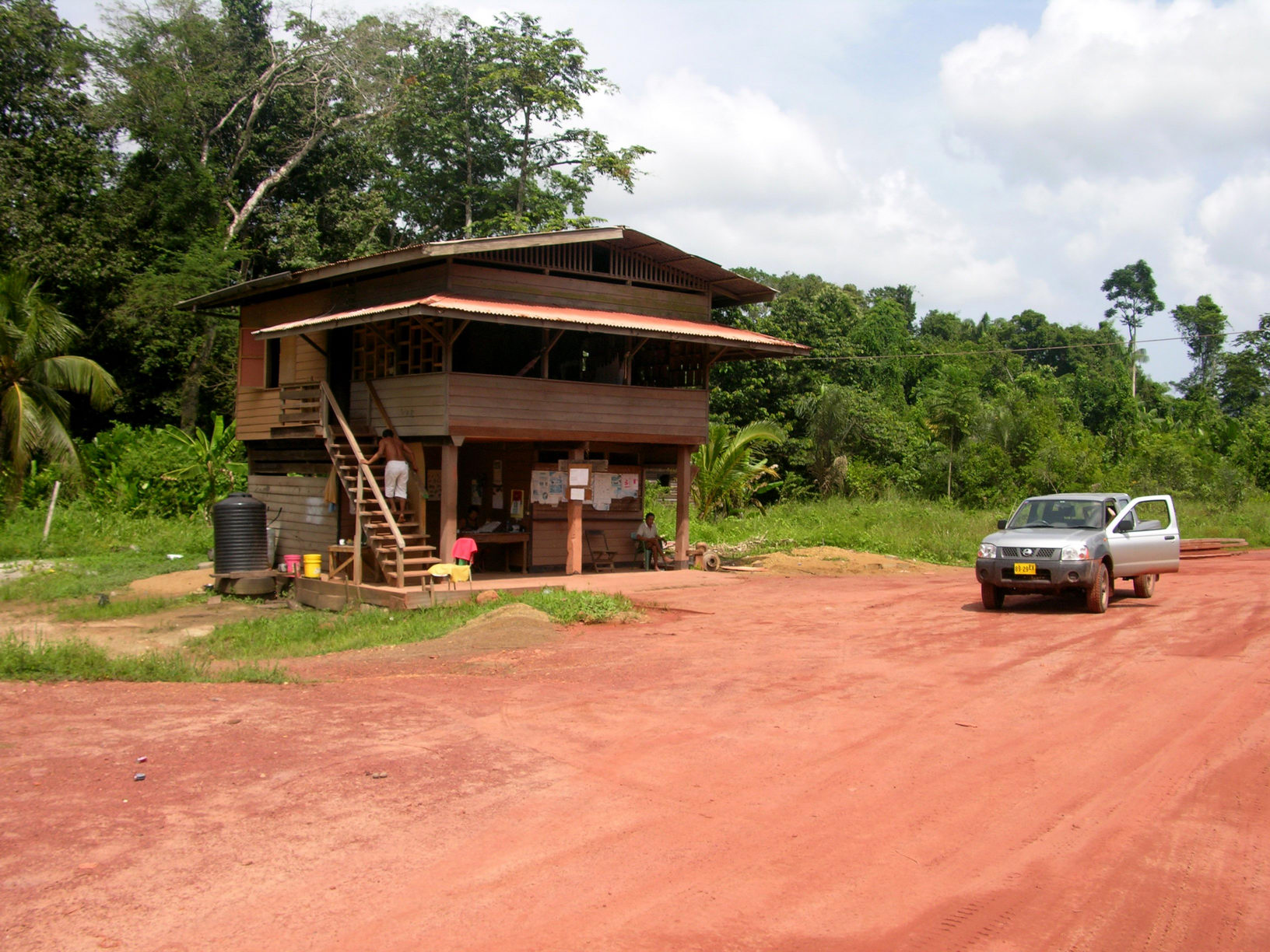
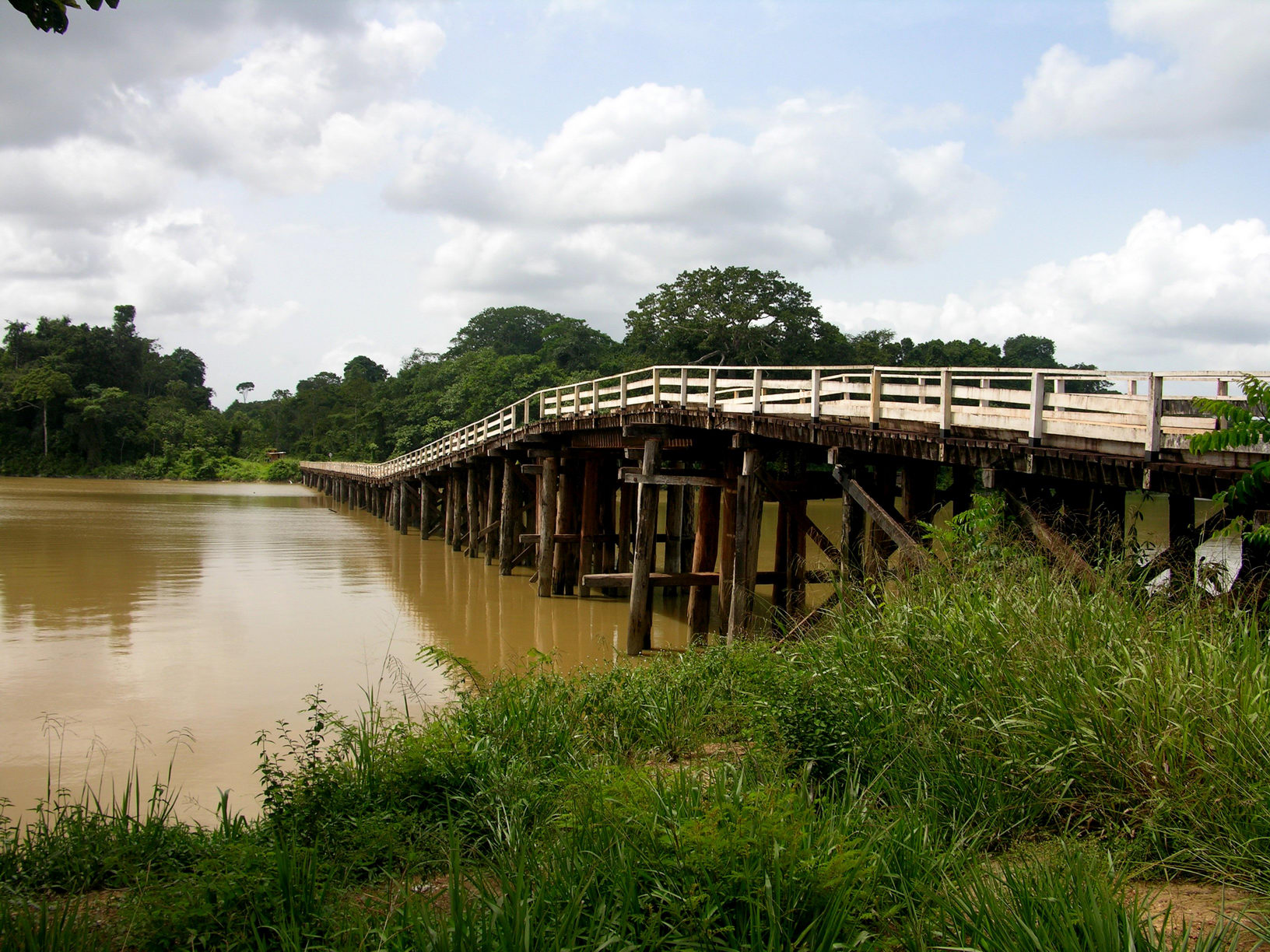
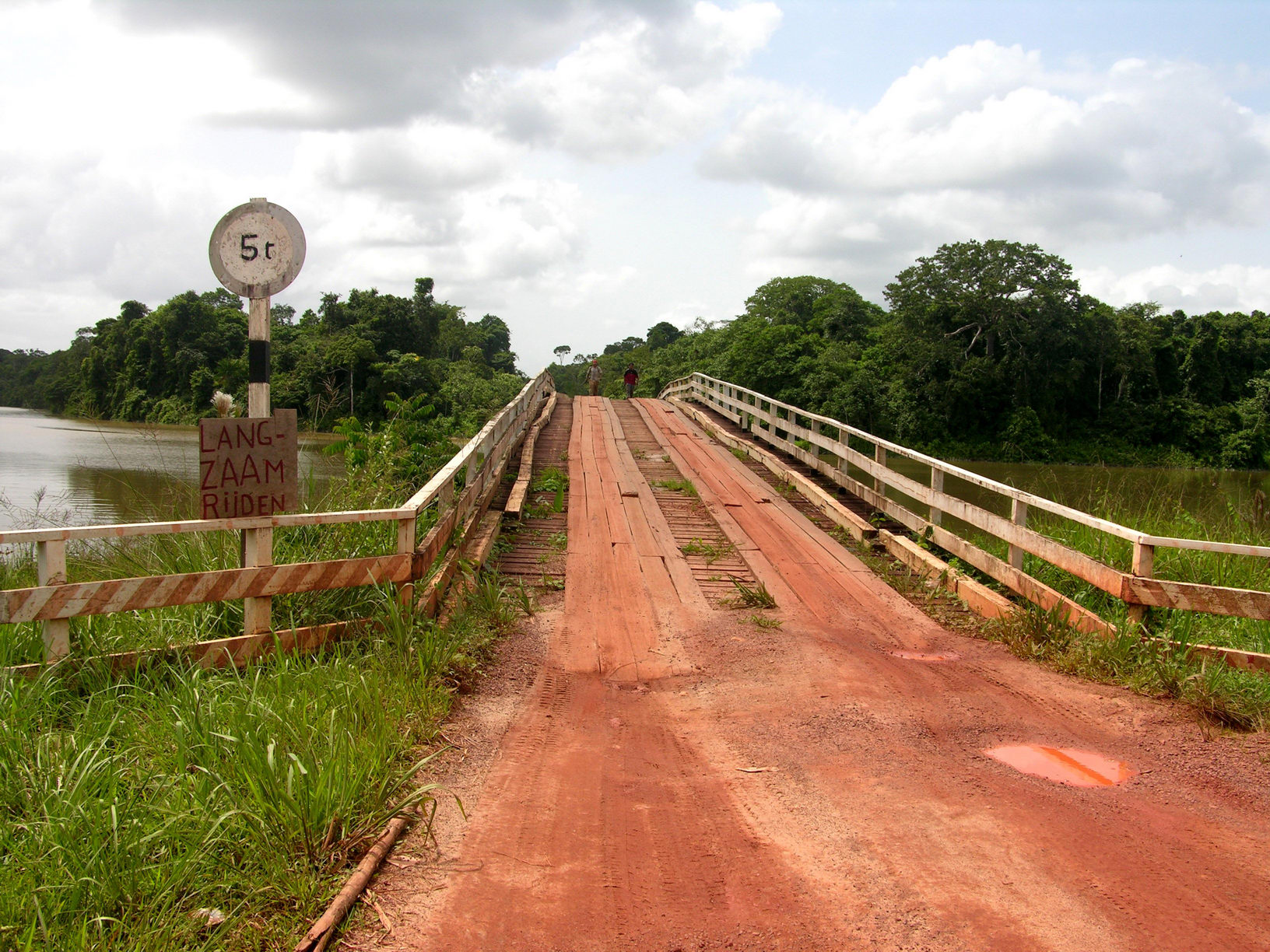
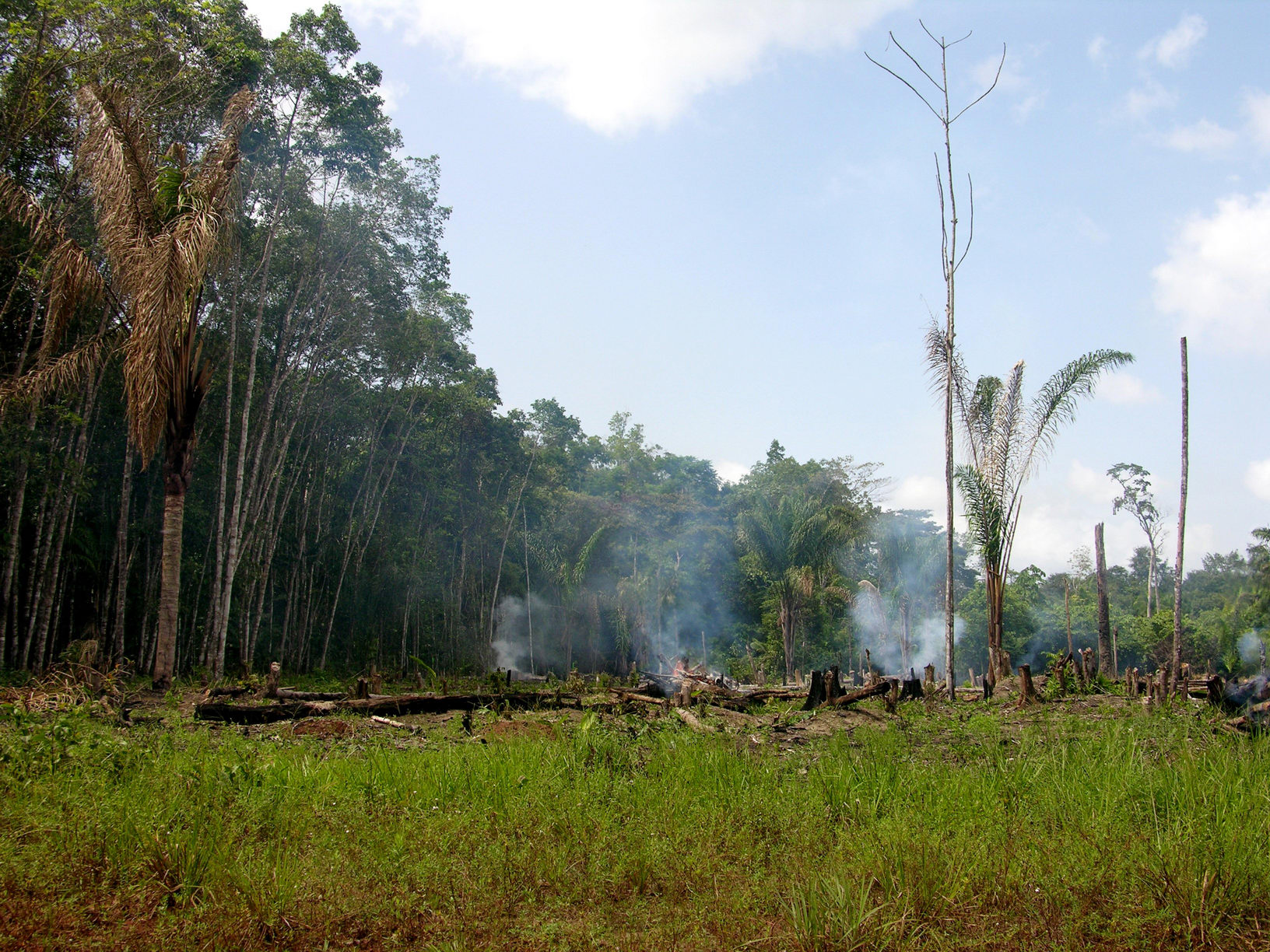
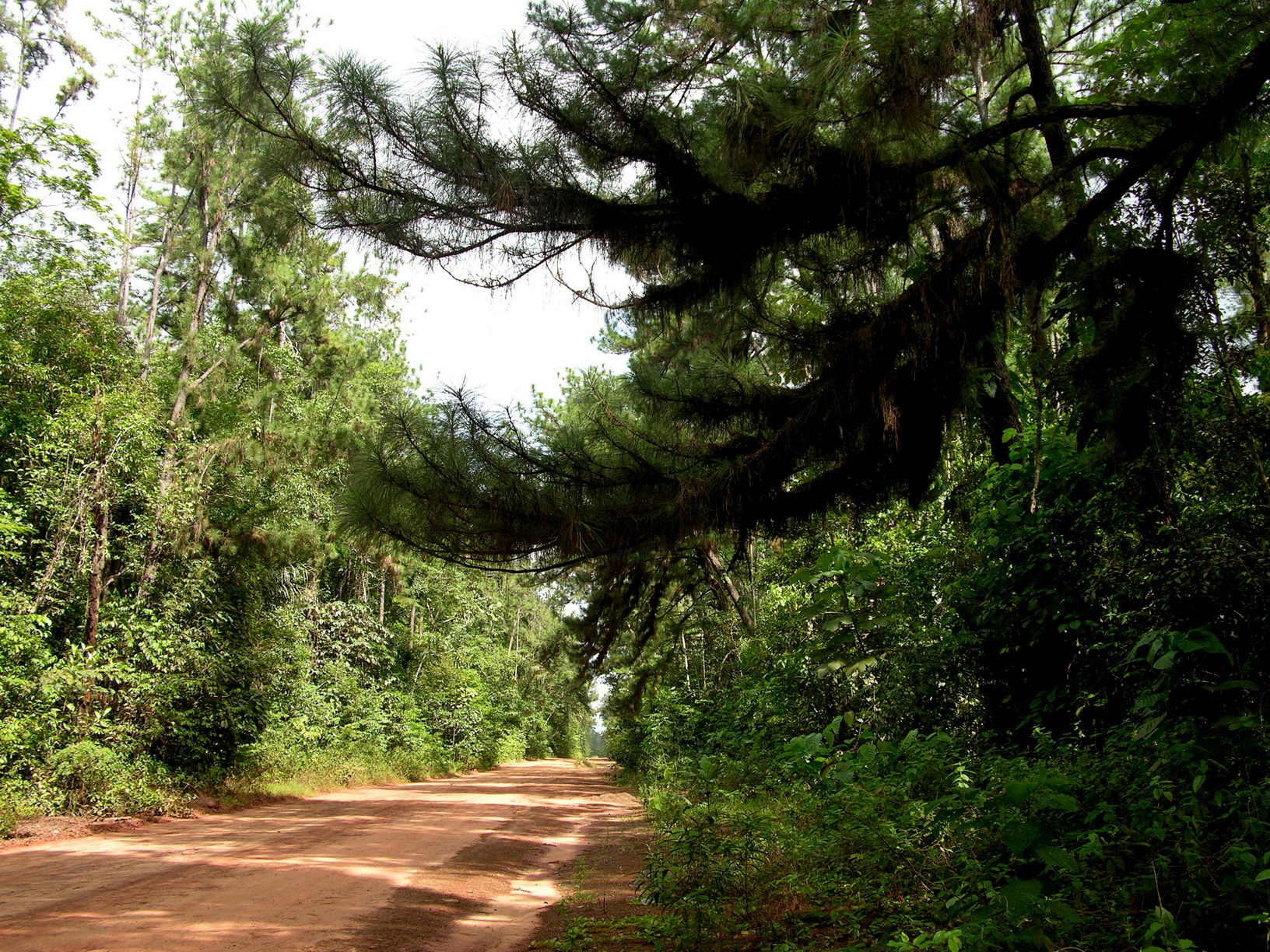
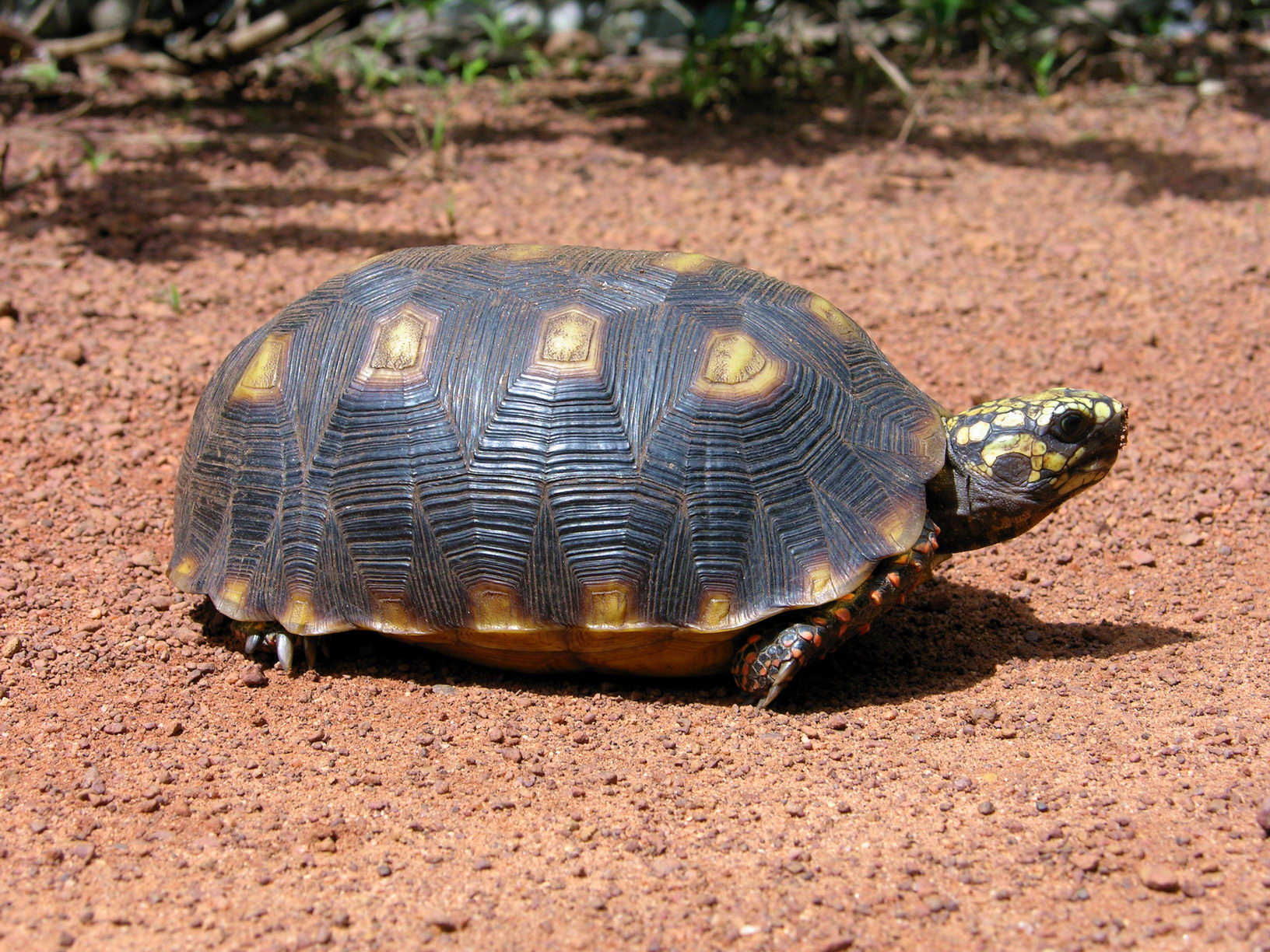
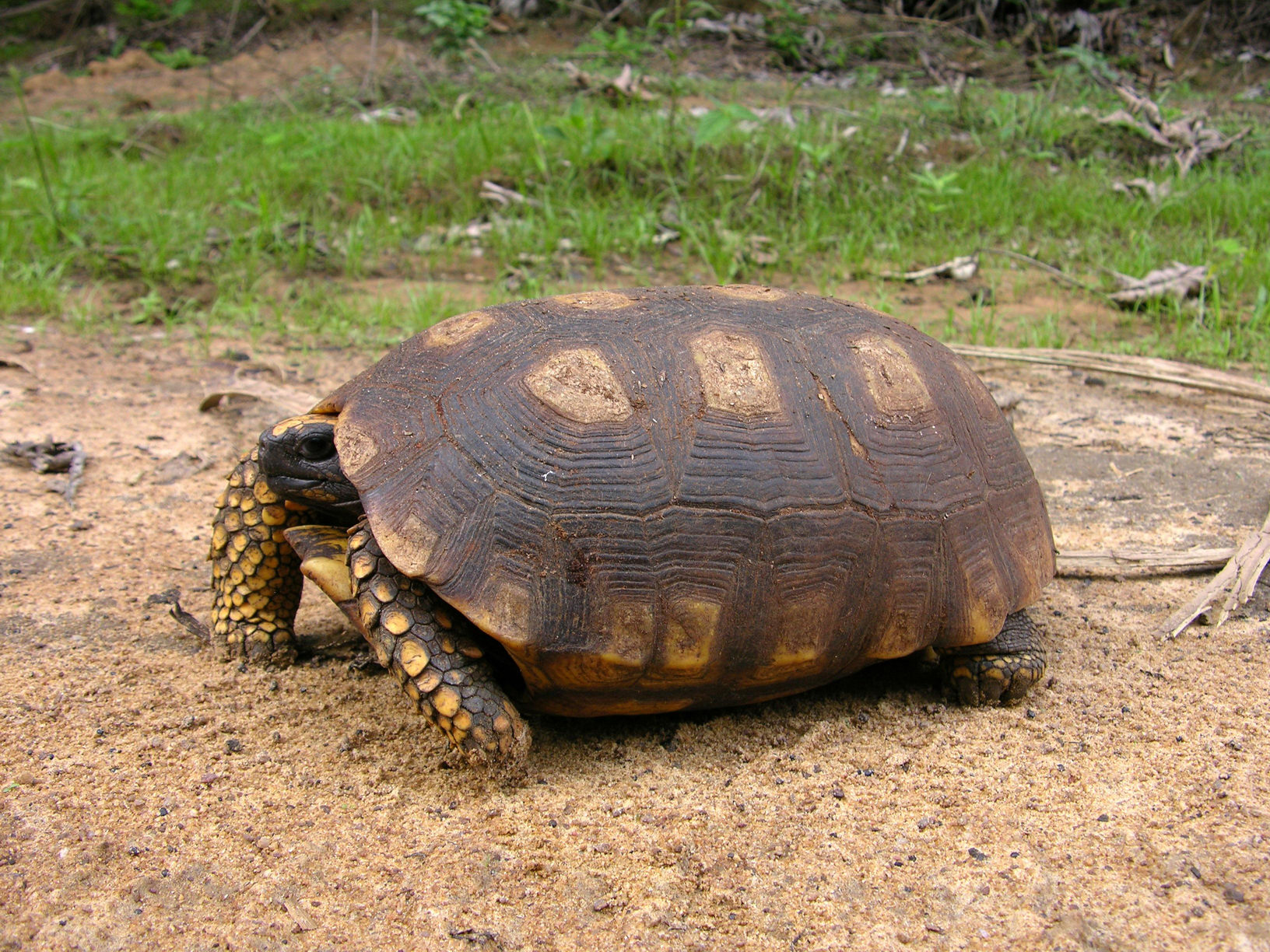
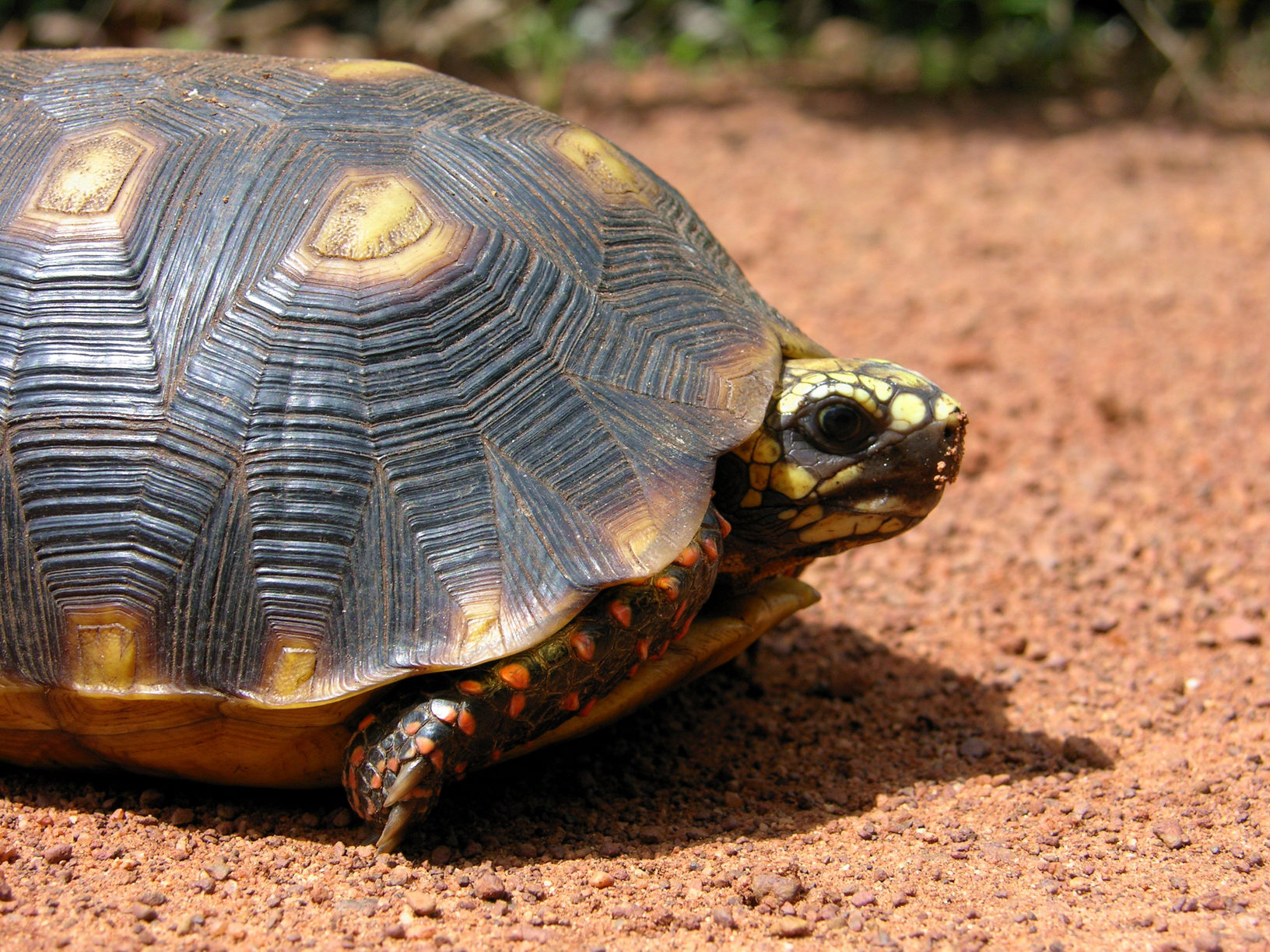
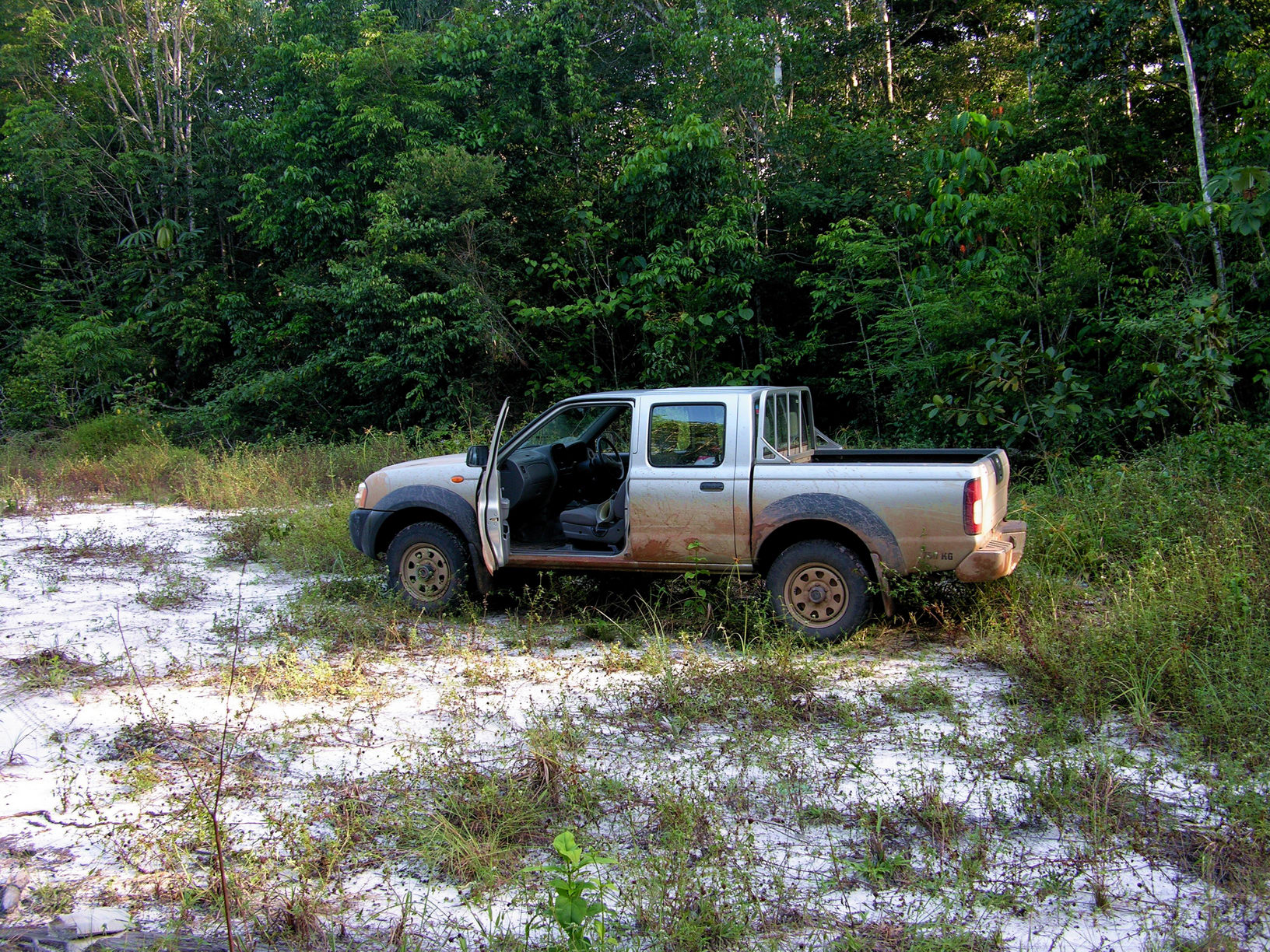
The first impassable puddles start straight after the river. There's not much water, but the clay is something to see, deep and slippery. Even the Nissan Patrol sometimes lost grip with all four wheels at once. We averaged less than twenty kilometres an hour. Roads forked. We'd get out to study the tyre marks and see which way had been taken most often. The villages gave out and the fields by the road went with them. The forest changed too. Surprisingly, the tall rainforest gave way to conifers. After a hundred kilometres the last signs of civilisation vanished. Now we were seeing turtles creeping along the road, and monkeys leaping in the treetops. Curassows and guans strutted importantly along the road and took their time getting out of the way. At another junction (5°11.254′N, 56°55.279′W) we ought to have gone right, but the road that way looked so wild that we decided it couldn't be the one and went left. Signs began appearing: “No hunting. Private forest estate.” There were still more animals. The bushes by the road were festooned with parrots. Agoutis scurried into the scrub. Better than any national park. It was all beautiful, only we'd been driving the wrong way for tens of kilometres. We found that out when we came to a sawmill and a team burying fibre-optic cable in a trench. They explained that it was a dead end. We had to go back. Meanwhile the rain had started pouring, filling up the puddles. The right road had already looked impassable. Now a muddy torrent rushed down it. The supposed highway went through swamp and dense vegetation and looked like a tunnel, with a river underneath, a wall of rain from above and wet branches at the sides. The puddles were sometimes as deep as a wheel.
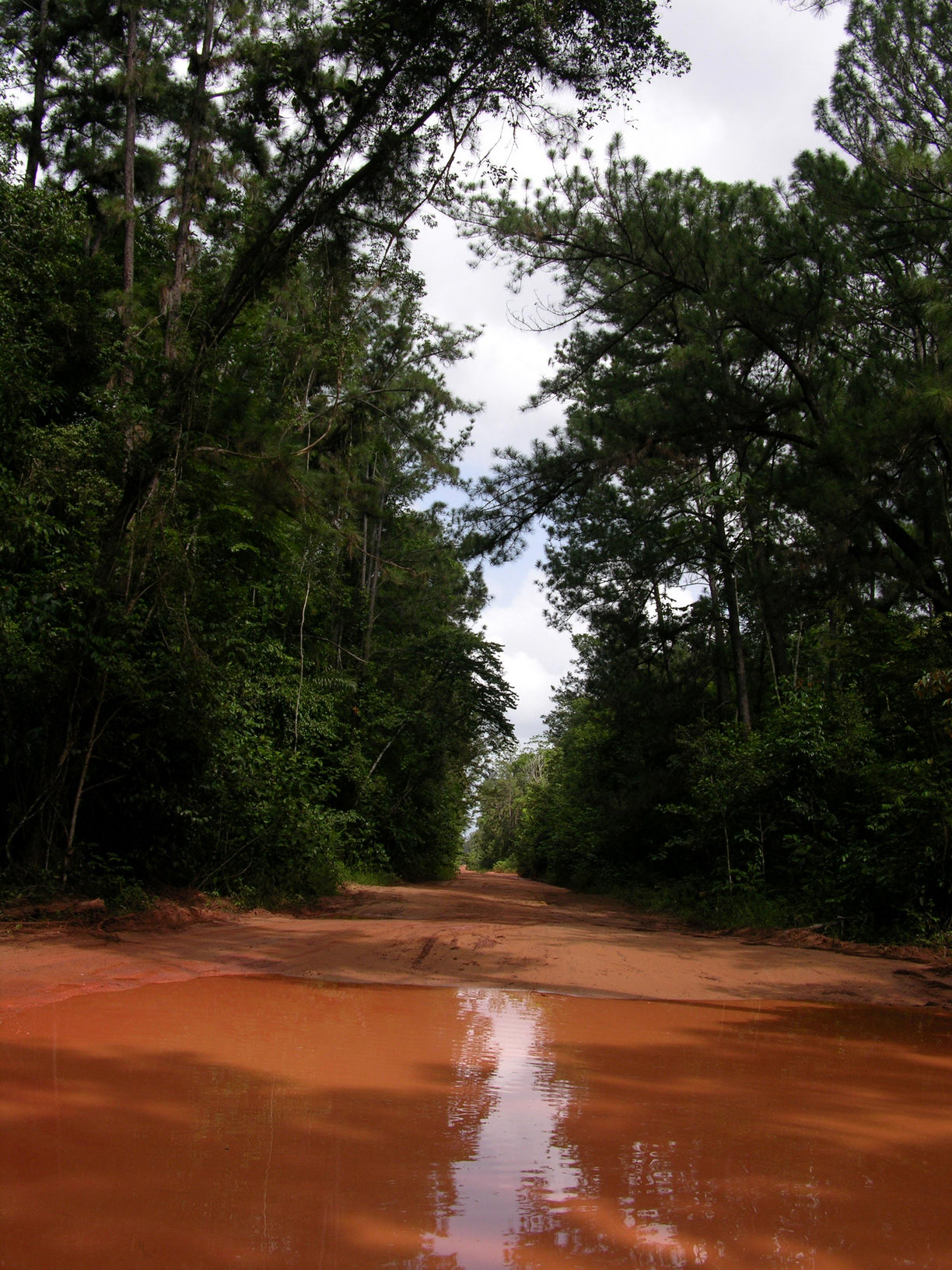
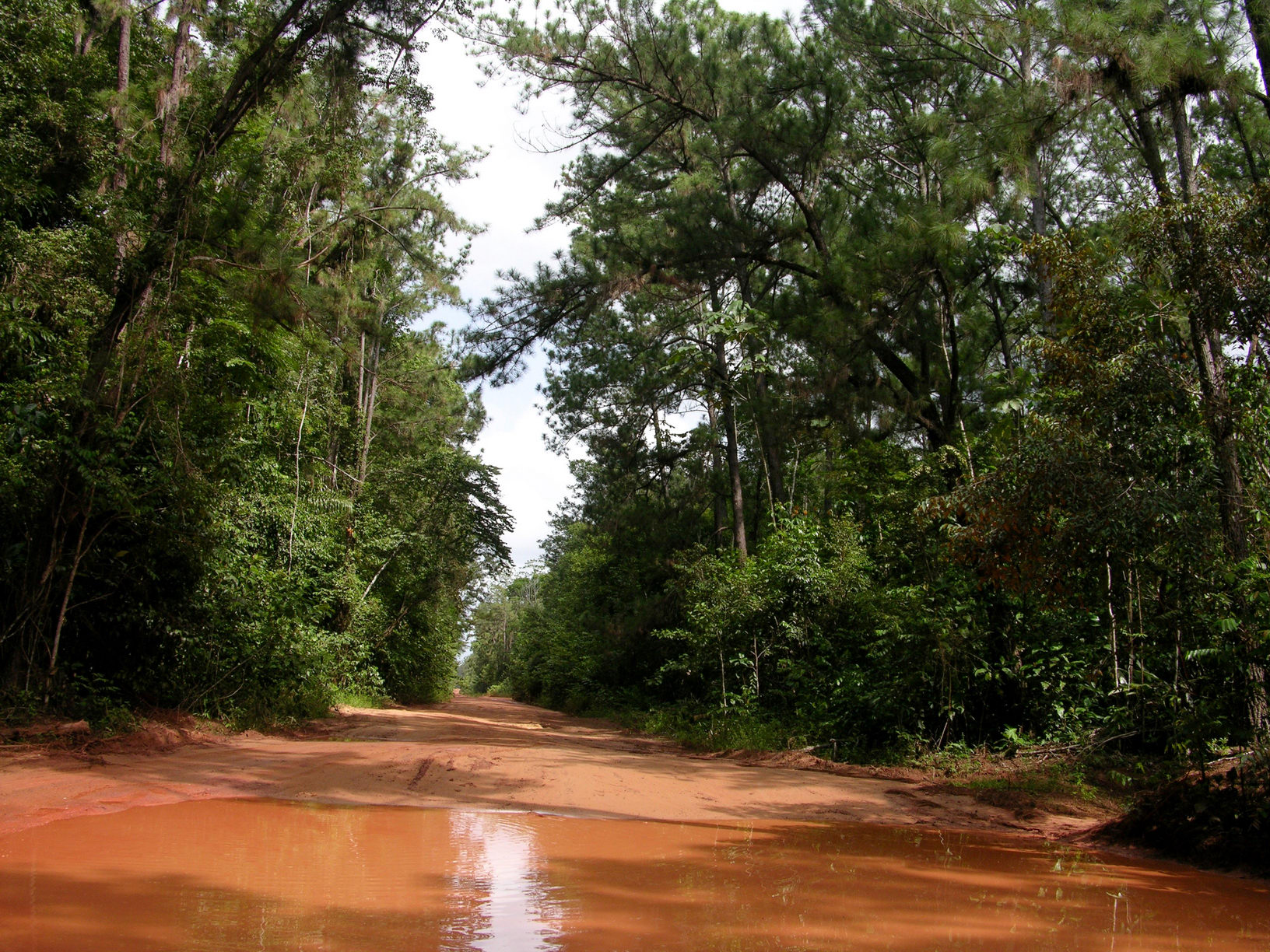
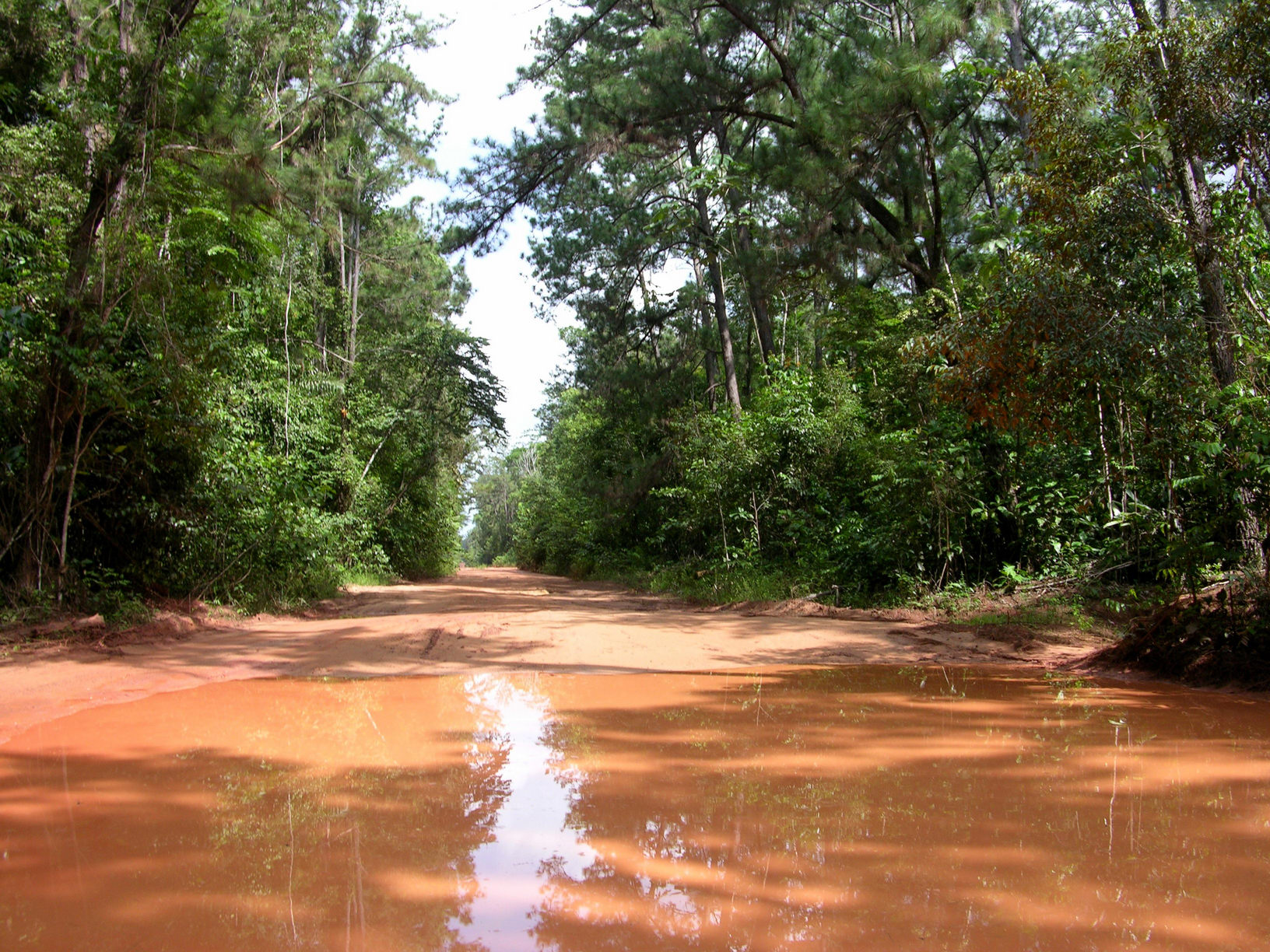
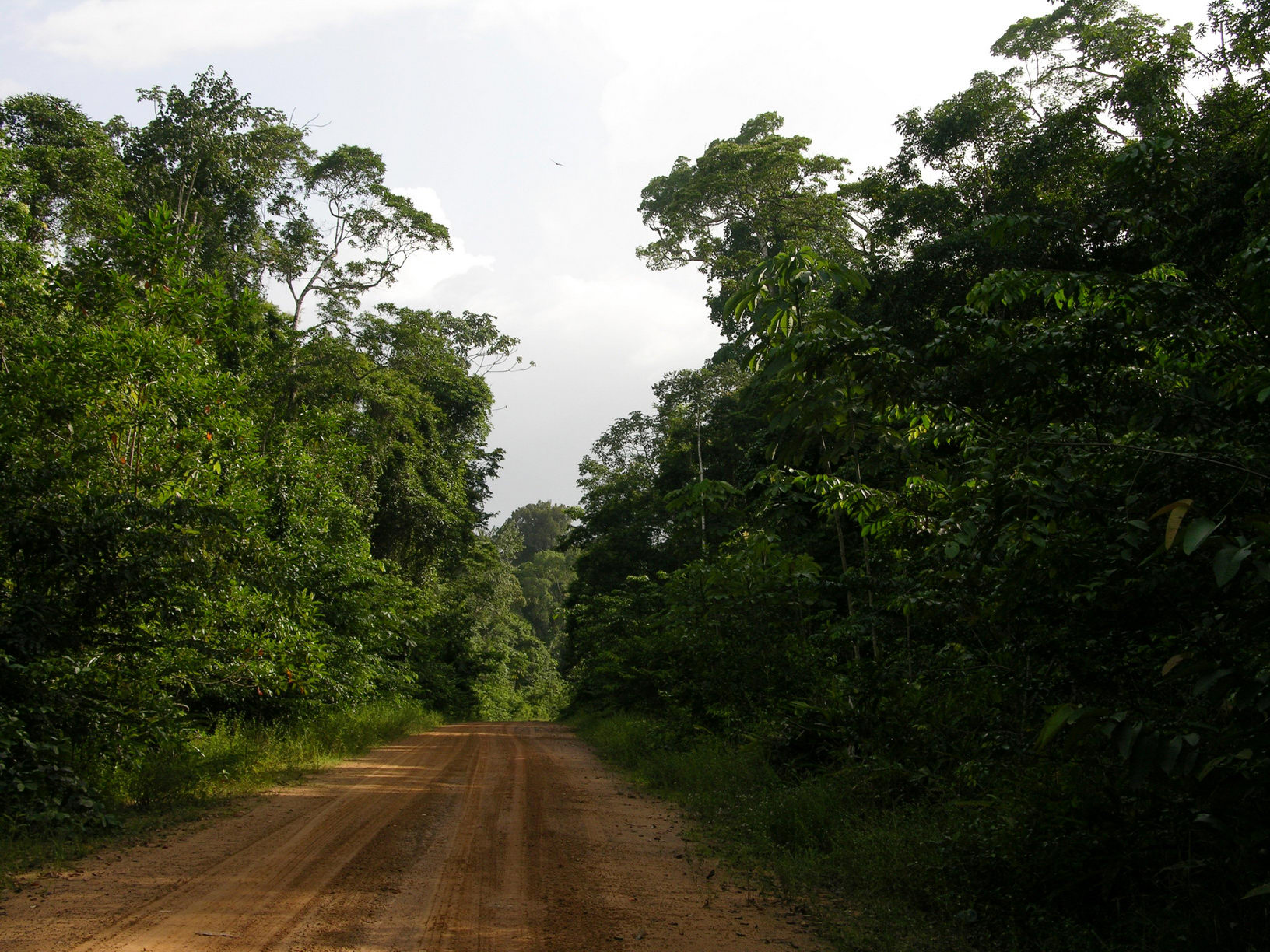
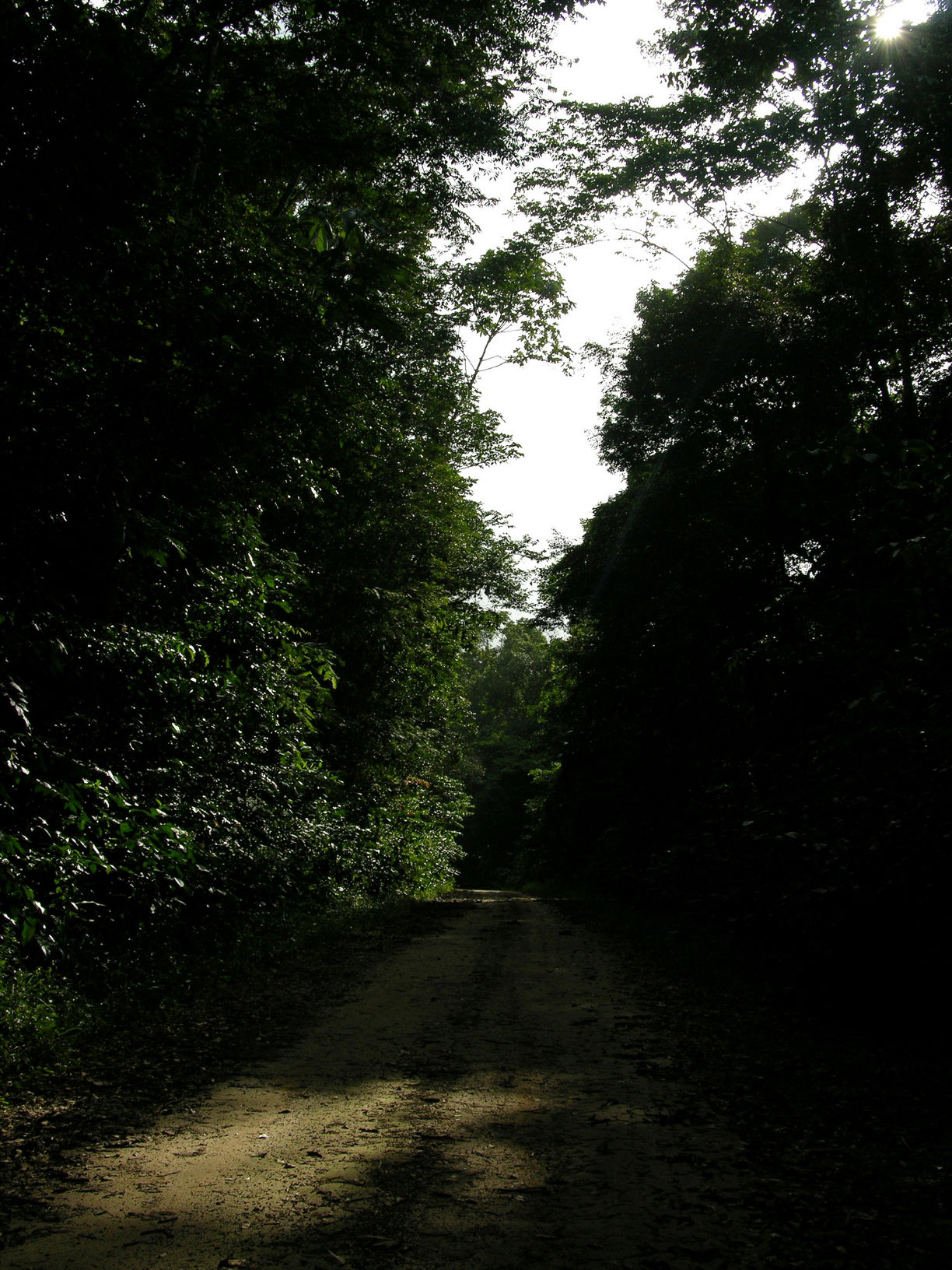
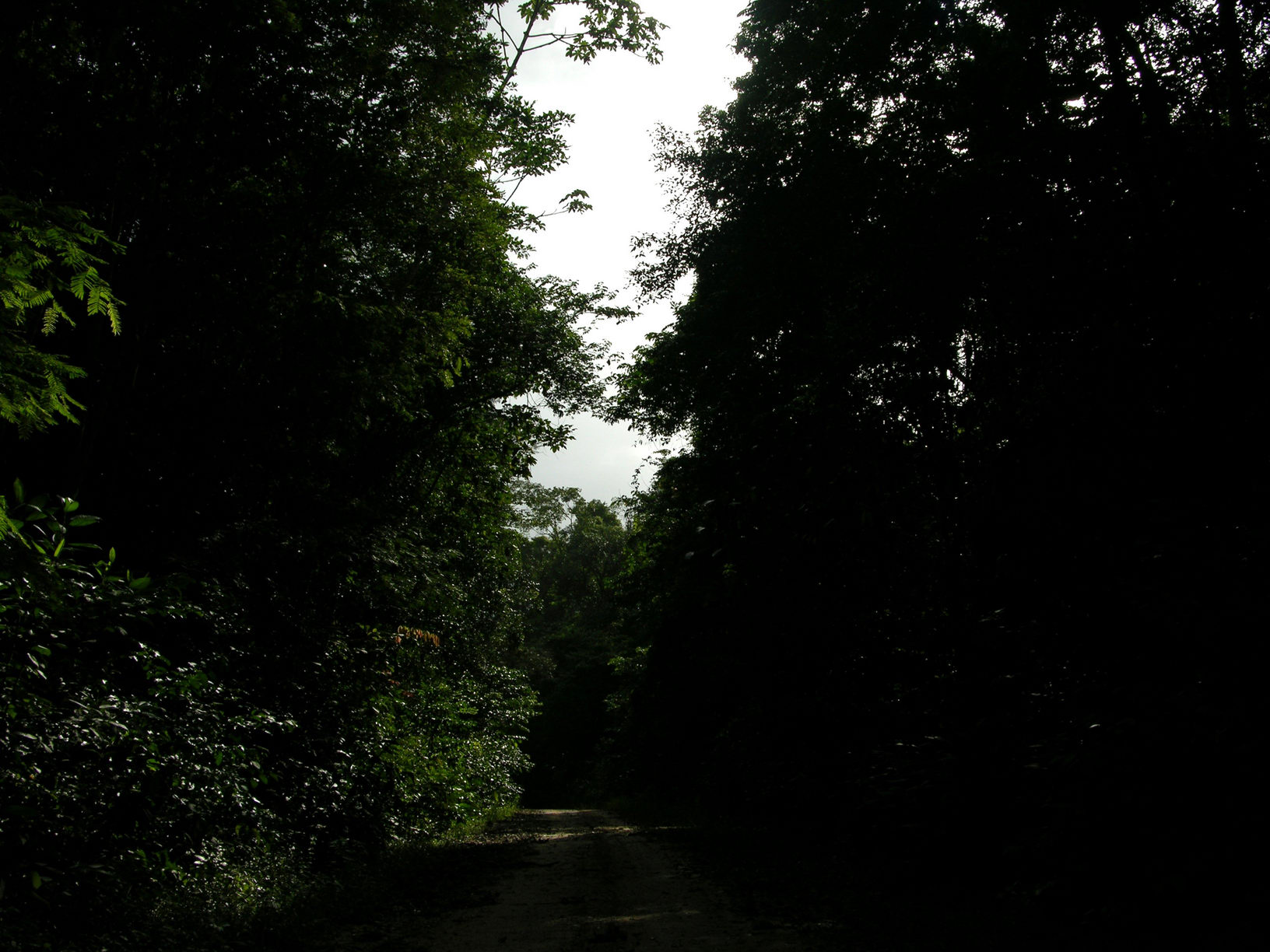
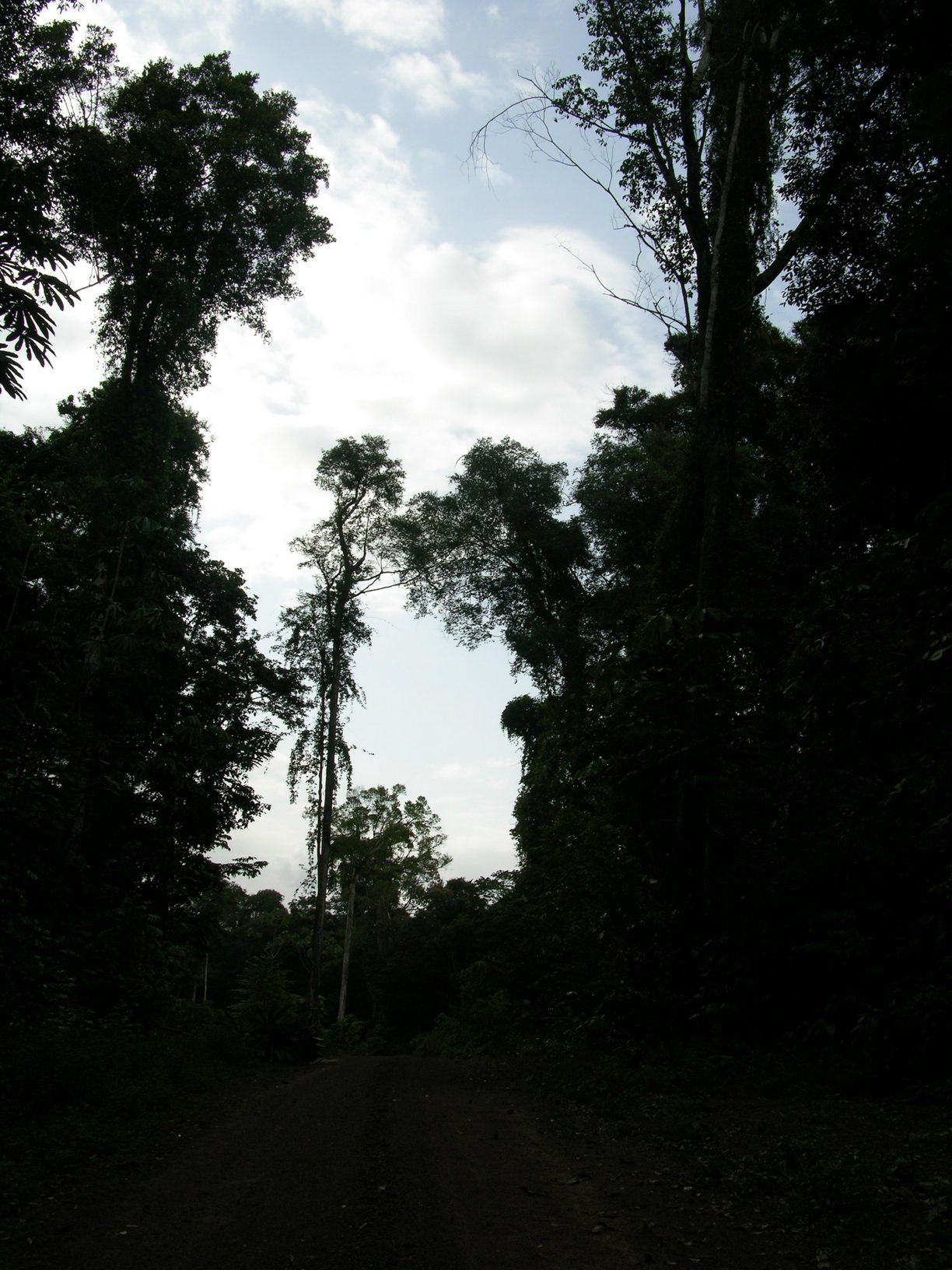
It seemed we'd get stuck any second. But we drove through and made it onto a dry track at the village of Jozepdorp, on the bank of the Tibiti (Tibiti) River.
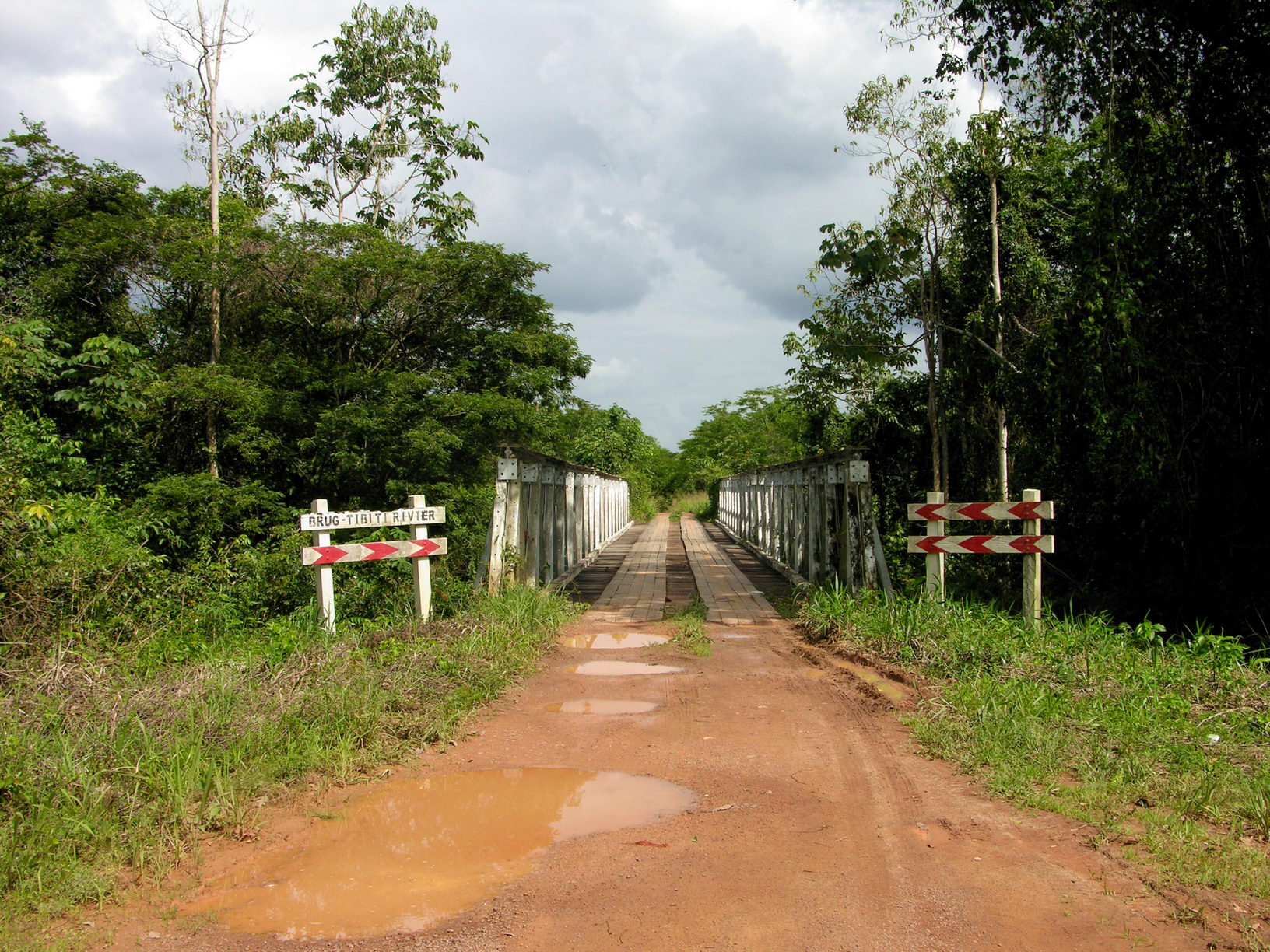
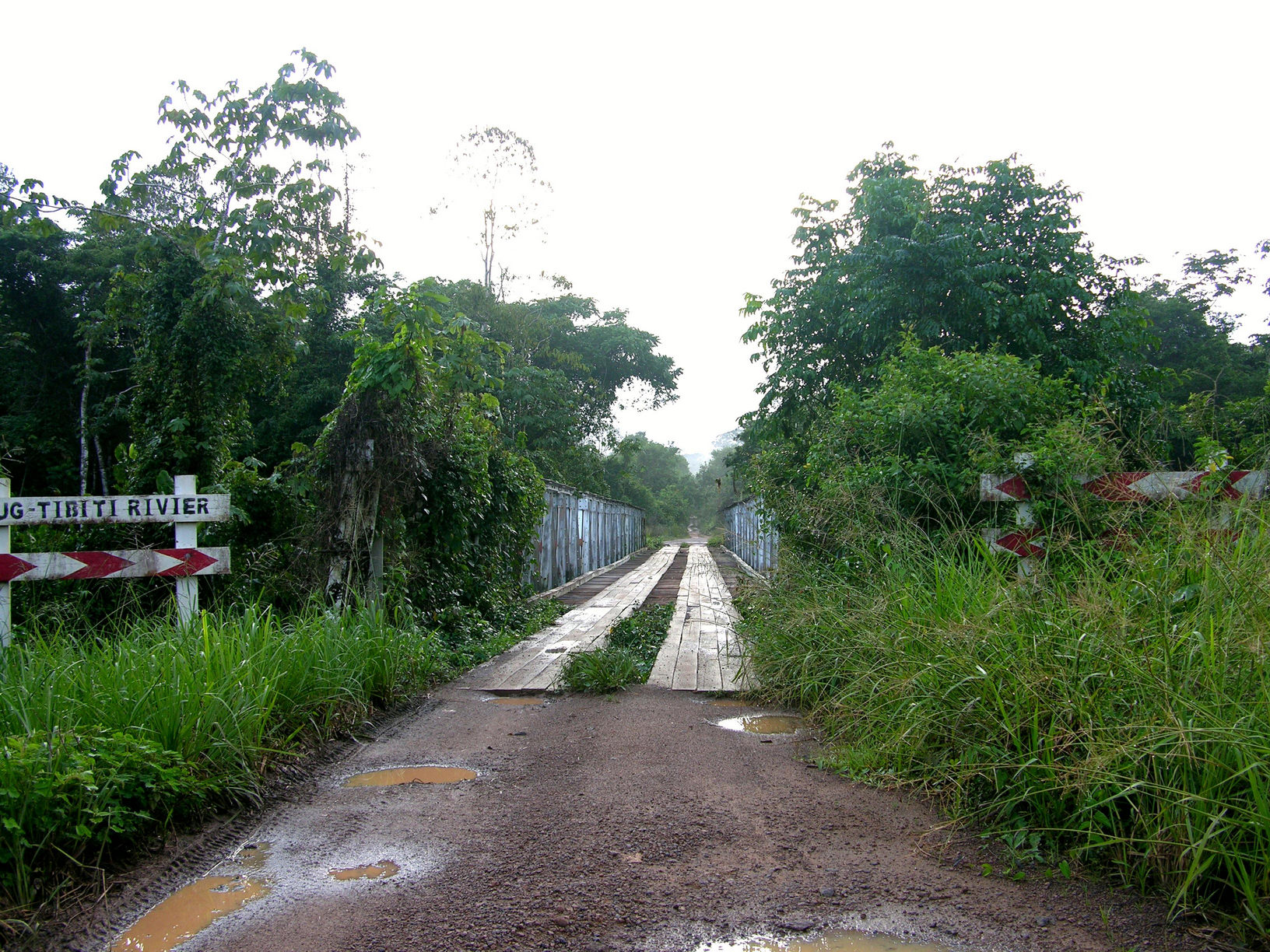
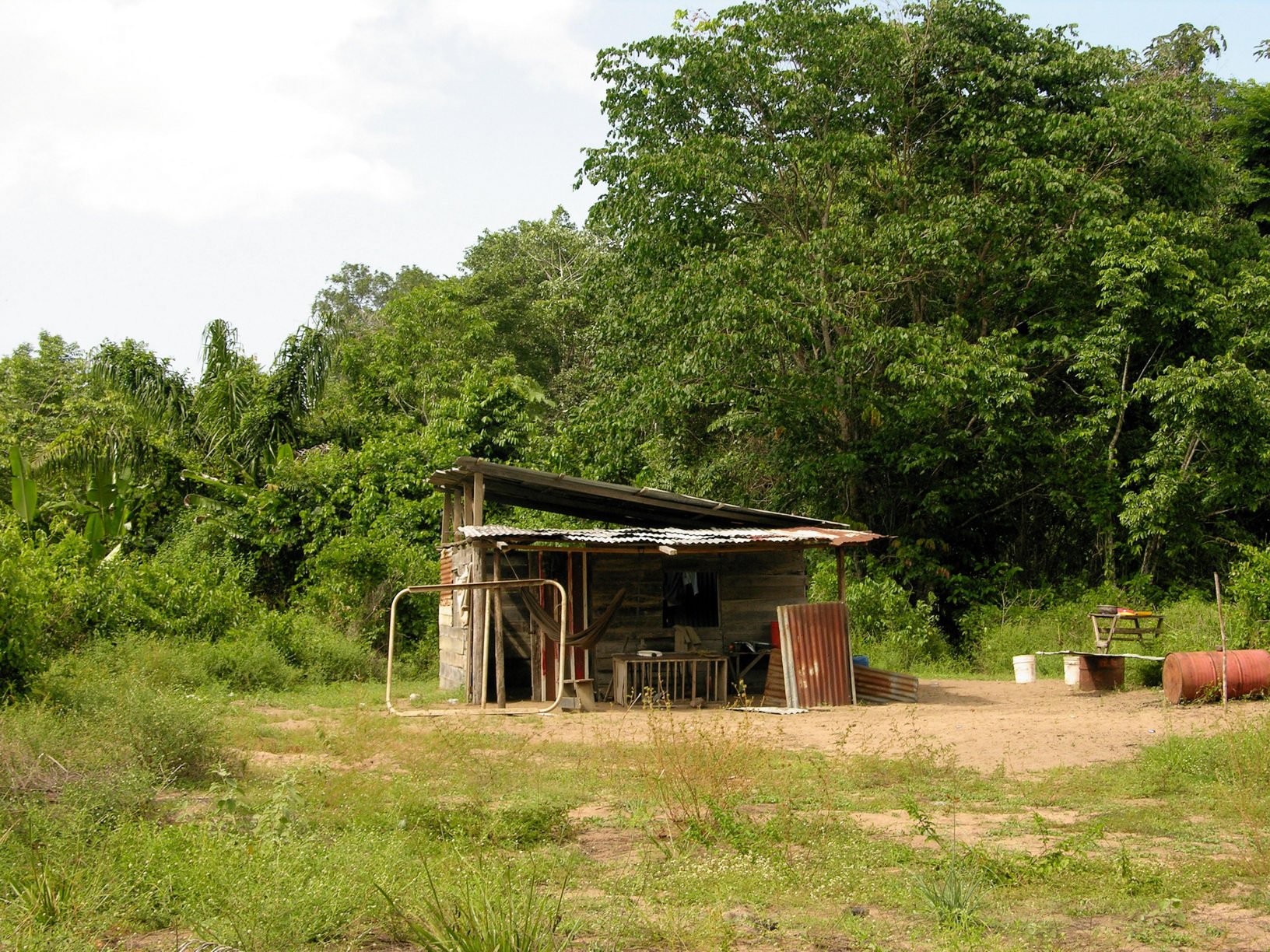
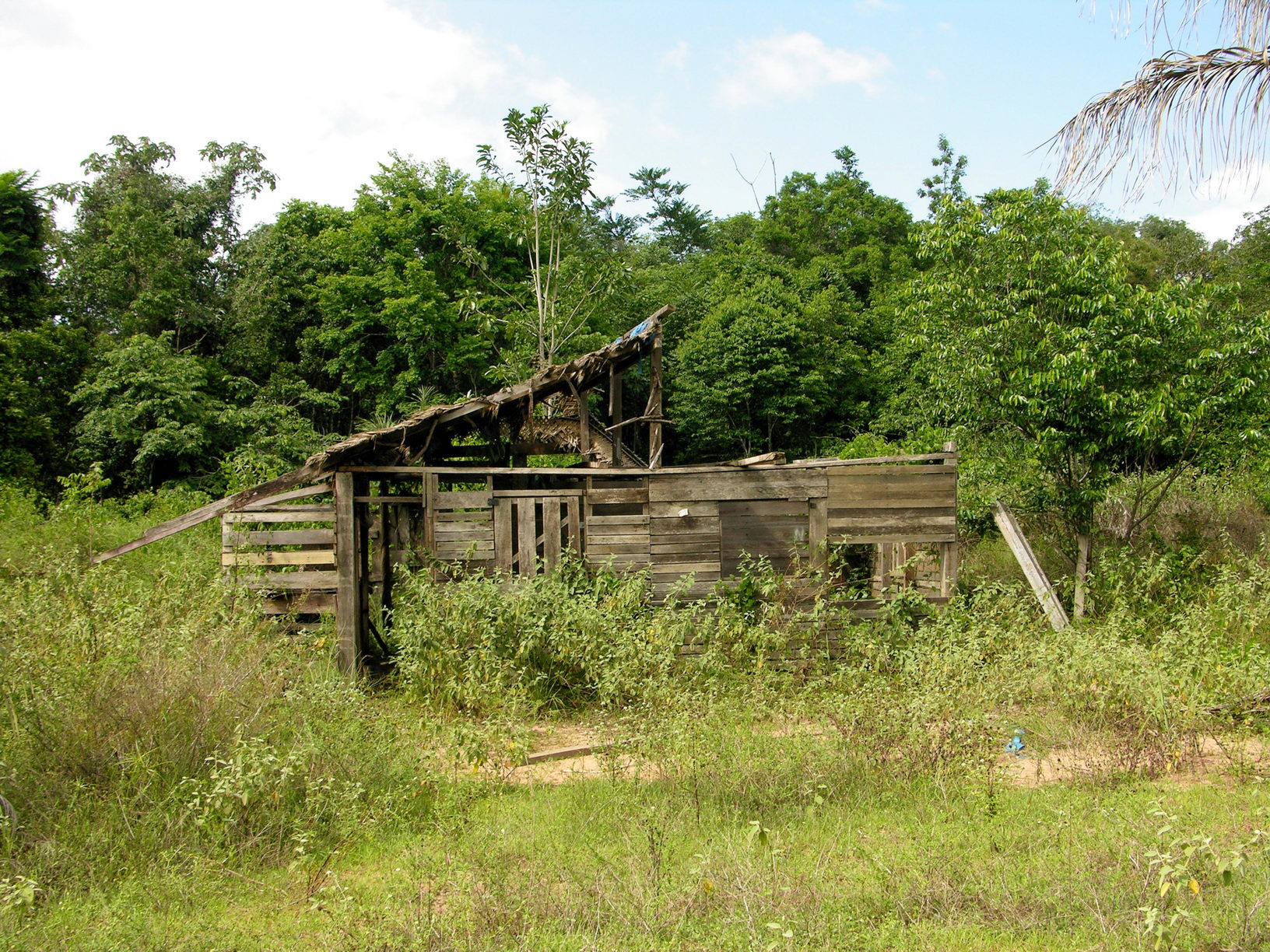
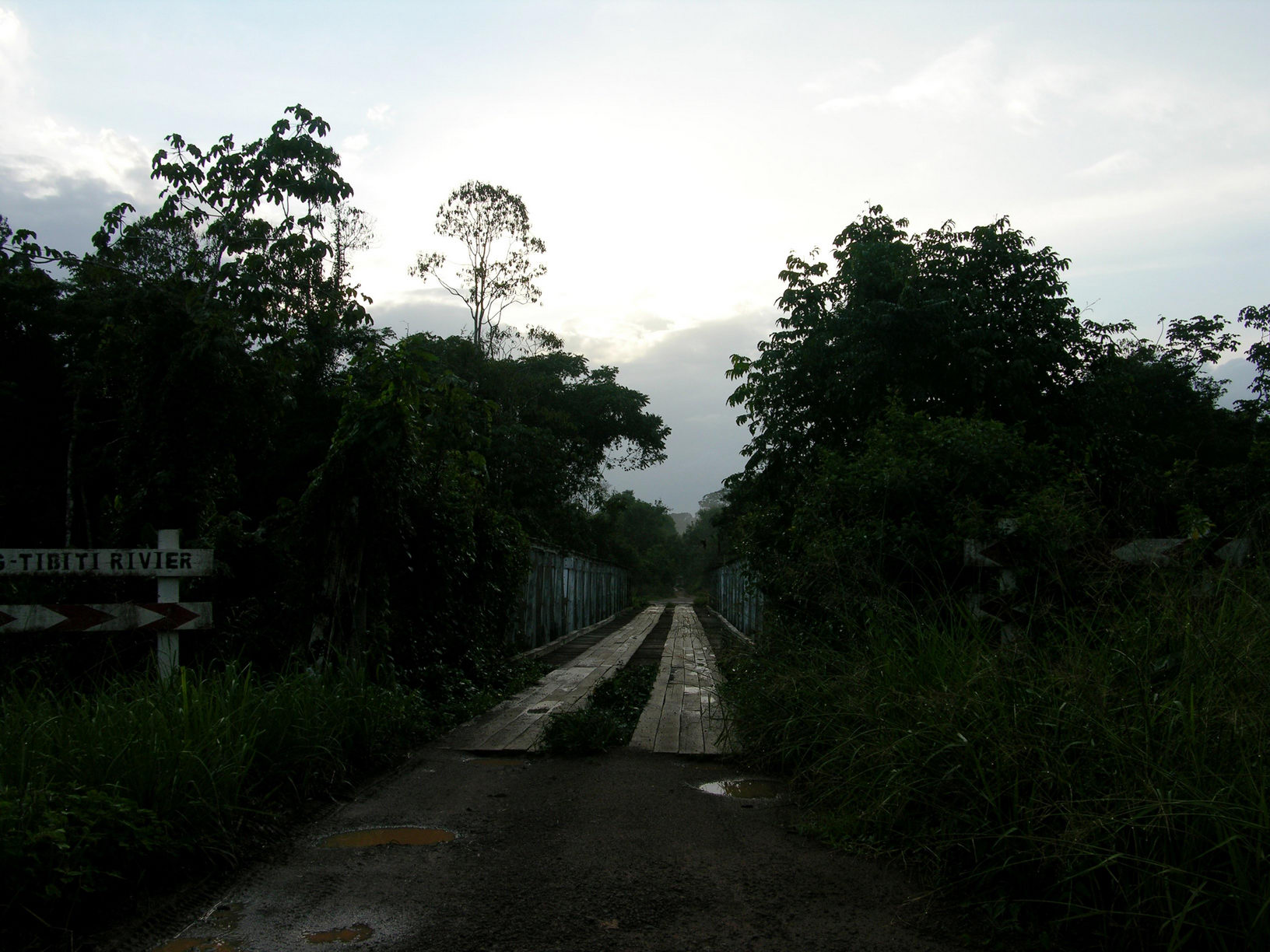
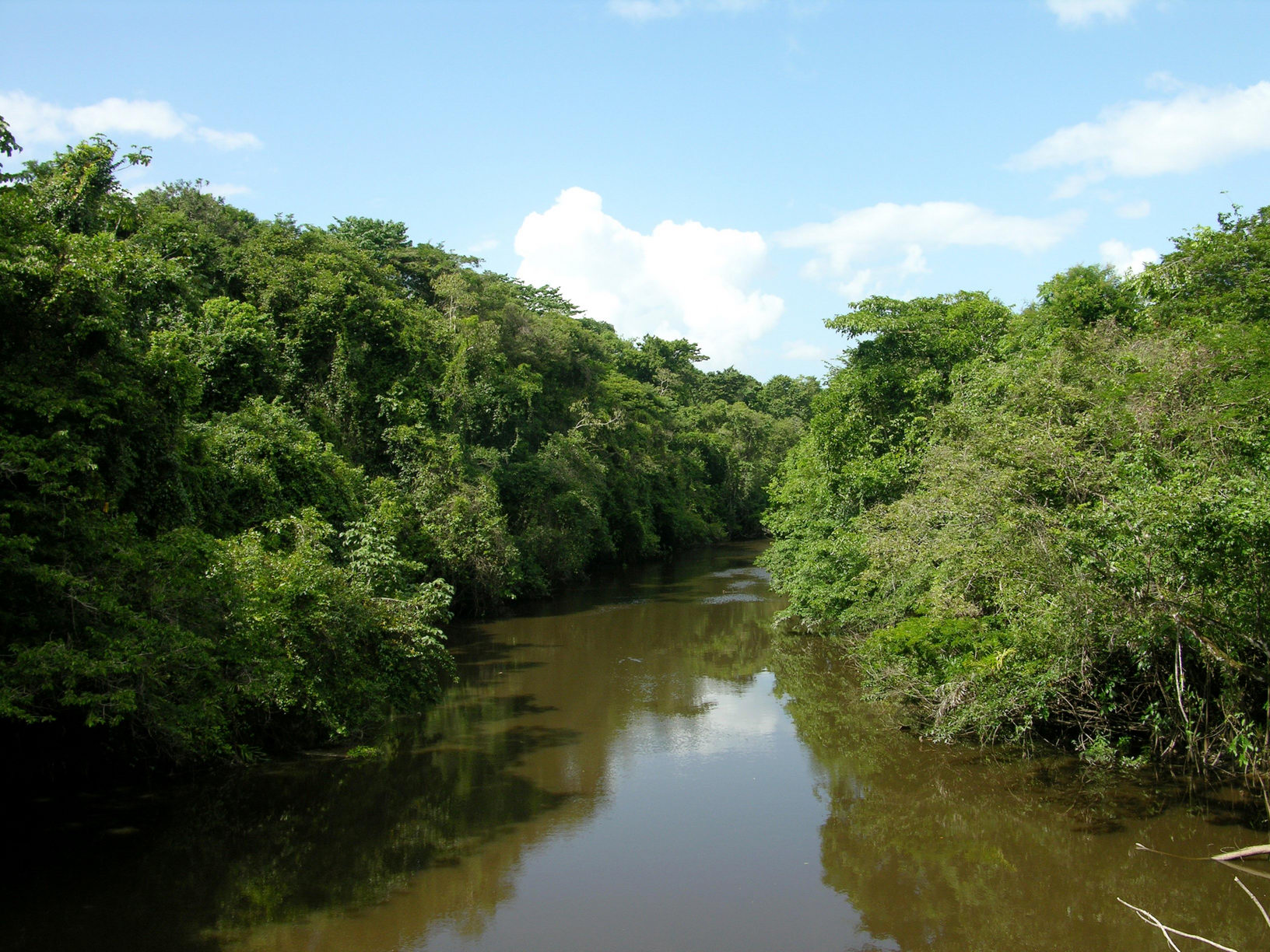
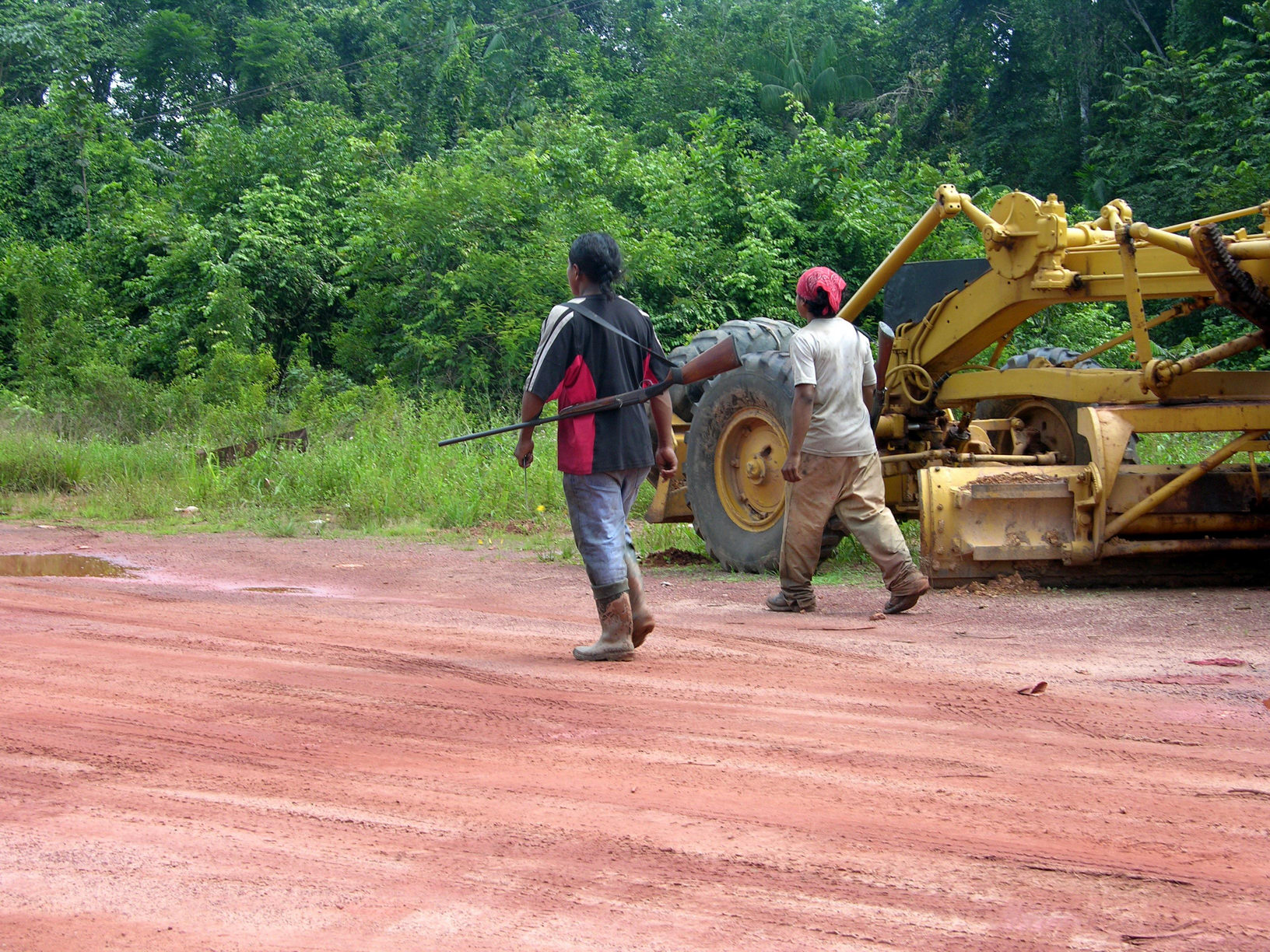
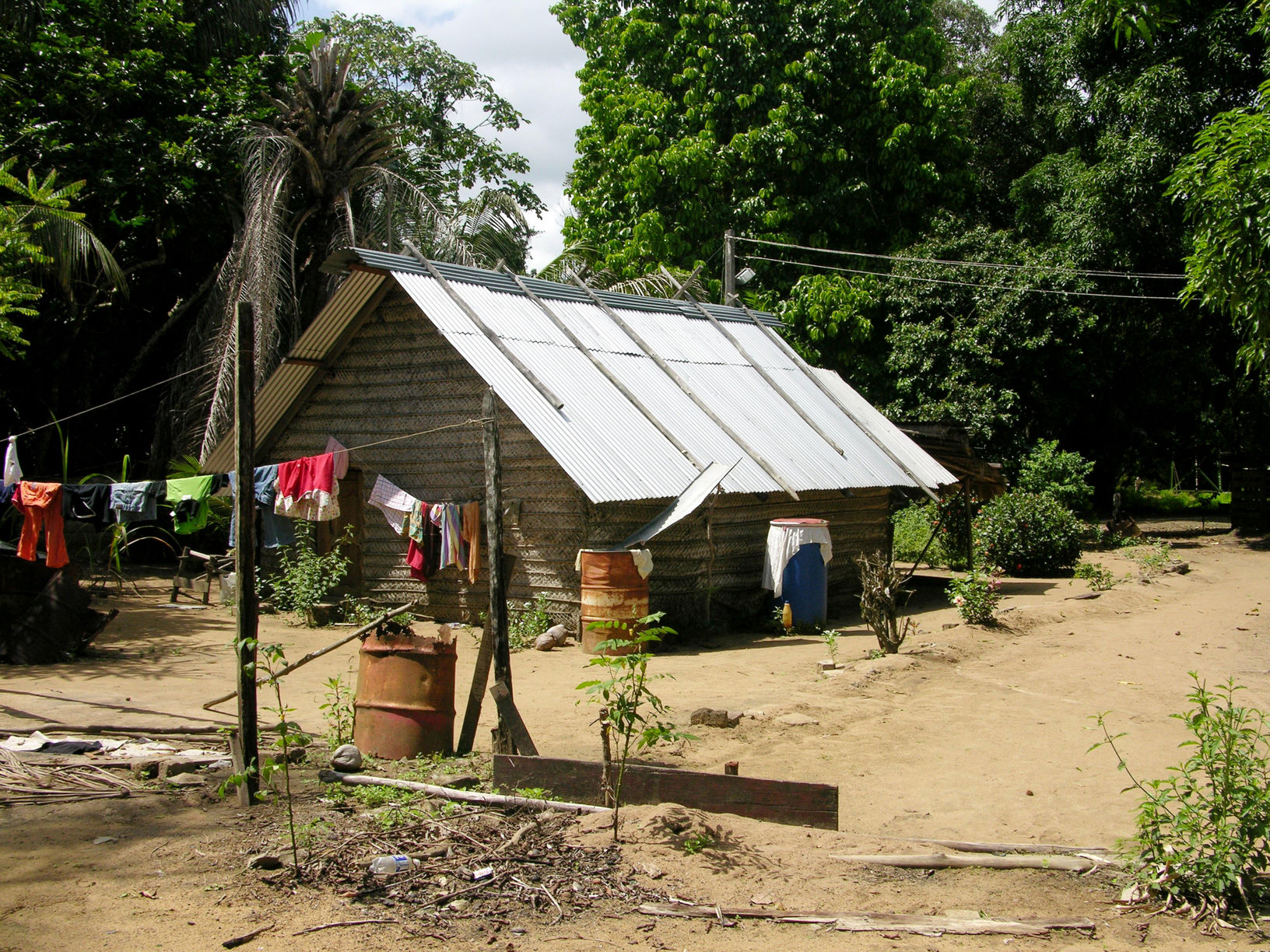
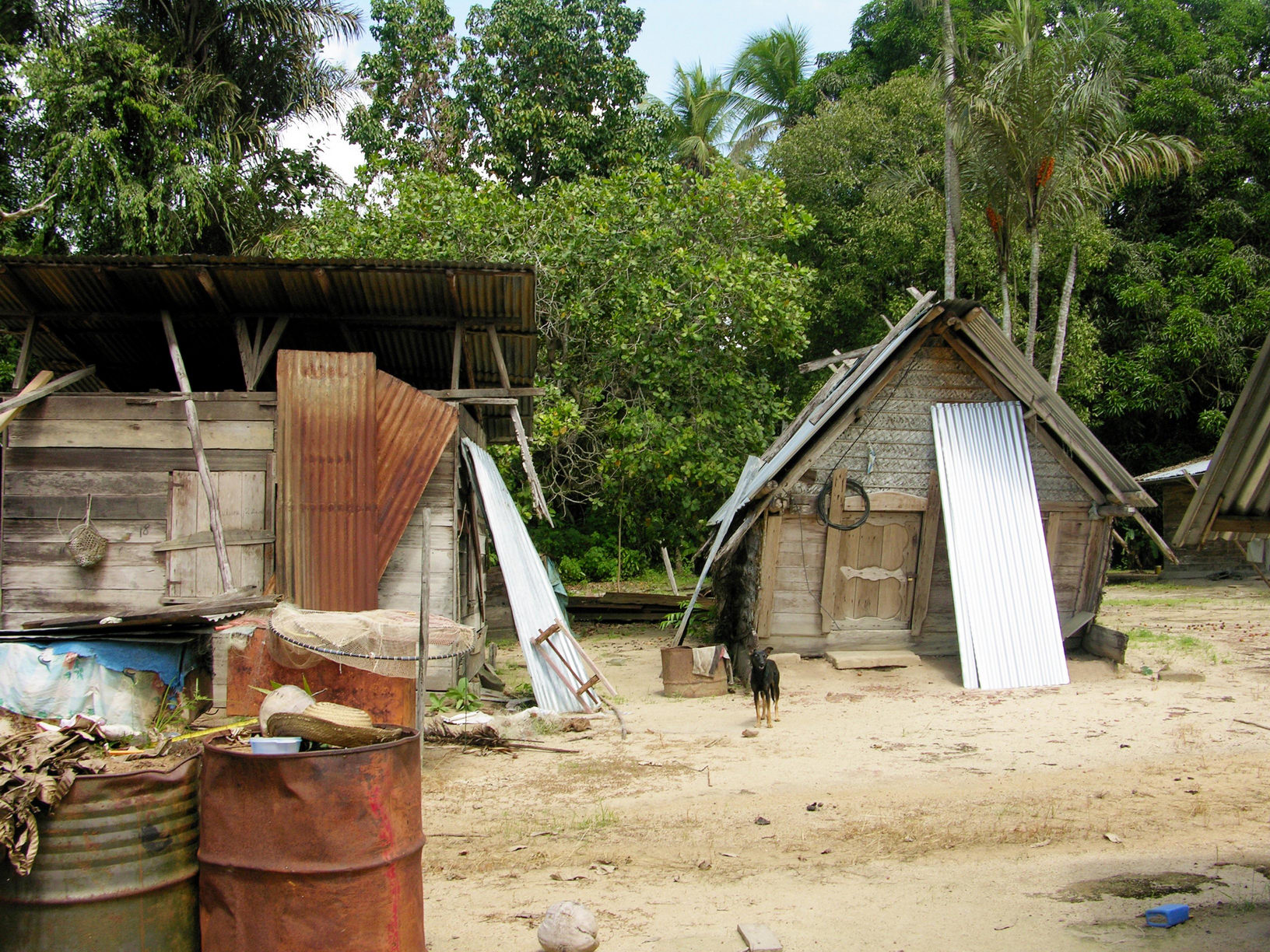
You could see at once we were two hundred kilometres from civilisation. Crooked little houses, most of them abandoned. No lights. Two locals were coming back from hunting in the forest, in torn clothes, soaked through, carrying machetes and rifles as well as their catch. Today it was a small turtle. Not much for two.
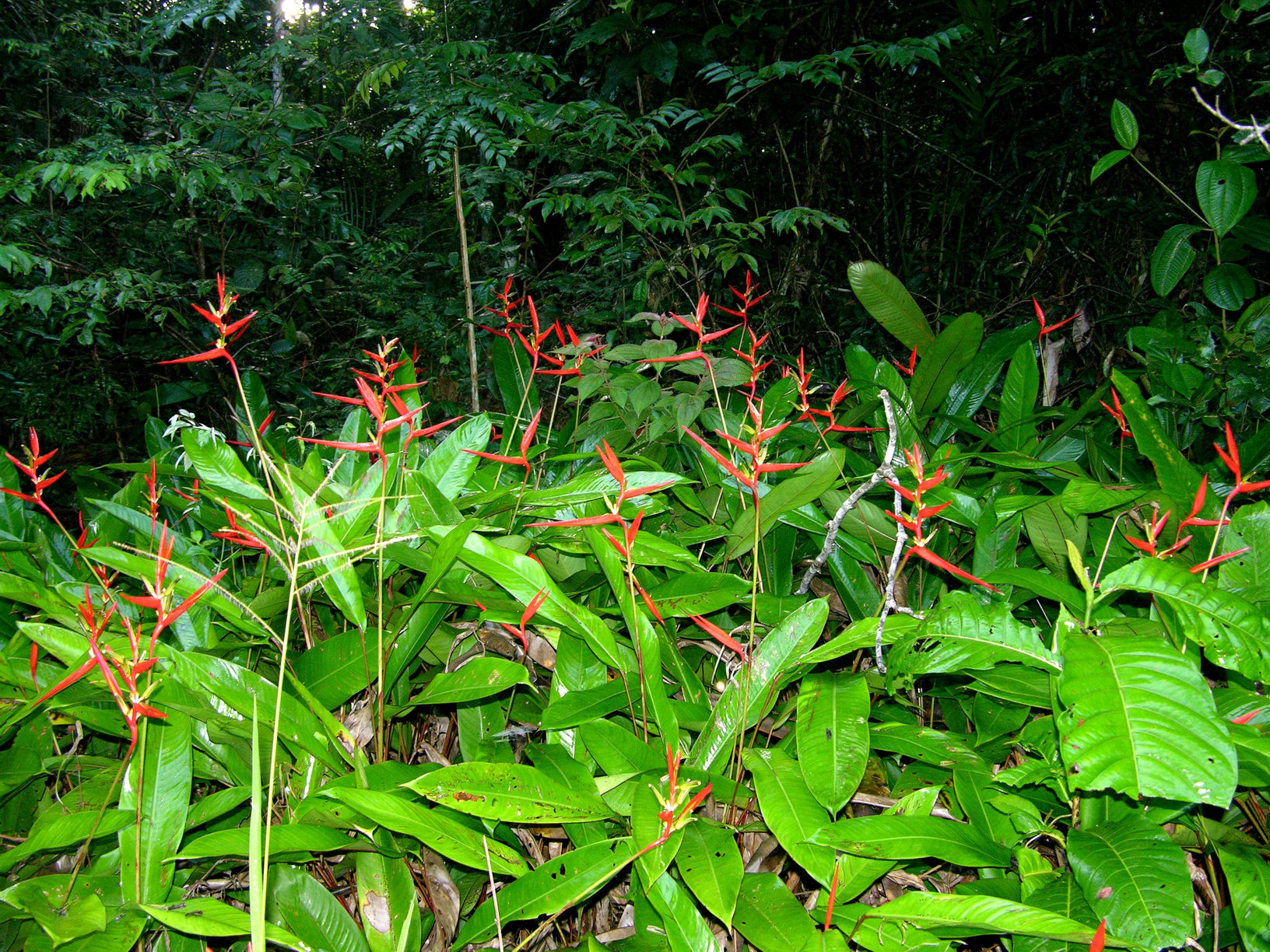
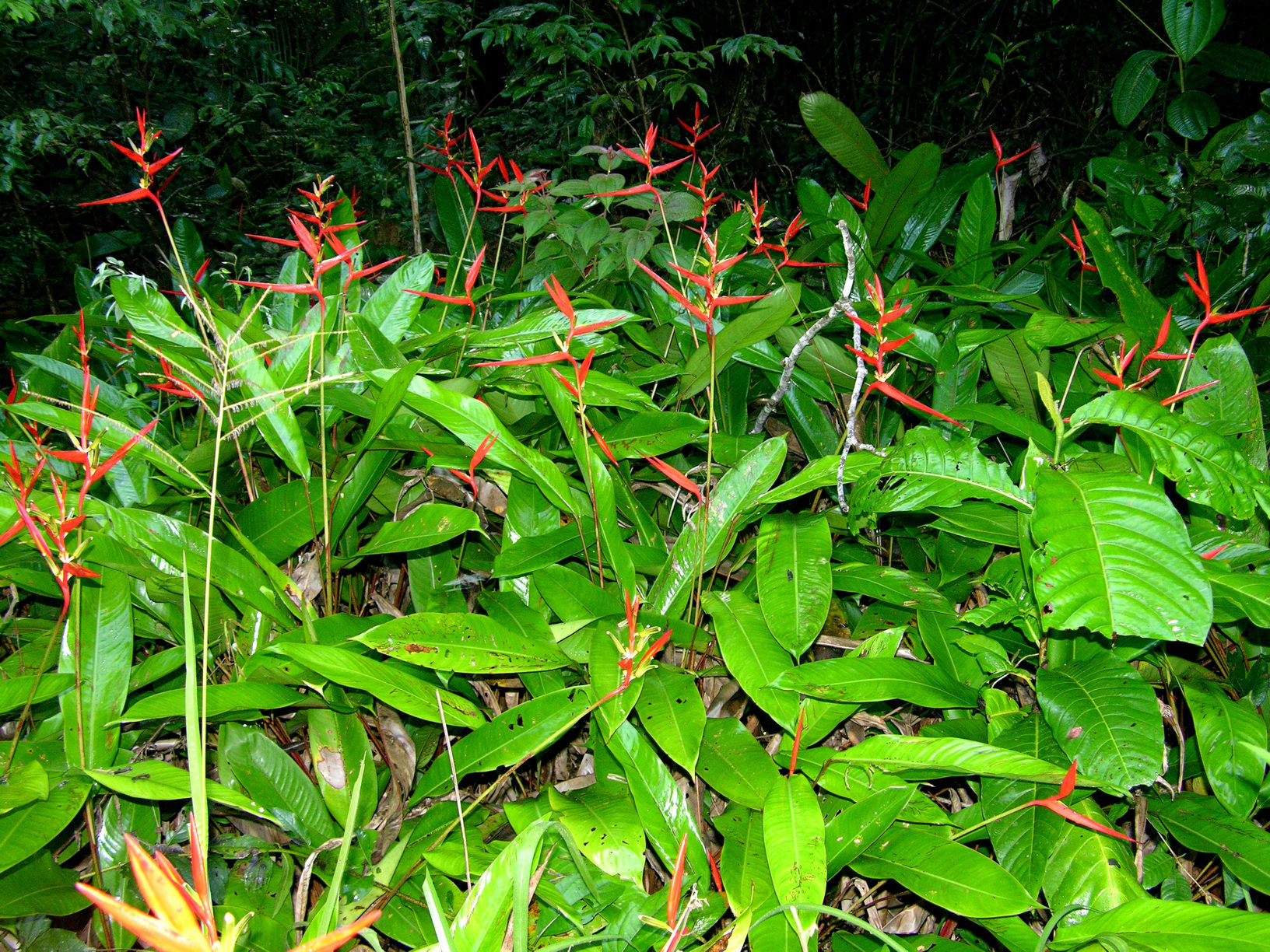
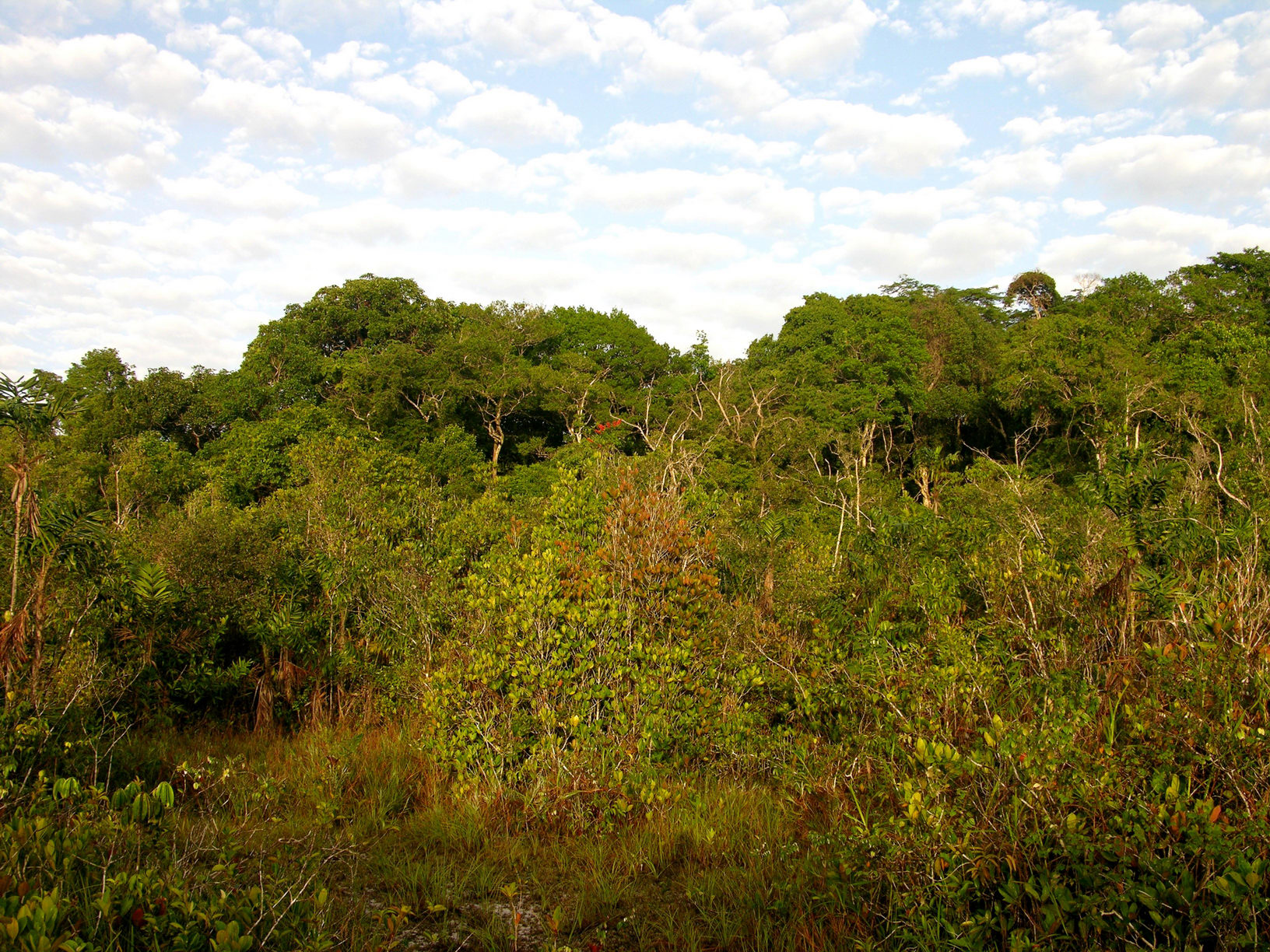
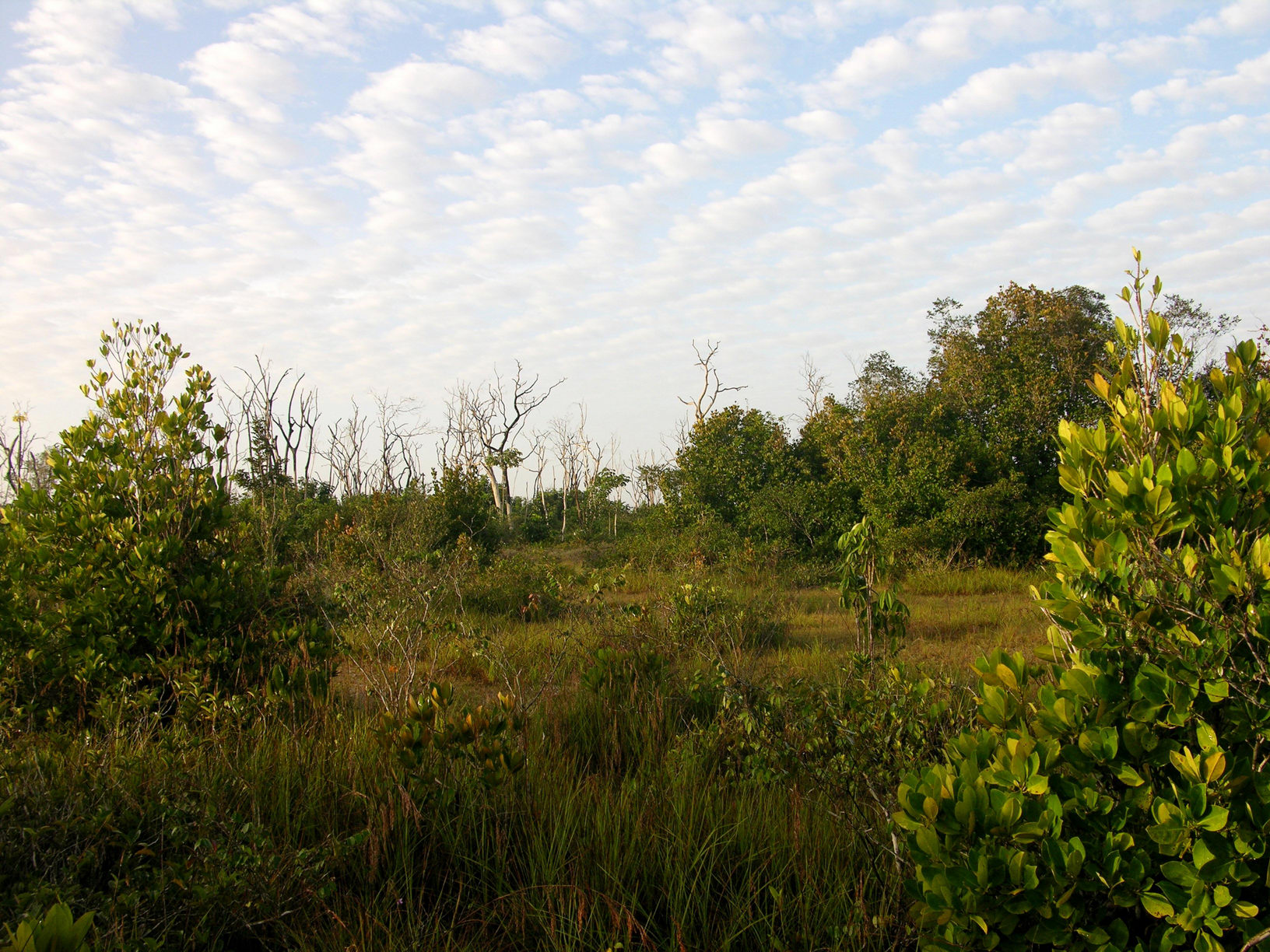
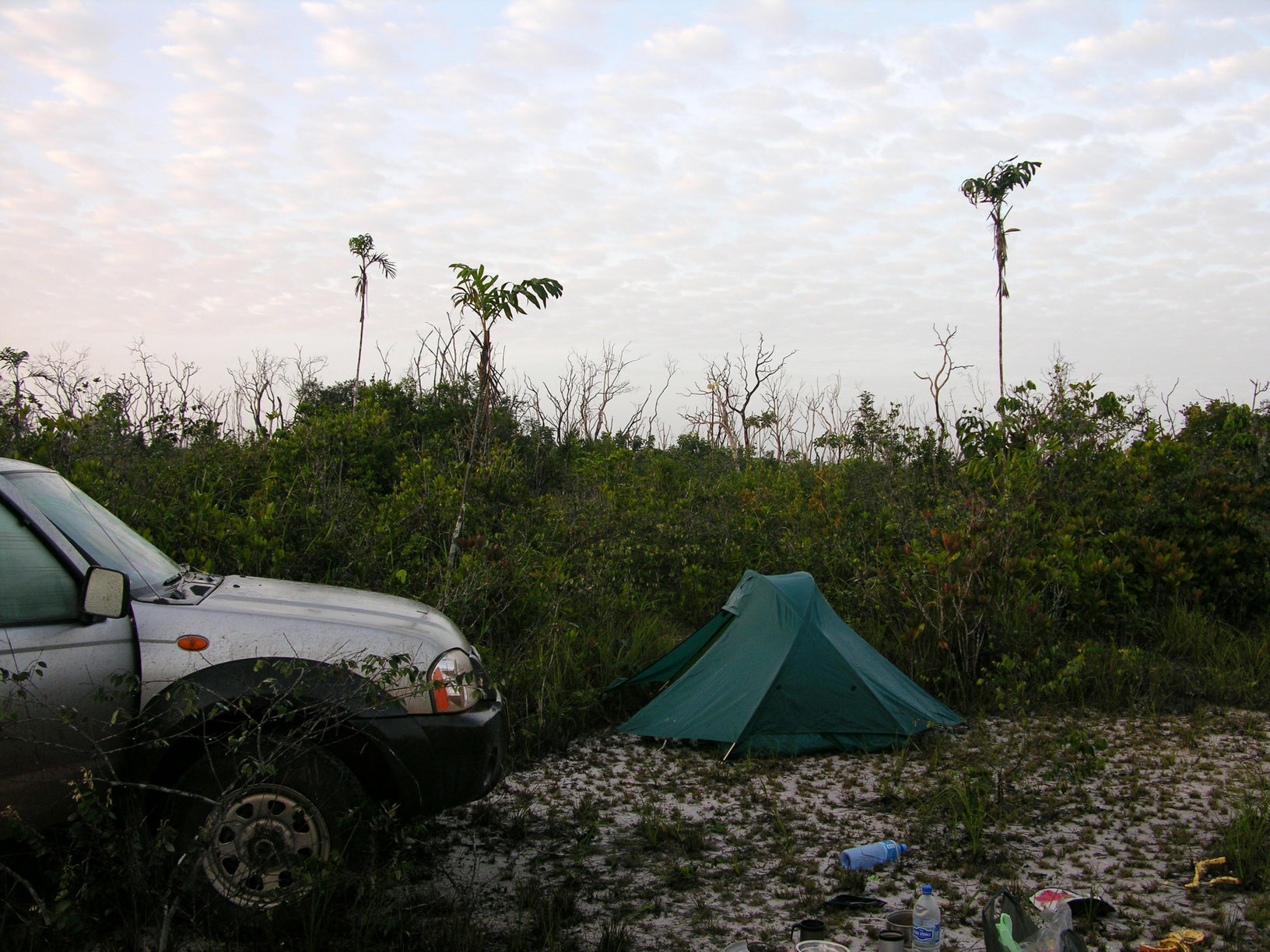
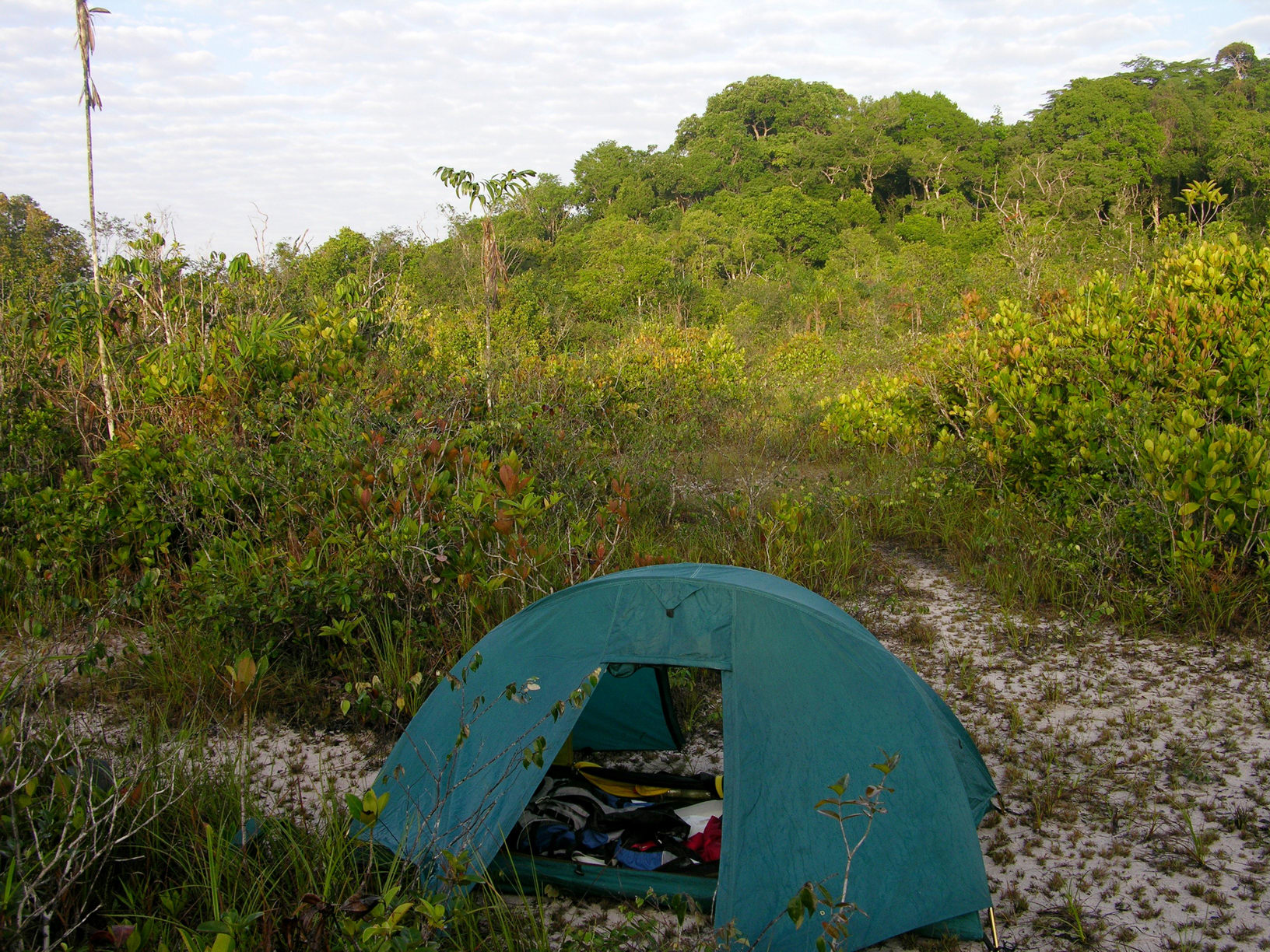
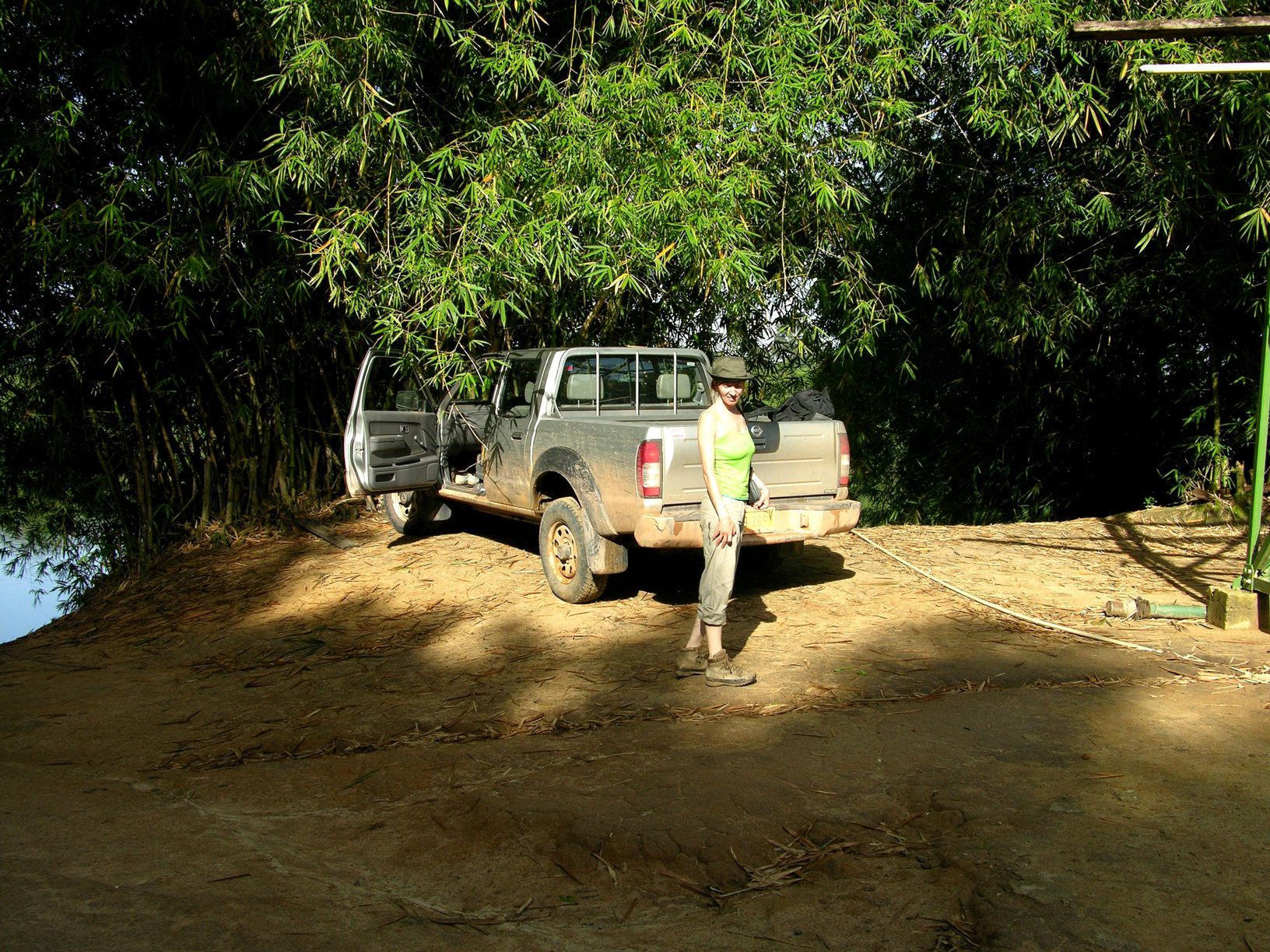
It was getting dark and time to look for somewhere to spend the night. We hadn't met a car for hours. The road was wild, but still, just to be safe, we should go a little farther and hide in the forest. Twelve kilometres past the village we came to a patch that wasn't covered in forest. That's where we hid. A splendid little clearing (5°11.406′N, 56°00.109′W, 44 m). The forest was right beside us. Parrots bustled in the crowns, getting comfortable for the night. Cicadas sang. The first stars appeared in the deep blue. It was a long night and we had plenty of time to cook dinner and sit by a little fire. The fire was a bit of a problem. There was wood and it even burned, but somehow we didn't feel like keeping warm. We were already sweating buckets without a fire.
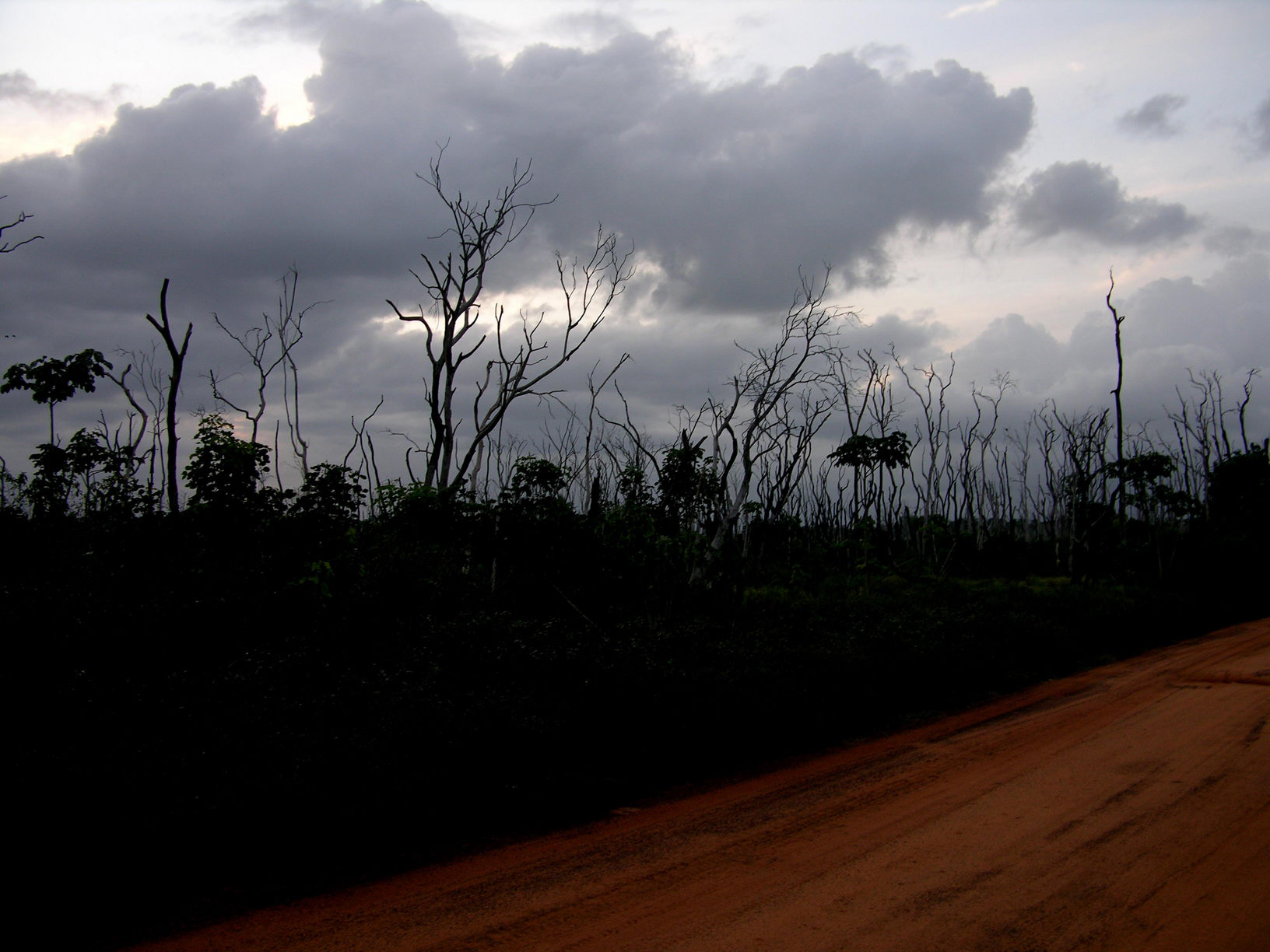
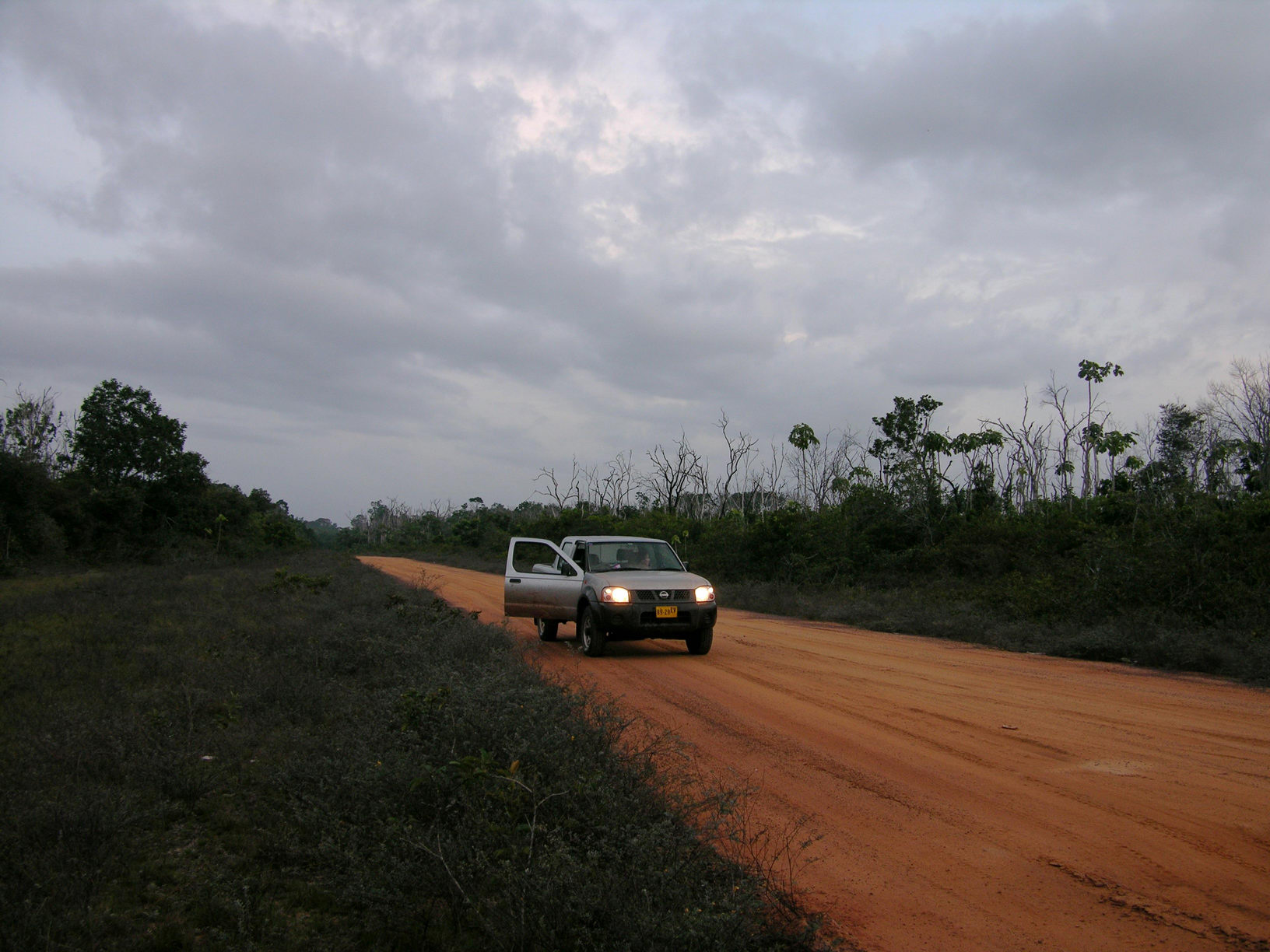
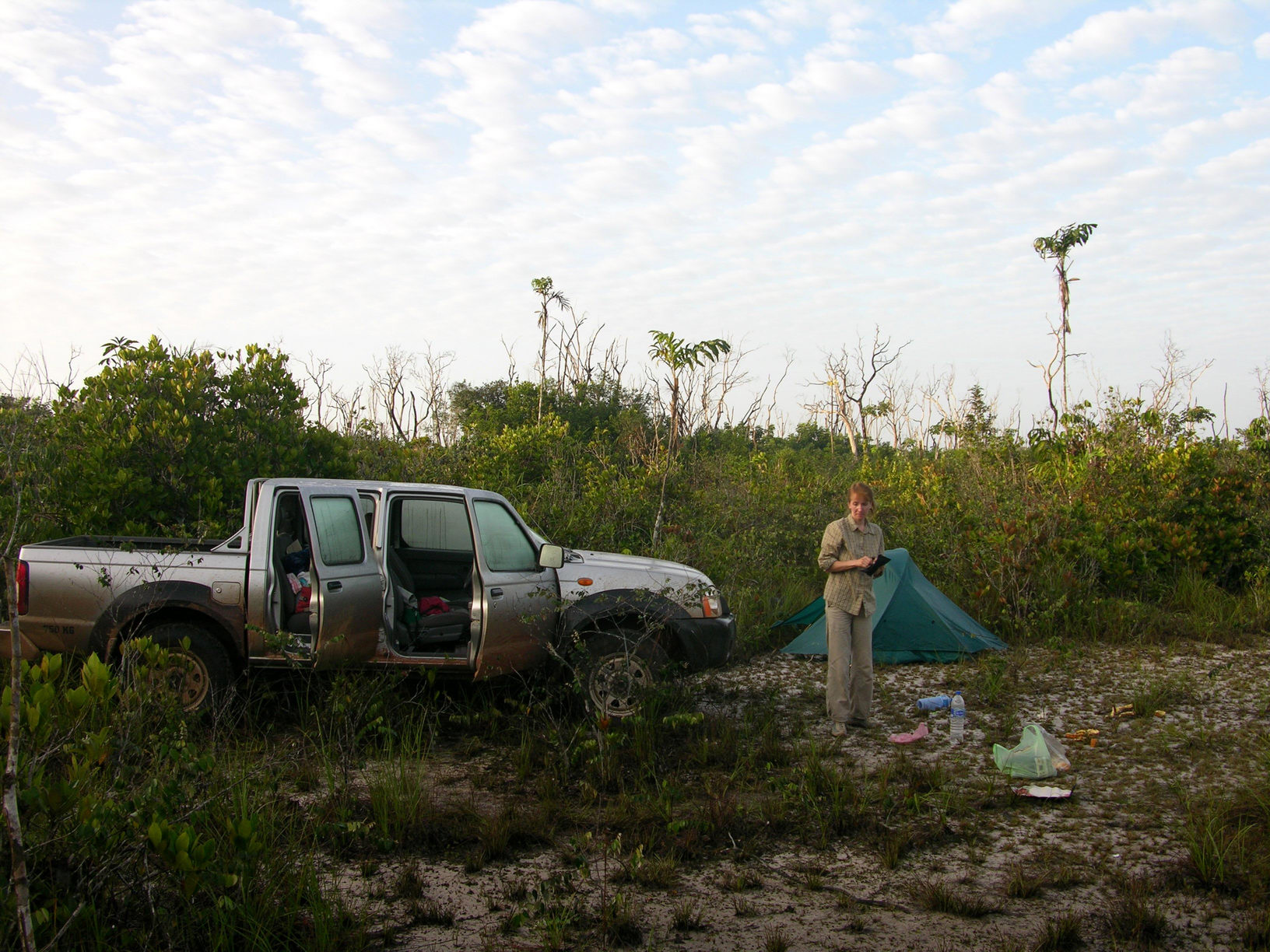
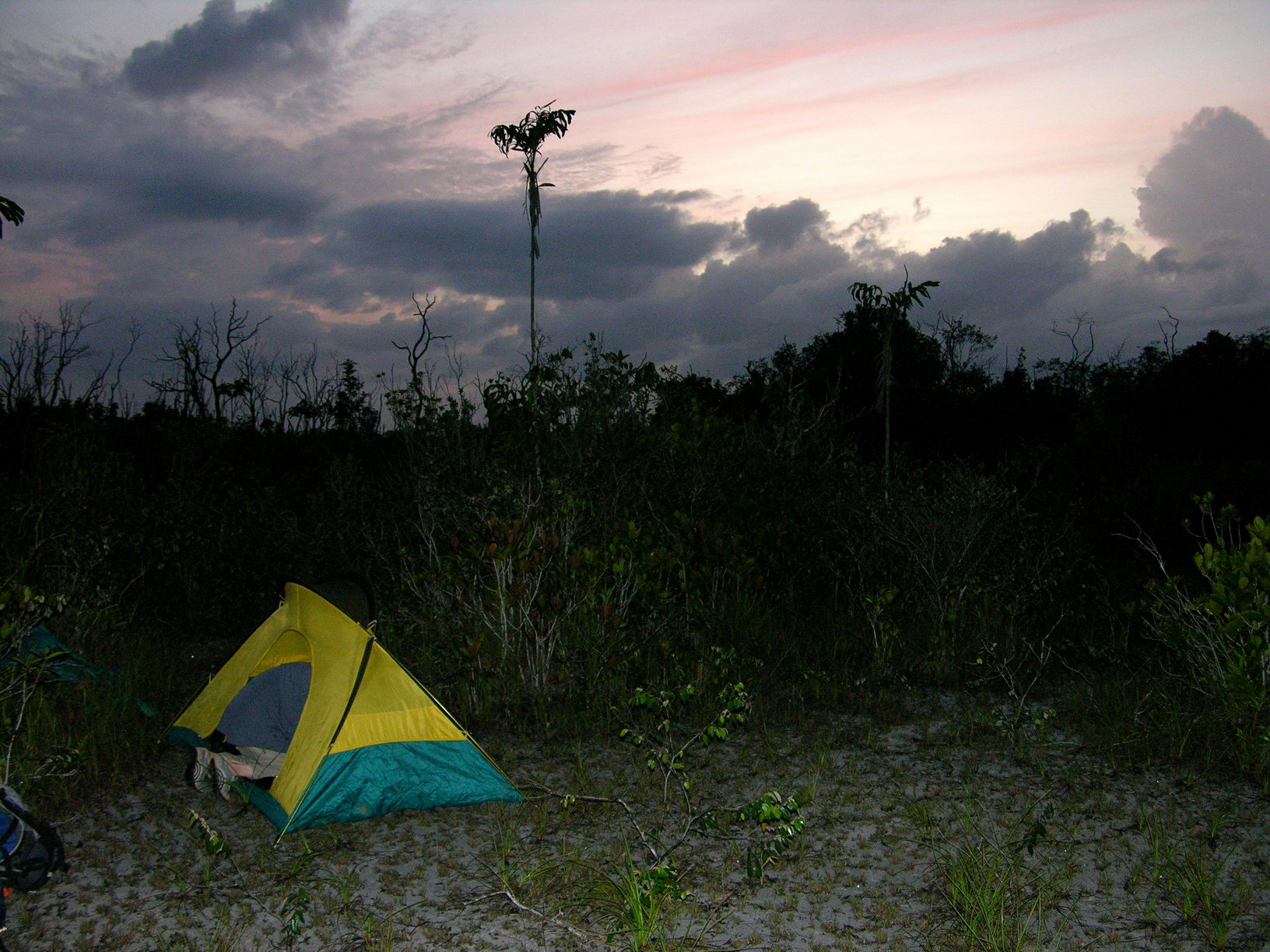
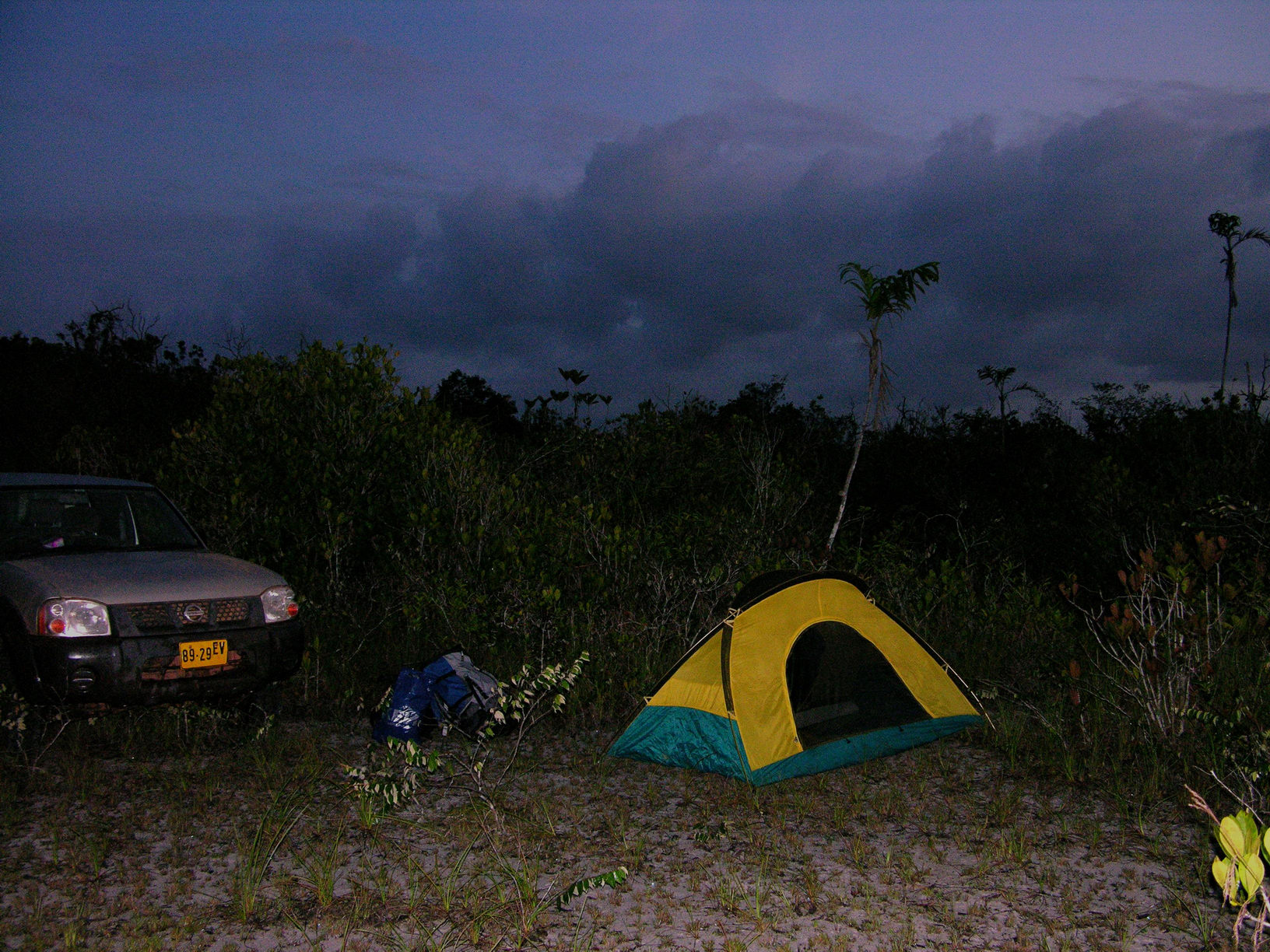
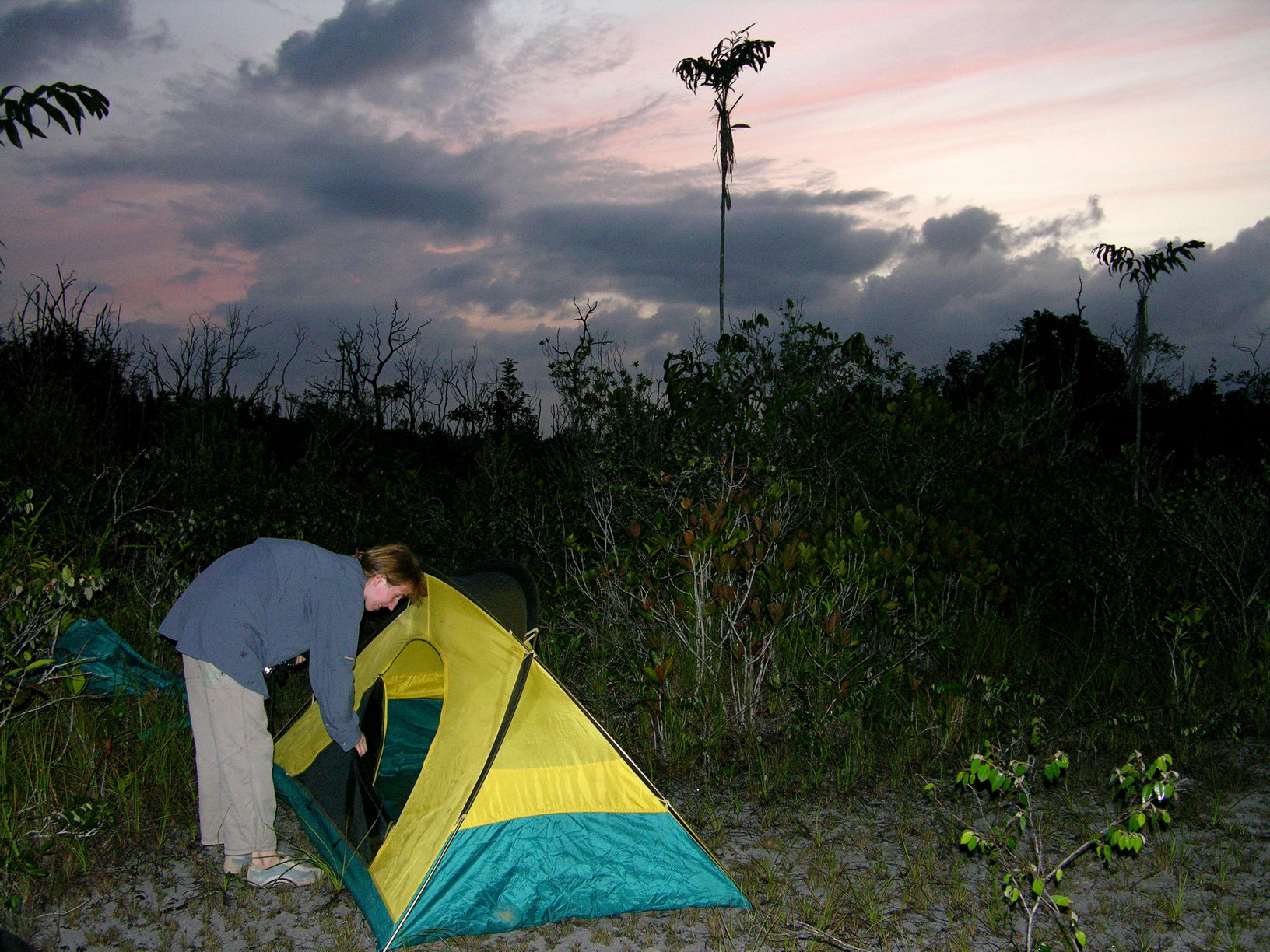
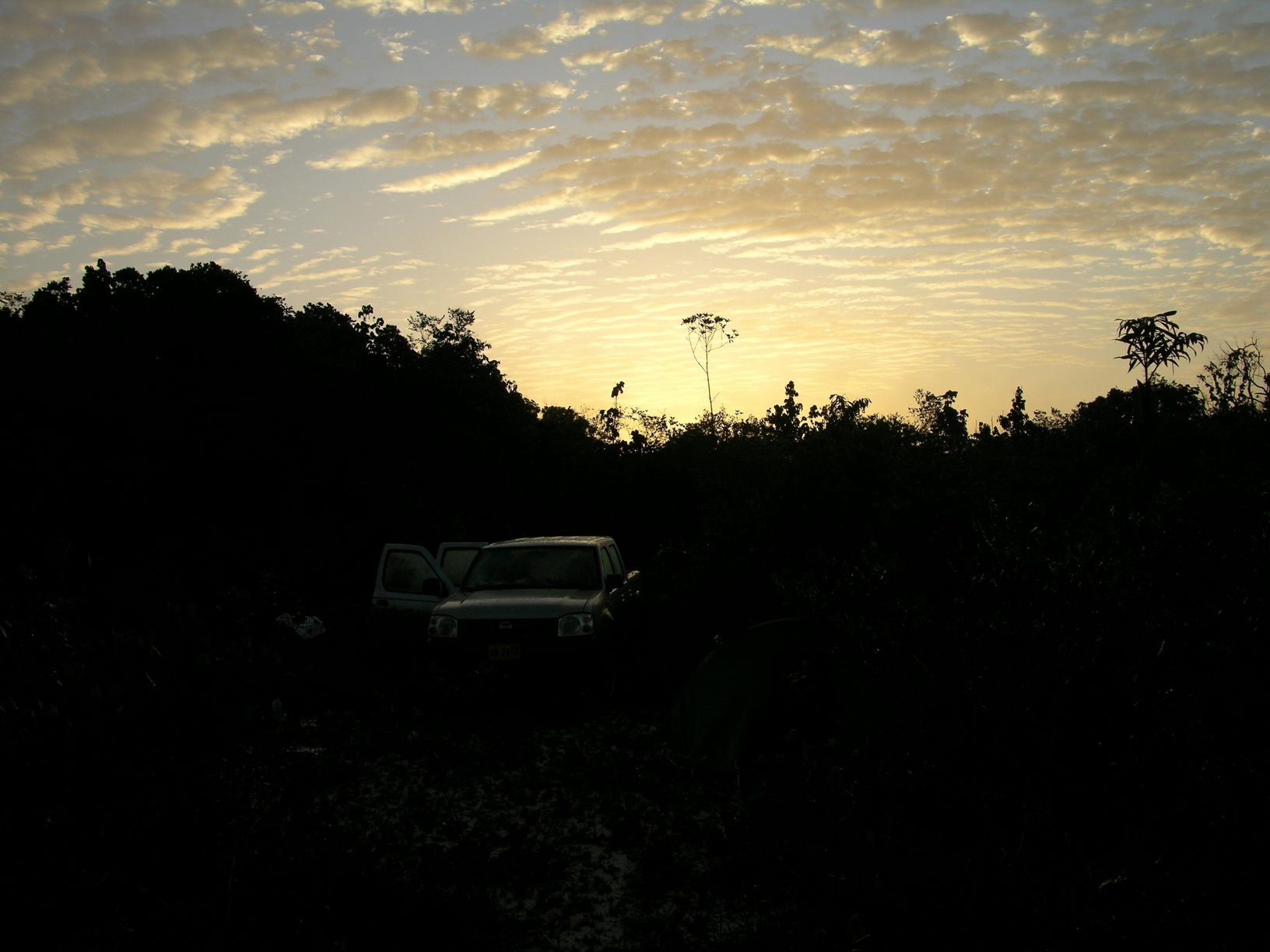
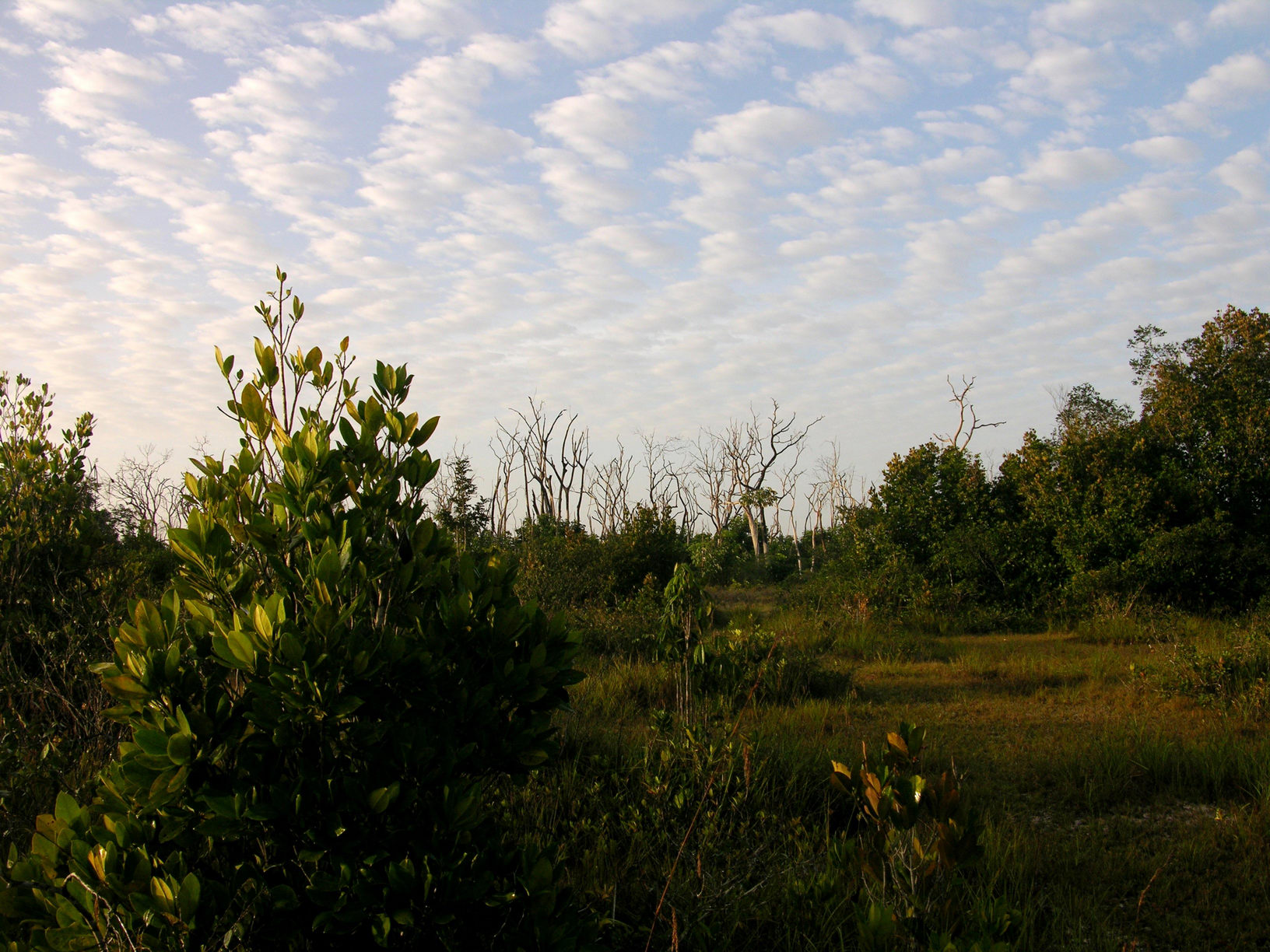
At last we slept to our hearts' content. Nothing like a hotel in the noisy capital.
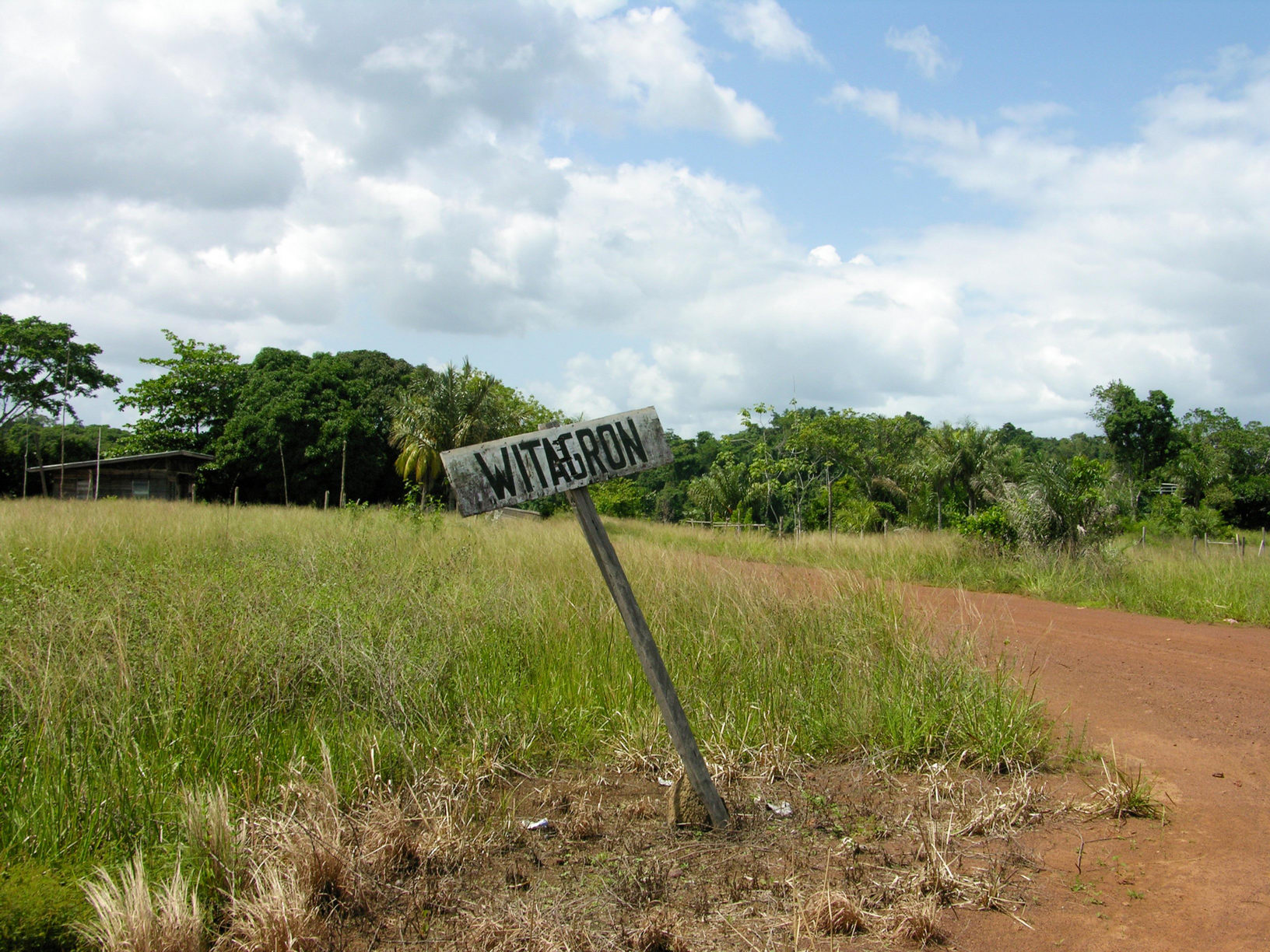
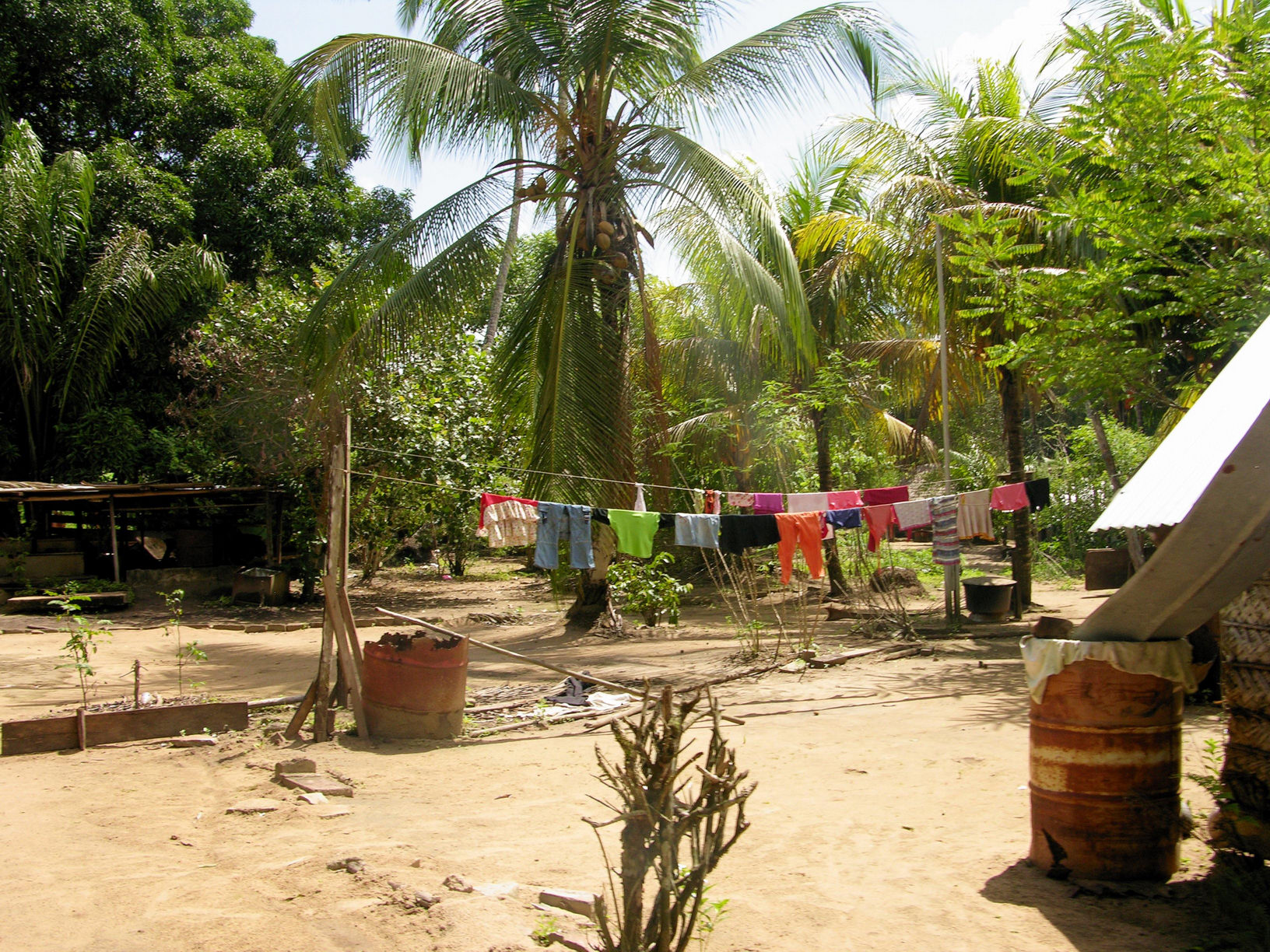
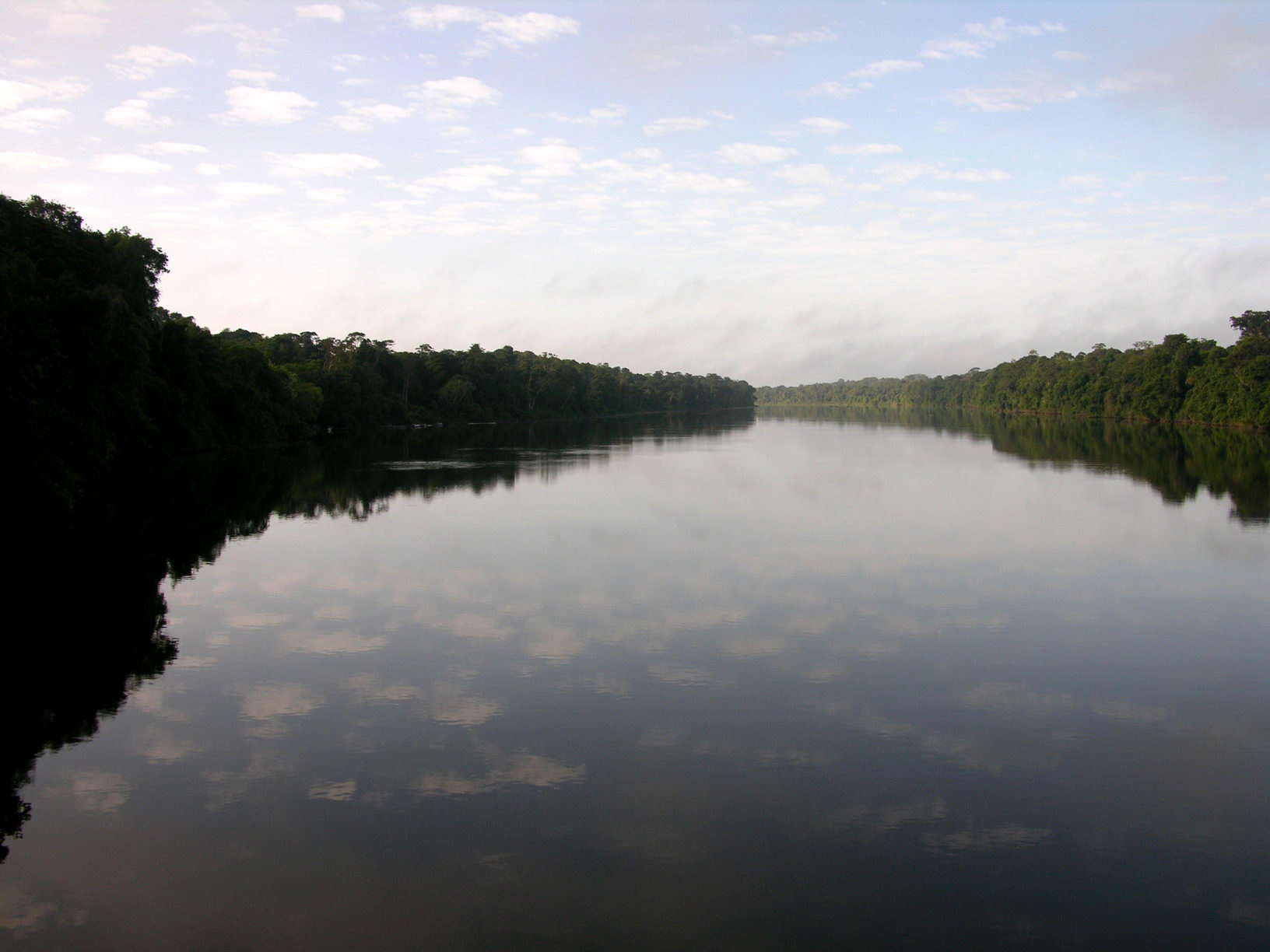
In the morning we packed quickly and drove to Witagron (Witagron). A big village: a hundred and twenty-five people, seventy of them children. An interesting proportion. There was a school. There was even electricity from a generator. All because Witagron sits on the navigable Coppename (Coppename) River. You can get to the coast by dugout in three hours.
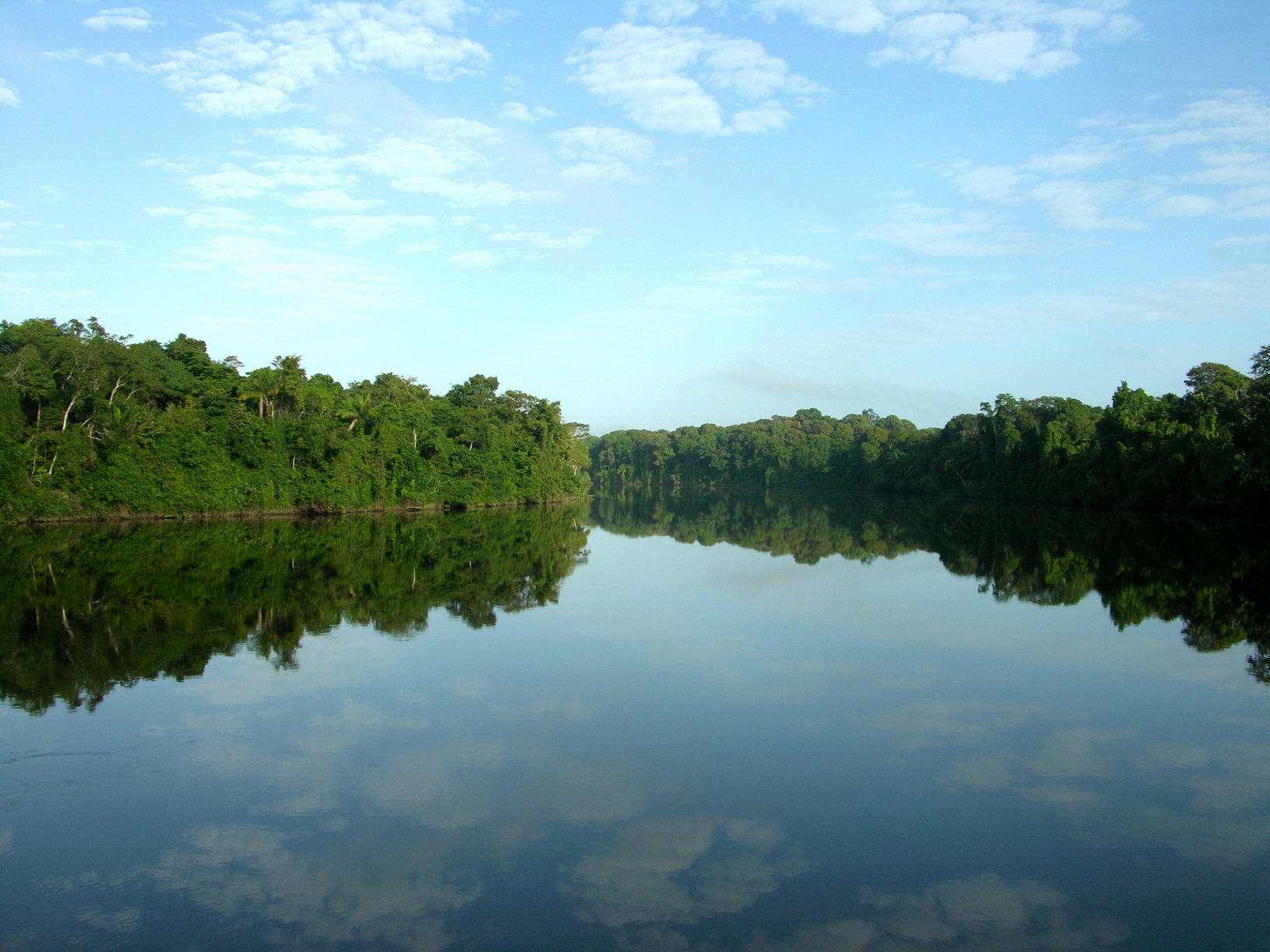
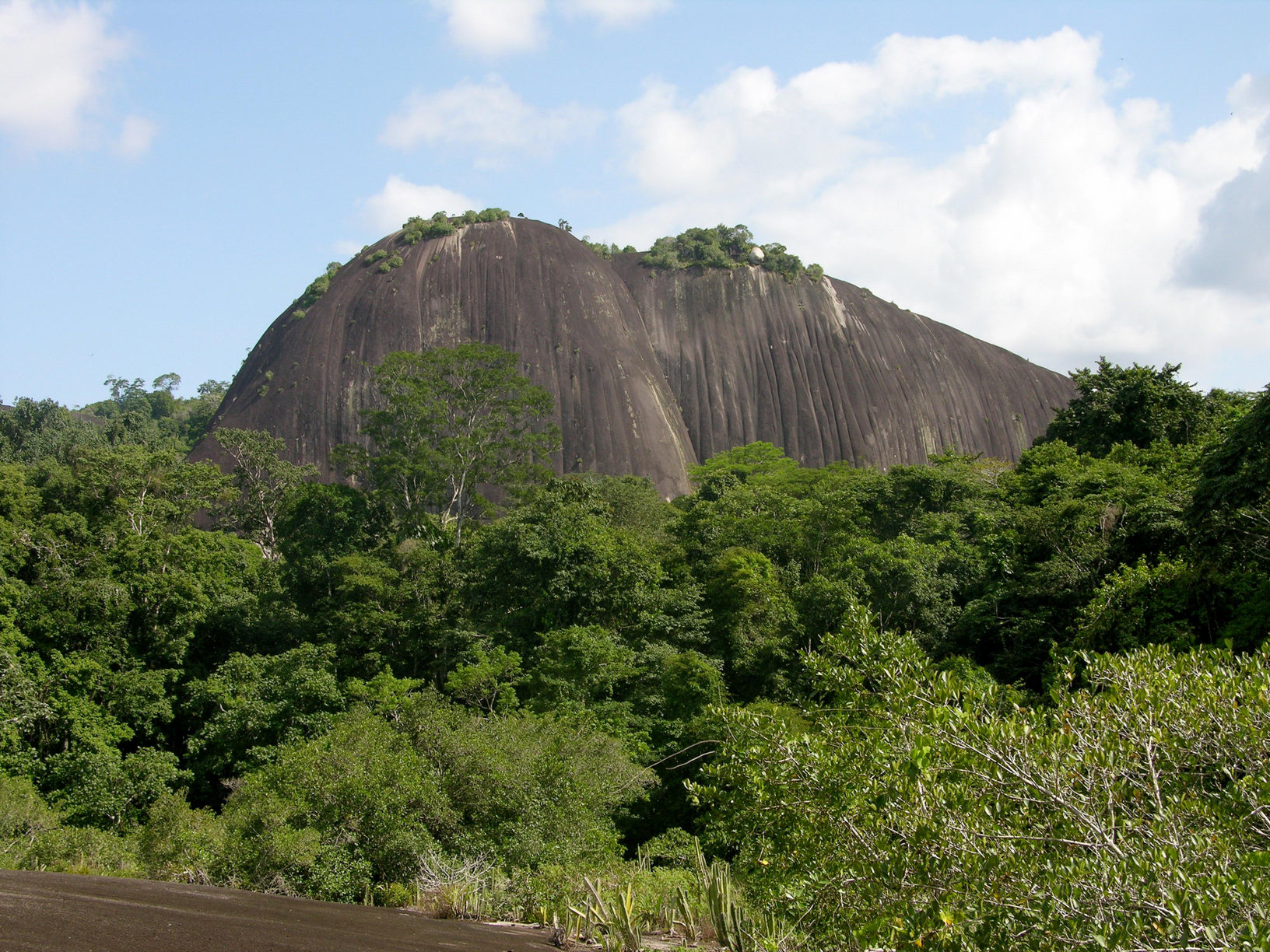
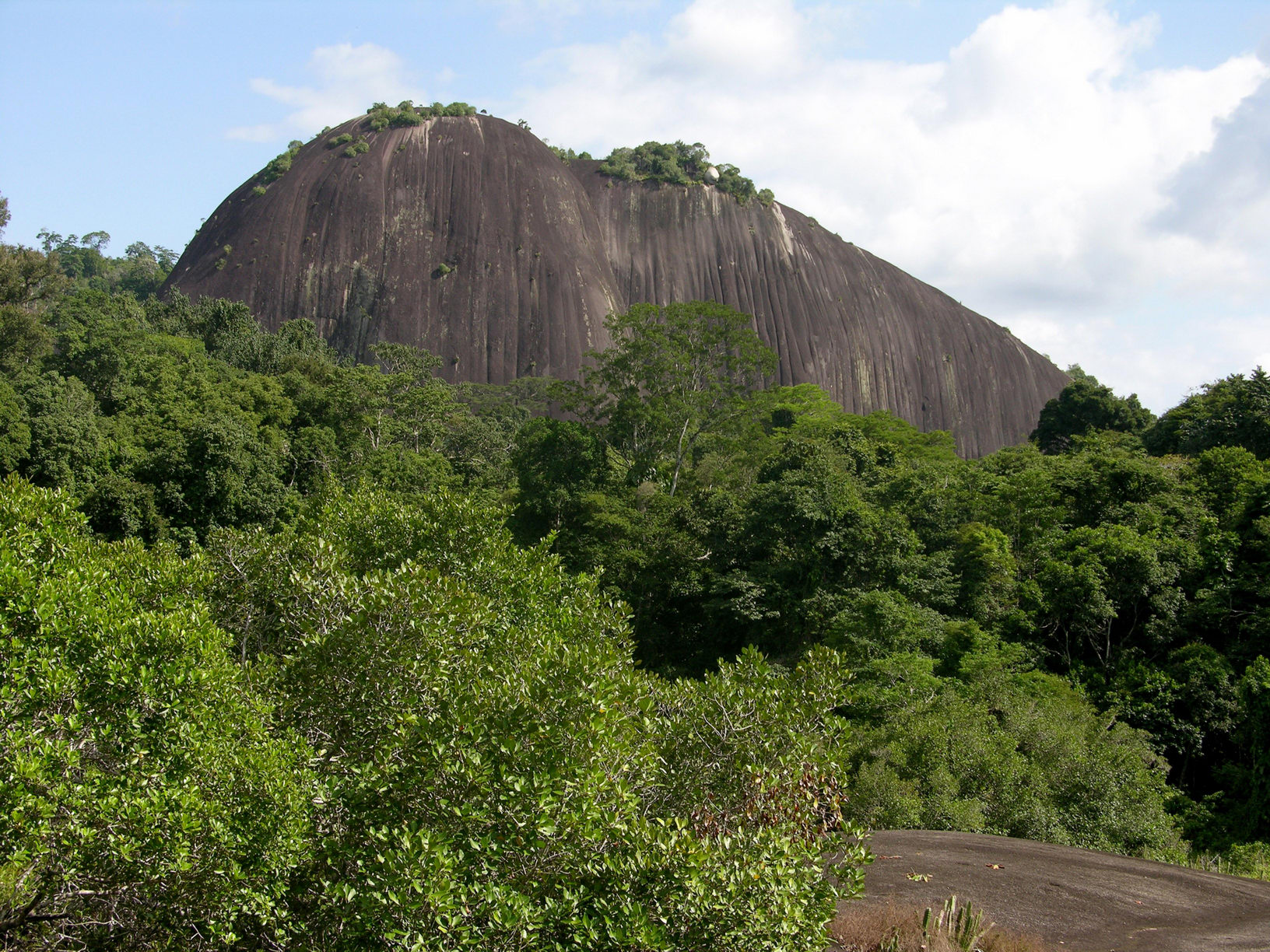
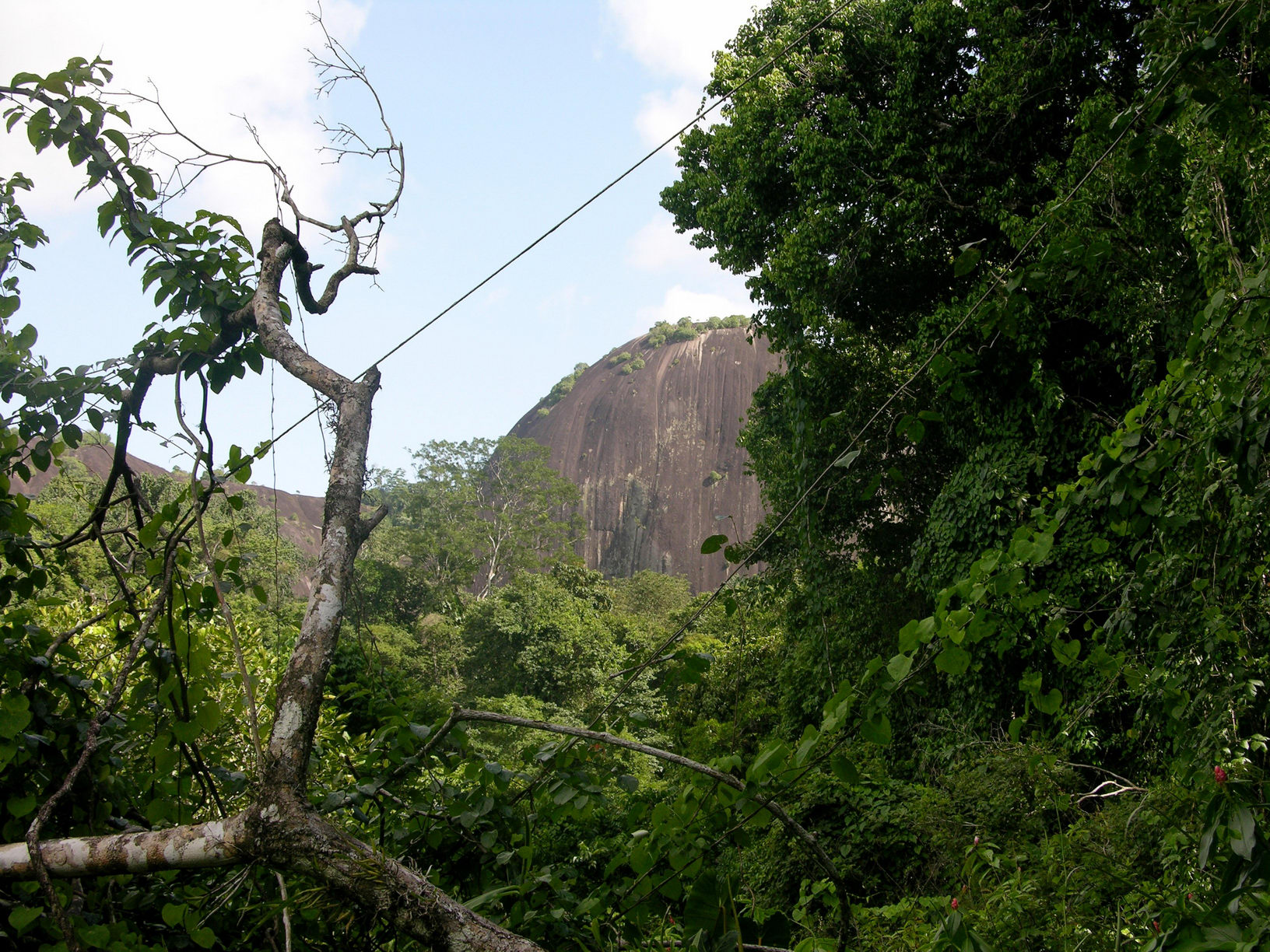
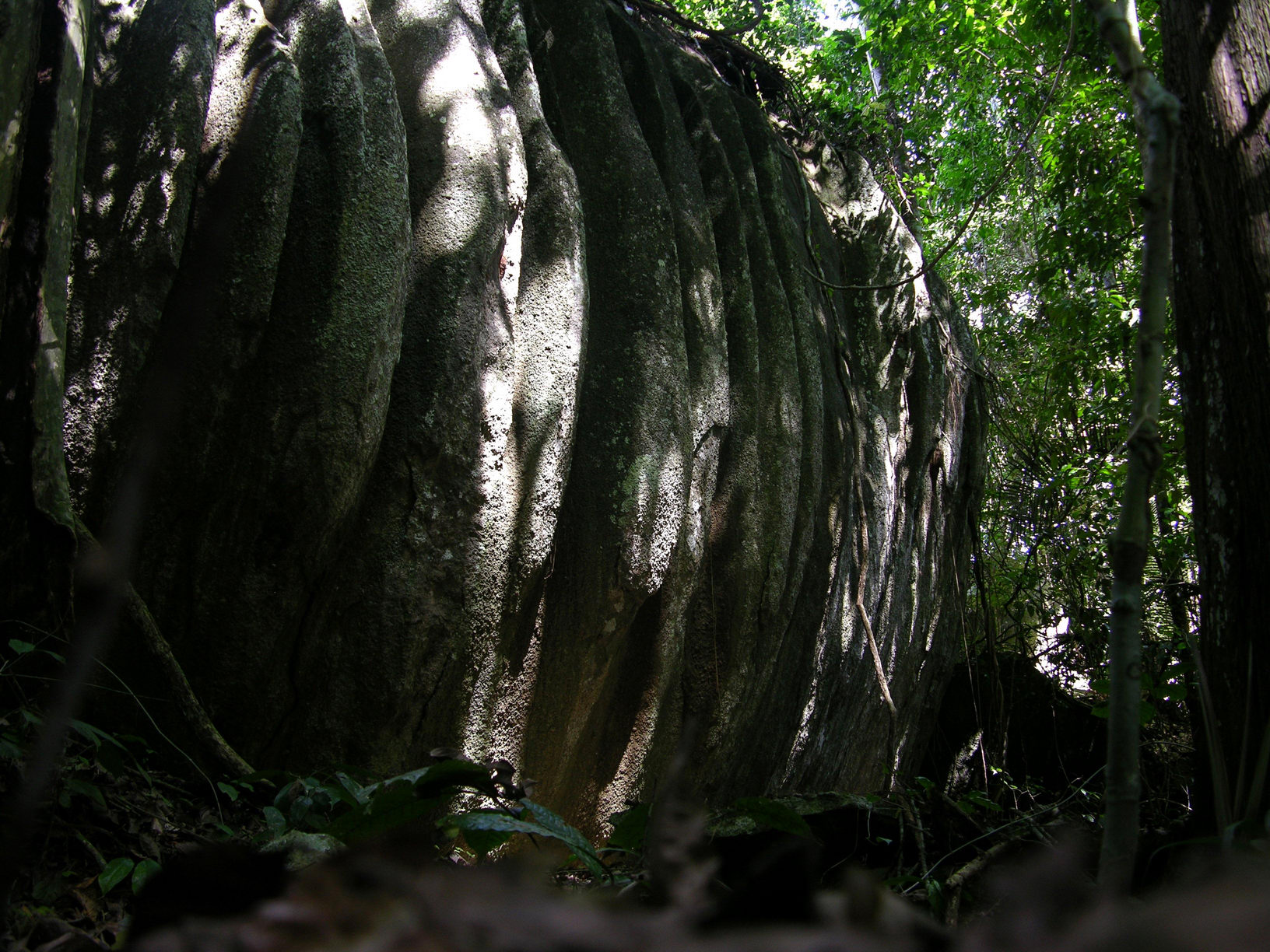
We were also planning to take a dugout here, but upstream, not downstream. Sixty kilometres away is the reserve containing Voltzberg (Voltzberg), where we would stand at the geometric centre of the country. It's a 240-metre granite monolith rising from the plain. By local patriotic tradition you're supposed to climb it, watch the sunset and the dawn, and therefore spend the night, imbibing the spirit of Suriname. It's even pictured on the Surinamese dollar.
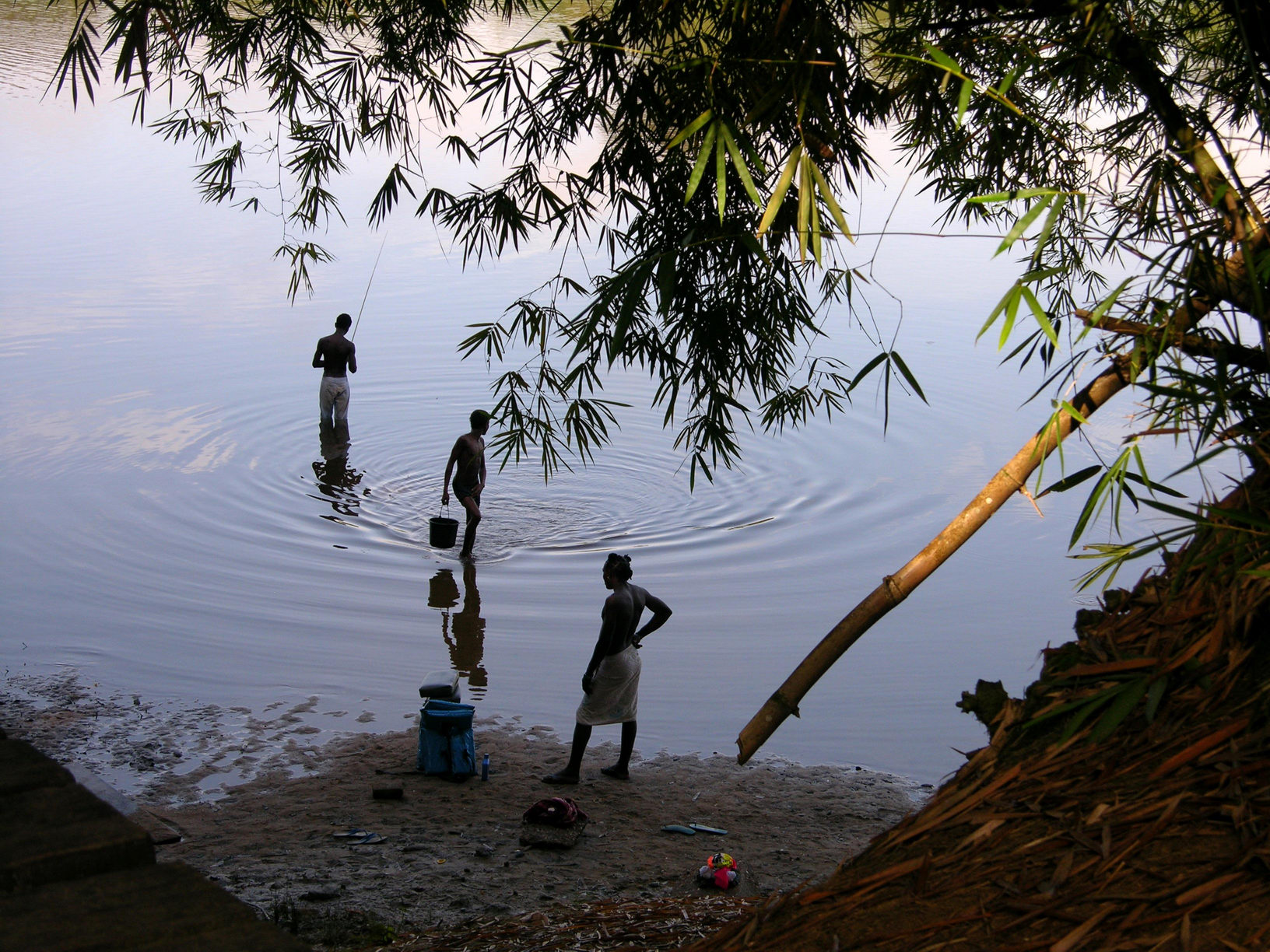
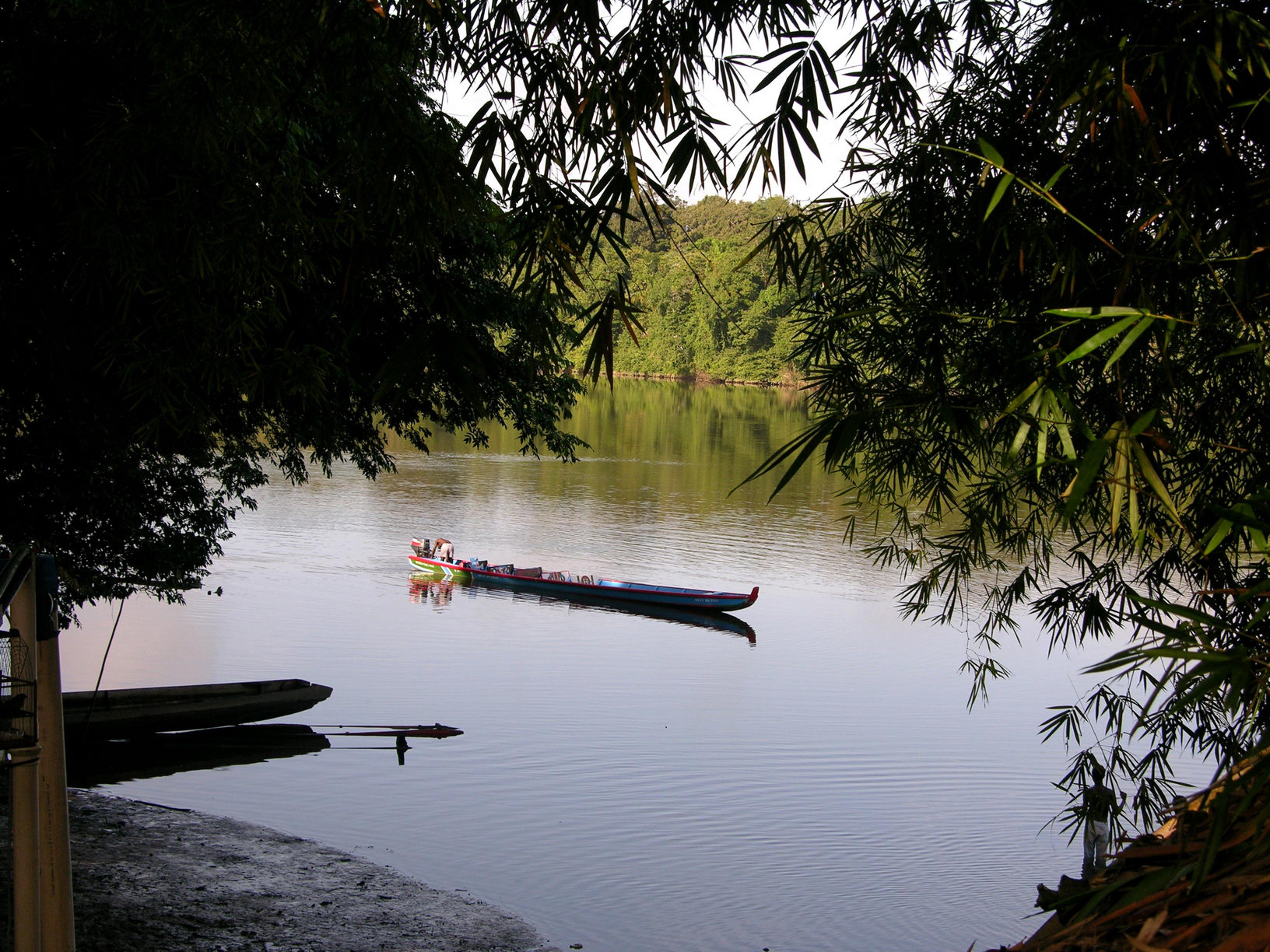
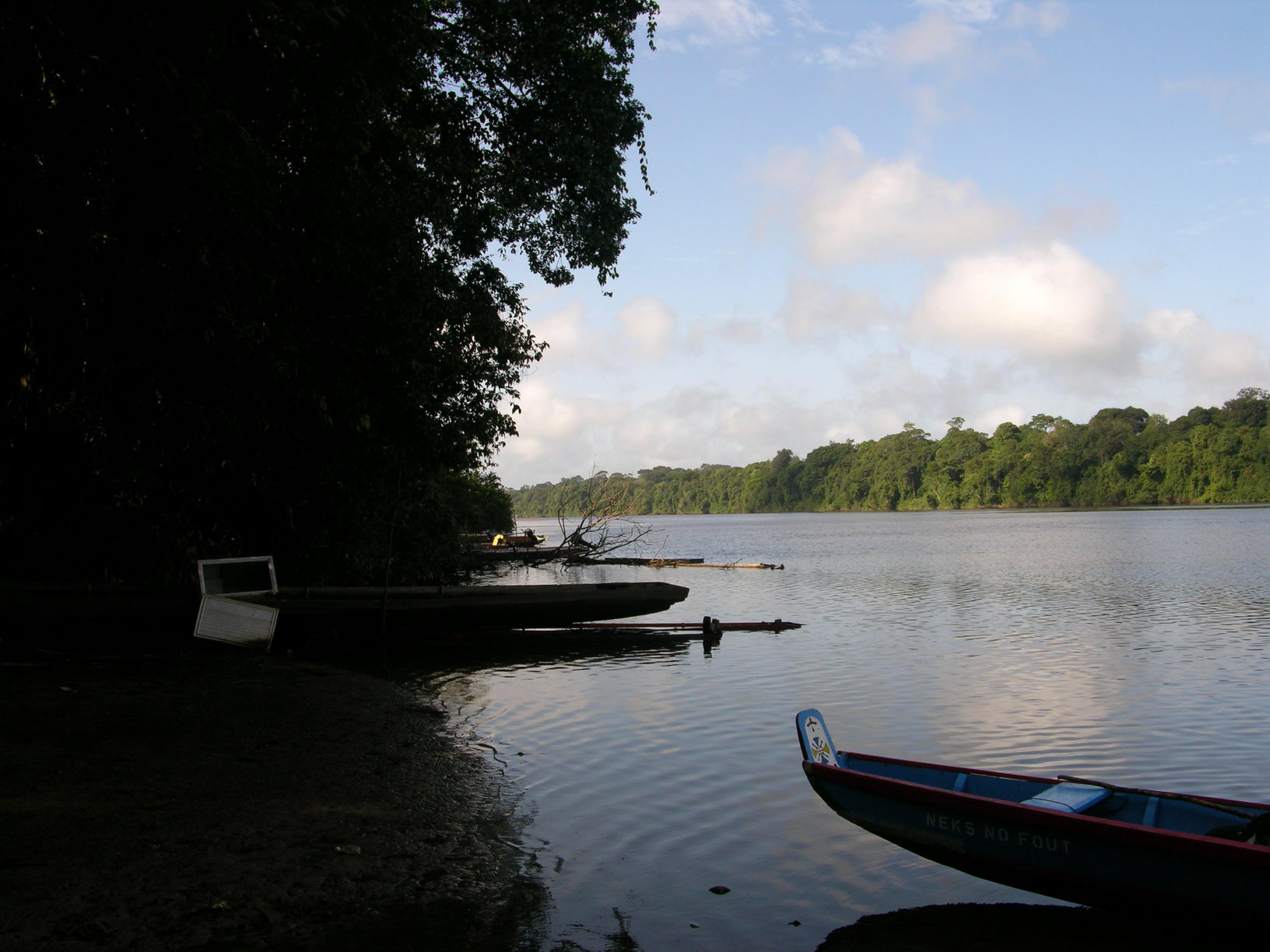
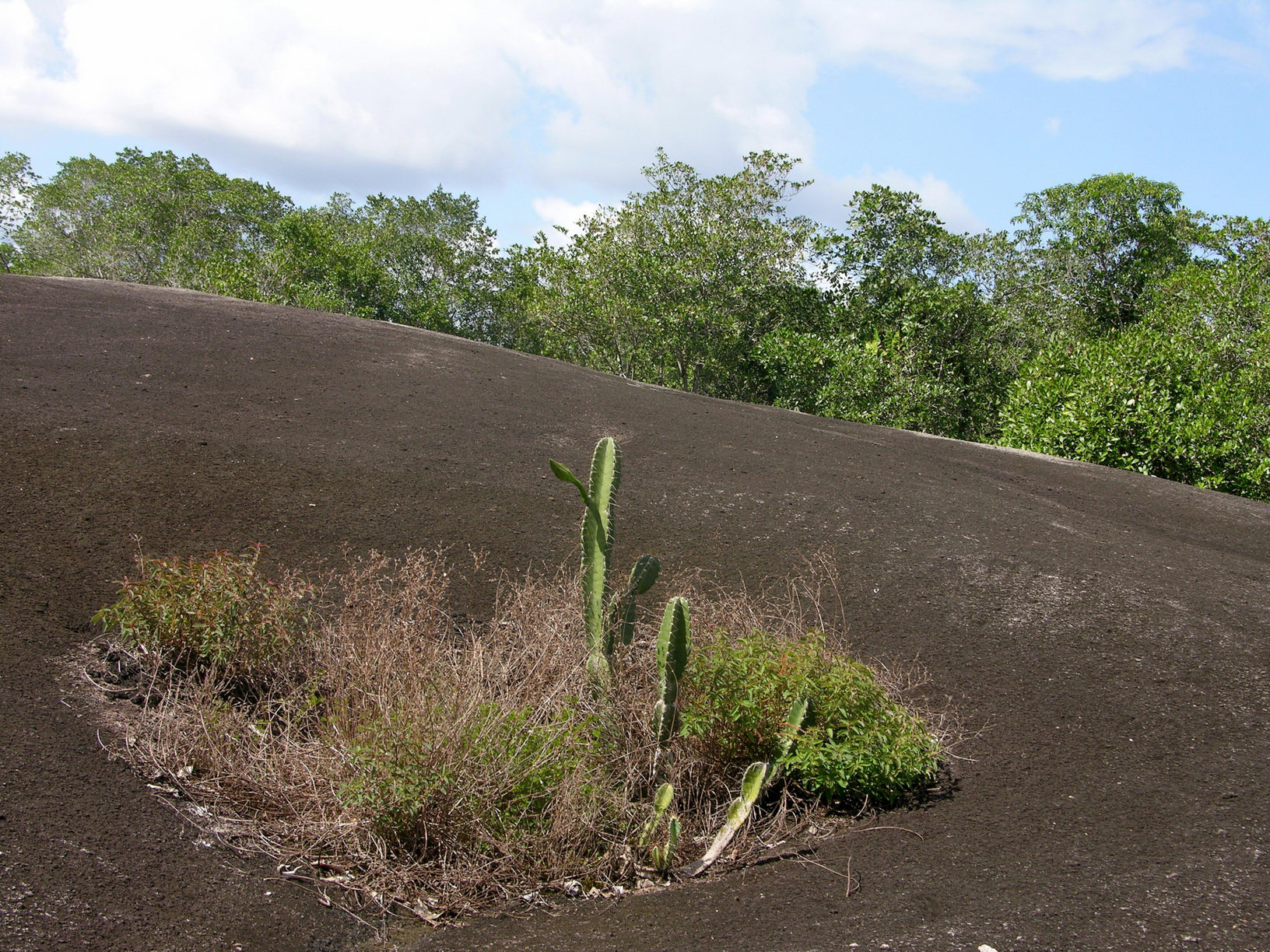
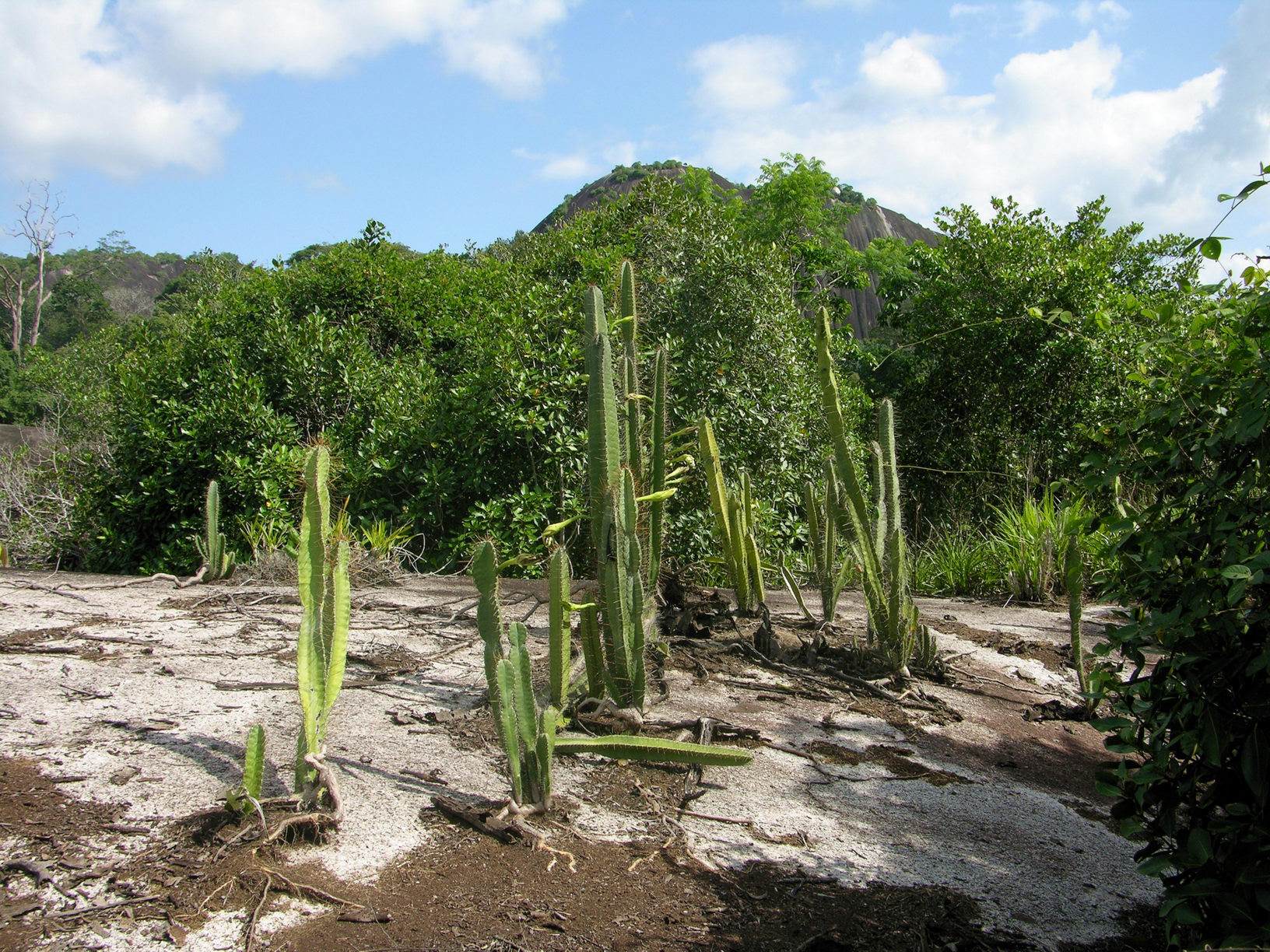
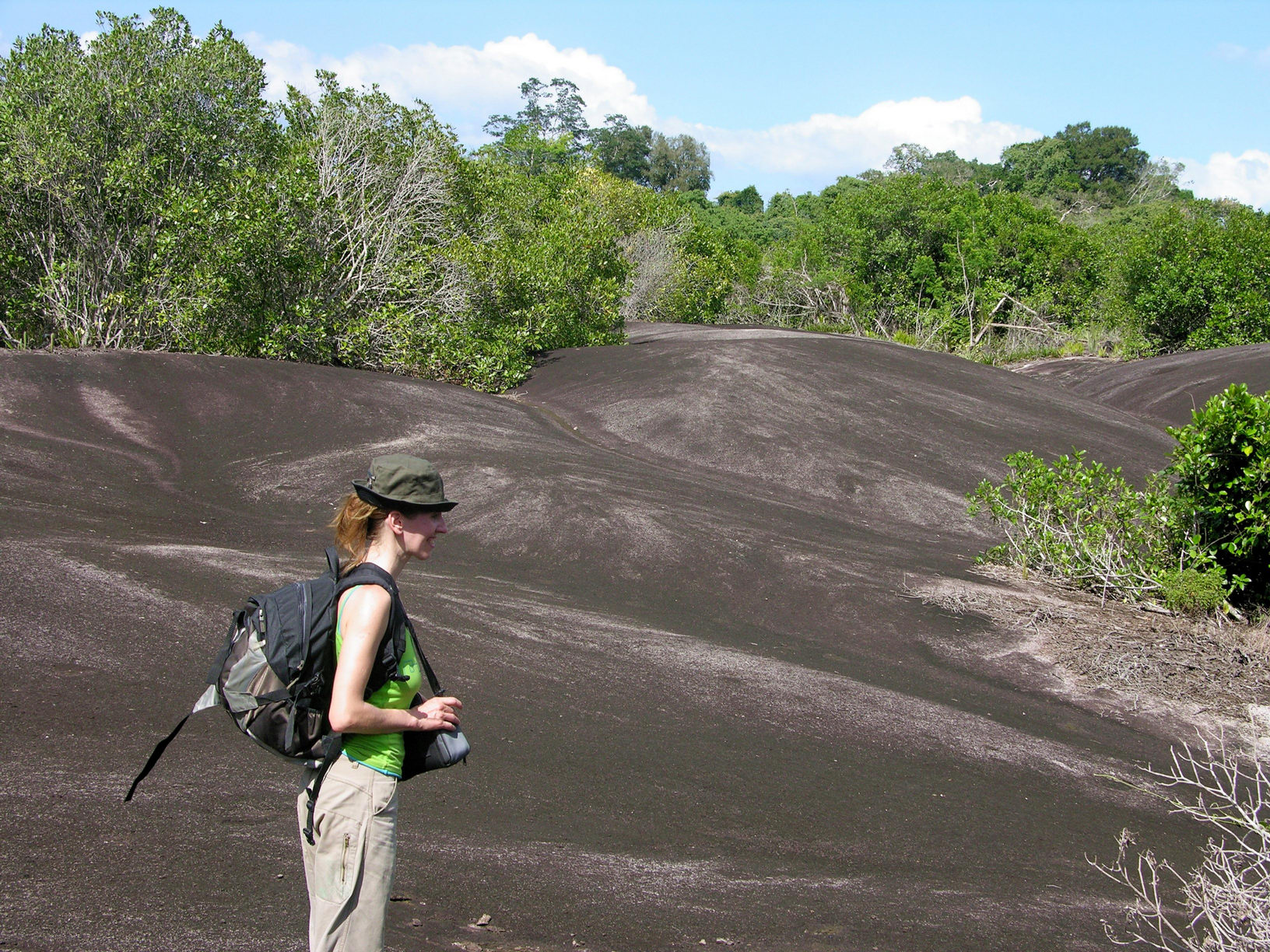
We managed to arrange a dugout quite quickly. The trip cost three hundred euros. The boat seats ten, so it's not much if you're going with a big group, but the two of us paid the lot. Actually it was two trips, one to drop us off in the park and the other to bring us back. By Surinamese custom, as soon as you've paid for a dugout, a plane, a car, or whatever it is, they look for other passengers at any price to get a little more money. When that possibility is exhausted, their own freeloaders get their turn. Suriname is perfect for hitchhikers. Lots of scope to show your talents and get people to like you. They ought to hold a world championship here on the Belém–Macapá–Cayenne–Paramaribo–Witagron–Nieuw Nickerie–Georgetown–Lethem–Manaus–Leticia–Bogotá route.
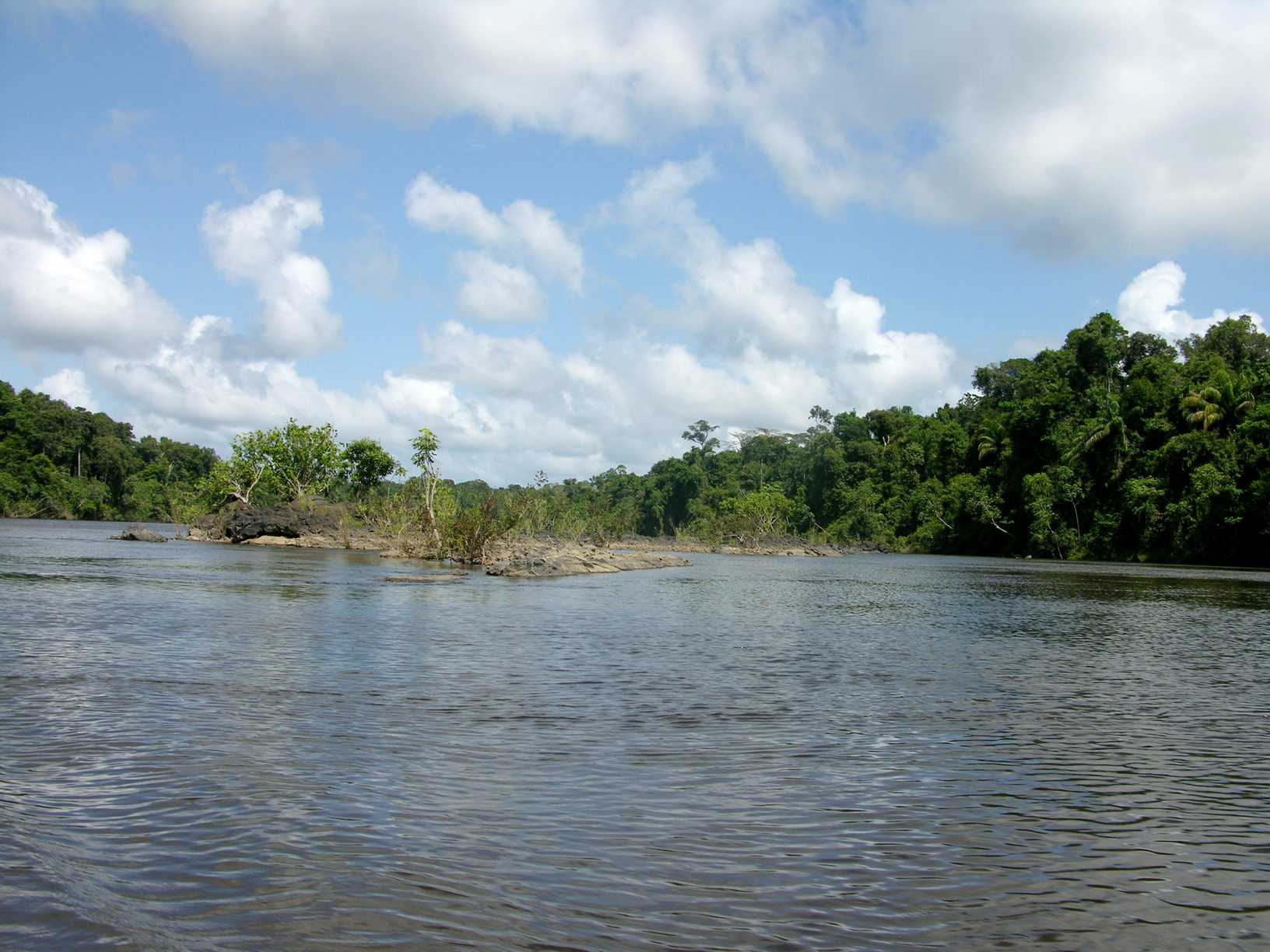
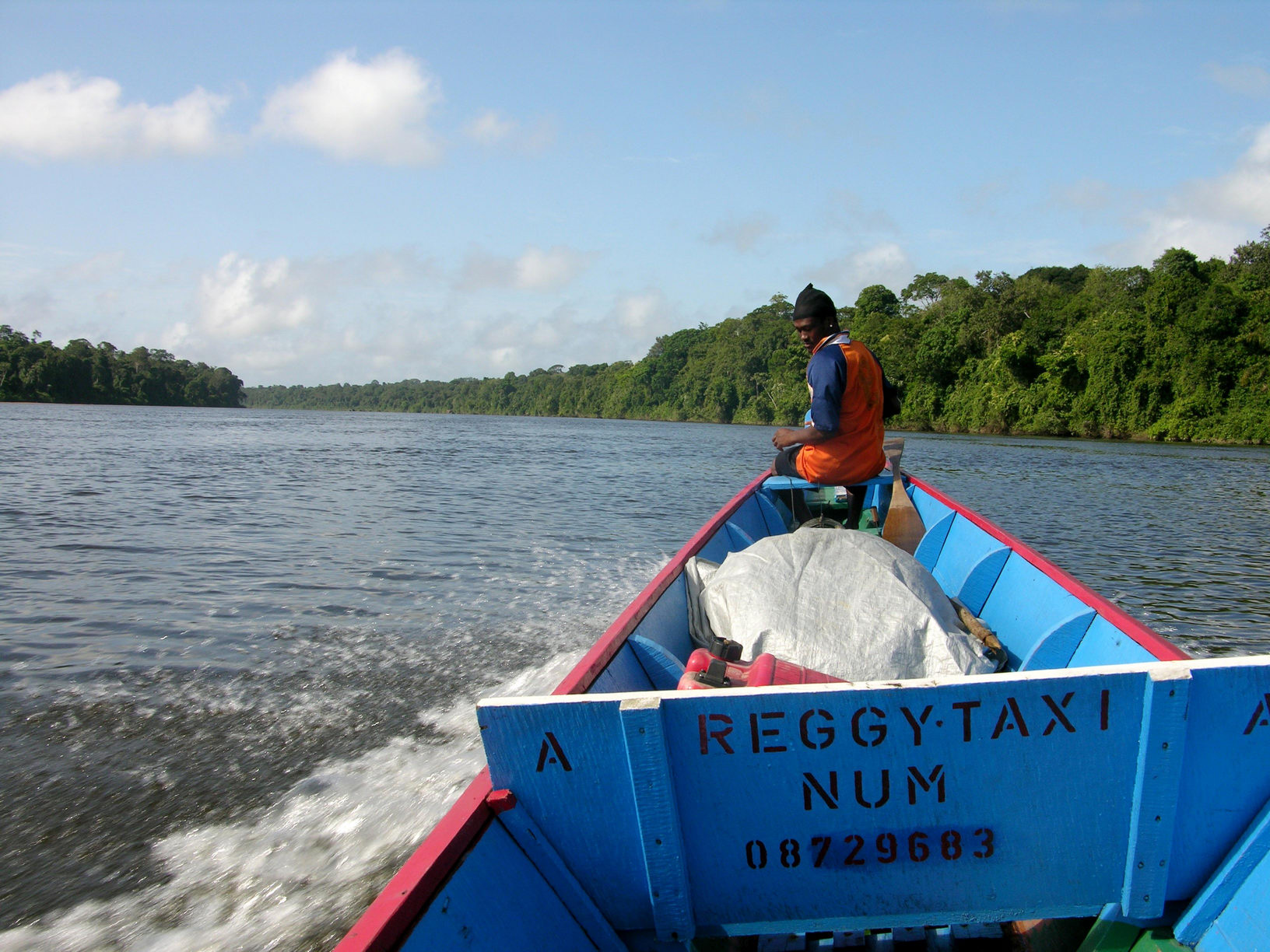
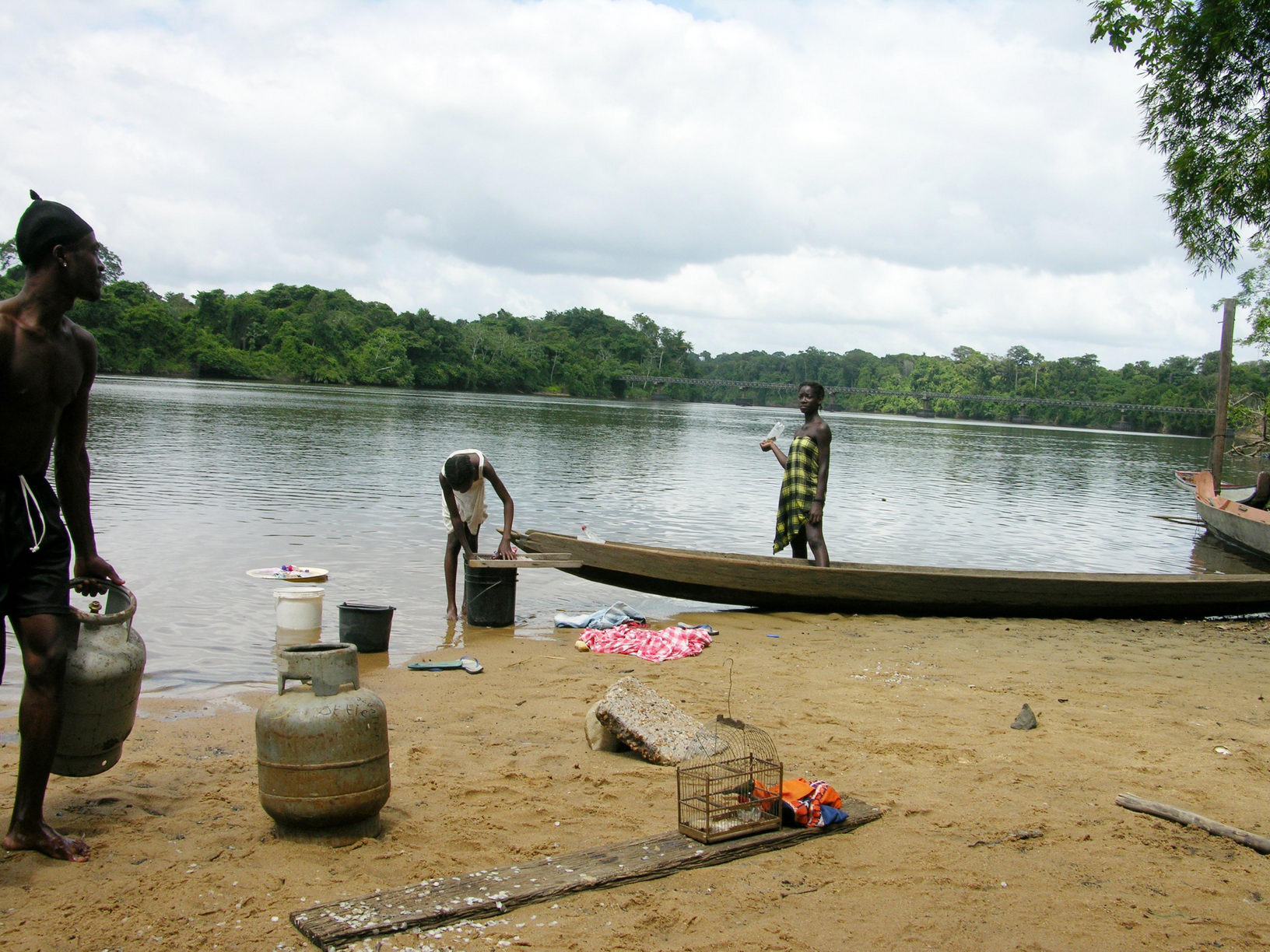
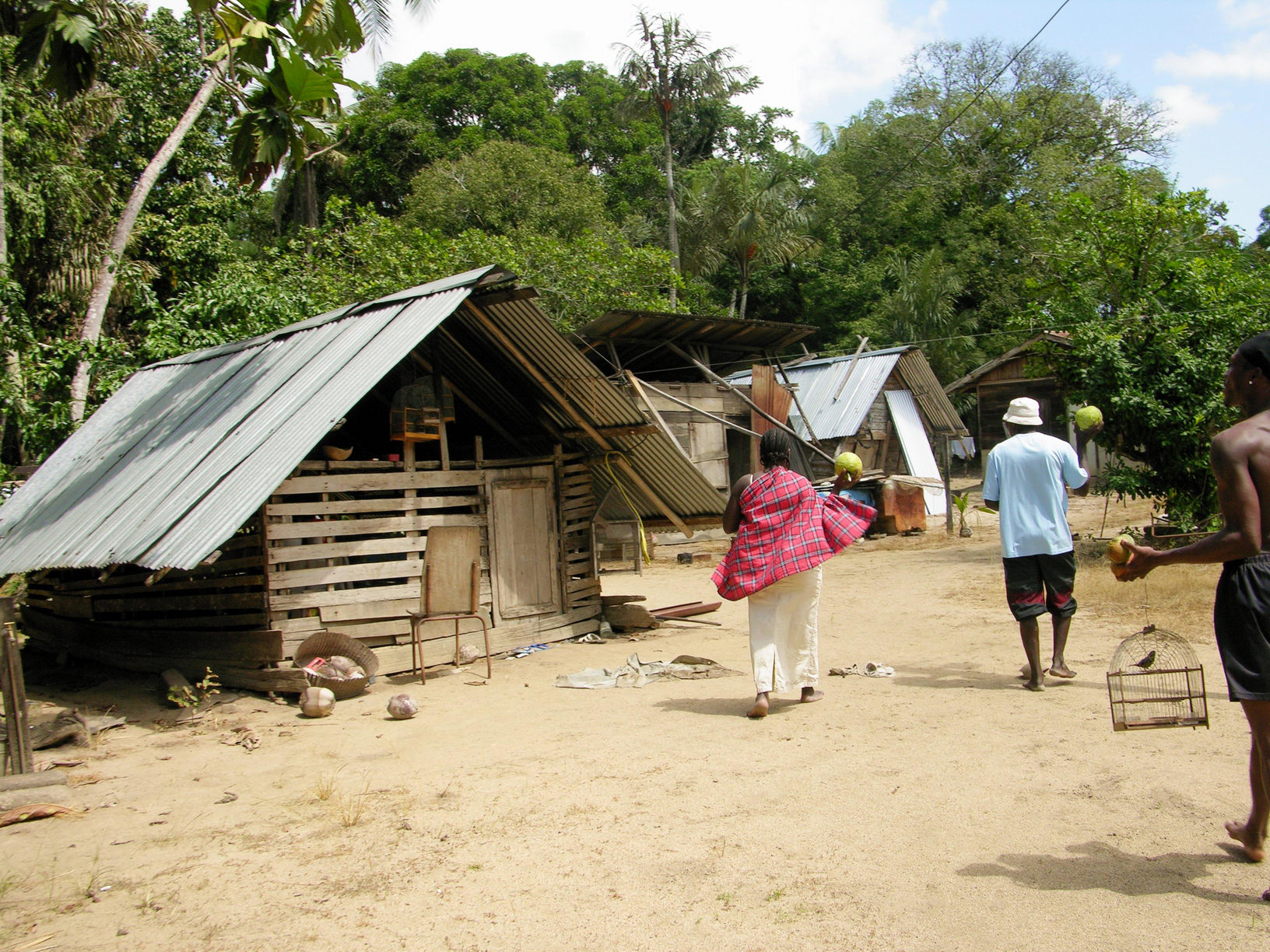
A young man from the village got into our dugout with his girlfriend and a little bird. That's another Guianan tradition, going out with a caged bird. A sign of a sensitive soul and noble birth, perhaps. You take the little bird along to visit people, to the pictures or even on a hike.
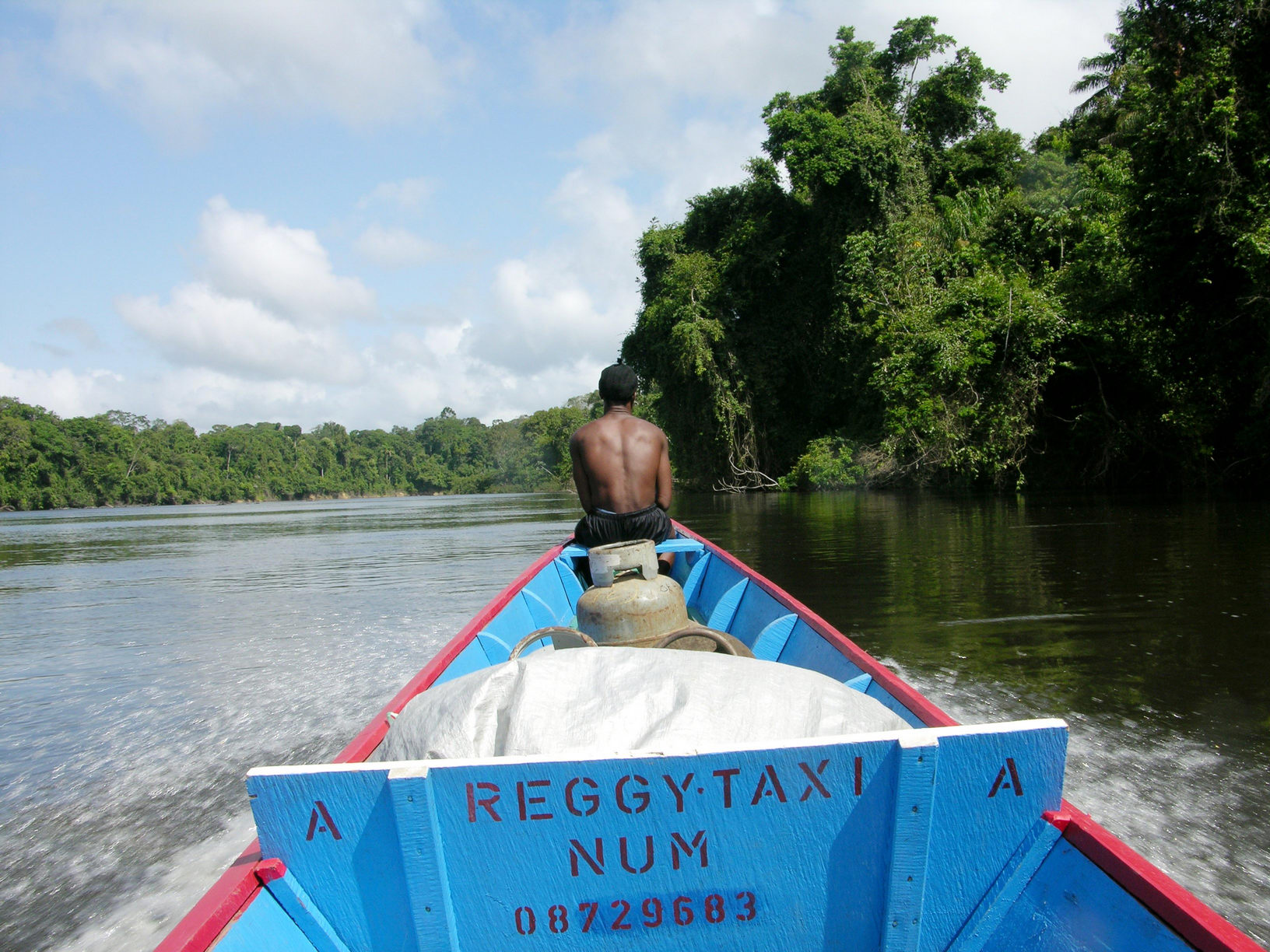
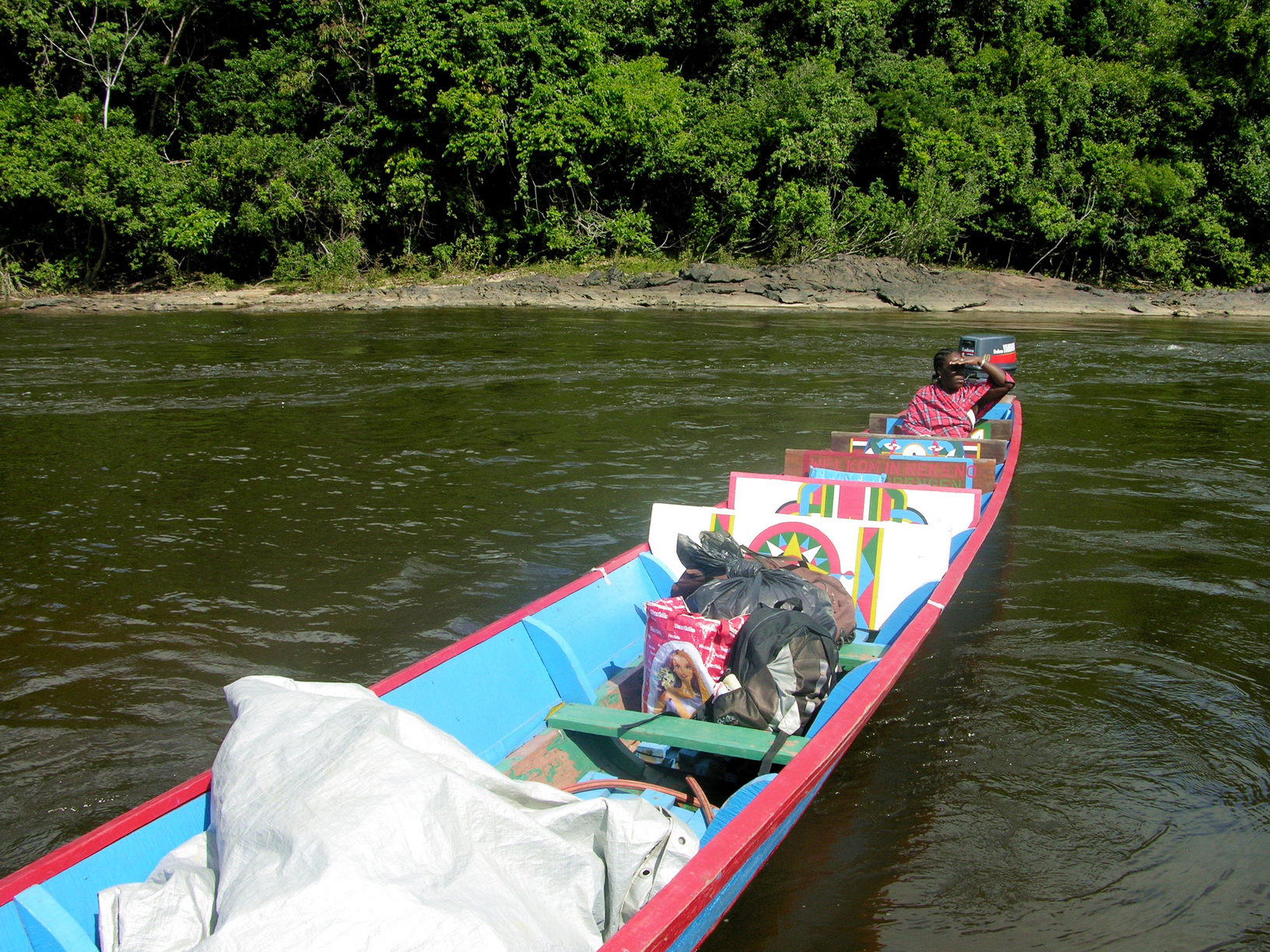
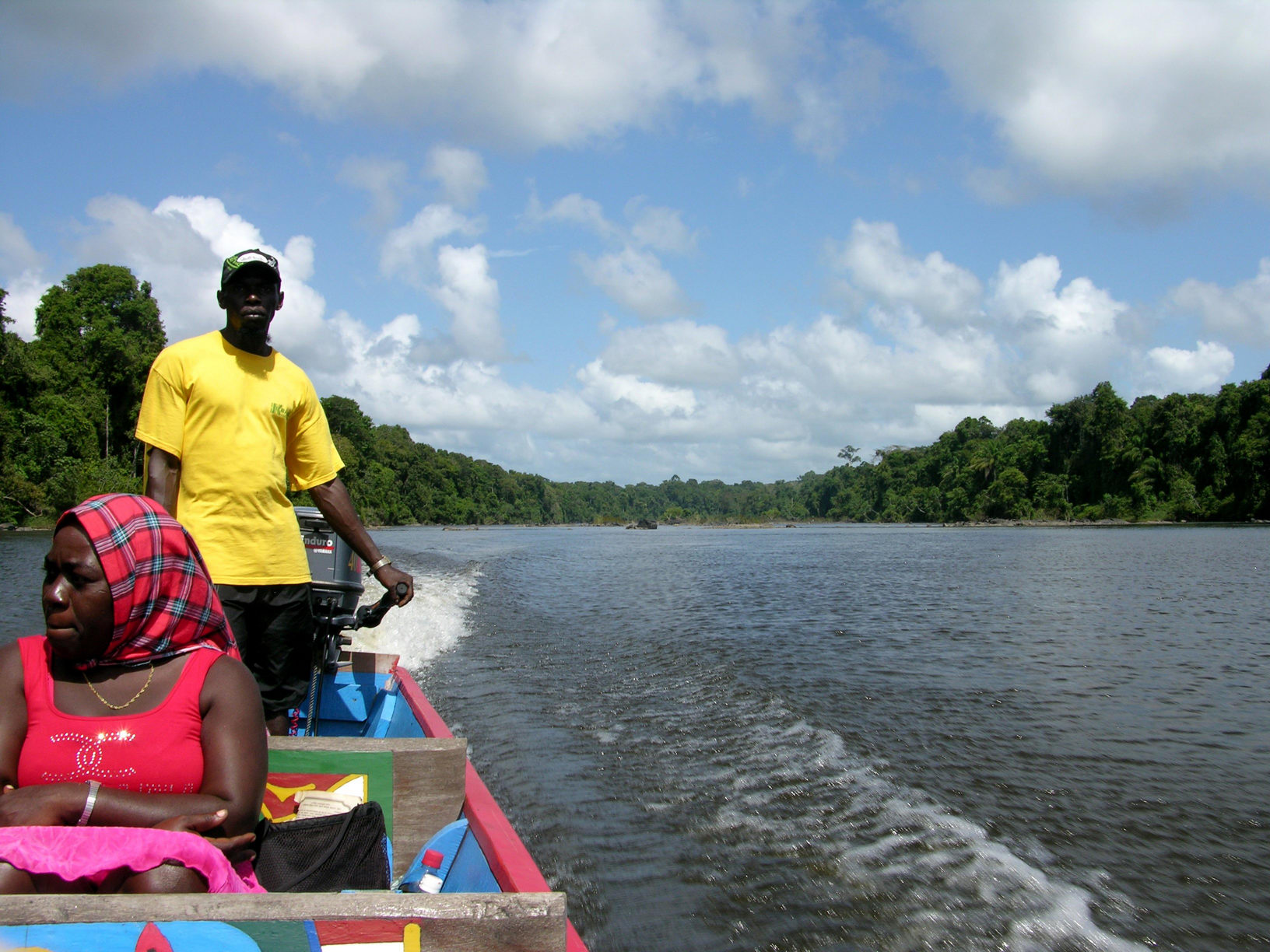
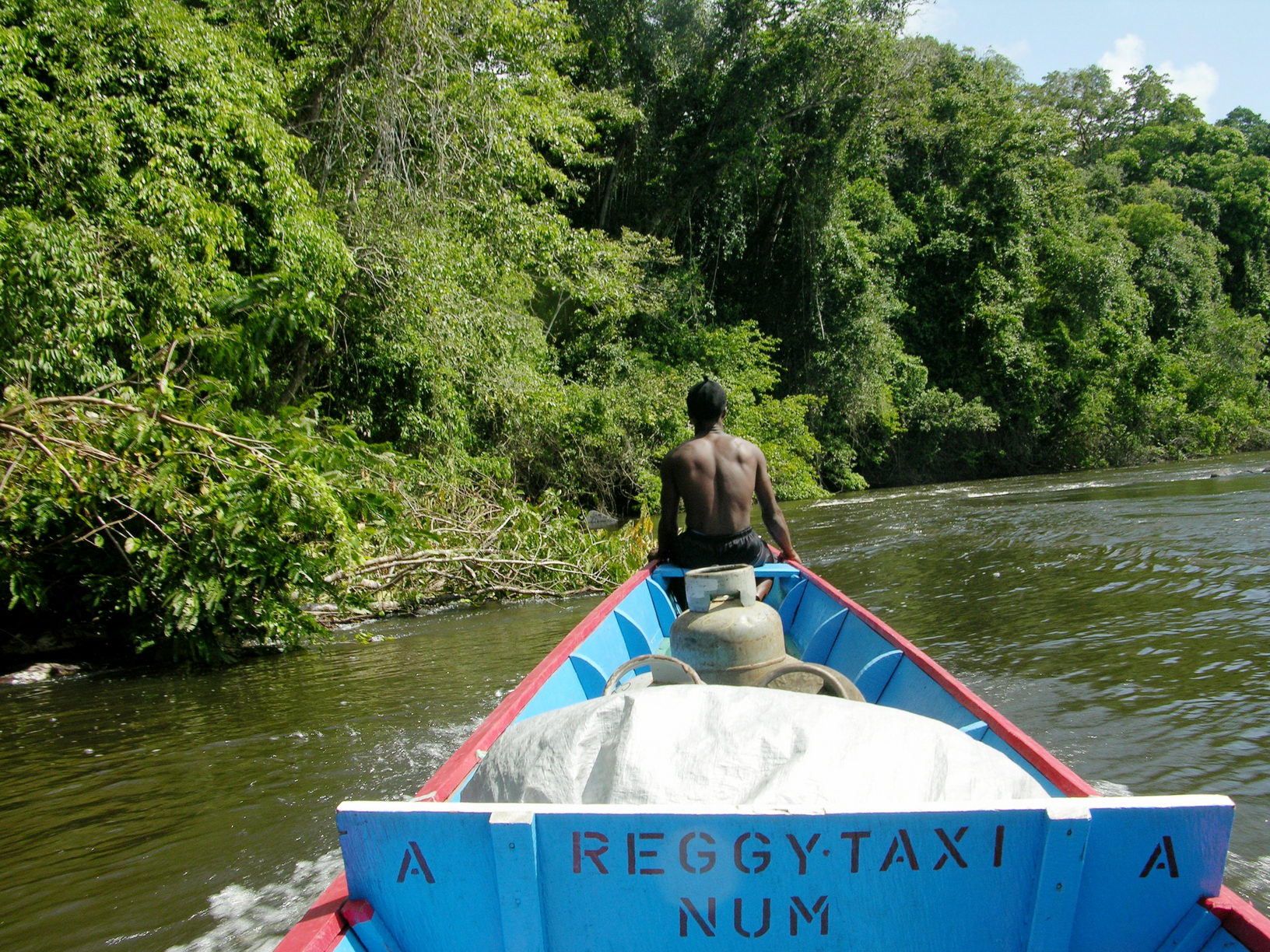
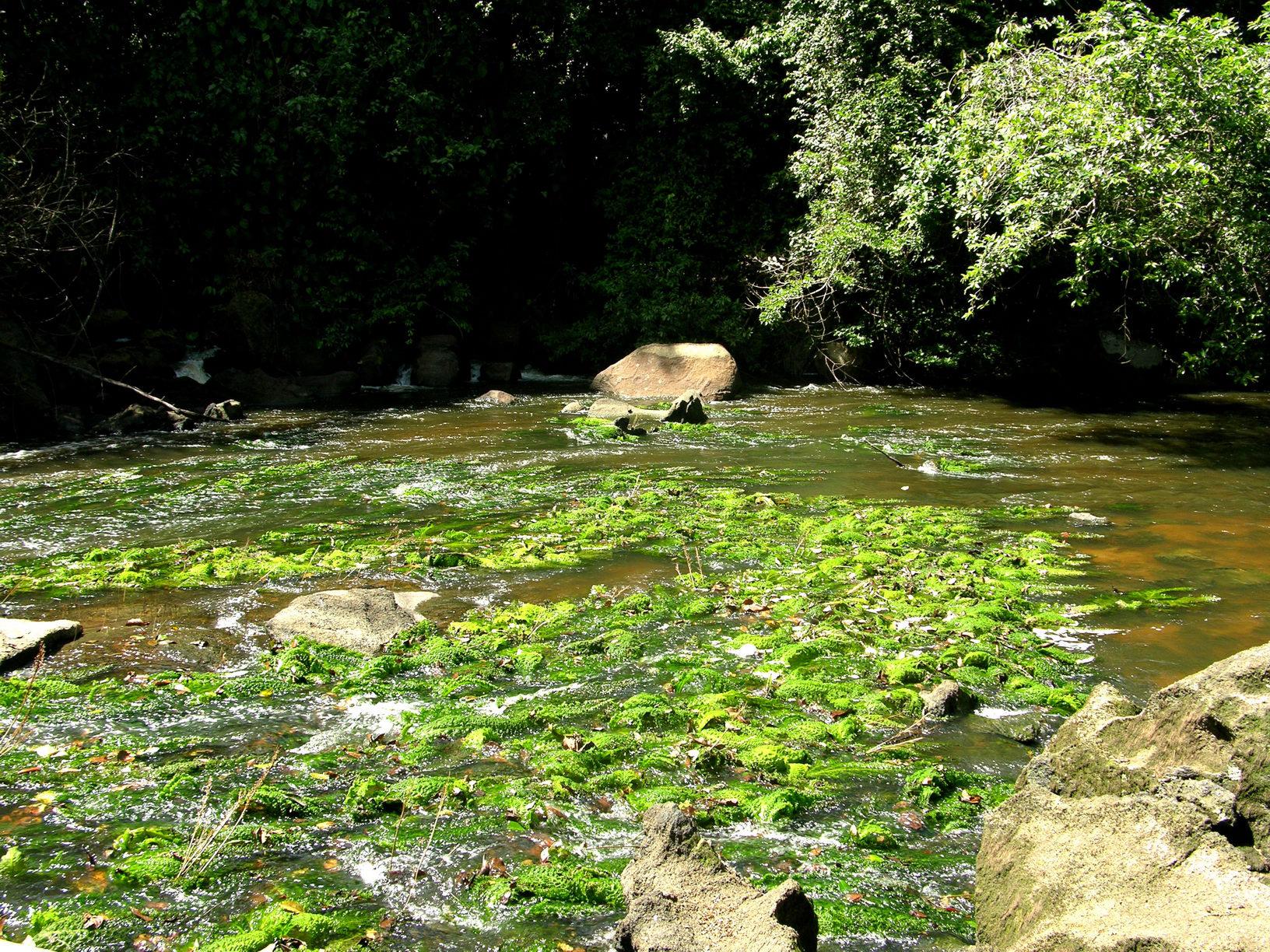
Above Witagron the Coppename flows fast, and there are rapids. In shallow water especially you have to go slowly and carefully.
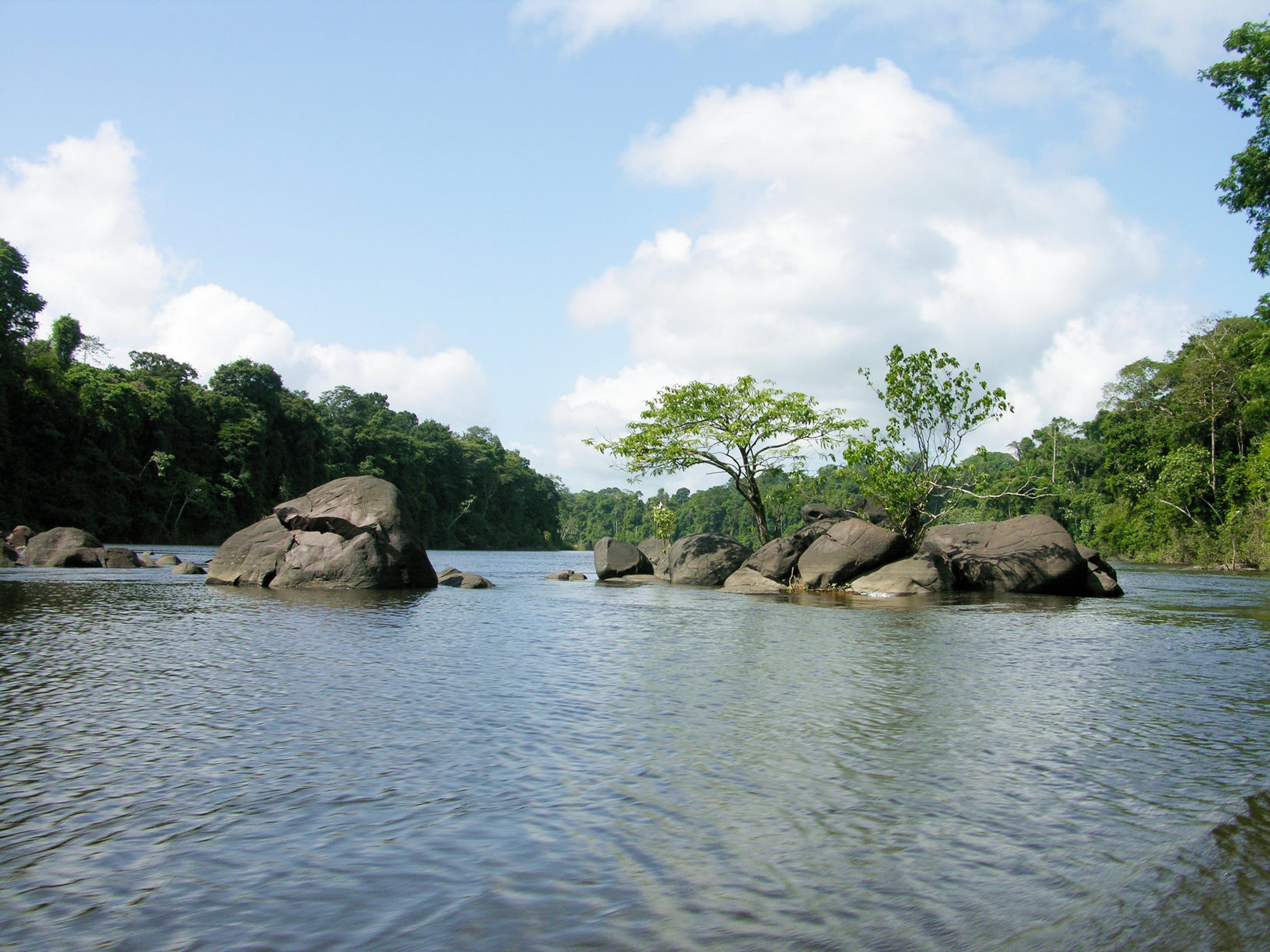
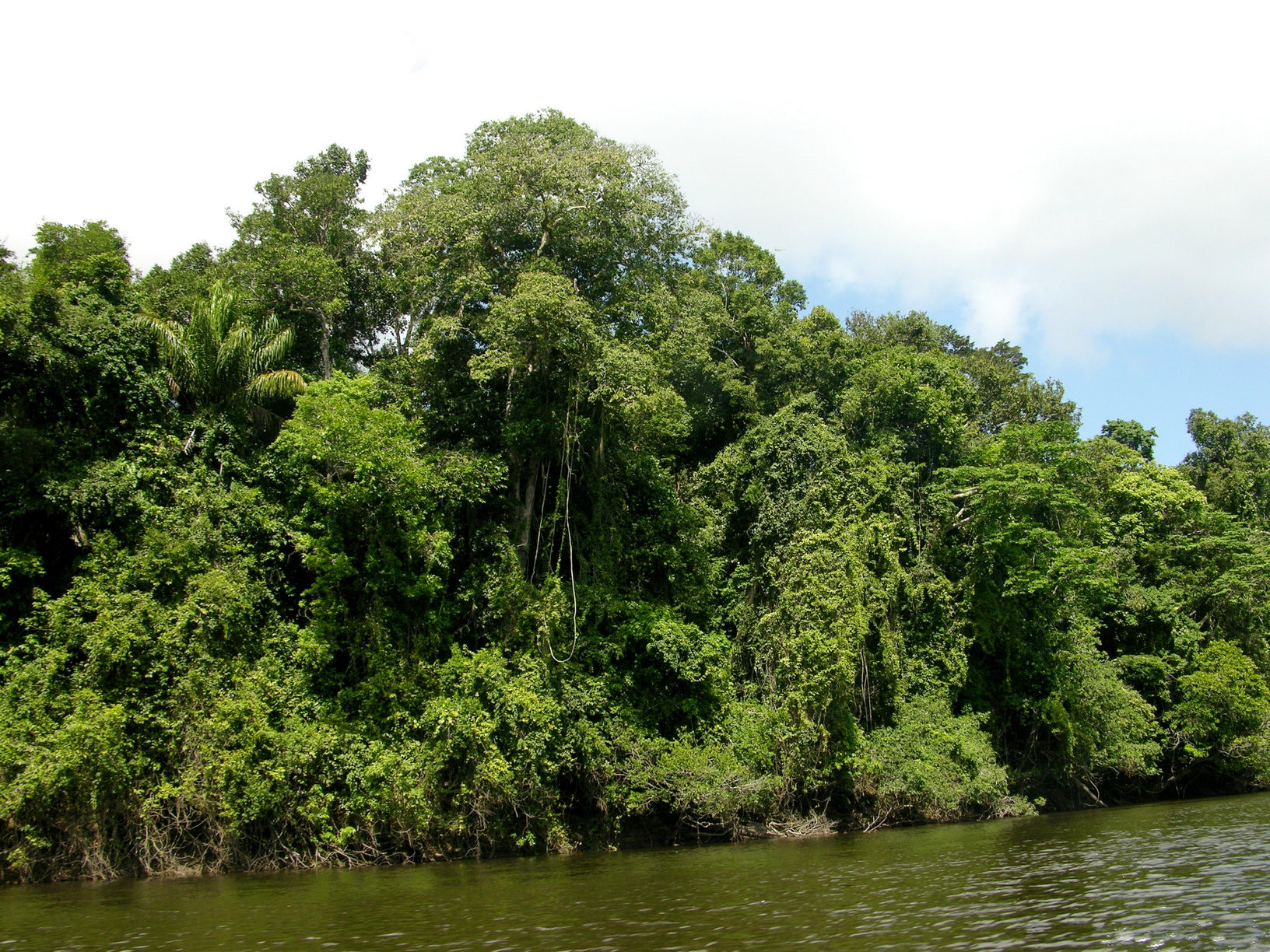
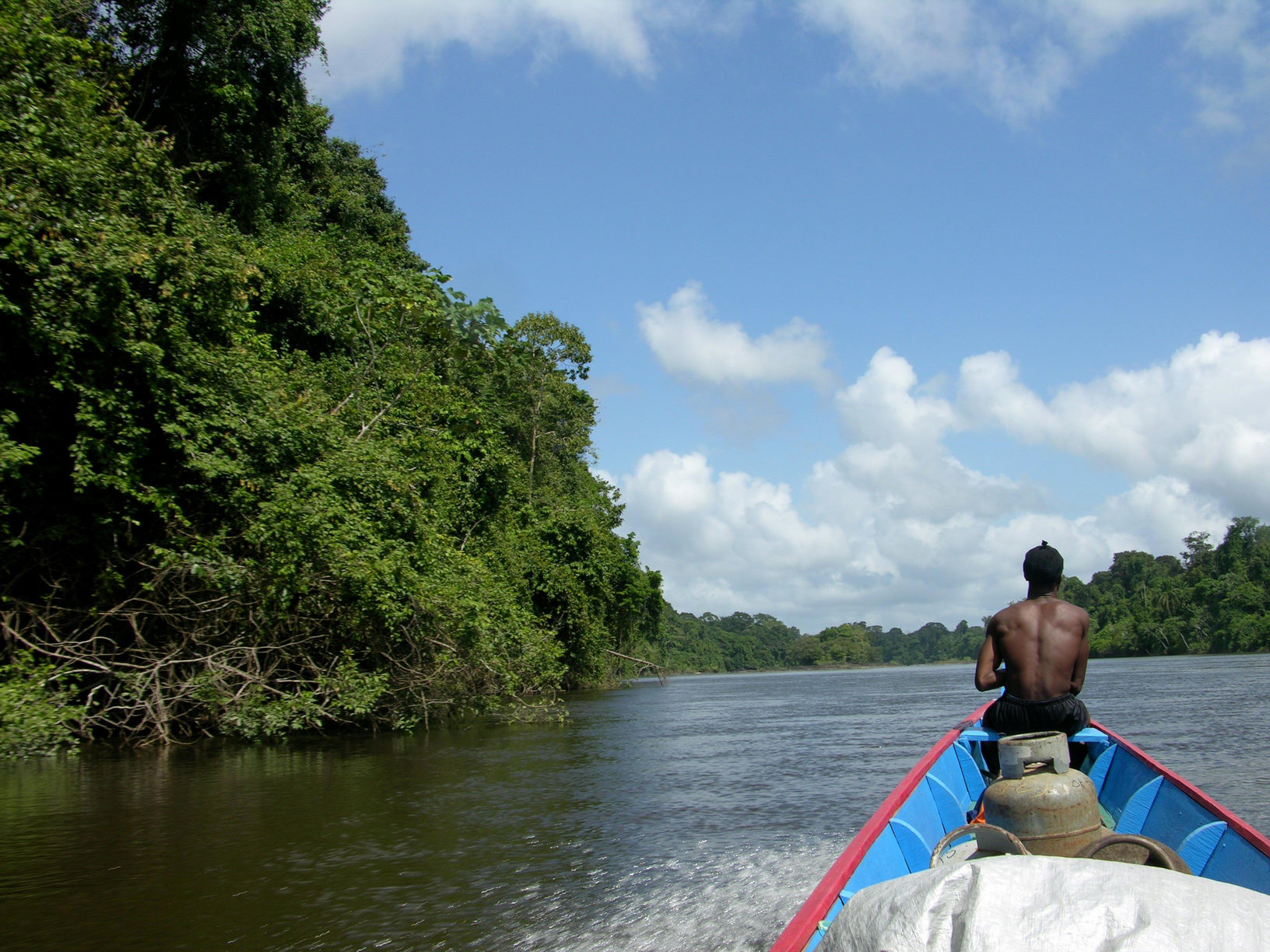
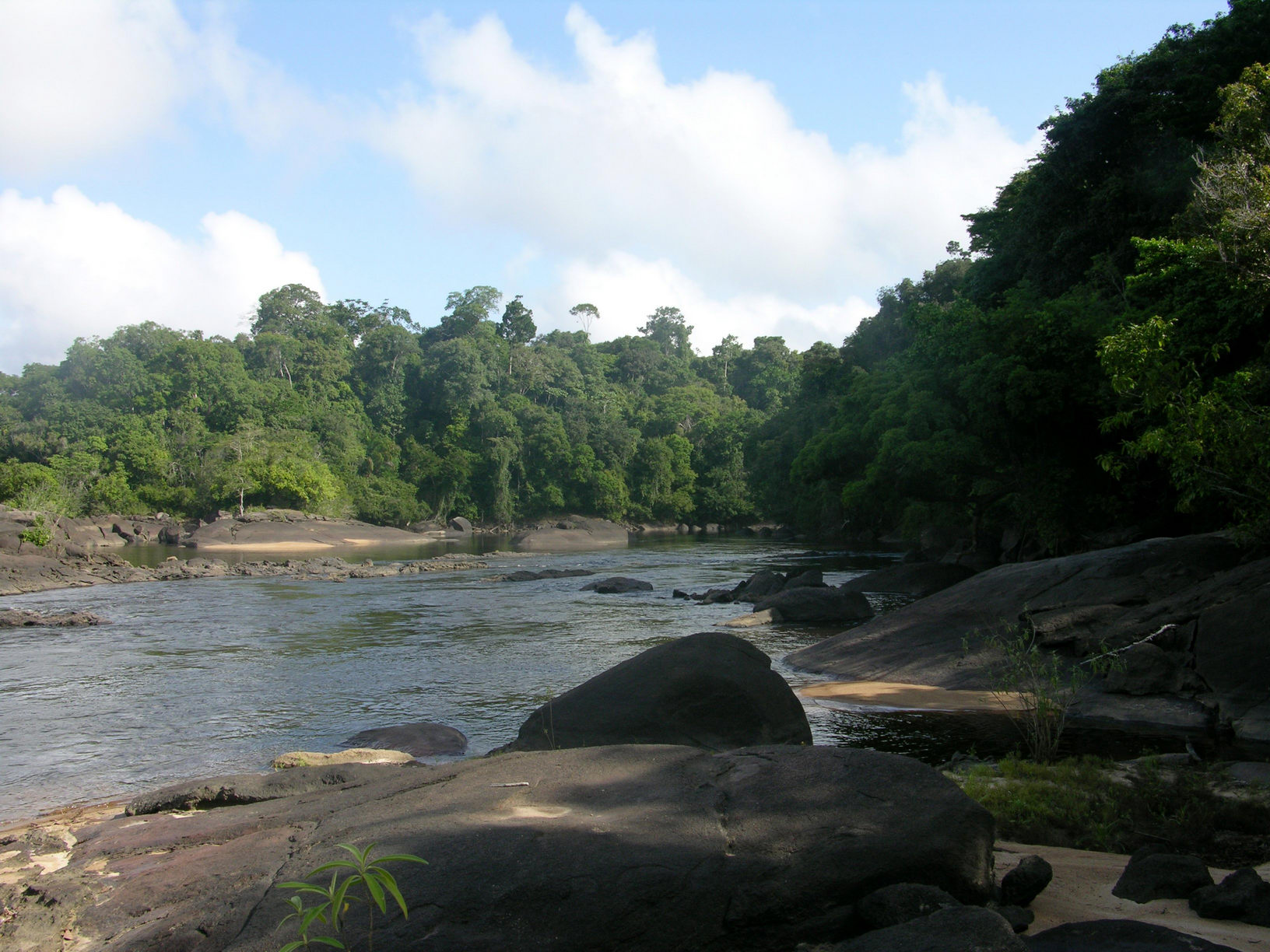
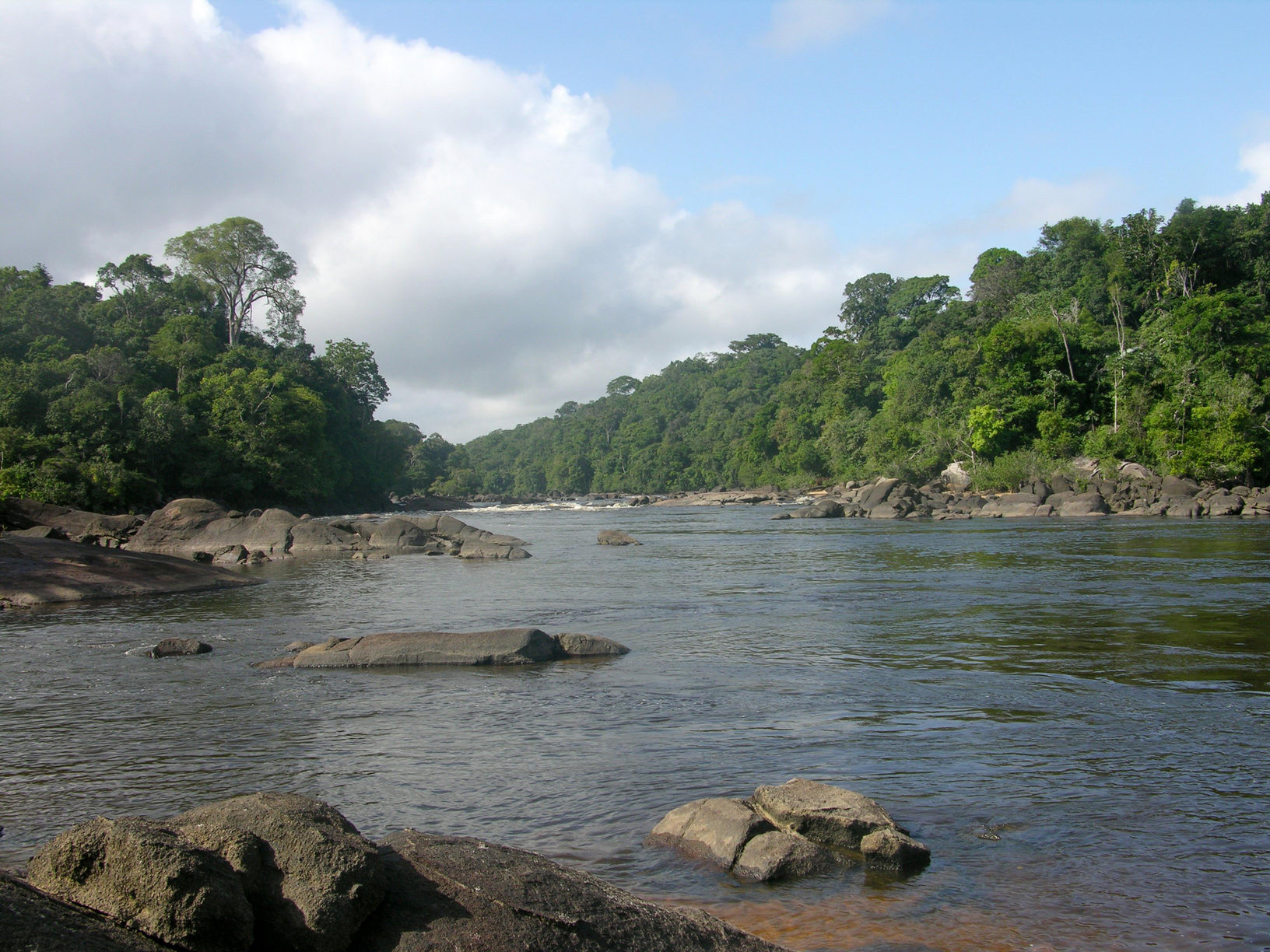
There were the odd caiman on the banks and plenty of birds on branches: herons, black caracaras, parrots and toucans. They were no more numerous once the river crossed into the national park. The park office is on an island before the first big rapid, above which you can't go by boat.
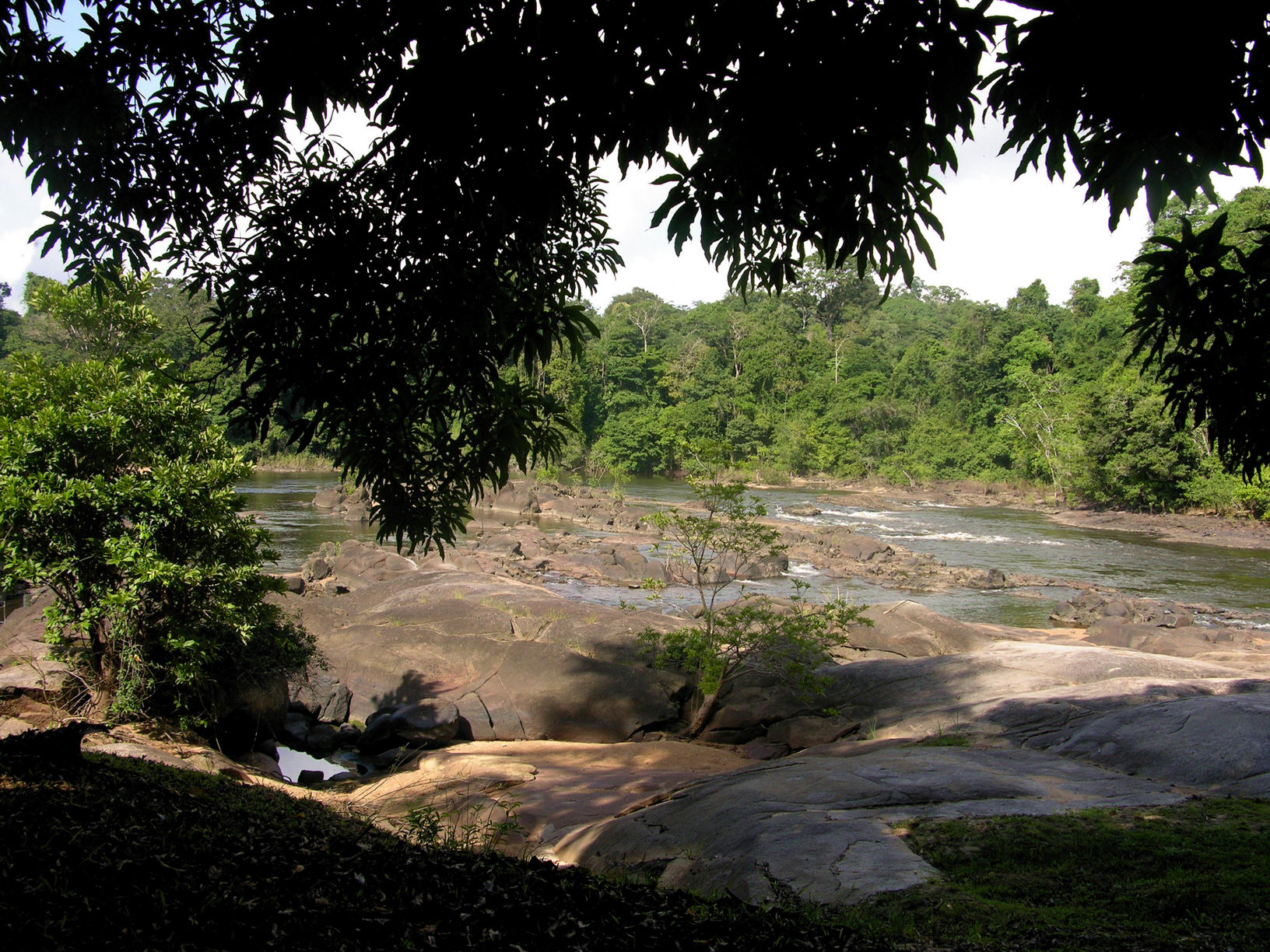
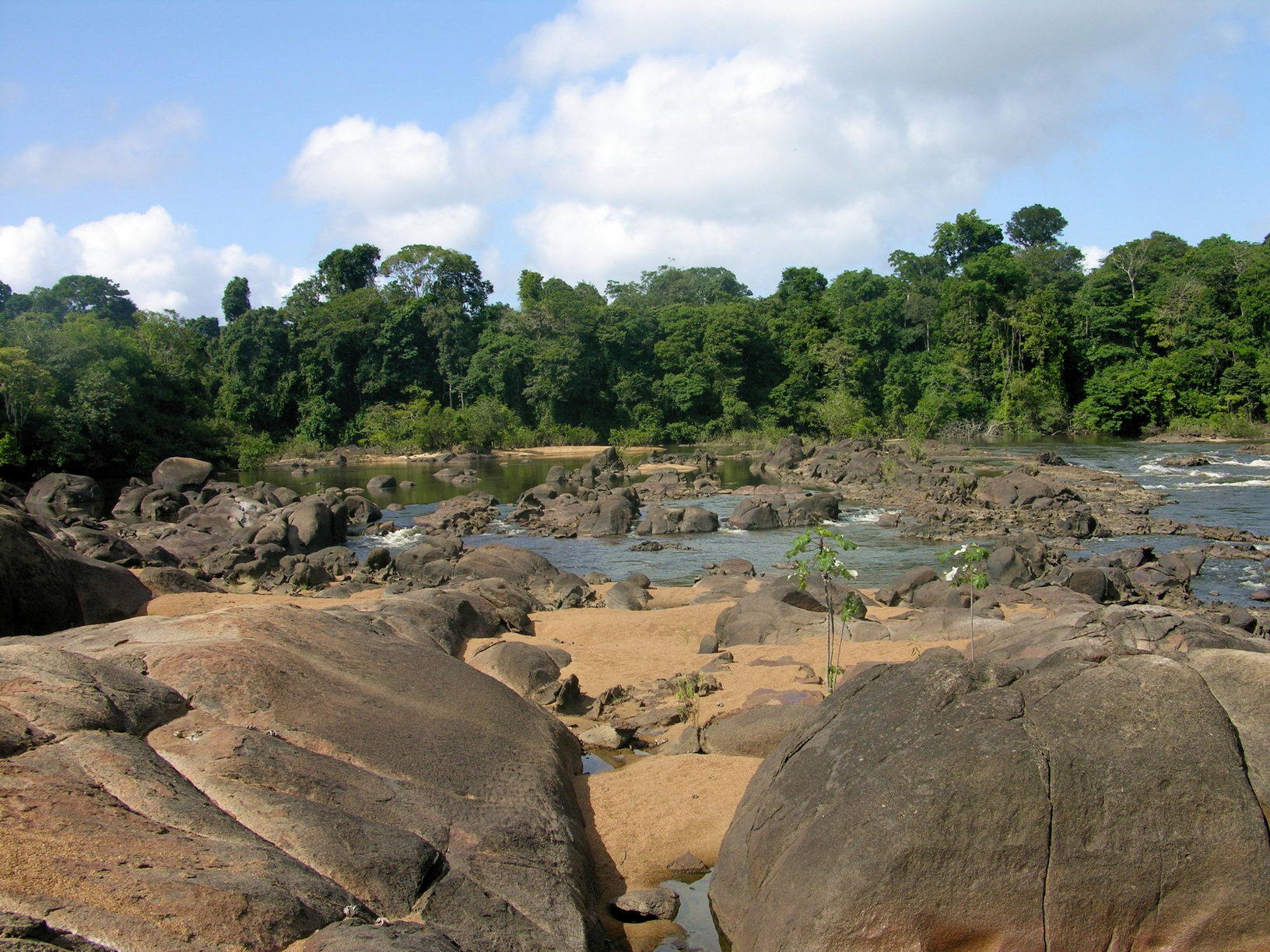
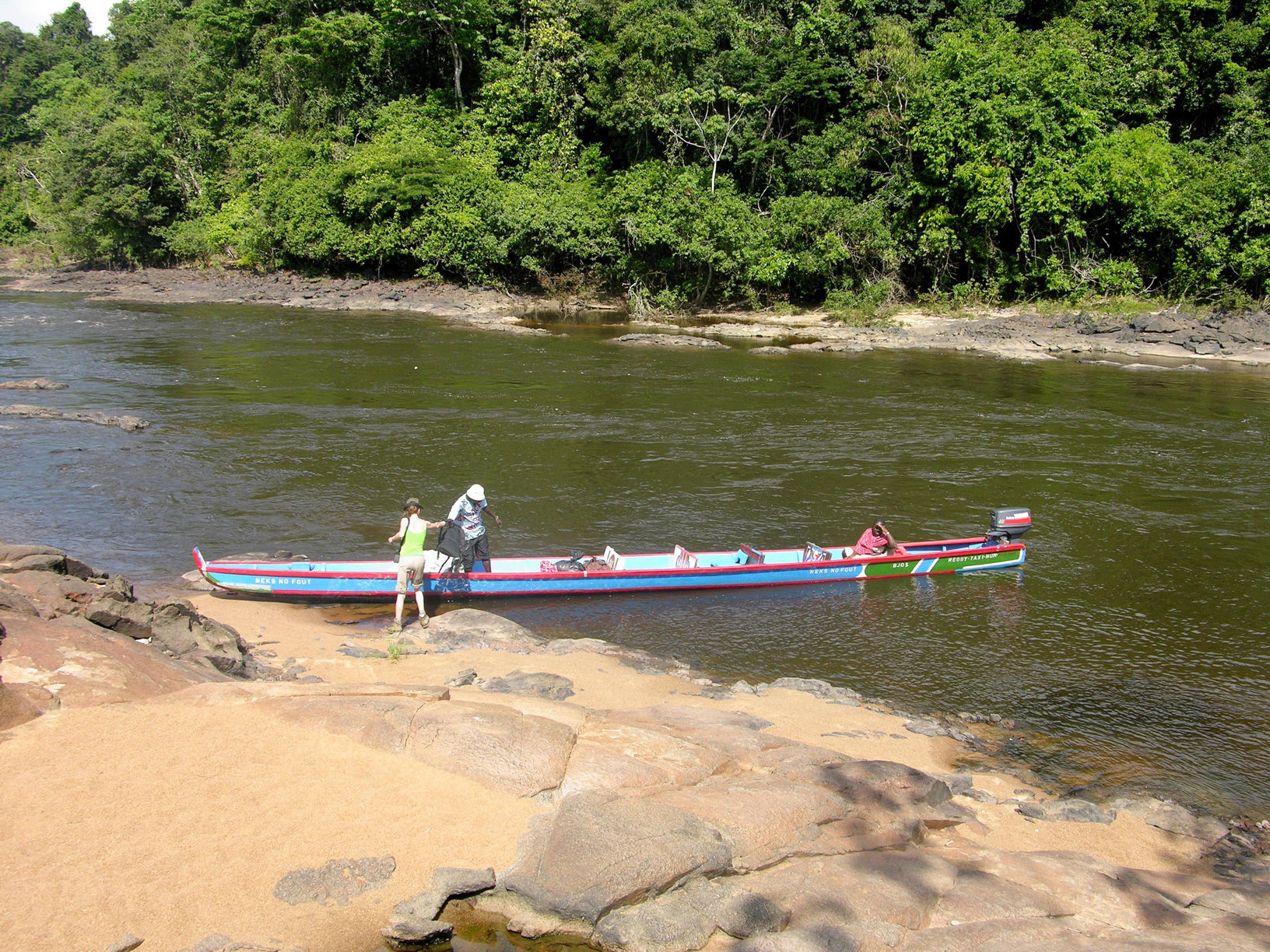
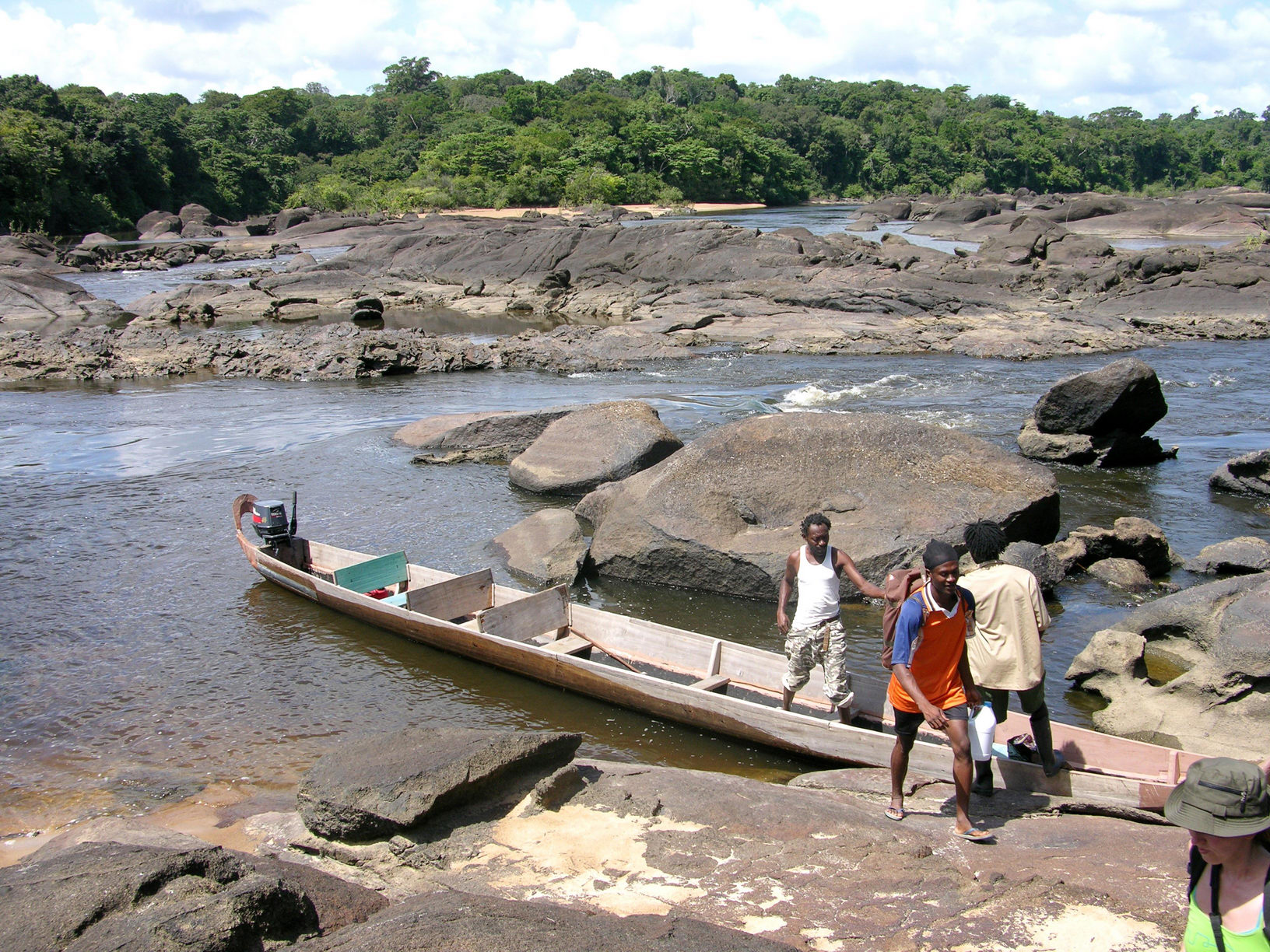
There was a recently built strip for little propeller planes, with staff and cabins for tourists. They're flown in now. I'd been delighted at how wild the road was and that we'd get to walk in a real jungle. It turns out the average Westerner can't take ten hours of bouncing in a jeep and four in a boat. He wants a plane. And a plane they gave him. Now there's a crowd. That didn't bode well. Our worst suspicions were soon confirmed.
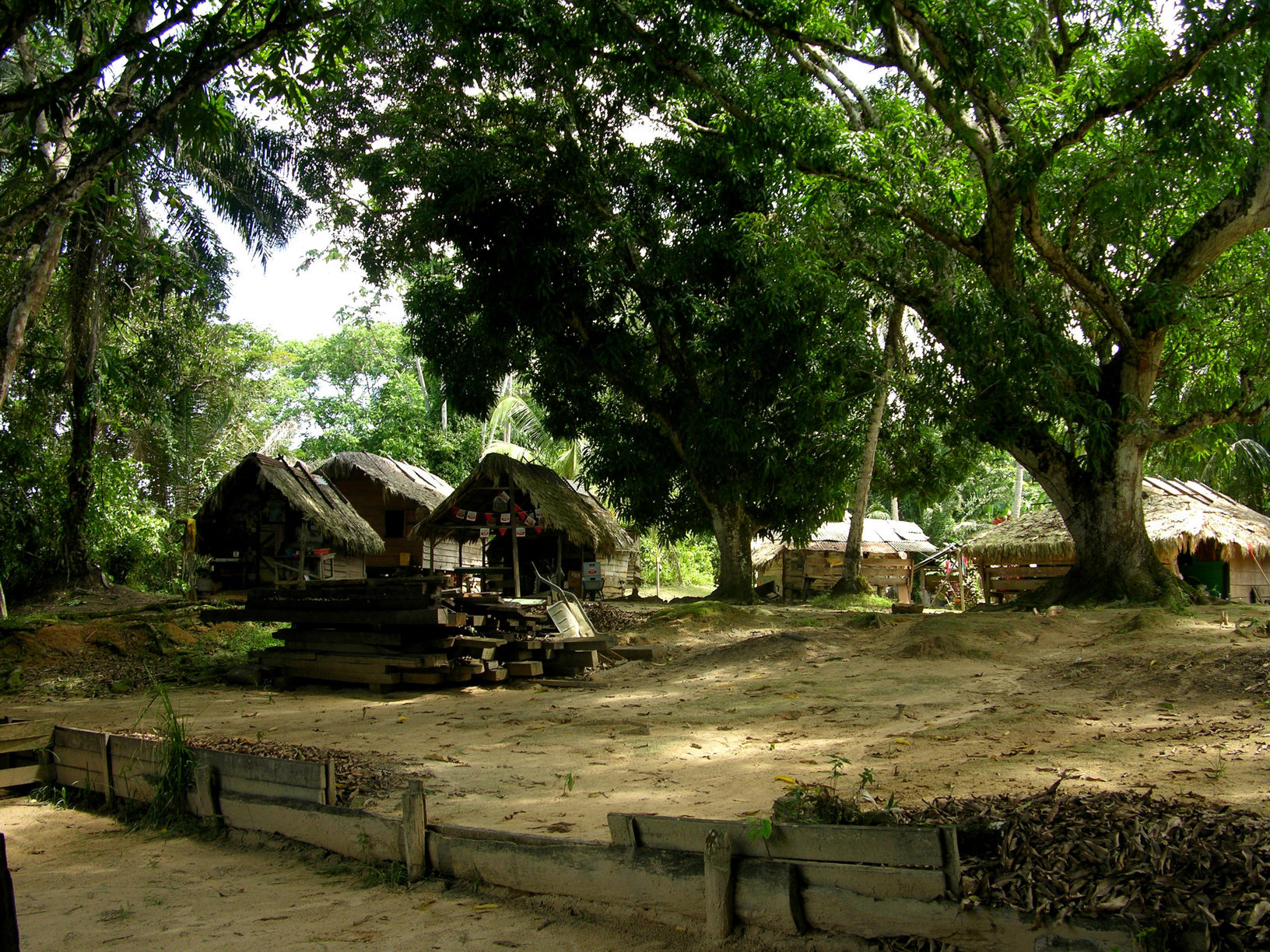
First, you can only leave the island with a guide. Second, you may only sleep in the cabins. Third, you can't spend the night on Voltzberg and therefore can't see the sun set or rise there. There you have it, the heart of Suriname, and it's worse than the most over-organised park in Europe. Of course, if you stayed for a week and got them to trust you, you could get your freedom by the back door. That would take an age, though.
We'd specifically asked at that cursed STINASU about being free to go where we liked. They'd told us we could walk and camp wherever we wanted. That isn't a travel agency, it's a disinformation office. We had nearly decided to go straight back, then took a deep breath and agreed to climb the mountain with the guide they'd forced on us. Now I understood why they'd put themselves on an island: to stop people going for walks on their own. And they breed caimans in the river to stop you swimming off. The interesting thing, as we later found, was that most of the people who fly in never leave the island. They spend their allotted days in hammocks outside the cabins. They might go to an ecology lecture, and that's about it.
They gave us a guide for 224 Surinamese dollars. He didn't understand English. He wore a white T-shirt. That in itself was enough to frighten away every bird and animal. On top of it, he walked like an elephant, breaking all the branches and swinging his machete to cut down everything growing around the enormously wide marked trail. One argument for the escort had been that we might pick a flower or collect plant specimens. We couldn't carry off as much as this man with his machete destroyed in one go, even if we tried.
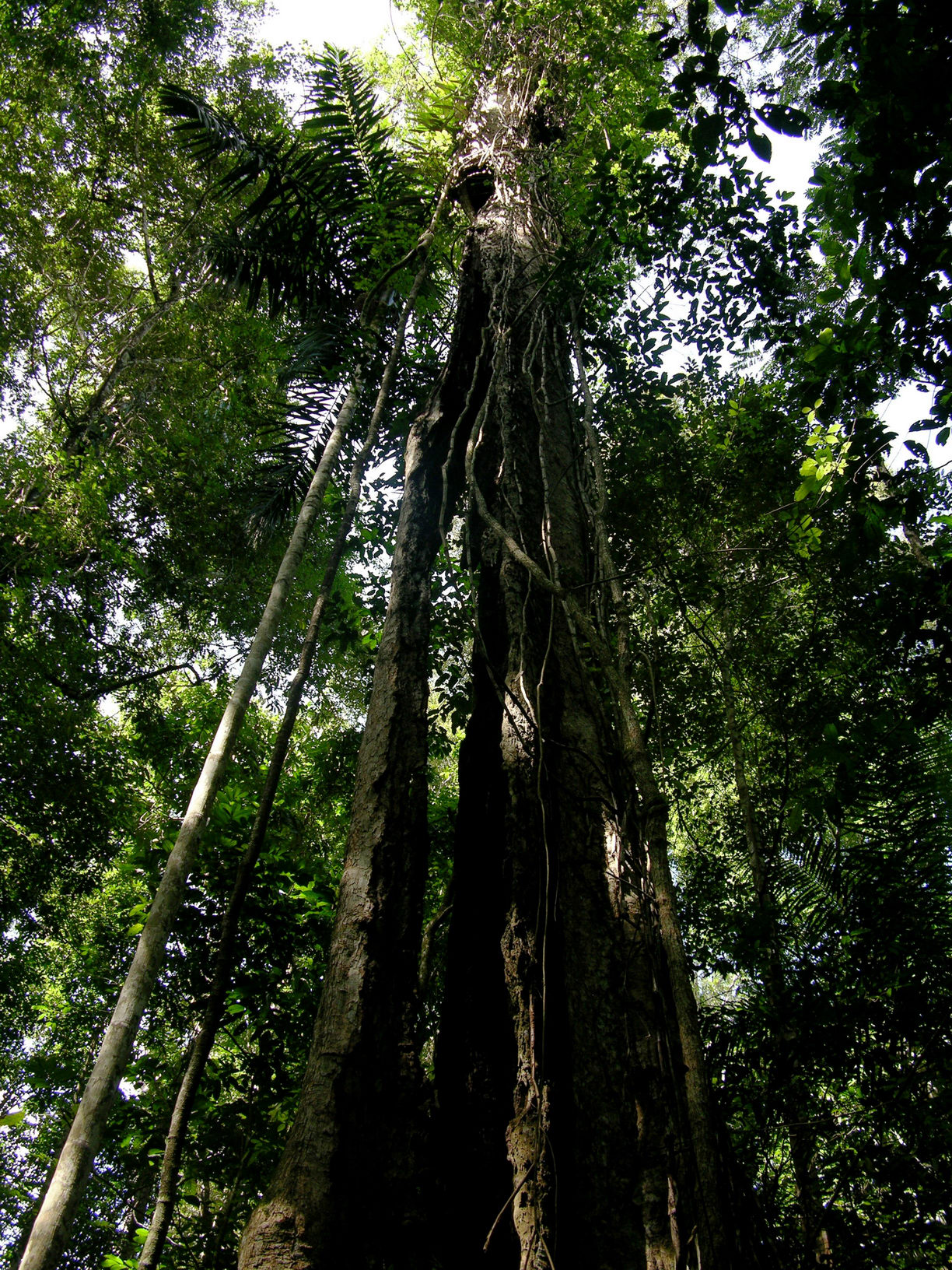
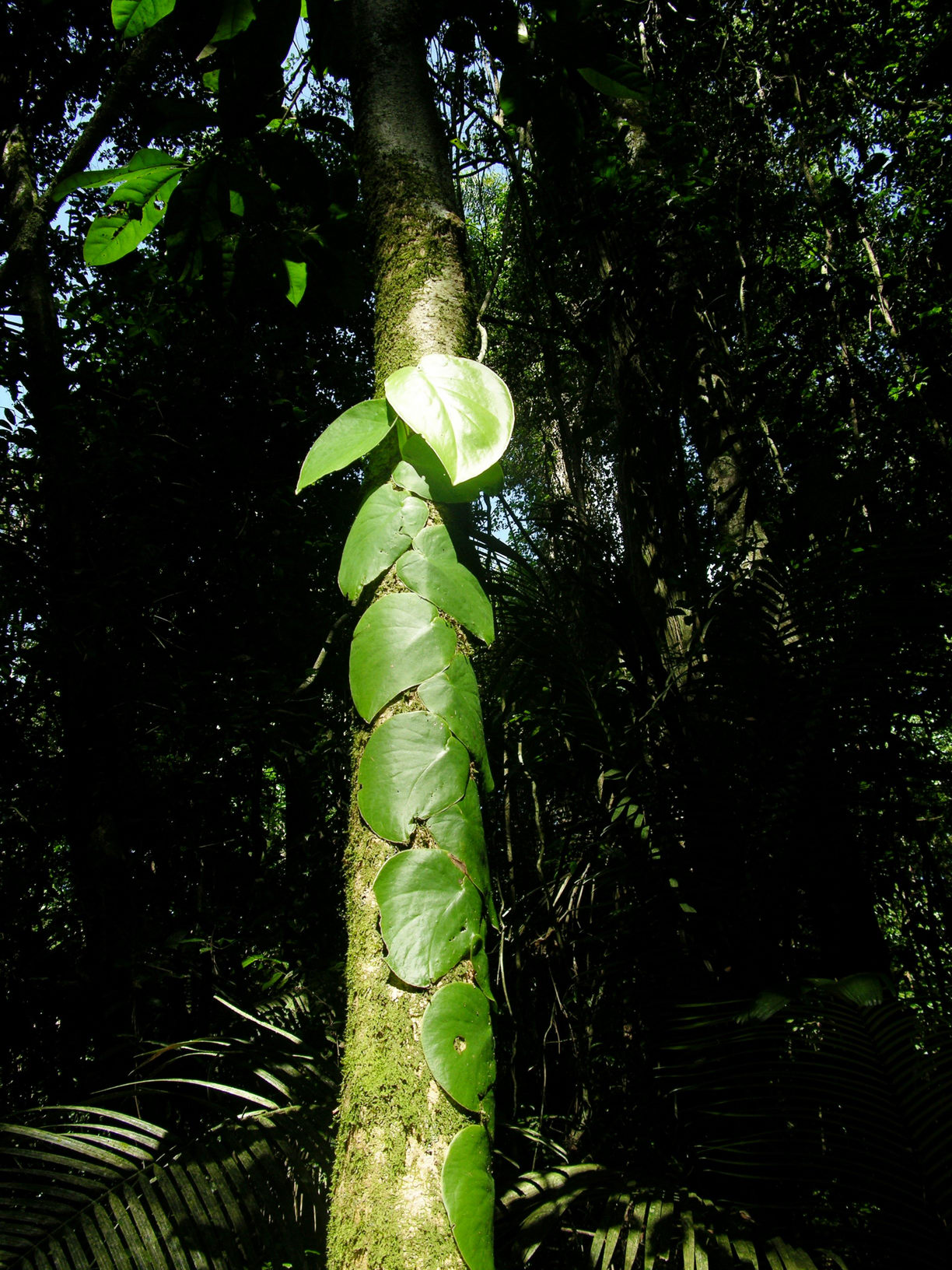
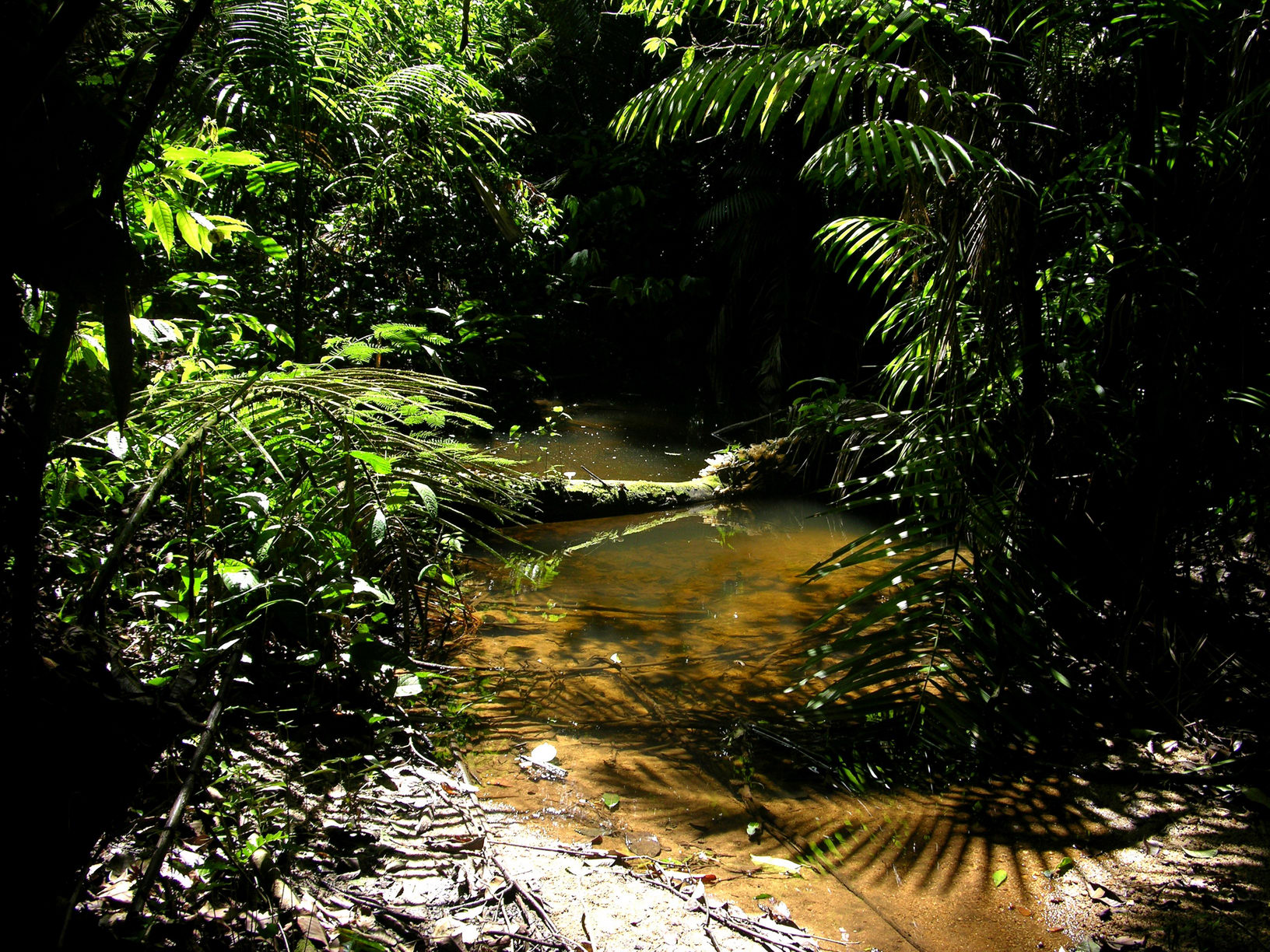
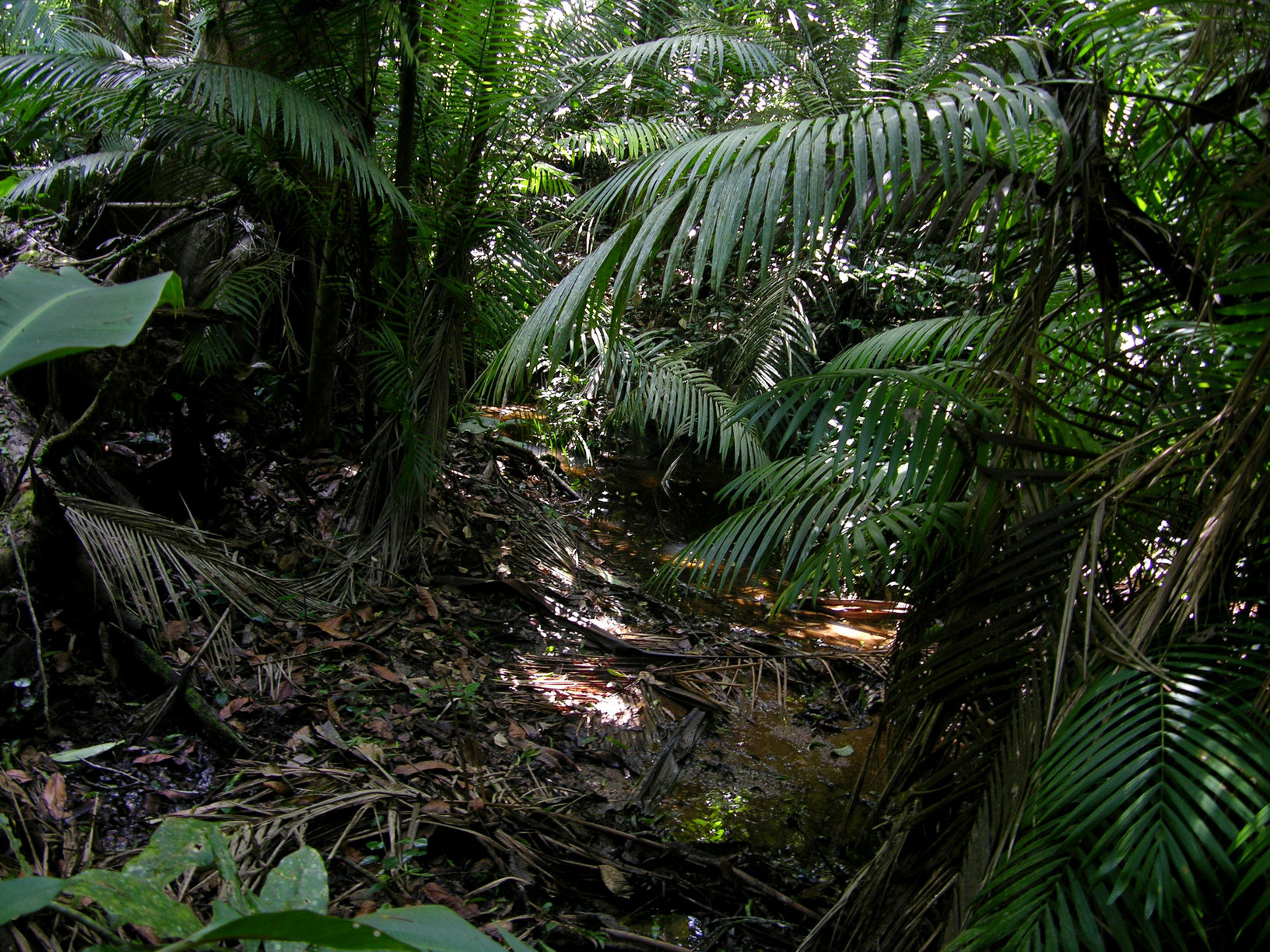
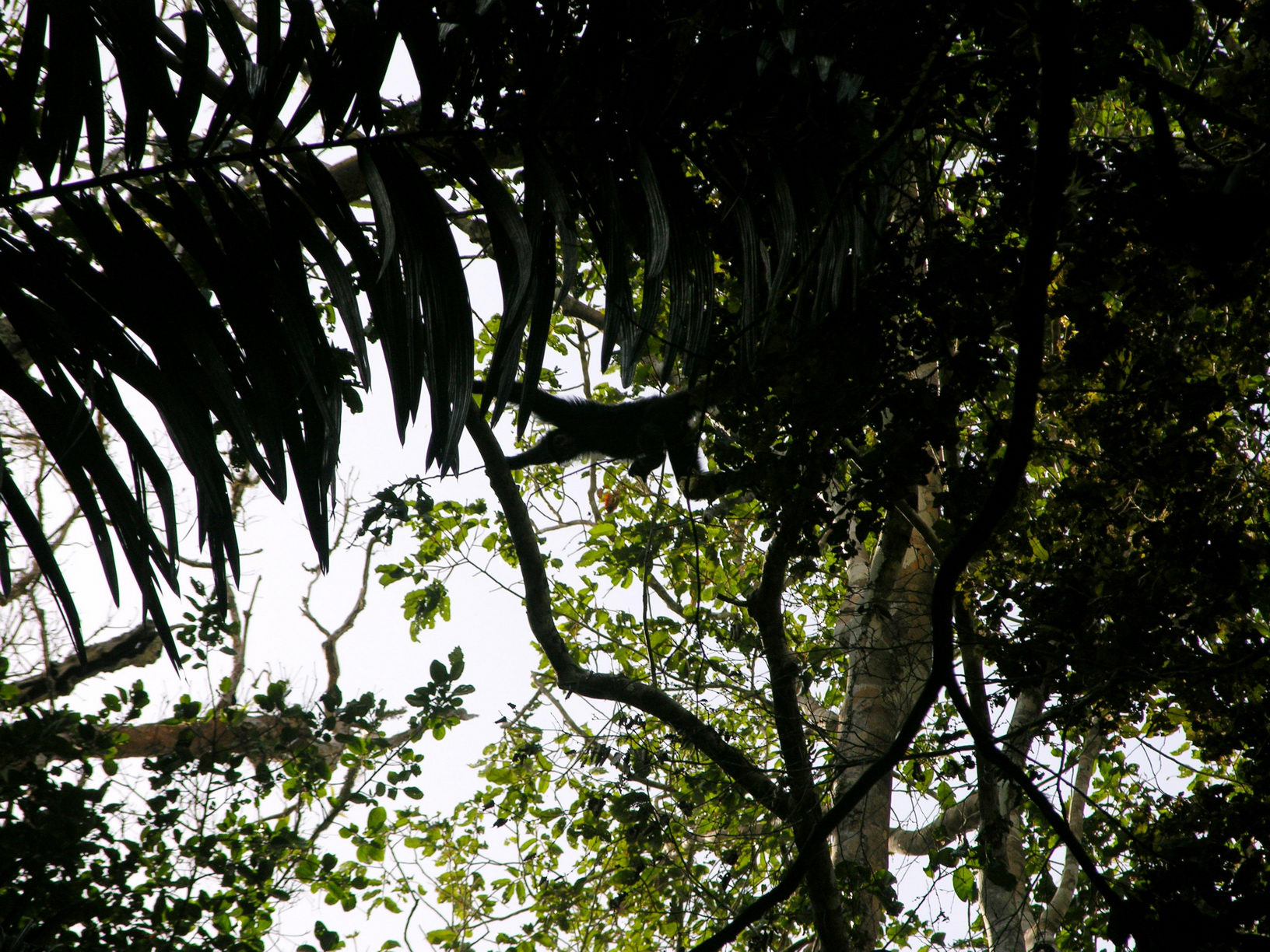
The path was pleasant. In the trees there were spider monkeys as well as baboons. We also saw capuchins. Our guide didn't spot them. But if he saw another turtle he'd leap into the scrub, grab it and let us hold the shell. Everything else had long since withdrawn inside, of course. Apparently he'd been taught from childhood to catch them for soup.
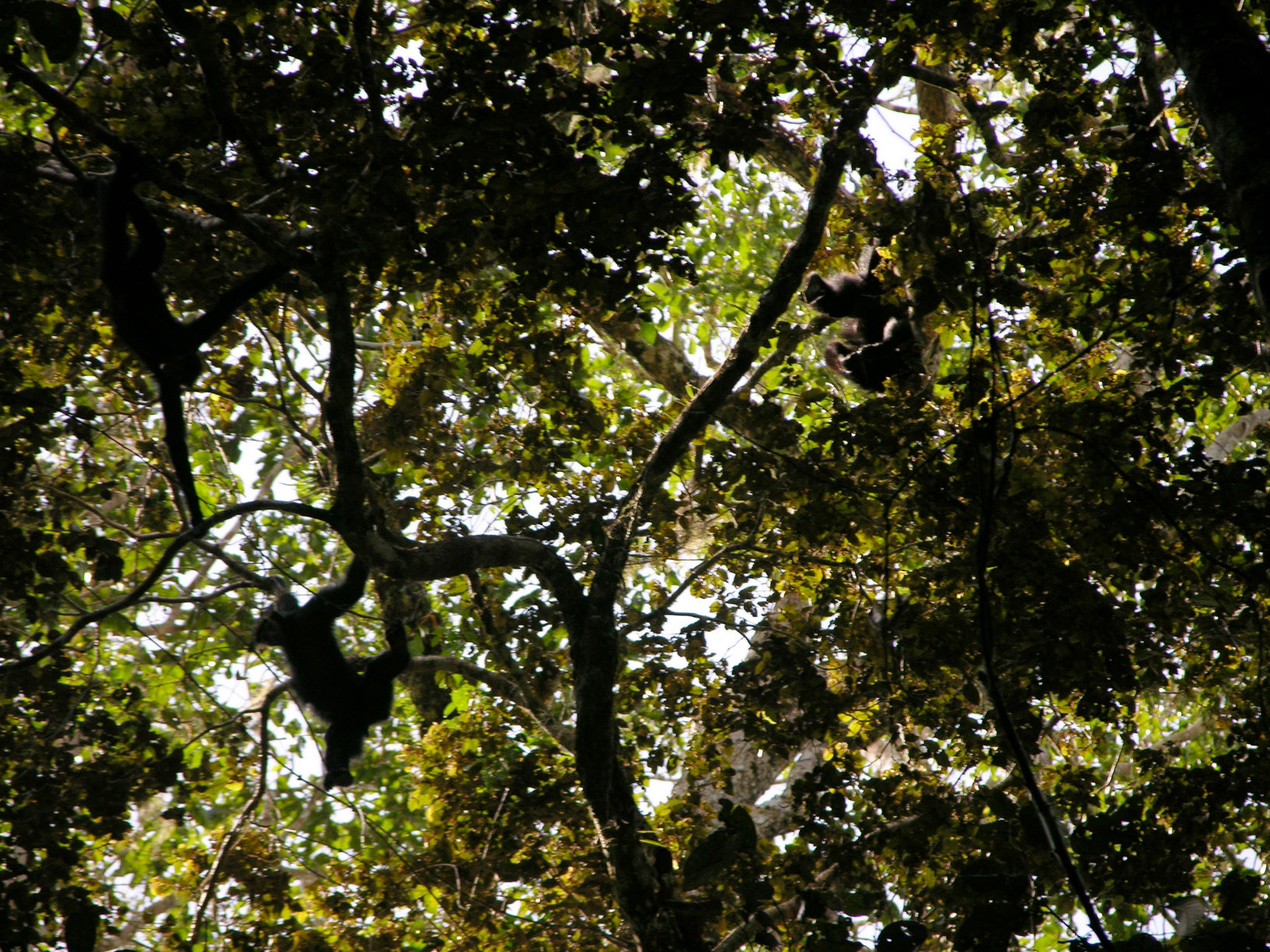
Every bird was a “parrot” to him. I can still understand someone calling a macaw a parrot, even if I'd make a distinction myself. At a pinch you might call a toucan a parrot. But when a national park guide calls a falcon a parrot, this is the end. A complete triumph of ecotourism. Apparently everyone is happy. We no longer find the stupidity of television soaps and the tabloids surprising. The majority is in favour.
There's a little hut at the foot of Voltzberg. We were to spend the night there. You were meant to have lunch before going up the mountain. We could've done without, or eaten in ten minutes, but the guide was entitled to a two-hour lunch. The one good thing was that there was forest all around and we could wander through it. Strictly speaking we couldn't, but I didn't ask. You didn't need to go far, either. Just look carefully, turn over some dead wood and you immediately find lots of little creatures.
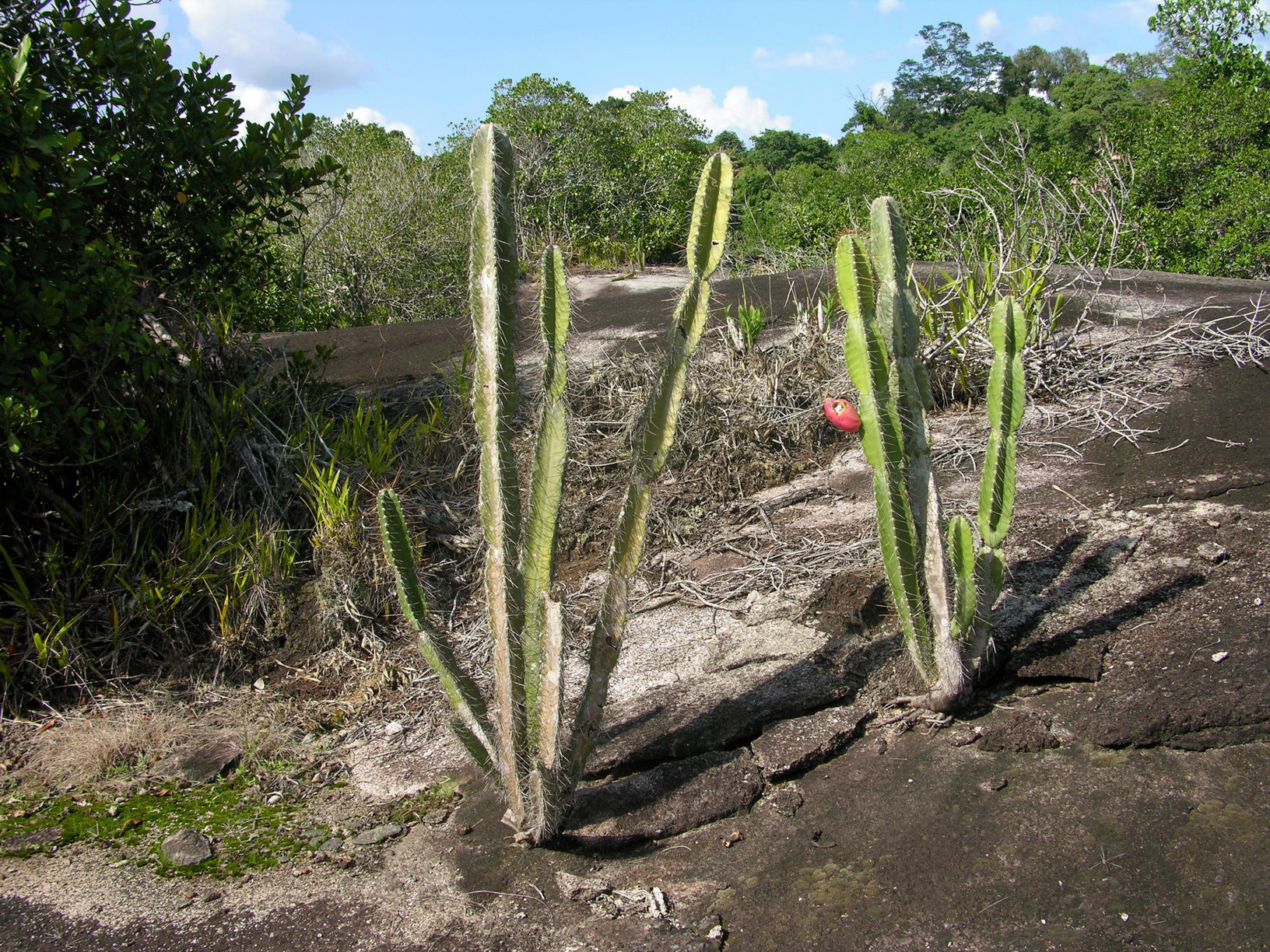
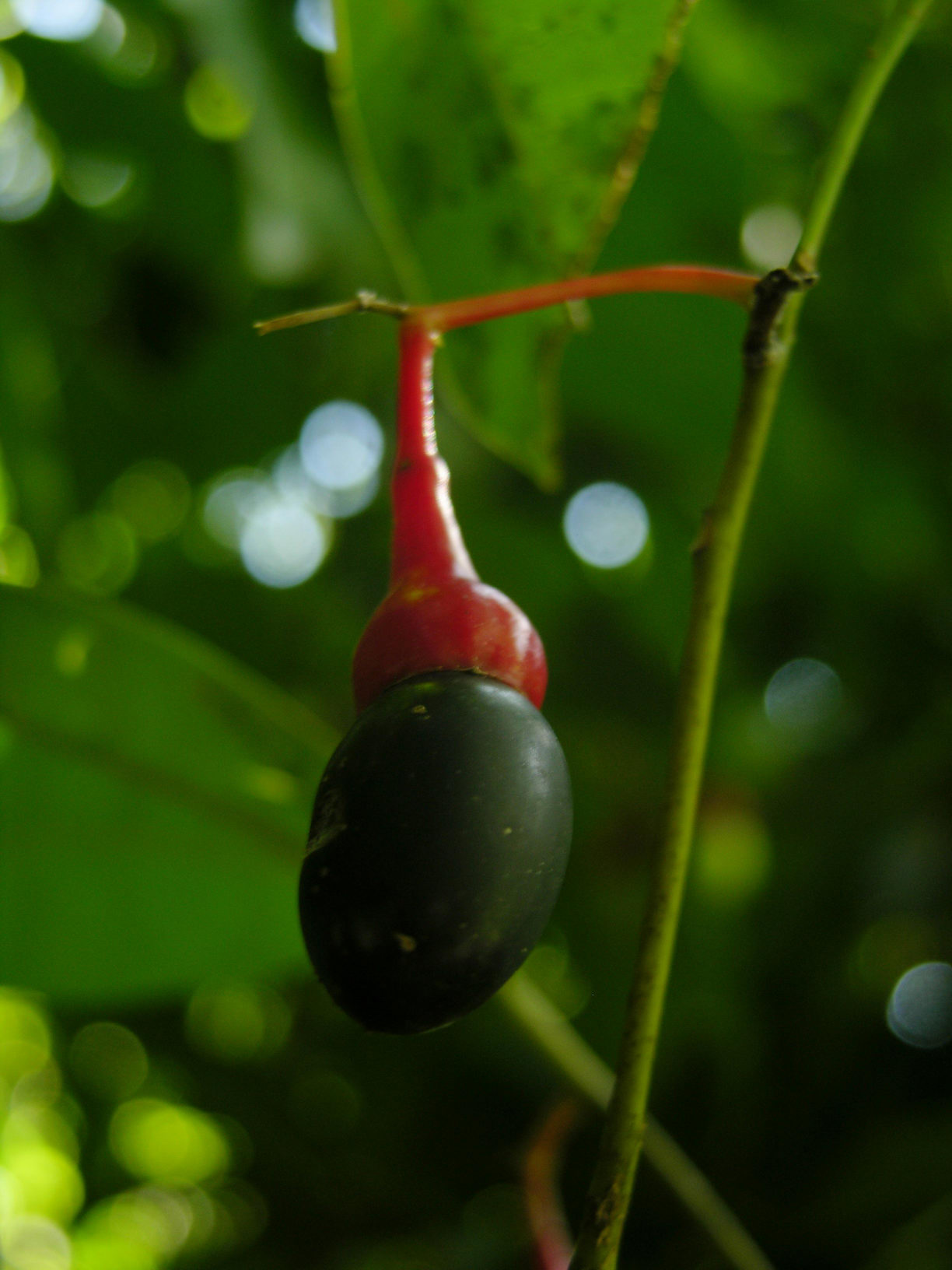
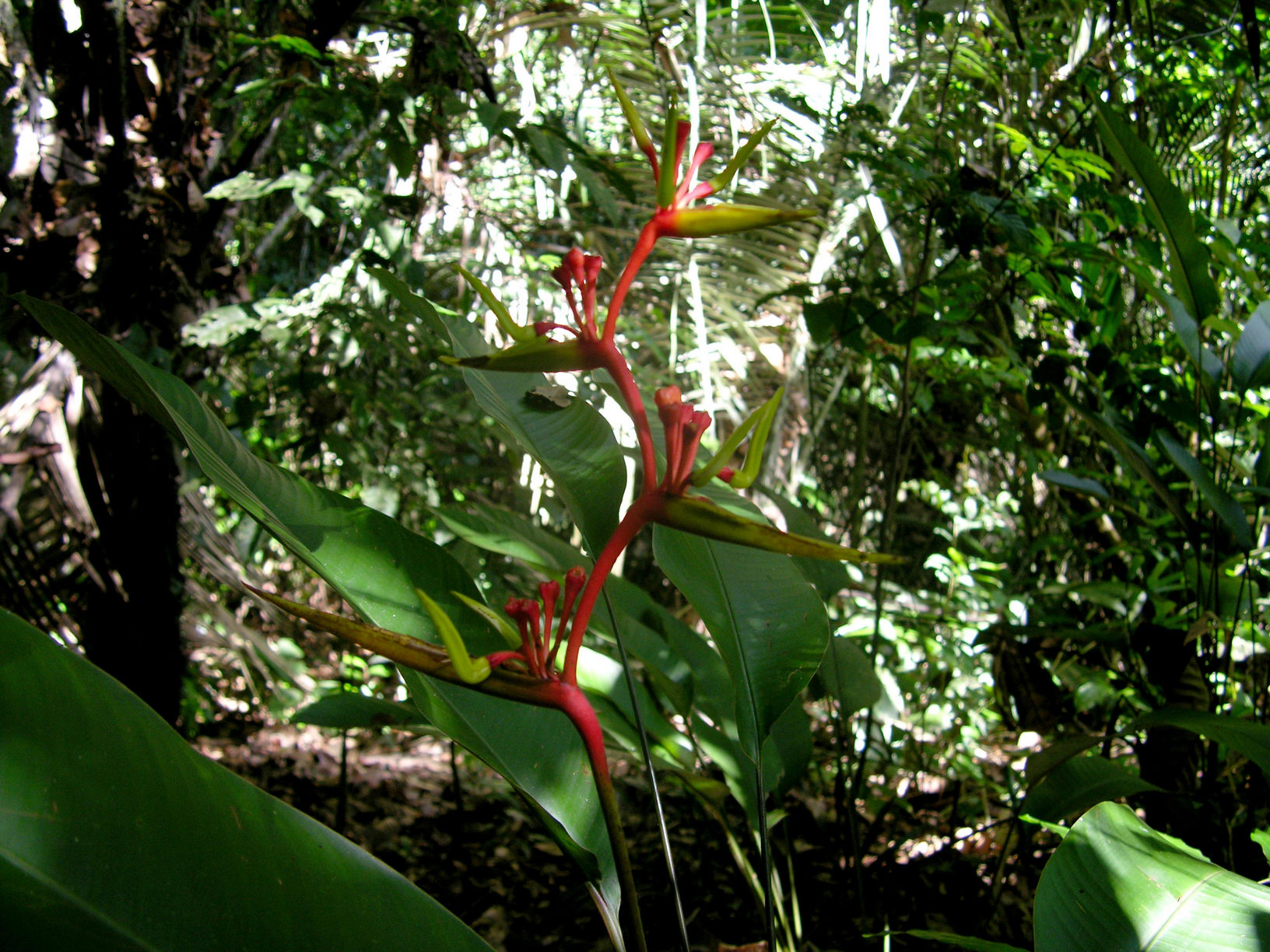
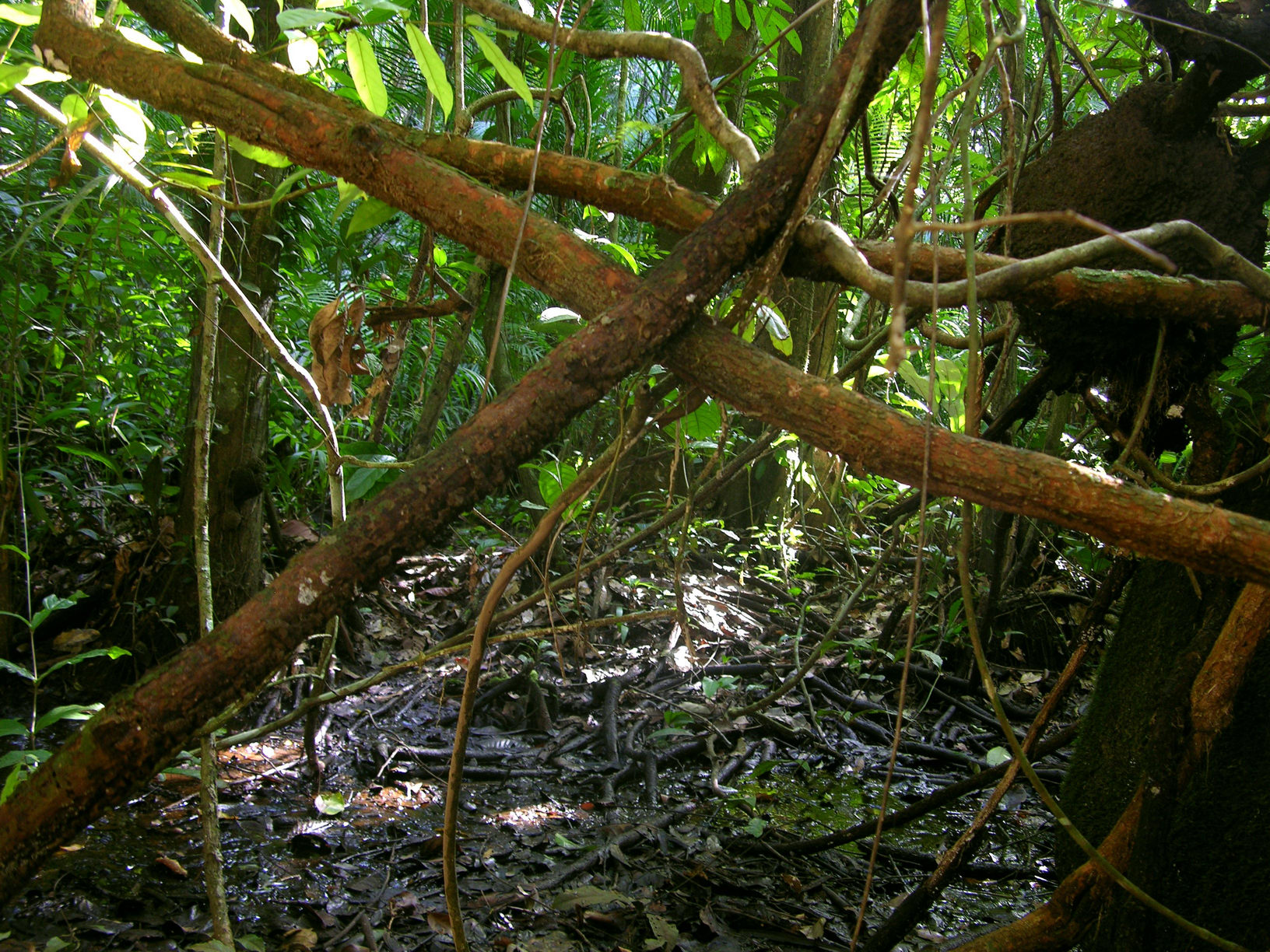
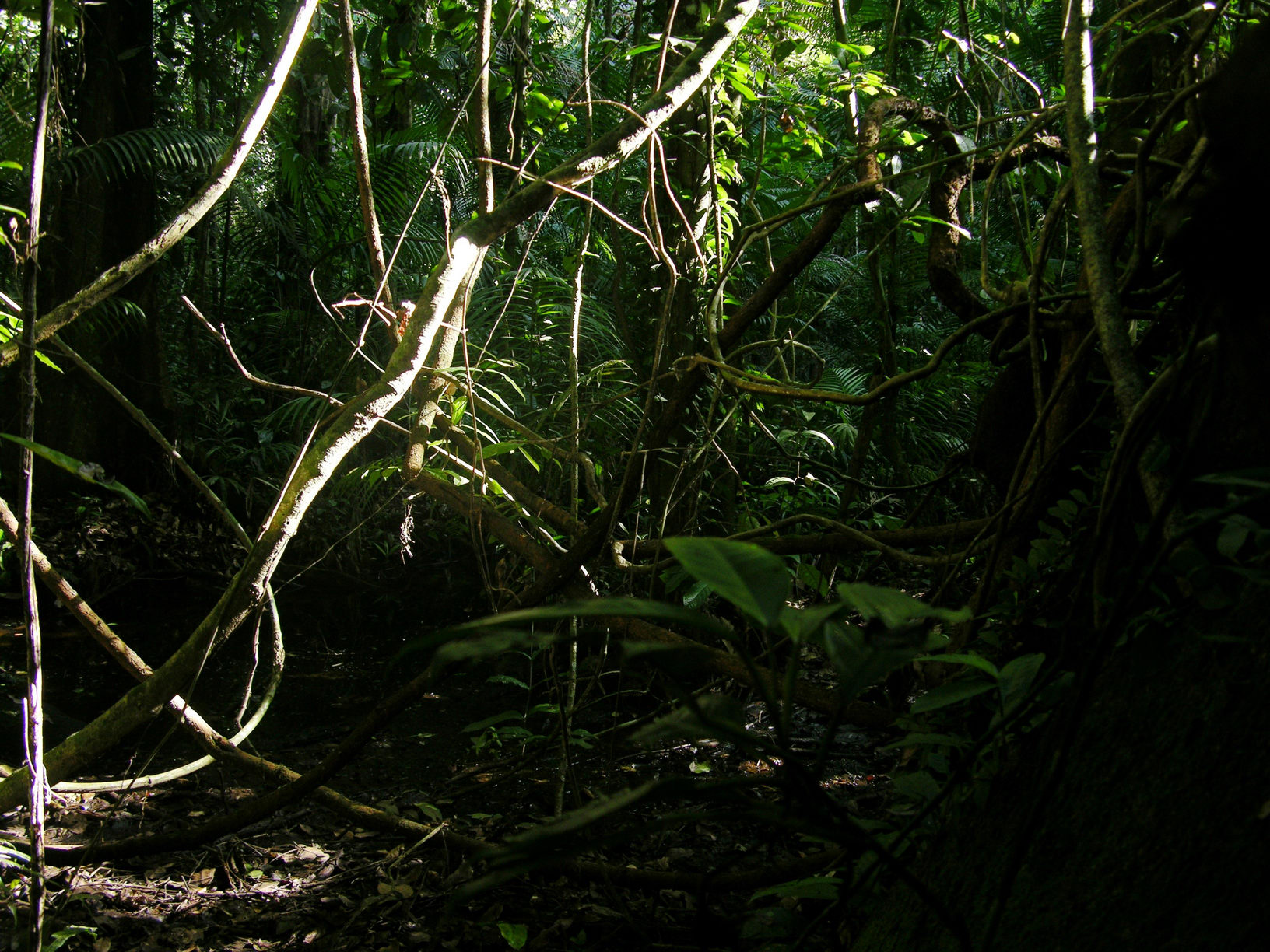
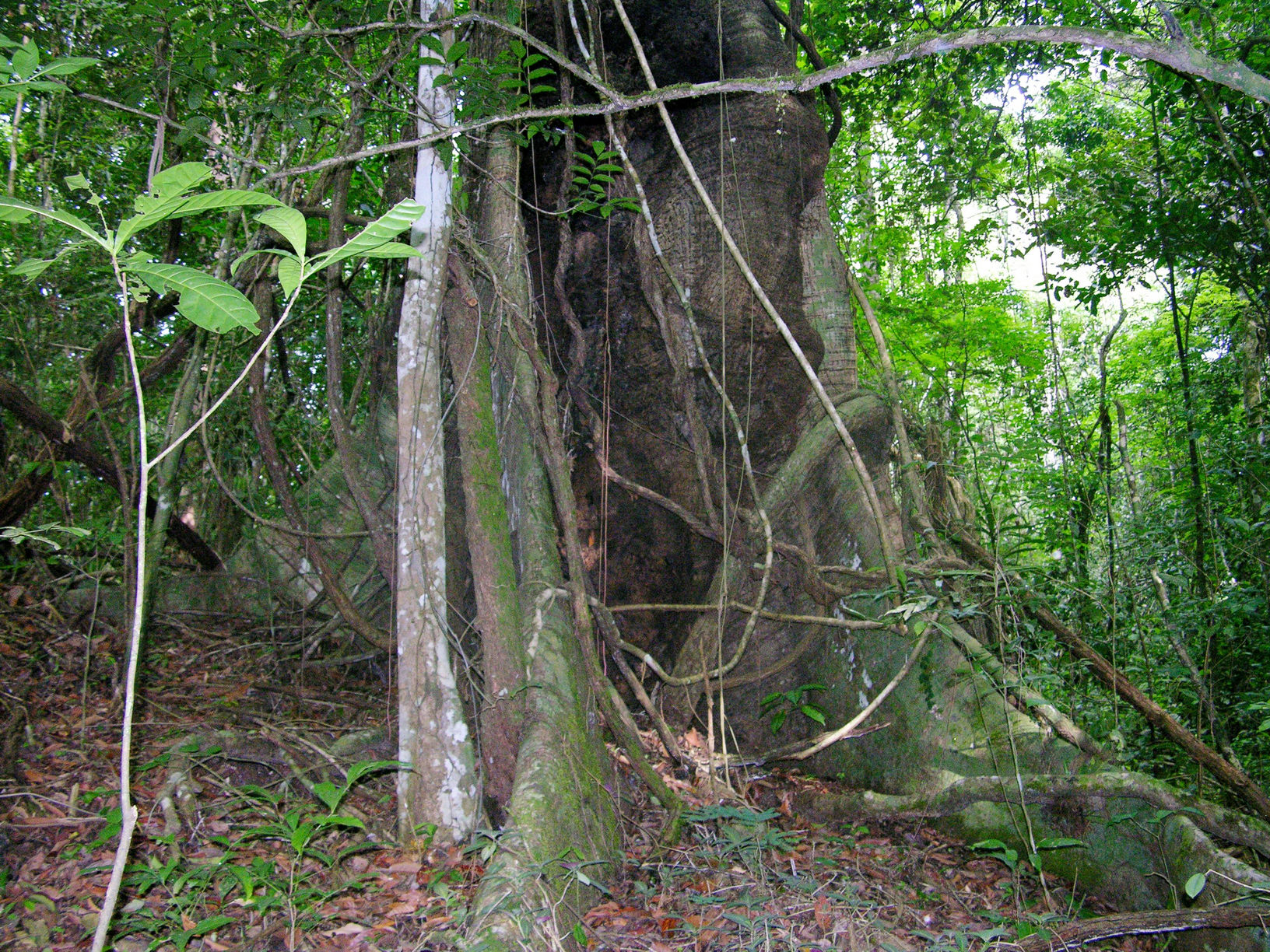
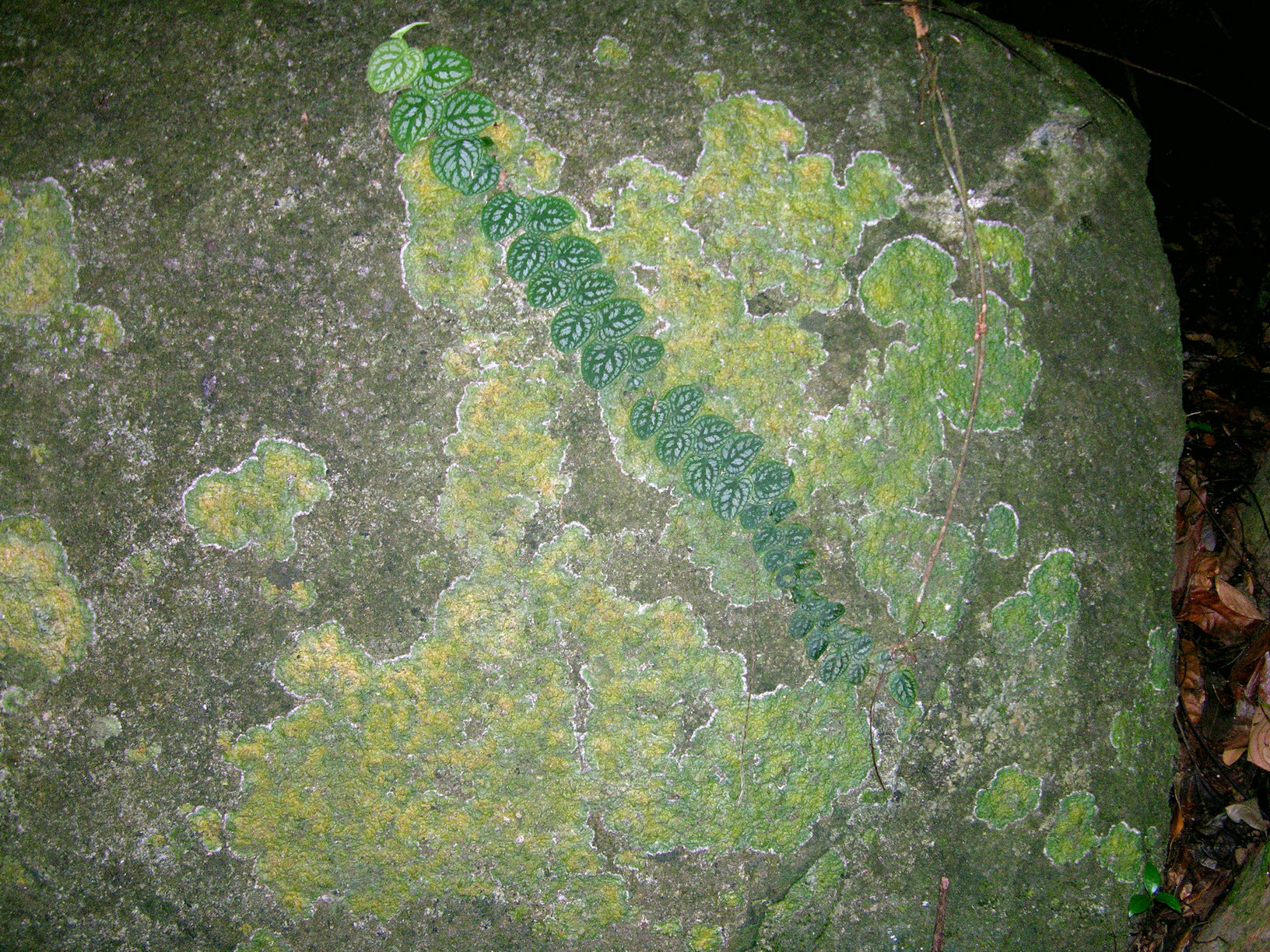
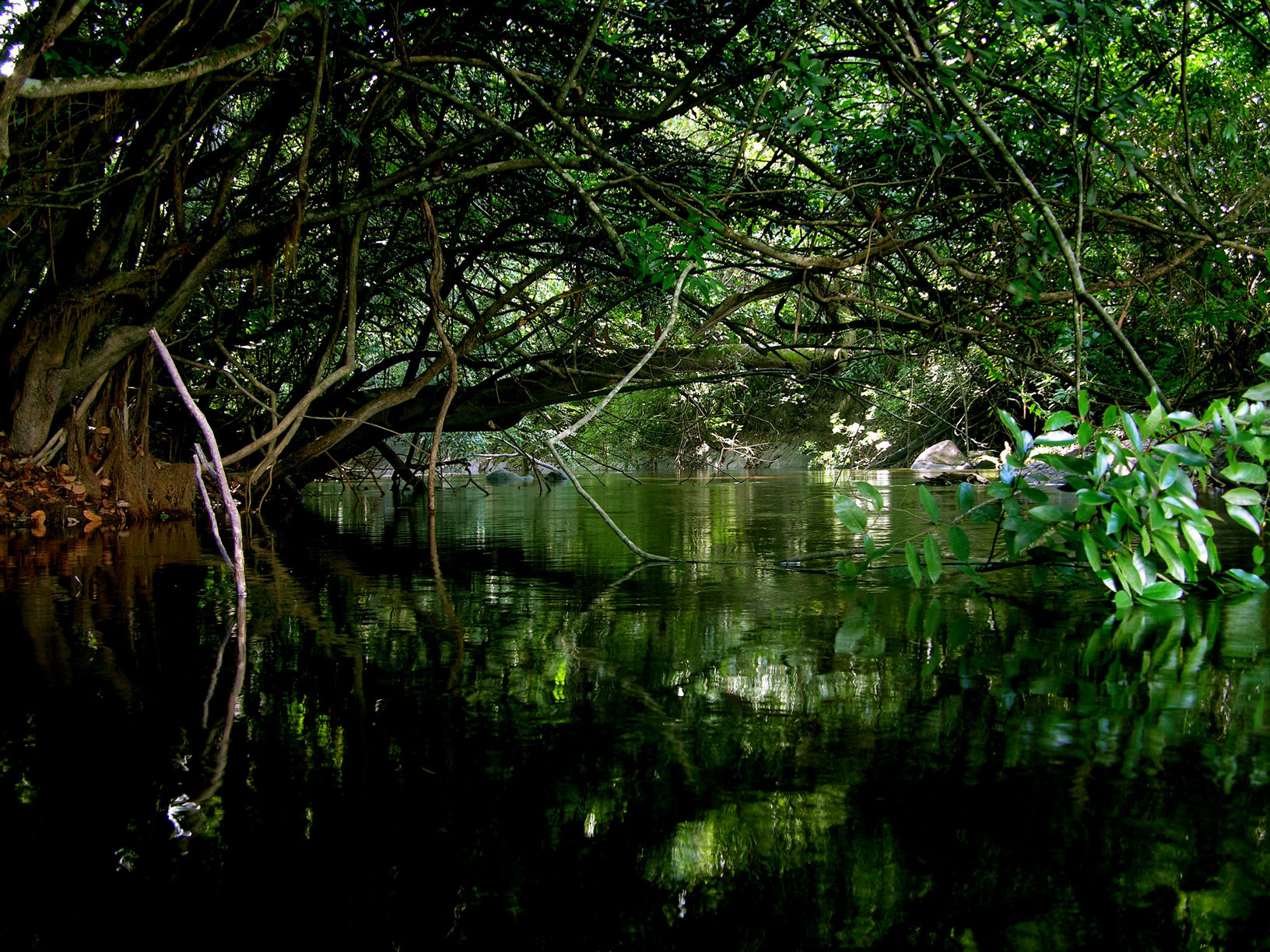
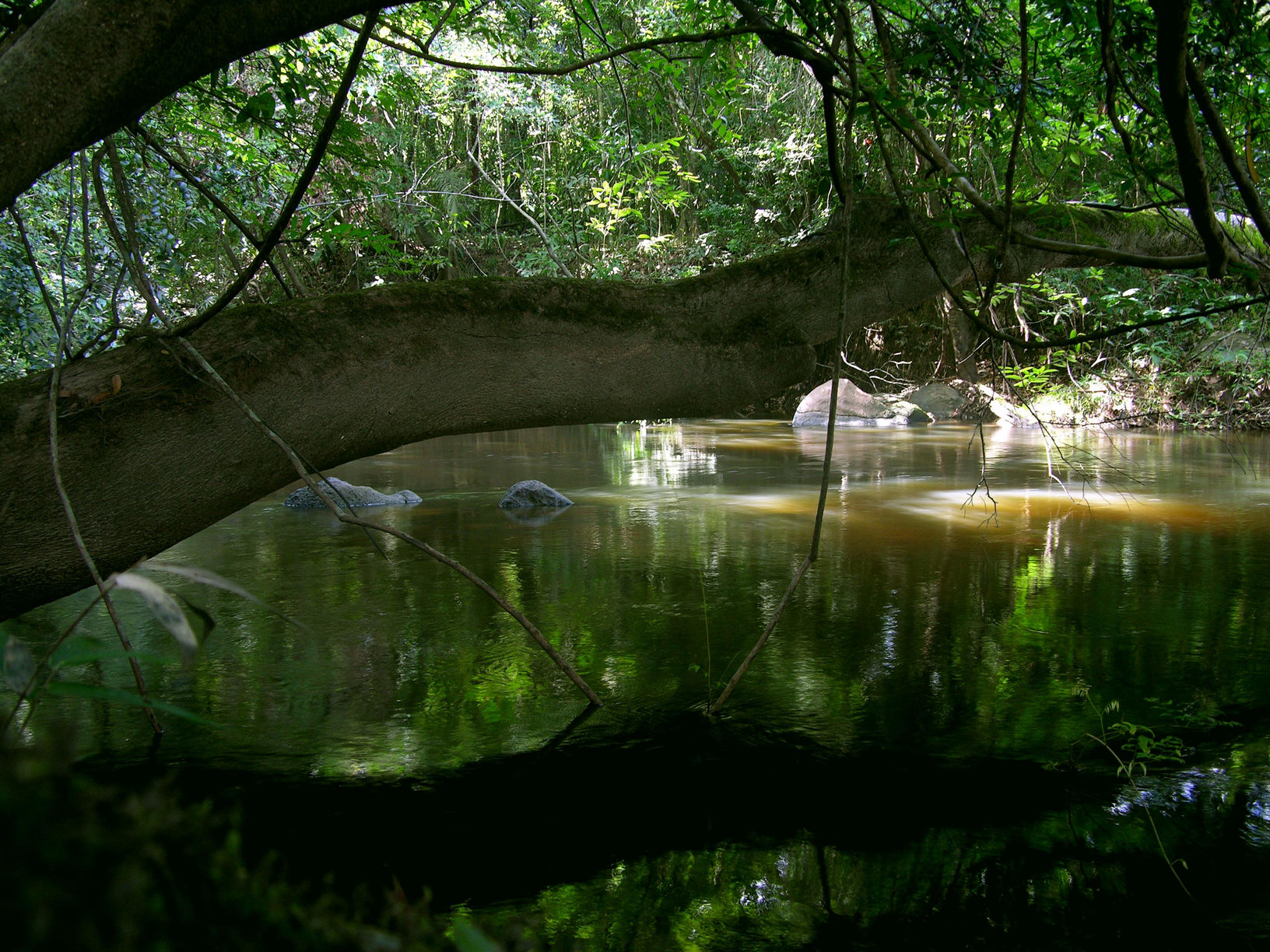
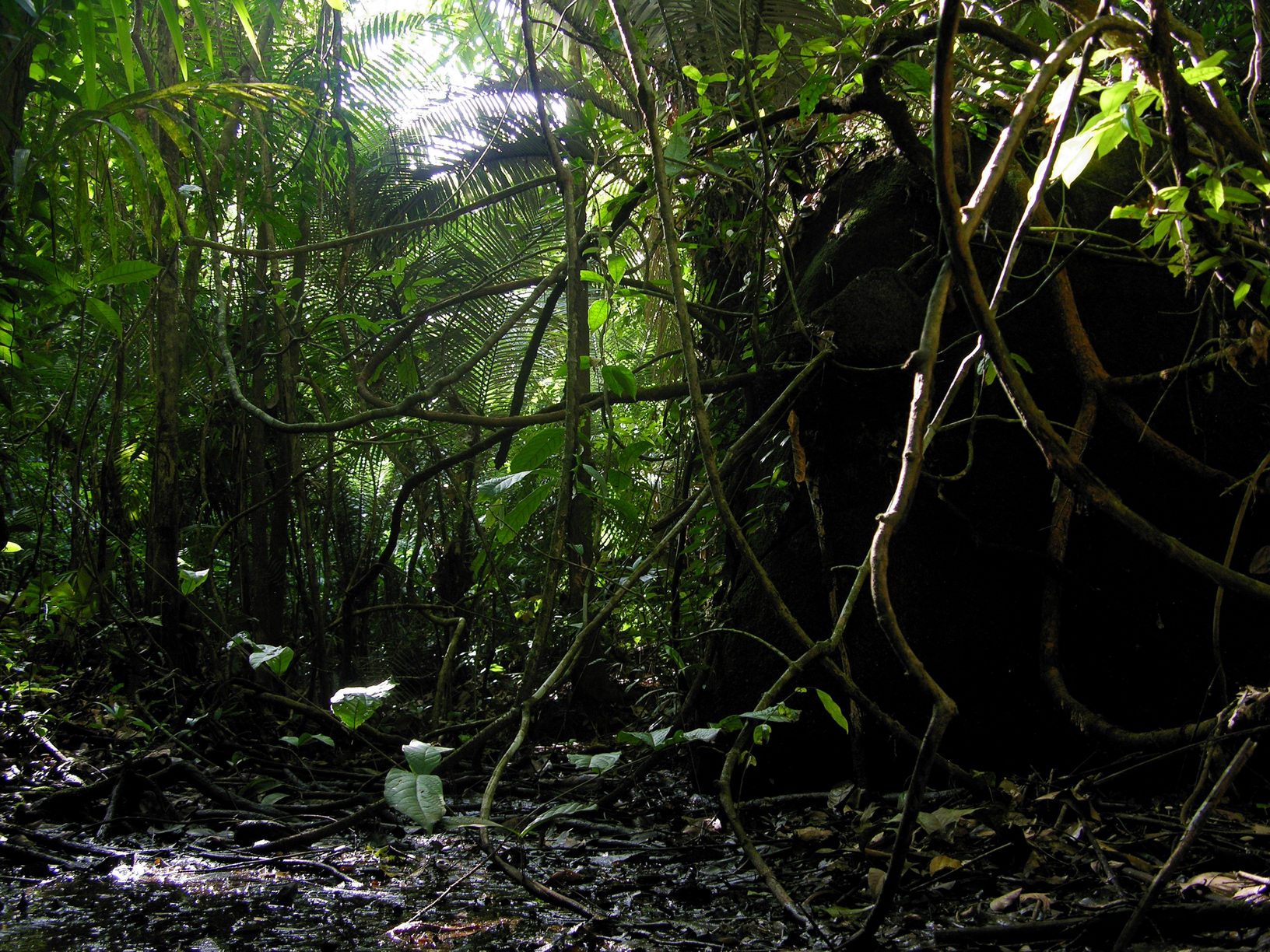
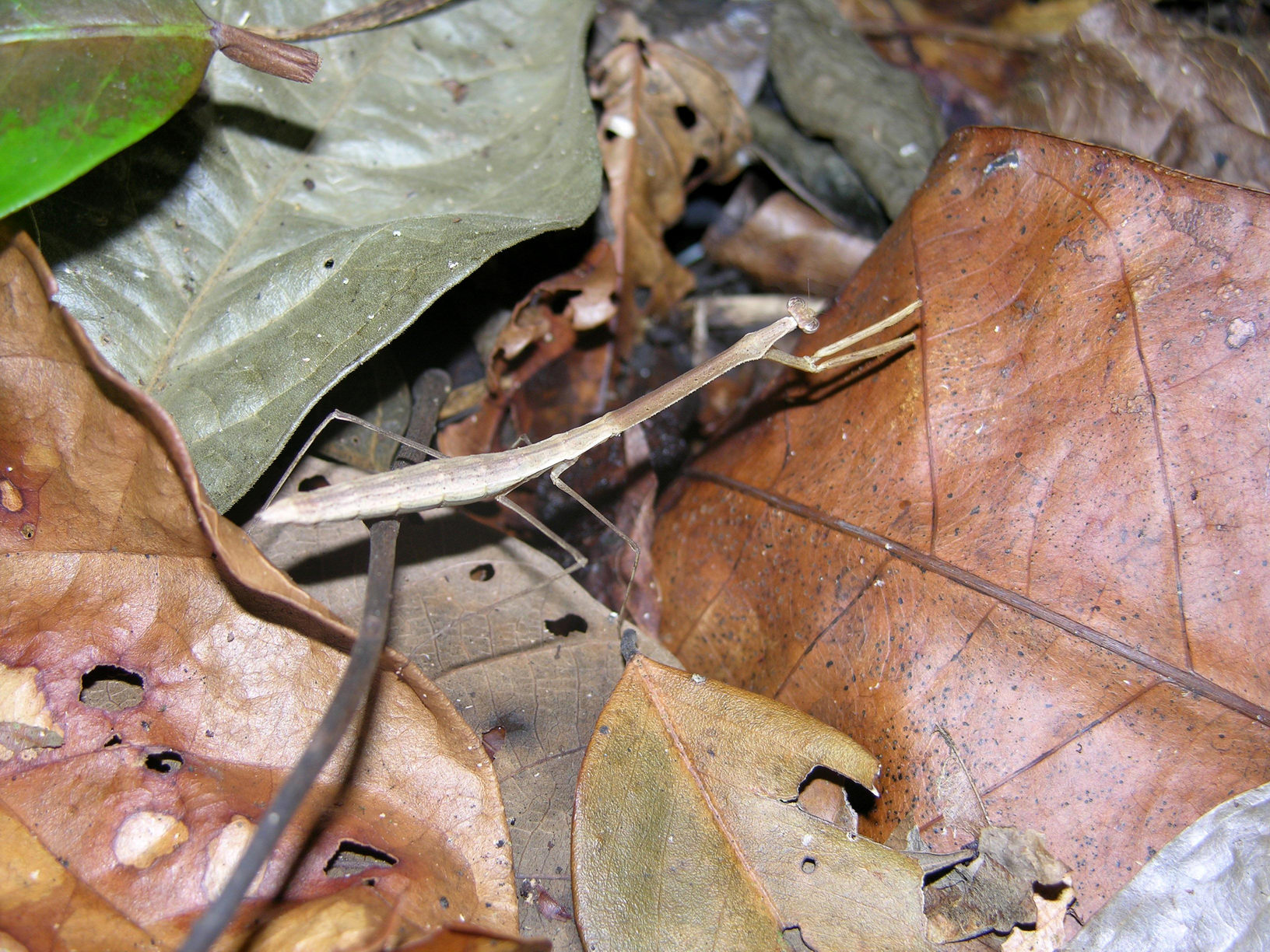
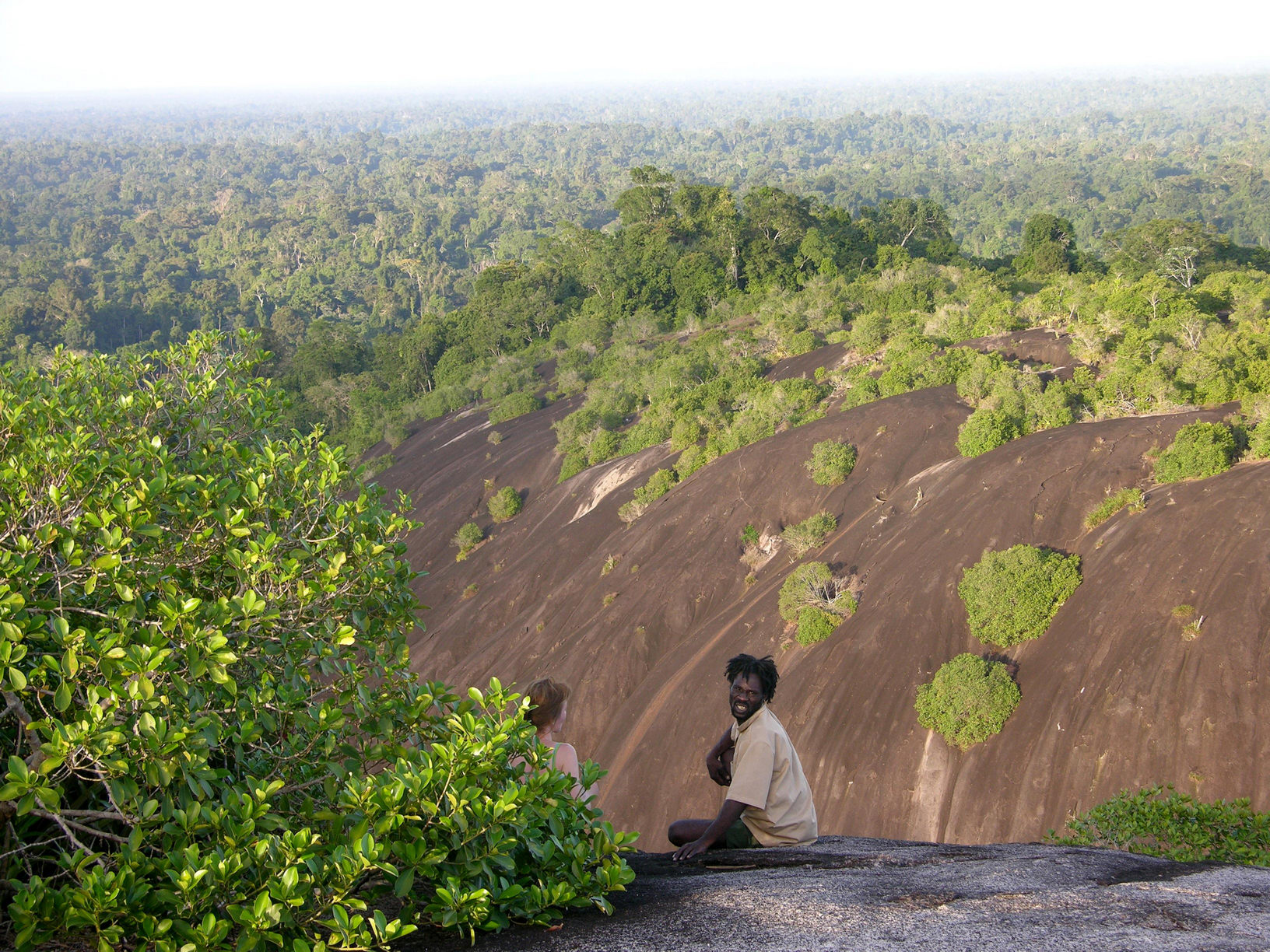
The path to the summit starts at the southern end of the mountain. The climb is steep, but the rock is very rough, so it's easy to walk on. Hot, of course. Afternoon heat and 240 metres of climbing.
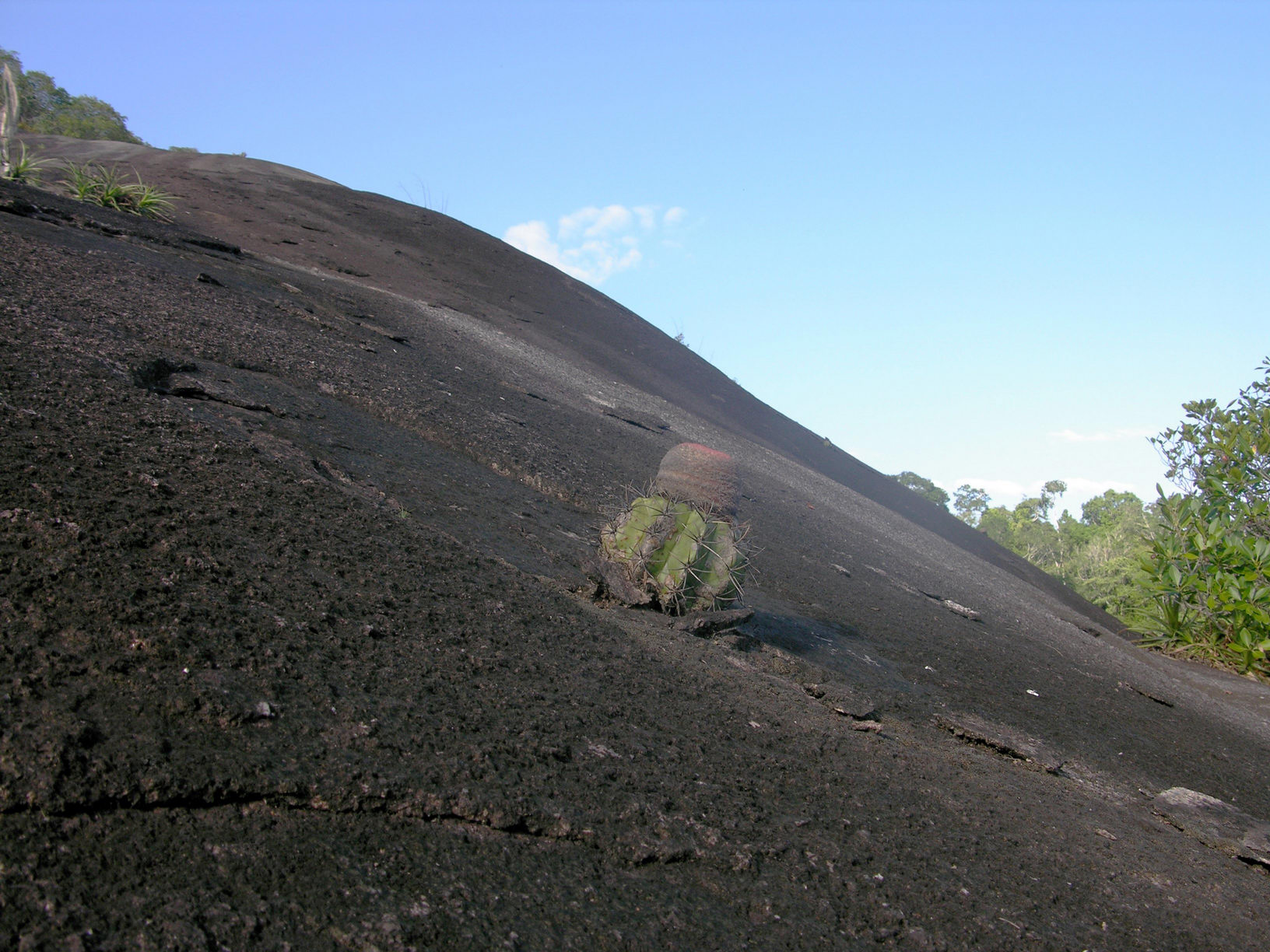
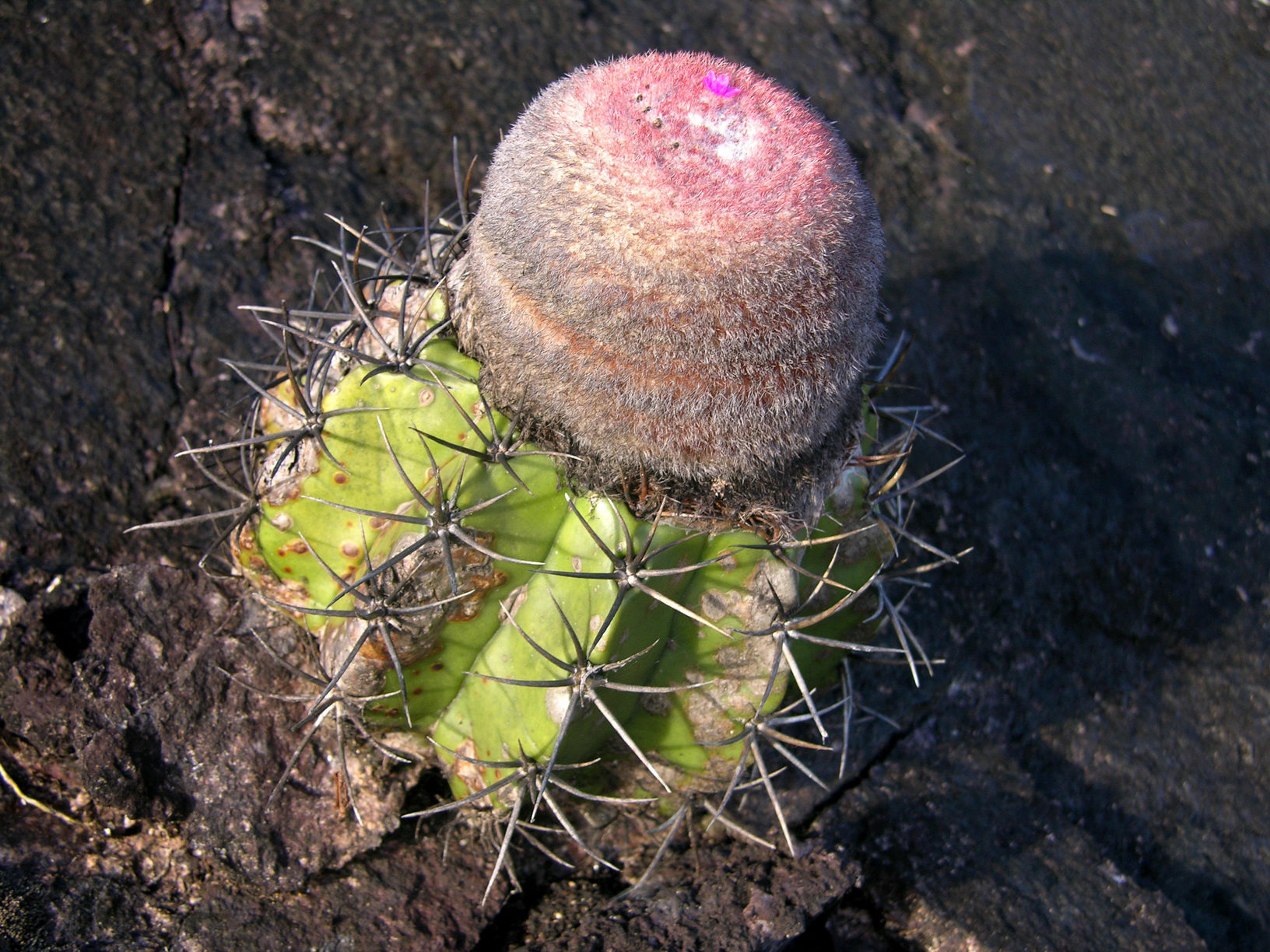
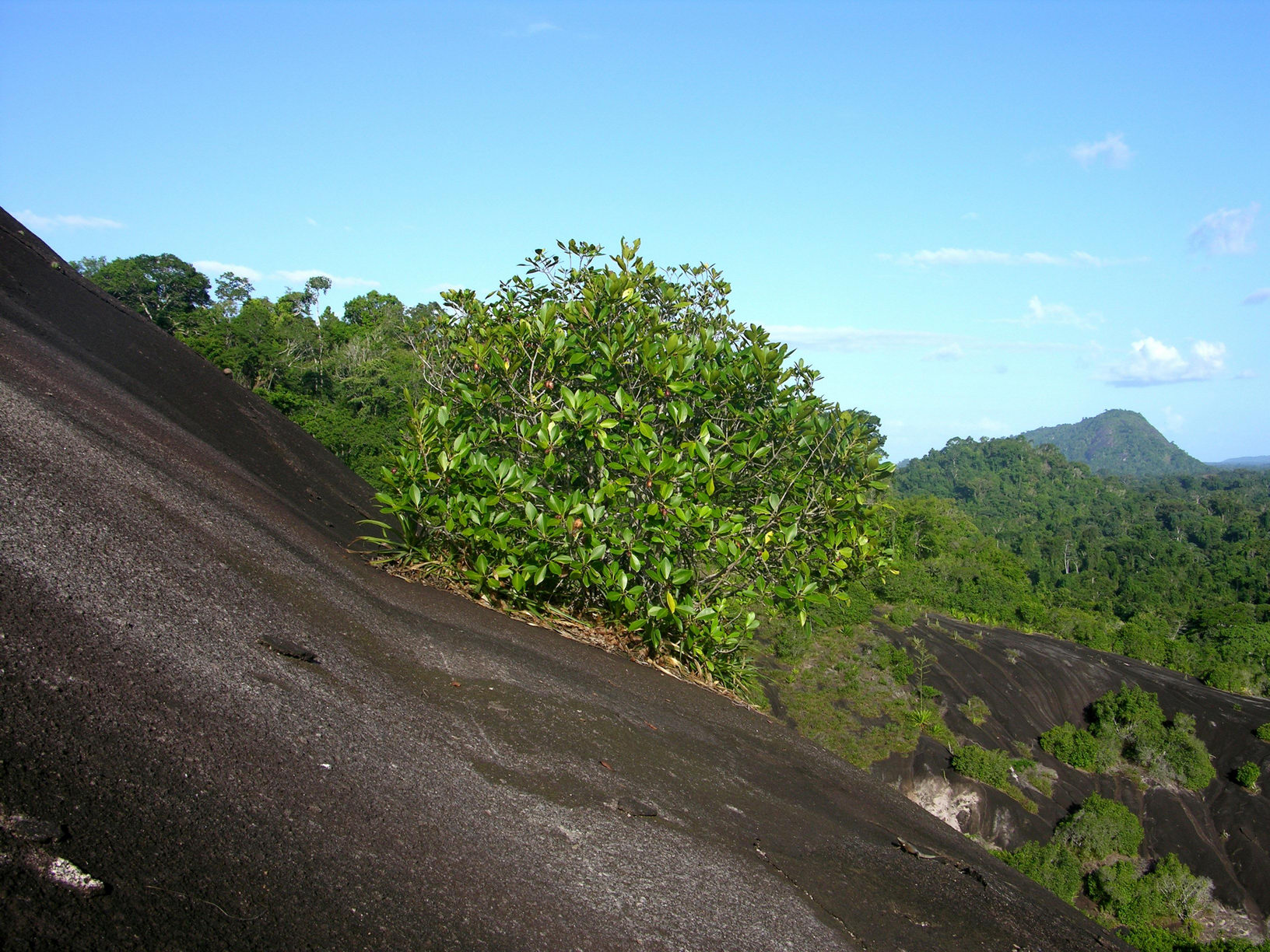
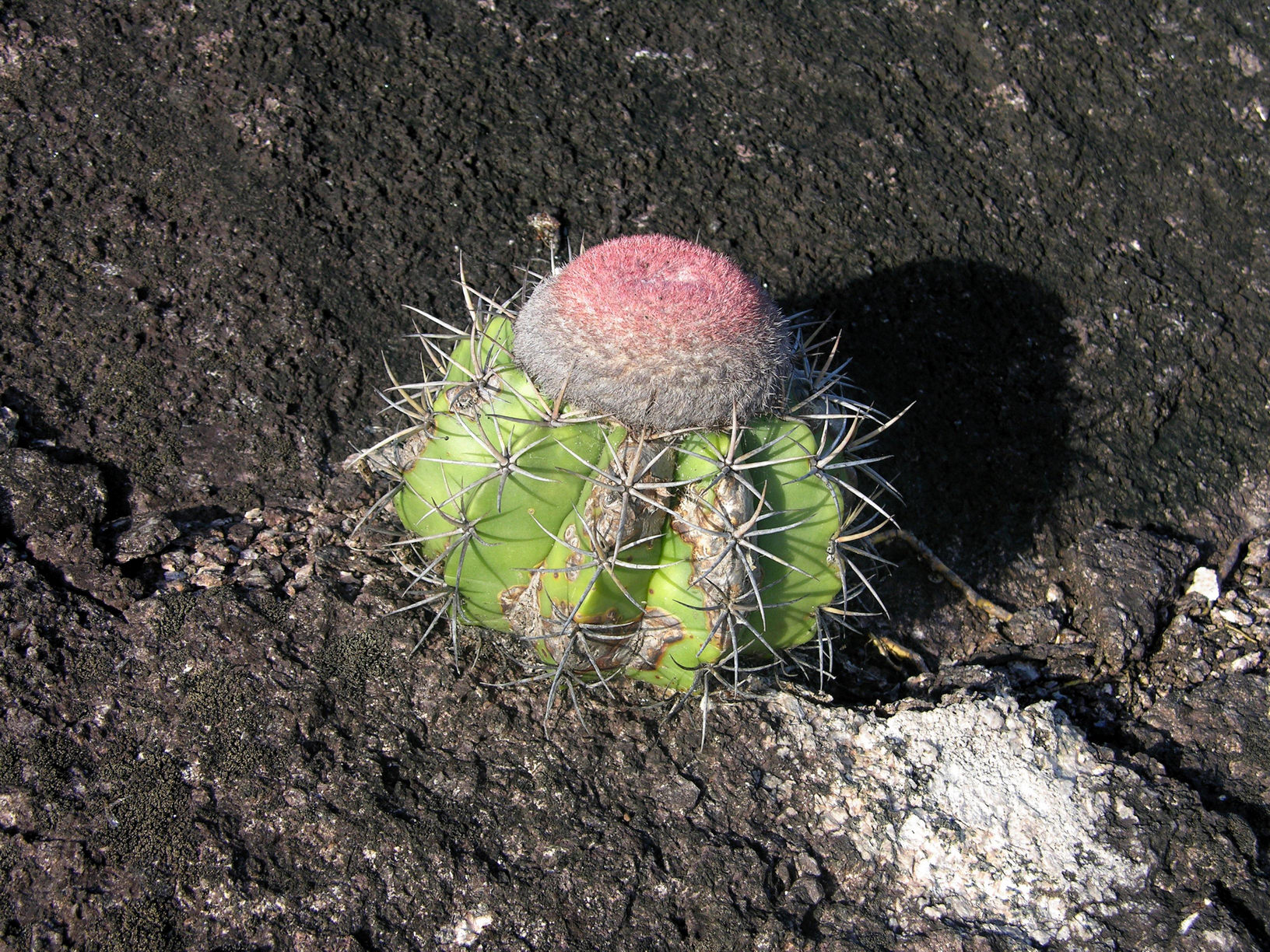
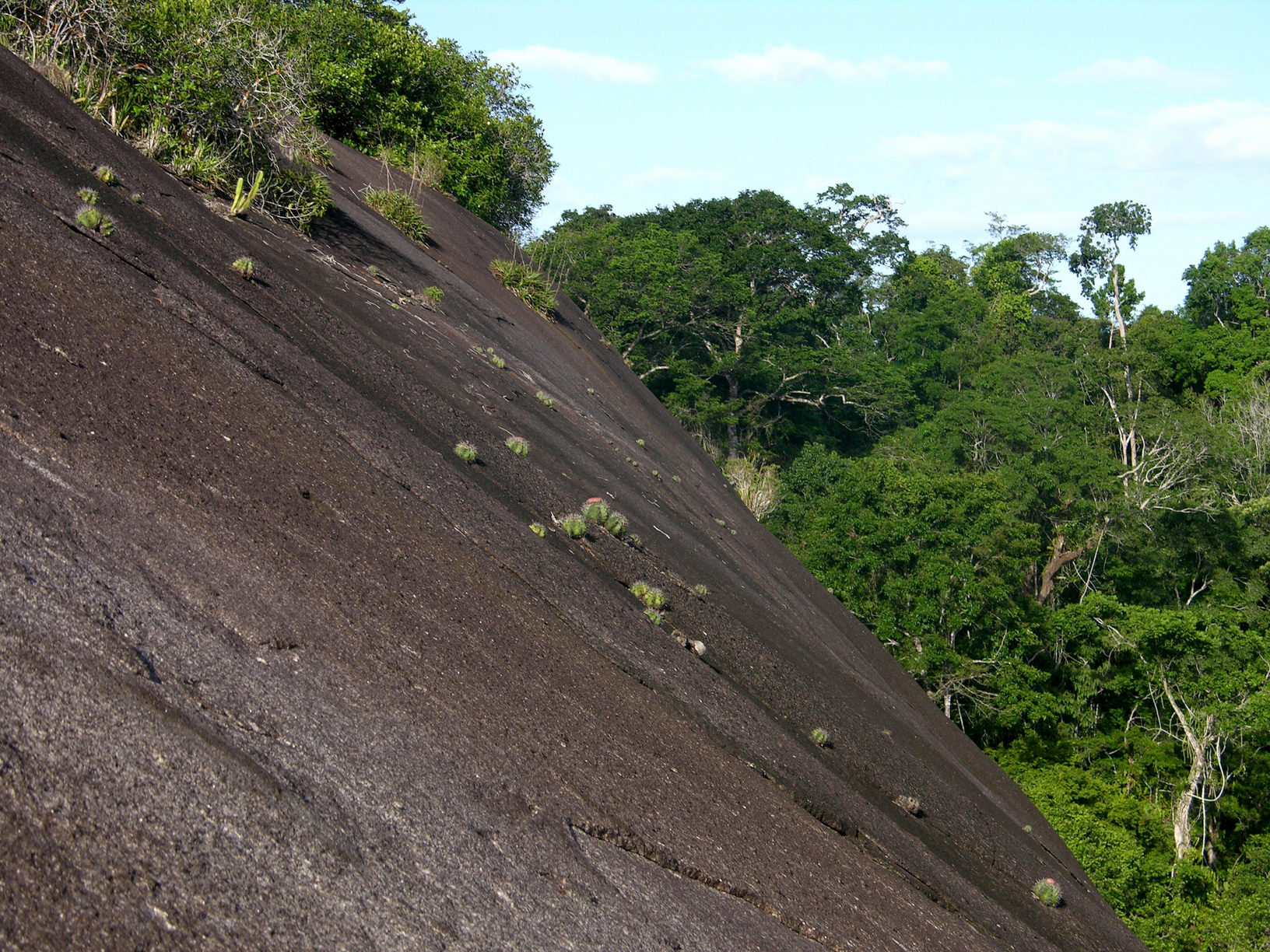
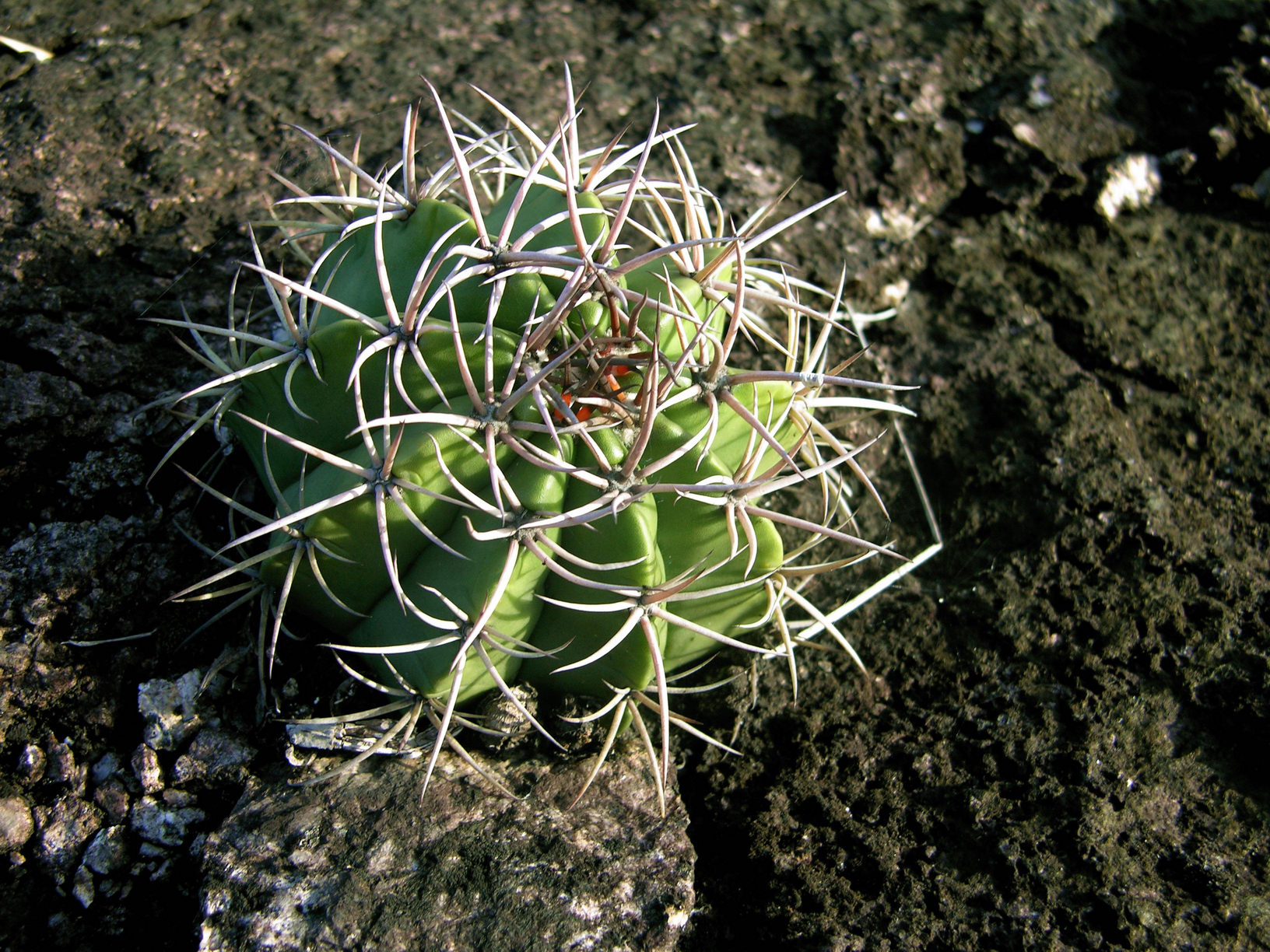
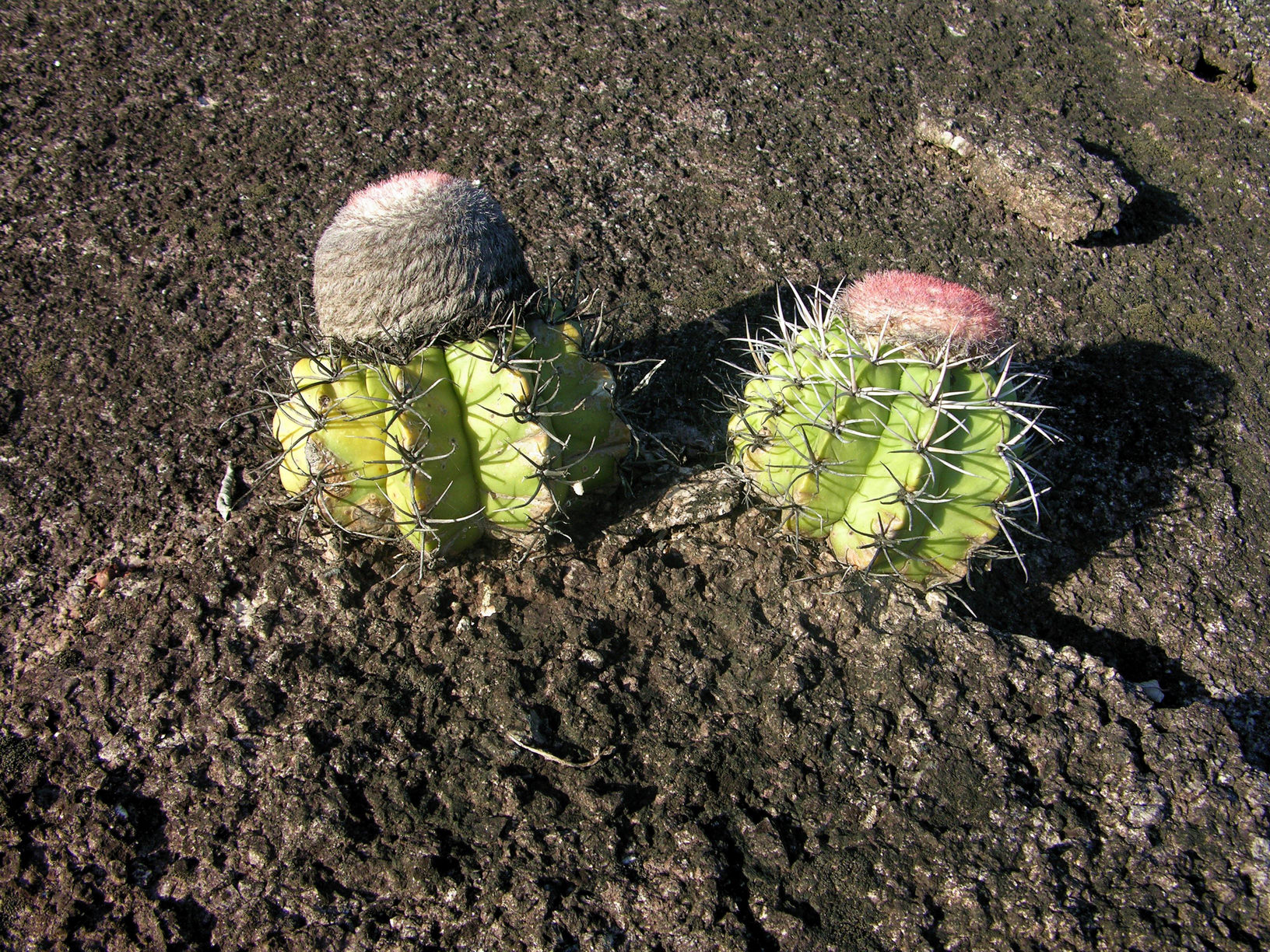
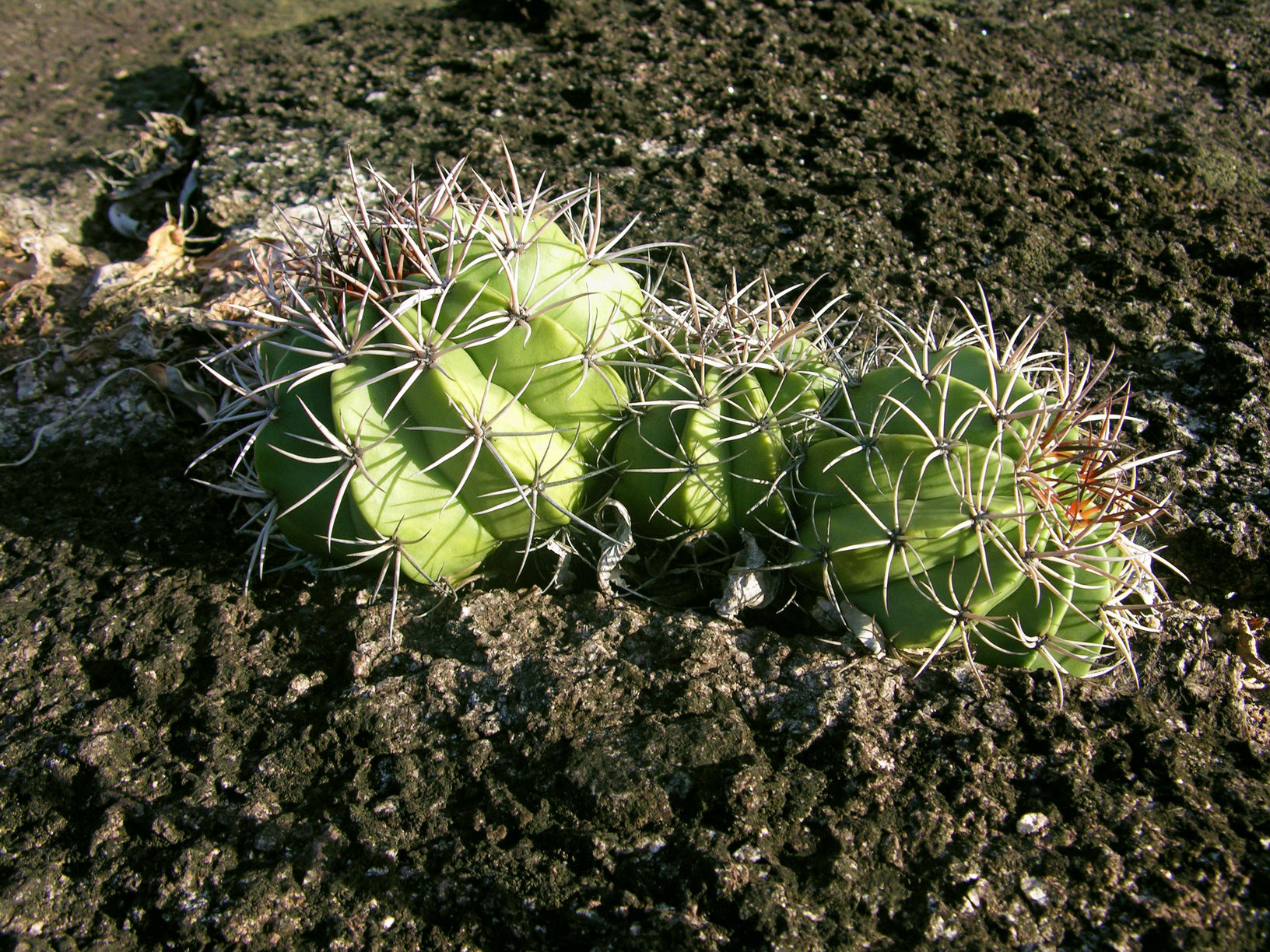
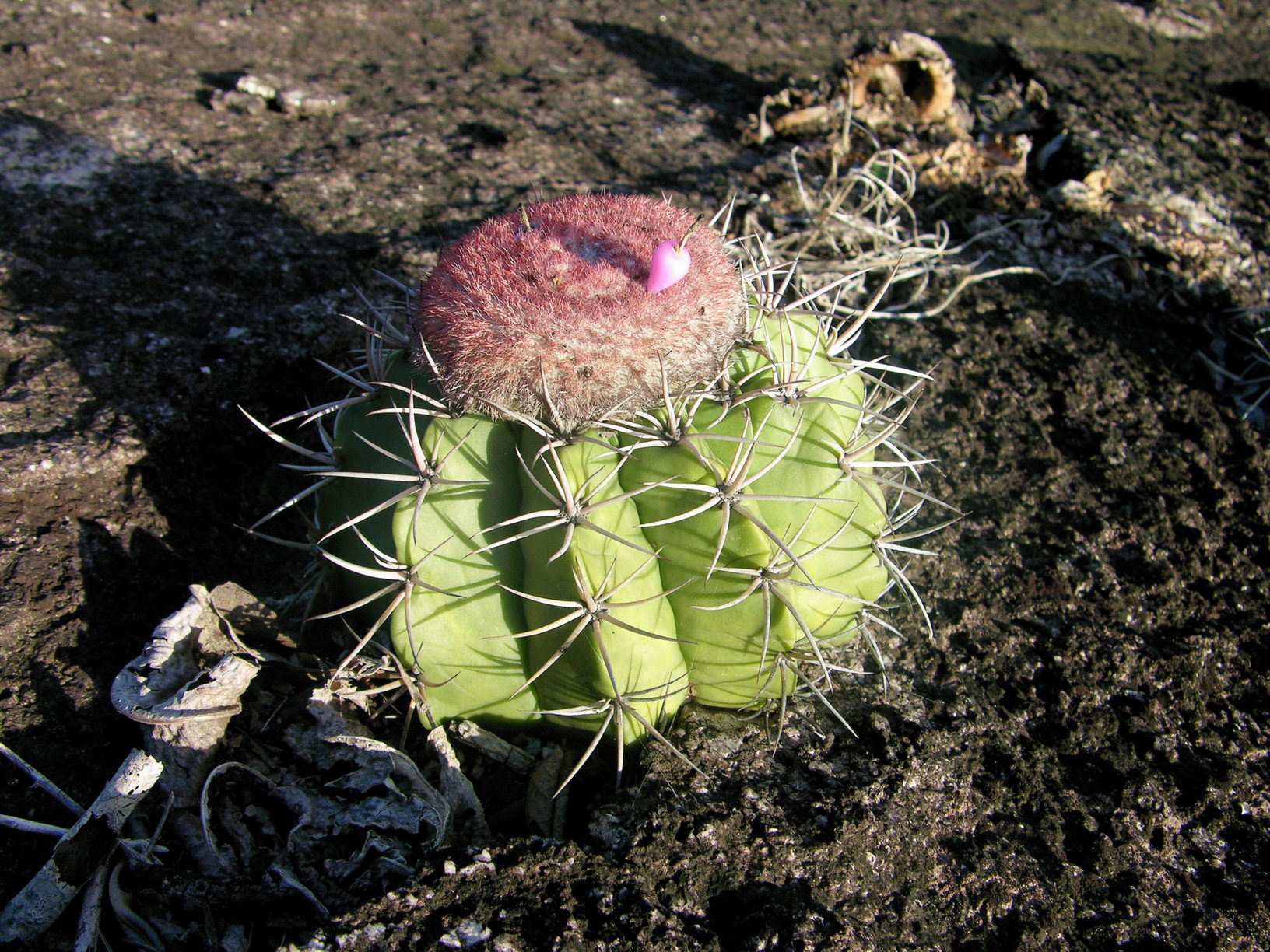
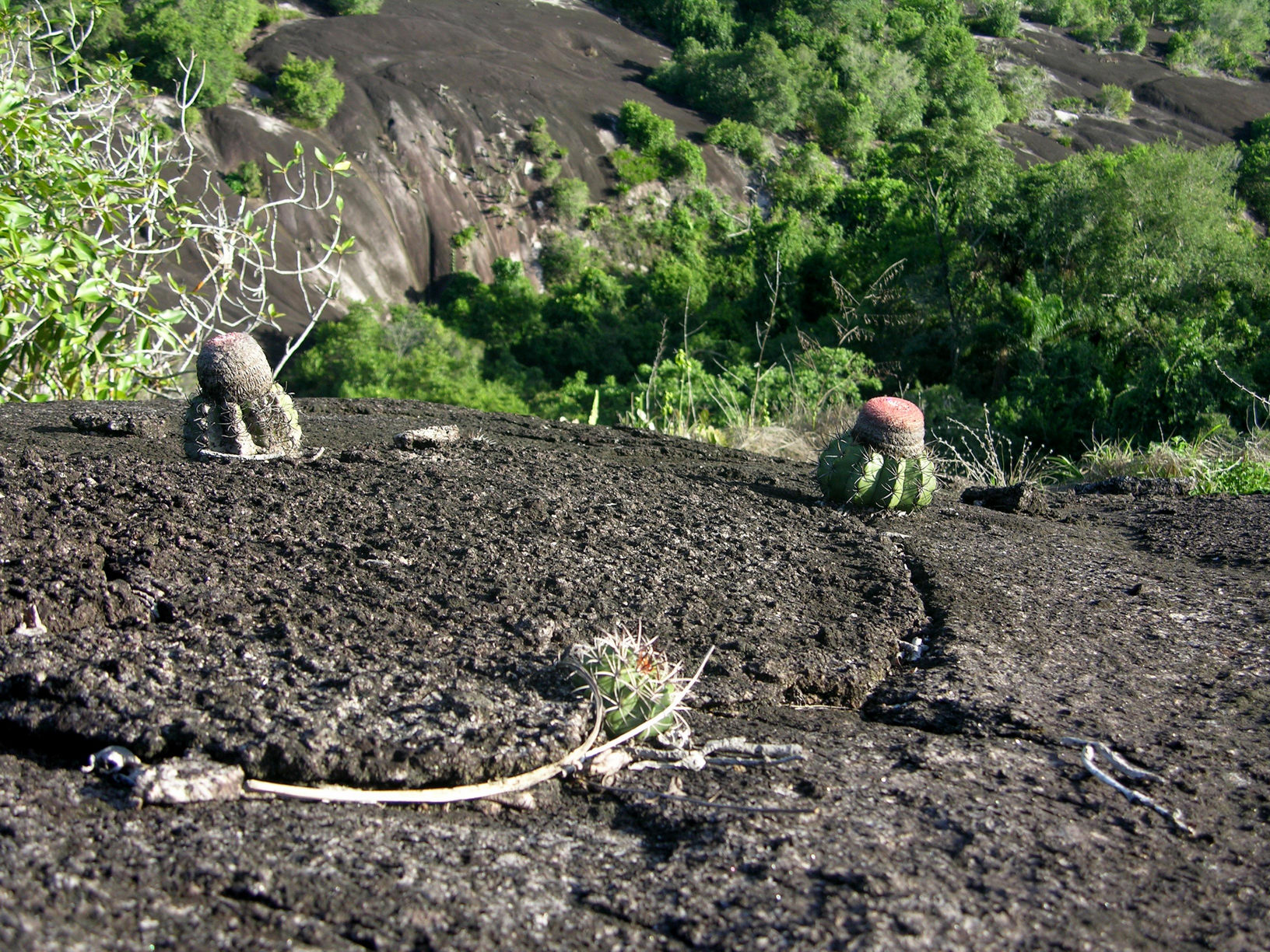
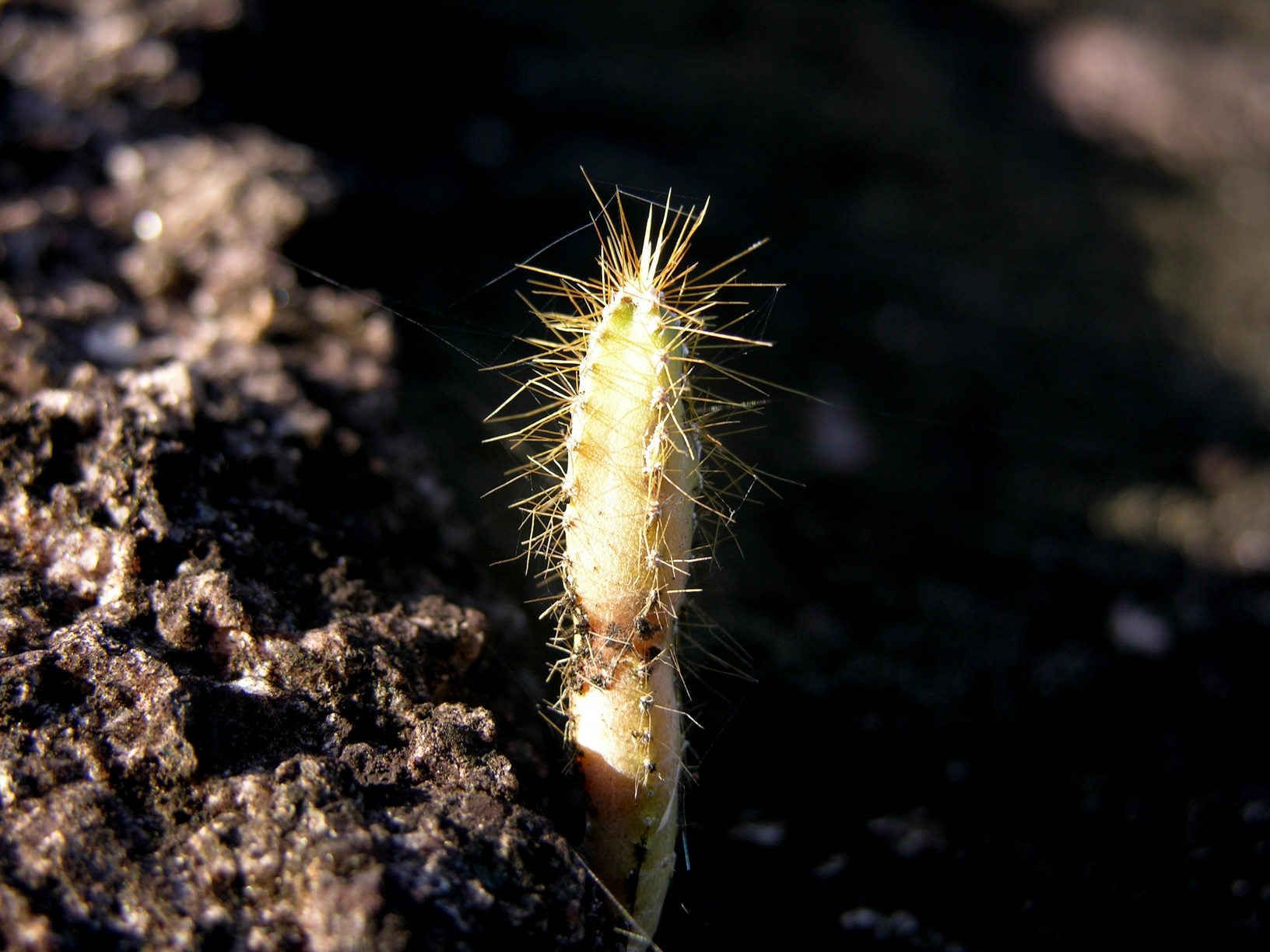
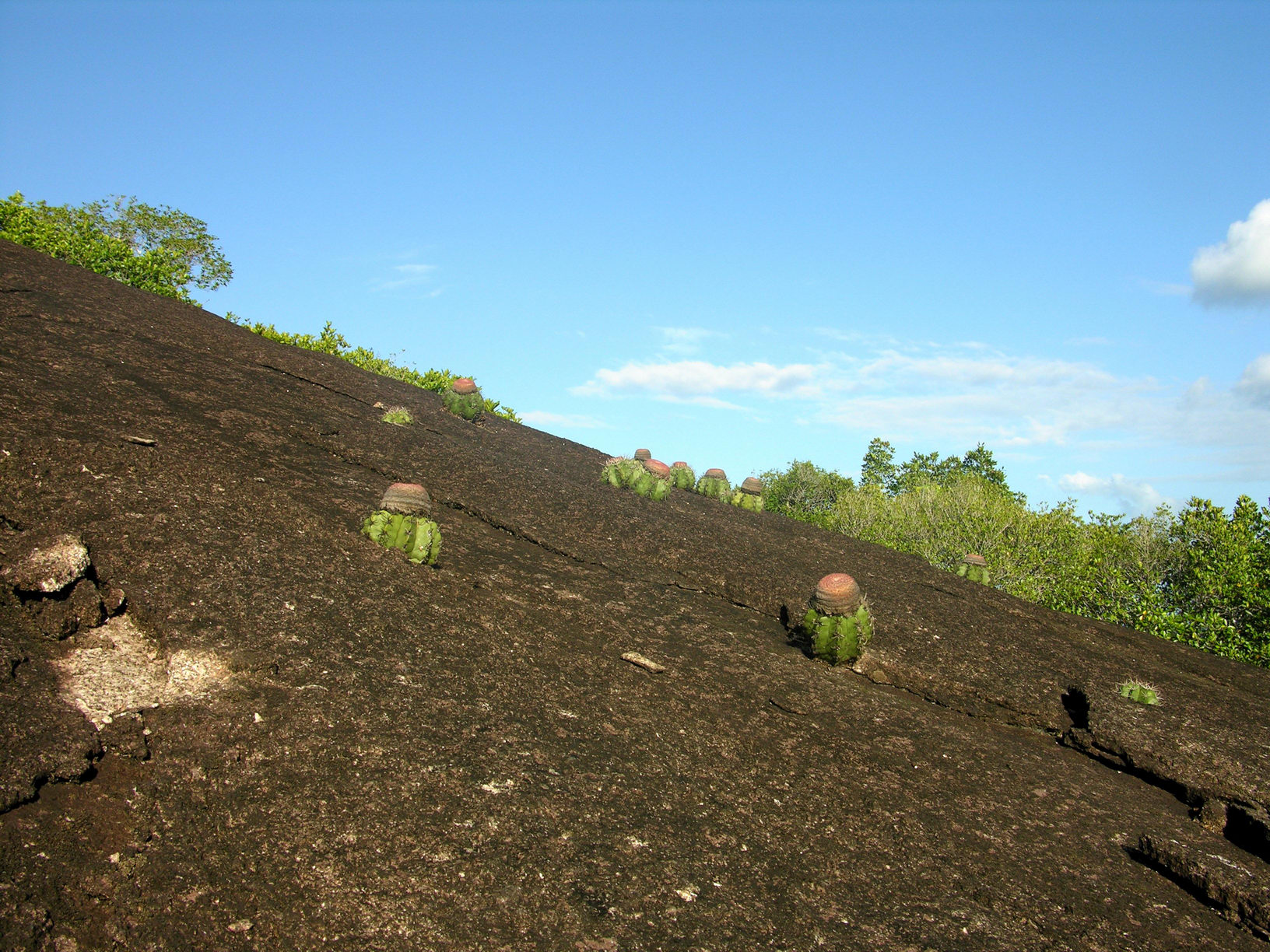
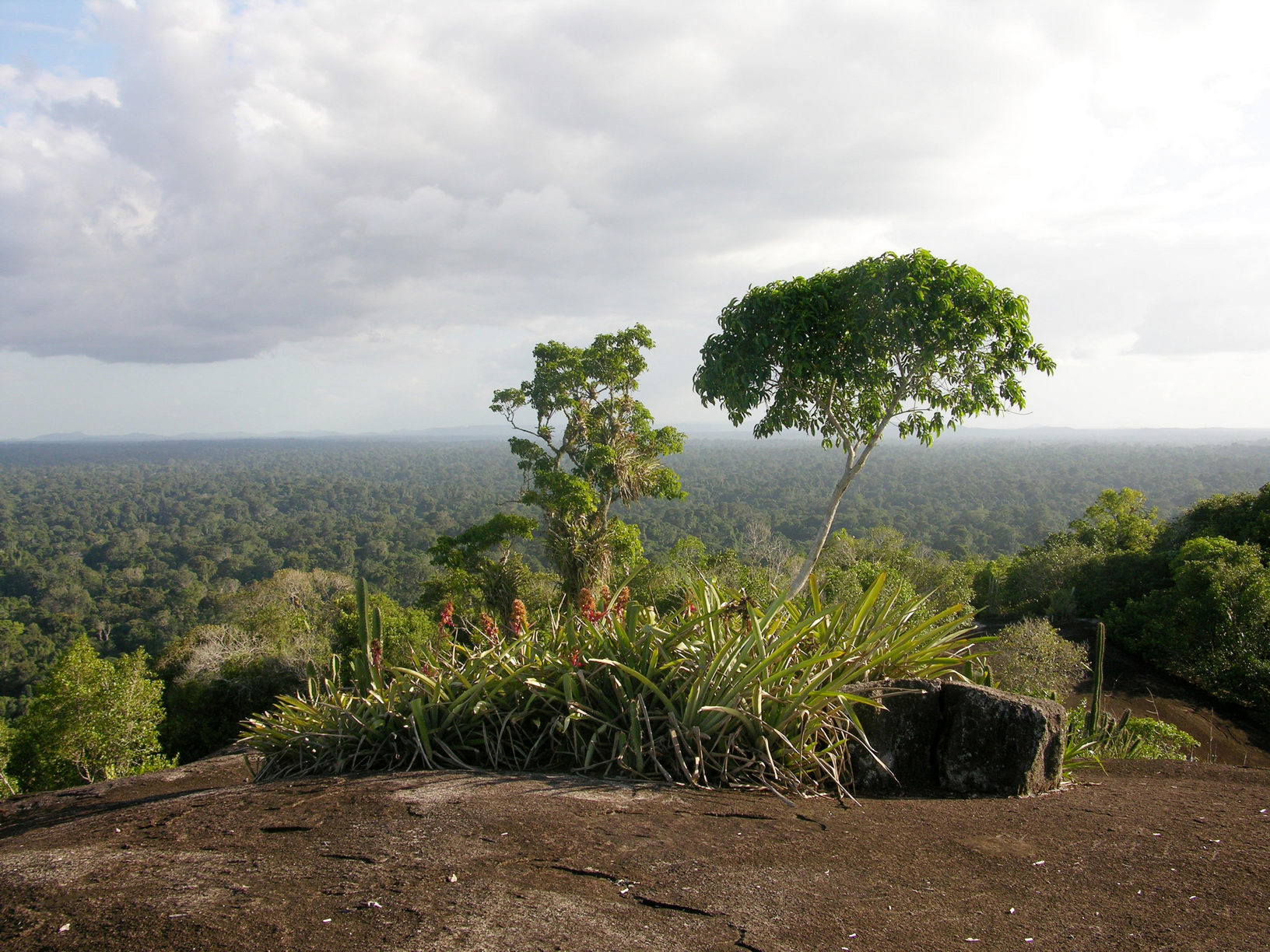
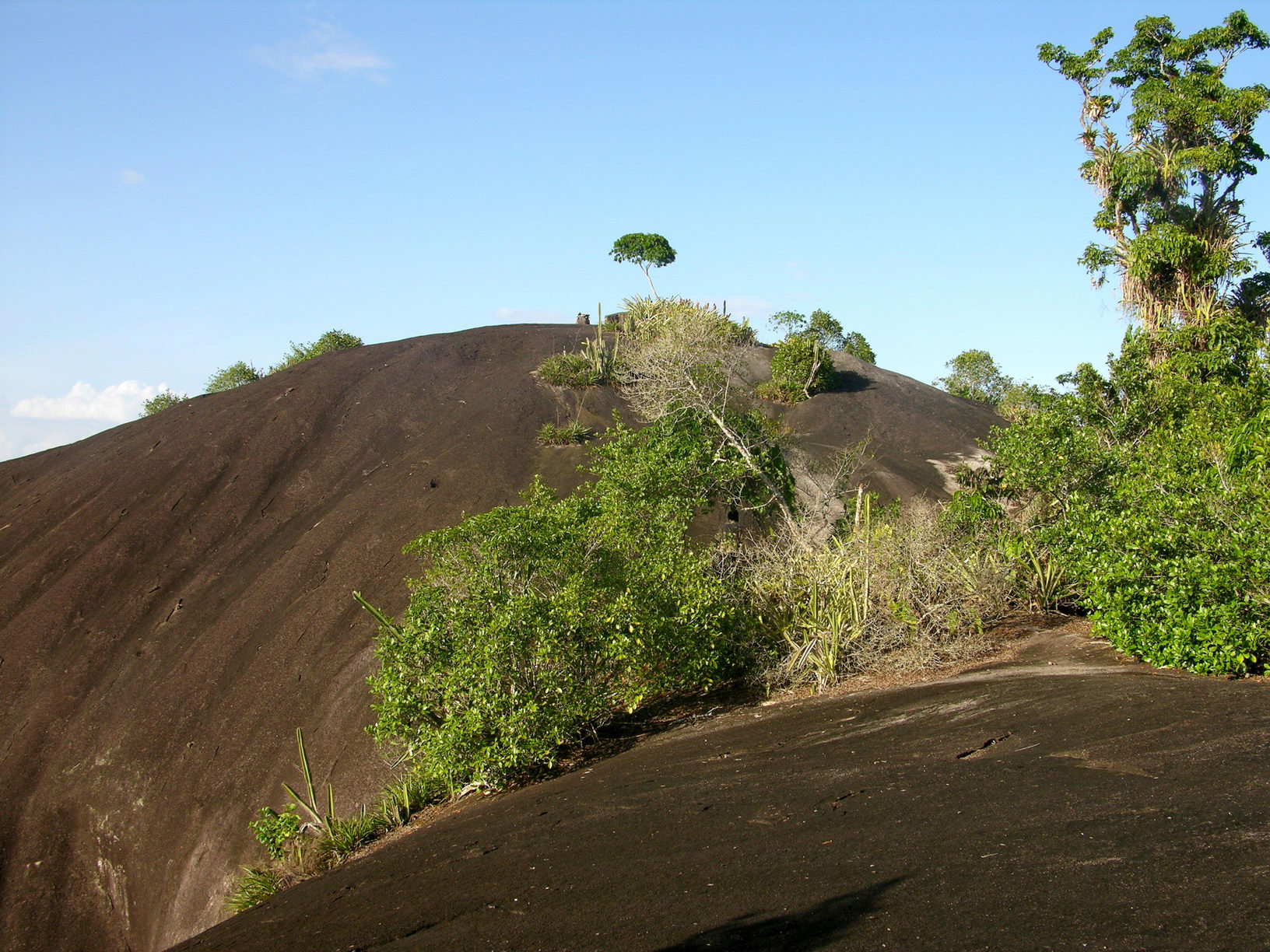
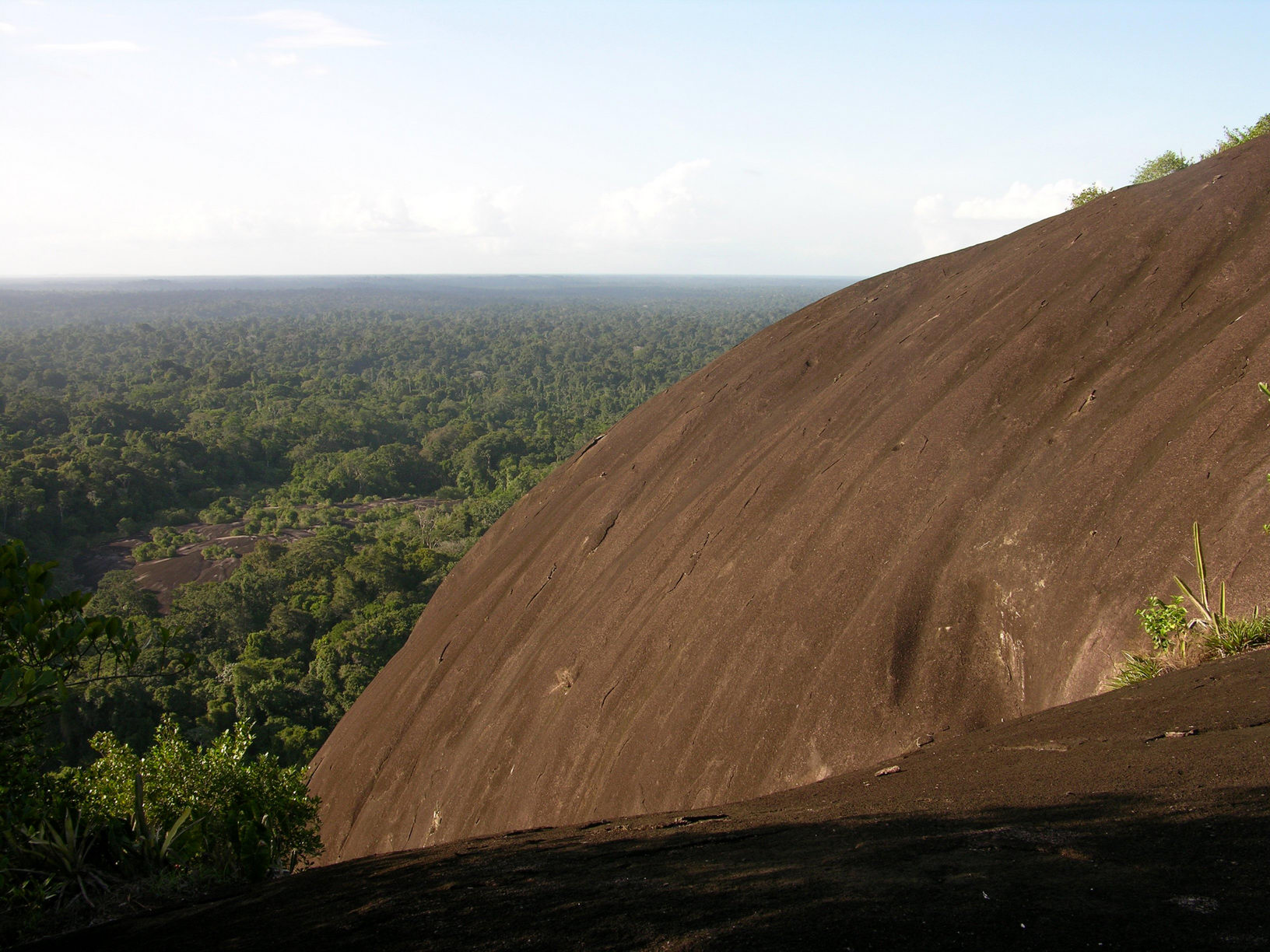
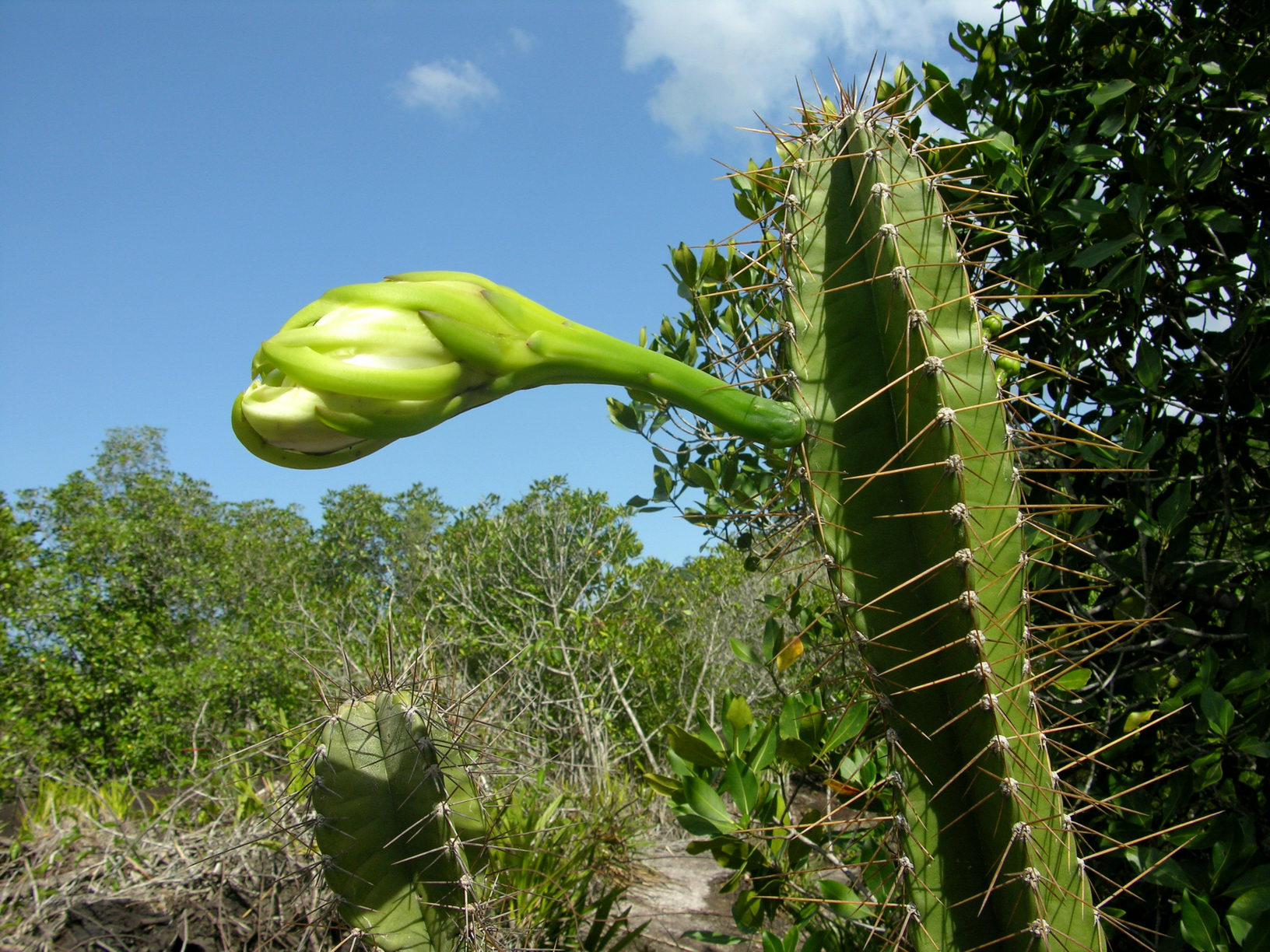
Cacti stick out from the cracks. I love them, especially photographing them. On the summit are lots of stone cairns and three plaques bearing the names of people who died on the climb. How on earth did that happen? Struck by lightning, perhaps. Even that the guide didn't know.
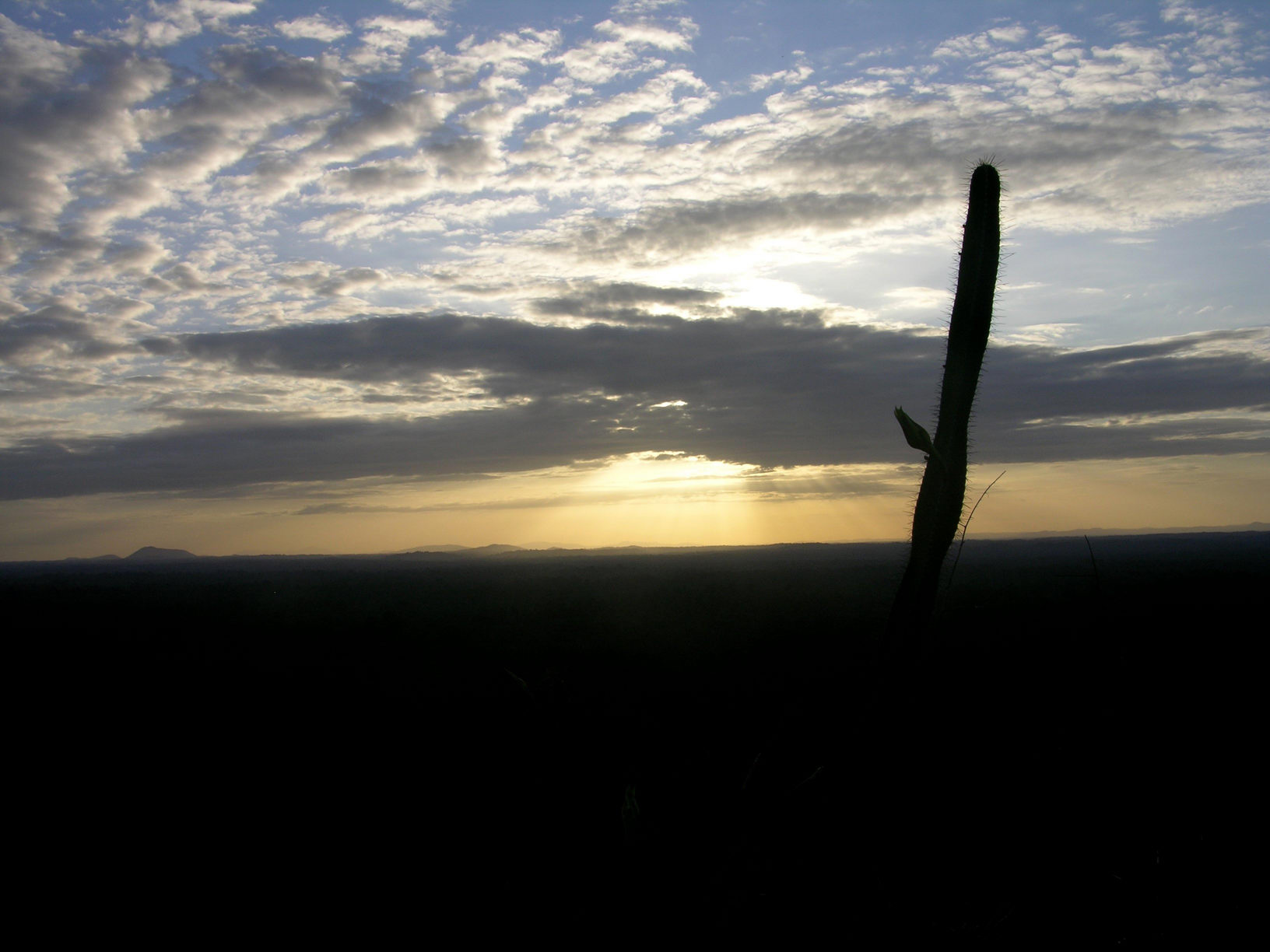
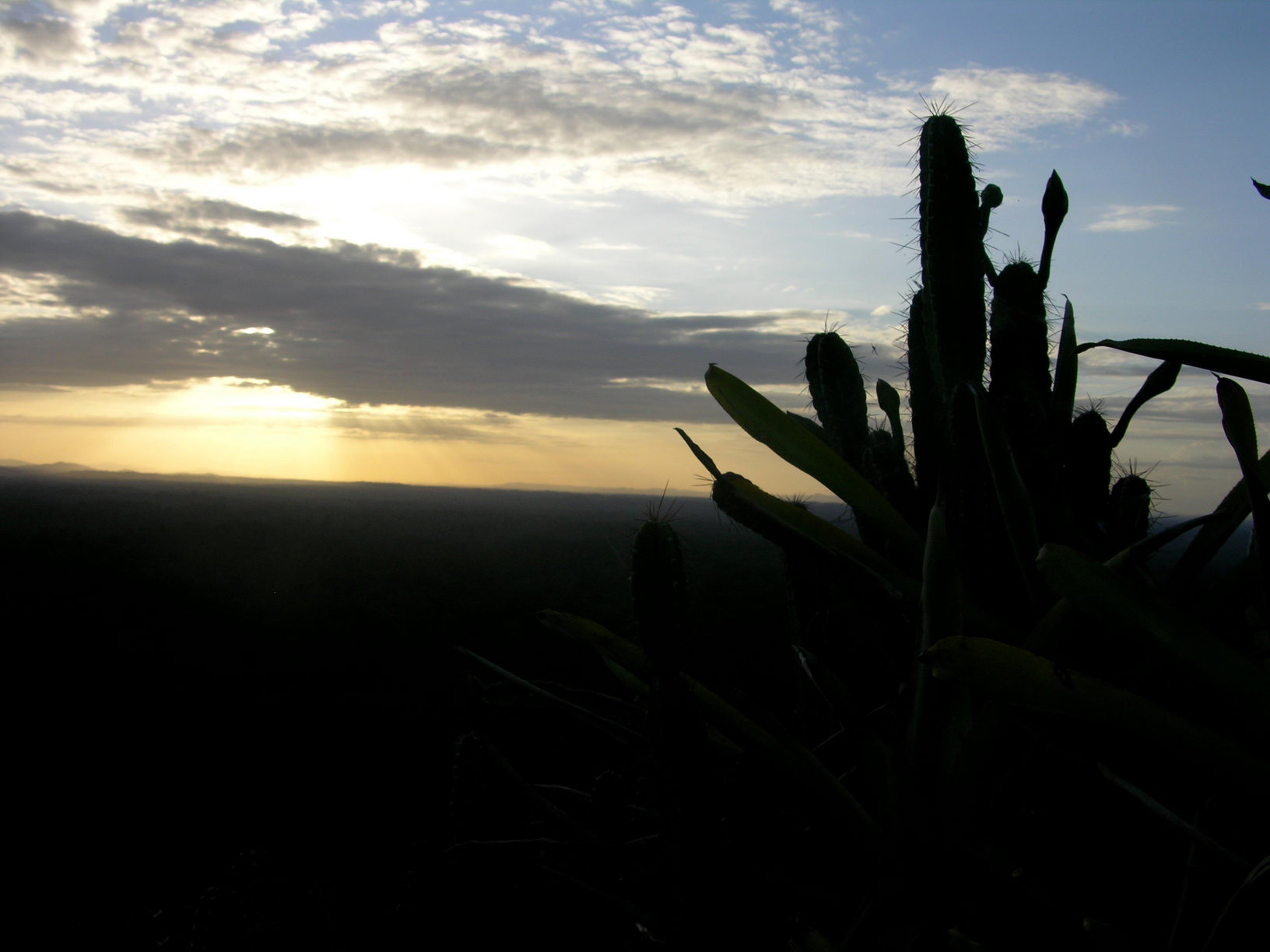
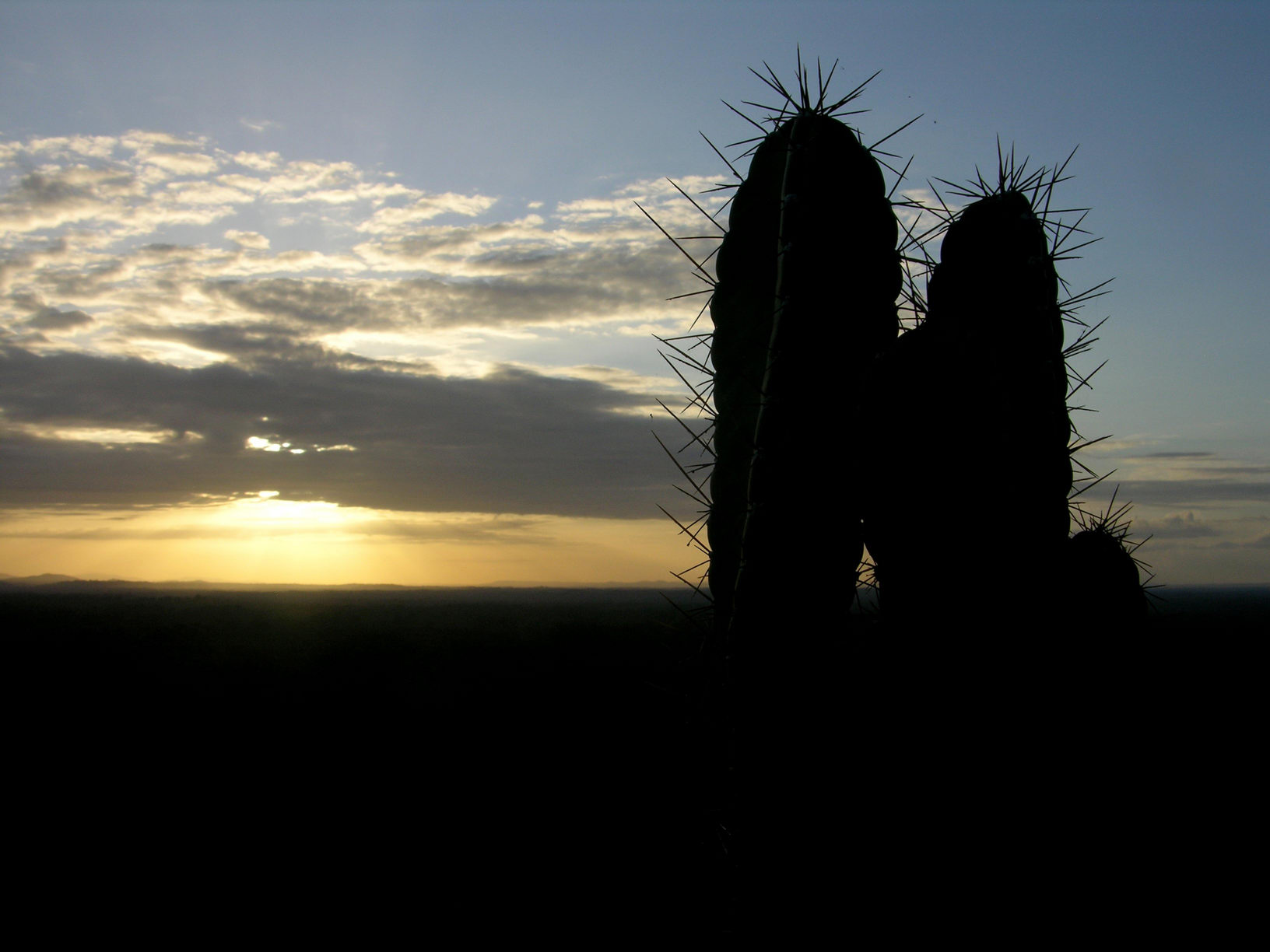
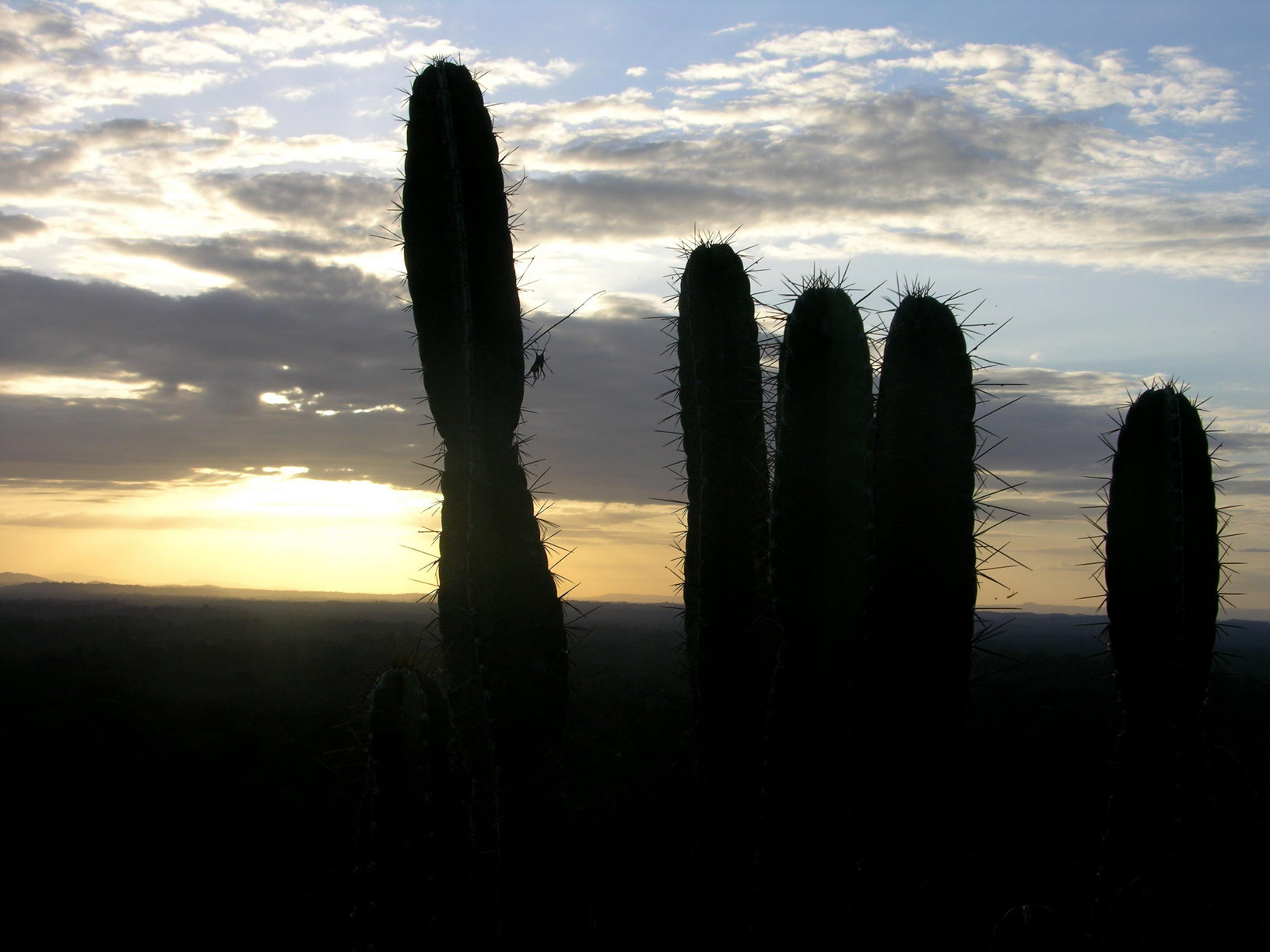
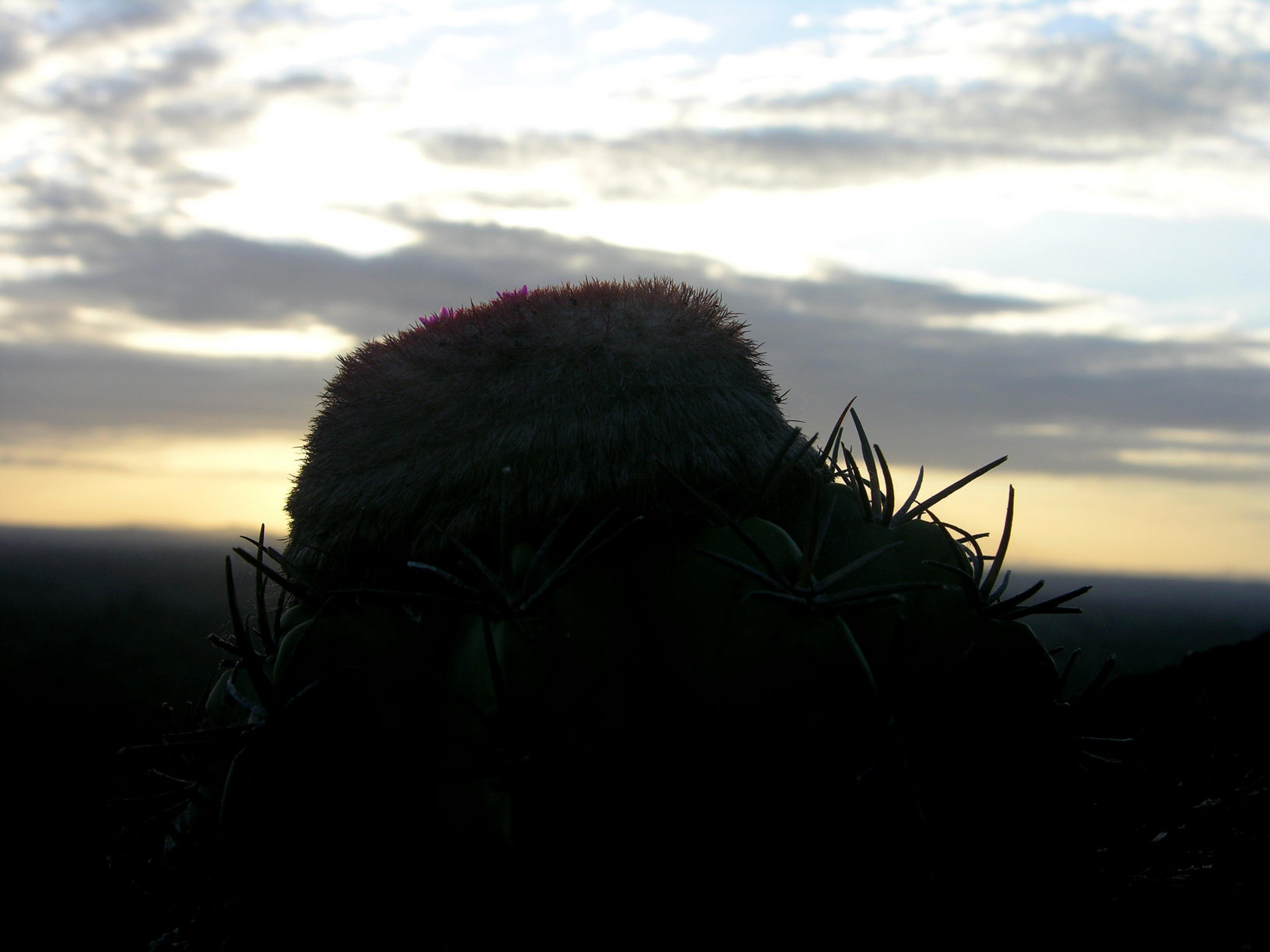
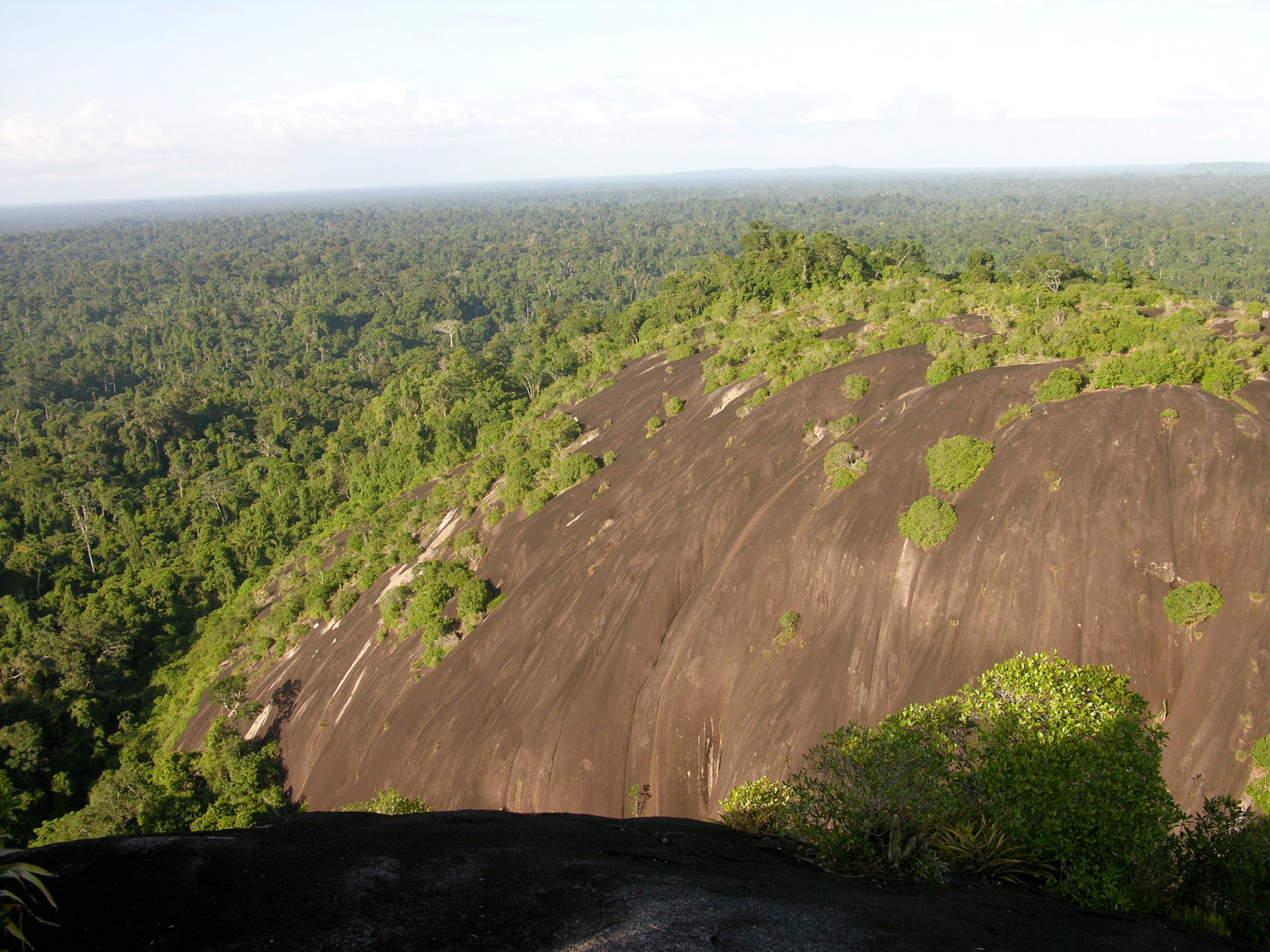
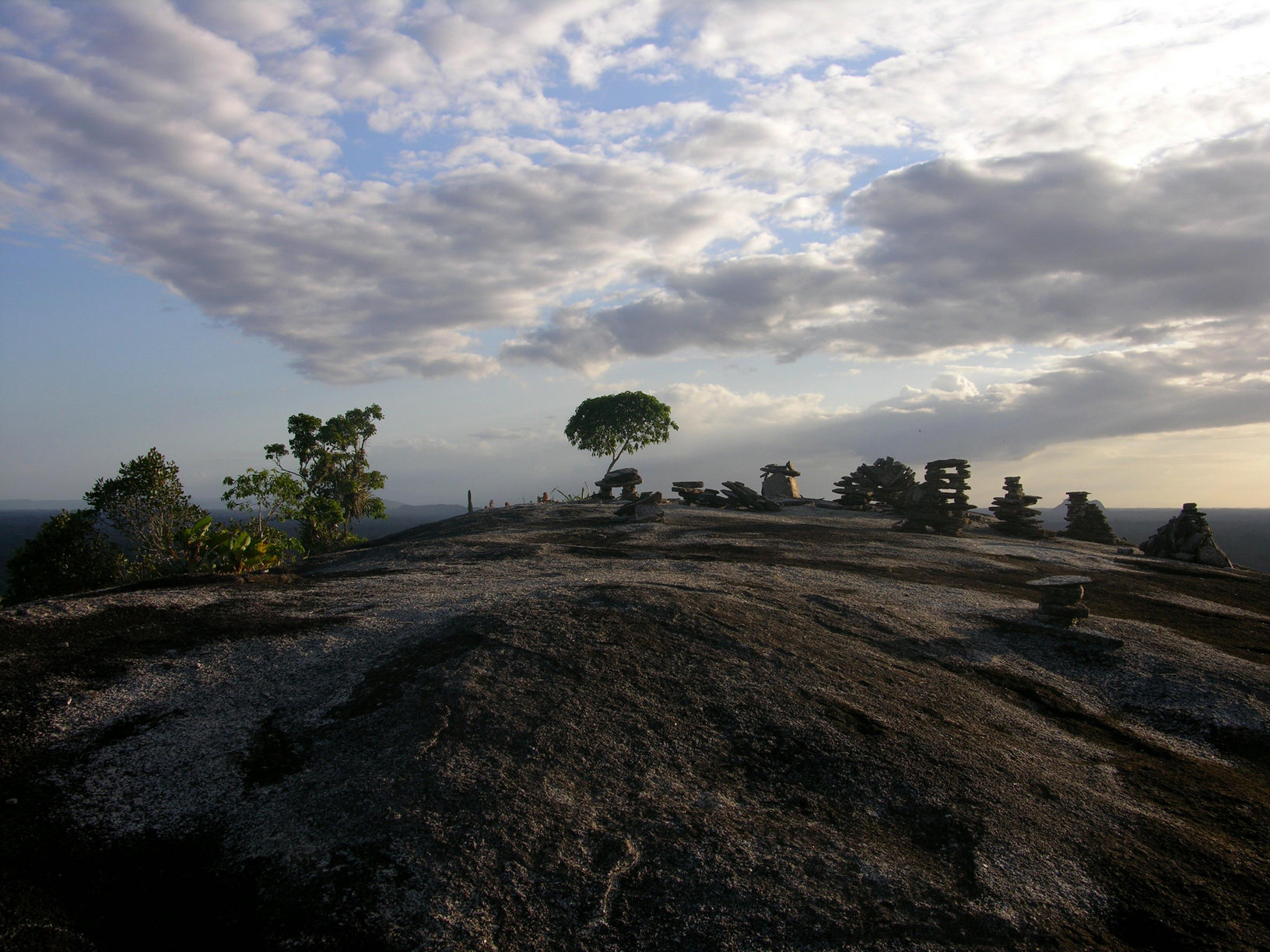
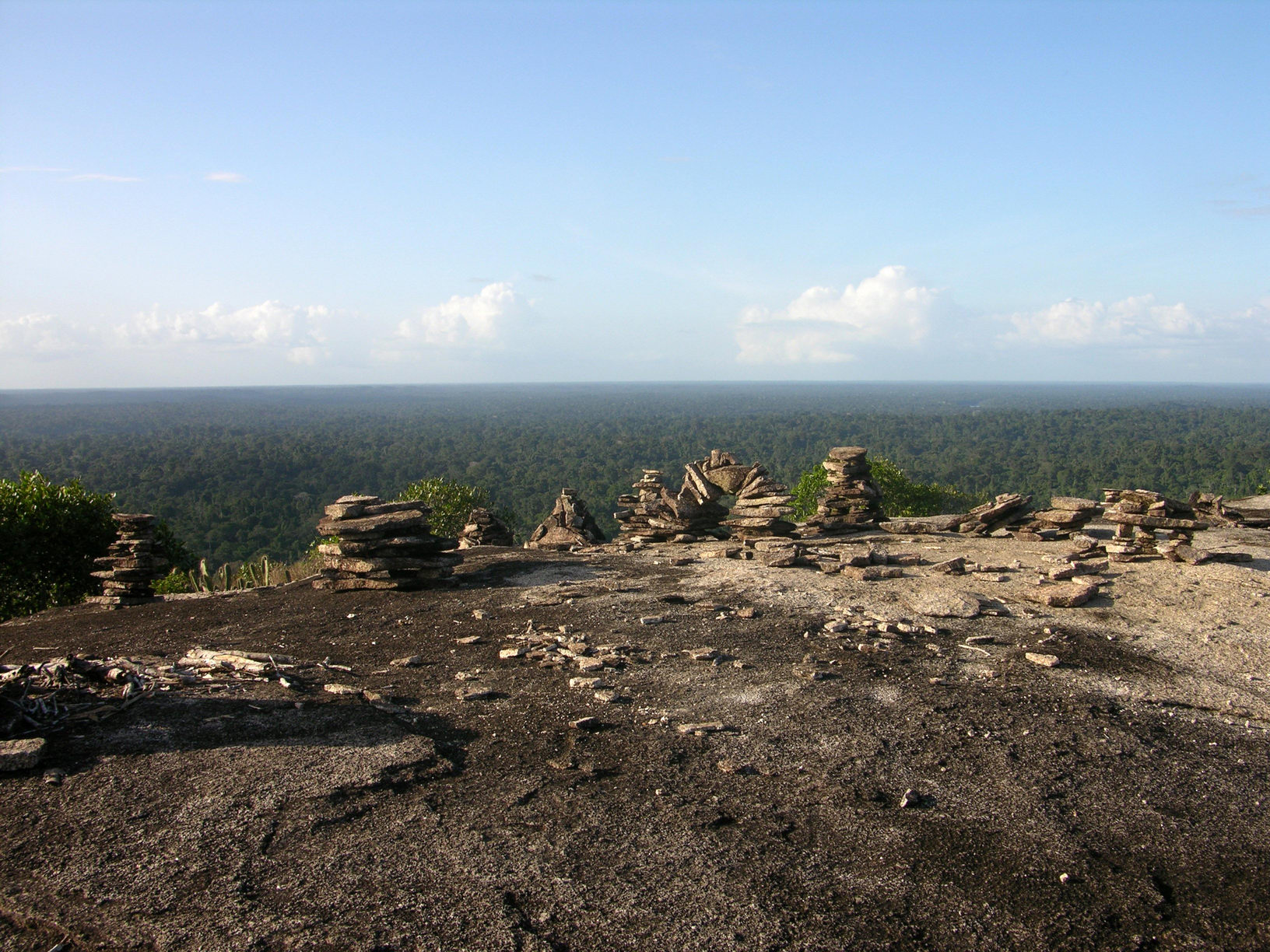
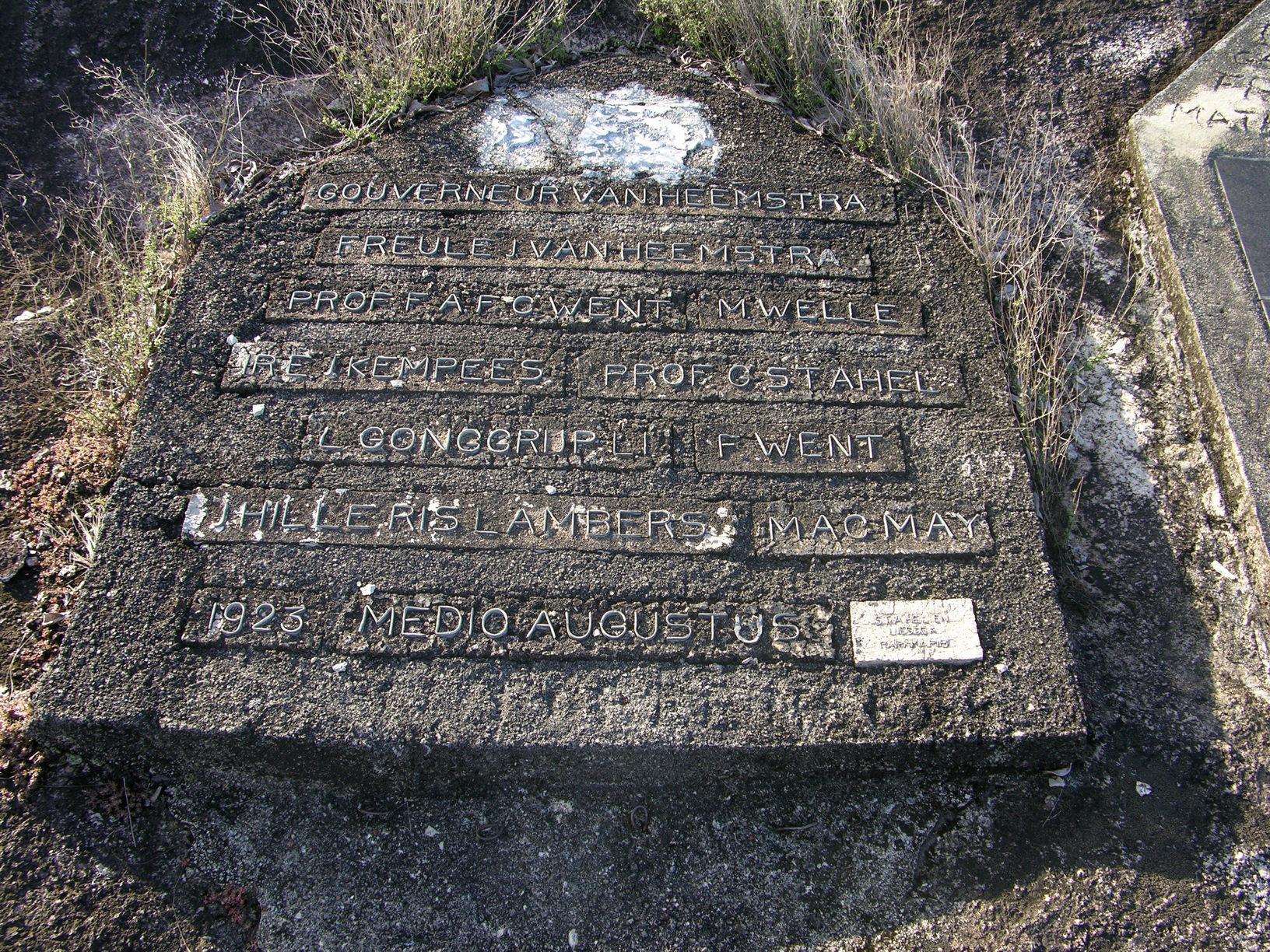
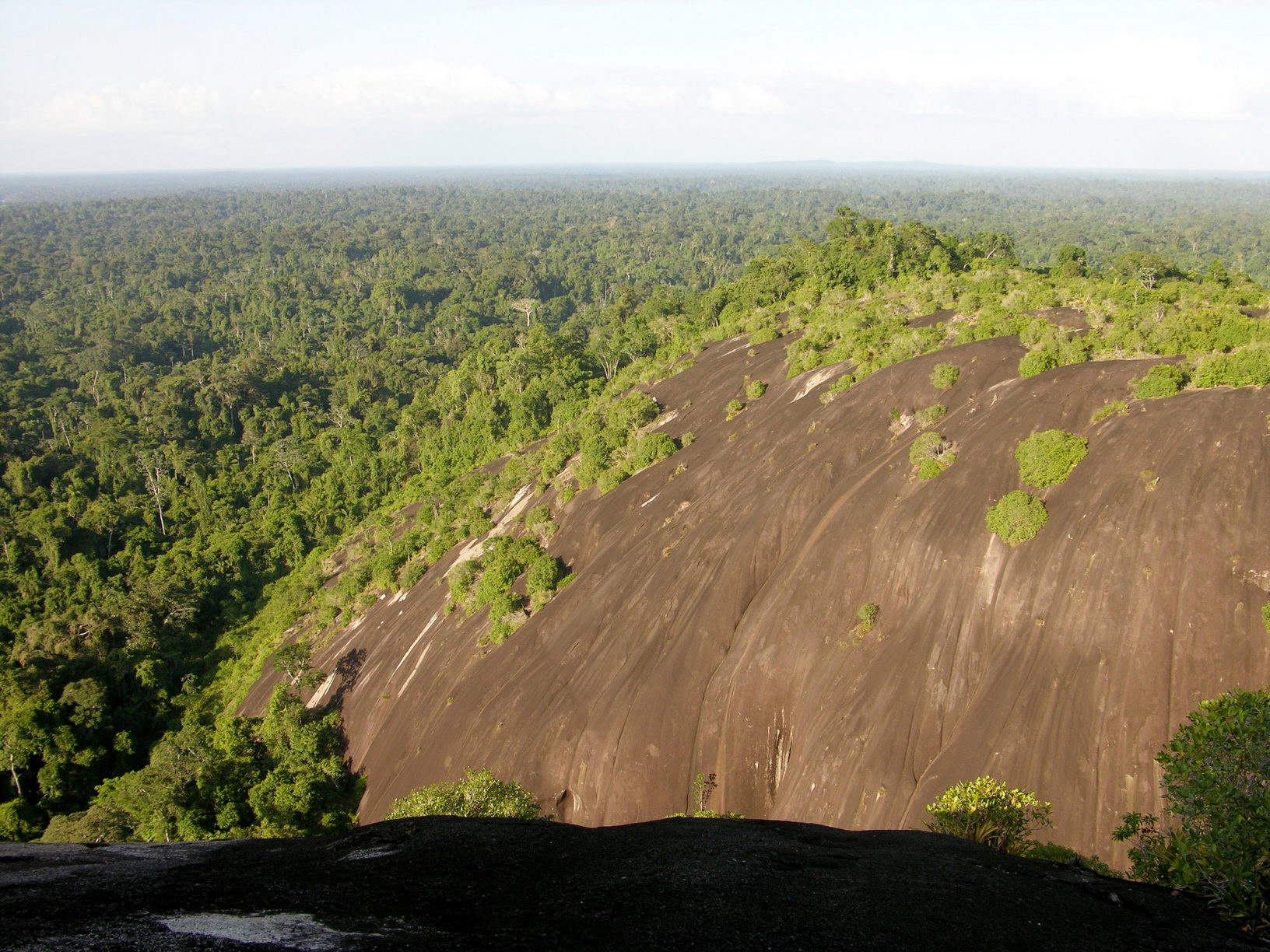
The view from the mountain is remarkable. You can see the neighbouring summits nearby. Many are even higher. There are also paths up them, apparently. And probably no guides or prohibitions. Unfortunately nobody will tell you the truth. Until you go there yourself, there's nothing you can believe.
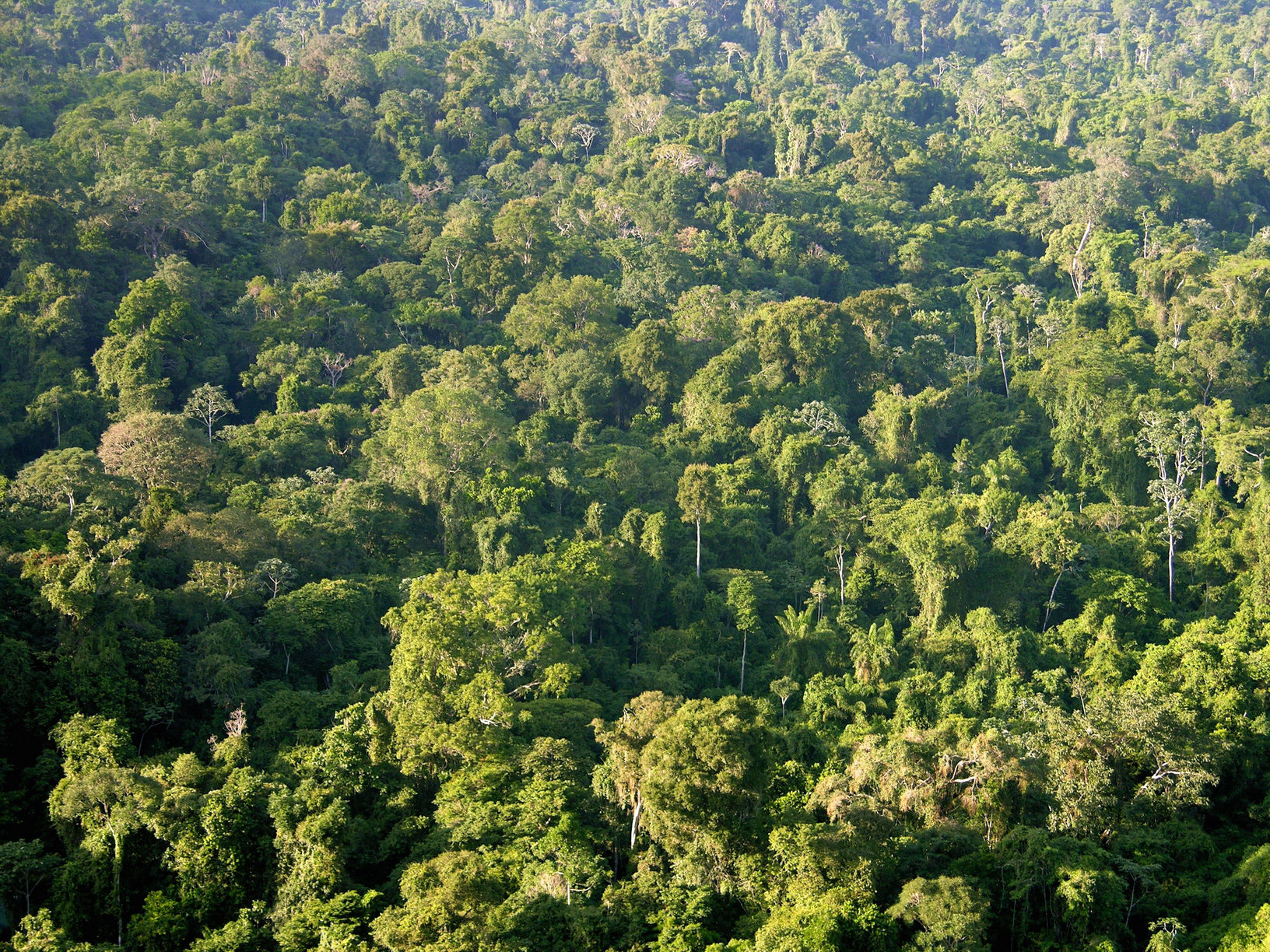
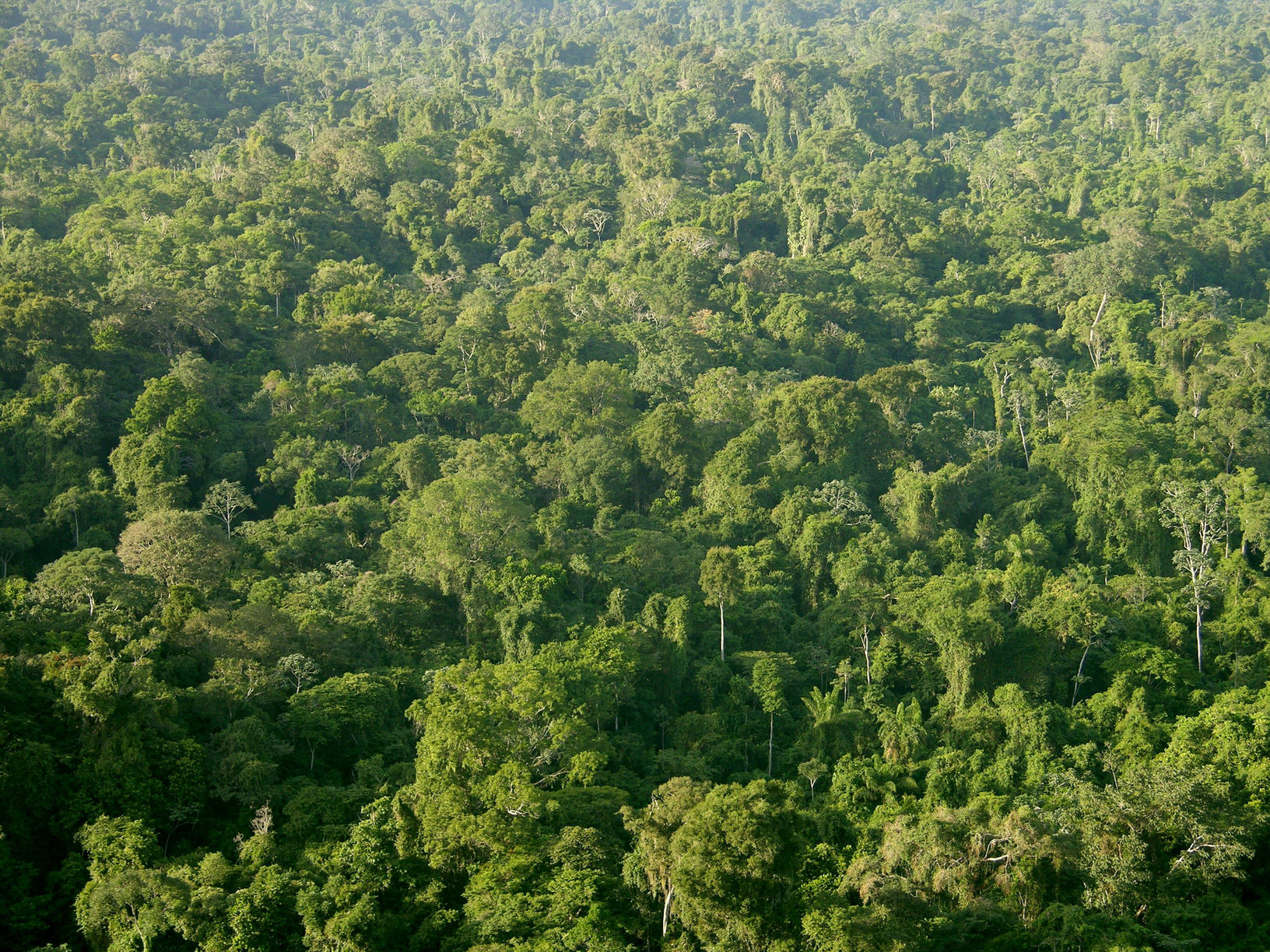
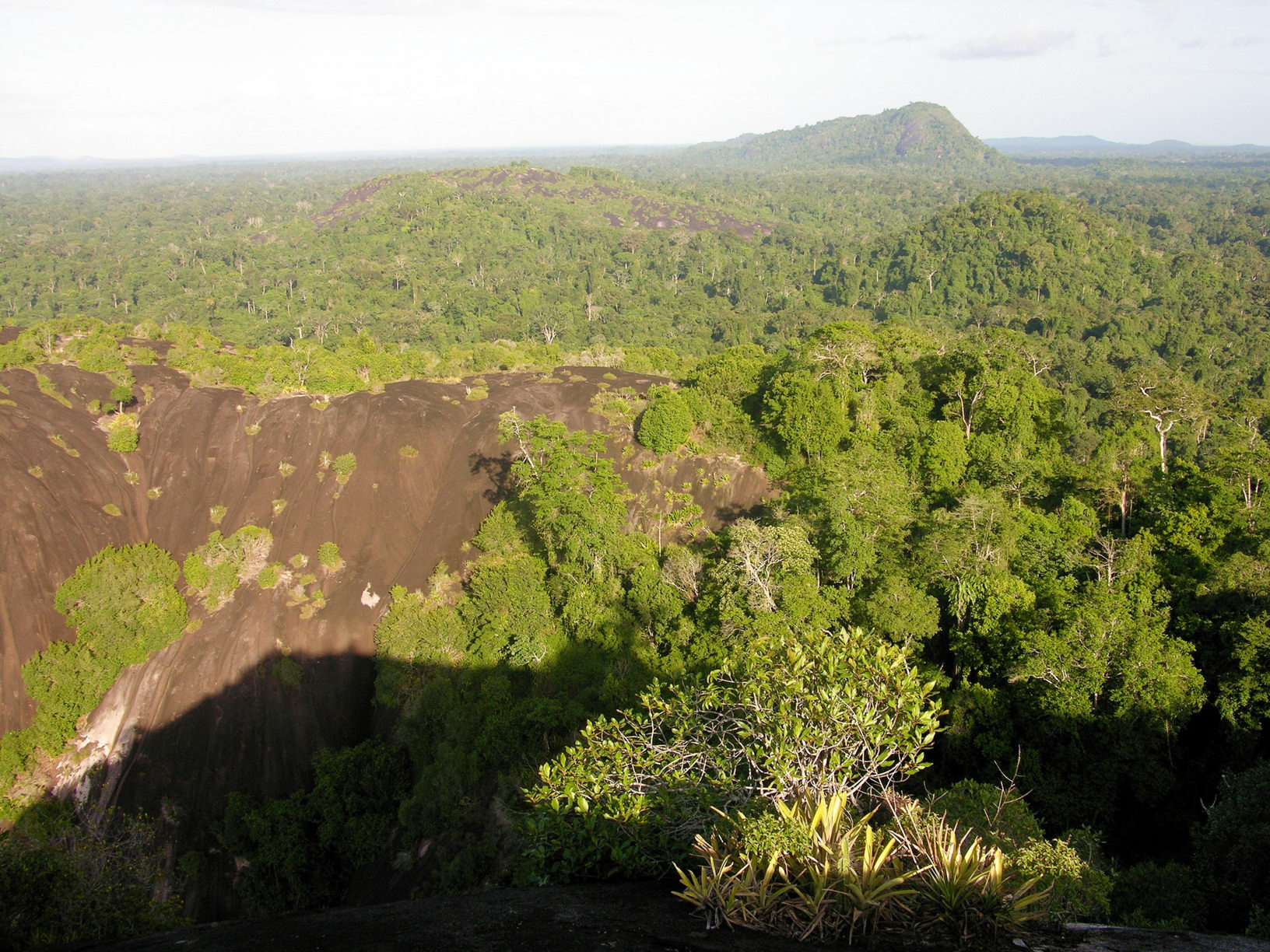
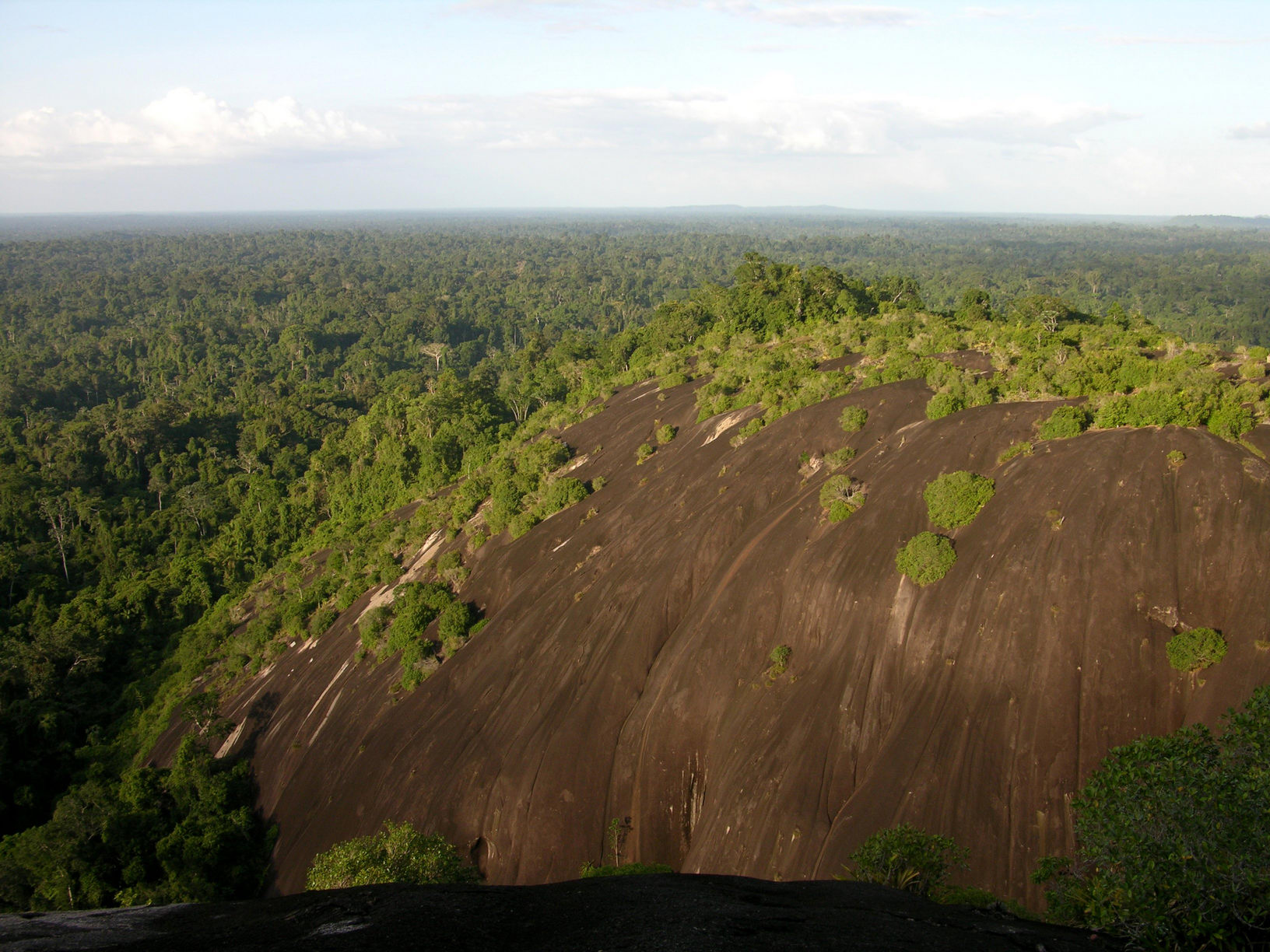
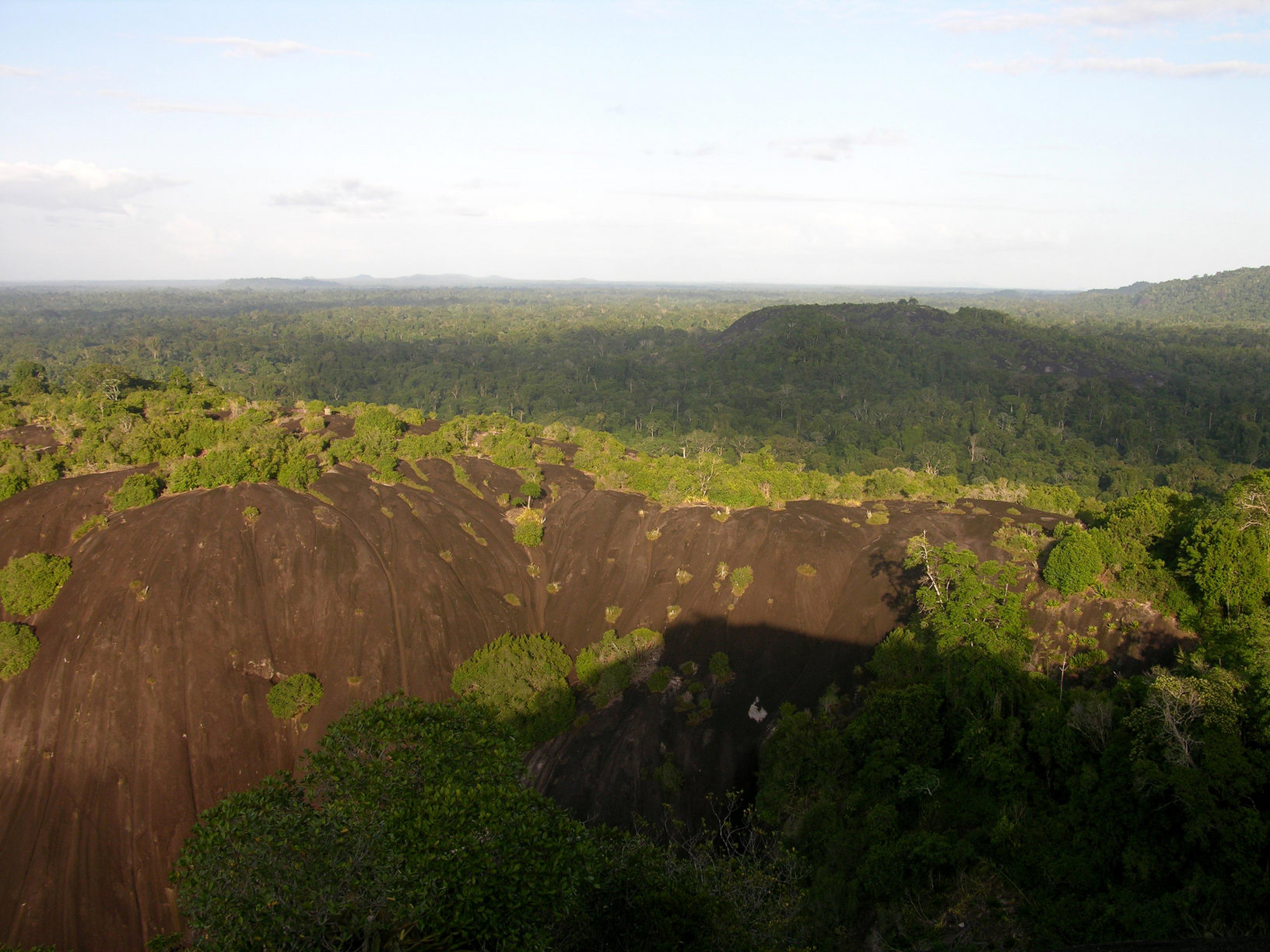
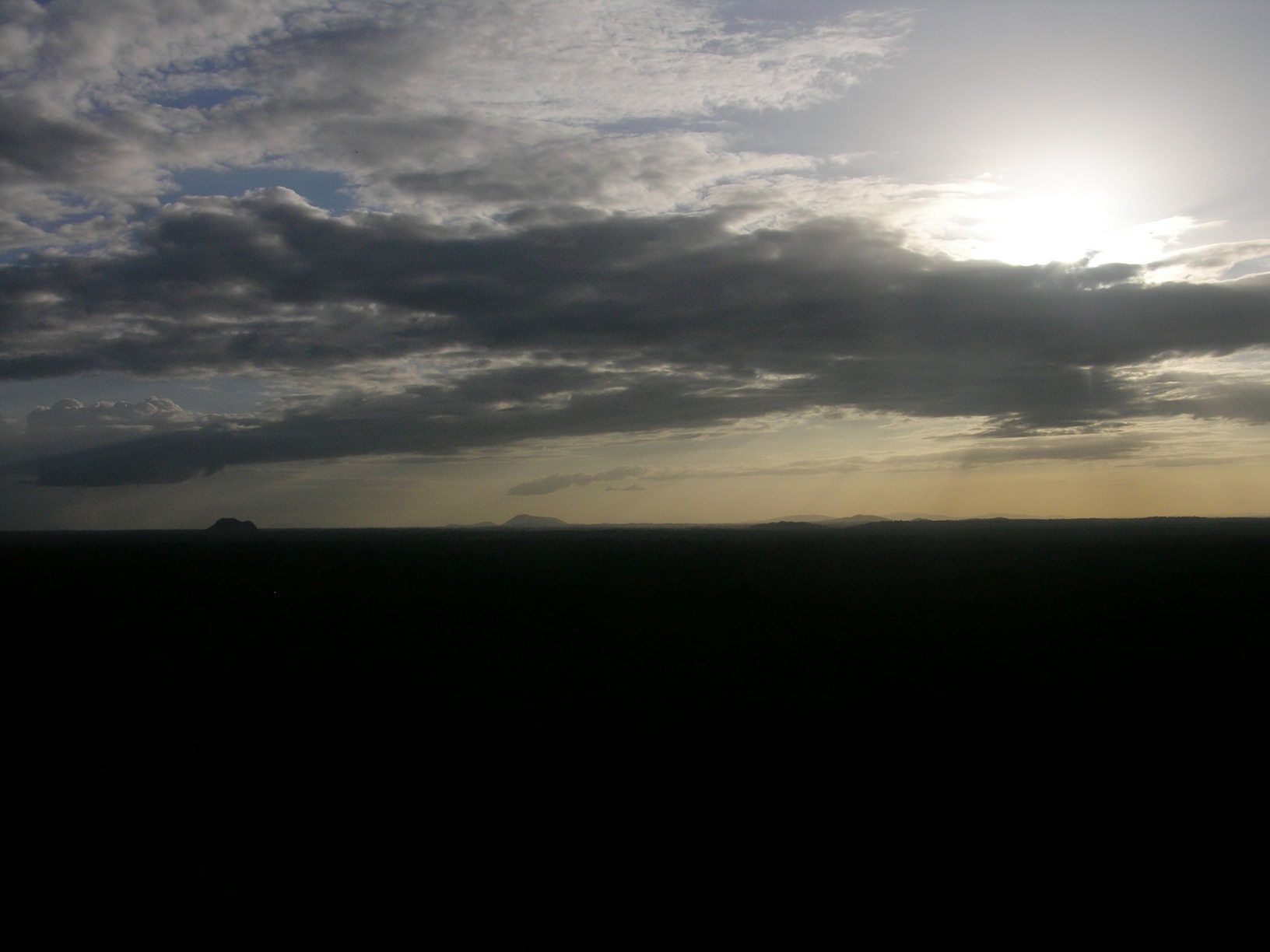
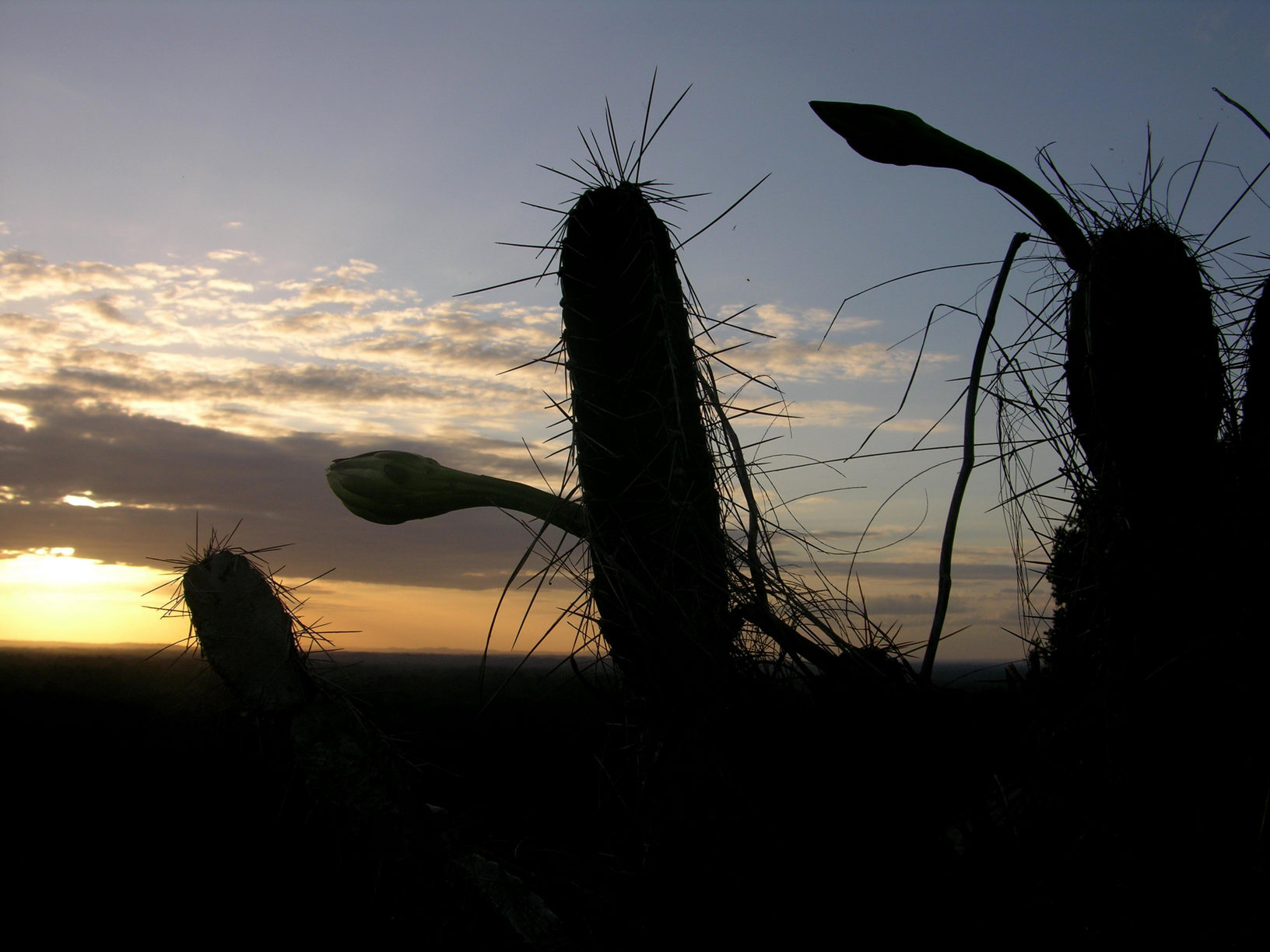
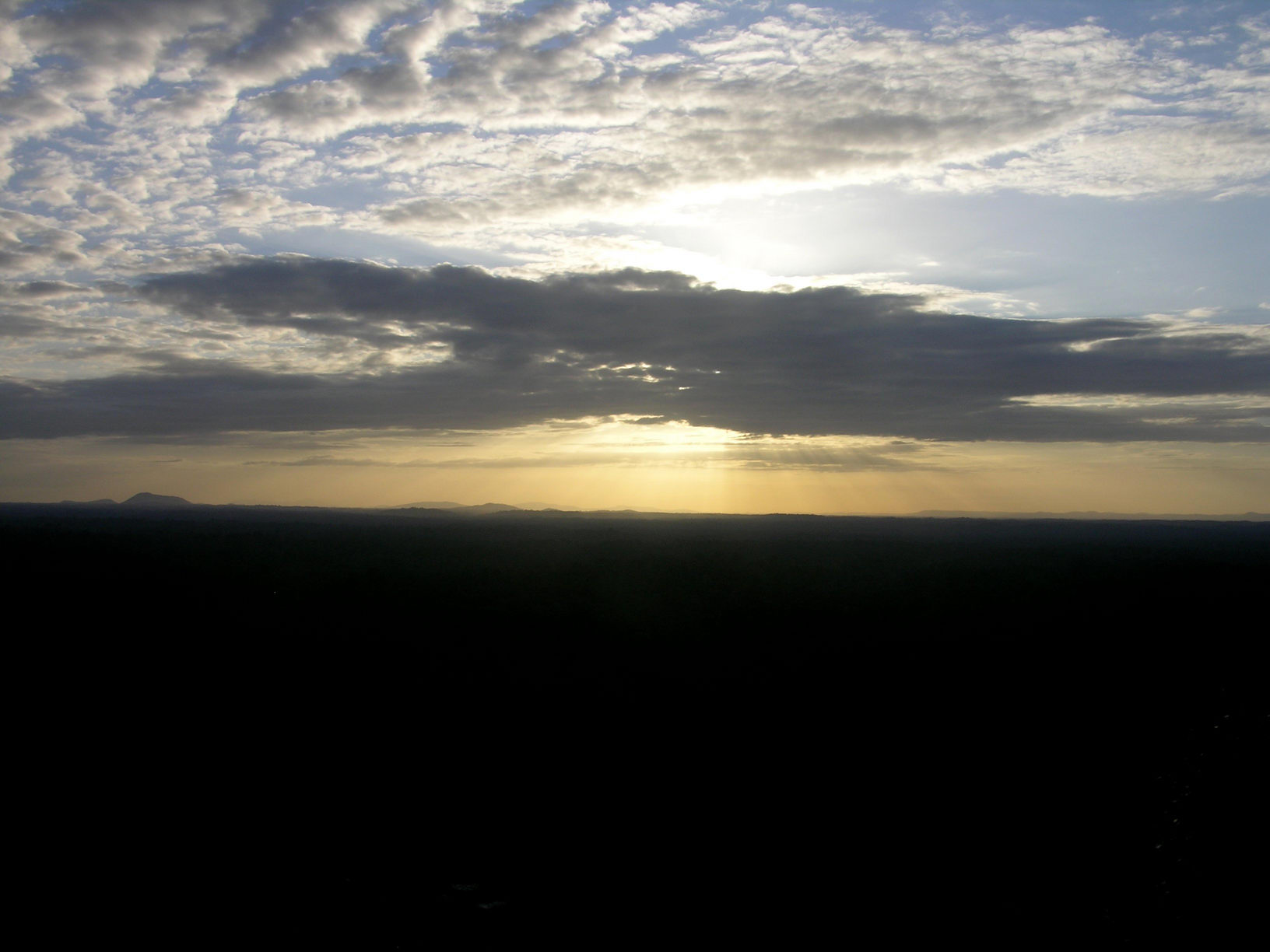
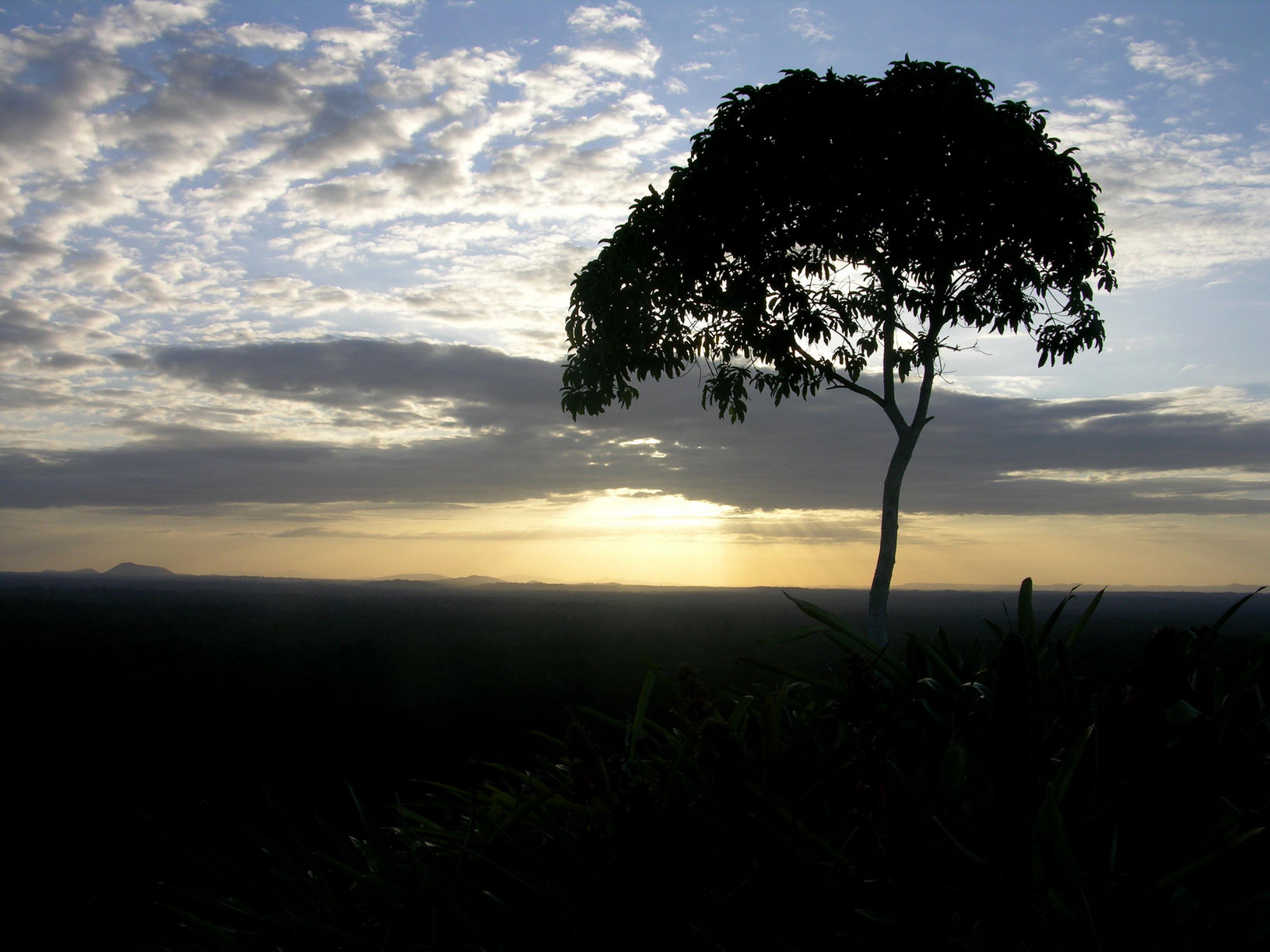
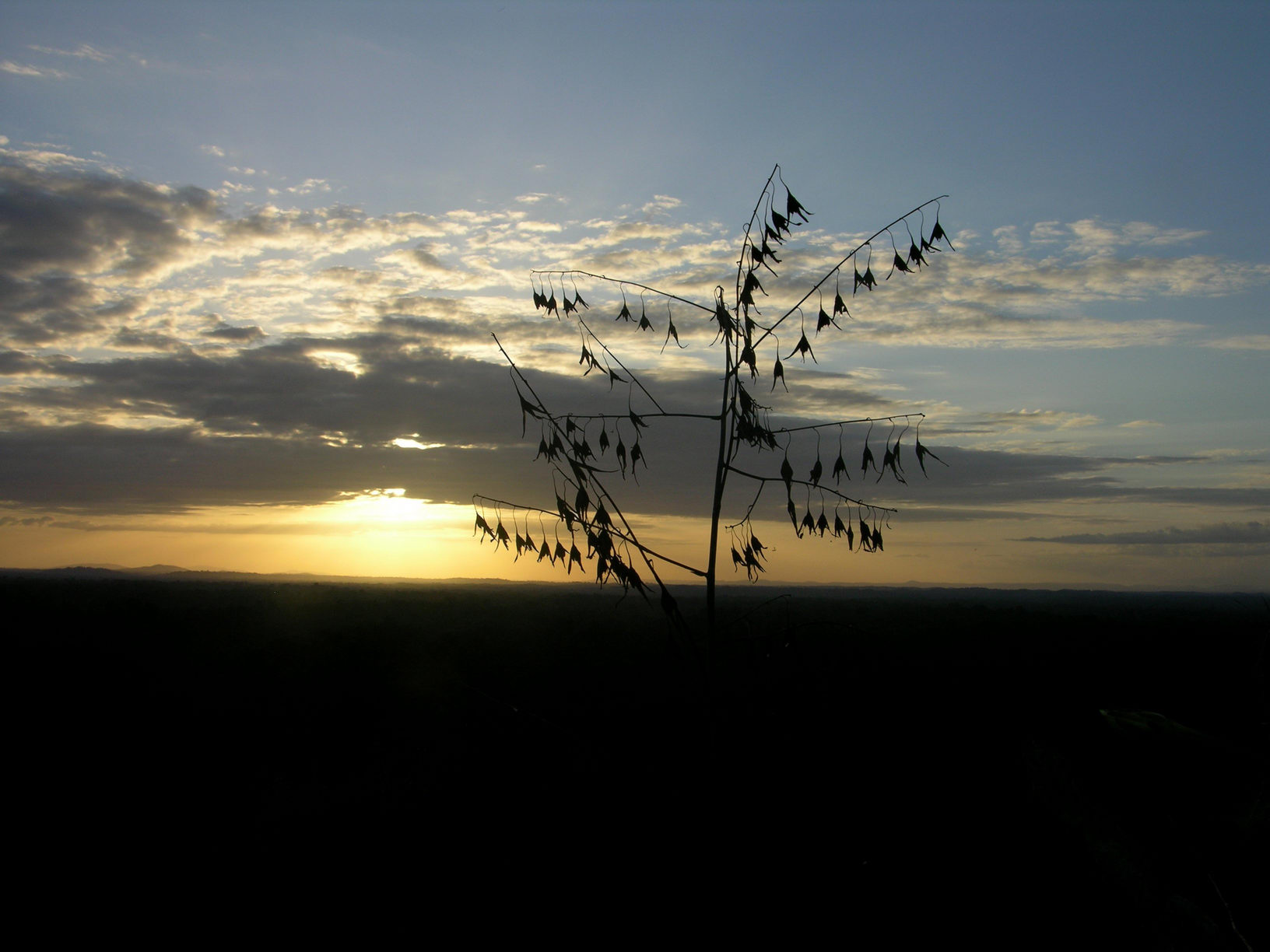
Meanwhile it was getting dark. The jungle began to come alive. Toucans settled importantly on the branches. Macaws gathered in flocks and flew somewhere down below. This was the best part, and now the guide was herding us down to the hut. We had to go. Our law-abiding side got the better of us, unfortunately. What if we'd just refused? He hadn't a radio. The police were hundreds of kilometres away. What could he do? Tell his bosses on us tomorrow, and we'd say he'd eaten a turtle.
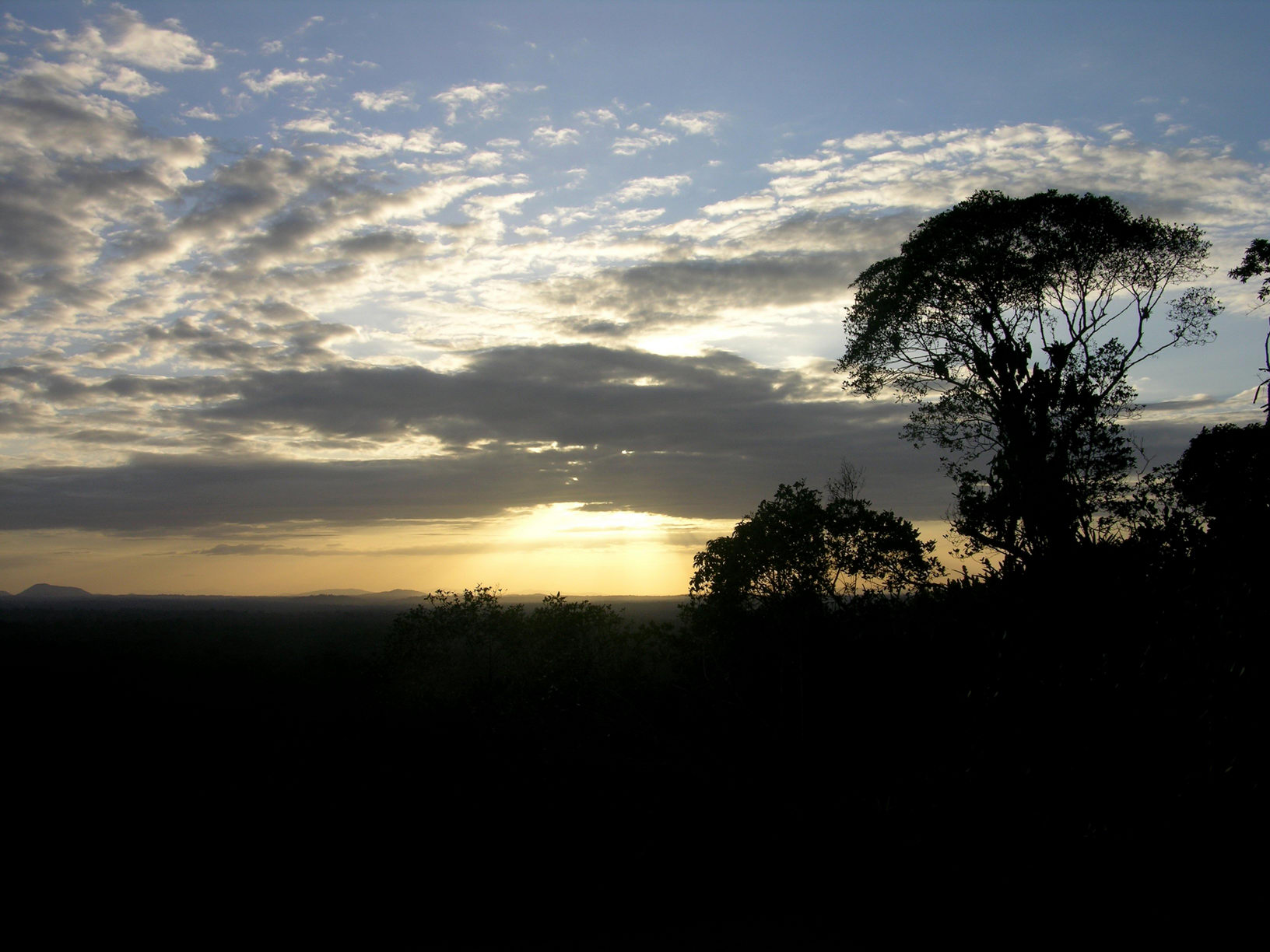
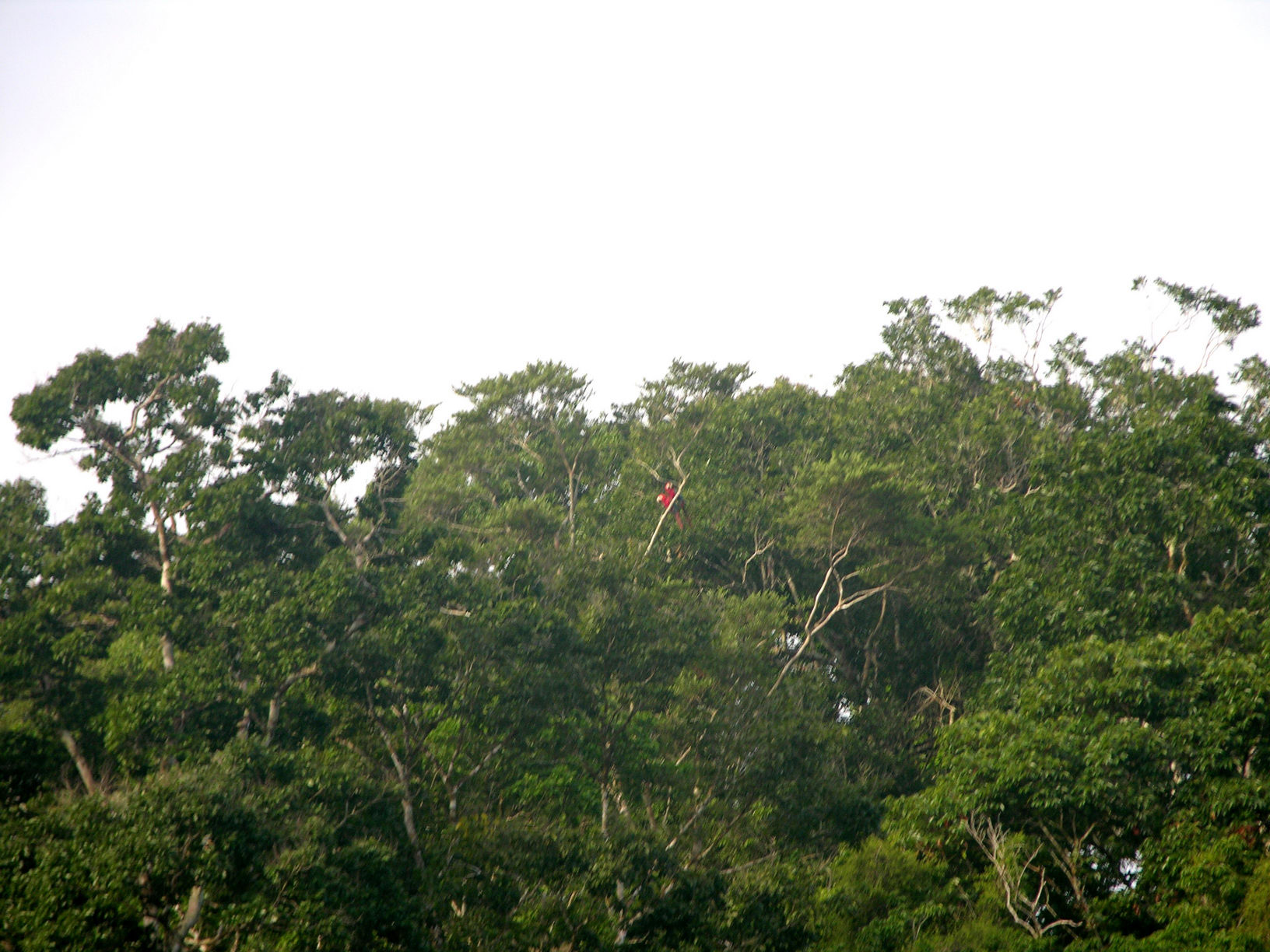
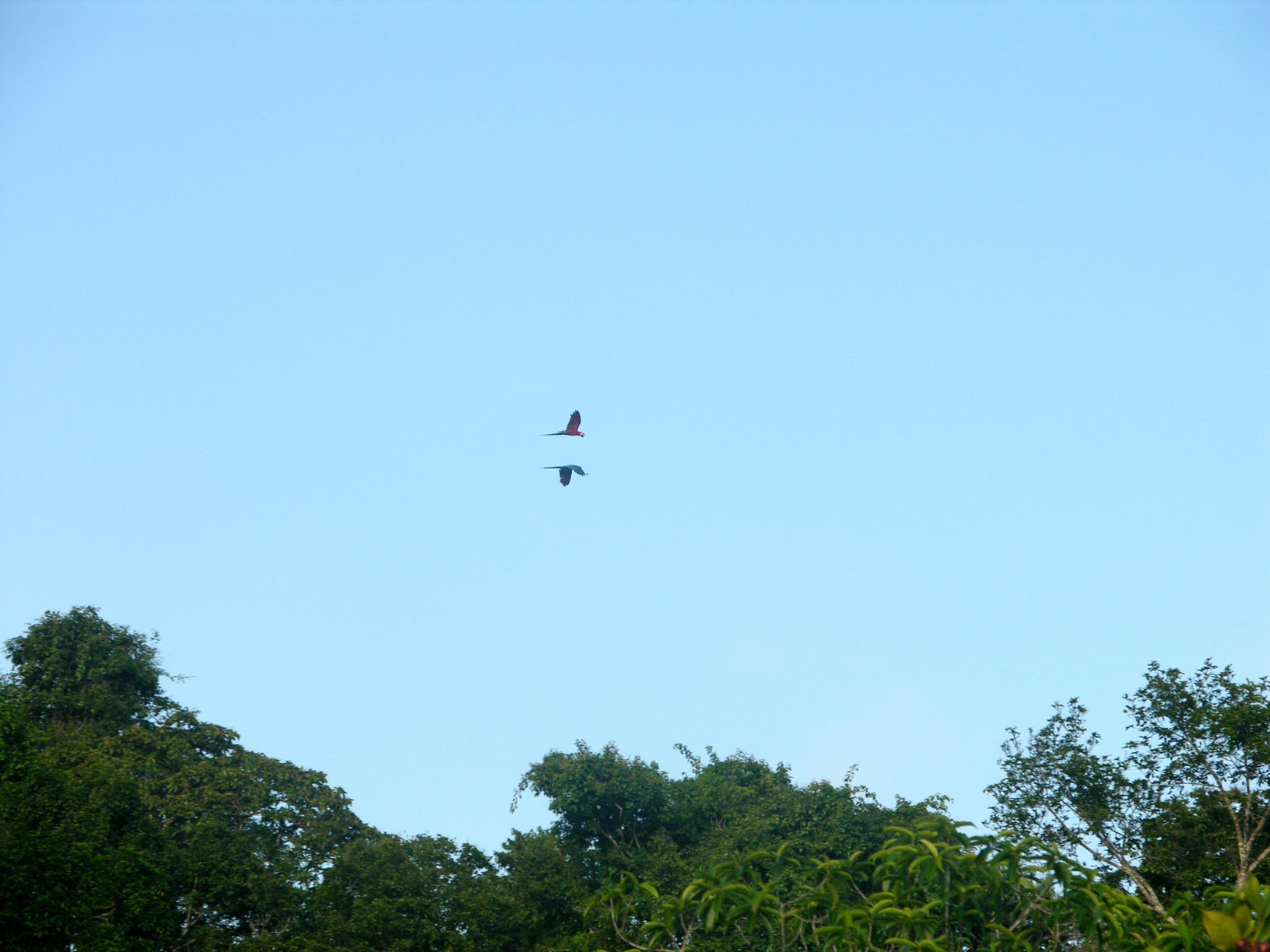
Here's a toucan, quite close. I creep up with the camera to get the branches out of the way. Out of the bushes comes our guide with another turtle. Naturally the toucan flies off. Never mind; we'll see more. We got down the mountain before dark and went straight to a small rock ledge near the camp, where we had our fill of the jungle at dusk, the colourful sunset and the kingdom of the birds.
We went back to the hut when it was completely dark. It's meant for sleeping in hammocks, which you can get at the park office. There was a gas stove in the kitchen so you could cook dinner. After dinner we washed under a rainwater barrel.
A lovely sky. No moon. No light from towns either. Just the stars and the southern Milky Way, with bats flying across like black shadows. There are ninety species of them here. I can understand how you study birds, but catching bats at night and finding ninety different kinds is impressive. Bats are useful, by the way. They eat mosquitoes at night.
At dawn we packed and ate breakfast in a hurry. While our guide was still asleep we slipped out to the rock ledge again. The night-blooming cacti hadn't yet closed their gramophone flowers. Morning mist was rising over the jungle. A lovely spot, just like Suriname in general. Simply keep away from the places with all the publicity and you'll be fine. Almost the whole country is untouched jungle.
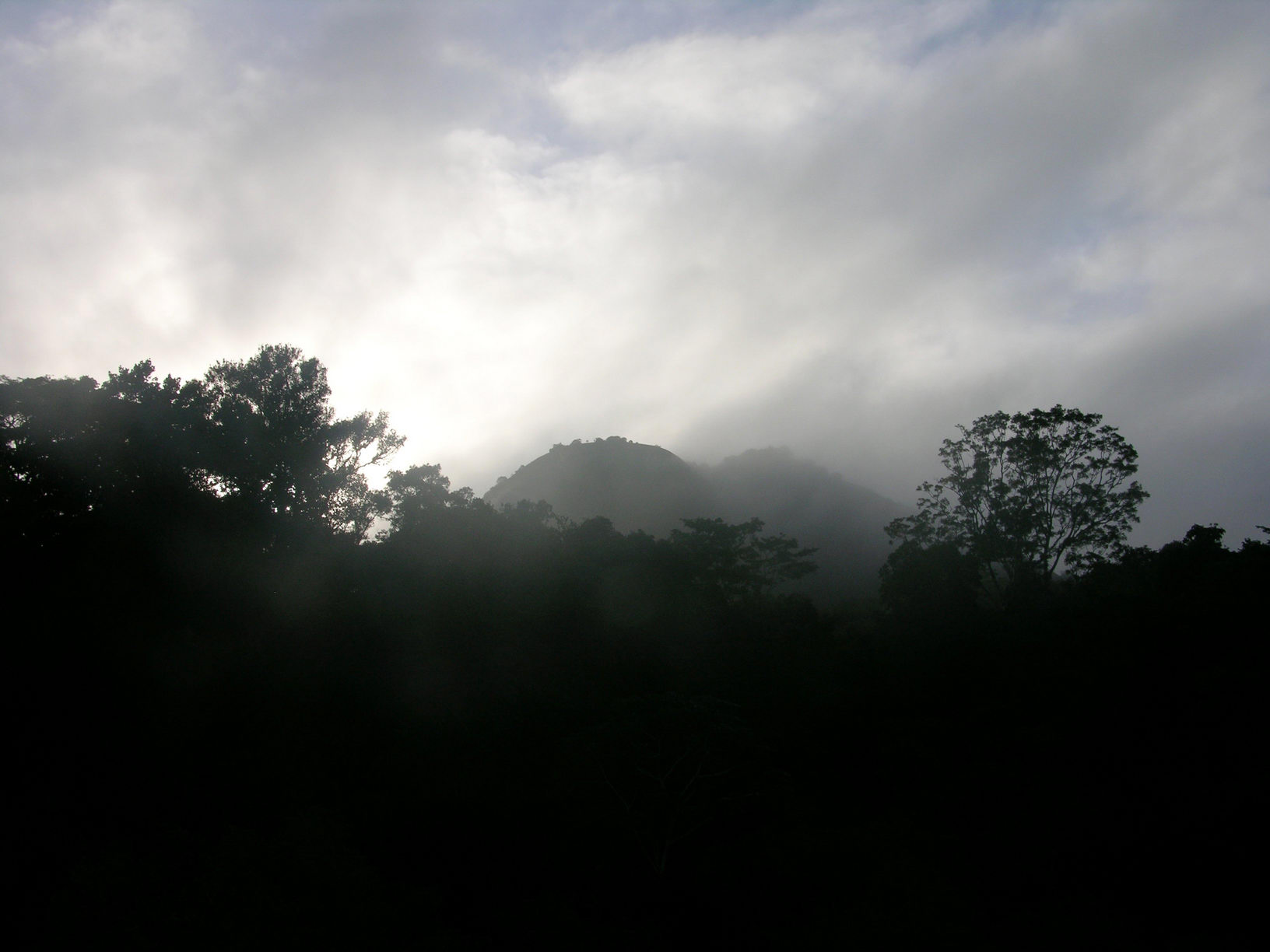
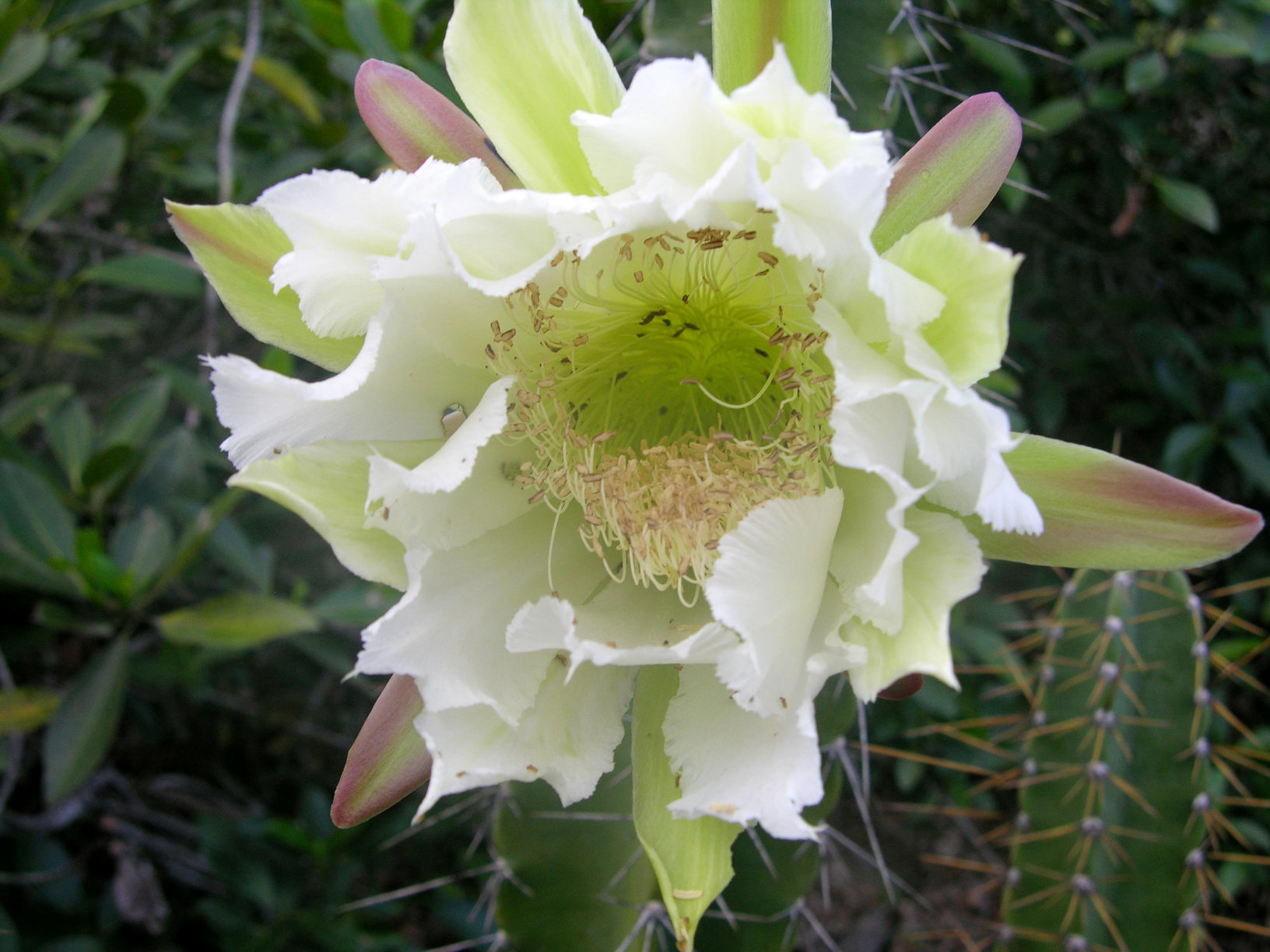
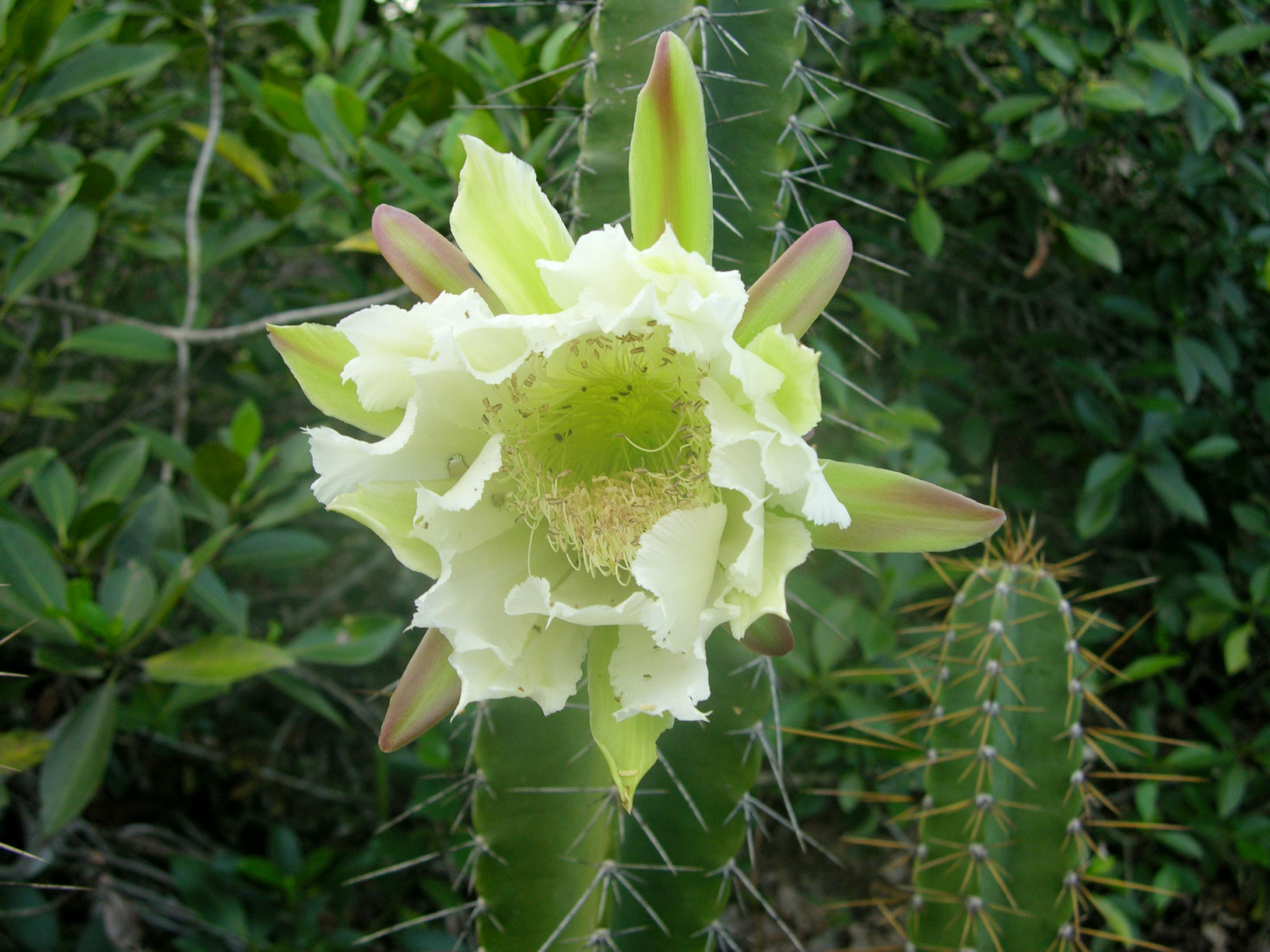
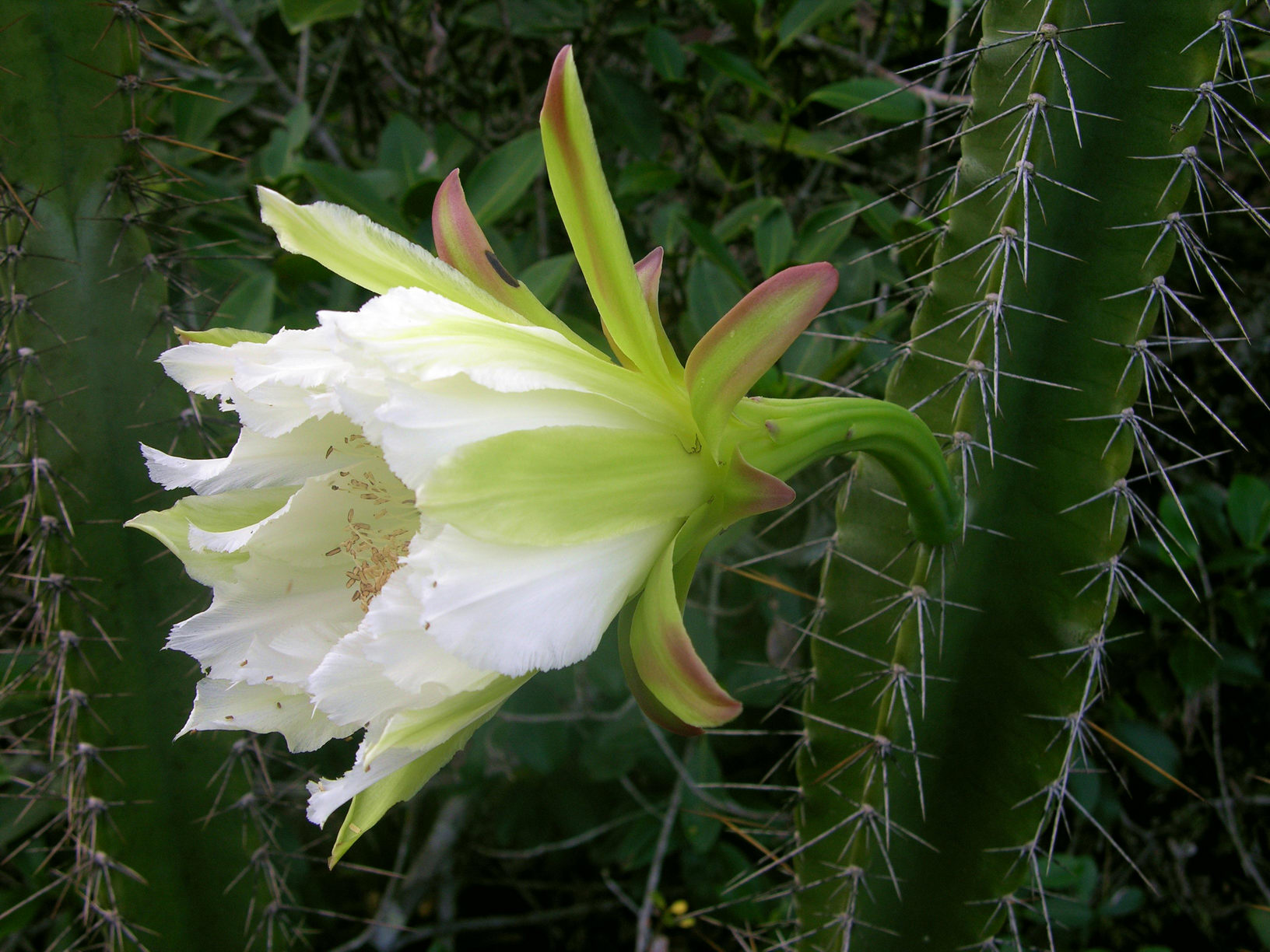
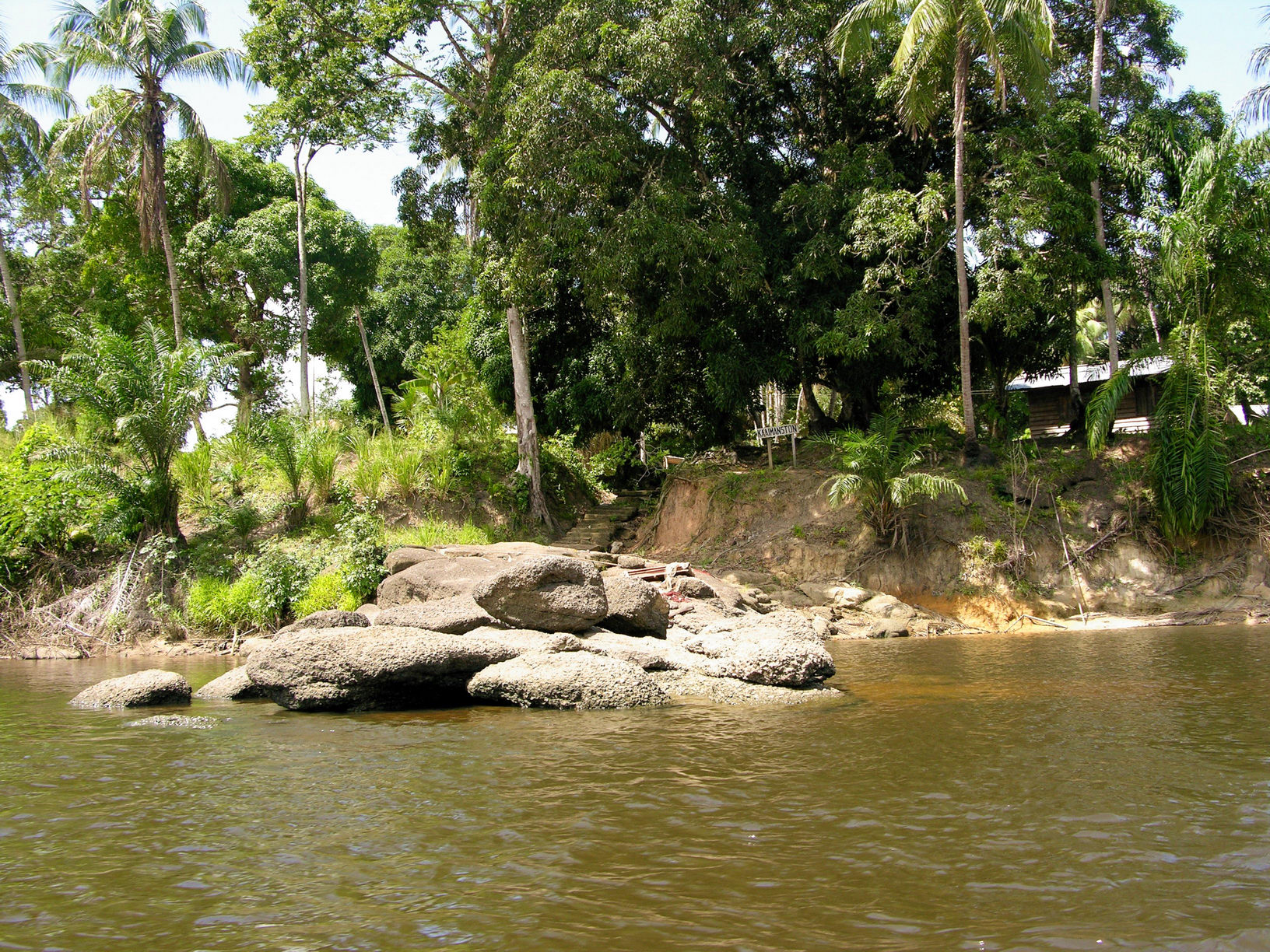
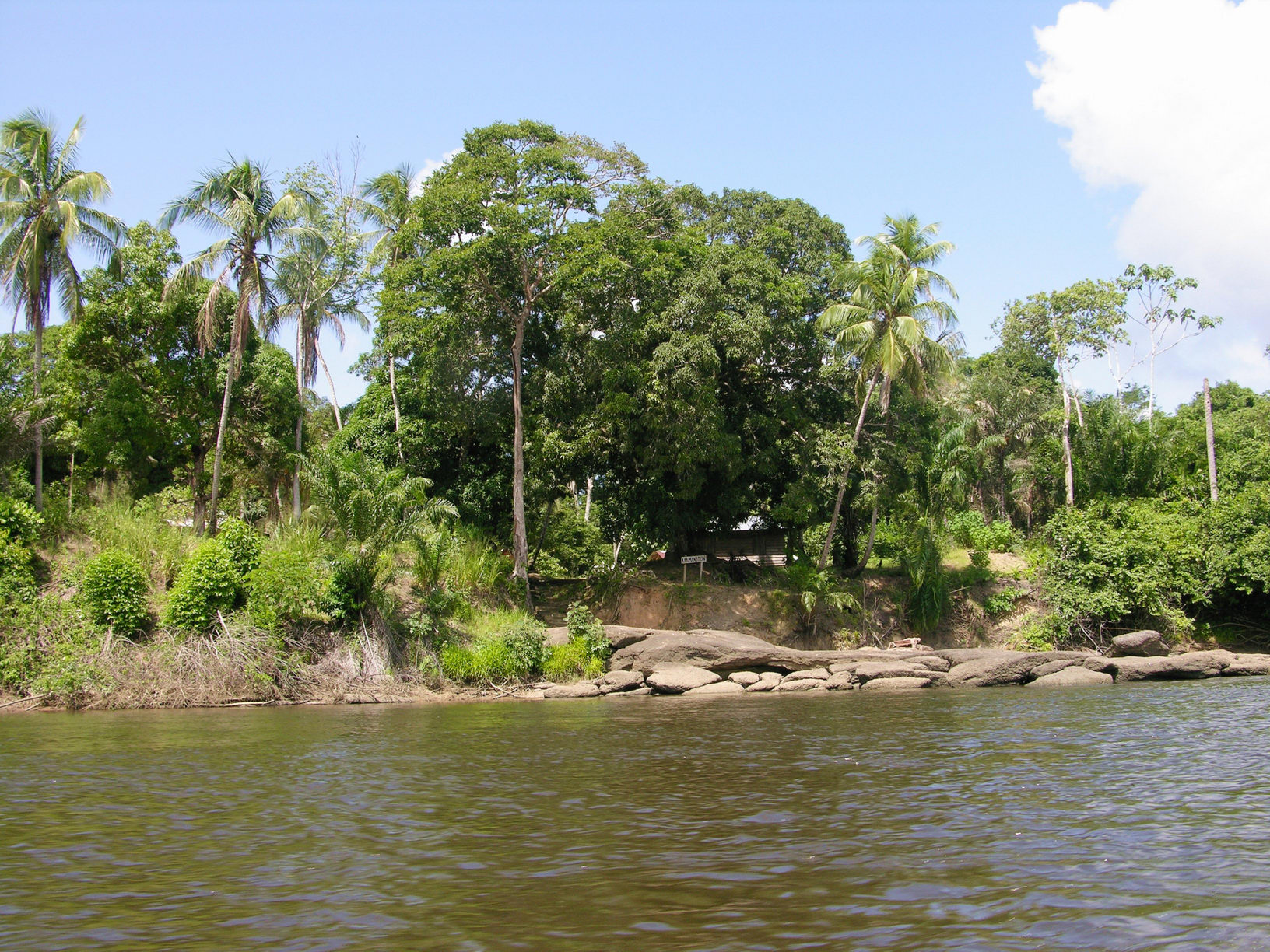
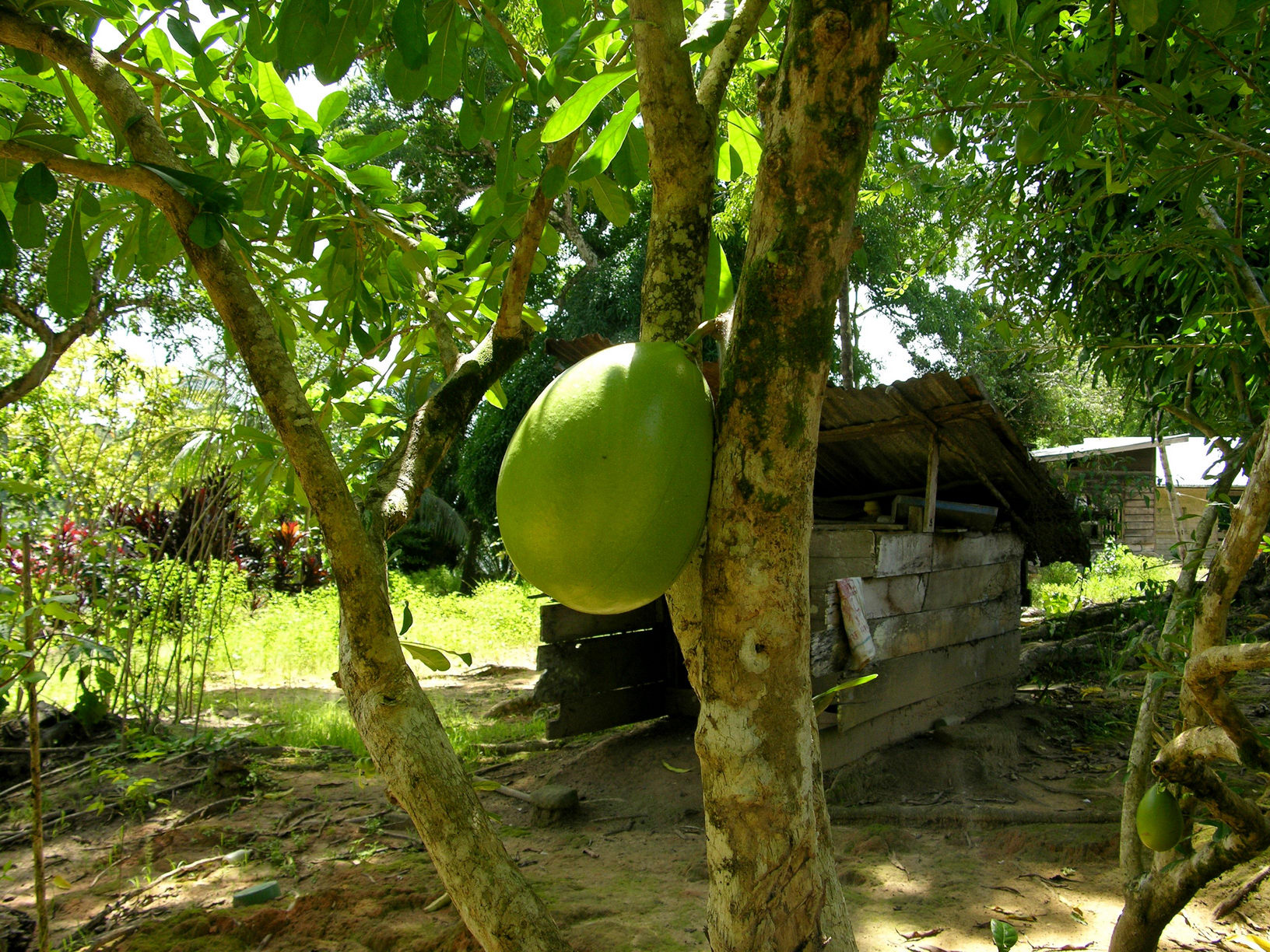
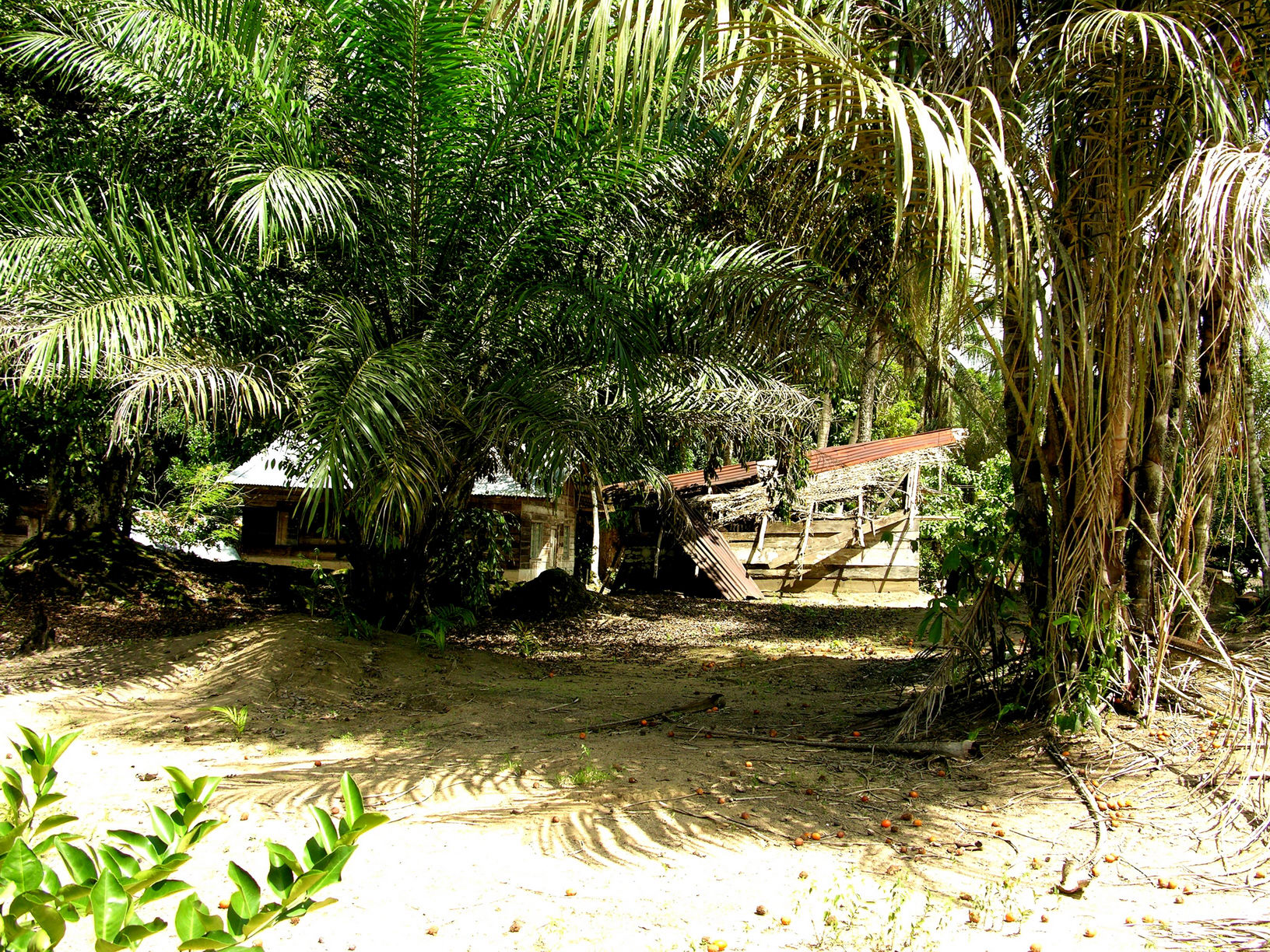
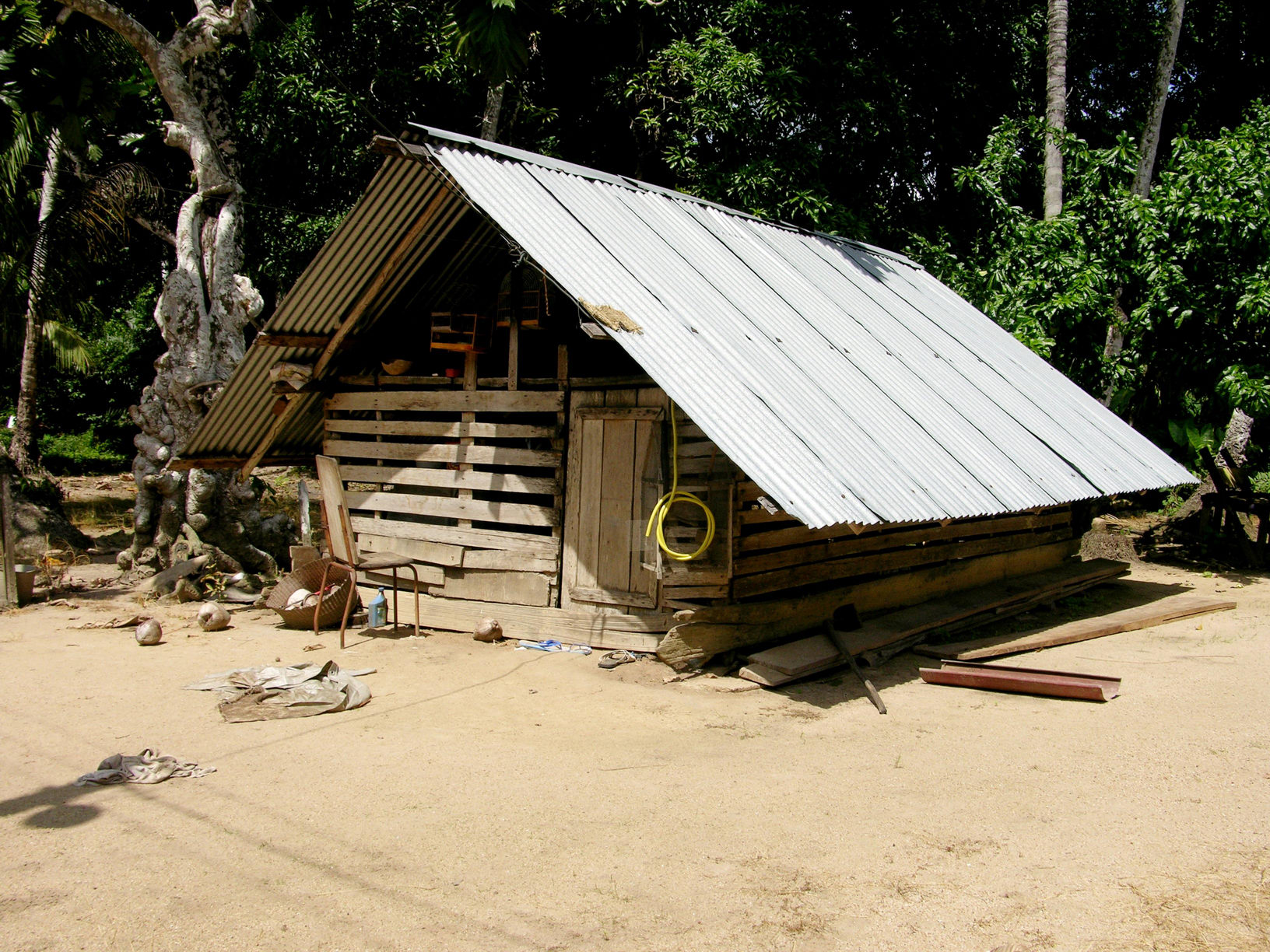
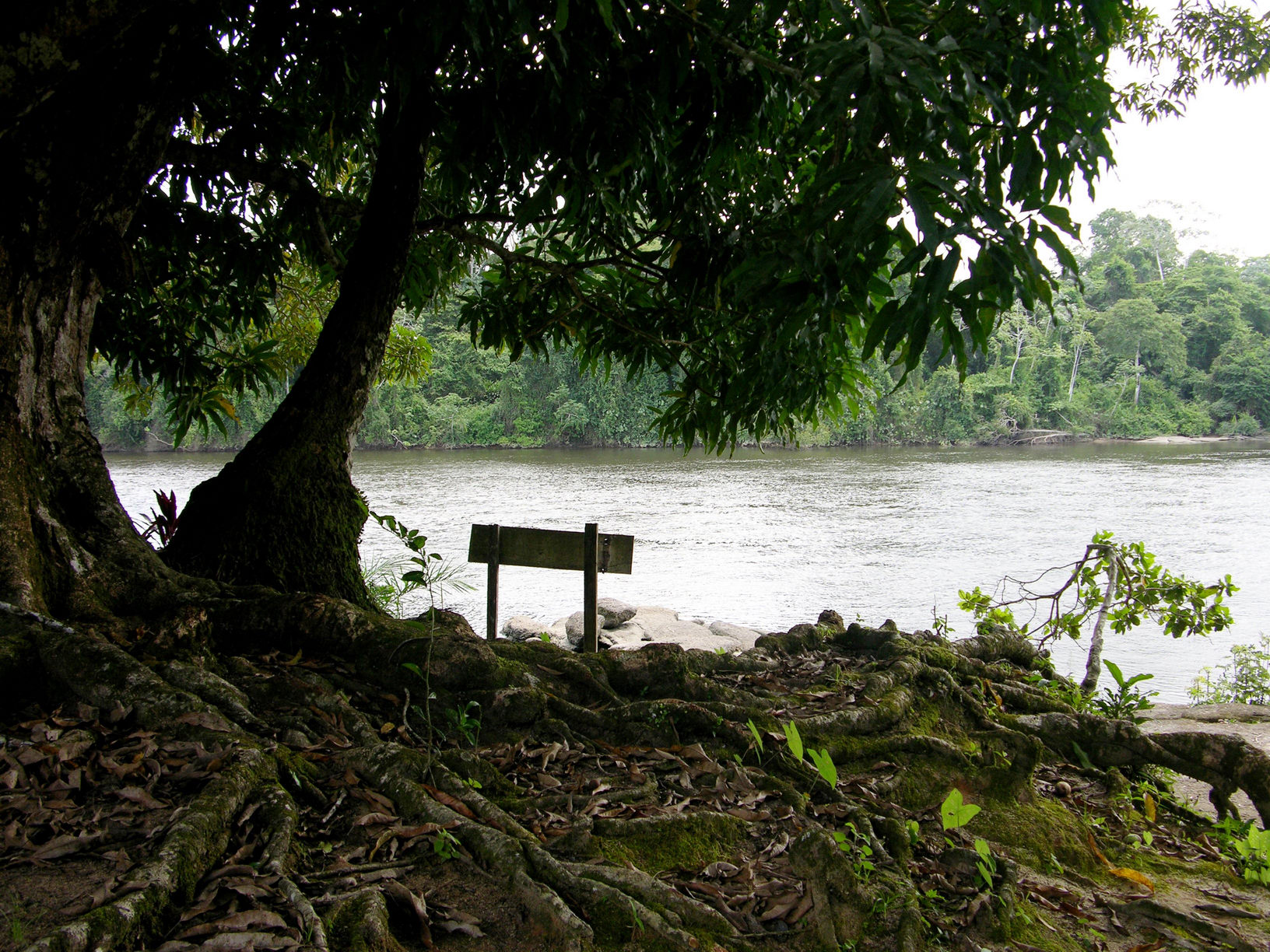
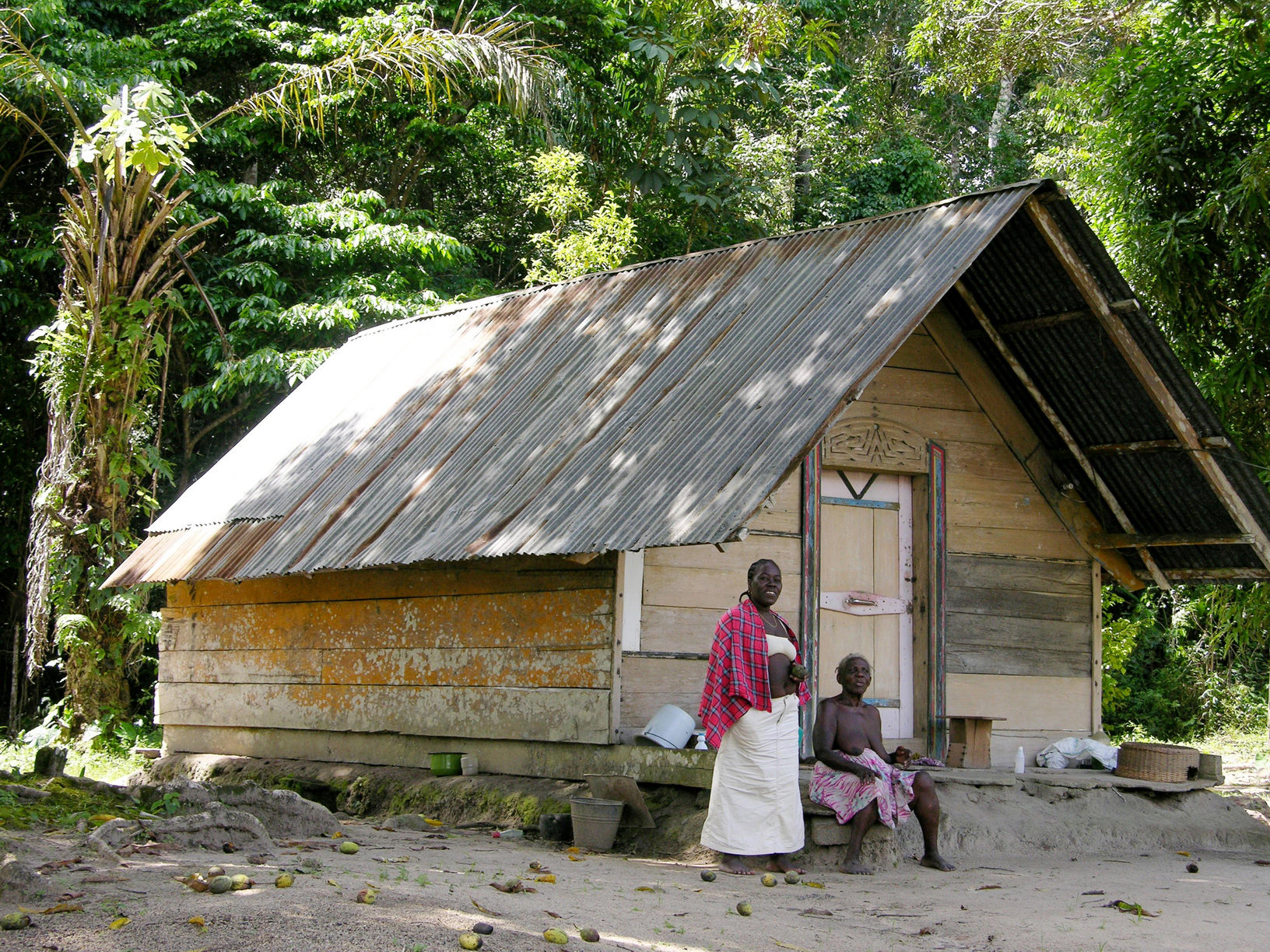
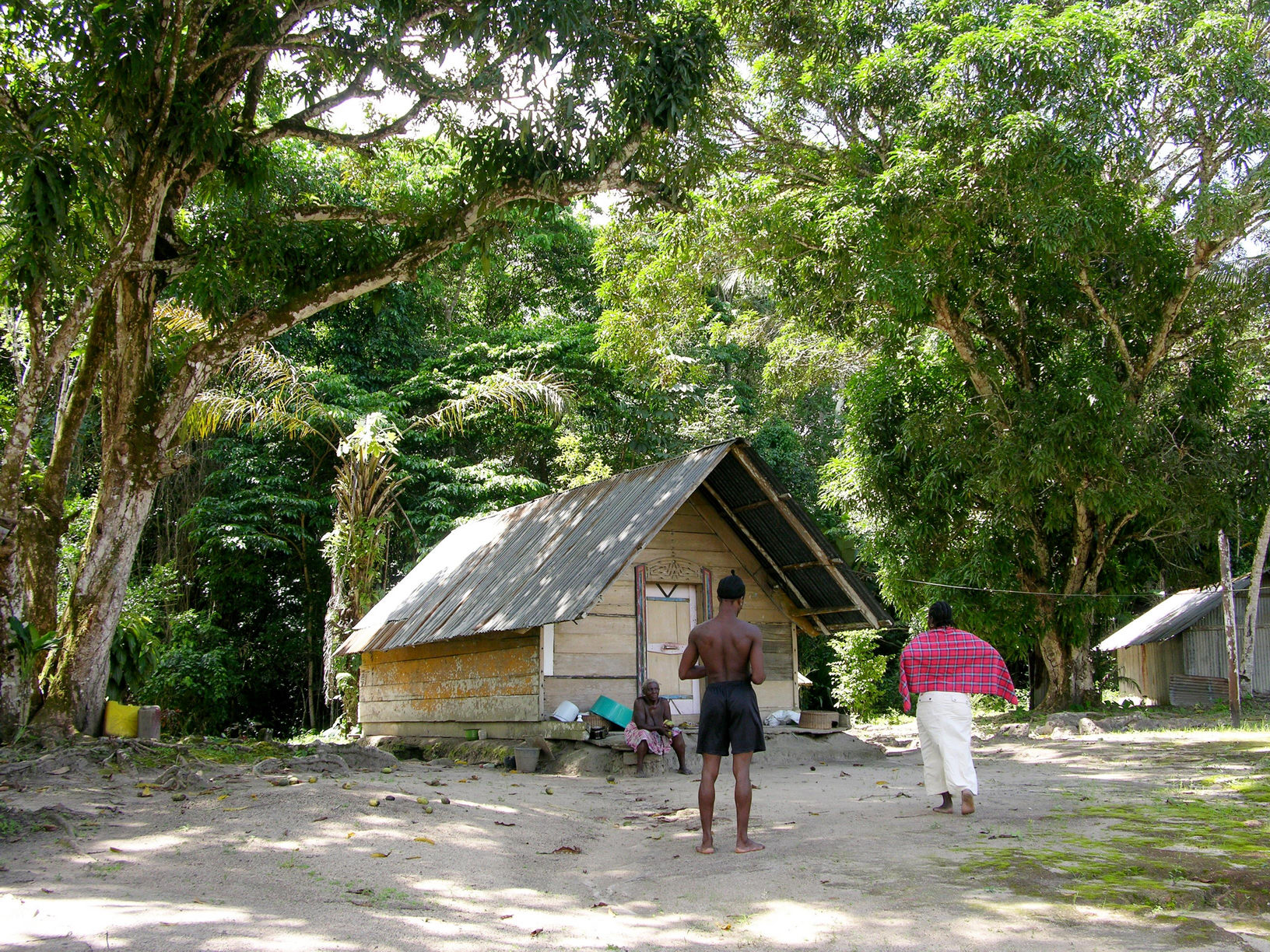
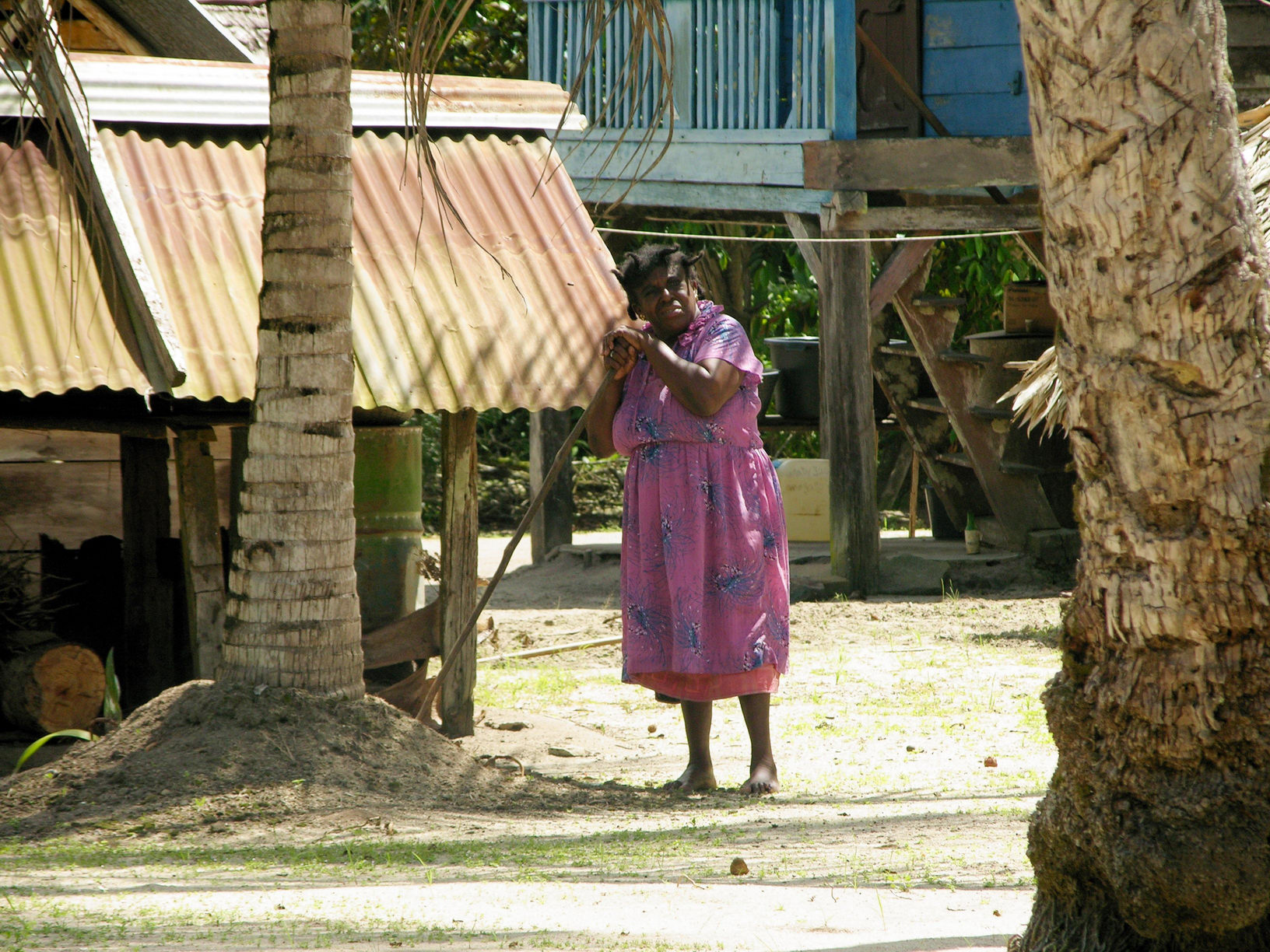
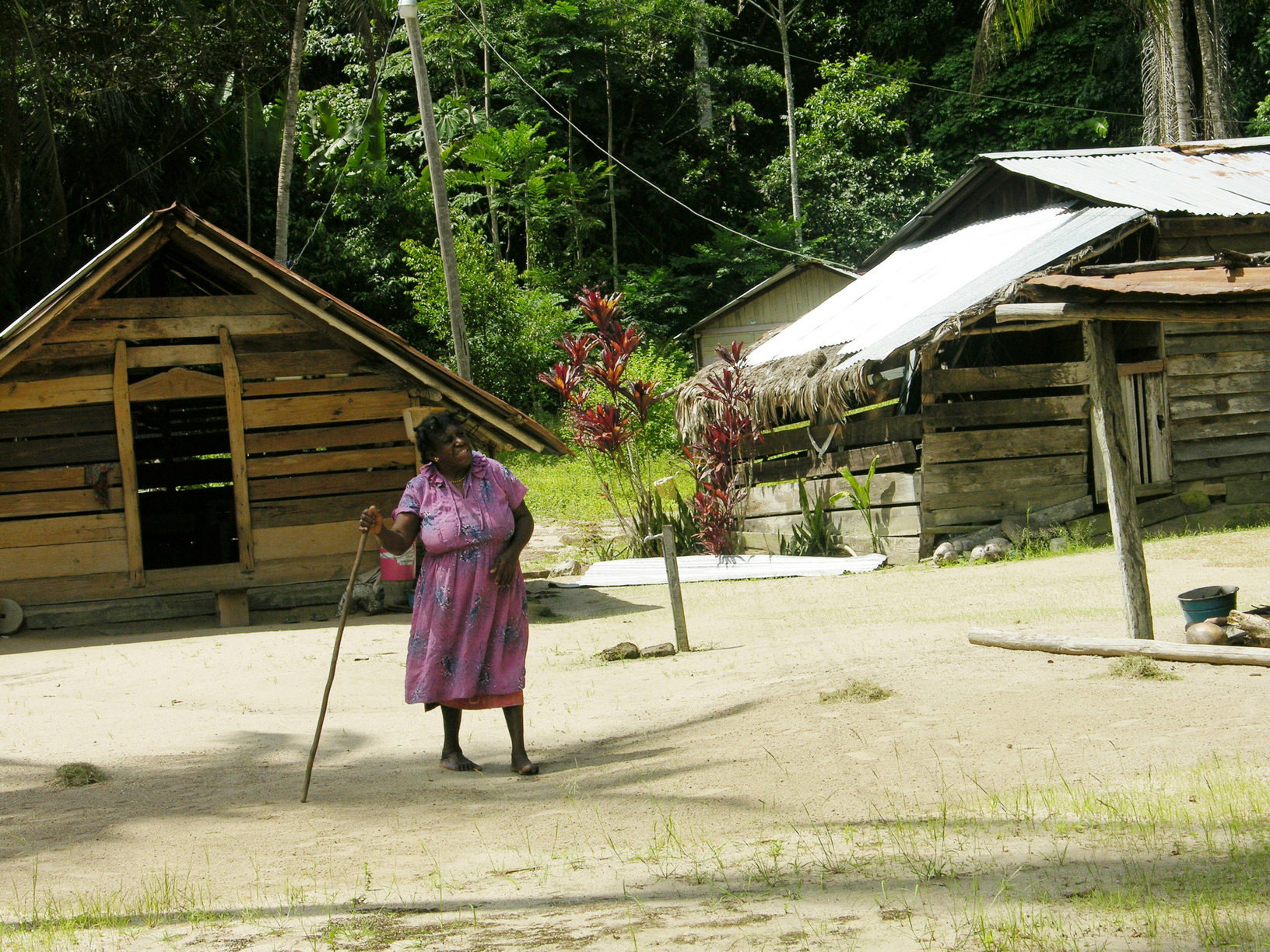
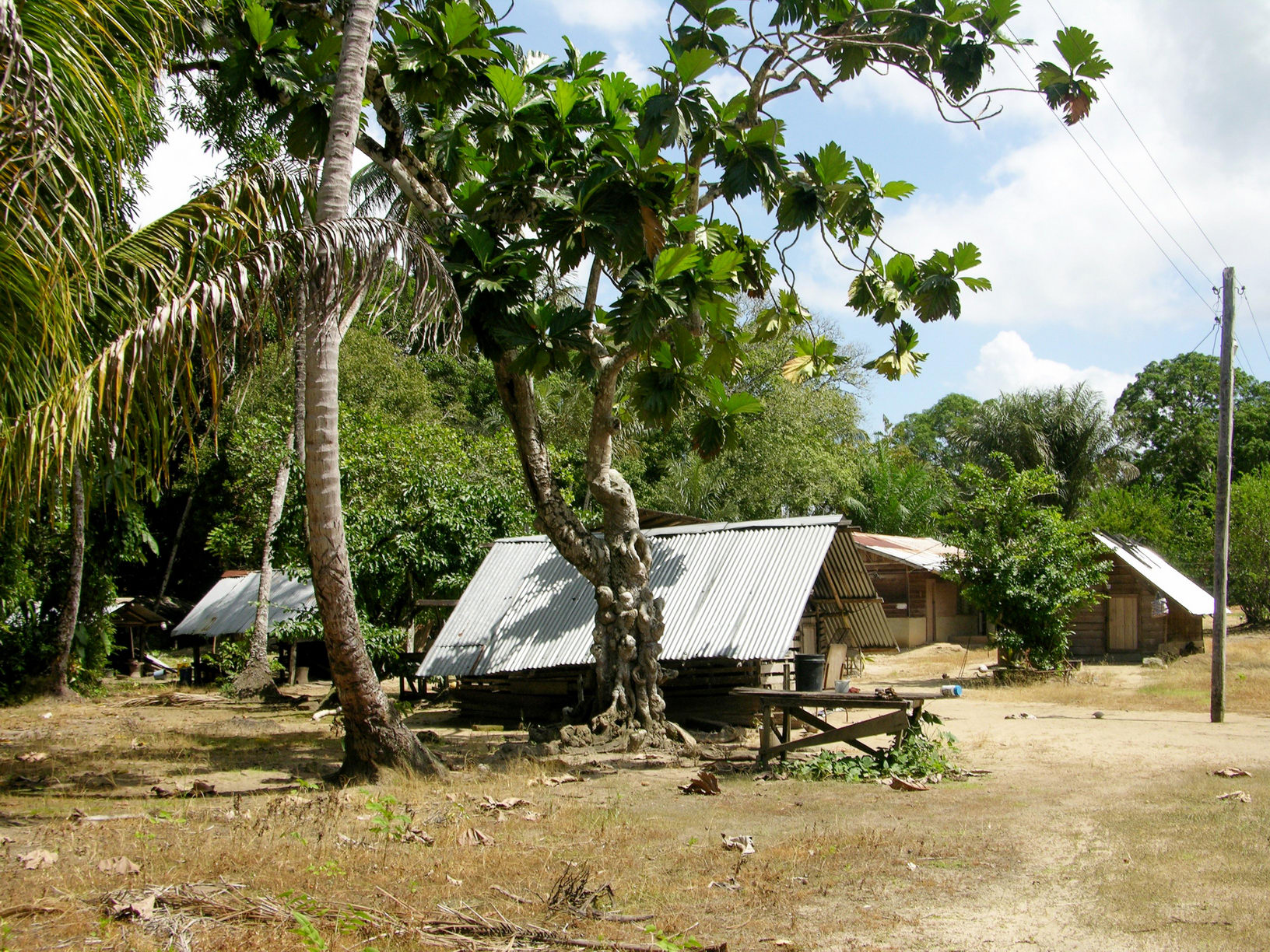
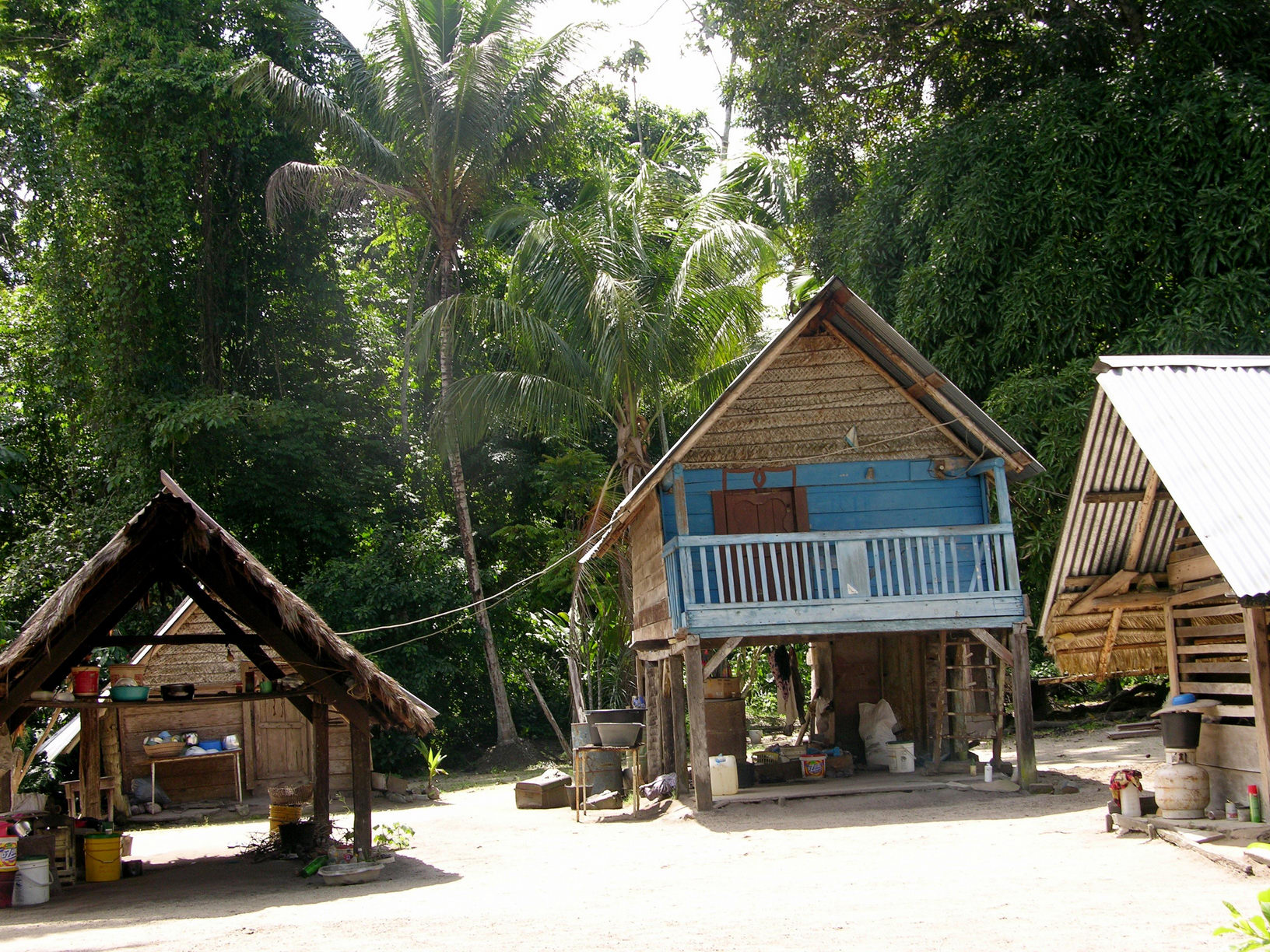
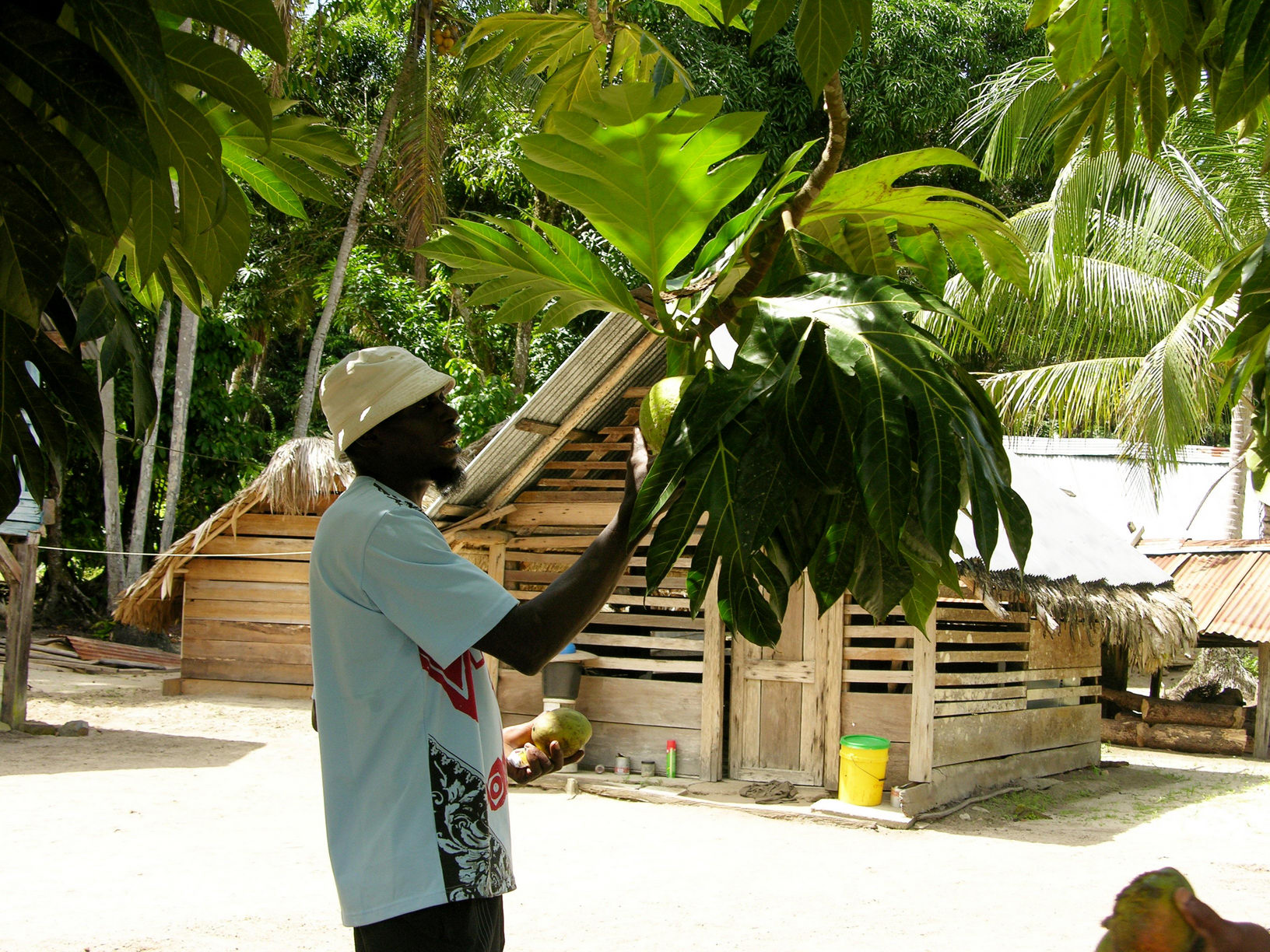
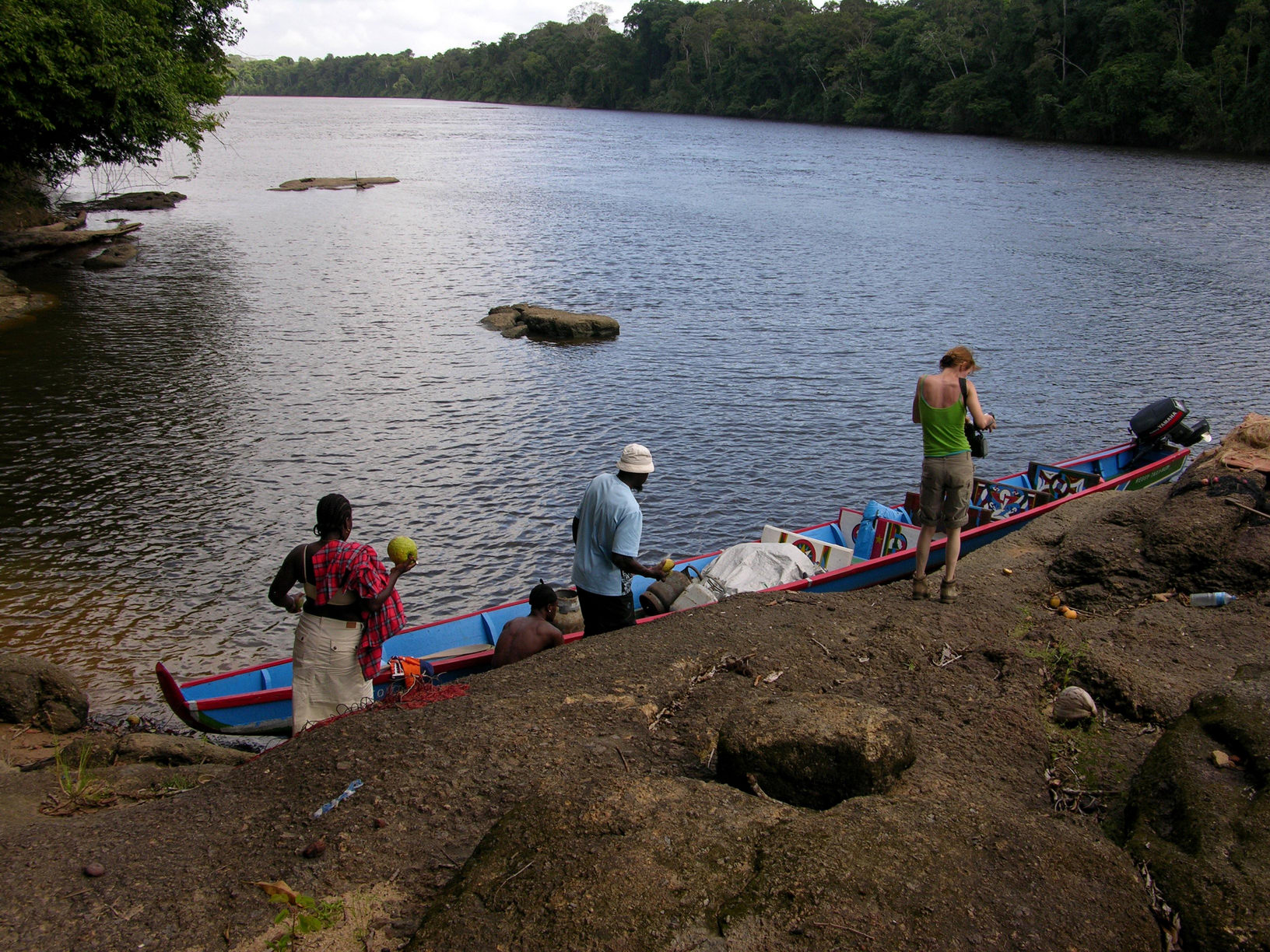
For now it was time to go back down the path to the boat and downriver to the jeep. Ten kilometres upstream from Witagron, a little village called Kaaimanston (Kaaimanston) is living out its last years. There are plenty of houses, but only four old women are still living there. The young people have left for big, busy Witagron, or farther afield, all the way to Amsterdam. Just four grandmothers have stayed to die in their home village. They sit in the shade and their children visit. Our boatman called in on the way back. He didn't bring the old ladies anything, though. On the contrary, he picked some coconuts and bananas, shook a breadfruit tree and loaded it all into the boat. The old ladies weren't going to eat that much, anyway.
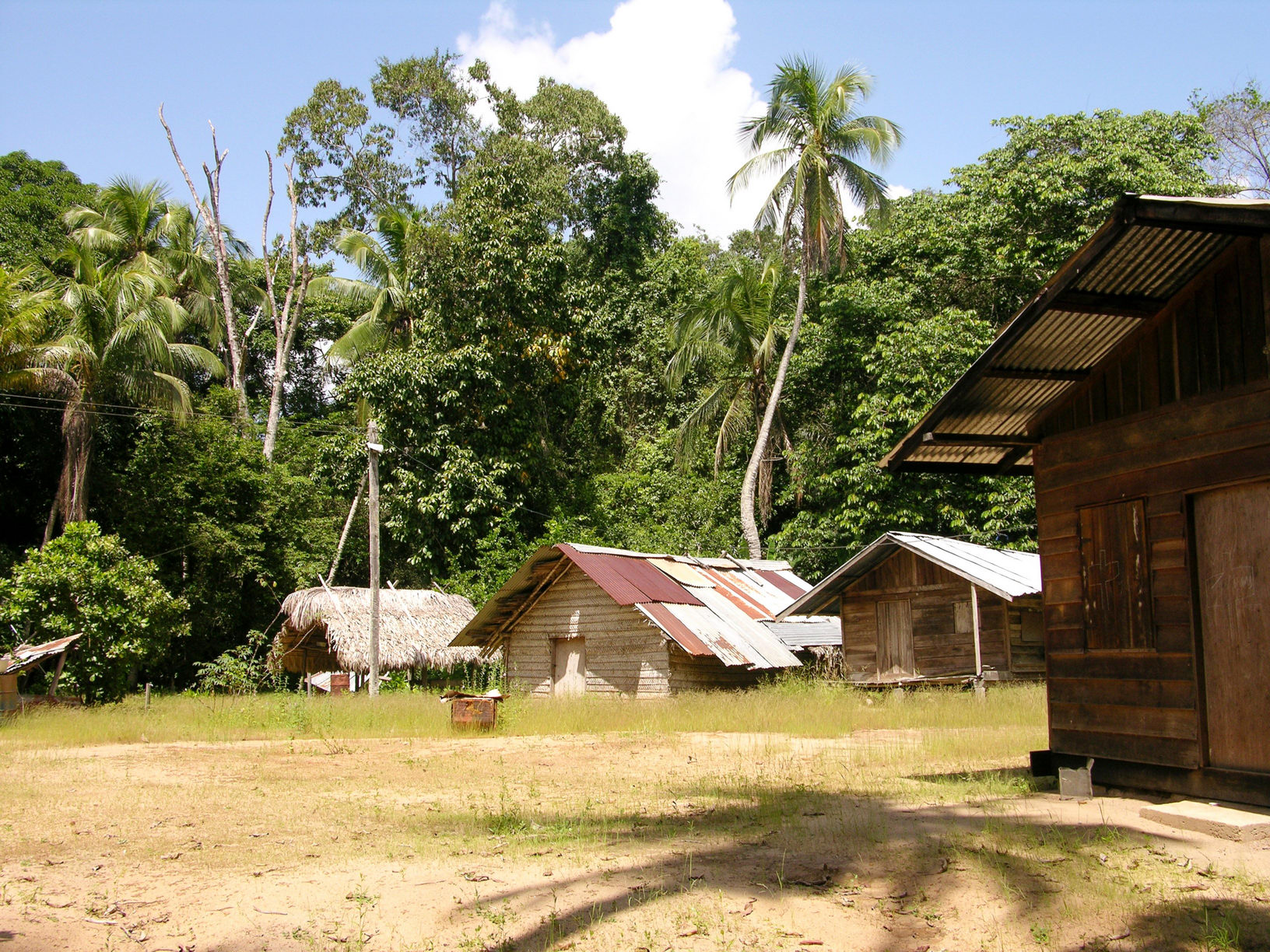
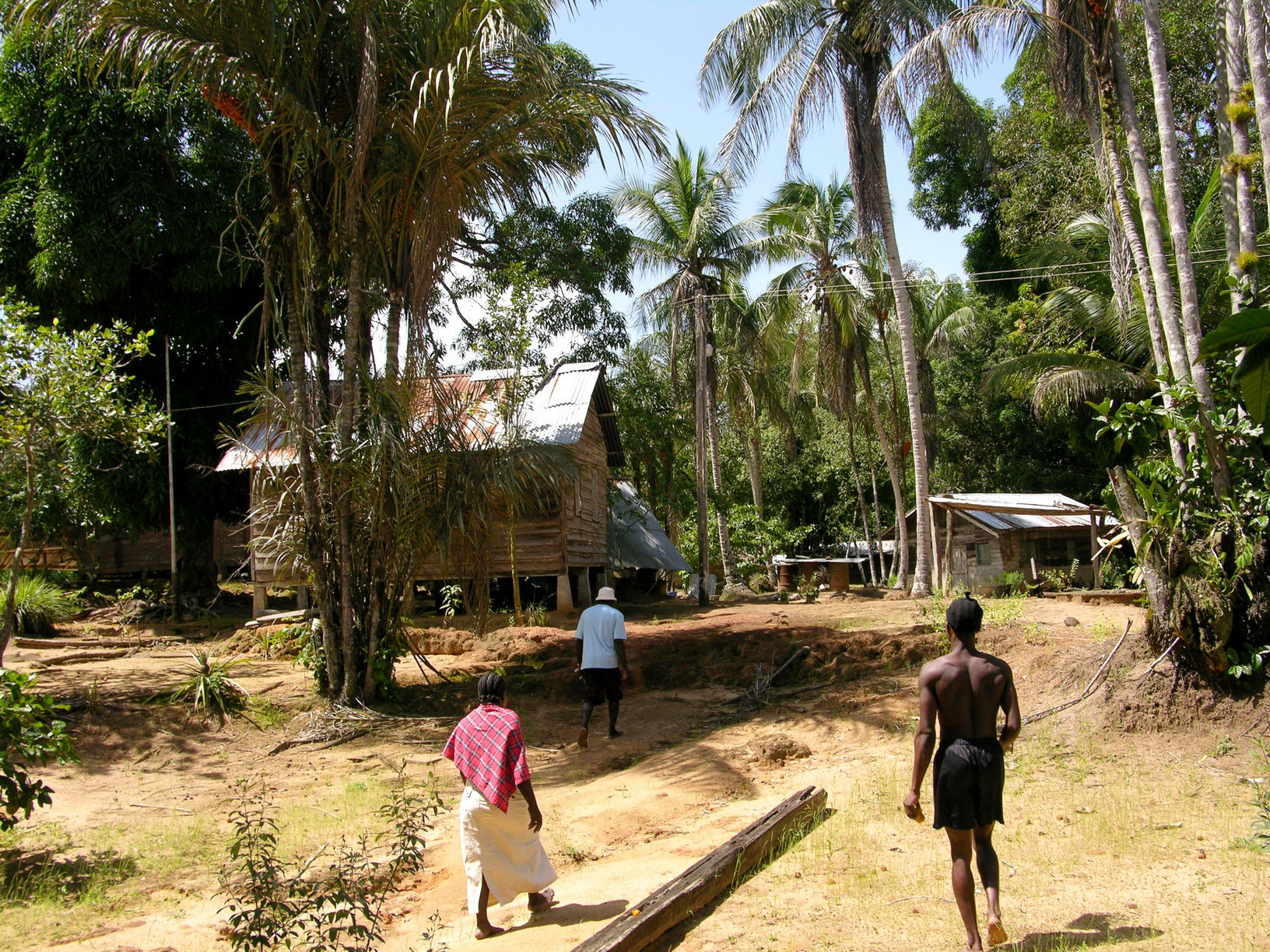
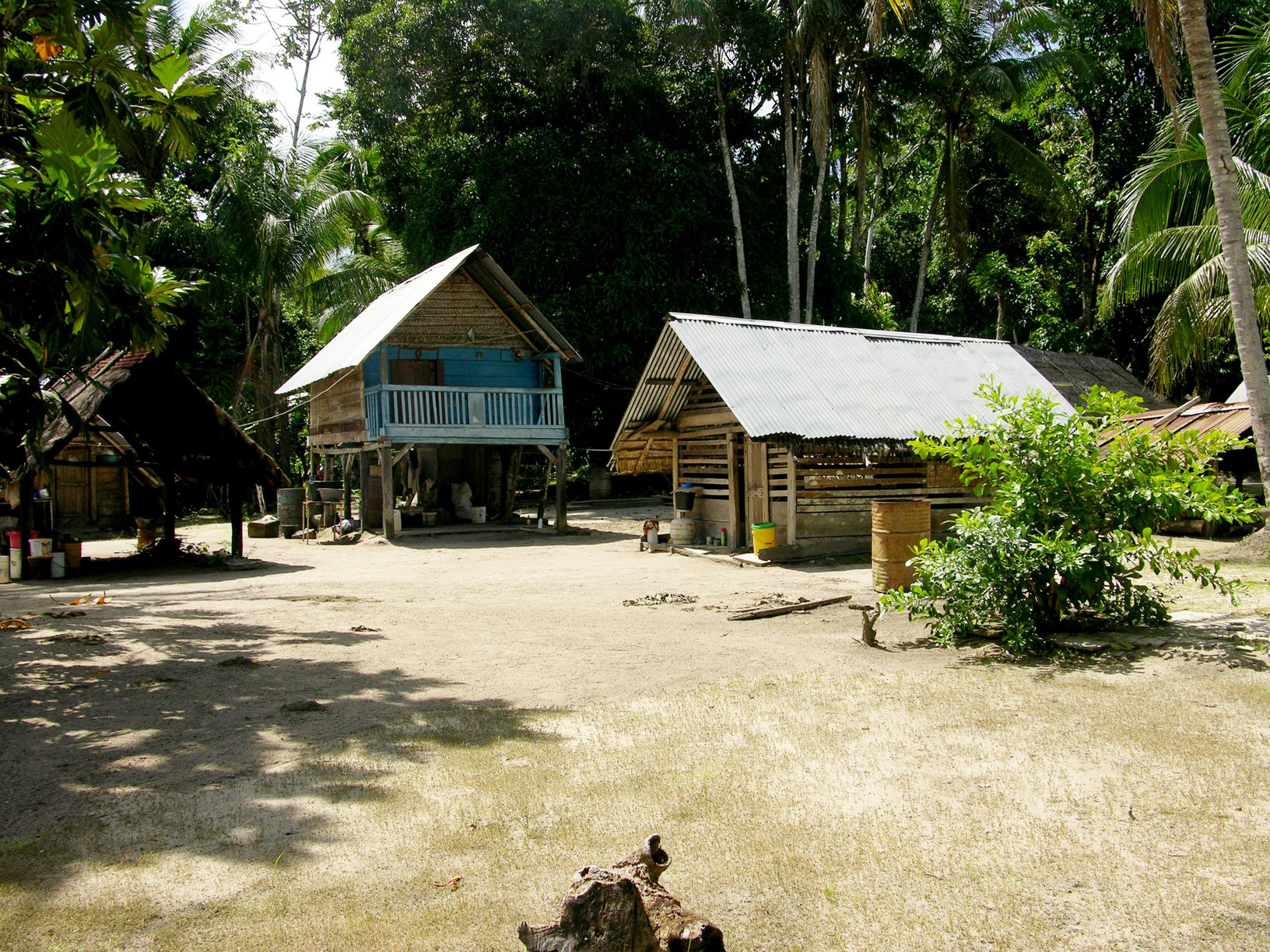
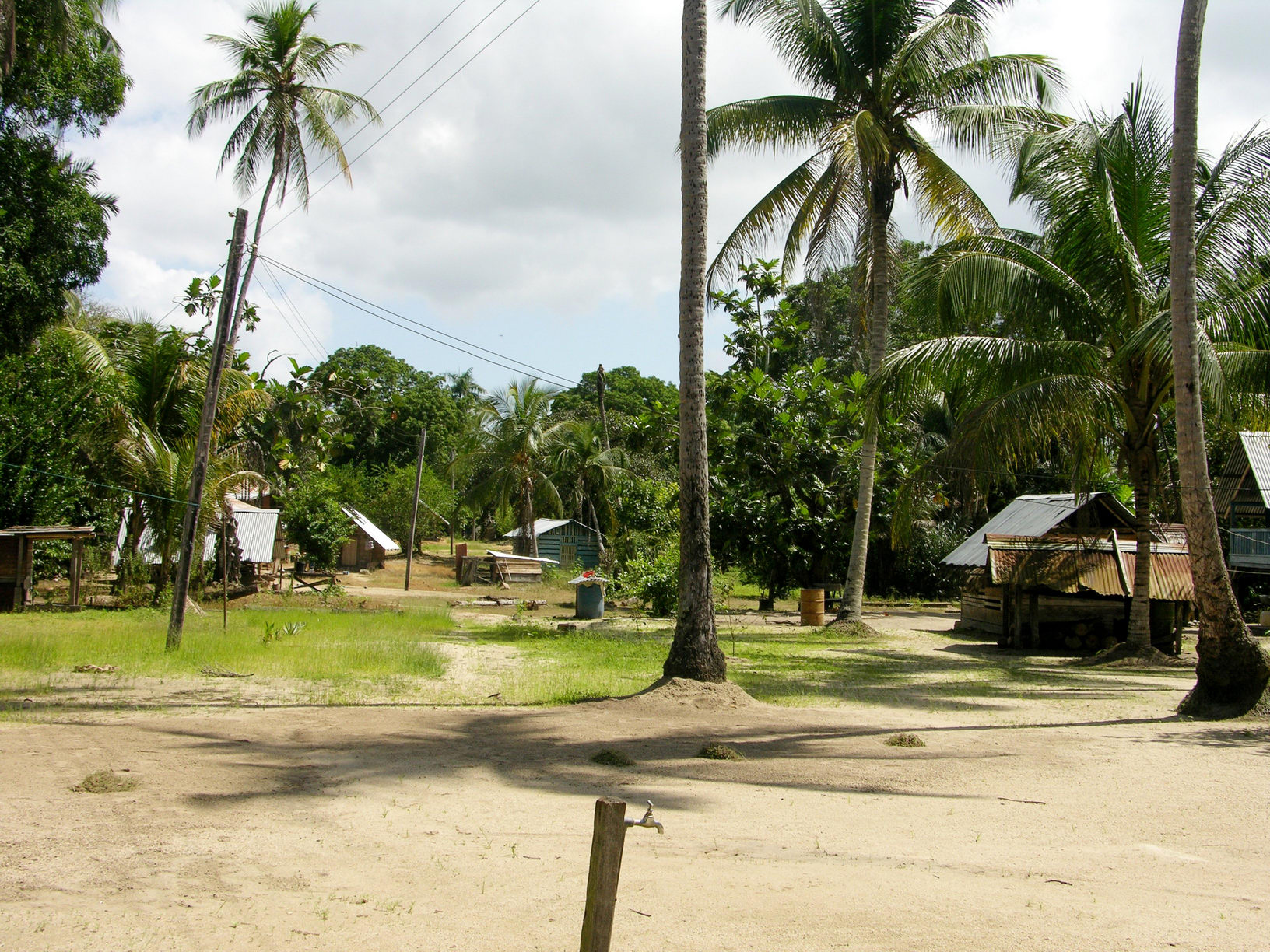
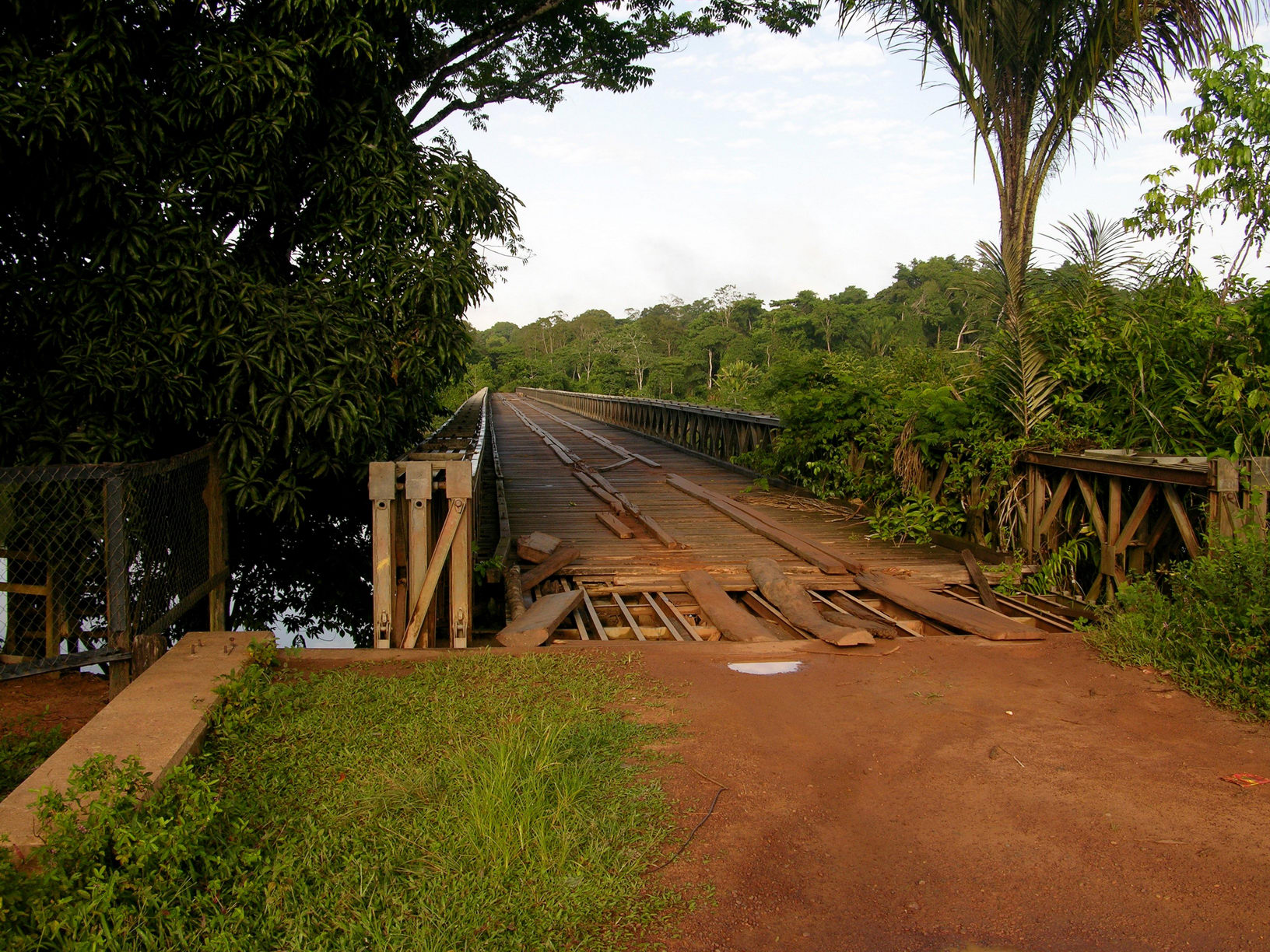
At Witagron we got into the jeep and drove back. At first we'd thought of taking the road farther. On the map you can get to the Guyanese border and out to the sea at Nieuw Nickerie, but as we found out hardly anyone uses the road beyond Witagron. Even the locals don't know how far it's passable. The bridges are especially worrying. They're all wooden and thoroughly rotten, beginning with the bridge over the Coppename in Witagron itself. Many planks have already fallen through, so you have to keep shoving something under the wheels to get across. The river is deep below. If the bridge gives way, you lose your jeep. Besides, we had only enough petrol to get back.
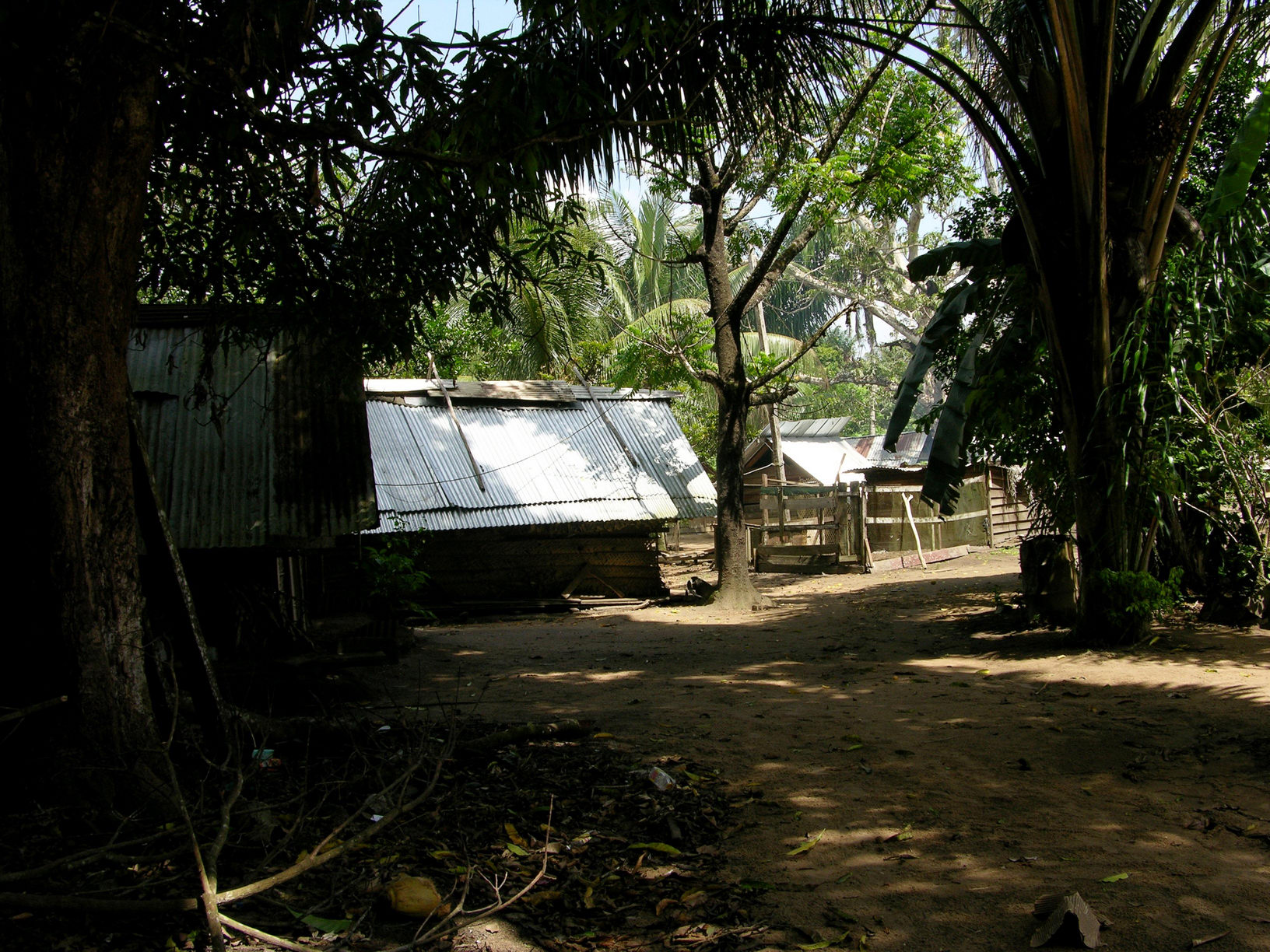
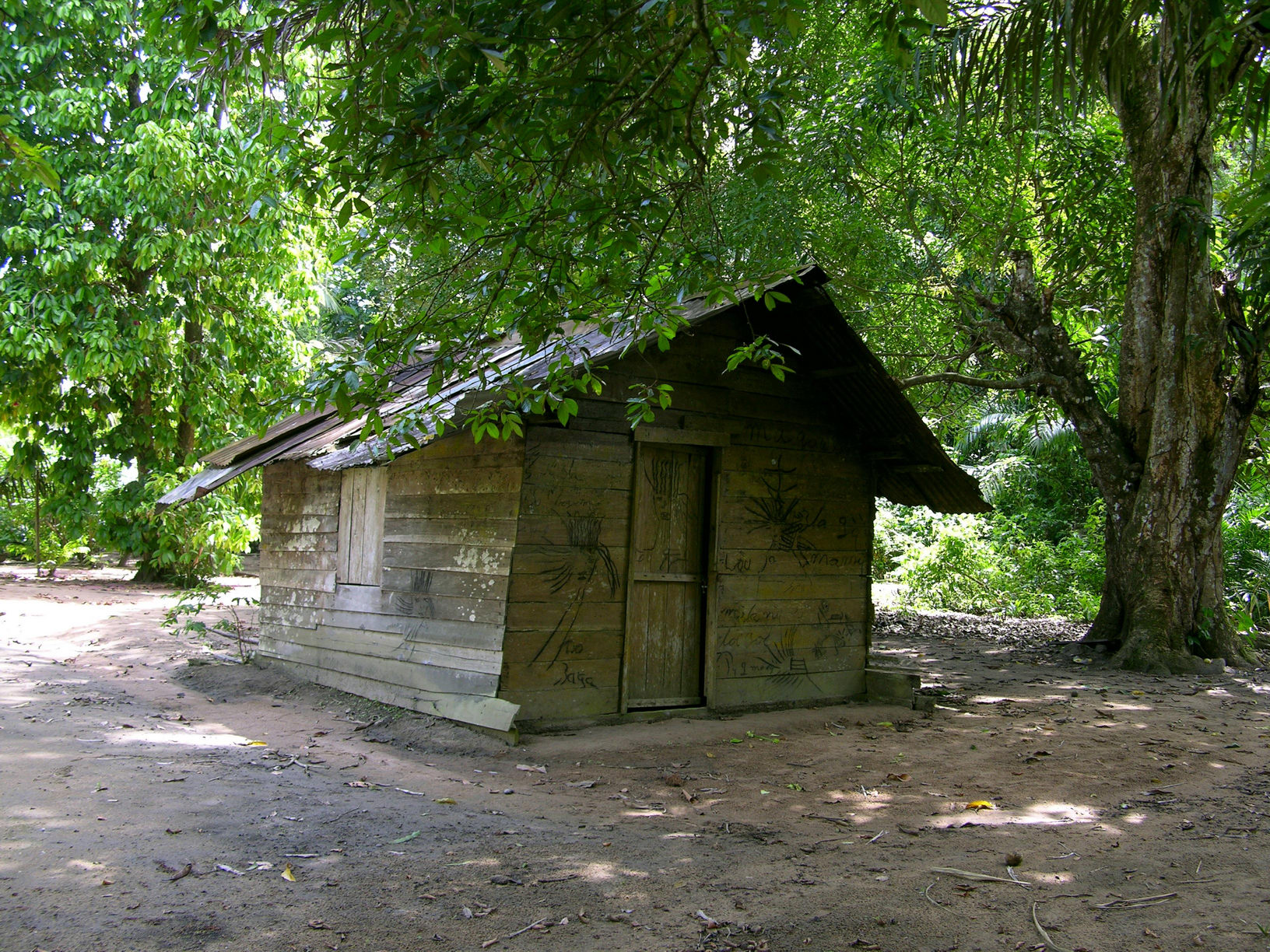
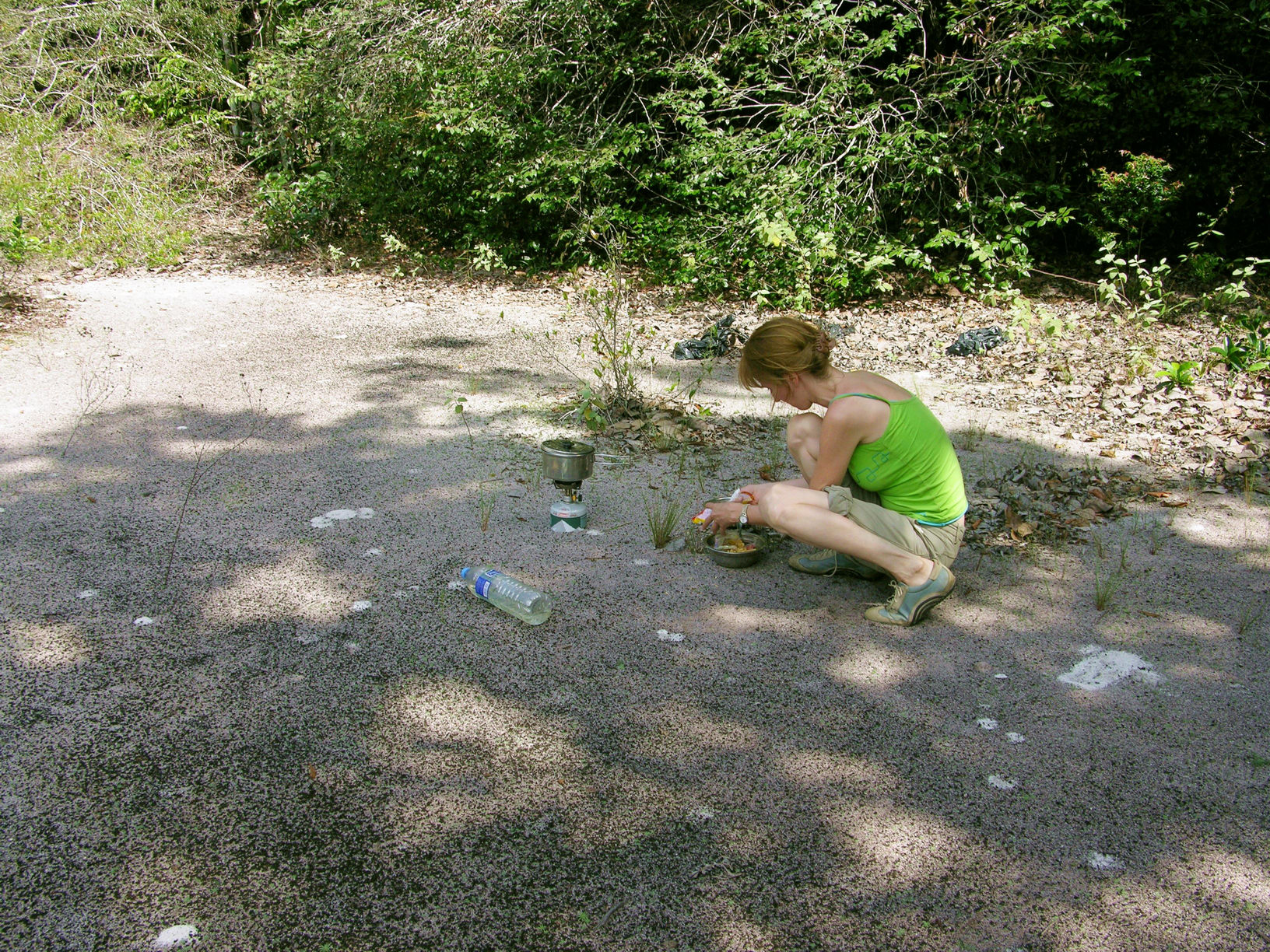
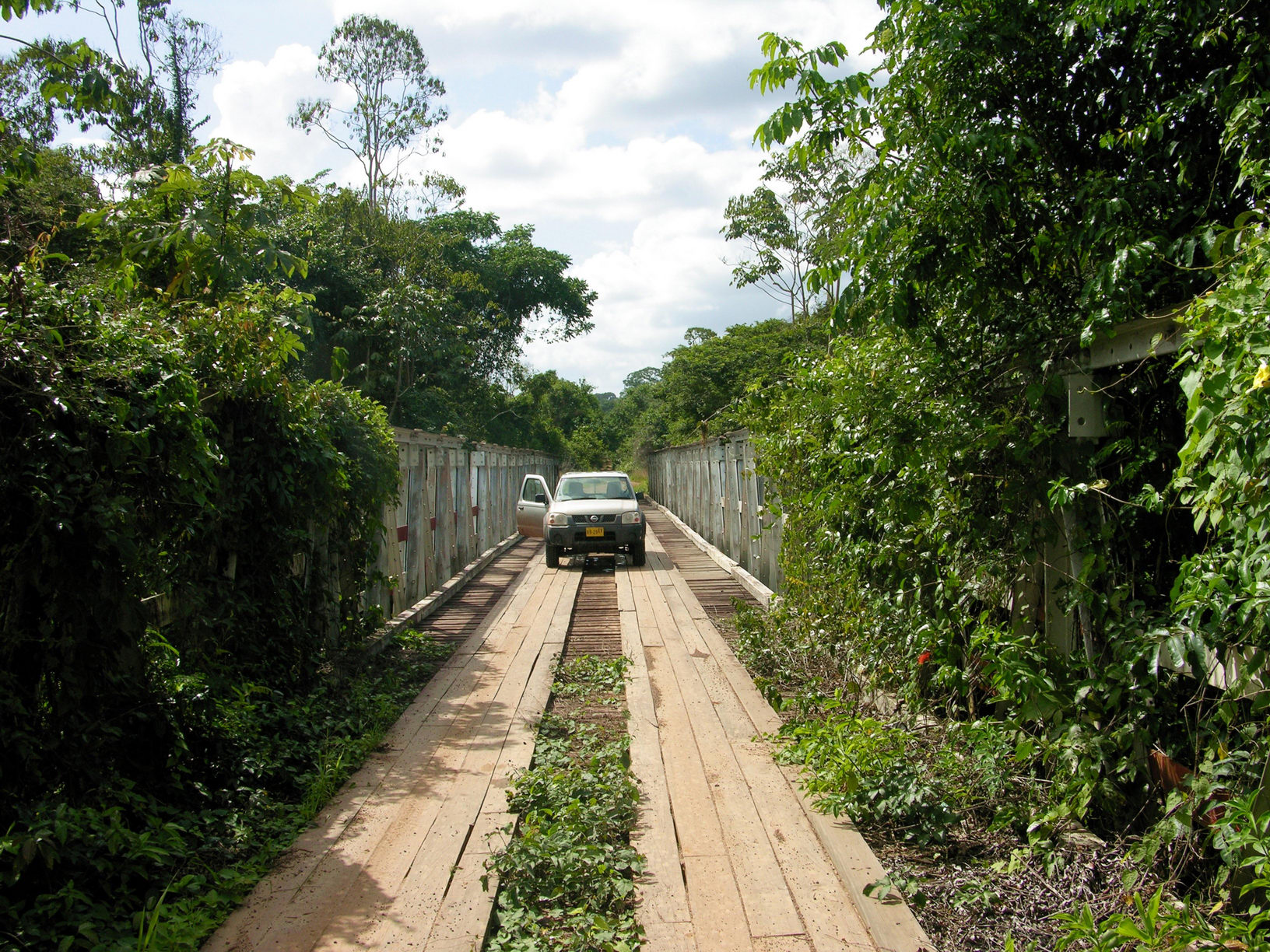
Not far from Witagron a local anti-poaching patrol stopped us. Soldiers in uniform and carrying automatic weapons got out of an oncoming jeep and checked our boot for dead animals. They had a picture of a toad on their shoulder patches and the like, for their branch emblem. This was our only encounter with the authorities in Suriname, by the way. No checkpoints on the roads and no traffic police lurking in the bushes.
The road back seemed a lot easier than on the way out. Two sunny days without rain had dried it out quite a bit, and the puddles had become much shallower.
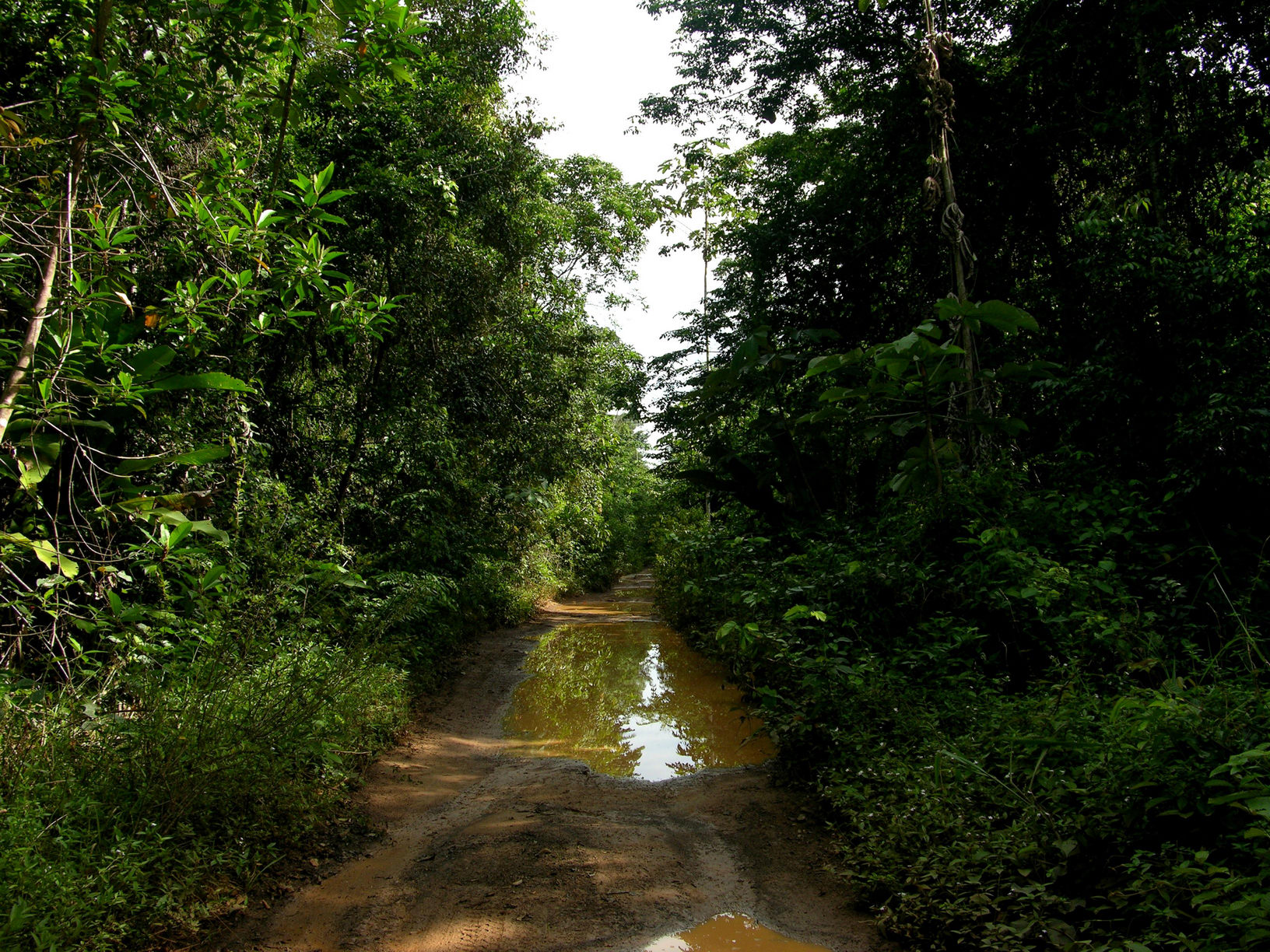
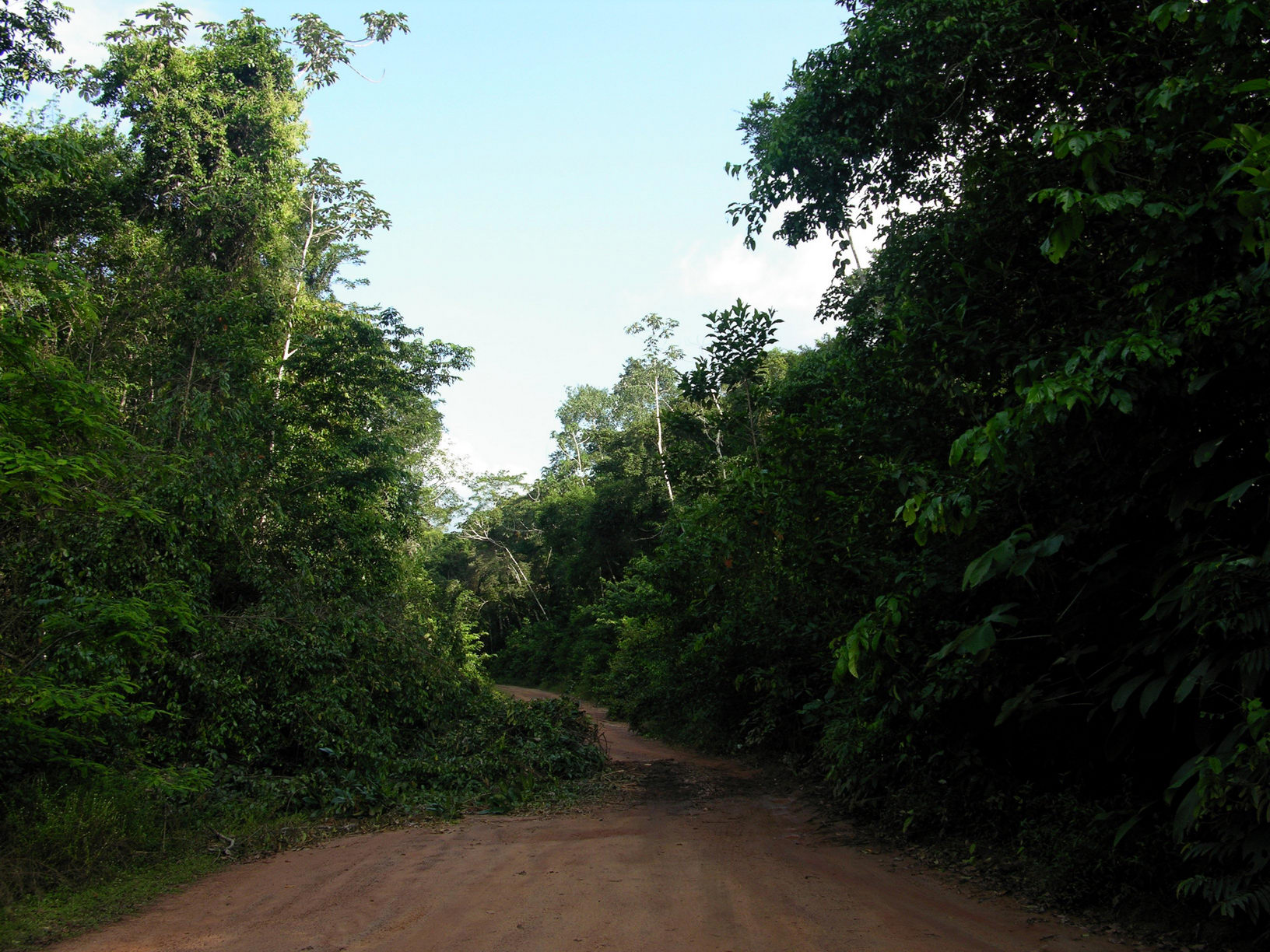
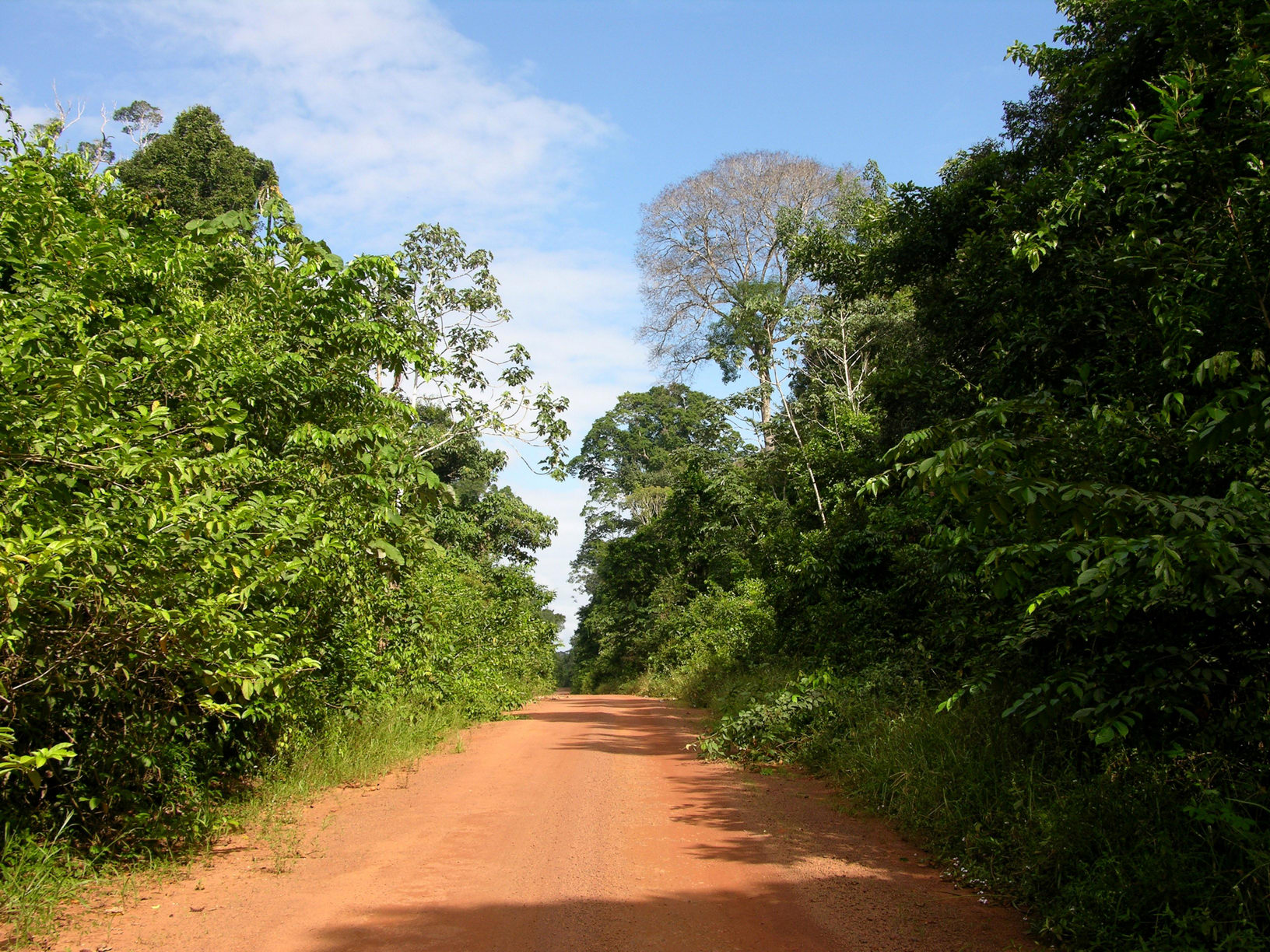
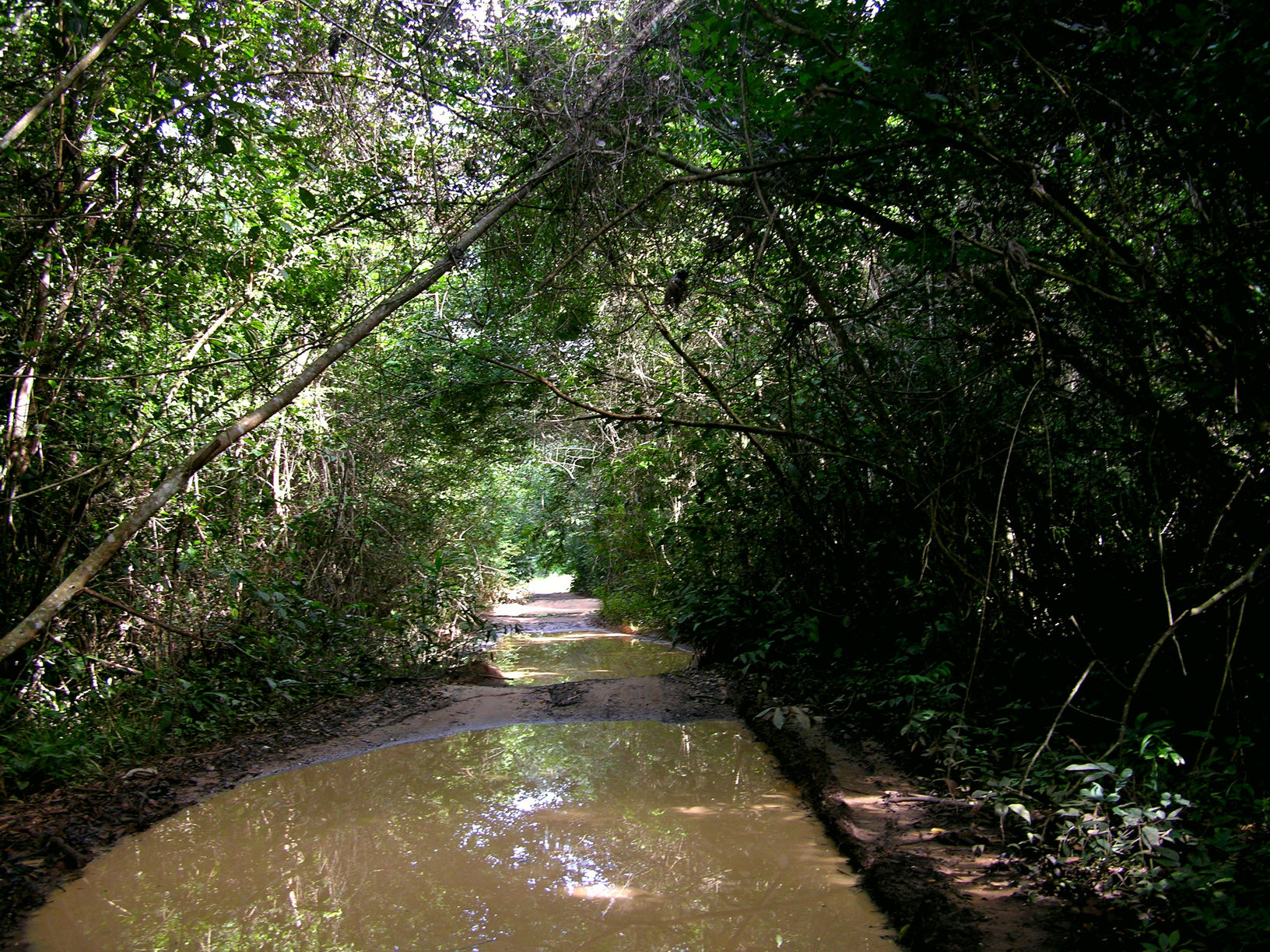
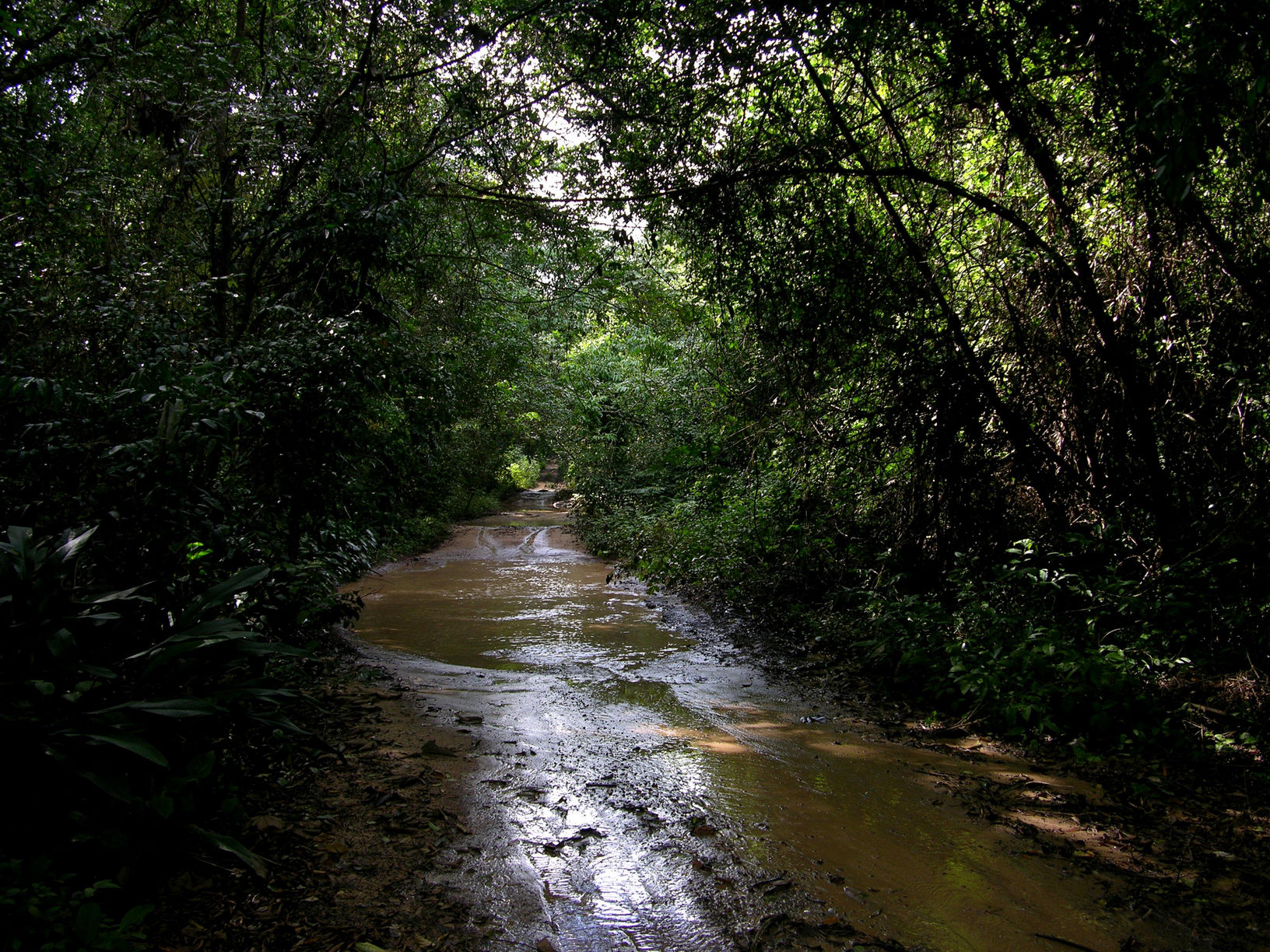
Today was Saturday and there were more cars. Surinamese people enjoy getting outdoors. The whole family goes and sets up camp beside some little river. Closer to the capital there are campgrounds by the bridges over every little stream. They don't know the word, mind you. People from the next village have just built a few little bridges, benches and shelters, and charge you to go in.
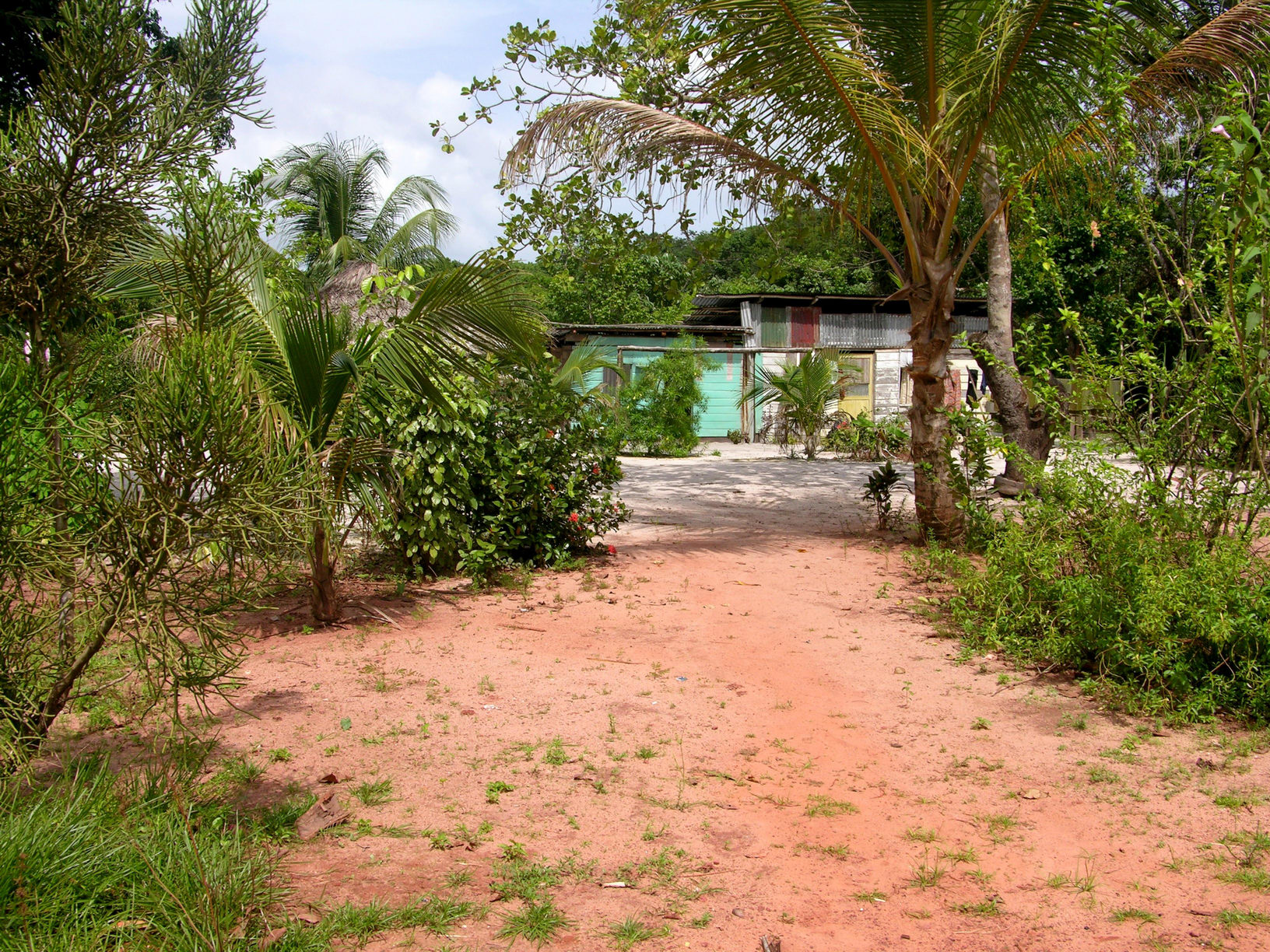
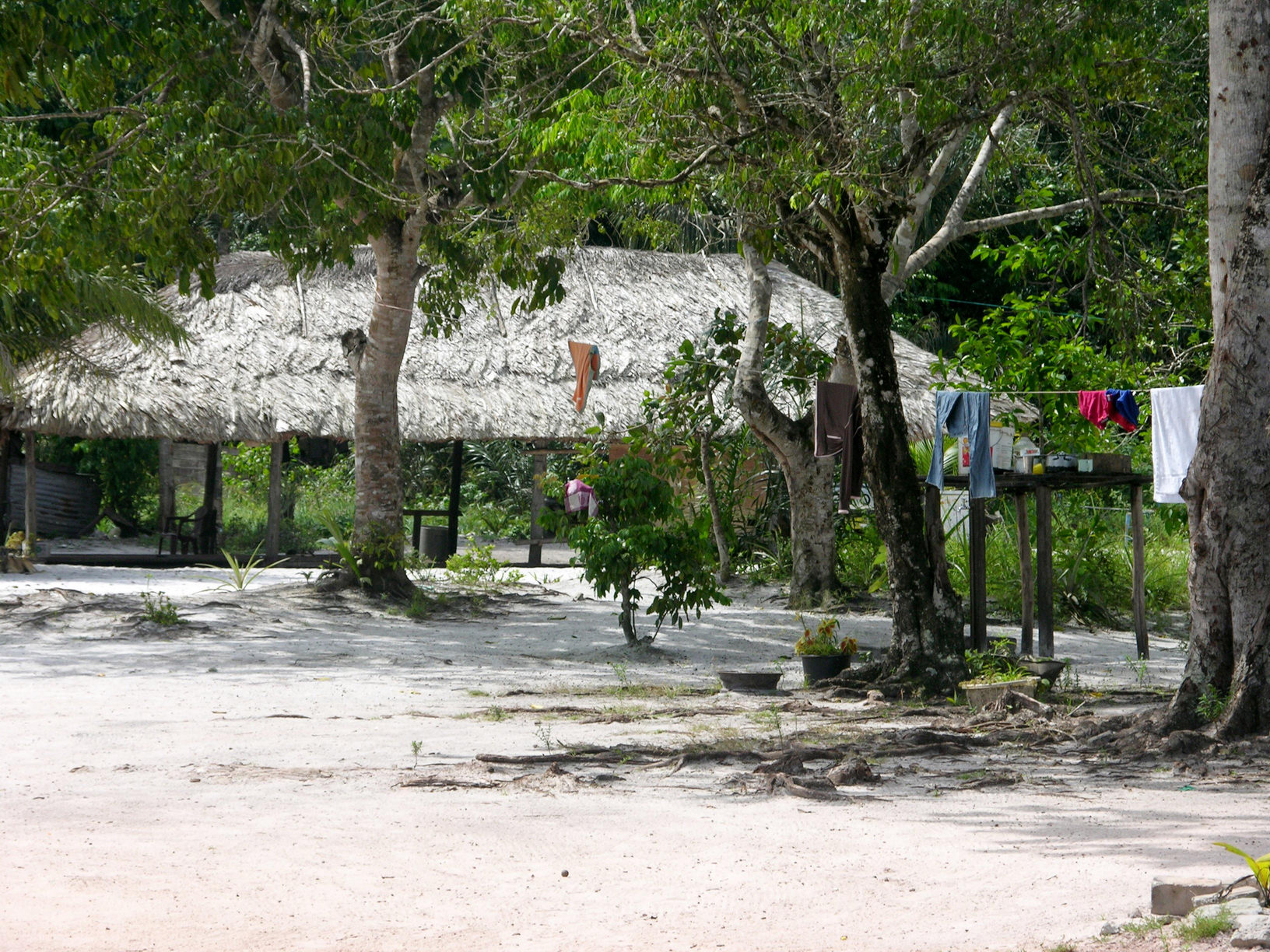
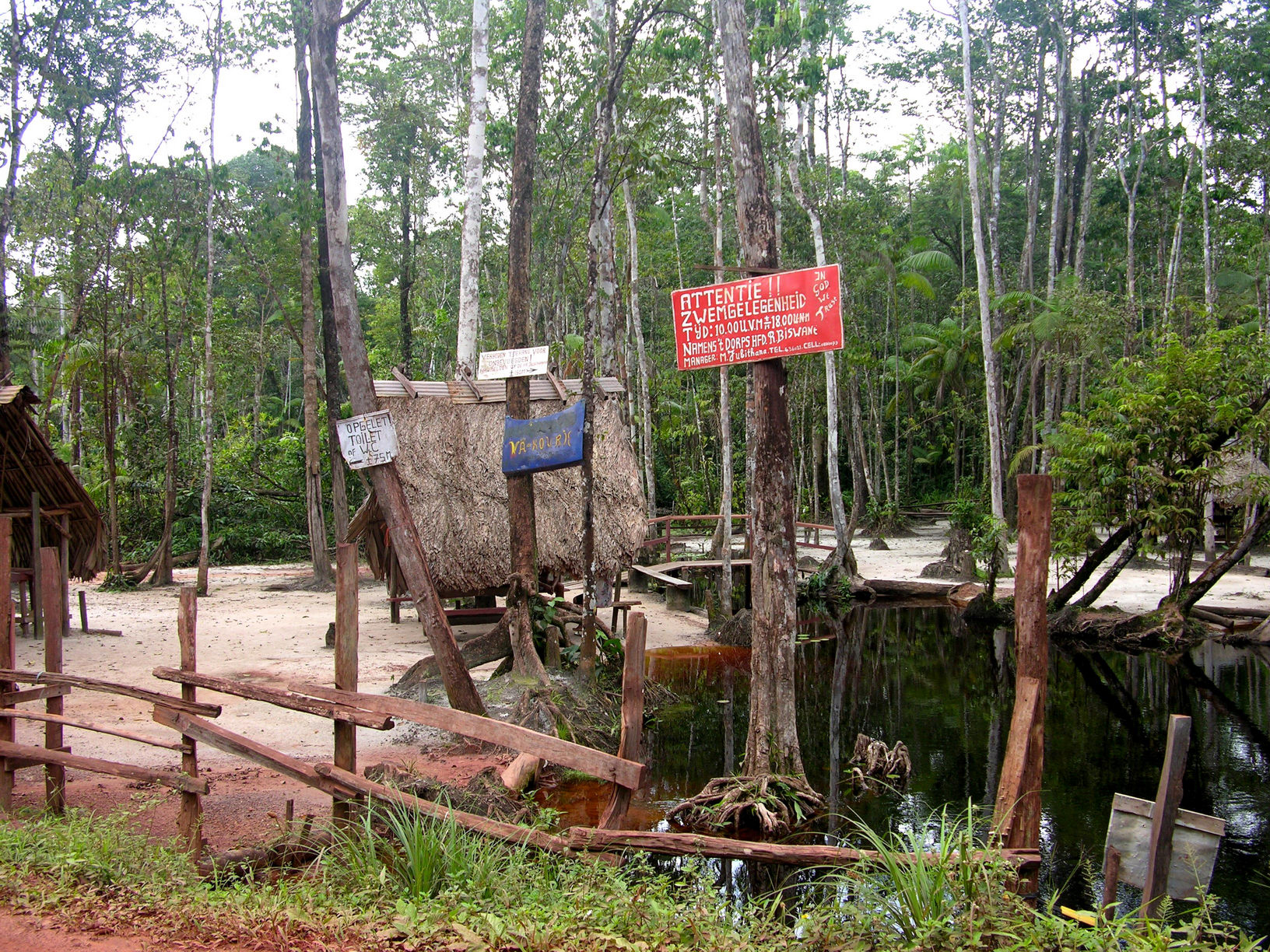
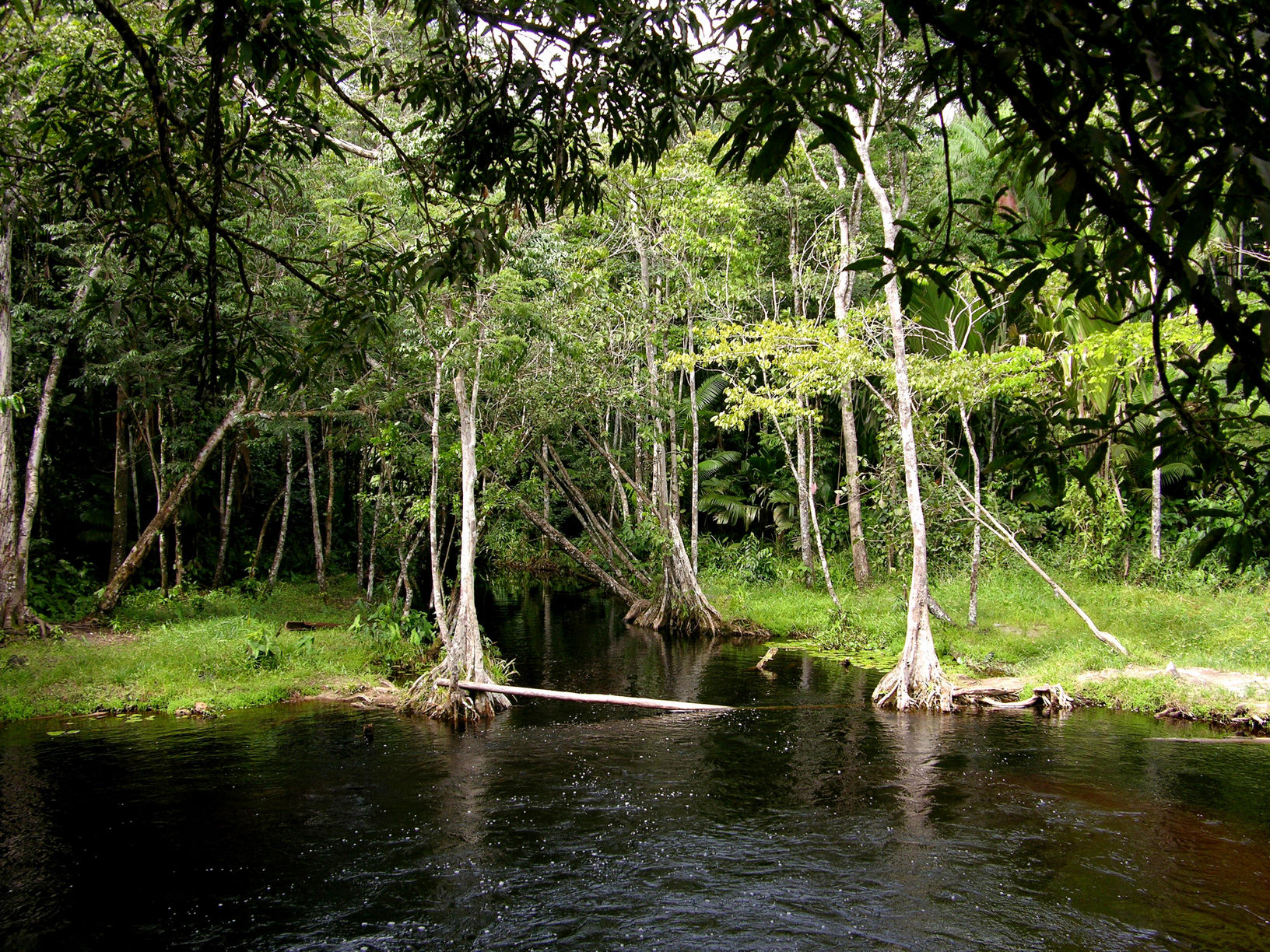
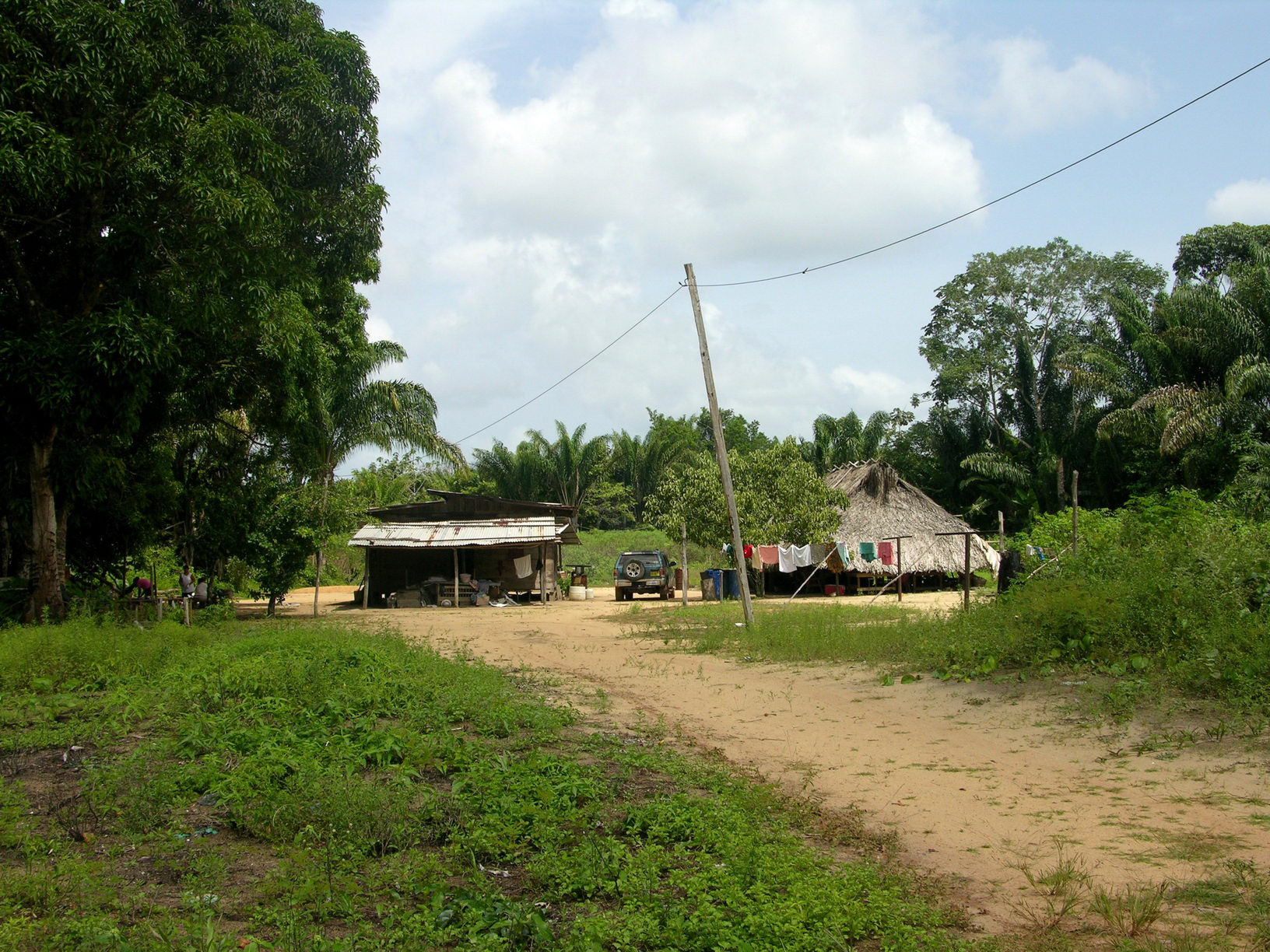
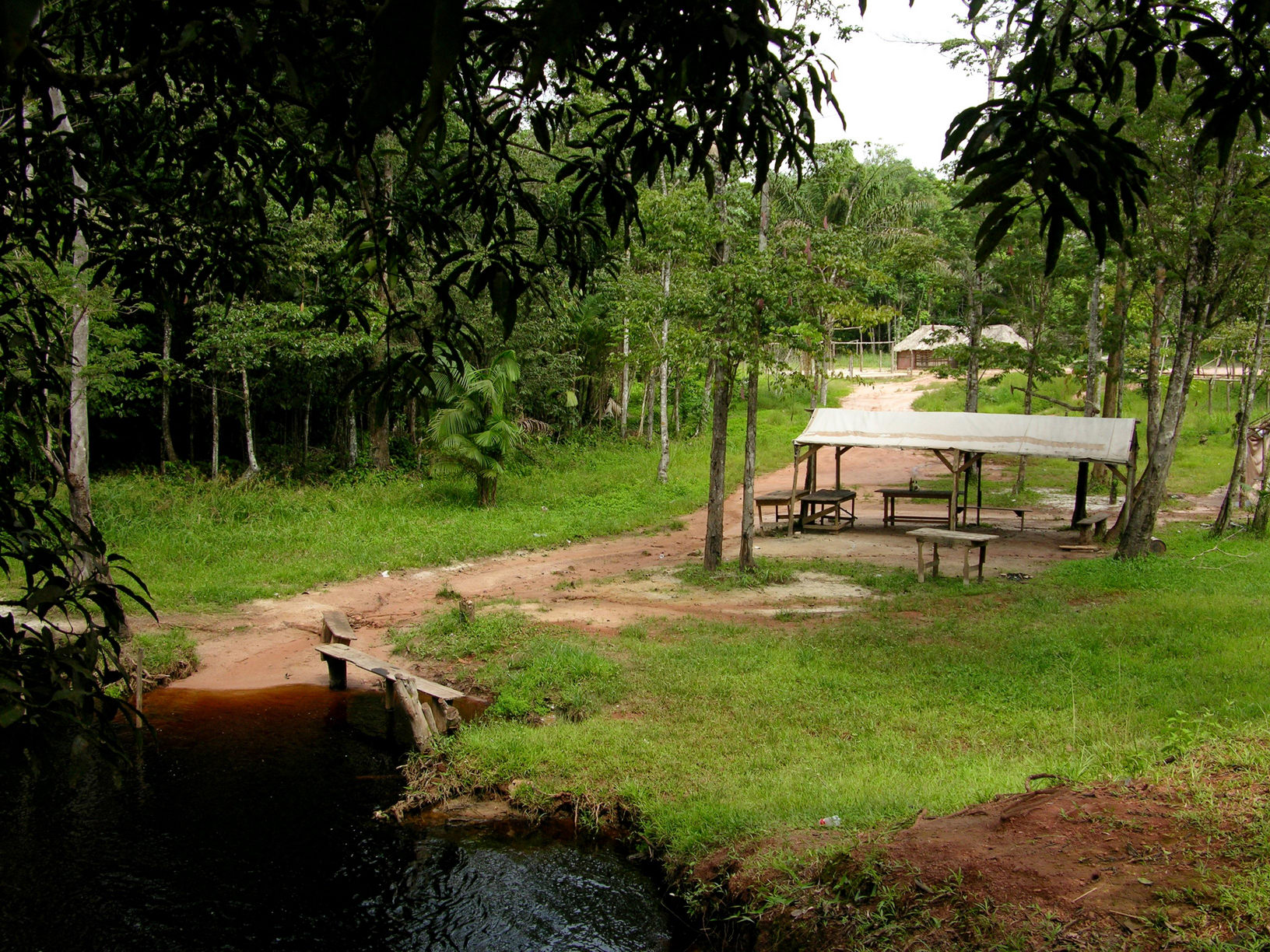
Farther out in the forest there are just grassy clearings by the streams and no charge. They make you want to stay the night. And what's stopping us?
Tomorrow was our last day with the rental jeep, but we still had time if we got up early. Before reaching the inhabited country we found the right patch of grass on the bank of the little Coesewijne River (5°18.056′N, 55°33.039′W, 33 m).
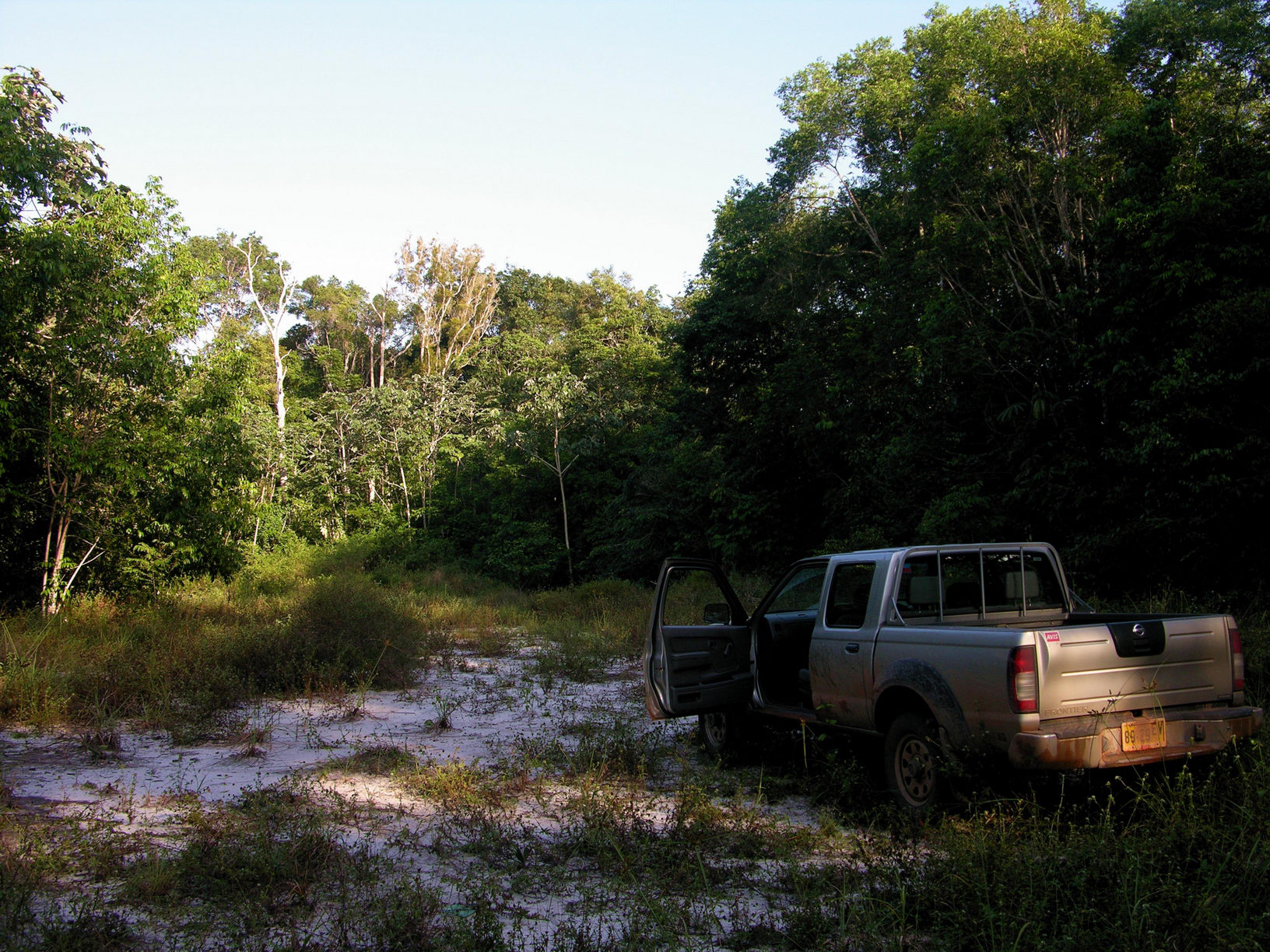
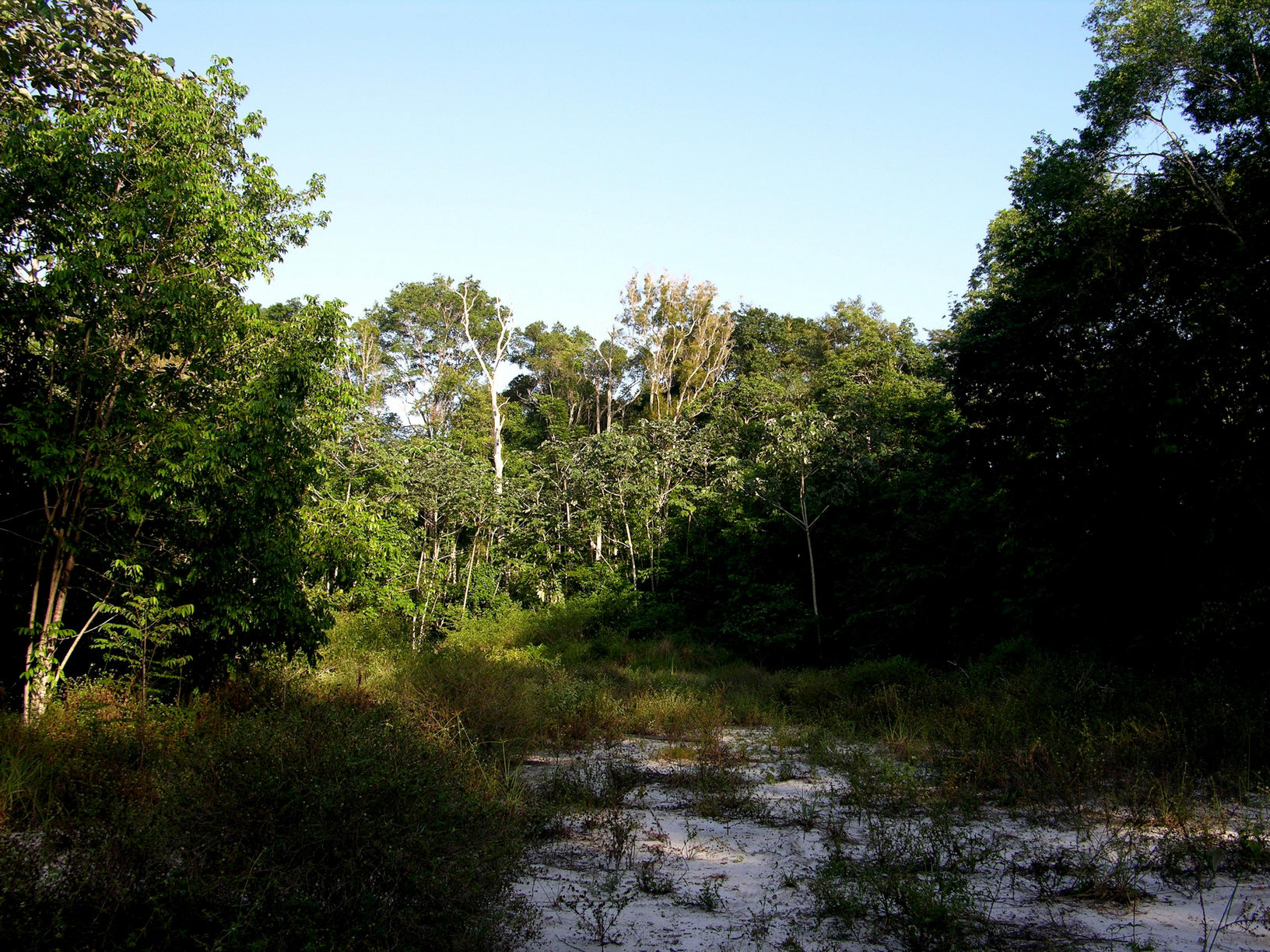
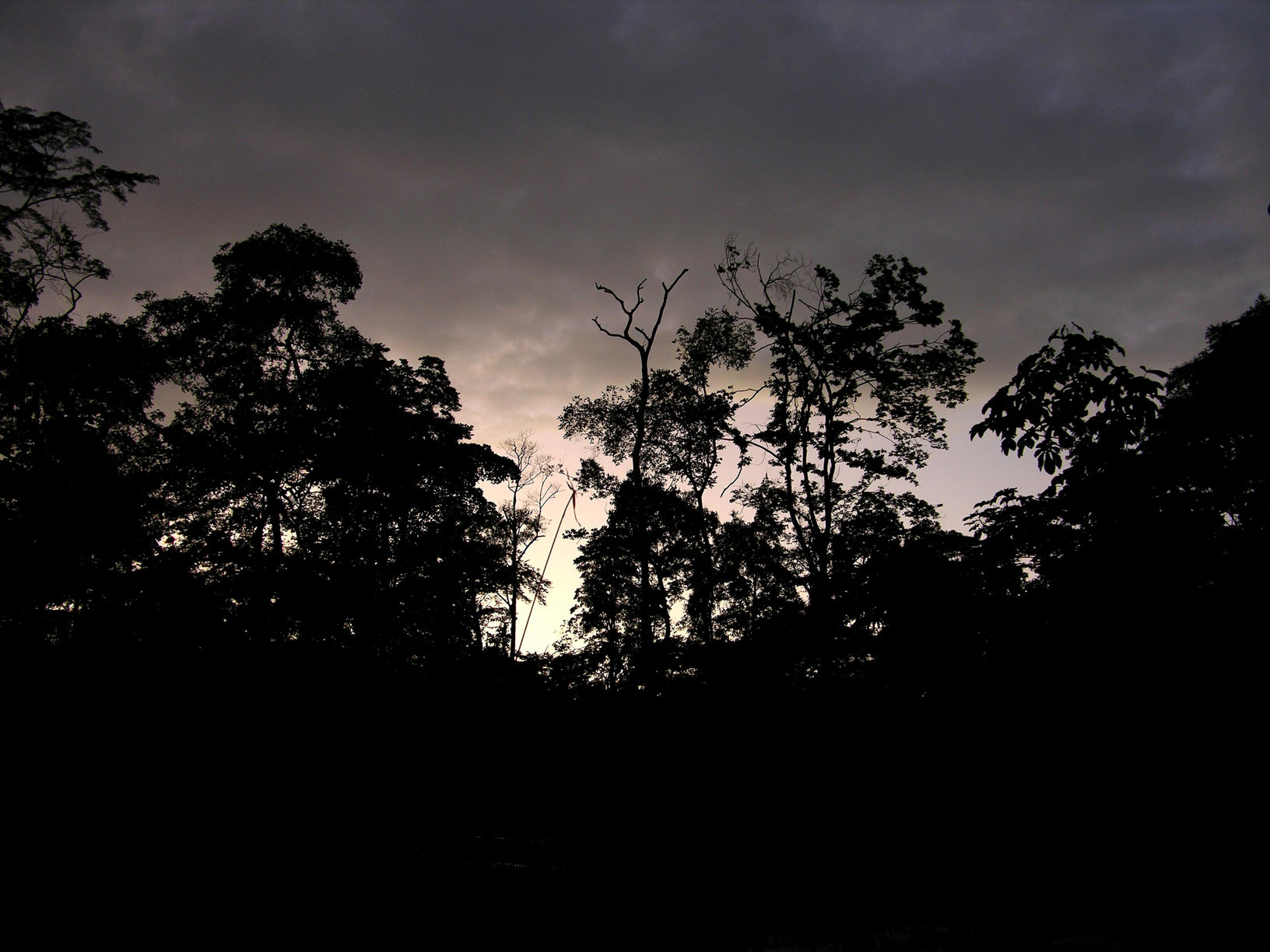
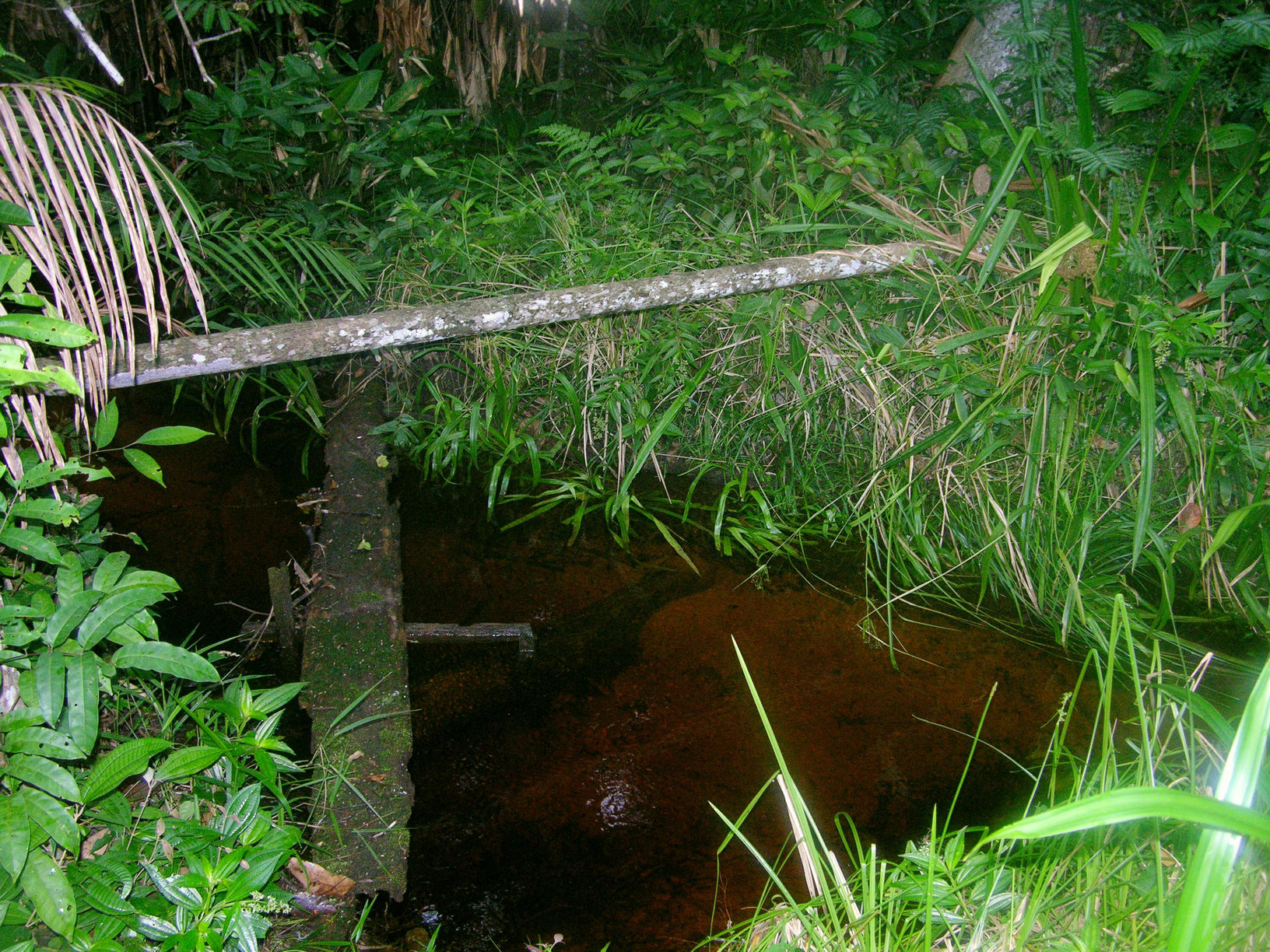
We camped and cooked soup. Before borders and customs it's worth tidying up and having a wash. The water in the river was clean and warm. Tanya went first. A minute or two passed. Then from behind the bushes I heard a stifled scream and a splash. Then silence. Right, a crocodile's eaten my wife. I went to see what was left. Well, there were the head and arms, and the legs too. It turned out Tanya had soaped herself up and got into the water. There was something hard on the bottom, just the thing to sit on and splash about. So Tanya sat. And the hard thing turned out to be a turtle.
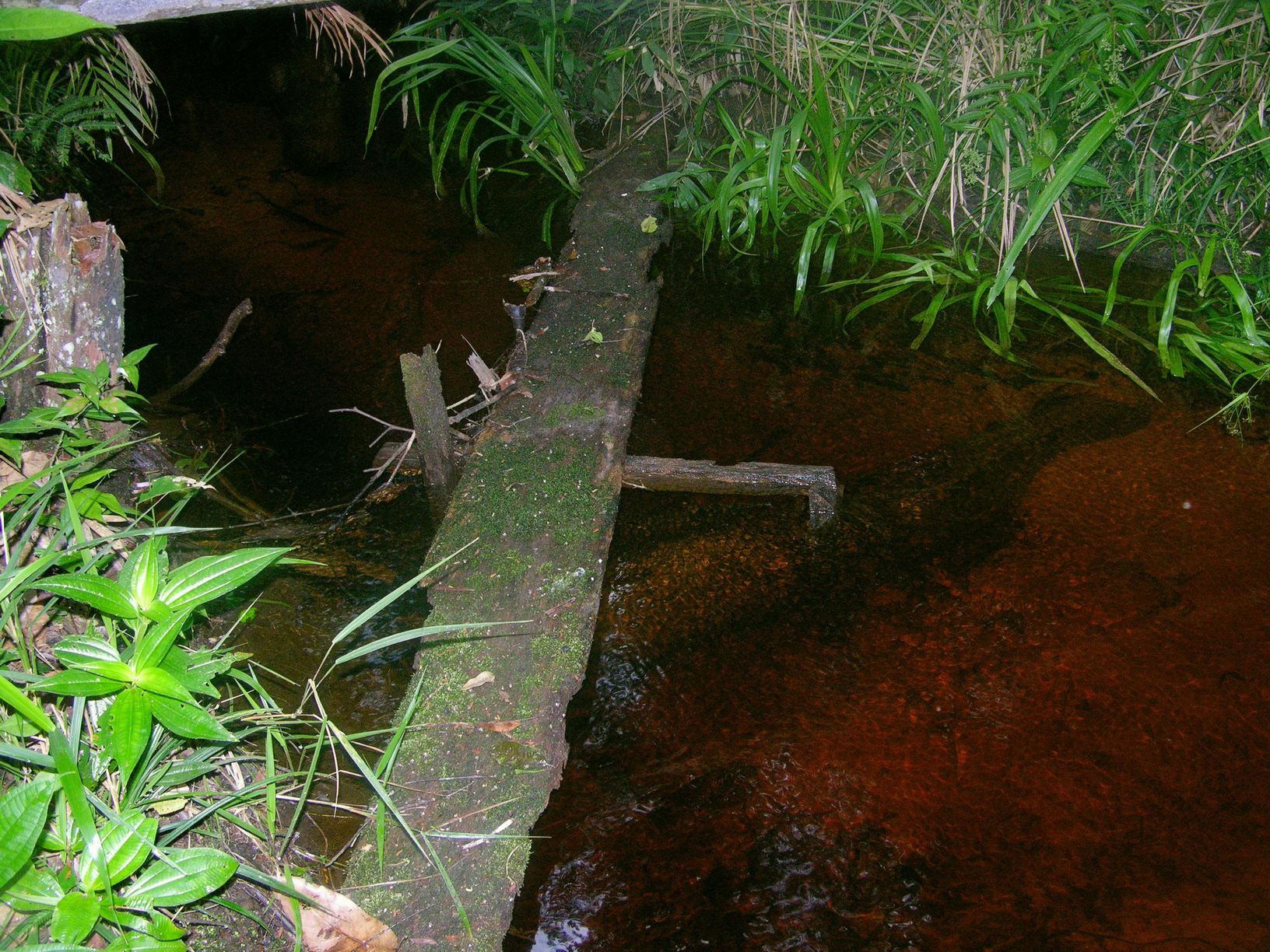
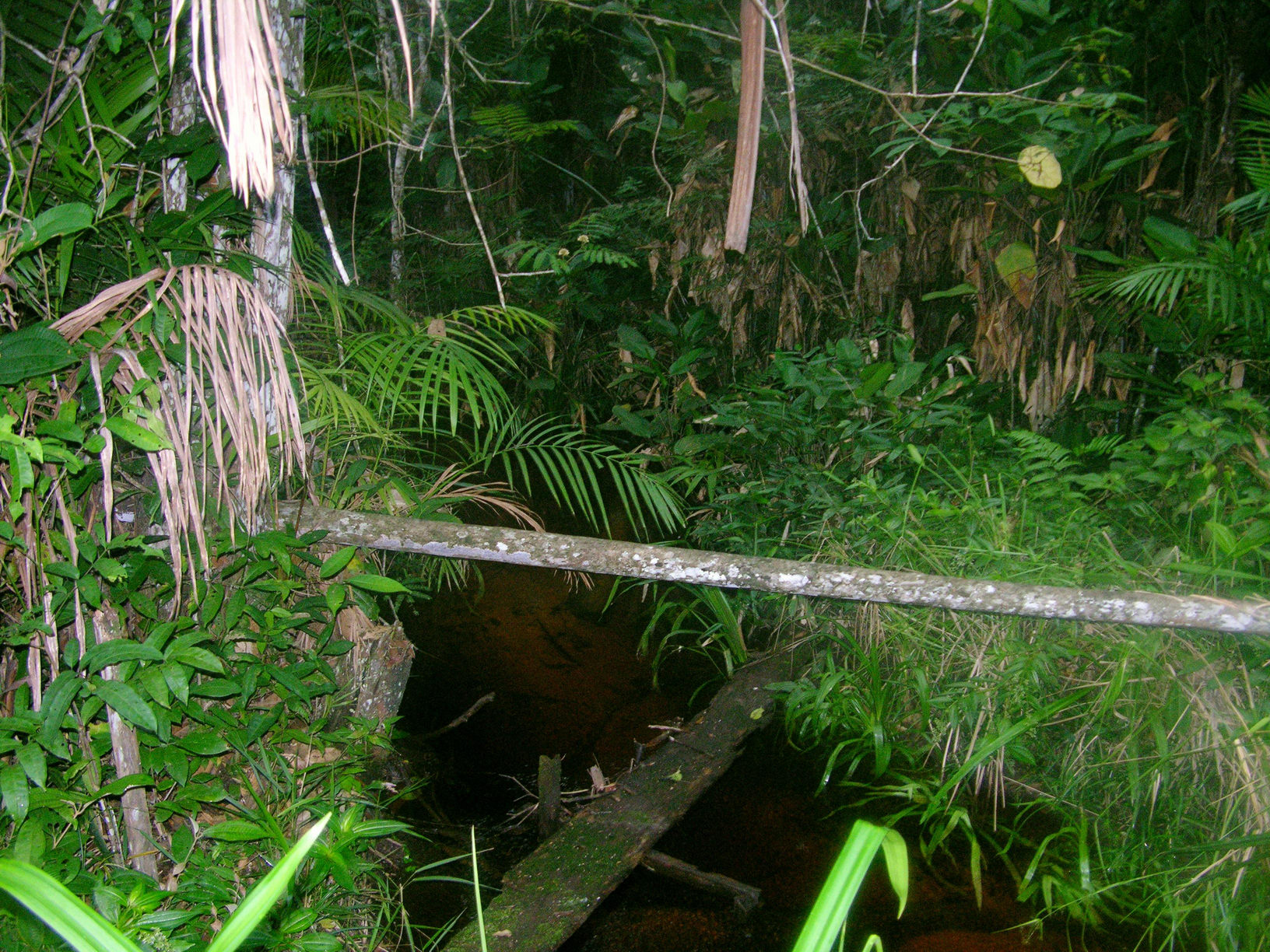
Who was more frightened, Tanya or the turtle? Hard to say. At any rate the turtle decided it was time to clear off and set out. So did Tanya, riding on top of it…
Her eyes were full of soap, so she couldn't see what was happening. In short, the most exciting event of the trip.
In the morning we got up before dawn but didn't make the nine o'clock deadline to return the jeep. And it was Sunday, naturally. We had to look for the Avis men, who'd gone away when we didn't turn up. They charged us another hundred US dollars for being late and sixty to wash a car they declared filthy. You can get it washed much more cheaply, for fifteen dollars, by the people who appear the moment you park in central Paramaribo.
From the Avis office we had a long walk to the bus. Paramaribo doesn't have a central bus station. Buses to different towns leave from different corners of the city. Ours was in the farthest corner, at the junction of Dr Sophie Redmondstraat and Hofstraat. We were headed to Nieuw Nickerie, a town in western Suriname on the Guyanese border. It's 235 kilometres by road. The ticket costs SRD 9. It's the best road in the country. Even the tarmac has no potholes.
On the way the bus makes one stop at Totness (Totness), and even that isn't to take on or set down passengers, but to let the ones already aboard out for a walk. Near the bus stop Tanya saw a stall selling fruit. They floated enticingly in glass jars. “Oh, what lovely fruit in syrup,” said Tanya, and went off to buy some. “Give me this one and this one, and plenty of both.” They sold her a little bagful. She left the stall and bit into the first berry. You could tell from her face that the fruit syrup hadn't worked out. It wasn't syrup, or at least it wasn't any syrup we wanted. All the fruit was pickled in vinegar.
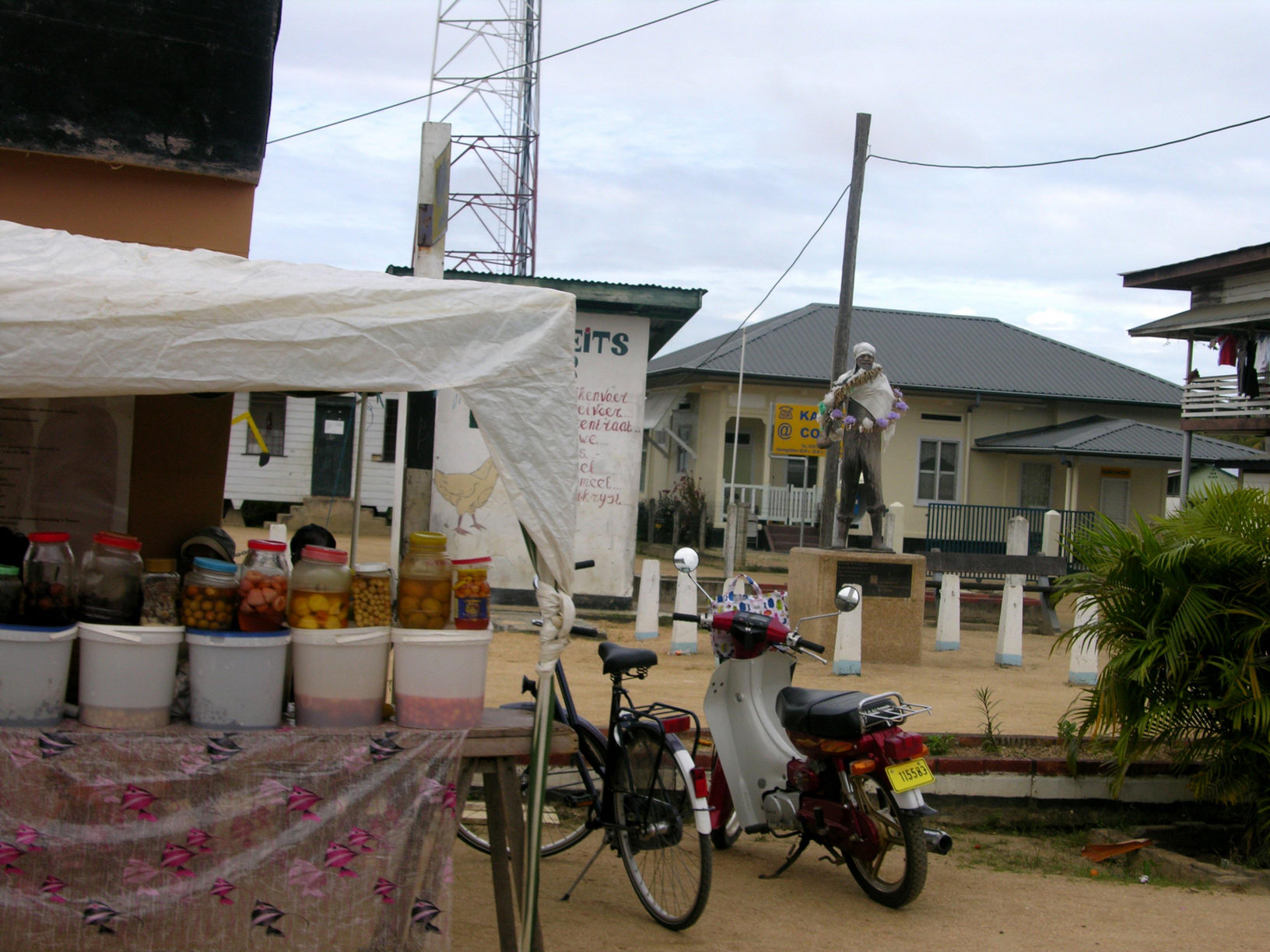
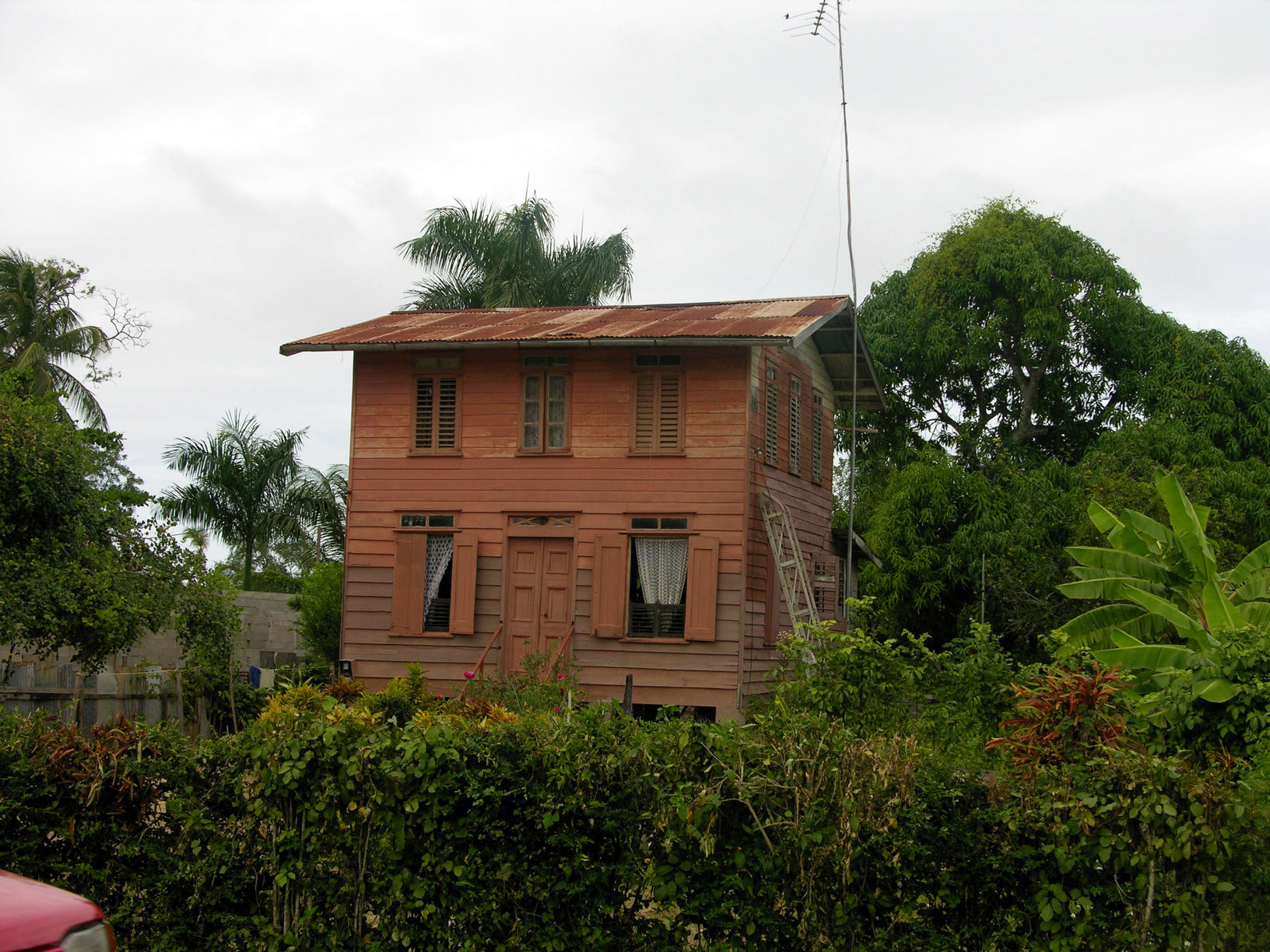
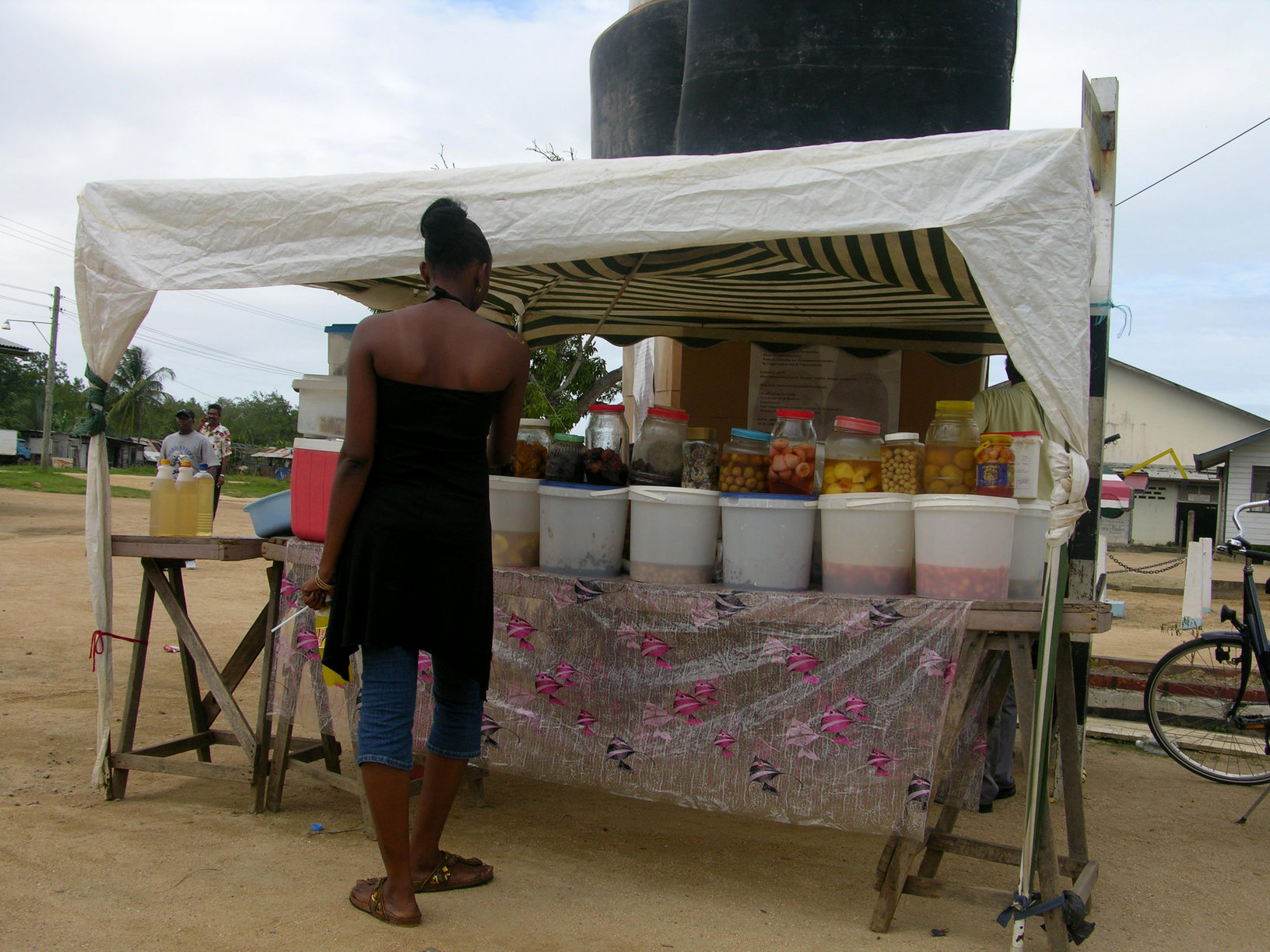
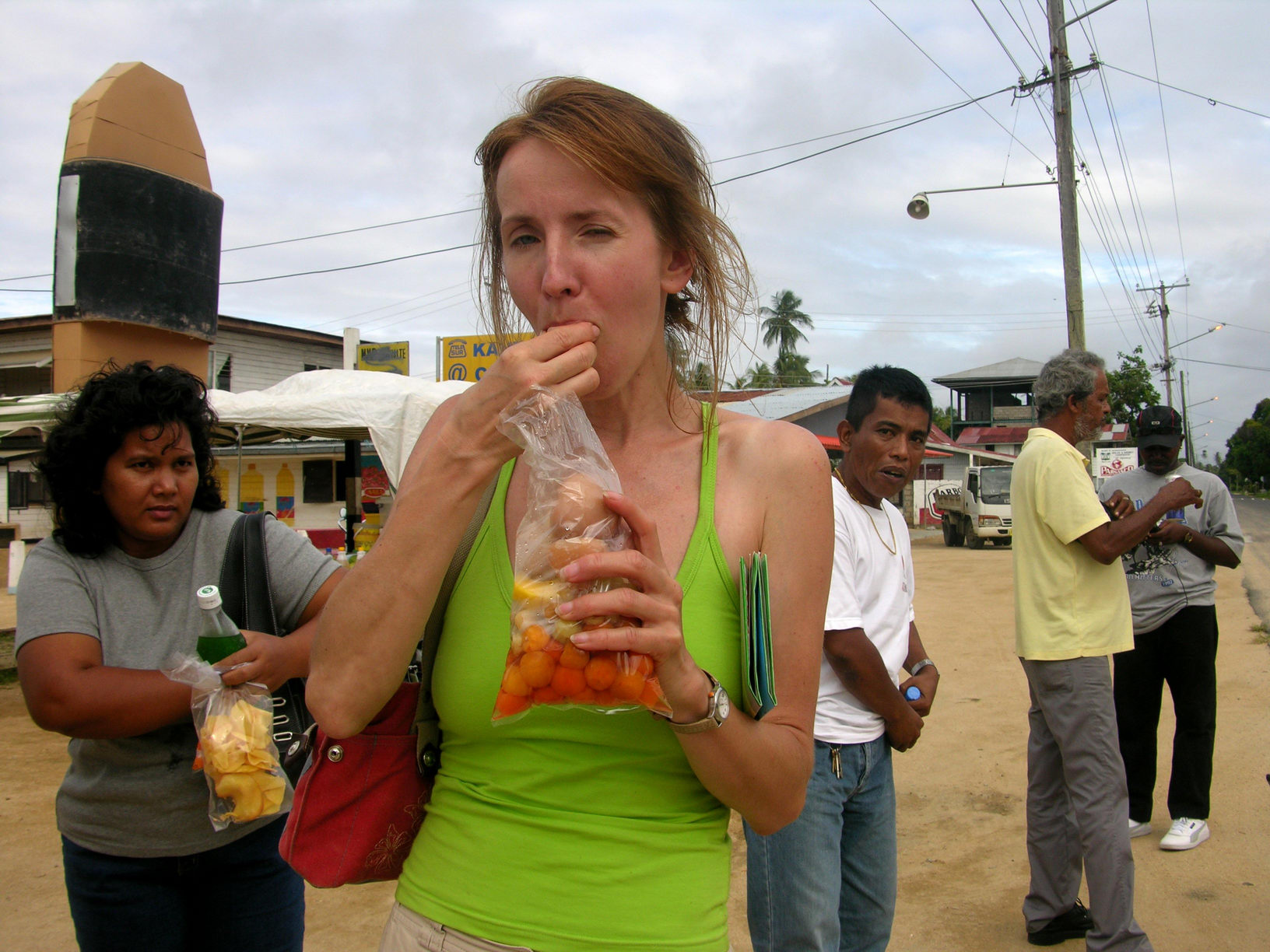
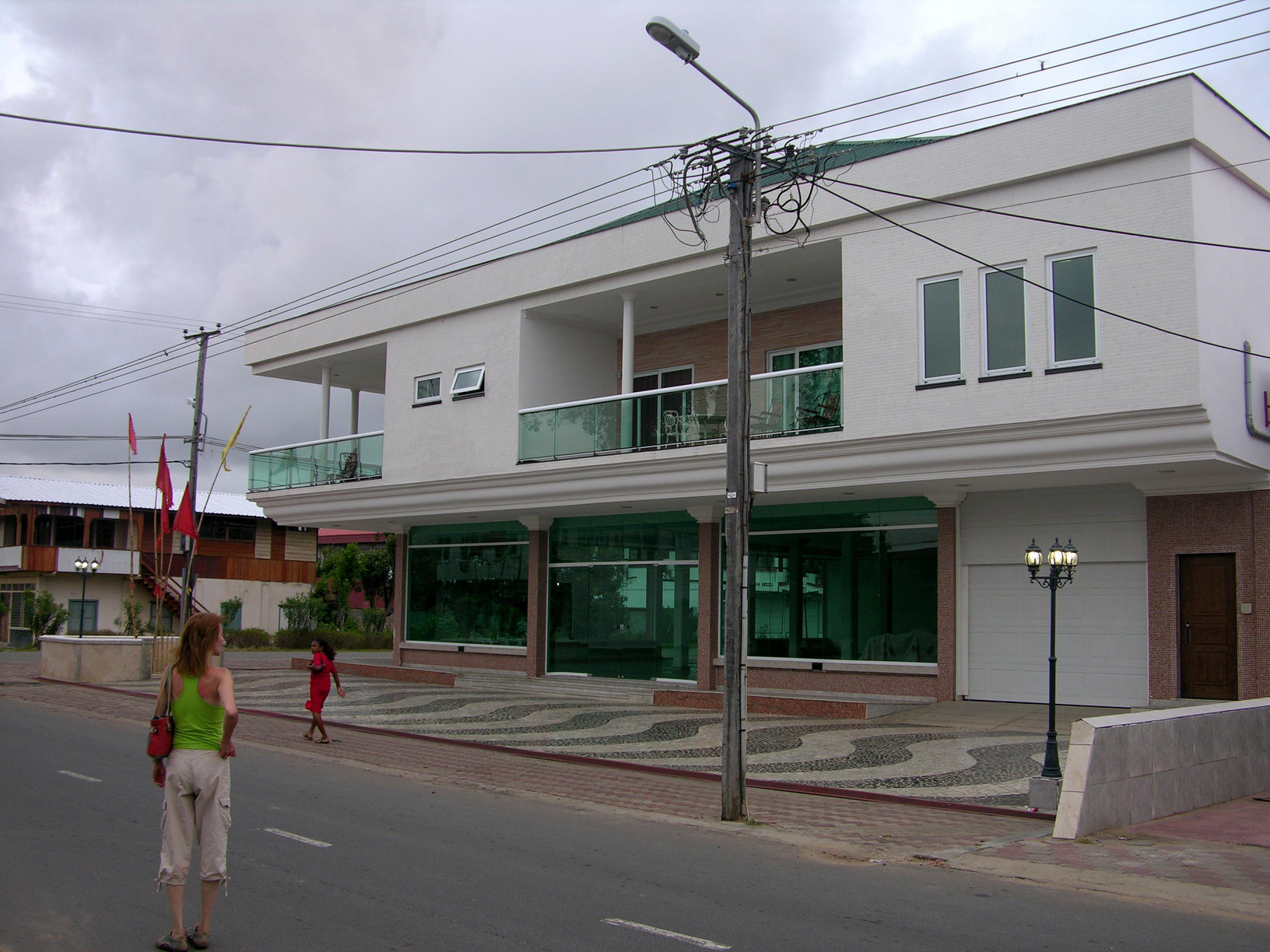
I usually finish everything up, but here even I gave in. A glass of vinegar on an ulcer, and on the Suriname–Guyana border at that. Too bold an experiment. I stopped at half a glass. We made Nieuw Nickerie by evening and had to spend the night (5°56.831′N, 56°59.750′W). There are any number of hotels in town and the whole place is very civilised and lively. We even found a good Chinese restaurant right away. There were banks and glass-and-concrete offices everywhere. It turns out to be Suriname's industrial centre. For tens of kilometres all around, it's an agricultural centre as well. The fields are all ploughed and planted, mostly with rice.
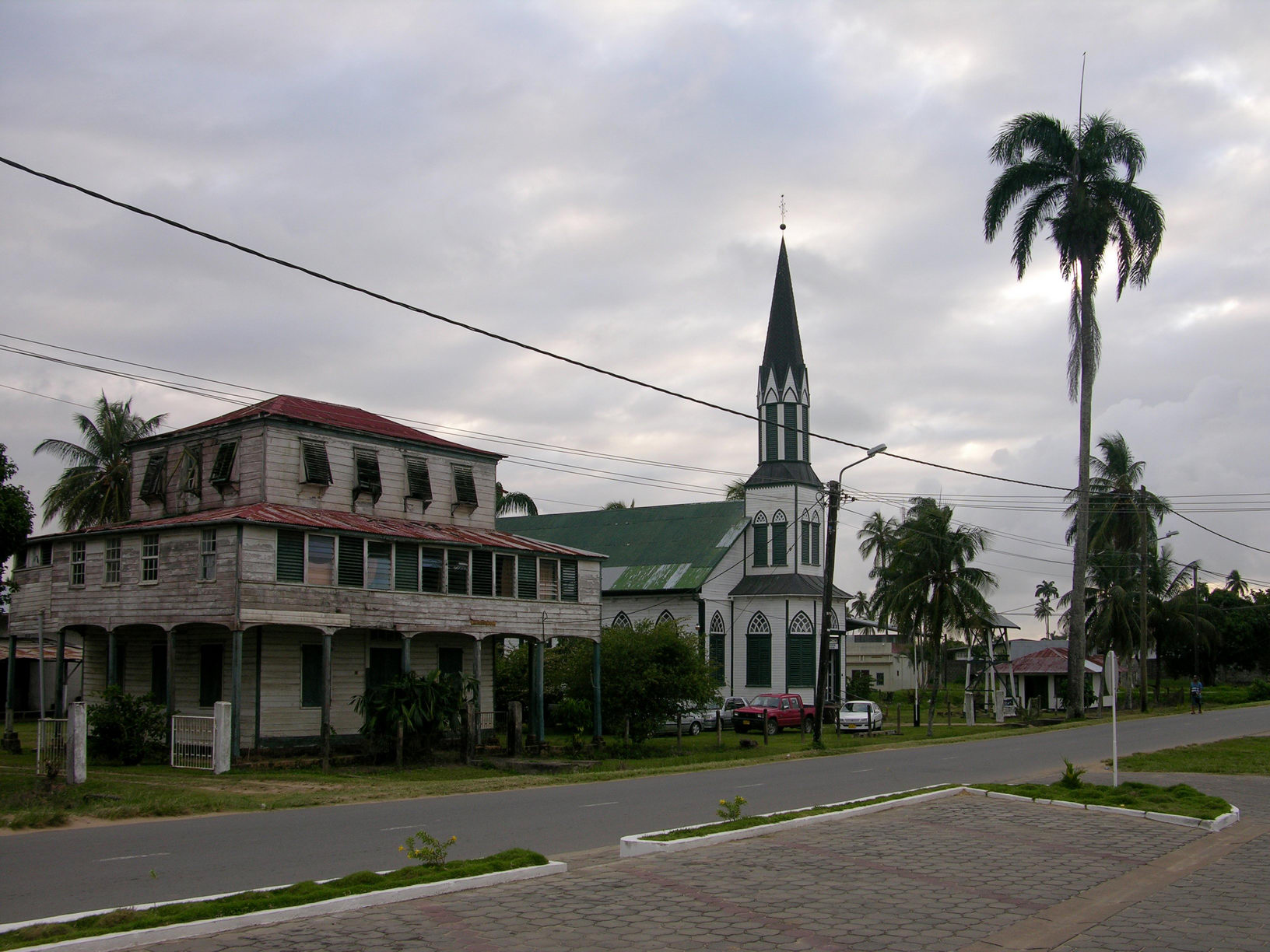
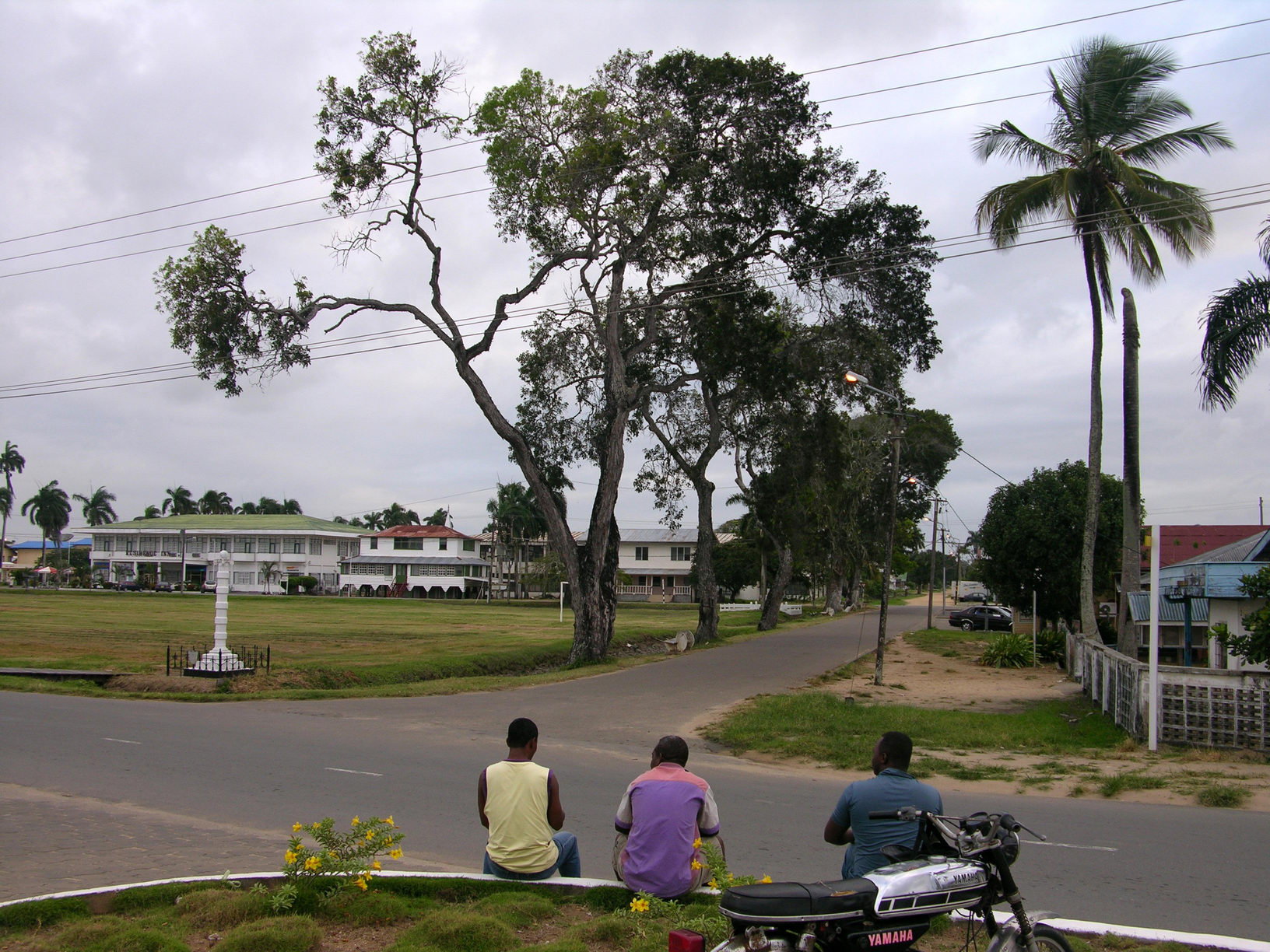
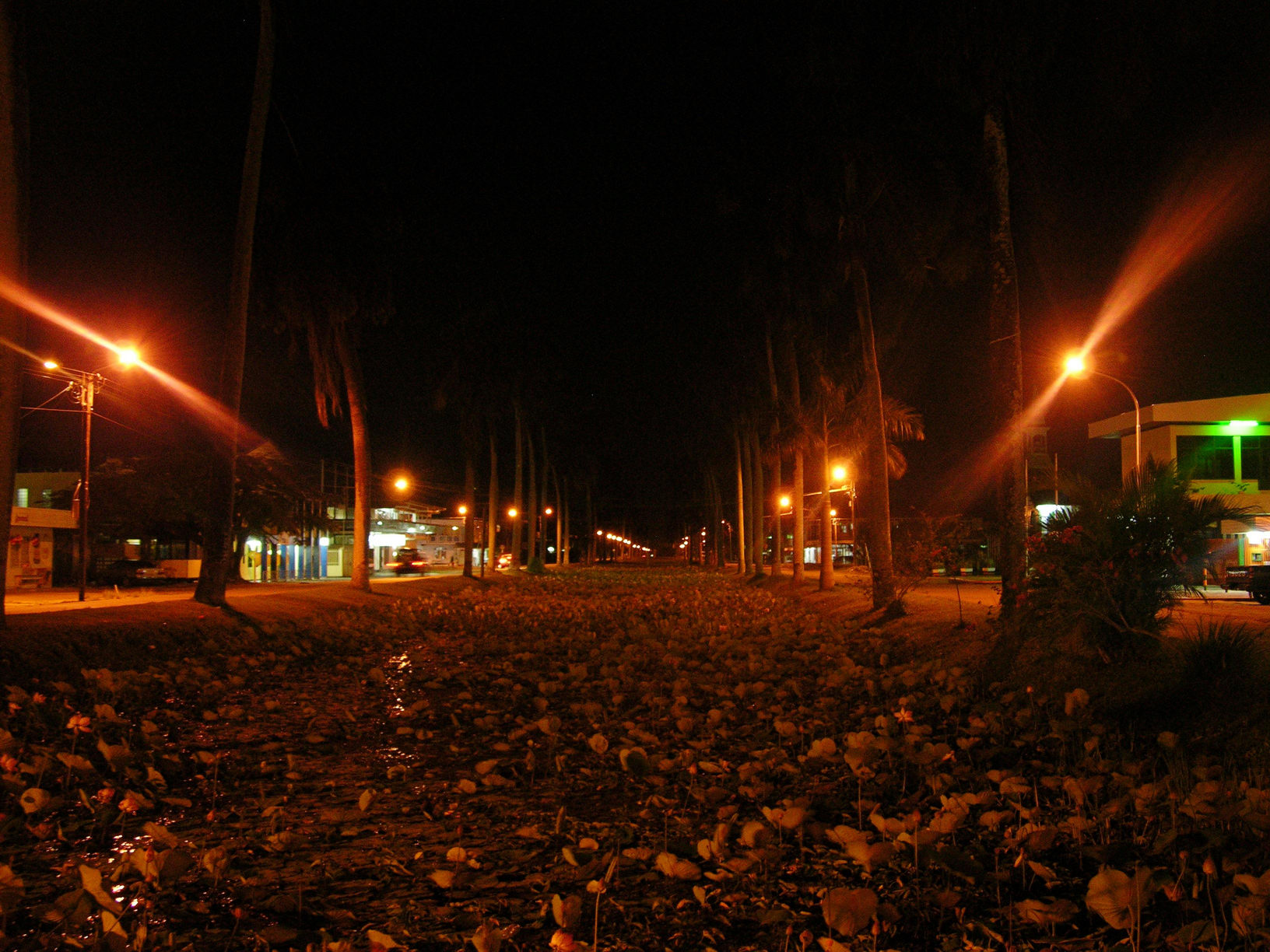
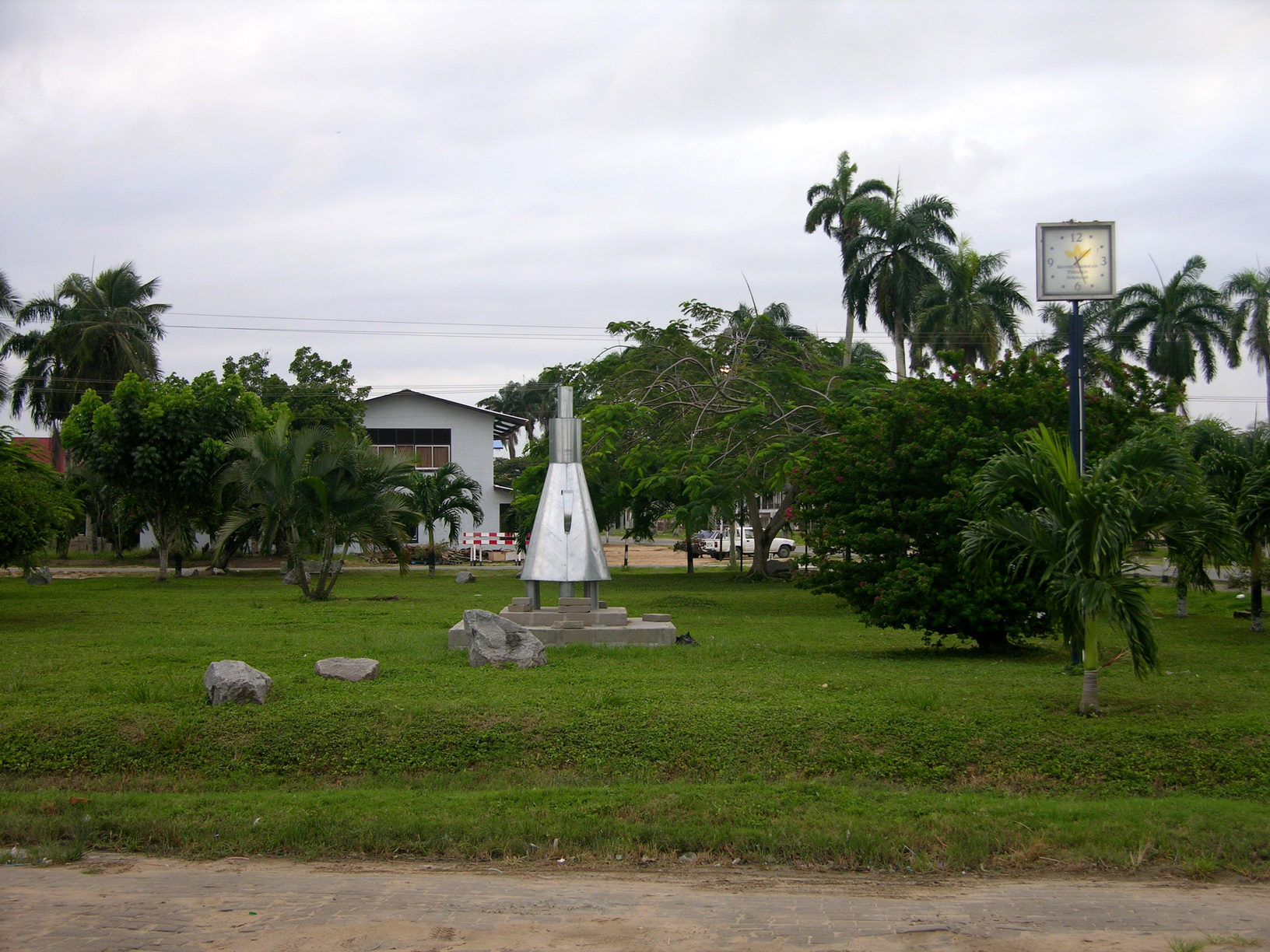
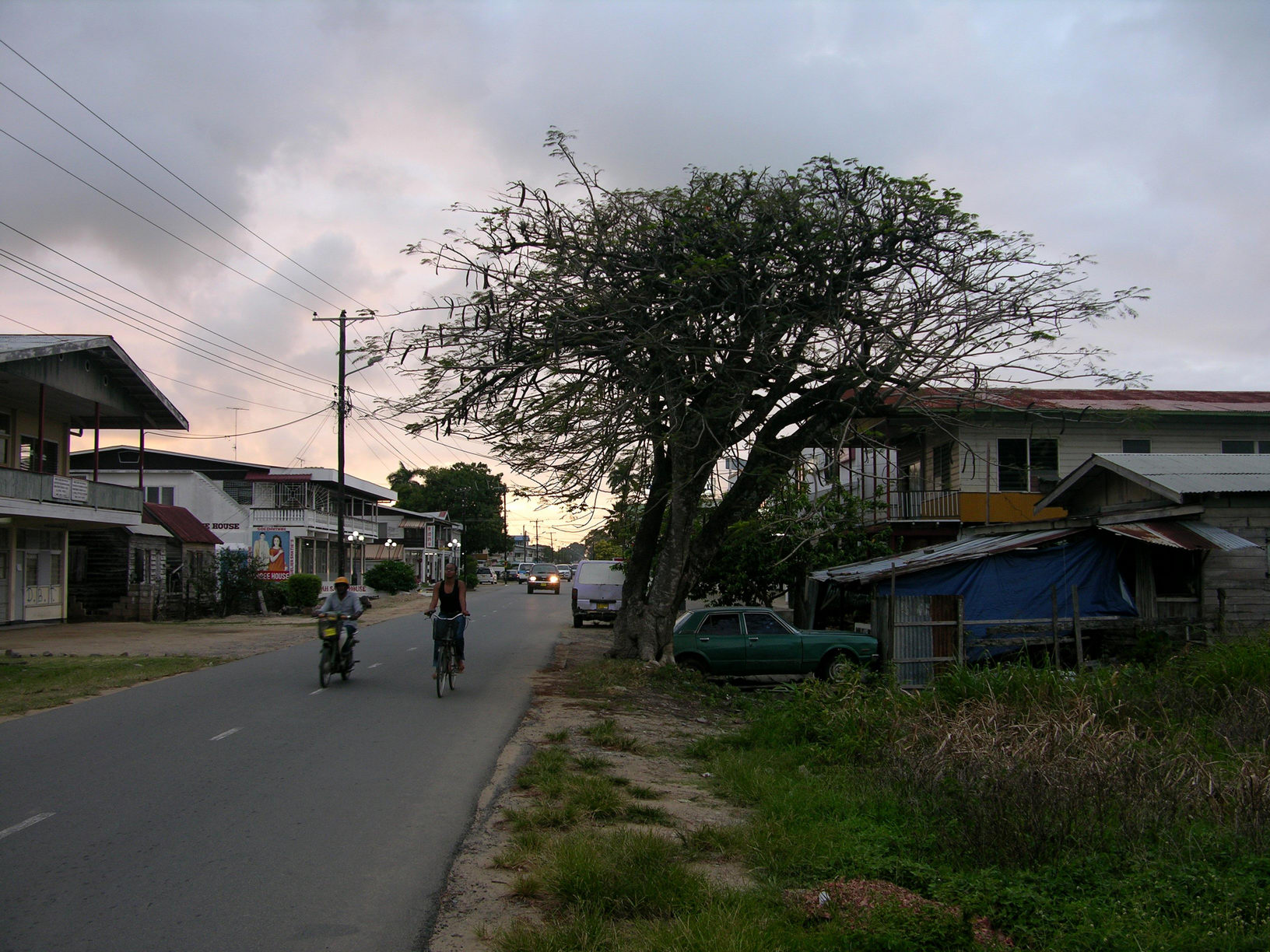
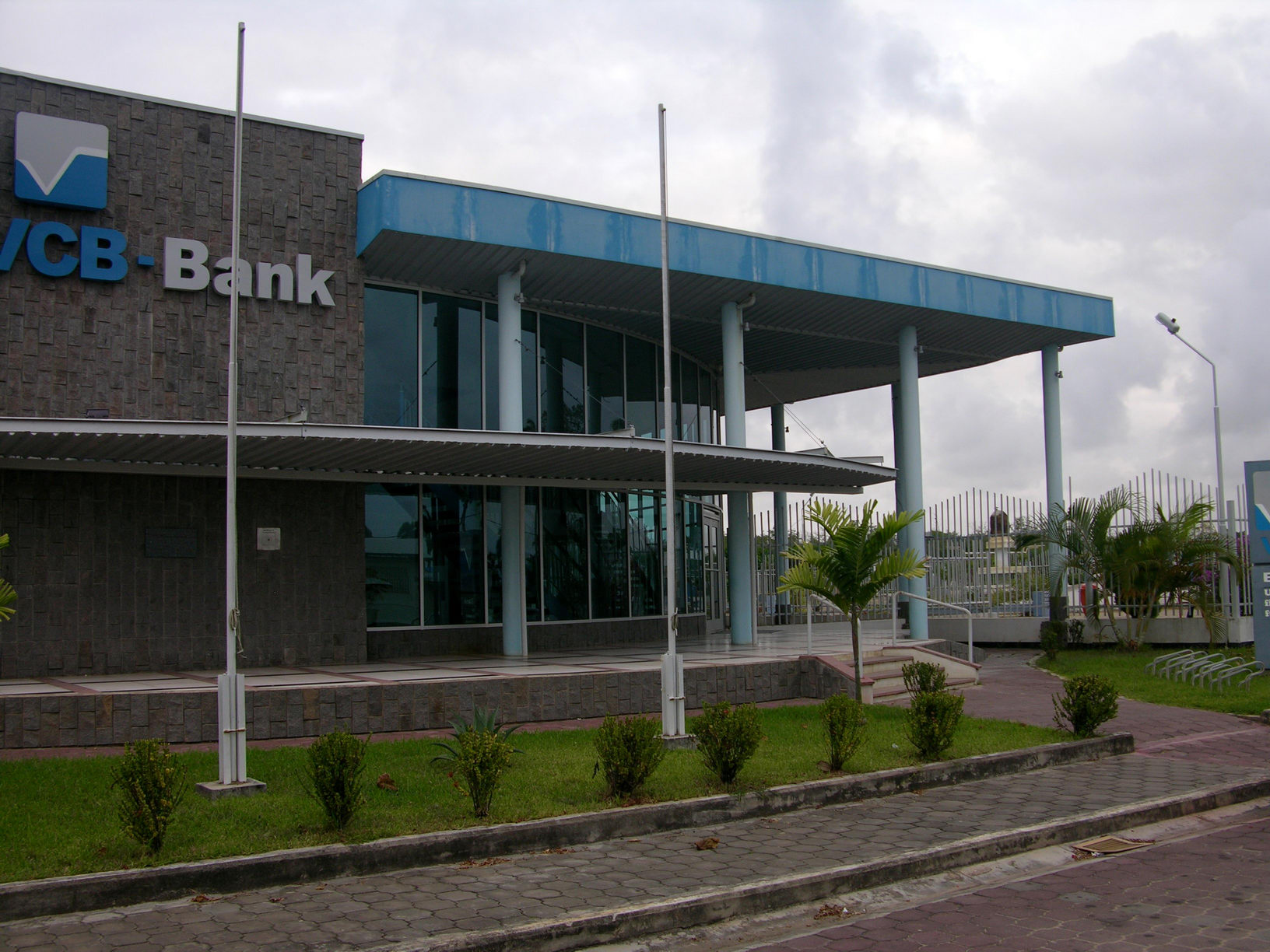
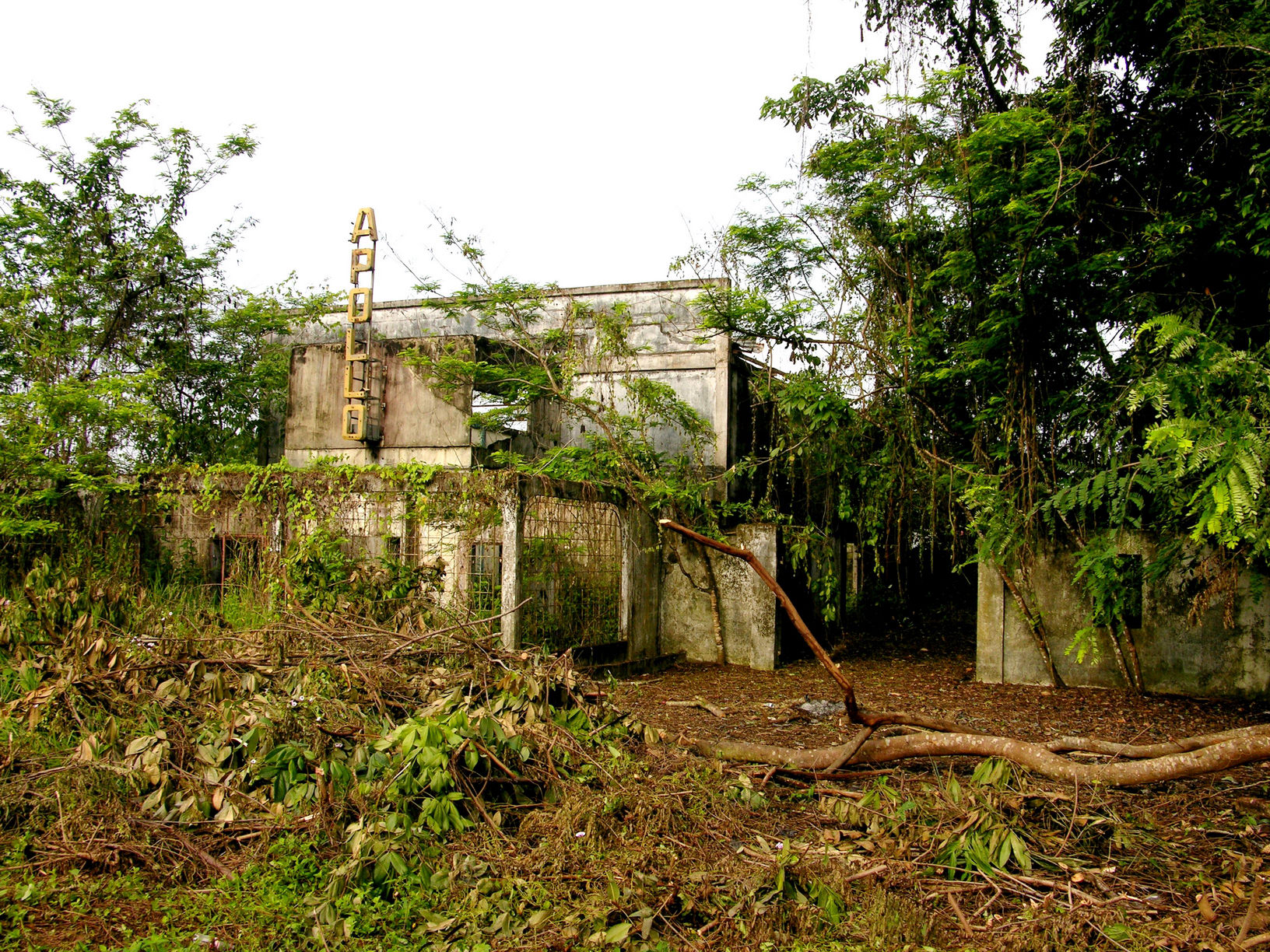
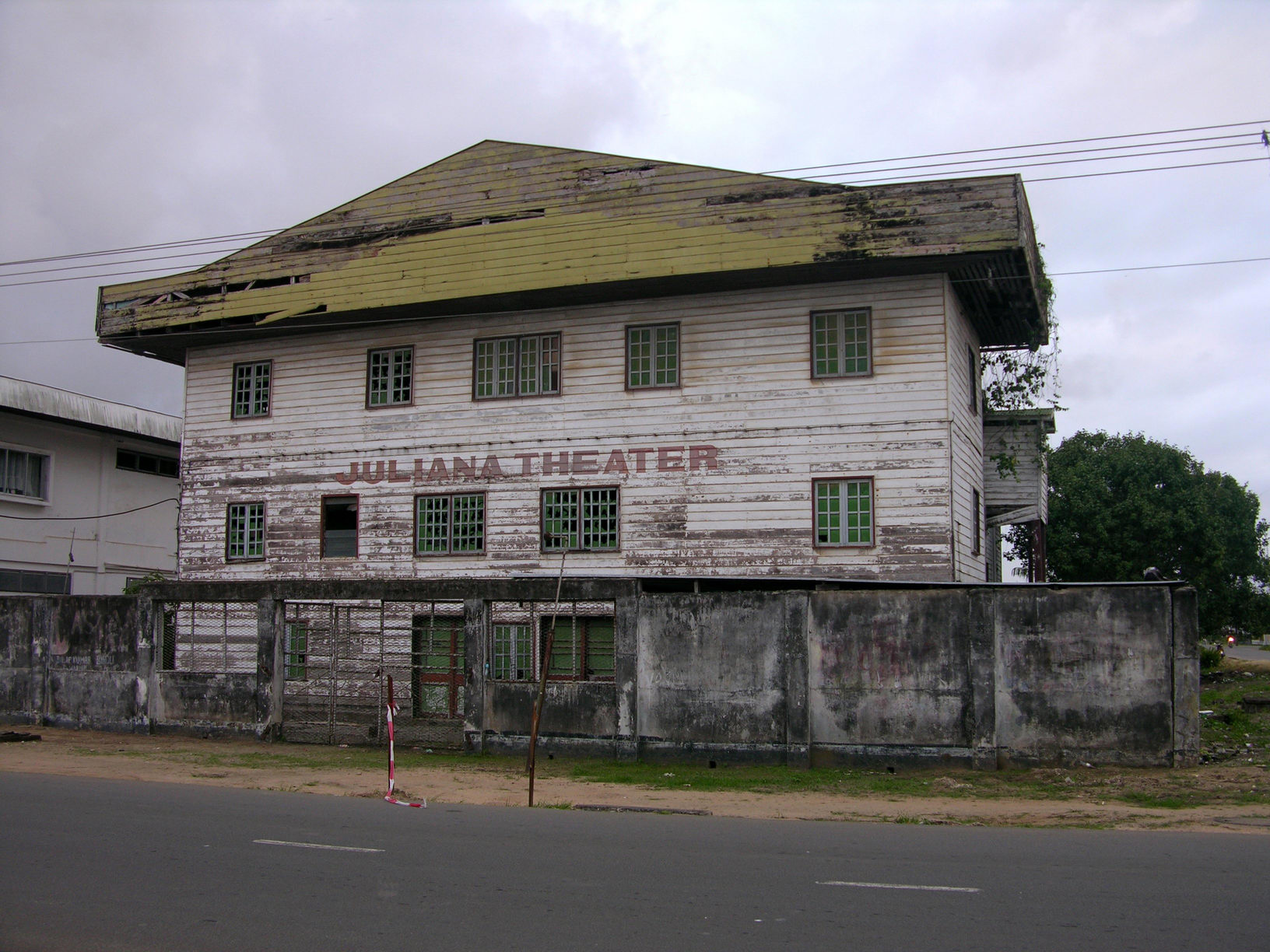
Nieuw Nickerie even used to have a theatre. It's abandoned now.
It turned out we hadn't needed to hurry. You do better to cross the border in the morning. Just tell your hotel you want to go. In the morning they'll put you on a bus for SRD 25. Once it's collected all the people leaving from all the hotels, it takes you to the border. It's a long, confusing drive with no signs, through fields and swamps. At certain points along the road the bus meets up with another one, say from the airport, and picks up the people leaving the country who flew in from the capital on the morning flight.
Quite a bit of the road is unsealed. The bus gets there just in time for the ferry across the Corentyne, Corantijn in Dutch, the border river you're meant to use to cross now.
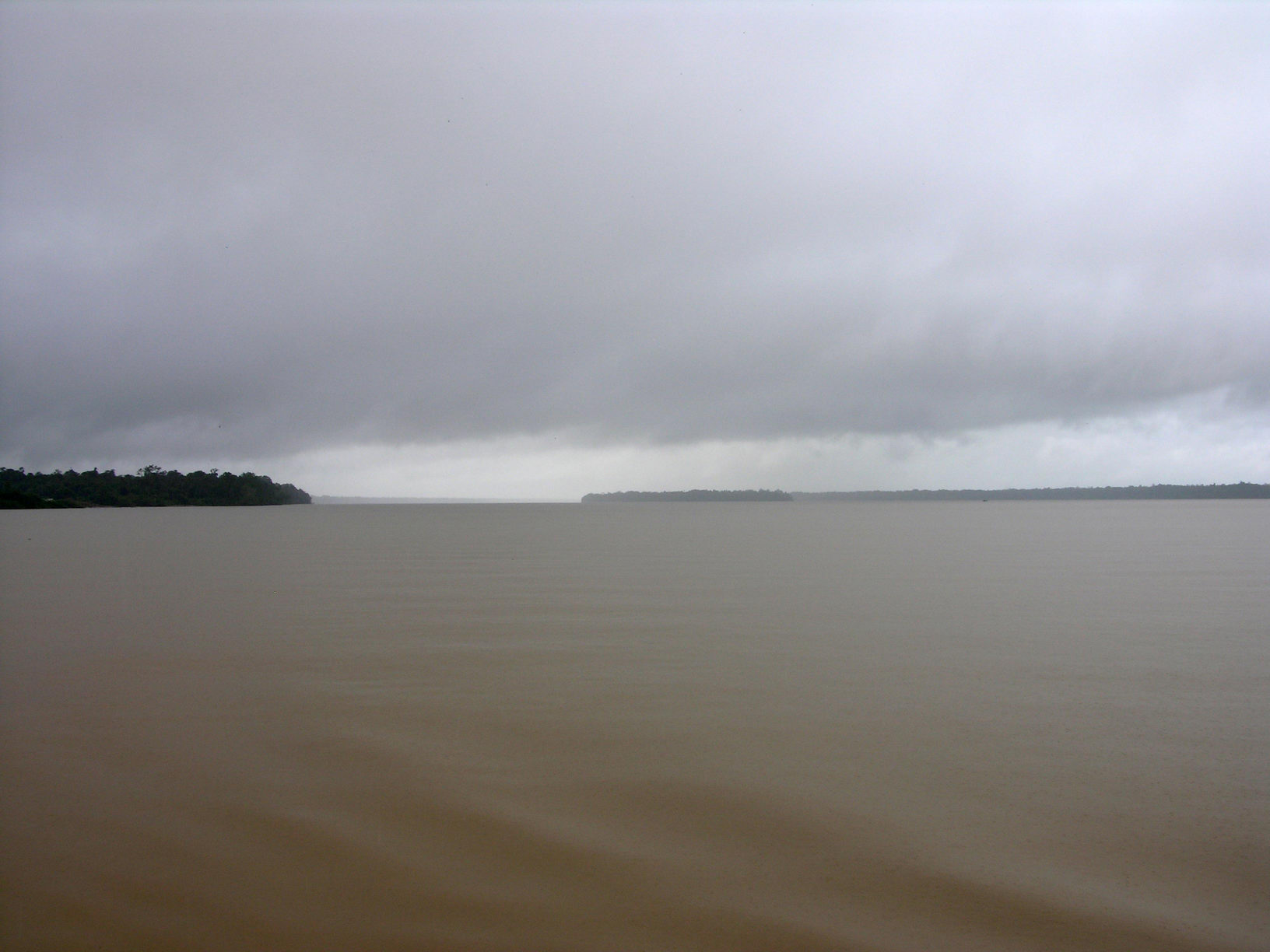
In the past, here as everywhere, dugouts went back and forth all day. Then things began to go wrong. In Guyana banditry has reached unprecedented heights. It might be a world leader. Passengers started being robbed and killed in mid-river. Throw the victim overboard and that's that. The crocodiles take care of the body in no time. It didn't always happen, of course. Not all dugout drivers were total scoundrels. There were small-time ones who carried all the border stamps in their pockets for the convenience of their customers. “Come to us and pay and you'll be through in no time.” To stimulate demand, the legitimate border guards made crossing as lengthy, unpleasant and unpredictable as possible. Lonely Planet said getting across would take hours. That's all in the past.
The Guyanese government solved the problem by banning private transport. Just like Russia. It should be said that they didn't stop there. They organised the border post so you could be through in minutes and nobody went rummaging in your rucksack any more.
For convenience, an entire system of ferries and buses is timed to connect, to give you a quick, safe route from Paramaribo through Nieuw Nickerie, Georgetown and Lethem to Boa Vista.
At Surinamese passport control the guard asked permission to photocopy our passports. He said we were the first people from Russia to come through there. He'd never seen a passport like that and wanted to keep it as a specimen.
And he didn't even look at the registration stamp we'd gone to such enormous trouble to get. A shame.
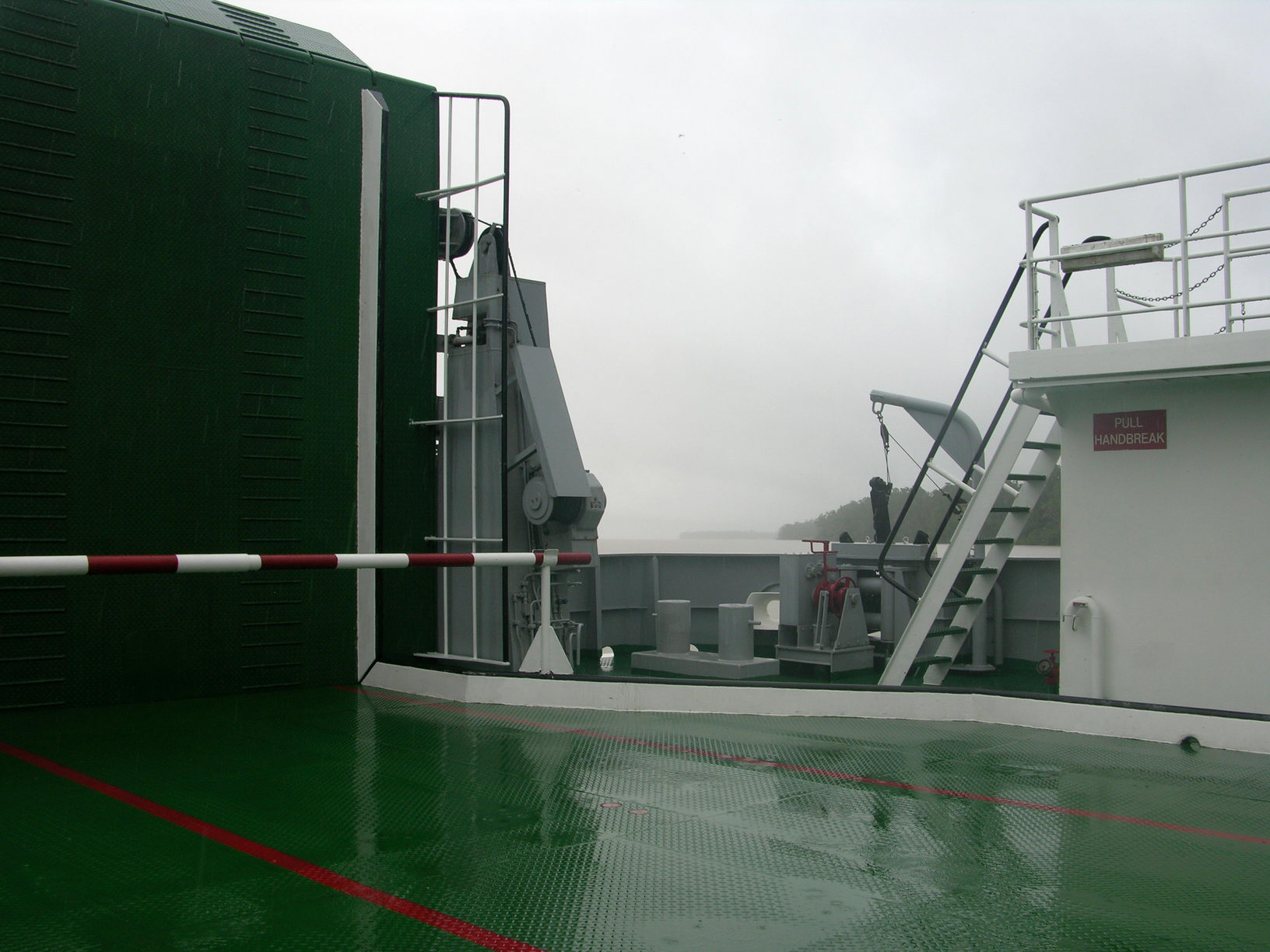
The ferry turned out to be very modern. A concrete terminal with duty-free kiosks that take US dollars. There was even a toilet. It had no water, but the fittings were expensive. You can't expect everything at once. Mobiles work, for instance. The terminal has a base station. Even the daintiest car can get aboard without scraping its underside.
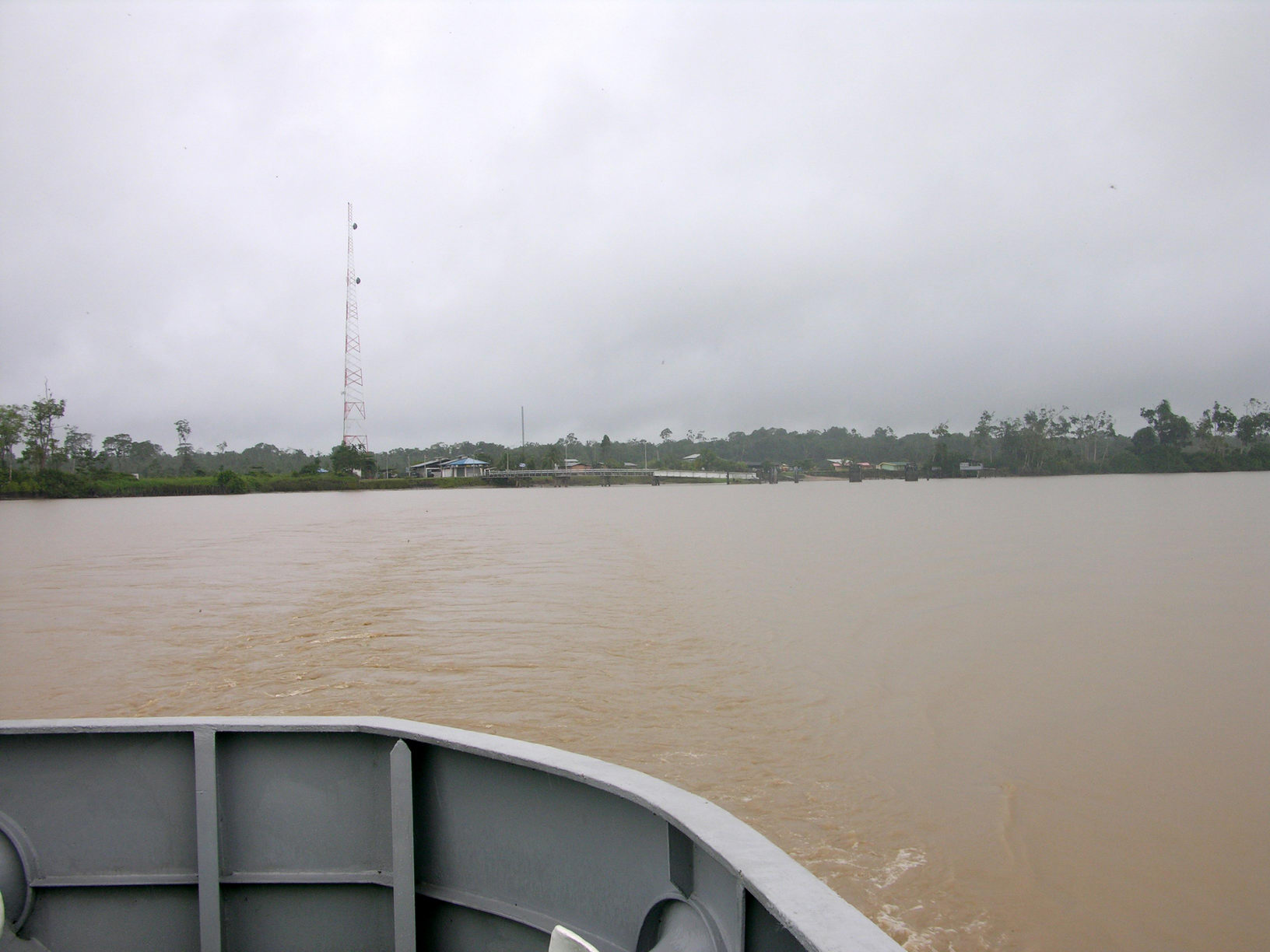
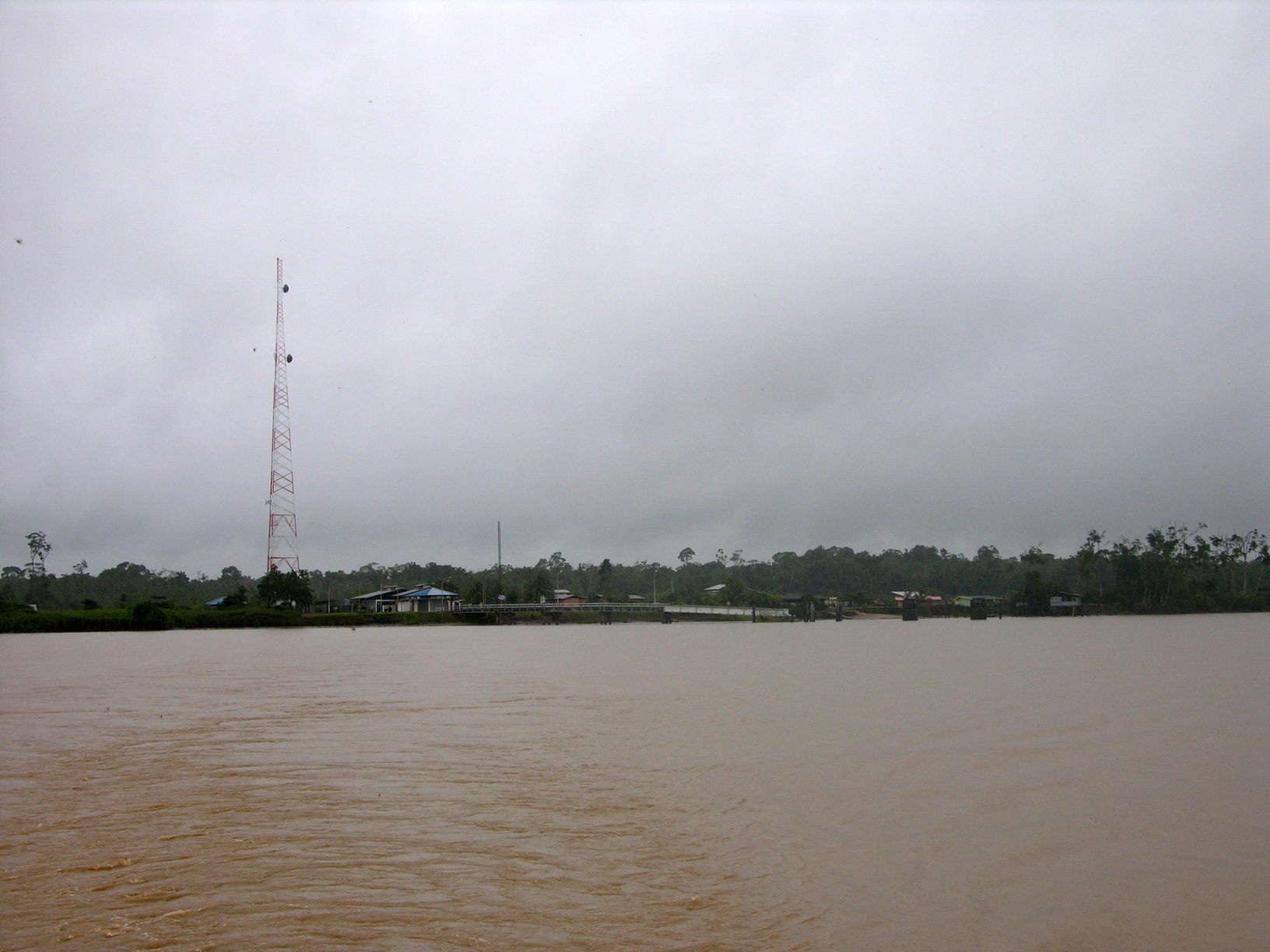
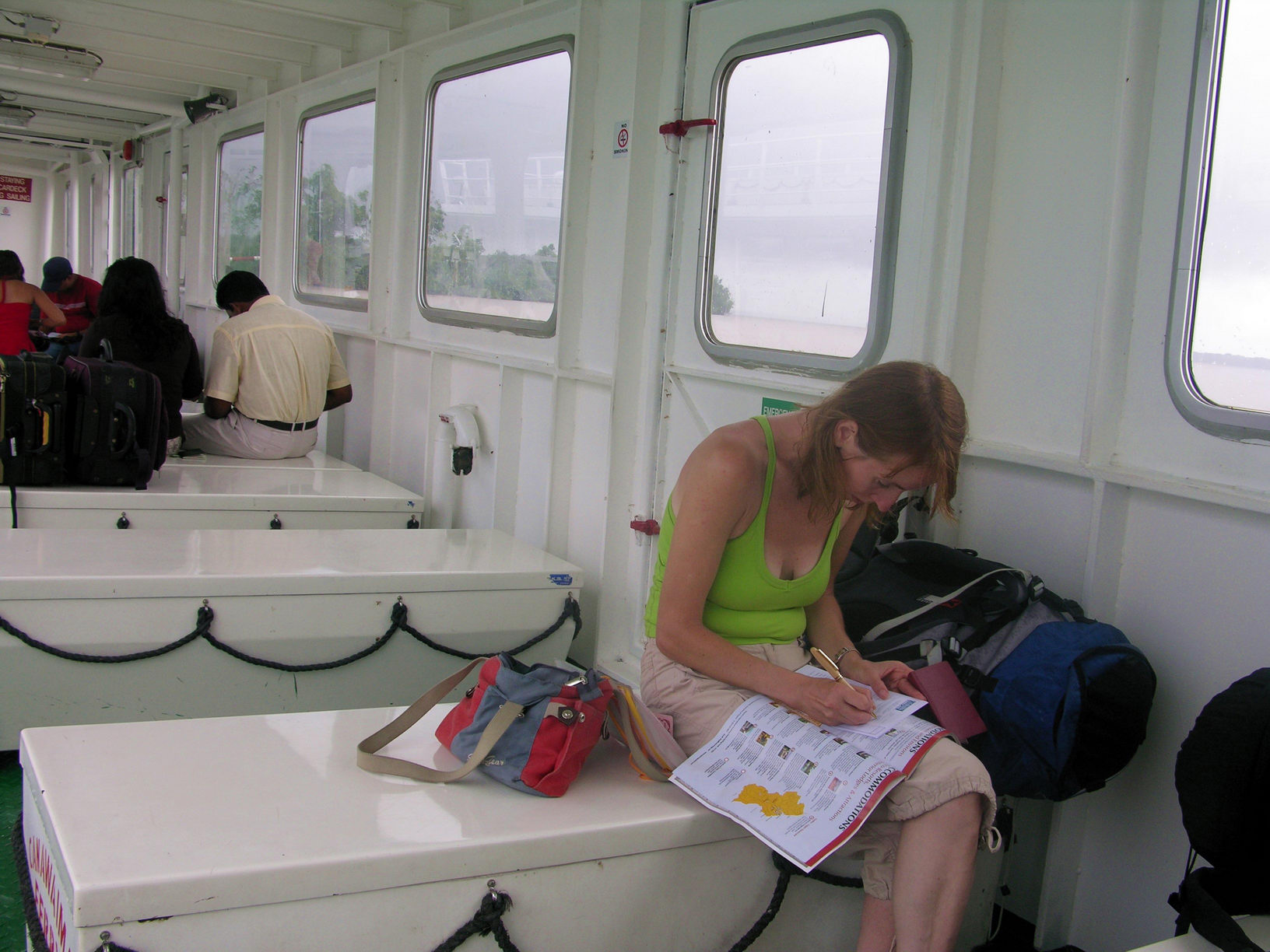
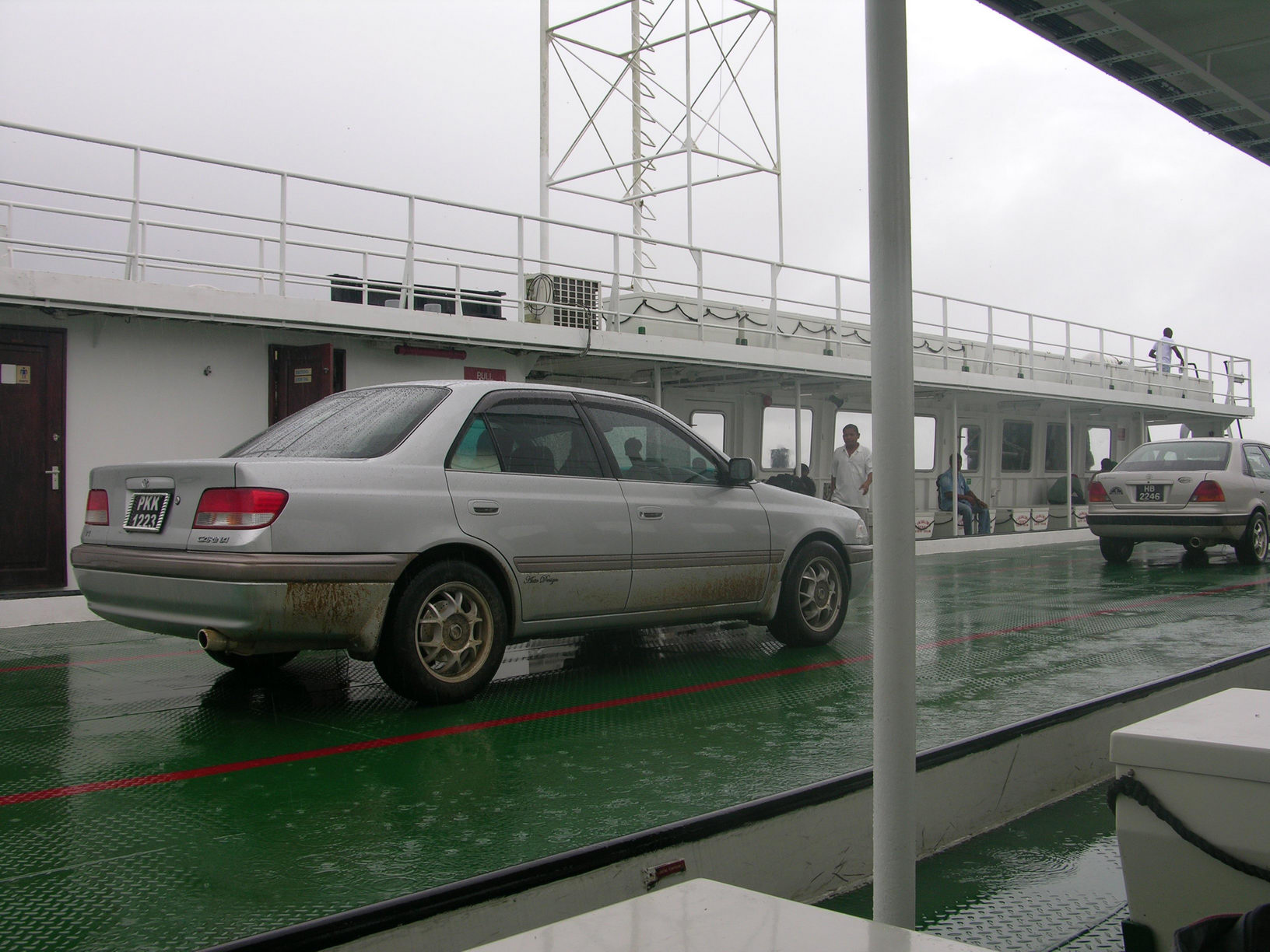
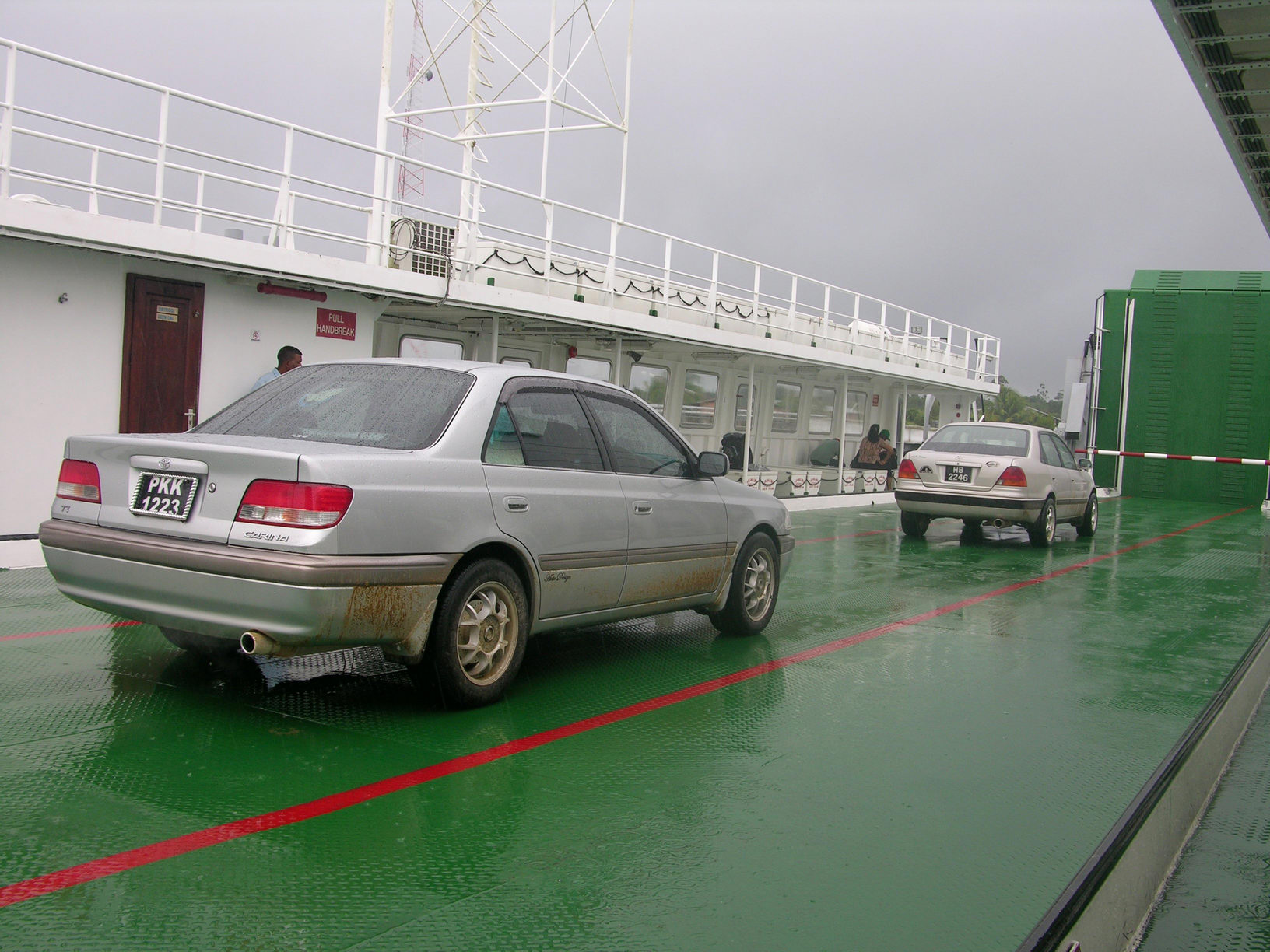
The ferry cast off at ten. The crossing takes thirty minutes. The ticket costs SRD 18. Besides the passengers, the ferry carried a few cars, all with Guyanese plates. For some reason Surinamese people don't like to drive anywhere. None of their cars had crossed to the French bank either. It's not a motoring country, and not through poverty. It seems to be a national trait. Suriname is a very laid-back country in general. Everything is allowed, there's no crime, no rebels and nobody disturbing the peace. Too many Buddhists, perhaps, or too much oil? Either way, it's a good chance to see a wild country that hasn't been trampled down by crowds of tourists, without having to demonstrate survival skills or put yourself in danger.