Guyana
Chapter 4. Guyana, the Wild West
On the Guyanese bank of the Corentyne, the border river, everything is more modest than on the Surinamese side. The terminal is smaller and the road bumpier. Passport control is quick and efficient here too. They didn't bother to inspect our rucksacks. The entry stamp was good for the number of days we'd asked for. They didn't even look at our visas. It hadn't occurred to them that a white person might be from a country whose citizens need one.
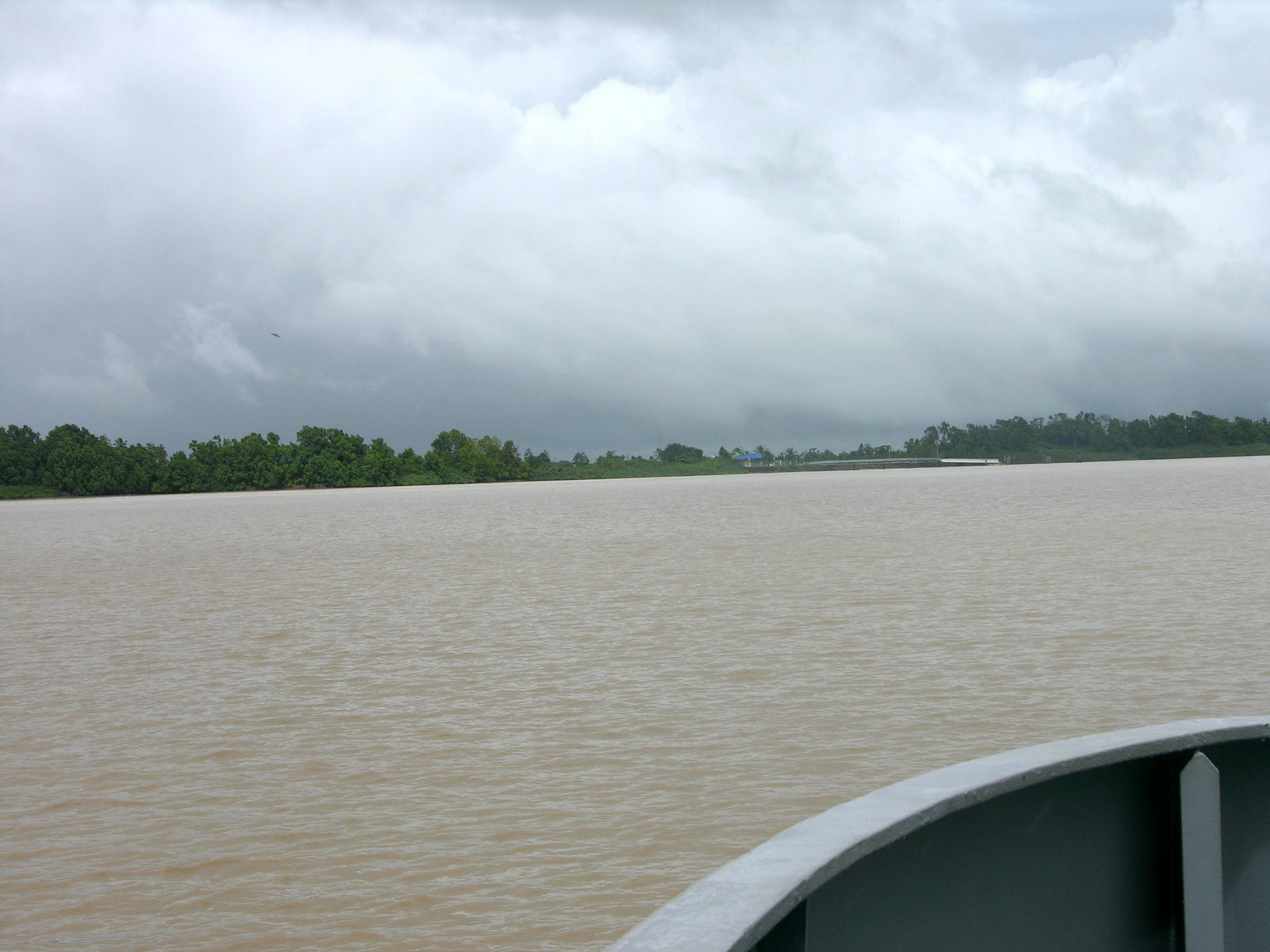
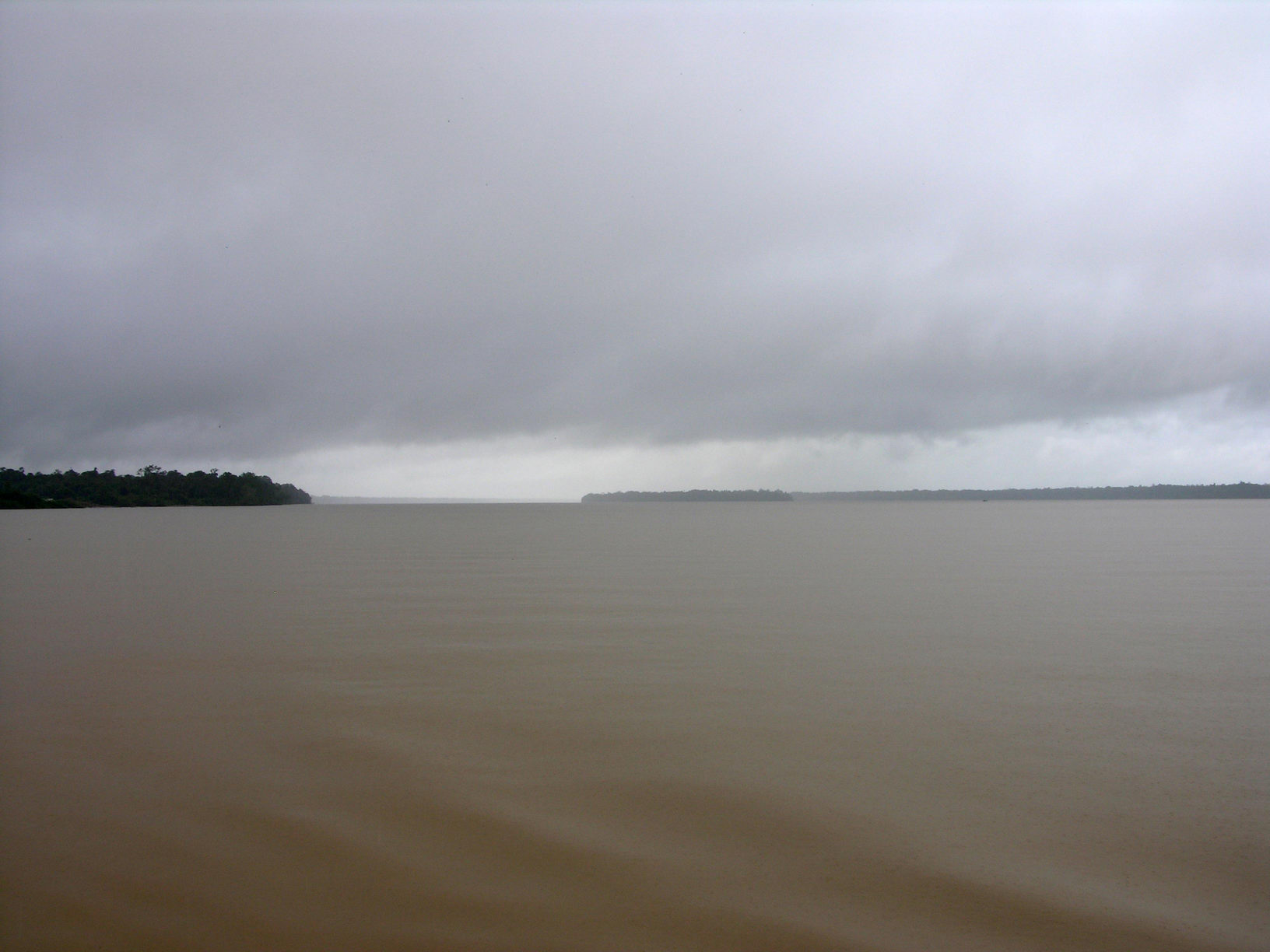
The Guyana of today is the former British portion of the wider Guiana region. The British usually leave order and culture behind, but this was an exception. To say it was unsafe would be putting it mildly. Lonely Planet wasted no time telling you to believe it when it said foreigners shouldn't walk down the street here. You could be robbed at gunpoint in broad daylight, even in the middle of the capital.
Guyana's ambassador to Suriname assured us that the new president had set about putting things in order and that great progress had been made. At last it was possible to walk around some parts of the capital by day and safe to take a taxi by night. In the rest of the country it was safe to take a taxi by day. What a fun country. What was it like before they restored order? Of course, all the guidebooks and officials overdo the warnings. In reality it isn't as scary as all that. We'd visited Kurdish rebels. People hitchhike around Afghanistan, Congo and the like. You can get by anywhere, but it's still unnerving to enter a country like this, especially when there's no decent account of travel in Guyana. That could easily be taken to mean that no one had made it back alive.
The moment came, and we walked out through the doors of the customs post. What was waiting for us? A shared minibus, for a start, a thoroughly battered Nissan. They drive on the left here. The border crossing is called Moleson Creek, so the minibuses that come out from Georgetown, the Guyanese capital, carry a sign saying Moleson Creek. They run frequently, more often than the ferry. The fare to Georgetown is 1,000 Guyanese dollars. You can pick up a bit of local money from private changers. It's safer to do that while you're still on the Surinamese side.
There were a few twenty-year-old jeeps there as well, occupied by athletic-looking lads. Music up to full blast. Cheerful stuff, too. One jeep was rusty but painted with flames of every description and the words Super Sport. It was very like the protection racketeers of the late perestroika years. There was no Kalashnikov on the seat, mind you. Now I understand why the country's official full name is the Co-operative Republic of Guyana. They'd been building socialism since 1970. Nationalised aluminium production and the sugar cane industry, and so on. And this is what they'd built.
We were told it was safe to take the minibus. When we told the ambassador we wanted to go overland, he looked at us with something like horror and said it was possible and that in principle nothing should happen.
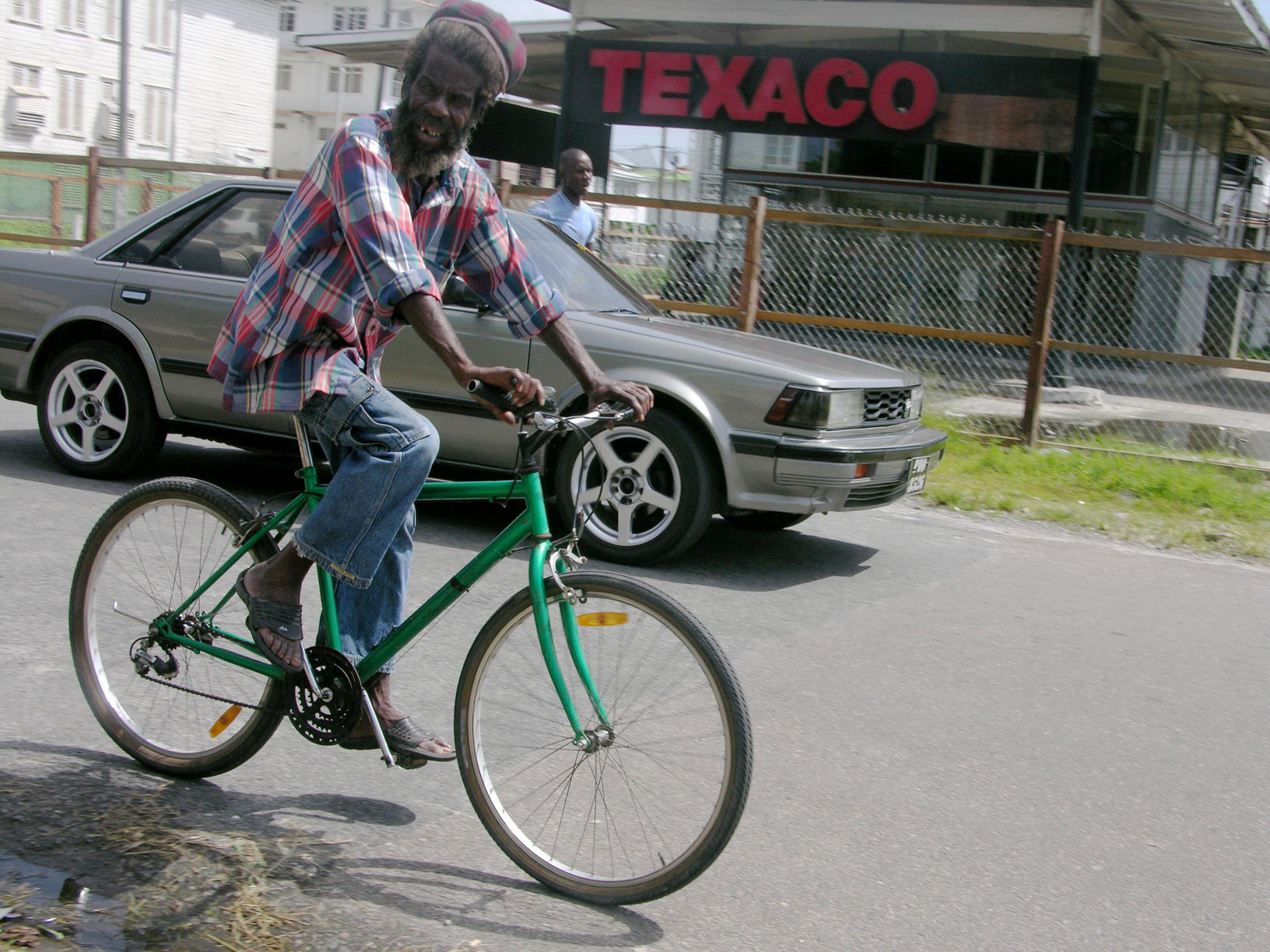
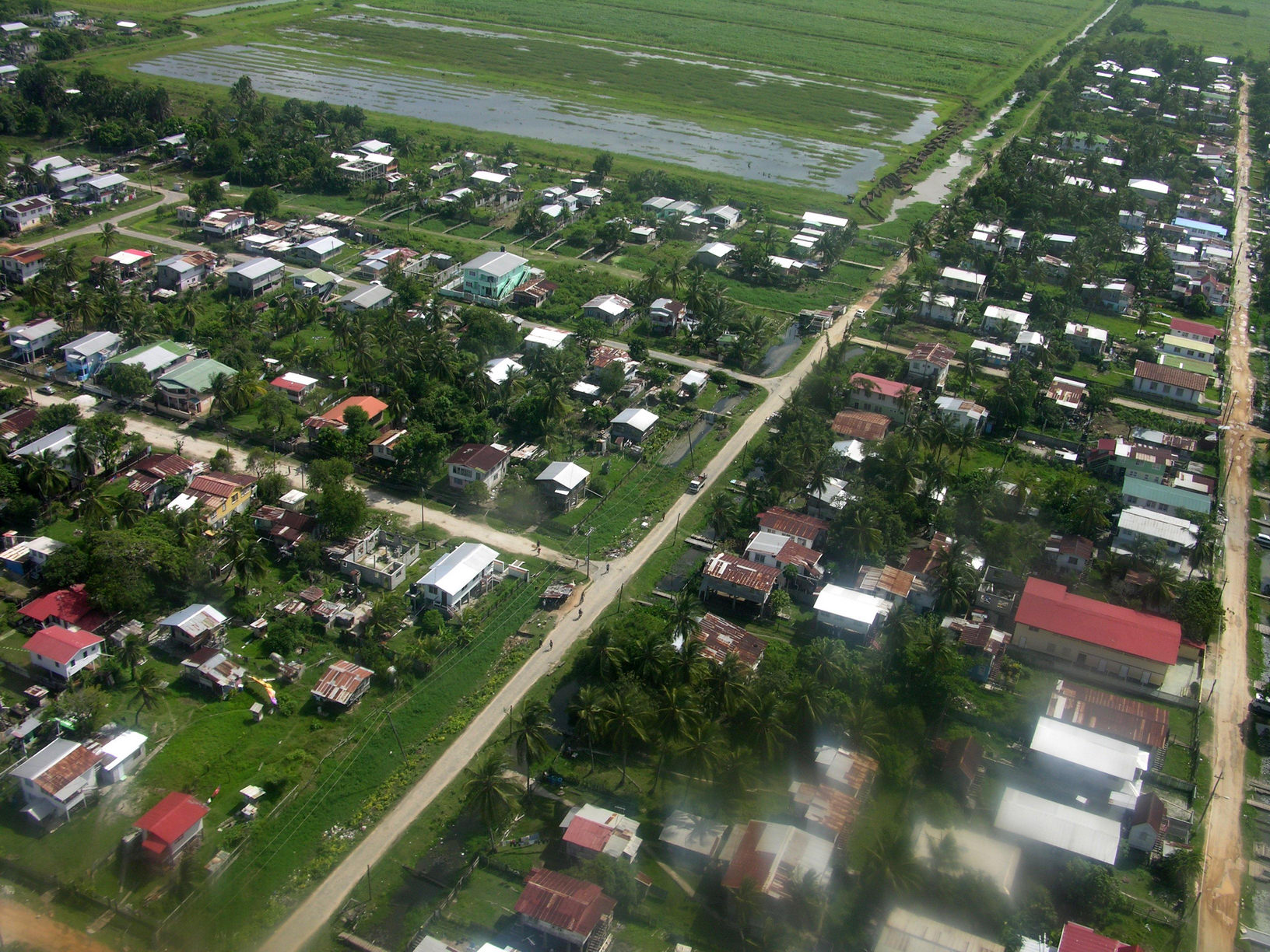
They pack the minibus to the gills. We took the last seats. As soon as the door slammed, it took off and tore over the bumps at 120. Customs and the rest of the border post are out in the middle of nowhere, but after a few kilometres the villages start and follow on one after another all along the coast. Life is in full swing. It all looks like a film on fast-forward. In every ditch children and Black adults are bathing, caimans are swimming, boats are floating by and old women are fishing. There's a kiosk on the bank selling beer and buns. Music plays everywhere. It's so loud and lively that one tune drowning out another hardly matters. It all blends quite harmoniously into one great cacophony.
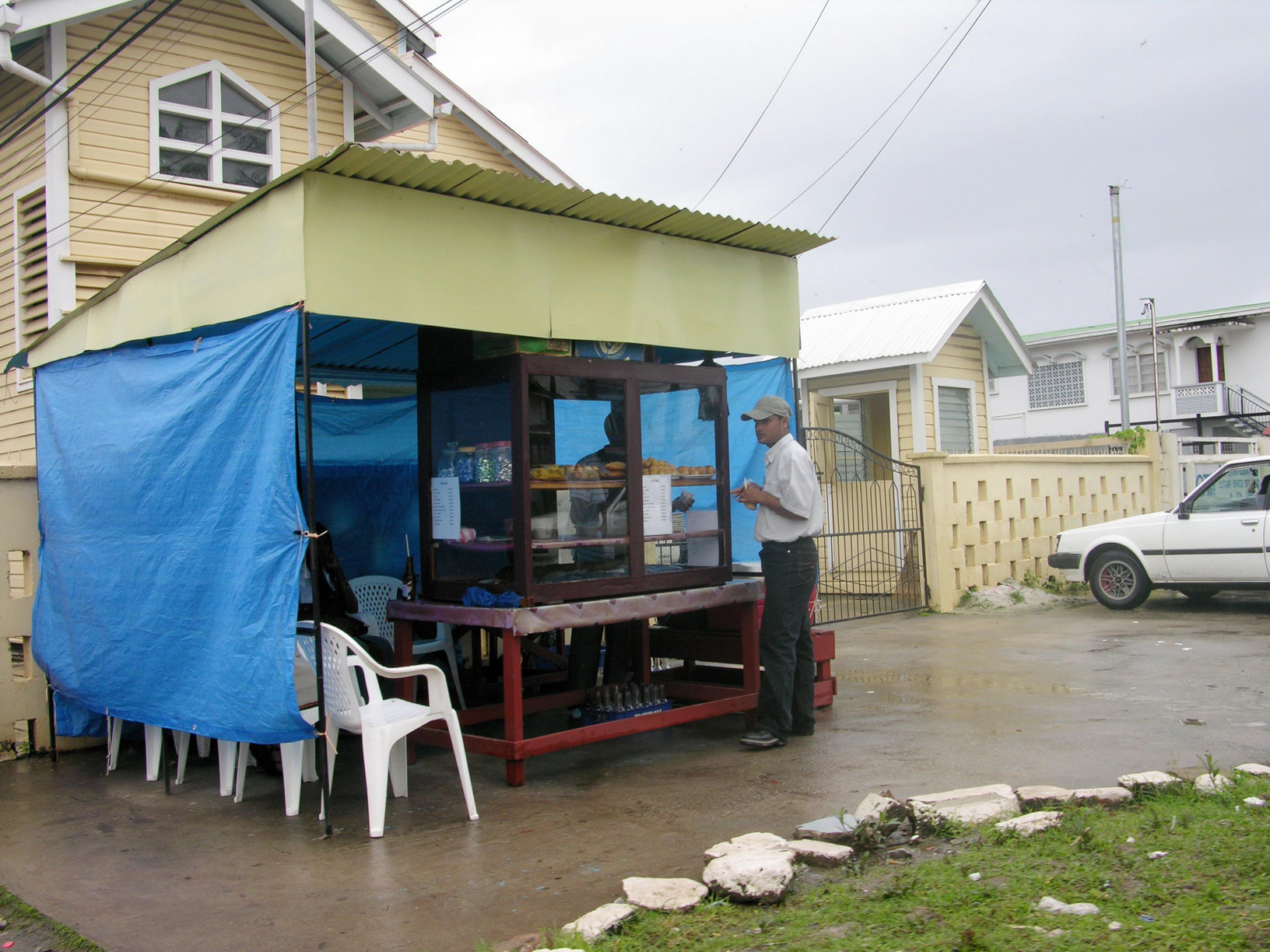
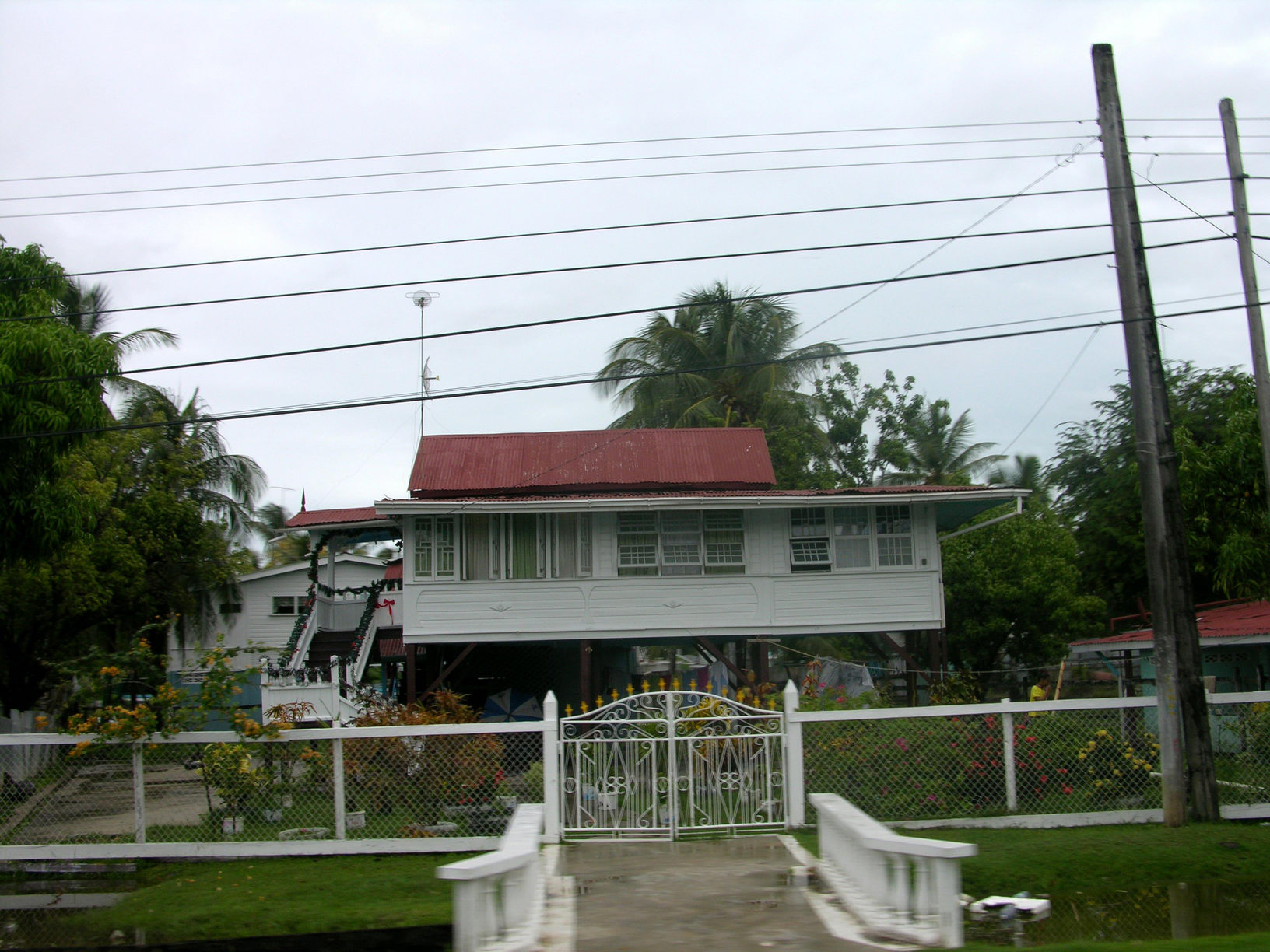
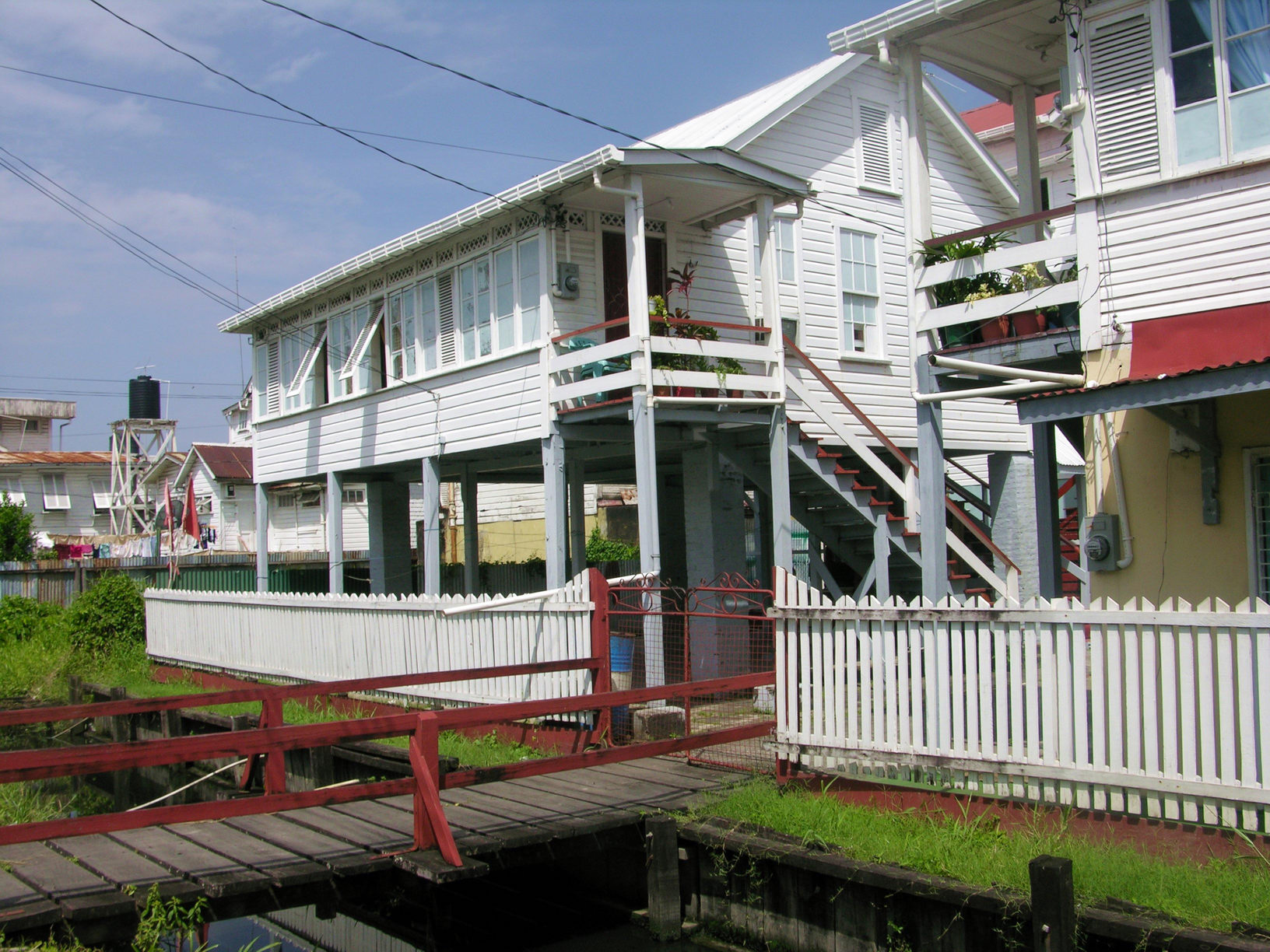
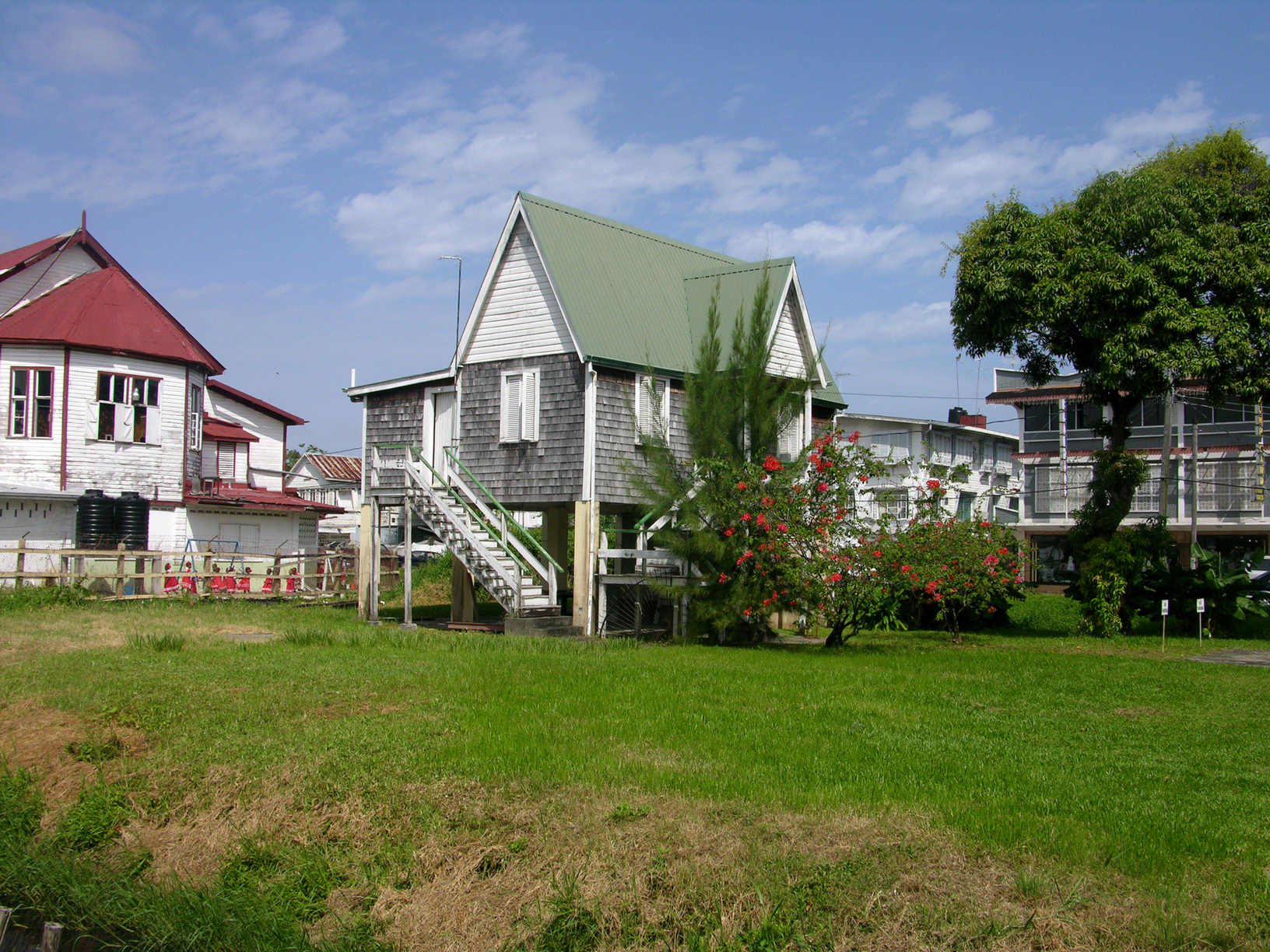
People drive at whatever speed their engine will give them. Chickens run across the street and after an oncoming car has passed there are just feathers flying. There are run-over dogs everywhere, and even young bulls. Children run across the street too, but you don't see any little bodies. Either there's a specially adapted breed, like on the planet Pyrrus, or they get them buried in time. There are a lot of children here, by the way. The population is growing. The houses all stand on stilts, with broad, curving stairways up to the living quarters on the second floor. You can see the kitsch of the newly wealthy Guyanese. A lot of it is garish and tasteless. Everybody tears along on whatever they have. No car? A horse, then. Always at a gallop, with a rifle over the shoulder. The more respectable have a polished revolver in their belt. What a celebration of life.
The population is mixed here too. There are English, Creole, Hindi, Urdu and Indigenous languages. People came together here from all over the world too. They speak to one another in English, though it takes some getting used to.
They say there's complete international brotherhood and tolerance here. You have to believe it, especially when they go on to say that the Afghans and Pakistanis who fled here converted to Christianity. Voluntarily! That's a triumph of religious tolerance if ever there was one. Perhaps these were the people they should have sent to Iraq. There's your answer to Bin Laden. There is the triumph of Christian values.
And the country has a sense of humour. Here are some huge oil storage tanks. What would they put on them in Europe? “Flammable”, probably. In wilder countries they'd probably add “No smoking”. None of that matters in Guyana. If the thing blows up, to hell with it. Nobody gets worked up over little things like that. The sign says “Don't remove it!”, meaning you mustn't steal the tanks and sell them for scrap. Theft really must be something here.
All very entertaining, but at that speed you can't make out the country, let alone photograph it. The pictures come out blurred, and the other passengers strongly advise against taking the camera out again if you value your life and your camera.
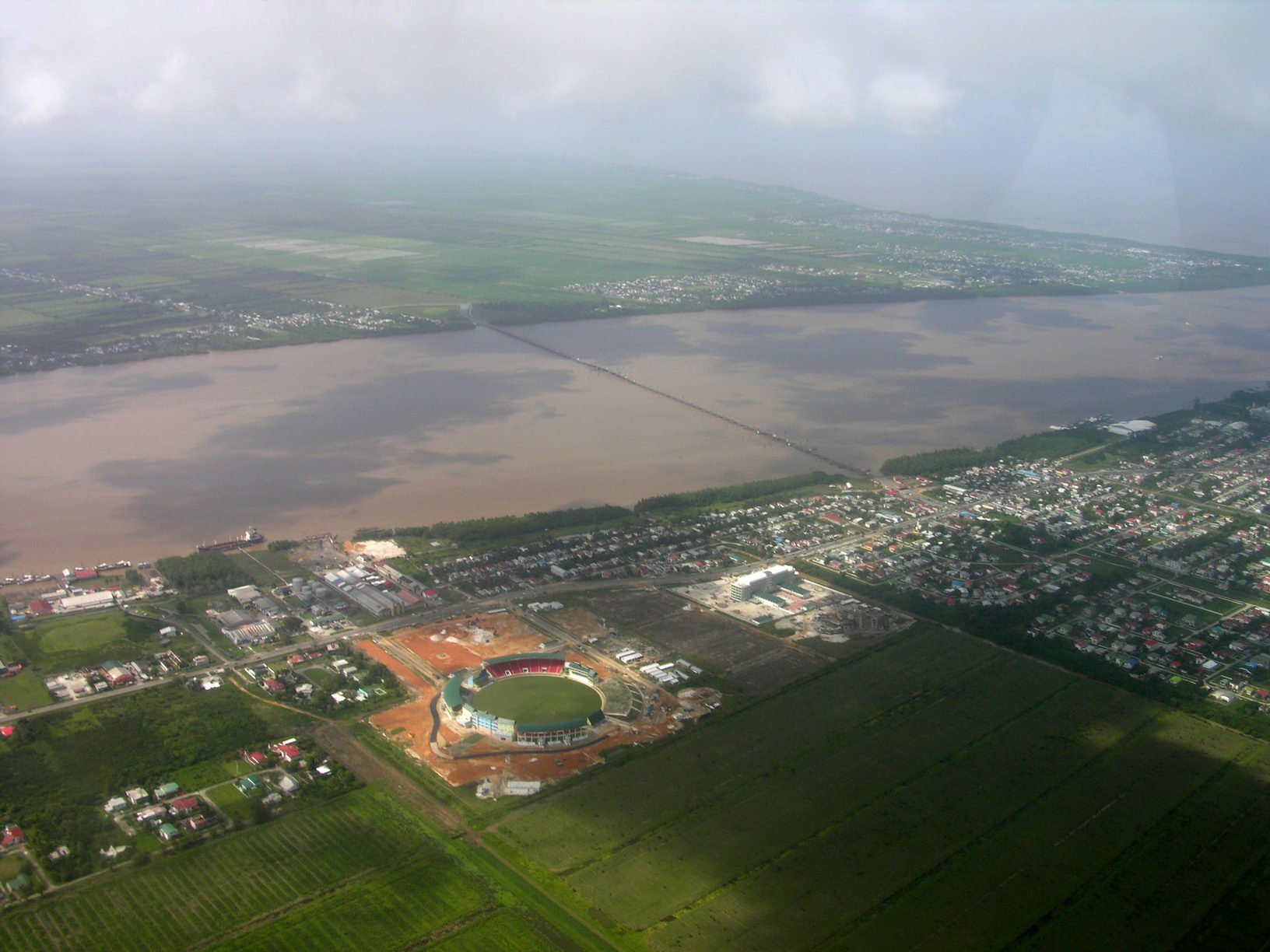
Guyana has its own New Amsterdam too. The Dutch actually got here before the British. They had time to name everything and throw up dykes so the coastal strip could be farmed. As if the rest of the country weren't enough for them. Guyana has a bigger area than Great Britain, but give them a bit of land reclaimed from the sea every time.
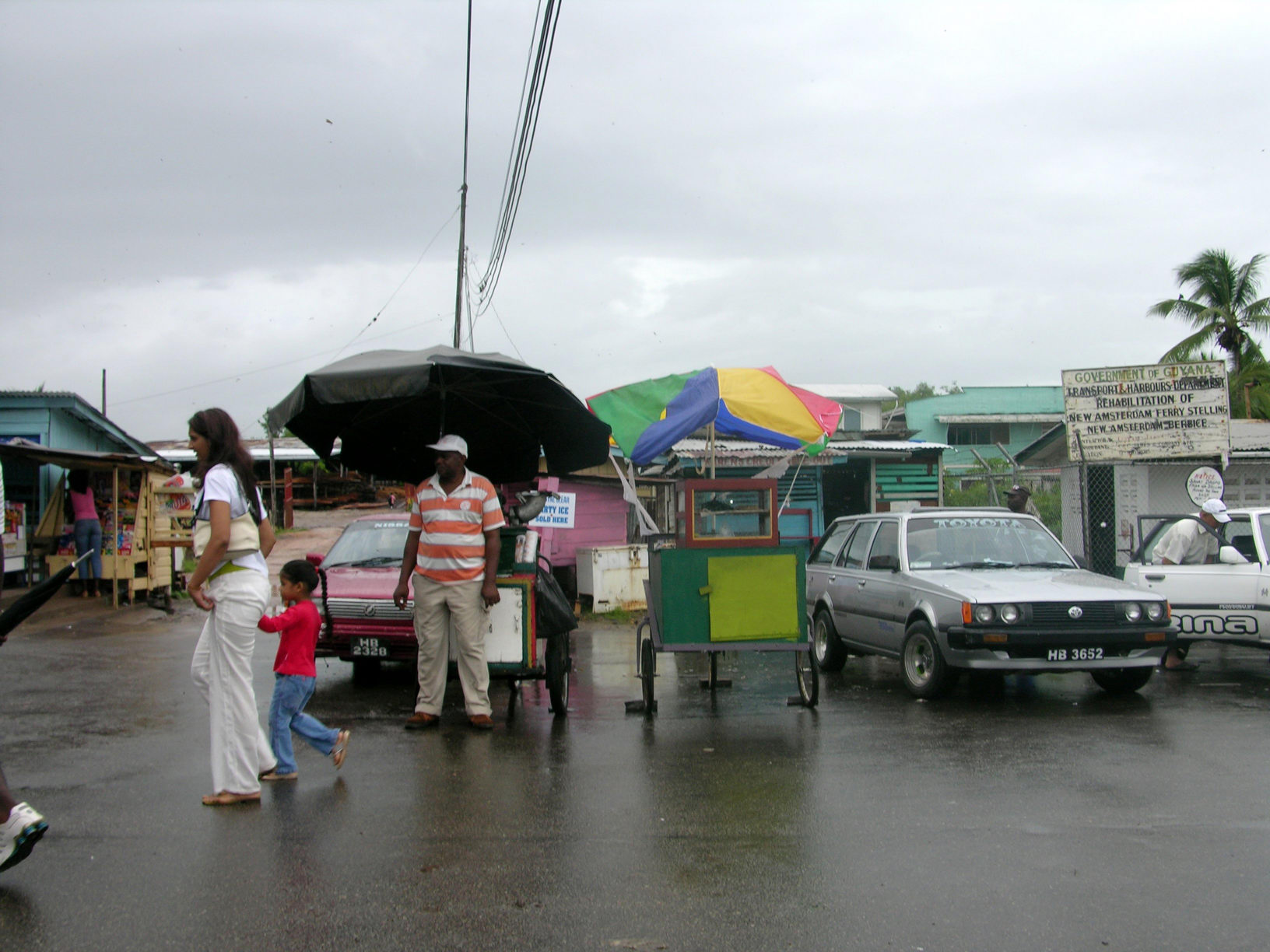
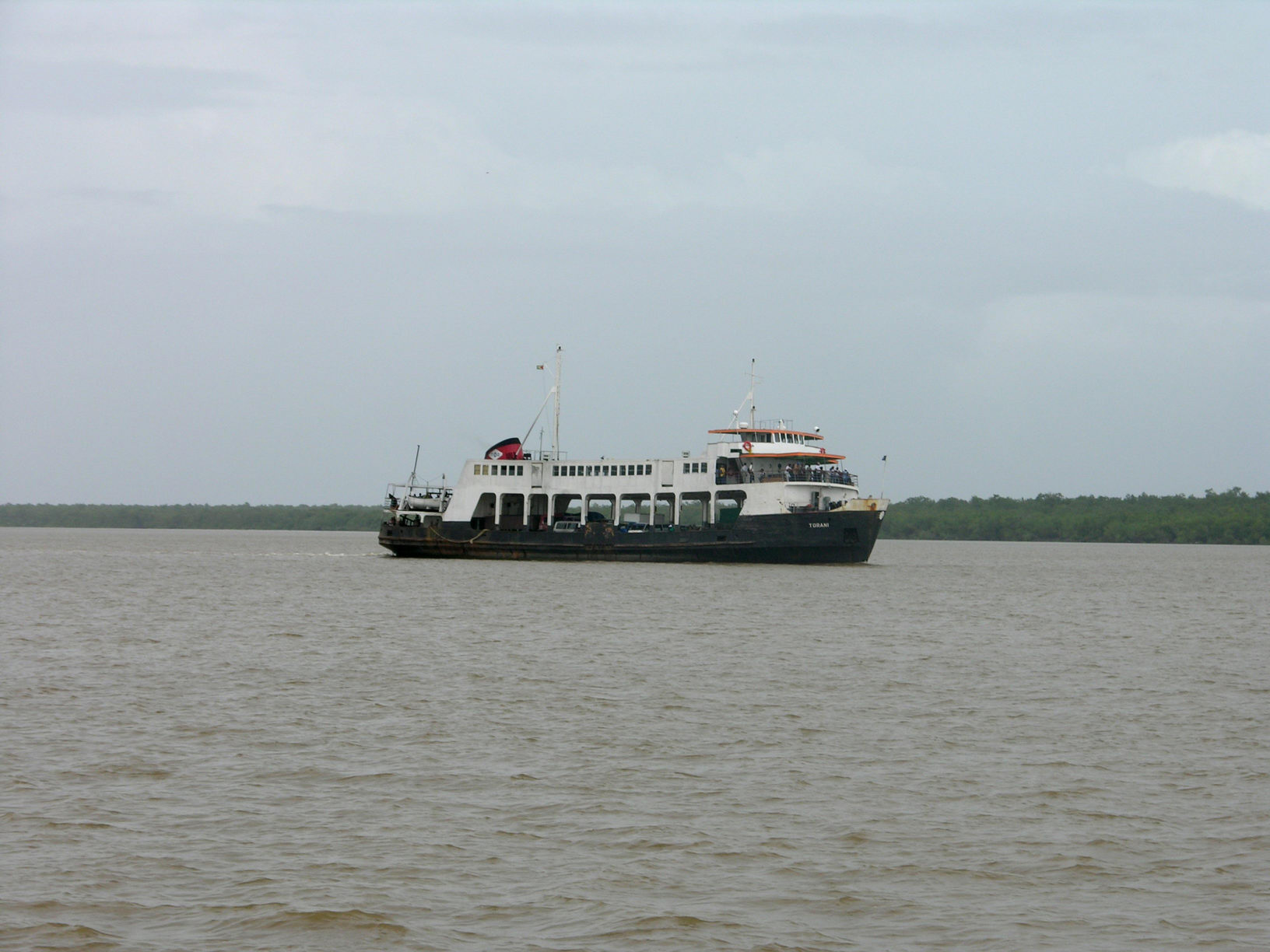
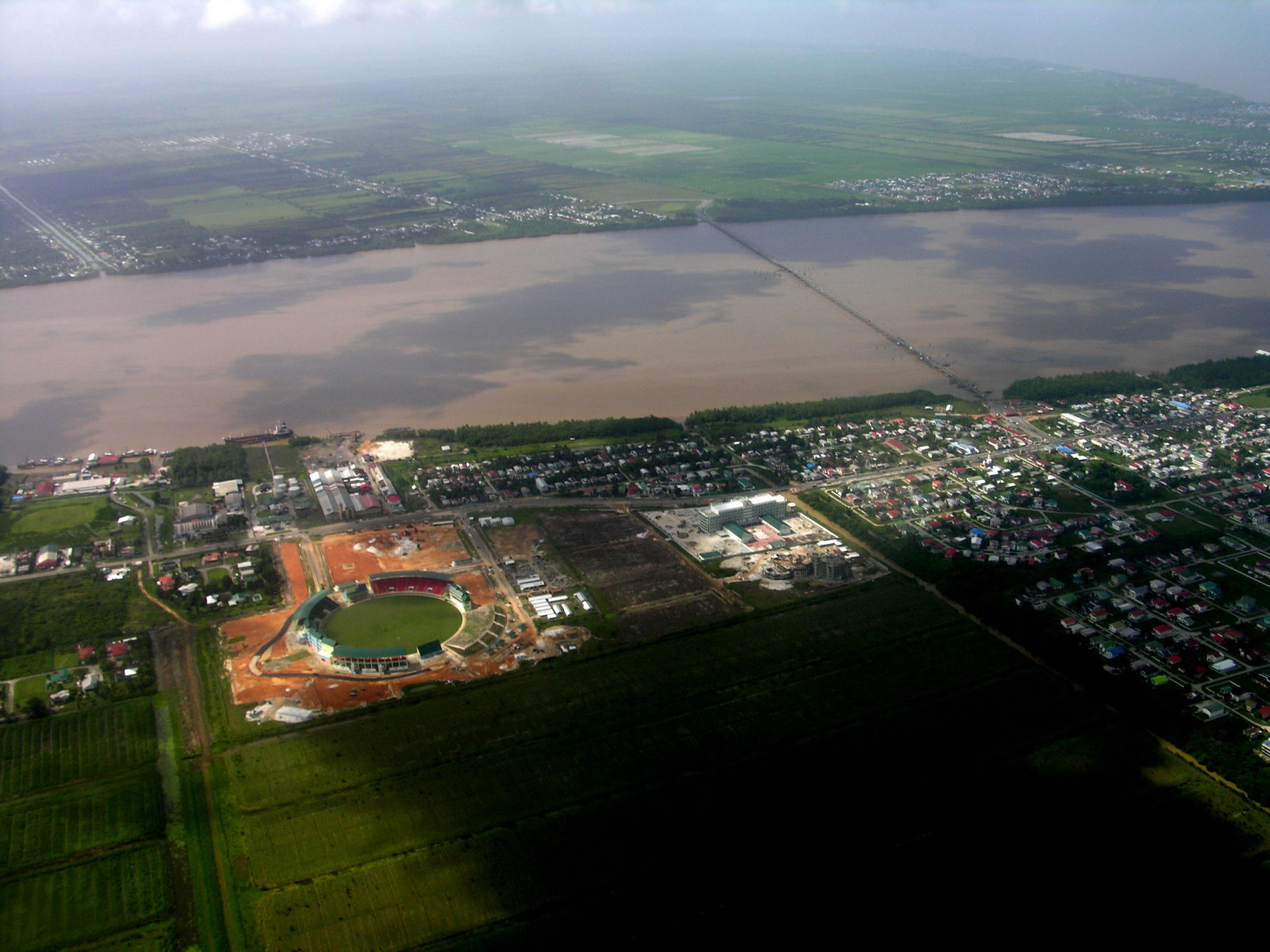
The roads are in poor shape. There's tarmac between the Surinamese border and Georgetown, and around the towns, and that's about it. There are few bridges. At New Amsterdam you still had to take a ferry across the Berbice River. The minibus had to stop there and we could see what was going on. The scene looked like a costume drama set in Theodore Dreiser's America. Some old women in clothes from another age and imitation-leather boots were trying to sneak through without tickets. Some peculiar people who looked homeless were trying to take a cow along with them. A local bigwig in a spanking new Land Rover and an escort of guards was pushing into the queue. There he was, waving a little hand to his beloved people through the window, at the wheel himself, by the way. And there was pig manure splashing all over his roof from the lorry next door, full of squealing pigs. It all played out against a backdrop of huge riveted steel trusses and a boat so old you'd need to know your nineteenth-century history to date it. Sellers stuck homemade ice cream, cassava chips, nuts and beer through the minibus window.
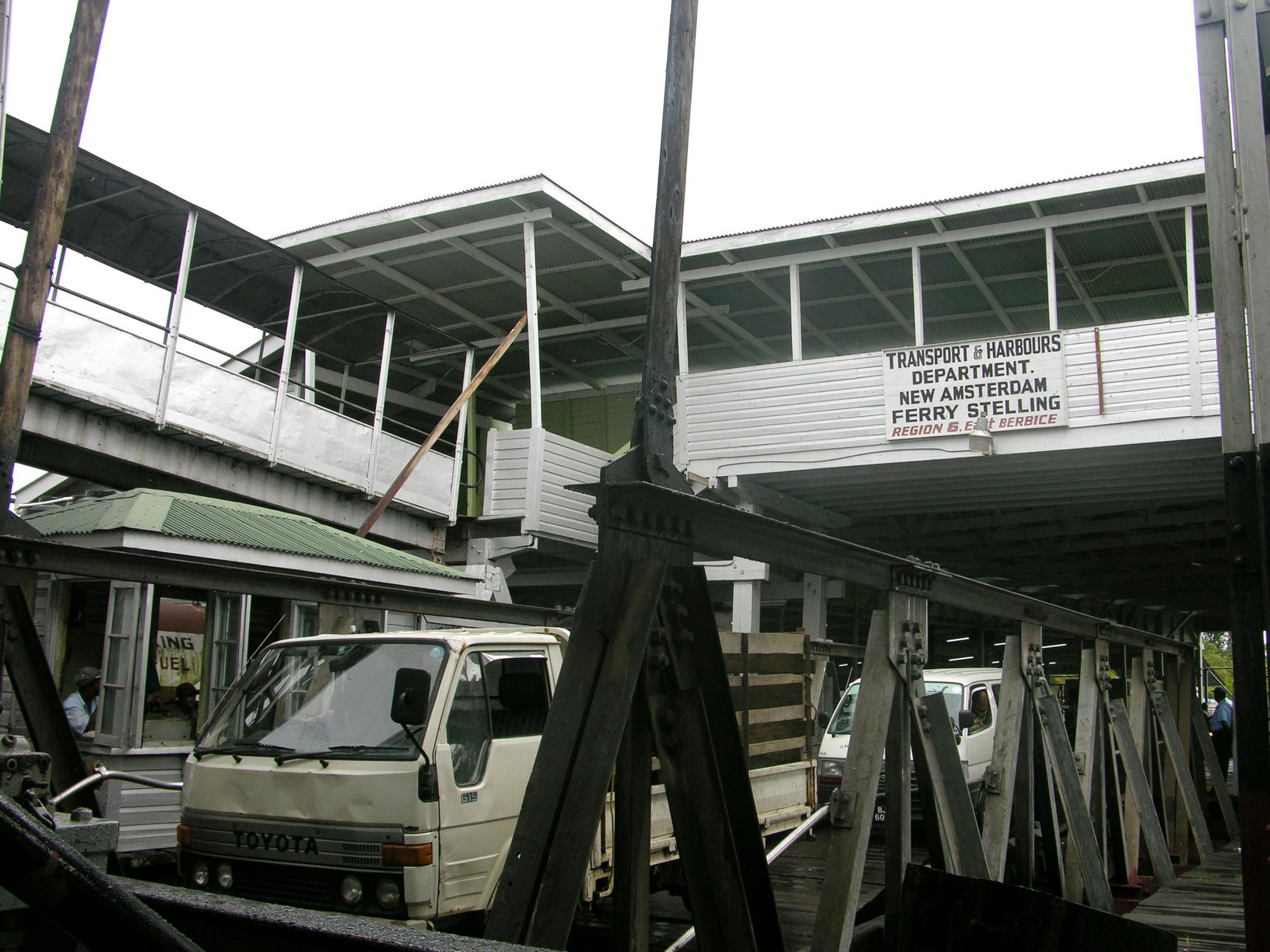
If you take a car, you pay for the car and there's nothing extra to pay for passengers. The crossing takes twenty minutes but the ferries are infrequent, at most once an hour. There are two ferries on the route, but most of the time they're tied up loading and unloading while everyone argues with the drivers over who's more important and gets to go without a ticket or a queue.
We arrived in Georgetown in high spirits. Watching a scene like that makes you feel more like living. We hadn't come all this way for nothing. No stagnation or stability here, that's for sure. Welcome to the Wild West.
We did have to get out of the minibus, though. The driver asked each of us where we wanted to go. Under the local rules, you're meant to take passengers right to their door. Even locals don't walk just anywhere here. He dropped us off at the Ariantze hotel, which we'd picked from Lonely Planet (6°49.005′N, 58°9.590′W).
The only room free was the super suite at GYD 26,000 a night. It was getting dark, so we had to take it. By local standards it was the height of luxury. We had the top floor with wicker furniture and a glazed veranda. The town lay below us like a map. That was handy. If we couldn't go out at night, at least we could have a look from above. Lonely Planet promised we'd hear gunfire in town after dark.
The room had a television with local channels and a bath with hot water.
In Guyana the current alternates in more senses than one. It runs at 60 Hz, but the voltage might be 220 V in one place and 110 V in another. You have to check wherever you plug in. The sockets take flat pins, as in the United States.
Right. Before dark we could leave anything really irreplaceable in the room, put a fresh memory card in the camera so as not to lose the pictures we'd already taken, and go out. We had to find out where we could fly and how.
You can hire a car here, but we wanted to go across the country from north to south to the Brazilian border without going back to the capital. We wanted to see Kaieteur Falls too, and in practice you could only fly there.
We opened the hotel door and stepped into the street. First, the fun bit: change some money or draw some on the card. We had to find the Bank of Scotland. It was the only bank where you could get cash on Mastercard. The bank itself was closed. There were cash machines, but they said they couldn't reach the server and wouldn't be working that day. The other banks refused even to recognise our card.
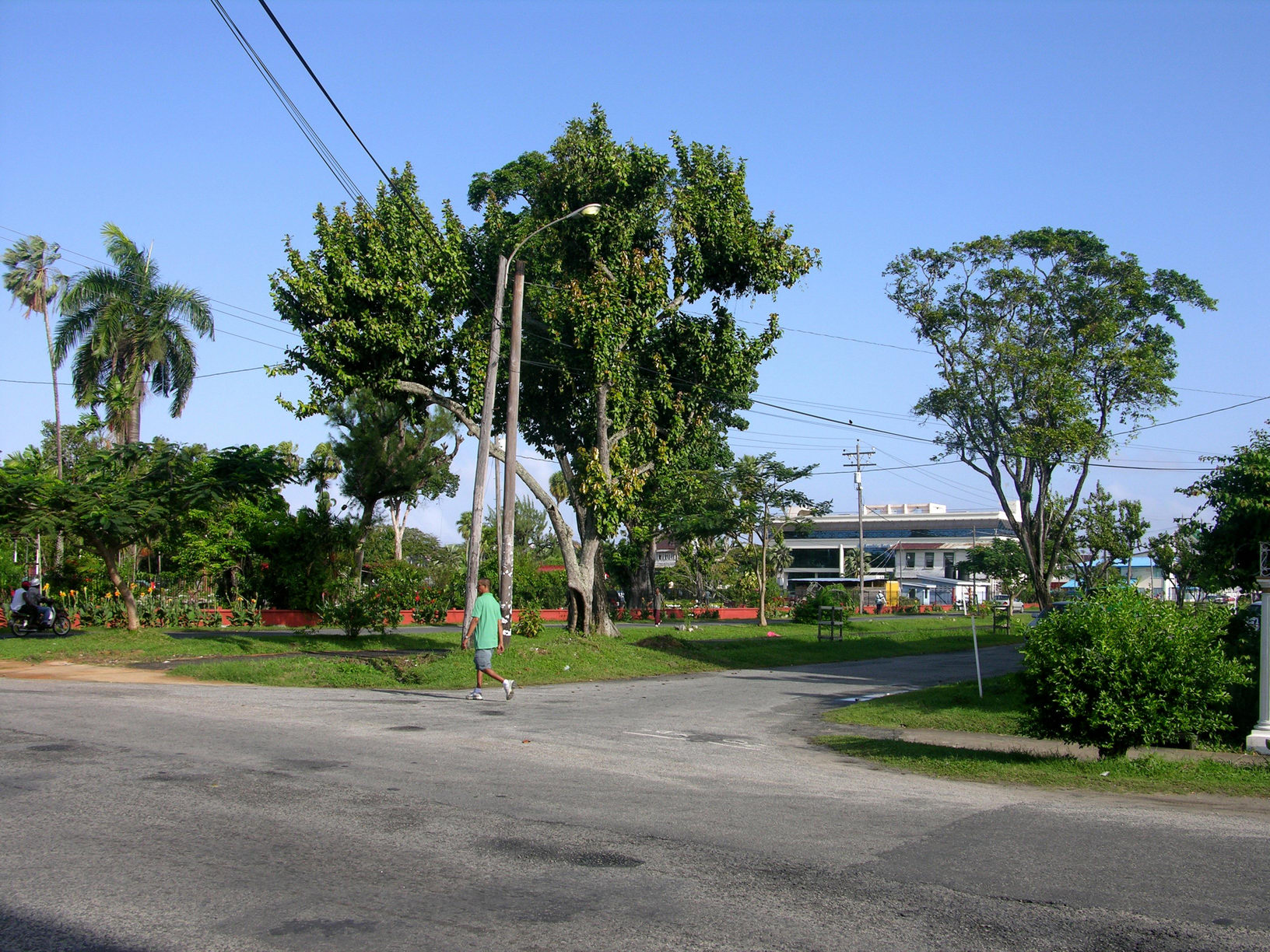
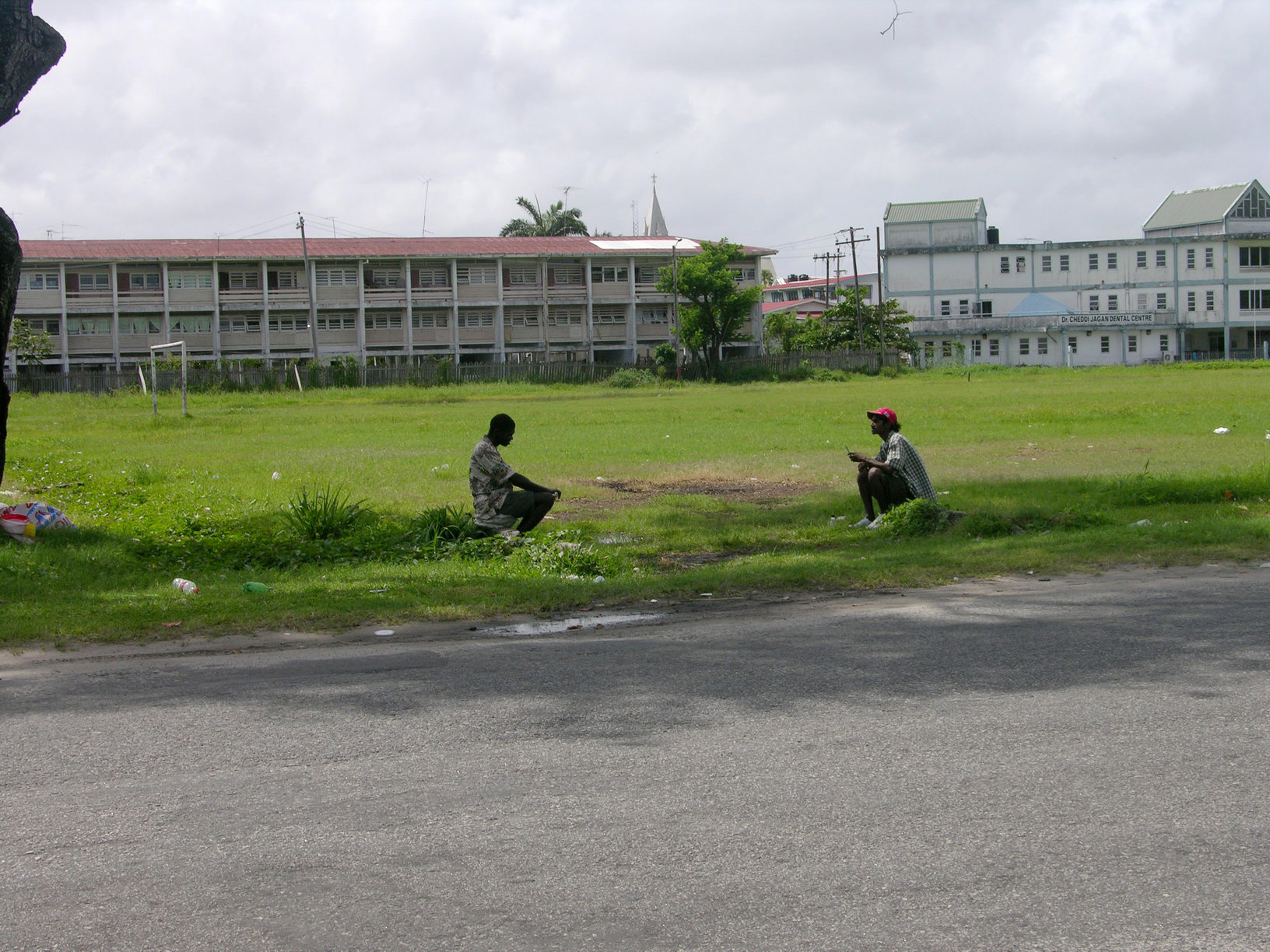
We had to try a currency exchange. The door had a security vestibule. You had to slide the money through a slot in an armoured screen. You couldn't see the cashier, and could only speak over the intercom. After a while the local currency appeared through the screen. Guyanese dollars. The rate was US$1 to GYD 202.950. We now owned a wad of thousand-dollar notes. What better time to stroll around Promenade Garden? Don't go by the name. You can't promenade there. It was supposedly so dangerous that the park had been shut to avoid trouble. Only the gardeners were allowed inside, tending it until better times. On nearby Independence Square, though, some rather suspicious gentlemen were lying around, and you felt awkward under their steady gaze. They looked, but they were in no hurry to run after us.
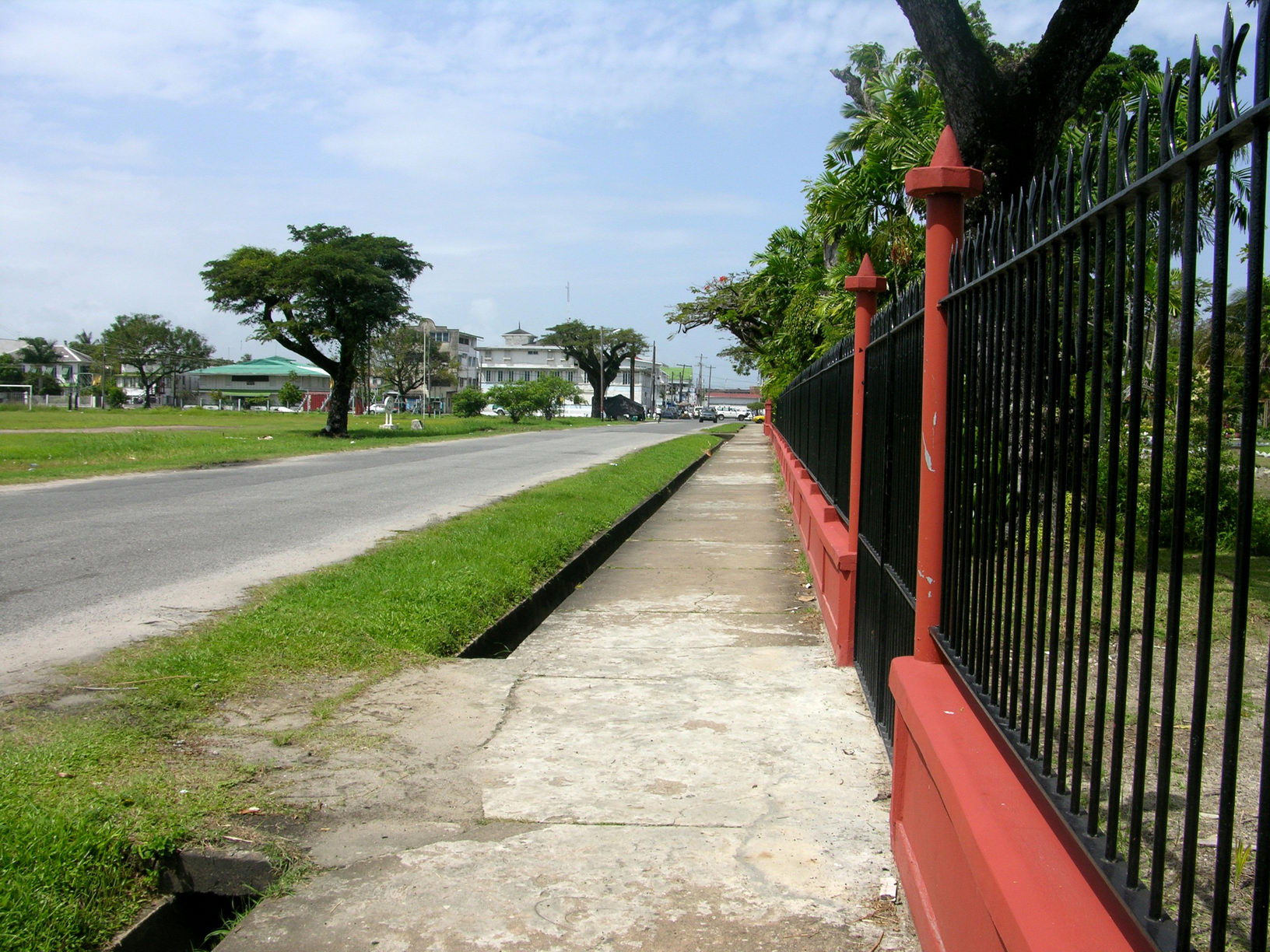
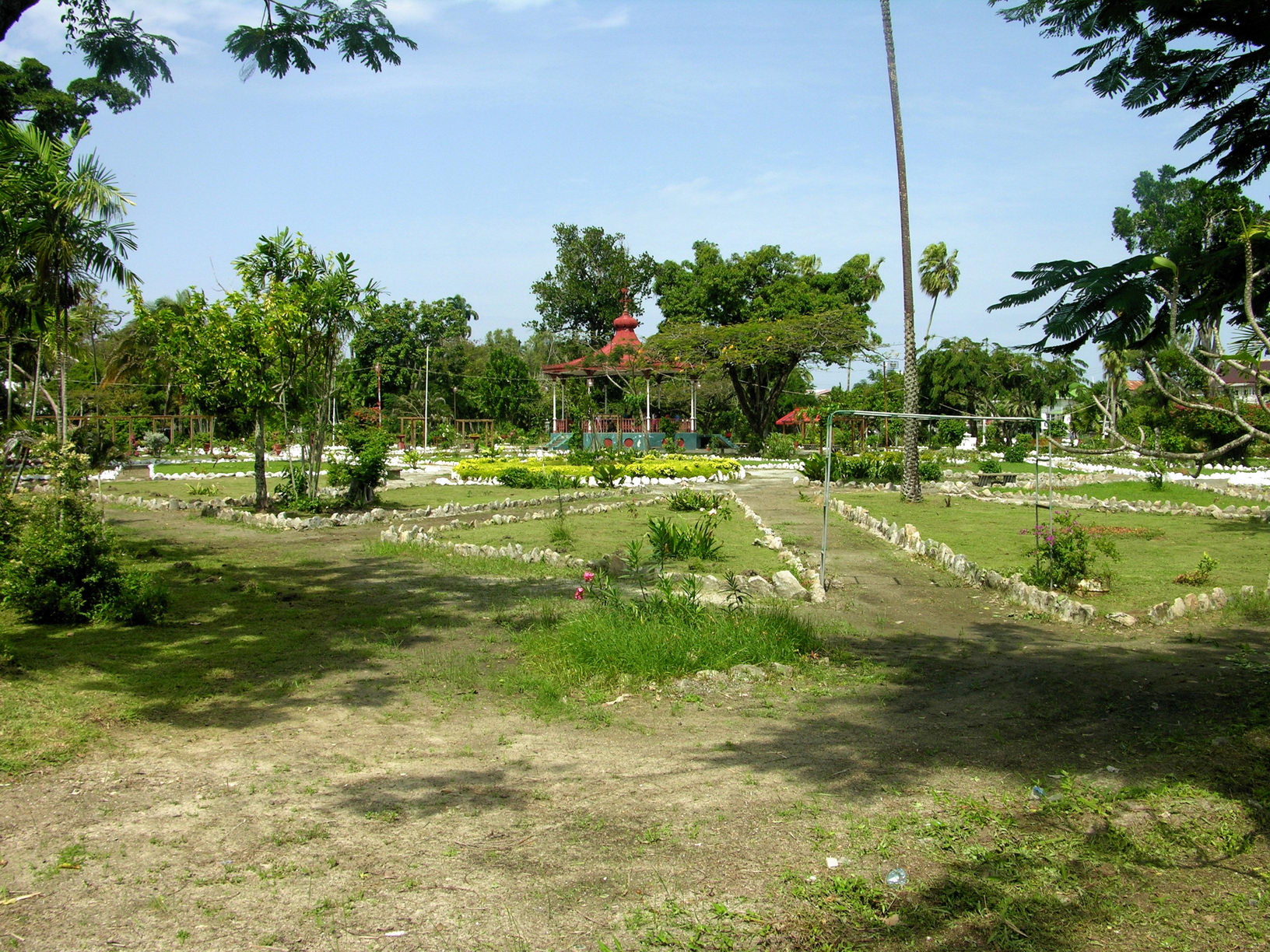
Near our hotel was a travel agency called Wilderness Explorers. We went to see what they could do. Our arrival was received like a visit from outer space.
The first thing we wanted to arrange was a flight to Kaieteur Falls the following day. The phones started ringing. First it turned out they were waiting to fill up a plane. If they added the two of us, in principle it could fly. Then it emerged that there was only one other passenger. He'd simply been round all the travel agencies in town and told each one that he wanted a flight. As soon as they found this out, we were told to wait. Lonely Planet had been right to warn that if you wanted to organise anything in Guyana, you'd better have plenty of time and patience. Alas, we had neither.
“We want a plane, and that's that,” we said. “How much for your whole Cessna?” “US$700.” “Fine,” I said, “let's do it. We'll collect the cash from anyone else who wants to come.”
The proposal had the young woman floored and she started ringing her boss. Nothing like this had ever happened to her. The first thing the boss asked was where we'd come from. “Can you believe it?” said the young woman. “They walked in off the street, they've got a gold card and they're ready to pay US$700.”
“Which country are they from?” “Russia.” “Where's that?” “In Europe.” “Oh, well, there are a lot of countries there. You can't remember them all.”
That's how the myths about the New Russians start. All we wanted was to see a waterfall.
We sold one more seat for US$209.
We'd filled one day. What next?
Guyana has a principal national park, Iwokrama, roughly in the middle of the country.
We wanted to go there, especially as it was on the way. After that we wanted to head south to Brazil.
Looking back, of course, you realise we ought to have hired a car and driven ourselves instead of being scared by all the stories about imminent death. But there was something very dubious about the atmosphere in the capital. So we decided to get ourselves to the park. In fact the south of the country was quite safe and there was no crime. We ended up buying tickets for the next night's bus. It took eight hours for the three hundred kilometres to Iwokrama, if you were lucky, according to people who'd done it. If it rained the road could turn into impassable mud, and Lonely Planet suggested carrying food and a tent for just that eventuality. Another reason we didn't hire a jeep. As well as buying the tickets, we booked three nights at the park. We paid for the lot by credit card, with an eight-and-a-half per cent surcharge. Then again, withdrawing the cash at a bank would probably have cost us the same. It's cheaper to bring cash and change it.
Now it was time to find something to eat. They say Georgetown has lots of restaurants. We walked for several blocks. It was getting dark and we'd found nothing except chicken at KFC. We had to eat at the Ariantze Sidewalk Café and Jazz Club, our hotel restaurant. It turned out to be a very pleasant place.
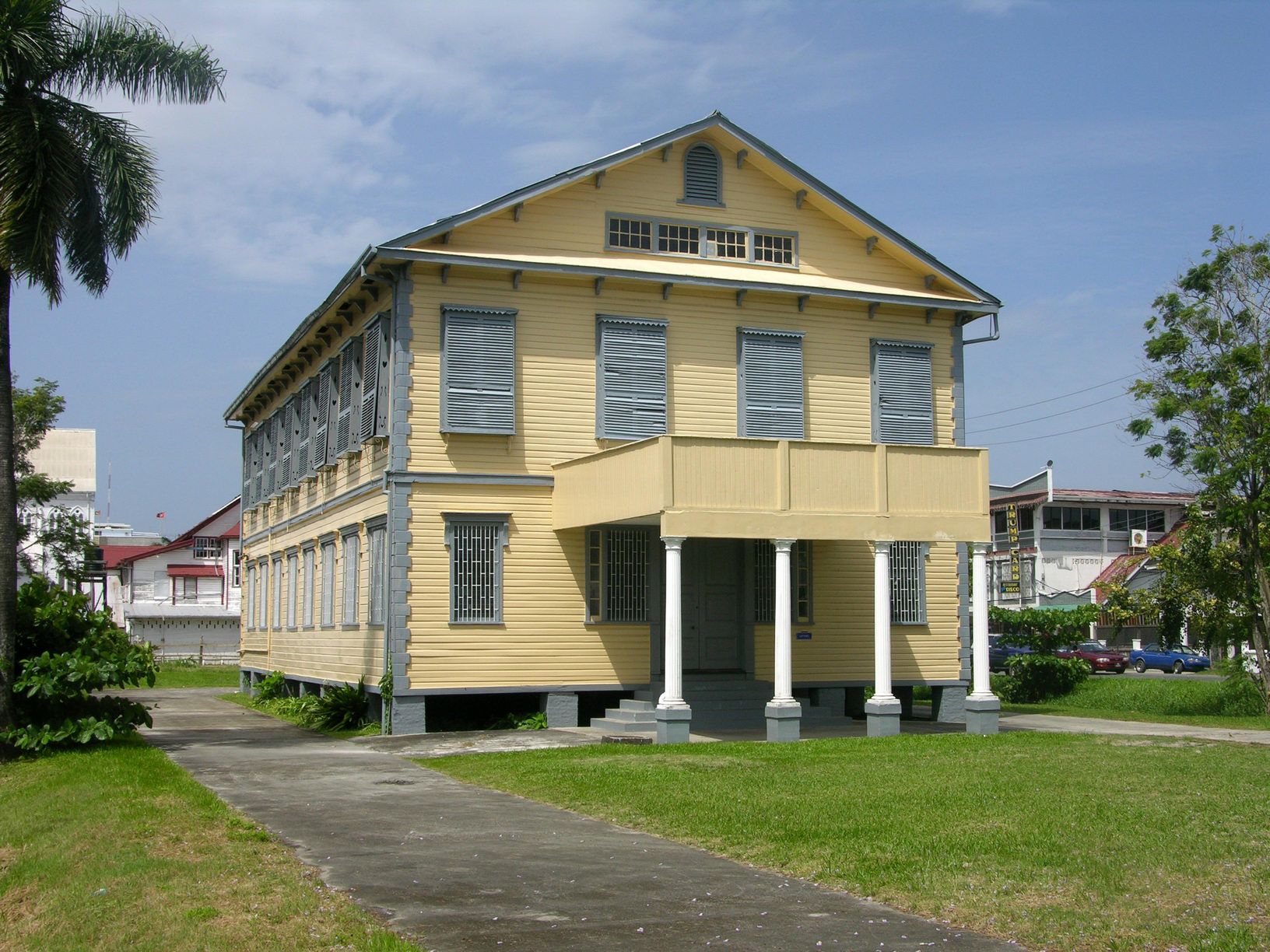
Everything here is arranged to keep walking on the streets to a minimum. You can buy the essentials in the hotel. If they don't have what you need, the receptionist calls and has it brought to your room. After dark the streets really did empty. I don't think I'd ever seen anything like it. Even people going to the very next building take a taxi. Consequently taxis are cheap, at five hundred to fifteen hundred Guyanese dollars within the city.
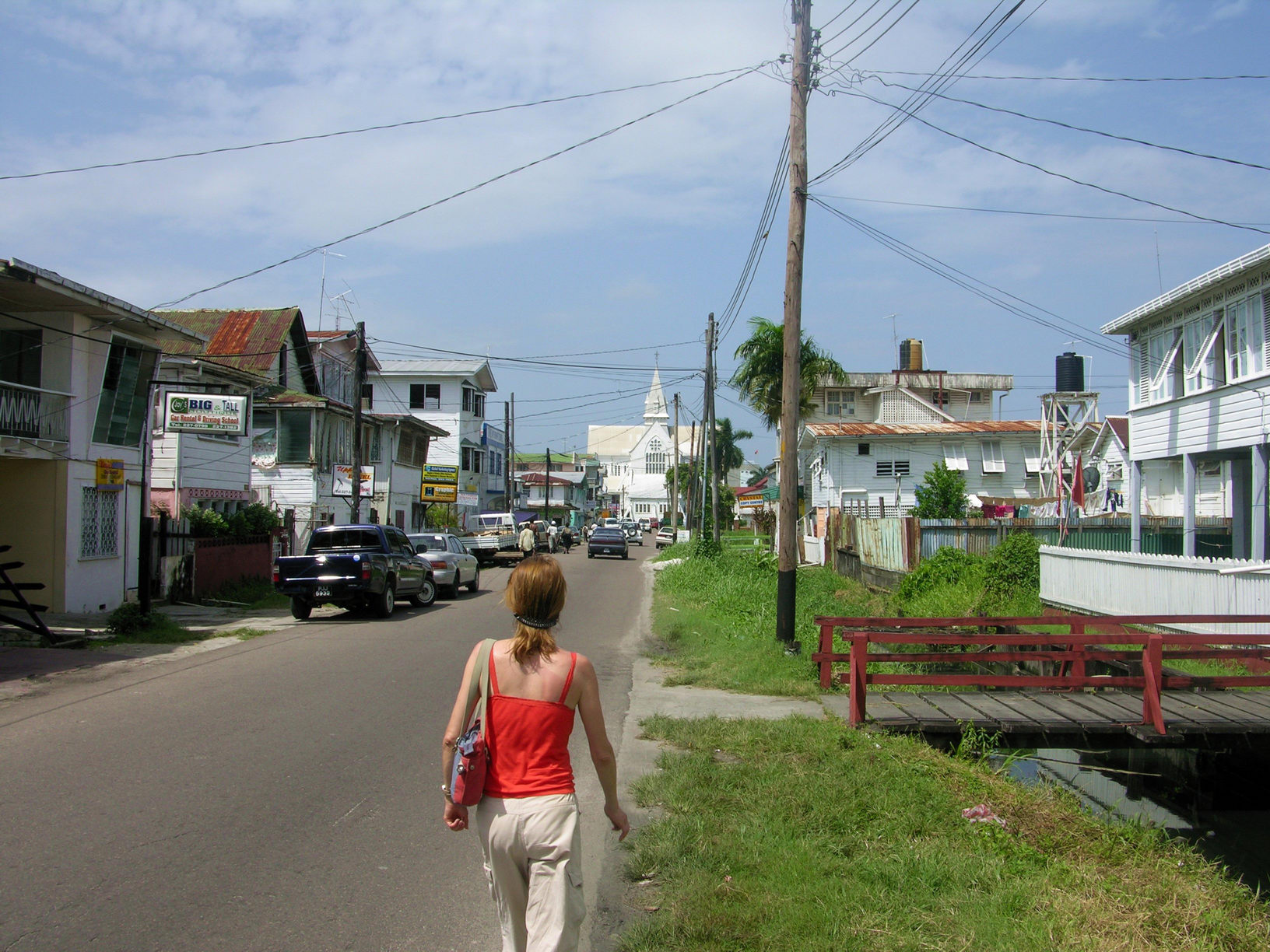
In the morning, though, you can go out for a walk. We still had a lot of time before our flight.
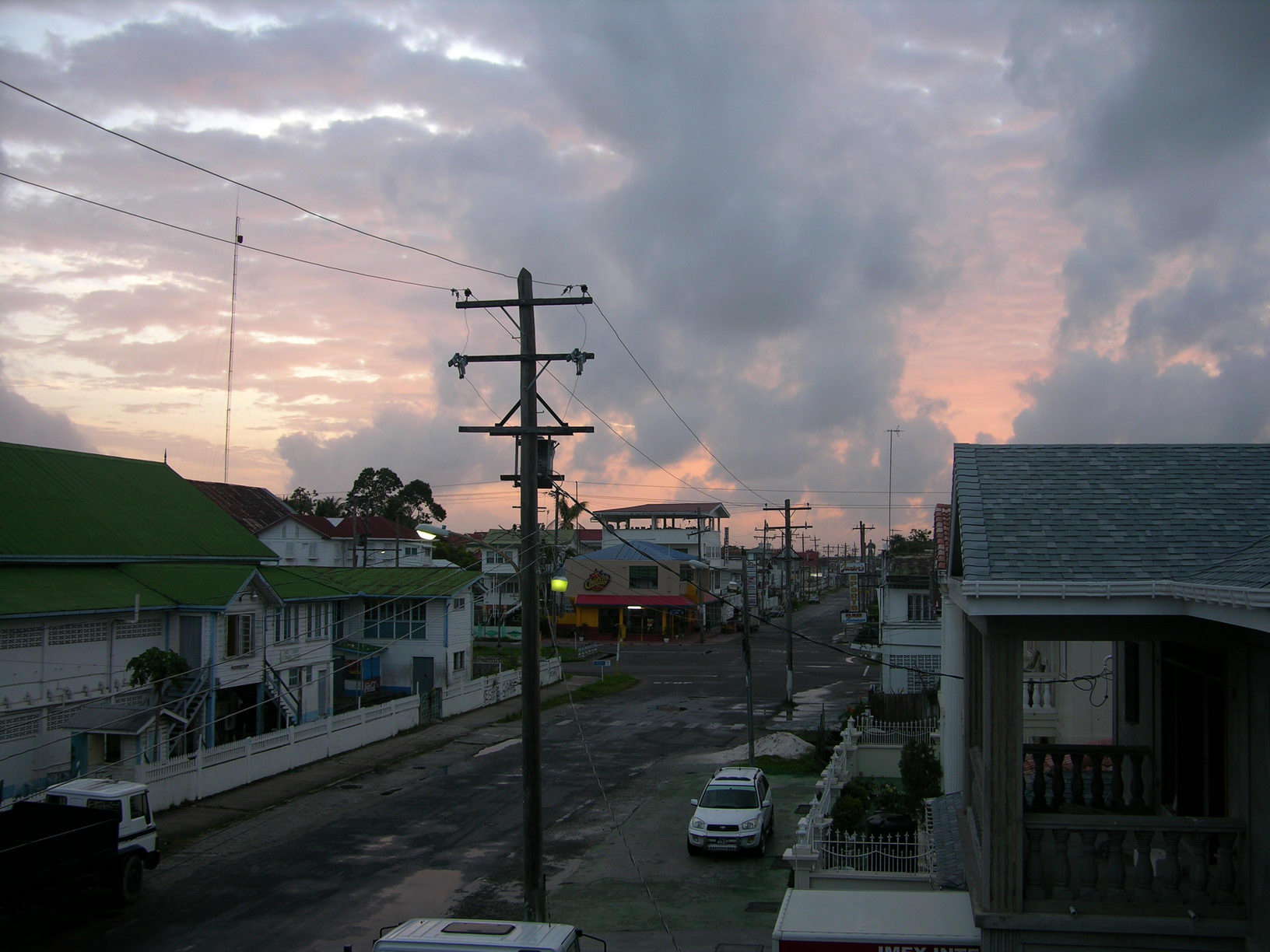
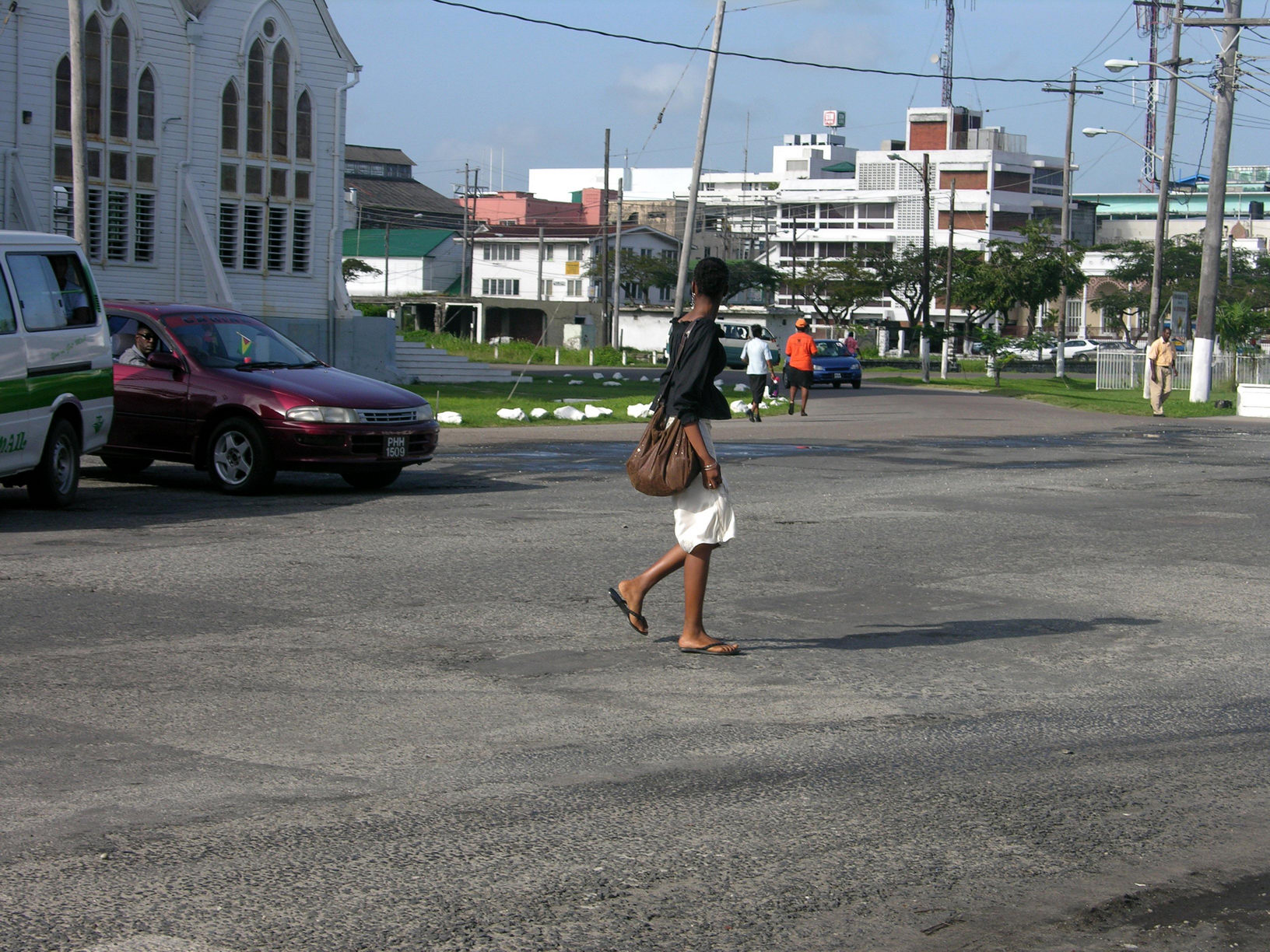
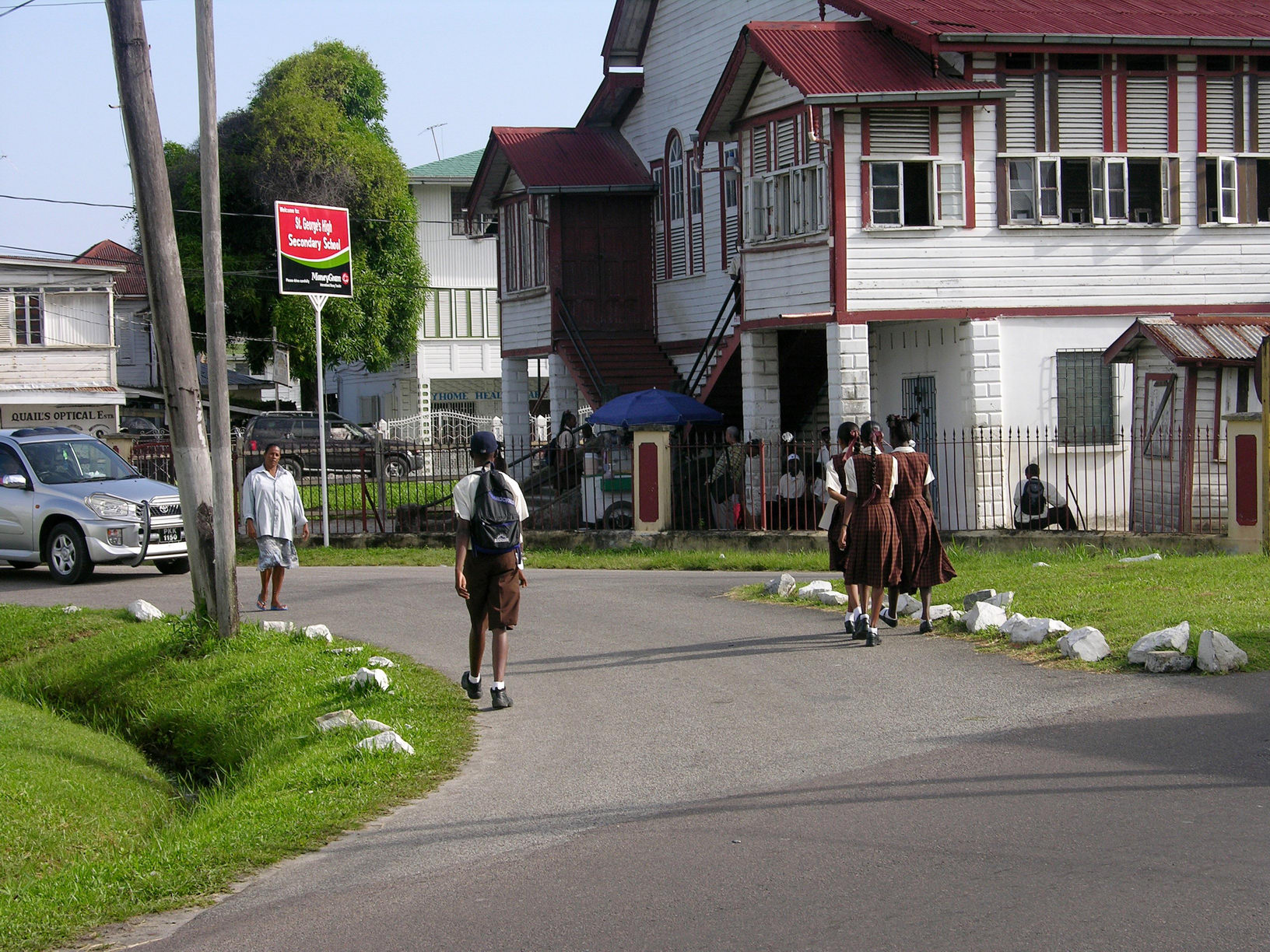
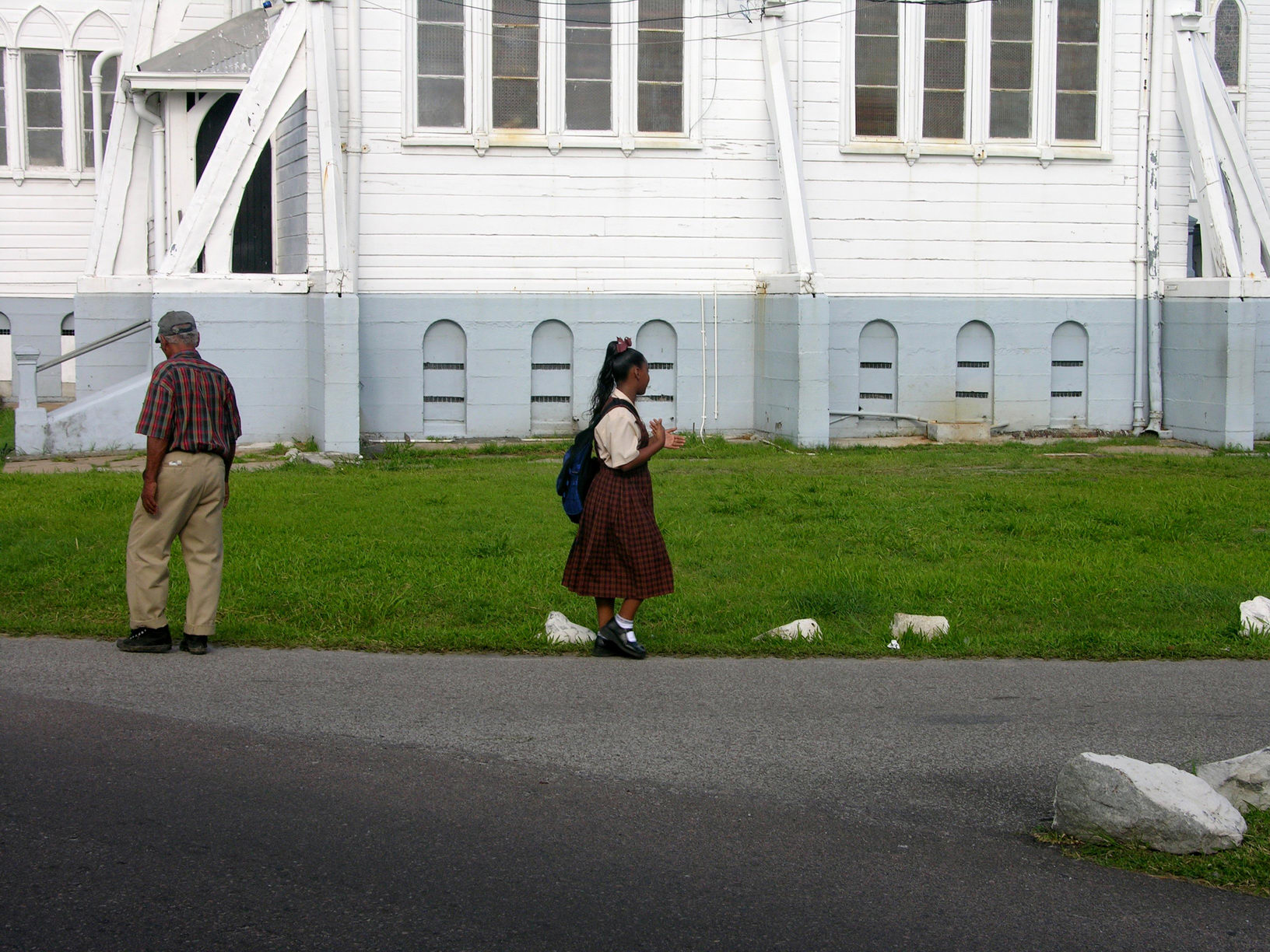
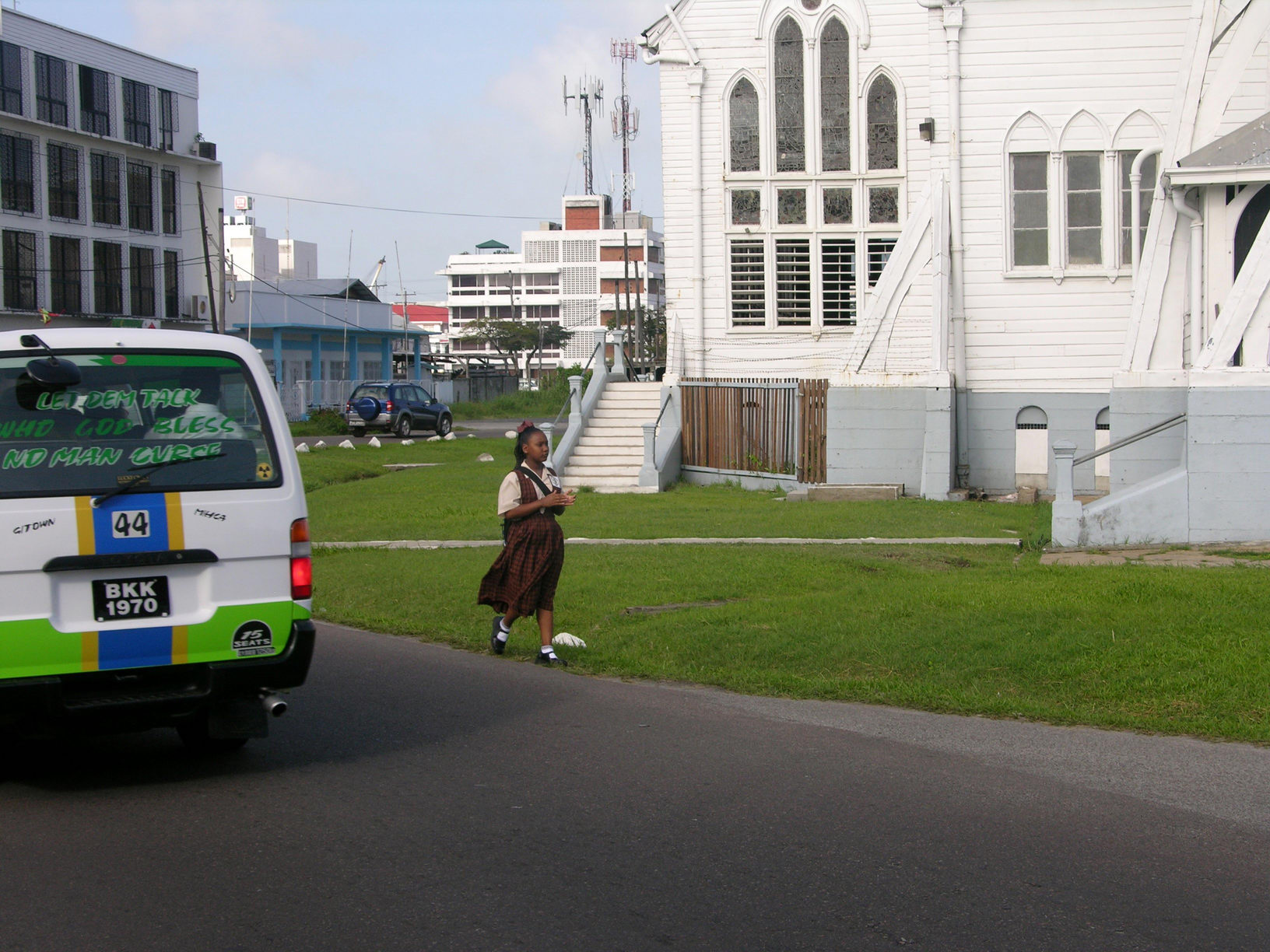
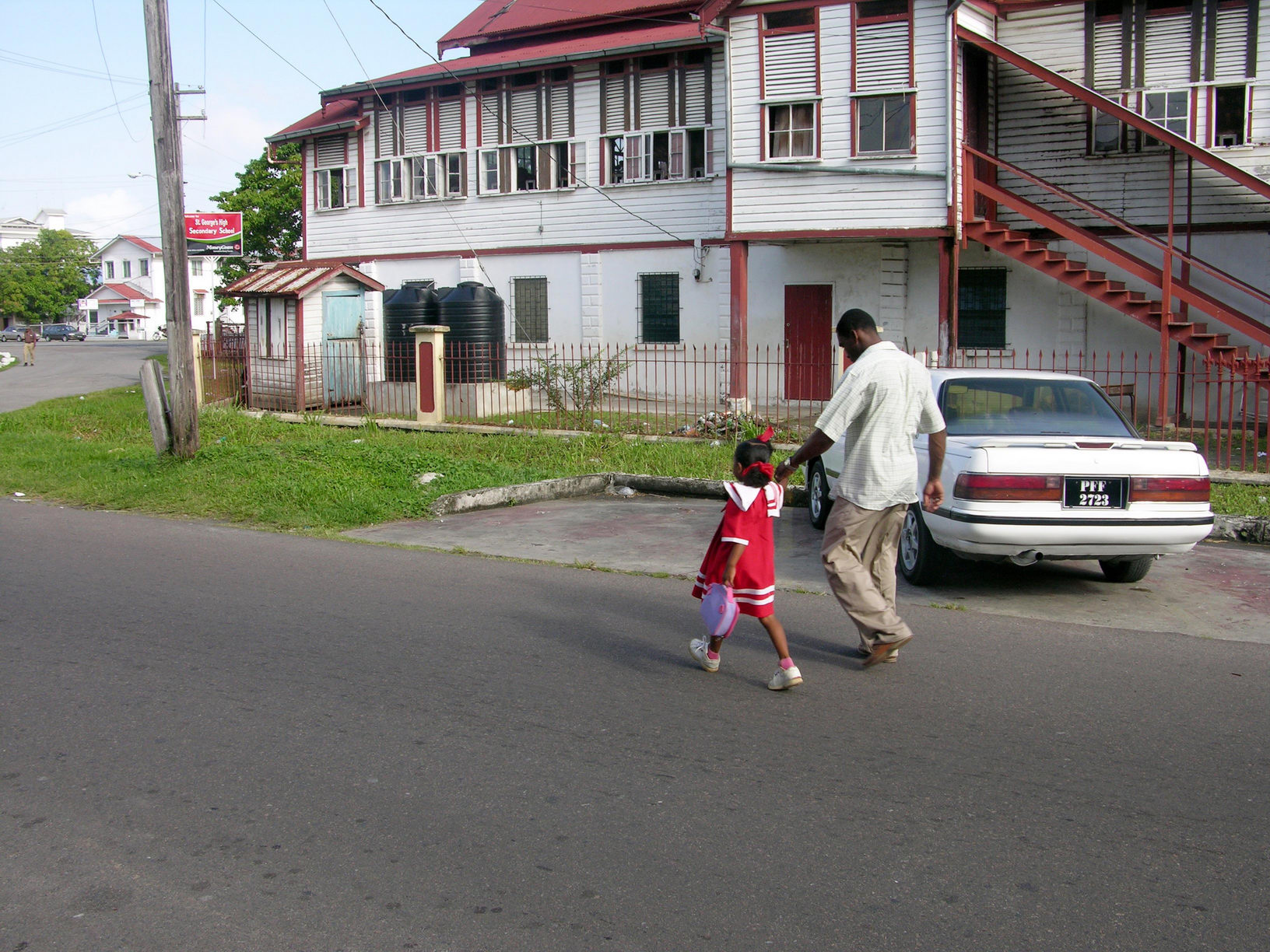
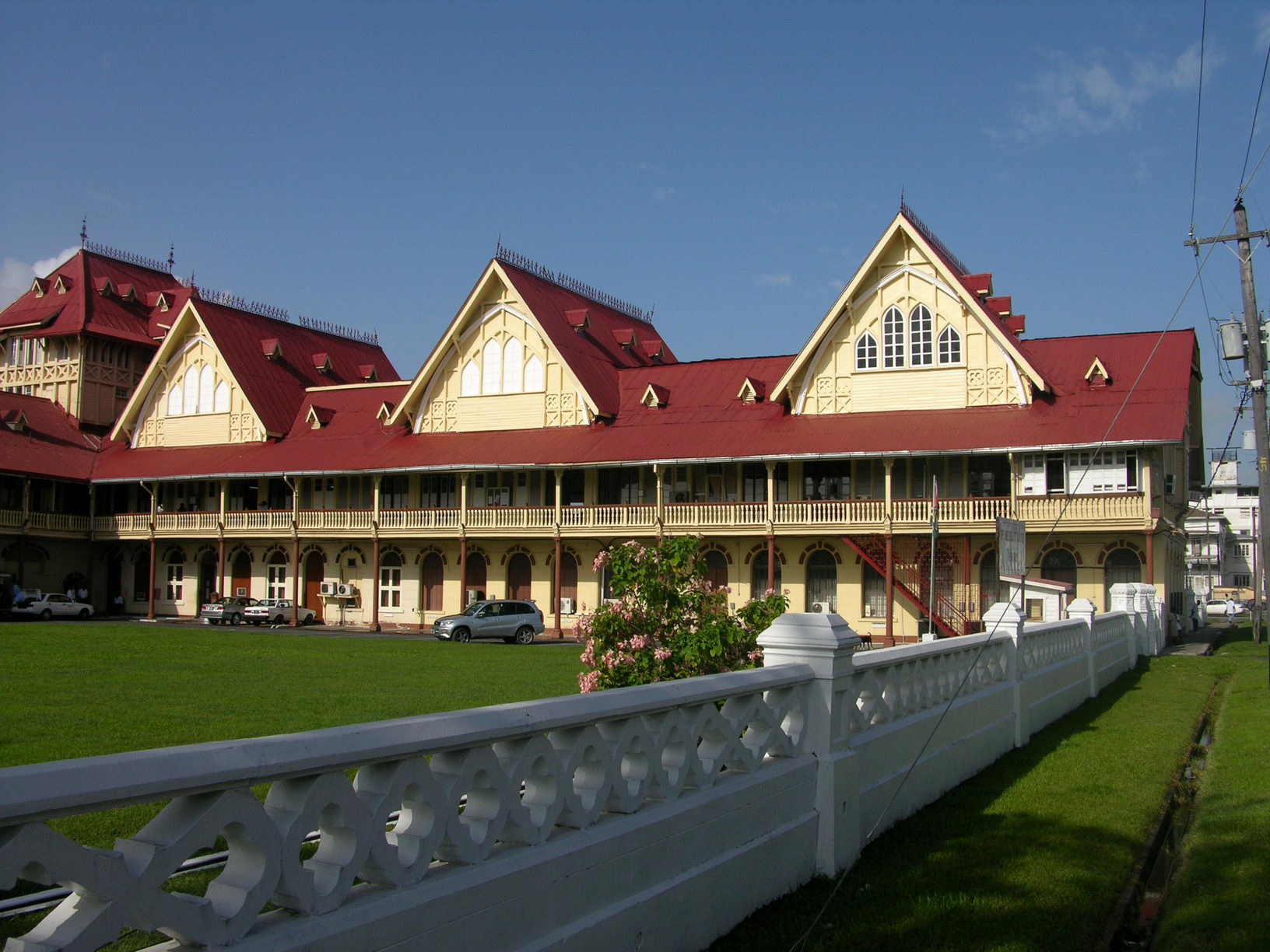
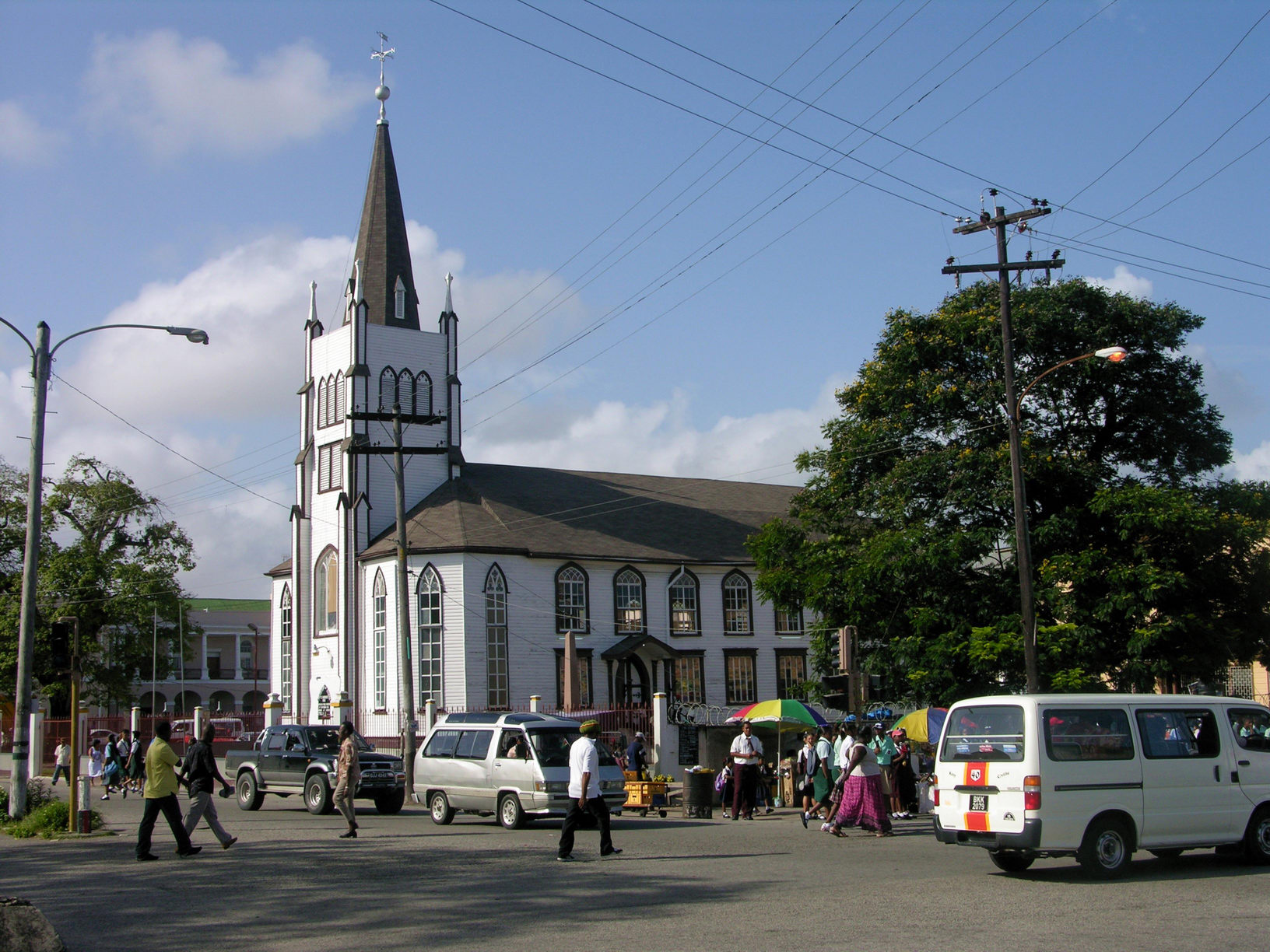
The main attraction in the country is the nineteenth-century church of St George, its cathedral. They say it's the largest wooden building in the world. I find that hard to believe. They've clearly never seen the railway warehouses in Saint Petersburg.
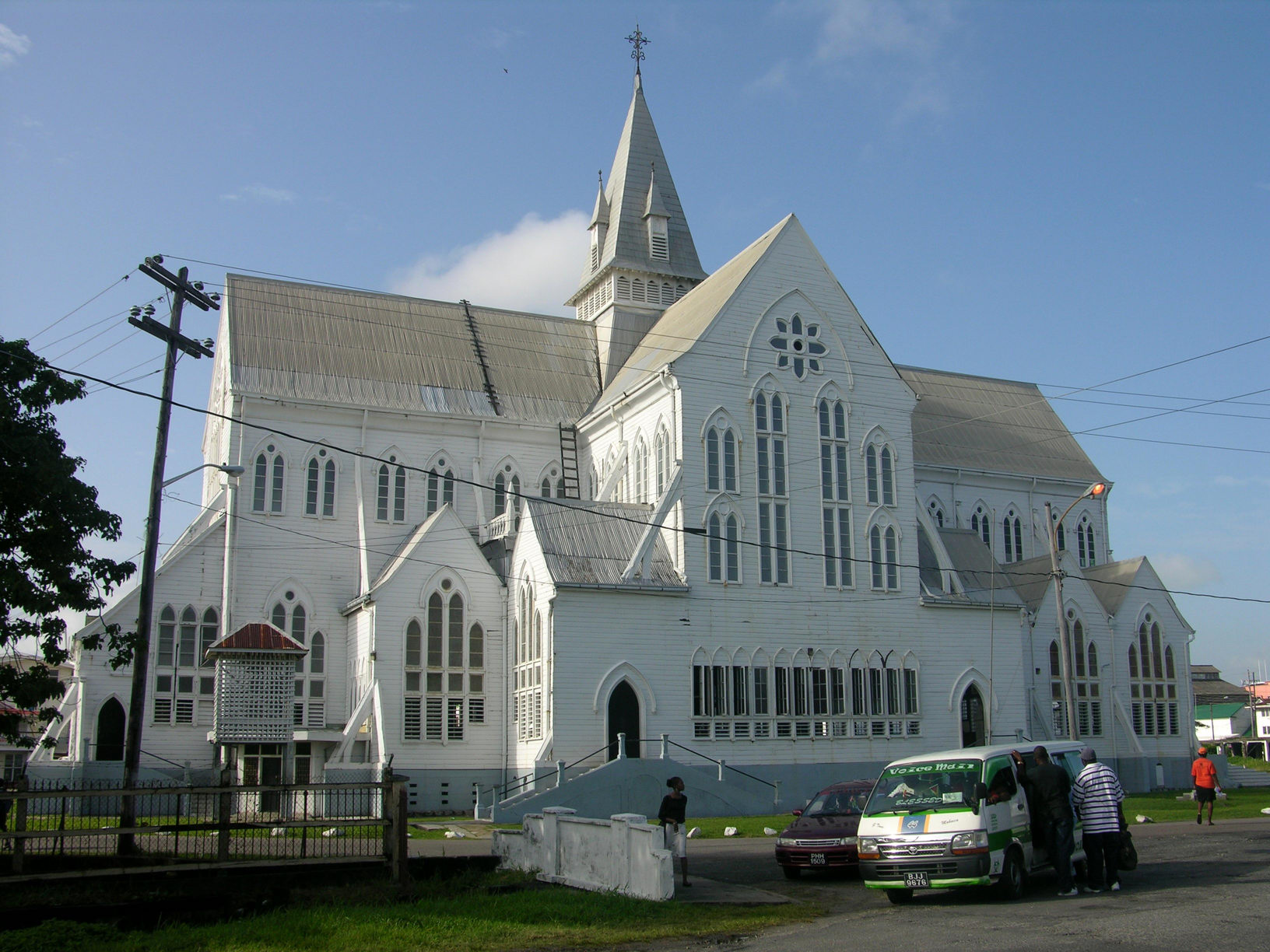
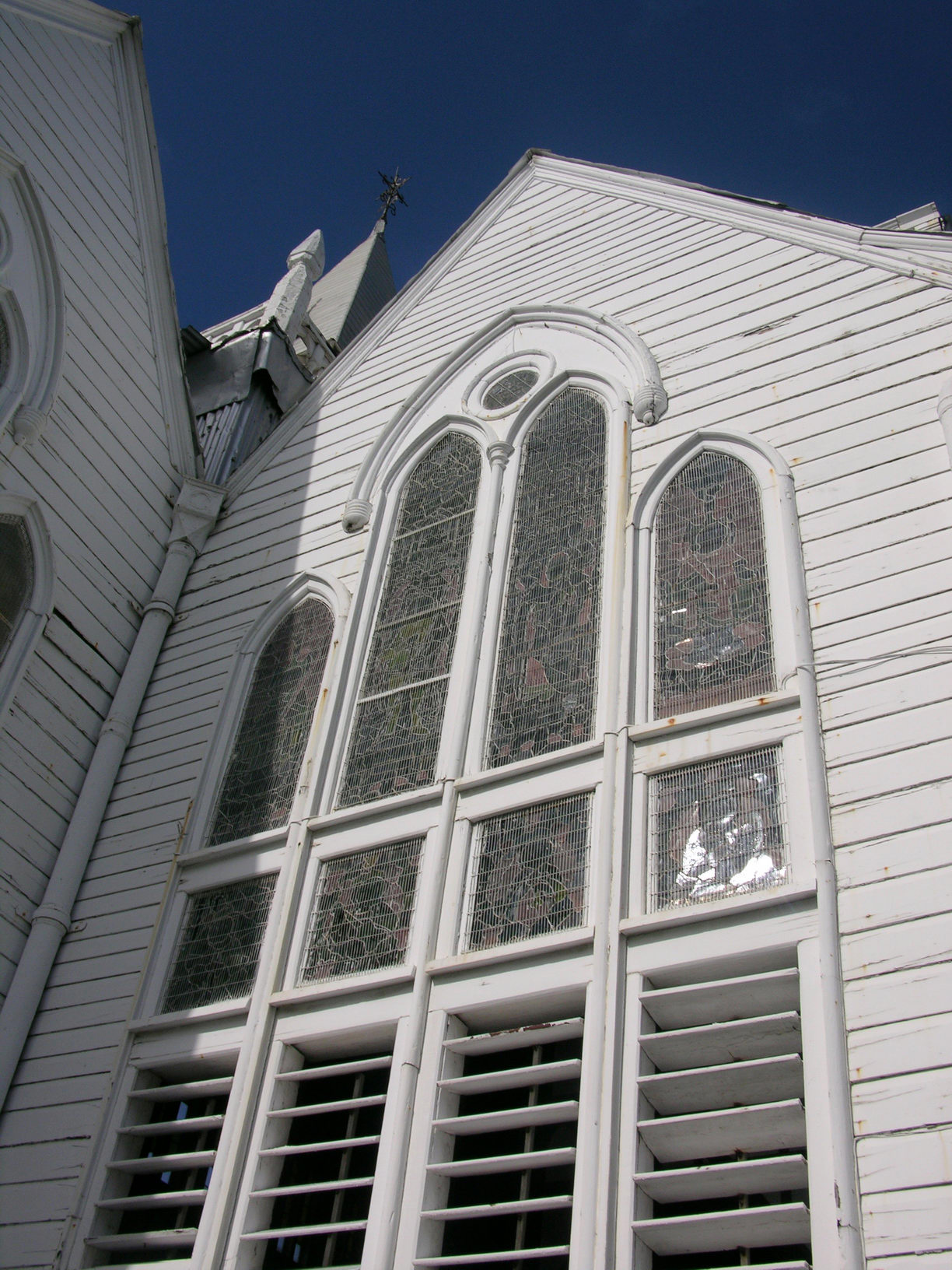
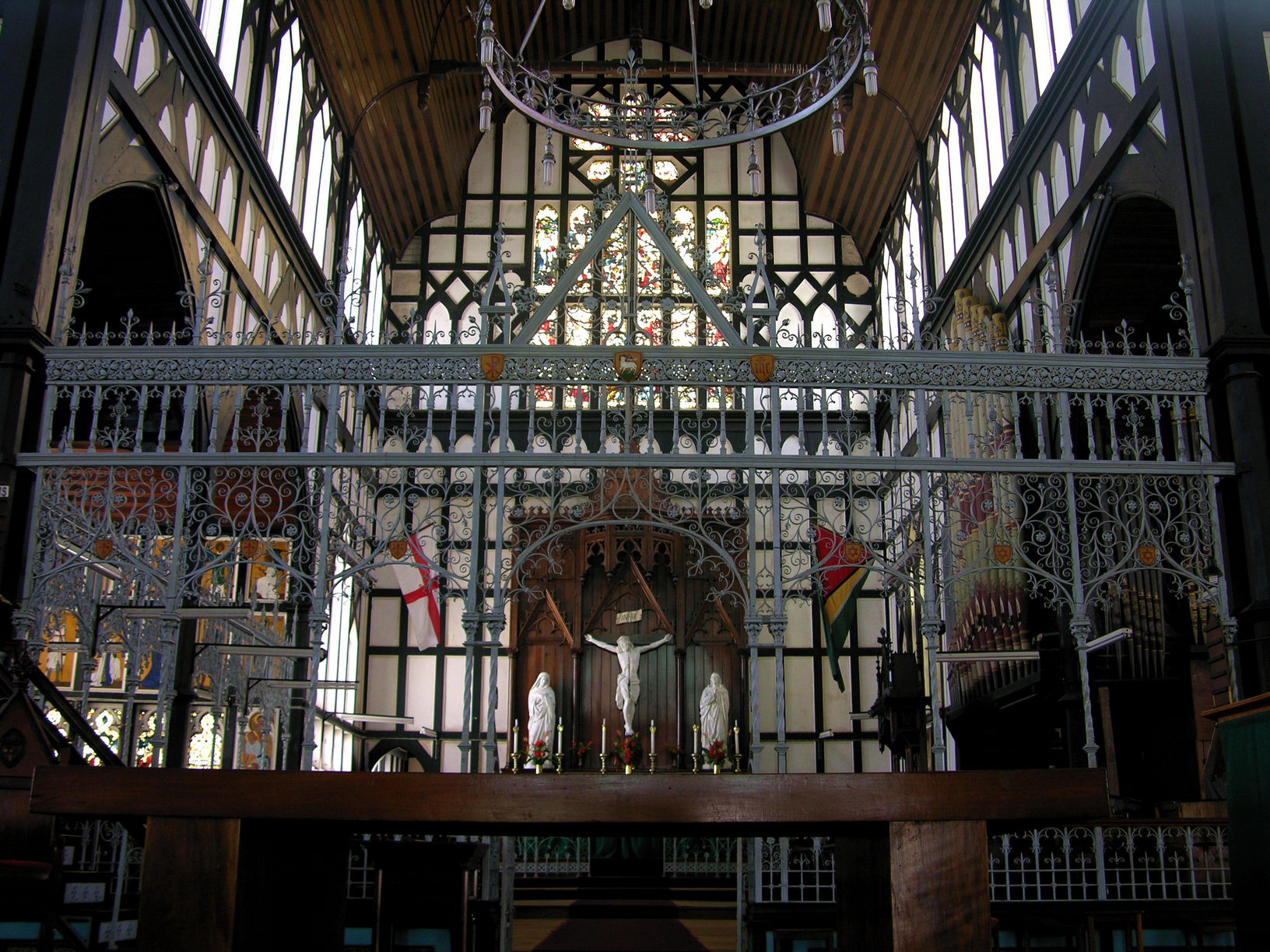
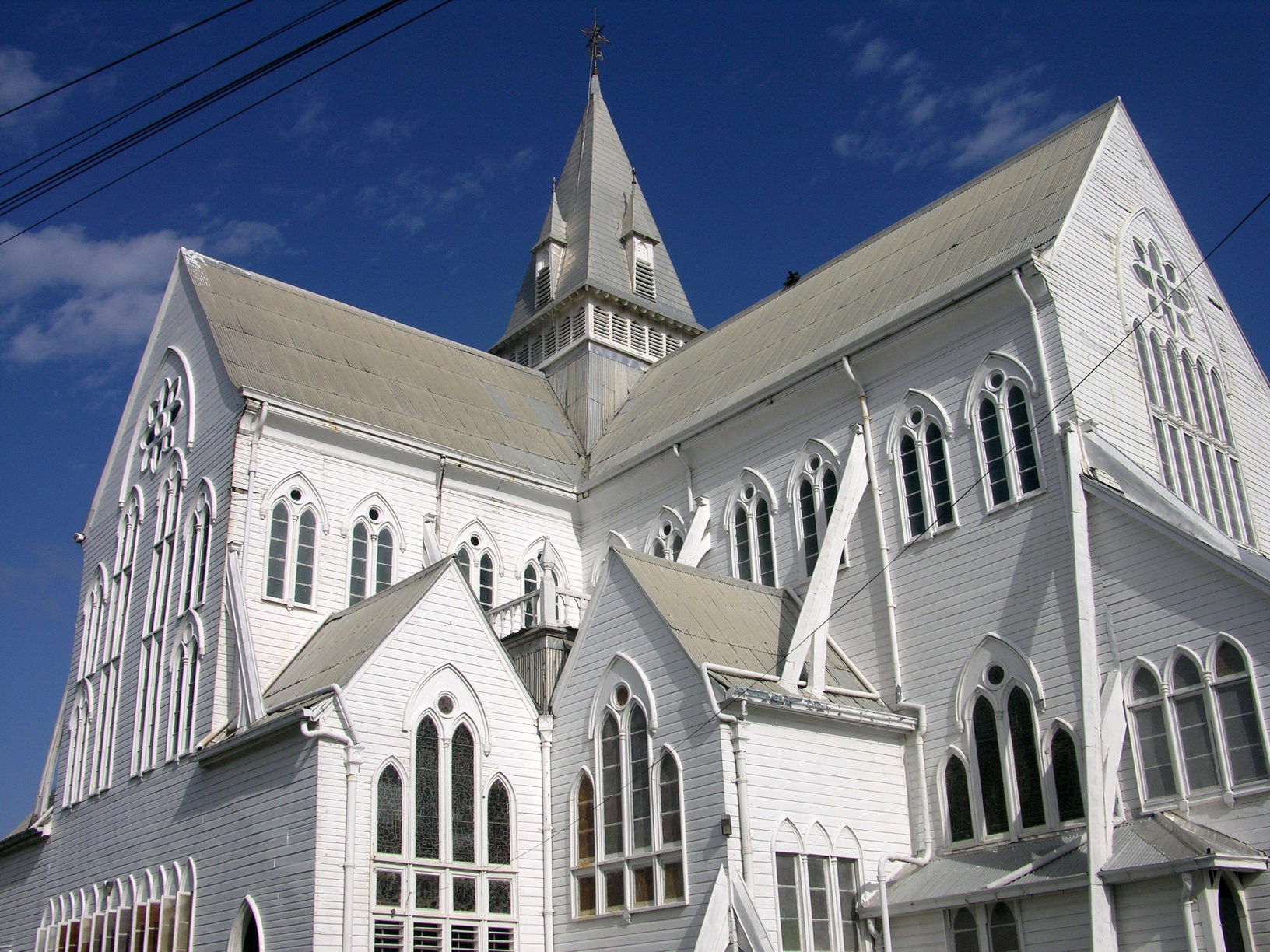
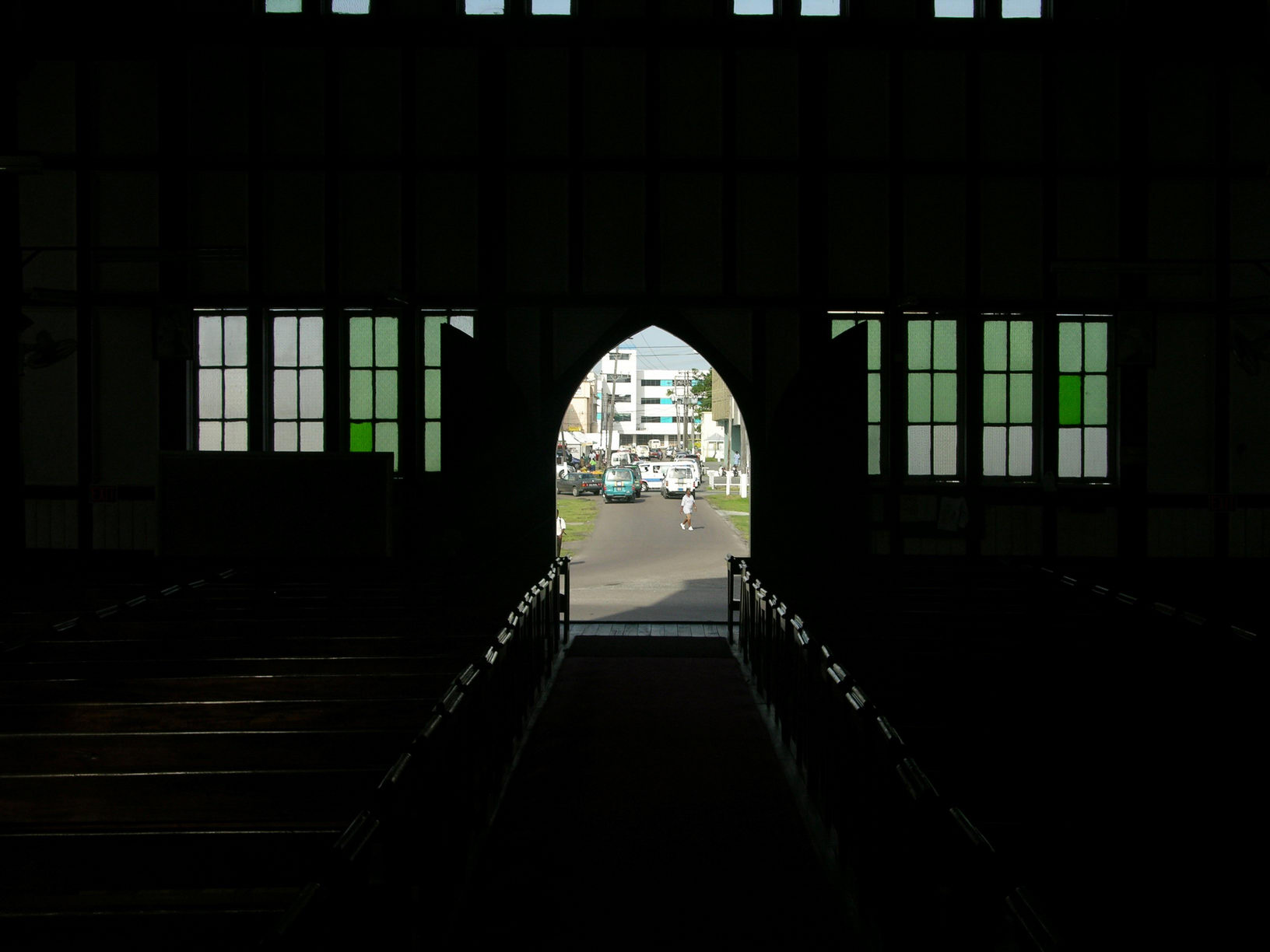
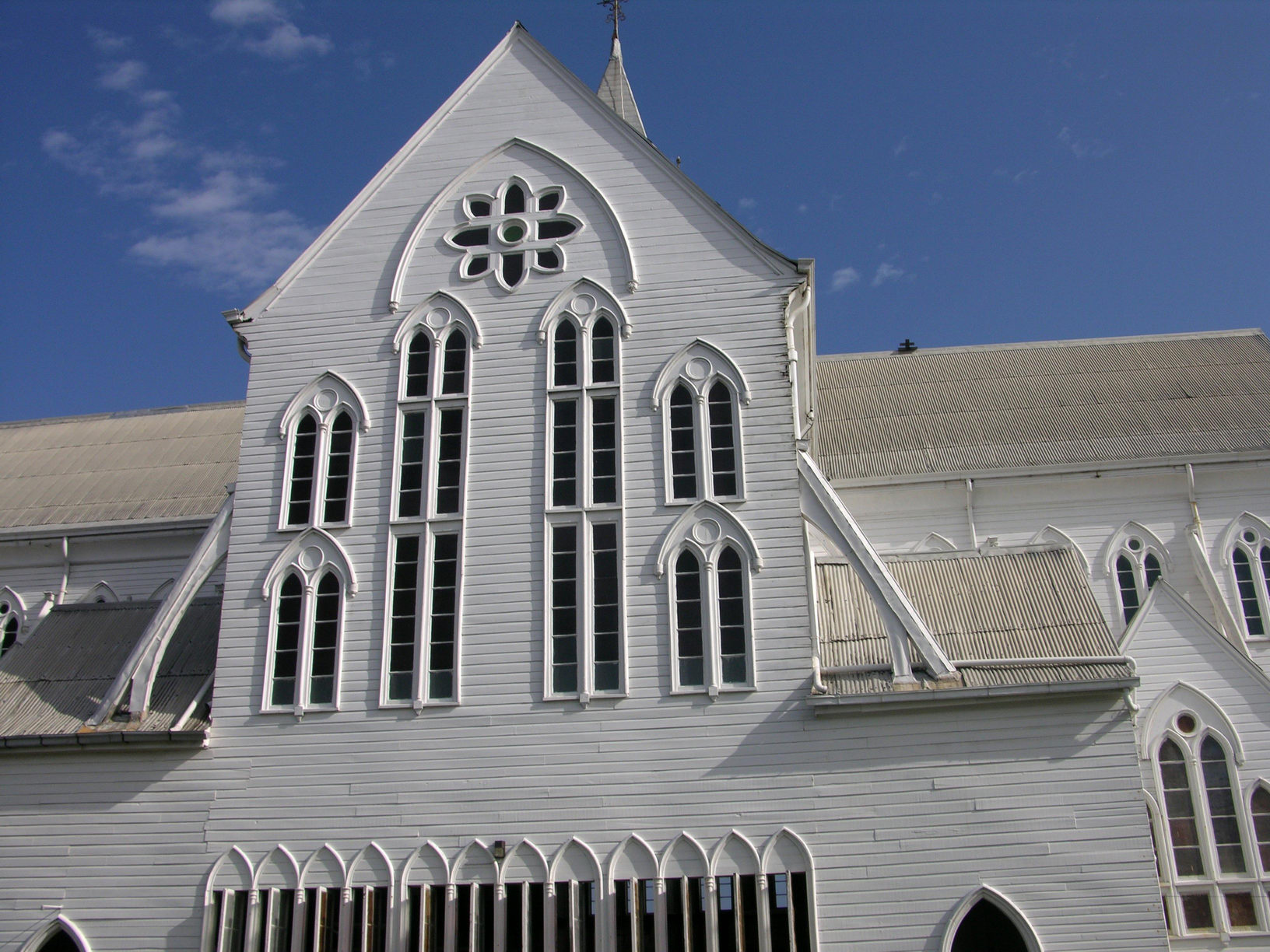
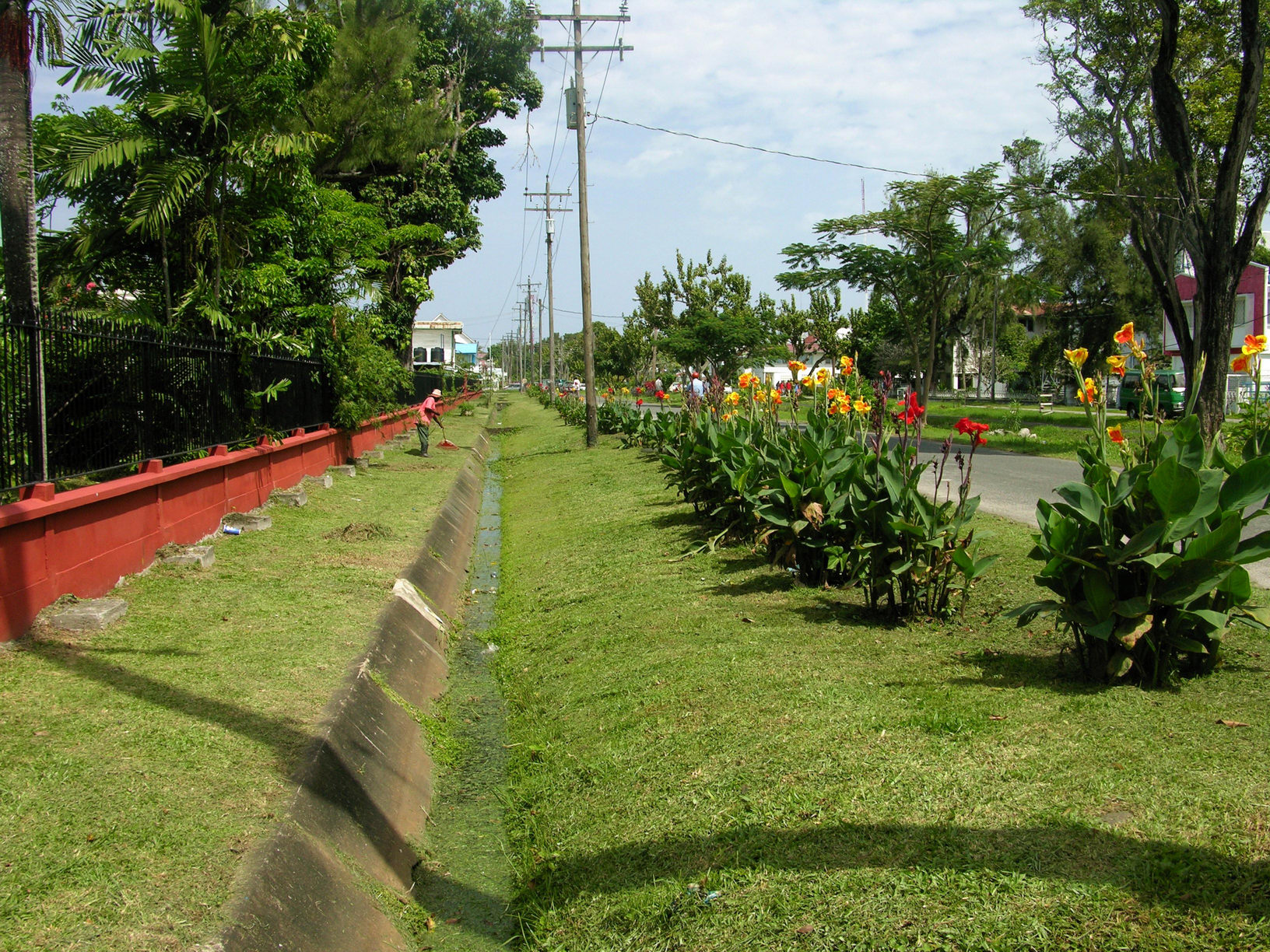
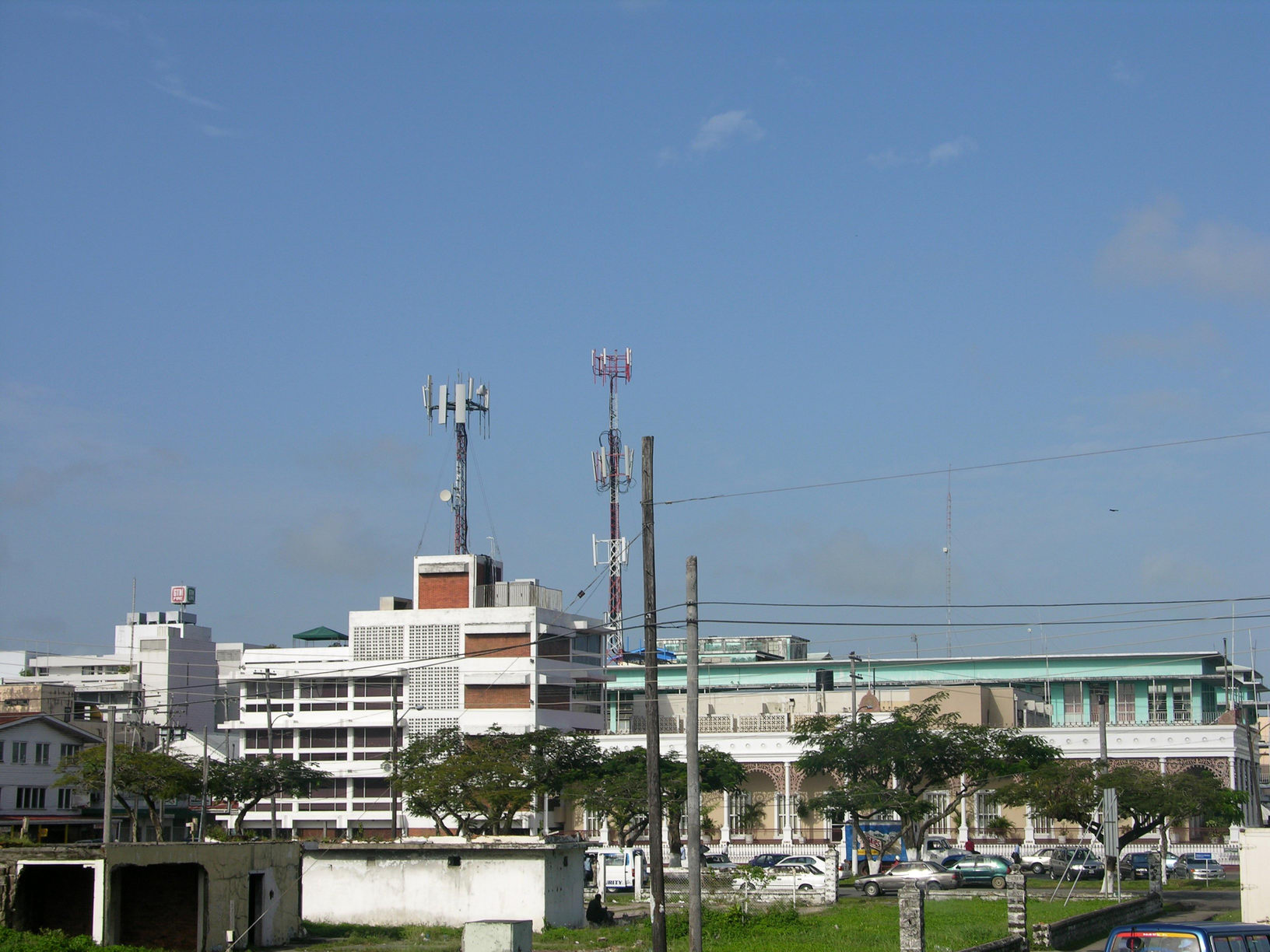
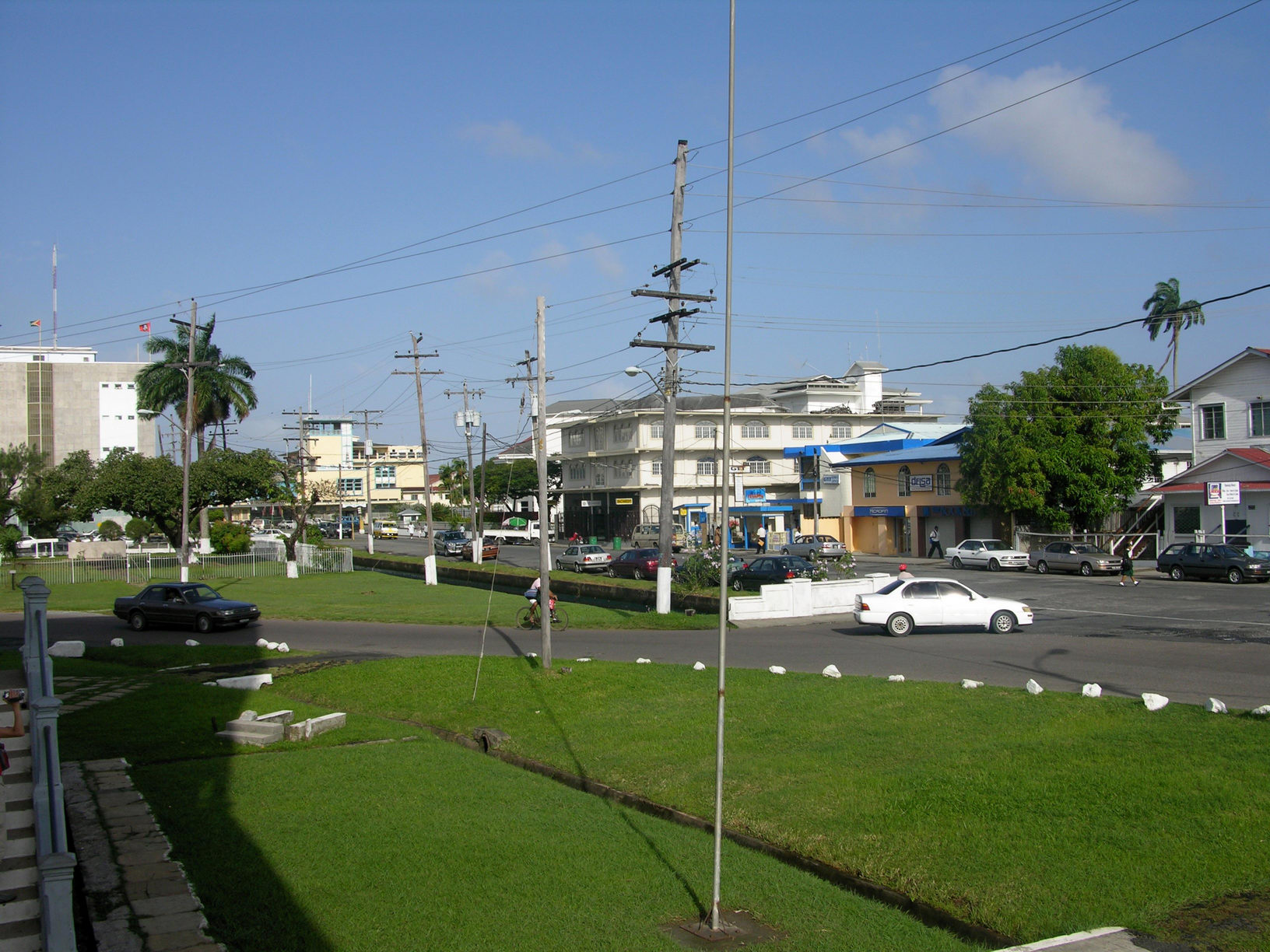
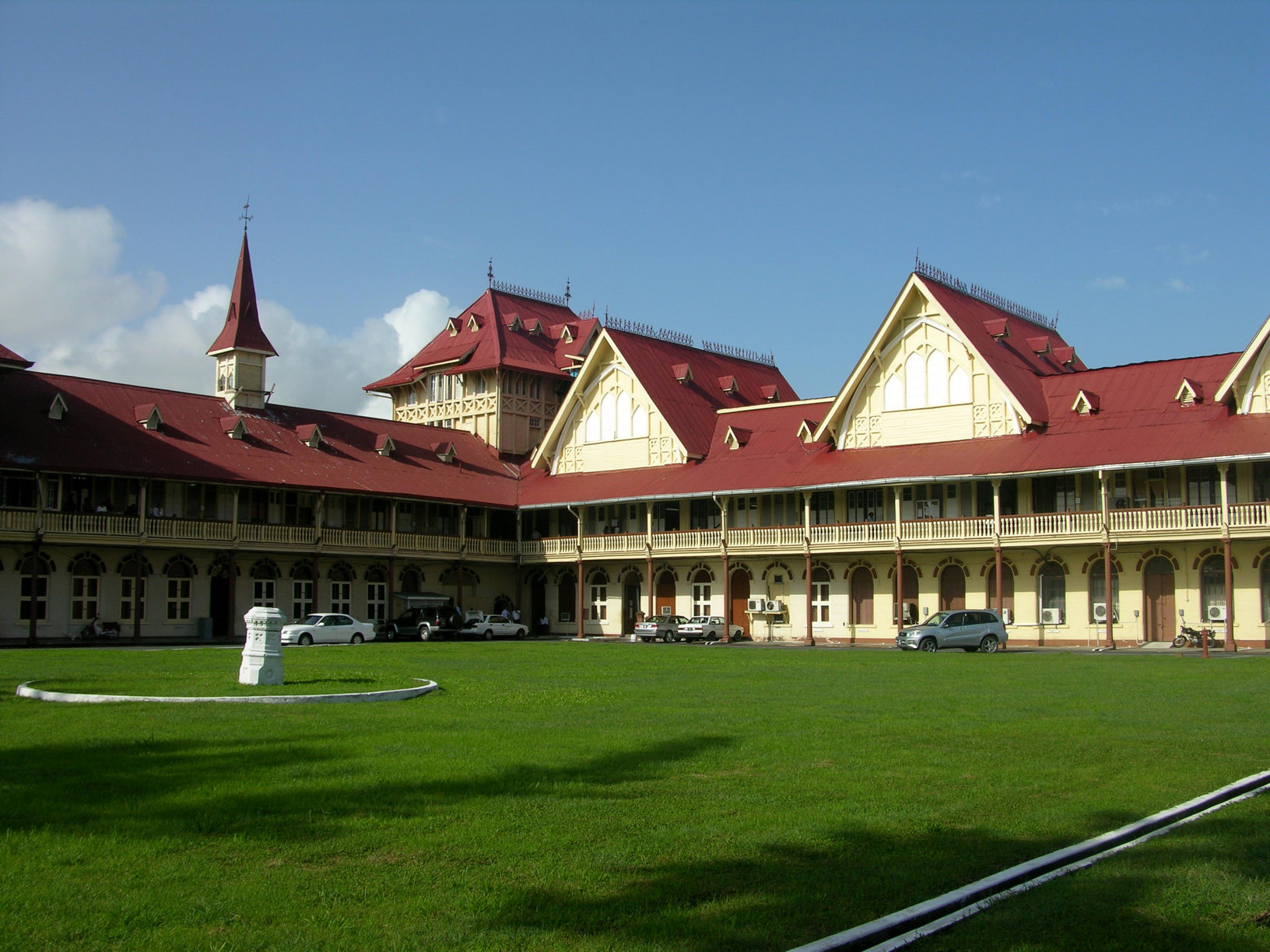
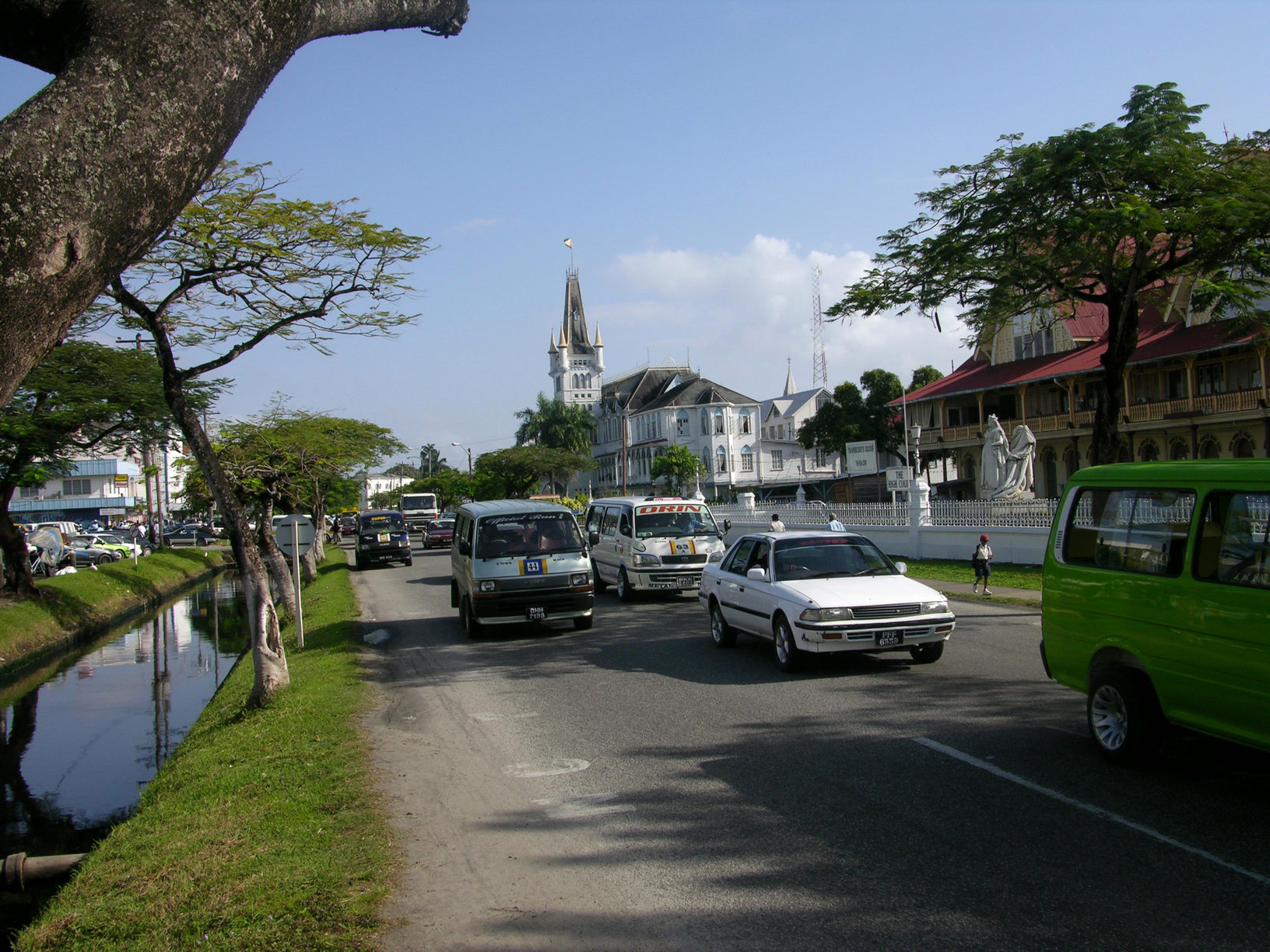
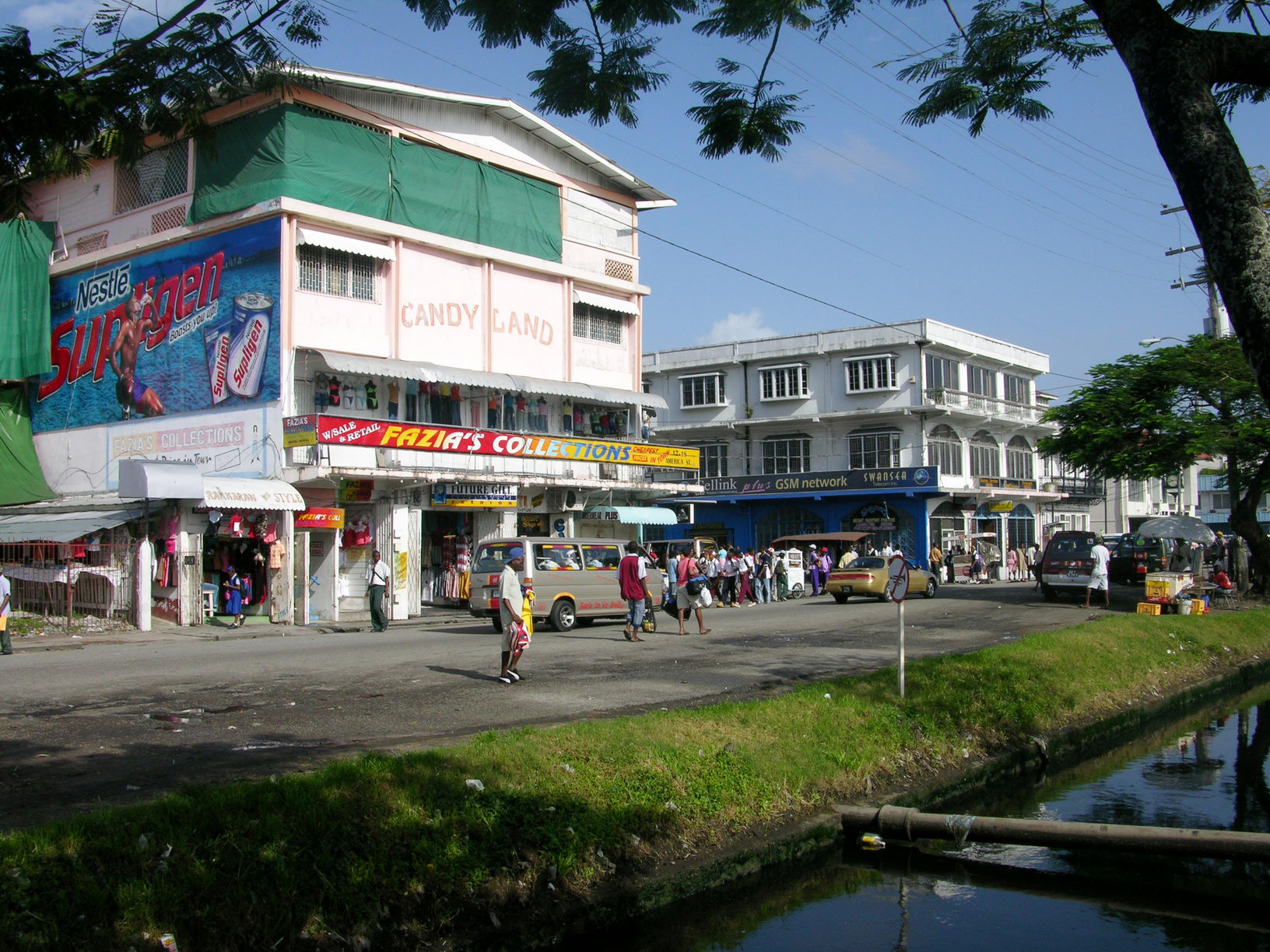
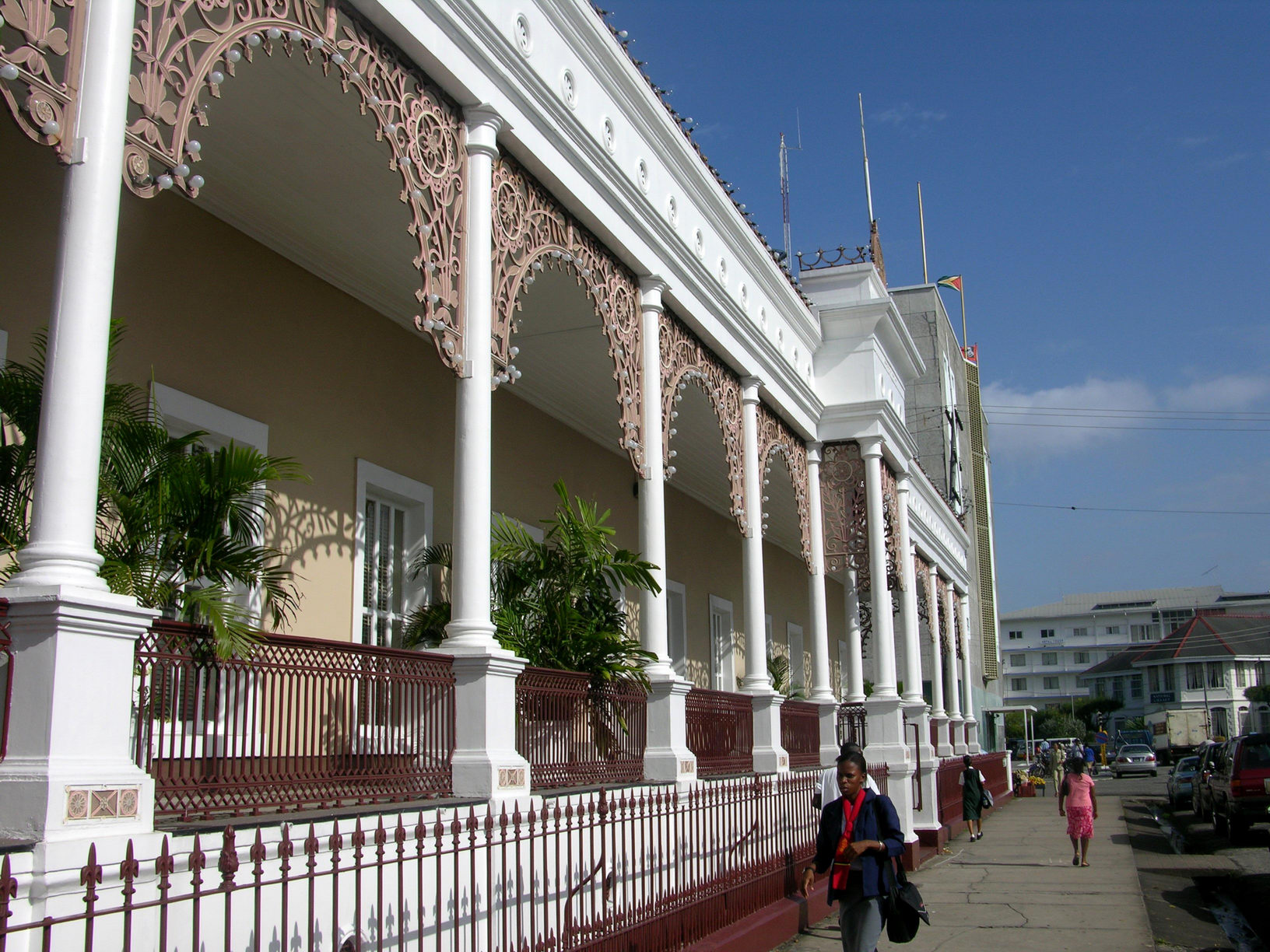
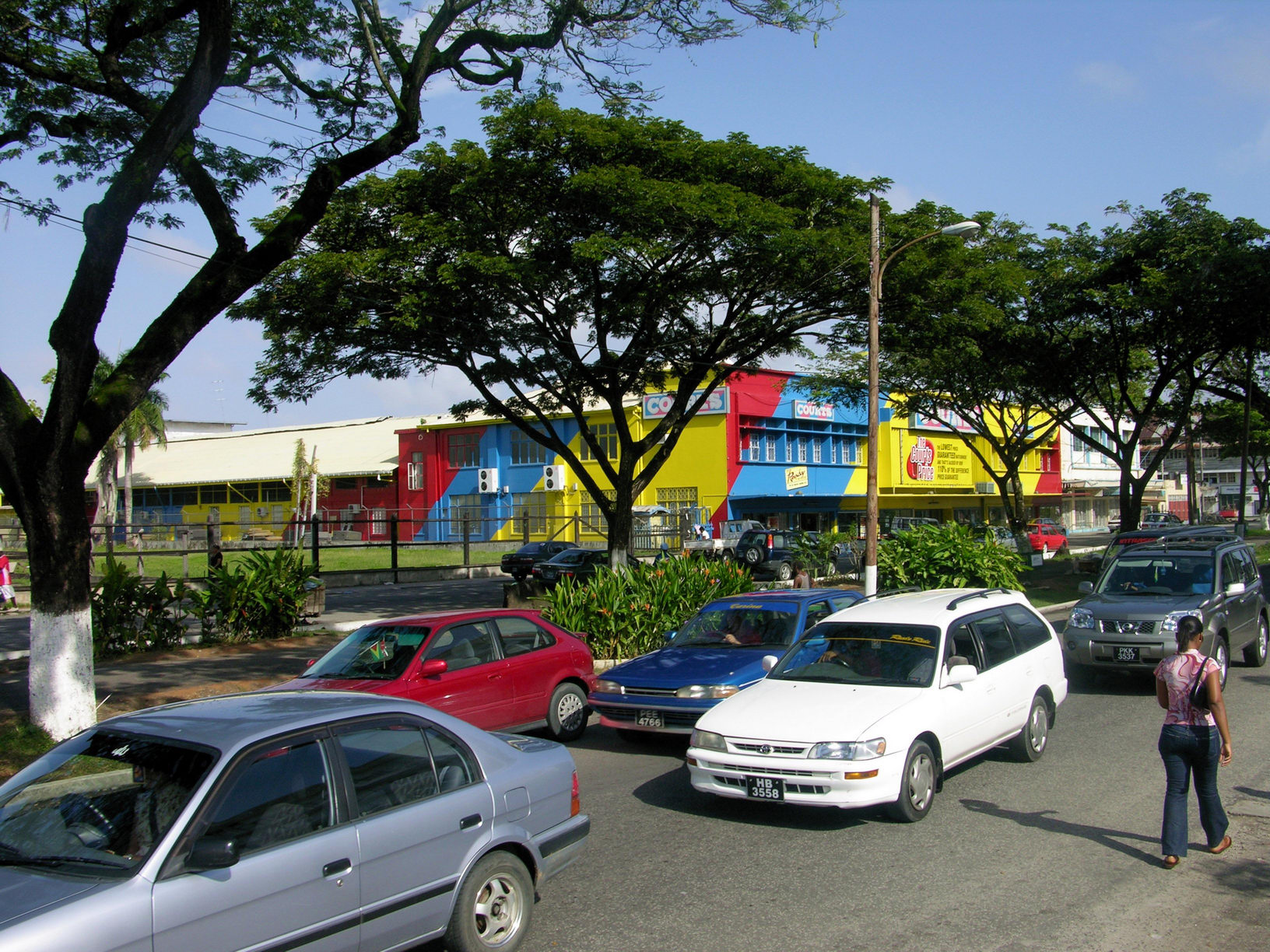
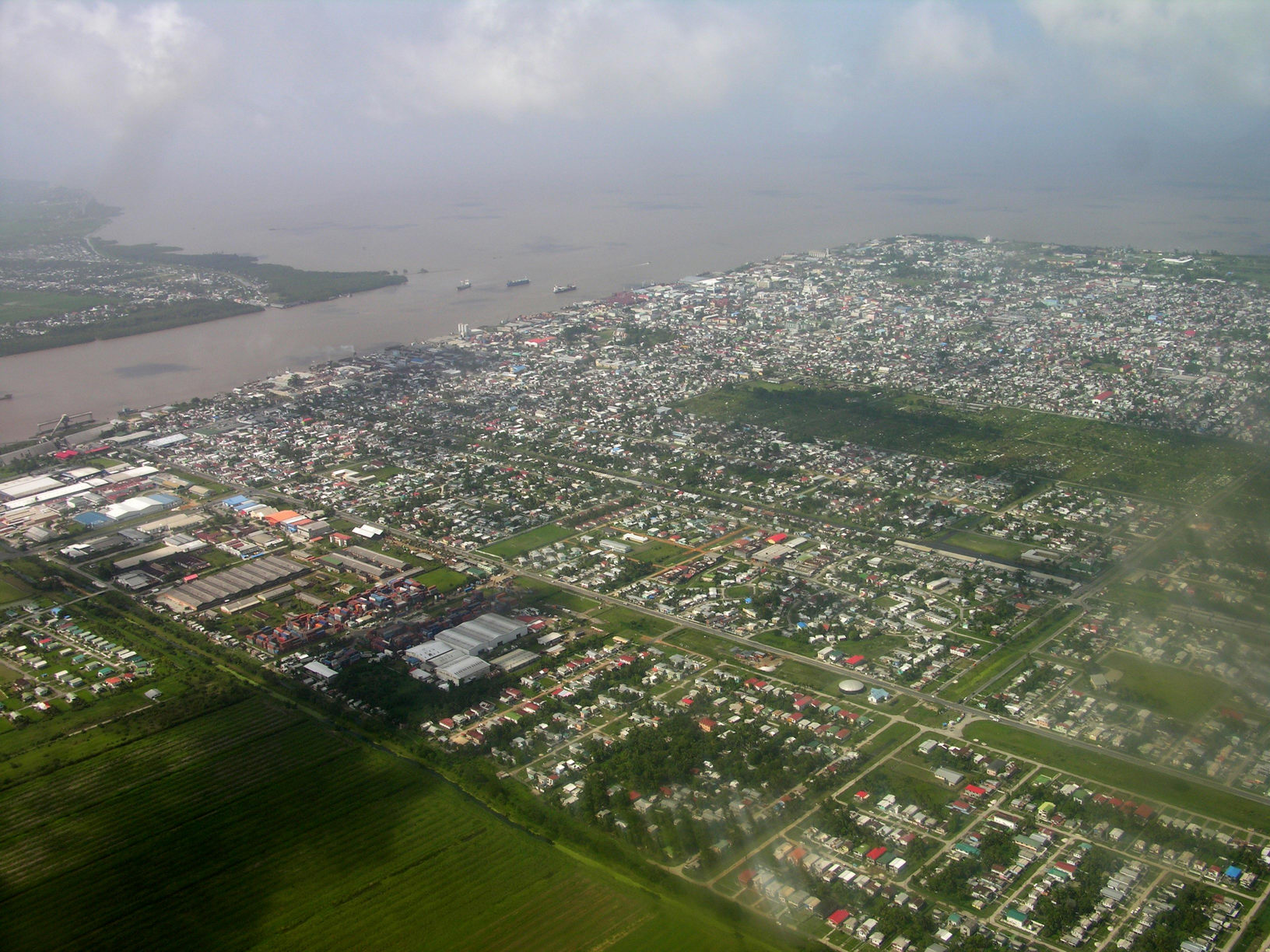
There are a dozen beautiful buildings in the city centre. There are well-kept lawns here and there, but all this is interspersed with foul-smelling ditches and leaning wooden shacks. Life is in full swing. Lots of shops, though nearly everywhere a grille separates the counter and the person behind it from the customers. The smarter the shop, the harder it is to get in. First you have to speak to security over the intercom. If you look trustworthy they'll open the outer door of the security vestibule. Only when the door to the street shuts can you move on. The sales staff look like policemen: trousers, army shirt, pistol behind the belt. The waitresses in cafés look the same, sometimes with a cap as well. Taxi and bus drivers wear military-looking uniforms too. It's like something out of a cartoon from another planet, all Star Wars and Captain Power.
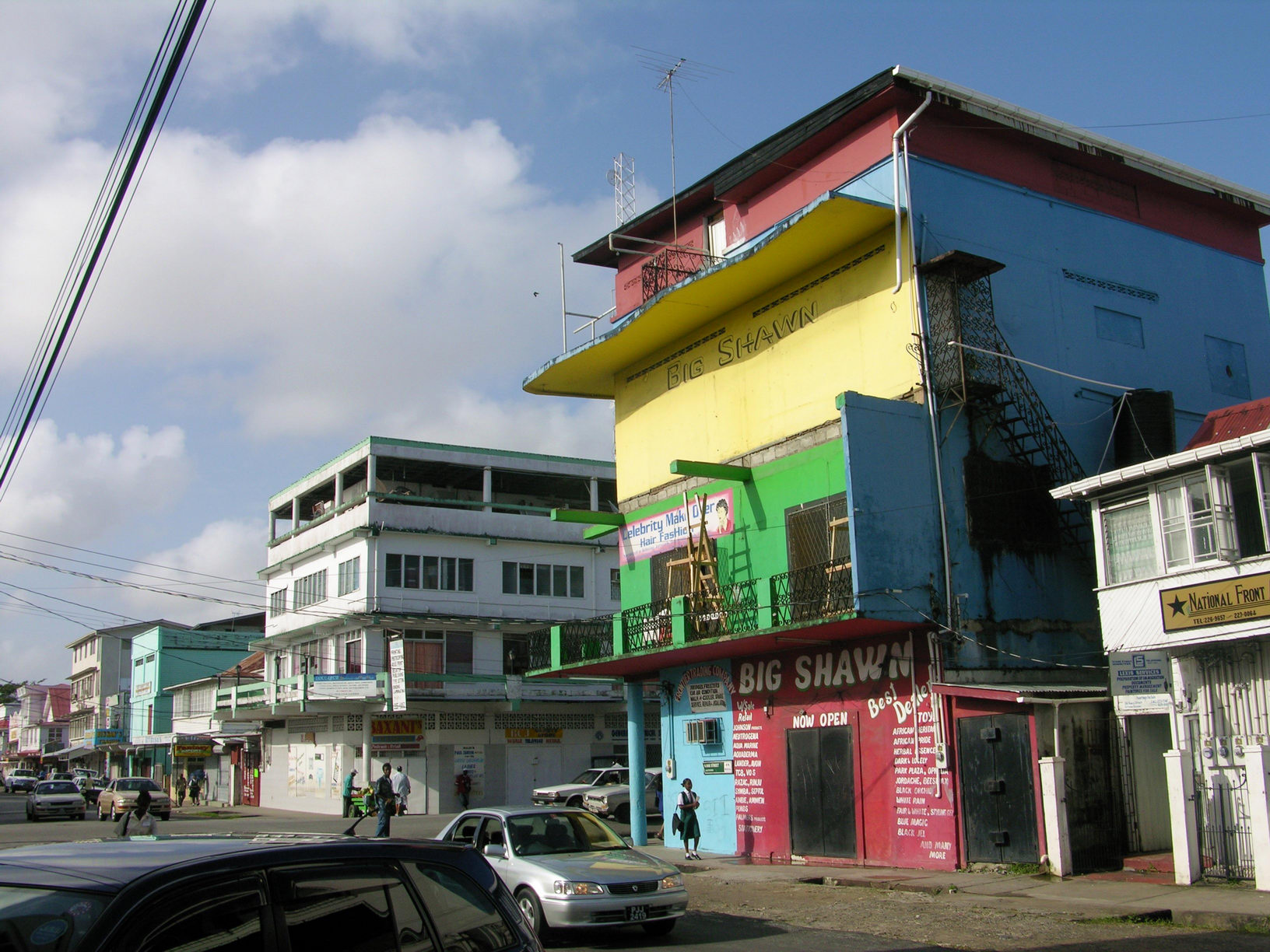
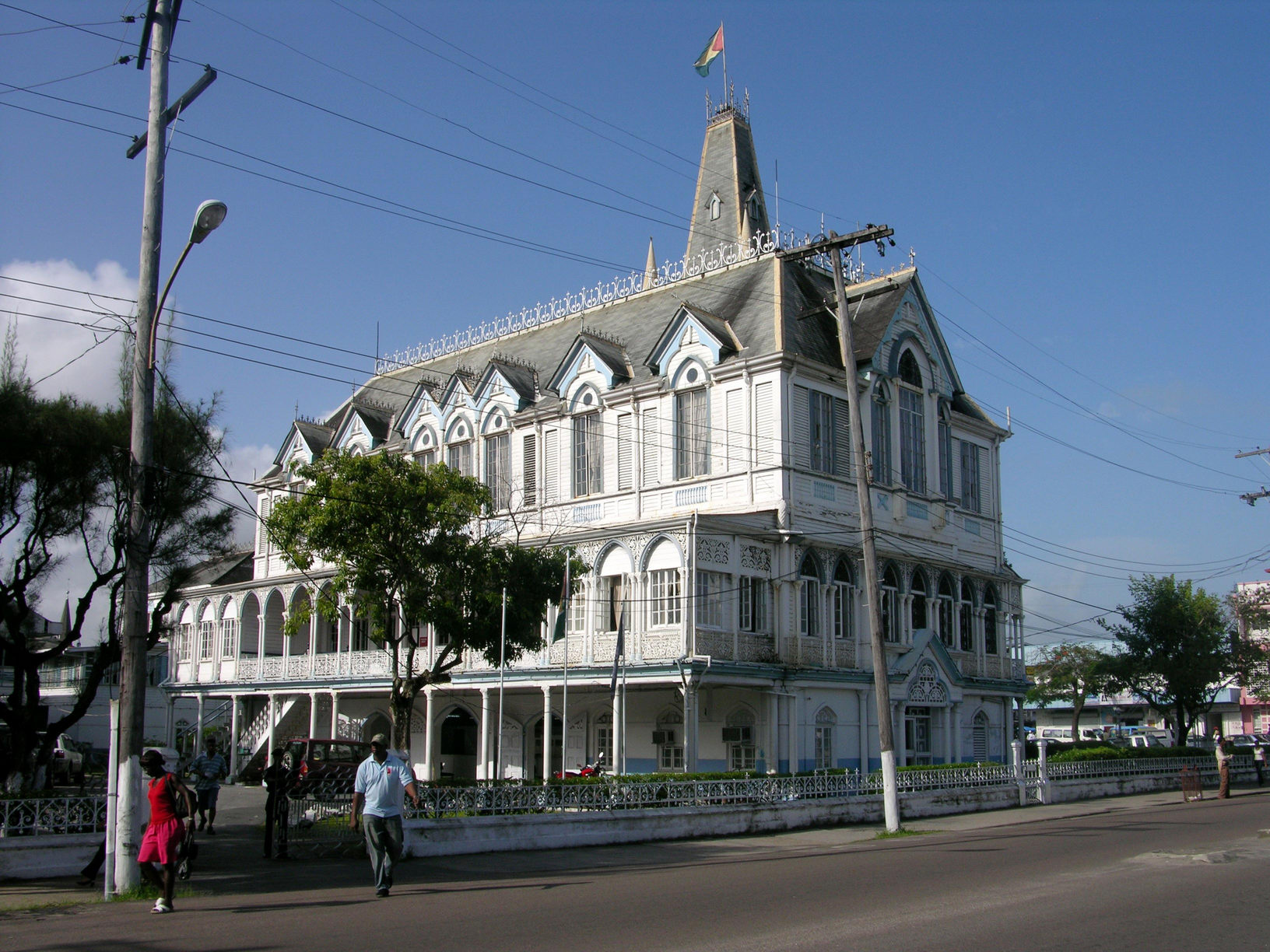
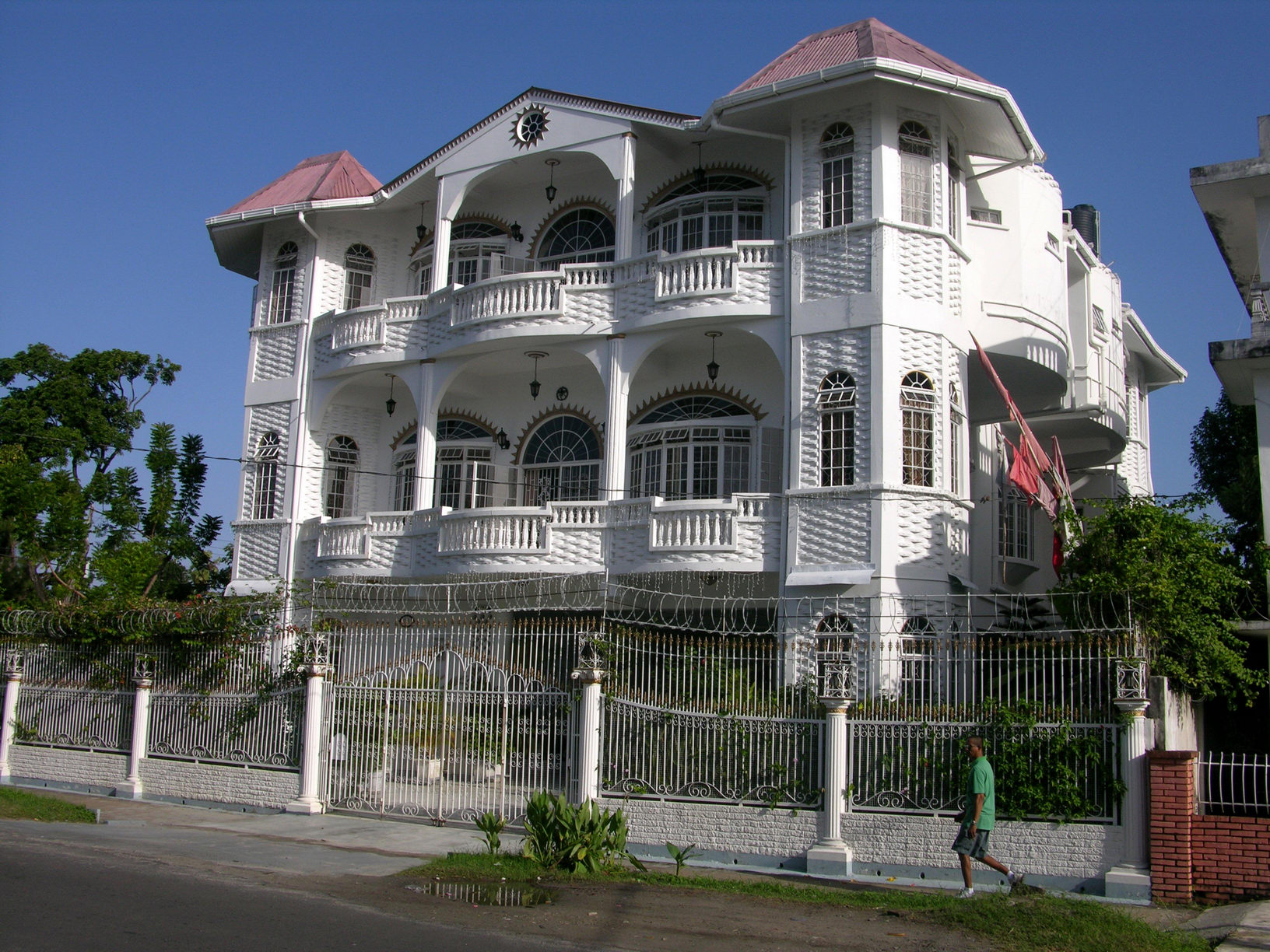
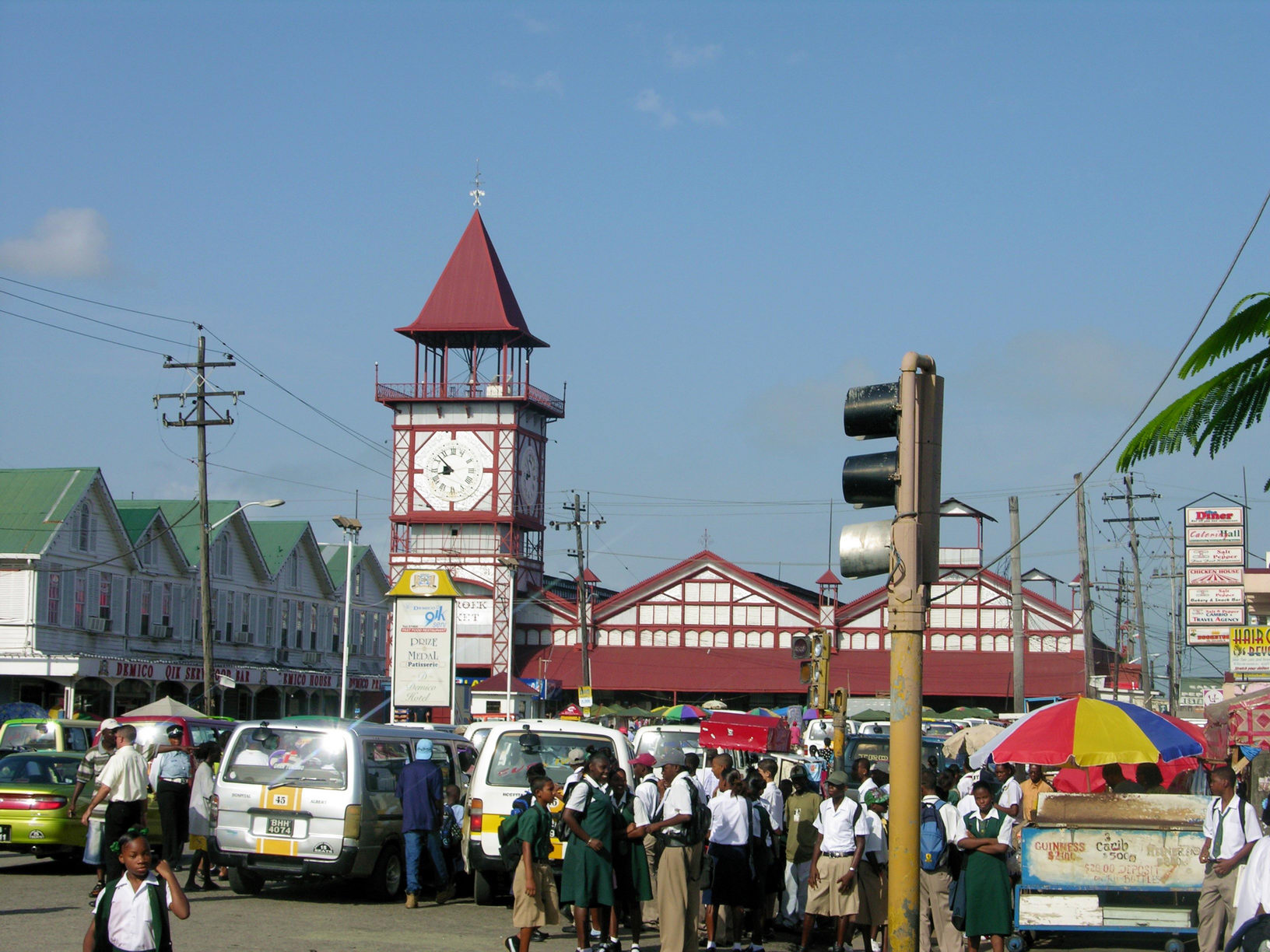
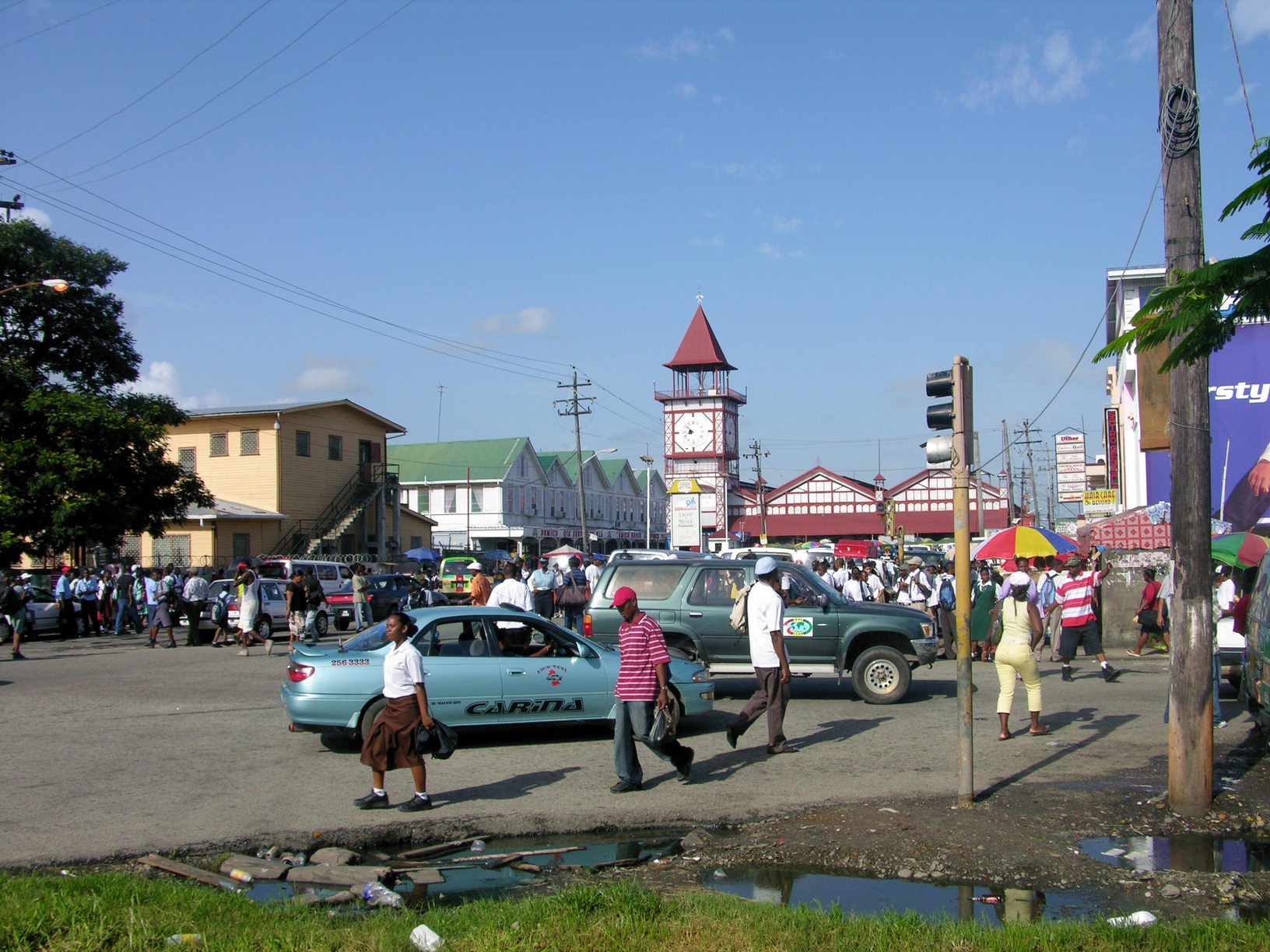
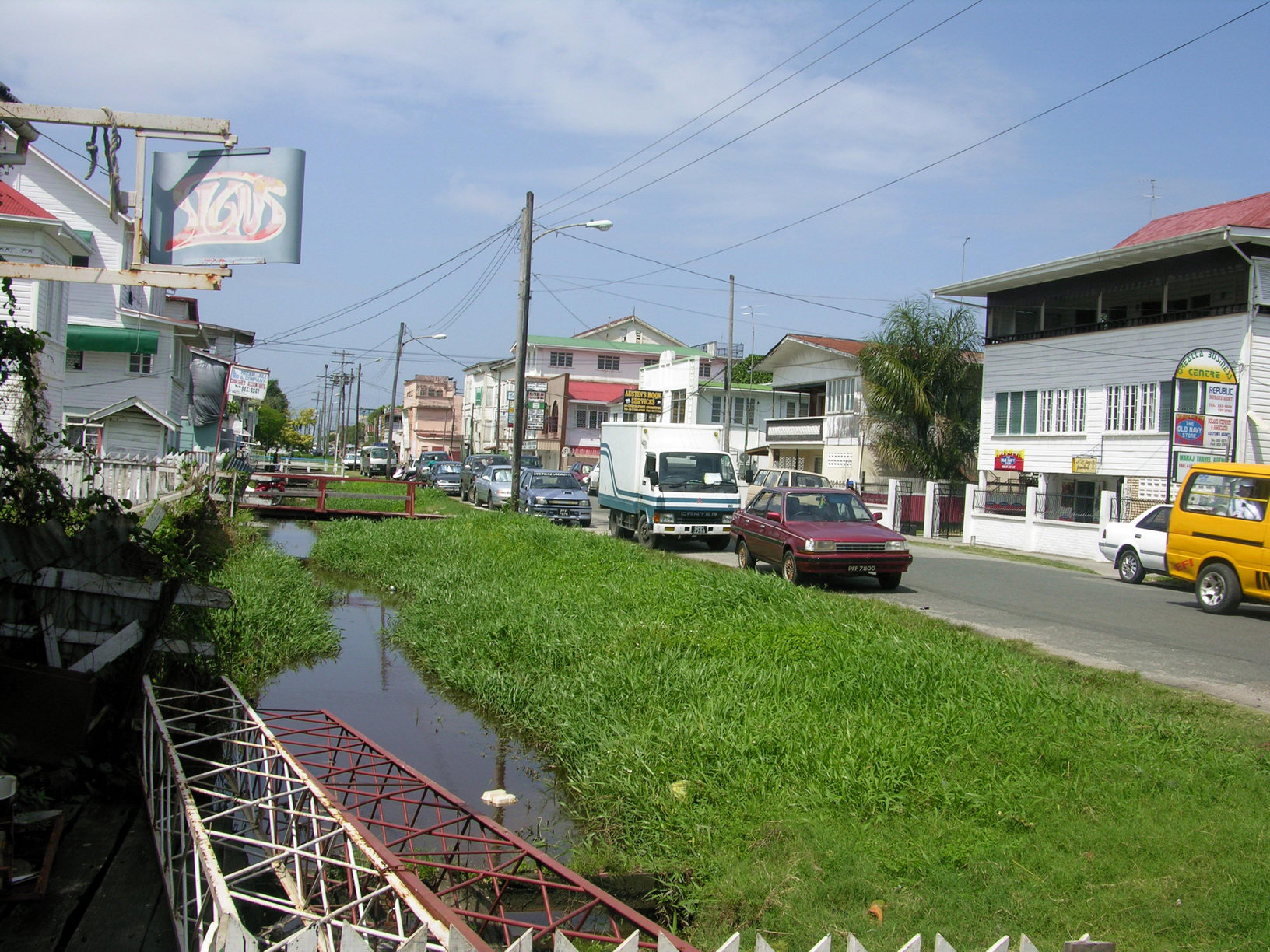
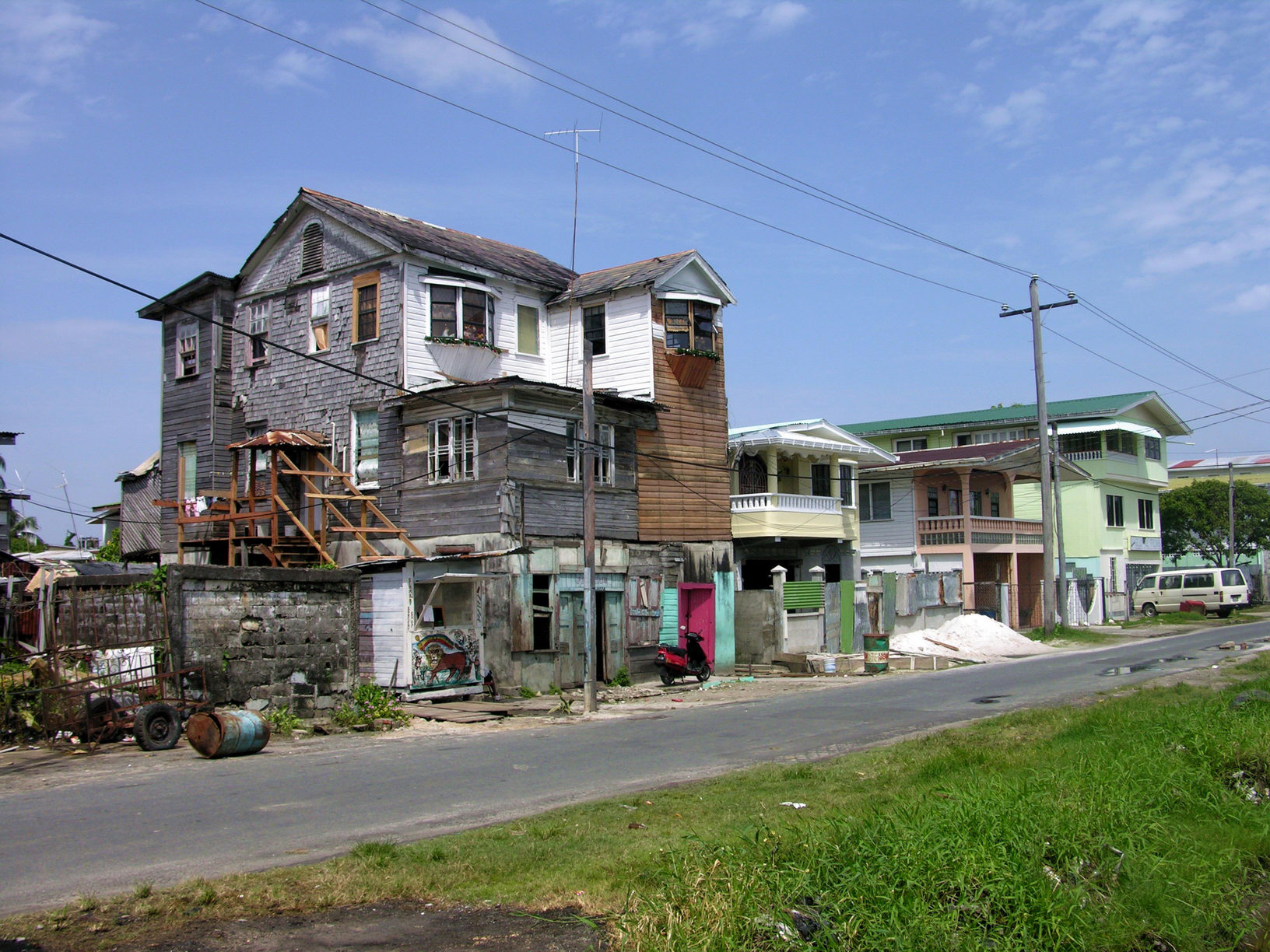
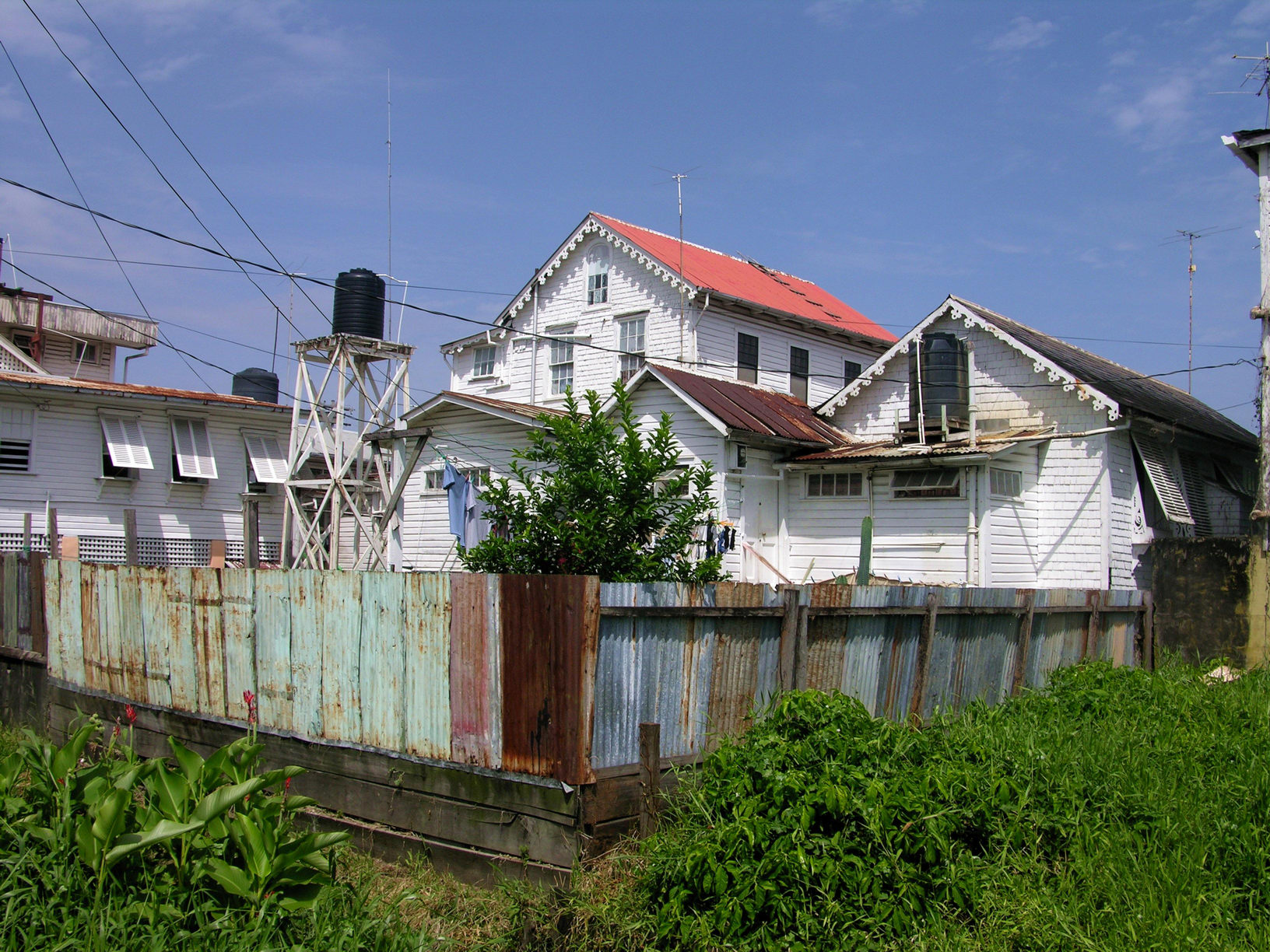
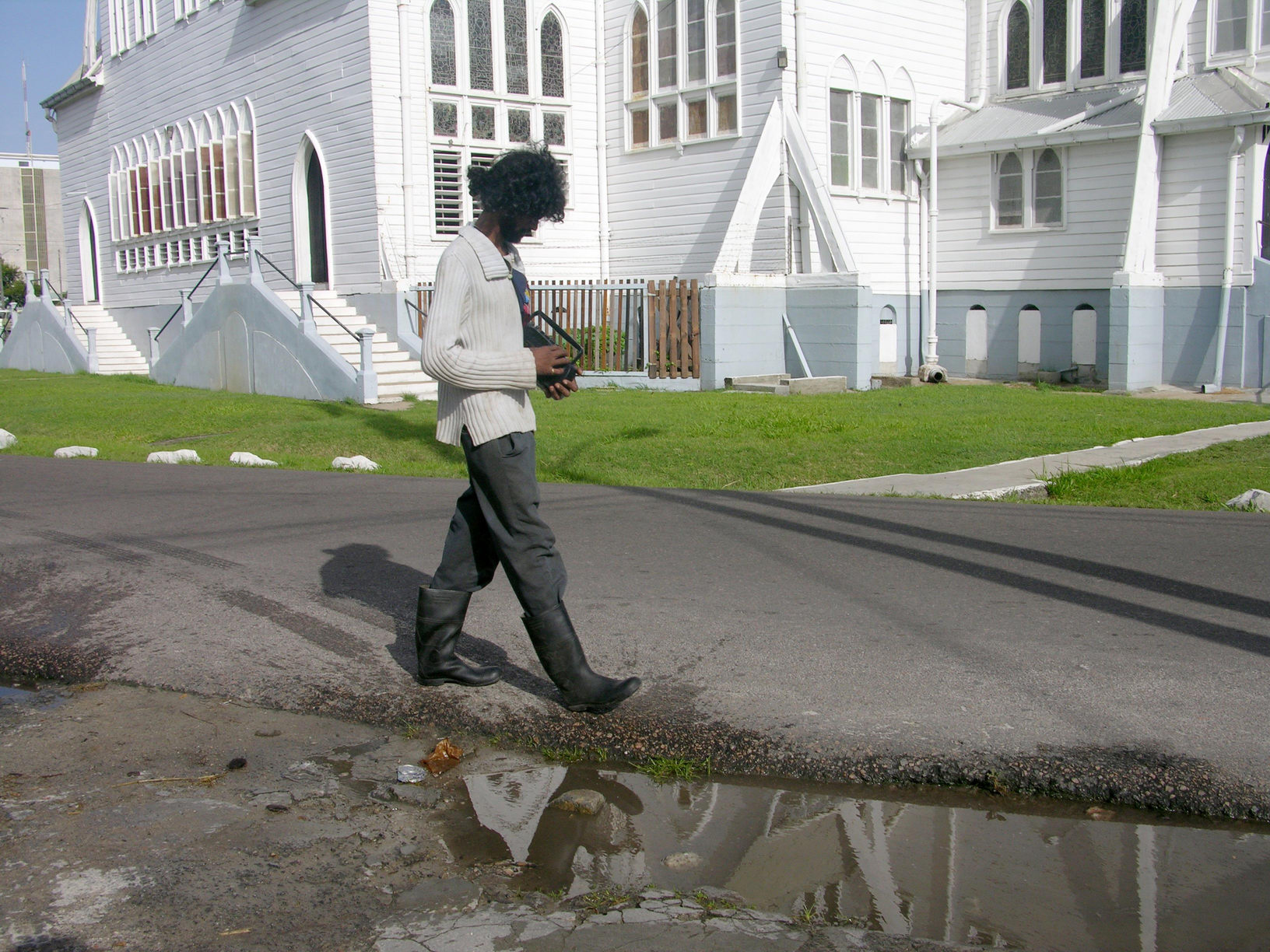
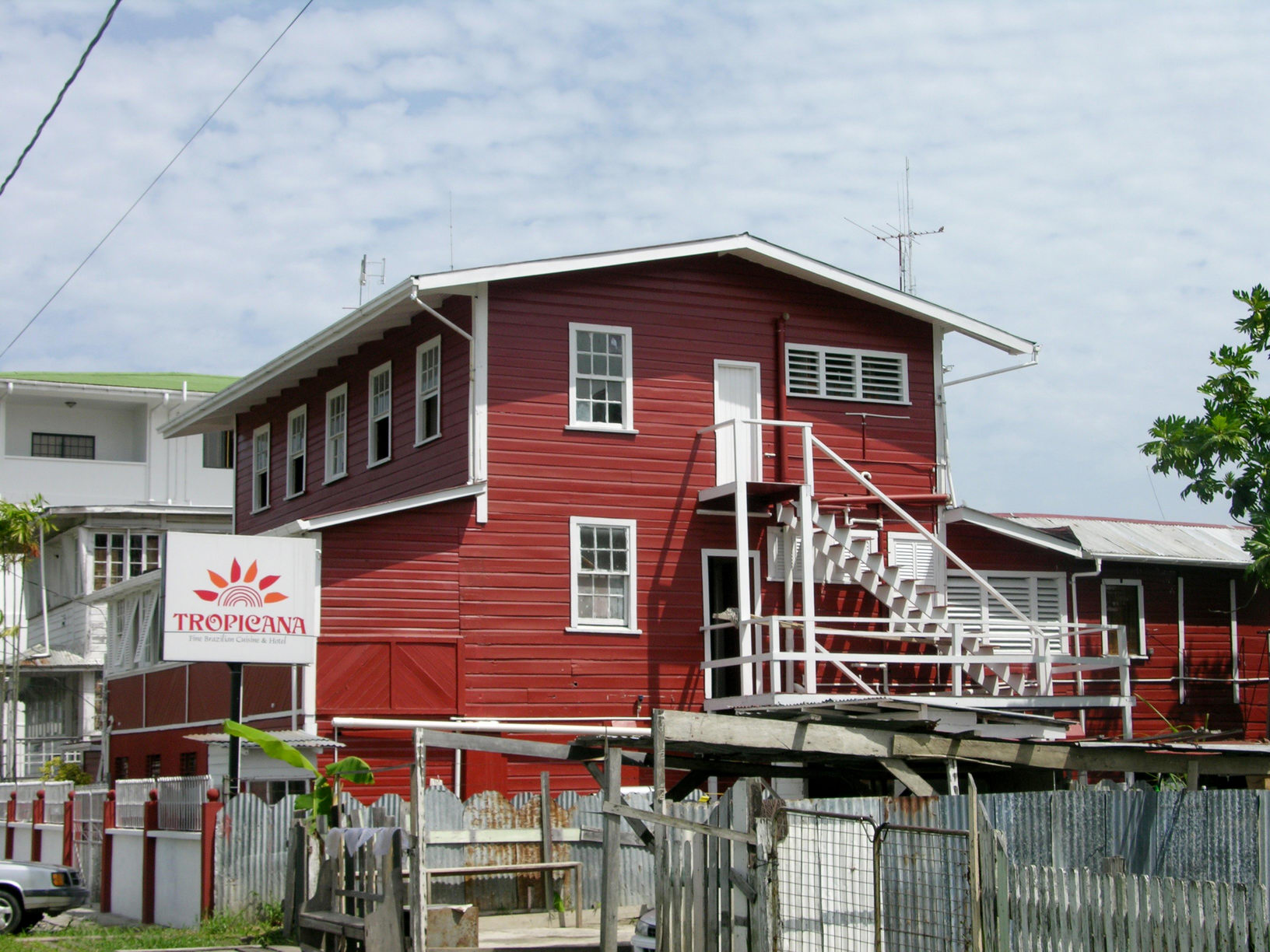
All this security sometimes comes together with complete irresponsibility. For several hours, for instance, there wasn't a soul on duty at our hotel. The room keys were hanging right there. Help yourself, open a room, take whatever you like.
In the morning the cash machines still weren't working. We didn't find any nice souvenirs. They're only here for the locals. Foreigners who wander around town don't exist here as a species.
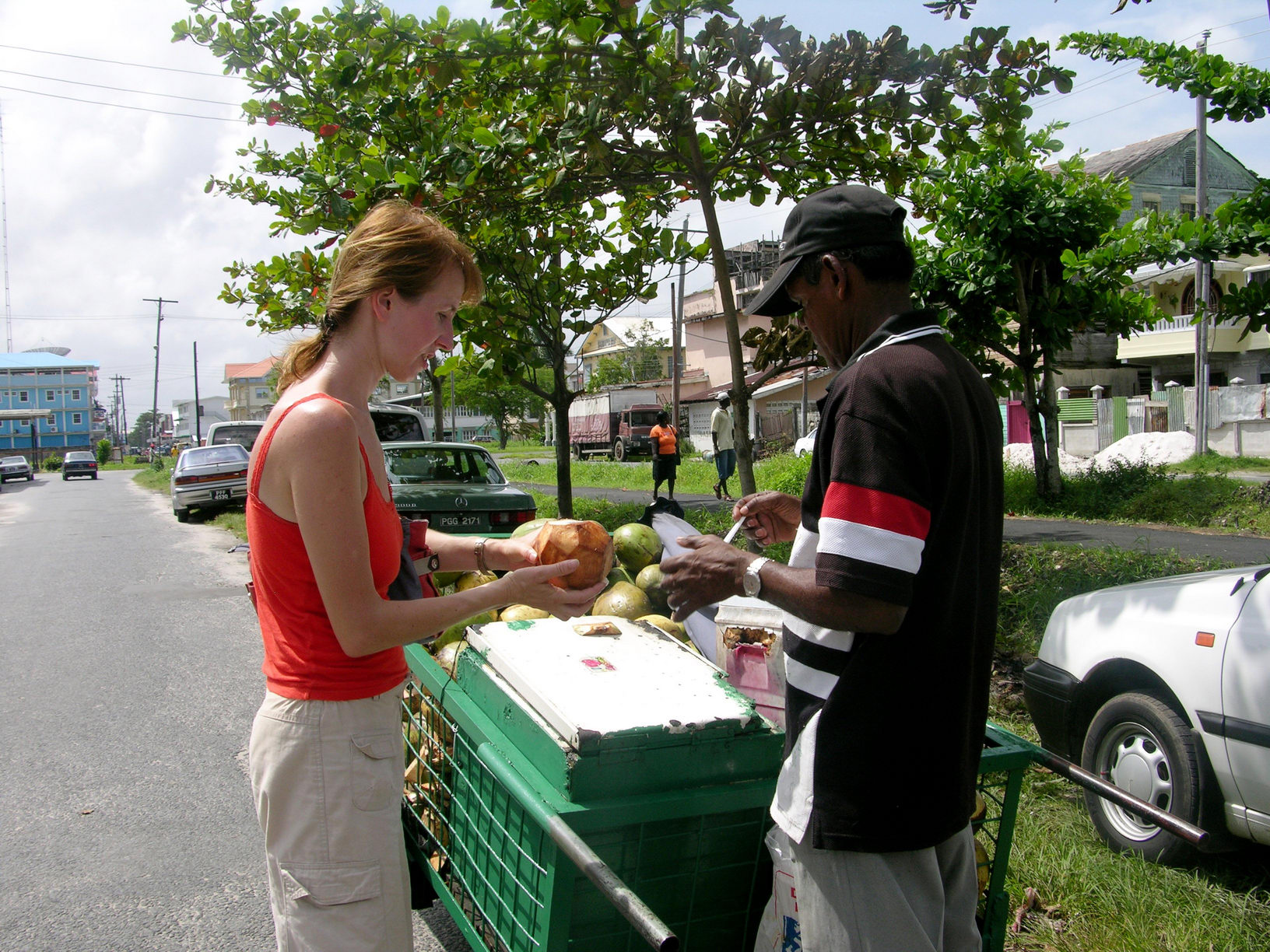
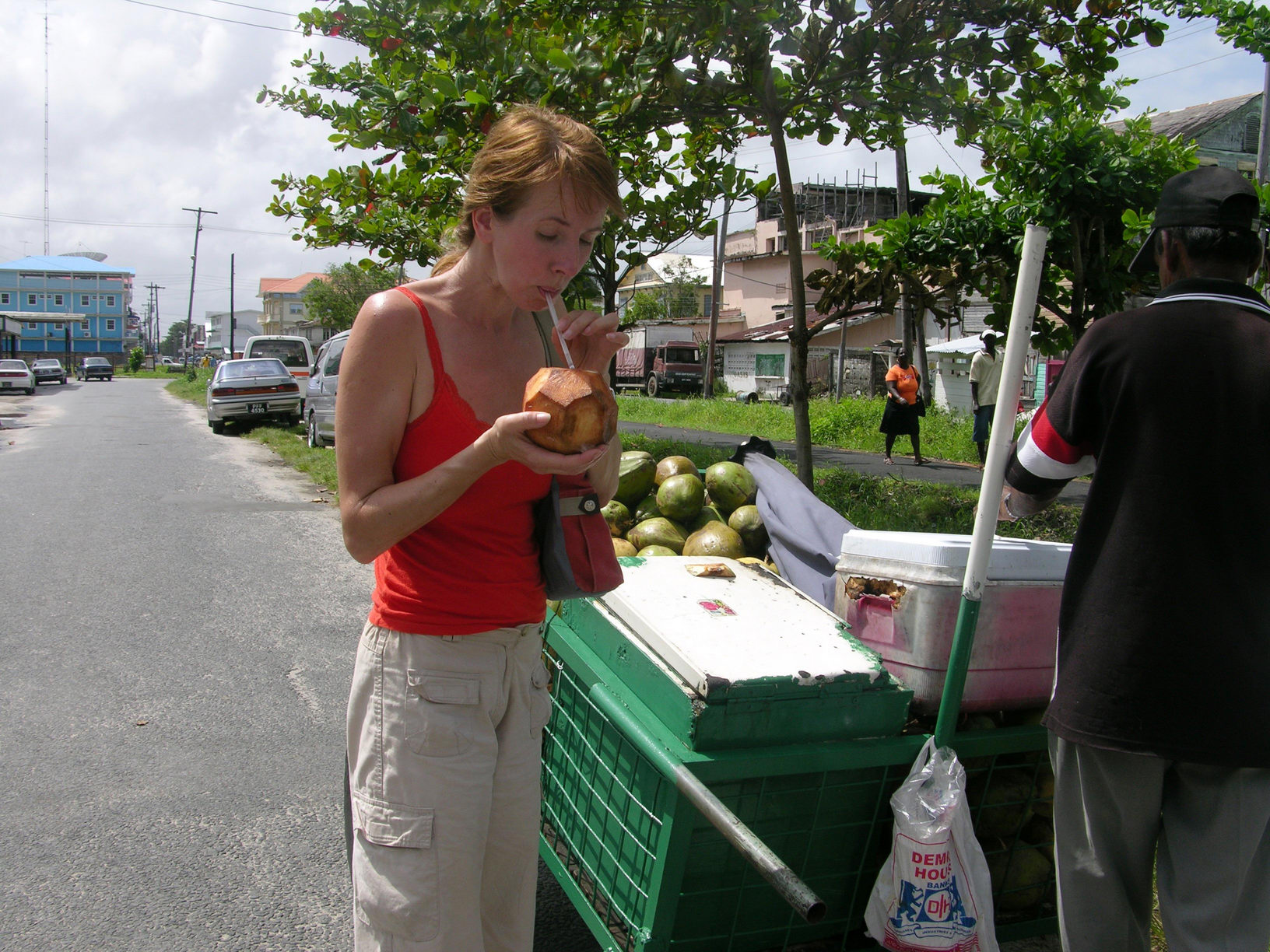
There are few cafés and restaurants in the city. On the whole the food has no distinct national character. Hardly any Chinese restaurants, unlike the other Guianas. Mostly Creole food, with the occasional Indian restaurant. Lunch for two is two thousand to six thousand. Street vendors sell pies and coconuts with a straw in them at two hundred Guyanese dollars each.
Guyana had two GSM networks. Only Cellink, one of the two, had international service. In theory there was roaming. In practice there wasn't. I had to buy a local SIM for GYD 5,000. It didn't work out any dearer than calling from a landline. Our hotel used a separate mobile phone for calls abroad. The SIM worked. Texts to Russia wouldn't go through, but we could make calls. Very cheaply, too. We never managed to talk away the twenty US dollars of credit. The quality of overseas calls was dreadful. Within the country it was good, and the coverage was quite acceptable.
After a few hours walking around the city, we already felt at home. Nobody had tried to rob us even once, so it was no more frightening here than in Lima or Caracas.
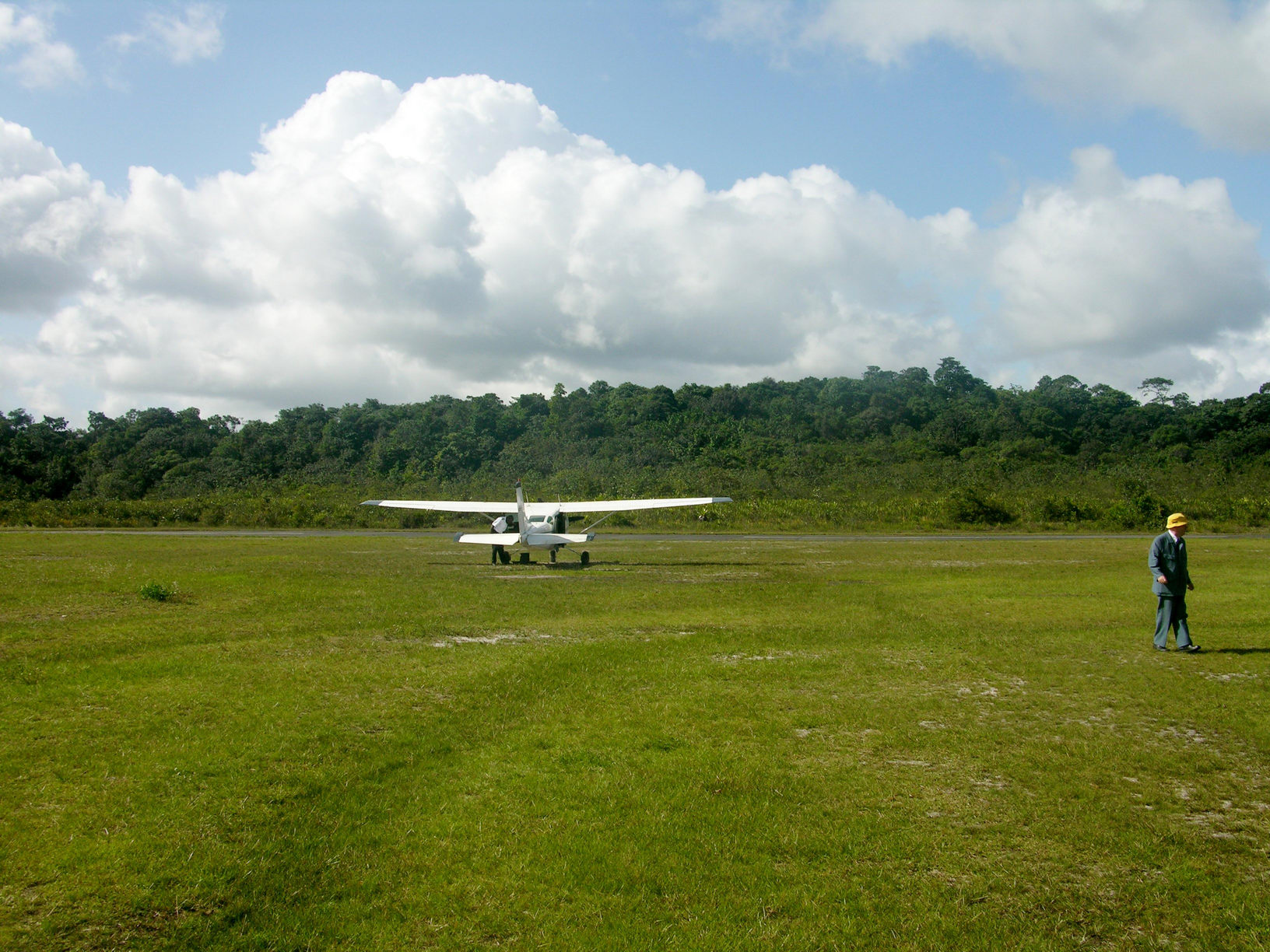
Georgetown has several airports. Our Cessna took off from Ogle. They took us there by taxi. We had an hour or so in the waiting room. We found out there that the woman who arranged the flight had doubled the price in commission. A bit much, I think. All I can say to anyone going after us is to go straight to the airport.
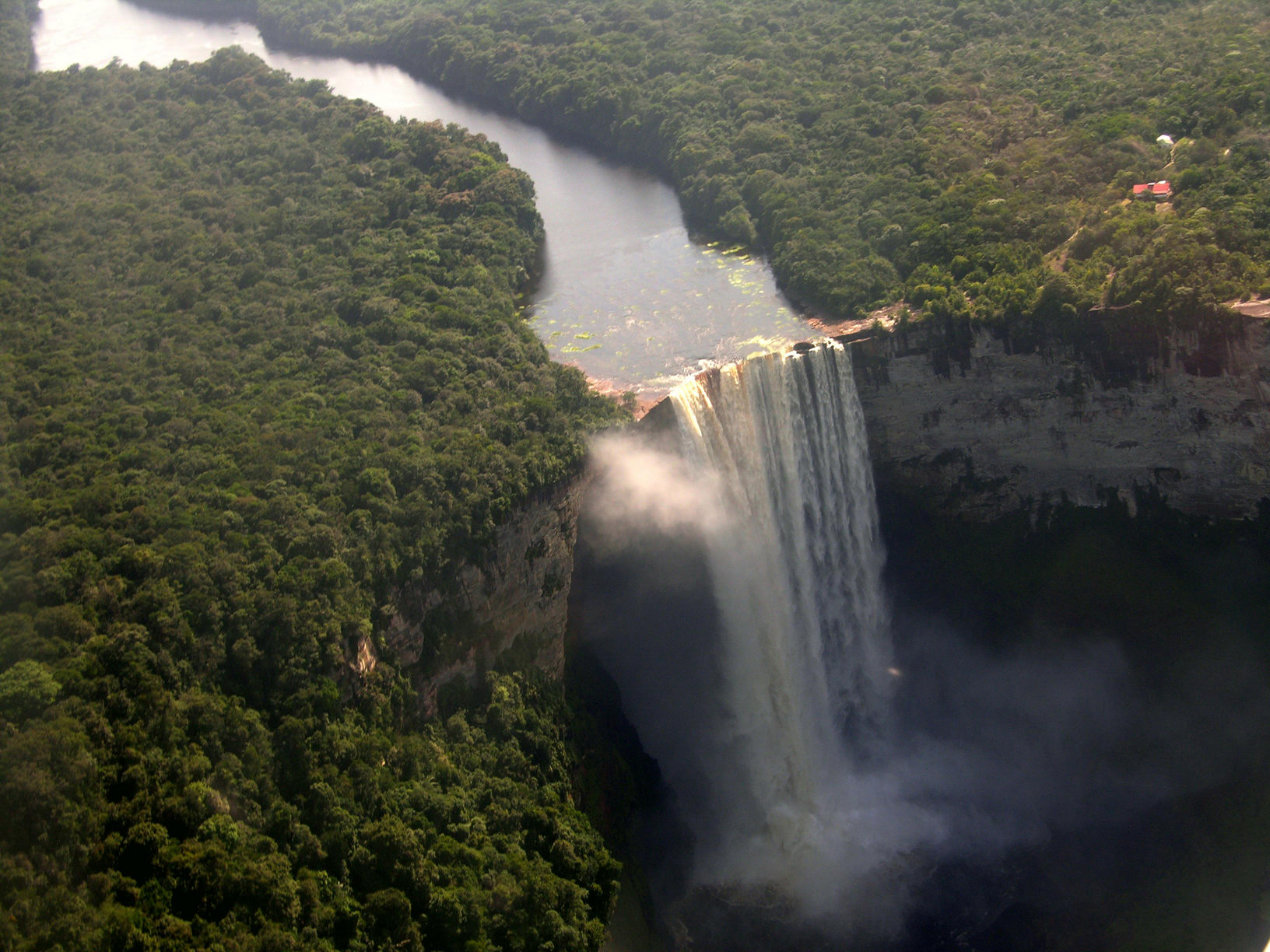
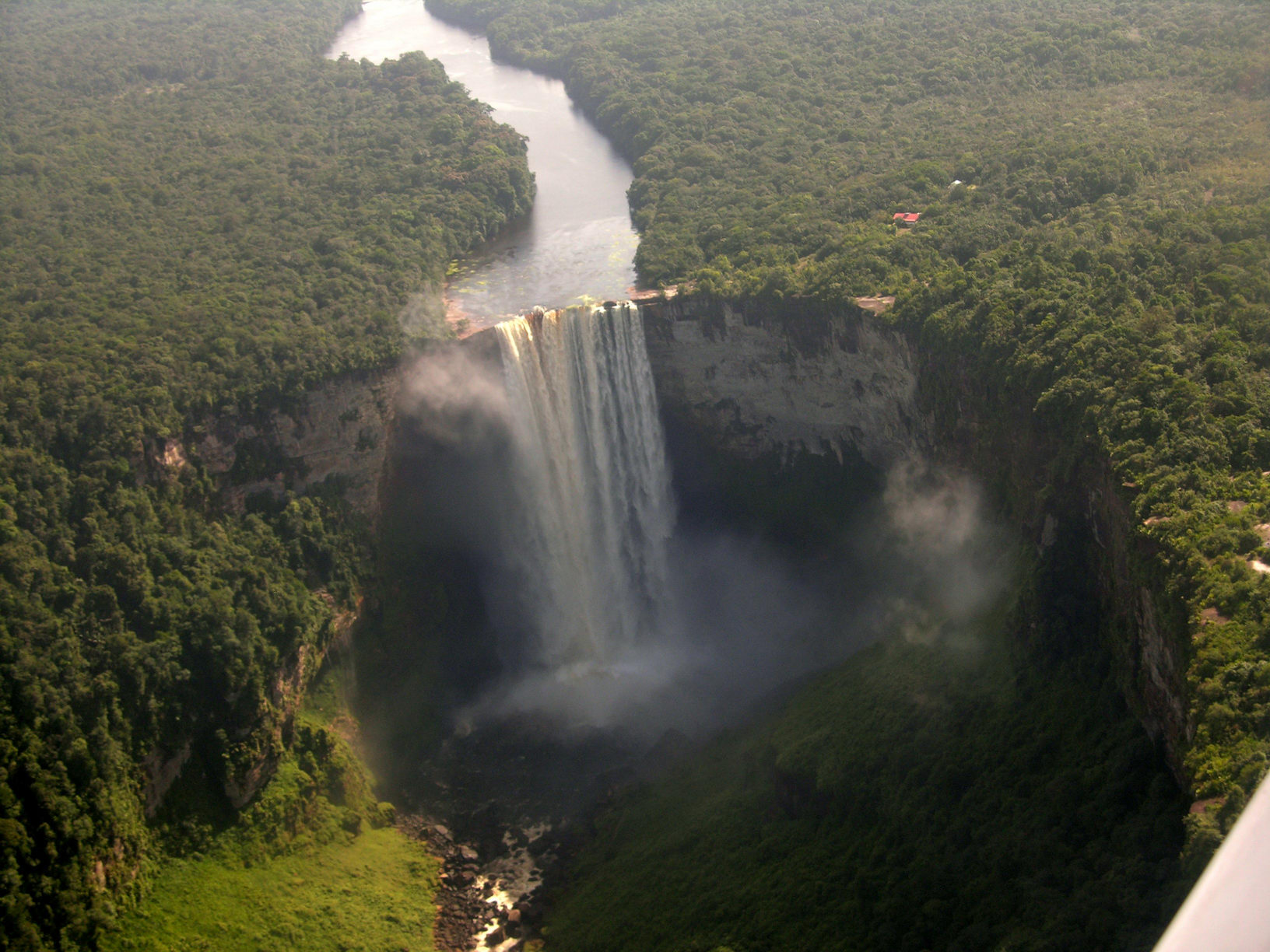
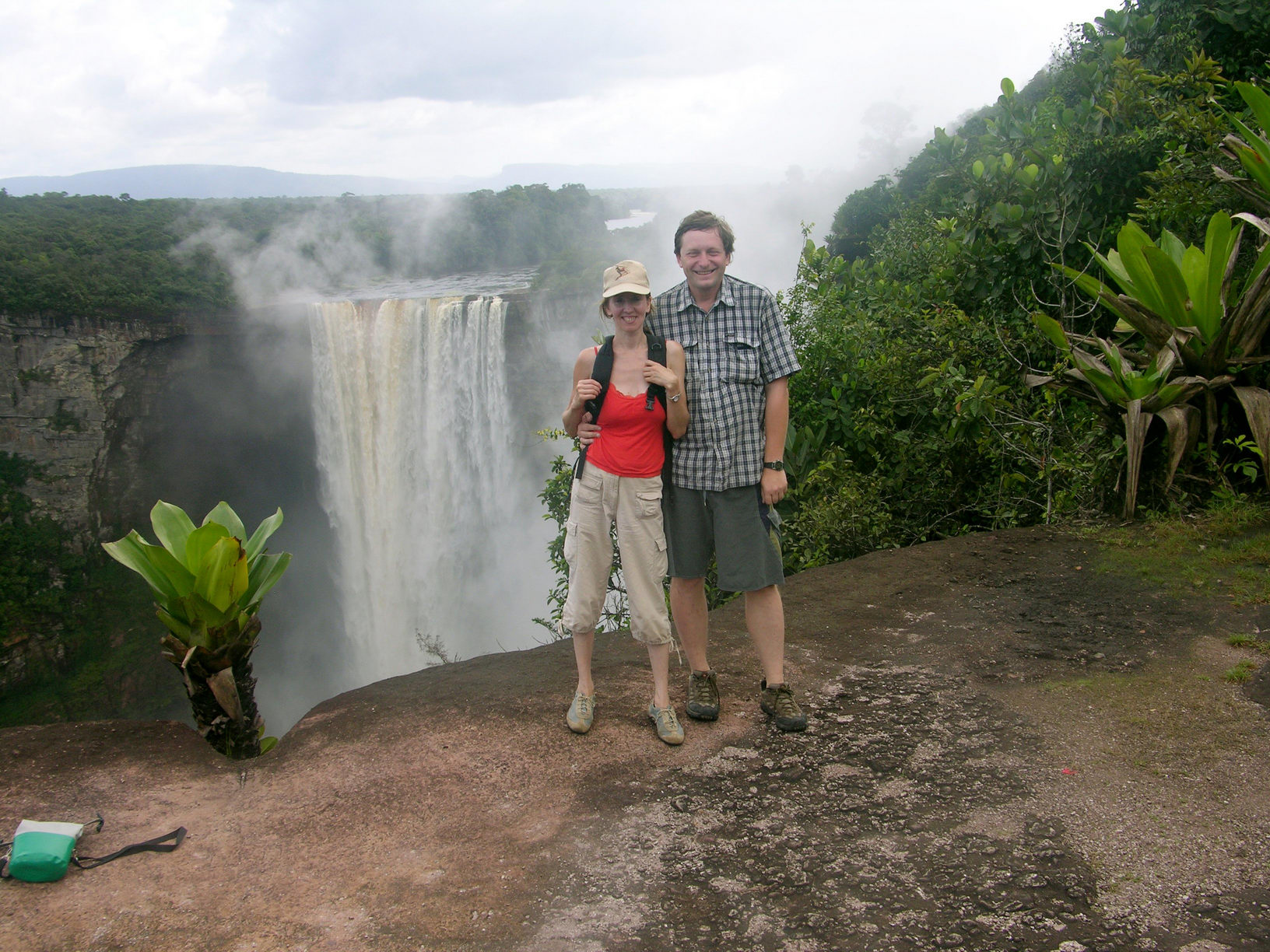
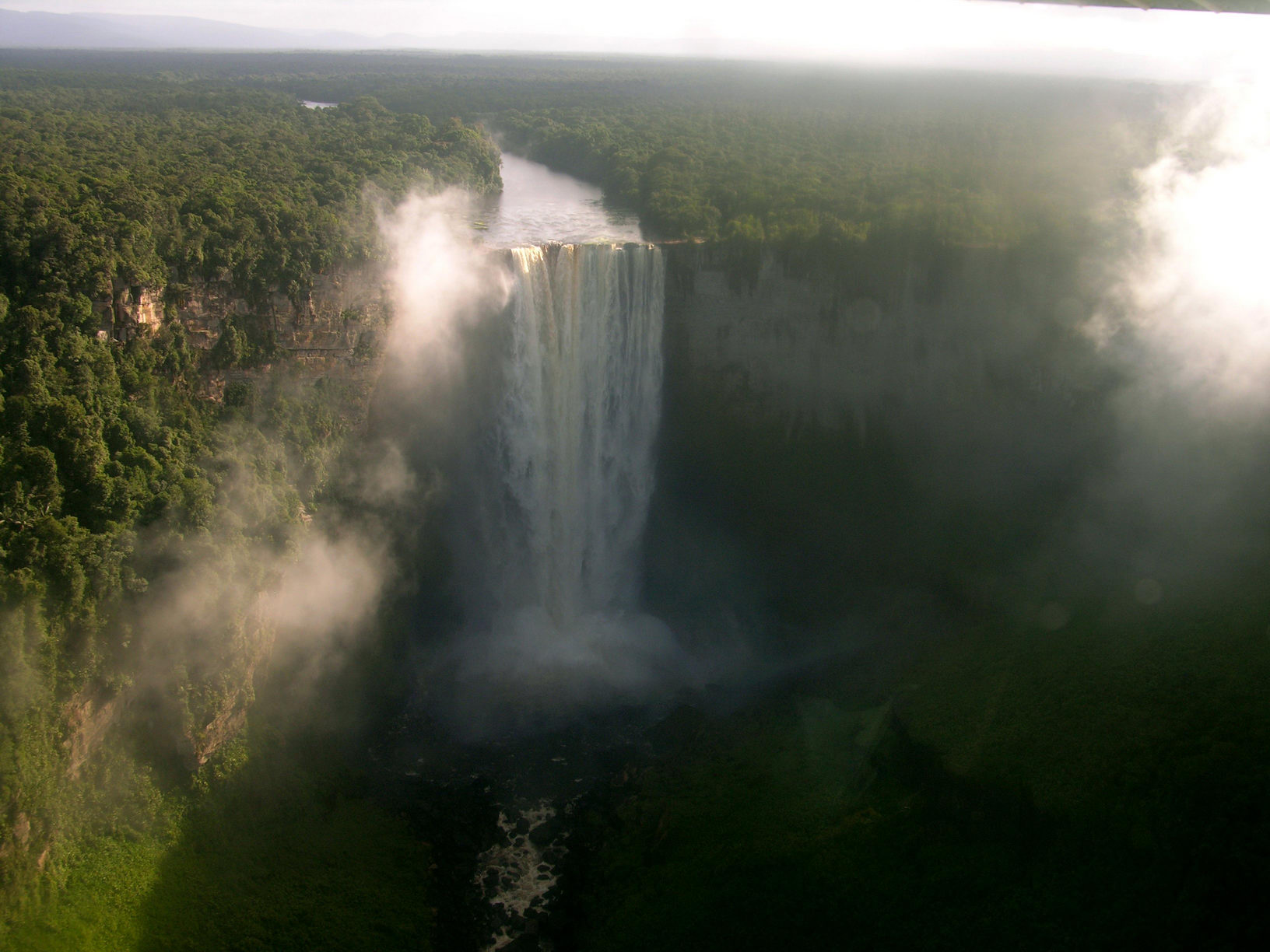
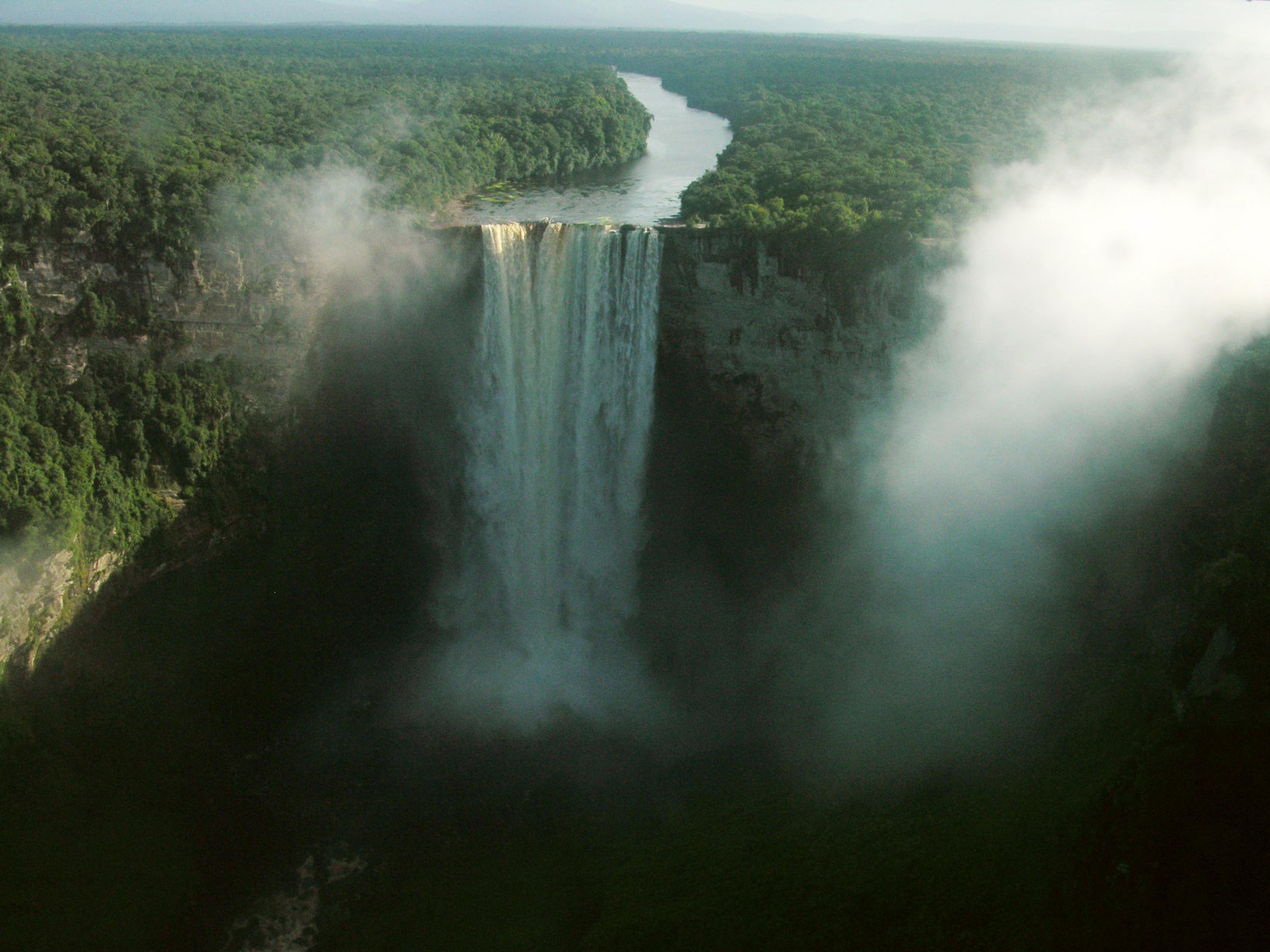
Kaieteur Falls on the Potaro River (Potaro) is one of the loveliest waterfalls in the world. It lies in the middle of the national park of the same name. There's a landing strip nearby. From there to the top of the falls is a five-minute walk. The water drops two hundred and fifty metres in a single fall, clearing every rock on the way down.
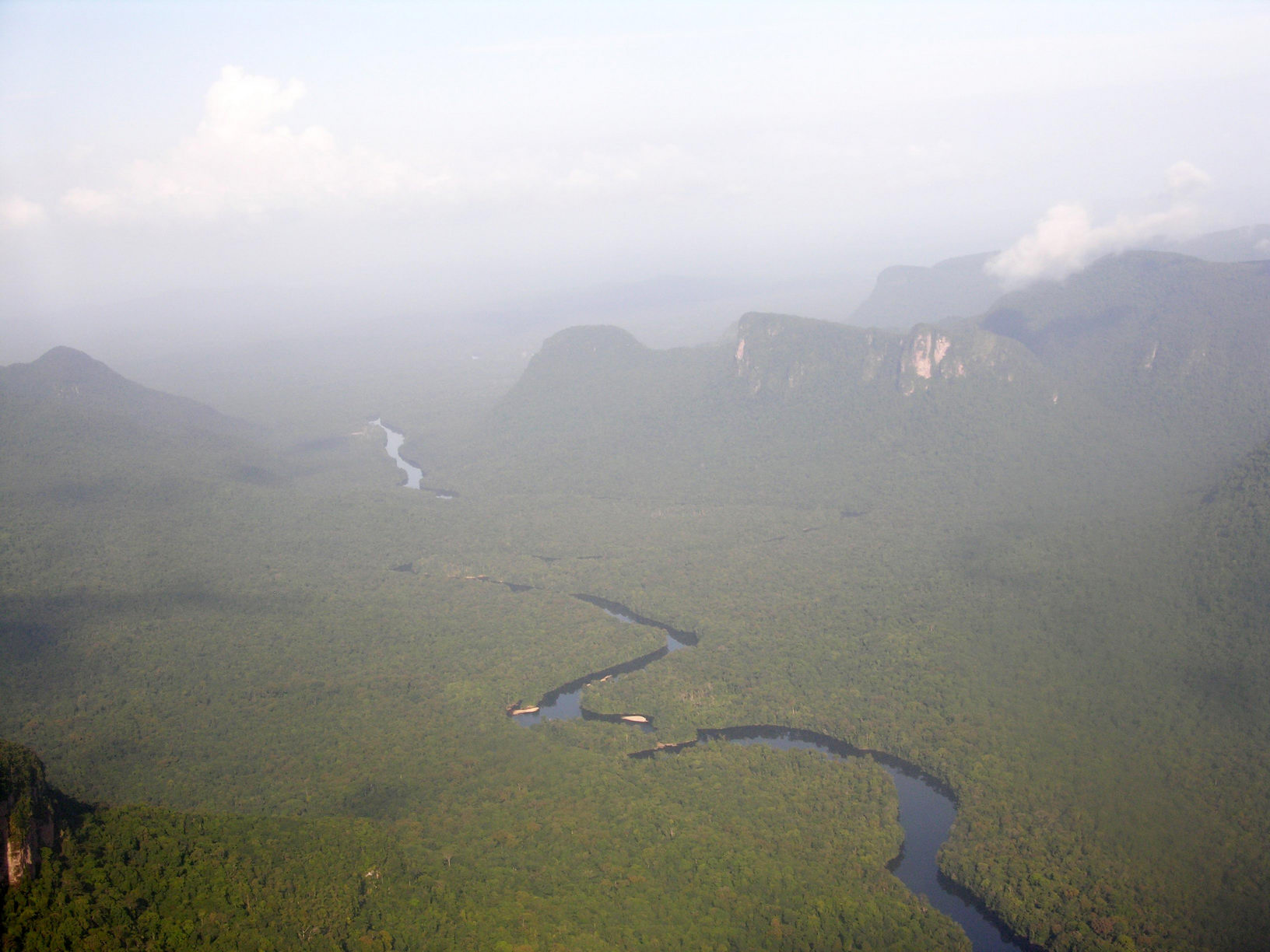
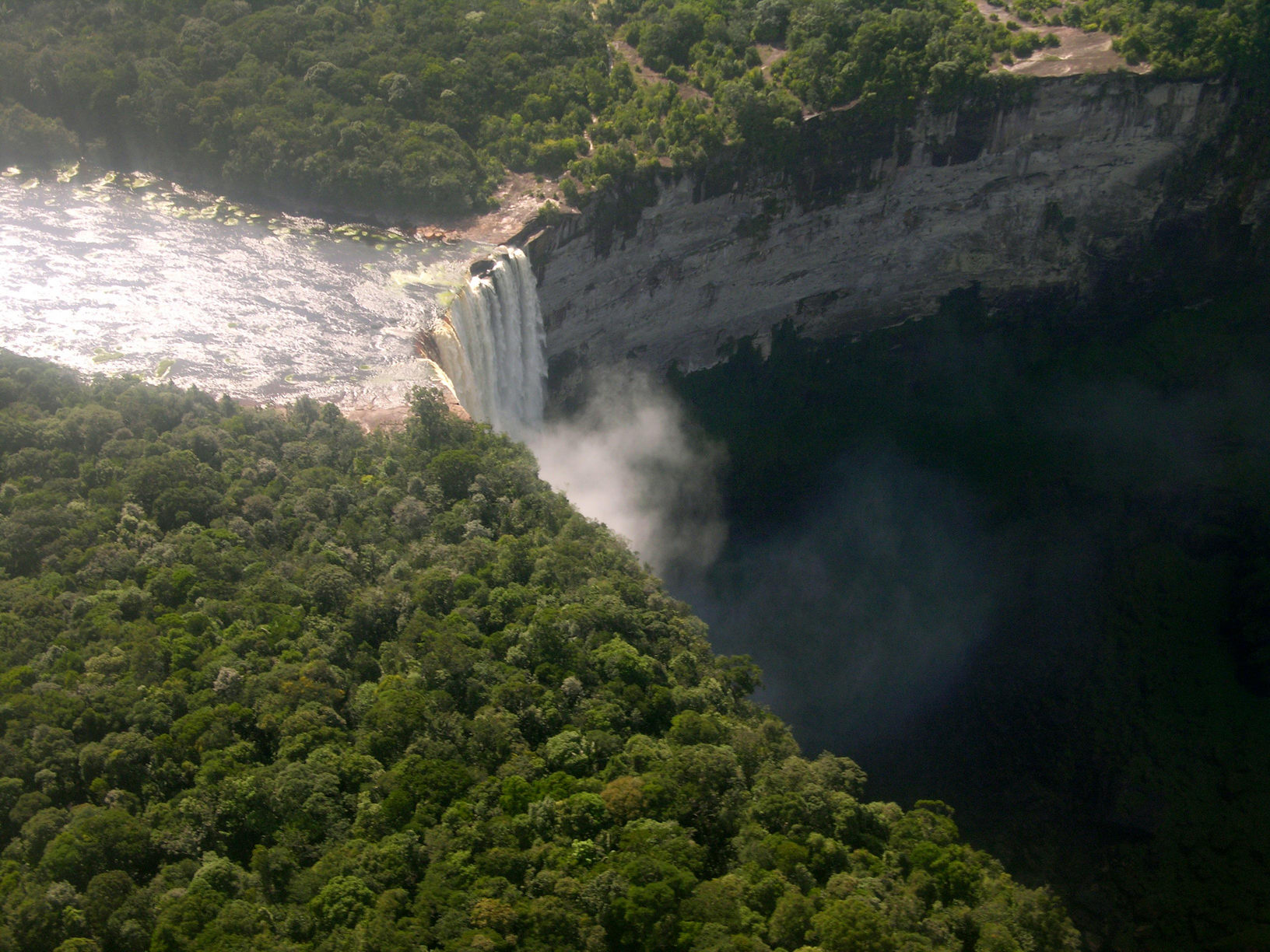
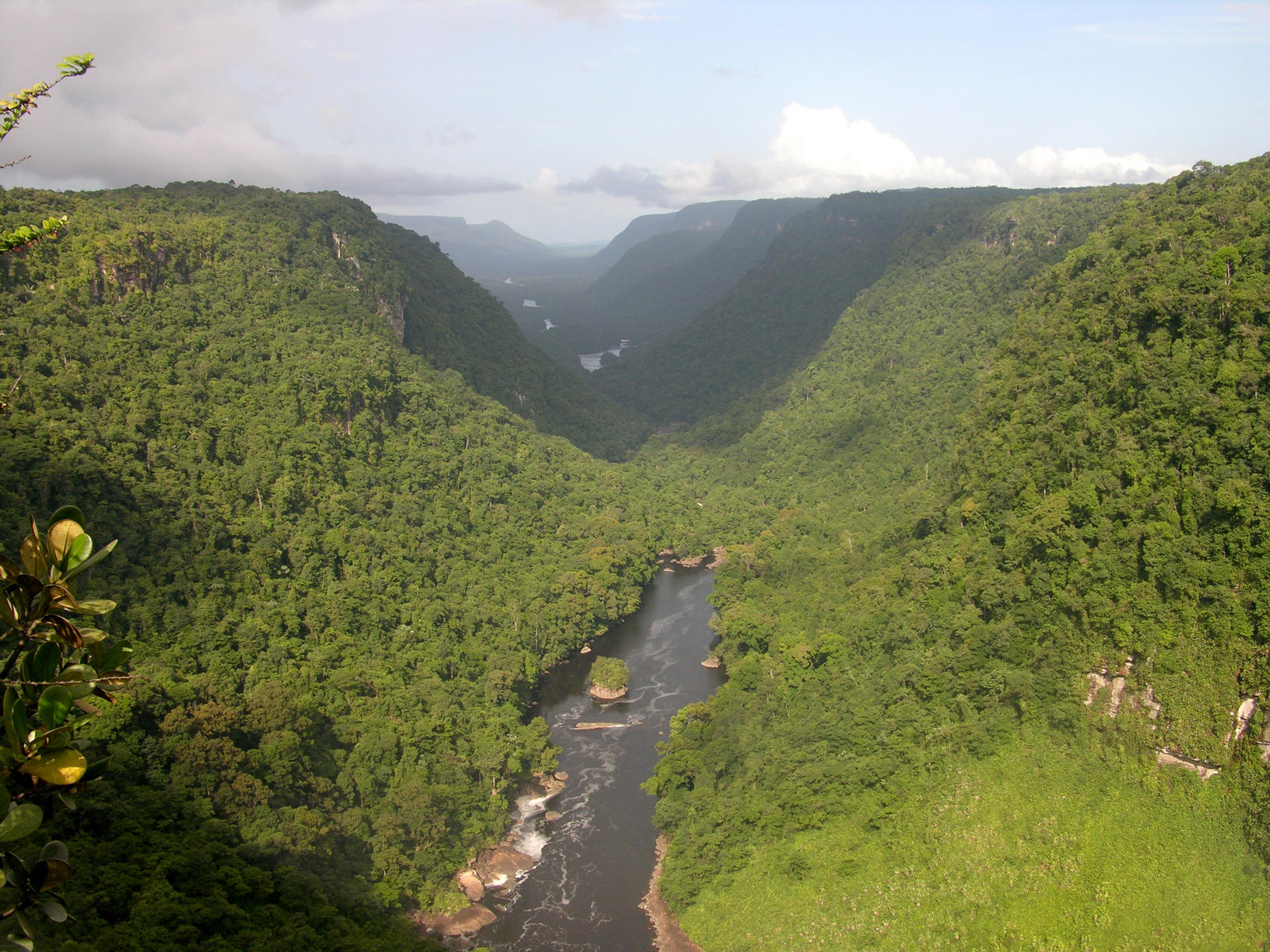
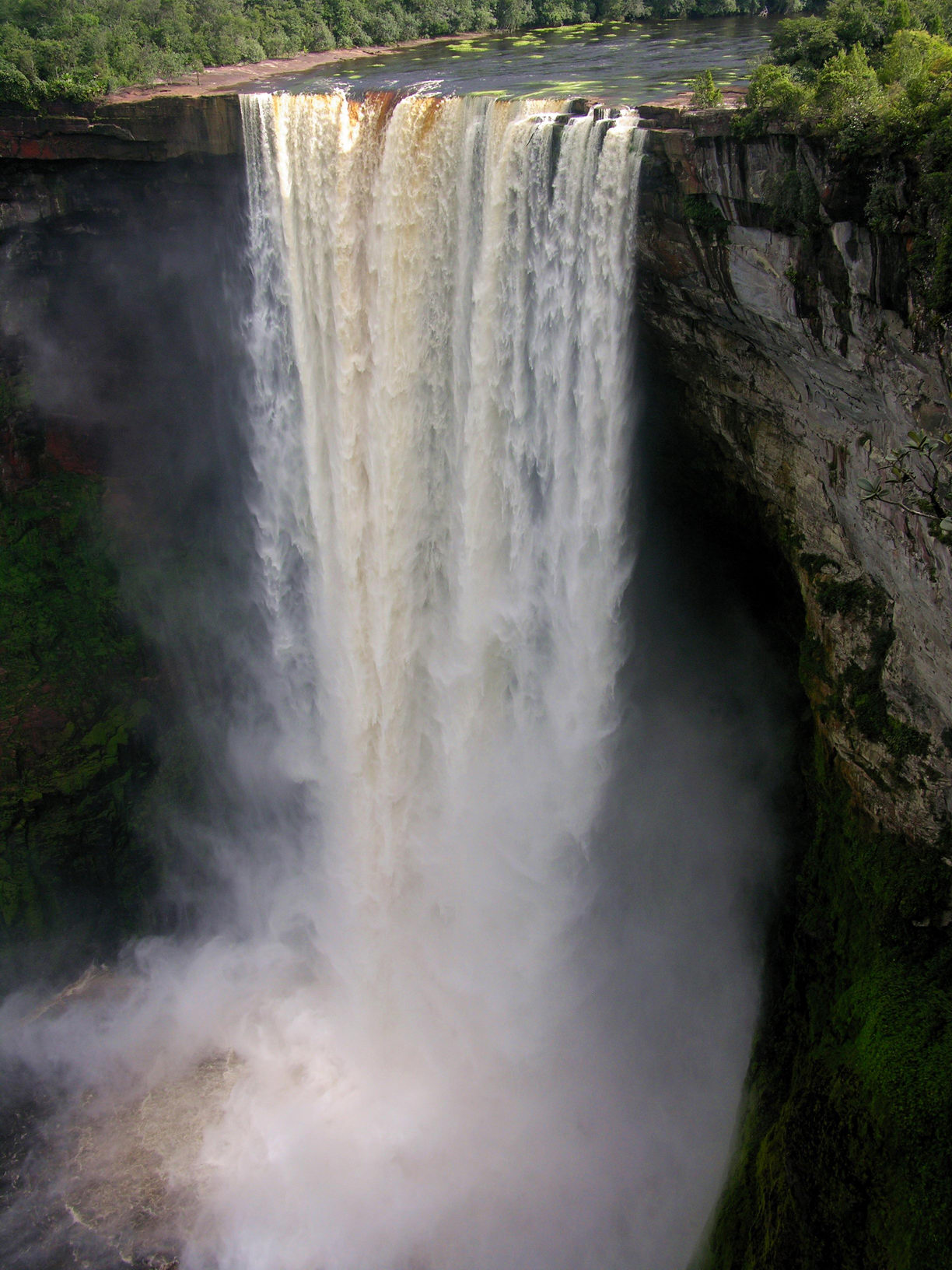
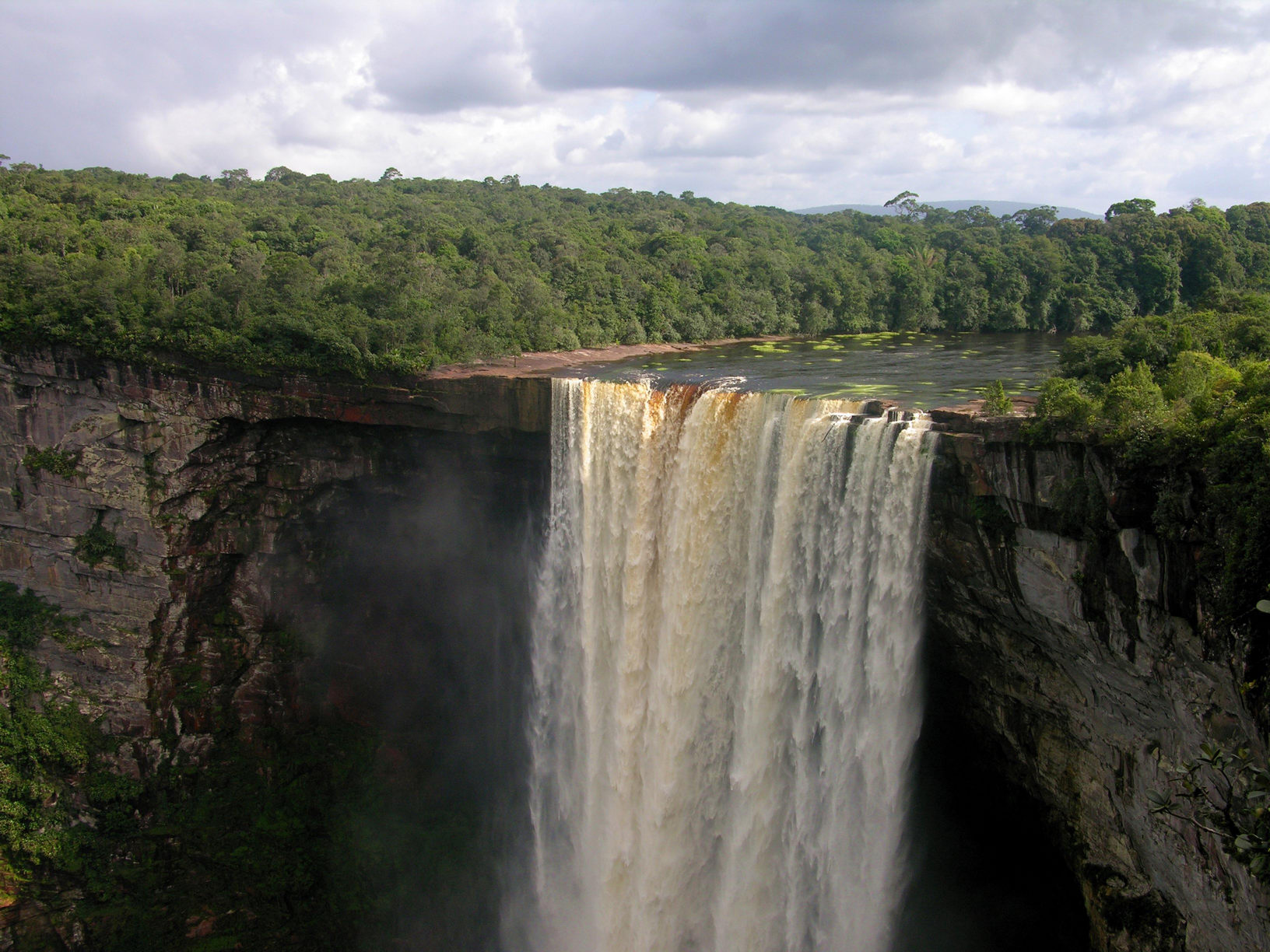
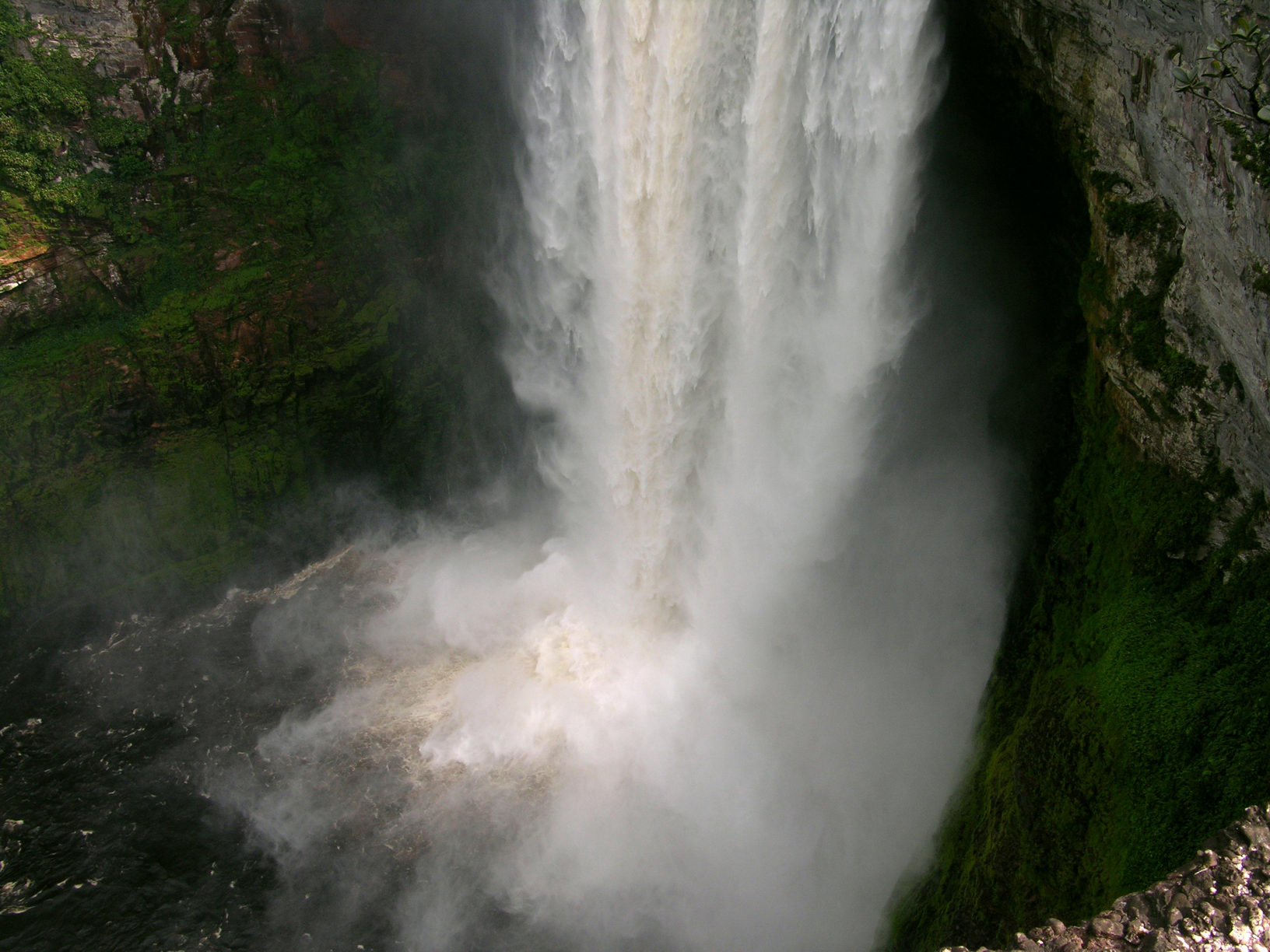
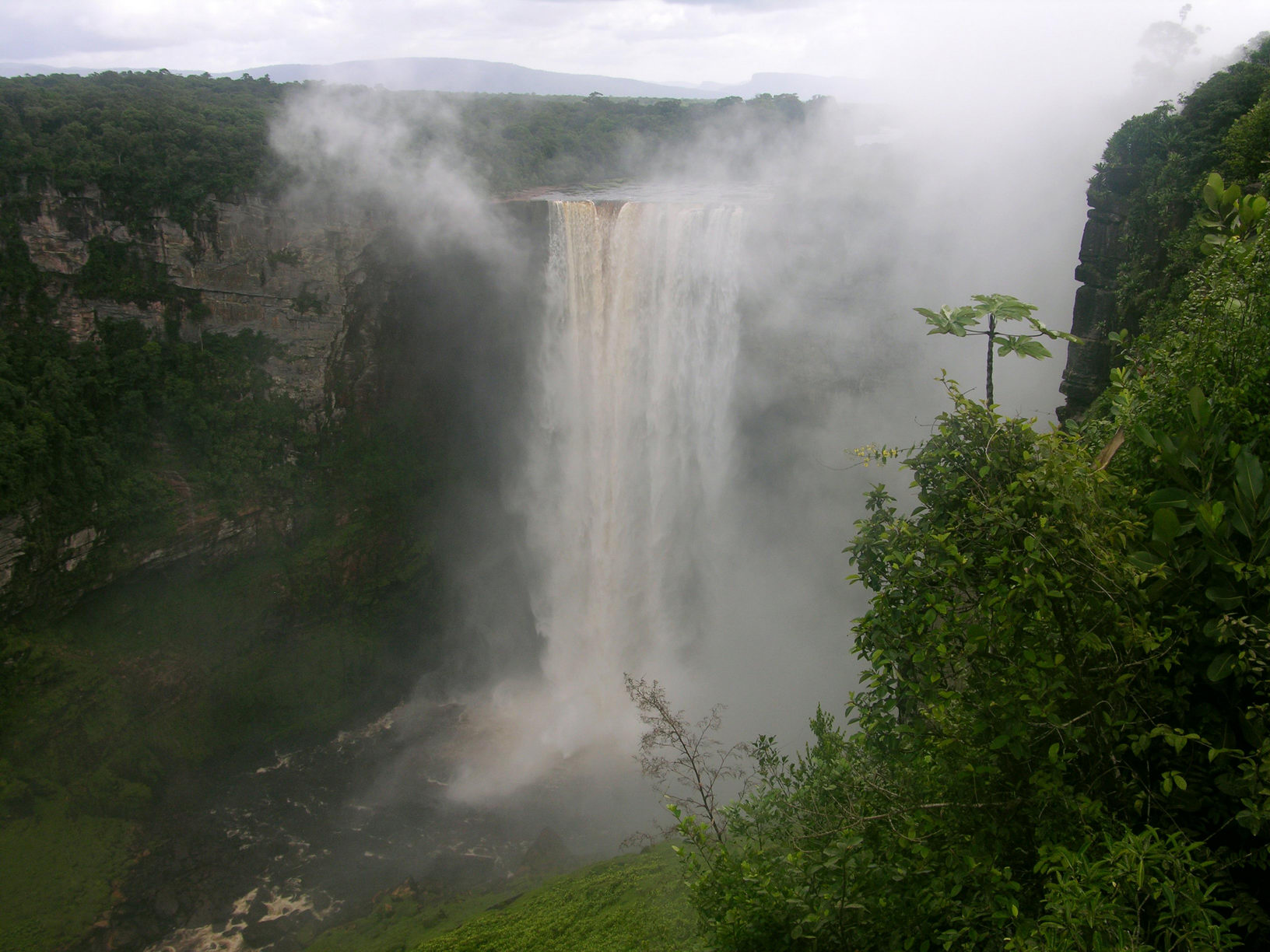
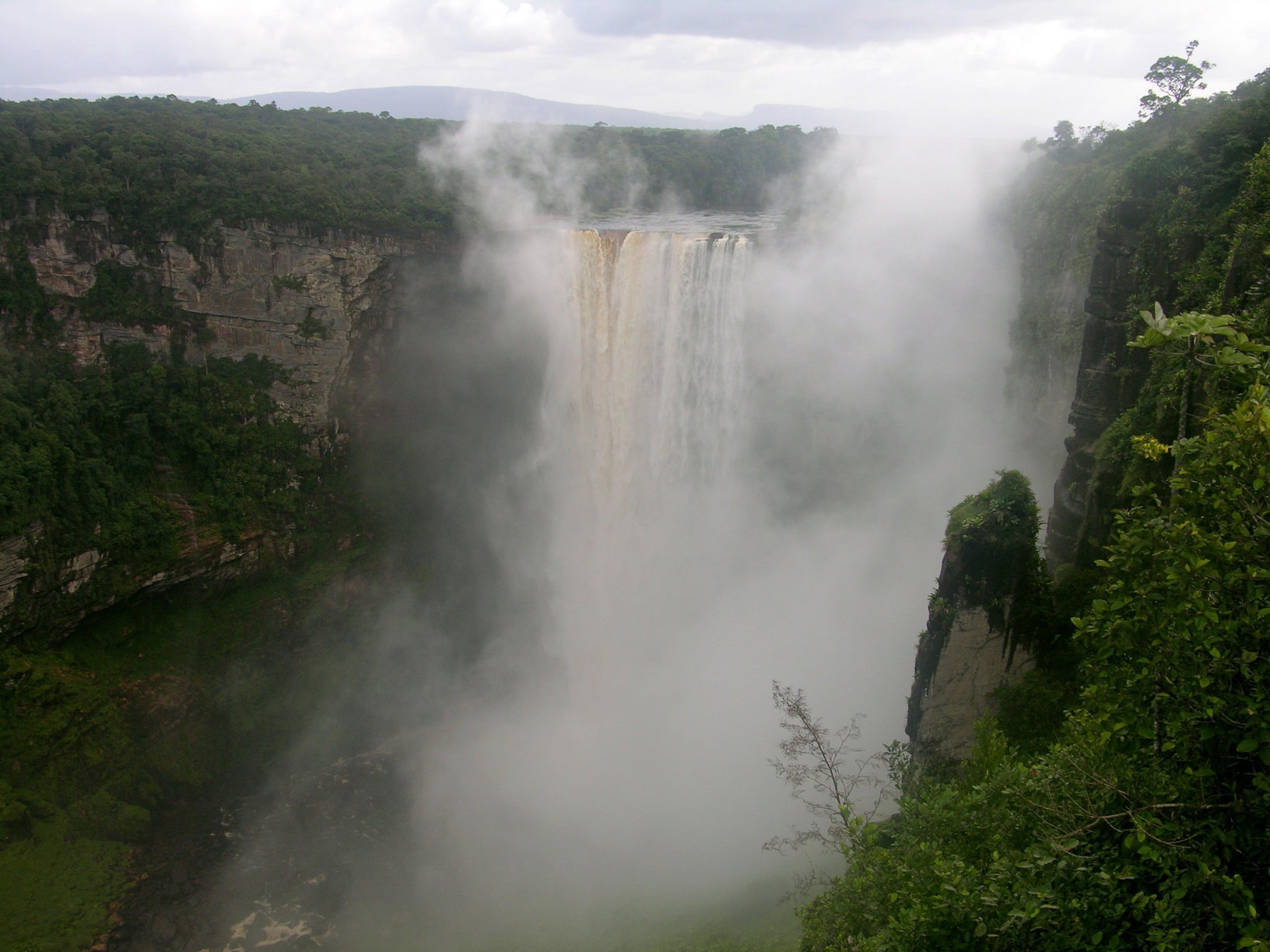
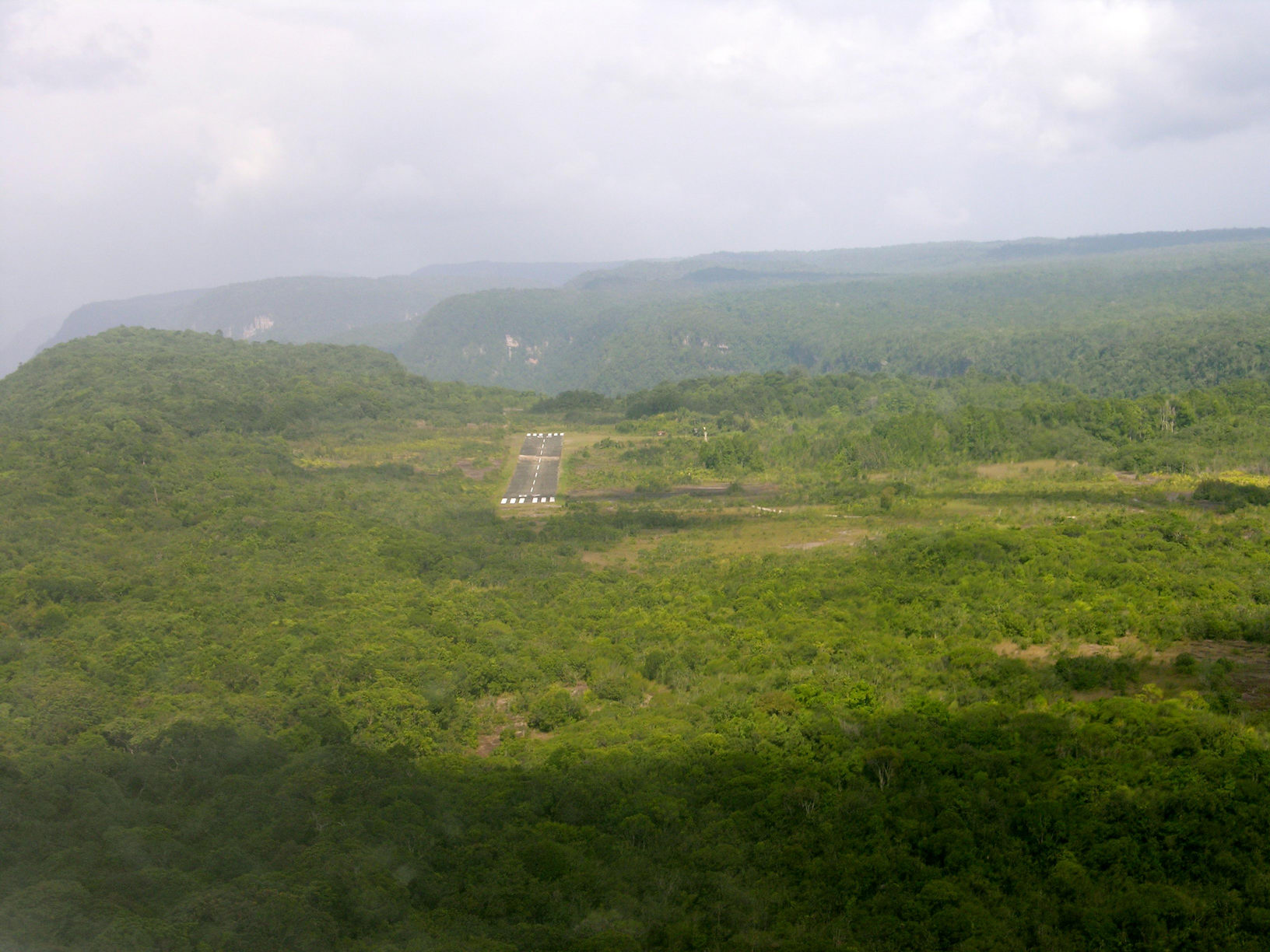
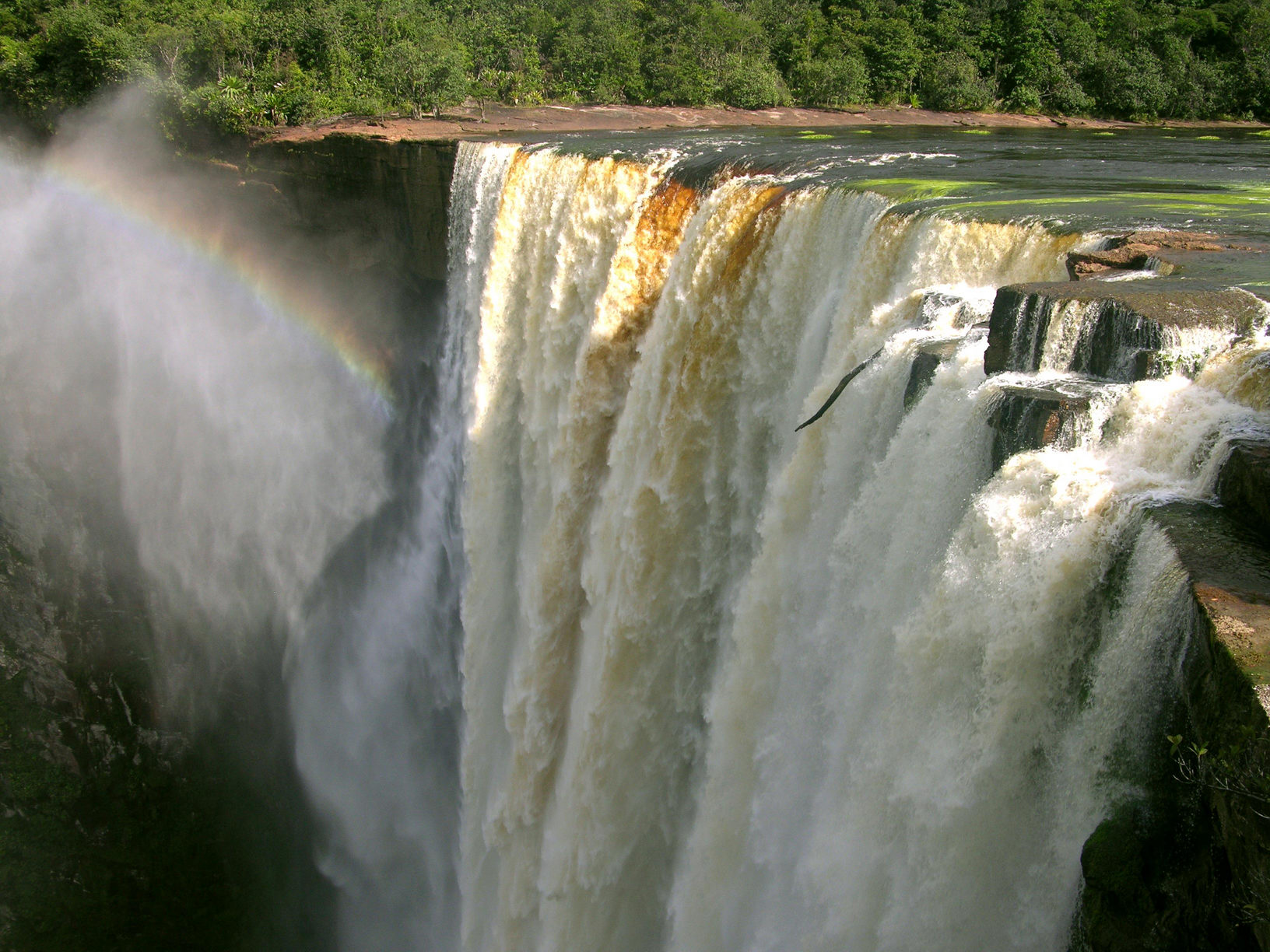
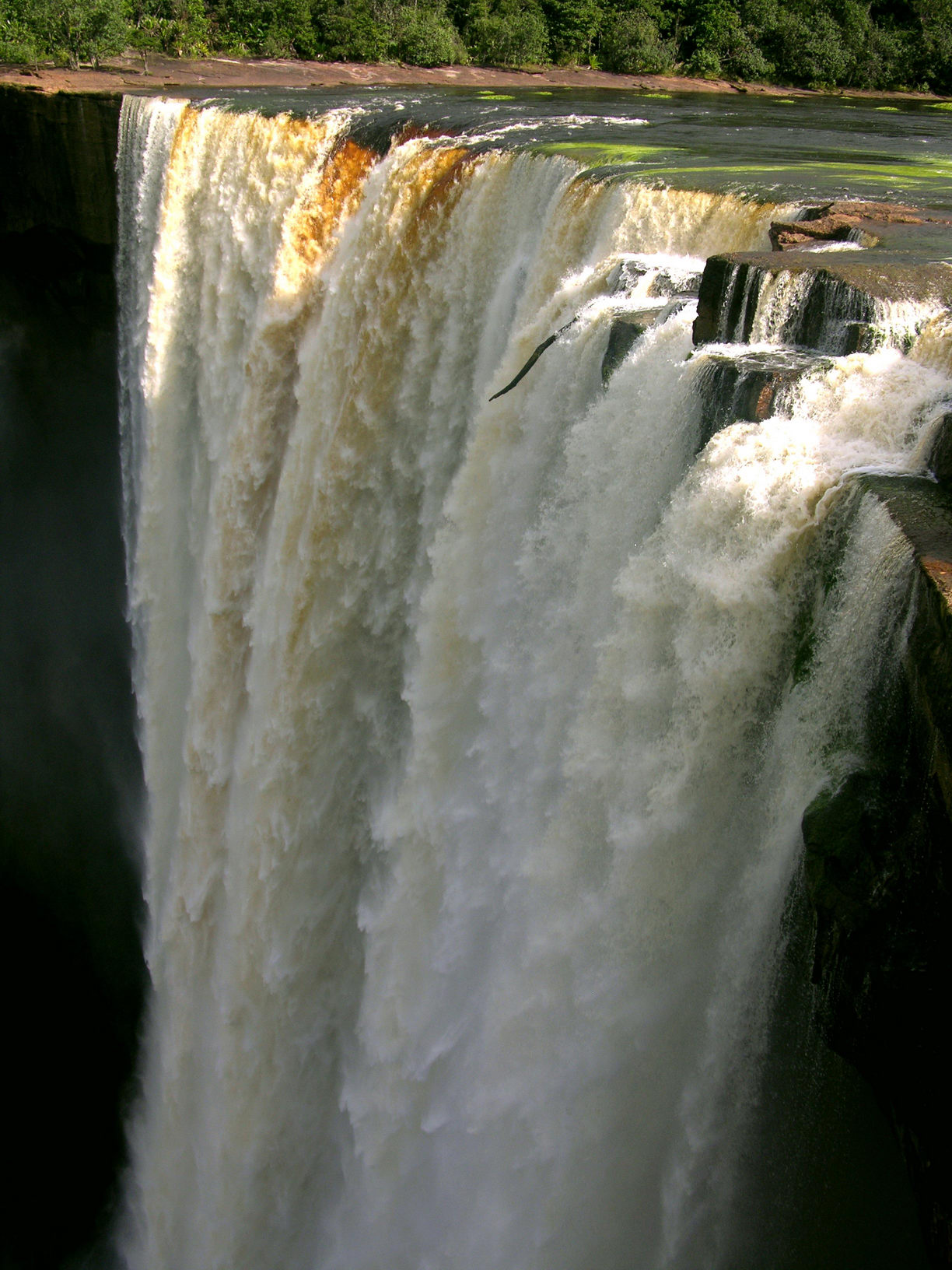
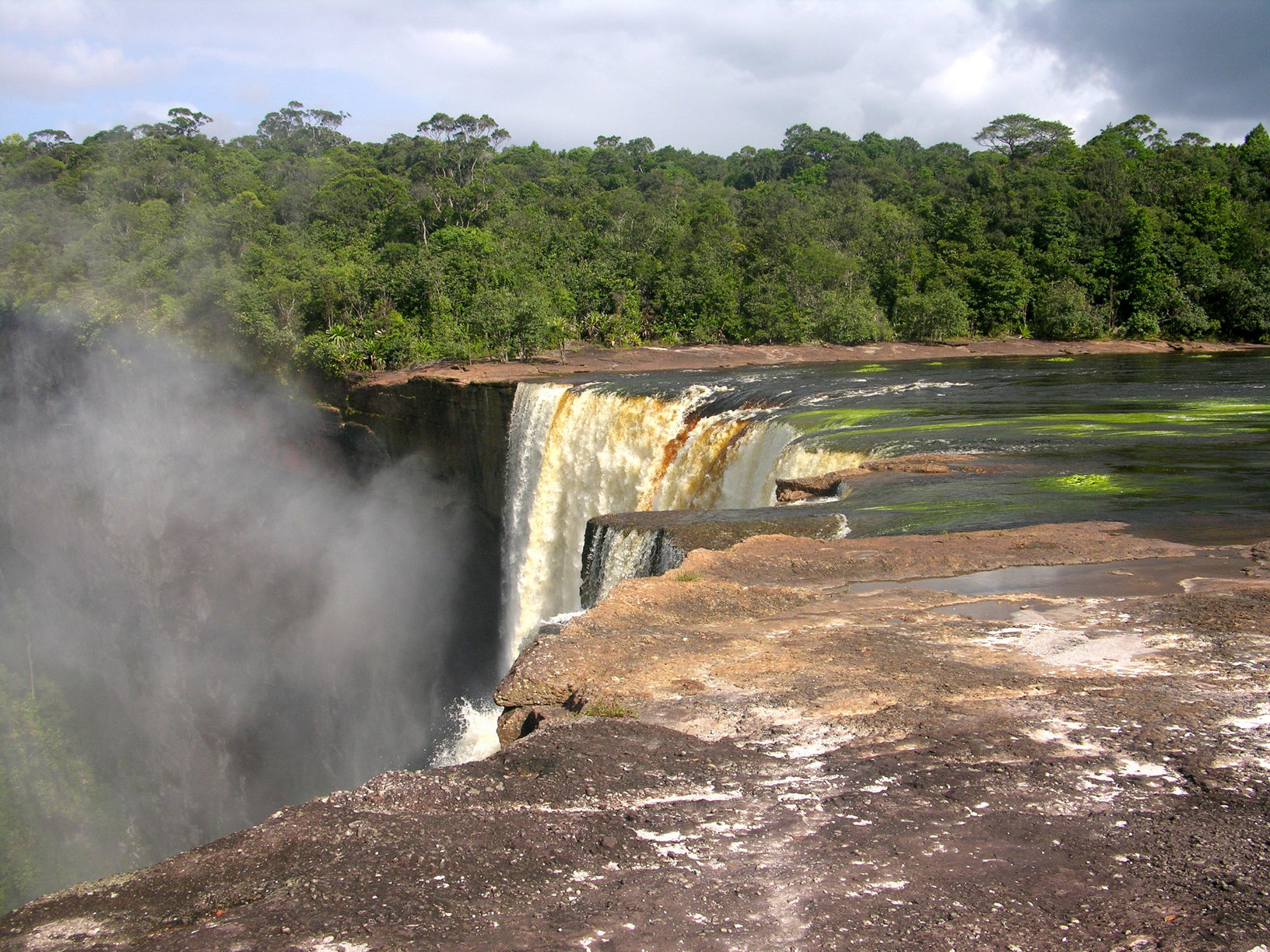
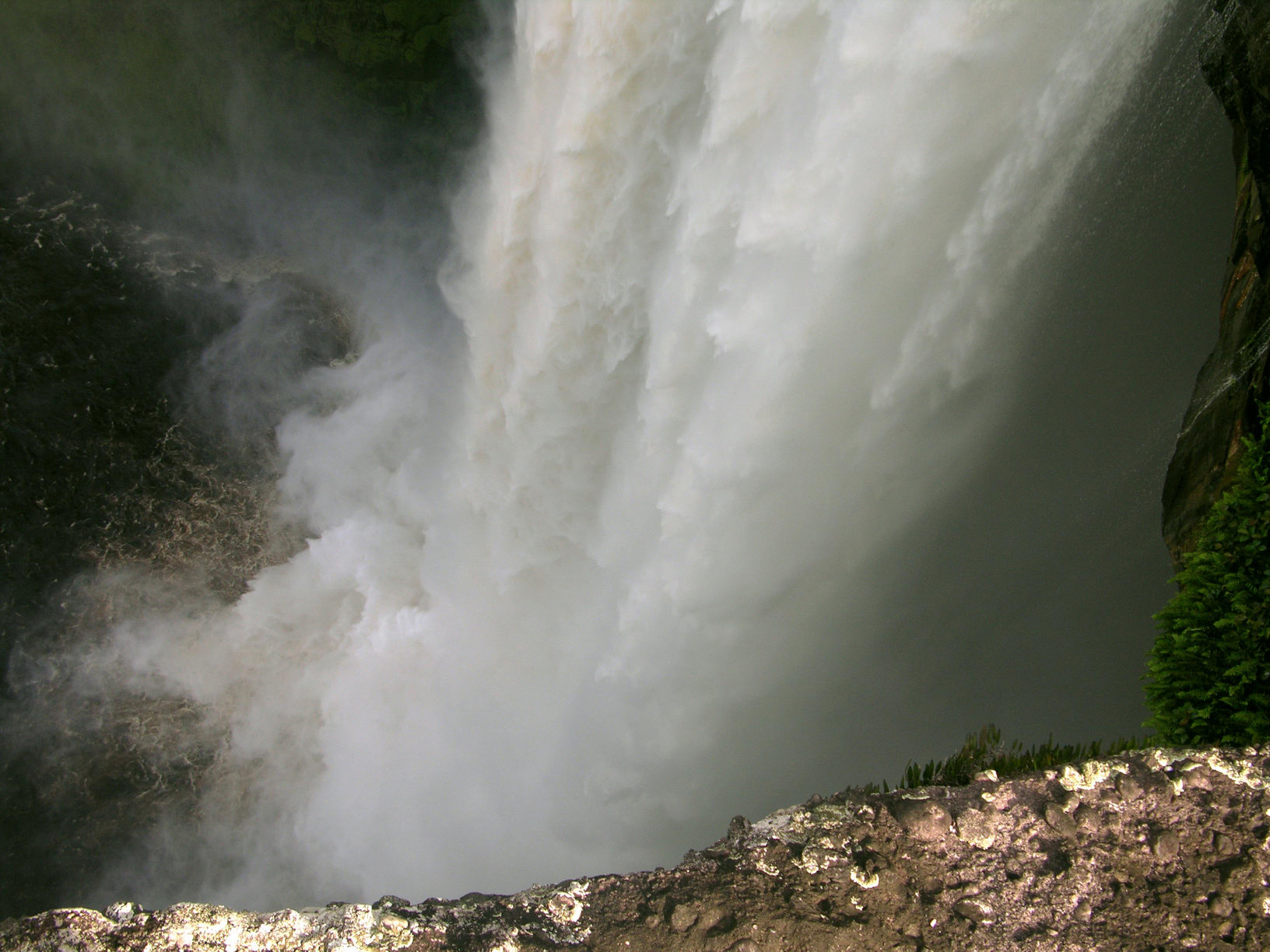
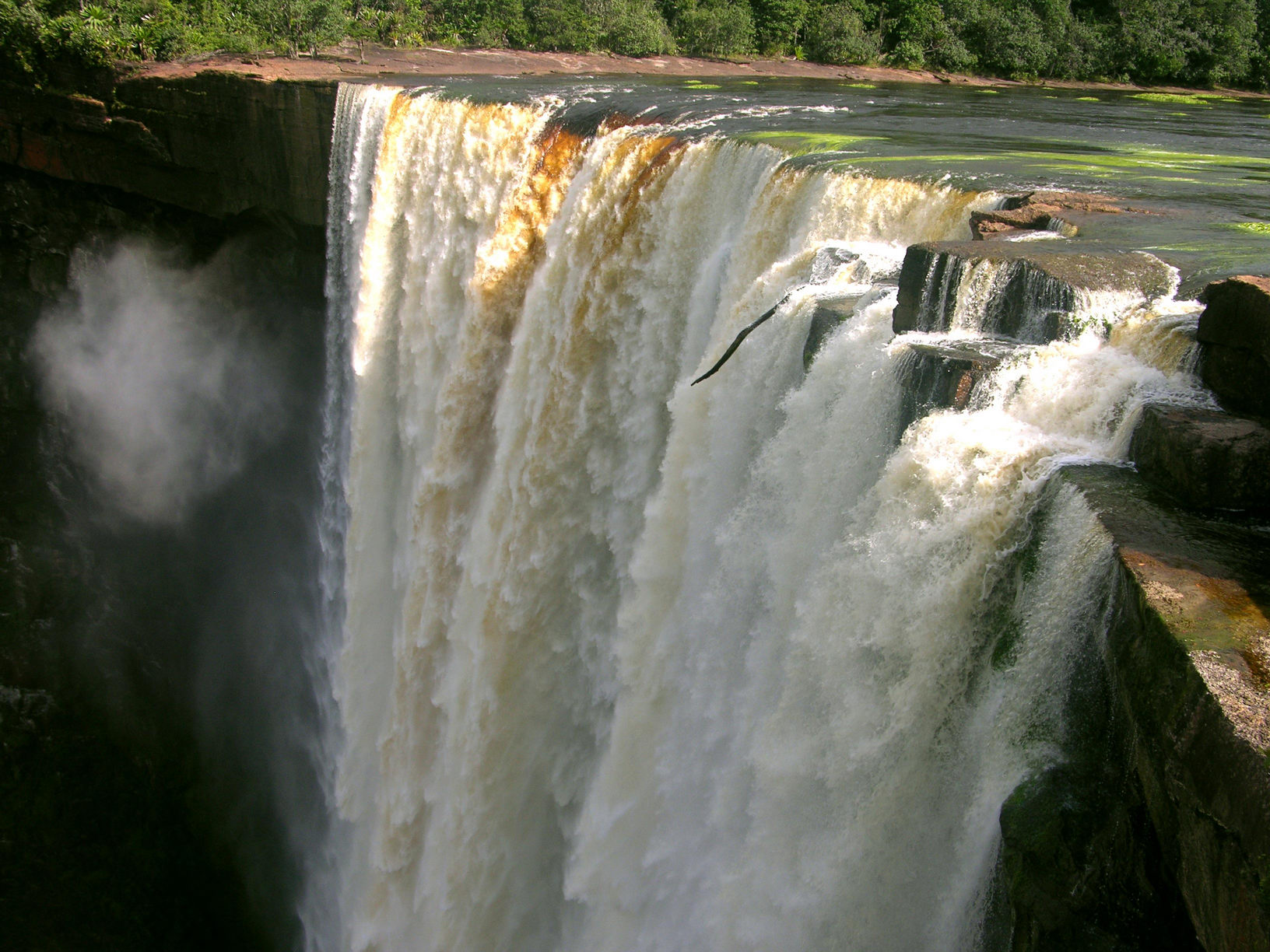
You can walk to the falls in three days from the end of the road. Unfortunately the compulsory guide is a stubborn evil in Guyana too. You're not even supposed to walk the five minutes from the plane to the falls without one. This time we actually got an interesting man. He'd gone out with all sorts of scientists for years and listened to them. Everything interested him, so he was more likely to show you a bird than frighten it away. The Guianan cock-of-the-rock lives only in these mountains. Birdwatchers come from round the world and wait days for one so they can add it to their little notebooks. We were lucky and saw one twice in an hour's walk. They say it brings good luck. A good day to start a business. Perhaps a Guyanese branch is the one thing I need to be perfectly happy. I could travel out there from the stinking stagnation in Russia and remember my youth and perestroika.
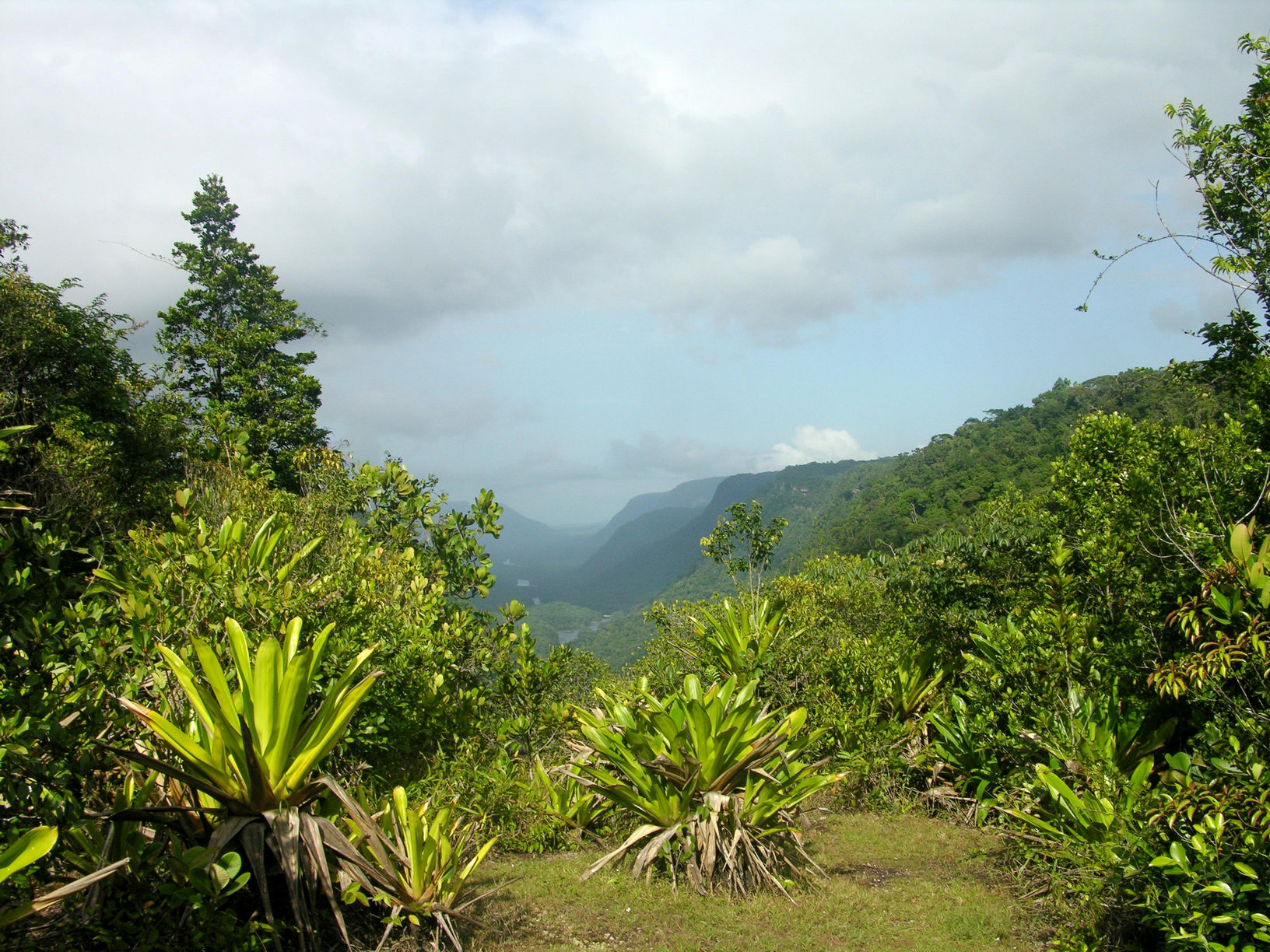
We also saw the rare red-and-green macaw and the local fork-tailed palm swift. There are plenty of butterflies. We even saw a Morpho hecuba, the largest Latin American butterfly, with a wingspan of twenty centimetres.
There's also an exceedingly poisonous little golden dart-poison frog (Colostethus beebei) in these parts. Its toxin was said to be stronger than that of any snake or spider. It was supposed to be dangerous if it entered the bloodstream. Theoretically you could handle it, but if a millionth of a gramme was fatal, it was worth wondering whether you had the tiniest scratch on your hand. The frog can bite. Even though it's about two centimetres long, I'm not sure it couldn't find a way to pierce your skin.
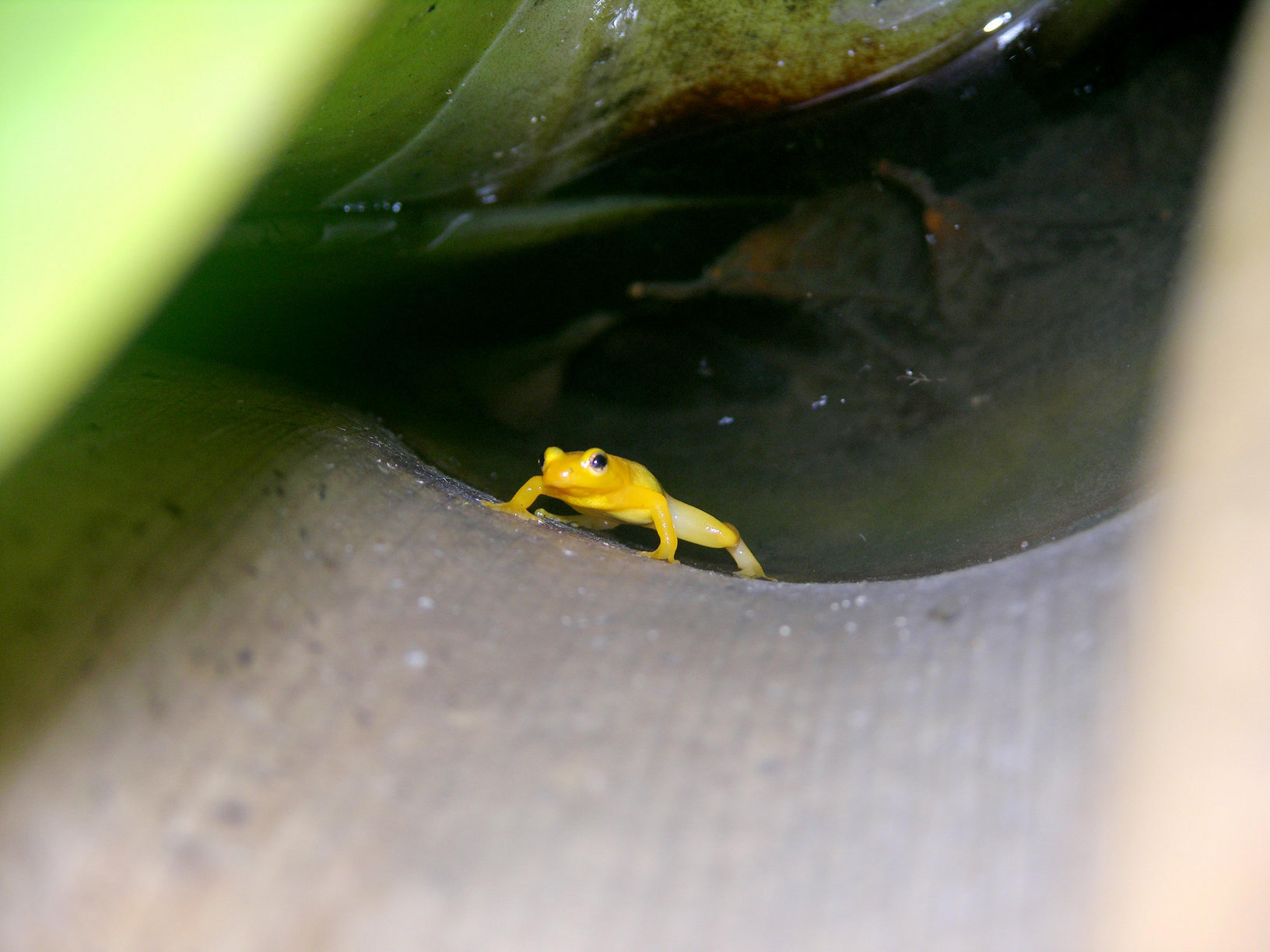
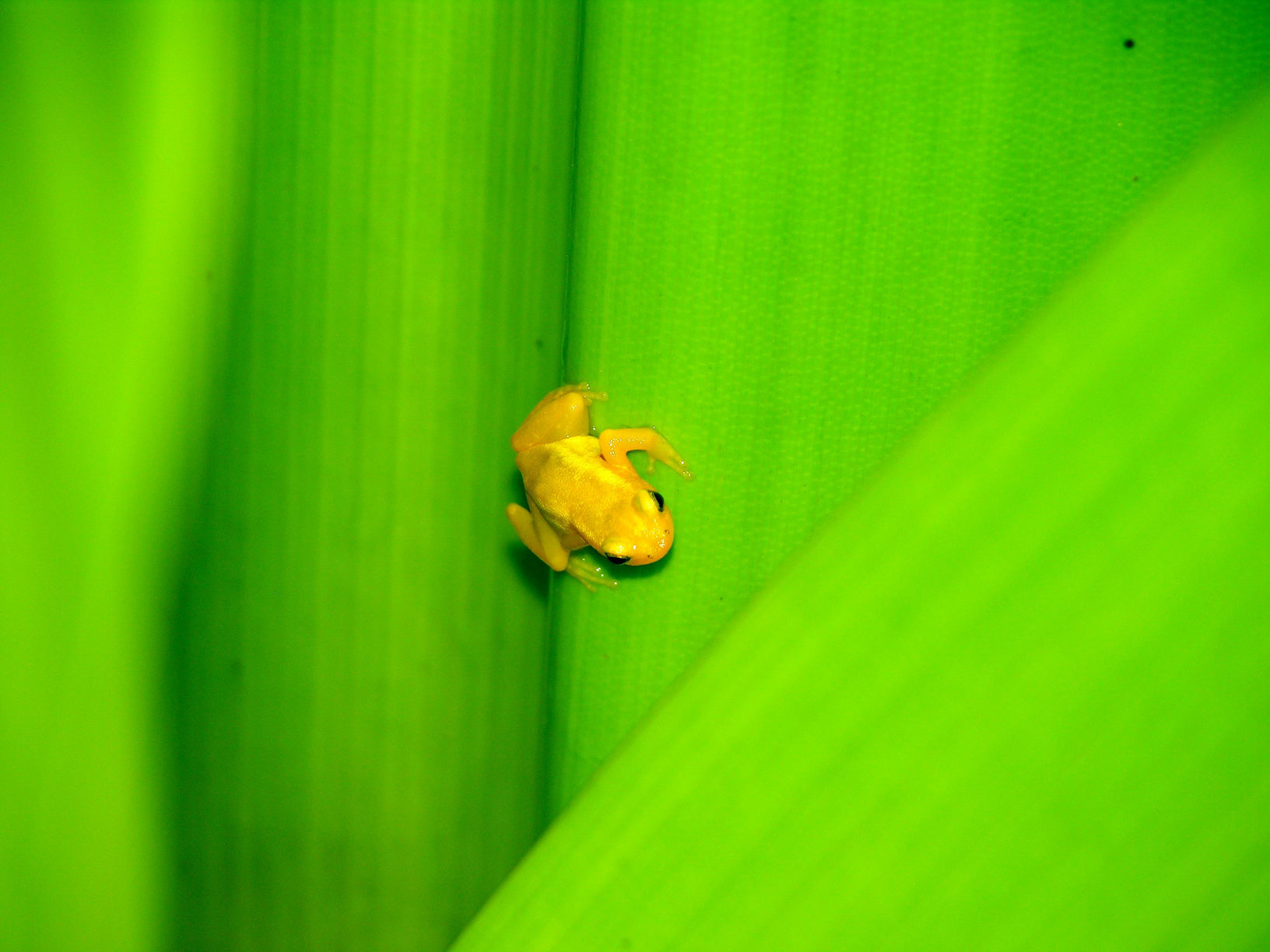
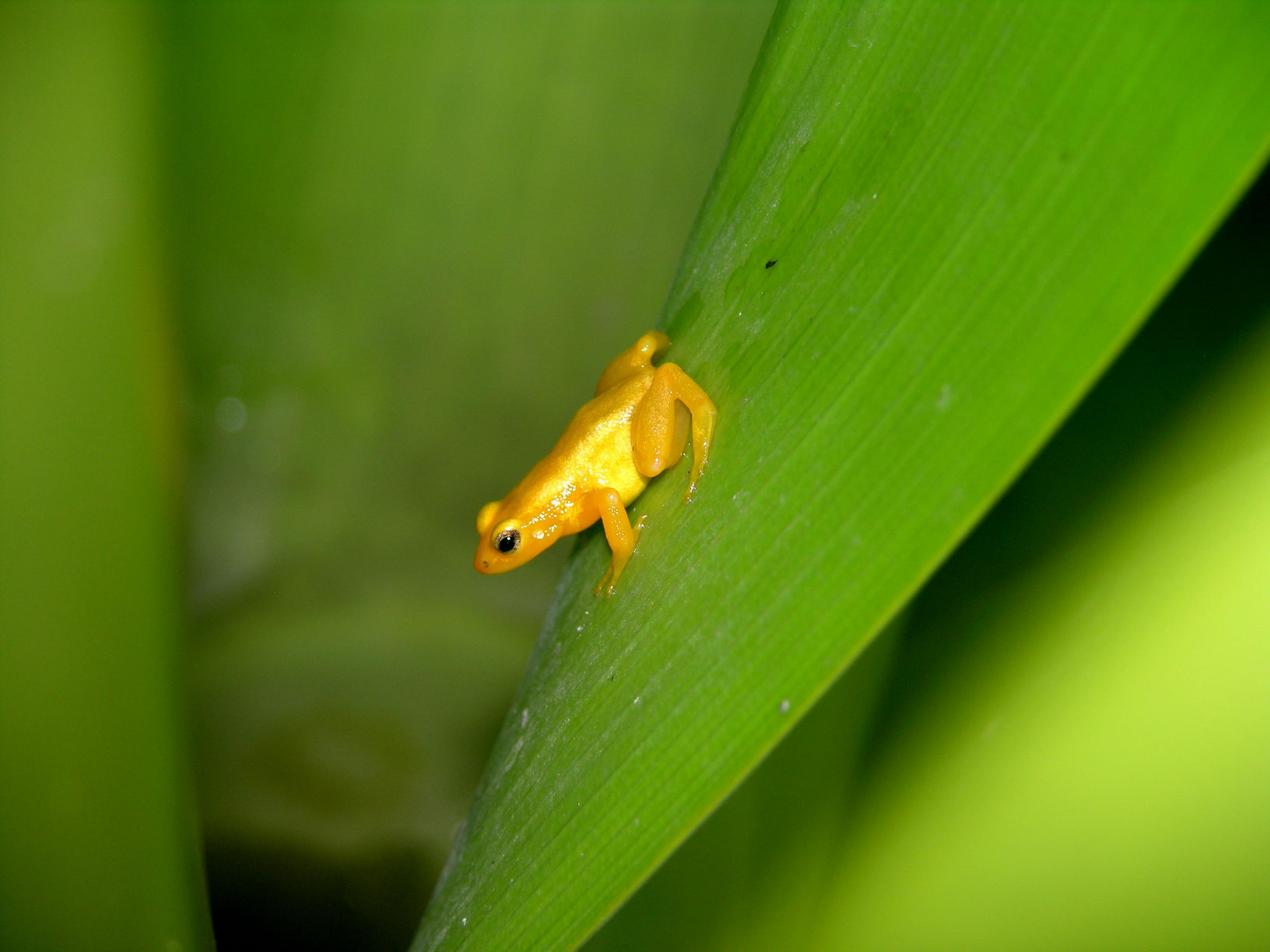
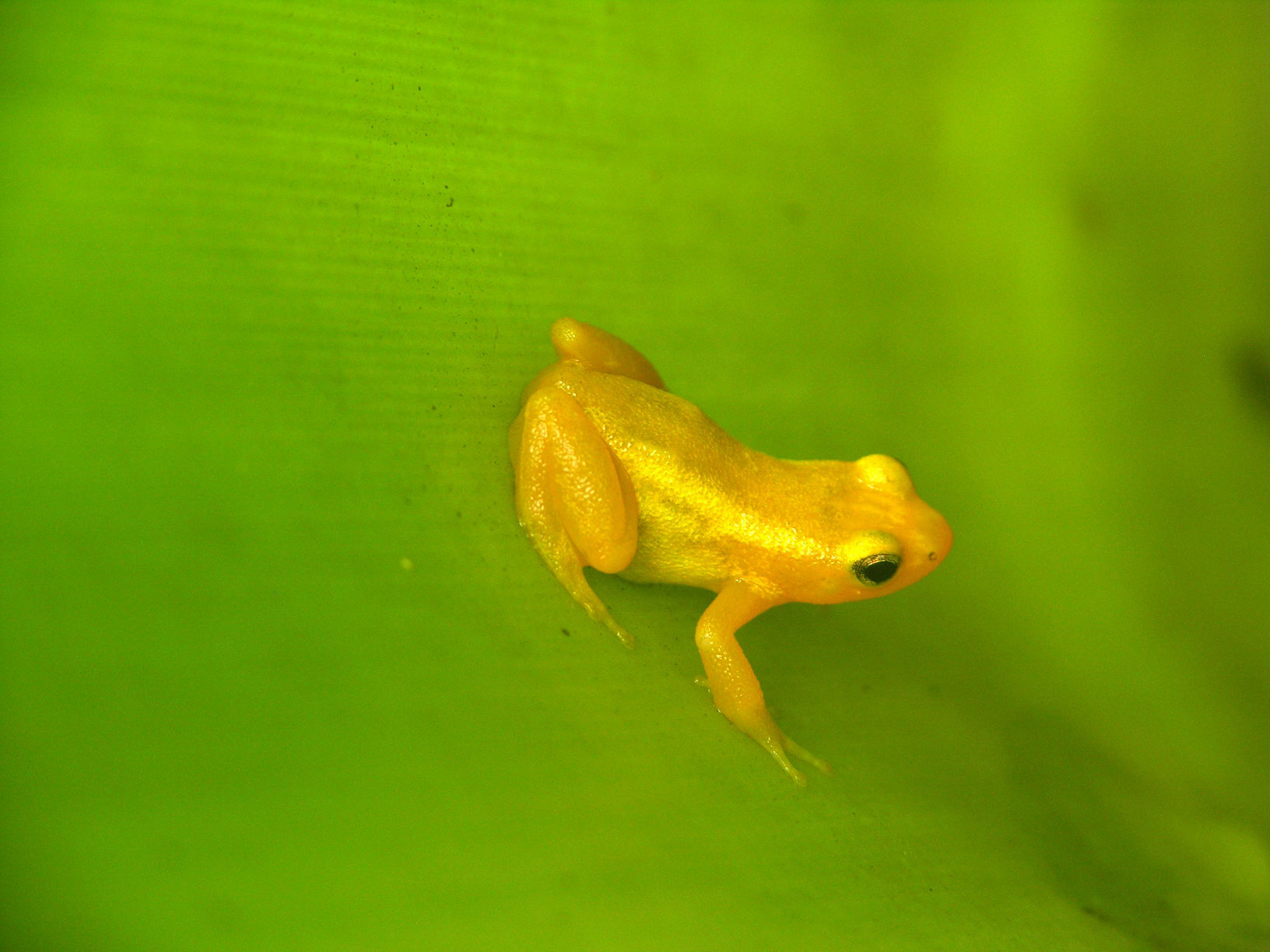
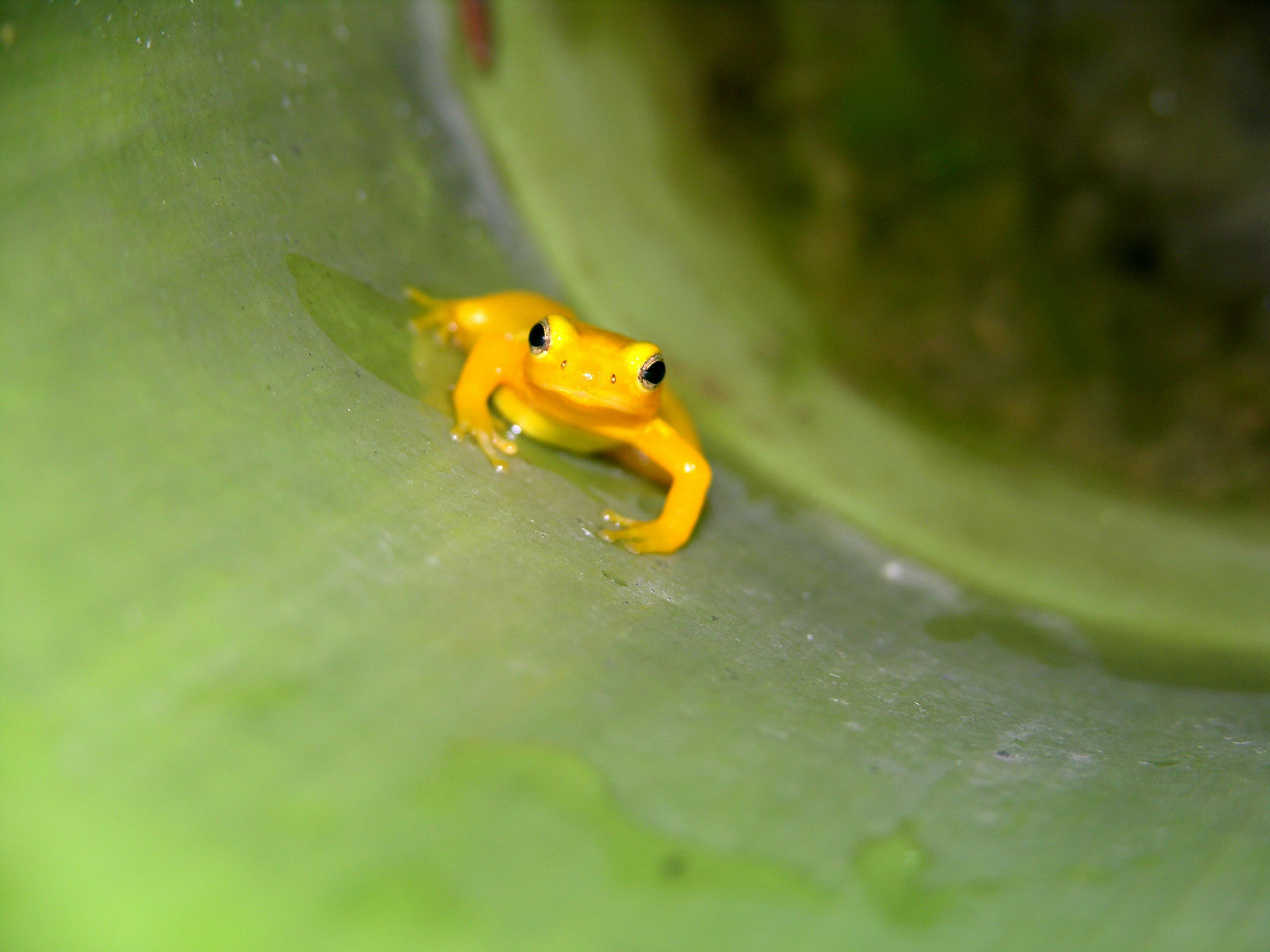
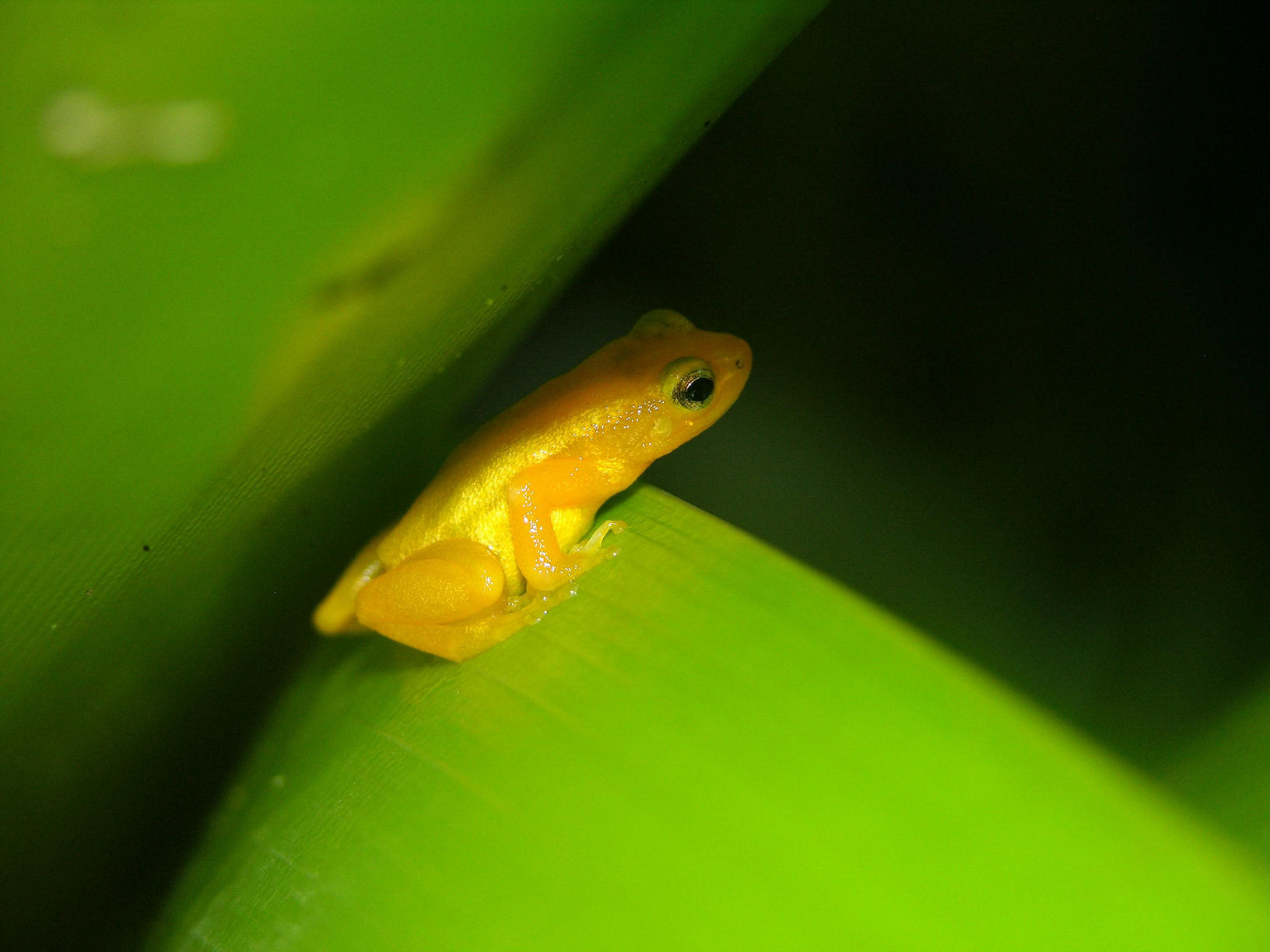
The frog was a godsend to the Indigenous people. An arrow touched to the frog's skin was said to be lethal to any animal. And to the man next door, too.
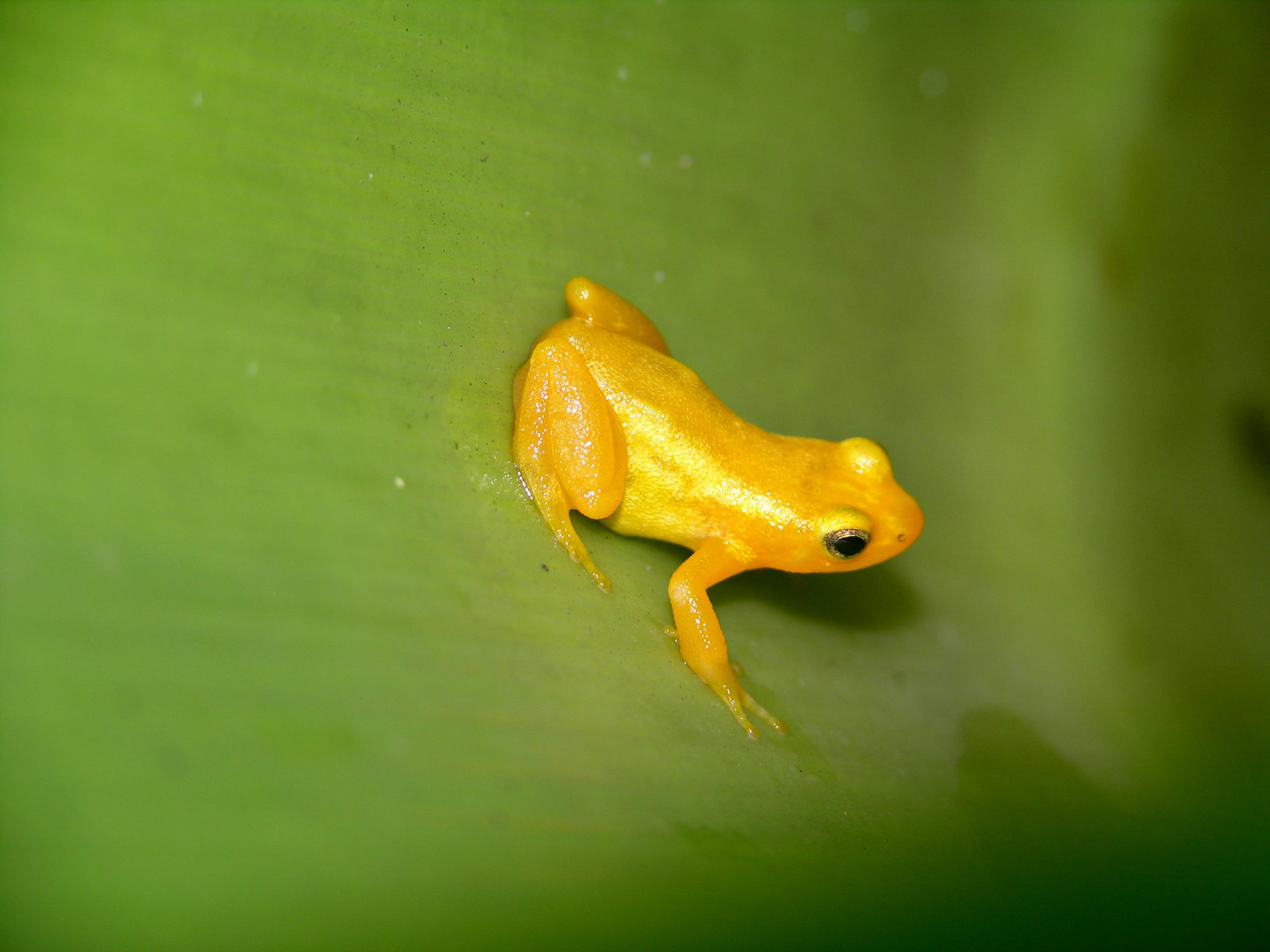
Shamans were said to use the toxin, well diluted, to bring the dead back to life or just to get high. One frog and a whole village in ecstasy. No need to collect cacti or mushrooms.
The golden frog lives among bromeliad leaves. Water collects between them, and that's where it swims and raises its tadpoles. The frog is small and that's plenty of room for it.
As I said, we took one other passenger. He turned out to be an elderly English geography teacher. He'd decided to spend his old age seeing the world he'd read so much about. He could barely walk on his own and couldn't climb into the plane. In Georgetown he'd managed the little boarding ladder with great difficulty and the help of the entire crew.
At the airstrip by the falls there was a ladder too. There had been, rather. We'd got the geography teacher out in time, but then I stood on it and it folded up like a set of shelves.
And they say everything in aviation is sturdy and dependable. Well, better the ladder than the plane.
Better, certainly, but we still had to get that teacher back. This way and that. We'd get his legs in and his head would stick out, or the other way round. It took ten minutes to get him on board.
I love the English. On every trip we meet genuine people the human race ought to be proud of. He could have lain at home cursing the hand life had dealt him. But that's what it means to have a goal and really want something. However hard it is, he travels.
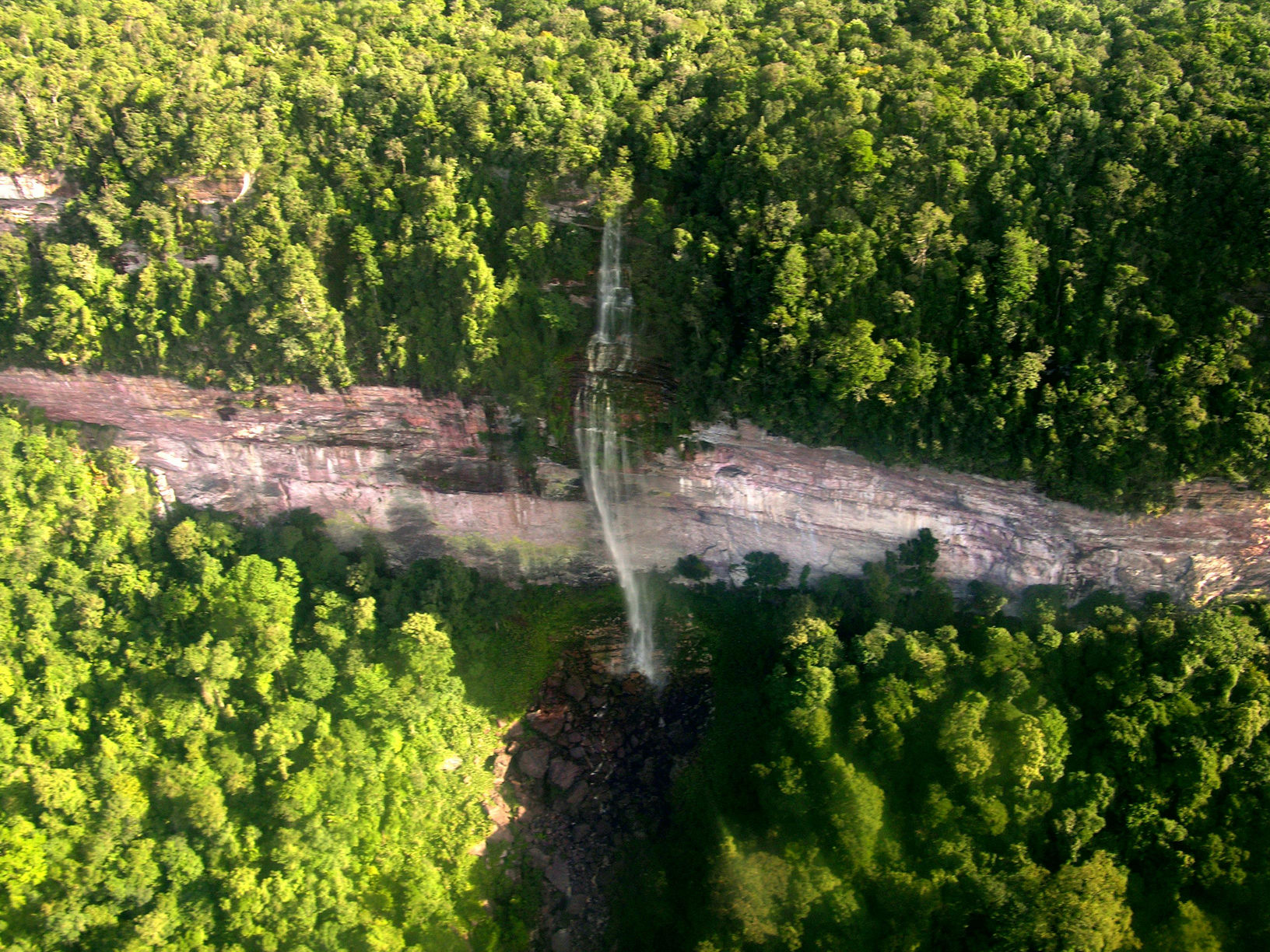
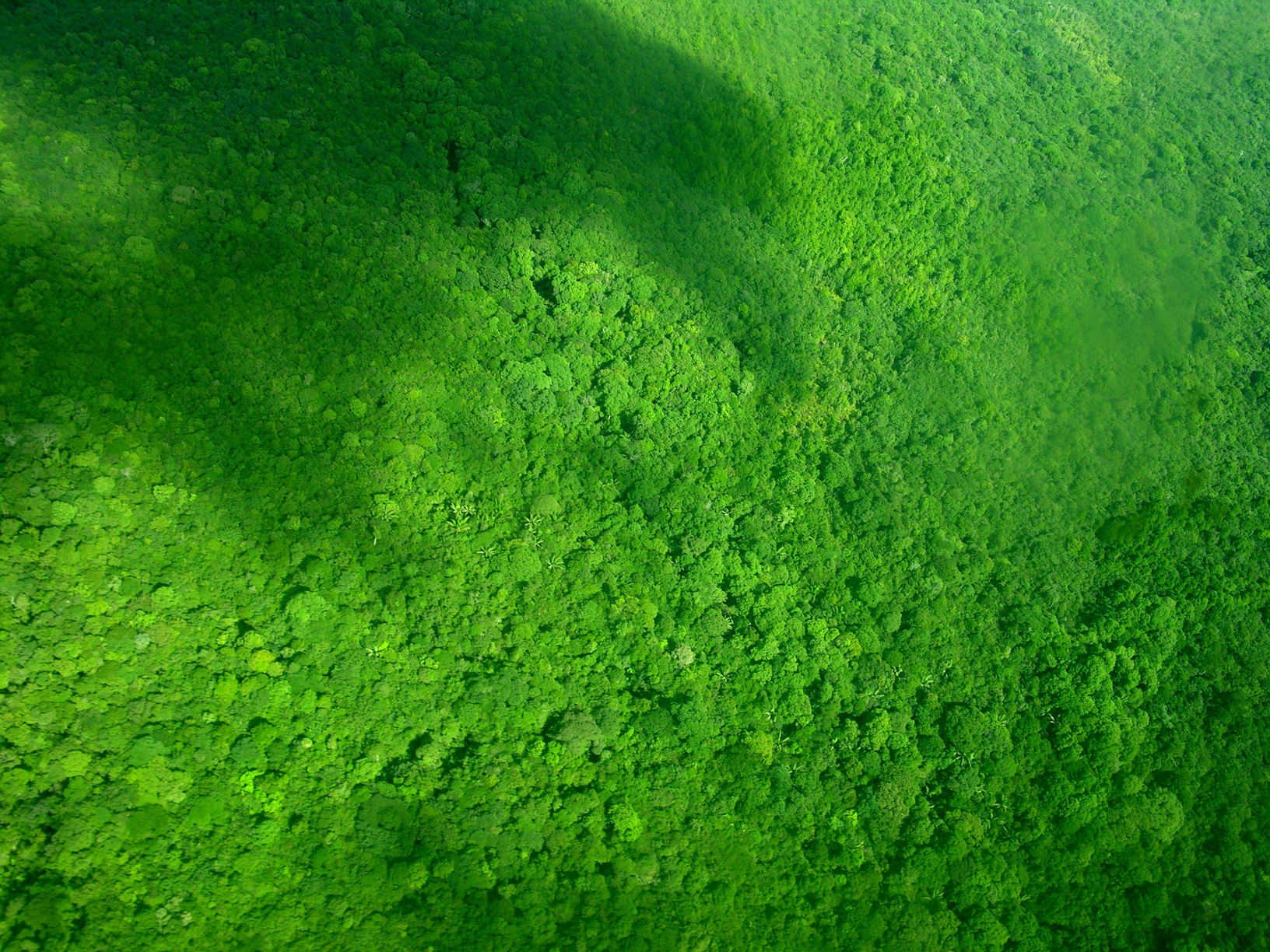
Coming back, the plane made a little circle over the waterfall and flew above the forest at less than a kilometre.
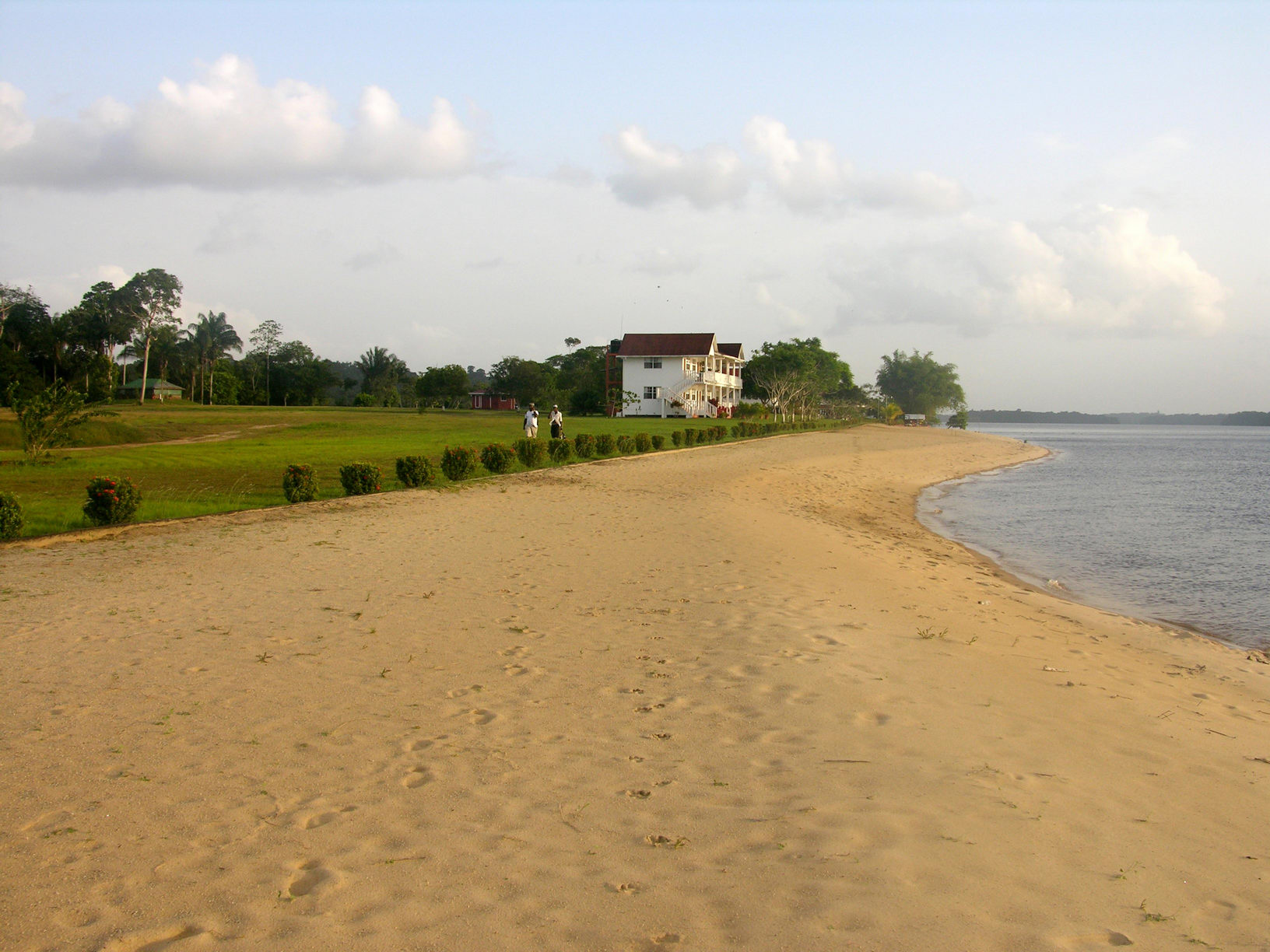
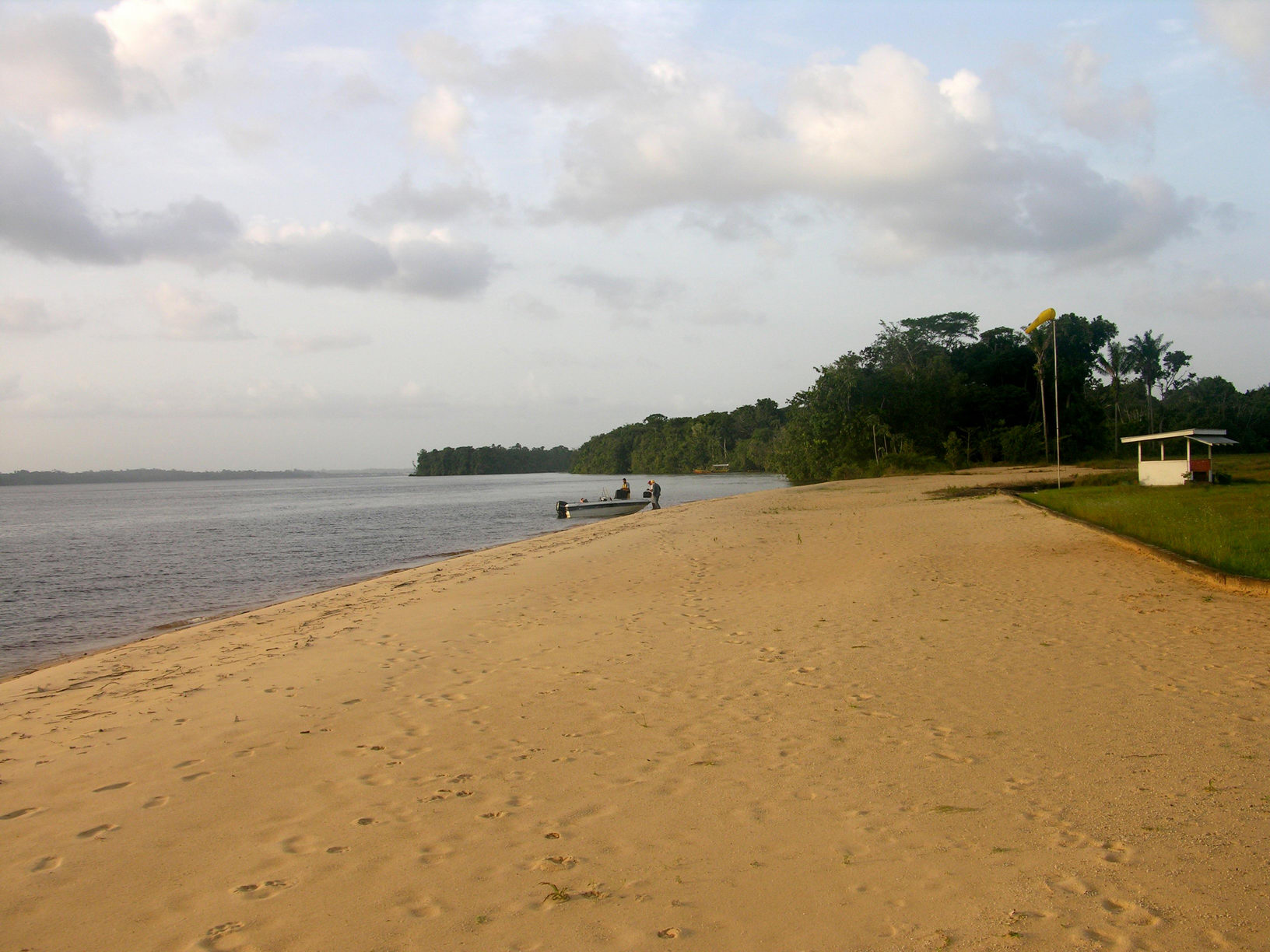
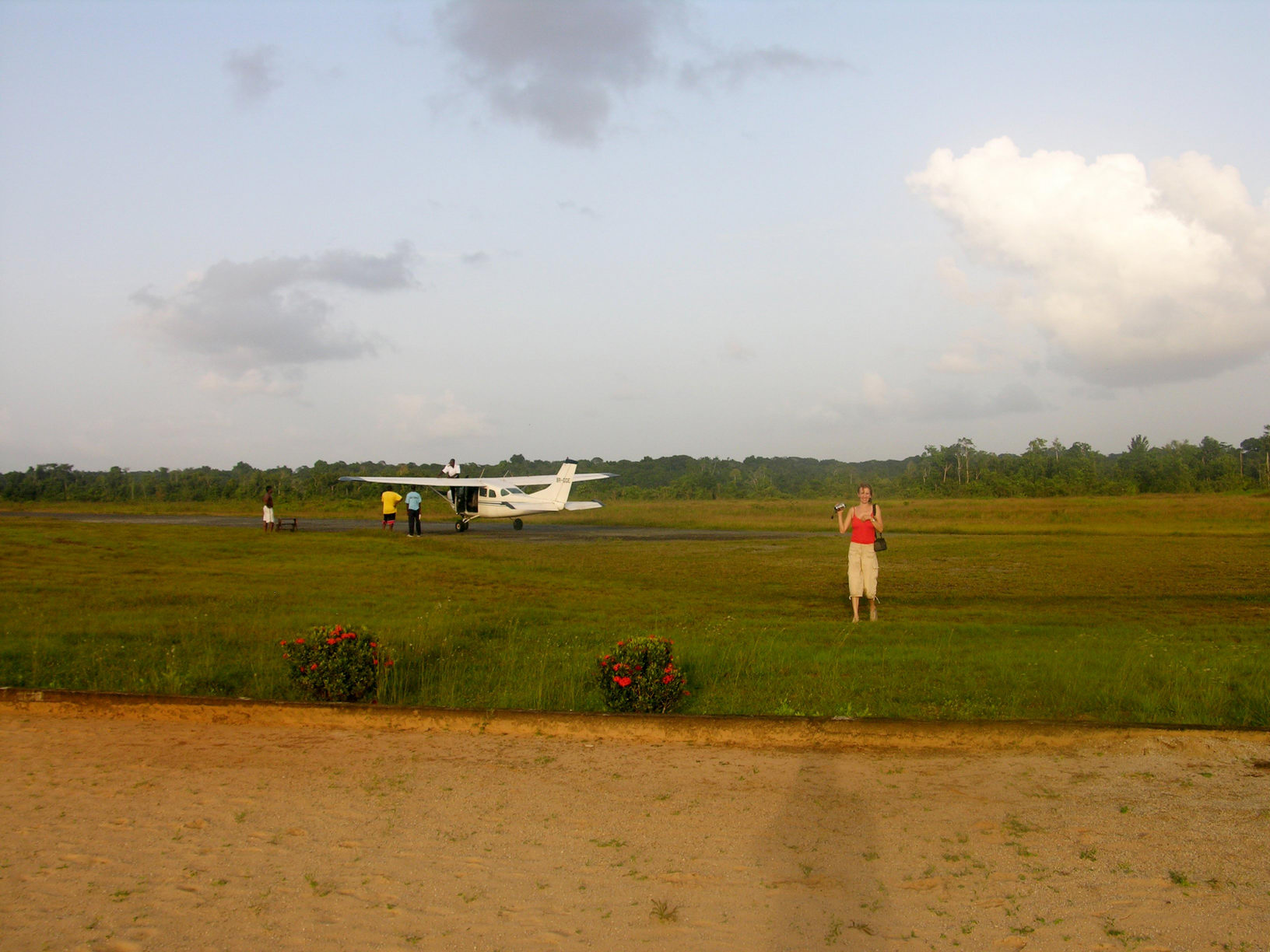
Our geography teacher was flying to the Baganara Island Resort on Baganara Island. The plane made a brief stop there. We even managed a little walk around the island. A place made for foreign tourists. Everything quiet and civilised, just like Europe.
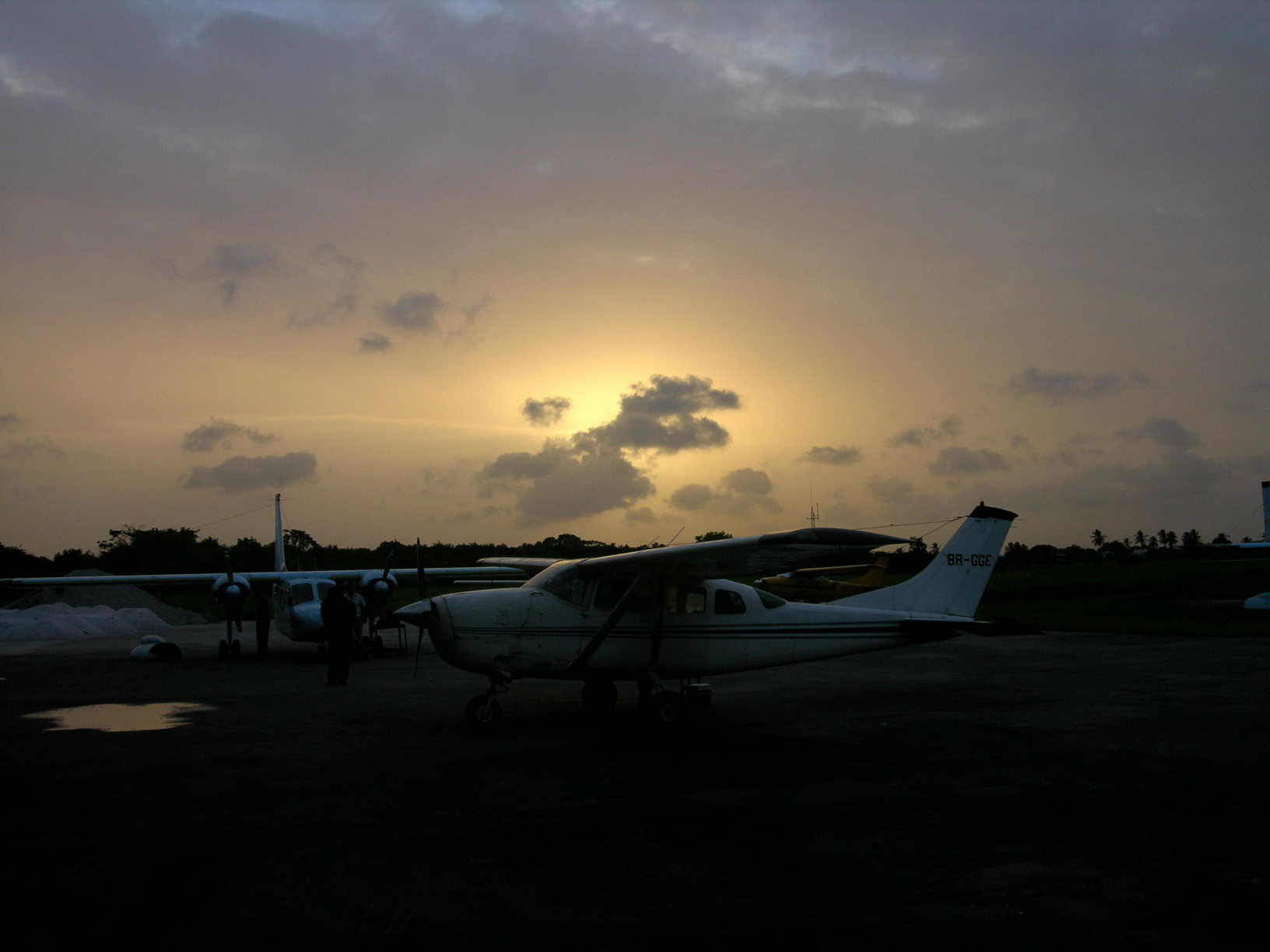
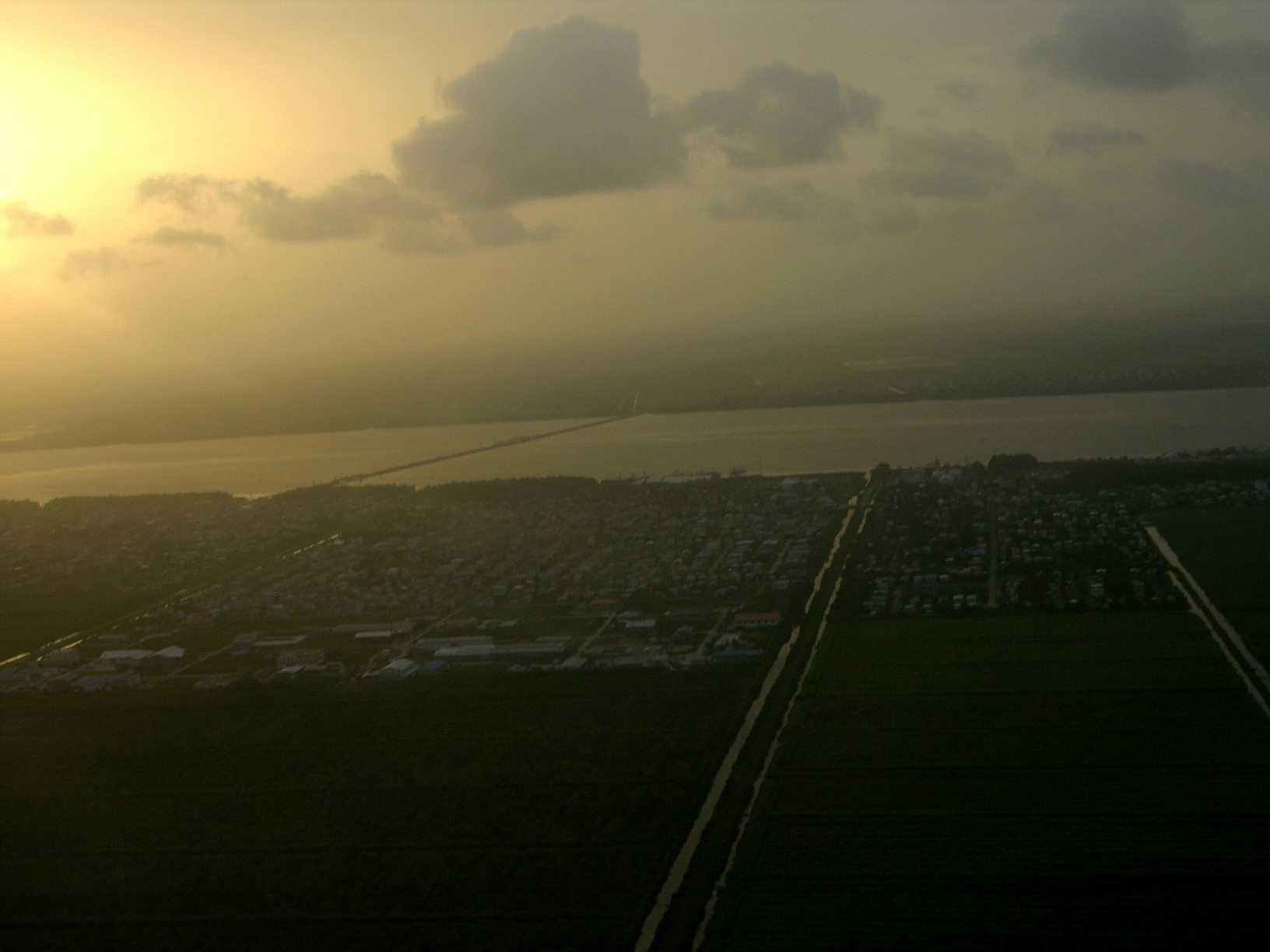
We flew into Georgetown at sunset. The sun was sinking into the haze left by a hot tropical day. It looked very beautiful from the plane.
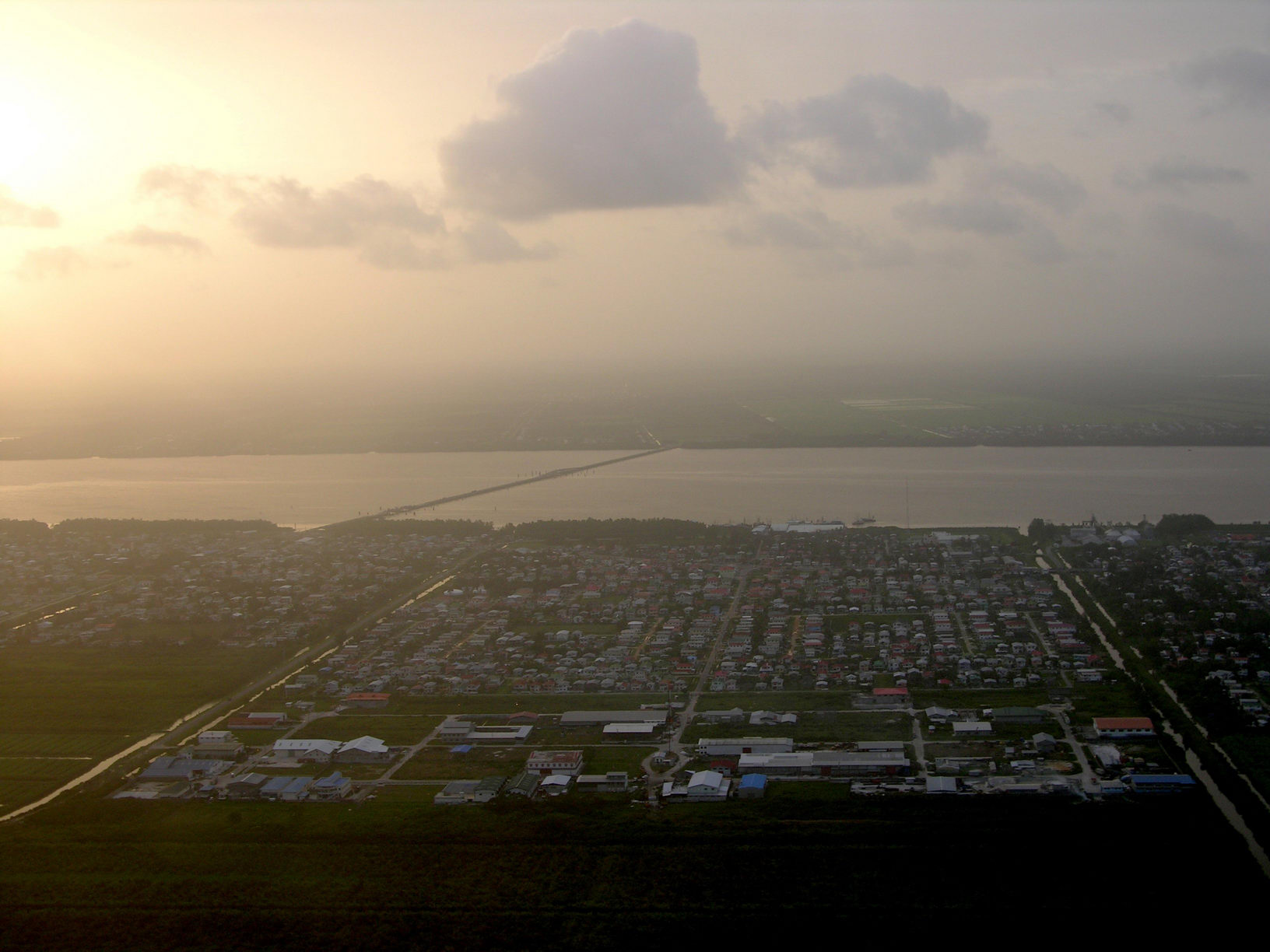
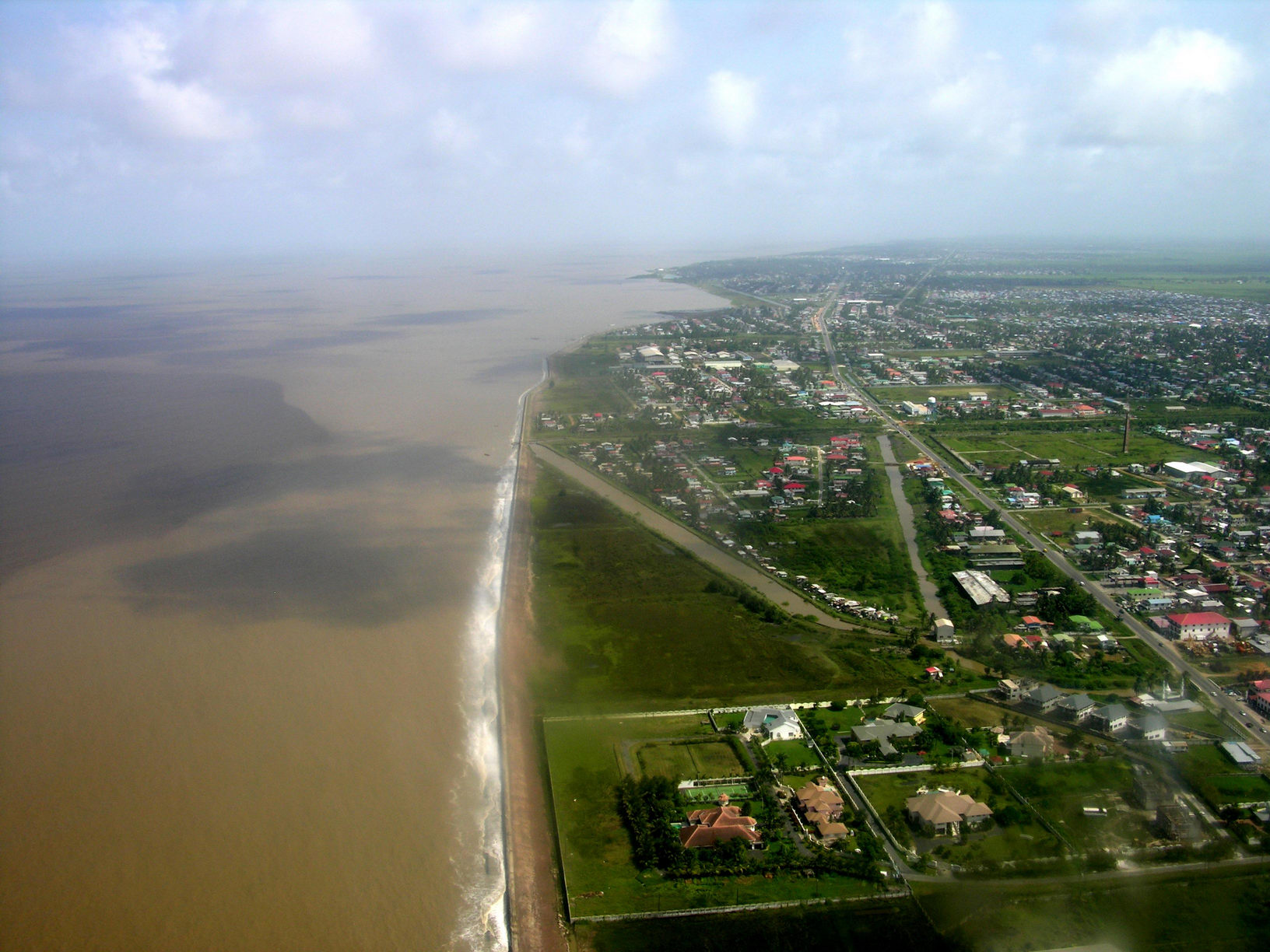
It was dark by the time we reached the hotel. Too late to stroll around town. Everybody had hidden in their burrows and cracks. The only place you saw anybody was by the sea wall. The Dutch built it to keep the high tides out, but today it was a place for rollerbladers who jumped onto it, graffiti artists and girls whose boyfriends were taking them for a walk hand in hand.
At the hotel we only had time to eat and wash. We had to be at the bus station at eight that evening. We had tickets to Iwokrama. The big Intraserve Bus Company bus with padded seats goes almost every day. I say “almost” because it's a long, rutted road and the bus often breaks down or gets bogged. It leaves from an utterly unremarkable junction on Robb Street, a fair way from the centre.
As well as this bus for white people, all sorts of shared minibuses go from the bus station. It's no more dangerous to travel in them, but you're unlikely to get much sleep.
As soon as we stepped out of the taxi a local con man sidled up, looked at our rucksacks, shook his head and demanded two thousand extra for each bag. If we didn't pay he'd have us know the fare desk would charge us even more when we got aboard. He'd sort it out cheaply and quickly. I should say it was the only incident like that on our whole trip through Guyana.
We told him where to go, of course. As we found out later, the free luggage allowance was a hundred pounds a person. Getting on the bus isn't straightforward.
First you check in as you would for a flight. They weigh the bags and stick destination-coded tags on them. Then they dump the luggage in one huge pile. When you board, you dig yours out yourself, carry it to the bus and, with the driver's help, shove it into the luggage hold. Take it from me, put it up high and well clear of the road. The puddles are deep, and sometimes the bottom layer of suitcases goes underwater.
You have to turn up an hour before departure to check in. You can spend the rest of the time on dinner or a beer, remembering that there's no toilet on the bus.
Most of the passengers were relatively prosperous locals. Besides us there were six foreigners.
We left at half-past nine in the evening.
At eleven, after a run on good tarmac, we reached Linden, the big aluminium-producing town.
Russian Aluminium had come here too, by the way, a few years earlier. Rightly so. Deripaska has a wealth of experience working in a country full of gangsters and corruption. Make good use of your competitive advantages.
Look how the world has turned. It used to be that if the locals wanted to rob you or kill you, you could wave your passport and shout that you came from Russia, friend of all dictators and cannibals, oh, I mean ordinary men of the highway, sorry, workers and peasants, or rather Muslims and Voodoo followers at the same time, naturally… Try shouting that now and they'll roast you on an especially slow fire as the top bloodsucking imperialist who's bought up half the national wealth.
A few people got off at Linden and were dropped off at home. It's not safe to walk after dark here either.
At Linden the road crossed the Demerara River on a bridge.
After that the road south was unsealed but quite decent. The villages disappeared, and the darkness around us was complete. Our mobile signal disappeared too.
The road was quite passable, contrary to expectations. Only at about three in the morning, when we reached the hills in the upper Demerara, did it become narrow and muddy with deep puddles.
At about four in the morning everyone was let out to walk about and get something to eat in a little roadside village. The place came alive when the bus turned up. Generators rattled into life, and a few candlelit windows turned into a lighted village.
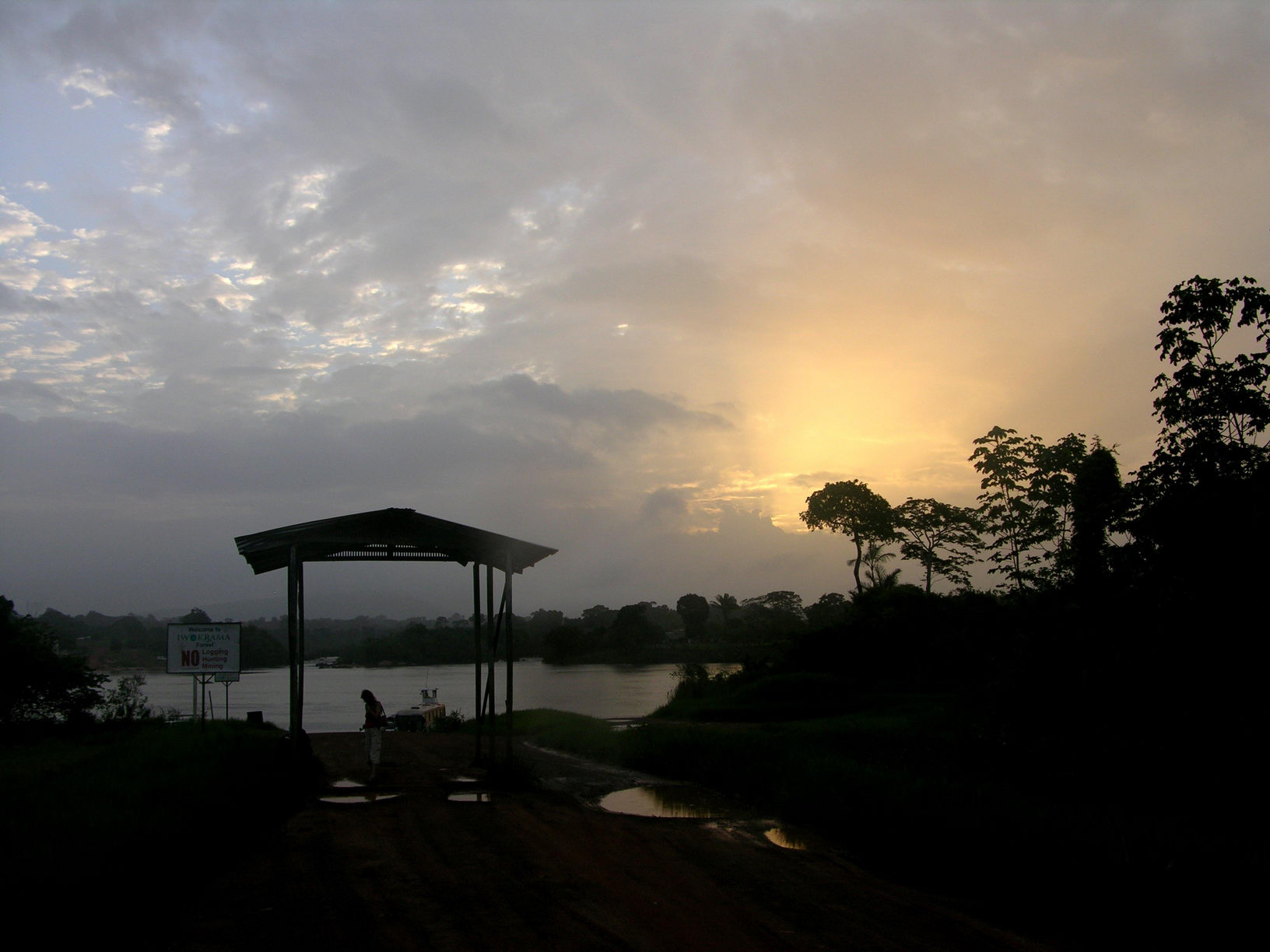
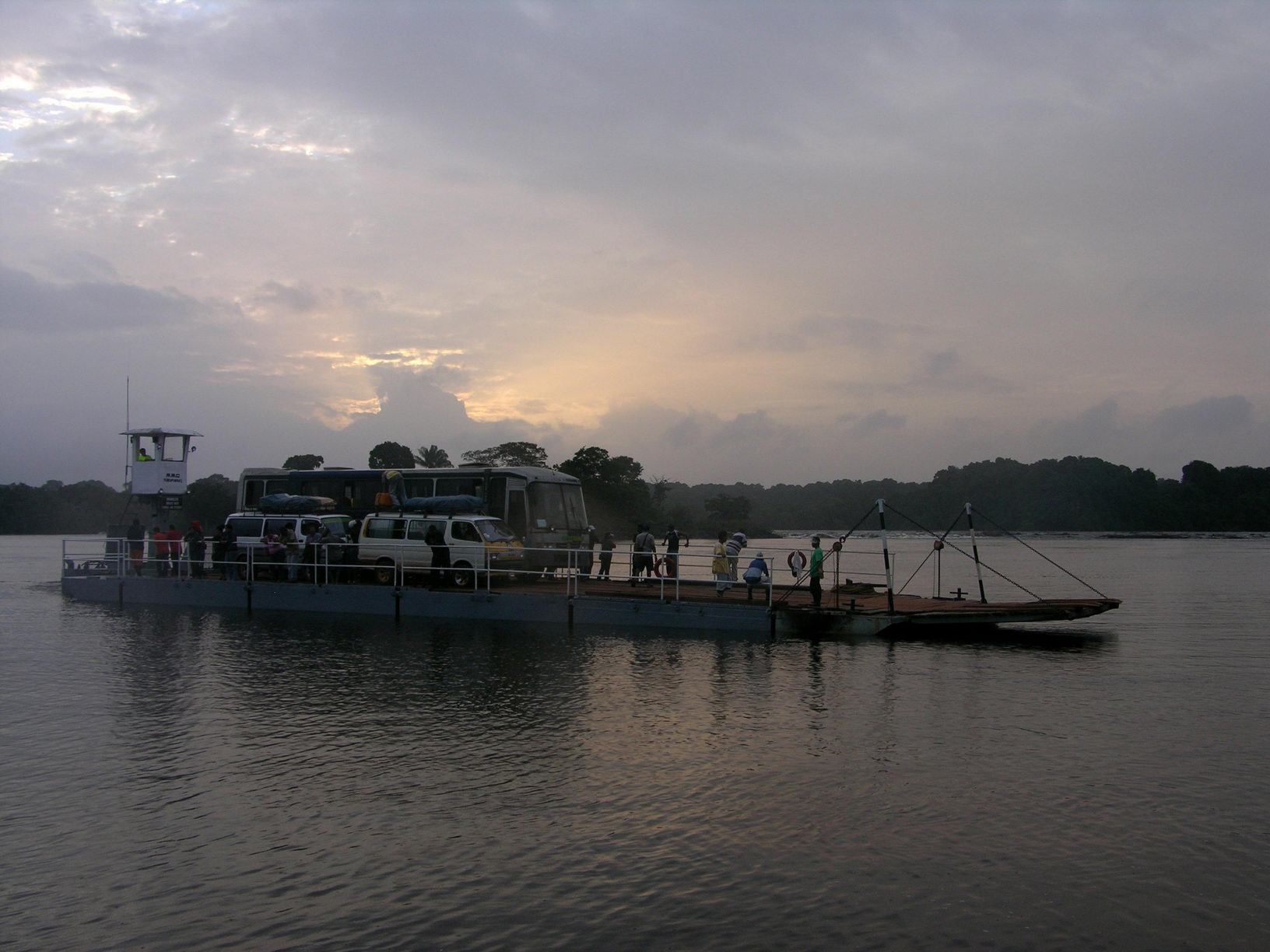
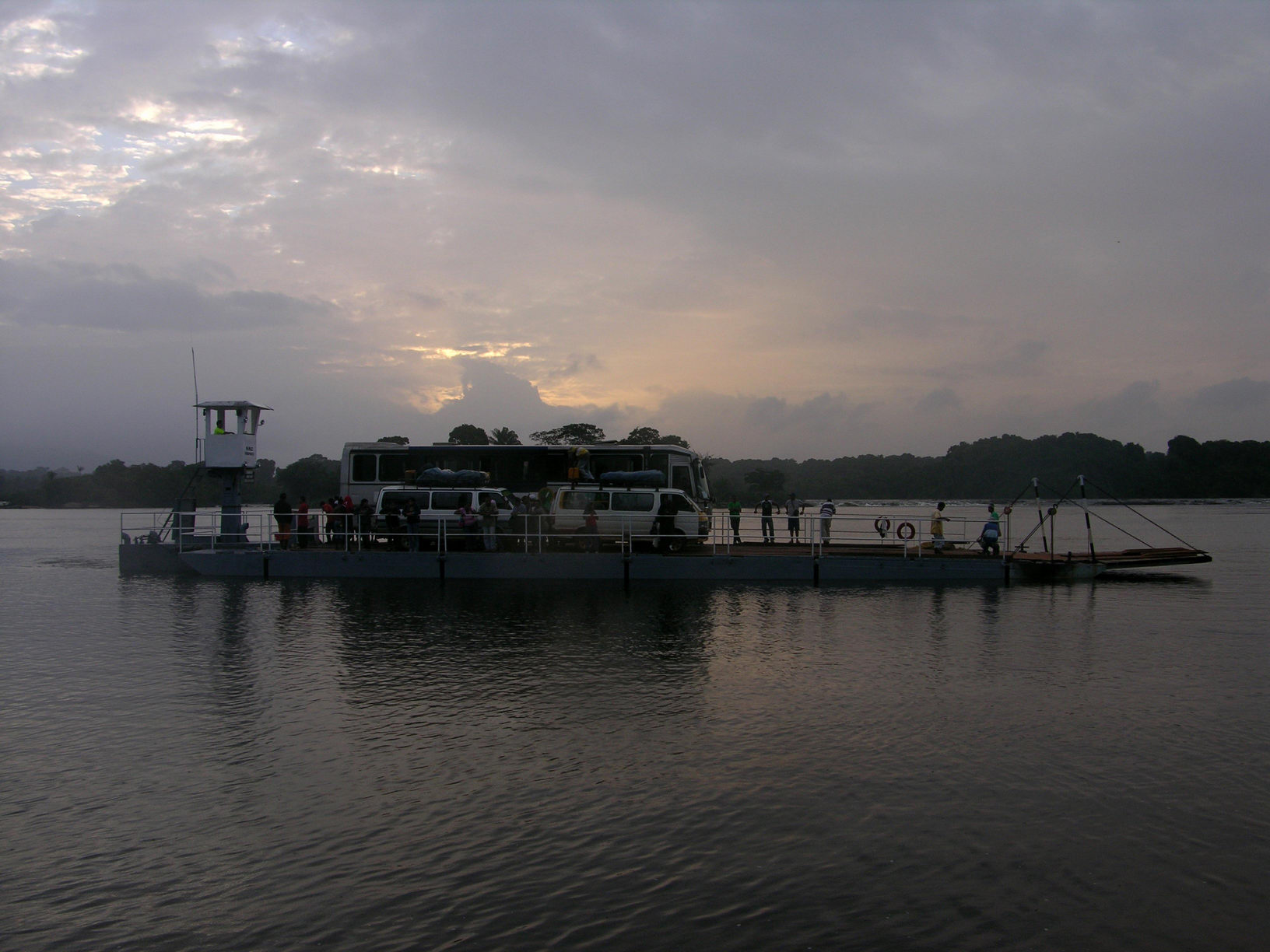
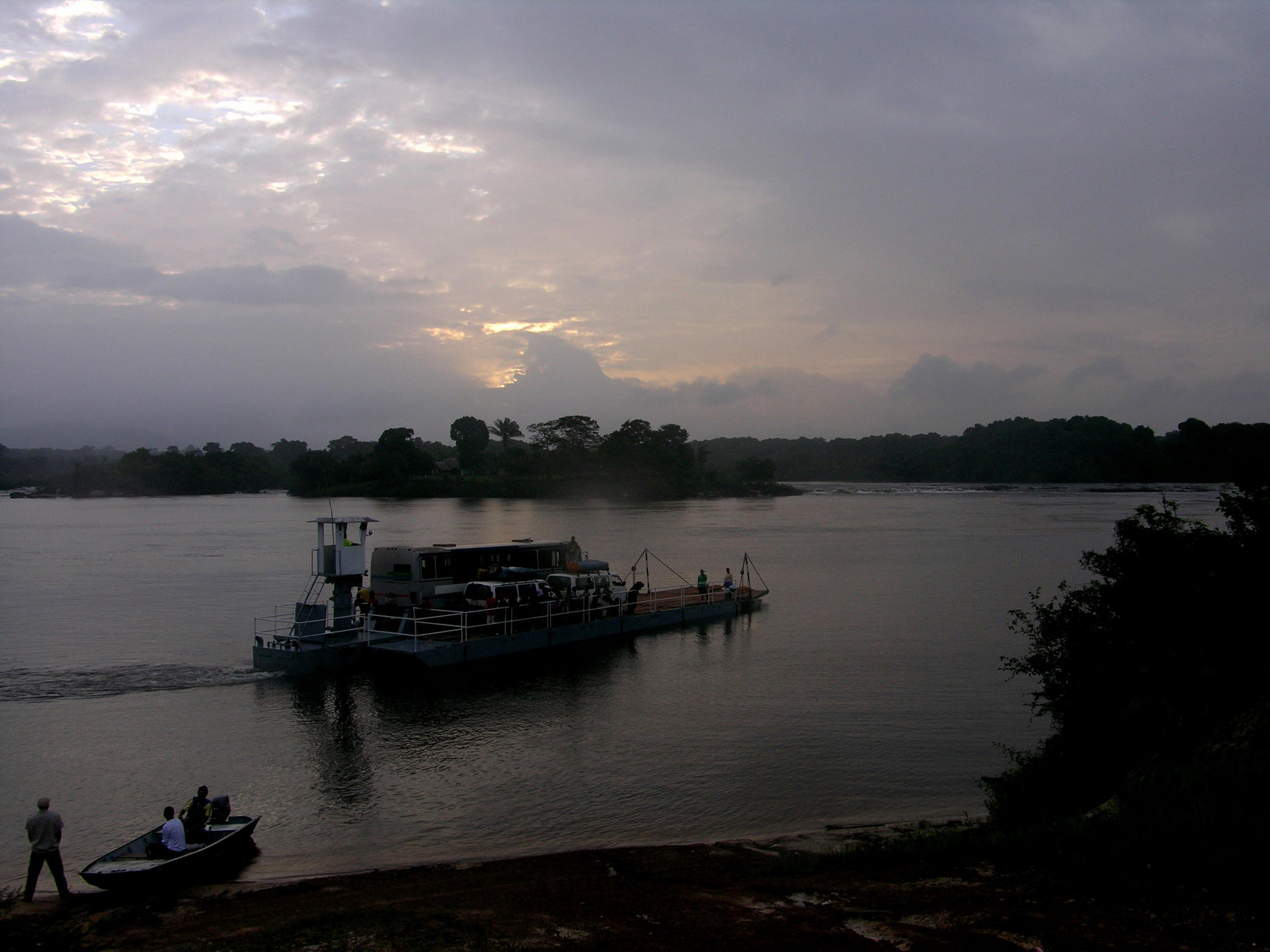
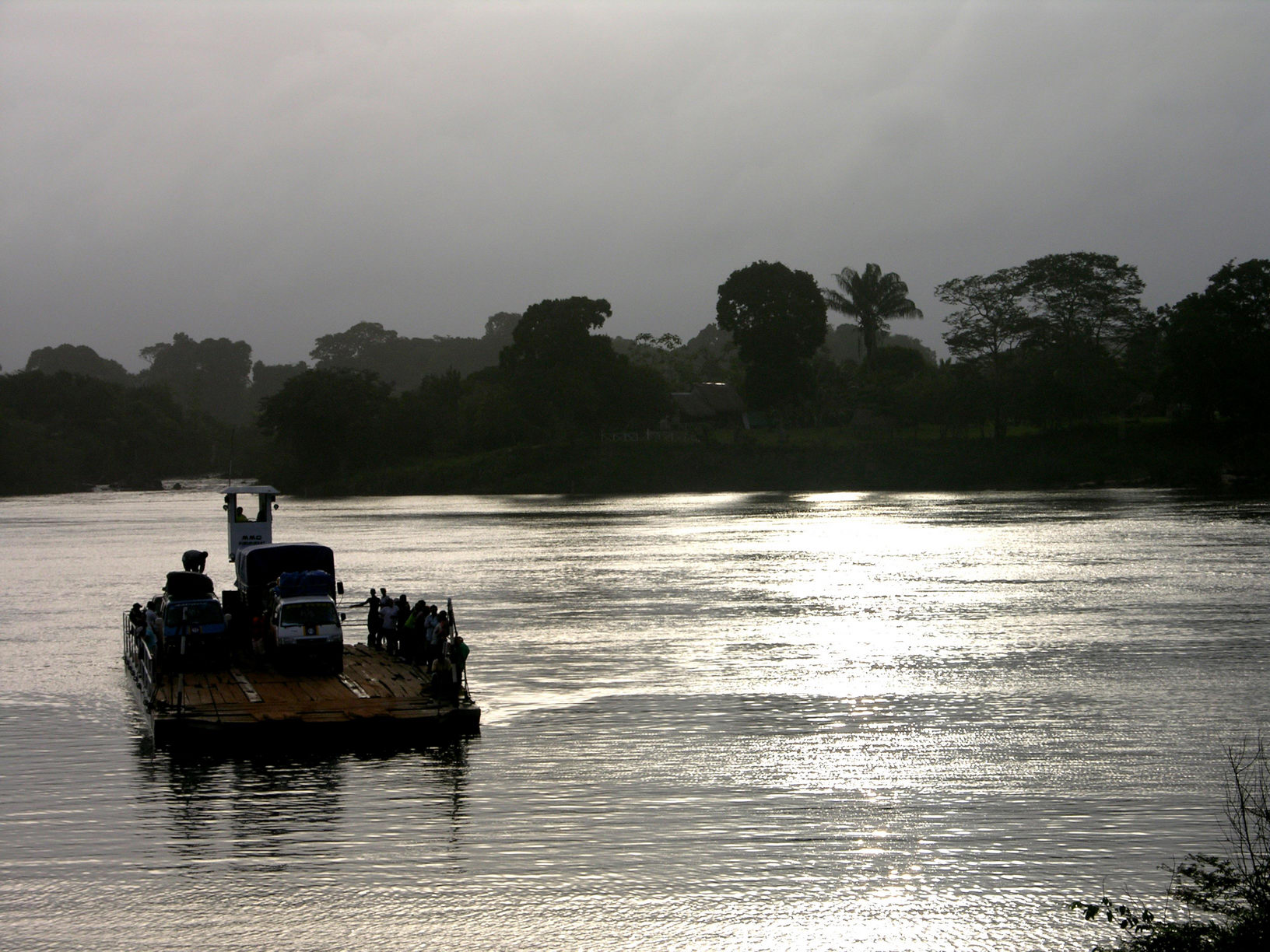
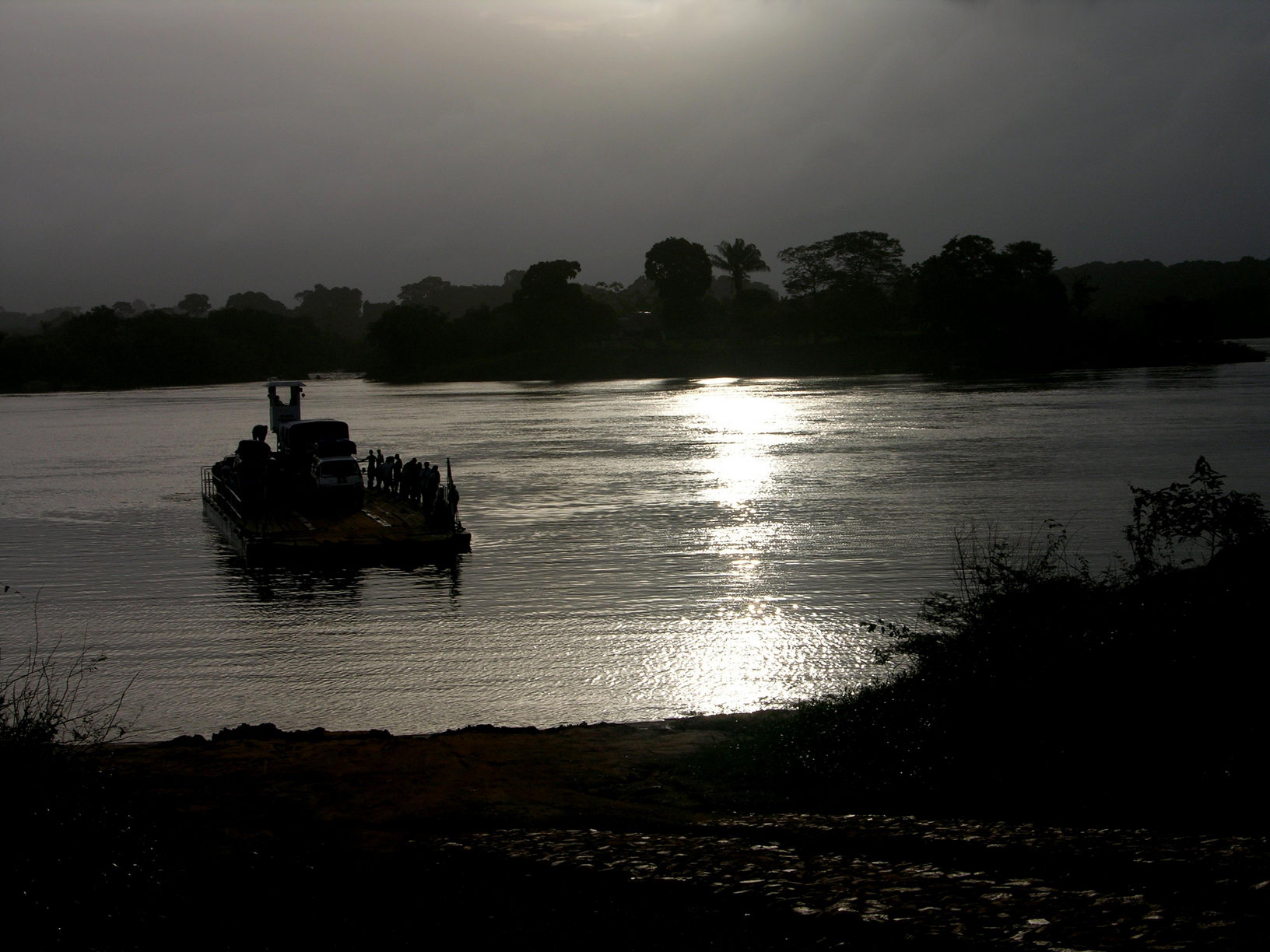
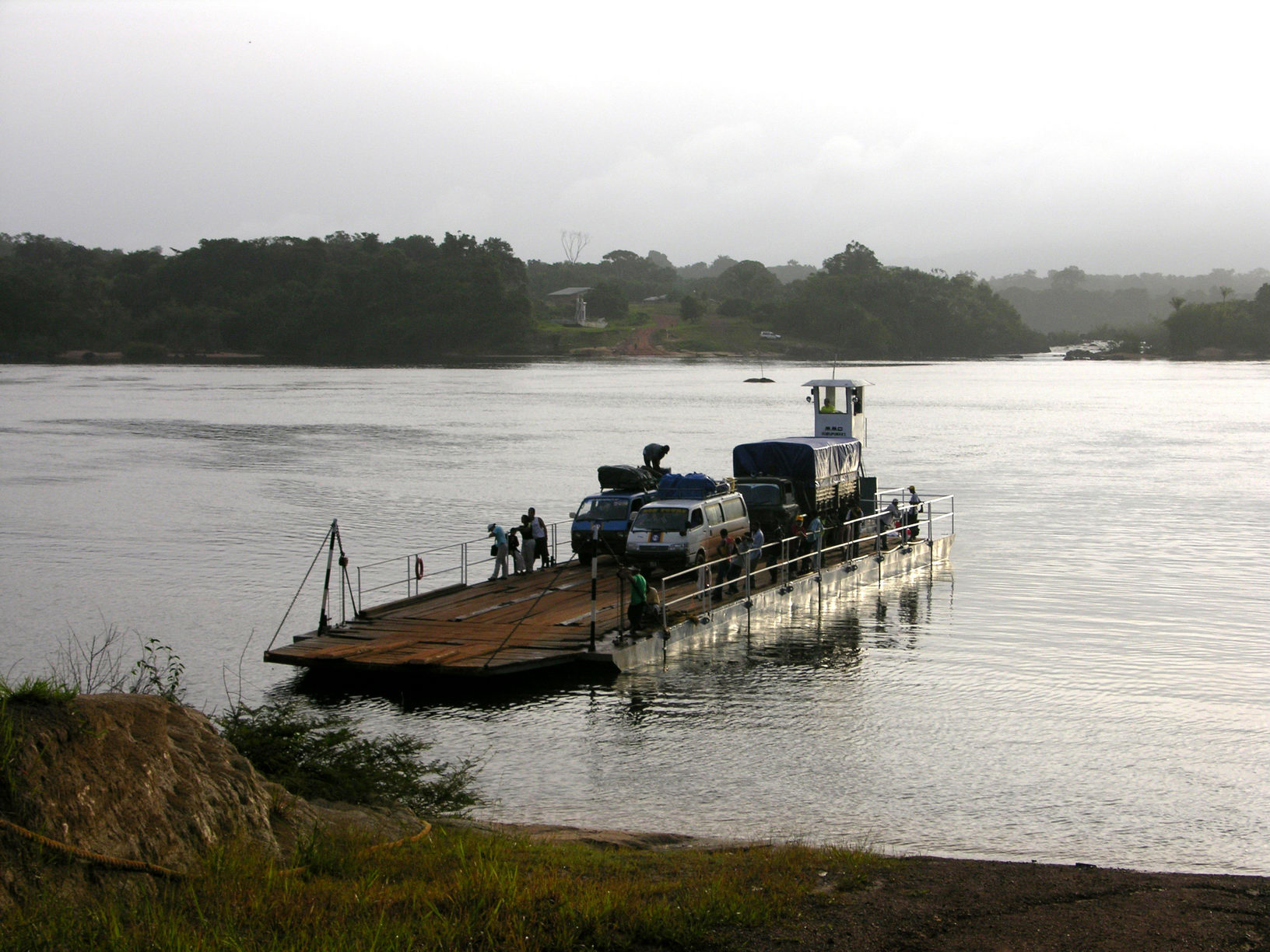
Soon it began to get light. In the misty blue of the morning the bus reached the ferry across the Essequibo (Essequibo) River. The road is being rebuilt and they might soon put in a bridge, but for the moment you have to get across on a little old ferry. It starts at six in the morning and finishes at about seven in the evening.
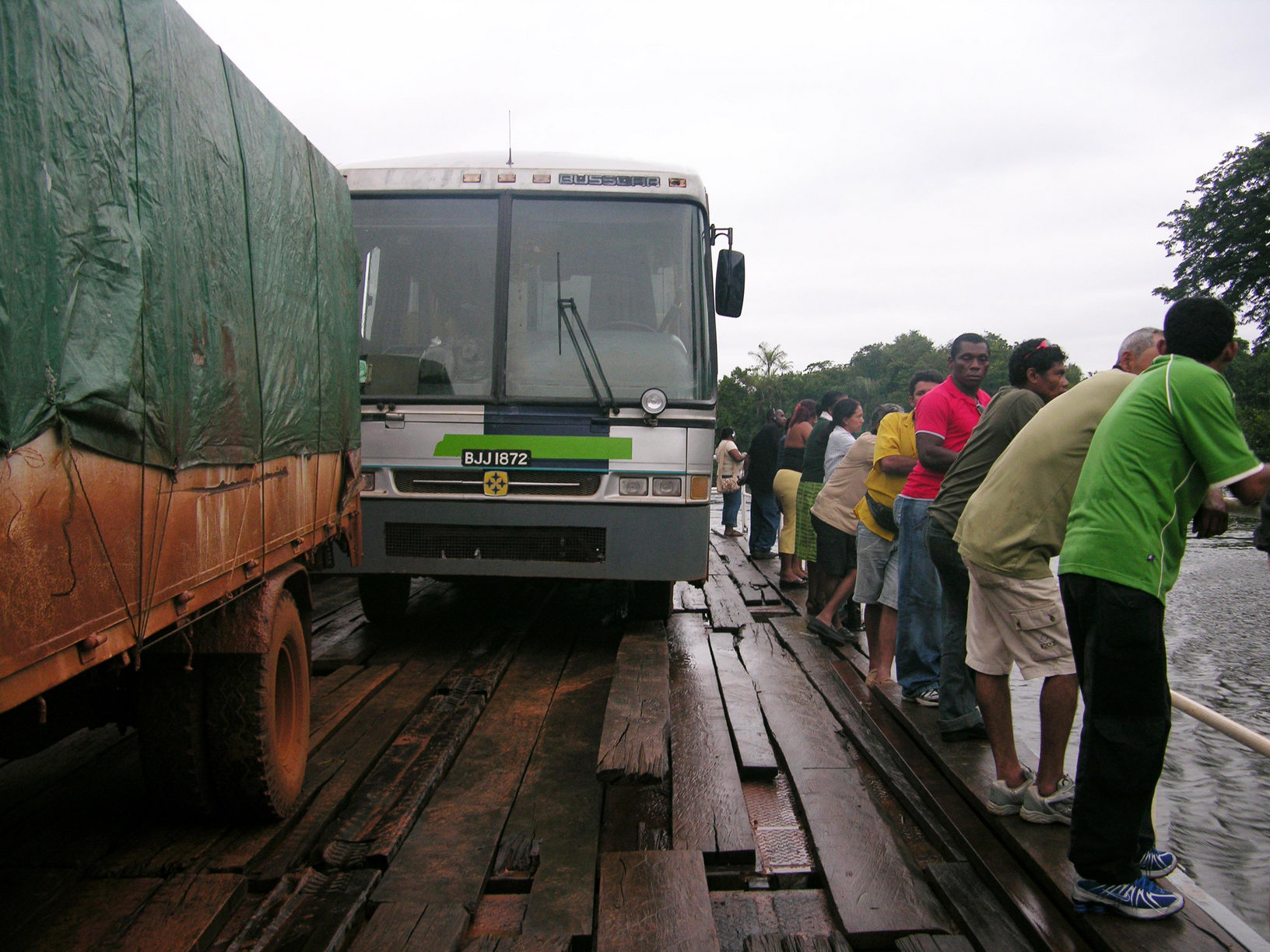
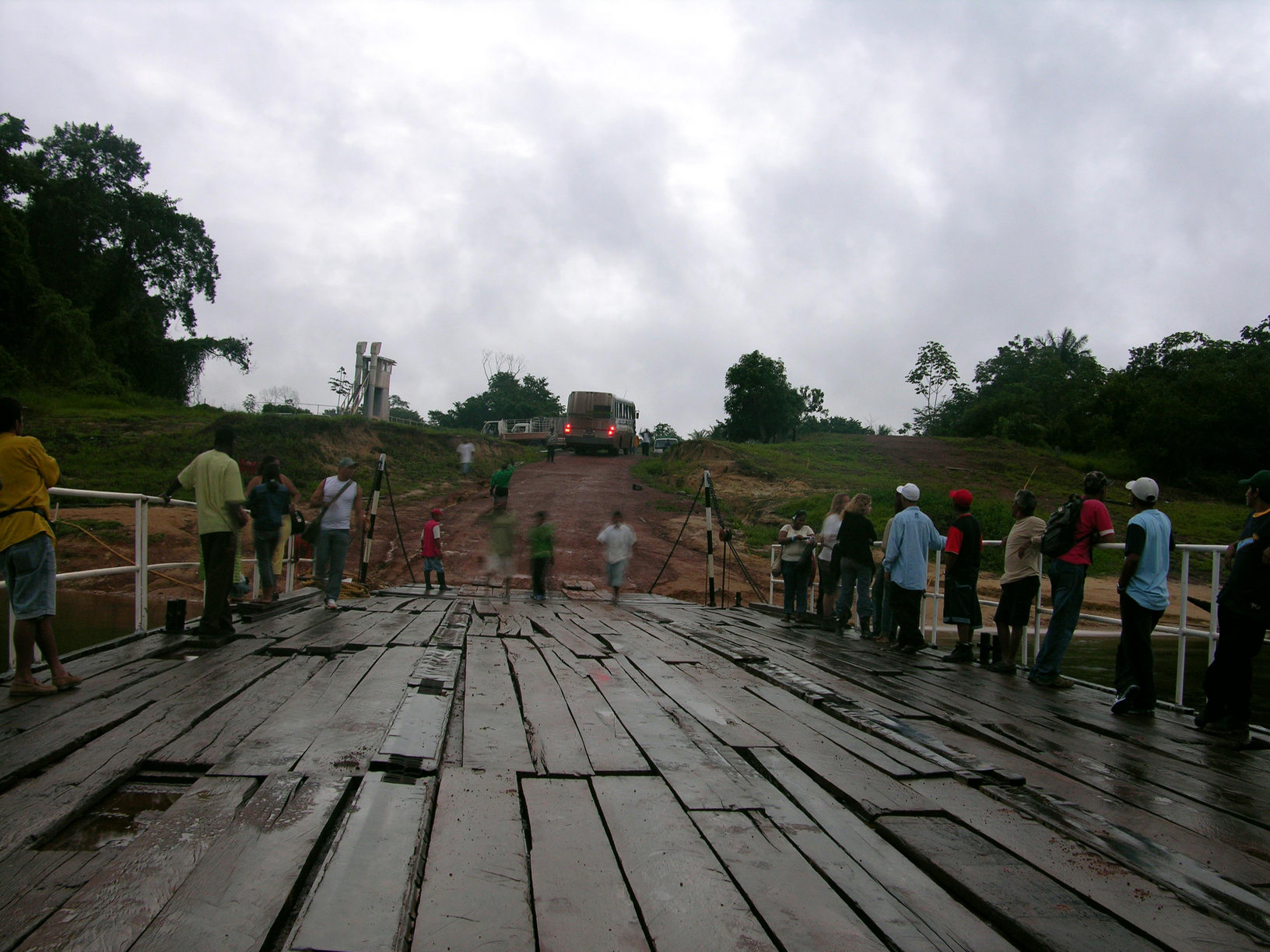
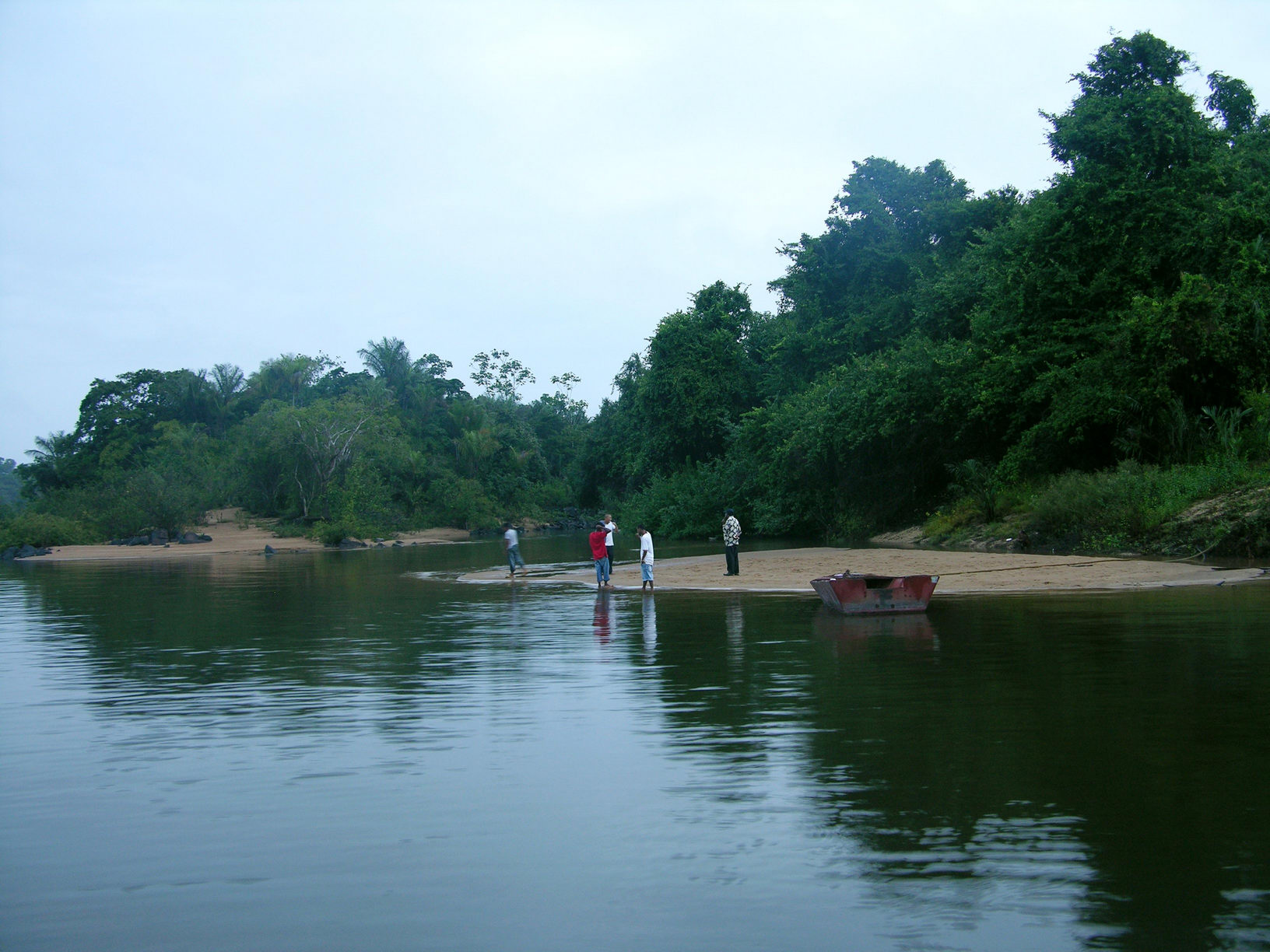
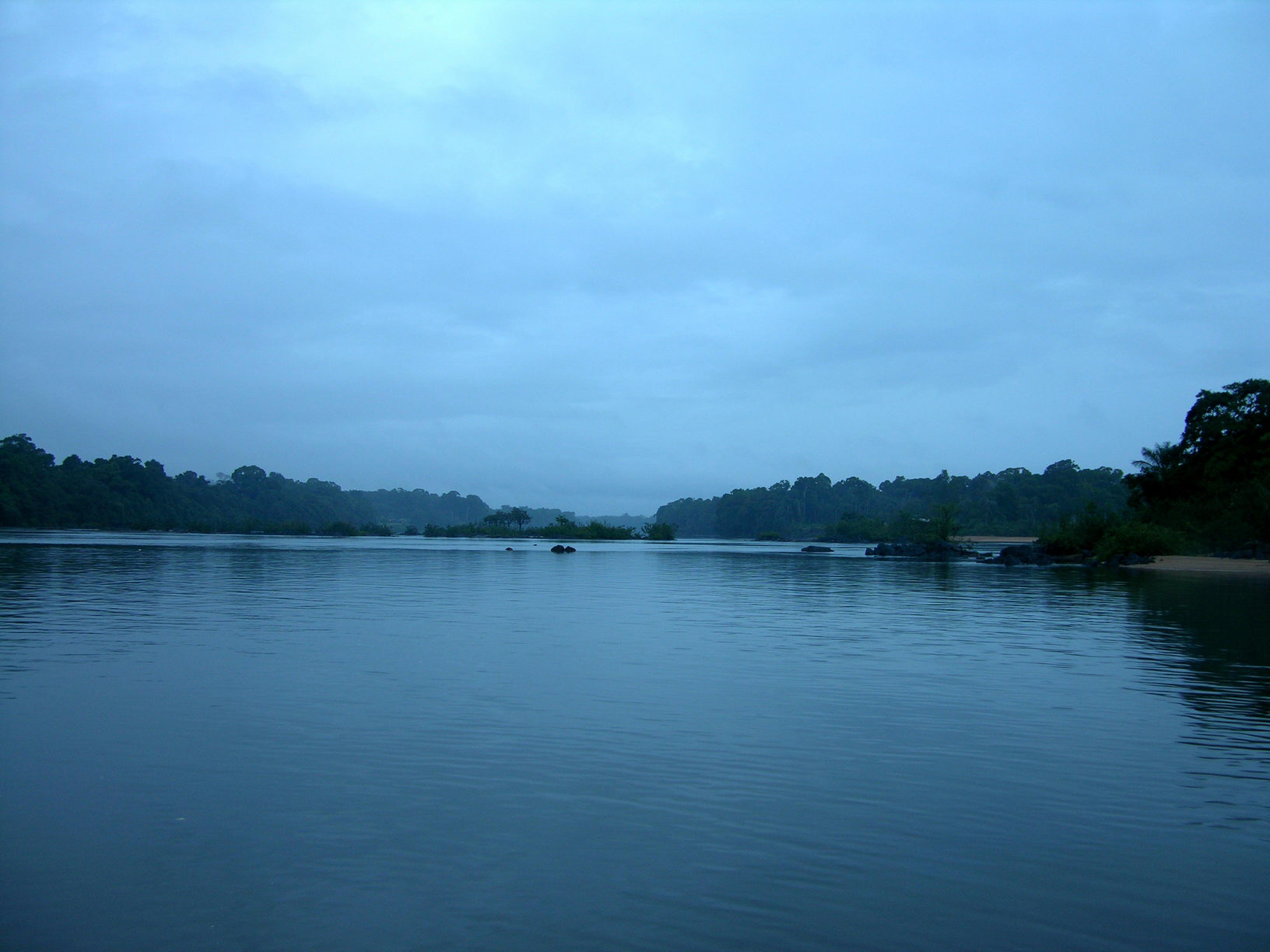
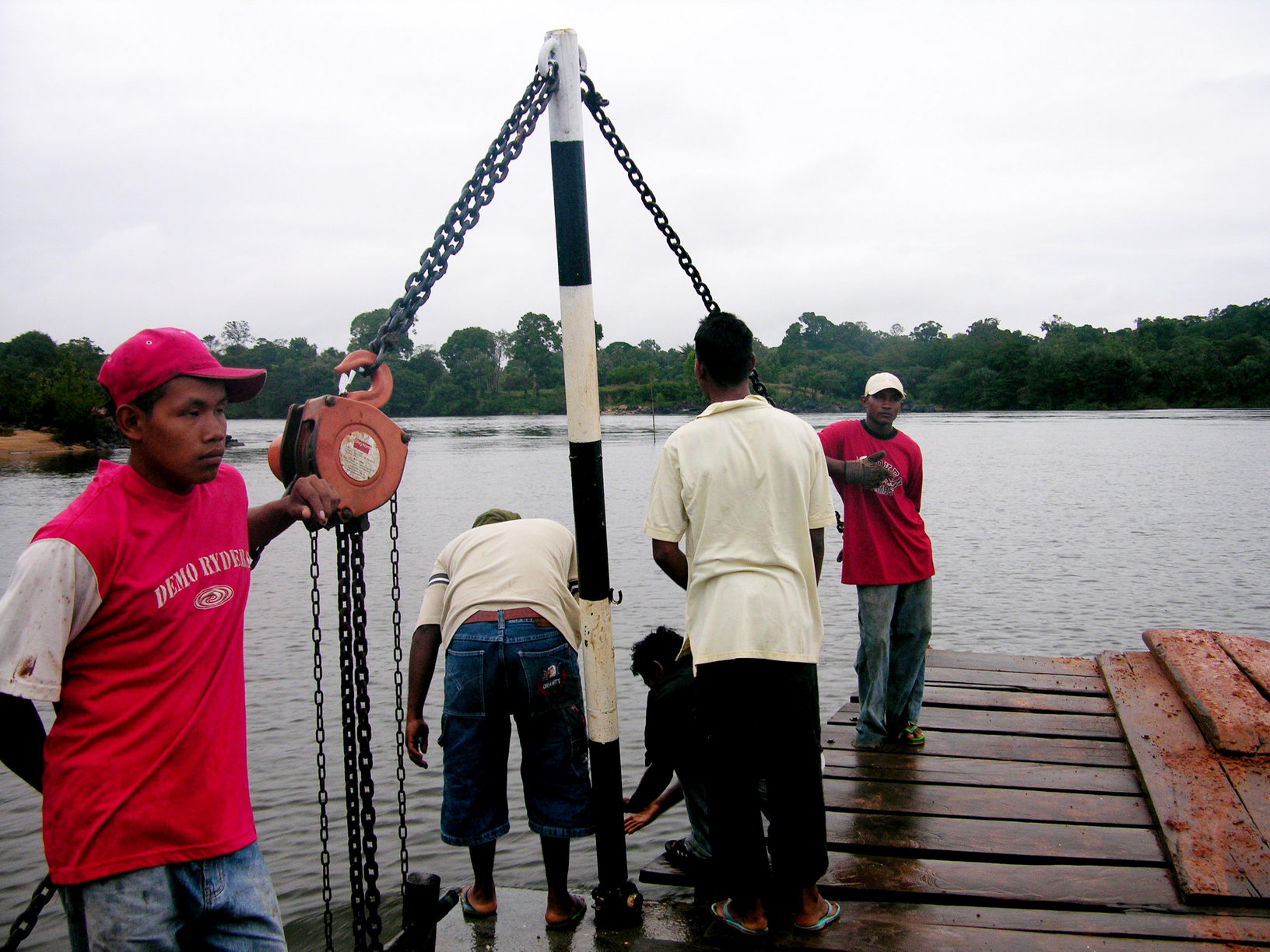
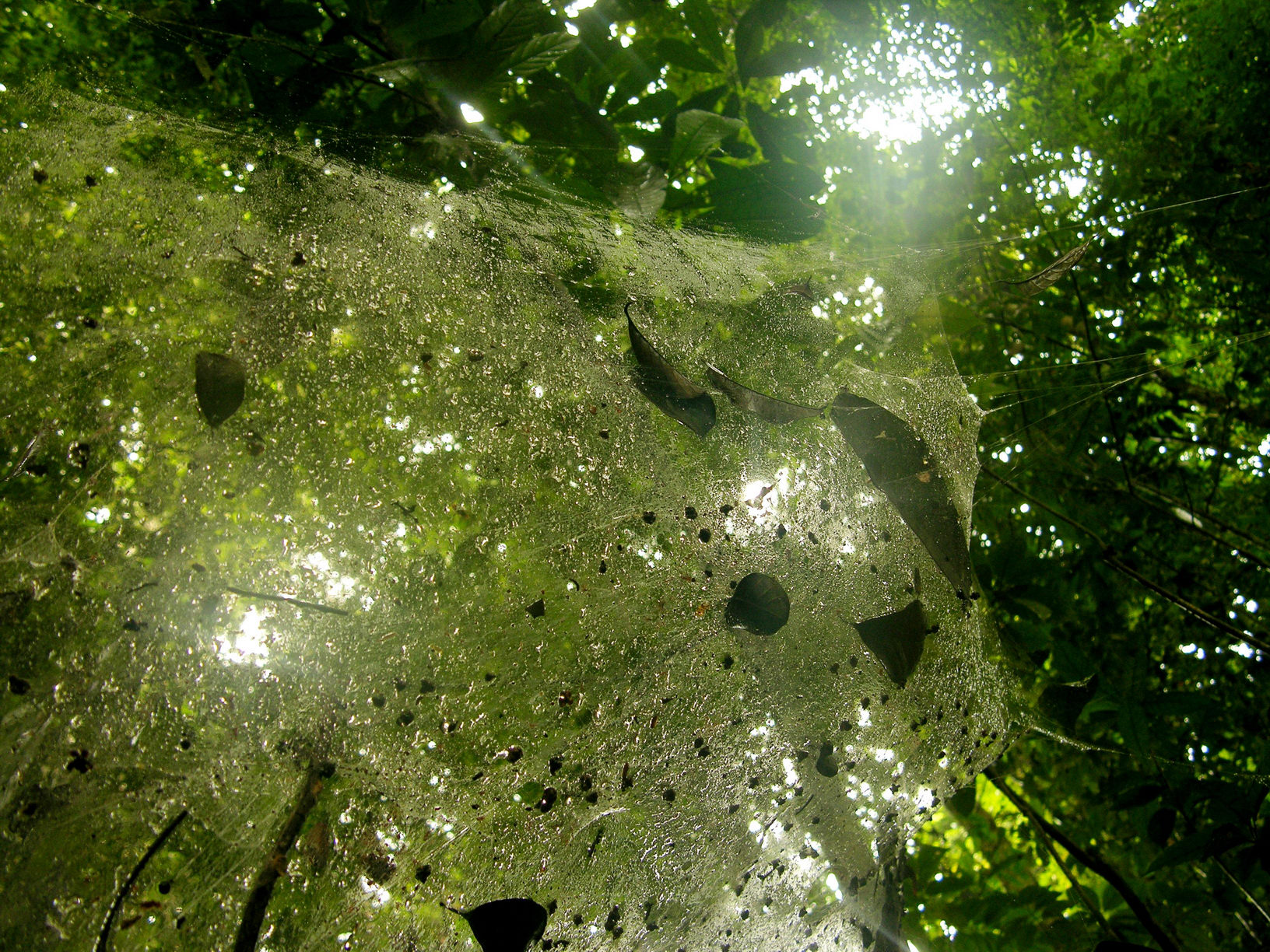
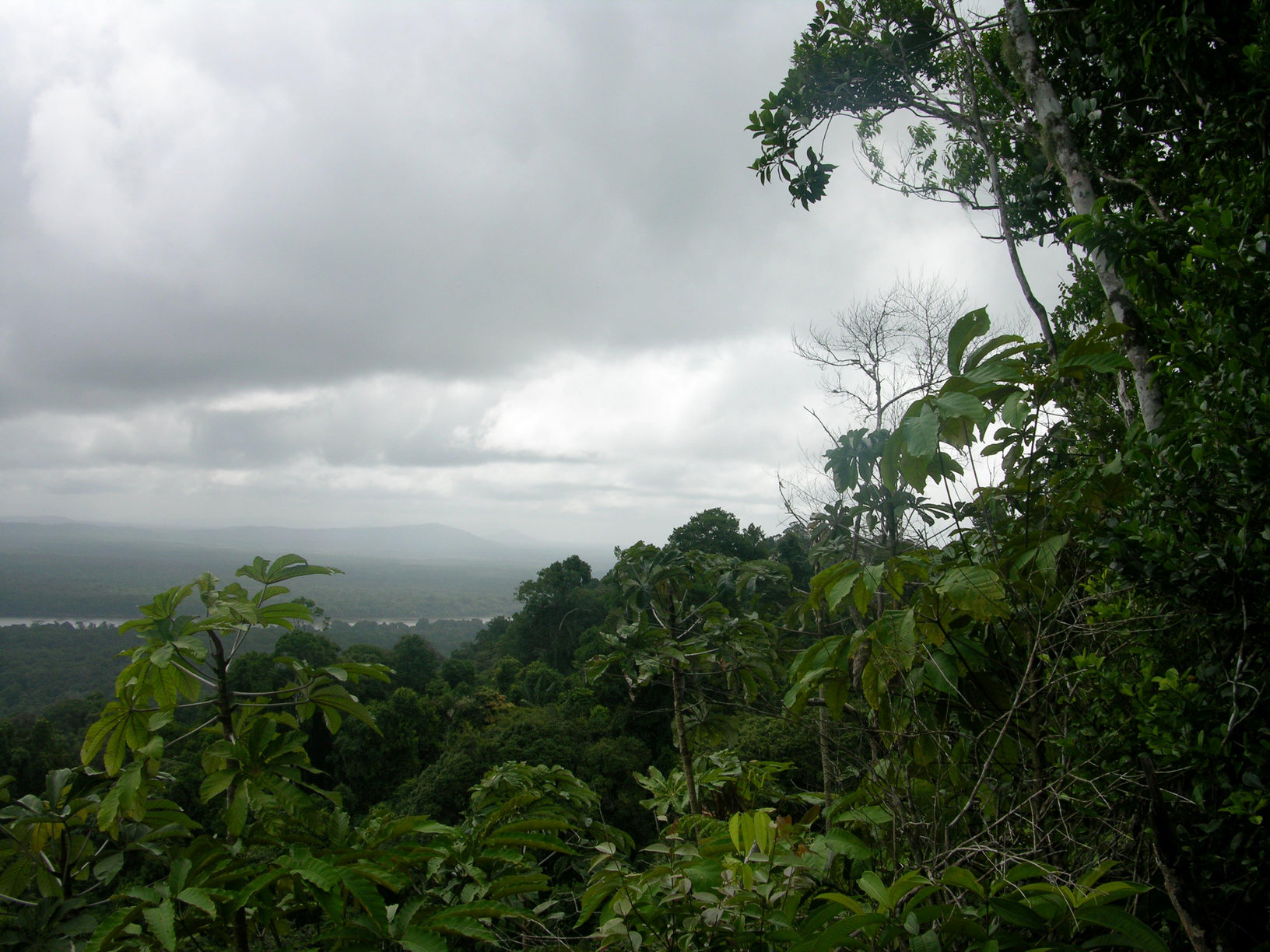
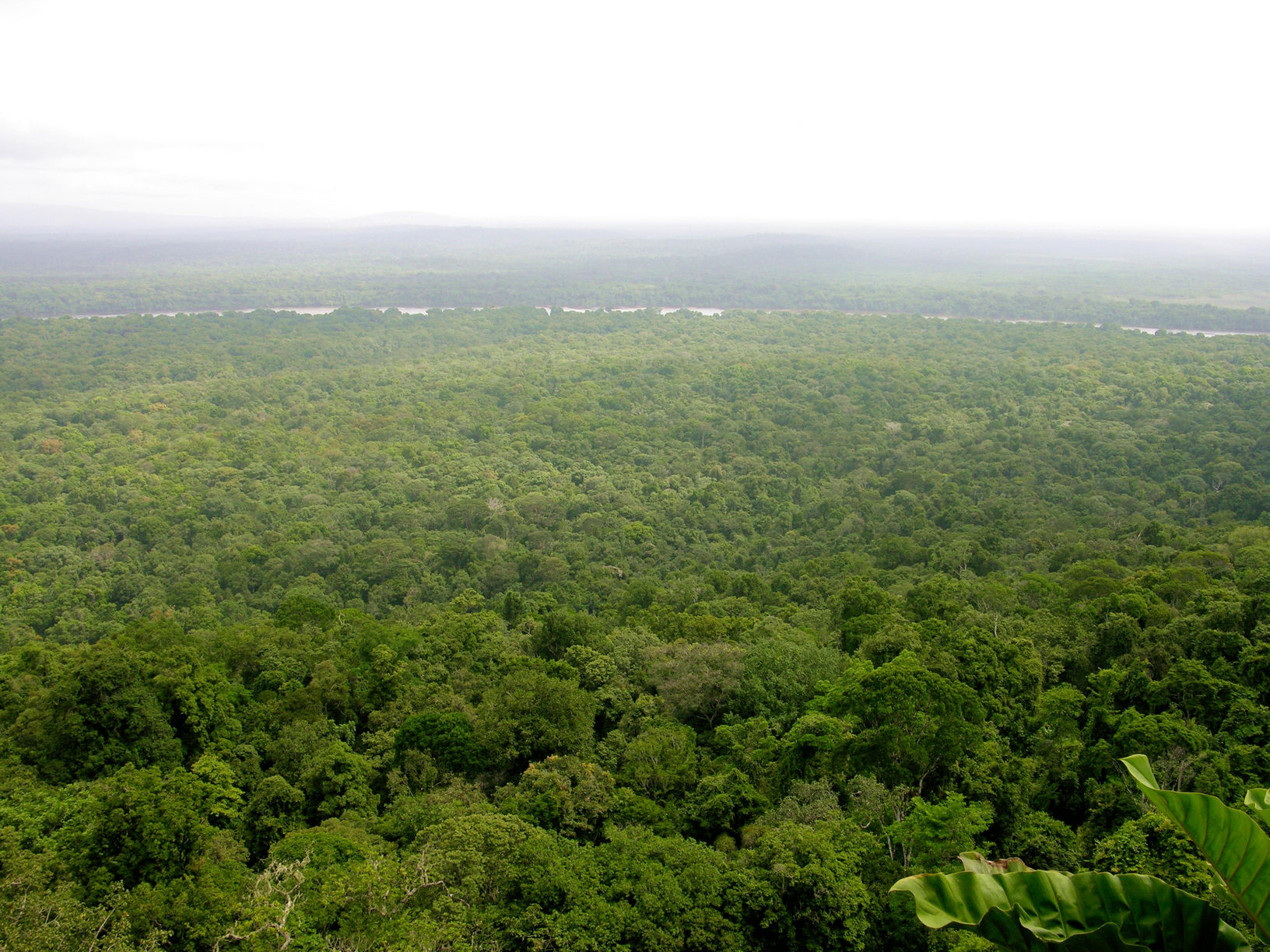
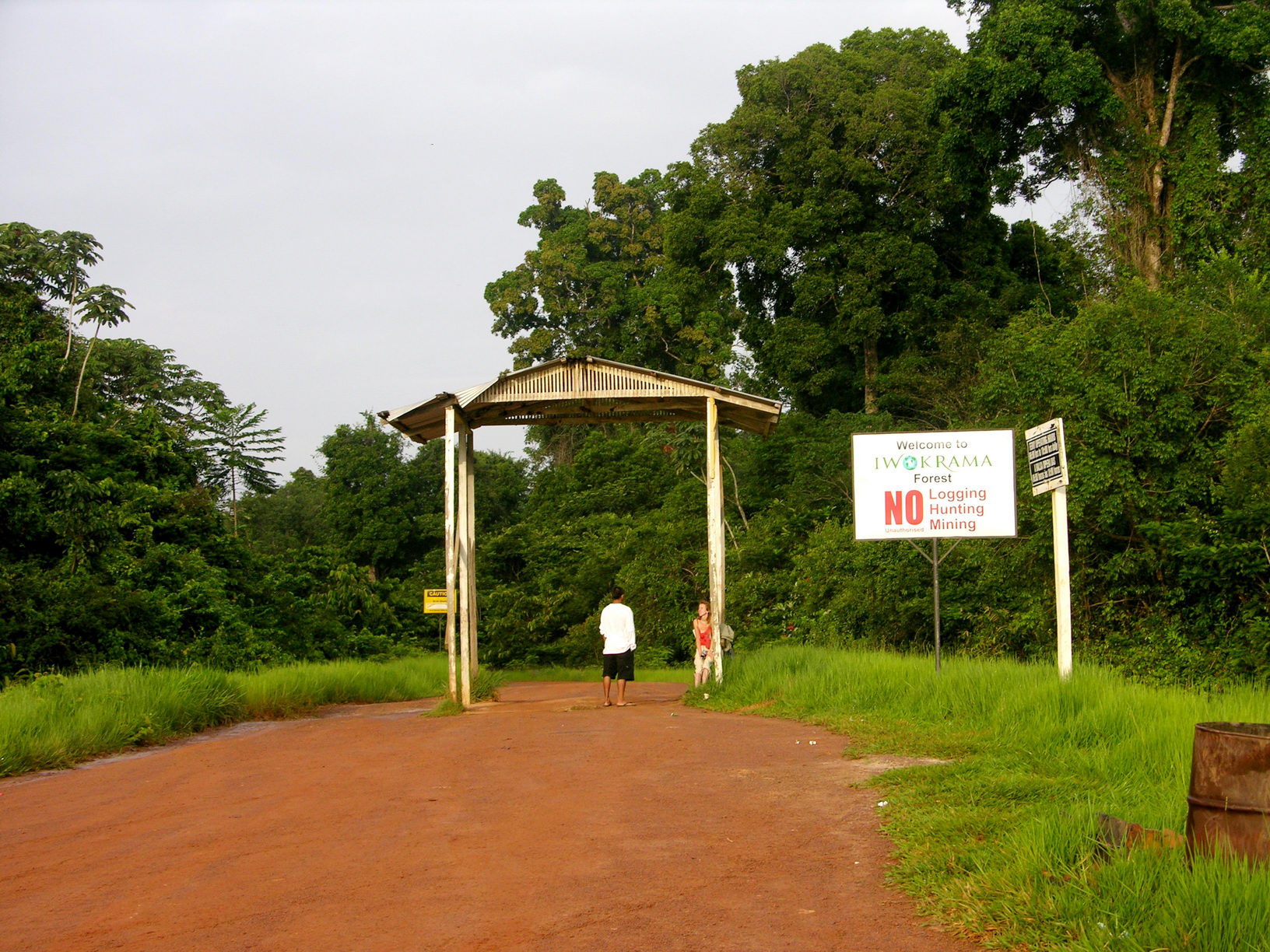
The Iwokrama national park starts just across the river, an enormous stretch of untouched forest. The road cuts it in two. The rules here are fierce. You have to check in and out when you take the road, so they'll notice if a car goes in and doesn't come out. It's closed to traffic at night. Prohibition signs all over the place.
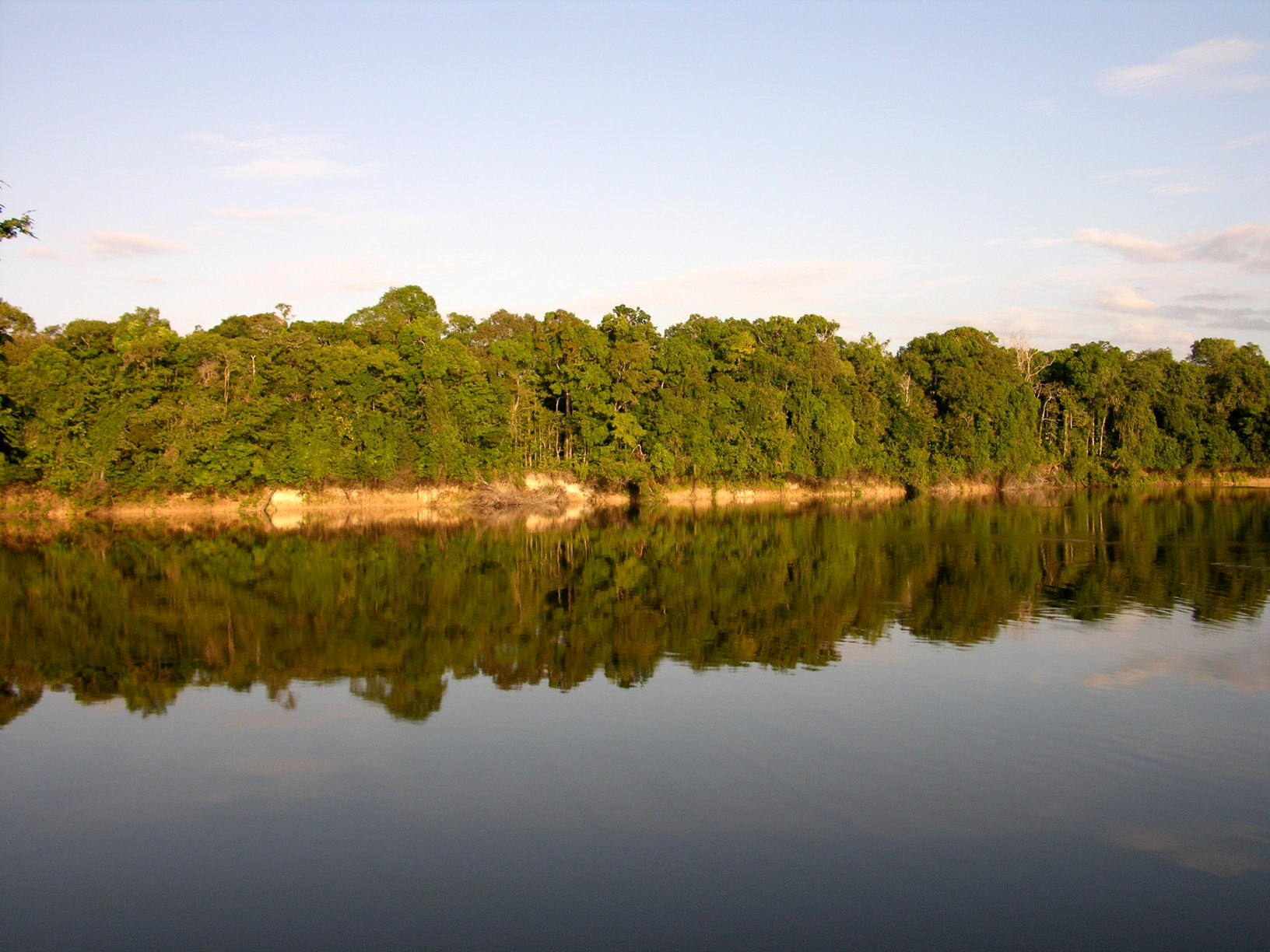
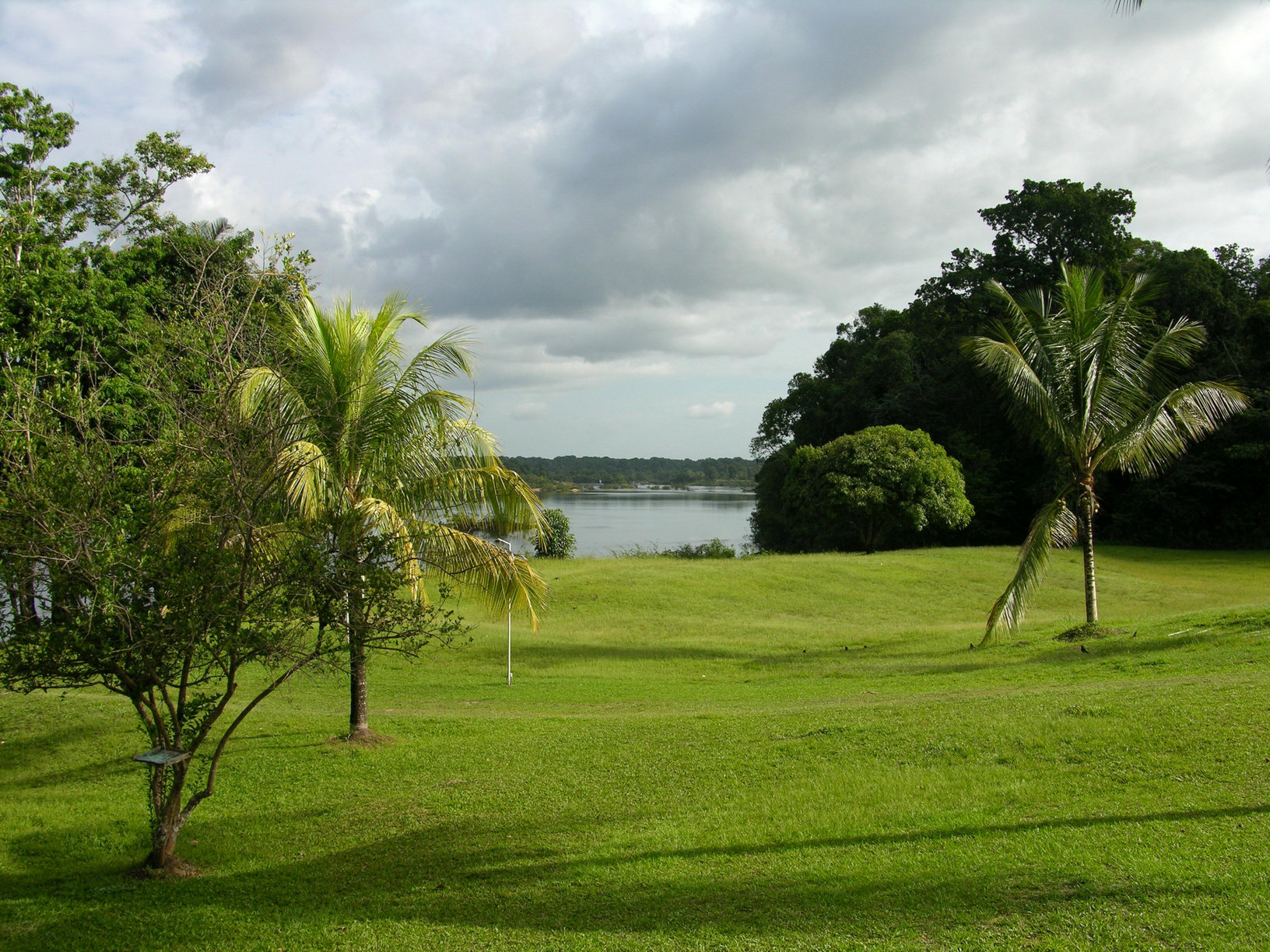
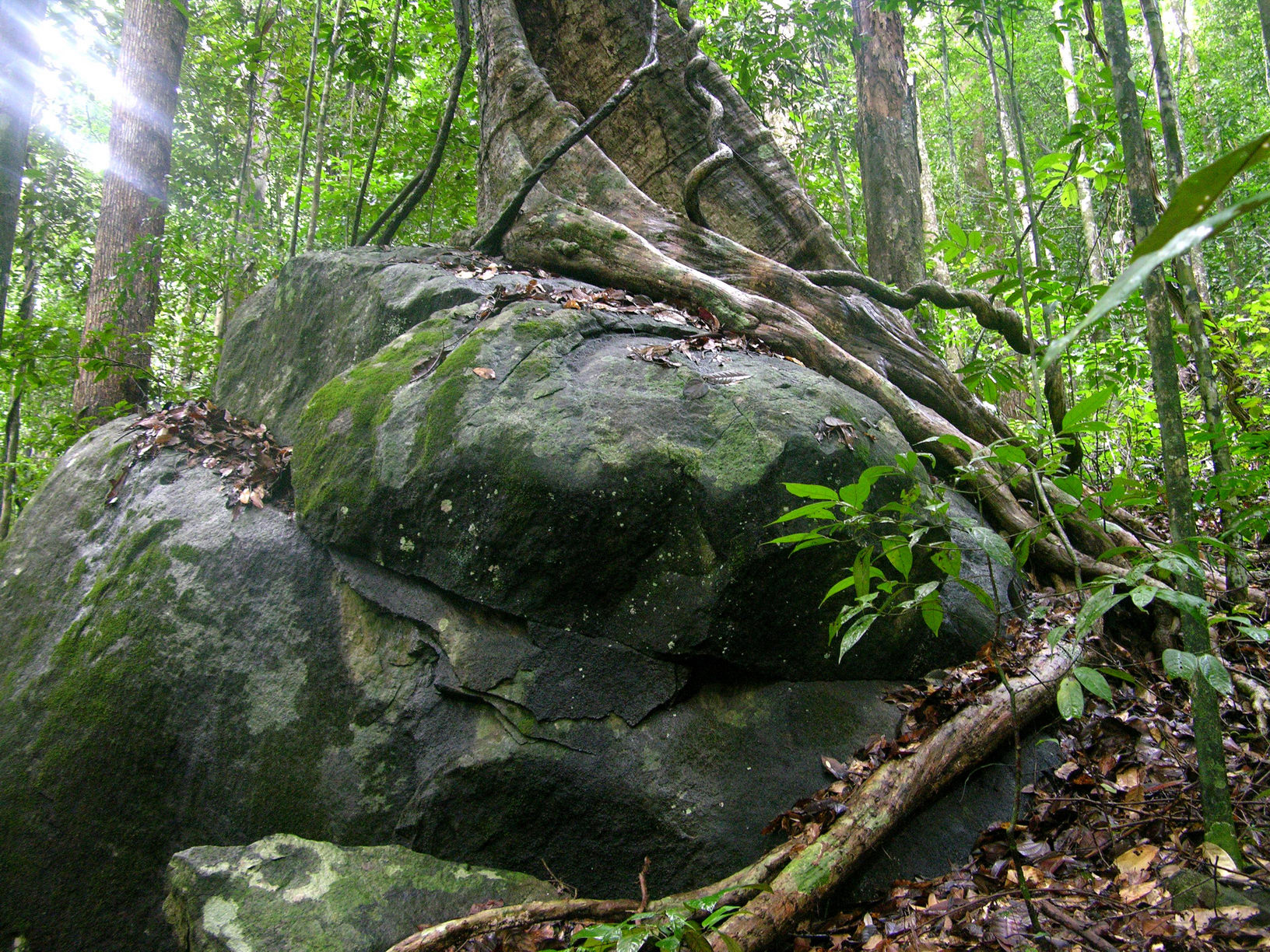
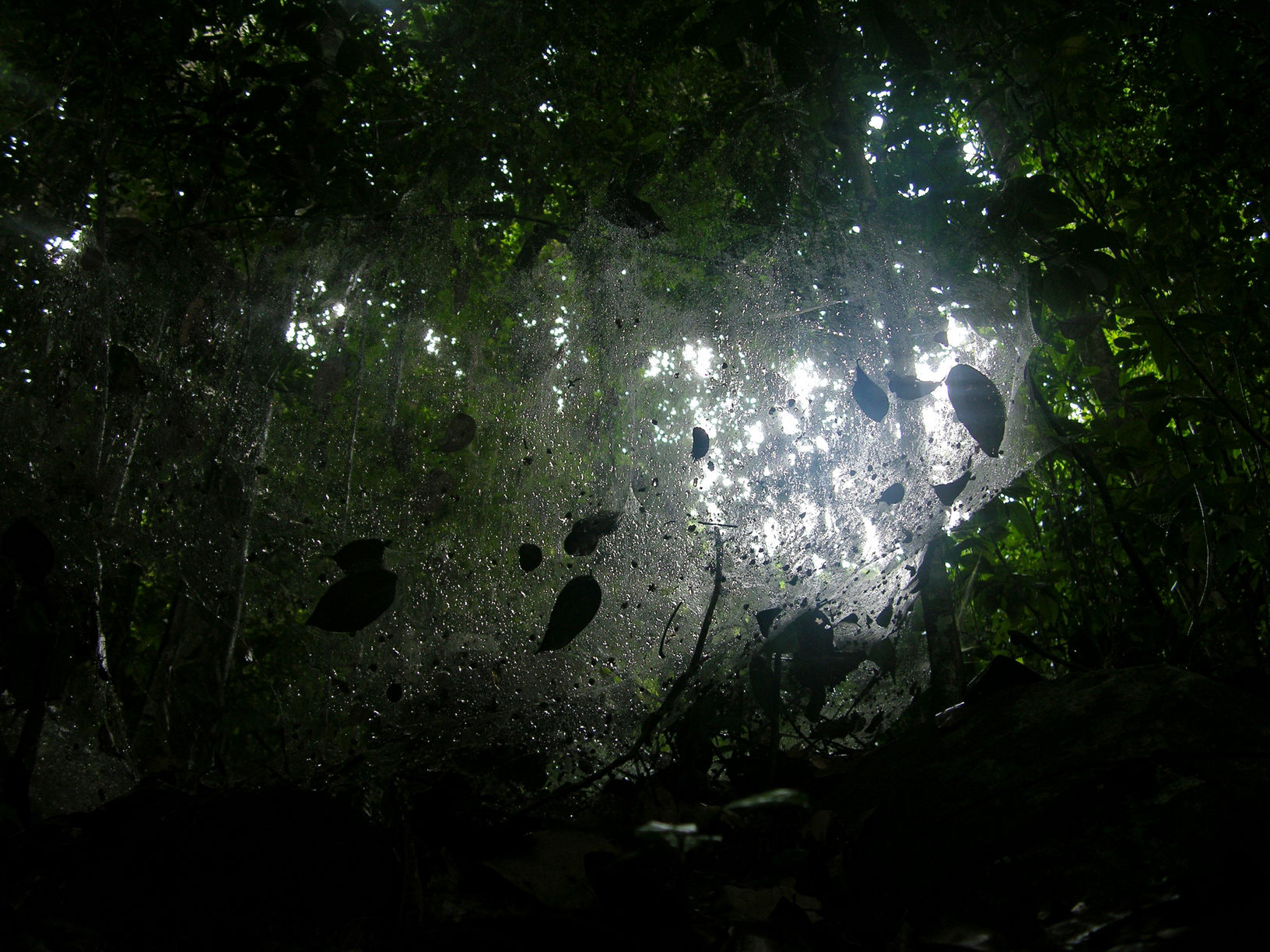
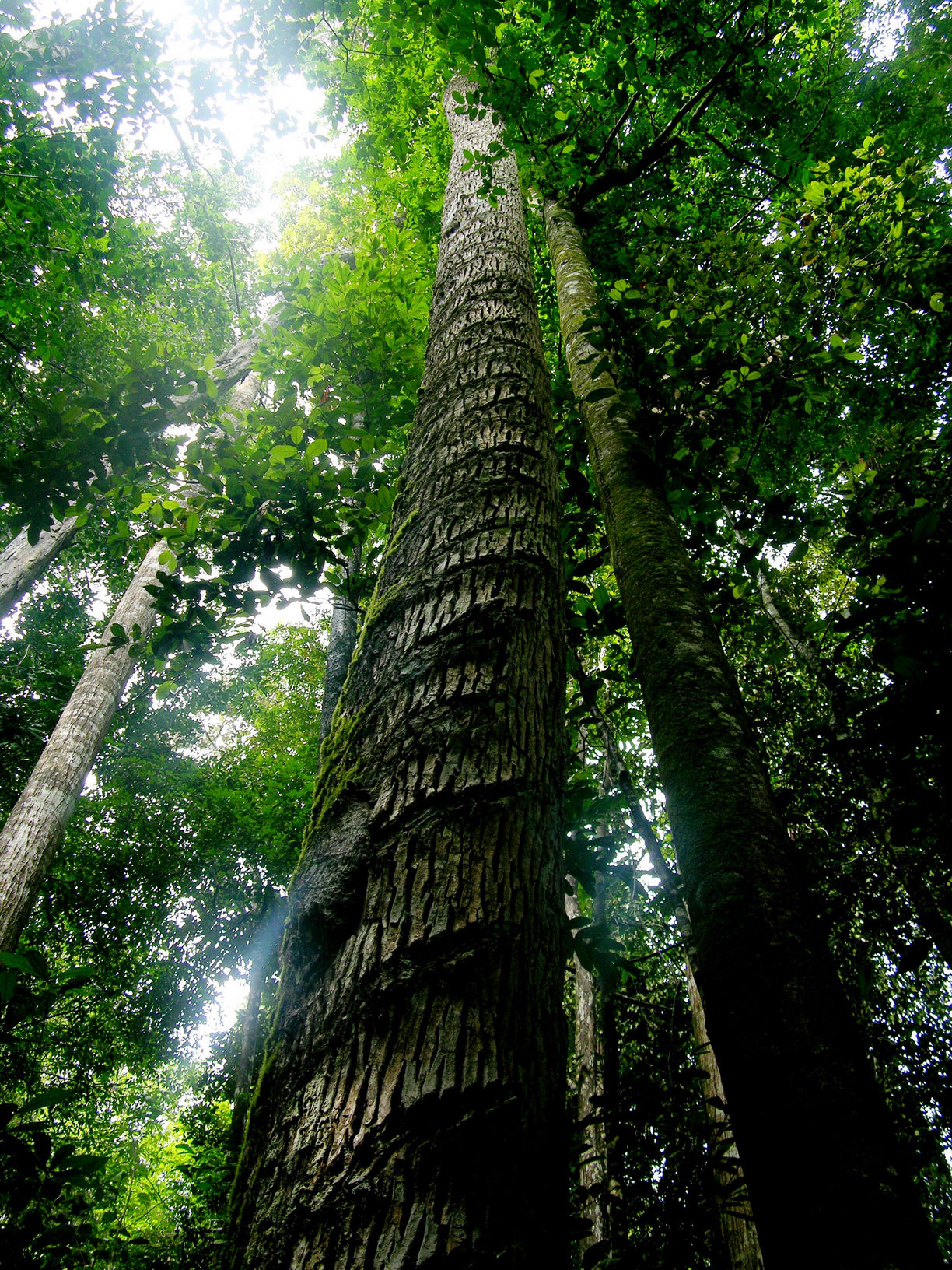
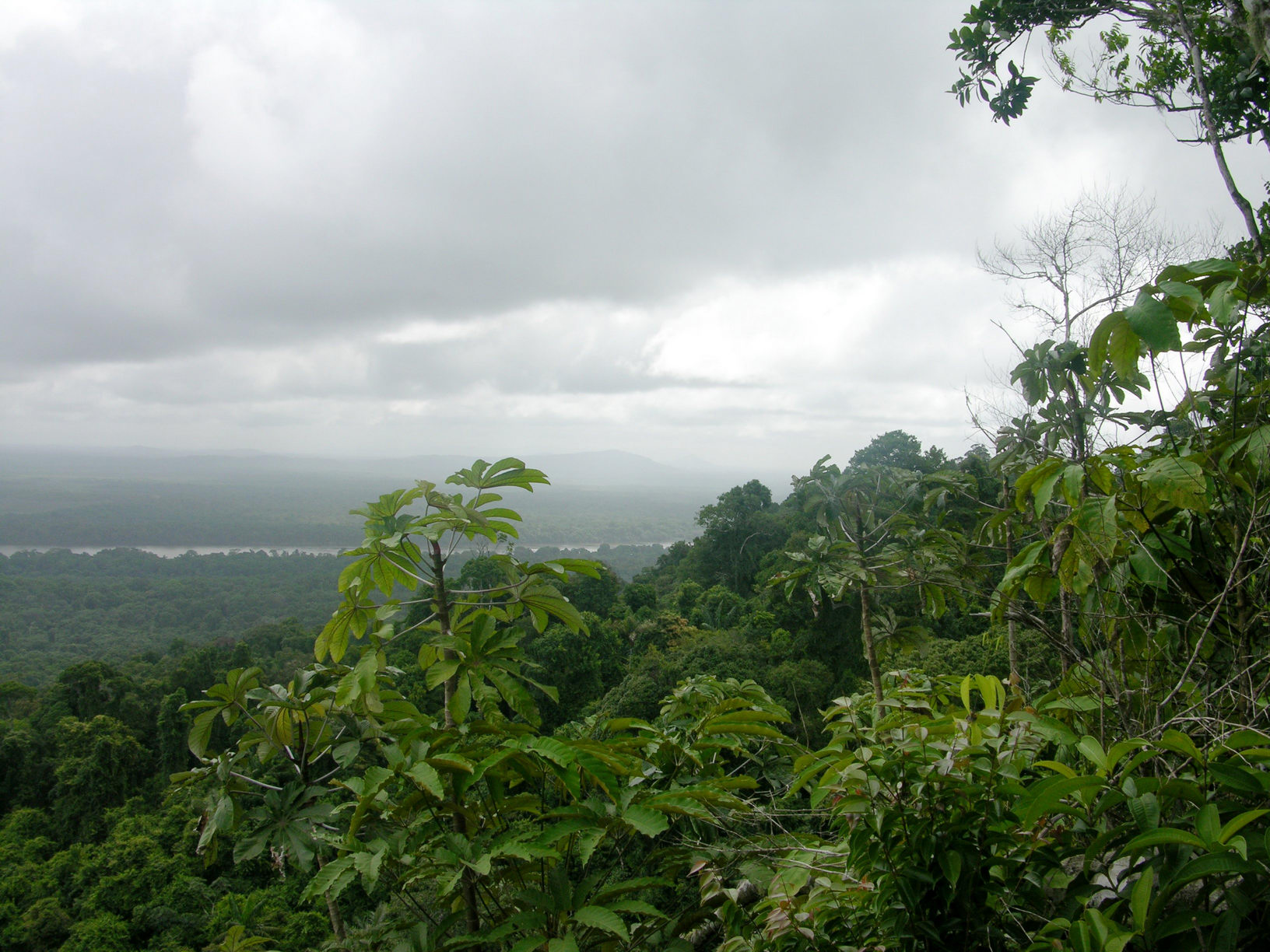
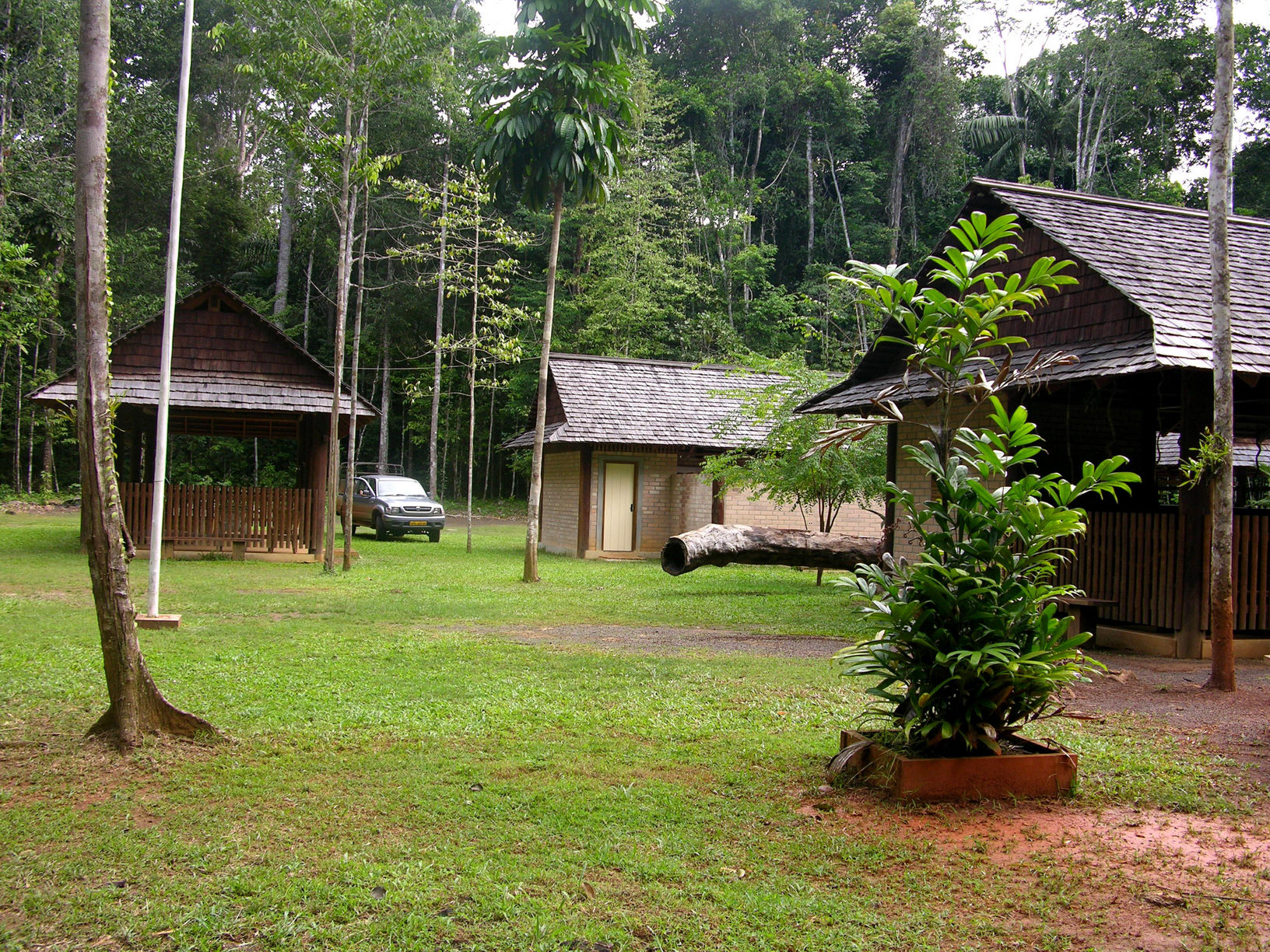
Across most of Guyana the forest has been cut down. The fields have been ploughed, and the remaining woods were hunted out by locals who in hard years could survive only by hunting. Iwokrama was left one of the last islands of unspoilt nature. The rangers and their assorted entourage live in four places: headquarters, or the Field Station, at 4°39.662′N, 58°40.839′W, not far from the Essequibo ferry (panorama), cottages near the canopy walk (4°14.505′N, 58°54.071′W), and posts at the park entrance and exit.
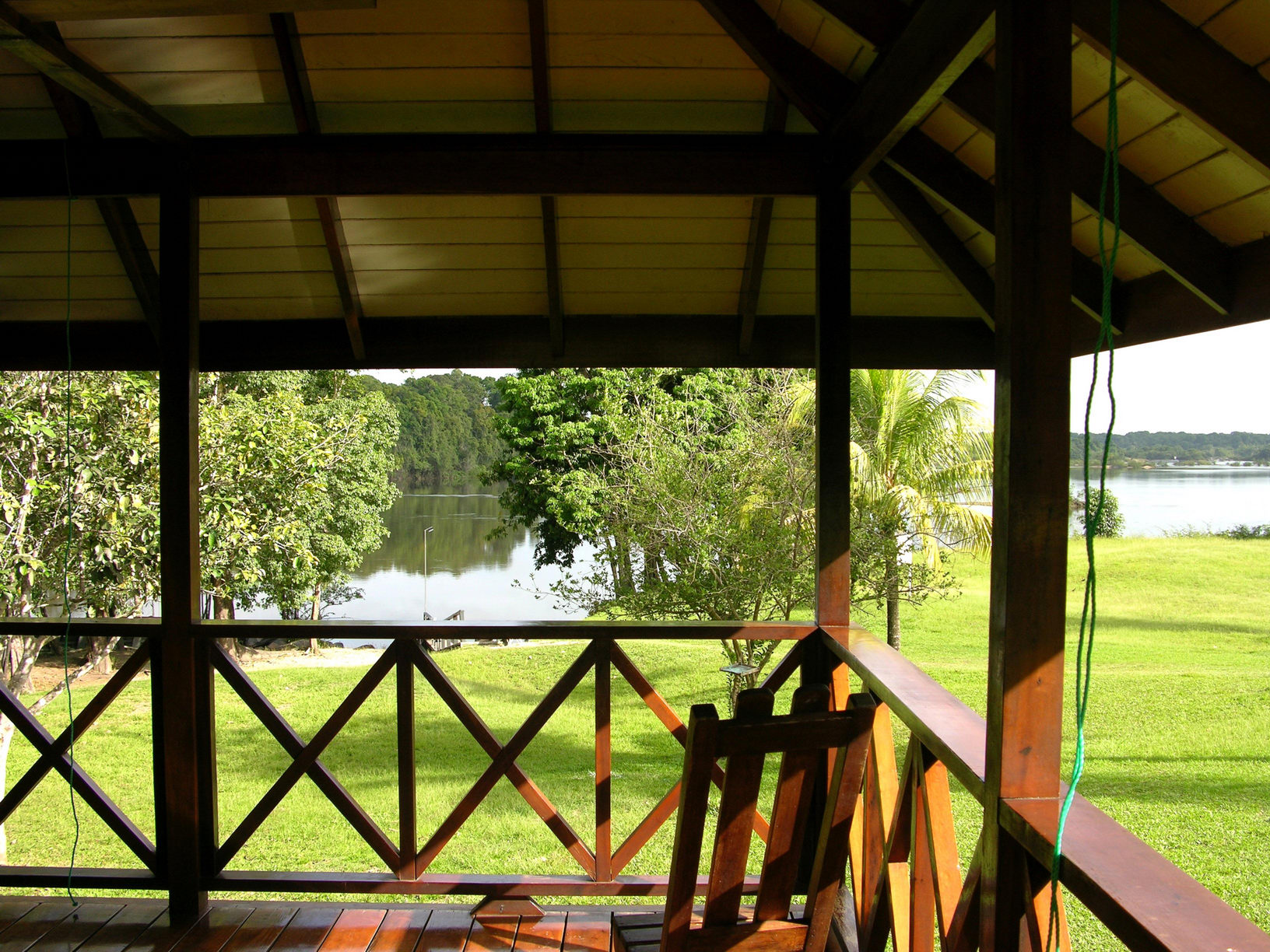
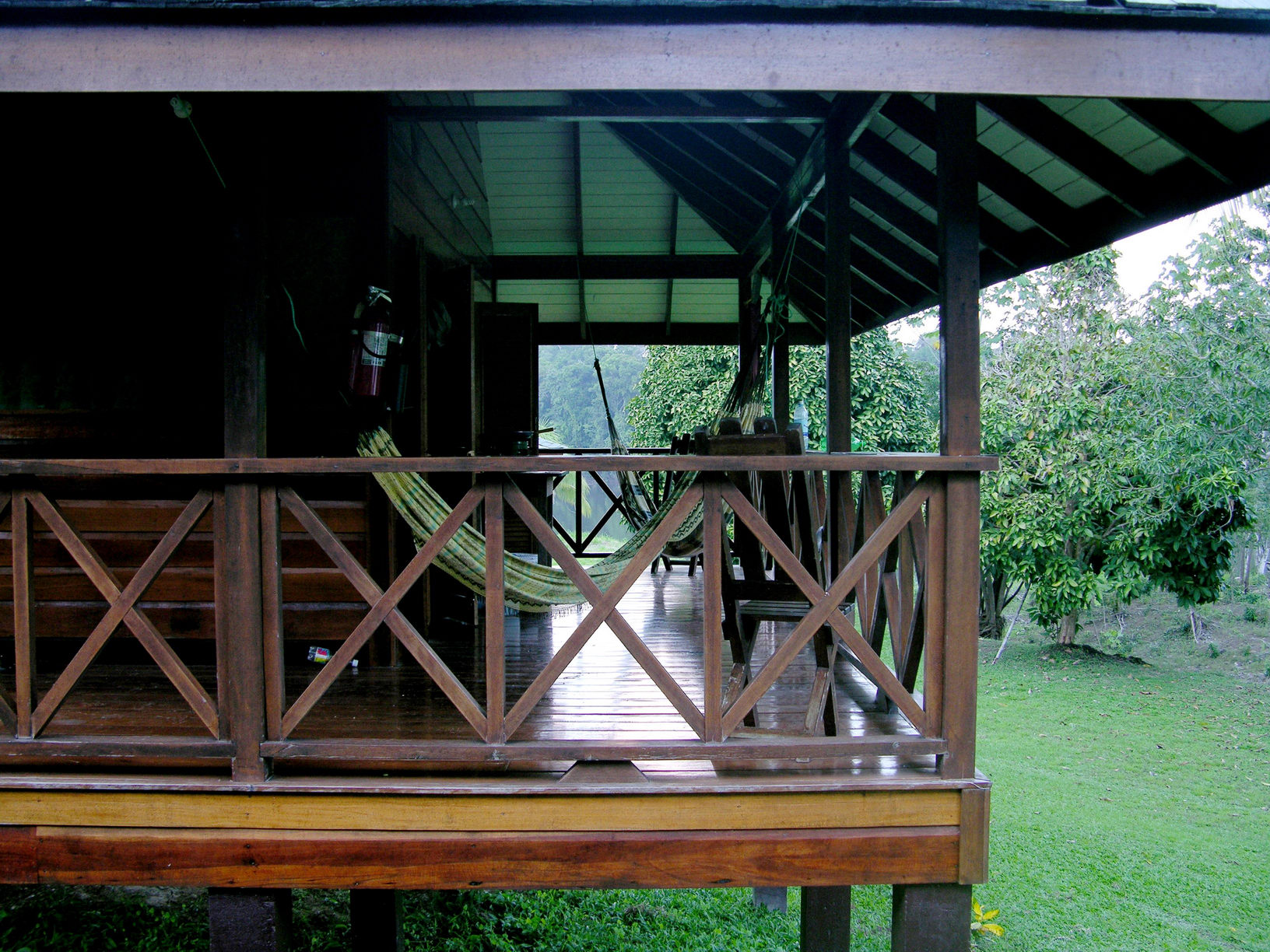
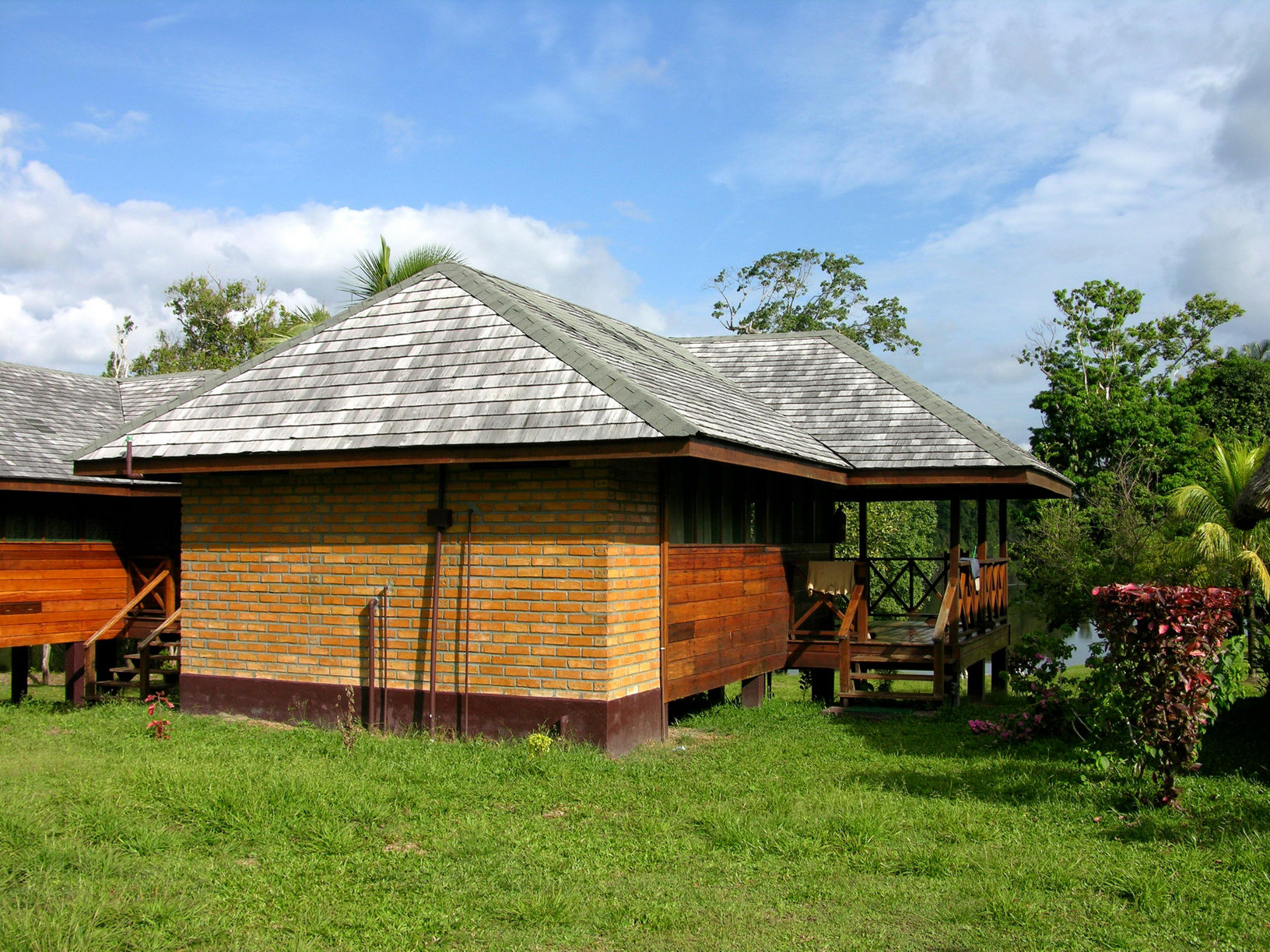
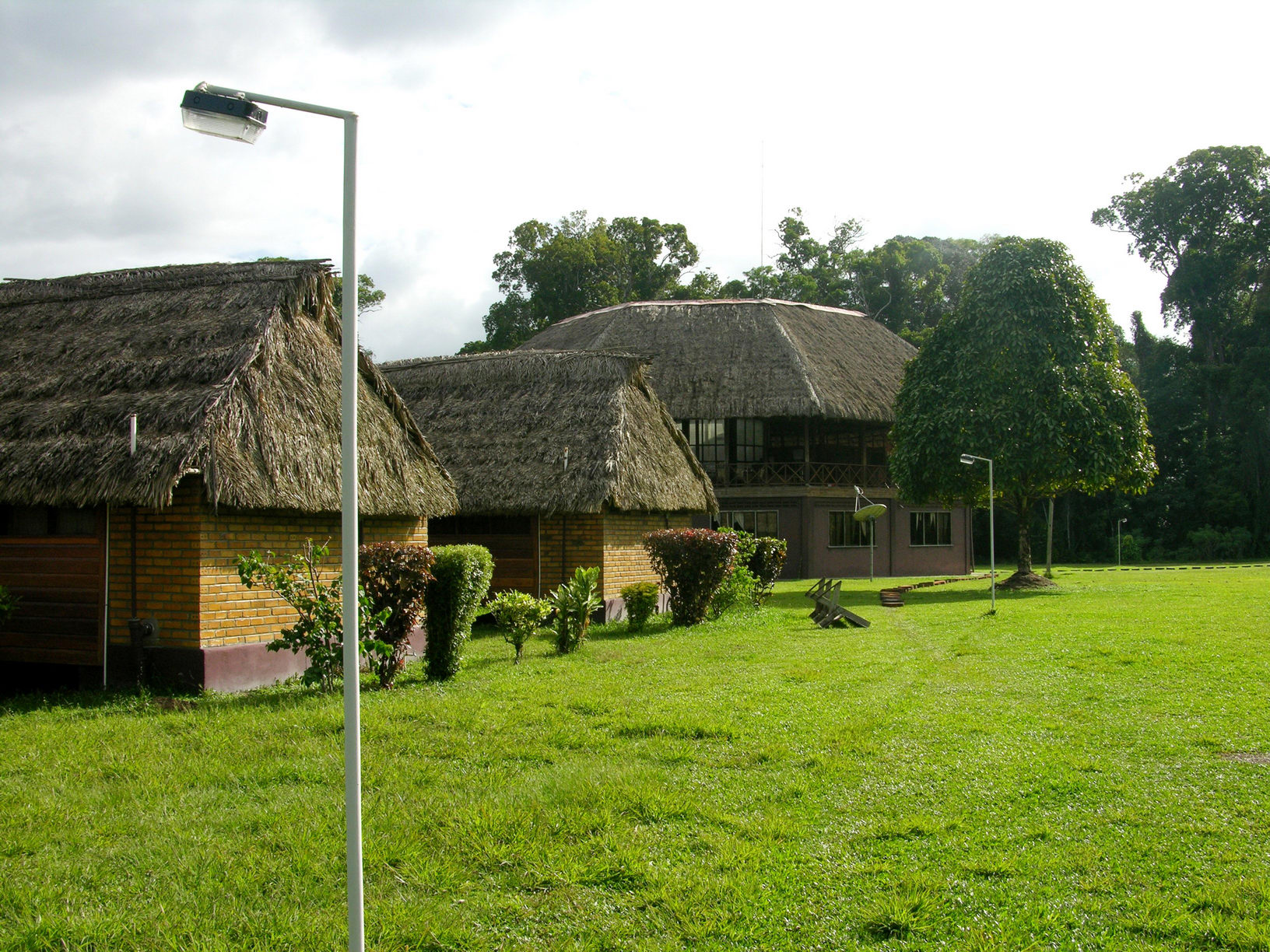
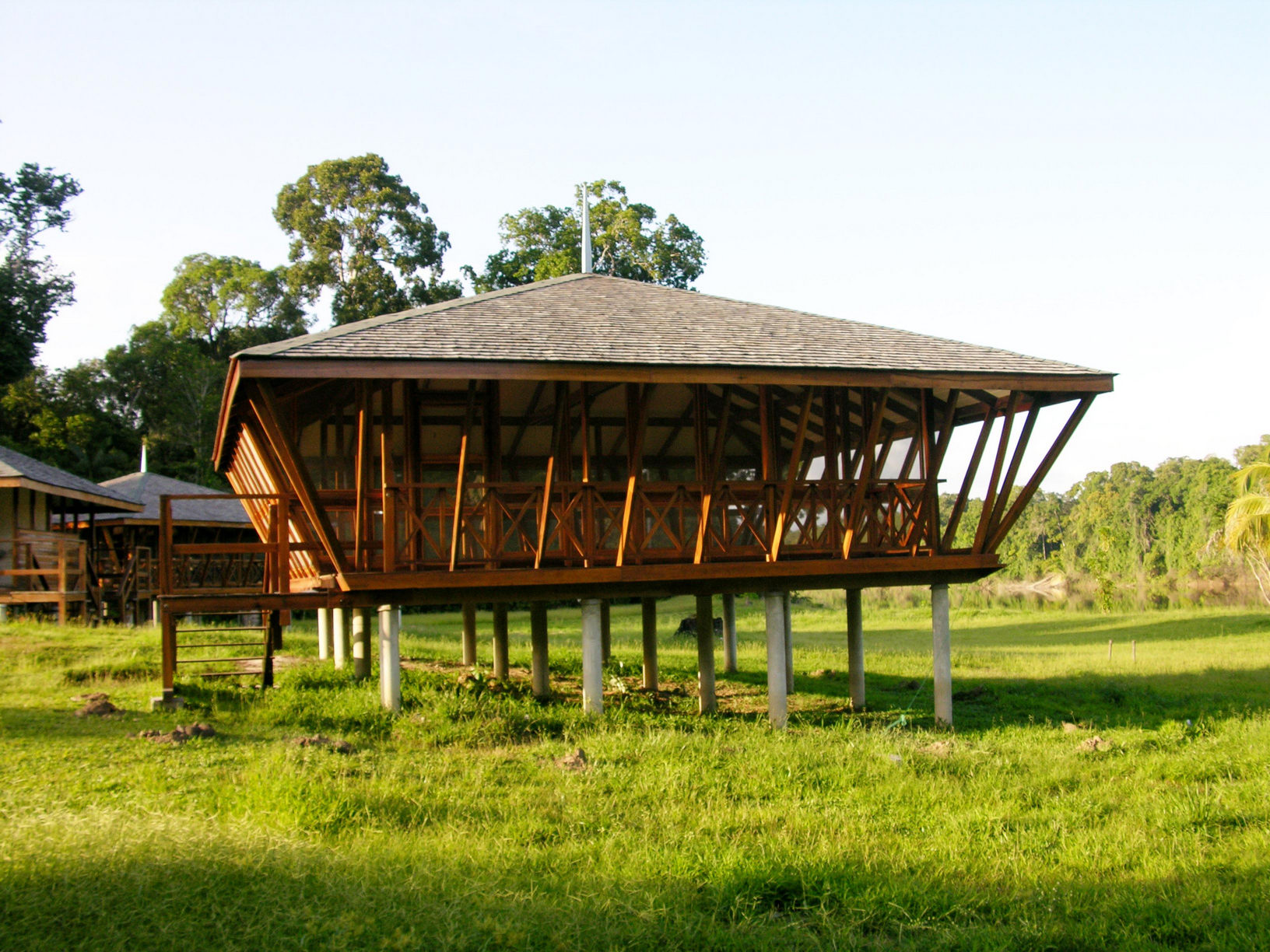
Unfortunately the place receives visitors in the worst African tradition. At the Field Station they've cleared a patch of ground on the riverbank for cottages. On it there's a mown lawn. They bring you over in a boat and forbid you to leave that little patch. Of course, they do provide little guided walks. The longest path, to Turtle Mountain, is about three kilometres, but the emphasis is on letting the tourists relax by lying in bed between three meals a day.
We'd planned to spend three days here. The travel agency had taken us in, as they do. They said there was no bus earlier and we'd have to wait those three days for the next one. Once again we could only blame ourselves for believing it. One excuse: the atmosphere in Georgetown didn't make you want to look for rides.
Another thing the agency said was that you couldn't get into the park by yourself and all the places could be taken.
That's completely untrue. There's a little booth right on the road by the ferry where you can make all the arrangements. You can even drive to the Field Station yourself, along a dreadful road, in a jeep. There is separate accommodation near the canopy walkway in the south of the park, at the field camp. The cottages mostly stand empty. The whole thing was built under a government tourism development programme. The money's been spent and for some reason the tourists don't come. One cottage in ten is taken at best. If you show up on your own you may be able to arrange a cash discount off the books and, who knows, perhaps get into the forest on your own. The phone is only at the park's city office: +592-225-1504.
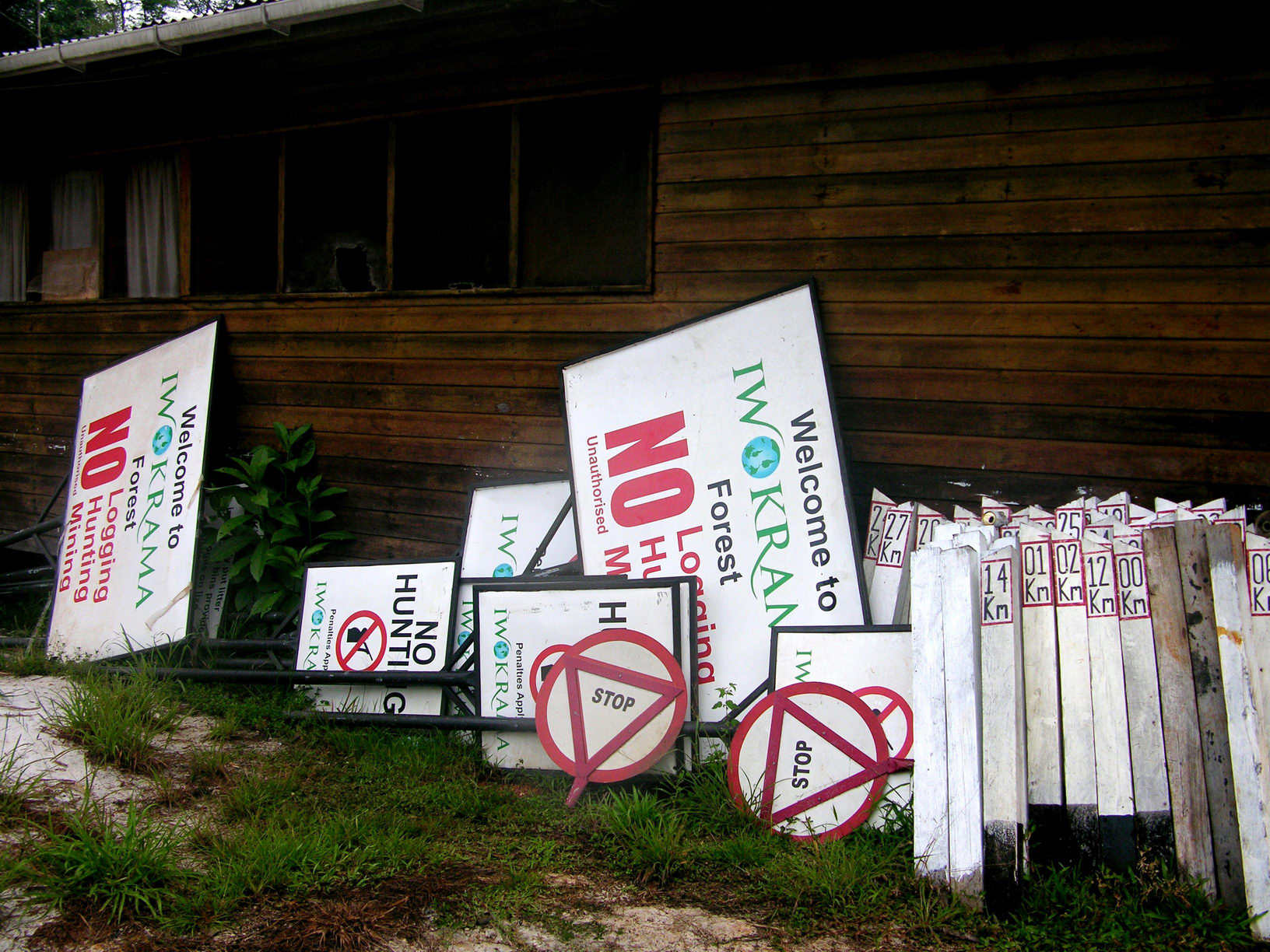
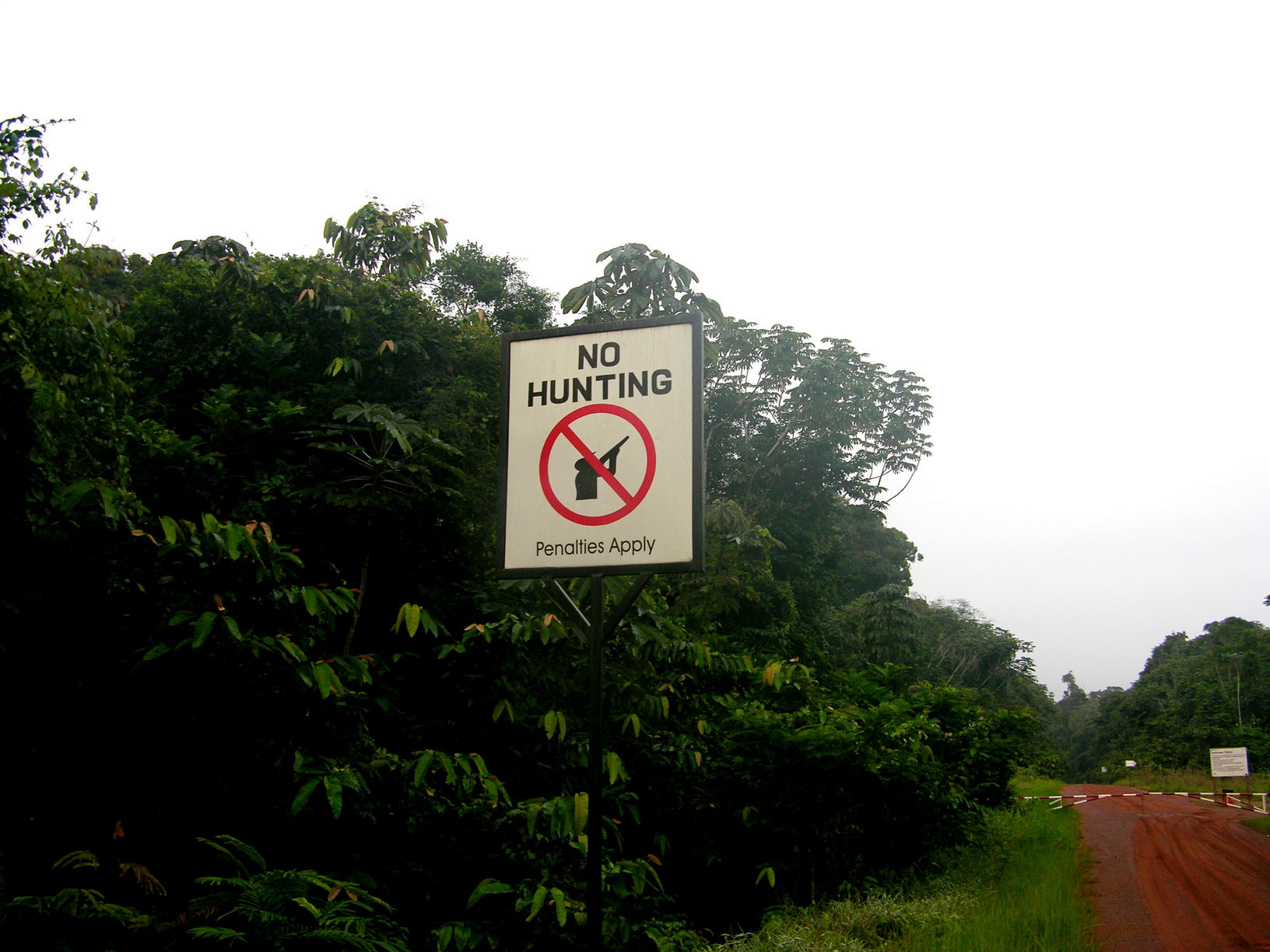
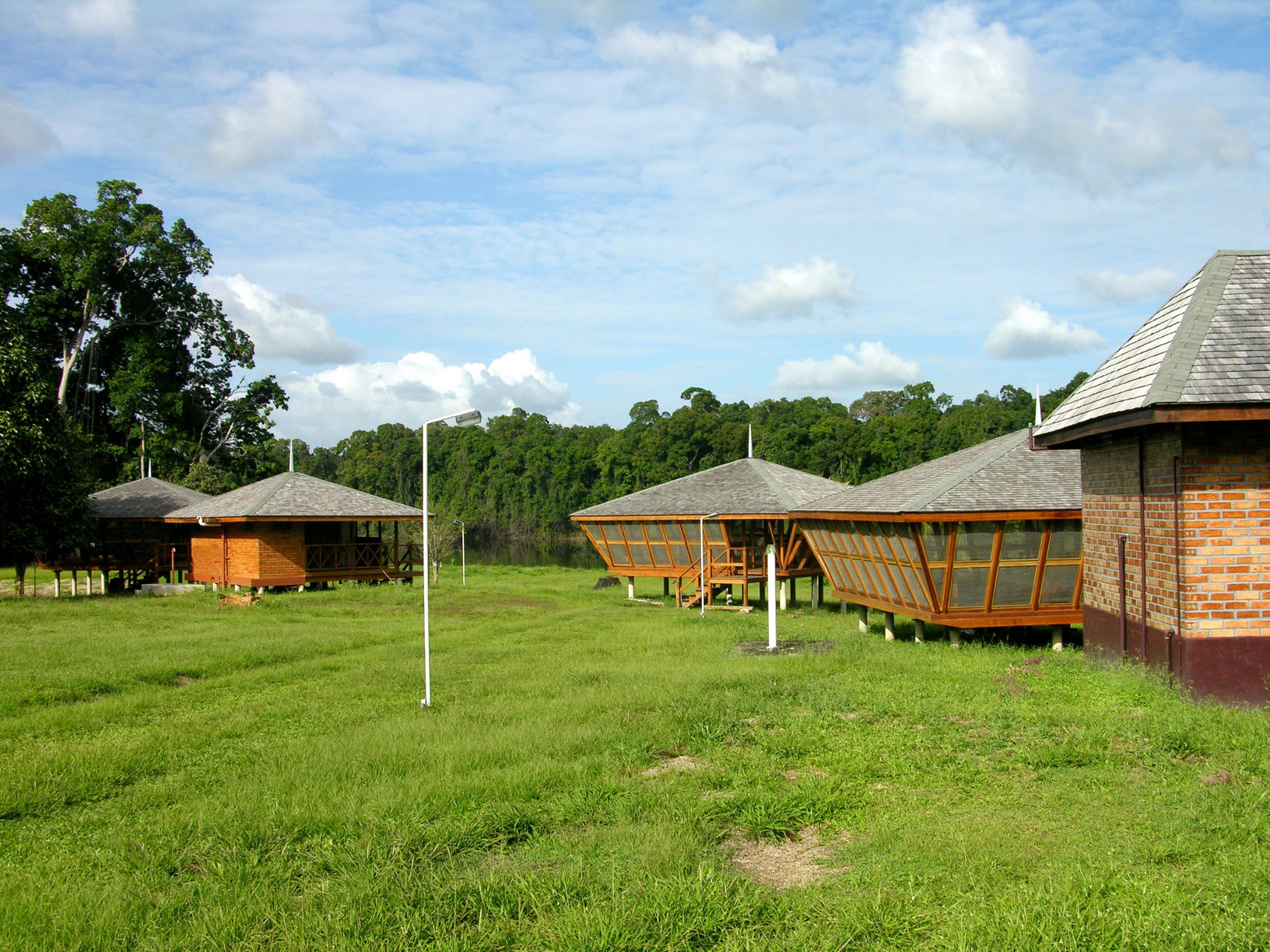
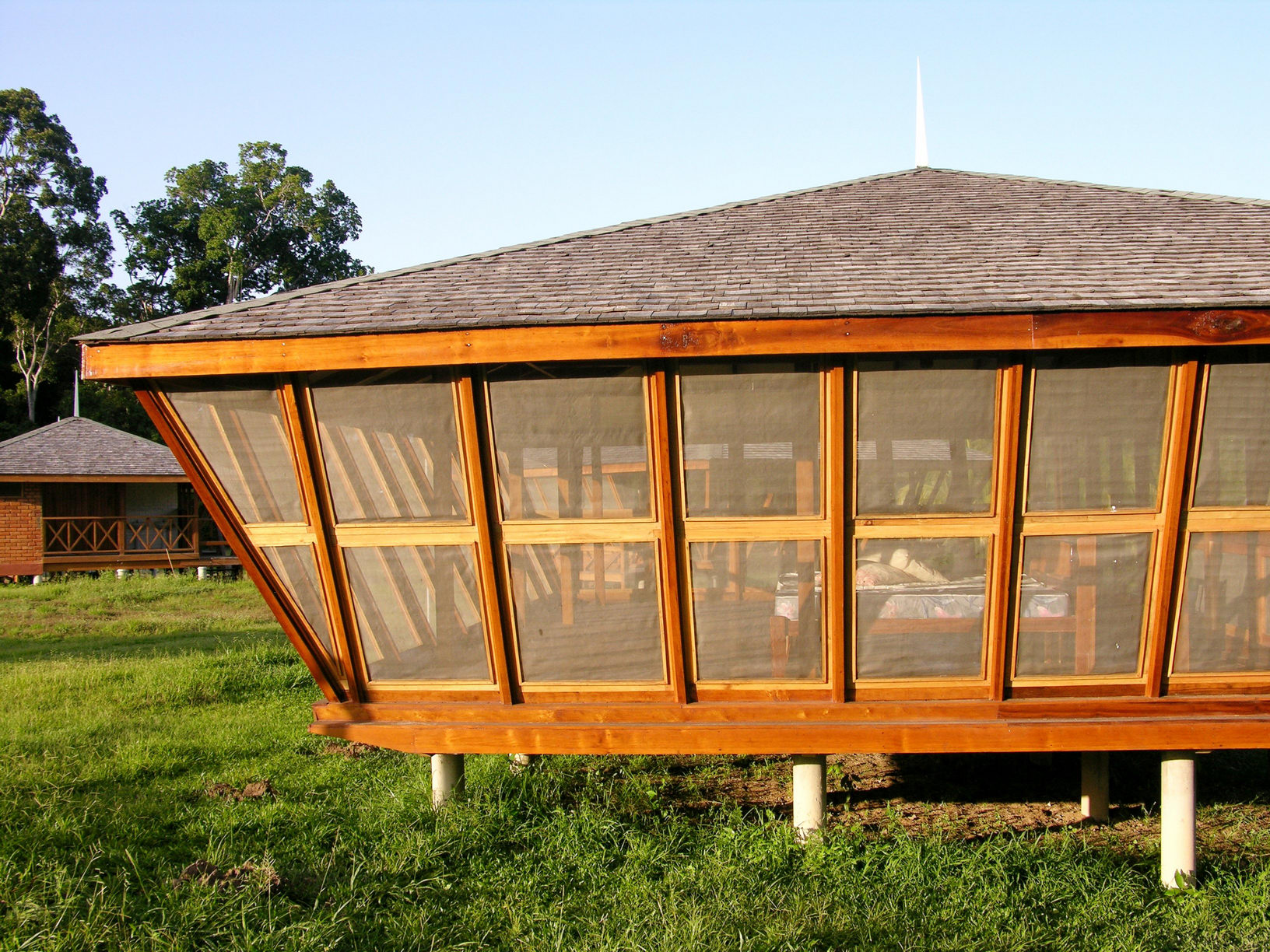
The first day began with a walk up Turtle Mountain. This time our compulsory guide wasn't bad. At least he knew something about the world around him. At any rate he spotted birds and animals before we did. Unfortunately three hours on a path isn't what you need if you want to see something in thick tropical forest. There are lots of birds, of course, but animals hide long before you reach them. It's not hard to see monkeys: baboons, spider monkeys and capuchins. Occasionally agoutis run across the path. There are far more of them in French Guiana. Here you're lucky to see a ginger tail in the bushes for a second.
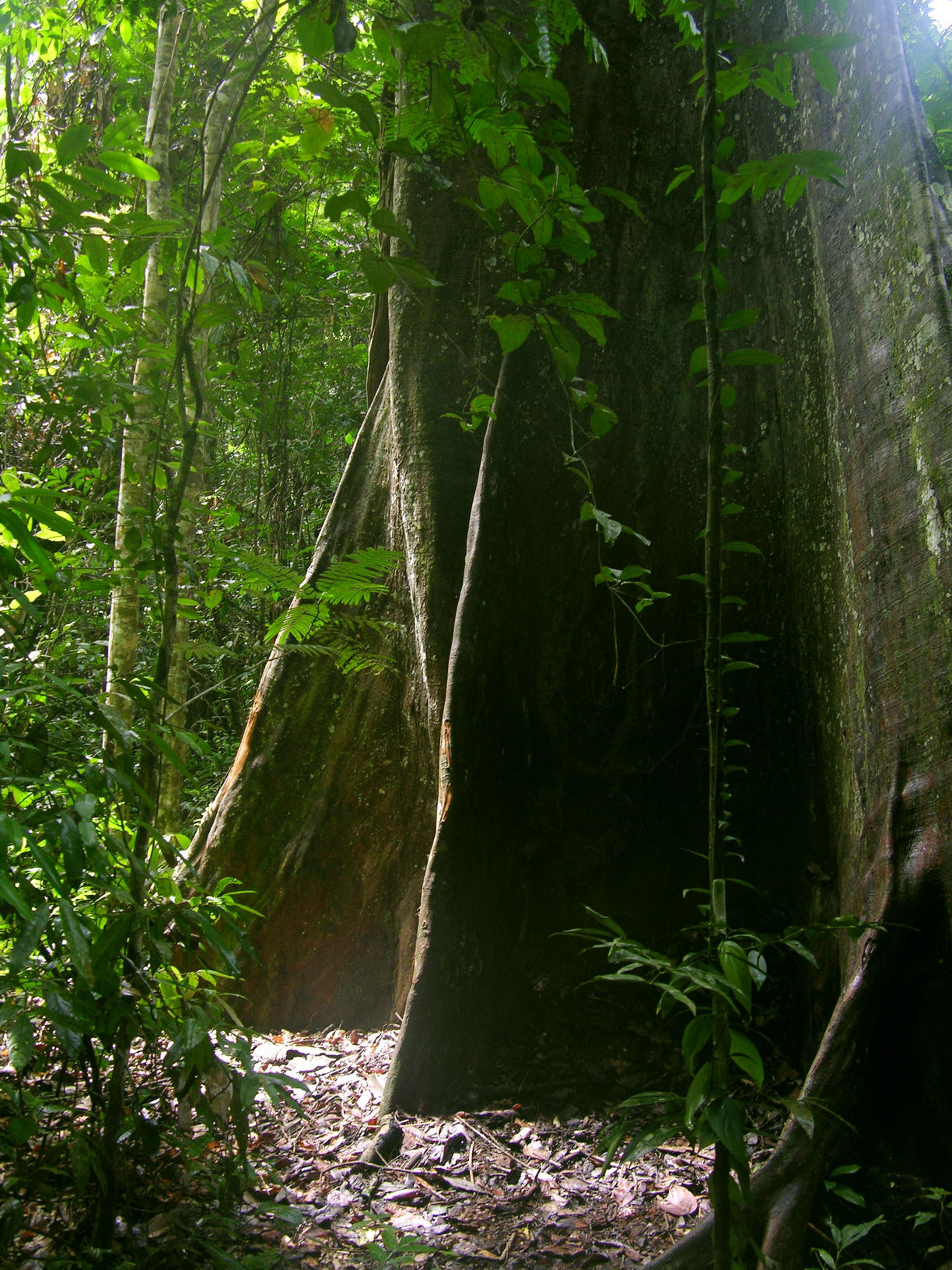
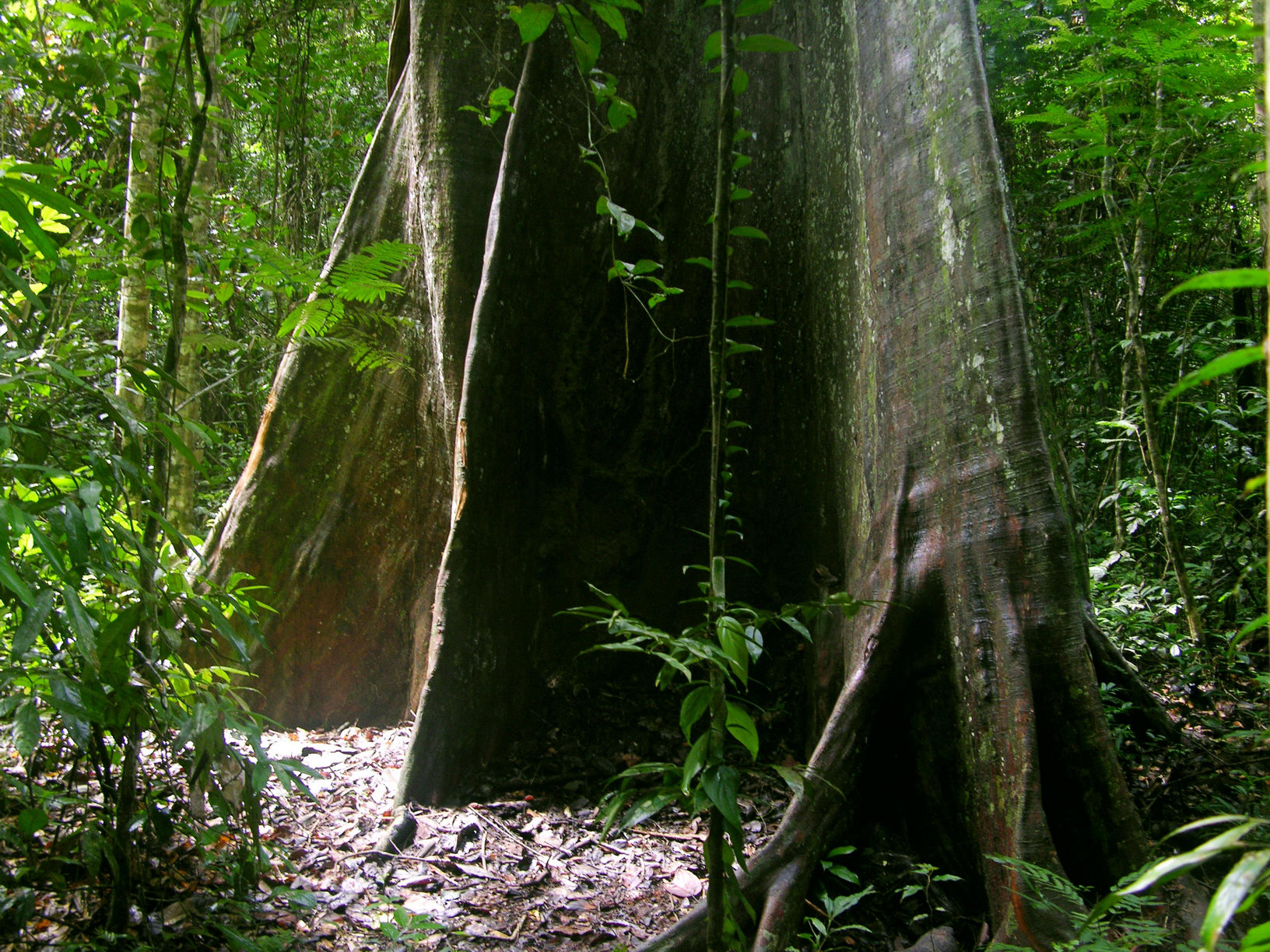
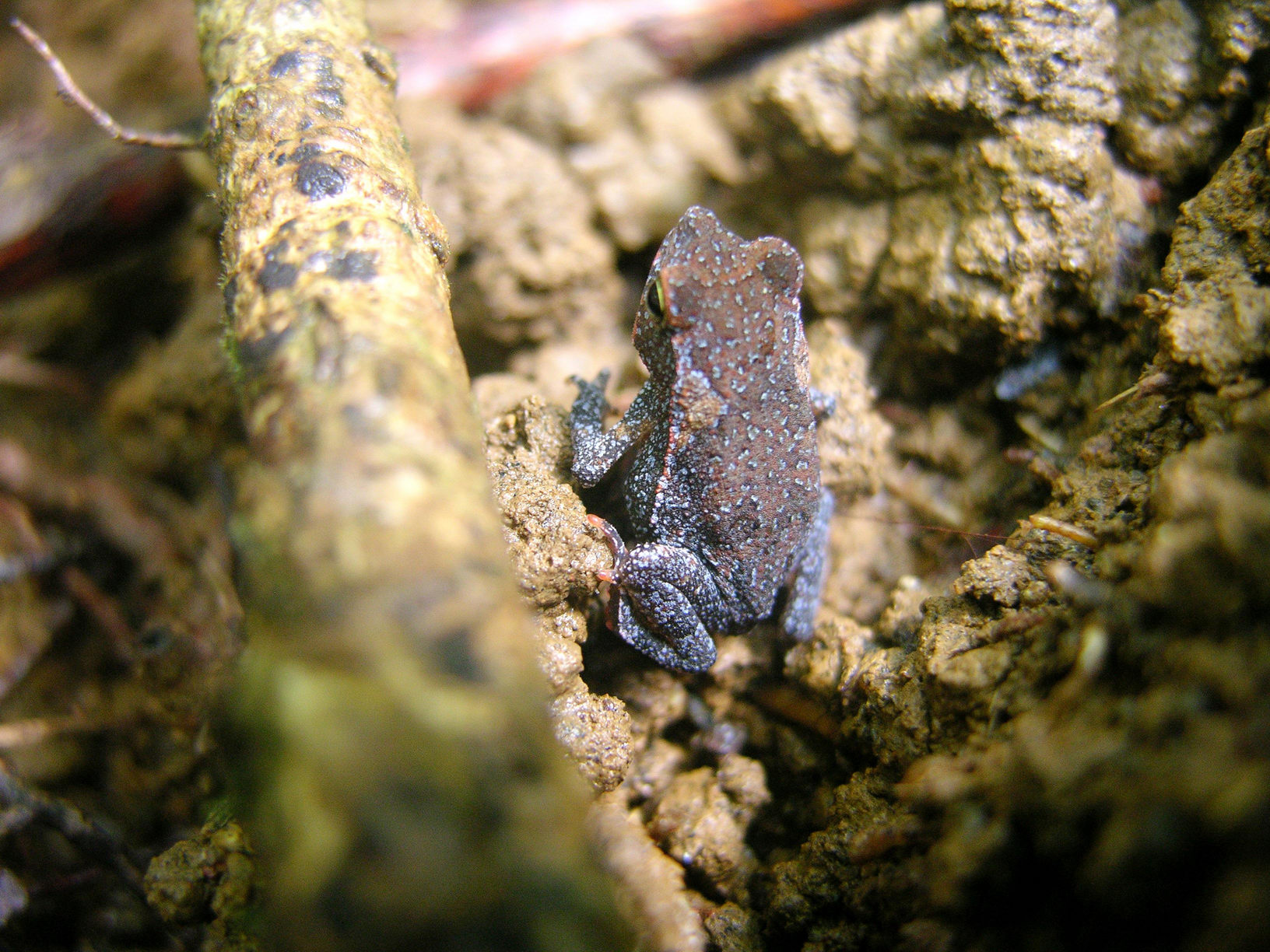
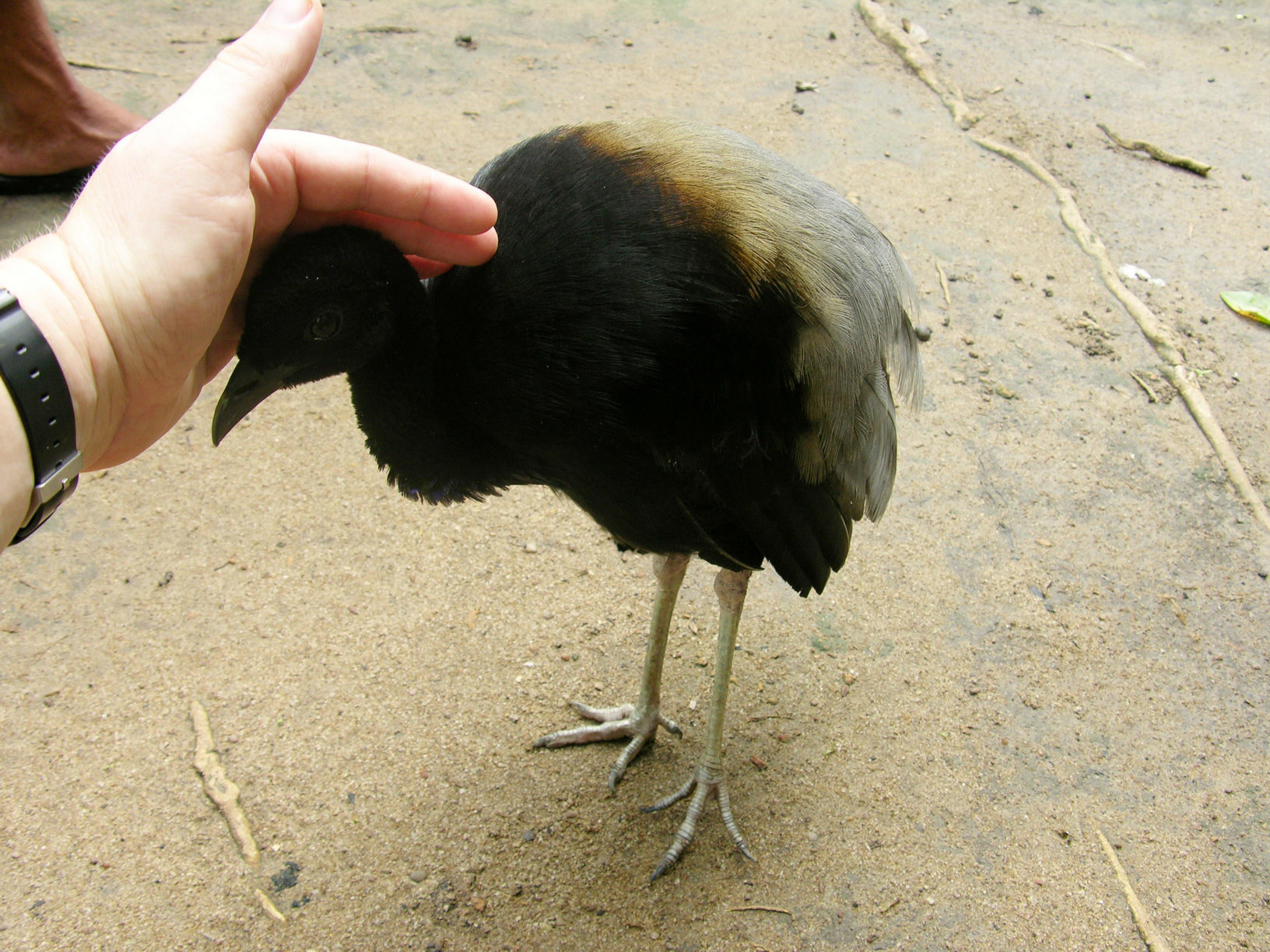
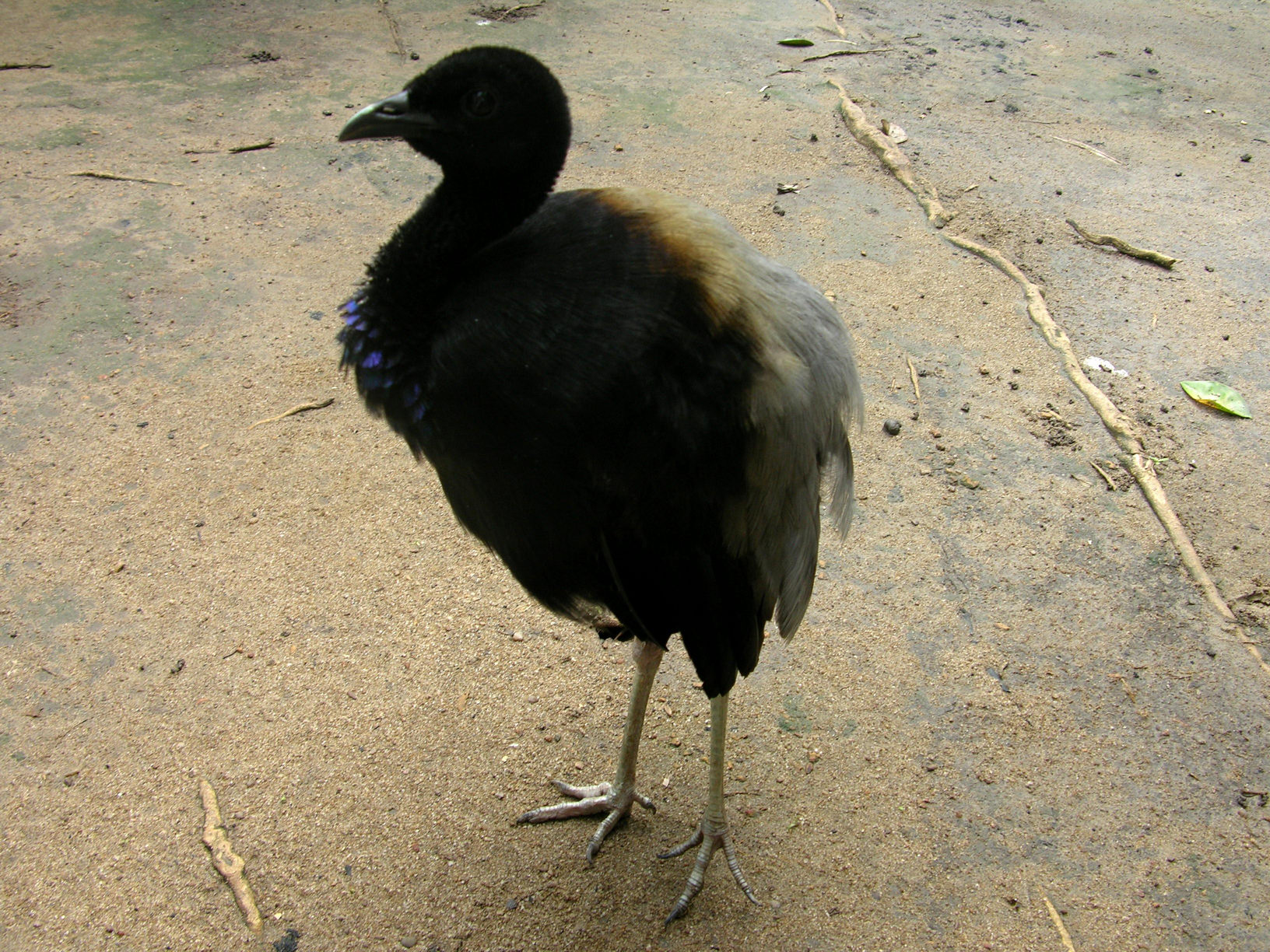
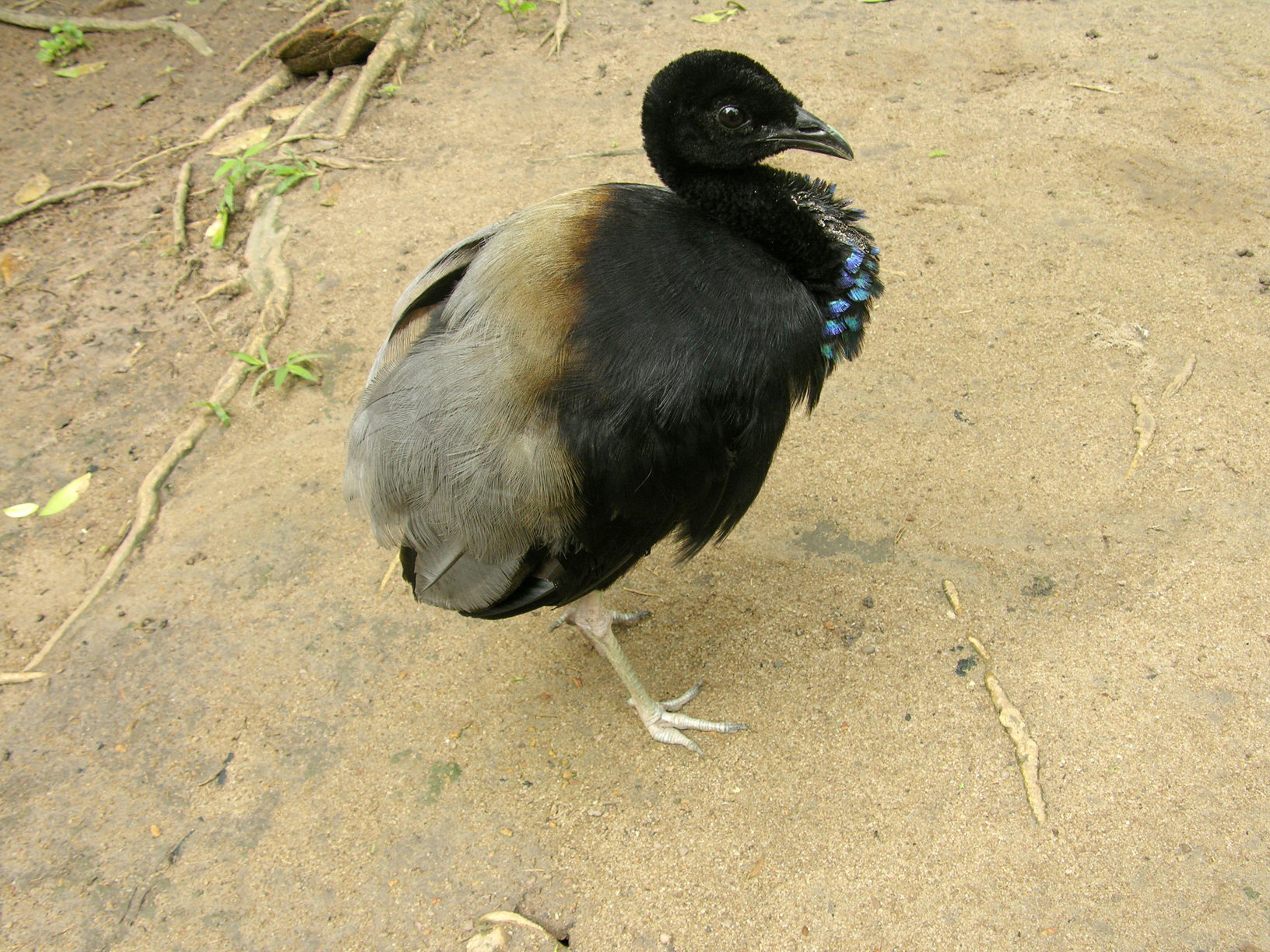
What you need is to sit in hiding for a long time. Go ten kilometres from the village. It's difficult to do any of that here, unfortunately. You have to put on an act as a scientist and win their trust. You can't do it in three days, and without that you're forbidden to go into the forest alone.
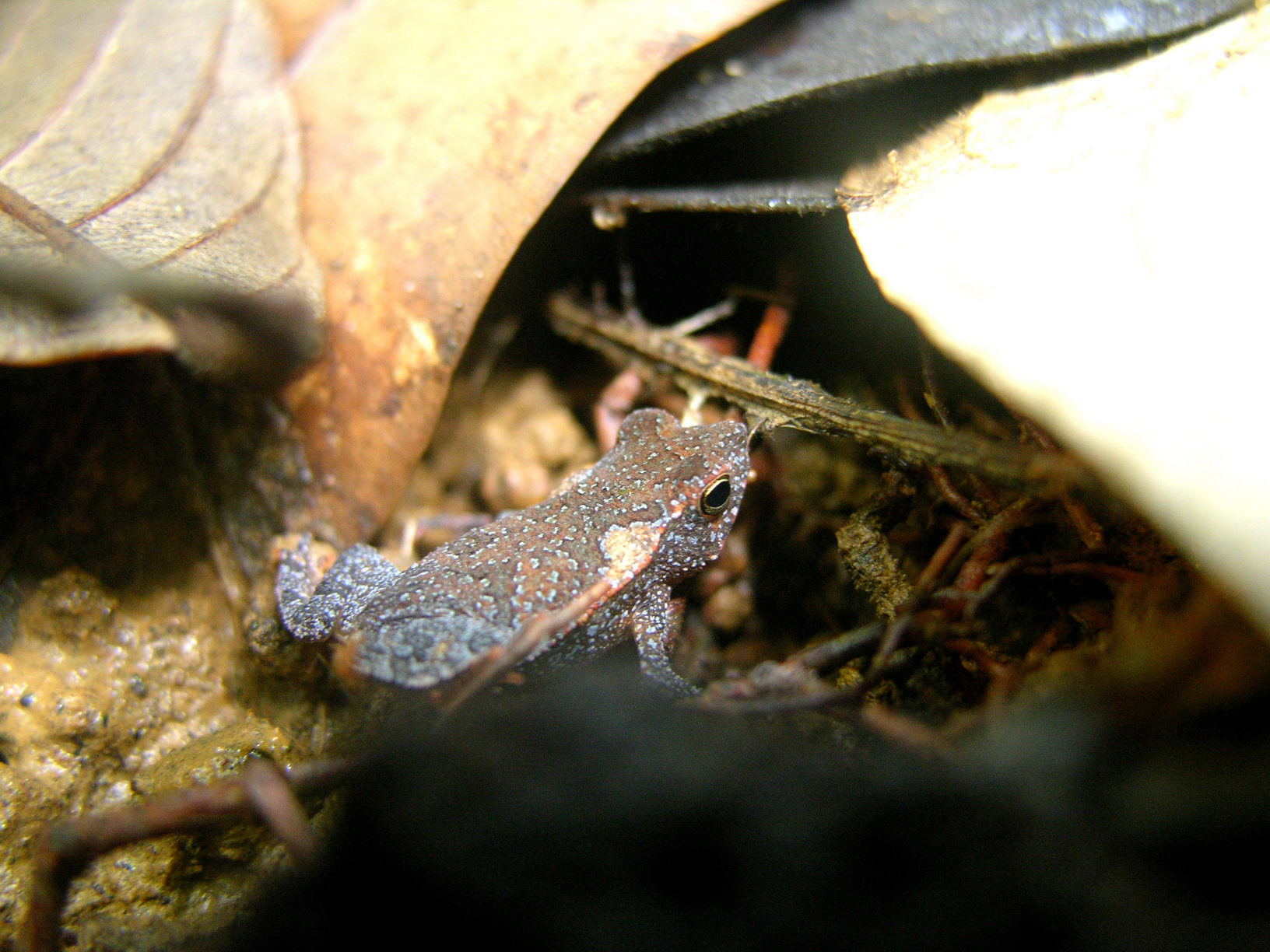
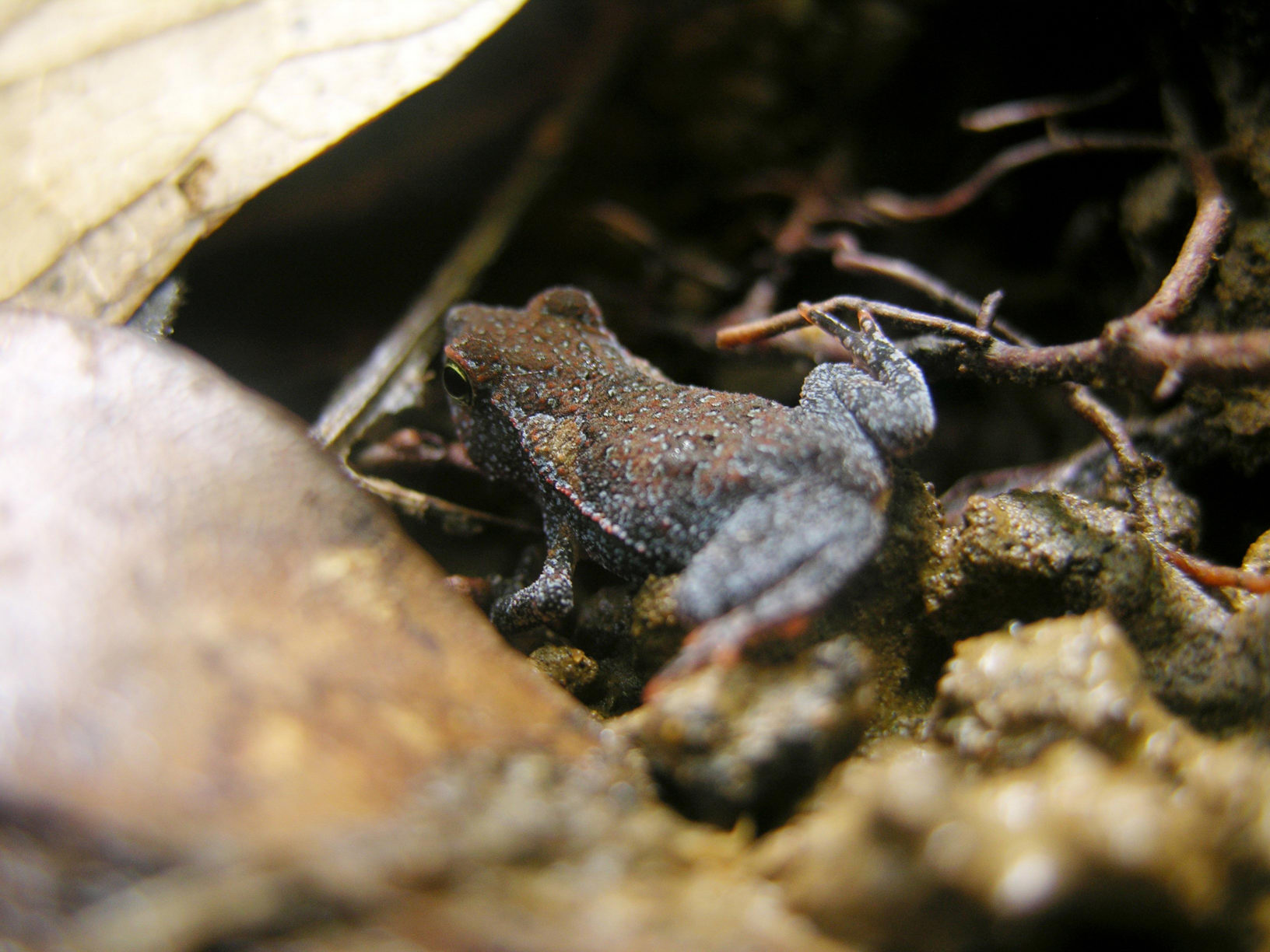
The other official outings amounted to tiny half-hour boat rides or venturing a hundred metres from the base.
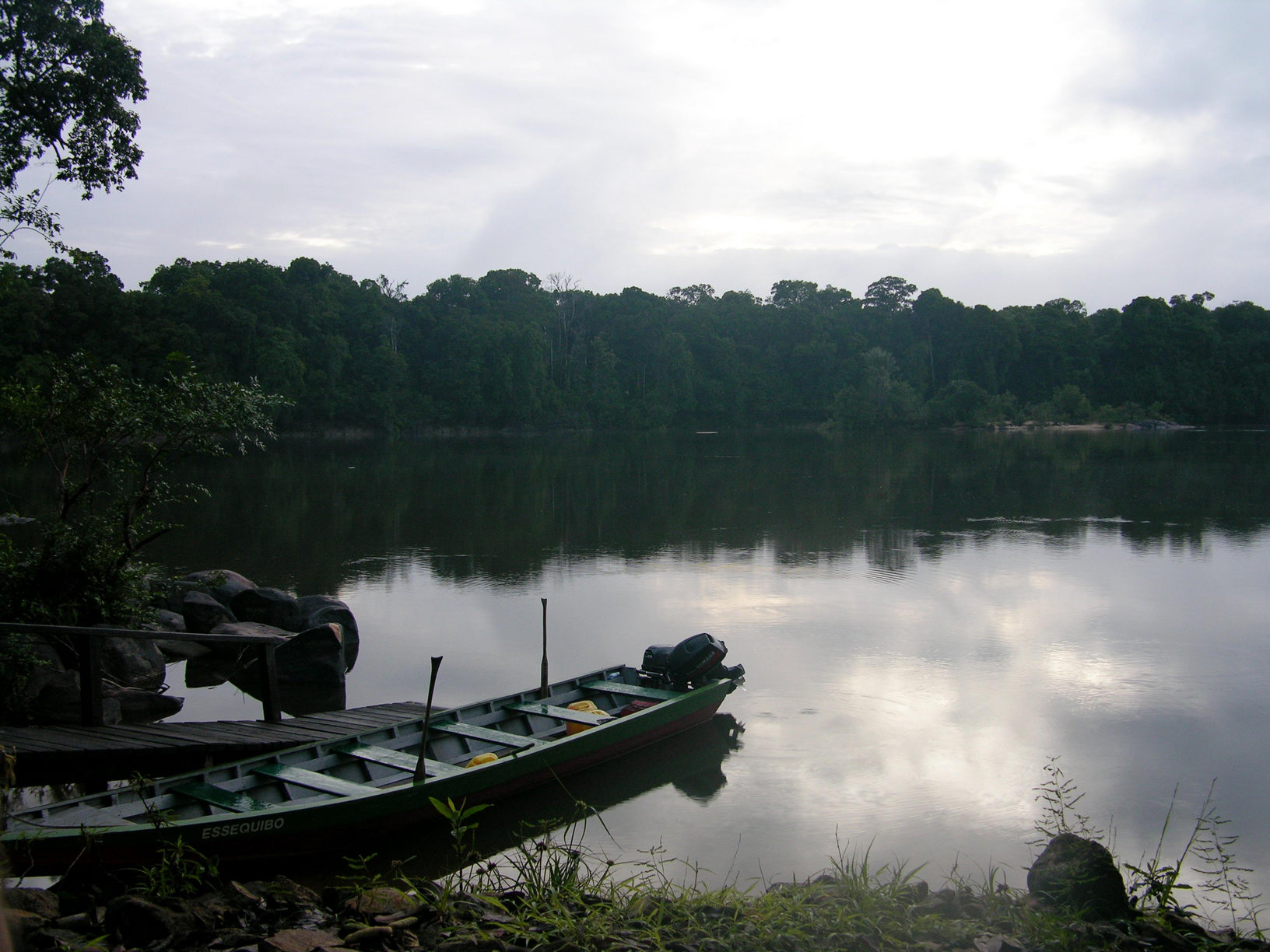
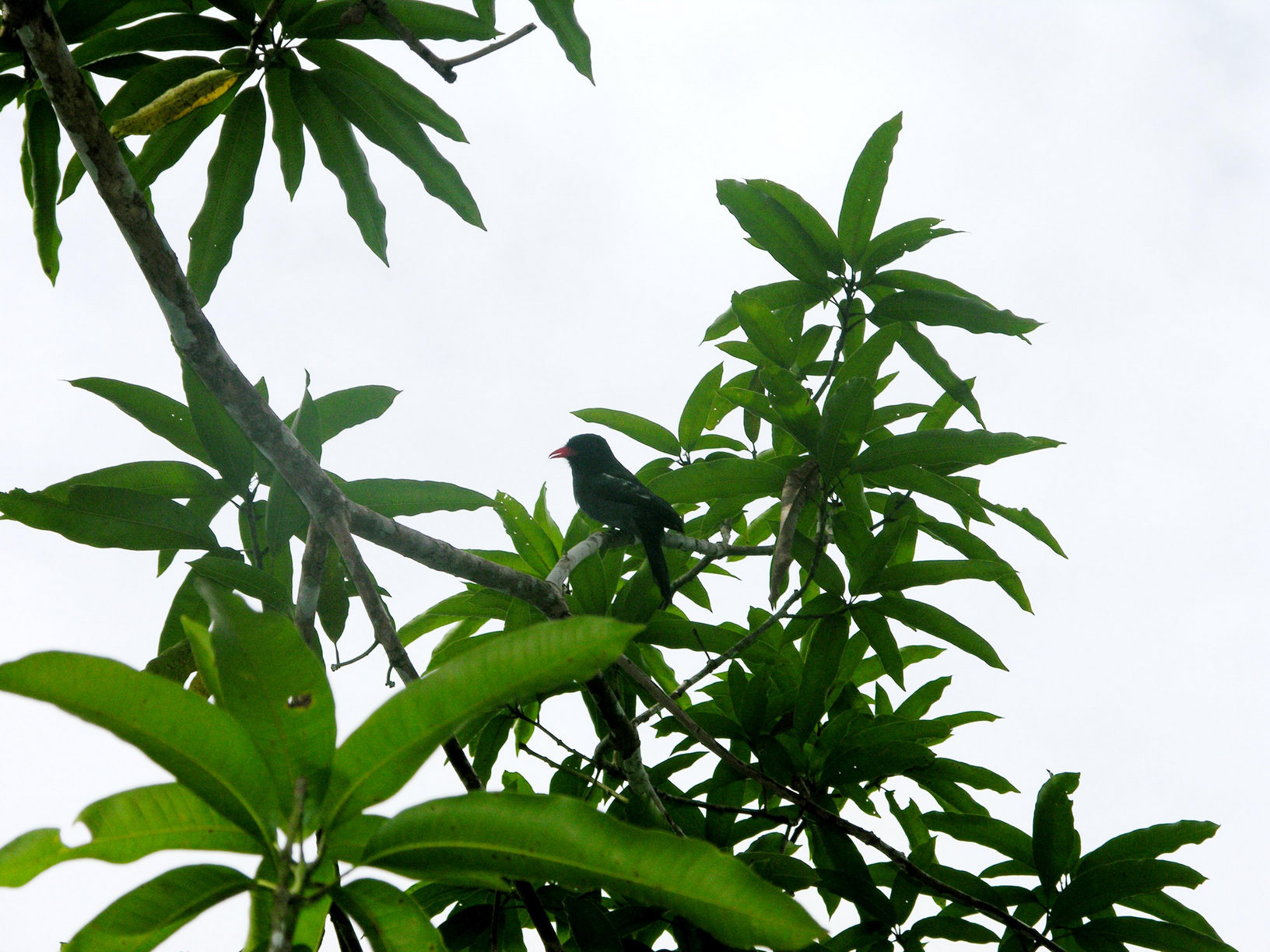
But it wasn't all bad. Firstly there really are a lot of birds at Iwokrama. Not knowing how to get rid of us, the guide handed us a book, Birds of Venezuela, and a pair of enormous binoculars. Now we had something to do. We saw over sixty species without much trouble.
The food at Iwokrama is delicious too. They feed you wonderfully. It's just that breakfast is at sunrise and dinner at sunset. The best times to sit in the forest. But they had a timetable, you see, just like a prison. There was no fence, of course. Only if you slipped off into the forest without permission, they'd start looking for you at once and shouting for you to come to the dining hall. We spent the most interesting time of day at a table.
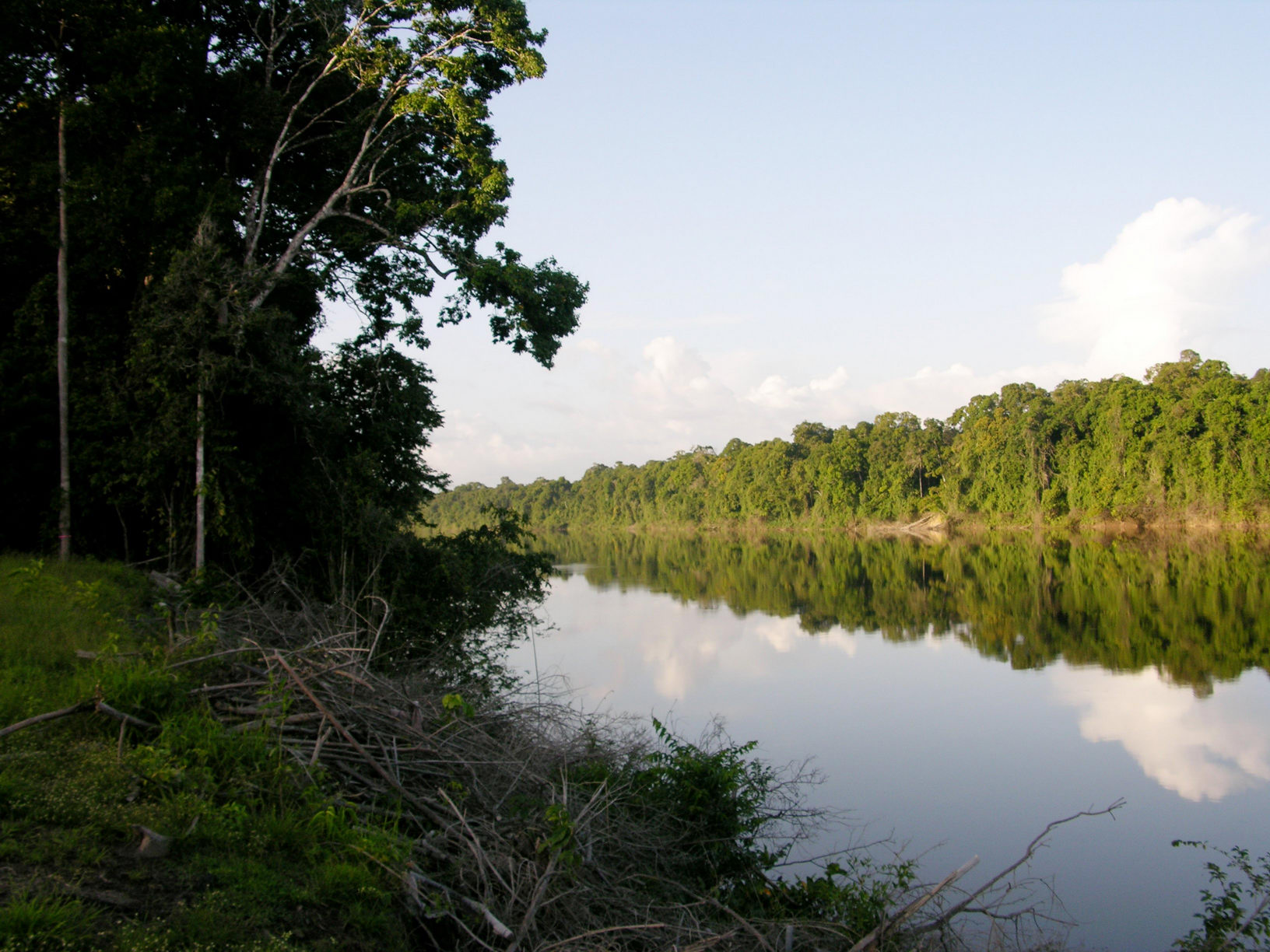
Naturally we ignored the bans and went walking on our own, but those three days turned into an ordeal of doing nothing. For a good part of the time all we could do was sit on the little balcony of the cottage and watch Sanko, the only caiman in the river, begging the cooks for chicken and the ferry crossing the river. It goes one way, half an hour gone. Back the other way, another half an hour. Four times round and you can go to the dining hall.
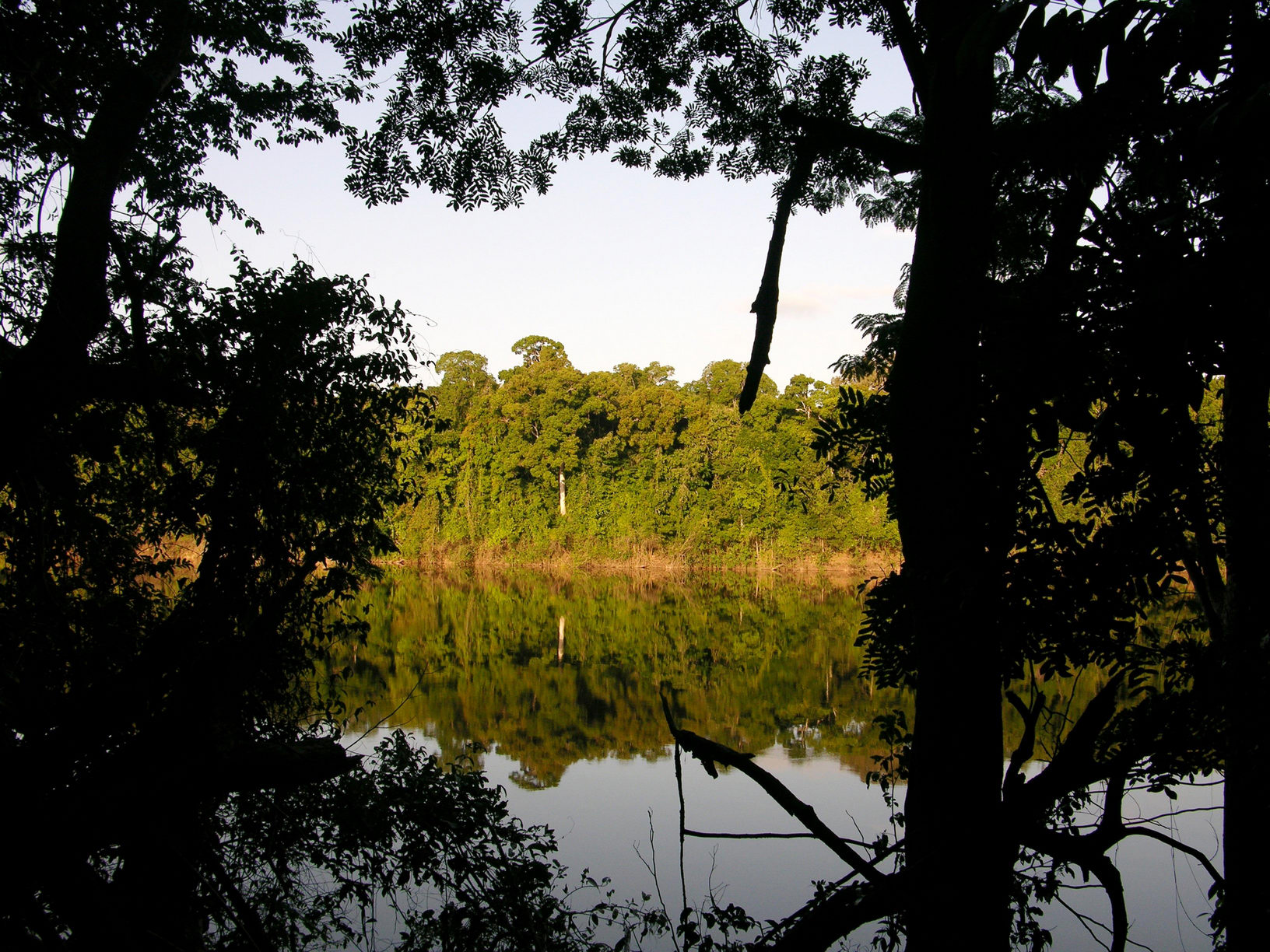
Out of boredom you can go swimming in the river. You can even try giving Sanko the caiman's tail a tug. He's so lazy that he puts up with it without looking visibly annoyed.
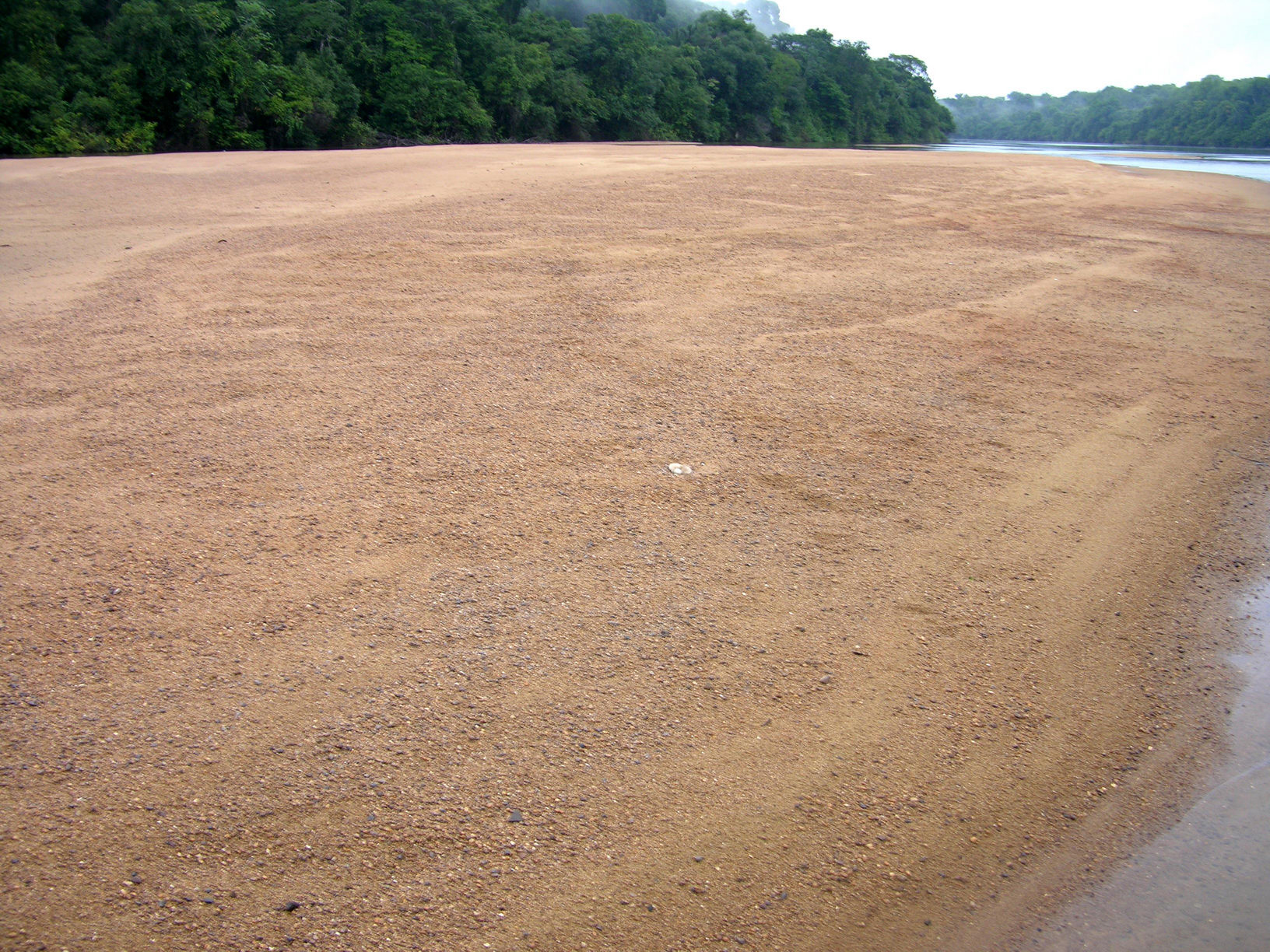
The crowning achievement of this ecotourism was a night-time boat trip with a torch to look for caimans. We duly discovered the selfsame Sanko in the grass by the river. Well, one more half-metre caiman had crawled out onto the beach. There were agoutis and a mouse on shore.
In daylight they took us to a solitary petrel nest on the beach. In Russian you can use the usual word for a petrel, burevestnik, or call it a fork-tailed storm petrel. For some reason the second name never caught on. Imagine how stirring it would sound in Gorky's poem:
“Proudly soars the fork-tailed storm petrel over the wide expanse,
Like a bolt of blue lightning…”
In Chile or the Falklands there'd be hundreds of nests like that. Here you have to go out in a boat especially to see one.
Iwokrama also has a canopy walkway, a set of bridges suspended among the treetops. You can walk along it and watch the lives of birds and monkeys where they spend most of their time. I'd understand it if you could climb up onto such a walkway, hide in a blind and stay three hours in the morning and another three in the evening. But when several tourists in bright clothes go up there with a guide, chattering away in the middle of the day and shaking the treetops… Even the sparrows at a rubbish dump would scatter. Still, we were lucky. A white-throated toucan was perched on a treetop a hundred metres away. Some English nature volunteers had been let out onto the walkway under escort along with us. At first we were pleased to meet them. We thought we might be able to arrange something unofficial. Then it turned out they weren't allowed to go walking unescorted either. And when one of them heard a cicada and asked “Is that a parrot singing?”, our hopes collapsed completely.
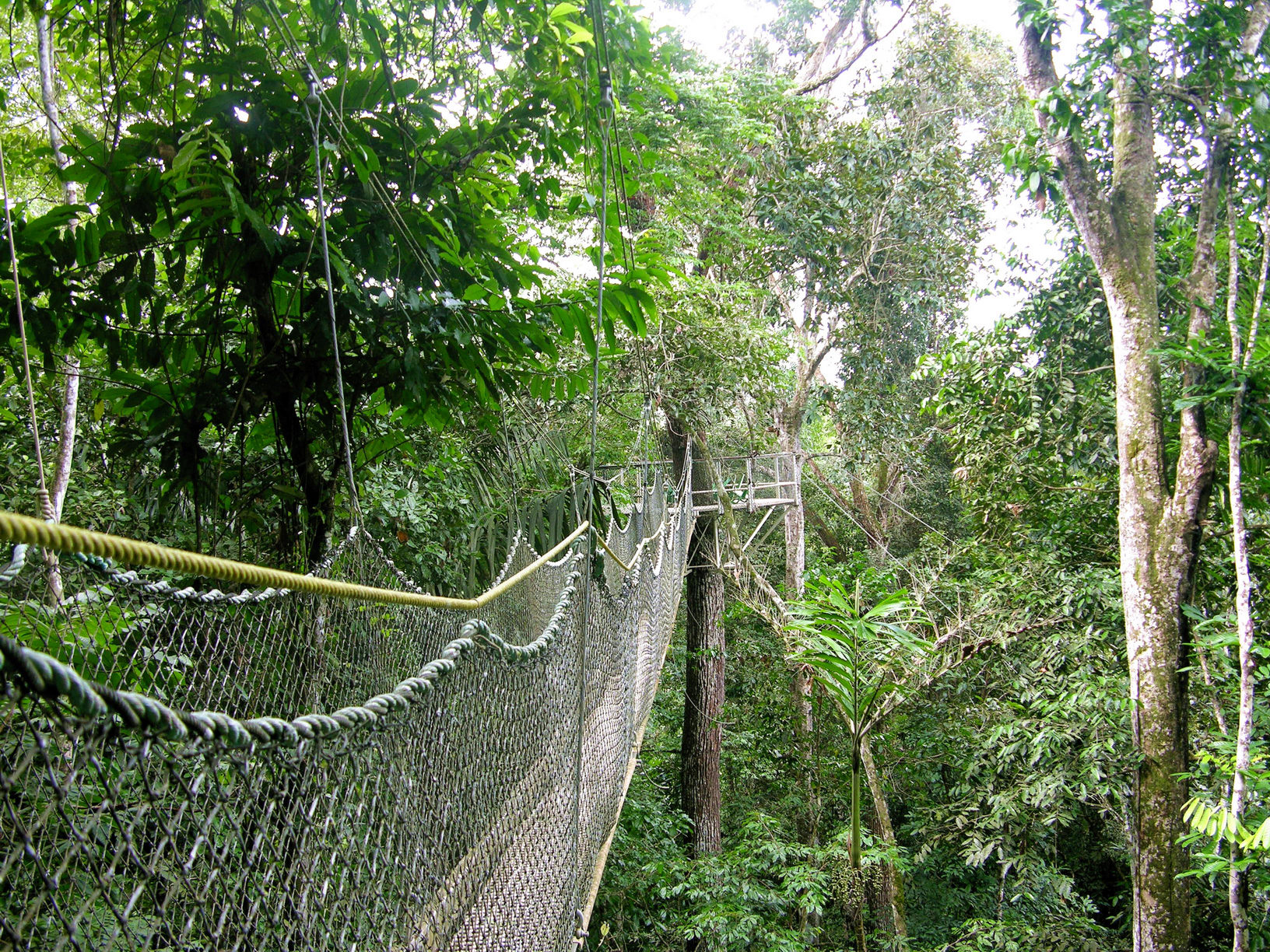
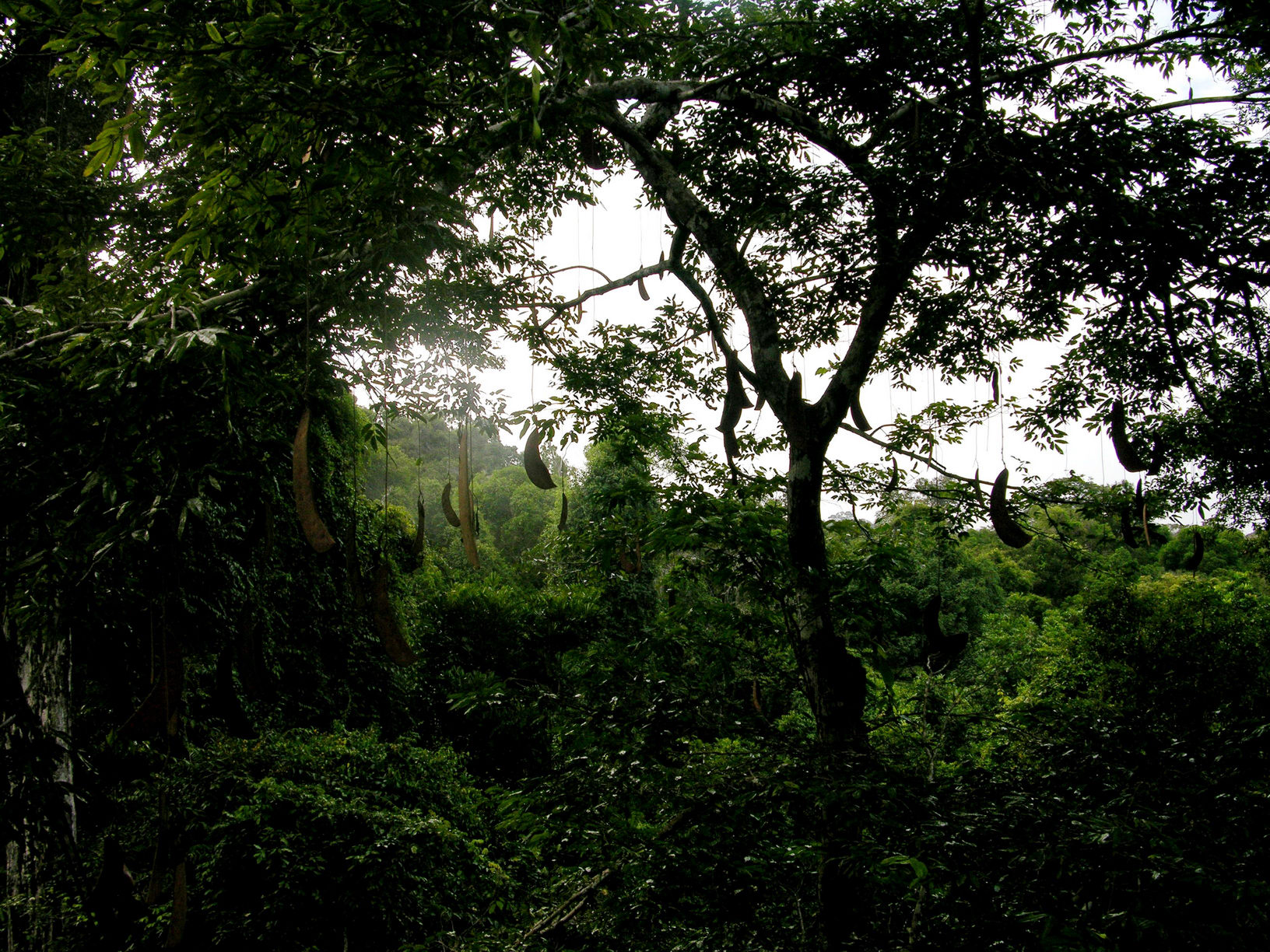
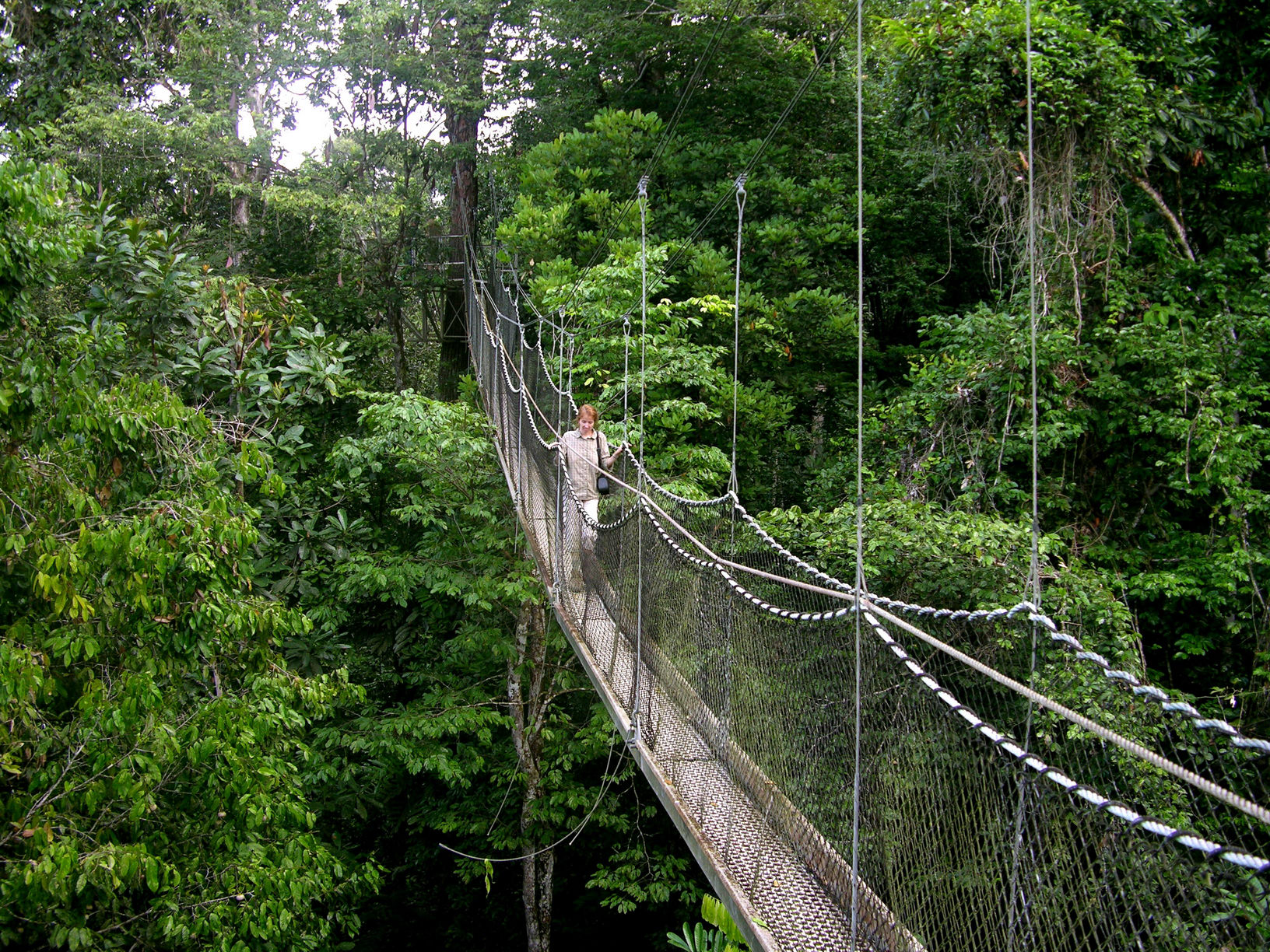
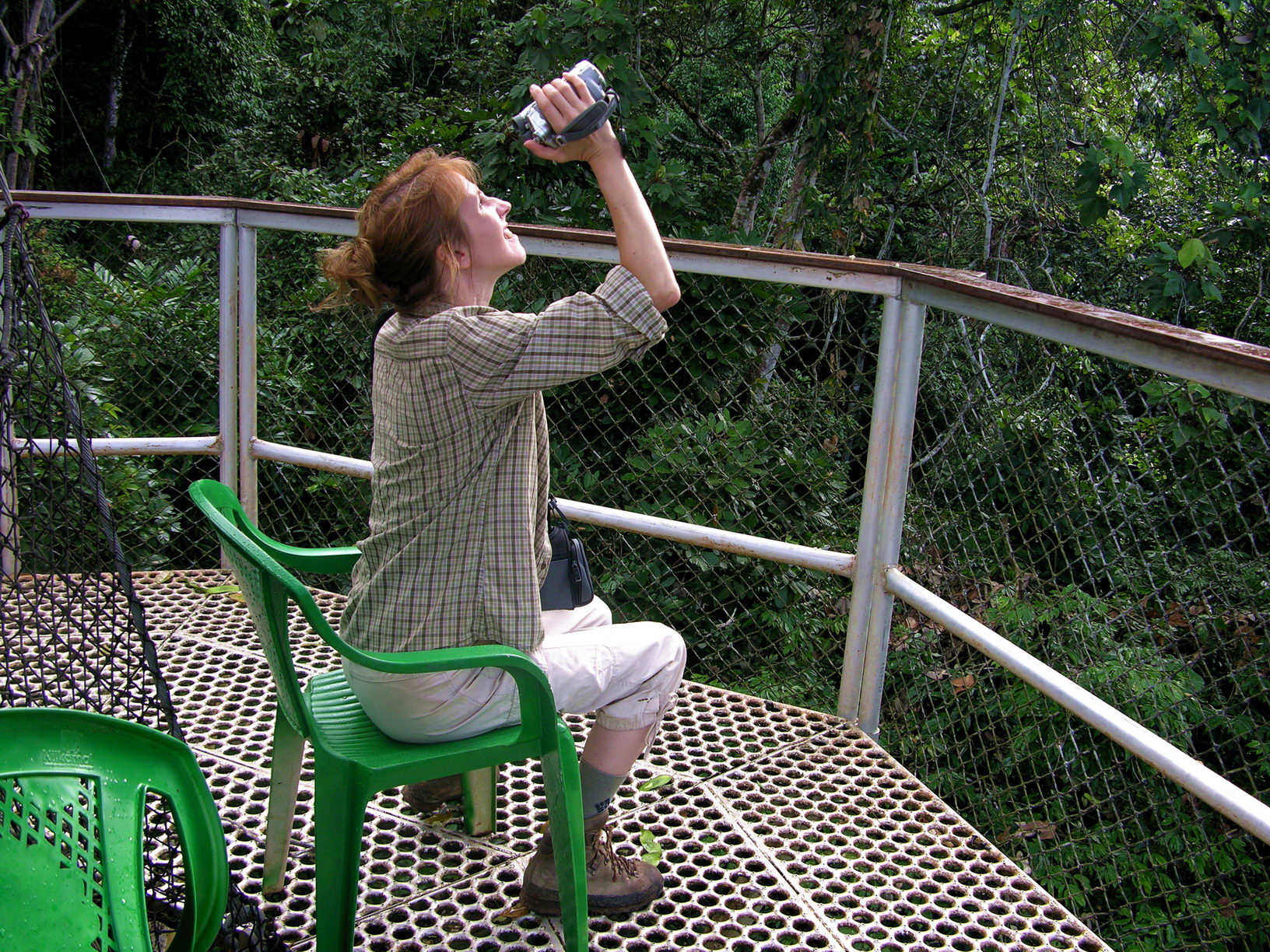
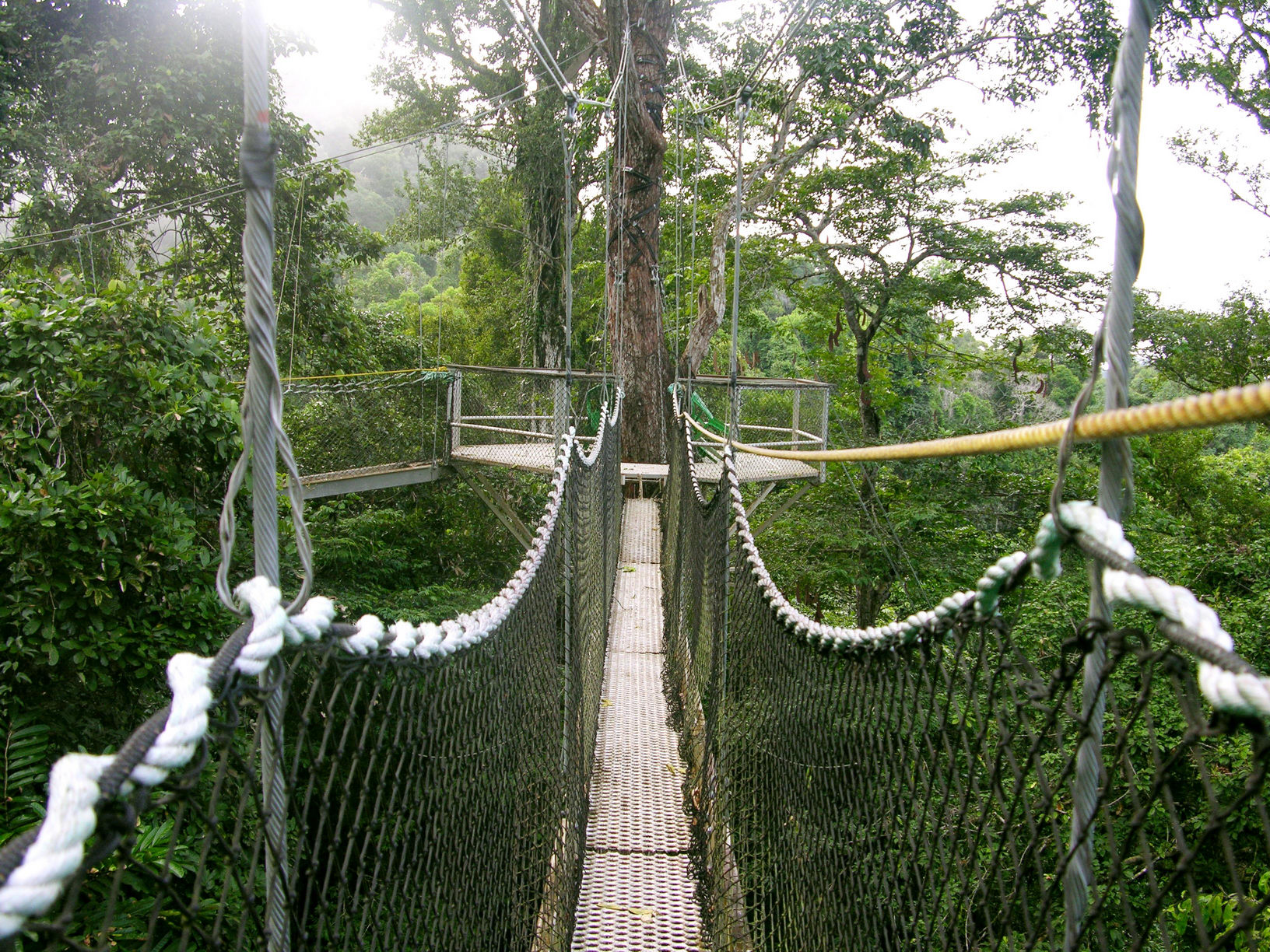
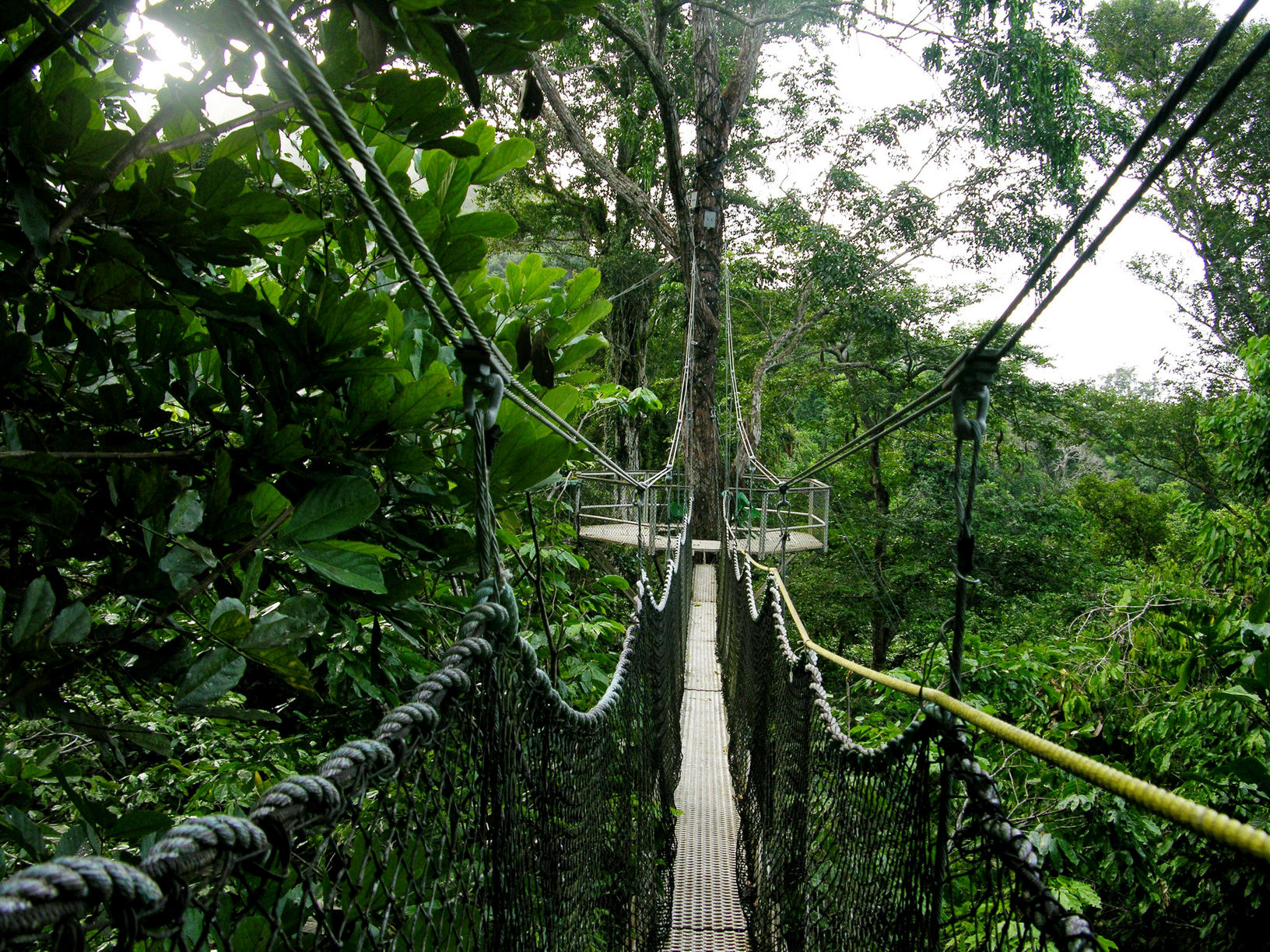
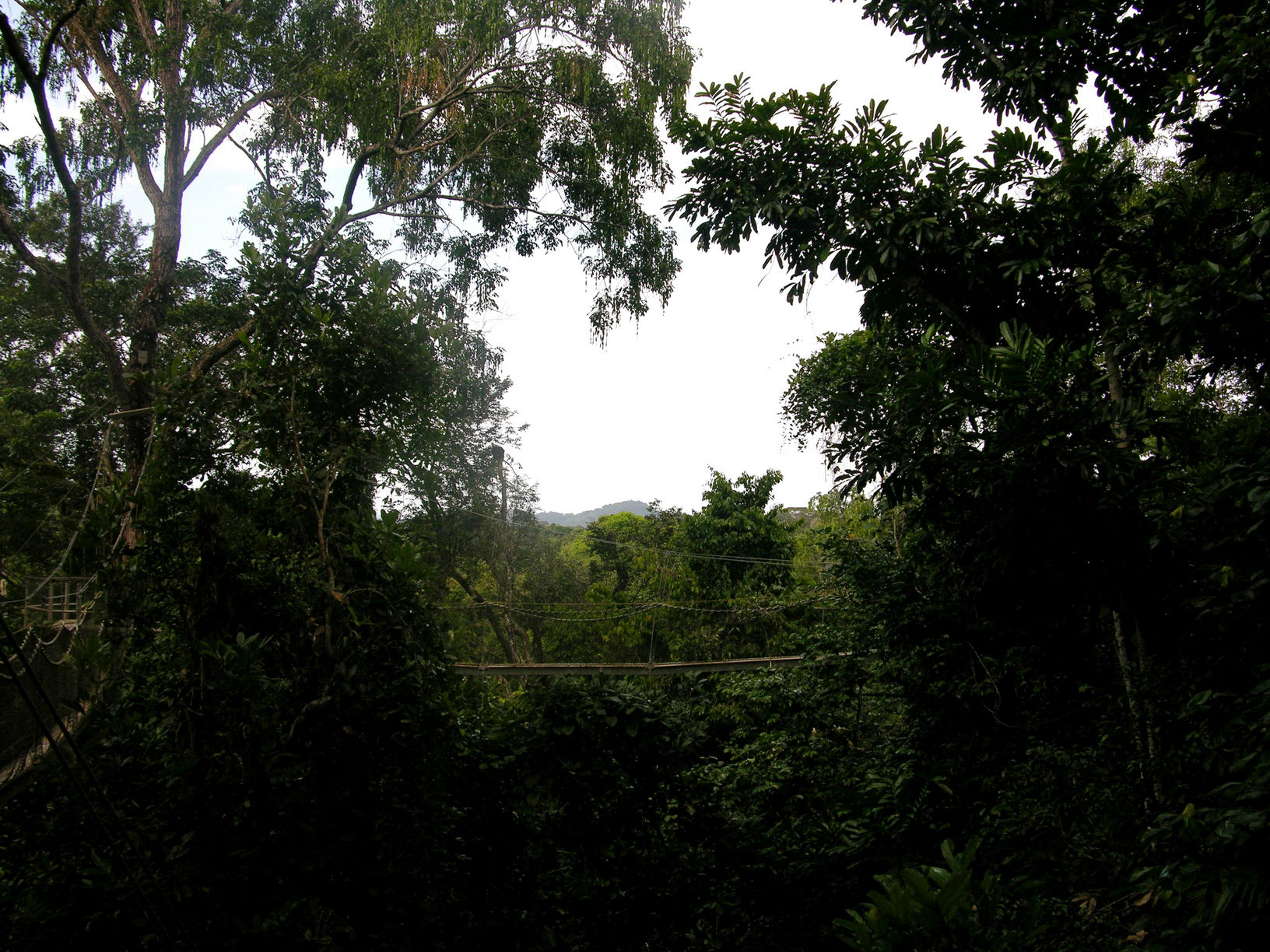
The canopy walkway is sixty kilometres from the main camp, along the main road. If you get there before the ferry starts, you can see all sorts of animals on the road, even a jaguar. There are several dozen jaguars in Iwokrama. In Indigenous villages they even steal chickens and calves, but in the forest they'll smell and hear you long before you can see them. Your one hope is to meet them on the road, where they come out in the morning to dry their fur after the rain.
You may also see the biggest eagle, the harpy. Unlike its smaller relatives it can't soar over the forest. It's too heavy. Its only option is to sit in ambush at the edge of a clearing or a road.
All well and good. We got up at five in the morning, but unfortunately everyone was late. In the end they drove us after the first cars off the first ferry. No jaguar, of course.
The one thing the guide did help us with was a tour of his home village, an Indigenous community. In Guyana, thirty per cent of the population was reckoned to be Indigenous and only partly integrated into modern society.
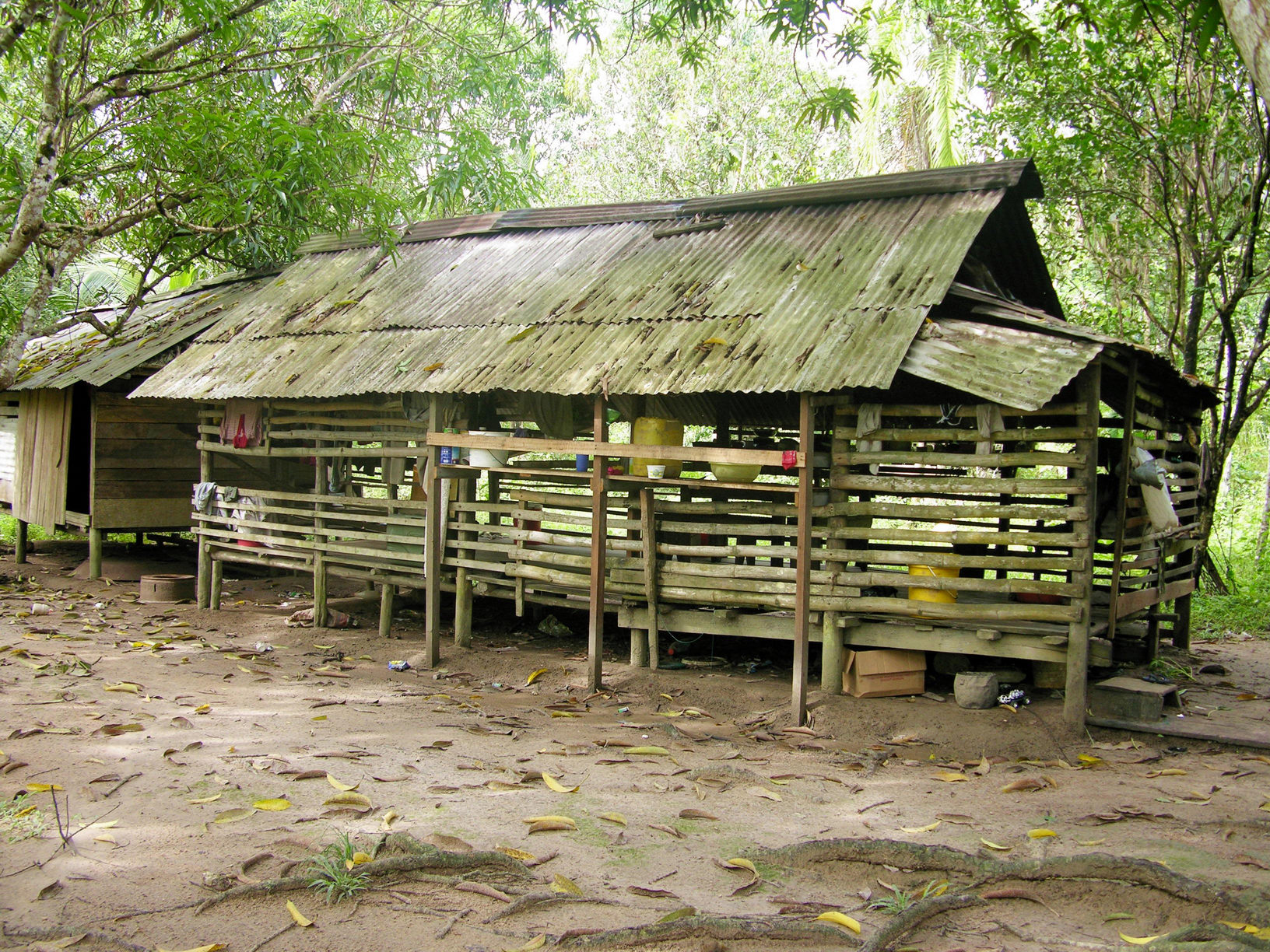
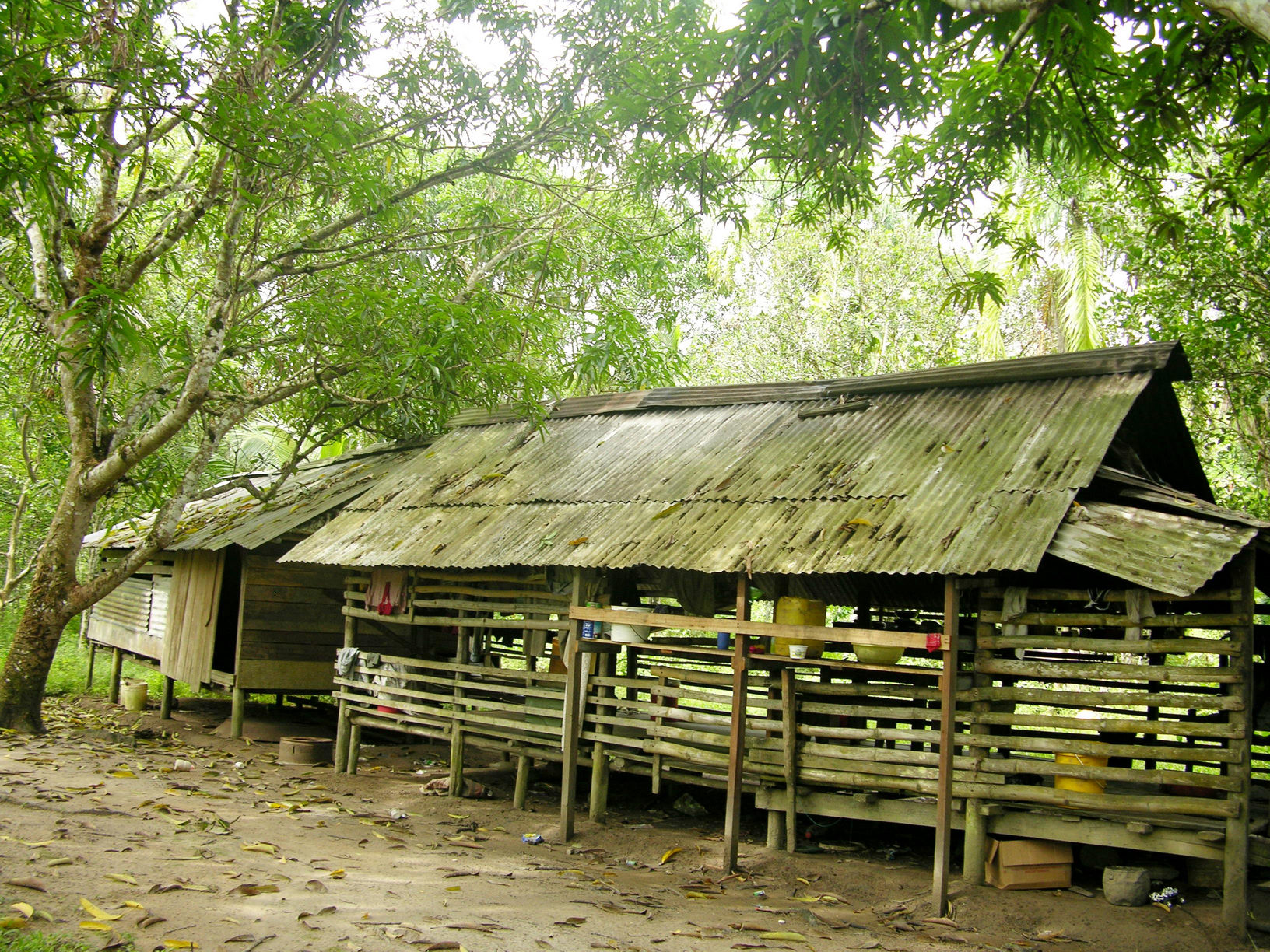
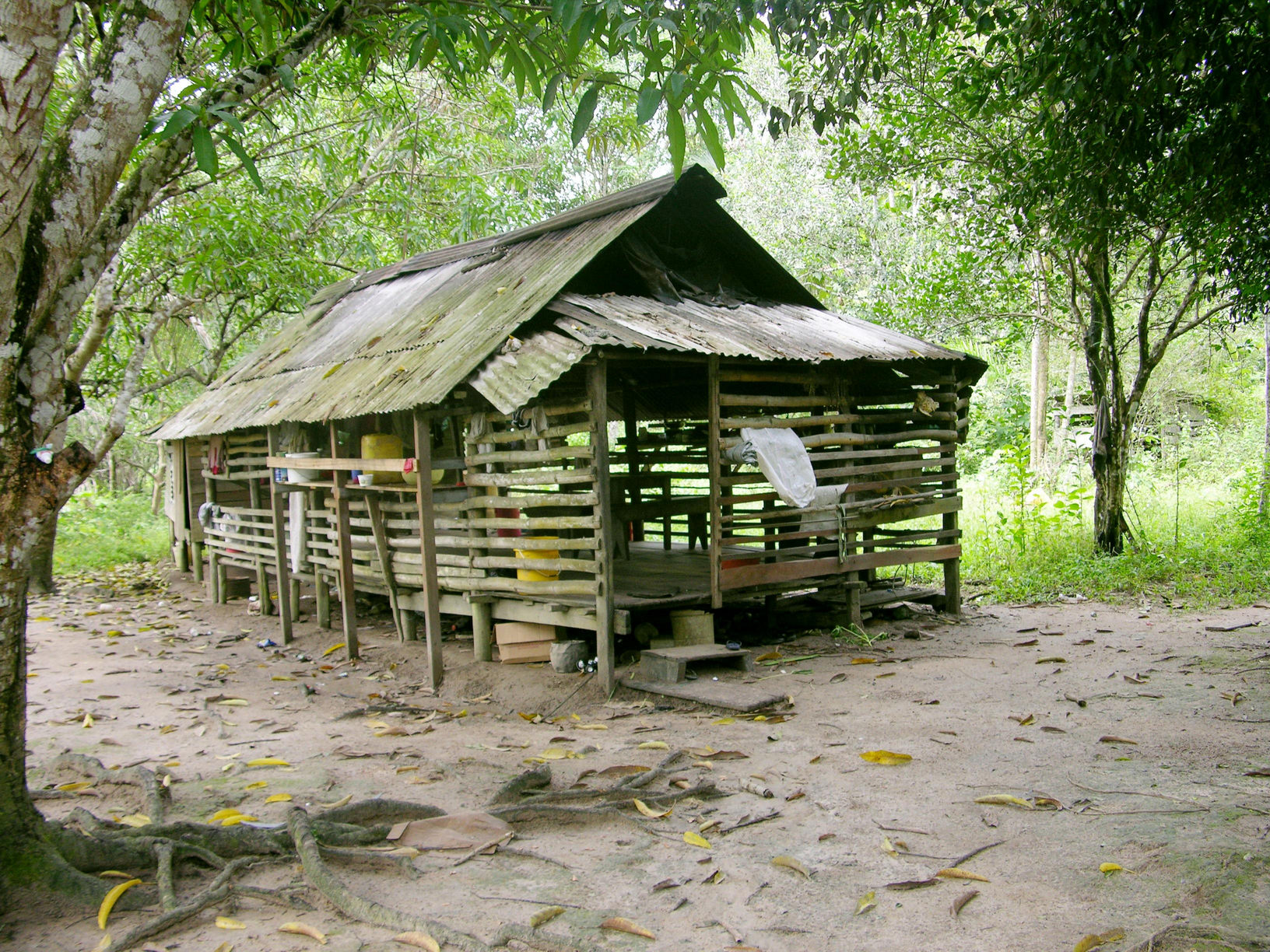
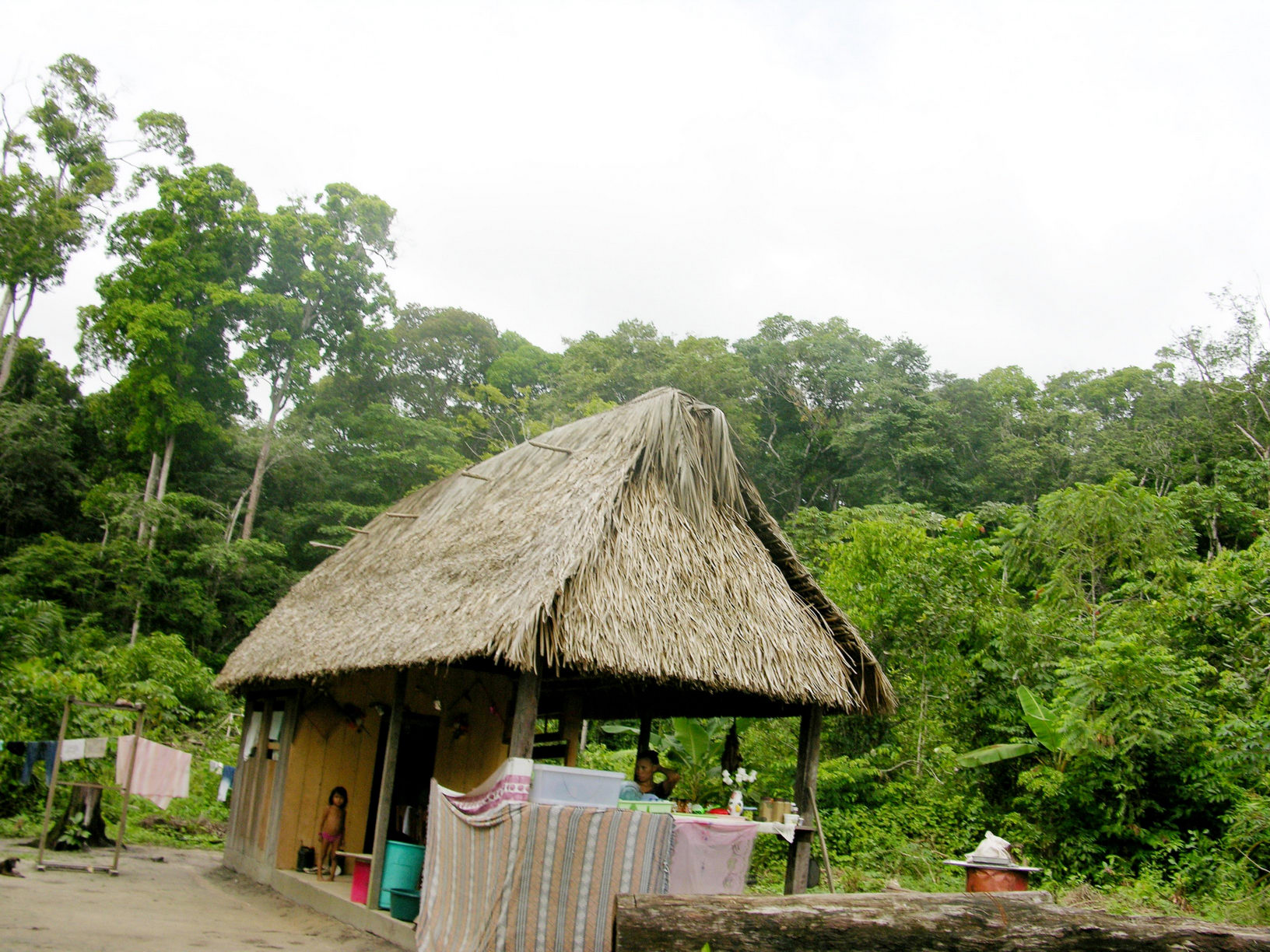
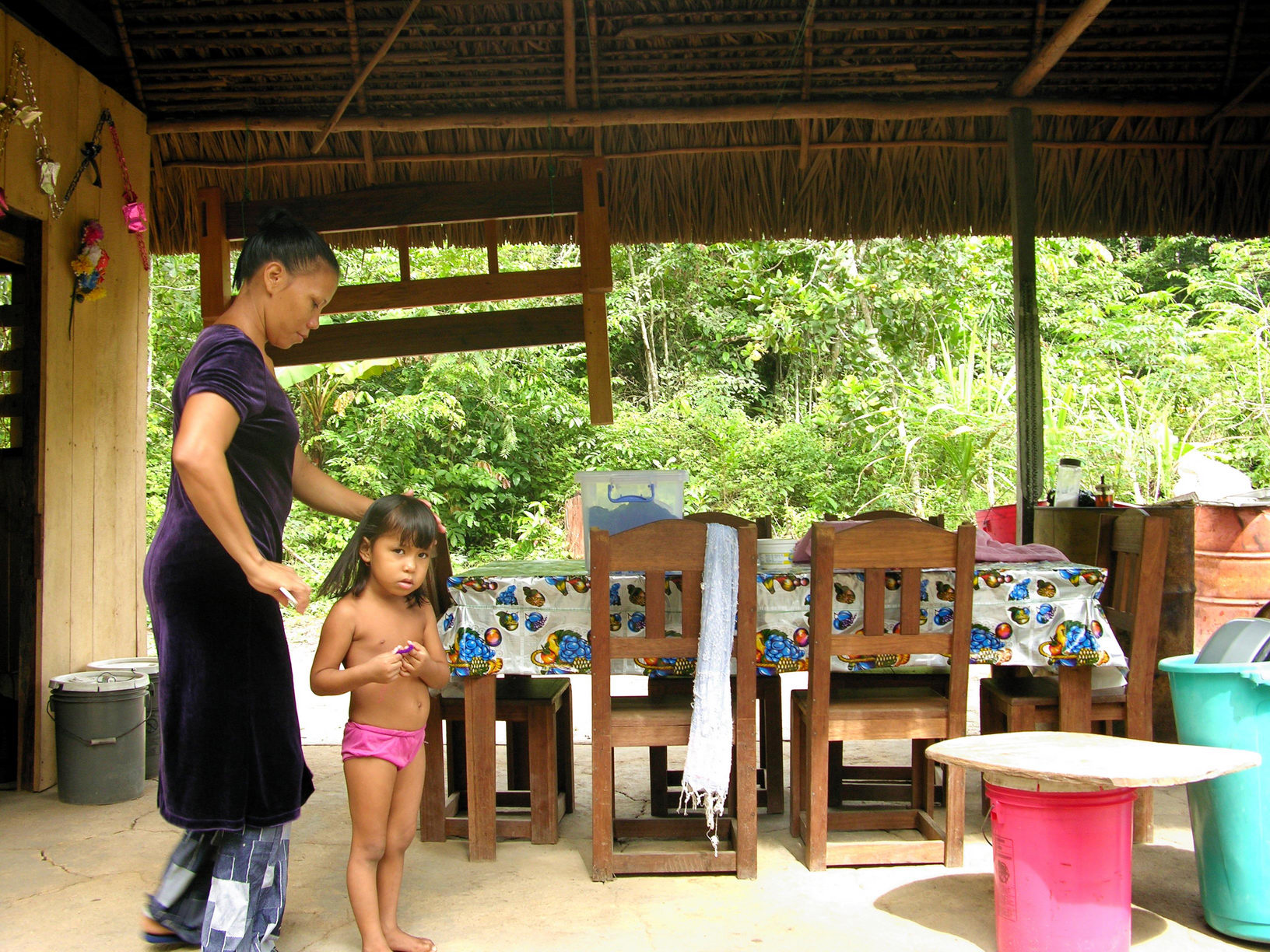
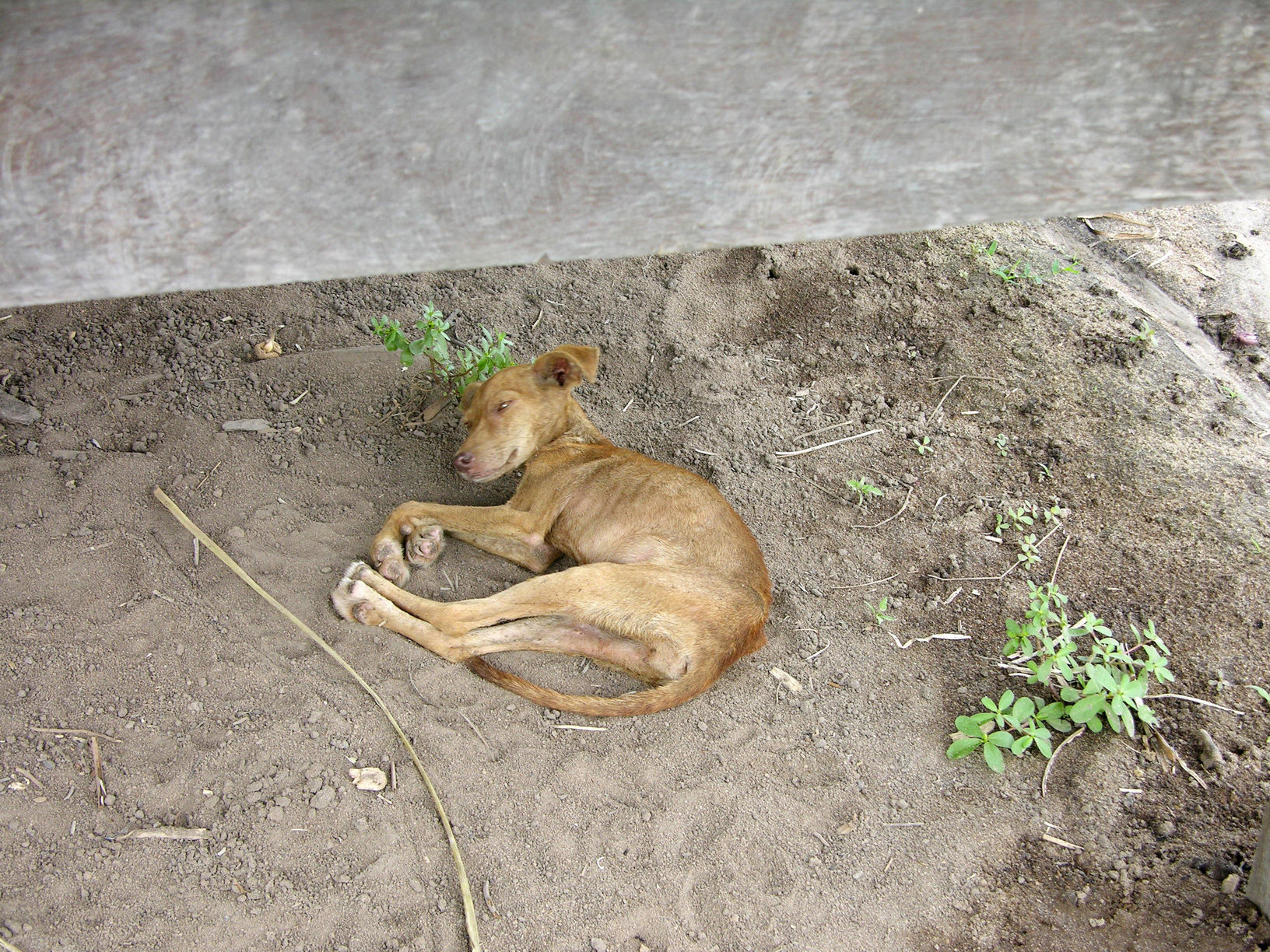
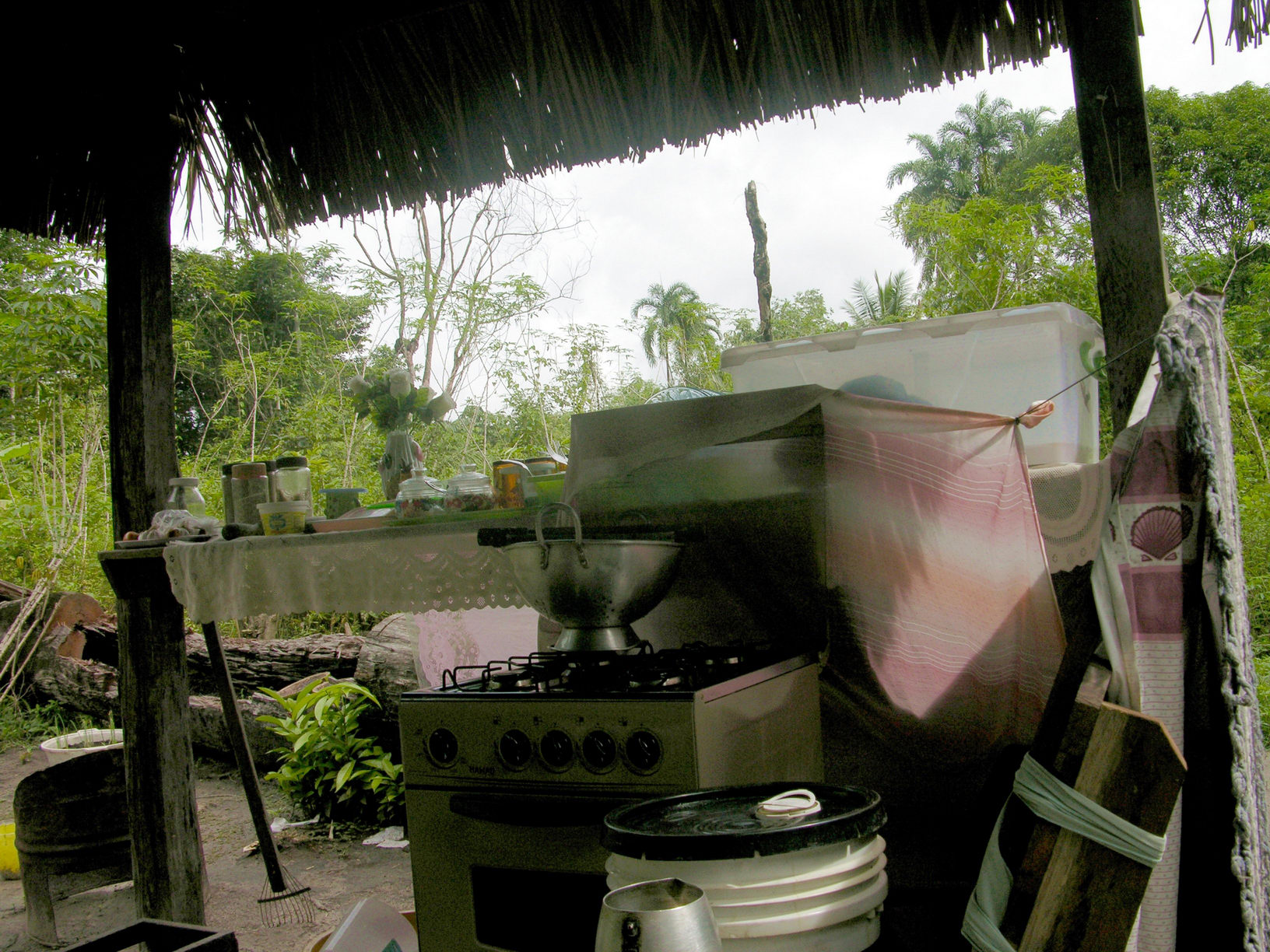
On our own we'd never have presumed to walk into other people's homes and take pictures. Here we had an escort. Everyone knew we'd paid for everything and, it seemed, that entitled us to do whatever we liked.
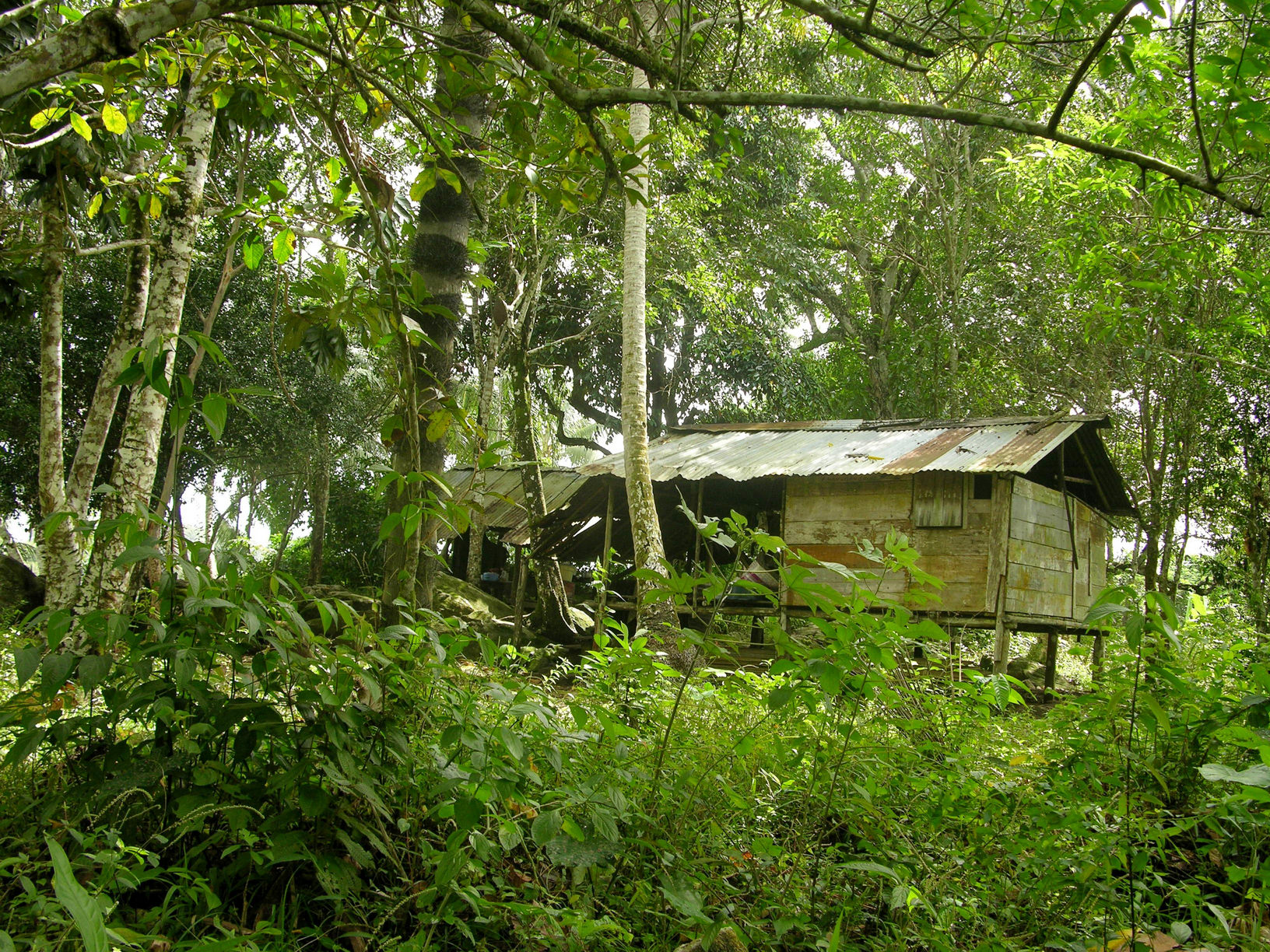
Before the park was established the little village lived much as it had in the Stone Age. They made their homes out of bark, dressed in skins and hunted with poisoned arrows. Now progress is everywhere. The clothes are second-hand European ones, there's a school and even a landing strip for tourist charters.
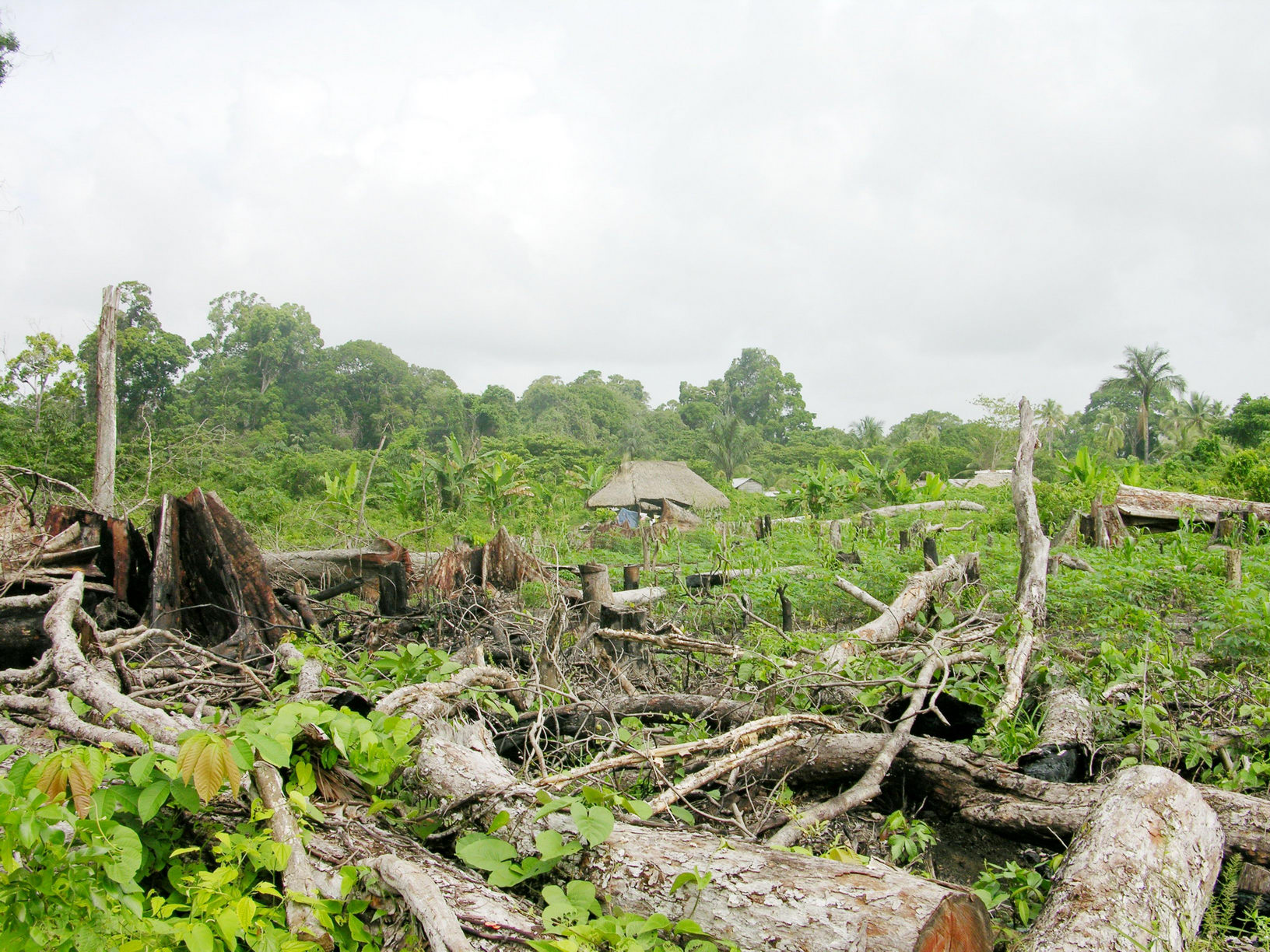
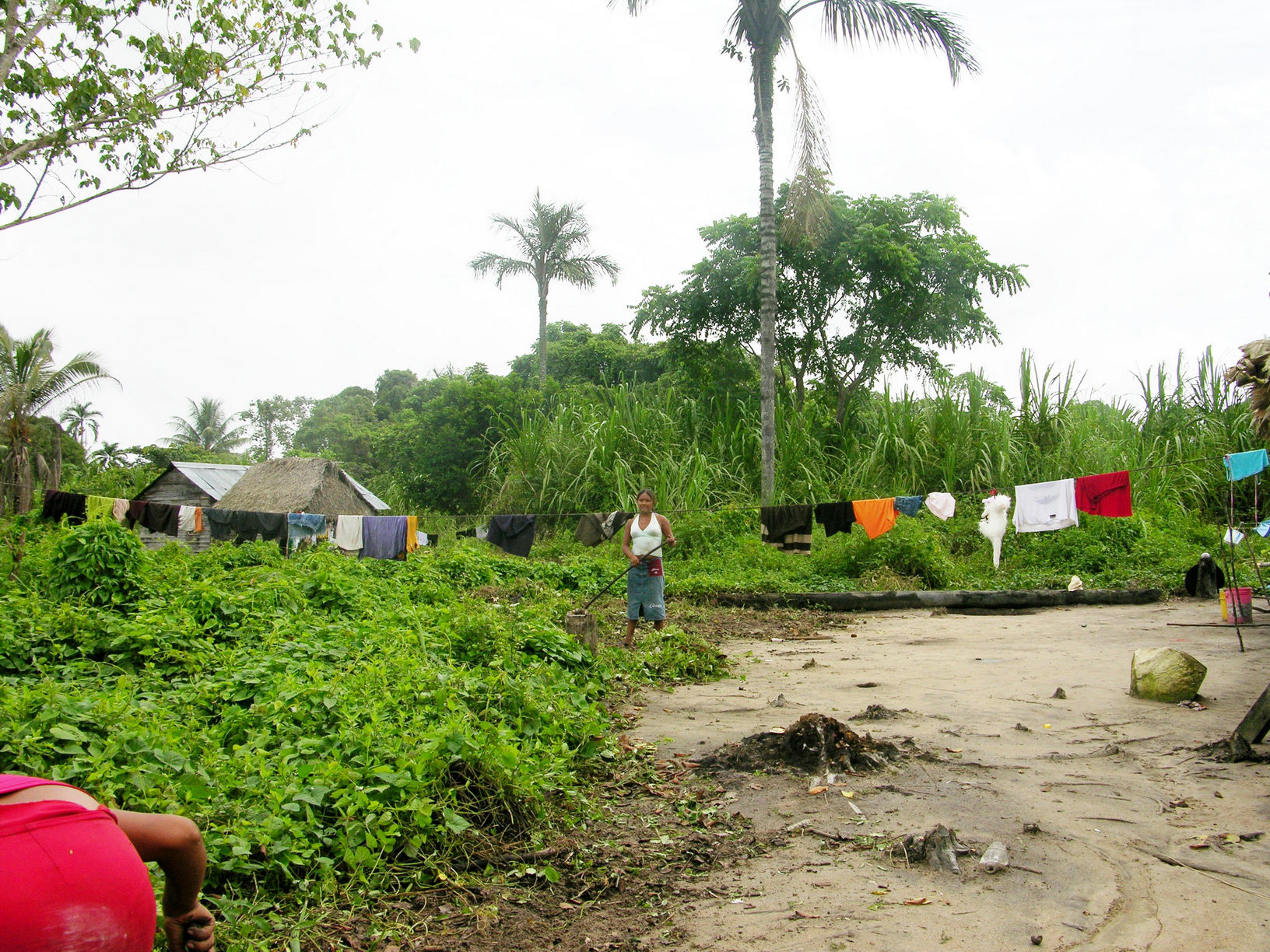
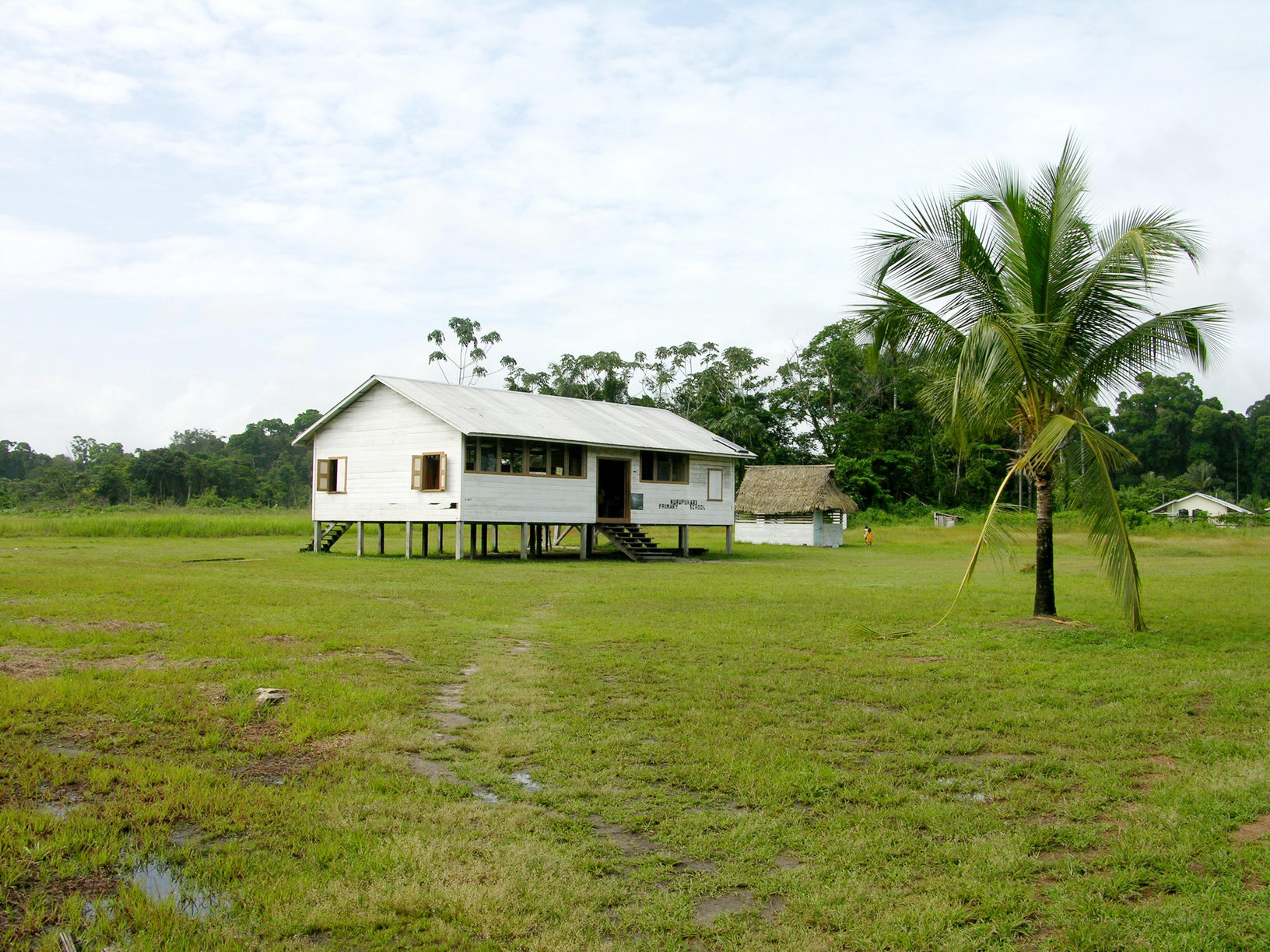
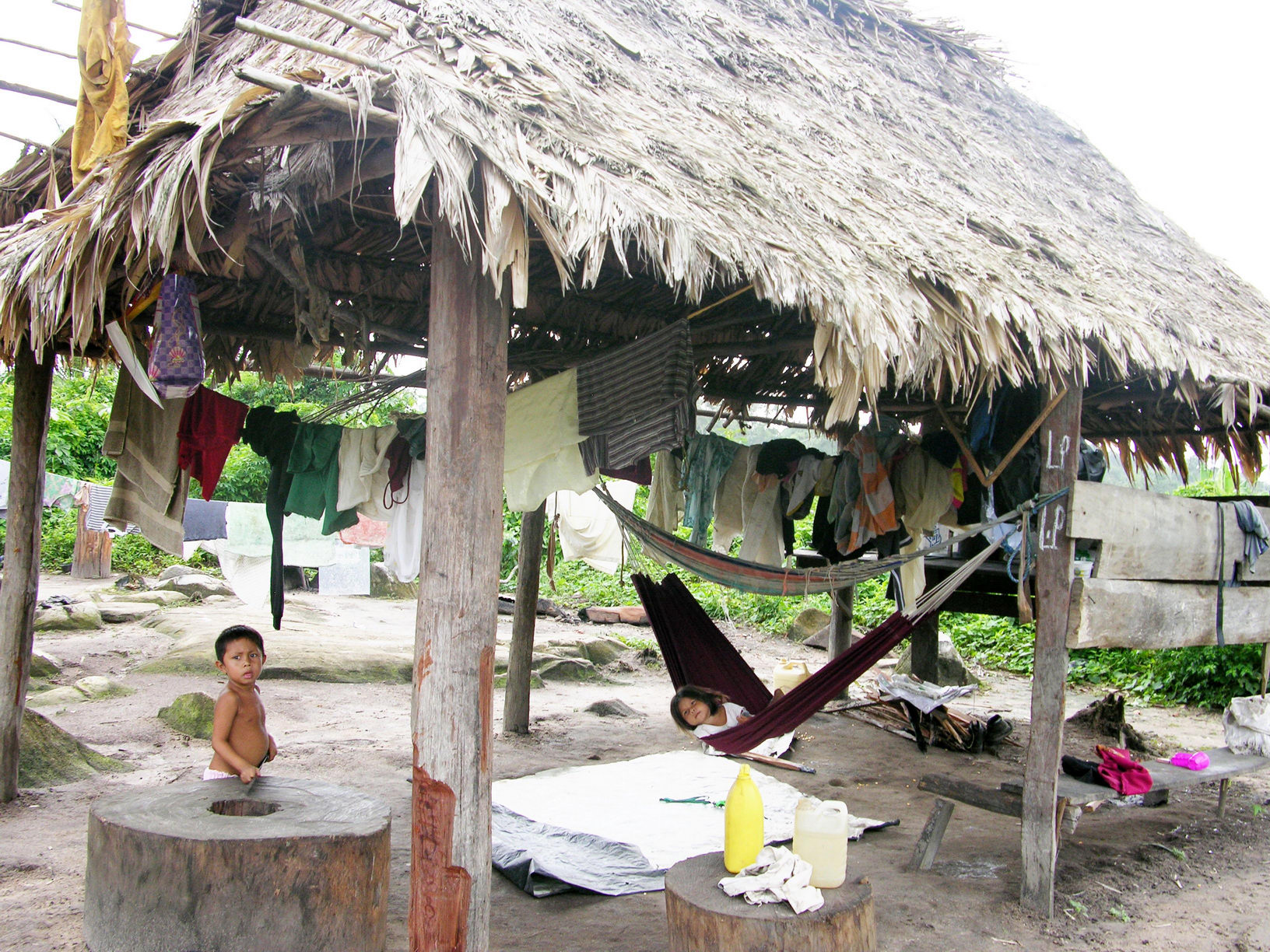
It had lost some of its colour, of course, but the people were the same. Though their village is surrounded by a national park, the Indigenous people are allowed to hunt. They're supposed to eat the catch themselves, though, and not sell it on. Big families live in little wooden sheds with barely enough floor space for everybody to sleep. By day the children run around outdoors.
If there are a lot of children a thatched shelter goes up for them with hammocks.
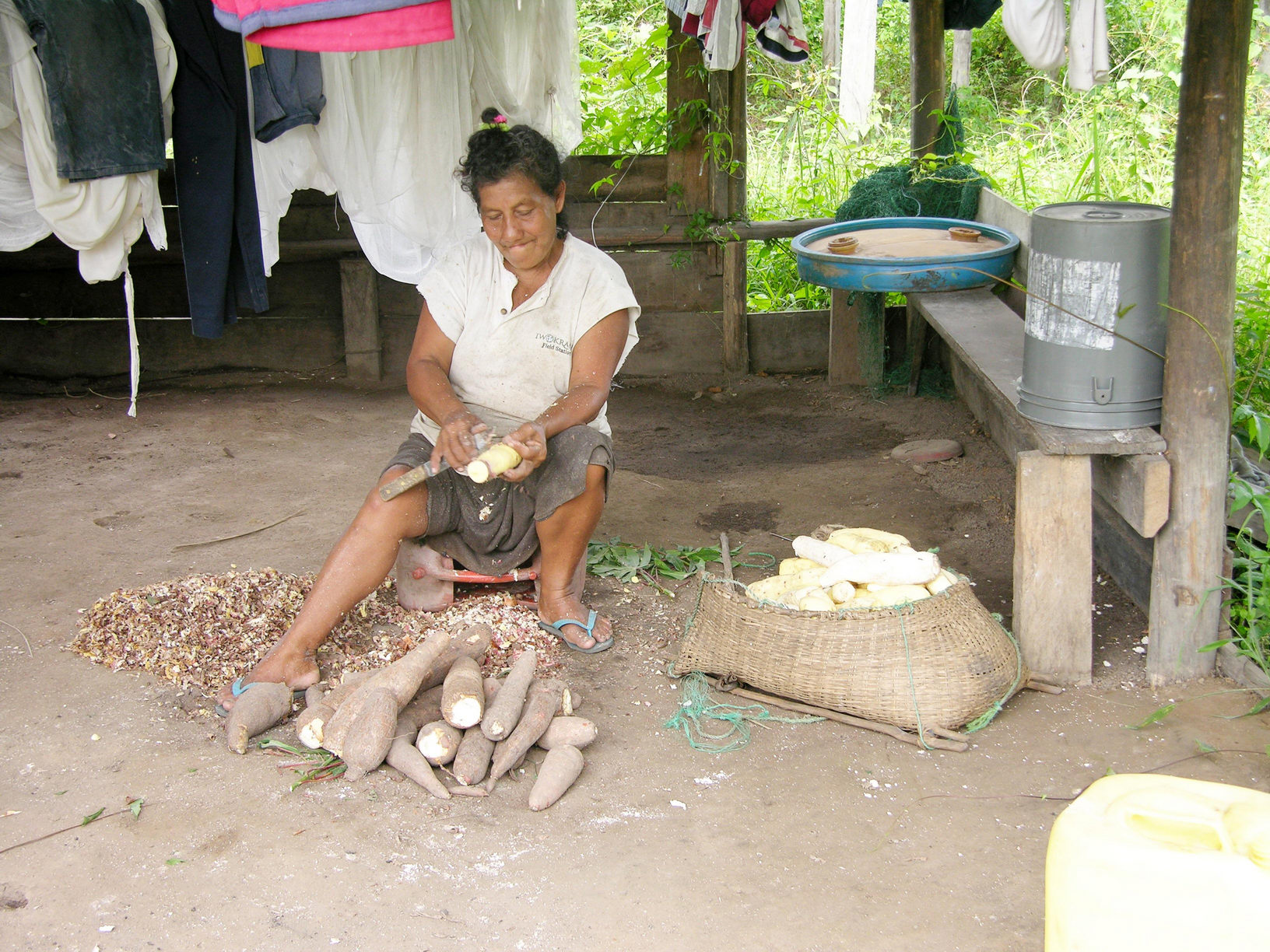
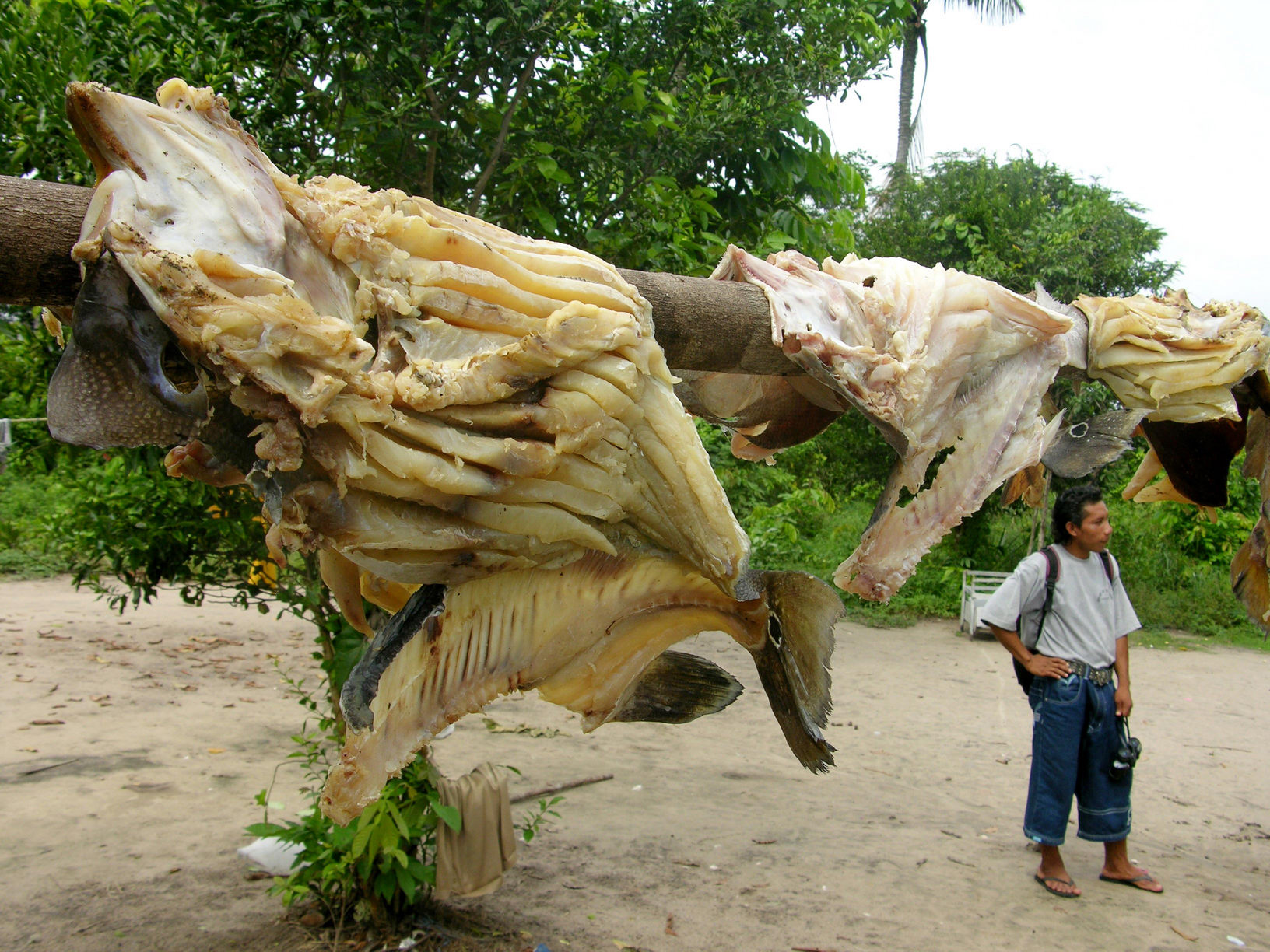
Their staple foods are fish and cassava. They eat surprisingly little. For instance, a two-kilo fish lasts a family of four a week.
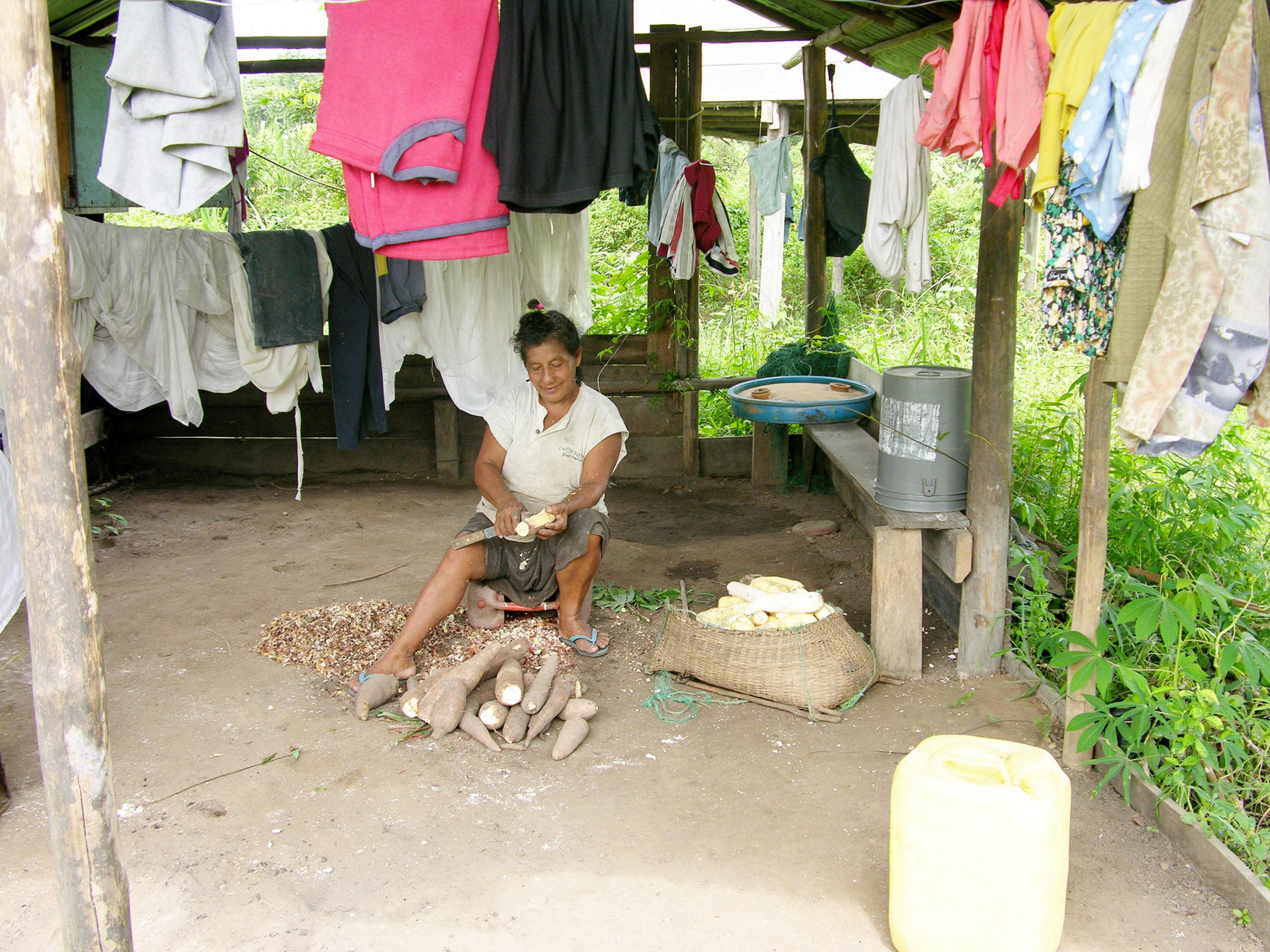
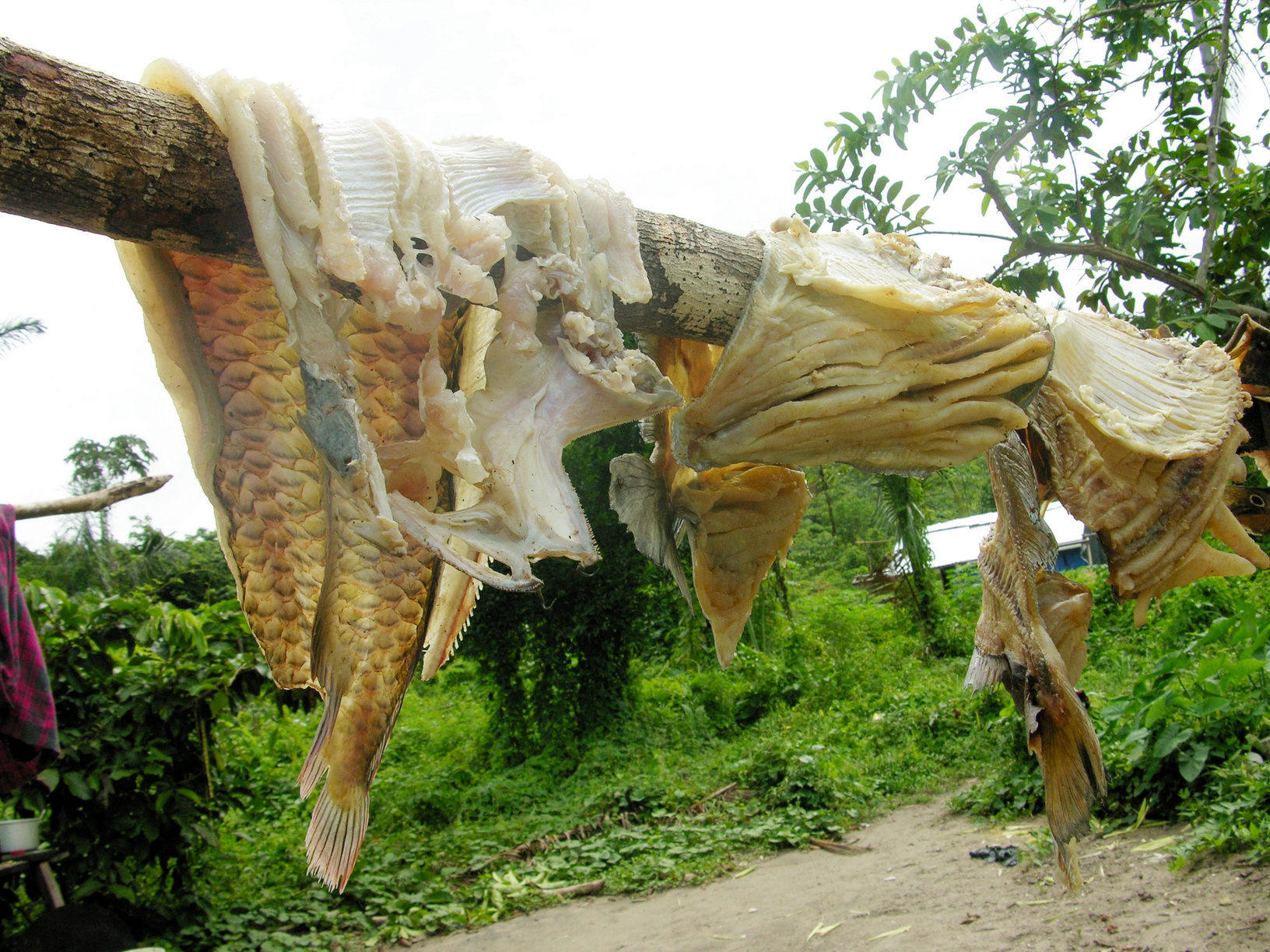
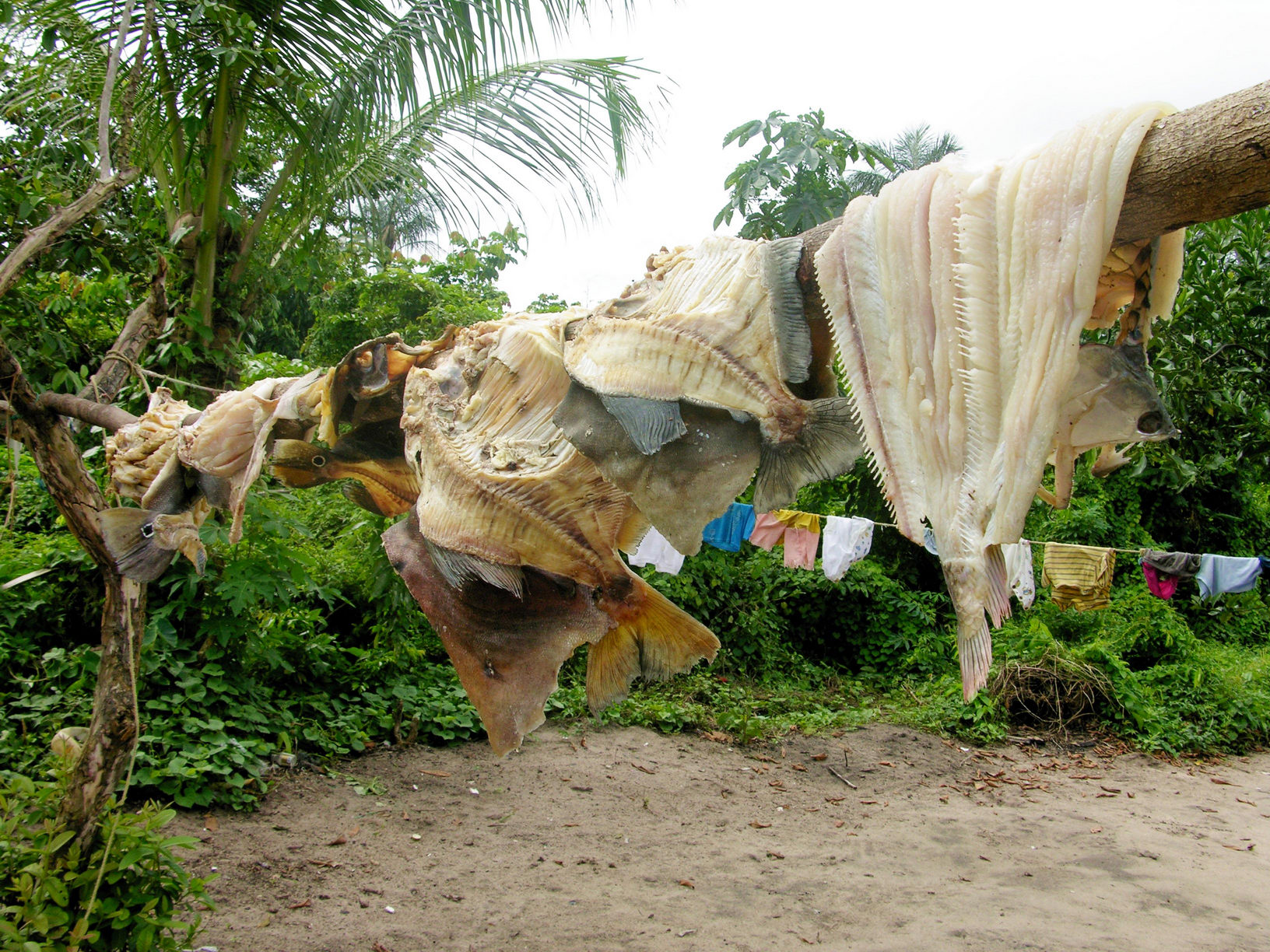
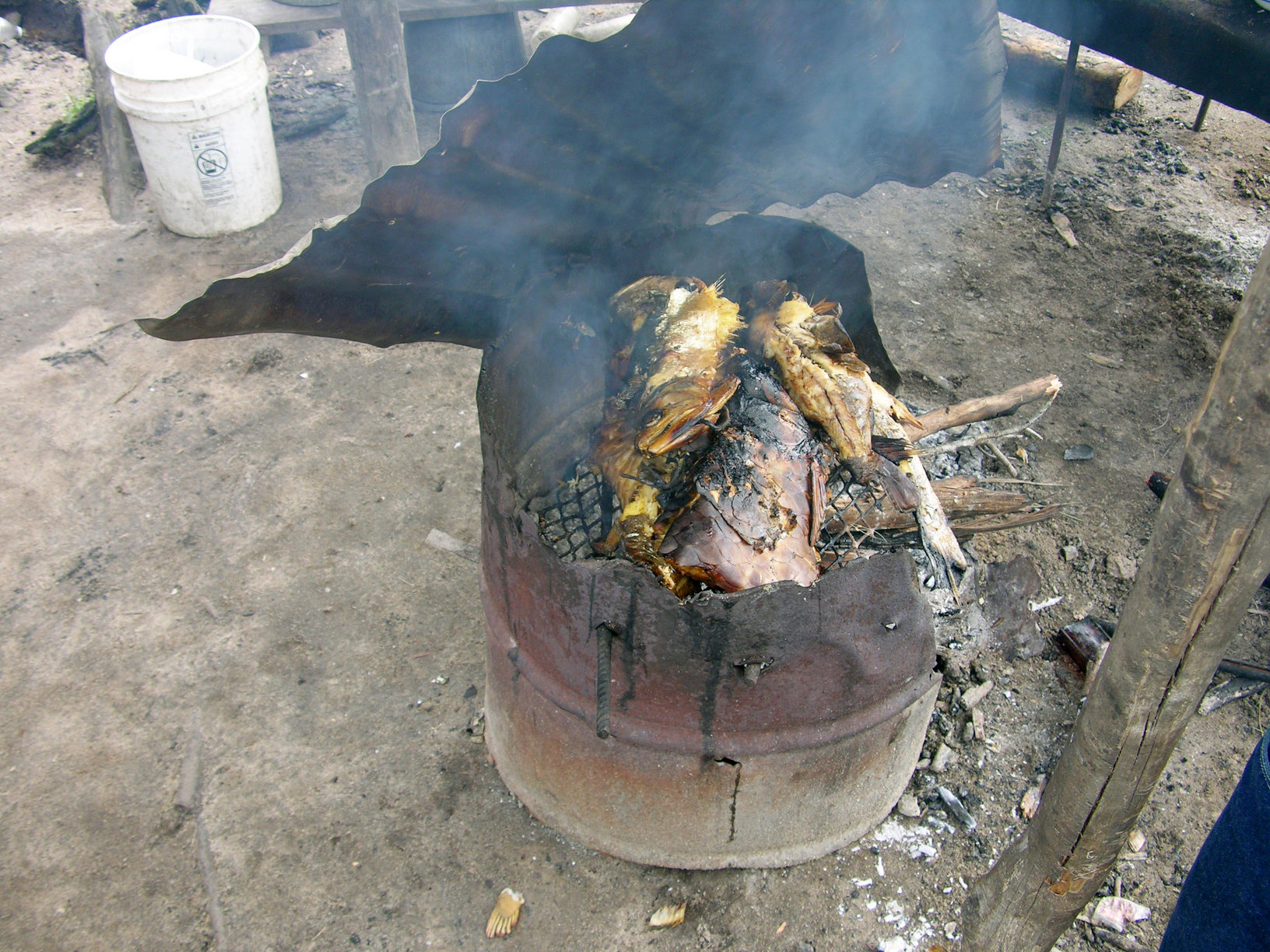
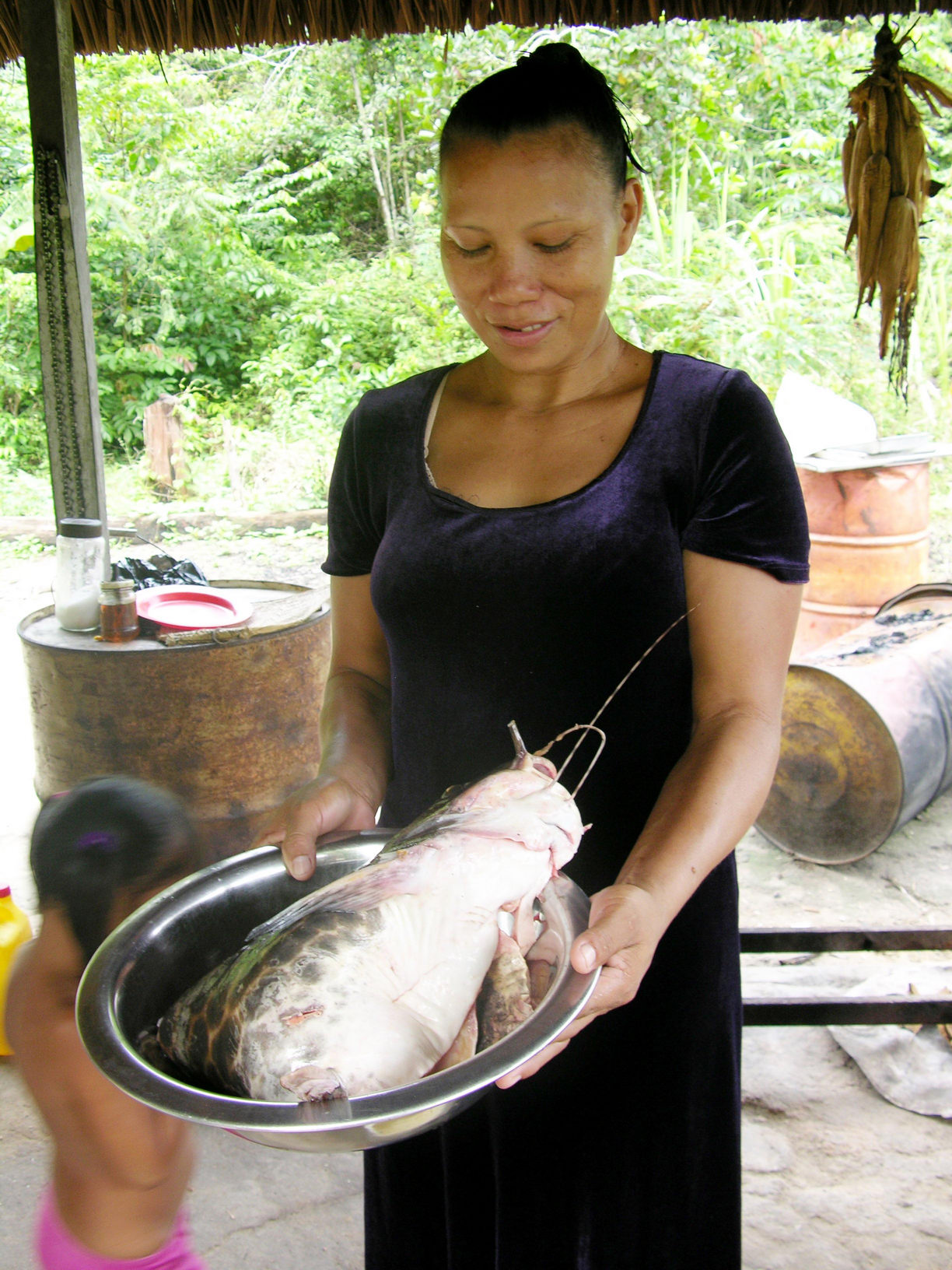
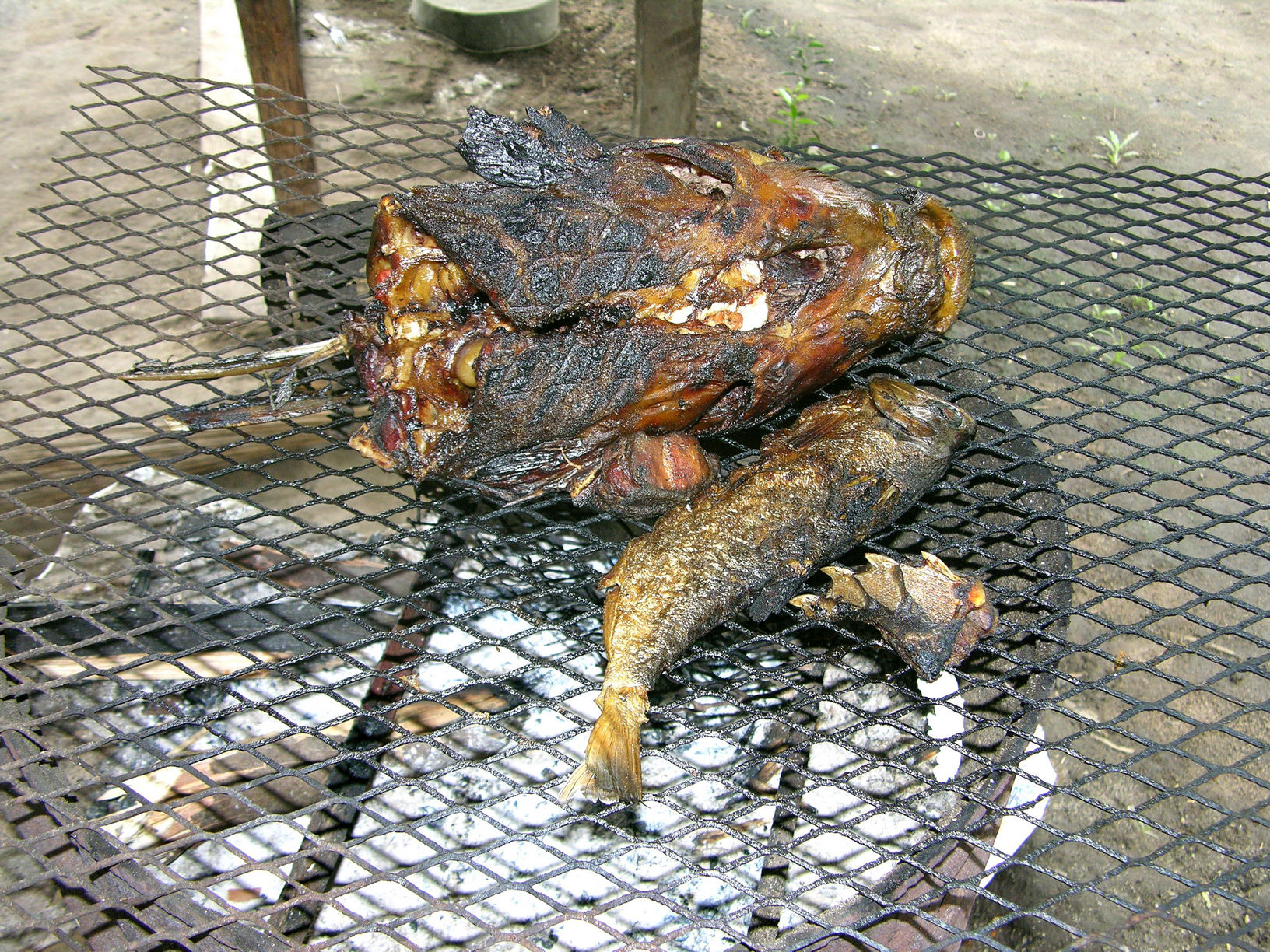
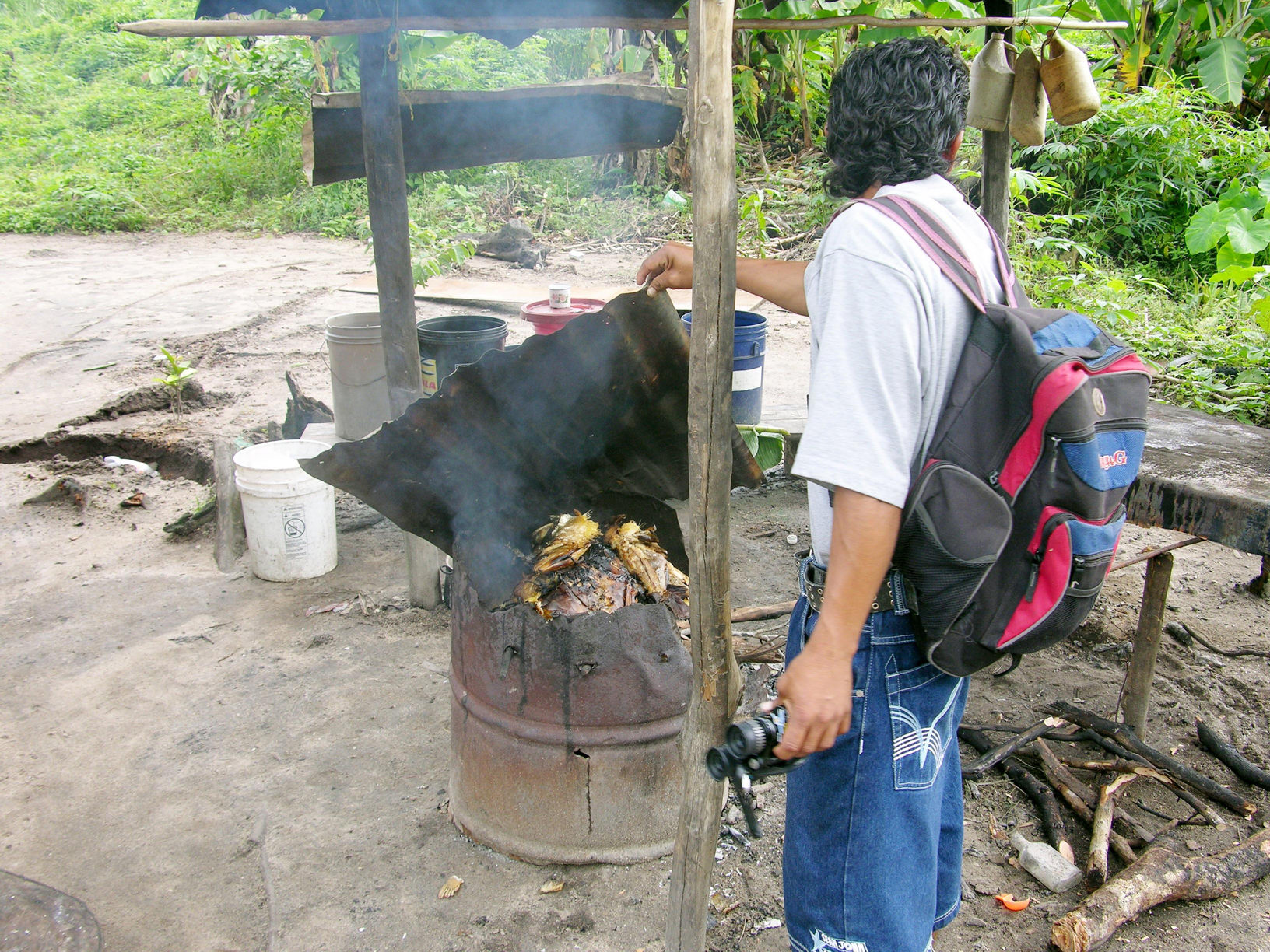
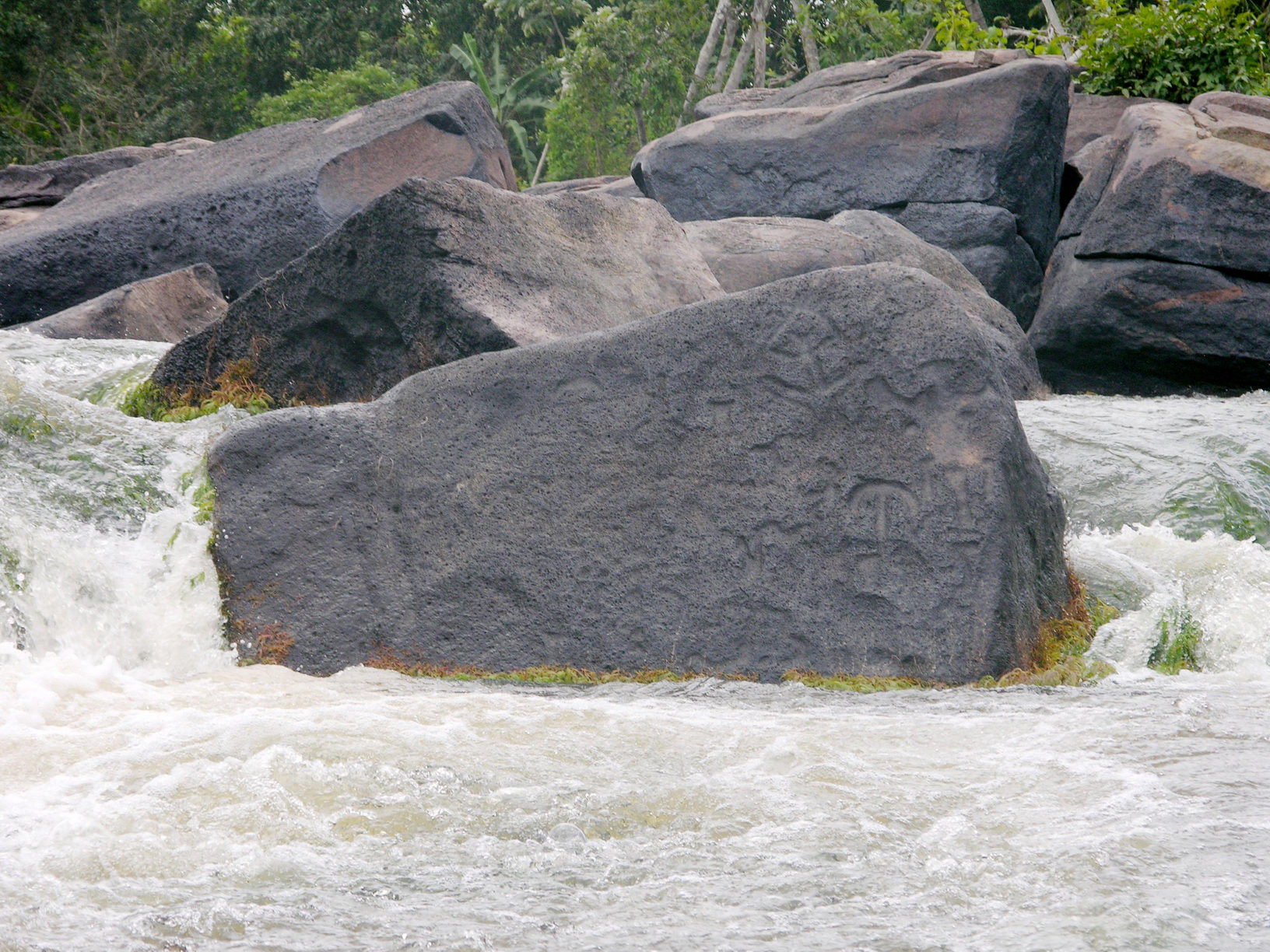
People lived here for many hundreds of years before the Europeans came. There are petroglyphs on the rocks by the shore. They're over five hundred years old. What they depict is unknown. The scholars disagree, but the villagers say they show a happy life: a blue river with plenty of fish, the sun, on which life depends, and people delighted with their catch.
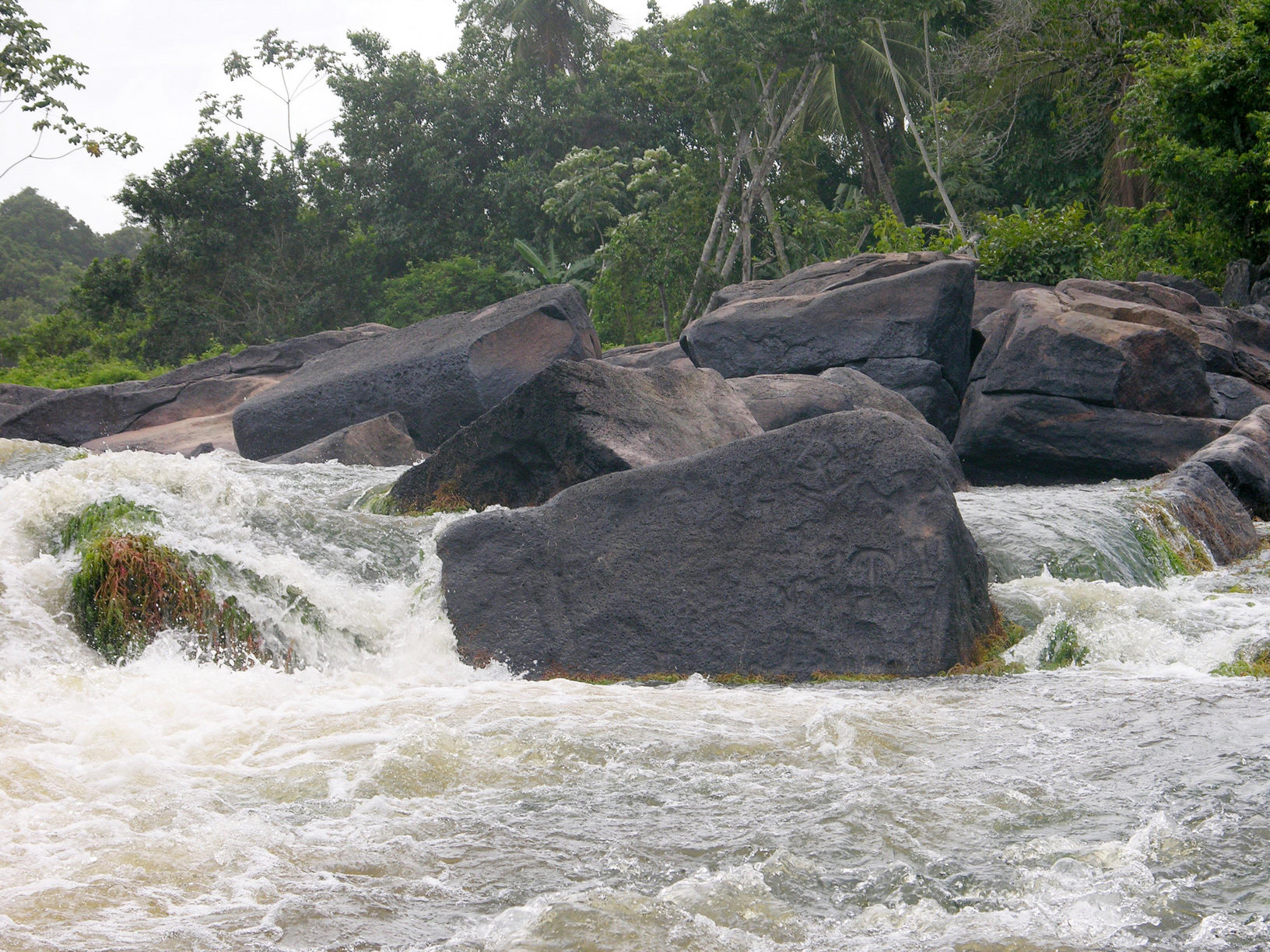
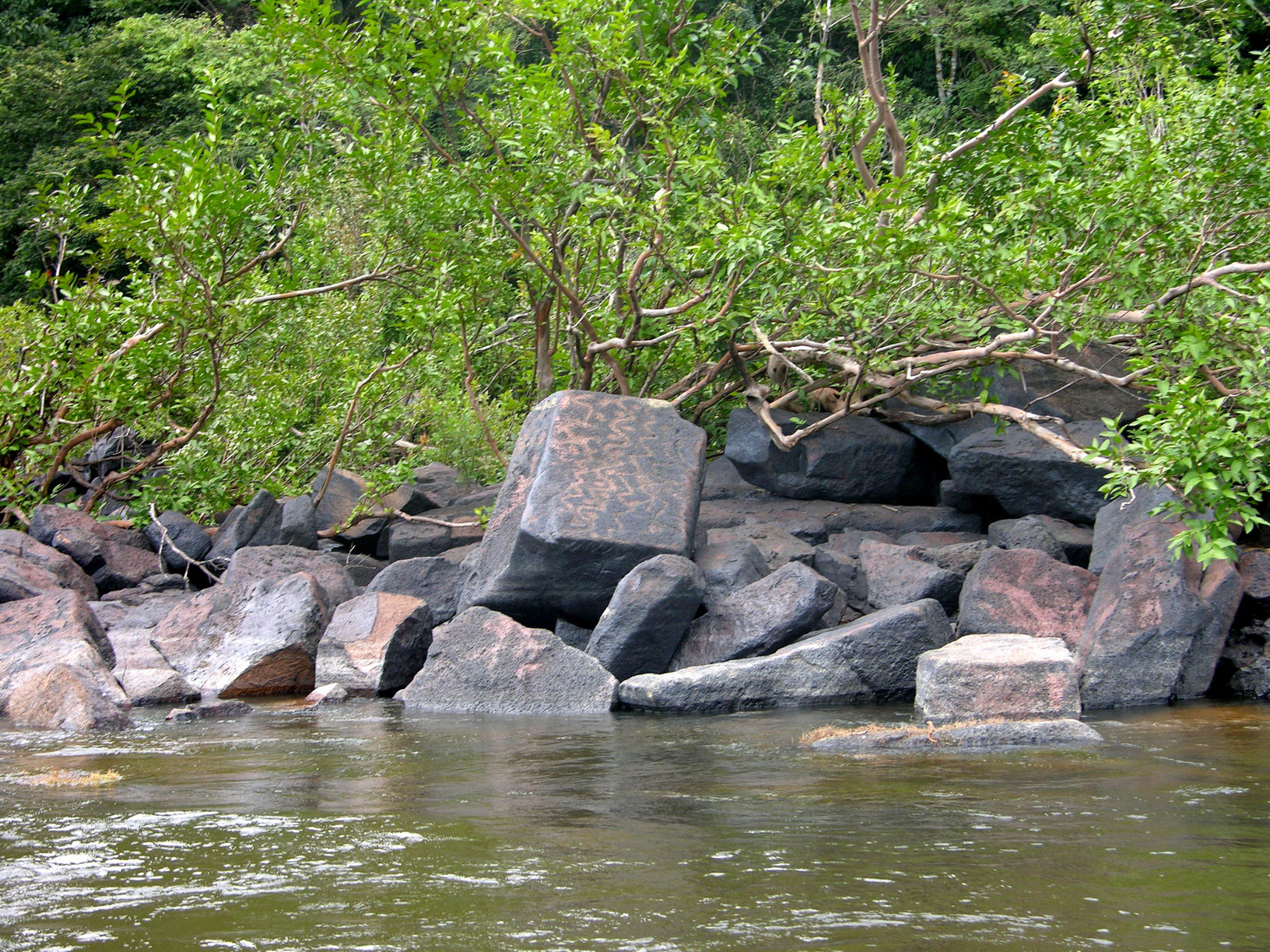
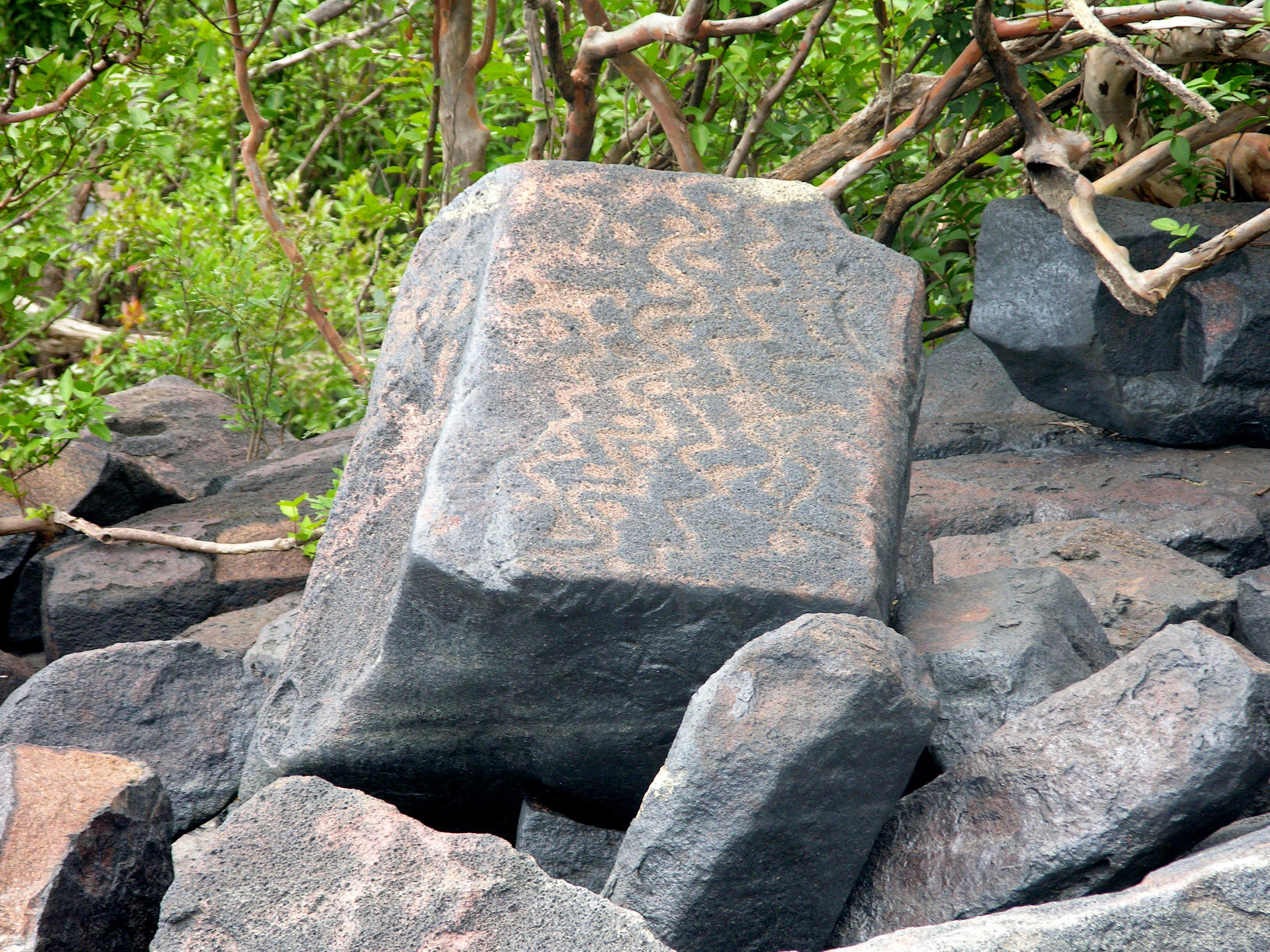
In three days we'd slept twenty-four hours, eaten for ten, spent eight on organised excursions and waited for thirty. We wrote that in the visitors' book and cheerfully made it out to freedom. The scheduled bus we had tickets for, due to connect with the morning ferry, didn't turn up. We were so sick of waiting that we happily squeezed into the first shared minibus for GYD 1,000. To hell with tickets and soft seats. Freedom lay ahead.
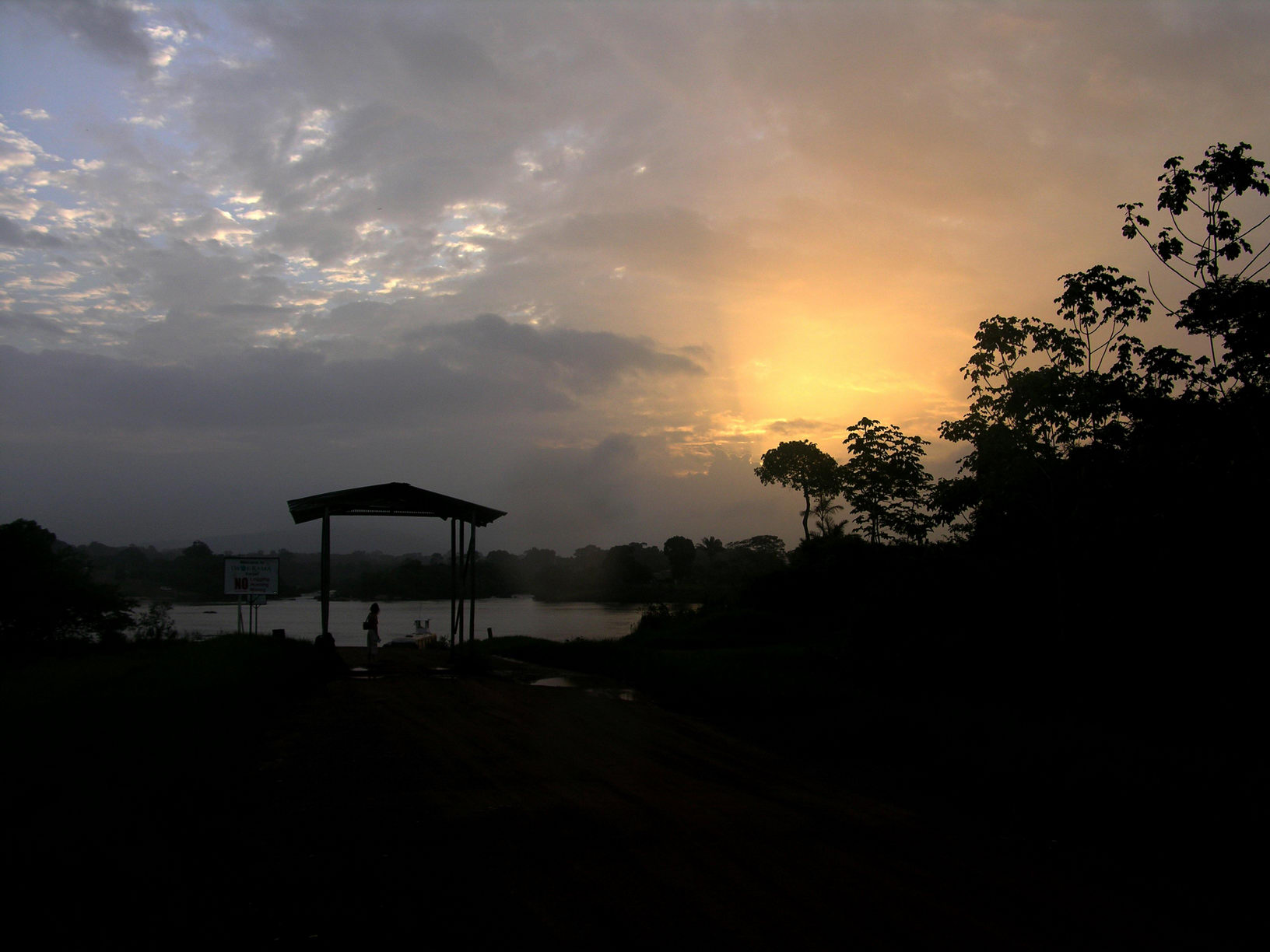
Today we were the first on the road since nightfall. The animals hadn't all been frightened away yet. We were travelling fast and bouncing hard, of course, but we saw a jaguar flash across ahead of us. Toucans flew out of the roadside bushes. Gradually the national park ended and became ordinary forest. At first I thought this was where we ought to have spent time out walking, but before long the forest ended and turned into savannah. The climate changed sharply. The mountains to the west in Venezuela keep the weather systems from crossing over. The clouds of the perpetually rainy sky were behind us. Sunshine all day and forty-degree heat.
The bus tore along the sandy road at tremendous speed. Sand blew in your face so hard you couldn't open your eyes. It was in your teeth and ears too. Even afterwards we couldn't wash it out of our clothes. Cowboys on horseback galloped across the grassland. The country became more inhabited and divided up into ranches. The main crop is sugar cane, famous all over the world. Any supermarket in Russia has Demerara cane sugar. Demerara is the name of a Guyanese river and province that became a common noun. Now they use it for sugar made anywhere.
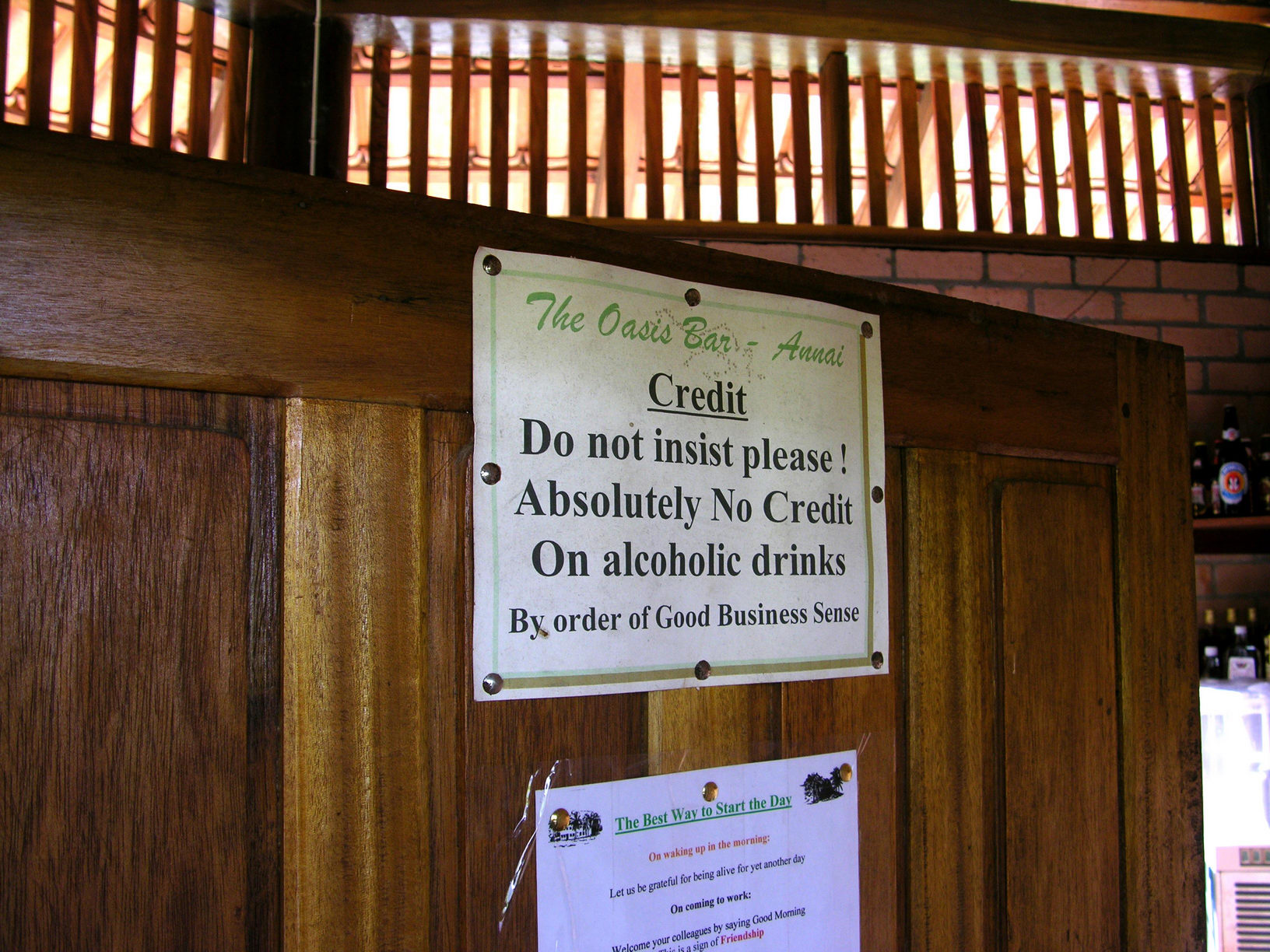
At one little village the bus passengers were let out for breakfast. The sign on the tavern door said “Do not insist please! Absolutely No Credit On alcoholic drinks. By order of Good Business Sense.” Inside were characters straight out of a Western. We hadn't come all this way for nothing, after all.
It took four hours to get to Lethem. The minibus came up to the customs post, where we filled in two bits of paper and had our passports stamped. All of it took a few minutes. Even the mobile phone worked again. We called home and talked for half an hour and still couldn't use up the twenty dollars on the local SIM.
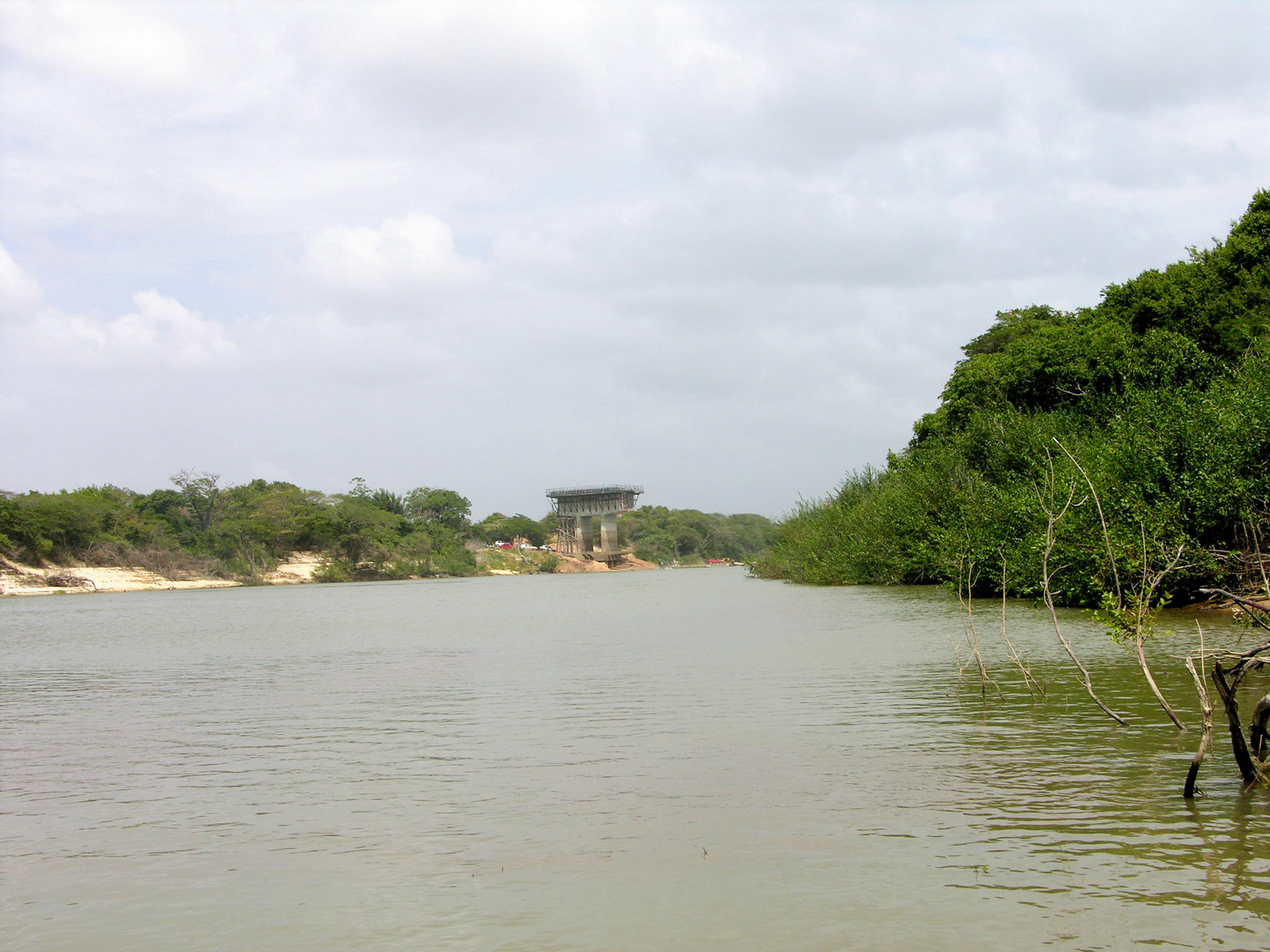
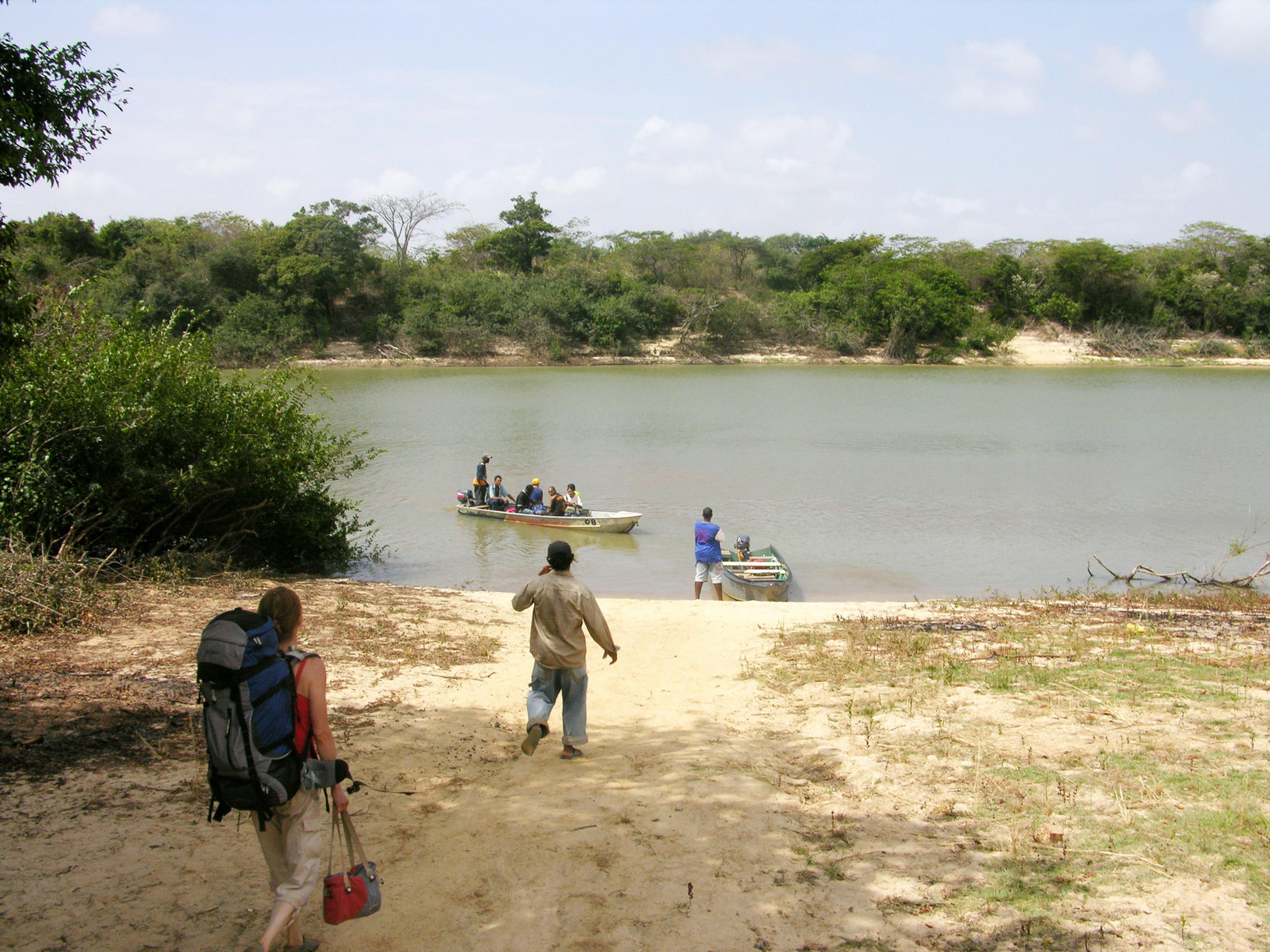
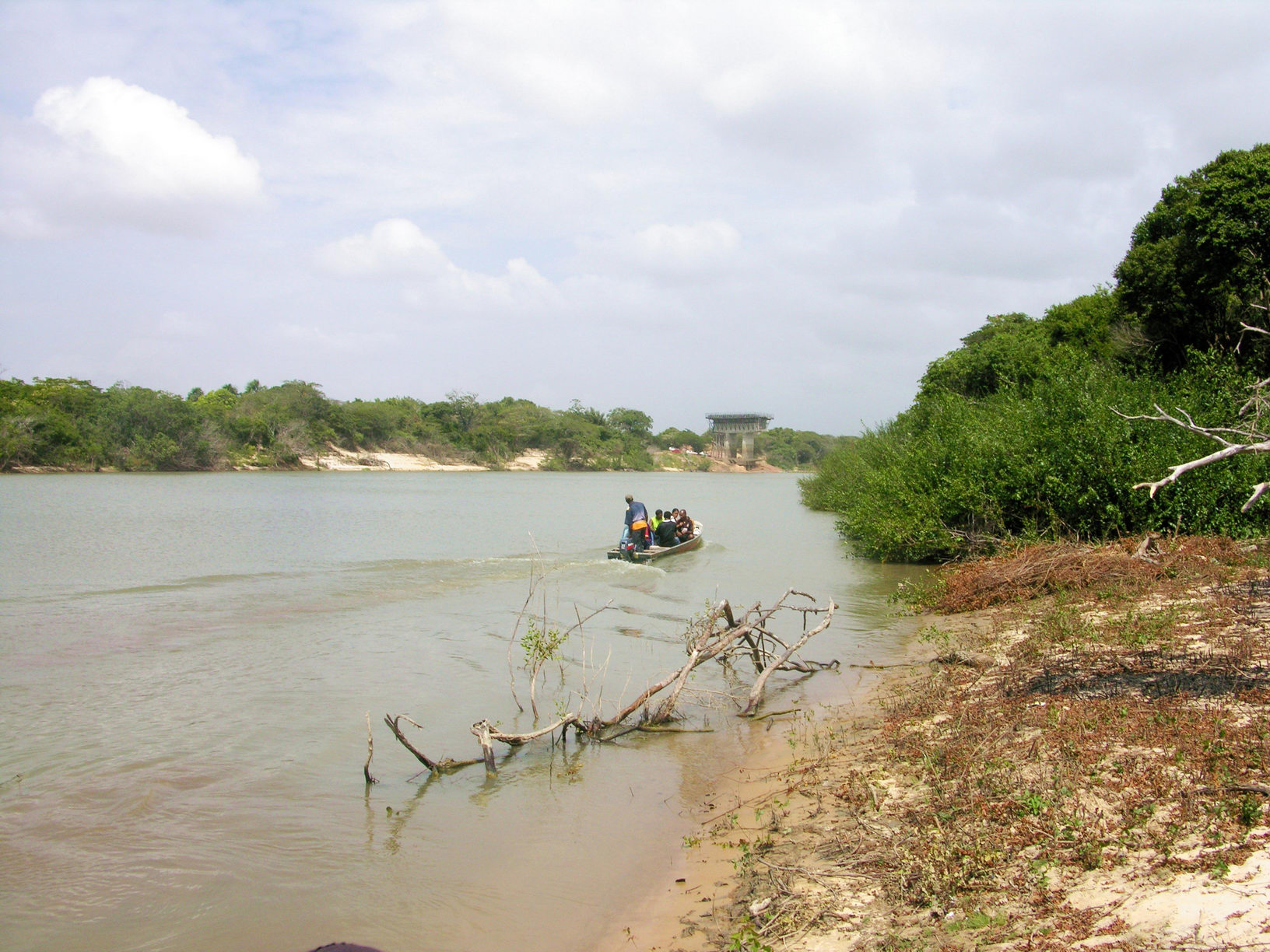
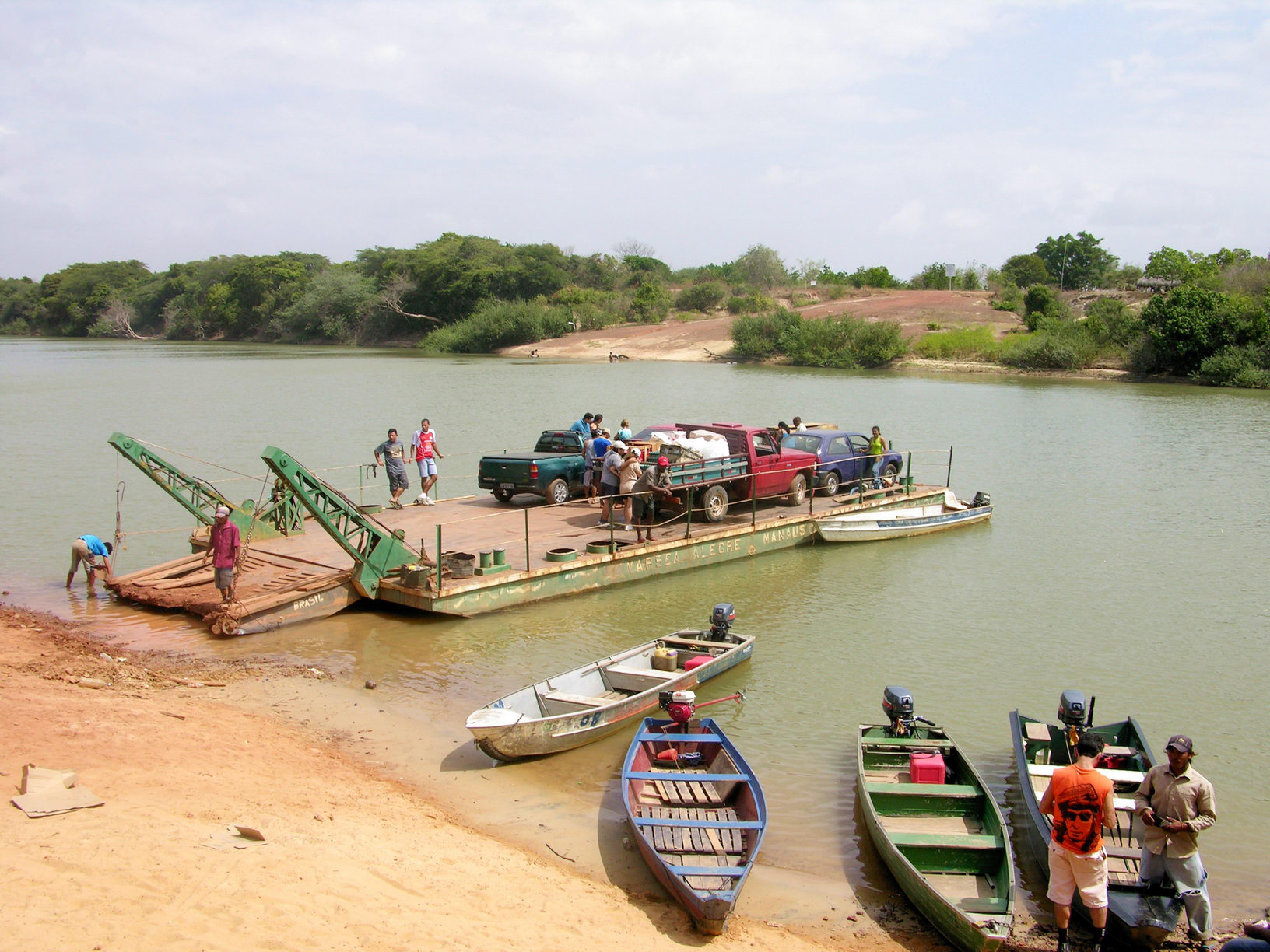
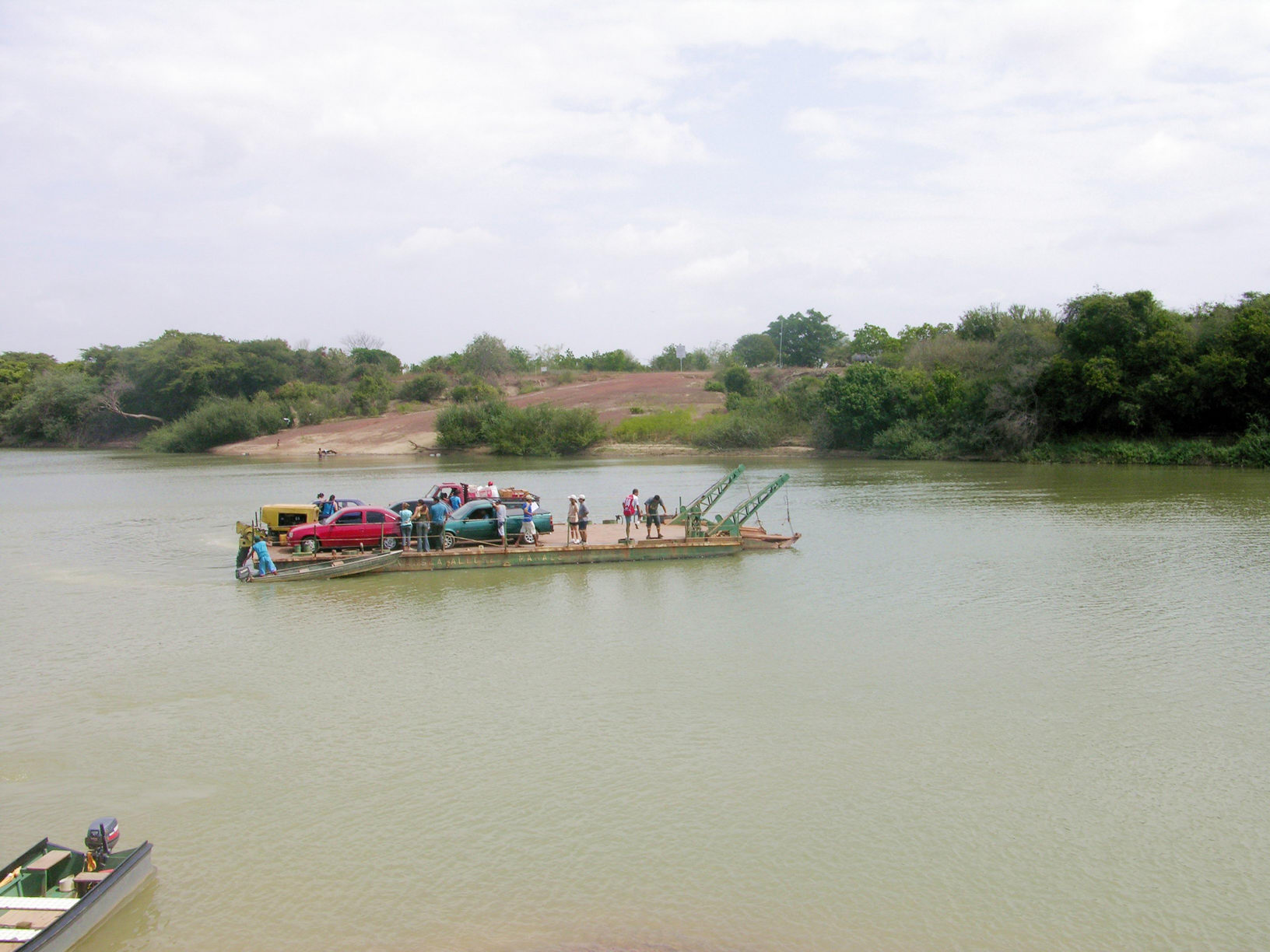
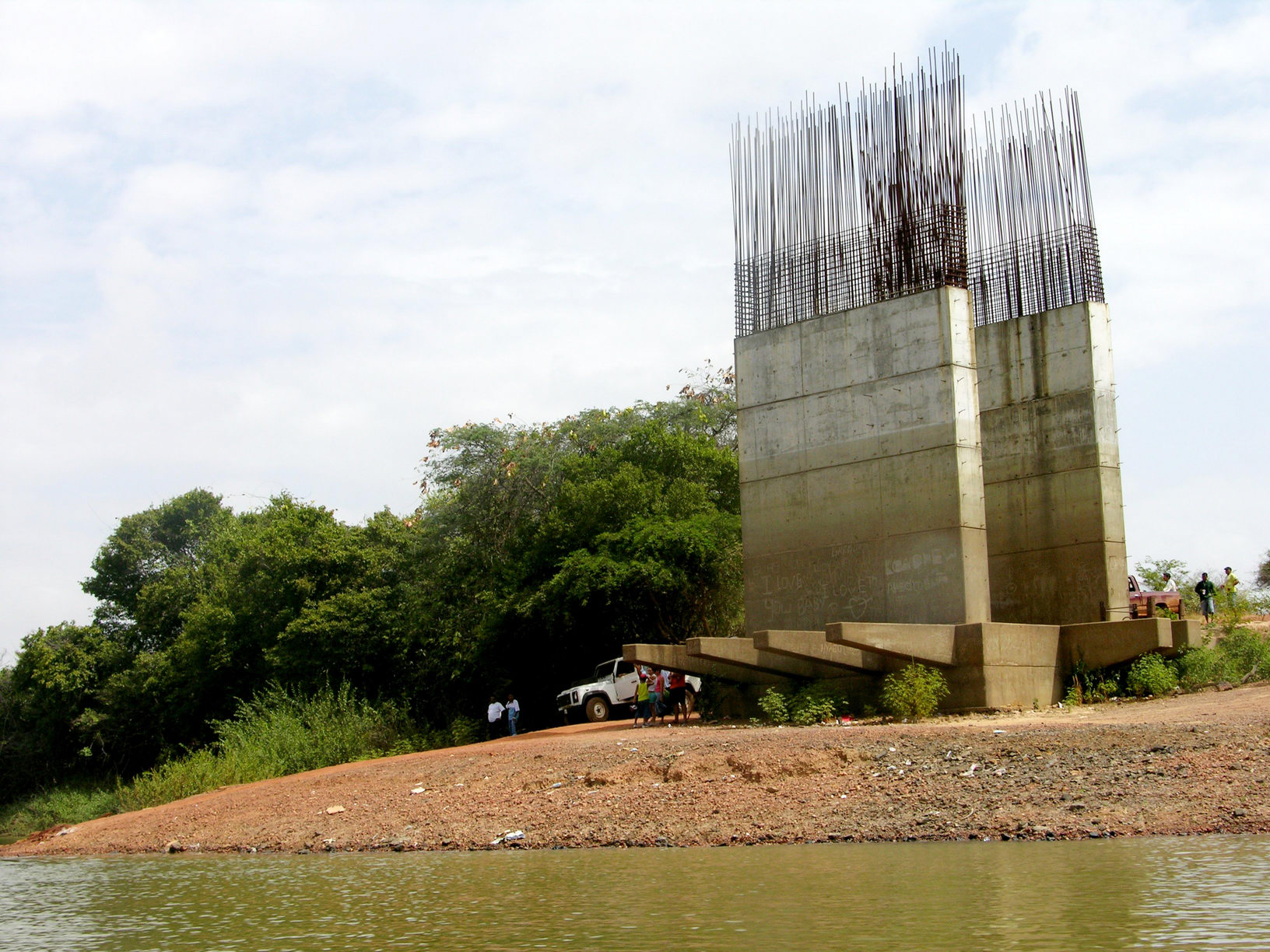
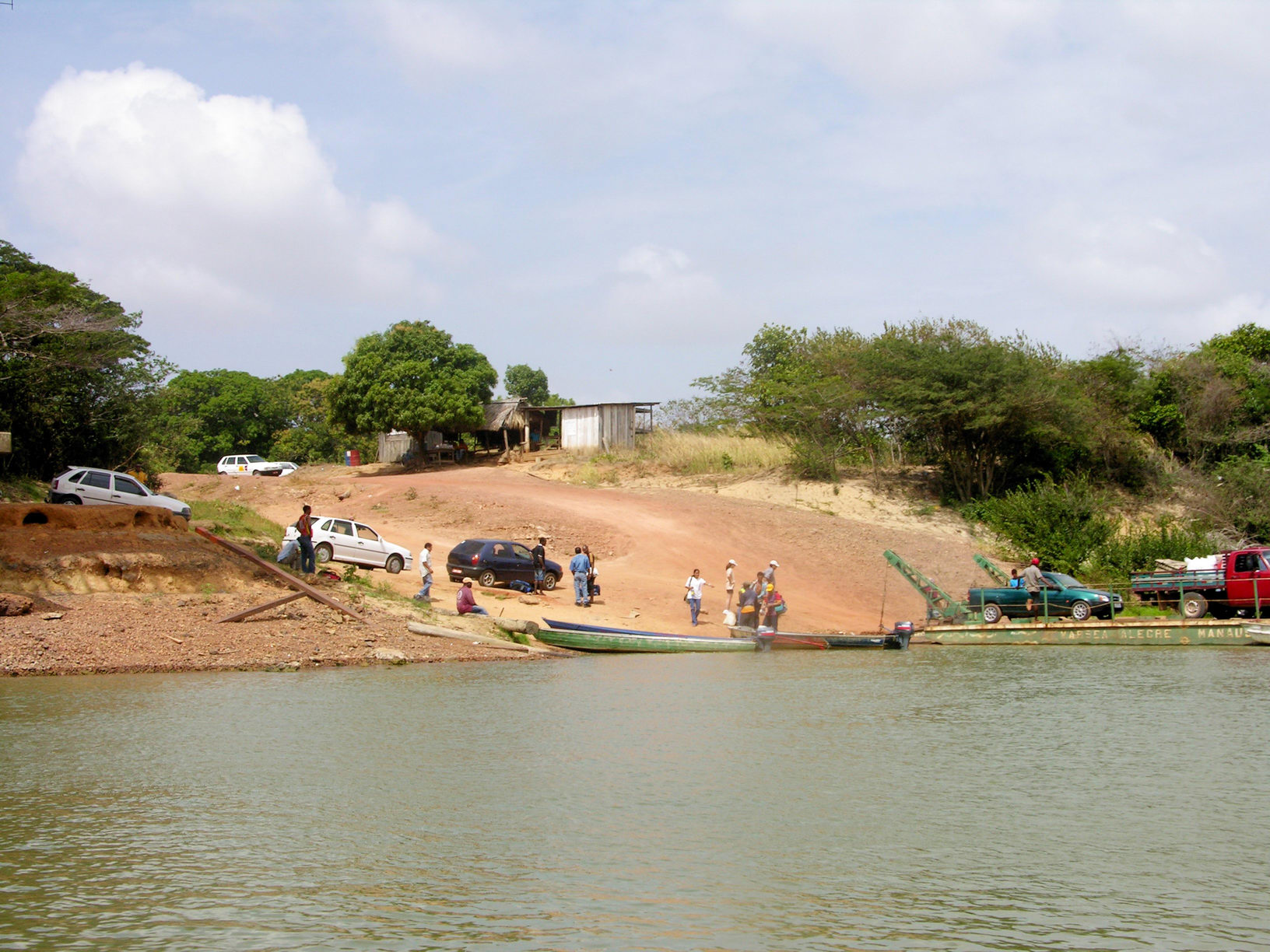
Lethem sits on the border river, the Takutu (Tacutu). A car ferry runs across it, and there was even a bridge under construction. Or rather, it had been under construction about five years earlier. That had got no farther than two piers on the banks. Perhaps one day there'll be a bridge here and a sealed road to Georgetown. As it was, we changed the last of our money into Brazilian reais and hired a dugout that took us into the largest country in South America: Brazil.
We were in excellent spirits. Guyana is a country for experienced independent travellers. I don't think you could see such a celebration of life anywhere else in our times. Just don't head for the reservations for foreign tourists.
Time to get moving before the local perestroika comes to an end. The new government will put things in order, catch the gangsters and produce that sweet syrup of progress within the bounds of legality. For the moment, while it's all wild and unspoilt, you can feel twenty years younger.