Brazil
Chapter 5. Brazil, along the great river
The Amazon basin is famous as the largest rainforest in the world. Just as famous, though, are the protests from people who love the forest and oppose the logging, and the claims that it's all been cut down already.
We wanted to see what was really left.
We wanted to see what was really left.
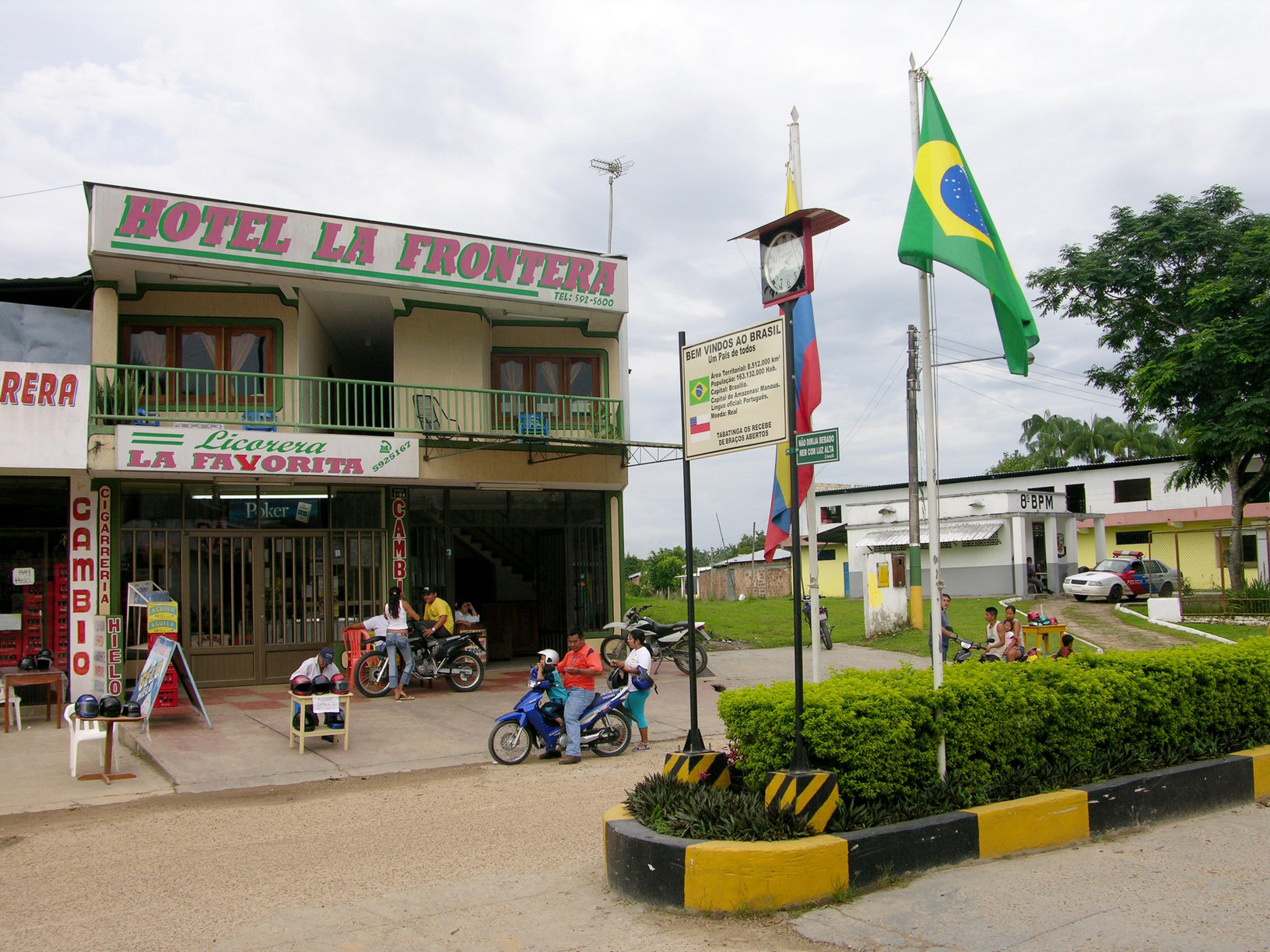
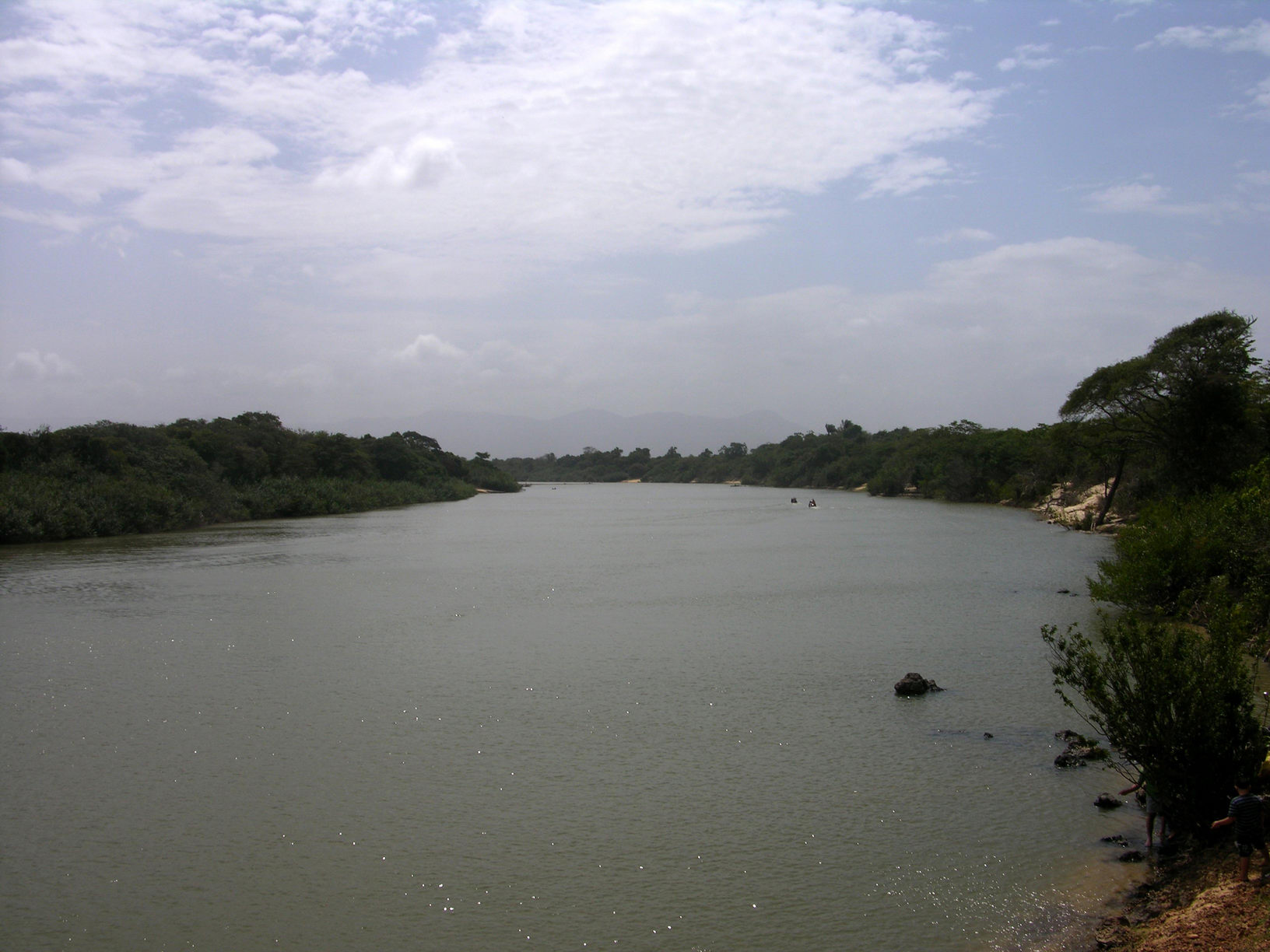
We entered Brazil by boat, crossing the Takutu (Tacutu) River from Guyana near Bonfim.
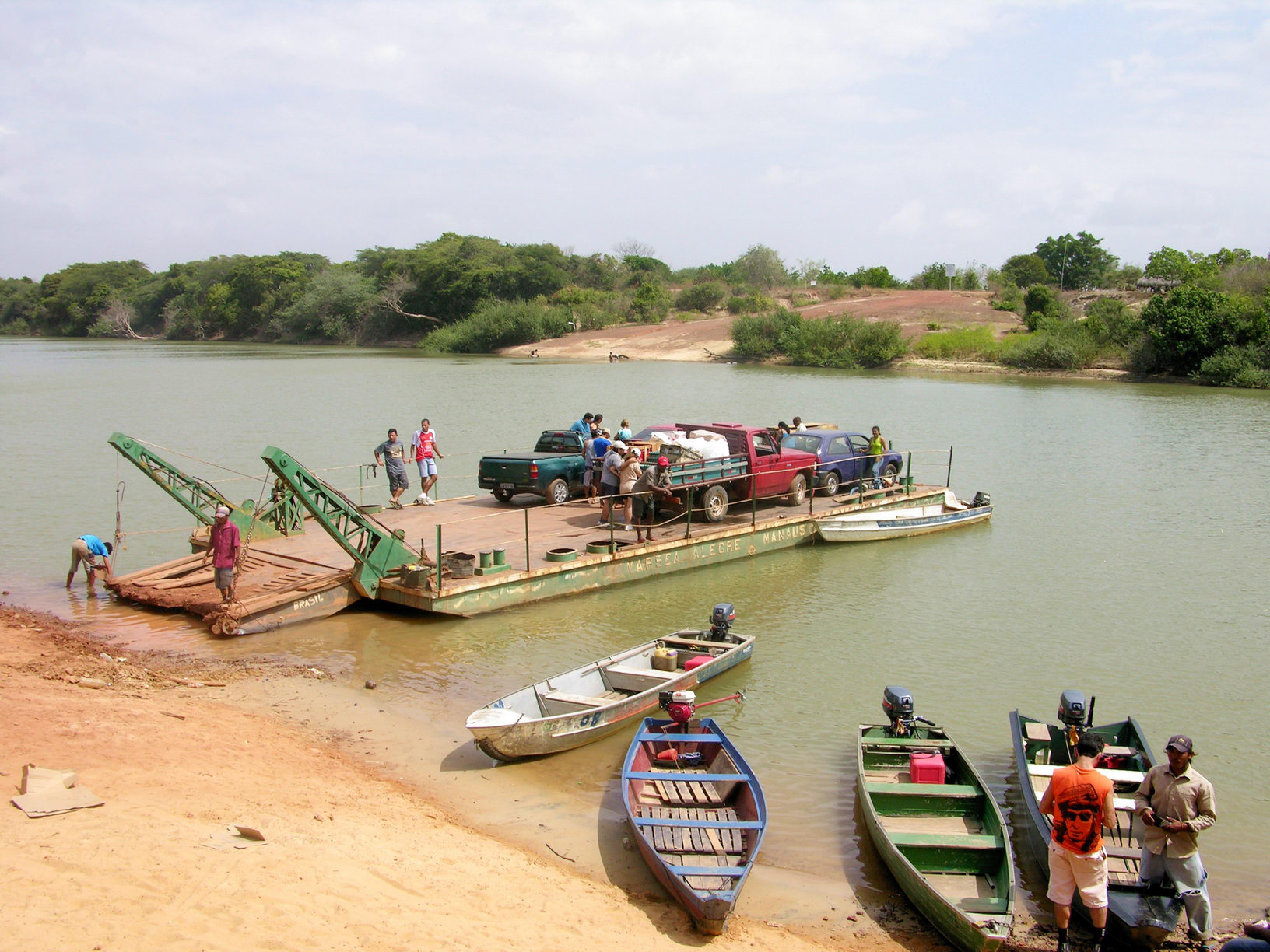
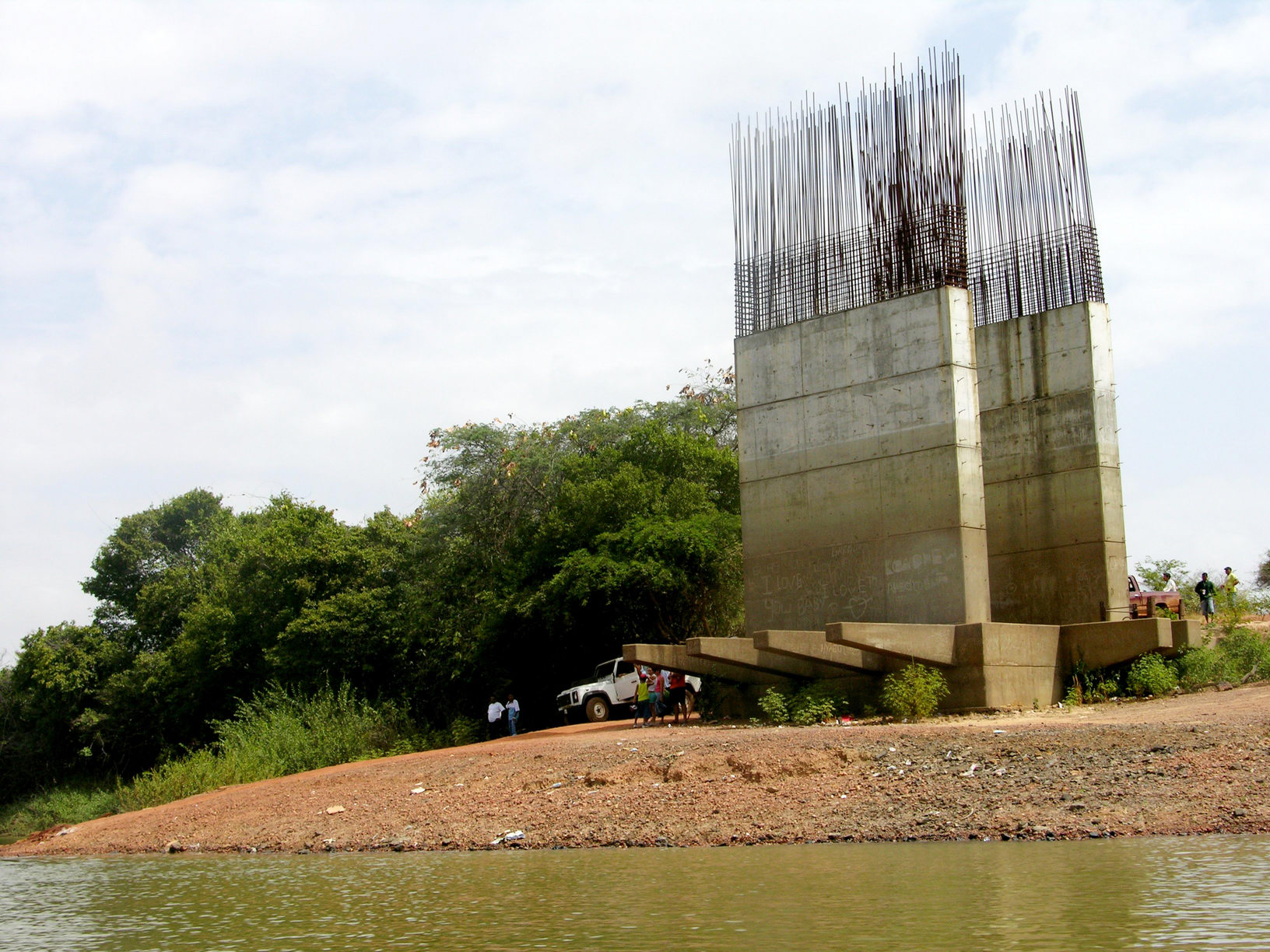
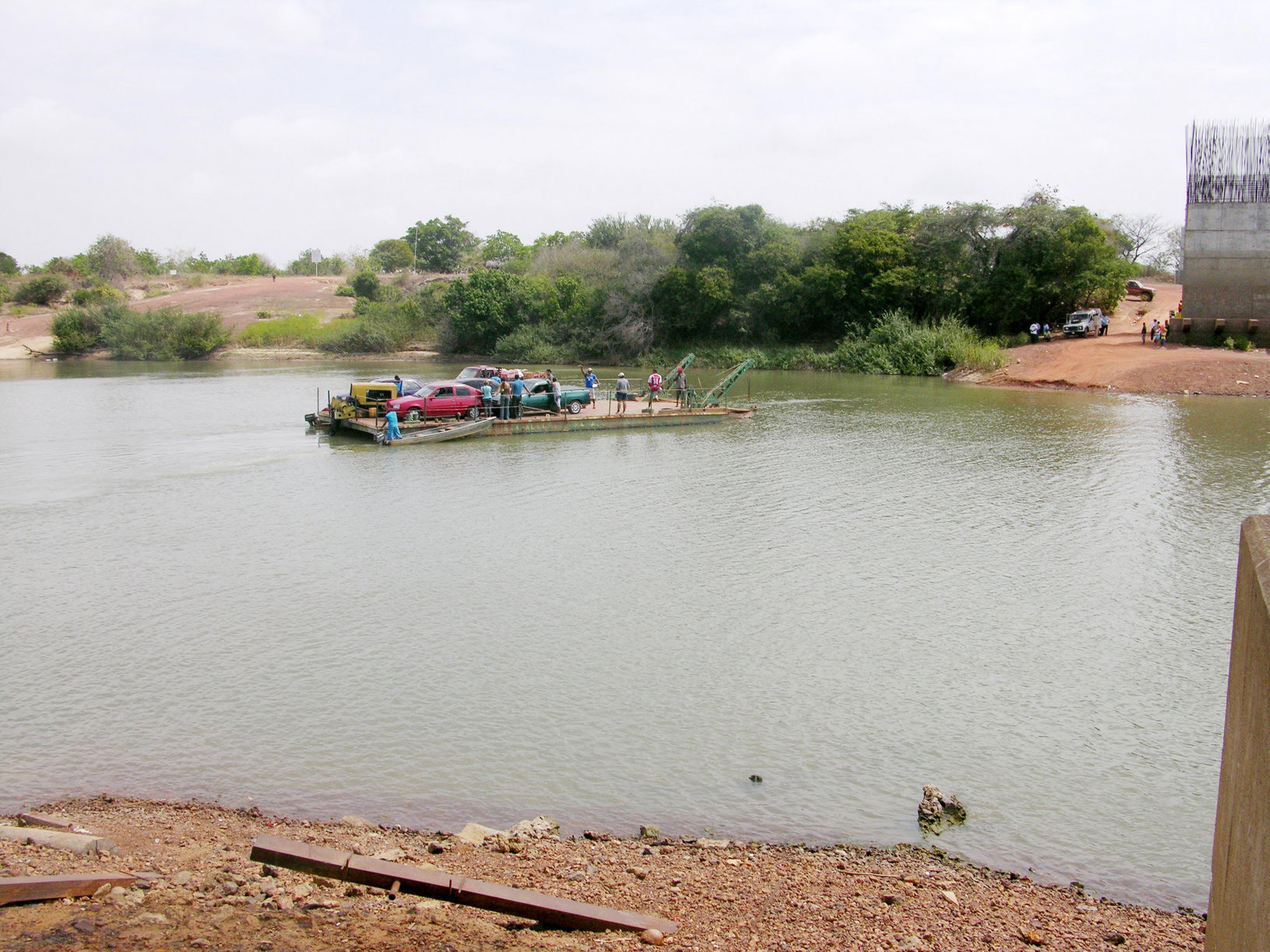
Bonfim itself is four kilometres from the border. The taxi drivers wait right on the riverbank by the ferry. They weren't keen to take us to the bus station. They didn't know how to drive such a short distance. To Boa Vista for sixty reais, though? Certainly!
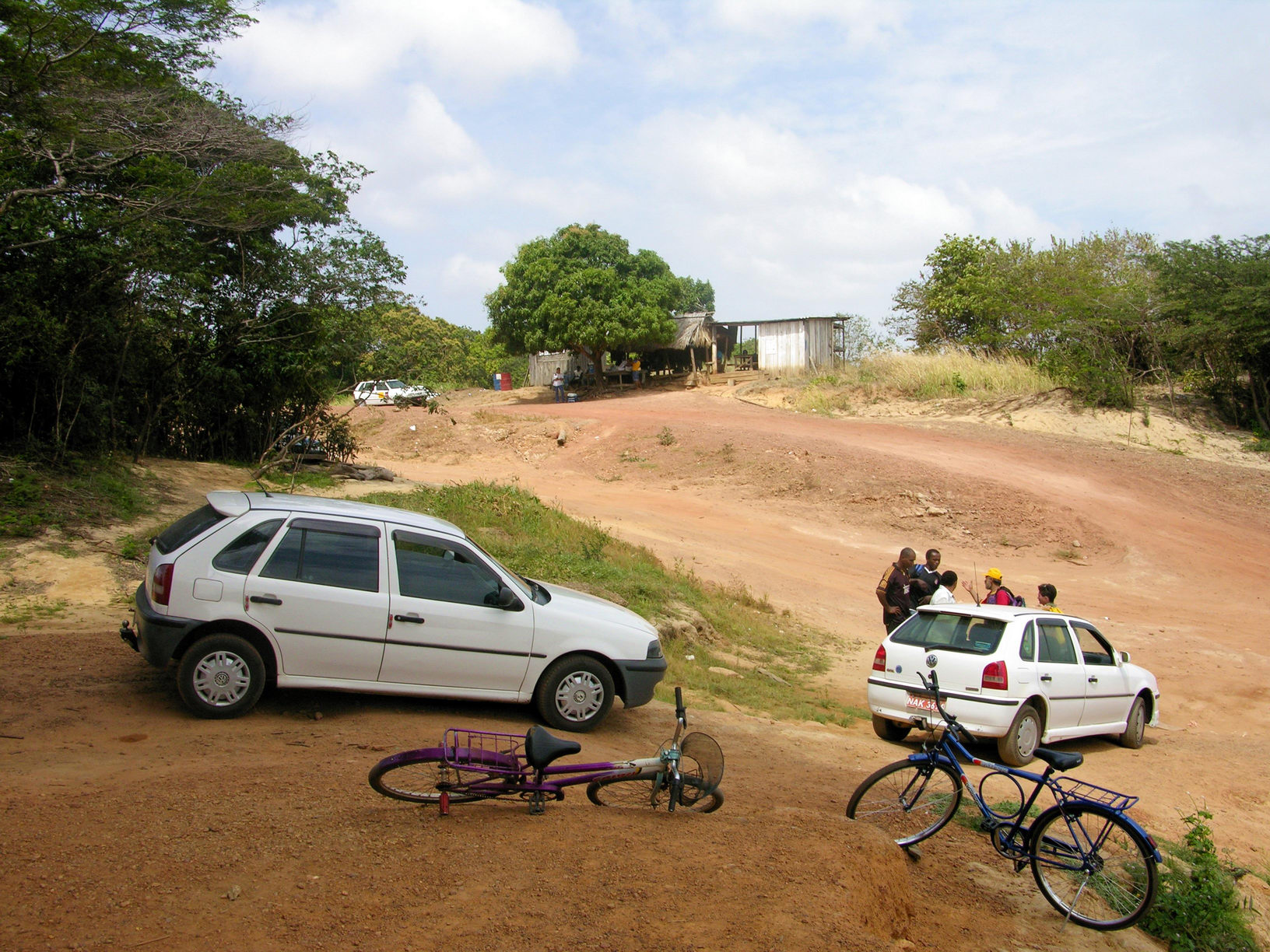
Border control is two hundred metres from the bank. Russian citizens needed a visa. Brazil took a hard line on this. If Brazilians needed a visa to go somewhere, the citizens of that country needed one for Brazil, with requirements just as obnoxious in return. They hadn't managed to reproduce all the Russian absurdities, of course. The climate and the mentality are wrong for it. You can hardly set up a residence registration system just for the Russians.
The embassy in Moscow issues visas reluctantly, on production of original tickets and an invitation. They assure you they won't give you a multiple-entry visa, then give you one in the end for the number of days you asked for, provided you enter within ninety days. One thing to notice is that there's no expiry date, so in a sense it lasts for ever. We didn't test that, though Lonely Planet says five years.
What actually gives you the right to stay in Brazil is the immigration stamp at the border. You need a visa to get it, but if you ask they'll write in however many days you want to stay, up to ninety.
They simply asked us how long we needed. We asked for twenty days, like the visa, but they couldn't bring themselves to write less than thirty.
As in most Latin American countries, calling on the officials at the border is a strictly voluntary affair. Don't want to do it? Travel as an illegal immigrant, then. Bear in mind that the Brazilian police are a fierce lot and check your papers often and carefully.
Customs on either side took no interest in the luggage.
Once our passports were stamped, we caught a ride to the bus station in Bonfim. It's a small town. Buses run a few times a day. The station was empty, there was nothing to do and a long wait ahead. Even the Brazilian mobile networks didn't work.
It was dull sitting there. Then a man came along who was driving to Boa Vista and wanted passengers at forty reais. A real was roughly a third of our dollar. The bus would have been thirty for two. Not much of a saving. We got in with the man.
It's a hundred kilometres to Boa Vista, with plenty of time to look around.
It turns out a huge chunk of northern Brazil is savannah. There's little rain, nearly constant sunshine and nothing unusual about forty-degree heat. There is forest, or rather there once was, but it was scattered trees with thorny shrubs beneath them. The high mountains to the north-west have a strong effect on the climate.
The whole road to Boa Vista runs through pasture. There are mountains in the distance.
In Boa Vista we found our first problem. We had nowhere to get money. Suriname and Guyana aren't easy countries to use credit cards in and our cash had run out long ago. We'd been sure industrial Brazil would have a cash machine on every corner. It didn't. There were a few banks, most already shut for Saturday. No ATMs outside. Worse, as we found out later, just one local bank would let you draw money on a foreign card. That wasn't the end of it. Brazilian cards all had chips by then and only one machine in ten would read a magnetic stripe. It would read it and then come back with “No connection”. No money, naturally.
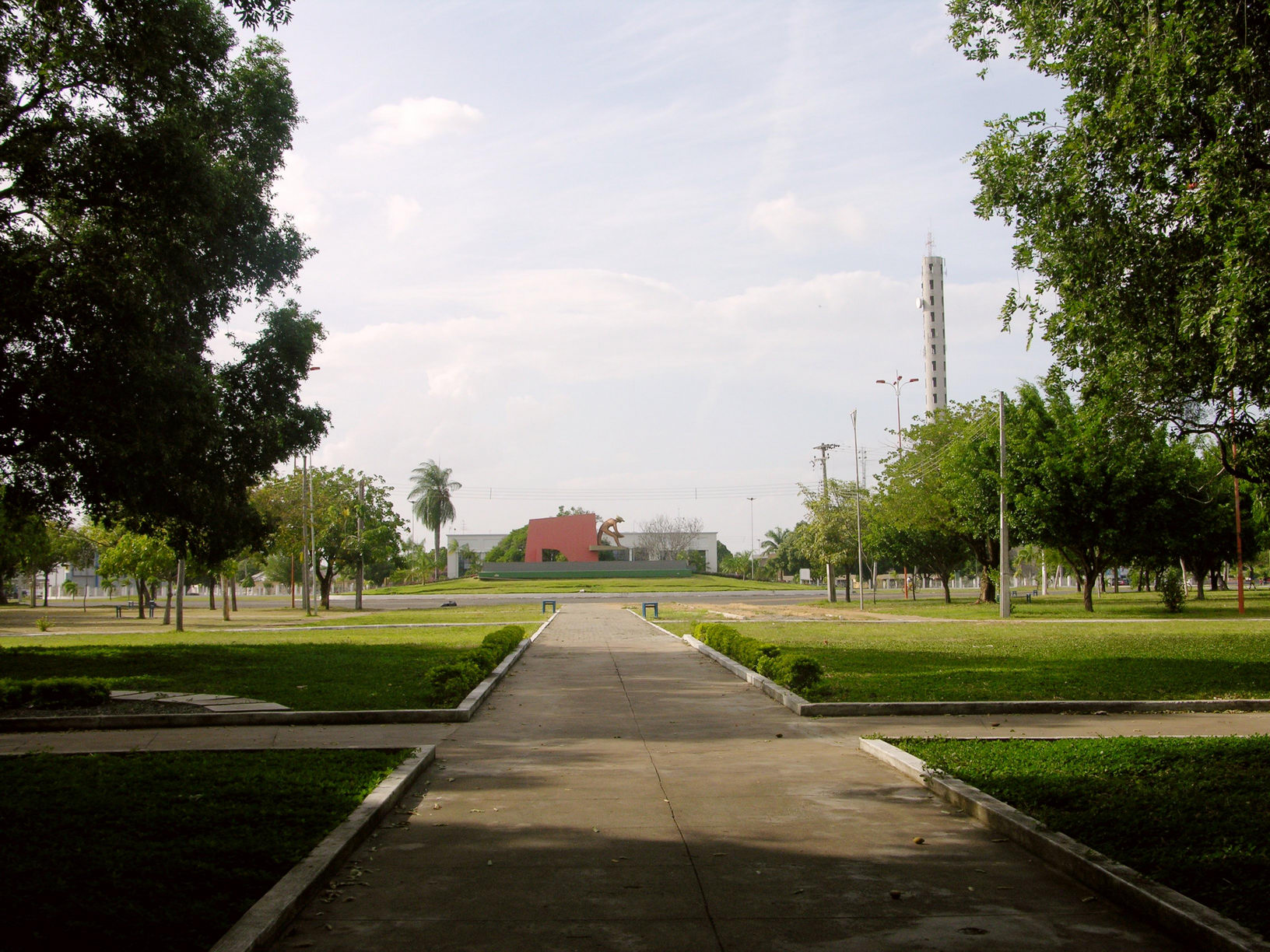
After about the tenth try in Boa Vista I got lucky. Later I found out just how lucky. In Manaus, a city of a million people, it took us hours to get our hands on some cash. Fortunately there was no trouble in the shops and we paid by credit card in most places.
Brazil's currency is the real. US$1 was BRL 1.75751.
You can't hire a car in Boa Vista on Saturdays. Everything was closed. The rental companies' telephone numbers took you to recorded messages in Portuguese.
The language was a struggle in general. How often we thought of poor Paganel, who went and learnt the wrong one. Hardly anybody in Brazil knows even a word of English. Border guards, hotel clerks, waiters and ticket sellers generally know a little Spanish at best. The consolation is that the languages are similar, so if they feel like it Brazilians can understand spoken Spanish. You can read the names. What's being said is impossible to make out.
Boa Vista is a big place, the capital of Roraima state, but there's nothing to look at. Dust and a depressing sprawl of single-storey buildings. The odd sickly sapling. Only the Rio Branco makes it worth looking out. Perhaps that's why they named the place what they did. “Boa Vista” is meant to be “good view”, but read it as “boa” the snake and “vista” the outlook, and you get something like “a view to choke you with boredom”.
All the places you need are scattered over a huge area. It's five kilometres to the centre from the bus station, ten from the airport. Taxis are very expensive in Brazil. A short trip costs twenty to thirty reais. A hire car costs fifty for an entire day by comparison. You can even find one for twenty-five, but then you pay two reais extra for every kilometre.
There are plenty of public buses. You get in through a turnstile using some sort of card. There was no telling where to get one. They do take cash too, though. A ride within Boa Vista costs seventy-five centavos.
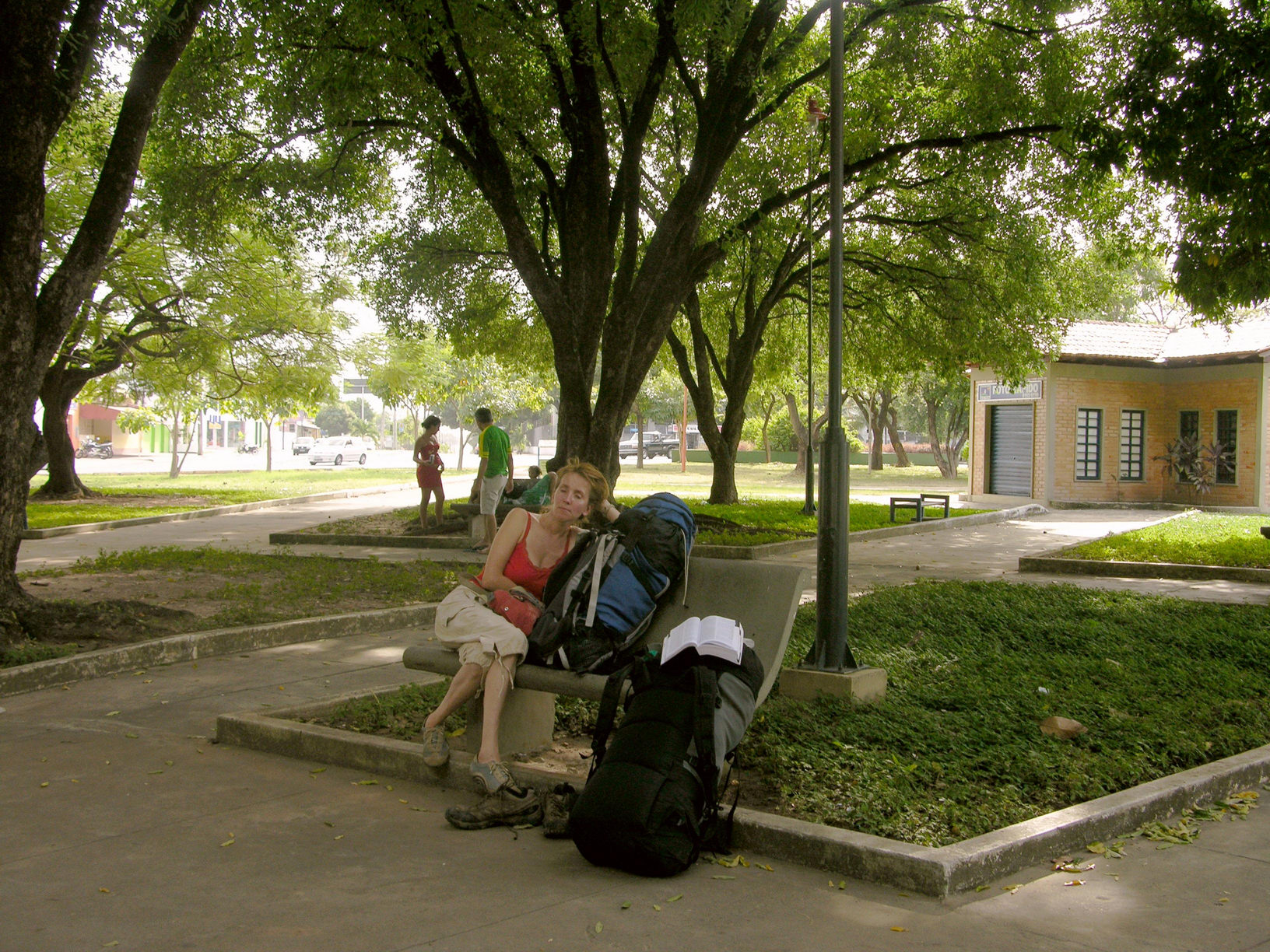
After an hour on a bench right in the middle of town and a bite in a café, we decided to get out of this hole as fast as possible. It's eight hundred kilometres to Manaus, with plenty of good overnight buses.
We bought tickets from Eucatur at ninety reais each.
The bus takes twelve hours. The road is broken up and it shakes you properly, but you can sleep, especially if you bring warm clothes. Air conditioning is a point of pride here and they put it on at full blast. A jumper and a jacket come in very handy for crossing the equator.
We watched the sunset from the bus. The sun dropped behind distant mountains and a smattering of trees. We woke in the morning mist of a tropical forest.
The bus makes several stops. The first is in Caracaraí. You can get out for a minute or two and stretch your legs. The cafés by the stop are open. They even hand out free coffee in little paper cups. You needn't order anything, just drink the invigorating stuff and go.
The first morning stop is the town of Presidente Figueiredo. From there it's another hour and a half.
In Manaus the bus stops in the north of the city, not very far from the airport and the car hire offices. It's half an hour by taxi to the centre.
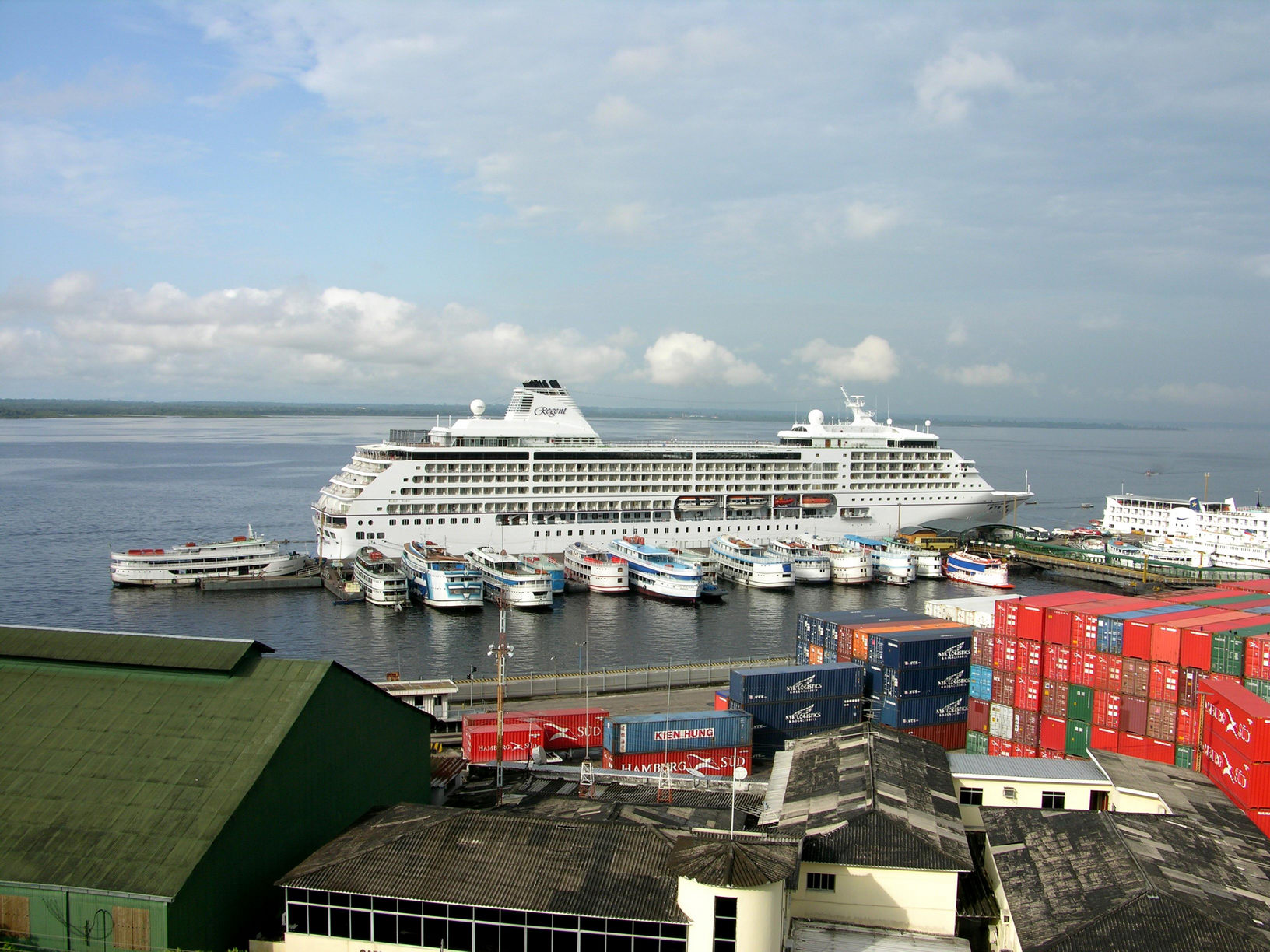
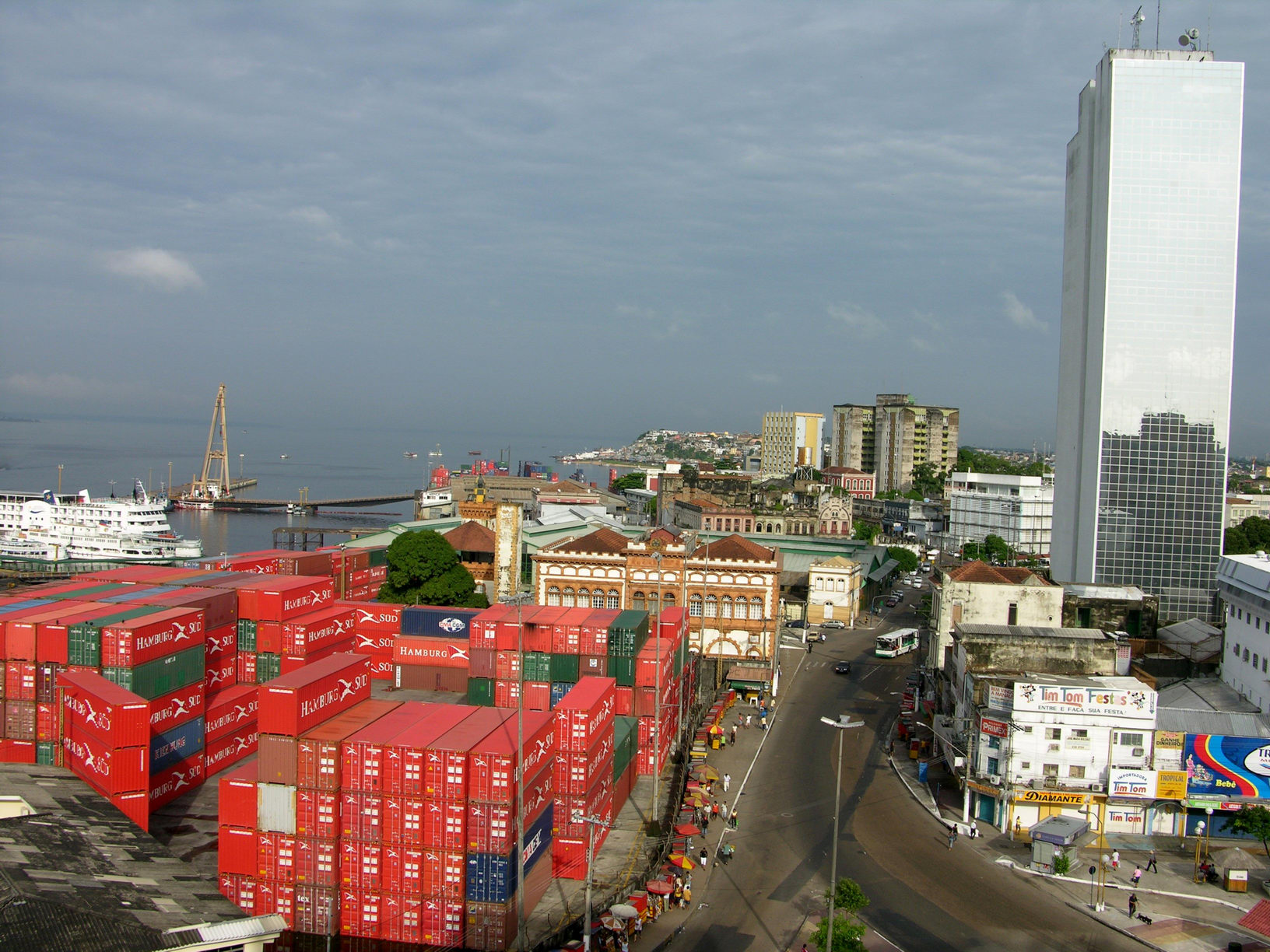
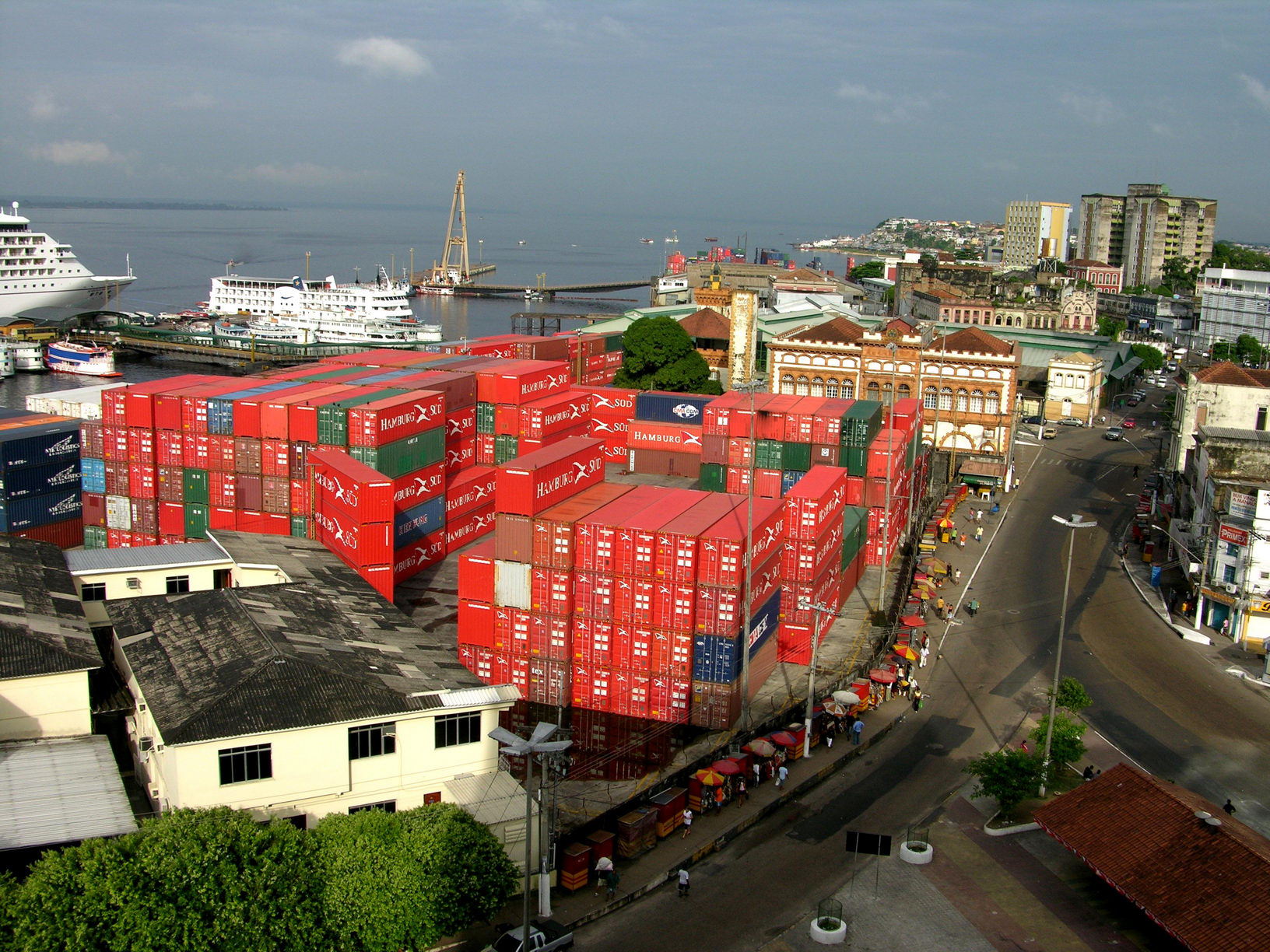
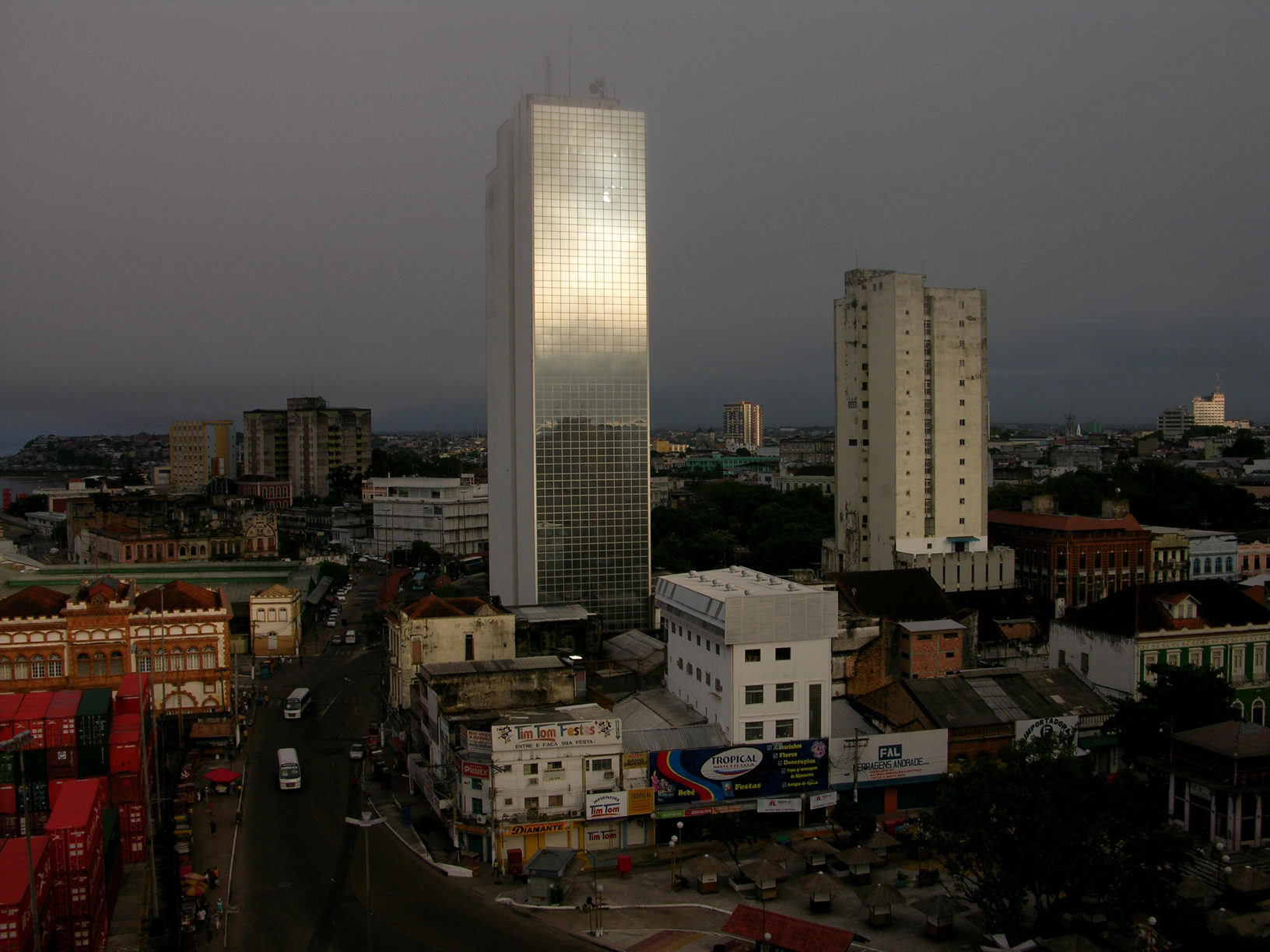
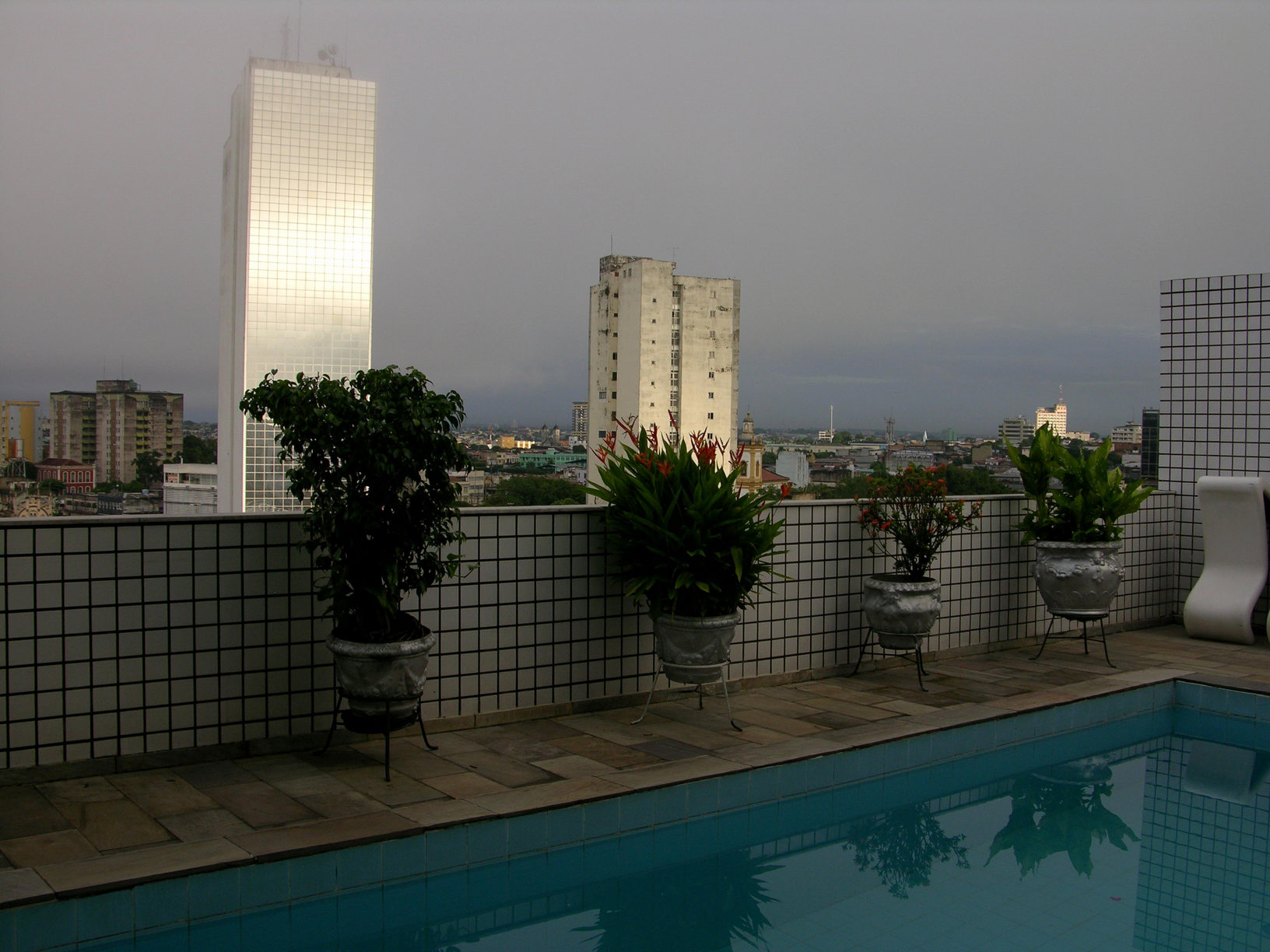
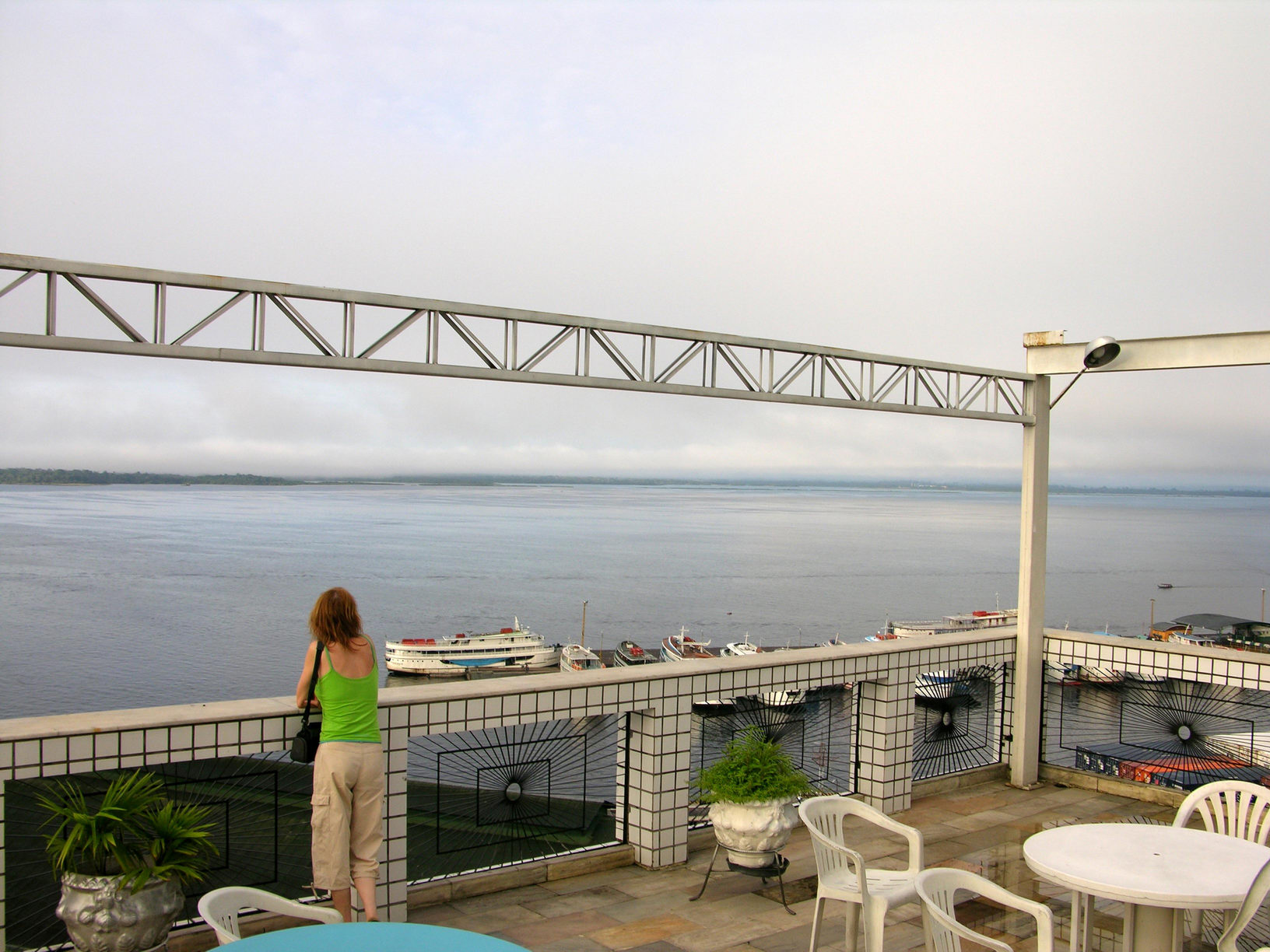
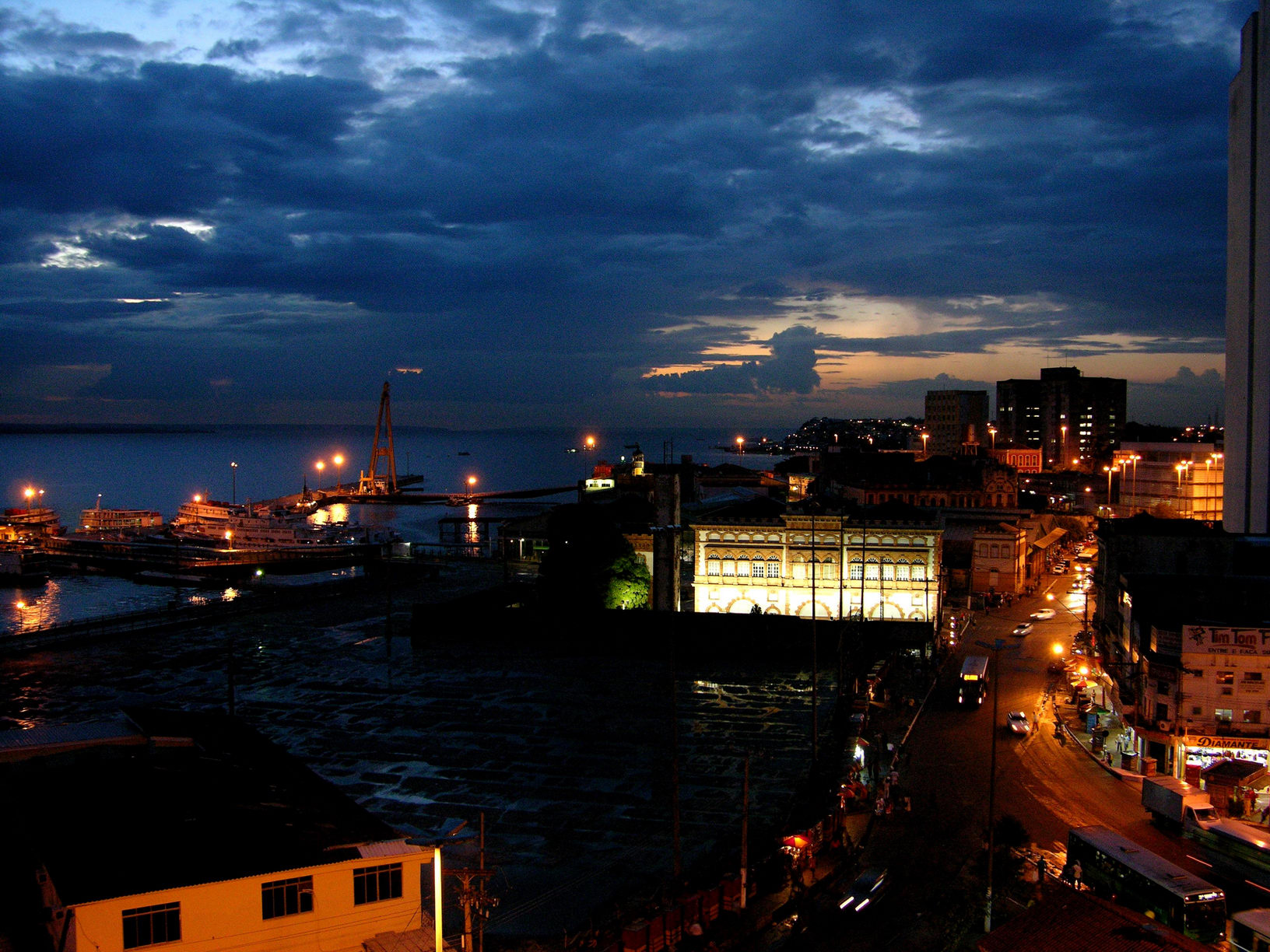
On Lonely Planet's recommendation we picked the Ana Cassia, a high-rise hotel in the centre. We got a room on the eighth floor with a lovely view for a hundred and fifteen reais. We'd have liked to hire a car, but Sunday is sacrosanct here. The town was like a ghost town.
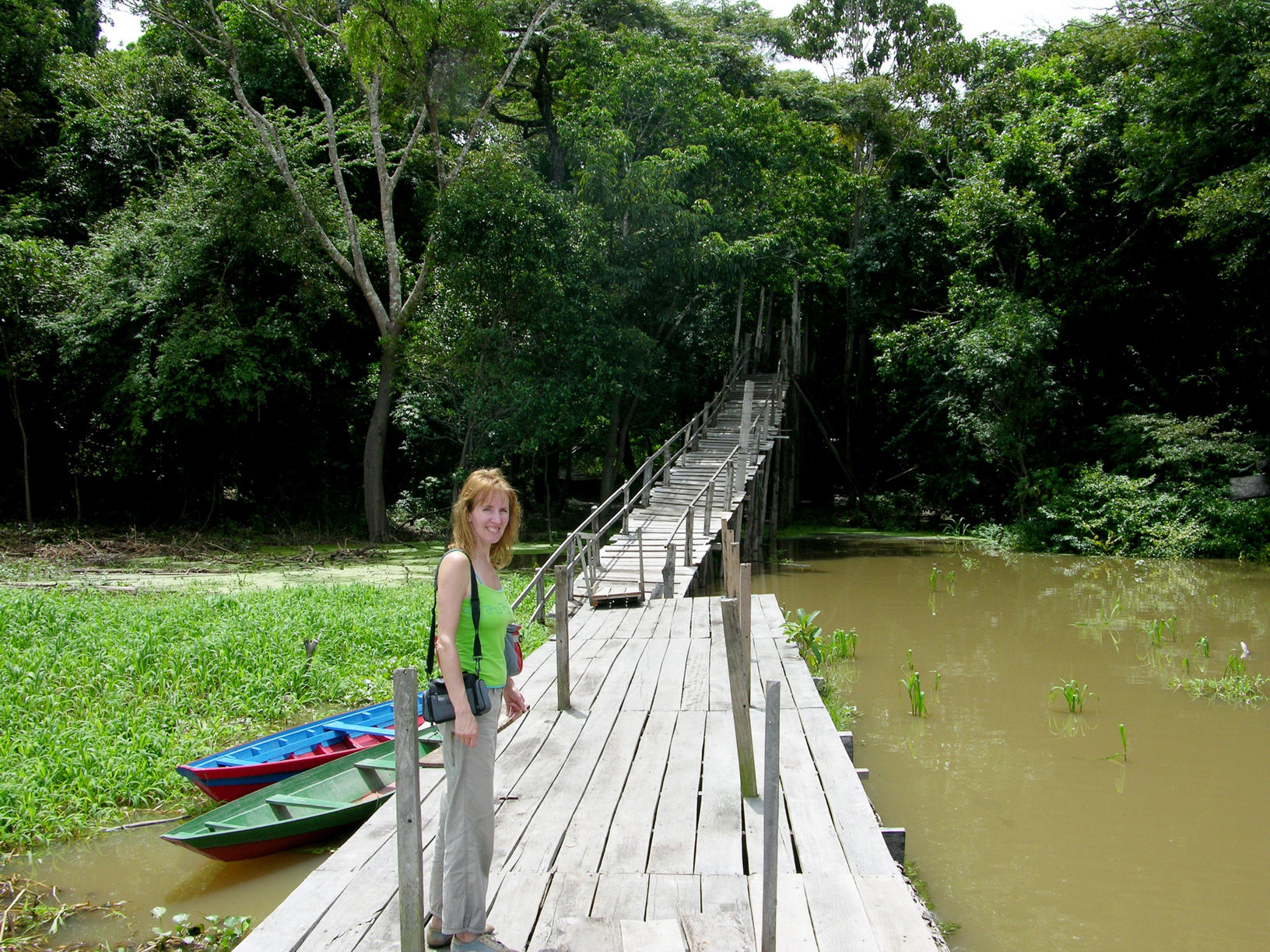
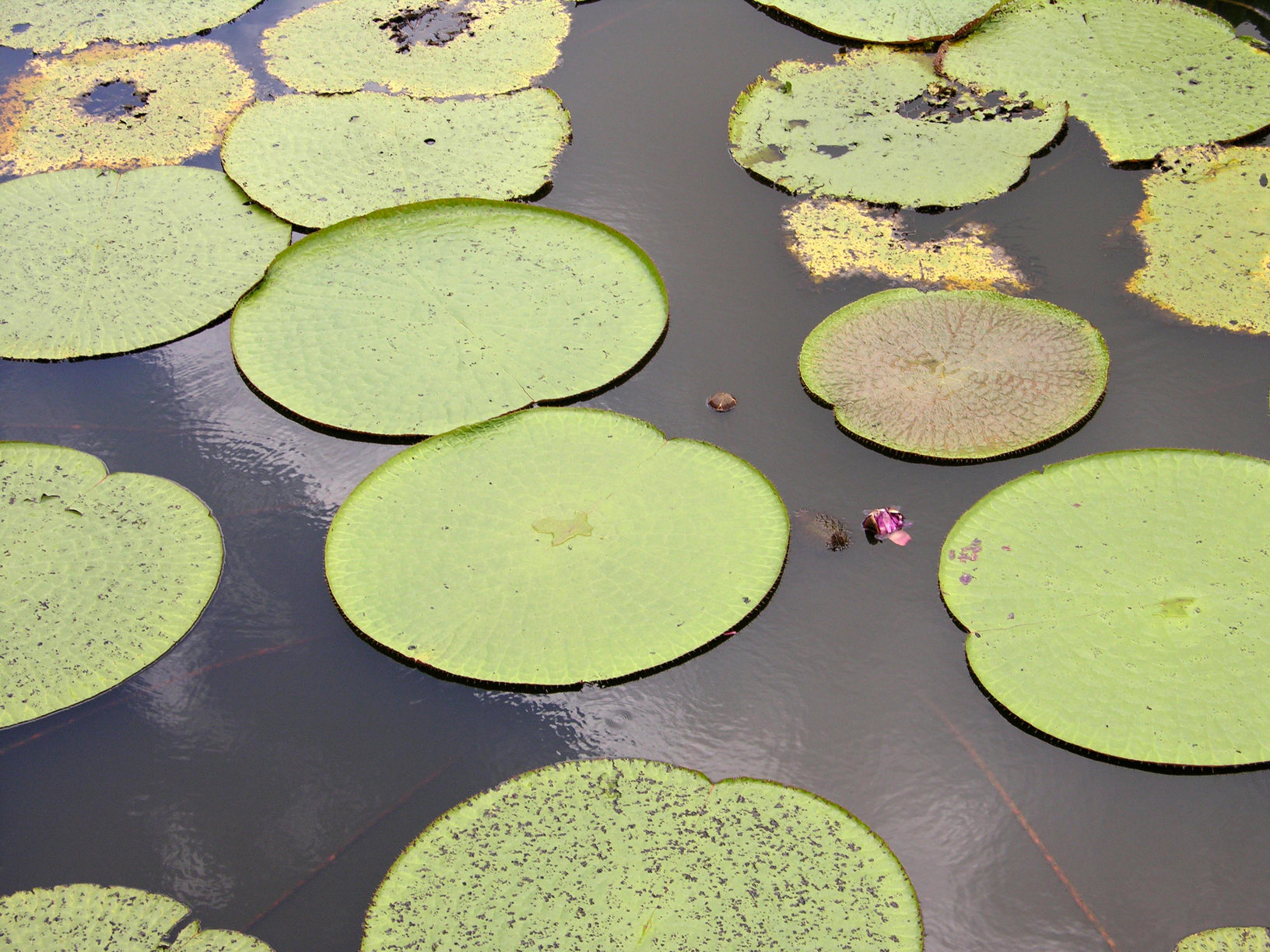
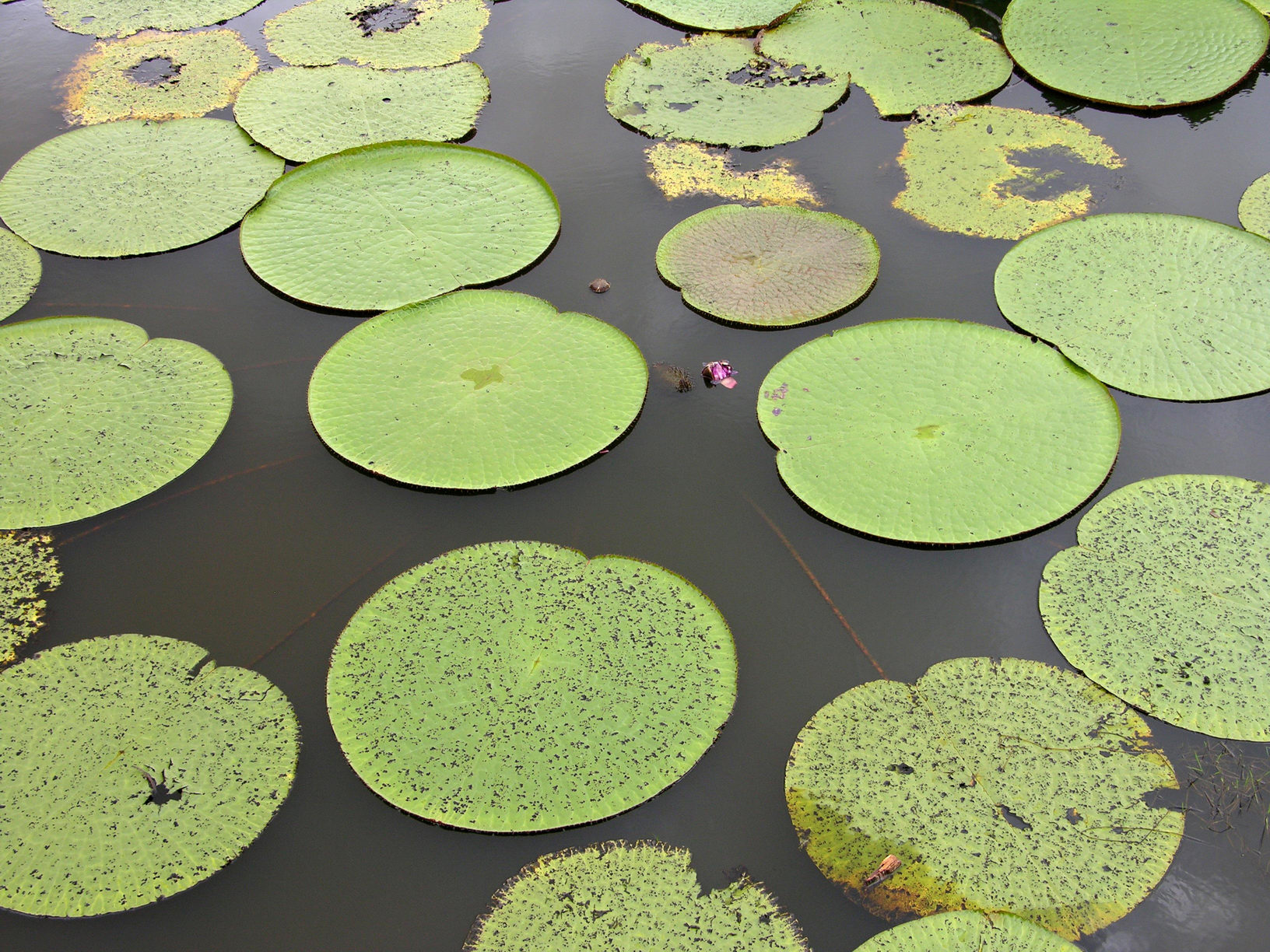
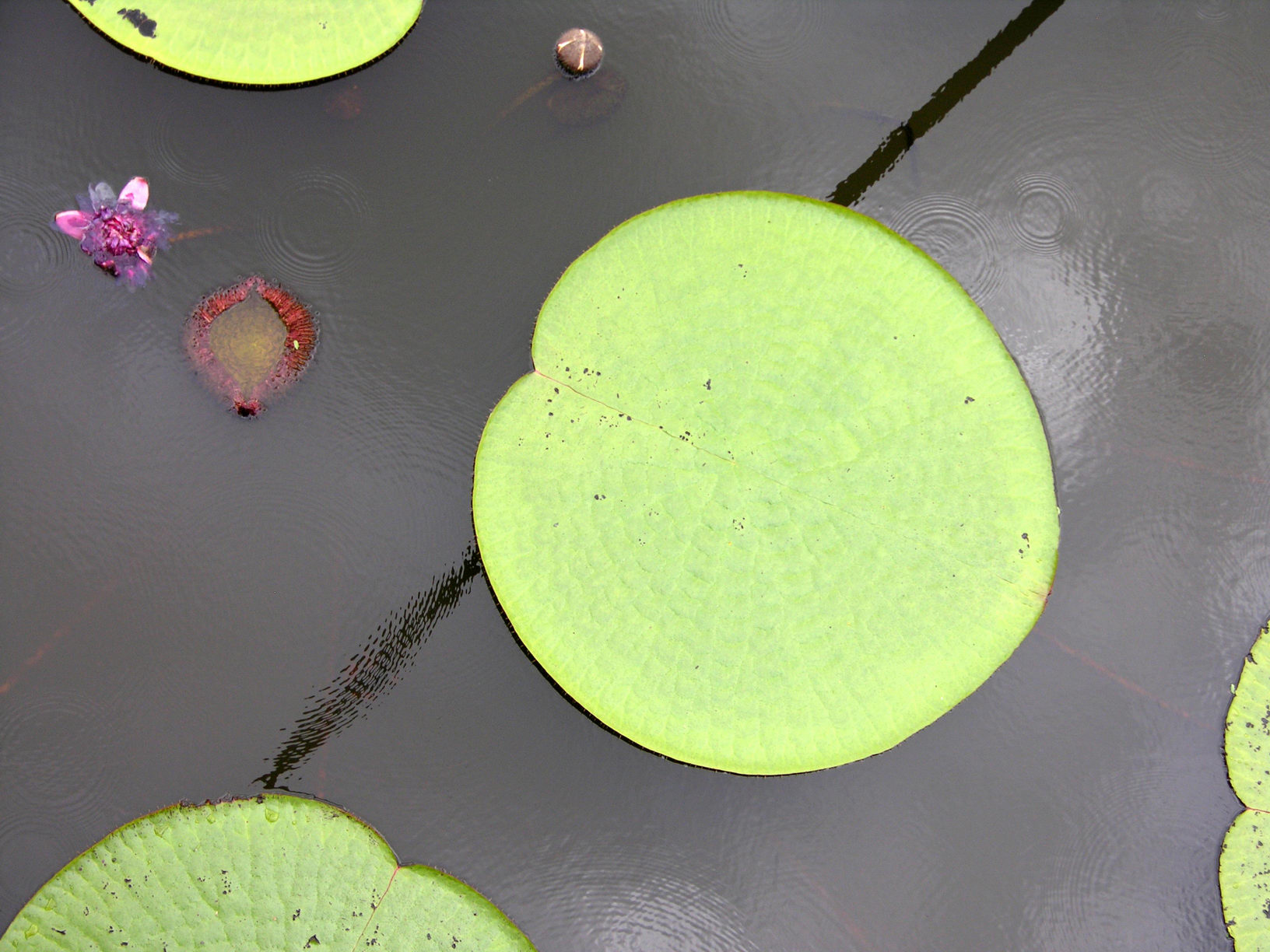
The only thing we could do was go to the Parque Ecológico Janauari. It's quite a tame place, with masses of tourists, but here it's easy to see the giant Victoria water lilies, Victoria regia (vitória-régia). From a walkway, of course, but at least you're sure of seeing them.
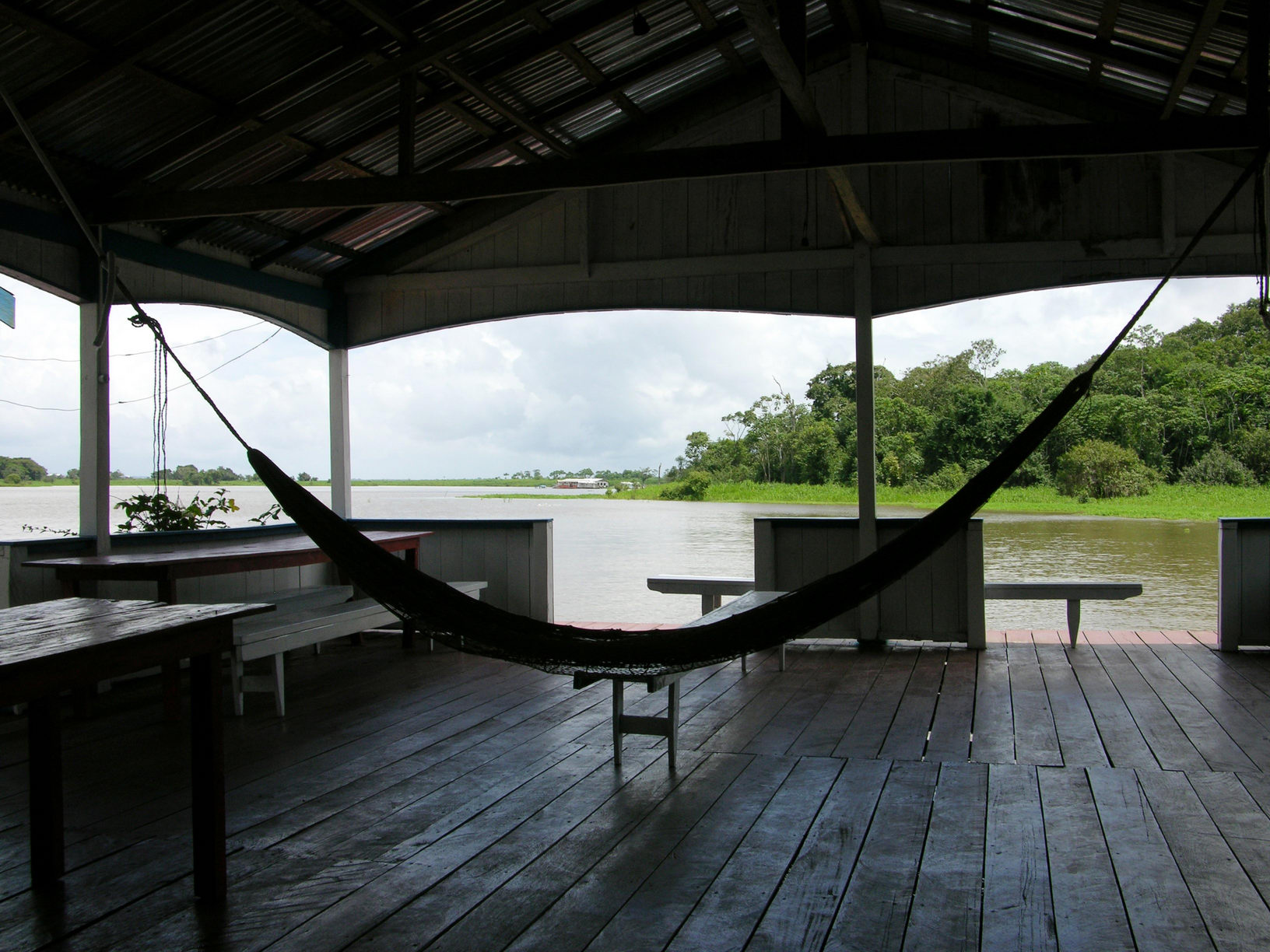
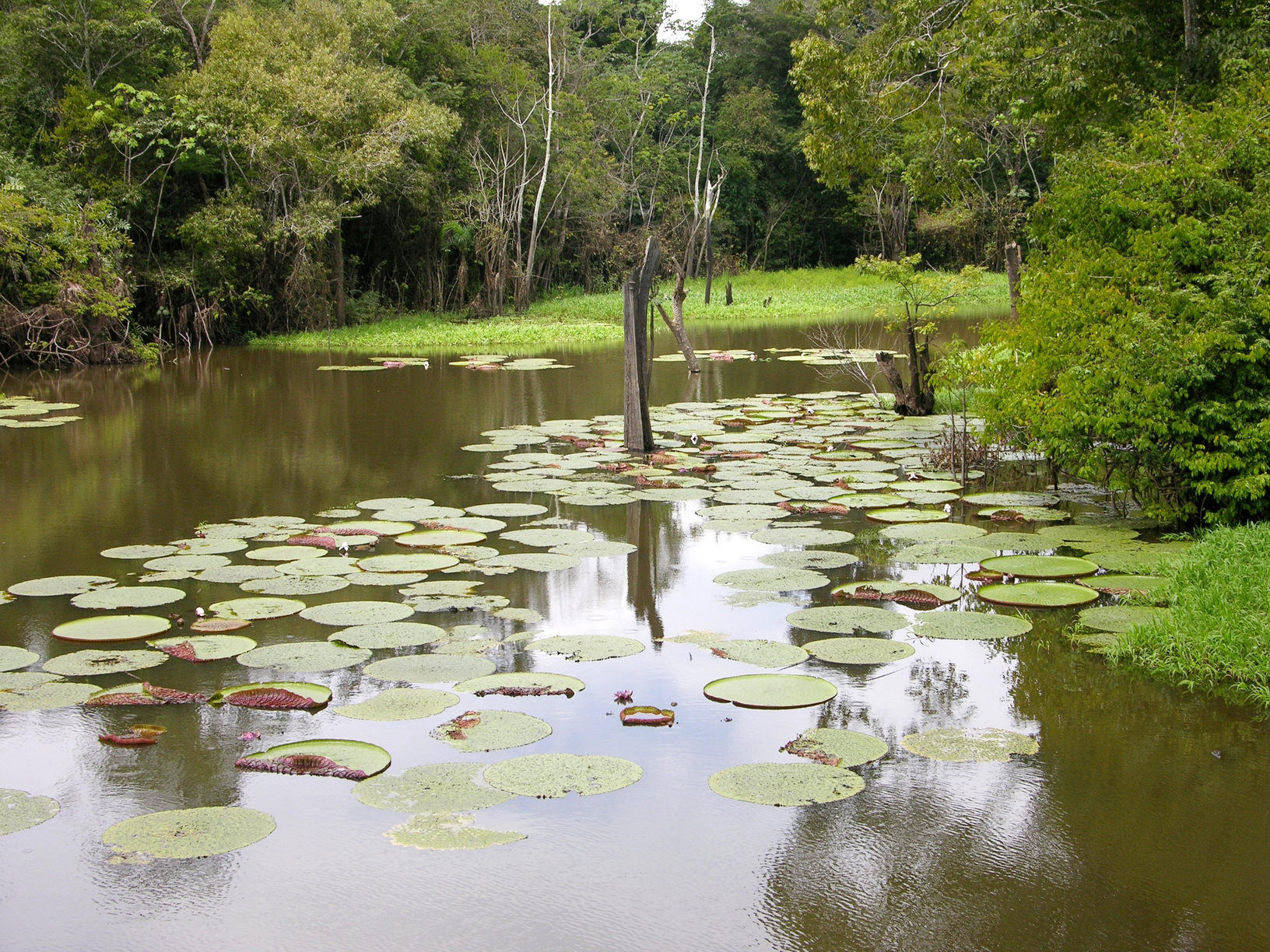
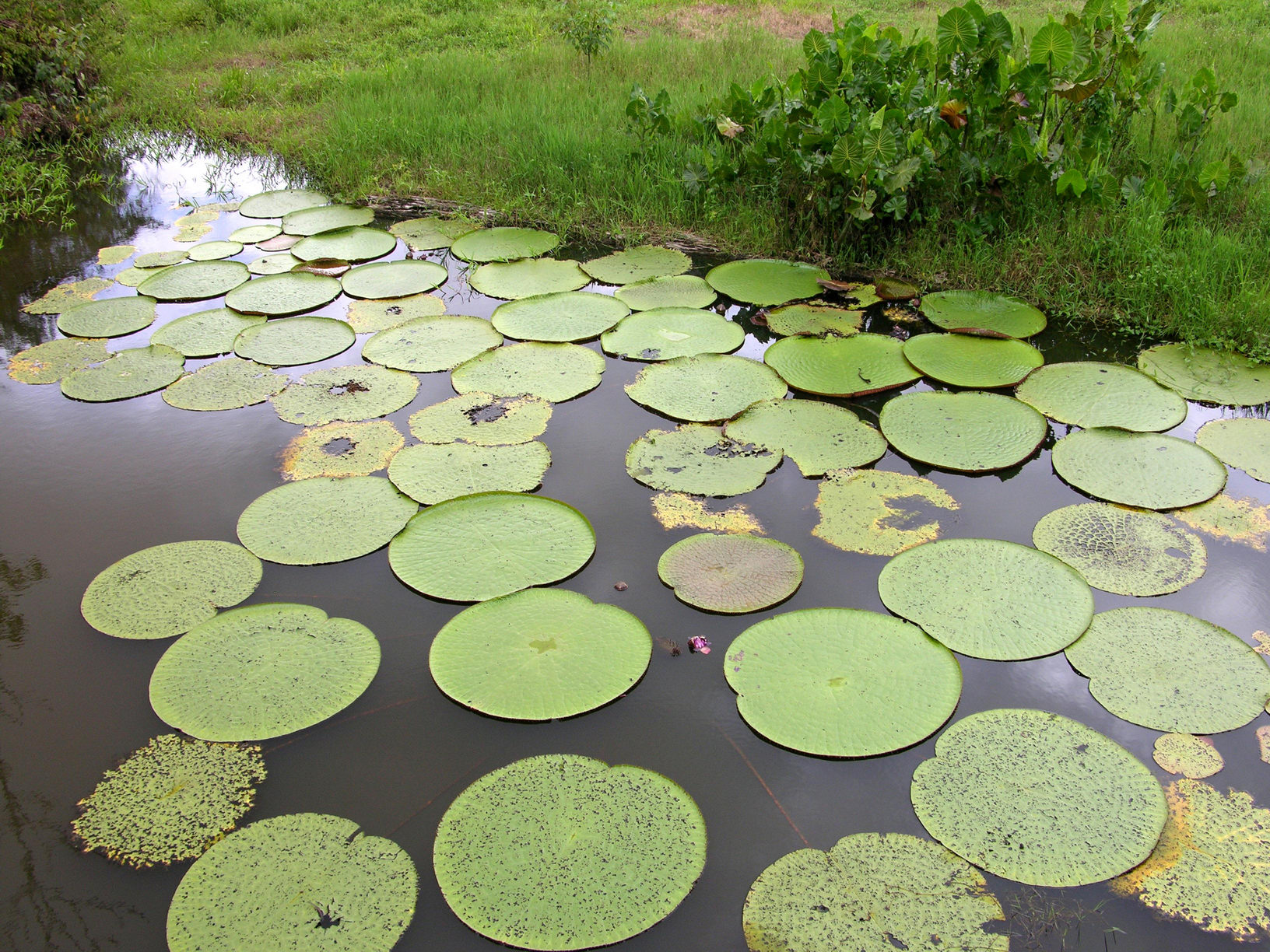
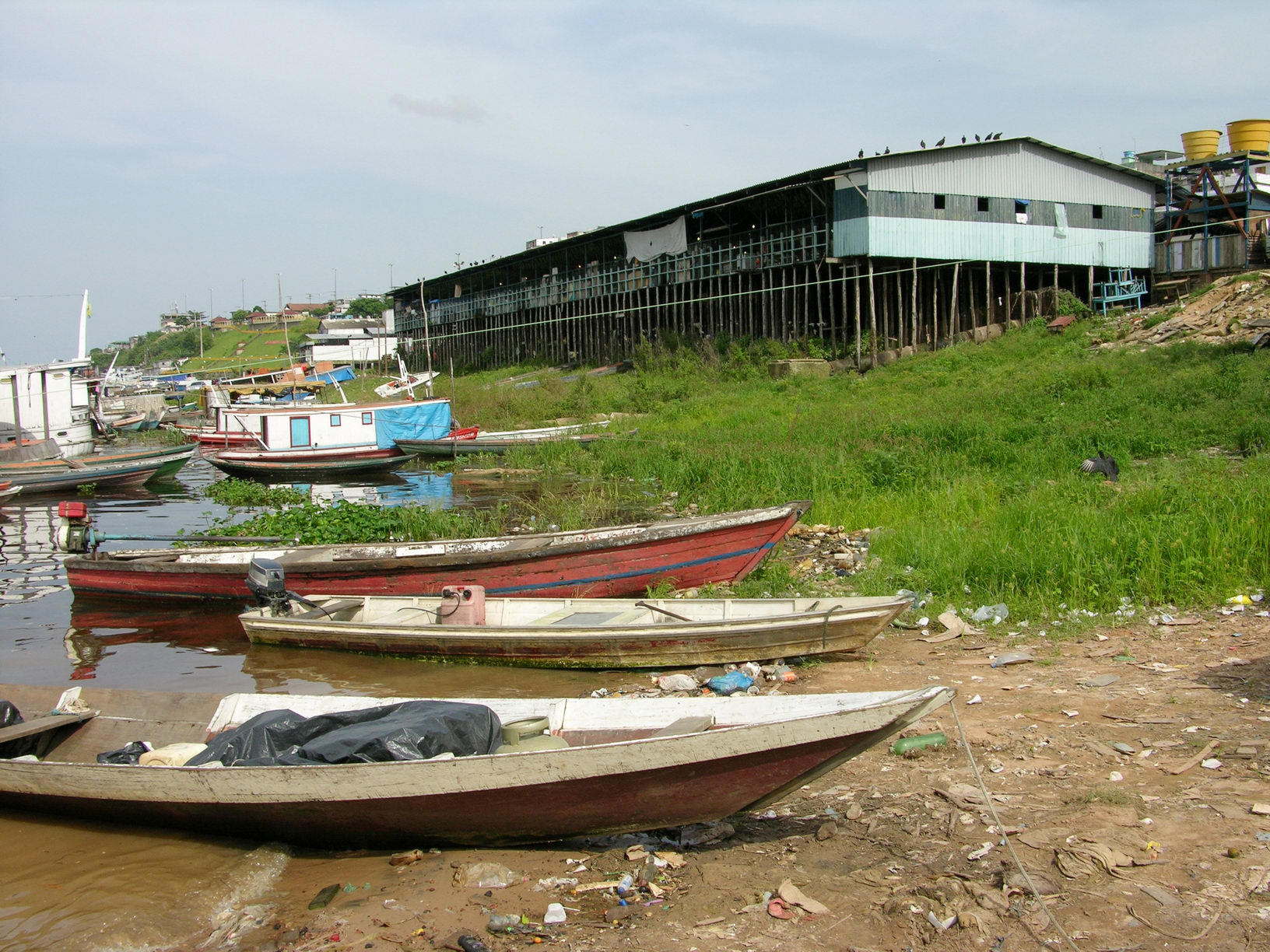
To reach the park you have to hire a boat. It's very easy. I'd say it's much harder not to hire one. Walk a few metres along the river and any number of boatmen descend on you. A boat costs a hundred and fifty reais. It takes four to six people, but we didn't wait for companions and went on our own.
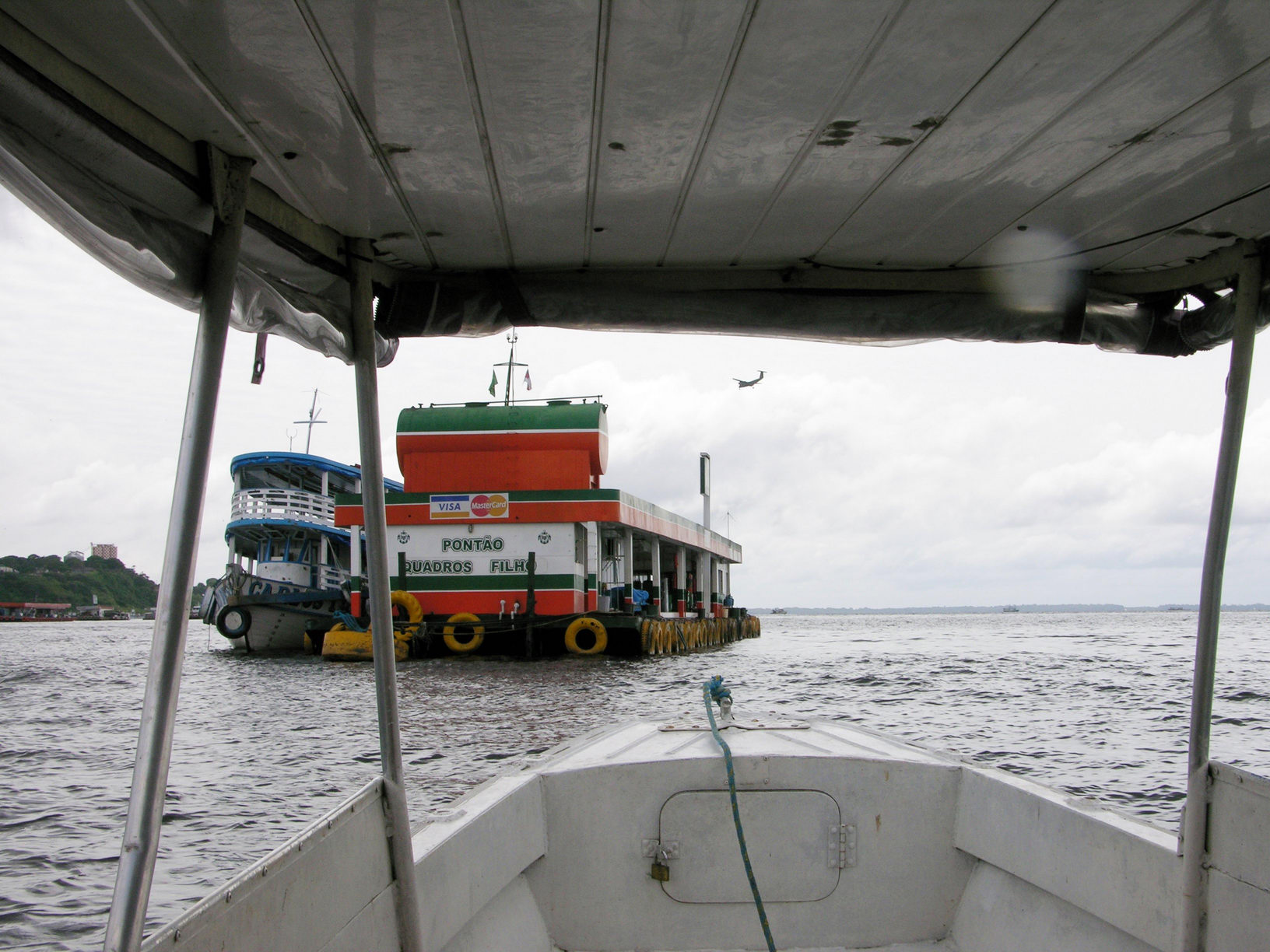
Manaus stands on the bank of the Rio Negro, the black river, where it flows into the white Solimões. Below the meeting point the river is known as the Amazon, Rio Amazonas. The Solimões is often called the Amazon too, particularly in Peru and Colombia, where nobody knows it by another name.
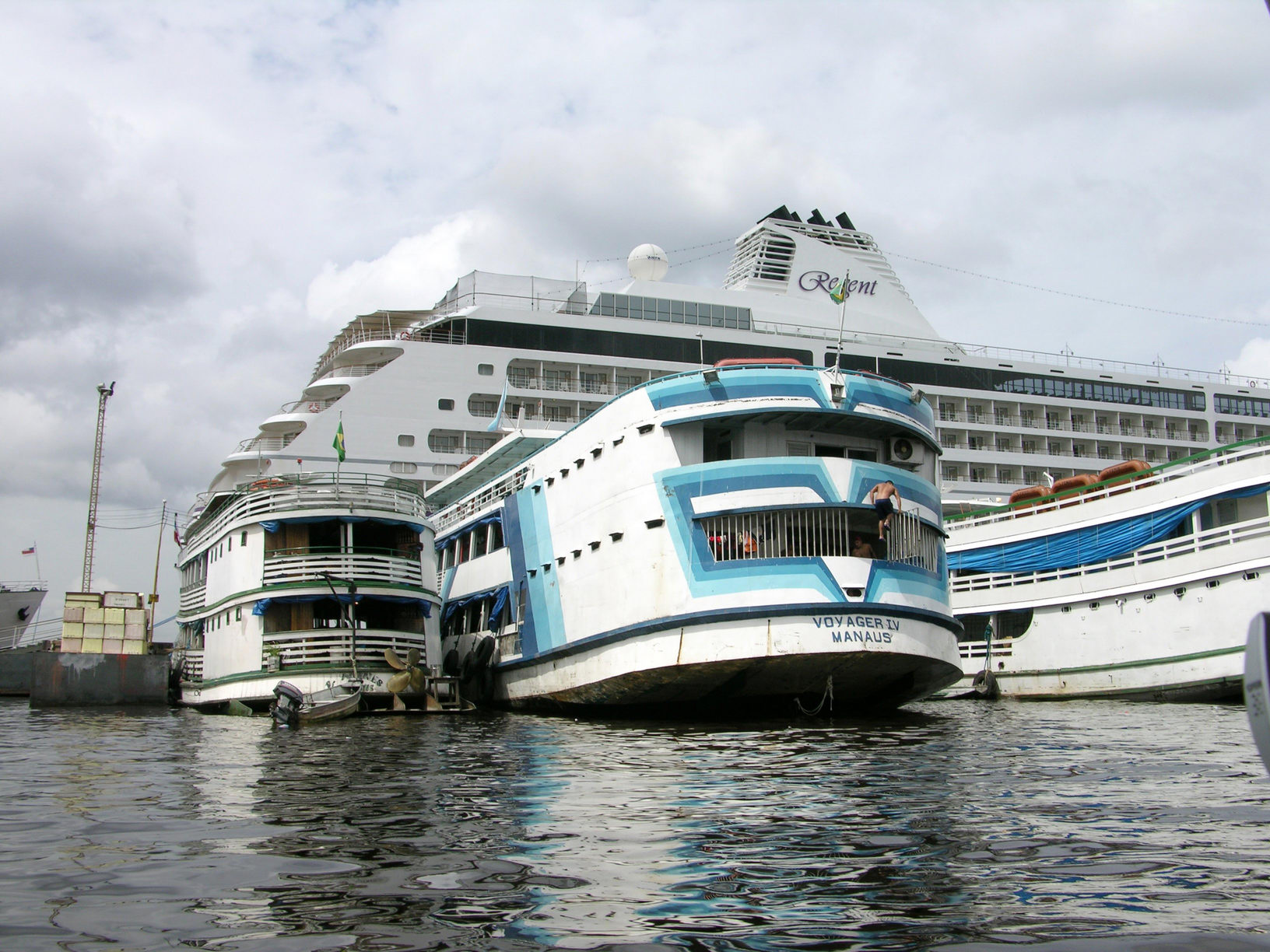
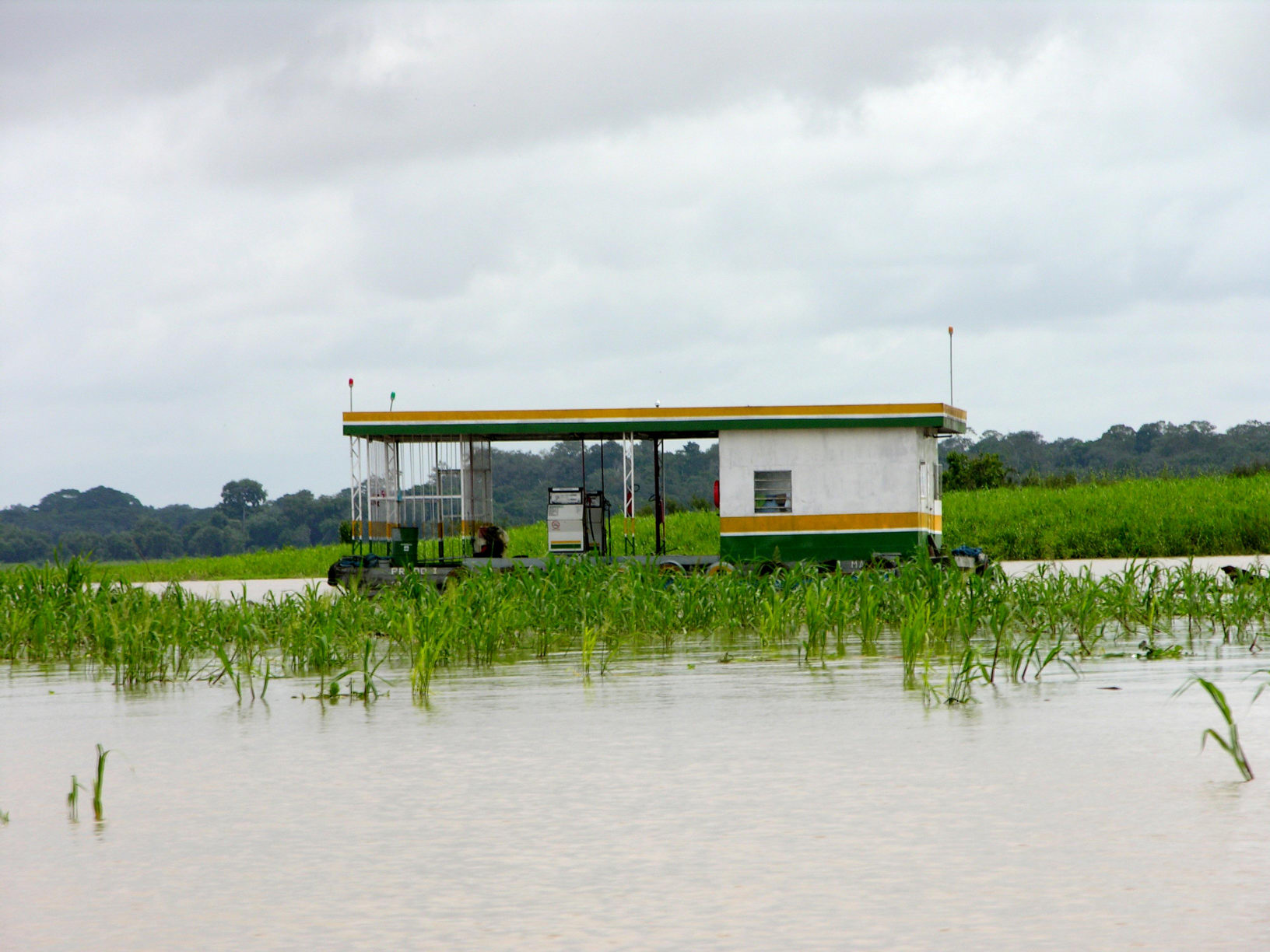
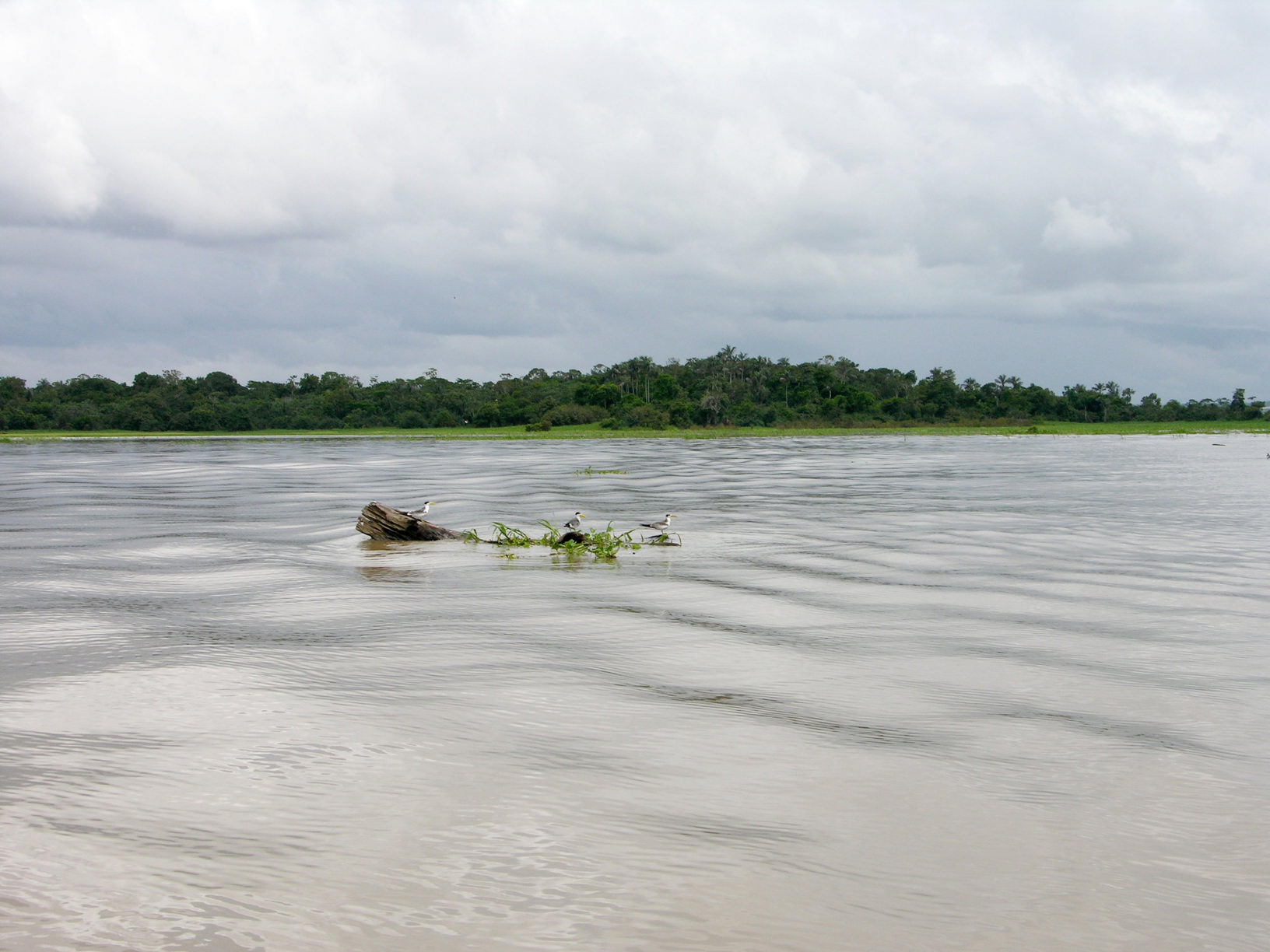
Back home we have white and black rivers too, but in Amazonia the colours of the water are in a different league. There's no mixing them up.
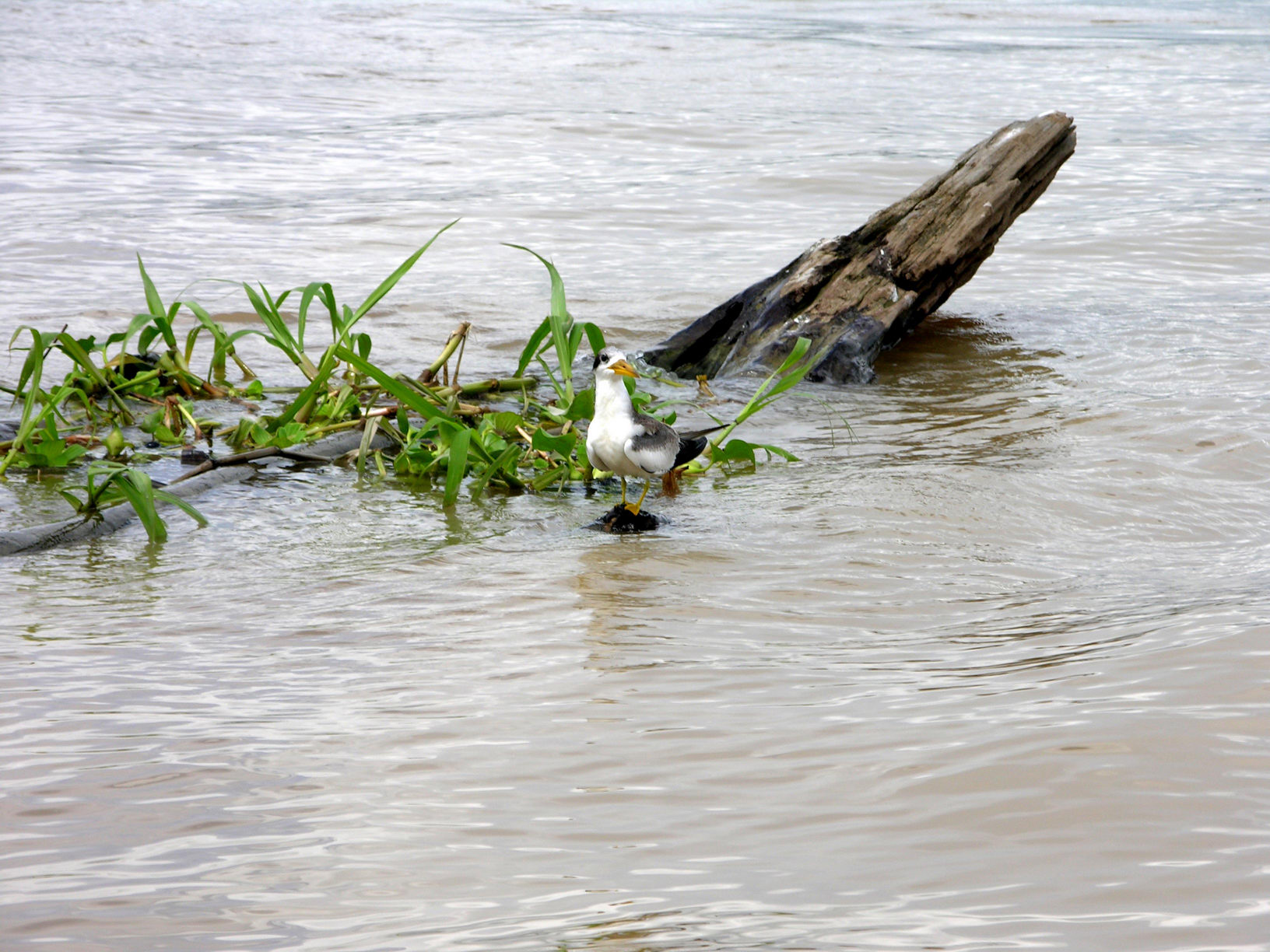
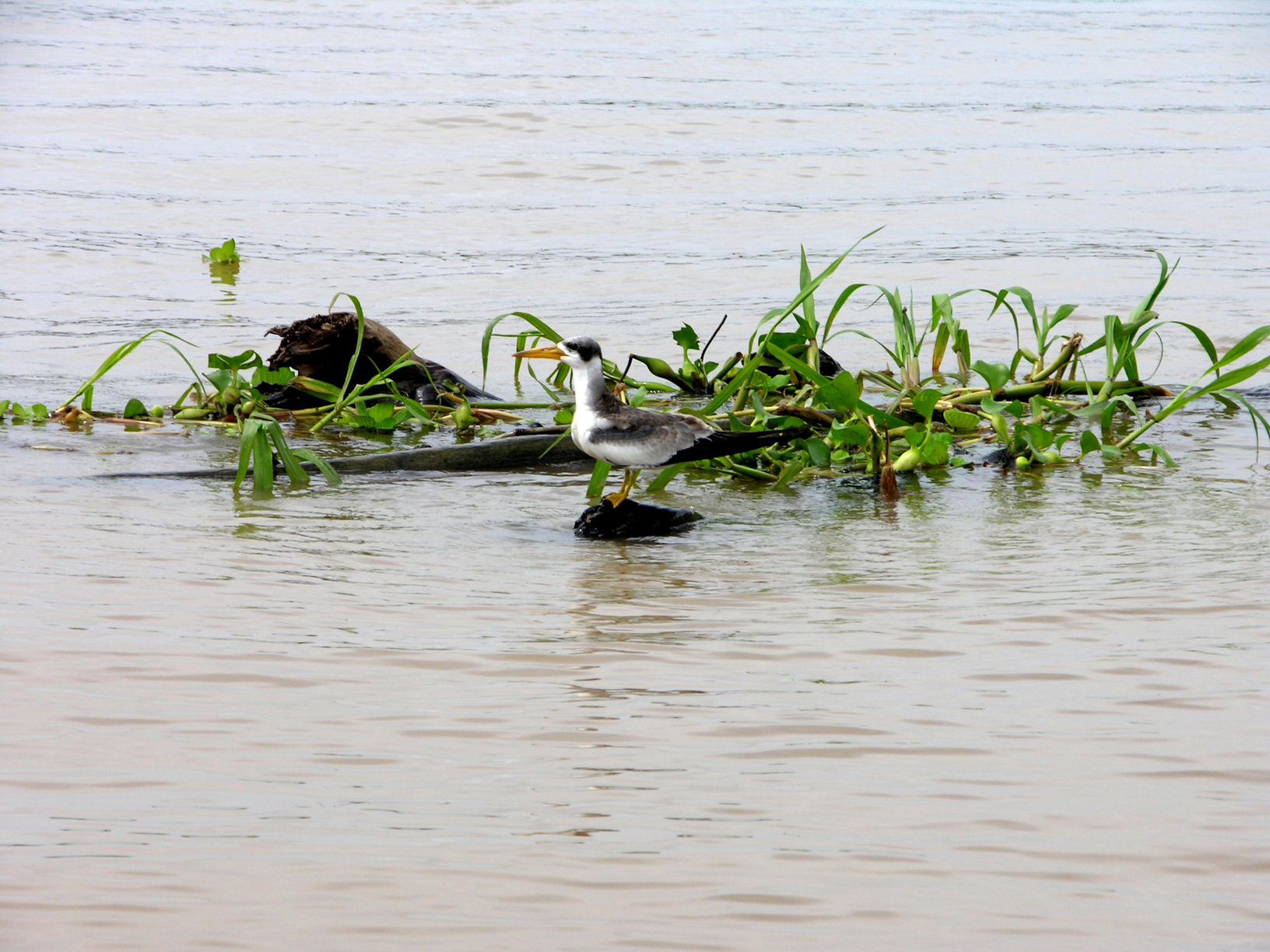
The Andes are young mountains. Fast rivers scour deep canyons and carry huge amounts of muddy water. Even ten centimetres of the stuff is quite opaque. Water plants, bankside bushes and even huge trees float down the white river. The water teems with life, mostly fish, of all sorts and delicious, too. The famous piranhas are very scarce in the Amazon. It looks as though they've all long since been caught for souvenirs. Fewer crocodiles still. Nowadays you can swim in the Amazon, but it's mainly children who do. An ordinary grown-up won't get into that murk. One Czech did swim the whole thing, from its headwaters in the Andes to the ocean. But then he was Czech.
The black rivers run off old granite mountains, mostly to the north. Erosion is slower up there. The water looks clear, though it contains a little manganese. Insect larvae don't like that at all, so they aren't found along the banks of black rivers. And so on down the food chain. No larvae, no fish. There aren't even jaguars along the black rivers. But for people it's lovely. In Manaus there are no mosquitoes or malaria, as we saw it. Swimming off the magnificent beaches is glorious. You certainly won't find anything in the water to bite you here, and never have.
The Parque Ecológico Janauari lies on the white Amazon. To get there you have to cross the Rio Negro, follow it down to the confluence, then go up little white-water channels among the swamps.
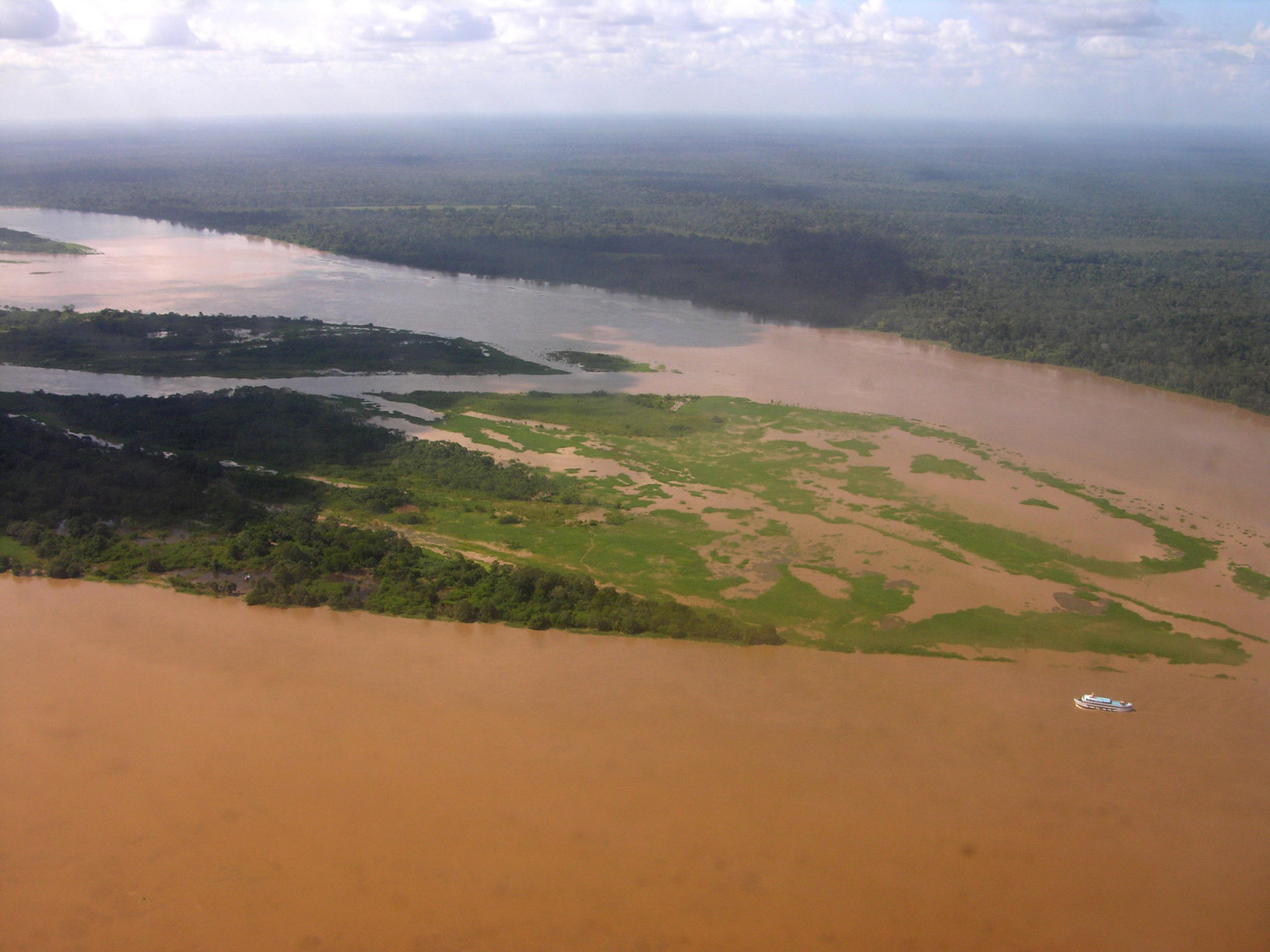
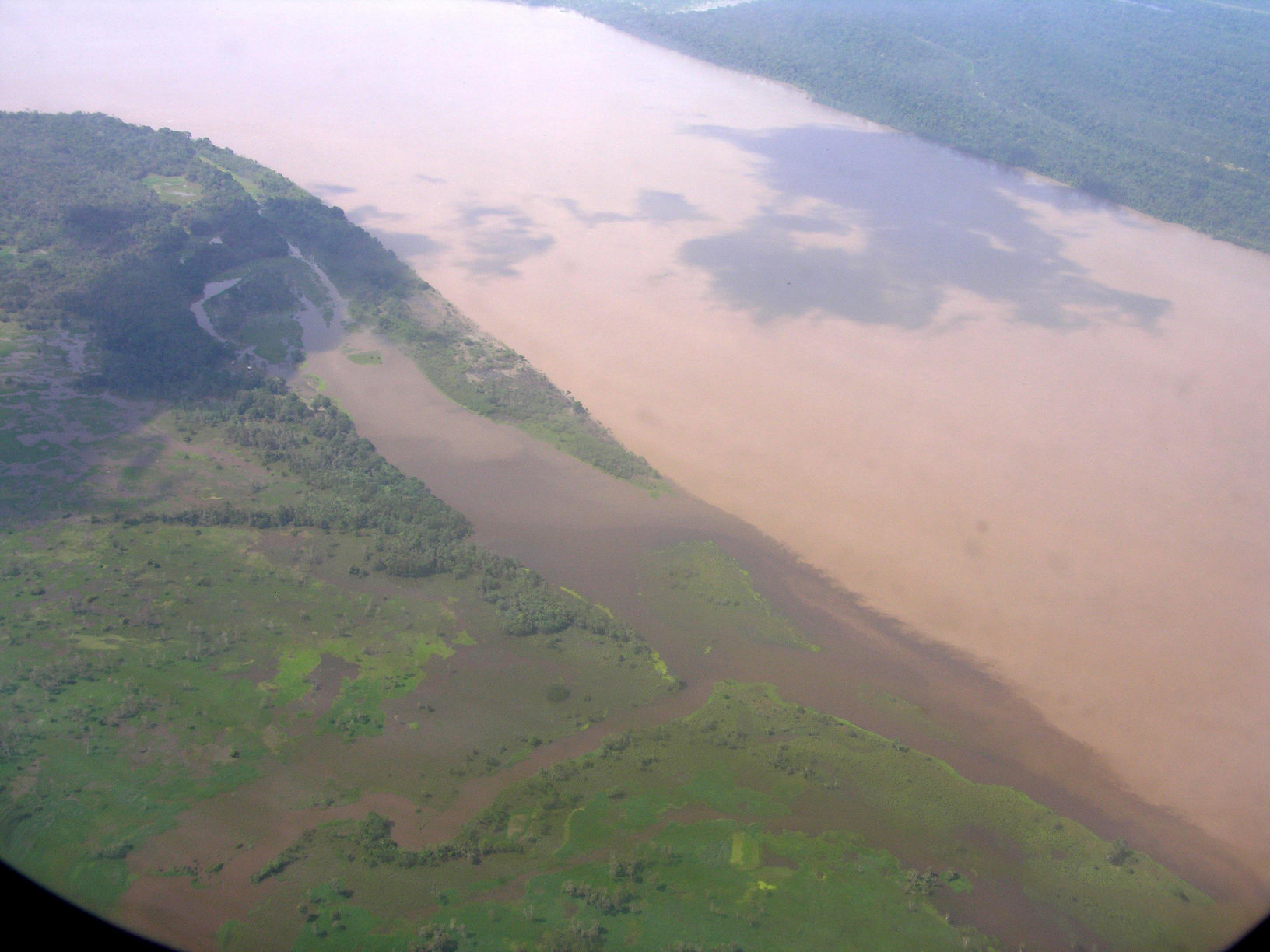
There's one of the local wonders that everyone talks up. At the confluence of the white and black waters you can see the astonishing sight of currents of different colours mixing. For many kilometres downstream, the whorls and eddies show up in different colours.
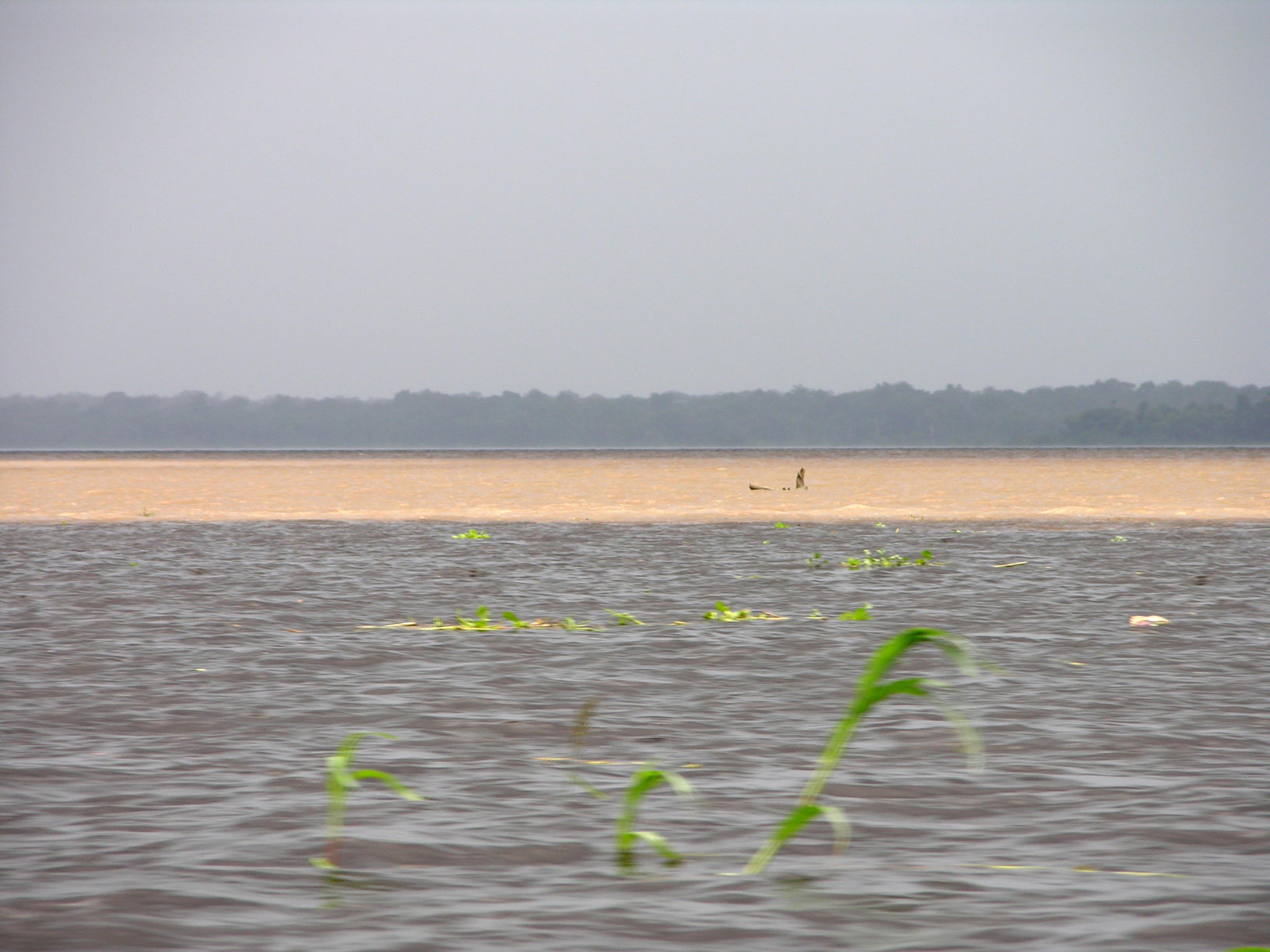
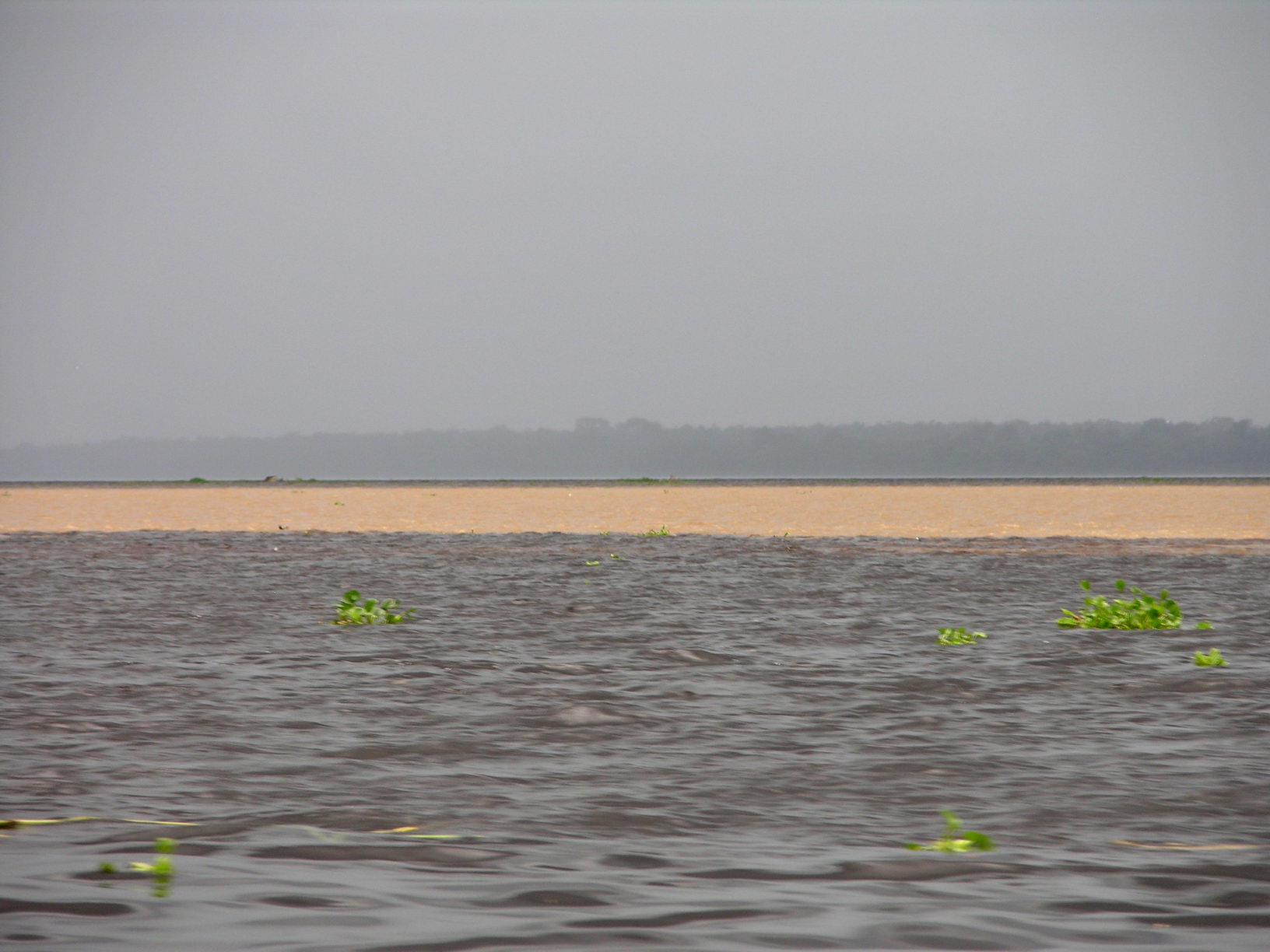
It's best seen from a plane or even from space, of course. But you can see something if you stand up in the boat.
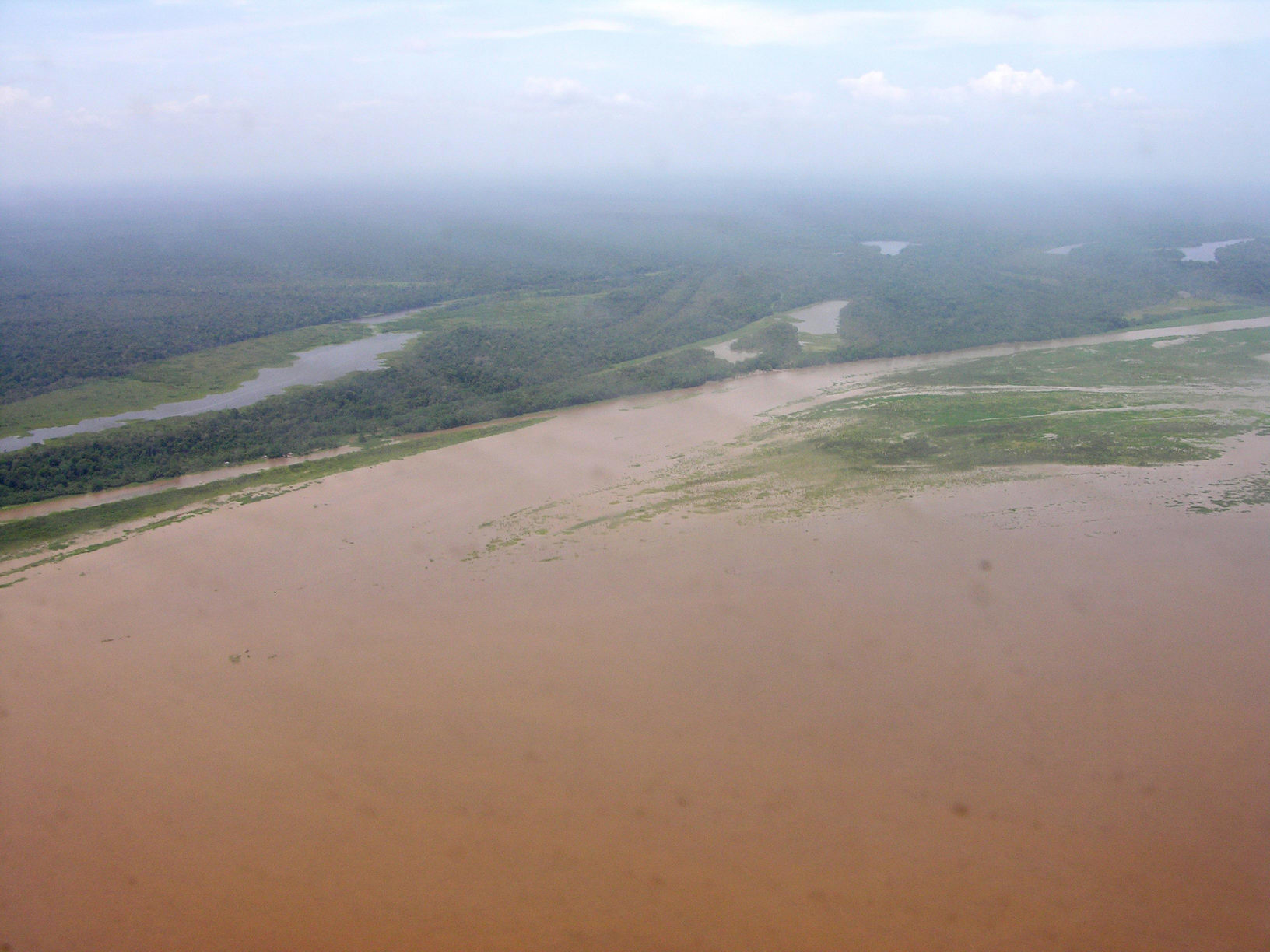
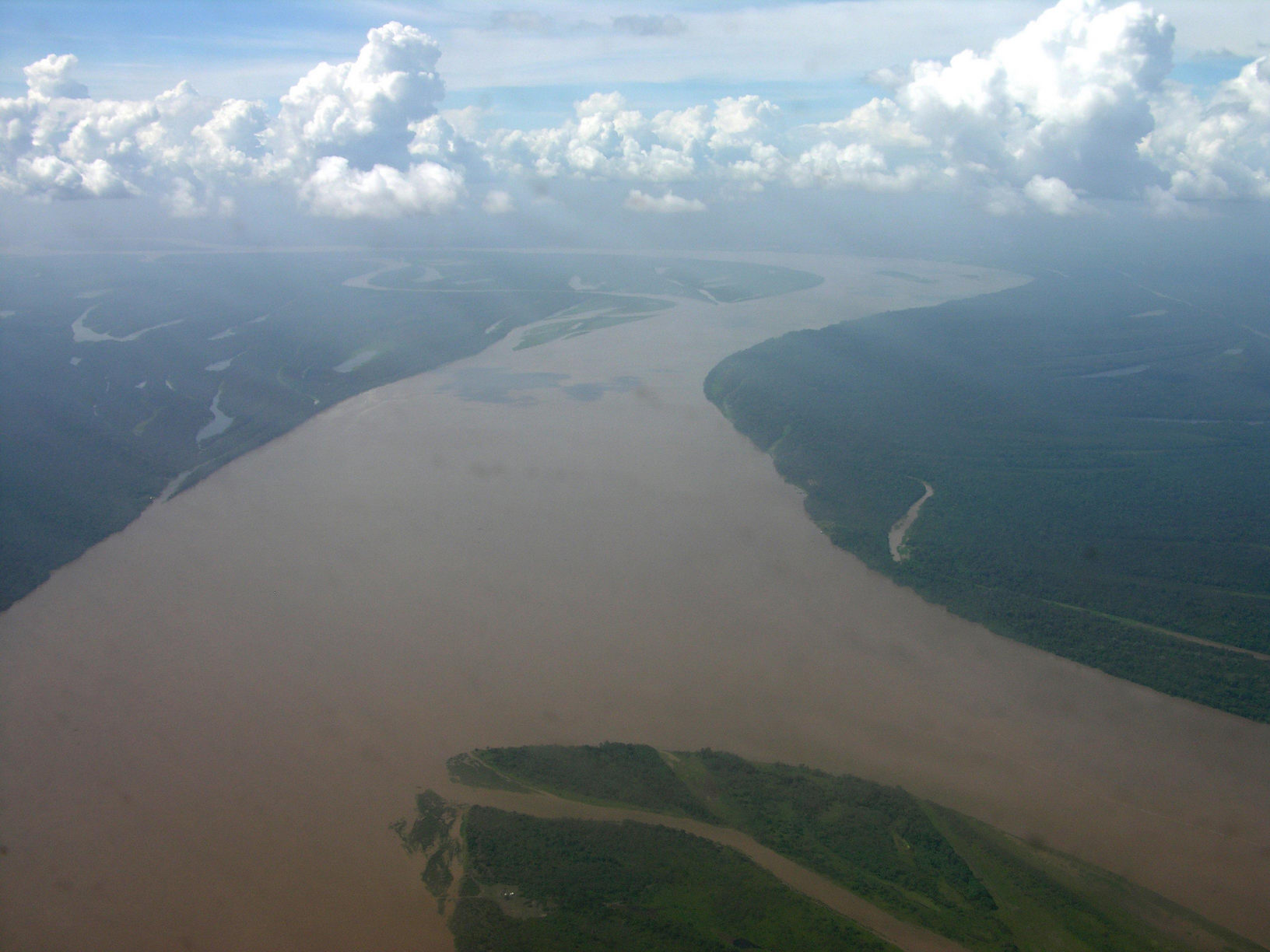
The Amazon splits into innumerable channels farther down. The park has been set up in one of them. It's quite a narrow channel, settled by locals, mostly Indigenous people. They are all thoroughly civilised, of course, and just play at being wild for the tourists. You can see the odd caiman warming itself in the sun and a little backwater overgrown with giant Victoria regia water lilies. They grow throughout Amazonia, but occupy only a tiny fraction of it at the edges of half-overgrown oxbow lakes. You can see that if you fly over the Amazon. You can pick out individual Victoria pads from a kilometre up, even in satellite pictures if you look closely. It's hard to get to places like that on land. You need a boat, but even then it takes a good deal of looking to find the right cove, which often doesn't connect with the main body of water. We never managed to get out to a wild patch and see which pad would hold Tanya. They say one can take fifty kilos. Just the thing for her, at forty-five.
The park won't let you swim among the lilies. We had to content ourselves with dangling over the rail of the walkway and admiring them. On the bright side, it's simple, and anyone can do it.
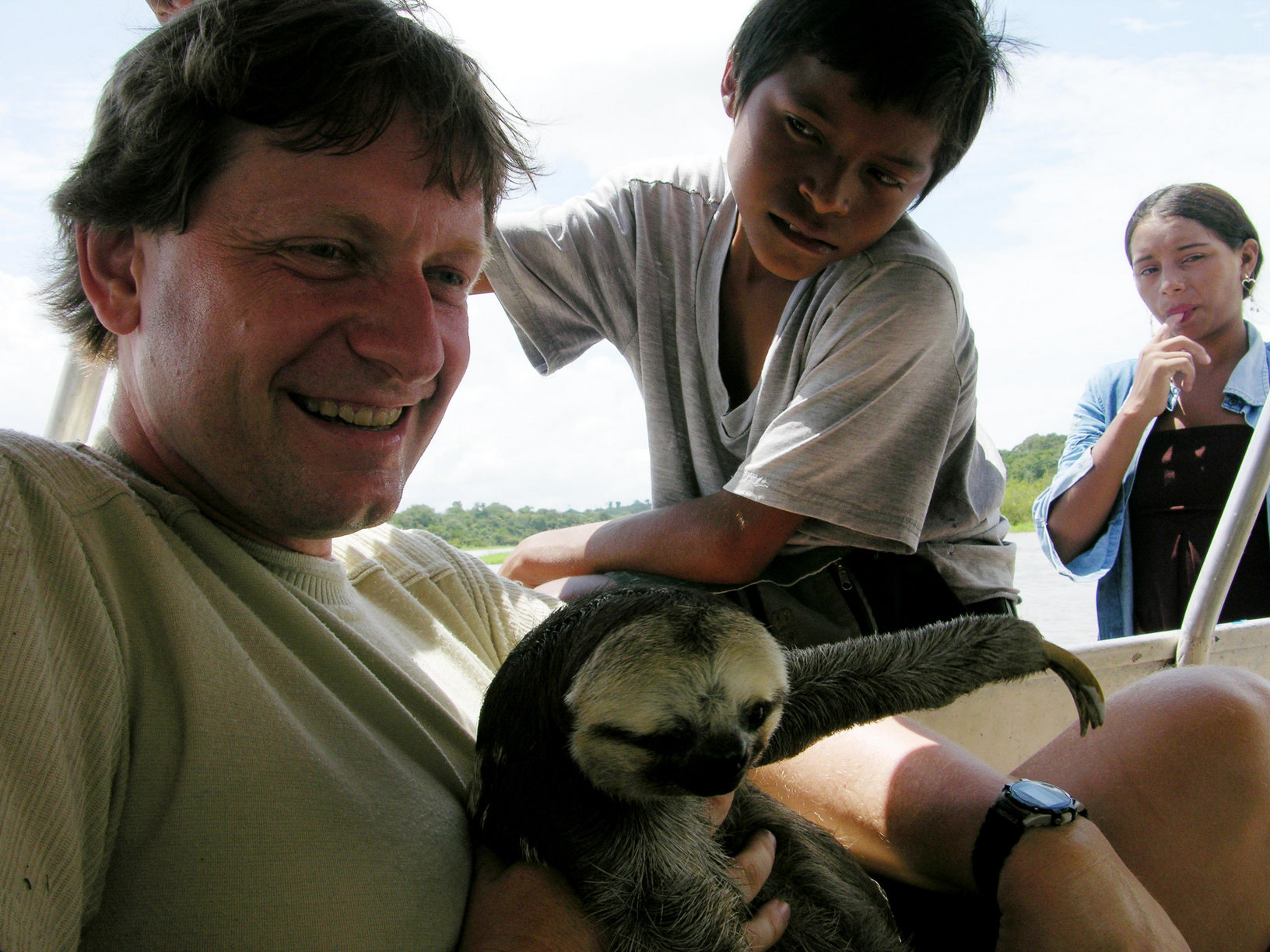
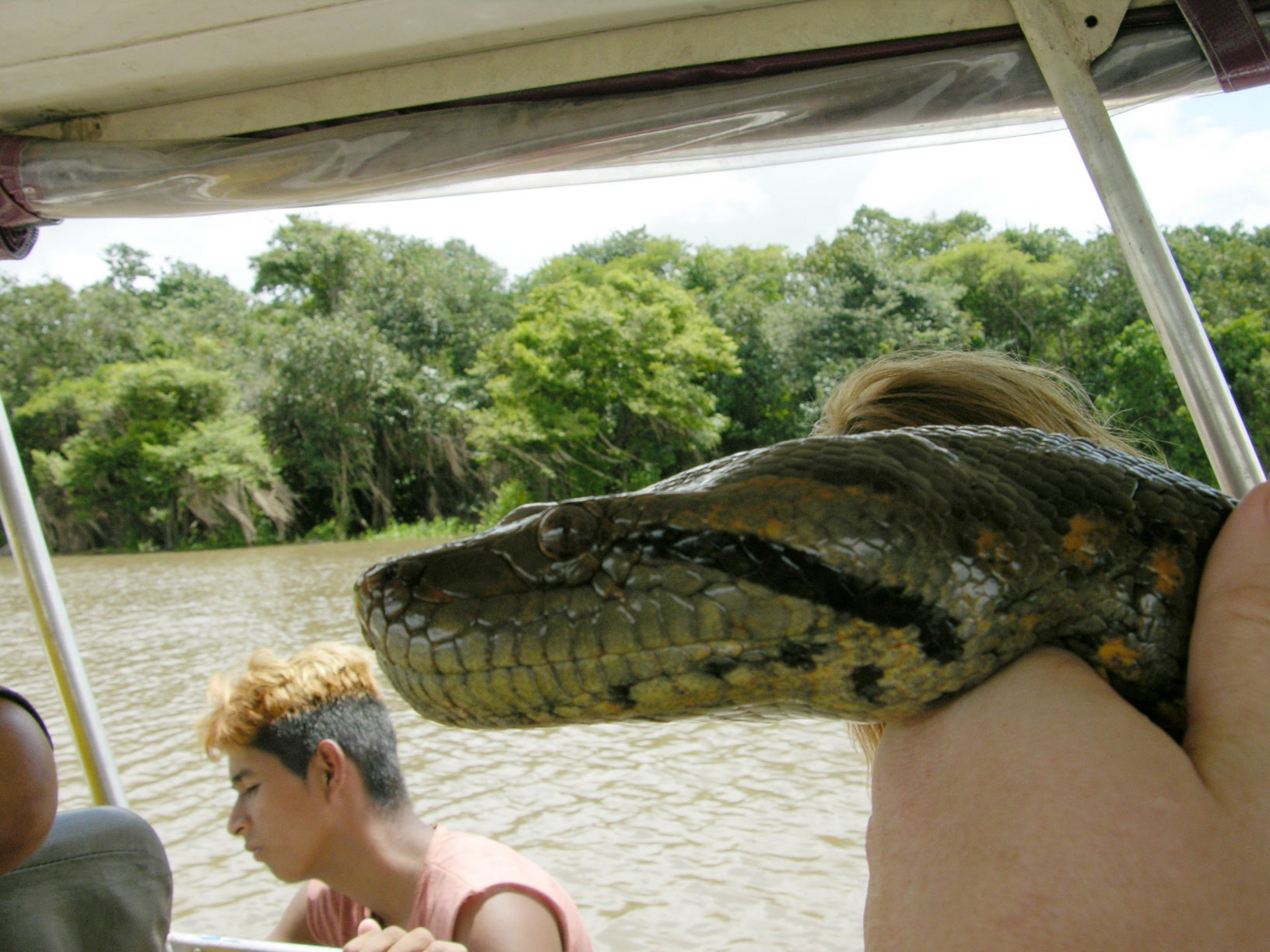
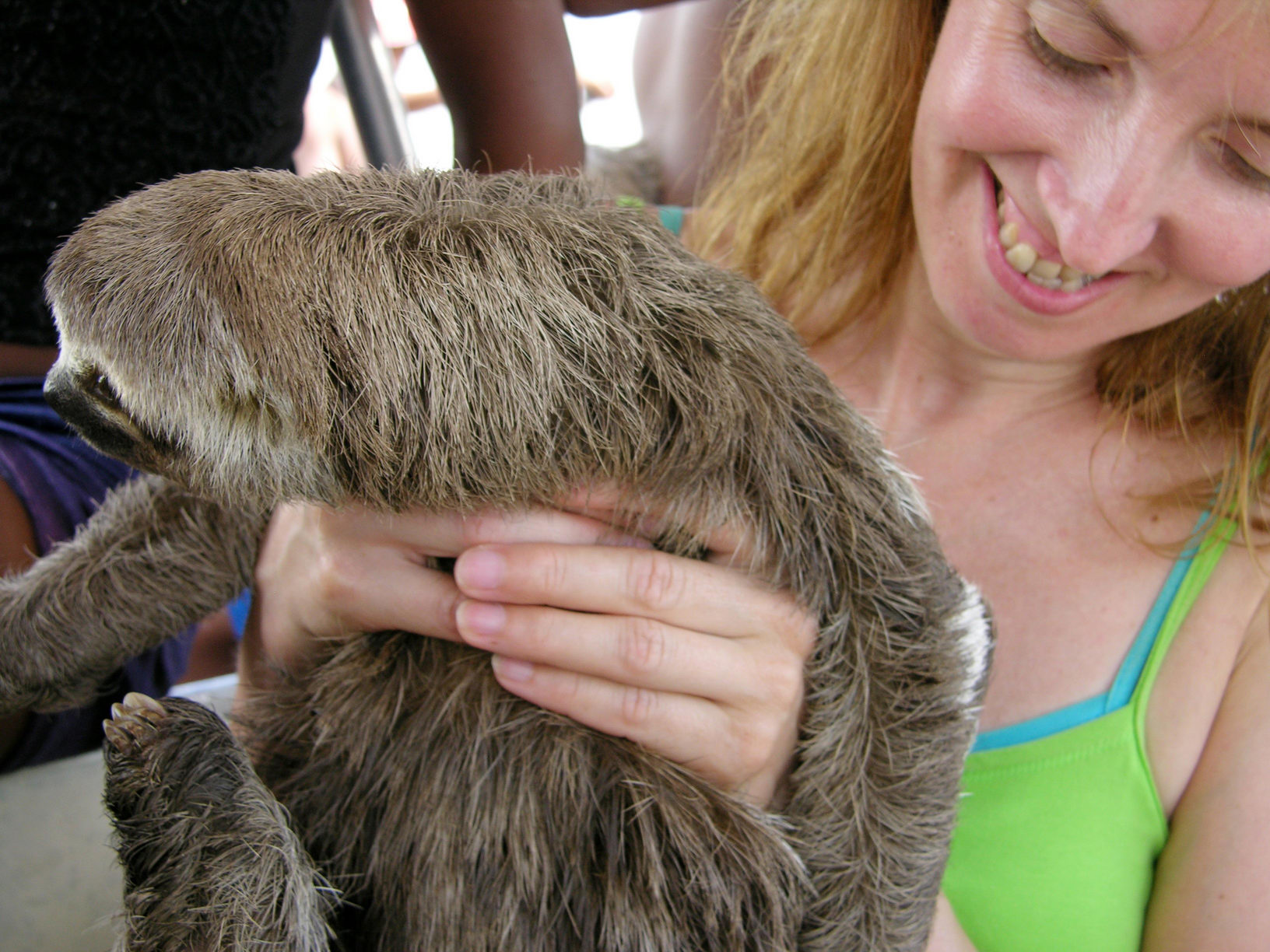
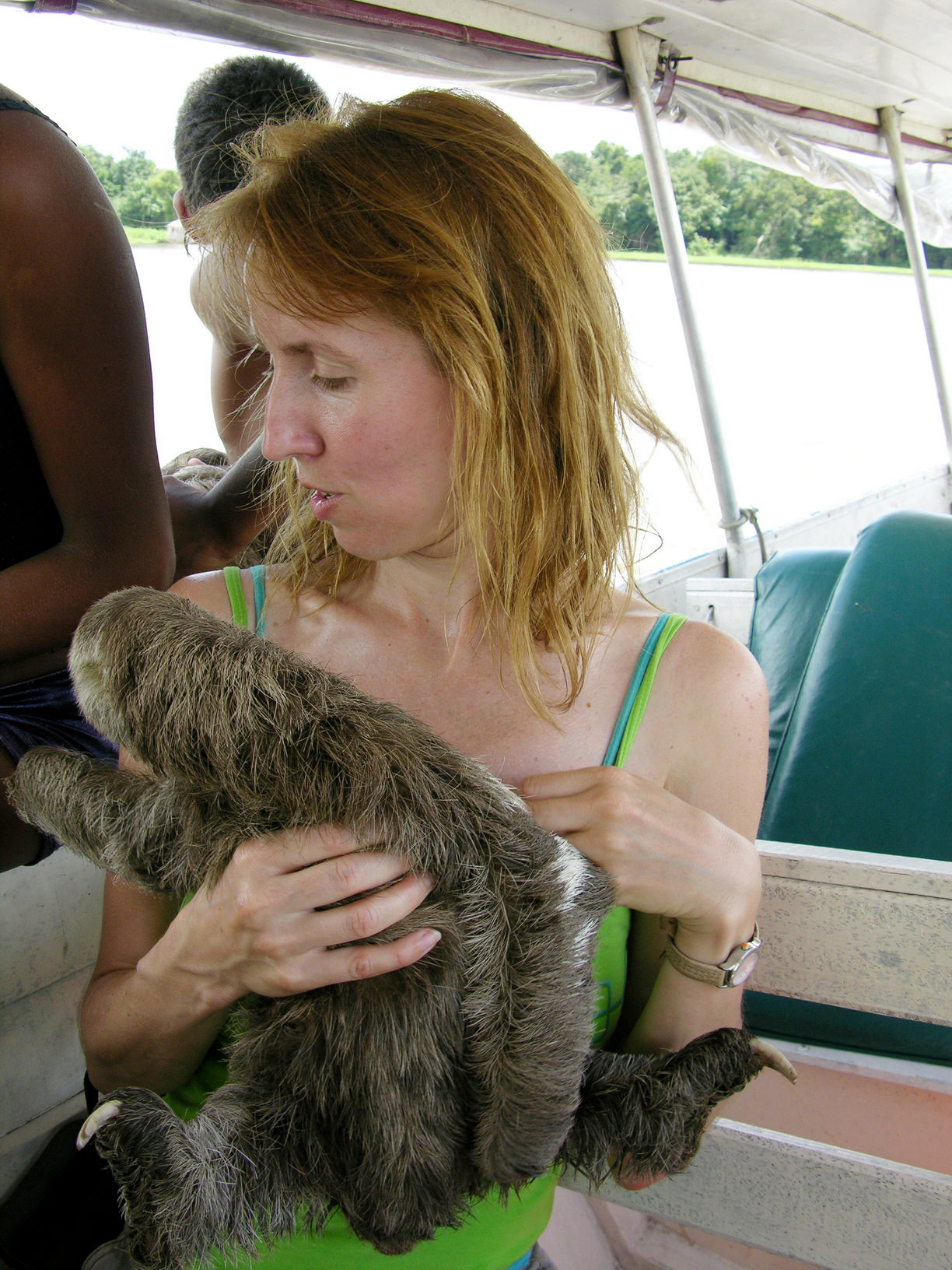
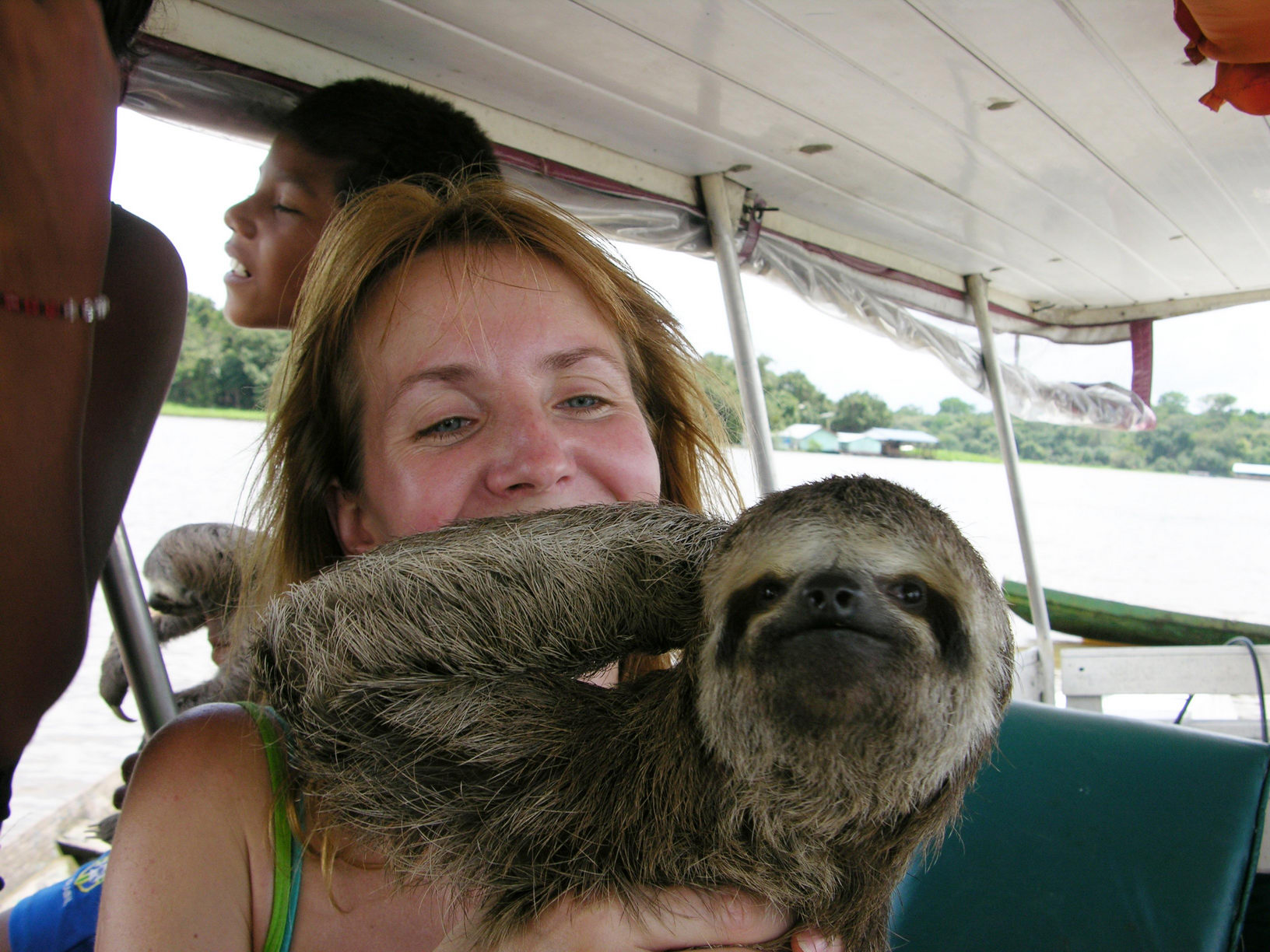
Better still, anyone can hold an anaconda. A passing tourist boat gets attacked by local children in dugouts. They have caimans, sloths and anacondas in their hands.
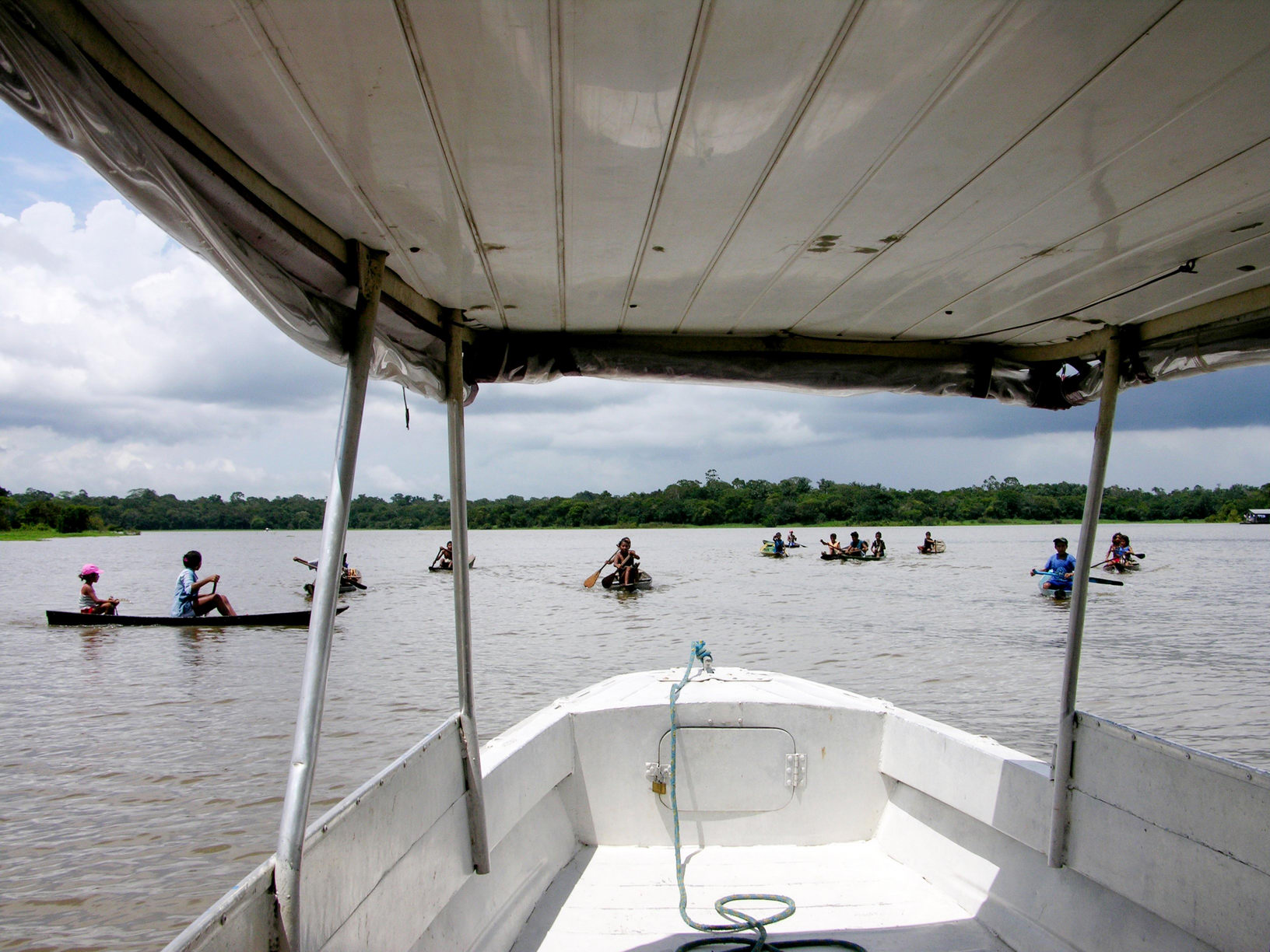
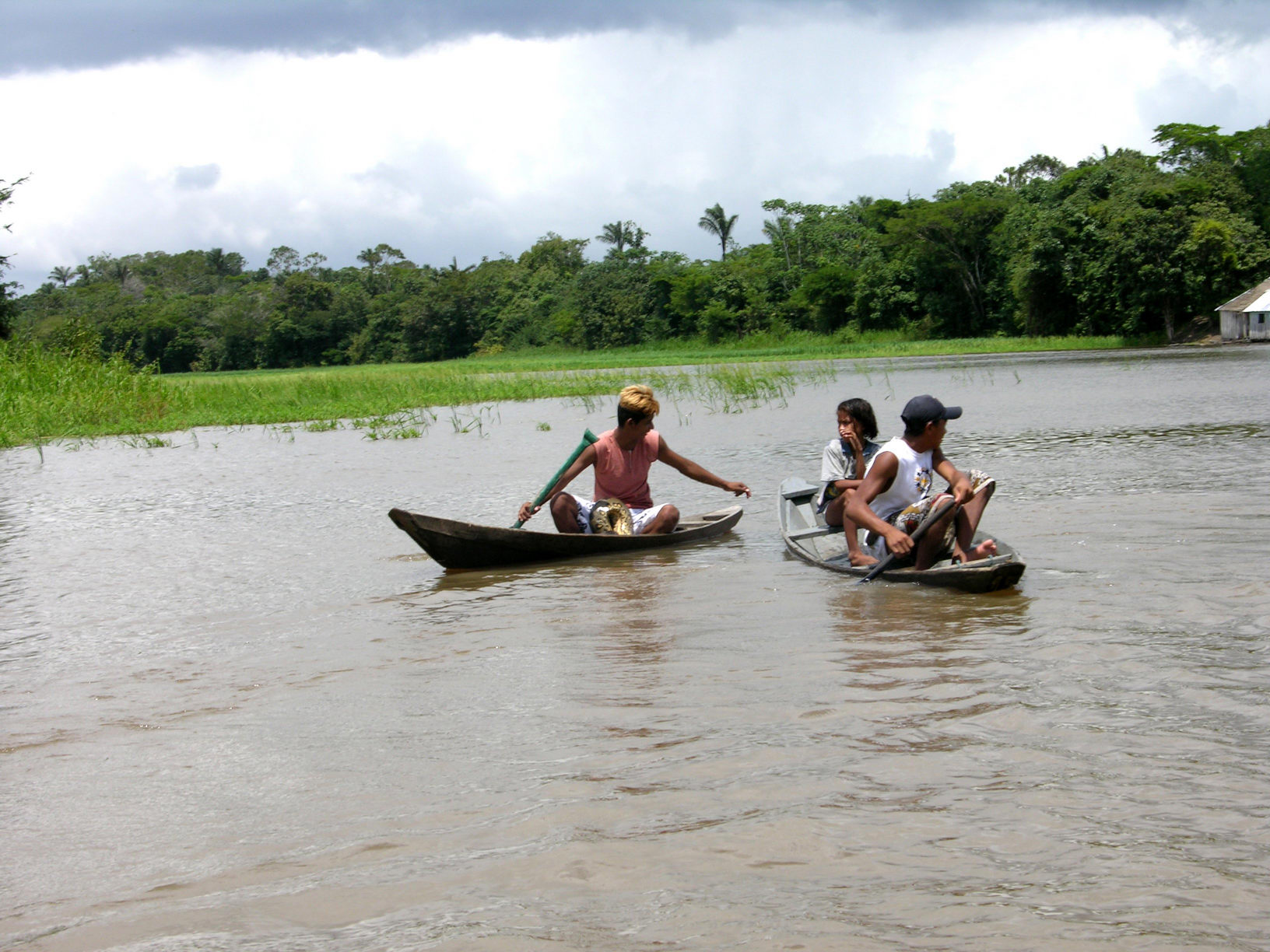
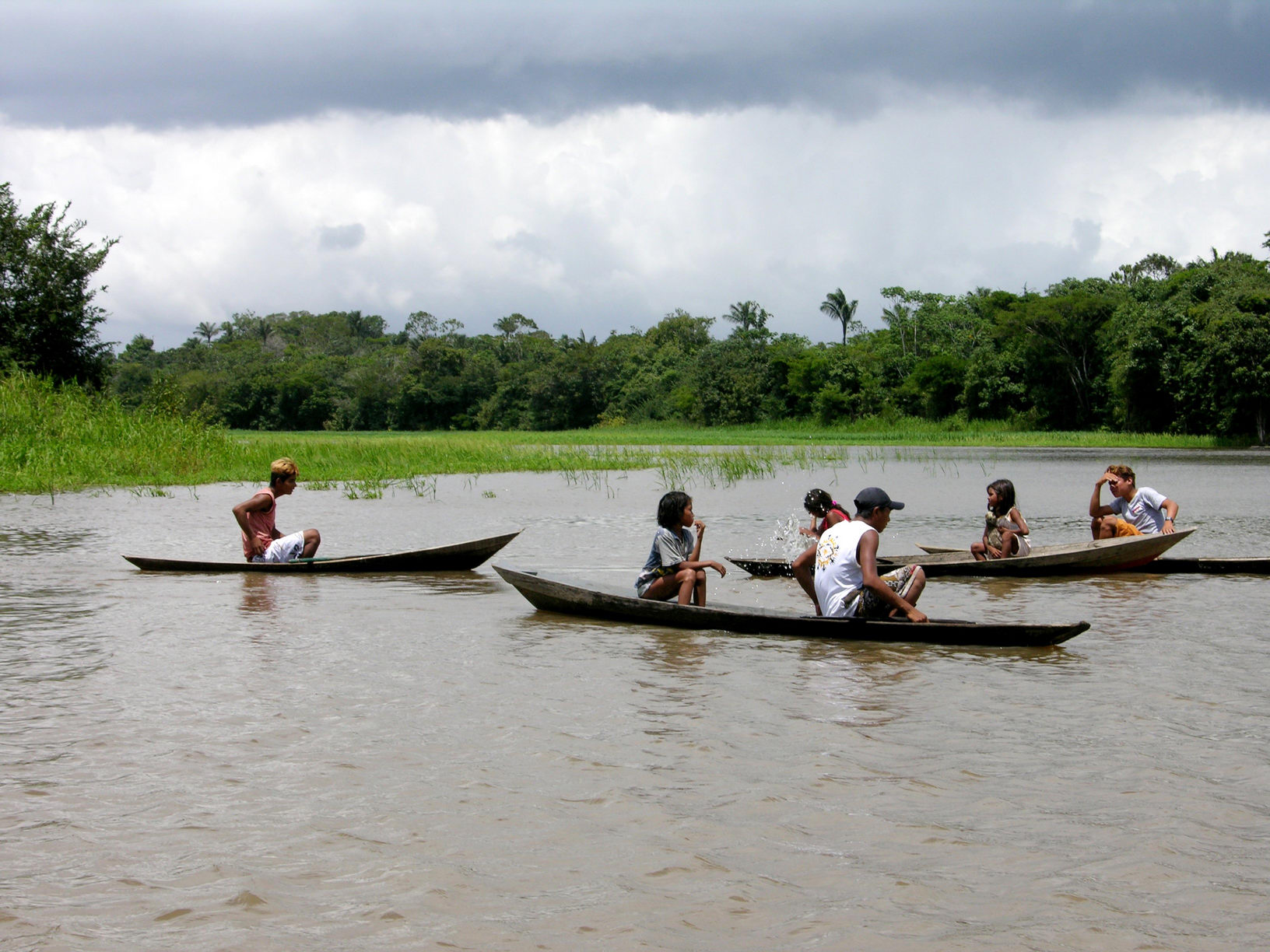
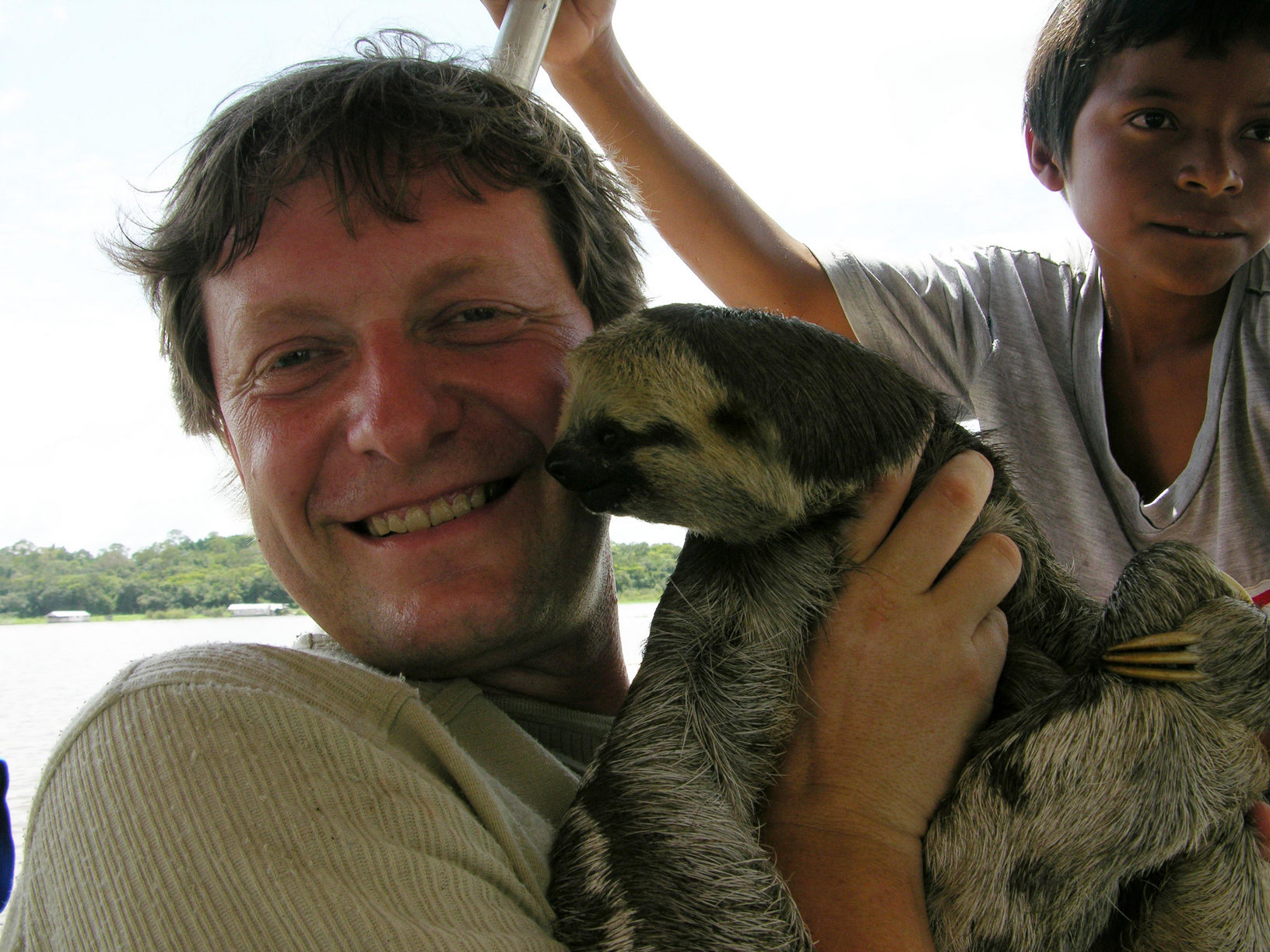
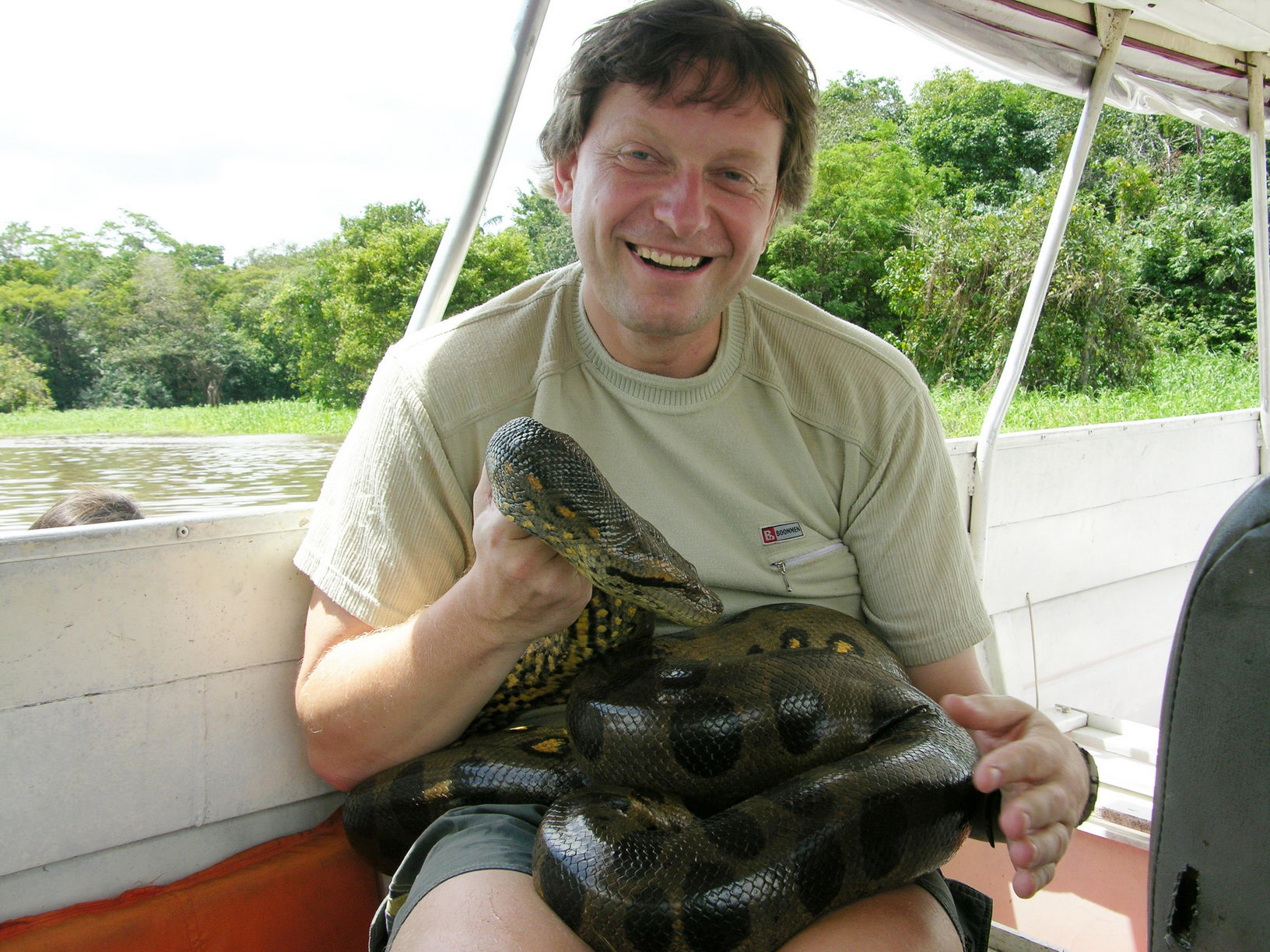
For a real or two you can hold them. You could catch a sloth in the wild forest or a caiman in the river, but you couldn't hope even in theory to get hold of a live, wild, three-metre anaconda. The one we were given weighed about fifty kilos and was more than fifteen centimetres across. What they'd done to it I couldn't tell. Perhaps they'd sedated it, perhaps they'd fed it to the point of bursting. At any rate you could hold this vast snake and lay it in a coil on your lap. Not easily, though. An anaconda likes resting stretched out, and bending it against its will is about as easy as bending a water pipe. Not just anyone can handle that slippery, heavy, wriggling log. I wouldn't want to measure my strength against it in the wild. Then again, an anaconda that size ought not to attack a person. Prey heavier than fifty kilos would be too much for it. So the elephant in the boa happens only in the picture book. Tanya refused to take the creature. She said she weighed less than fifty kilos herself. The anaconda also has a mouth, an enormous one. It looks as though the first thirty centimetres are all mouth. It opens it all the way to a hundred and eighty degrees, giving it a sixty-centimetre gape of an ominous purple, with two pairs of huge fangs. More frightening than a lion. The anaconda I'd been handed wasn't planning to open its pretty little mouth, and I don't know why.
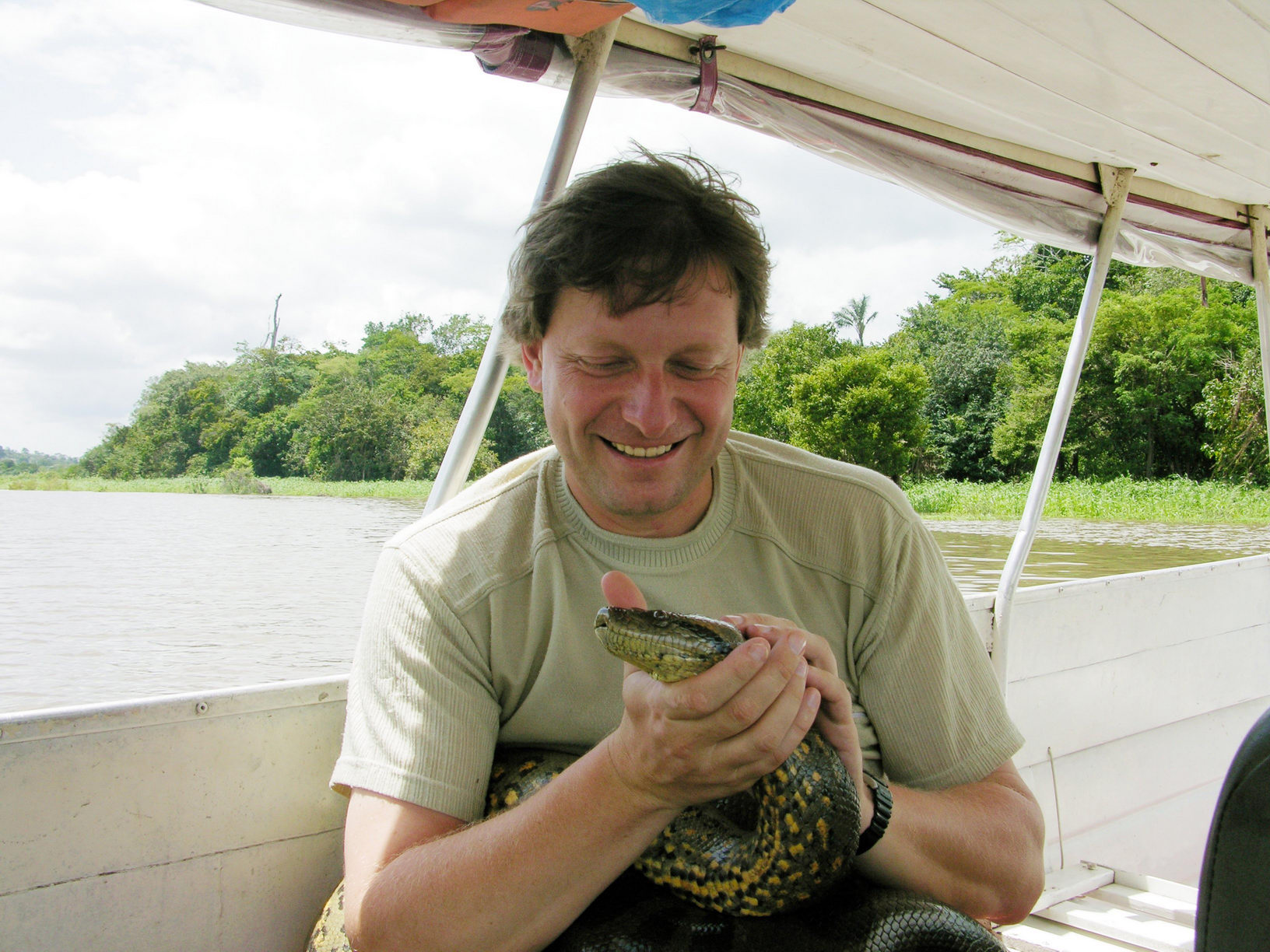
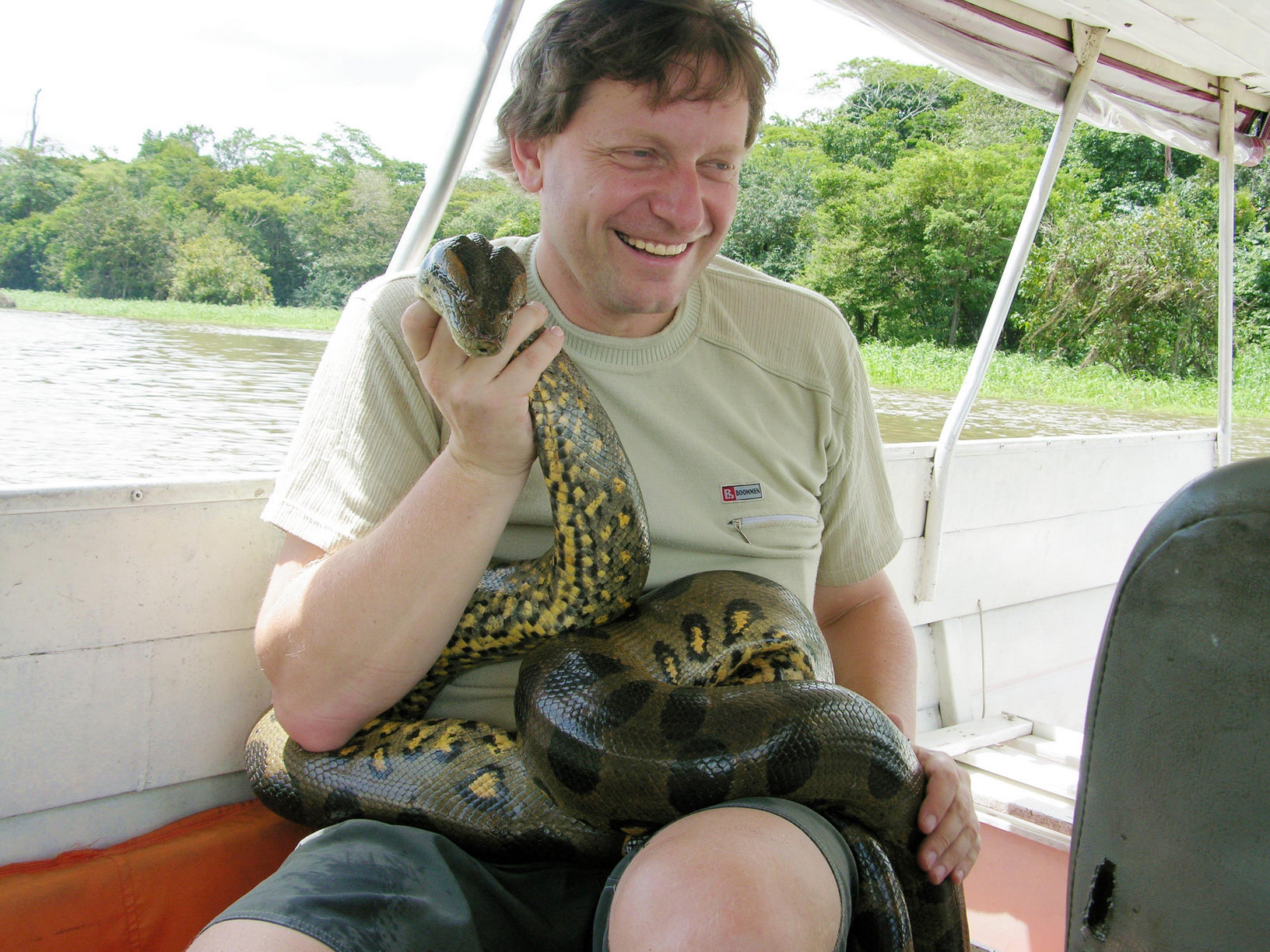
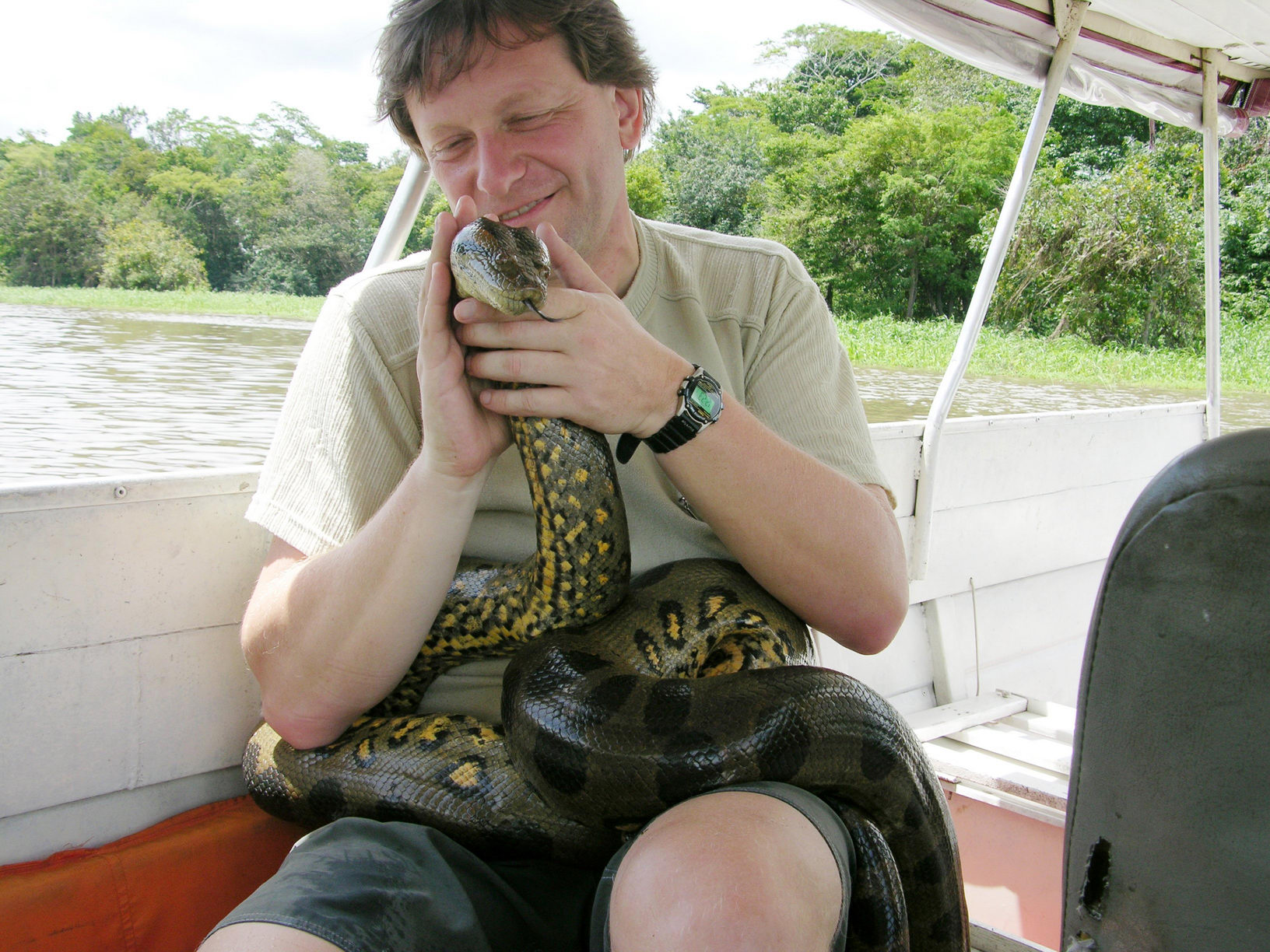
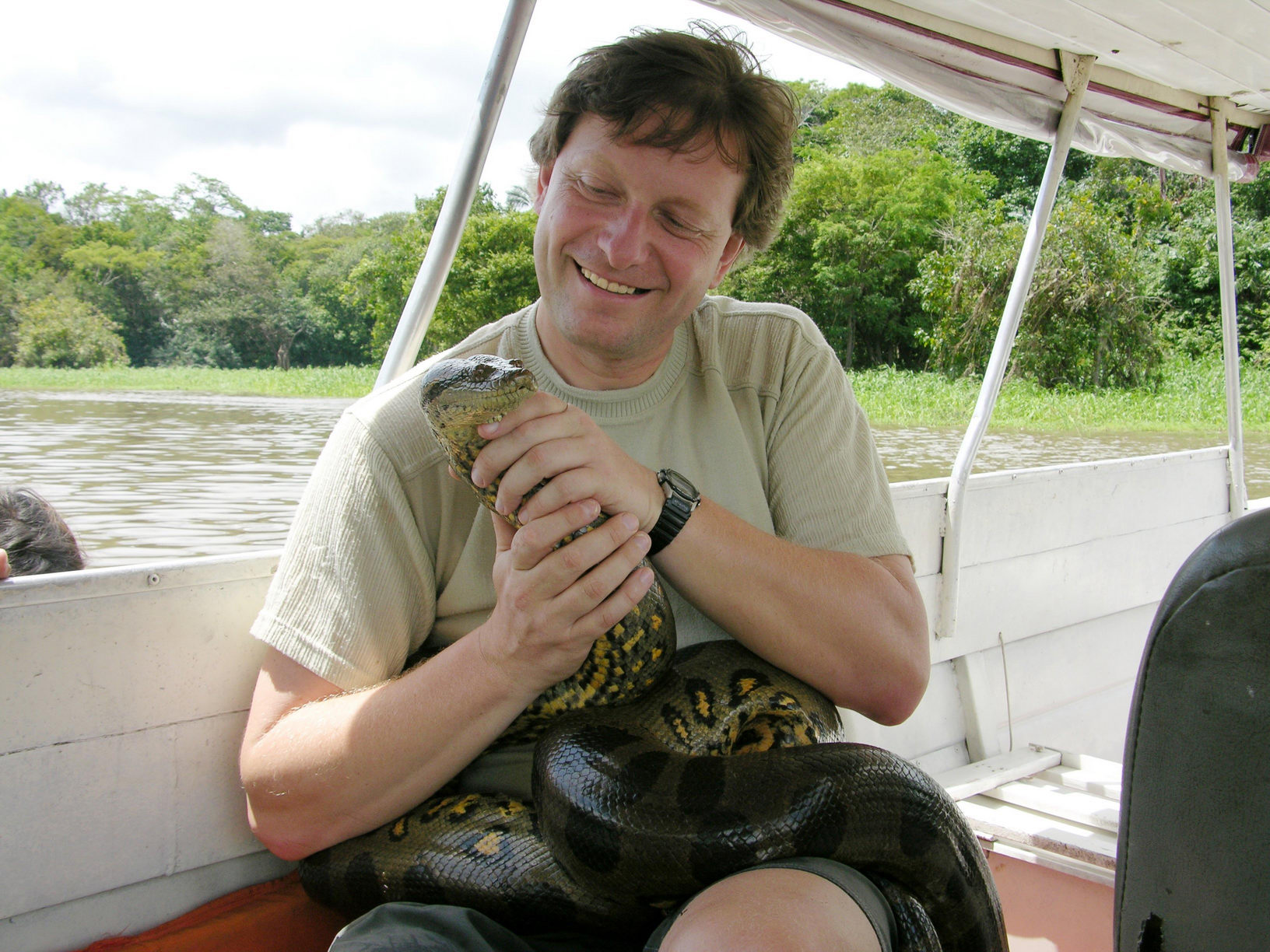
Caimans are another matter. You can't teach them good manners. Their mouths have to be held shut. They've got all sorts of ways to do it here. The most inhuman one, or perhaps the most uncrocodilian in this case, is to drill a hole through the jaws and put a bolt through with a nut at either end.
This is quite unnecessary, by the way. A caiman's long jaws are built for holding fish. With a lever that long, it simply isn't able to bite off a hand, say. It can break the skin, of course, but no more than that. The muscles responsible for opening the jaws are weaker still. A single banker's rubber band, the sort you use to hold a bundle of notes together, can keep them shut.
Tanya even took a little caiman in her hands. With its mouth shut, it was very docile.
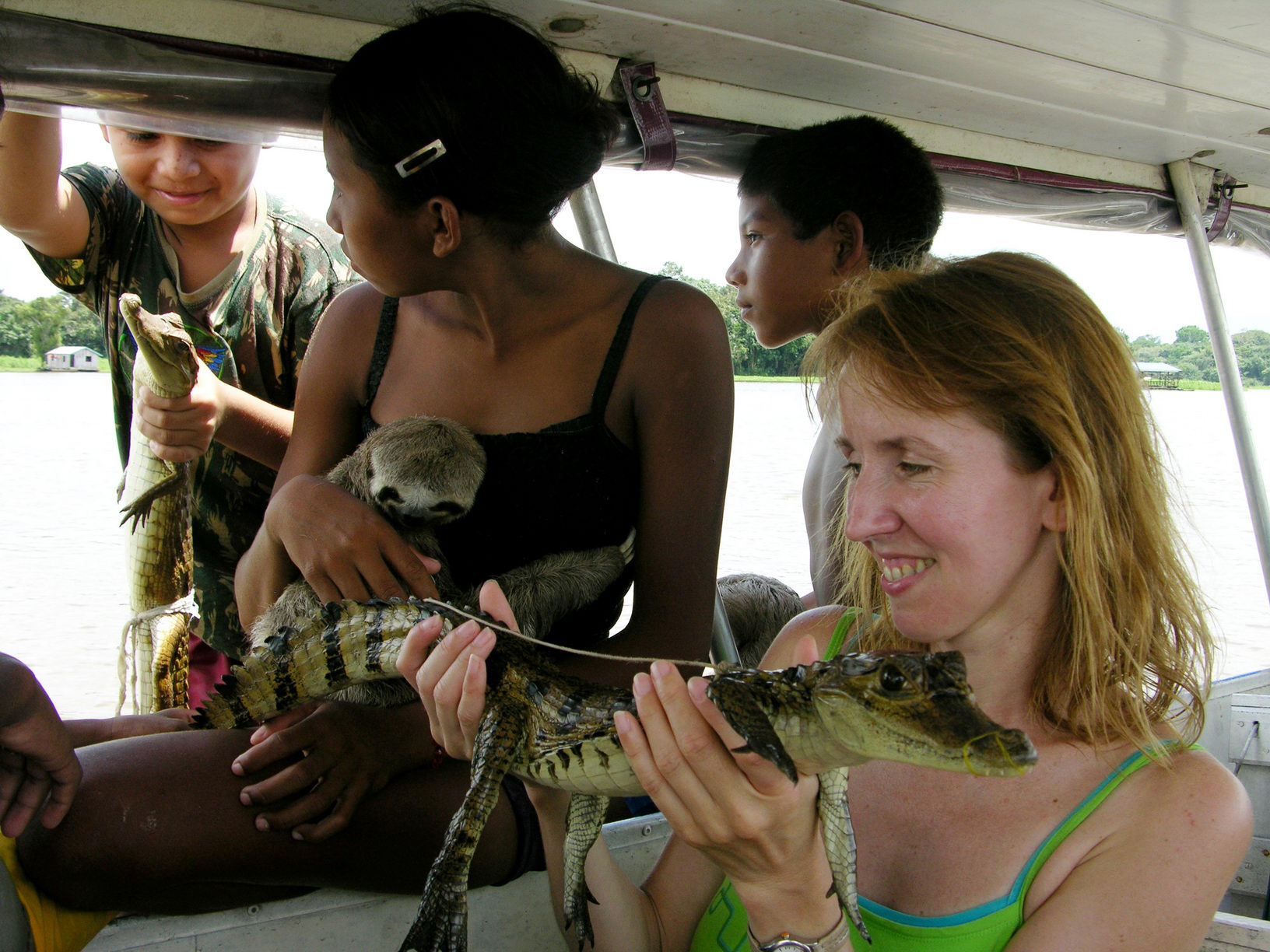
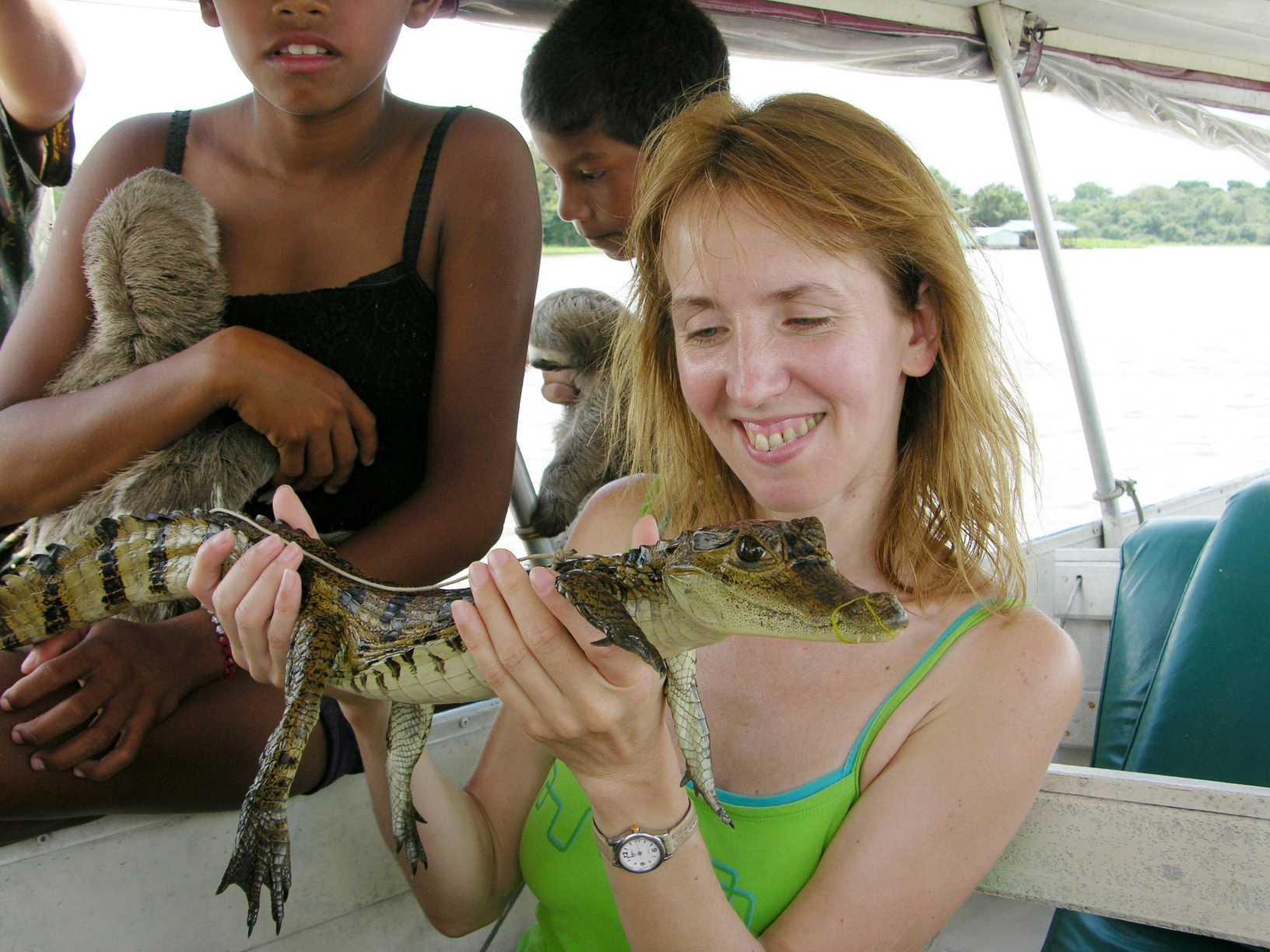
A sloth behaves more quietly still. It's happy anywhere so long as it has something to hang onto. A lovely furry toy. Rather coarse fur, though.
You pay for each animal, so best to pick the biggest one to begin with, not handle absolutely everything and run out of change.
As well as the animals, there were souvenir stalls all over the park with heaps of stuffed piranhas and all kinds of tropical curios. A knife finished with anaconda skin and inlaid with venomous snake teeth, for instance. The same souvenirs are cheaper in Manaus.
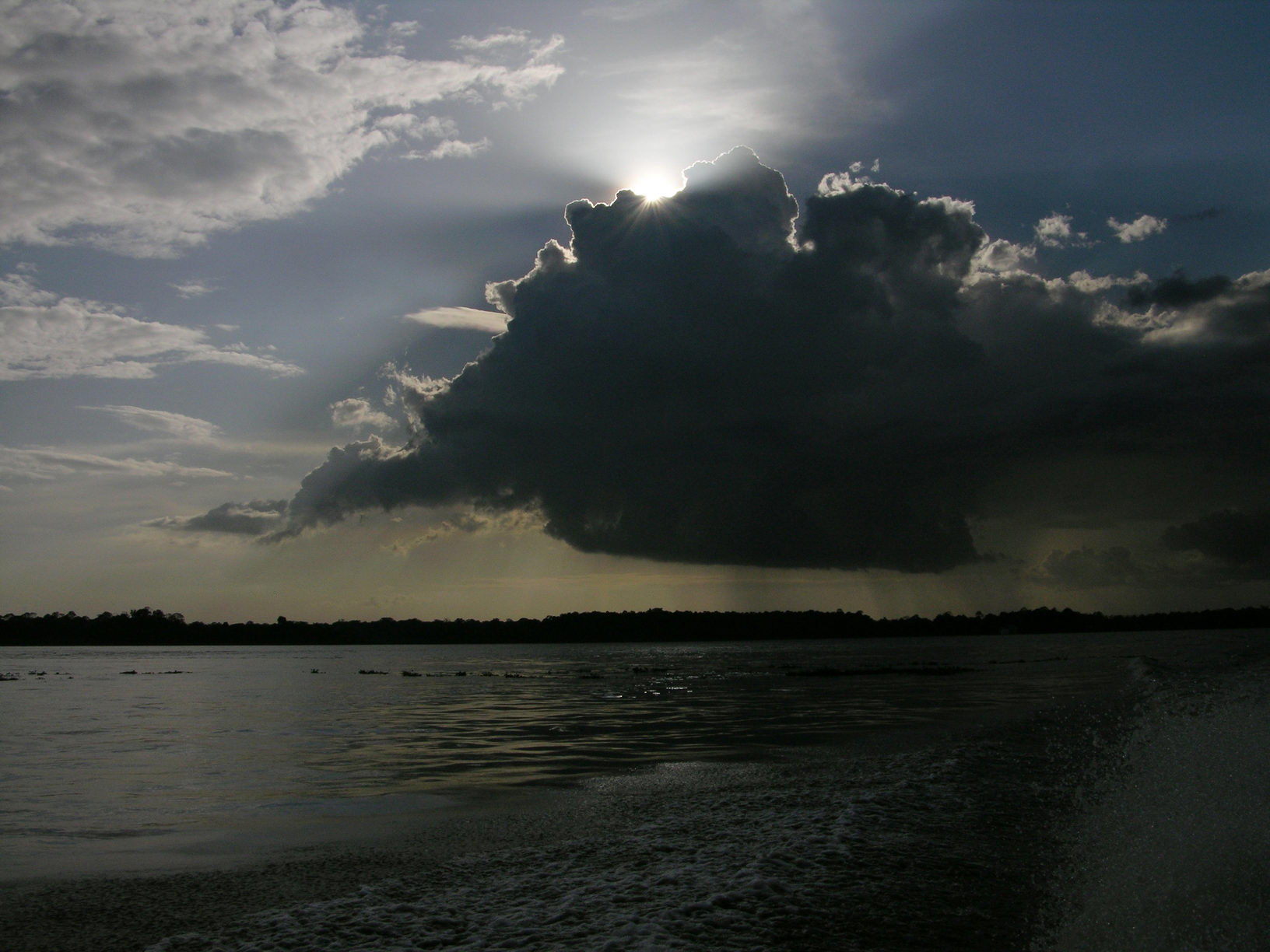
Every day in Manaus an afternoon storm brings a tropical deluge. We ran into one on the way back, before we'd got across the Rio Negro. The river is a few kilometres wide at Manaus, so the wind whips up huge waves. We had to sit it out in the bushes on the opposite bank and wait for the weather to improve. We weren't the only ones, of course. The bushes were packed with little boats.
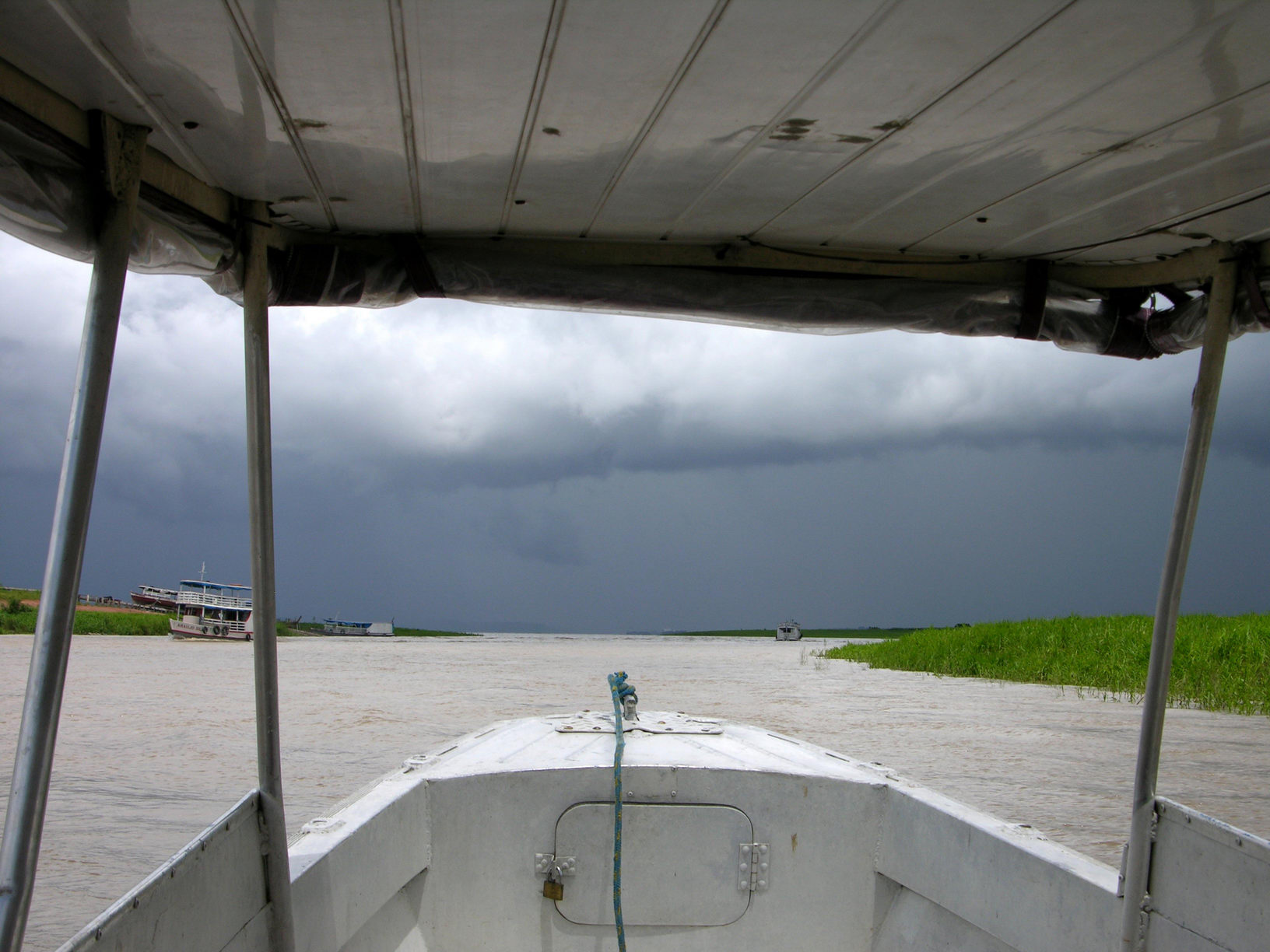
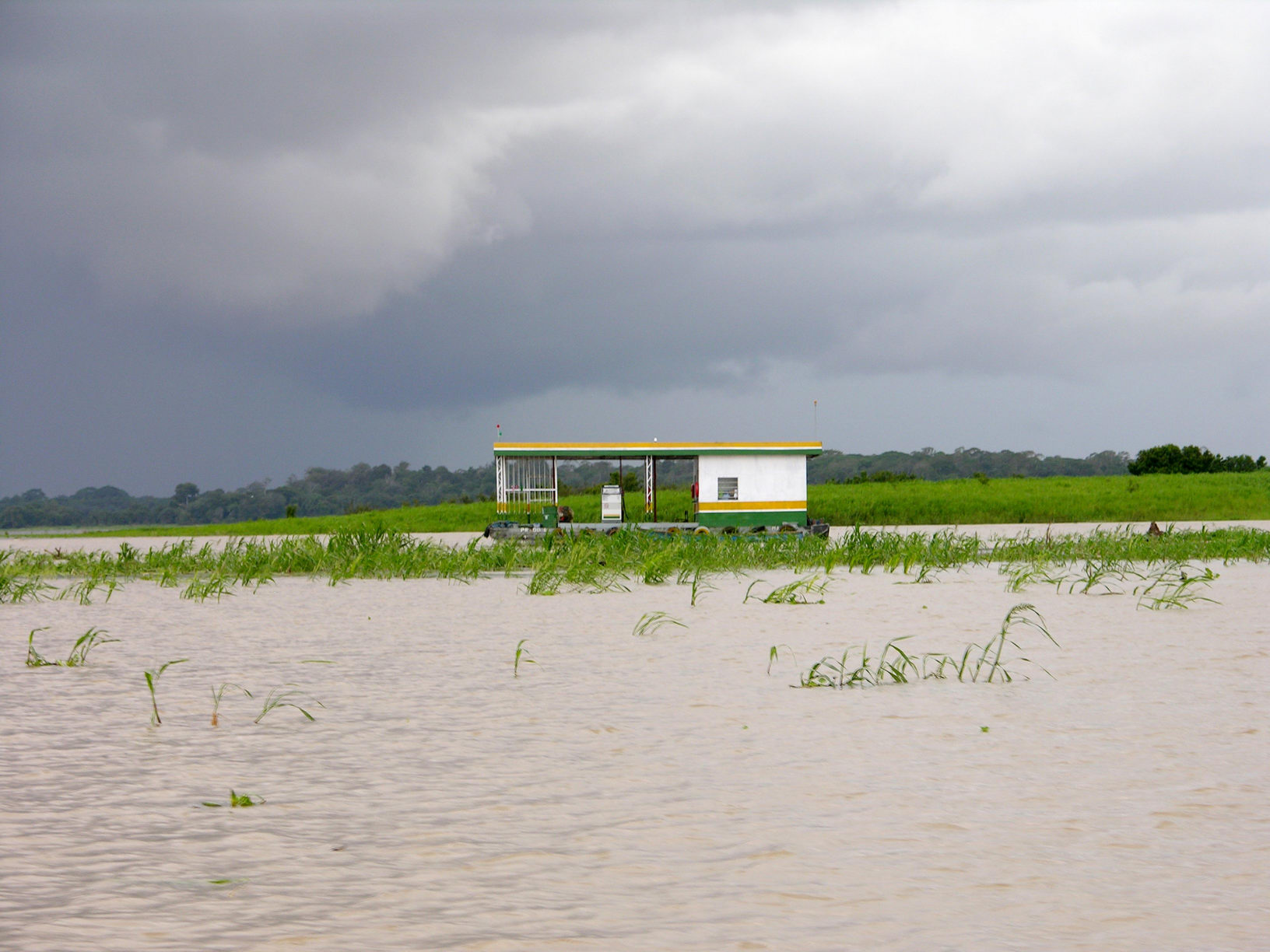
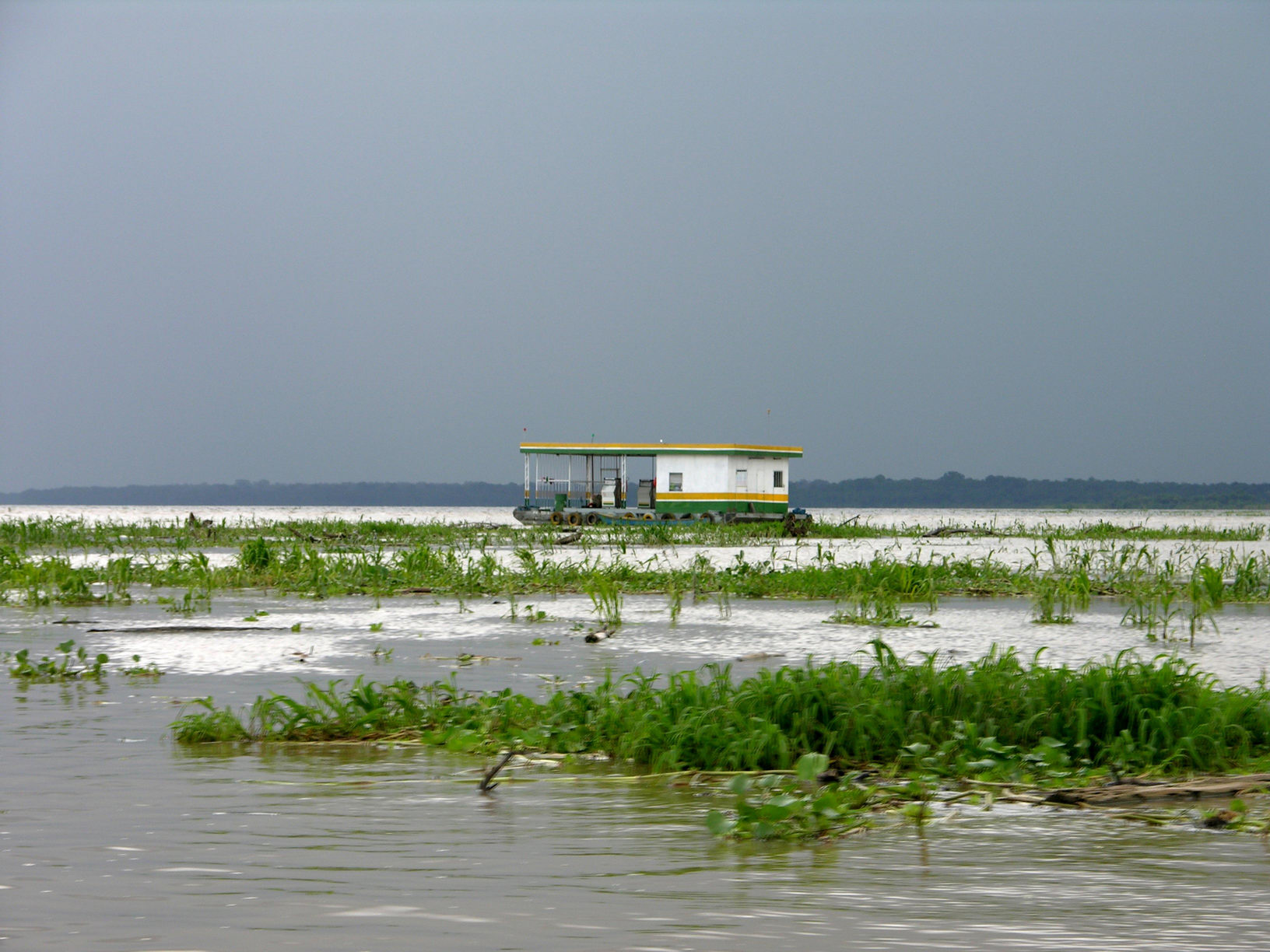
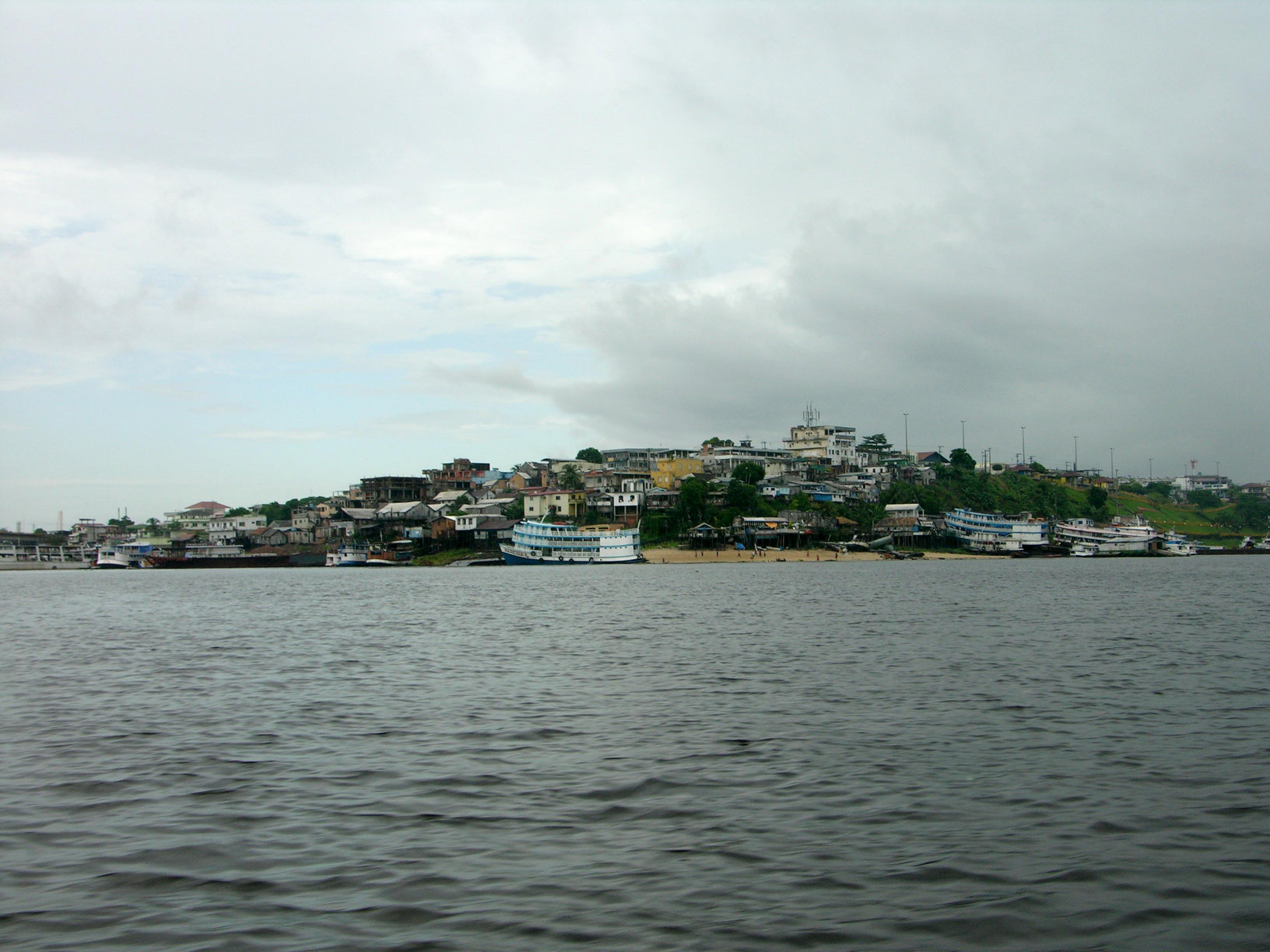
The rivers here are busier than the roads. Nobody ever built a bridge across the Amazon. It's hardly a simple bit of engineering. The river is up to sixty metres deep. And there's nowhere in particular to go. The Trans-Amazonian Highway, built during the military dictatorship, turned out to be unnecessary. It was too expensive to maintain, and in the nineties the jungle took back its own. The road became impassable. A ferry occasionally goes across to the other bank, but you can only get as far as the nearest villages. We wanted to drive to the end of the passable road and see what had happened to it, of course, but we'd have had to wait a long time for the ferry. Never mind. Perhaps one day I'll come with a jeep from the other end.
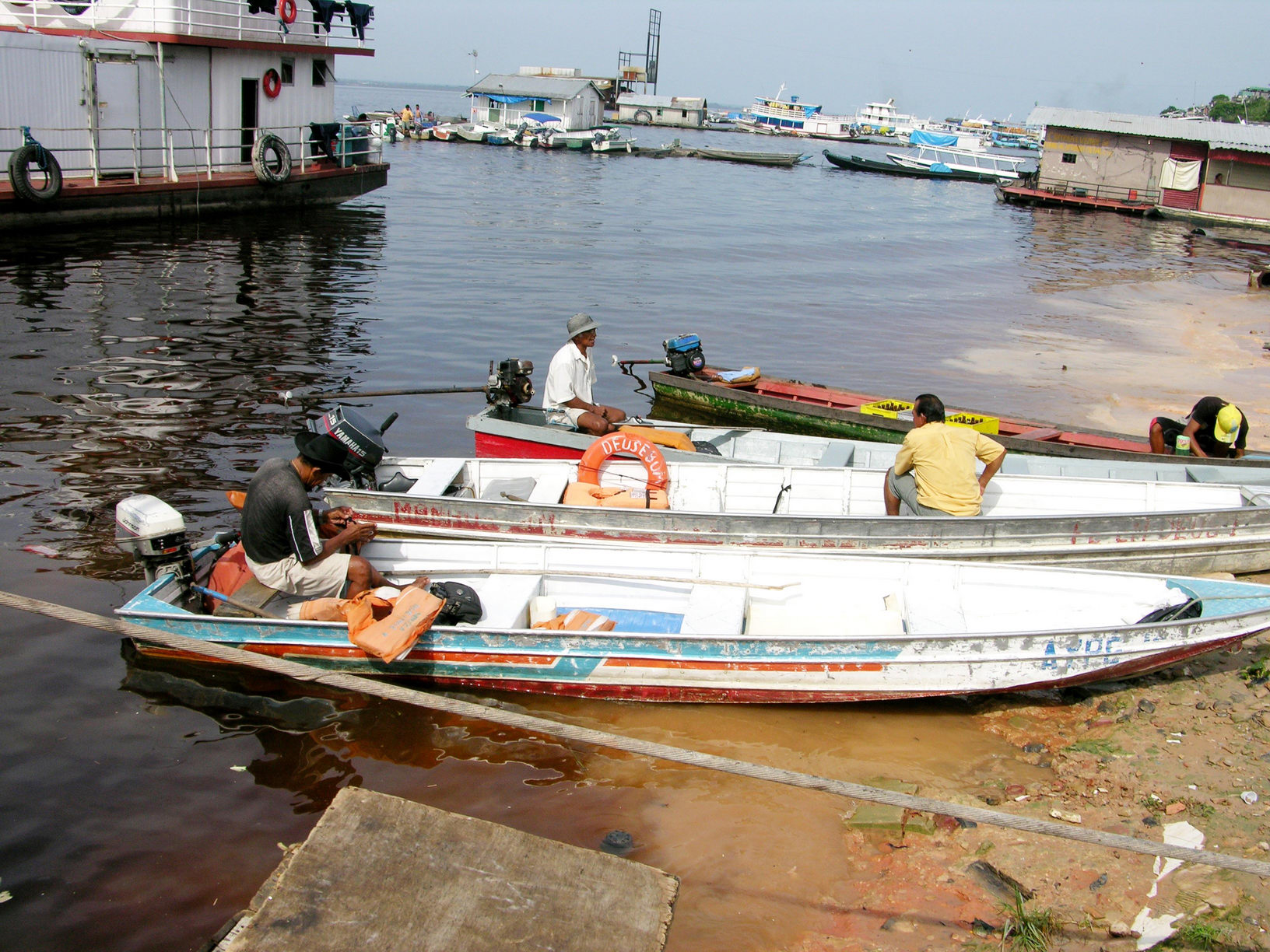
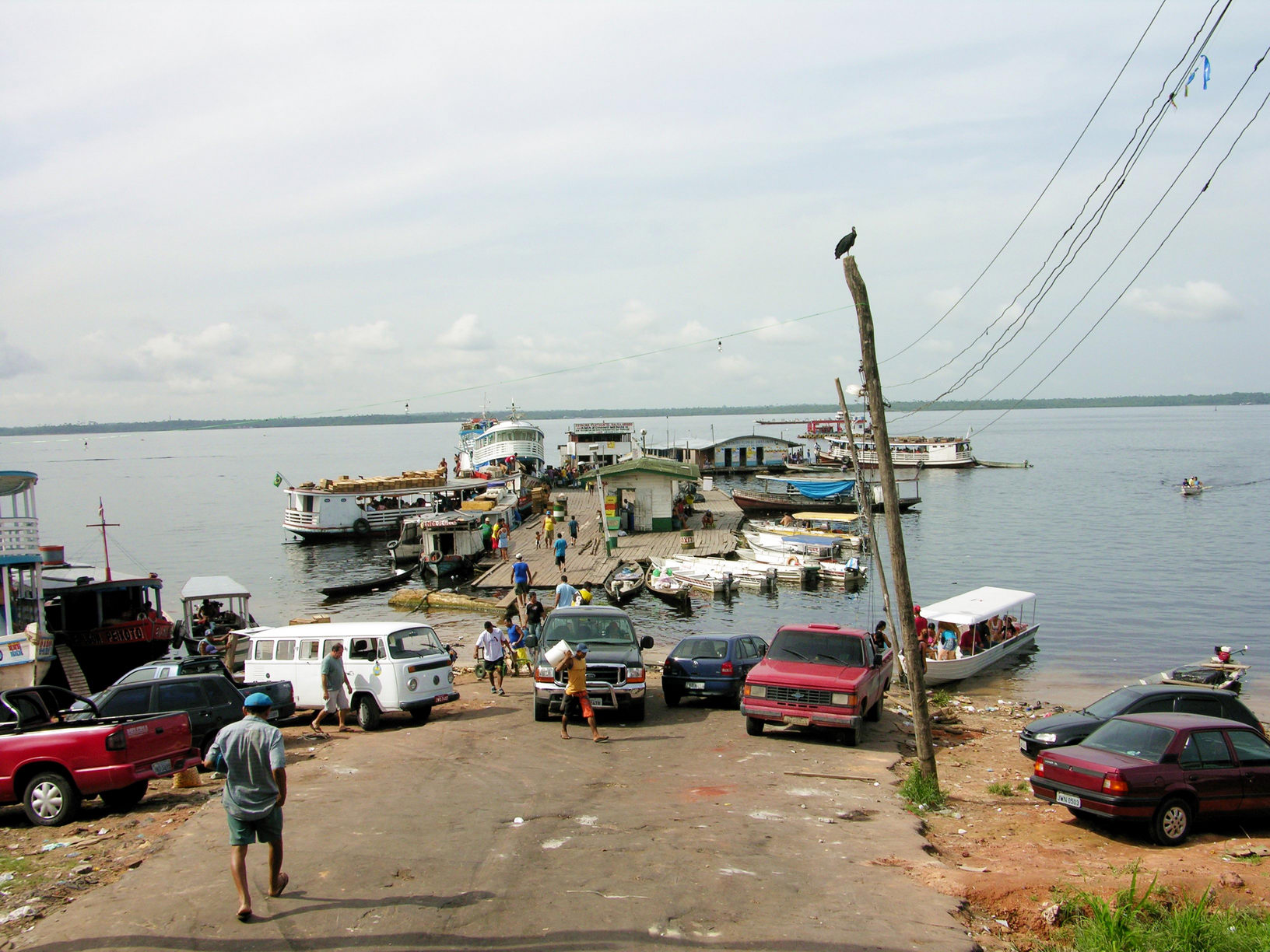
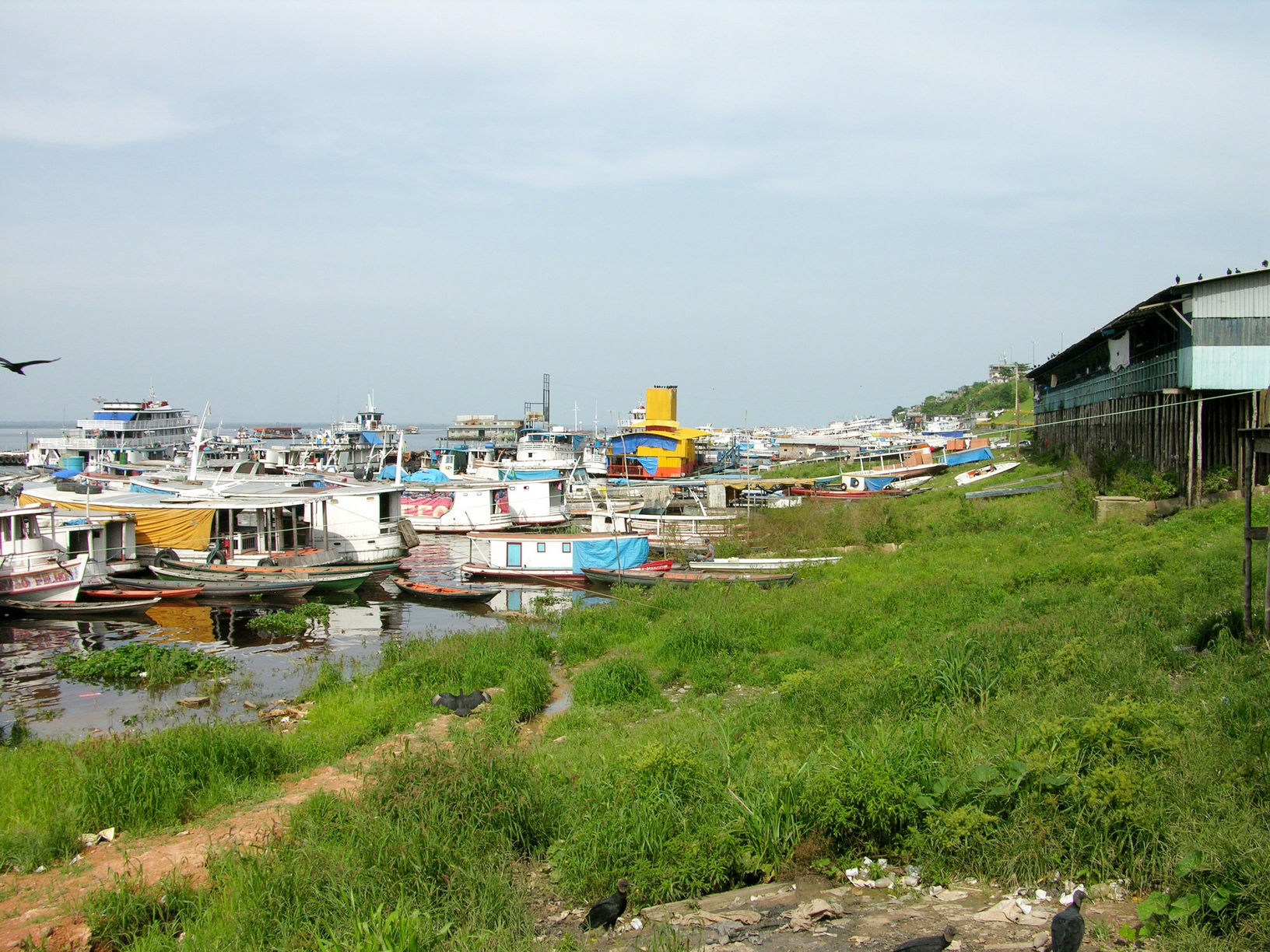
The only way to reach the main part of the country by car now was on the daily ferry to Santarém. As well as ferries there are ocean-going ships on the river. Manaus is an enormous port. Cruise ships are berthed there all the time. It handles twenty-five million tonnes of cargo, comparable to Saint Petersburg.
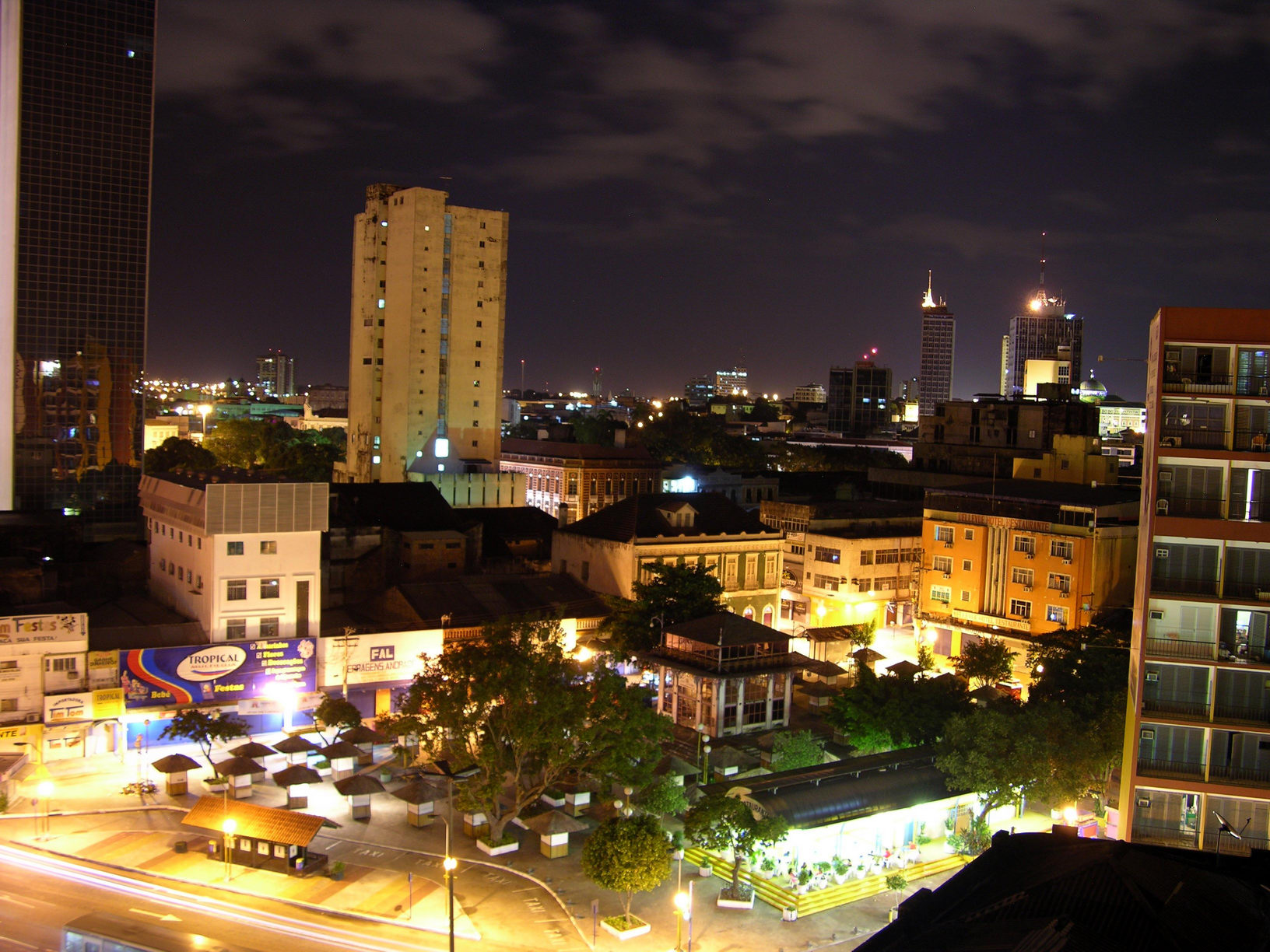
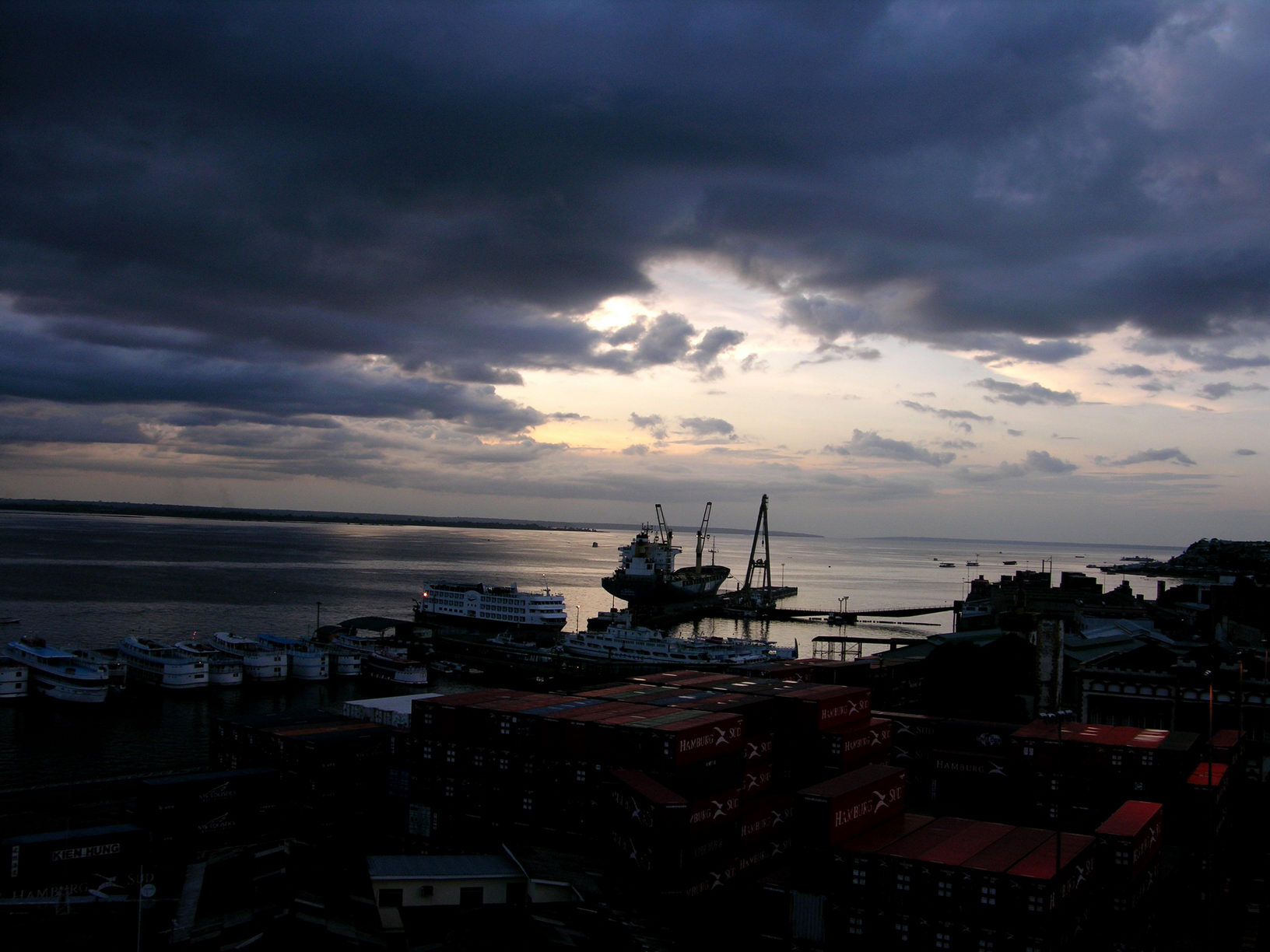
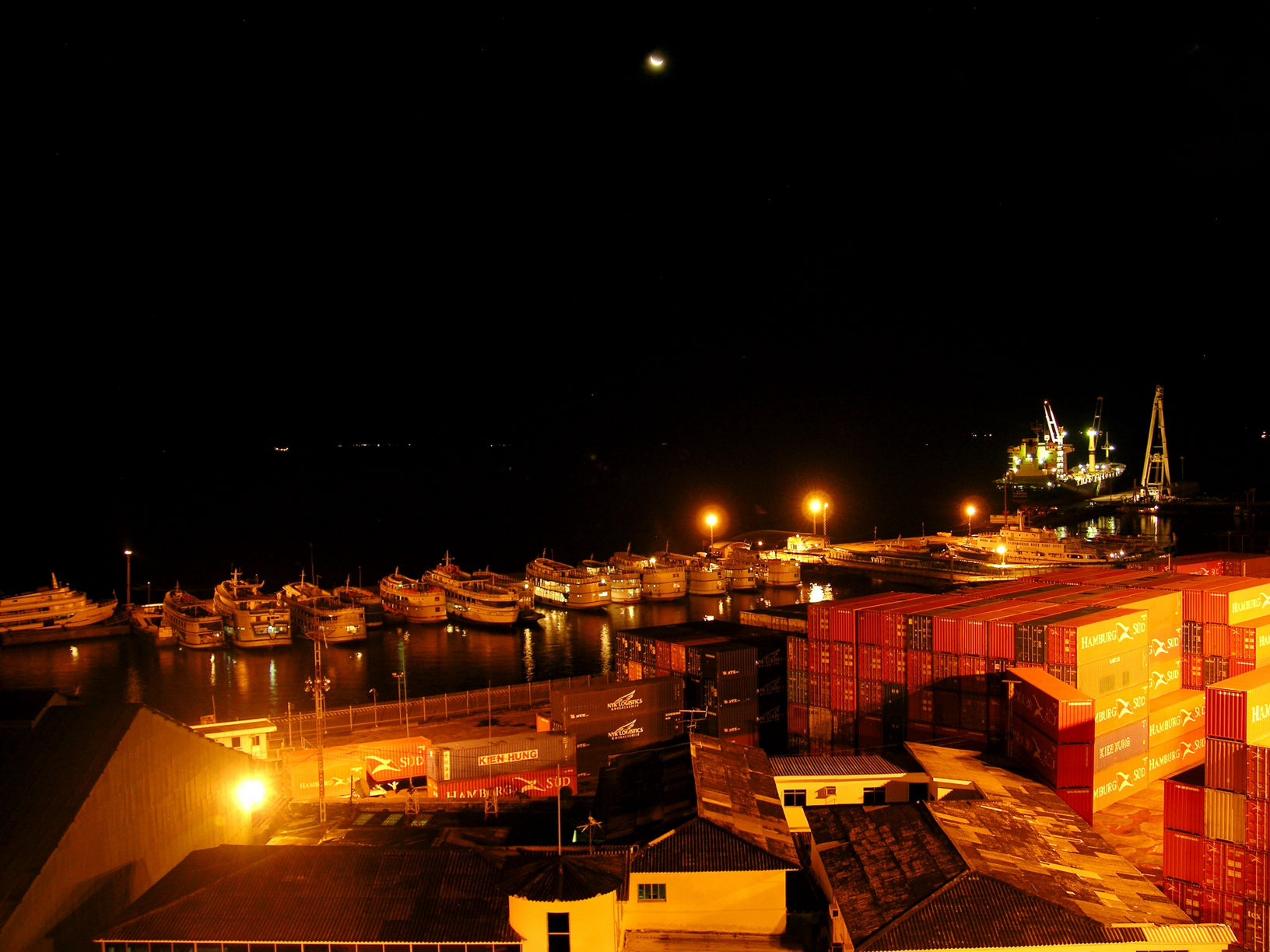
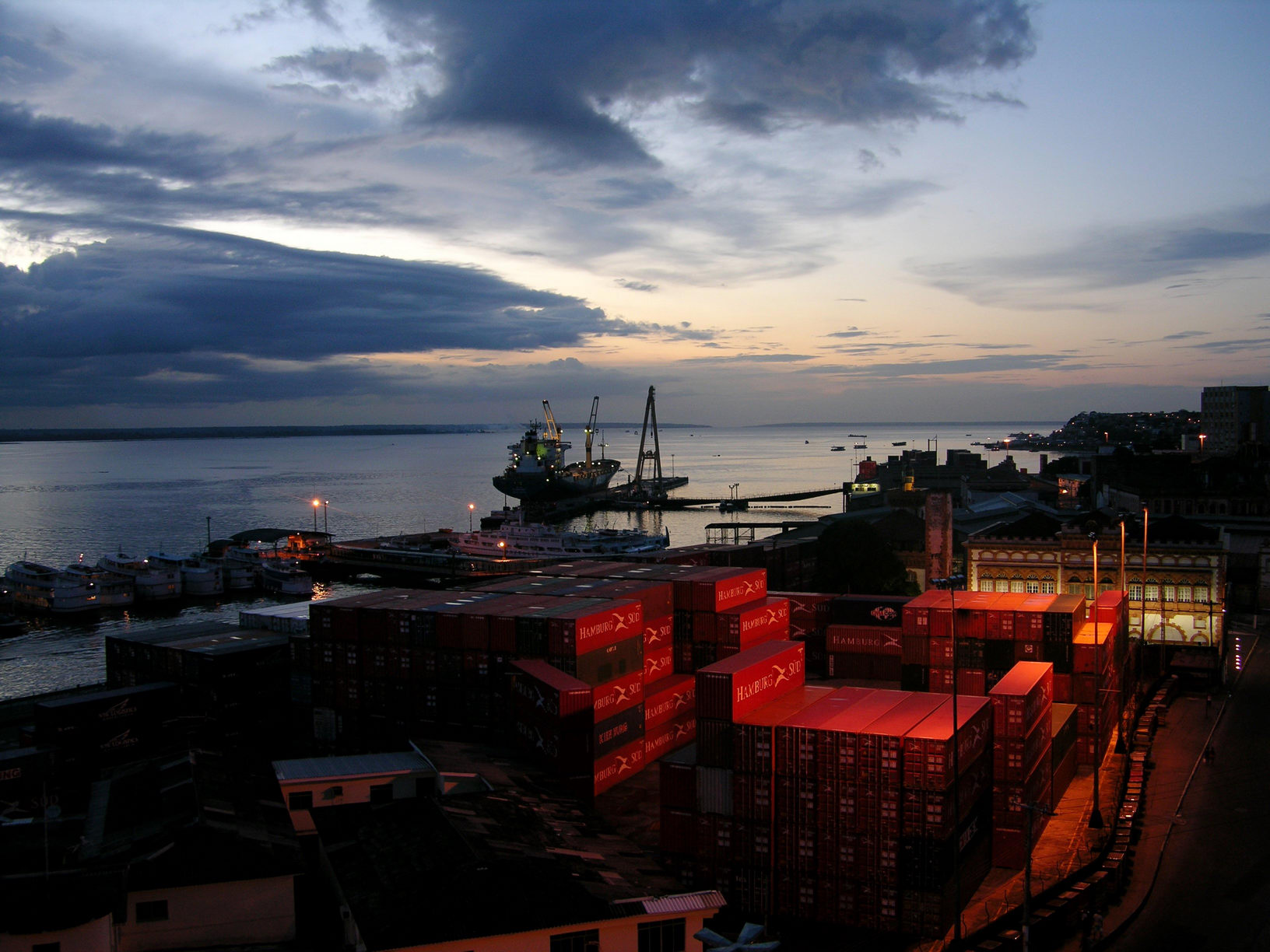
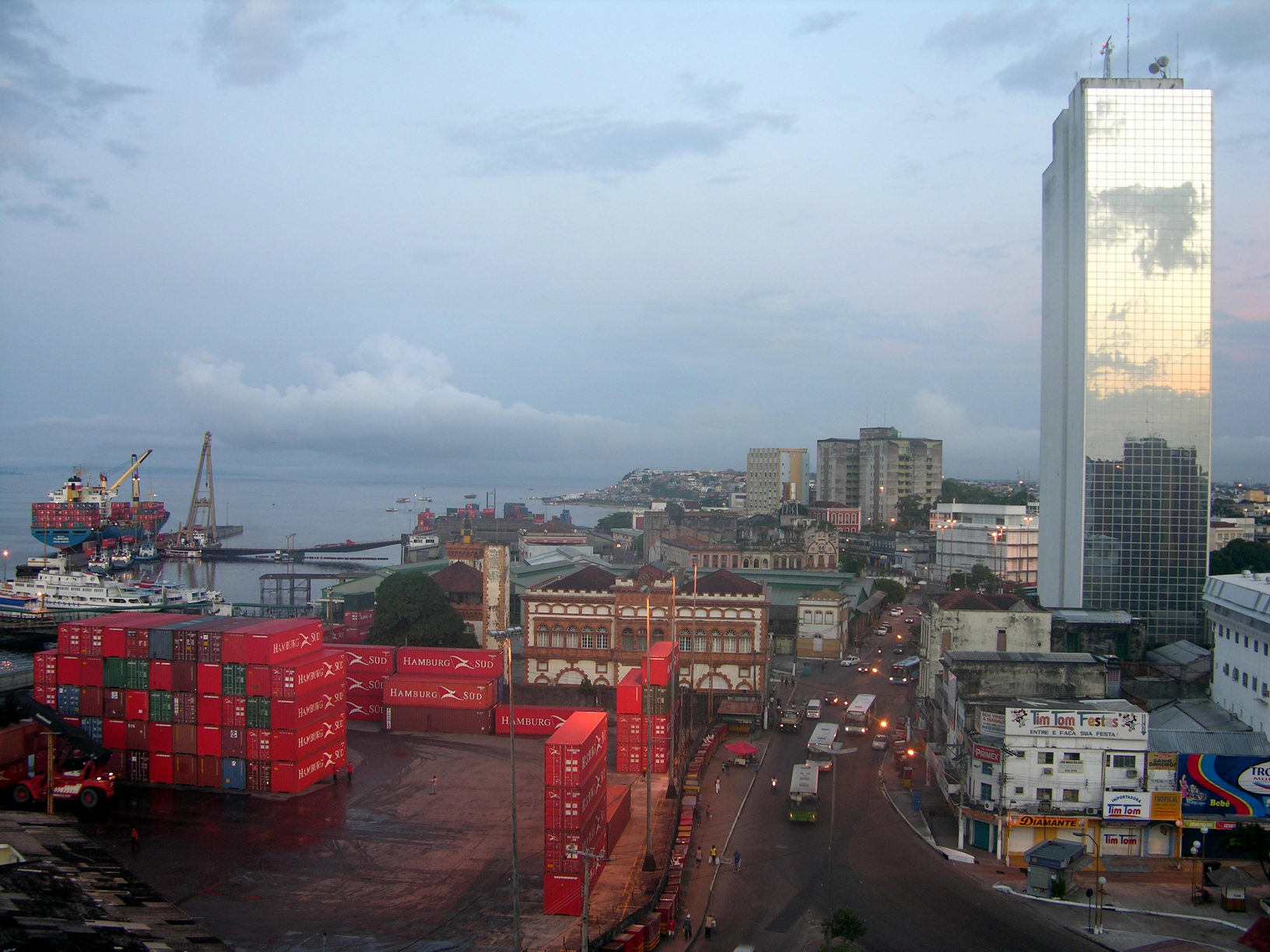
Manaus and its neighbouring provinces make up a special economic zone. When you travel from there to the rest of Brazil you go through something like customs and your luggage may be inspected. Manaus has its own border guards. The Amazon is extraterritorial, and Peruvian and Colombian boats navigate it freely.
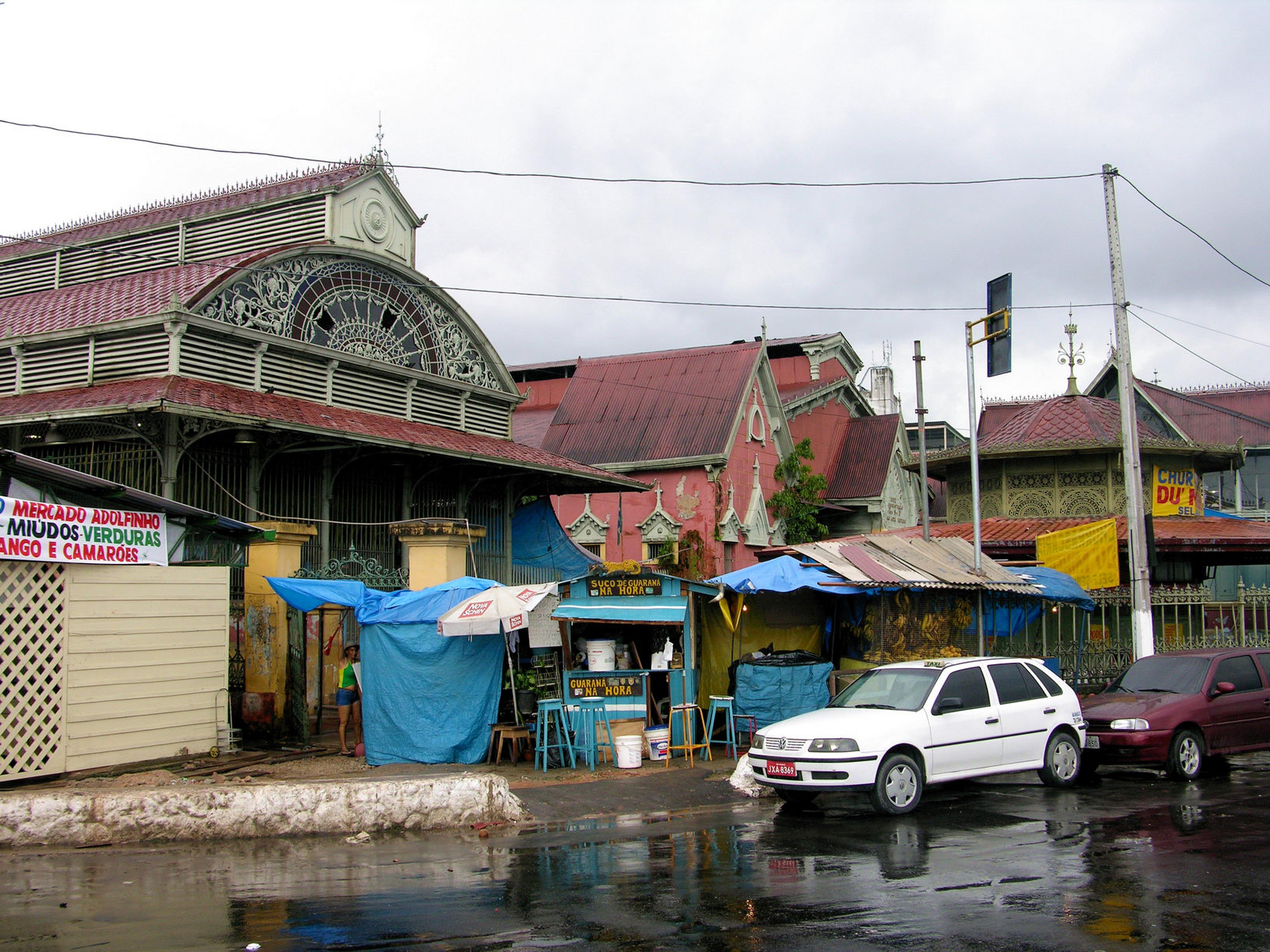
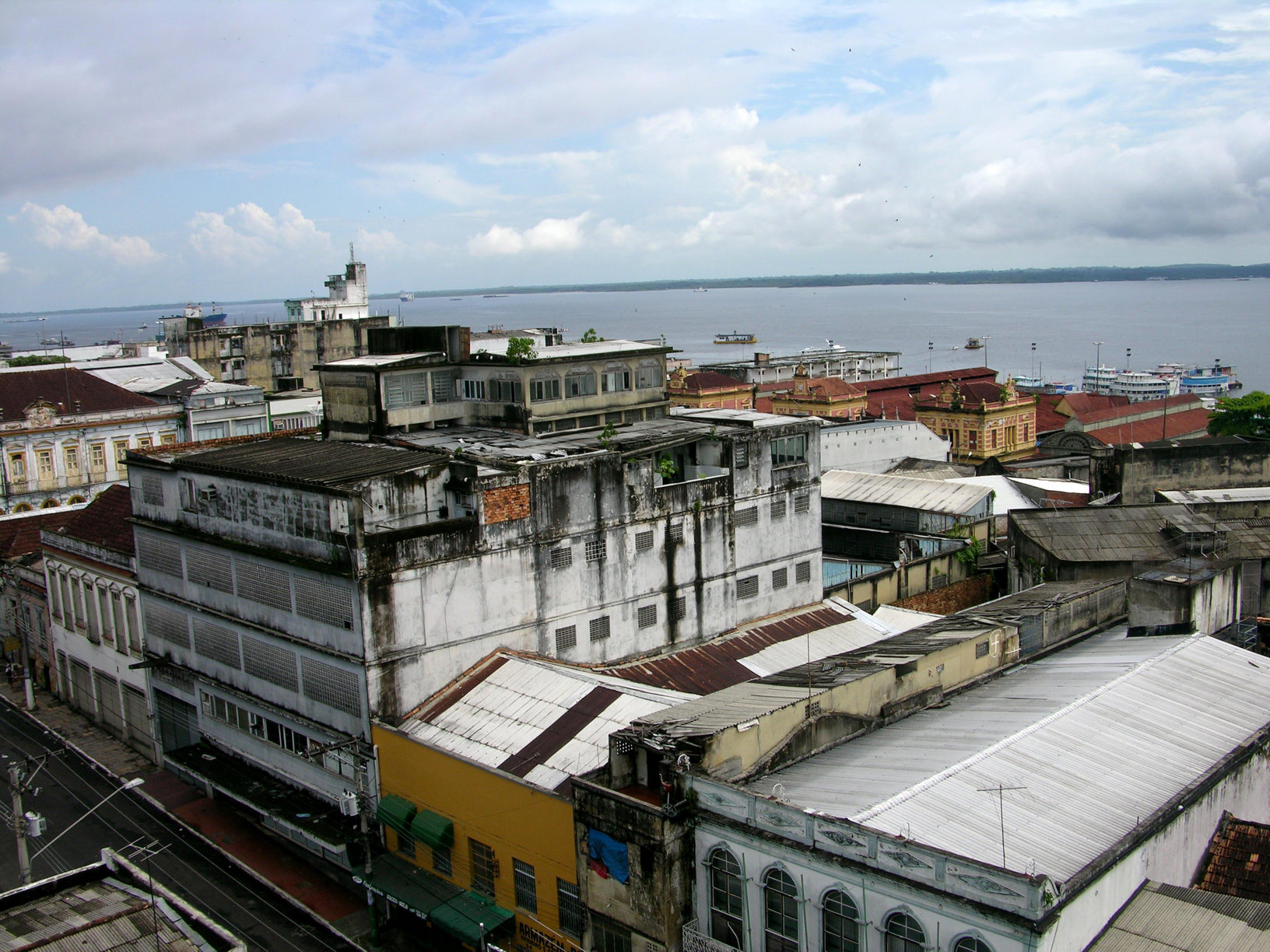
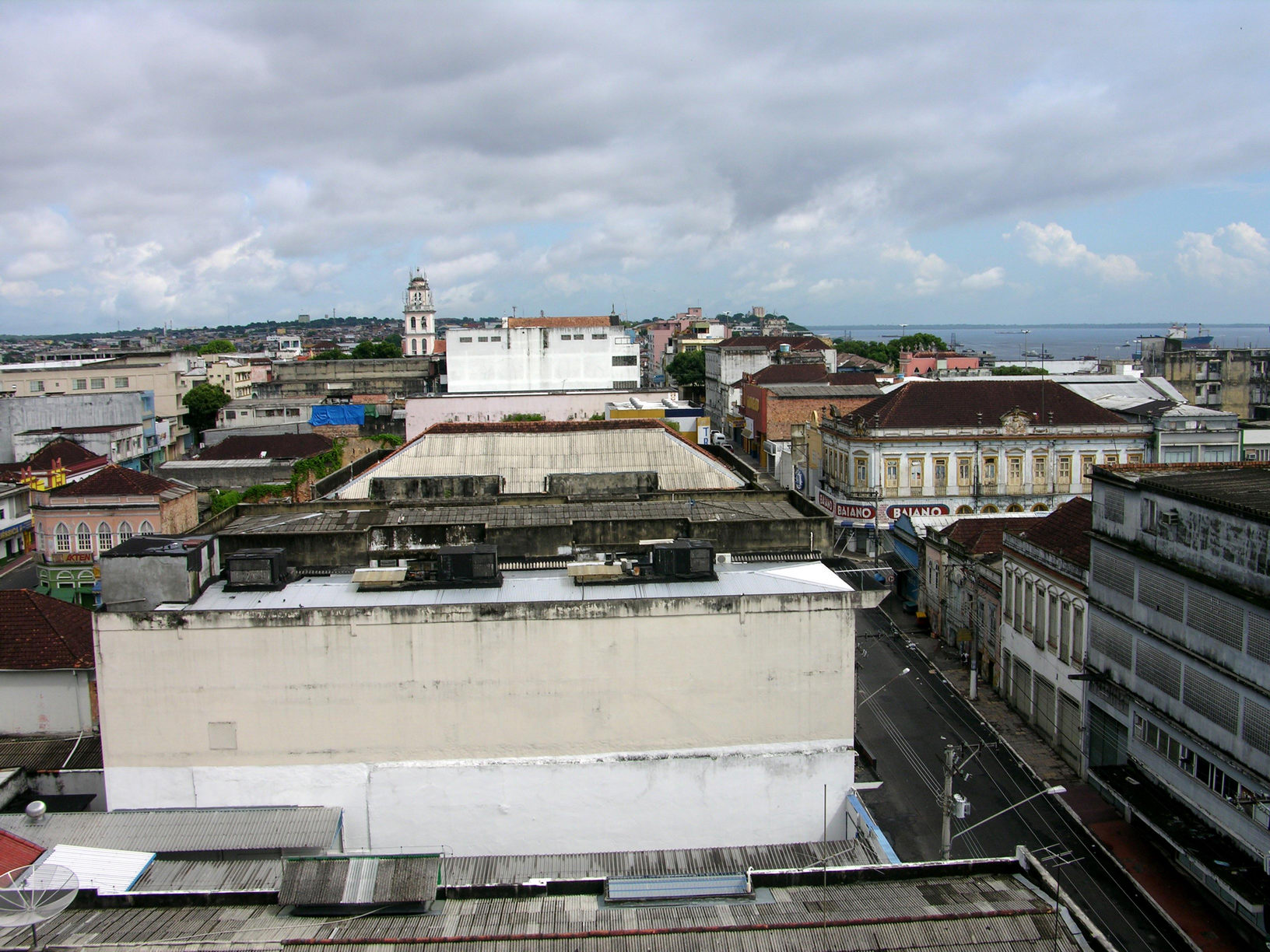
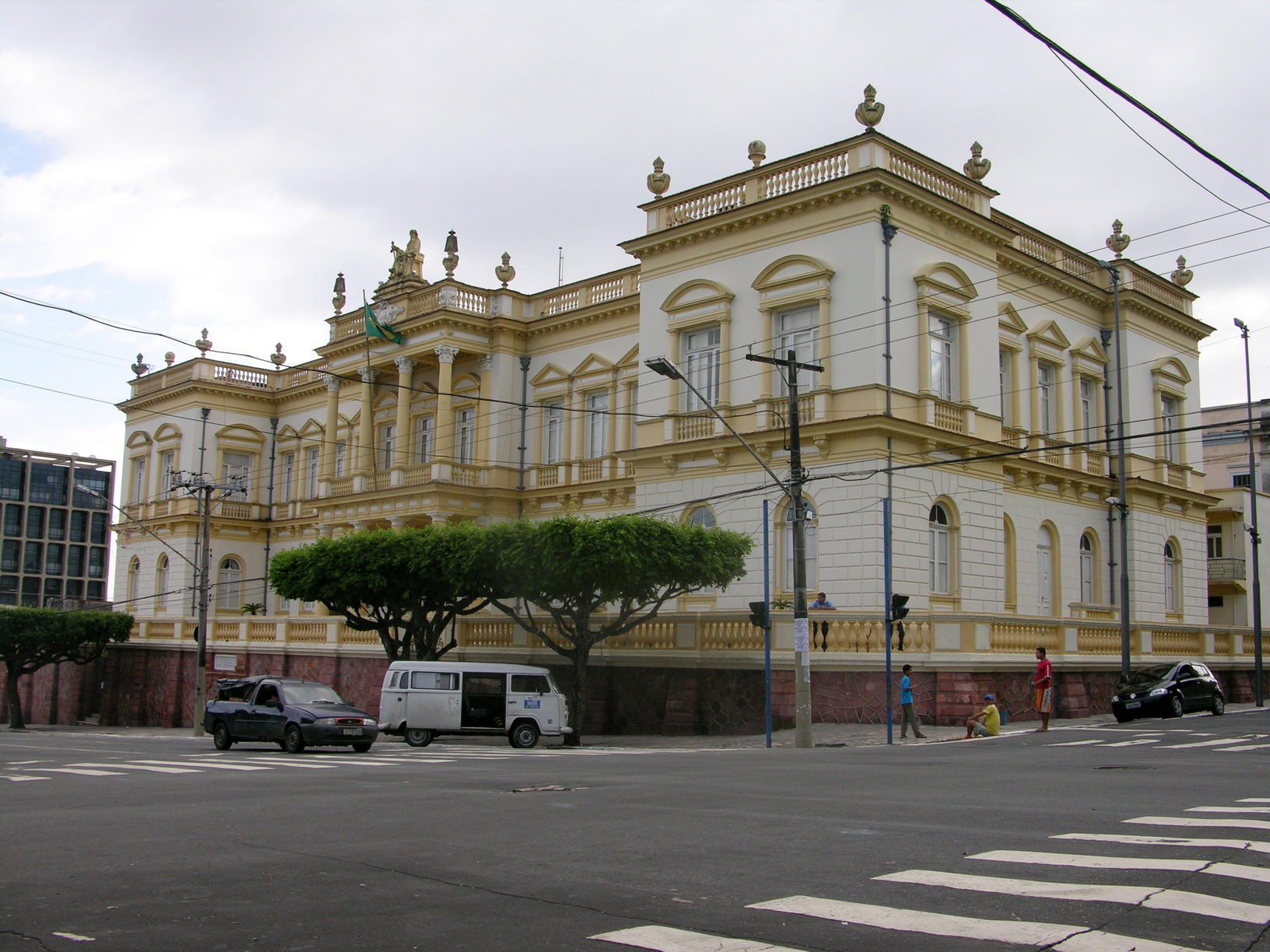
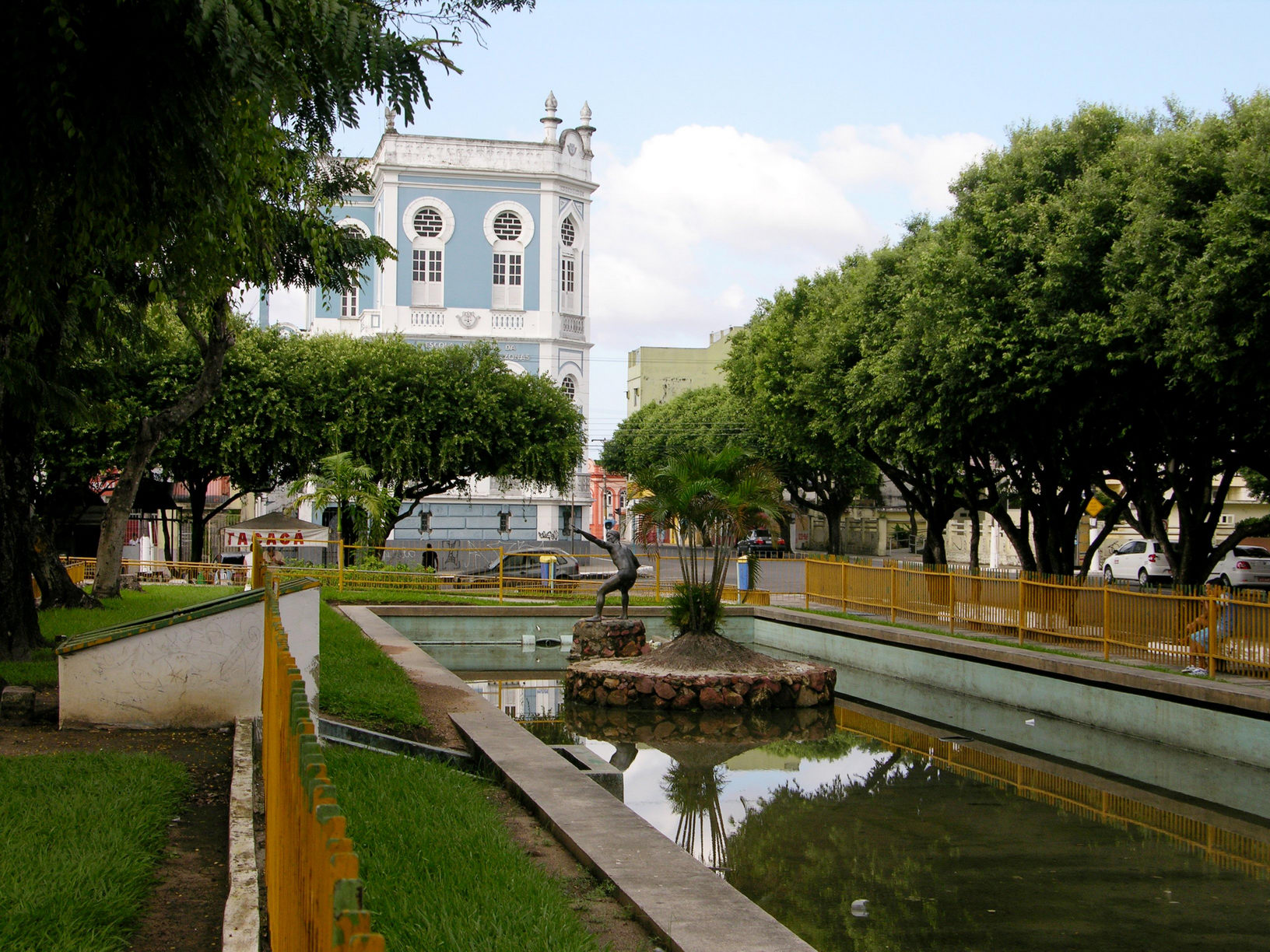
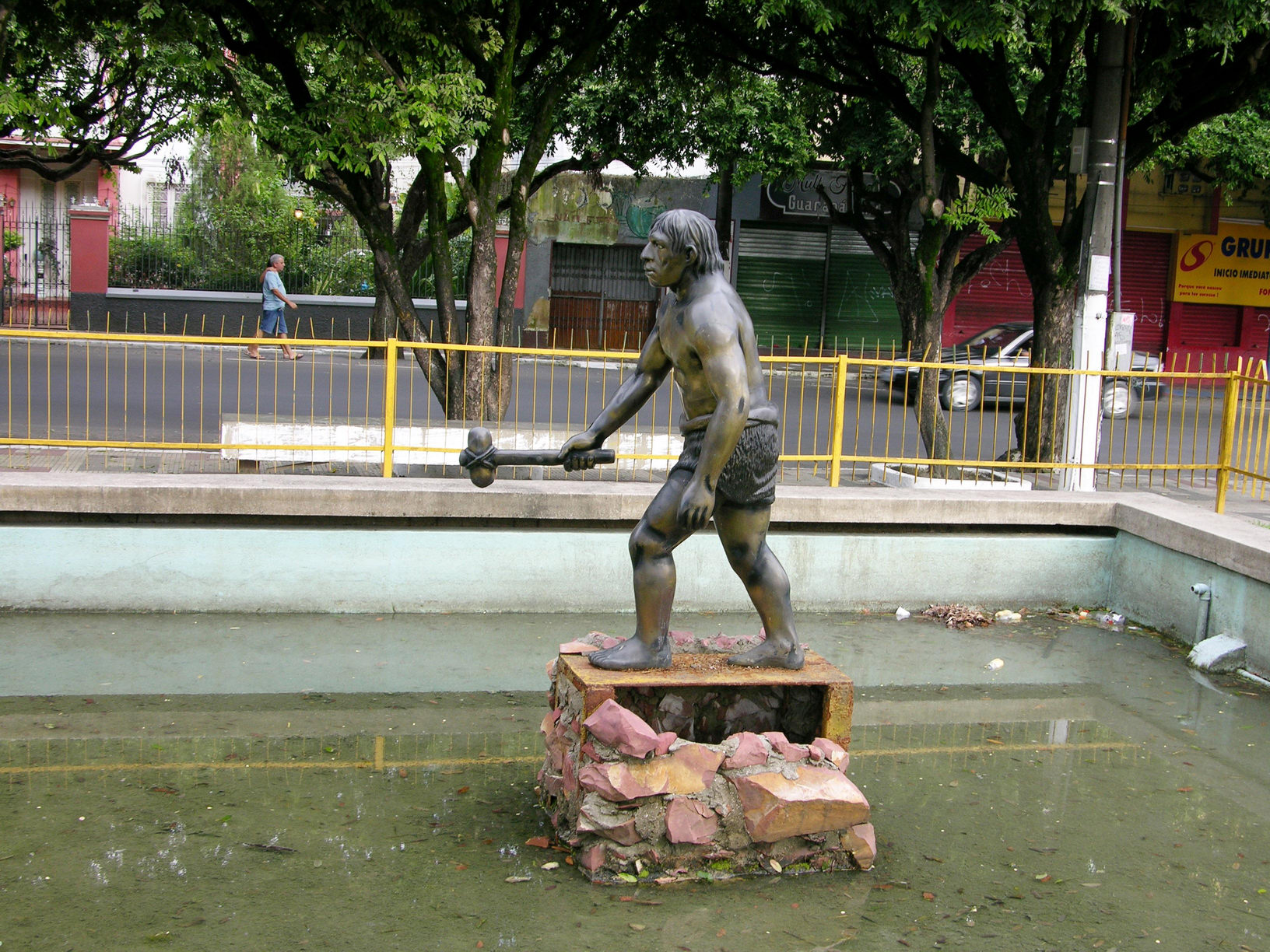
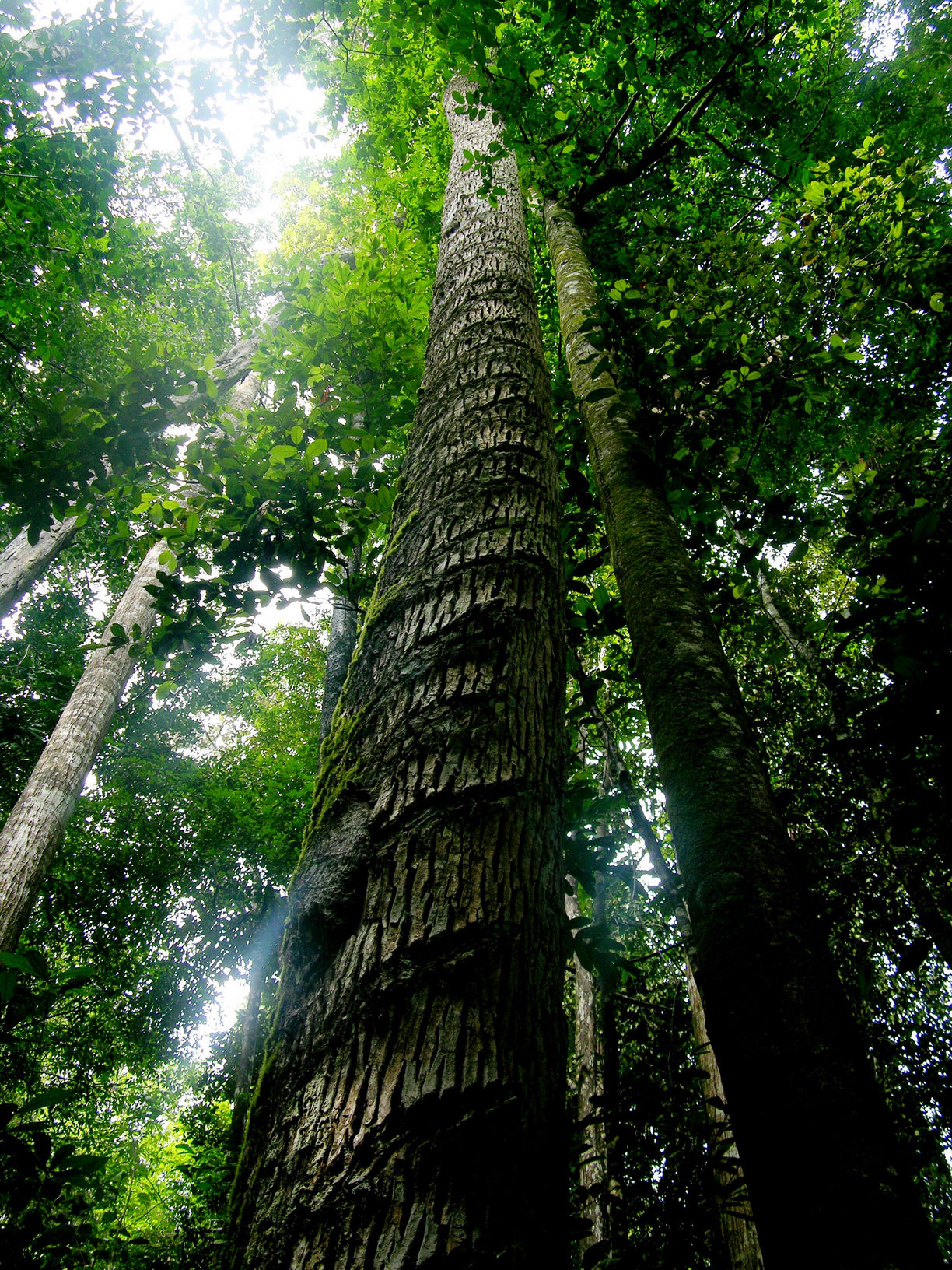
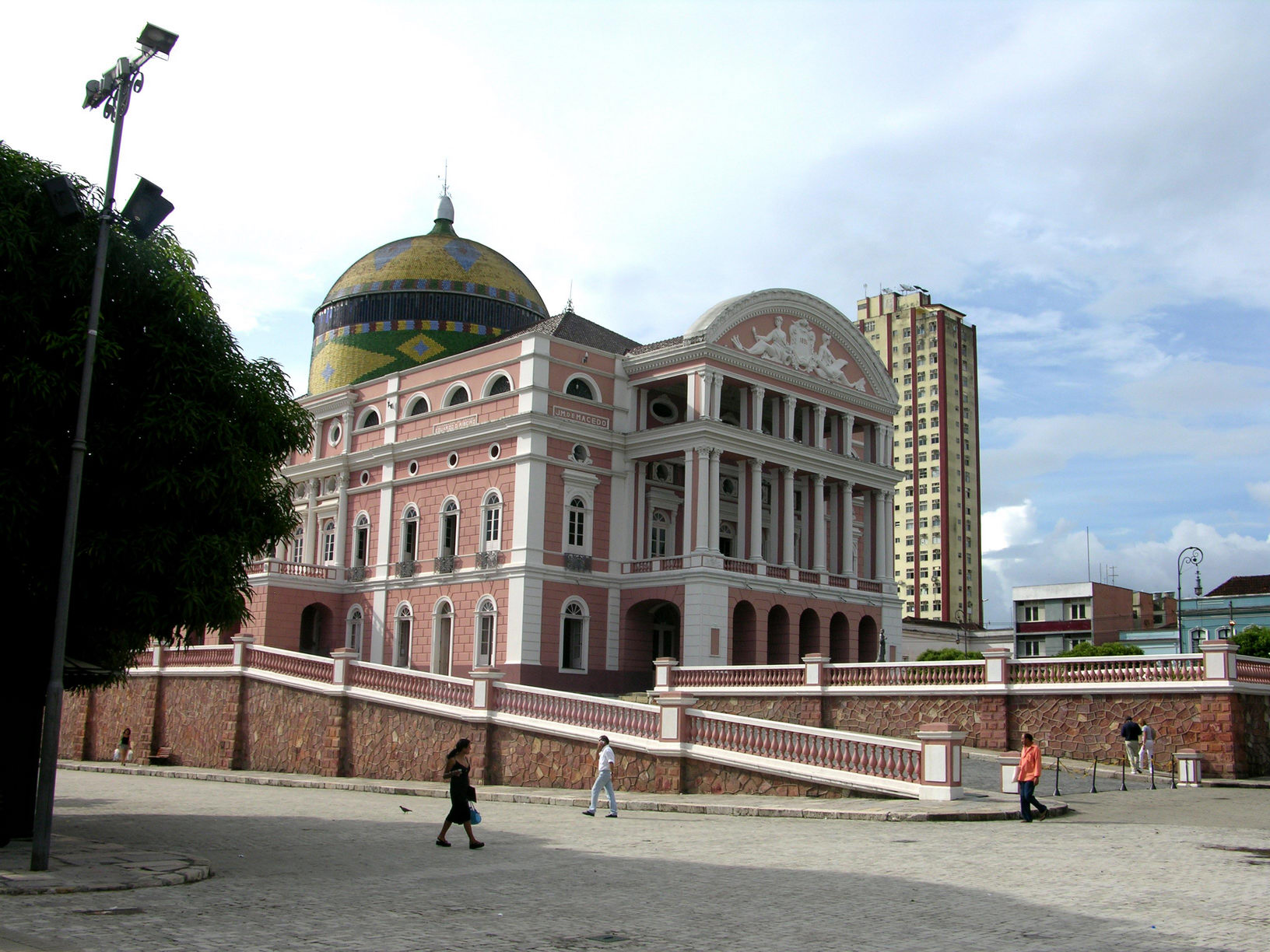
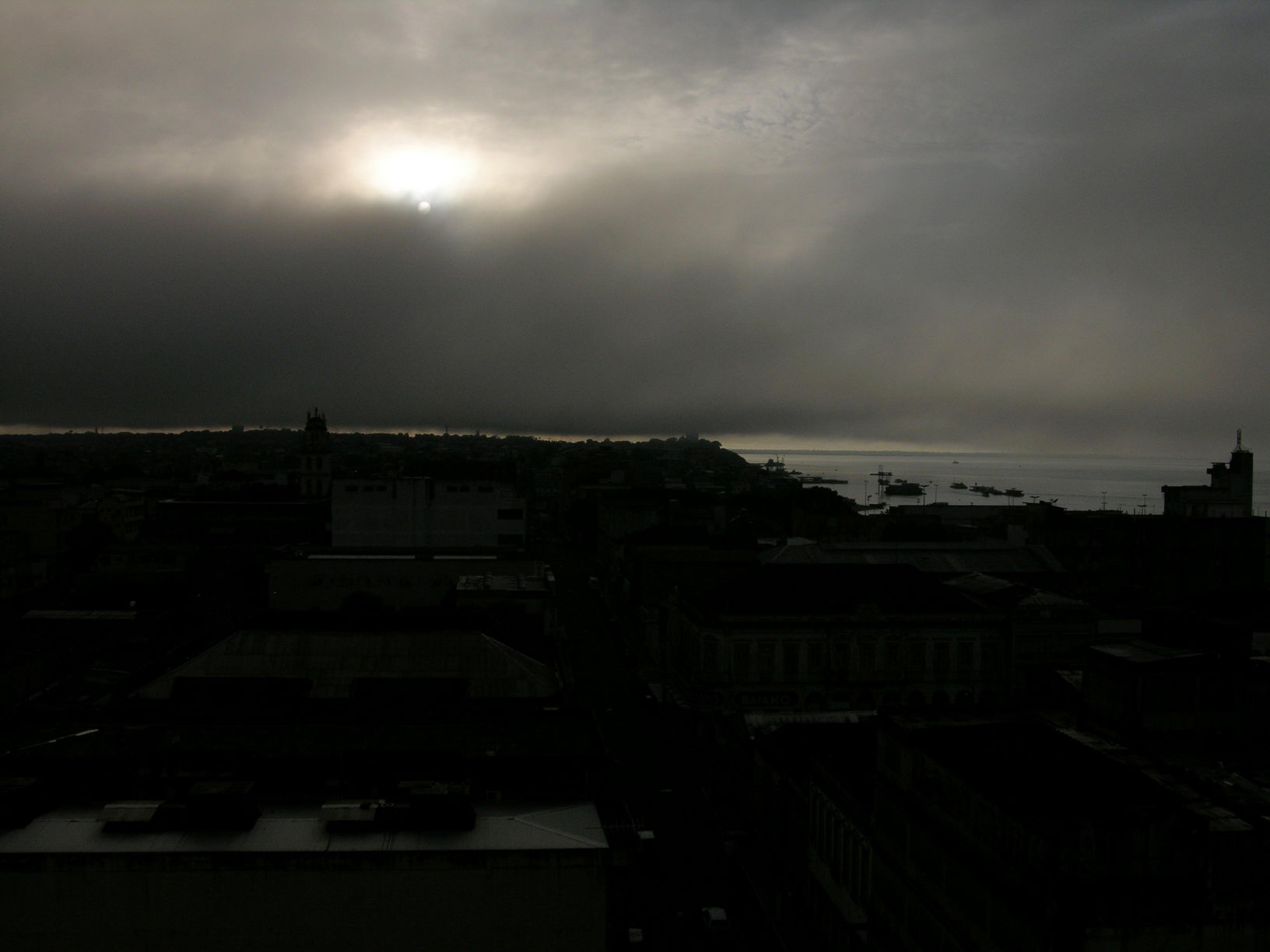
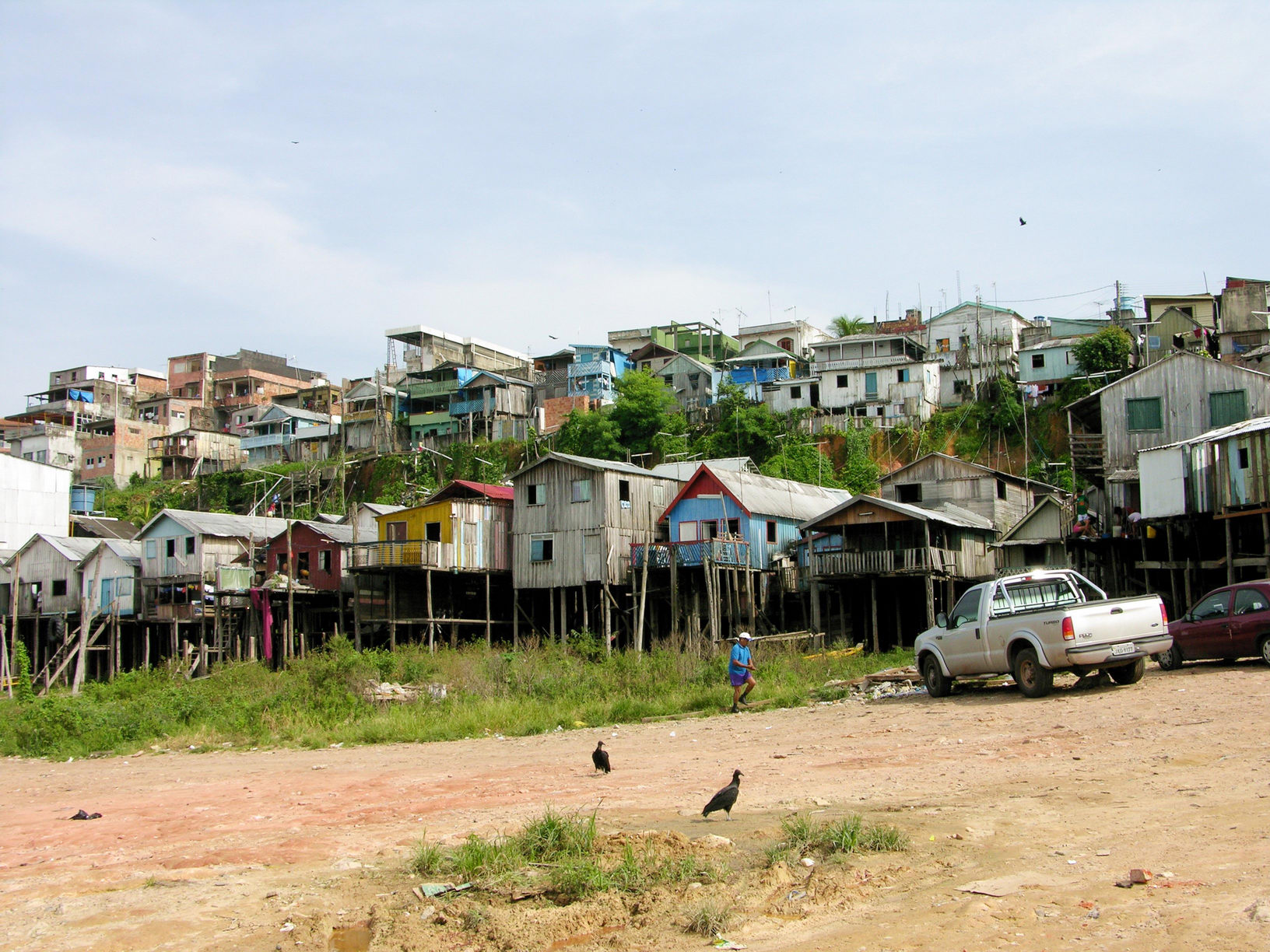
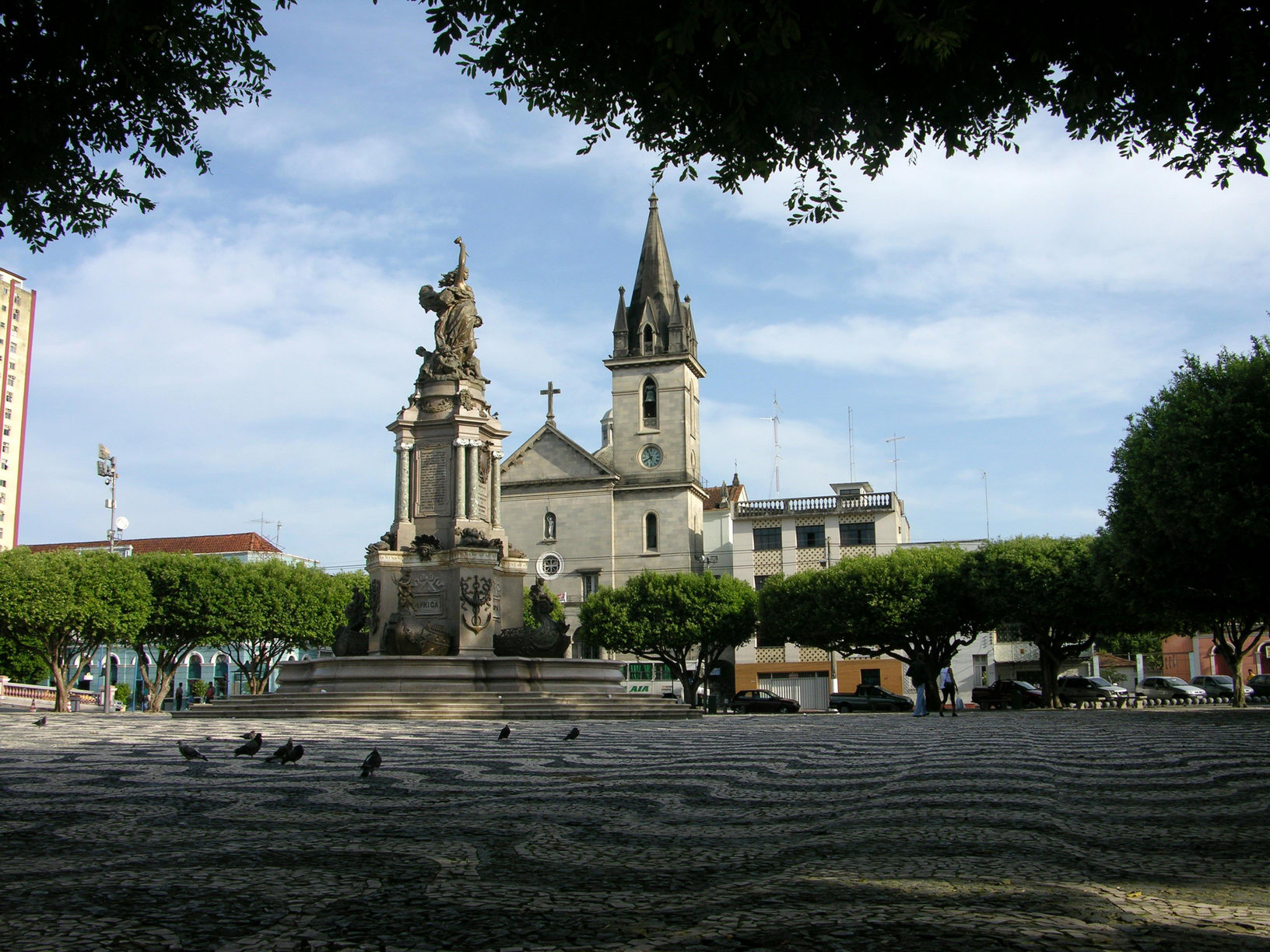
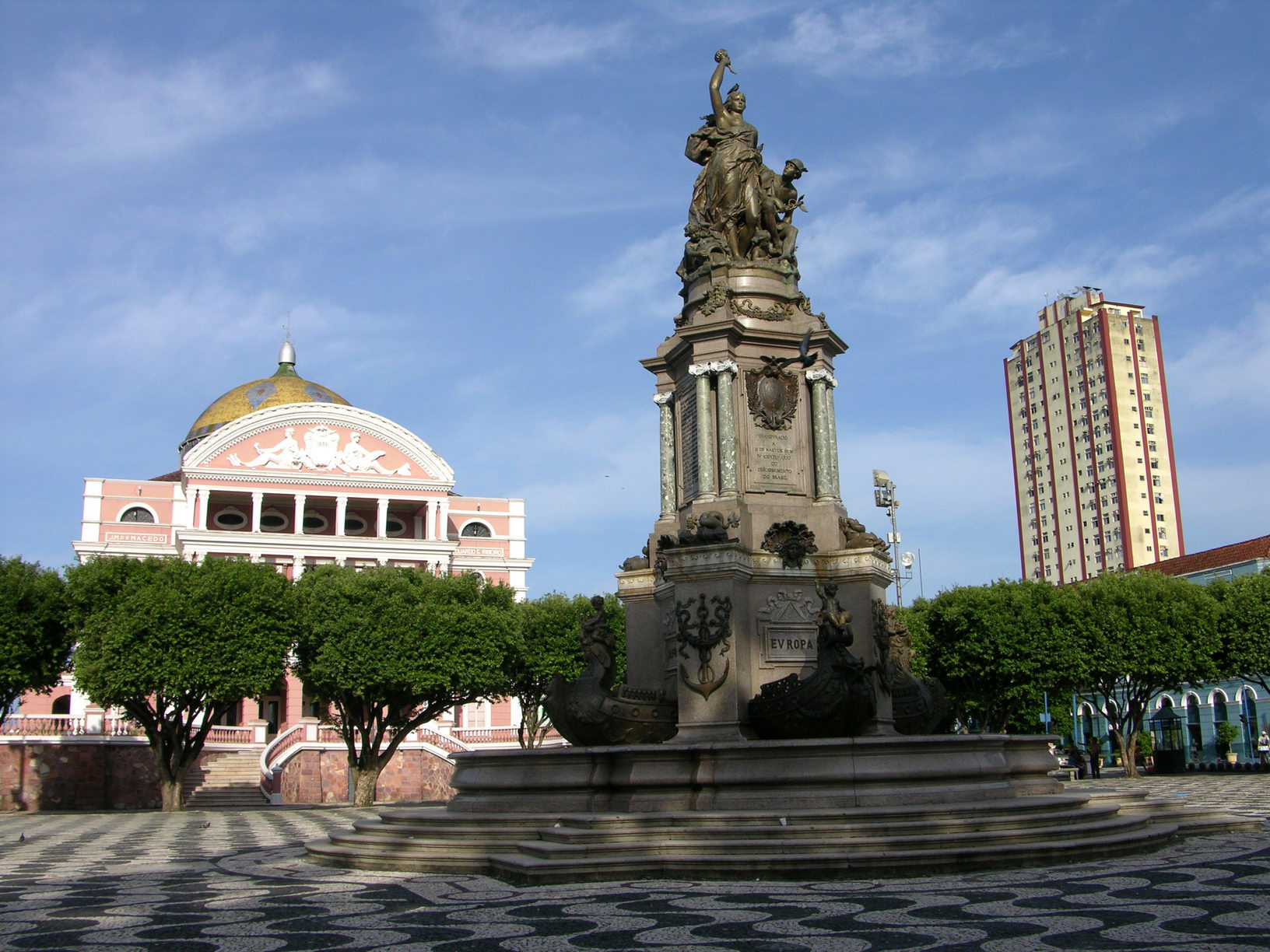
After we got back from the park we went for a walk around Manaus. The city grew in the middle of the jungle at the time of the rubber boom. At the beginning of the twentieth century, harvesting natural rubber brought in huge profits. There were almost no costs. Go into the forest, make cuts in the rubber trees and collect the precious liquid.
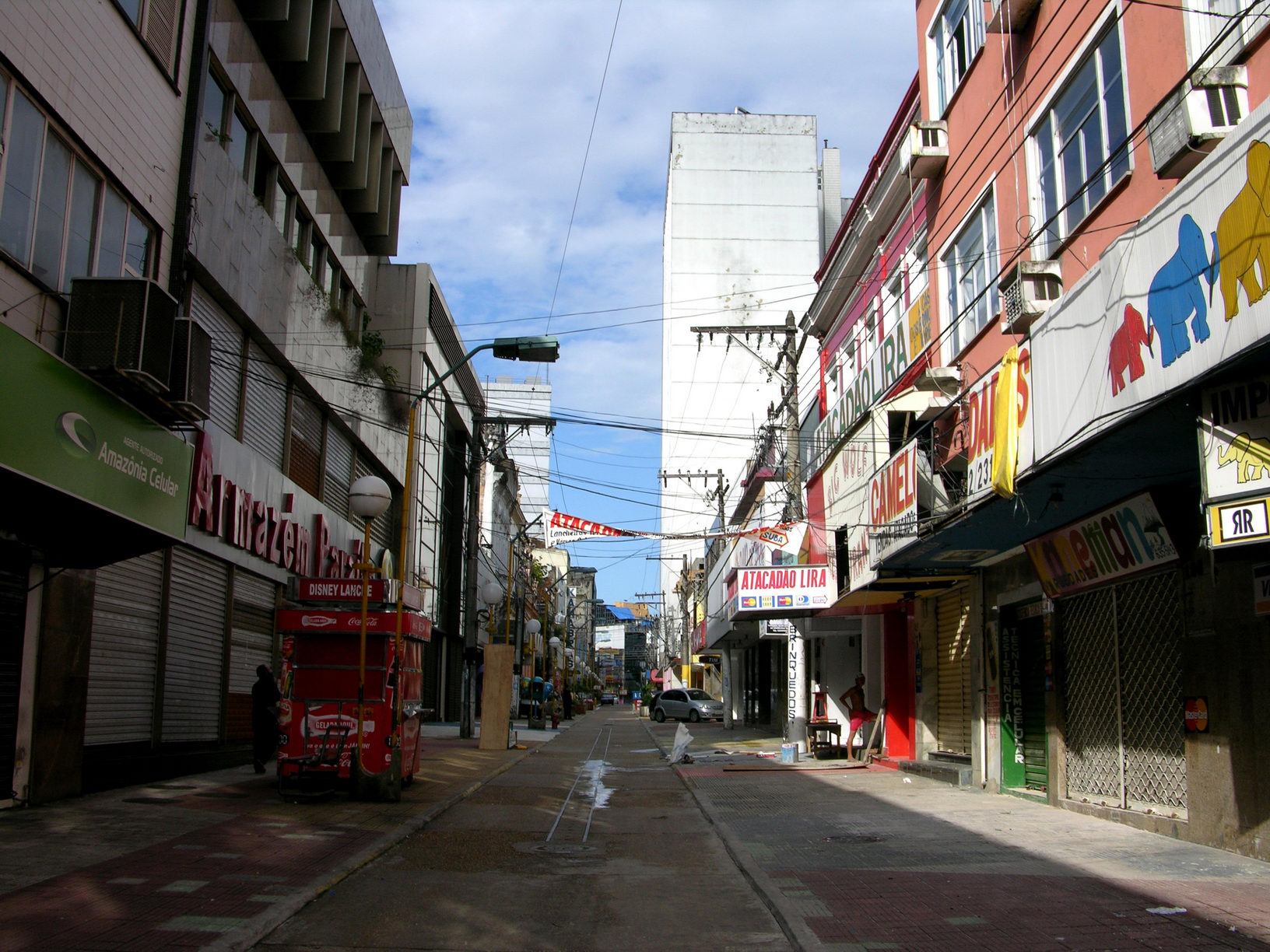
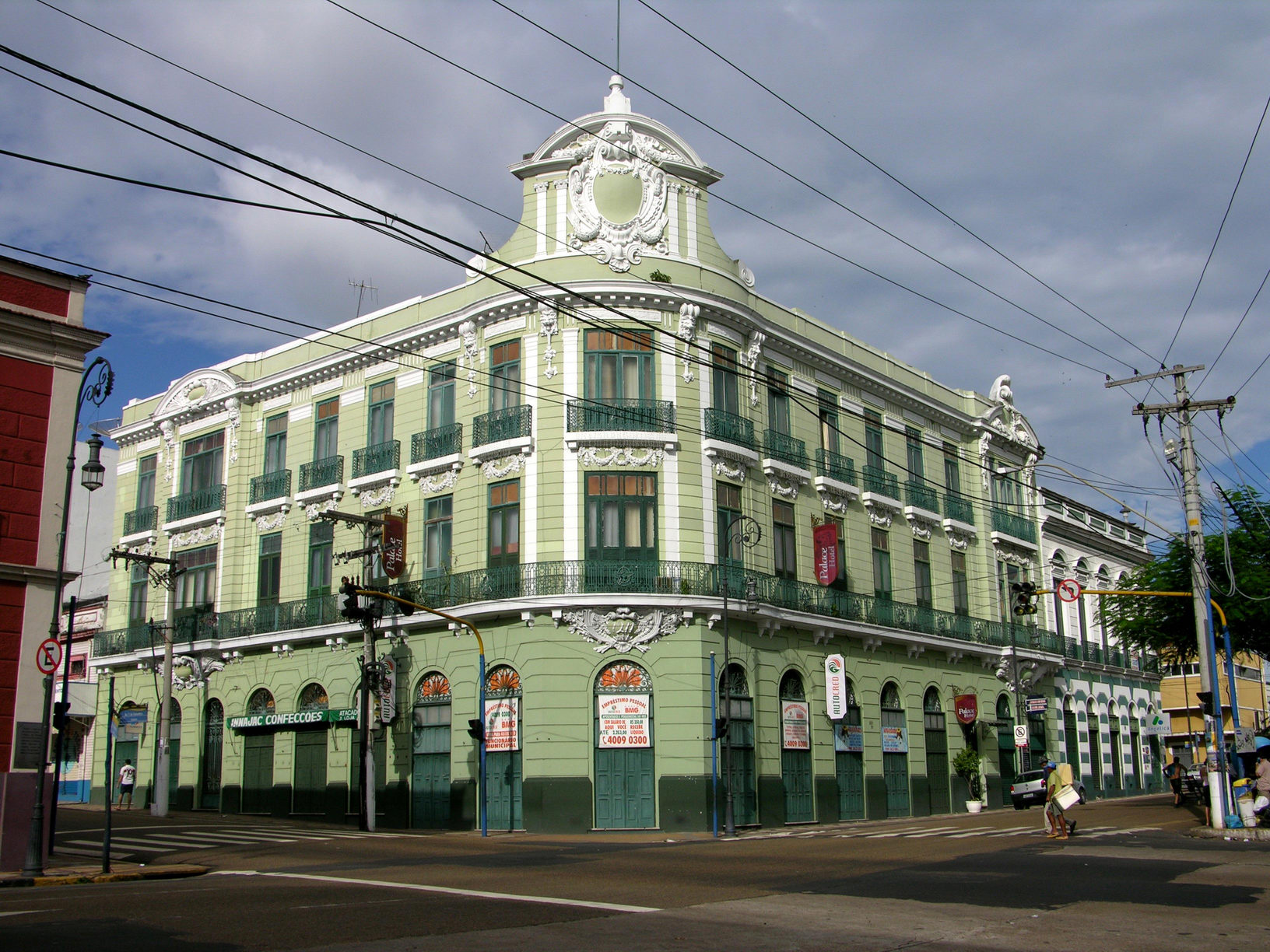
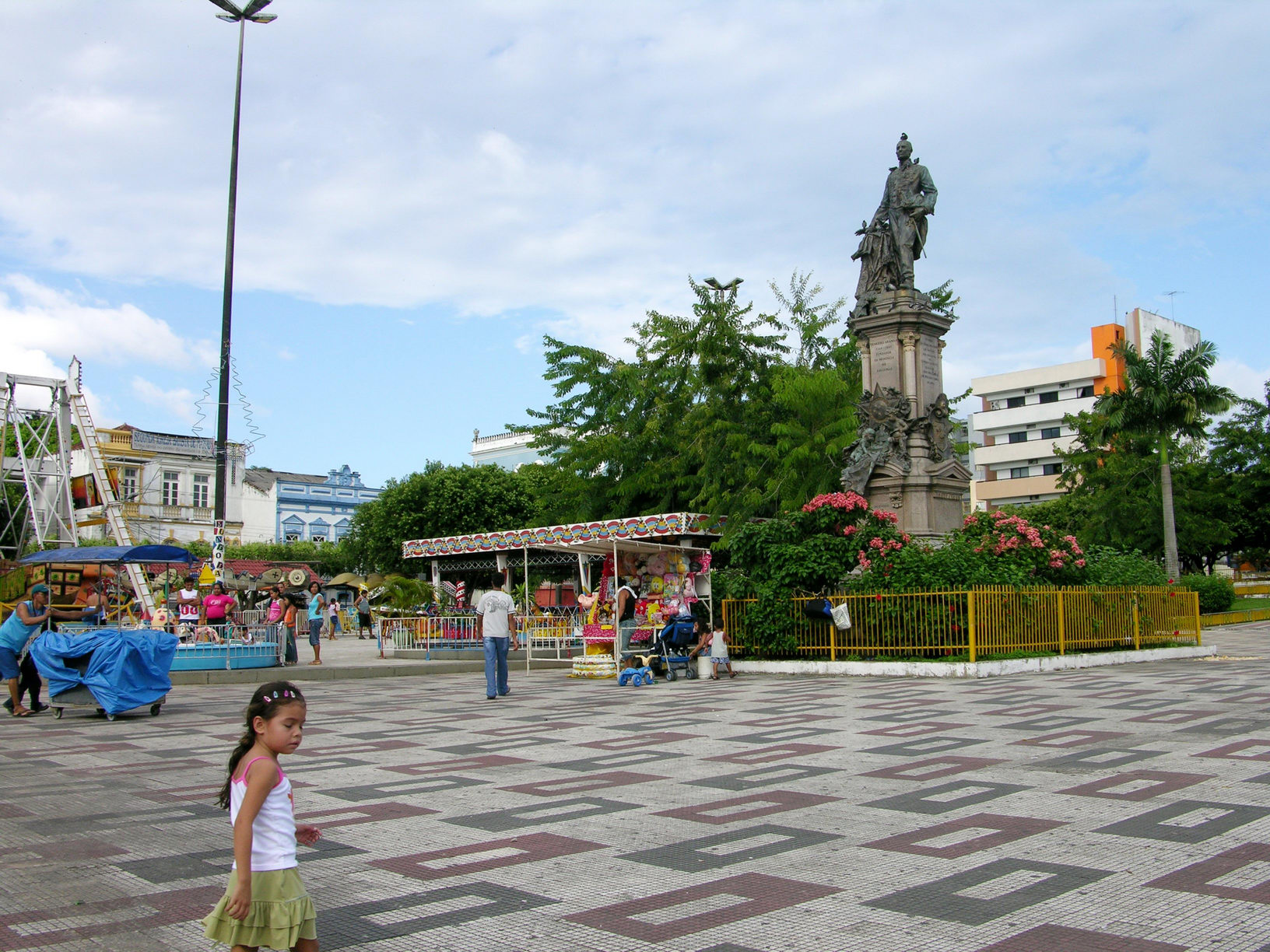
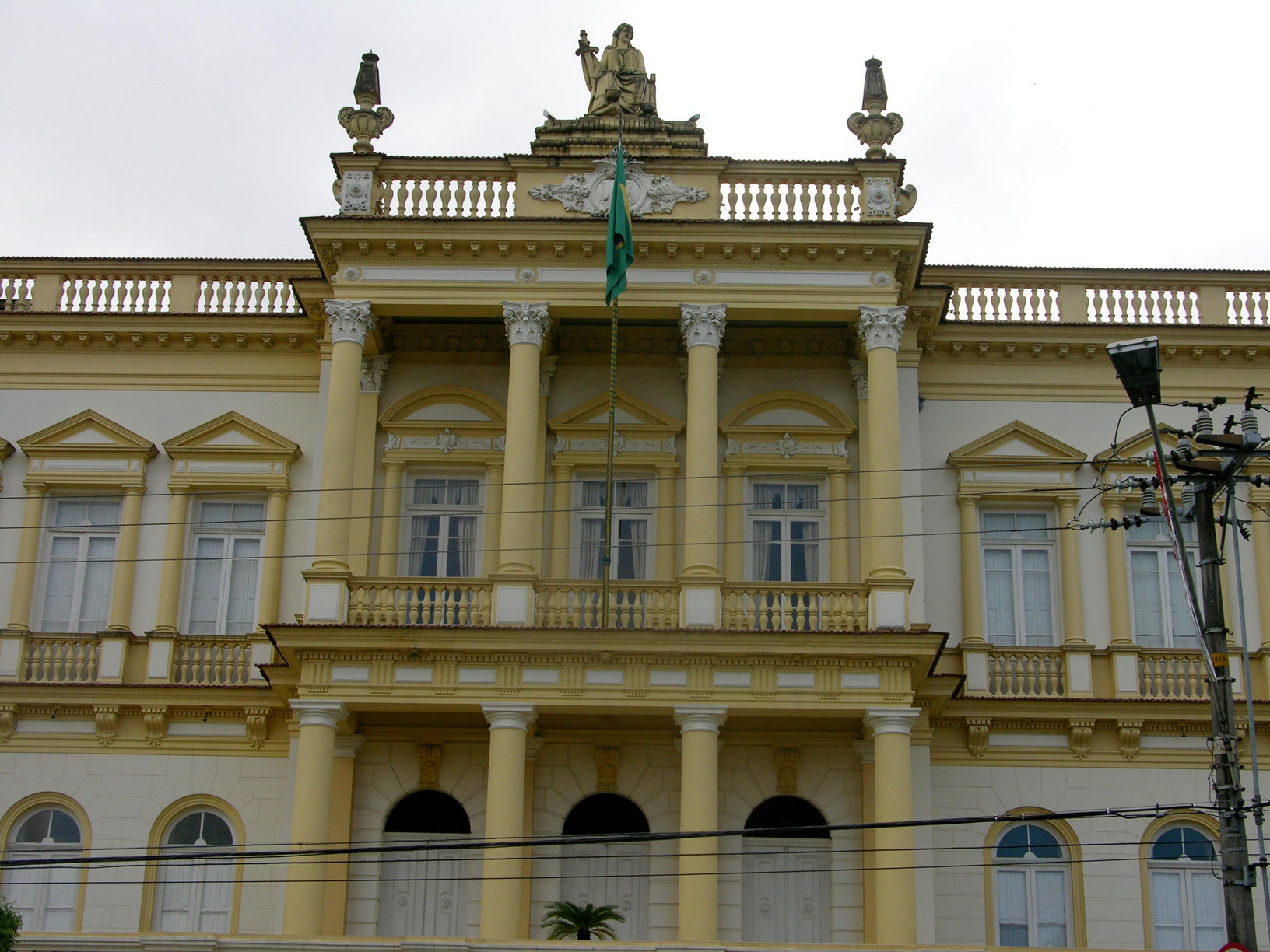
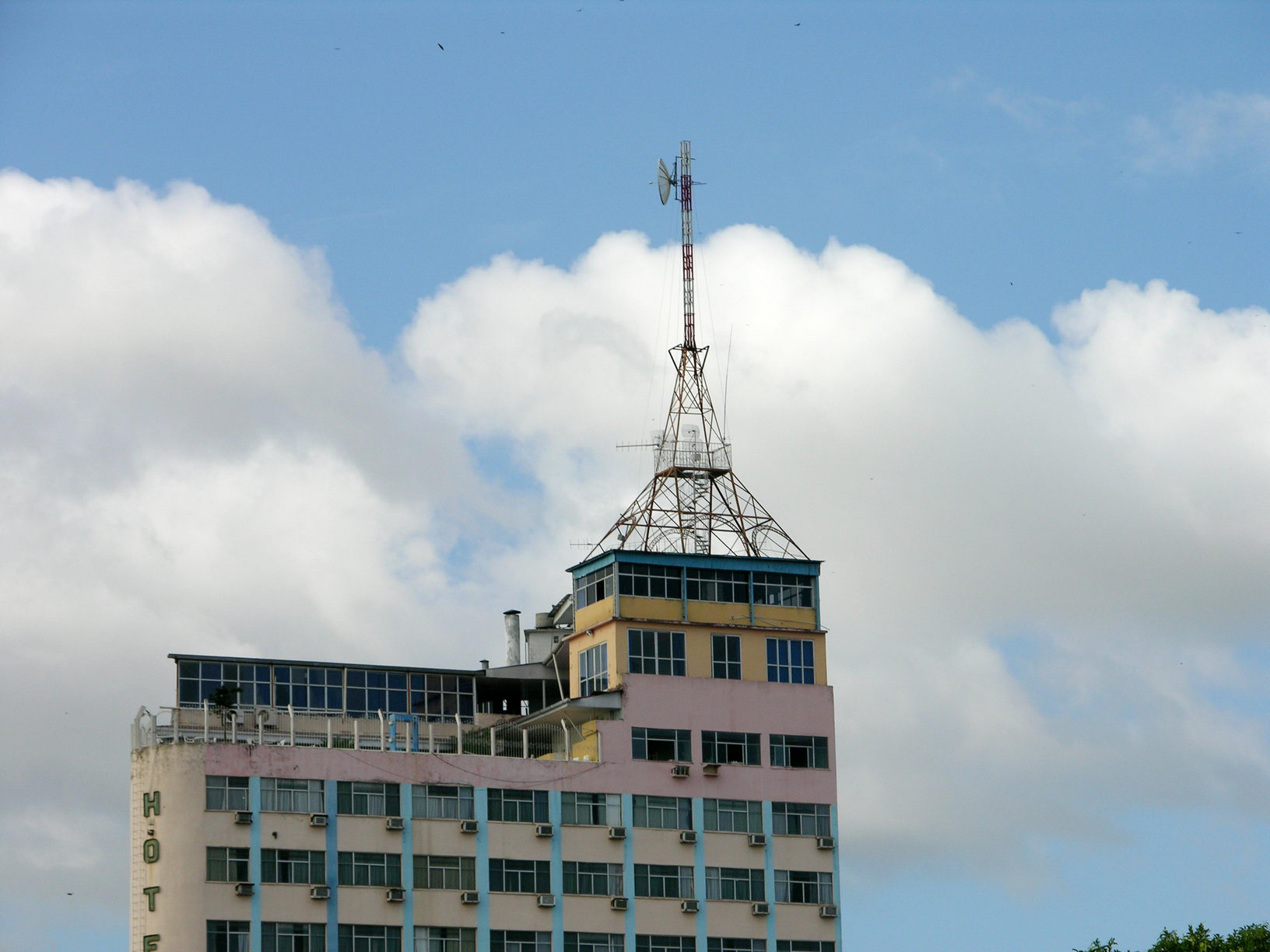
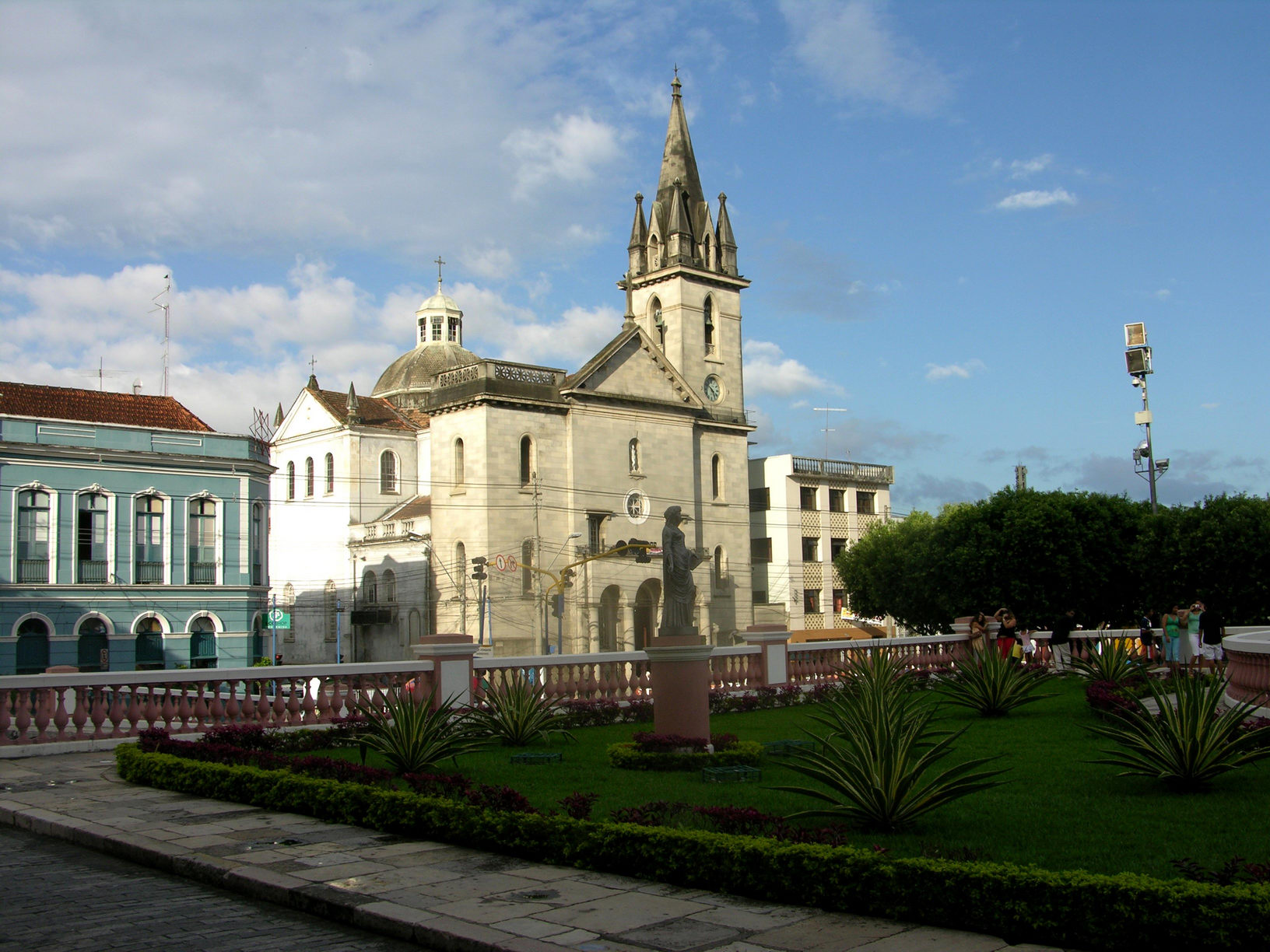
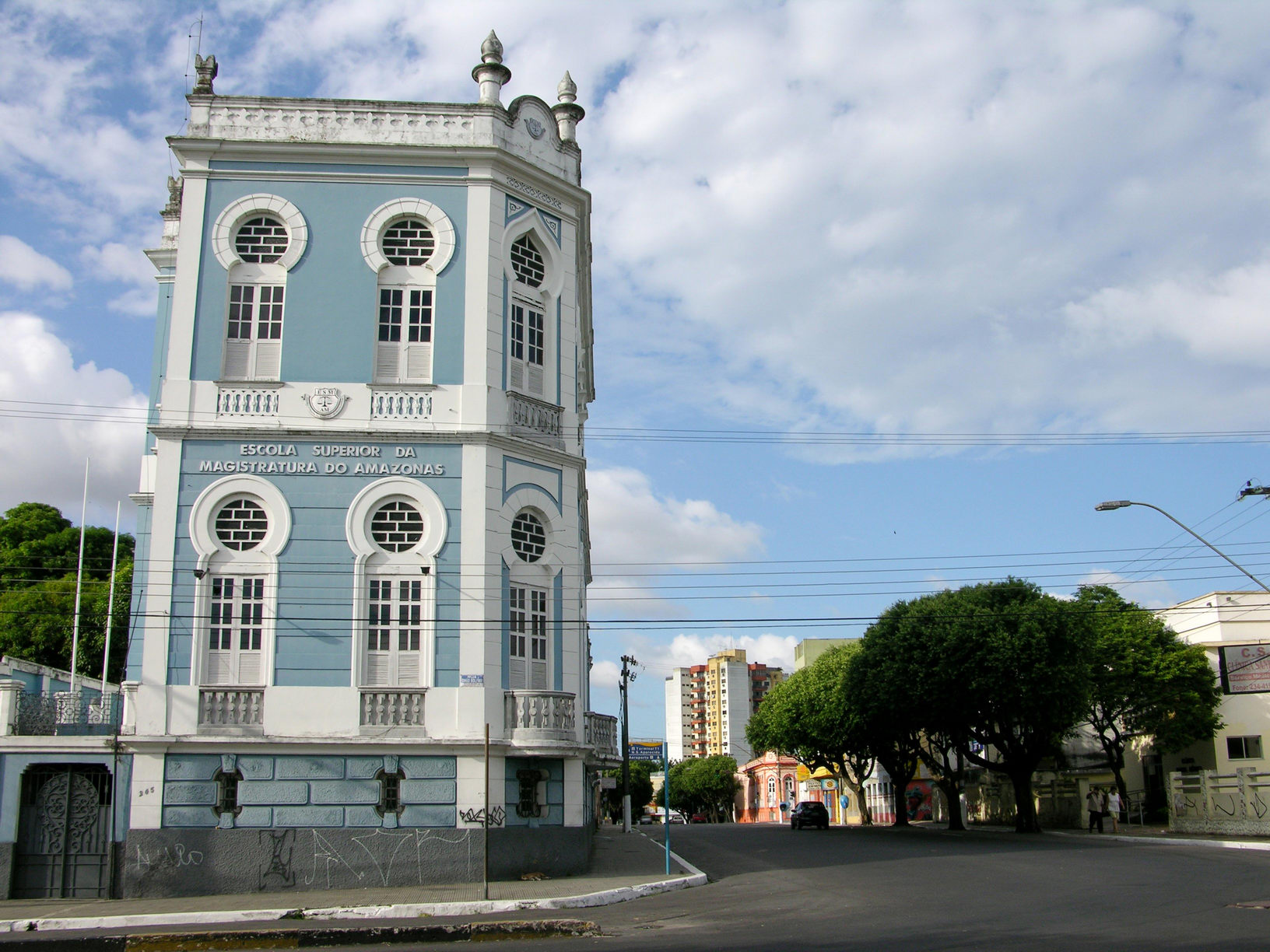
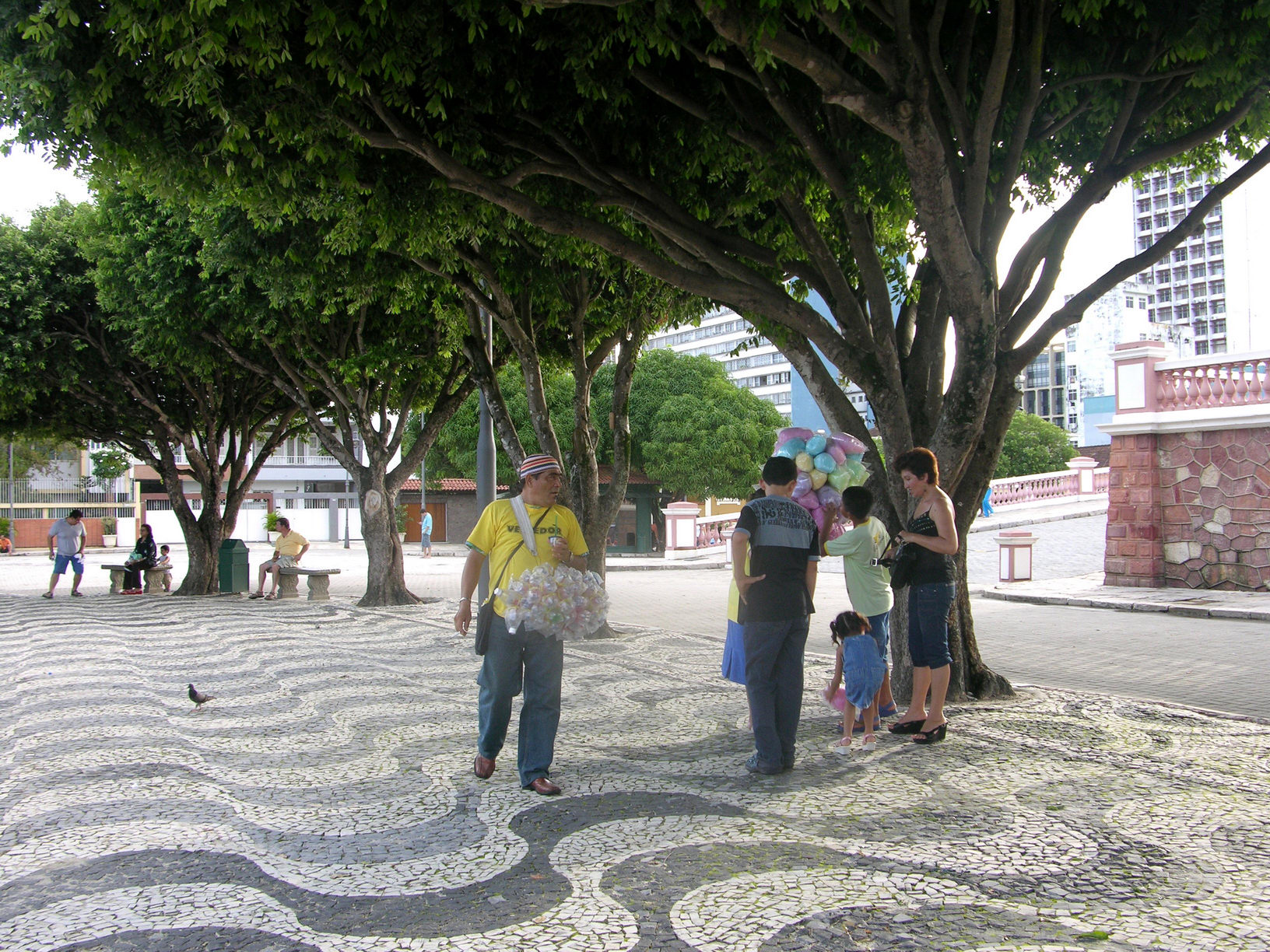
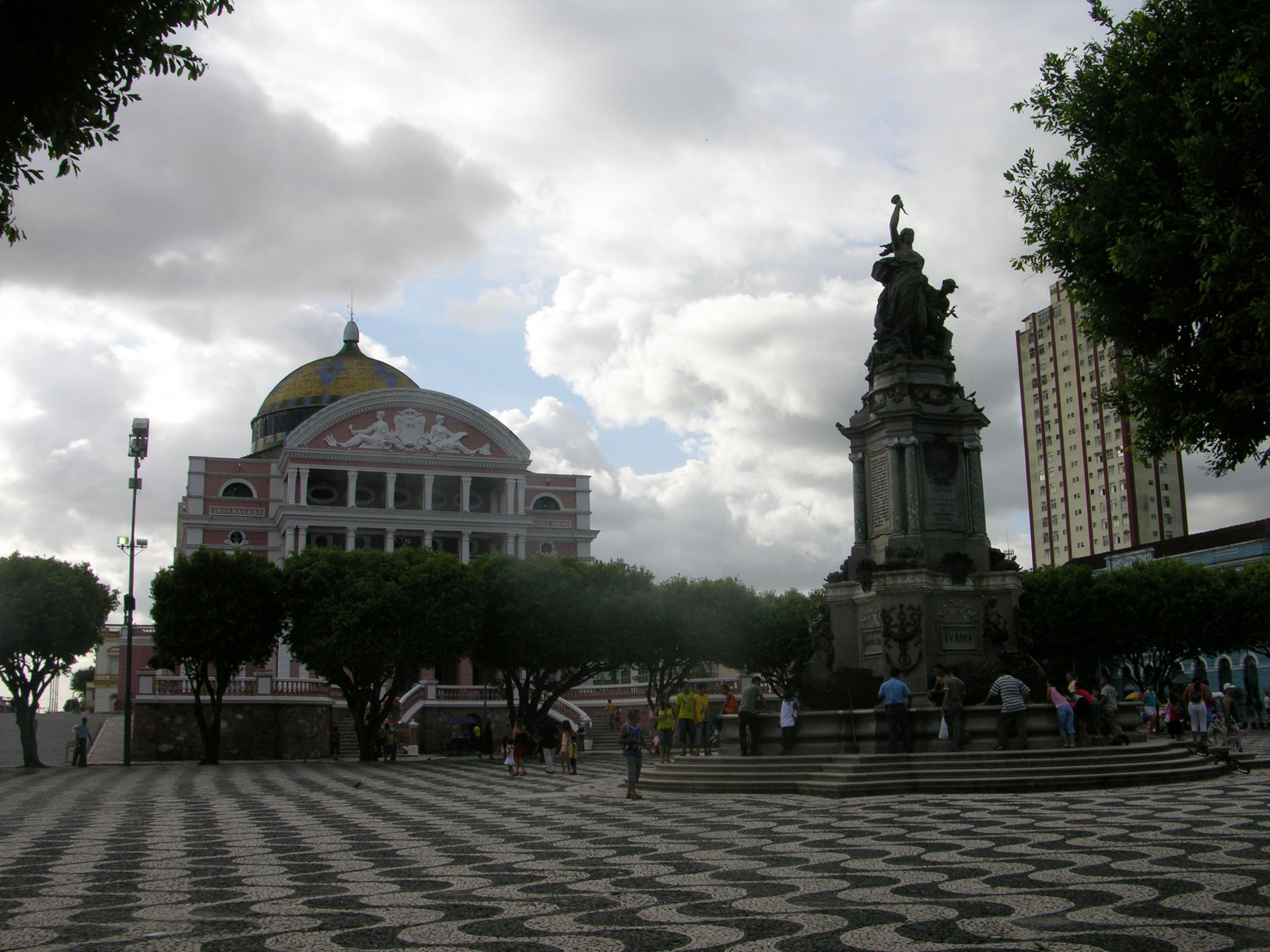
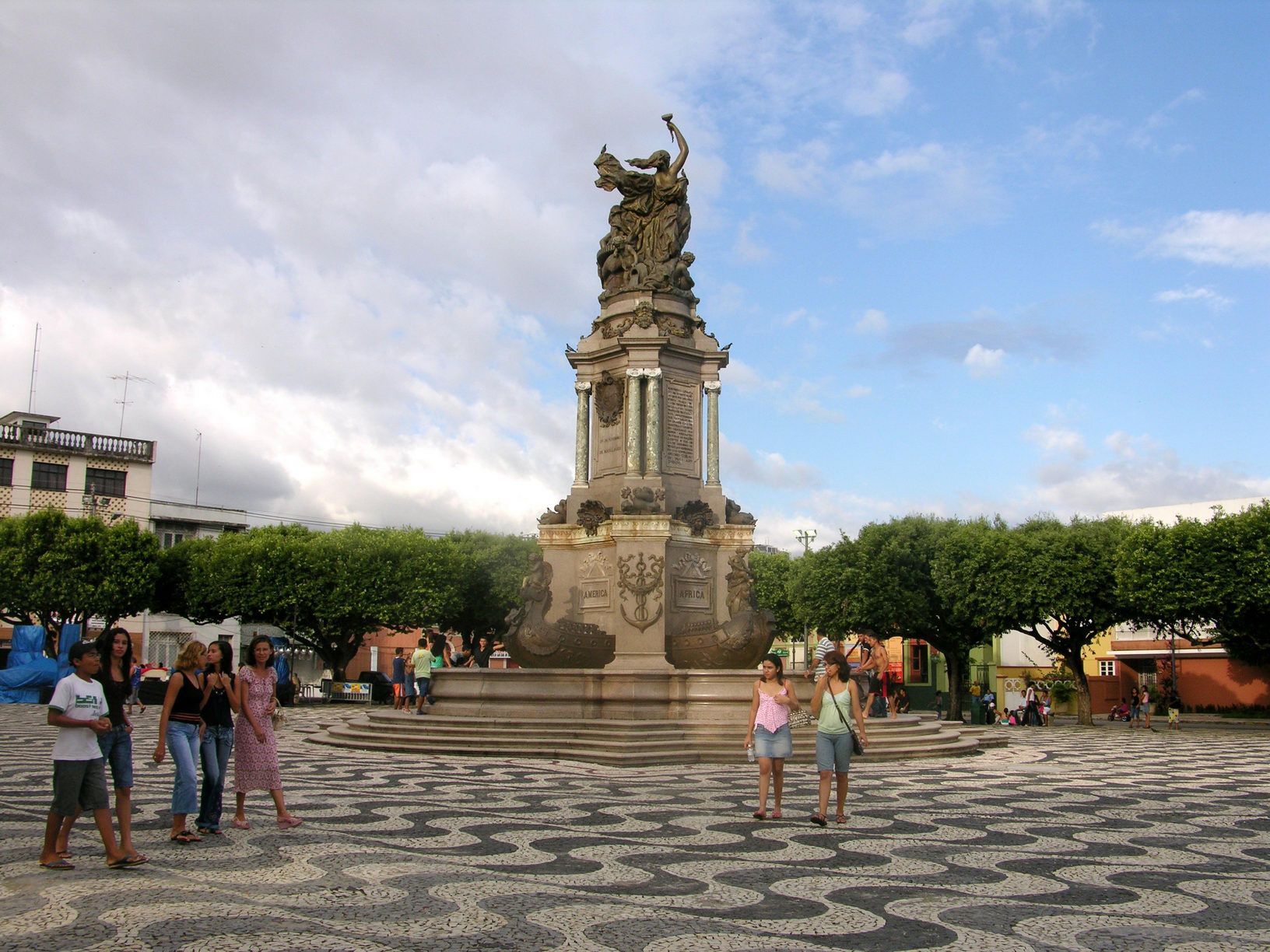
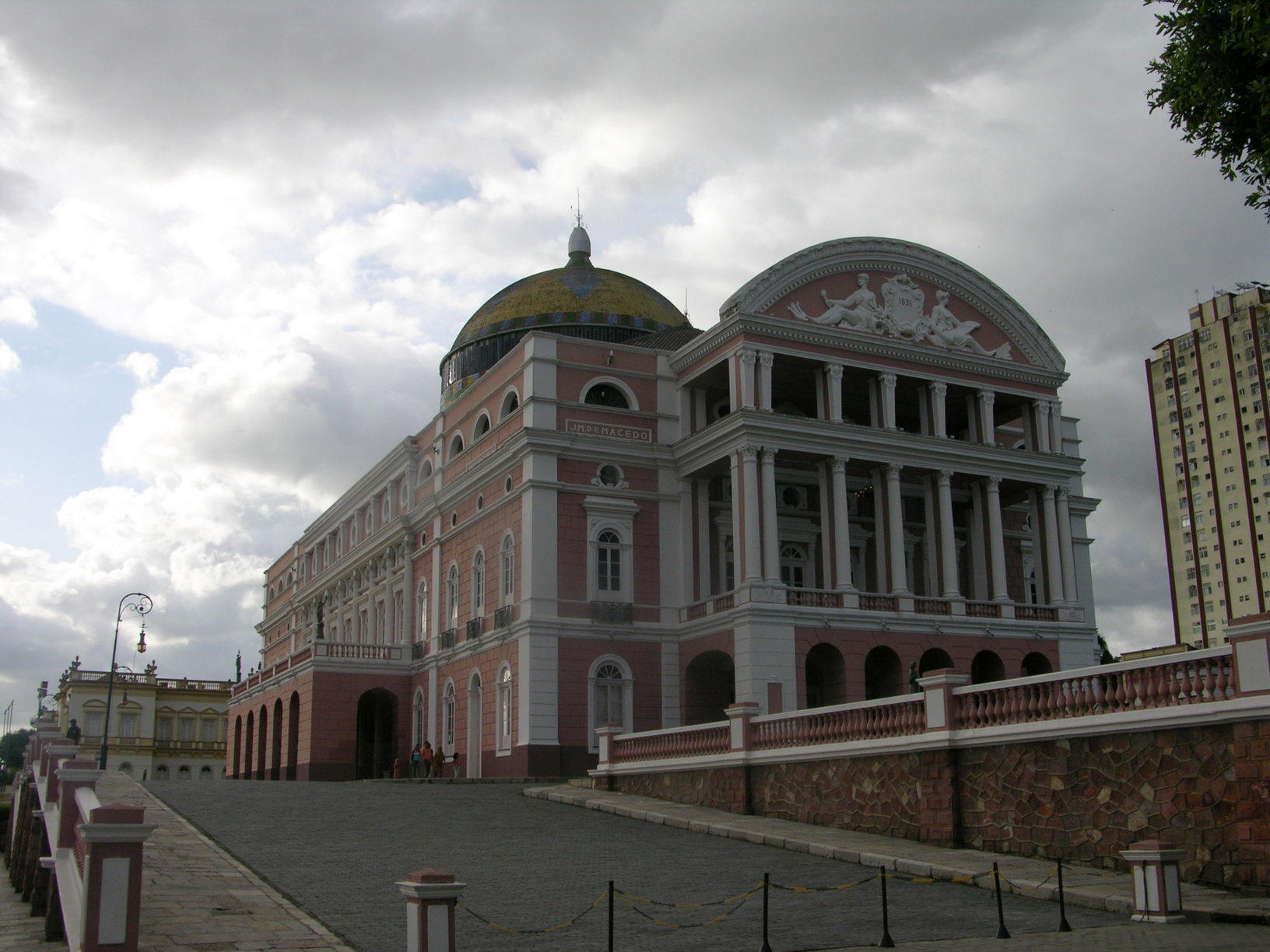
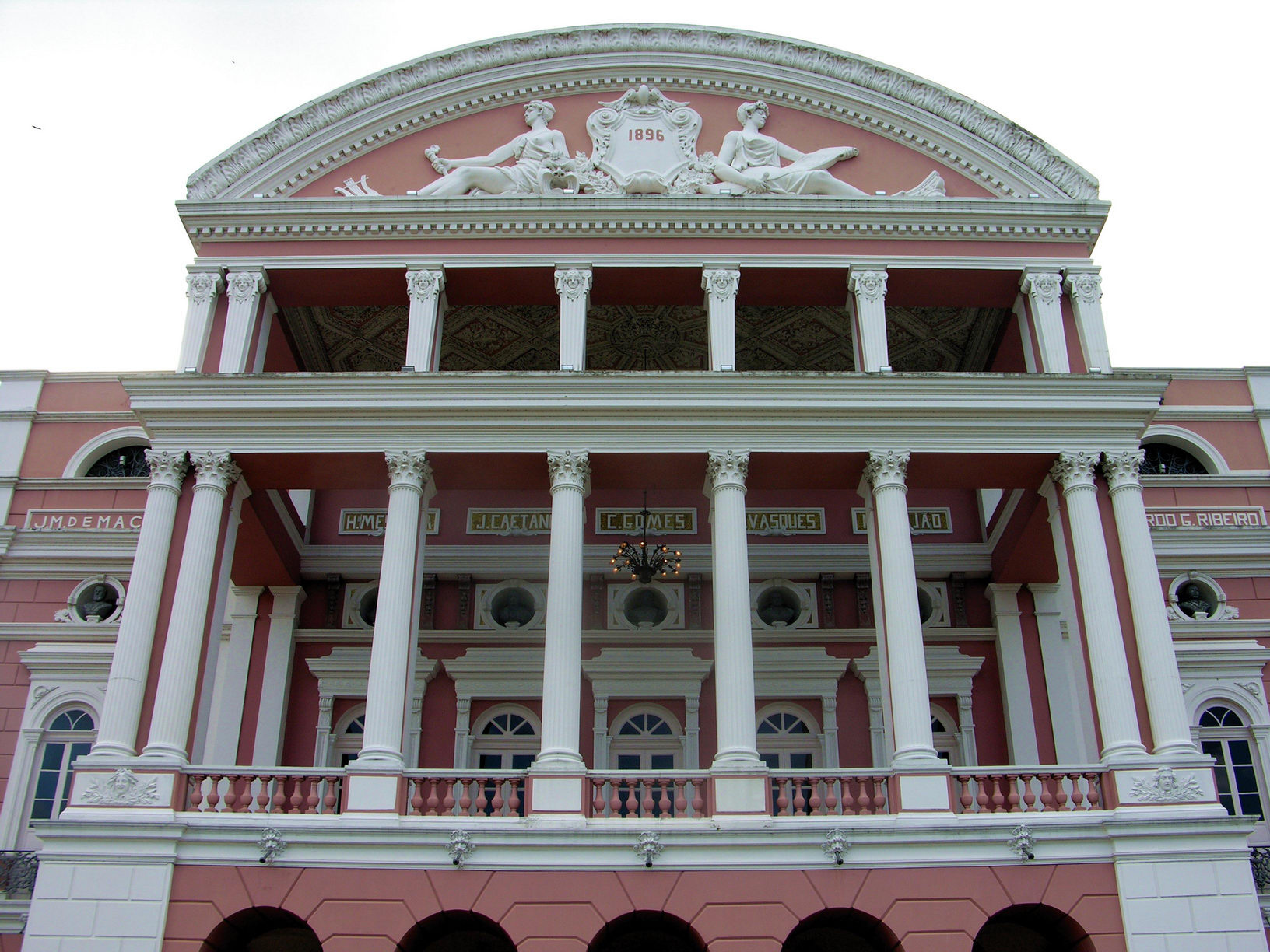
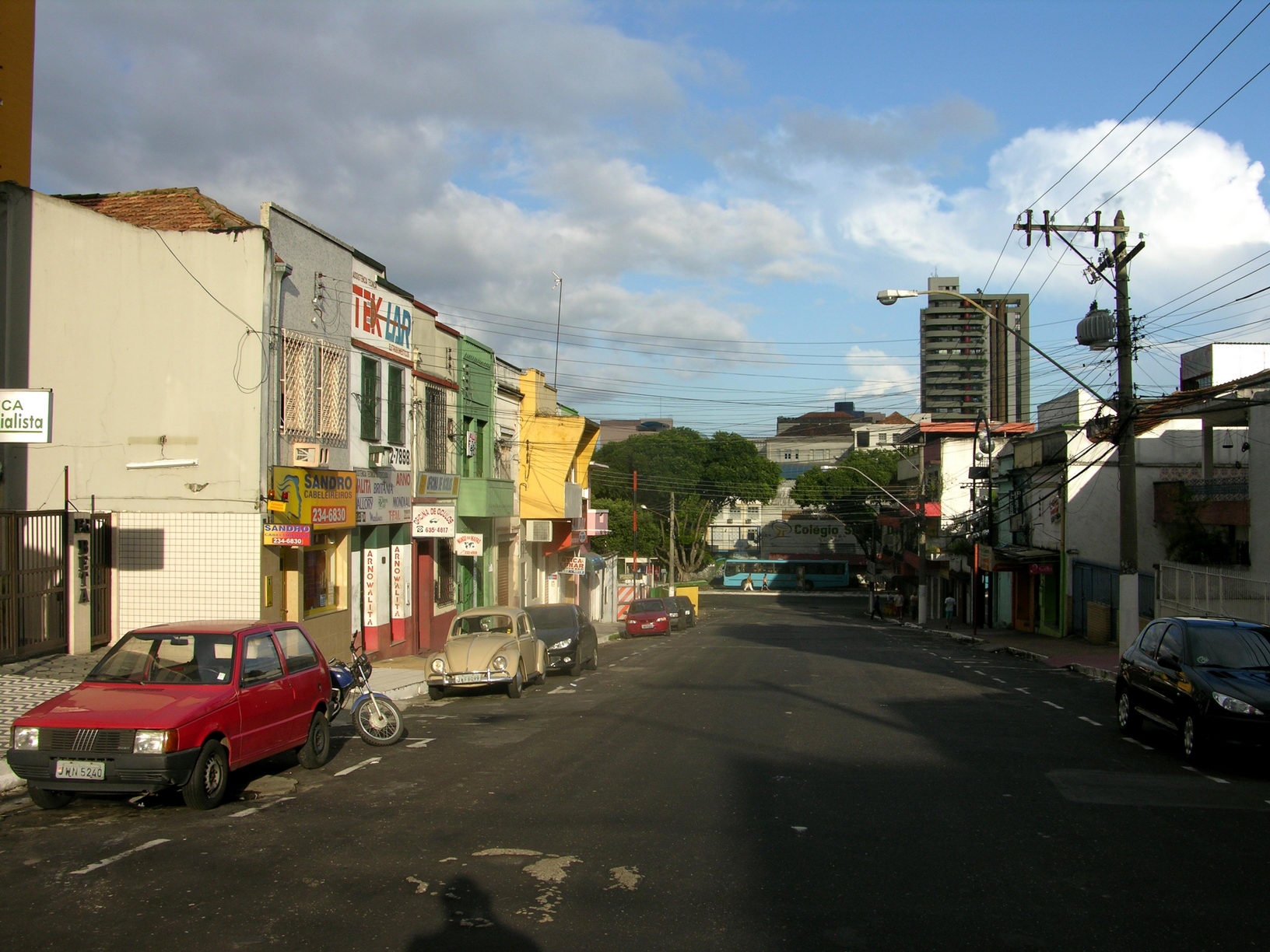
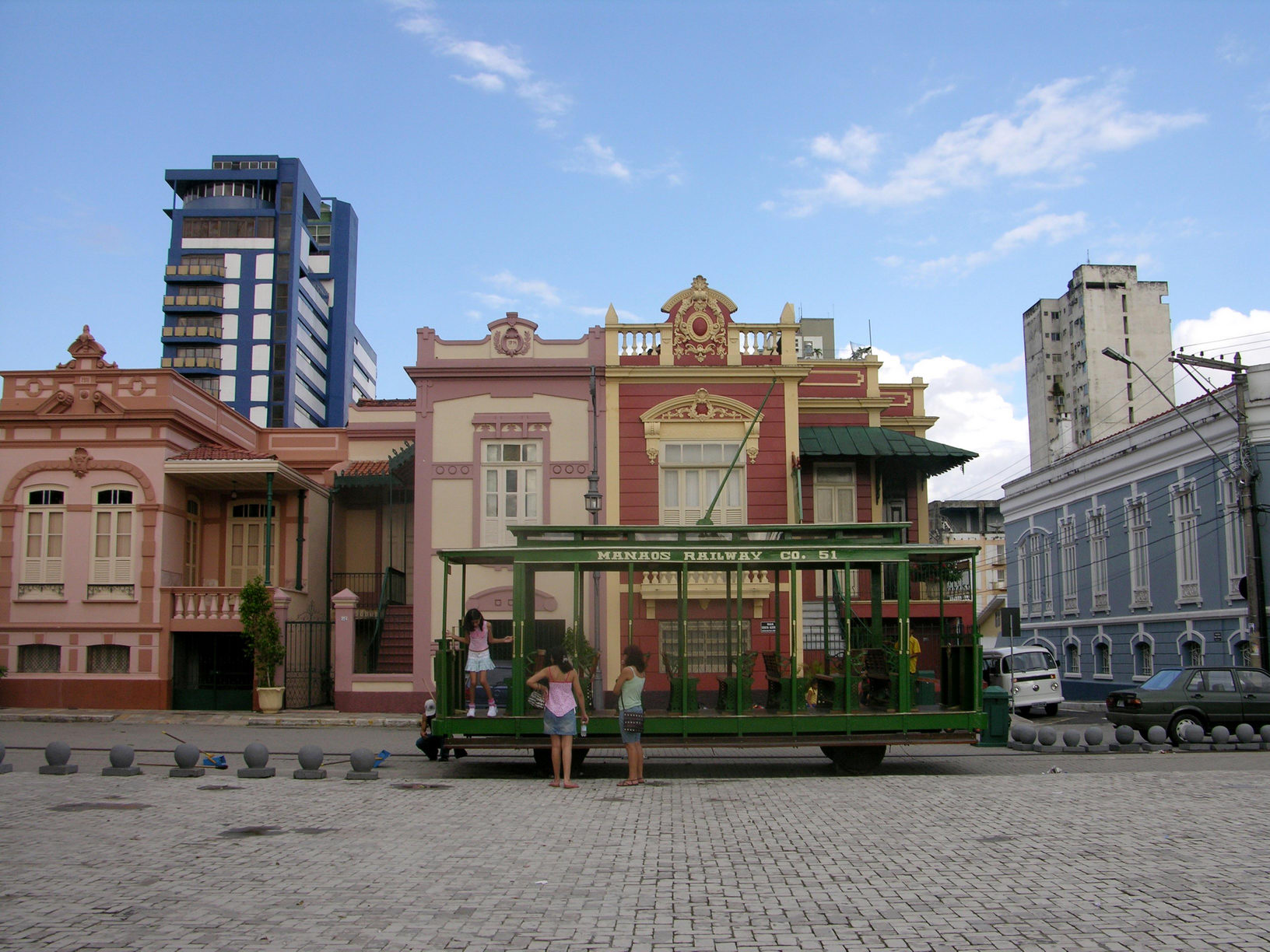
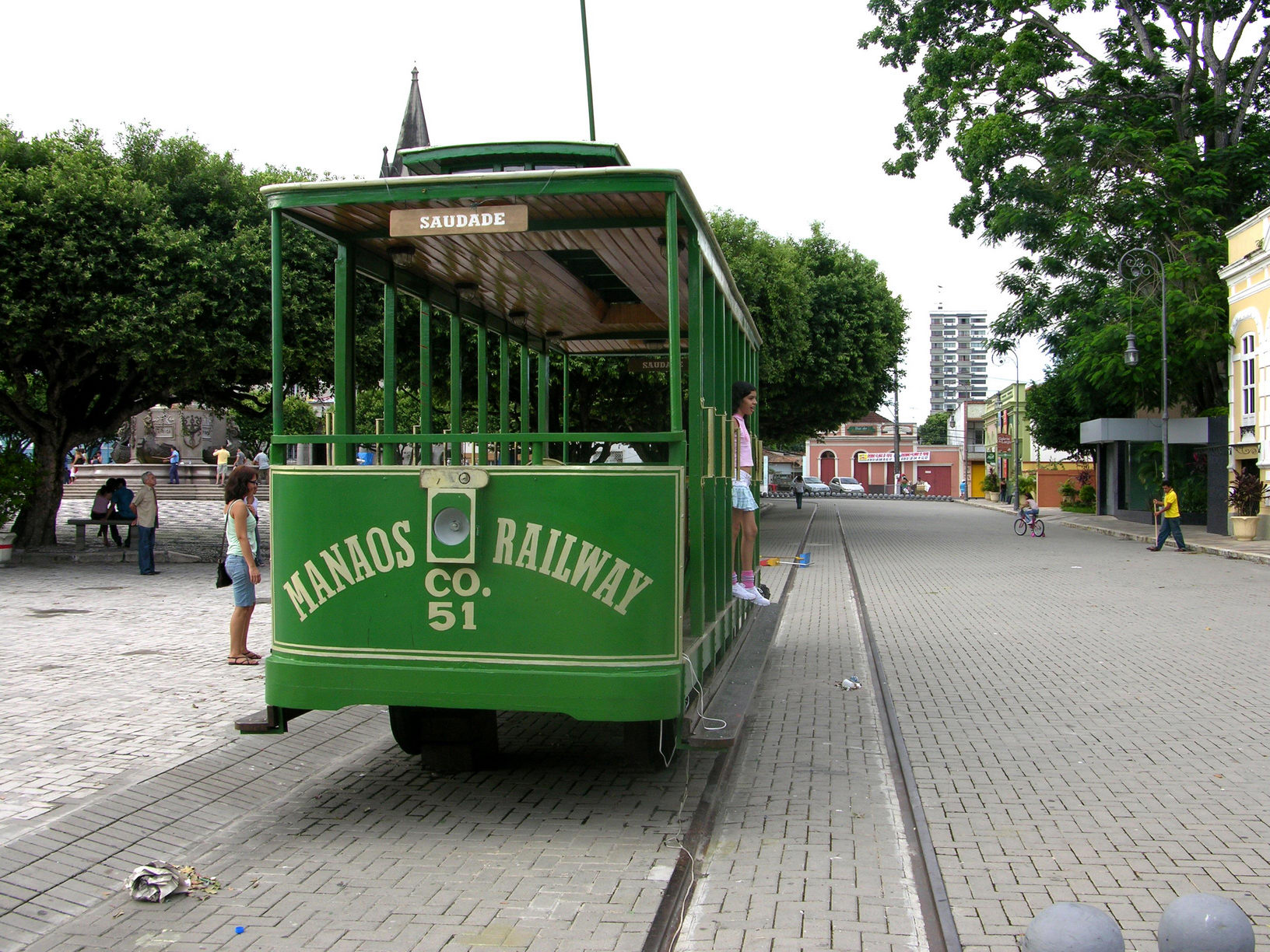
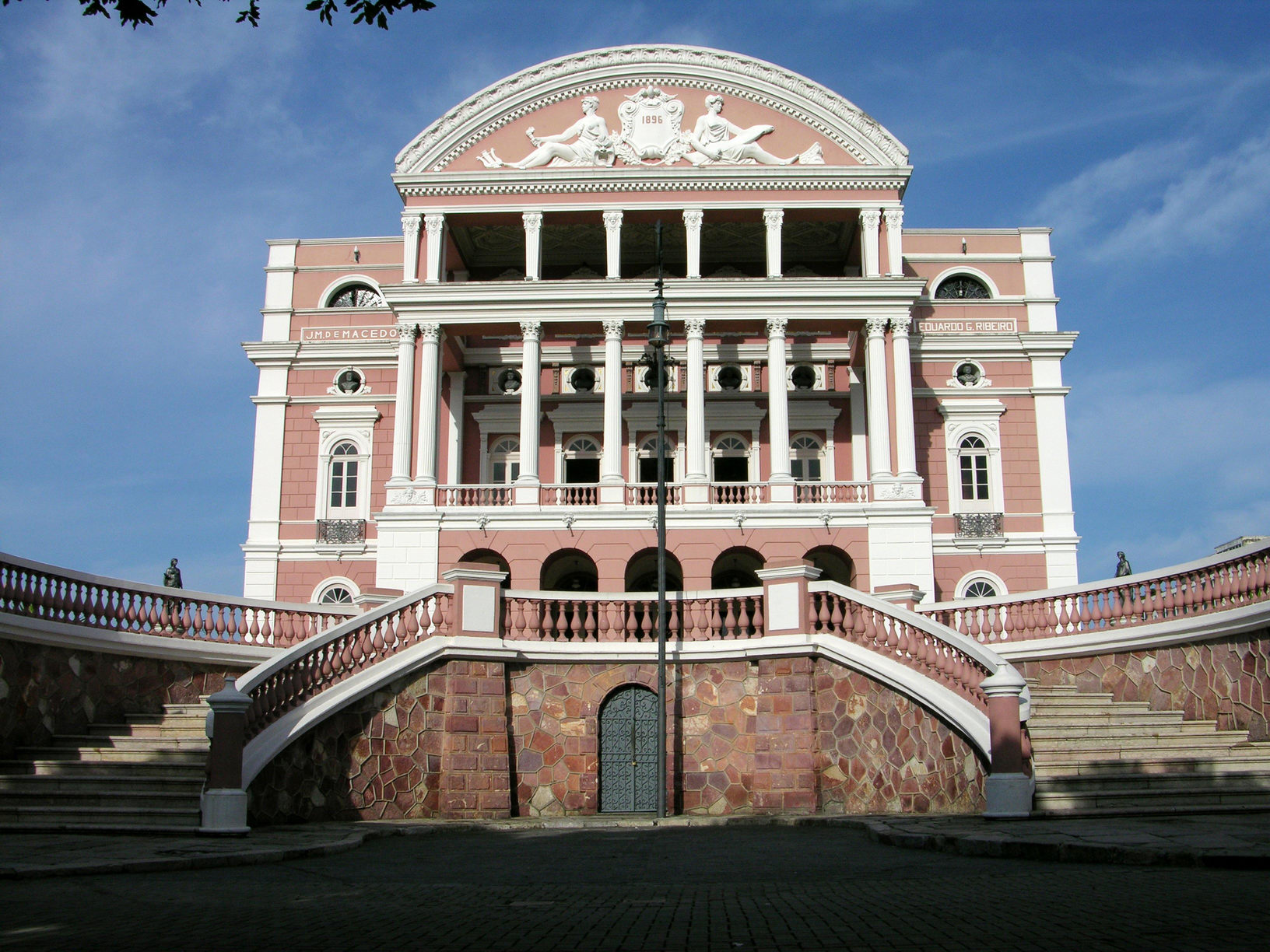
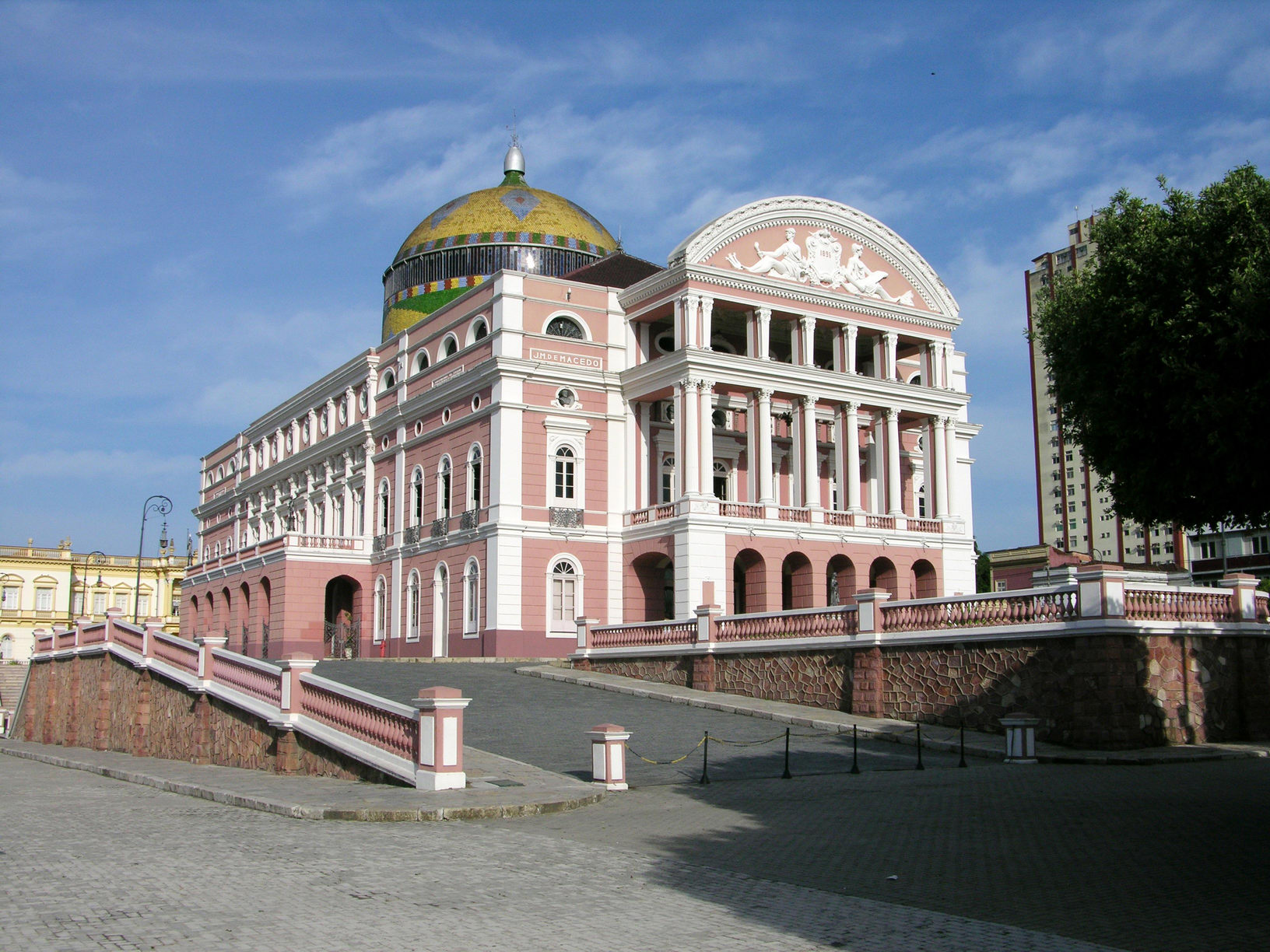
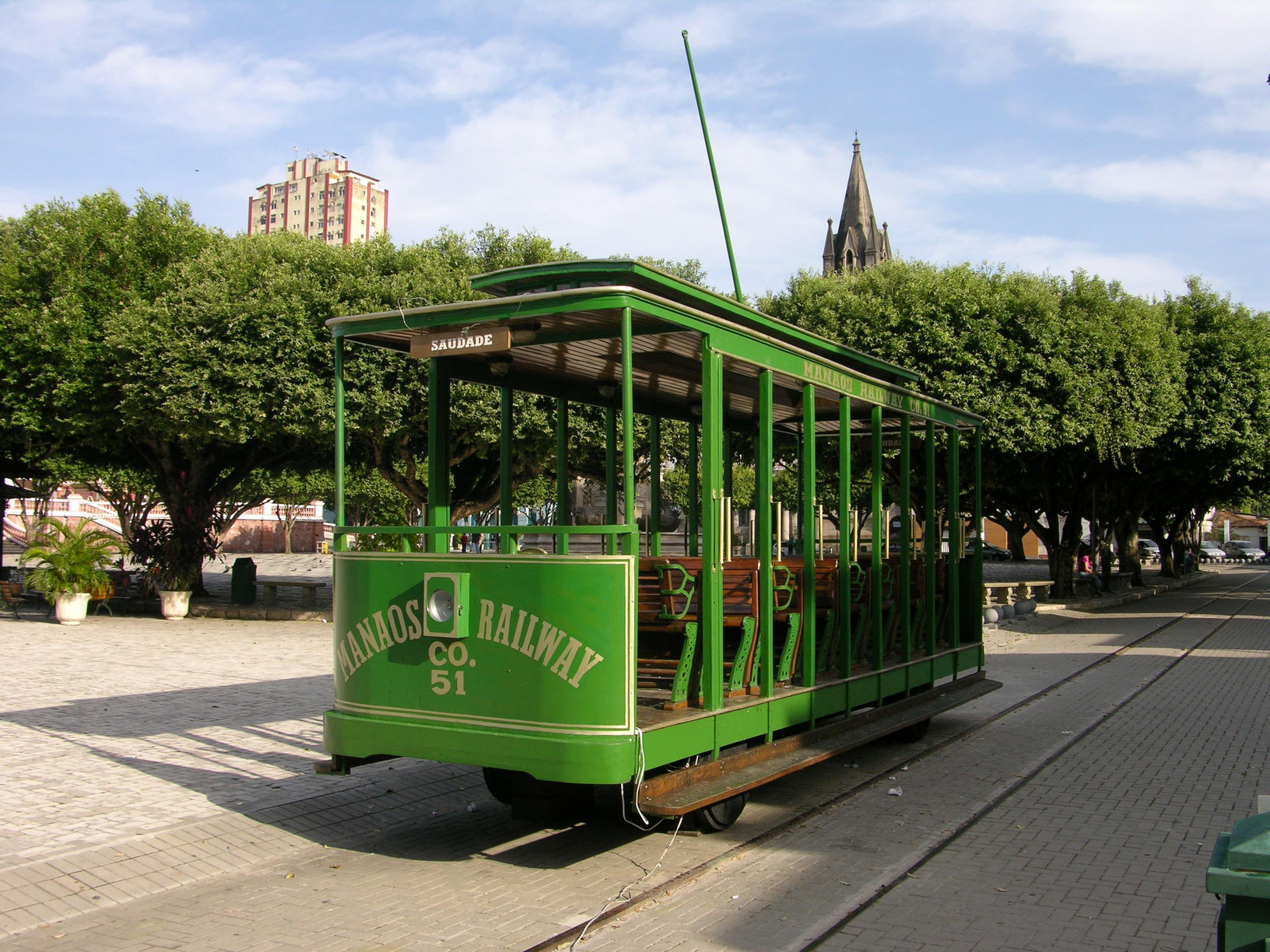
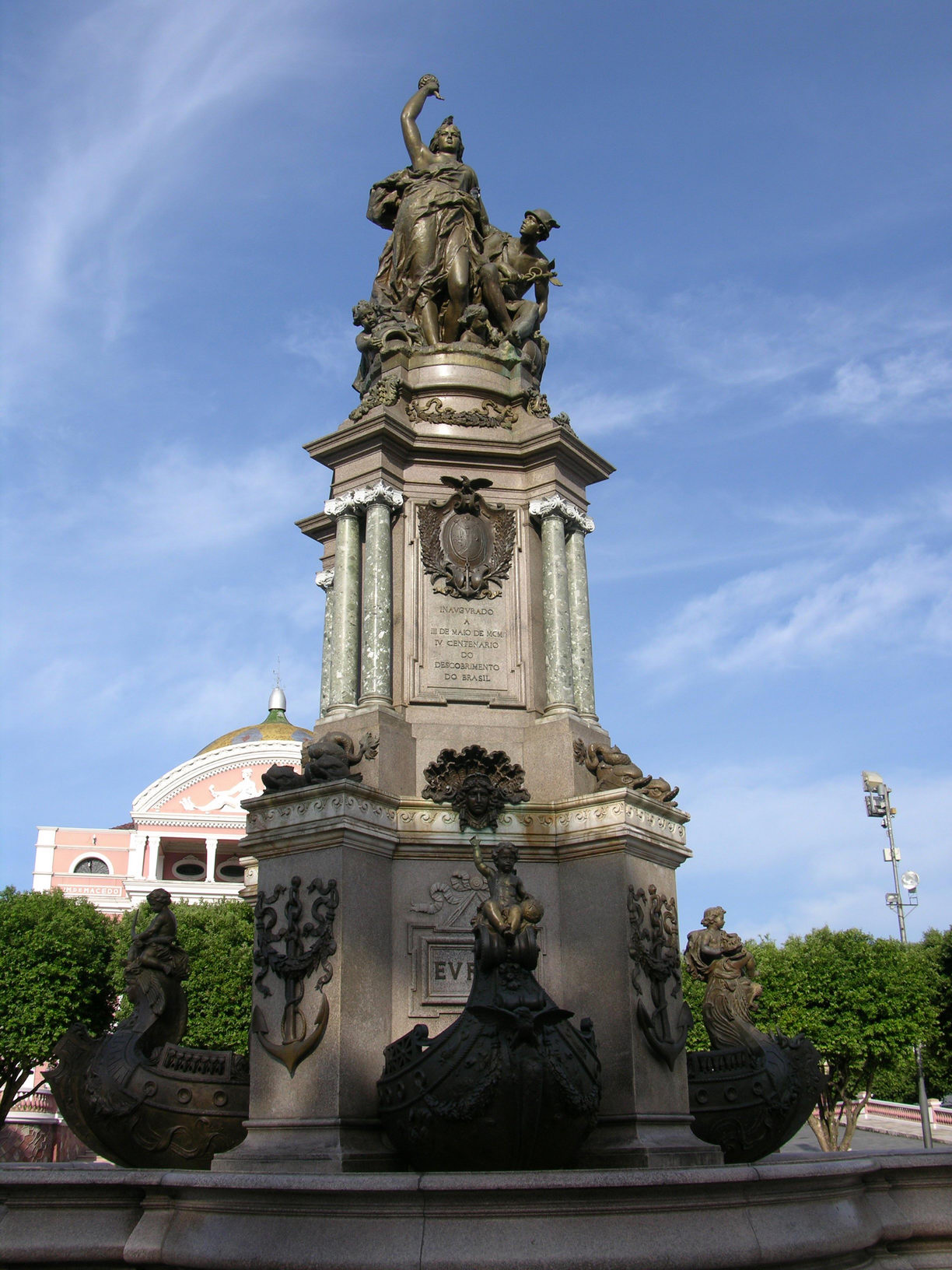
Gentlemen sent their shirts to London to be laundered. Ladies bought the latest fashions in Paris. They ran trams through the city. They built an opera house as well.
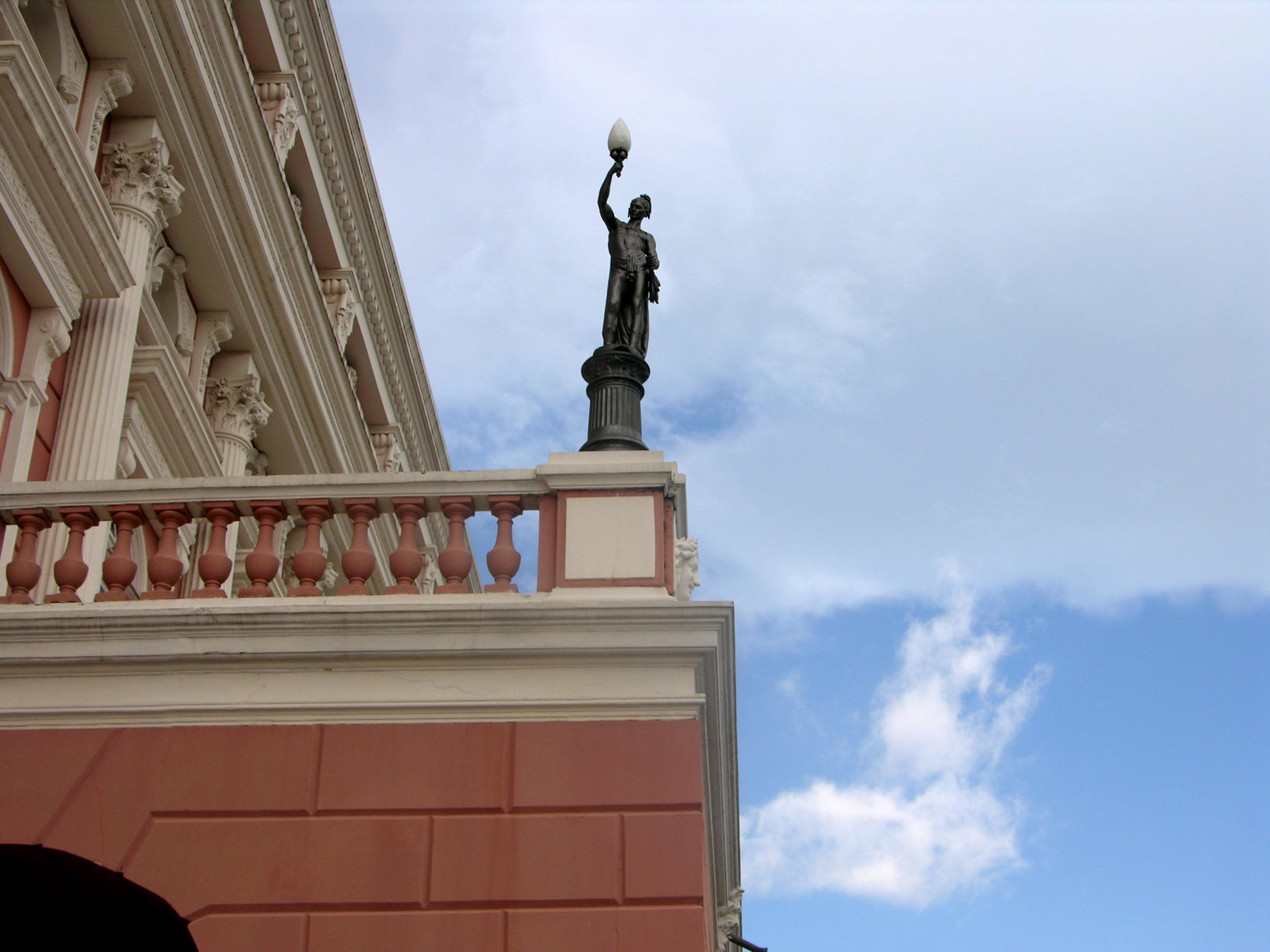
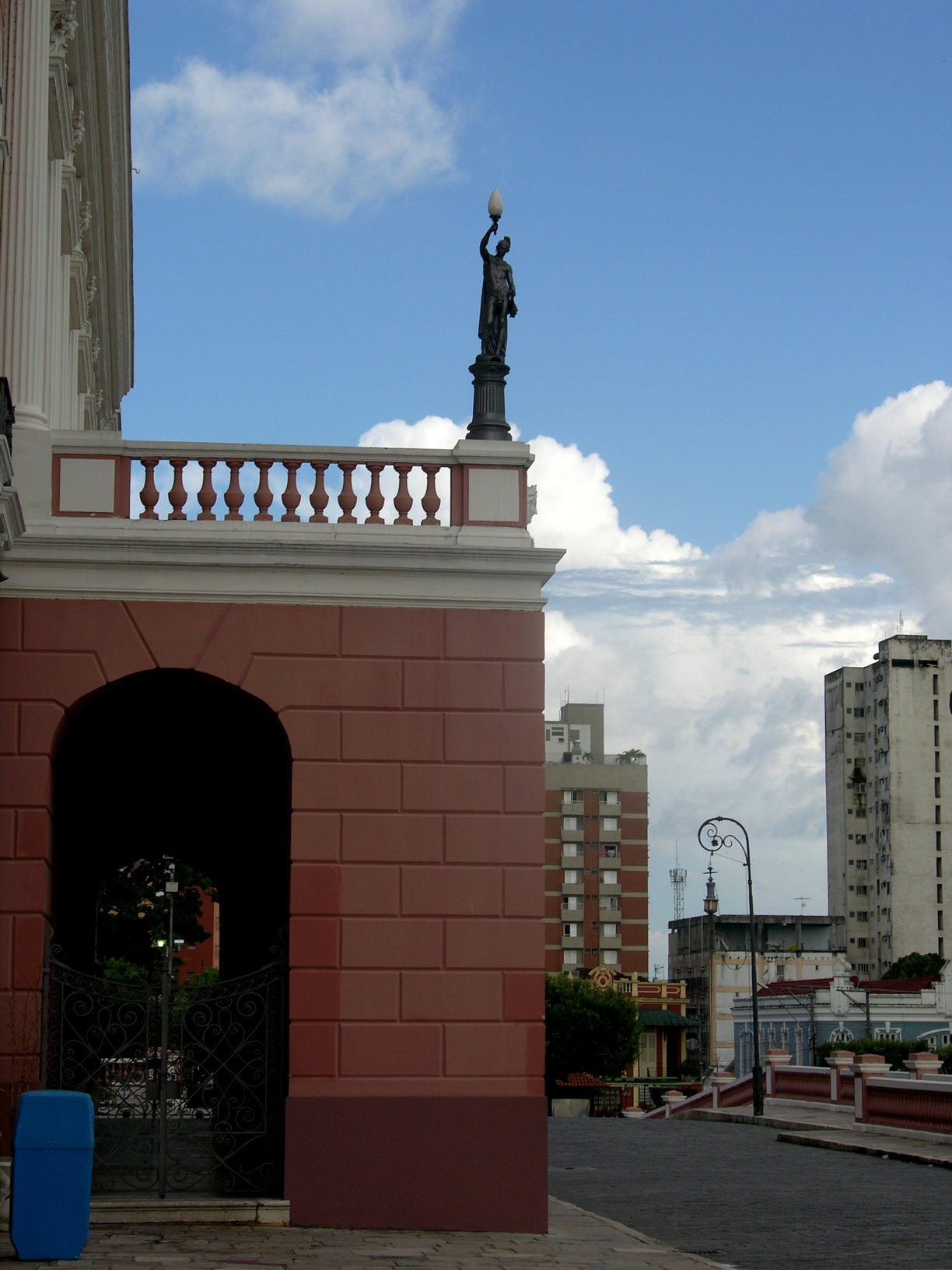
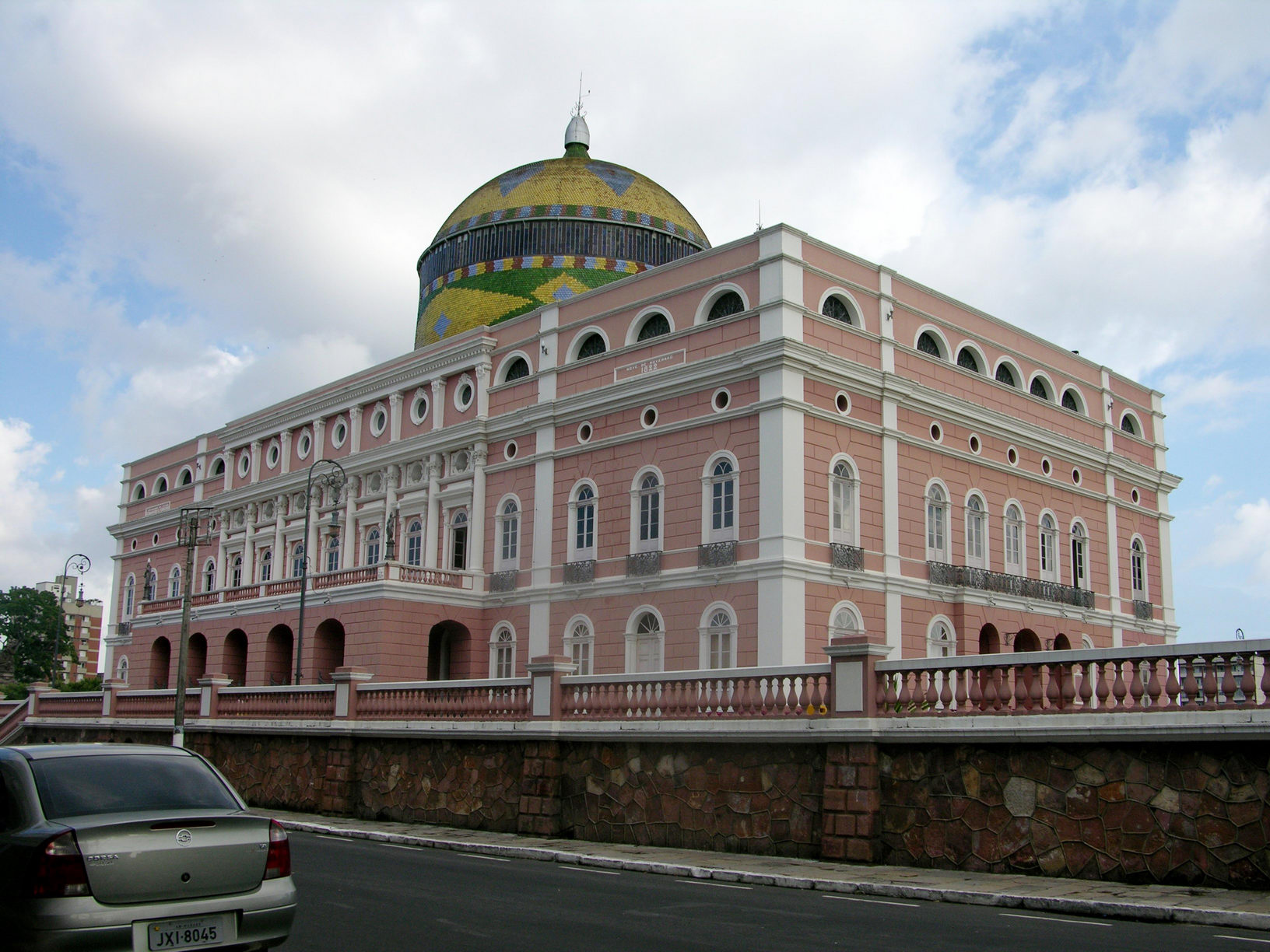
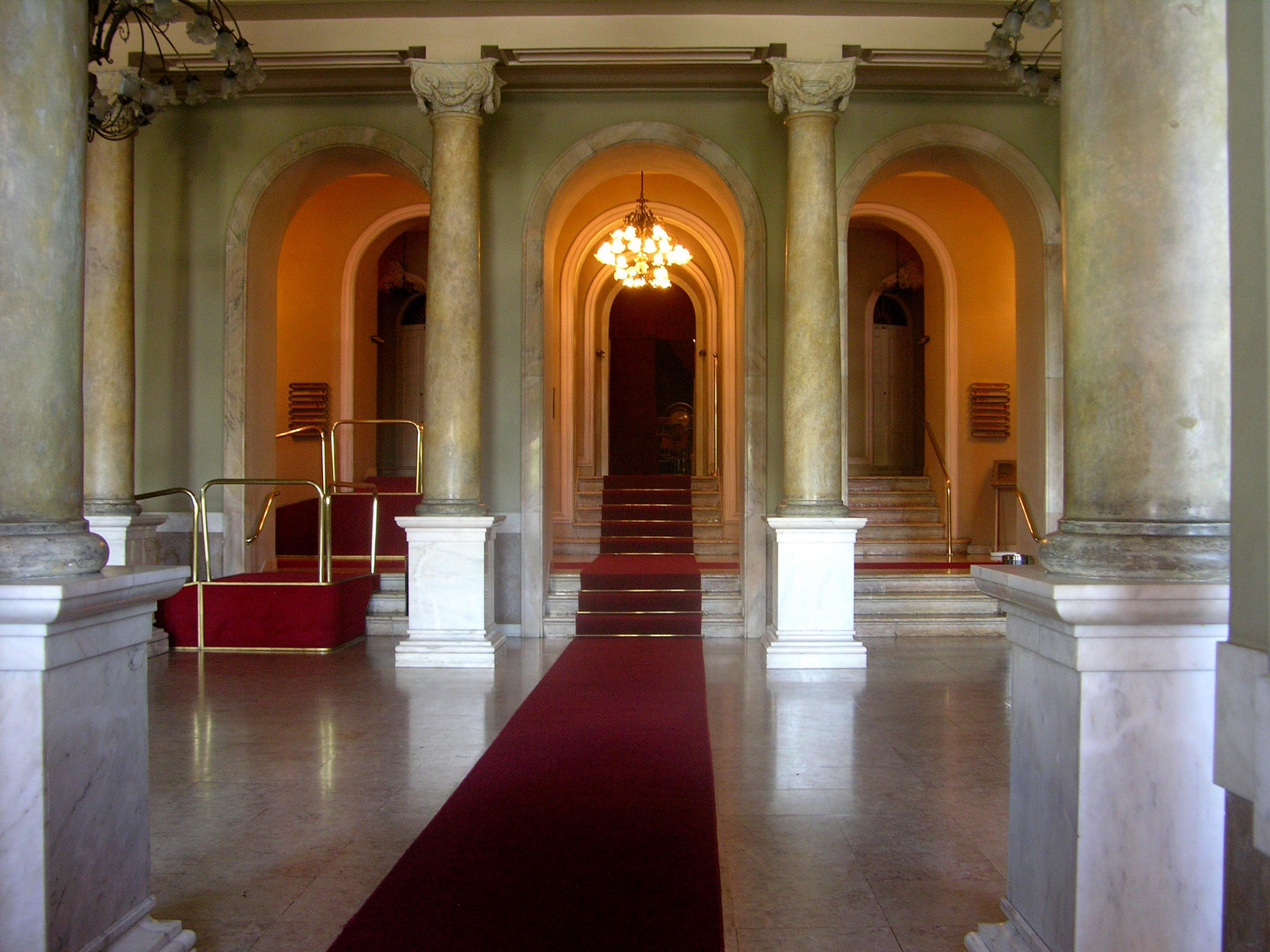
Later it turned out that the trees died from the cuts. At any rate, you couldn't tap a rubber tree more often than once every ten years, or so we understood. The business became less and less profitable. It collapsed when synthetic rubber was developed. The city fell into decay.
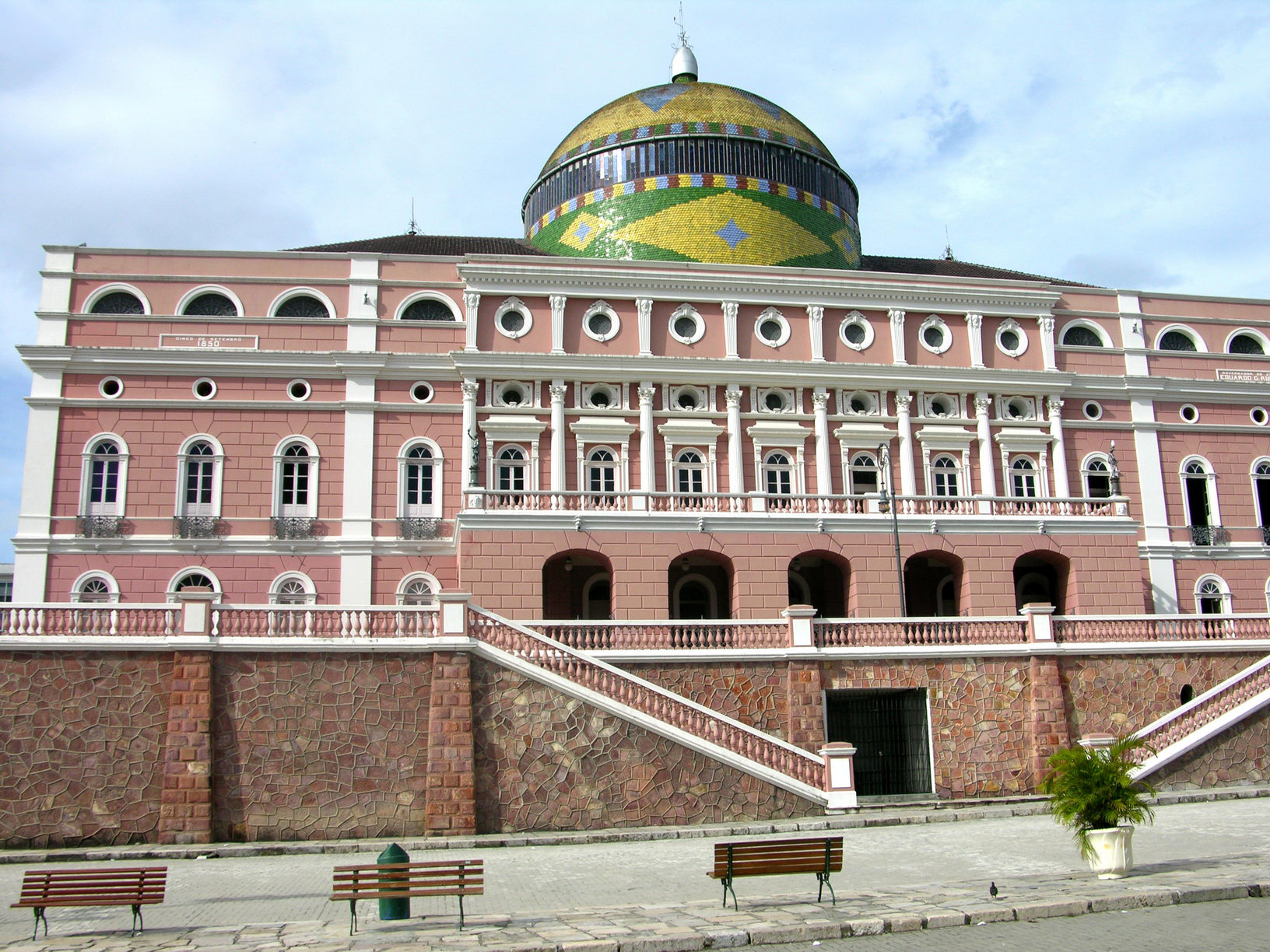
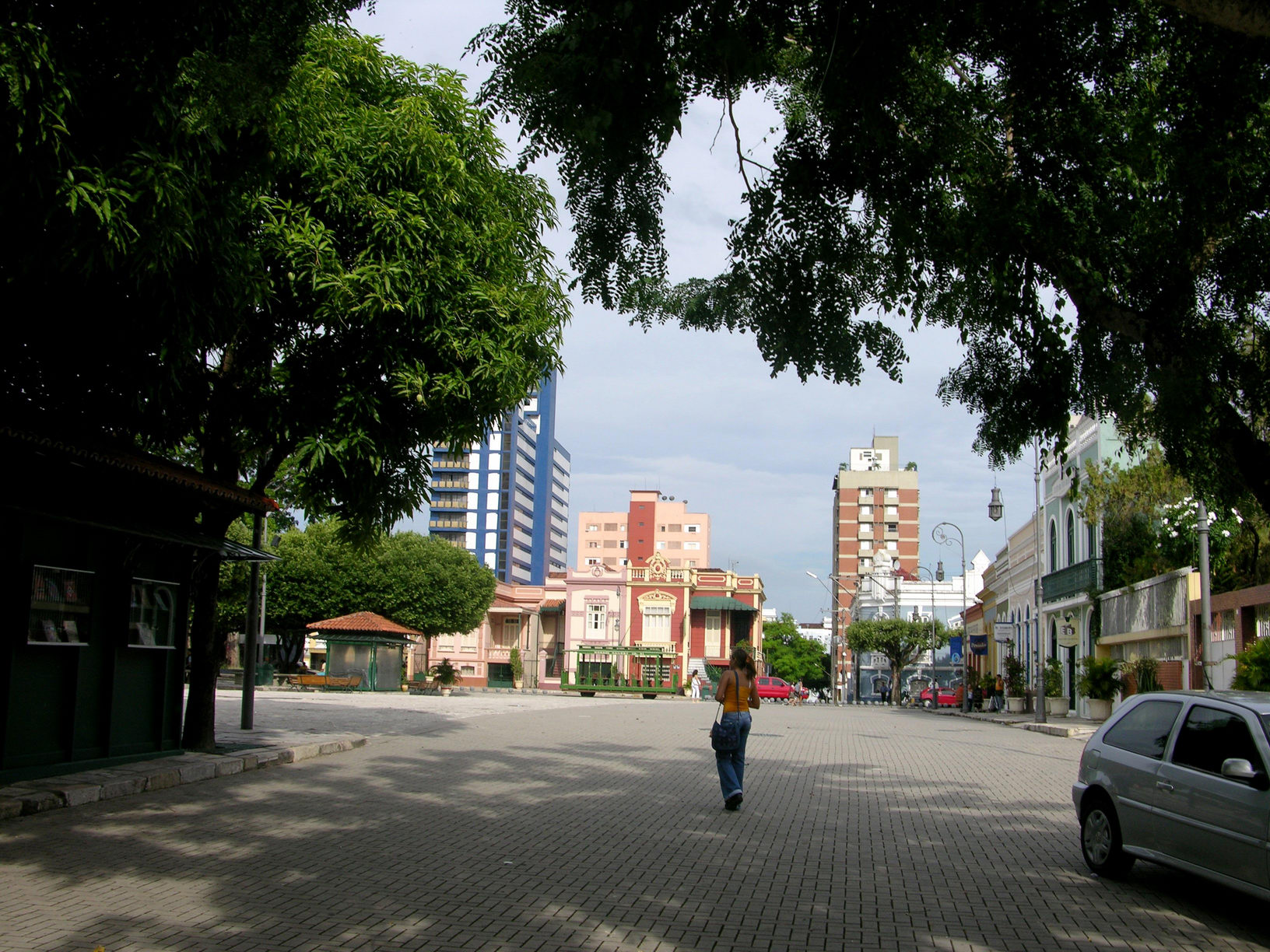
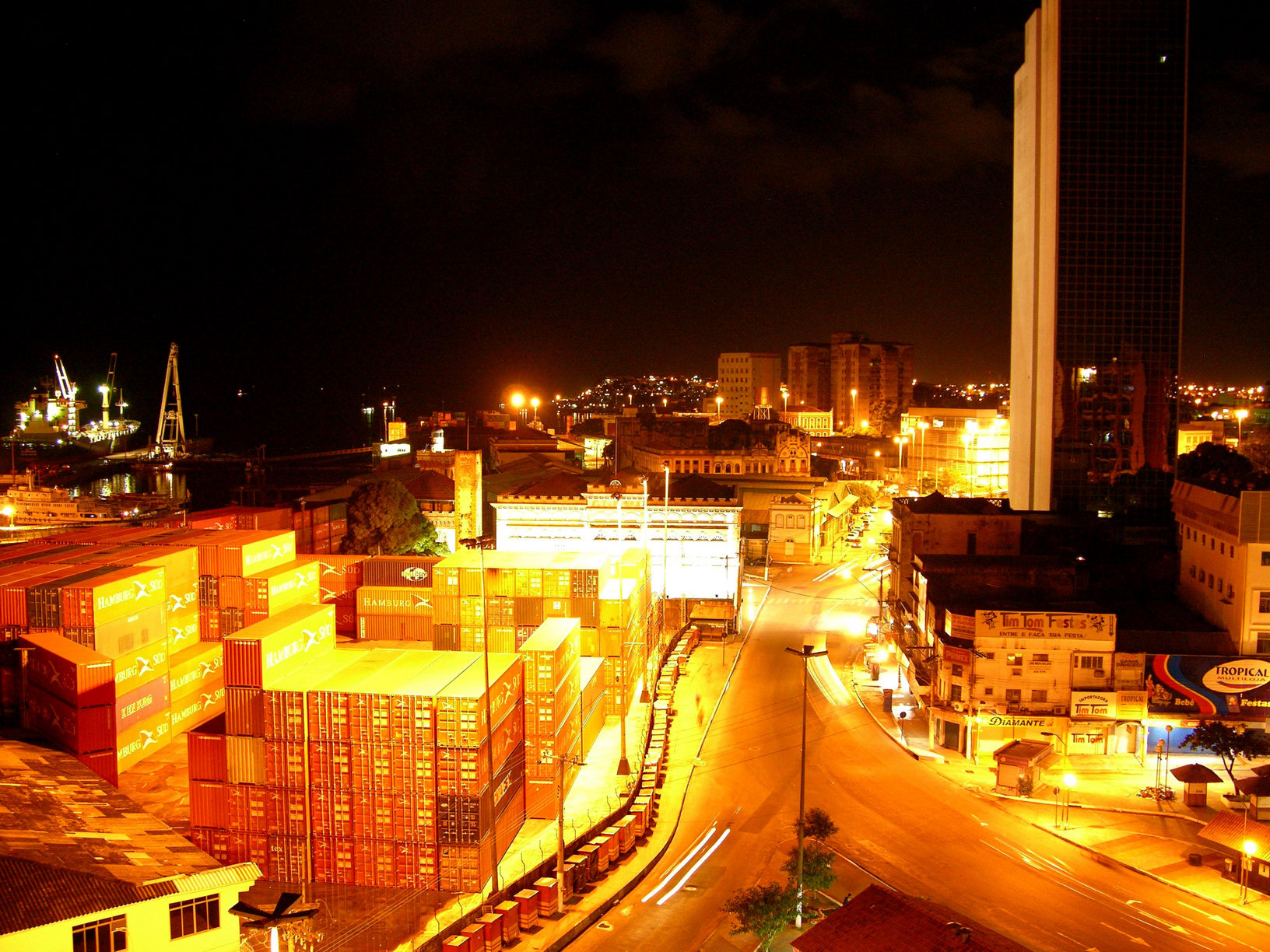
Eventually, in 1967, they had to make it a special tax-free zone and develop high-tech industries. Surprisingly, it helped. The city reached a population of one million and was doing quite well. I'd always thought the climate here was dreadful, a malarial, humid tropical hell. It struck us as more like paradise. Around twenty-five degrees all year, dry air, no mosquitoes. Magnificent beaches on the clear river with five-star hotels.
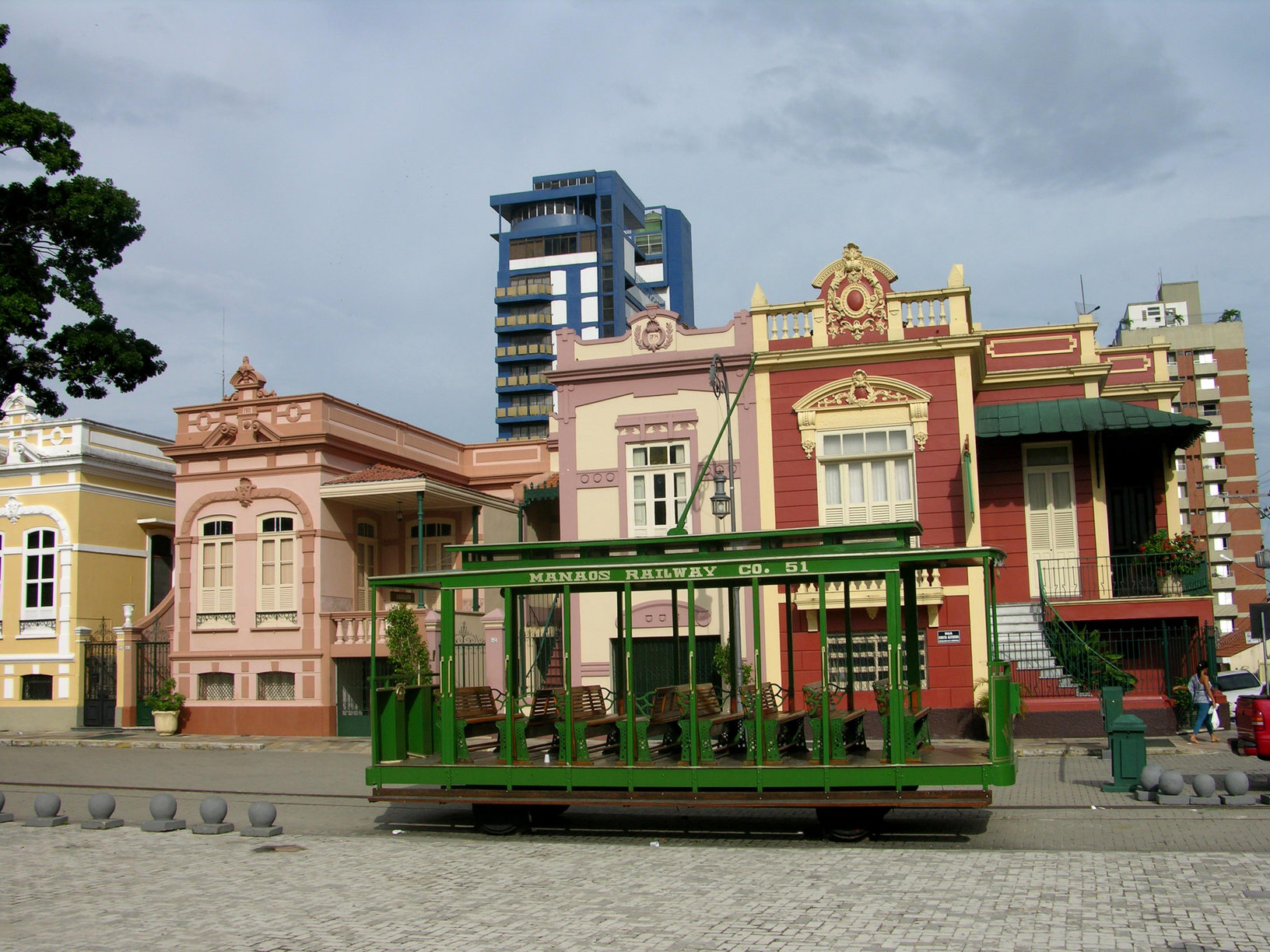
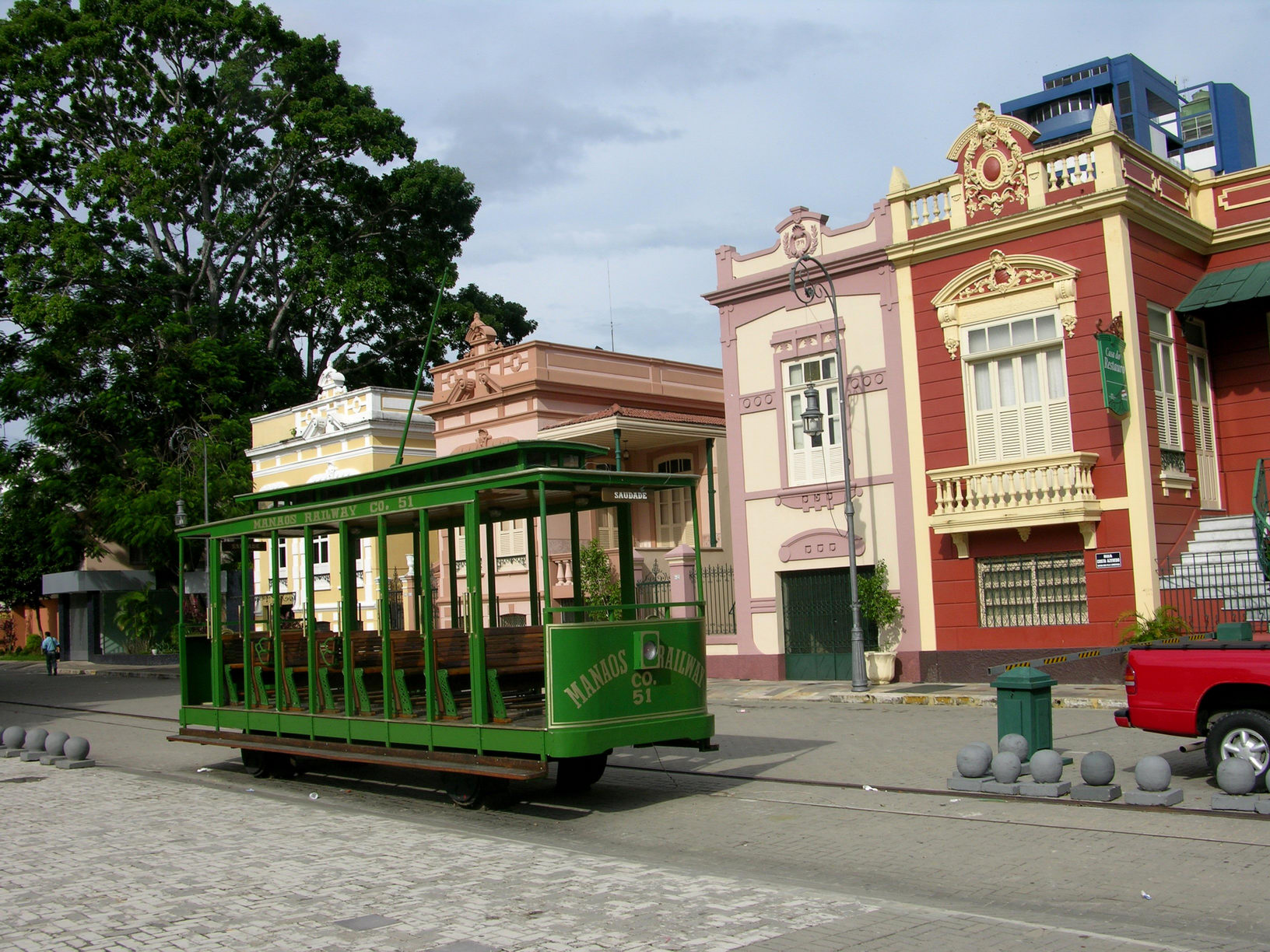
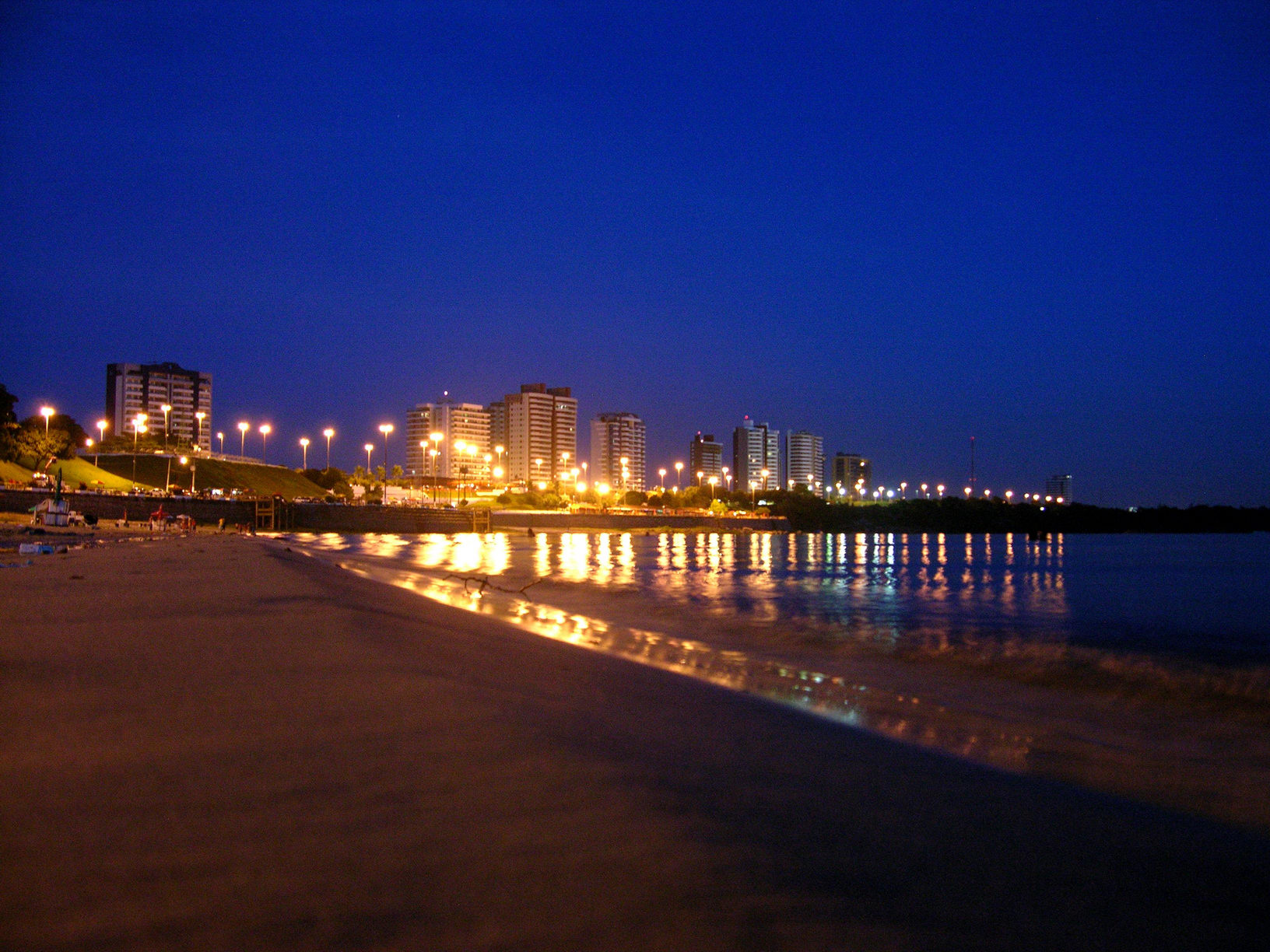
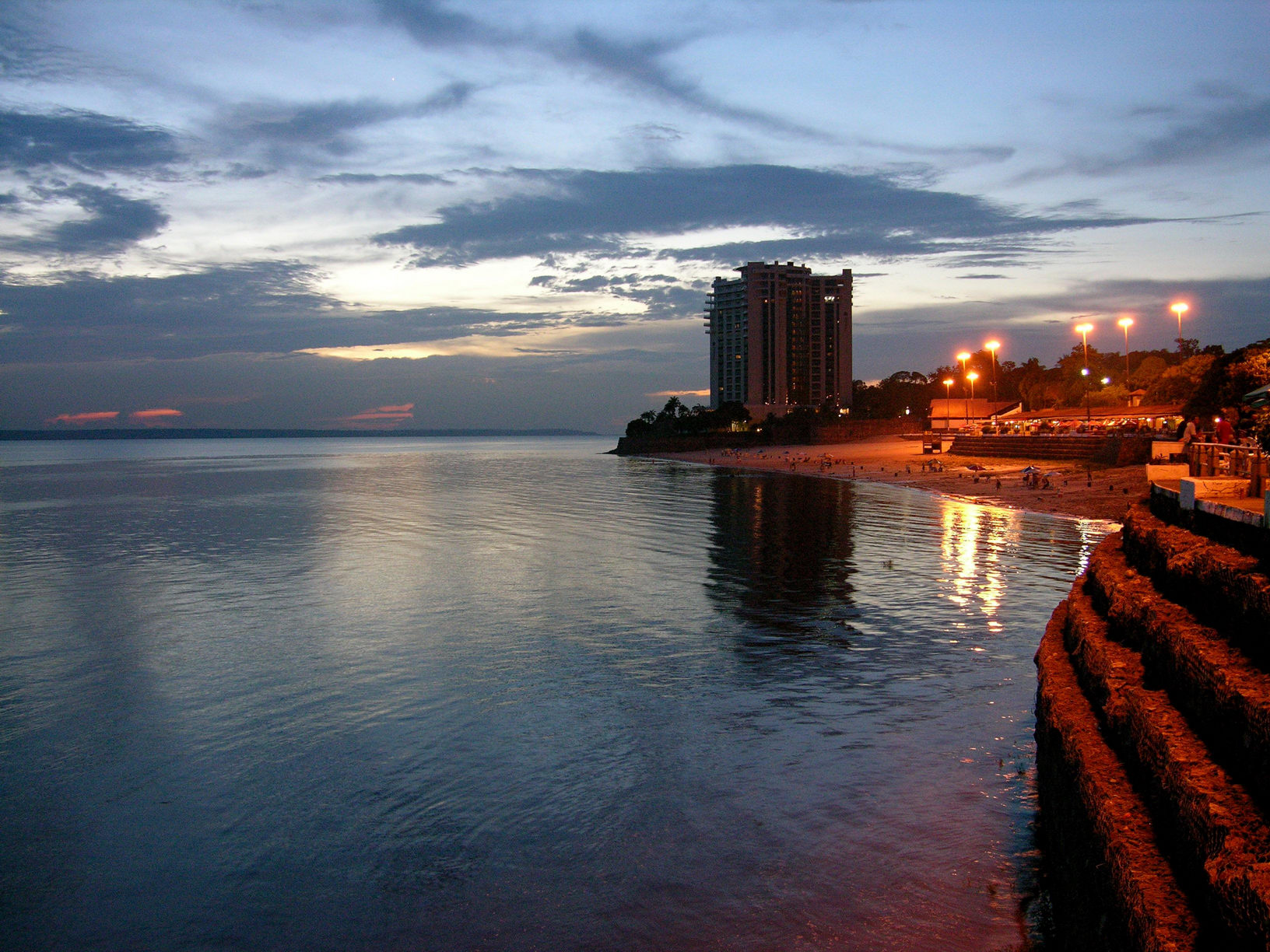
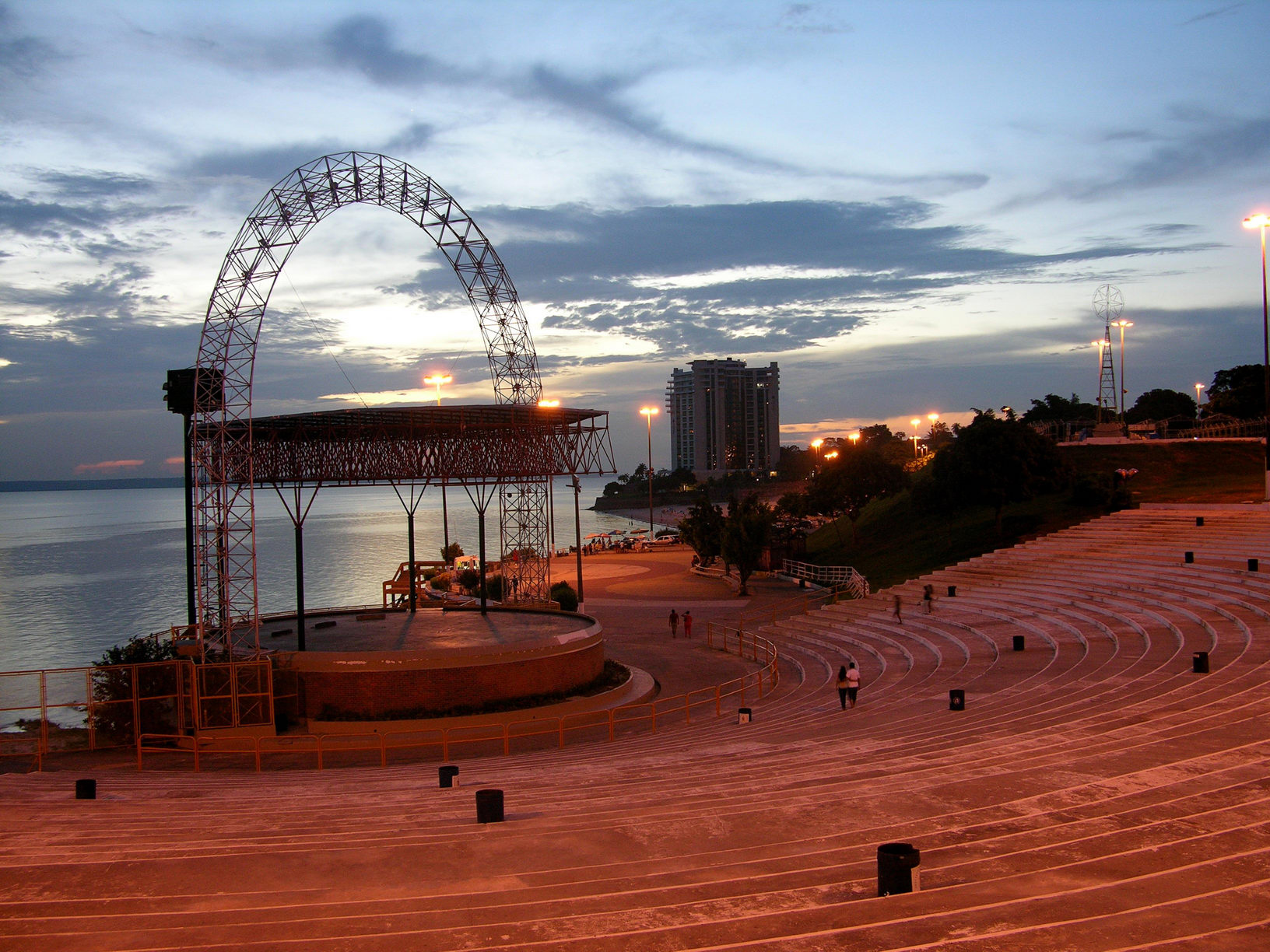
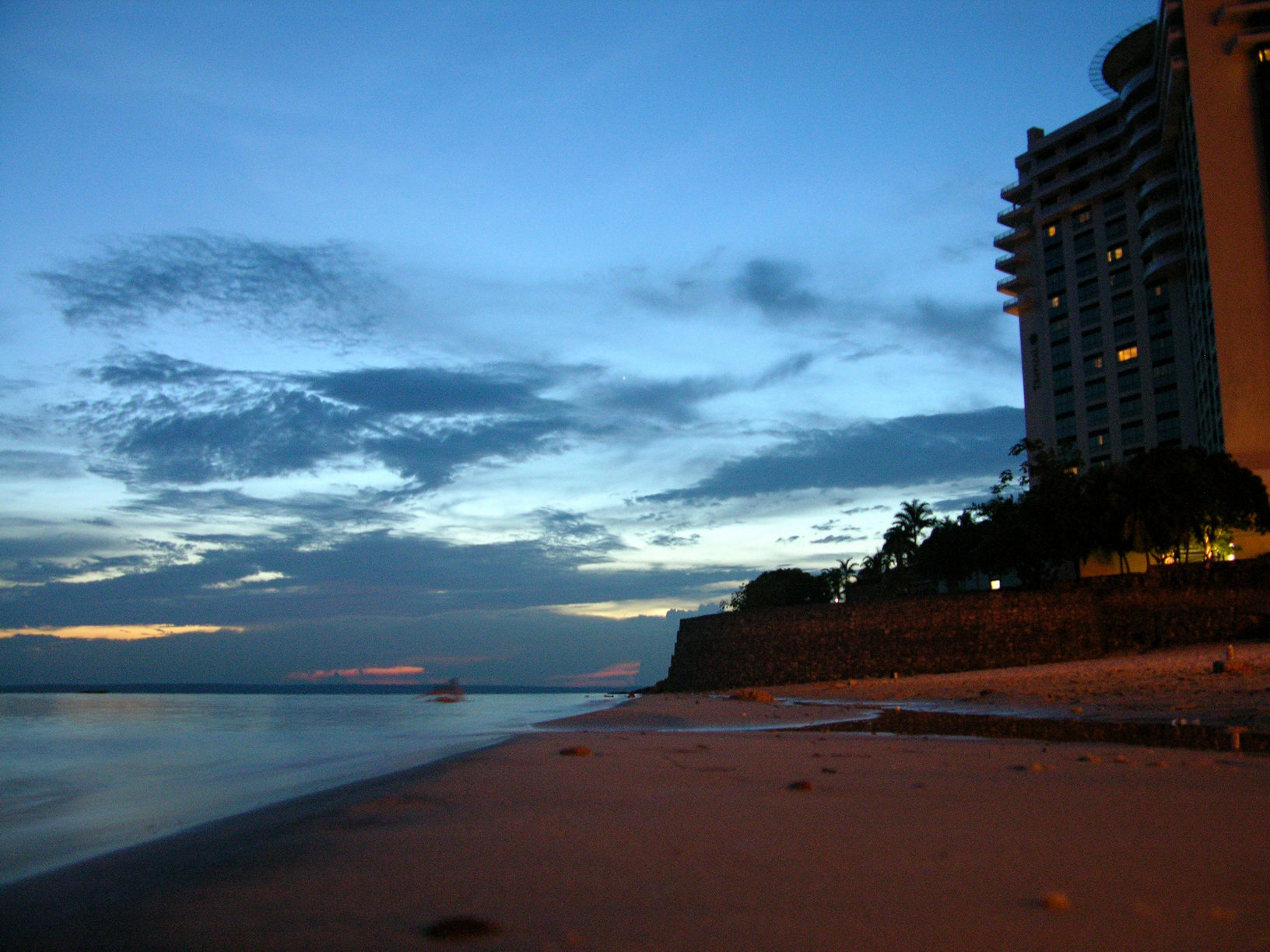
We started Monday by looking for the Venezuelan consulate. We needed a visa. Lonely Planet said they didn't always give one and the criteria were strange, but it cost us nothing to try. It took a long time to find the consulate. It had moved. Not a single local taxi driver had heard of such an establishment. Making yourself understood when you don't know Portuguese is hard. At last, the longed-for door. It was guarded like the most frightening nuclear facility. Barbed wire everywhere. Just one button on an intercom. We pressed it. There came the almost familiar Soviet “What d’you want?” We said we were tourists. Russia and Venezuela, brothers for ever. Chávez and Putin are listening to us. We wanted to see how their proud and exceptionally free country lived.
The reply was straight out of the Soviet Union. We don't issue visas. Go to the capital, or better yet to Moscow. All they could do on the strength of tickets was a non-extendable seventy-two-hour transit visa. Or a work visa, if we had a job offer.
It wasn't to be, then. We were short of time anyway.
We went to hire a car and looked for Avis. That turned out not to be simple either. We found an address in the Yellow Pages, but again the taxi driver had never heard of the street. You wonder what they charge all that money for.
When we got to the office, it turned out they closed at twelve and we were too late. We found some fellow who told us not to worry about being late: there were no cars anyway. Fair enough. Why open up, then? Have a cup of tea and go home. Still, because we were regular customers, they drove us to the airport and delivered us into the hands of their competitors. The biggest local company, Localiza, rented us a Chevrolet Celta at 149 reais a day.
Now we were free, except once again we had no cash and no local SIM for the phone.
Money was a problem. We went from bank to bank. Neither they nor their cash machines took foreign cards, and that was that. Half the day went on looking before, at the umpteenth attempt, a machine gave us a wad of money instead of saying “No connection”.
That was it, we were rich. We bought a local TIM SIM without a problem, though it didn't reduce our problems with the phone. At first we thought it was because we were roaming that we couldn't get through to anybody. Only later did we realise nothing was simple in Brazil.
For long-distance calls you need the operator code as well as the country code and area code. A complete triumph of competition and freedom, it turns out. You can always choose who will connect you to the next city. The trouble is that by no means every company has lines to every town. You have to know all of this. Trying one after another takes ages. Brazil has a hundred alternative operators. Worse still, there's plenty of choice but the connection is rotten with all of them. If you don't get through, it doesn't necessarily mean you've got the wrong operator. They may just be busy. What does “No channels available” mean, for instance? There aren't any, or they're all busy right now? After a long struggle with the local telephone system we managed to find this invaluable piece of information:
Dialling +7812… on a GSM phone doesn't work for calls. Text messages go through as usual. To call Russia from a mobile you have to dial 0xx7-812…, where xx is the code of the operator your phone is roaming on. For TIM, for instance, it was 41.
Having sorted out the phone, we went looking for Campingaz. Outdoor shops are everywhere, but it took quite a few stops to find the right cartridges. We also copied the contents of the camera onto discs. All would have been well if the power hadn't gone out in the entire city. That's not to mention that the local experts managed to rename the pictures and change the file dates, so I had to spend a week sorting them out by hand afterwards. By the time we'd dealt with these bits and pieces, it was dark and we still had a pile of things to do the next day.
We had to stay the night.
In the morning we went to DHL. We took the address from an advertisement but ended up at a logistics centre. The kind with a sign that doesn't accept parcels. The customer counter was at the other end of town. Roadworks and traffic jams everywhere.
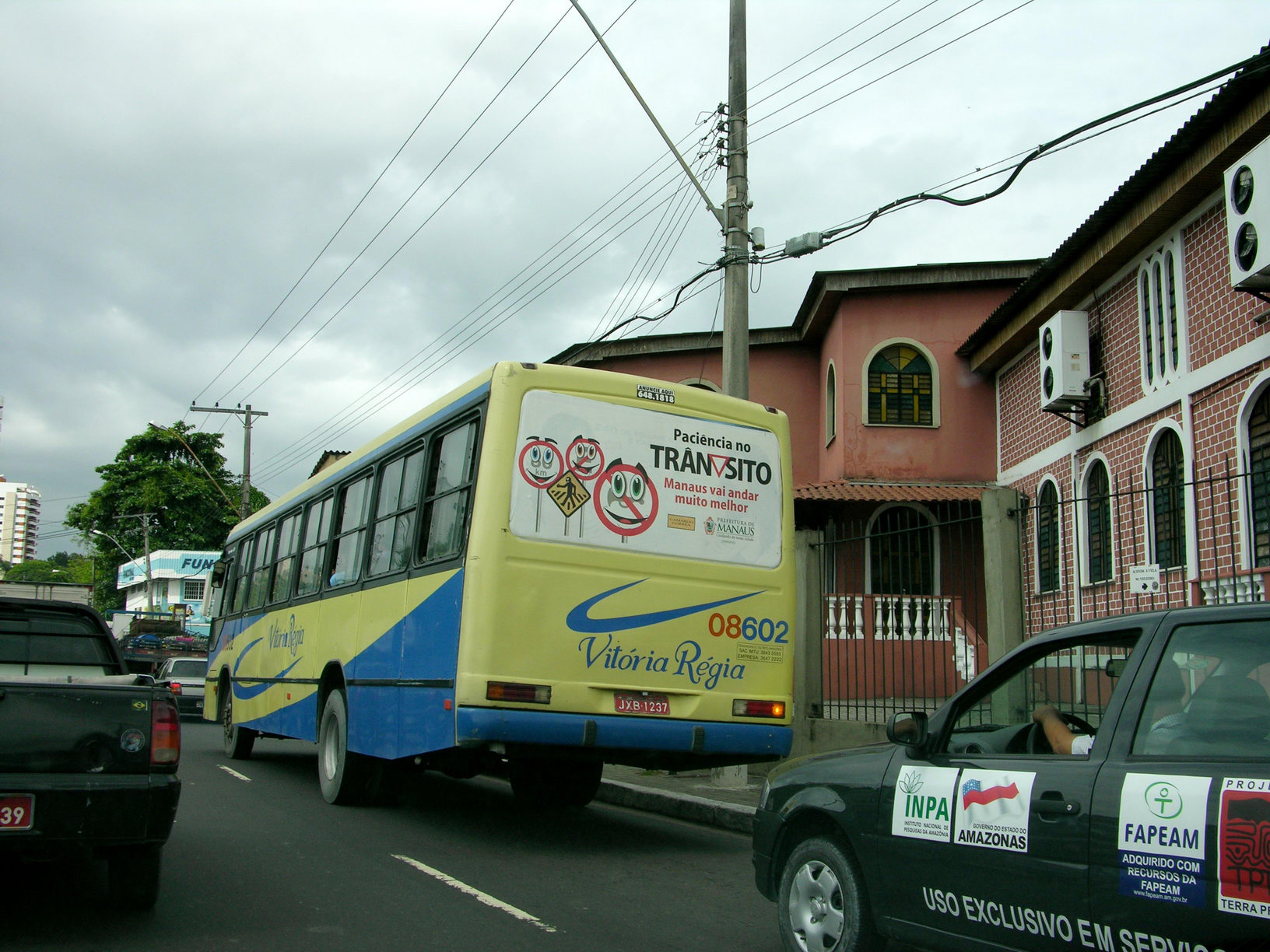
When we got there they told us this was a special economic zone. Customs wouldn't let anything out except documents. We'd have to carry a whole pile of things we didn't need. I so wanted to get rid of them, especially the stuffed piranha. Ah, Brazil doesn't make life easy. That was it: we had to leave town at once, get out into the open, into the pampas.
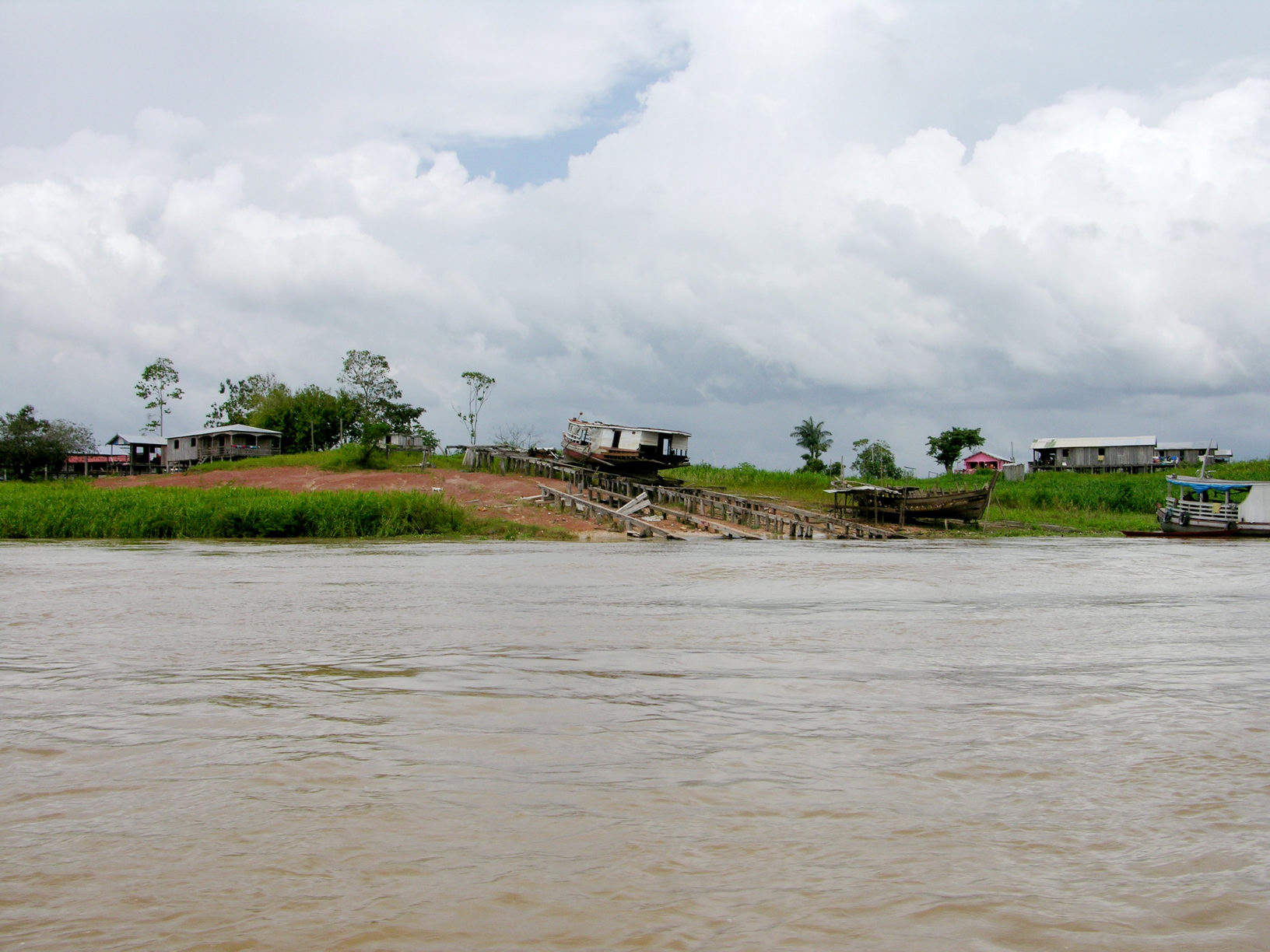
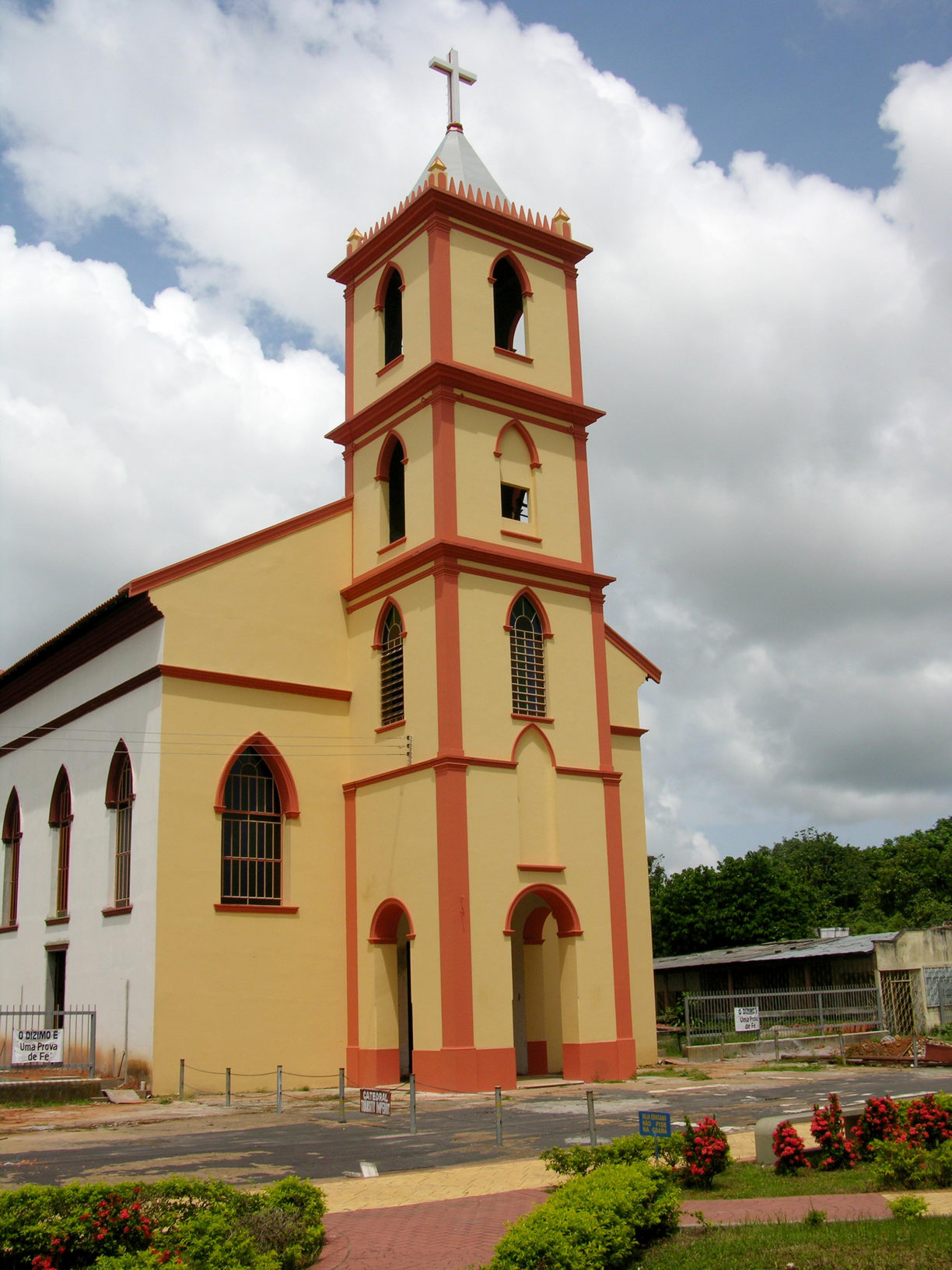
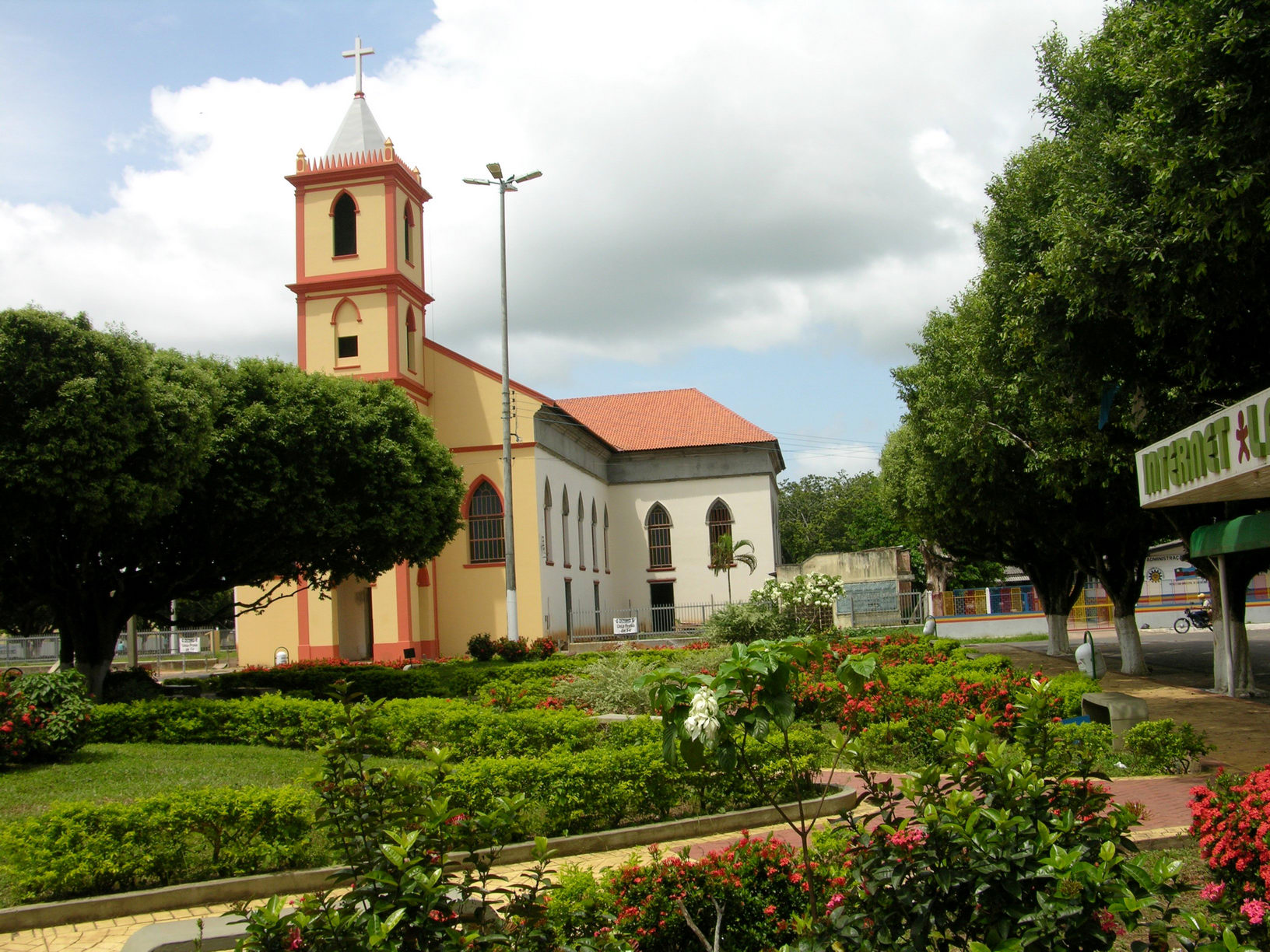
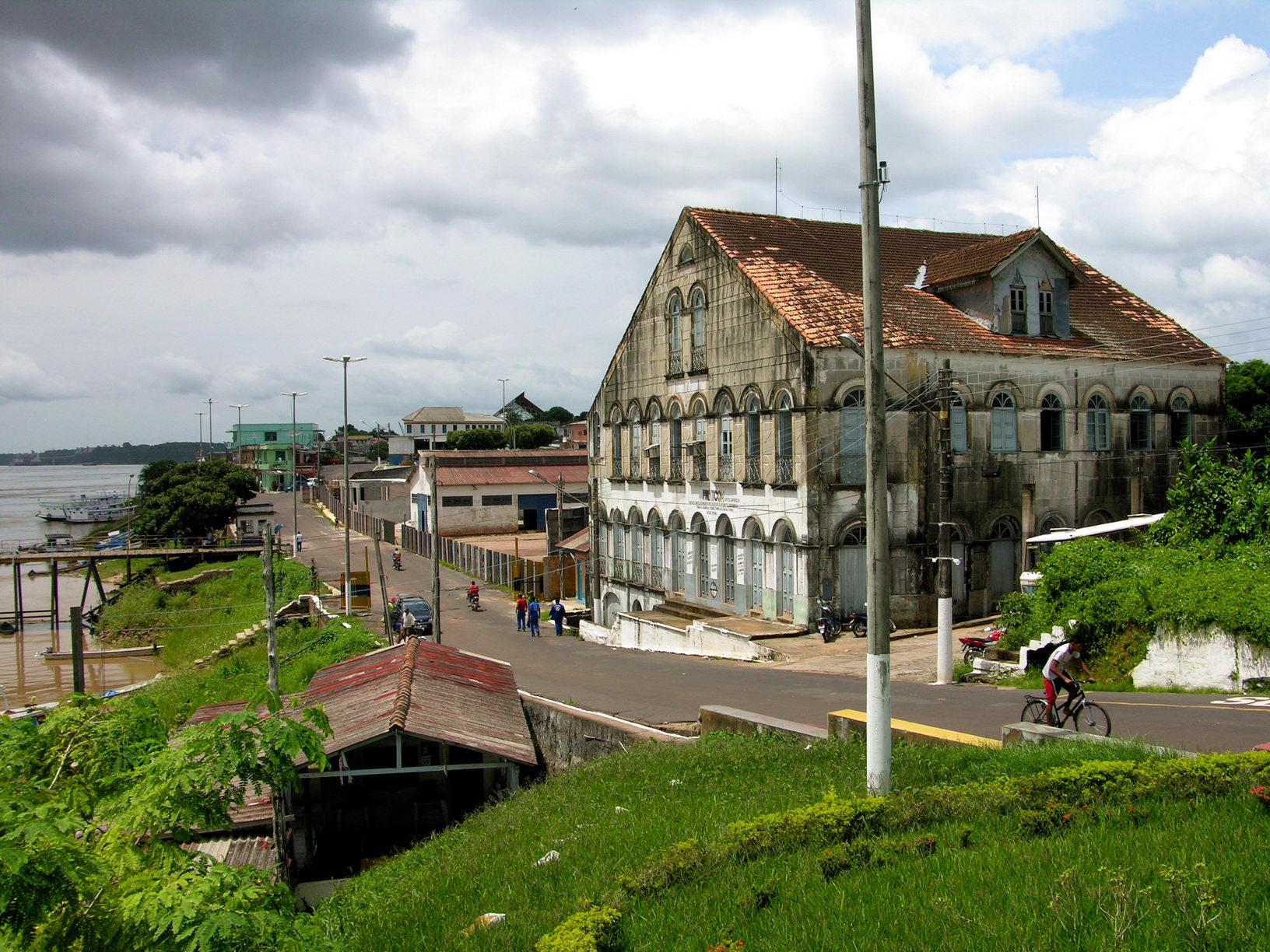
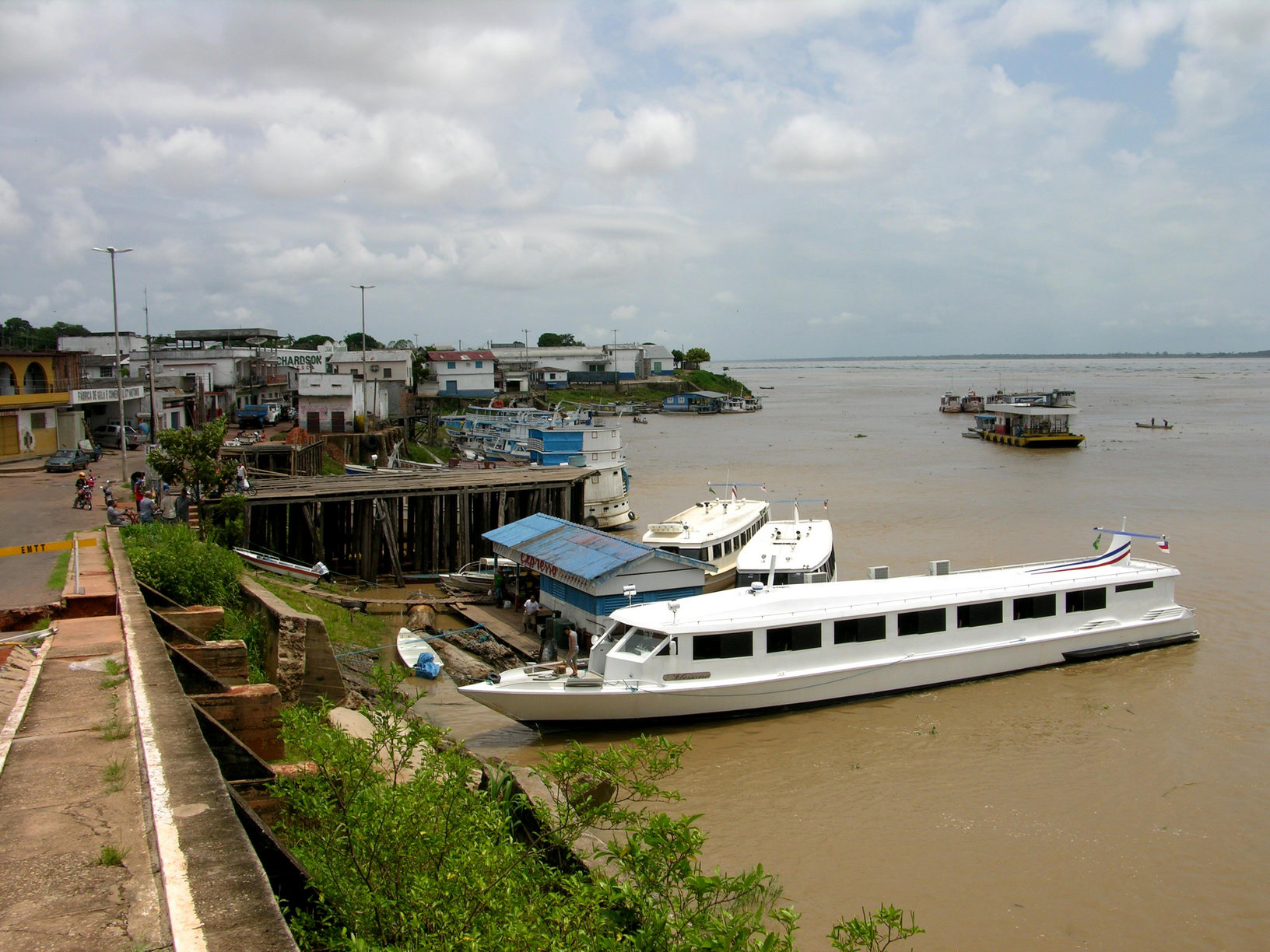
We set off north towards the equator. There weren't any signs, and we took the wrong road. We ended up going west along the Amazon. We decided it was fate and arrived at the little riverside town of Itacoatiara (Itacoatiara), at 3°08.92′S, 58°26.69′W. The Amazon runs very fast here, in a single channel just 1,650 metres wide.
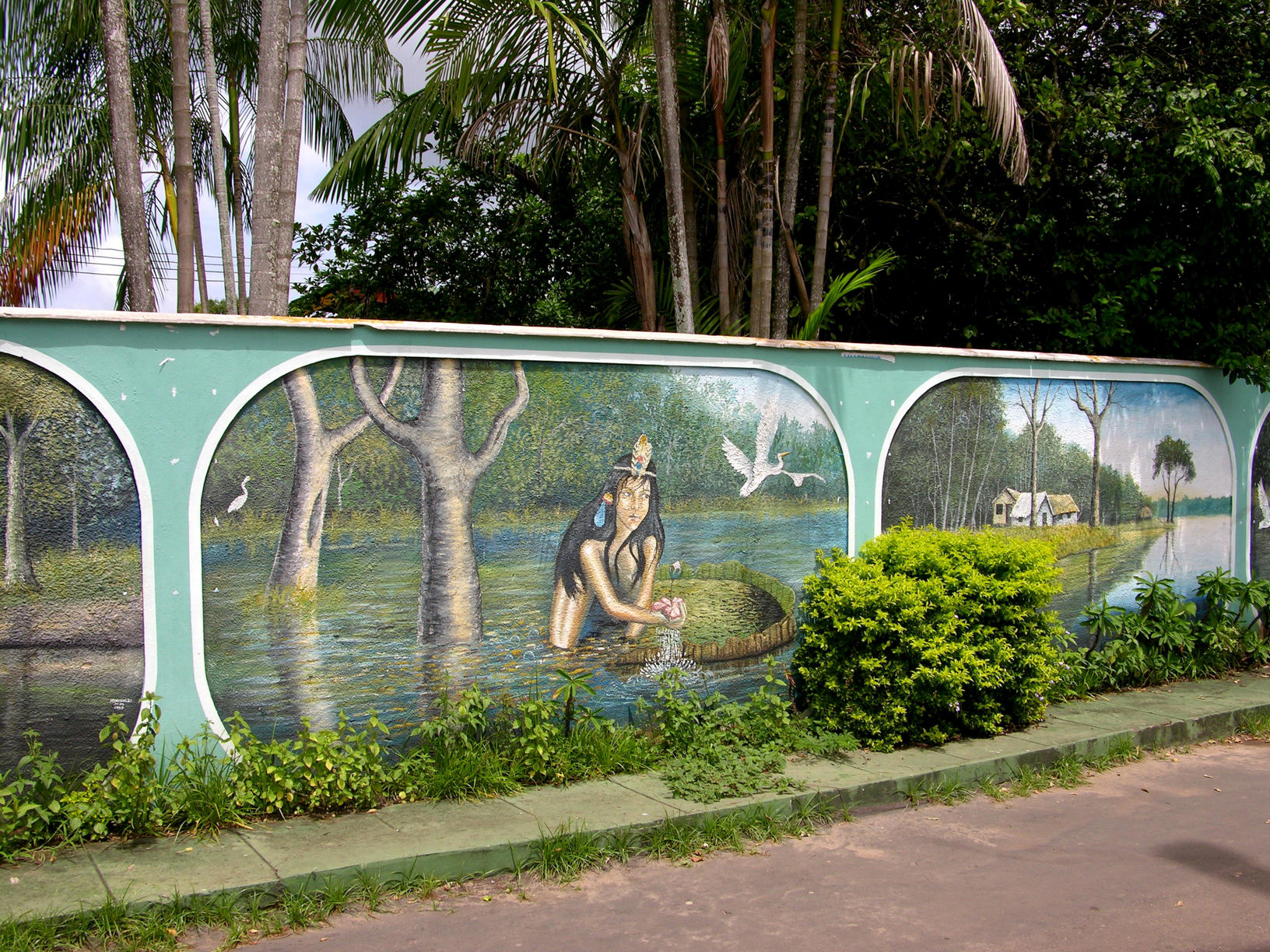
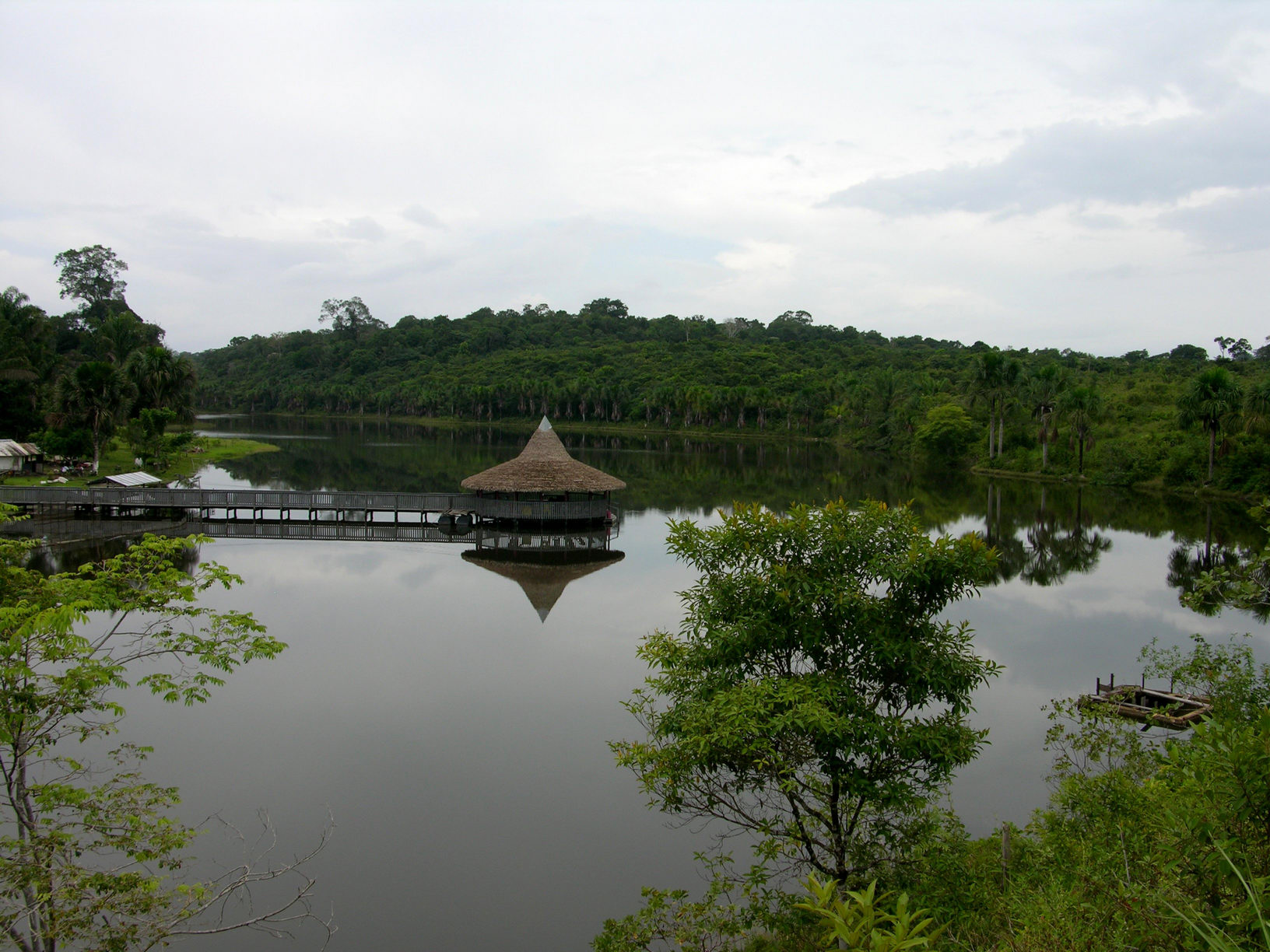
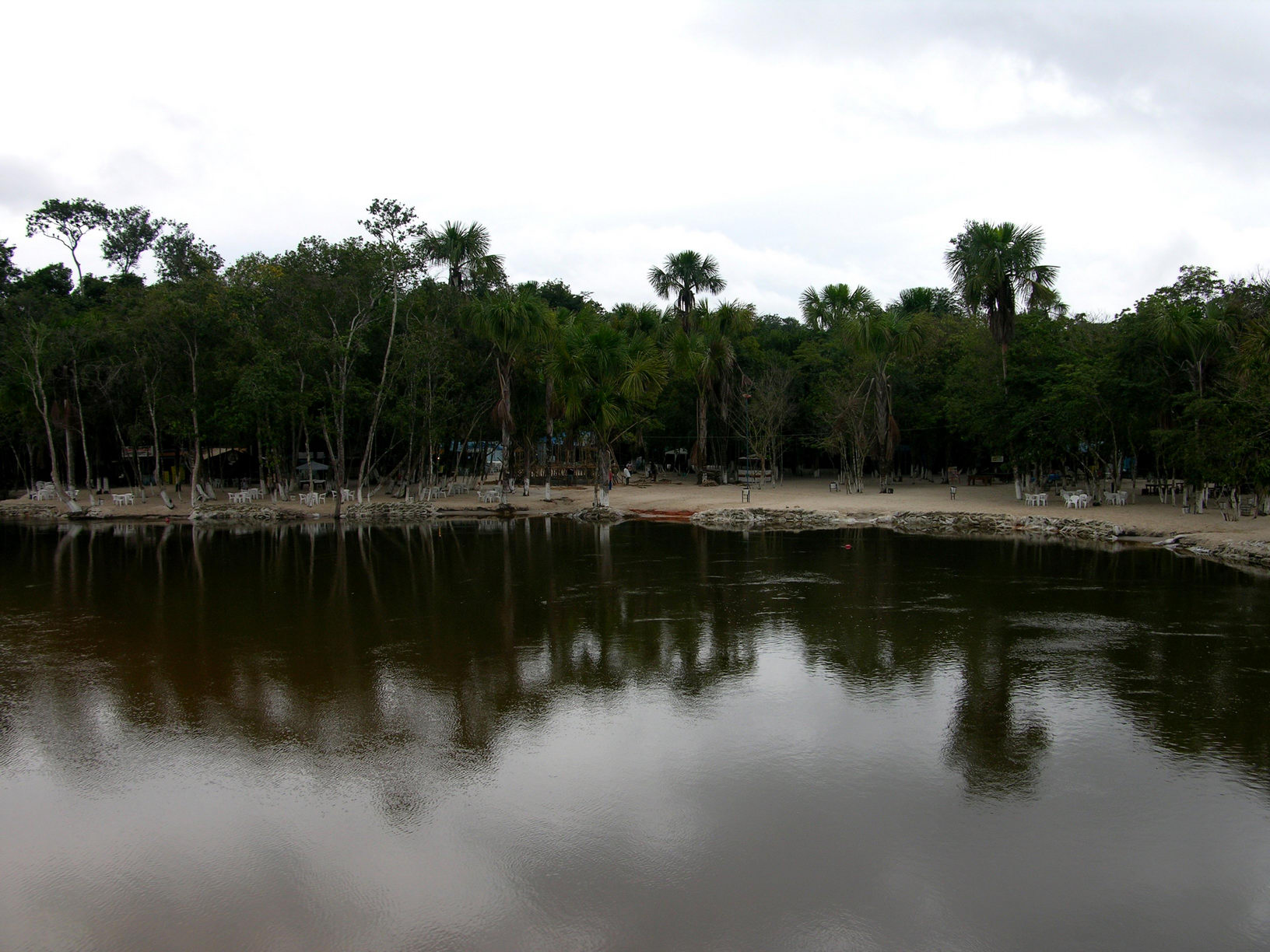
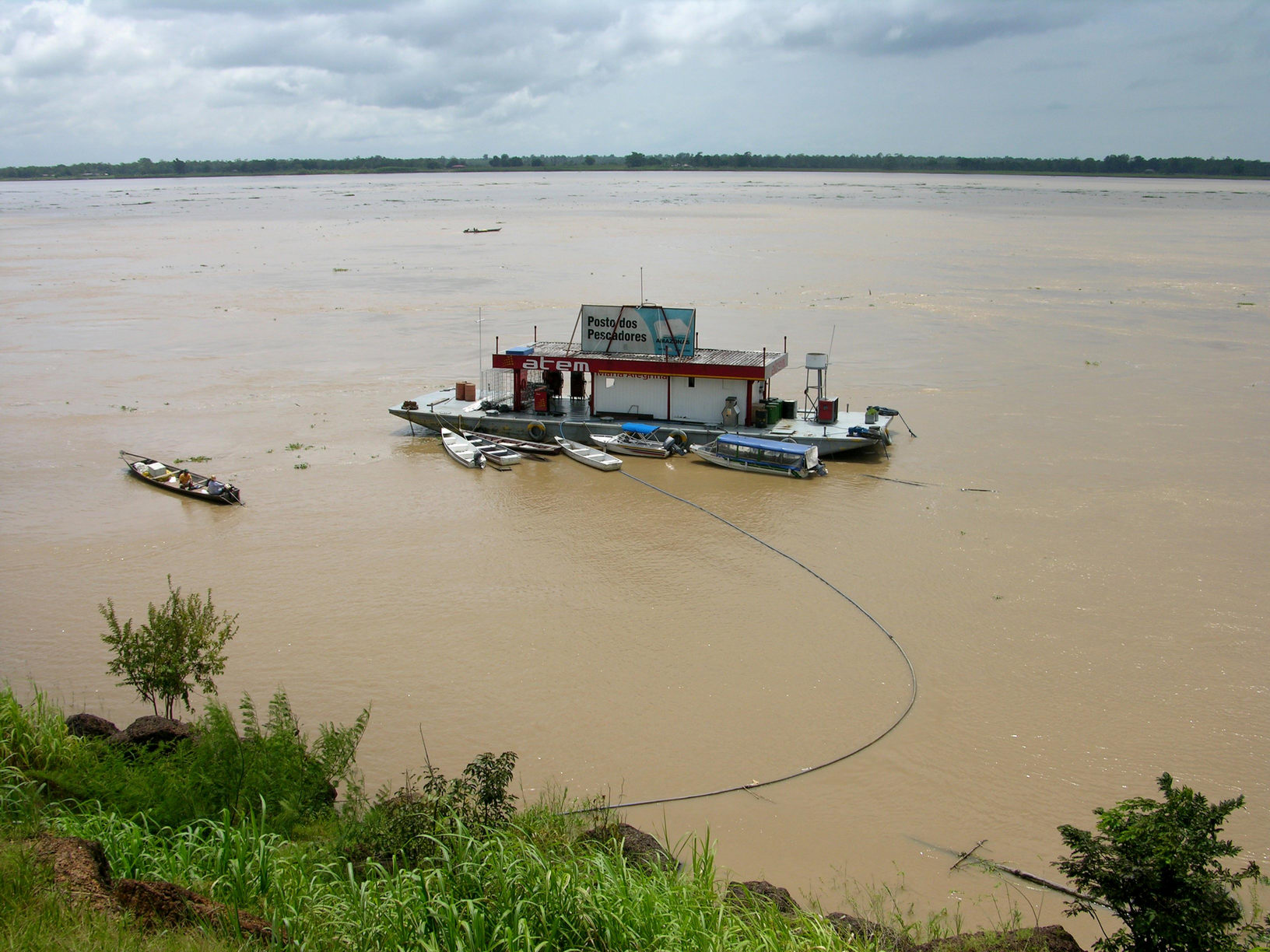
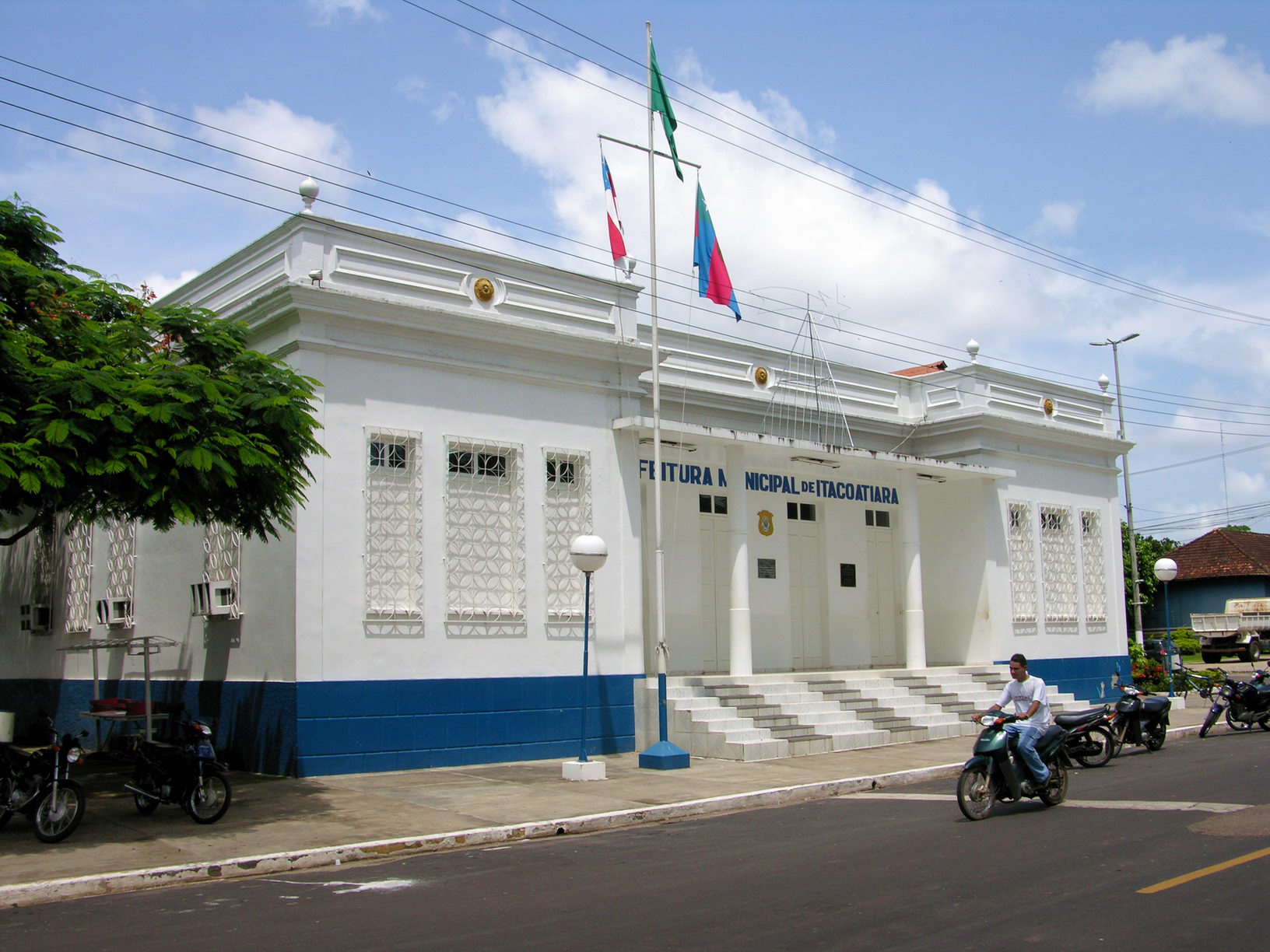
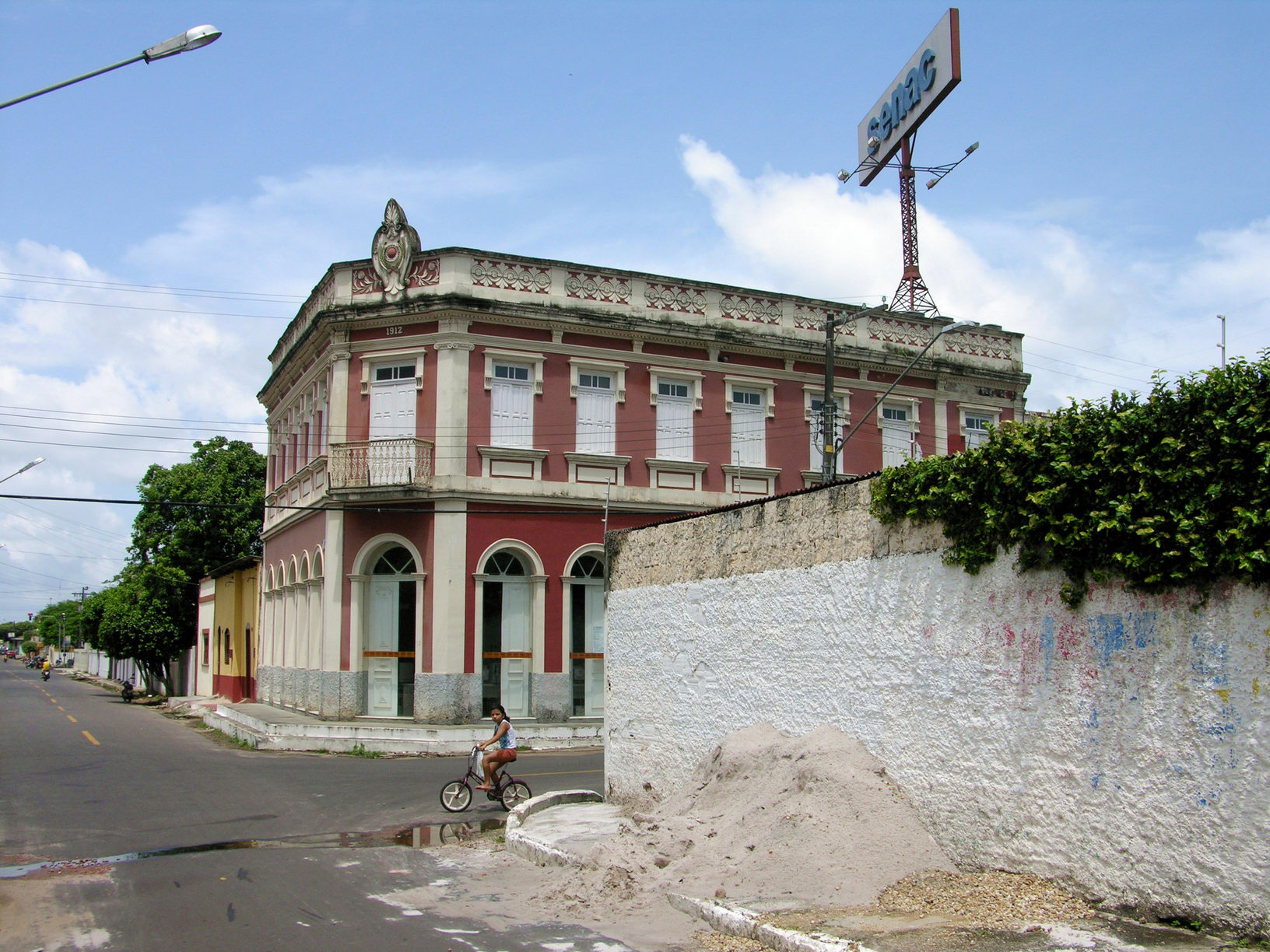
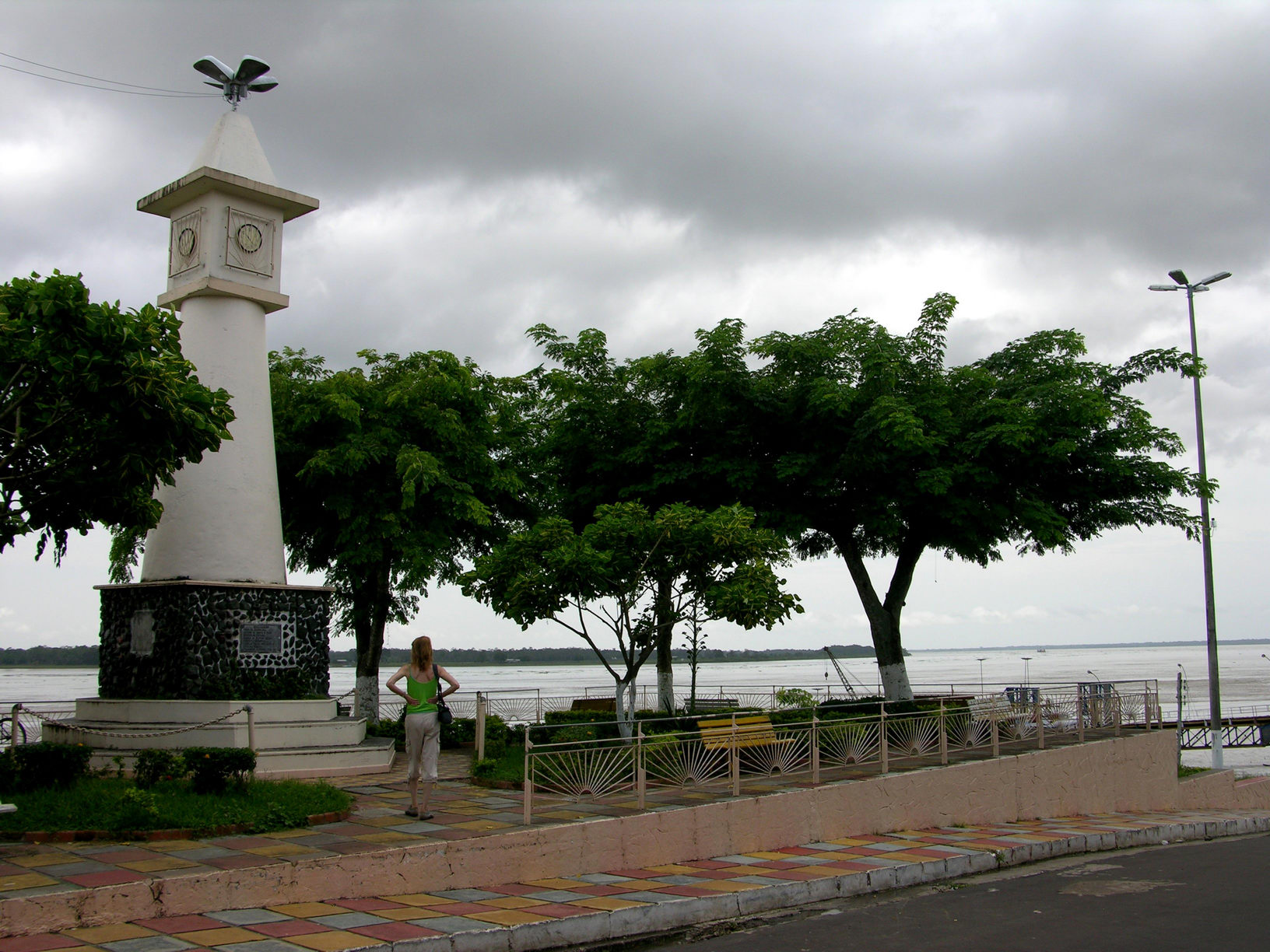
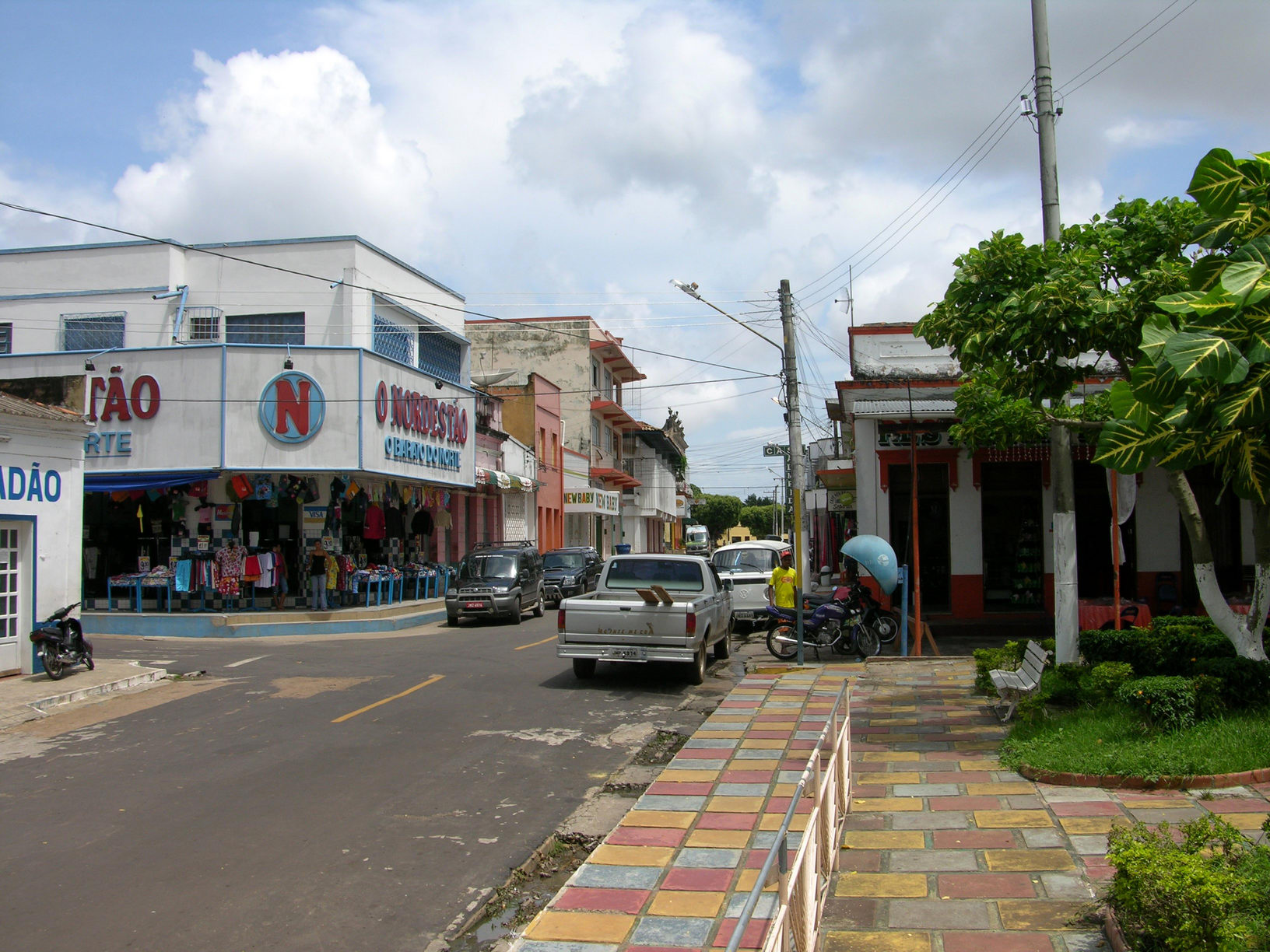
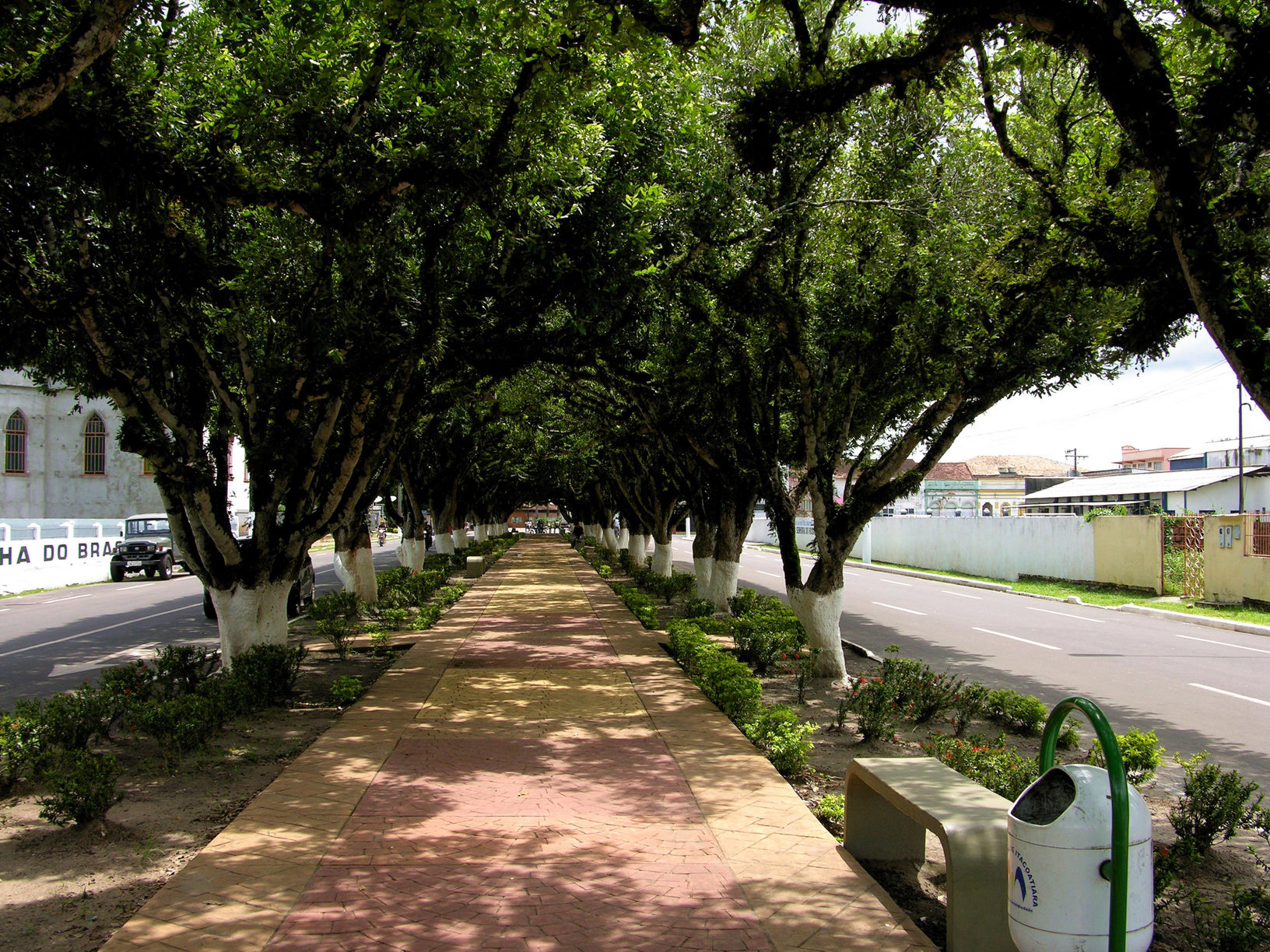
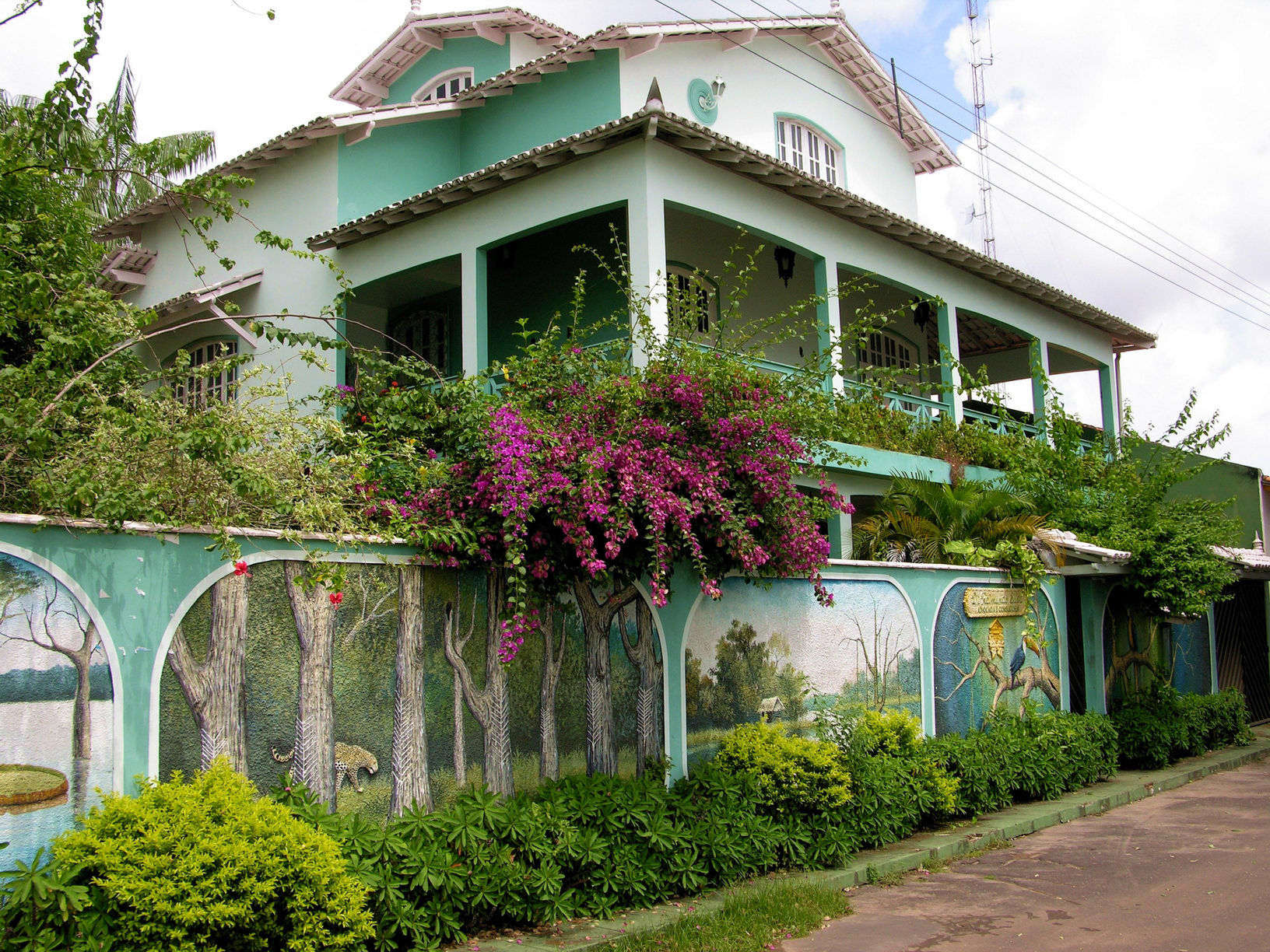
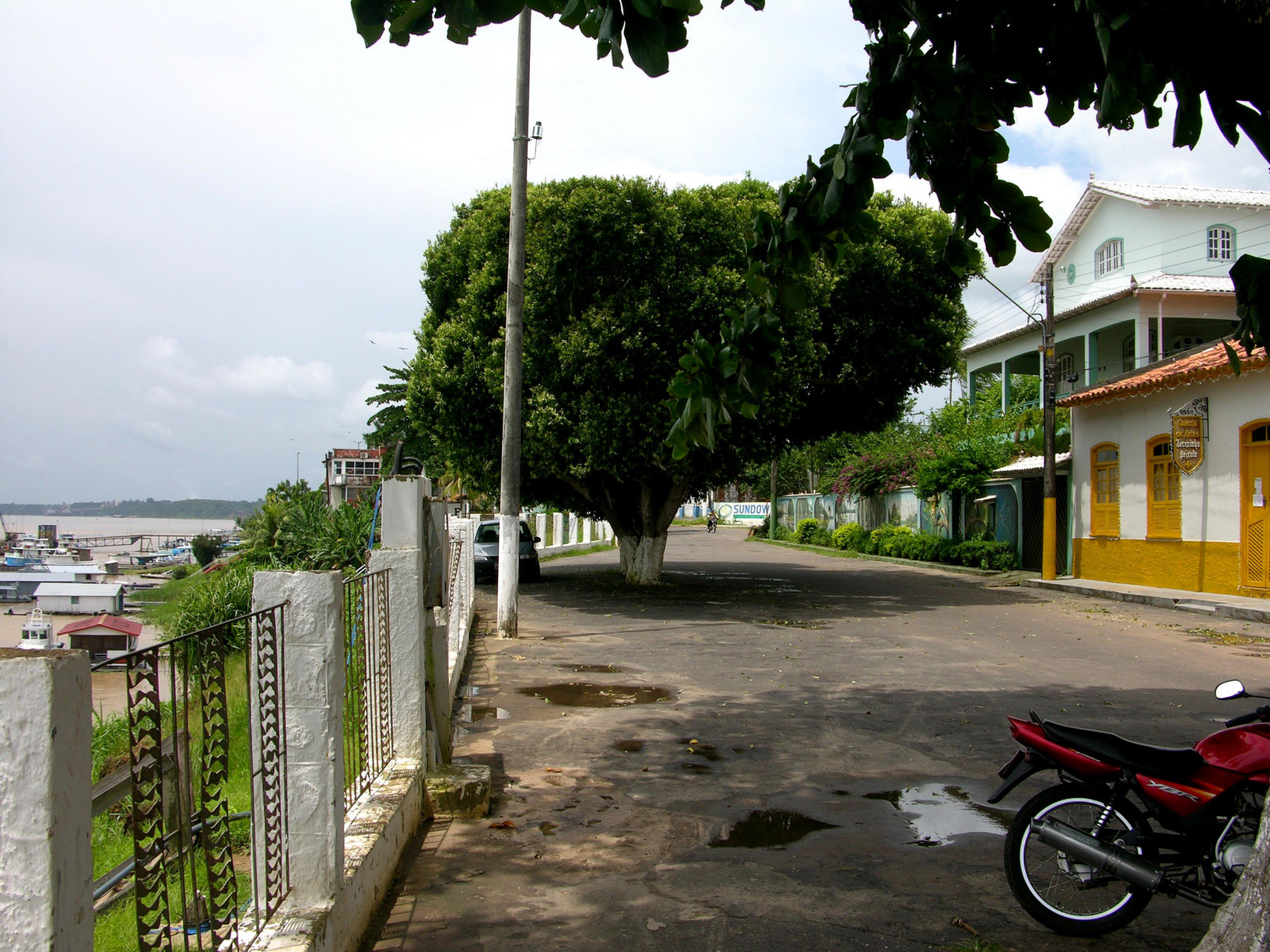
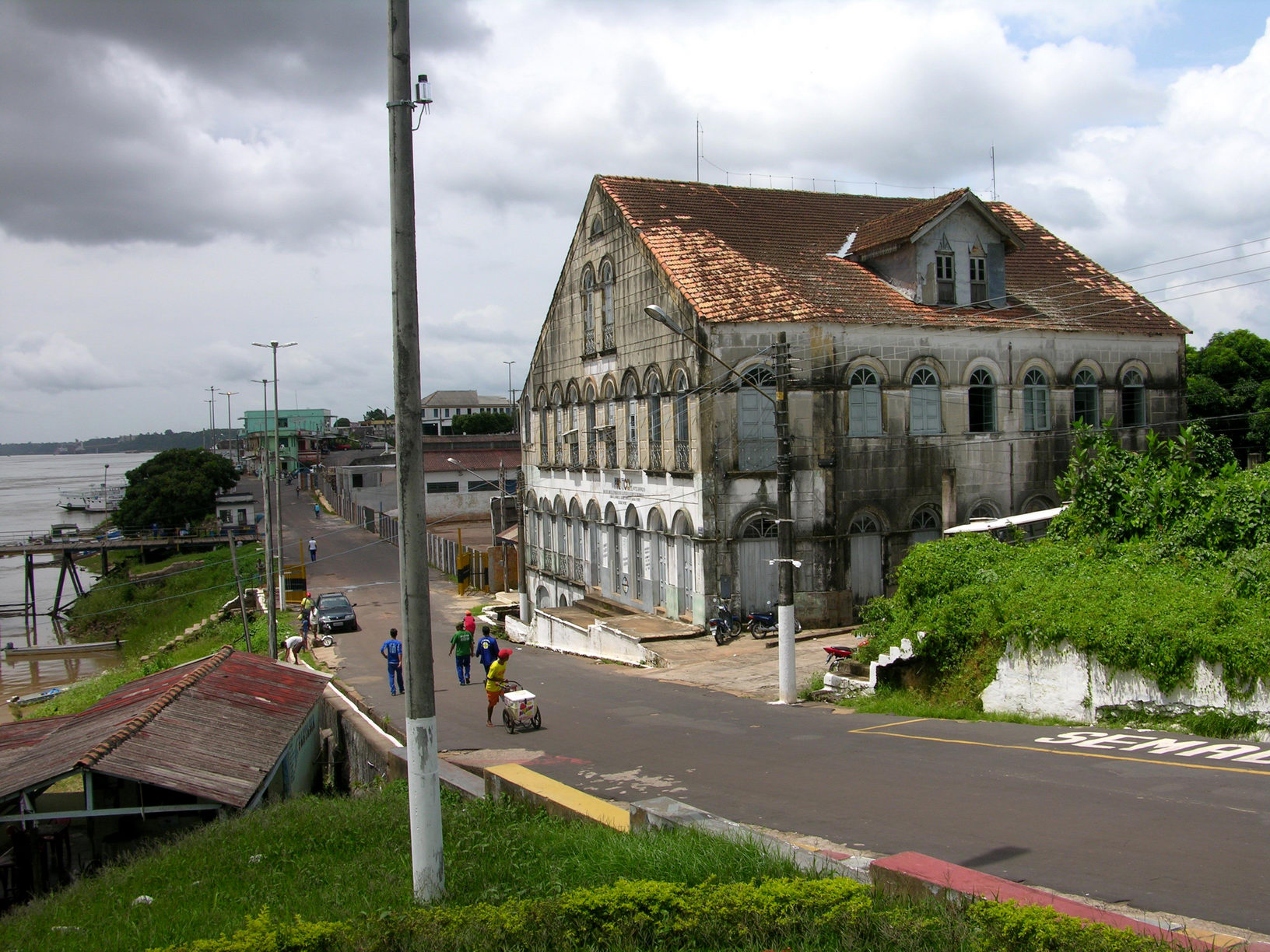
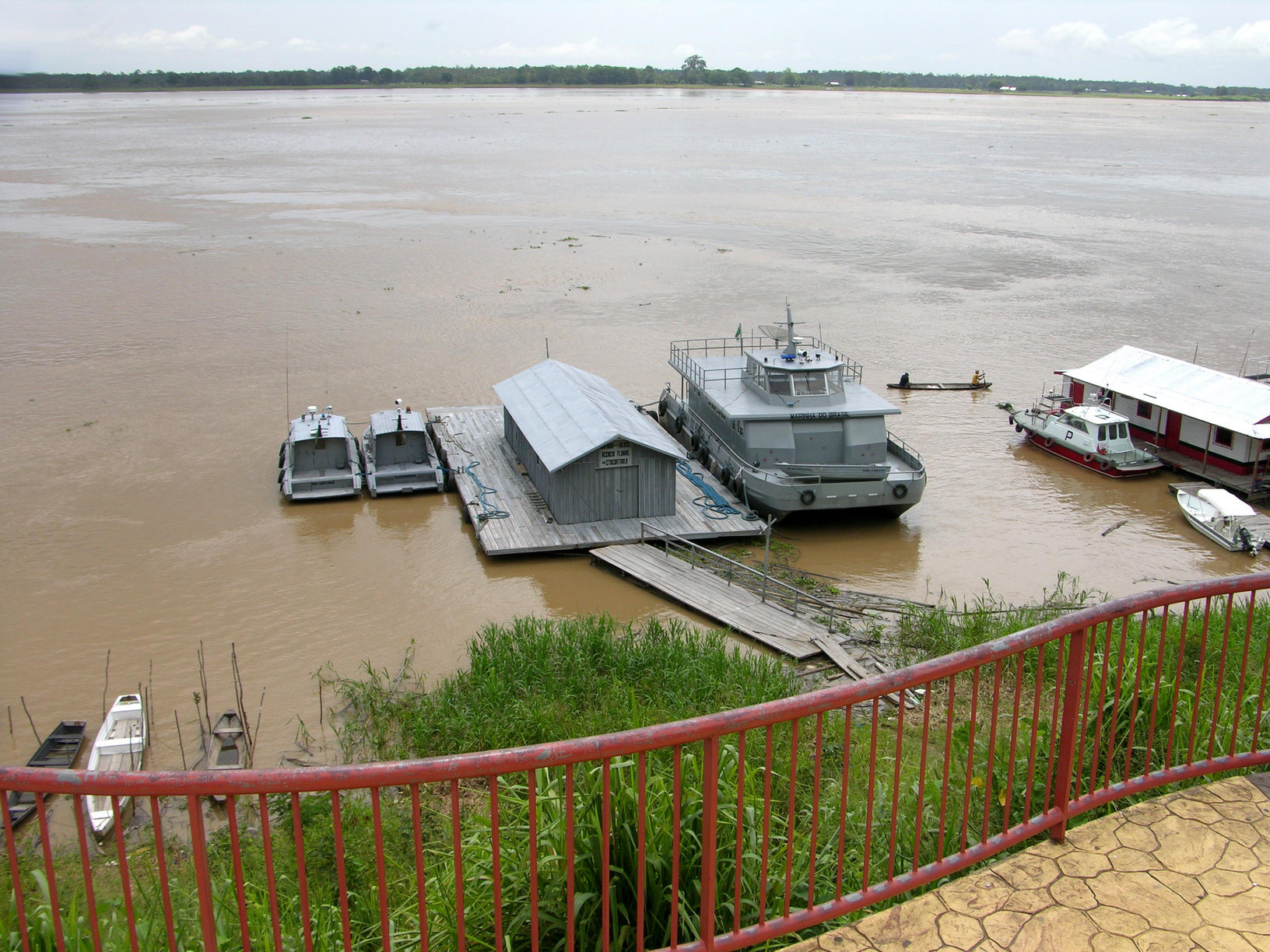
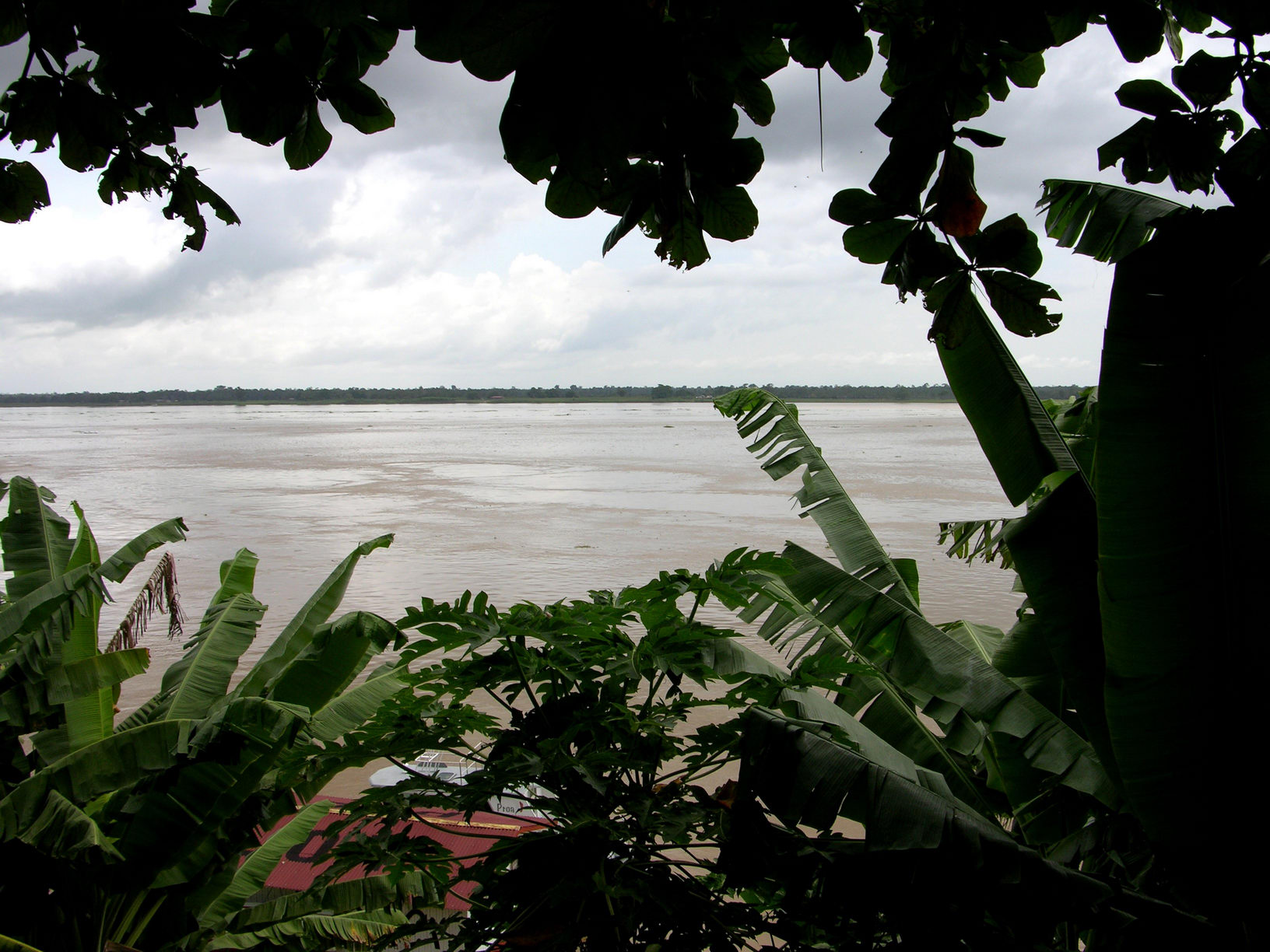
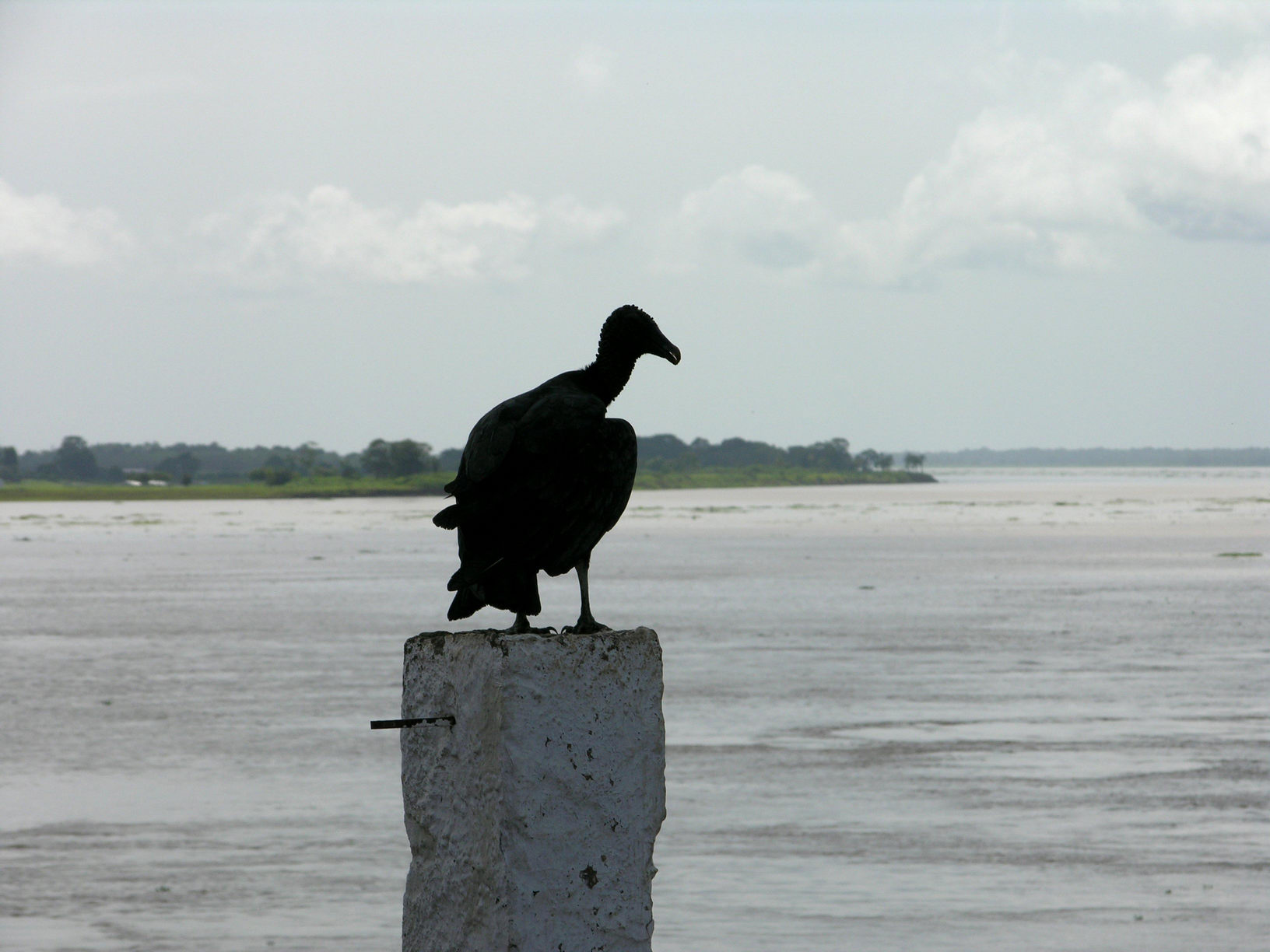
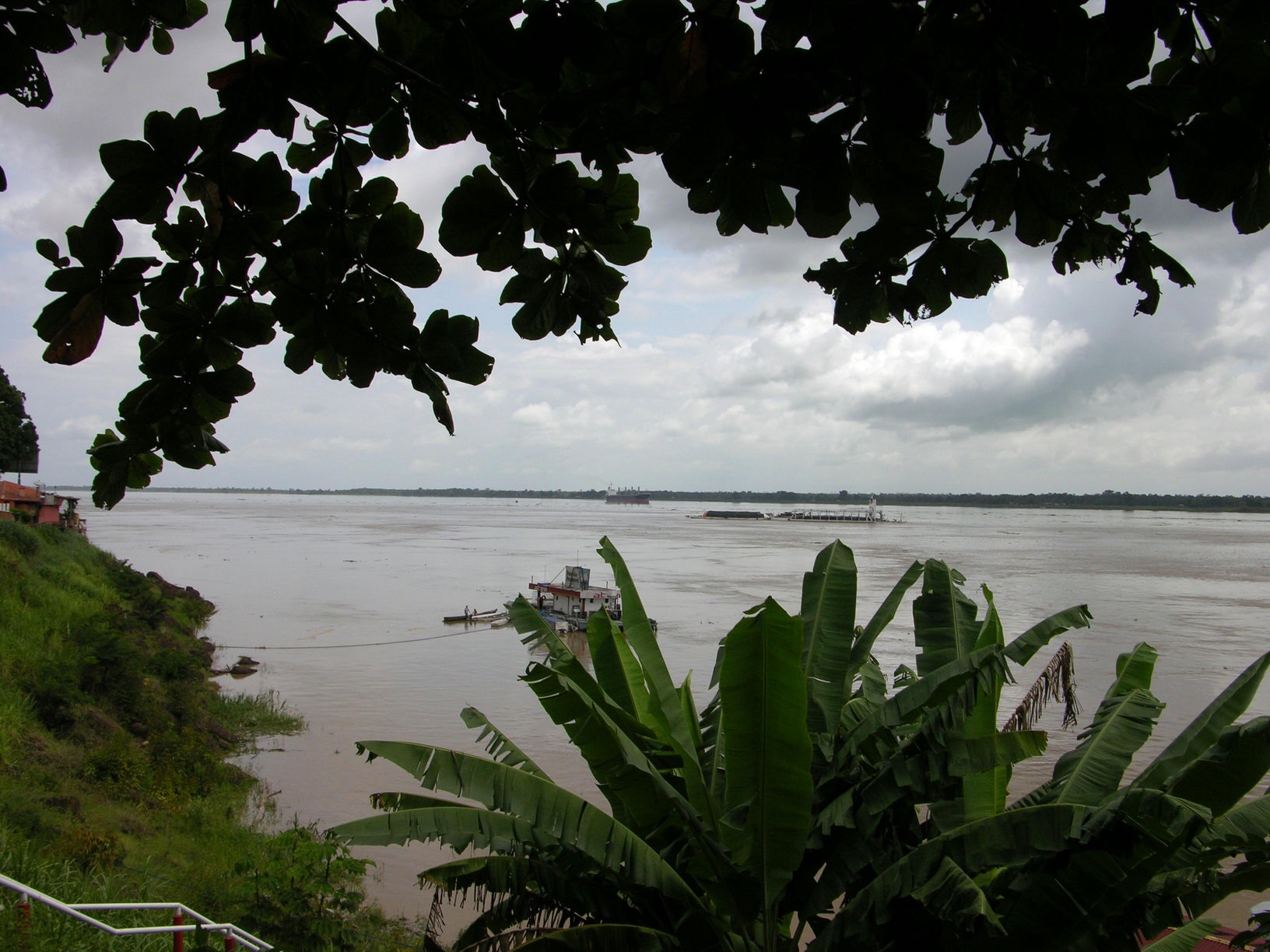
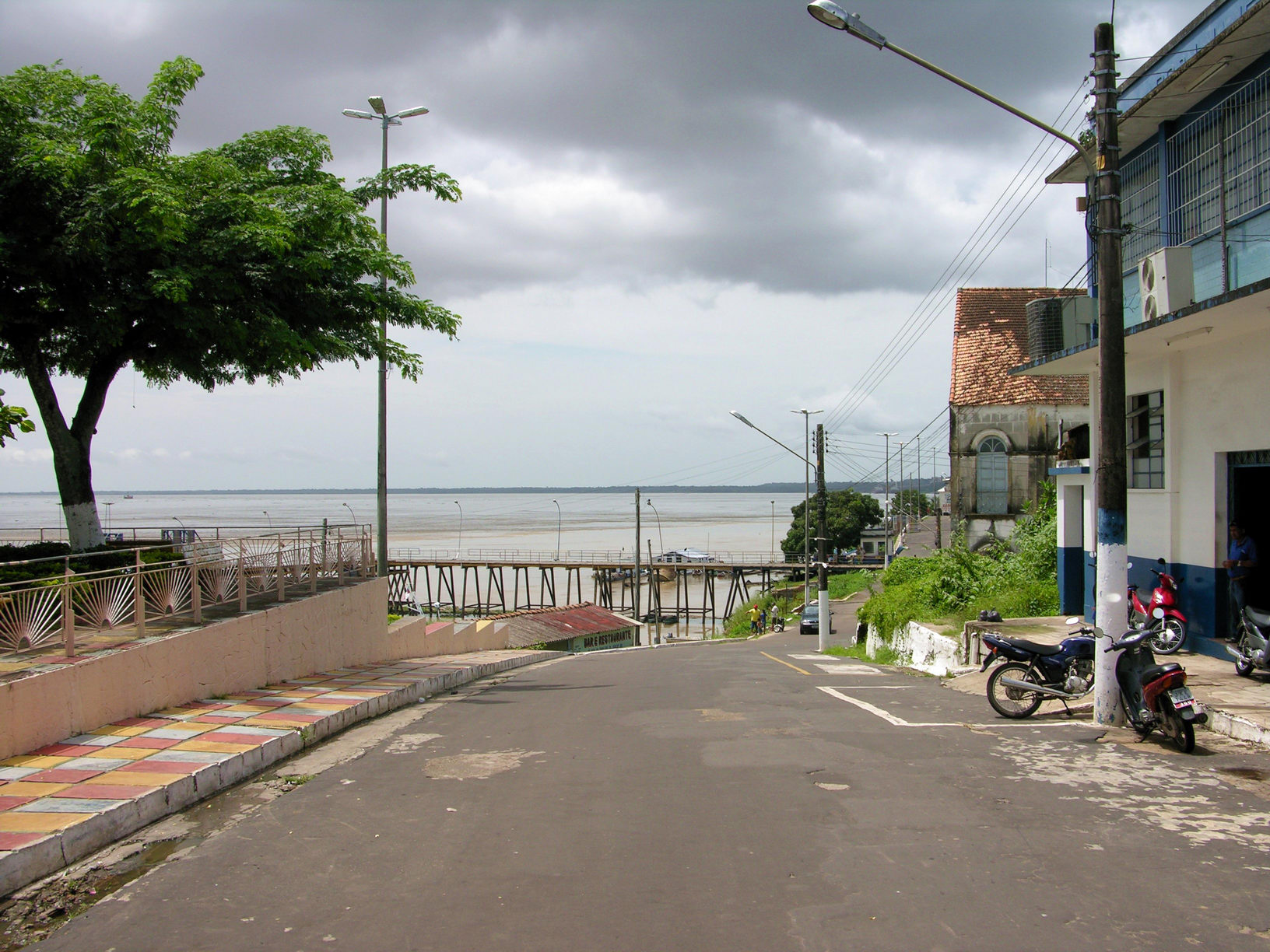
The river is the basis of life here. It's the main road, it's the fish, and it's the passengers you can try to feed during a brief stop. The town centre is the landing. The children swim and jump off the landing. Lucky children. A pity a grown-up isn't supposed to do it. Not dignified. But how badly I wanted to. The locals would stare, laugh, point. Disgraceful!
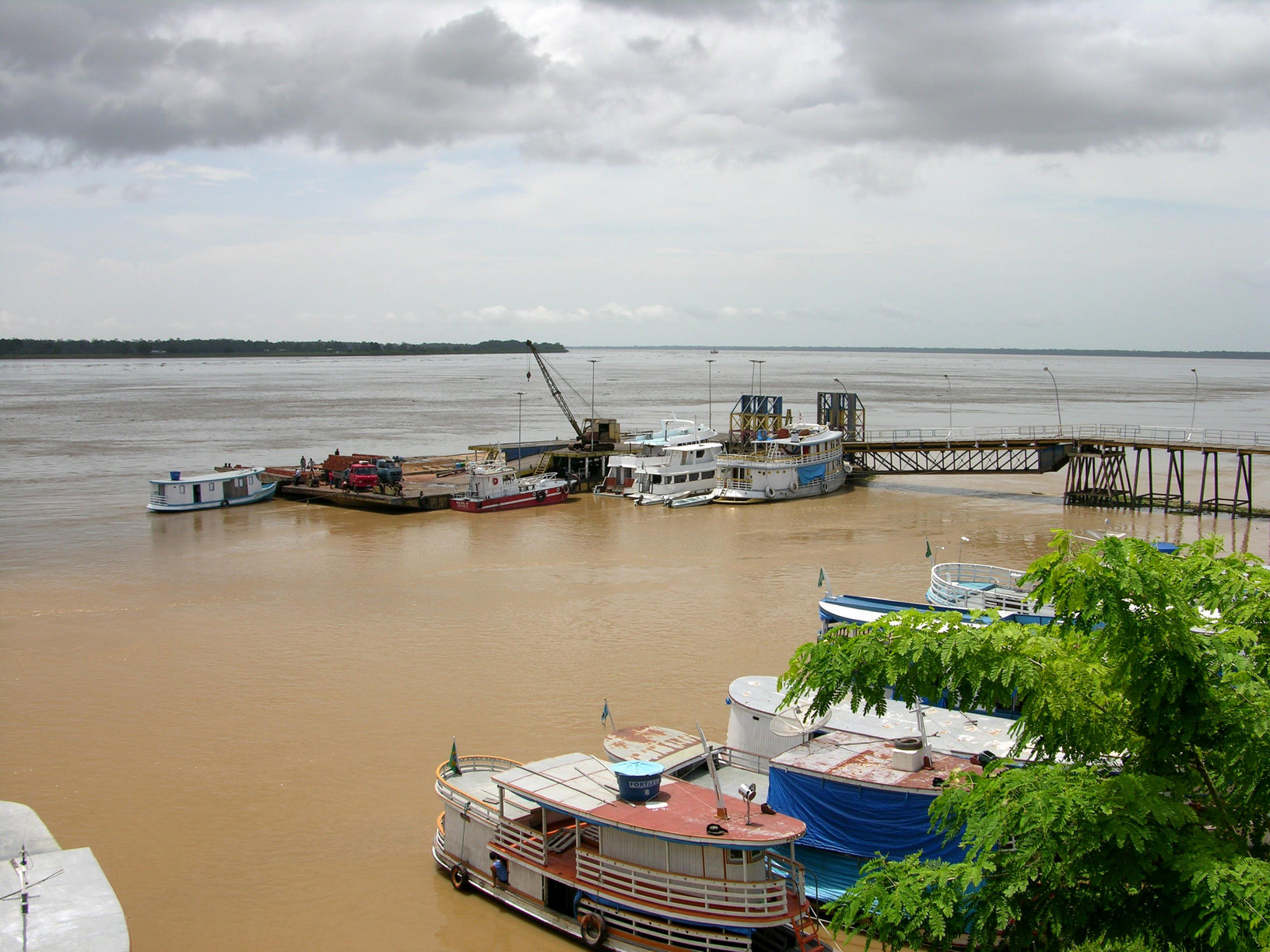
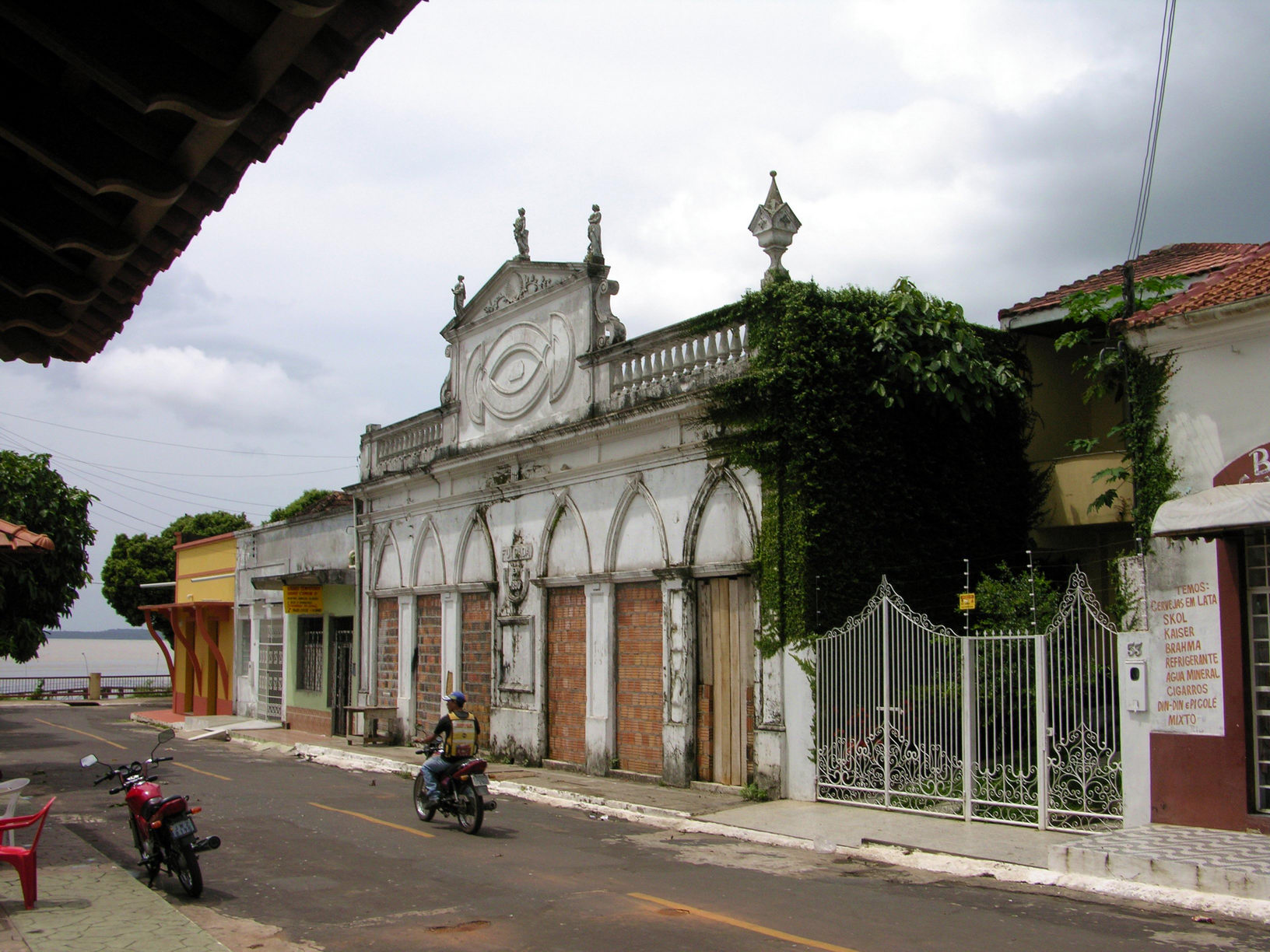
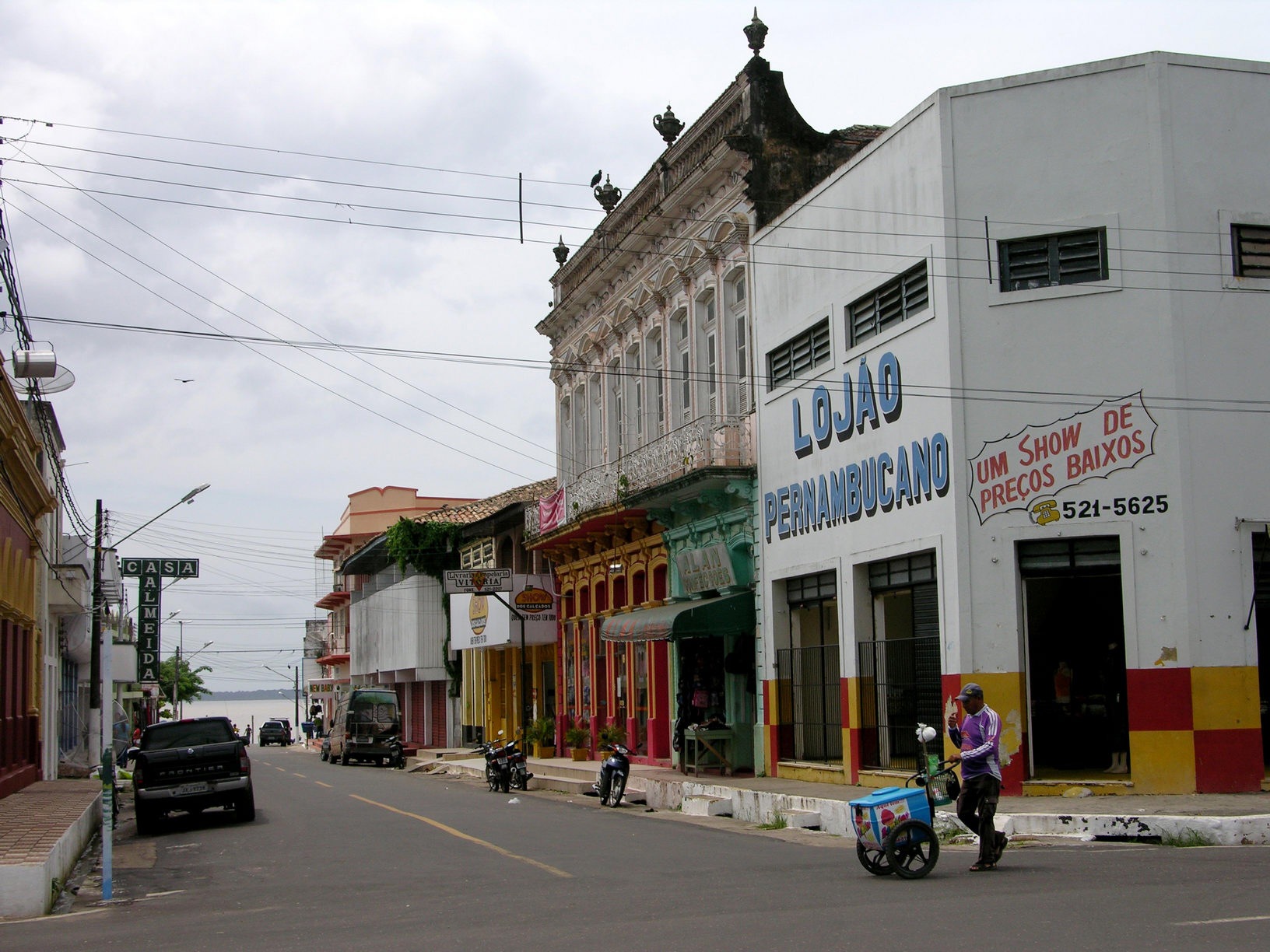
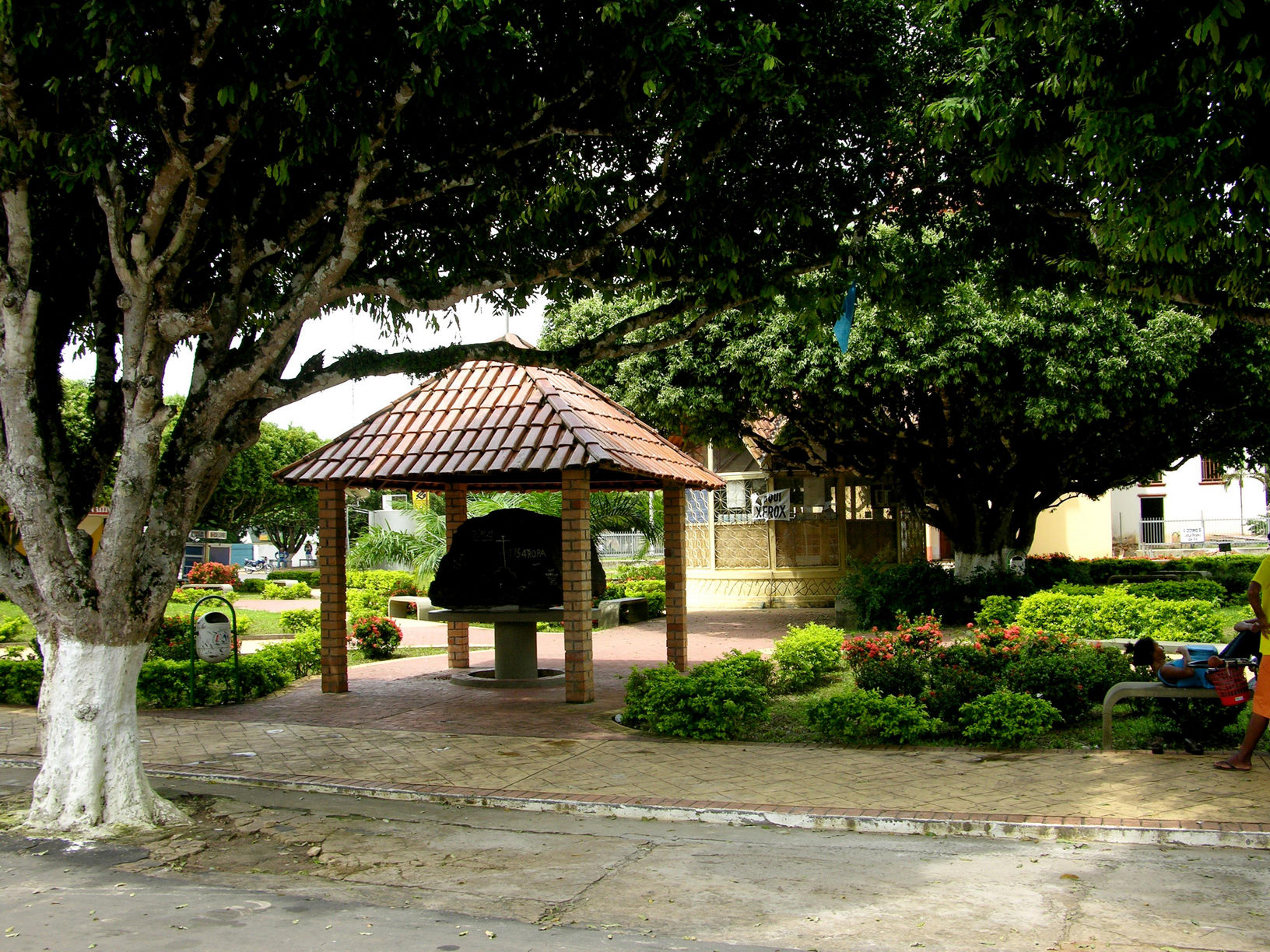
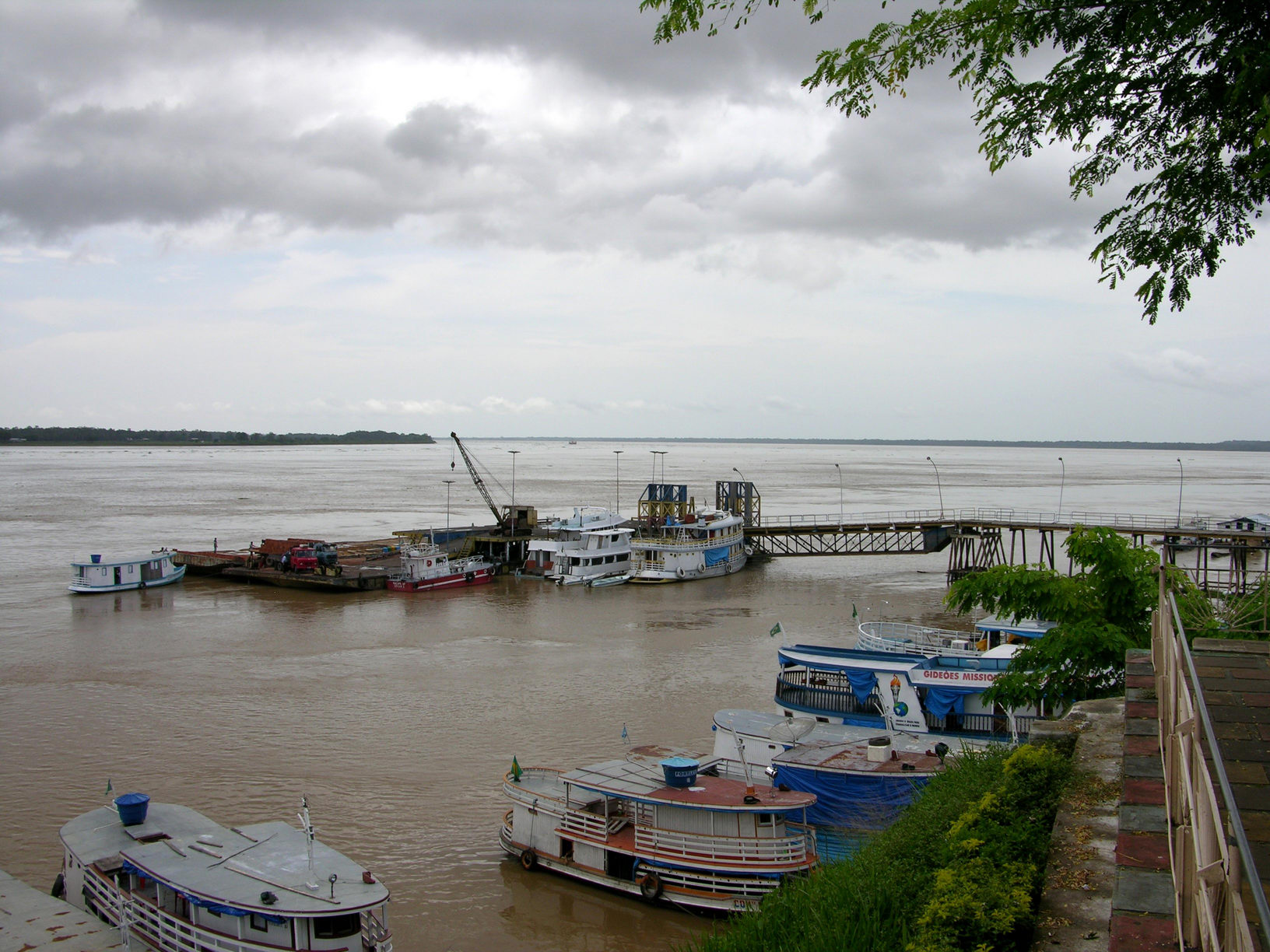
But to live your whole life without swimming in the Amazon! We walked back and forth and found a good spot under the landing. At least not everyone could see us there. Once you're swimming your head will be lost among all the children's heads.
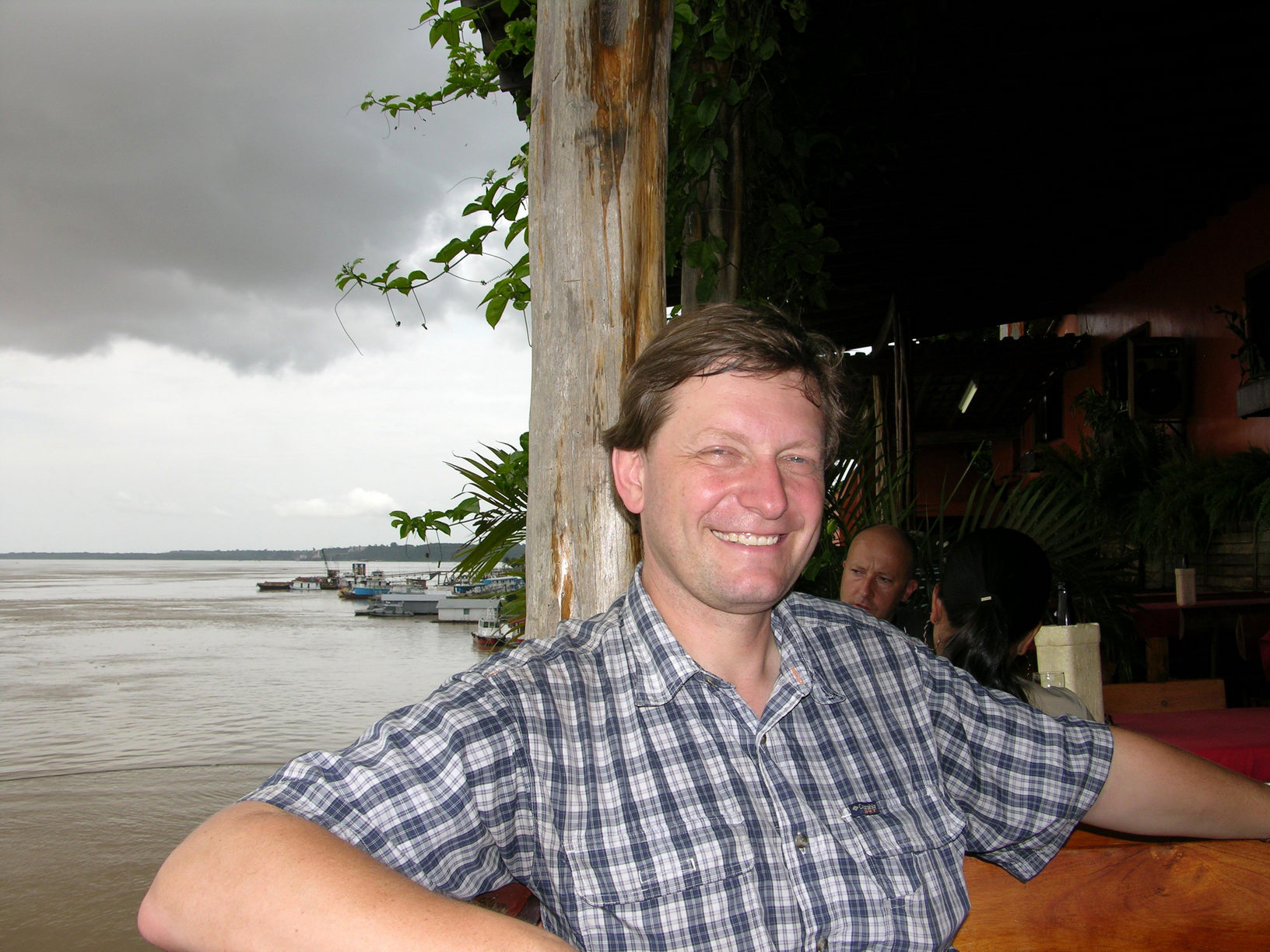
The water was so muddy you couldn't see your hands. But I did it. I swam in the white river, the biggest river in the world. It might not be the Limpopo, but I was swimming through the “dangerous river” in defiance of all my old teachers. The children splashed around nearby. They taste better. Anything that ate one of us would go for them.
Unfortunately this is all nonsense. You can swim in the Amazon without worrying. The chief danger is a policeman on the bank deciding you've lost your mind.
After the swim we ate a hearty meal. The restaurants are good in Brazil, with plenty of meat and fish. On the Amazon you want to try every kind of local fish.
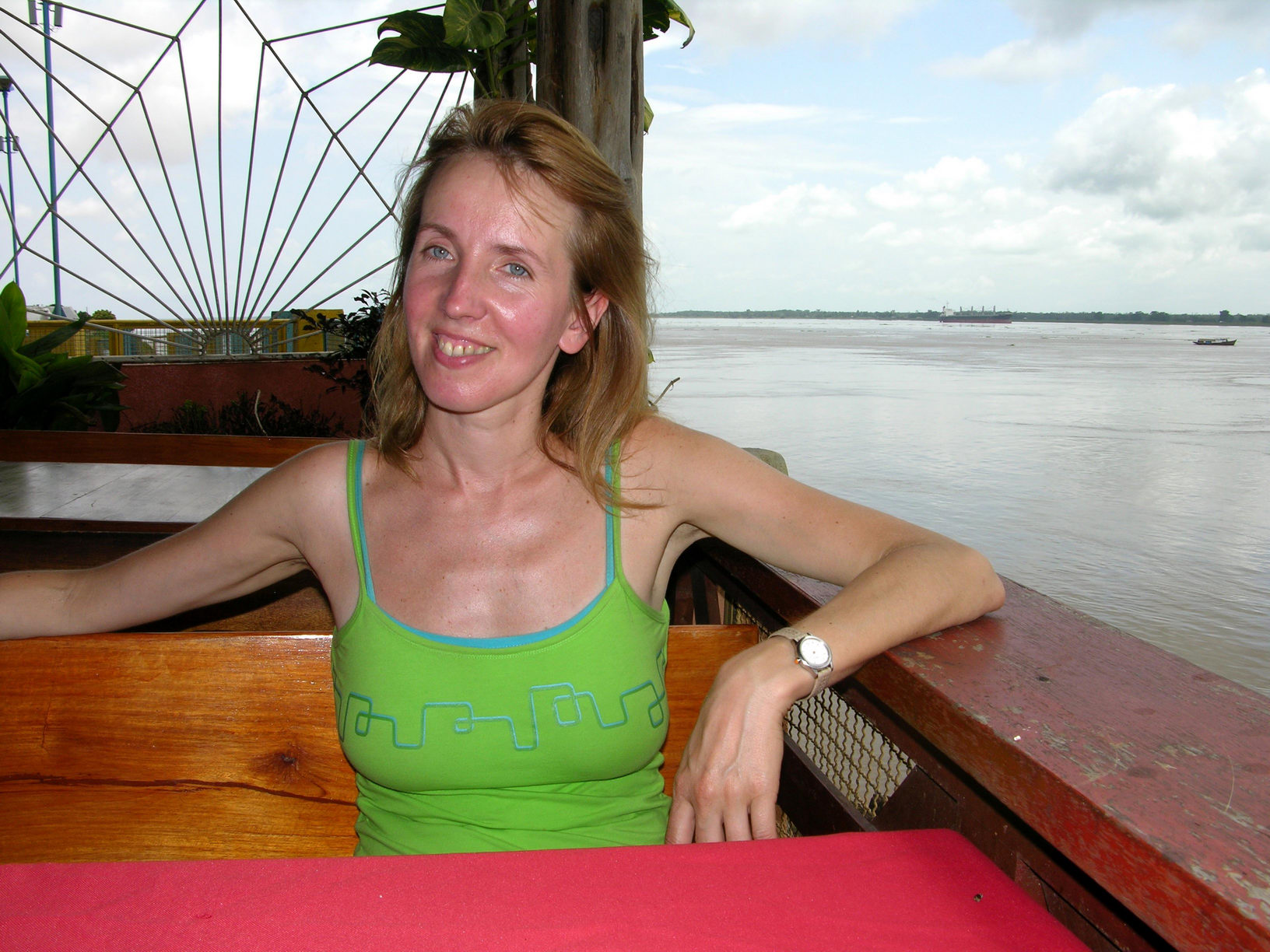
After a big lunch you feel like sleeping. The whole way back I kept nodding off at the wheel. Tanya and I had to sing. It really helps. The first person who taught us that was an Even man in Kamchatka. One hitch: we don't know how to sing like him about whatever we can see. And we couldn't think of many songs. Only the ones we'd remembered since childhood came to mind, so we had to sing about Cheburashka.
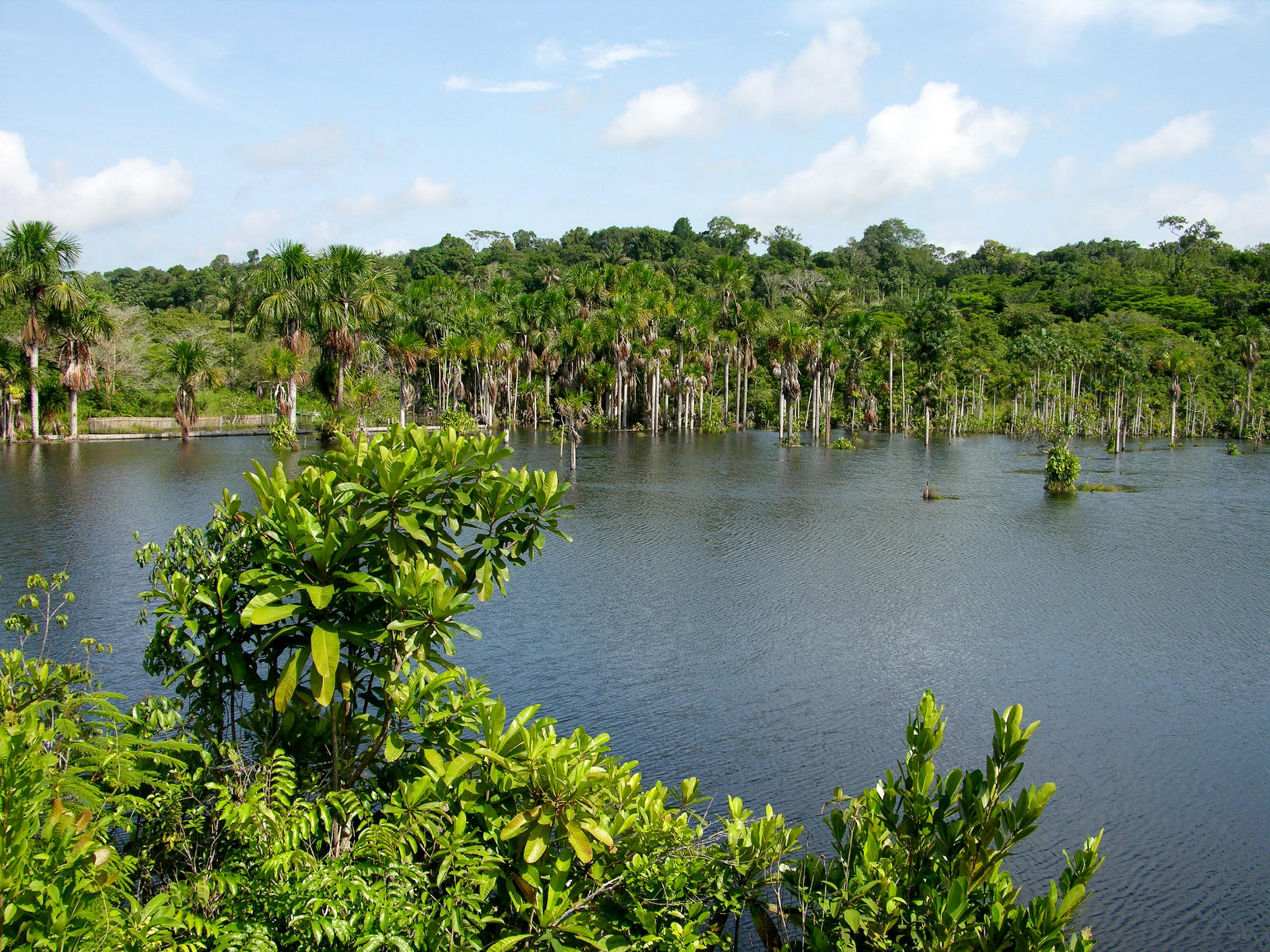
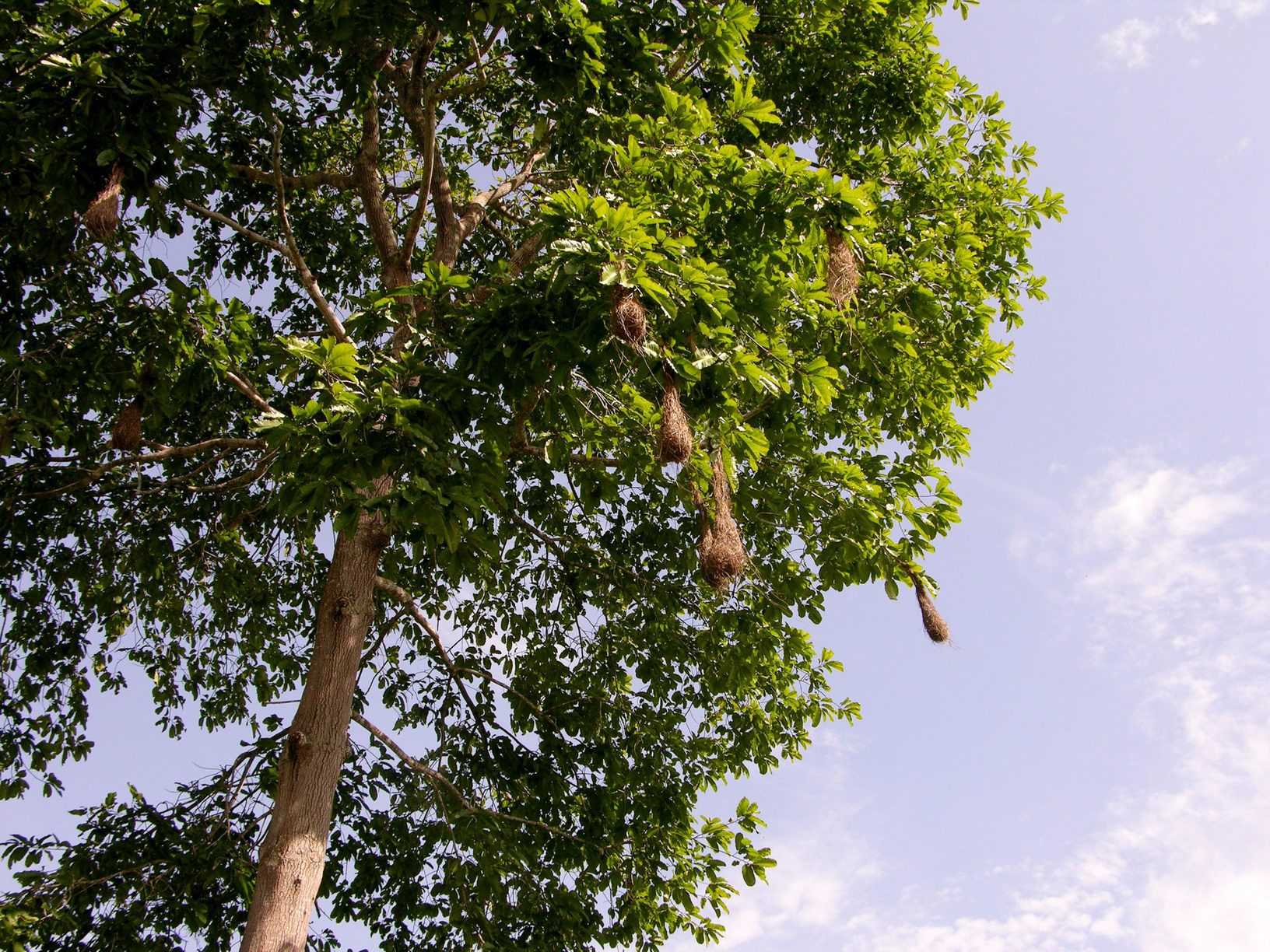
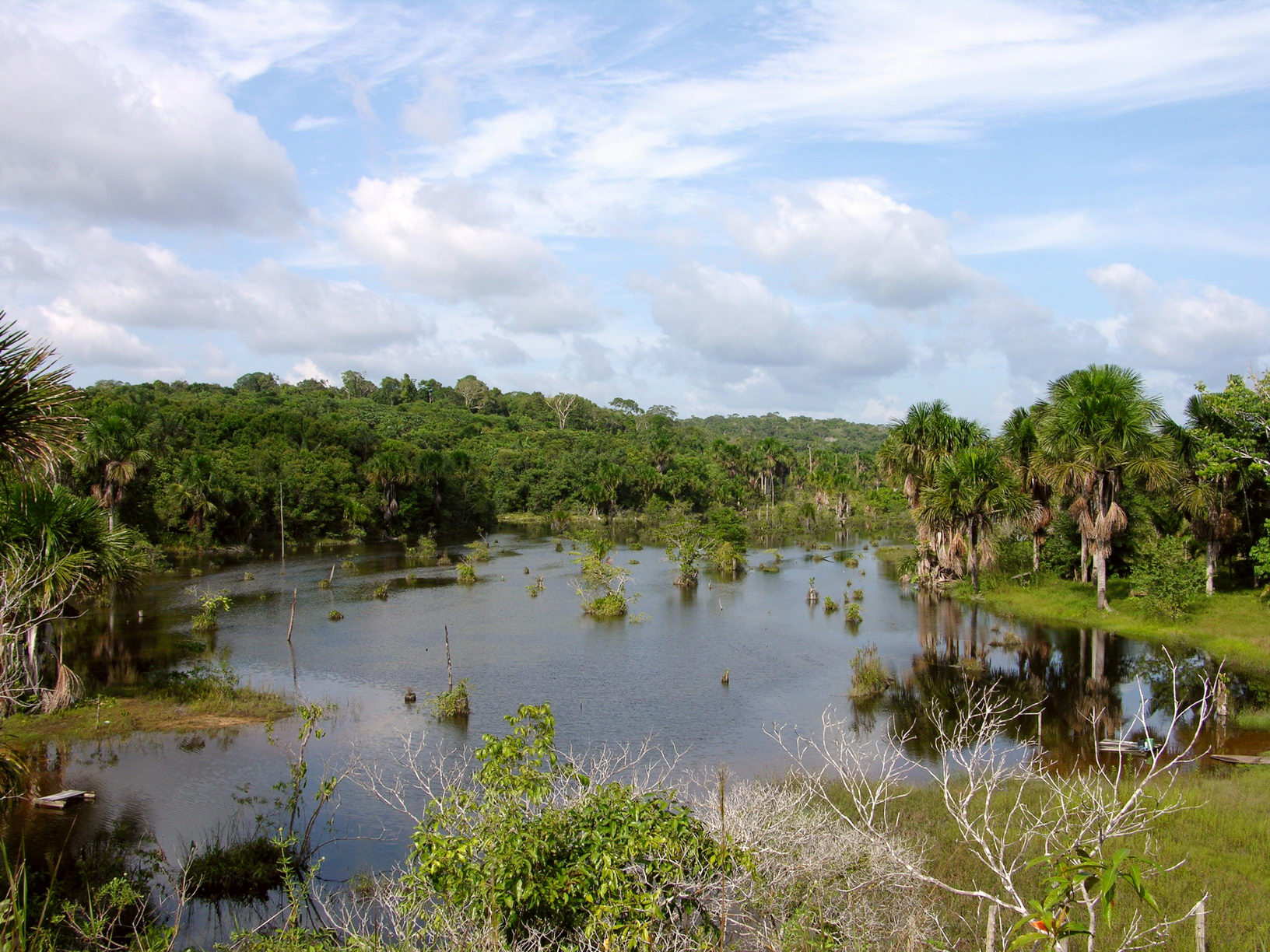
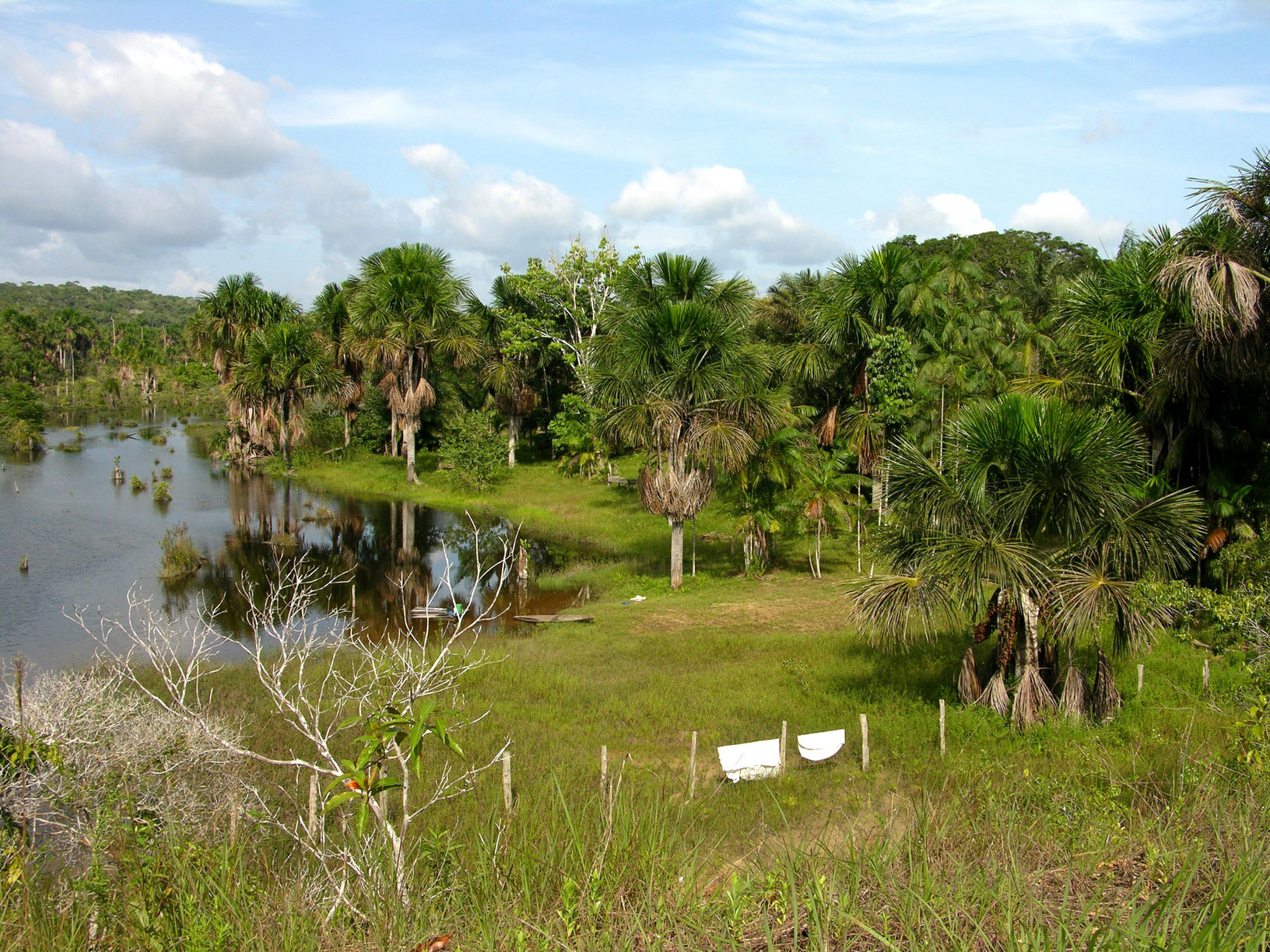
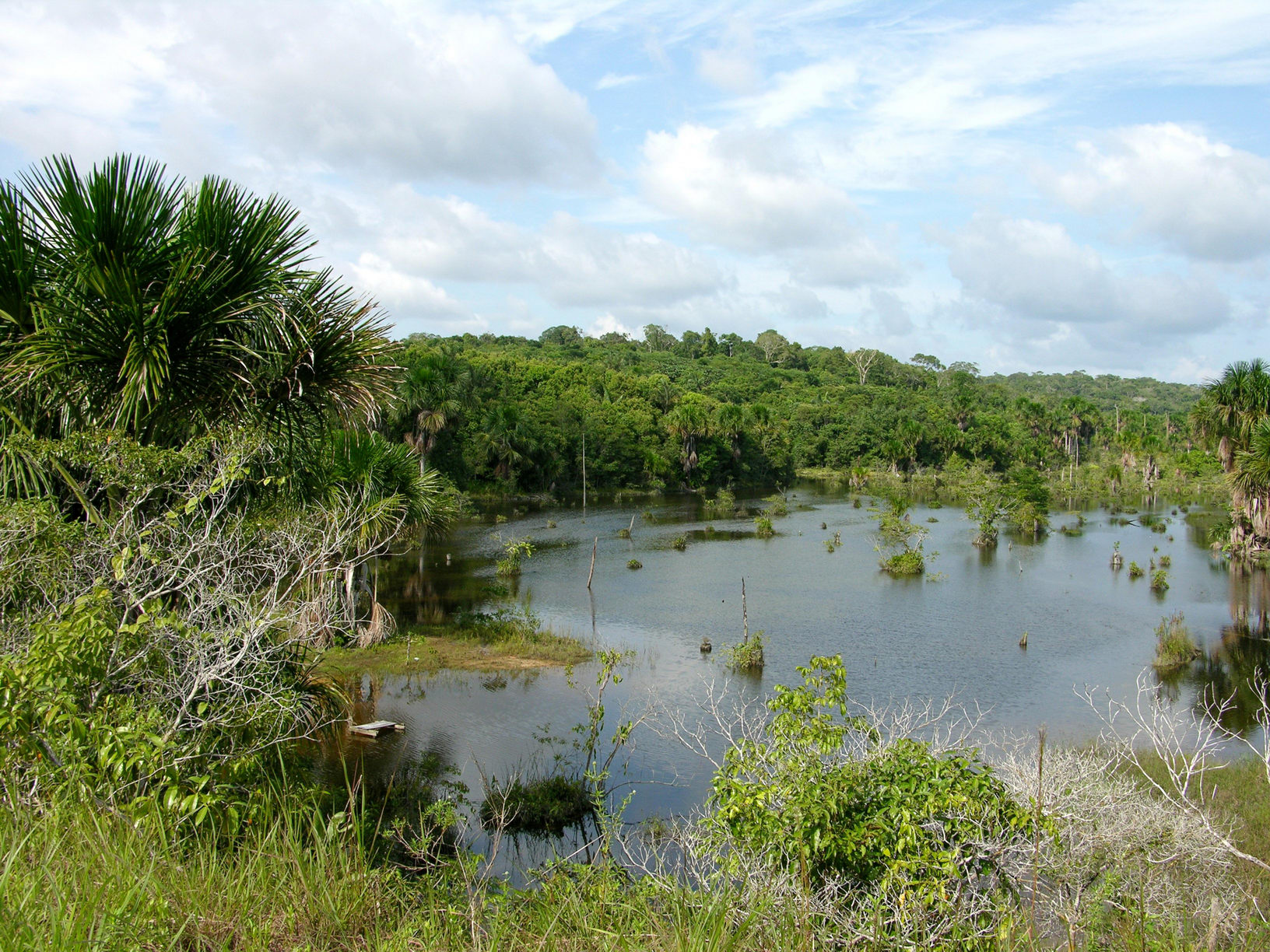
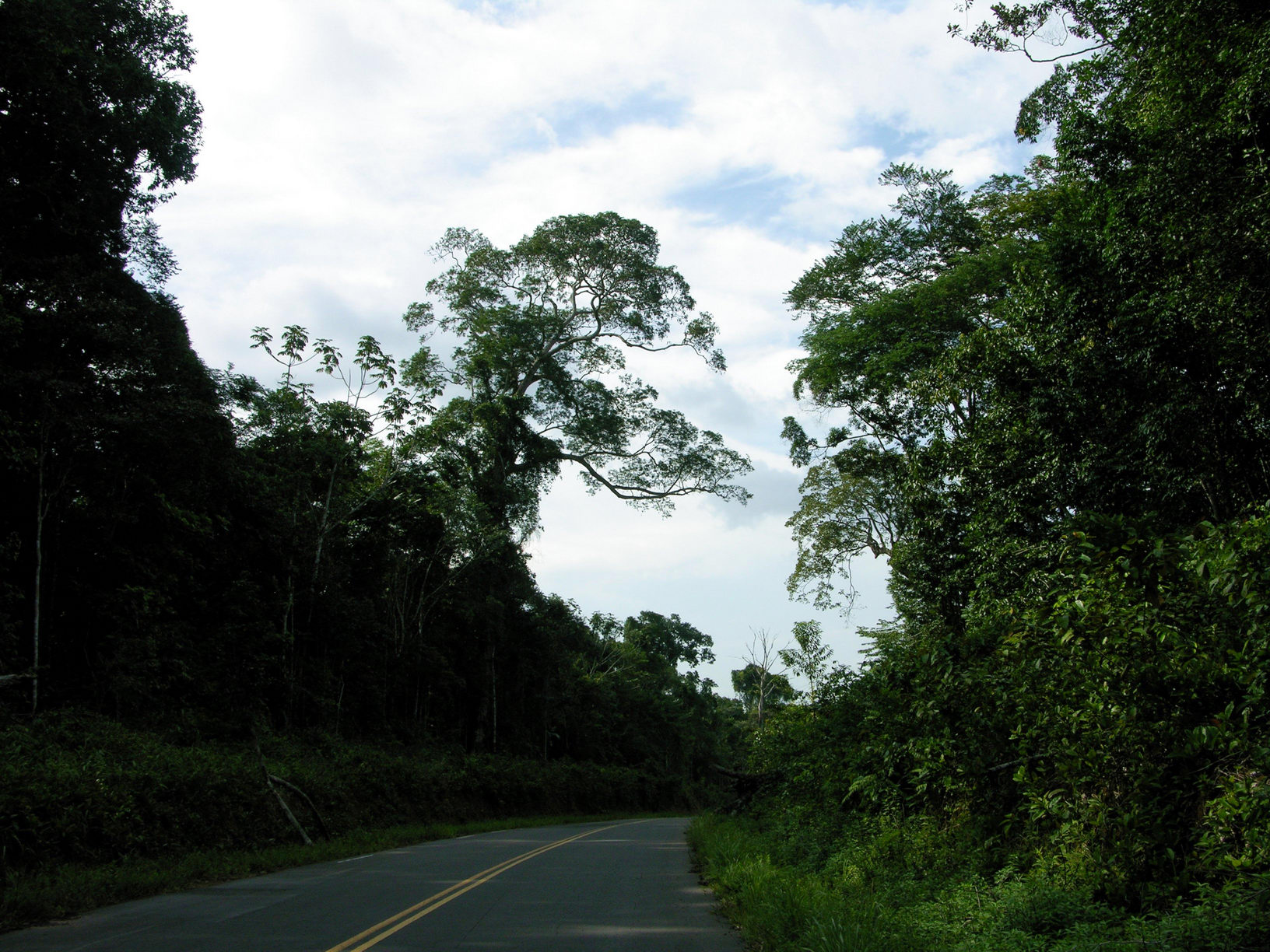
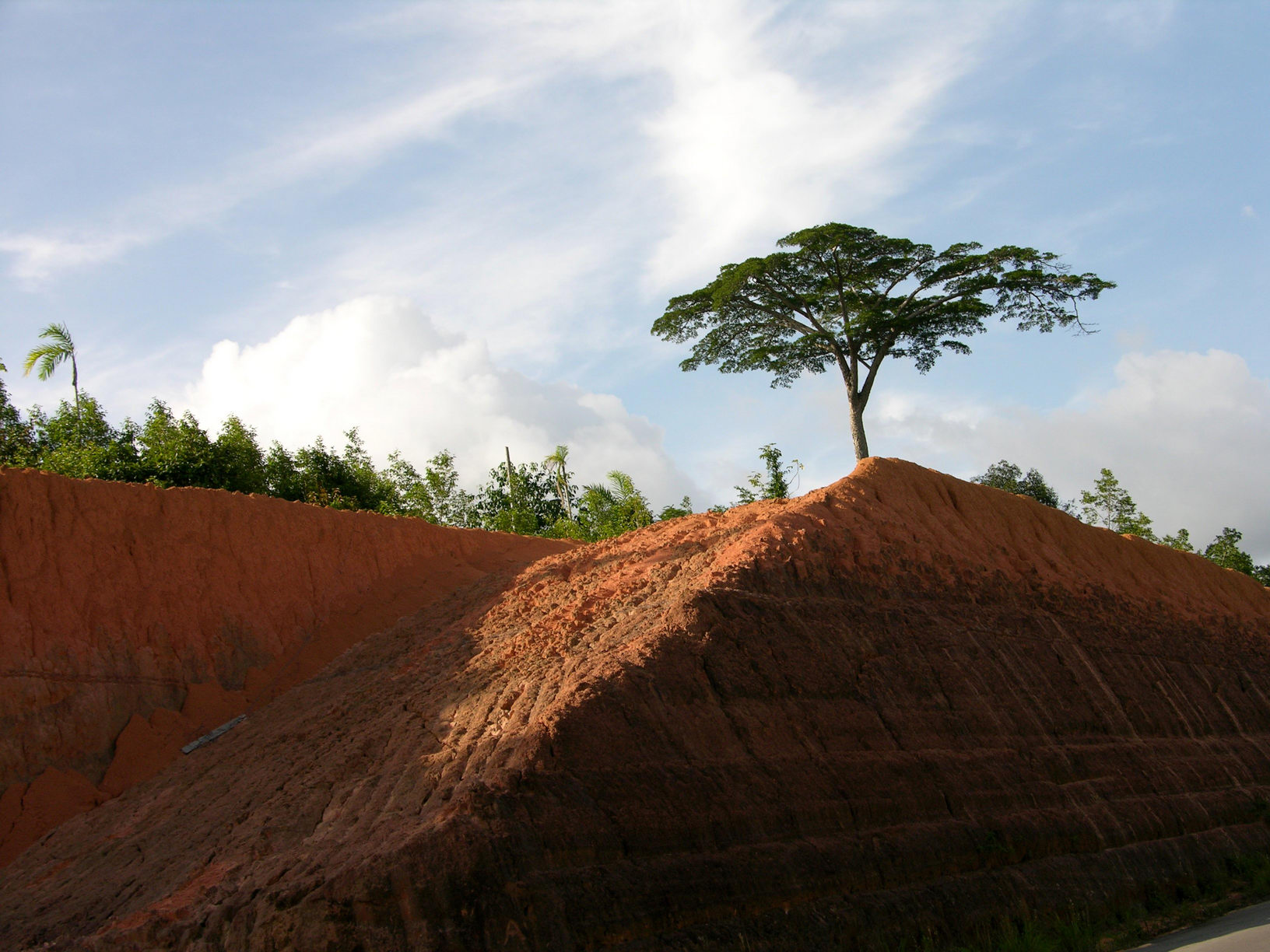
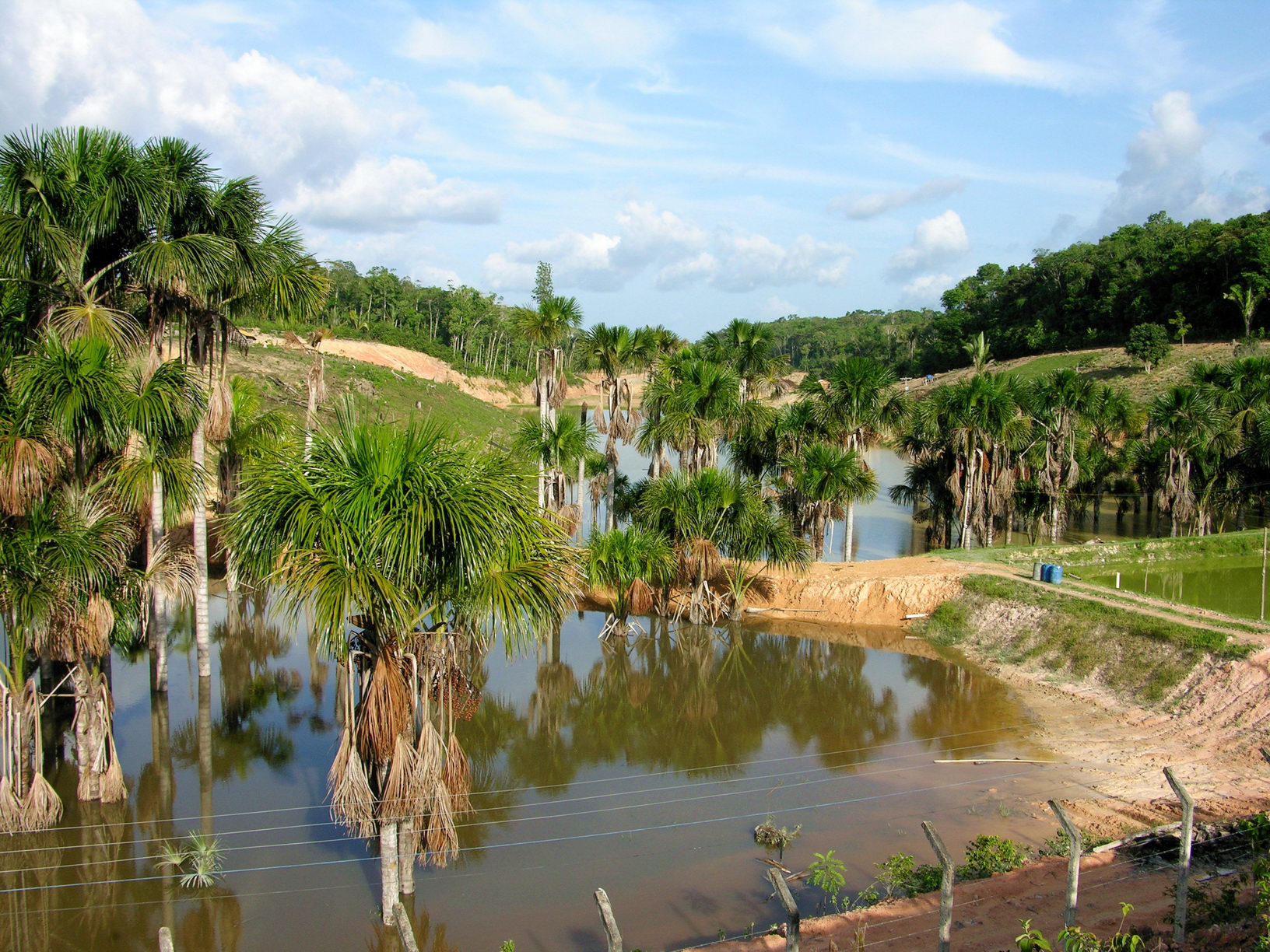
It was dark by the time we reached Manaus. We didn't feel like spending the night there and decided to drive another hundred kilometres north to Presidente Figueiredo. It's a local holiday spot. A good place to spend the night, then the next day we could drive through Indigenous territory to the equator.
There were plenty of hotels but wherever we went, they'd shake their heads and say something we couldn't make out. They didn't seem to be saying “tudo ocupado”, but they had nothing for us. We'd had enough of their Portuguese by then. At last it dawned on us. People here holiday in big parties and stay for a long time. You rent an entire cottage for twelve people for a number of days. It's expensive, and everybody assumes the two of us wouldn't go for a price like that.
In the end we had to take their smallest cottage, which slept six, for 129 reais (2°03.157′S, 60°01.692′W).
We found food by the bus station. It's the only place with a proper meal for the passengers off passing buses. Everywhere else there's just beer, Snickers and sandwiches.
Only food was the last thing Tanya was thinking about. She had trouble with a tooth. One of hers needed to come out. A definite cyst, and her cheek had swollen. This had been going on for a few days. The poor tooth hadn't stood up to the tough local meat and the spicy food. Tanya had started rinsing it with various liquids from a nearby pharmacy, but it had only got worse. It felt as if the pus had spread along her whole jaw. She looked in the mirror when she got to the hotel and decided she was going to die. If so, what was the point of eating?
We had to do something. If it was an infection, she needed proper help. Go to Russia? That was several days away. All right, there was the night ahead and we'd see in the morning.
When we woke it was worse. Tanya was beside herself with misery. We went back to Manaus early on a rainy morning. First we tried the airport medical centre. They were bound to know English there and know what a foreigner was meant to do in this situation.
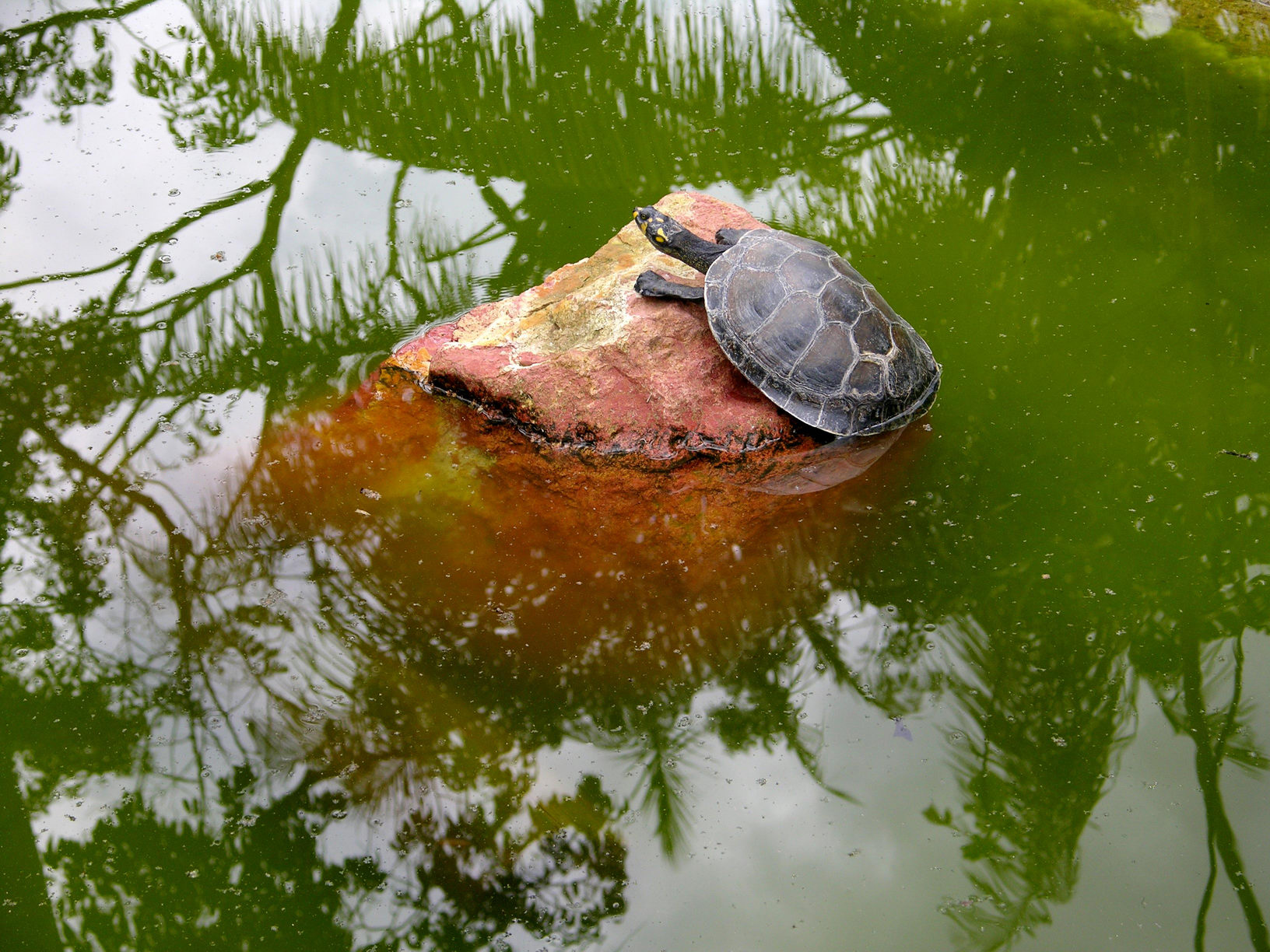
The airport was lovely, with turtles swimming in the pond. At the medical centre there was a paramedic who didn't speak English and could only hand out pills for headaches.
They gave us an address for a clinic. The city was big and we spent two hours driving before we found the little two-storey building in a poor district called Alvorada. We went to reception. It was just like Russia. Queues everywhere. Lots of coughing children seated next to us. The doctor had gone somewhere. We waited an hour. The doctor had stepped out somewhere, they said, with a shrug. Tanya was worried they'd pull the tooth, set off an infection and things would become very frightful indeed. I tried to persuade her she was better off without the tooth, since there wasn't decent medical care for thousands of kilometres around us.
The children around us were all very snotty. How do they catch colds in this heat? This clinic must be where every tropical infection comes to meet the others.
Time to get out of here. Better to die proudly in the jungle than in this miserable shelter.
We got out, all right, but the tooth still hurt. By now the whole inside of her mouth was covered in some white goo.
We decided to drive around the city and look for a private tooth-puller we could pay. Plenty of signs, but everywhere you just found secretaries willing to make you an appointment for a week later.
After driving tens of kilometres we finally managed to get a real dentist to come to one of the offices.
Unfortunately he only spoke Portuguese too.
“Are you from the United States?” he asked. “No,” we said, “Russia.” He didn't understand. “All right, open your mouth. Oh! You're not from the United States.”
Tanya said, “Whatever you do, don't pull the tooth.” He promised not to, but as soon as he picked up an instrument she wanted to run away. Drawing pictures and remembering Spanish words, they eventually managed to communicate after an hour. The tooth was declared incurable, but not fatal. After disinfecting Tanya's mouth the little dentist let her go. “If it gets worse, come back in two days.” It cost a hundred reais. He never did say what the white stuff was. Or perhaps he had. How were we to know?
All that remained was to wander around Manaus glumly and wait to see what would happen. We'd already been everywhere in town. Nothing to do. We couldn't even eat. All we could do was drink the local speciality, guaraná. It's a local berry. The local Coca-Cola operation makes a fizzy drink from it rather like our tarragon soda, but it's much better from one of the street stalls. With the berry that gives it its name they put avocado, pineapple, cinnamon, ice, oats and a number of unknown fruits and spices into milk or water, whichever you like. They blend it and you get a thick goo with a taste all its own. I fear it isn't for everybody. You have to be open-minded to drink it. We liked it, though.
We spent the night at the Hotel Safari in Manaus for 112 reais.
Tanya's name day came round, the twenty-fifth of January. We ought to celebrate, but the tooth hadn't gone away. Tanya decided that since the doctor had given her no emergency treatment and hadn't yanked anything out, head and all, it was fate. That was that: off to the jungle, come what may.
For the third time we left Manaus heading for the equator. I could hardly believe we'd actually get there. Something else was bound to happen.
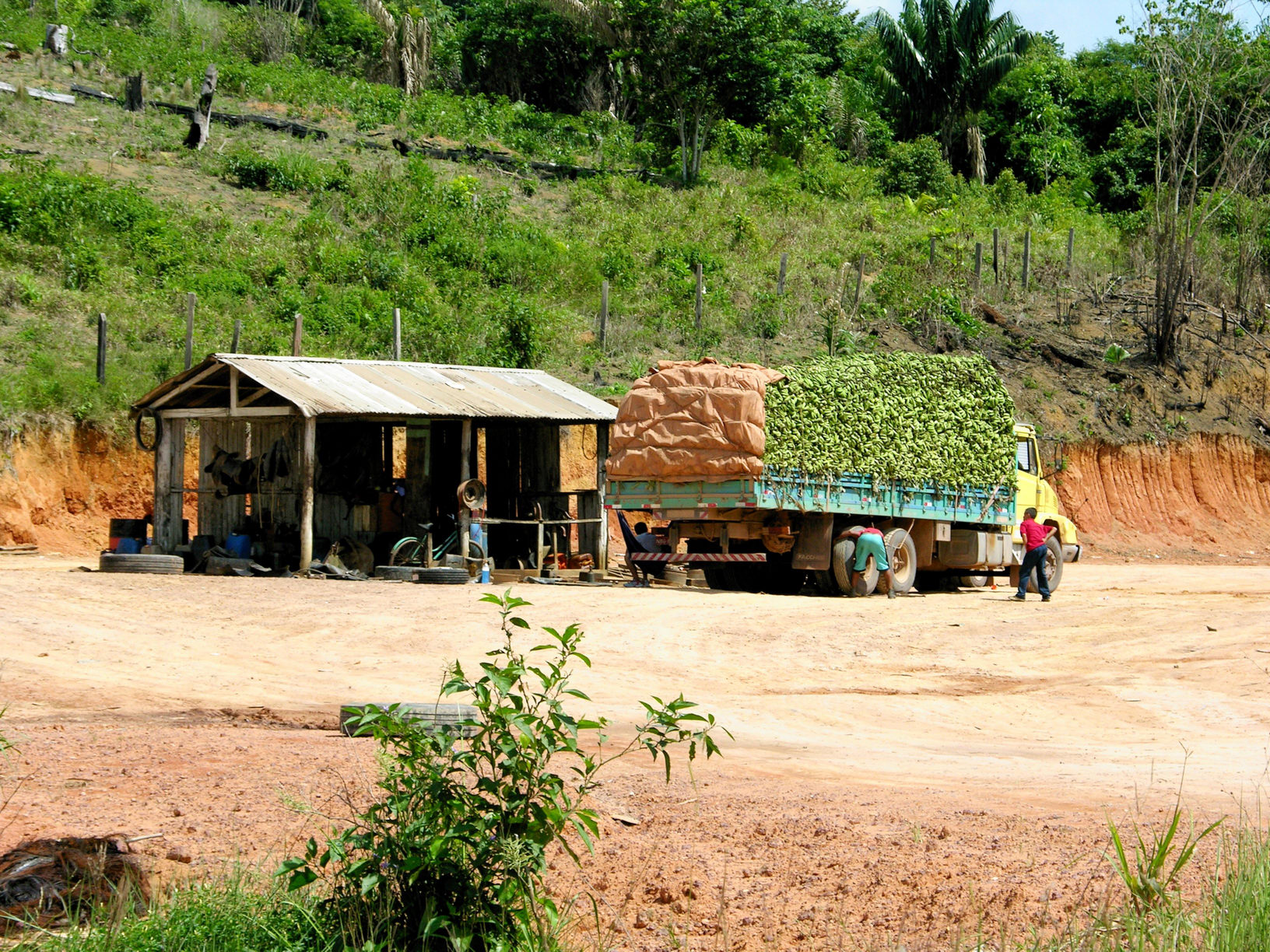
North of São Antônio do Abonari the land of the Waimiri Atroari people begins. It's a huge area of untouched jungle, twenty-five thousand square kilometres. Entering the reserve is forbidden. What's more, you aren't allowed to stop, take pictures or even look around. It's like that in every reserve in Brazil, or so it seemed to us. I thought that was blatant racial discrimination. Why could they go into our cities when we couldn't go into theirs? Besides, this was hardly an isolated tribe. There was electricity and television in their villages. They wore European clothes. Their children were driven to school in jeeps. All at no cost to them. How were they any better than the inhabitants of the poor parts of Manaus?
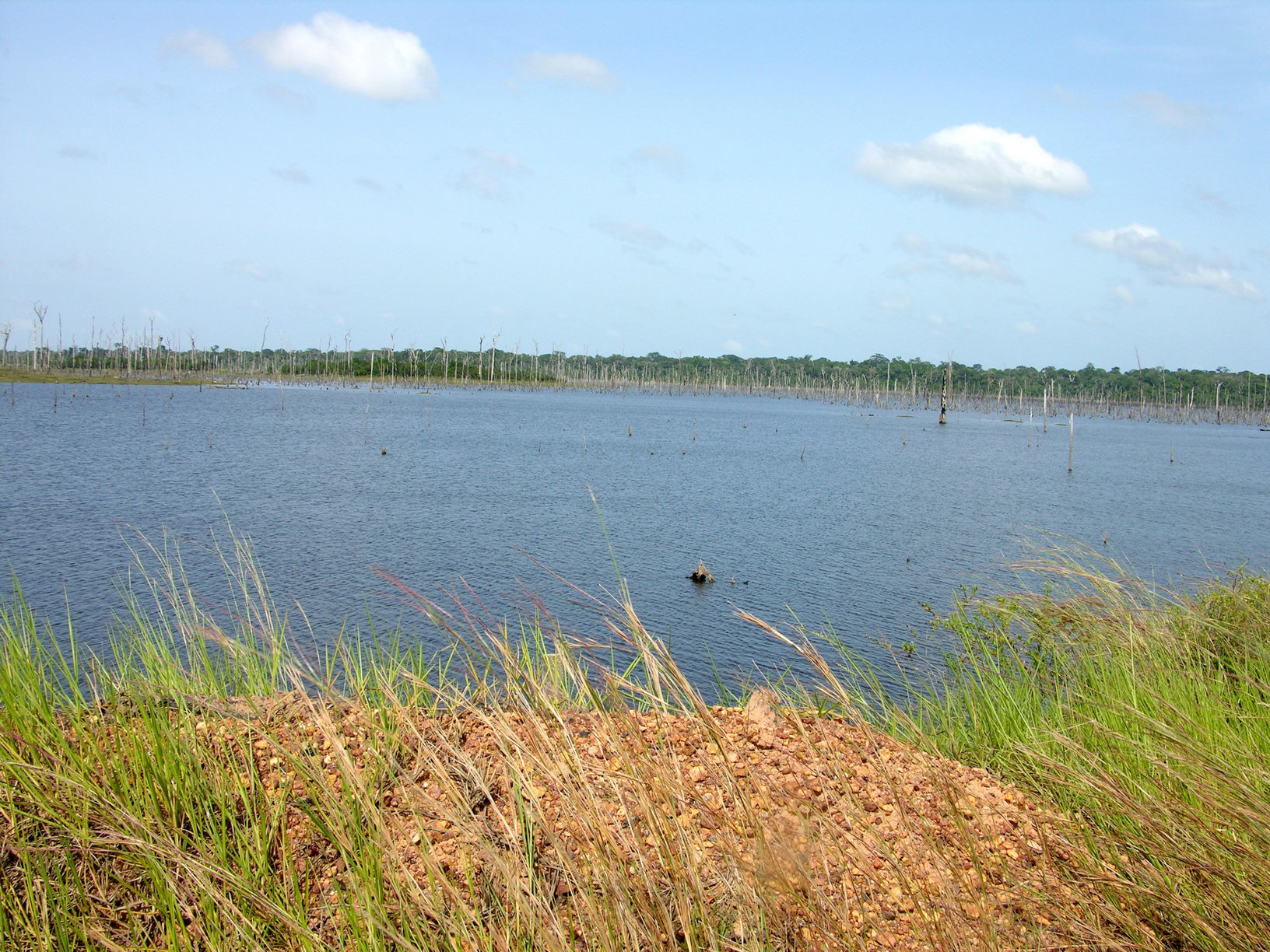
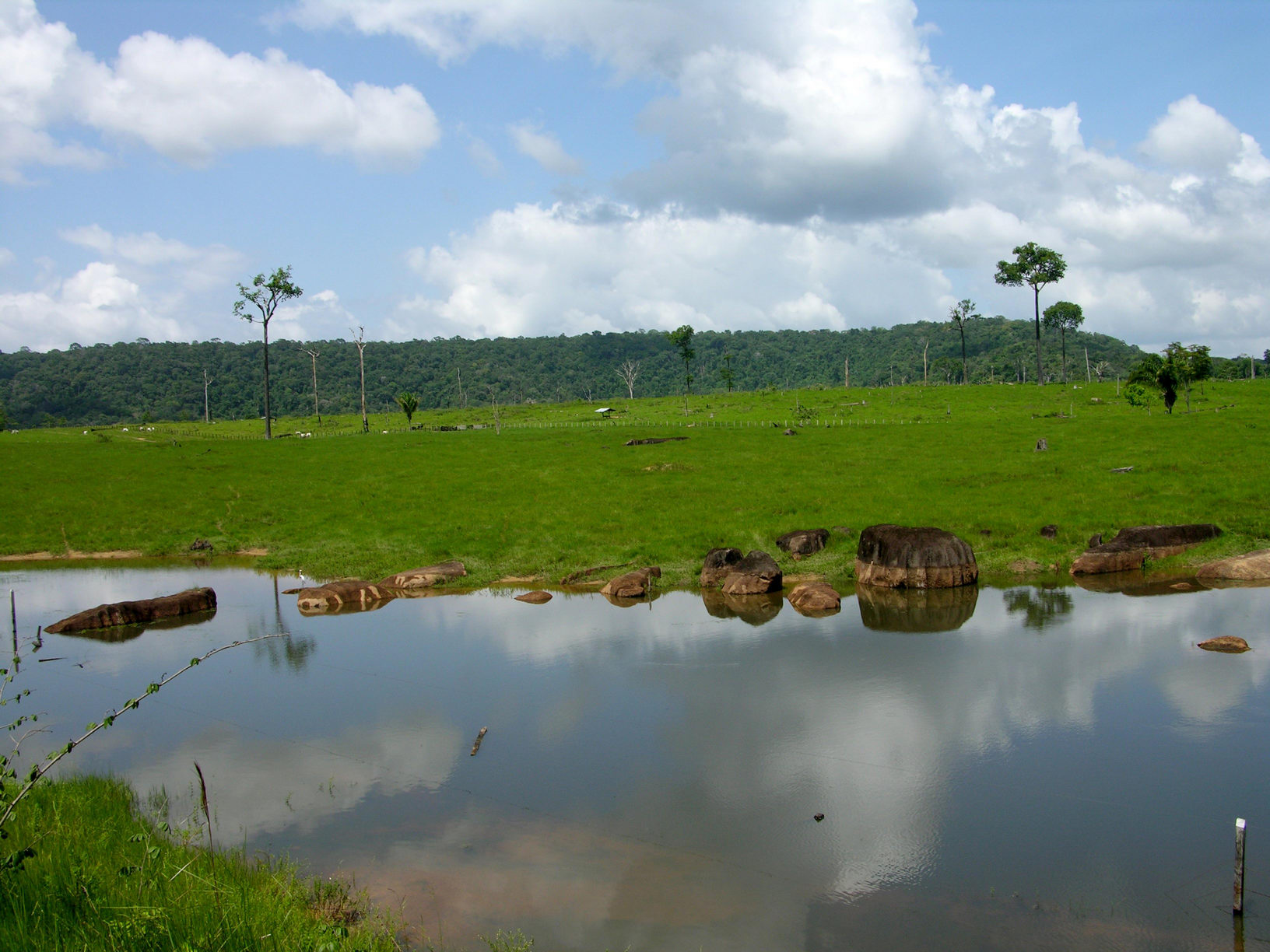
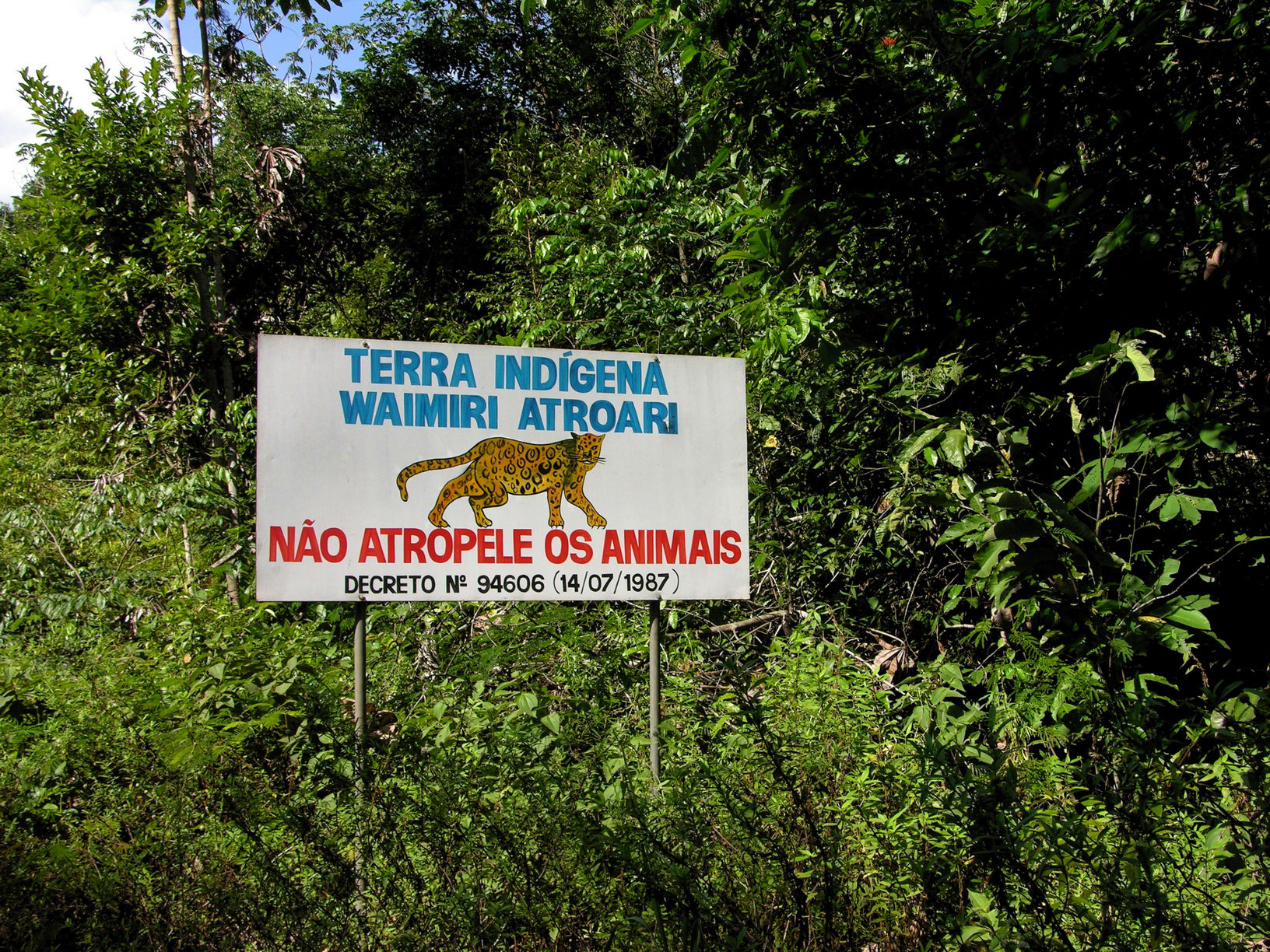
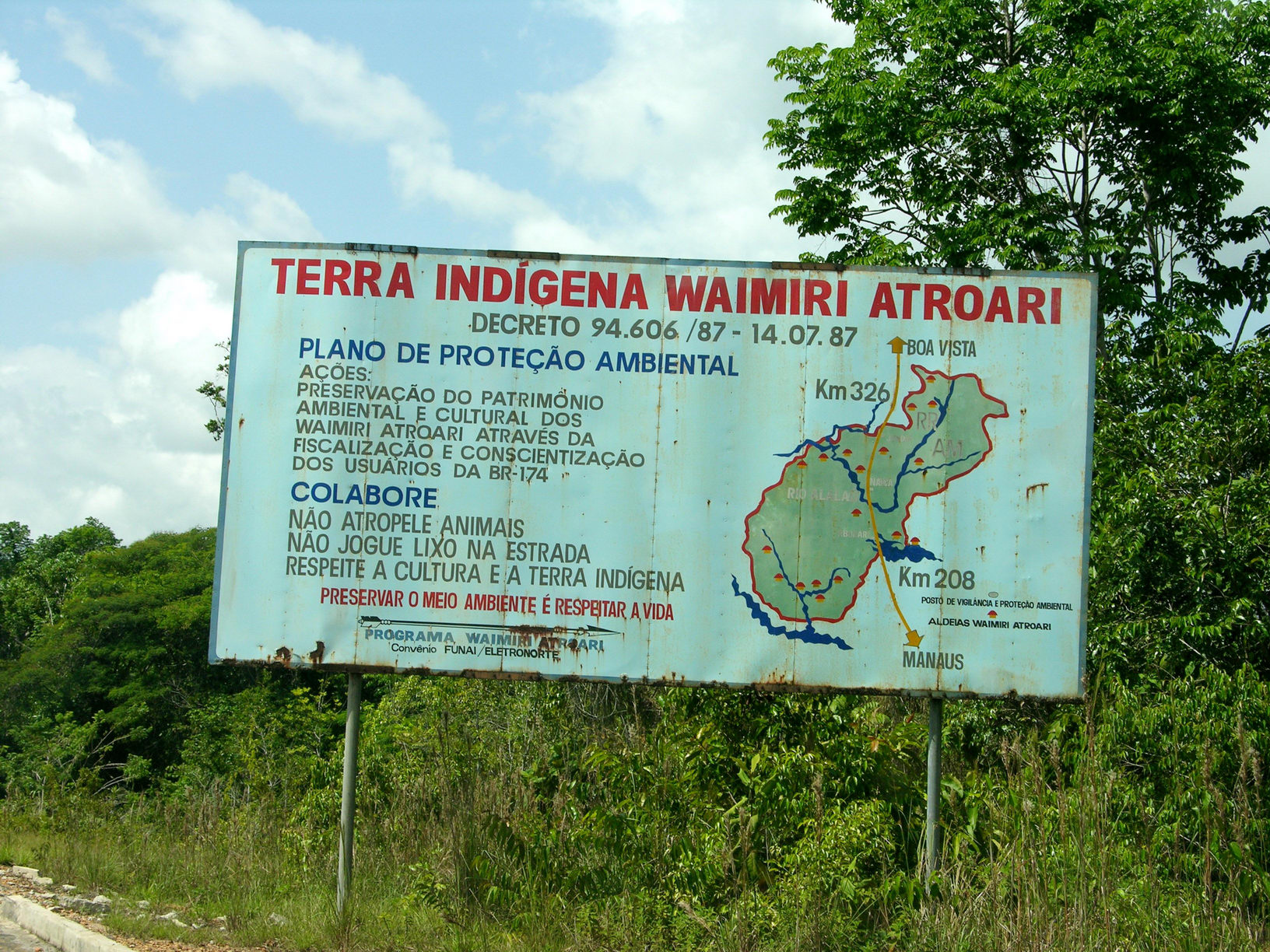
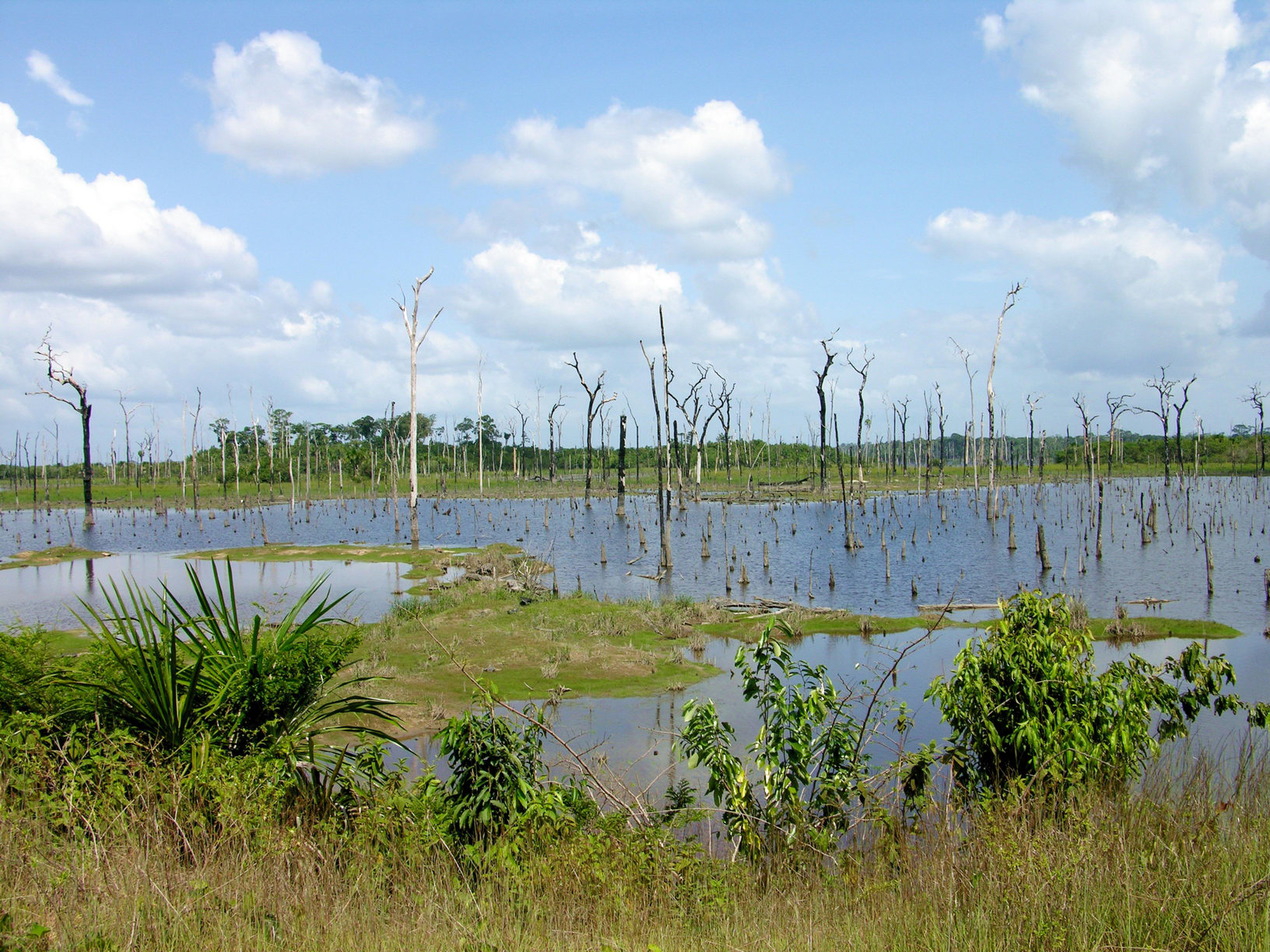
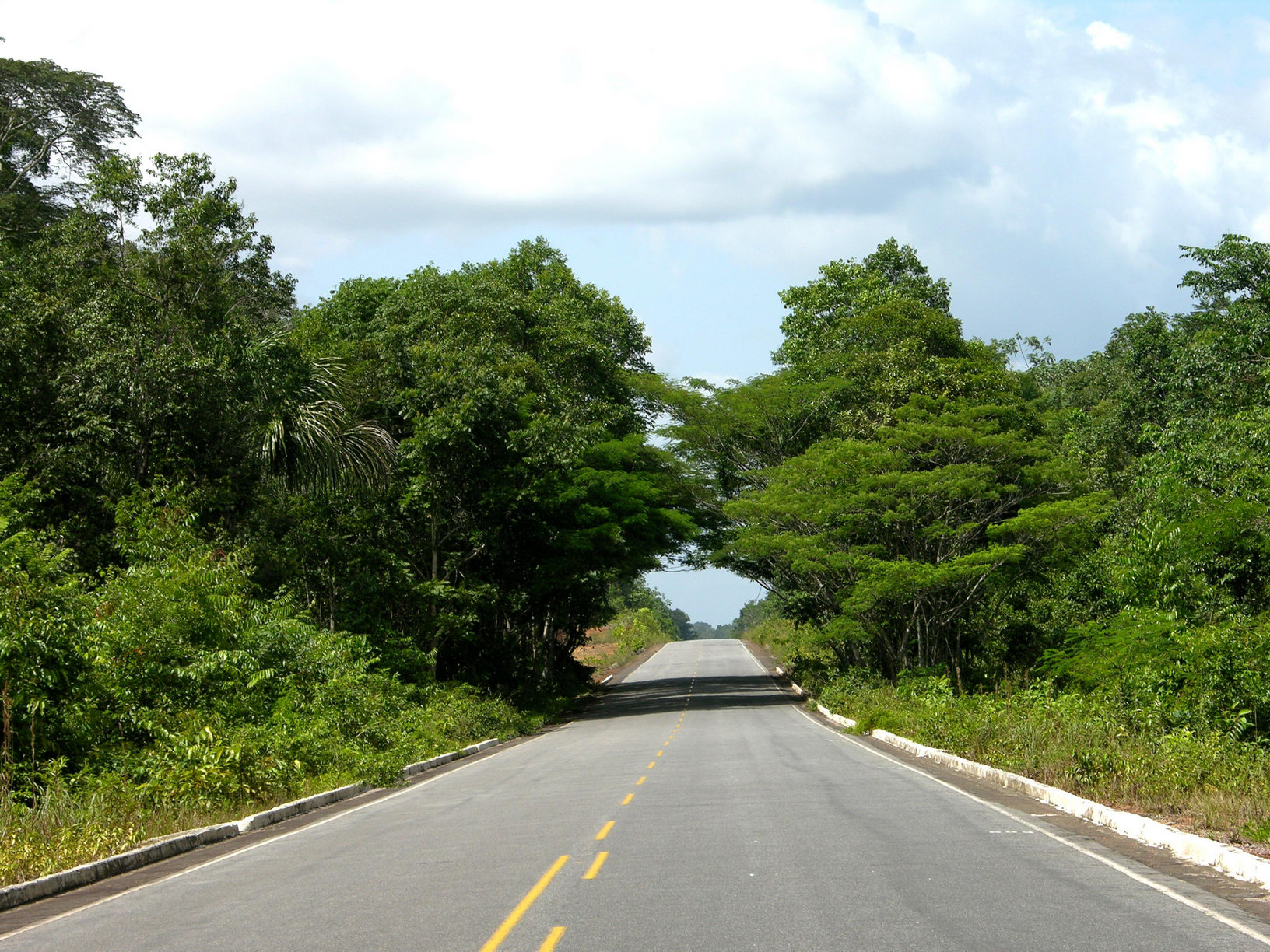
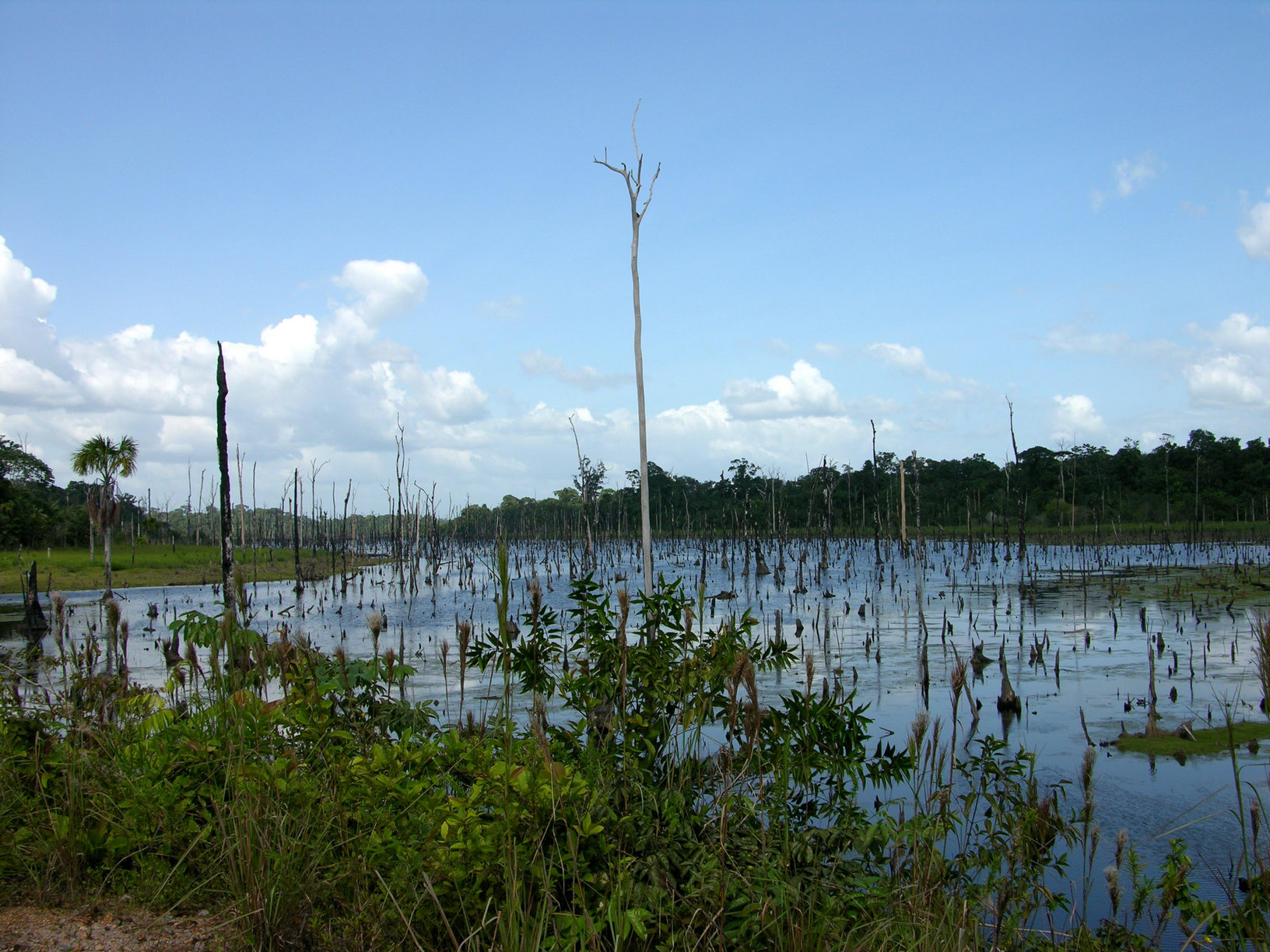
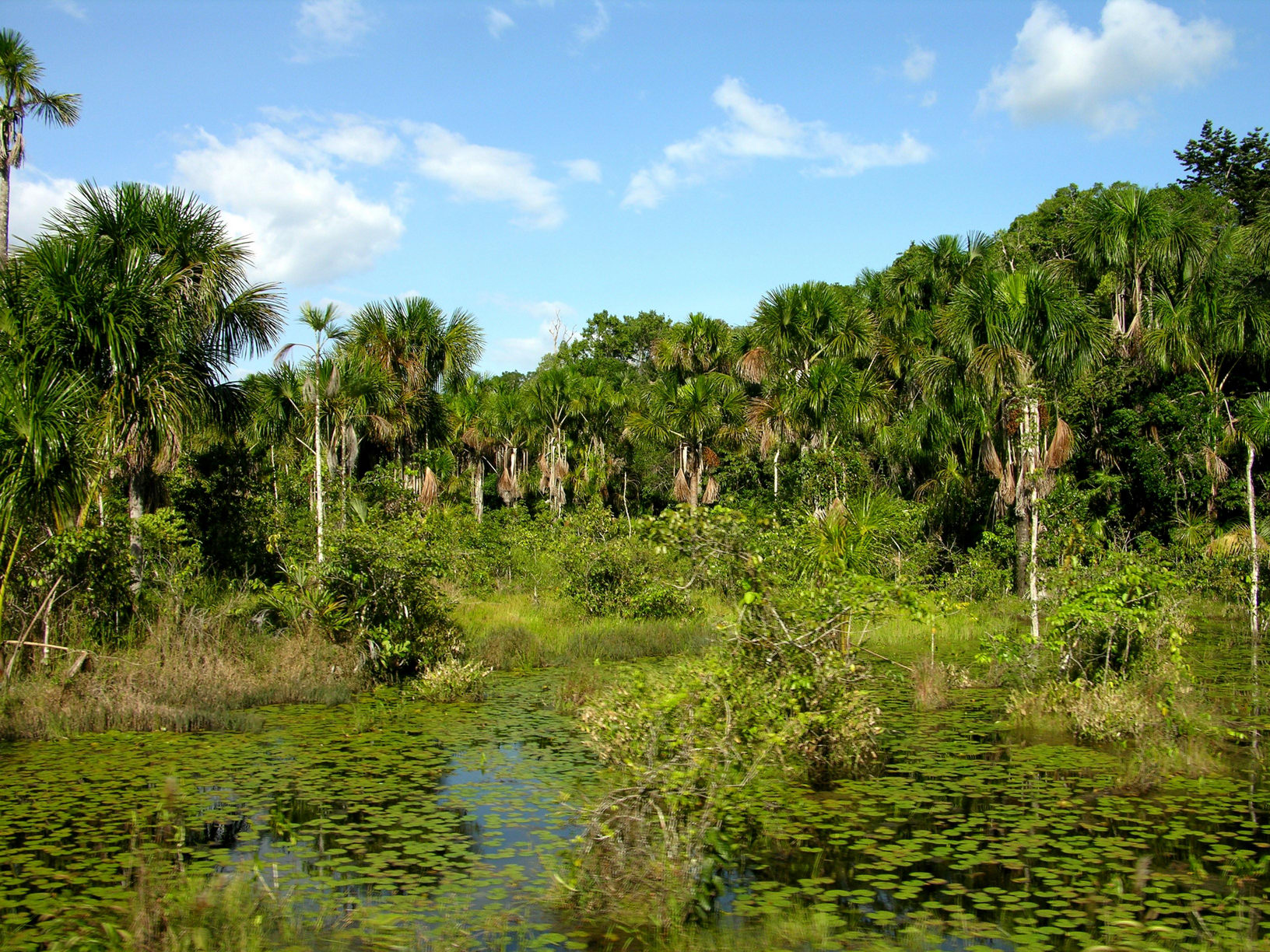
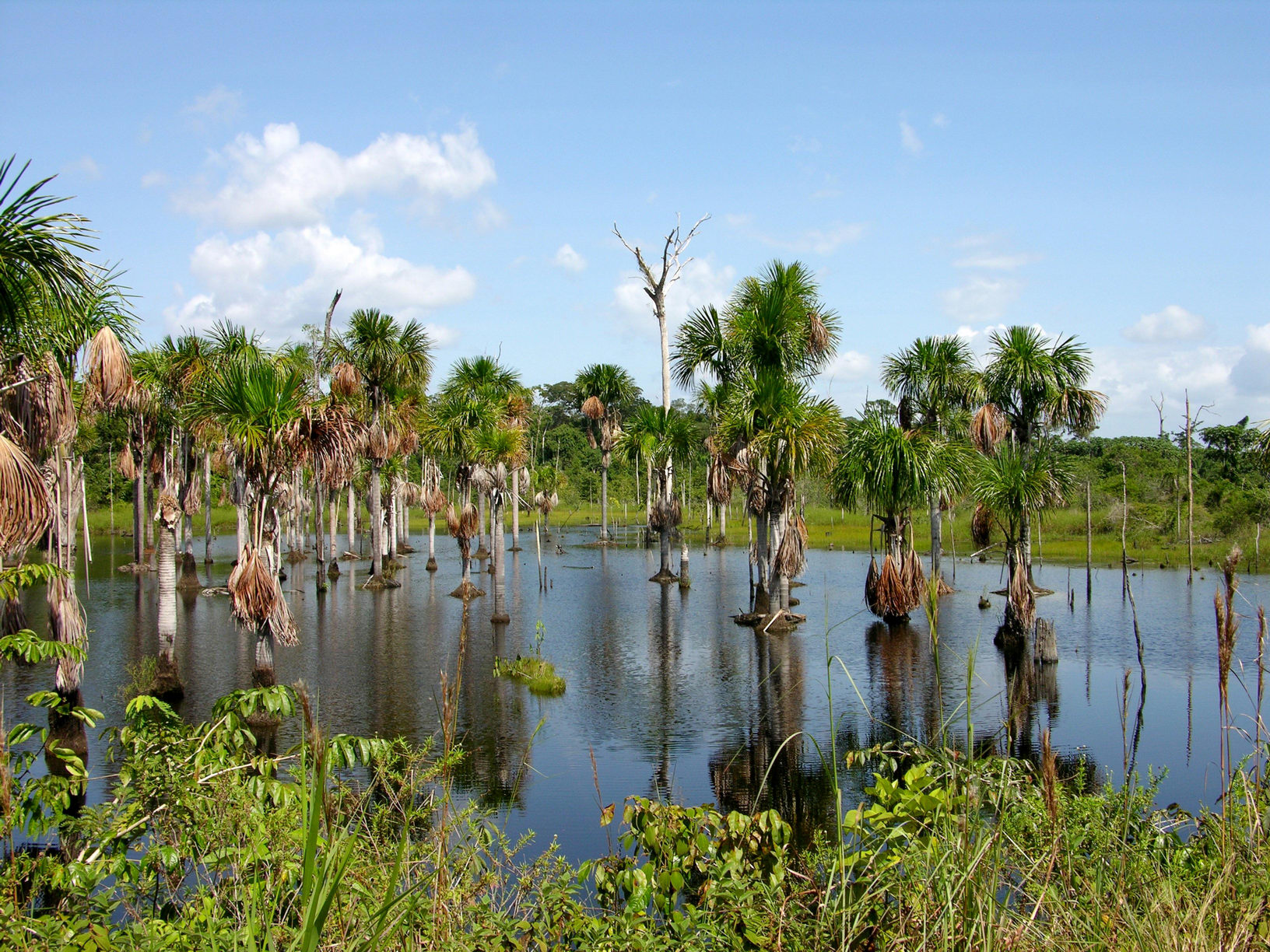
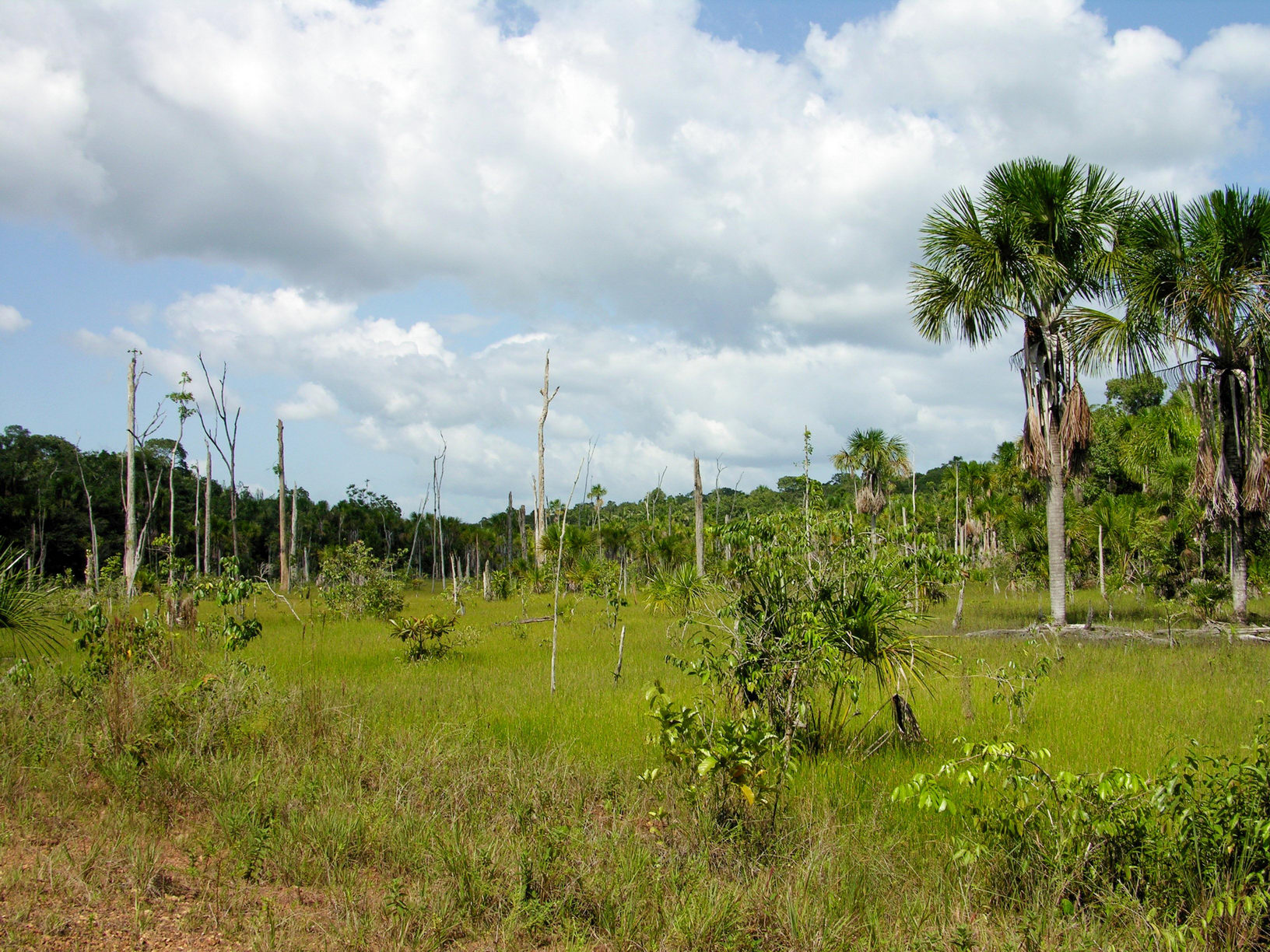
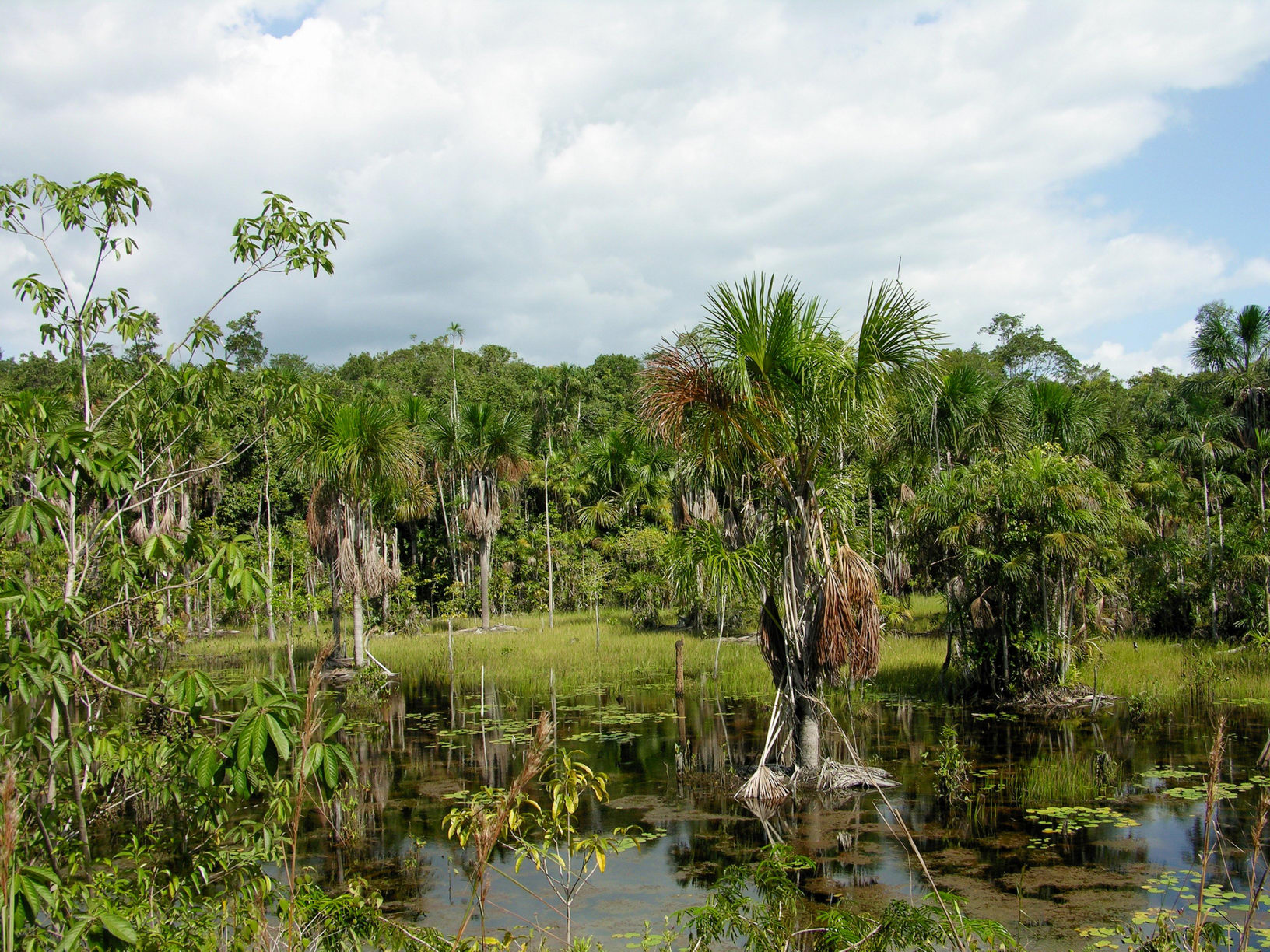
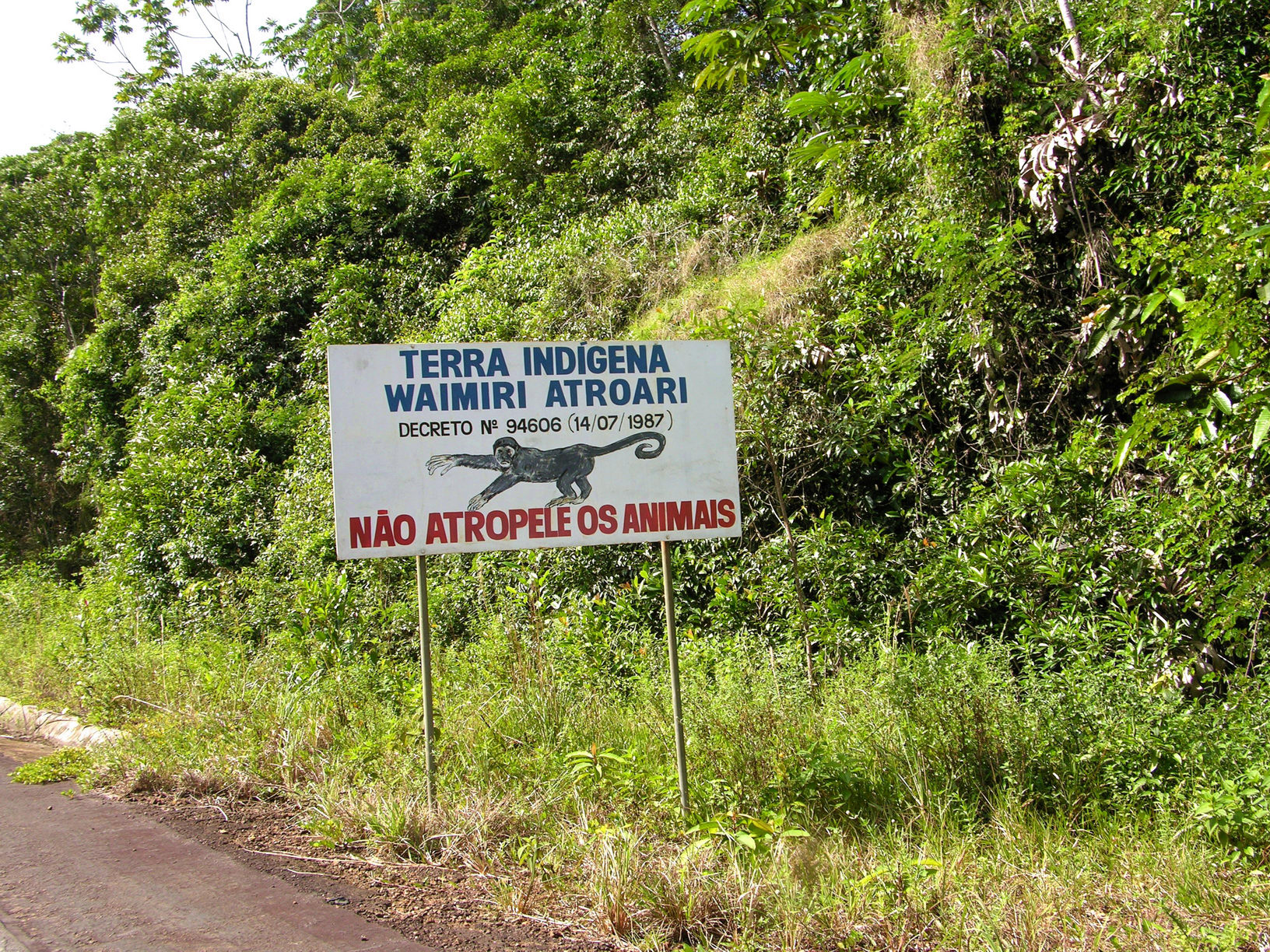
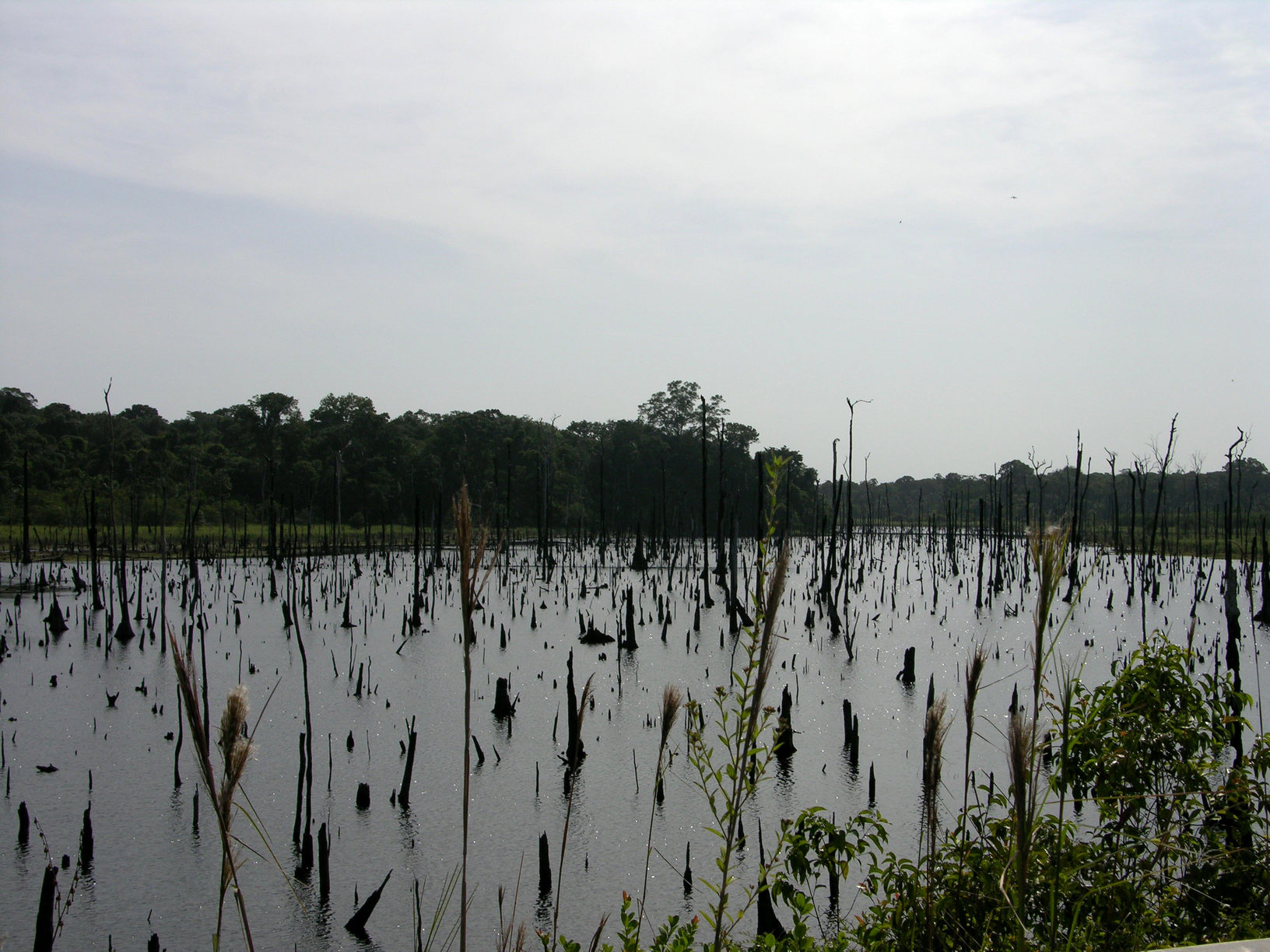
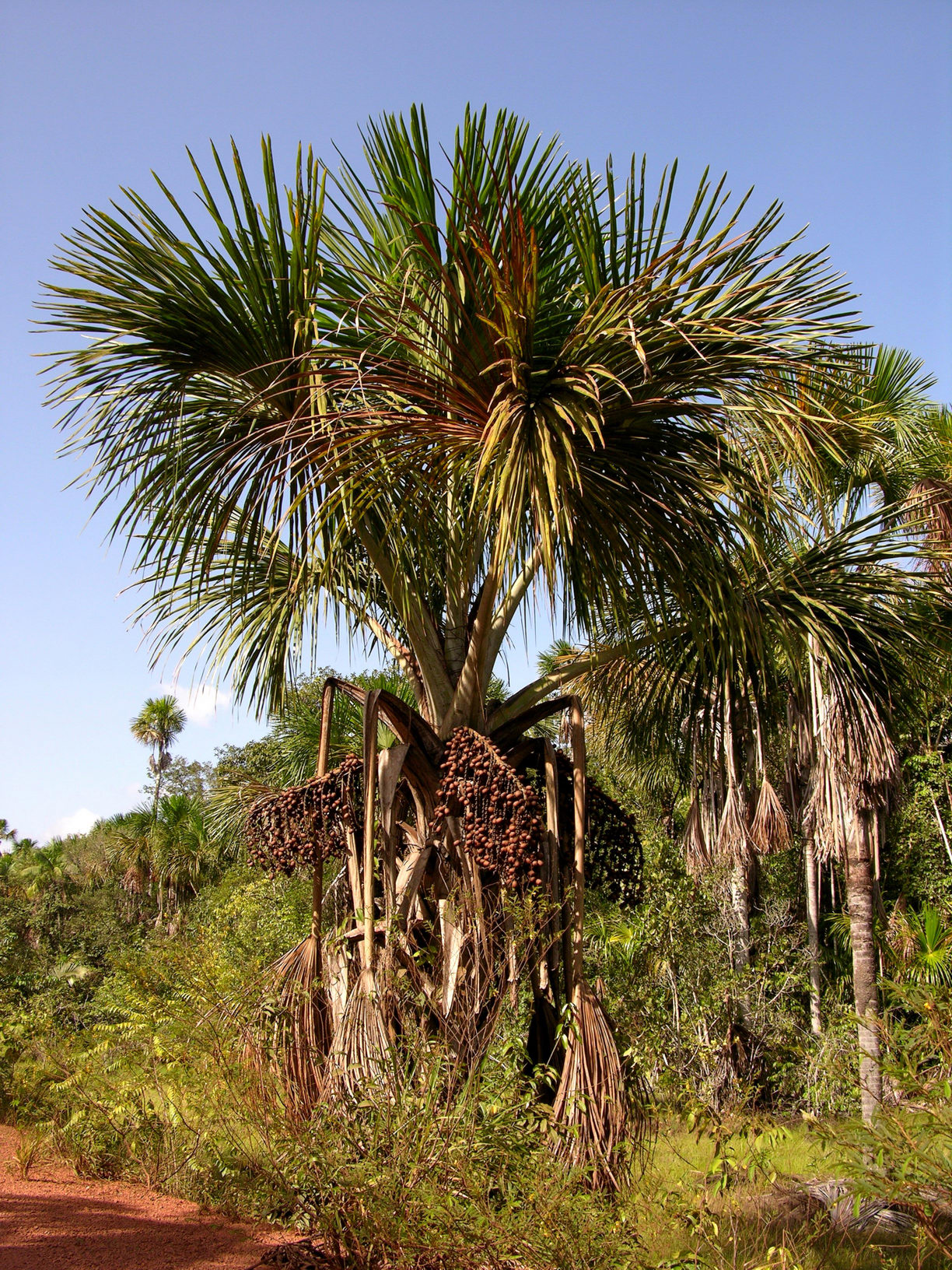
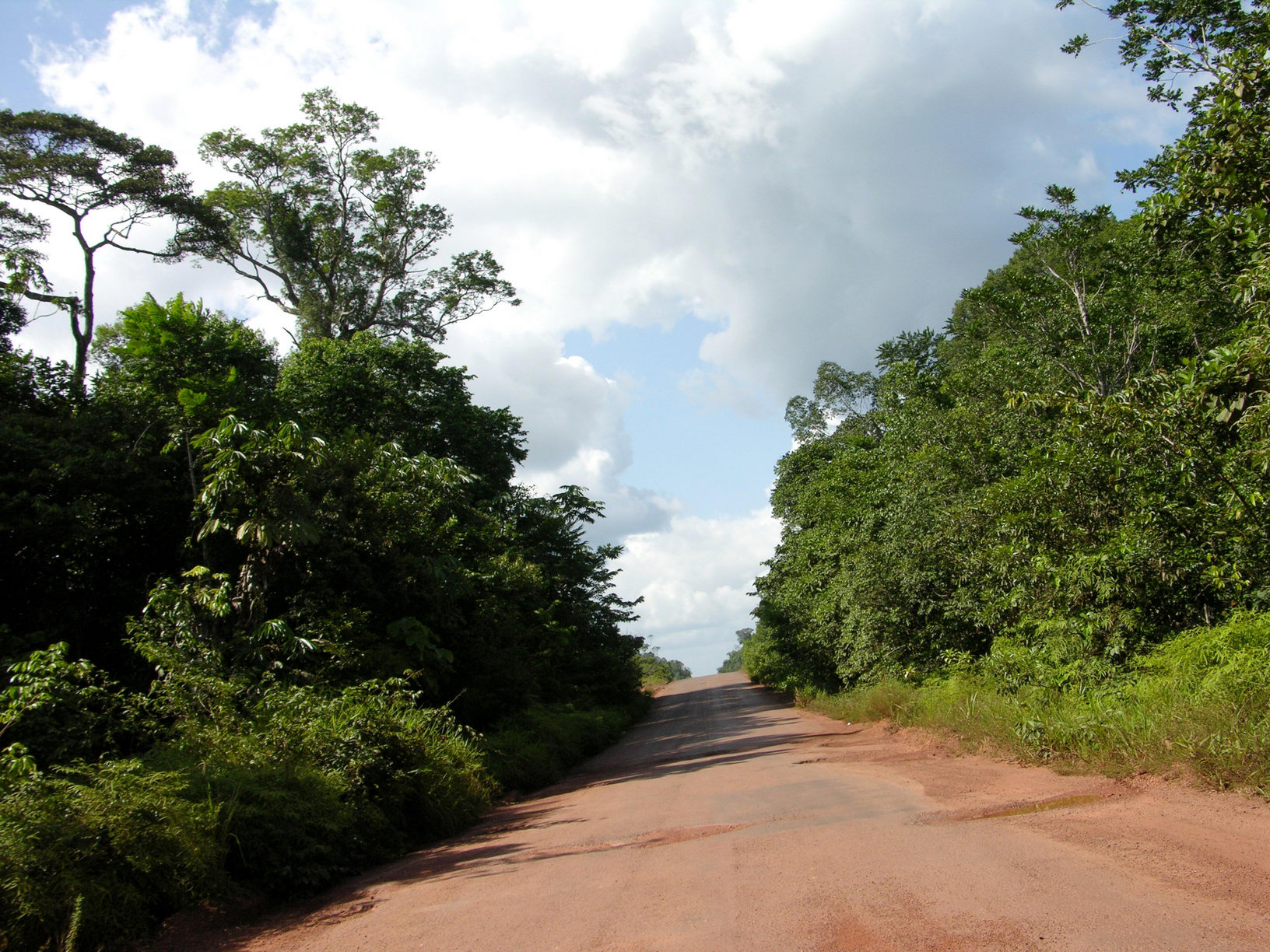
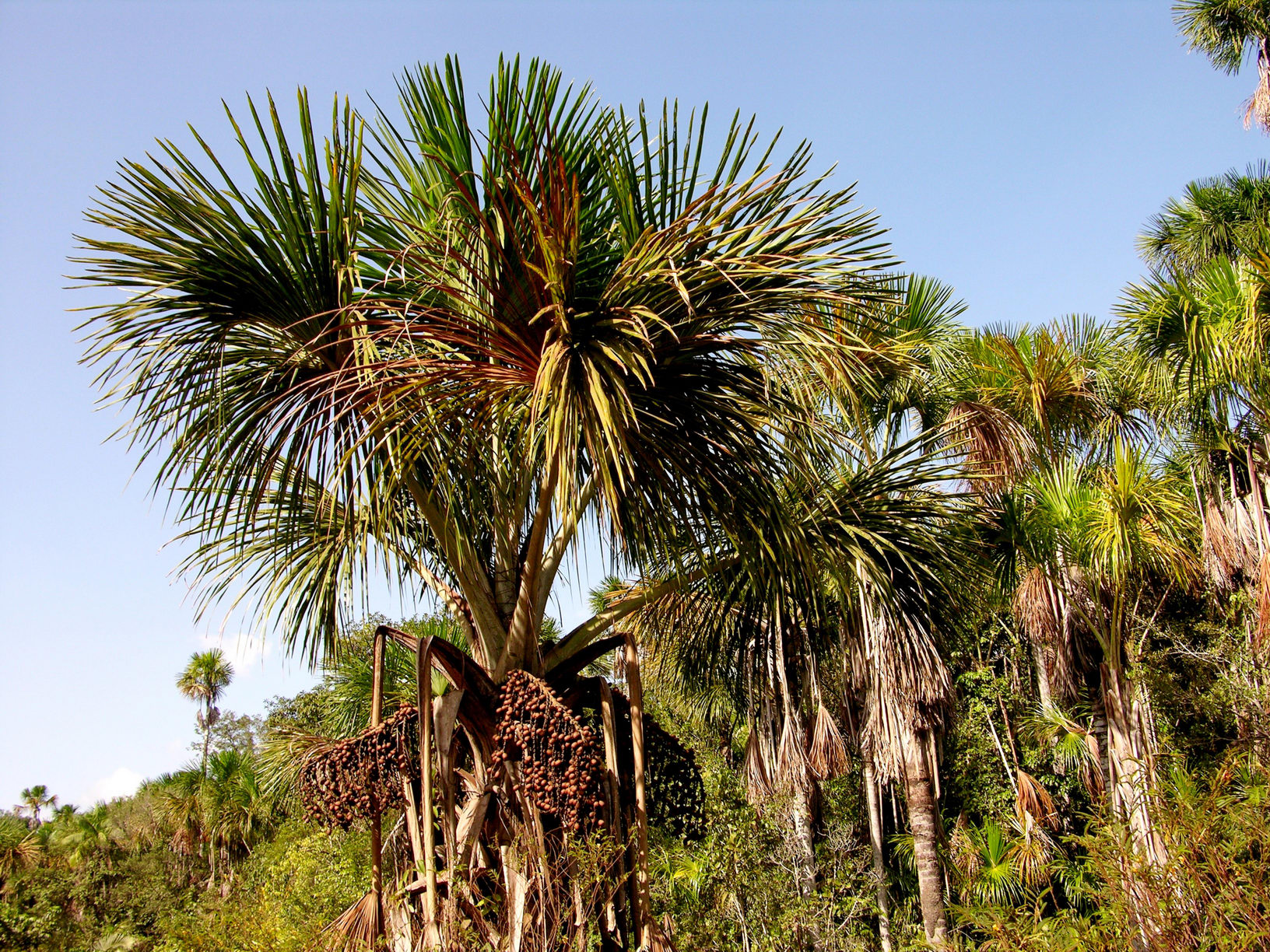
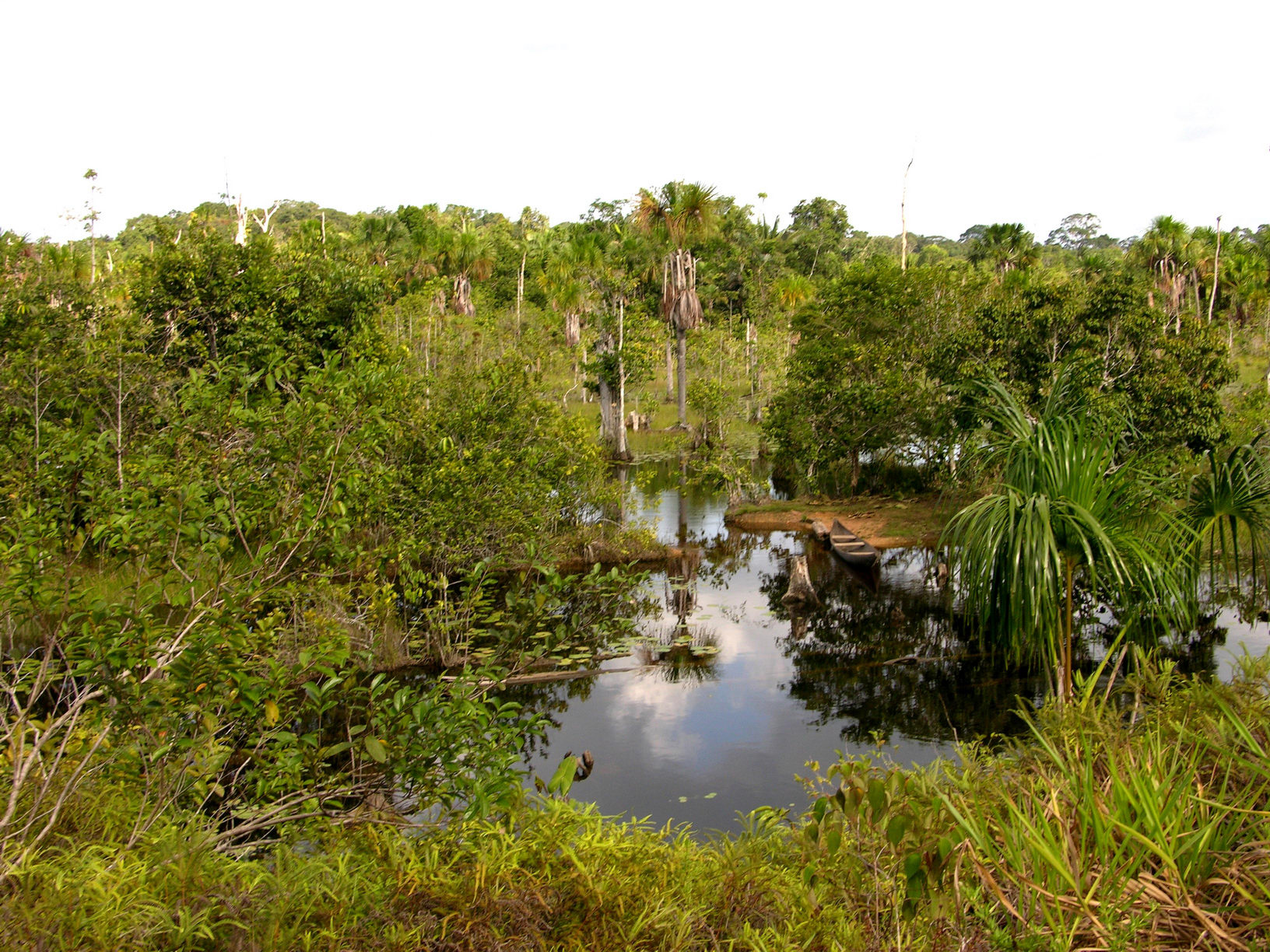
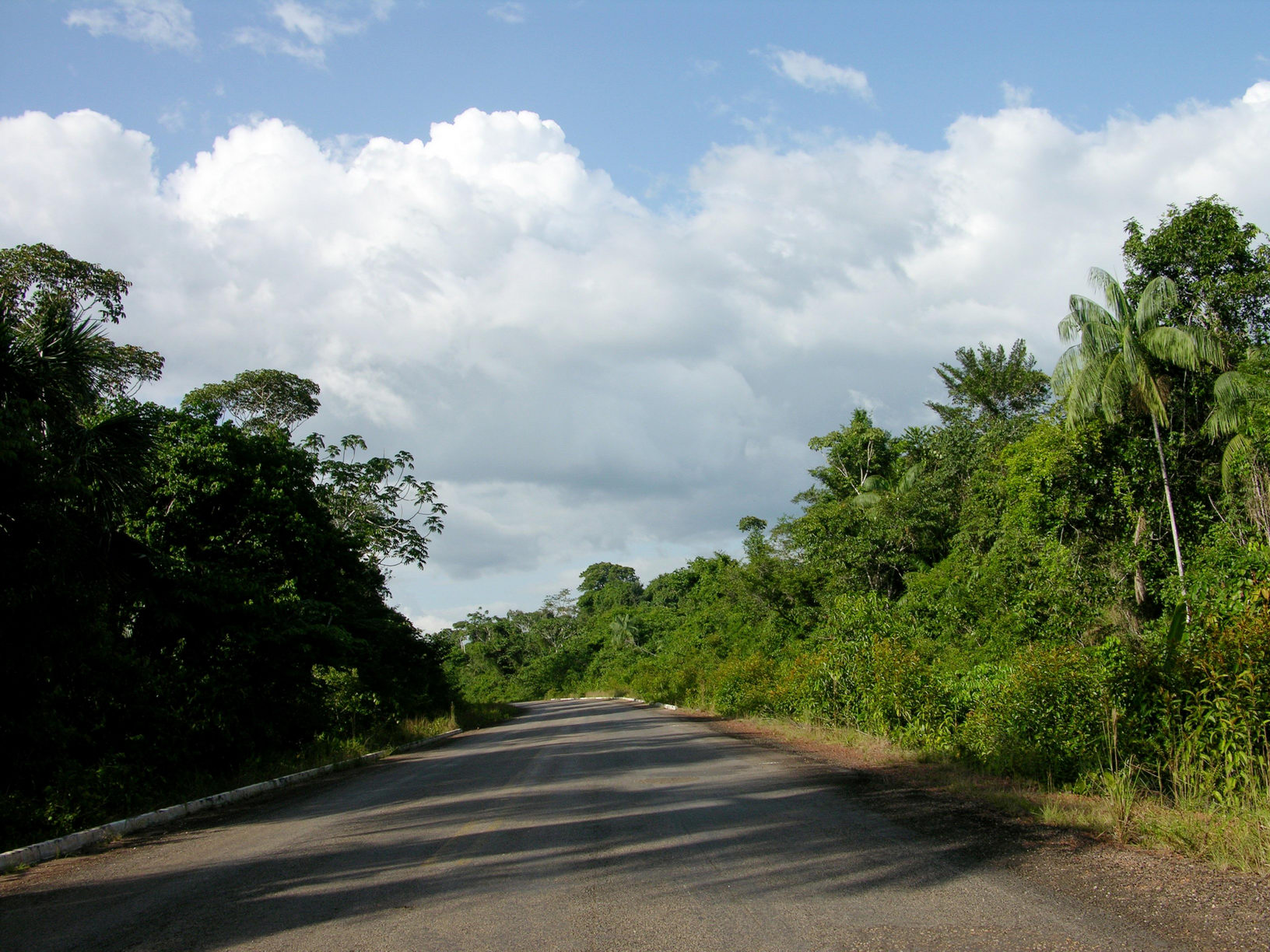
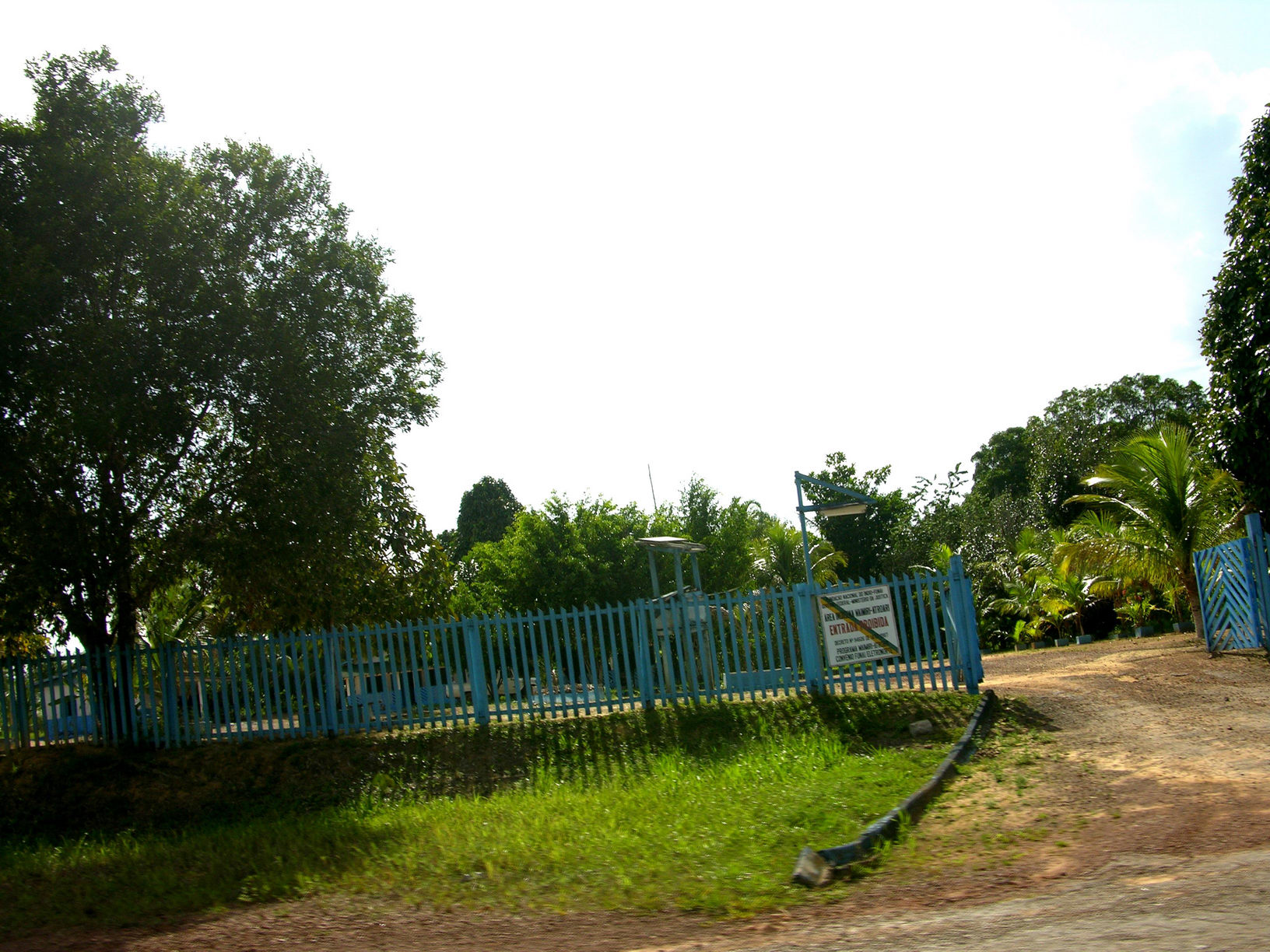
Of course we stopped, and of course we took pictures. We only came across people twice. Nothing exotic, except for one Indigenous woman with her children, walking bare-breasted. In spite of all these benefits of civilisation that had fallen into their laps, I felt they hated everyone else. While I was photographing another parrot, an Indigenous man came out of the bushes and hurled a huge rock at us. Luckily it hit the wing of the car. It only left a dent that nobody even noticed when we returned it.
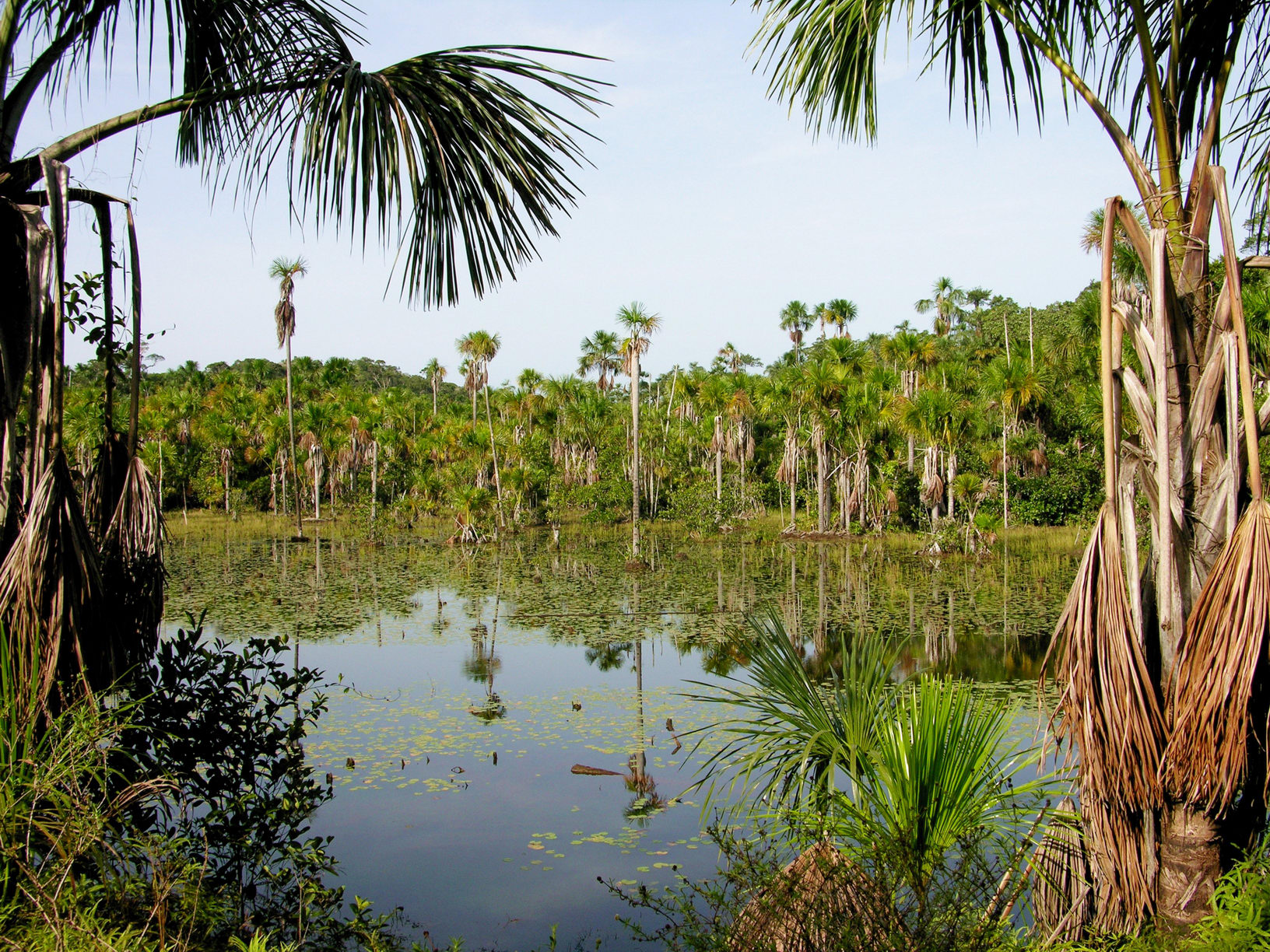
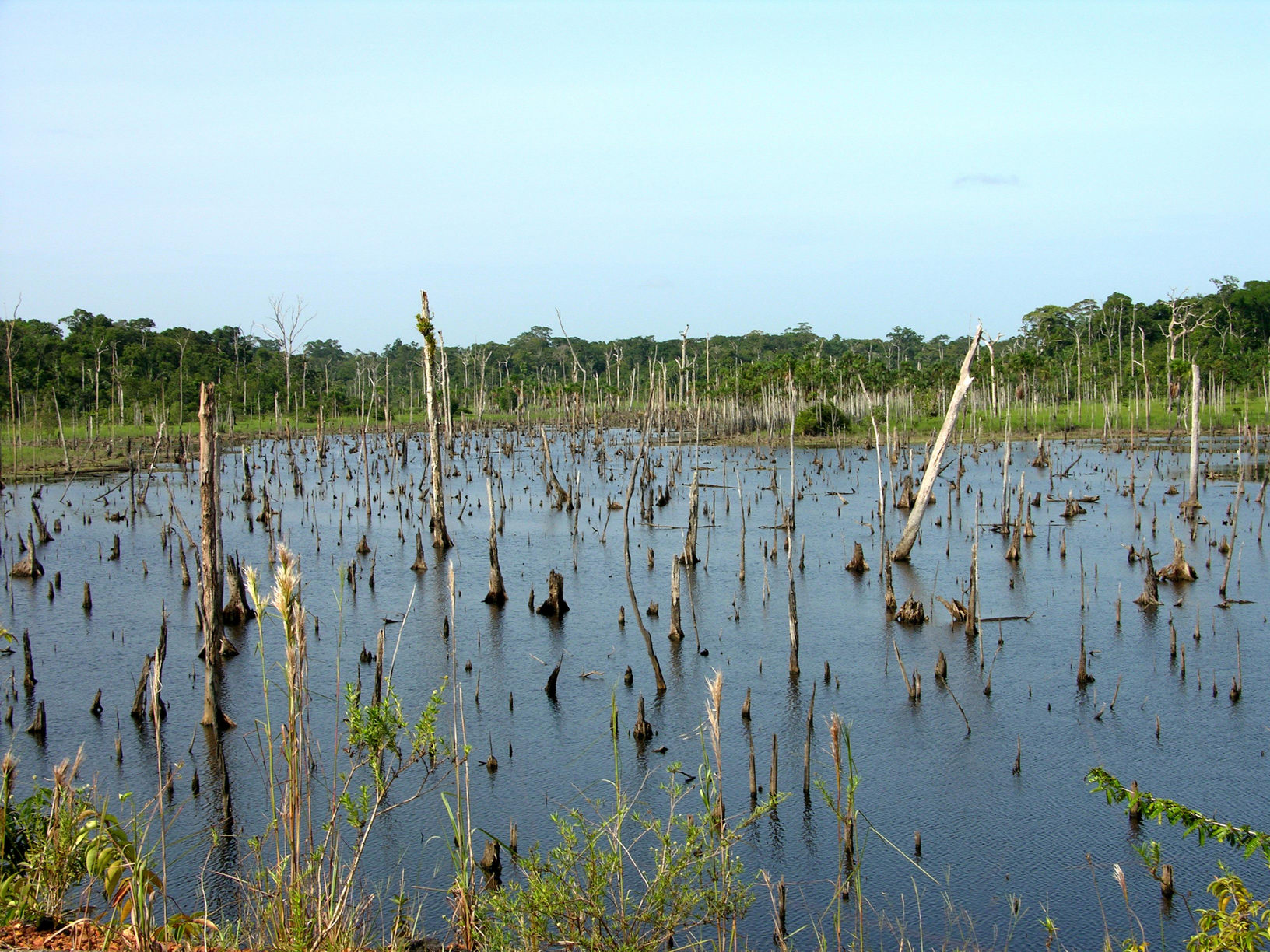
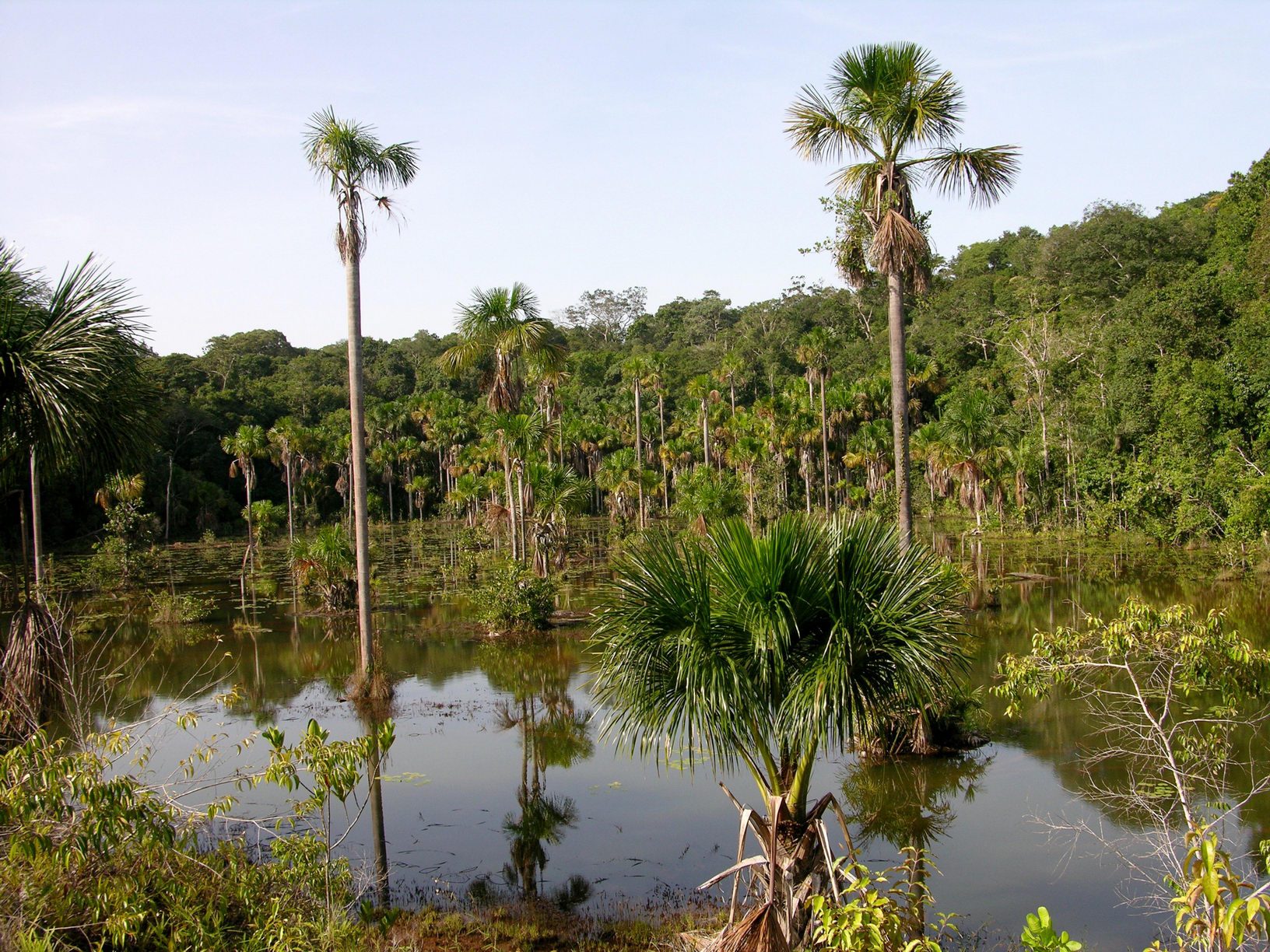
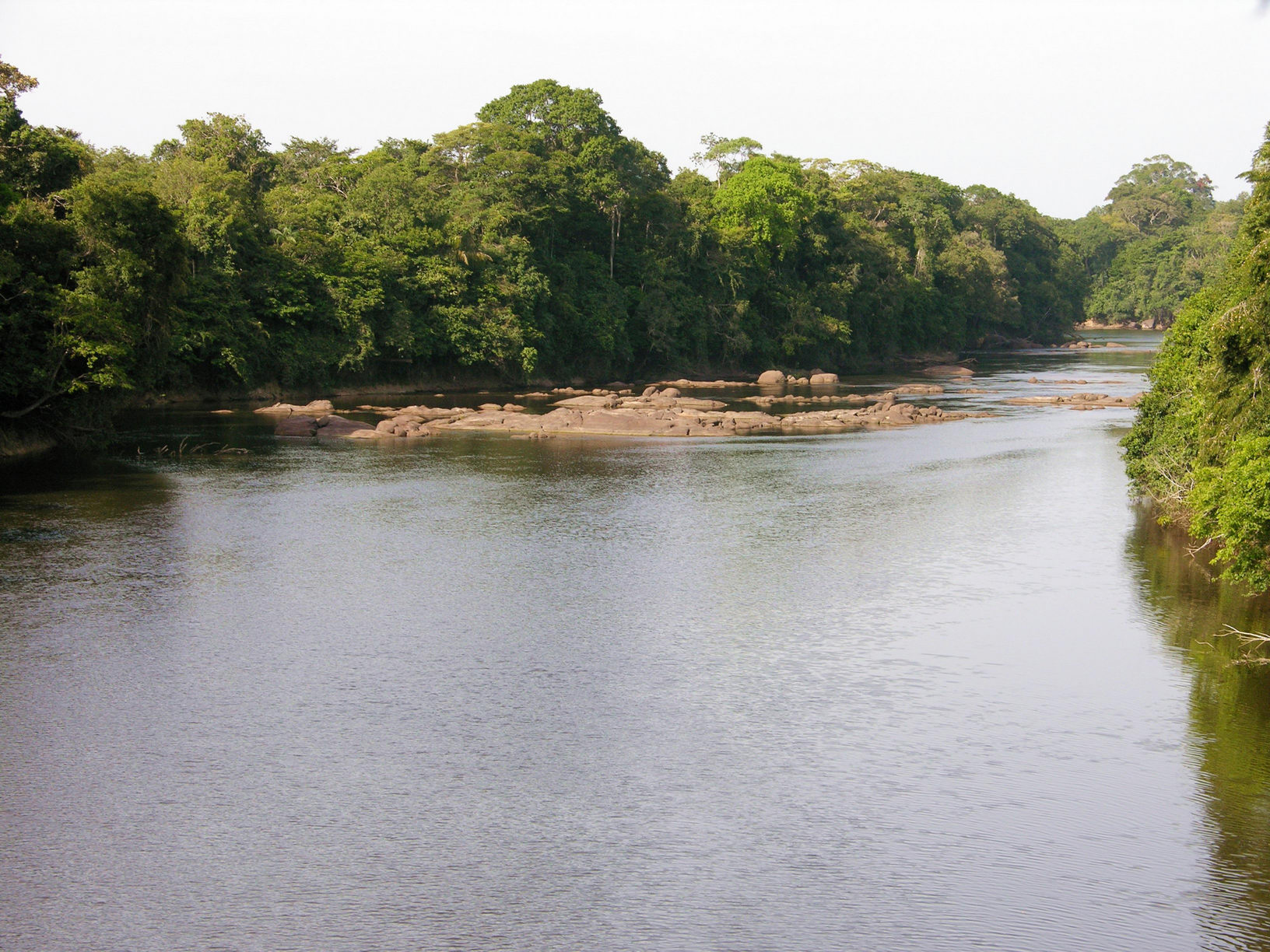
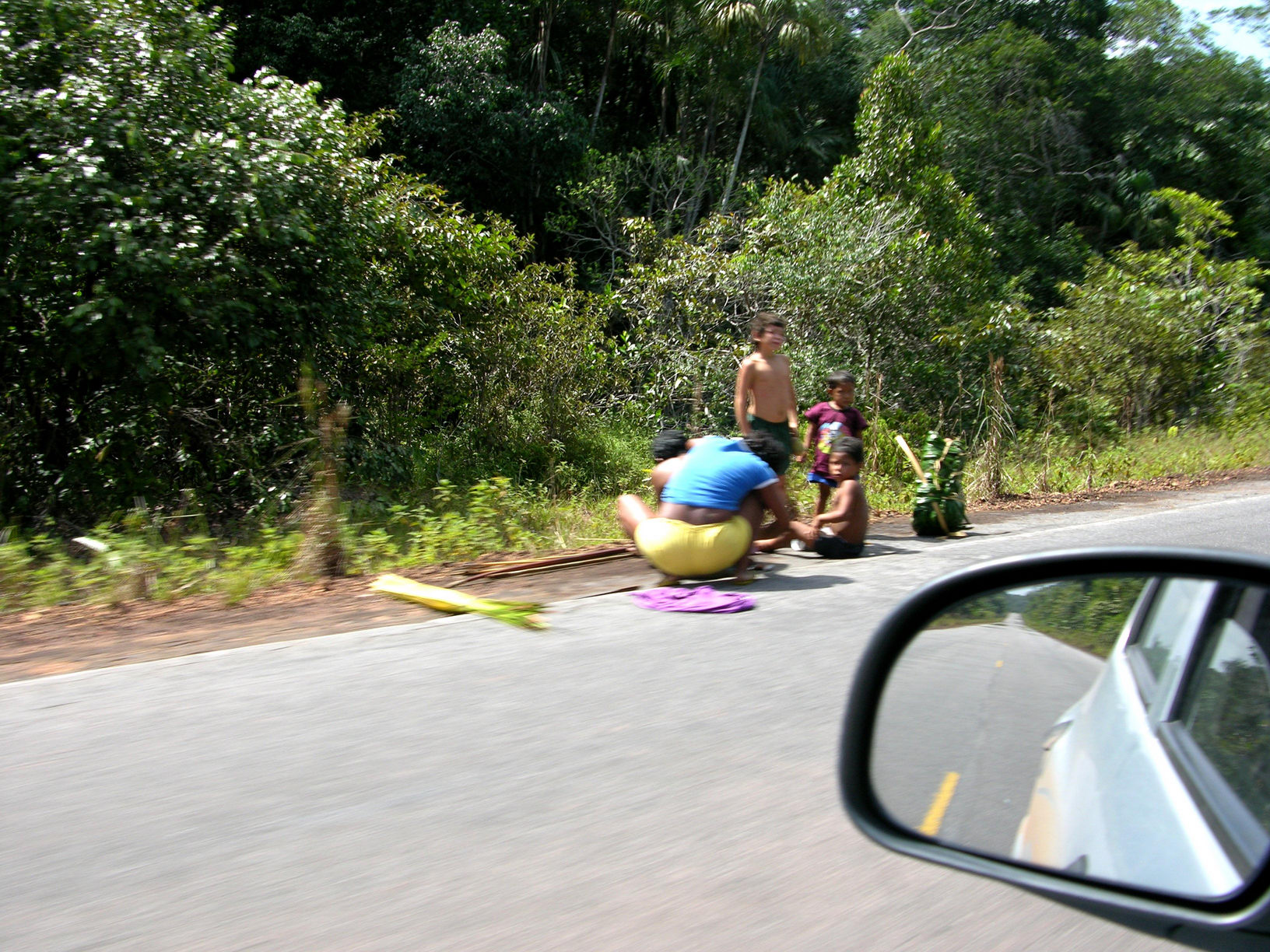
That was nothing. In the seventies, as they built the BR-174 road from Manaus to Boa Vista, the Indigenous people decided to declare war. They began killing road workers with poisoned arrows. The army had to be brought in and they started killing soldiers too. In all, according to the account we heard, two hundred people died on the white side during construction. The army lost no time either. By 1986 the population of the tribe had dropped from 1,500 to 400 and peace was reached.
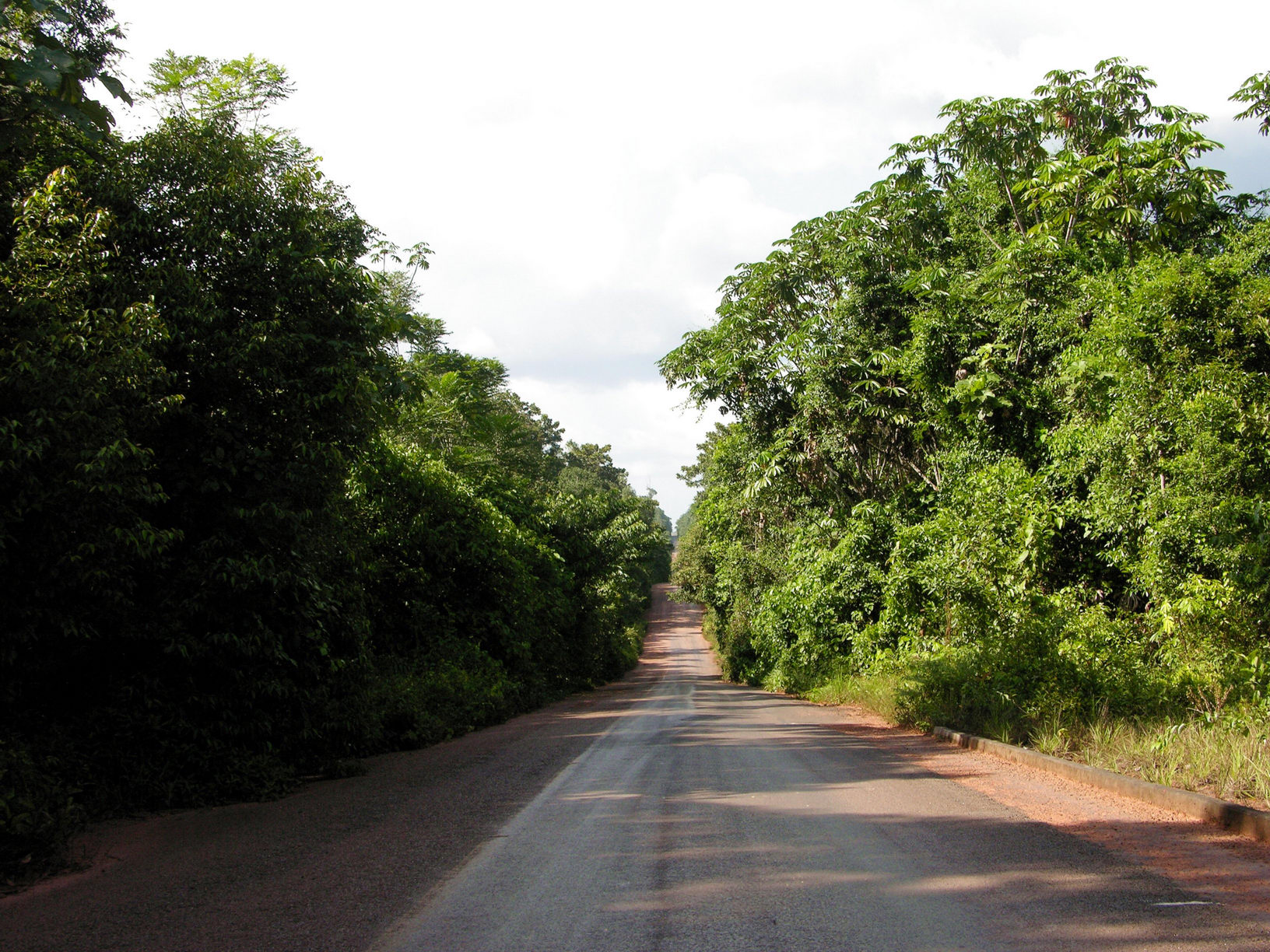
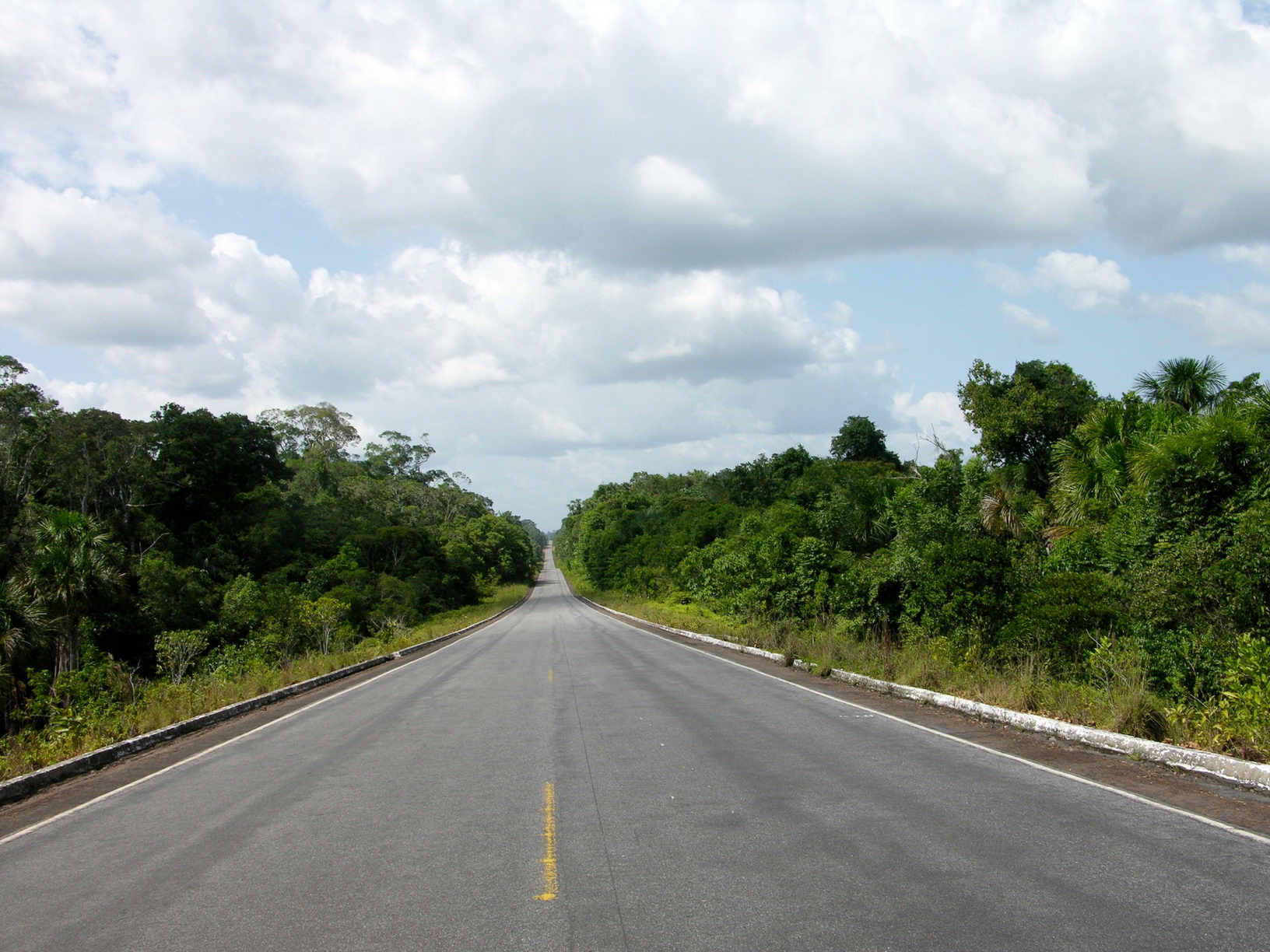
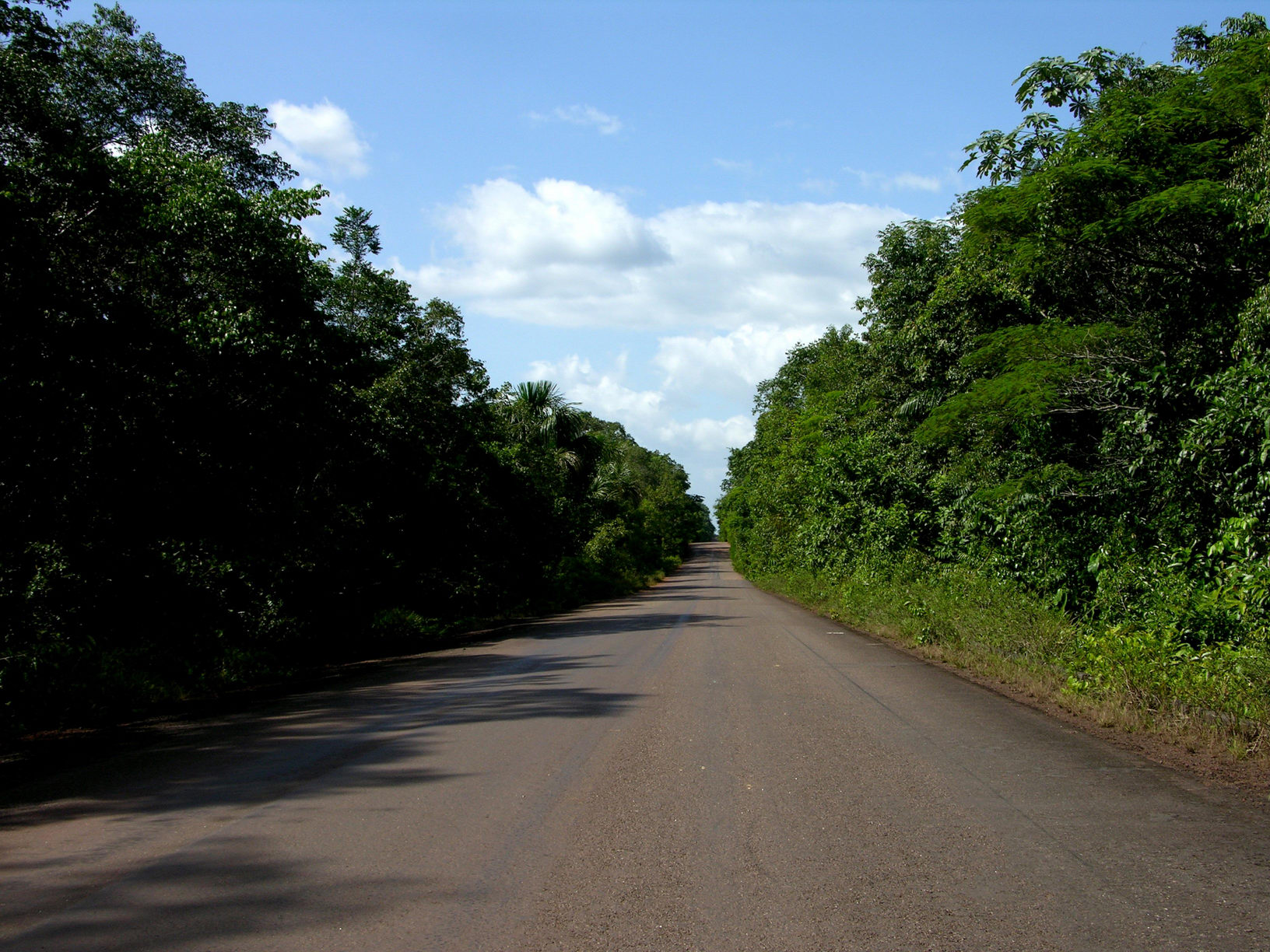
The government's concession was to ban passing vehicles from stopping and forbid travel after dark. Only the scheduled buses ignored the rule.
That was only twenty years ago. So the odd boulder out of the bushes was mild by comparison.
I had no desire to go in and talk to them. They'd not only beat us up, they'd have every right to hand us over to the police. Besides, I felt they'd long since lost their own culture, and the difference between them and the people working the neighbouring fields was a legal right to be idle, to hunt rare animals with impunity and to sell souvenirs without paying tax. The souvenirs, arrows and spears, were very interesting. Just too big to lug around.
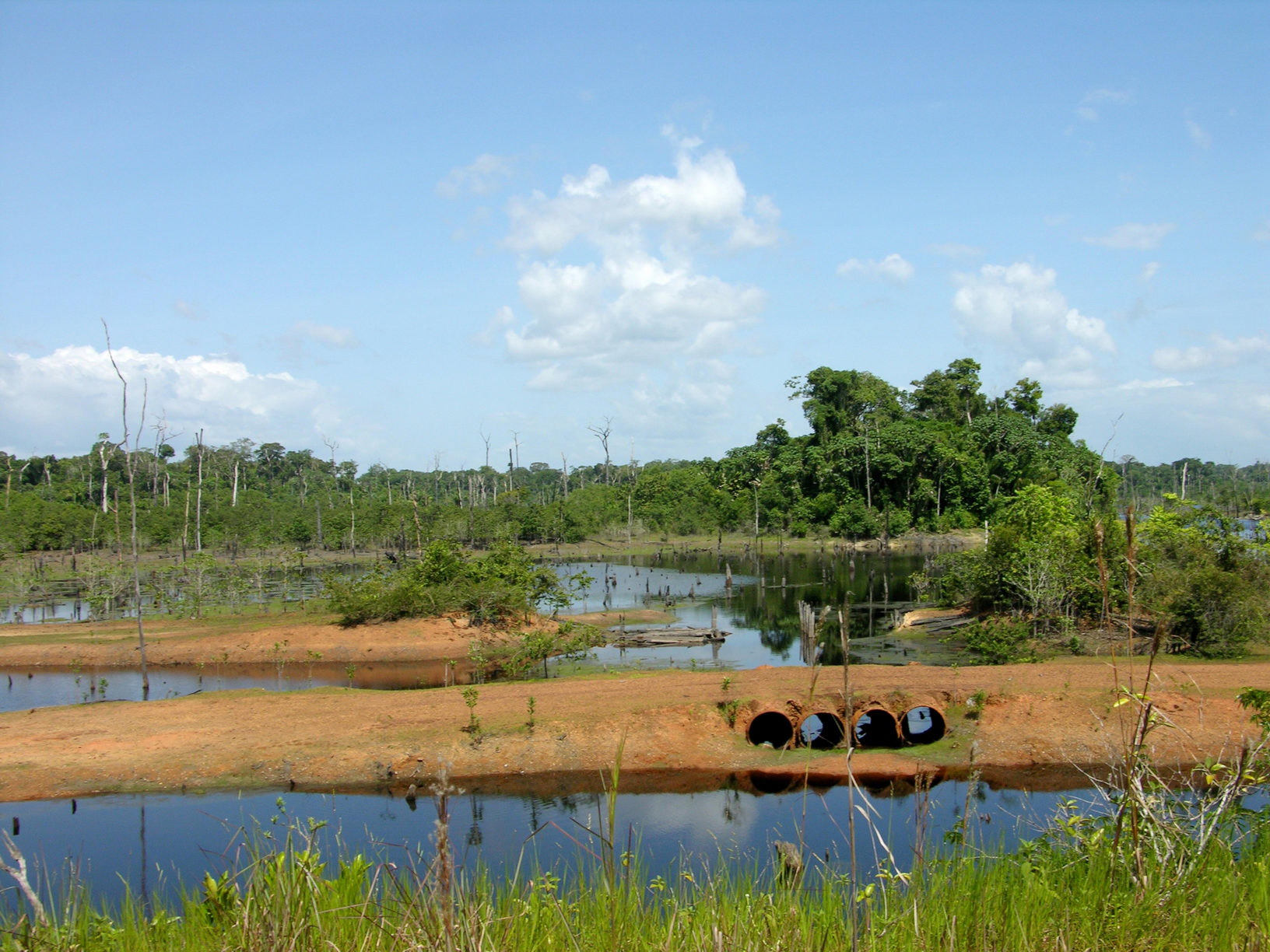
That's what Indigenous people are like in Brazil, or so it struck me. There are, of course, more remote communities, but even they have long been integrated into the state, counted and issued papers. Some work with tourists. Most live far away and are hard to get to, not only because there's no transport, but because white people are forbidden to visit their land. Interestingly, the most isolated people, who avoid contact with the outside world unless they must, are descendants of European settlers who came to the New World in search of peace and seclusion.
Style it as an ethnographic expedition and it's not hard to get permission from the government for a visit. It's far more interesting to do it in neighbouring countries, though. Suriname, Guyana and Peru have less money. There's considerably less clear-cut forest, no humanitarian aid, and the Indigenous people have held onto more of their earlier ways of life. There aren't bans like that, either.
As well as the communities, the reserves preserve untouched nature. But trying to see it while keeping out of sight of the people who live there is a thankless task.
National parks aren't Brazil's strong point either. They're there, but you can only walk in them in large groups with a guide. The wild parks where tourism can't be turned into a business are closed to visitors altogether. Almost all the rest of the forest has been cut down and ploughed. There are patches of unspoilt country, of course, but you have to look for them. You need patience and a good jeep. During their time in power the military built a lot of forest roads, which have all been abandoned but can still be driven here and there. On those roads it's immediately plain that Brazil really does have lots of wild monkeys, forest that hasn't yet been cut down, and more parrots than we have crows. But again, it's easier to find all of that in neighbouring countries.
Brazil is a country that doesn't understand doing things on your own. Football they understand. Off to the stadium in one great crowd. If it's a beach, there isn't a patch left without a body lying on it. Outdoors? Off in a crowd, crammed transport and traffic jams. The police take an interest in everything. You can be stopped anywhere. There are checkpoints on the roads, like the Russian traffic police posts. By the local rules, for instance, you're meant to drive in shoes without heels. I like driving barefoot, and that's forbidden. There are laws for everything, and everything is banned. In Brazil it's best not to cross paths with the police.
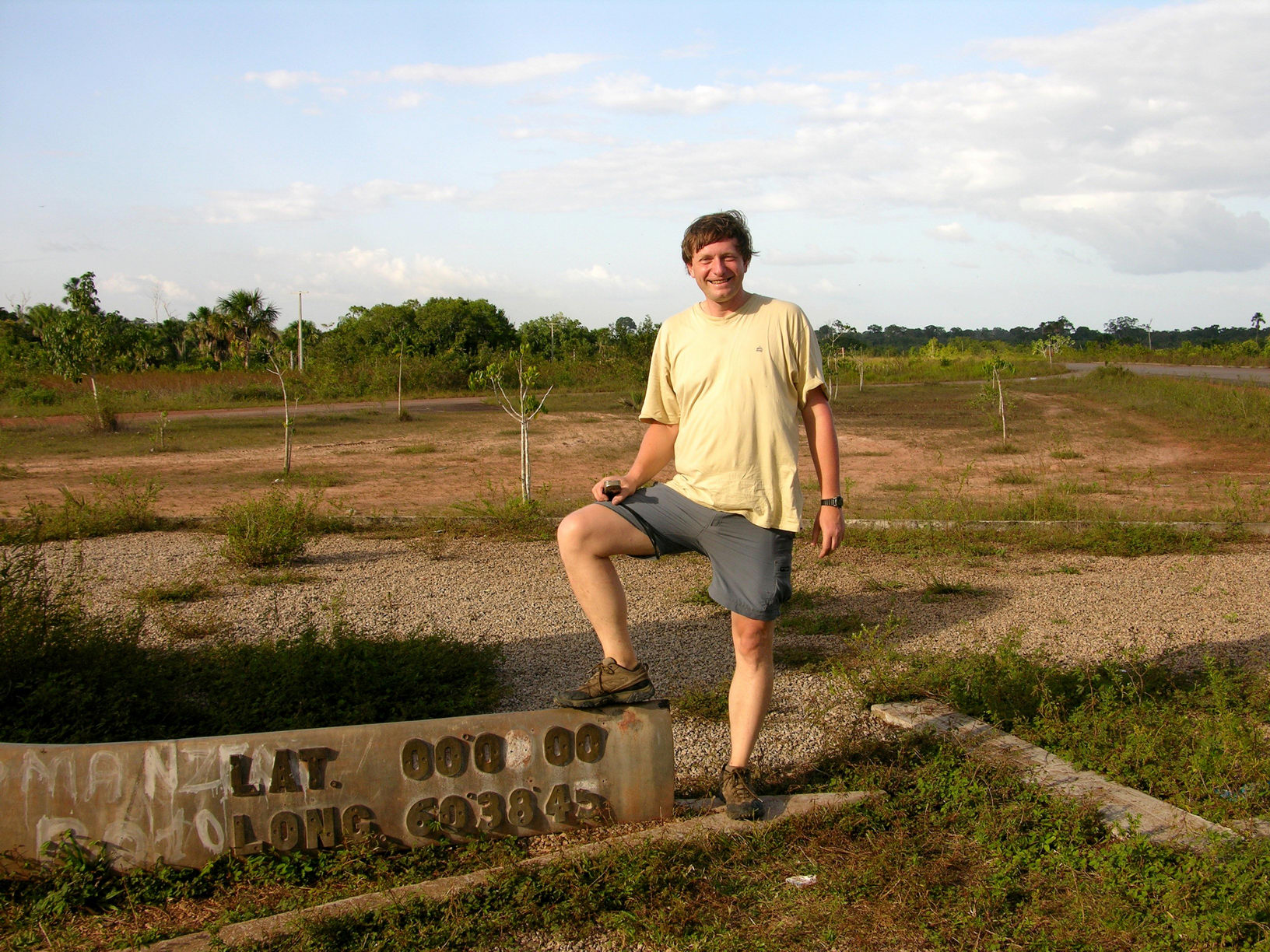
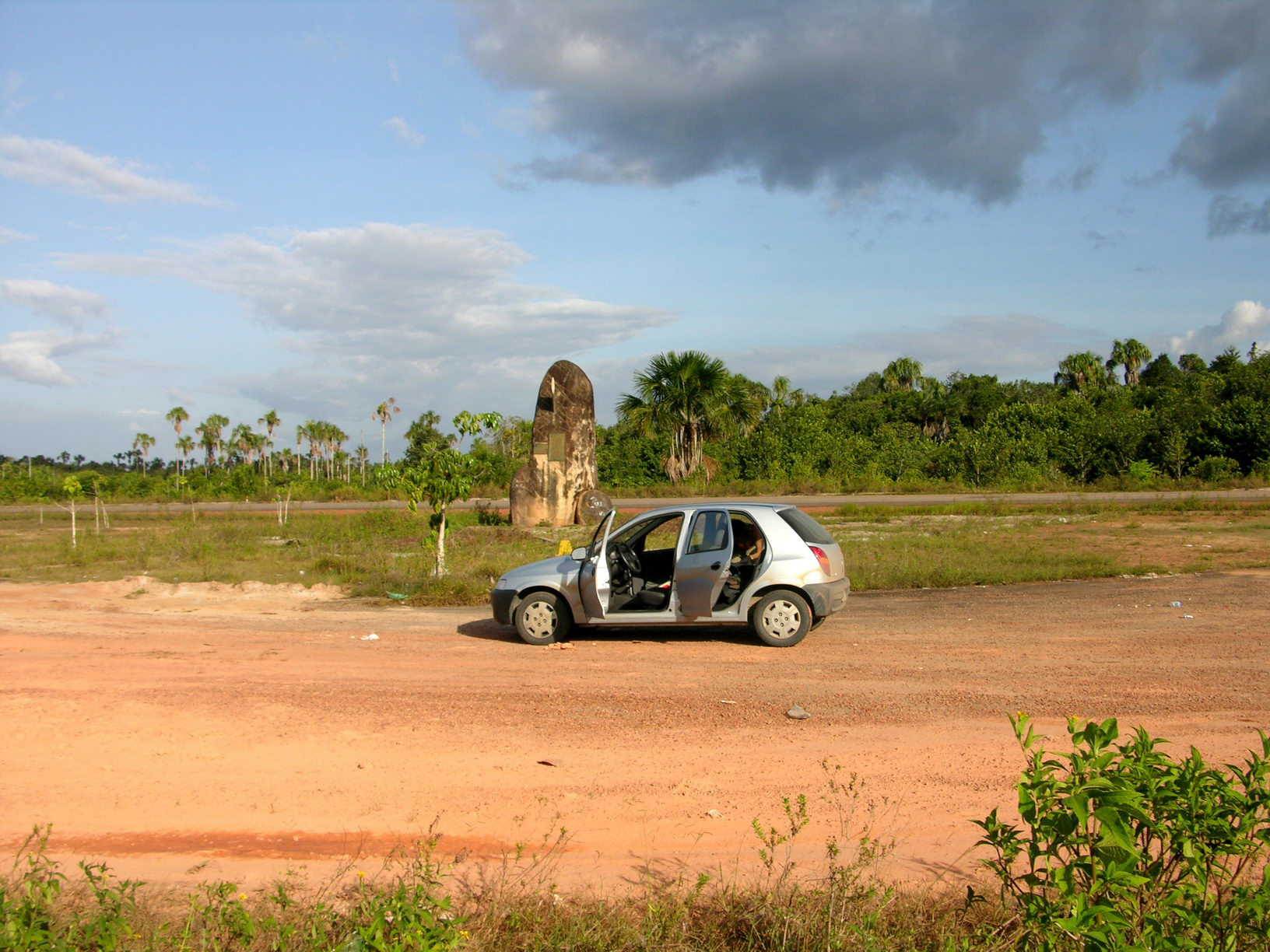
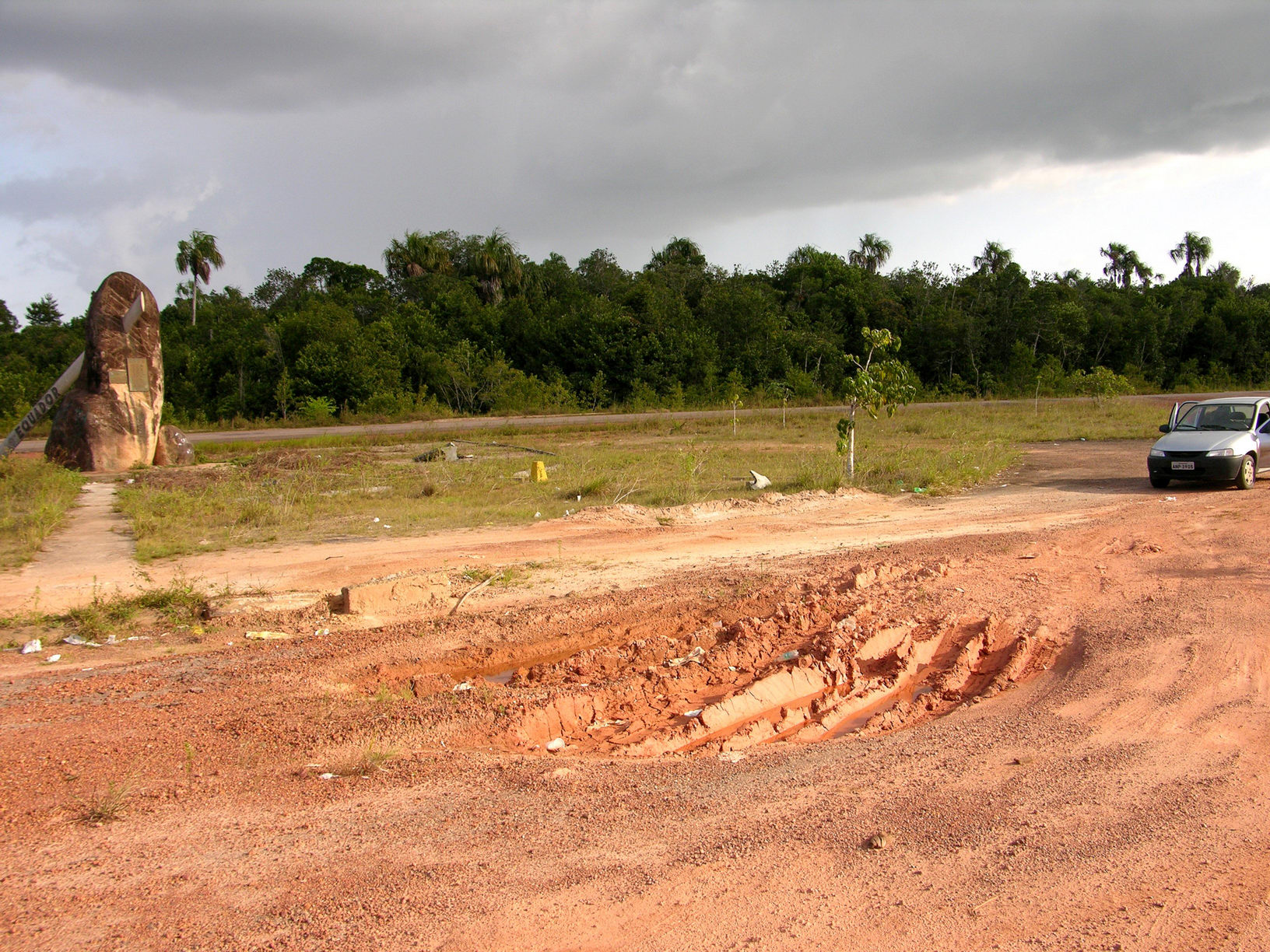
North of the Indigenous reserve the road crosses the equator. We had a plan, probably against the law too. We wanted to spend the night right on the equator. There was a suitable spot. At the exact point where the road crosses the equator stands a monument. To the equator and to the road workers killed by Indigenous people building the trans-Amazonian road. A monument to the victory of humanity, which had driven a road through the whole jungle from Patagonia to the Caribbean.
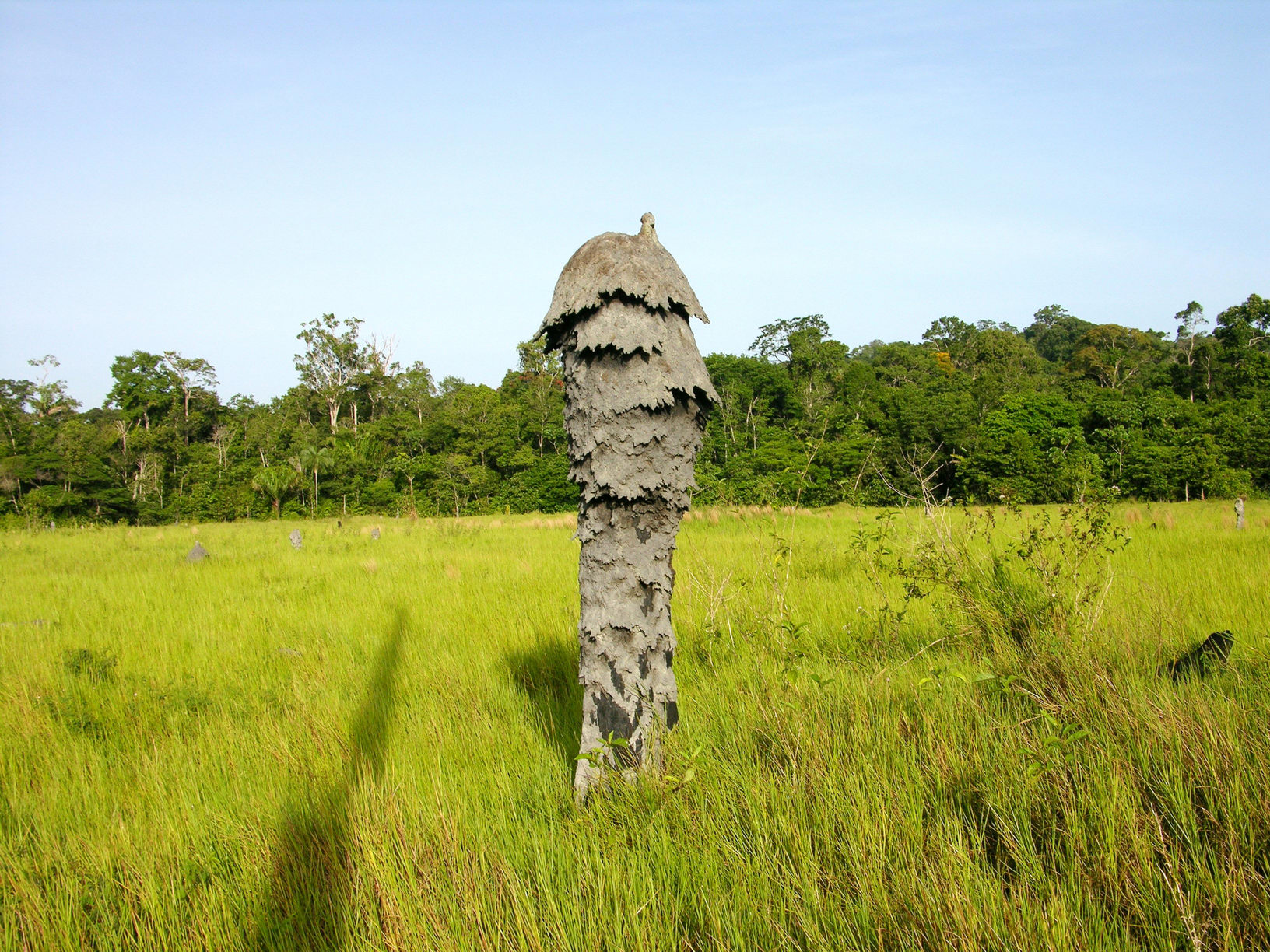
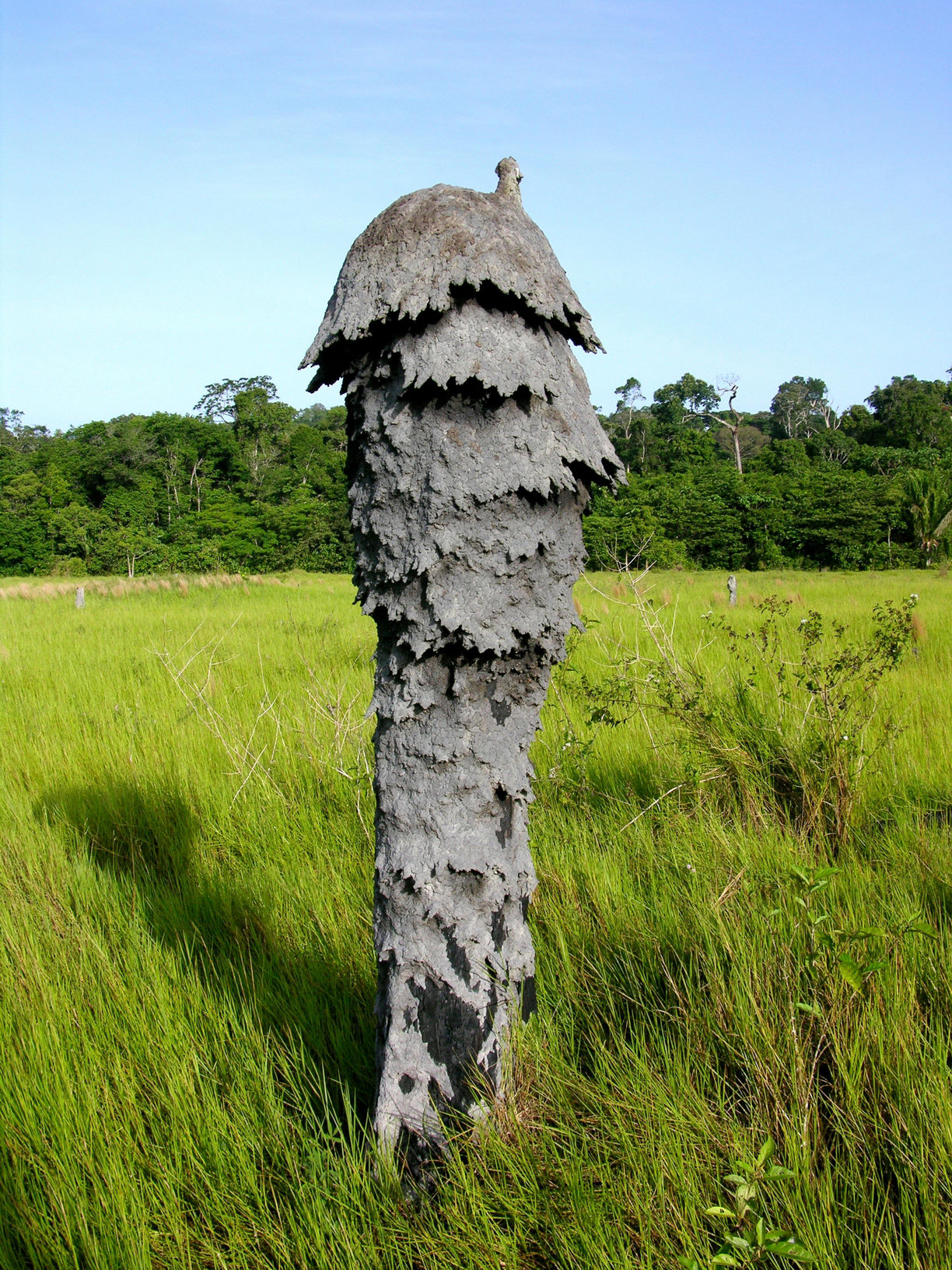
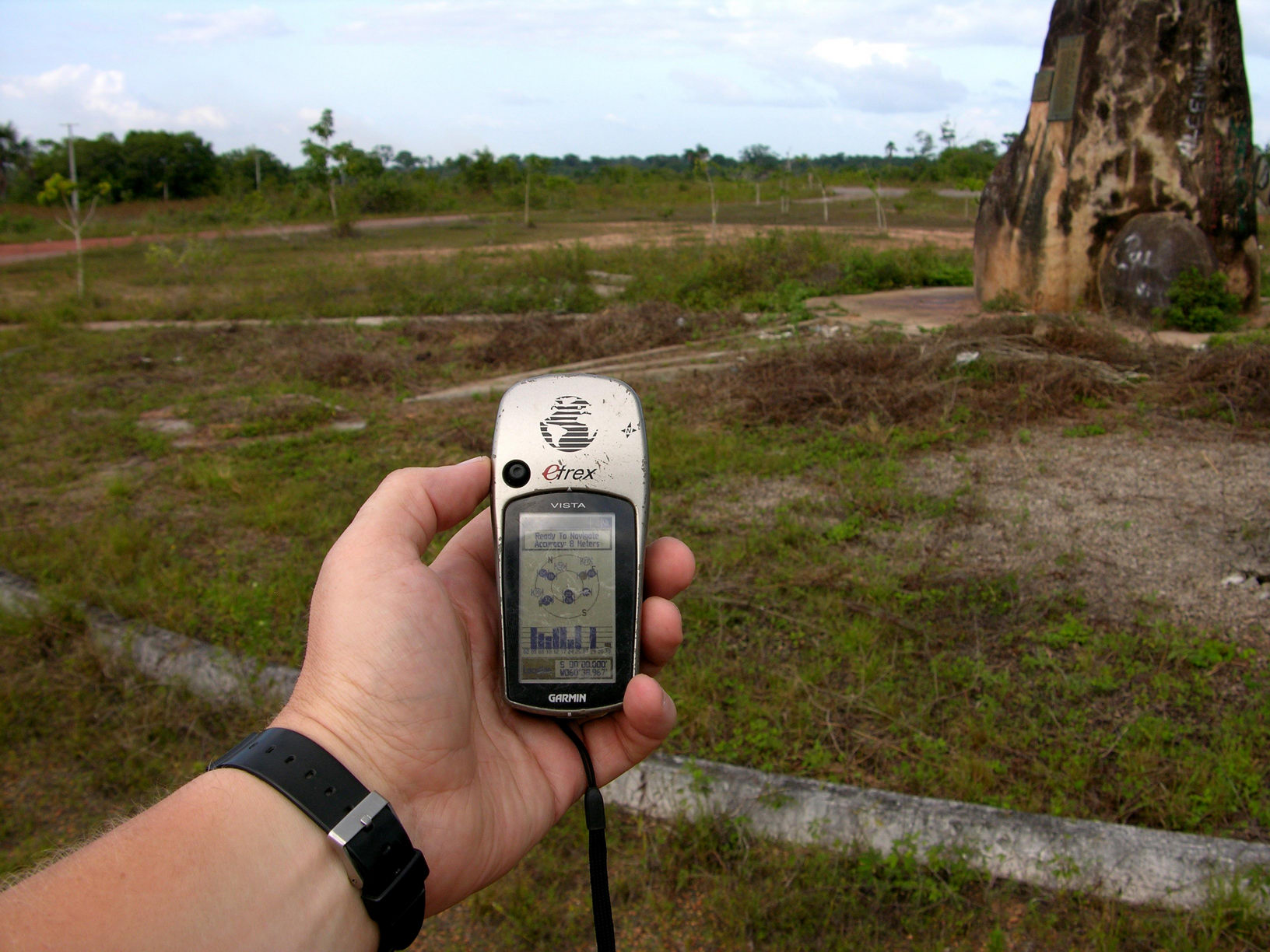
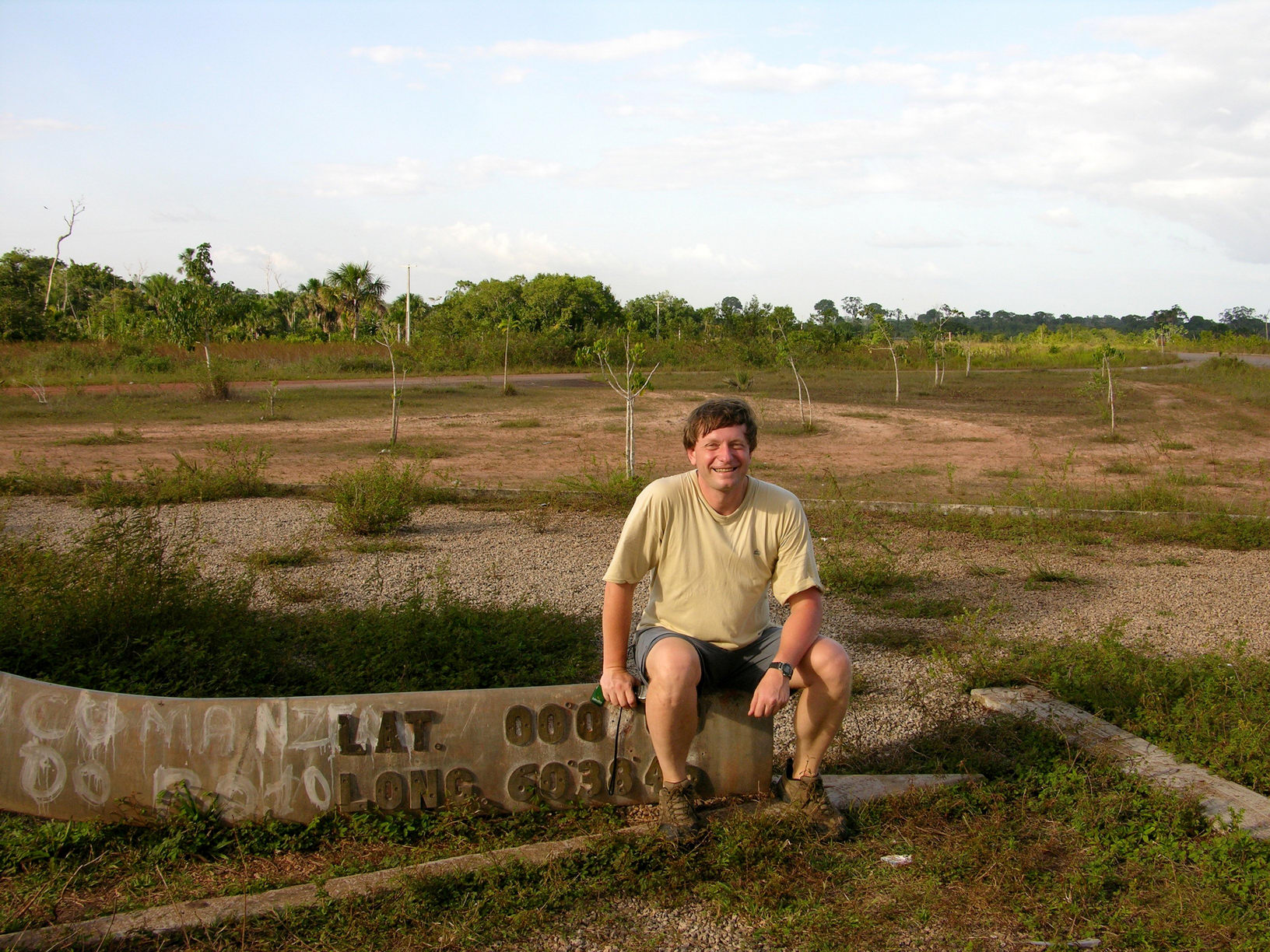
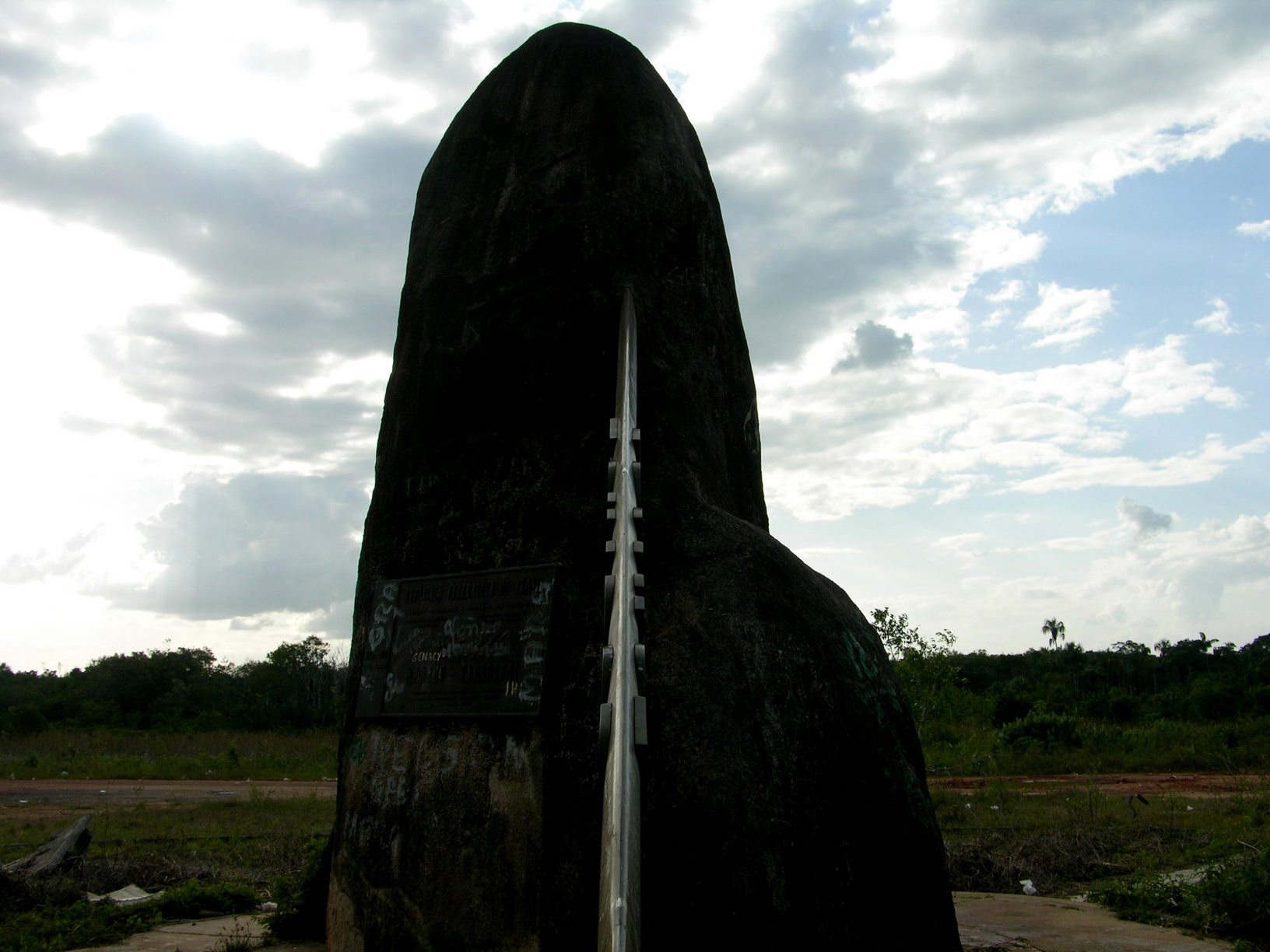
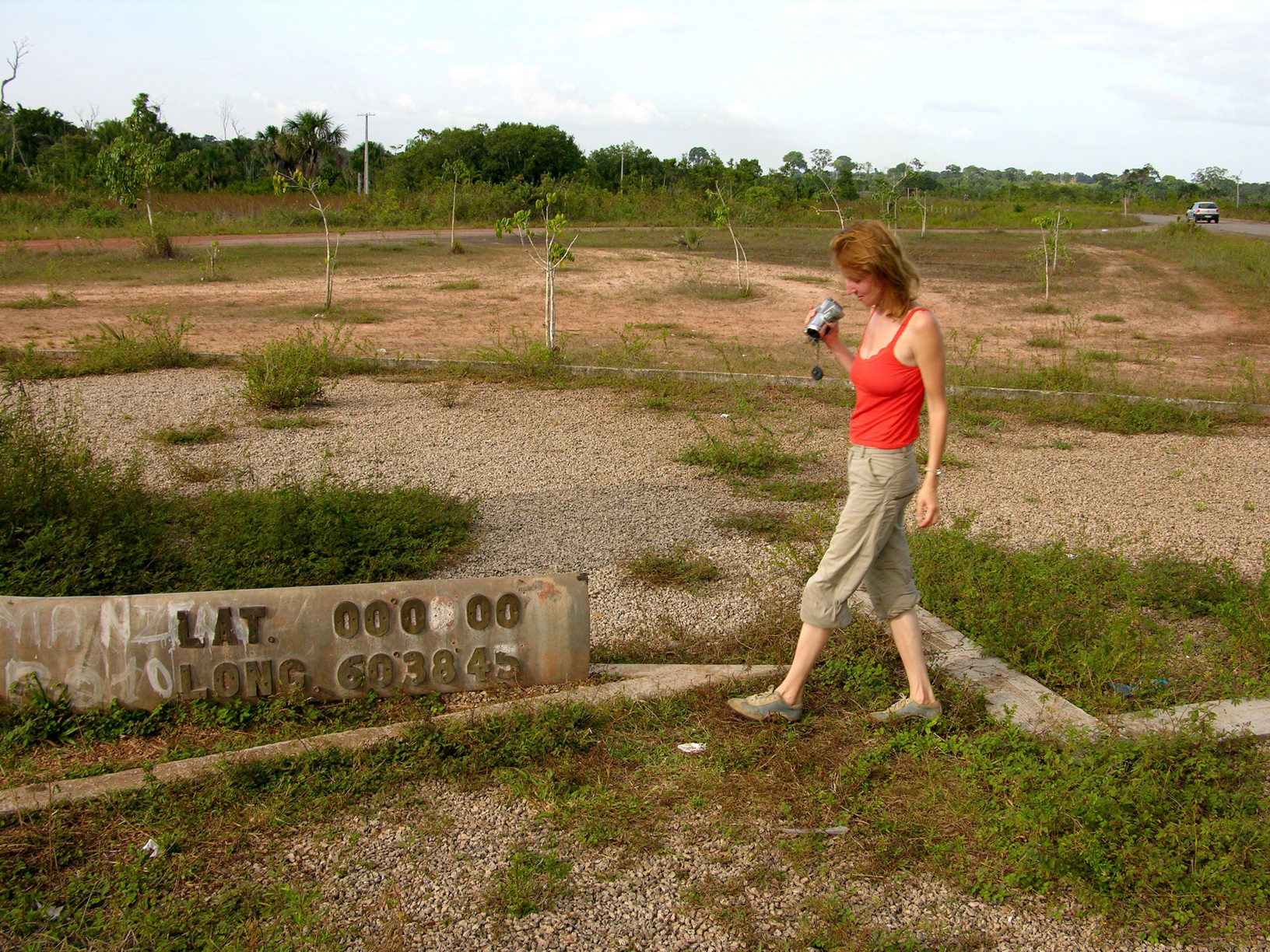
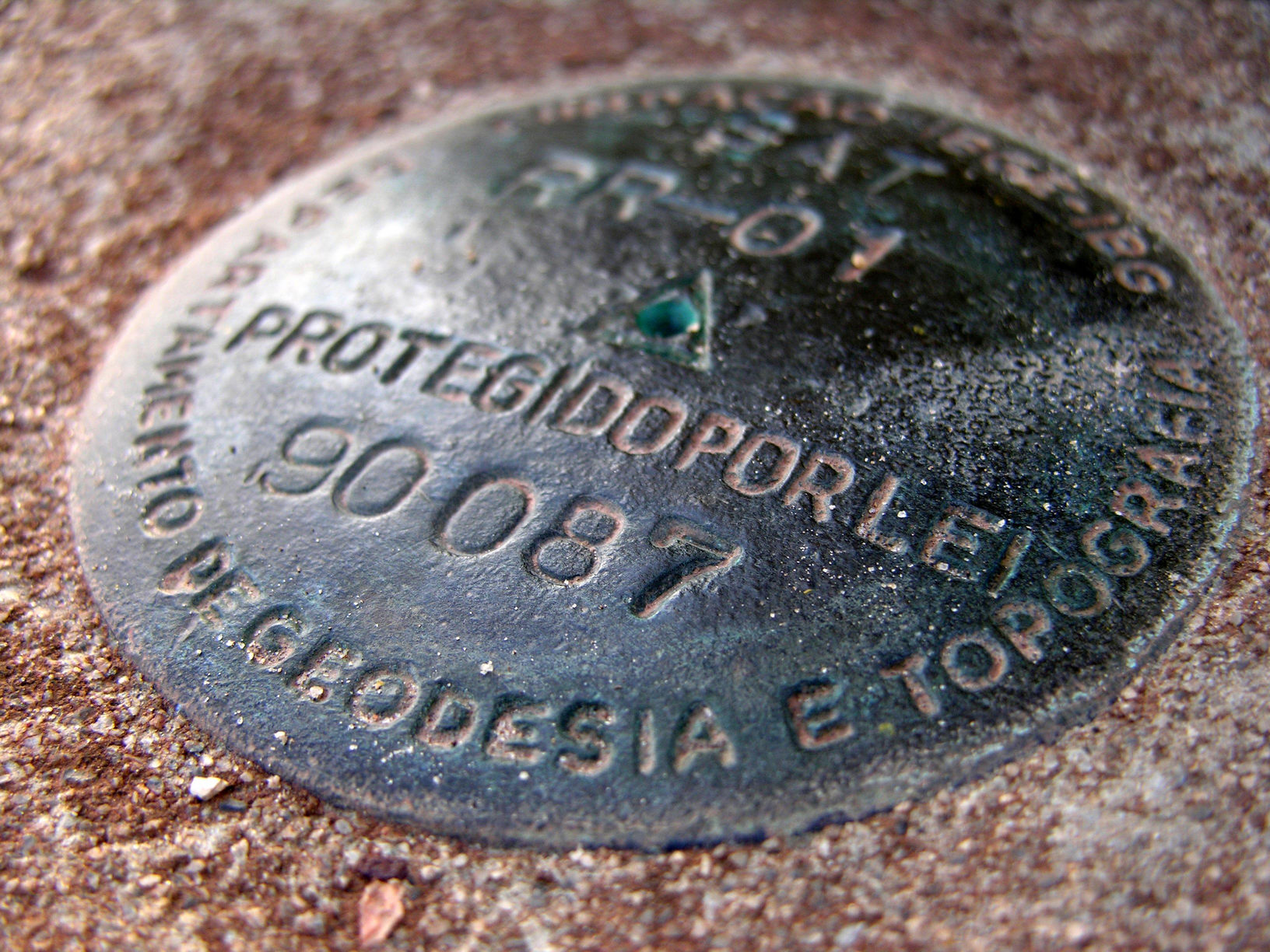
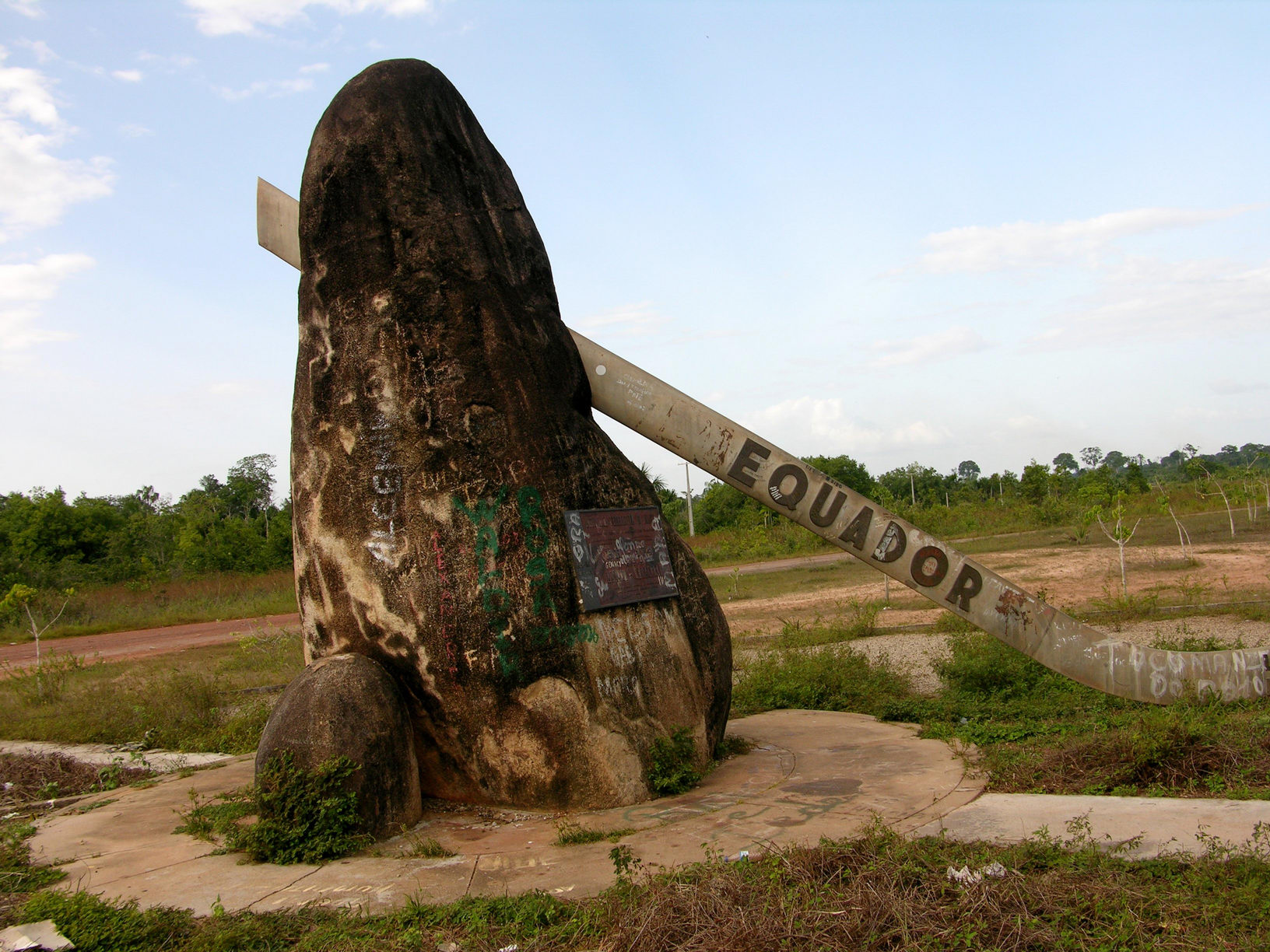
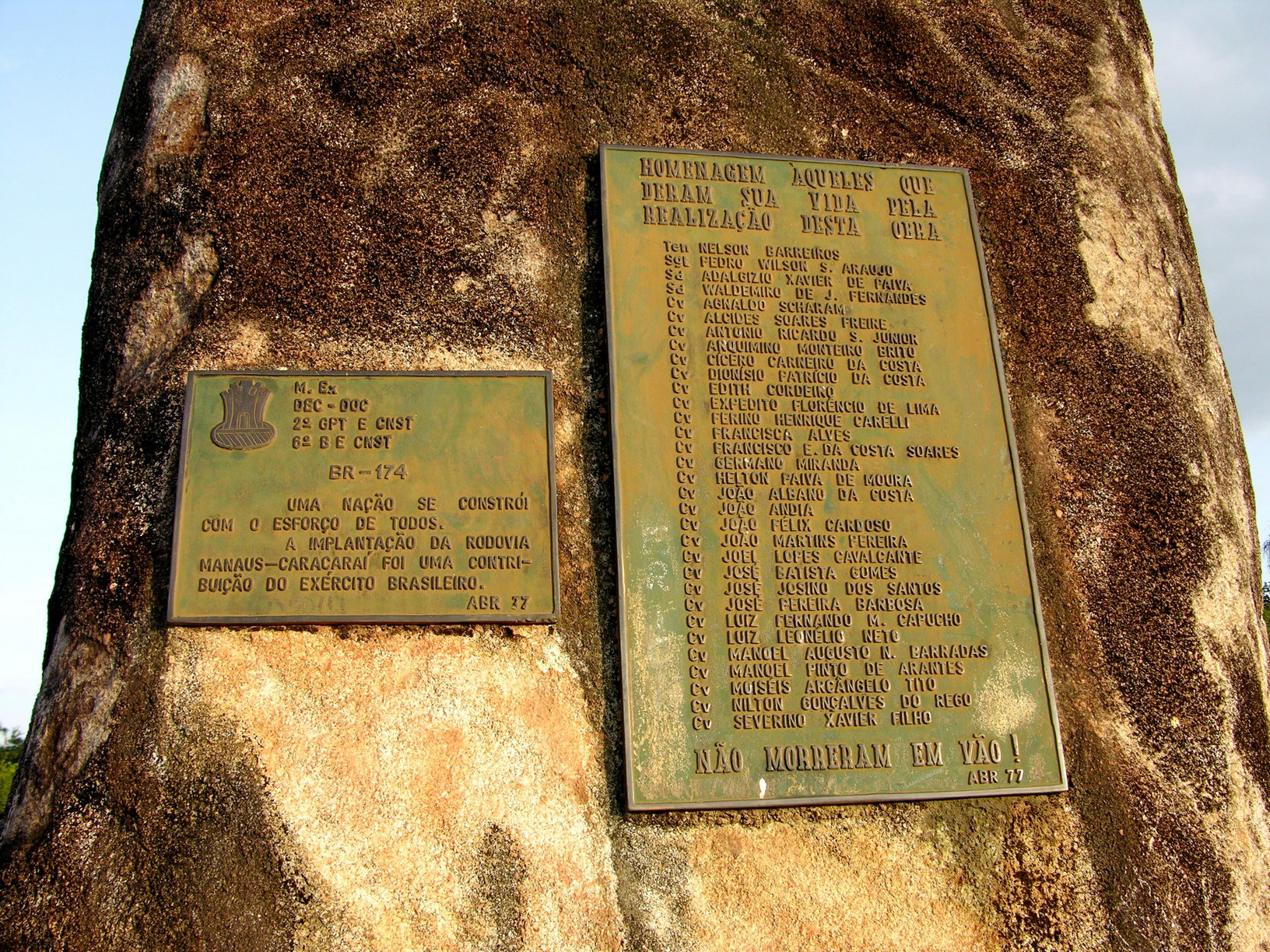
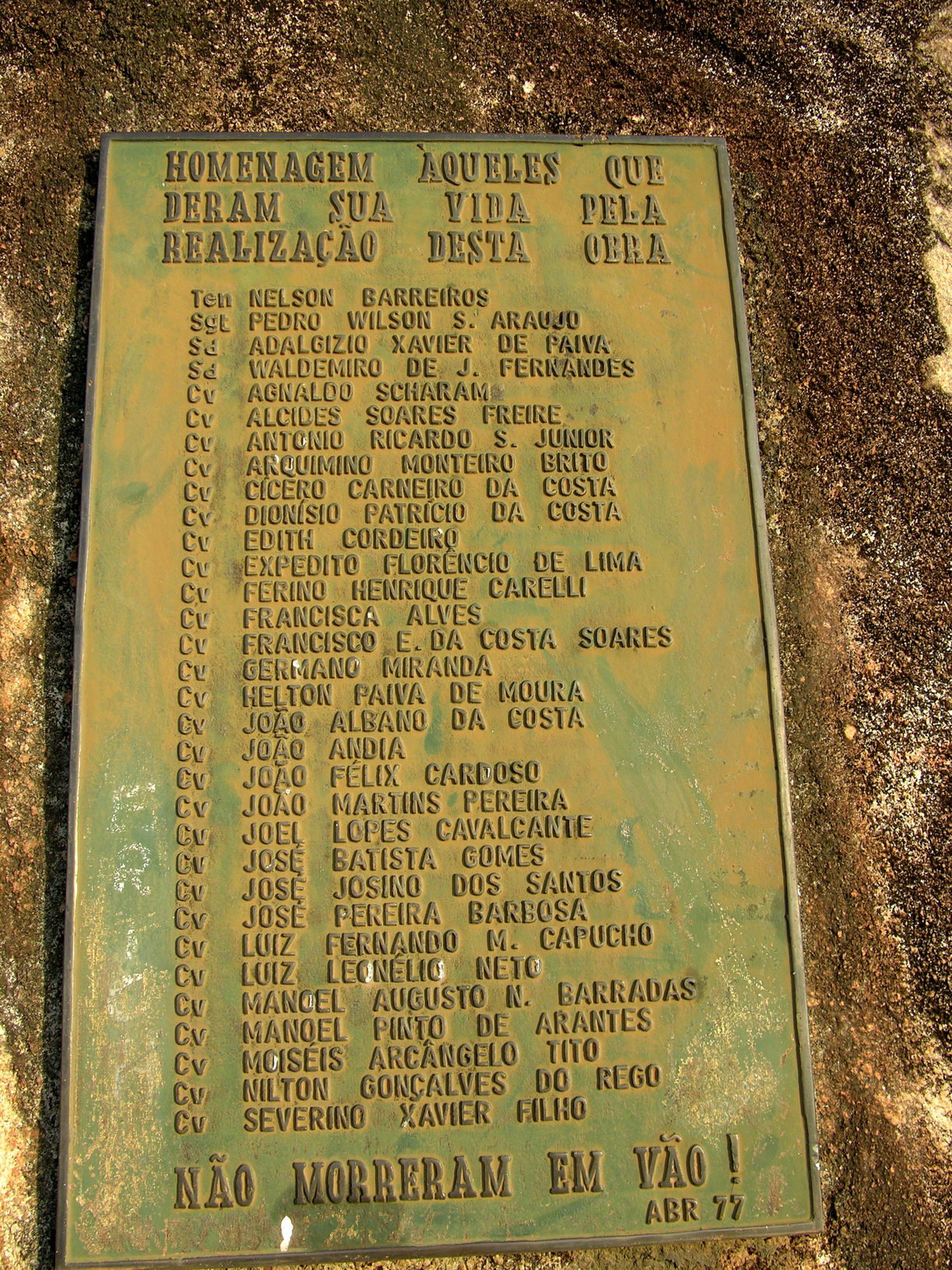
The monument is made of stones in the shape of a phallus. Apparently to a Brazilian that was the only way to depict a victory. “Look how we screwed you all.” Brazil is a decidedly sex-obsessed country.
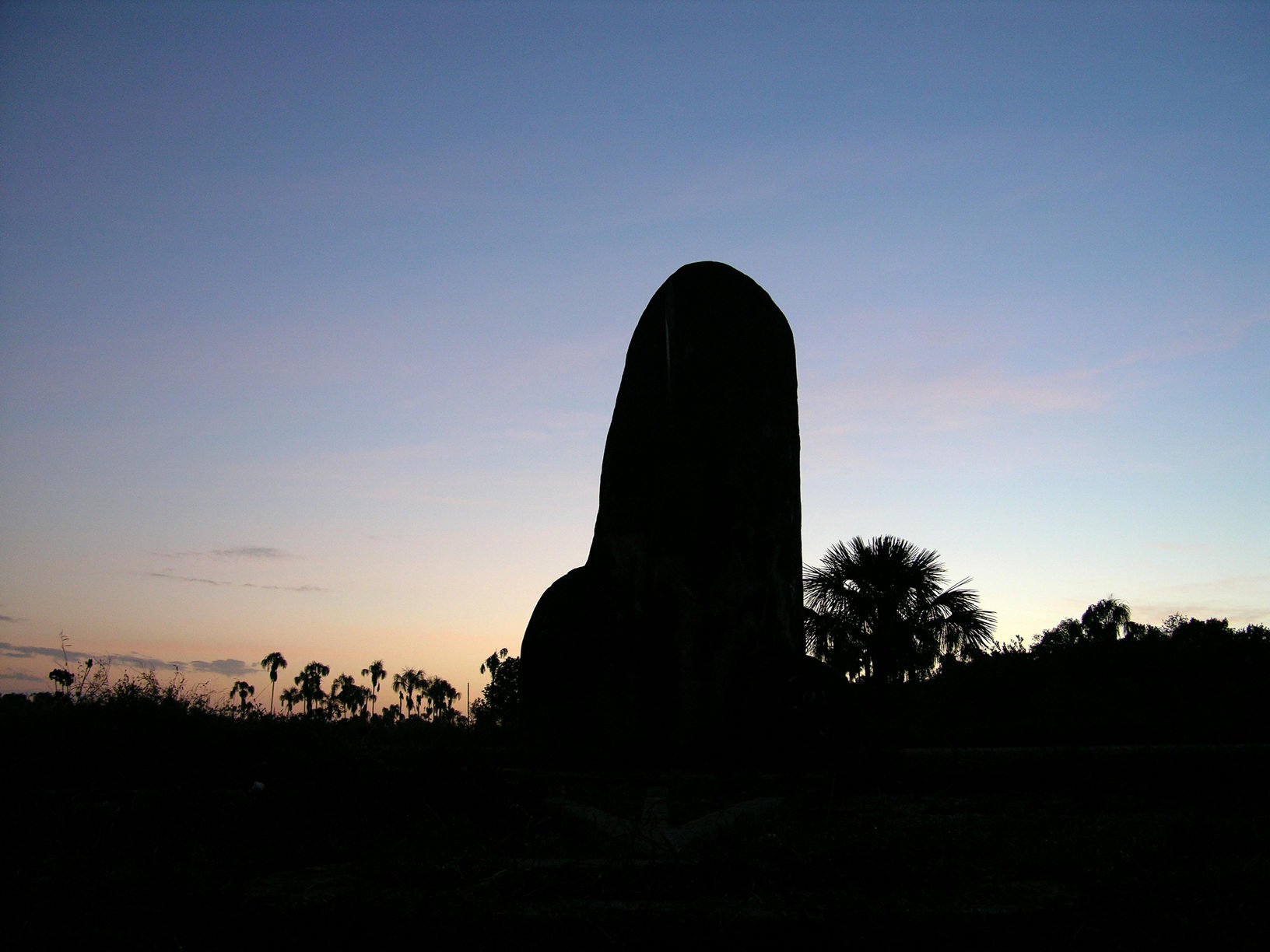
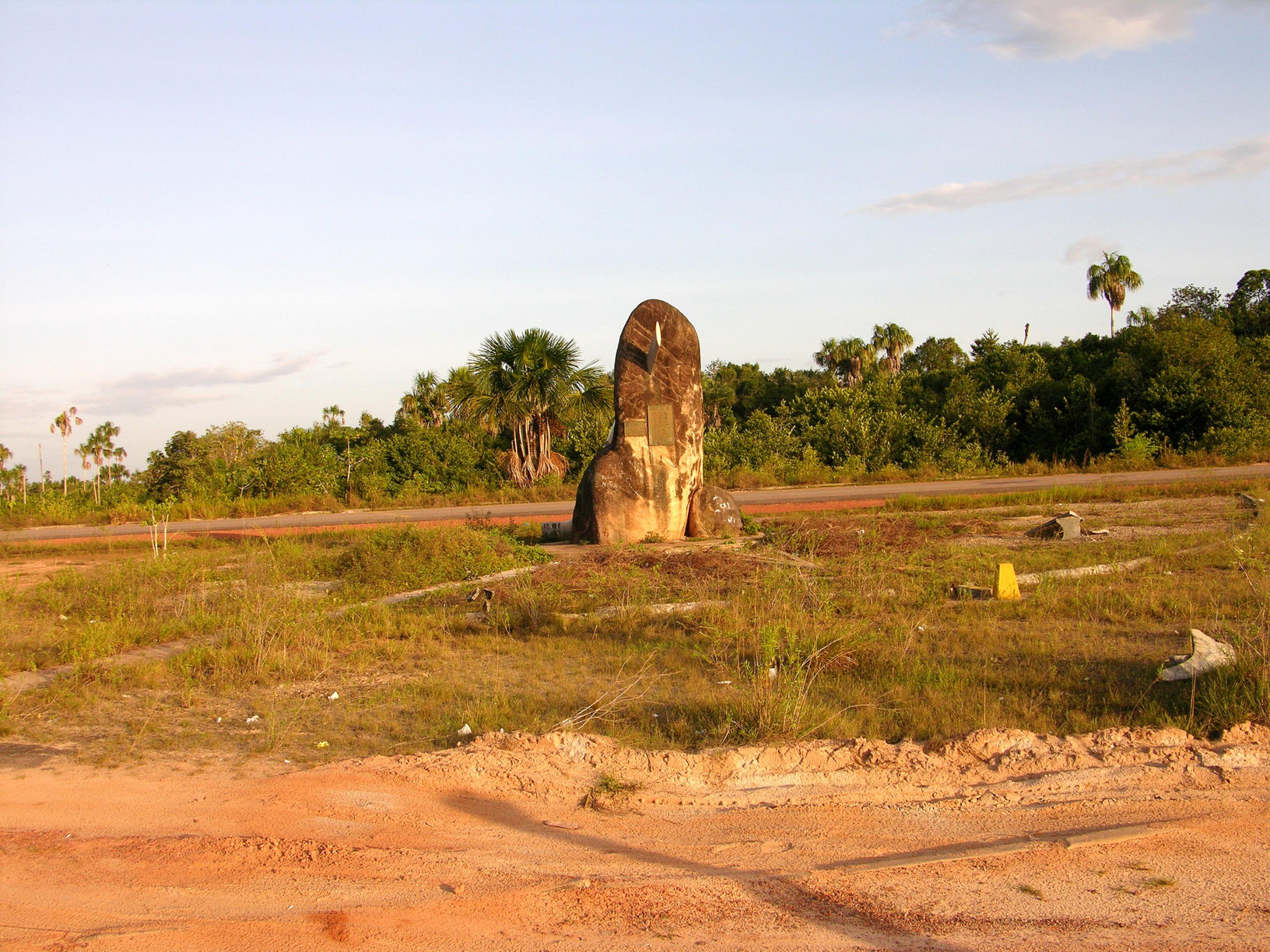
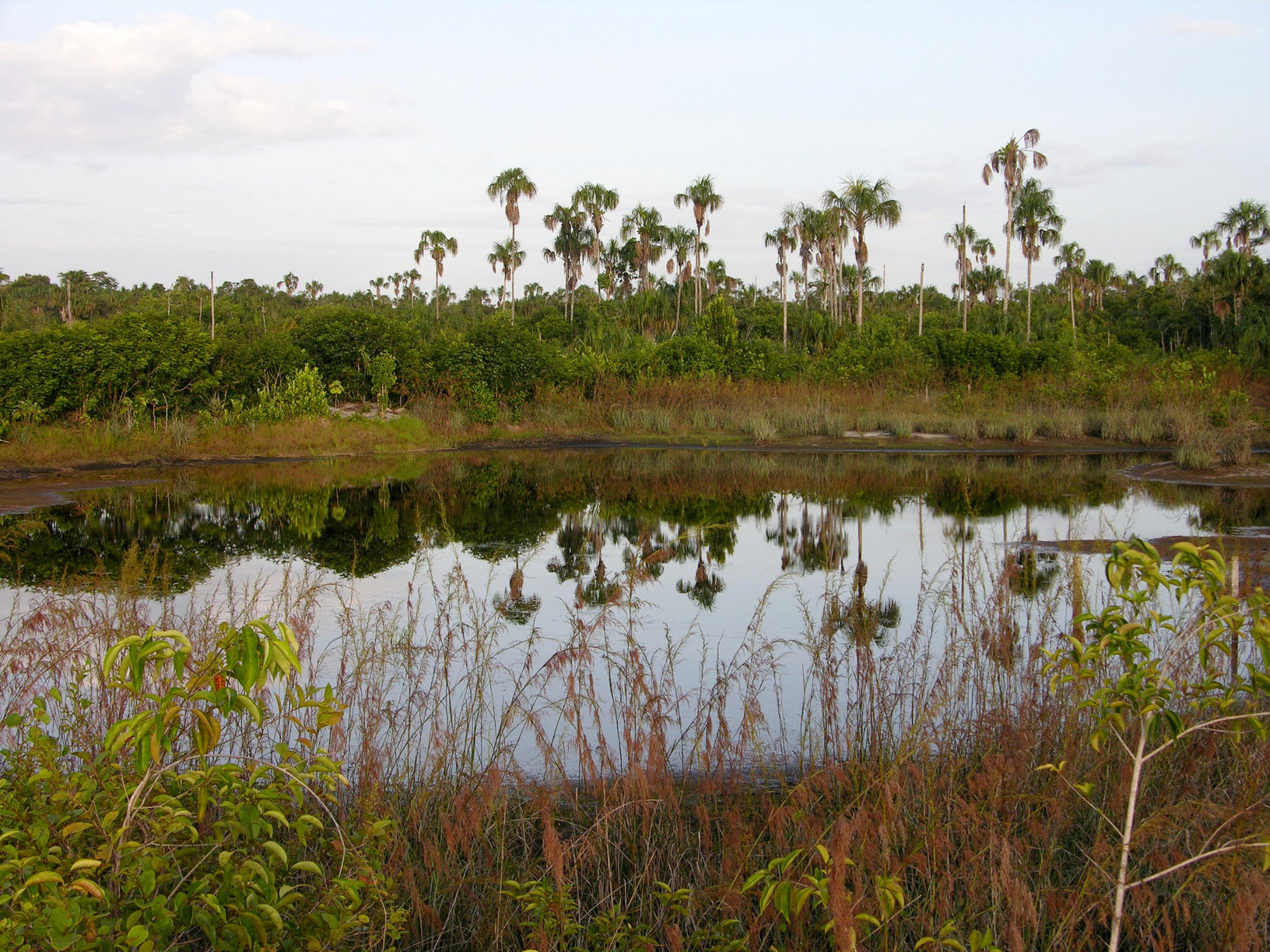
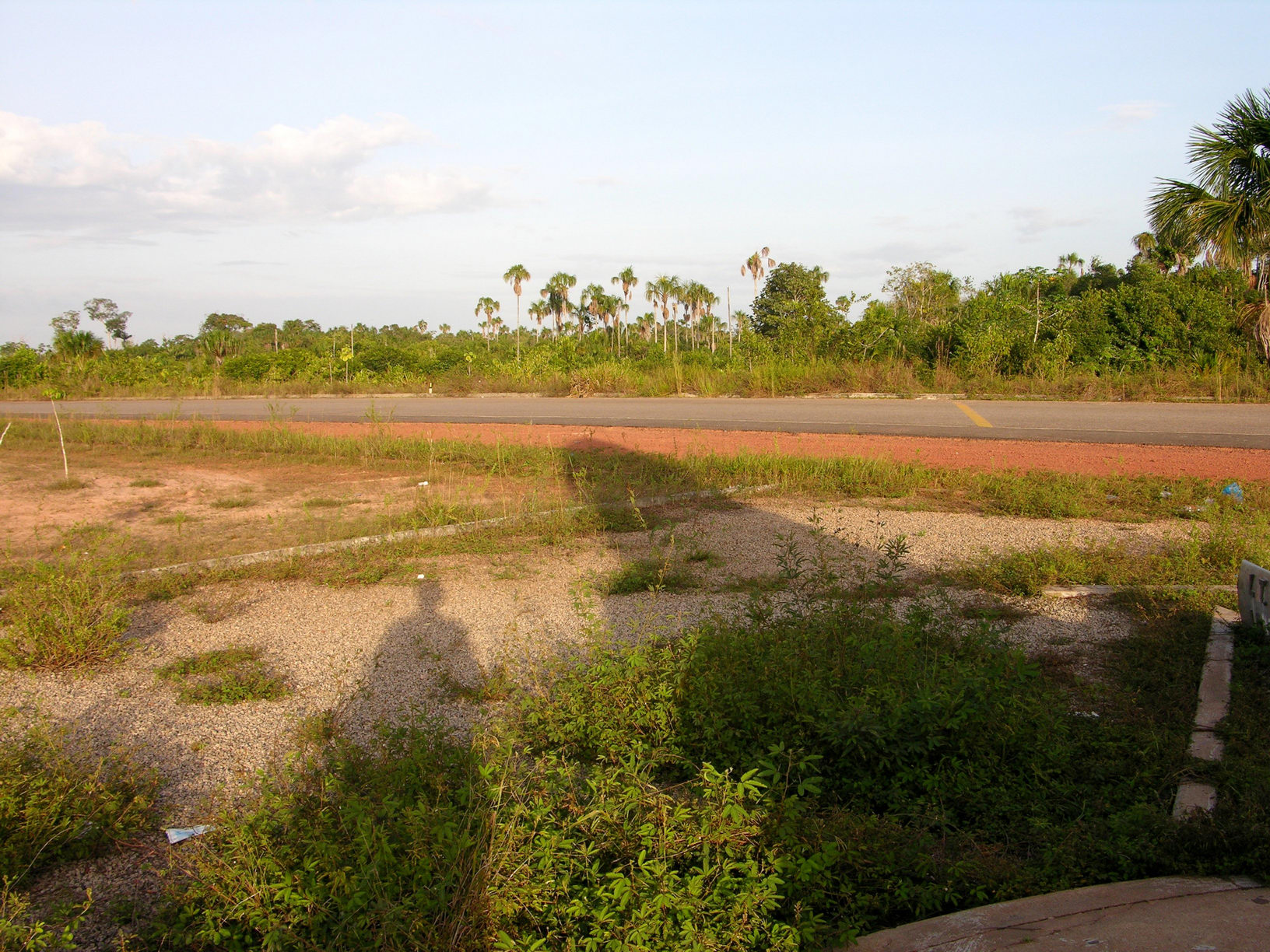
Beside the monument was a car park. Along the edges was marshy ground covered in bushes. You could hide the car among them, then walk a hundred metres with the tent and spend the night. The nights are long here and nobody is going to look for you in the dark, although there are houses nearby. The people there were from the same Indigenous group, mind you, but no longer on their own land.
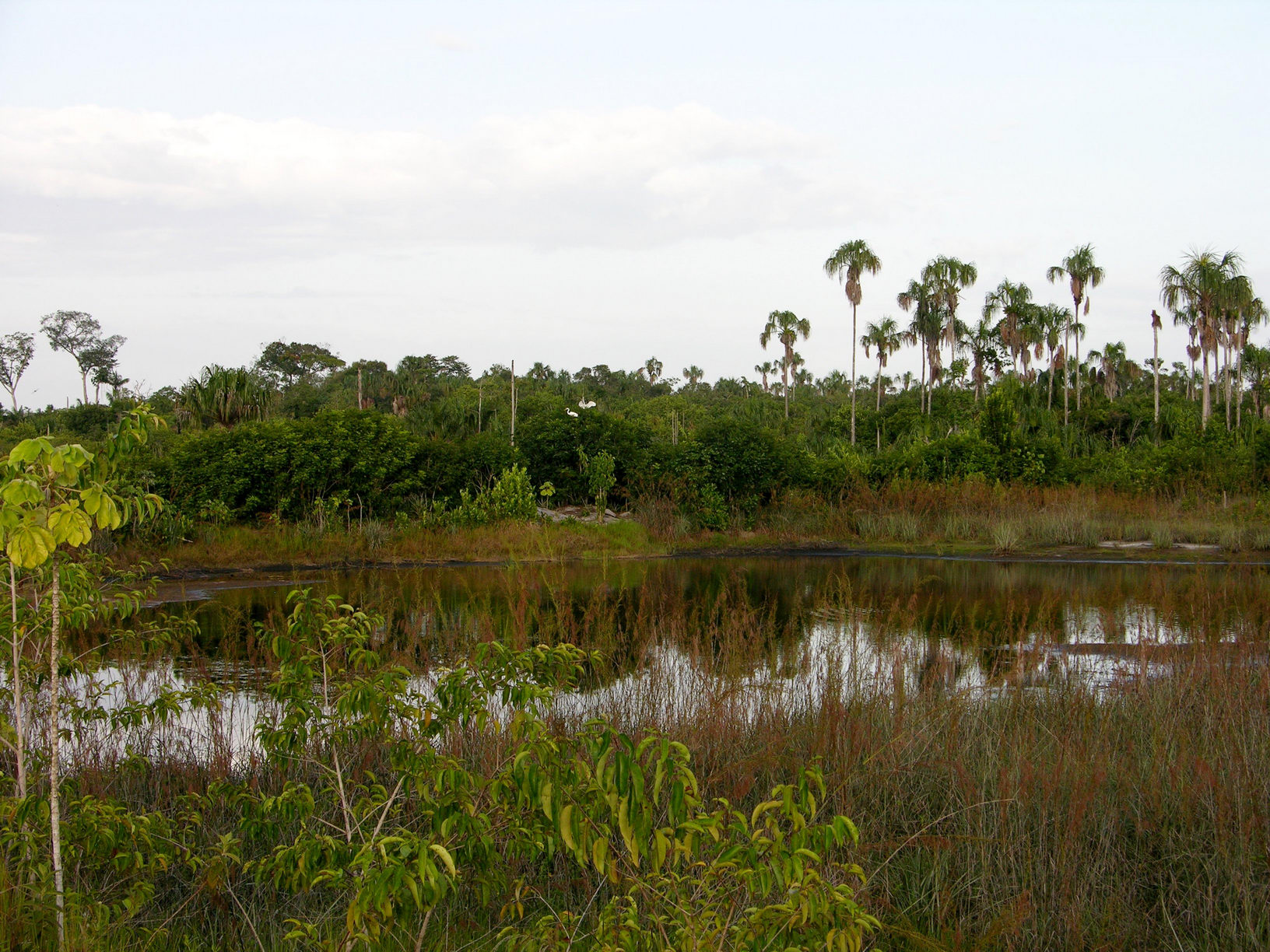
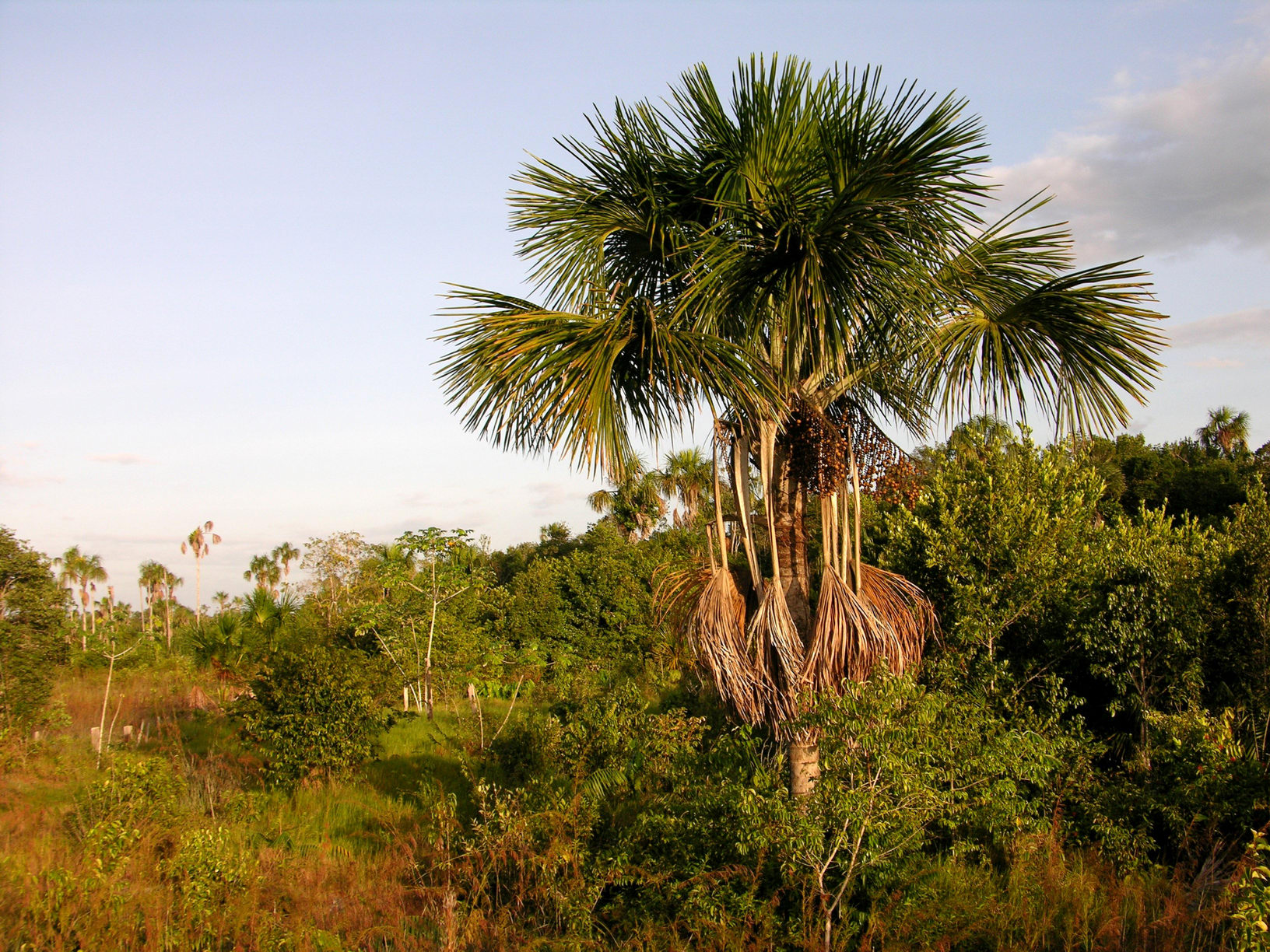
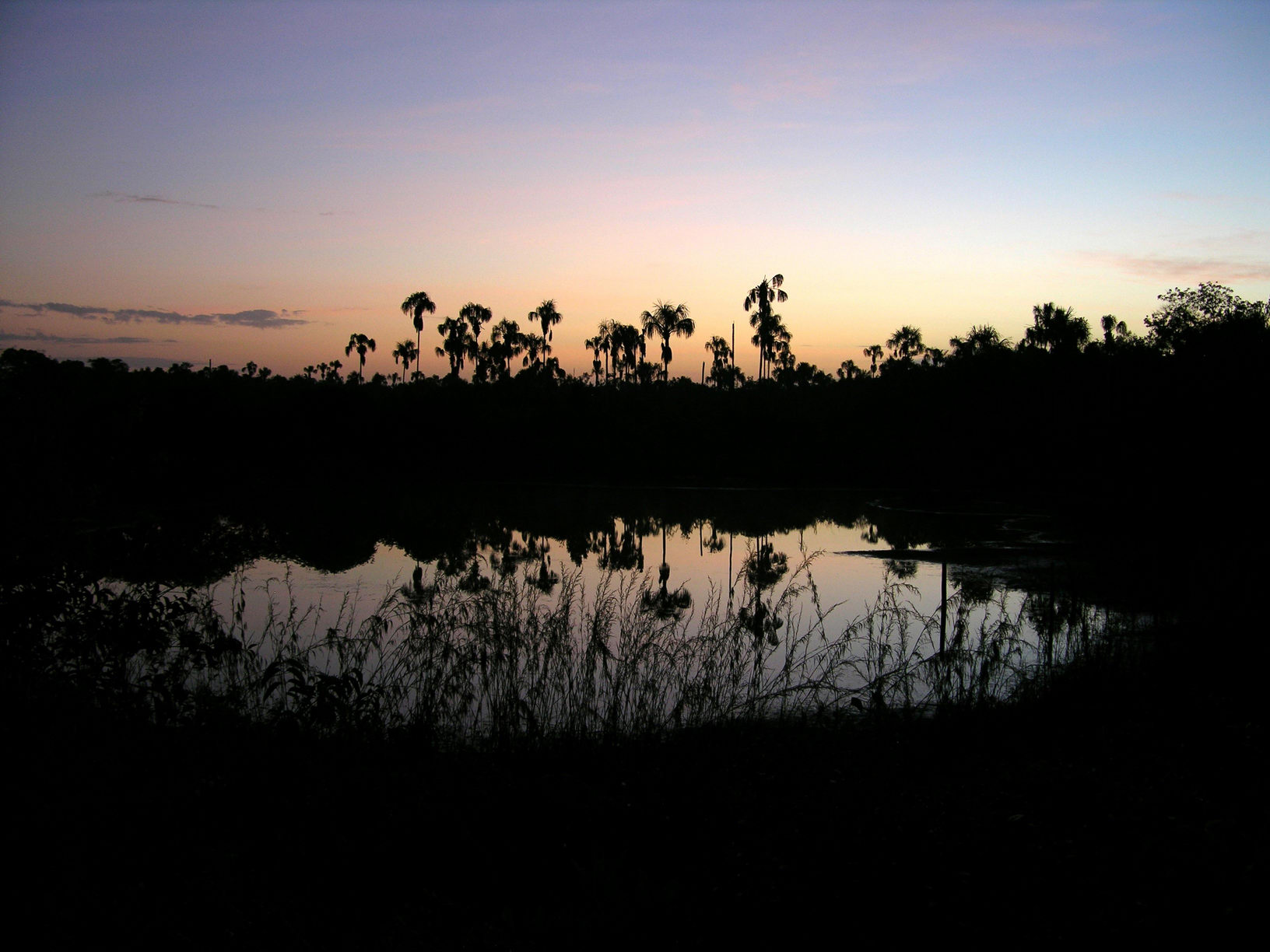
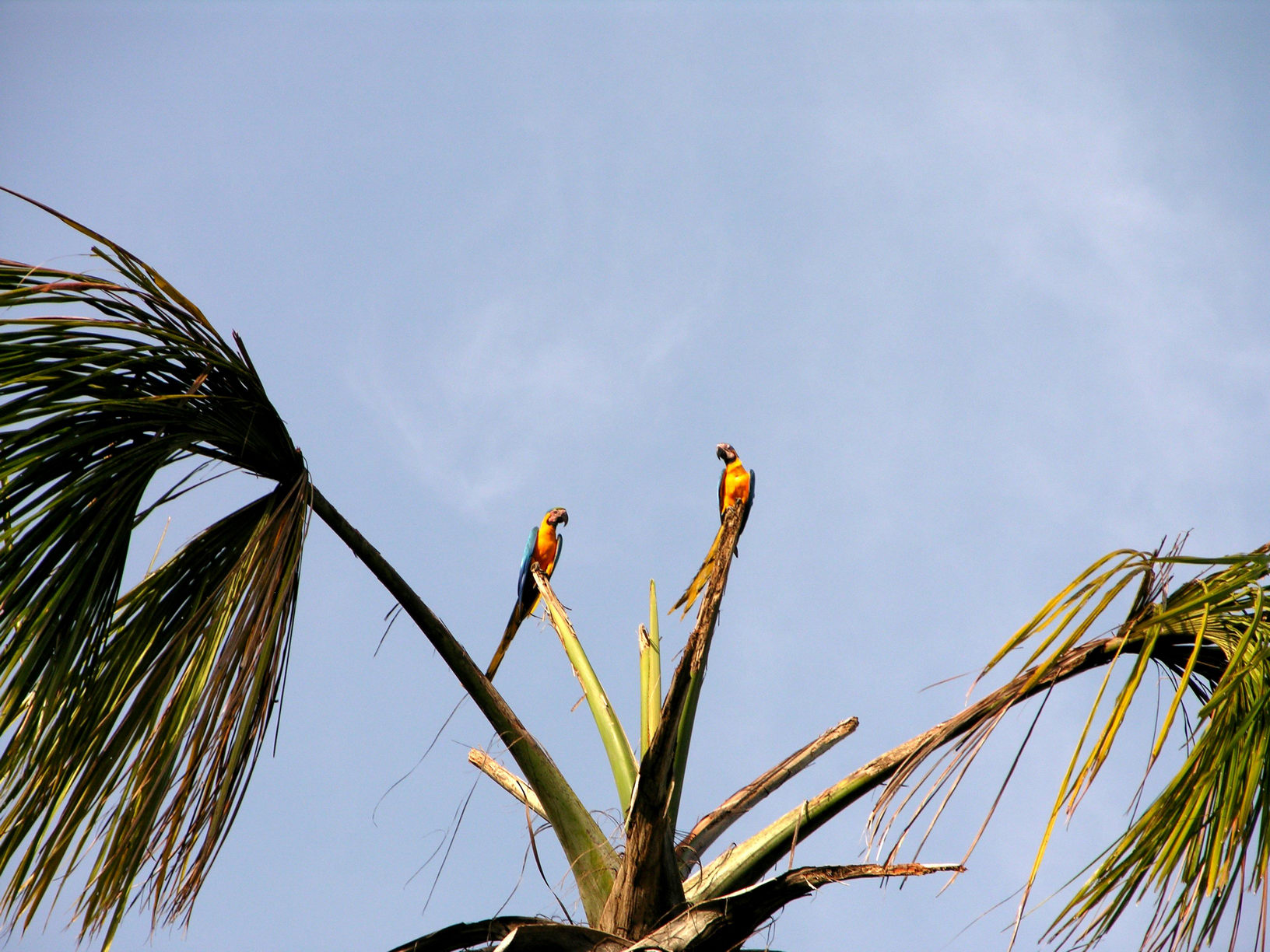
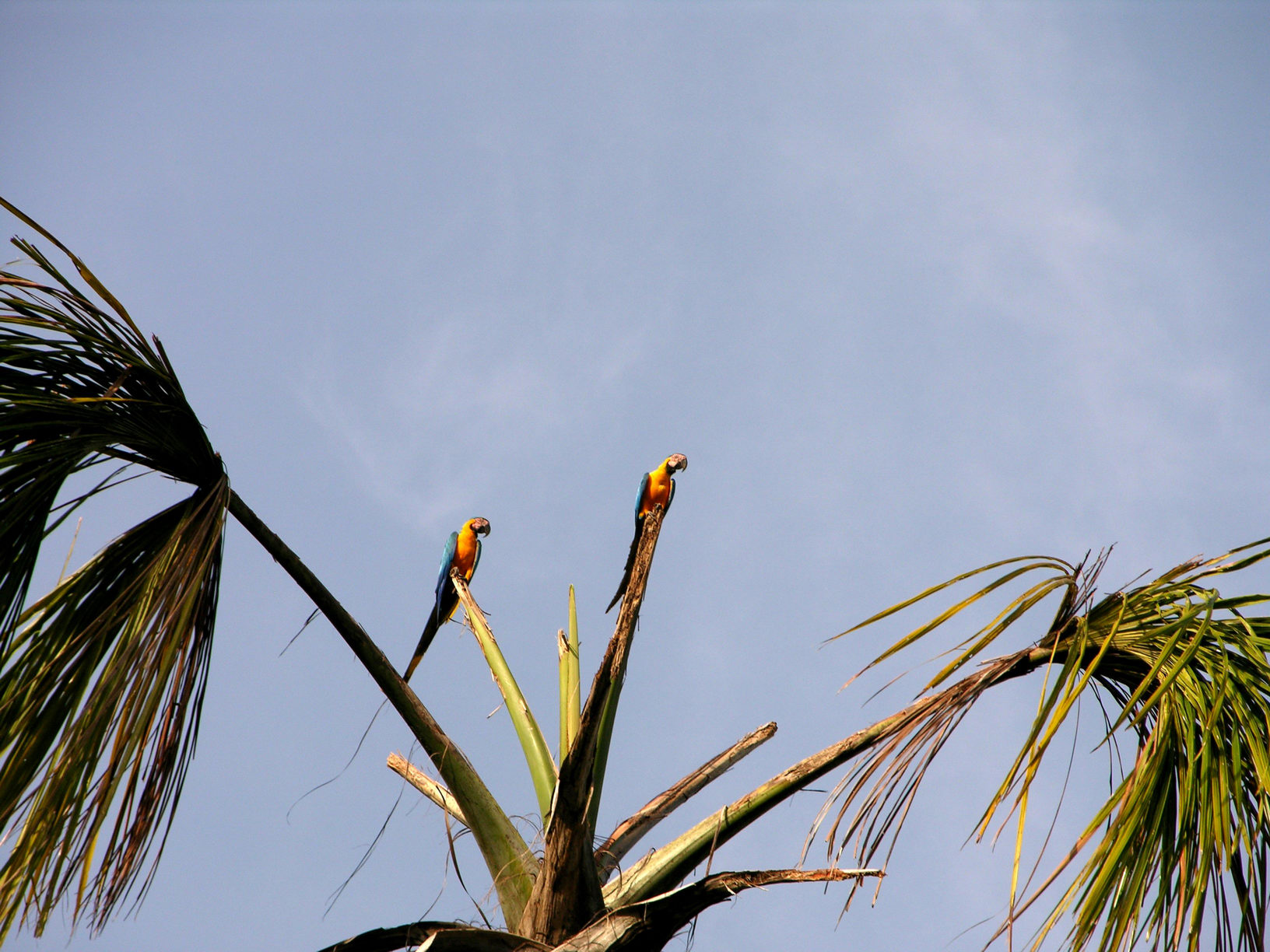
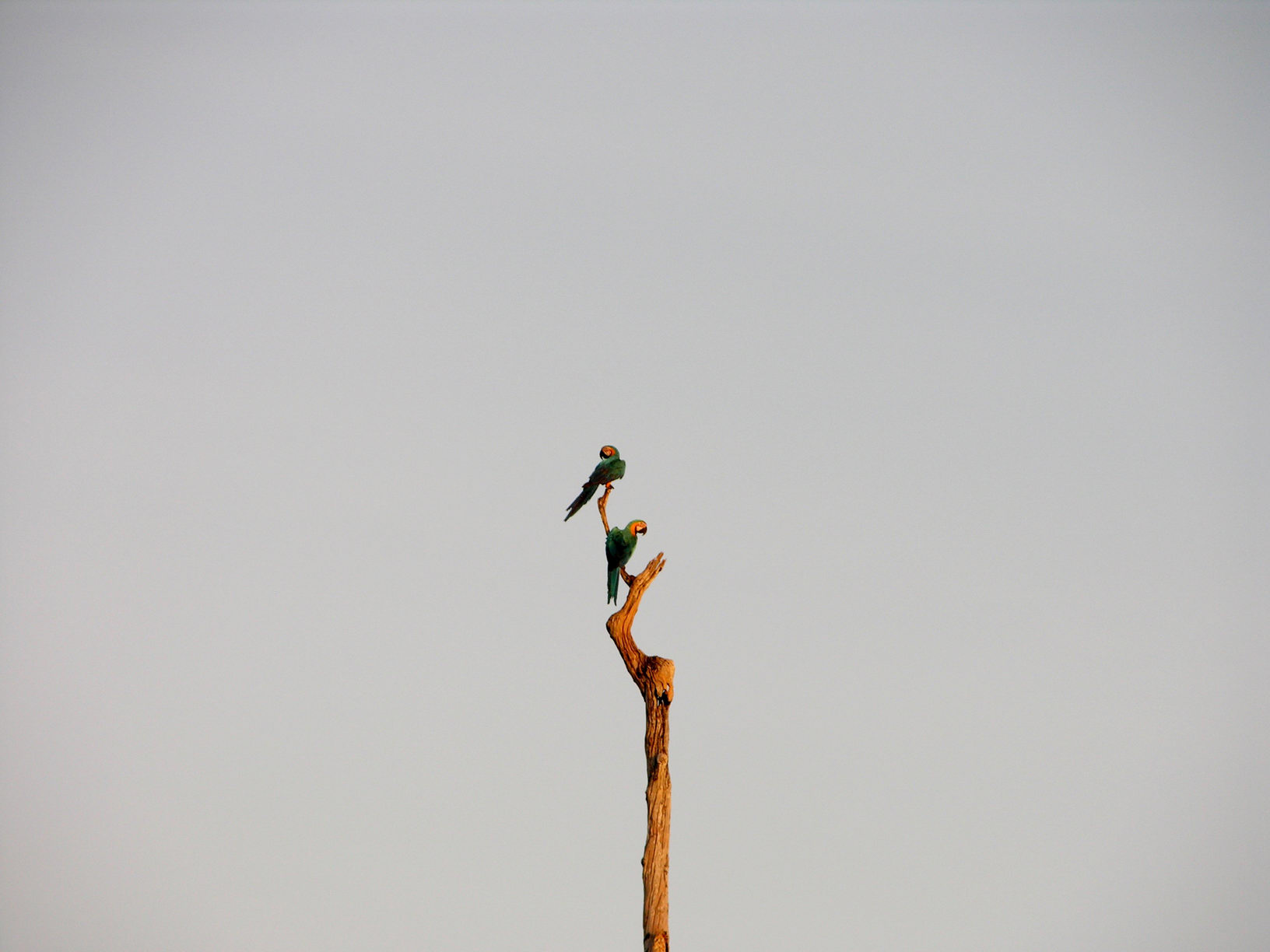
We waited a long time for dark. Flocks of parrots, the macaws, flew through the neighbouring bushes, settling comfortably where they could show themselves off in the last rays of sunlight and happily calling to one another from the telegraph poles. The toucans sat in pairs on branches, holding their enormous beaks perfectly level with great dignity.
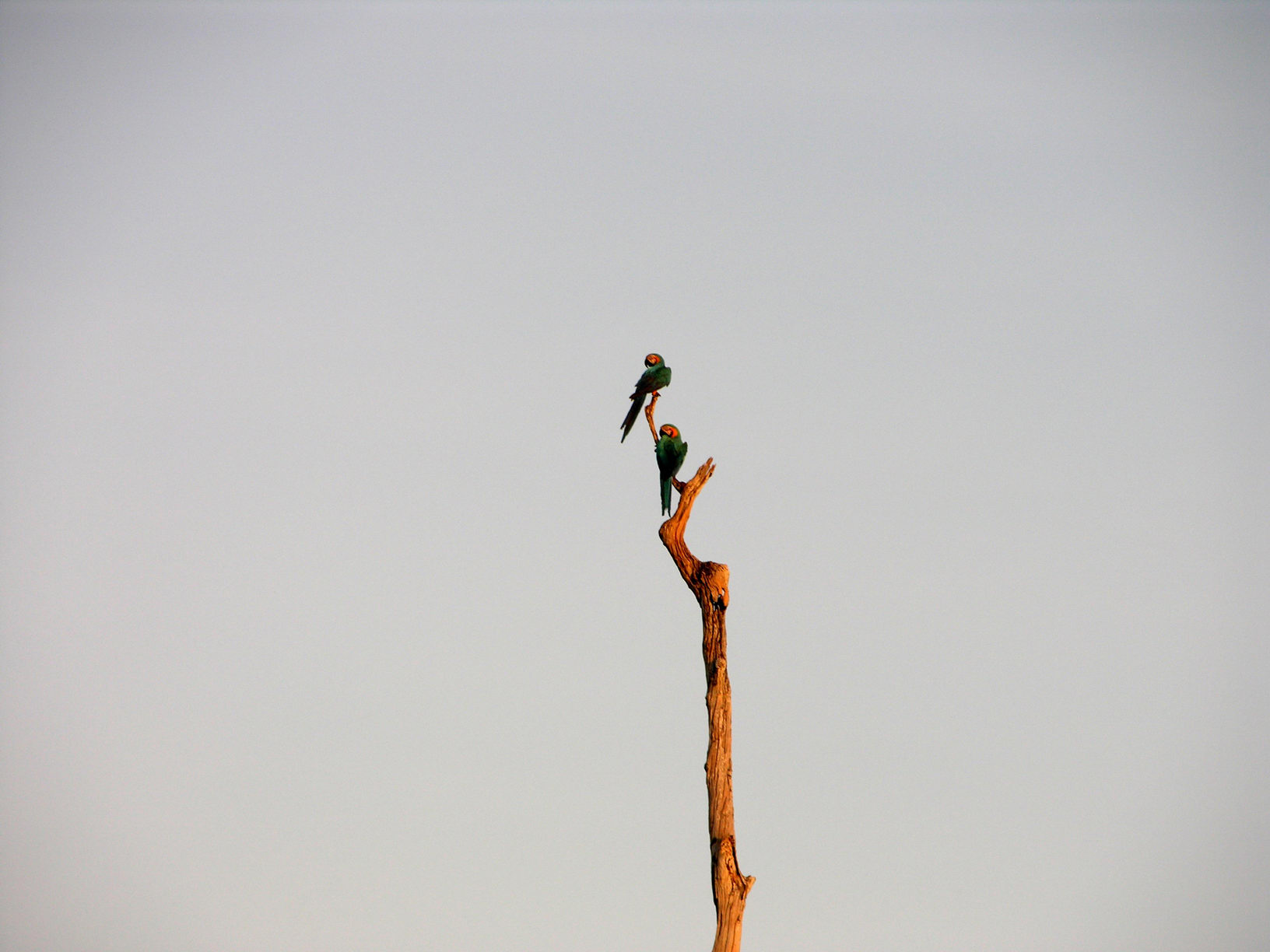
The sunset was blood red and the night starry. Tanya's tooth was worse. We were in a dreadful mood, but the occasion had to be celebrated. We had an excellent bottle with us. Drink it on an empty stomach or the food makes the drink a waste of money. We drank and felt more cheerful. Old and decrepit as we were, above us was the astounding southern sky. The Southern Cross. We were standing right in the middle of the earth. That day alone I crossed the equator five hundred times. I'd wanted to do it a thousand times, but it turns out to be hard work. A hundred is enough to tire you out. Fortunately it was well marked here, with a stripe painted on the ground. All you had to do was keep stepping across it.
We began drinking with the melancholy thought that this might be our last bottle and that tomorrow a dreadful microbe might overrun all of Tanya's little body. By the last glass we were merry. What is that goo Tanya uses to rinse her mouth? An antibiotic? At a triple dose. It must be a fungus. That's what we're seeing, that white stuff. Tanya, you're going to live. You've got mushrooms growing in your mouth, little white ones! If wishes were fishes, or mushrooms grew in our mouths… We stopped rinsing the tooth, the trouble went away, and the tooth lives on.
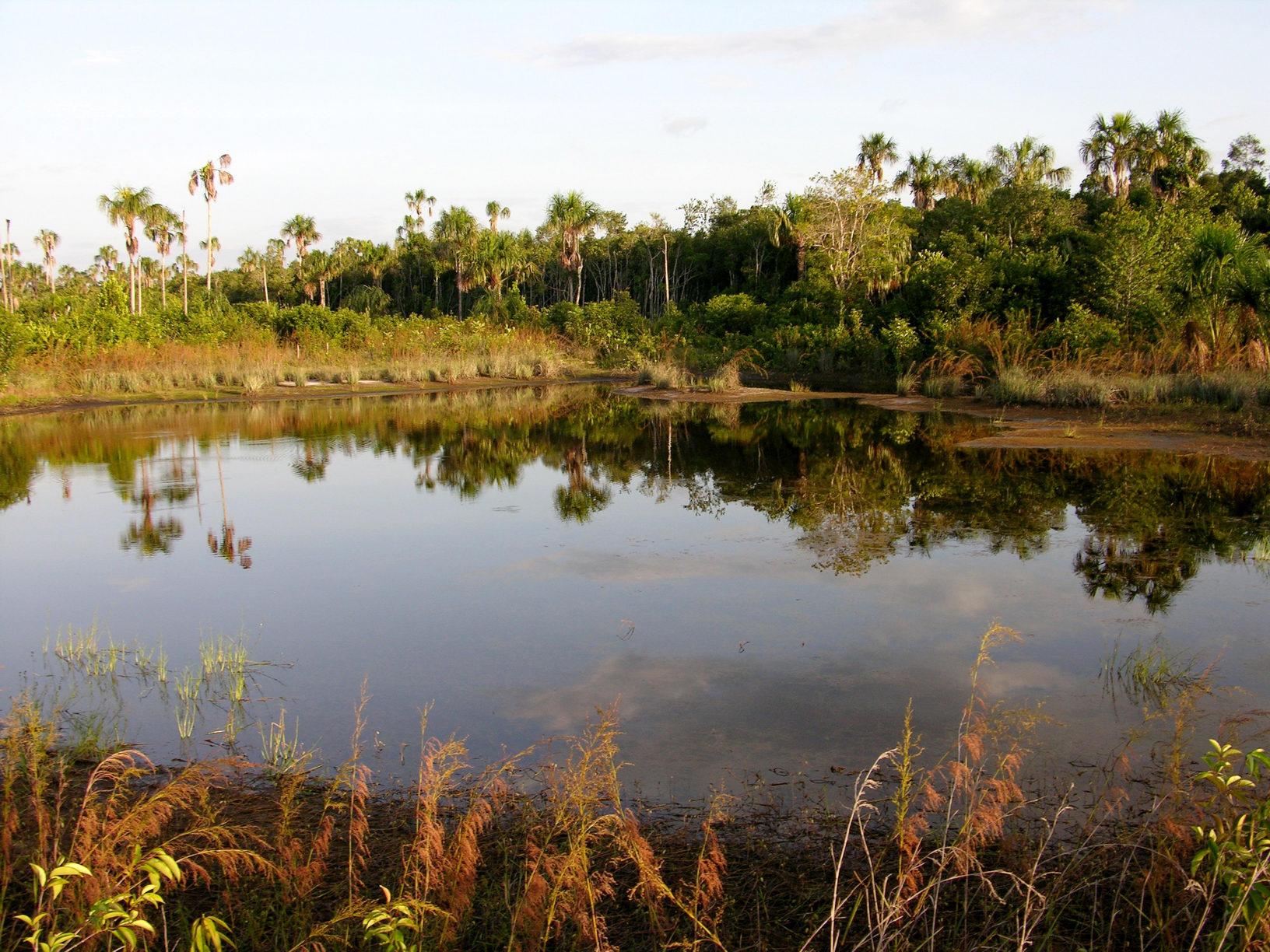
We pitched the tent in the bushes on the edge of a swampy pool. Positively swarming with mosquitoes, but on the equator to the inch. If you looked along the line painted on the ground, you could see it crossed our tent right in the middle (0°00.000′S, 60°38.903′W, 63 m).
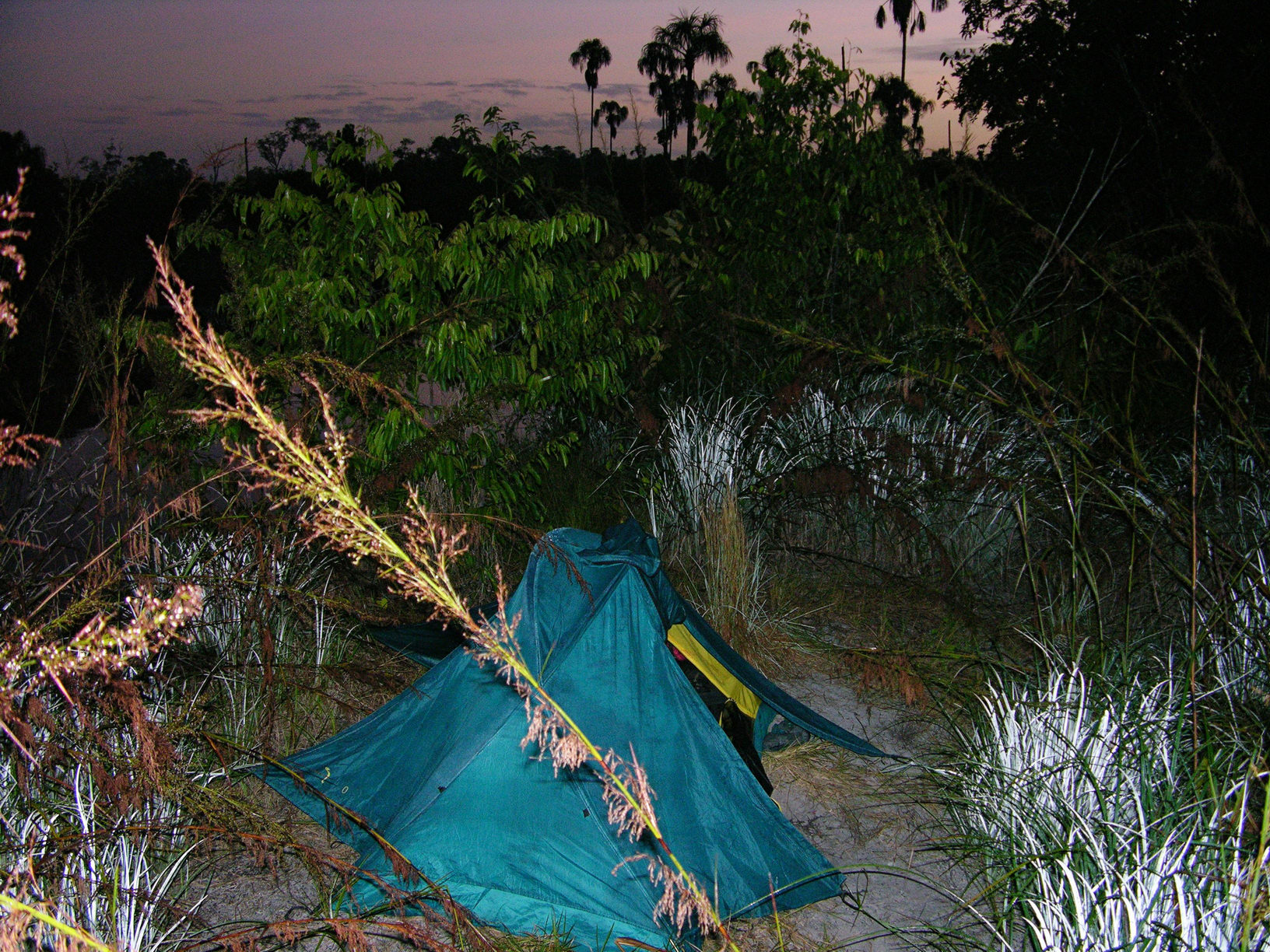
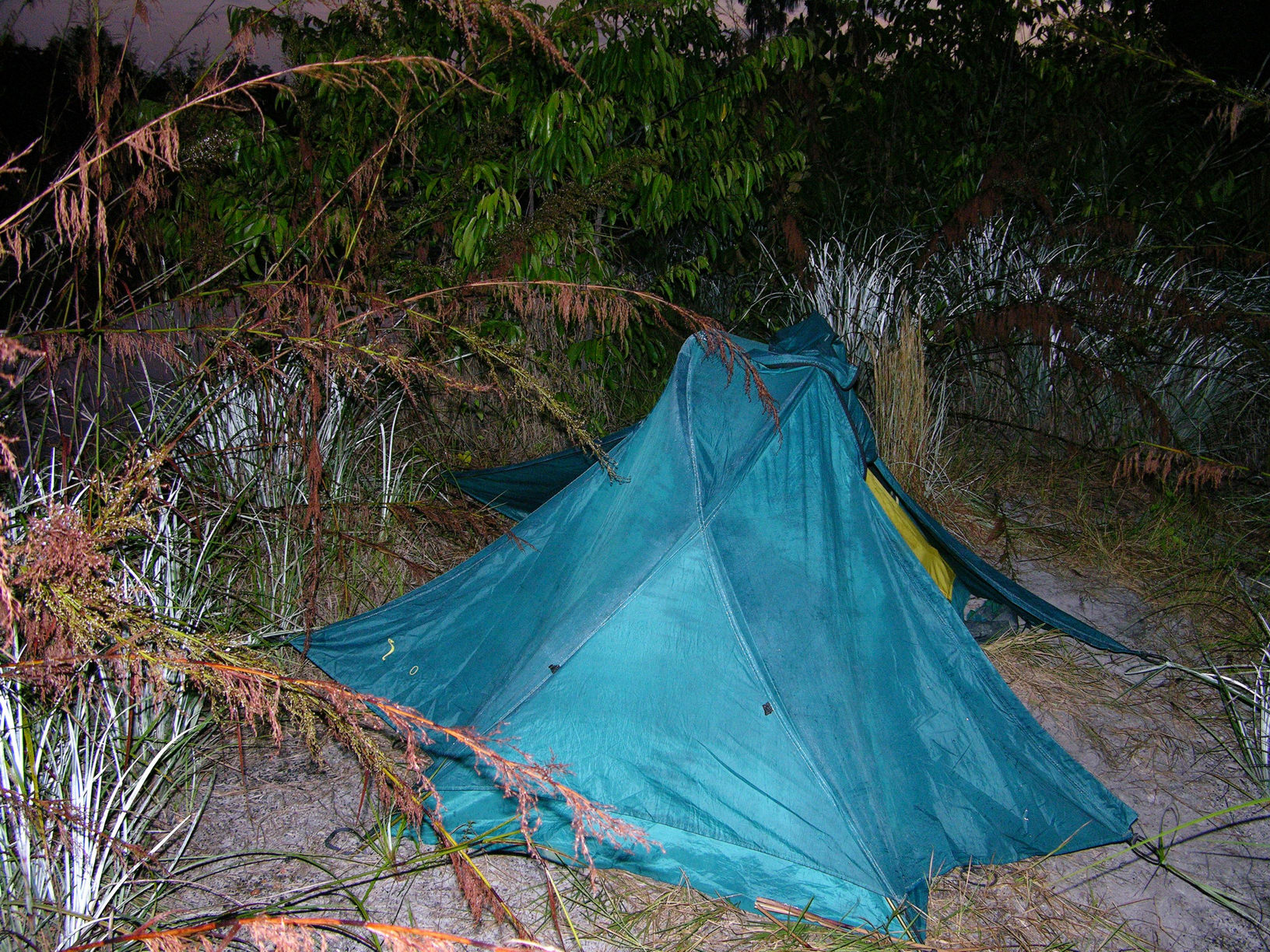
We had a dispute in theory over how to set up. Feet in the northern hemisphere, heads in the southern, or the other way around? Or one person in the north and the other in the south? That was the question. And there was no second bottle to settle it. “I'll be in the northern hemisphere,” said Tanya. “It's winter there, not so hot.” So we agreed.
We'd just settled in when an Indigenous man appeared out of nowhere by the monument and set fire to the grass. It flared up like a torch several metres high. Just as well we were in a swamp. The fire wouldn't reach us. The grass burned down and the man disappeared. A hallucination, in short, though we hadn't drunk much.
Once we'd sobered up we cooked a packet of New Zealand hiking rations for our festive dinner.
We had a wonderful night. There was just some beast we never identified trampling around the tent, and a great something splashing in the pool that sounded the size of a shark, and baboons settling their differences in the distant forest.
Nights are long in the tropics, so I was fully rested before first light. I got my fill of the stars and saw the zodiacal light slowly redden into dawn.
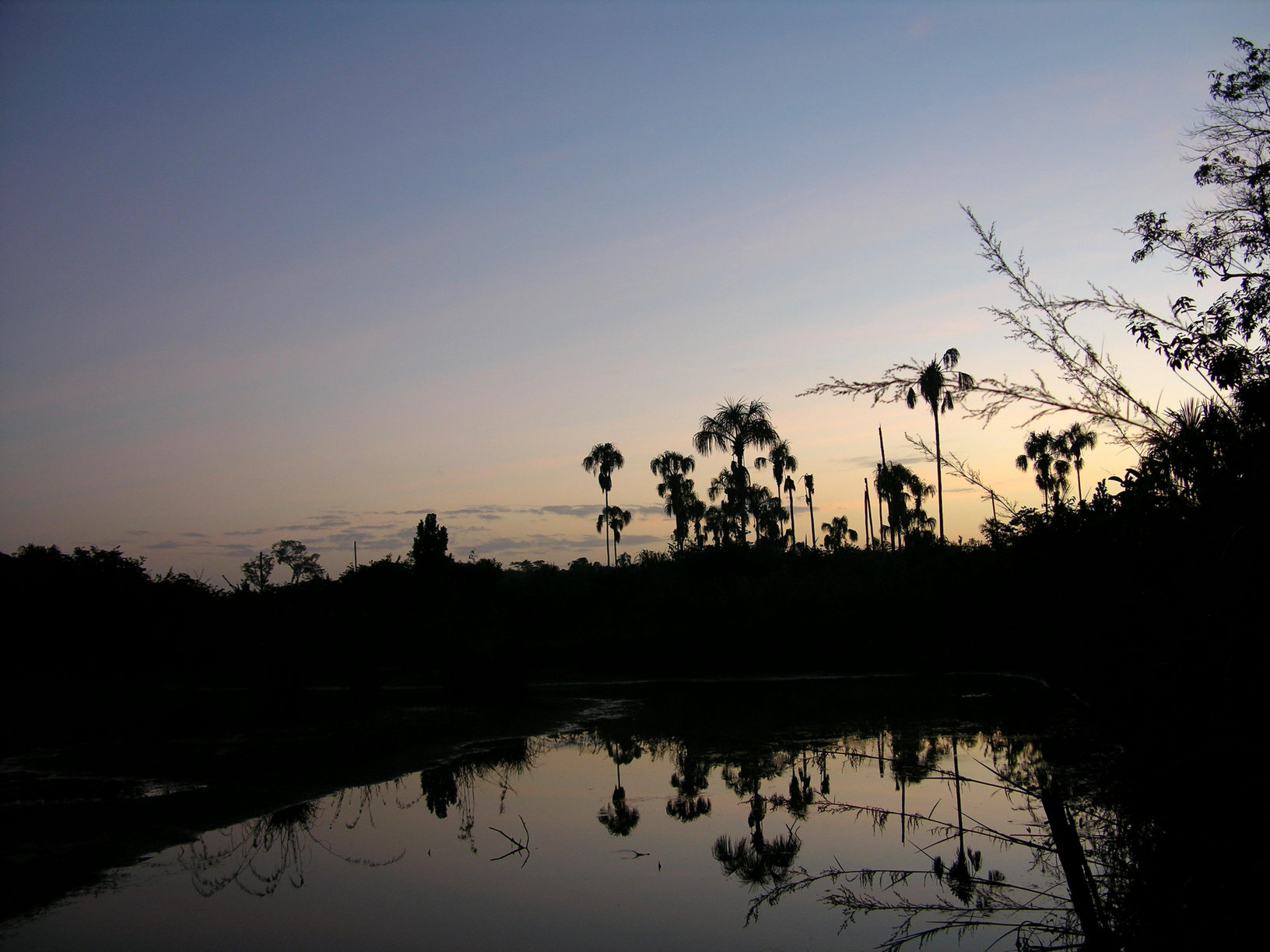
As the first ray touched the highest treetop, a macaw that had thoughtfully gone to sleep there woke up. It had slept rocking gently in its dreams. Suddenly it ruffled its feathers and screeched with all its might. All its tribe woke at the same instant. The racket was prodigious. The macaws here probably don't even know Portuguese, only the language of the jungle, worse than a peacock's scream. That woke Tanya too, and she crawled out of the tent. A new day had begun. After a quick breakfast we went back to Presidente Figueiredo. There are a great many waterfalls, caves and forest paths there. There's a road to every natural wonder. There's a charge for going in, five thousand pesos as noted in the diary. The most interesting cave, Caverna Refúgio do Maruaga, was unfortunately closed for work, but there were plenty of places to go without it.
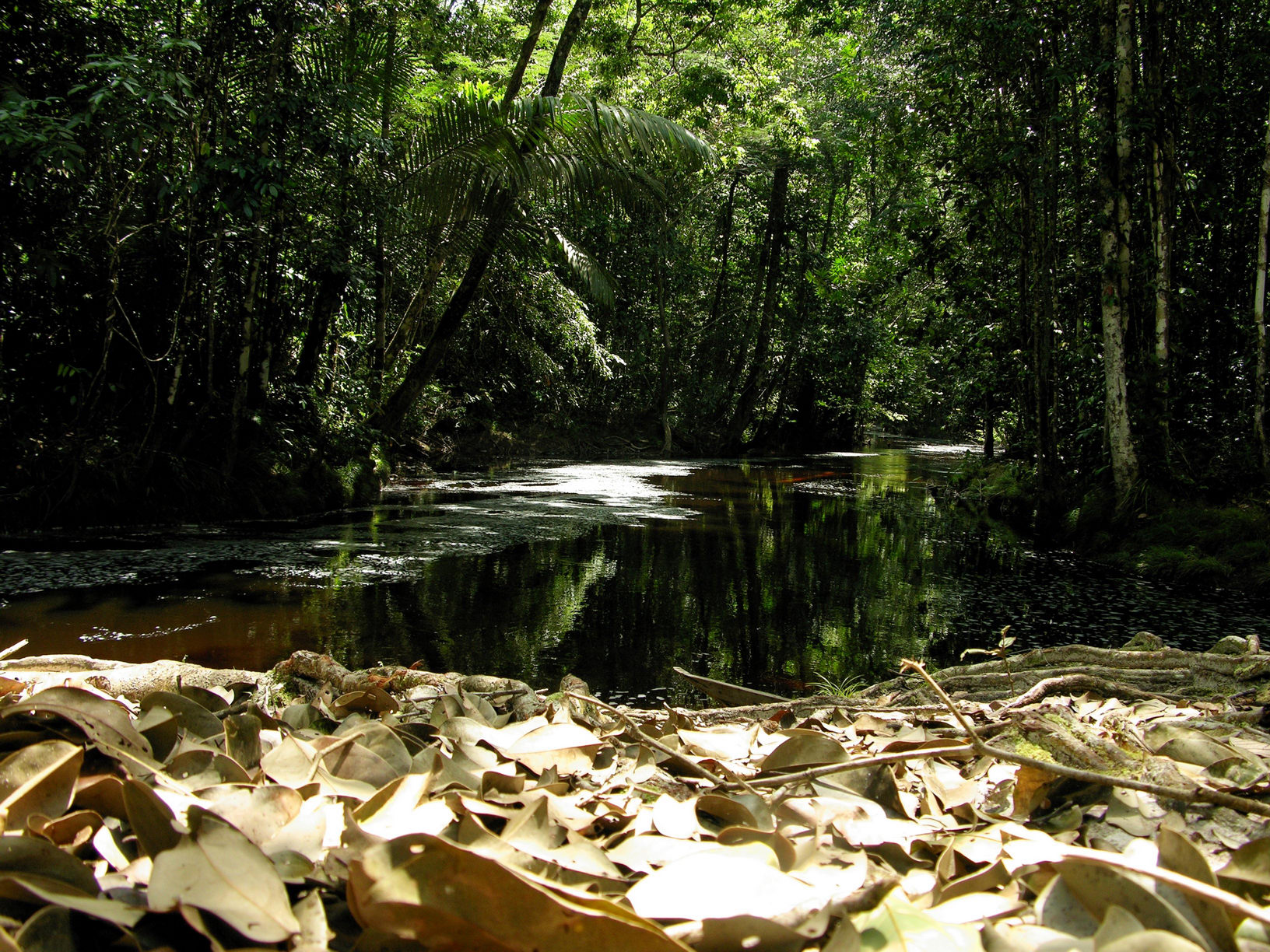
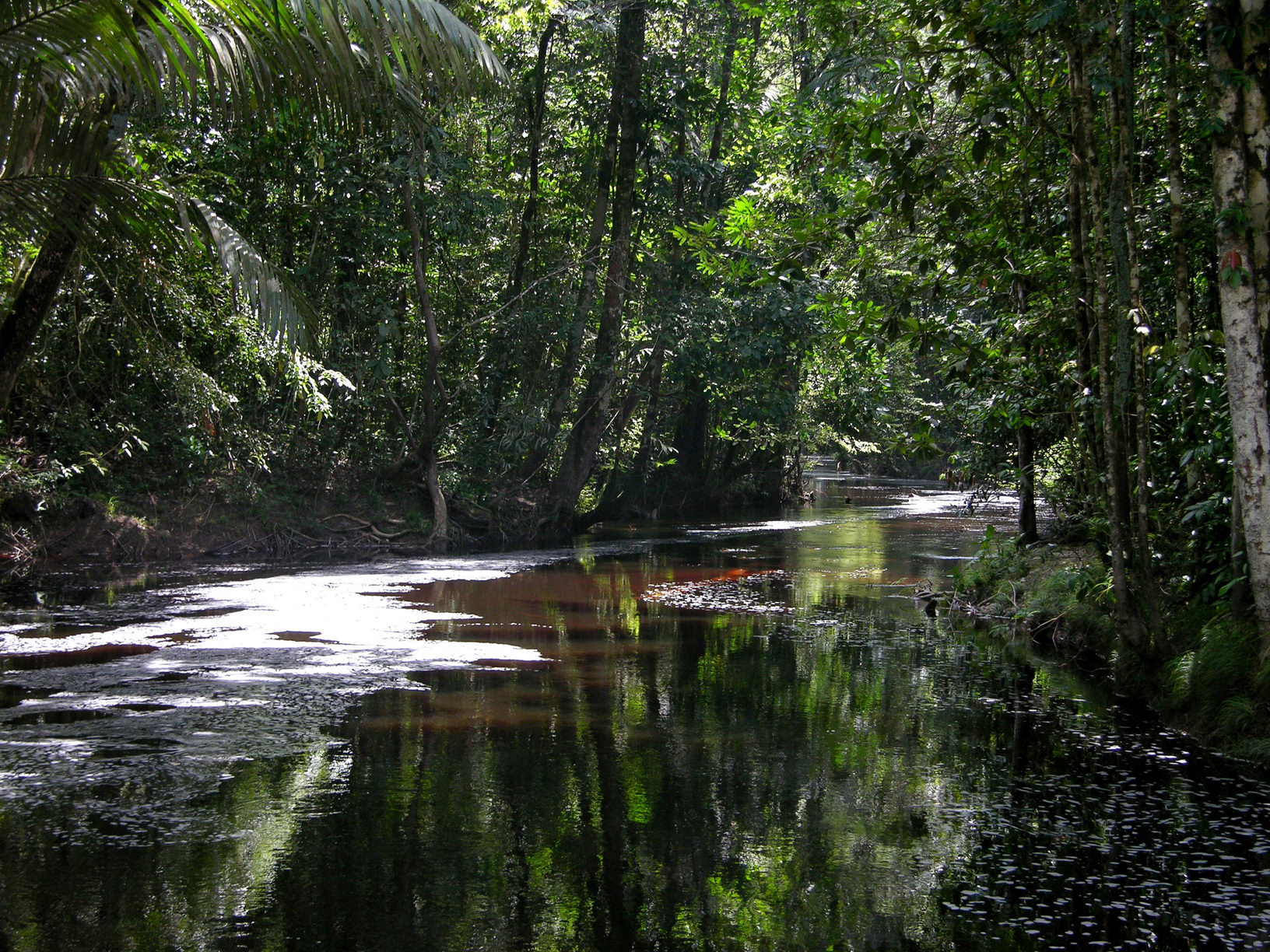
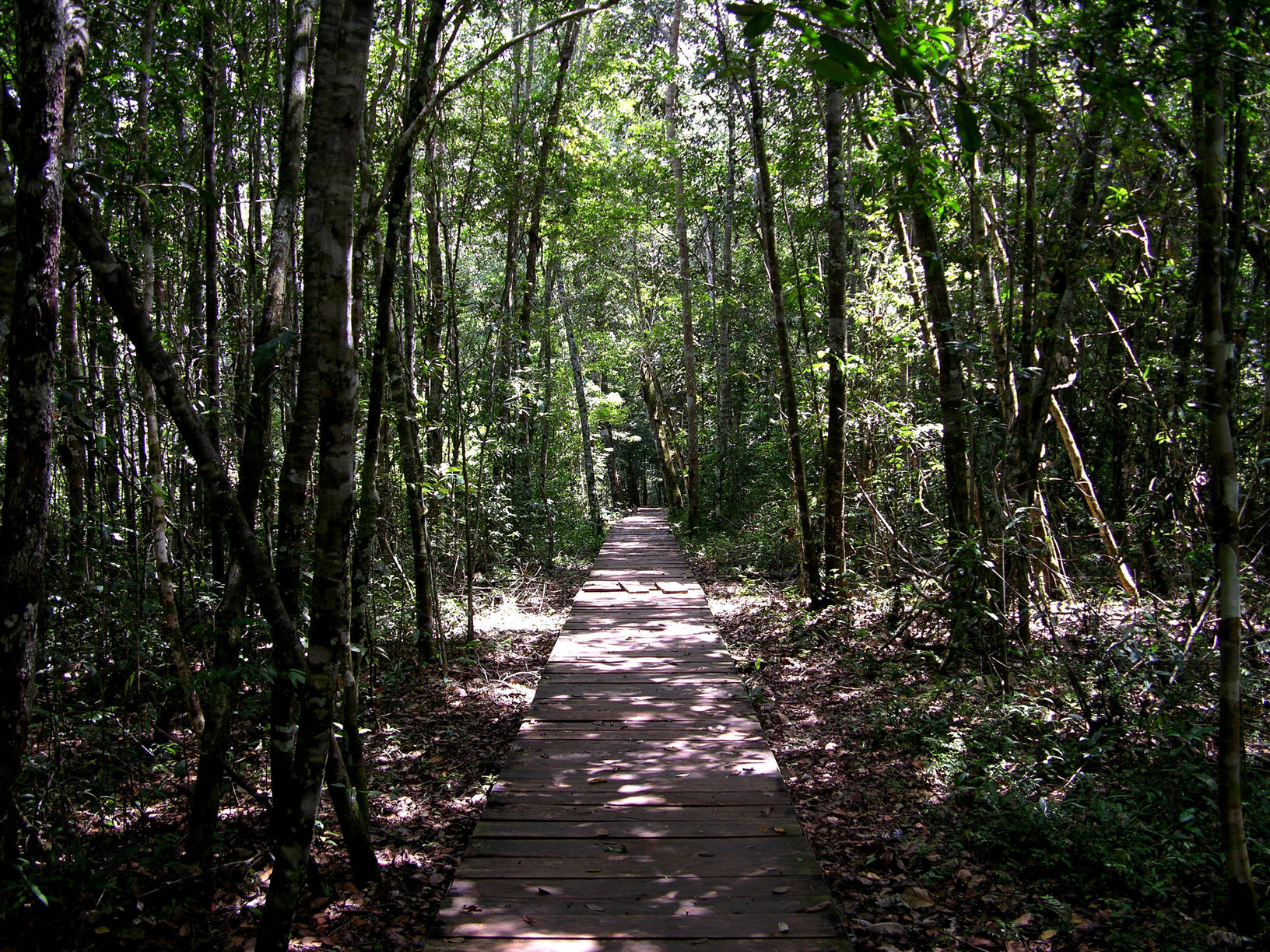
We started by walking the trail at Cachoeira do Santuário. A pleasant walk, but there were no wonders of the world here.
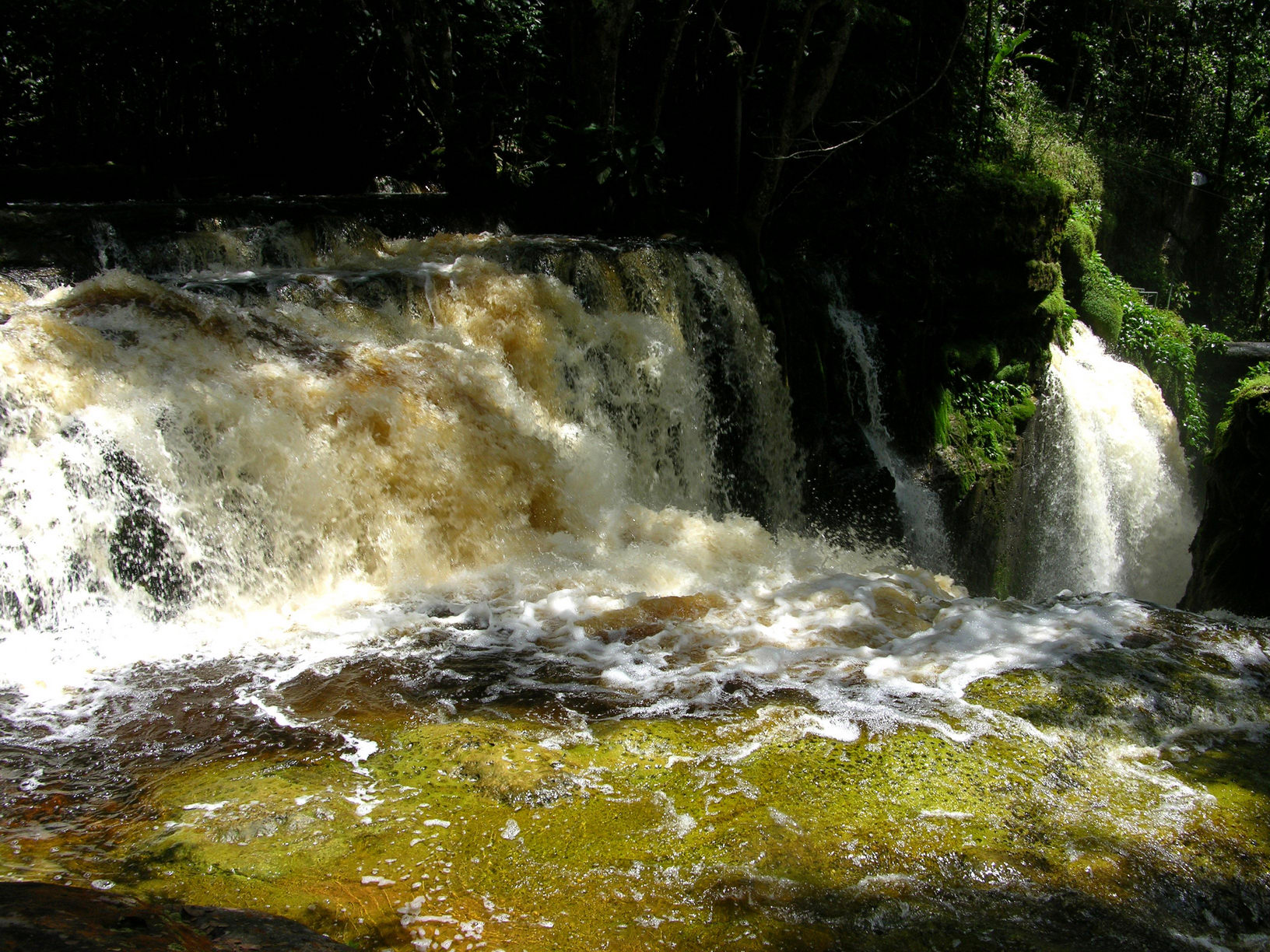
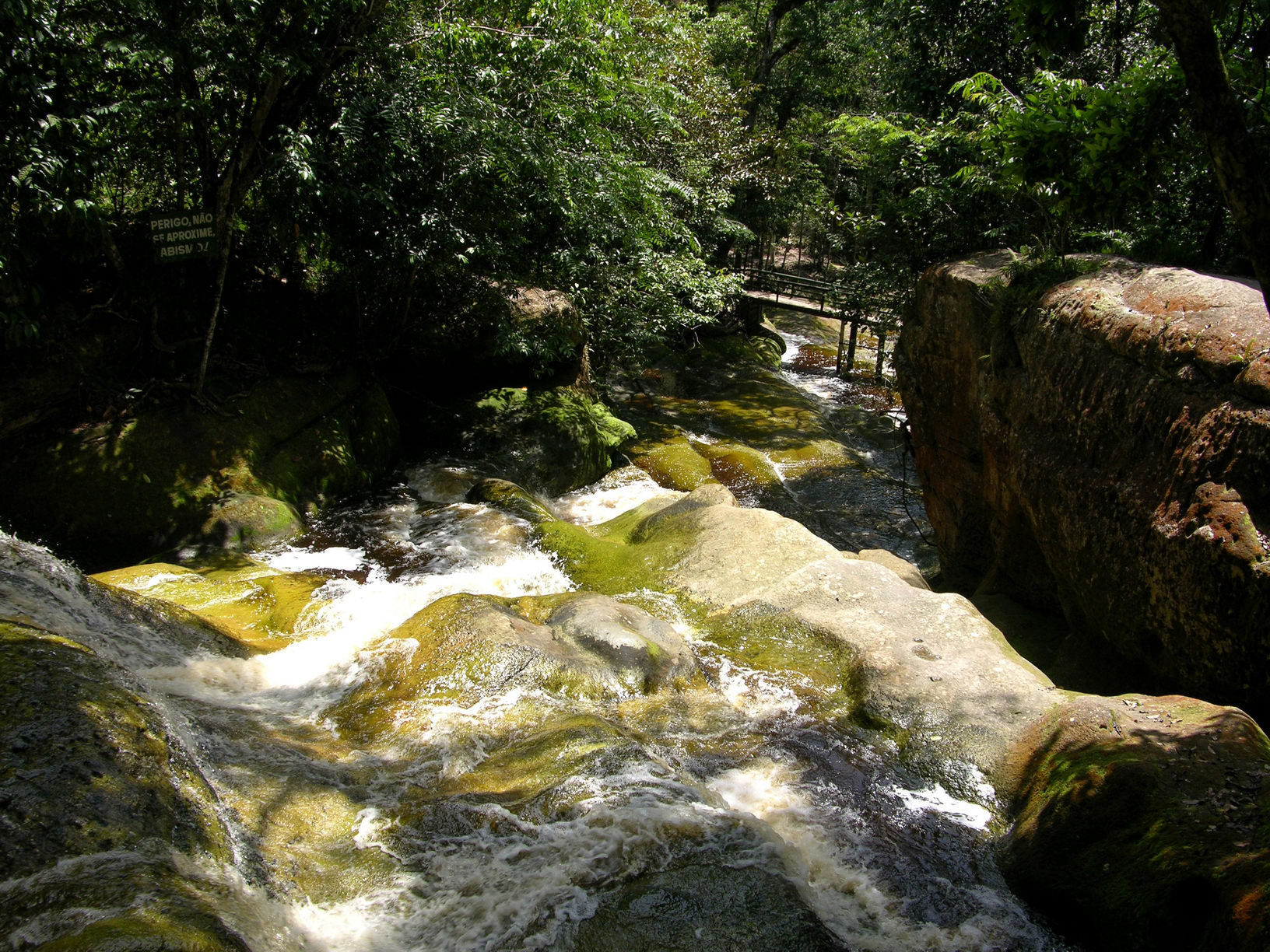
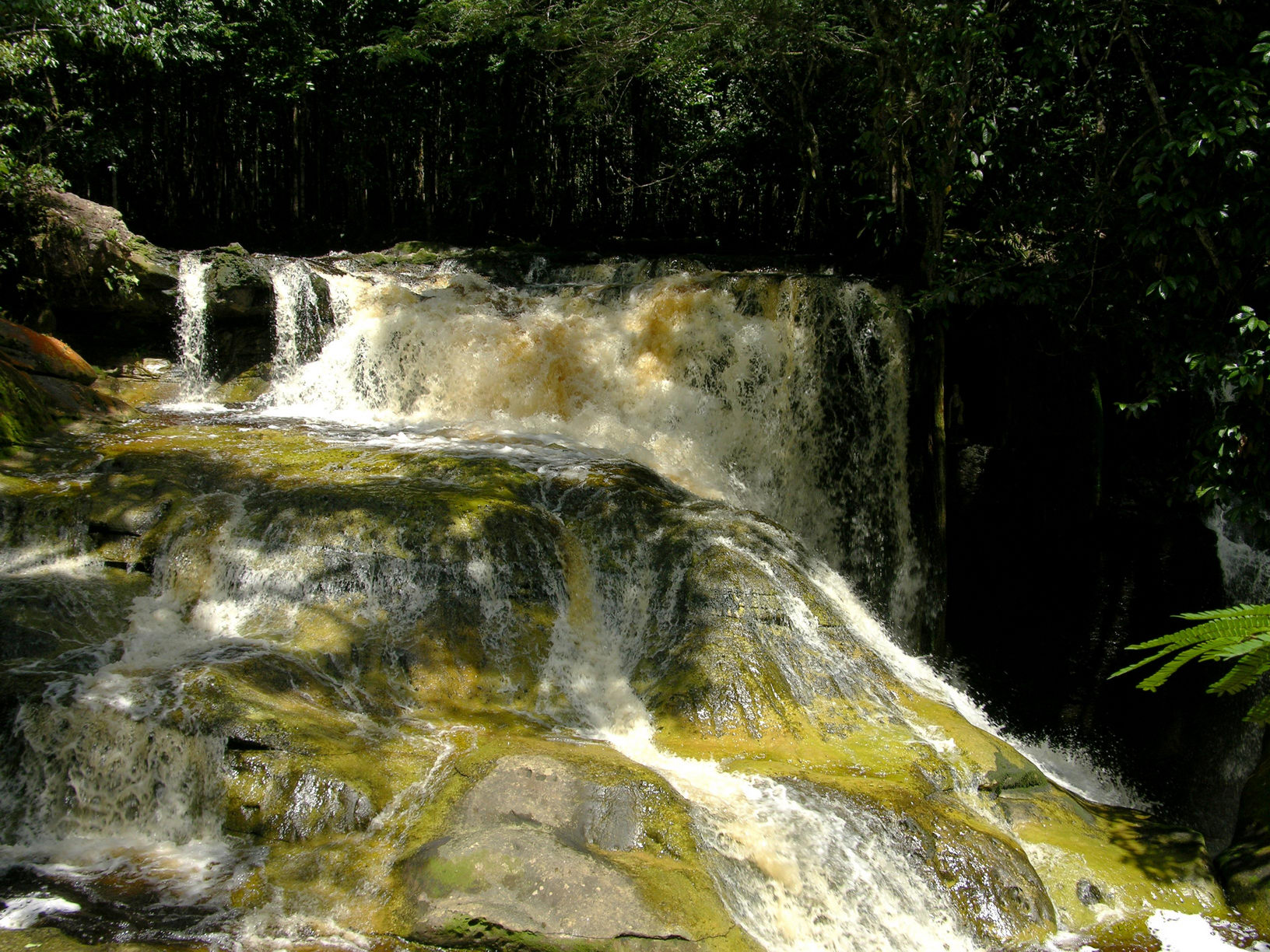
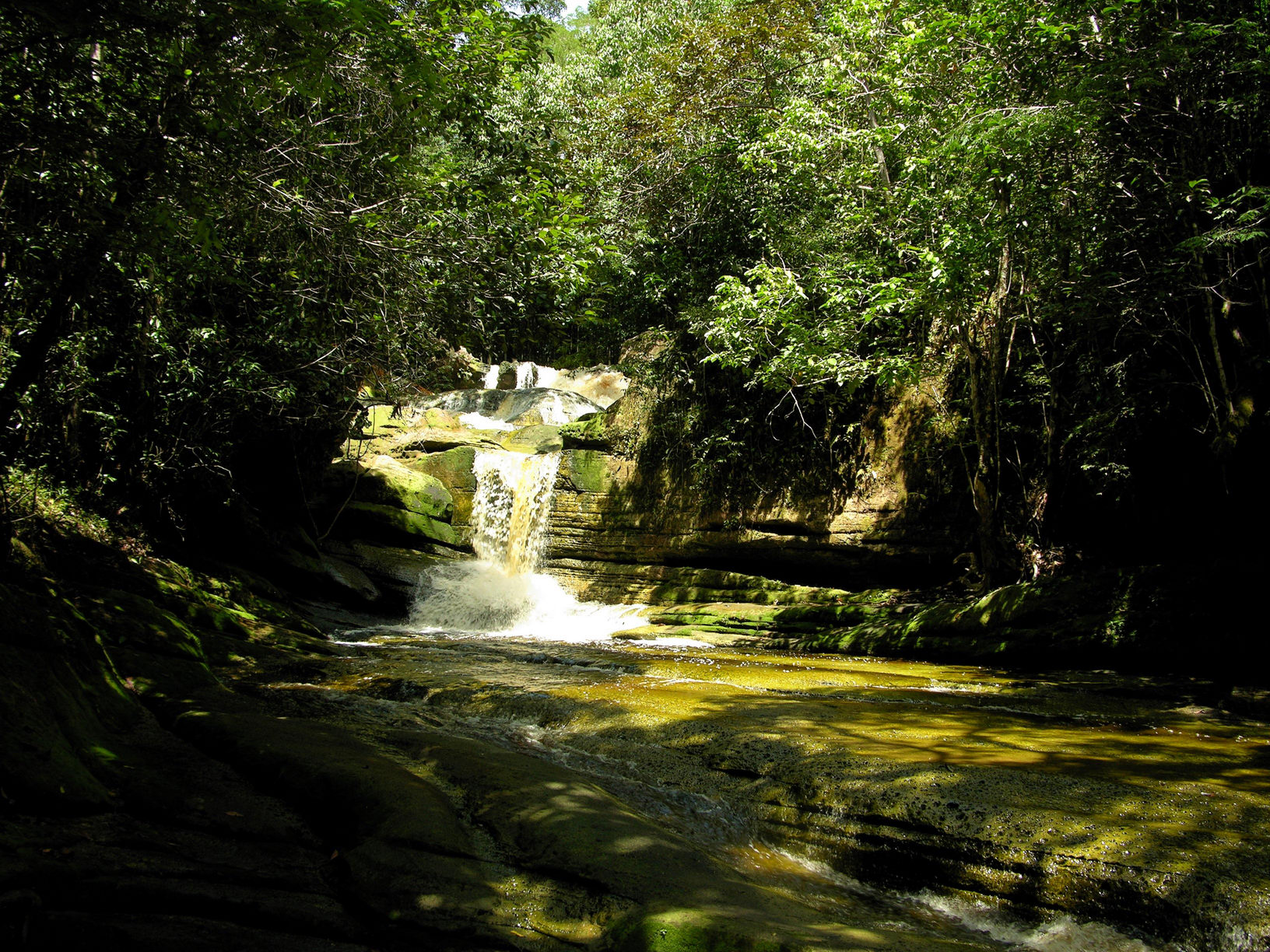
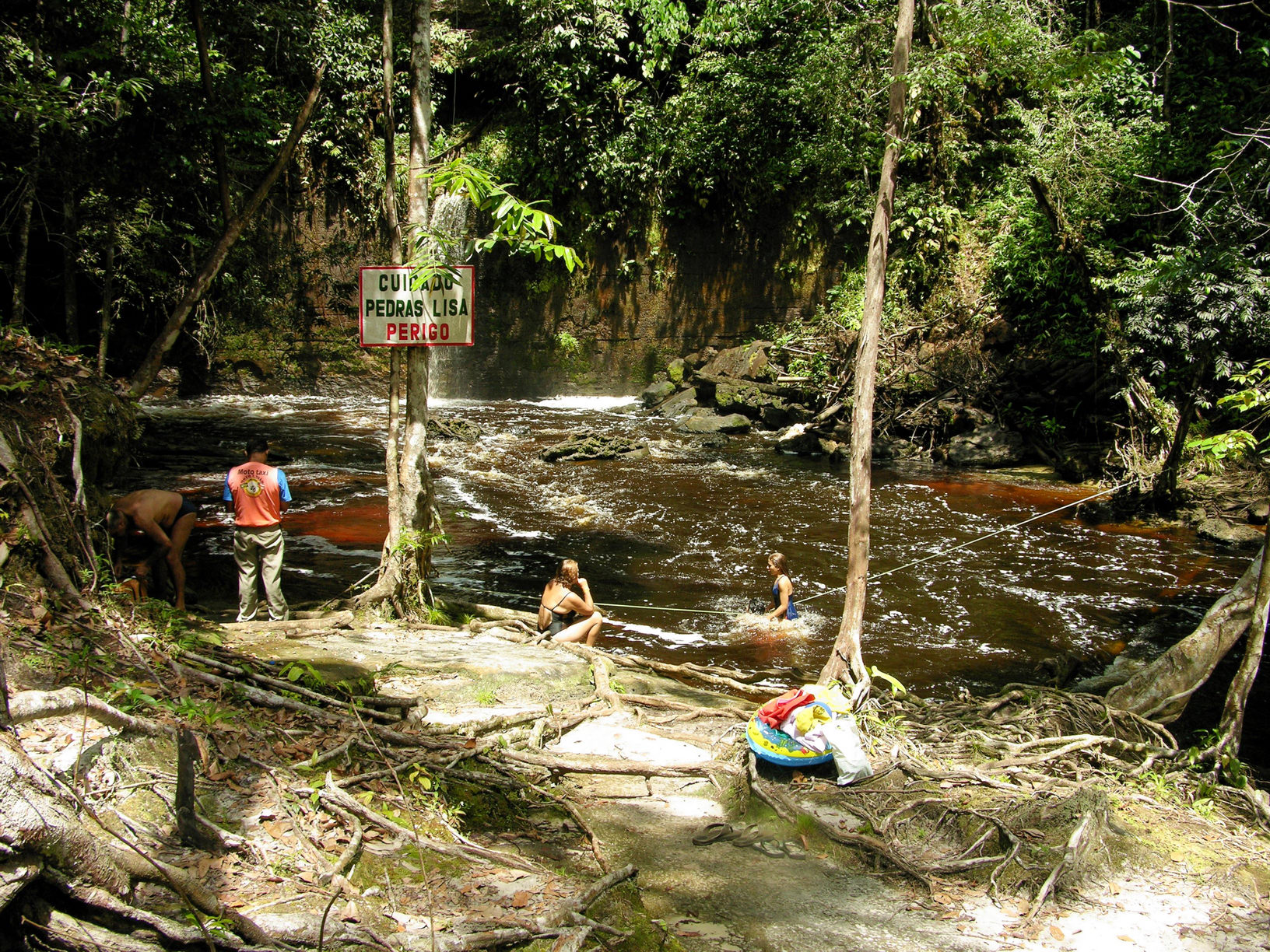
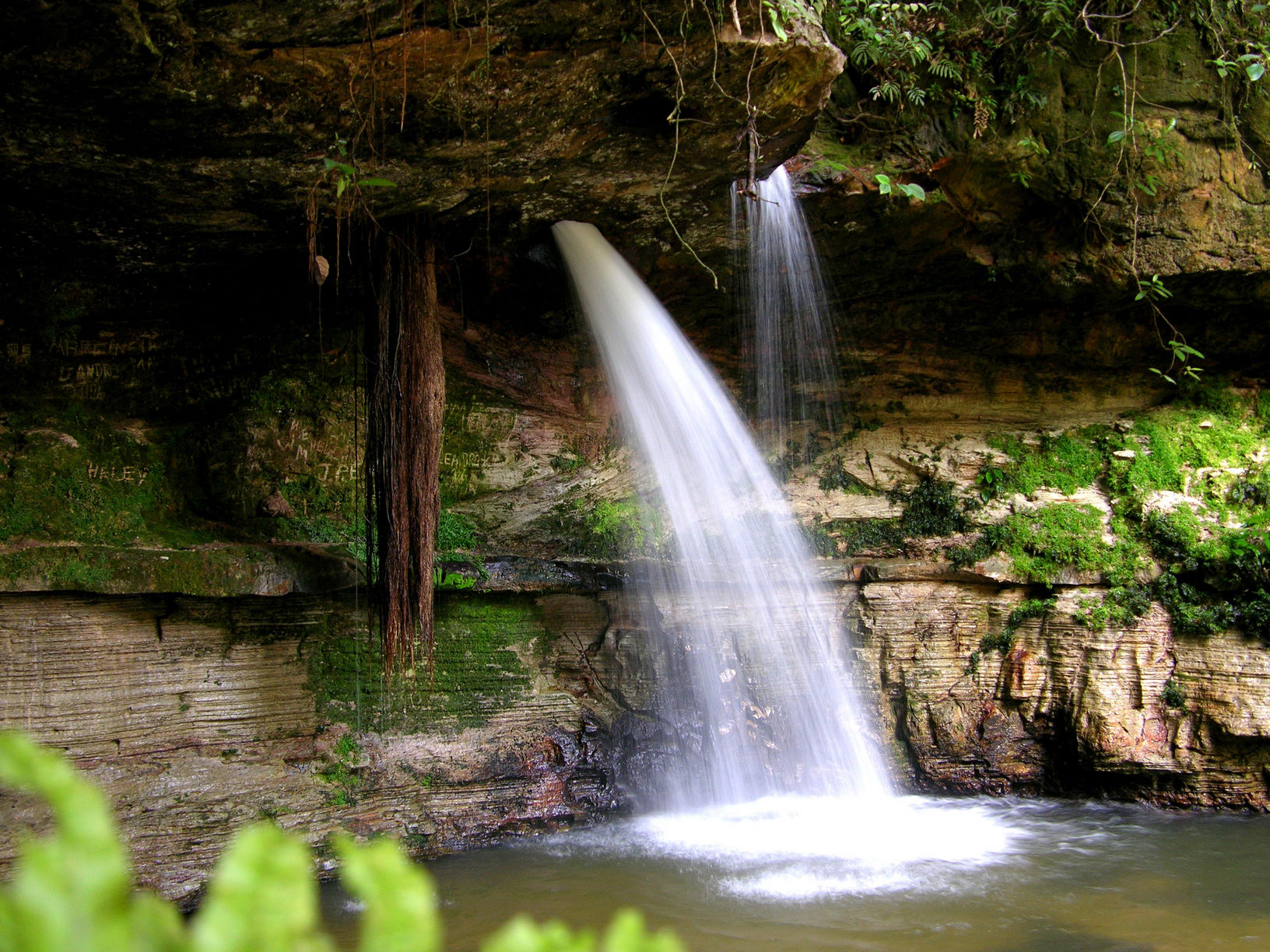
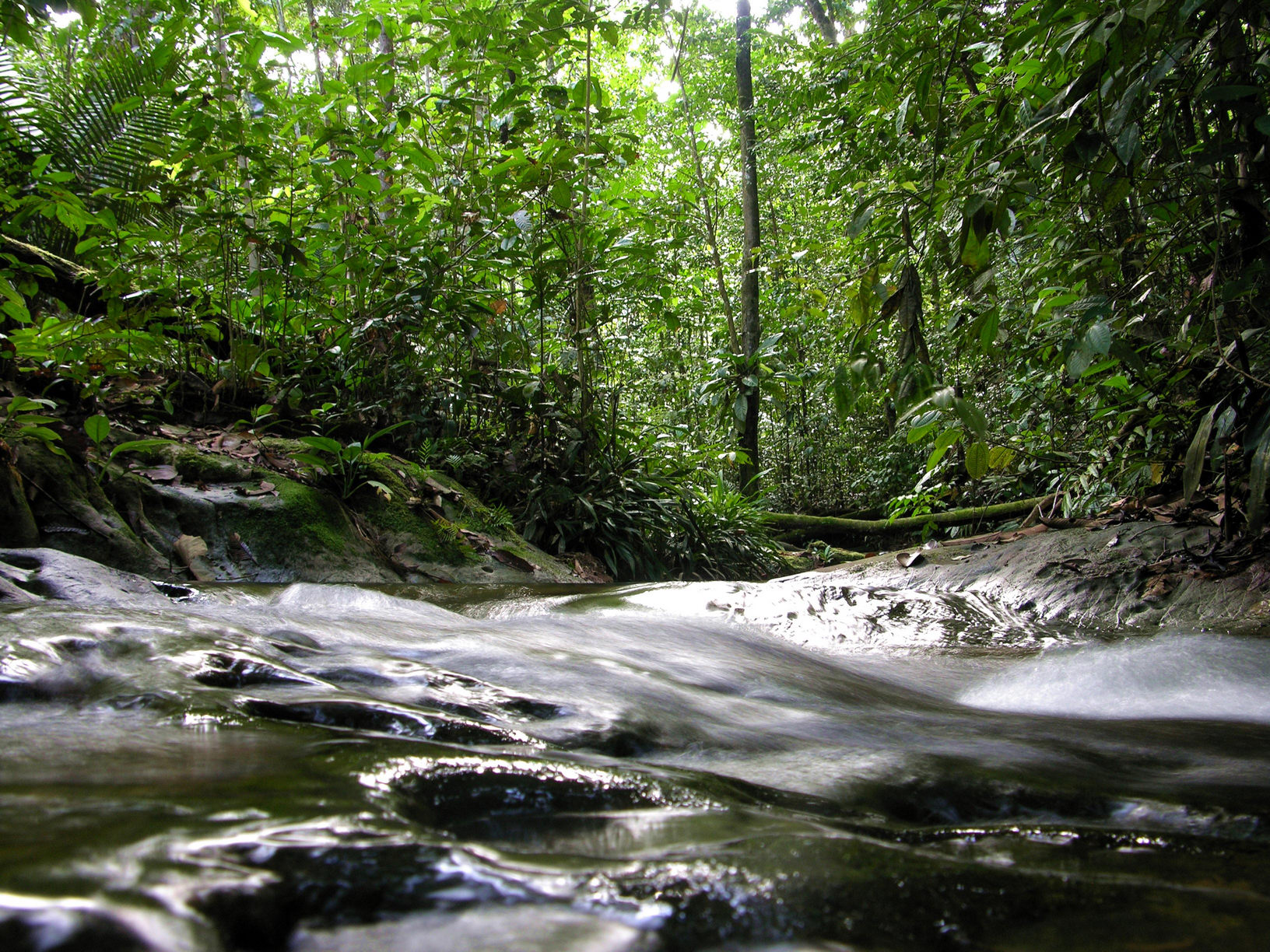
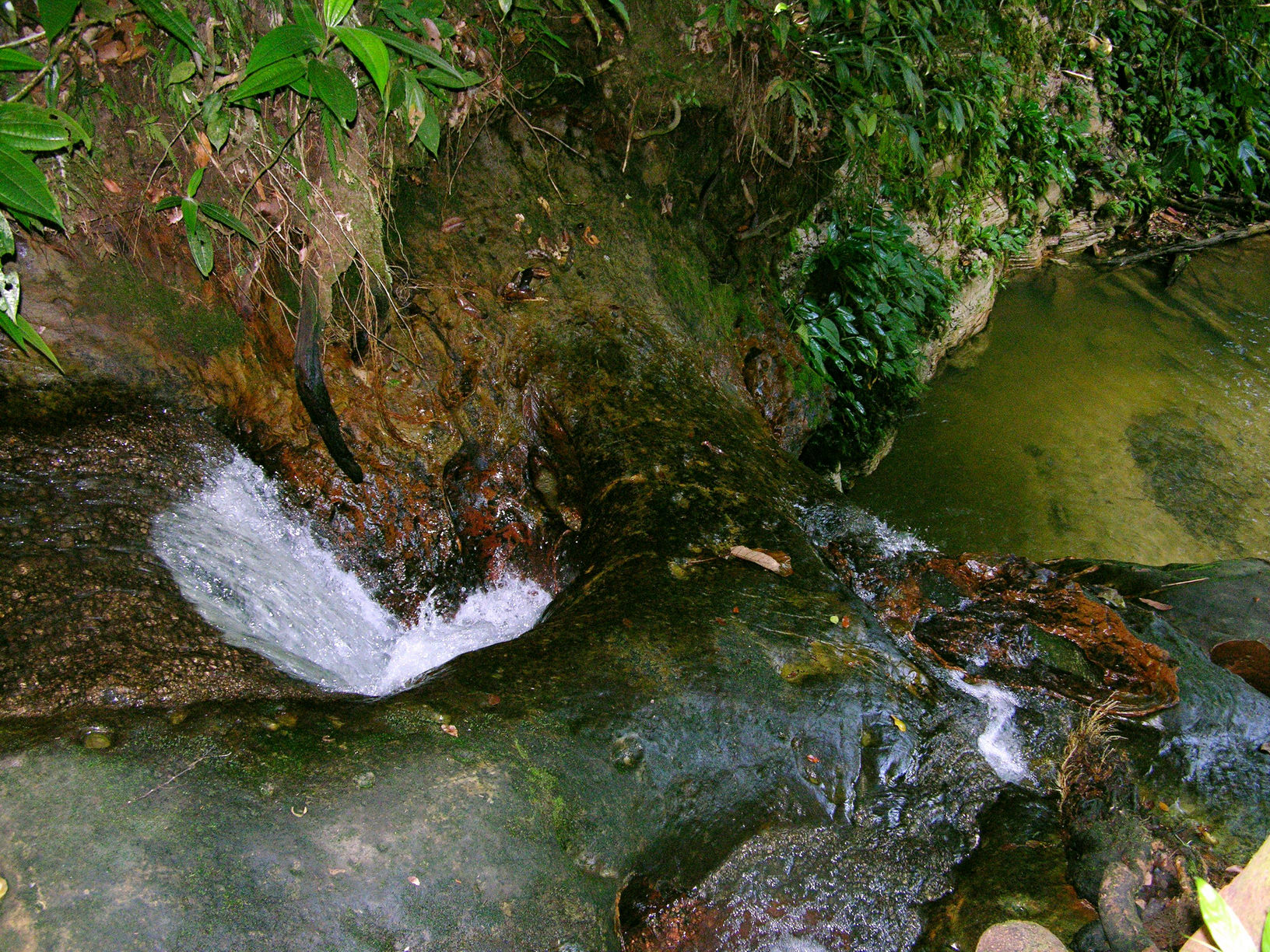
The oddest waterfall is Cachoeira de Pedra Furada. The stream doesn't drop from the edge of a cliff. It gets sucked into a hole in the floor, then spills out of the ceiling of a rock overhang. You can swim here, which is what we did. There were rather a lot of people, though. The whole million inhabitants of Manaus come here to relax.
We drove to Manaus in the dark and had to spend the night yet again. On the way, just outside the town, we'd seen a sign saying “Motel”. Probably very convenient, with the airport close by. A strange entrance to the motel, behind a stone wall. Video cameras all over the place. You pay without getting out of the car and you can't even see who you're paying. Just slot the card in. All right. I couldn't see the point of all the security but if they'd installed it, they must need it. It all made sense when we got inside. A round bed with mirrors all around. Nothing but porn on the television. It was a love motel, a place where you bring girls to have sex. At first we thought that, however revolting it was, we'd survive till morning. Then it turned out there were no sheets and the receipt said we'd paid for three hours. That was going too far. Off we went to argue. Half an hour later we even got the money back on our card. Ugh, what a foul place. Like a morgue.
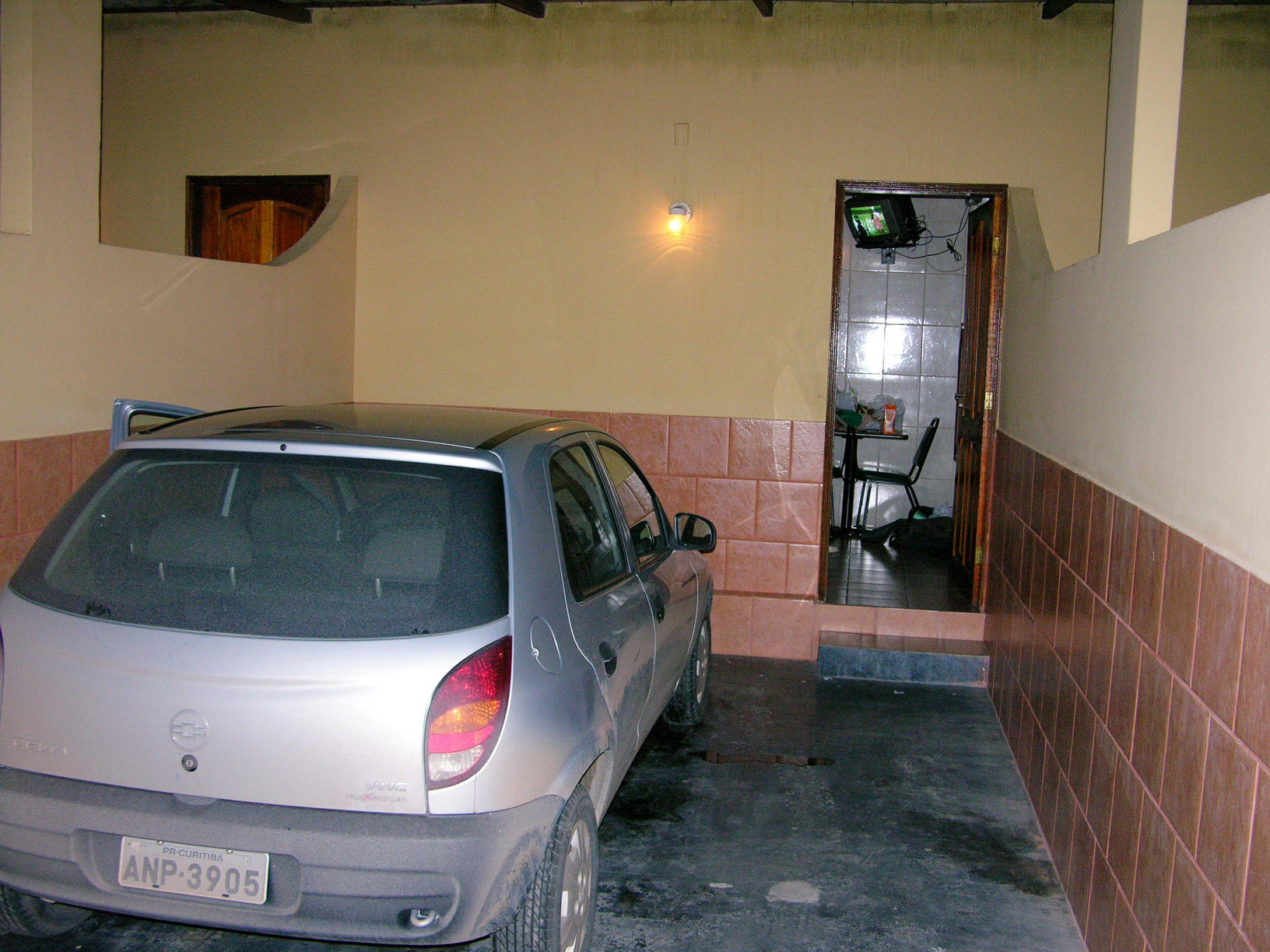
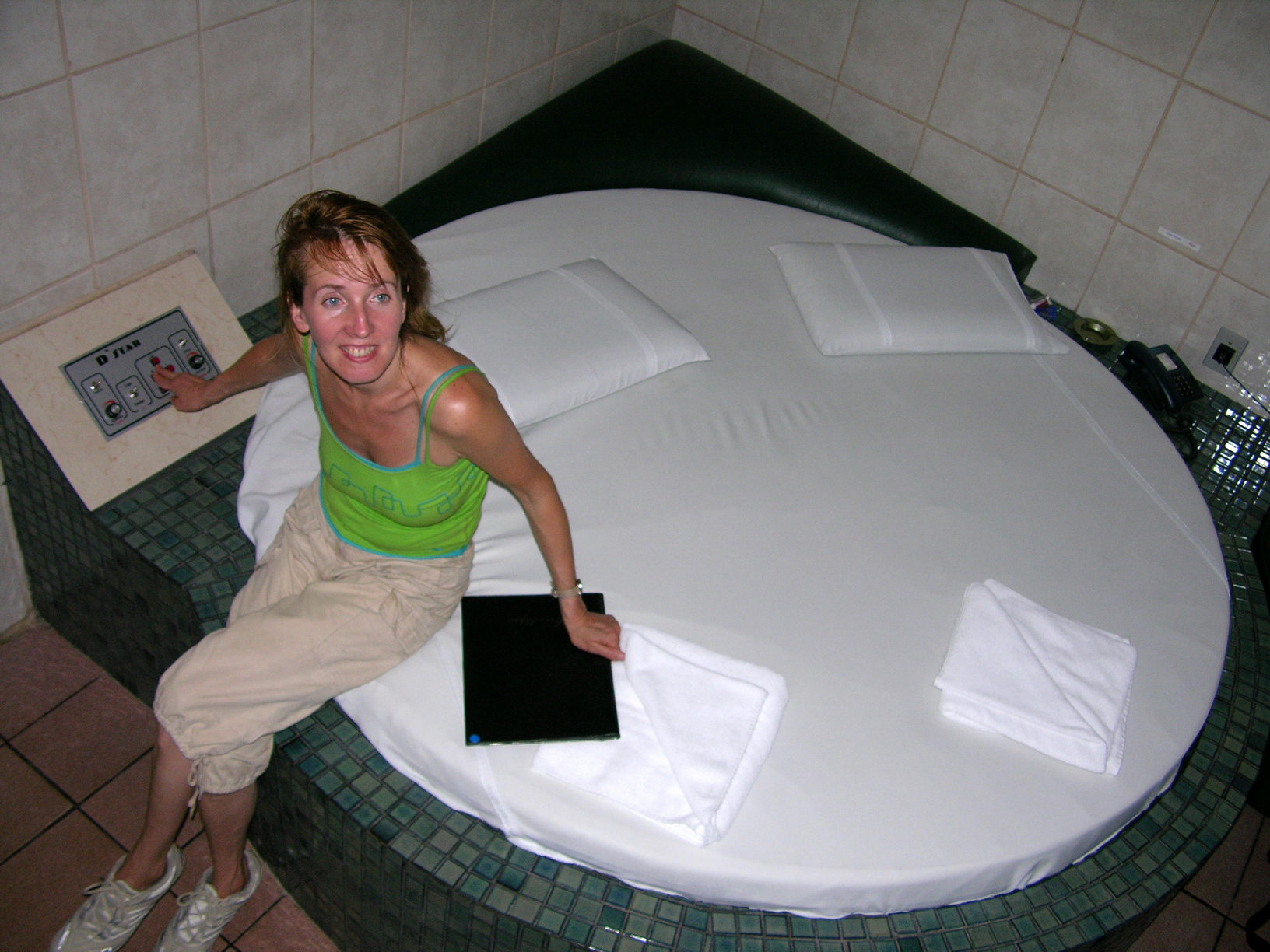
As we found out later, this is what “motel” always means in Brazil. There's usually a brothel attached, so you can turn up without a girl of your own. For two hundred reais you get a house one.
We had to drive into town and spend a long time looking for a proper place to sleep. That evening we even managed to swim in the Rio Negro one more time.
In the morning we went to buy plane tickets. We were flying to Tabatinga on the Colombian border. We wanted to go down the Amazon by boat. We could have sailed straight from Manaus, but going against the current to Tabatinga takes seven days. Downstream it's four days, so we were flying up to the start of the great river. We could have gone still farther up into Peru, but as ever there wasn't enough time.
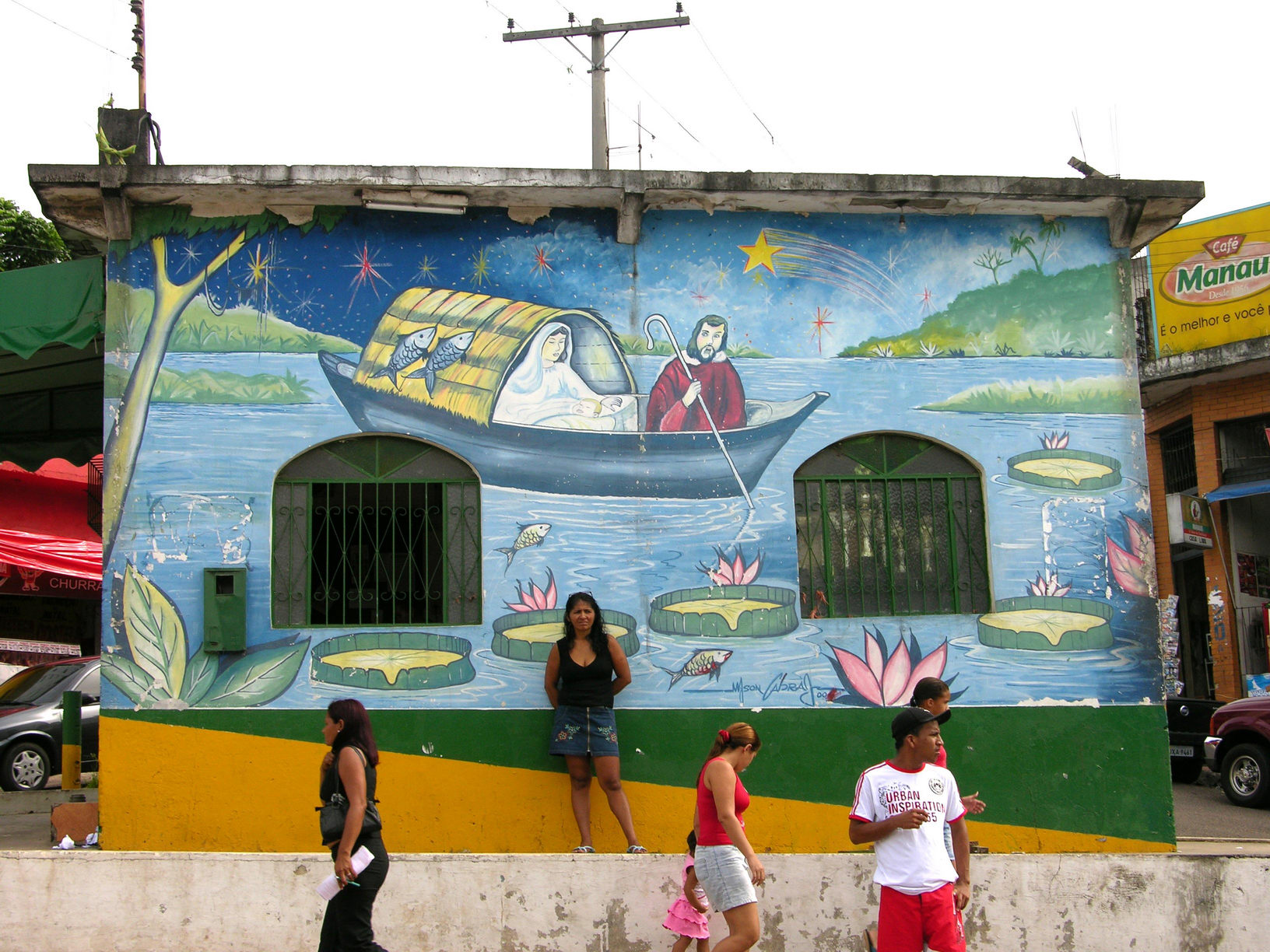
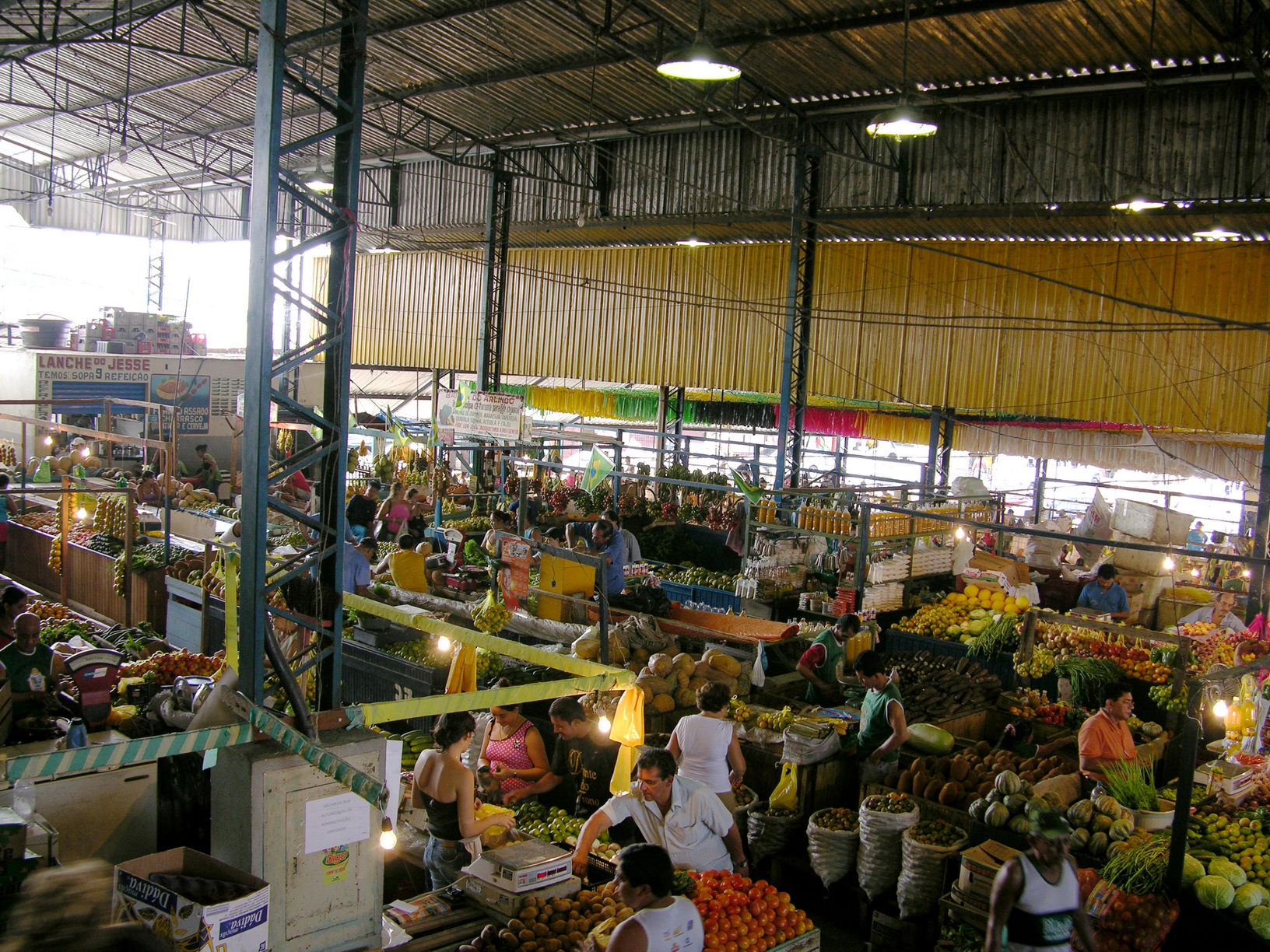
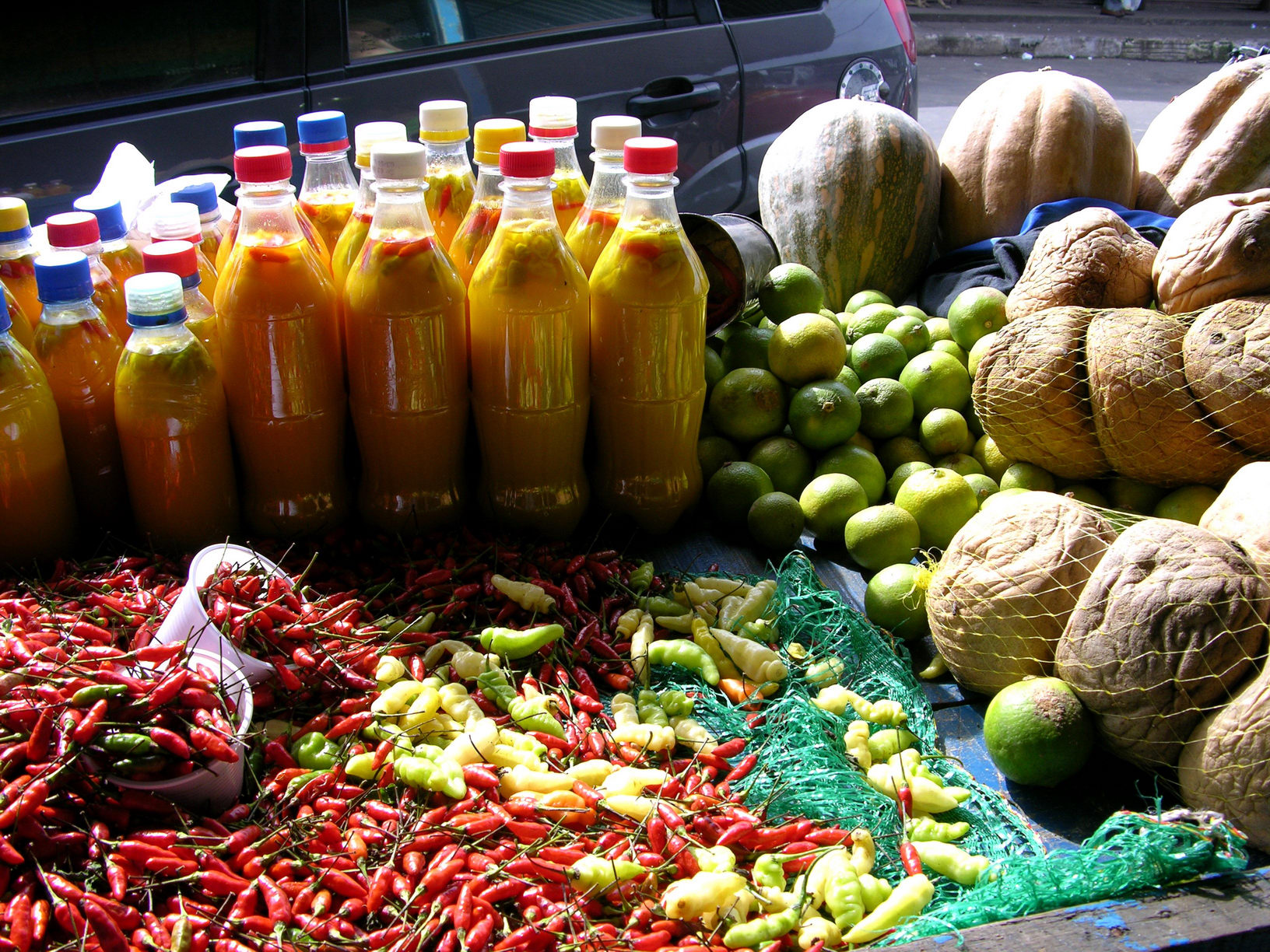
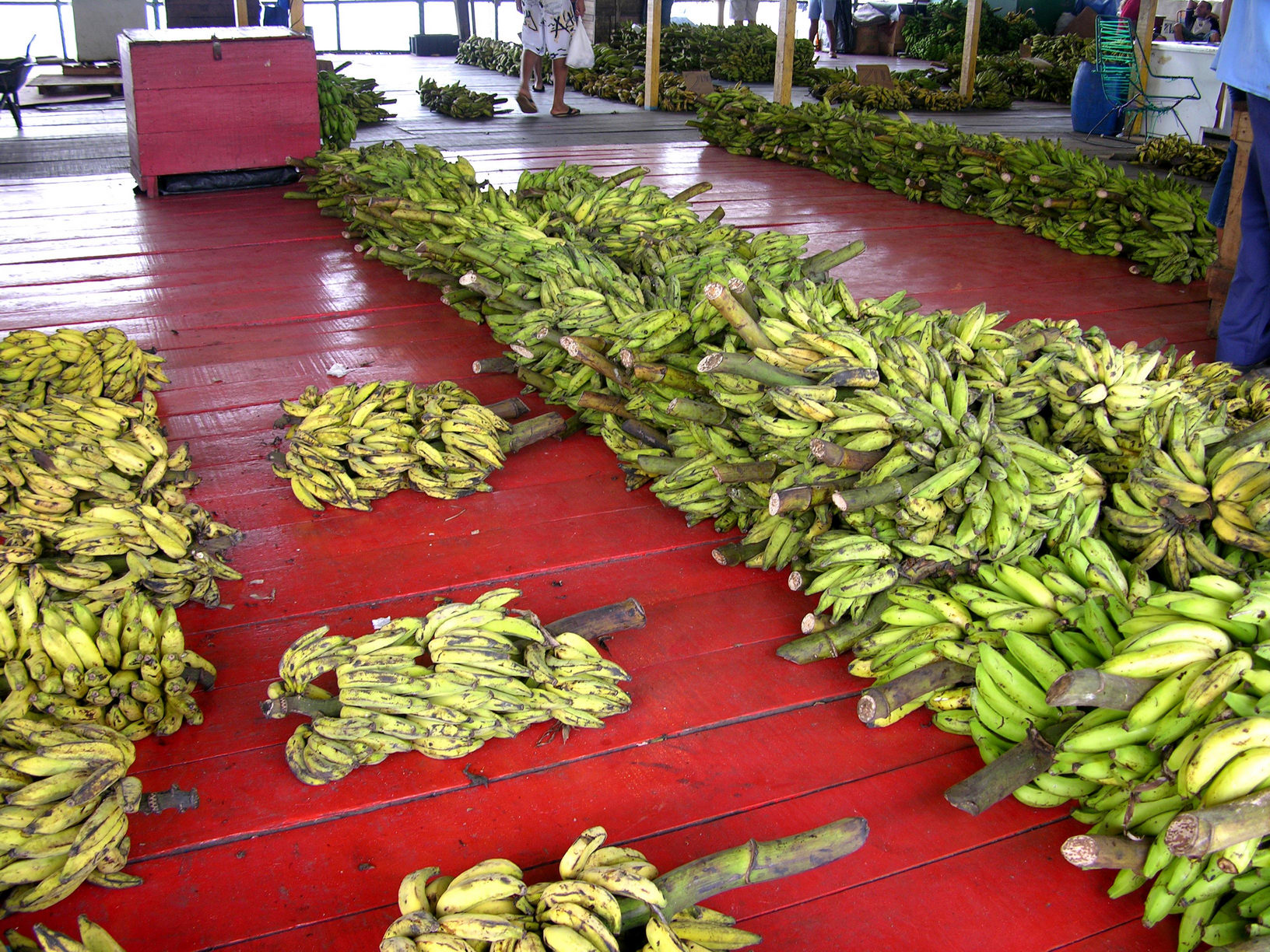
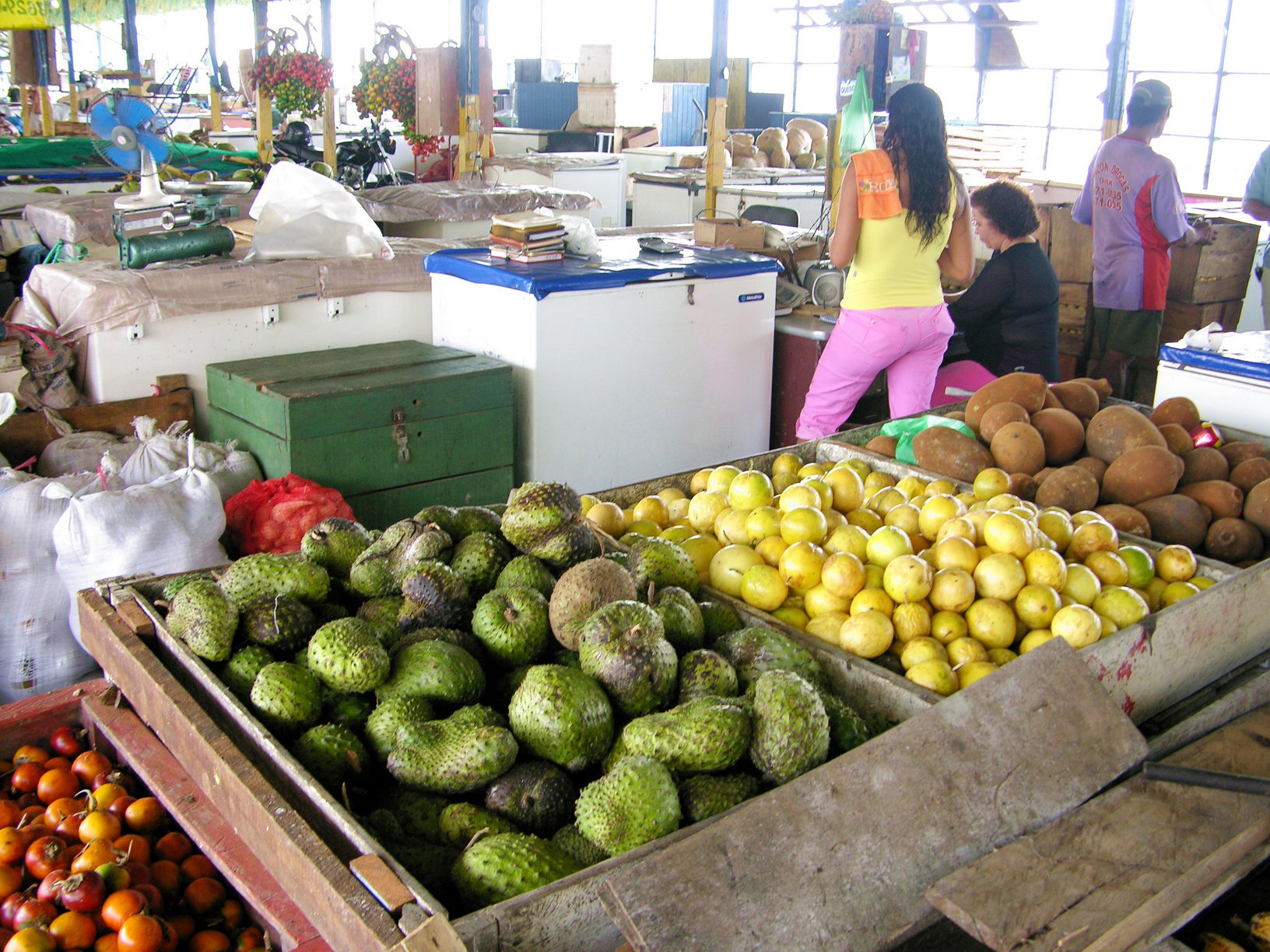
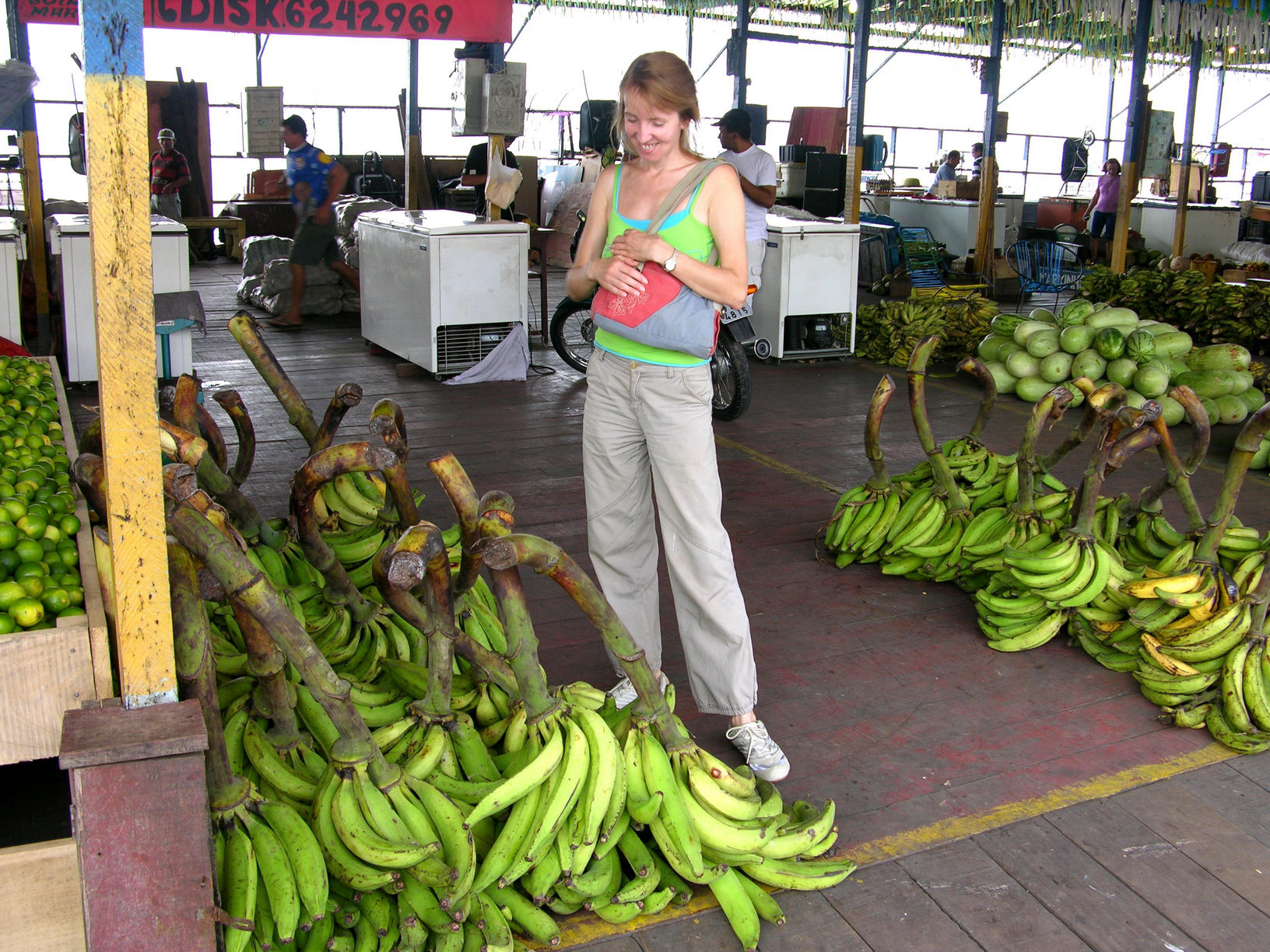
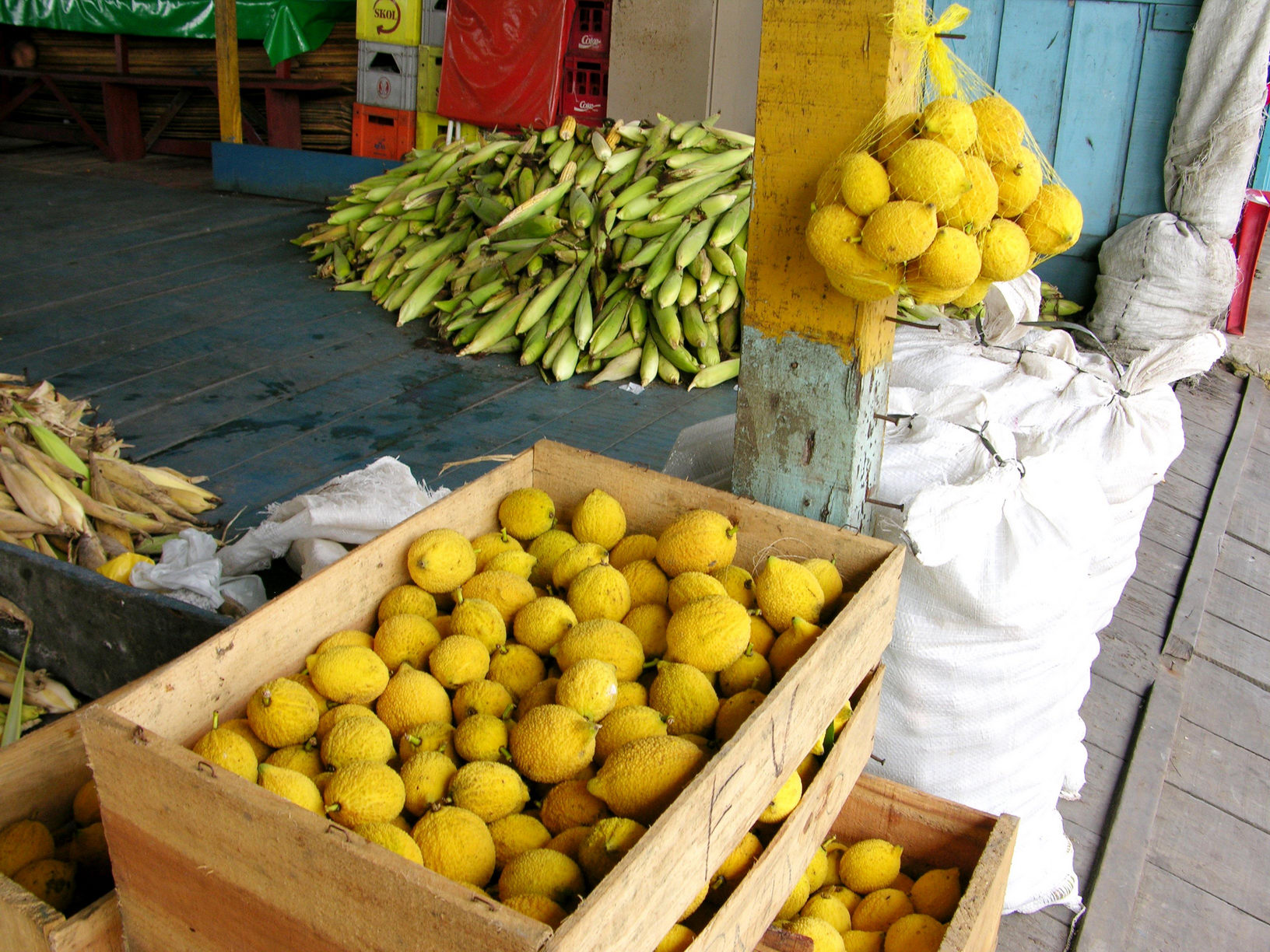
The plane left at four, so we still had time to drive around town. We'd covered it well on foot, but there were places we needed the car for. First of all, the market. In Manaus there are several of them. One is in the centre, built to a French design and modelled on Les Halles in Paris. The second is farther west, on the bank of the river. There everything is geared towards local people, so it's a little less polished, but very colourful. What's particularly interesting is to see the fish stalls. There's no end of things living in the Amazon. It makes you want to have a little taste of everything.
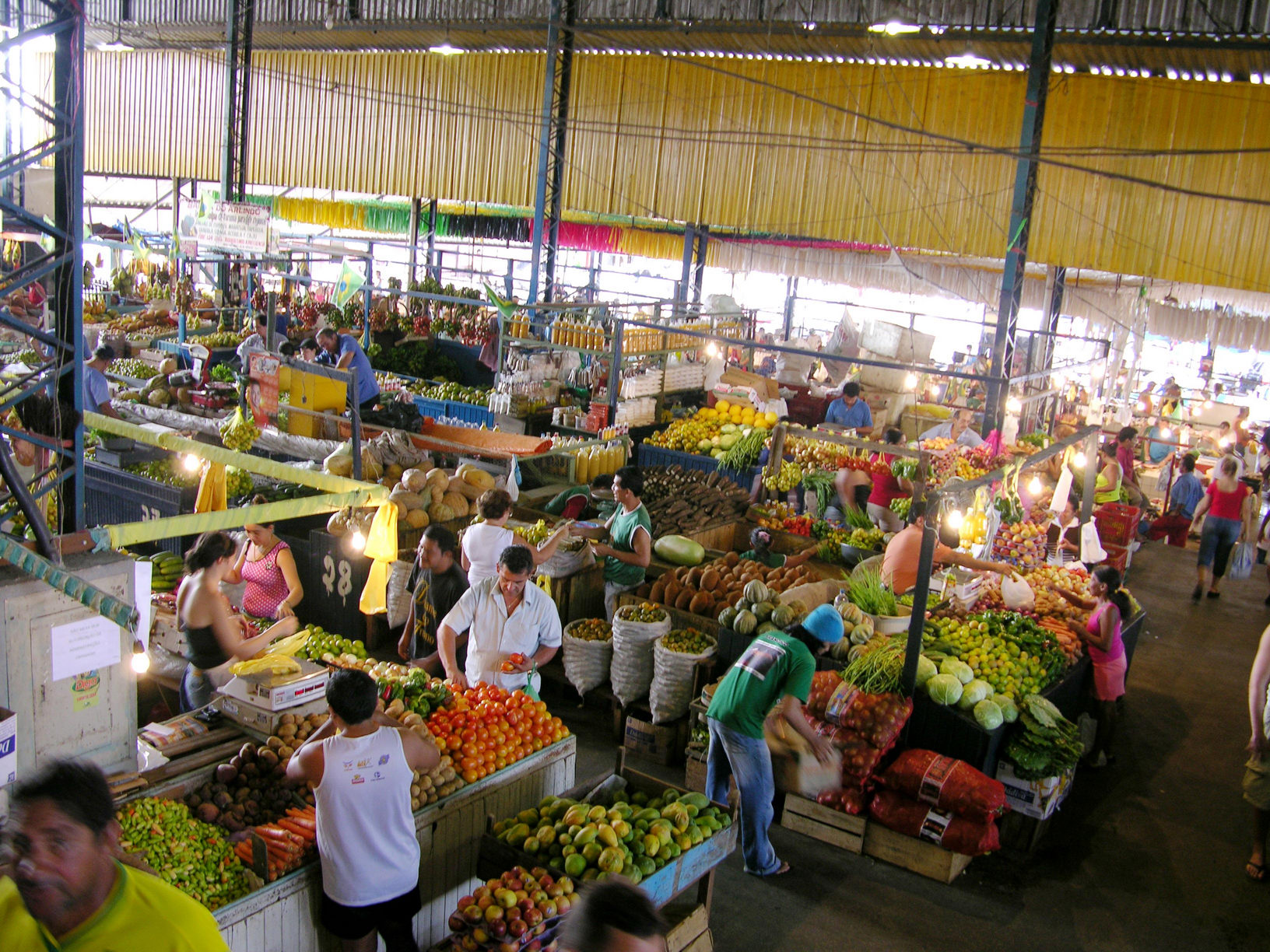
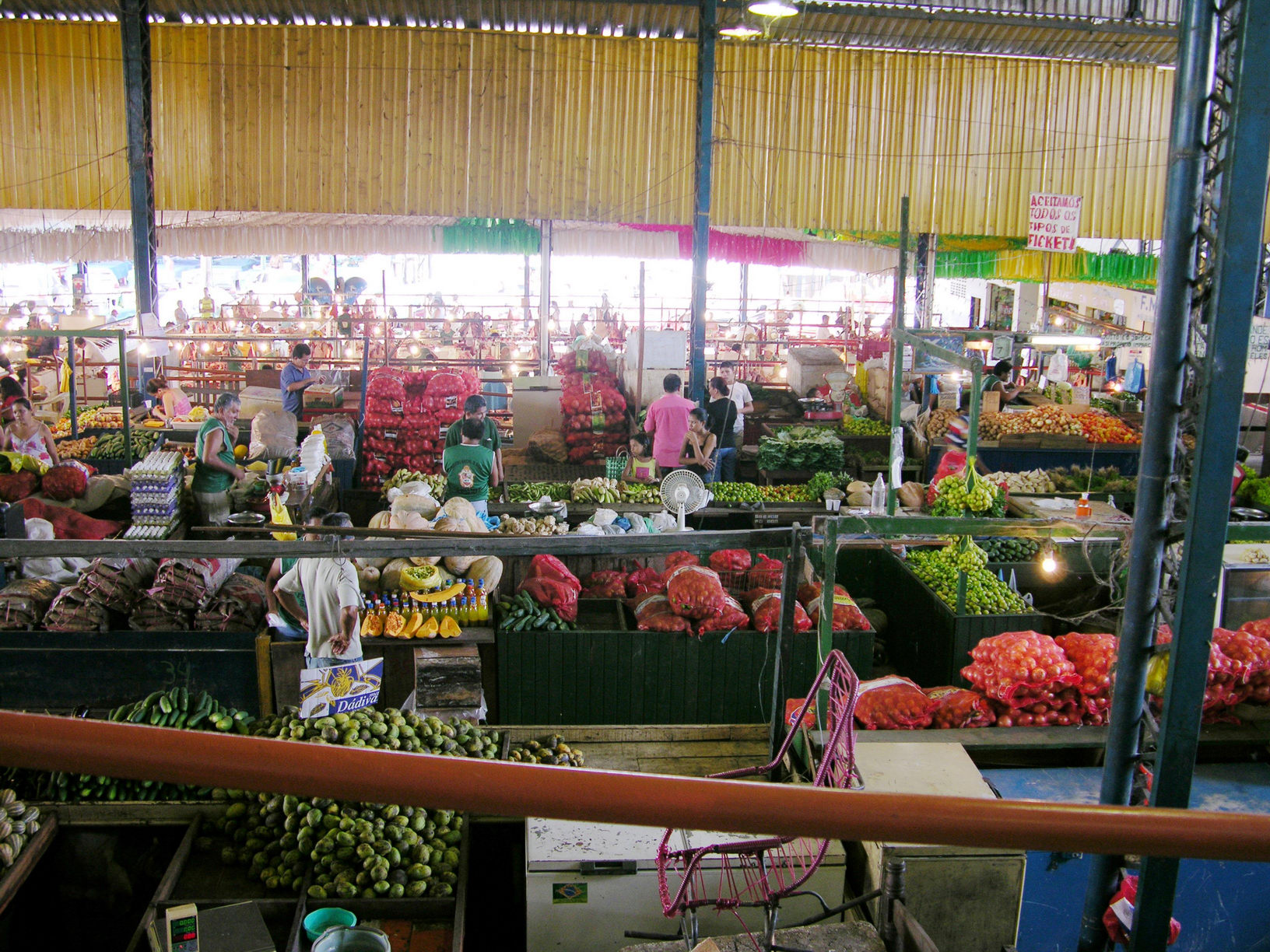
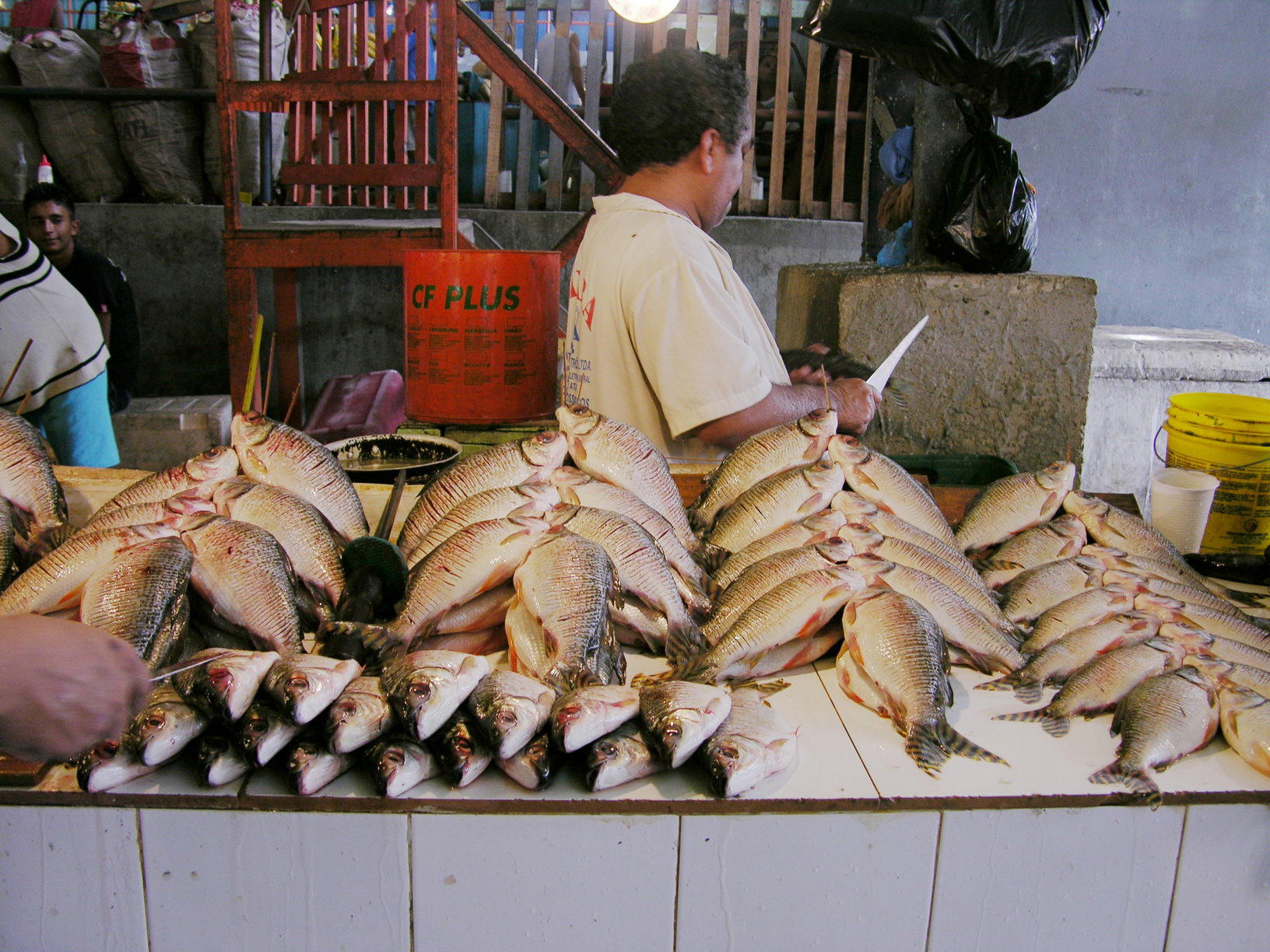
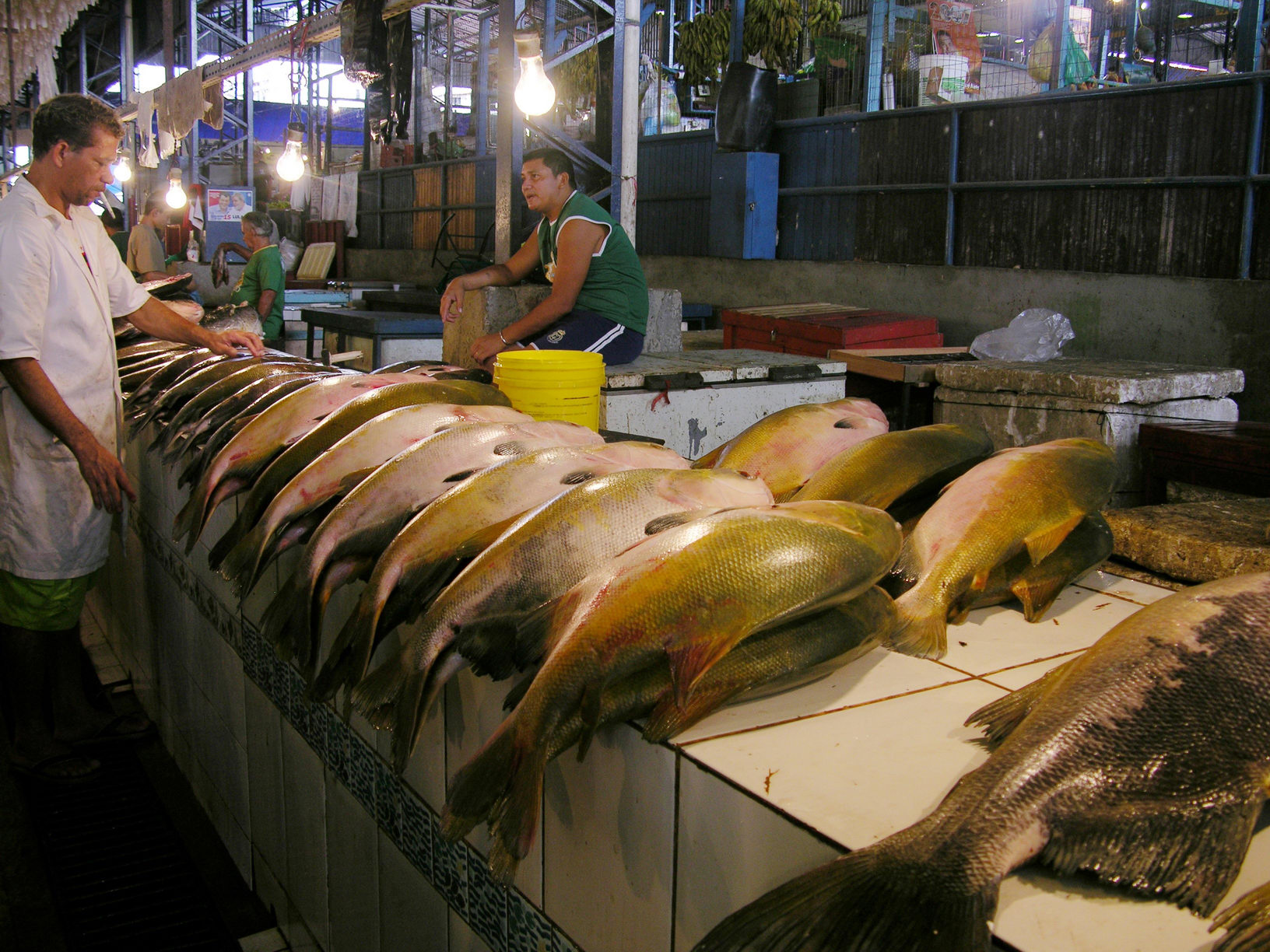
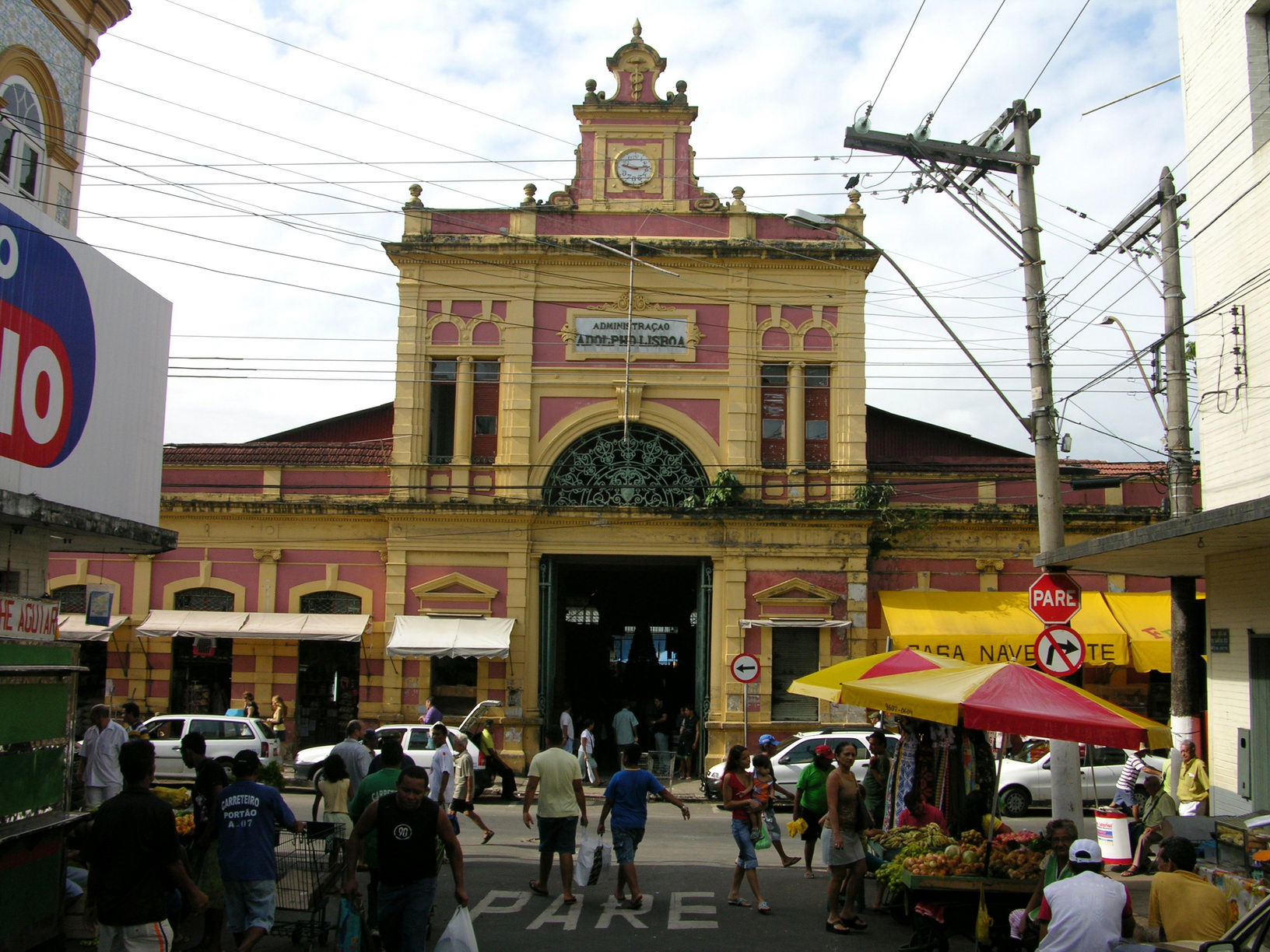
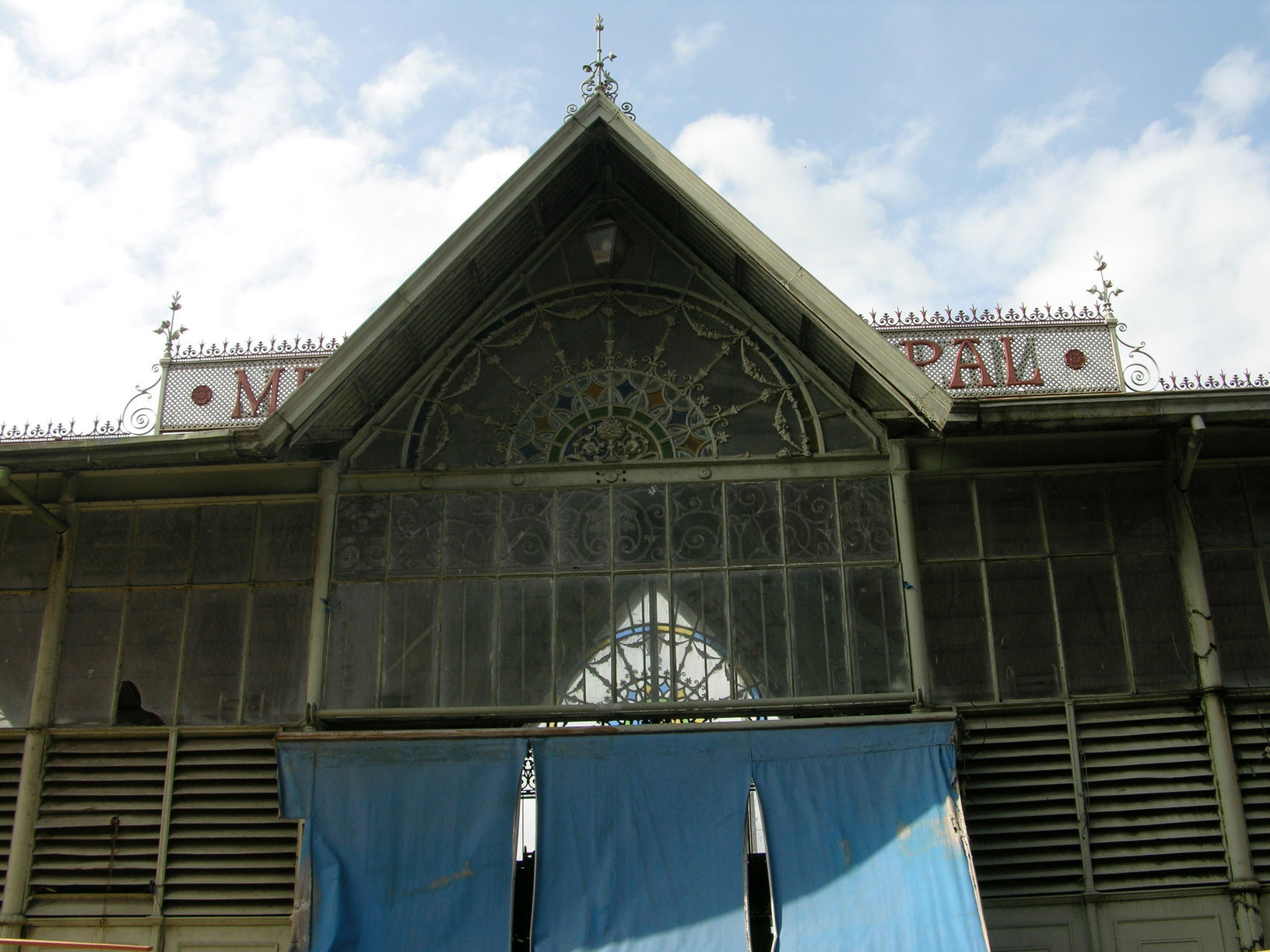
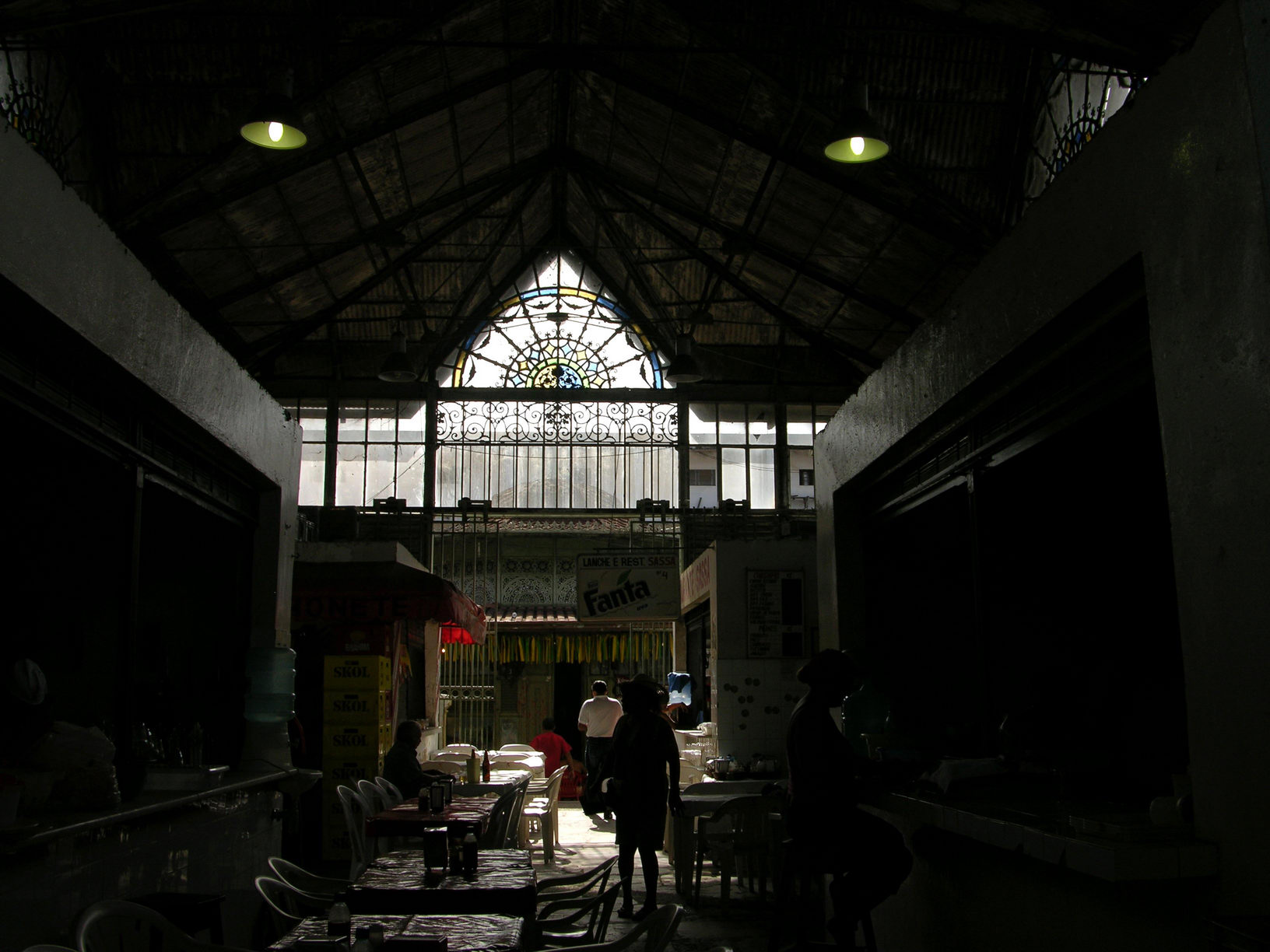
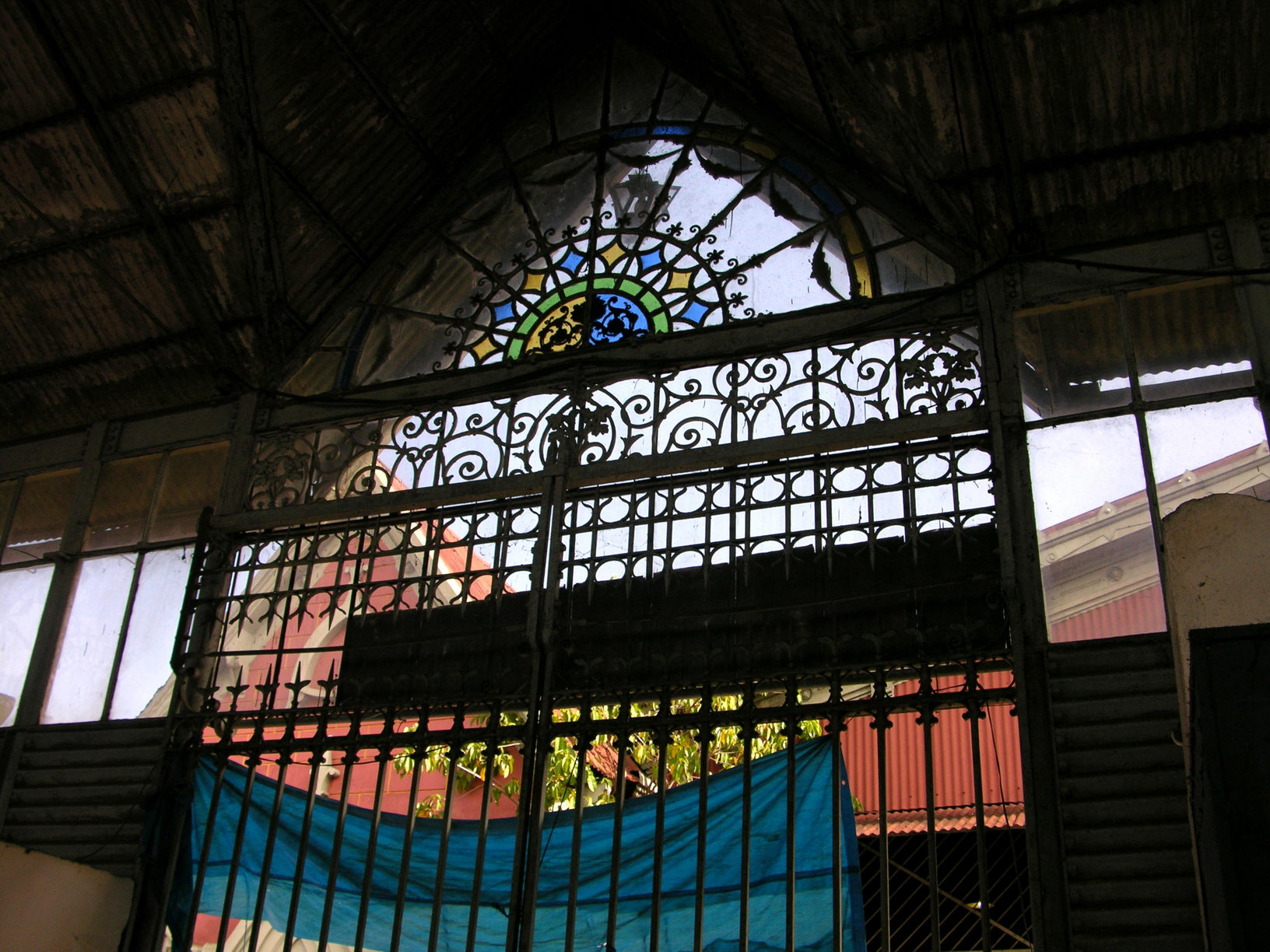
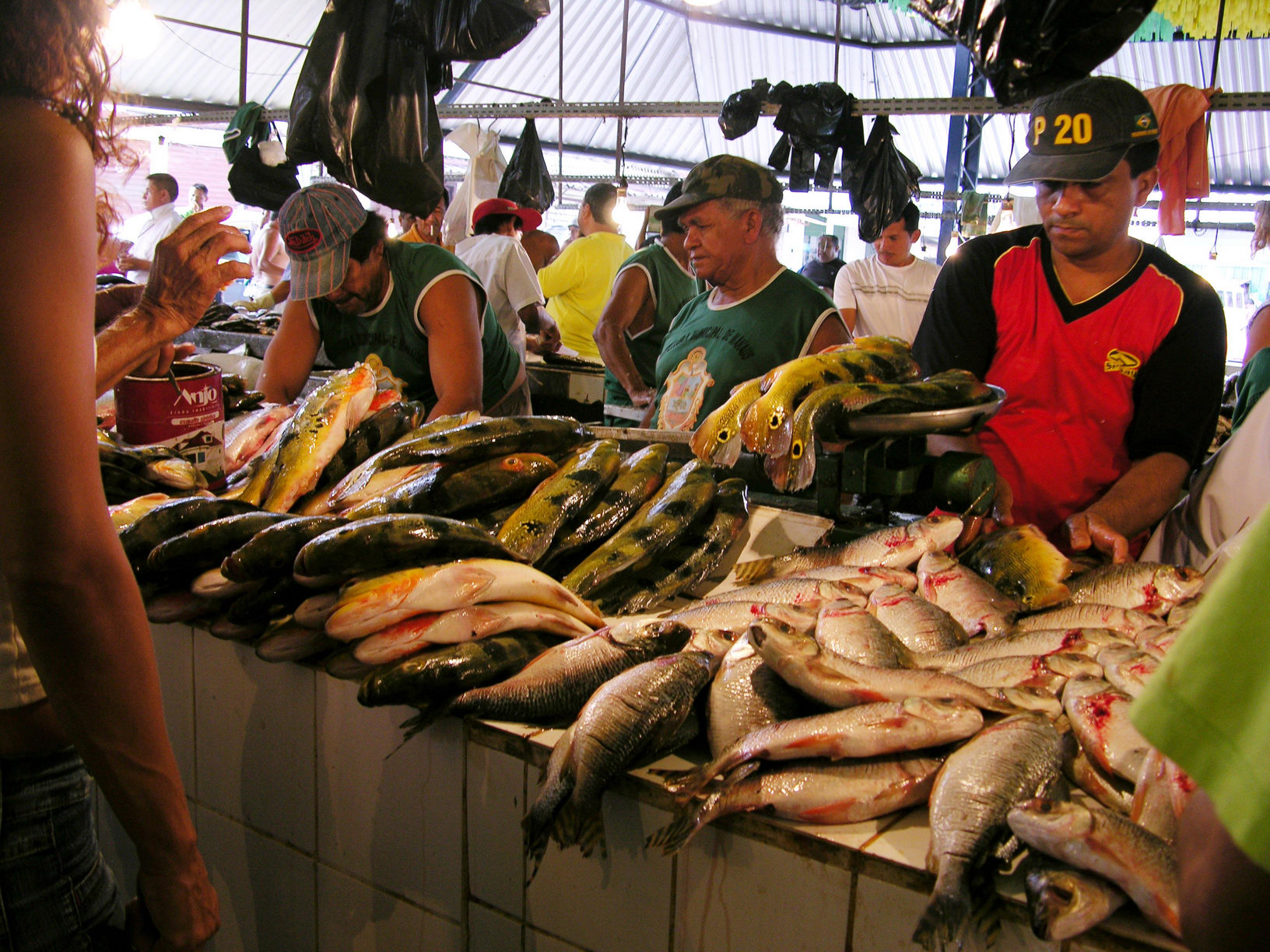
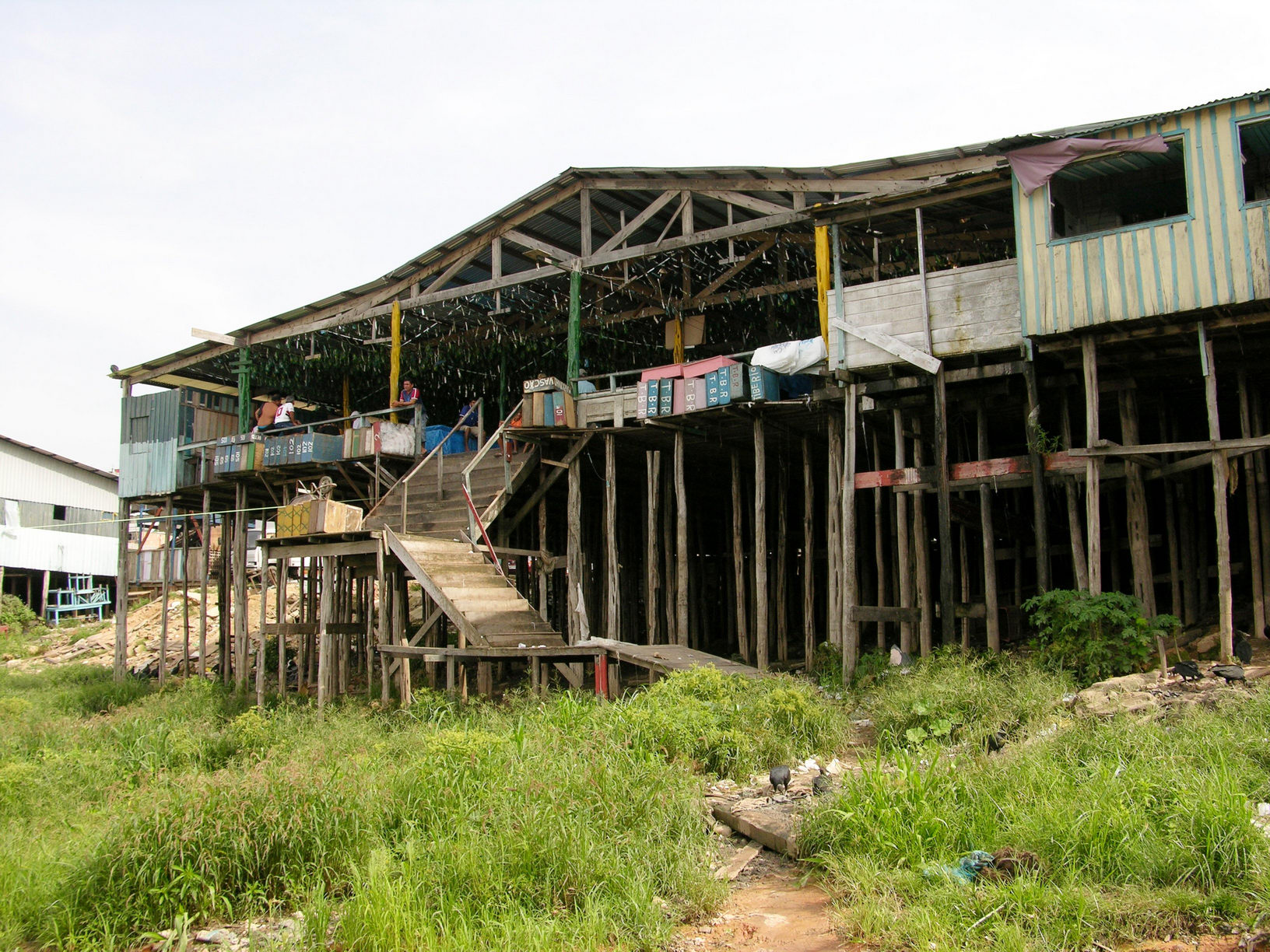
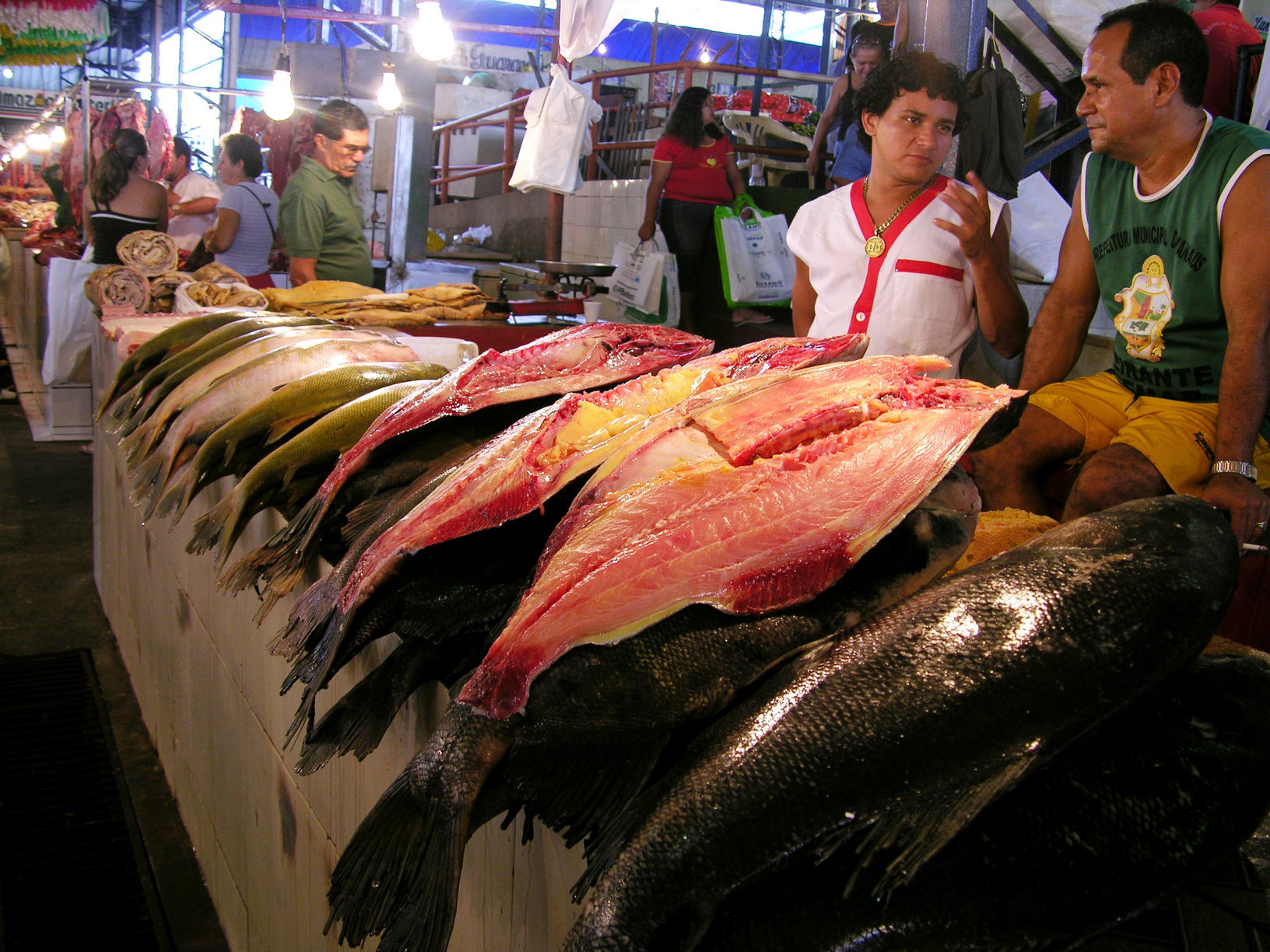
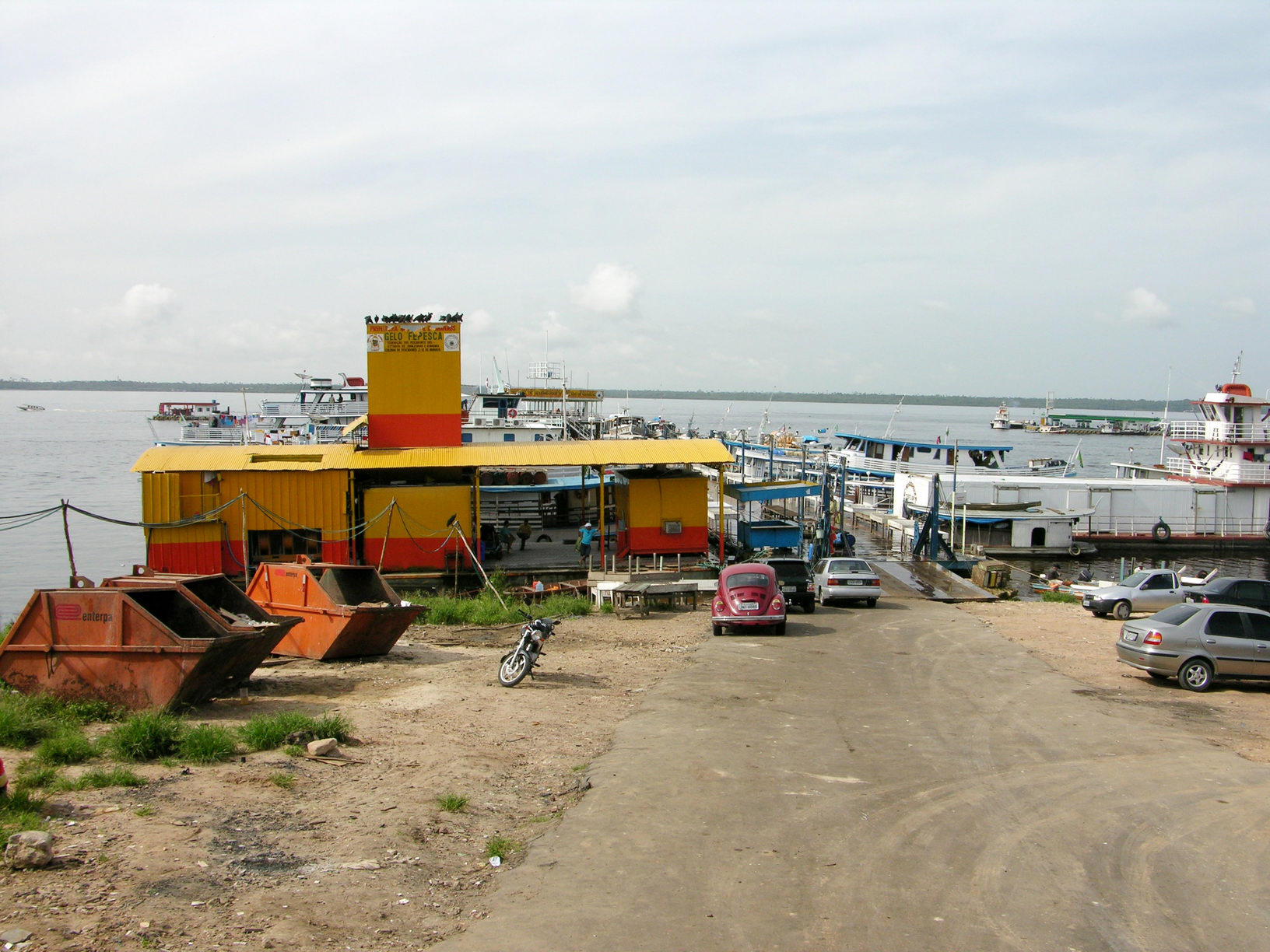
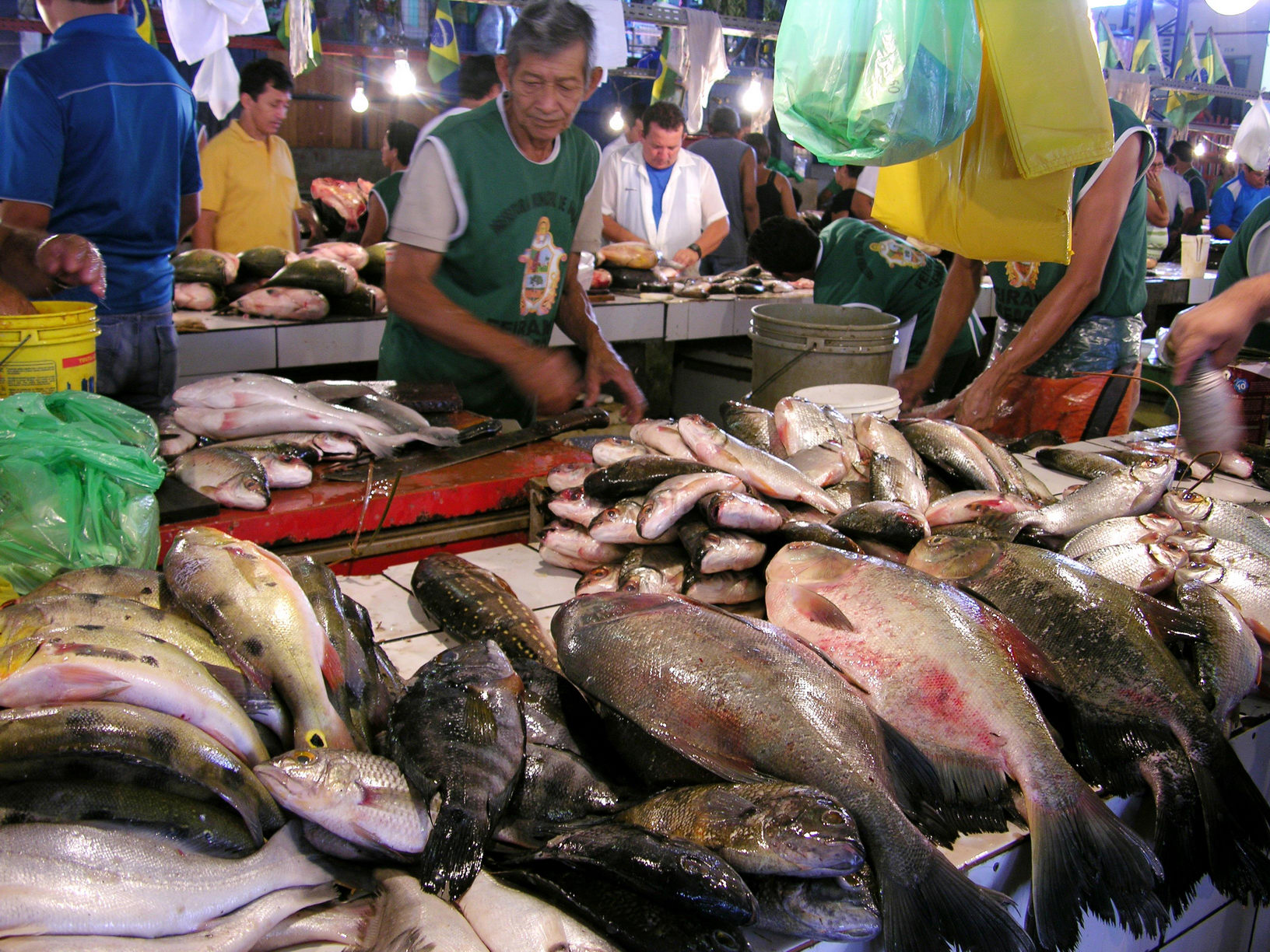
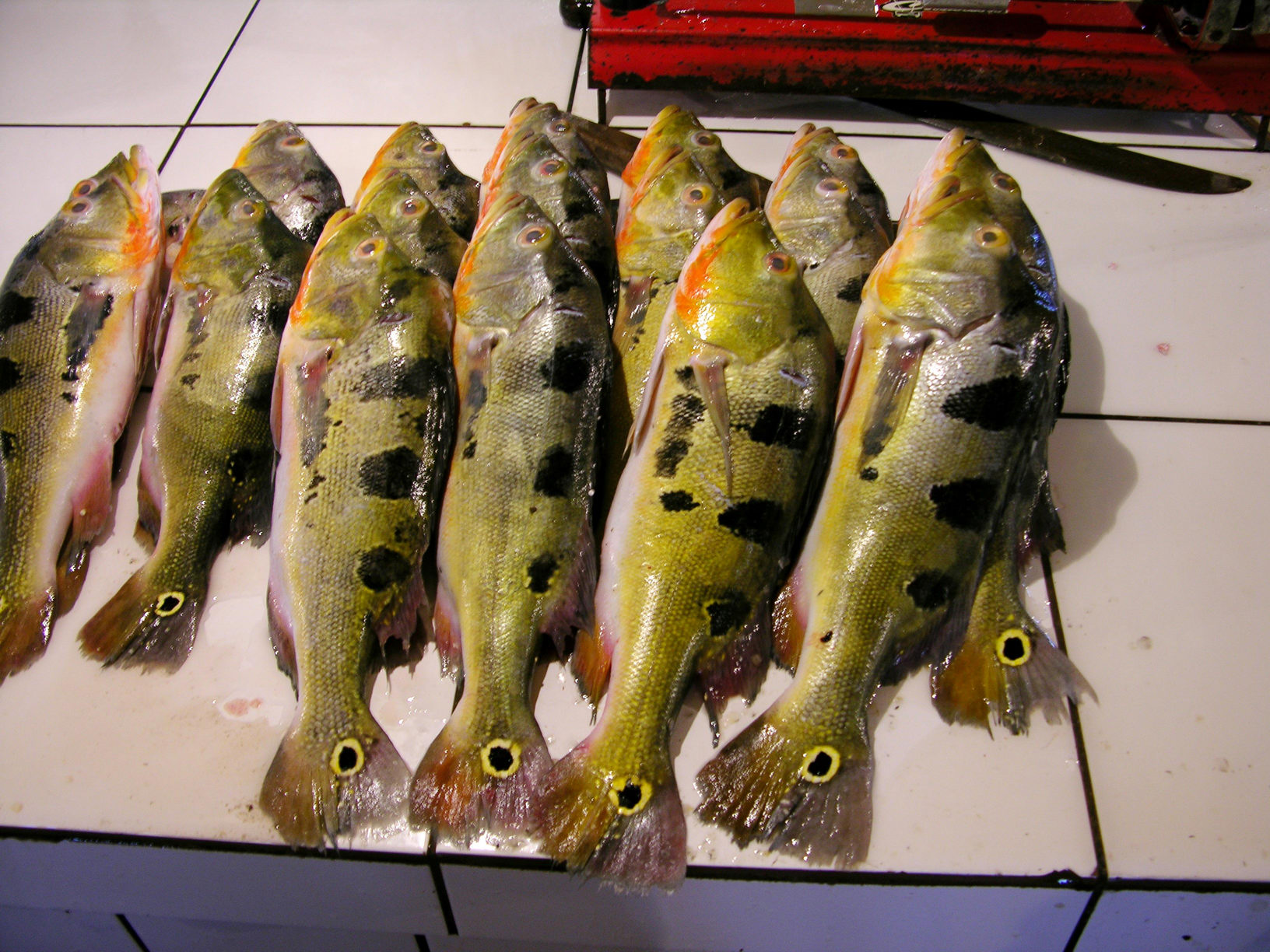
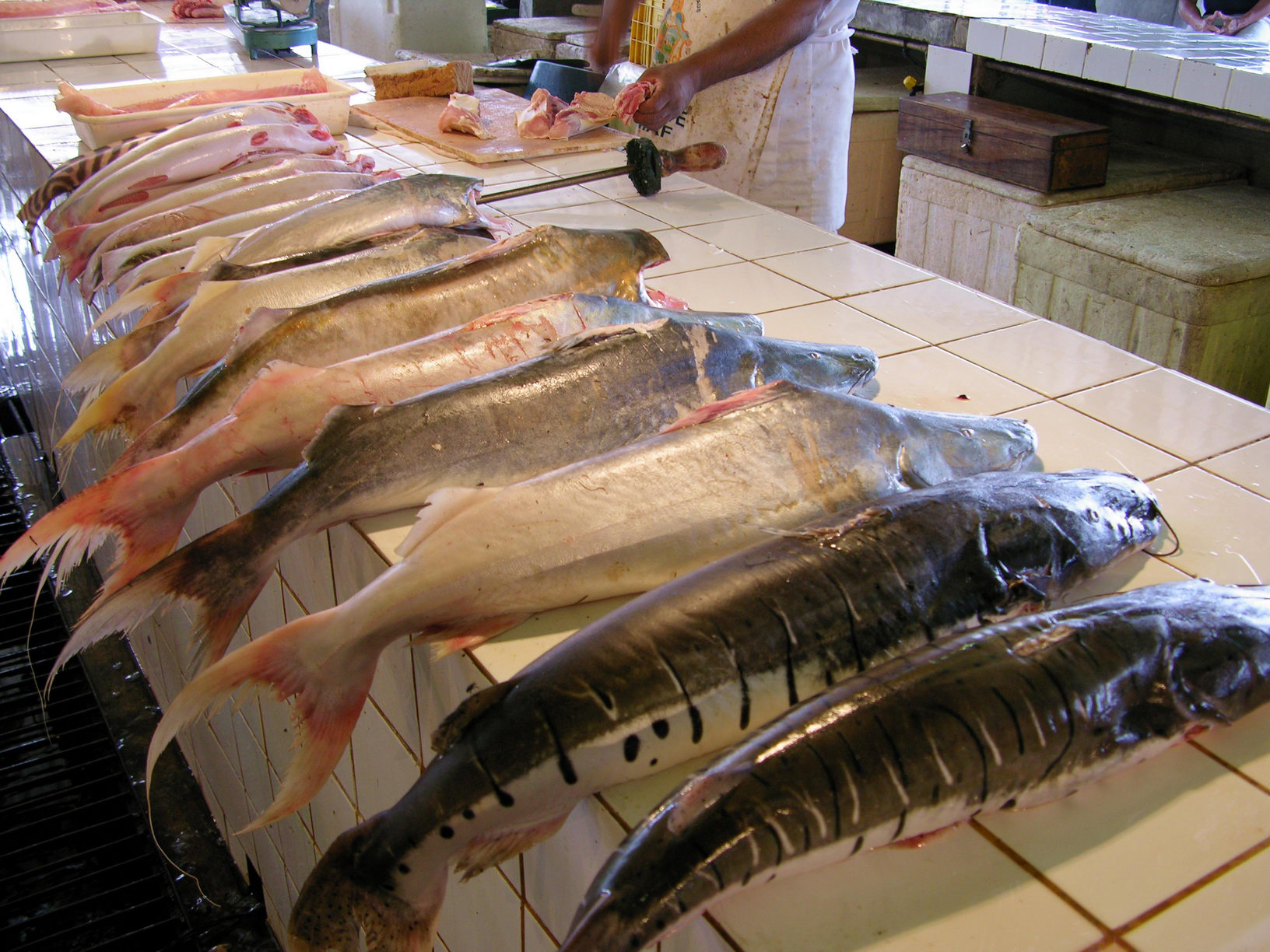
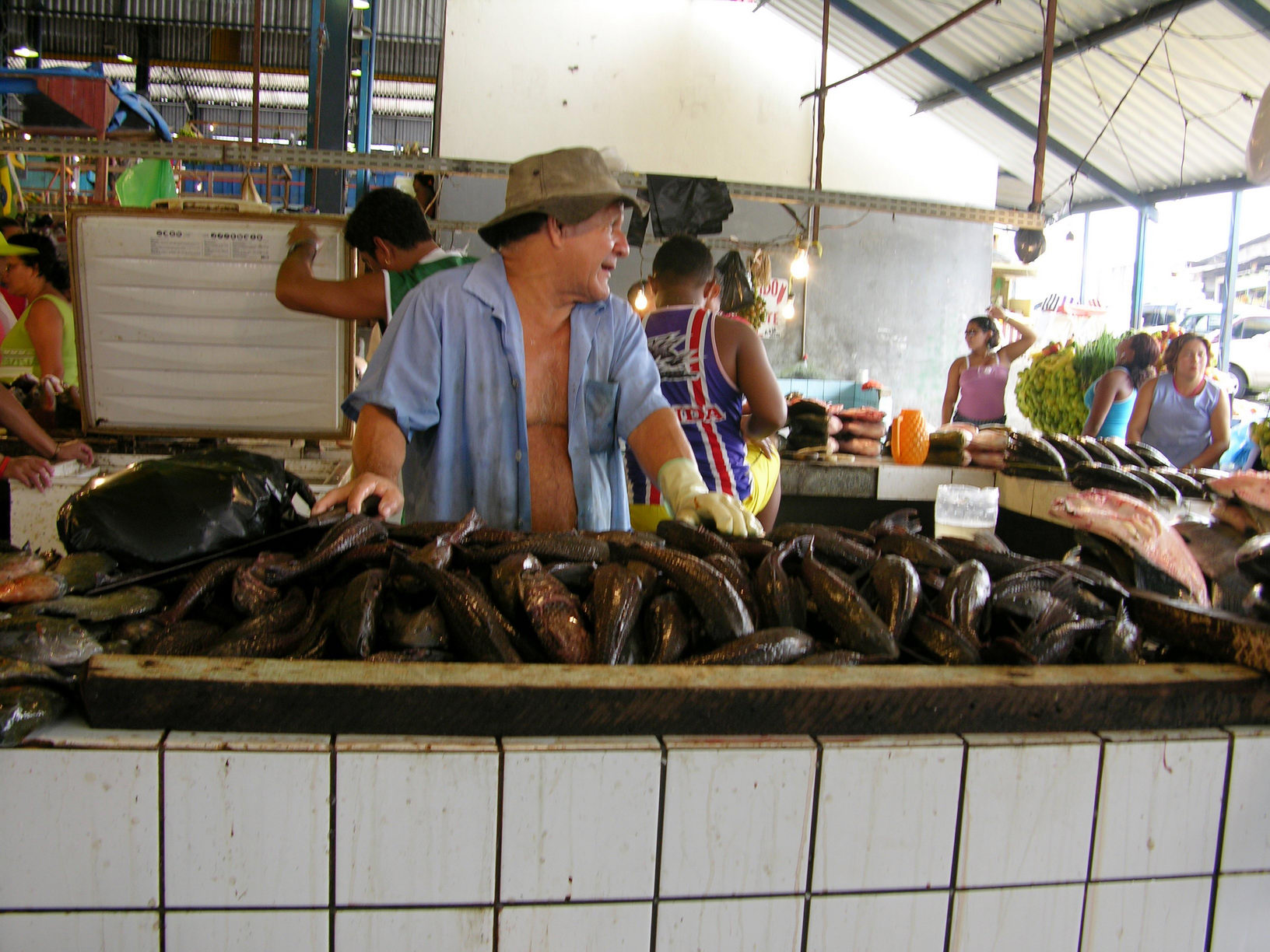
We still had time to visit the zoo. It's near the beach at Ponta Negra. The zoo is small. Most of the animals are in cages. There's a proper Amazonian crocodilian, anacondas, boas and an ocelot. The birds include harpy eagles, curassows, mantled hawks, crested eagles, parrots, toucans and even the rare Guianan cock-of-the-rock.
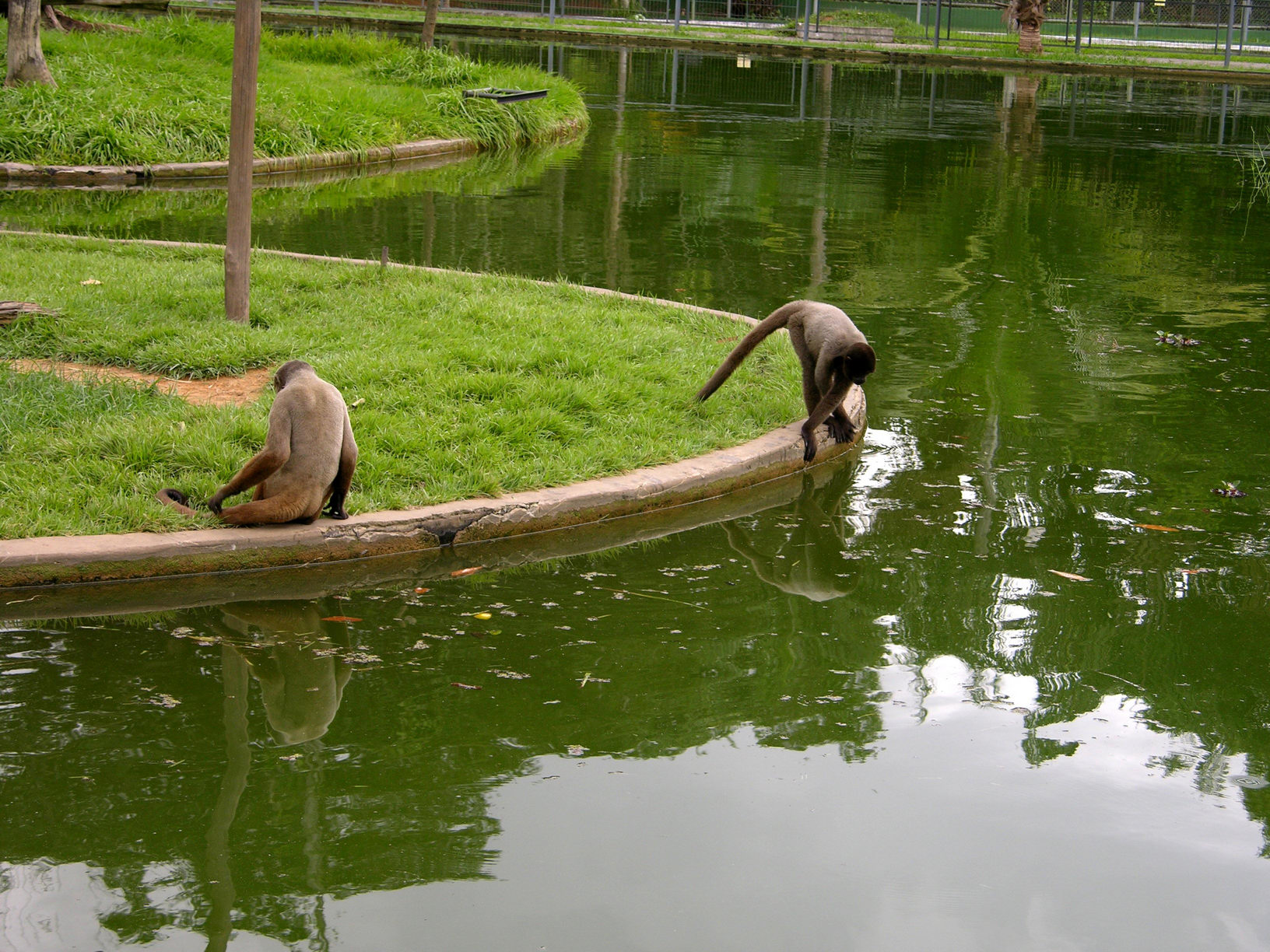
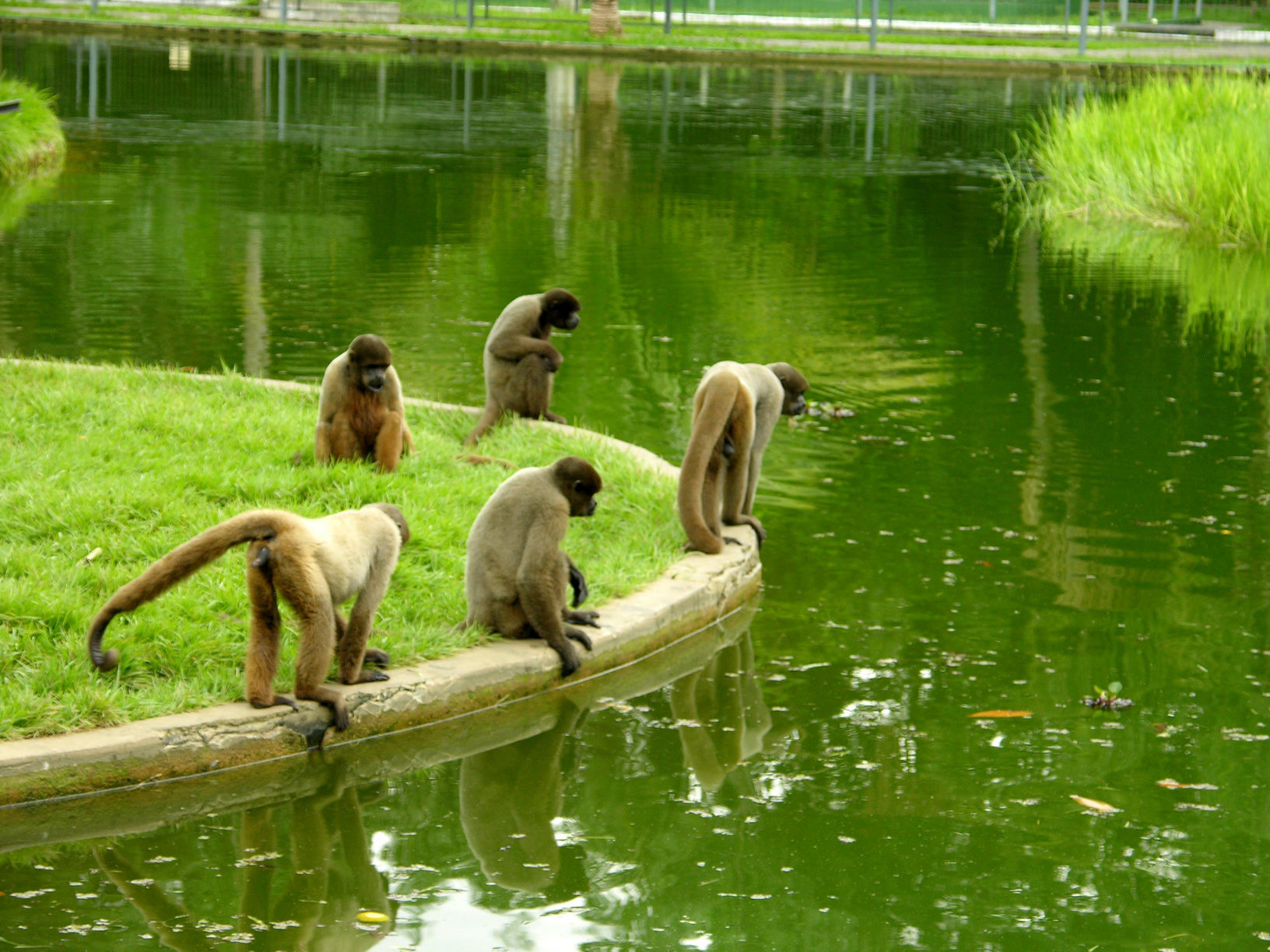
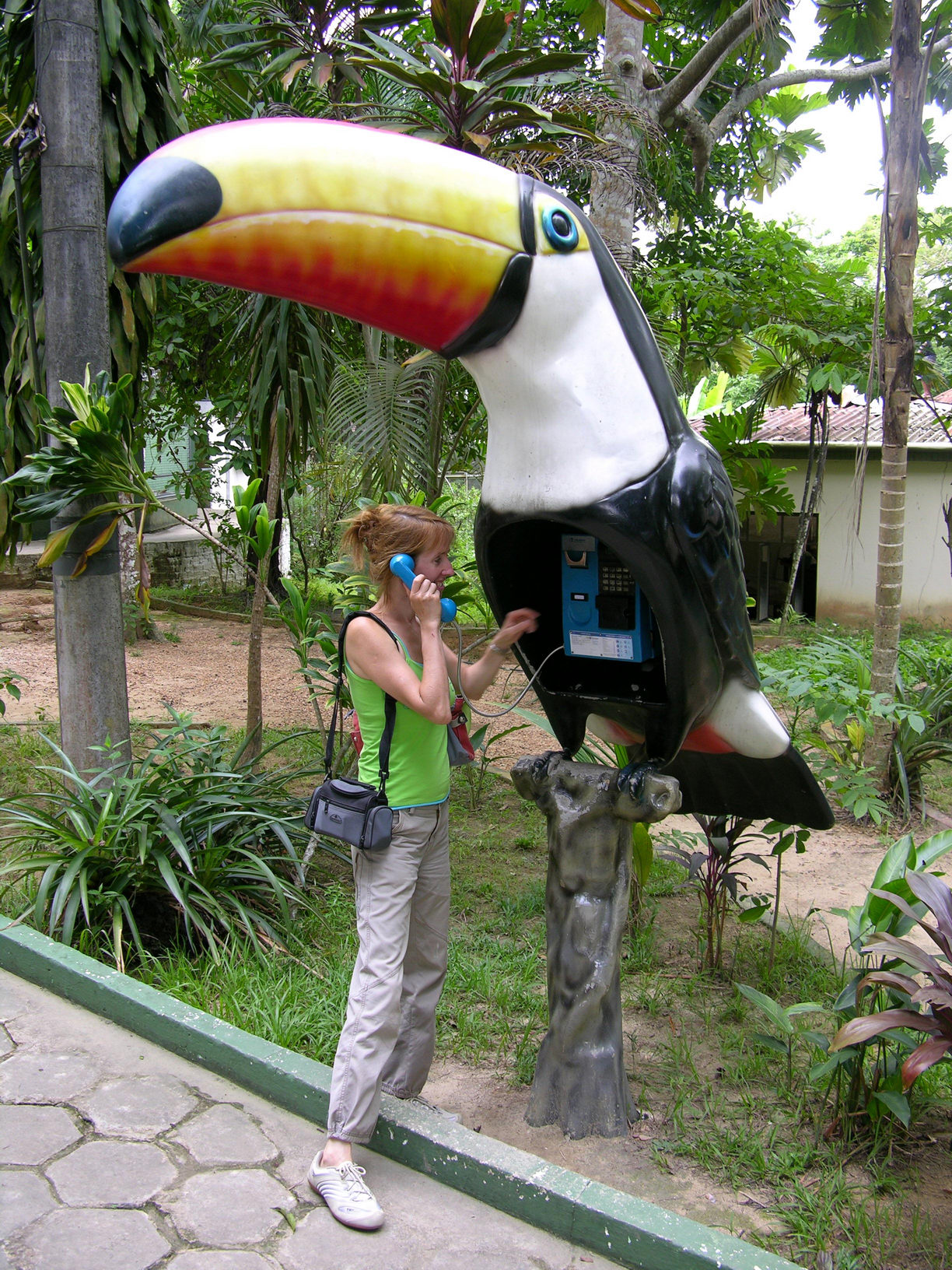
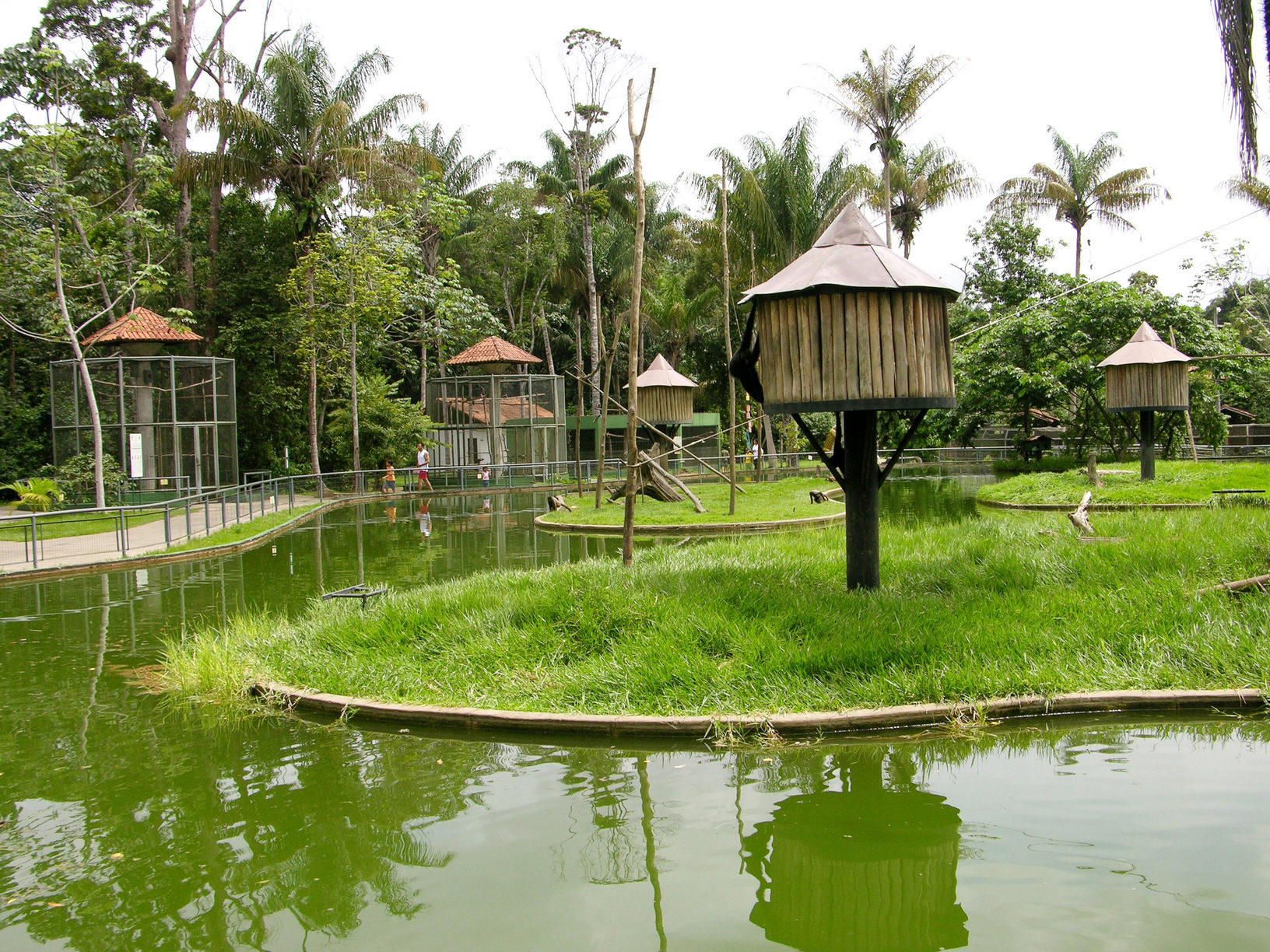
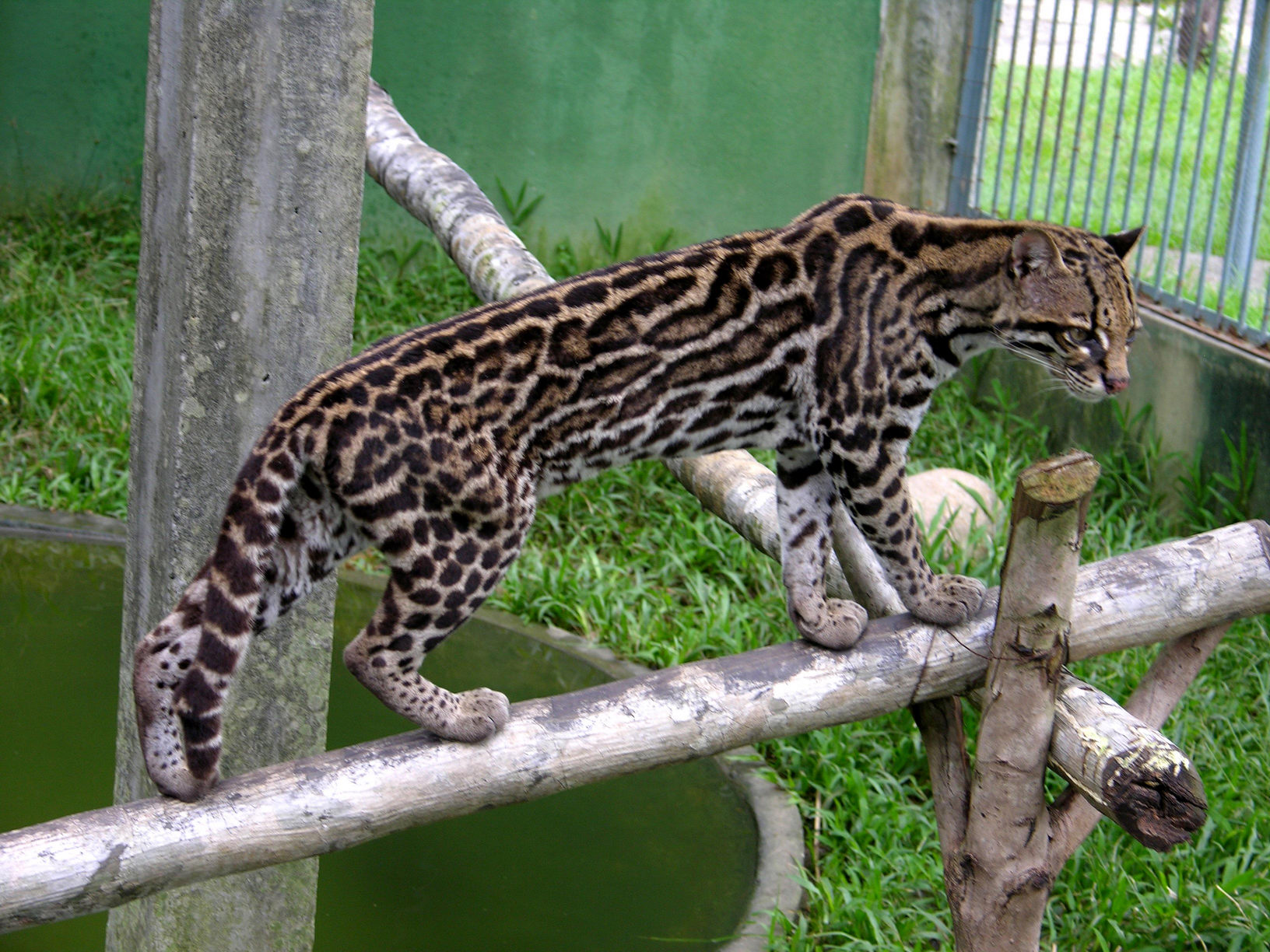
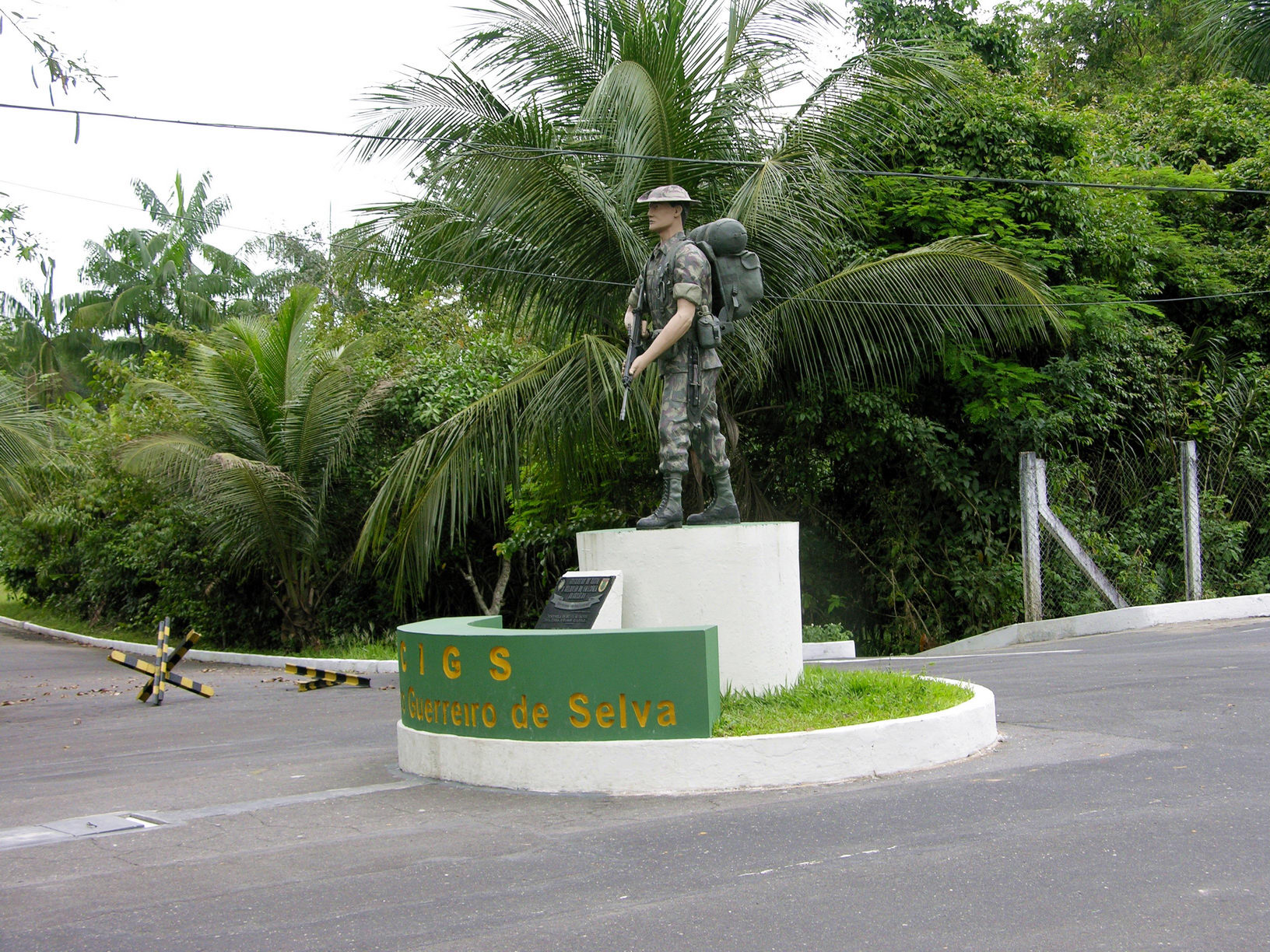
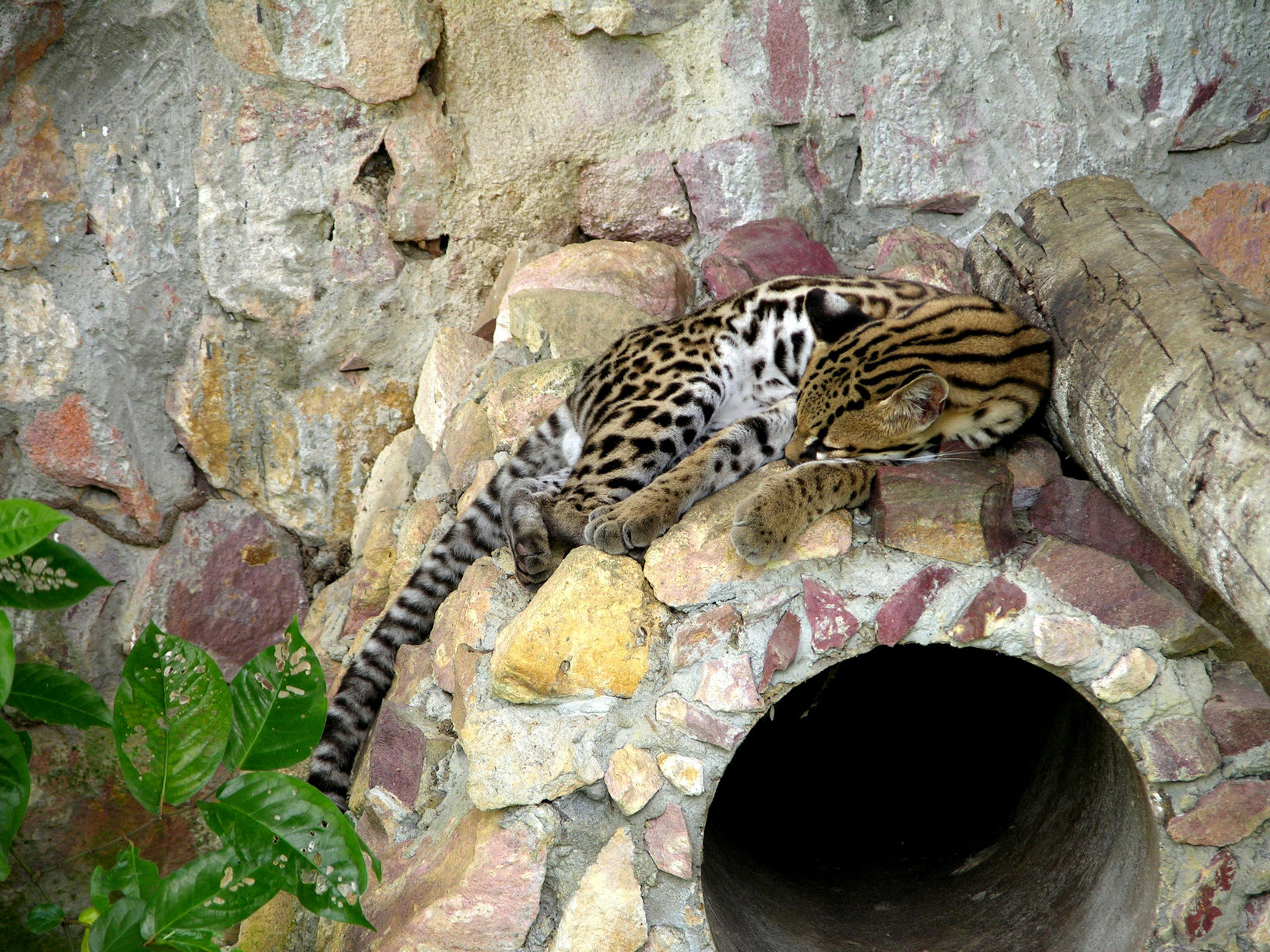
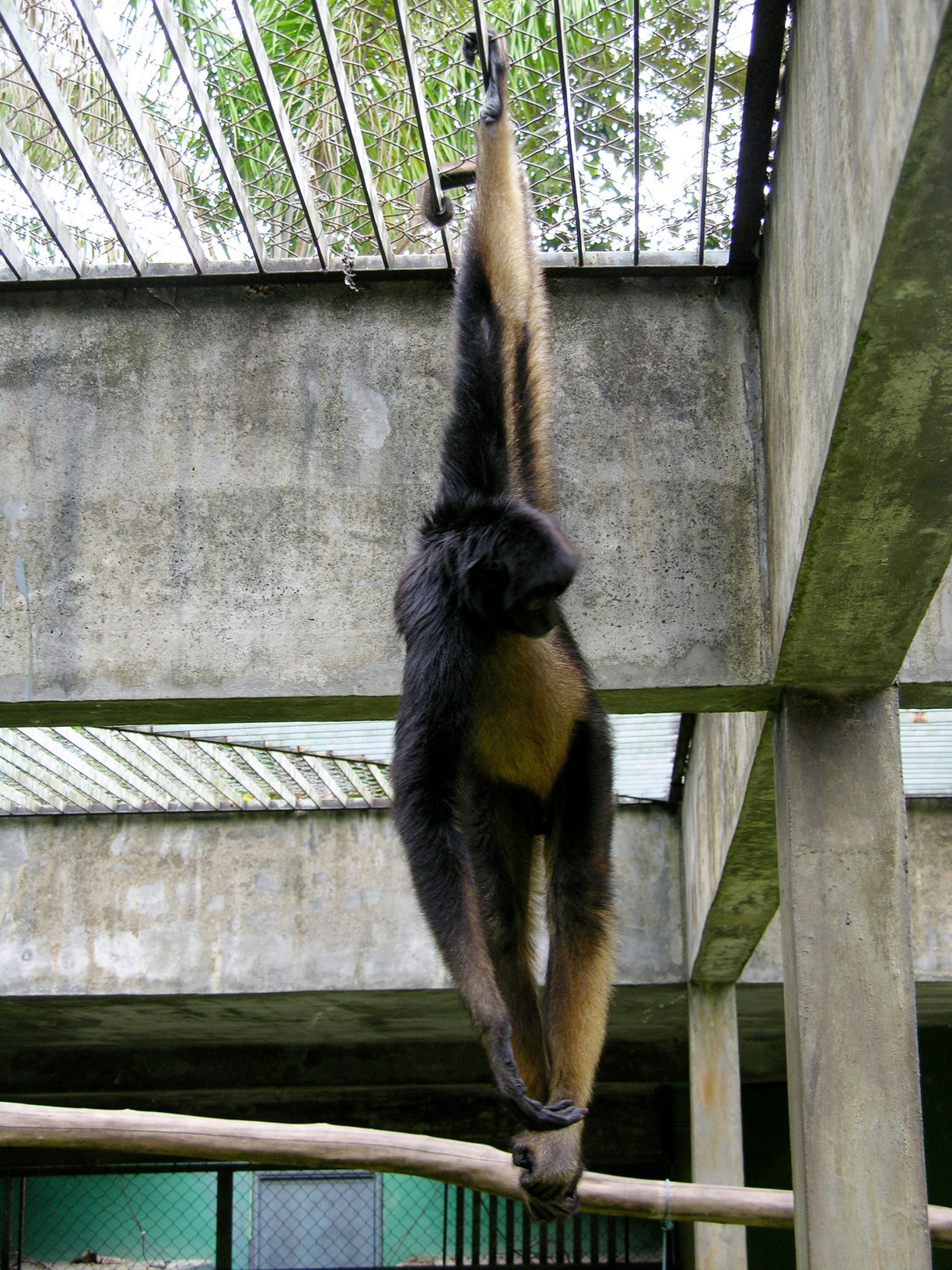
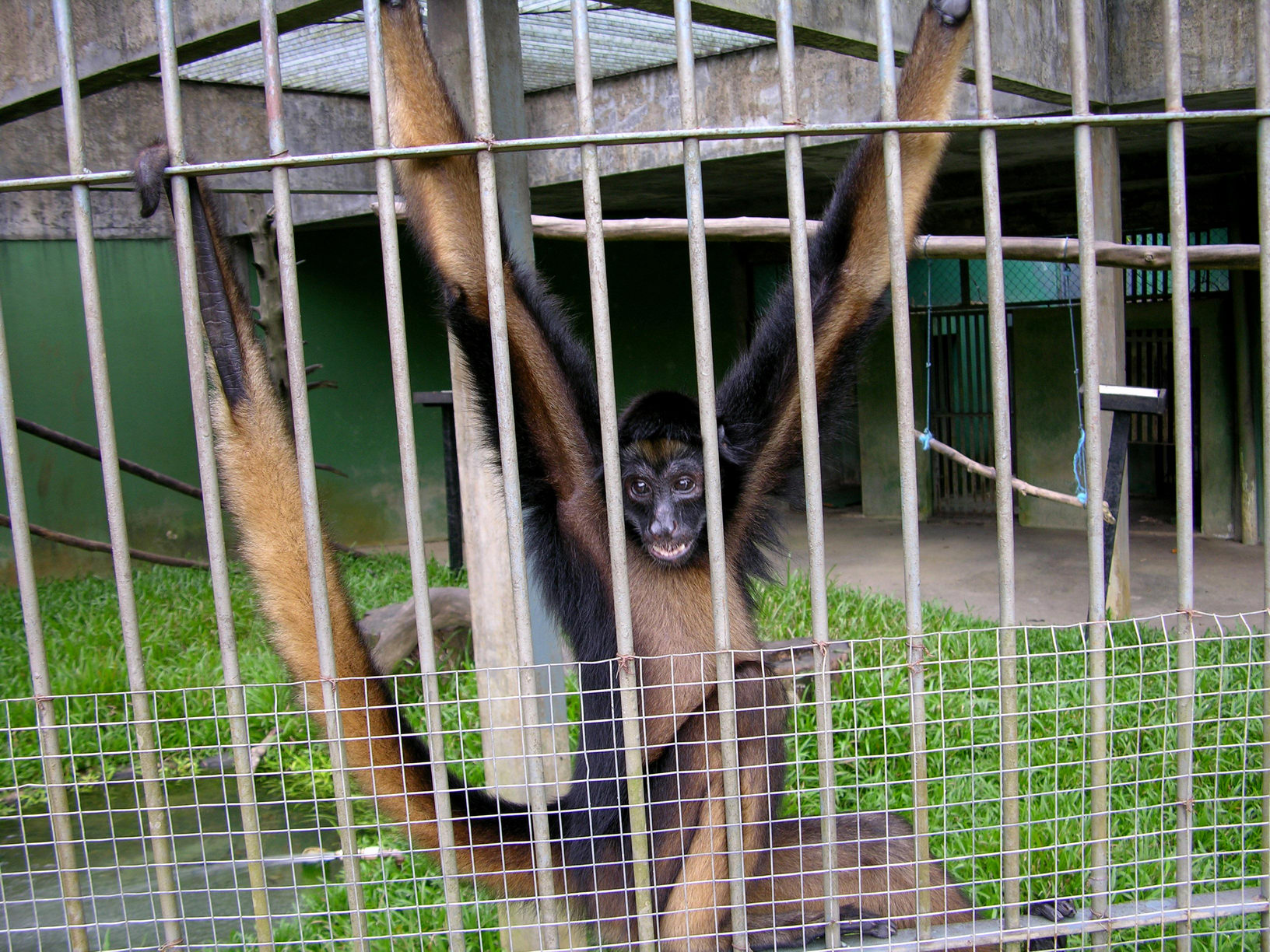
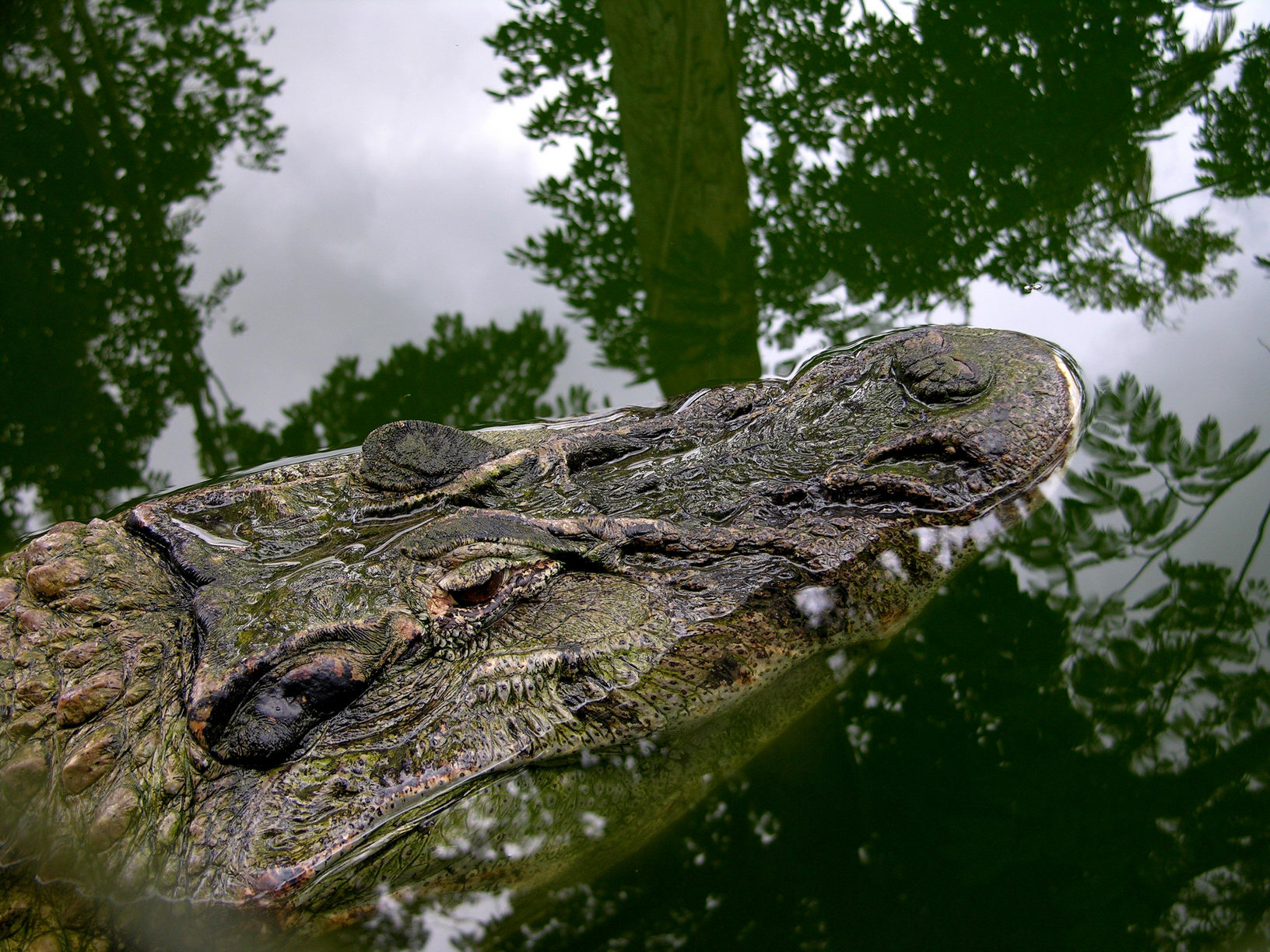
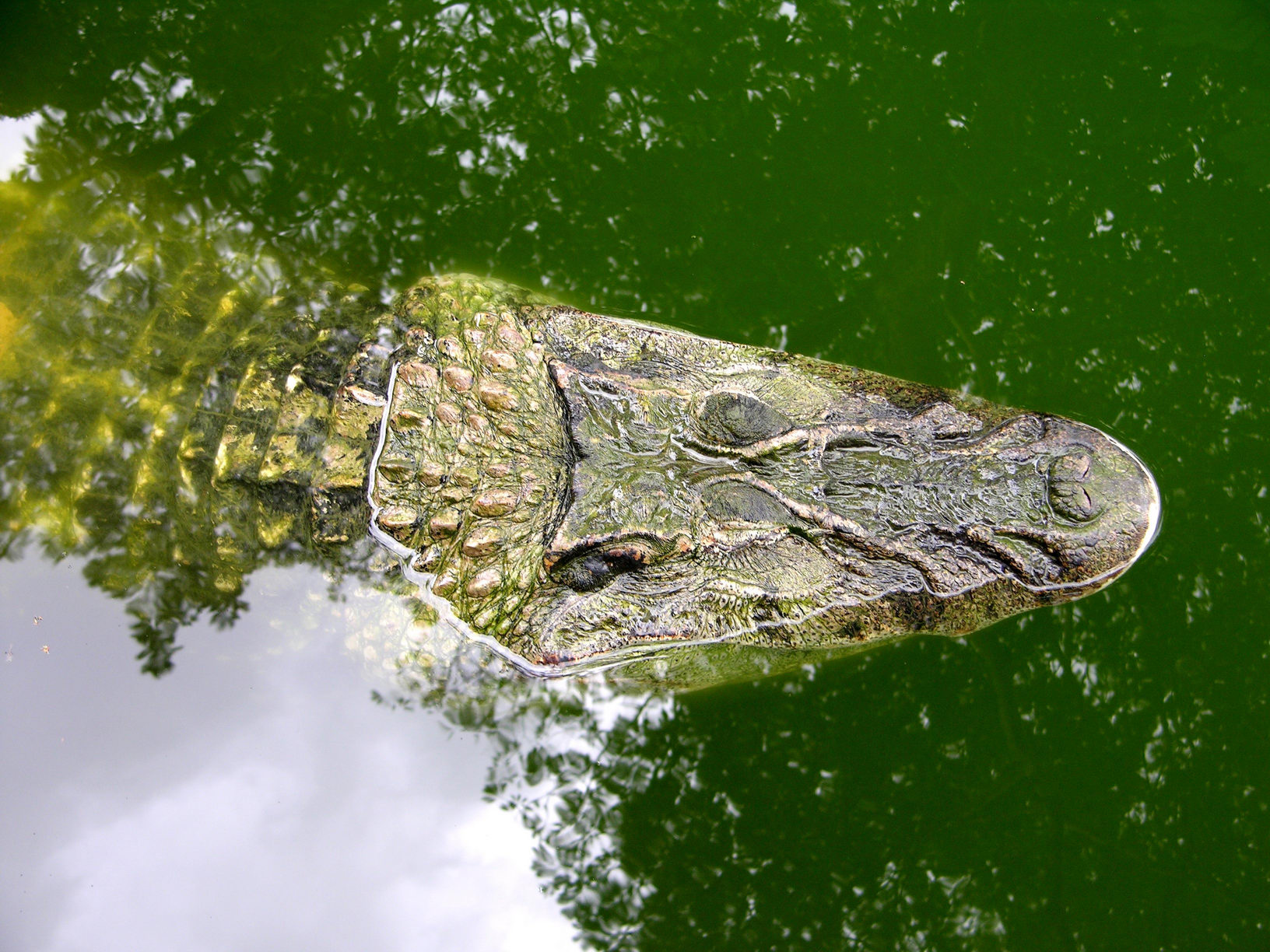
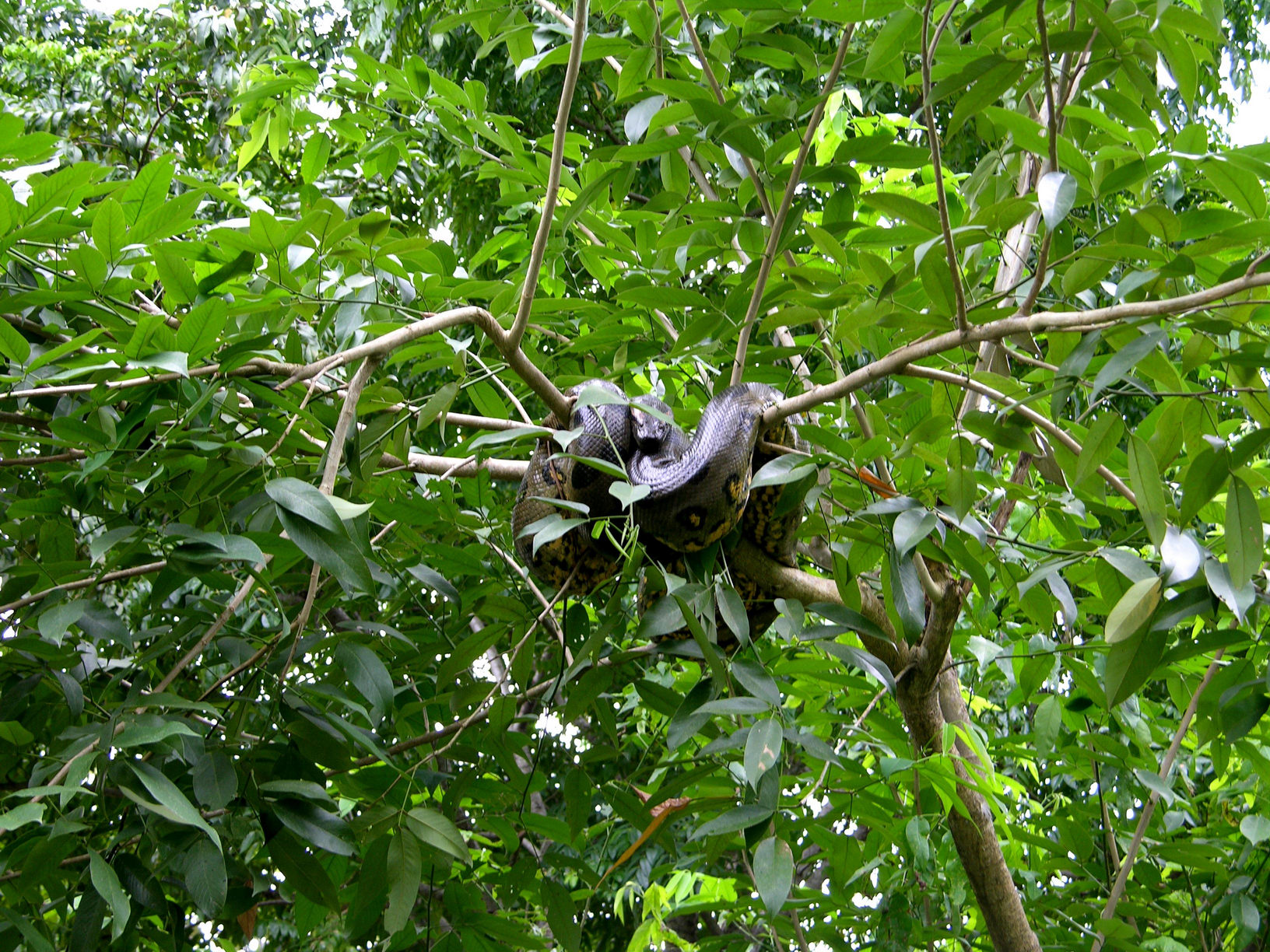
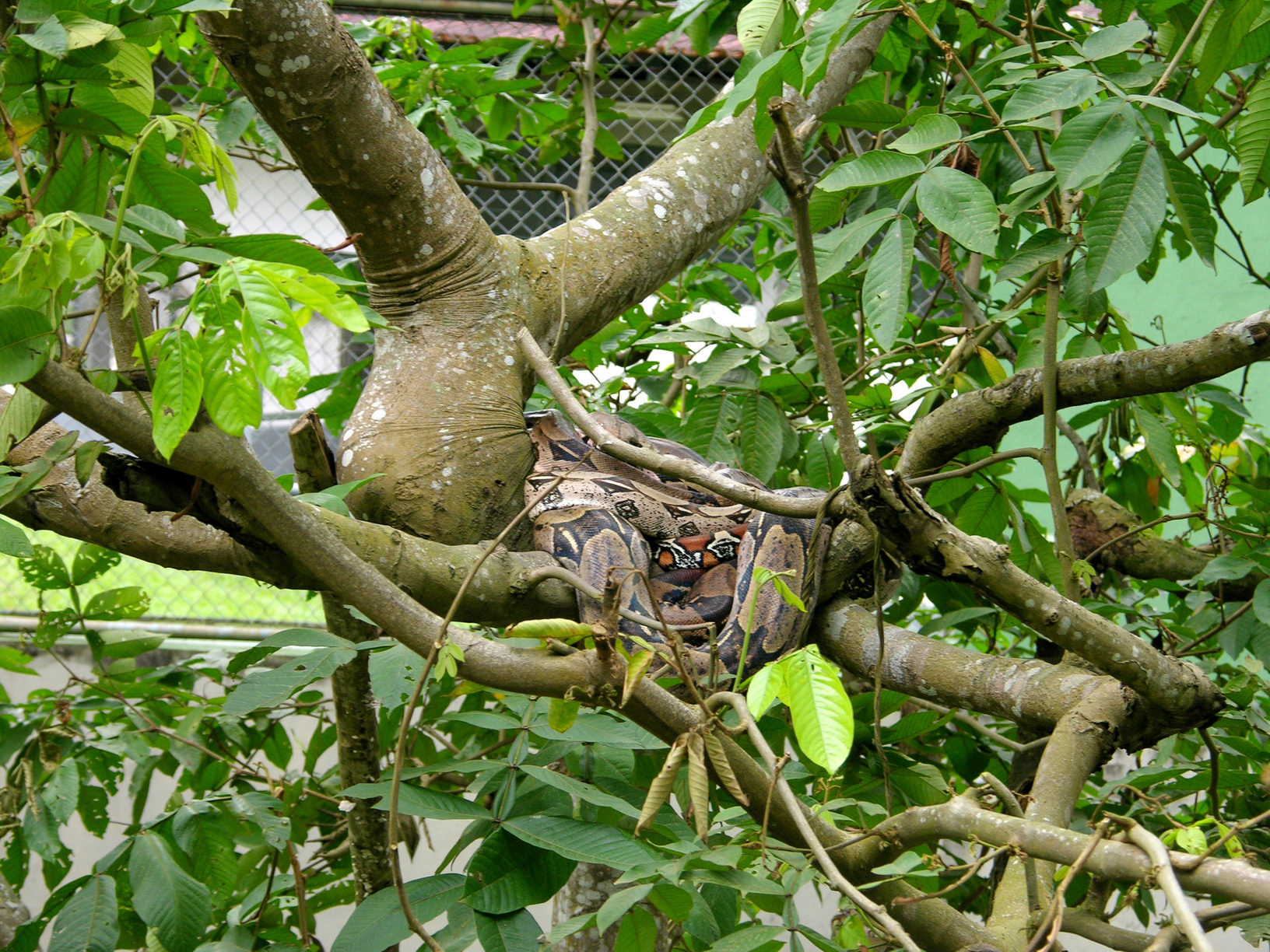
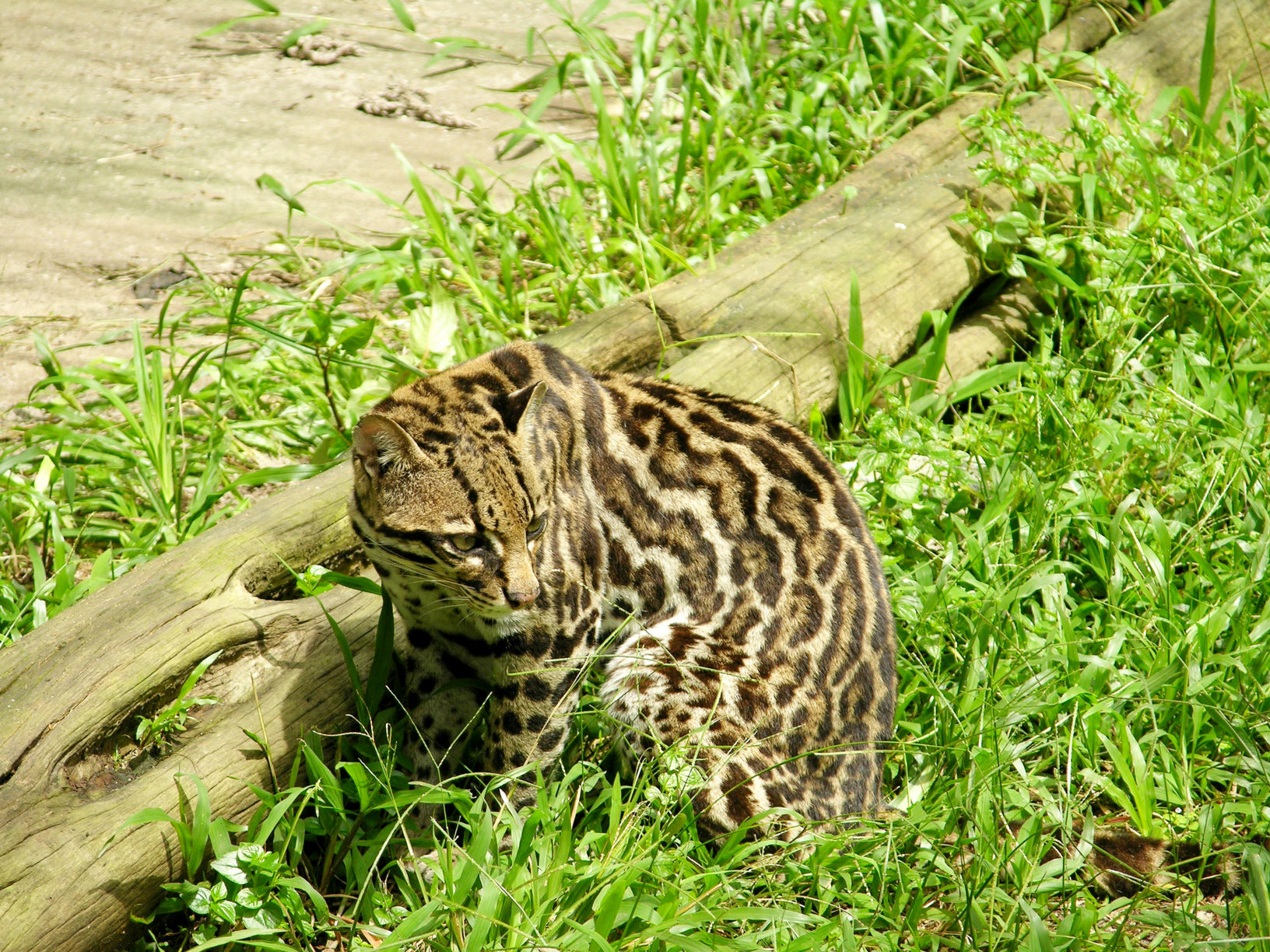
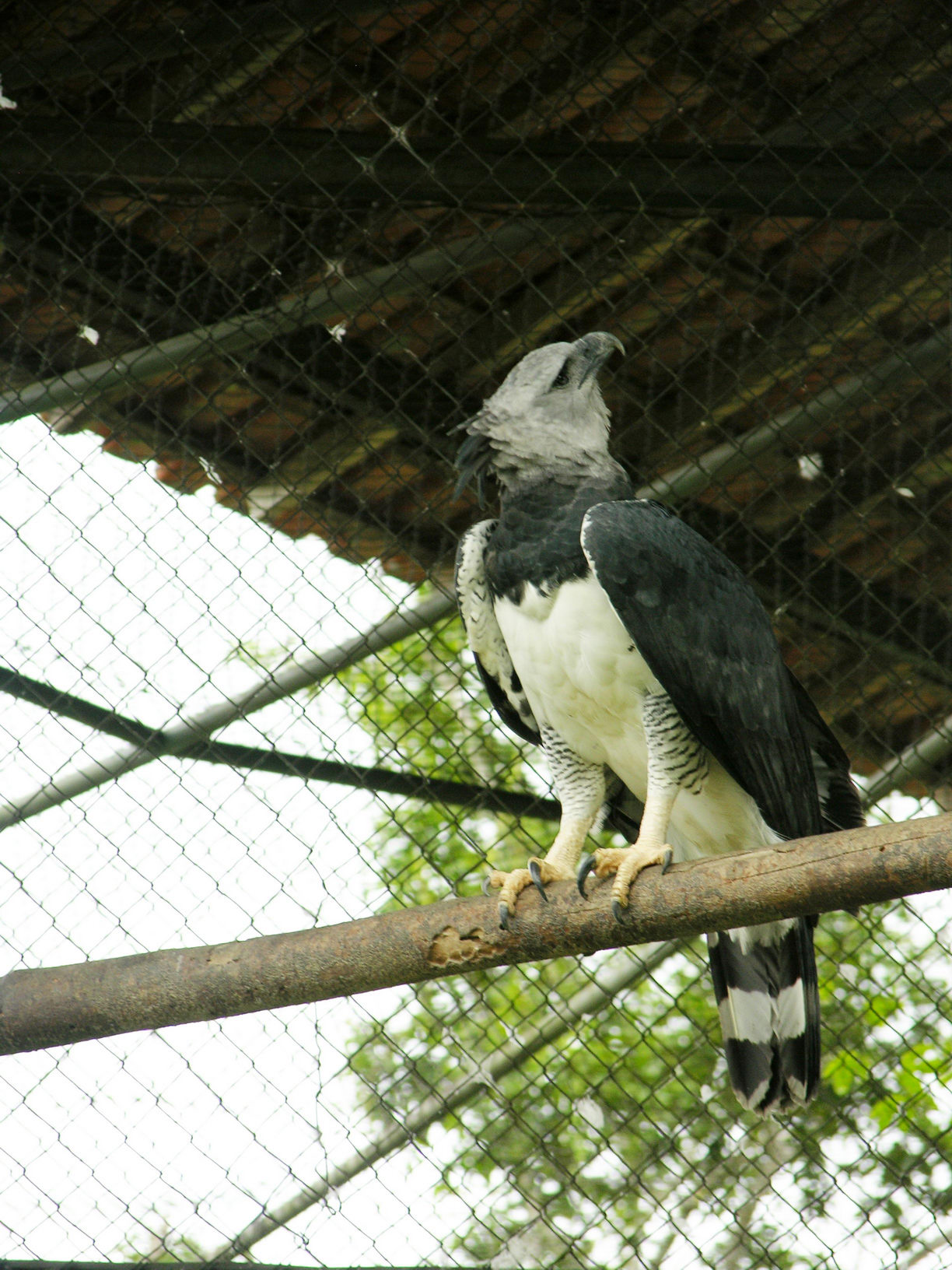
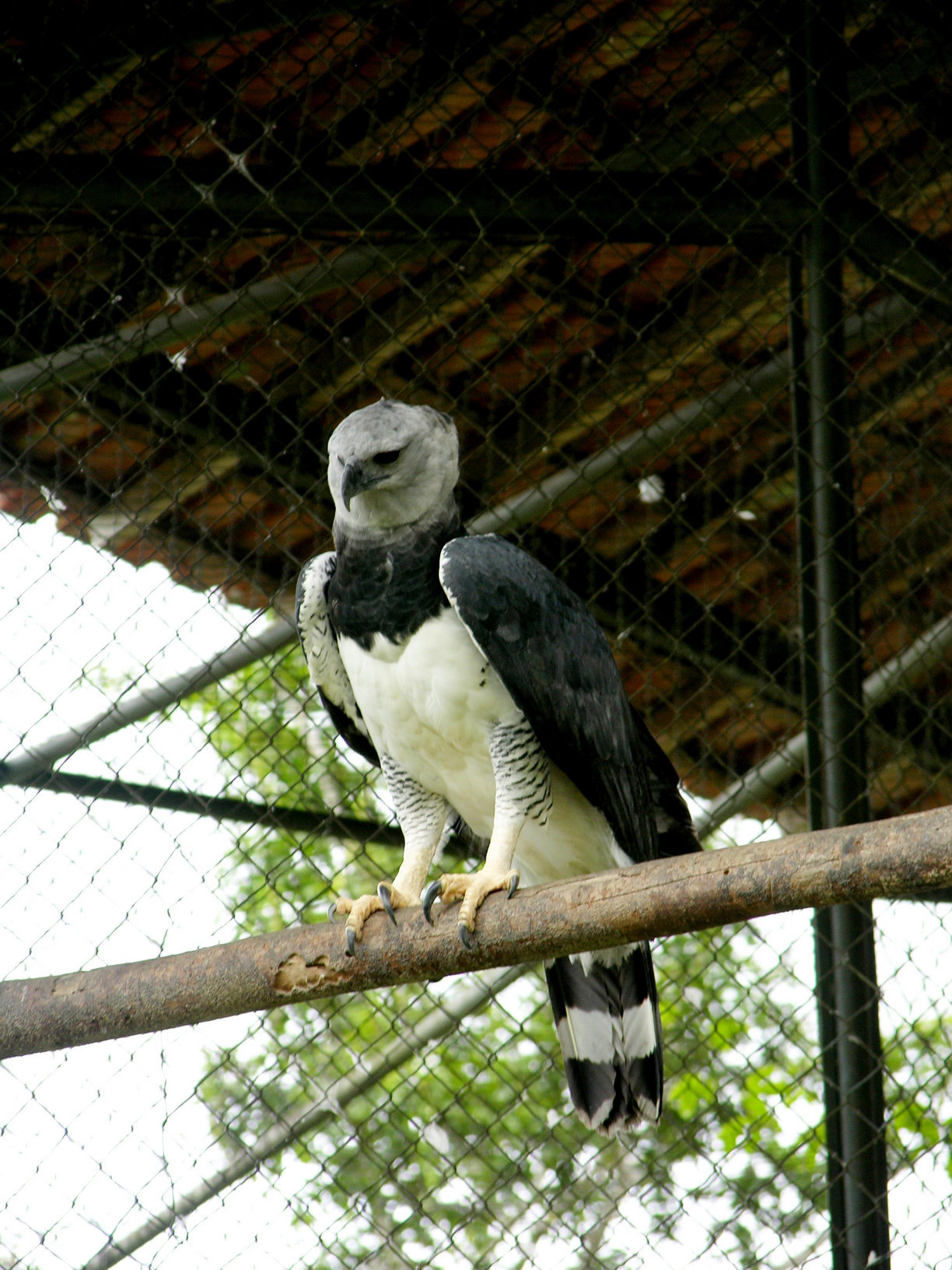
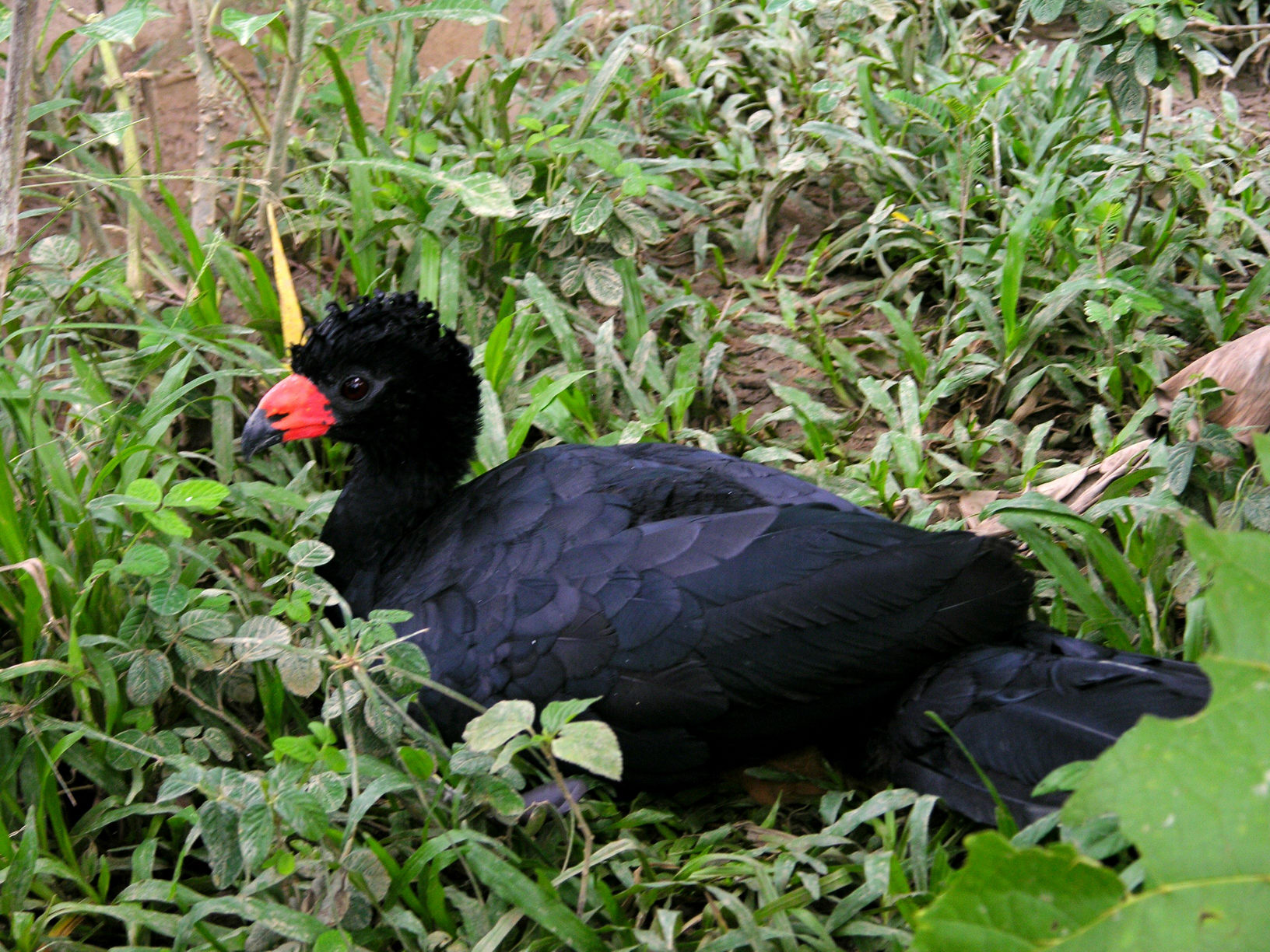
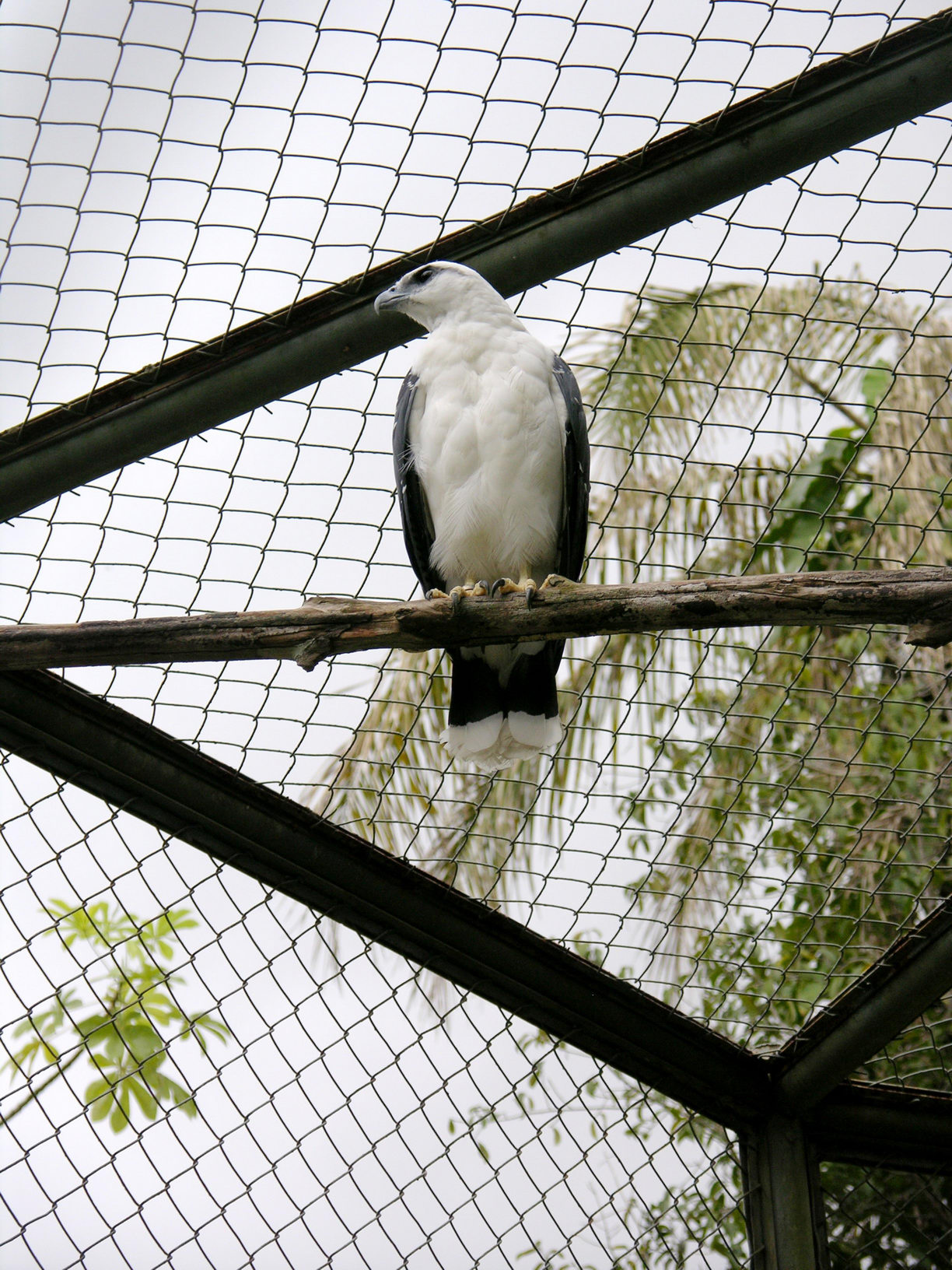
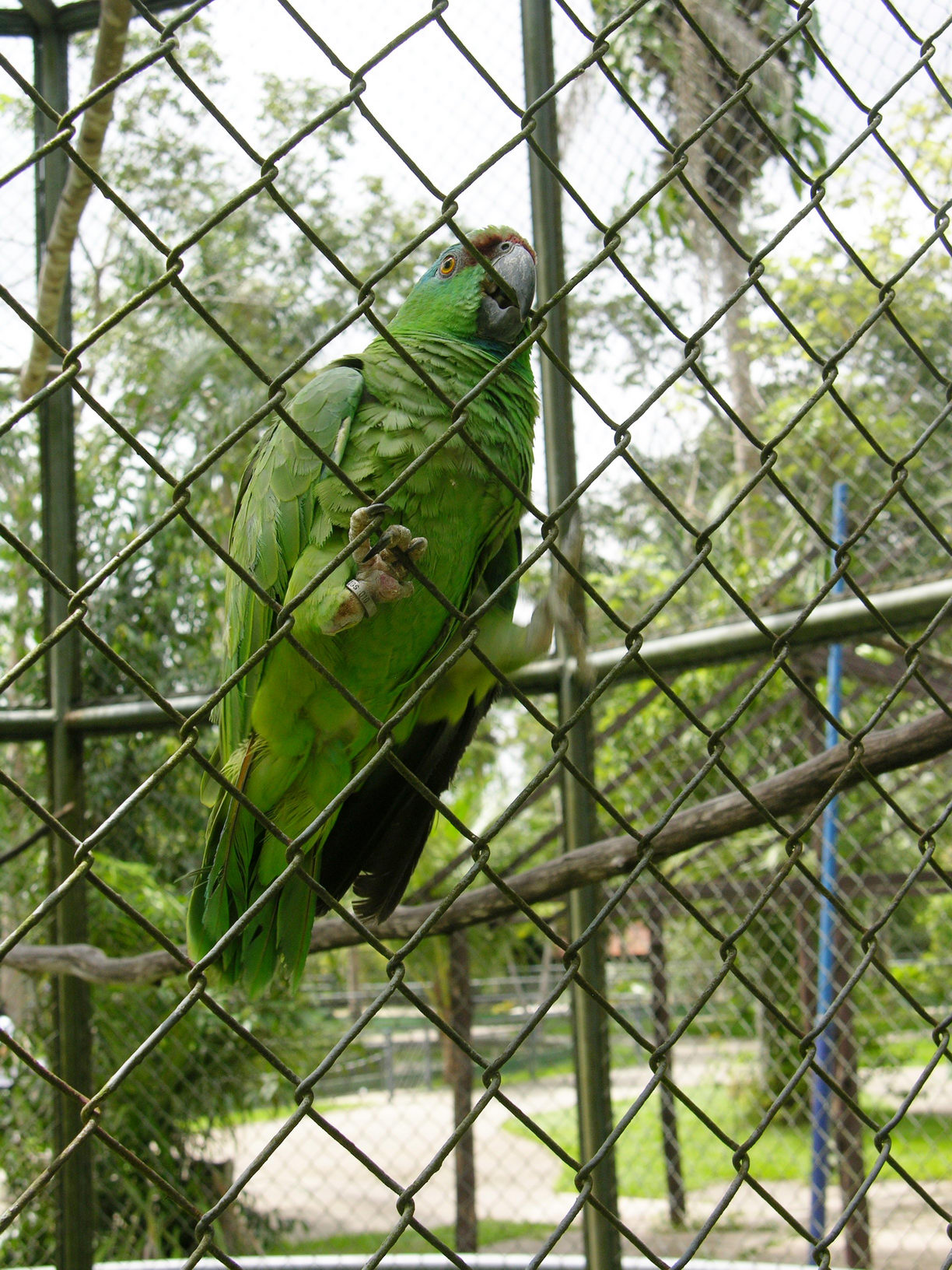
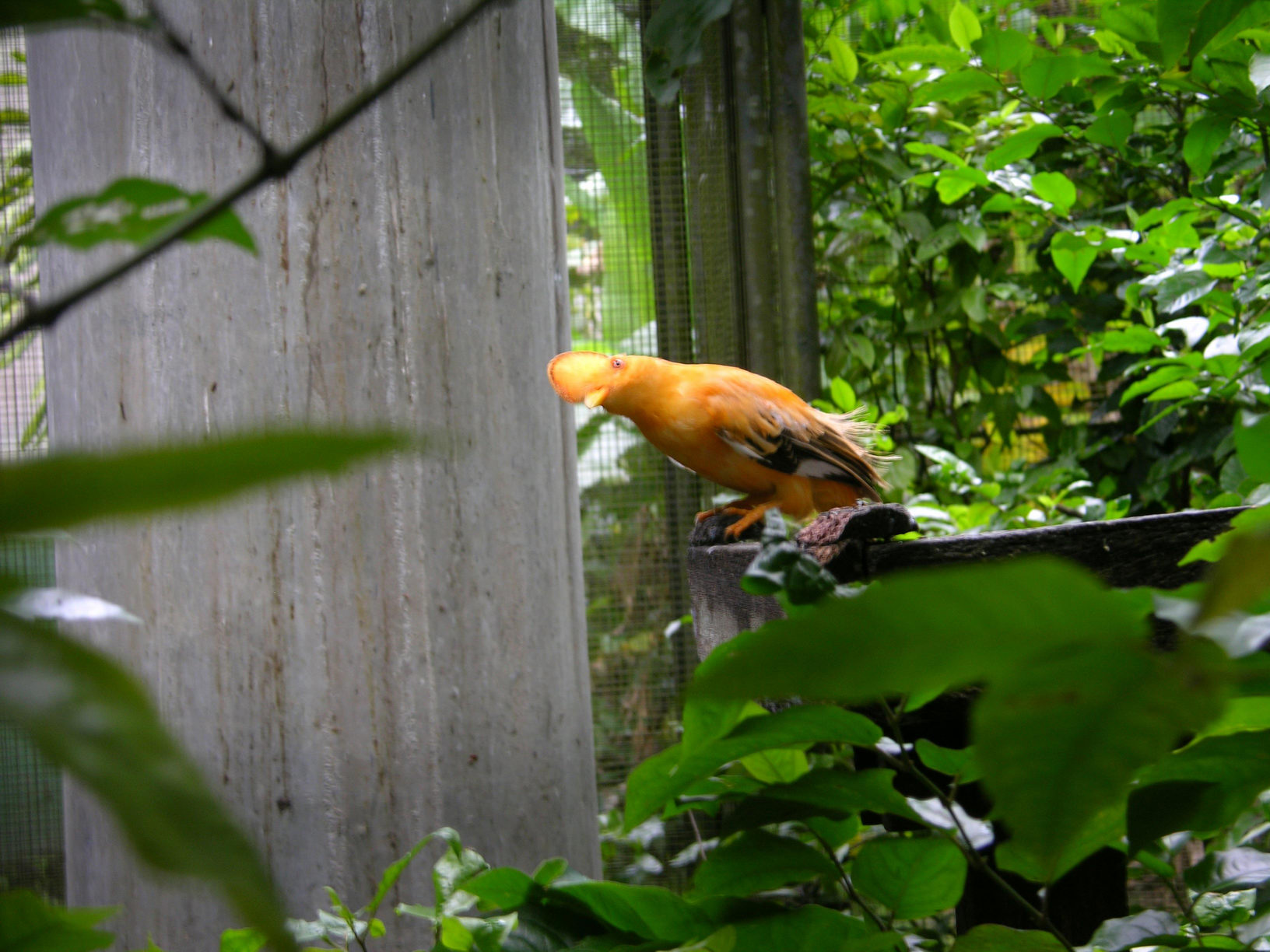
When we returned the car at the airport, they charged us seventy reais on the grounds that it was very dirty. We'd have paid half as much to have it washed. The waterfront by the Ponta Negra beach is one easy place to do that.
It's an hour and a half's flight to Tabatinga, or ninety minutes. The airline was RICO (RICO website). A ticket cost 584 reais.
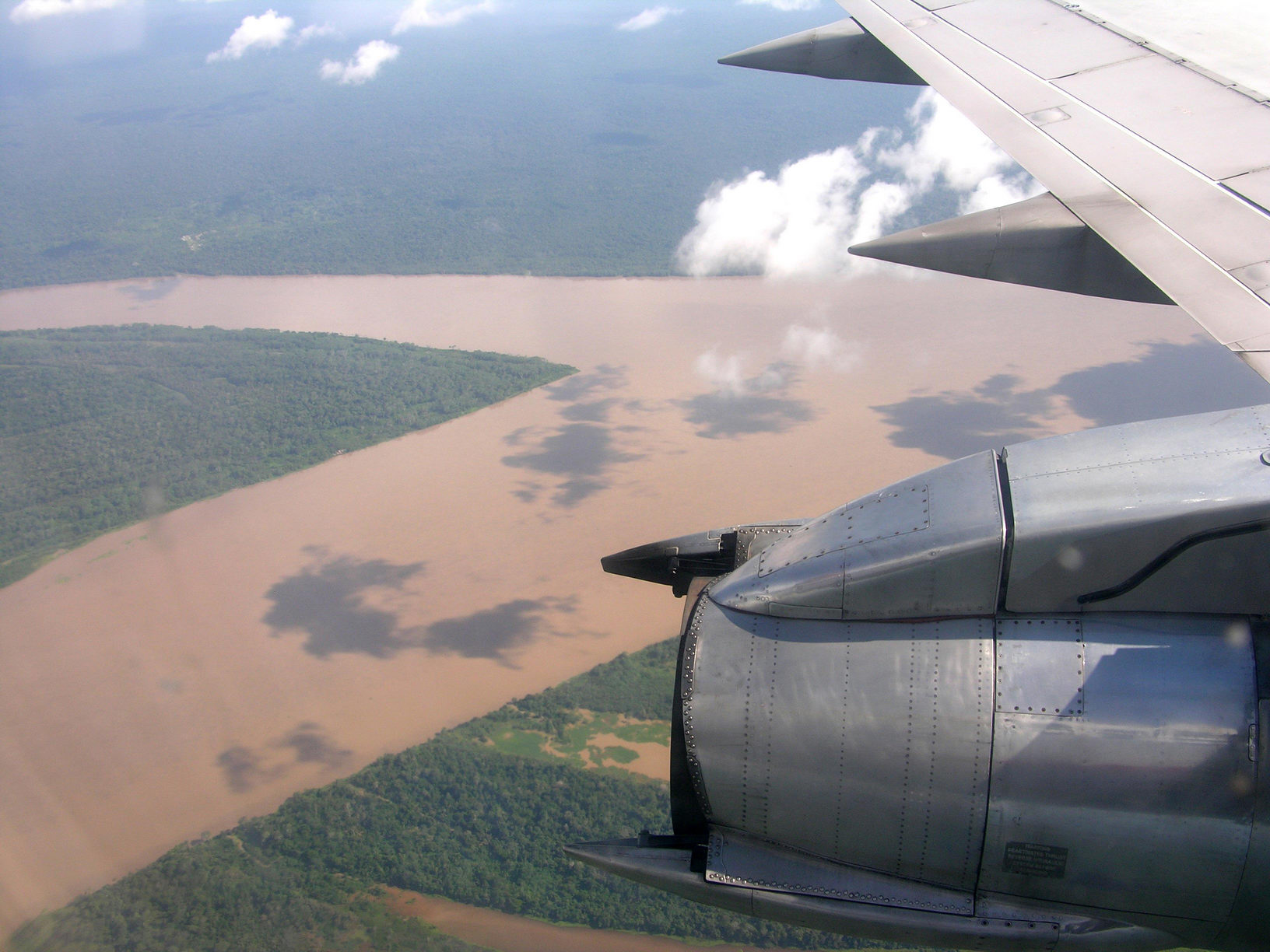
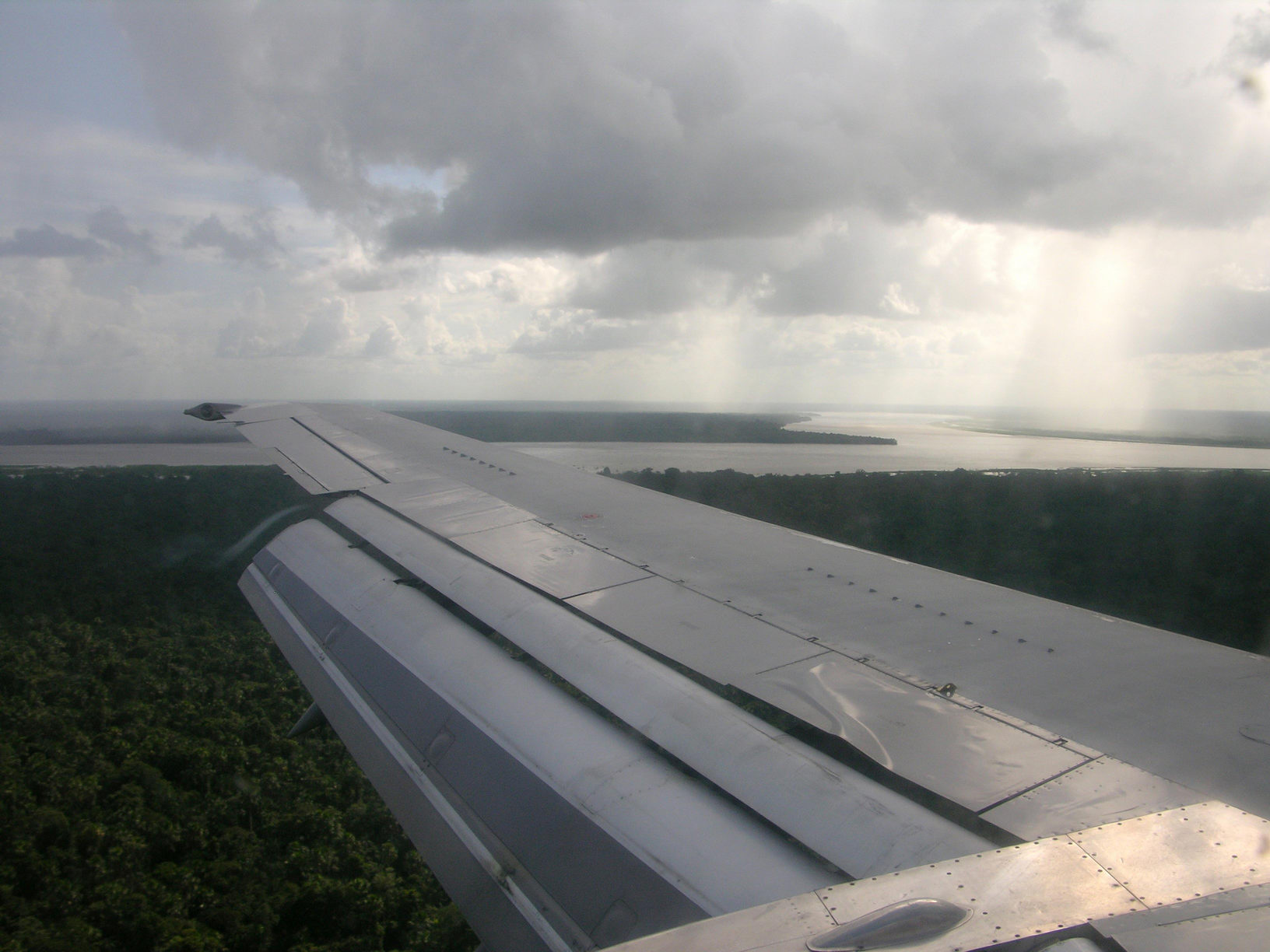
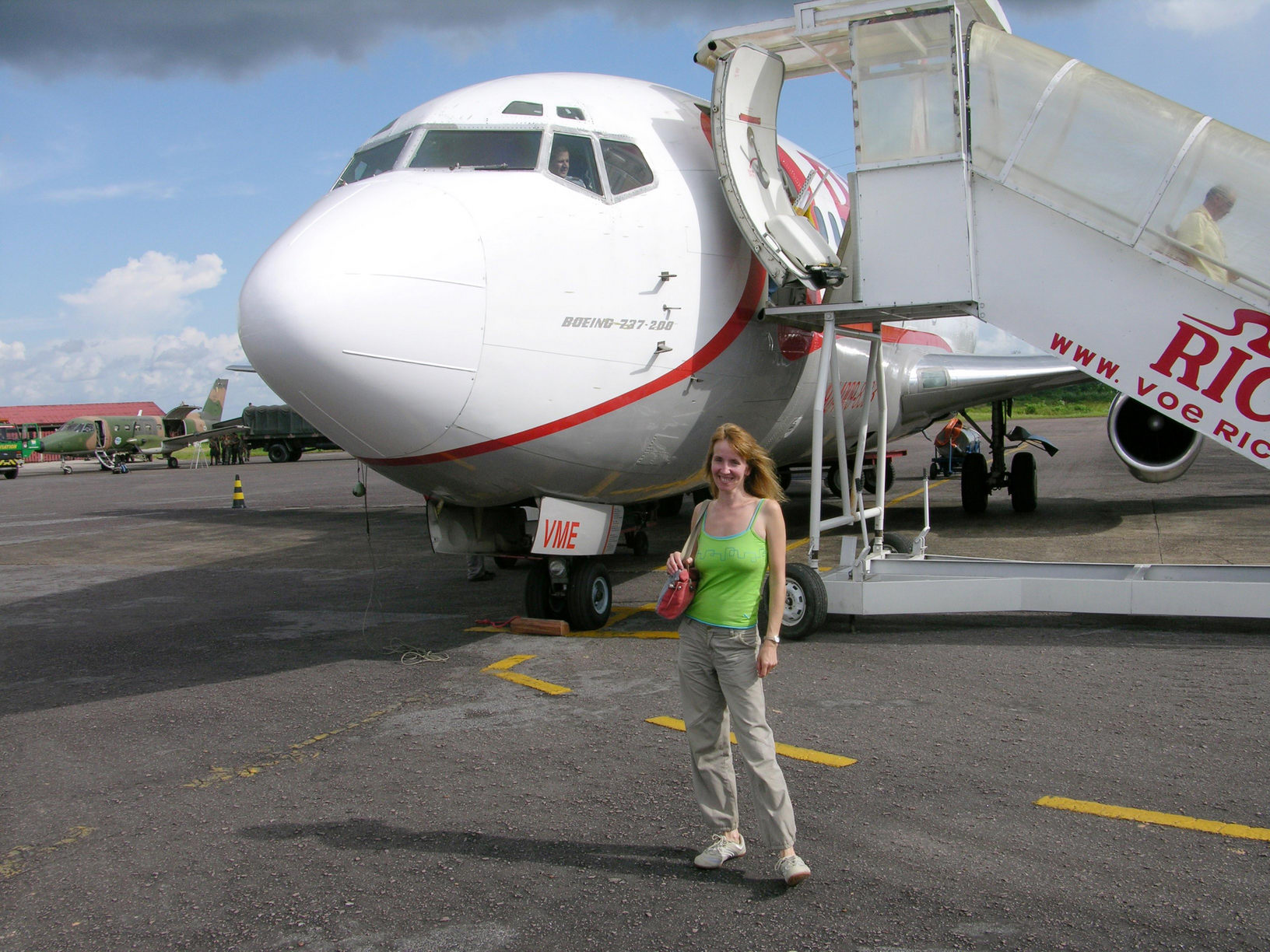
We took a taxi from the airport and asked to be taken to the Manaus boat. The driver followed the instructions remarkably closely. He not only took us to the port but drove out onto the quay and even onto the gangway into the hold of the boat, which was leaving in ten minutes.
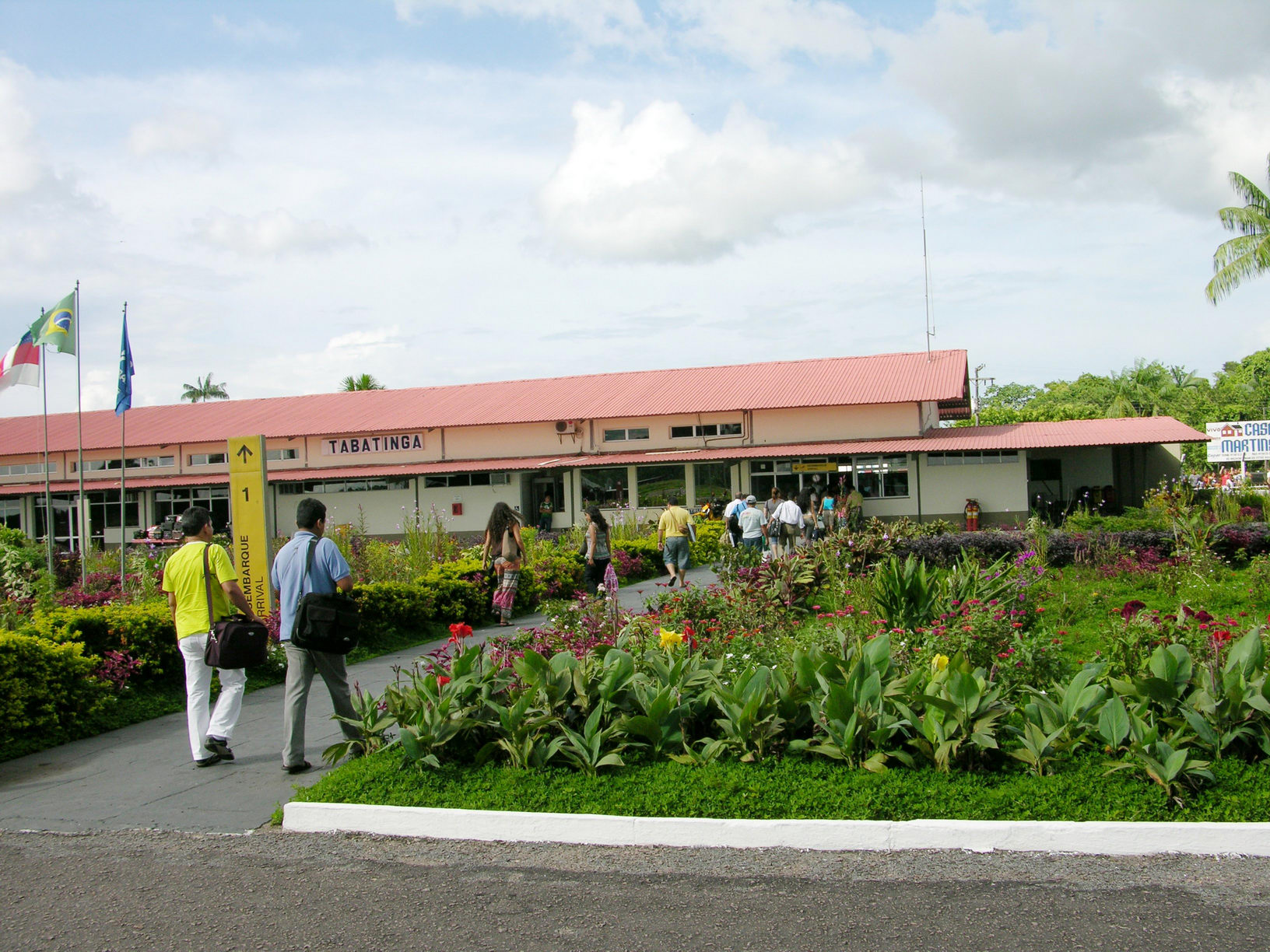
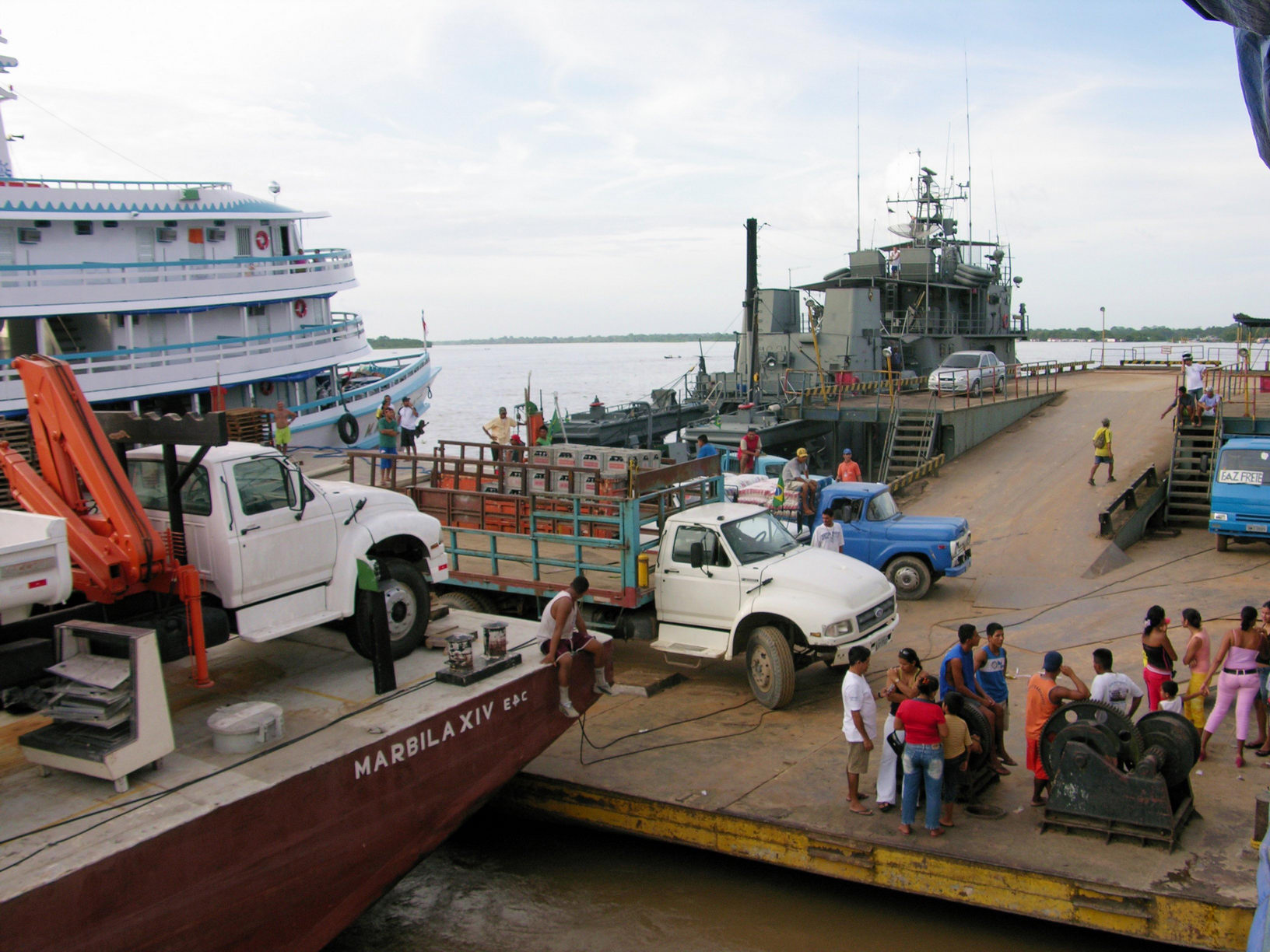
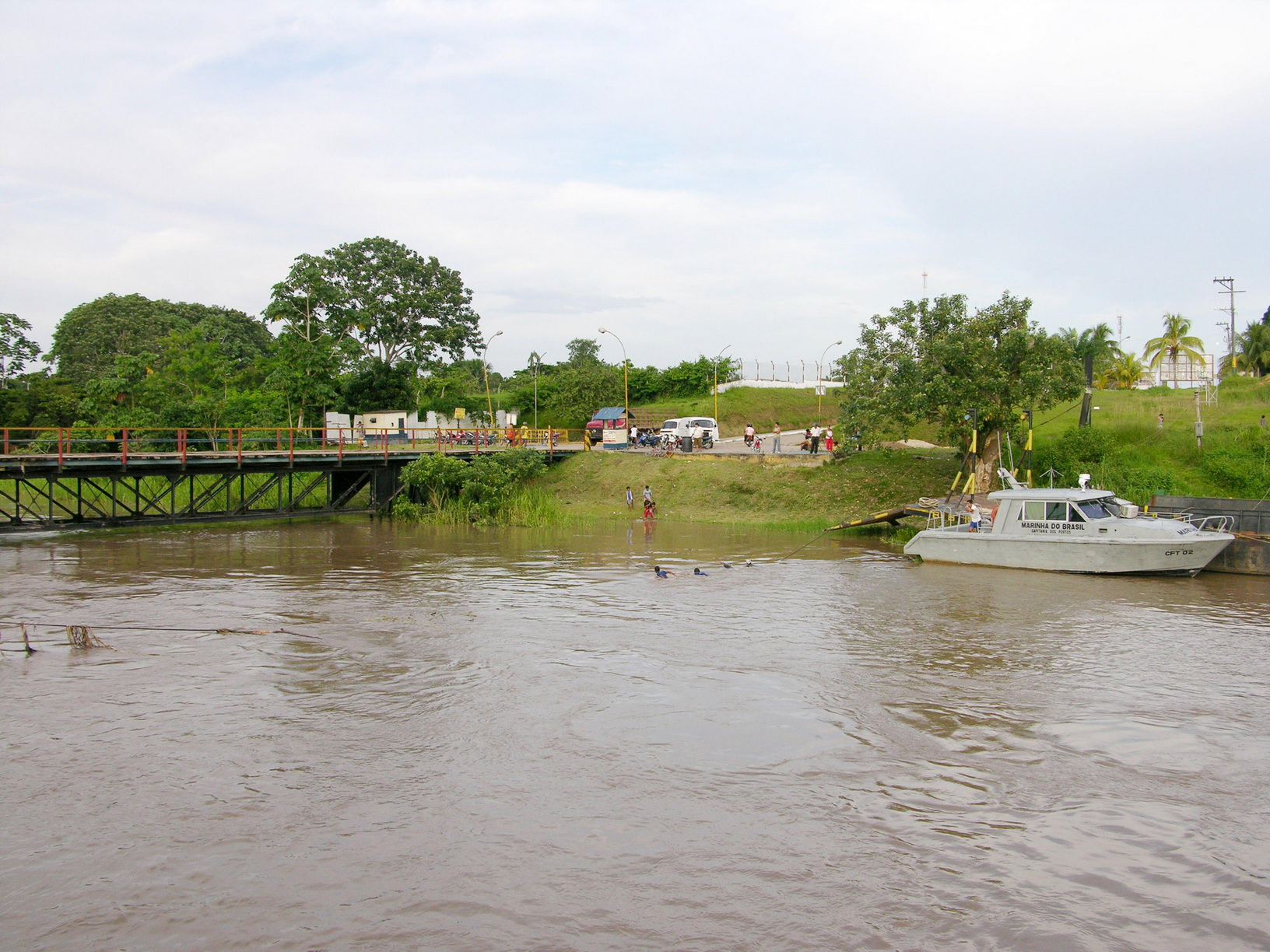
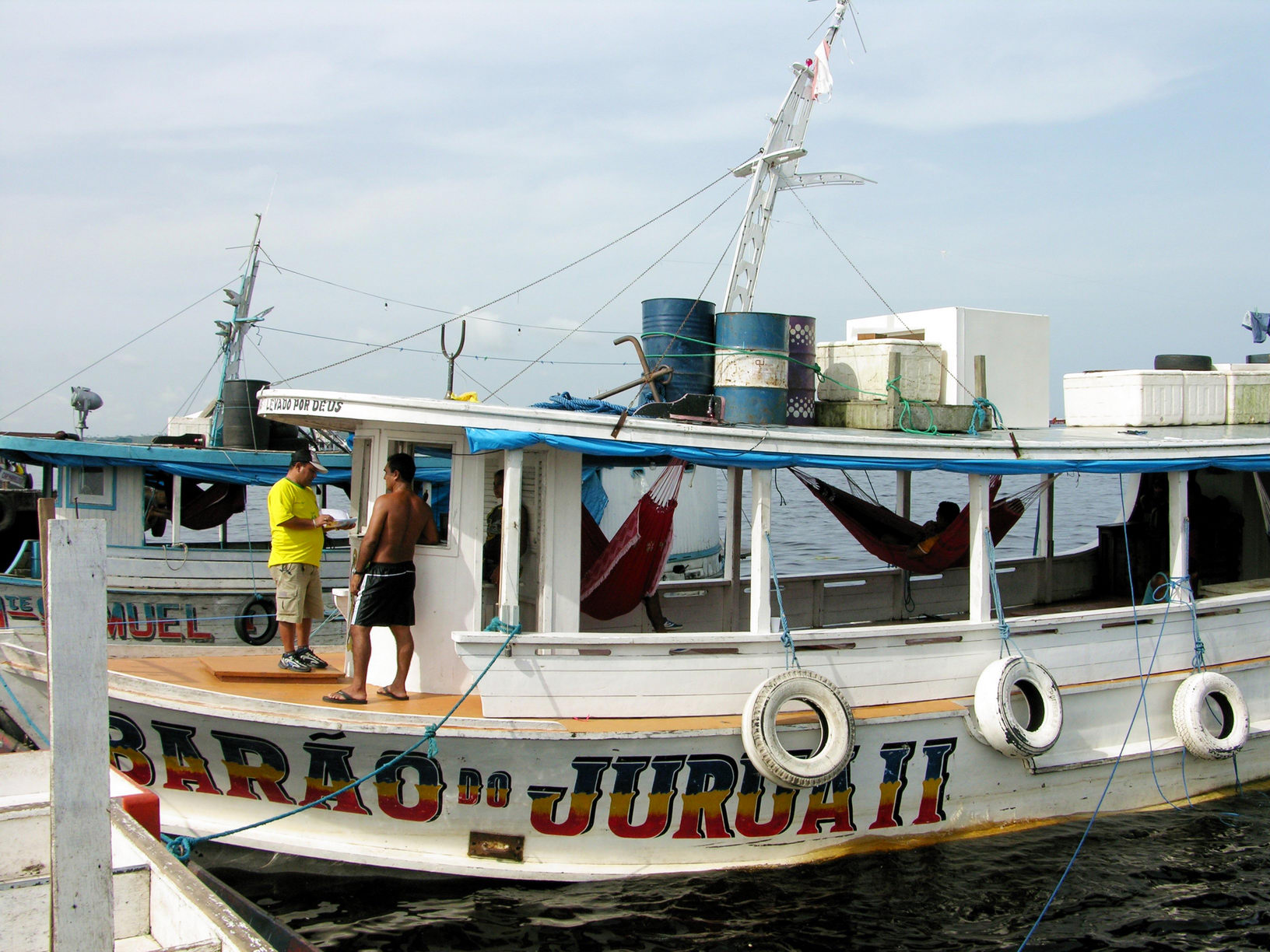
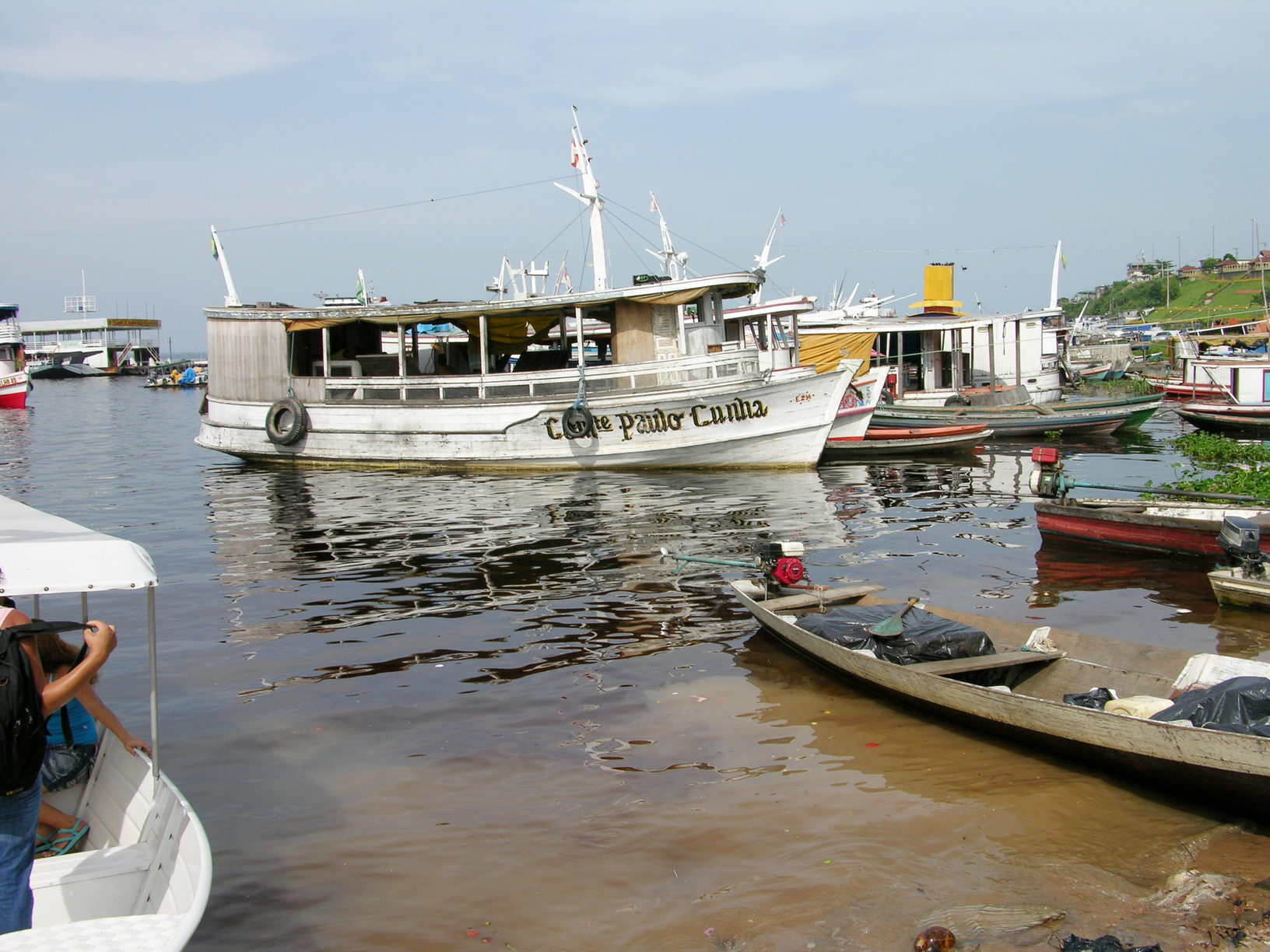
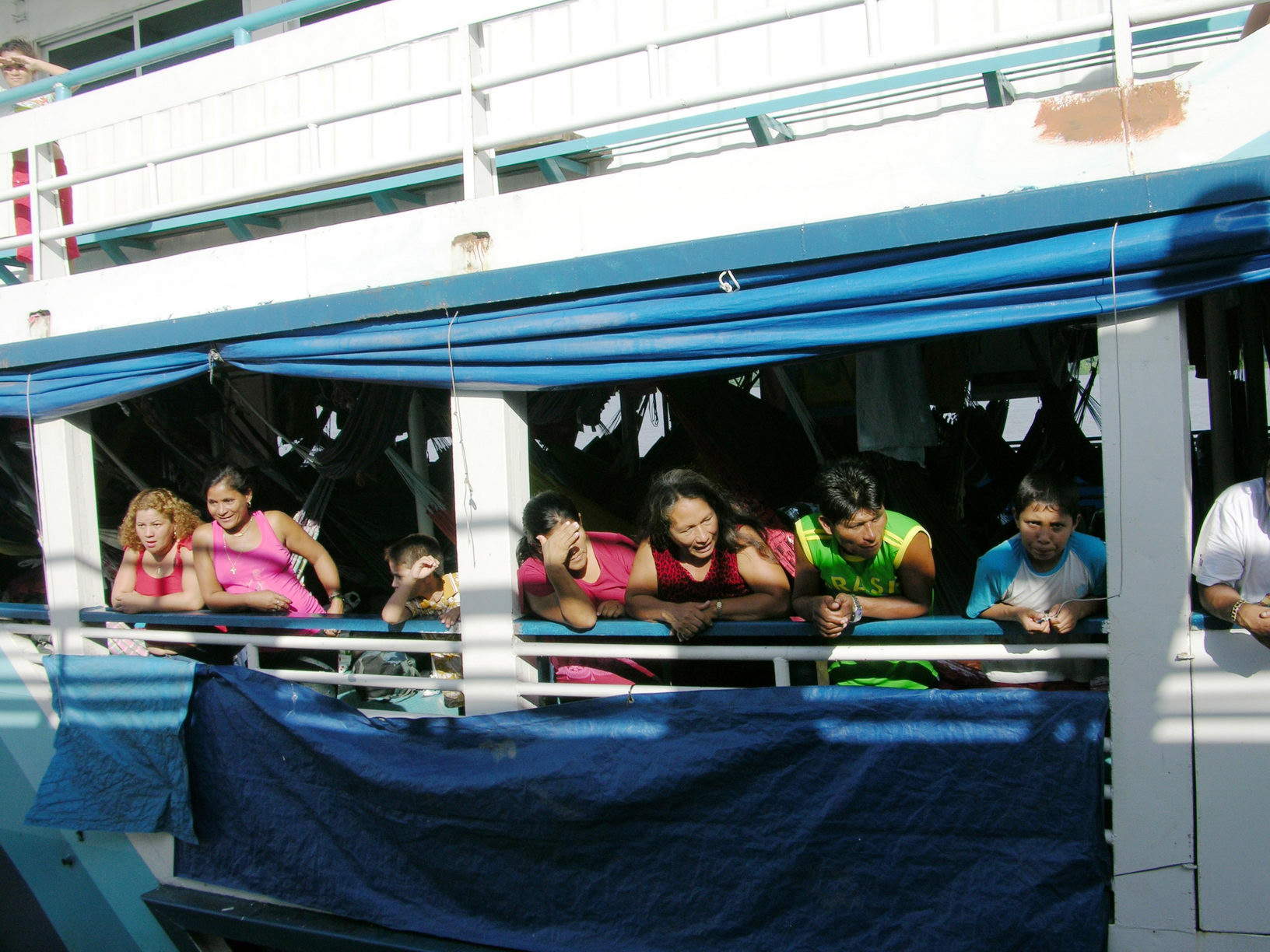
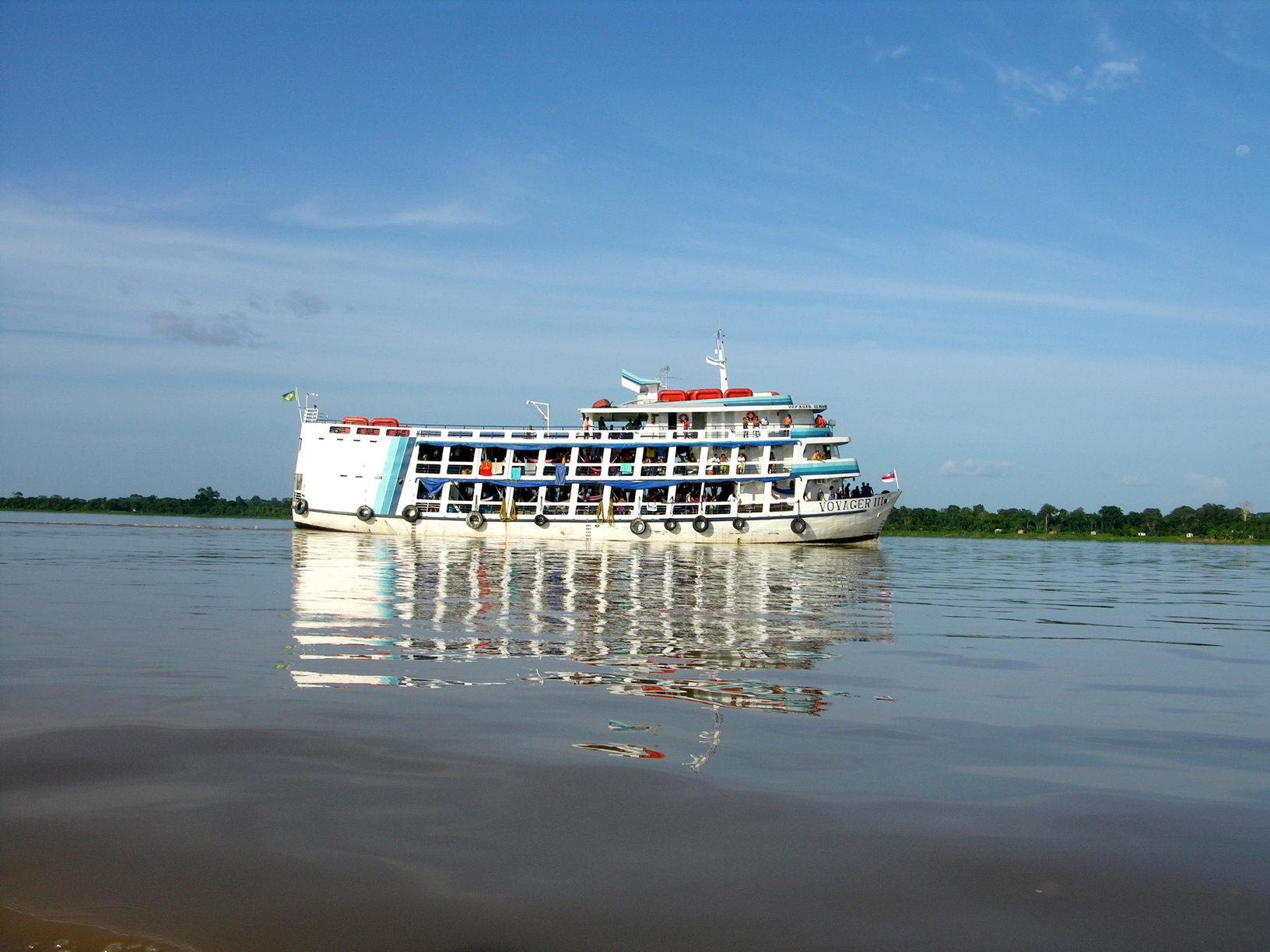
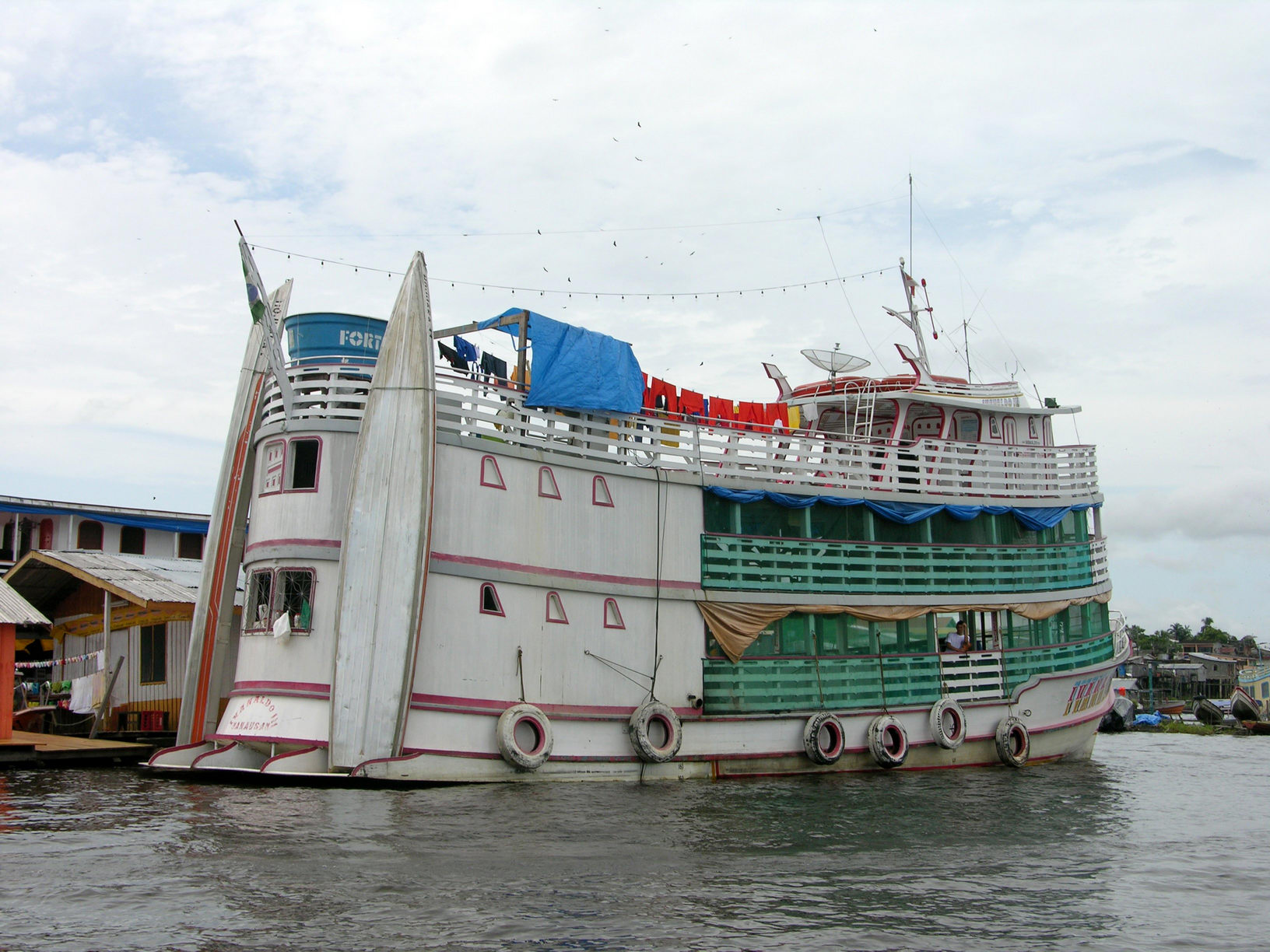
We planned to sail to Tefé, two-thirds of the way to Manaus. They say there's an airport there and you can fly back to Tabatinga. The fare was a hundred reais a person, for two days and three meals a day. The boat was called Voyager III. It was no tourist boat but a regular scheduled service. Built for two hundred people, we took on all three hundred. Not a problem here. There are only a few cabins and they're always taken. On two decks there are pipes overhead for everyone else to hang a hammock from. Your own hammock, which every passenger is expected to bring. You can sleep on the floor, of course. Nobody forbids it. But people will walk over you. The more people there are, the closer together the hammocks. With three hundred people they're half a metre apart, two or even three tiers deep. You lie there with someone lying to your left, right, below and above. The whole lot rocks on the waves, especially when somebody decides to get out for a walk. Luggage and bundles fill the floor. People say that stealing isn't done here.
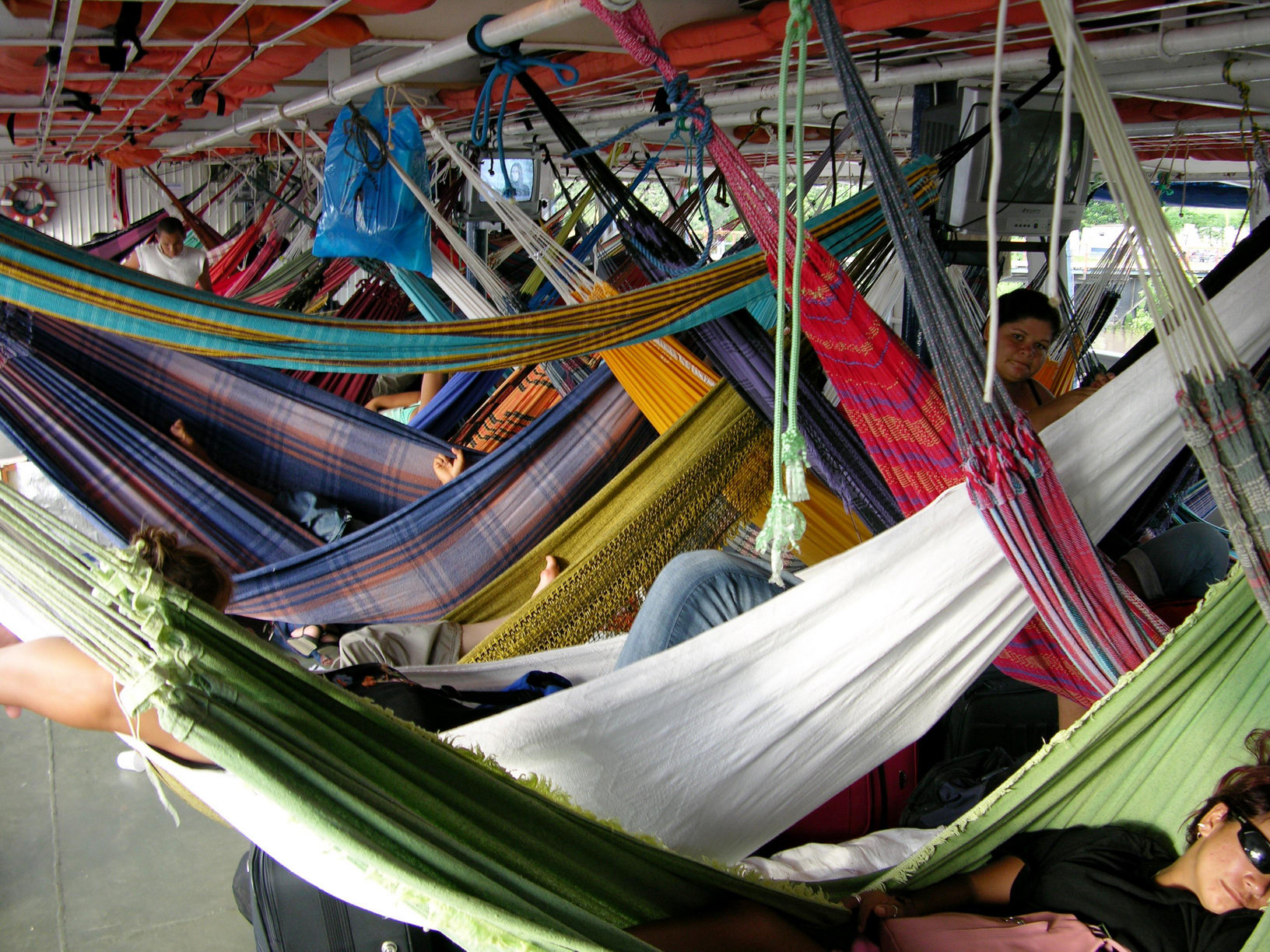
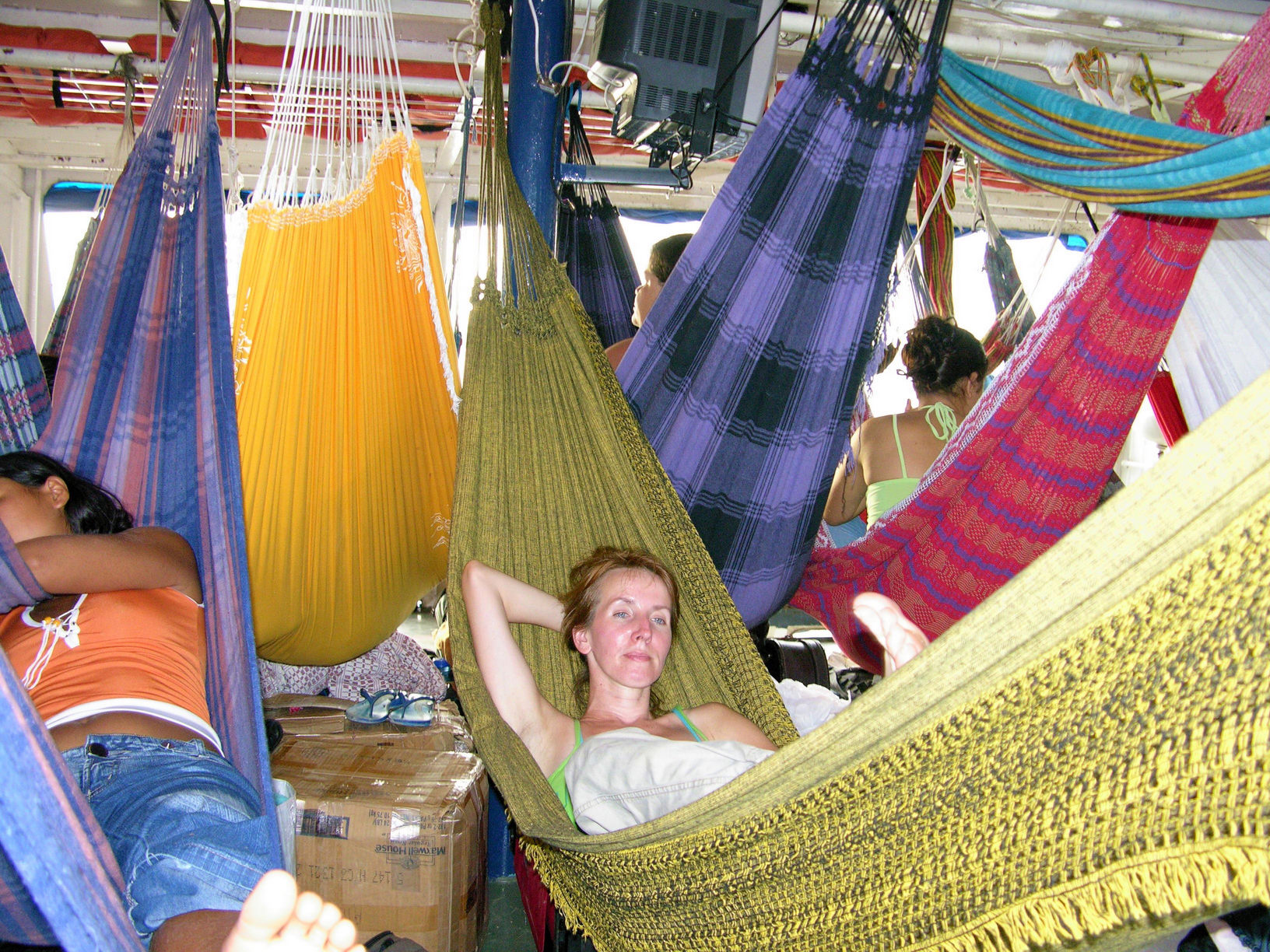
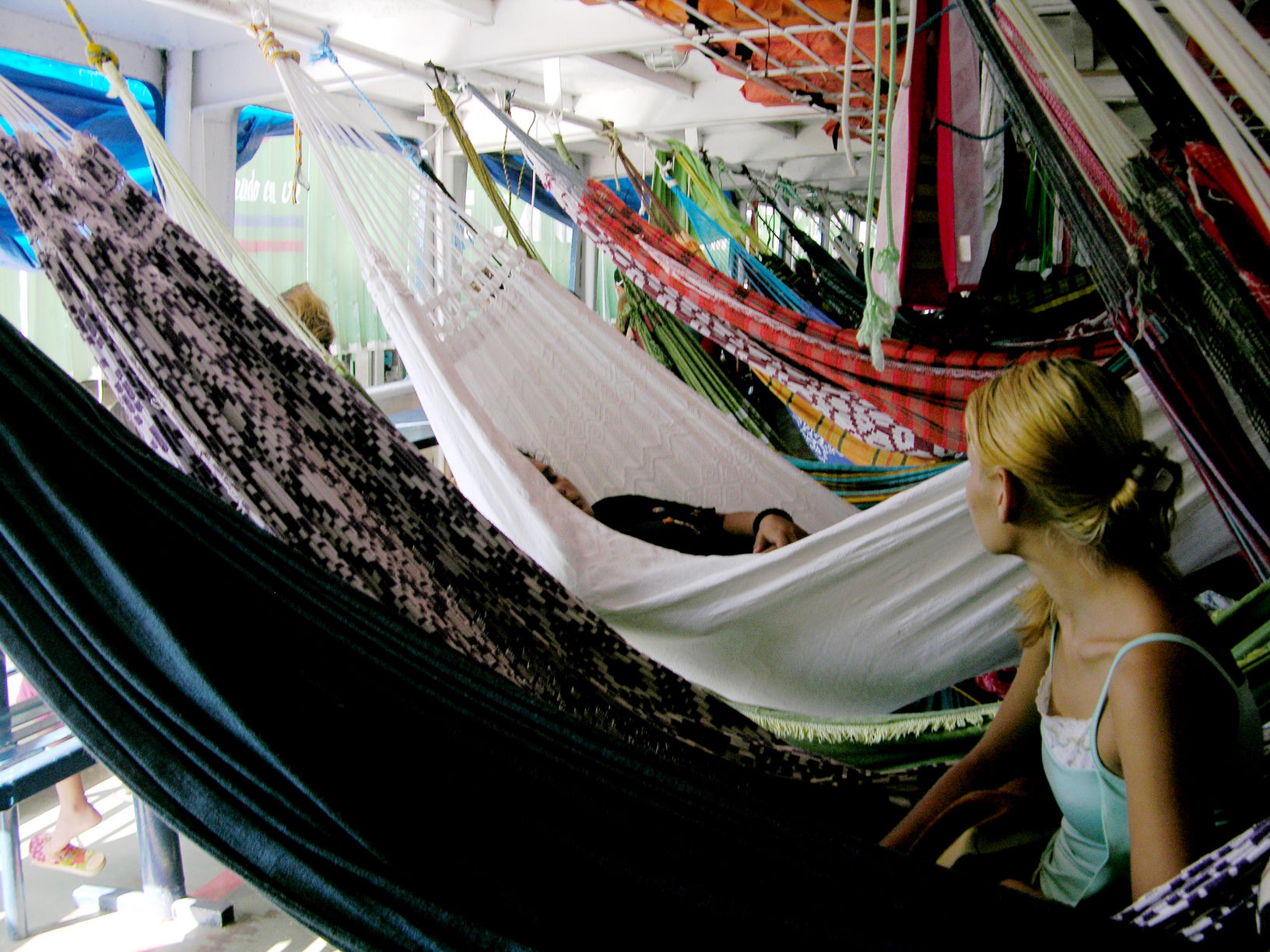
By then we already had one hammock. It was bought for the dacha, but suddenly came in handy. It turned out to be very uncomfortable for two. We had to get another for thirty reais at the first stop, in Benjamin Constant. Now we were to spend two nights like this. The boat averaged fifteen kilometres an hour and the current was seven kilometres an hour. There were a thousand kilometres ahead of us.
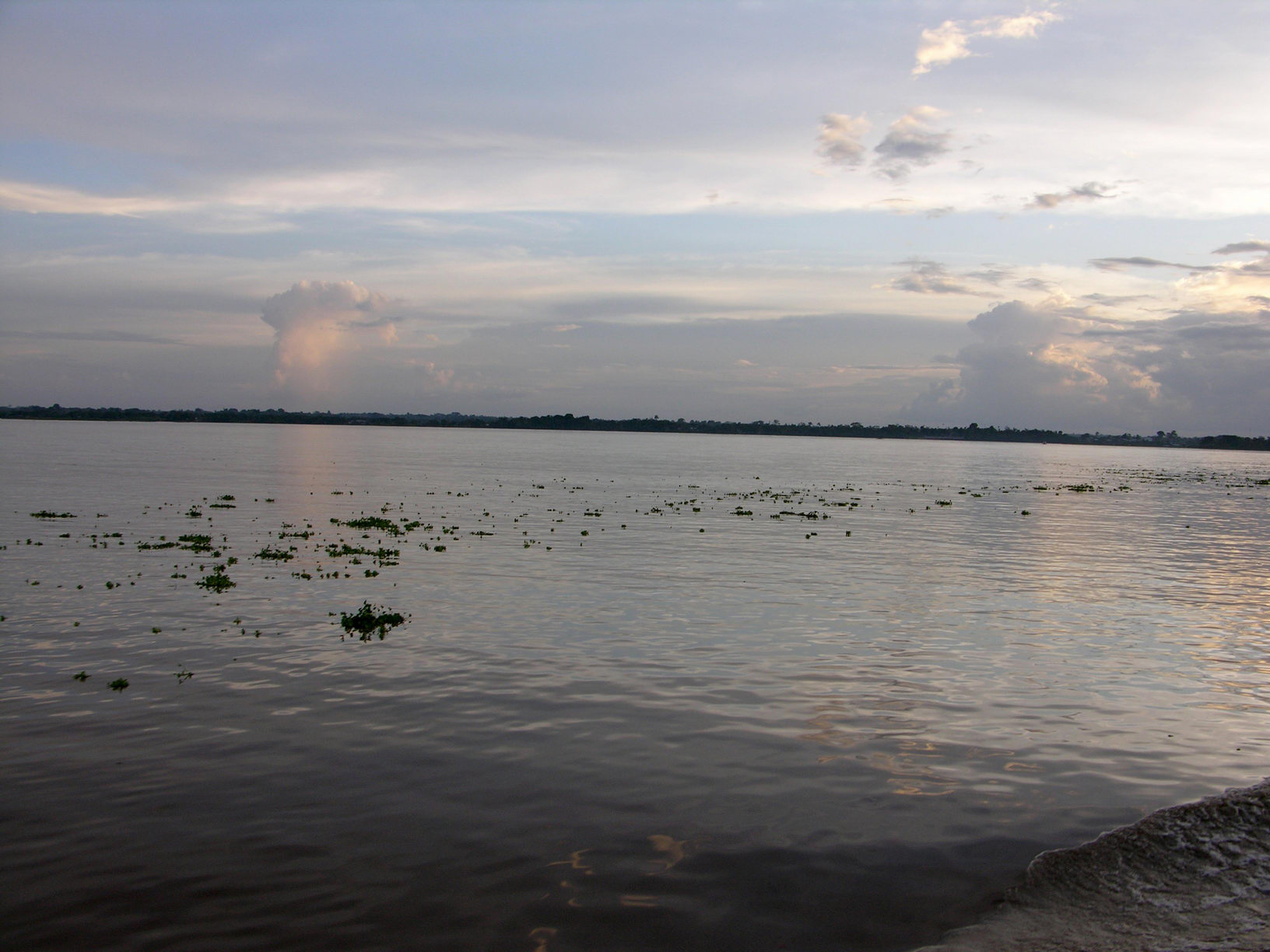
On the first day it got dark quickly. We fell asleep after the long day, but not for long. Tabatinga is a special economic zone. No border separates it from neighbouring Leticia in Colombia. So downstream of Tabatinga (4°00.81′S, 69°27.88′W) the police search the entire boat, more thoroughly than I'd ever seen. They went through every bundle, took the insoles out of shoes, opened the video camera and checked whether there was a cassette inside. They even felt every life jacket with their fingers. The inspection took all night. The police checkpoint is on the Amazon's bank just beyond Benjamin Constant.
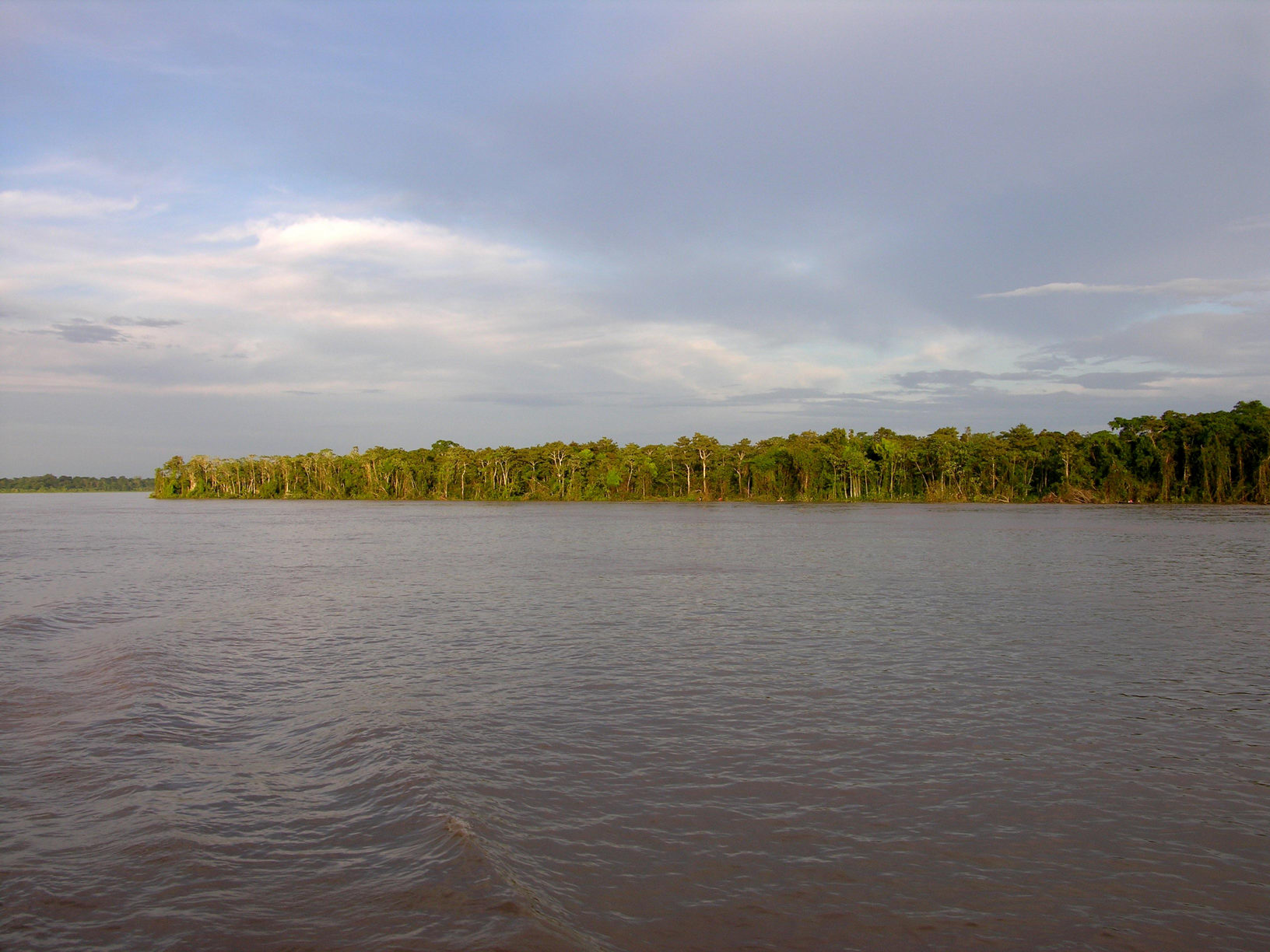
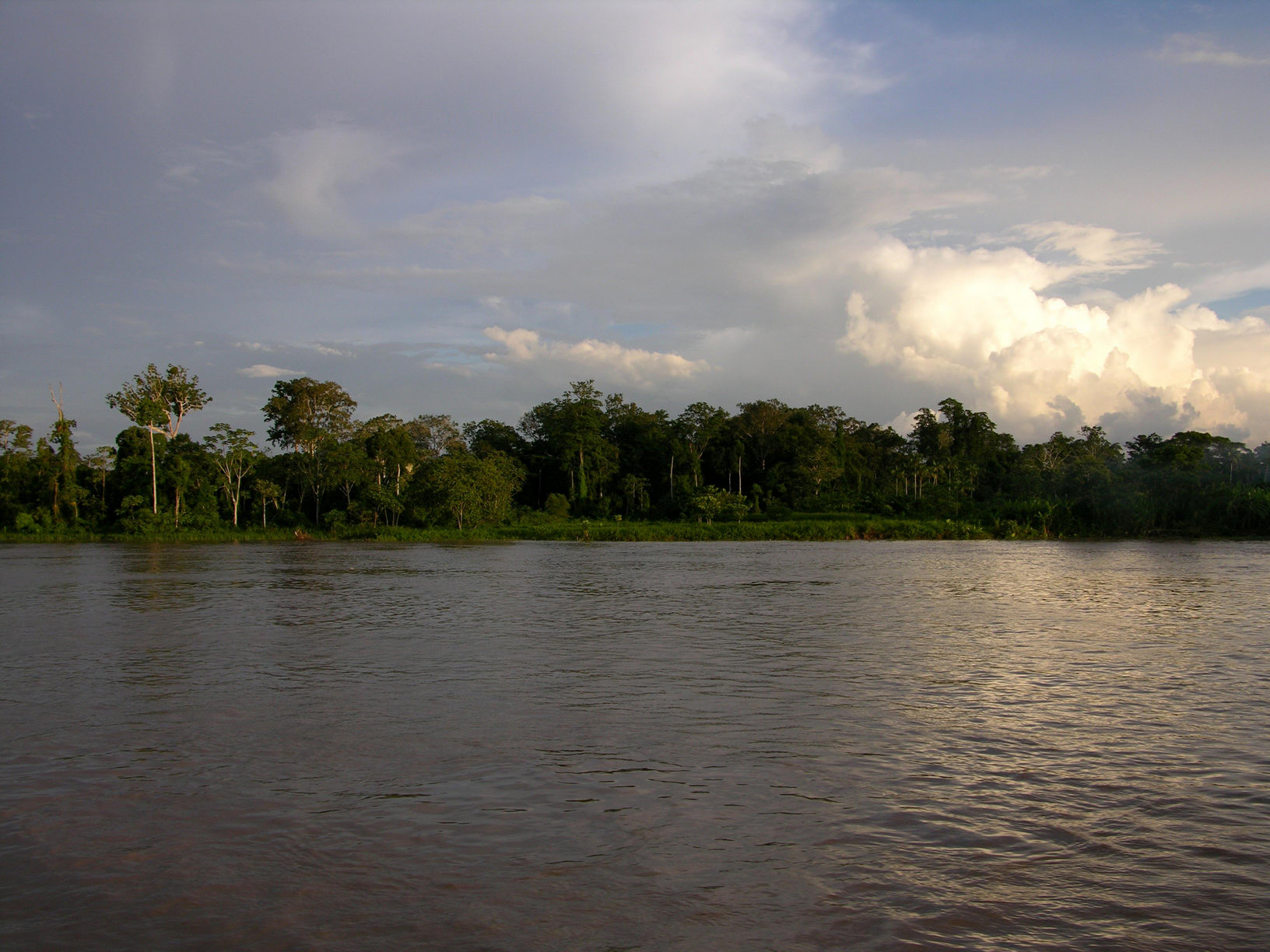
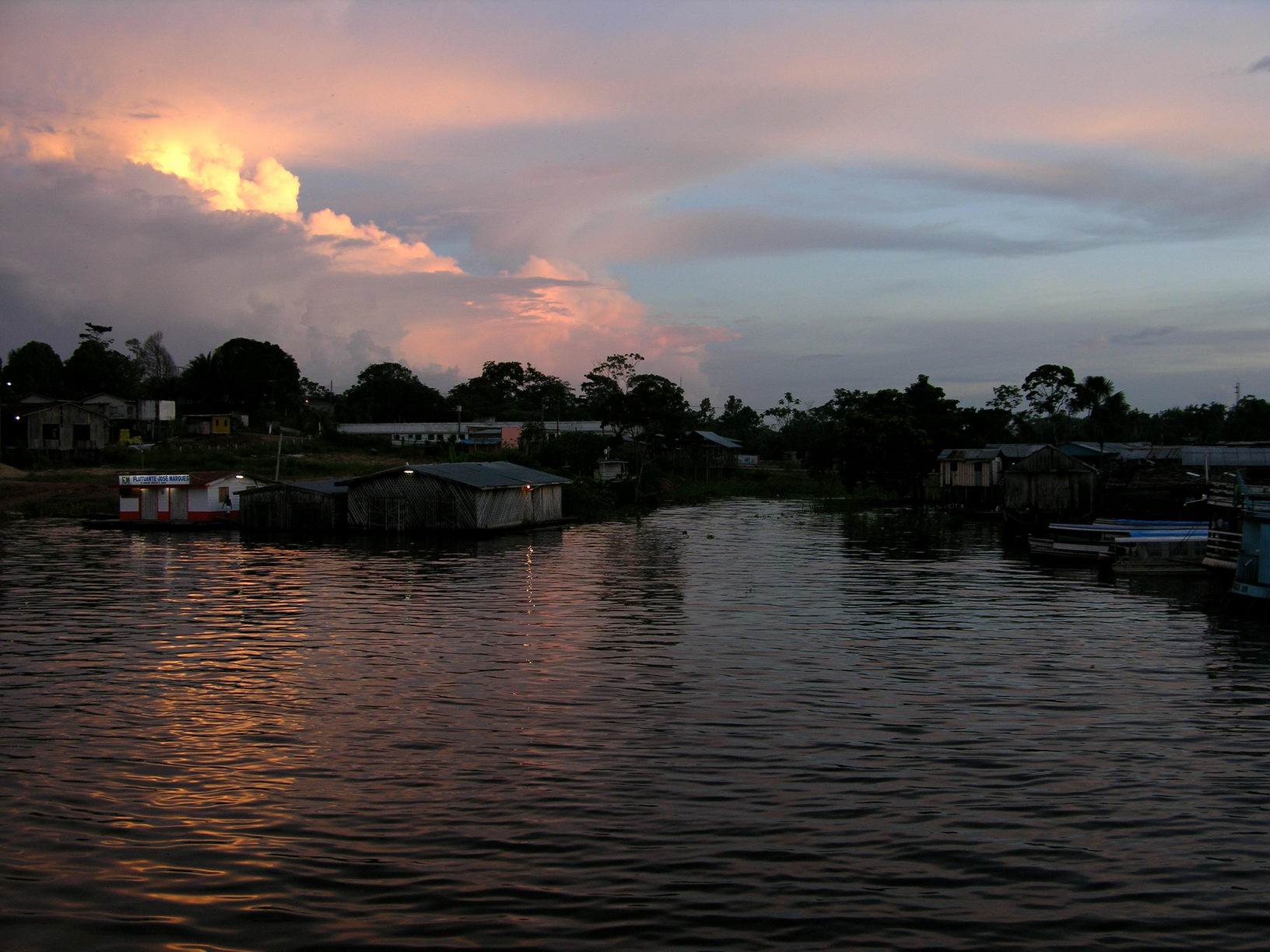
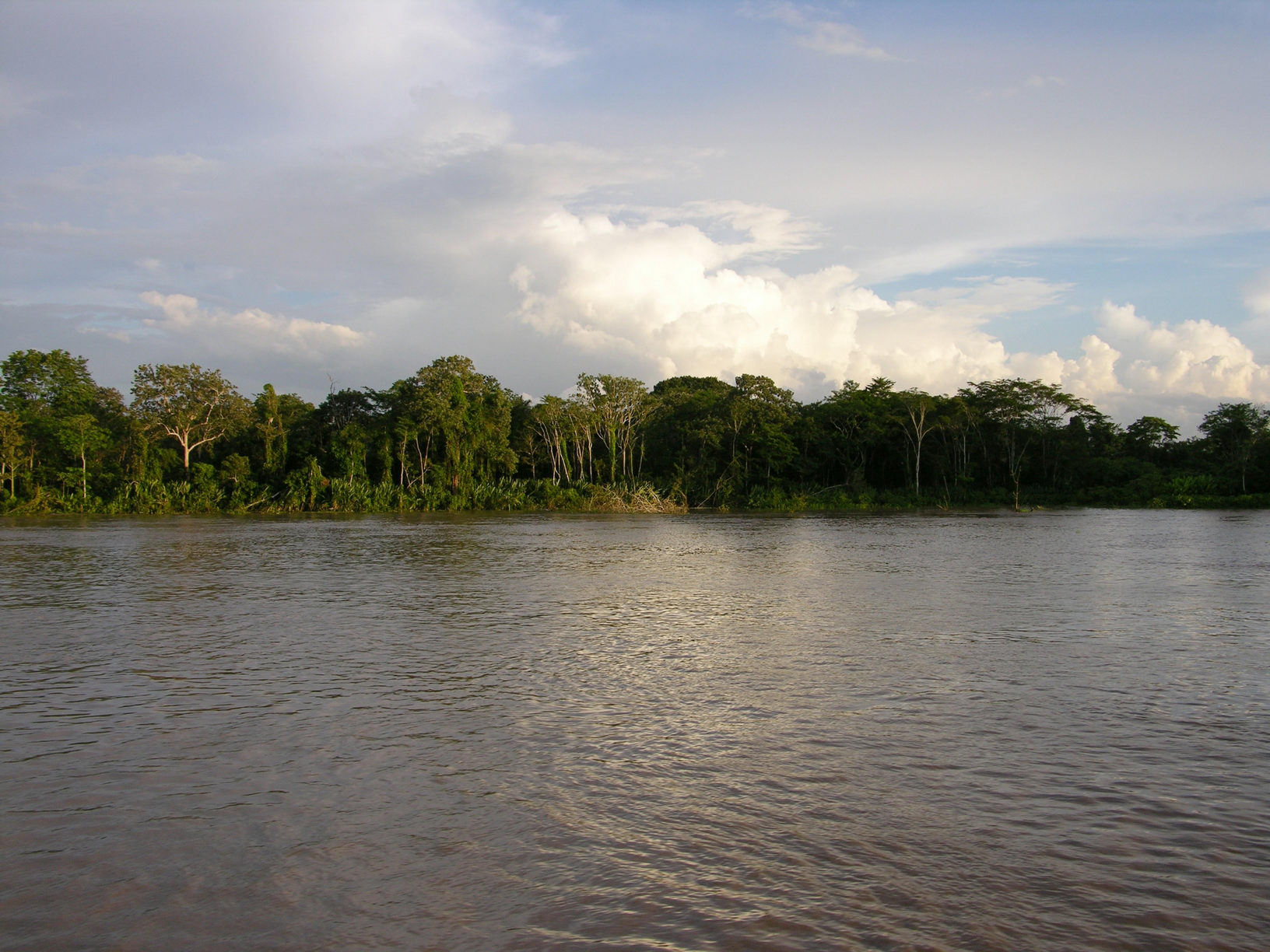
But in the morning we found ourselves in the very wildest part of the journey. On the banks were the Indigenous lands of the Tikuna of Évare. Sure enough, among the grass you could see huts on stilts and fishermen in dugouts. Some of the canoes didn't even have petrol outboards.
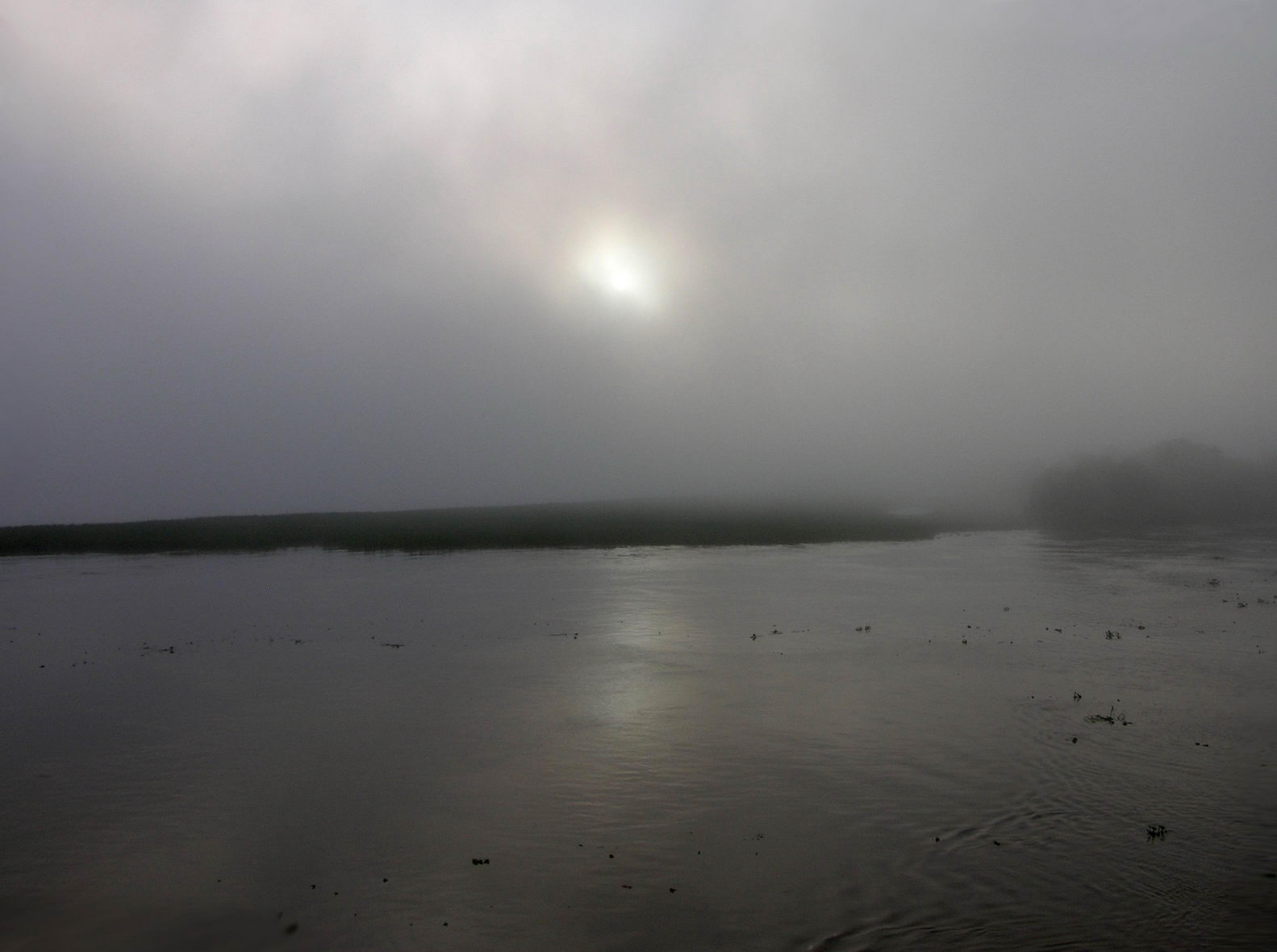
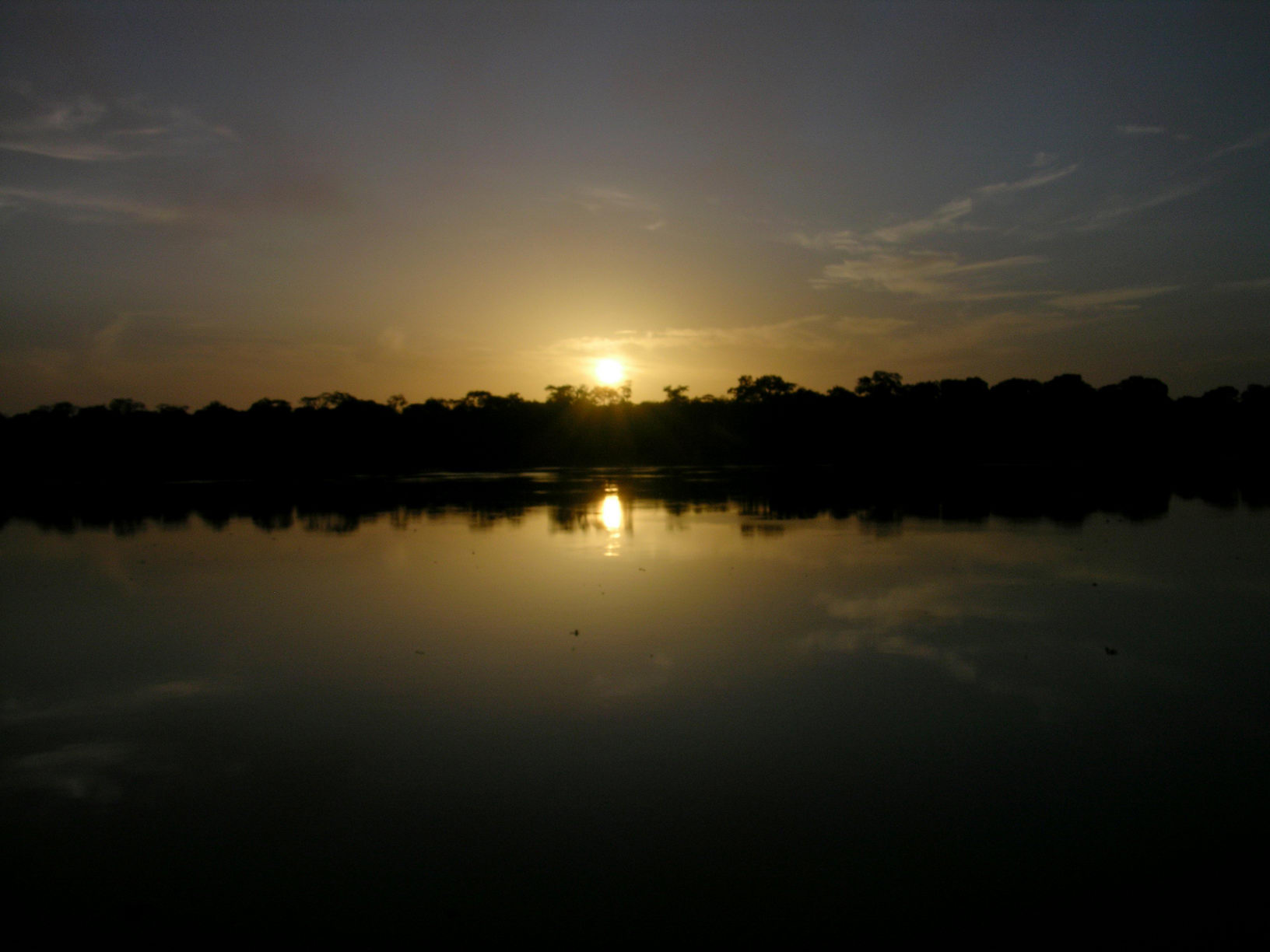
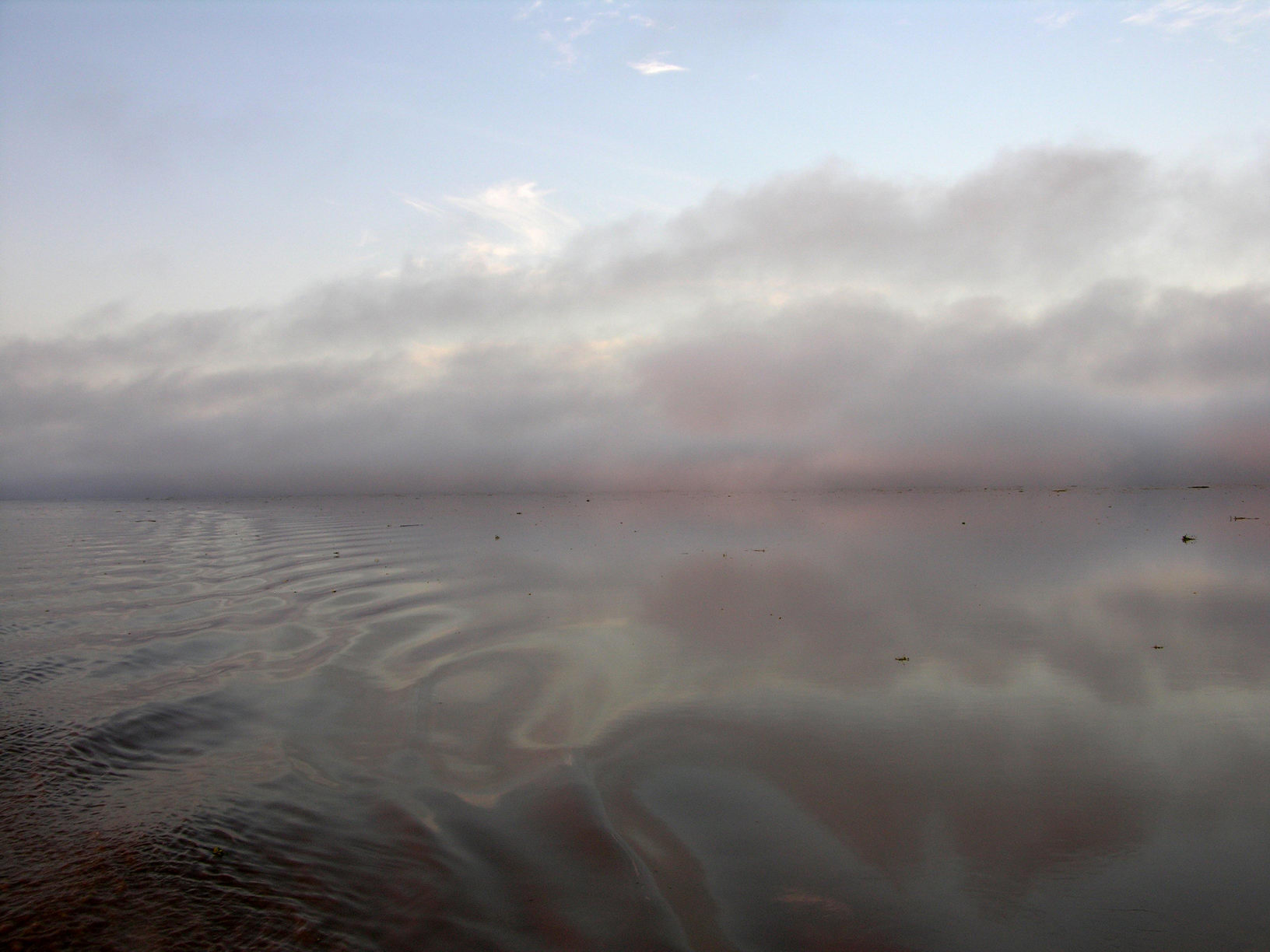
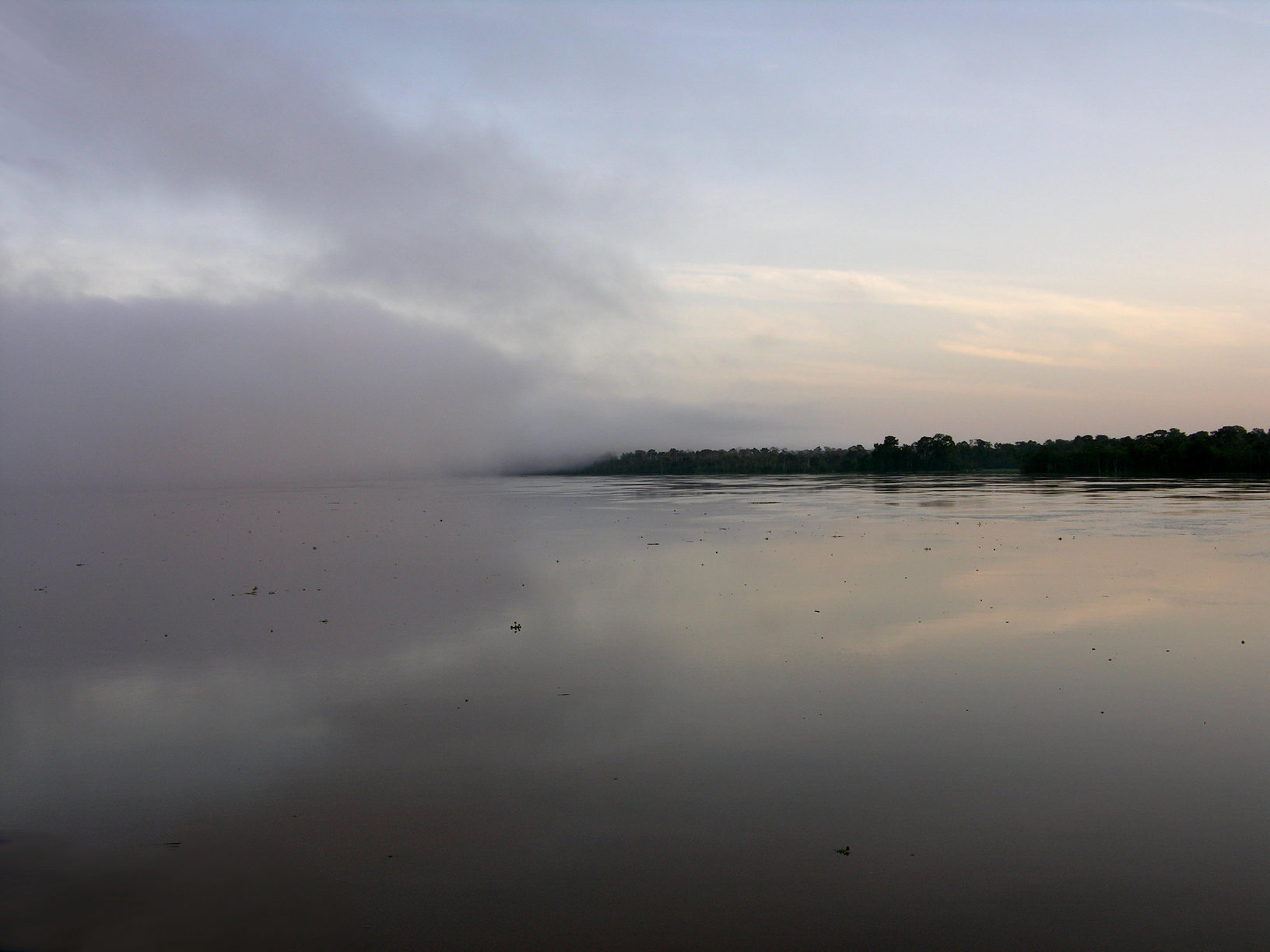
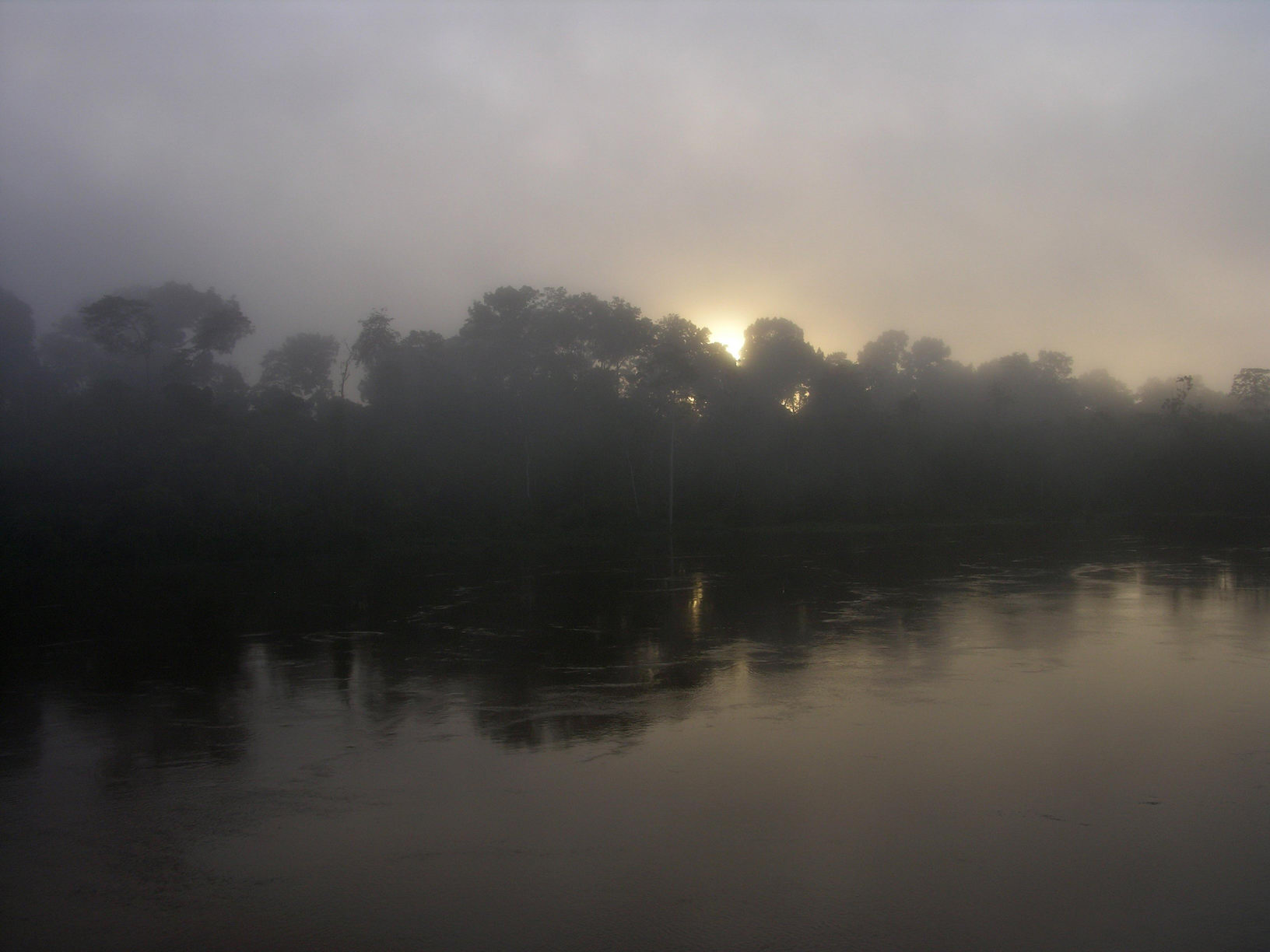
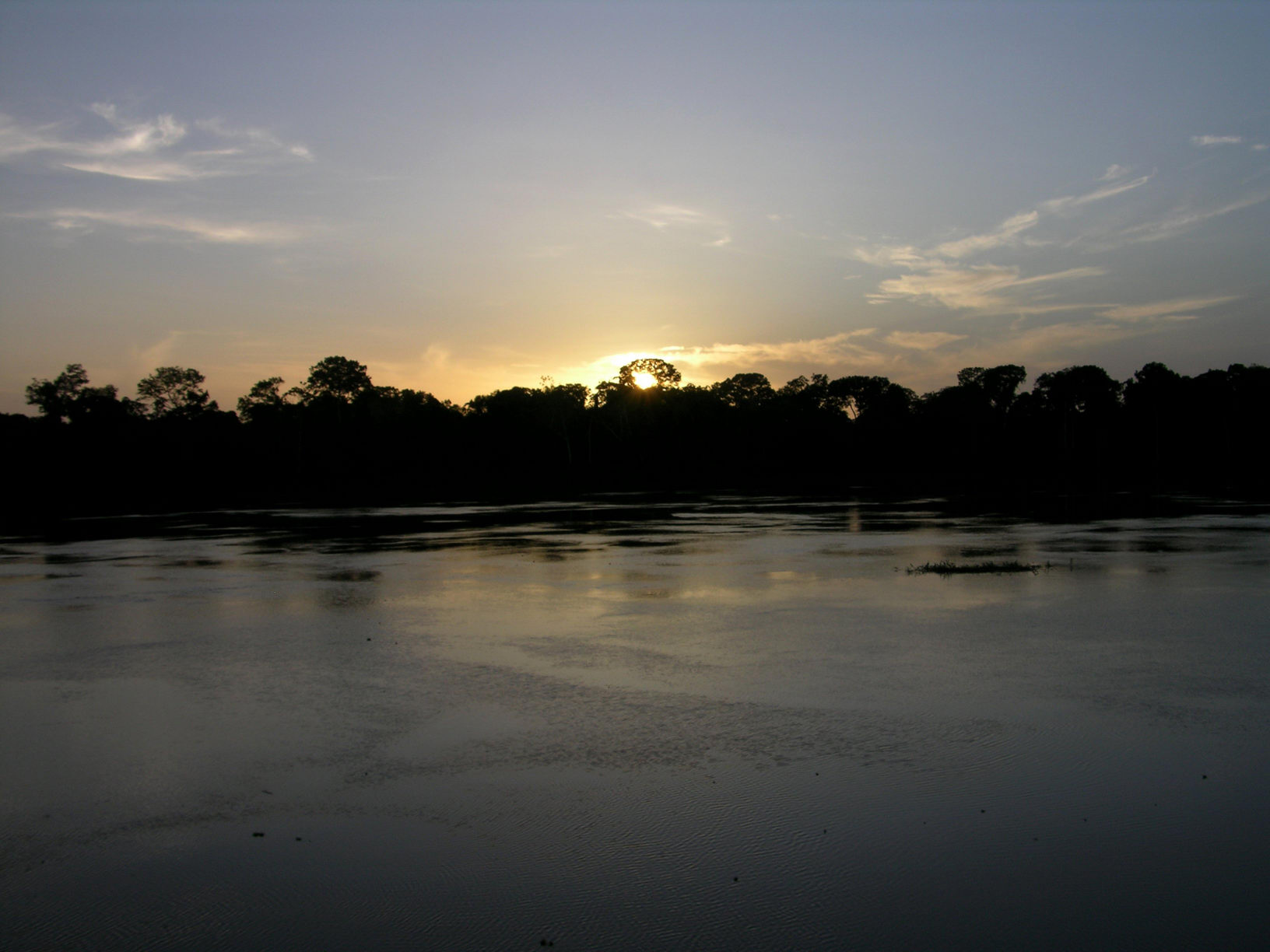
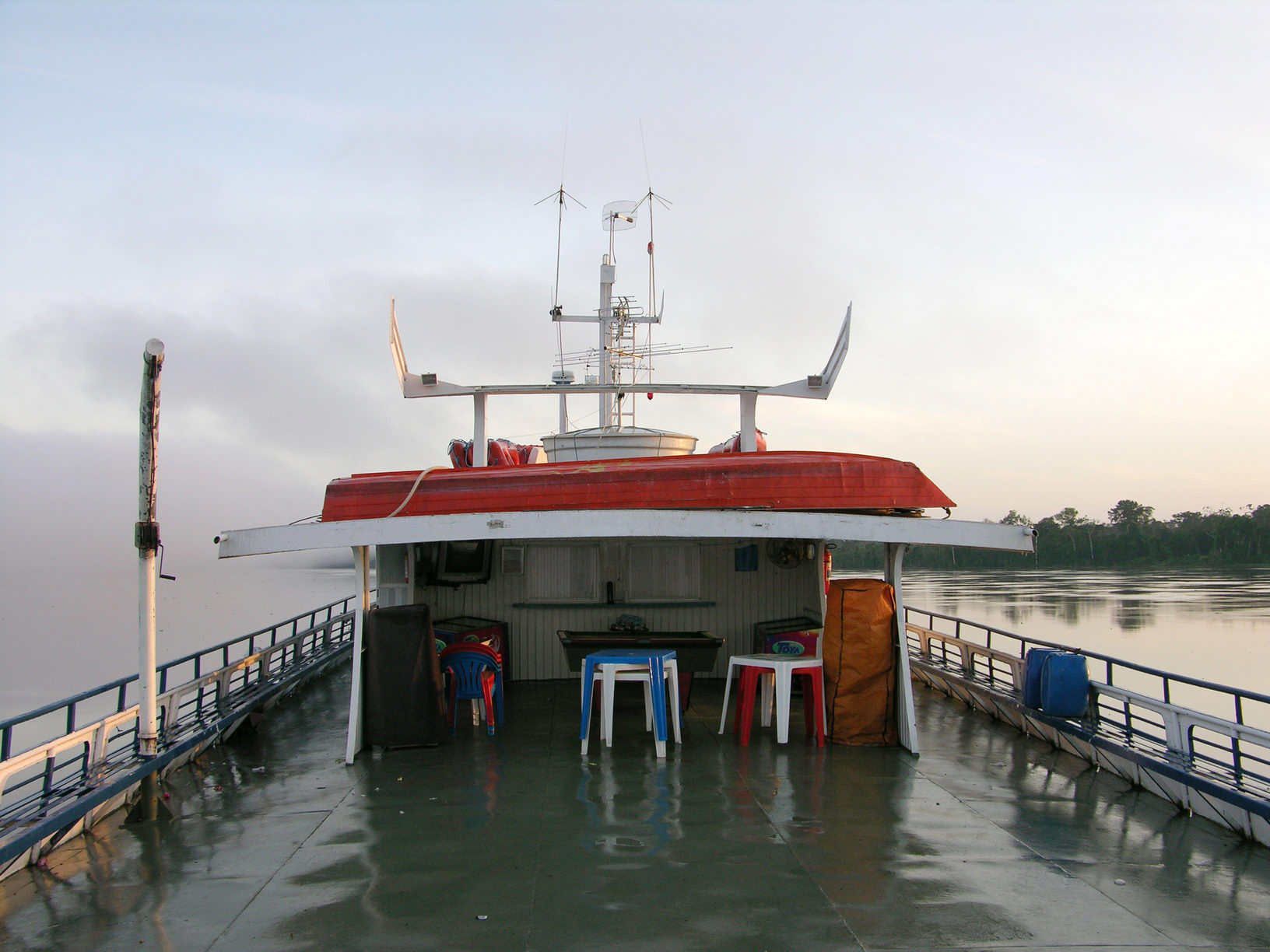
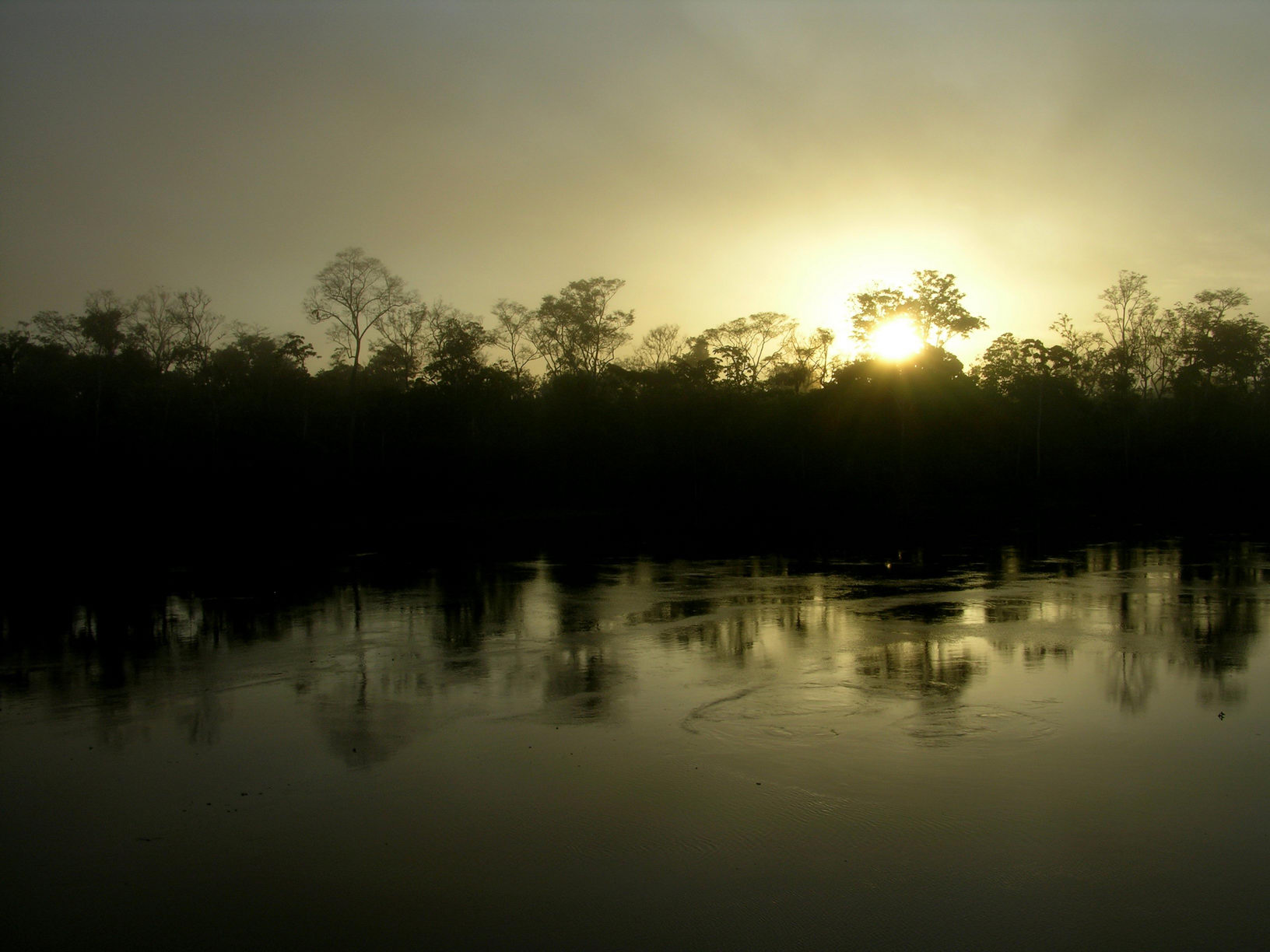
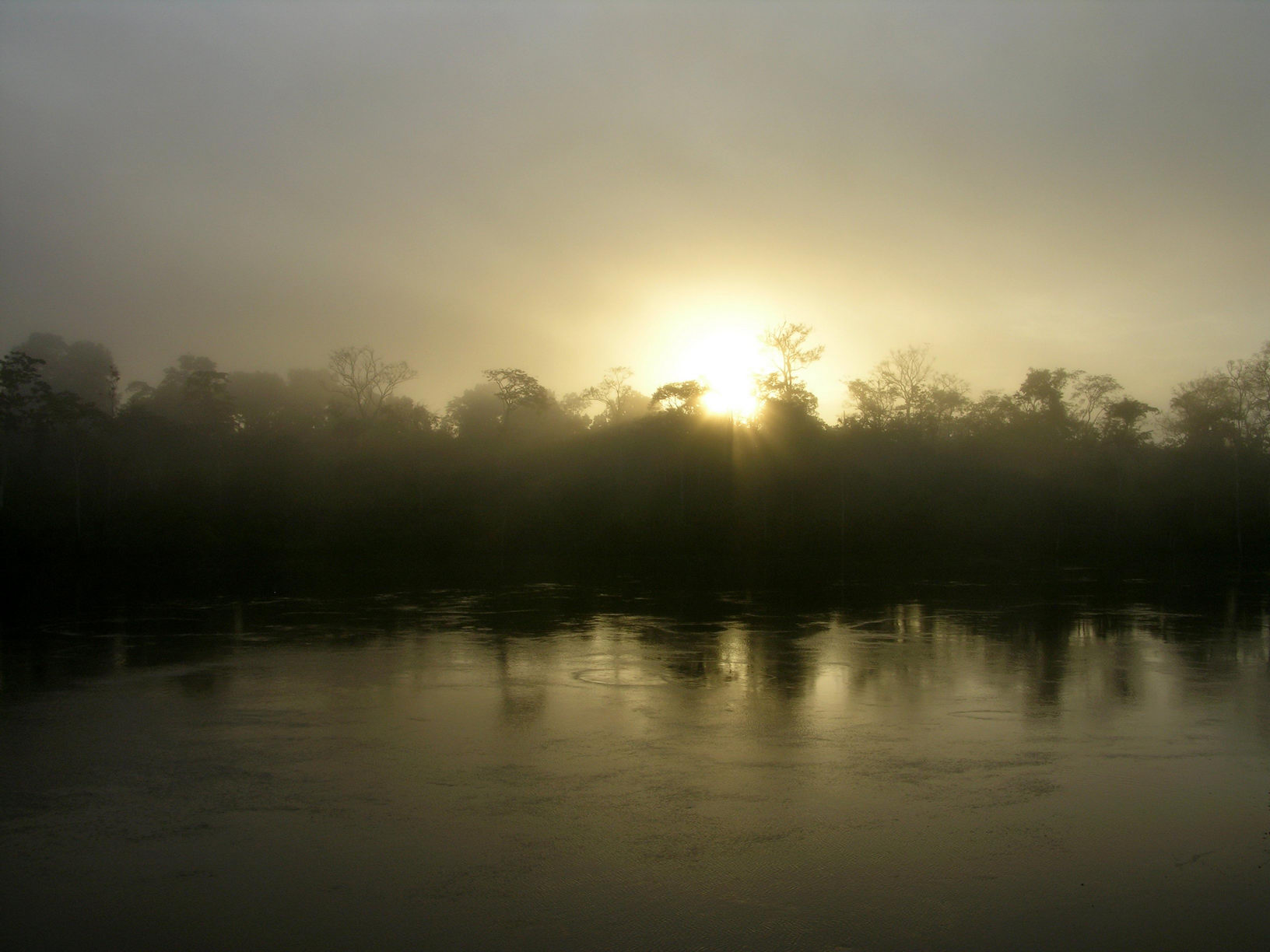
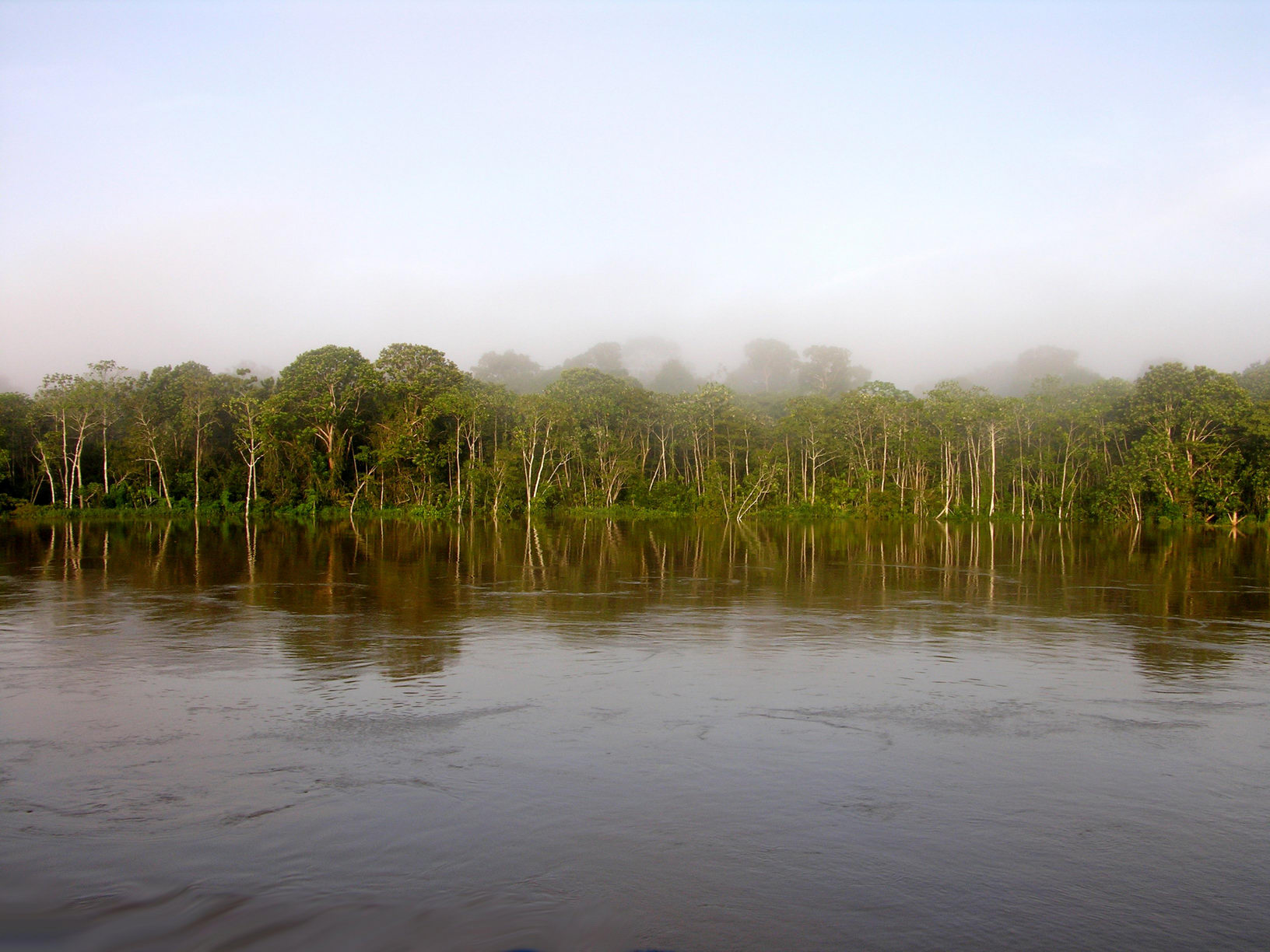
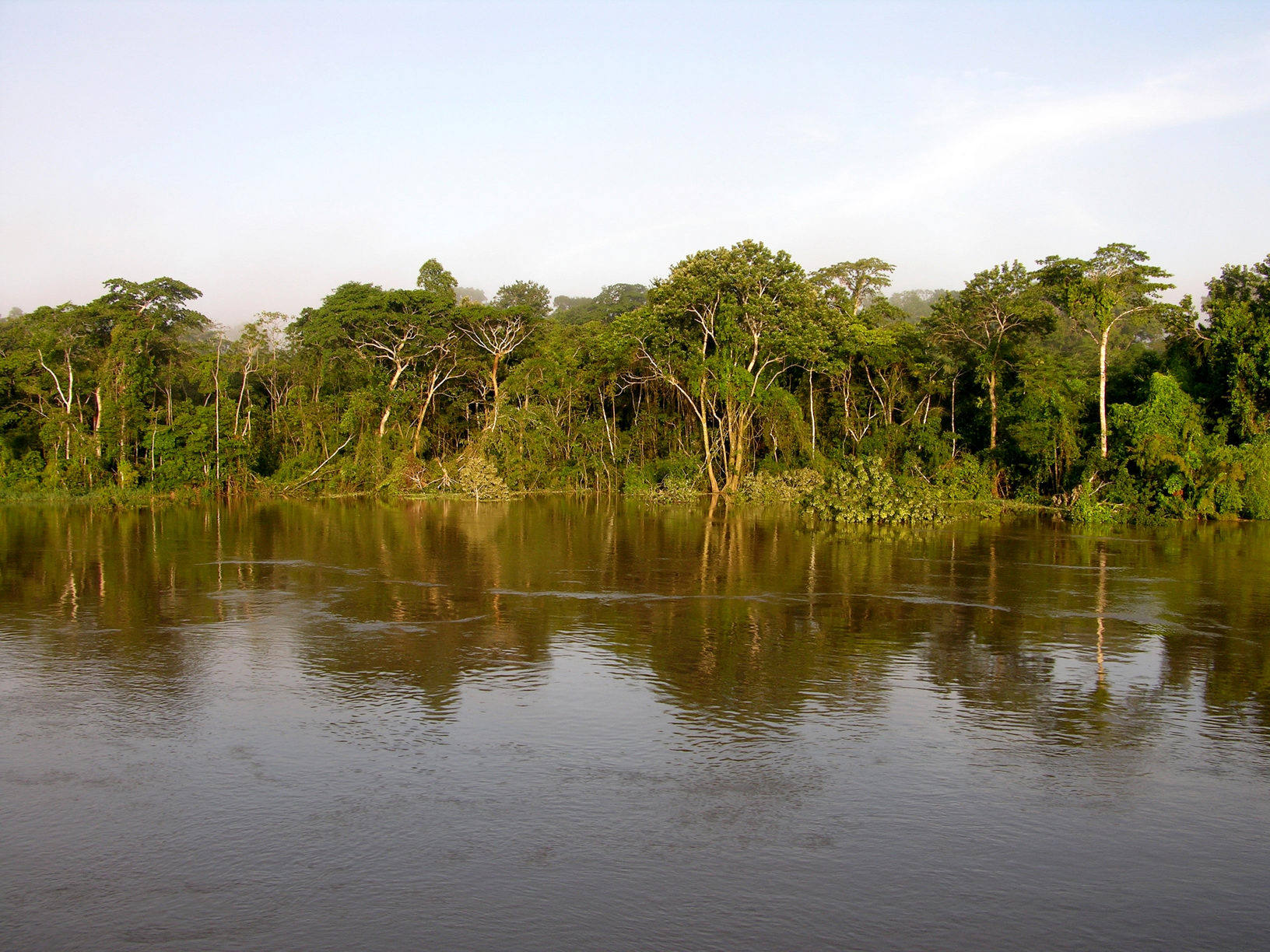
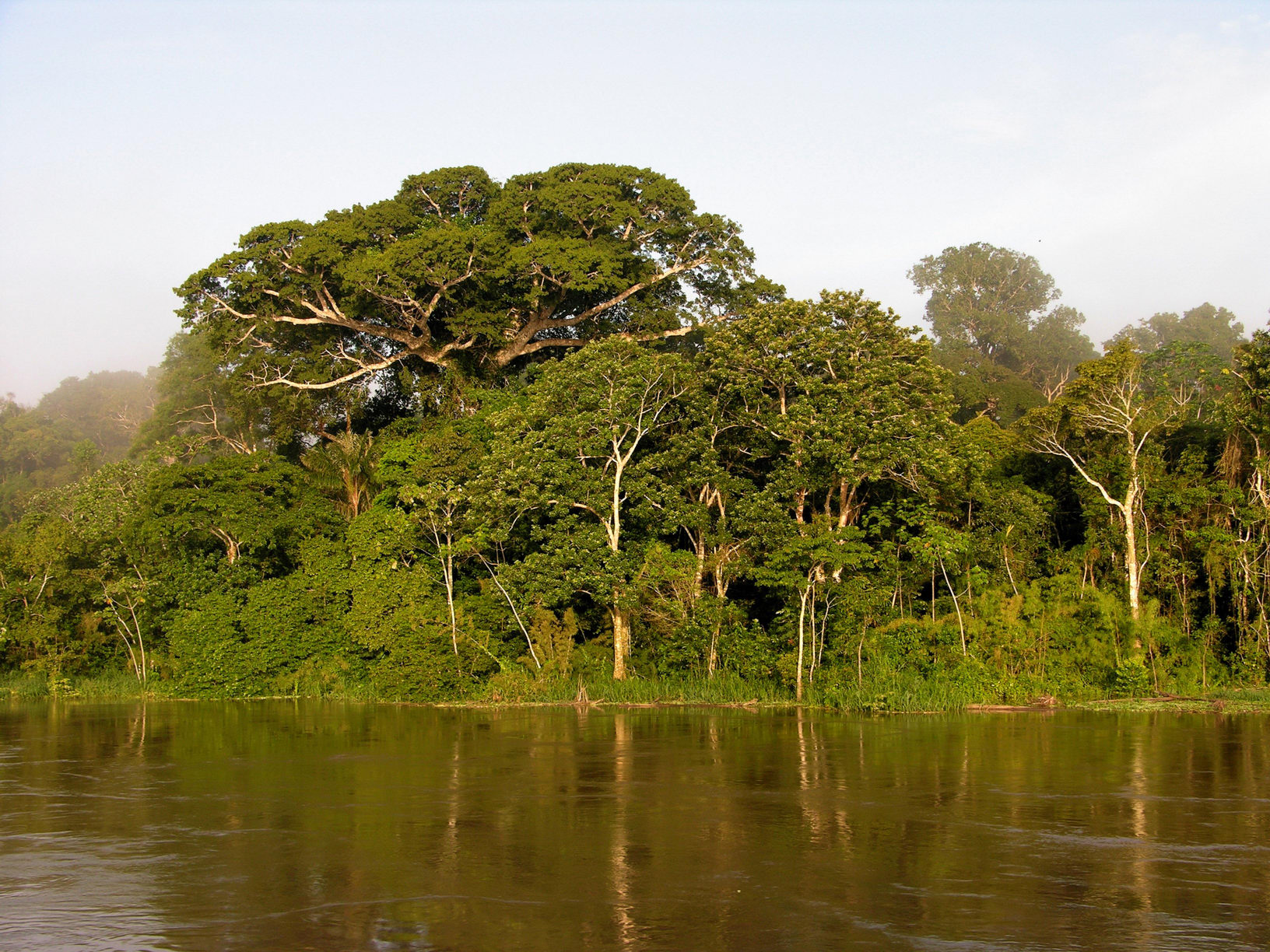
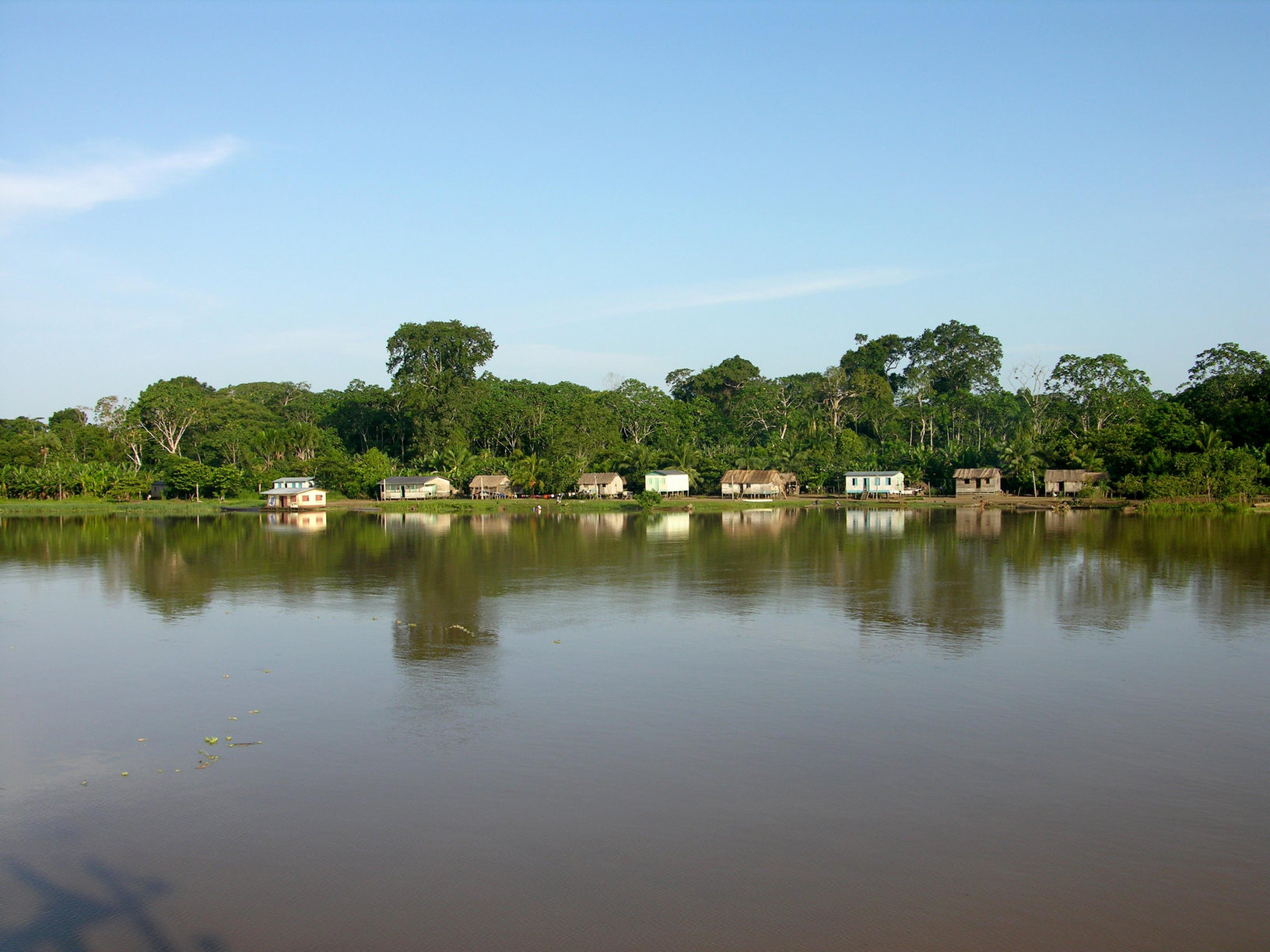
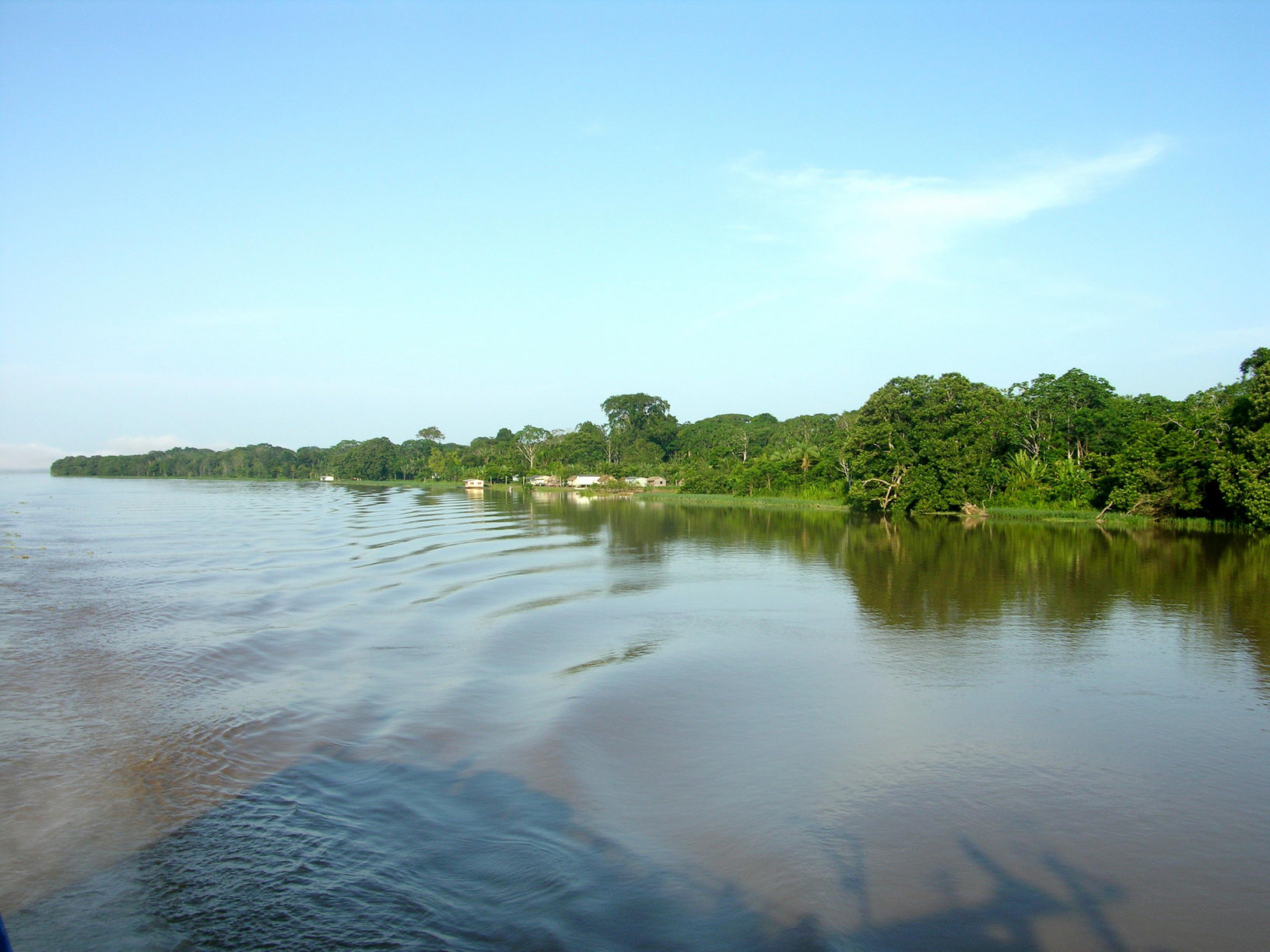
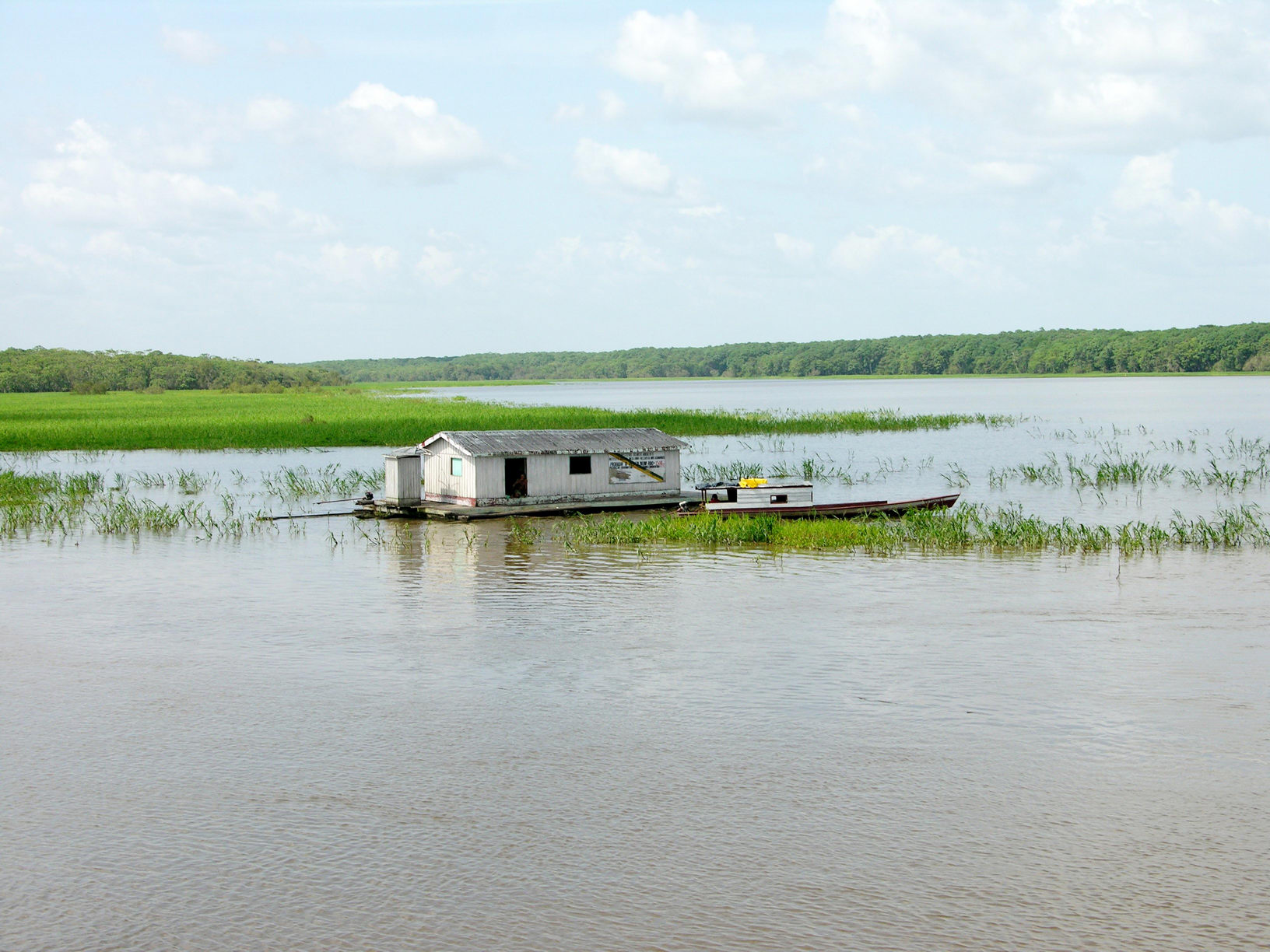
There was no mains electricity in the villages. The people in the jungle ran generators and wore LED headlamps when walking in the forest.
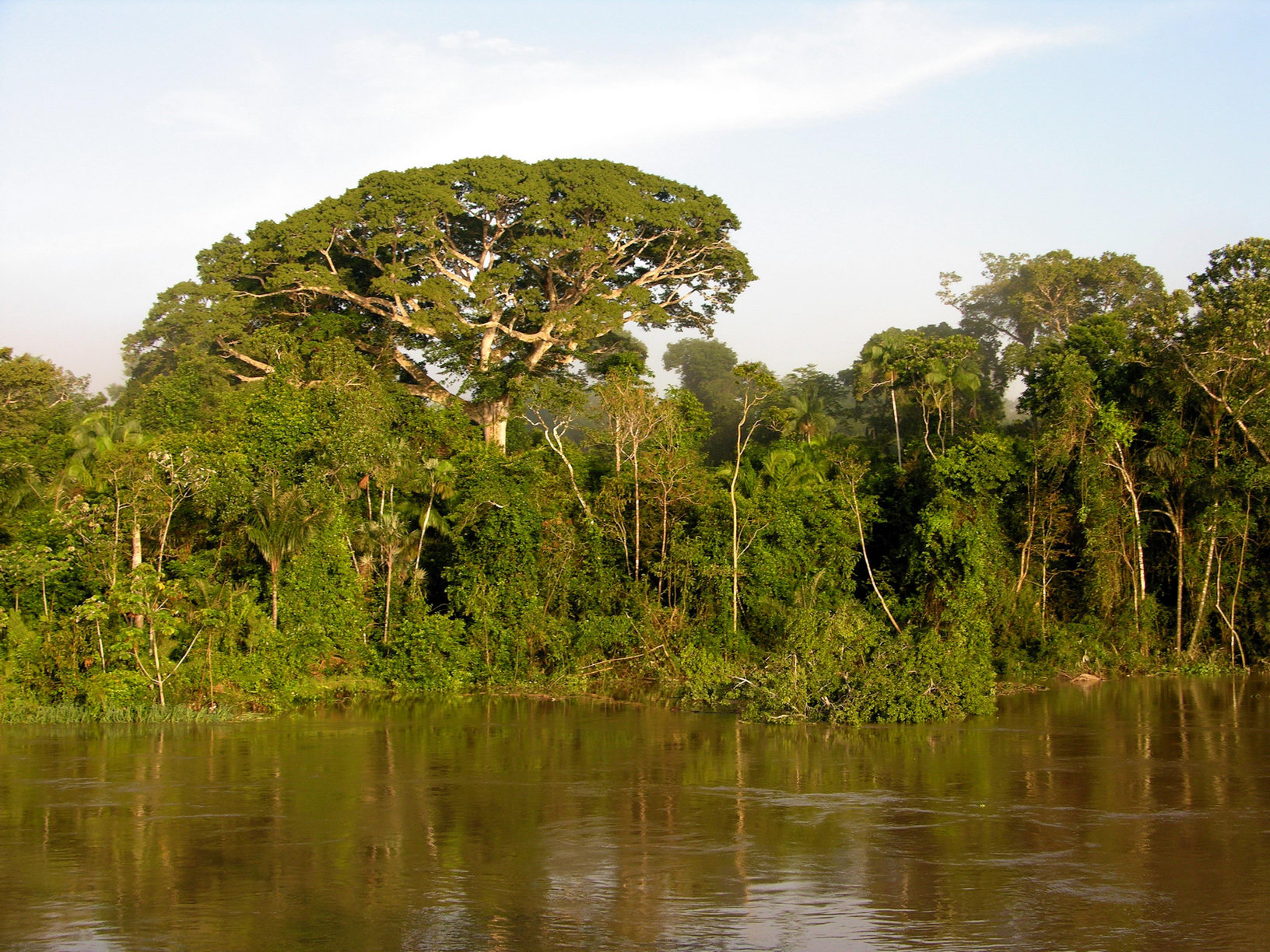
The Amazon doesn't flow in a single stream. It splits into many channels, and the boat takes the shortest way, sometimes through a very narrow side channel. Then you can pick out dozens of kinds of birds in the nearest trees. No animals in sight. We were travelling in high water. The forest was flooded, so they had no reason to come out of the dense vegetation. Just mice in the branches and assorted snakes. I didn't see a crocodilian once.
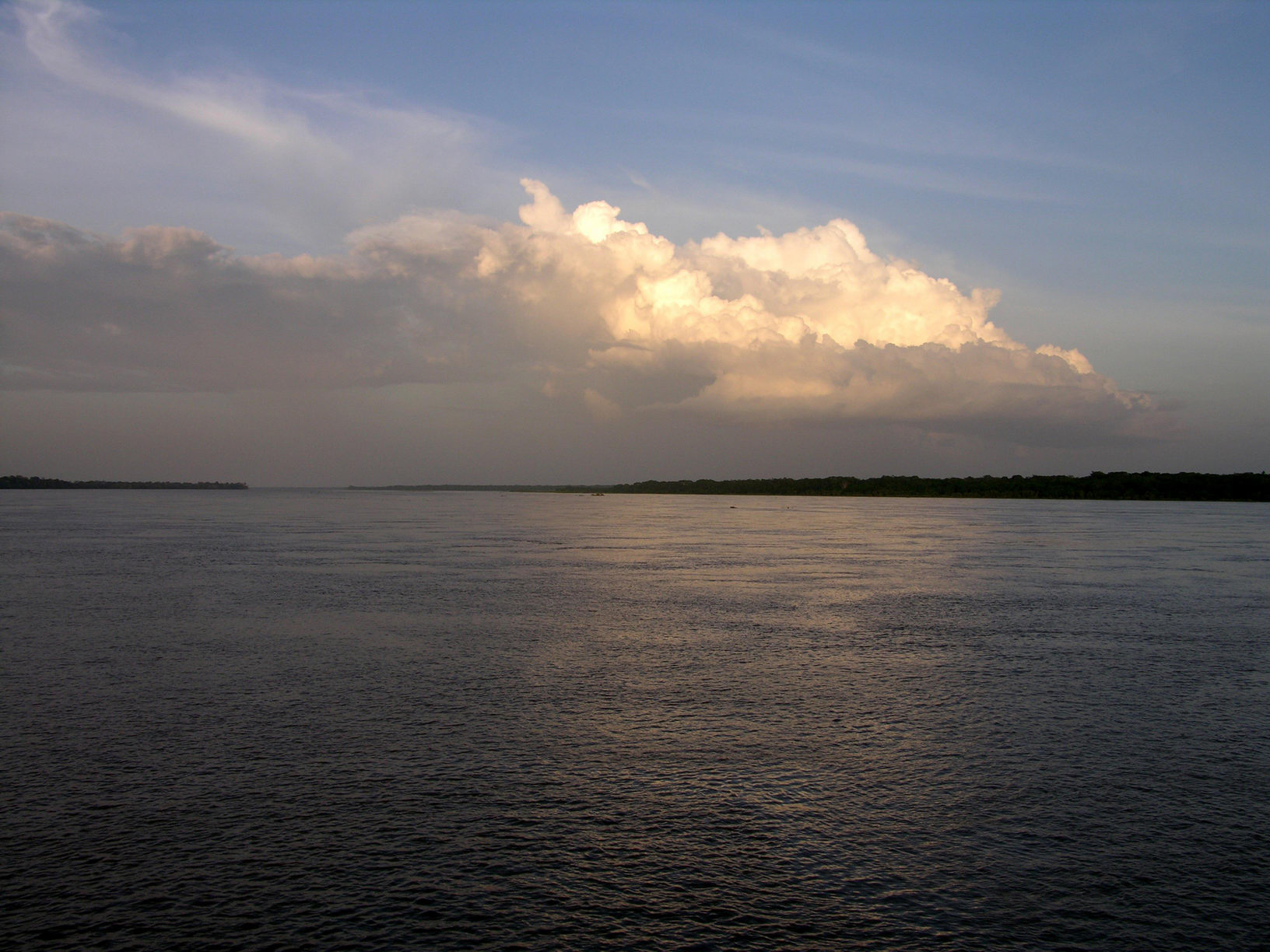
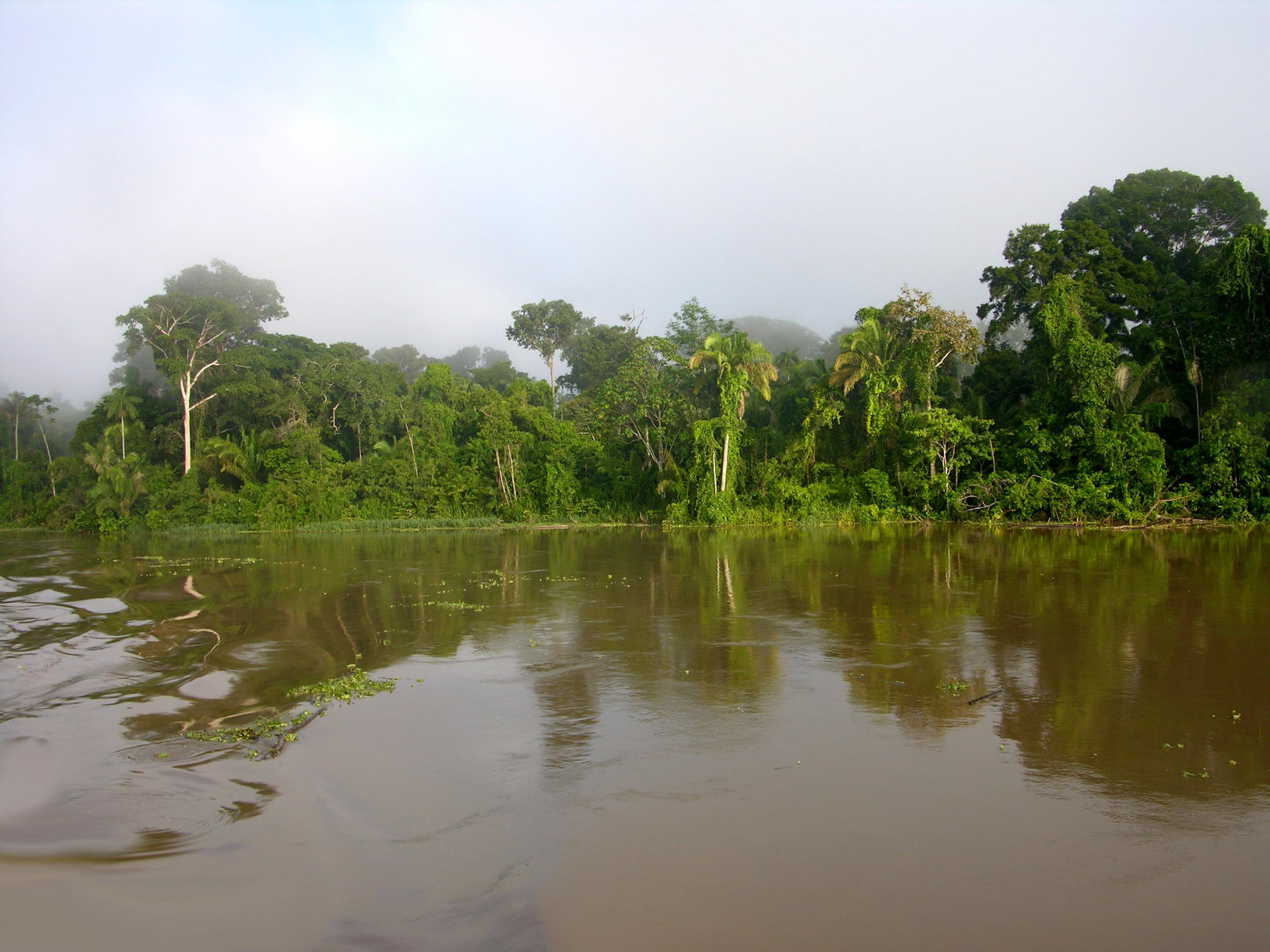
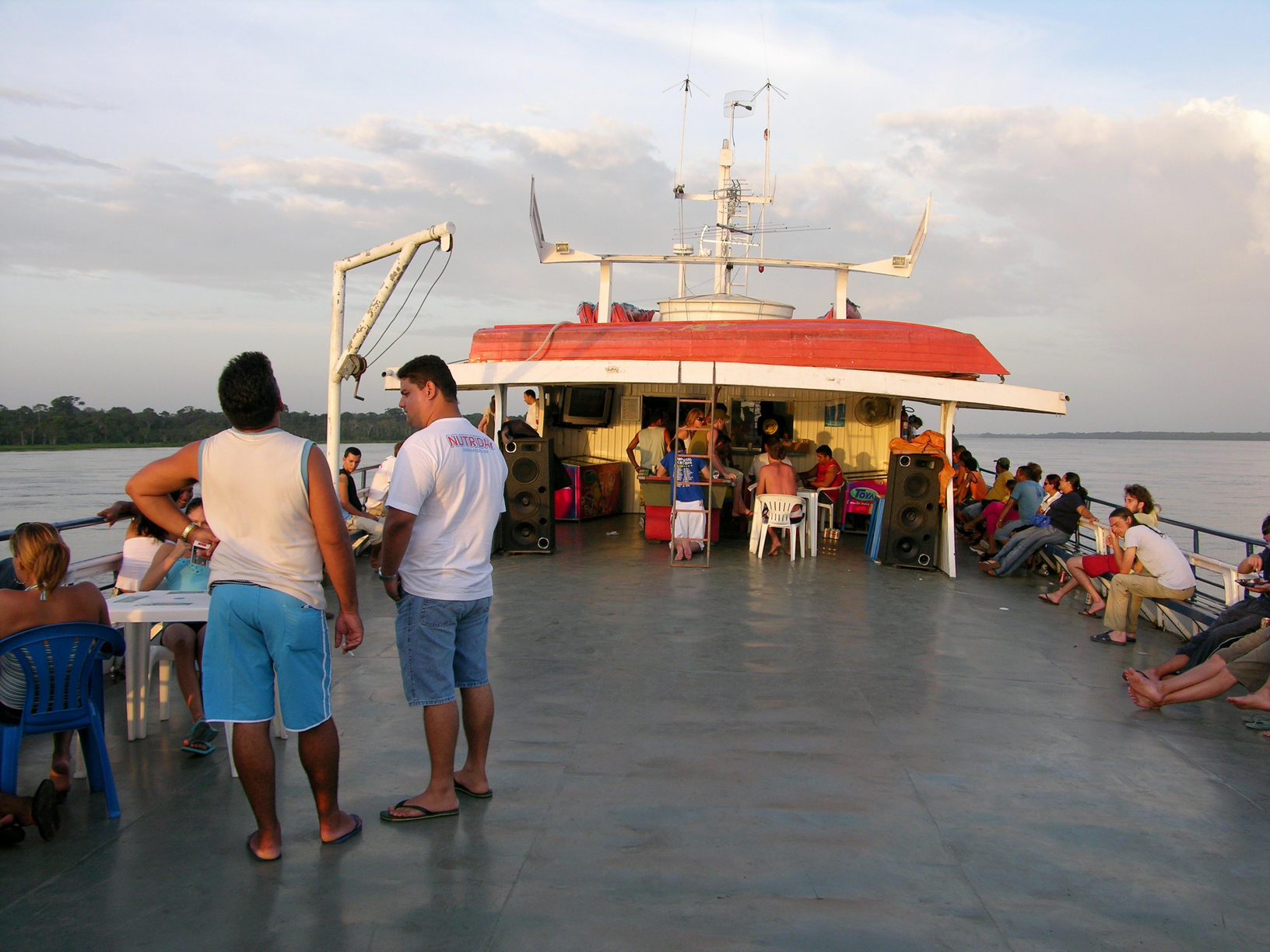
Most of the passengers were locals, with children, chickens and bundles. Lots of newborns. One sick baby was travelling on a drip. Someone kept adding something to it right there on deck. There were about five foreign travellers.
They feed everybody three times a day. There are tables down the sides of the boat. They bring out pots from the kitchen and you can put as much as you like on your plate. The food is delicious and filling. Day or night you can draw a plastic cupful of drinking water from a little tap. The café on the upper deck sells beer, coffee, buns and so on. Music blares all day. There's even a shower, so life is quite bearable.
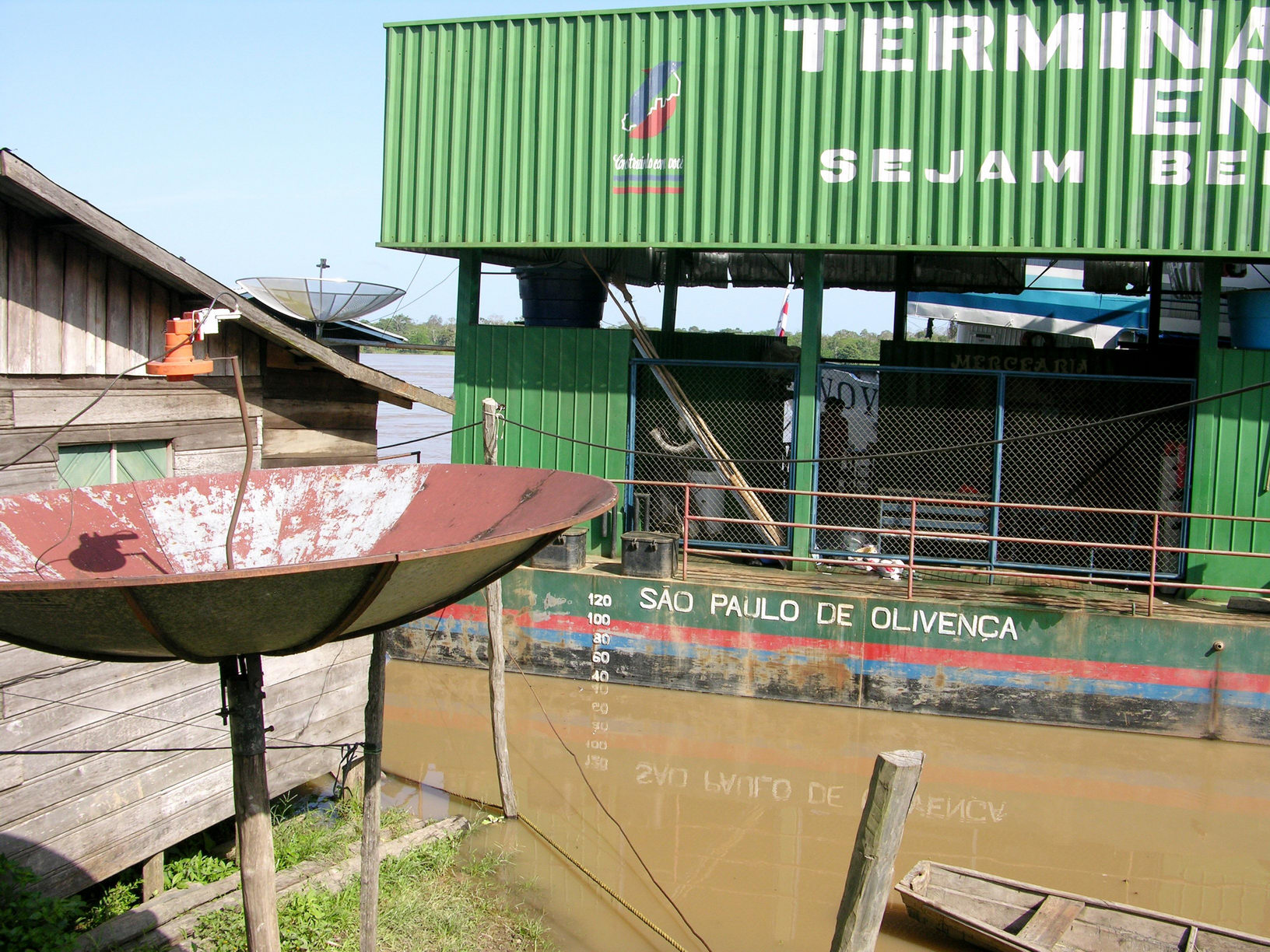
There are television sets on the decks, fed by satellite. Since we're sailing along the equator and the Brazilian satellite is directly above us, the dishes point straight up and stay pointed at it whichever way the boat is going.
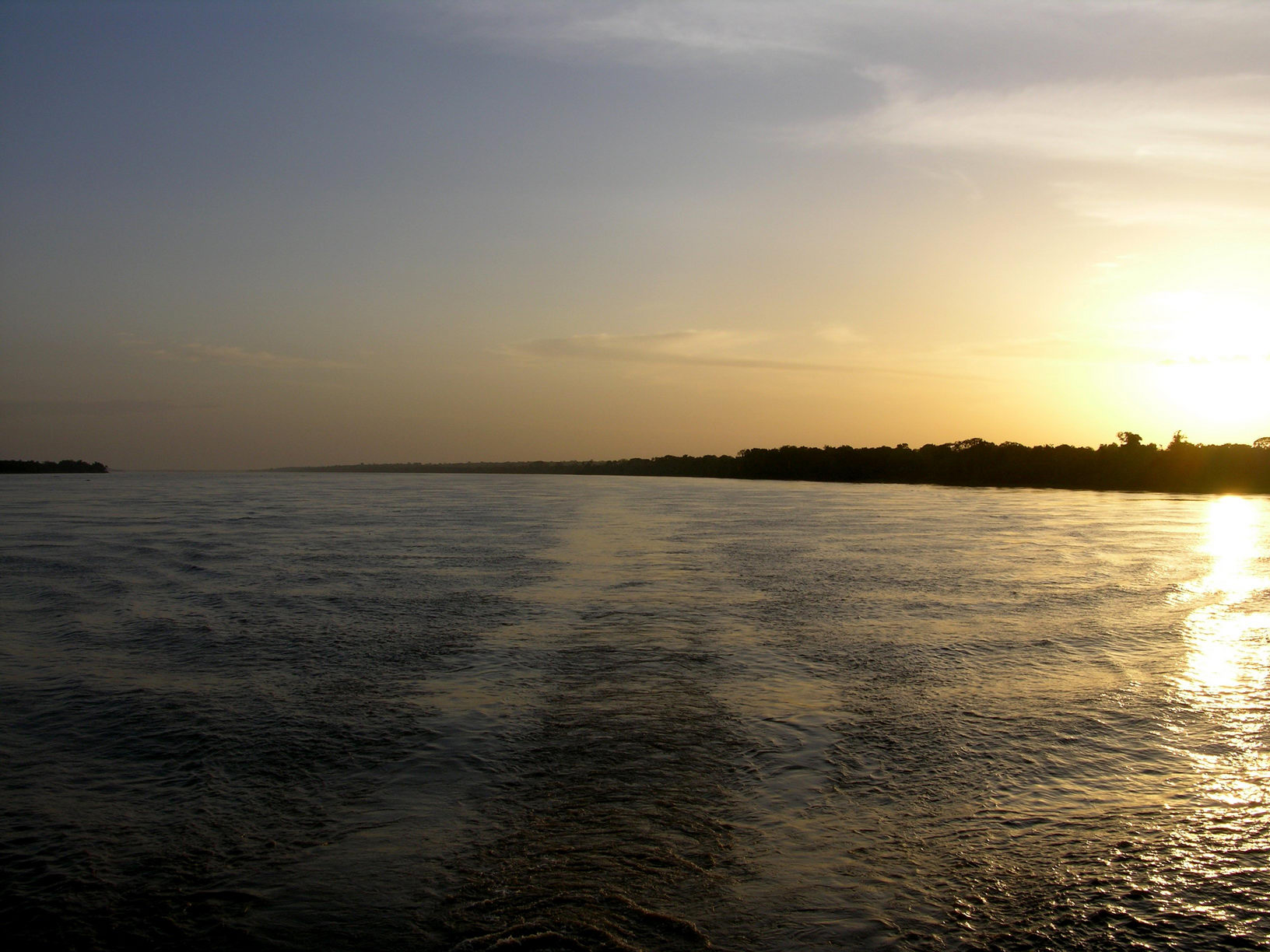
Three days is quite long enough to get your fill of the passing banks, especially since the farther downstream you go, the more populated they become. Two hundred kilometres from Manaus it's already one long stretch of cultivated fields.
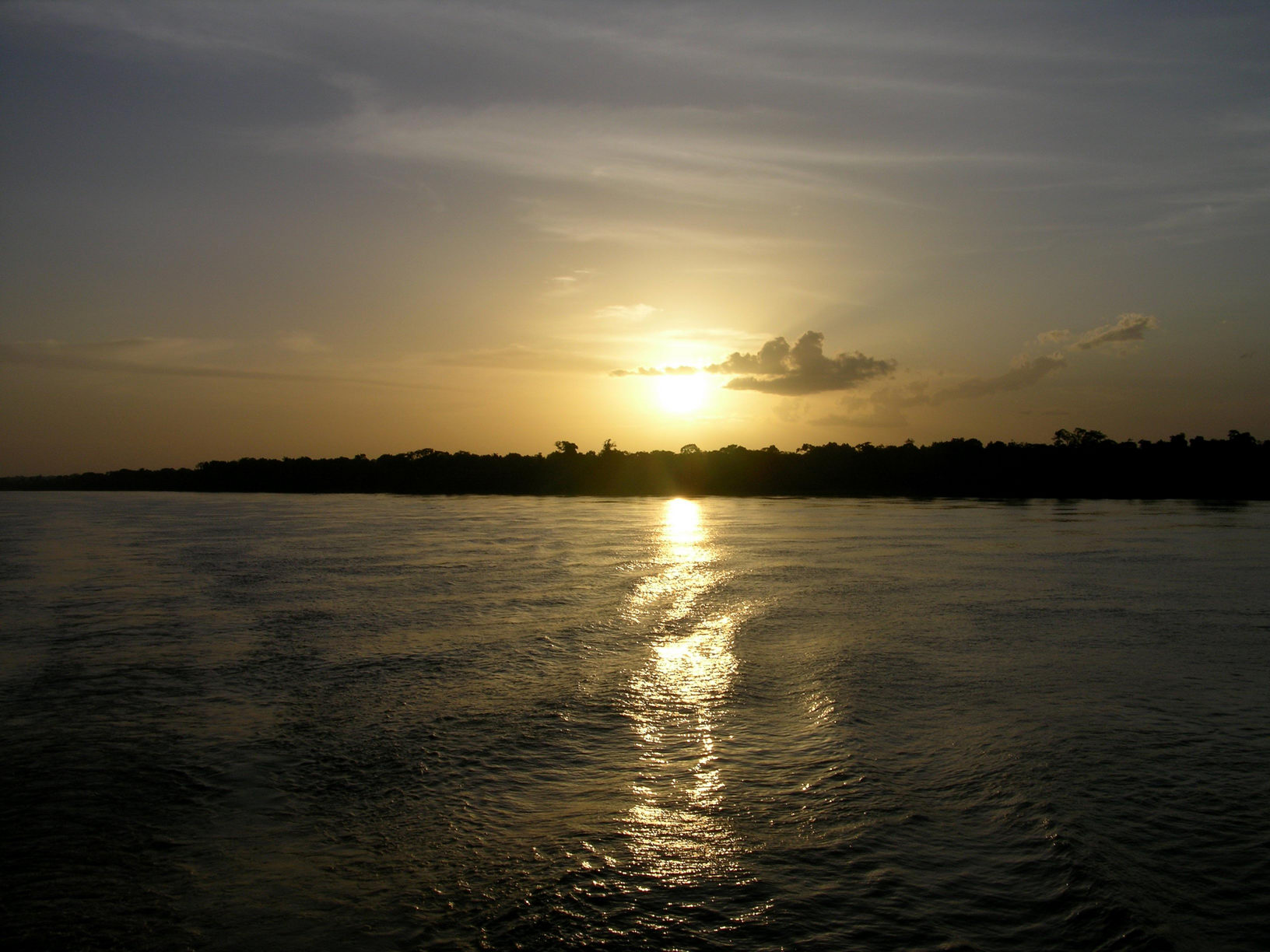
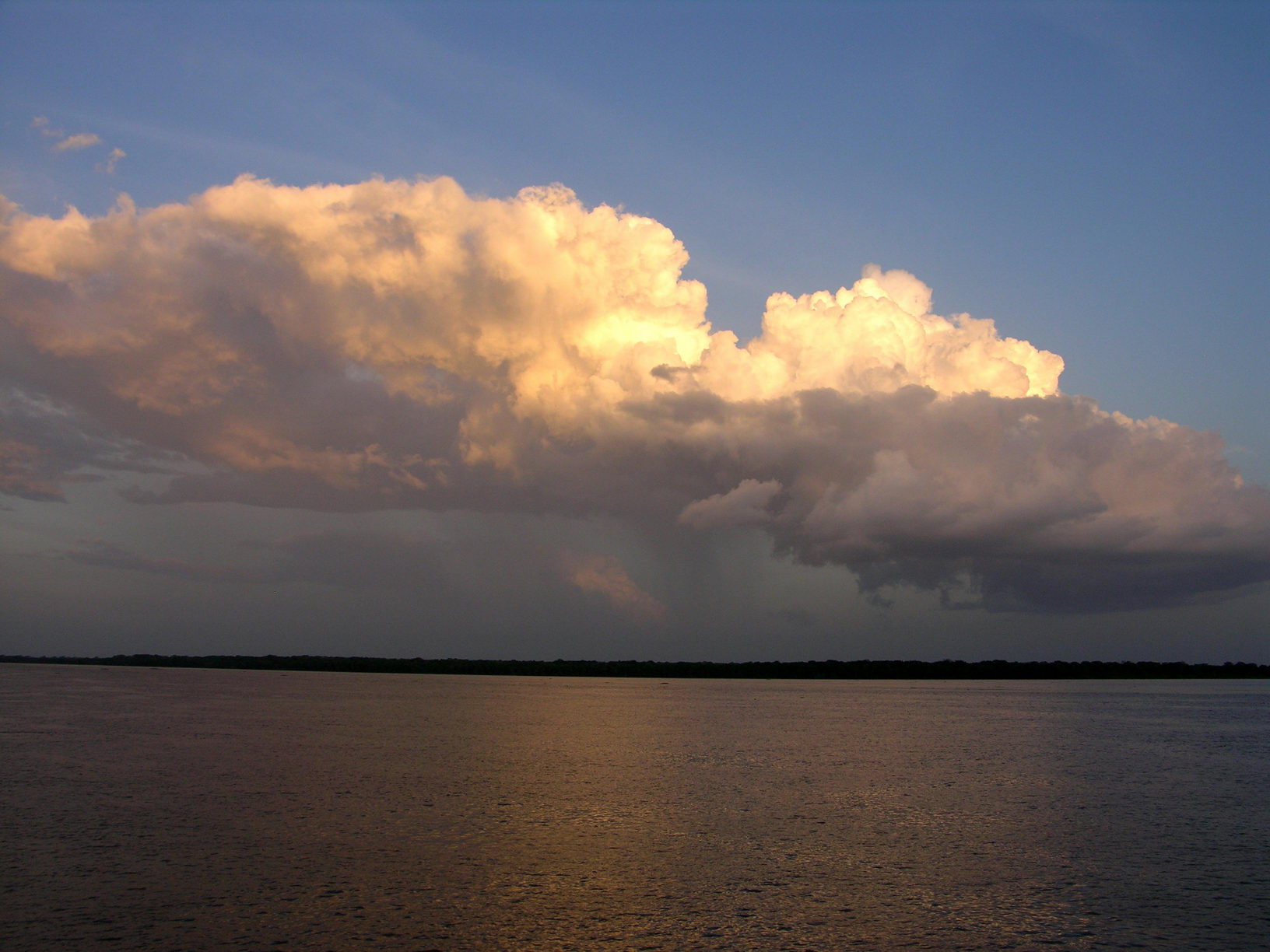
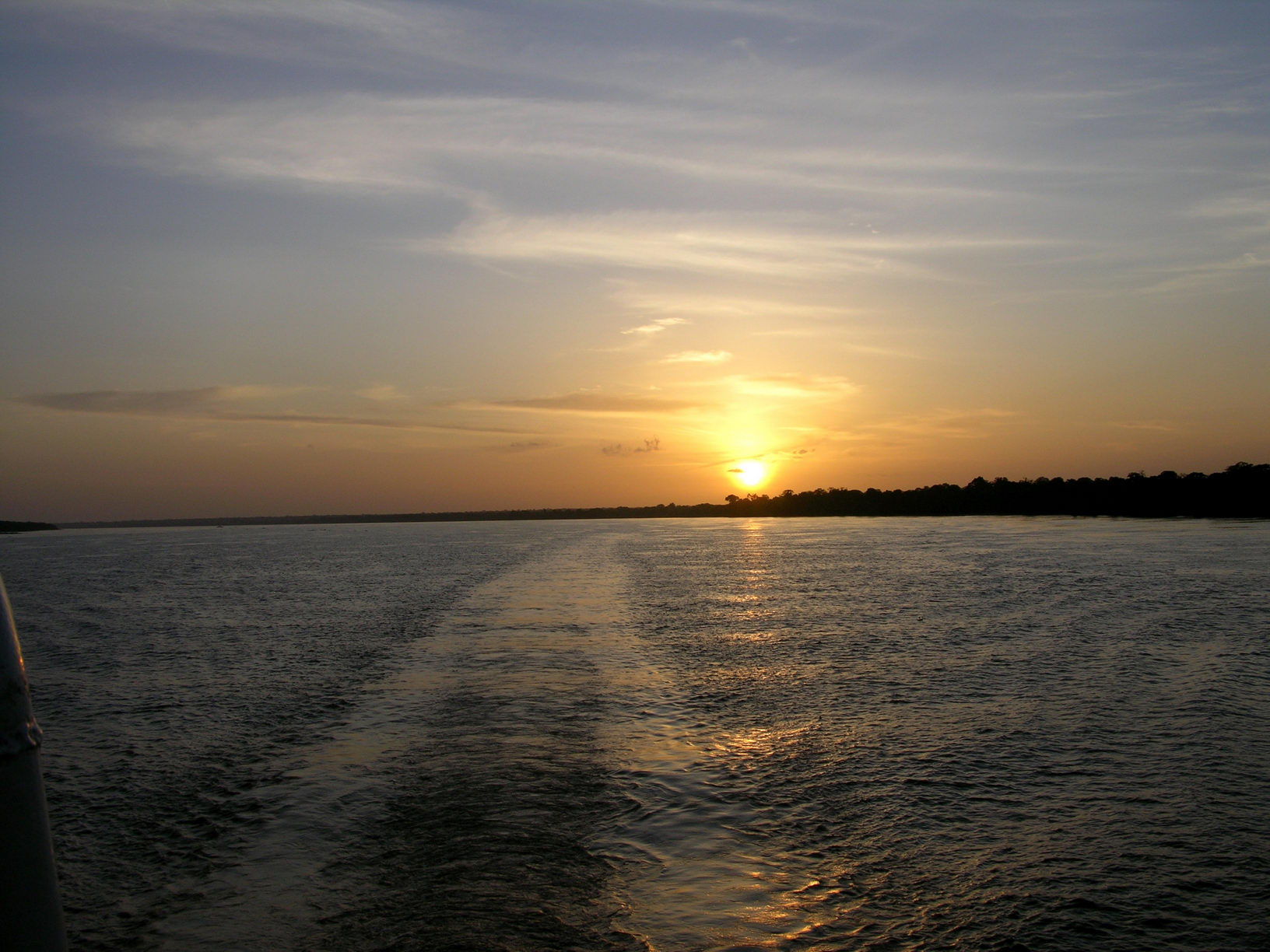
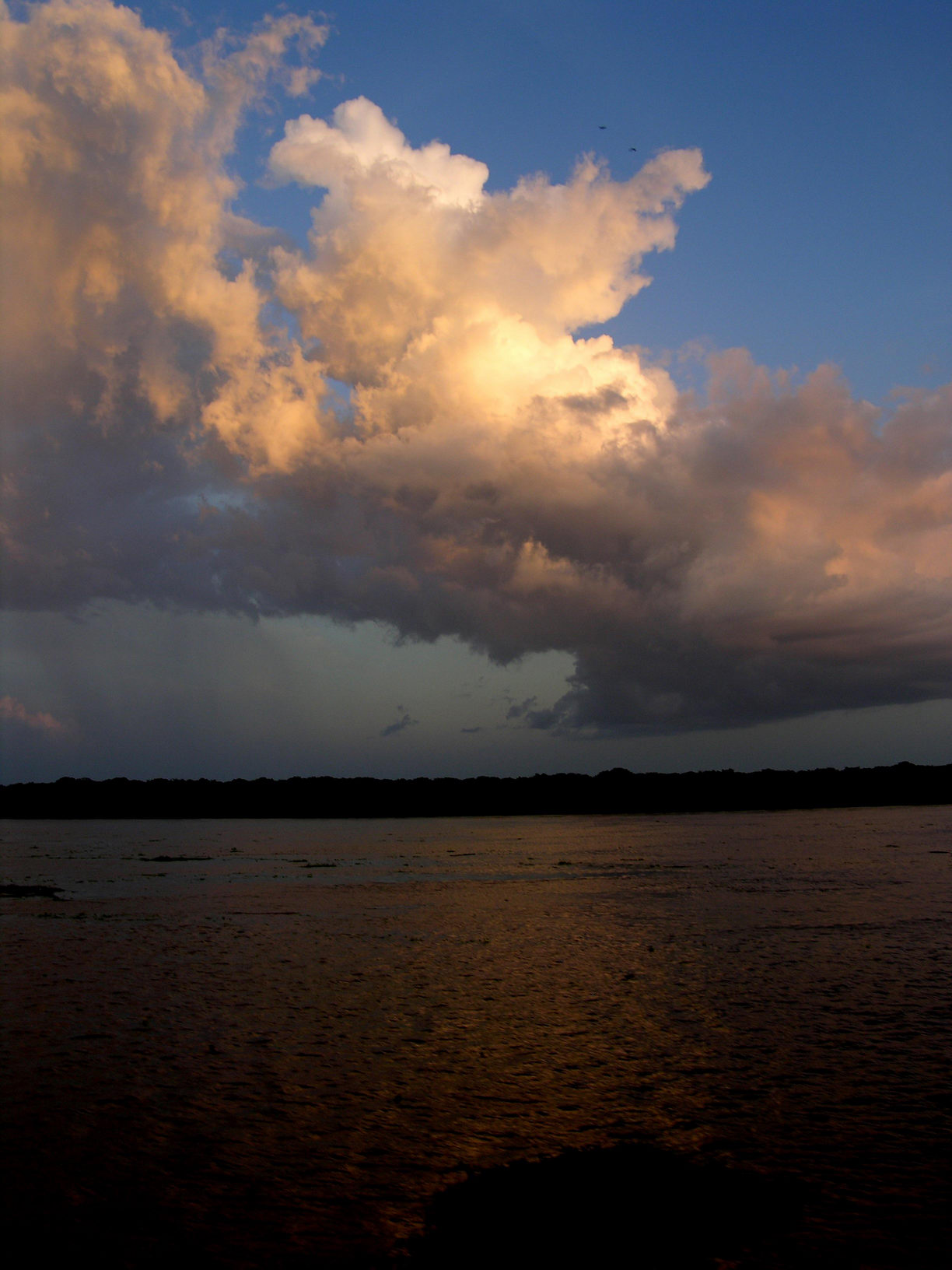
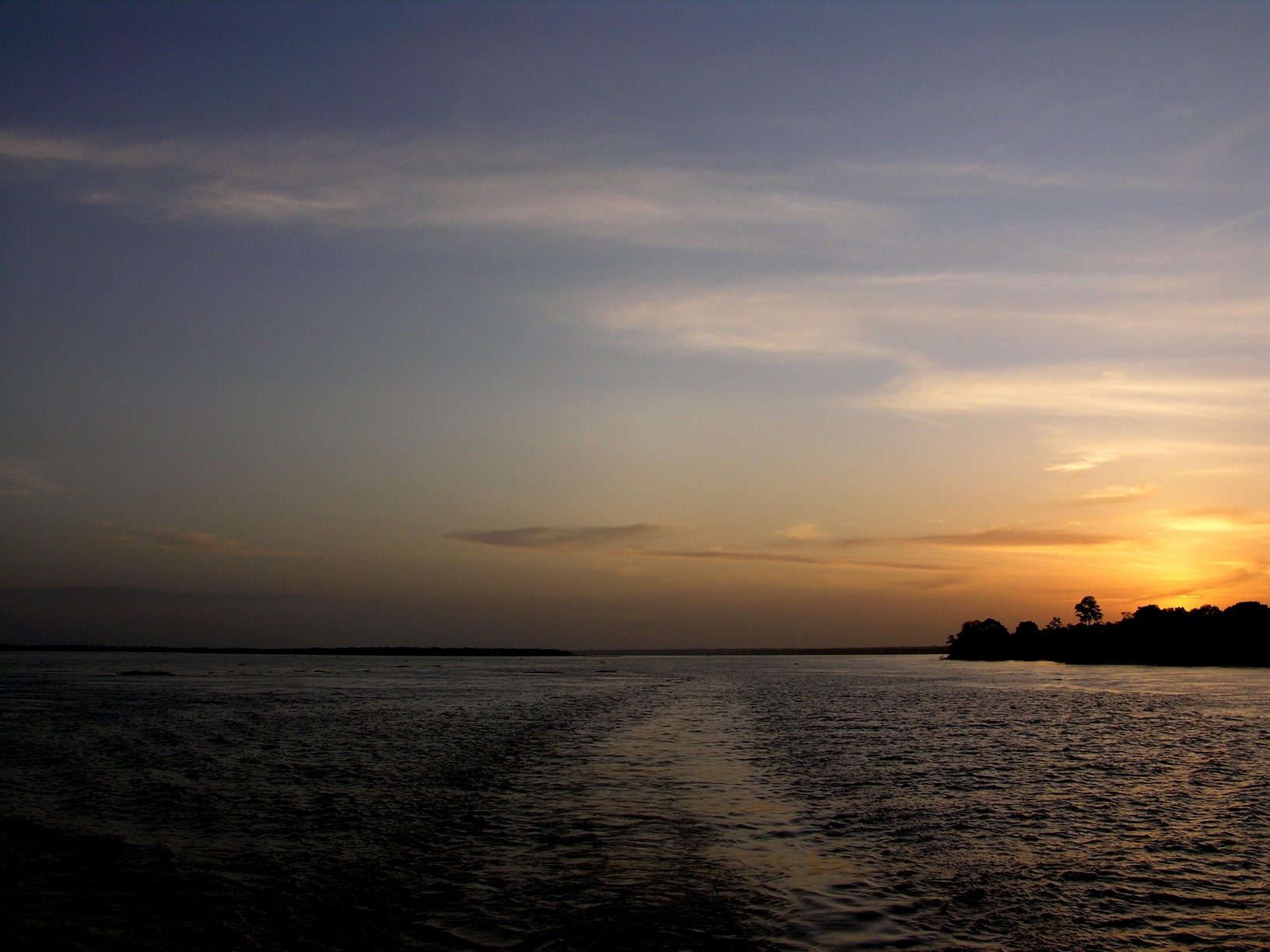
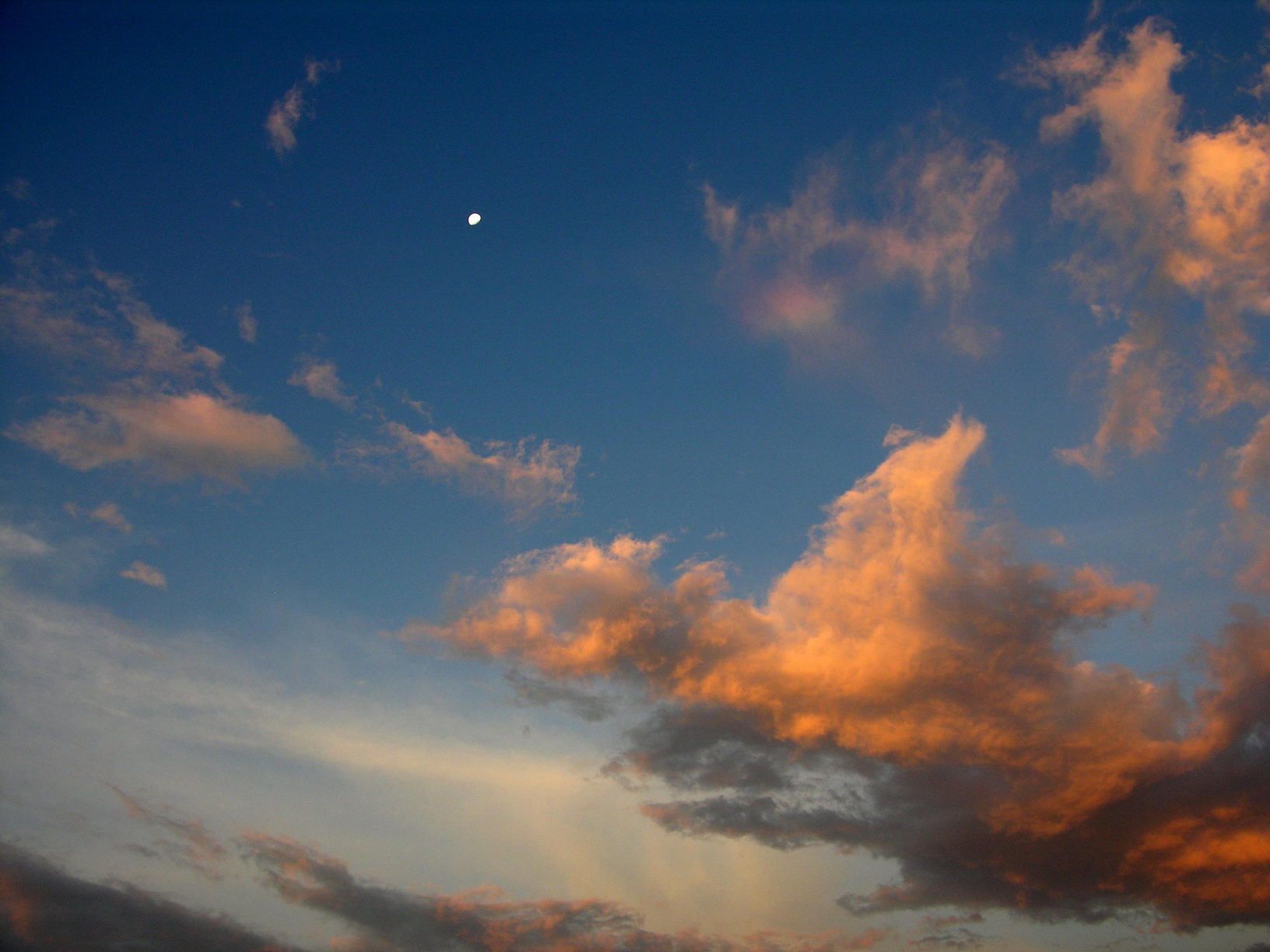
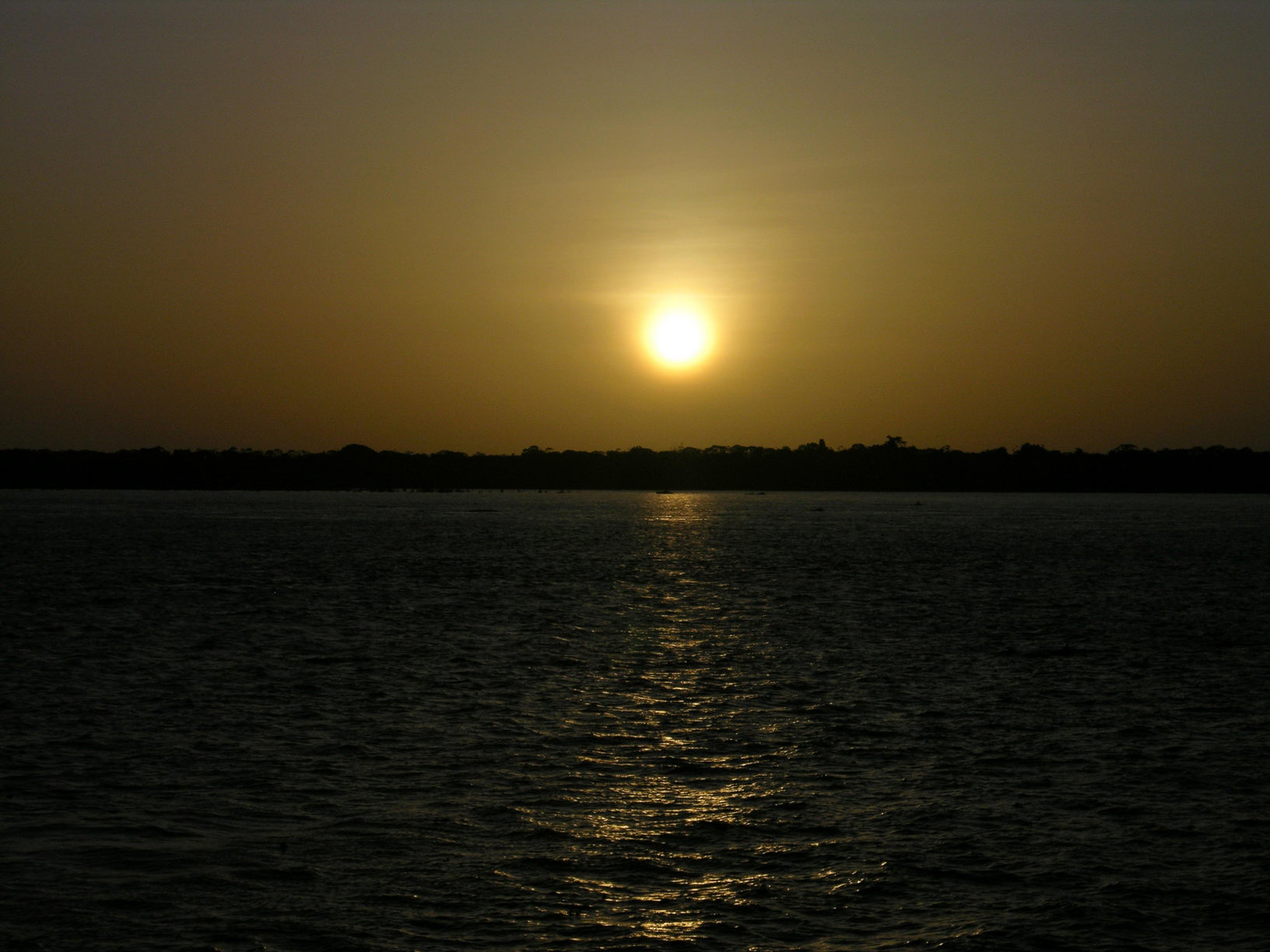
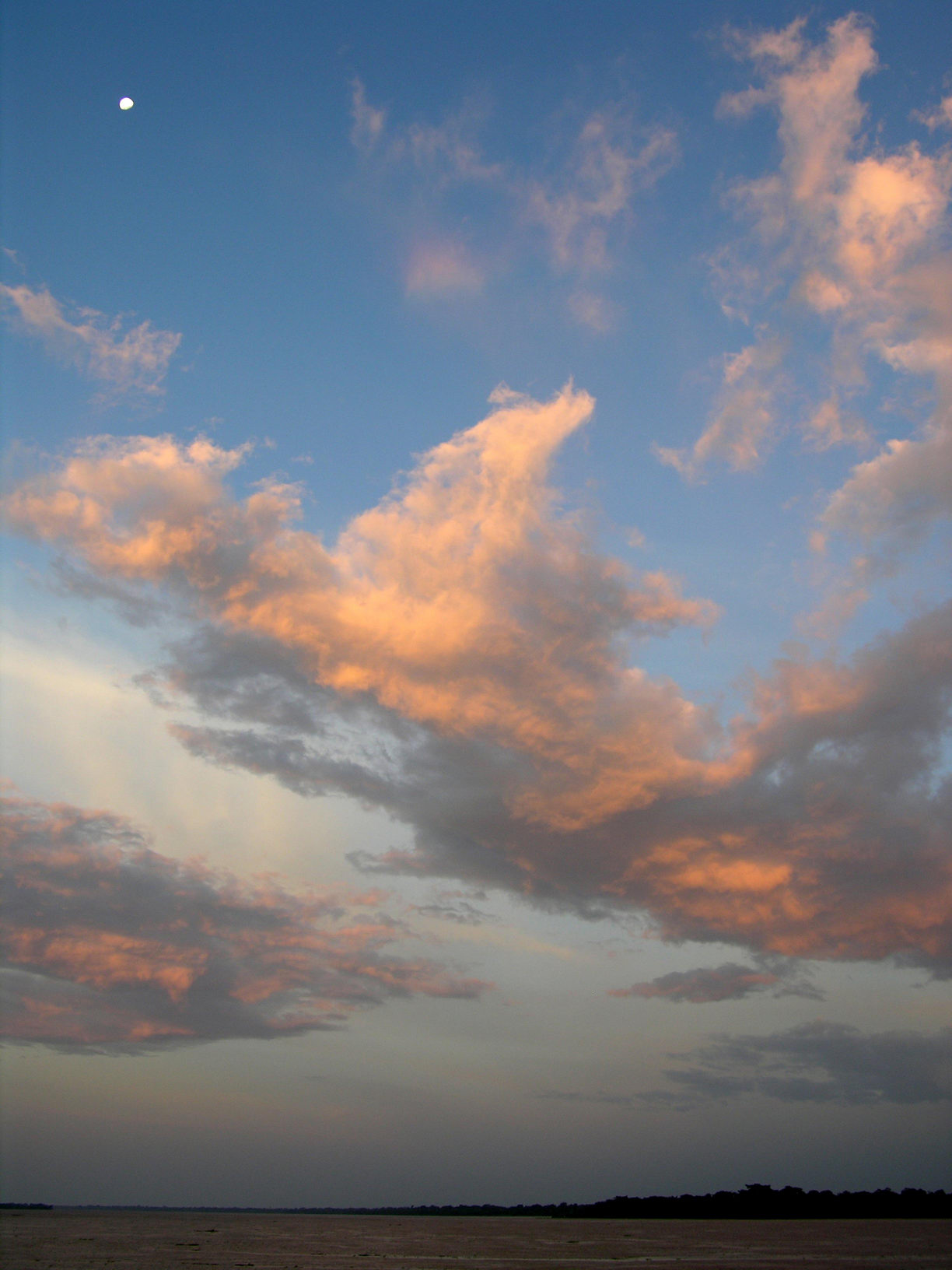
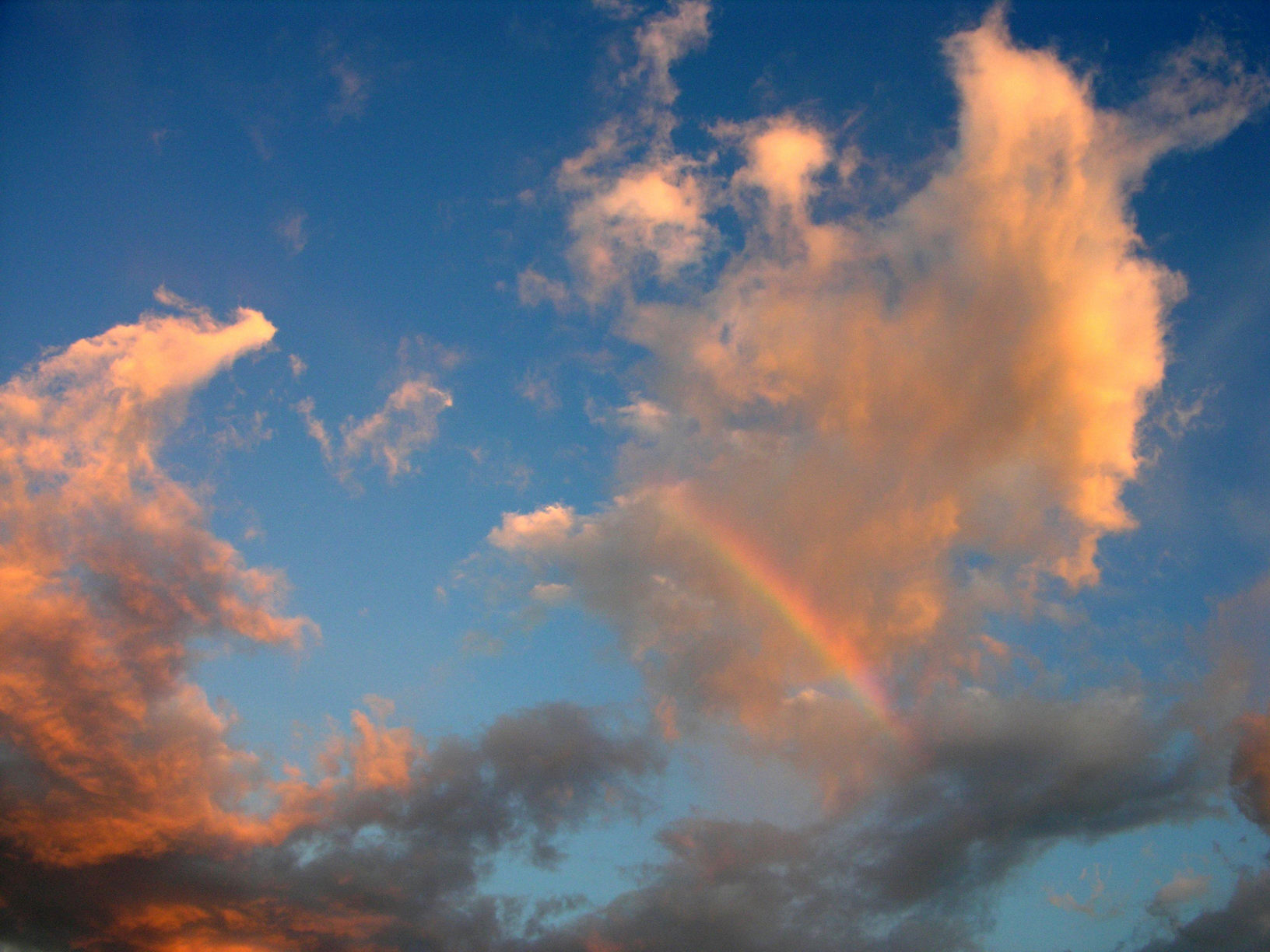
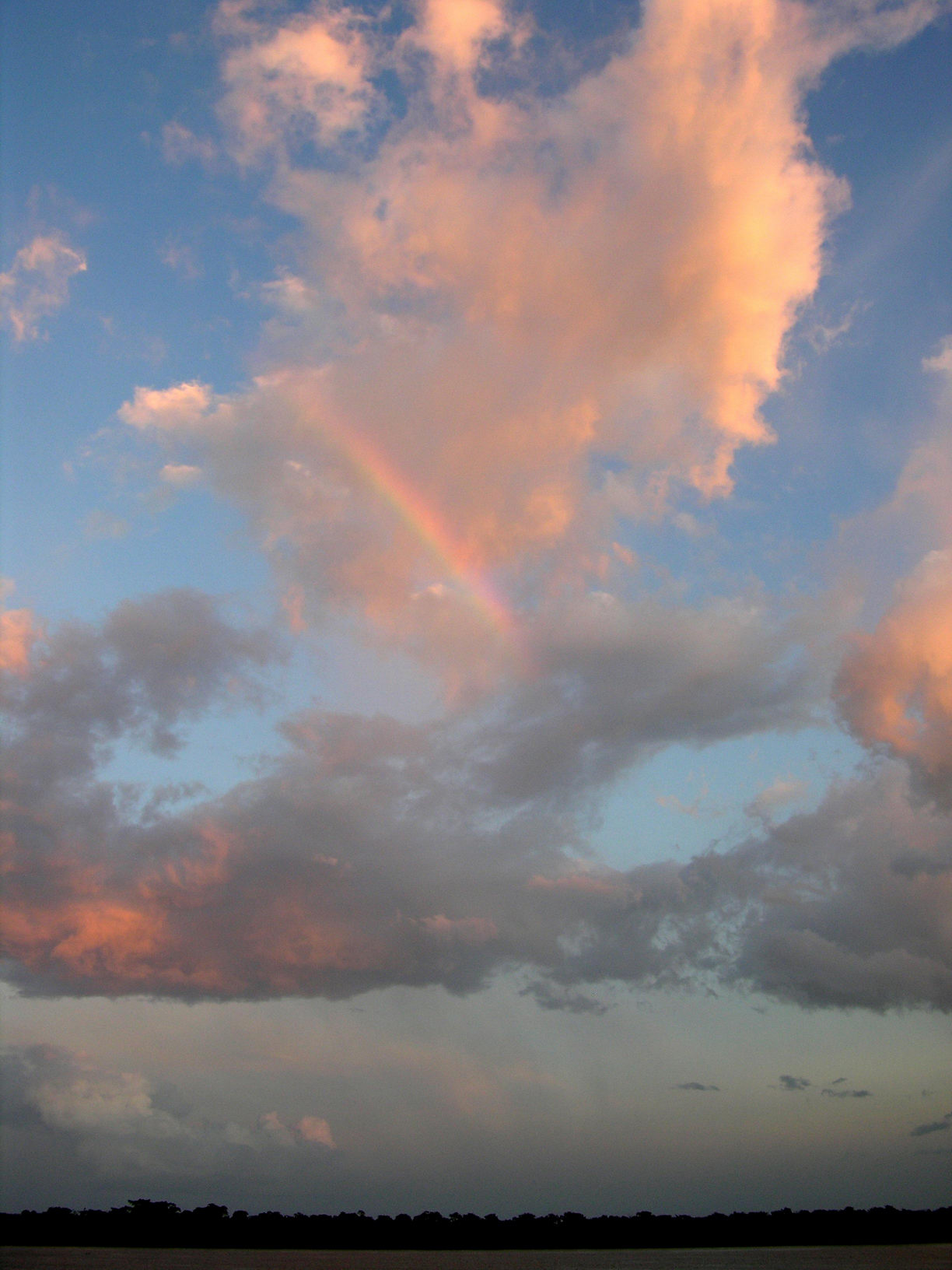
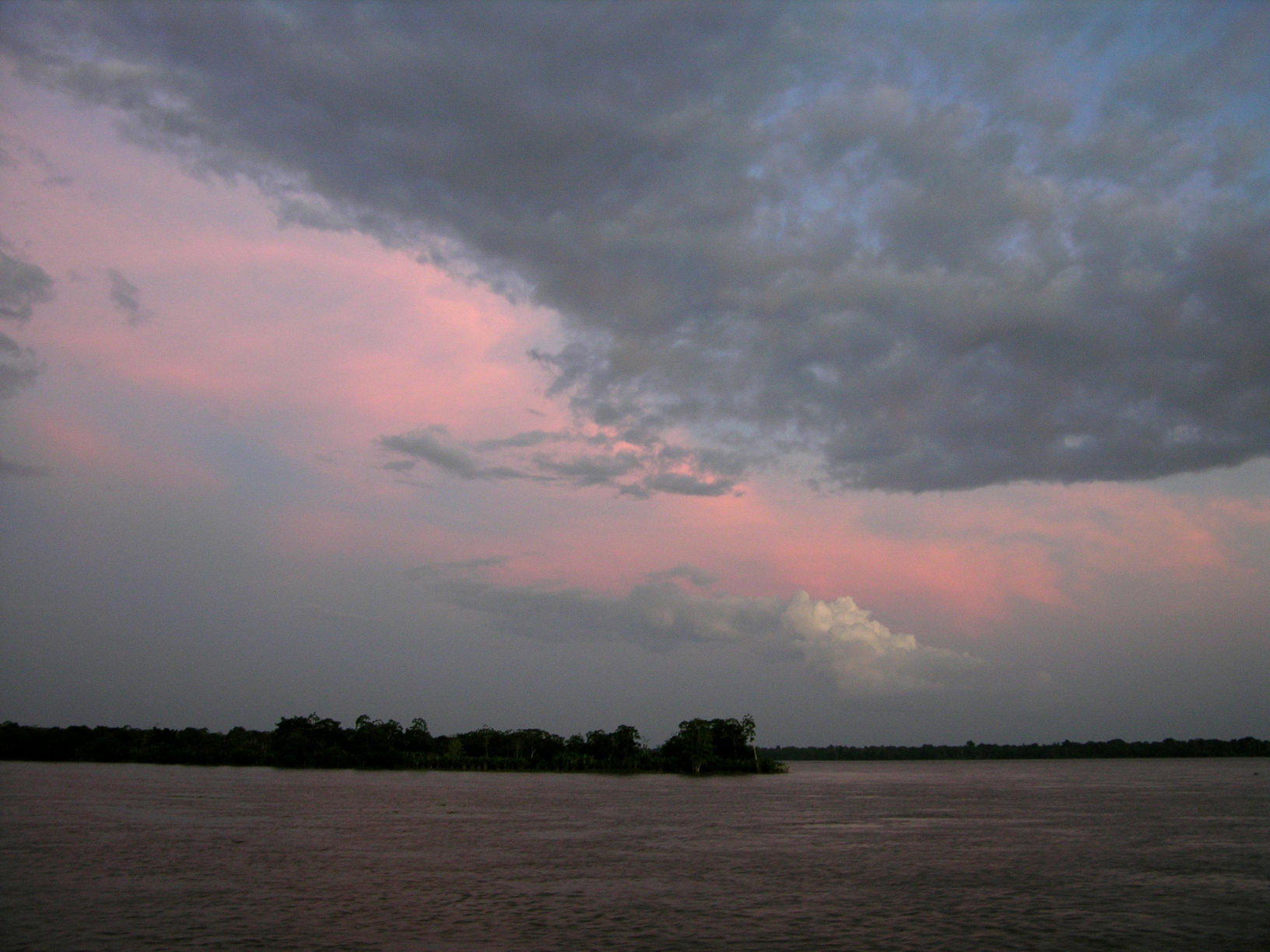
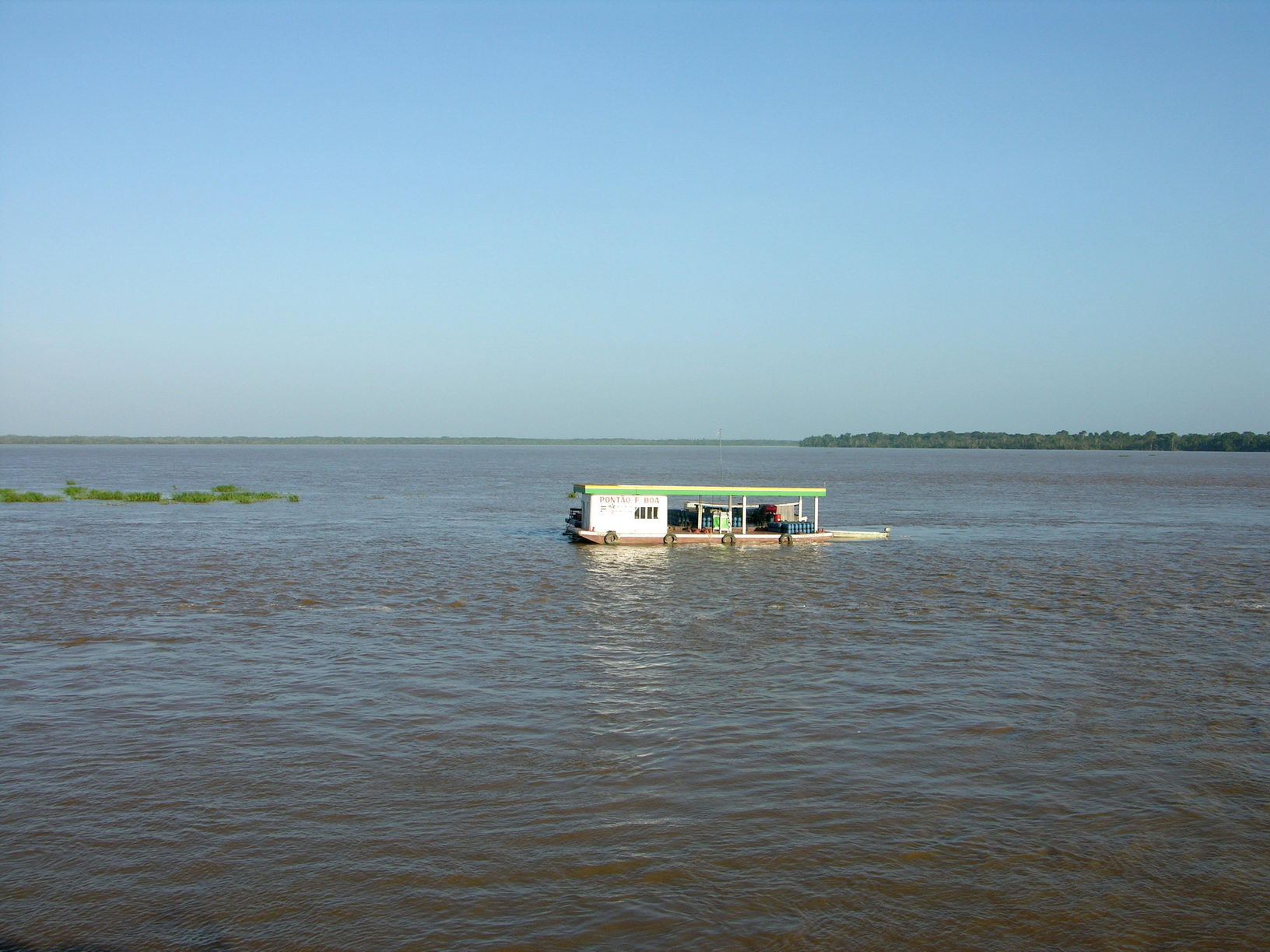
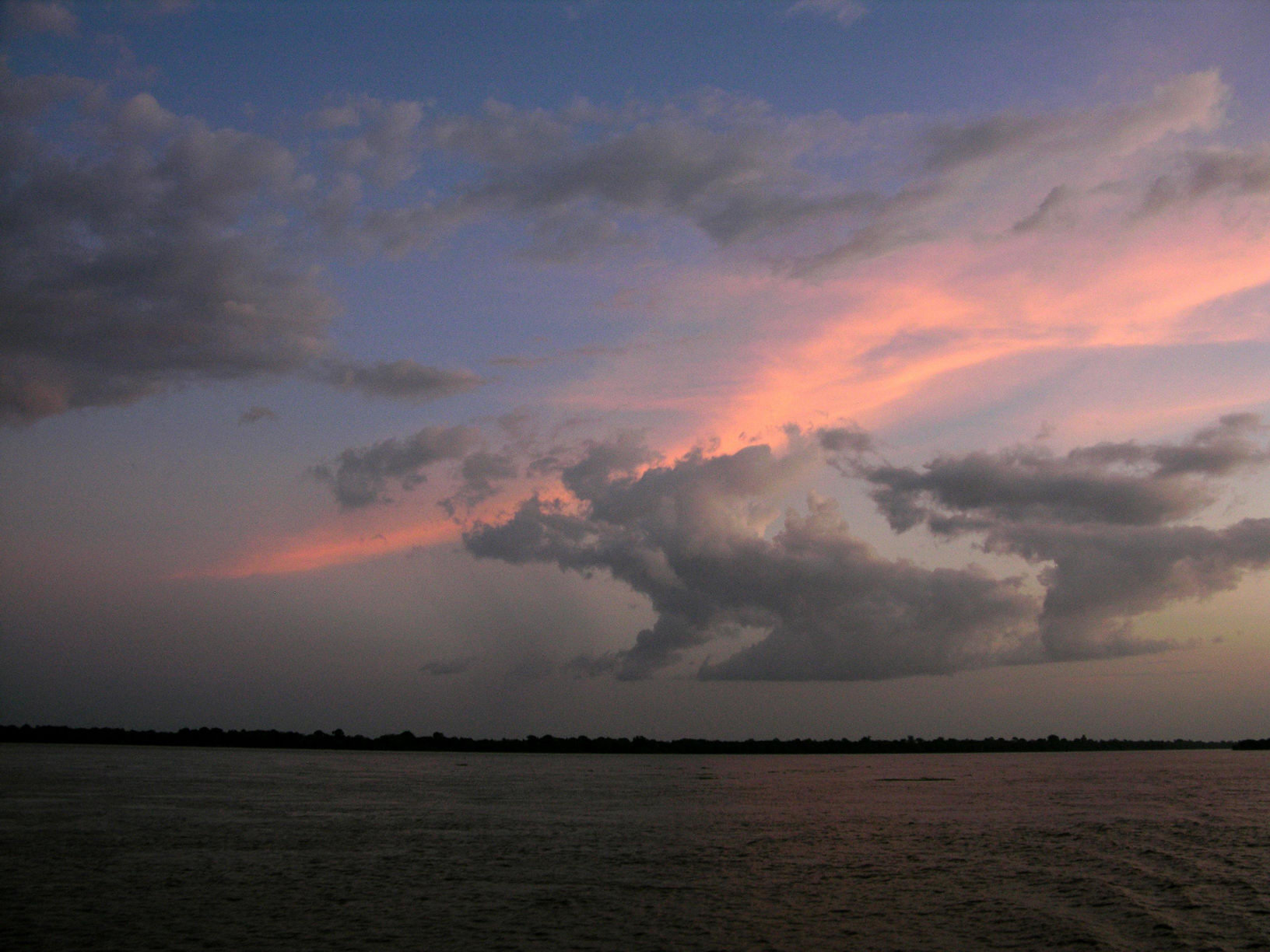
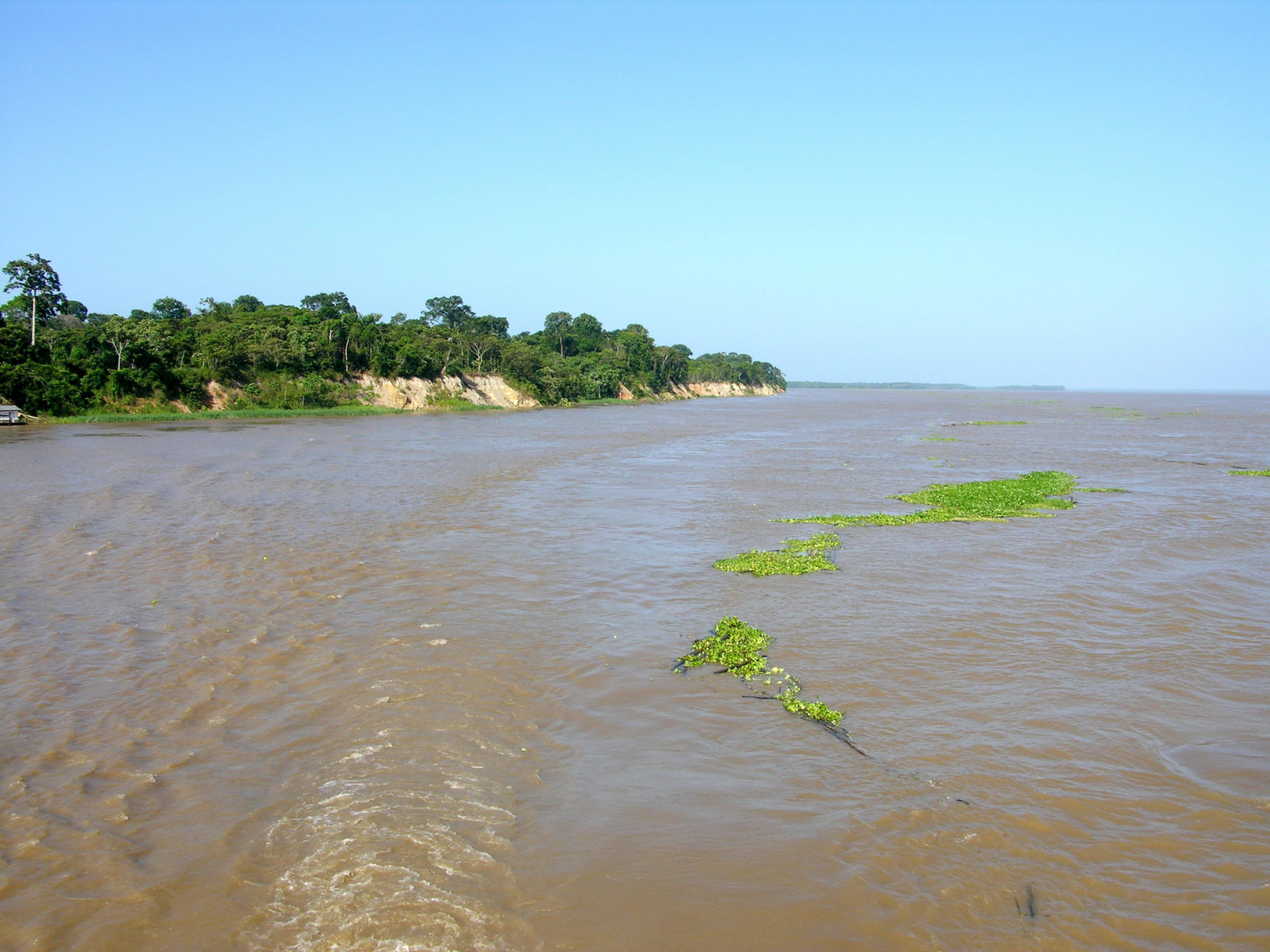
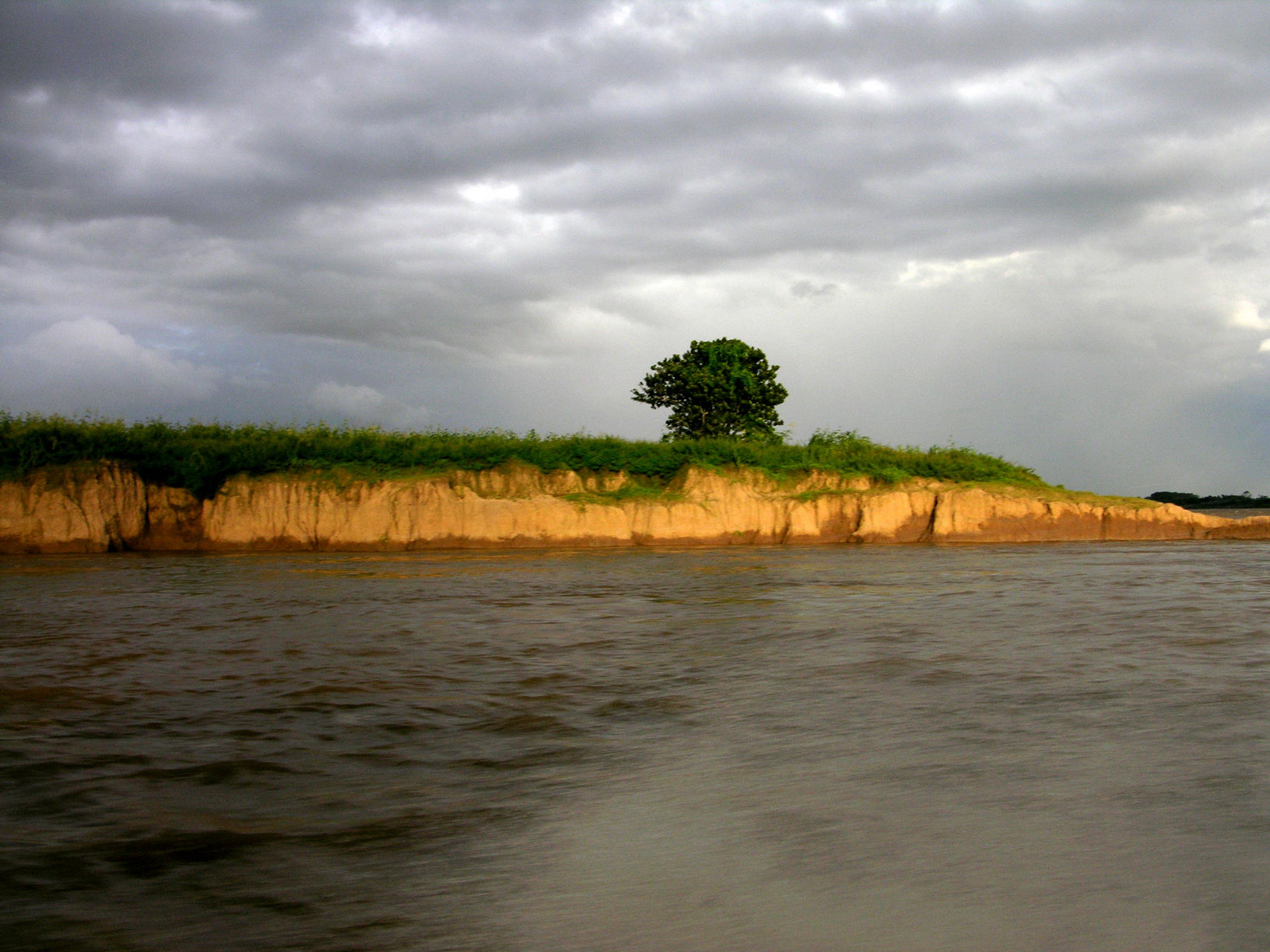
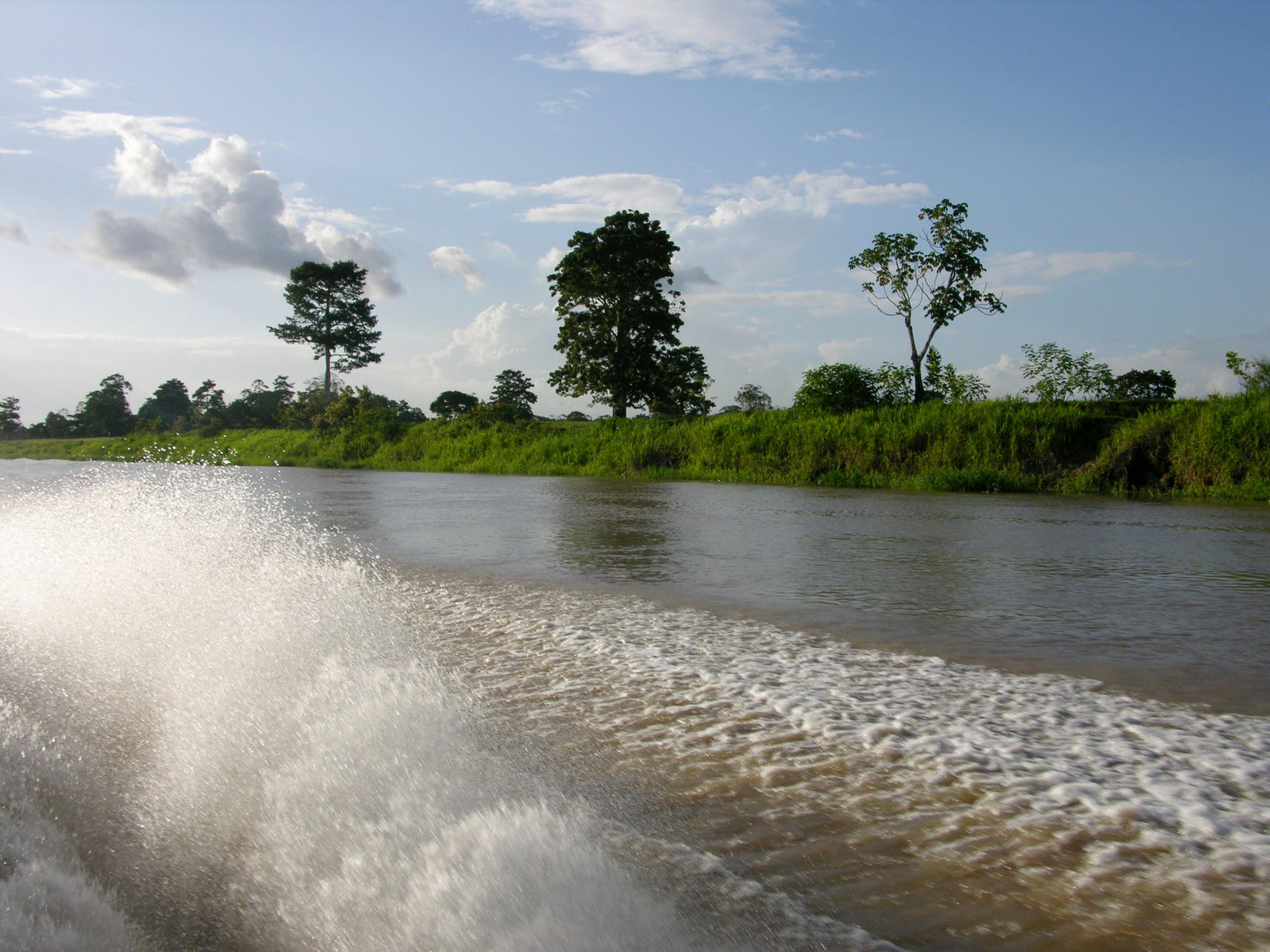
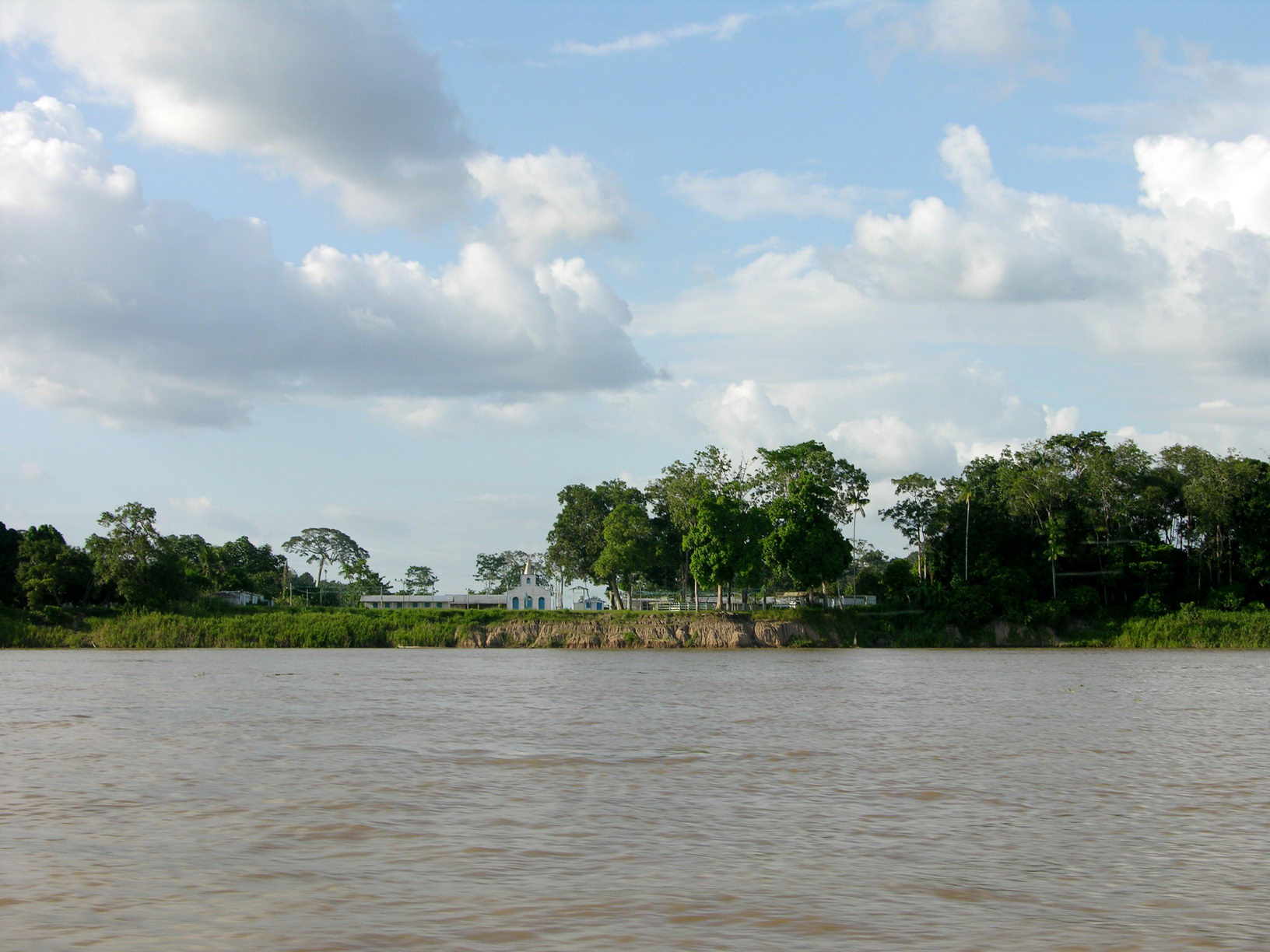
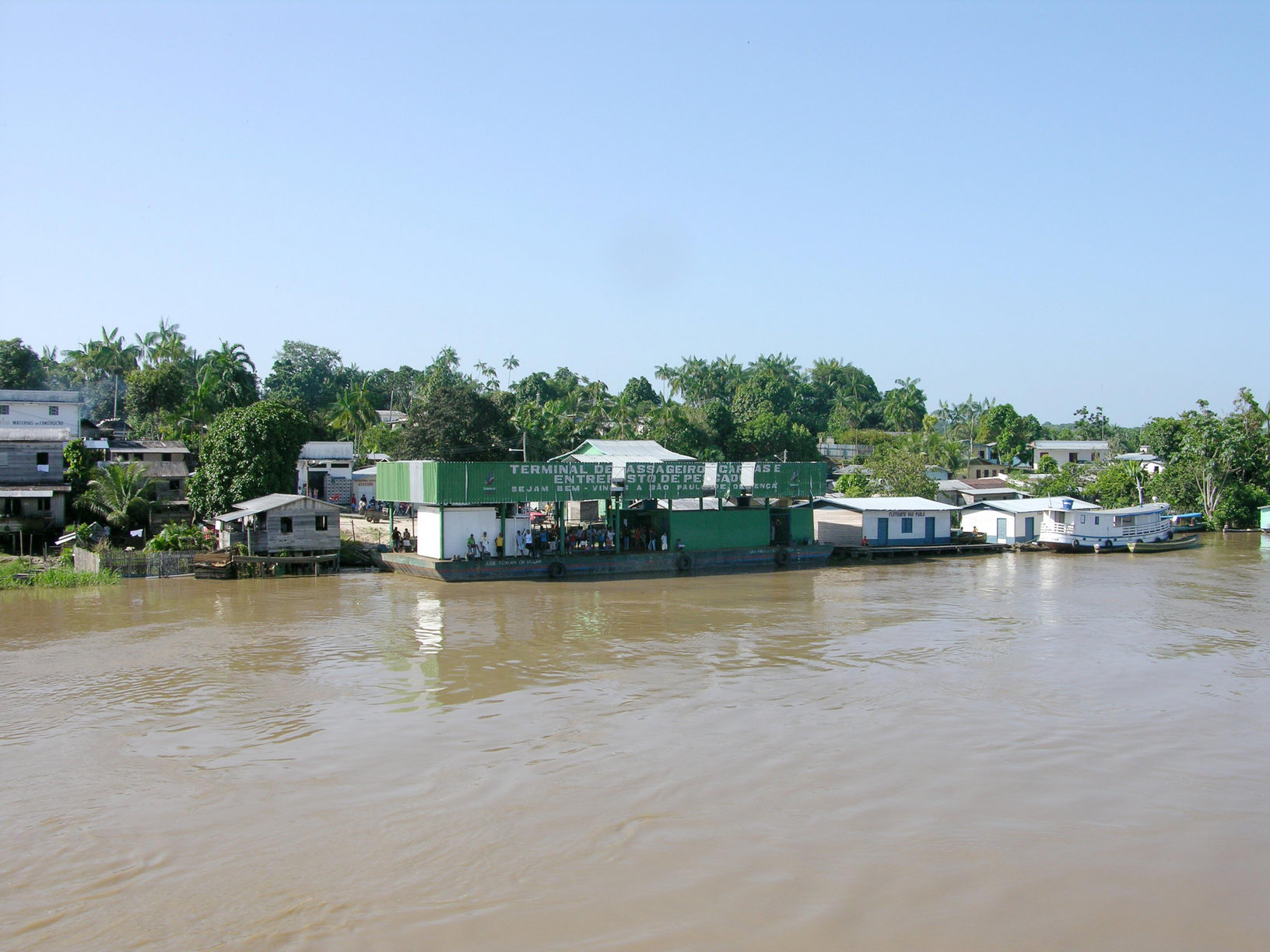
The boat stops several times on the way: at São Paulo de Olivença (São Paulo de Olivença), 3°27.64′S, 67°57.27′W; at Santo Antônio do Içá (Santo Antônio do Içá), 3°06.51′S, 67°56.41′W; and at Fonte Boa, 2°29.84′S, 66°04.22′W. They're sizable towns, with mobile reception even.
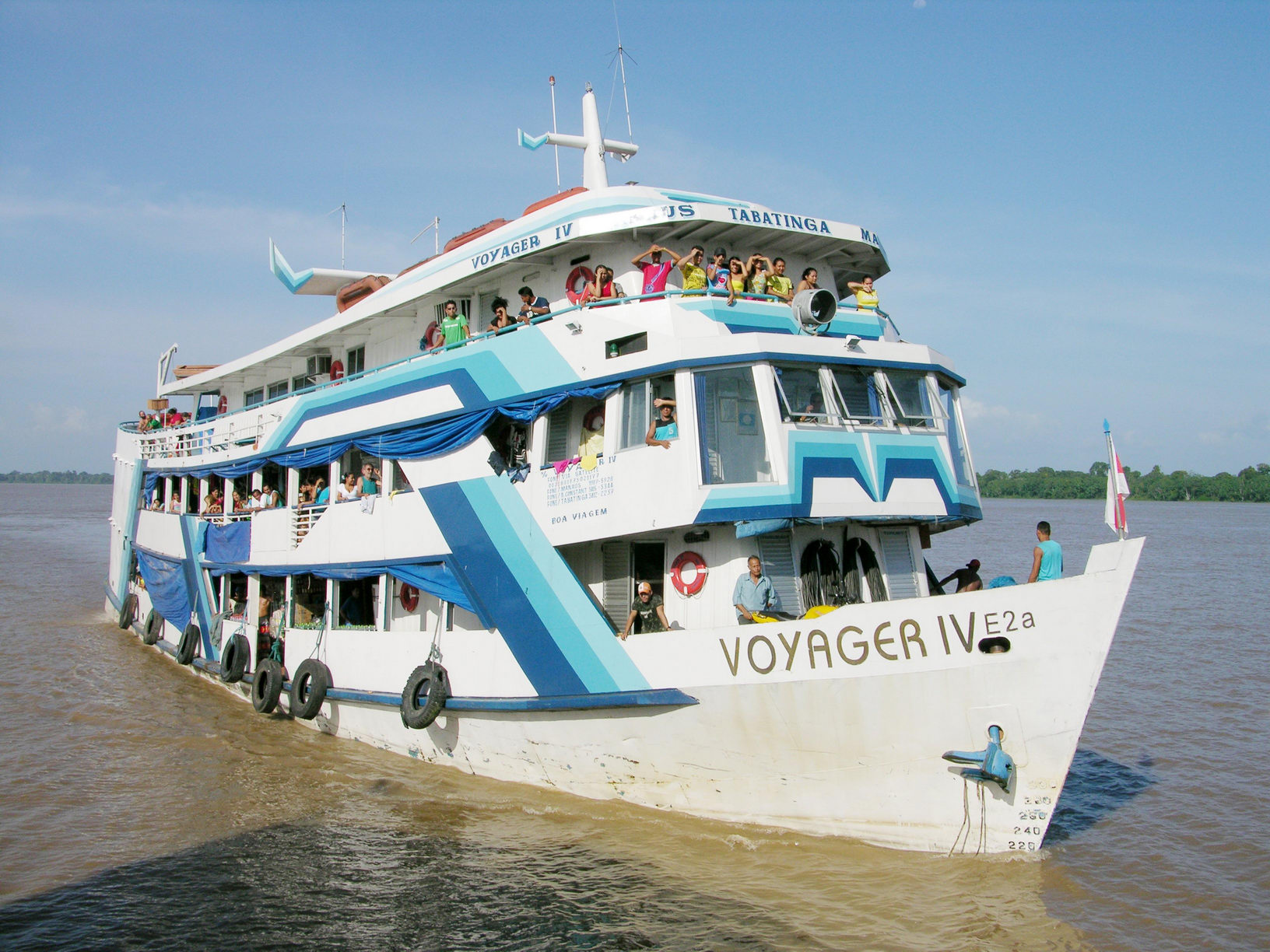
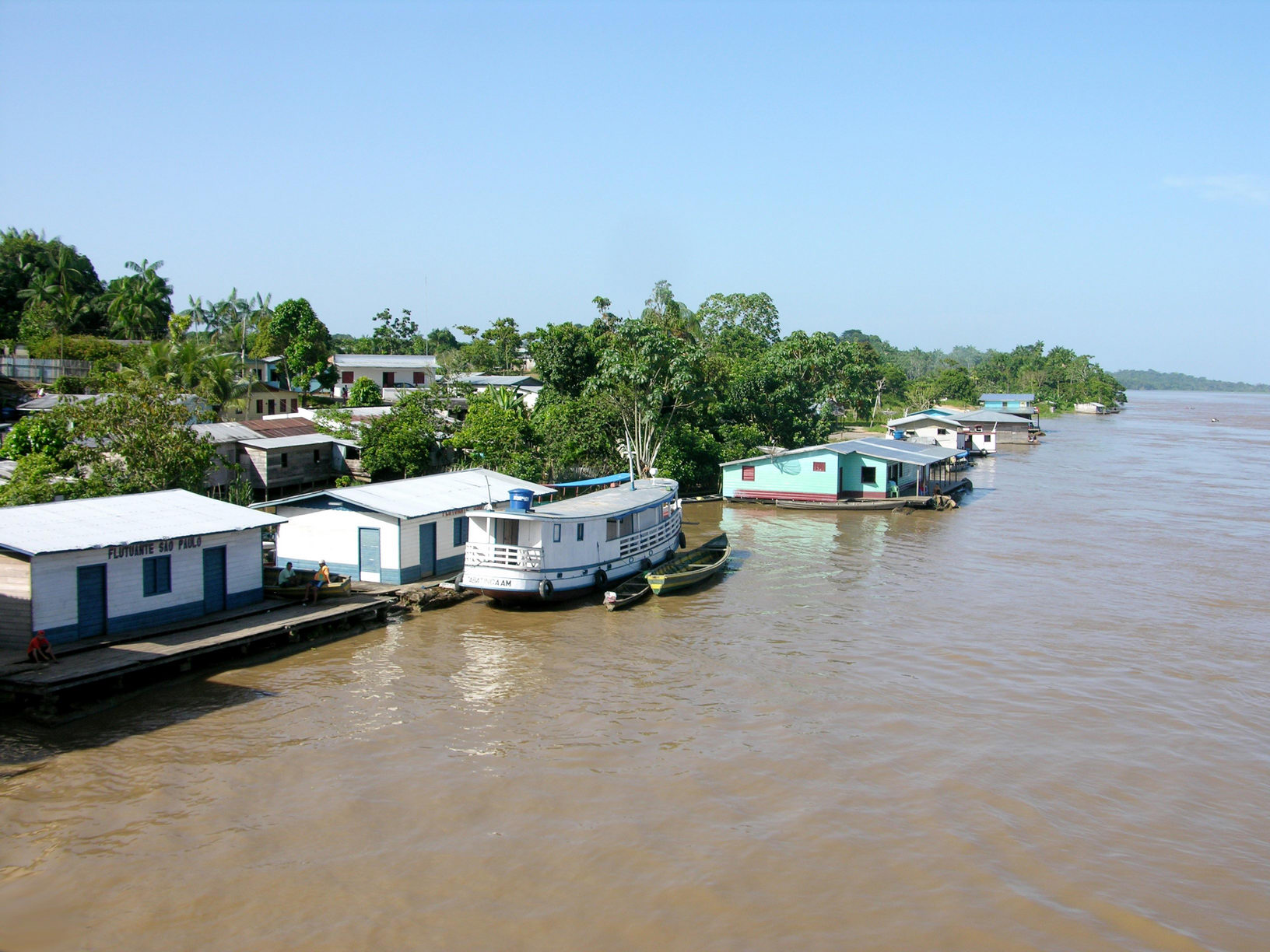
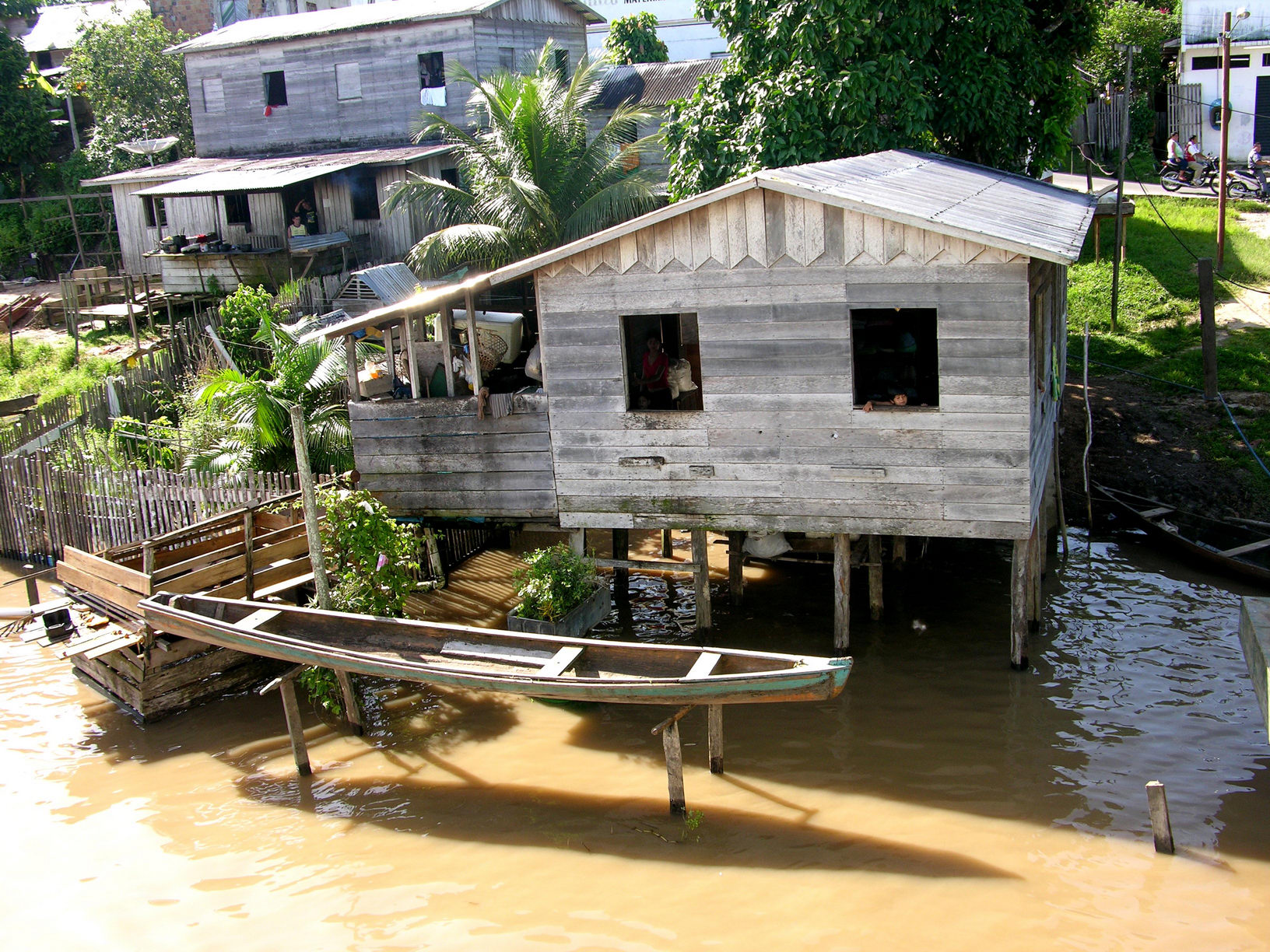
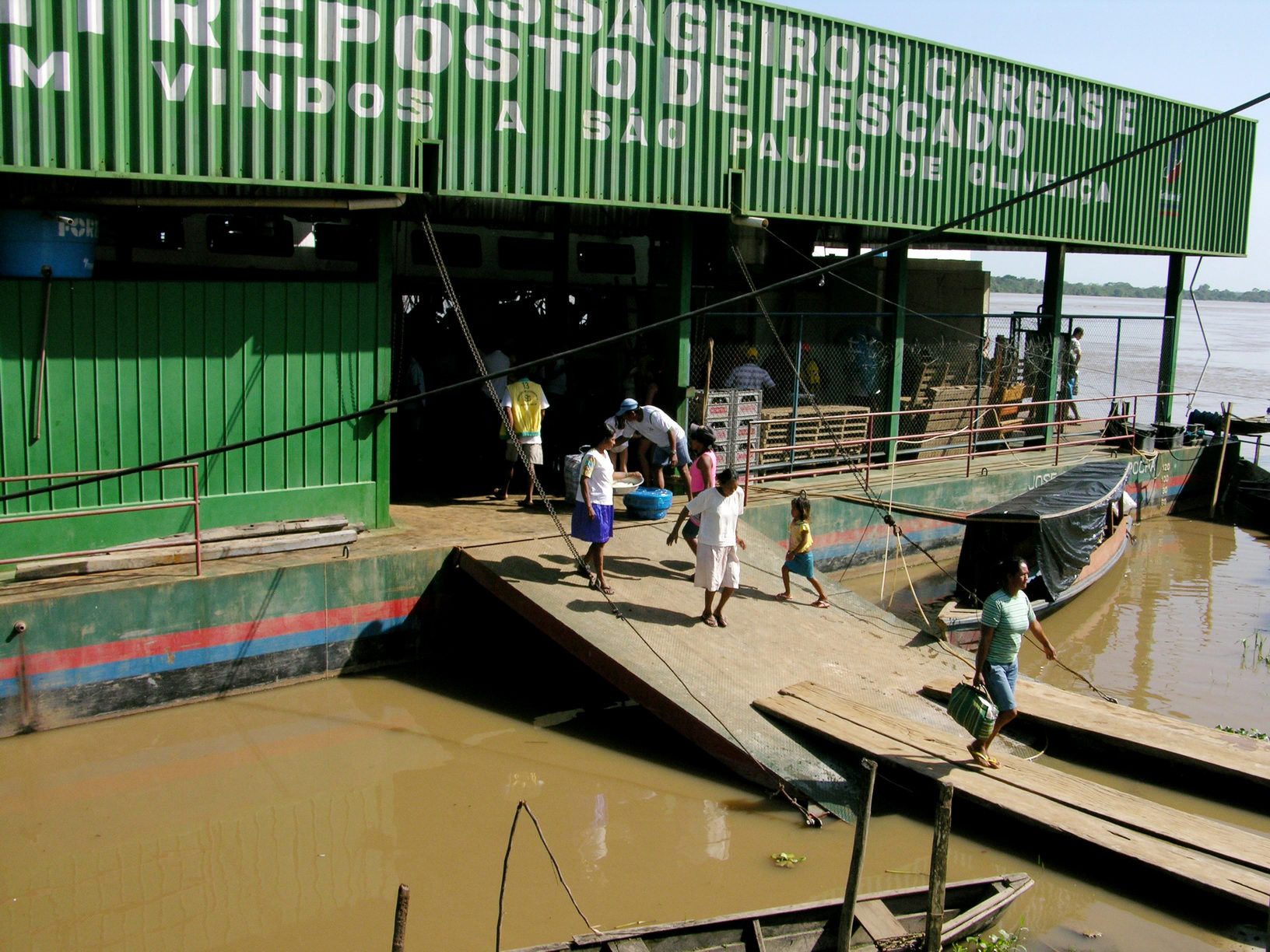
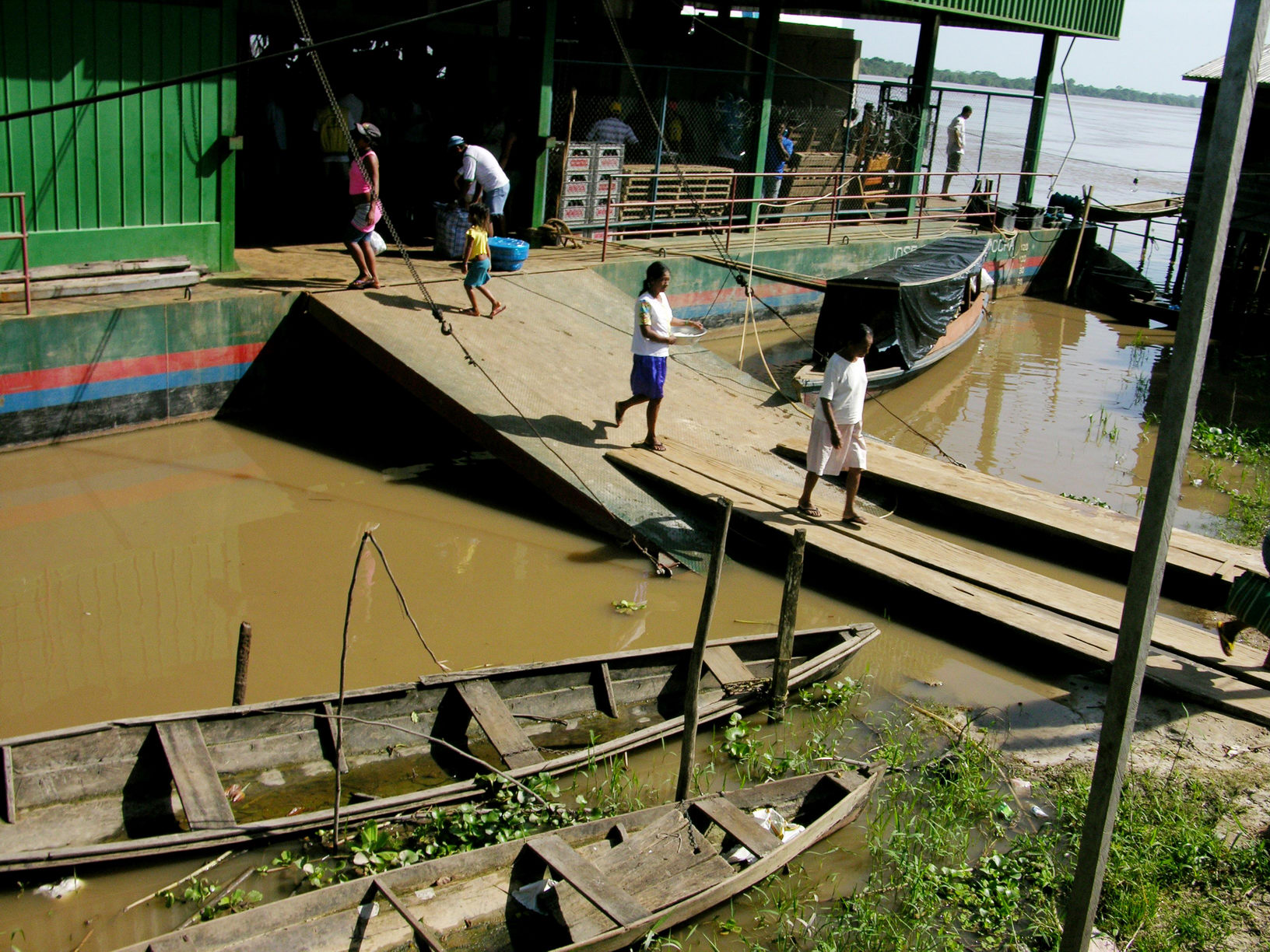
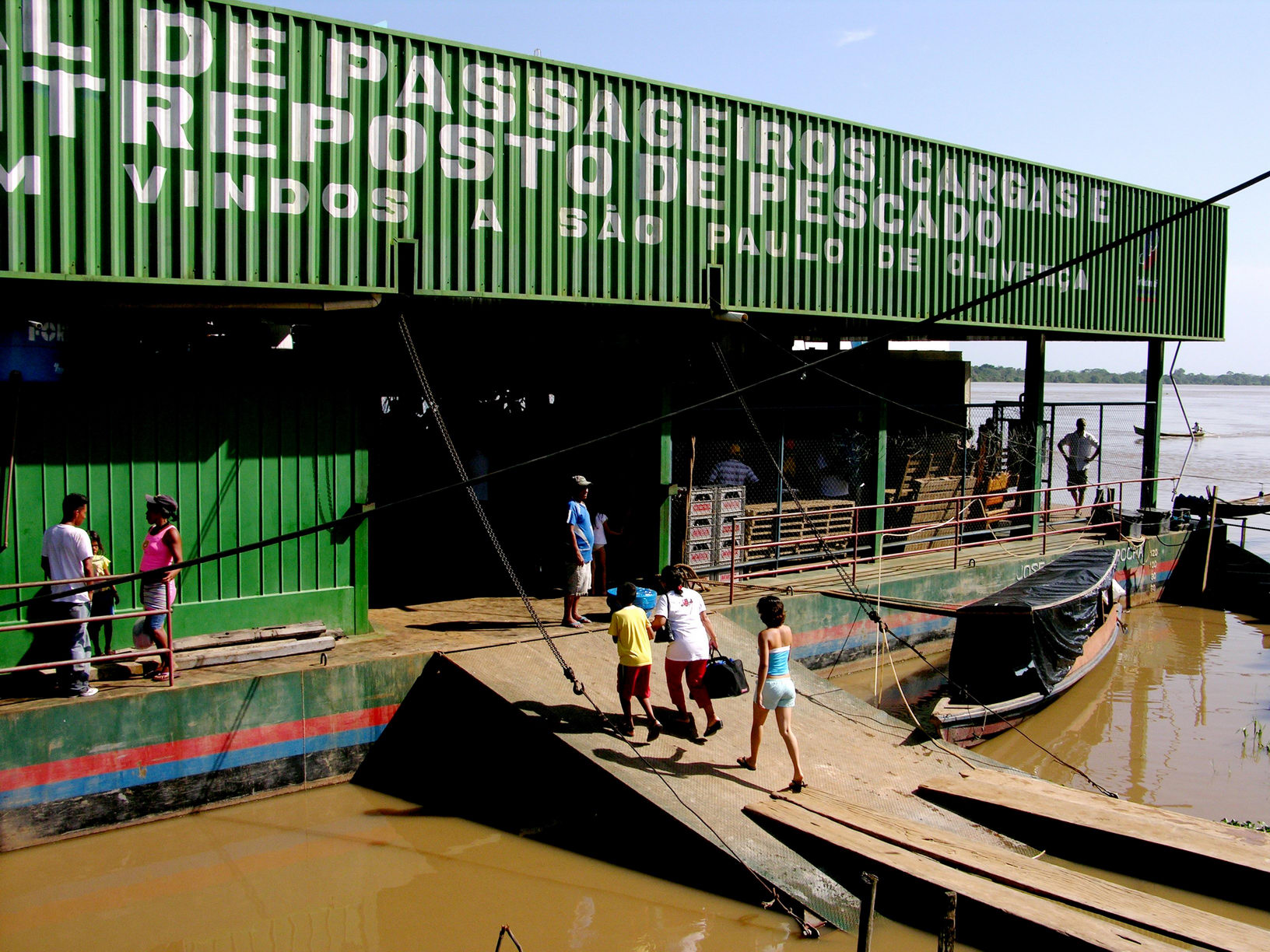
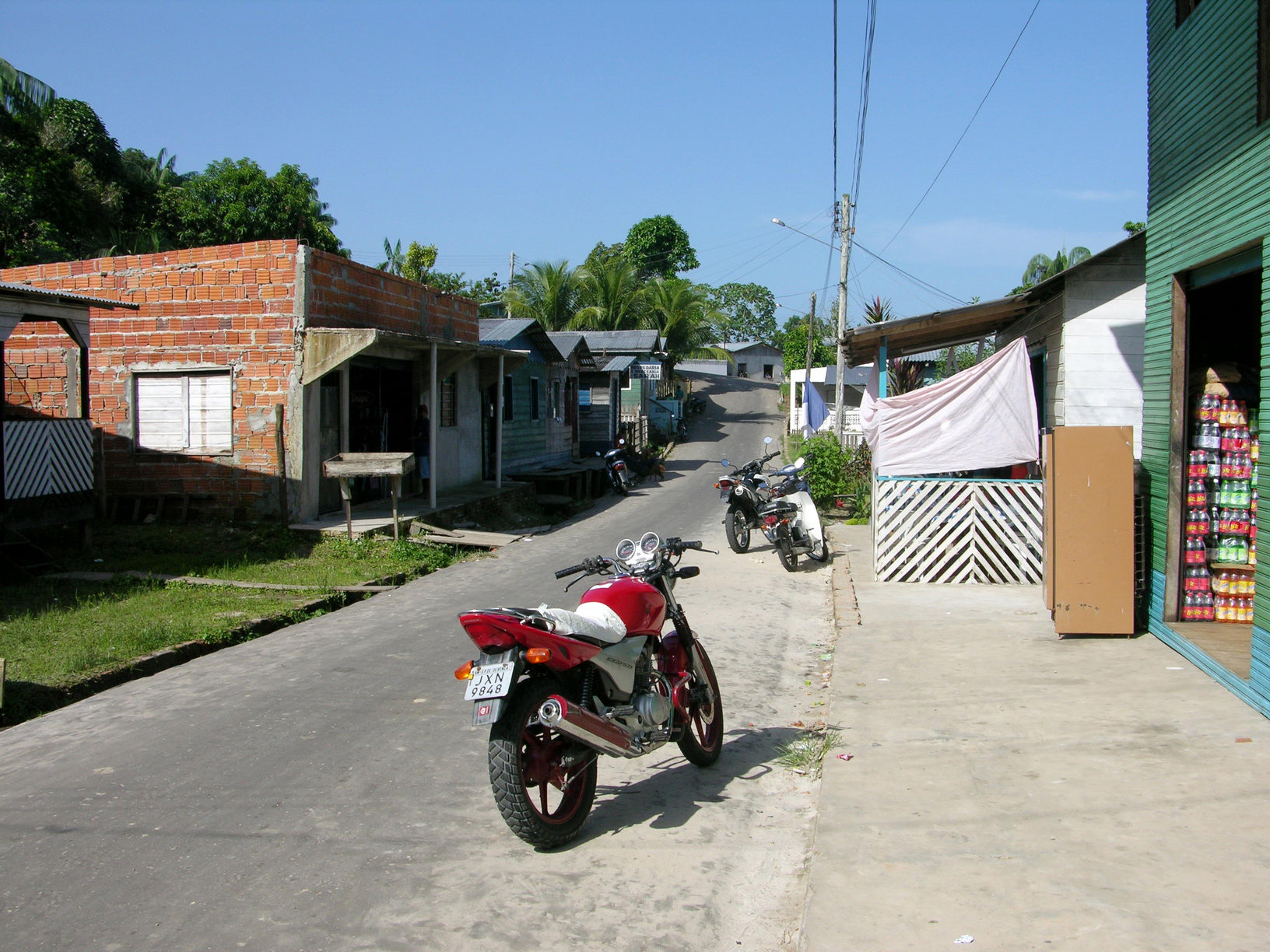
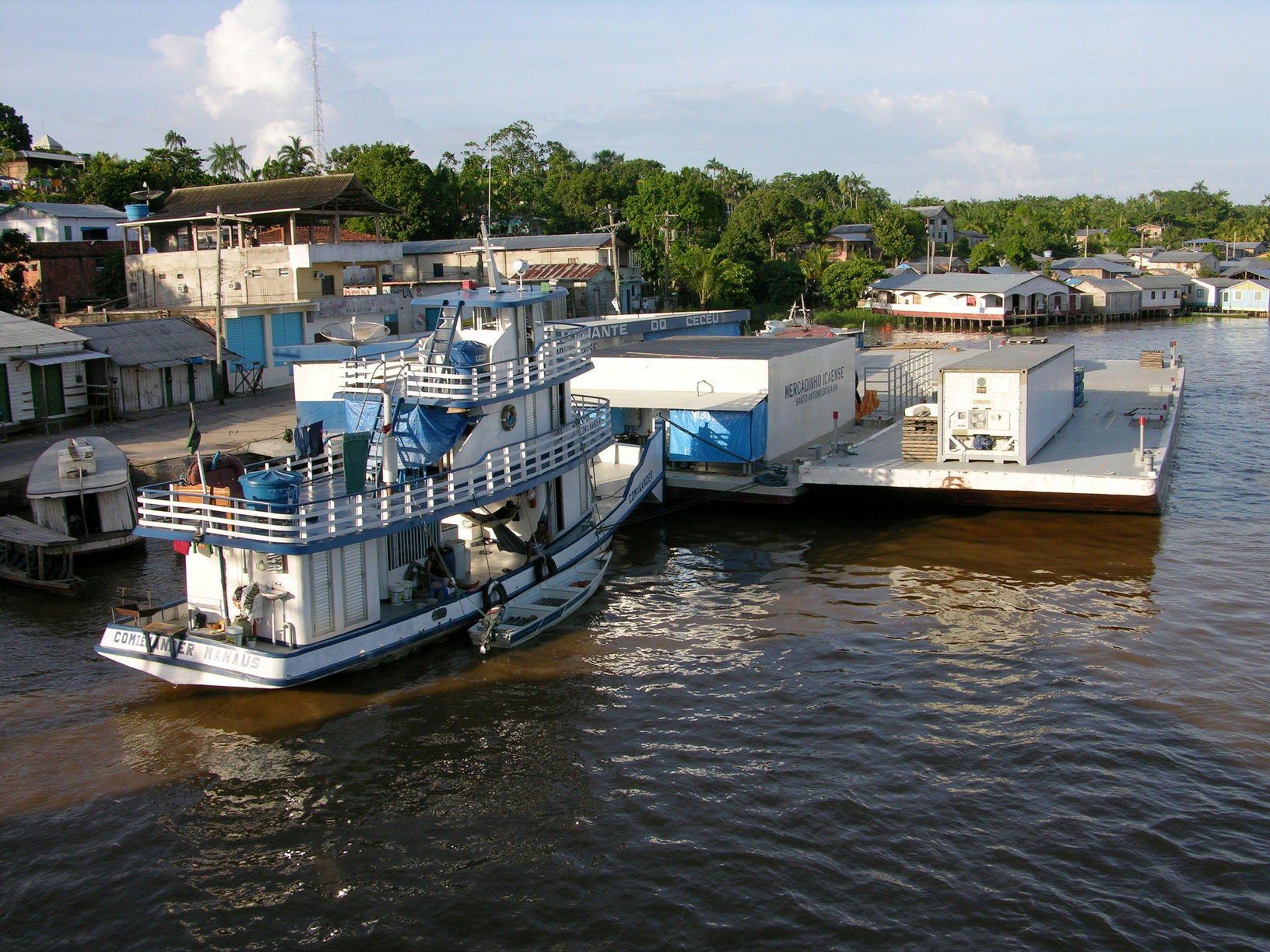
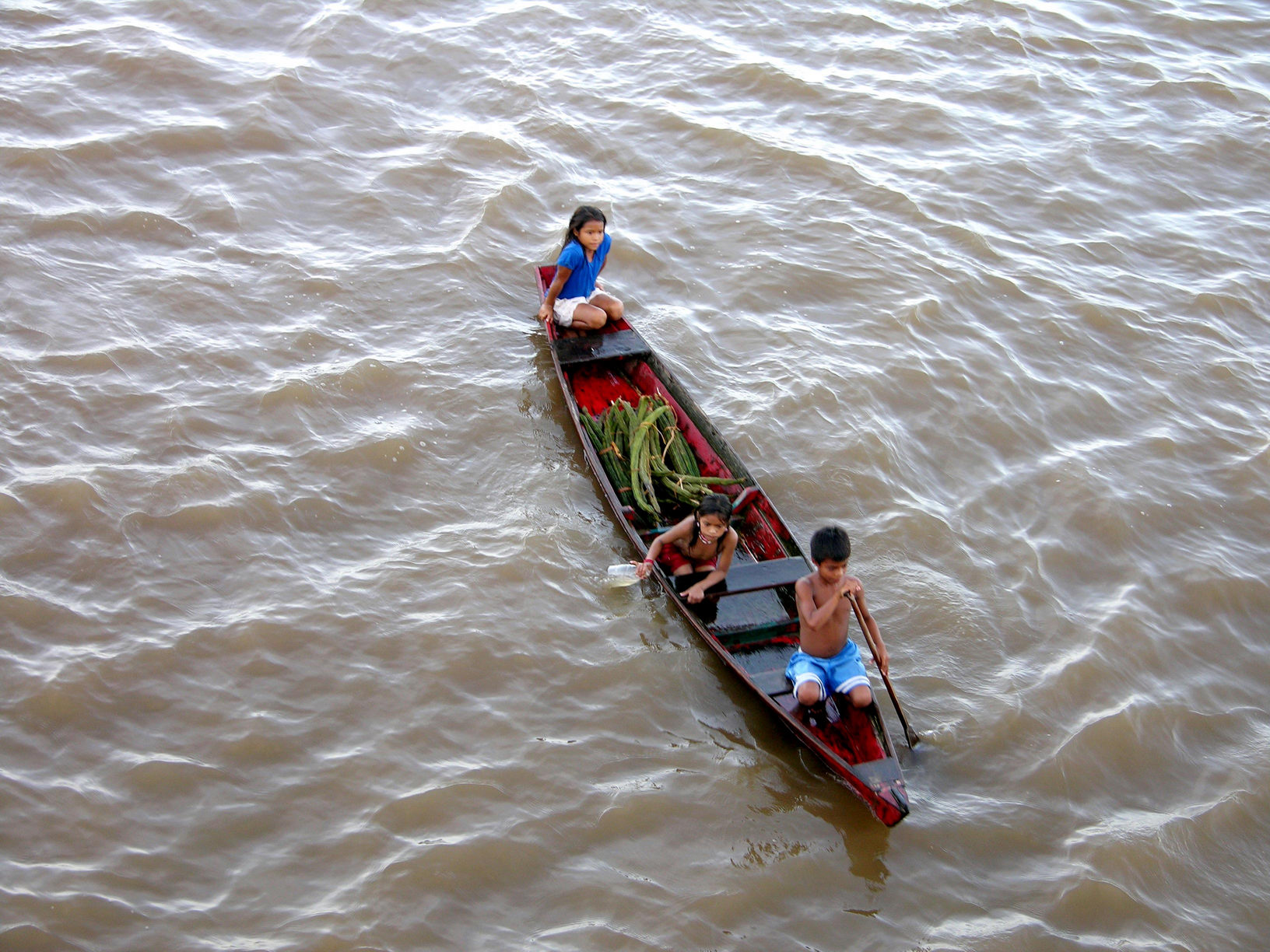
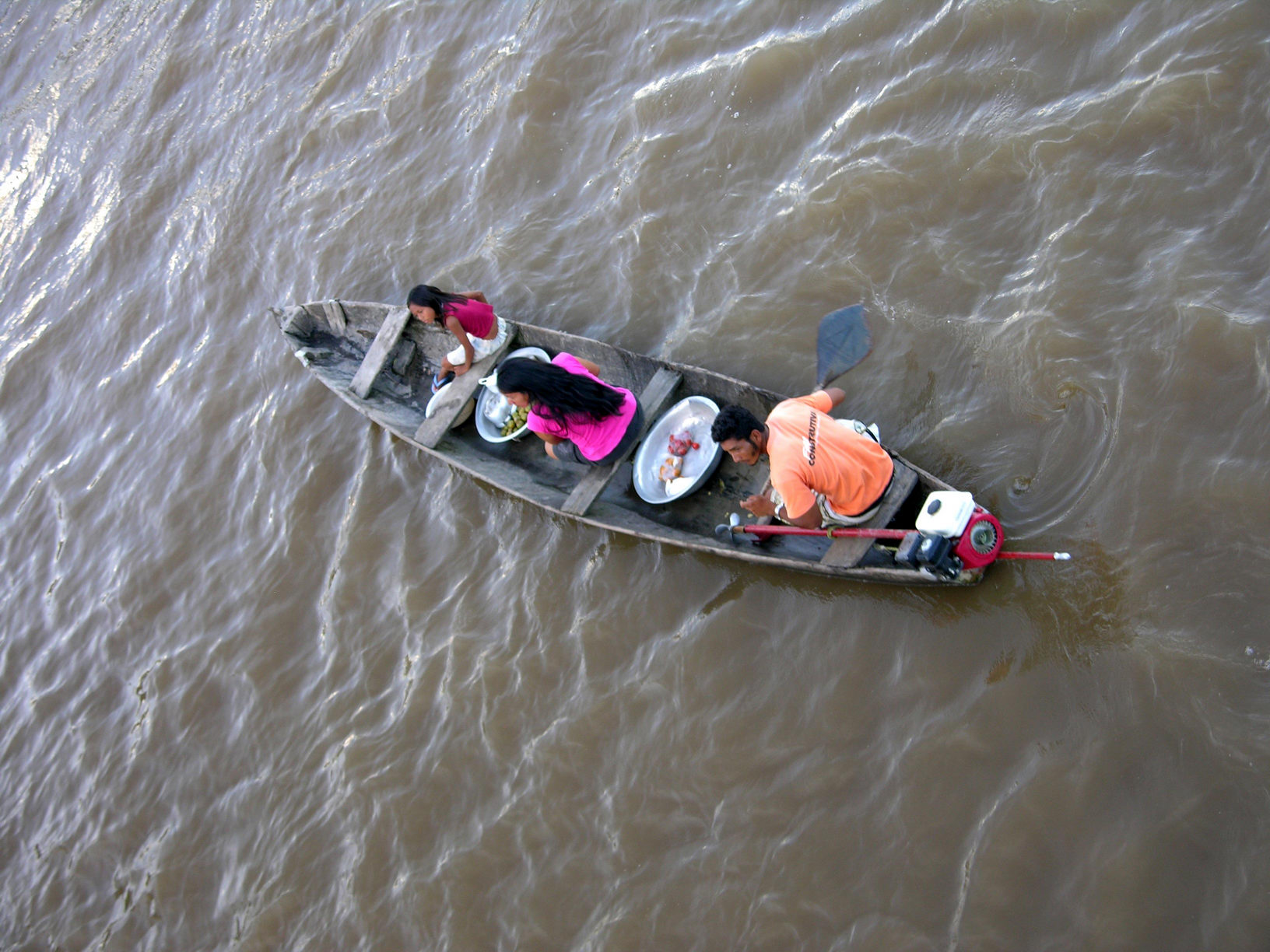
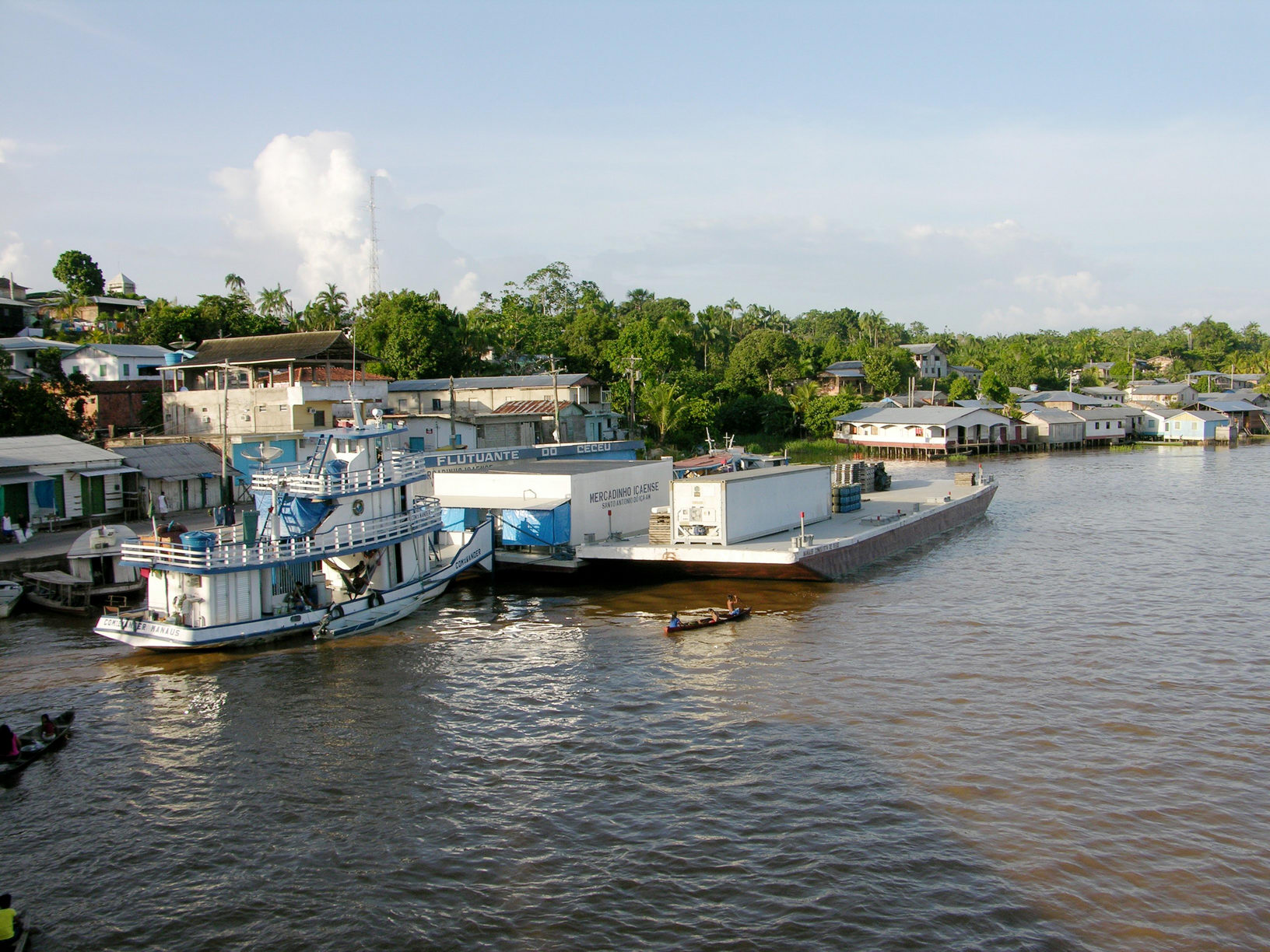
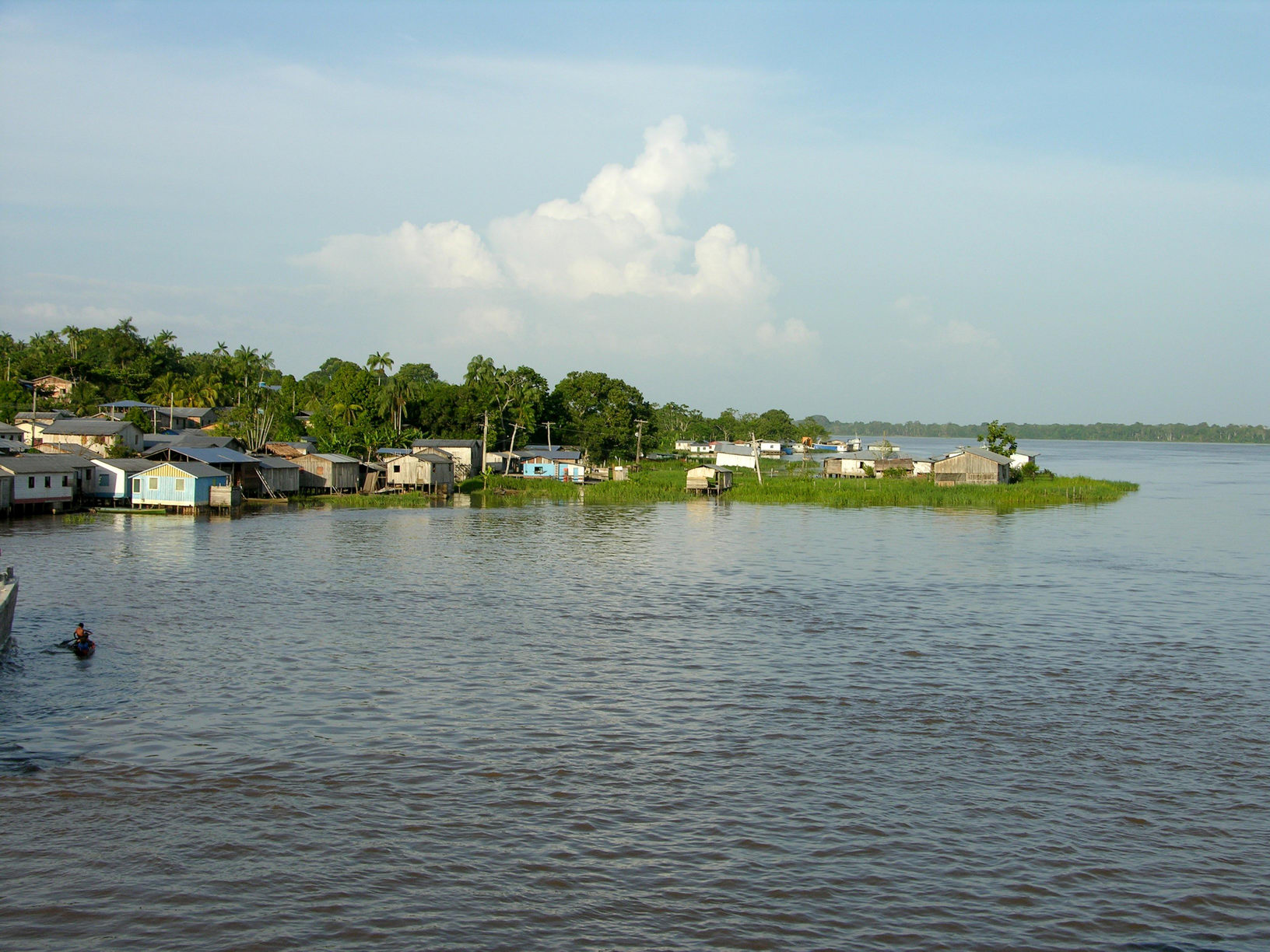
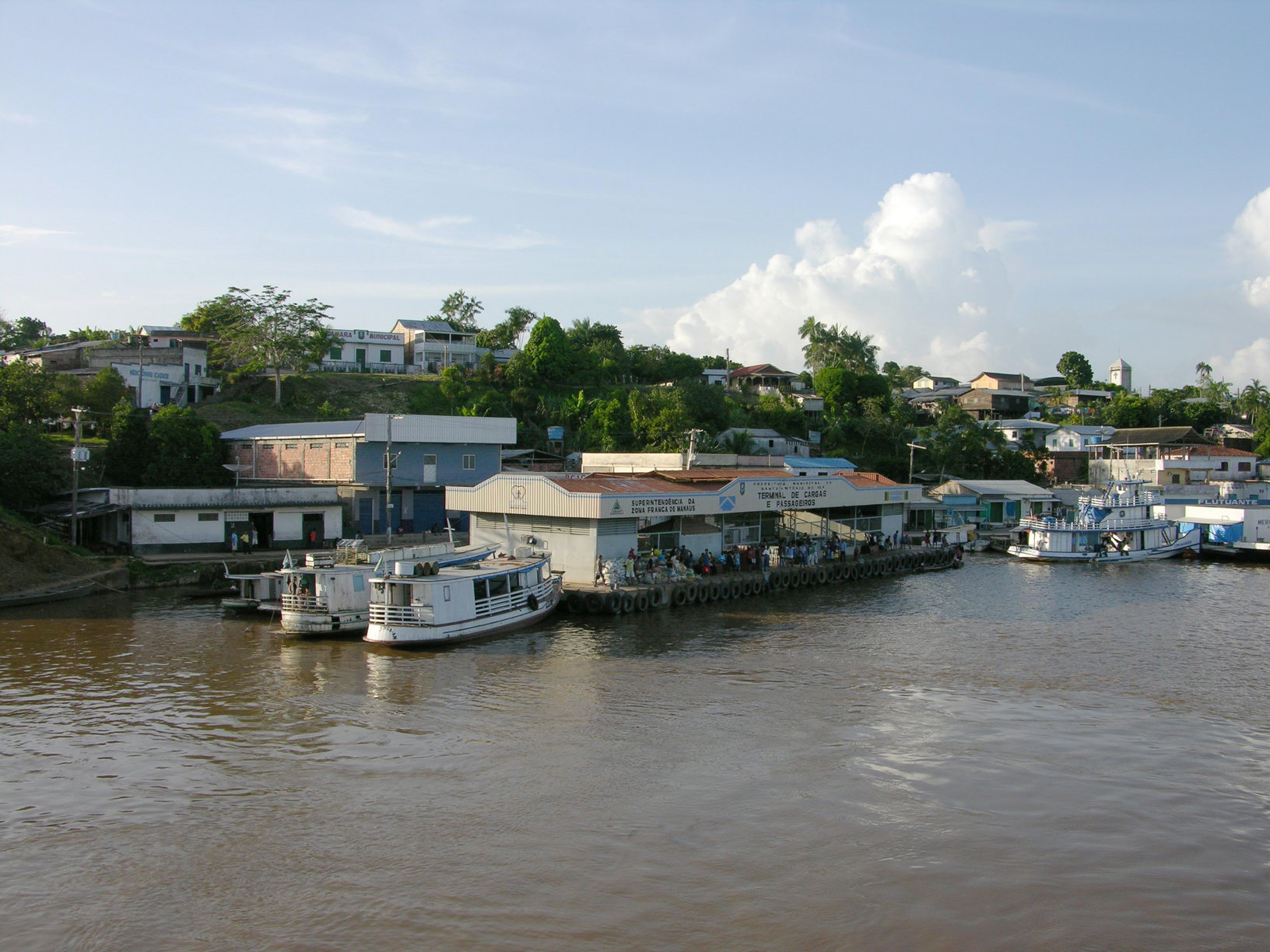
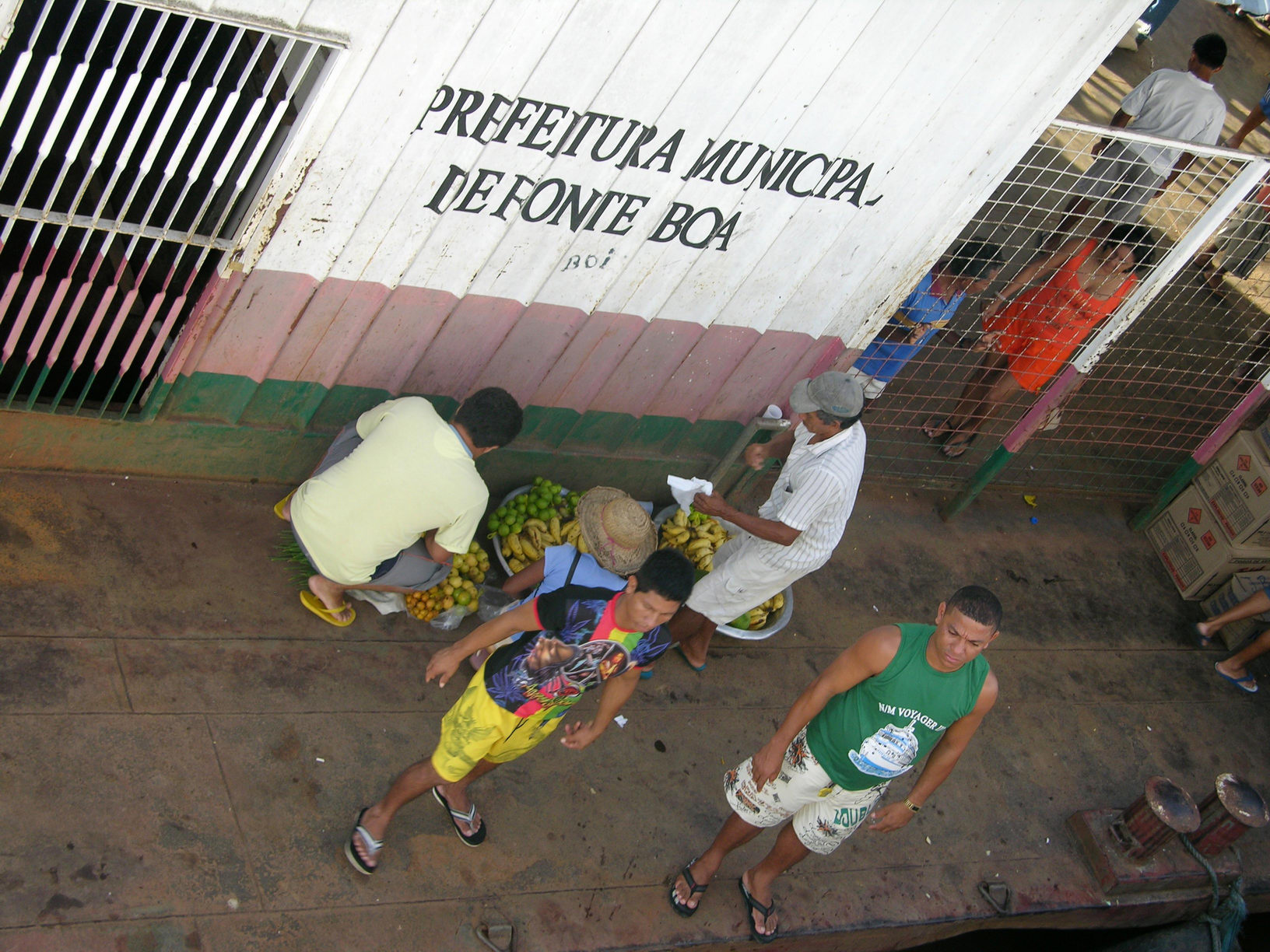
The boat doesn't call at Tefé. The town lies in a deep bay ten kilometres from the main channel. There's a village, Alvarães, at that spot on the river, and in theory that's where we were supposed to get off. We waited for the boat to dock at the appointed time so that we could start looking for transport onward. Then something unexpected happened. The boat stopped in the middle of the river and they told us we'd arrived and had to disembark in a hurry. Where to? Water all around. It turned out they'd radioed for a small boat and we now had to jump into it. There were two metres between the deck and the wobbling boat. Fortunately we were fit. It's hard to see how they'd get a little old lady down there. The boat took us to Tefé in half an hour. We had to pay an extra forty reais for it, though the captain had said everything was included.
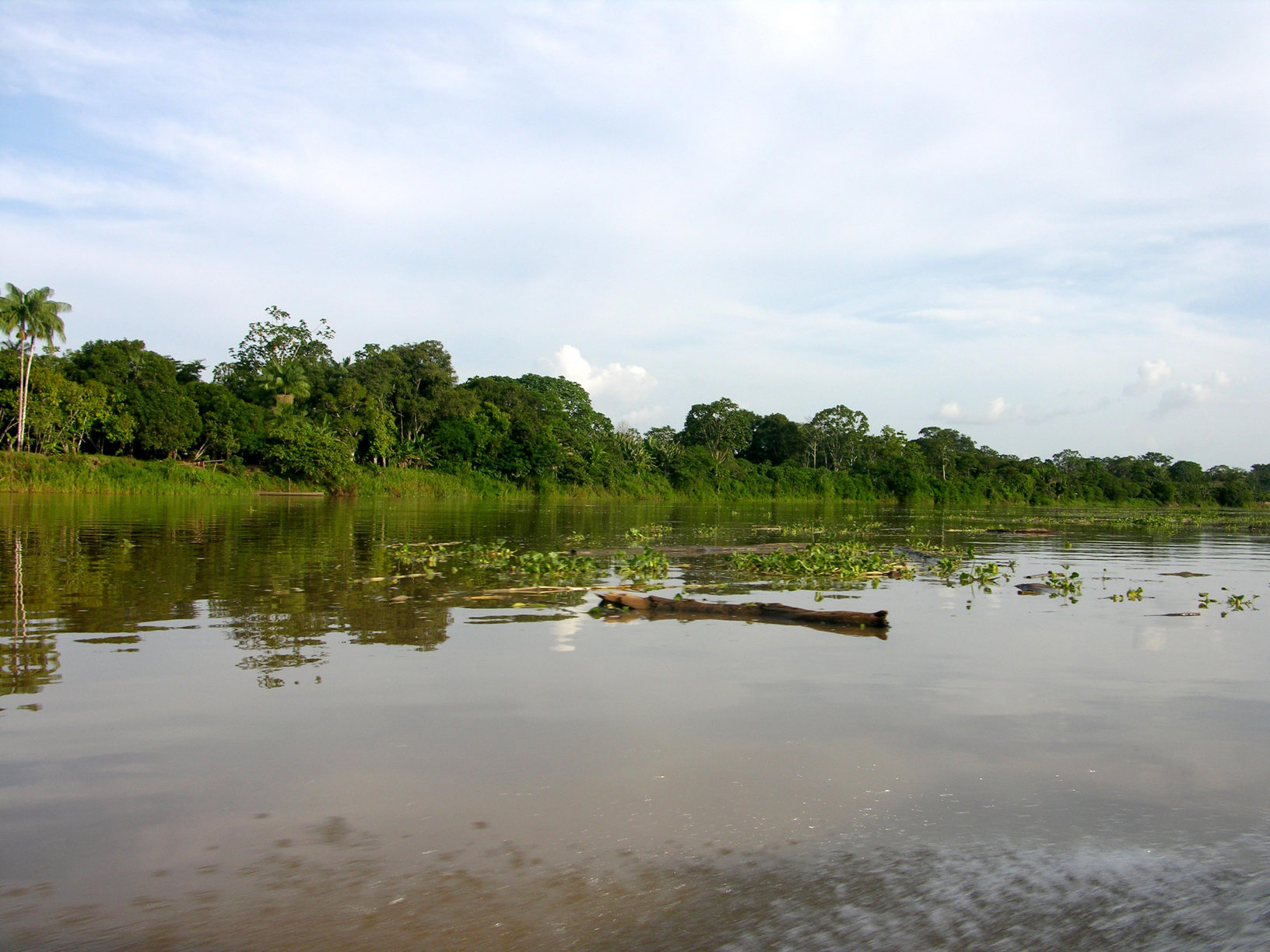
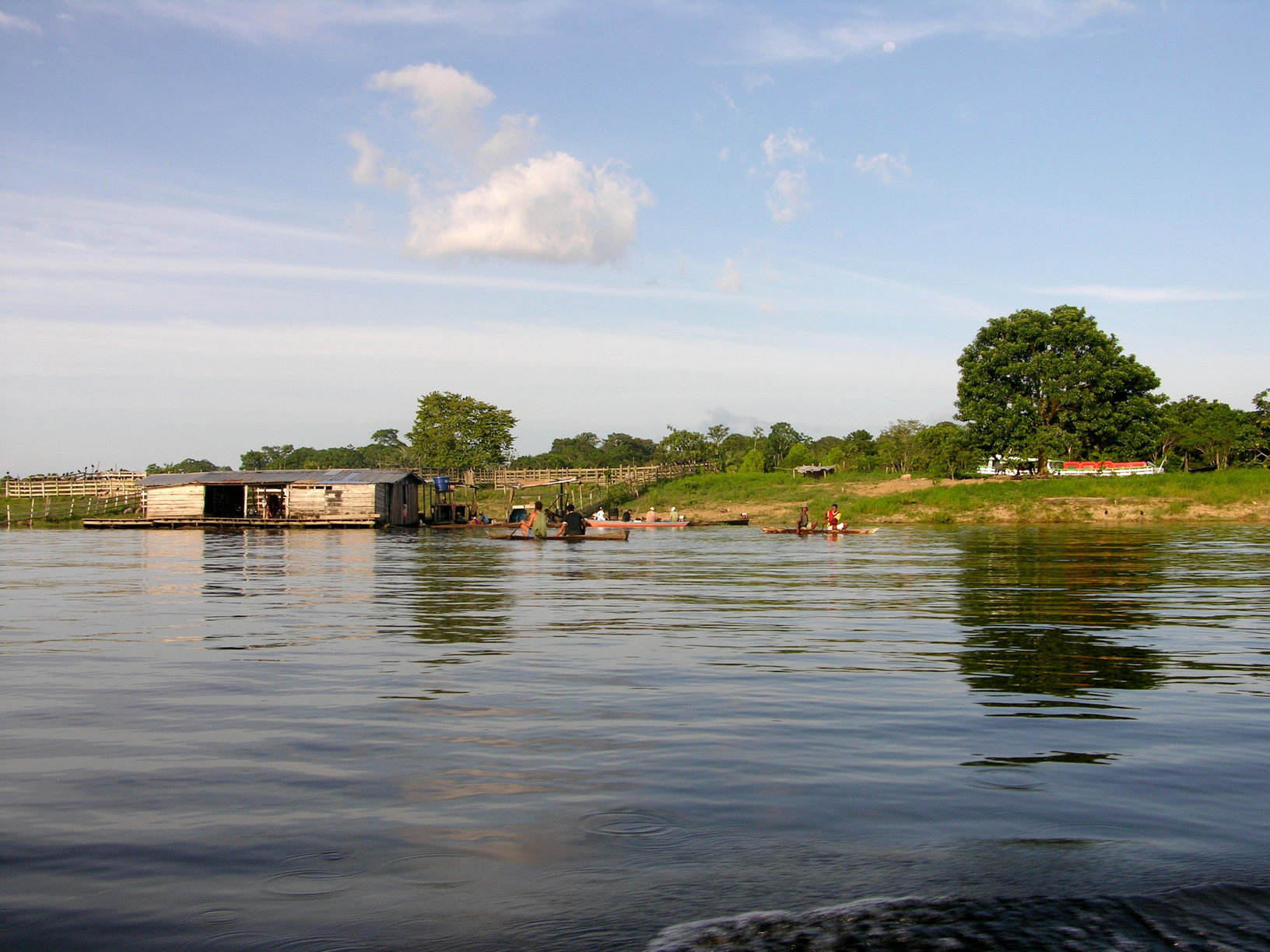
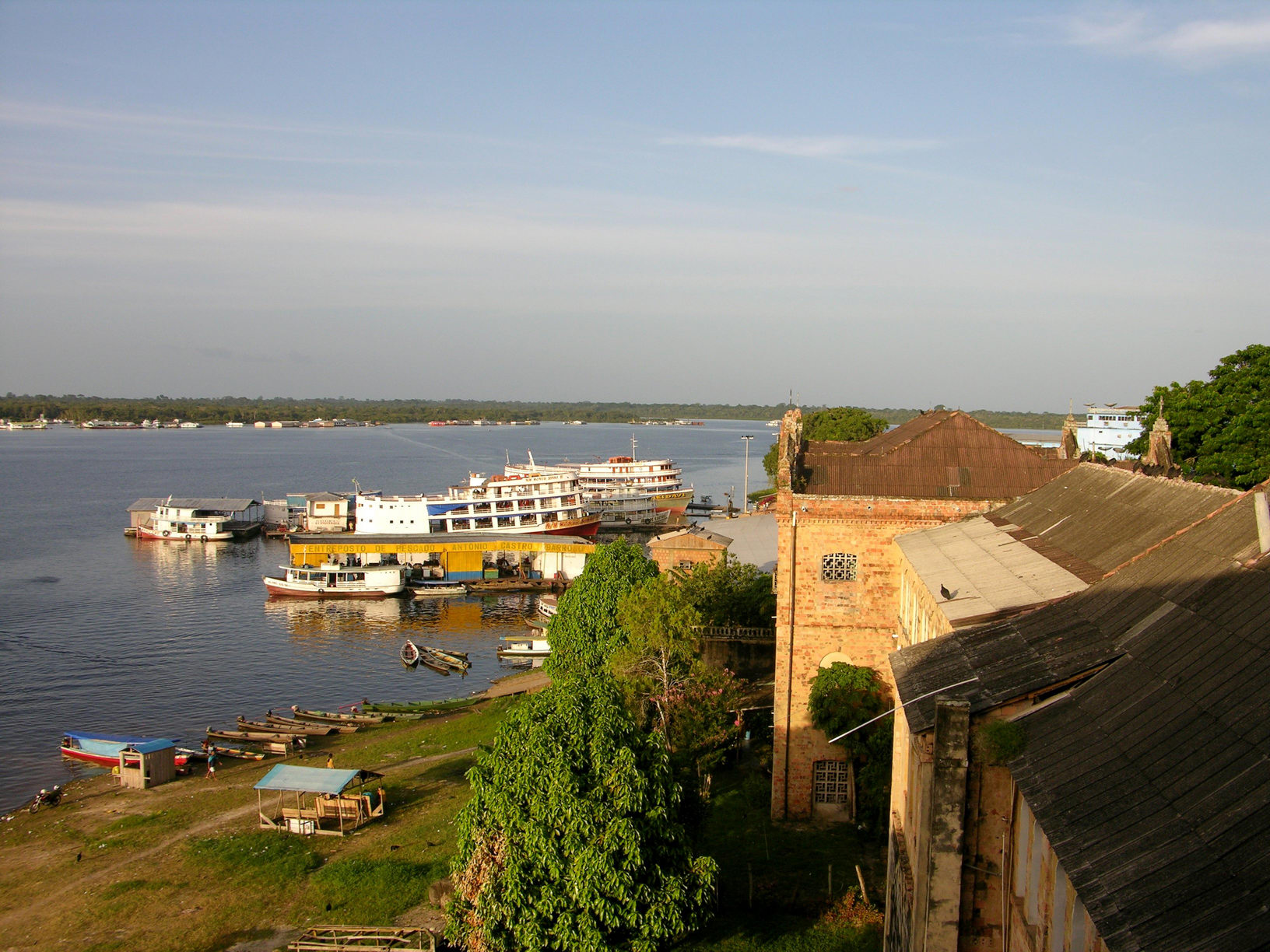
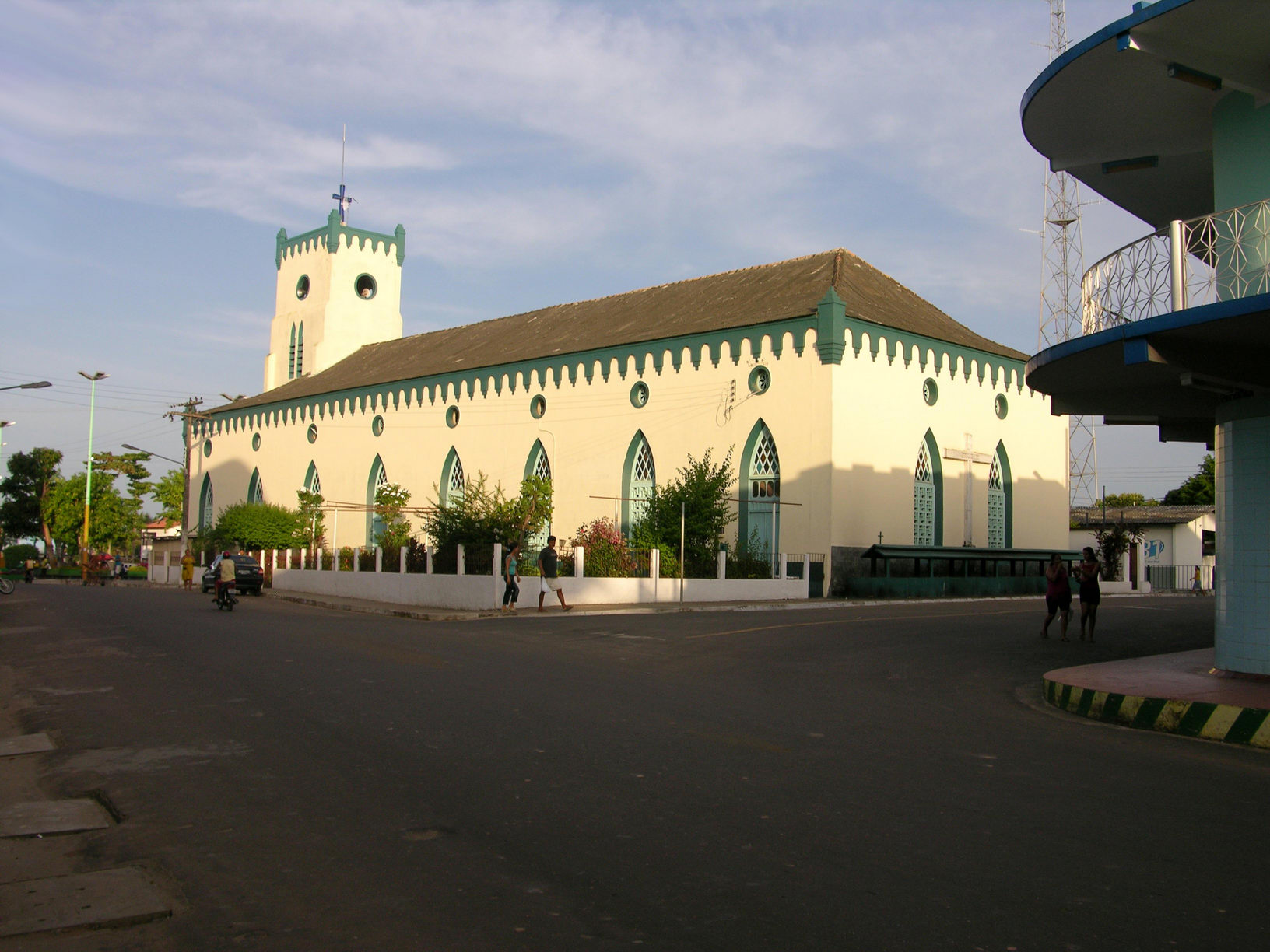
Tefé is a lovely old colonial town. The streets are full of people and life is in full swing. Part of the reason, we were told, was that cocaine came here from Colombia down the Japurá River.
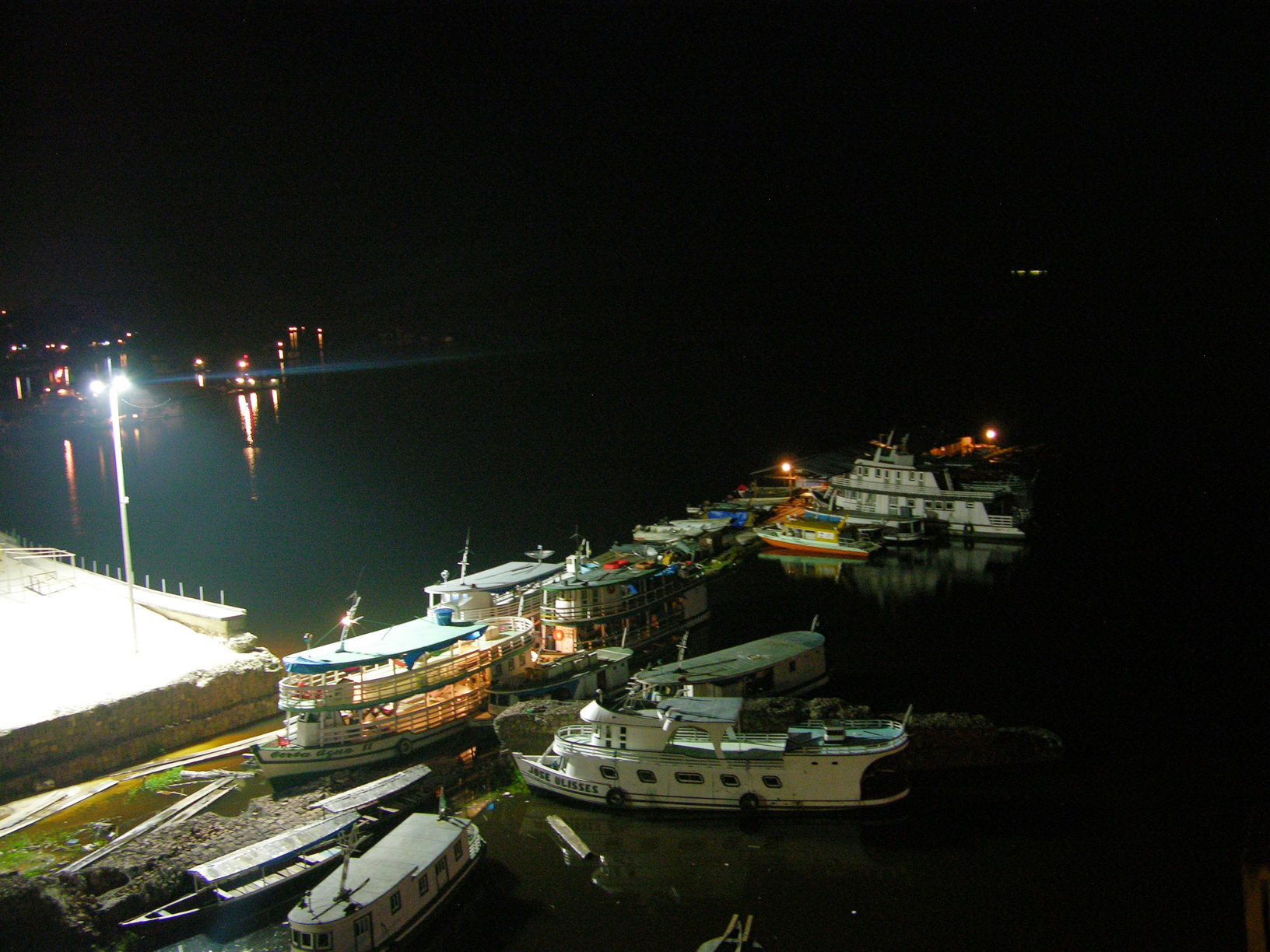
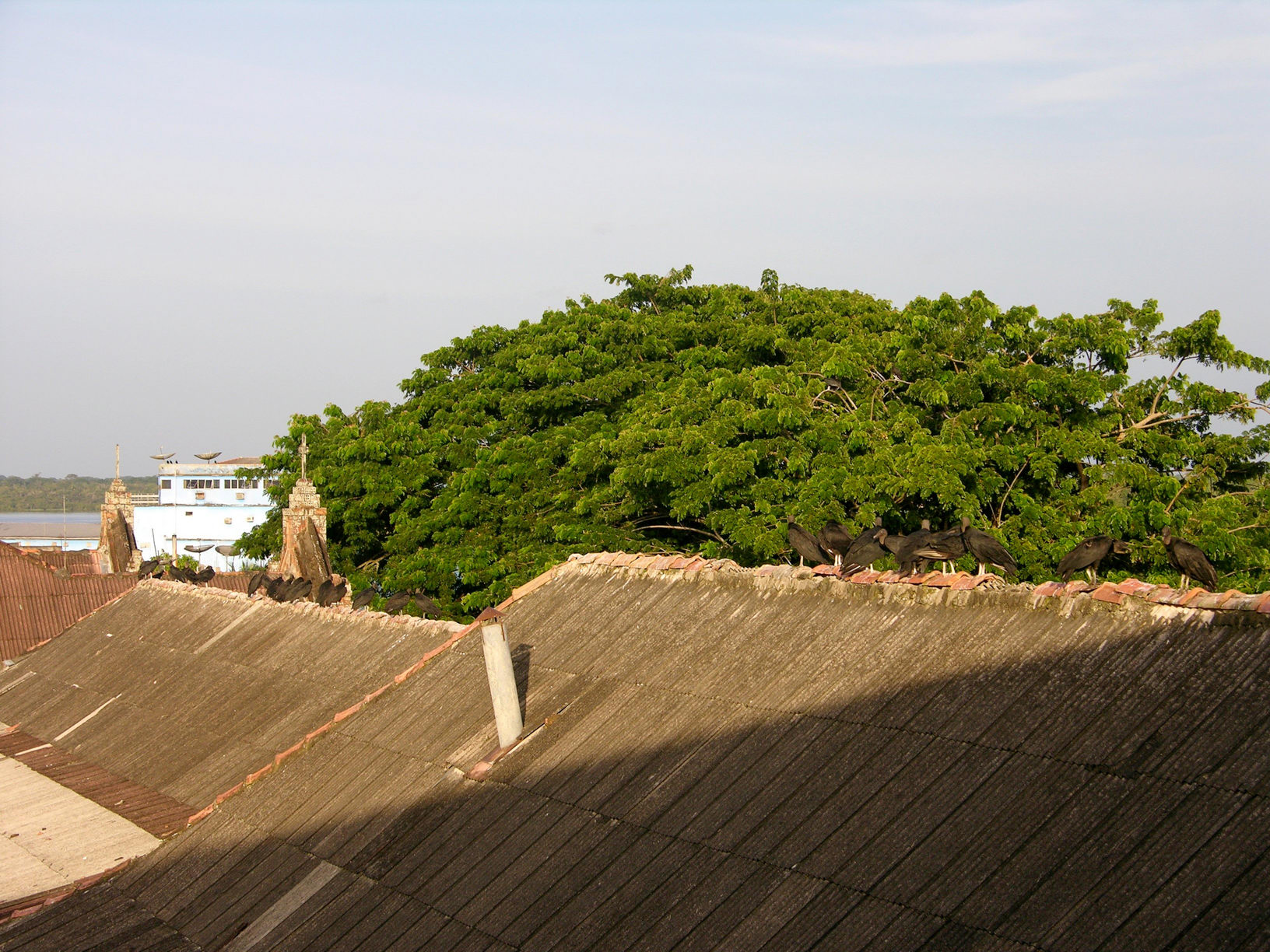
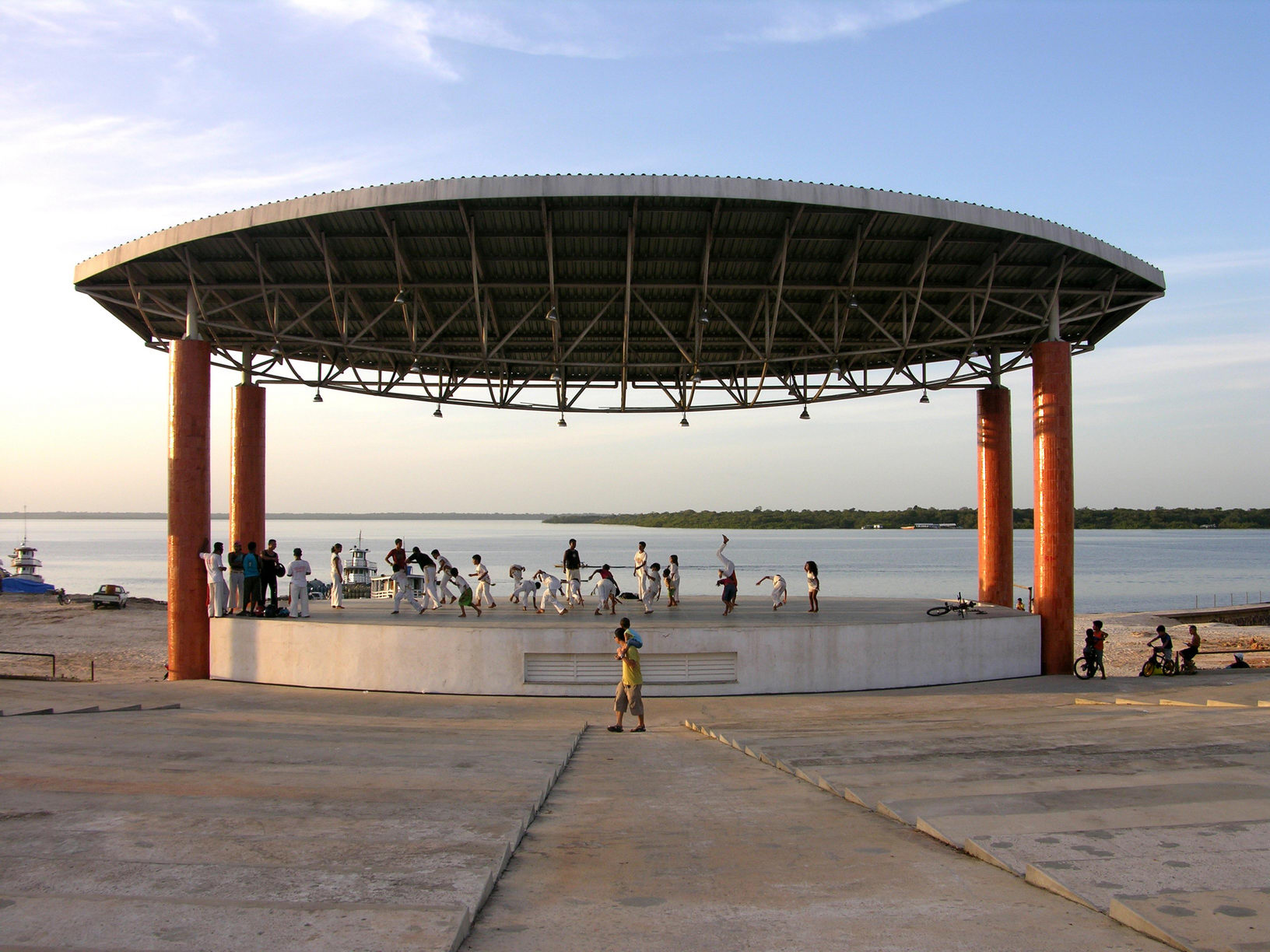
There are a dozen or two hotels in town. Many have a splendid view of the river.
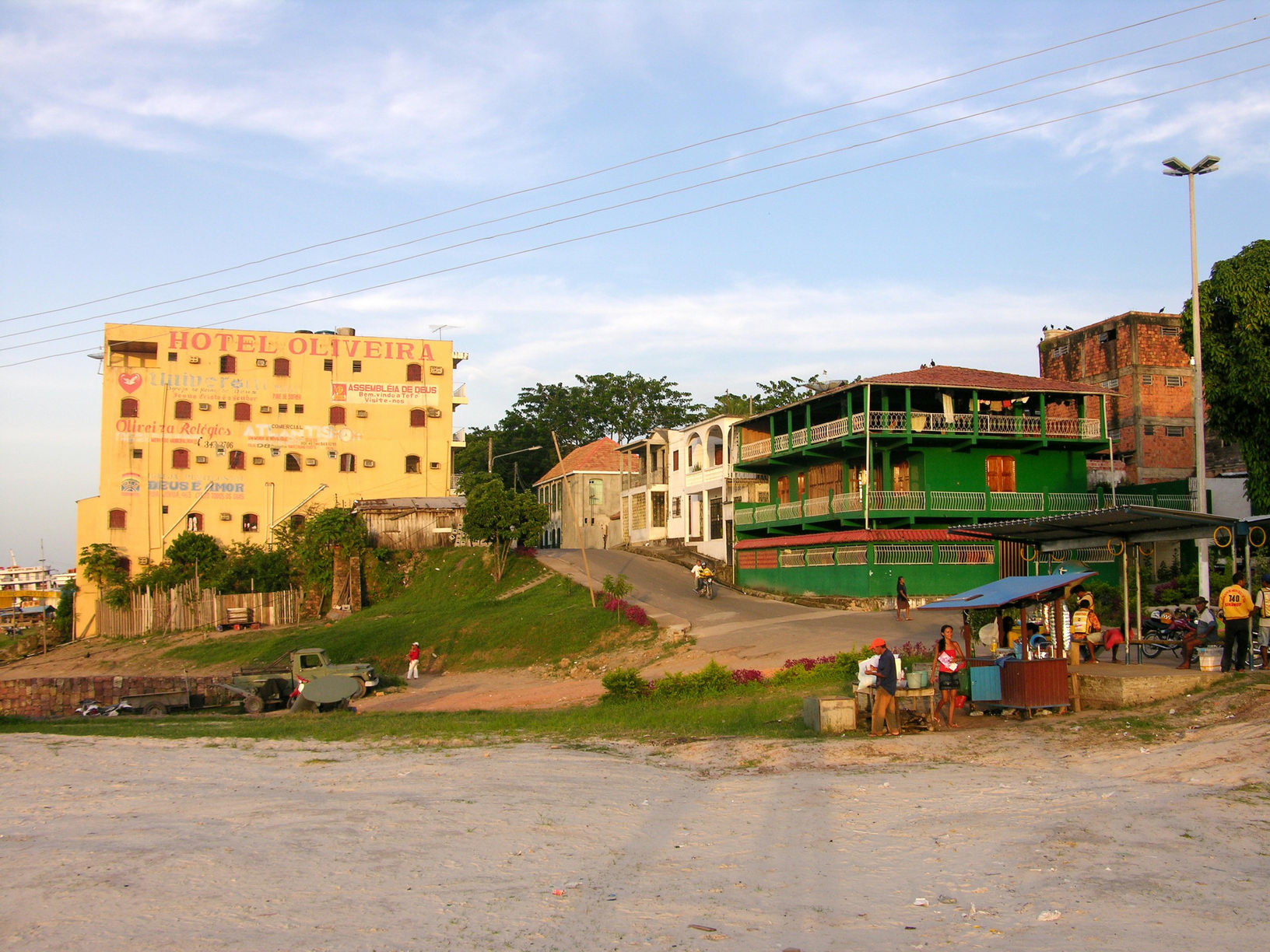
We got just such a room, on the fourth floor of the Oliveira (3°20.66′S, 64°42.48′W), for forty reais. We went out for a walk and to find out when the plane flew to Tabatinga. Why not ask a taxi driver? He'd know exactly when we needed to go and where. Perhaps he'd take us tomorrow. The driver smiled and told us cheerfully, “Aeropuerto finita.” Completely finished? Completely? So how do we get there? Hitchhike a ship in the middle of the Amazon tomorrow?
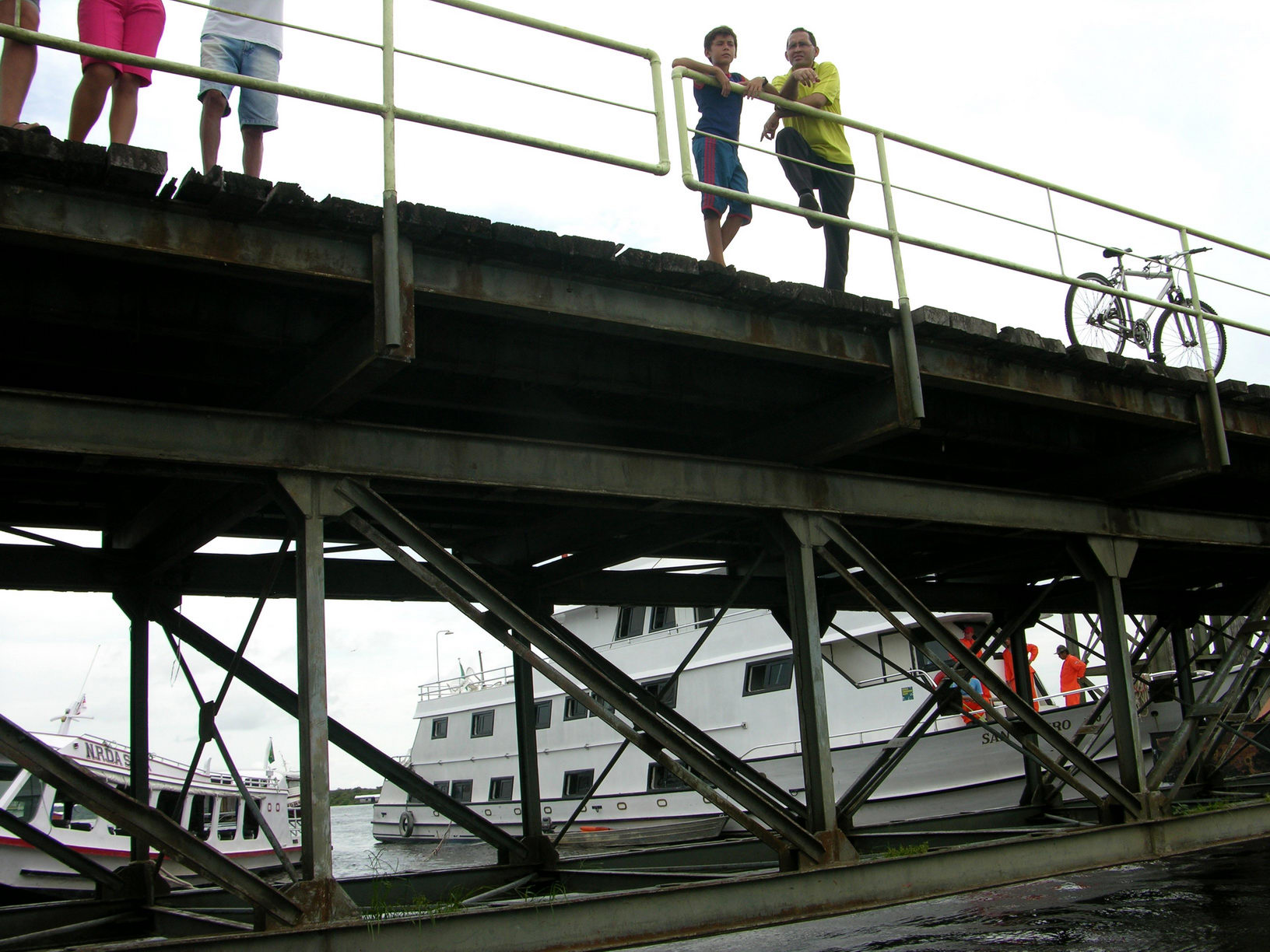
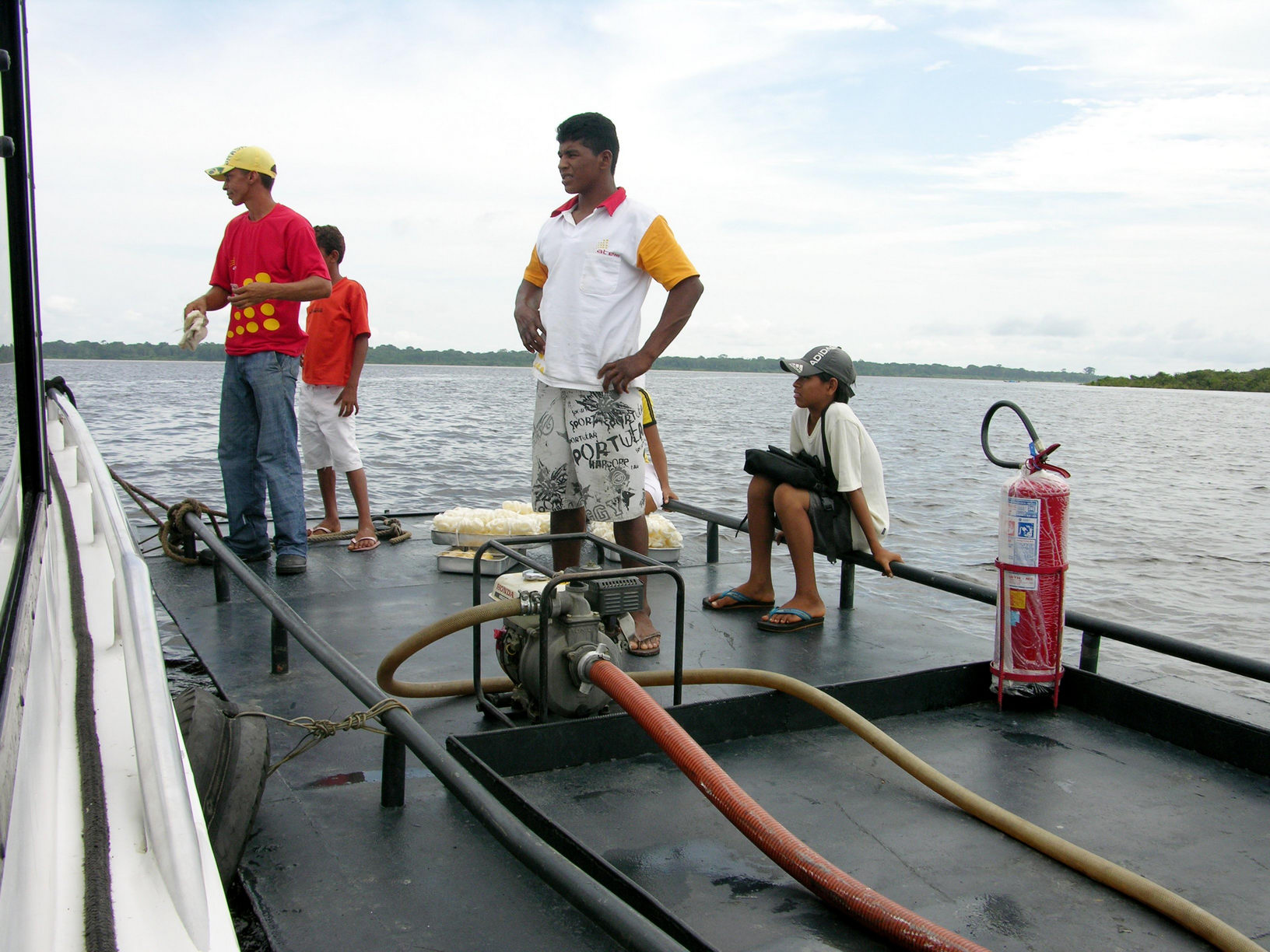
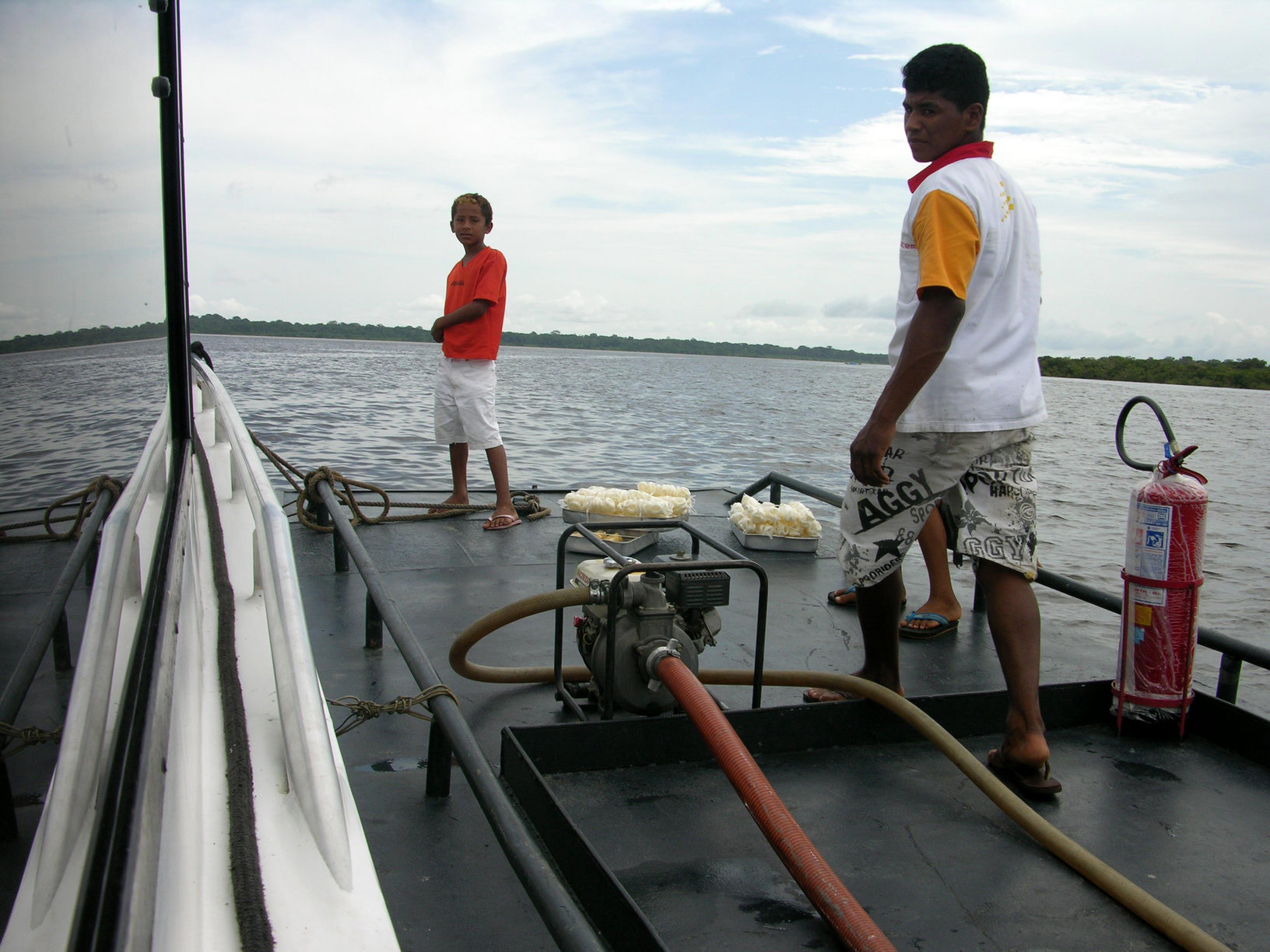
We went straight to the local jetty. There were boats, but none going to Tabatinga, and it was three days to Manaus with all the stops. We were in a fix. Soon we found there was a speedboat that made Manaus in a single day. We queued in the morning, but it turned out to be half empty and we needn't have come early. It was too expensive for the locals. A ticket to Manaus cost 190 reais. The journey took twelve hours, dawn to dusk. You can't sail at night. The Amazon is a white river that carries a great deal of vegetation, including huge logs washed out of the banks somewhere in the mountains of Peru. At a speed of sixty kilometres an hour, hitting one is fatal to a hydrofoil. Visibility has to be excellent. The captain has to steer around things all the time, like a slalom skier on a slope.
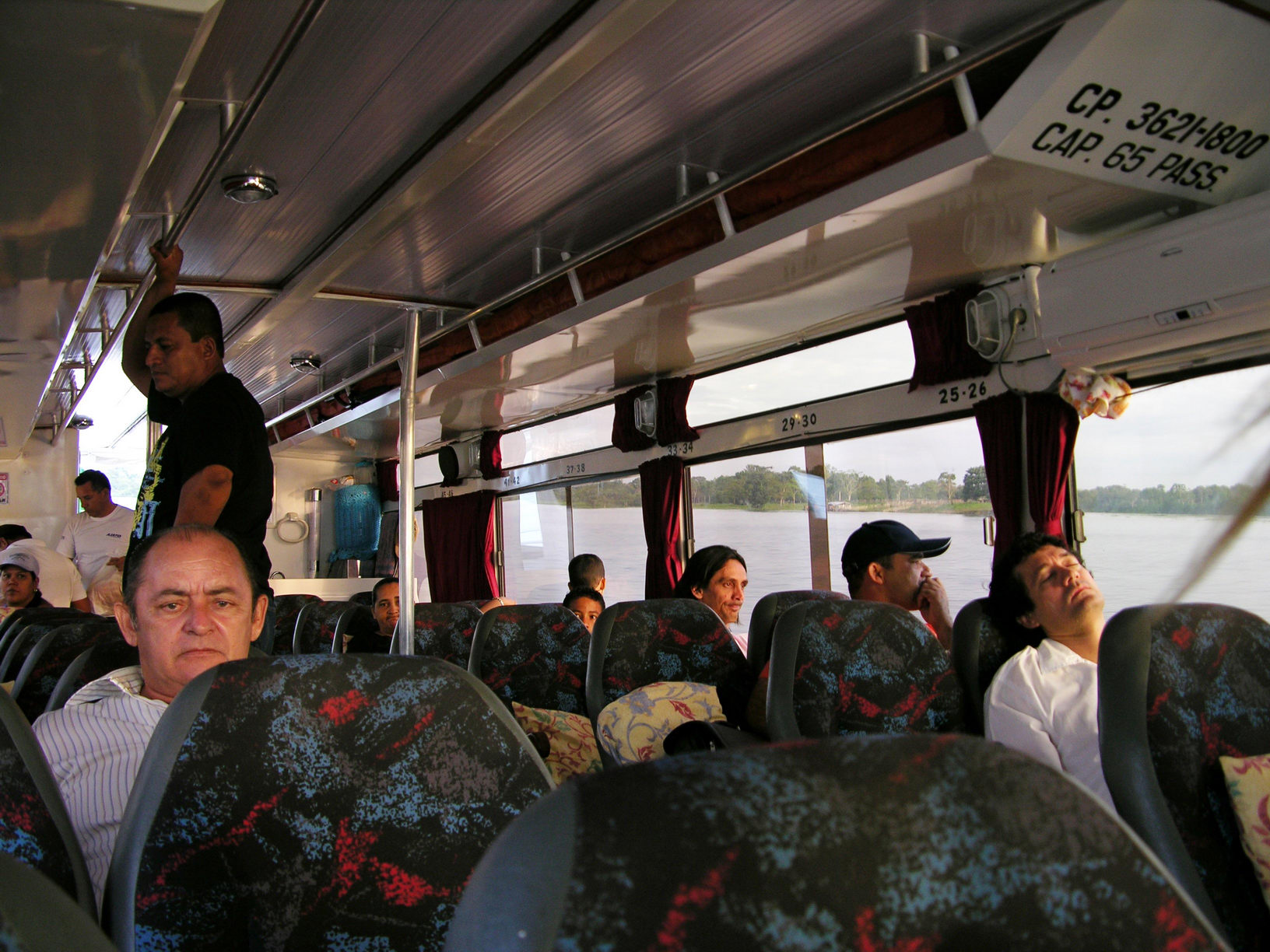
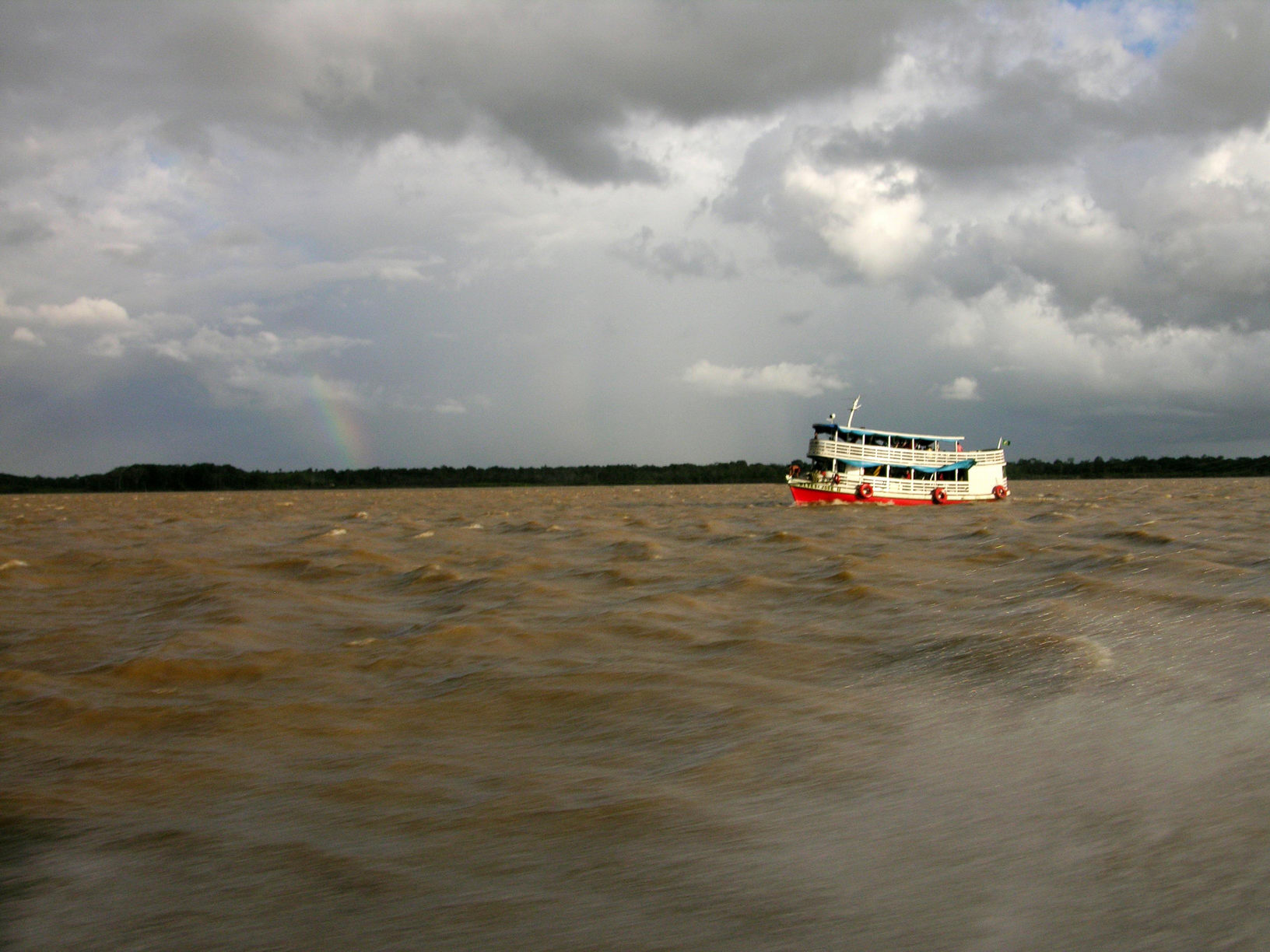
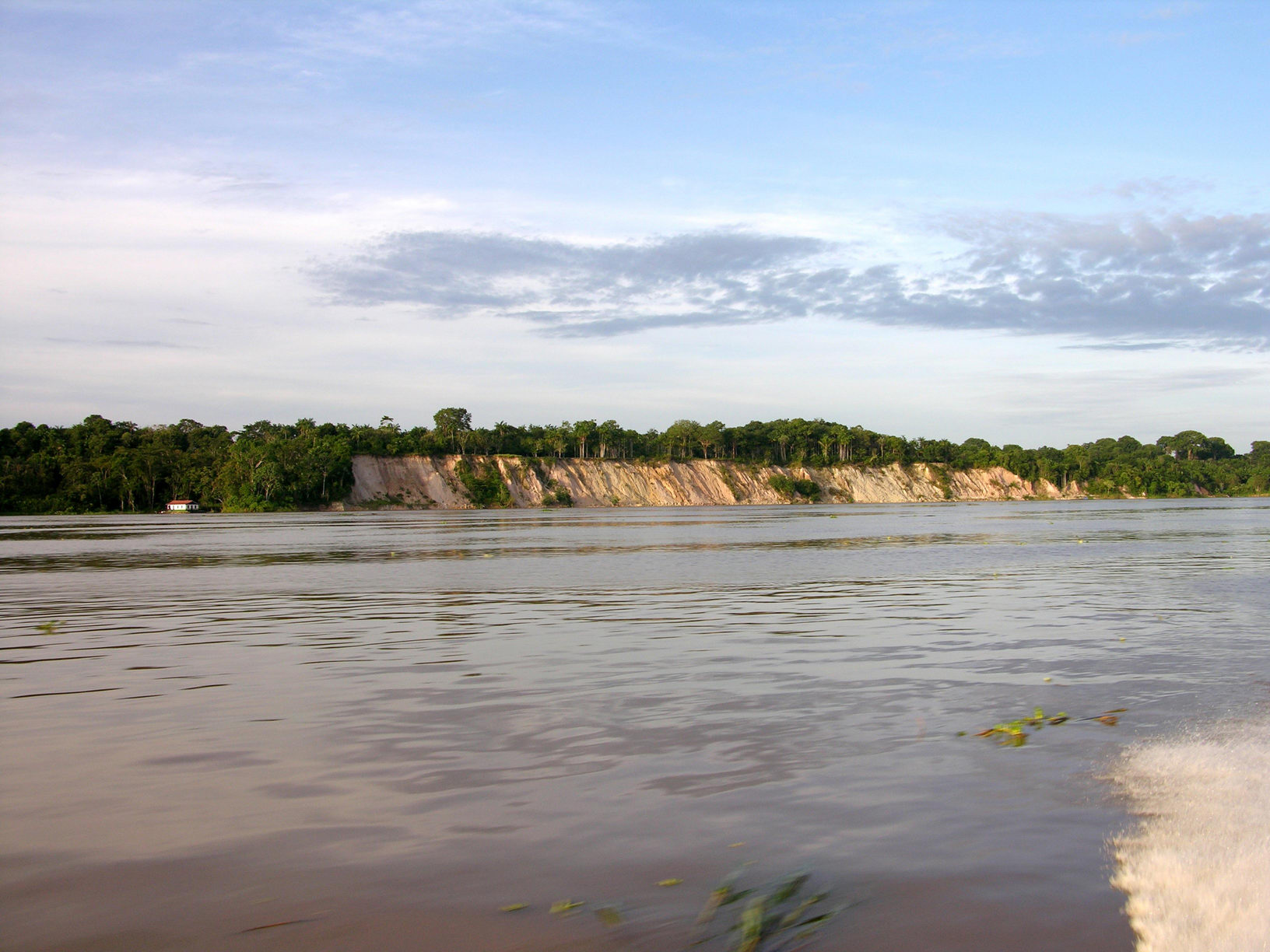
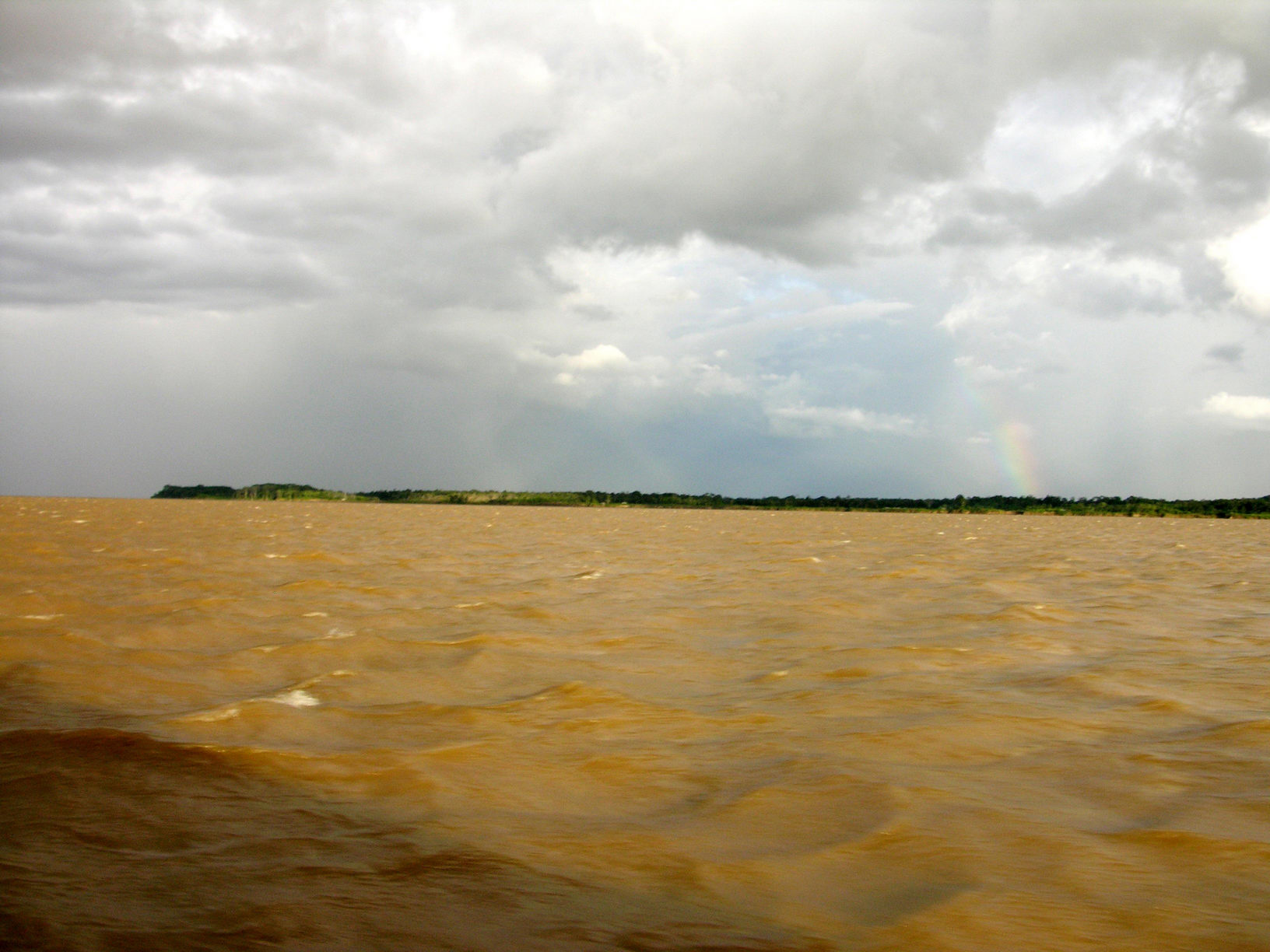
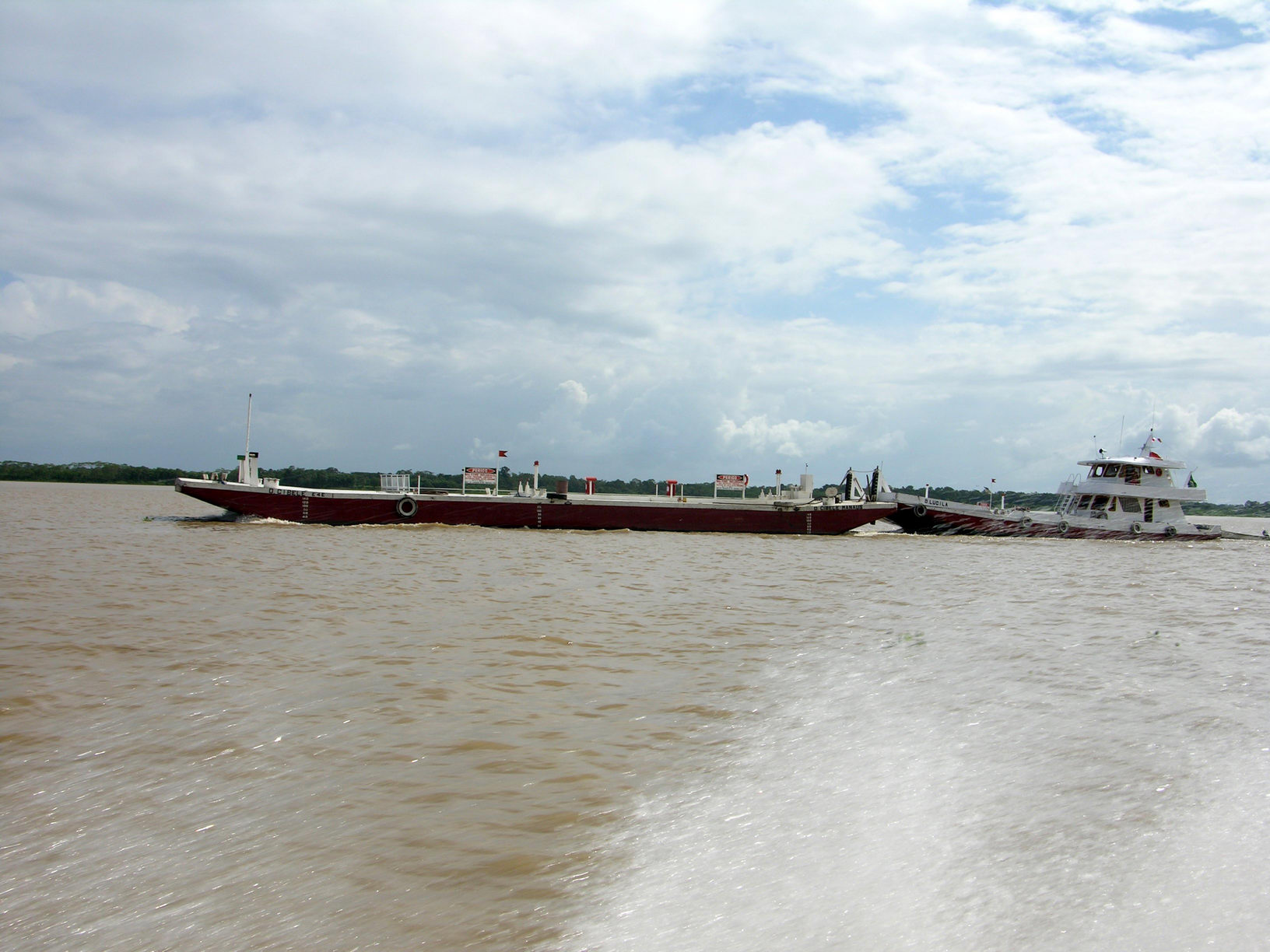
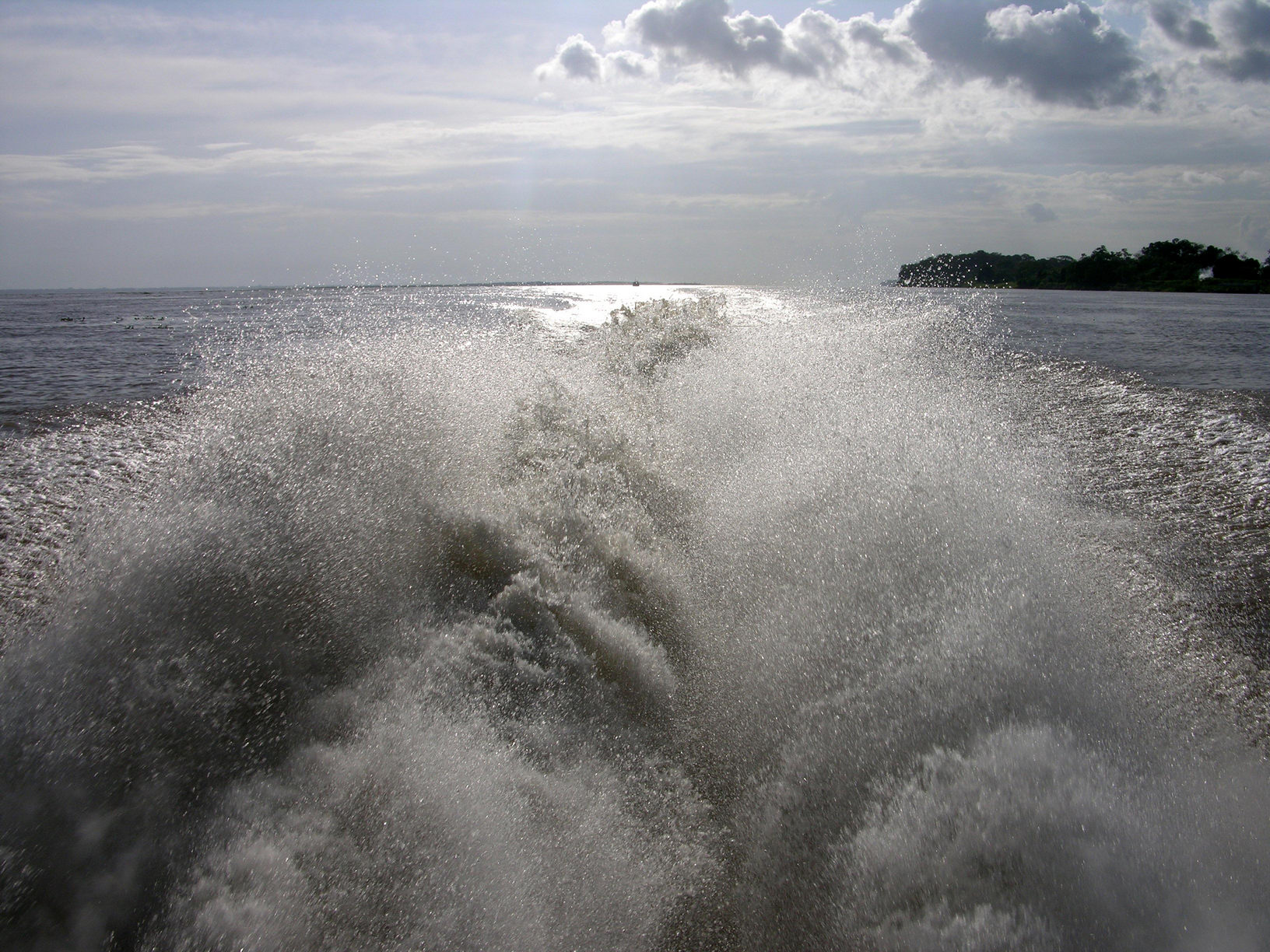
On the way the speedboat makes one stop at Coari, where it takes on fuel.
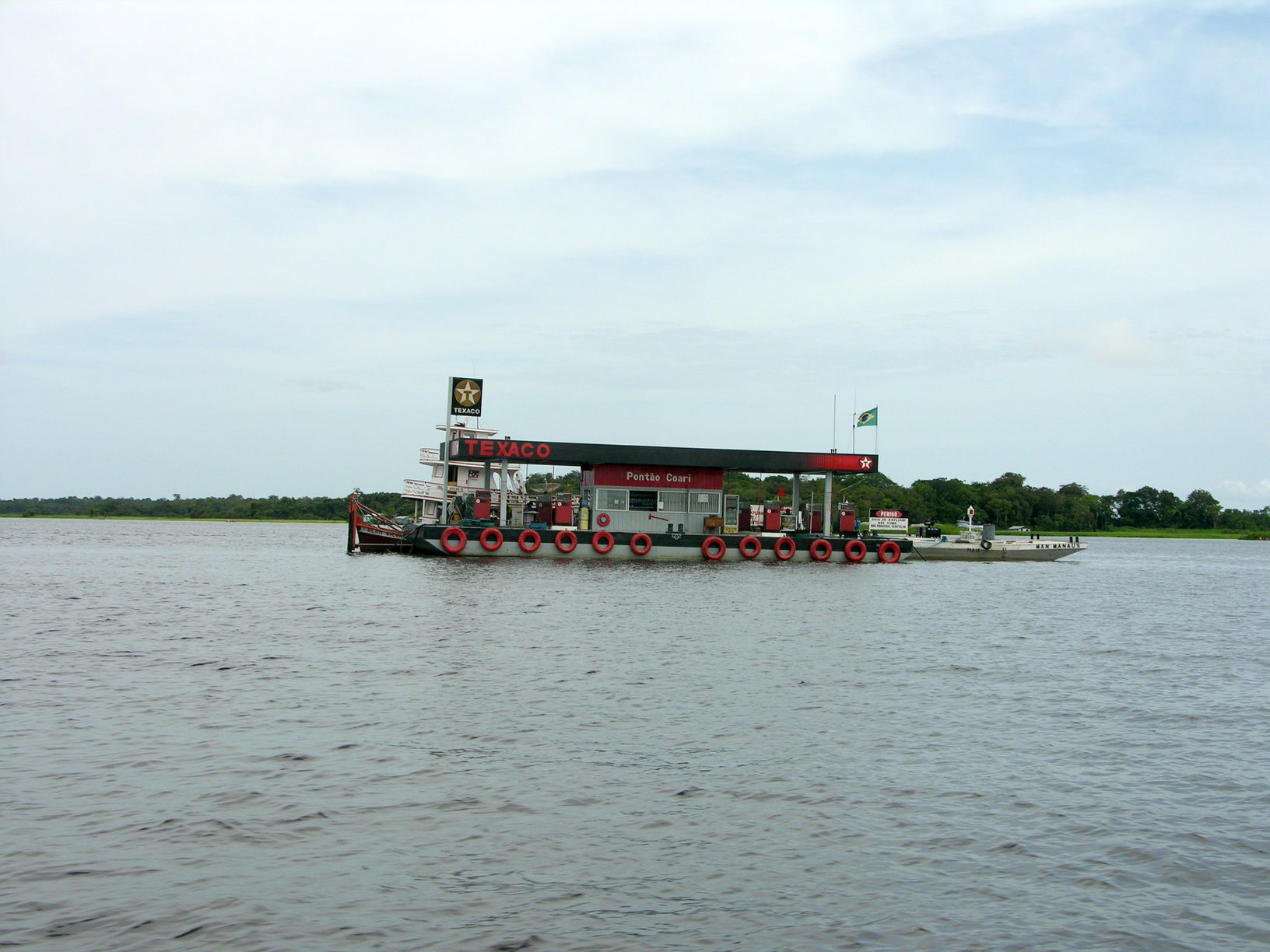
And so once again, for the fifth time, we arrived in Manaus. It was evening already. All we could do was spend the night and drink guaraná. At the stall they recognised us as regulars. For the night we went back to Ana Cassia, where we'd spent our first night. They have a good air conditioner. As well as cooling the air, it dries it out. Hang washed clothes next to it and they'll be dry by morning.
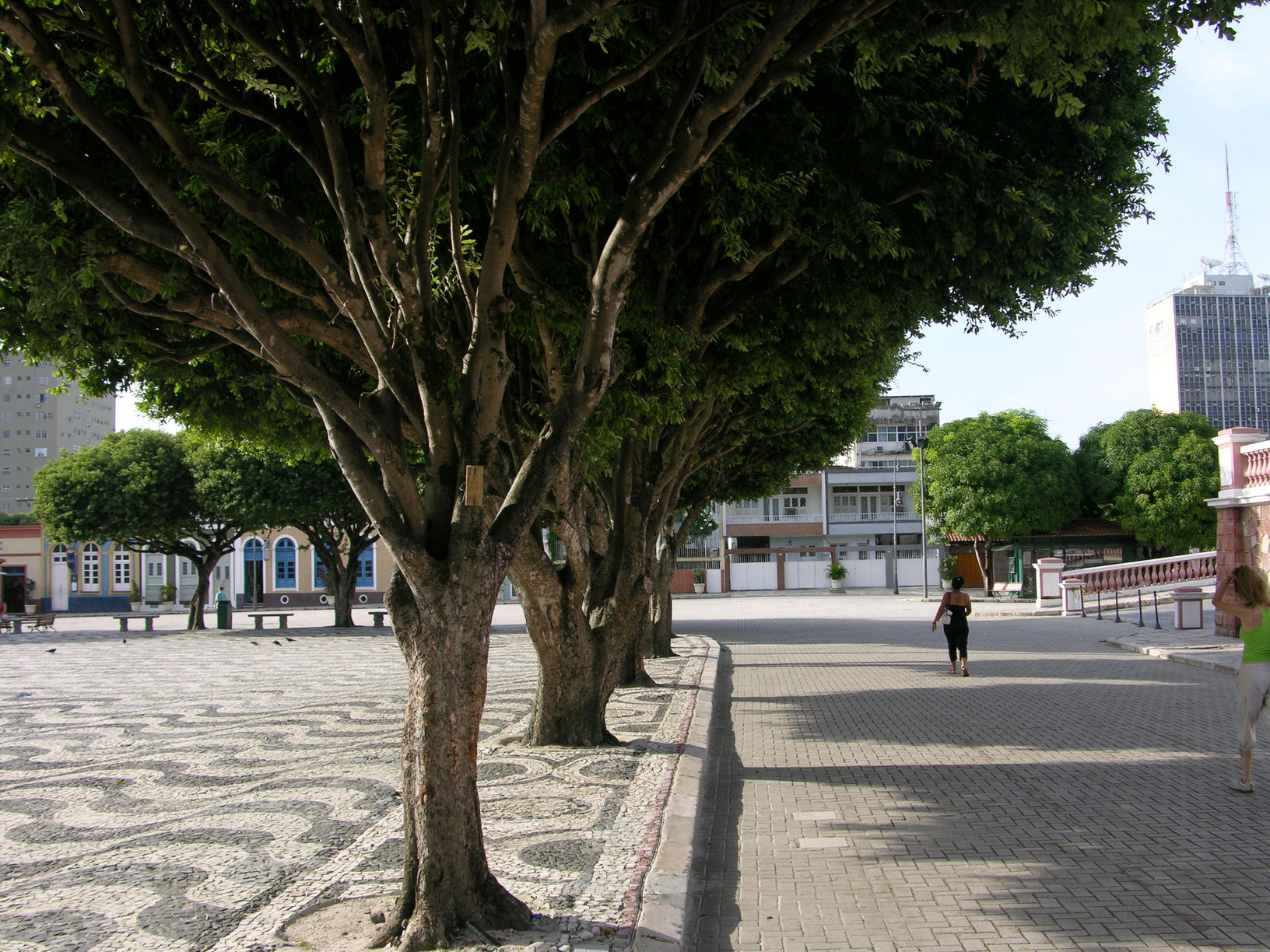
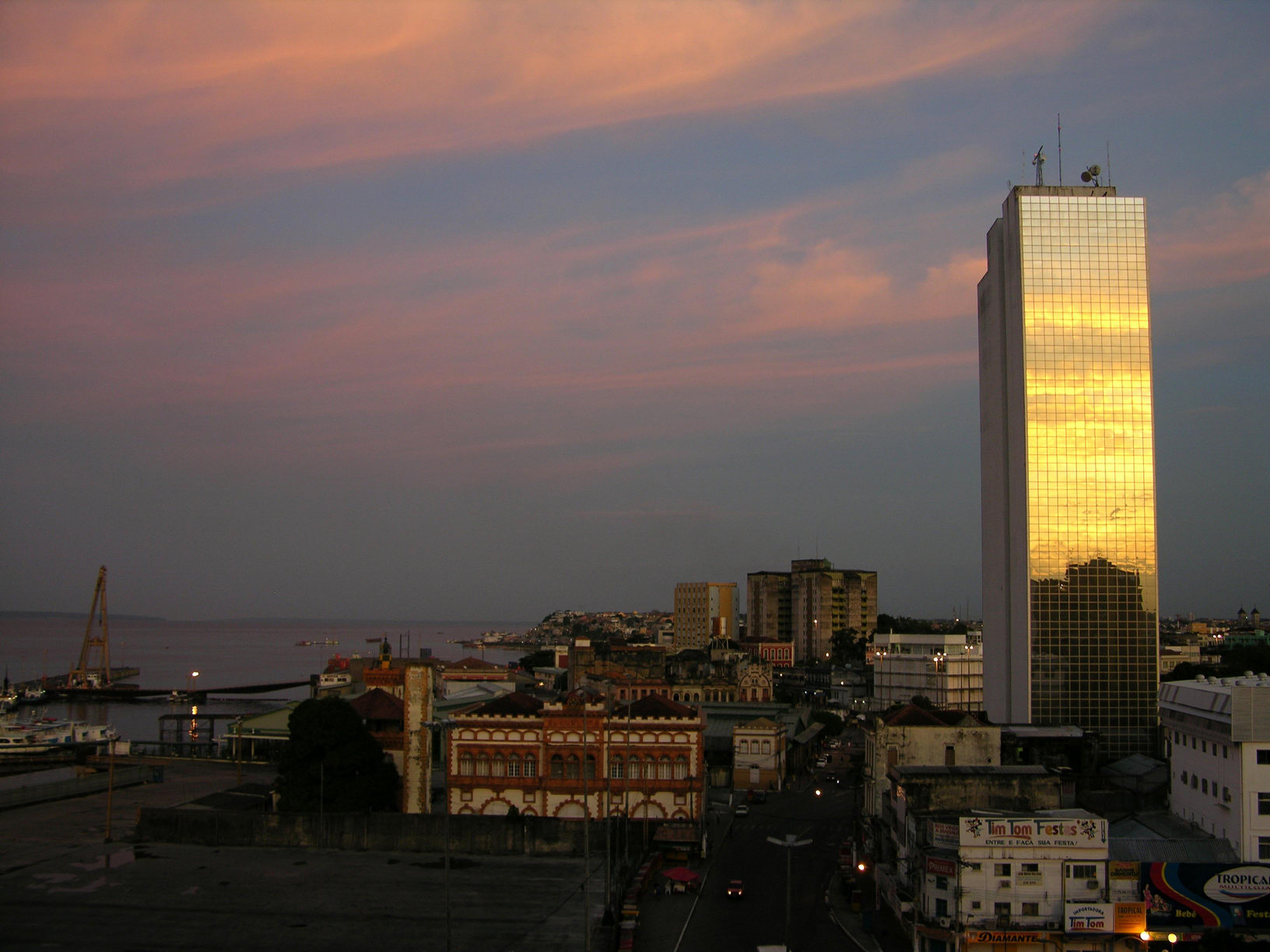
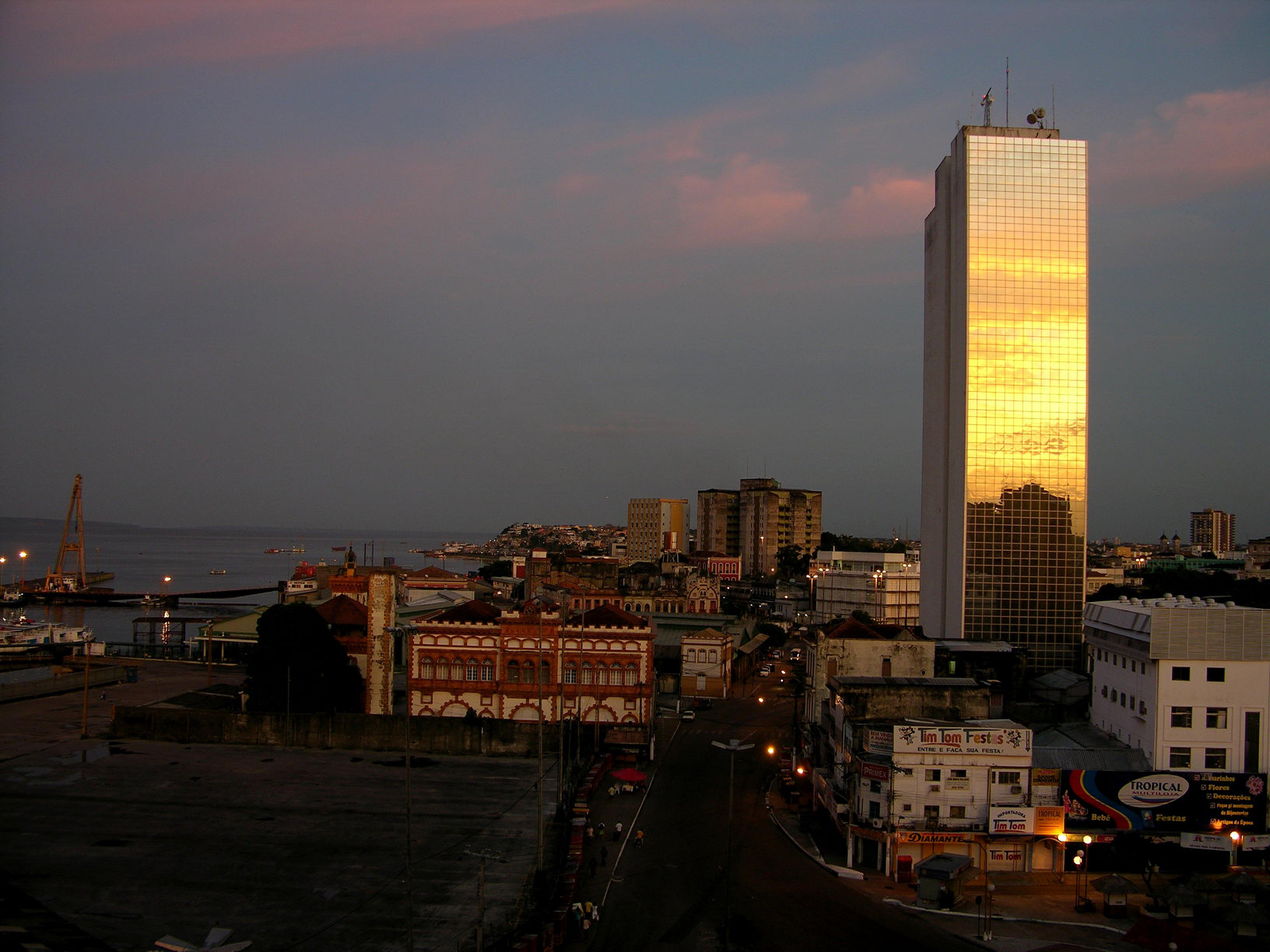
At the ticket office in the morning we found that there was no direct flight that day and we'd have to make three stops. That was even better.
While waiting for the flight we walked the little streets of Manaus one last time and drank our last guaraná. We'd been here twelve days. About time, at last, we cleared out.
This time it was a TRIP flight for 630 reais (TRIP website). The route follows the Amazon.
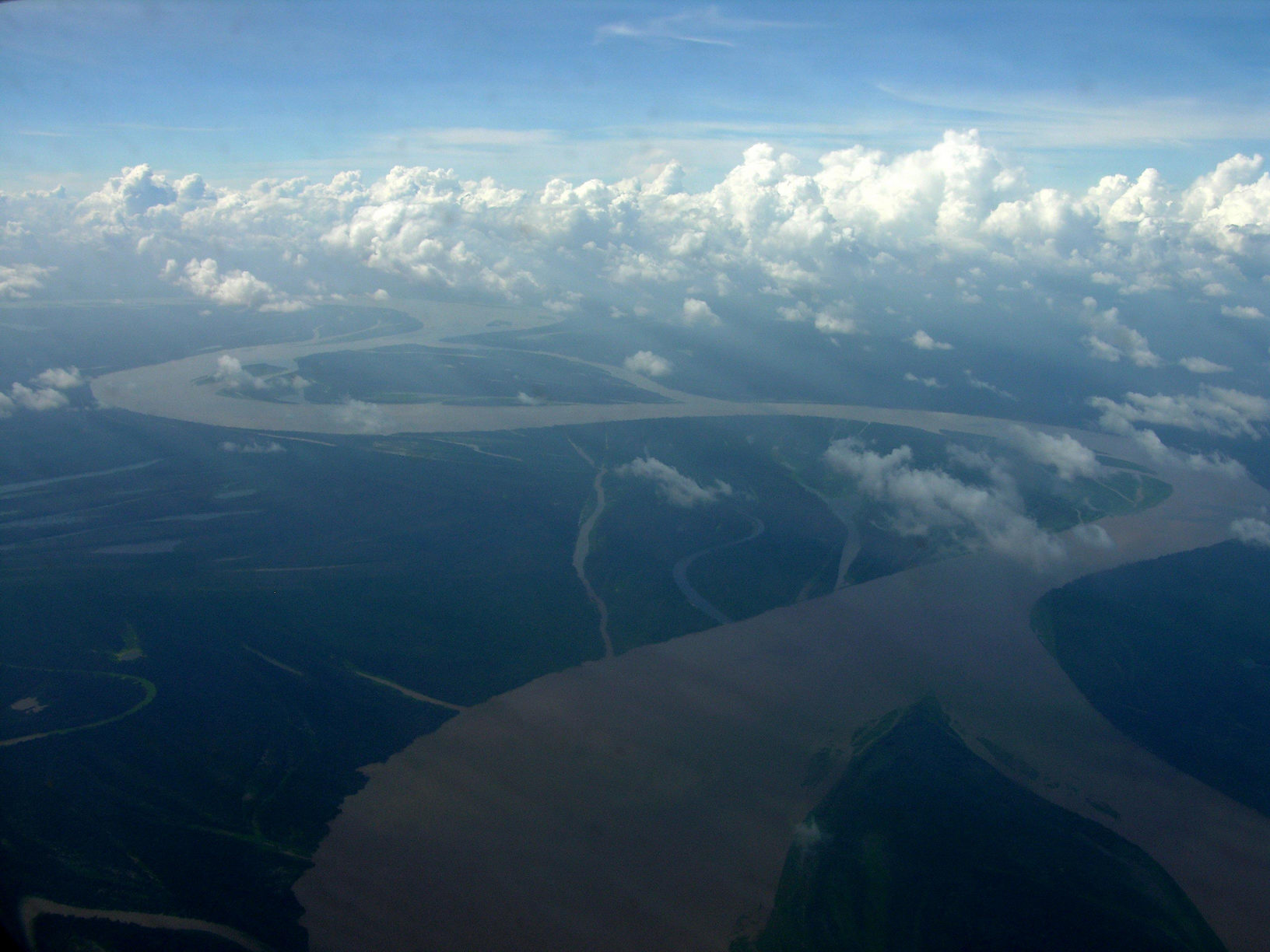
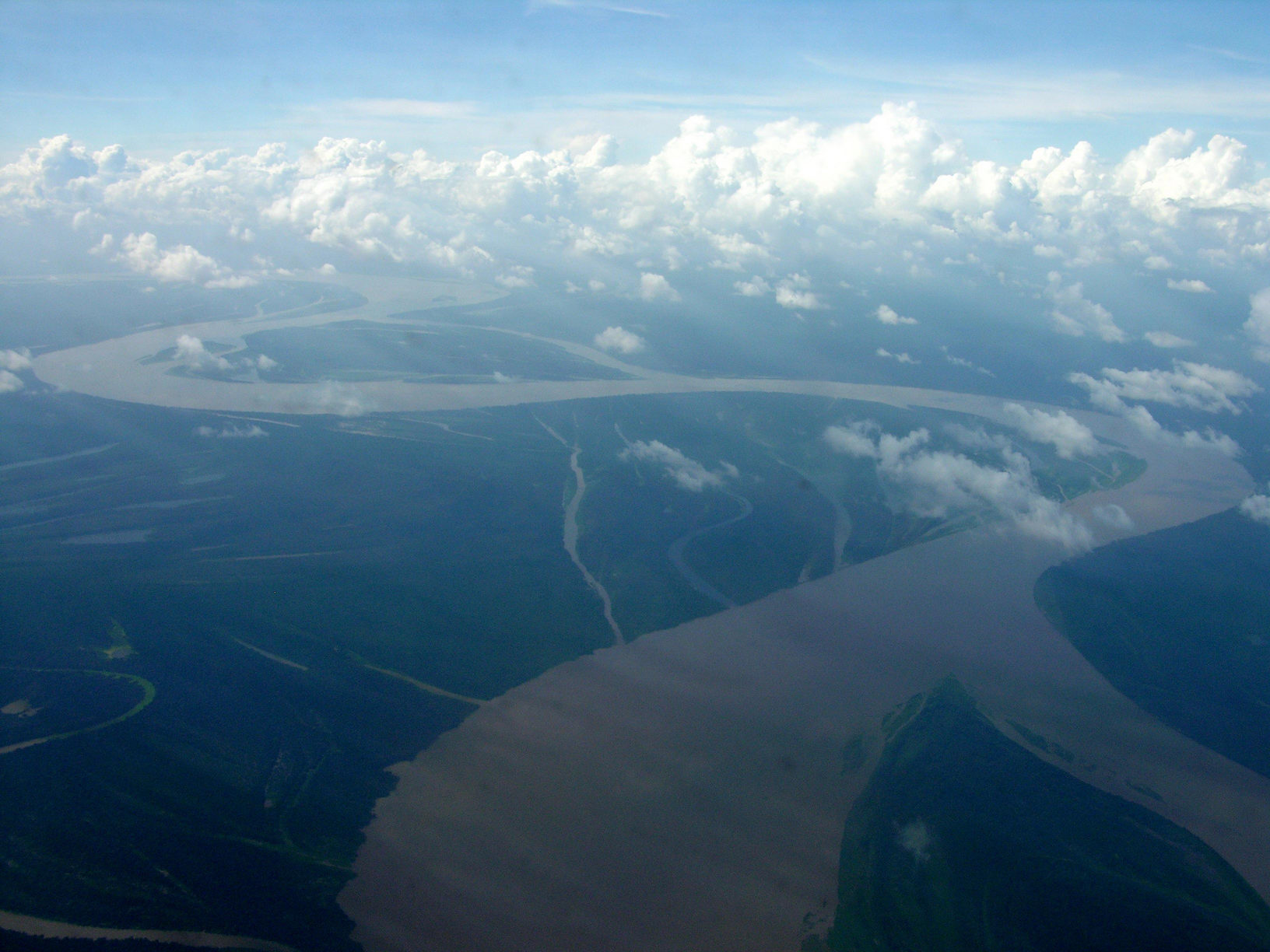
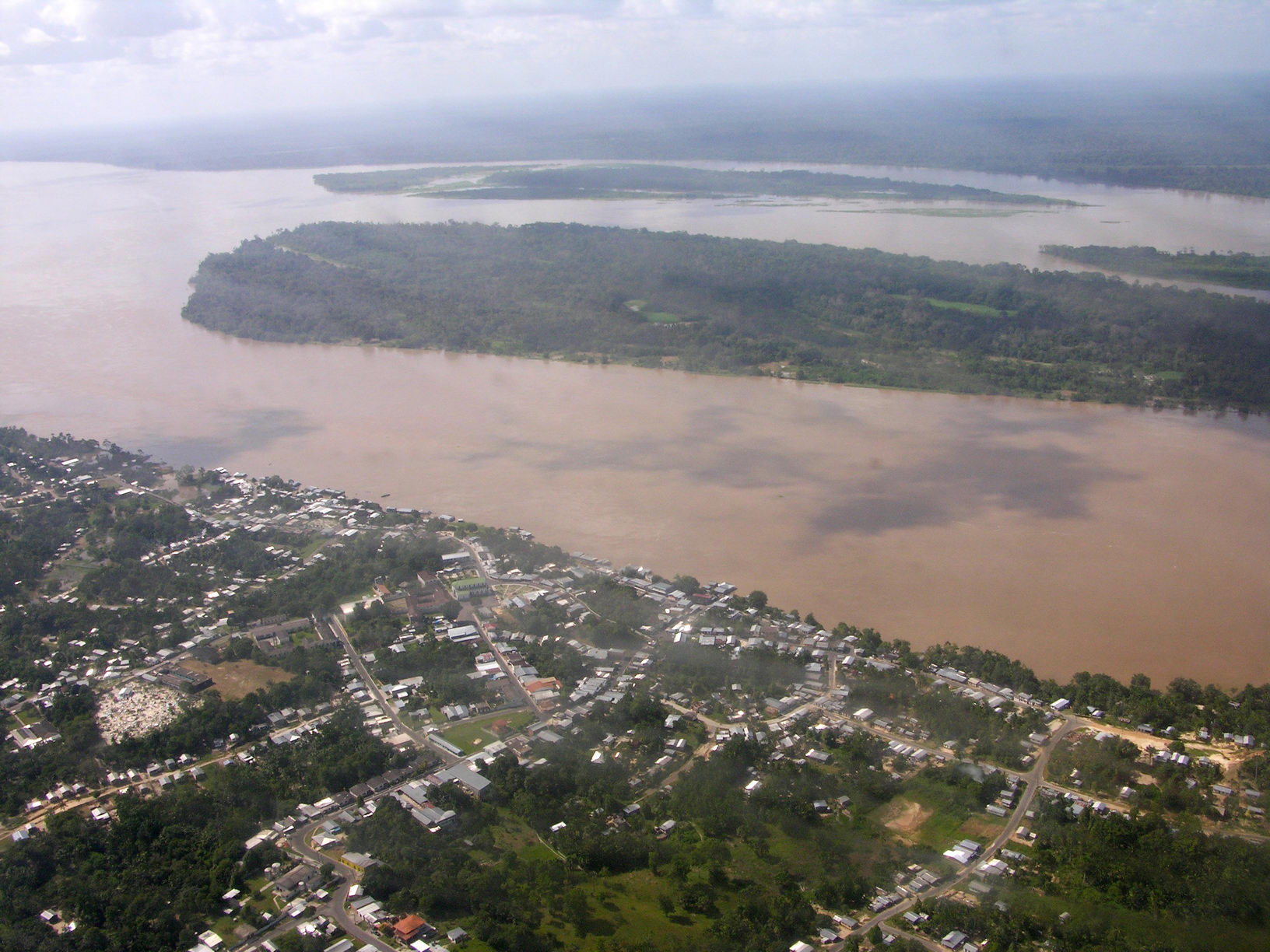
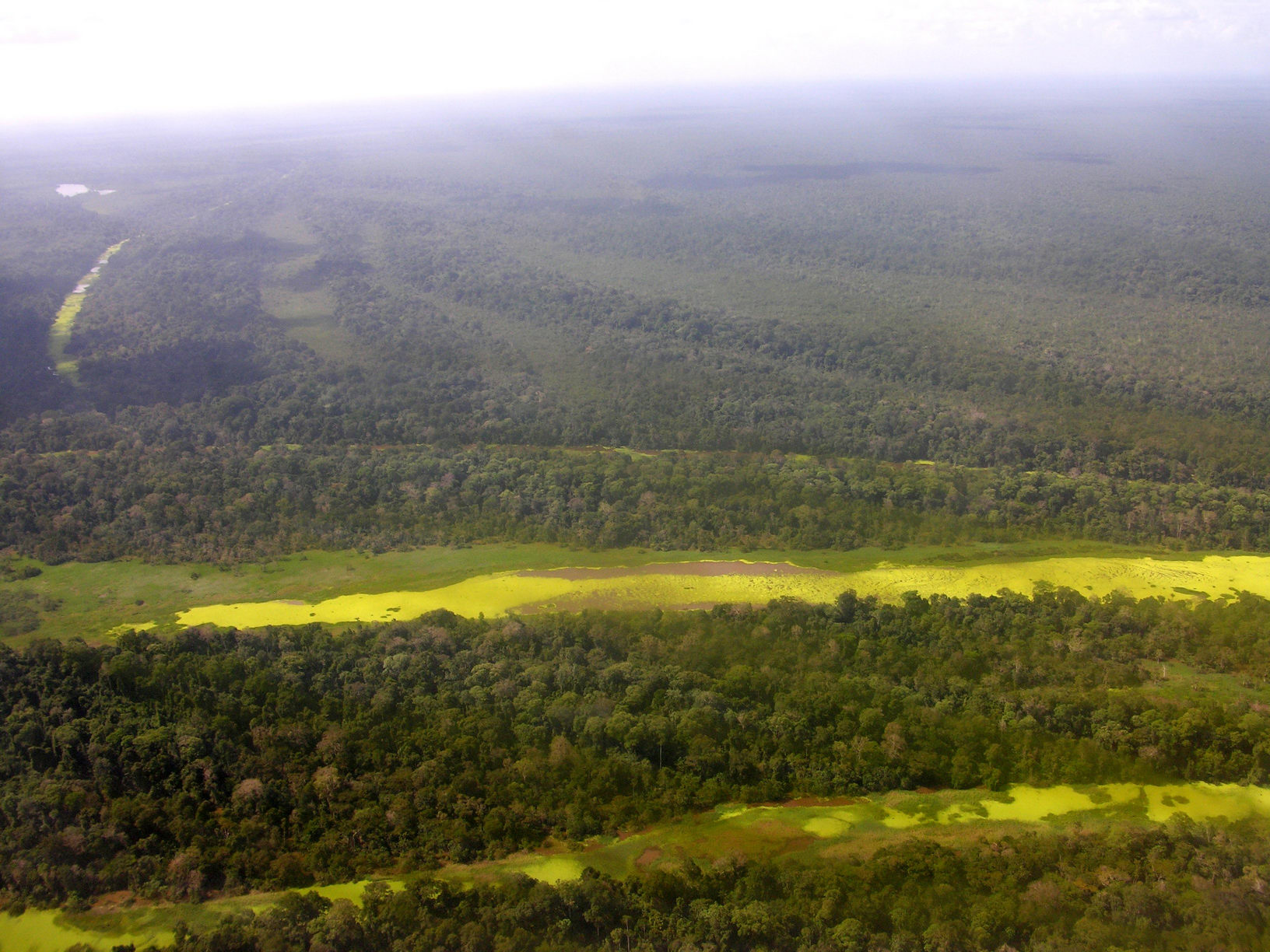
The little plane visited all the ports that we'd sailed past on the boat. It was interesting to see them from above. Indeed the Amazon itself was splendidly visible, since on such short hops the plane didn't have time to climb high.
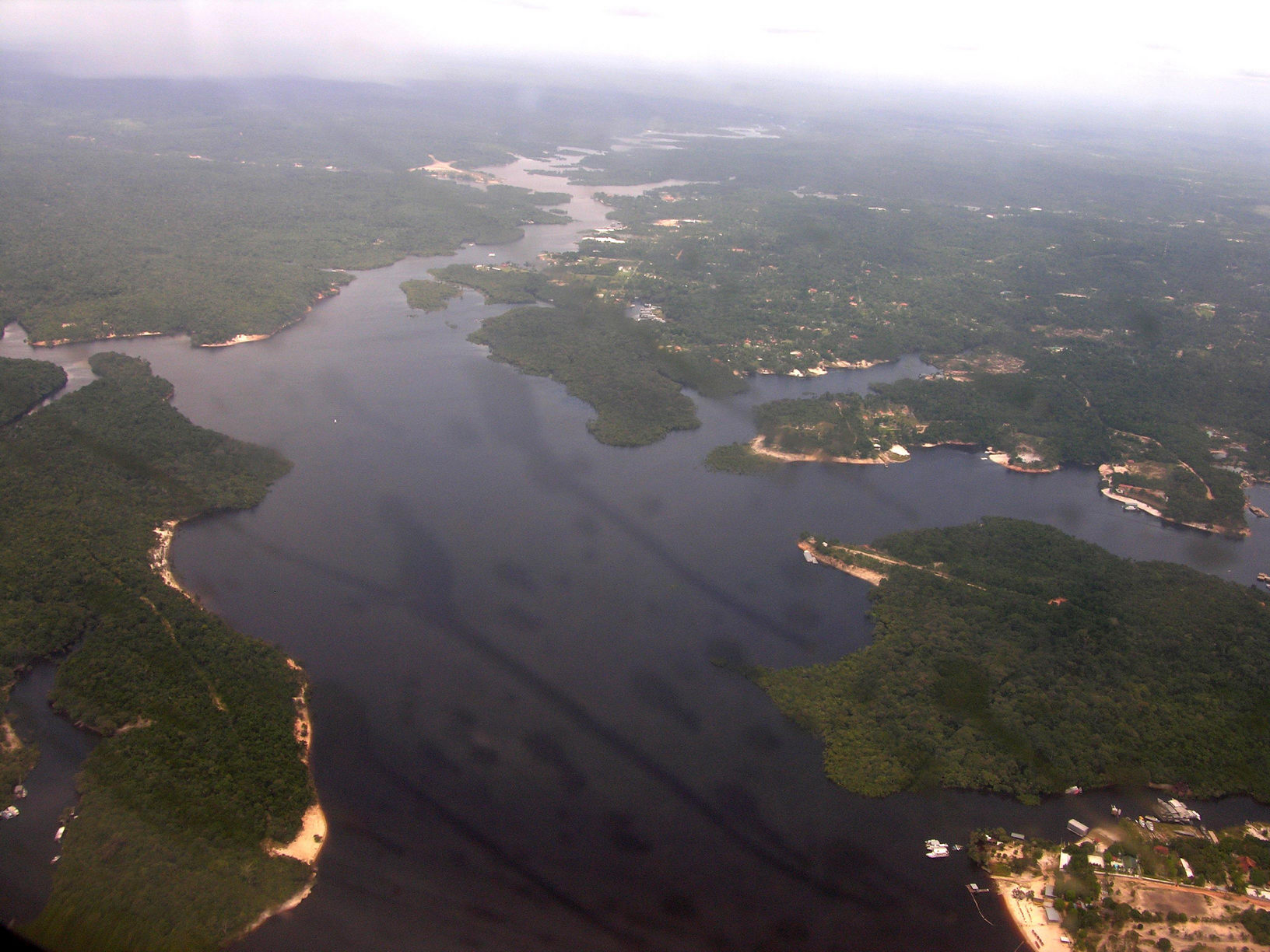
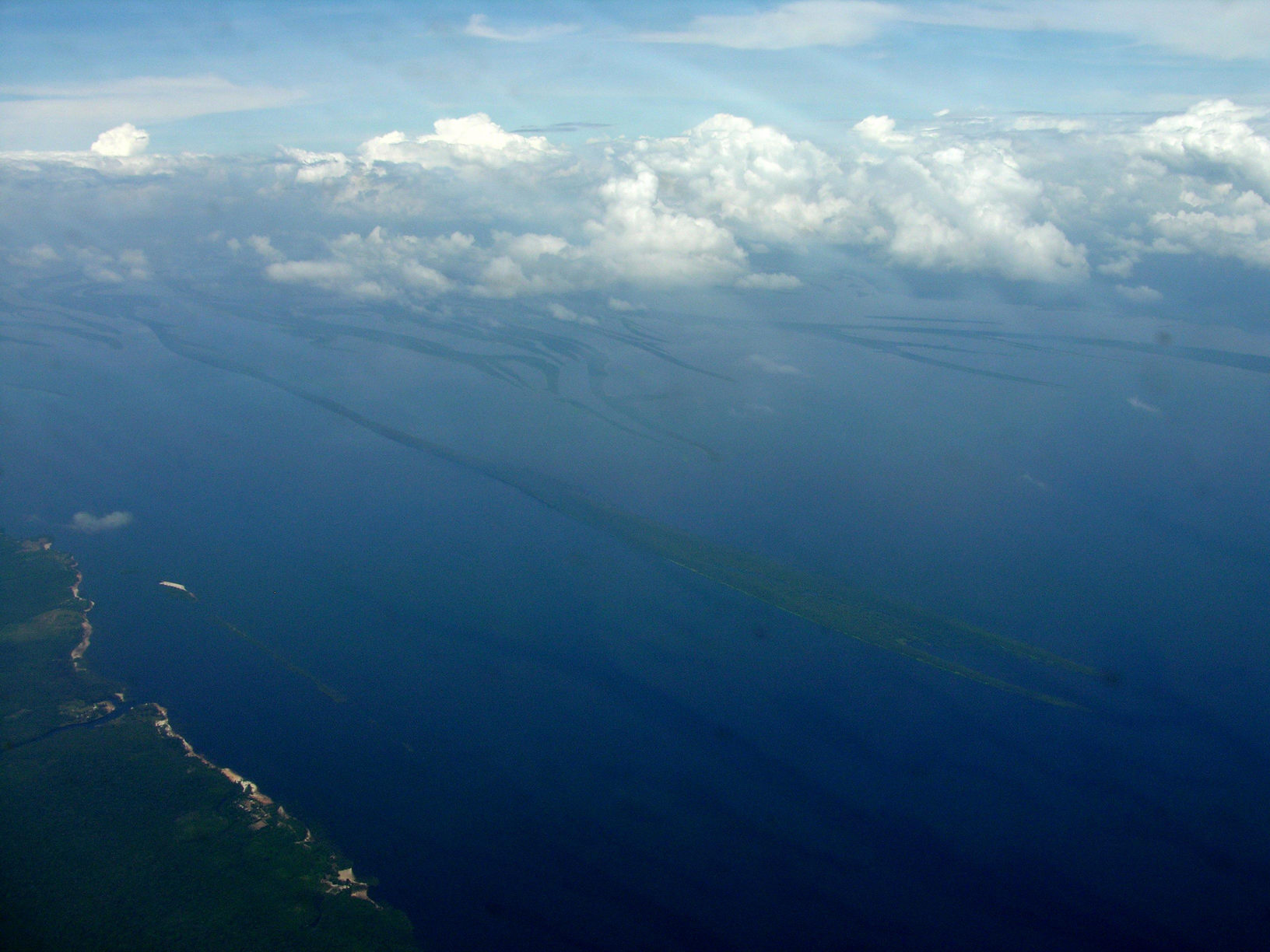
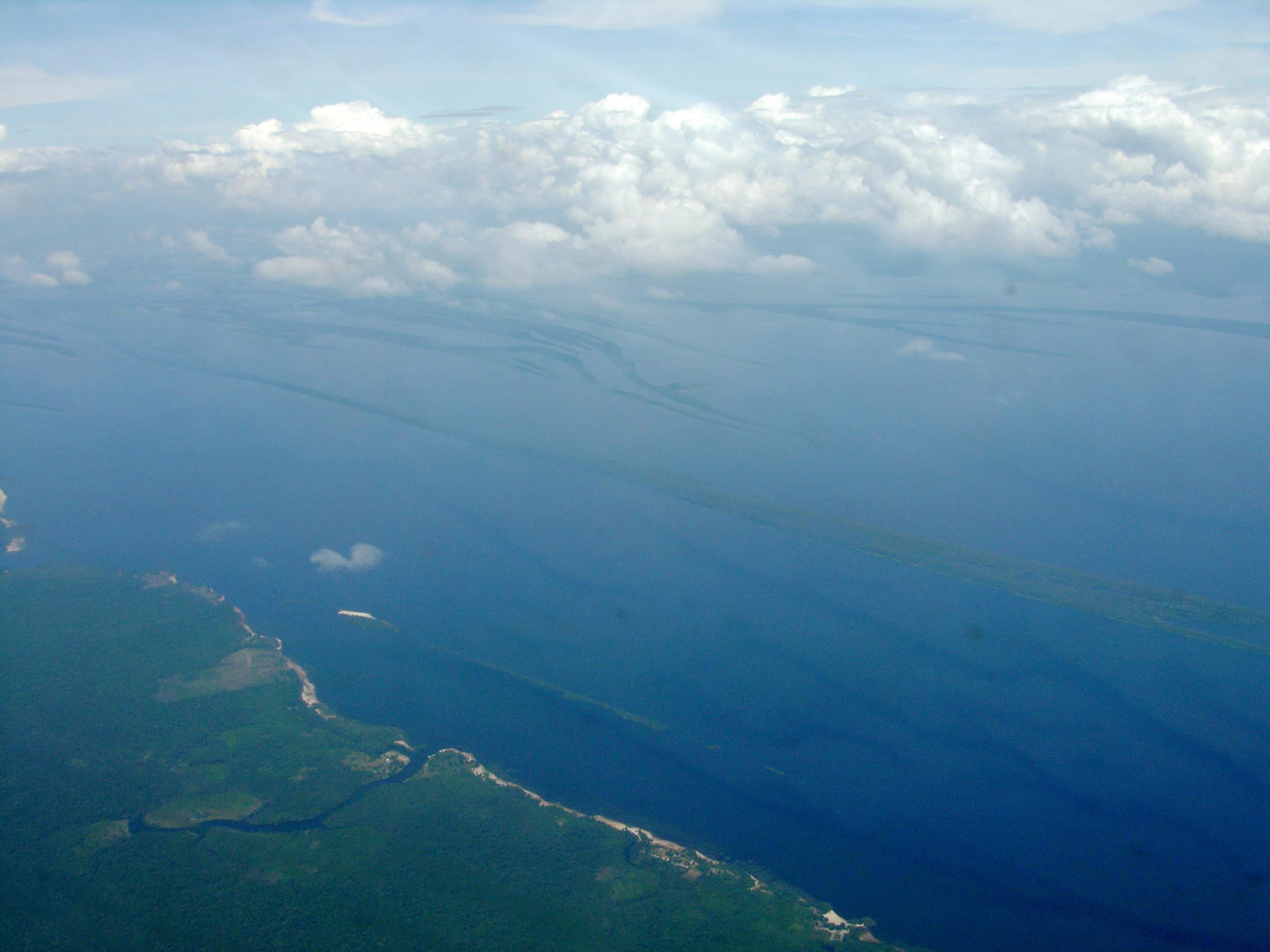
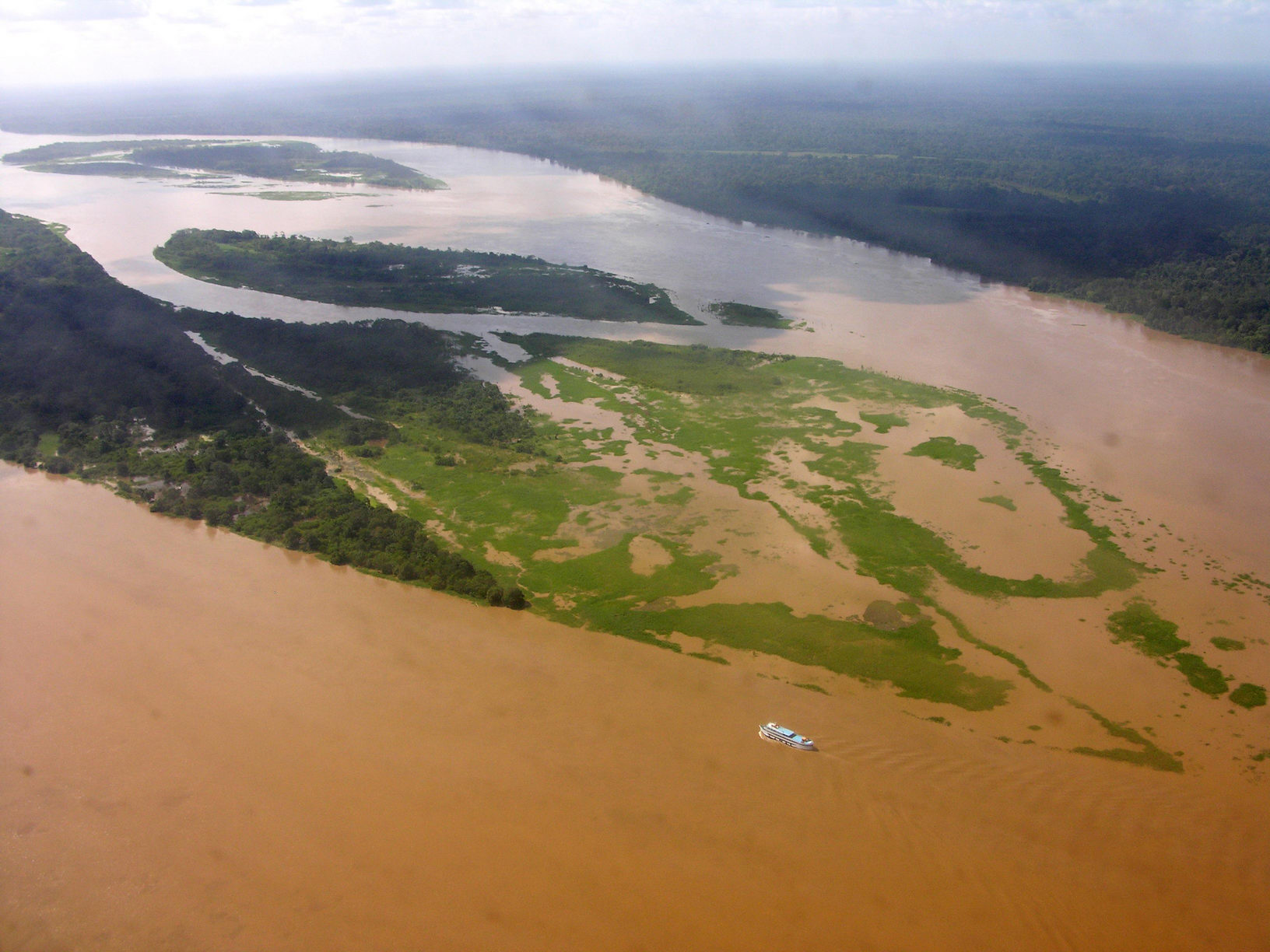
From Tabatinga airport we took a taxi straight to Leticia, in Colombia.