Trip report
In autumn 2015 I drove north for the last time to do maintenance work on the railway. The amount of work had been shrinking year by year, and by then I only had a handful of stations left on the line around Kem. Railway staff were being laid off and management moved to distant towns where labour was cheaper. The Saint Petersburg branch I’d dealt with had closed. There was no one left to talk to and nothing to talk about. It would be easier just to abandon the whole job. If the fire suppression systems work, fine. If they don’t, apparently that’s even better. I still had one contract to see through. I set off in the morning and reached Kem that evening. It was freezing out, but there was no snow yet. That actually helped: I could drive over the frozen mud to some good campsites.
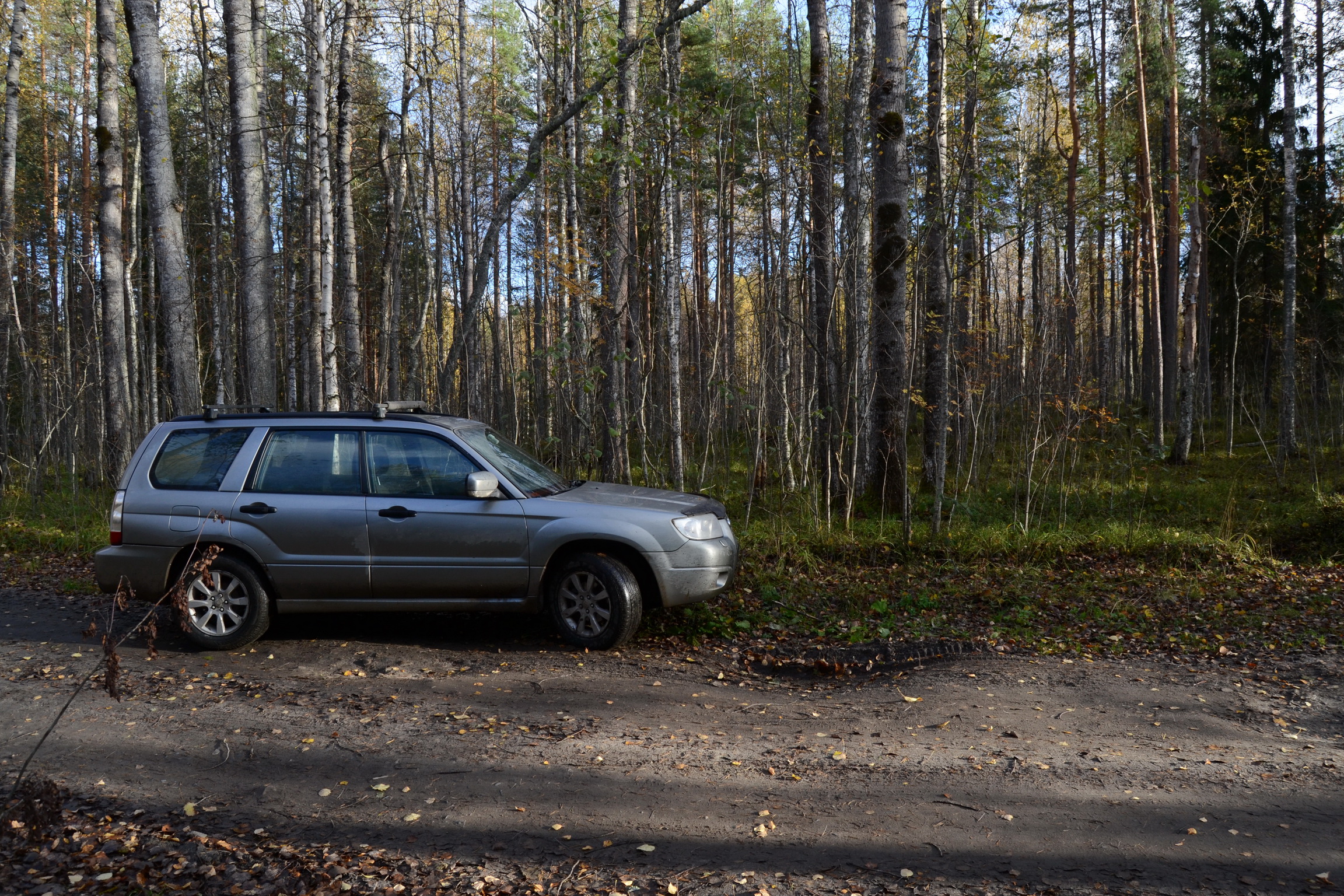
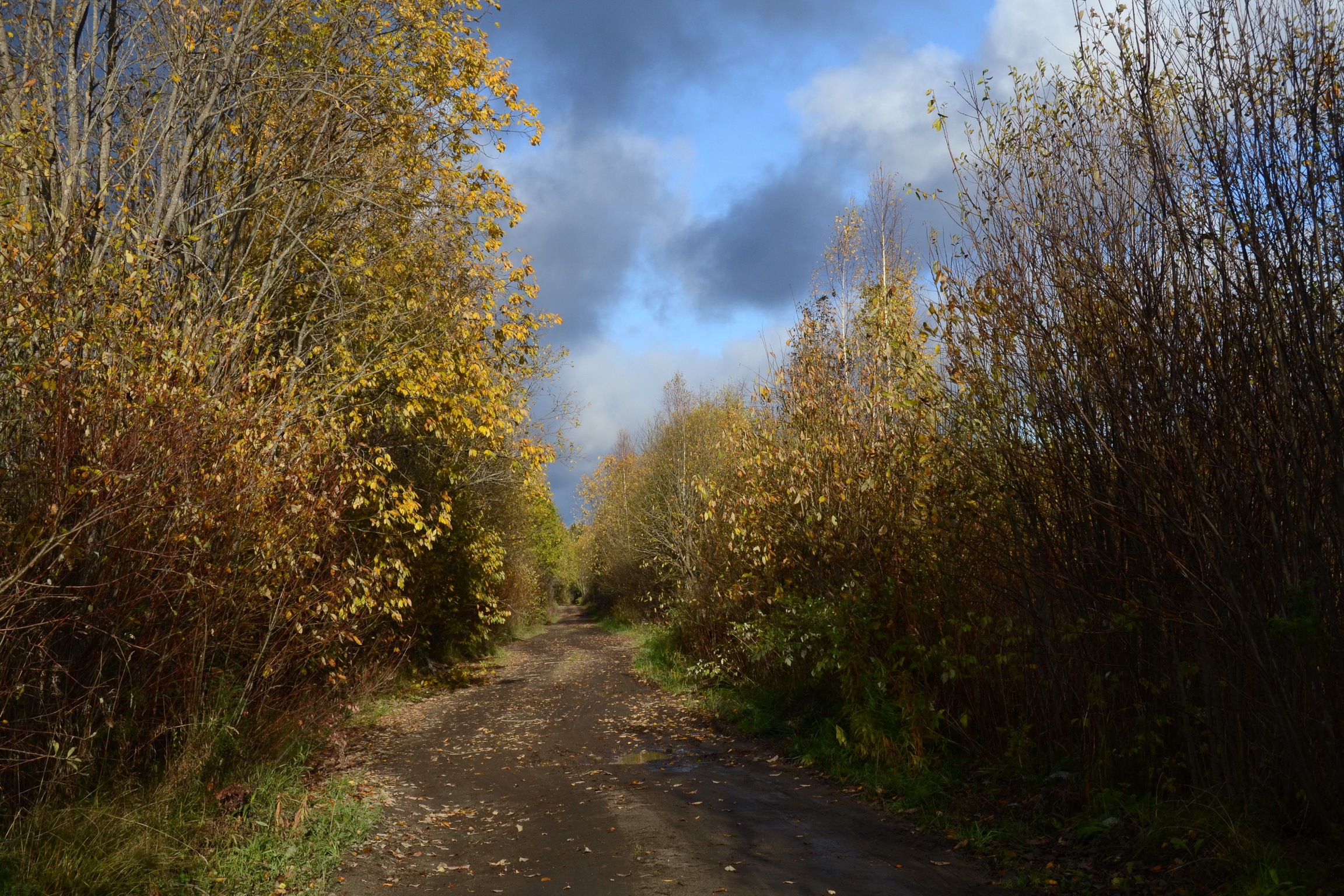
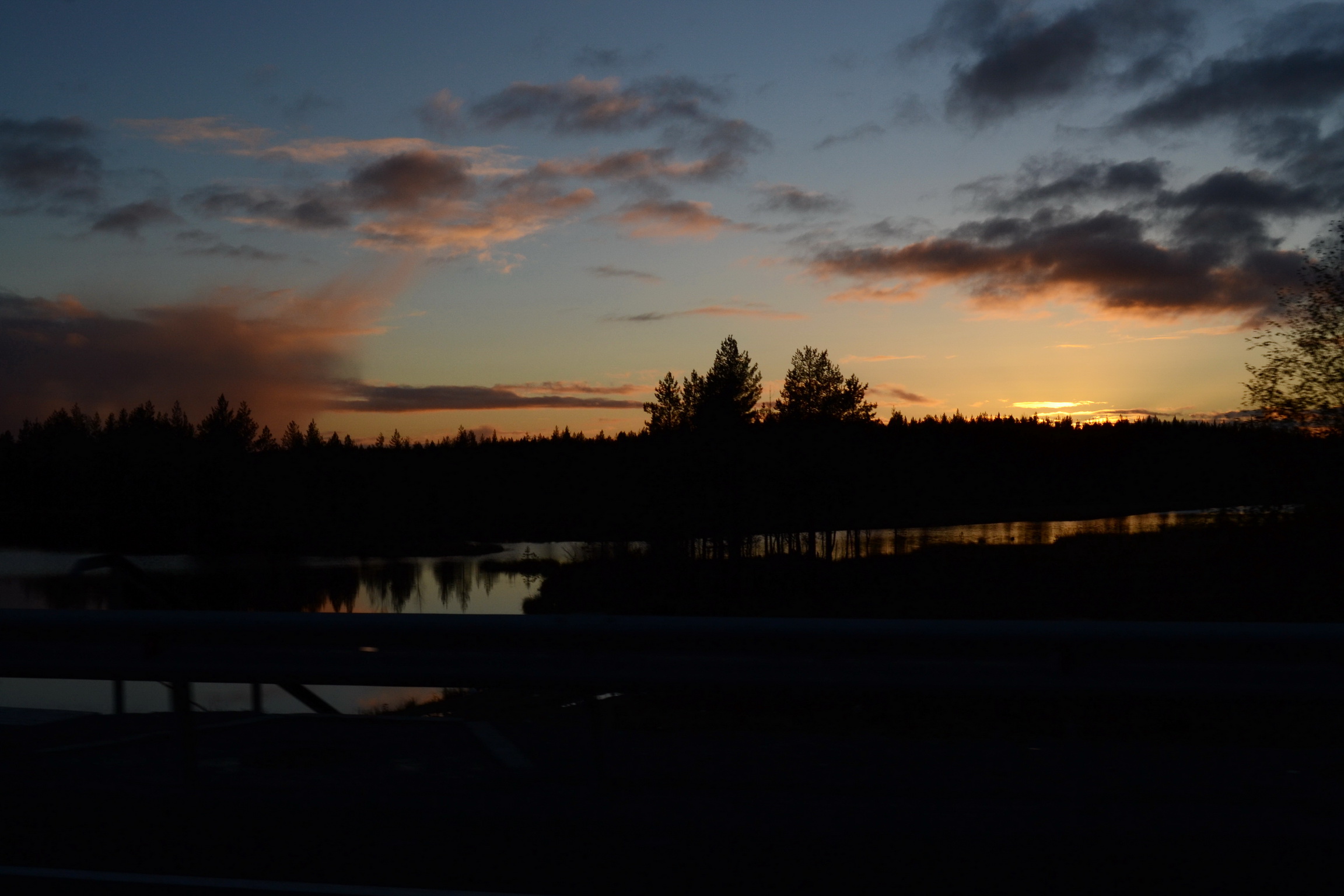
On the road I’d noticed odd flashes of light. At first I thought they were the headlights of oncoming cars in the mist, but I soon realised I was looking at a magnificent display of the northern lights.
By the time I pulled up on the bank of the Kem River (64°57.213′N, 34°05.896′E), the flashes had turned multicoloured and spread across the whole sky. I’d never seen such a beautiful aurora. I spent ages trying to take photos. What a shame I didn’t have a good camera with a sensitive sensor. My D90 had died on the Worsley River in New Zealand that spring, and I hadn’t bought the D750 yet.
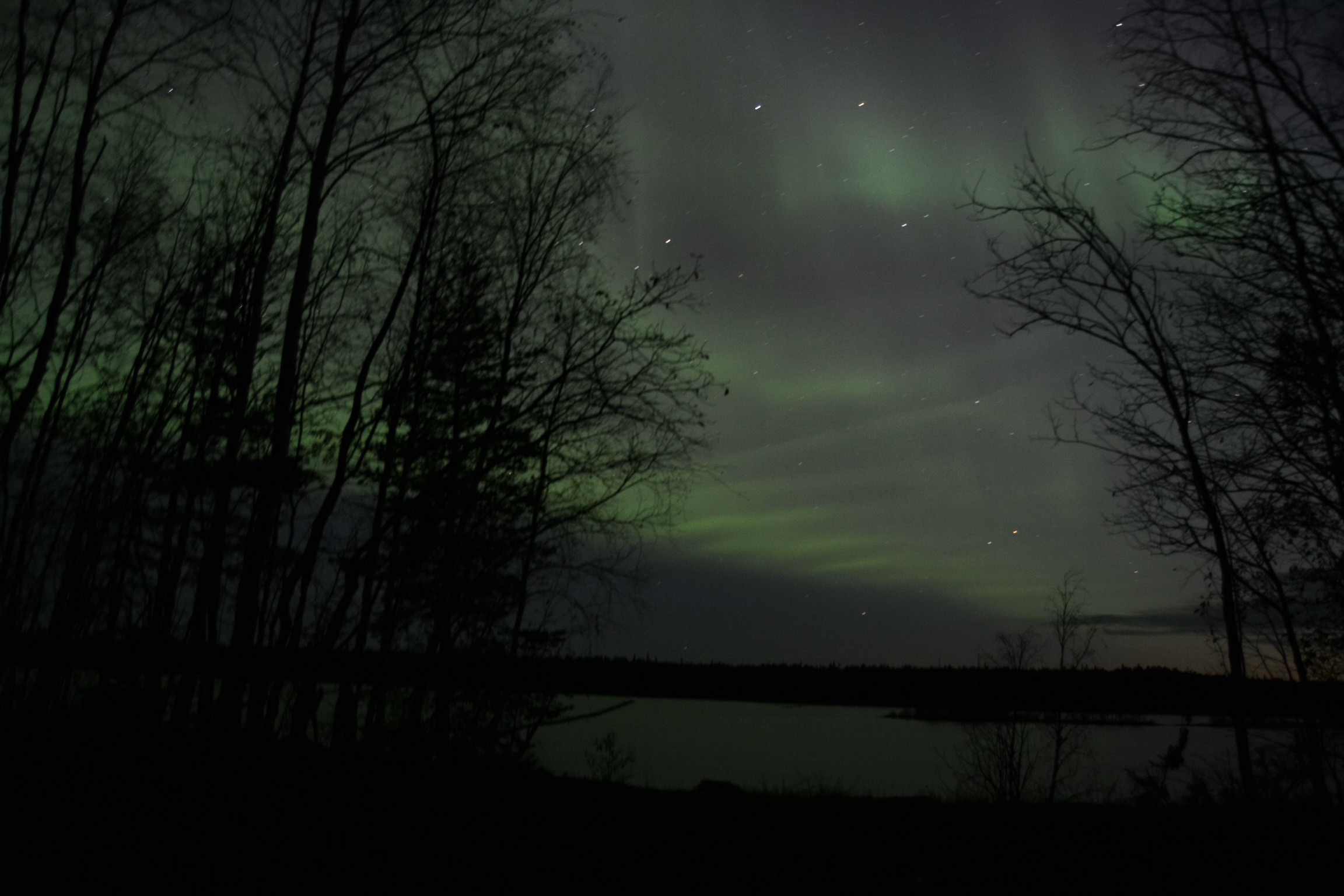
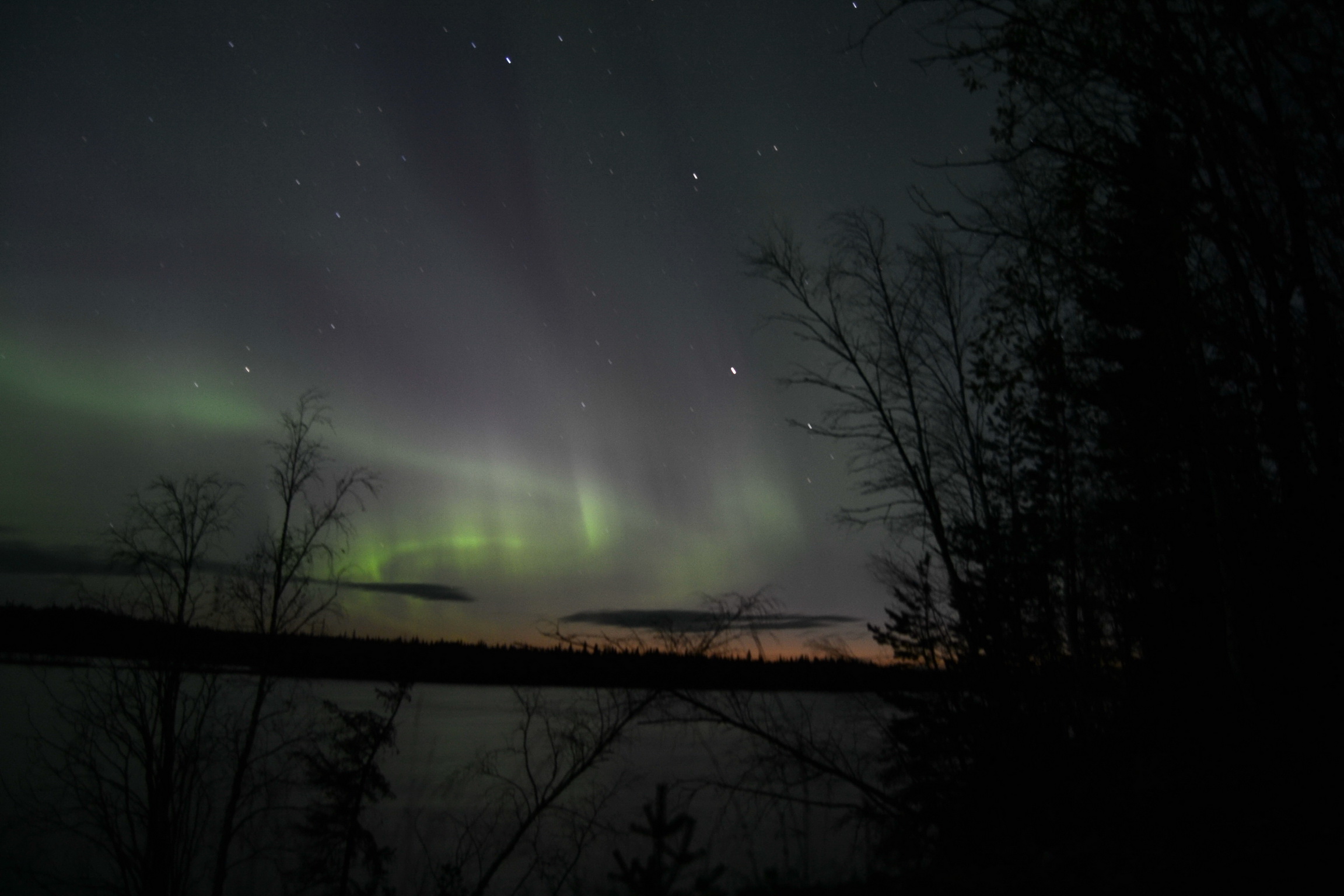
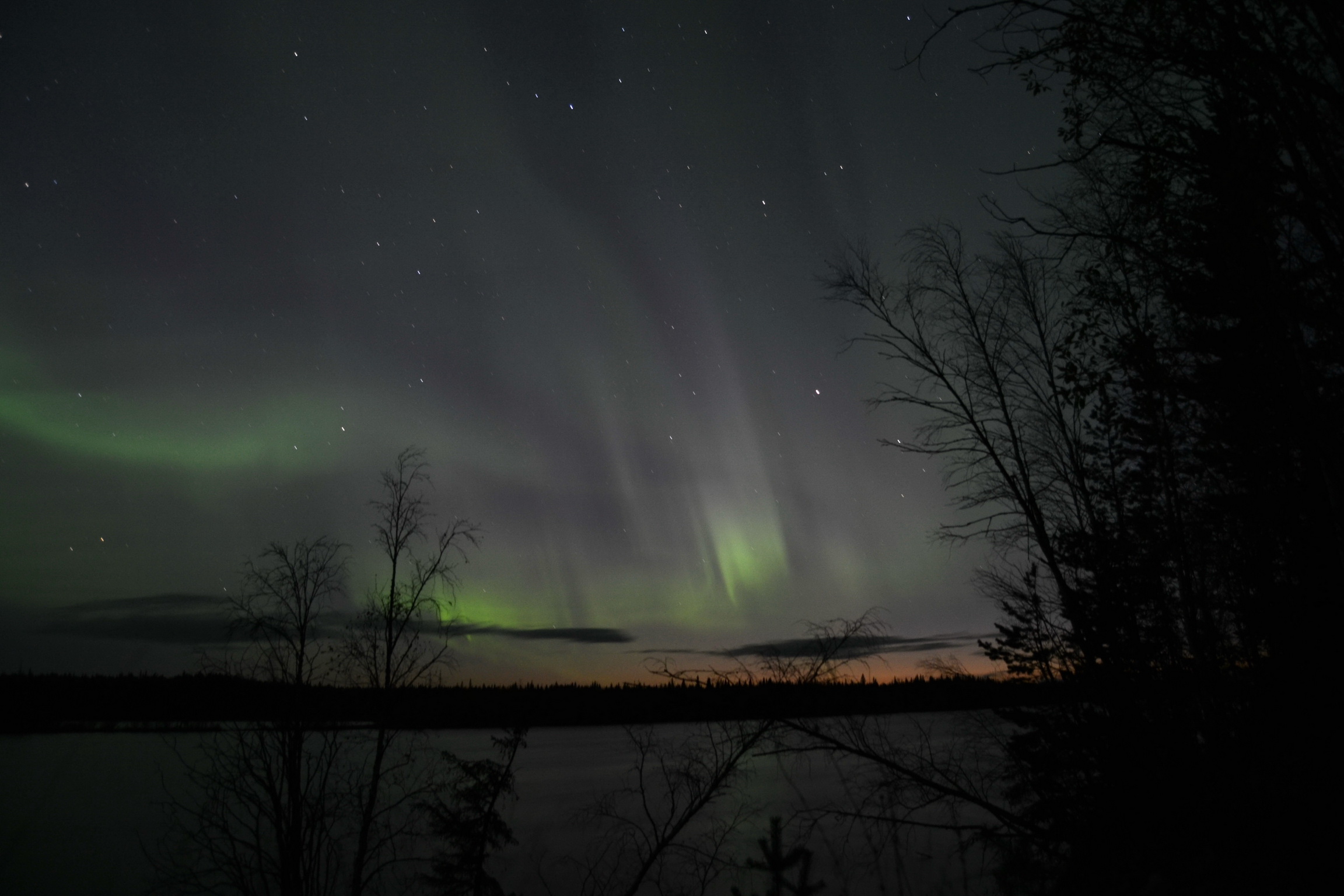
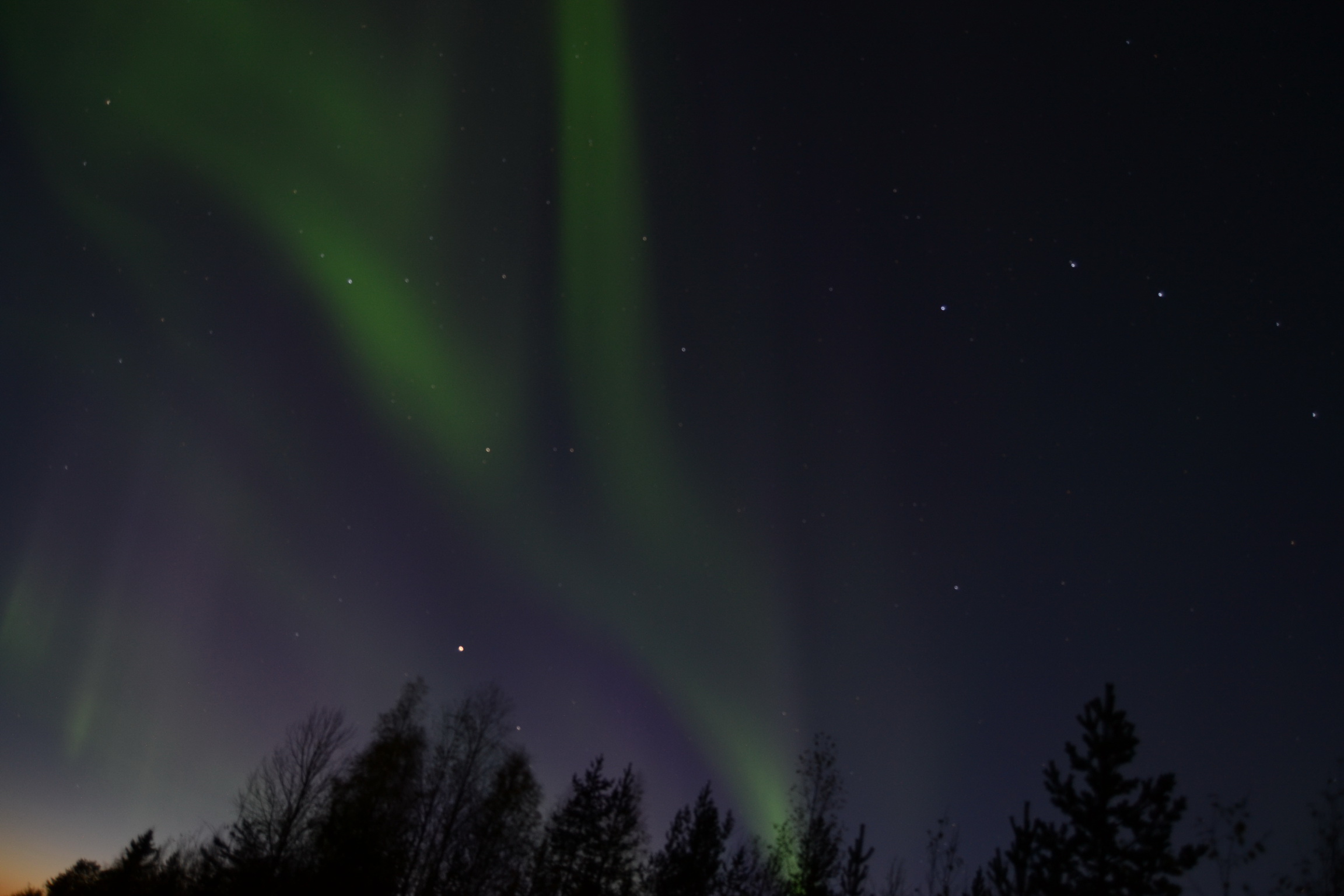
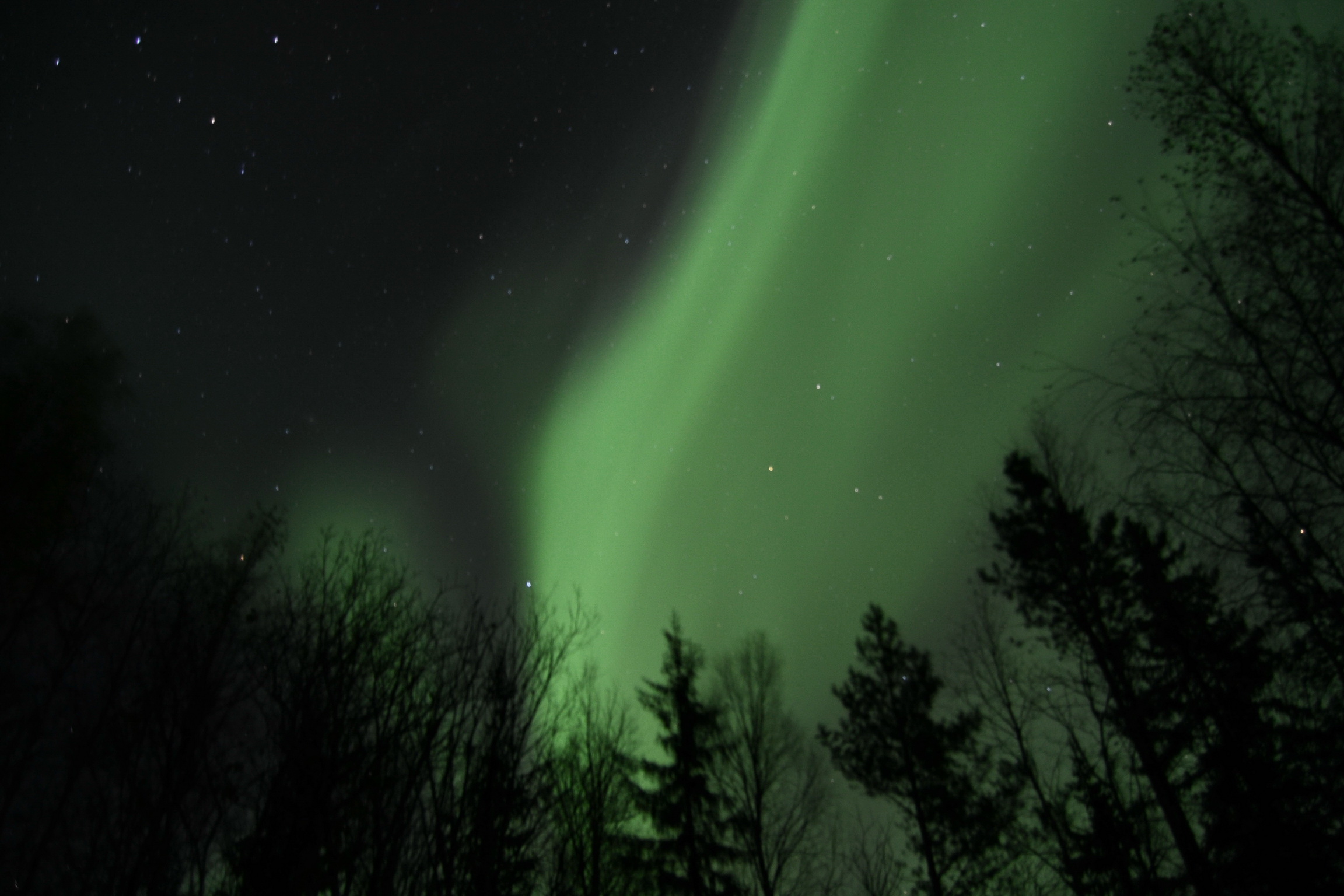
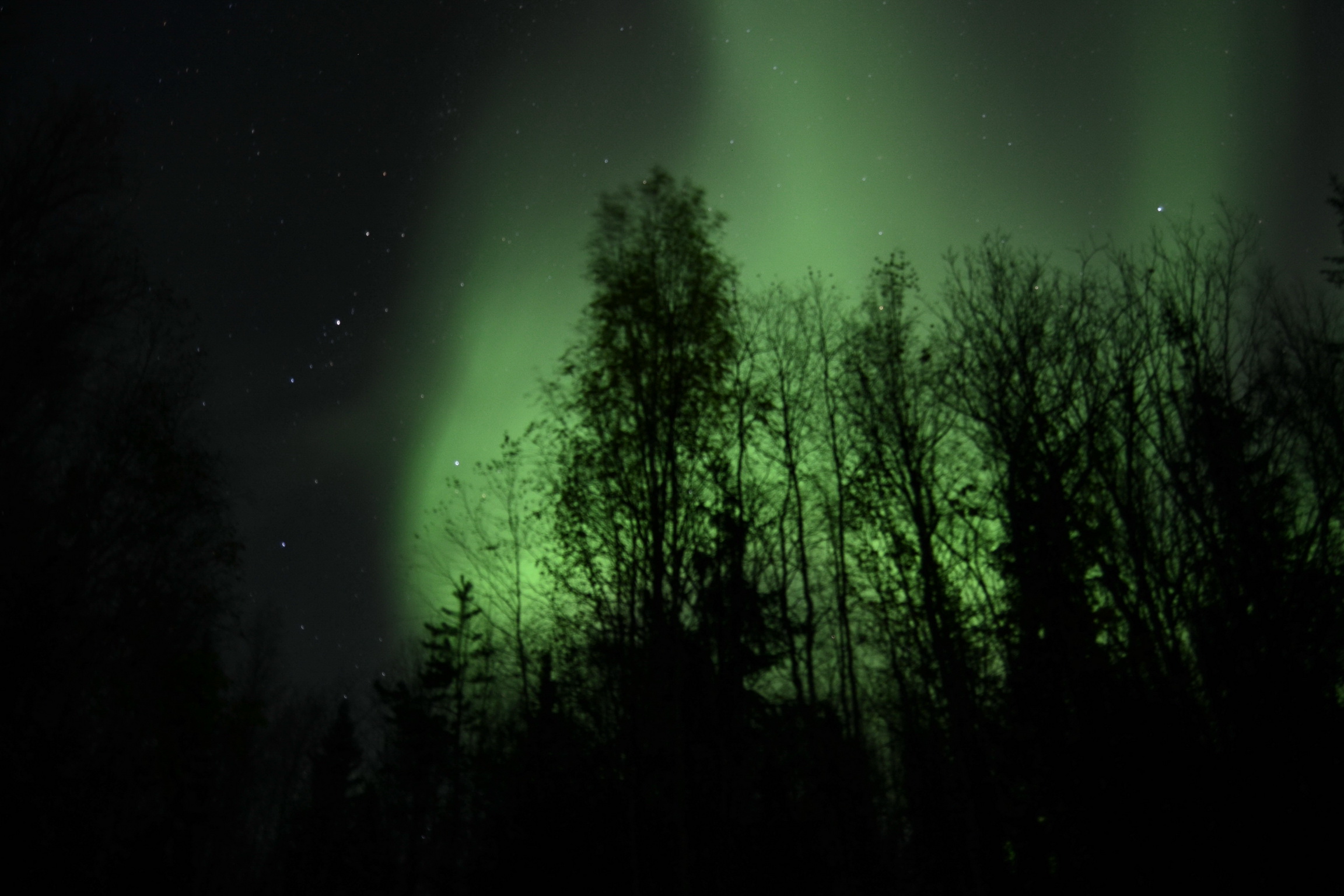
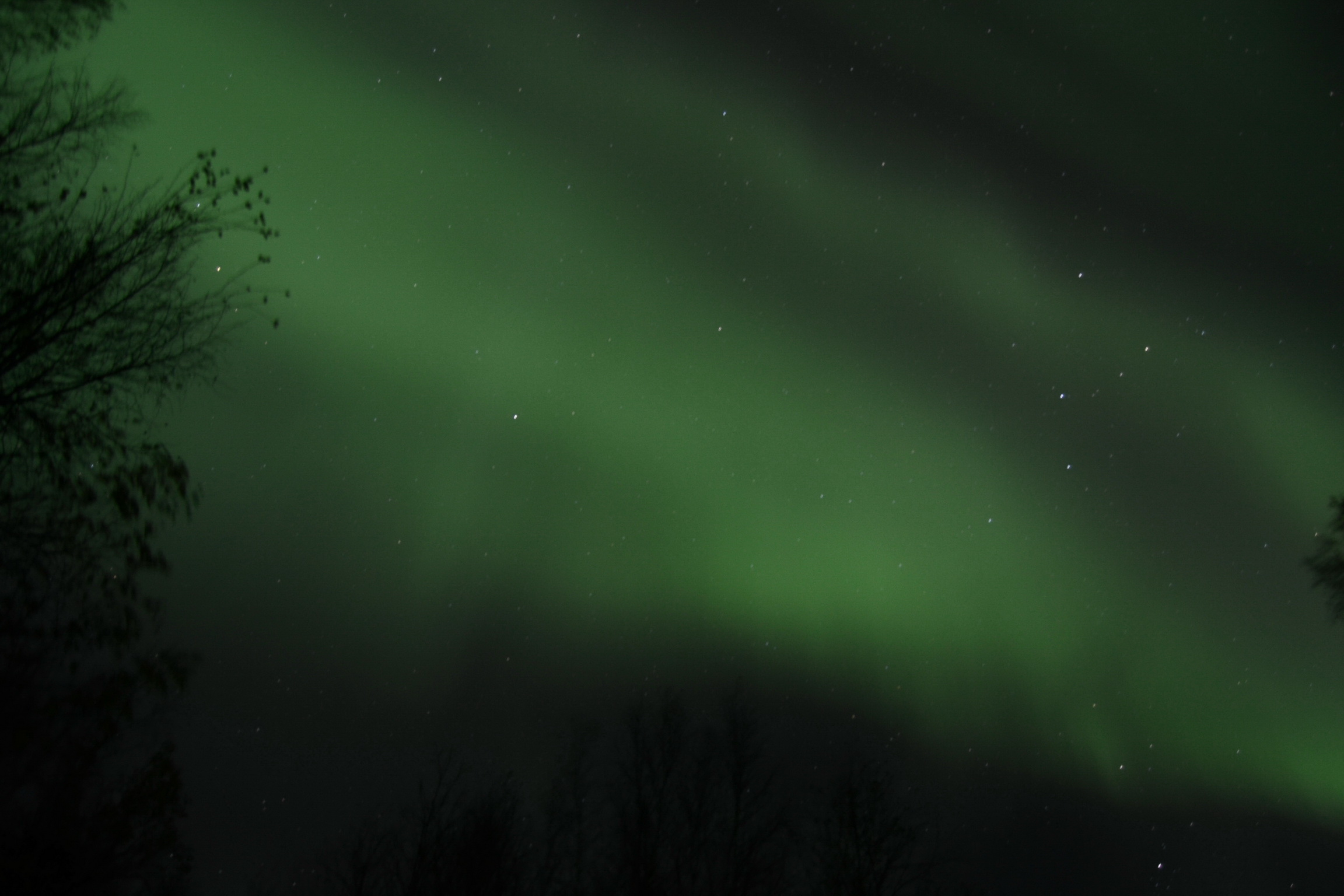
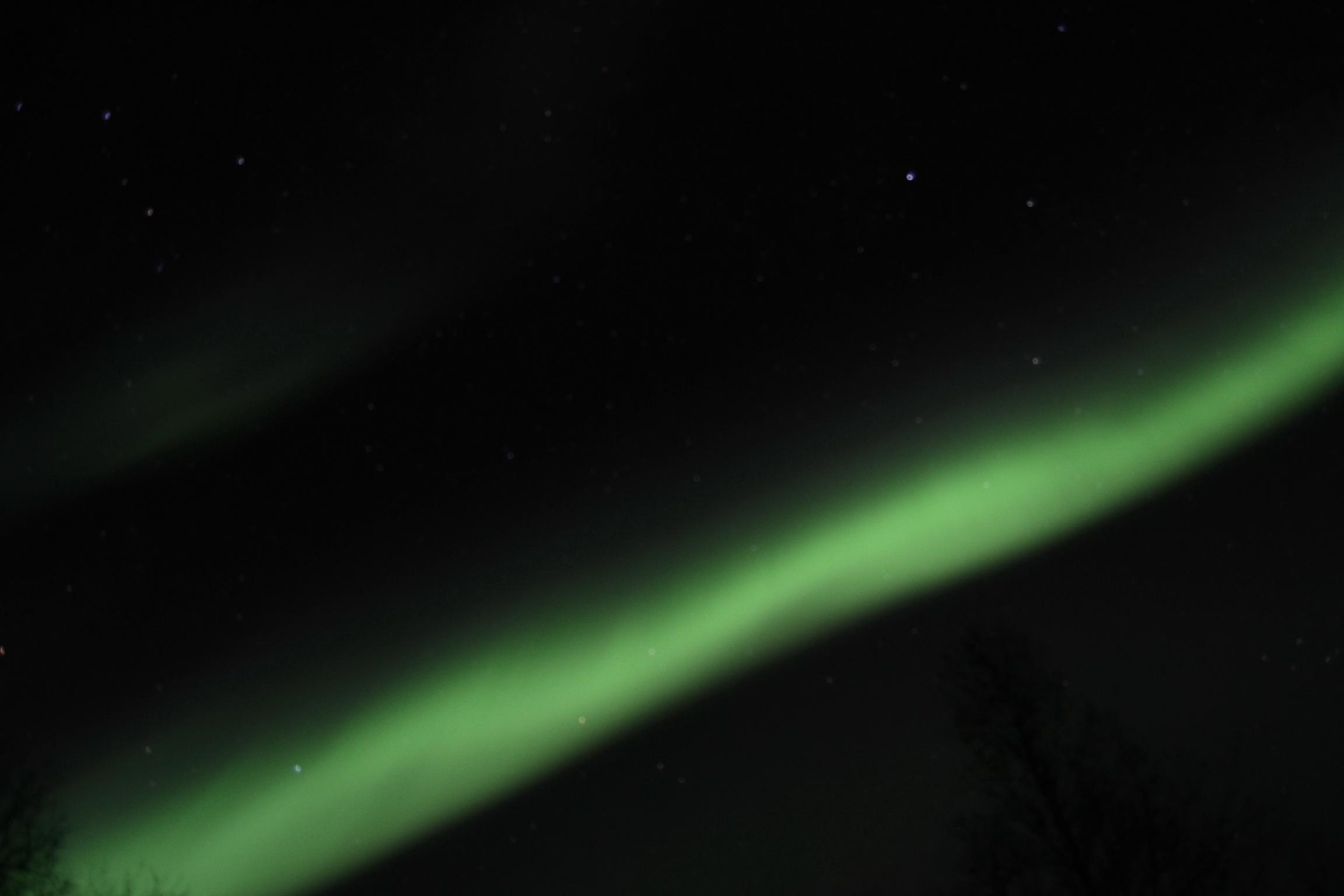
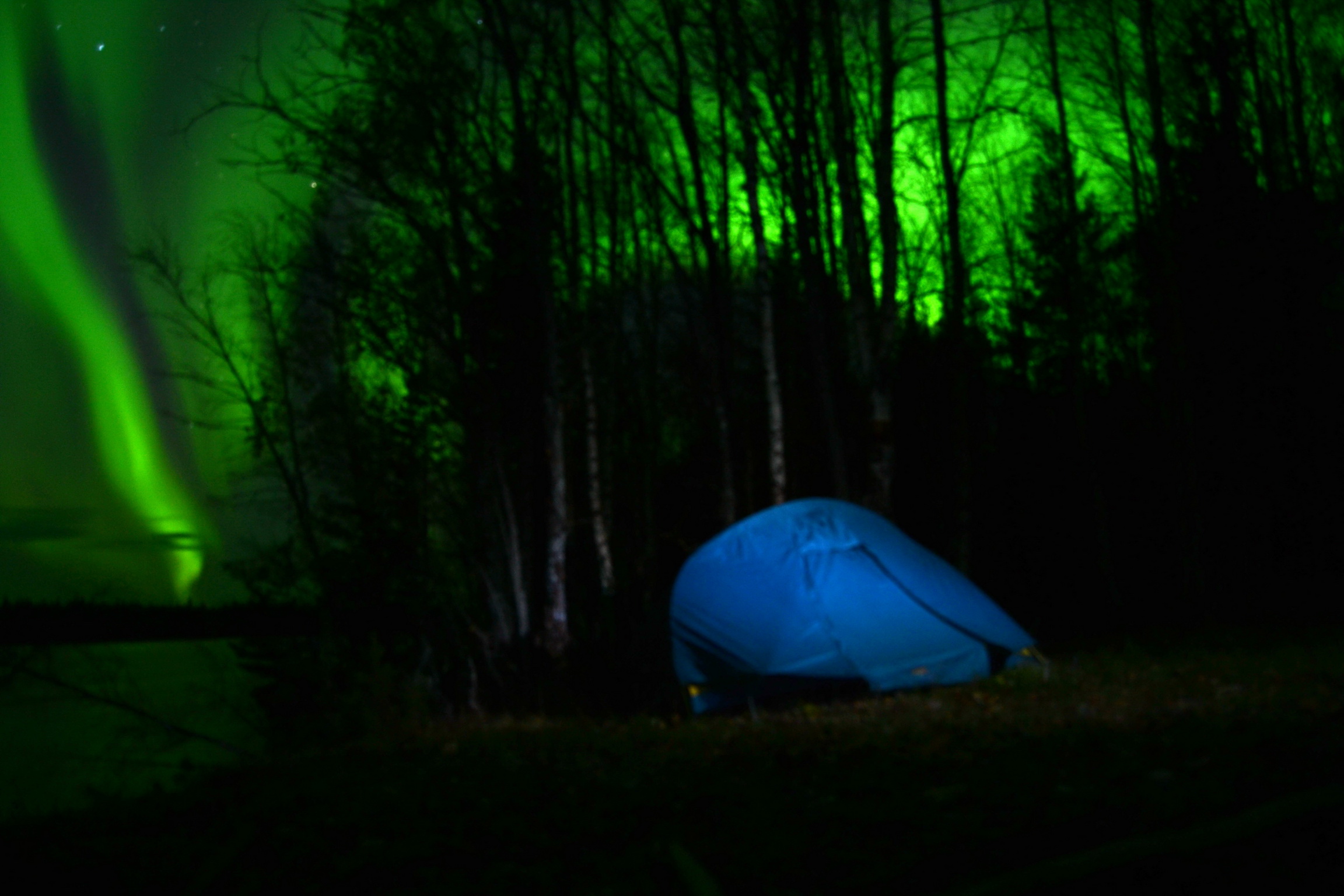
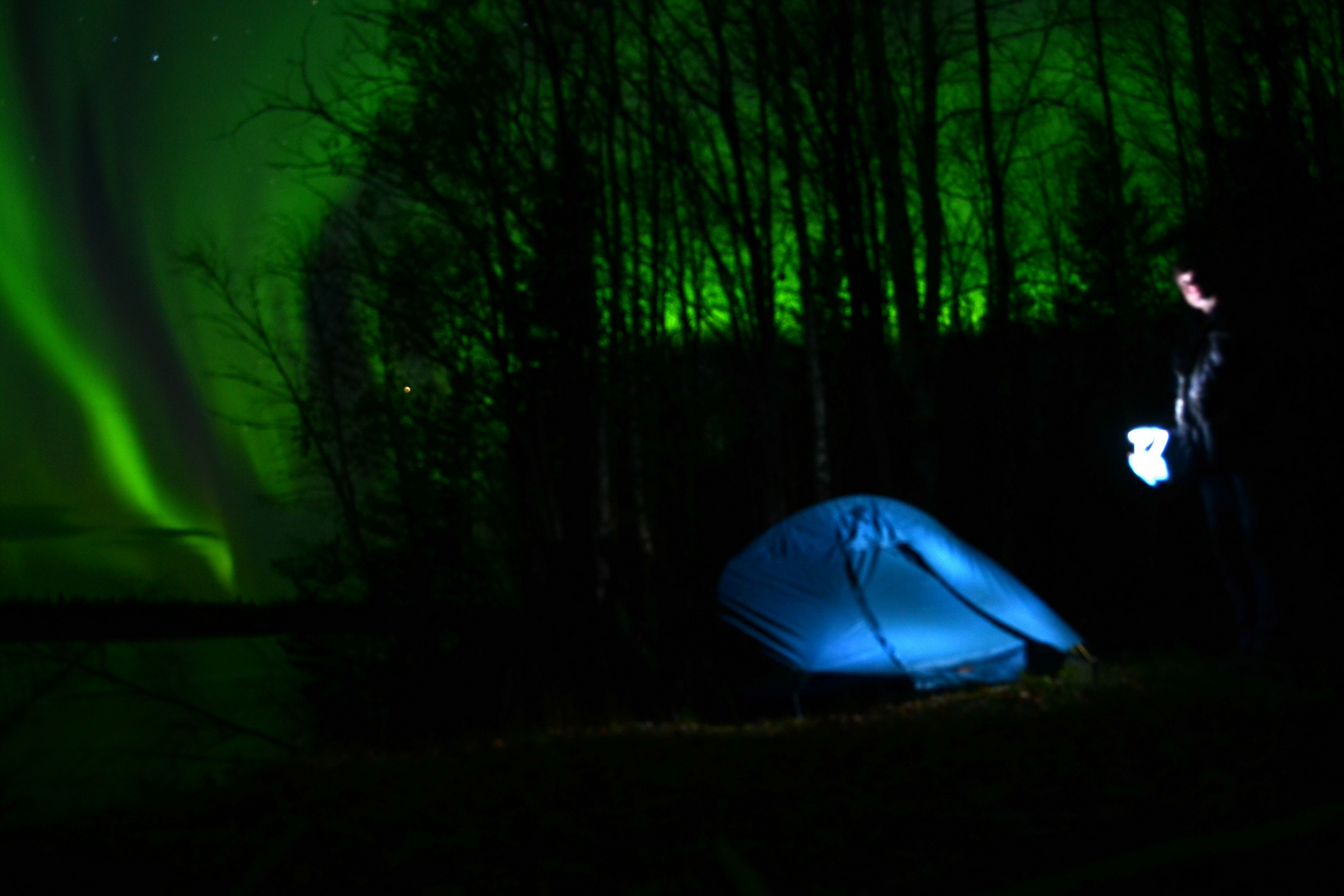
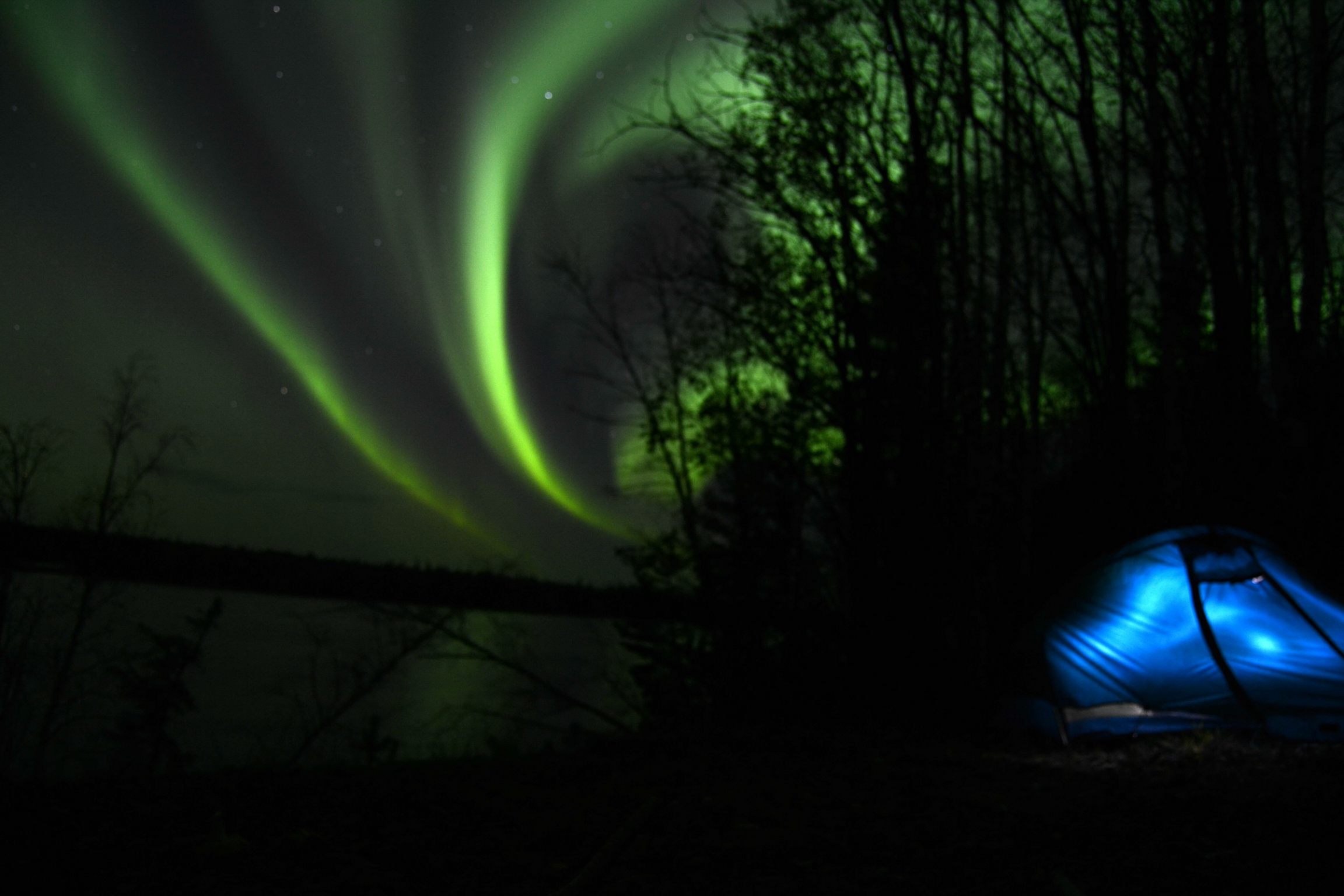
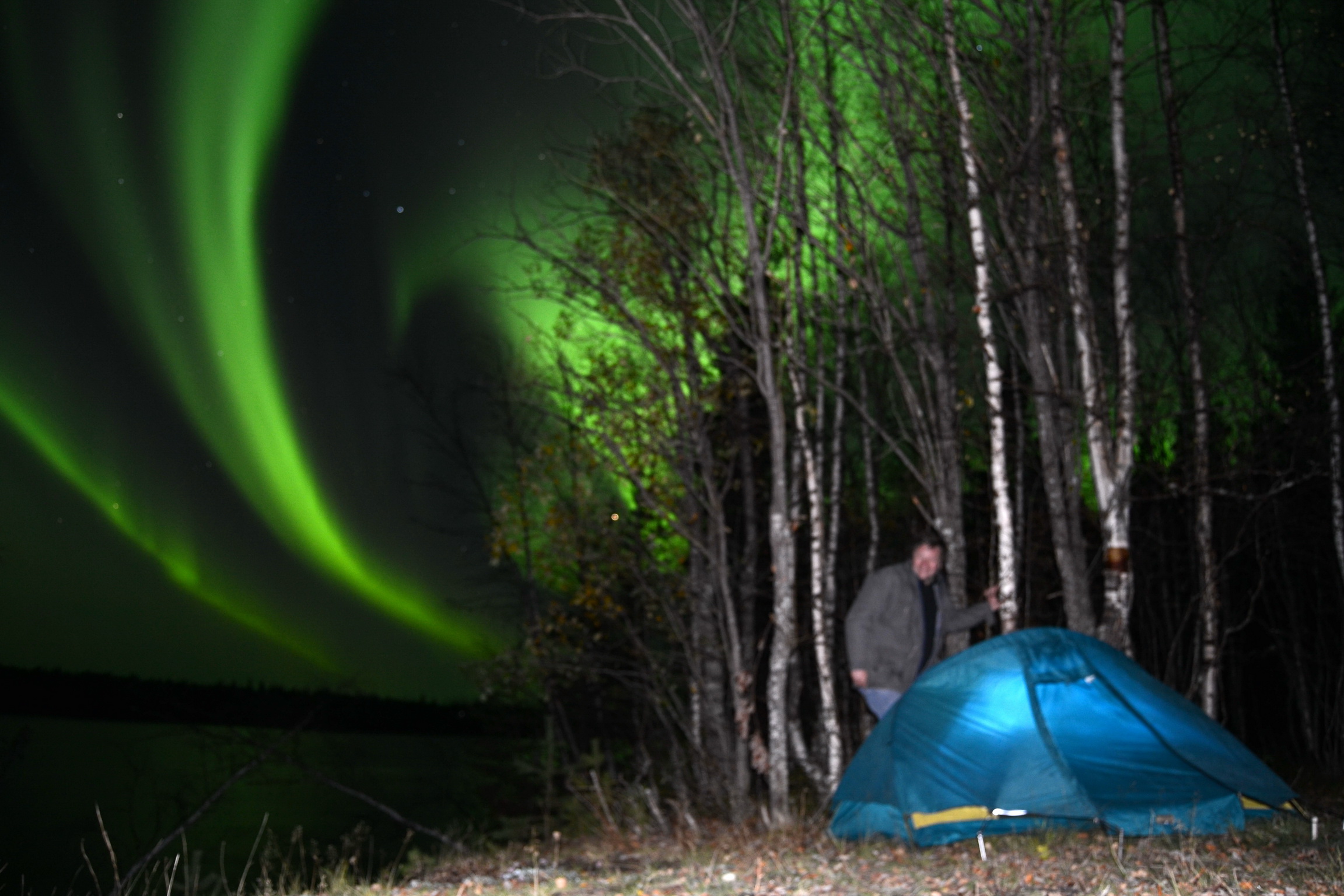
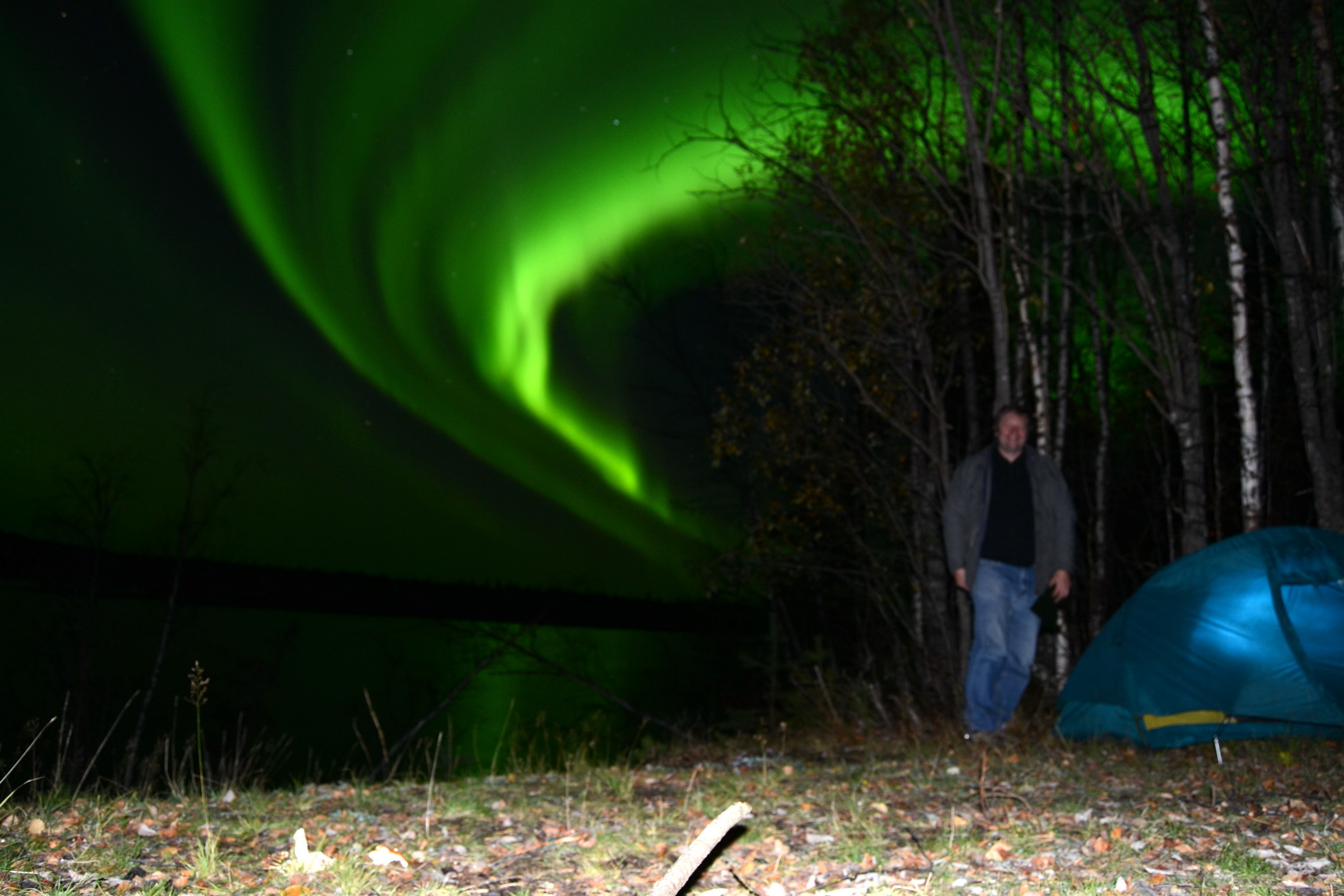
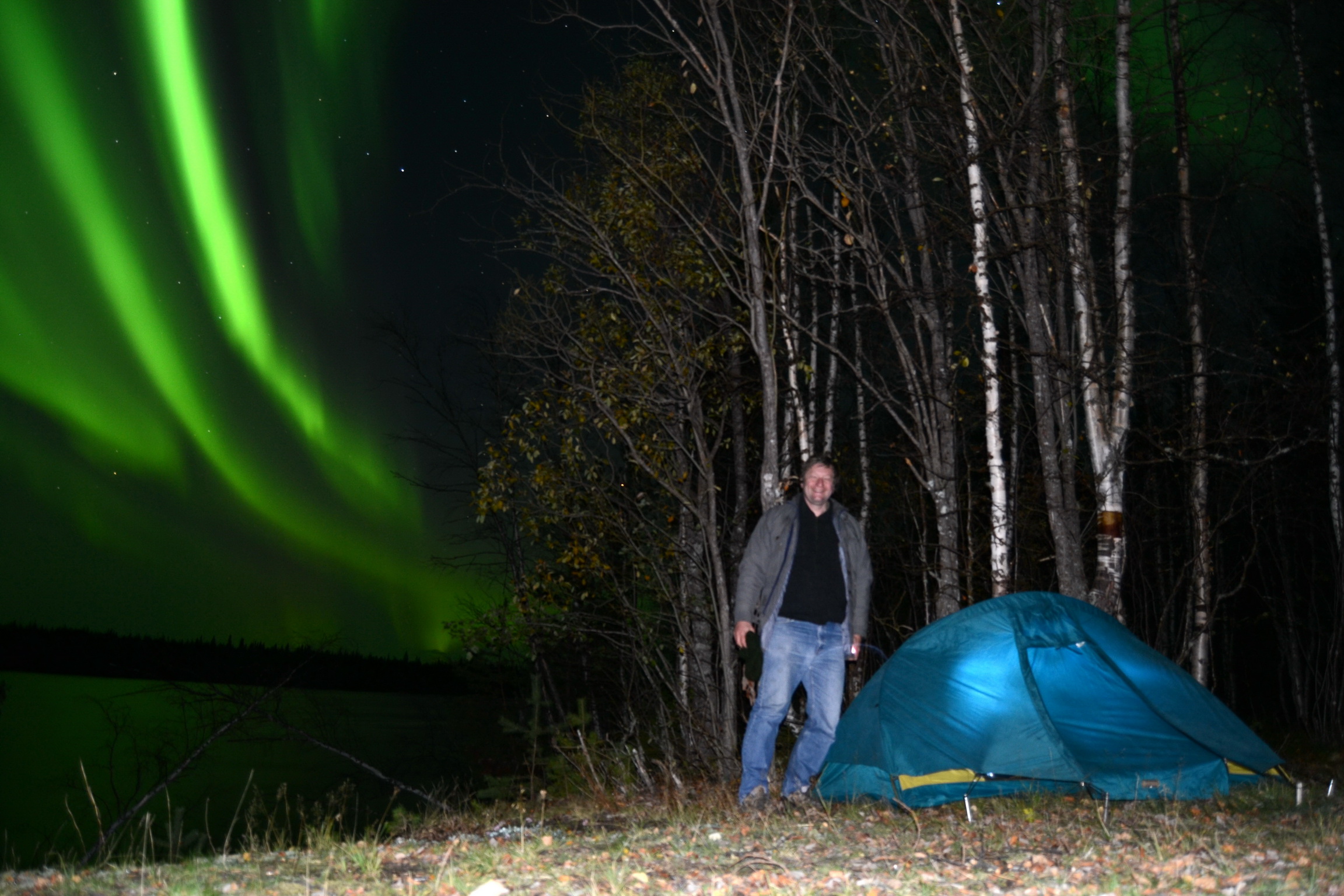
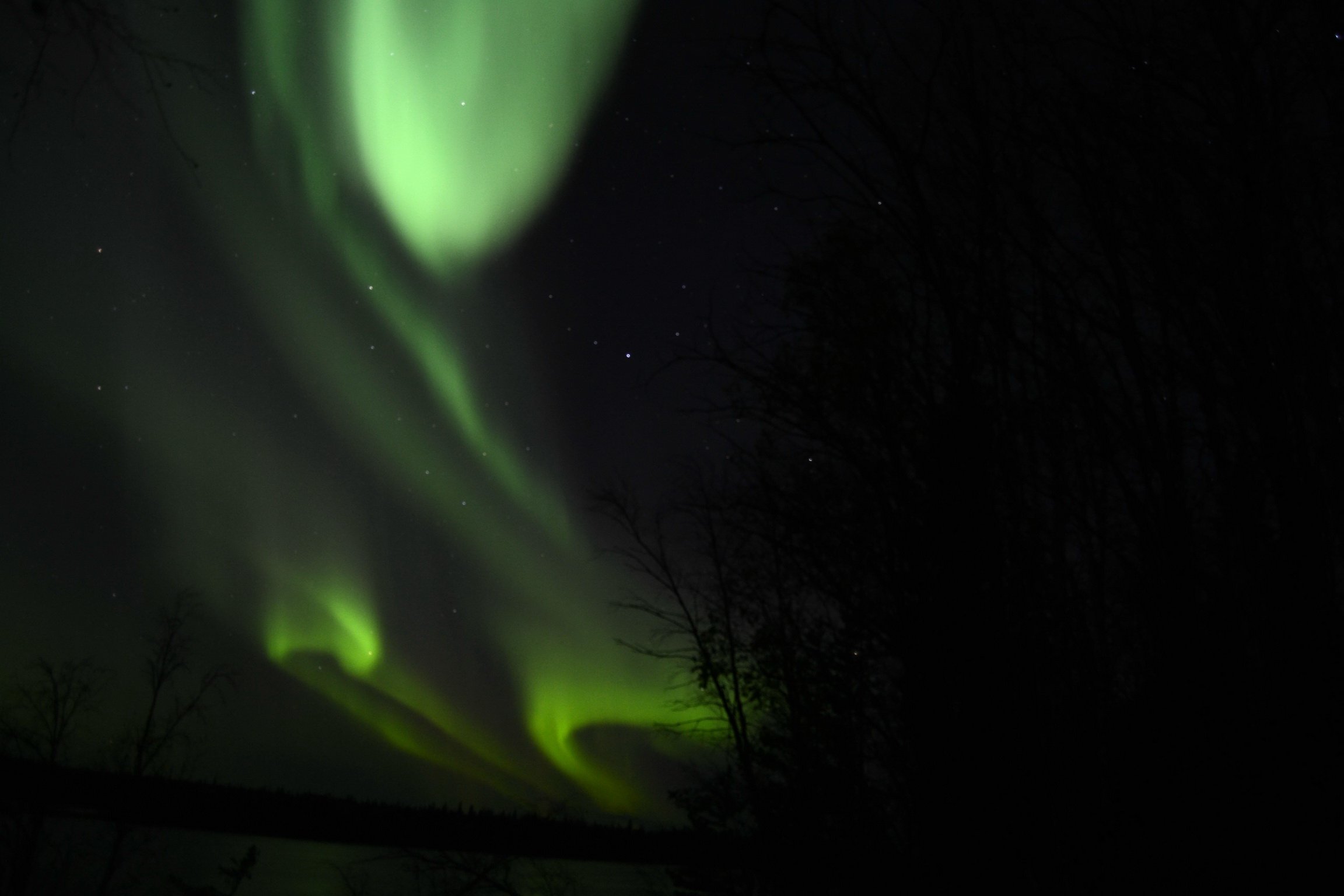
The aurora moves fast. With a long exposure it all blurs and the dominant green swallows the other colours. You have to shoot with the aperture wide open as well, which leaves the nearby trees out of focus. I spent several hours scrambling about with the camera.
Even in the tent it was light enough to see everything without a torch.
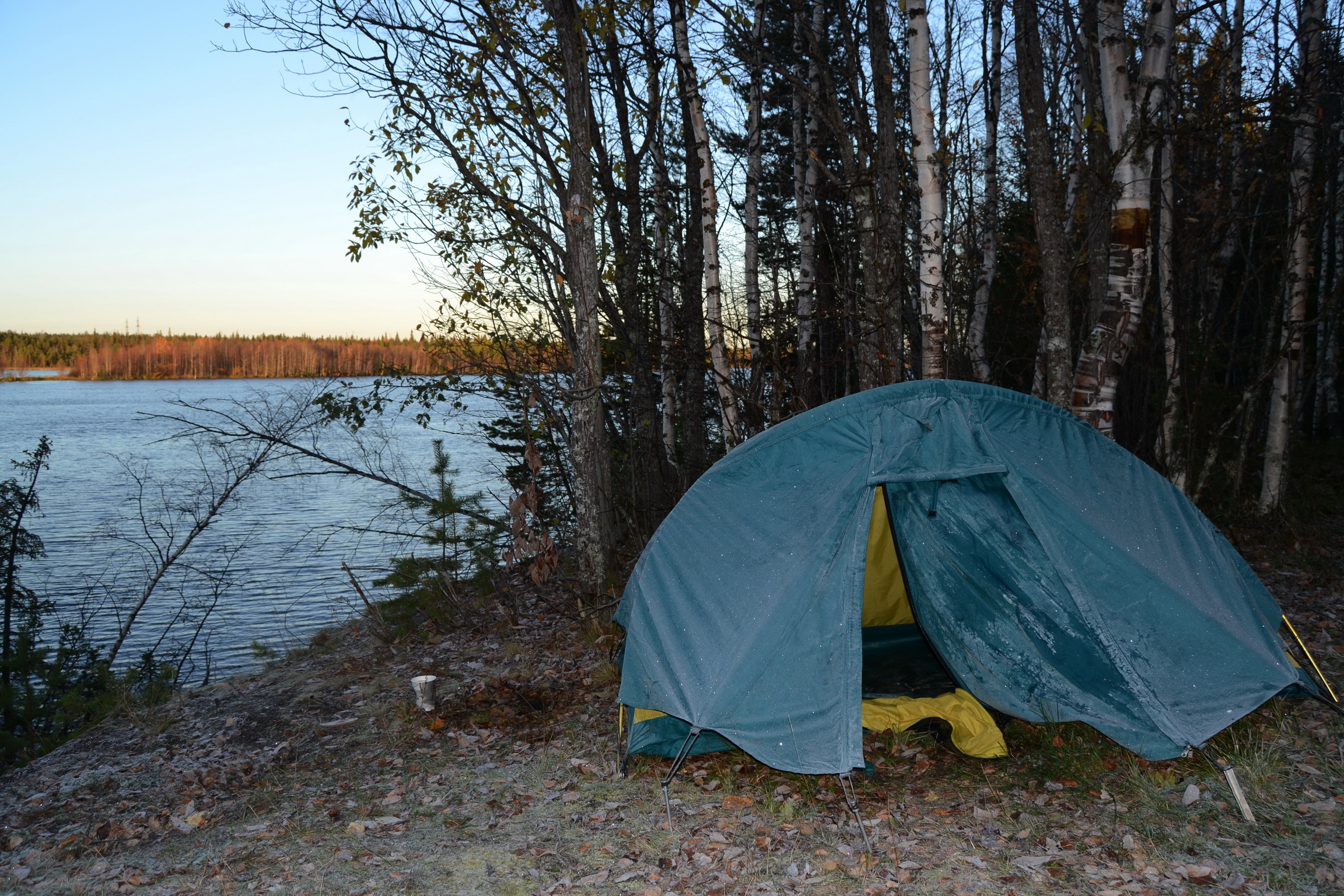
In the morning I drove into Kem to pick up the technicians. We went to Kuzema, then Loukhi, then finally Engozero. Now back to Kem again. The technicians were grumbling. They’d been told they couldn’t work more than eight hours. No overtime. Management had remembered to cut their pay as well, of course. They even monitored when doors to the workrooms were opened. Nothing whatsoever after hours. We just managed to get the door shut at Engozero before the end of the working day. It was another three hours to Kem, but apparently no one would hold that against us. They’re good lads, but the bosses’ antics and the cuts had made them angry. I barely talked them into doing the whole round in one day. They said they wouldn’t do it again. Well, there wouldn’t be an again.
On the drive back to Kem, in the dark, snow came down thick and fast. I could see bugger all through the windscreen. It was old. I’d driven 300,000 kilometres with it, and by then the whole thing was practically frosted over with wear. I could barely tell where to steer. The road was invisible, slippery, and the car kept sliding. I don’t know how I made it.
We were back in Kem by eight in the evening. I just had time to pick up some food and get a coffee at my favourite station café, where Tanya and I had our first coffee together. As always, I sent a postcard to New Zealand. Greetings from Kem.
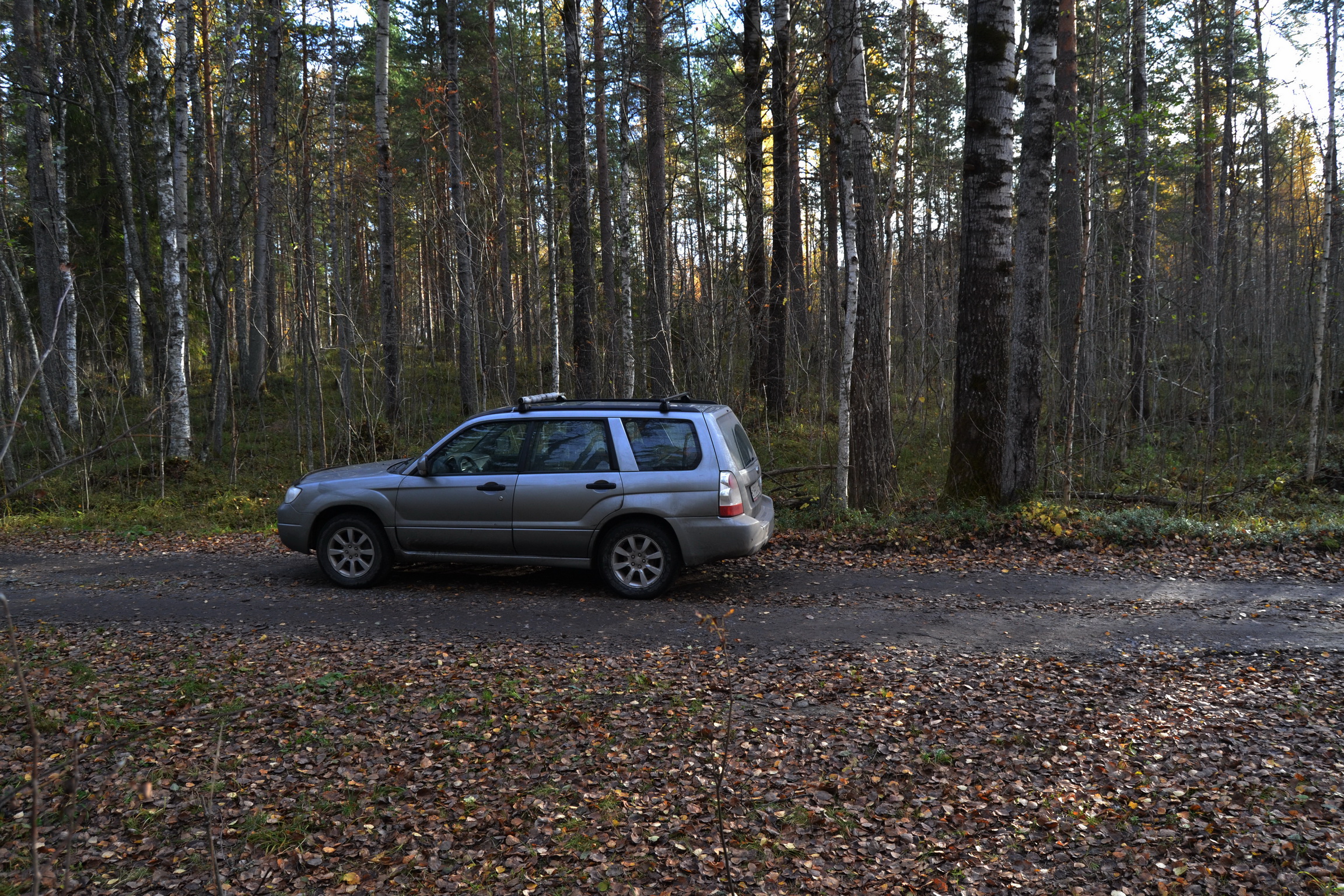
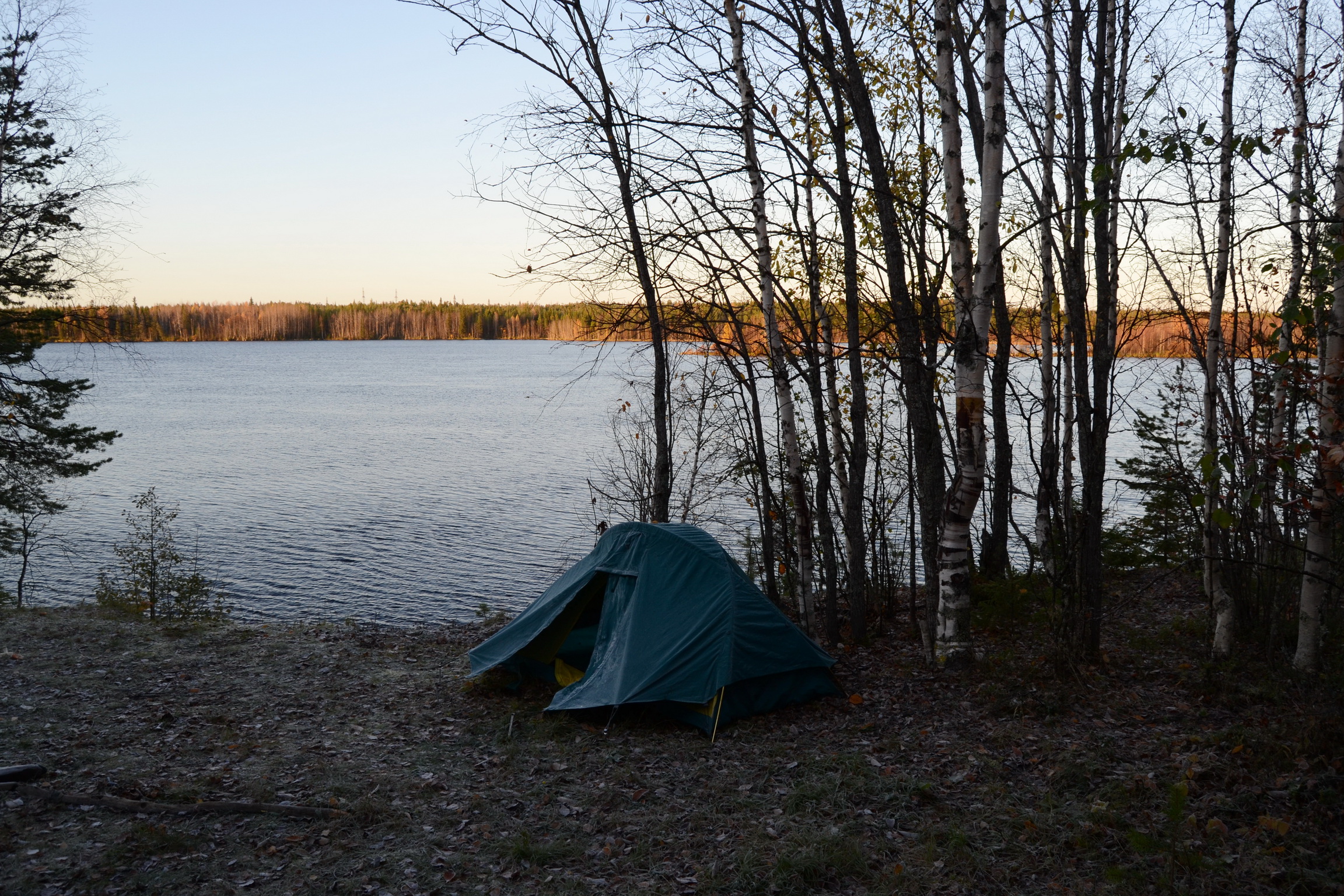
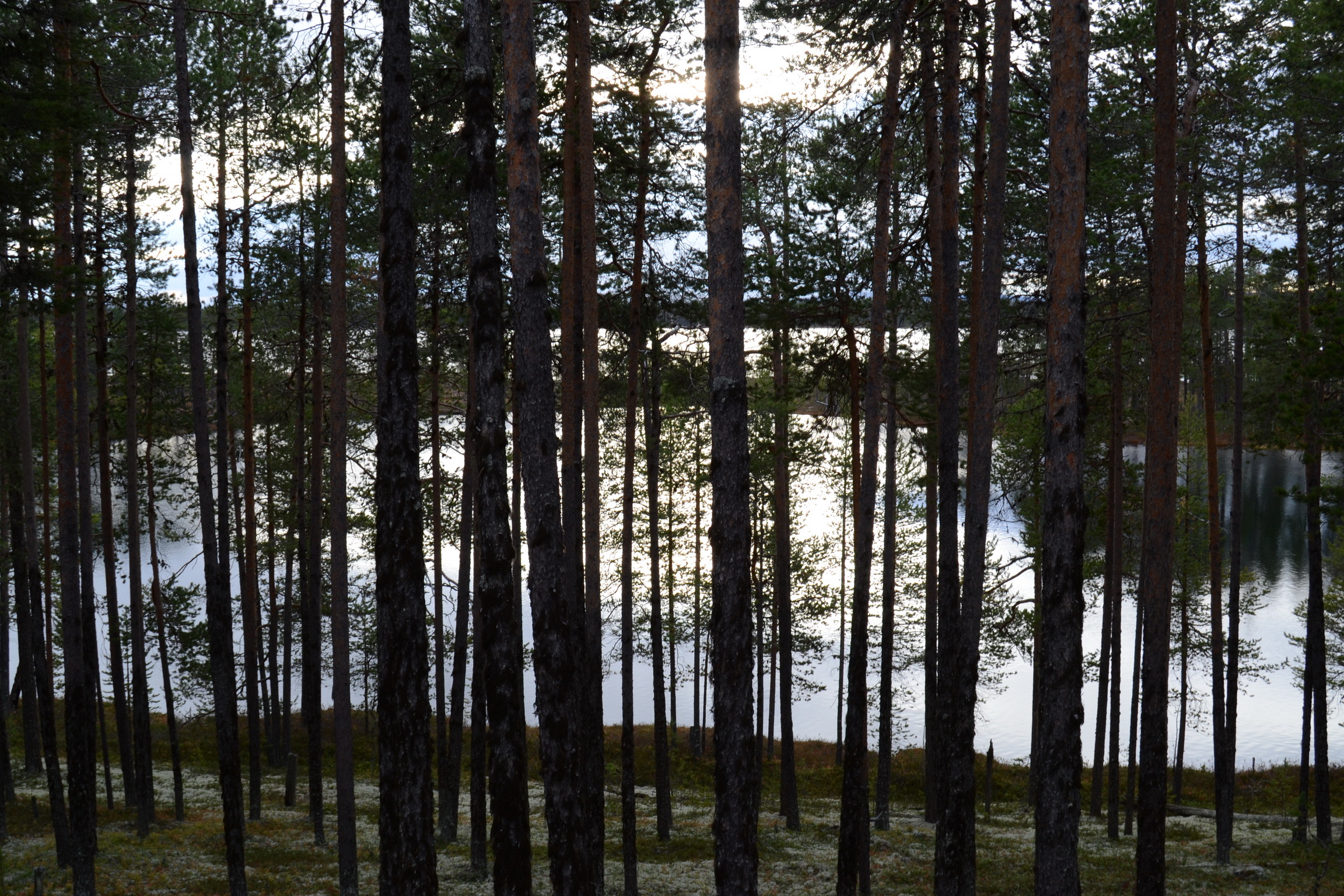
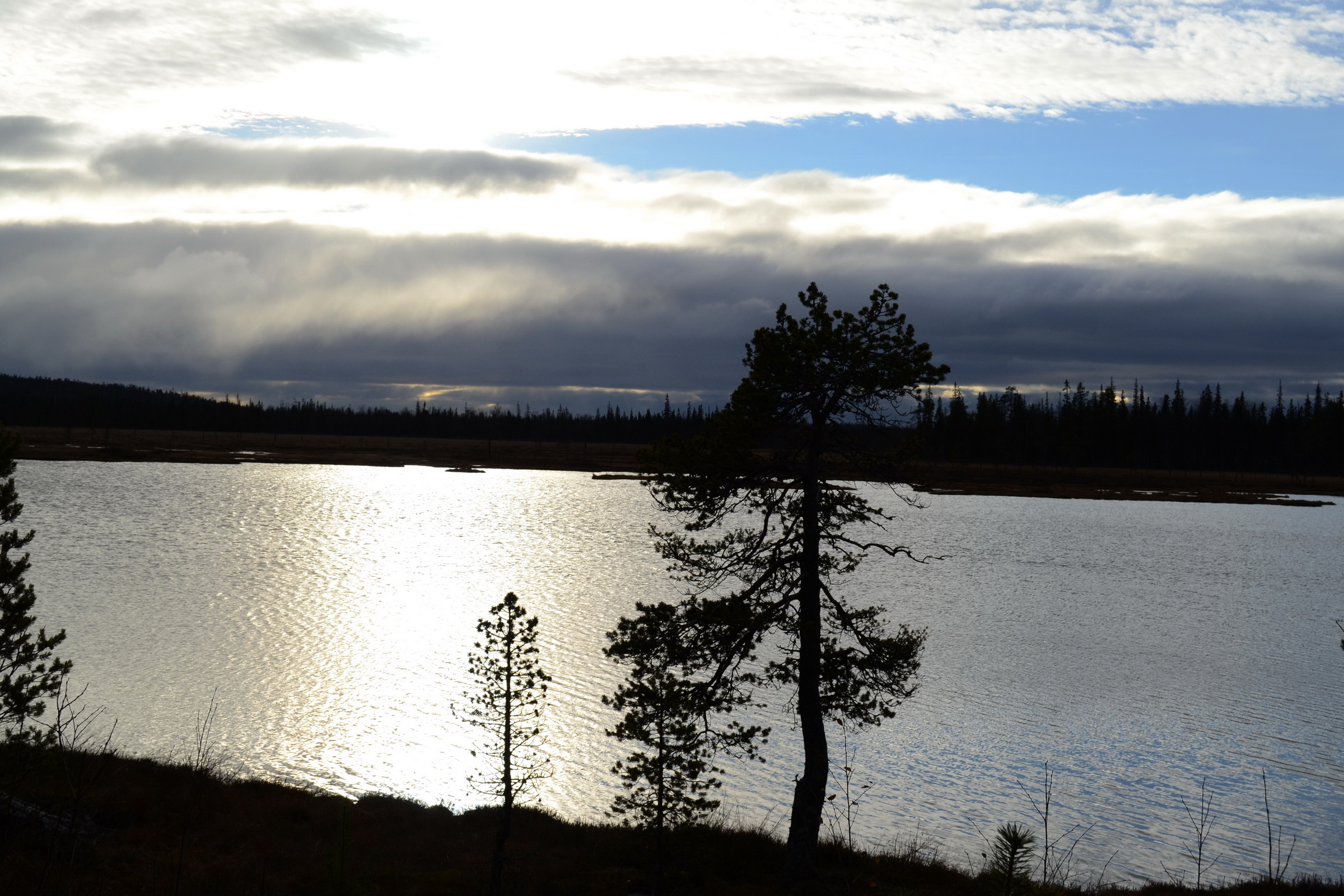
All the work was done in a day, but of course I was in no hurry to get home. That night I camped on the road to Kuzema. There are plenty of good spots along it. I drove to Lake Maloye Korzhino (65°22.817′N, 33°43.618′E). I found a sandy spot right on the shore. The lake has boggy margins, yet here was practically a beach. What I didn’t notice was that the way in crossed a sphagnum bog. By some miracle I got through without getting stuck.
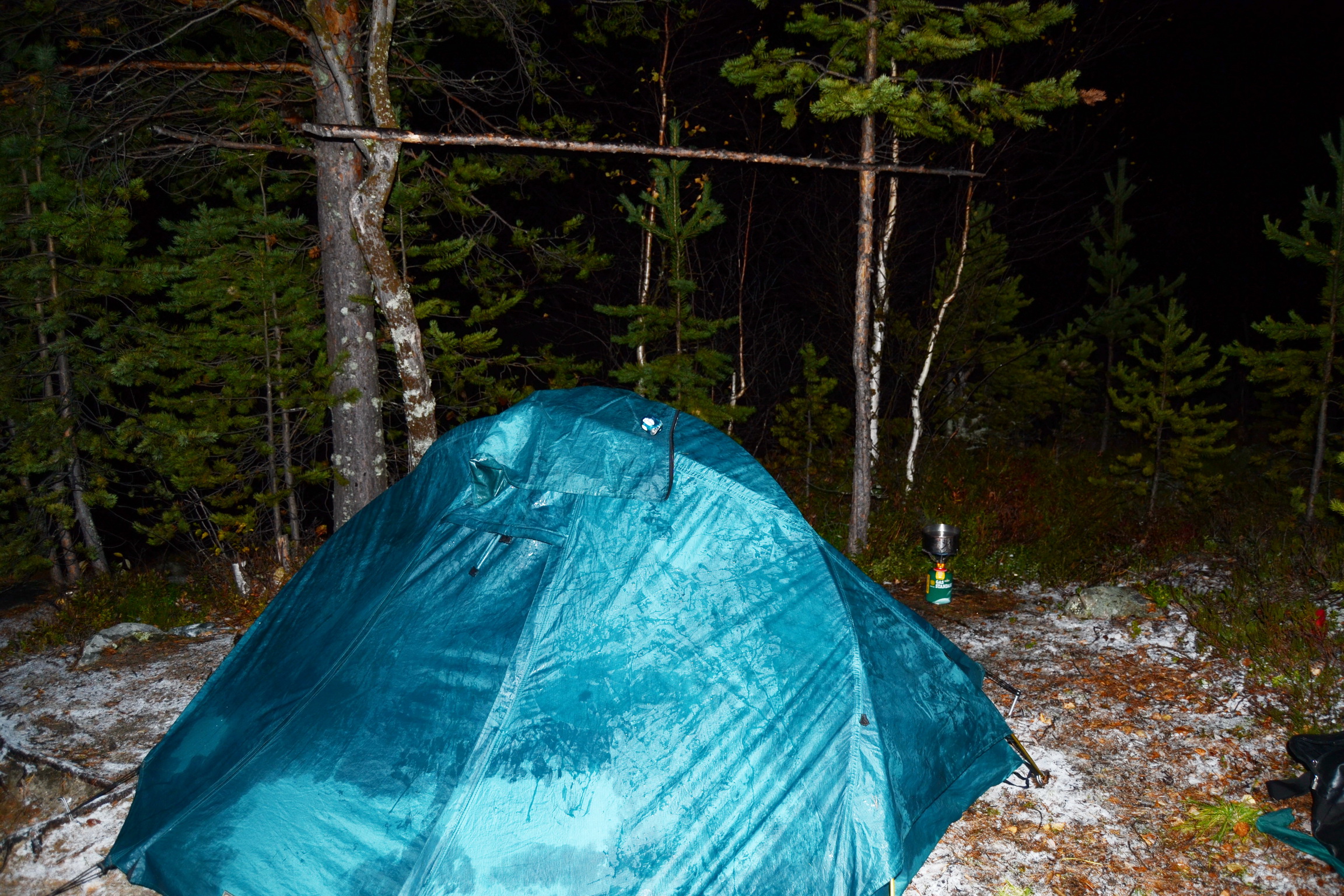
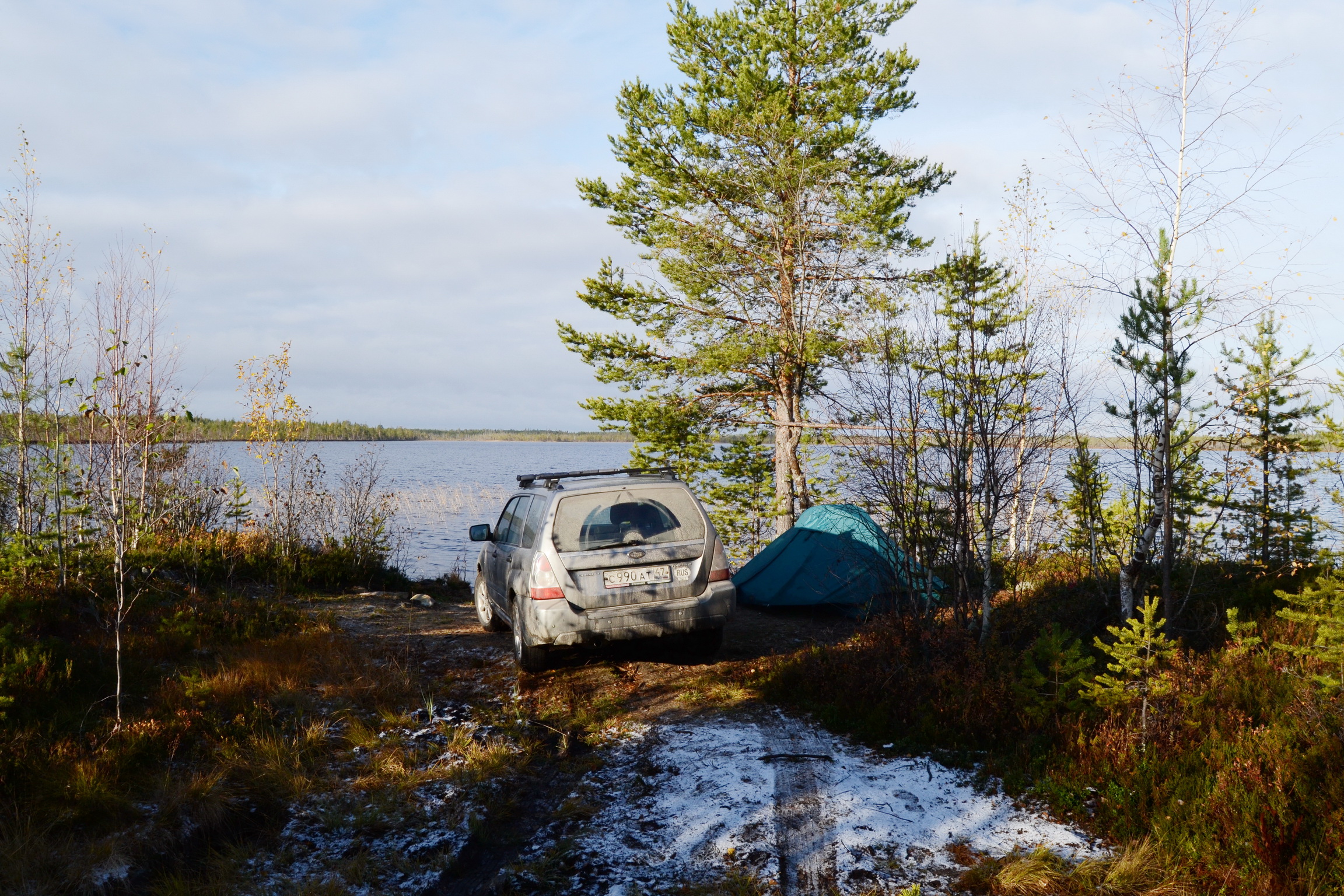
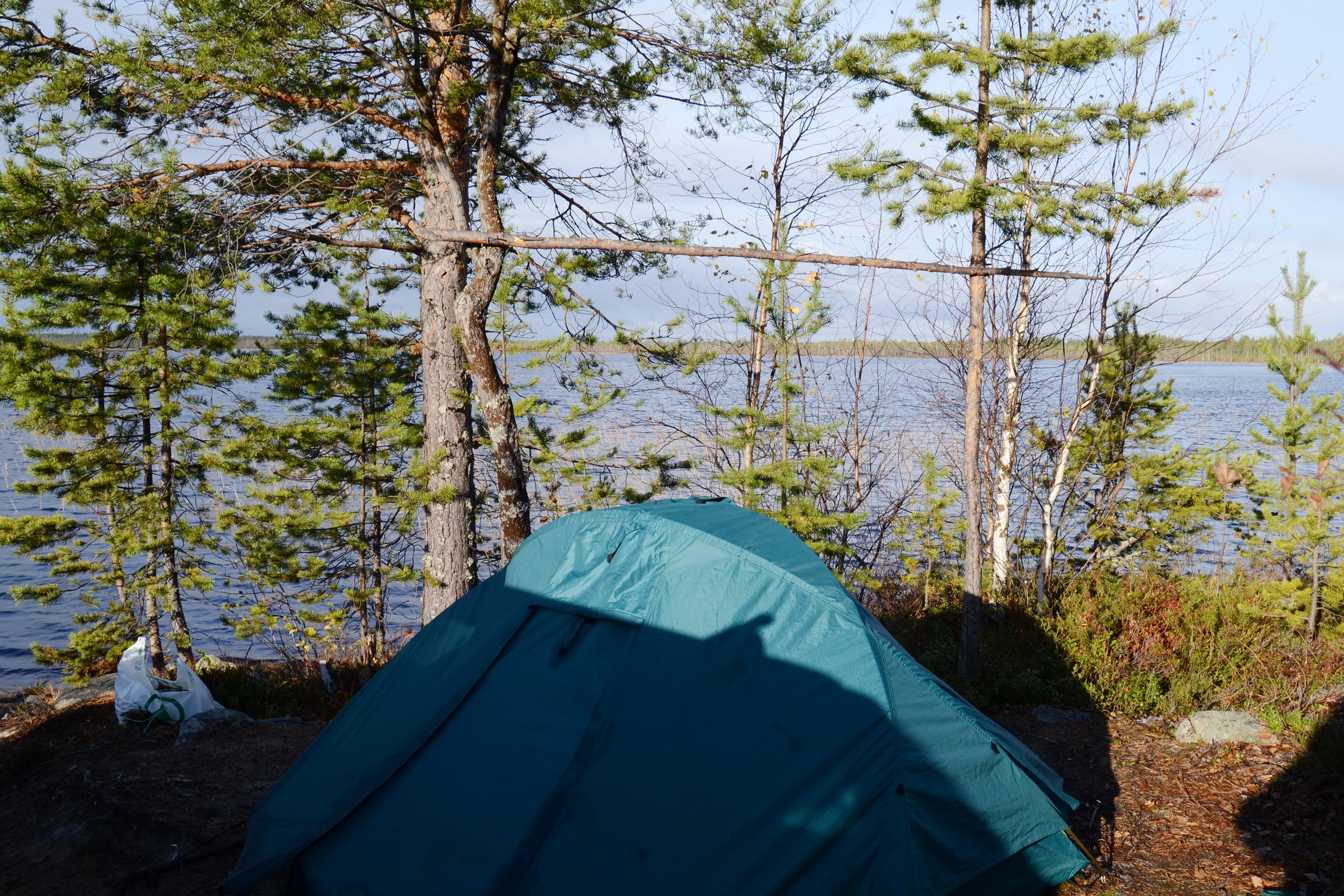
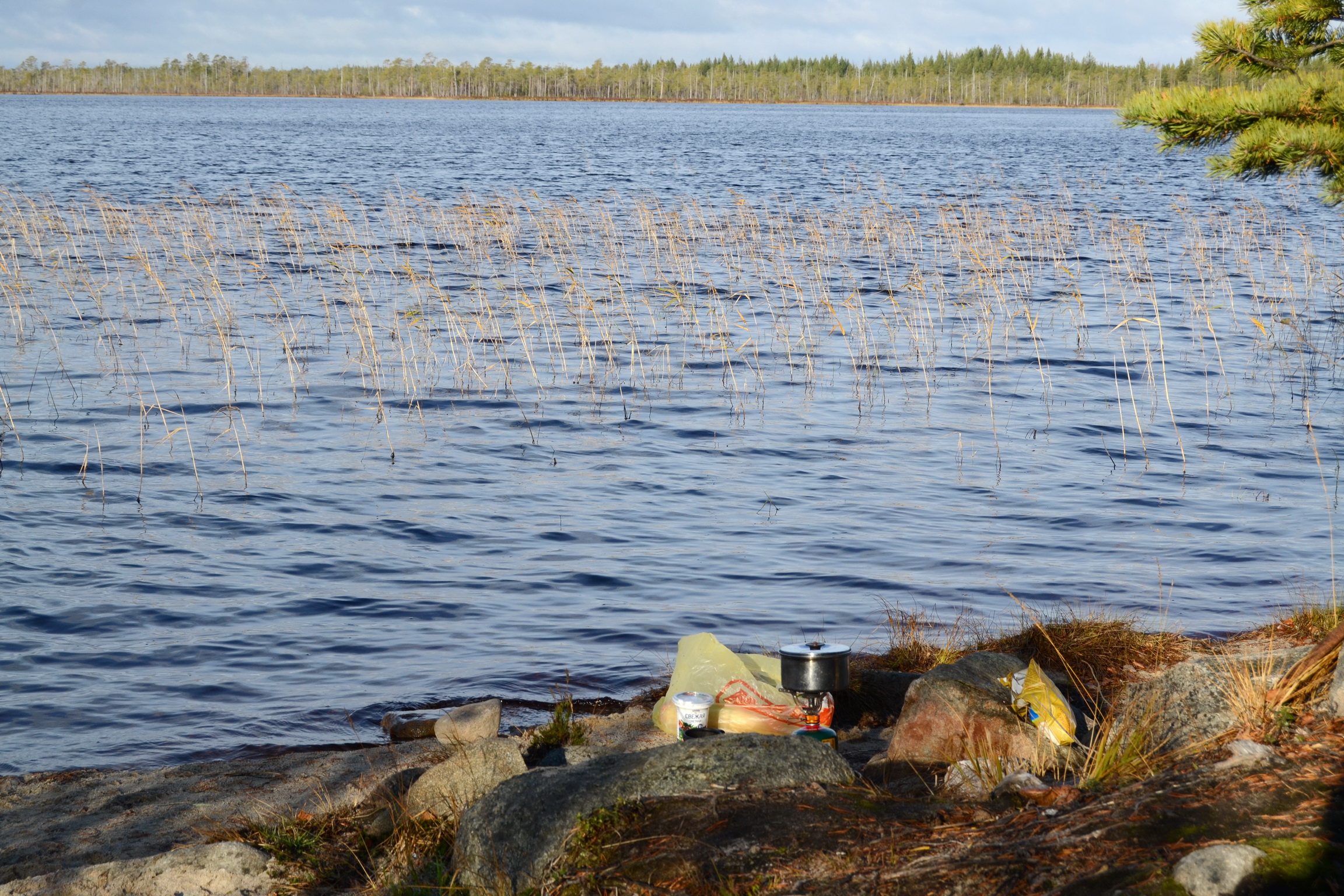
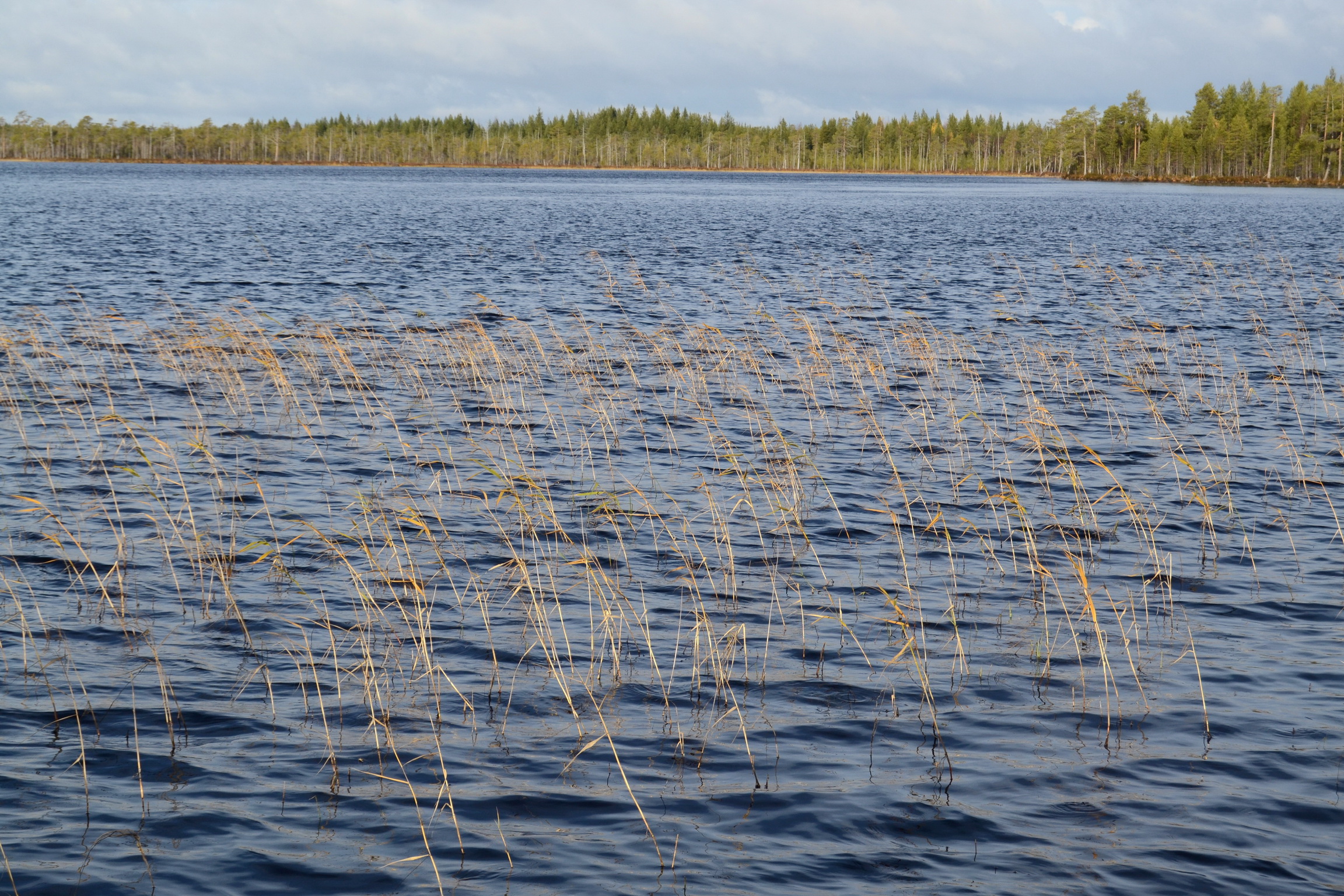
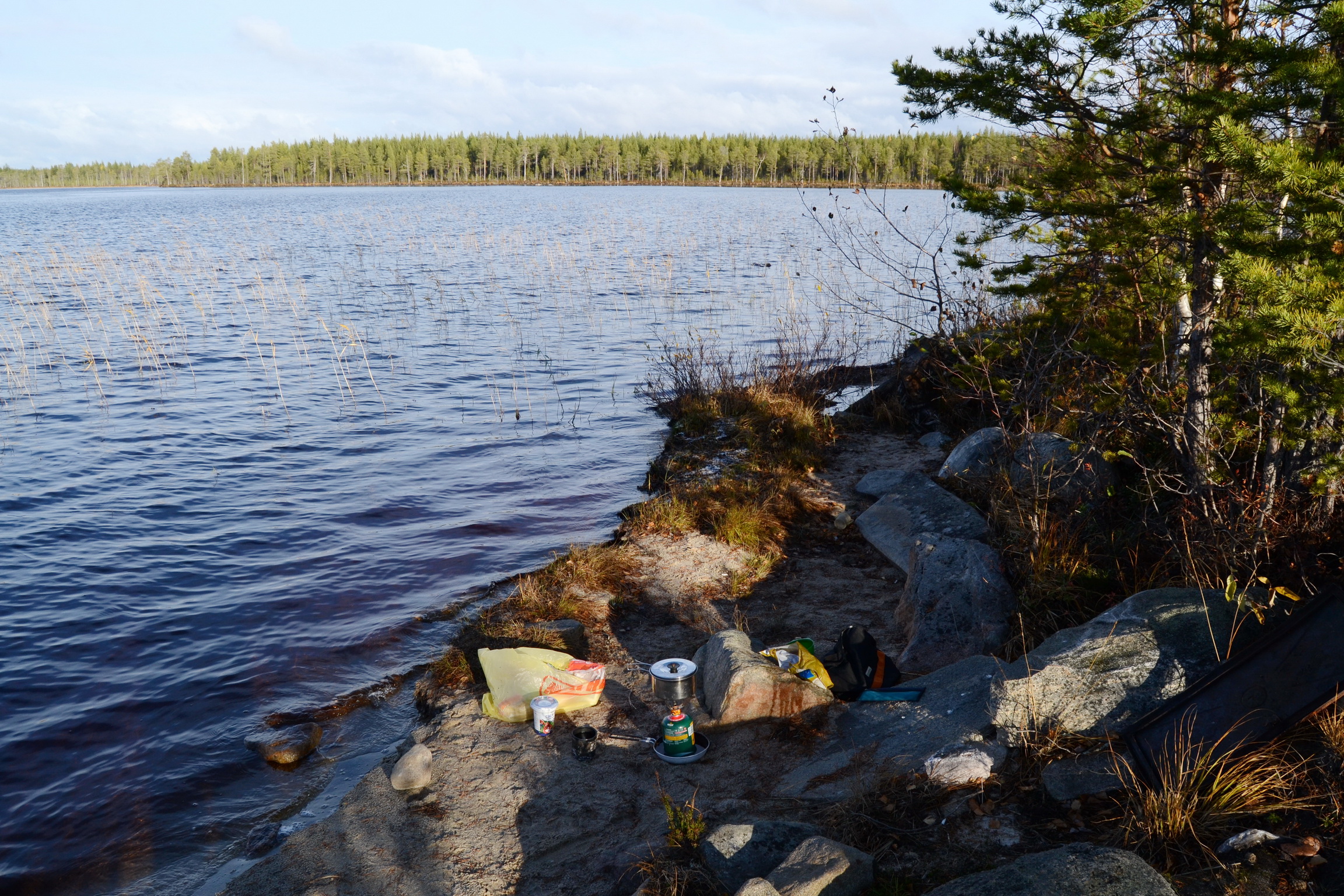
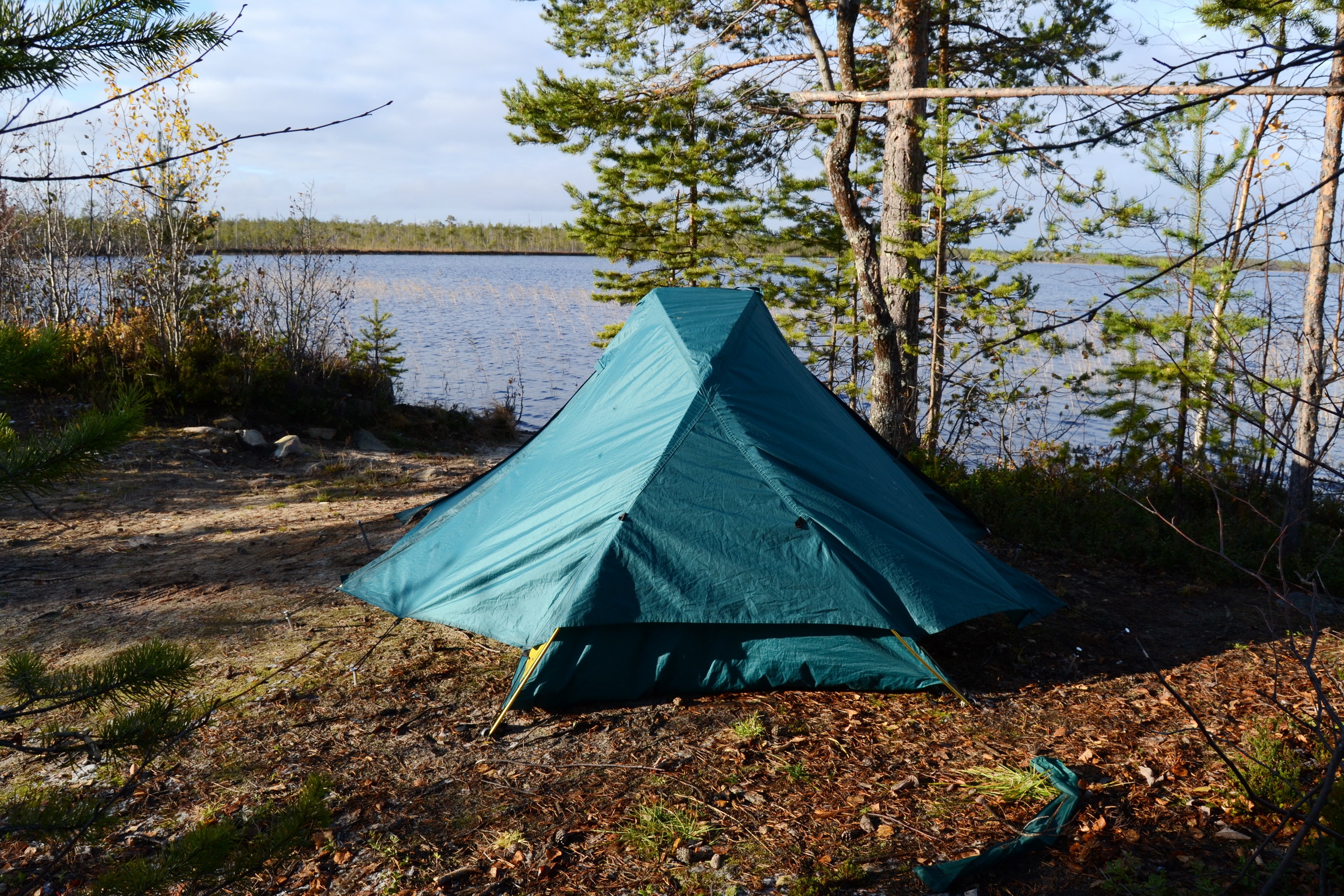
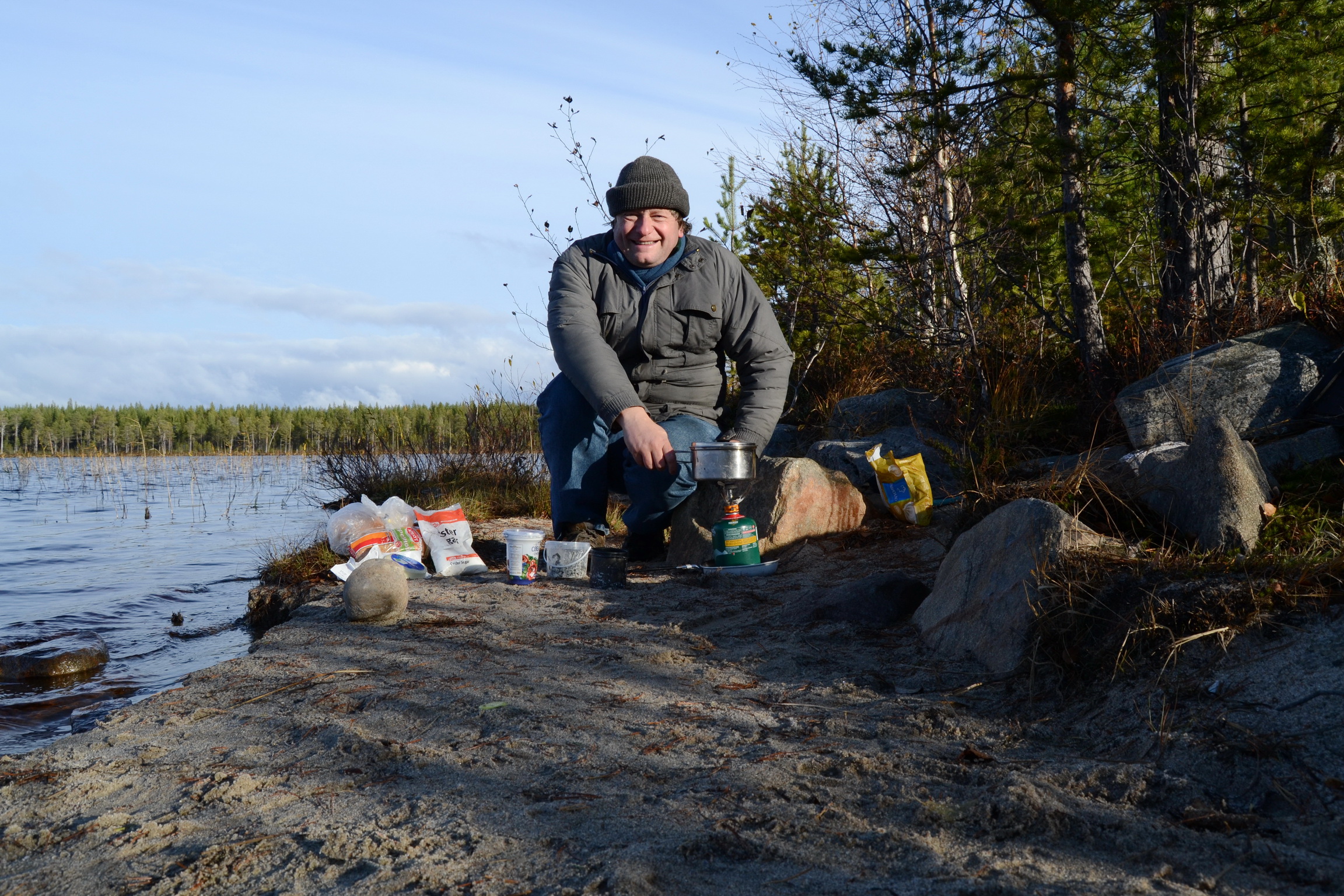
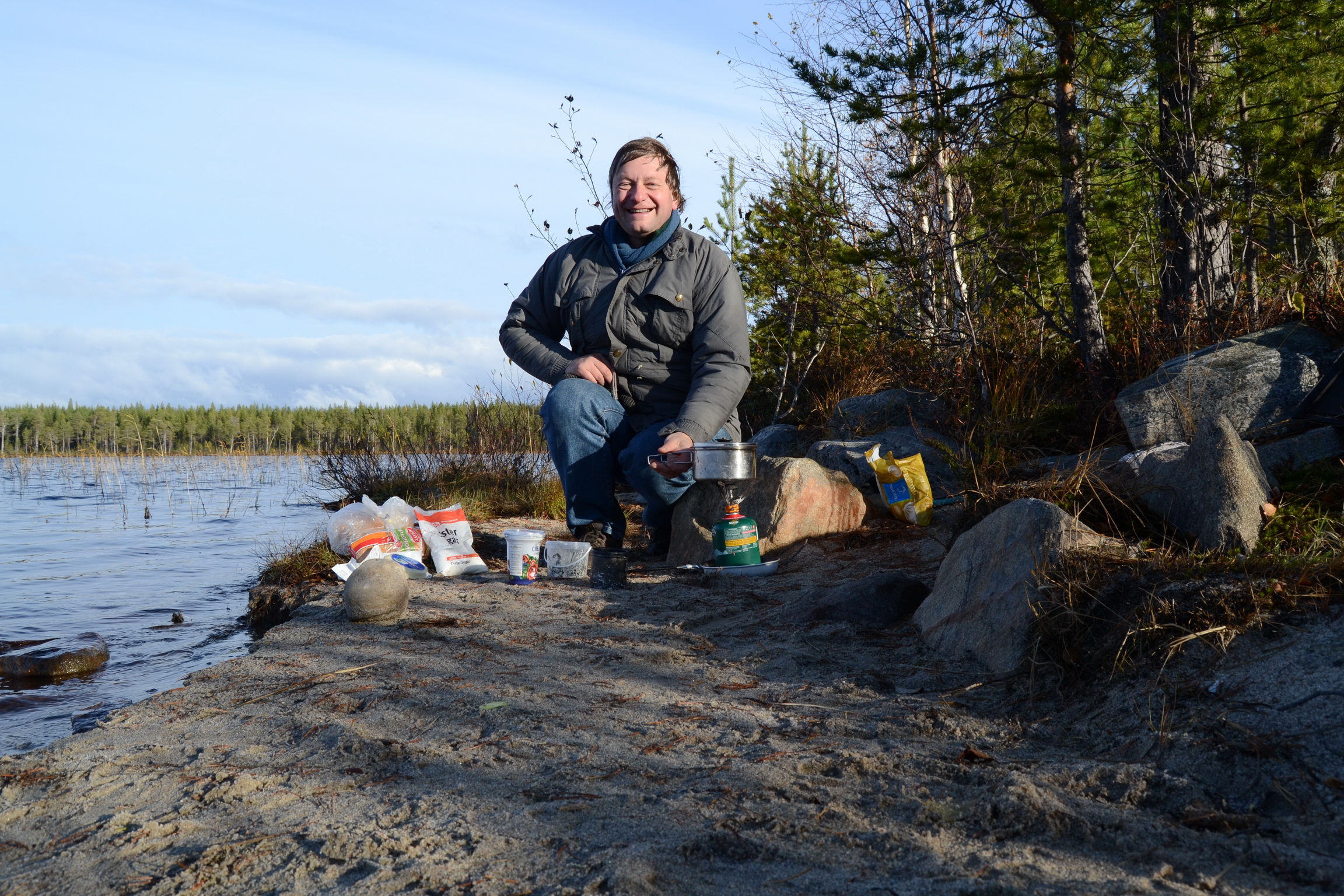
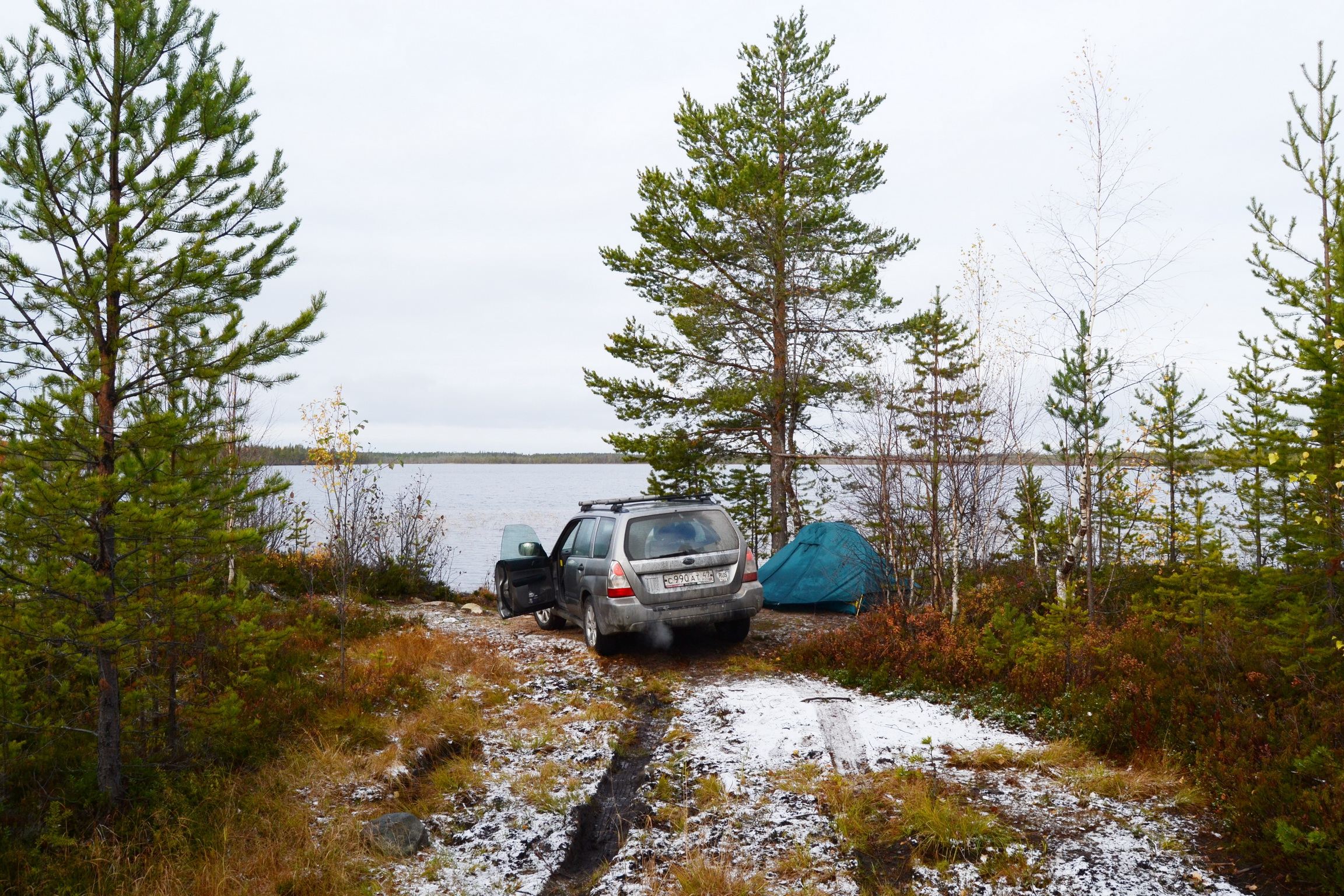
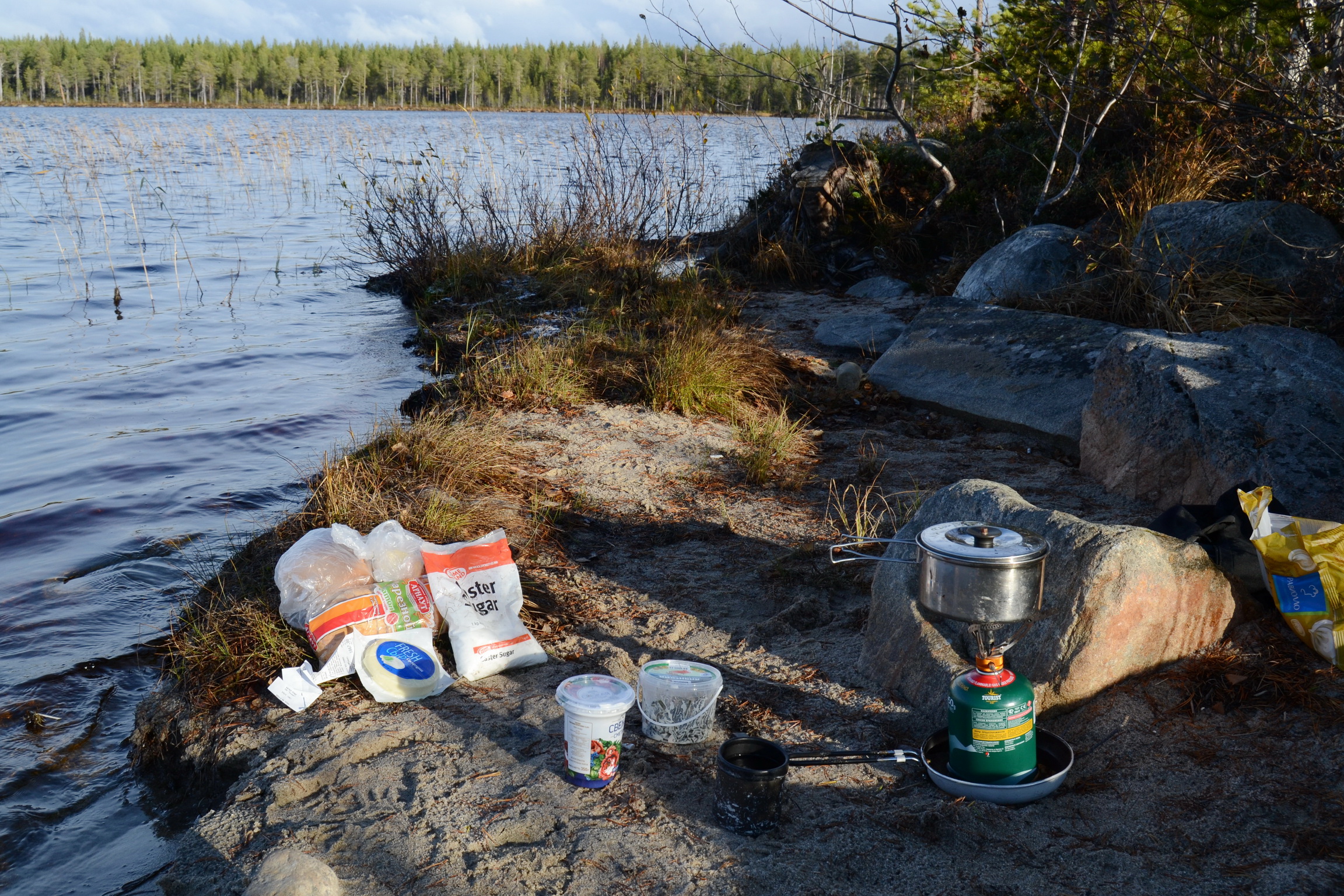
The sun came out in the morning. It was beautiful all around, and I didn’t have to hurry anywhere. I could have a proper breakfast and soak up the cool autumn sunshine. Though “cool” was putting it mildly.
Back to the Tersky Coast
Five years earlier I’d driven along the Tersky Coast of the White Sea. I’d wanted to go back and spend the night there. Now the day had come.
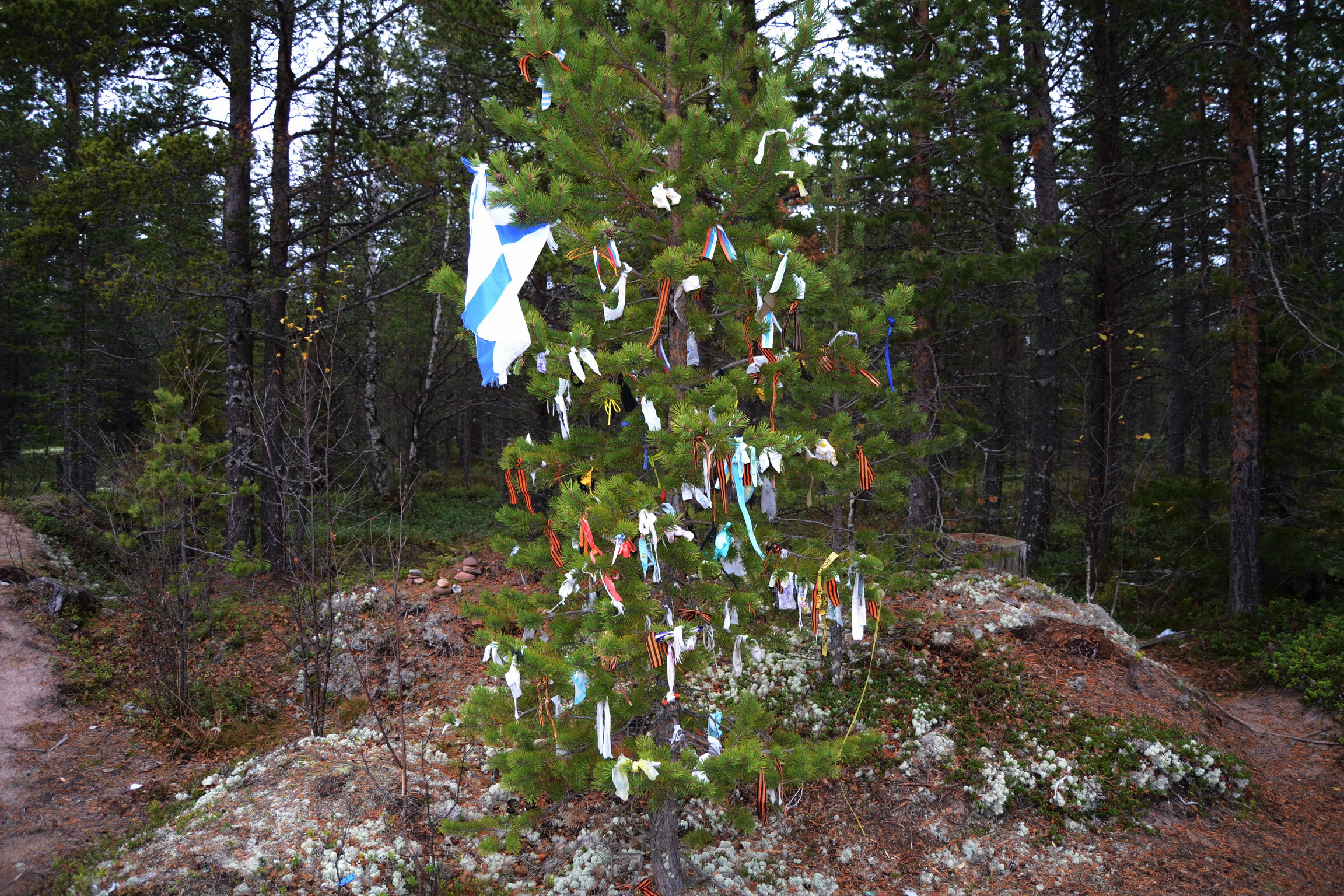
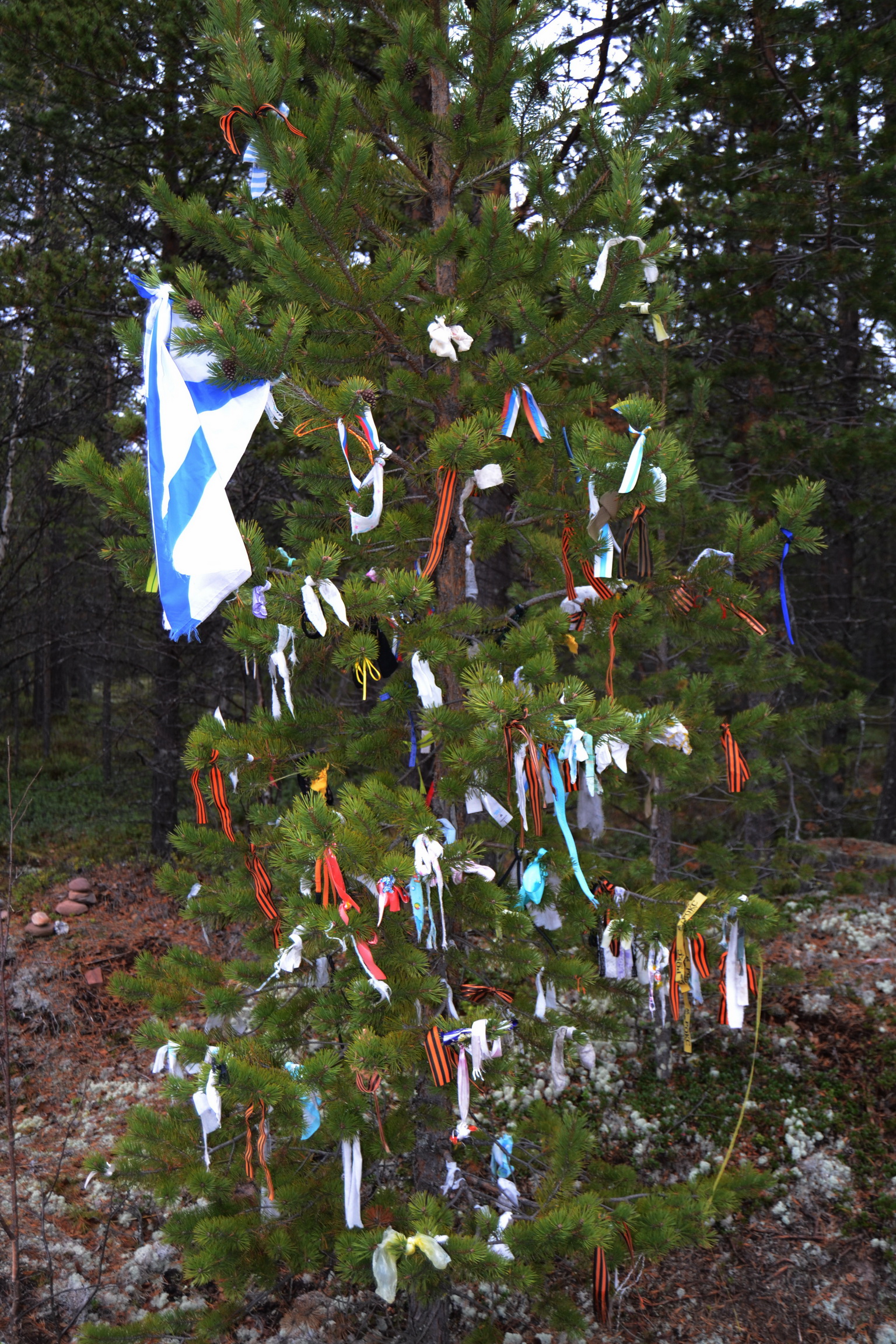
I drove north and crossed the Arctic Circle. By now there were ribbons tied to every tree and the entire roadside was lined with little pyramids built of stones. I don’t know what the neo-shamans call them. Seids are big boulders, whereas these… At this rate they’ll be sacrificing reindeer before long.
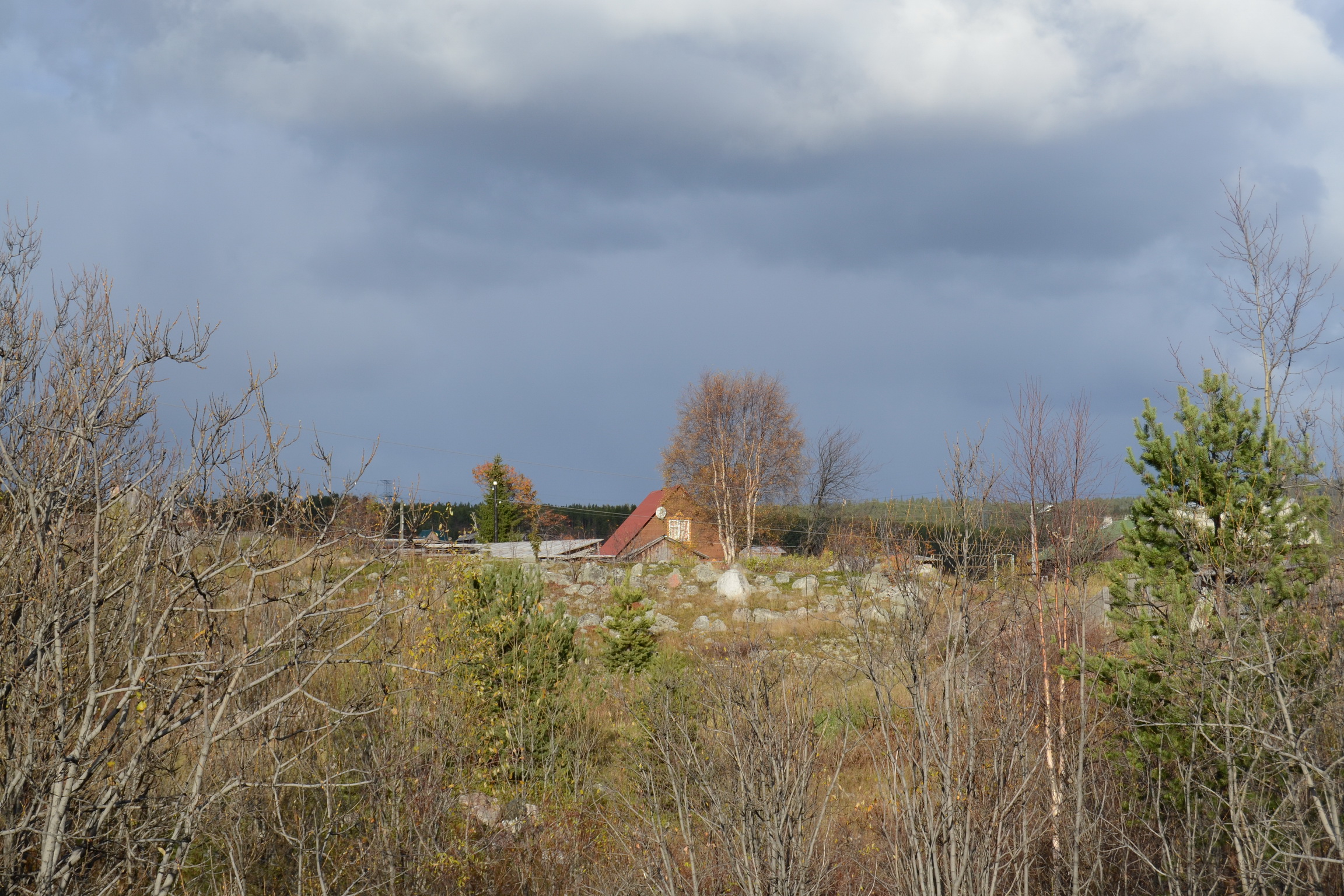
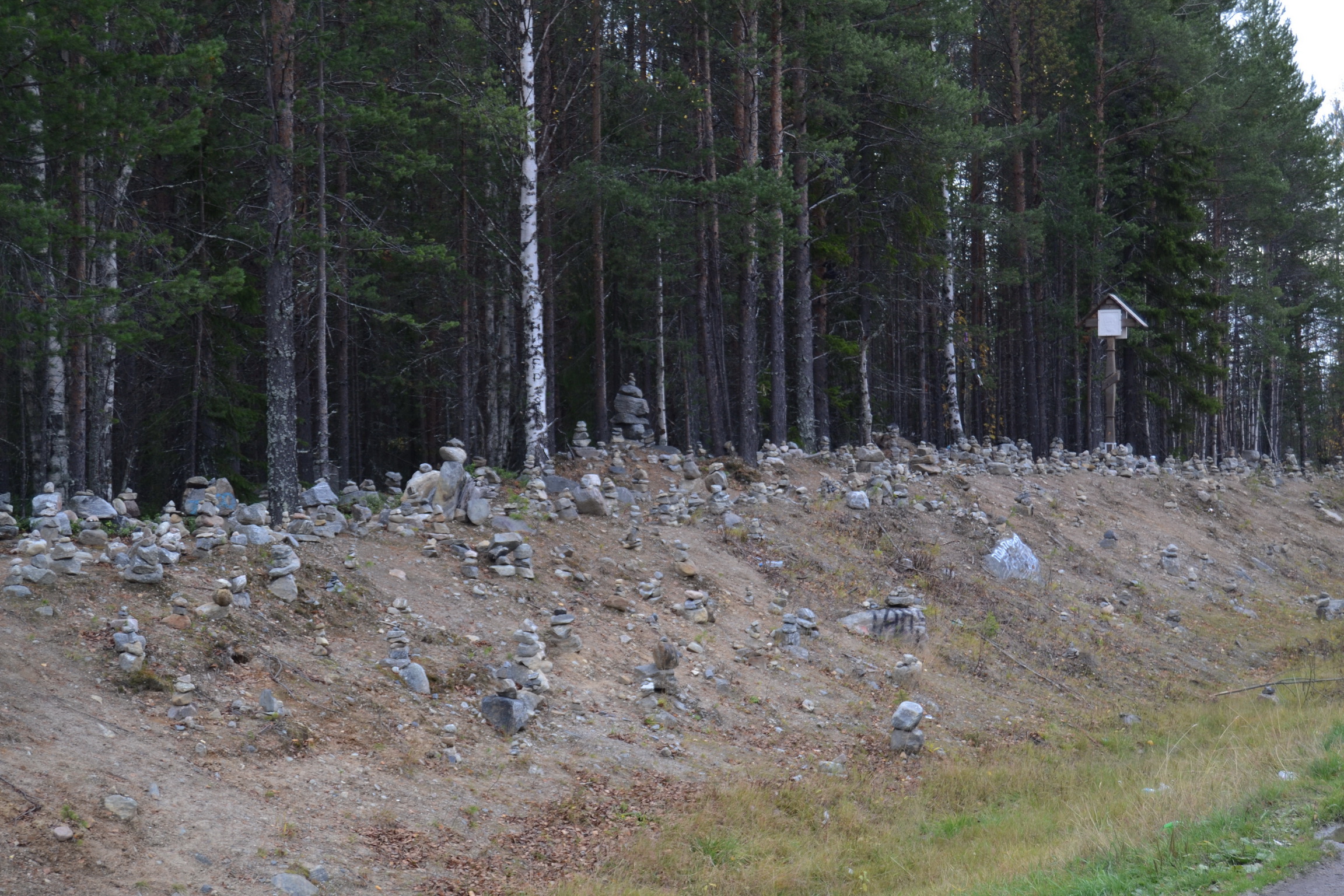
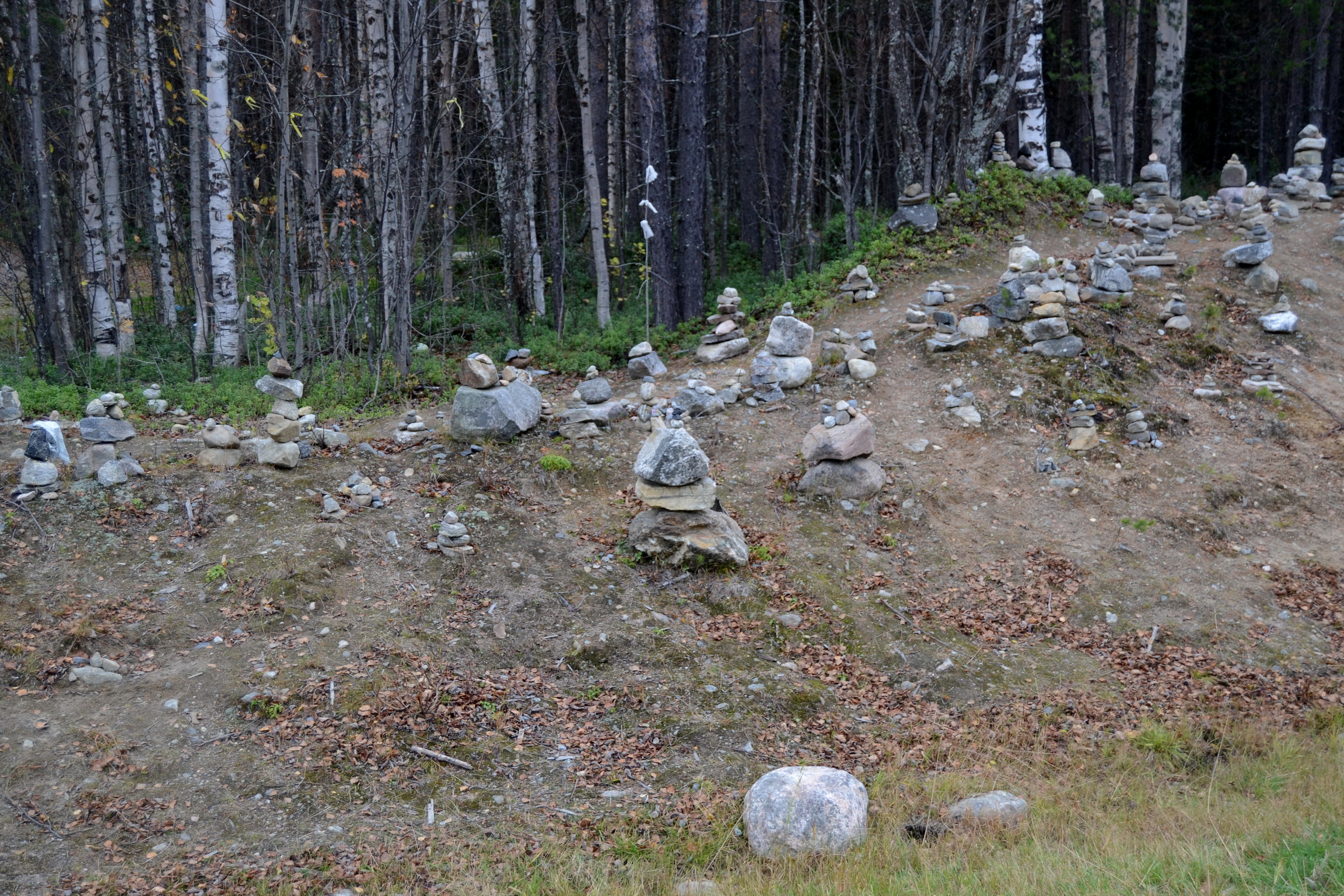
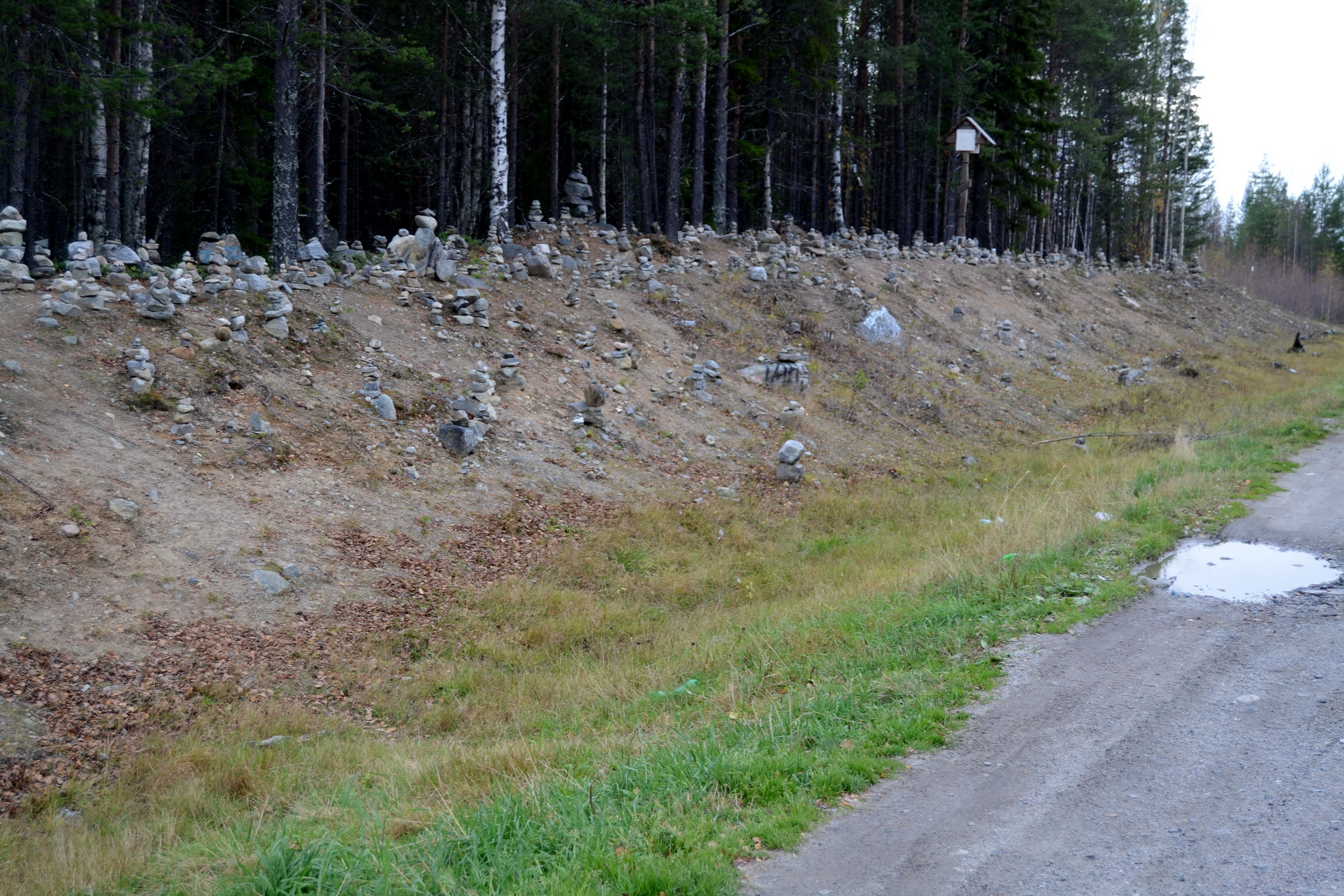
Incidentally, half the ribbons were St George’s ribbons. Quite a mix. Sámi, Karelians, Russians, they’re all supposedly Orthodox in Russia. Fifteen years earlier there was just a sign saying “Arctic Circle”, a tribute to astronomy and geodesy.
The road to Umba and on to Varzuga was in good condition. Unfortunately the cheerful morning sun disappeared behind the clouds after lunch.
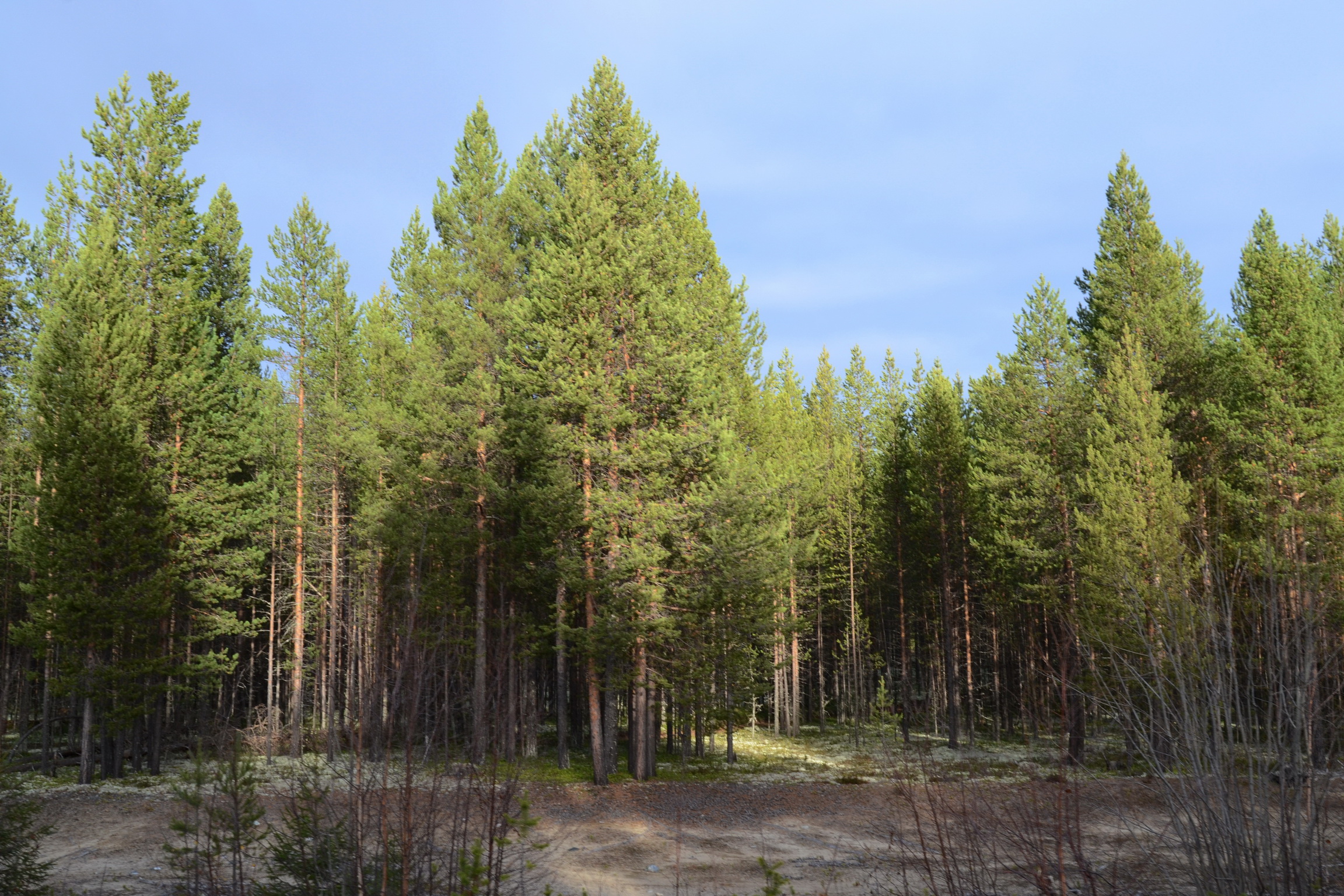
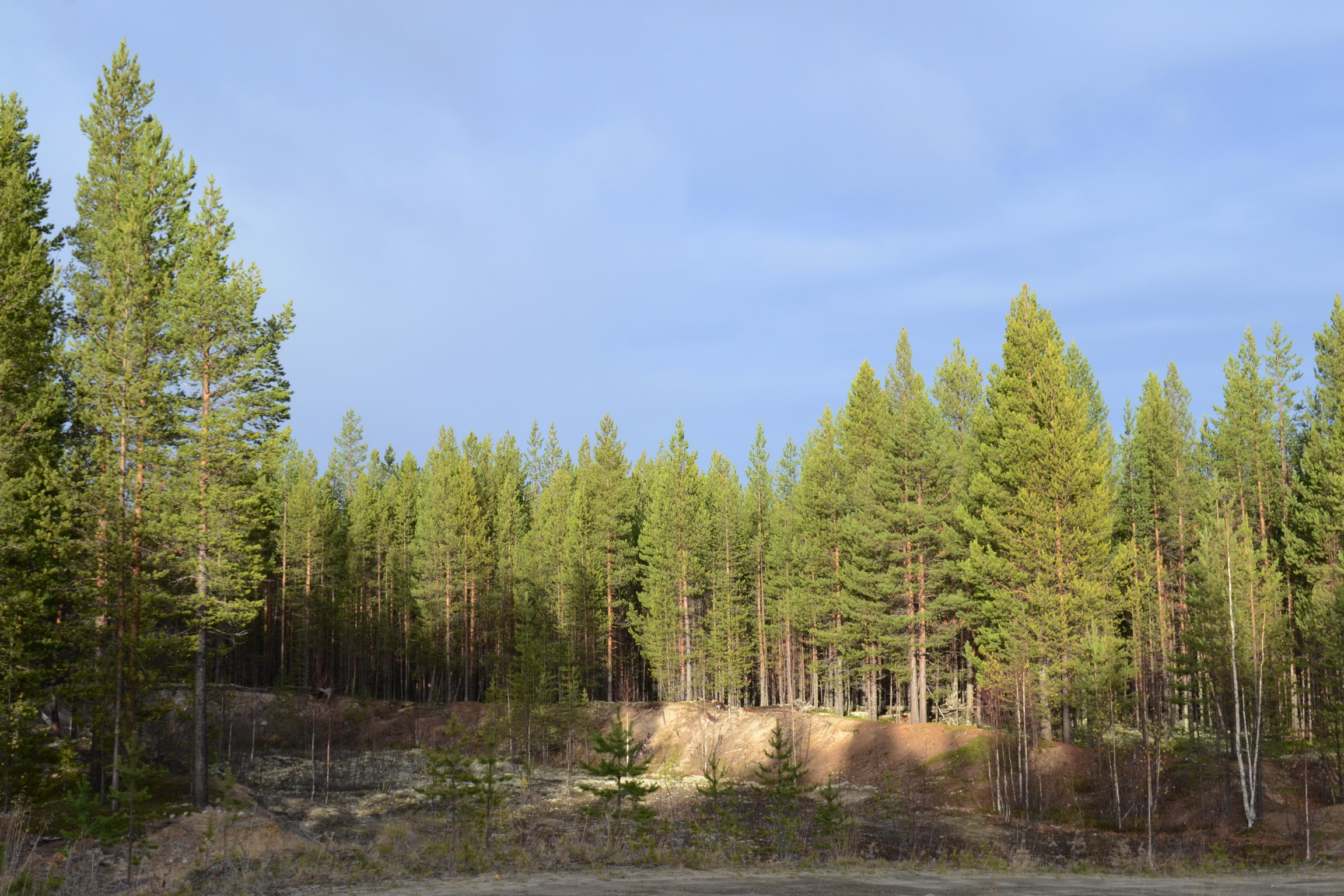
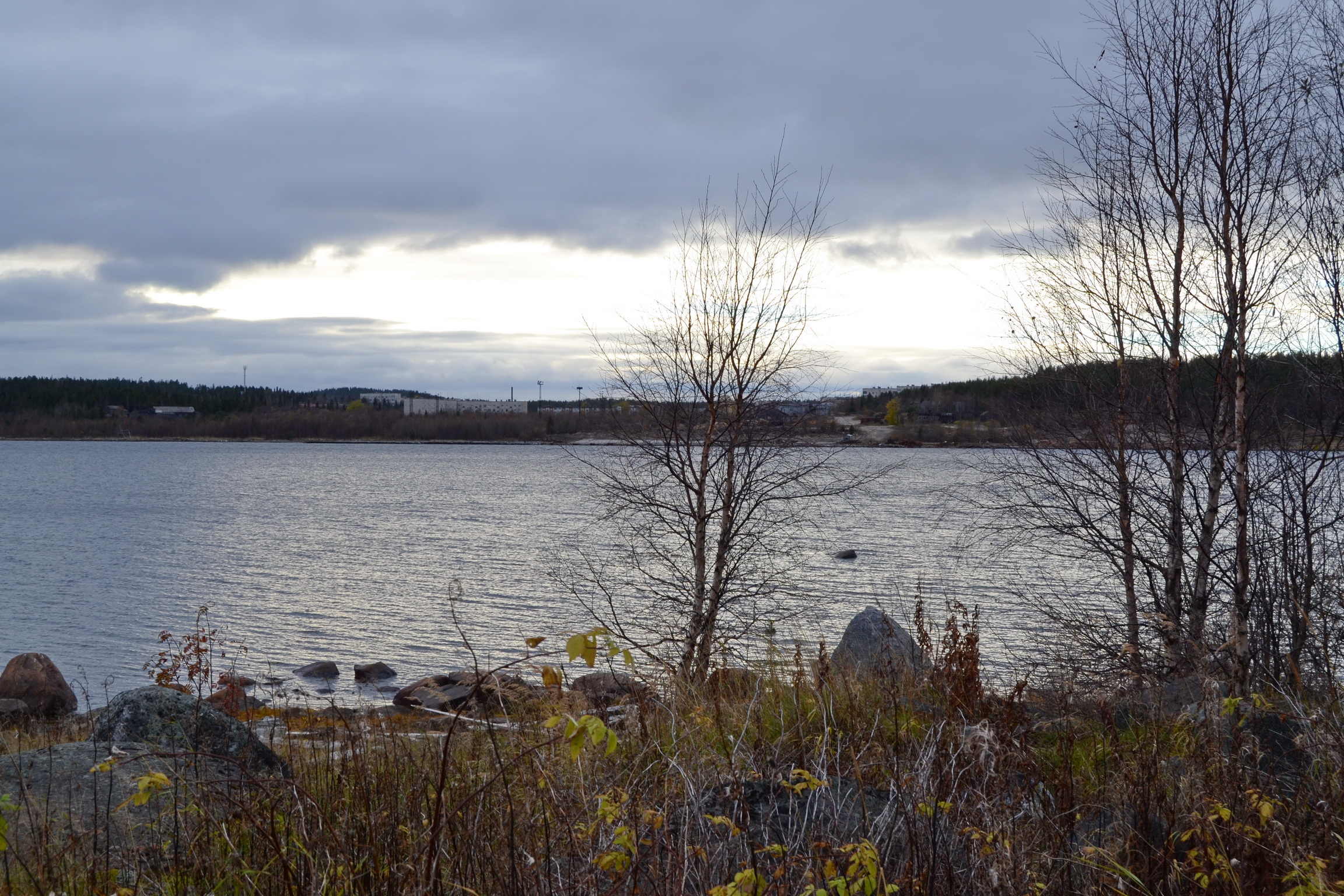
I skipped Varzuga itself and turned off towards the village of Kuzomen and the mouth of the Varzuga River. Here the boggy woods gradually give way to sand dunes. You need four-wheel drive on the sand. Some places have very deep puddles and high ridges between the ruts. The road to the village is straightforward, and beyond it the easiest way is along the beach. At times I left a rut ten centimetres deep but never got stuck. You have to be careful driving on the tidal flats. Get stuck and the tide will be back in a couple of hours. If you’re still there, the water will swallow the car.
A man flagged me down right on the beach. He lived by fishing, in a little cabin by the river mouth. He was very keen for me to stay the night, or at least have some tea. A lovely man, but I wanted to be alone. I was sorry to turn him down.
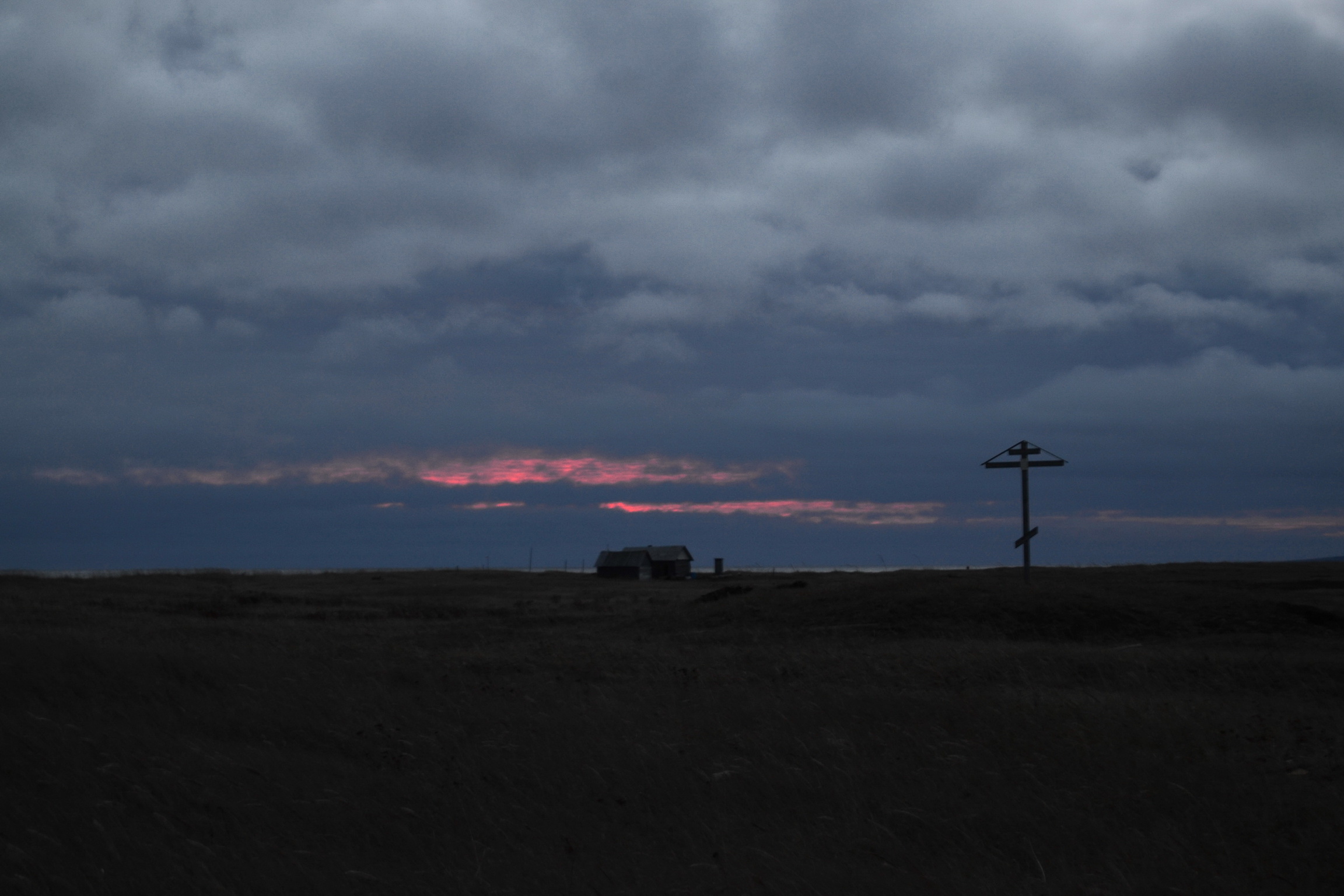
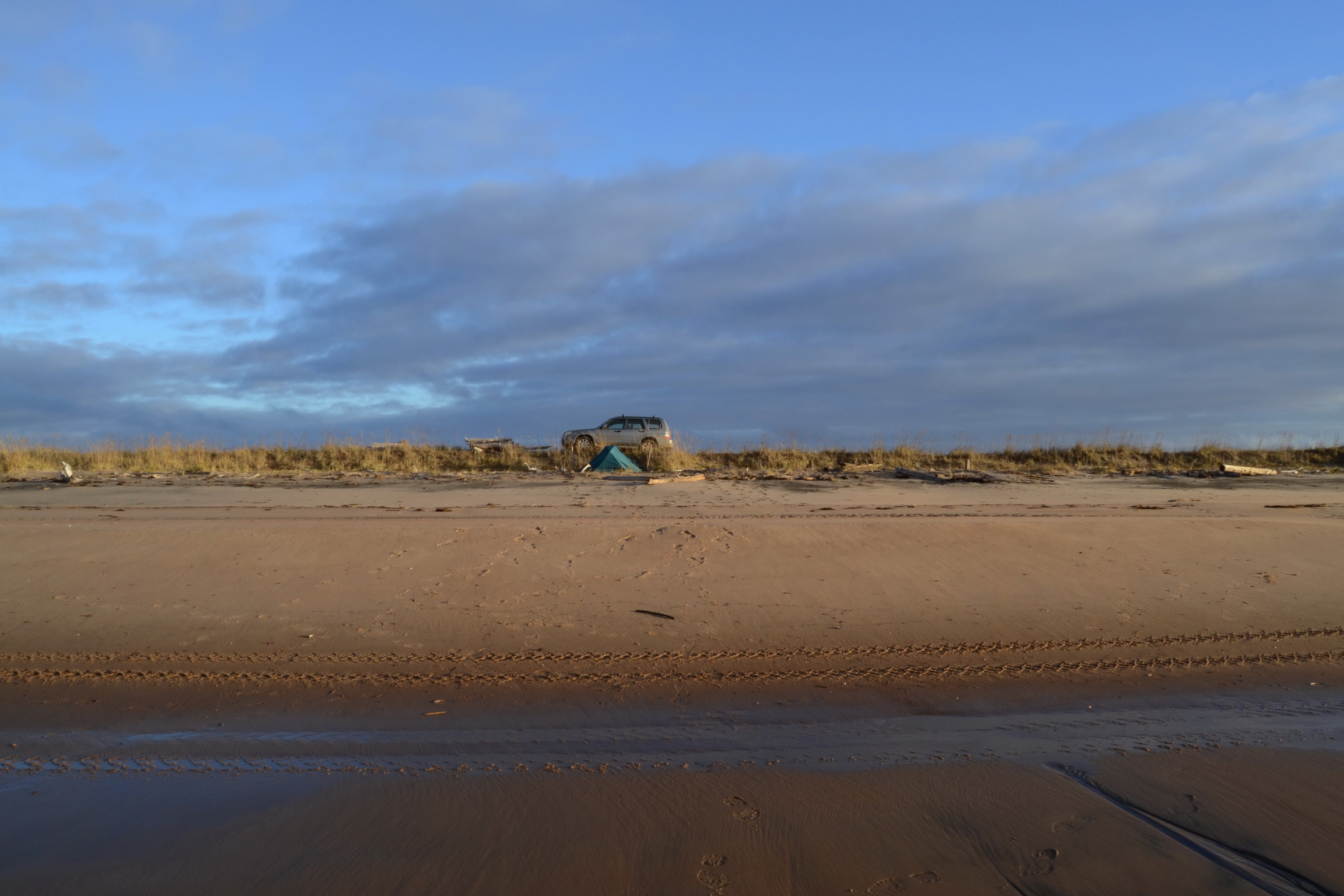
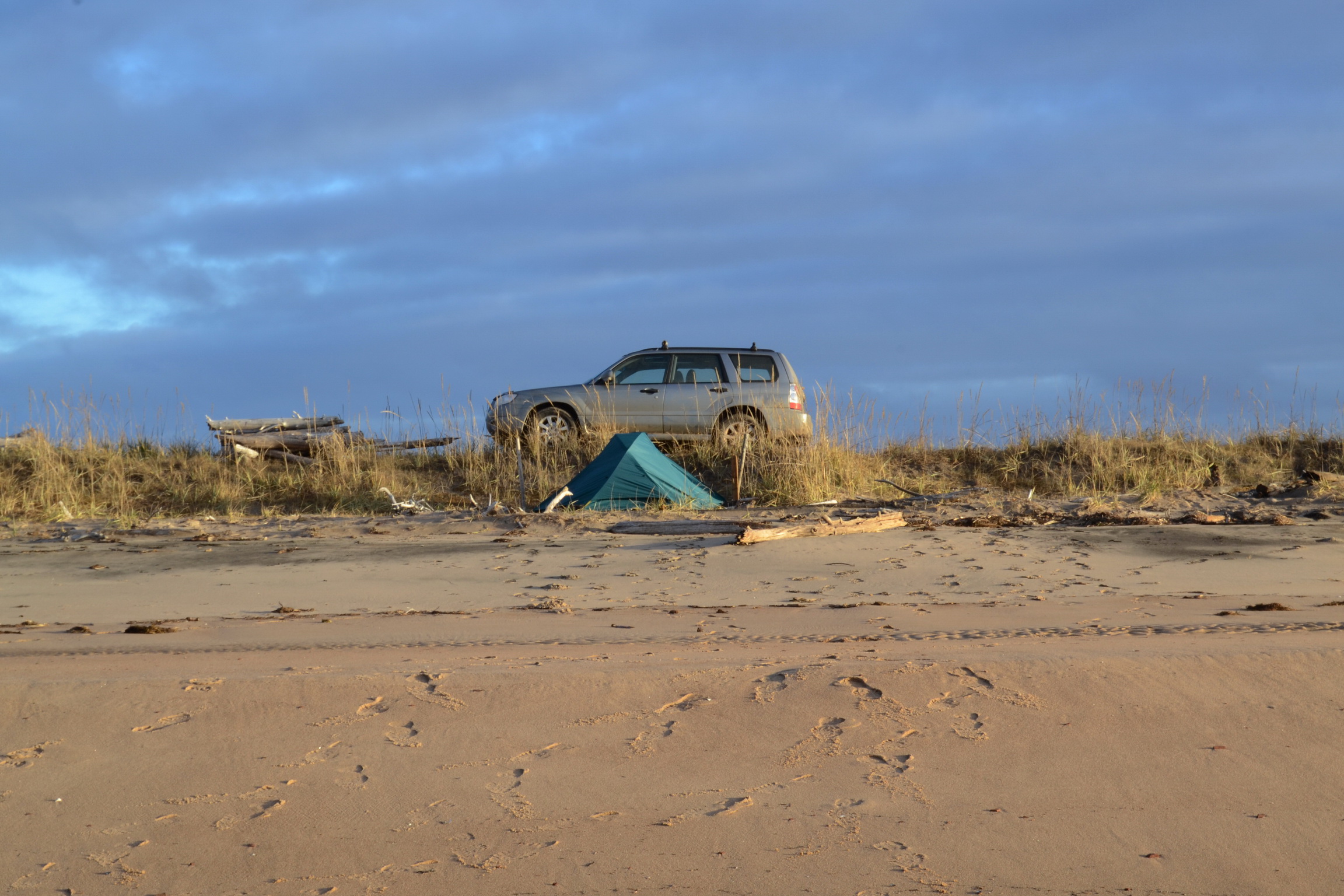
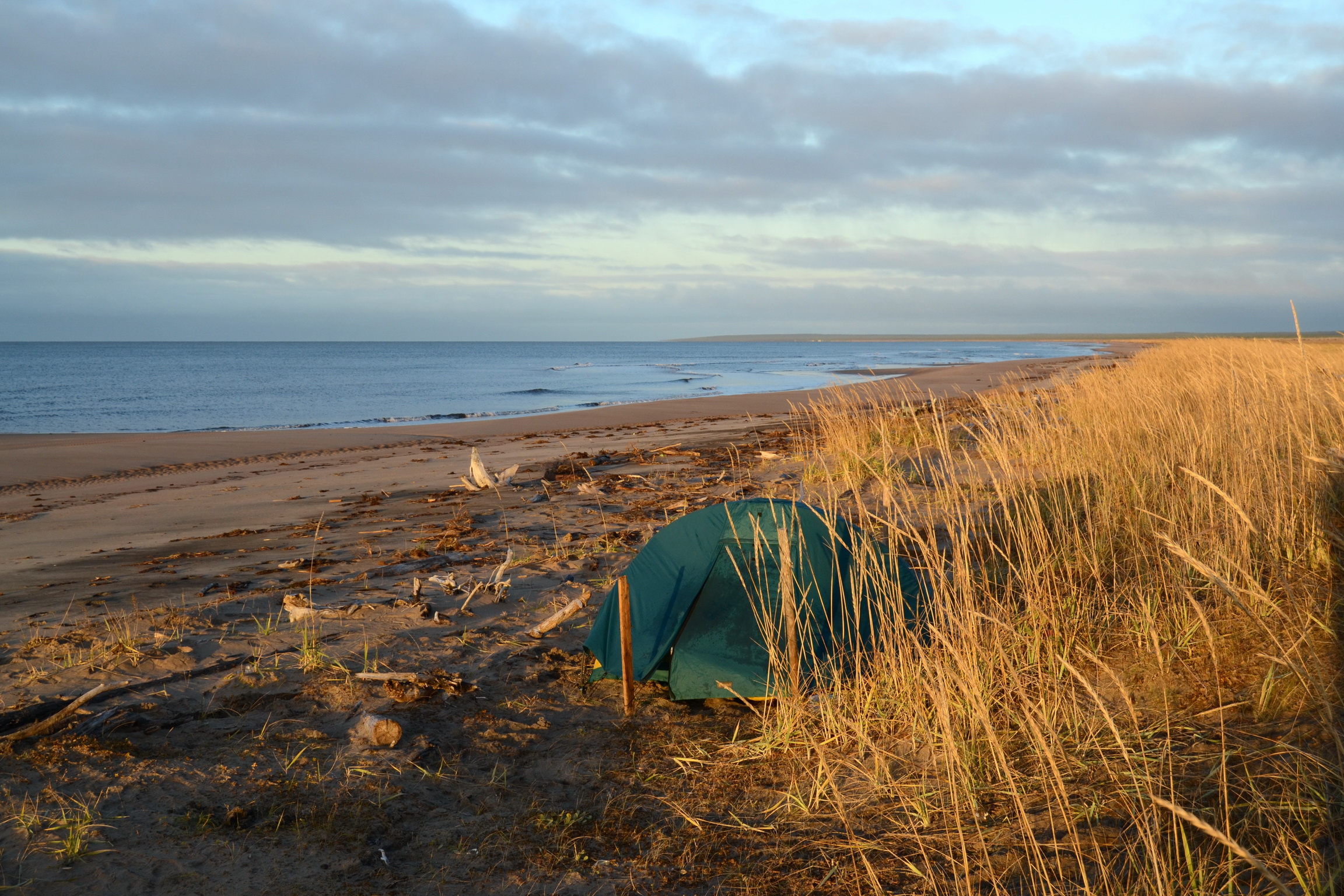
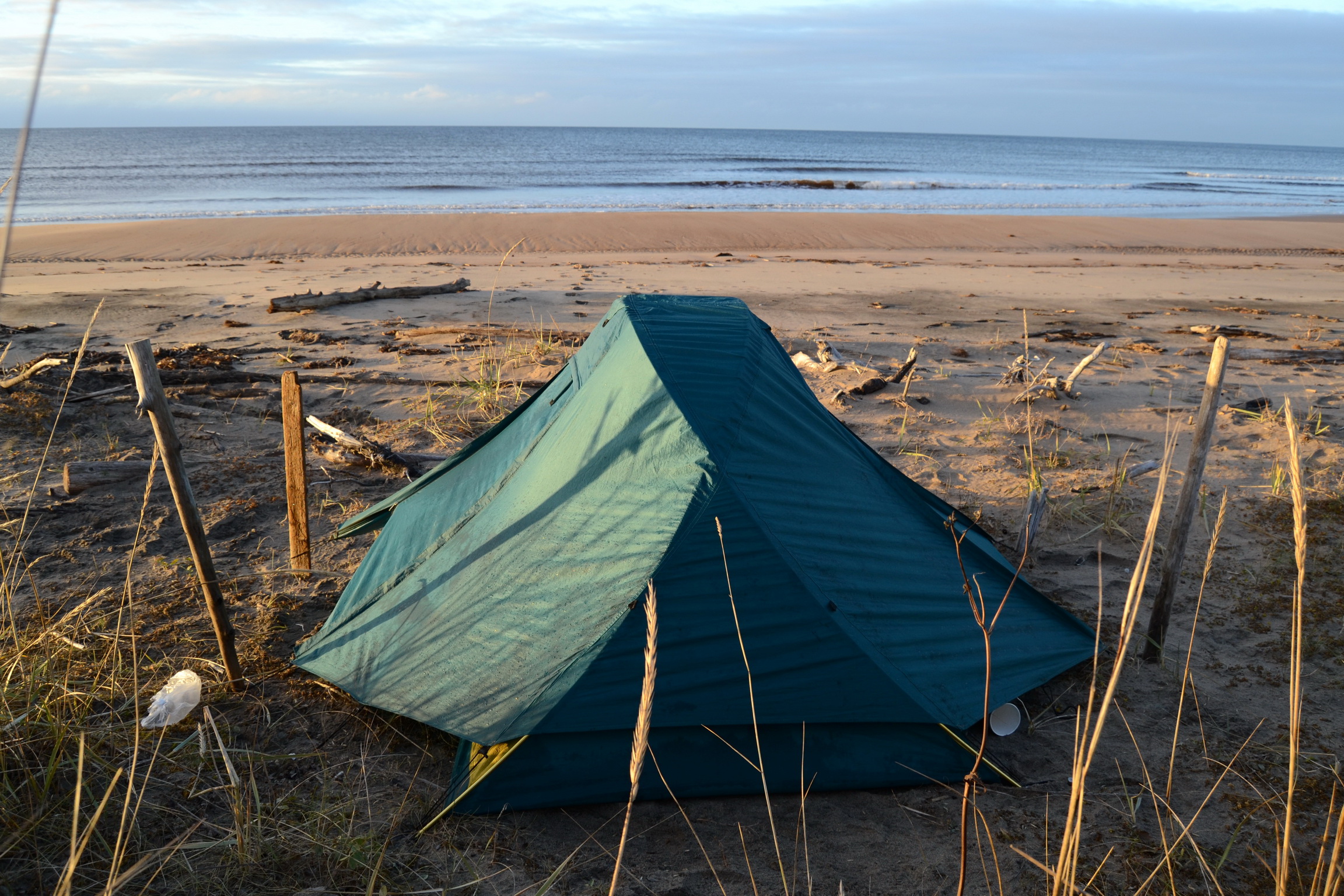
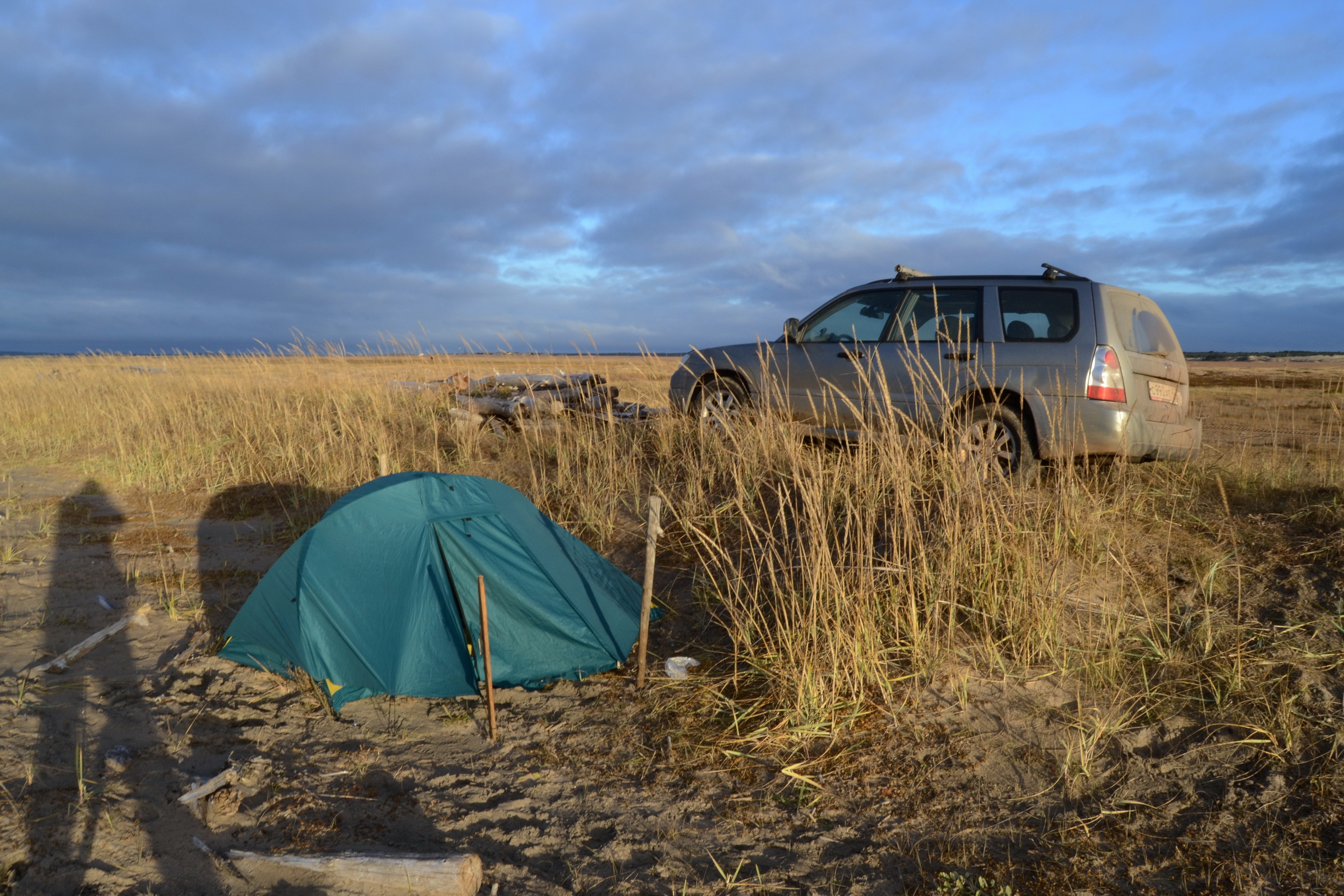
I stopped for the night on the shore of the sea, among the dunes a kilometre from the Varzuga’s mouth (66°16.231′N, 36°53.921′E). There are stacks of places to camp here. Ahead of me was a long autumn evening north of the Arctic Circle. How good it is to have nowhere to rush off to.
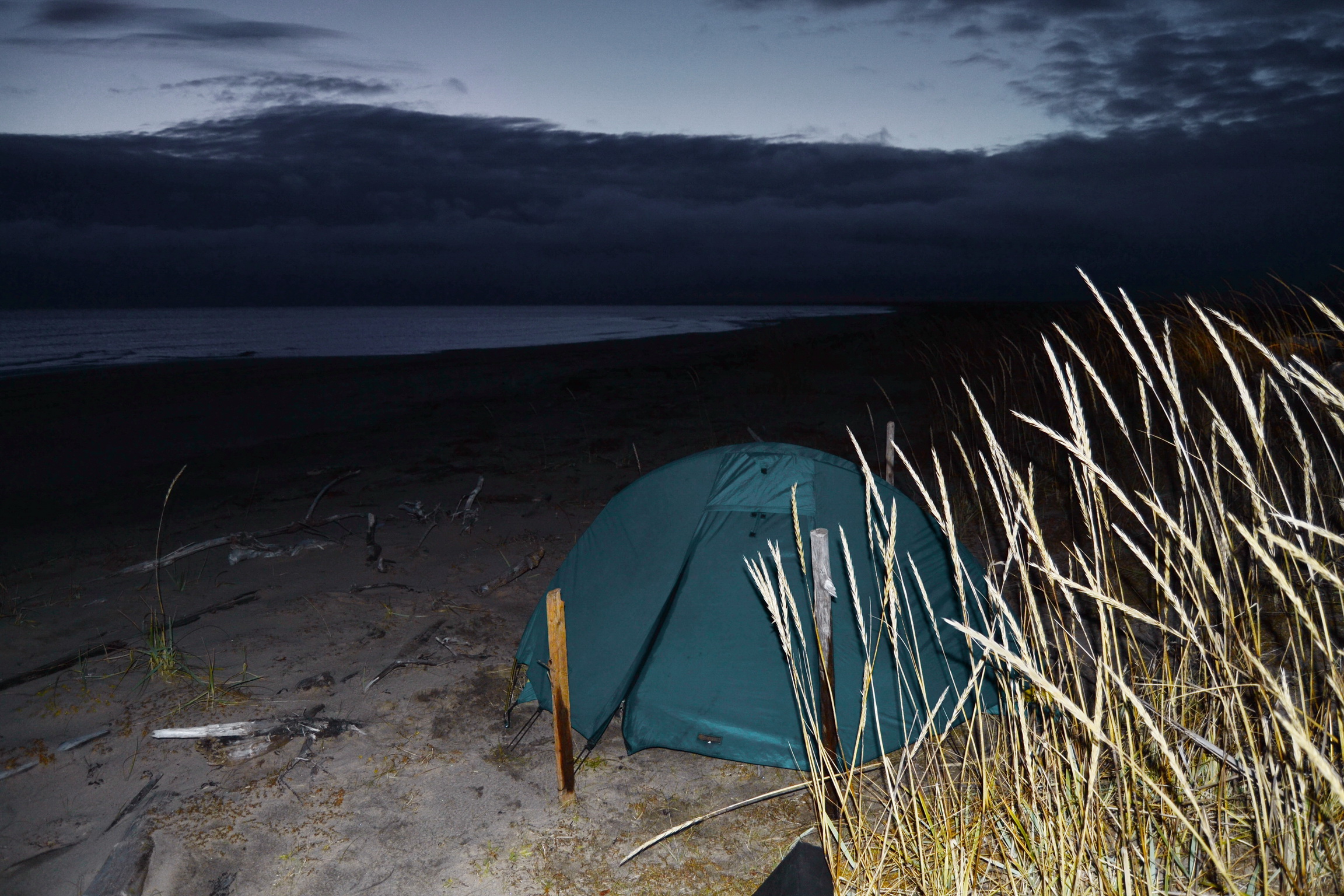
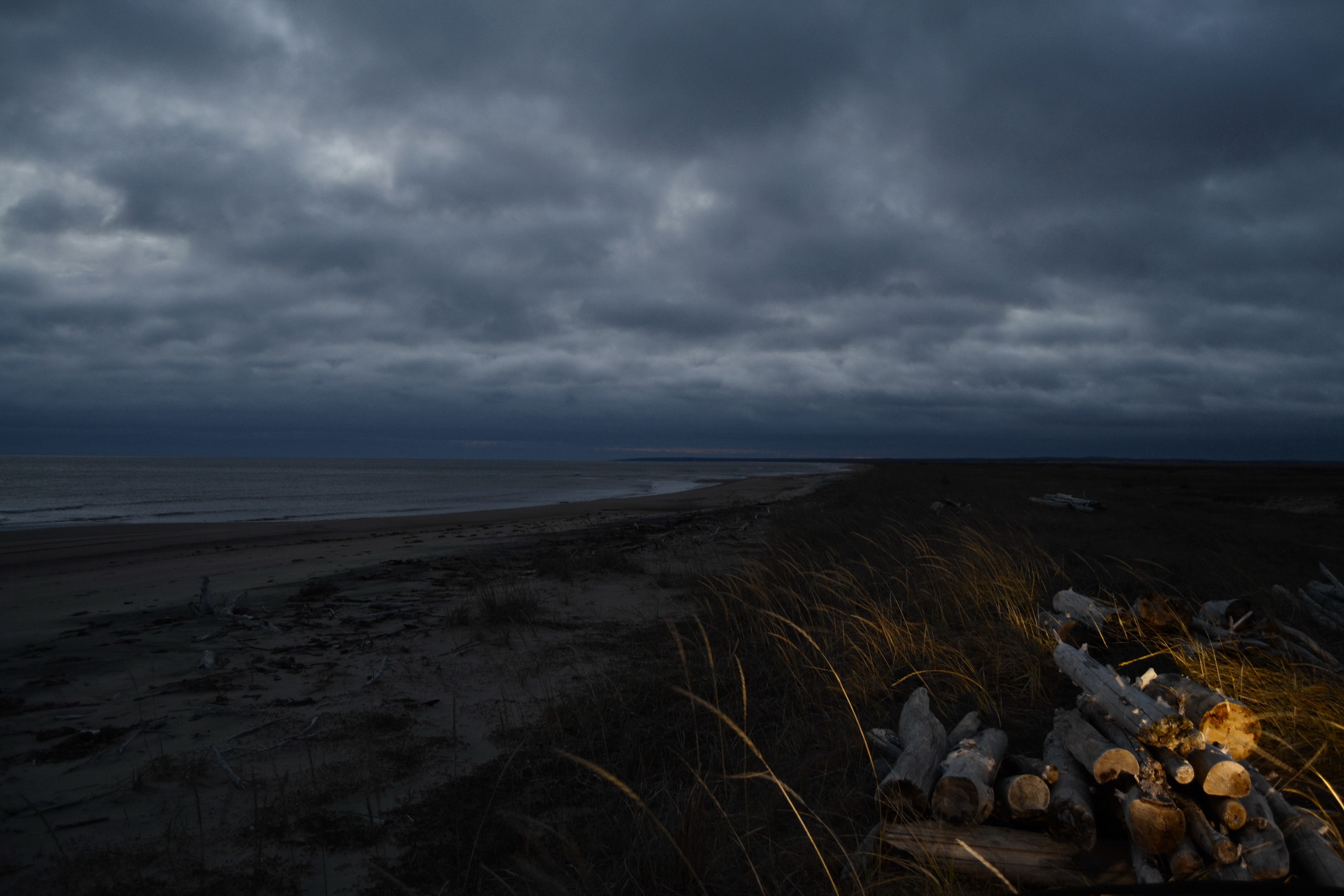
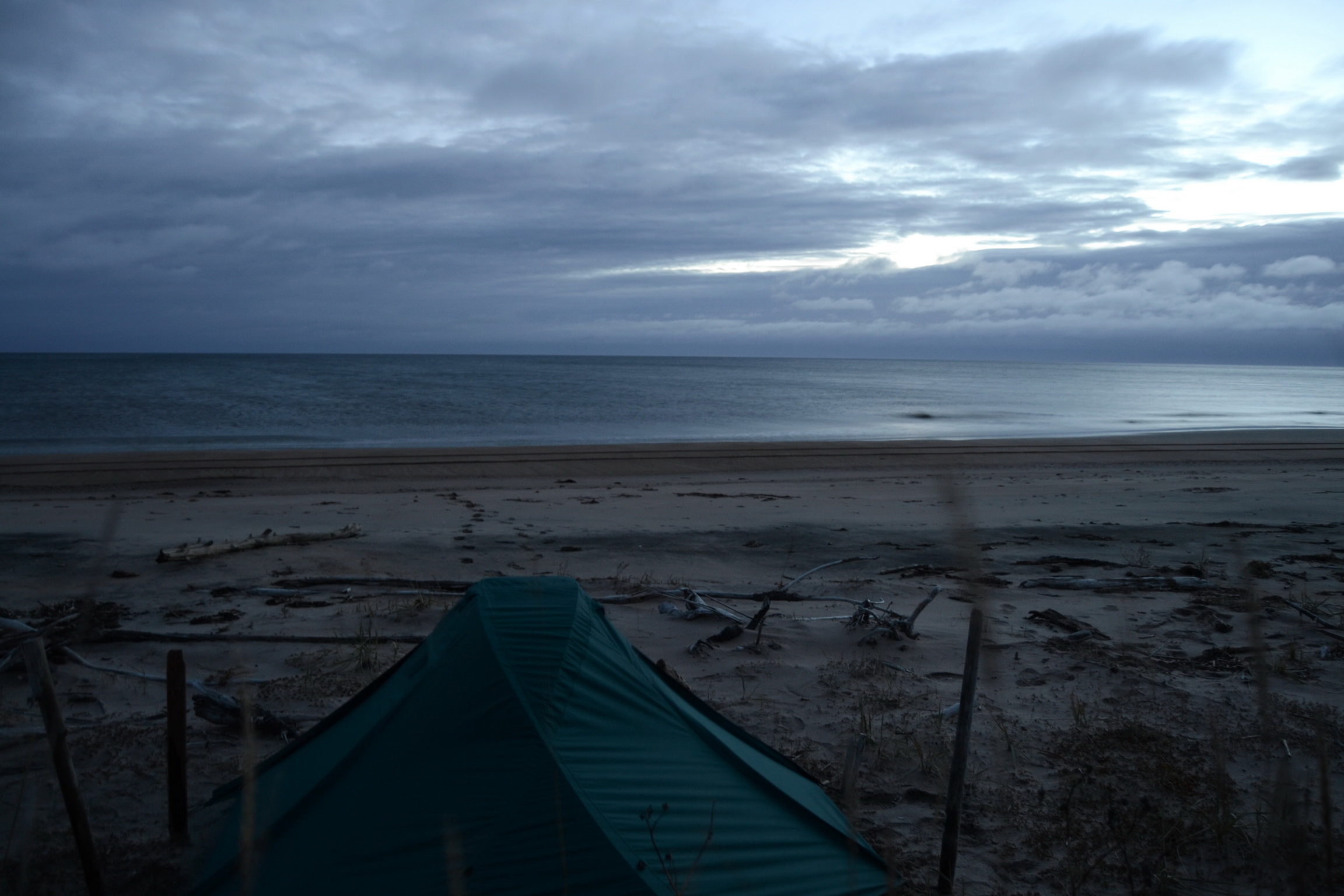
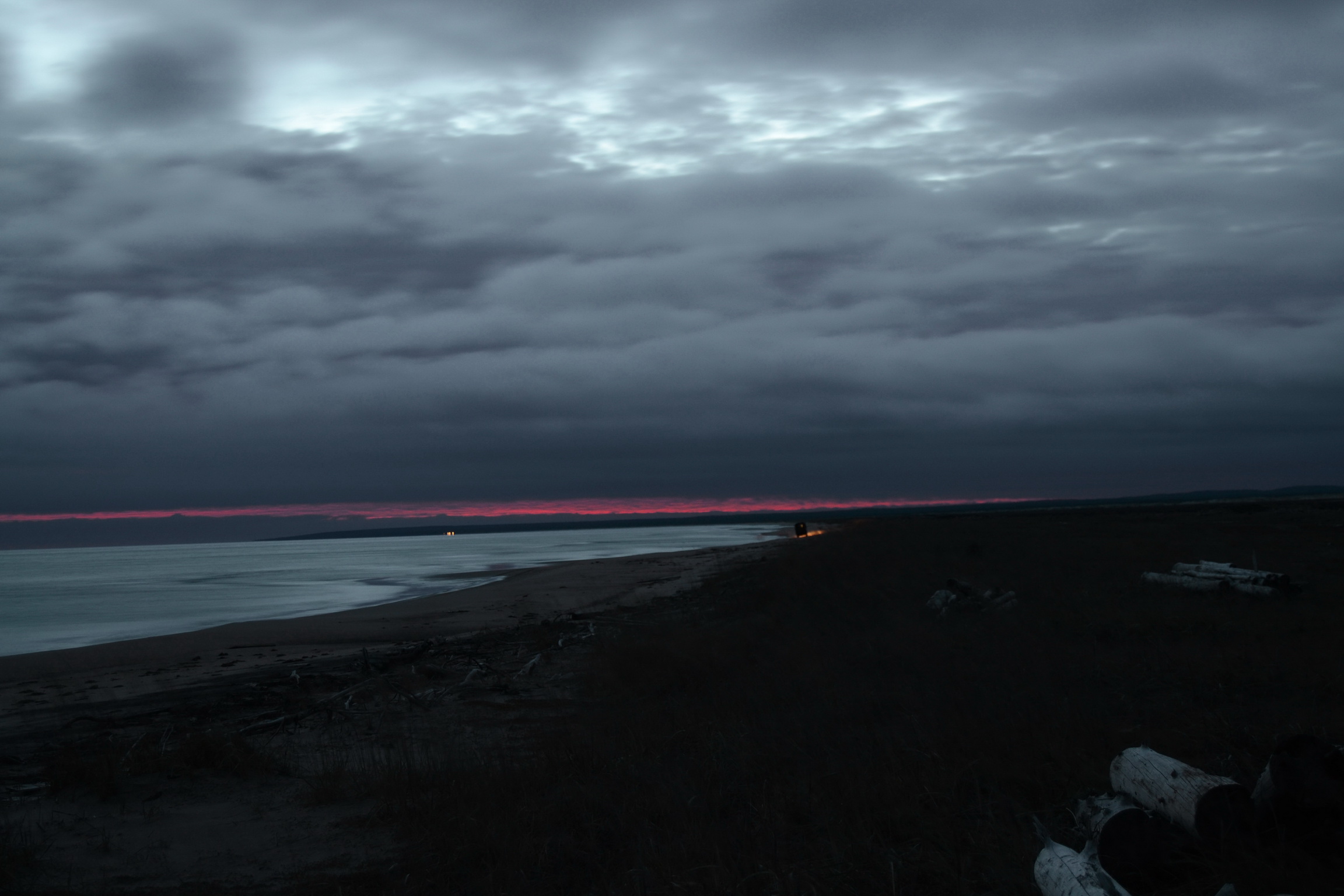
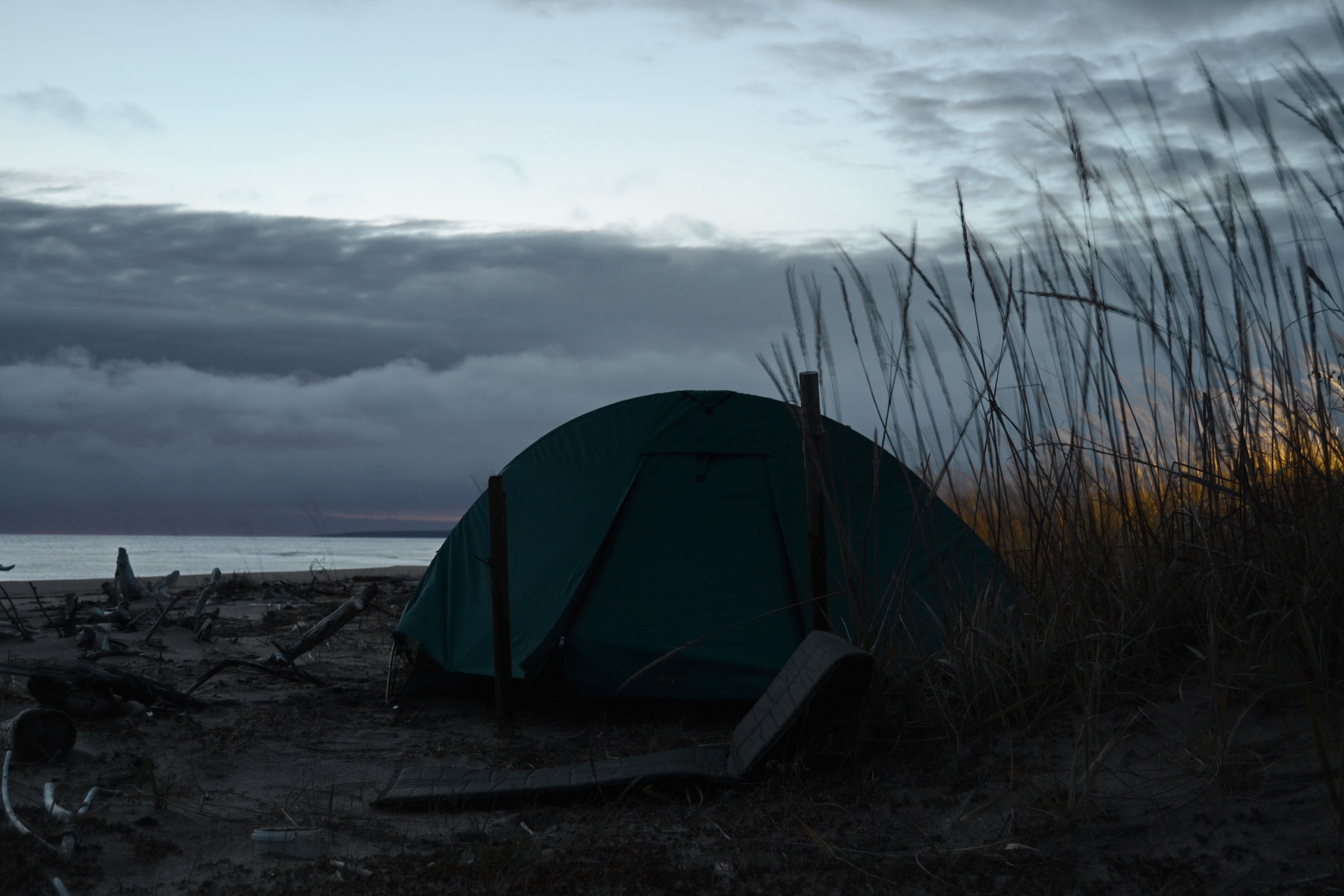
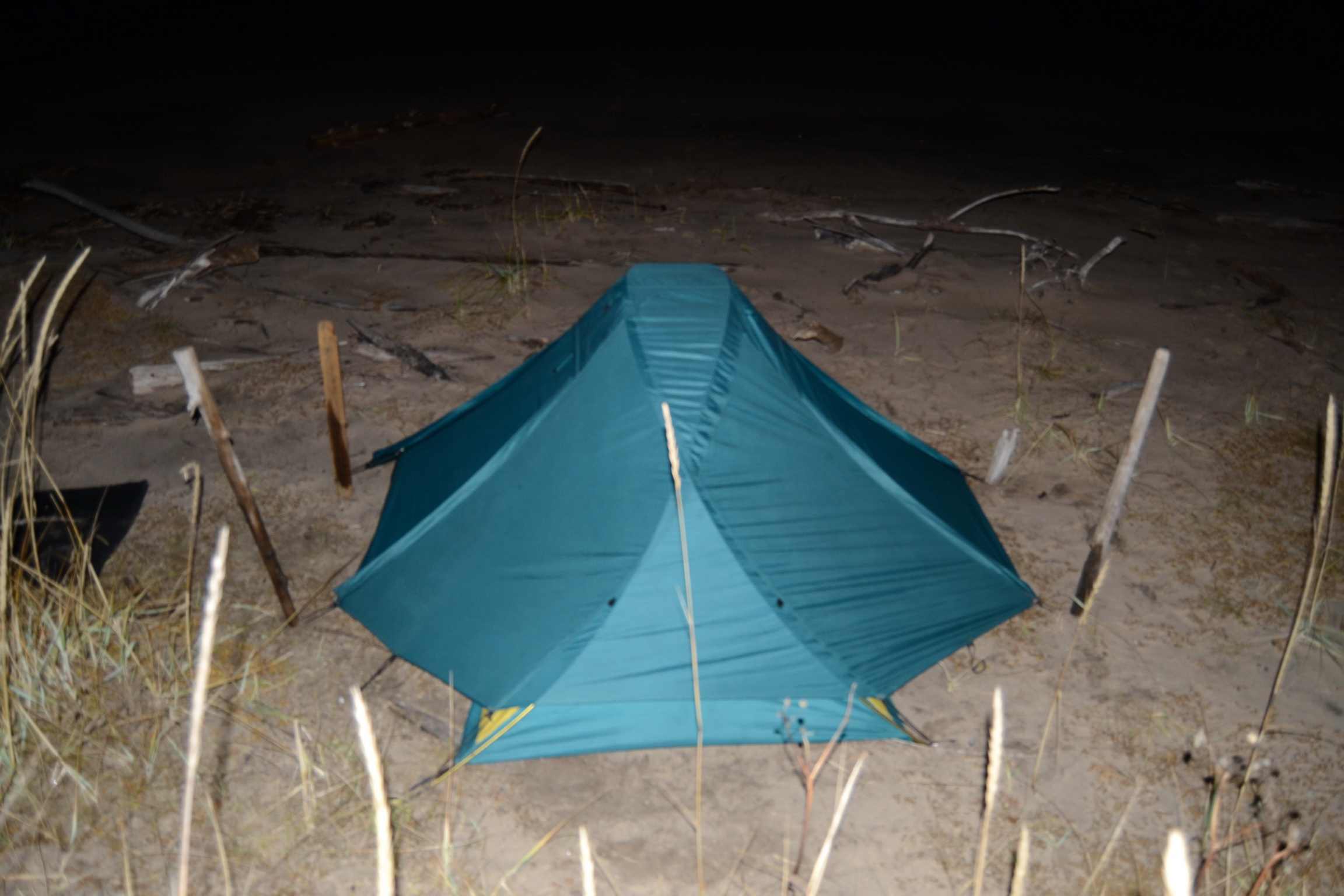
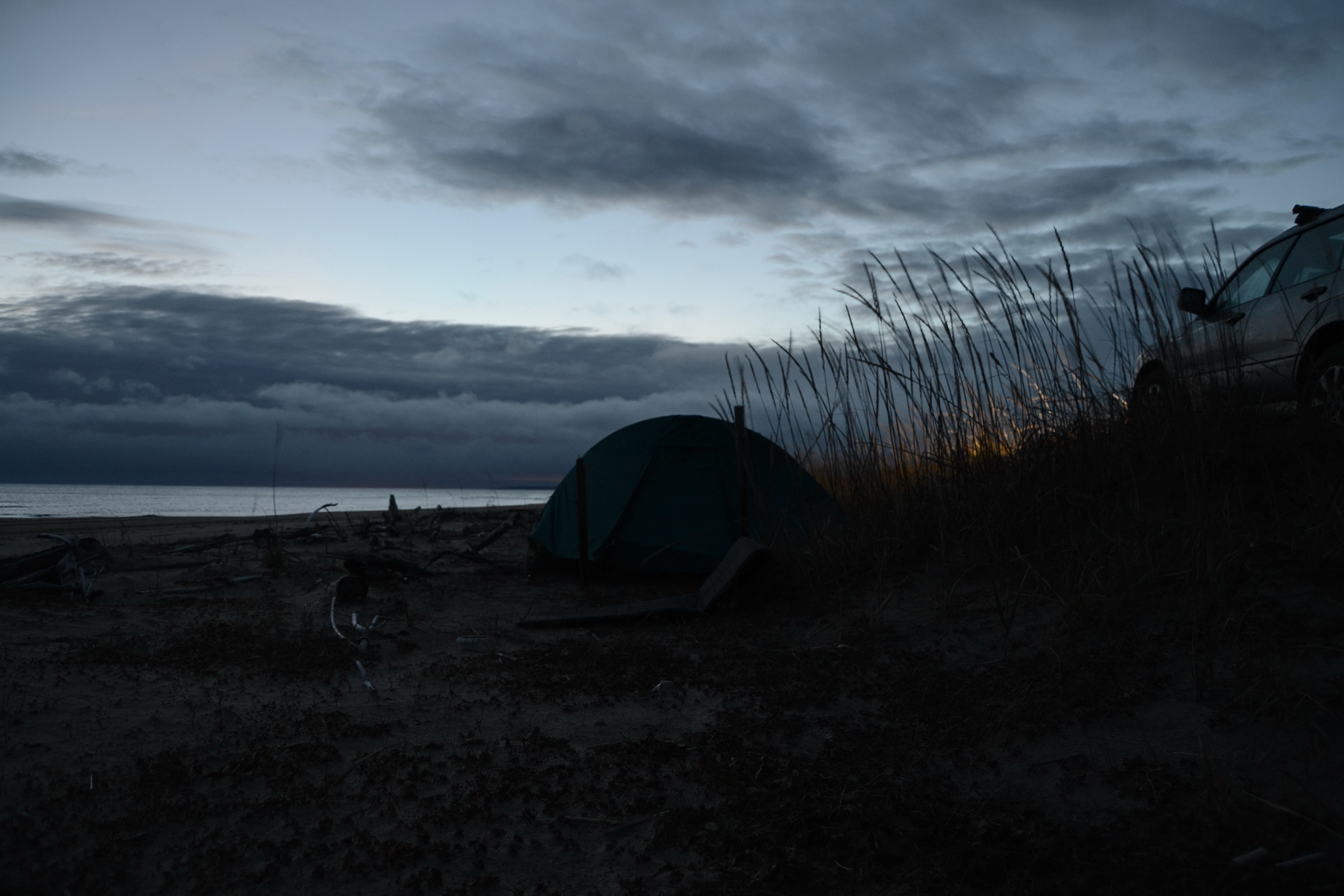
There’s always plenty of wood on the shores of the White Sea. Back when timber was floated down the rivers there were rows and rows of logs. Over the last forty years those have all rotted, but enough trees have found their way into the water on their own. I lit a big fire, spent a long time warming myself by it, and cooked supper and several more rounds of tea and cocoa. I thought back to when we were young and carefree, a very long time ago, kayaking on the White Sea. Then it was midday in summer. Now it was a cold autumn evening.
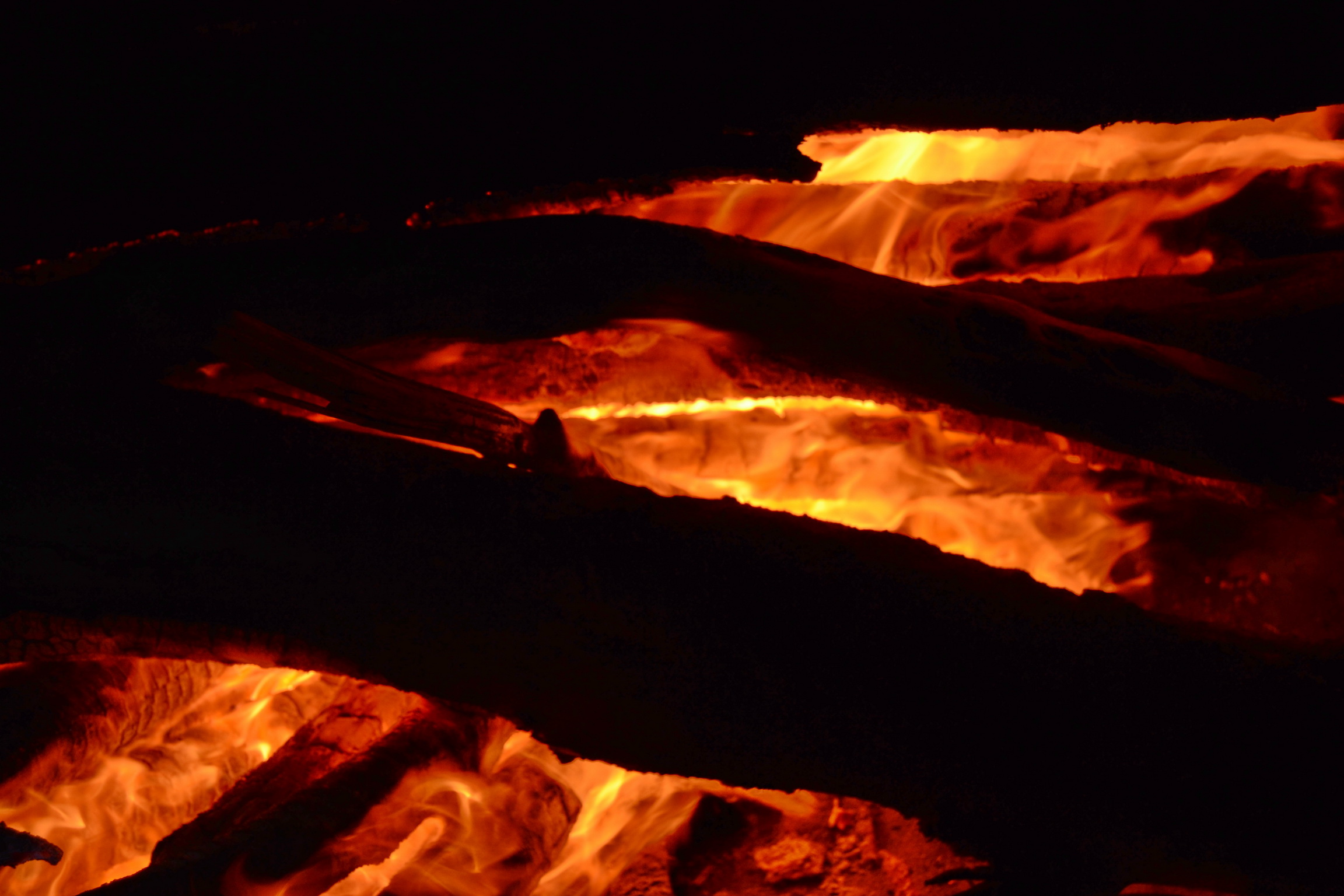
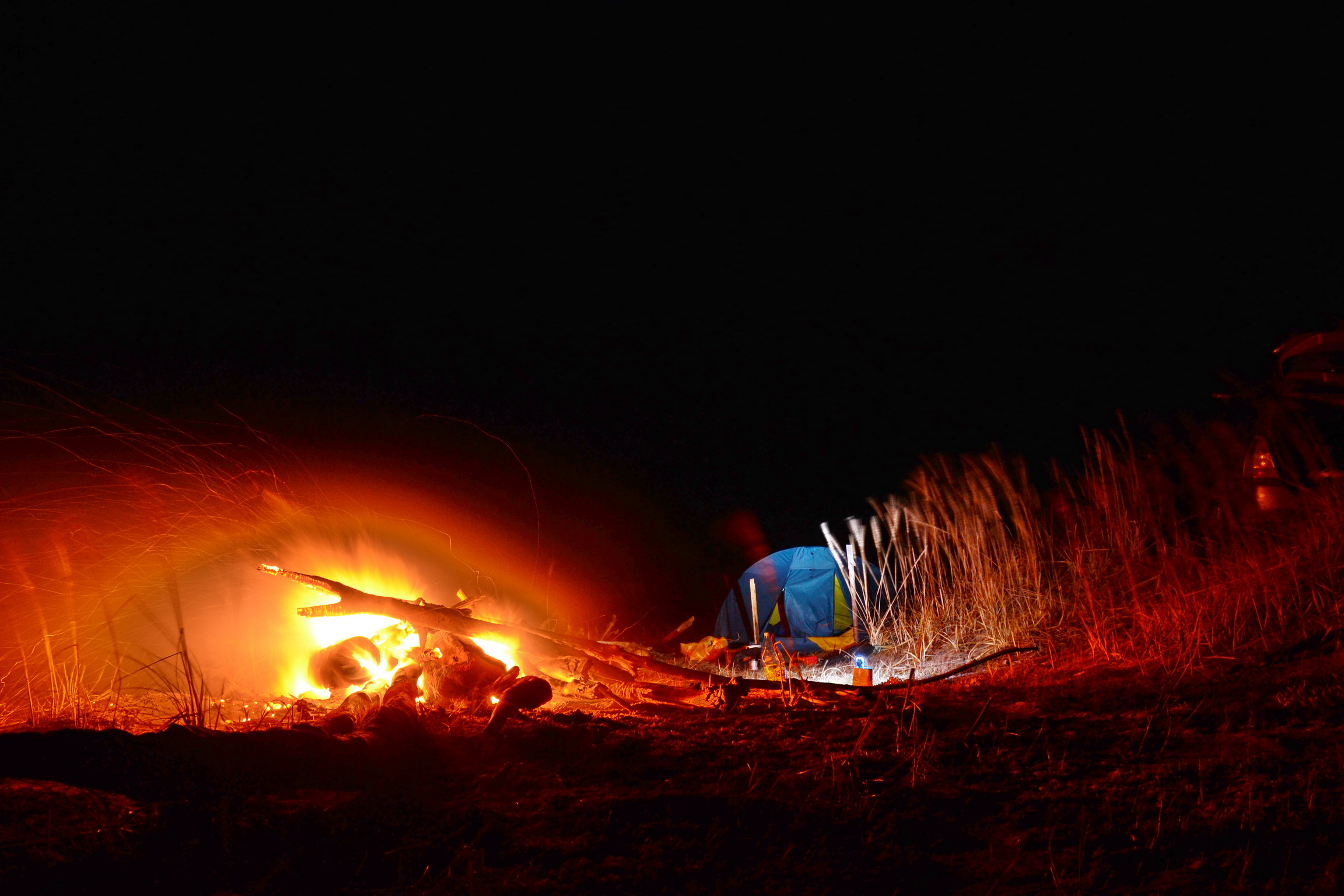
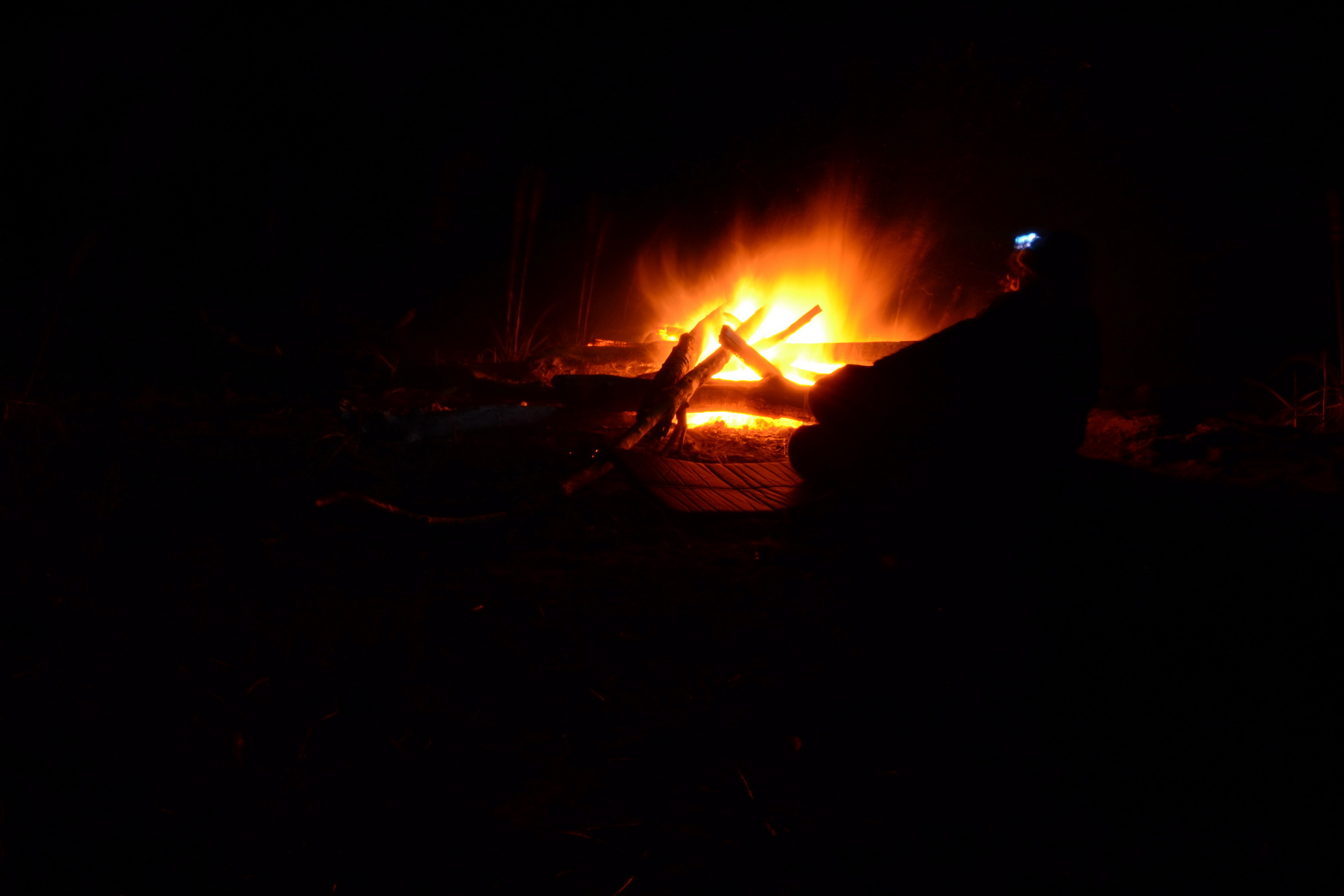
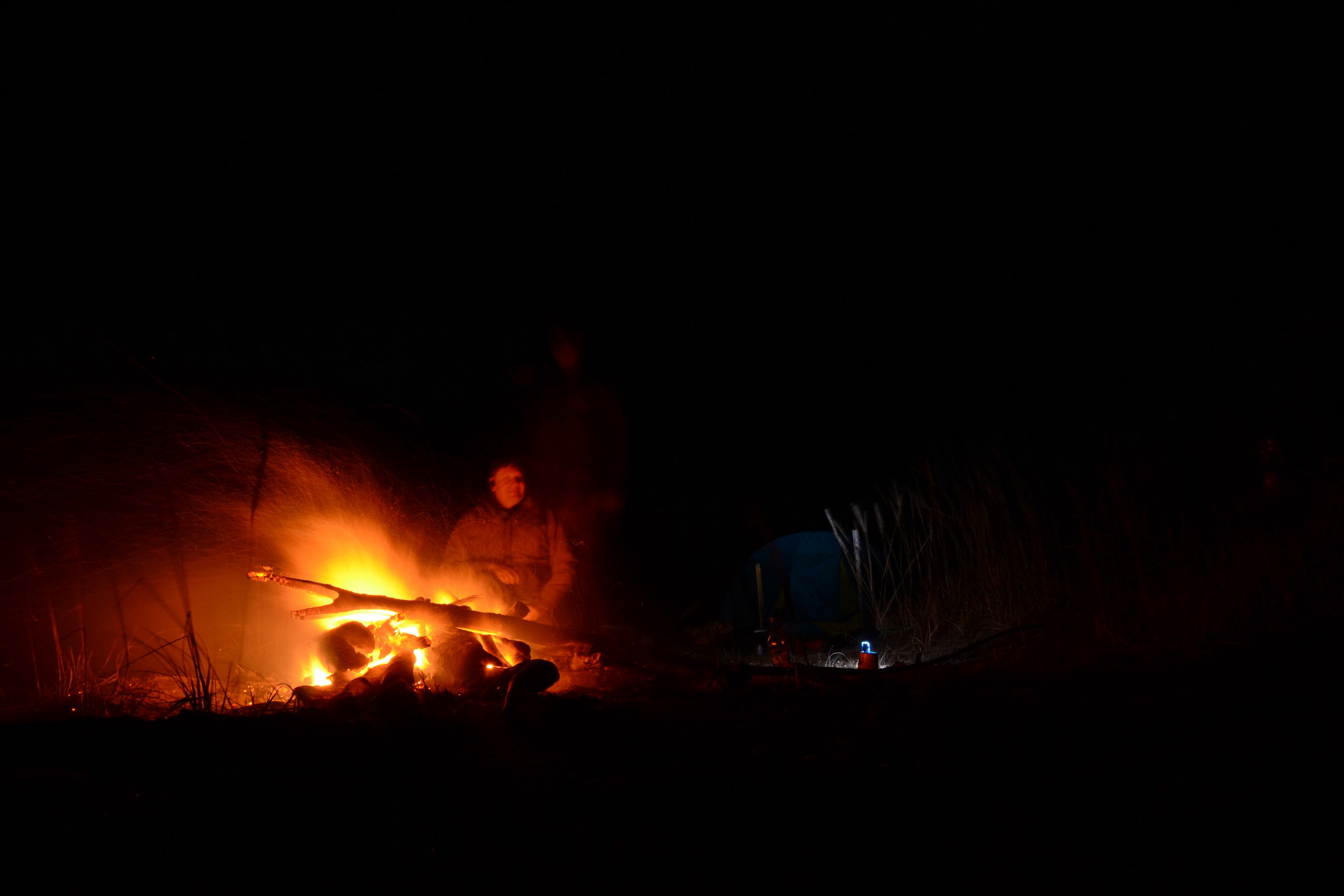
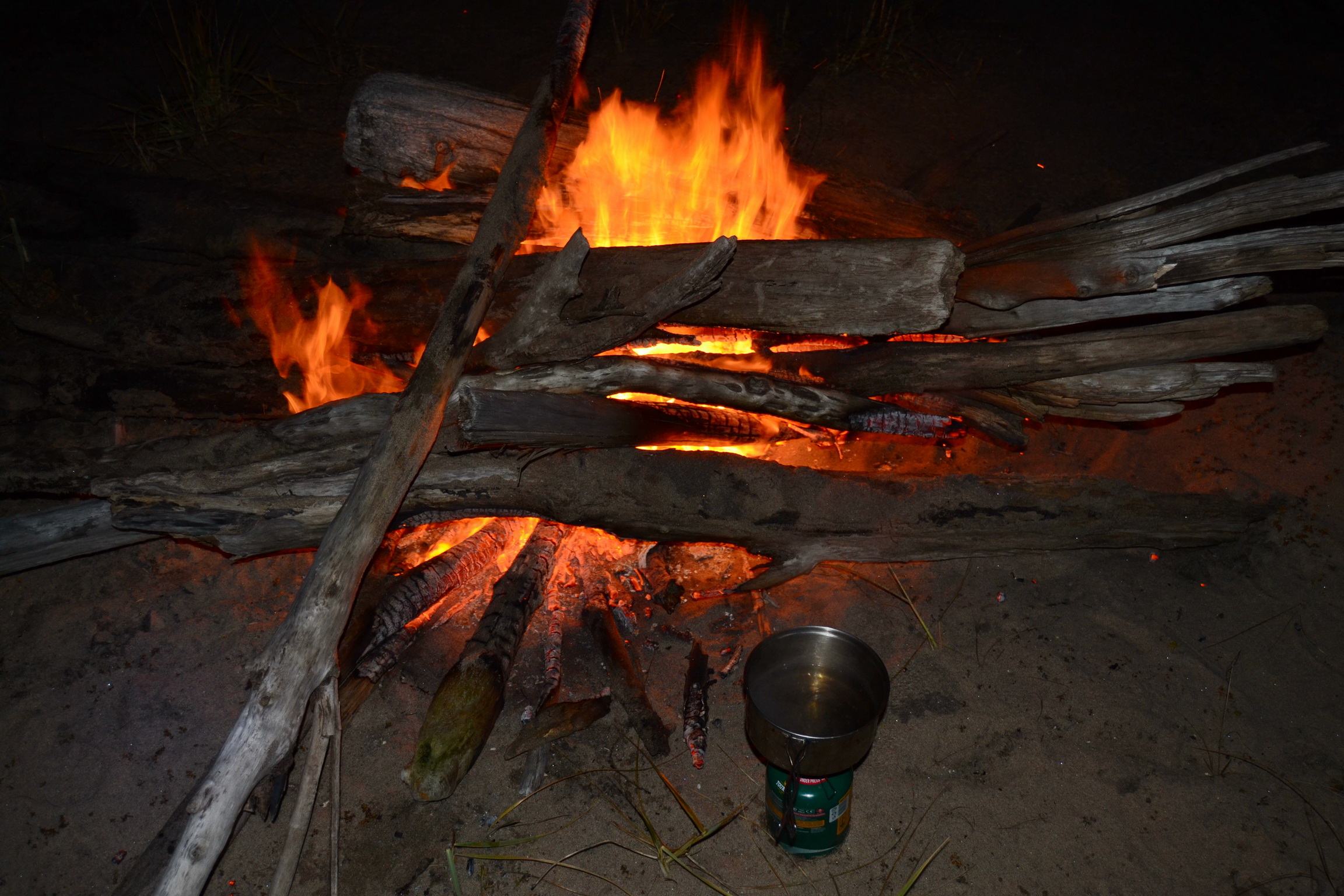
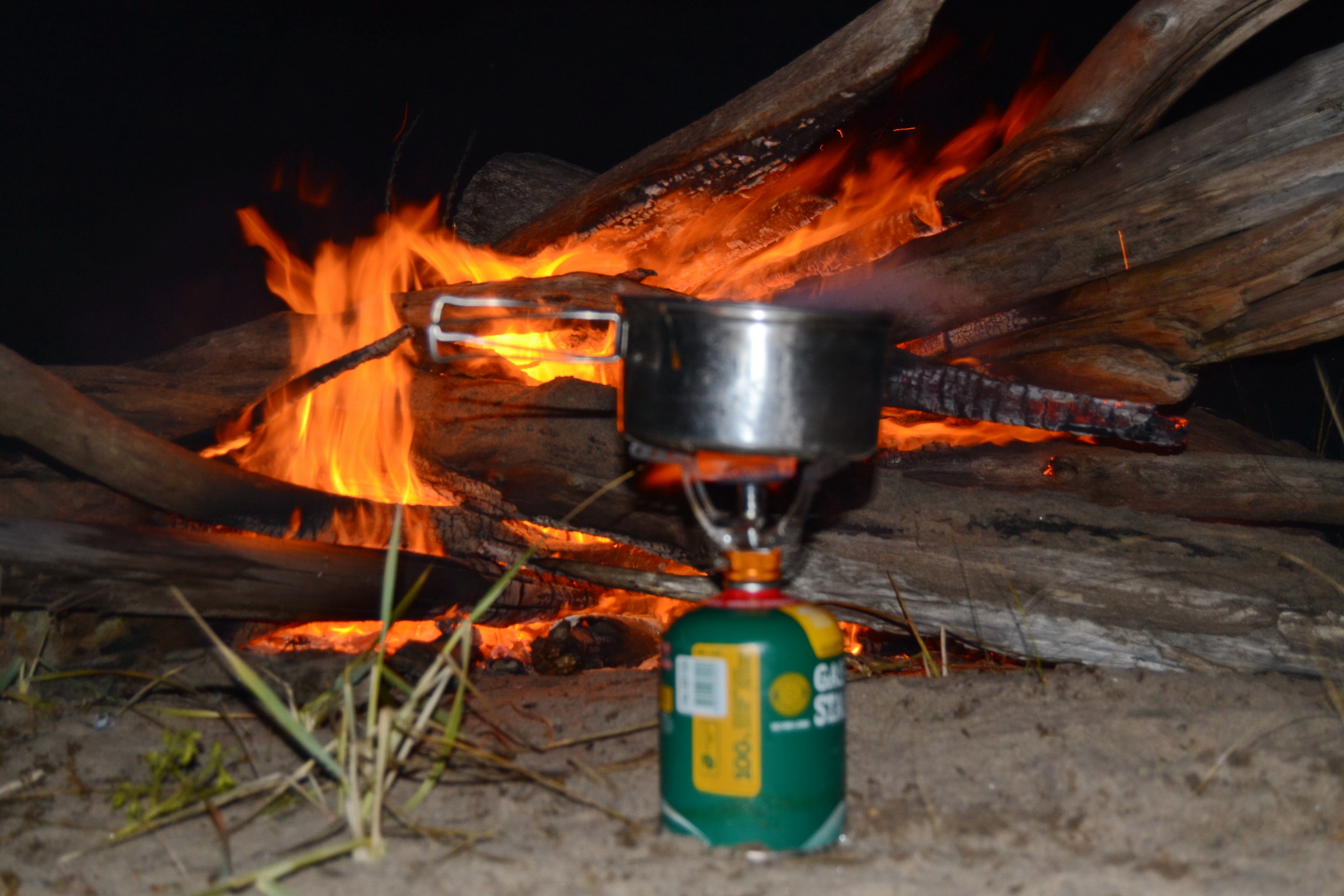
I was much farther north than the previous night, but there was no real aurora. Just the faintest green flickers in the sky.
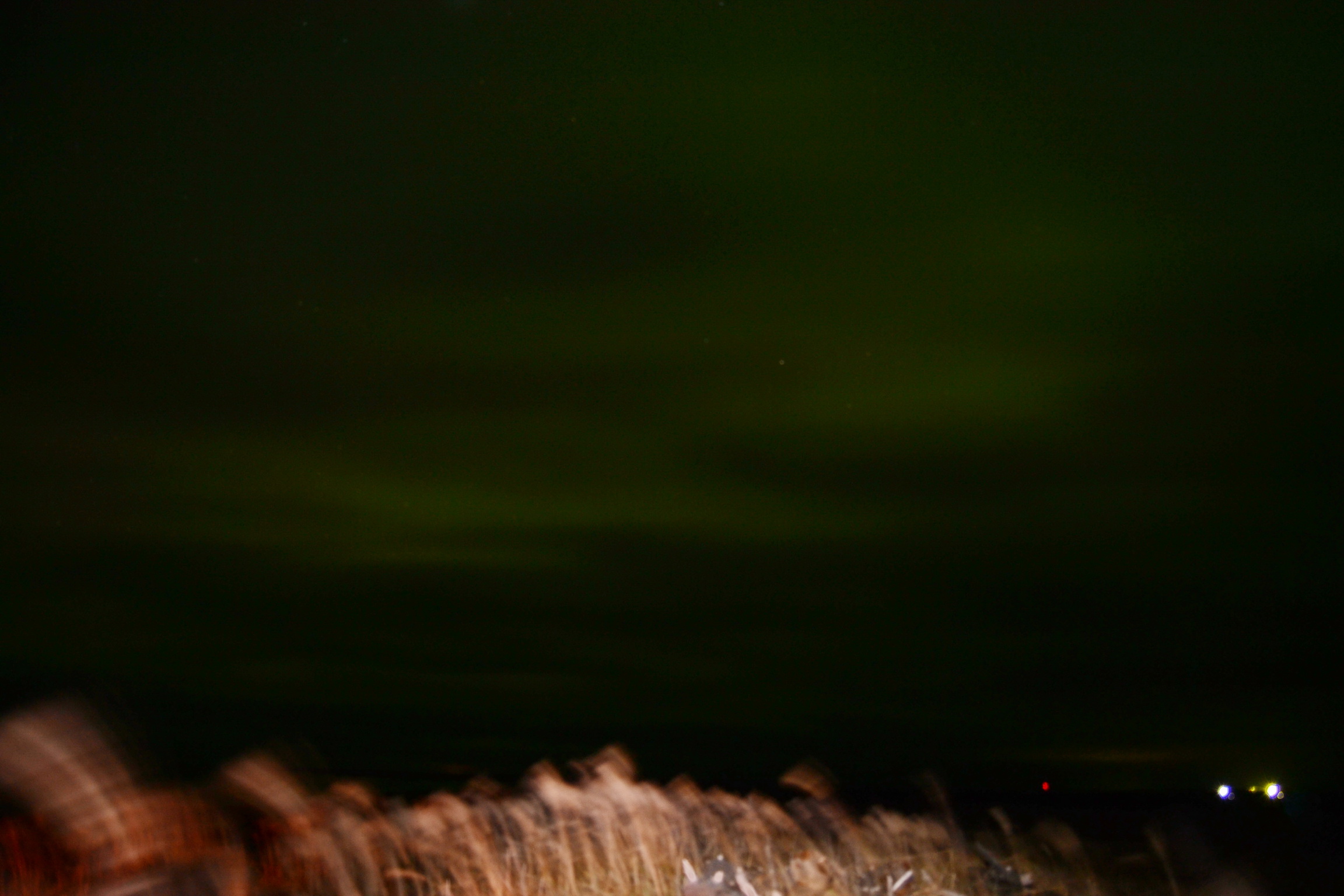
There was a slight frost at night and a strong wind, but I slept beautifully in the tent.
In the morning I was woken by a car driving up and down the beach. The fishermen from the local state fishery were checking their nets.
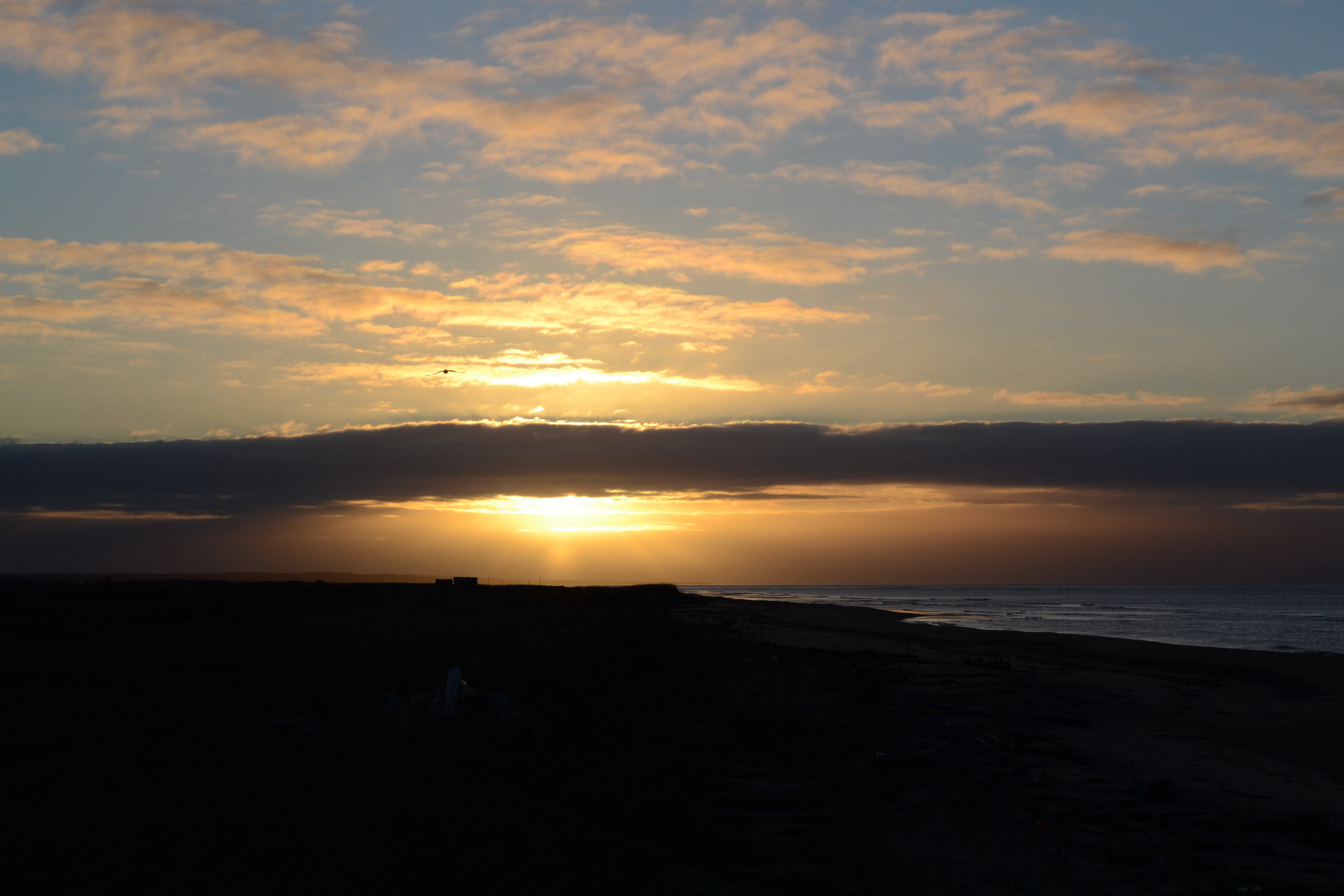
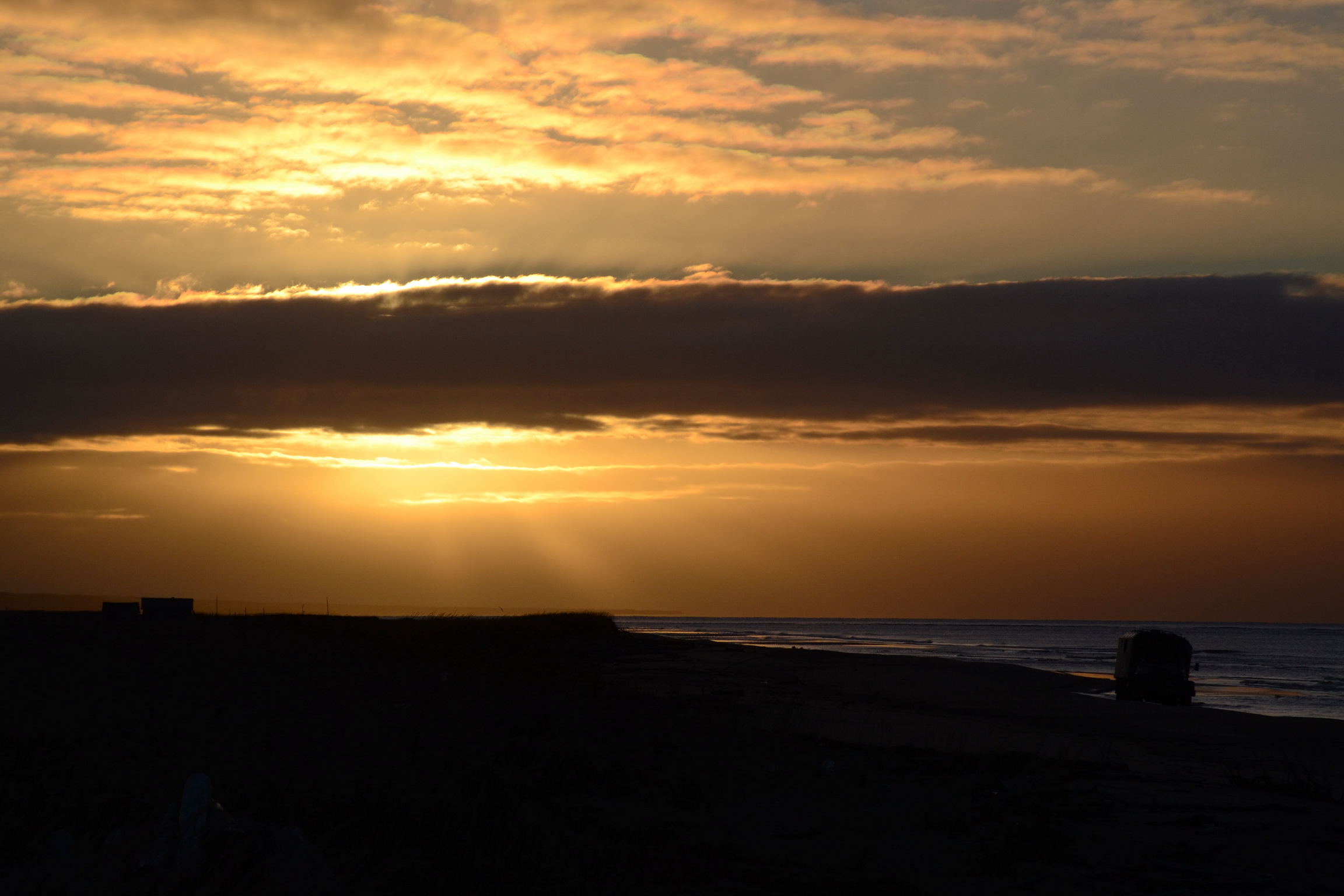
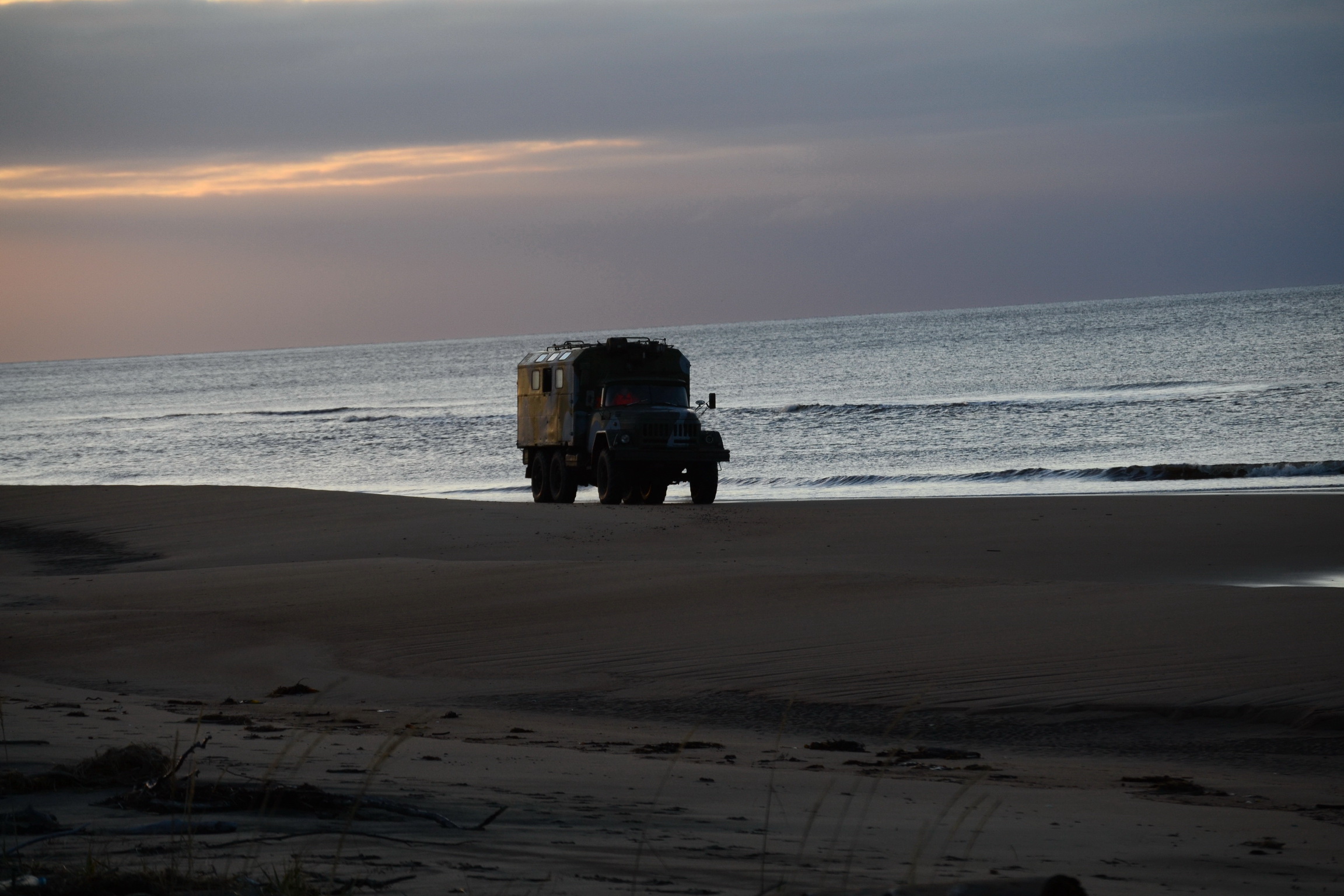
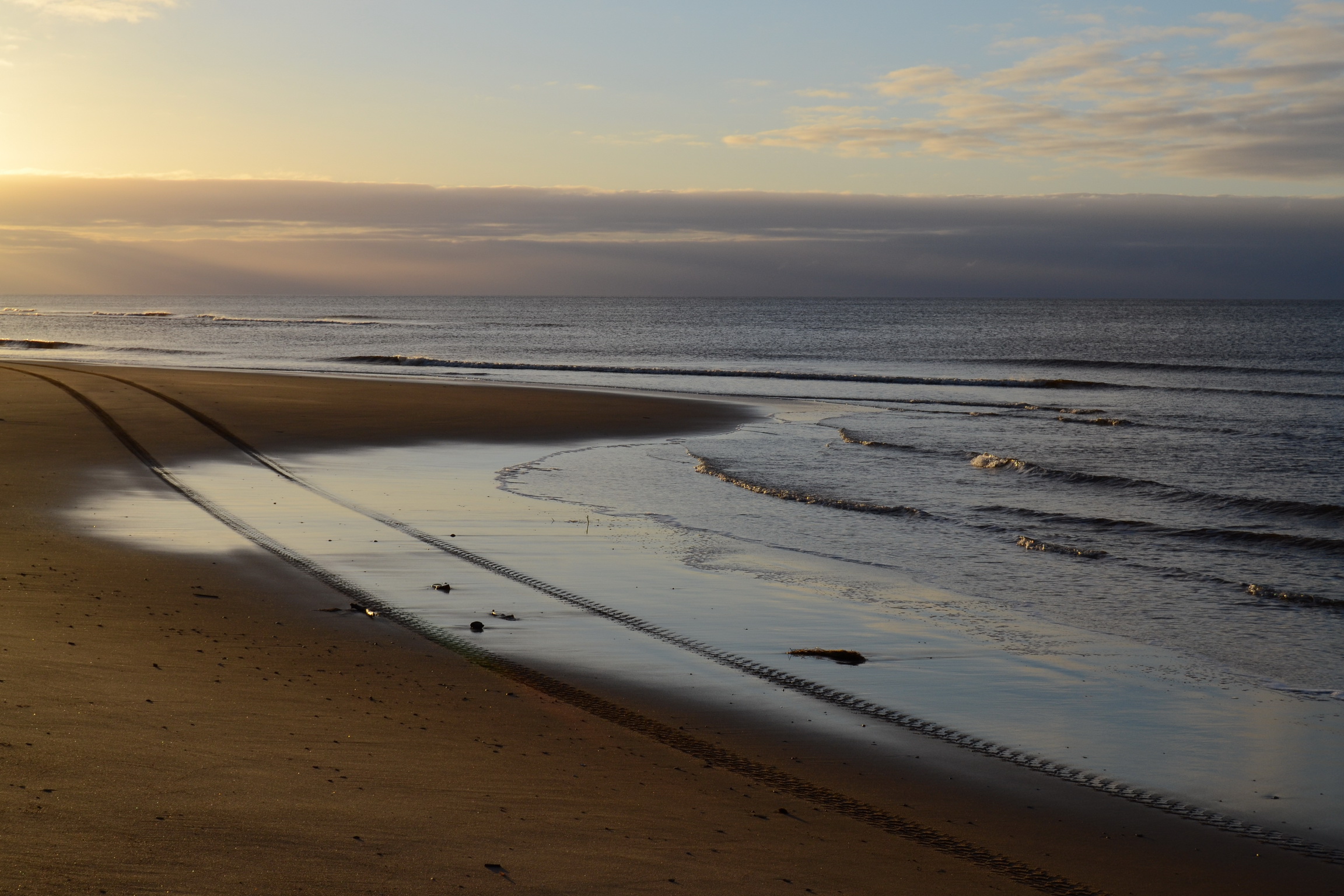
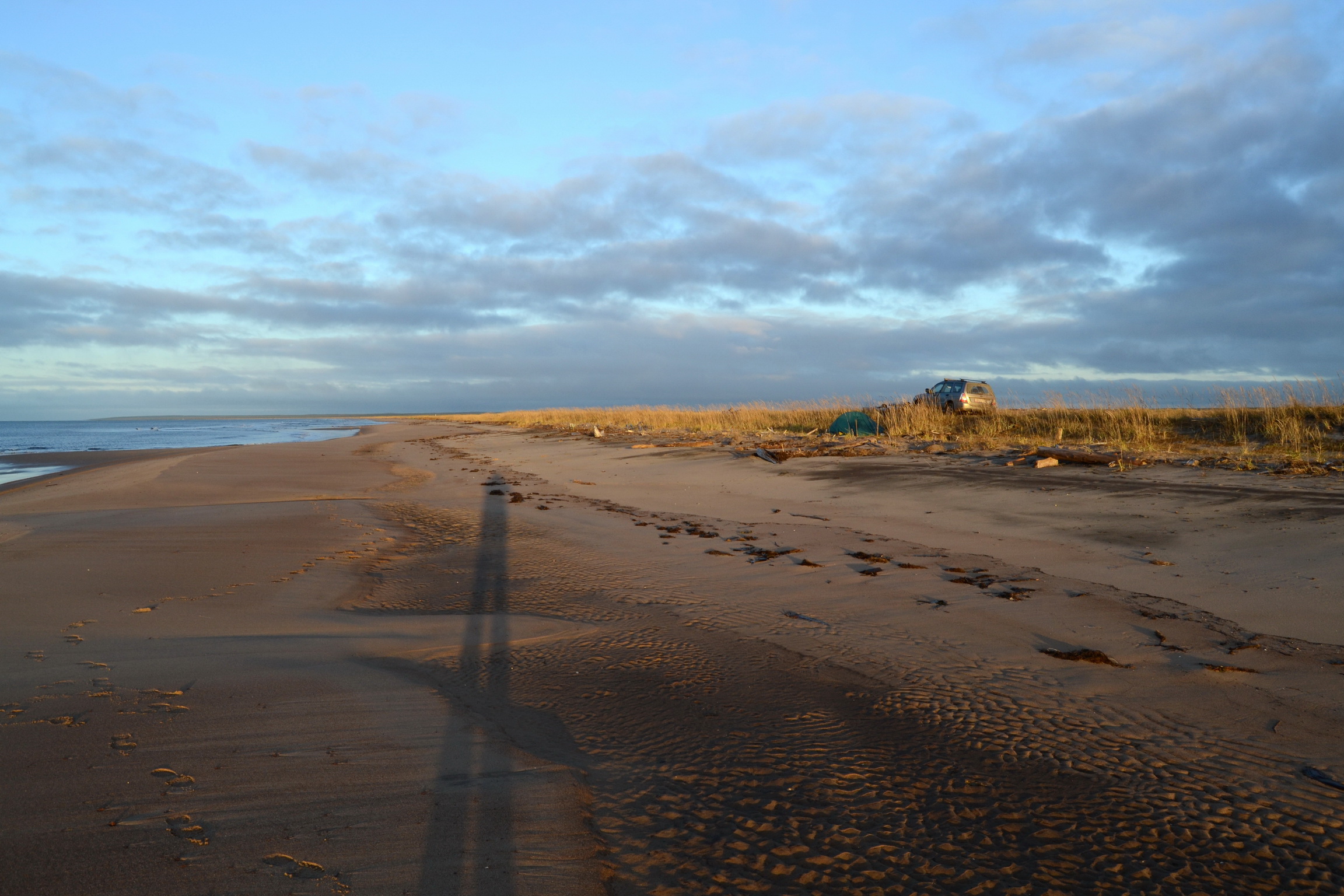
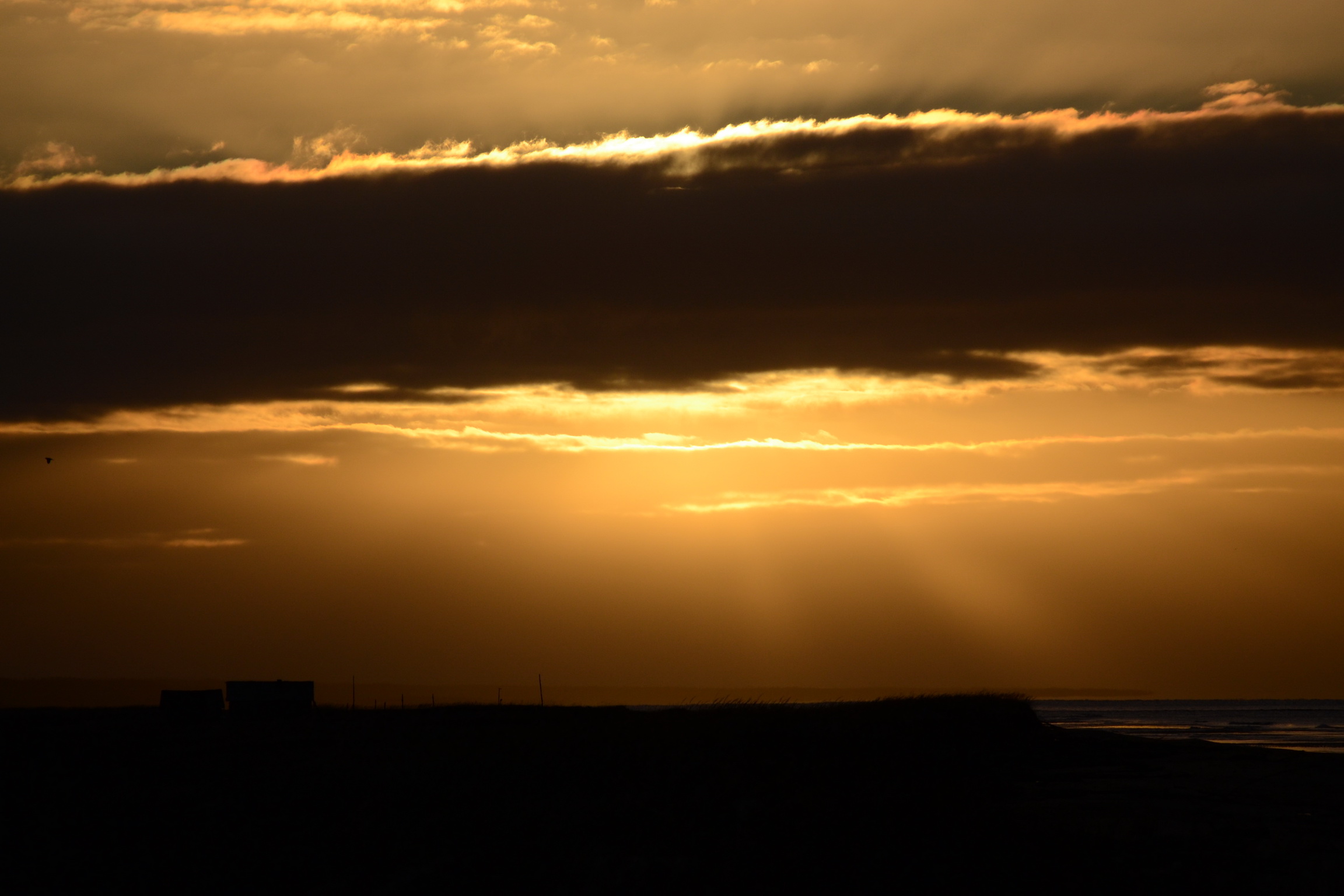
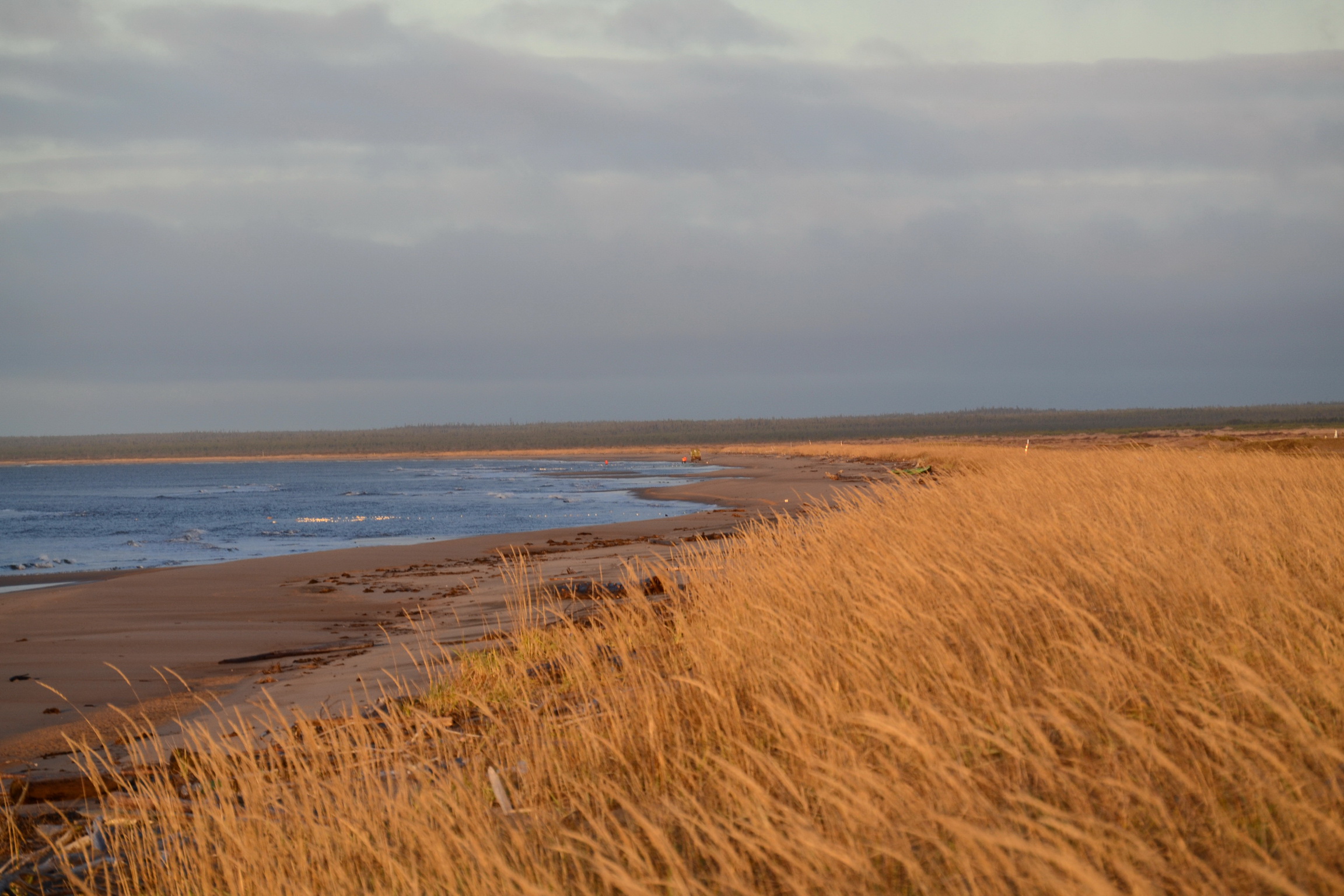
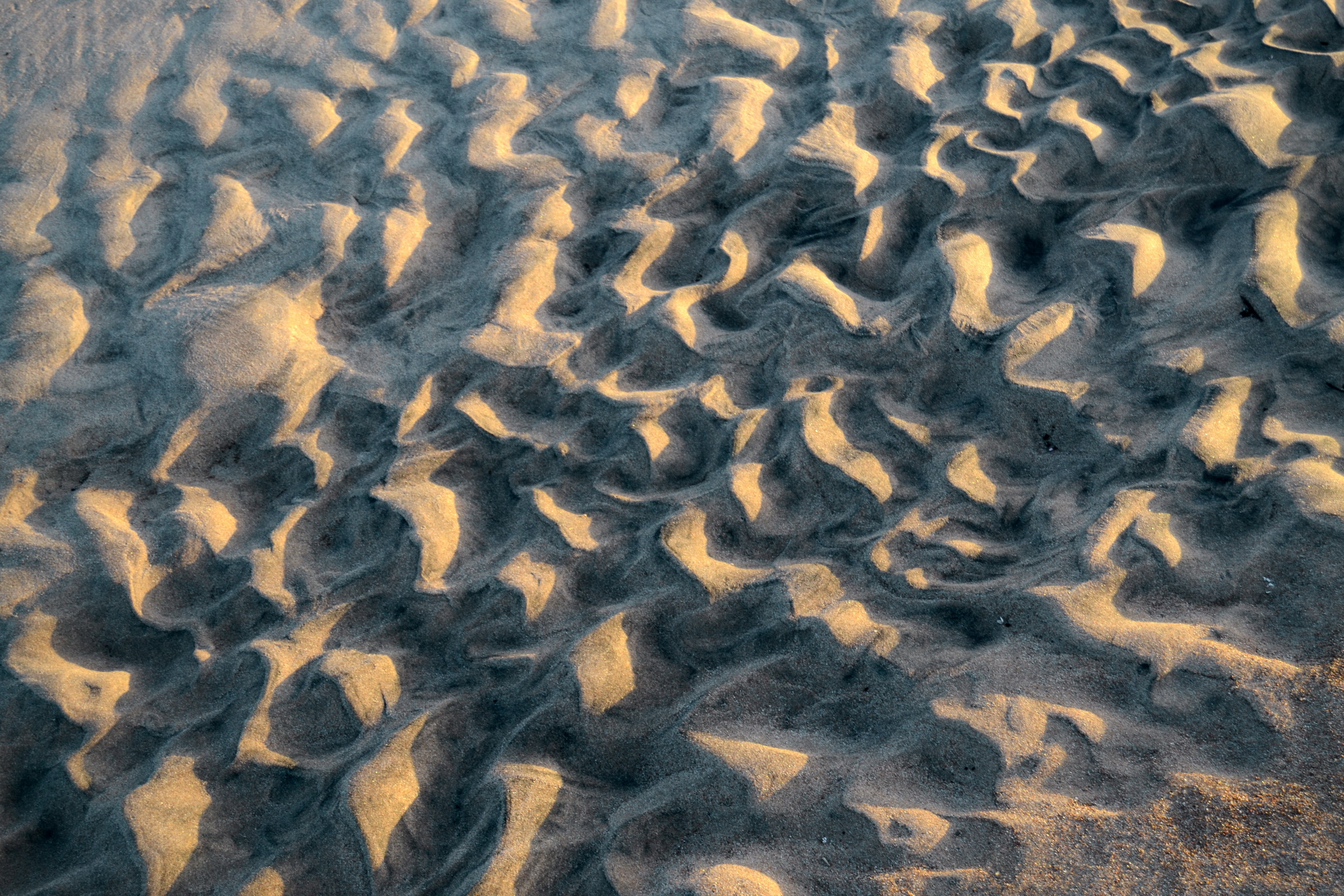
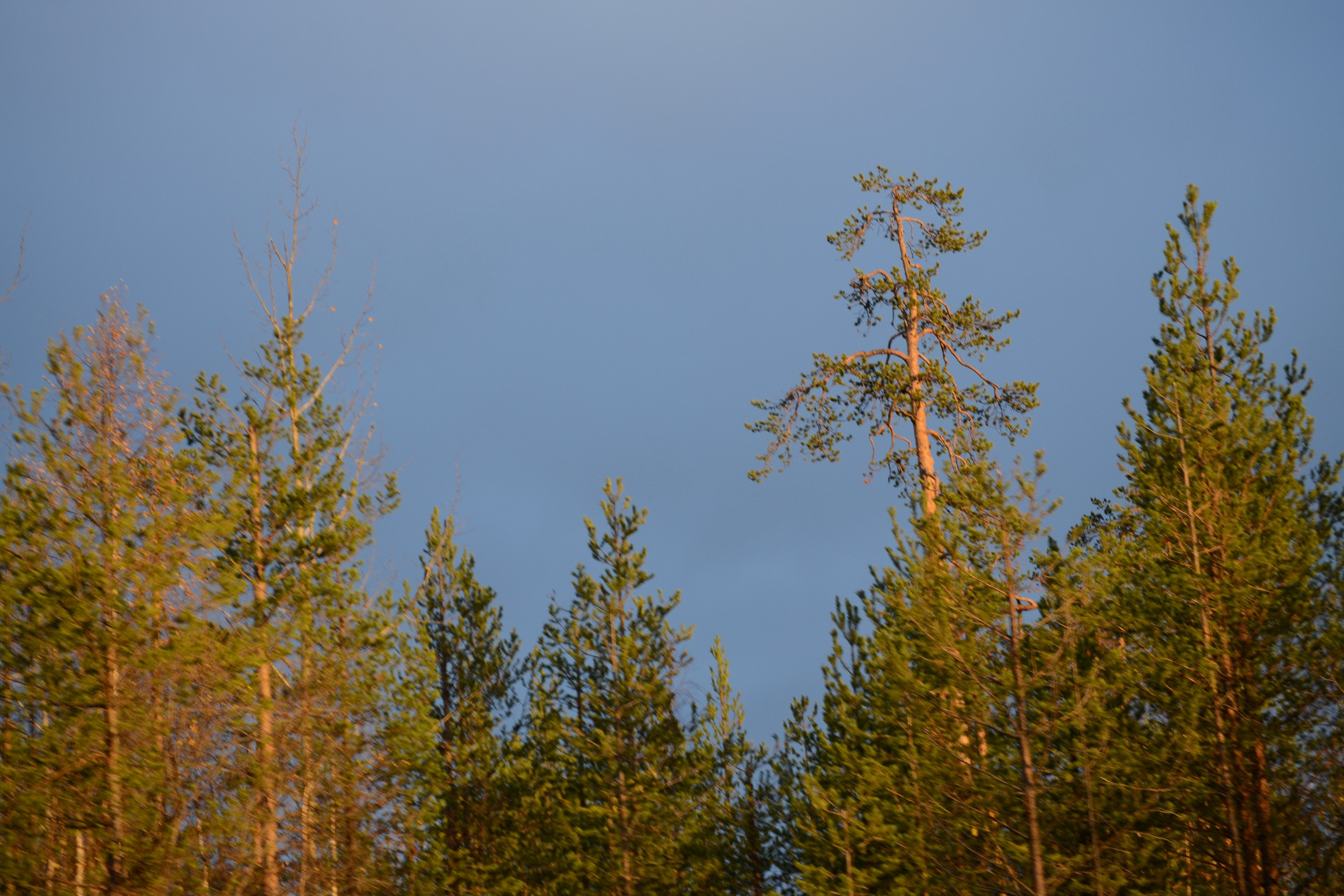
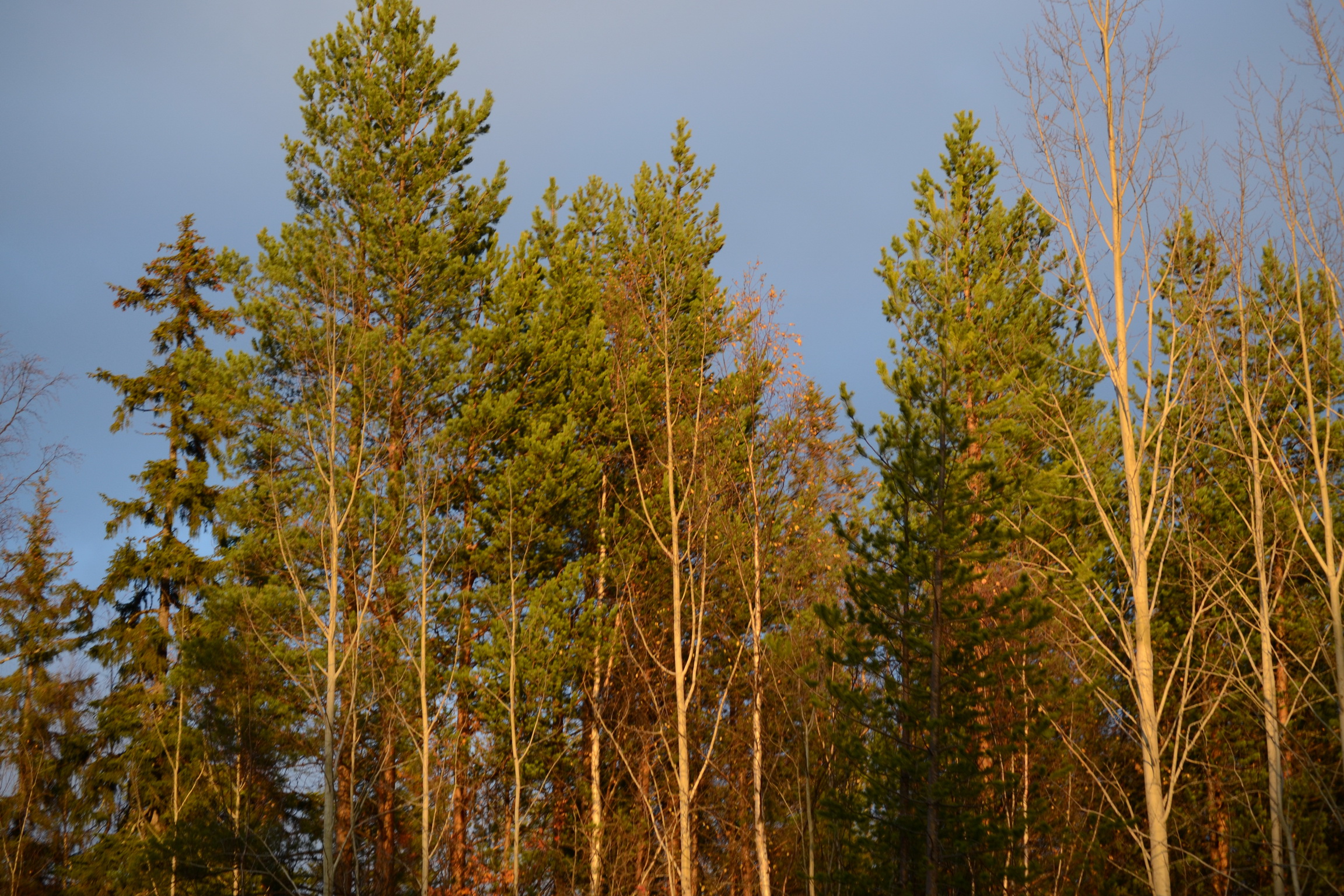
The morning sea mist cleared, and the autumn sun lit up the yellow grass. How lovely it is here. I don’t want to leave.
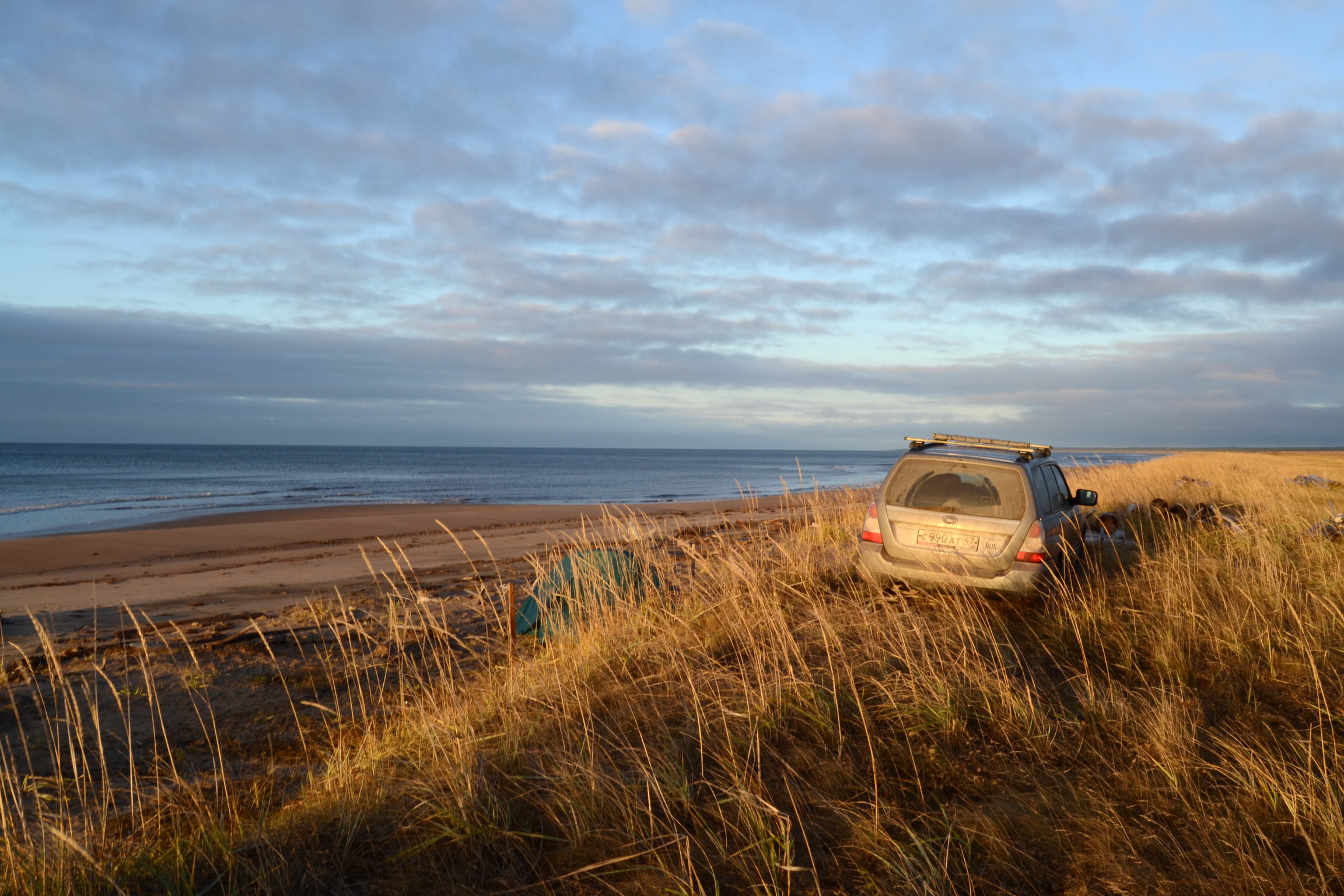
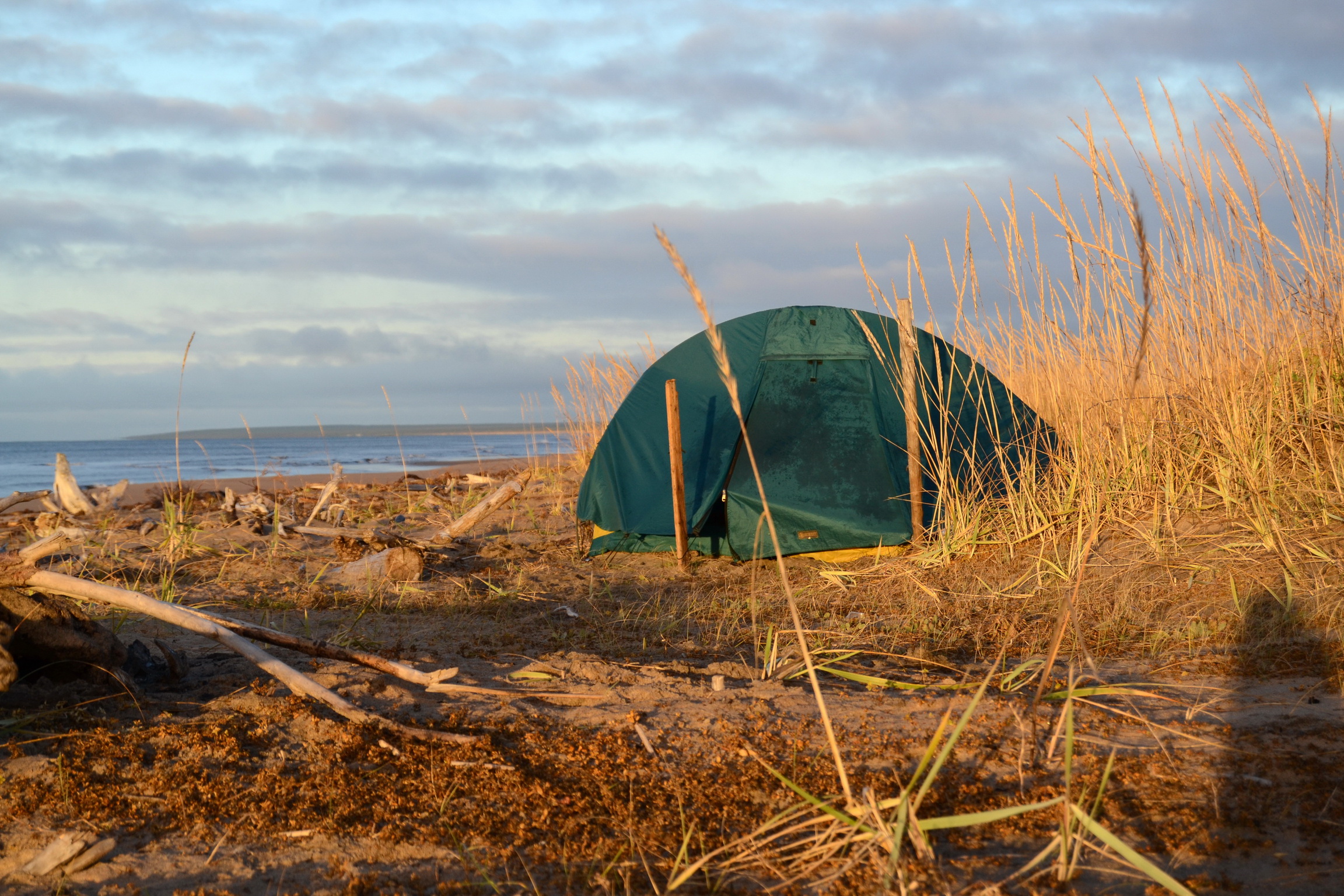
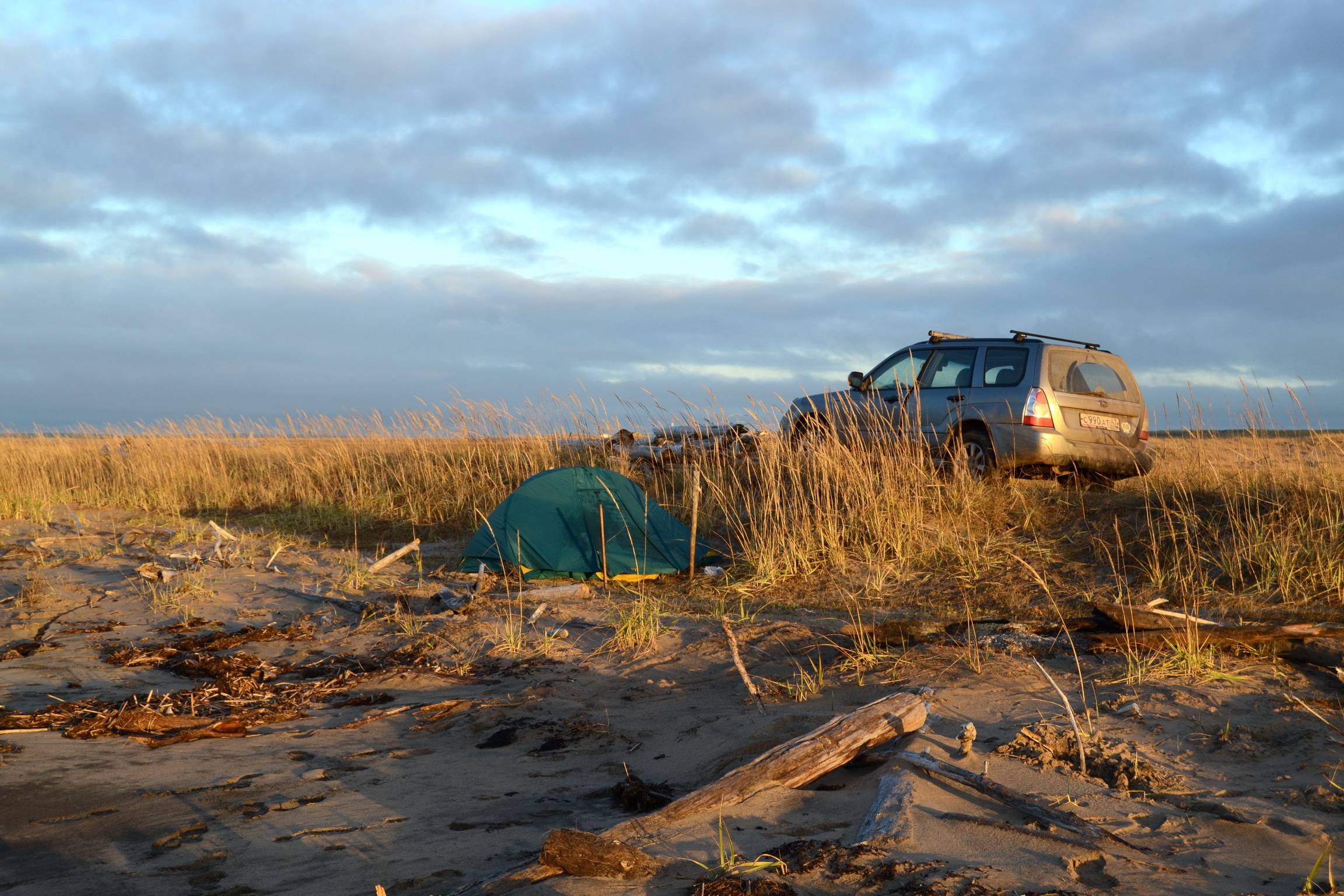
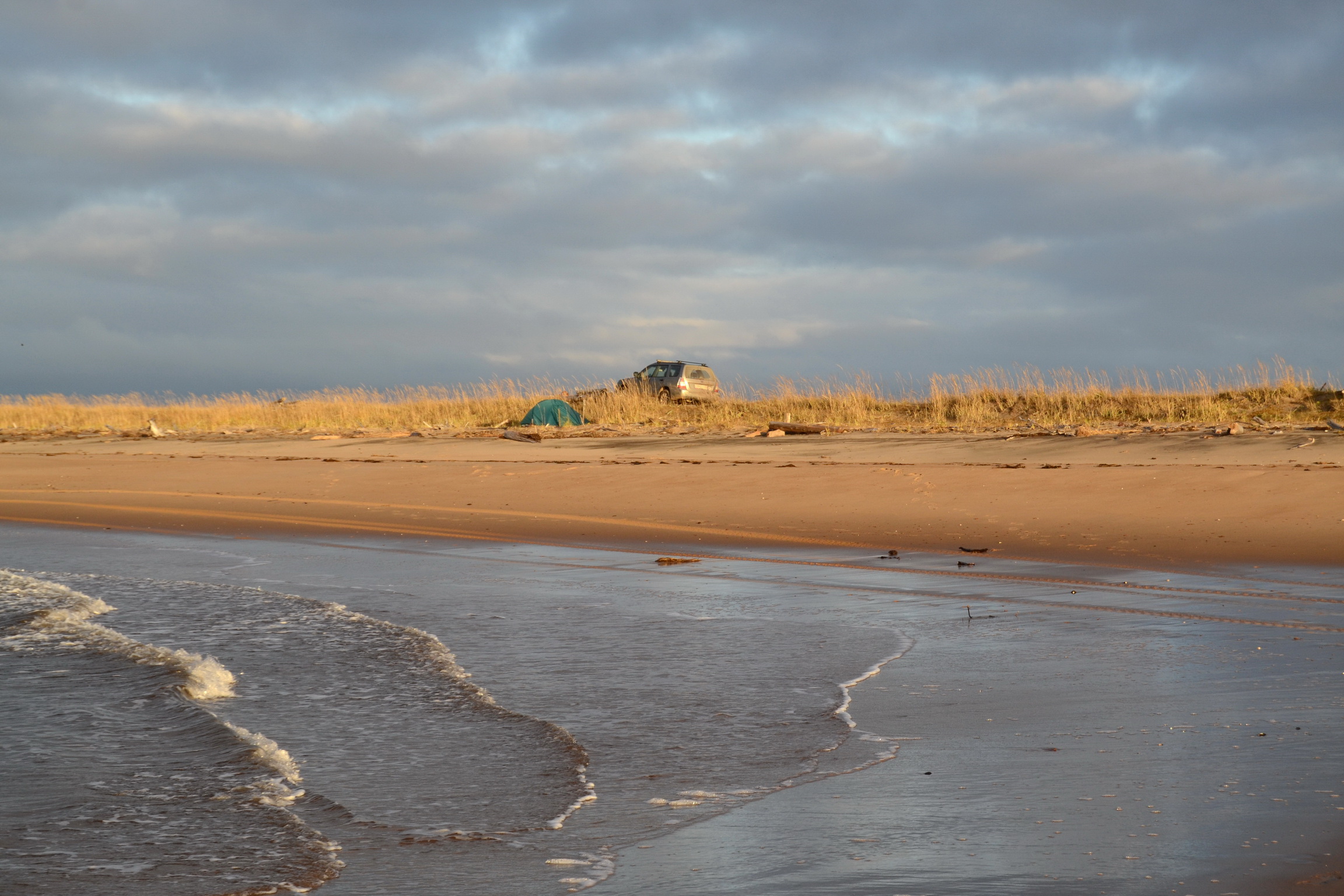
A fisheries inspection jeep came tearing out of the grass. The little rats were hoping for a good catch of their own. How glad I am that I don’t fish. I haven’t even got tinned fish, and they won’t find a single hook in the whole car. These extortionists won’t let up. Why did I come, what am I doing? None of your bloody business. I’ll do as I please. I’m entitled to, and there’s nothing you can do about it. You have no search warrant and no right to detain me. Try it and I’ll drag you through the courts. How pleasant that, for once, there’s no need to crawl to the enemy. Off they went empty-handed.
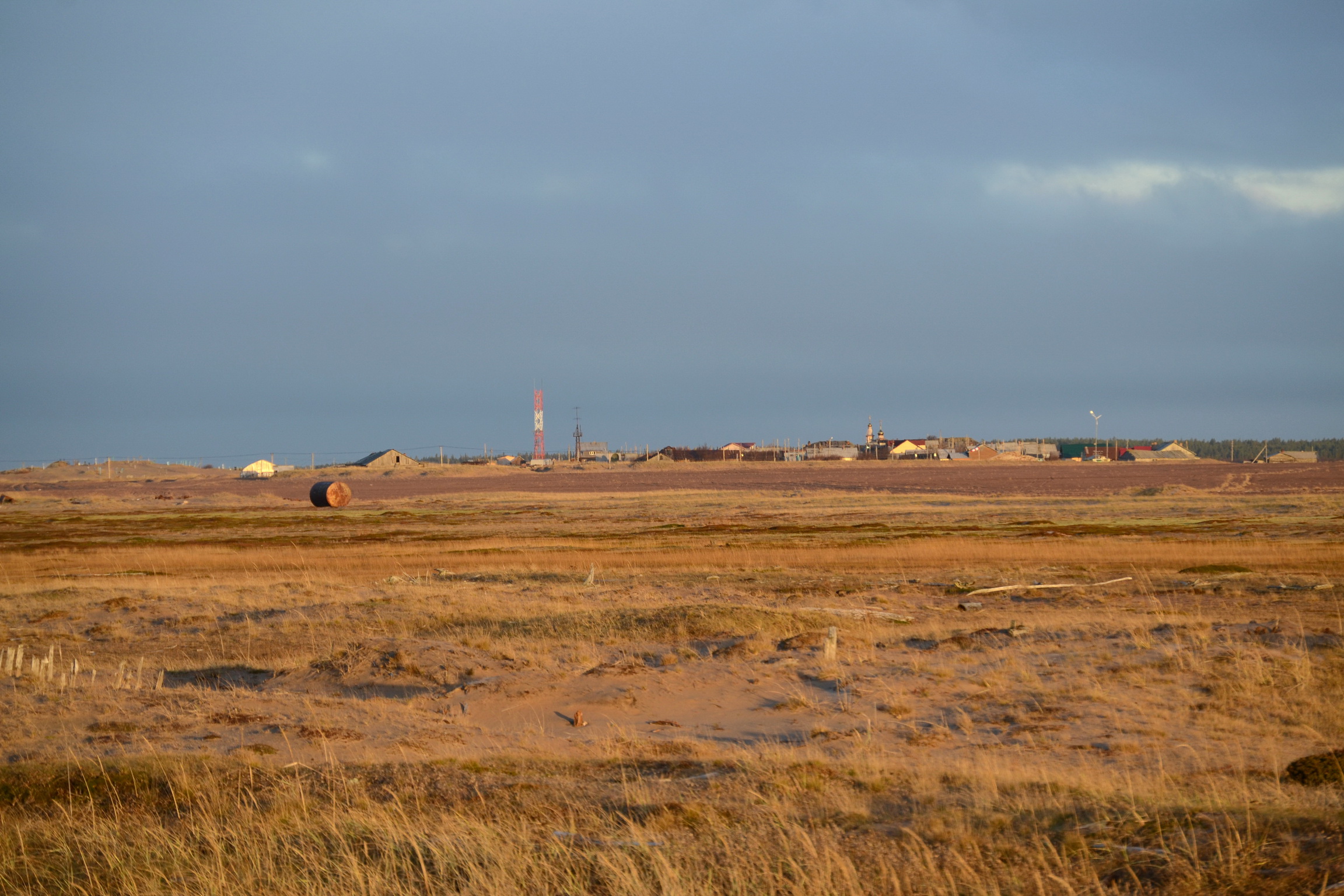
I drove to the village of Kuzomen. There’s also a 2010 account of the Tersky Coast. This village sits among sand dunes on the bank of the Varzuga. There’s a herd of wild horses here. They were brought from Yakutia in the 1980s for the collective farm. They were fully domesticated at the time. Later they were left to fend for themselves, but survived. They learnt from the reindeer to scrape for lichen with their hooves in winter.
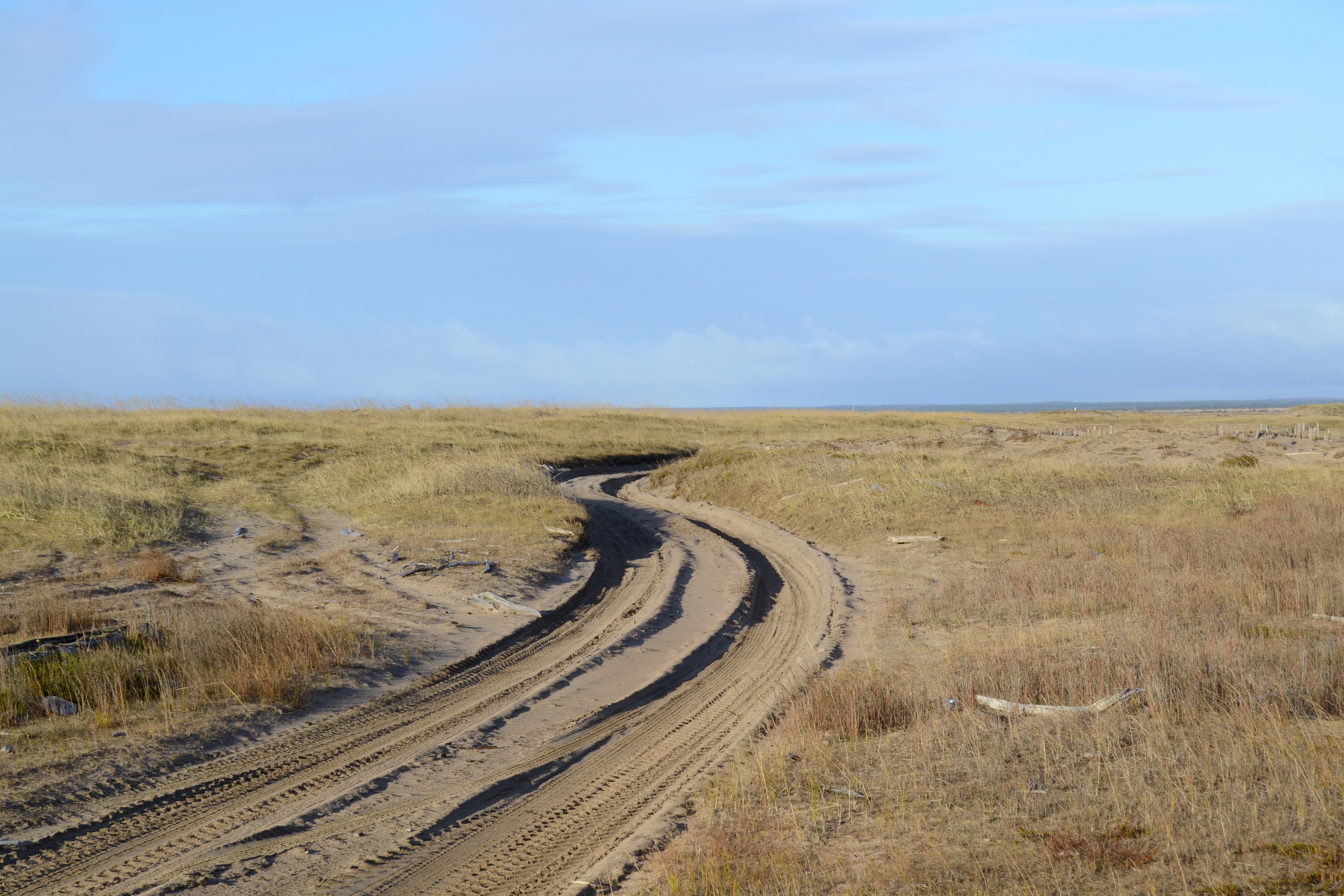
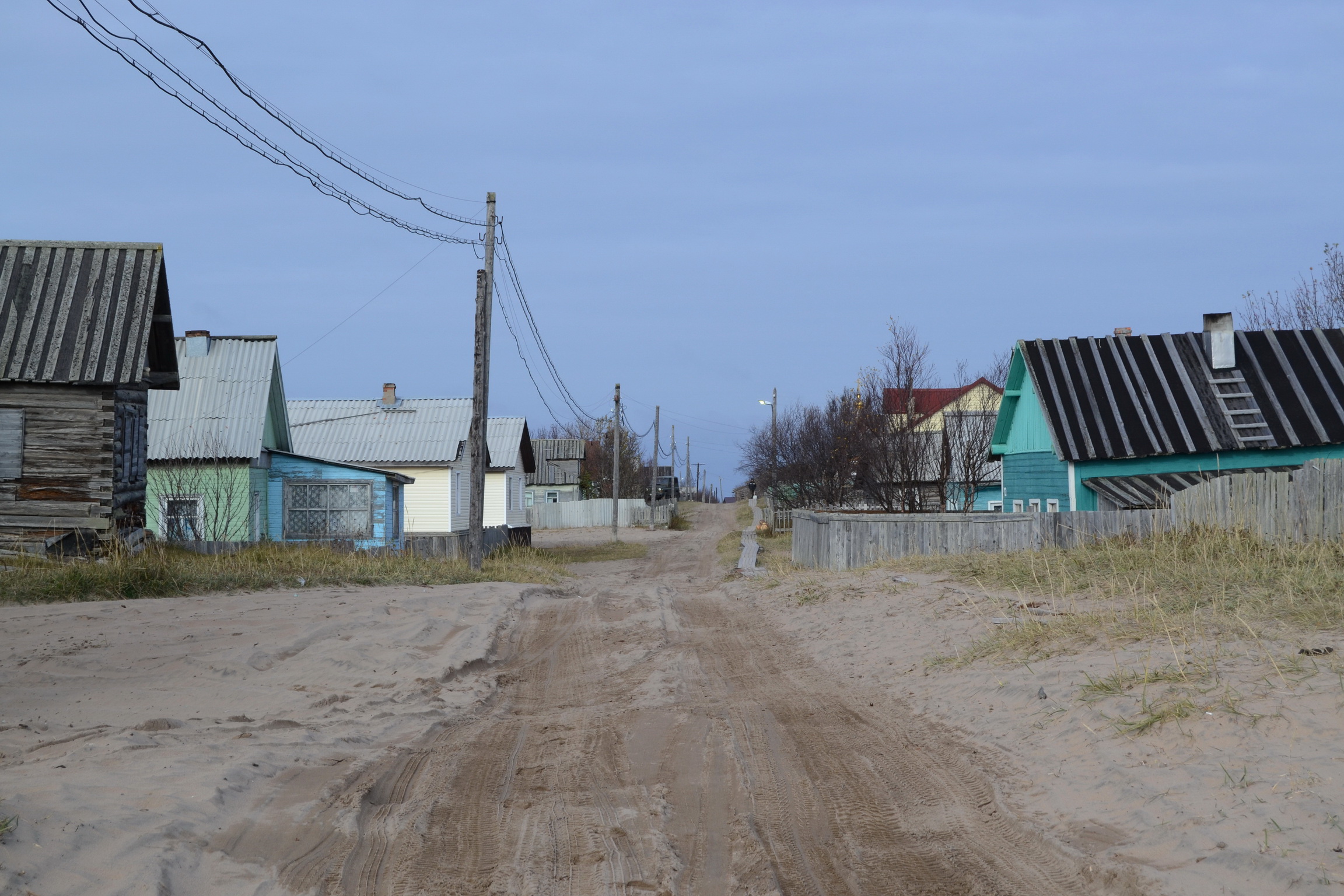
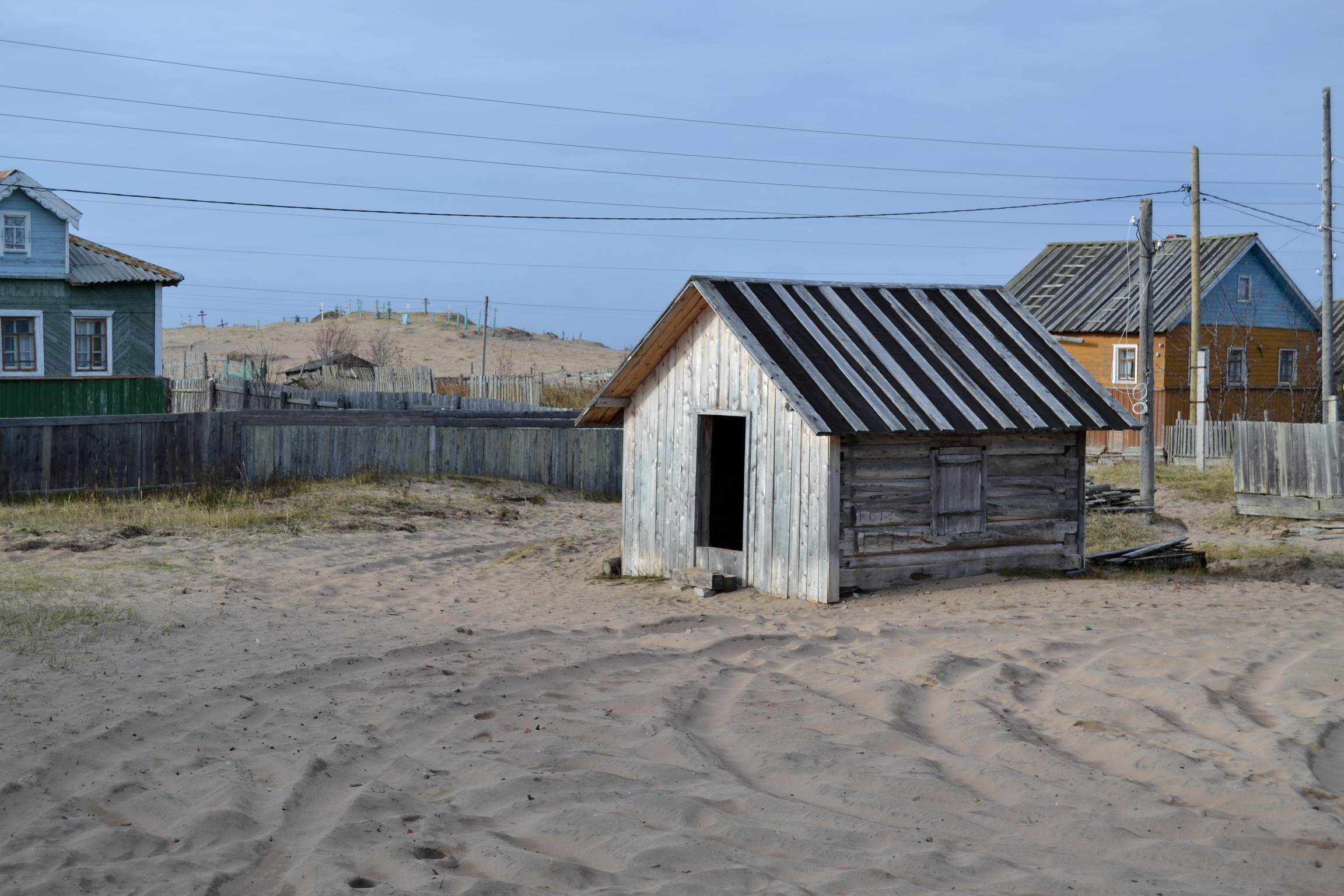
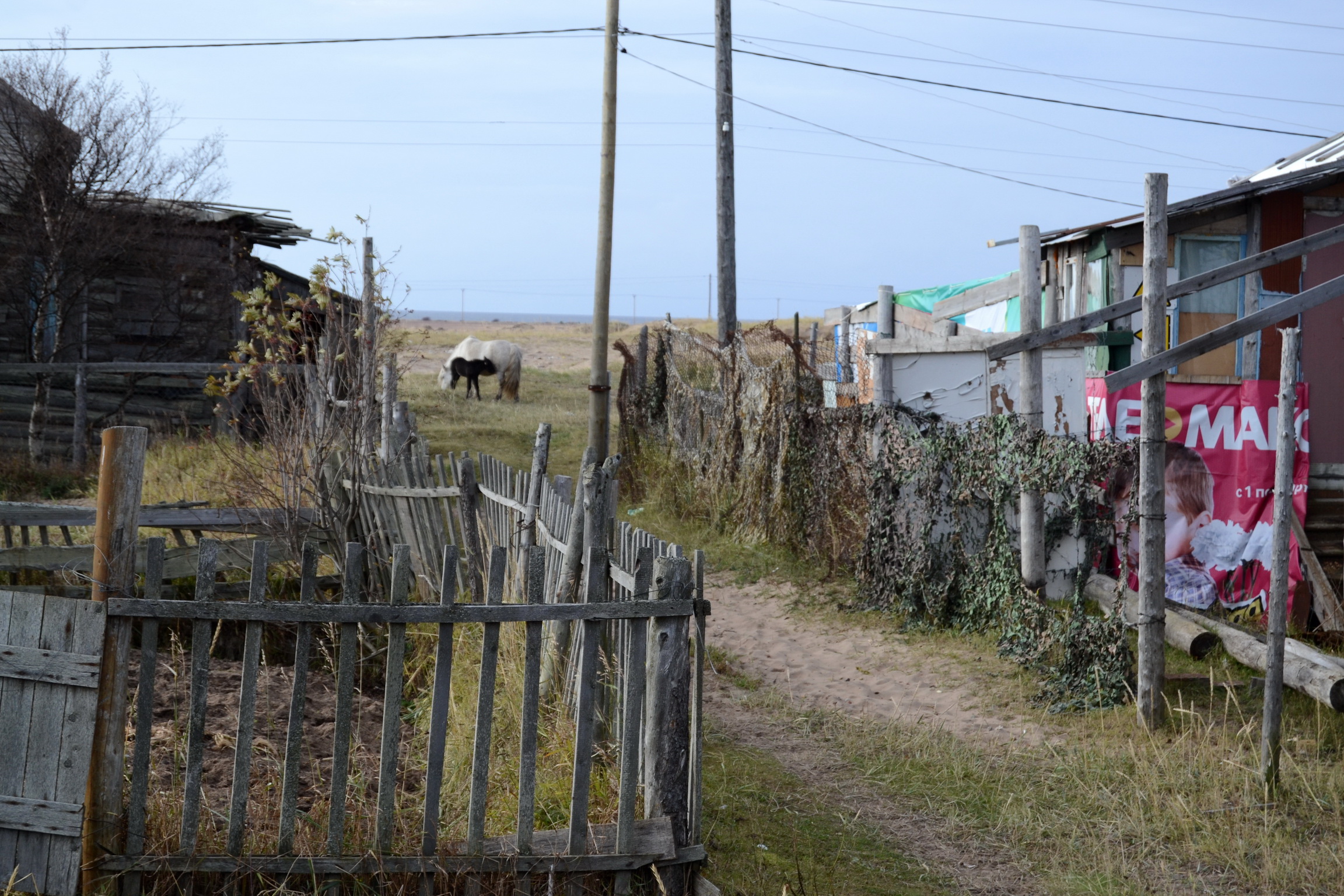
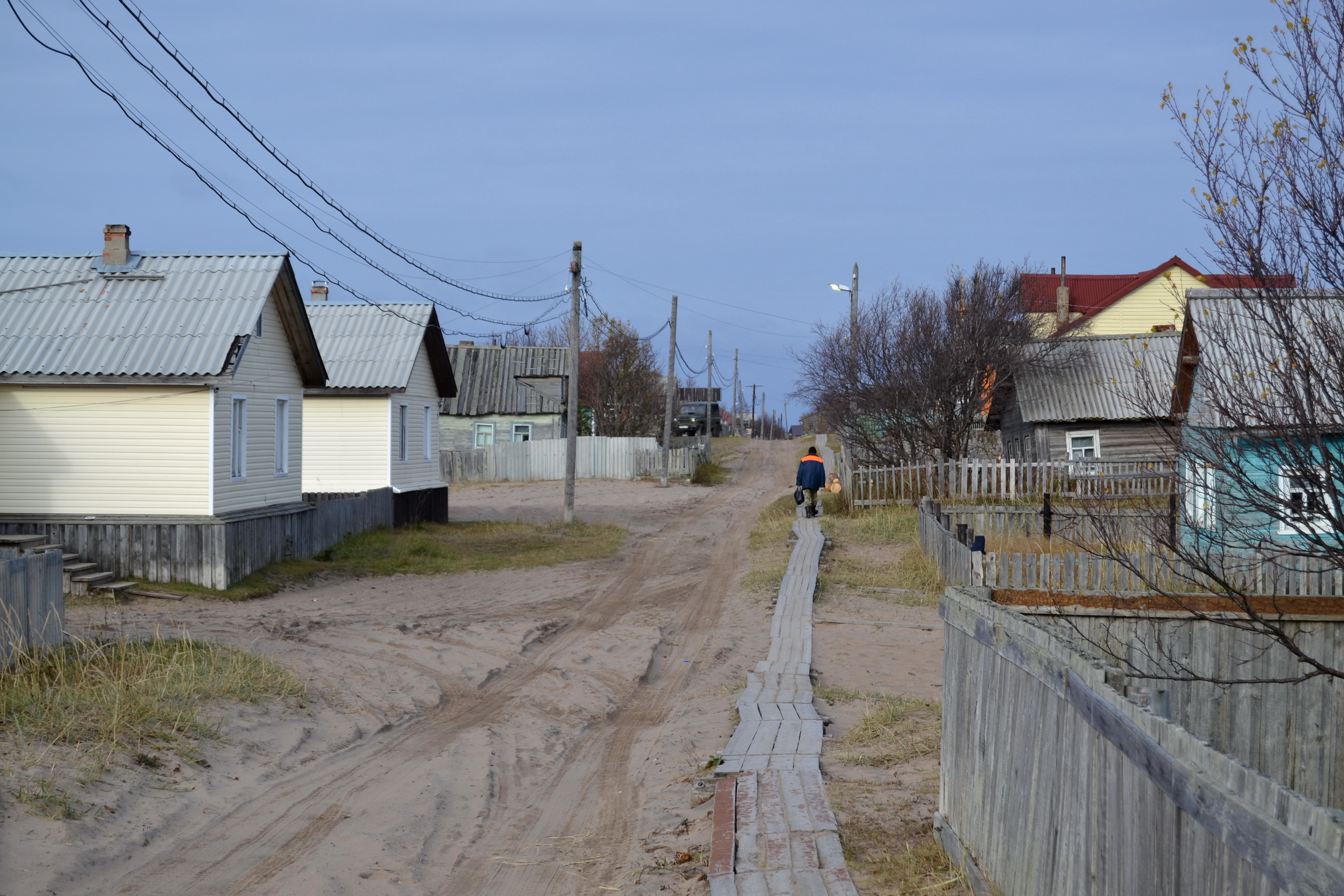
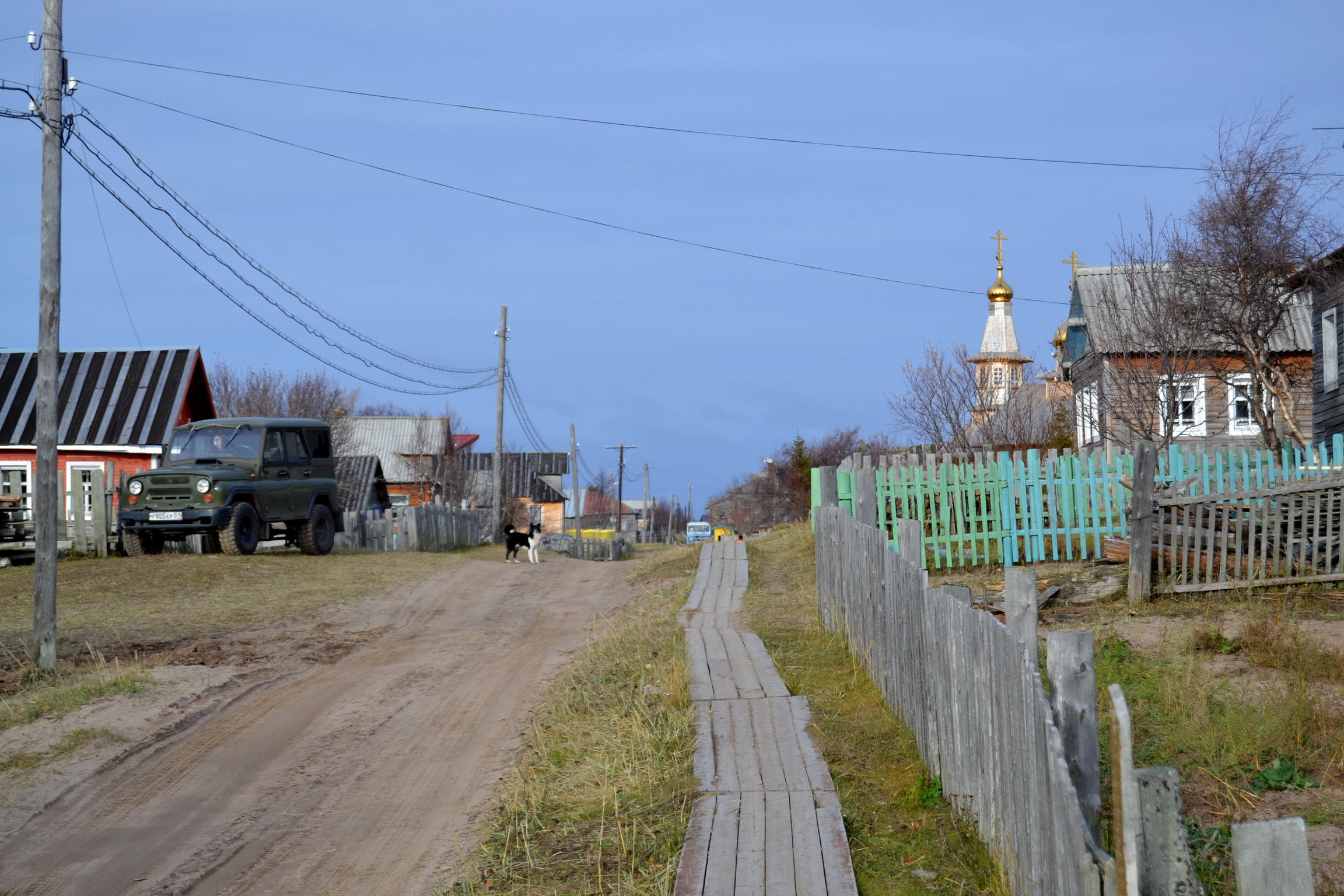
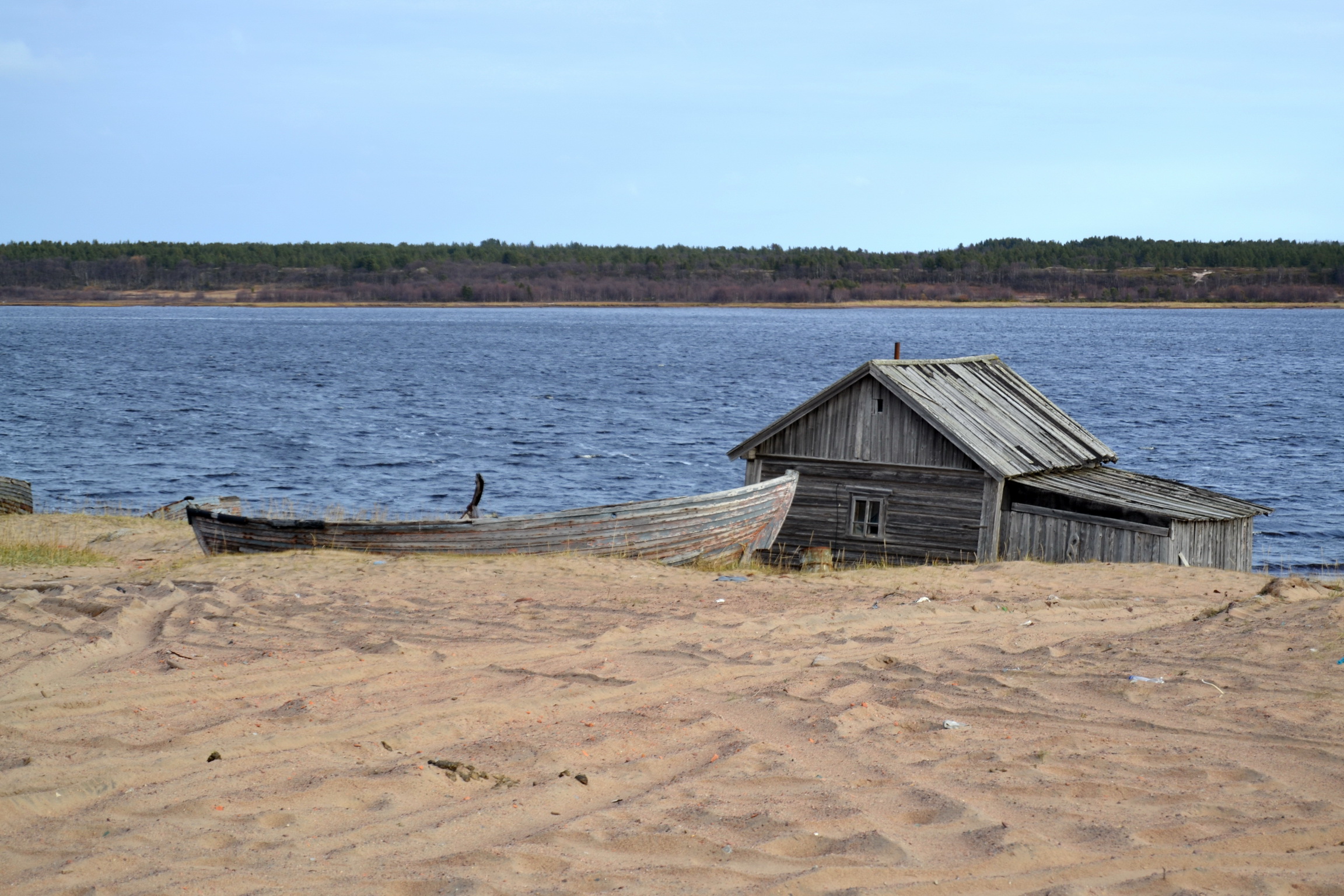
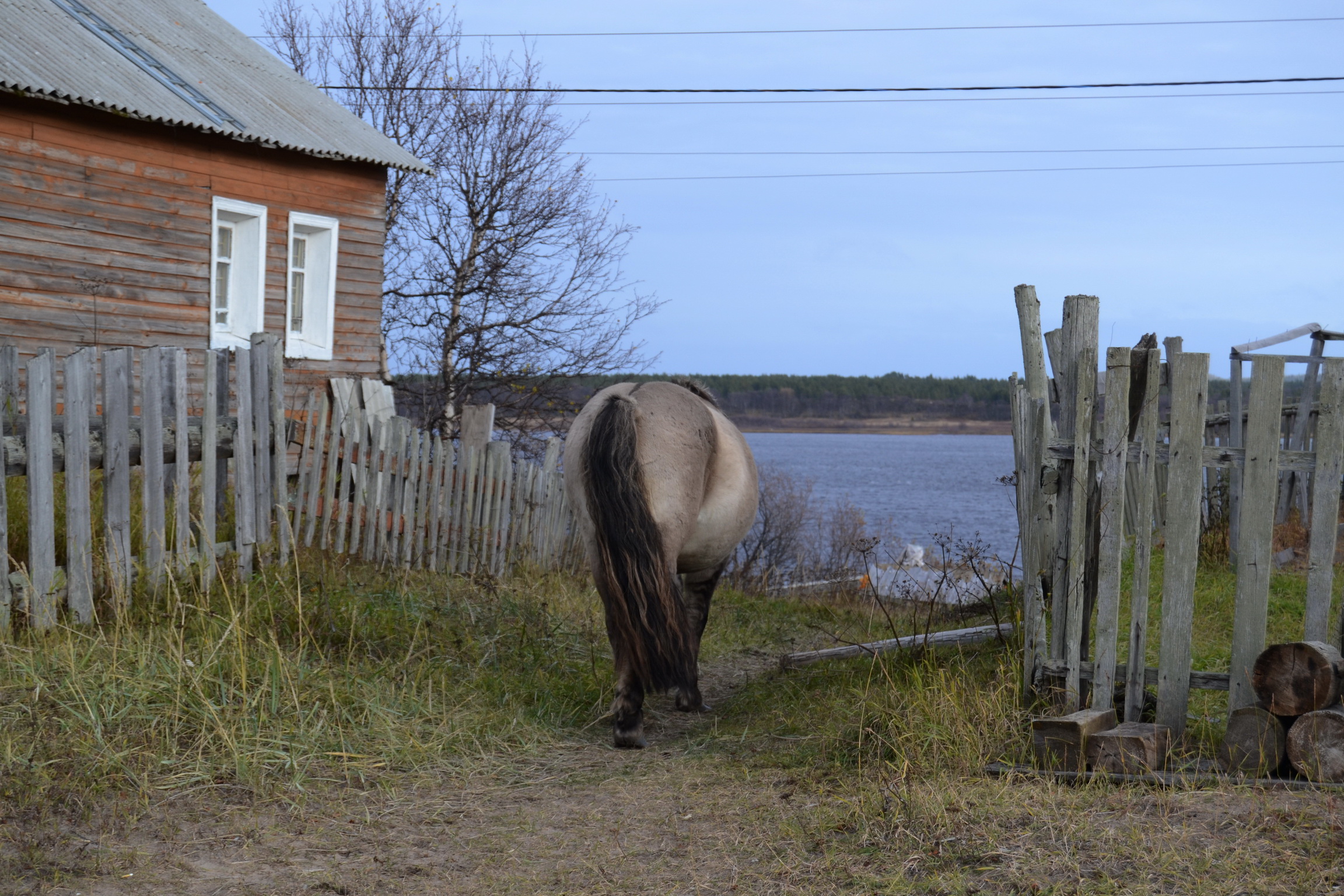
They never went completely wild. They mostly graze in the village, staying close to the shop. They aren’t in the least afraid of people and are forever begging for food.
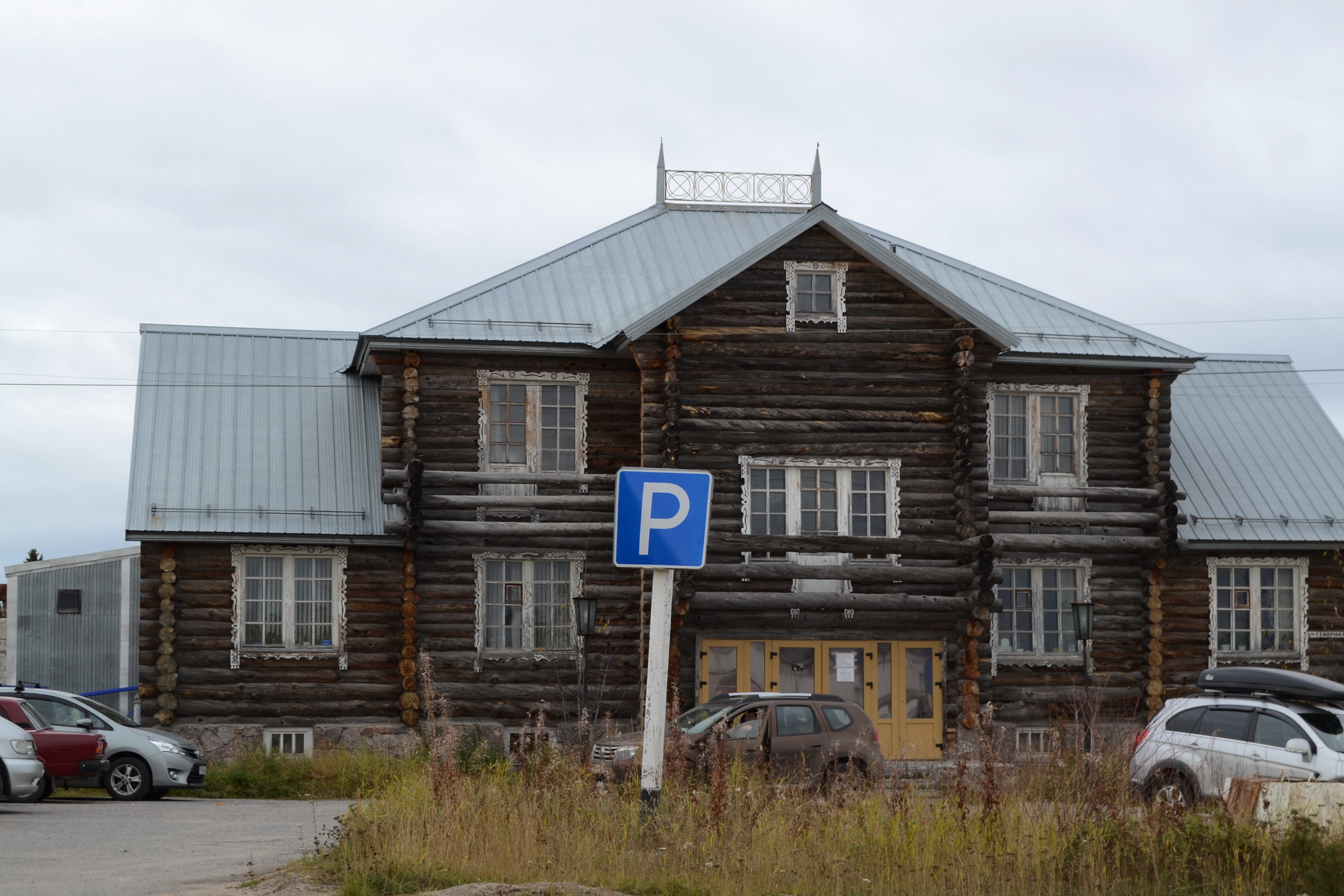
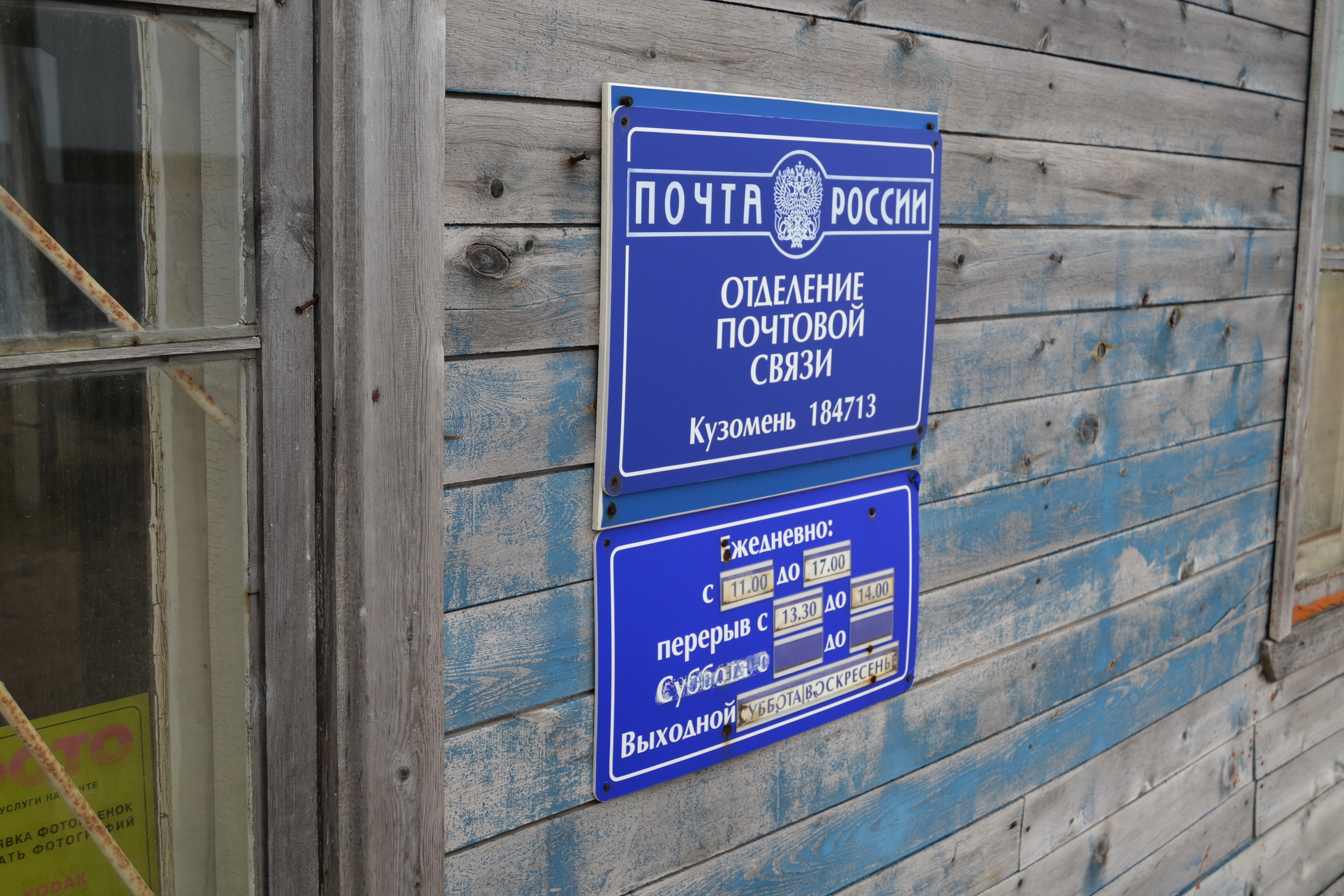
The village of Kuzomen consists for the most part of lopsided log houses and ruins. There’s a new church and several modern houses. The shop was open and I bought a bit more food. There was a sign with the opening hours on the post office, but it was shut. I slipped some postcards under the door. They never arrived.
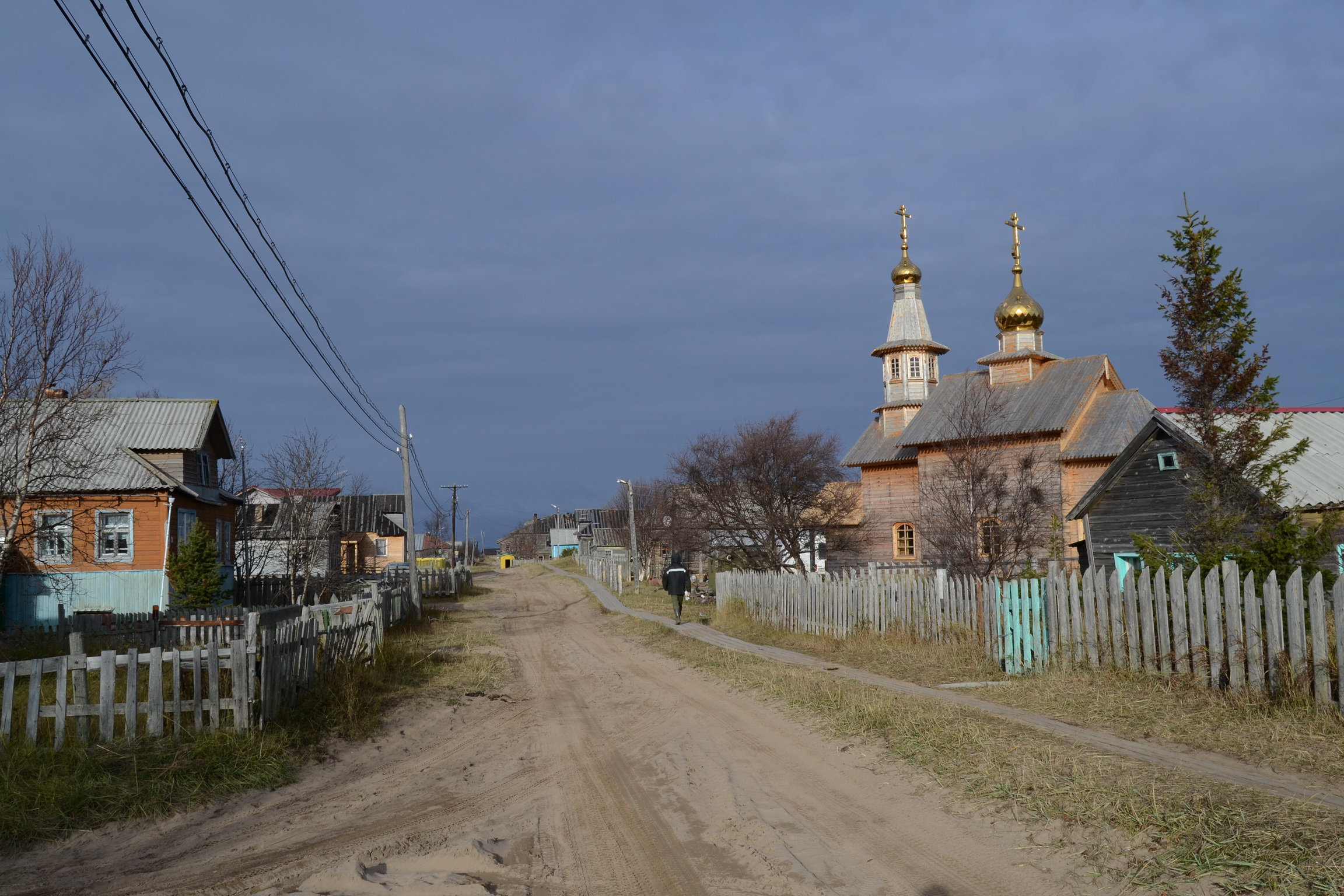
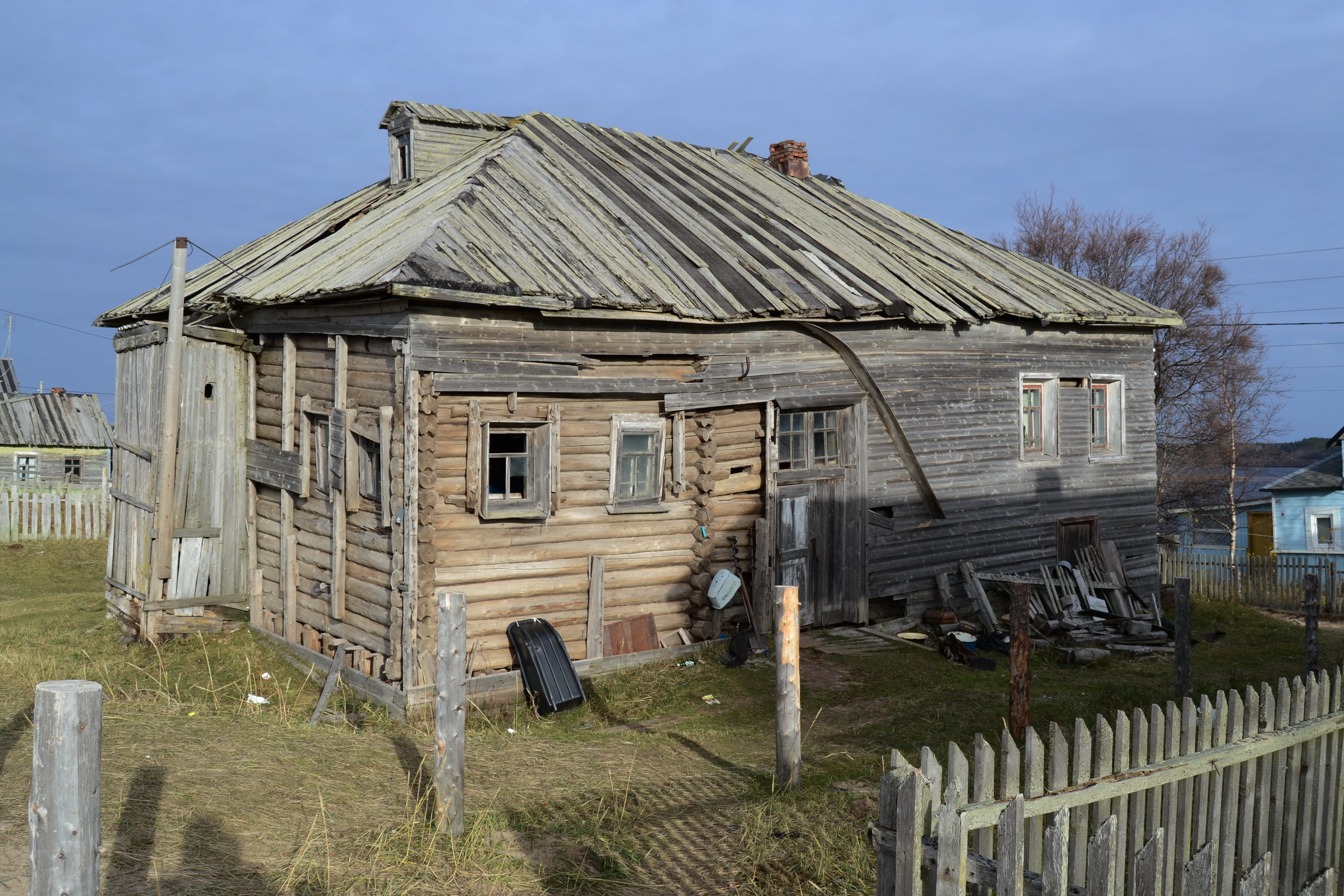
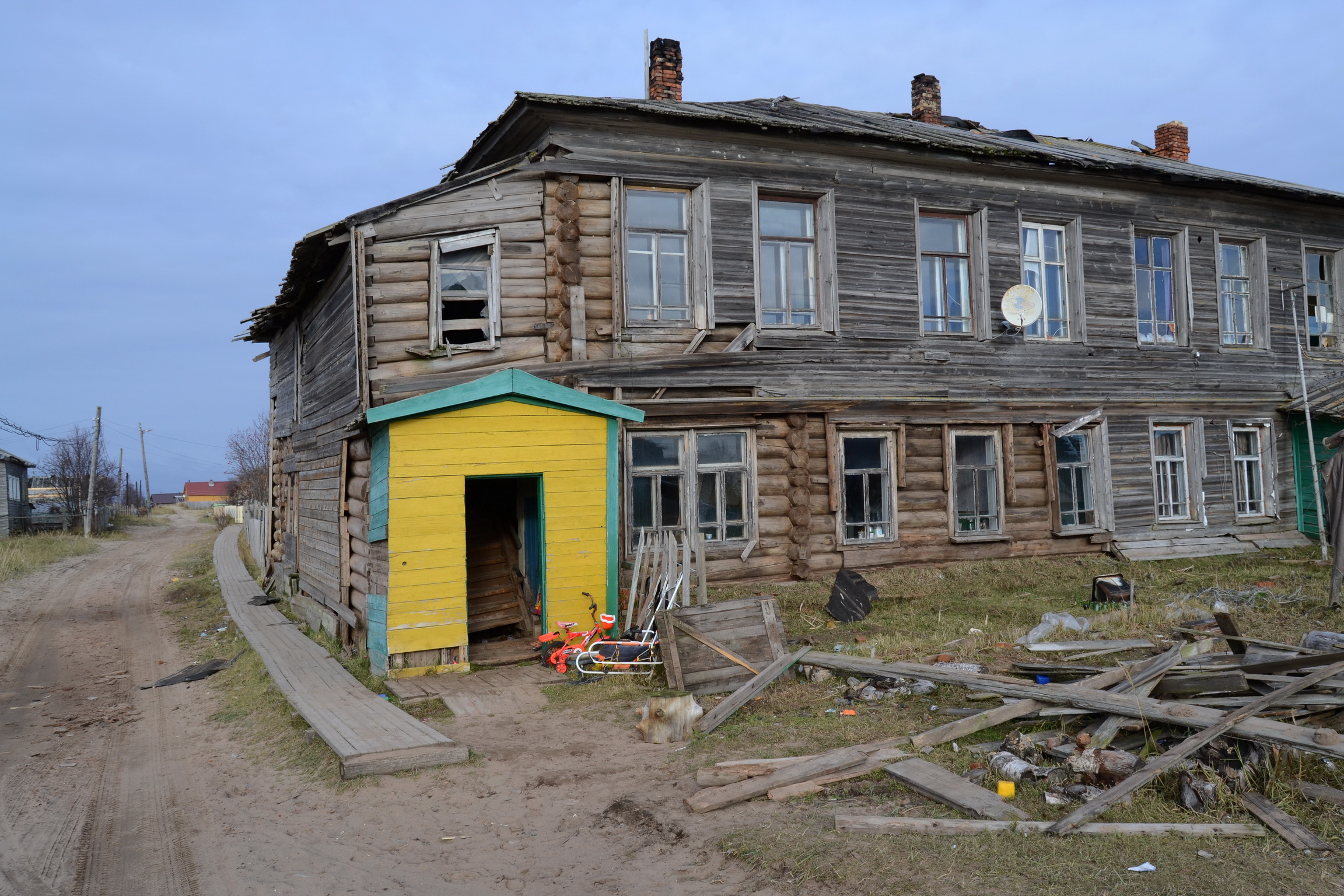
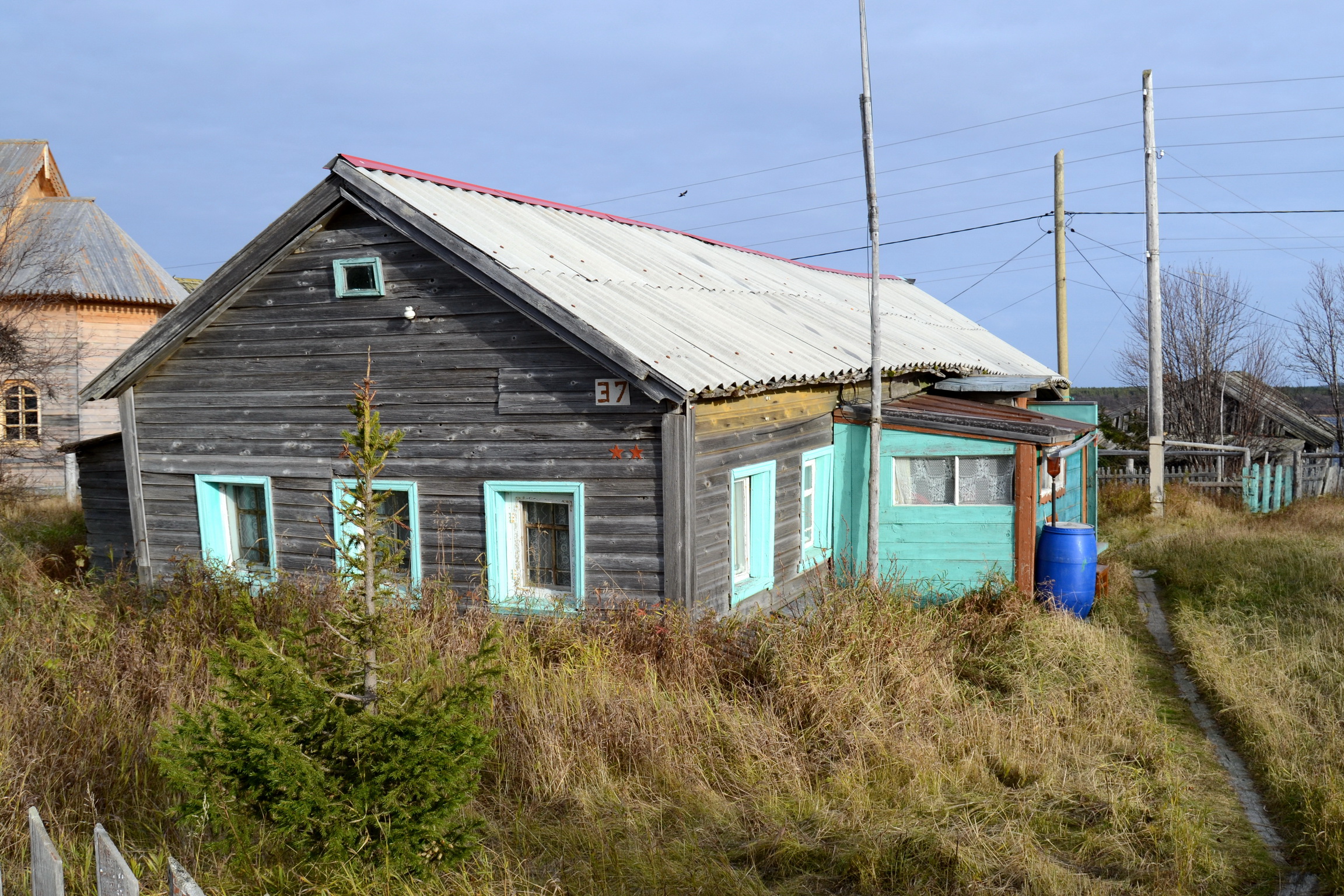
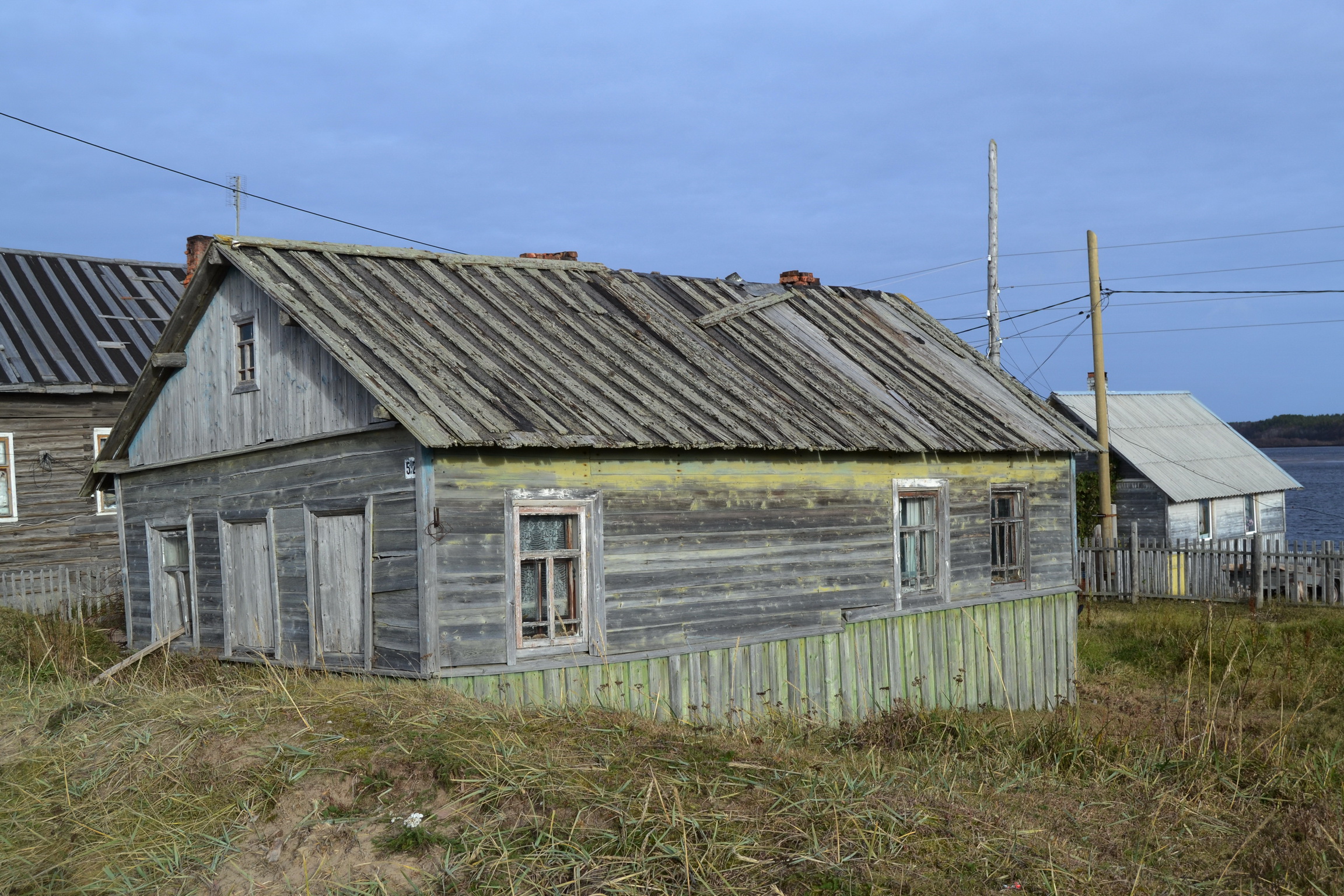
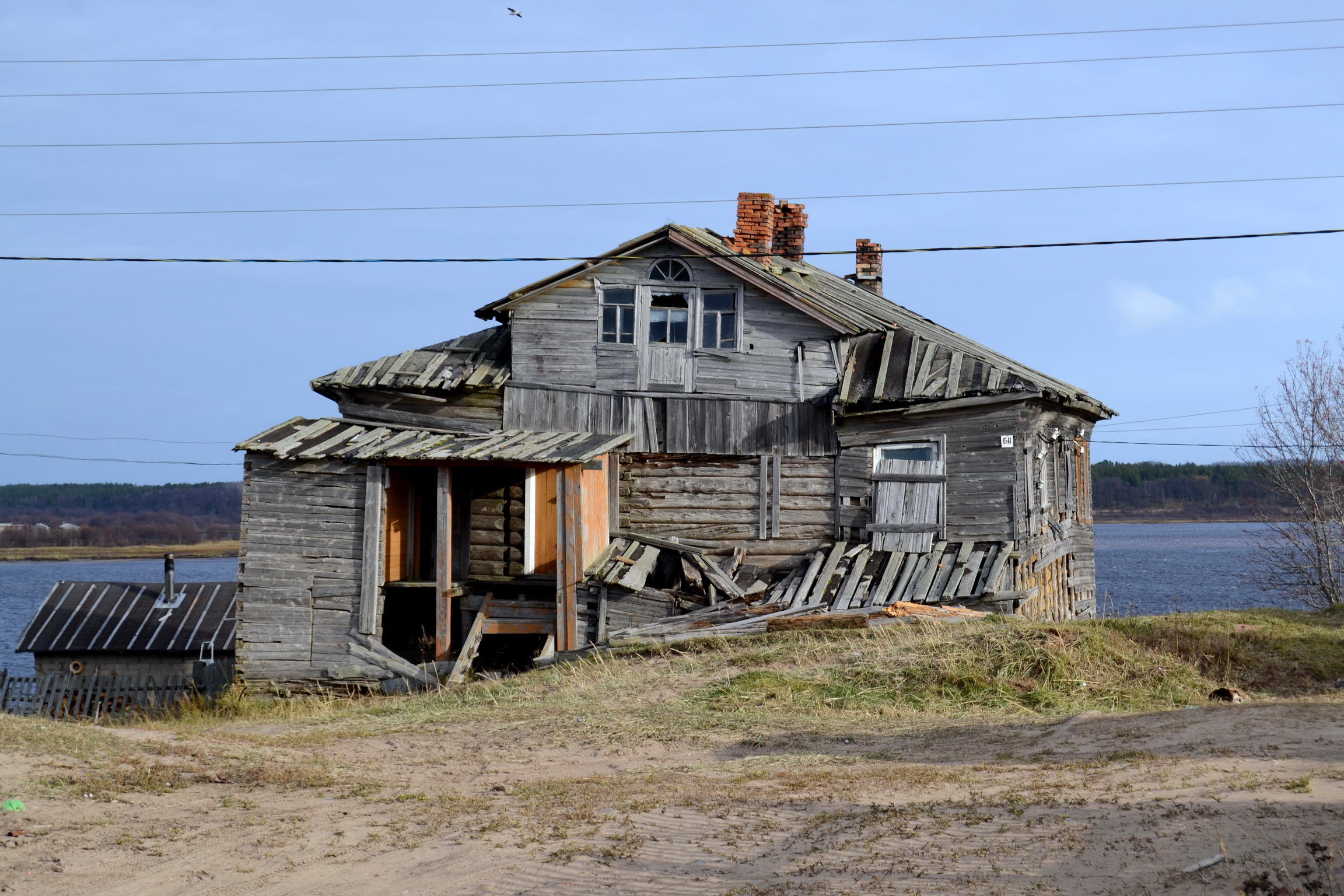
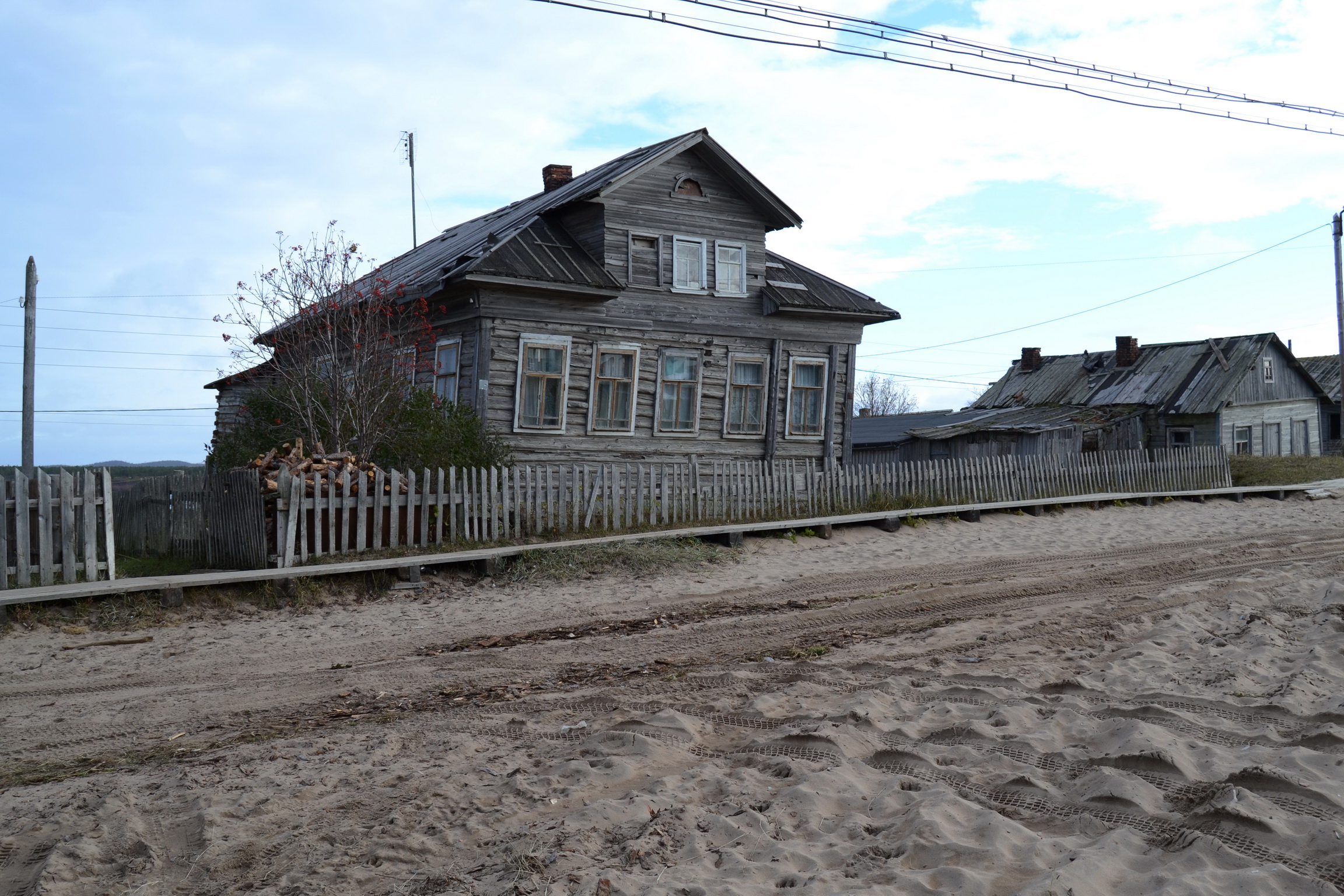
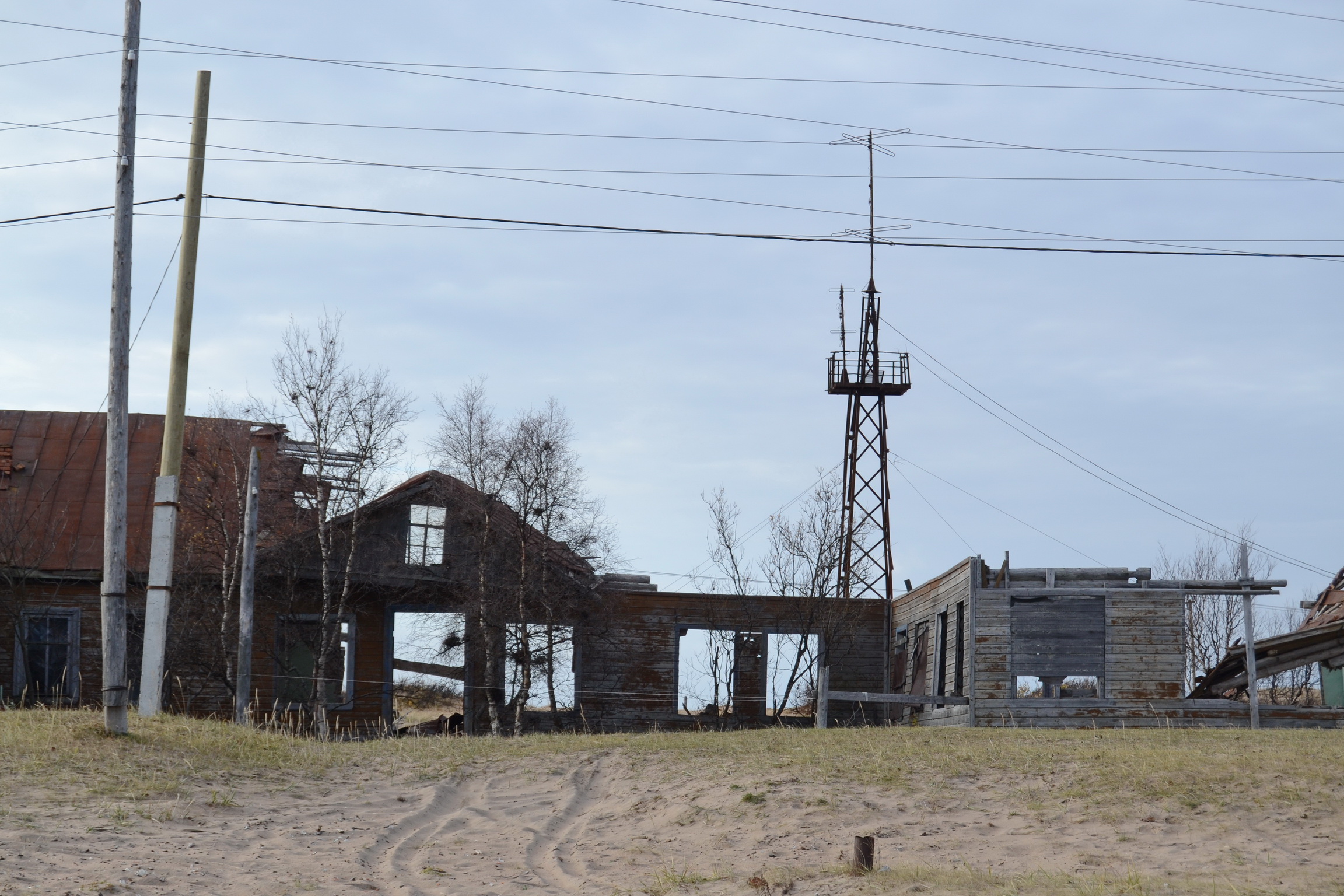
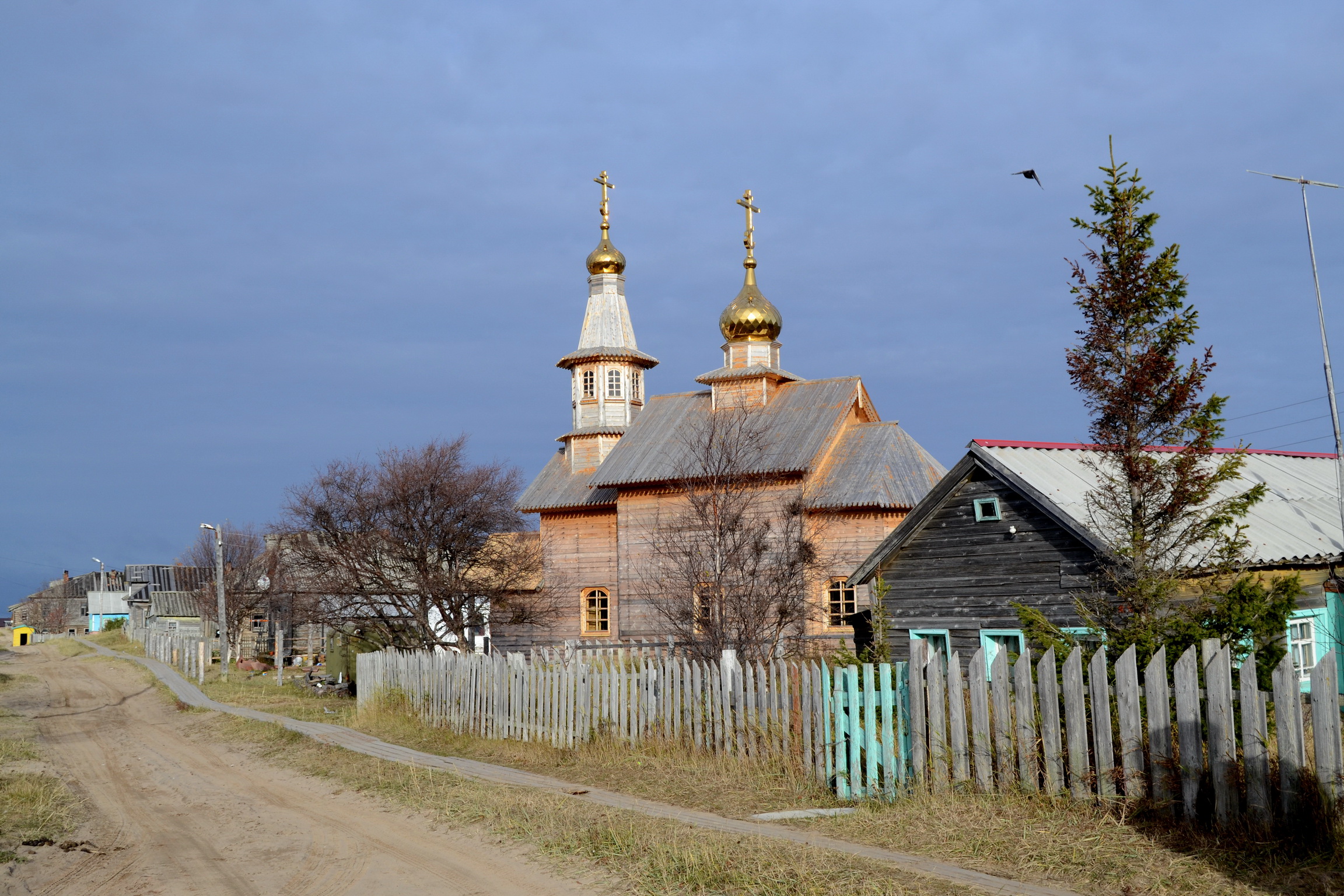
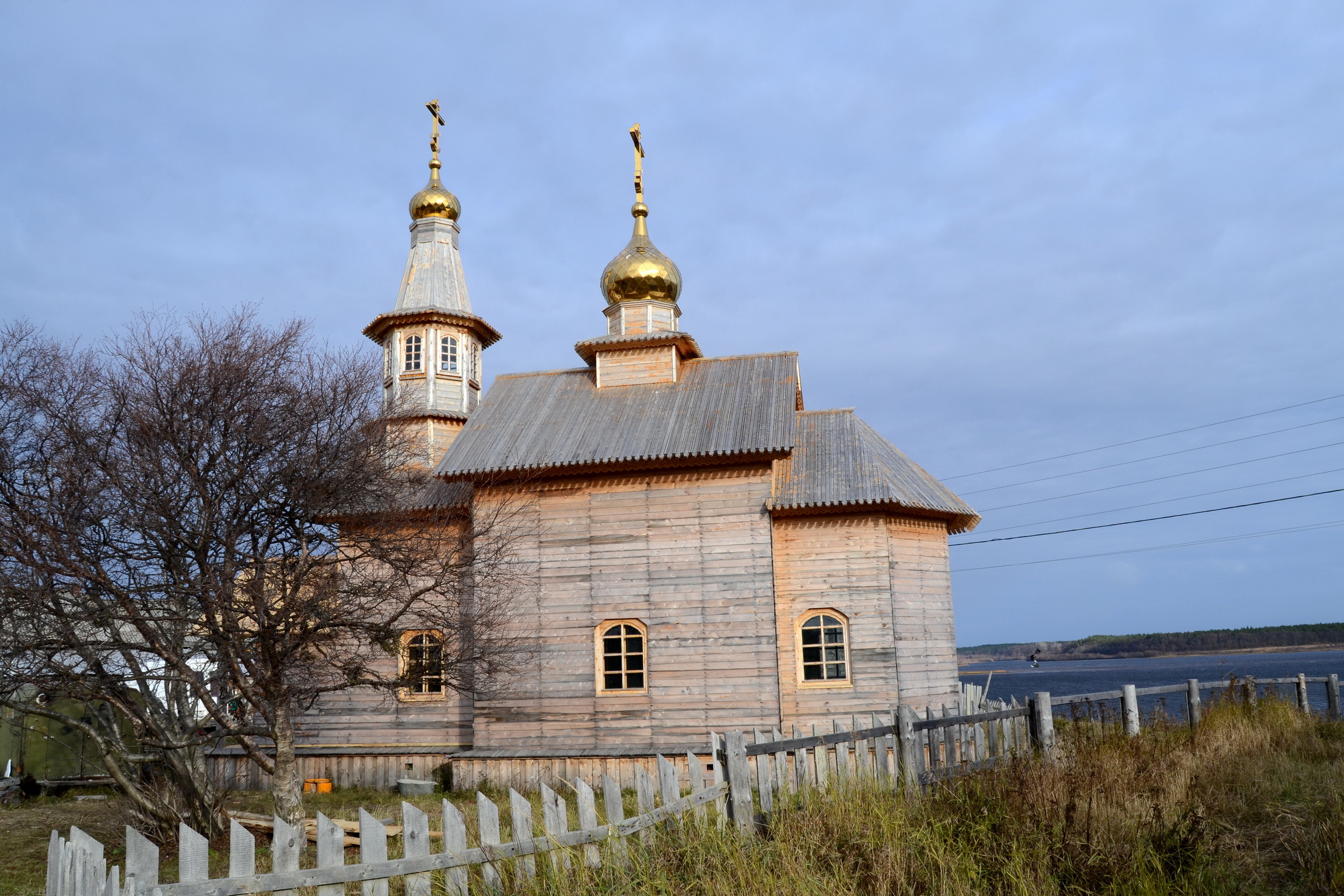
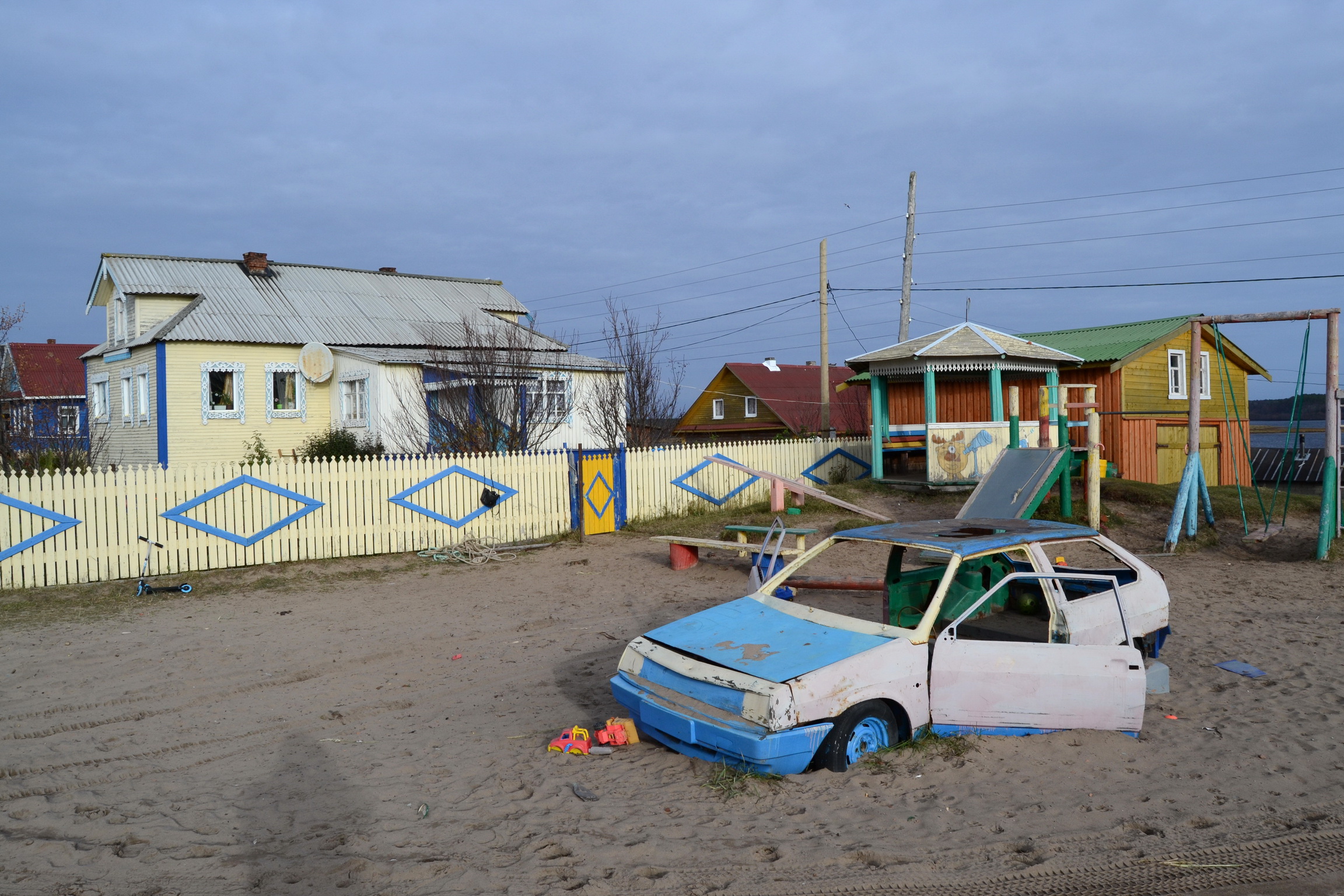
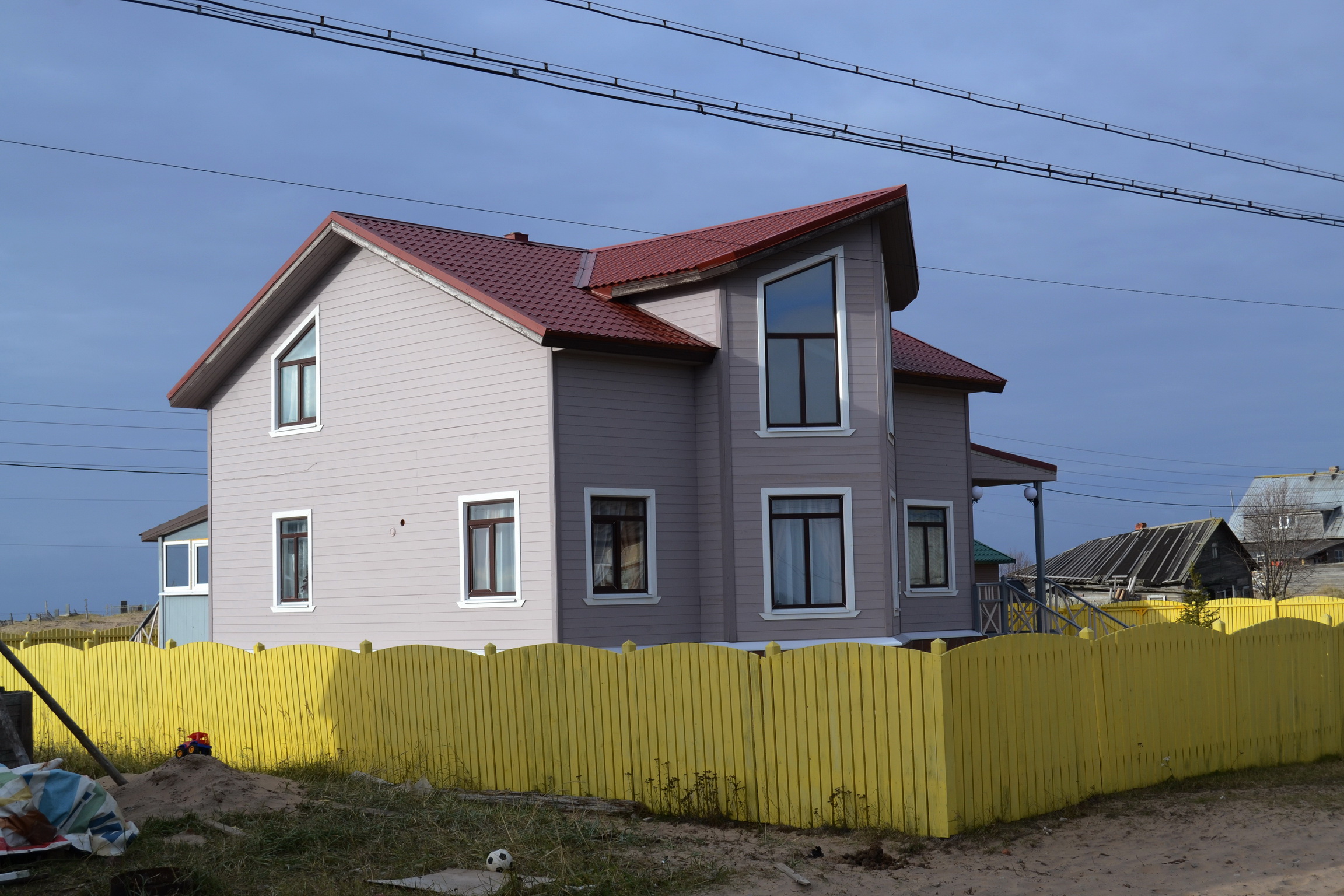
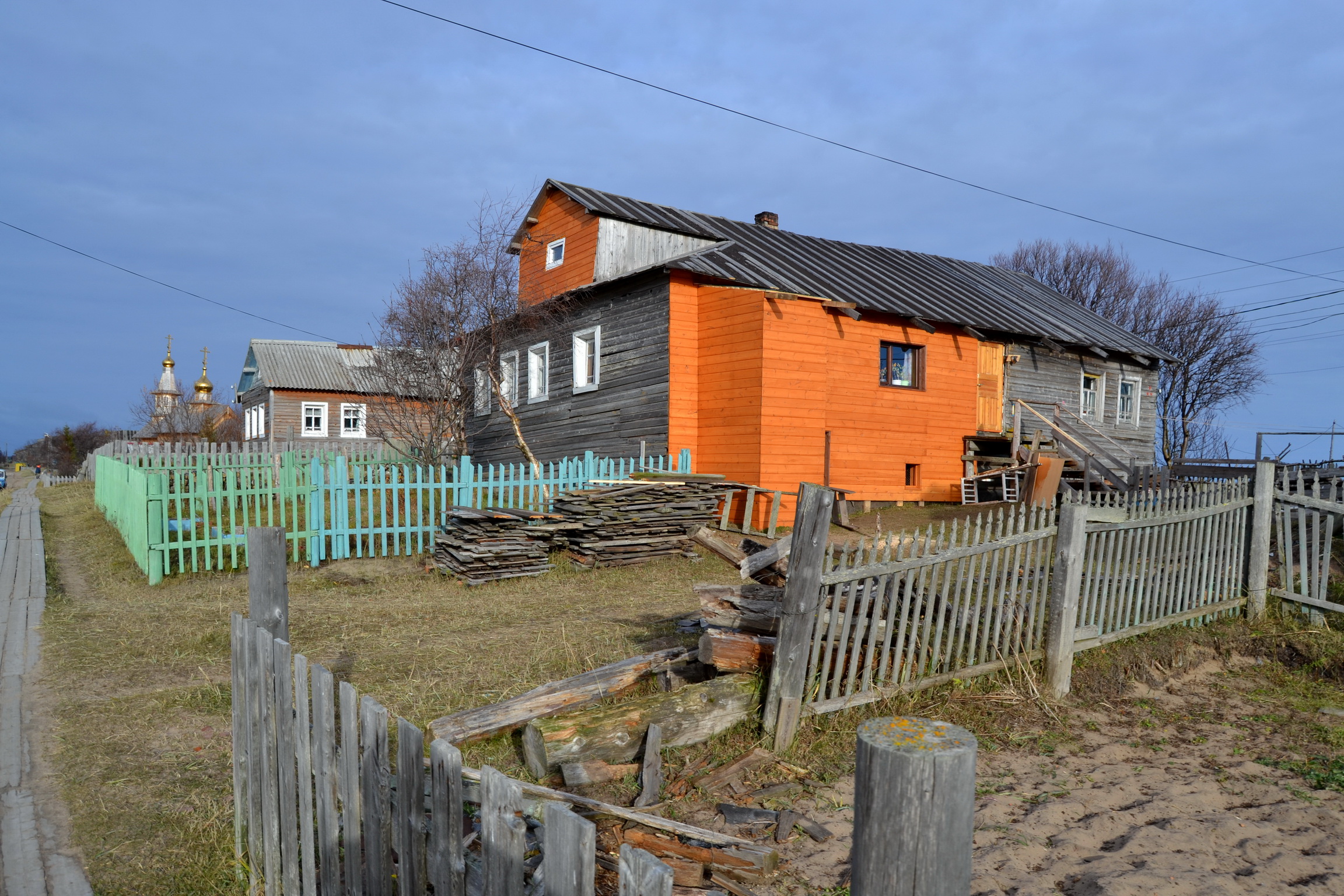
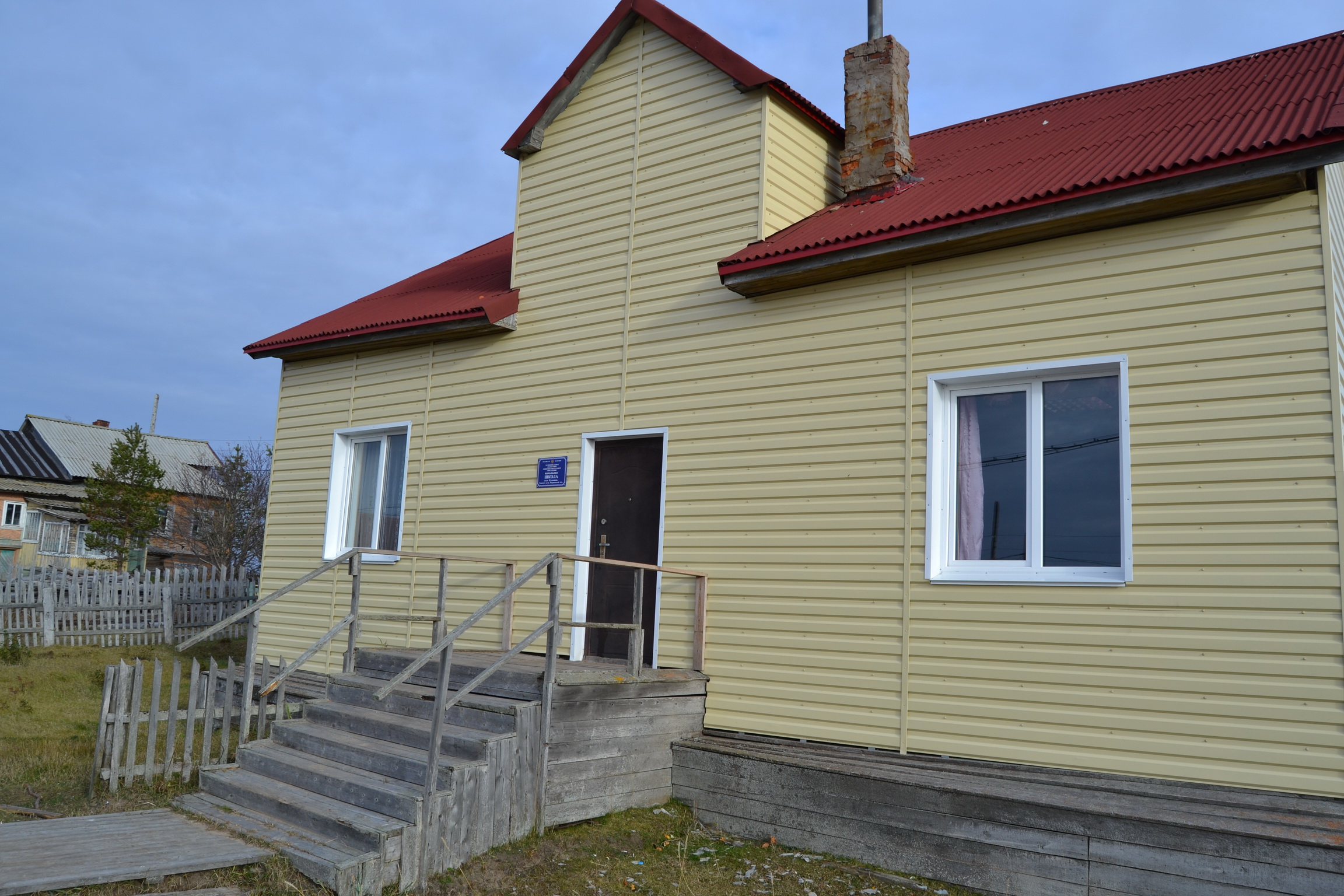
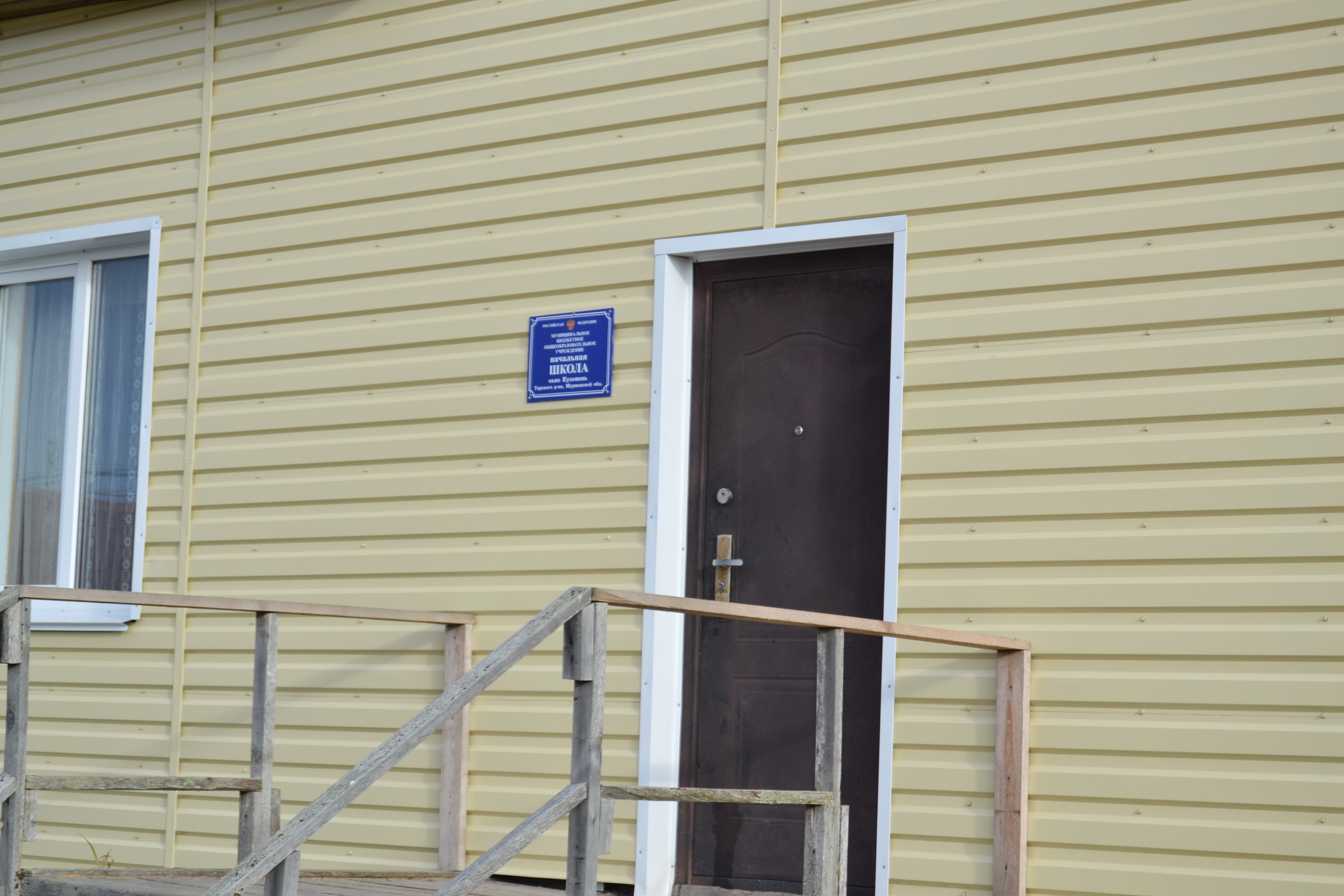
There’s even a primary school, although it only has three pupils left.
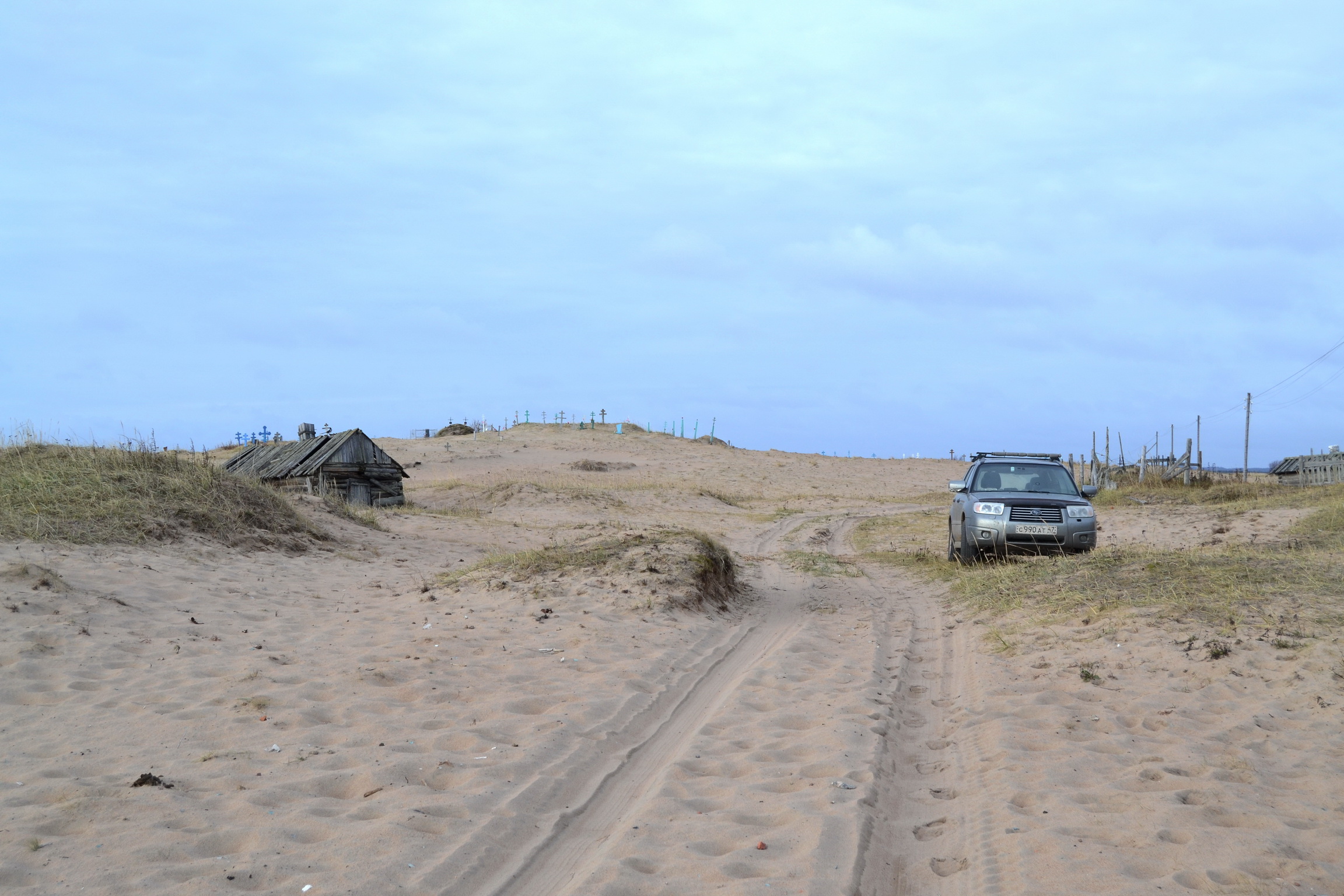
There’s a cemetery in the village, also in the middle of the dunes. Sand dunes wander wherever they like. One day they bury a grave, cross and all, and another day a skeleton shows up on the surface.
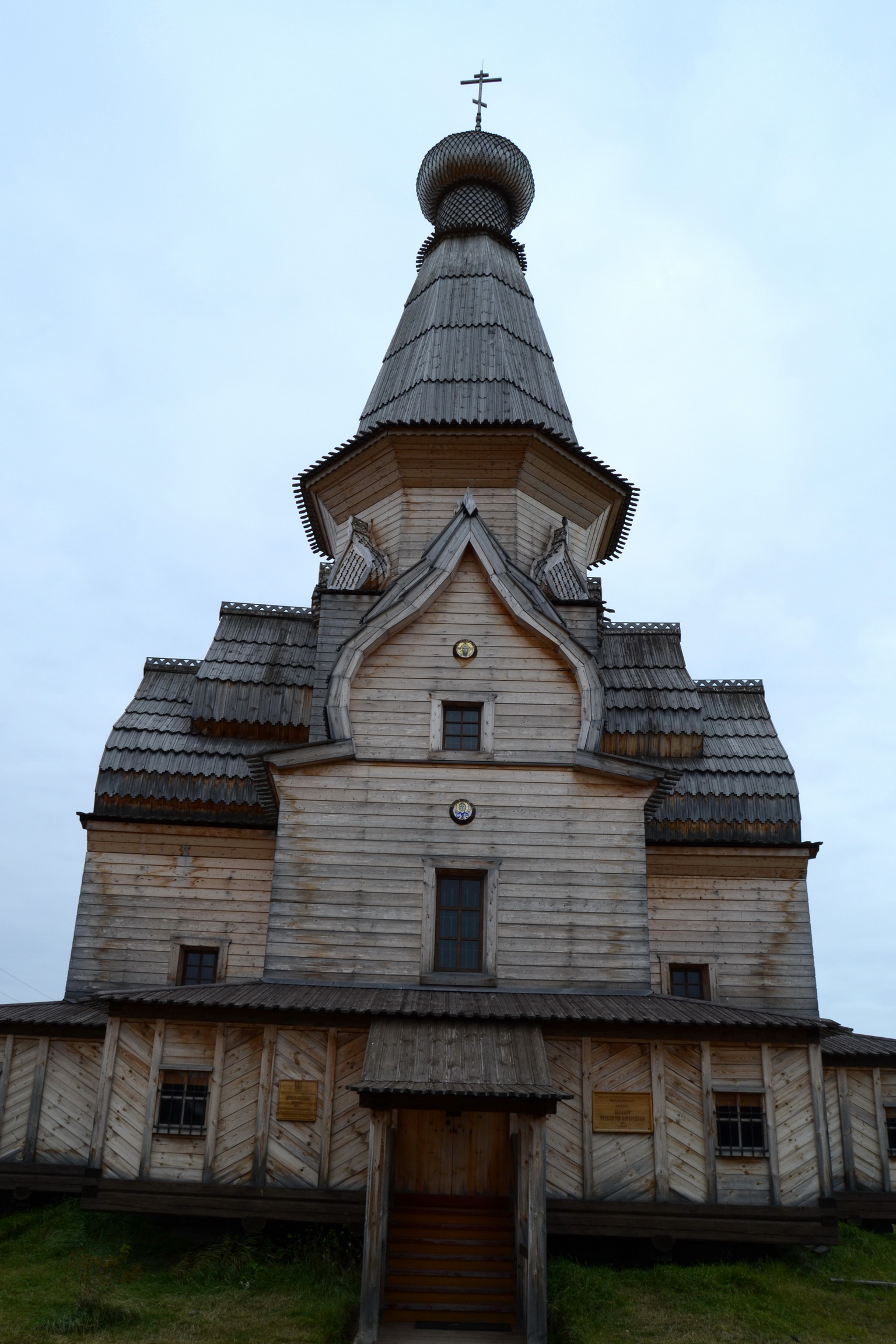
Time to go back. On the way back I stopped at Varzuga, a village with lots of old churches.
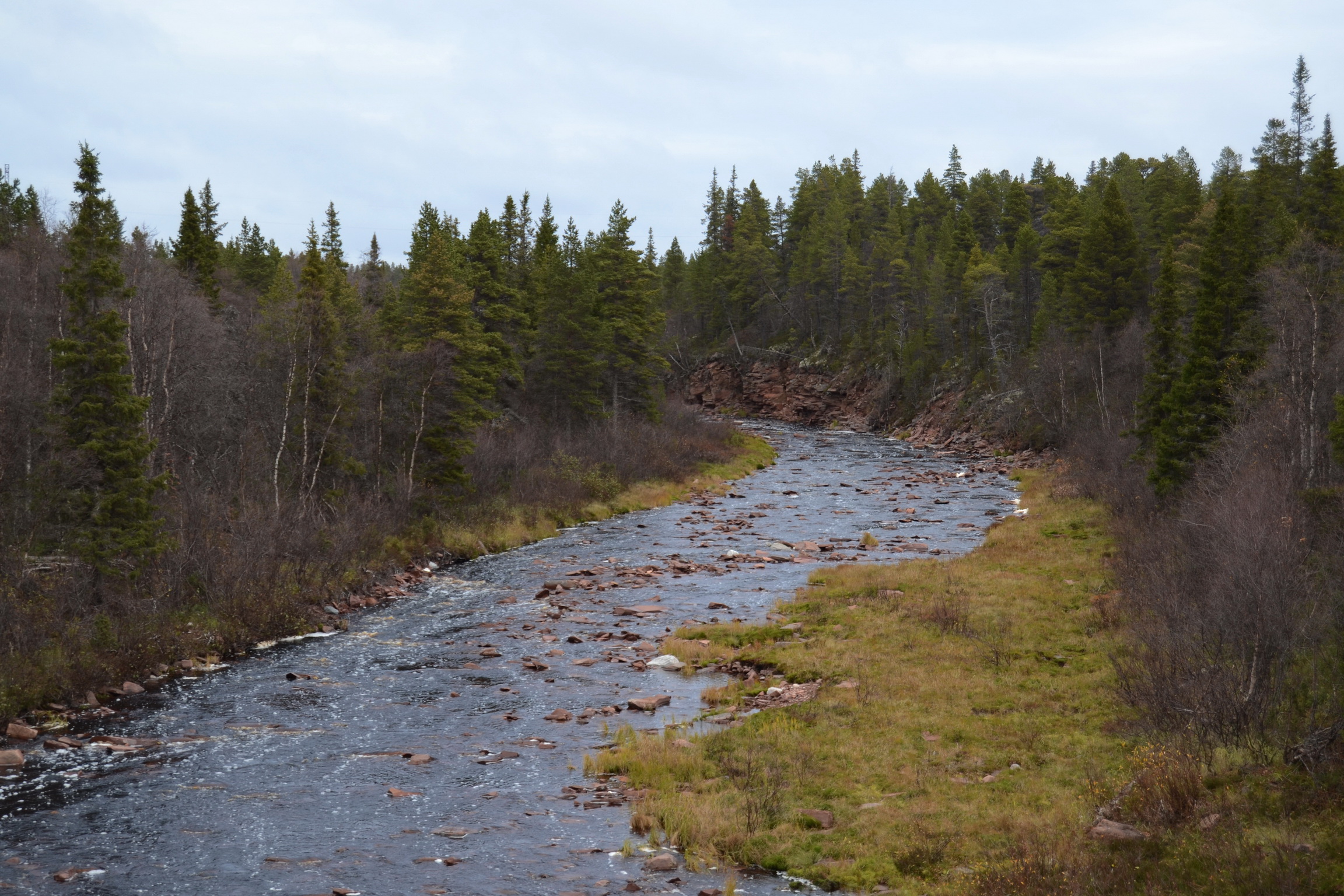
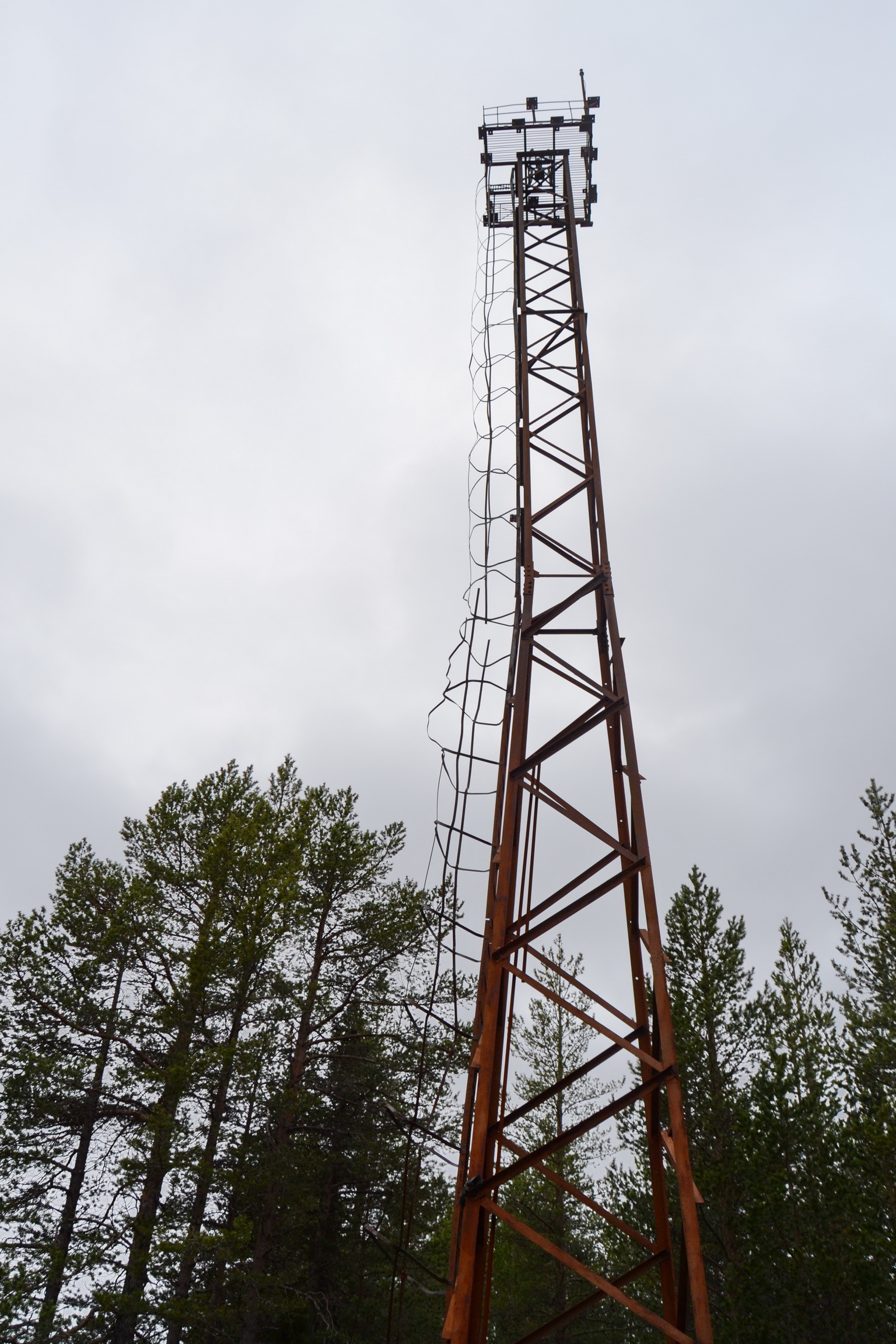
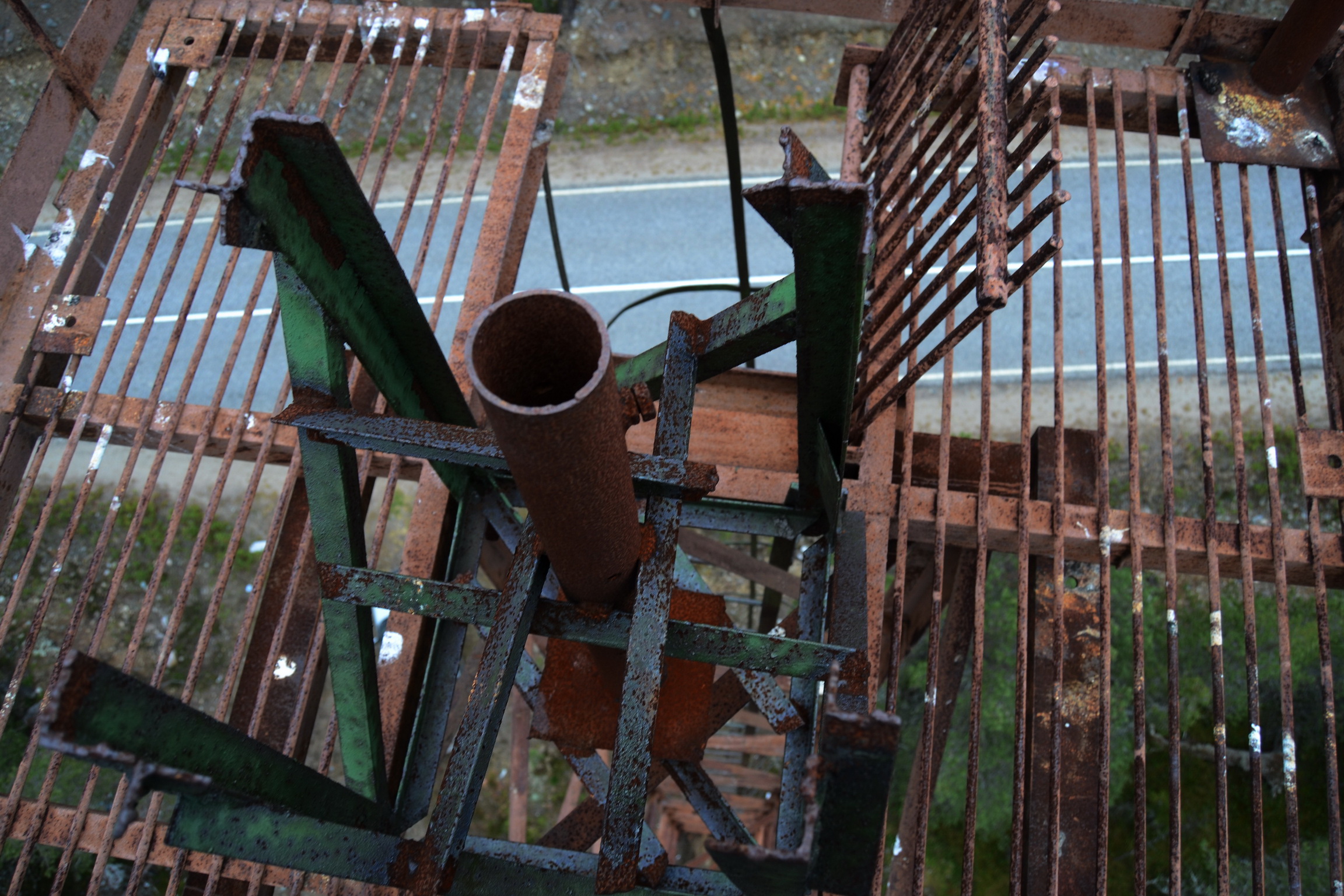
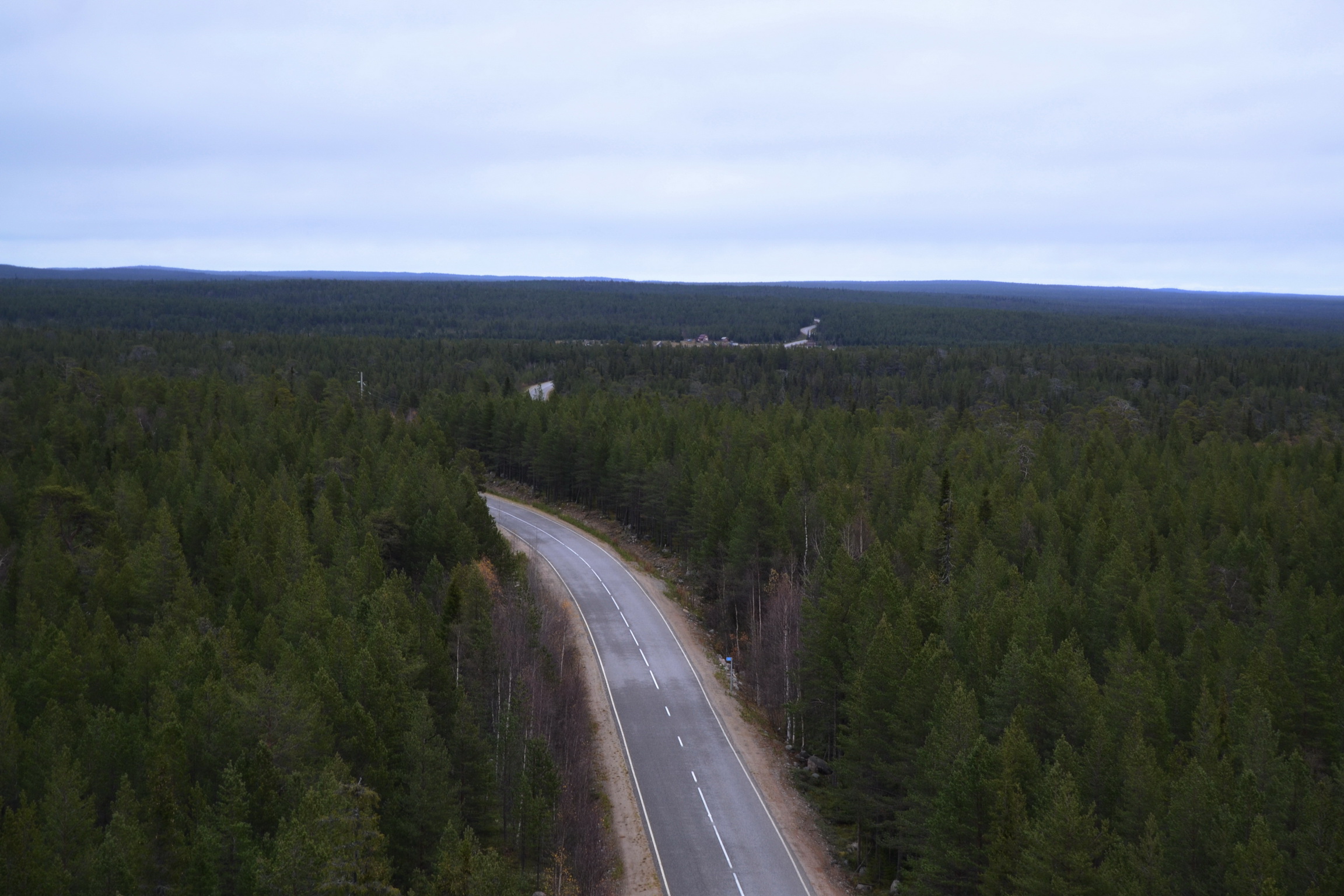
There’s a steel tower not far from Umba, where the road crosses the Arctic Circle. The stairs are flimsy but you can get up them. So I went up. A fine view. A tank of petrol won’t get you from Kandalaksha to Varzuga and all the way back, so you have to fill up at Umba. It’s the only place with a petrol station.

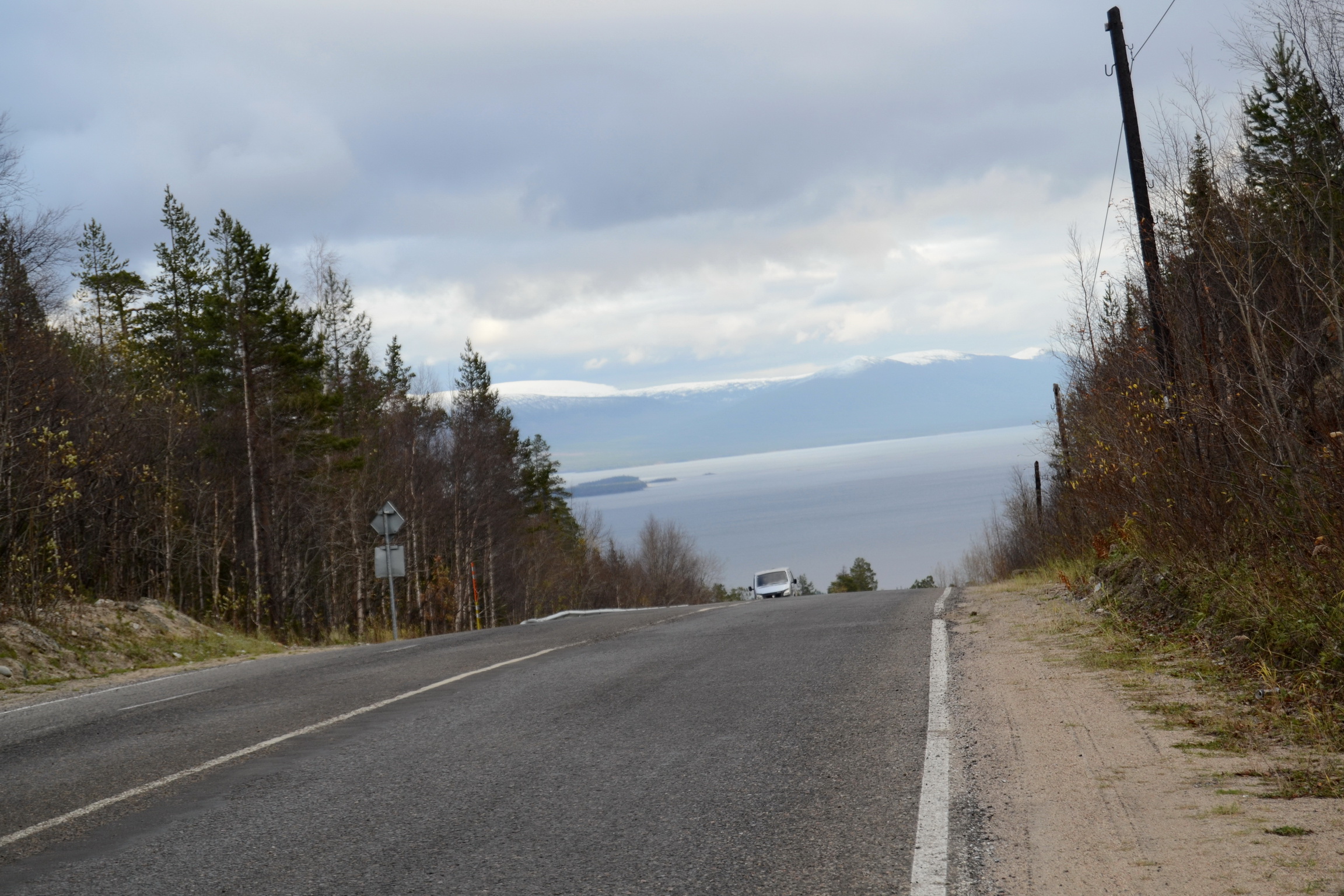
At the Kandalaksha end the road climbs a high hill, where an excellent view opens up over Kandalaksha and Kandalaksha Bay, with its many beautiful islands. Unfortunately they’re all part of a nature reserve and it’s not easy to paddle among them. The wardens might catch you. As always in Russia, nothing is arranged for ordinary people.
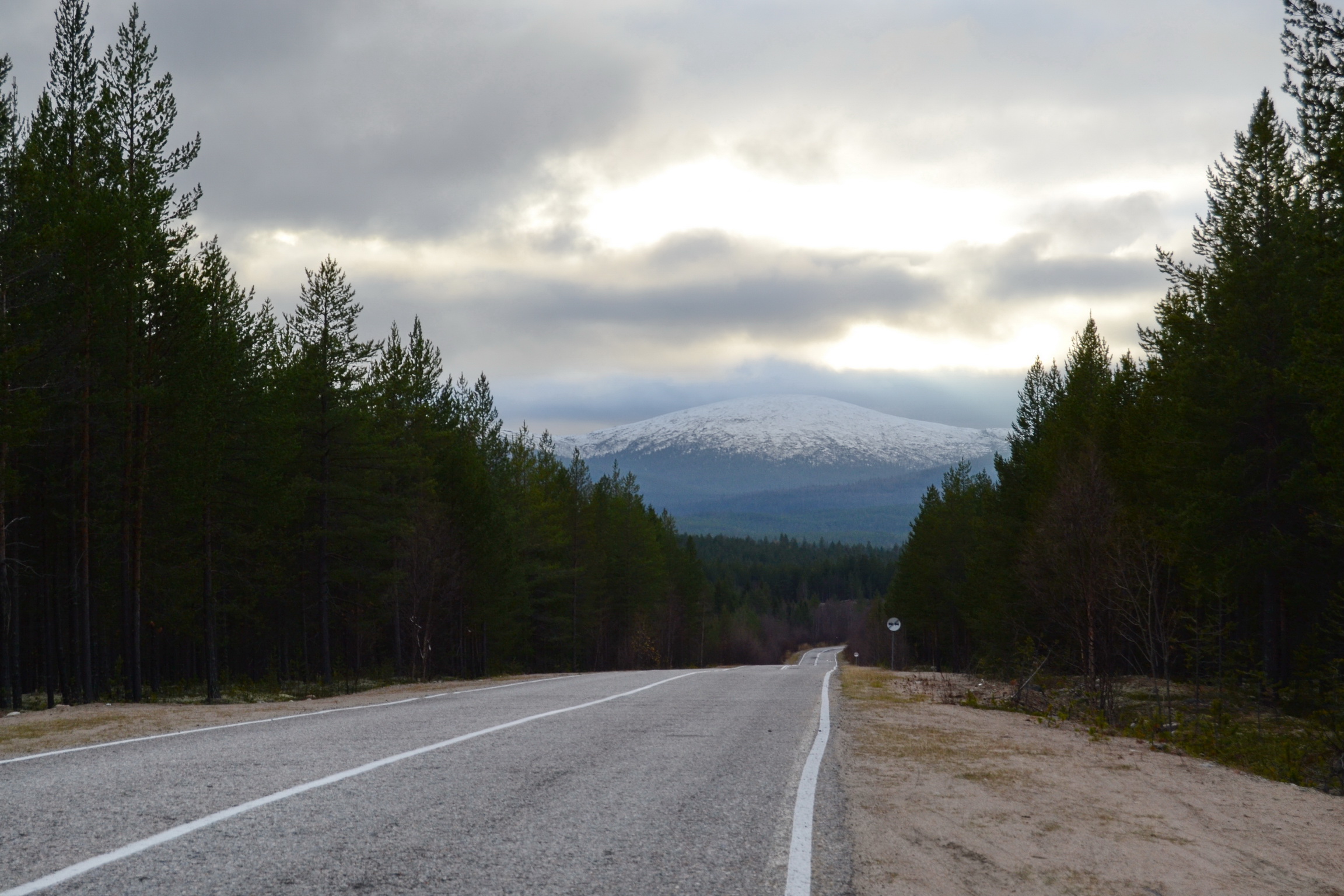
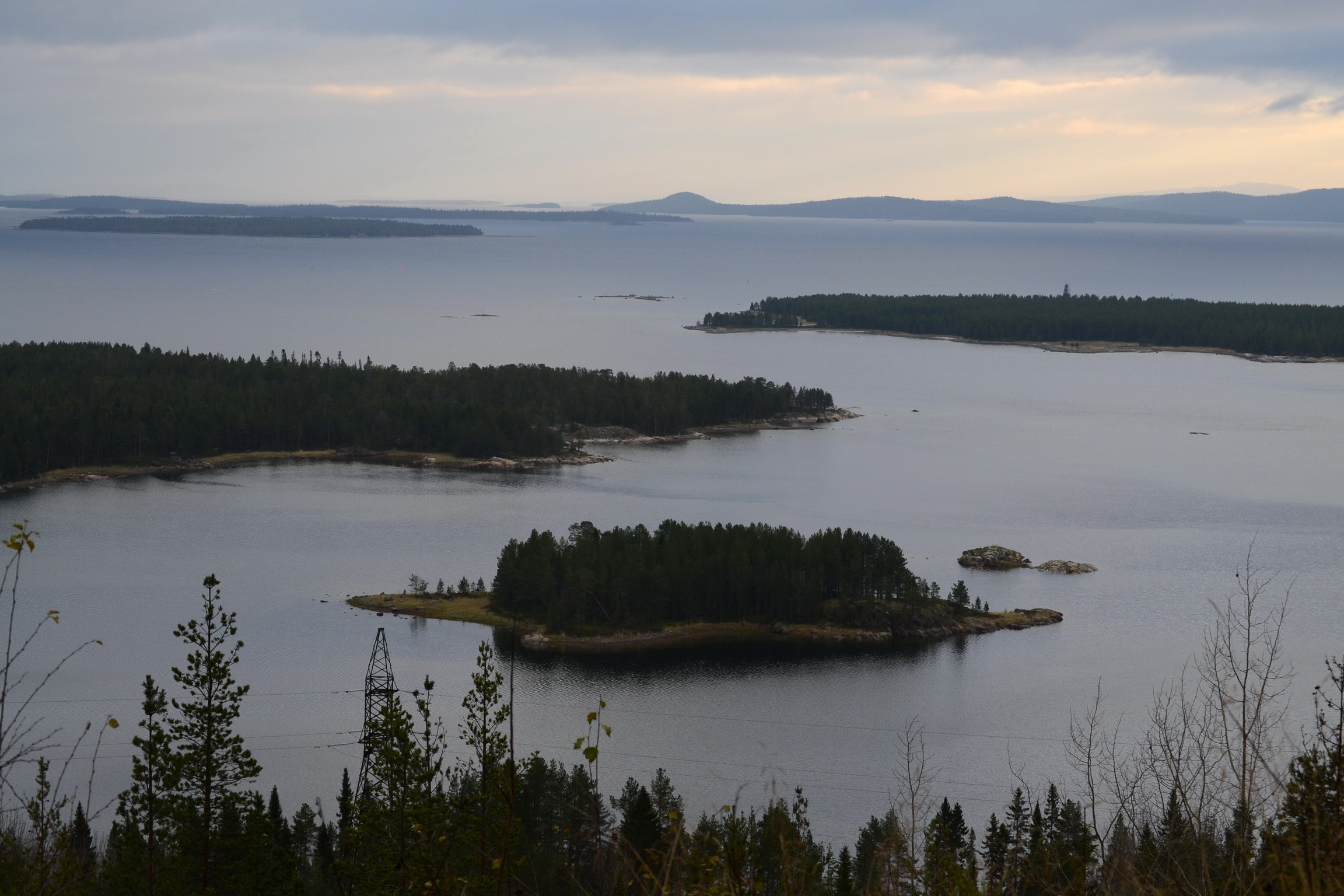
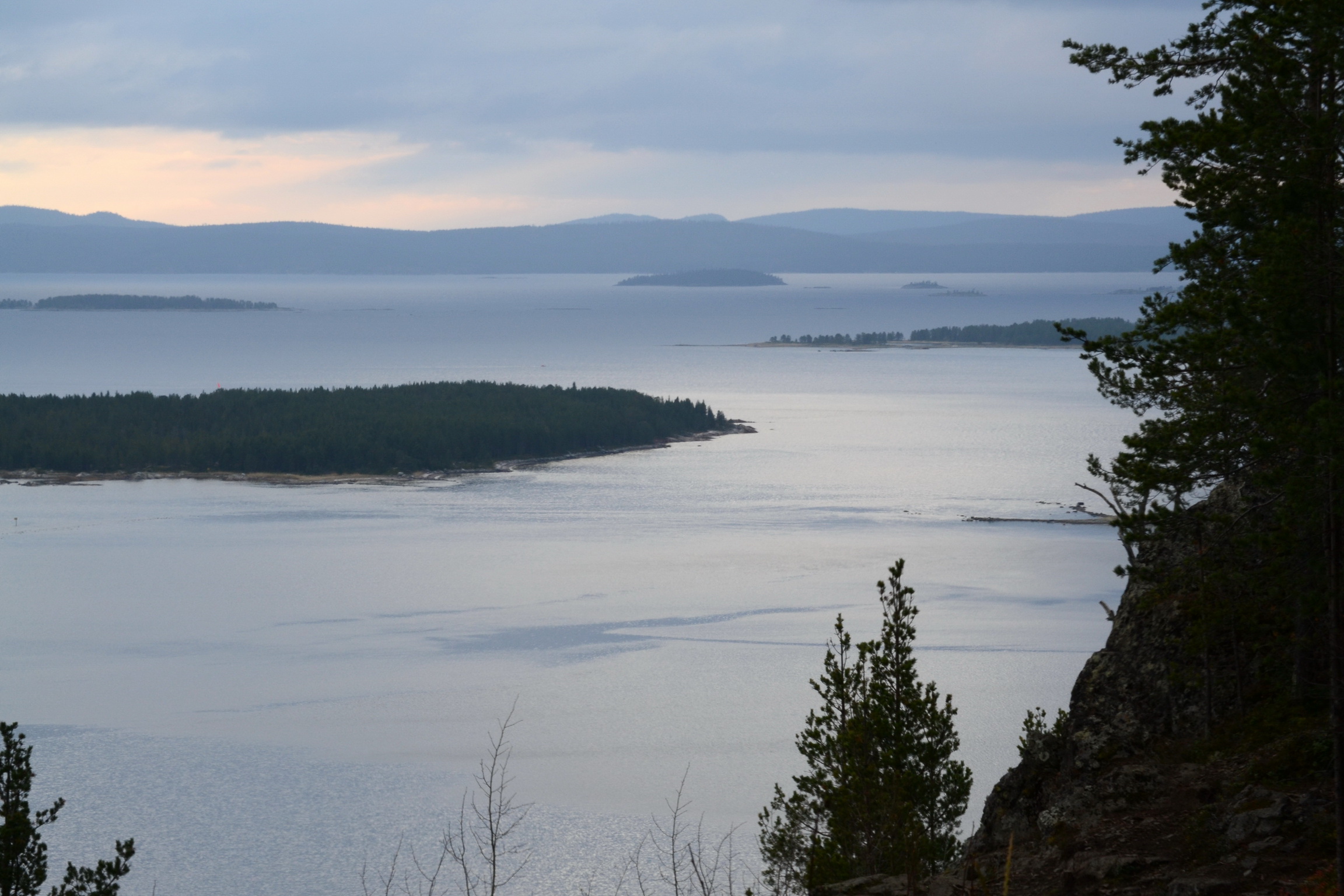
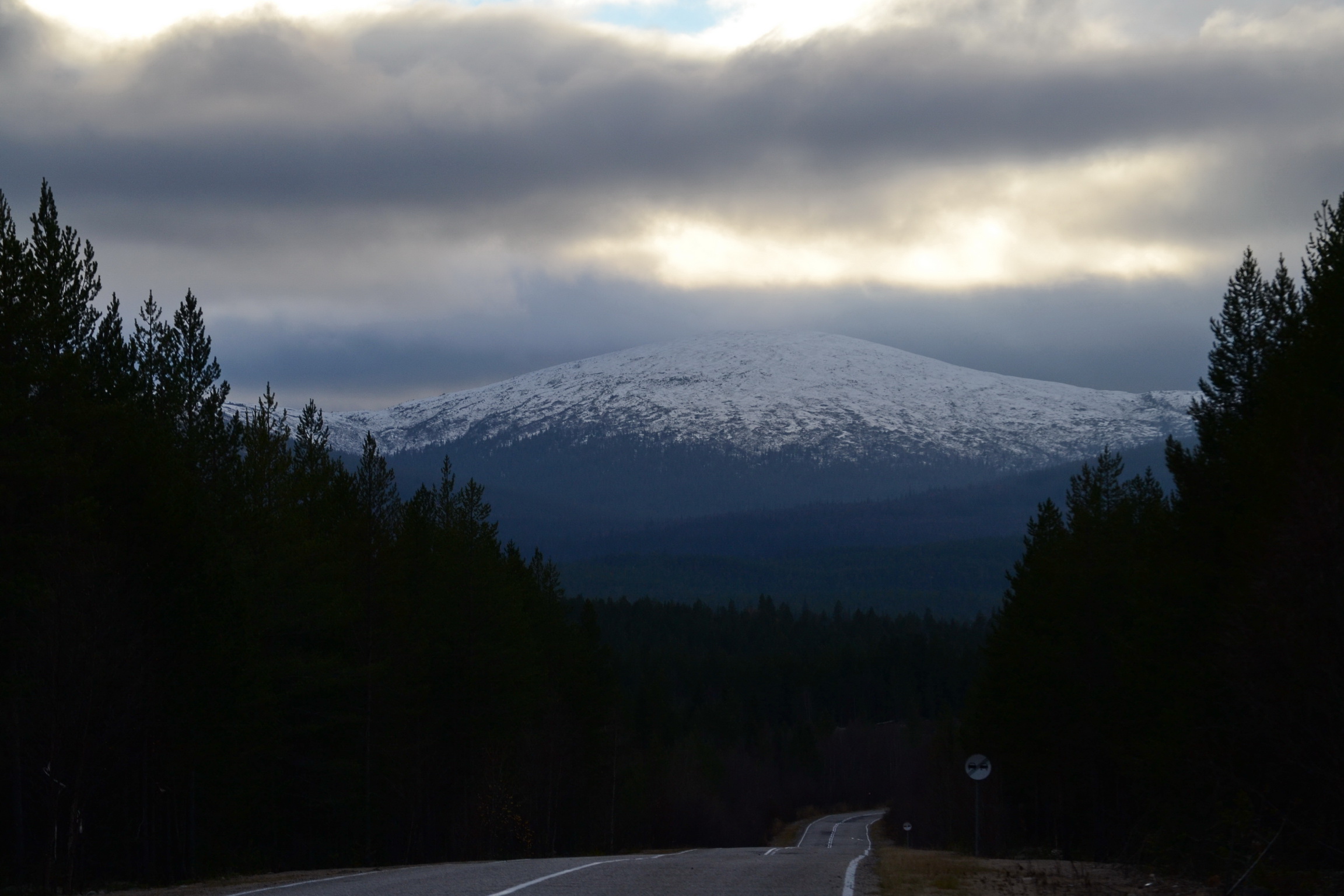
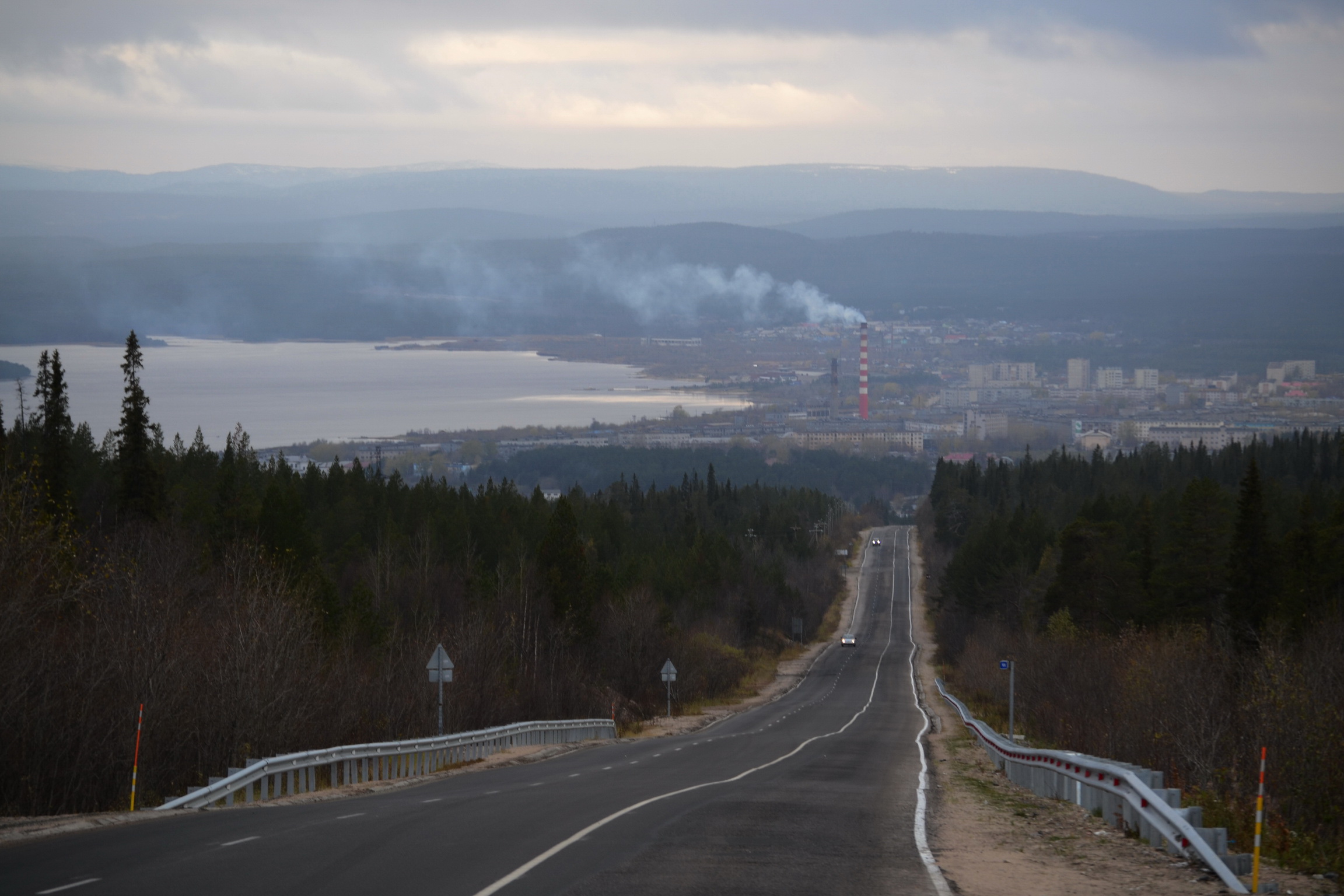
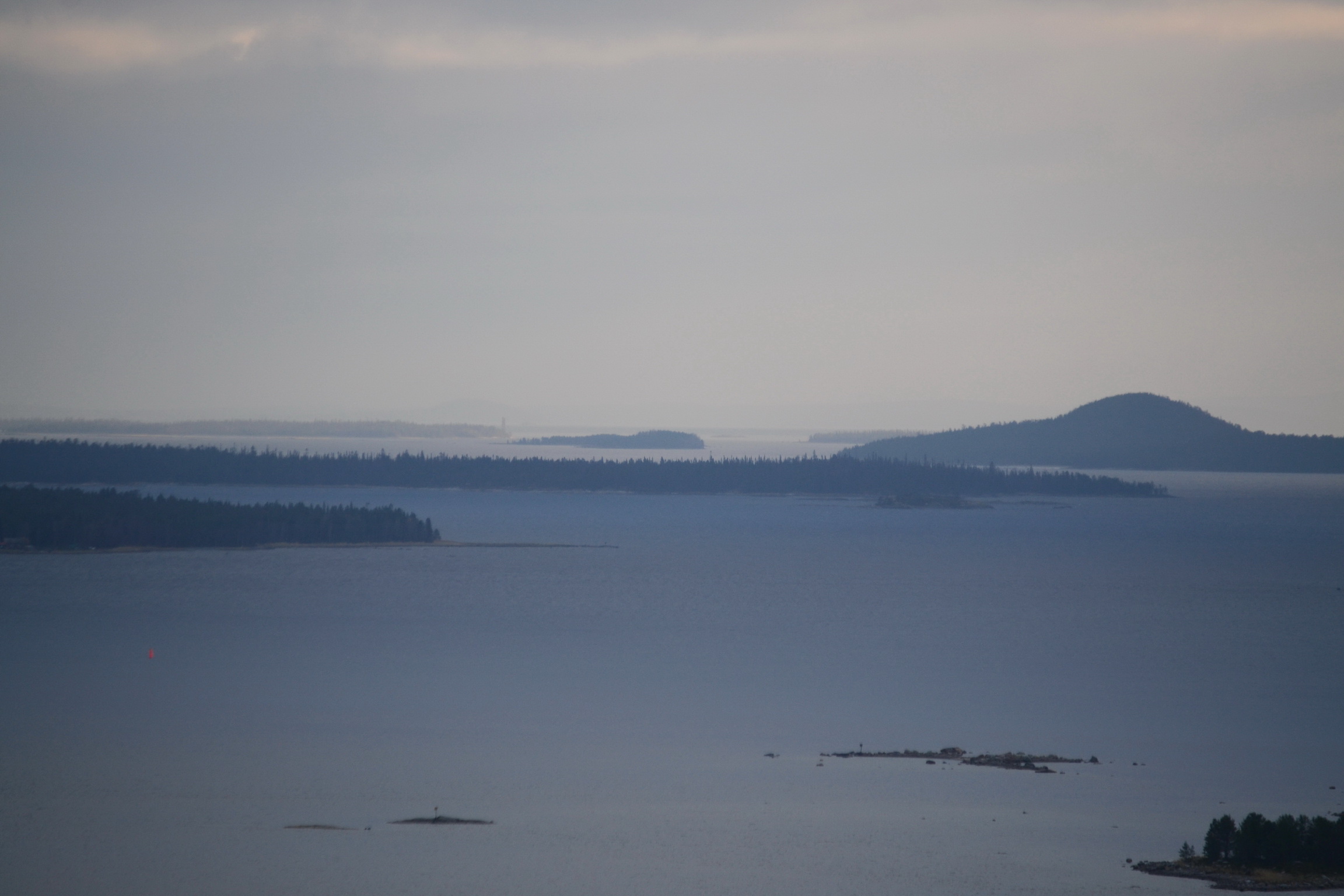
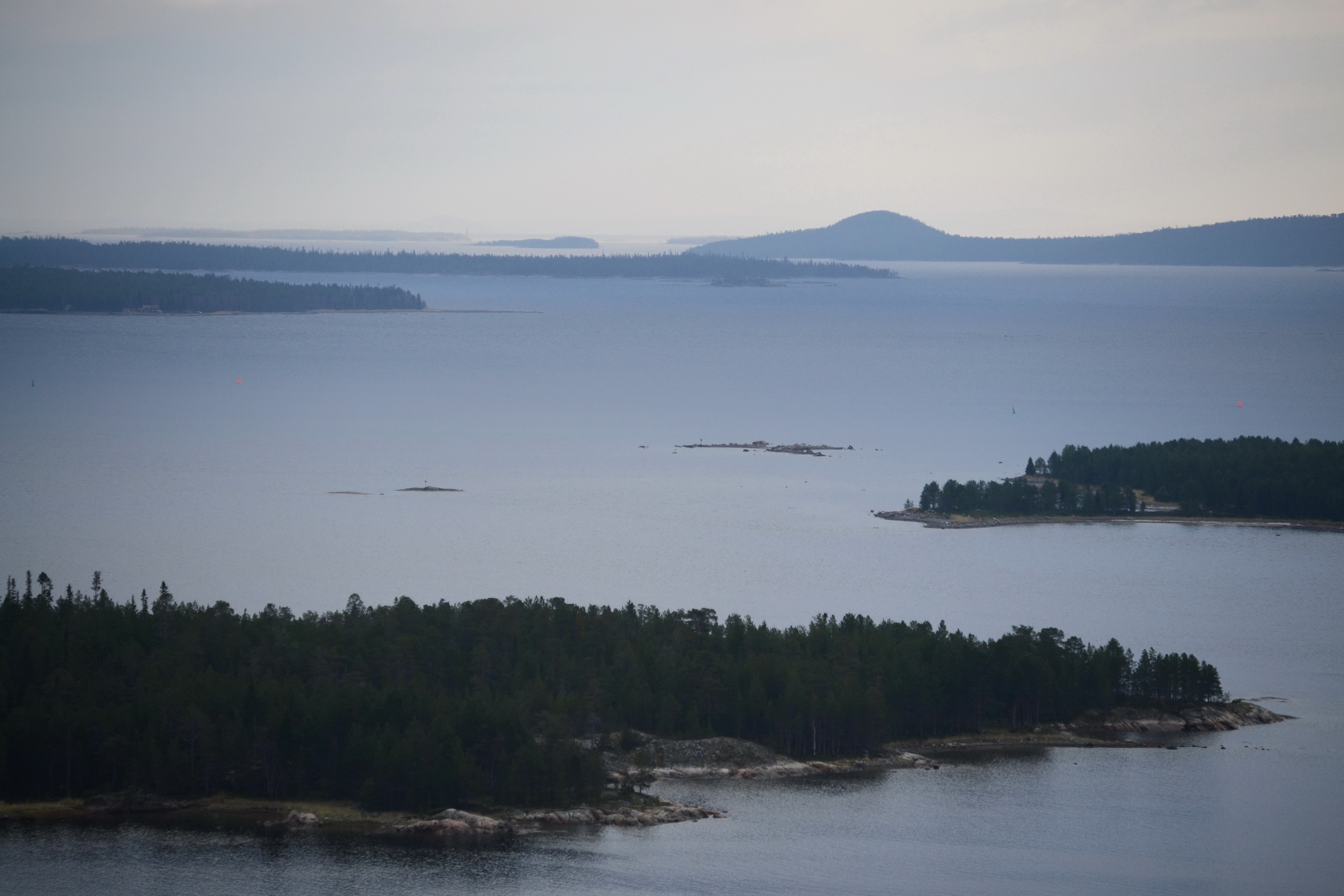
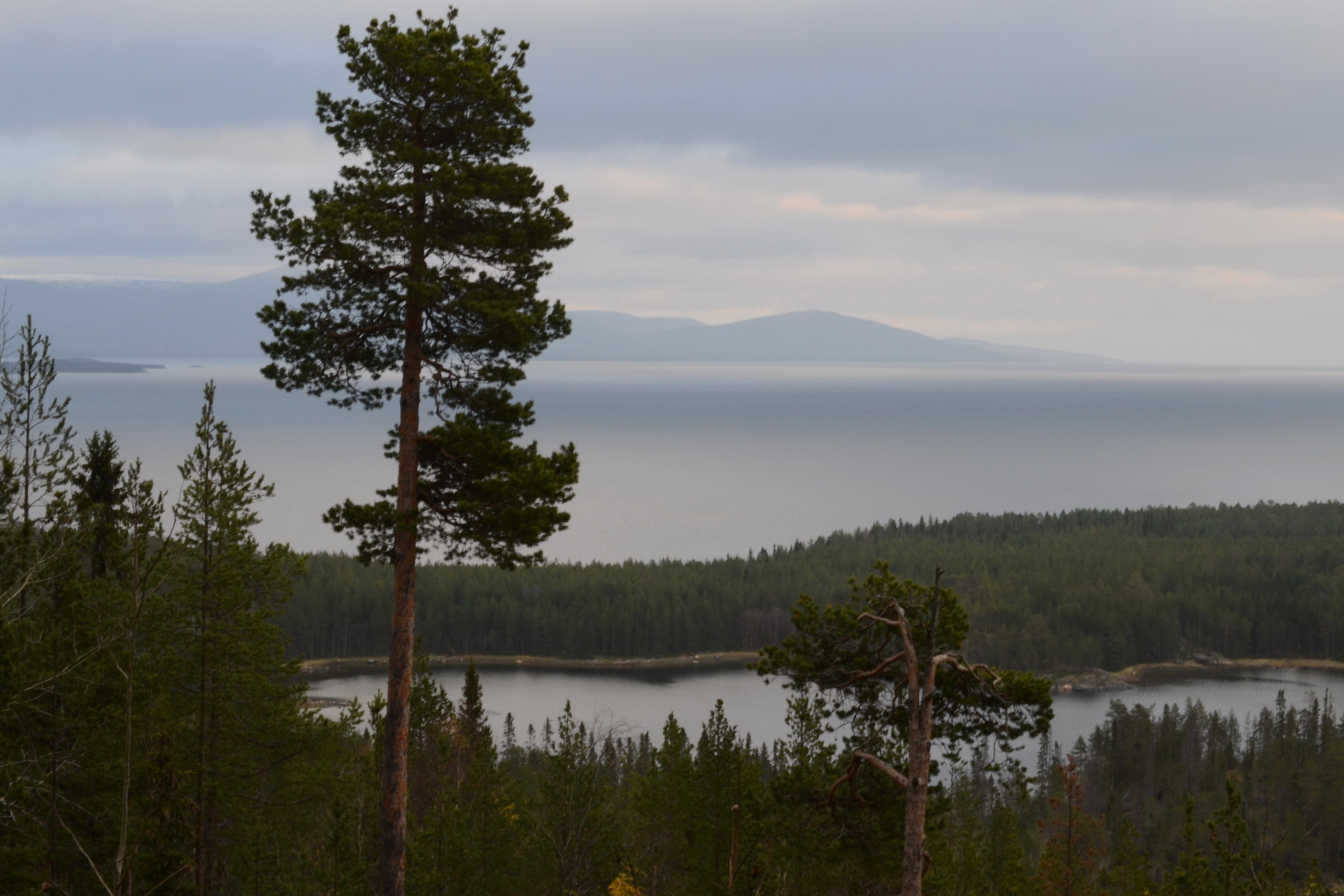
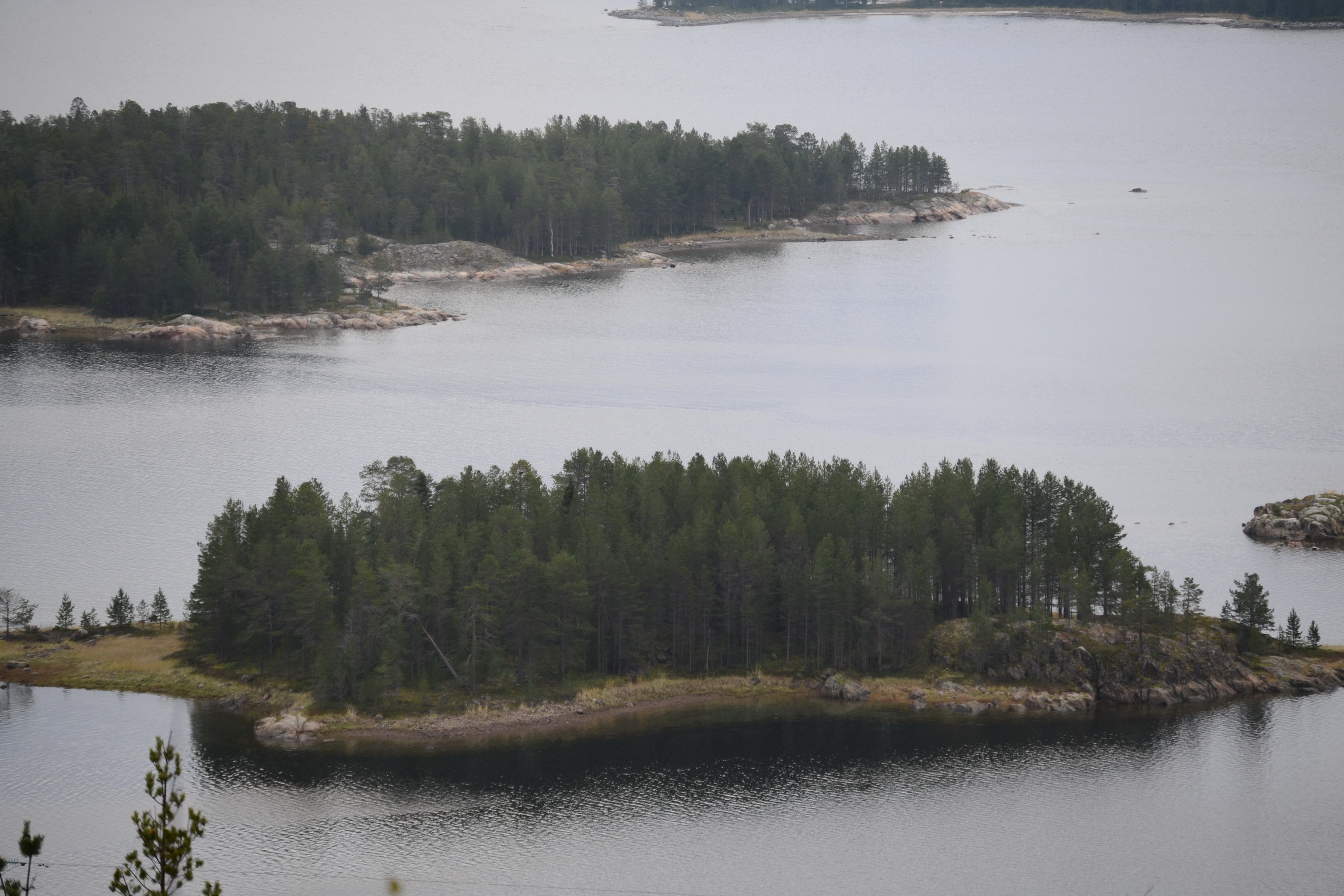
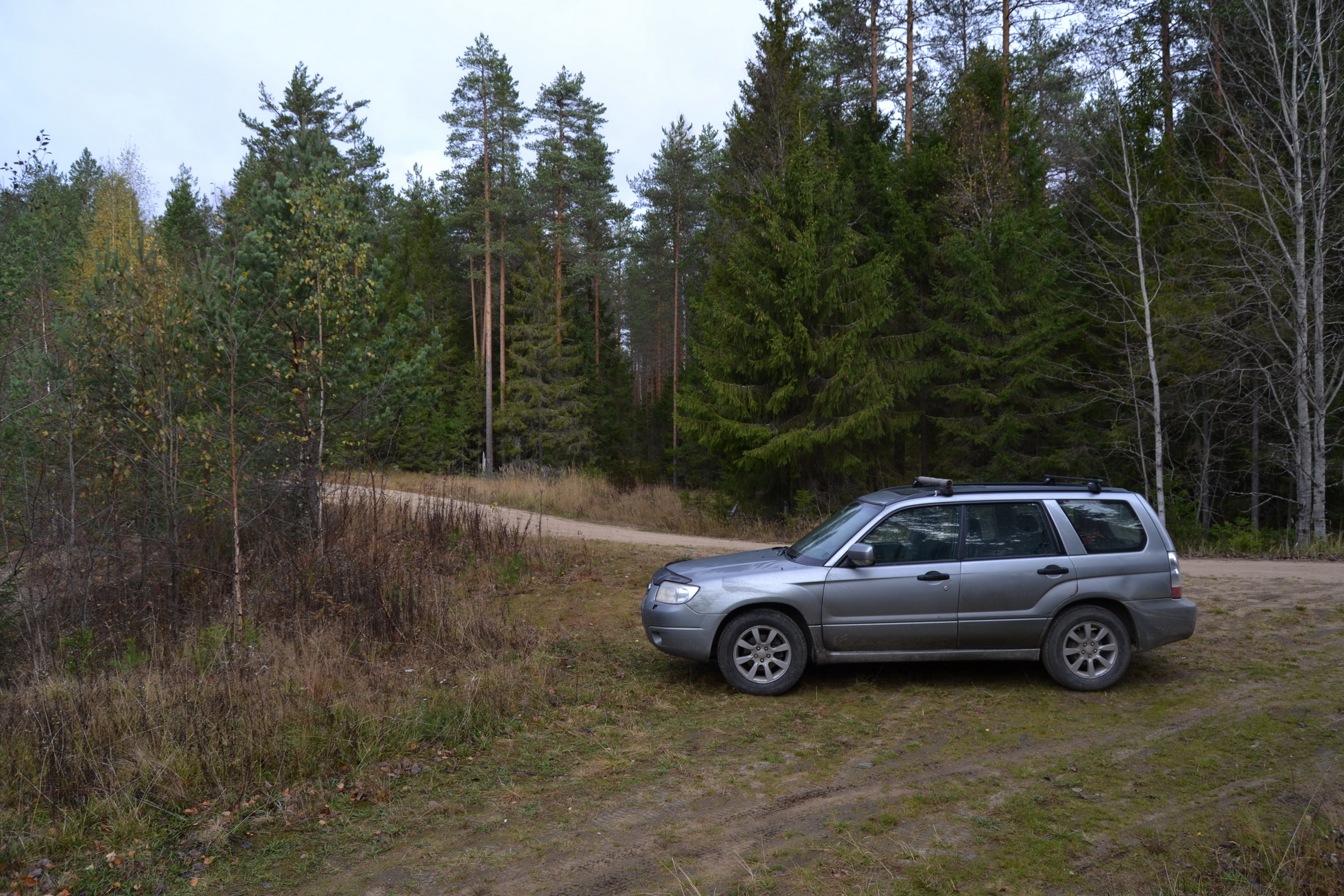
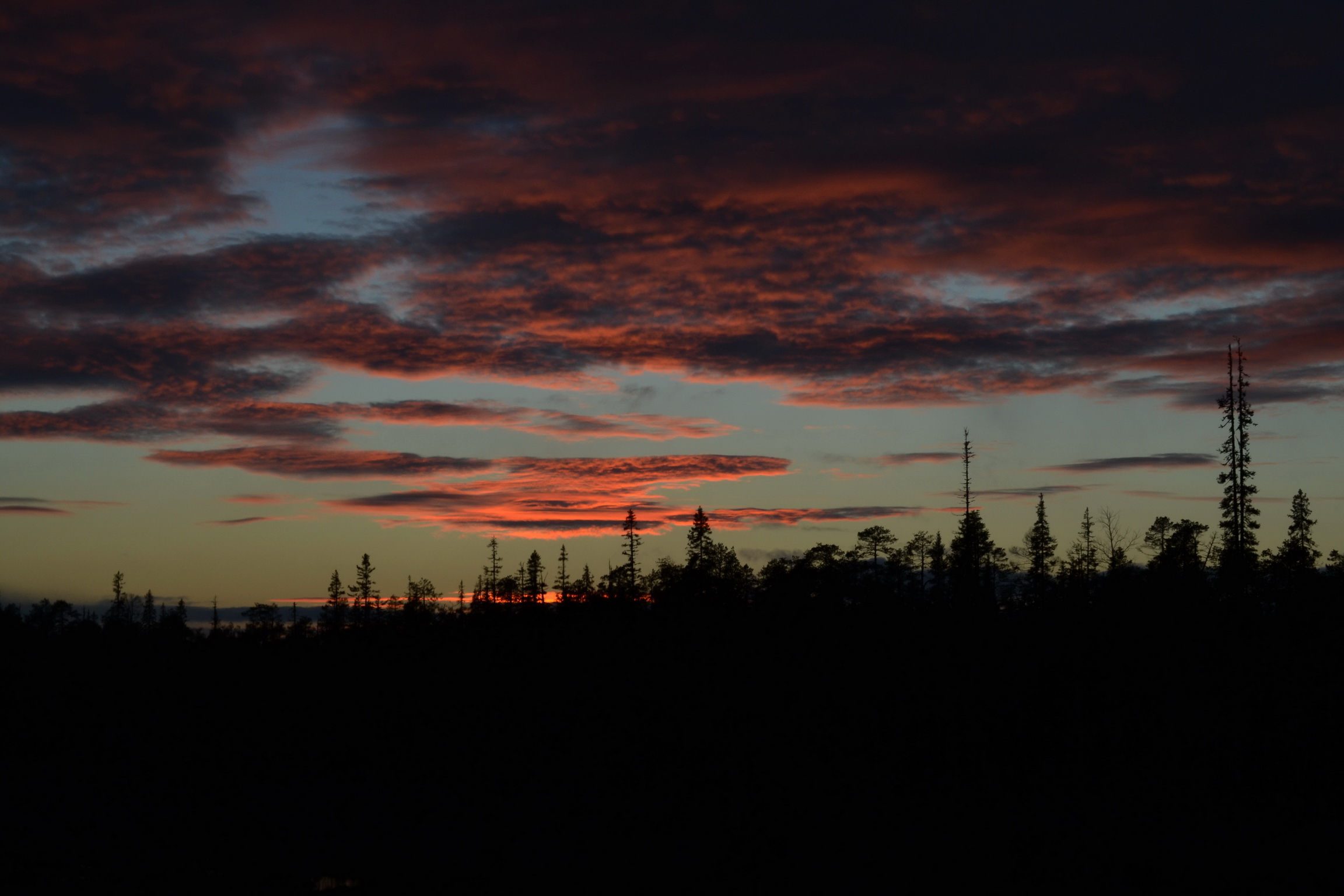
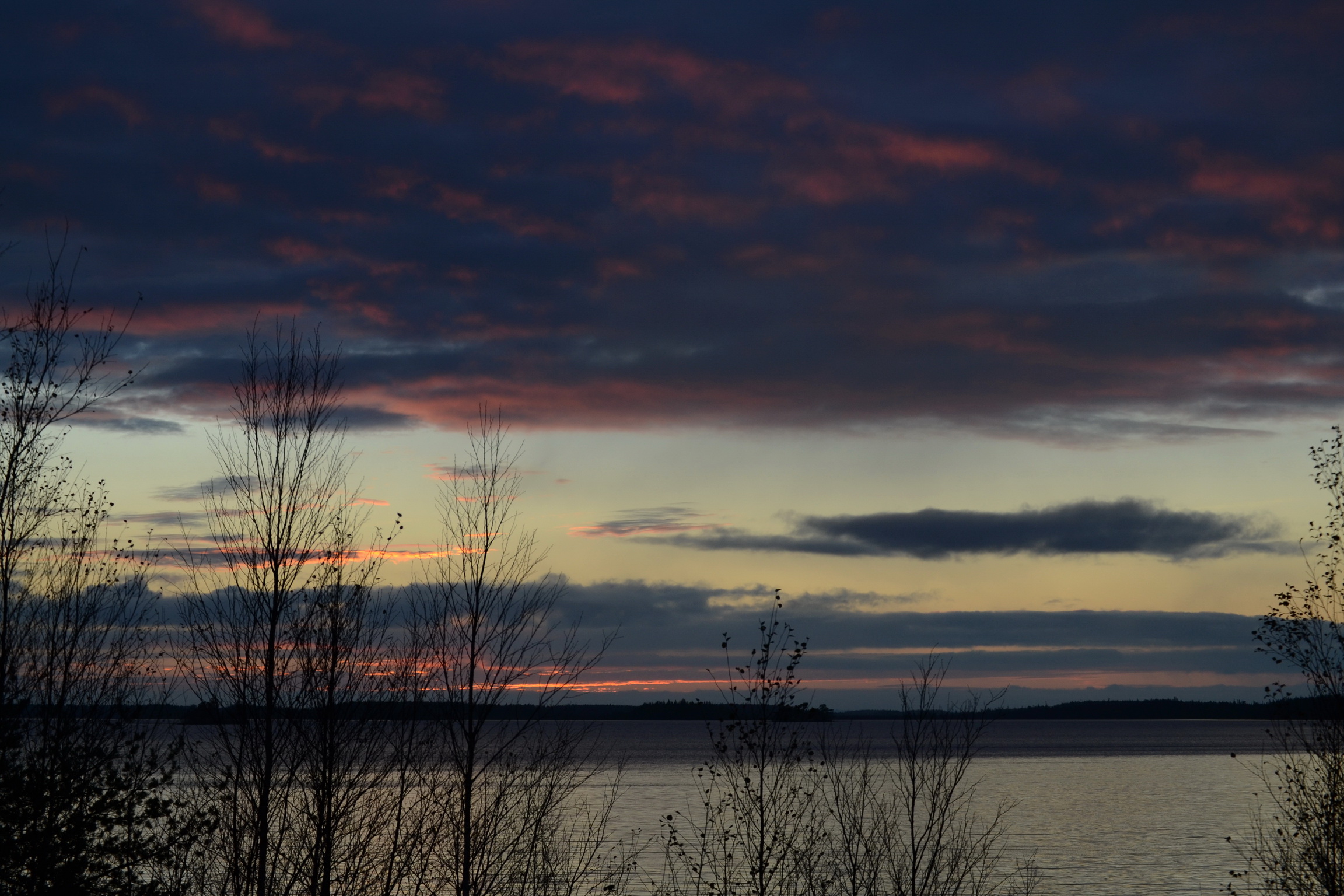
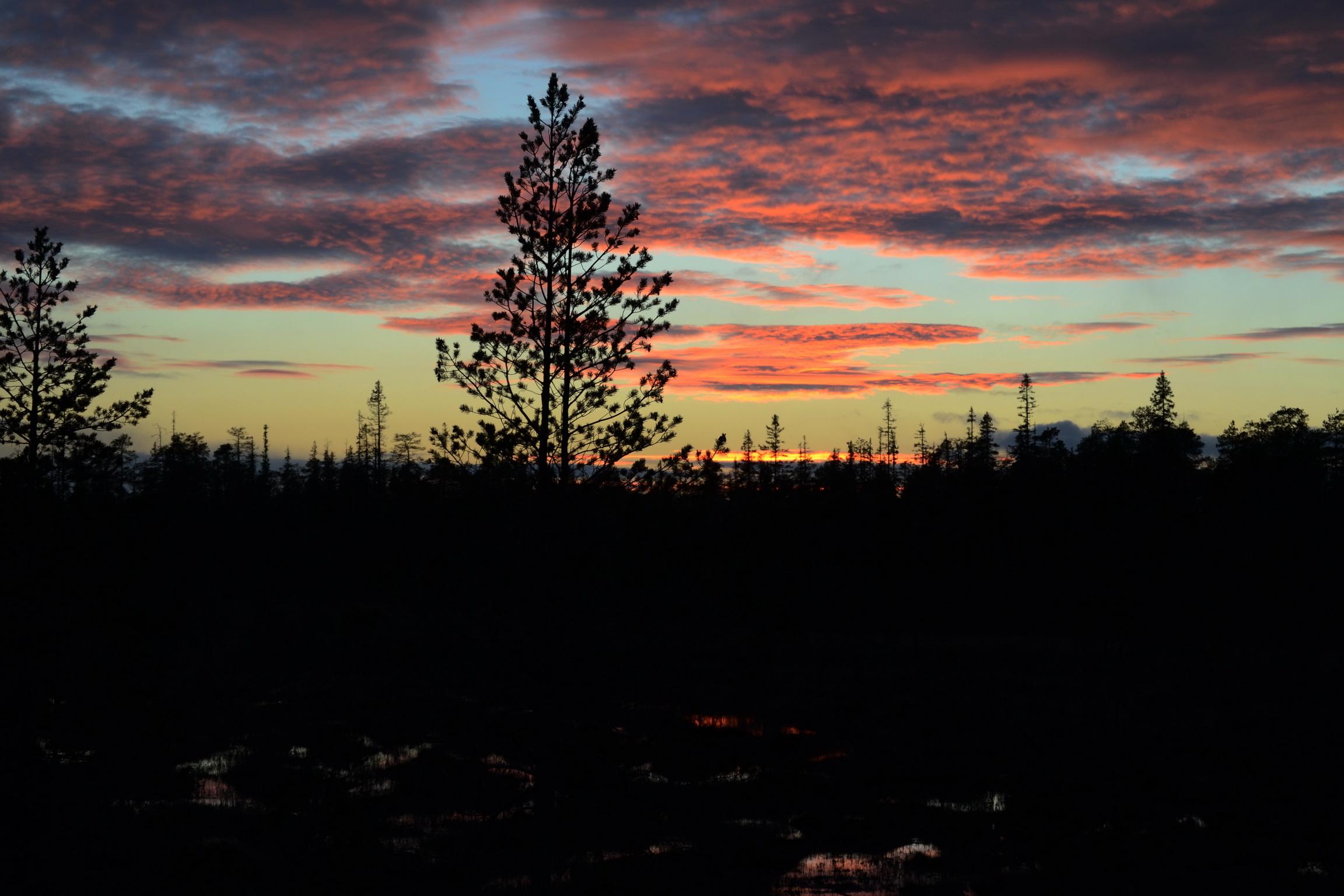
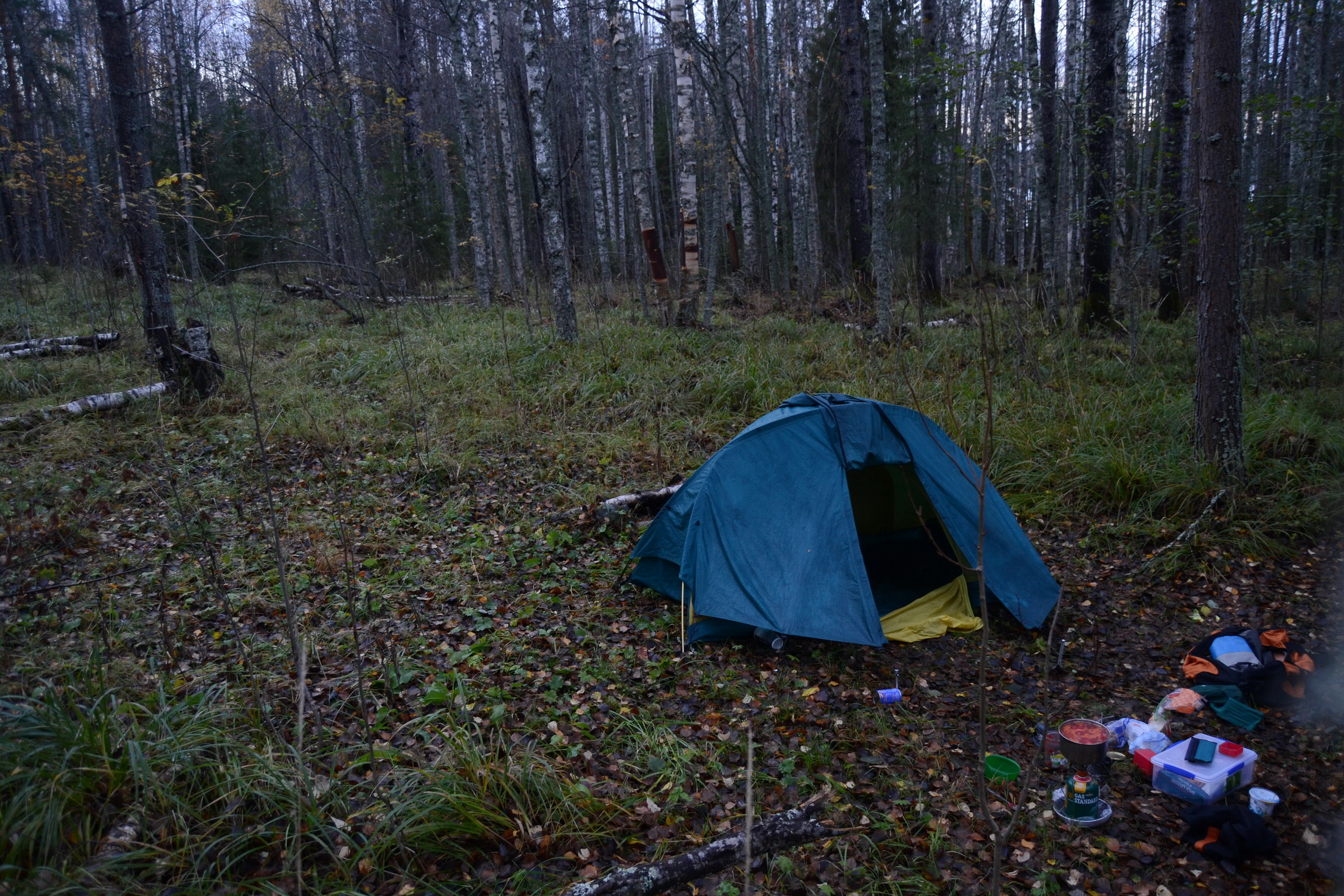
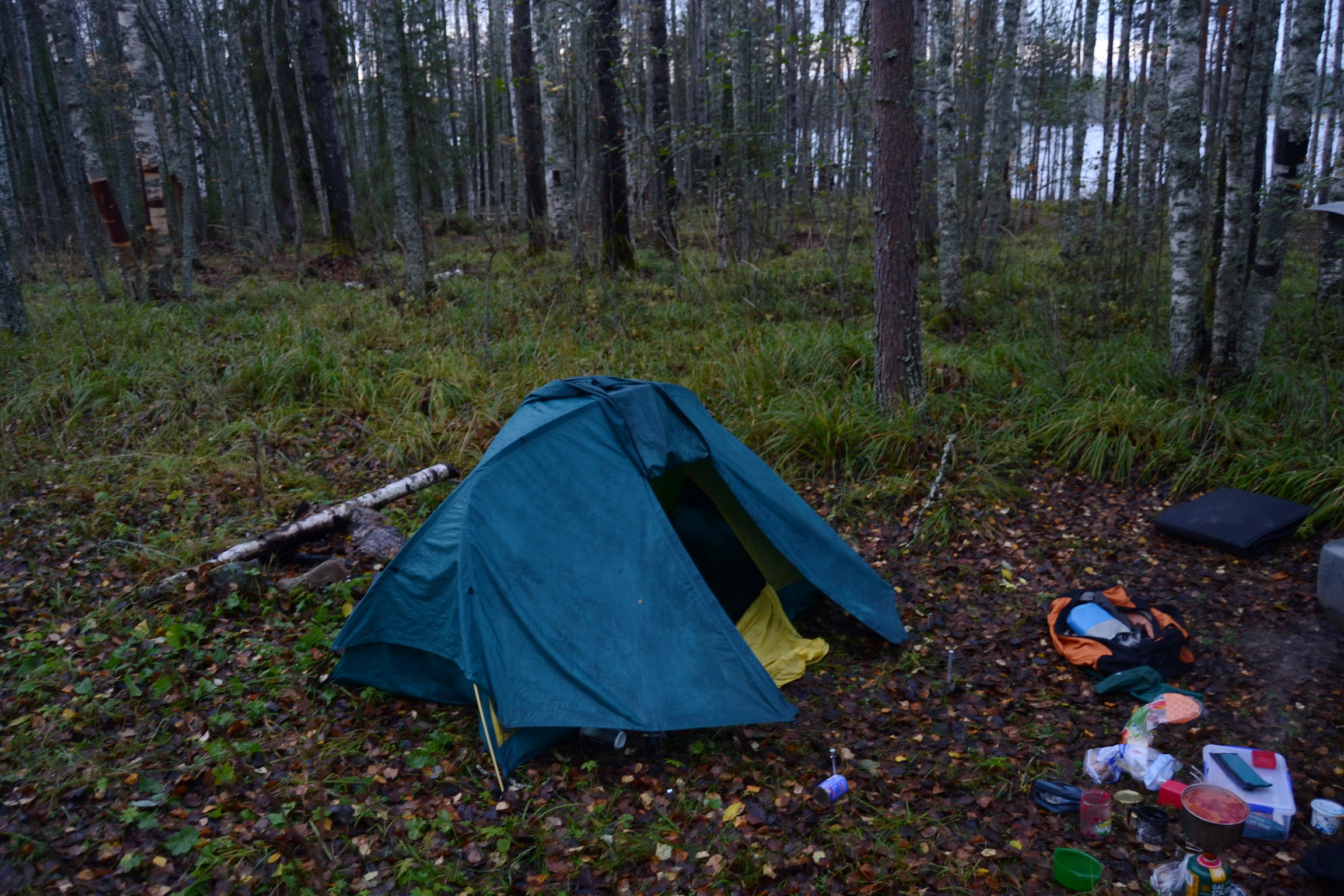
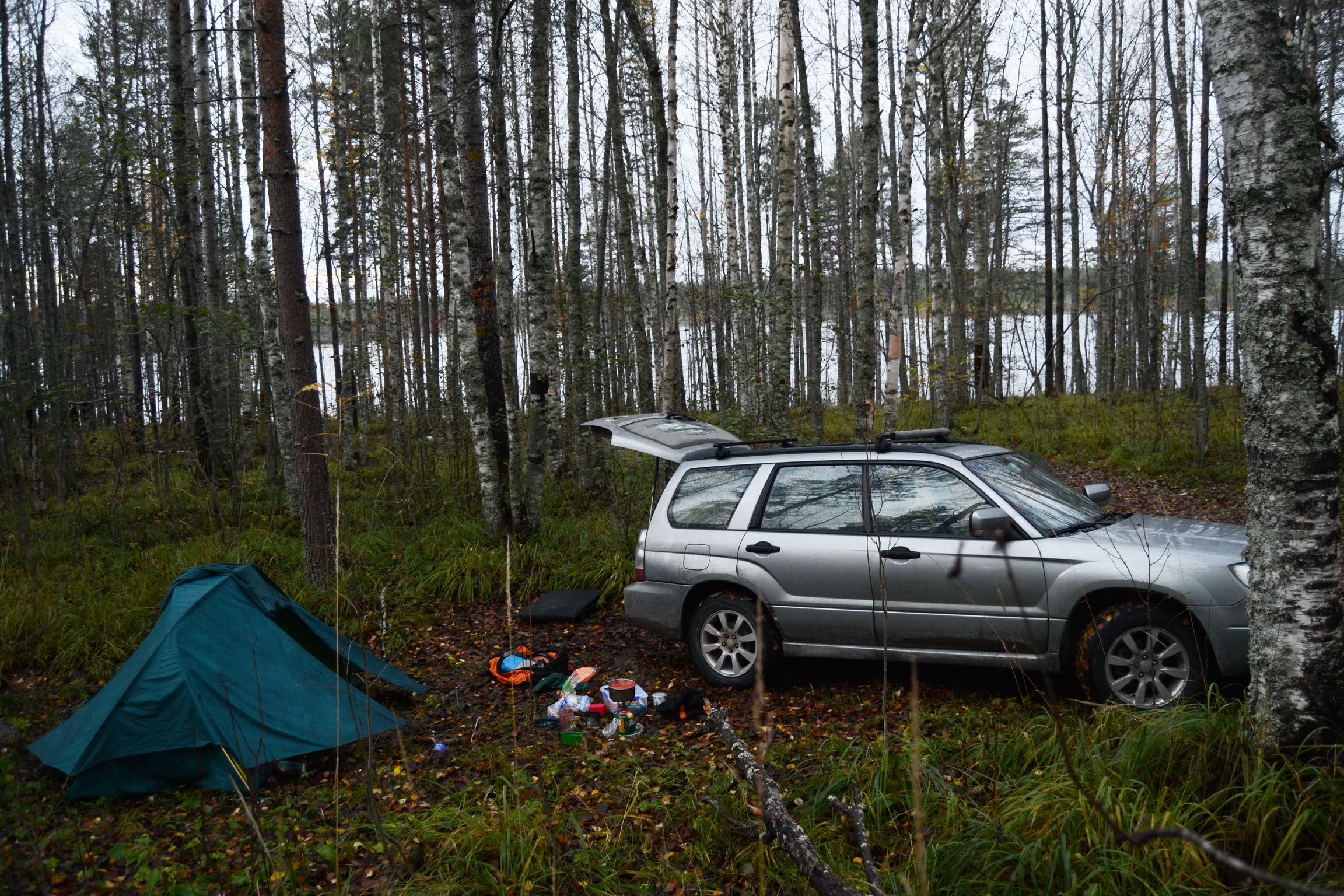
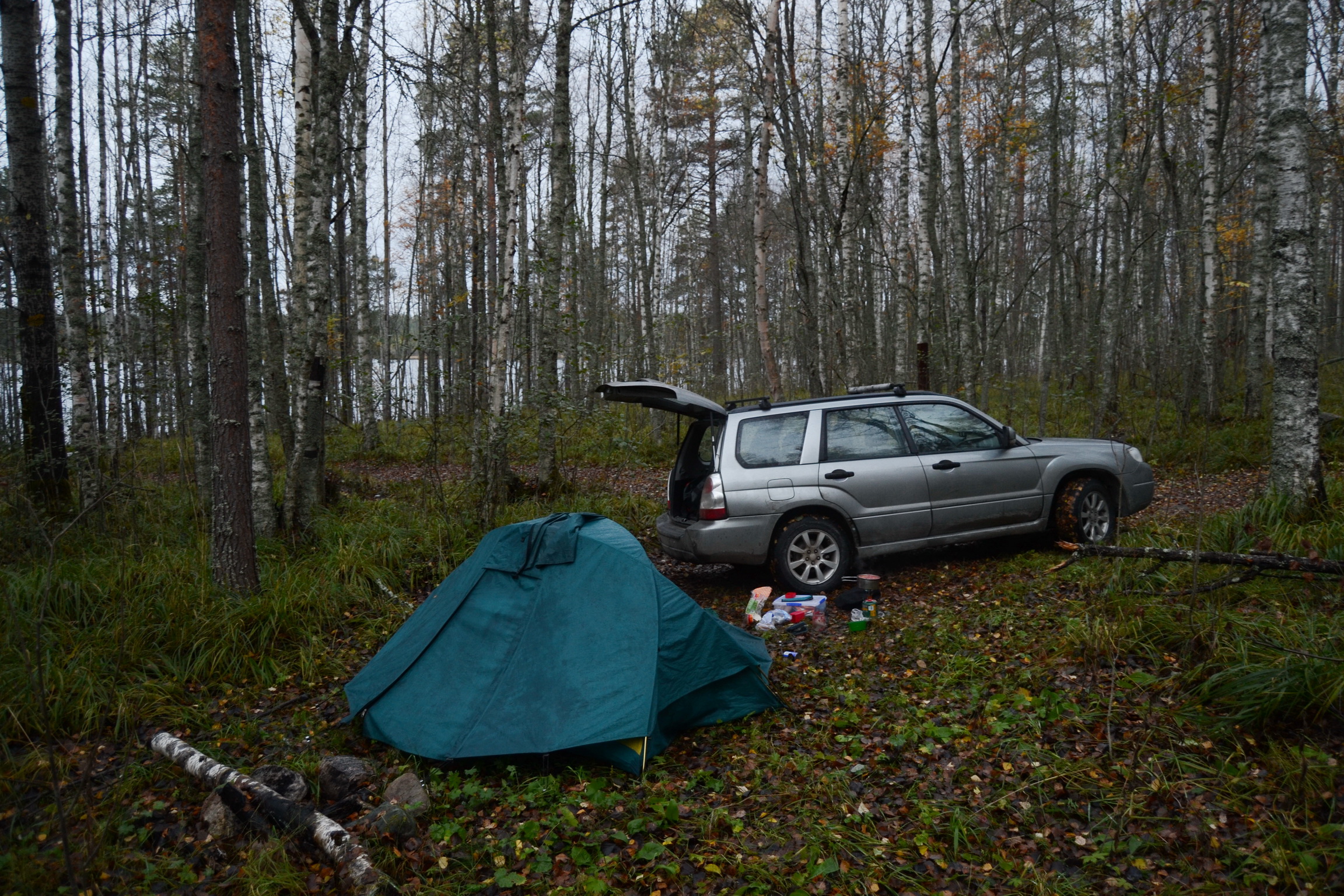
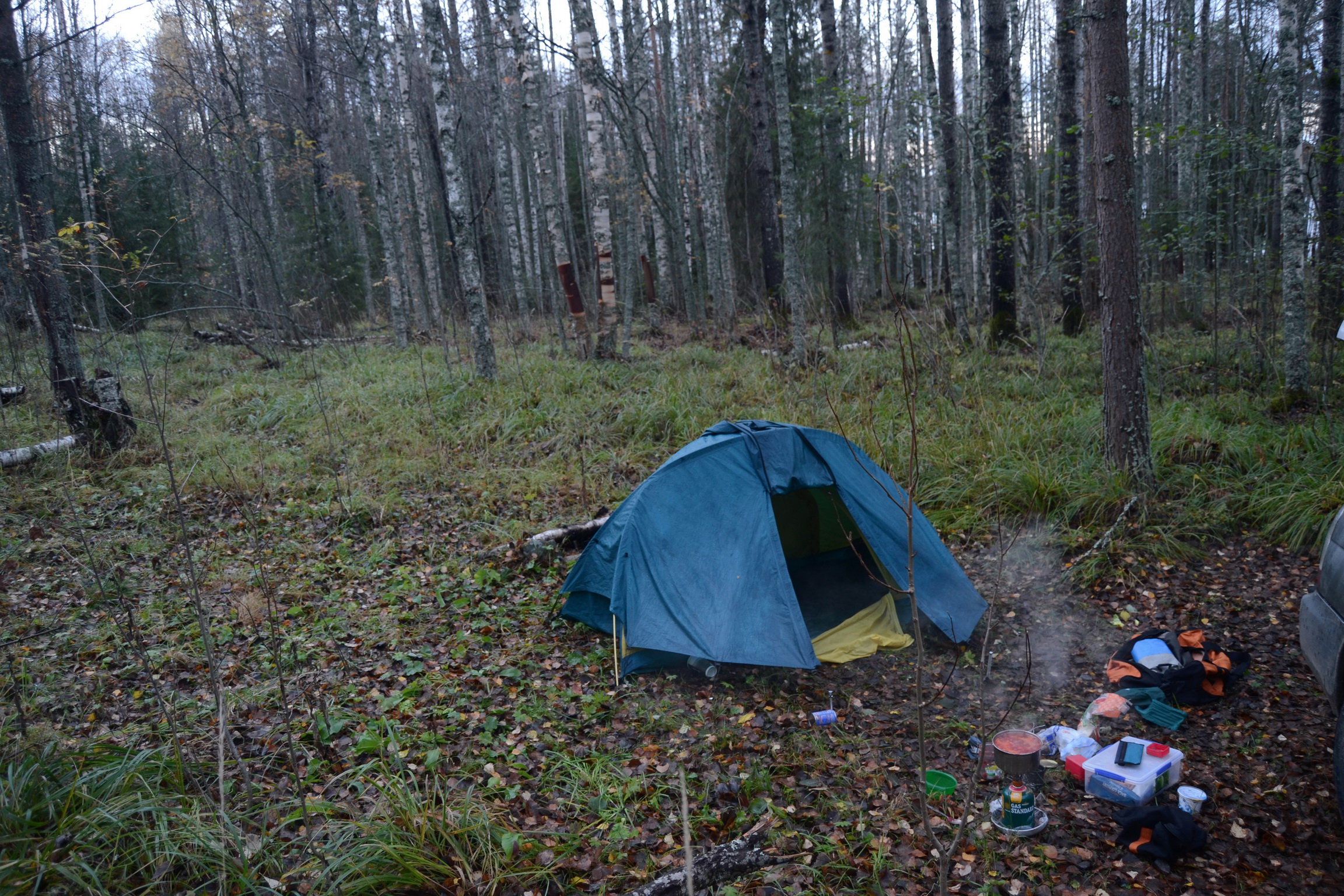
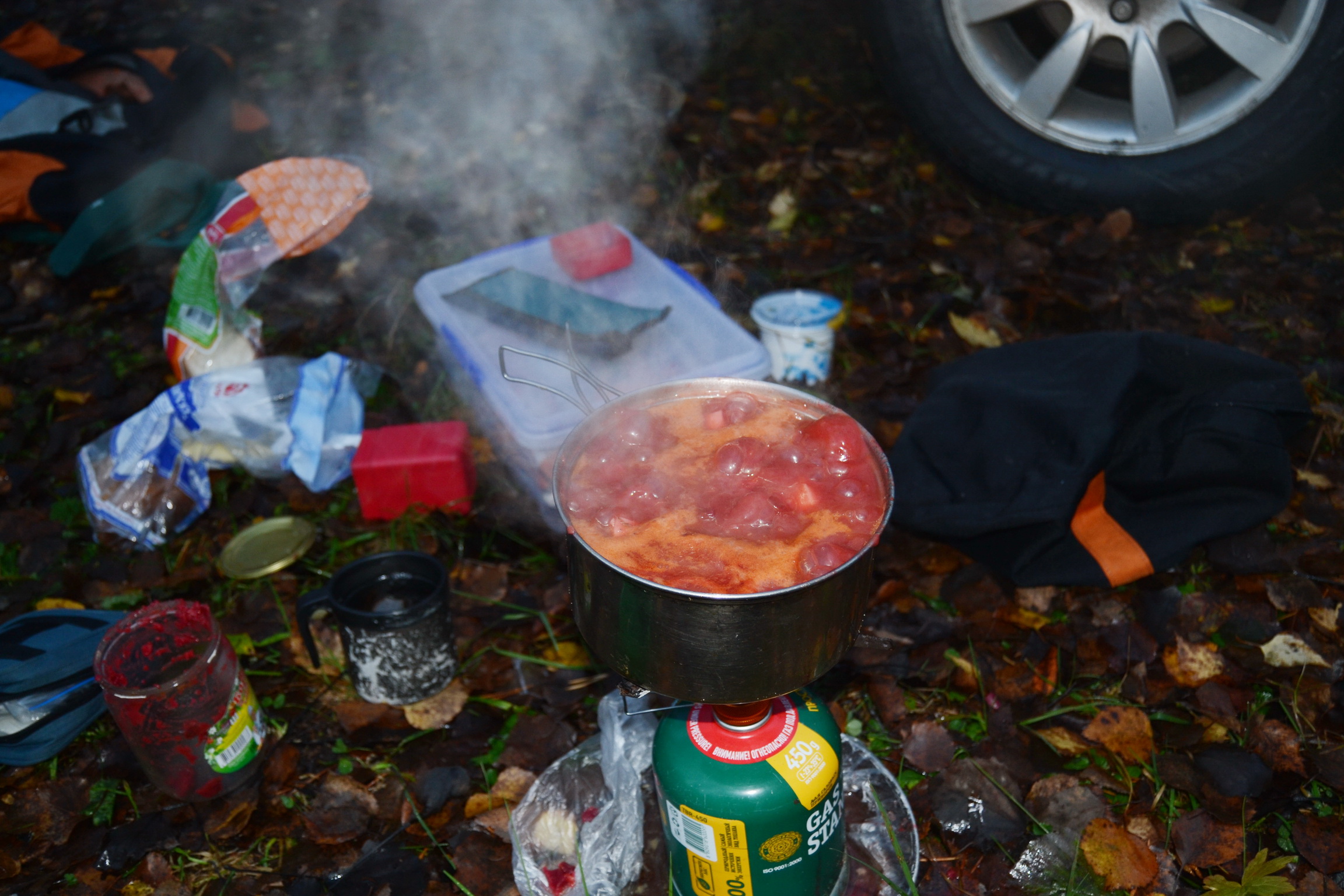
After the customary hamburger at Kandalaksha’s Statoil filling station, I set a course south. I saw the sunset near Kem and stopped for the night by the road to Ramentsy railway station. There’s a turning here that takes you down to the shore of the lake, Barbozero (63°14.282′N, 34°20.116′E). It was completely dark by the time I set up camp. In the morning I cooked my customary brew for breakfast, from a tin of borscht, sausages and sour cream.
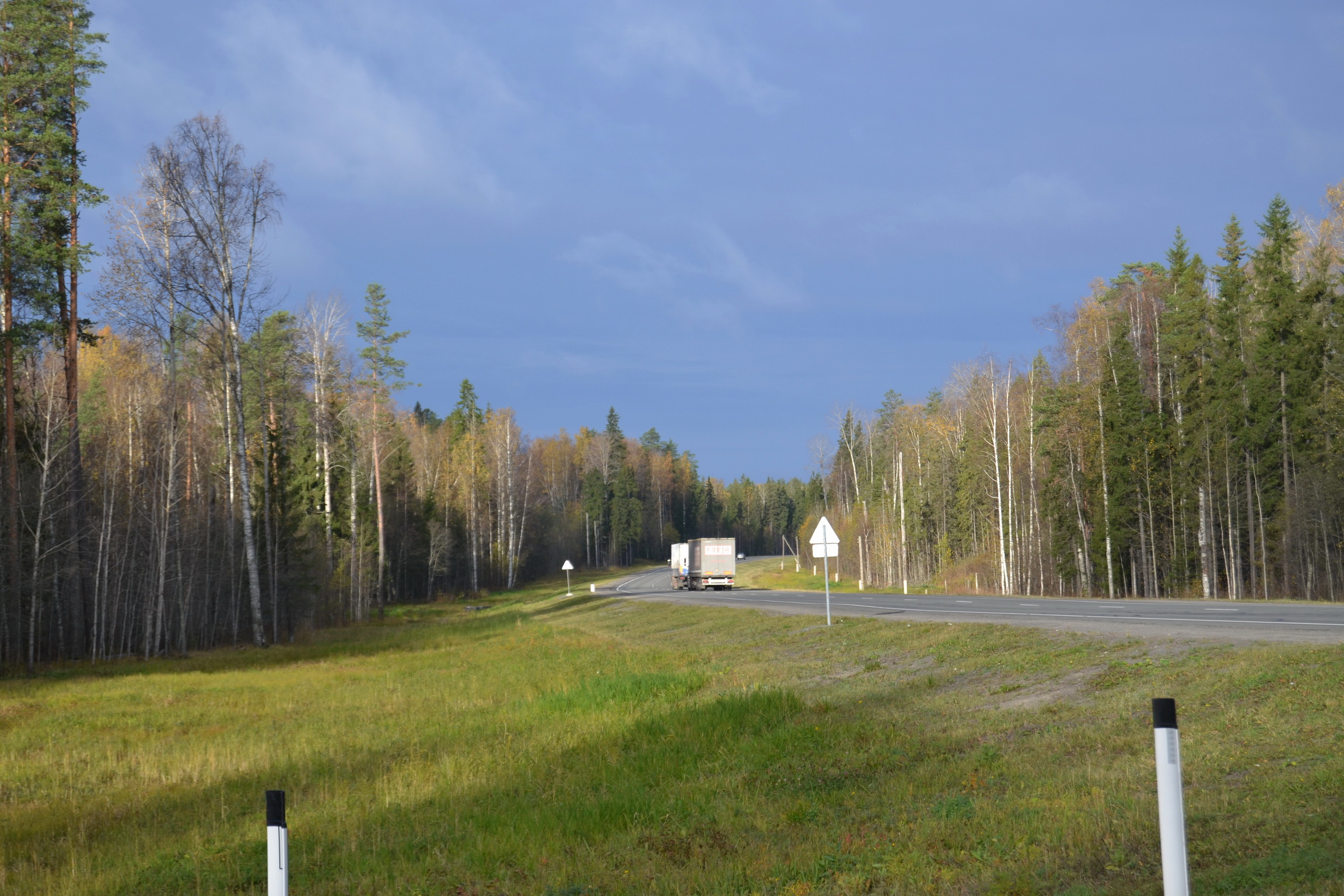
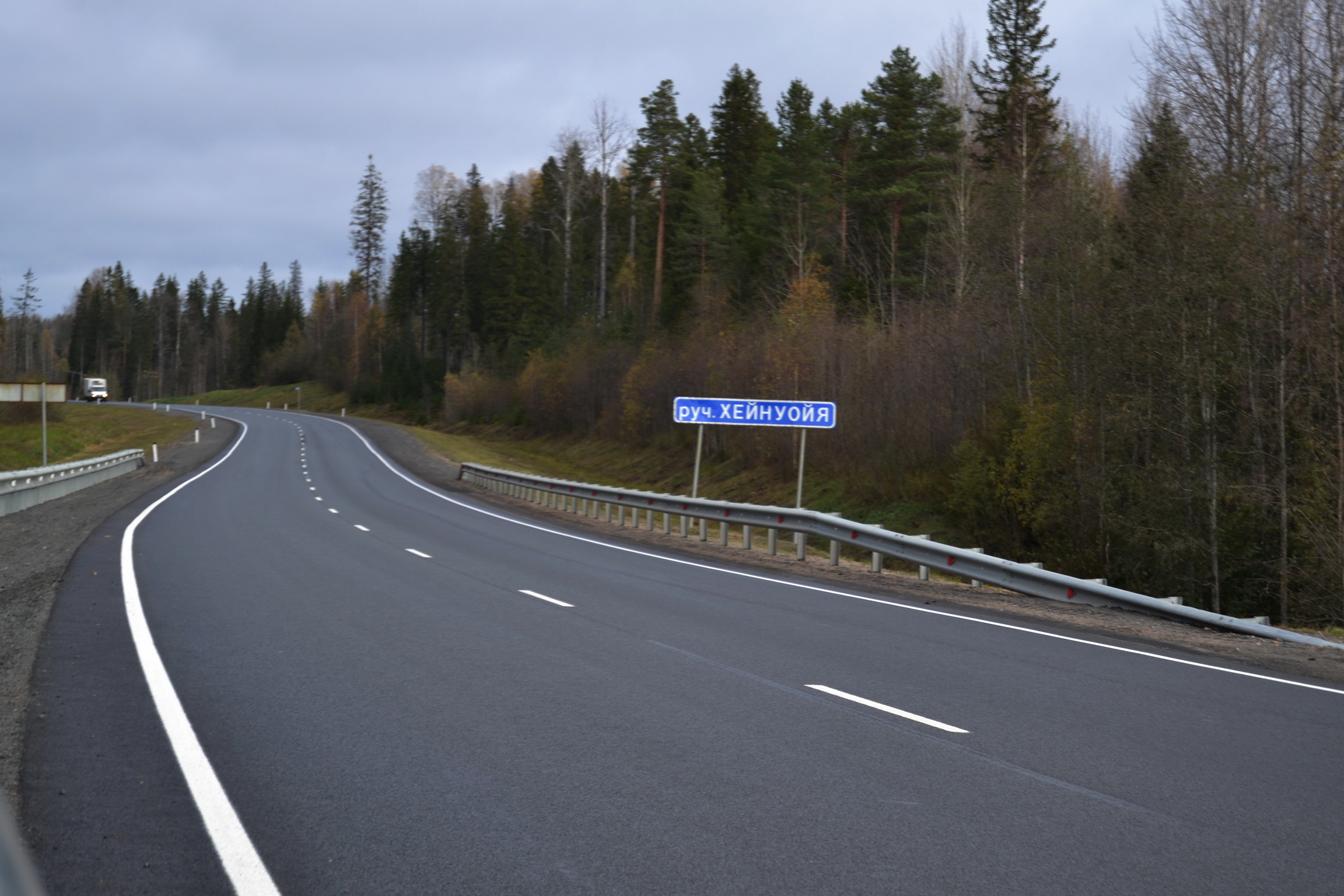
On the last day I drove all the way to Vyritsa with barely a stop. I pulled over near the Kheinuoya stream. I’d been meaning to photograph the name for ages. There’s something very Russian-sounding about that Karelian name. Just as well there isn’t a village called that, too.