Trip diary
2 May 1998. The carry to Pyatnitsa
It was a long way to the put-in, so we hired a minibus. We picked everyone up in the morning and left about ten. It turned out to be an old German ambulance. The past few days had been hot, like summer, but on the day we set off it turned cold with a light drizzle. I was coming down with something as well. At about three we got to Yefimovsky, where we bought the last of our supplies and some beer. It was still warm there. Beyond Yefimovsky the road towards Radogoshch was unsealed, but we made it through. We used the GPS to find the drop-off. We found the road straightaway but could see no sign of Plechko’s quarry. After driving up and down we gave up looking and decided to take that road.
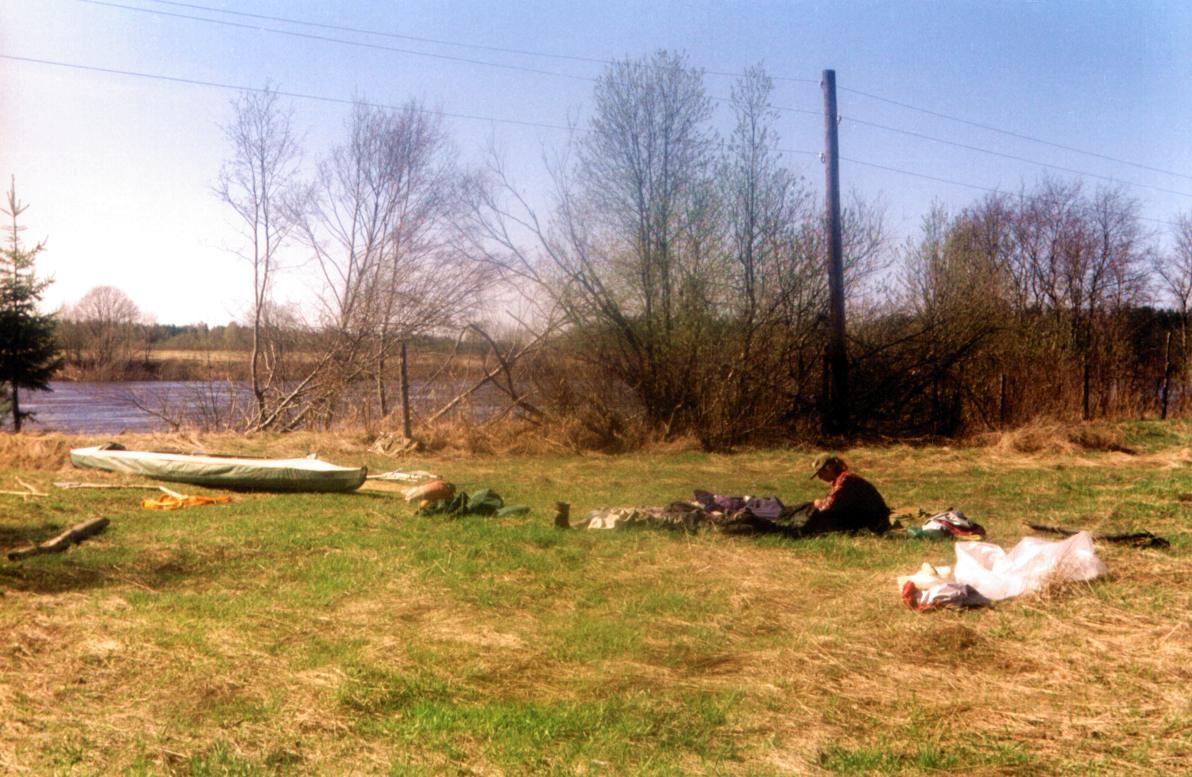
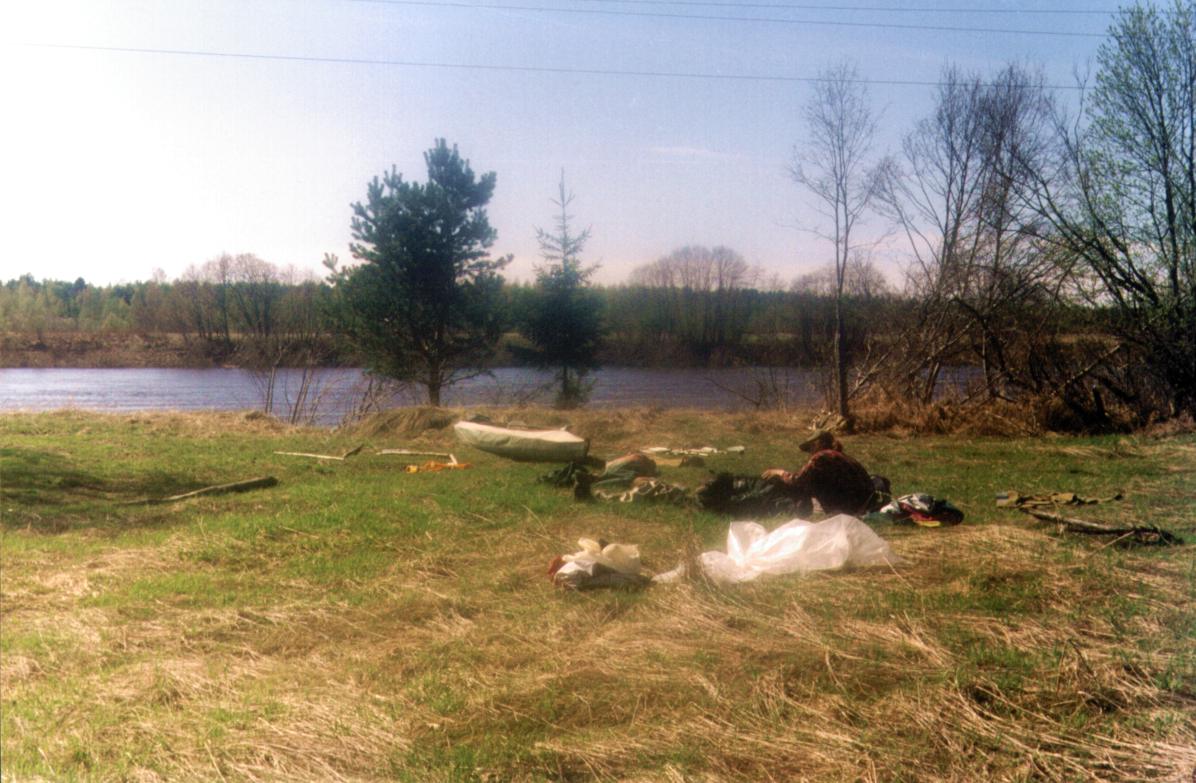
At 4:15 p.m. we unloaded the kayaks and sent the driver on his way. We were at 59°45.148′N, 34°47.008′E, 181 m. We joked that the trip had started, although we still didn’t know whether it would be on foot or by water. We had 220 kilos between four of us and a carry of four or five kilometres. It was warm and sunny. There was far too much for one load, so we hid part of the gear and all set off at 4:28. It turned out Ira only had slippers and the mud was knee-deep. There was still half a metre of snow in the woods. Two streams blocked the way. We followed footprints. Clearly someone was out on a trip like ours. Local people don’t smoke Dunhill and drink Holstein. We could also see where trees had been felled.
Logging had swallowed the place where the guide said to turn right. The GPS said we were 1,100 metres from our destination, but there was forest ahead. With some difficulty we found the road at the end of the clearing, then came to a stream. There was water under the deep snow, and we sank in above the waist. We picked our way along fallen trees with our packs on, slipping as we went. I got out of the tangle and found a path leading to a meadow. The others were still stuck somewhere. I thought the route was obvious from there and went on, expecting them to catch up. At the river, all looked well. The ice had broken up and the water was high enough to paddle. I dropped my load and waited. No one came, so I went back. To my surprise they were still crossing the stream, exactly where I had last seen them. Once they lost sight of me they decided to wait. I brought them to camp, arriving at 6:46 p.m. Ira was soaked and freezing. We left her to put up the camp and went back for the rest of the gear. We got back to the road in an hour and twenty minutes. We needed to beat the dark. On our last carry we went faster and were back at 10:40 p.m. There was still some light, and Ira had put the tents up. We were utterly exhausted. We ate a quick supper and went to bed.
The next morning. The upper Tutoka
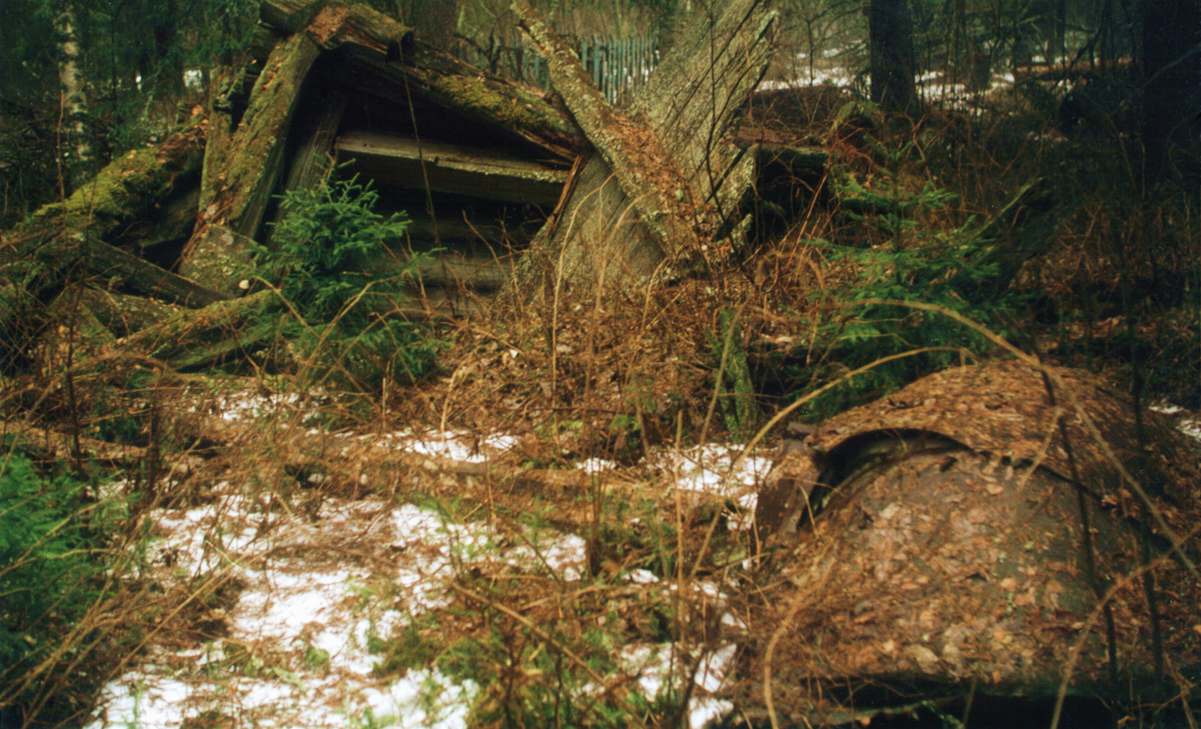
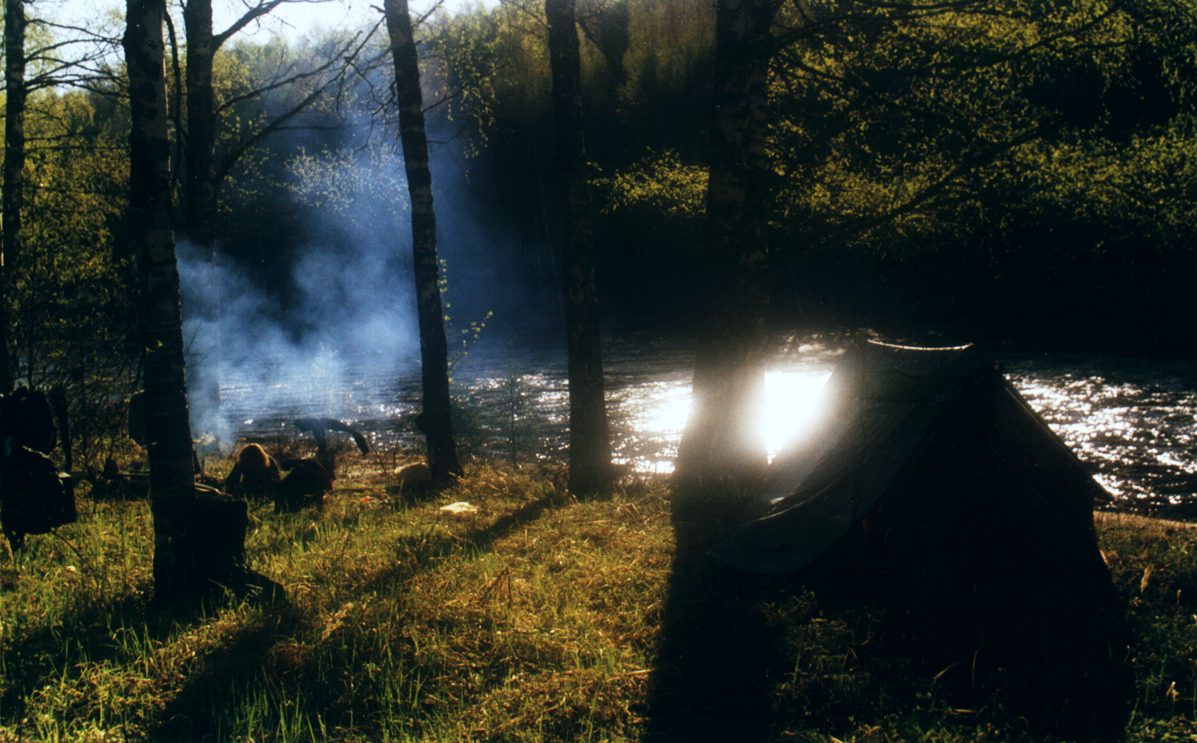
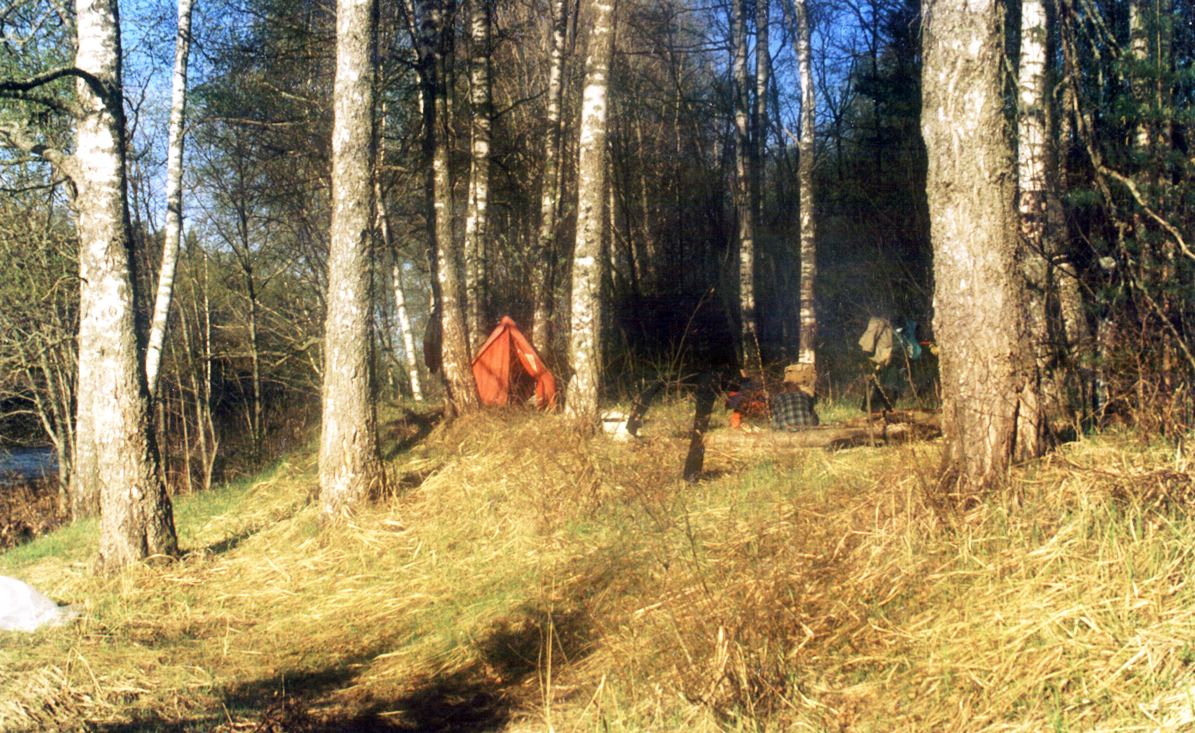
We woke at 9:15. It had rained all night, but the sun came out in the morning. Mist hung over the snow and it was 8 °C. I looked around the camp. Pyatnitsa was a churchyard with a little church. Some of the graves had been visited recently and their fences freshly painted. The church was in ruins. Nearby we saw the embankment and traces of sleepers from the narrow-gauge railway that had crossed the Tutoka. At least two groups of campers had been through recently. Snow still lay deep in the woods, except in sunny clearings. The river was very high and the flood meadows below our high bank were almost completely under water.
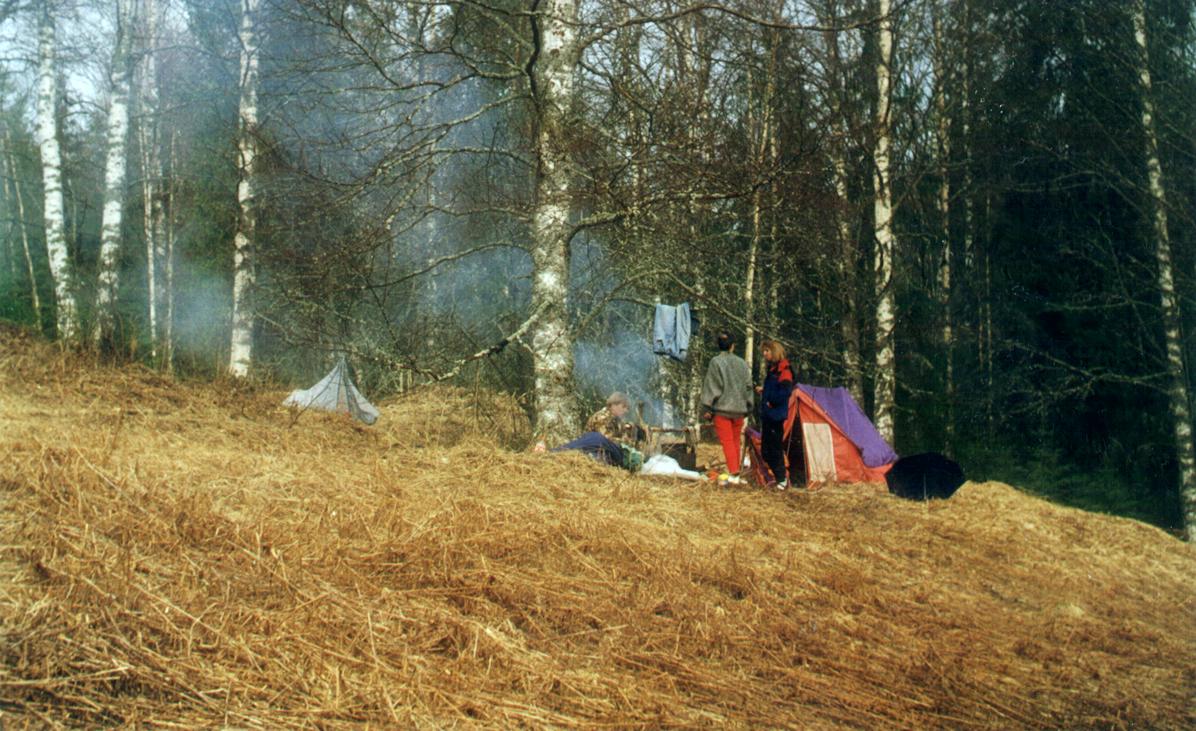
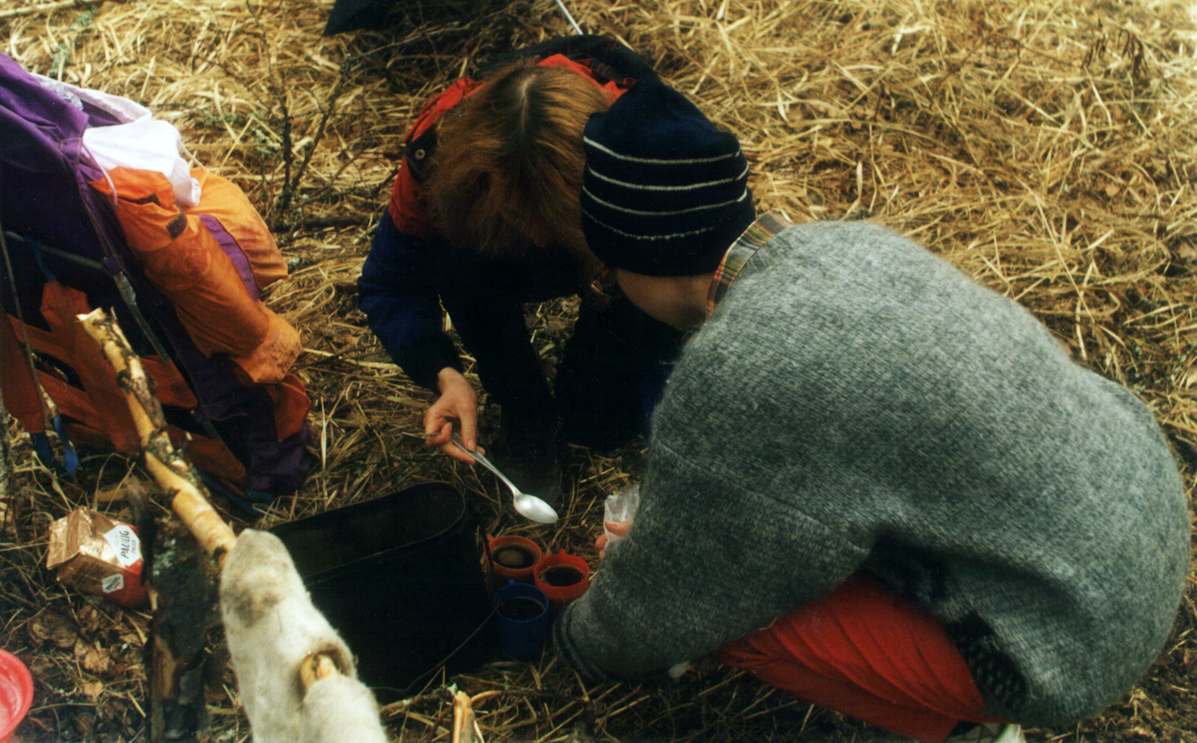
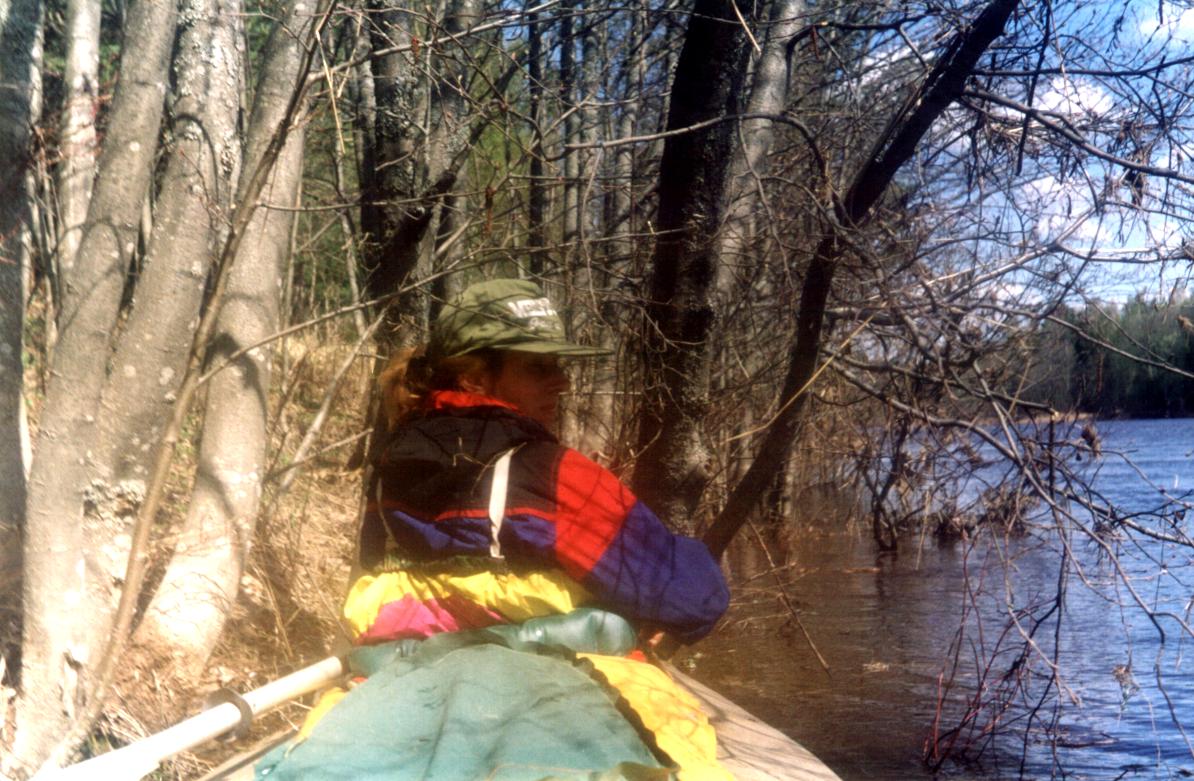
After coffee and porridge we put the kayaks together. The river was only about 200 metres from camp, but it was too wet to assemble them there. Wherever it wasn’t flooded there was snow, so we had to carry the boats through the woods. Ira borrowed Tanya’s boots. At last we got on the water. It was a very narrow stream and hard to pick out the channel. We kept finding ourselves in the middle of the forest, feeling for the bed with our paddles. There were logjams about every 100 metres. We could get around them through the woods, although carrying the boats was hard work among fallen trees and floodwater.
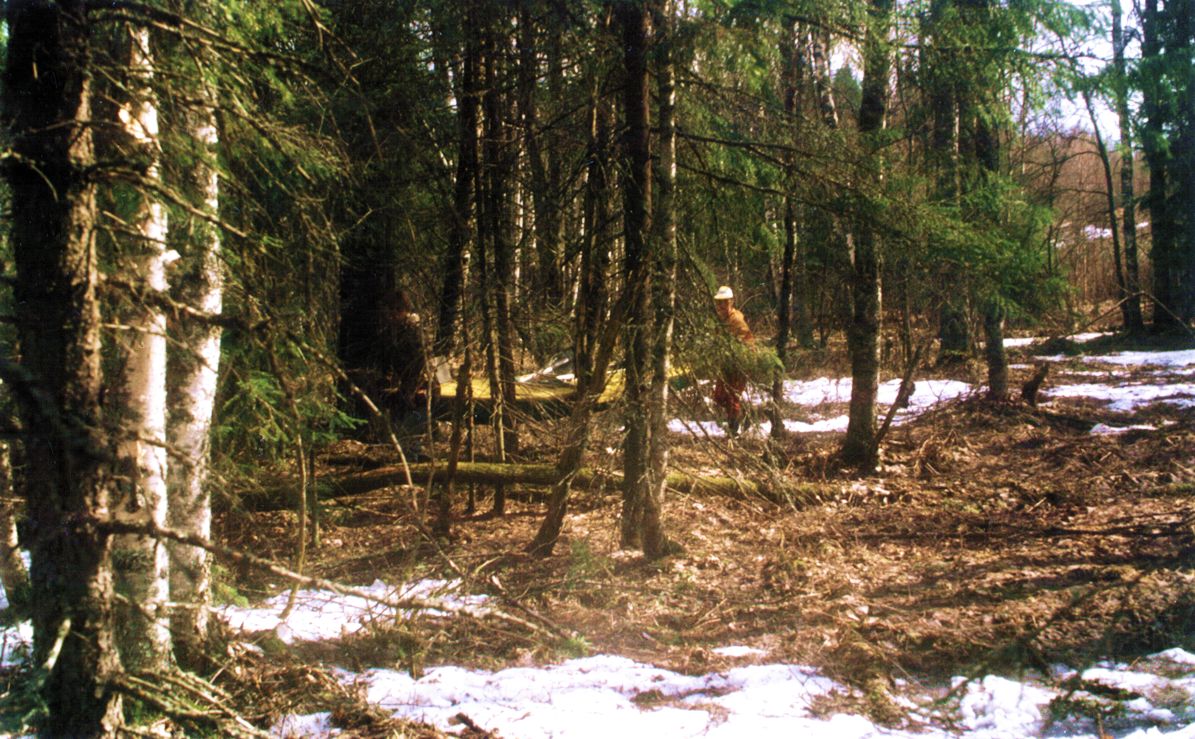
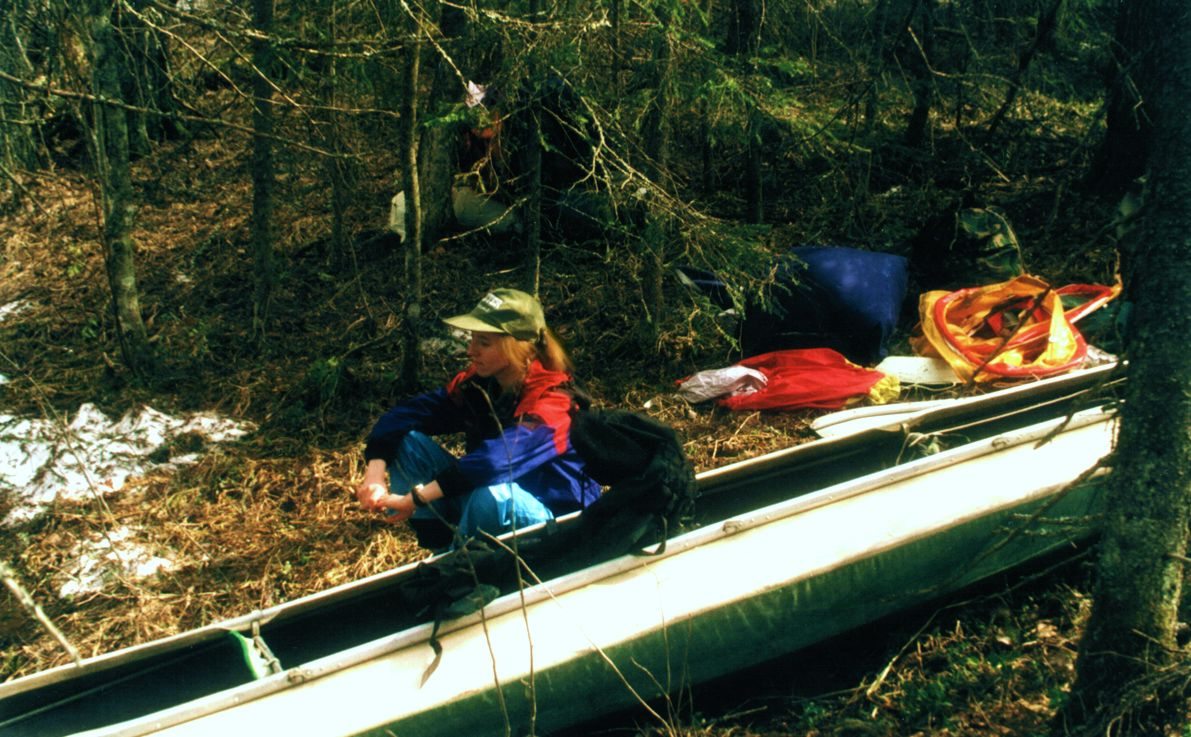
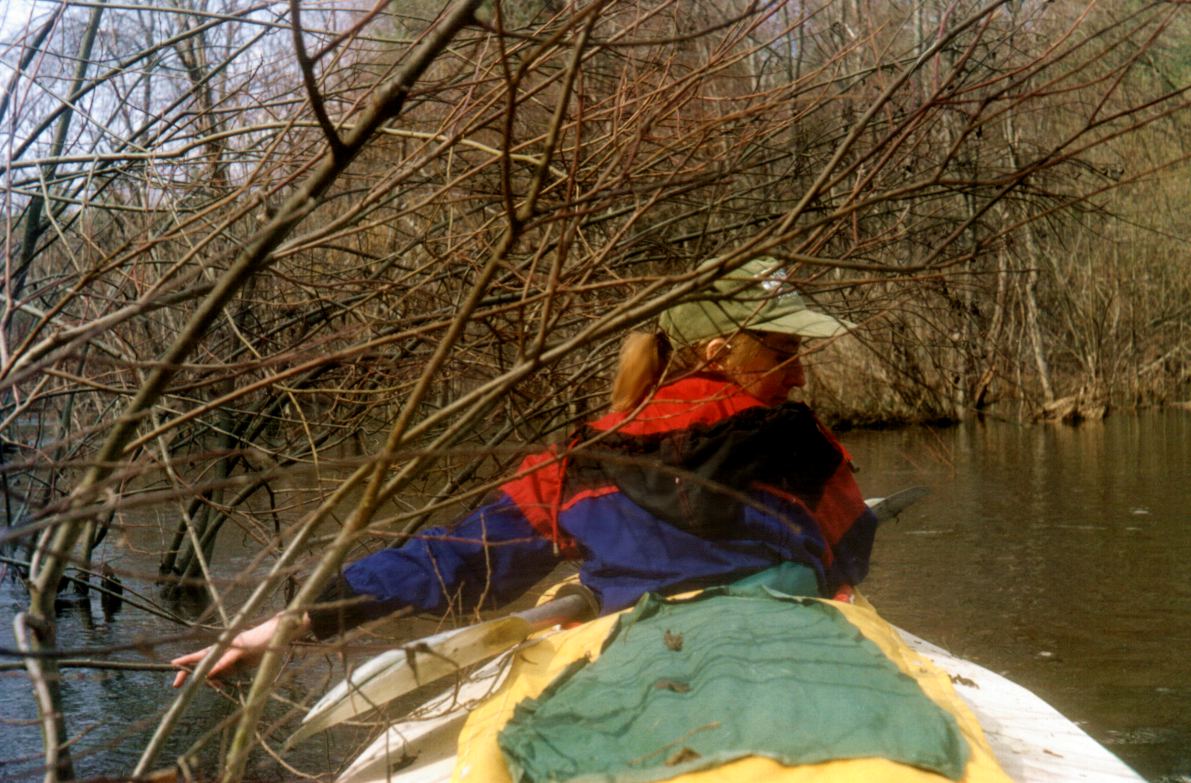
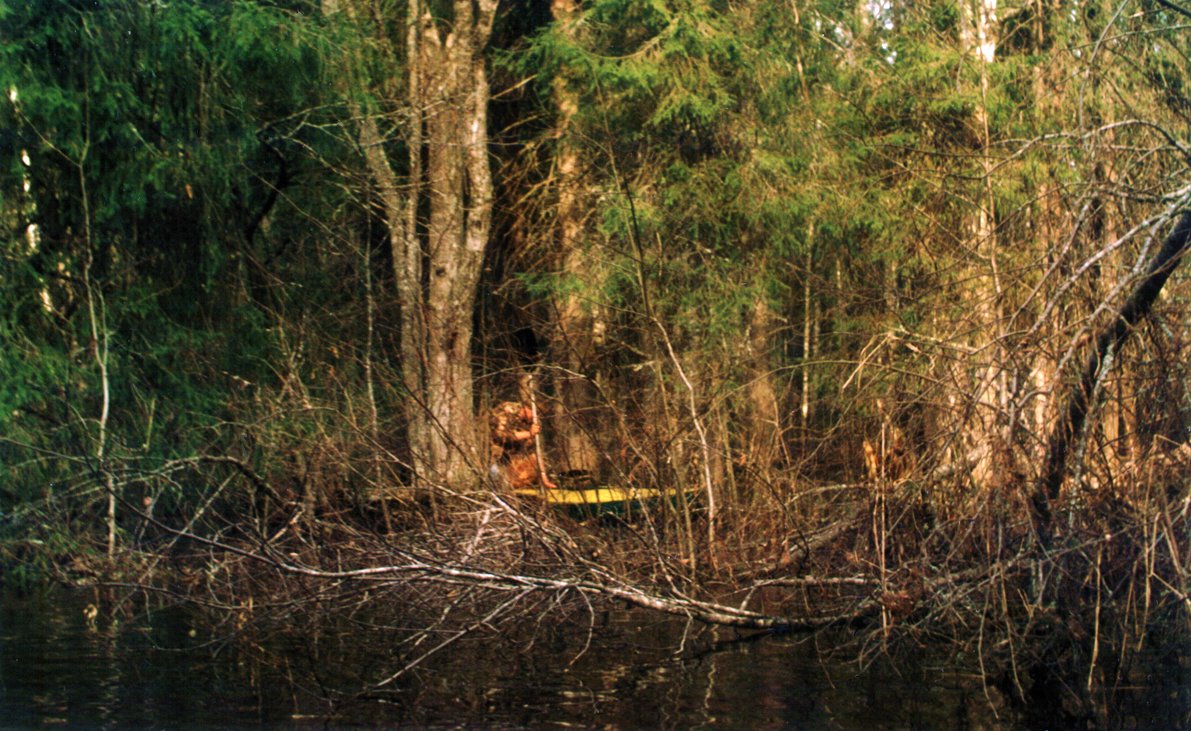
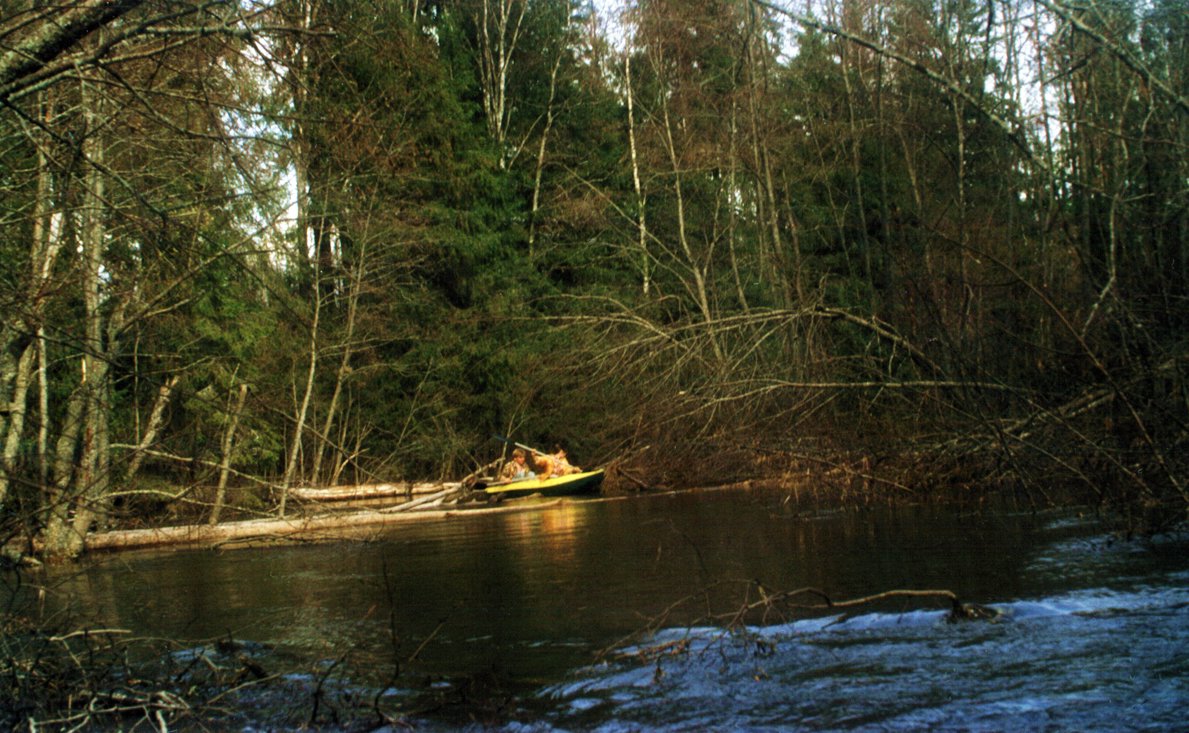
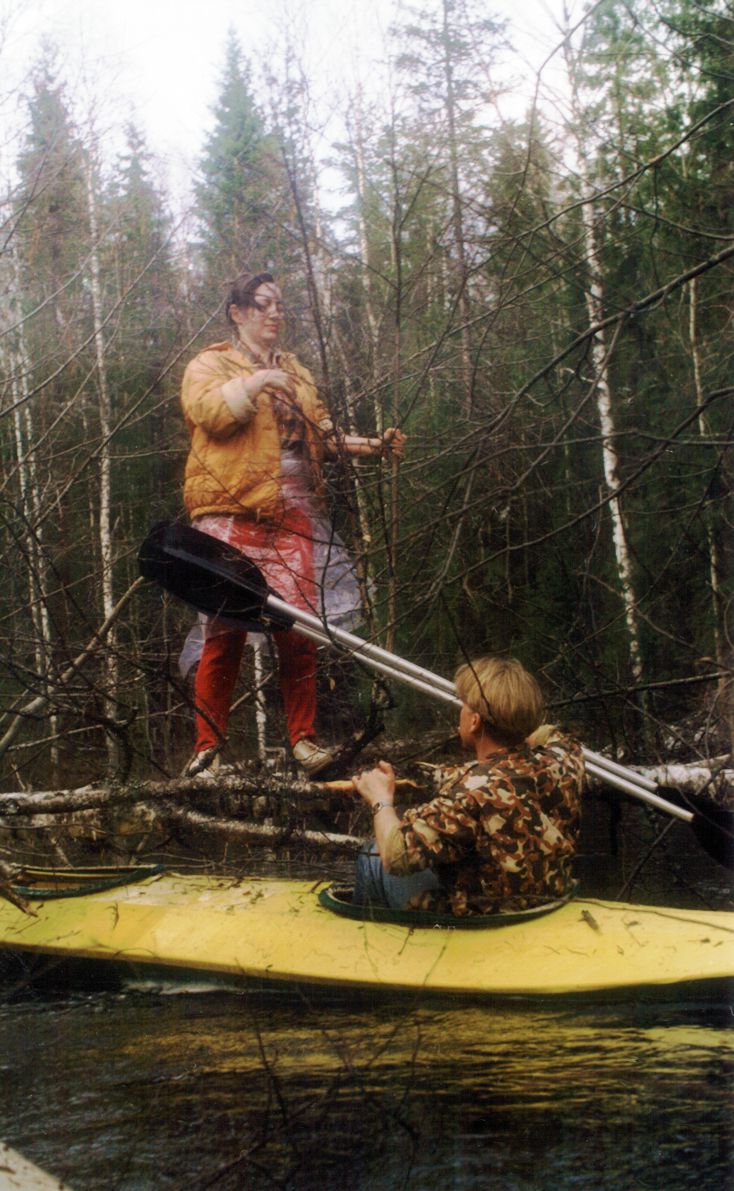
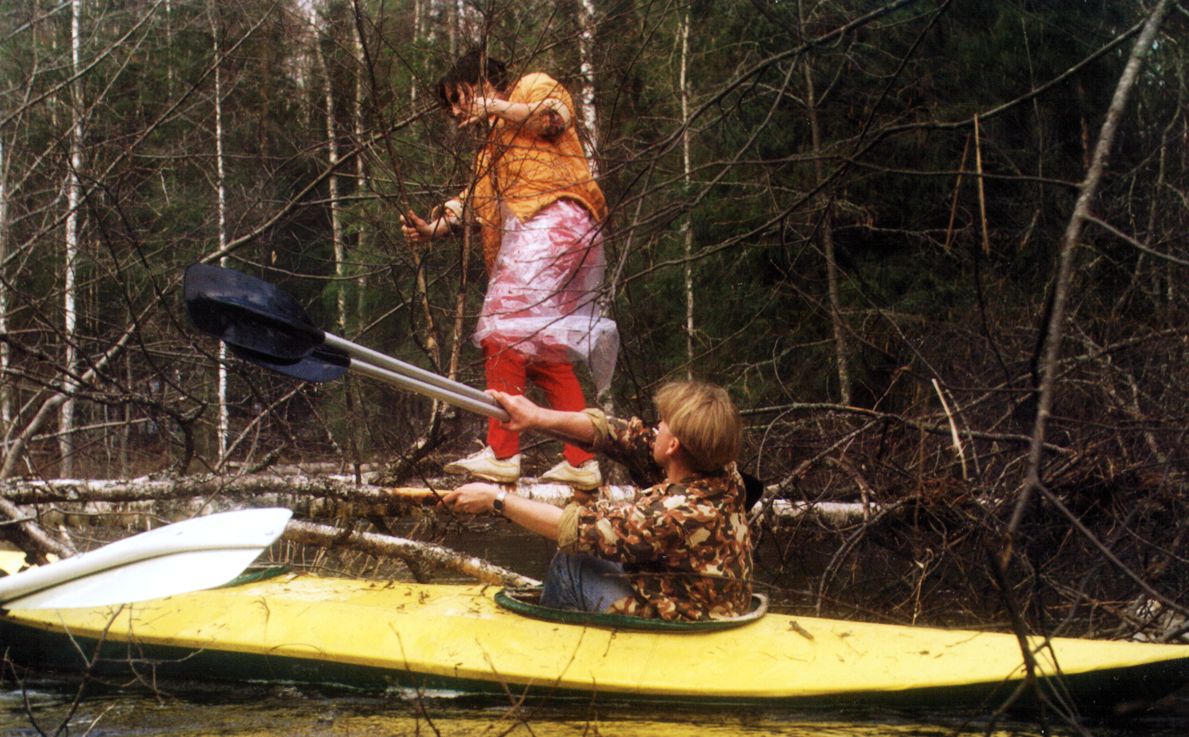
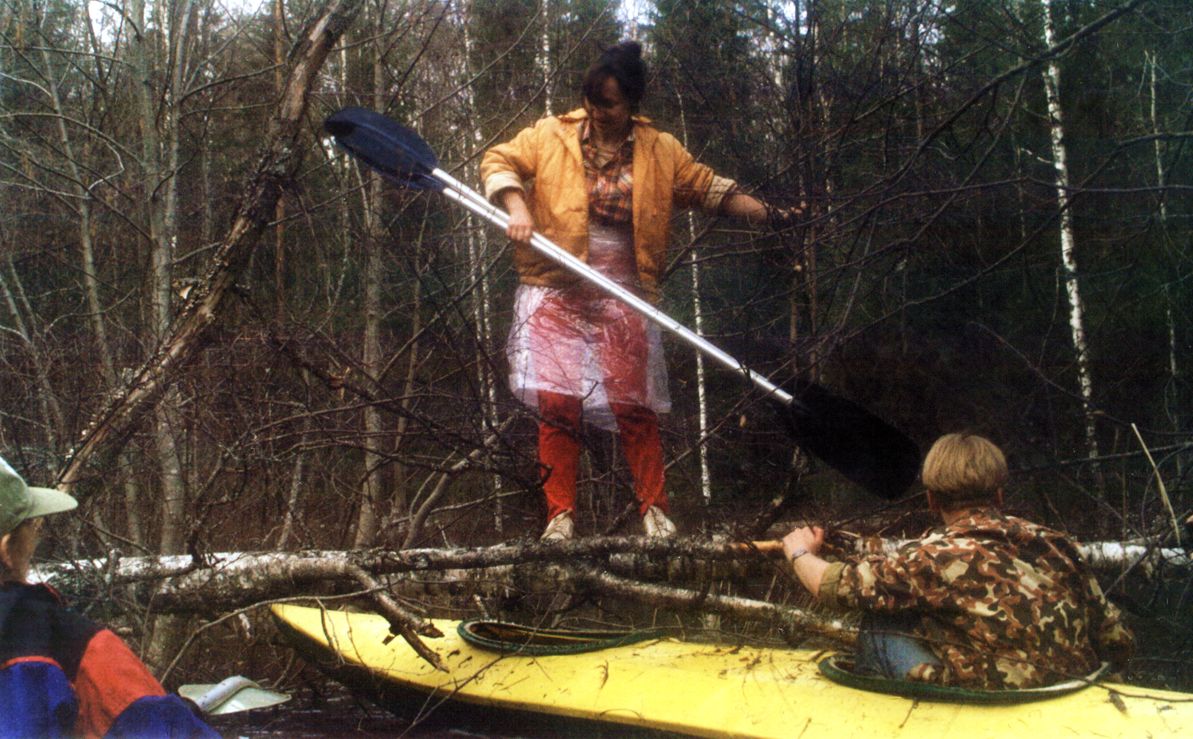
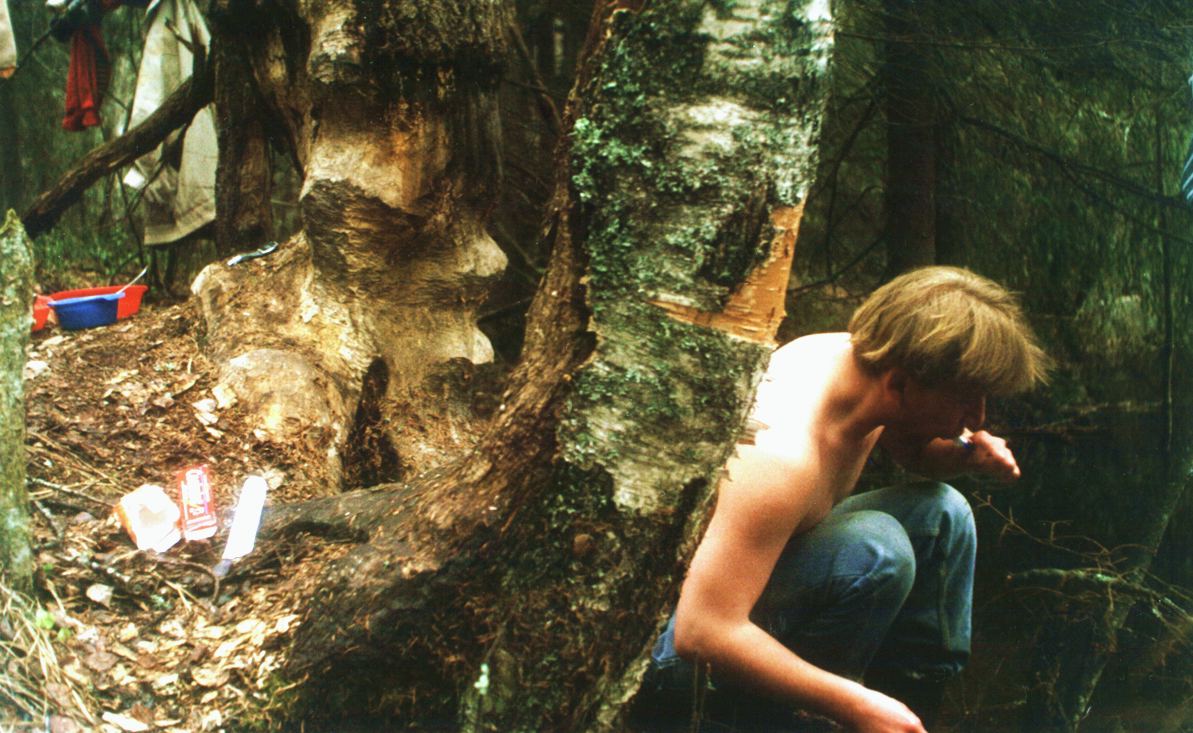
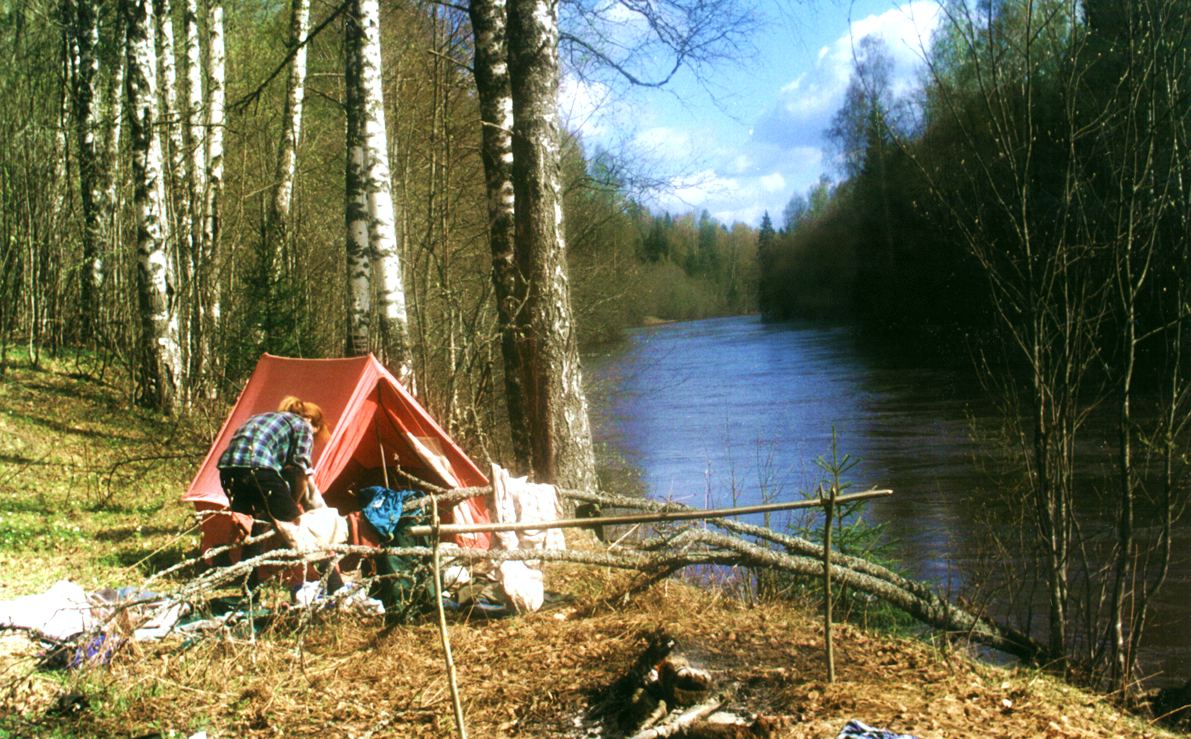
Soon we met a man on the bank who had fallen behind the previous group. Along with the logjams there were ice jams, which we had to prise apart or drag the kayaks over. About two kilometres from Pyatnitsa, the collapsed truss of a railway bridge blocked the channel. It rained on and off. Ira and Dima were soaked through and cold. Tanya and I were dry. Our new silver-fabric jackets kept the water out beautifully. Another ice jam persuaded us to stop. We had made just 3.8 kilometres in a straight line, to 59°47.210′N, 34°41.010′E. It was a small dry clearing in deep woods, with a little tributary alongside, near Abramova Gora. There were beaver burrows and plenty of firewood. Nobody had camped there before us, and it felt cosy. The rain set in that evening, so we had to eat in the tent. We fell asleep at once.
4 May 1998. Past Isakovsky
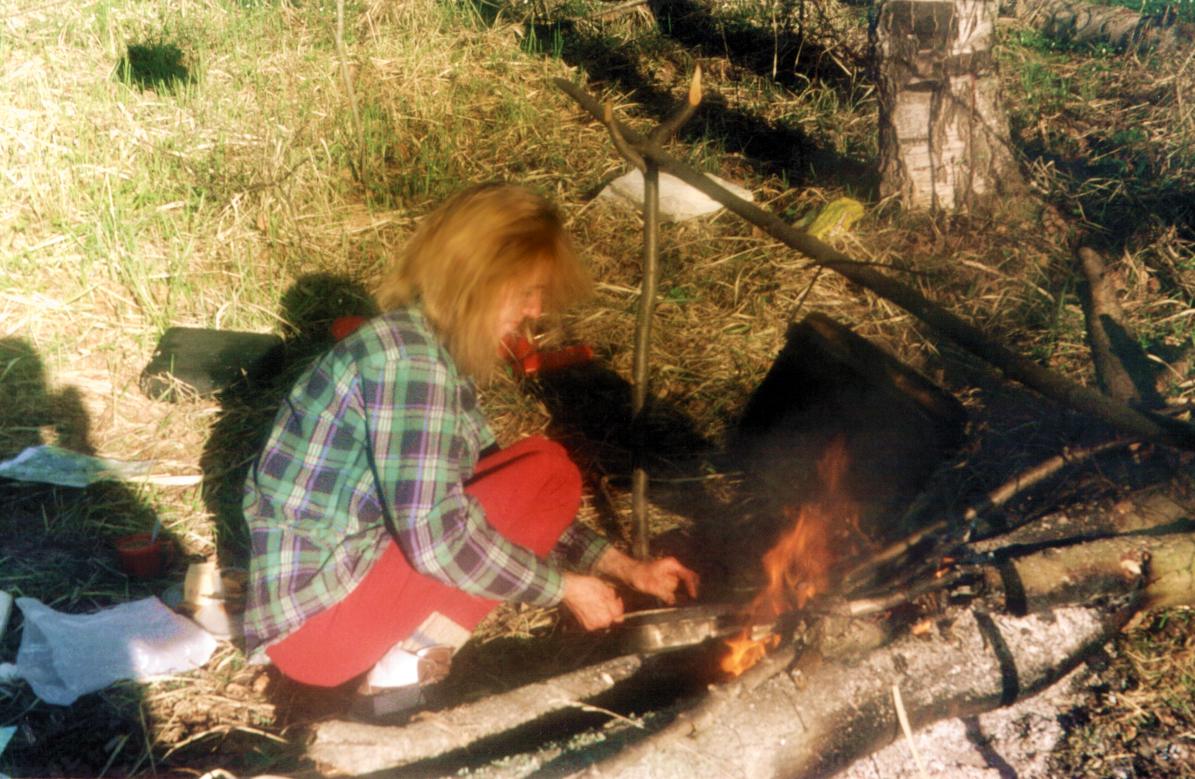
It rained all night but stopped in the morning. The air was 7 °C and the water 3 °C. We lit a big fire to dry our wet gear. Yesterday’s ice jam had vanished. Dima washed his hair and tried fishing, with the usual result. We ate breakfast and continued through alternating rain and sunshine. We missed the little lake marked on the map. The banks rose and there were plenty of campsites, all covered in snow. Mist hung over the water. We passed the narrow-gauge railway bridge at 59°48.407′N, 34°35.979′E. The rails were still there, but nobody seemed to have used them in years.
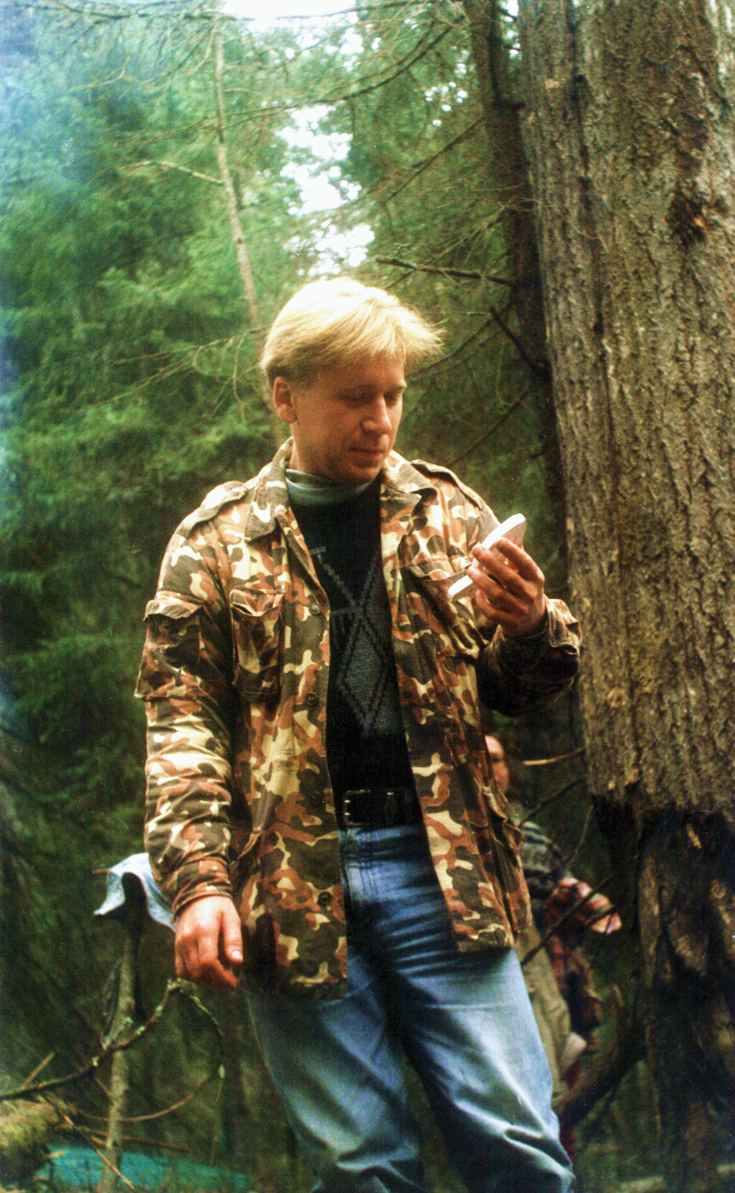
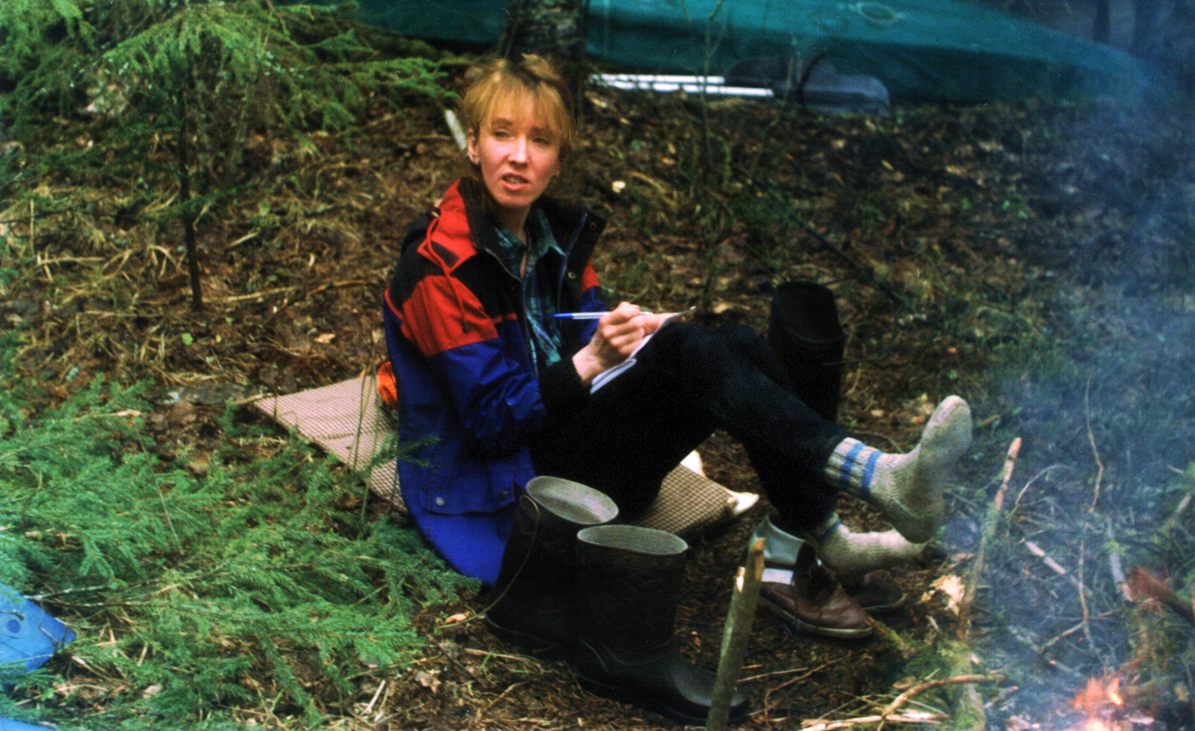
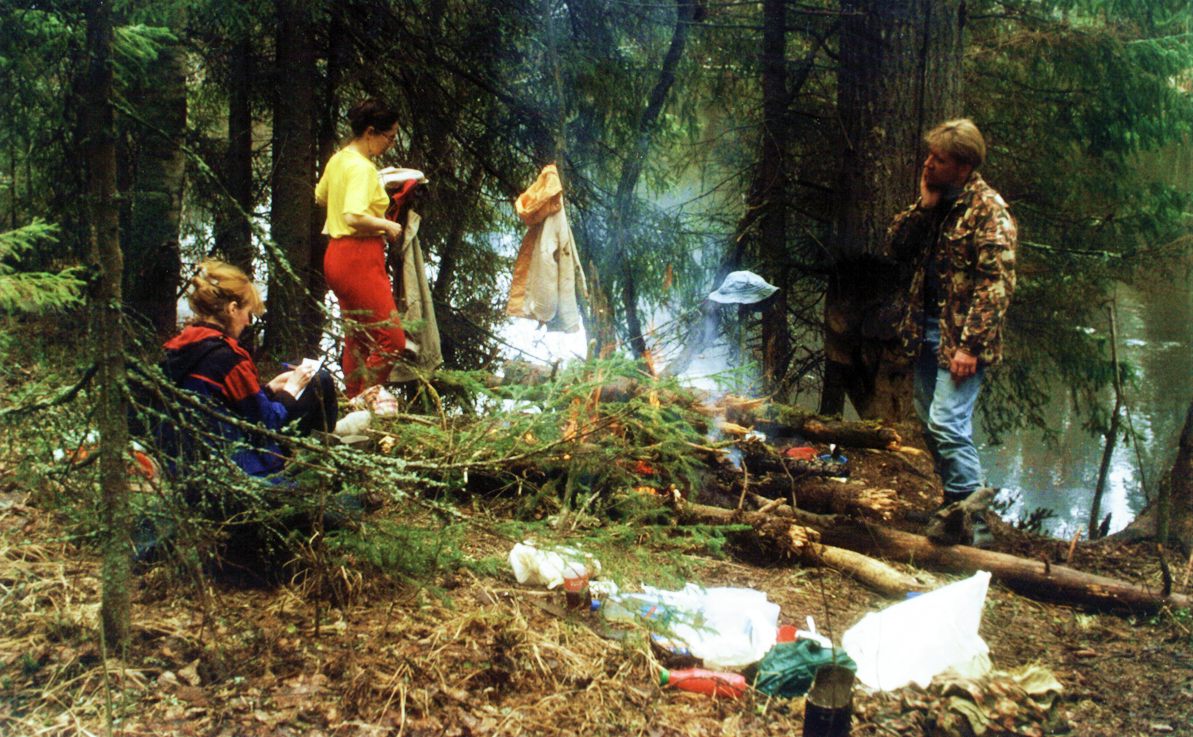
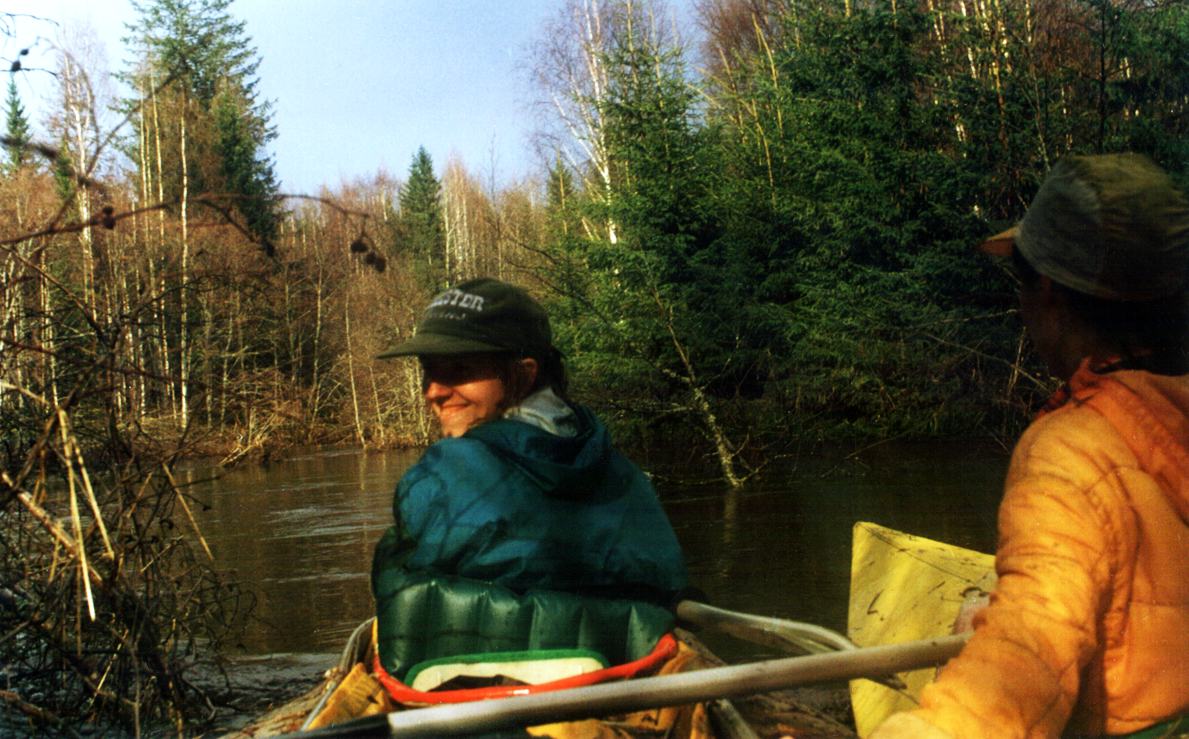
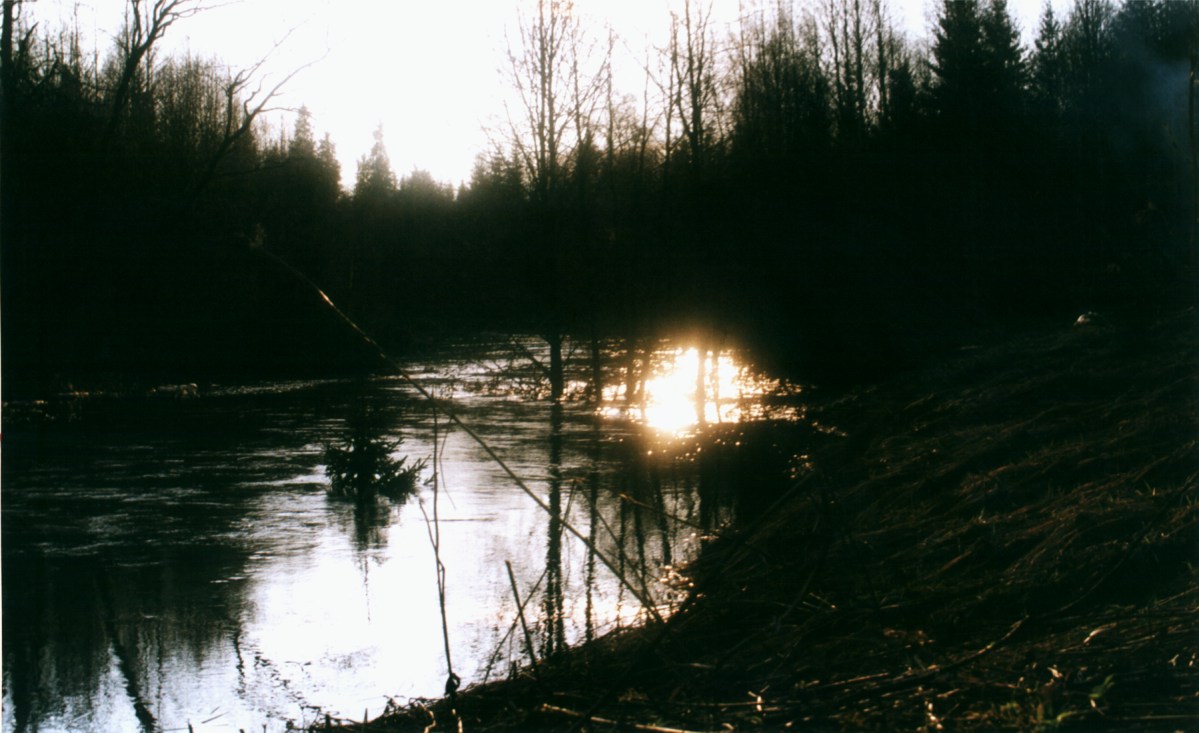
There were fewer logjams now, but one tore the bow off our kayak. We met just one ice jam. Ira and Dima were soaked again. They said they’d sew themselves jackets like ours as soon as they got home. Ira had a glass or two of vodka against the cold. At the old Isakovsky logging site a hut was still standing, its roof caved in. At 4:25 p.m. we stopped on a high bank with a meadow, at 59°48.088′N, 34°29.627′E. It was 13 °C. The sky cleared by evening and the sun went down beautifully behind the woods. We finally spent a proper evening drinking around a campfire and turned in about one.
5 May 1998. The rapids before Nikolskoye
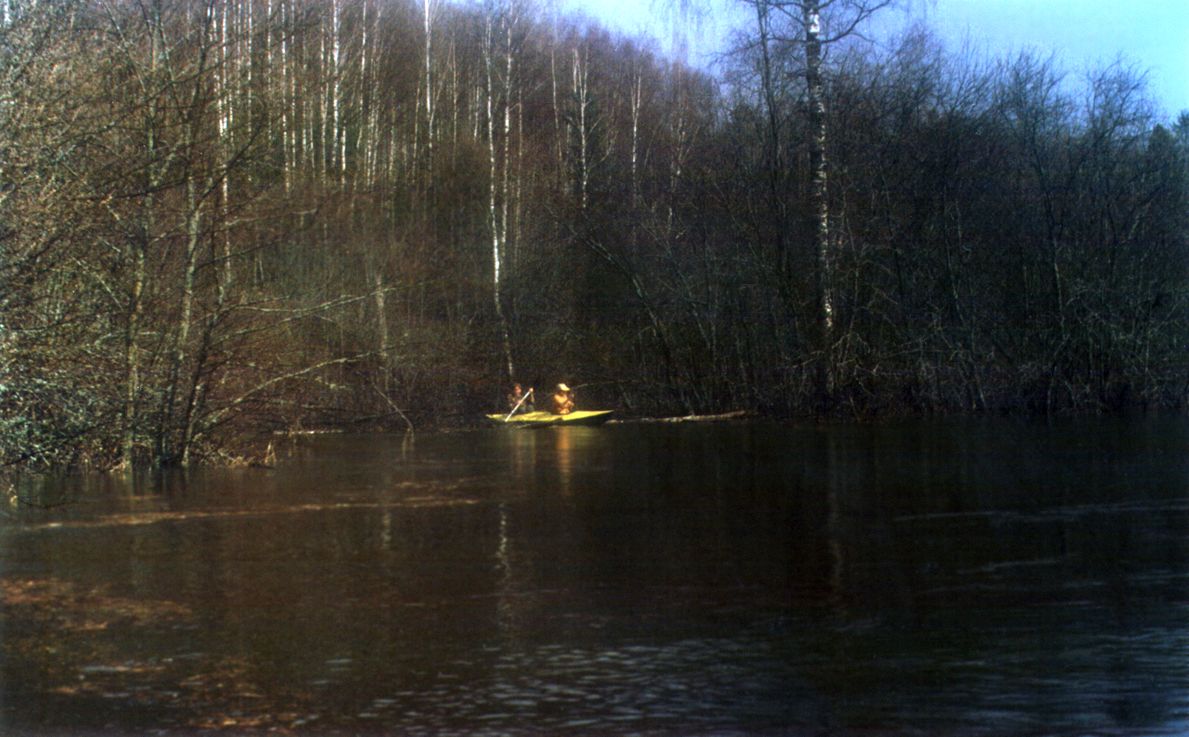
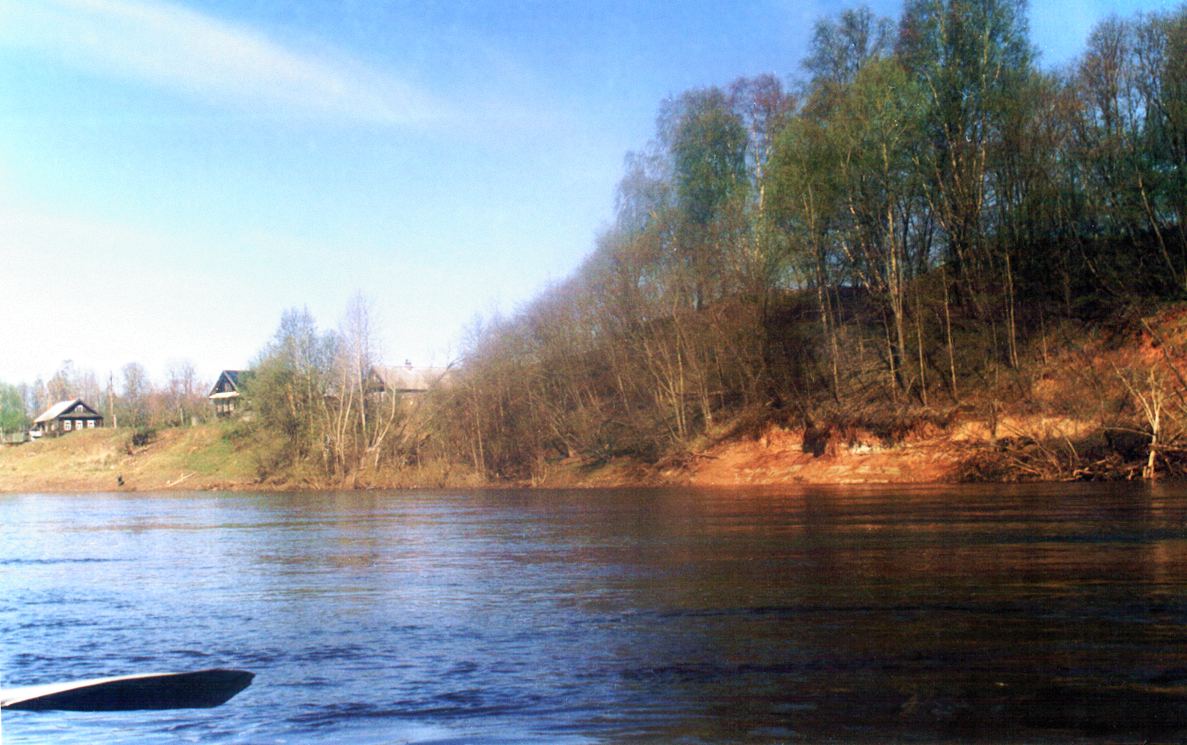
The morning was grey and dry, with a temperature of 10 °C. We patched and reinforced our kayaks for the rapids. Just after we set off, the Ilmas came in on the right, with a good campsite nearby. The river was wider and there were hardly any obstructions. The last logjam was just before Nesterovo, a beautiful abandoned village, where the first easy riffles began. The river quickened into continuous rapids with standing waves a metre high. At Opoka (59°47.106′N, 34°21.156′E), a sign on a bush read ‘Everyone stop’. The current drove hard towards the right bank, then immediately towards the left. We landed on the left to scout. Ira and Dima went straight ahead, which worried us. A group from Saint Petersburg camped on the hill told us about the rapids ahead, how many boats had sunk in recent days, and about a woman who had drowned years before. We took extra care packing everything into waterproof bags before setting off.
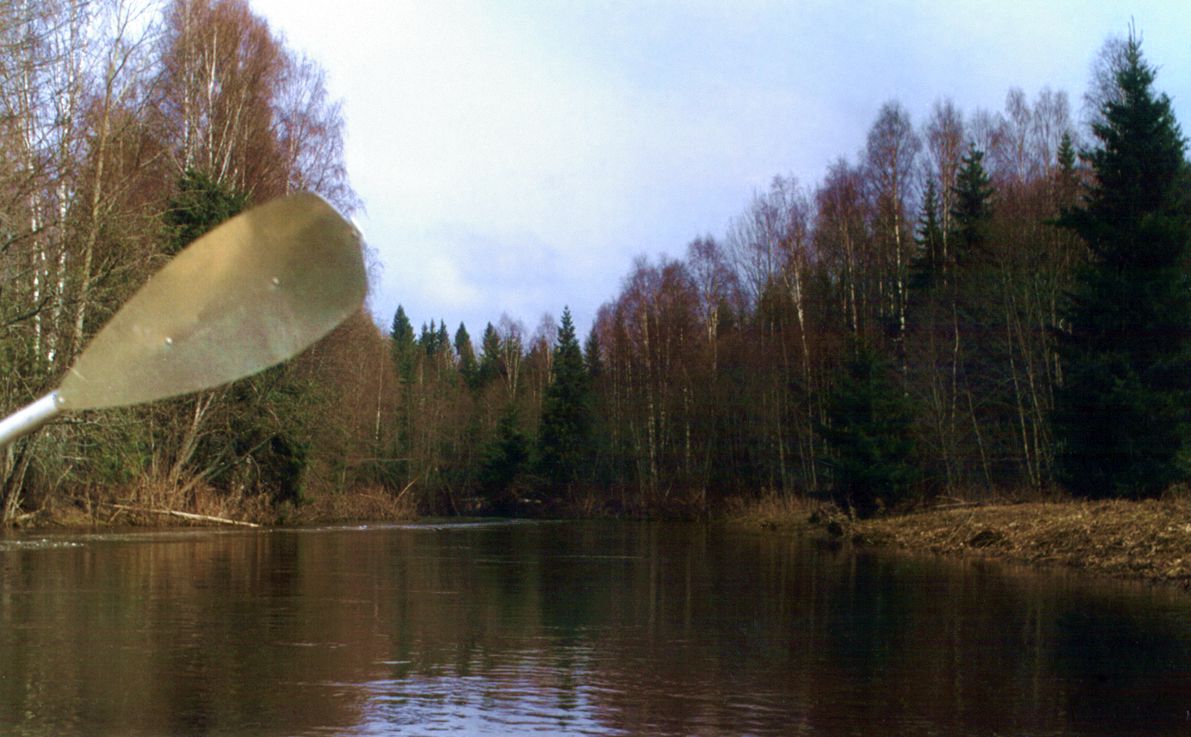
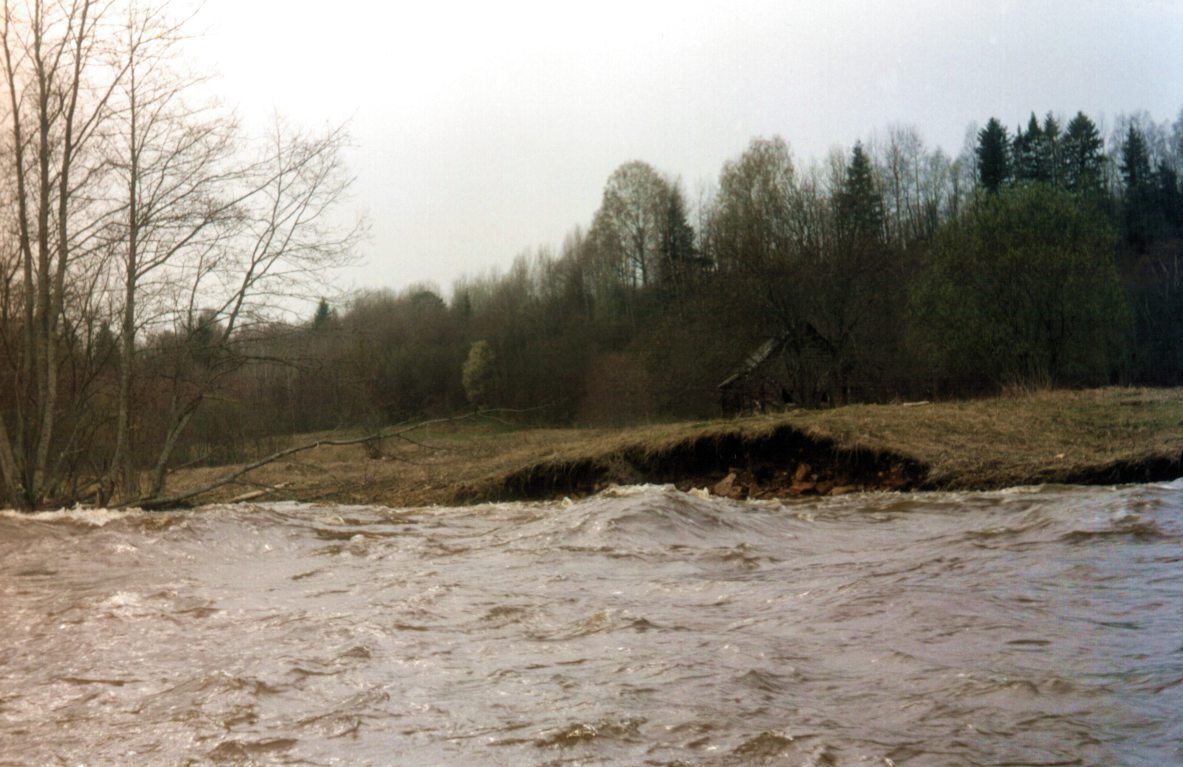
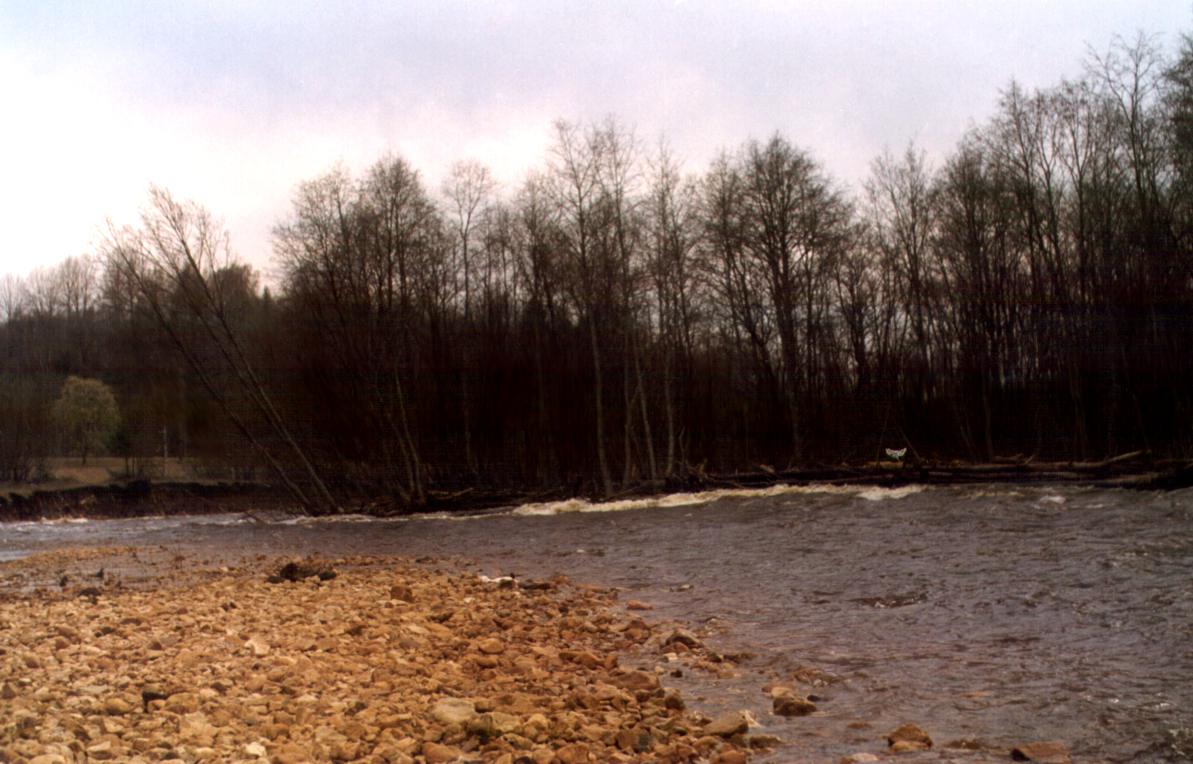
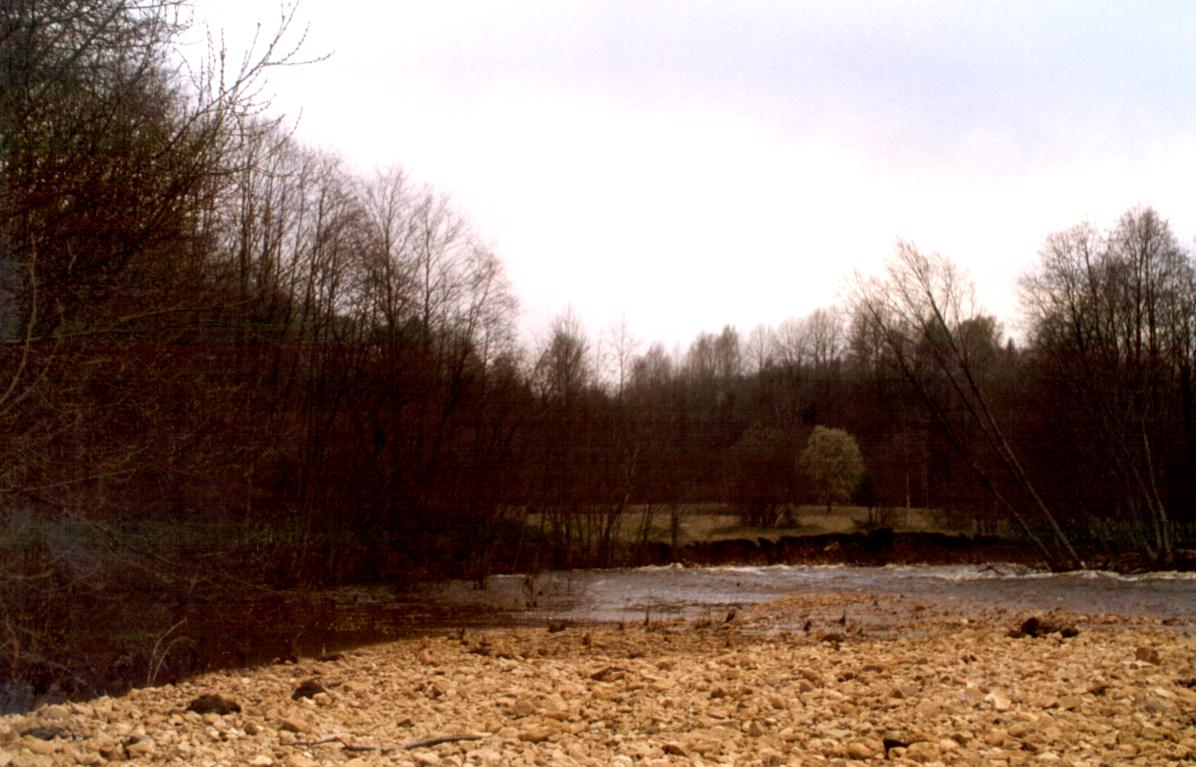
We ran the first rapid without trouble. They came one after another, but the biggest rapid was at the end, just above Nikolskoye, where a mill once stood. The river drops about five metres in 100 metres. A high sand bluff and a sharp right turn mark the spot. We kept to the right. The main drop began immediately after the current pushed us towards the bank. Plechko recommended the right-hand channel or a portage, but we saw no side channel and ran the main one. The waves were 1–1.5 metres high. The kayak gave a crack but held. Without the reinforcement it would surely have broken. There was a little island and a jumble of rocks to the left at the runout.
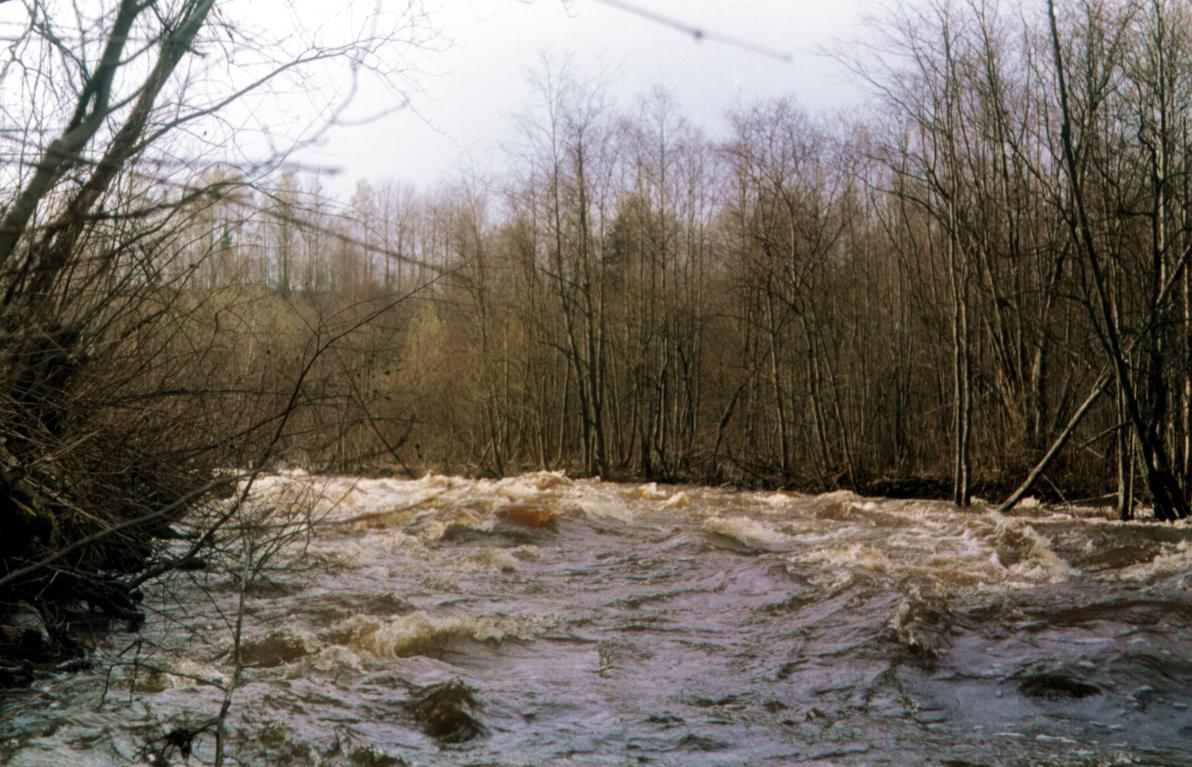
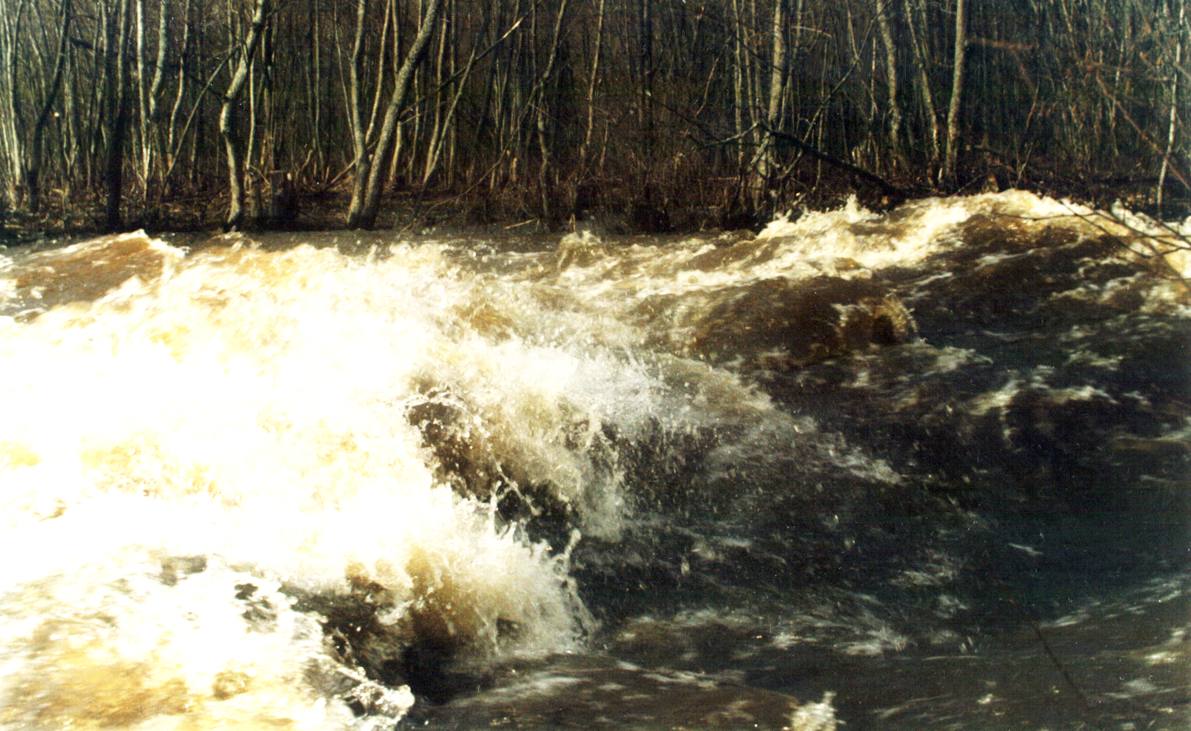
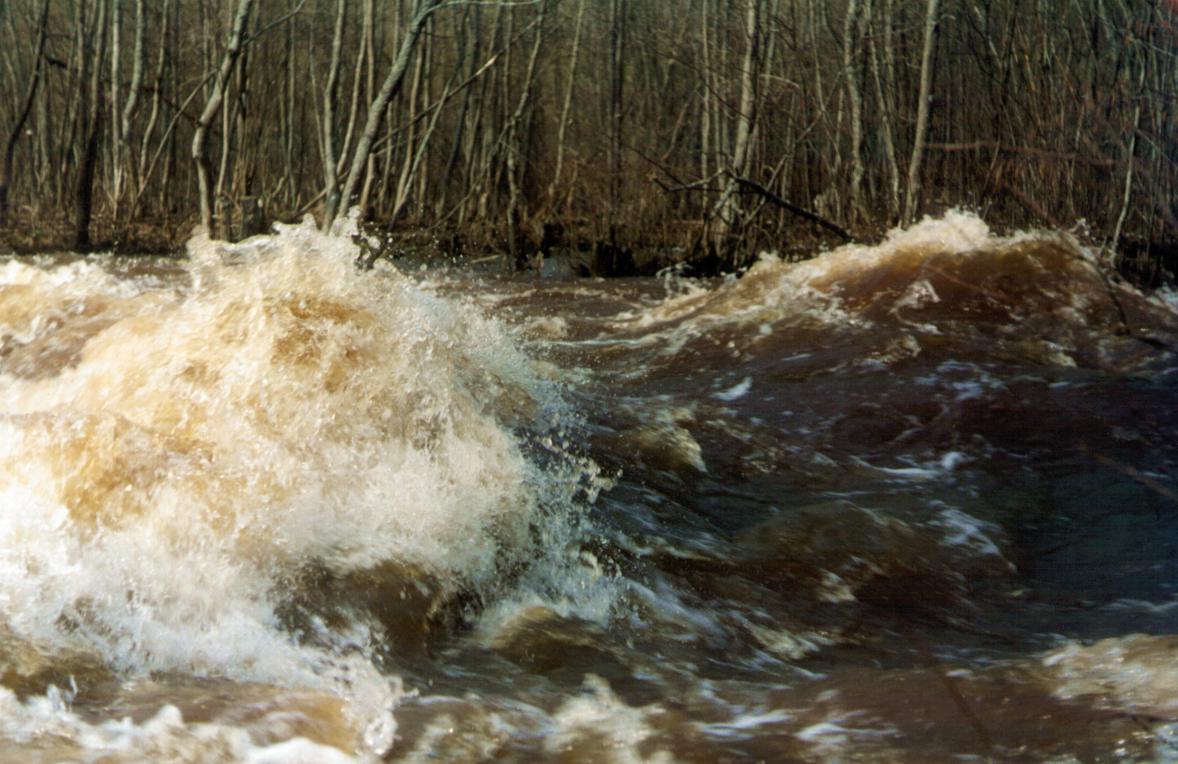
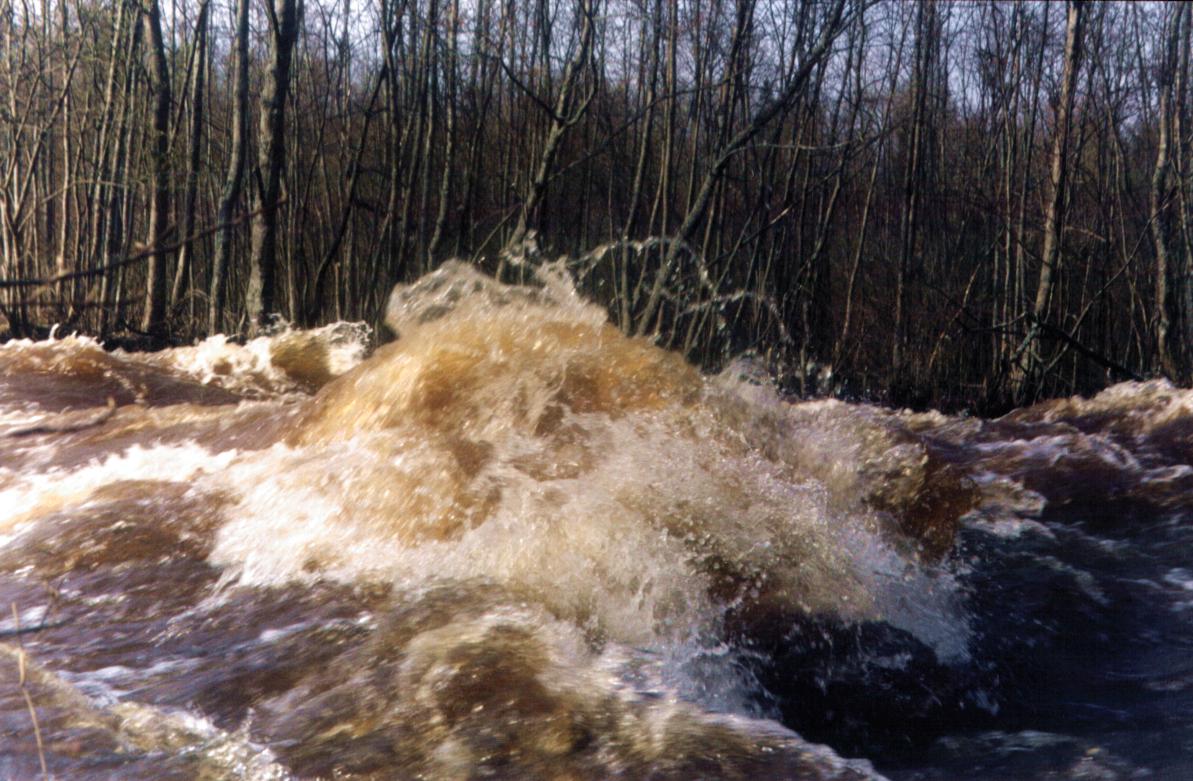
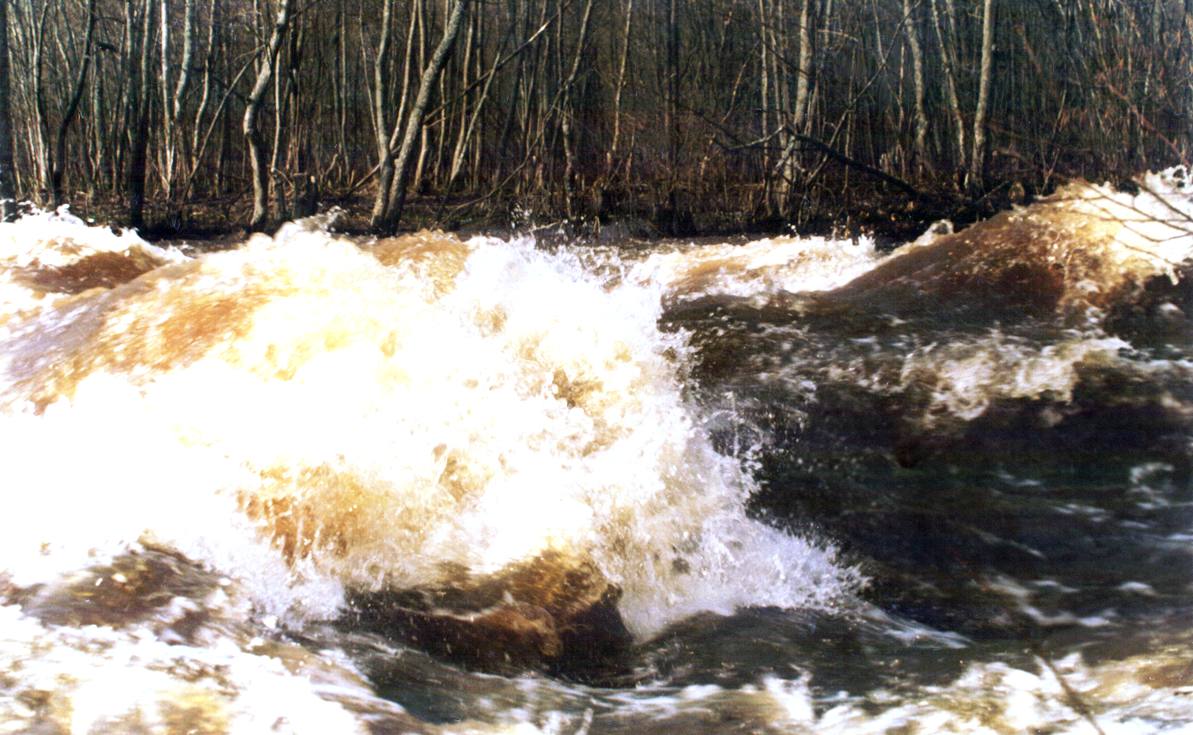
Just below it we found Ira and Dima after their shipwreck. Someone had shouted for them to land. They turned sharply to the bank and capsized. Their kayak broke its bow in the bushes, but both were safe ashore. Tanya and I managed the same landing and stopped beside them. We figured we could fix the boat that evening. While Dima worked, Tanya and I went to photograph and film the rapid. Pity nobody ran it while we watched. A Moscow group we met had lost a Taimen-2. About nine Dima was ready, but he was afraid to leave the bank with the current heading into the same bushes. We explained the manoeuvre, then went first to show him.
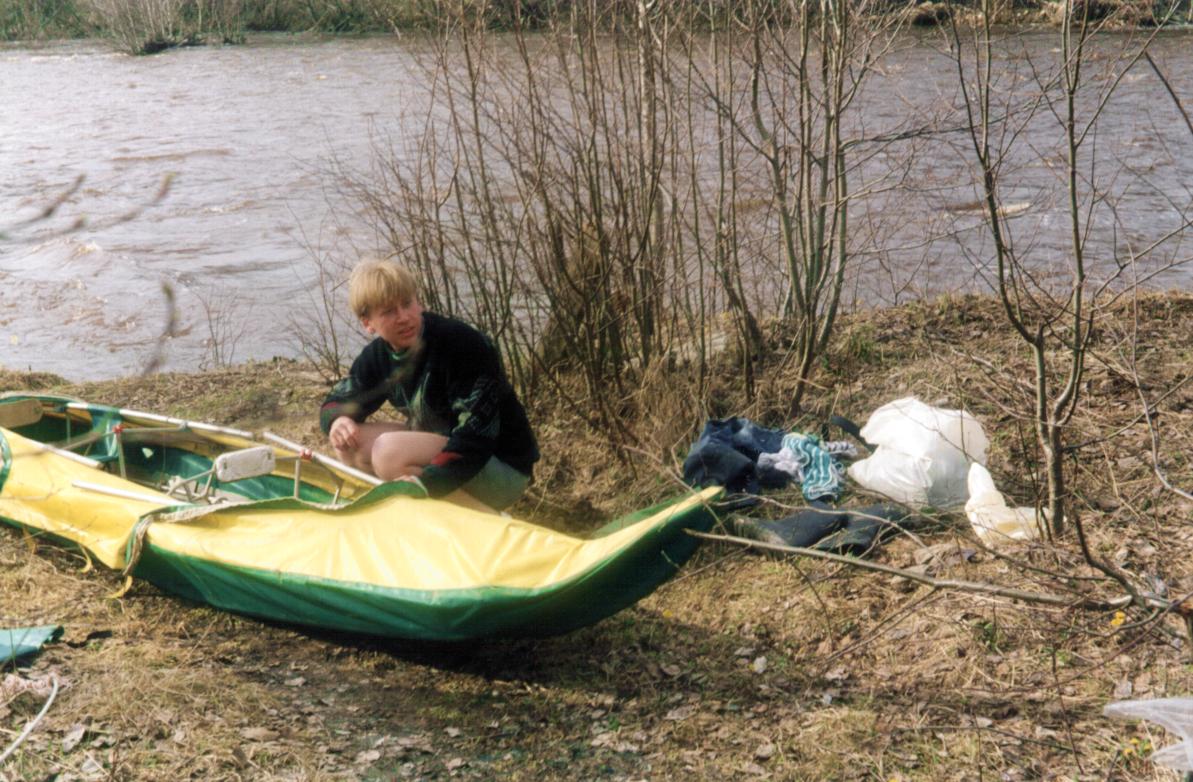
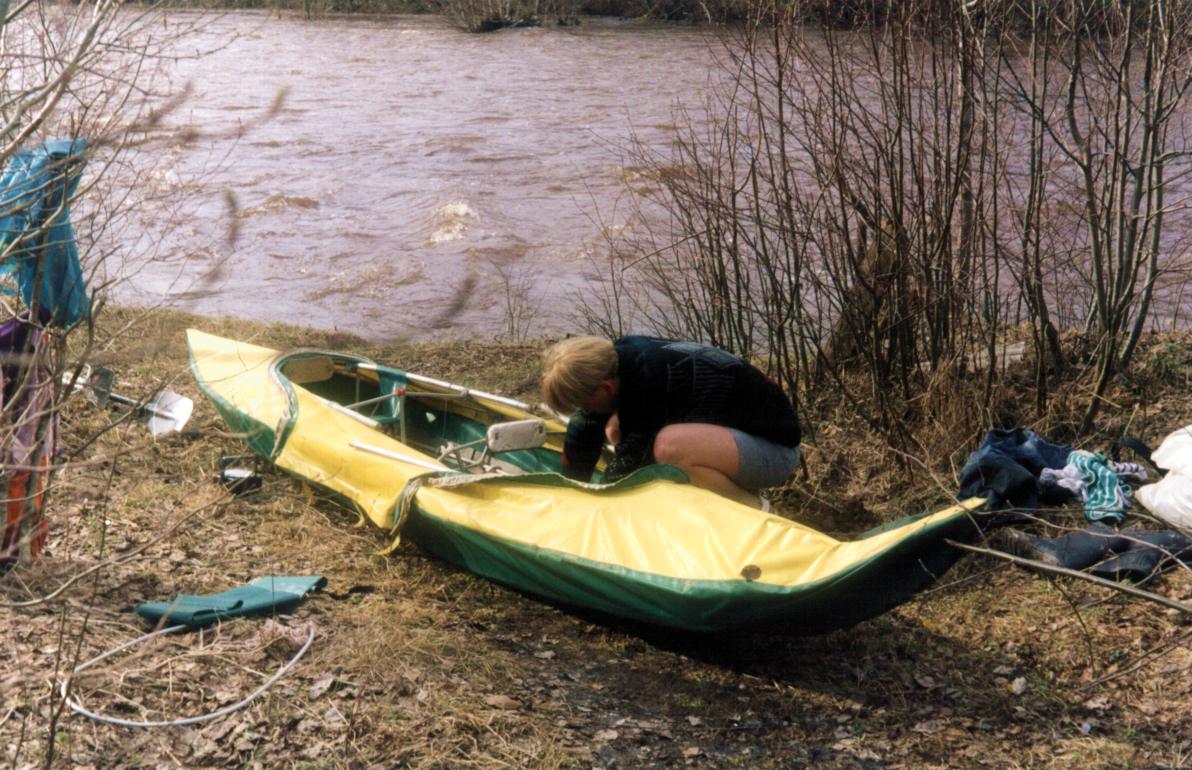
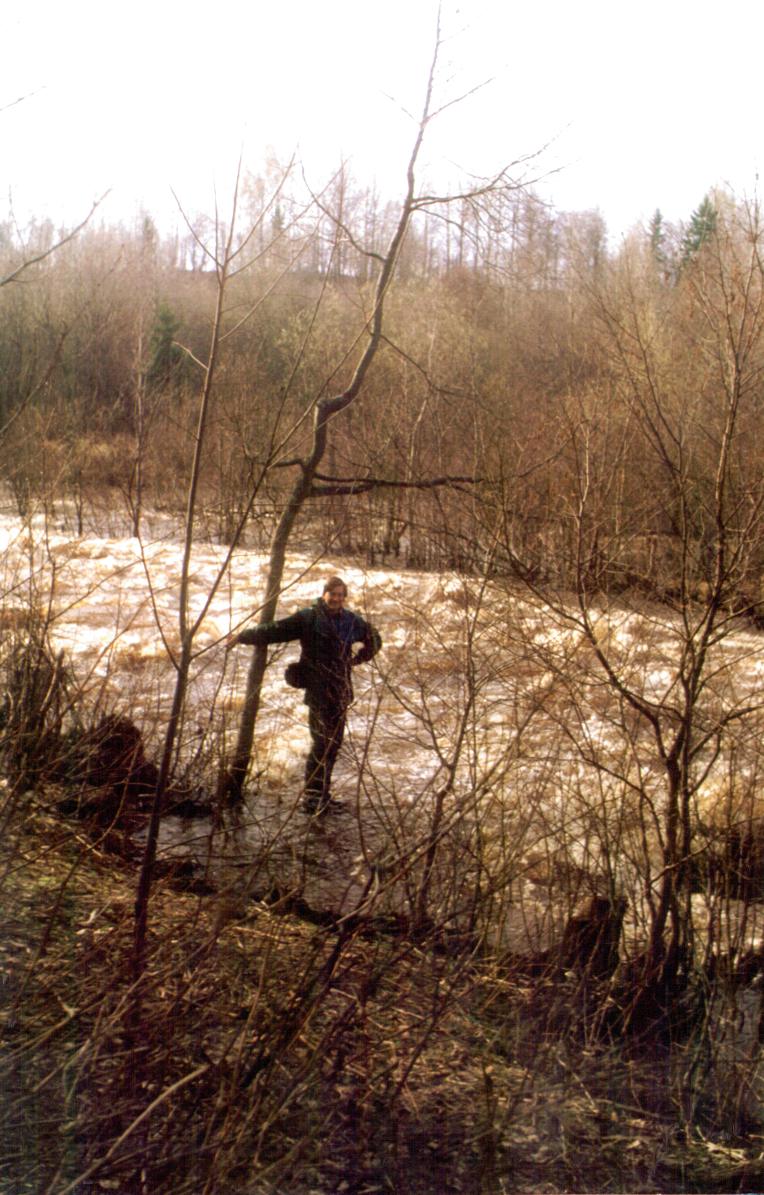
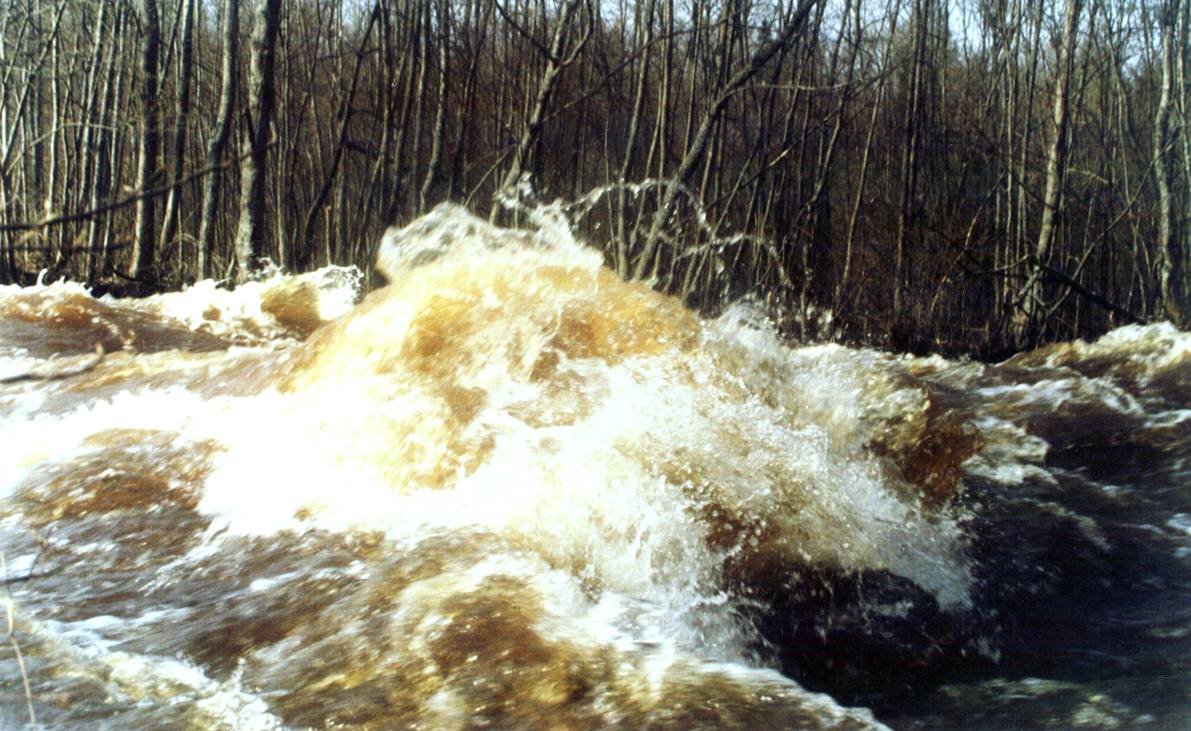
The river immediately turned left and split in two. Only the right branch was passable. A house on the island was reached by a low suspension bridge with hard-to-see steel stays across fast water. The low concrete bridge beyond the island was frightening too. High standing waves meant we couldn’t just drift through, and there was less than a metre of clearance. The current remained strong below the bridge. The Tutoka joins the Retesha and continues as the Yavosma. Waiting for Ira and Dima, we were watching behind us and hit a bush broadside. The kayak was about to turn over when Tanya jumped onto the bush. I spun the kayak around, paddled back to the bush bow first, and she jumped on again. We carried on with her head above the seat and a leg on either side of the bow. Pity there was nobody to take a picture. Tanya soon got back into her seat and we paid closer attention while looking for somewhere to wait.
All around us were bushes and flooded fields. The river followed bends but the floodwater went straight through the bushes, and some bushes grew right in the channel. We took the first high bank we could find, at 59°46.780′N, 34°17.363′E. There was no sign of Dima or Ira. I went looking after an hour, but the bank was impassable, the village too far and the light fading. I went back and camped with Tanya, hoping both of them were alive. We later learnt that they capsized at the bank and ended up in the same bushes. The boat survived this time, but both paddles floated away. They camped where they had repaired the boat. Local people helped with a cooking pot and firewood.
6 May 1998. The Triton goes down
We were up at eight in a grey drizzle. I went searching and found water everywhere. Crossing the Sarka, a tributary from the left, took some doing. After two hours I reached the repair site at Nikolskoye. Ira was asleep and crying out in bad dreams. Dima had gone looking for us. When he reappeared we looked for the paddles, soon realising it was hopeless. A man living on the island gave us a long paddle he had found. One blade came from a Salyut. If anyone recognises it, I still have it. Ira refused to get back in the boat at least for the day, and Dima was also afraid to leave. So we carried the boats around the bridge through the village. It was a long and exhausting carry.
Dima got away without trouble and stayed in sight for a little while. Ira and I walked, hoping to find him on the bank to ferry us across, but we couldn’t see him. We ended up crossing the bridge at Panshino and walking through the woods, Ira back in her slippers in the snow. Dima still wasn’t there when we got back. Eventually he appeared across the river, soaking wet again. He had caught another bush and wrapped the kayak around it, with everything pinned inside. The important thing was that he had managed to jump clear.
Tanya and I crossed in our kayak. She waited while Dima and I went to see what we could salvage of his gear and the Triton. The bushes were in the middle of the river, with a fierce current. We felled several trees onto them and went across as if on a bridge. The current held the kayak fast. After several hours I opened its luggage compartment and got almost everything out. It was a sorry sight, especially the down sleeping bags, which seemed to weigh twenty kilos each, and the bag of bread that had lost its seal. Dima’s Yermak pack was folded in half. I suggested cutting the kayak in two, but Dima couldn’t bring himself to do it. We left it until the next day and carried back what we’d salvaged. Tanya was frozen after waiting so long. In our absence the Moscow group had passed and returned a paddle they had found. All of Dima and Ira’s clothes and kit were wet, so we shared ours and they slept in our tent.
7 May 1998. A day waiting on the river
It was cold, with rain and gradually longer spells of sun. Dima and I went back, but what was left of the kayak had slipped under water overnight. I got a few more things out, including, surprisingly, a folding fishing rod that hadn’t broken. After a few hours we gave up and came back empty-handed. Dima was terribly upset and consoled himself with vodka. There was a bus route about 200 metres away across the river. Tanya and I decided to carry on and put the other two on the bus. Dima wanted to leave the next day. We spent the whole day kicking our heels. It was 10 °C and started raining again in the evening. We sat in the tent finishing off the booze and chocolate, feeling miserable.
8 May 1998. On to the Pasha
We got up at seven in the rain to catch the bus and ferried Dima and Ira across one at a time. Dima lost his footing as he got in and went into the water again, pack and all. Tanya and I were now on our own. We had breakfast, reinforced the boat a little more and left at eleven. The rain stopped straightaway and the sun came out. It warmed up. The river was fast but without much white water. The drop at Panshino hydro station was nothing special. It became a perfect day. We stopped twice for a bite, the second time at 6:30 p.m. at Kipriyanovo. With rapids ahead we cooked some mash and got ourselves ready for the worst. The rapids were there, but nothing like Nikolskoye. Plechko’s drop was hard to distinguish from the others.
Davydovshchina appeared quite suddenly and we joined the Pasha. The promised rapids at Zaborovye were nowhere to be seen. We camped near Kazalma, 59°50.900′N, 33°52.919′E, having covered 60 kilometres. Finally a chance to stretch our muscles and do some proper paddling. We collected a pot of birch sap. We later heard that Dima and Ira had missed the bus but hitched a ride to Shugozero for the price of the fare. From Shugozero they hitched another ride to Saint Petersburg and got home all right.
9 May 1998. The Tumishche rapids
We woke to sunshine and warmth, 18 °C. We had porridge and cheese, the only food left. It grew hot and we sunbathed, then got away at eleven. At the mouth of the Kapsha we met two people in a Katran. Just below the confluence we stopped for lunch and ate again at Krivoy Navolok. There was a noticeable current and no rapids. Near Kuliga were a number of oxbow lakes. Here and there were sandy beaches suitable for camping, but we carried on. The Gorodok ferry seemed out of service. Below Gorodok the Tumishche rapids were easy and fun, with standing waves up to 60 centimetres. We camped about halfway through, at 59°57.080′N, 33°17.366′E. We had paddled 70 kilometres that day. The ache in our bones felt good. Tanya fell asleep by the fire with the Pasha murmuring beside us.
10 May 1998. The last 60 kilometres
We woke at 6:30 to perfect weather. We had to get home to the city that day, with 60 kilometres to paddle first. It was warm and sunny. We finished the last of our food and set off at nine. The Tumishche rapids ended, and before Krasny Porog there was a good rapid, just as the name suggested, with waves up to a metre. Plechko mentions Svyatoy Rapid, which we couldn’t find. Presumably it and its village had been renamed Krasny. Then we paddled for ages past Kaskovo, a large settlement with shops and a bus. At the far end was a bridge with a bus stop, probably the best place to end the trip, but we carried on. The rapids at Ratilovo were barely perceptible and Mechev Rapid even less so. We made our last snack stop there.
The river became really broad, with low, reedy banks. At three we finally landed at Shchepnyag and took the kayaks apart. A local man told us about duck hunting and shot a duck right in front of us. In spring, he said, he caught sturgeon and all sorts of other things, though he had to share with the fishery inspectors. It turned out he could give us a lift. His wife was coming too, and there was a chainsaw in the boot. We sat in the back with kayaks and rucksacks on our laps. His old Lada scraped its exhaust on the road, but it kept going. We made it in time for the train. After the lift from the Pasha to Volkhov, we took the 9:05 p.m. train to Saint Petersburg. At 11:58 we were home.