My Computers
At the Polytechnic Institute, at home and at Abris. These are the computers I actually worked on.
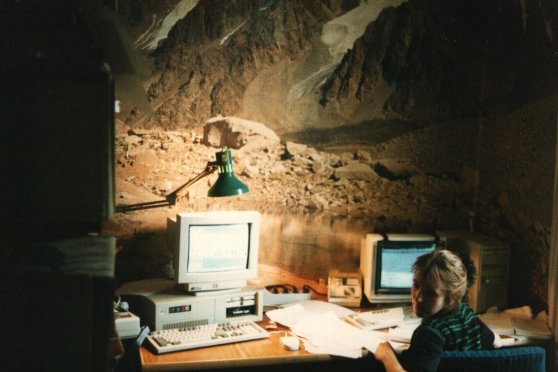
1981–1982 — ES-1020
While I was at the institute, I wrote FORTRAN programs for calculating planetary orbits, just for fun.
1983–1984 — Elektronika 100
At the department, I wrote a program for a magnetic-tape drive (НМЛ), entering the machine code directly from the keyboard.
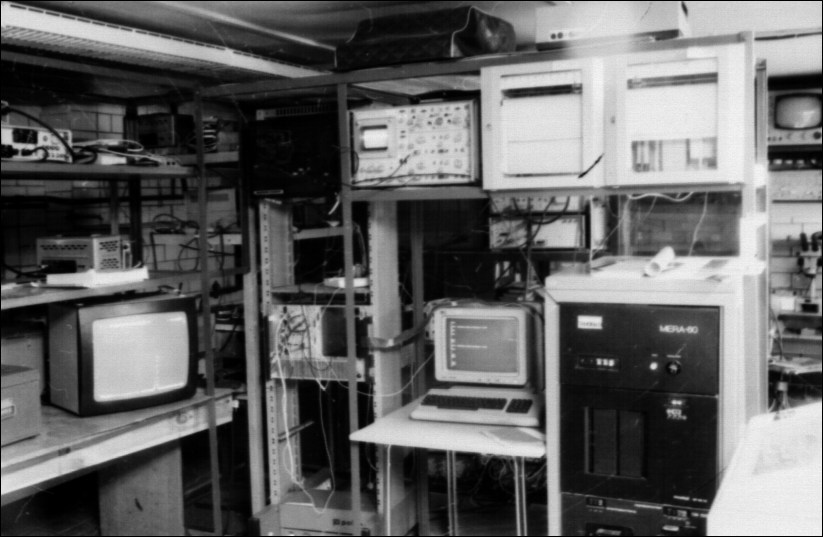
1985–1986 — MERA-60
I wrote FORTRAN programs under RT-11 to do calculations and control an acousto-optic spectrum analyser. I started typing all my paperwork on the computer.
1987–1990 — DVK-3
RT-11, CAMAC and a whole 4 MB of RAM! I used C for image processing and to control optical correlators.
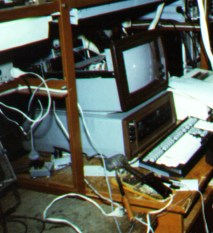
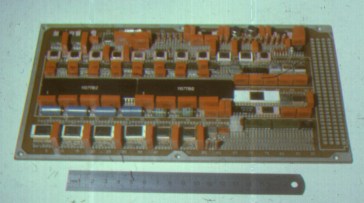
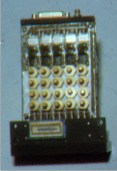
1987–1991 — Sinclair ZX Spectrum
TR-DOS and assembly language. I built these computers to sell, then used the Spectrum as the basis for a fire alarm system and a sonar.
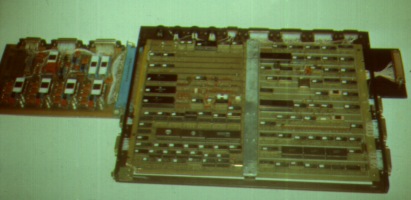
1989–1990 — Elektronika 60
I used assembly language and C to work on a synthetic-aperture radar.
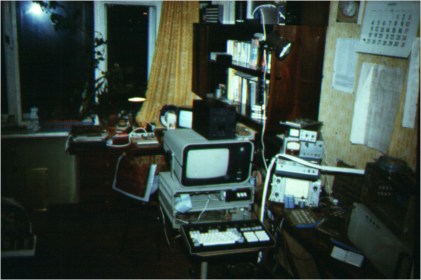
1991 — XT 8088
I used P-CAD under DOS to lay out printed circuit boards.
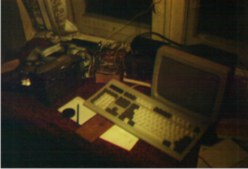
1992 — ES-1841
I laid out printed circuit boards in P-CAD under DOS. The Lexicon editor was my typewriter, and I used PC Illustrator to design alarm systems.
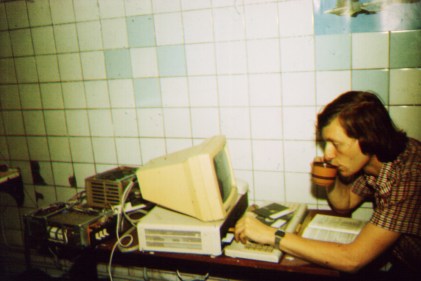
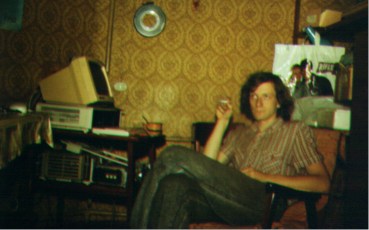
1993 — 386 SX33
2 MB of RAM, a 40 MB hard drive and Windows 3.1. I wrote medical software for Windows in C using Borland 3. MS Word 2.0 was my typewriter, and I designed alarm systems in CorelDRAW 4.
1994 — 486 DX33
12 MB of RAM, a 512 MB hard drive, Windows 3.1 and Borland 3. Tanya and I started writing Country, a program for keeping records of land parcels. I used MS Word 2.0 as my typewriter and CorelDRAW 5 to design alarm systems. See the photo of my workstation at home.
1995 — Pentium 100
24 MB of RAM, a 1 GB hard drive, Windows 95 and Borland 4. I wrote a program to keep track of school textbooks. MS Word 6.0 was my typewriter, and I designed alarm systems in CorelDRAW 6.
1996–1999 — Pentium Pro 200
96 MB of RAM, a 3.2 GB hard drive, Sound Blaster AWE64, CD-R, an HP LaserJet 4V and a Paragon MFS 1200. Windows 95 and Borland 5.01. MS Word 7.0 was my typewriter, and I designed alarm systems in CorelDRAW 7.
1999–2001 — Pentium II 400
96 MB of RAM, a 16.8 GB hard drive, Sound Blaster AWE64 and CD-R. HP LaserJet 4V and Epson Stylus 750 printers, a 17-inch Gateway EV700 monitor and an Acer Scan 620S scanner. I ran Windows 98, used MS Word 7.0 as my typewriter, designed alarm systems in CorelDRAW 8 and wrote little books about my trips.
2001–2003 — Pentium 4 at 1,500 MHz
512 MB of RAM, a 60 GB hard drive and CD-R. Epson Stylus 750, a 19-inch Flatron 915FT and an Acer Scan 620S. I ran Windows 2000, used MS Word 7.0 as my typewriter, designed alarm systems in CorelDRAW 8 and wrote little books about different countries.
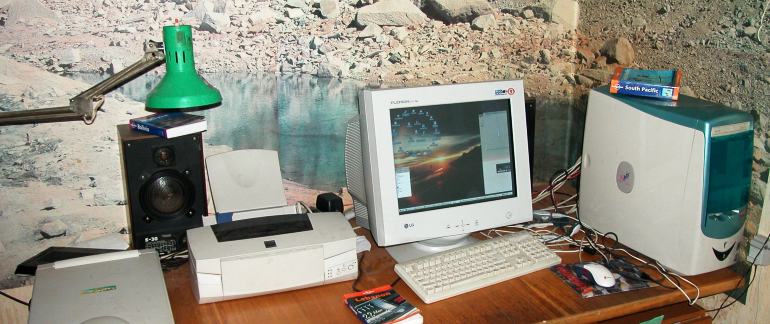
From 2003 — Pentium 4 at 2,400 MHz
512 MB of RAM, a 240 GB hard drive and DVD+RW/+R. Epson Stylus 750, a 21-inch Samsung SyncMaster 214T and an Acer Scan 620S. I ran Windows XP, used MS Word 7.0 as my typewriter, edited video in Premiere 6.0 and wrote little books about different countries.
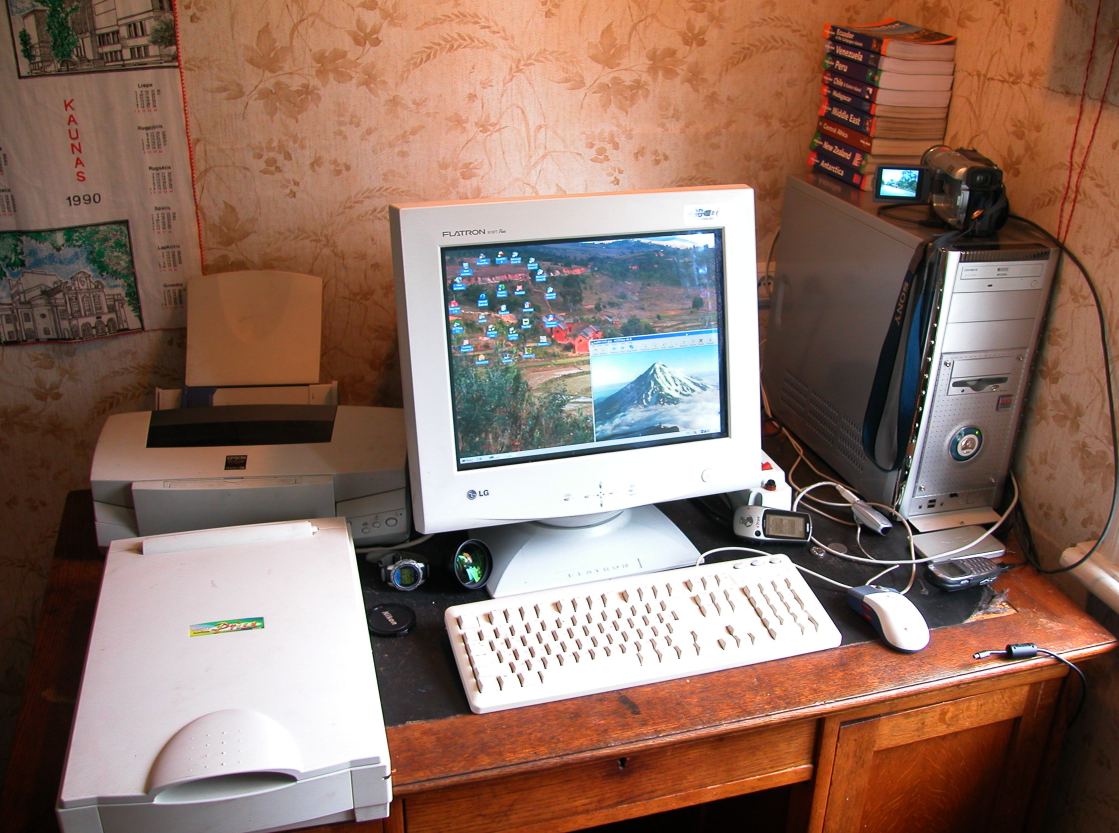
Later on
After that, I mostly upgraded the peripherals. Disk capacity grew, I had a 1600 × 1200 TFT display and 2 GB of RAM. Progress came to a standstill. New computers were no faster, and the software was worse than earlier versions.
We ended up with a lot of computers, too. Everyone has one, plus laptops that handle most of the smaller jobs. We have computers in Vyritsa and in New Zealand, where I draw plans for houses in AutoCAD on a six-core AMD machine with an enormous screen.