An eyewitness diary
Shock after shock
New Zealand started shaking on 15 July 2009. That is, if it ever stopped. A magnitude 7.8 earthquake struck. Out in the bush near the epicentre, the kiwi went about their business, but they can neither fly nor talk. For people, it amounted to a hundred bottles sliding off the shelves and smashing in Invercargill, so even a shock that big barely got a mention beyond the local television news.
On 4 September 2010 the shaking came much closer to our house. The magnitude 7.1 quake struck at 4:35 in the morning near Darfield, around 30 kilometres from us (map). A few old Victorian buildings came down in the city centre. Great cracks opened in farmers’ fields around Darfield, roads were no longer straight, and chimneys cracked.
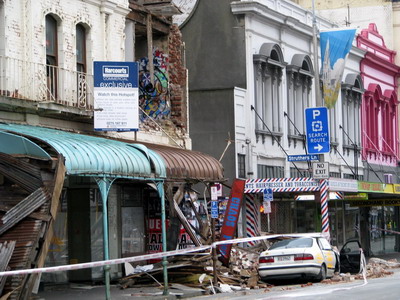
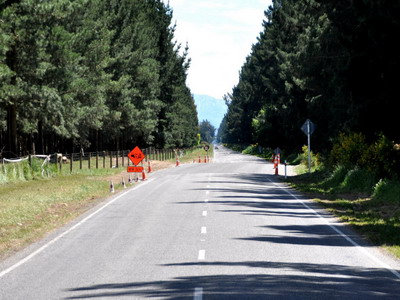
Two Christchurch residents were seriously injured, one by a falling fireplace and the other by flying glass. One resident died of a heart attack. The offices and streets were empty. New houses are designed to ride out this kind of shaking. Magnitude alone tells you very little about the damage. A difference of one magnitude unit corresponds to roughly 32 times as much energy released.
Damage depends on how hard the ground actually shakes. The depth of the quake, the type of ground and the duration of the shaking all matter. Peak ground acceleration, or PGA, is measured in metres per second per second. Gravity at the Earth’s surface is about 9.8 metres per second squared, so it makes a convenient yardstick for expressing the readings as a fraction or percentage of g.
At the time, people compared the readings with 130% of g in a major Chilean earthquake and 50% of g in Haiti, where around 200,000 people had died. In September, instruments near Darfield recorded up to 125% of g. It was frightening, but the city held up. Everyone breathed a sigh of relief. We must build things well, we thought, to come through an earthquake like that.
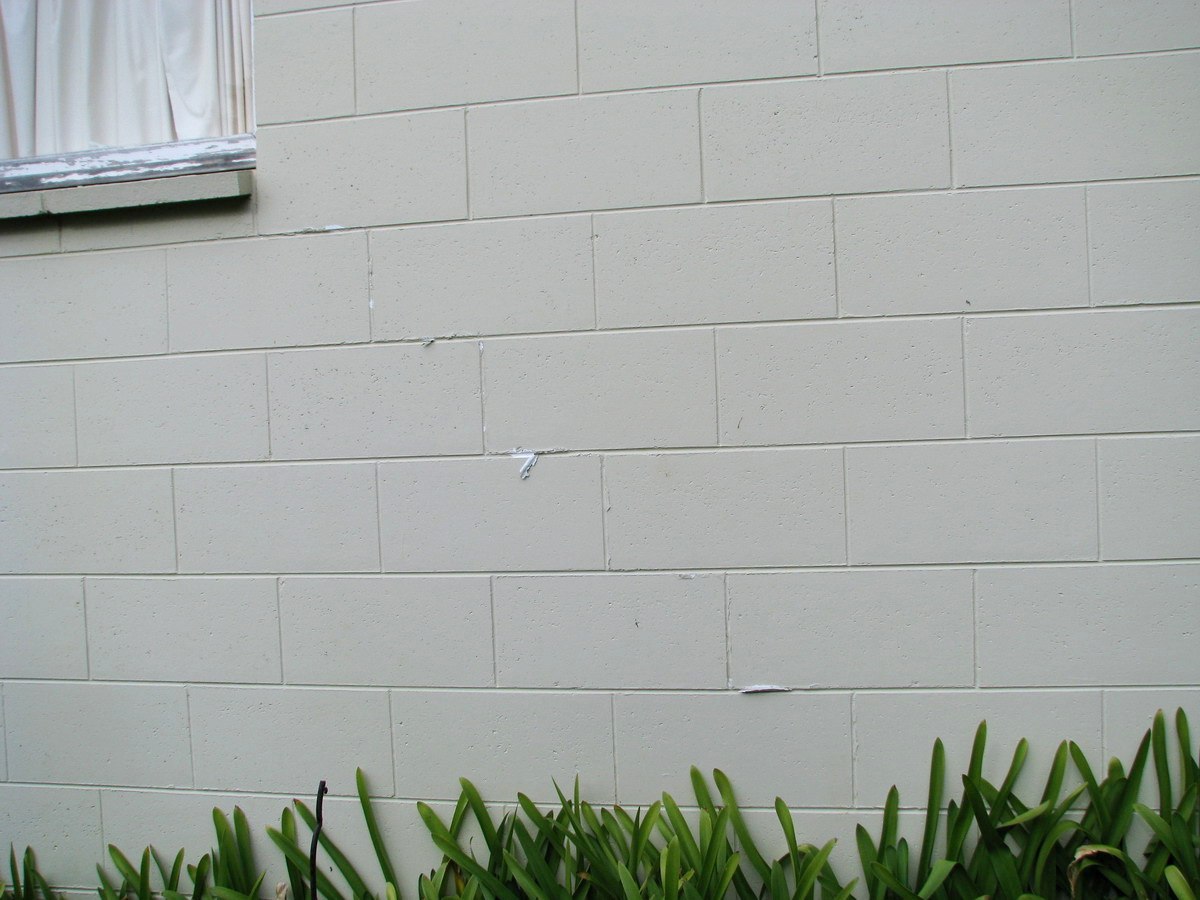
We slept through the September earthquake. We were in the bush not far from the epicentre and only heard about the disaster by phone the next day. Everything at home had fallen over, but nothing had broken. There was a little crack in the house.
Our relief was short-lived. At 12:51 p.m. on 22 February 2011 came another blow. This time it was up to 220% of g. One moment the ground seemed to push us up towards the ceiling with three times the usual force, then it dropped away faster than we could fall after it. It felt as if nothing like it had ever happened. A peak vertical acceleration of 2.2 g was measured in Heathcote Valley, near the epicentre.
The quake was only about 5 kilometres deep, close to the city. It felt as though it were directly underneath our house. The magnitude was 6.3. It was another aftershock in the September sequence.
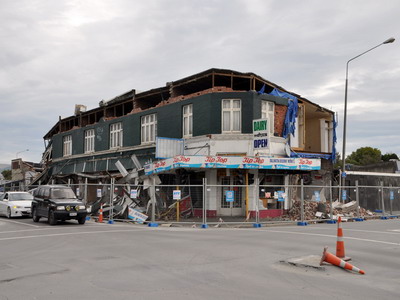
Twelve fifty-one was lunchtime. People had gone out for a walk or a coffee in the cosy old cafés. This time the masonry came down on them. People proved remarkably resilient. The spire of the cathedral that gave the city its name came down. There were plenty of people inside and around it, but everyone got out. The spire had already been damaged in the earthquakes of 1888 and 1901.
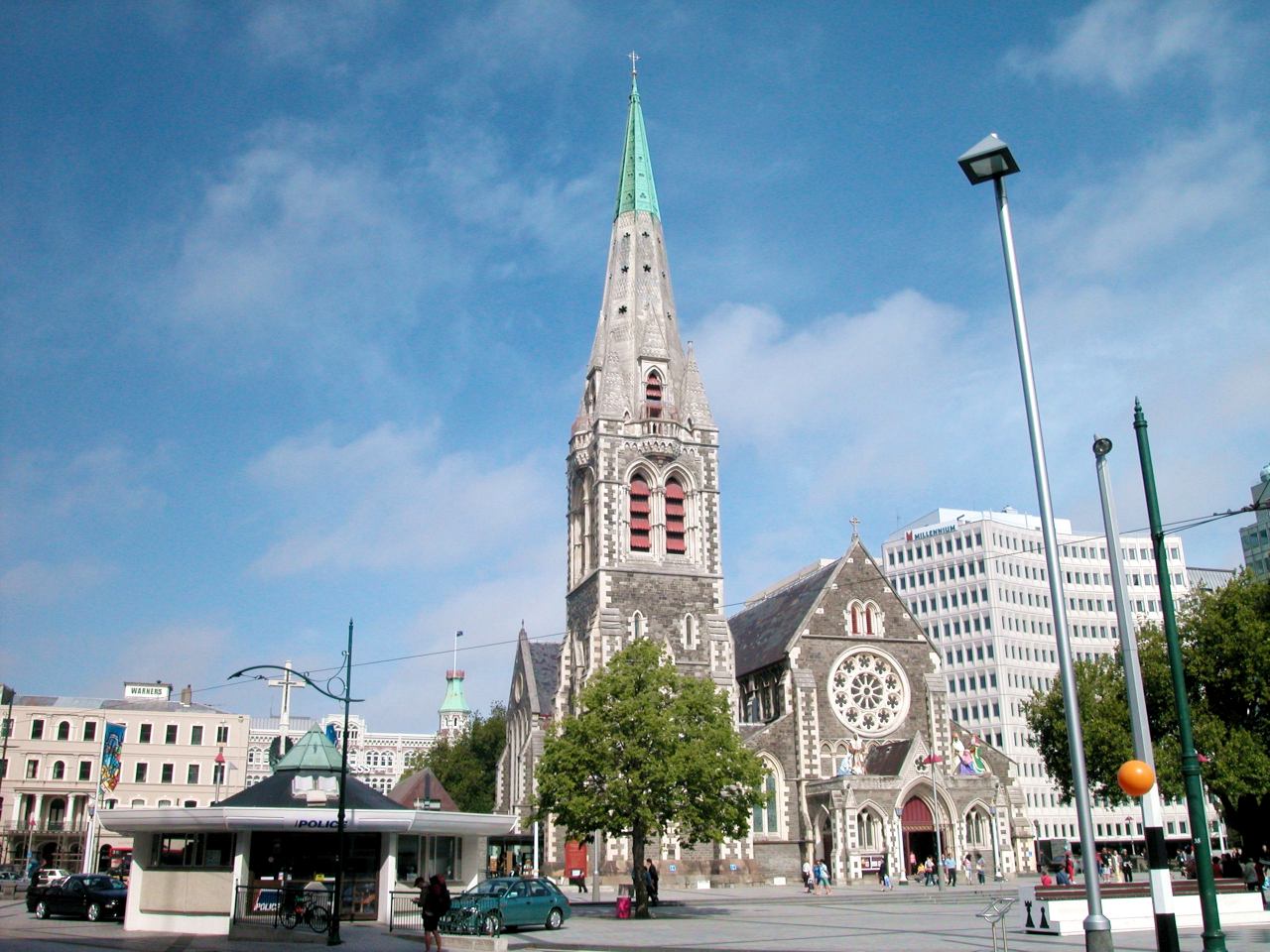
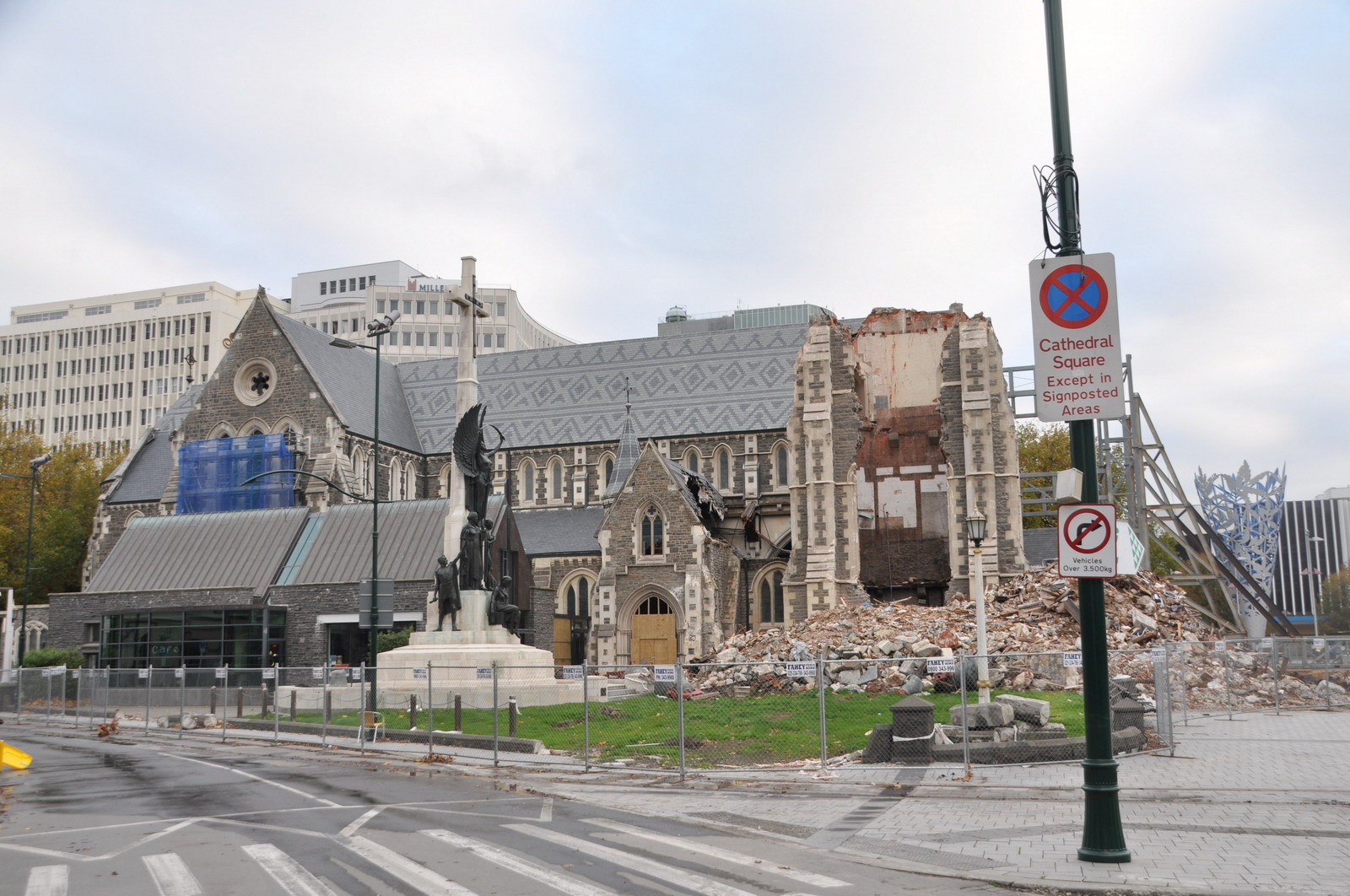
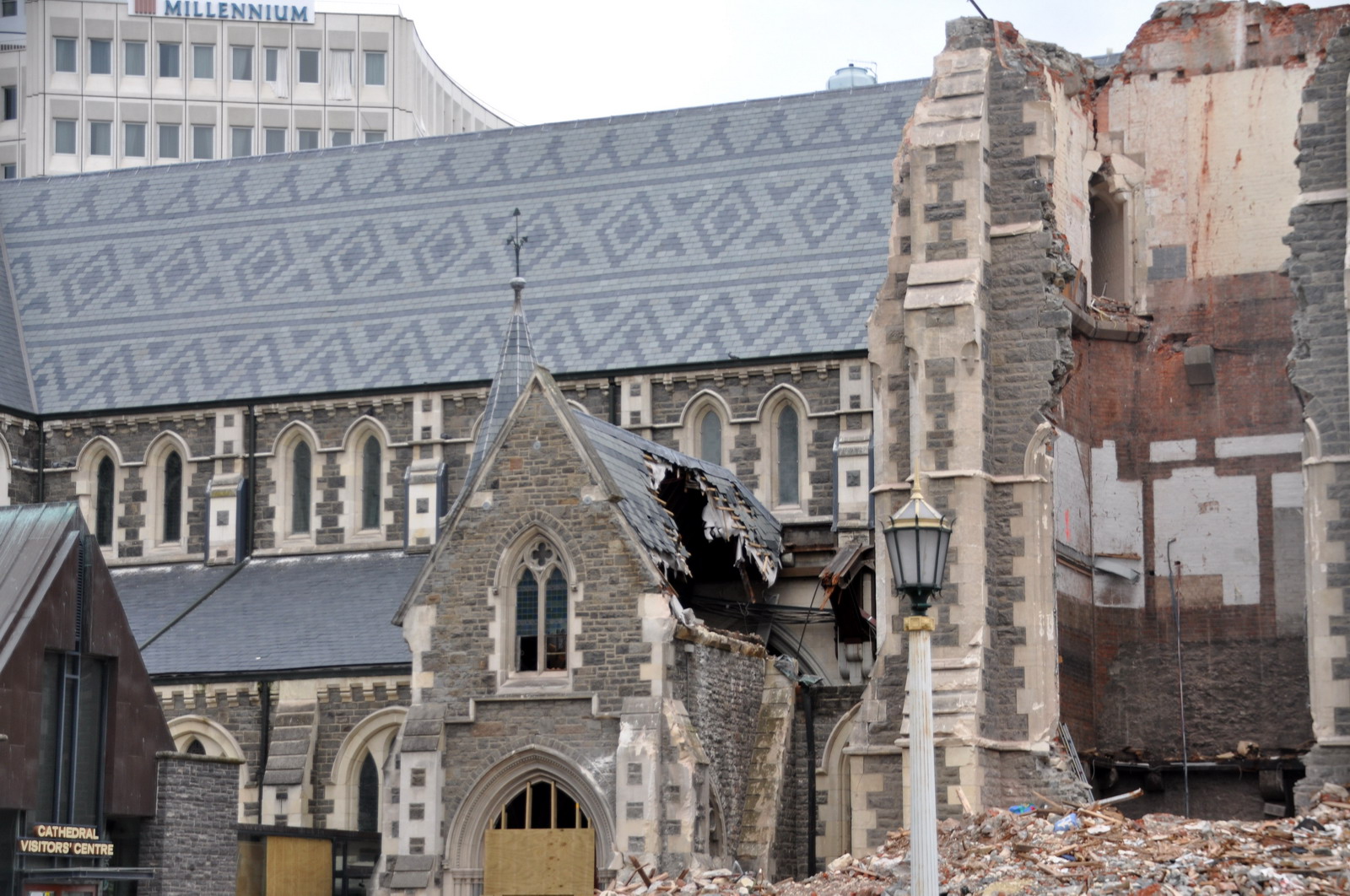
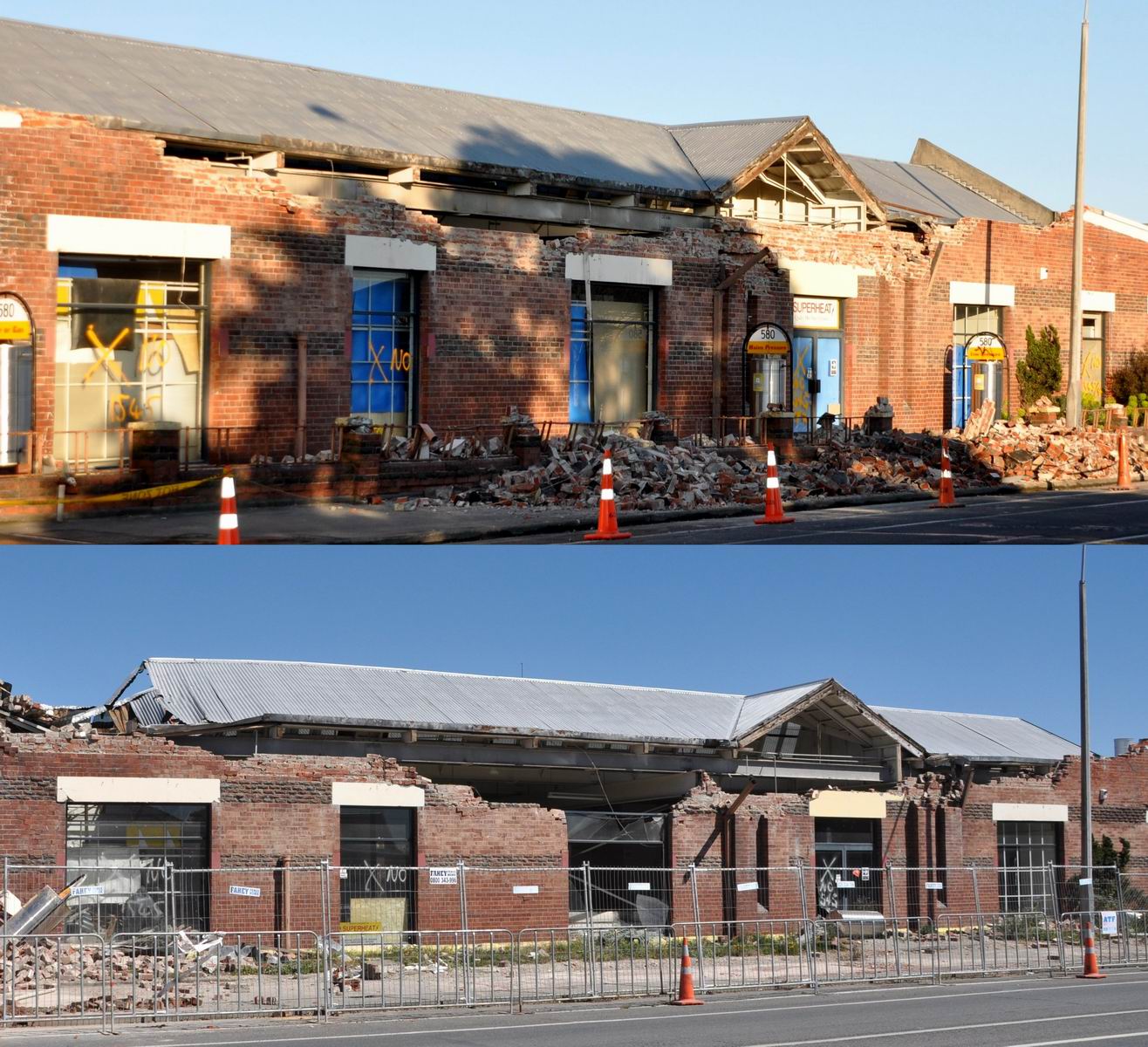
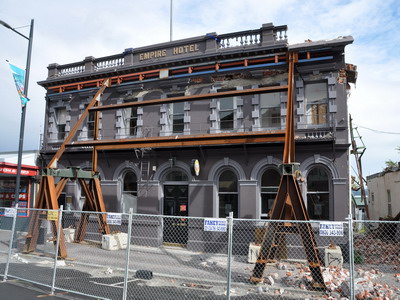
Fortunately, many old buildings had been evacuated and fenced off after the first quake. When they were damaged again, no one was inside.
Two modern multi-storey buildings collapsed completely. Early reports put the death toll in the television building at 94, among them many people well known to the public.
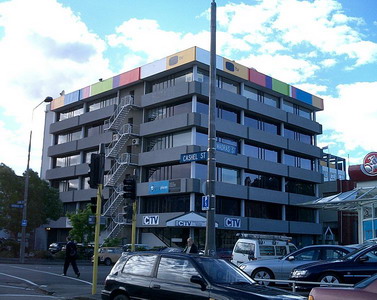
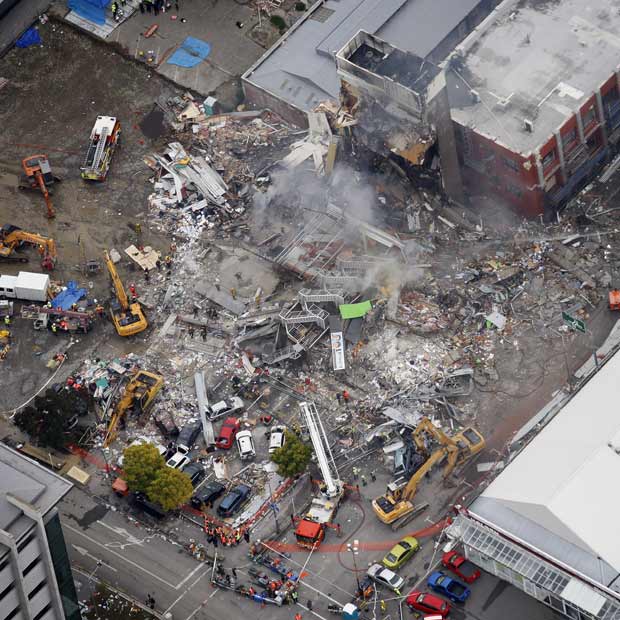
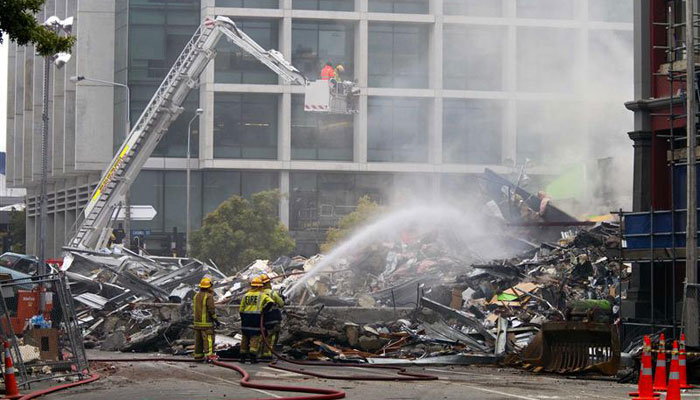
Photographs from Wikipedia
The Pyne Gould Corporation building collapsed too.
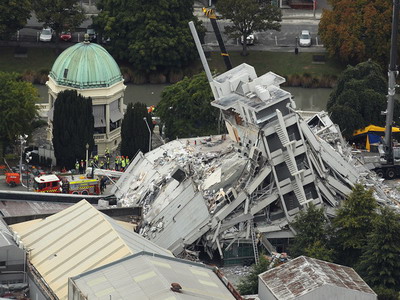
Photo source: Zimbio
In some places rocks came down on houses. People died there as well. It was fortunate that it happened in the middle of a working day. Few people were at home.
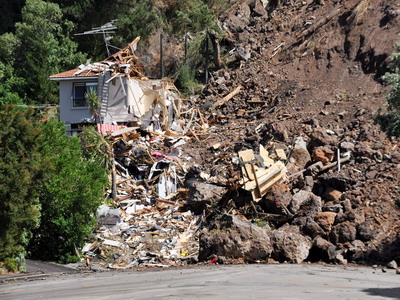
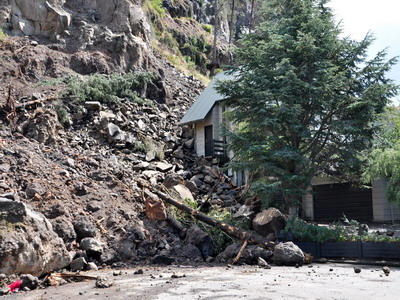
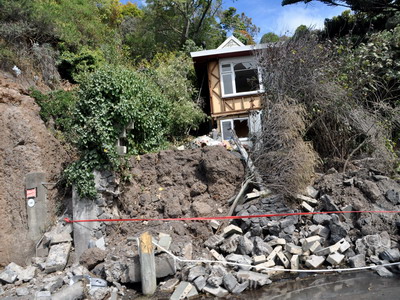
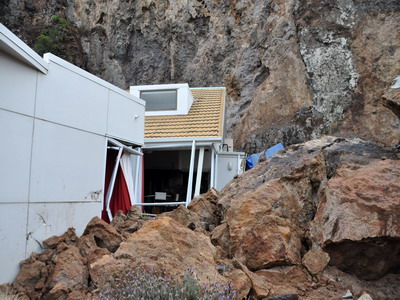
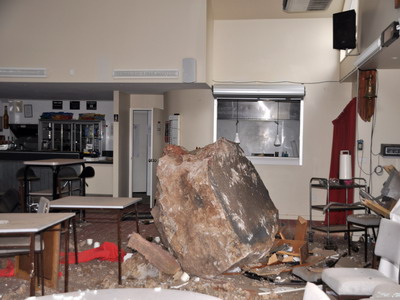
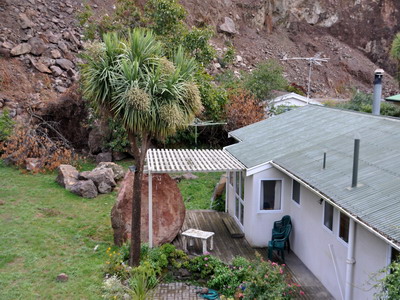
People also died in small shops and cafés. Several were hurt in crashes. Keeping a car on the road when the ground is moving back and forth at up to two g takes some doing. The figures reported when I wrote this were 181 dead, 164 seriously injured and five paralysed.
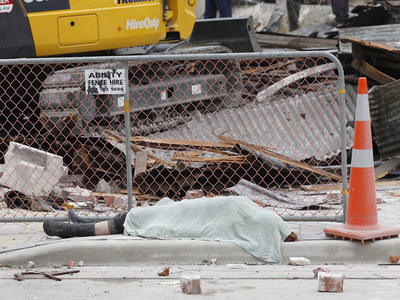
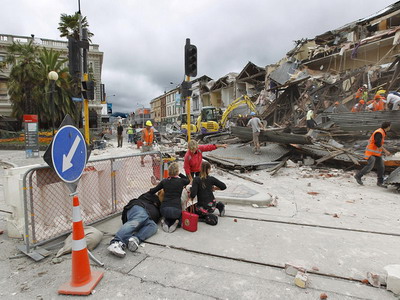
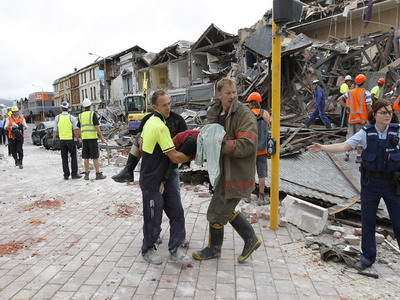
The photographs in this group come from the Zimbio gallery.
As far as we knew at the time, the deaths in houses were where rocks had fallen on the buildings.
There was also liquefaction. When saturated ground is shaken, it can temporarily lose its strength. Fountains of water and sand start spurting up through lawns and even through the floors of buildings. Everything gets covered in sludge, sometimes a metre deep. Some buildings sink and tilt dramatically.
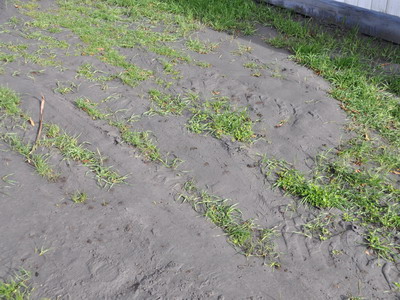
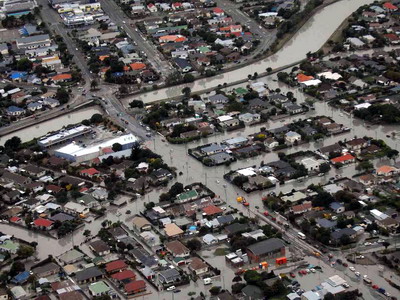
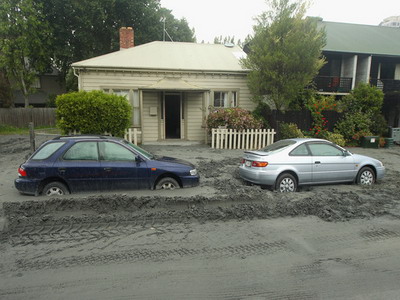
Middle photograph from Wikipedia
Christchurch now has a Leaning Tower of its own. The high-rise Hotel Grand Chancellor was left leaning.
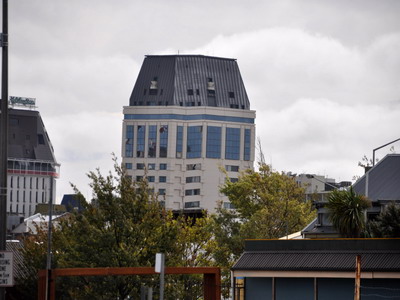
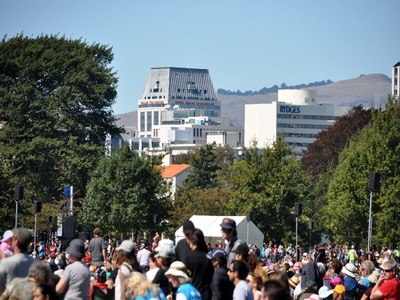
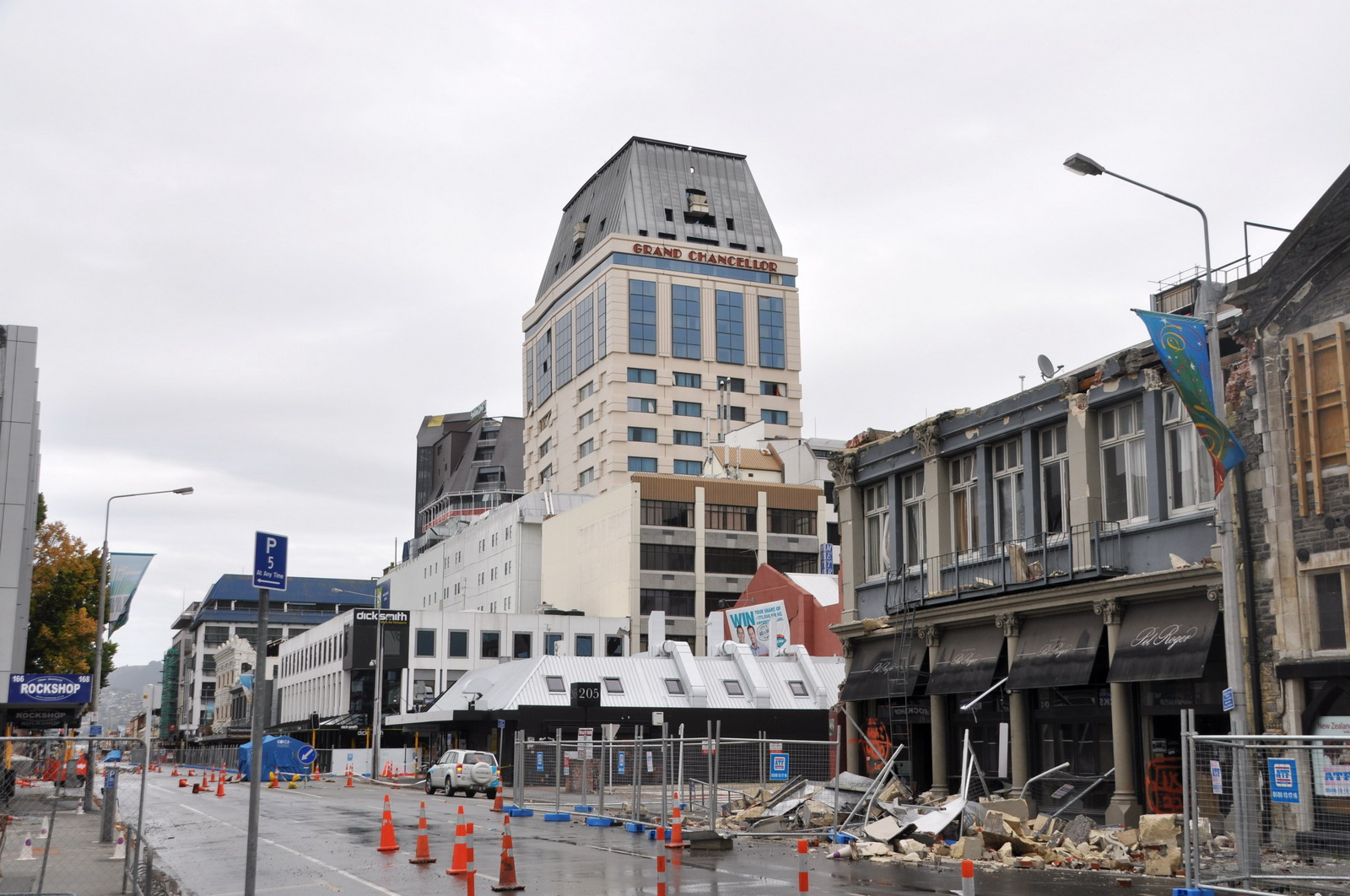
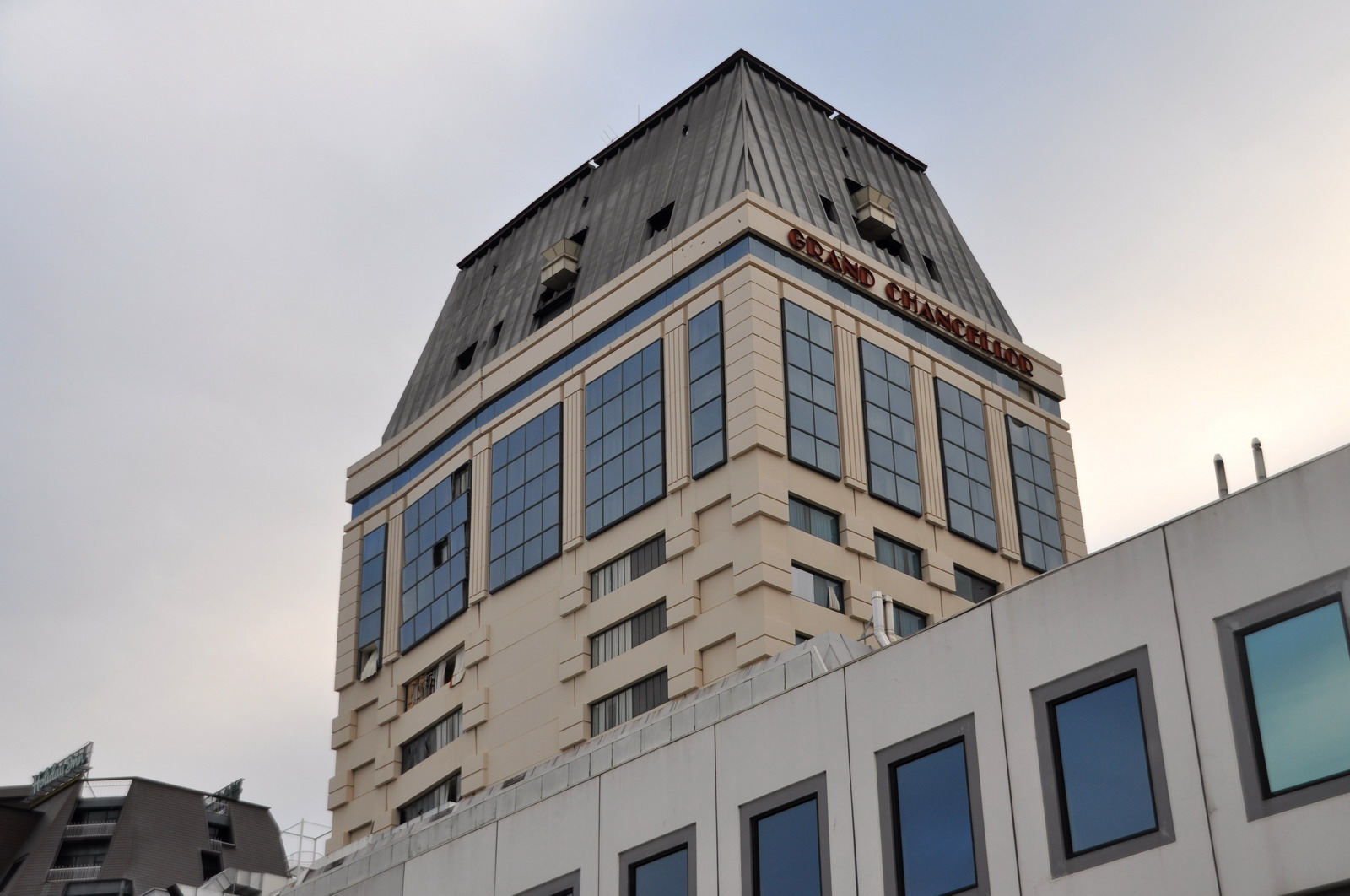
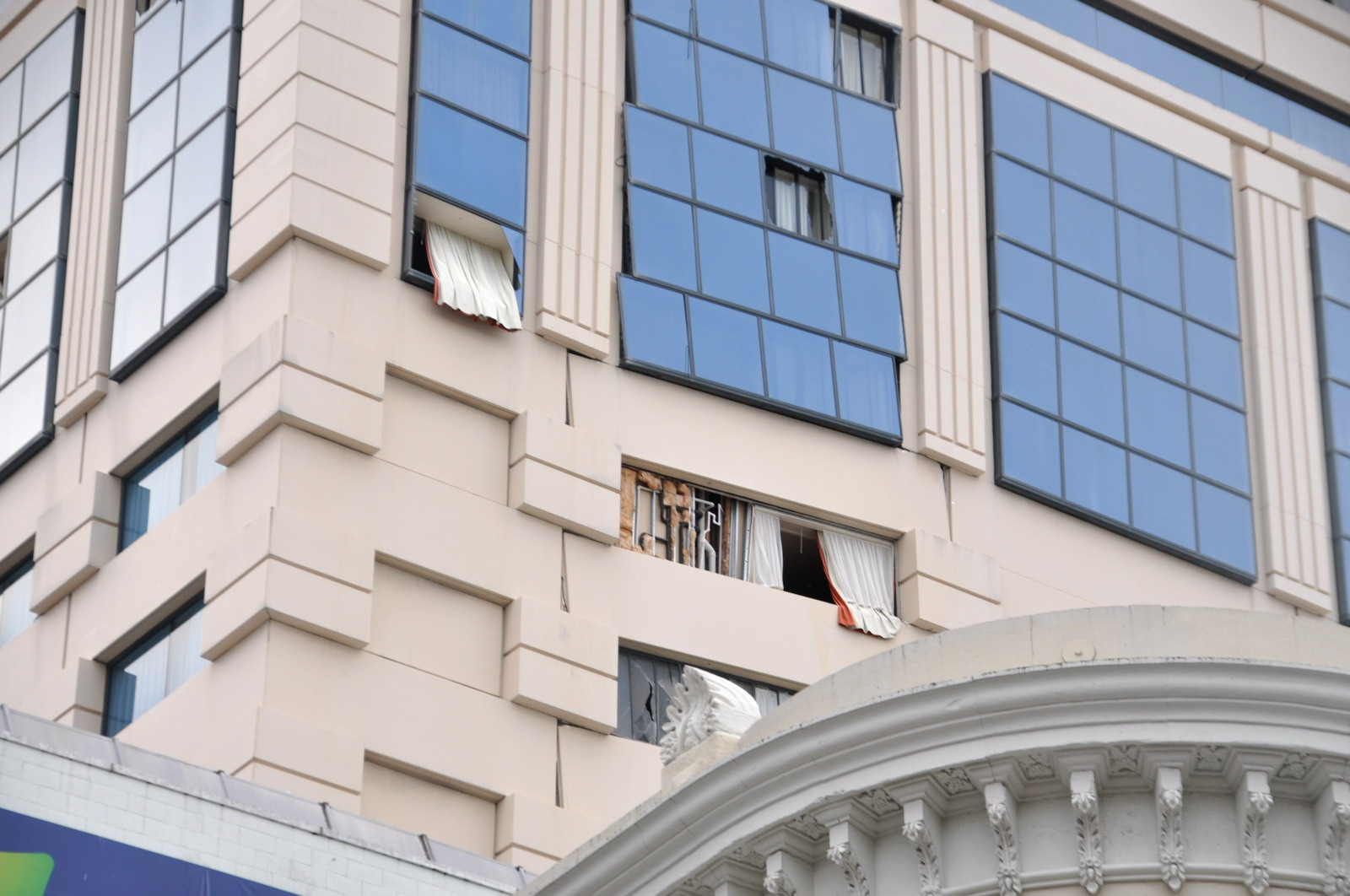
It has company. Aftershocks followed the main quake, as they do, and would go on for years. Some people died in the aftershocks. Individual buildings are still coming down.
A flourishing garden city, one of the best places in the world to live, was reduced to ruins within an hour. It looked like the aftermath of a war.
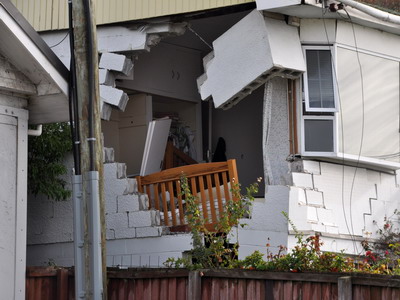
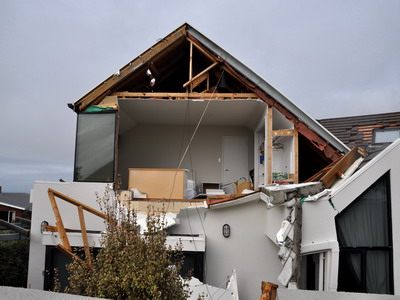
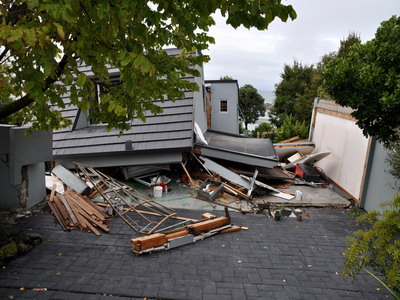
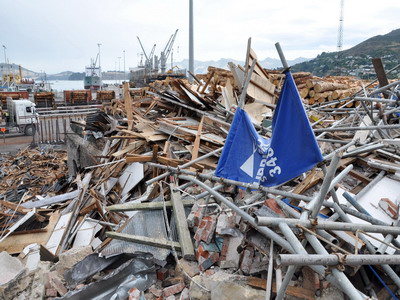
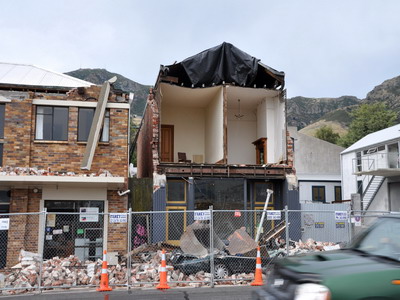
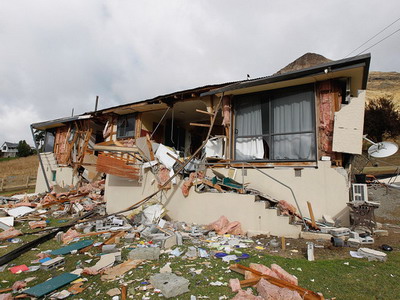
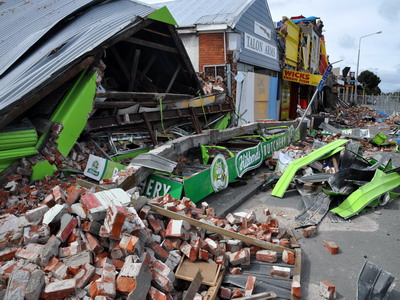
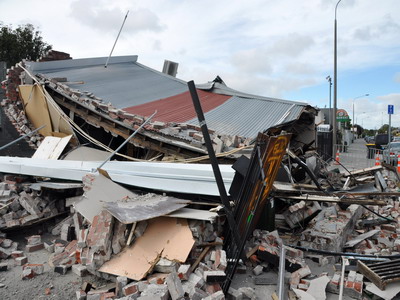
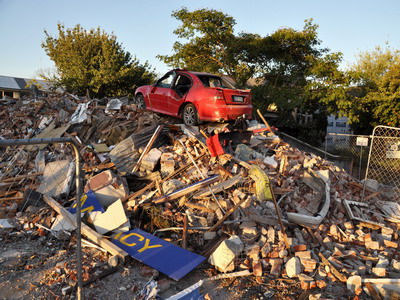
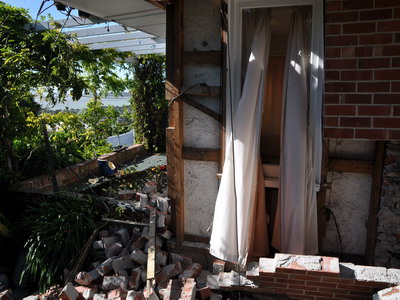
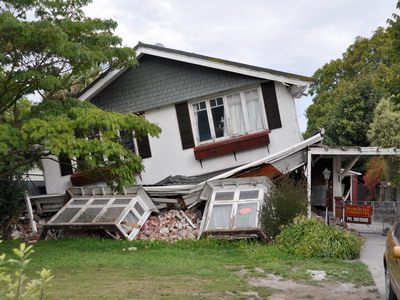
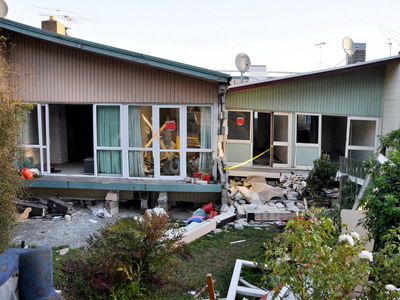
Tiled roofs suffered particularly badly.
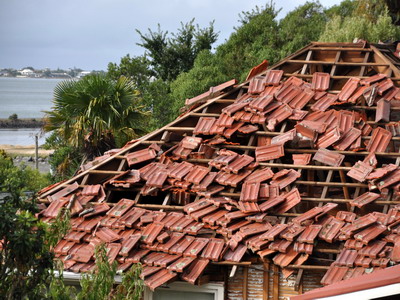
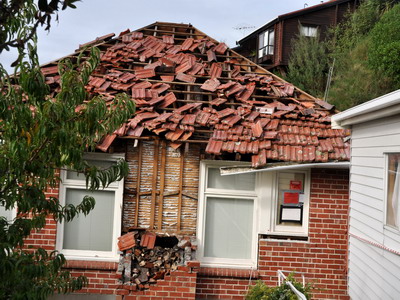
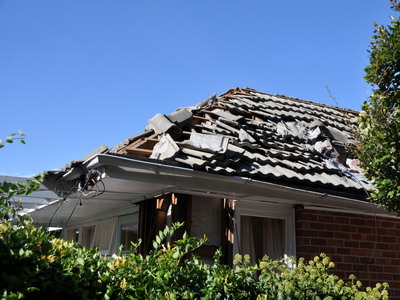
There is no water, electricity or communications. Roads and bridges have been wrecked. The estimates then were that 10,000 houses would have to come down and 100,000 needed repairs. Earthquake-resistant construction often means the house stays up long enough to save the people inside. If a metre-wide crack cuts it in half, how do you go on living there?
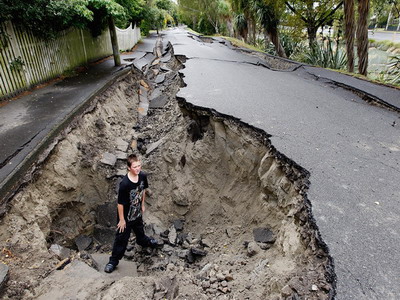
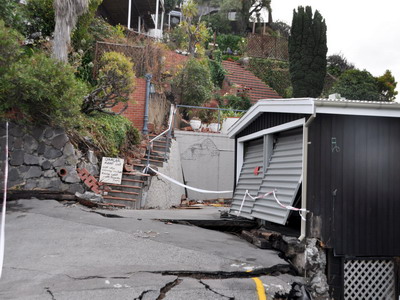
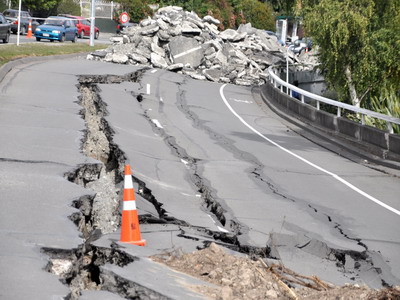
Day one
Tanya was at the computer when the shock hit. Suddenly everything went flying. Her coffee mug was torn out of her hands. Monitors, fridges, bricks, books. You couldn’t stay on your feet. All the water spilled out and mixed remarkably evenly with the food from the fridge. Washing powder and assorted household chemicals flew in after it. The shake lasted only ten seconds. Then came the wail of alarms and the sound of neighbours crying. Denis was in the library.
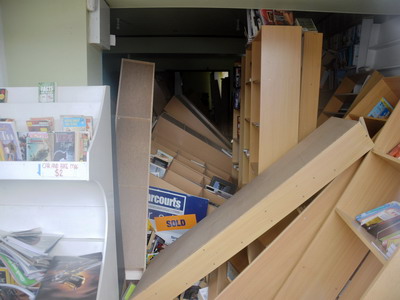
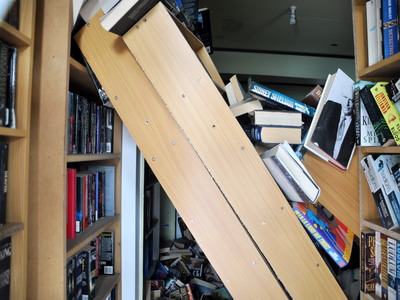
The university was a long way away. The shaking there was weaker, so students were still wondering whether to go home or wait for the power to come back on and go to their next lecture.
What do you do? First, get out of the house. Second, count everyone and make sure they’re alive. Third, will they take our visa away now?
For two hours Tanya and I couldn’t find Denis. The mobile networks went down. First, everyone decided to call at once. Then there was the fact that almost all the cable lines had failed, quite apart from the power being out for a long time. A few mobile towers survived, but they were overloaded. You could see a signal without being able to get through. Texts weren’t going through either.
The satellite phone saved the day. It worked. On about the hundredth attempt, we got through to Denis and found out he was alive.
Our house is wrecked. Some of the walls have collapsed. An engineer says it’s unsafe to go in.
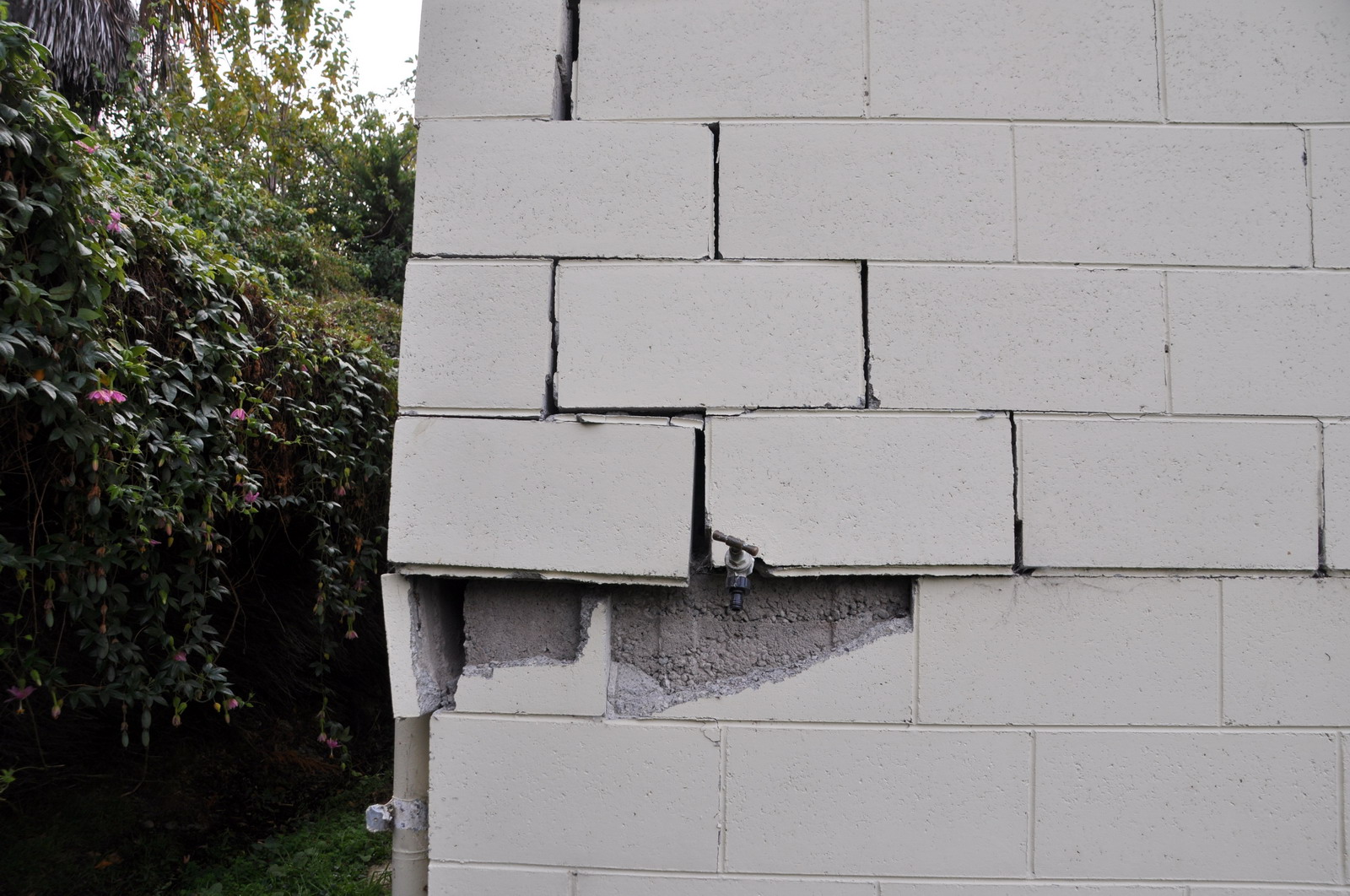
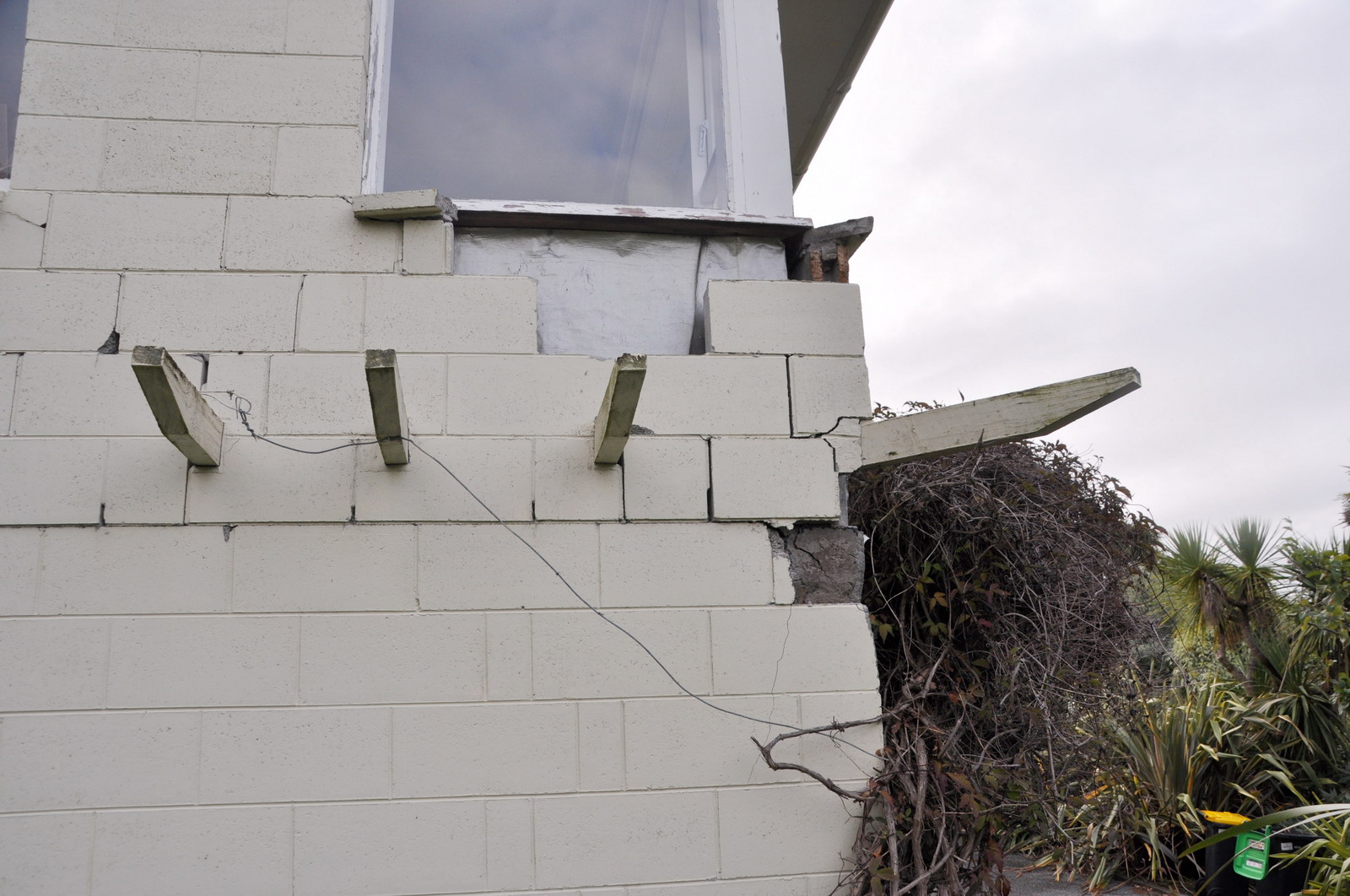
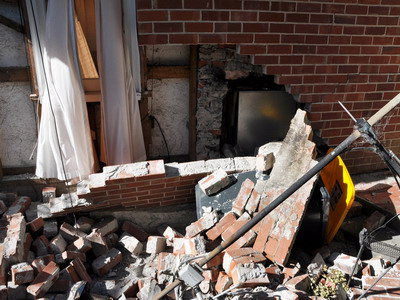
Fear gave way to euphoria. We were all alive. So were the neighbours, though everyone had set up camp by the road and was afraid to go near their houses or what was left of them. People who worked in town began to trickle back. They told us about destruction on a terrible scale, but they were getting home. You could drive to us over the hills. The road was badly damaged but hadn’t been closed yet.
The main road along the shore was impassable. The bridge was badly damaged. It had been declared vulnerable to earthquakes about five years before, and work on a replacement had begun, but the old bridge survived the first quake. People even began to look sideways at the engineers and say they were finding ways to get public money for themselves. Now, to the builders’ delight, science had won. The bridge span stood a metre higher than the road leading up to it. The ground at the approaches had liquefied, leaving our road under water and mud.
During the previous earthquake we’d been without power for a long time too. To make up for it, the local power company gave everyone a little battery radio. How on earth did they know? It came in very handy now. And the radio was still on the air. It turned out they had a backup studio. The television and radio building had collapsed, studios and journalists and all, yet they were on the air again an hour later. We hadn’t checked any earlier.
The reporting was calm, though the journalists had lost colleagues and some had narrowly survived themselves. And there was a stream of information we badly needed. Where you could drive, or rather, where you couldn’t. In our neighbourhoods that was nearly everywhere. They reported which buildings had collapsed, so we knew the university where Denis was had held up before we got through to him.
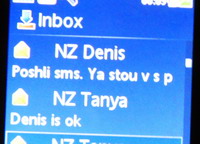
They asked everyone to call only in an emergency and send texts otherwise. And then a miracle. People stopped calling and the texts started coming through. One of them was from Denis. “Alive, well, happy, very hungry.”
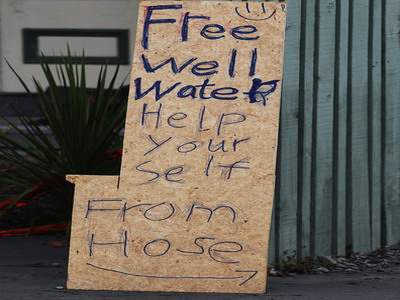
Instead of advertisements, there were announcements from people offering help. Come and take water from our well, for instance.
The mobile operators lifted the credit limits on everyone’s accounts. Helicopters took to the sky. They flew low over the houses, looking for places that needed urgent help. The sound of a helicopter will always remind me of the earthquake now. The wail of the alarms gradually died as their batteries ran down. The first rescuers and ambulances managed to get into the neighbourhood.
We ought to think about how we’re going to manage. The first problem is water. We have a last sip of Coke at the bottom of a bottle. Everything else has spilled or broken. The toilet cistern emptied itself too, mixing neatly with the toilet paper. There’s a layer of papier-mâché on the floor now.
At least the hot-water cylinder is intact. It holds 300 litres. We were lucky. The cylinders had been torn from their fittings in almost all our neighbours’ houses. One had even gone out a window and rolled down the road towards the sea.
Thank goodness we’re trampers. We can get by without the comforts of civilisation. We put up a tent. We have warm sleeping bags, mats, gas, ten days’ worth of dry food, torches and plastic dishes. The glassware is in pieces. The unbreakable Finnish cups survived.
Denis only turned up in the evening. He’d stopped in at our friends’ place. They were alive and unharmed. They had the same problems, but their house was in better shape. It was their own house, though, newly built and uninsured. We rent. If we want to, we can move. The question is where. Fifty thousand people like us are looking for somewhere cheap to rent.
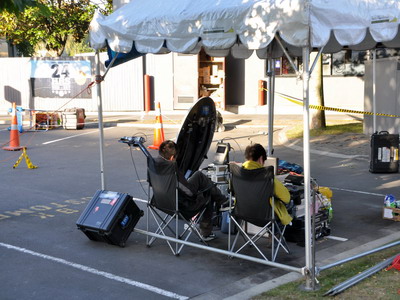
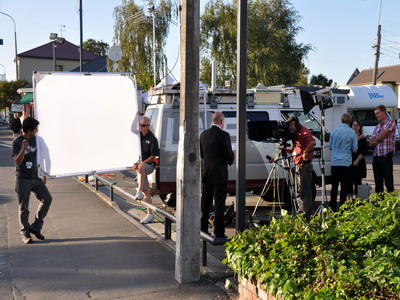
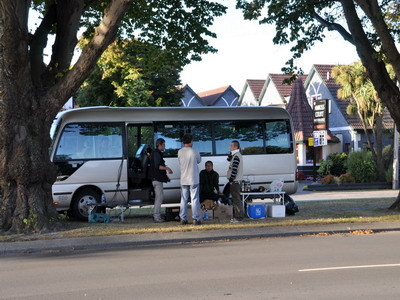
In town, television crews set up on the grass median in Bealey Avenue, opposite the wrecked church. They put up aerials and diesel generators, dragged piles of studio equipment blinking with LEDs into the marquees and went live to the world. Politicians, mayors, prime ministers with ministers and a collection of police officers immediately descended on them. Christchurch and the earthquake were now the lead story on every channel.
Transport aircraft appeared in the sky. The roar of the helicopters never lets up. Our neighbour the pastor came over. He no longer had a church. Almost all the churches in old historic buildings were wrecked.
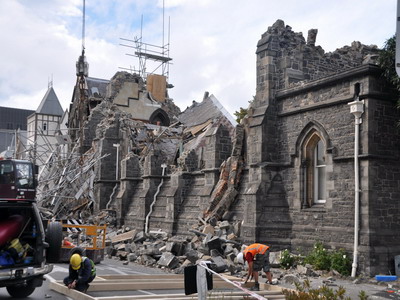
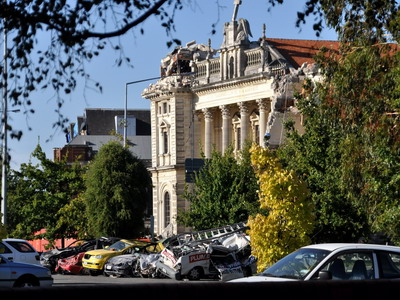
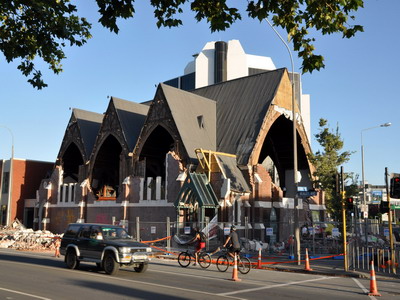
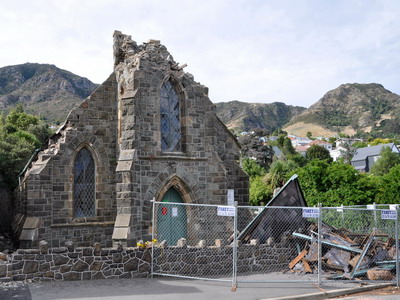
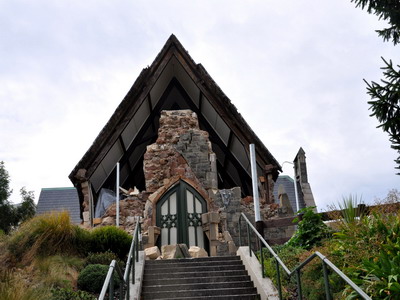
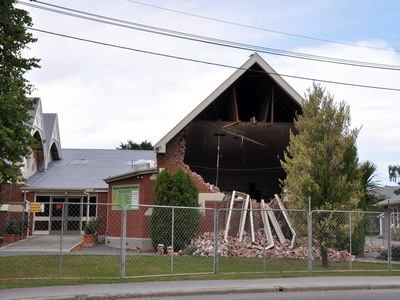
We’re usually wary of church people, but the pastor hugged everybody and said some remarkably human things. It almost made me want to go to his church when it’s rebuilt. For now, we go to his garden for tomatoes, since no shops within 30 kilometres of us are open.
The neighbours gathered in the street. It turned out not everyone had lost all their liquor. Our downhill neighbour Paul, in particular. His house is beyond repair. It used to be worth 800,000 dollars. Now it’s worth eight. Everything is askew. The floor is covered in broken crockery mixed with food. Paul makes a joke of it. Didn’t he tell his wife to keep the house tidy? She never listens. He comes home and finds this dreadful mess.
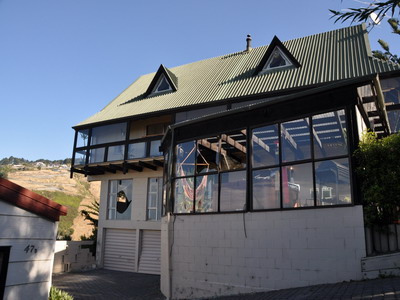
The furniture is broken, but there are still chairs we can sit on. Nobody in our street was killed. Everybody is accounted for. Hit by rocks, with lumps and bruises, but alive. Now we can pour a drink. Paul invites everyone. He had a whole wine cellar.
The neighbour uphill is a musician. He’s playing the piano. The windows are broken and the curtains are blowing in the wind. The whole street can hear him. It’s already dark, but we have candles. One aftershock follows another. Now people greet them with laughter and calls of “Fill it up!” The city is in total darkness, lit only by the sweeping searchlights of rescue crews and aircraft. An utterly surreal sight.
Speaking of the wind, both times a gale sprang up seconds before the shaking started. It came on in about ten seconds. It felt uncanny.
The last few seconds before the shaking.
Day two
Immigration New Zealand announced visa extensions for people whose applications or travel plans had been disrupted by the earthquake. New Zealand really is a good country. Even the immigration officers here still have some humanity left in them.
In the wake of the earthquake, a lot of the usual rules suddenly seemed unimportant. We joked that the 0.08 per cent blood alcohol limit had been lifted. Otherwise, after the previous night, who would have been able to rebuild the city? Nobody seemed eager to take advantage. There was even talk that young people on restricted licences could now drive at night and carry passengers, and that everyone else could drive without a licence or a warrant of fitness. With the roads buckled like that, it felt as if the rules of the road had gone out the window anyway.
This entry records what we were saying and joking about at the time. On 25 February, police reminded drivers that road rules still applied and warned against driving under the influence of alcohol.
Some traffic lights were still working. Where on earth were they getting their power? In Russia they are the first thing to go out in any natural disaster. Speaking of traffic lights, it turns out they can save lives. Not far from us a falling awning caught on one and spared the people walking underneath from being flattened.
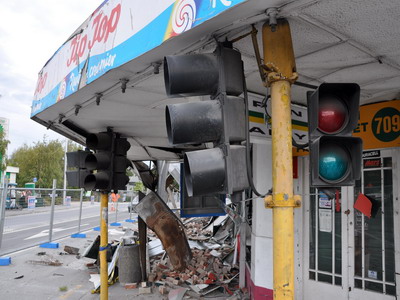
The builders repaired a bridge overnight. We thought it would take a month, but it turns out you can get it done in a day if you skip the plans, the council and the engineers.
The builders worked through the night. Within an hour of the earthquake, big cranes were already clearing rubble in the city. Everyone knew how much those first hours mattered. What amazed us was how quickly people and heavy equipment turned up. Volunteers and construction workers pitched in alongside the firefighters. In the city centre everyone who could help was clearing debris.
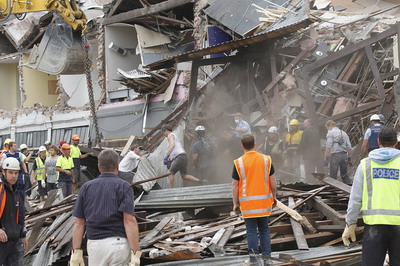
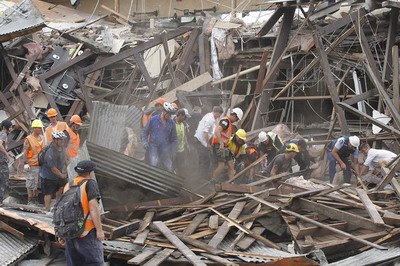
Photo source: Zimbio
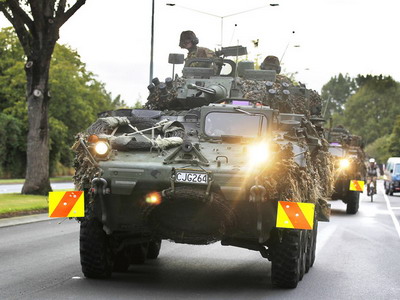
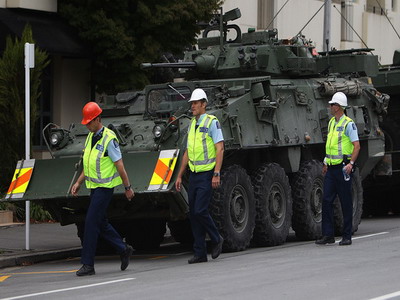
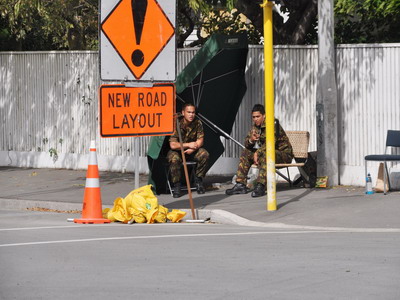
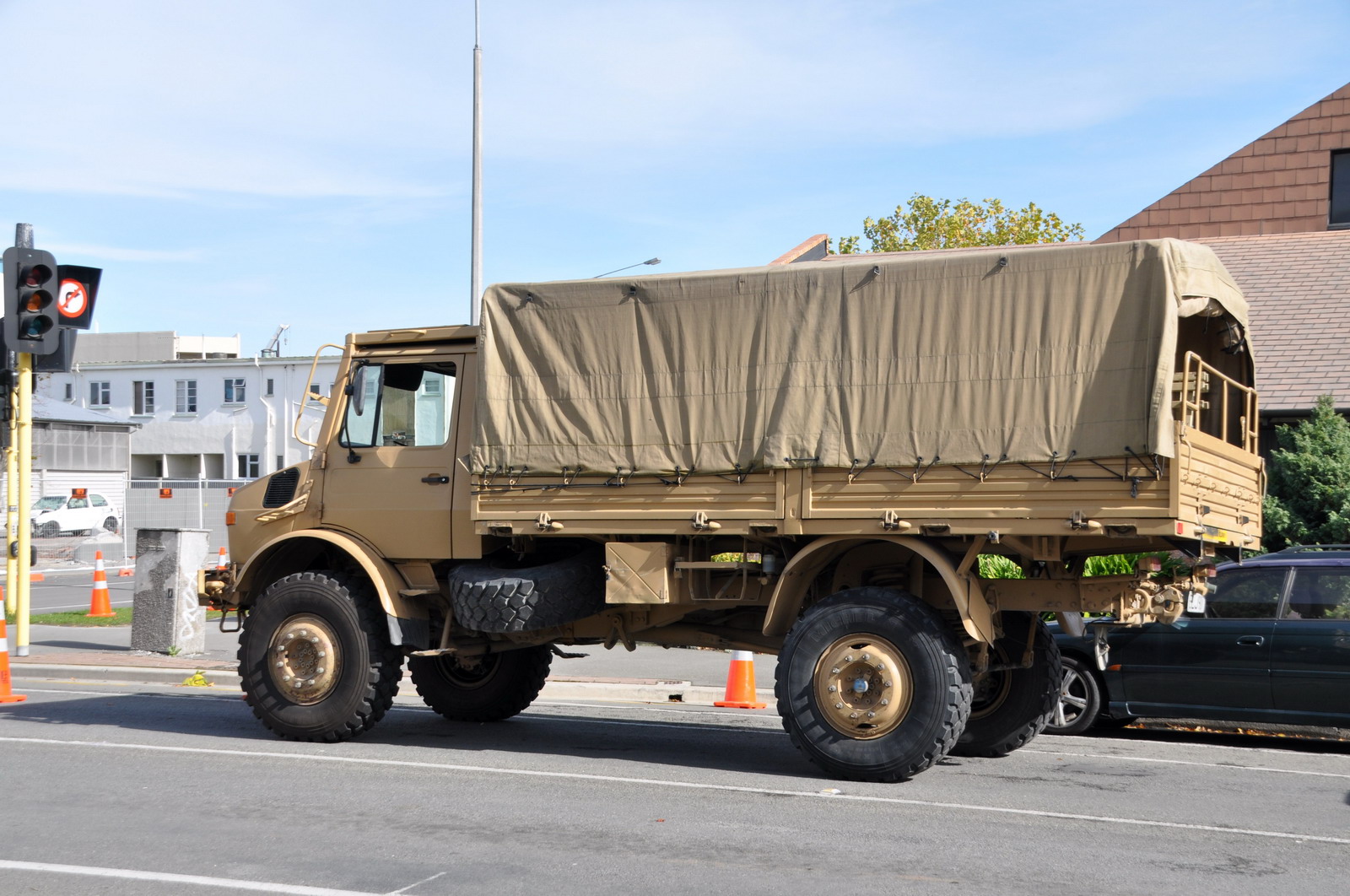
The builders finally returned from the city centre to their own wrecked homes on the evening of the second day. By then, as far as we could tell, almost everyone who was still alive had been rescued. The army and professional rescue teams from several countries took over. They put up fences and banned everything they could ban. There was hardly anyone left to rescue. The American rescuers said they had never seen such an organised response to a natural disaster.
The airport reopened in the morning. Until then it had handled only special flights carrying rescue workers or injured people. It turned out that much of the city had got off lightly. The centre and our eastern suburbs on the cliffs took the brunt of it. Up north, the power had stayed on throughout (the power company's map for 23 February 2011). The west and south suffered little damage either. According to the figures at the time, the ground shook about ten times less there.
On the second day the mobile networks finally died. Their backup batteries had run flat, leaving our suburbs without a connection.
The Russian embassy announced that no Russians had been hurt. How did it know? Had it asked us? I don't remember anyone calling. Some of the dead had yet to be identified and the embassy had already issued its report on day two. As we later found out, one Russian citizen did die.
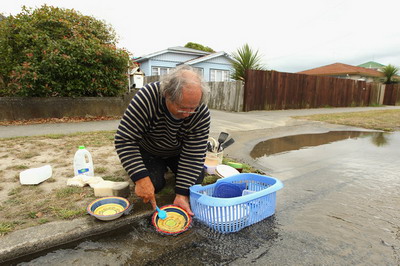
That morning a neighbour brought us a hundred litres of water. Hooray, we could leave the hot-water cylinder alone. The Salvation Army soon came with one-litre bottles. That water was tough to drink. They had treated it with some foul stuff to prevent infection. Fonterra, the company behind Anchor butter, brought in a water tank. It arrived by helicopter. Now that water tasted good. We kept taking water from it for another month because the tap water had been dosed with a wild amount of chlorine or some other muck too.
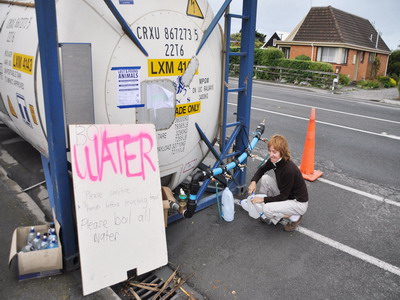
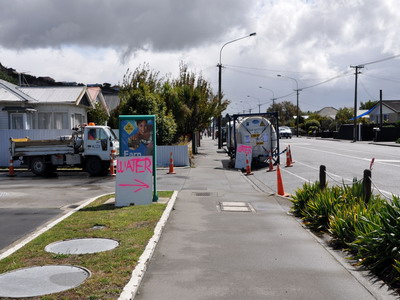
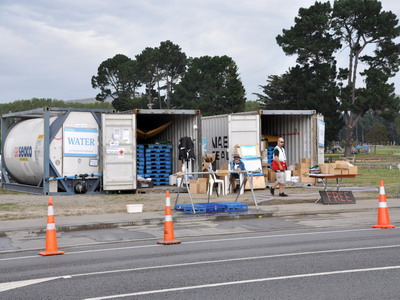
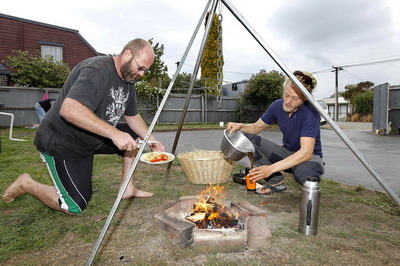
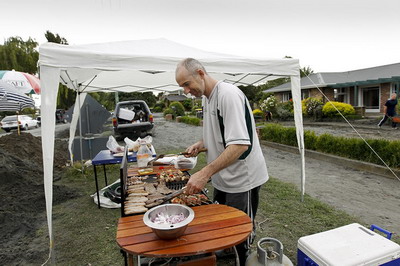
Down below our cliff the Salvation Army and volunteers began handing out food. Supermarkets gave away the meat and ice cream in their freezers, and people had food going off at home as well. Little plumes of smoke began rising over the wreckage. Day two turned into a citywide barbecue. It was a cool day, so we could warm ourselves at the same time, with plenty of fuel lying around from the wrecked houses. We hadn't drunk the last of the wine yet.
Day three
The euphoria wore off. Tanya realised she had bruised her tailbone and that her back hurt. She could hardly bend or straighten up. Yet for two days she had been walking around without feeling a thing. Even the aftershocks had eased off. So had the supply of unbroken bottles. We were left with a tent to live in and a wrecked house we had been told to stay out of. We were starting to want a wash. And by the way, the toilet had stopped working too. The radio told us to take a spade and dig holes under the bushes. They promised portable toilets, apparently being shipped from Australia. The nearest one was a five-minute drive from us. We couldn't be bothered digging a hole. We used to drive out for a cream bun. Now we drove out to go to the toilet.
We fancied a cream bun too, but the supermarkets were all shut. The ones nearest us had acquired red stickers.
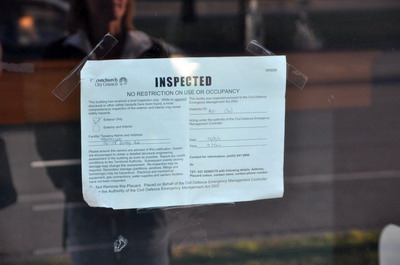
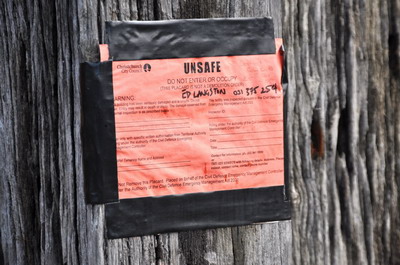
That little notice meant the building was in a critical state and could collapse at any moment. You couldn't even go inside, let alone open for business. There were no police around our way to check, mind you. We had even acquired a new term, red-stickered area. So far there was no looting either. Things were worse in the city centre. The army had cordoned it off and wouldn't let anyone in. Nobody knew what was going on inside. Owners and tenants couldn't reach their buildings, even the ones that were still standing.
The authorities urged cafés and shops to open if there was any way they could. On day three the owners of the corner shops, mainly Indians and Chinese, were back at work. They sold things without lights, fridges, tills or receipts. The tax department assured everyone that taxes weren't the main thing right now. Just keep trading.
Nobody set price limits, yet prices didn't rise. Nobody tried to buy a month's supply of food all at once. There was just a sign asking people to take no more than two bottles of water, and the same went for empty containers.
Humanitarian aid had reached perfection. Tanya found a relief jar of honey. Expensive and delicious, too. She was over the moon. How I wanted to thank the business owner who had donated that jar. Seeing Tanya so happy, a man from the Salvation Army rummaged around and produced some beautiful decorated marzipan. Tanya nearly cried. She said it should go to a little girl. He insisted she had every right to eat it herself if she had a sweet tooth.
There was everything we needed besides honey, of course, including bread and tinned food. The local prison got a sandwich-making operation going. We now ate those sandwiches with our tea in the mornings.
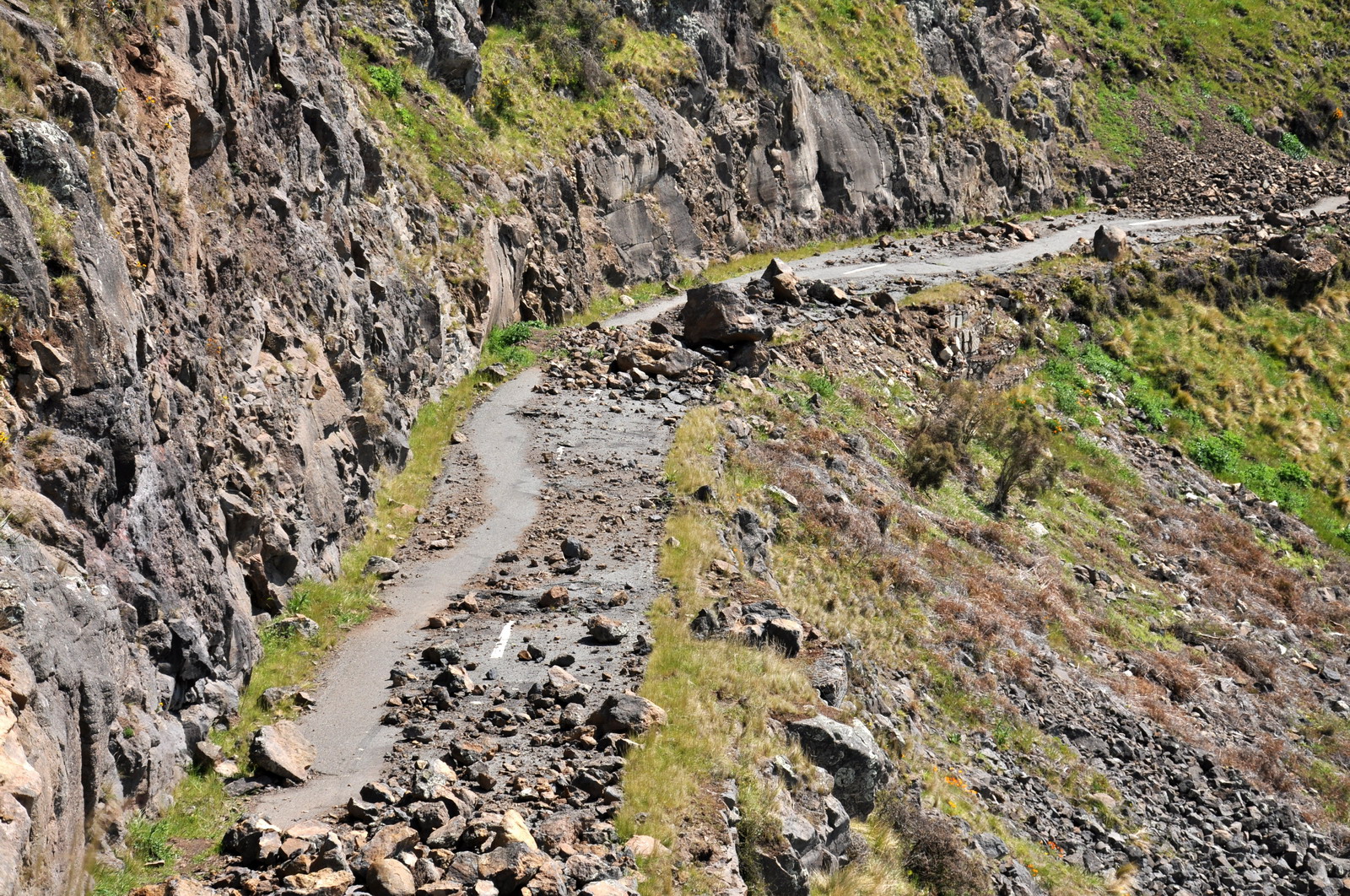
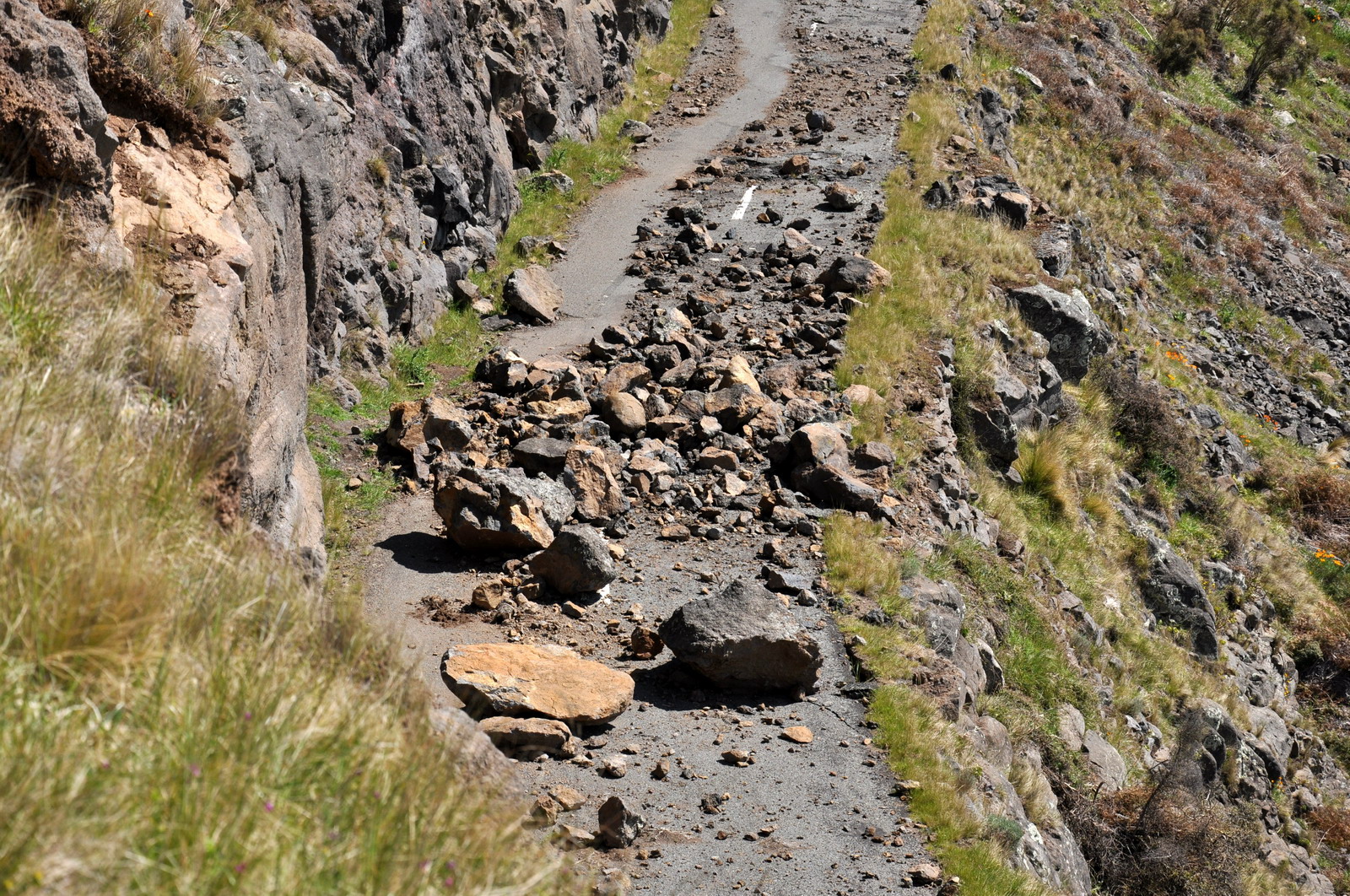
Fuel was a serious problem. The city was supplied from the nearby port of Lyttelton, where the terminal had been wrecked. The tunnel connecting Lyttelton and Christchurch, close to the epicentre, had been damaged too. If the ground acceleration at the surface was 2.2 g, what must it have been like in the tunnel? It was five hundred metres closer, we figured. The road over the hills was impassable as well.
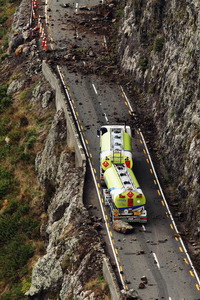
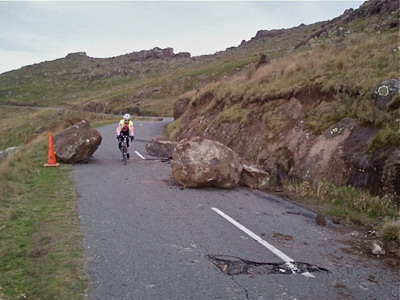
Photographs from Wikipedia
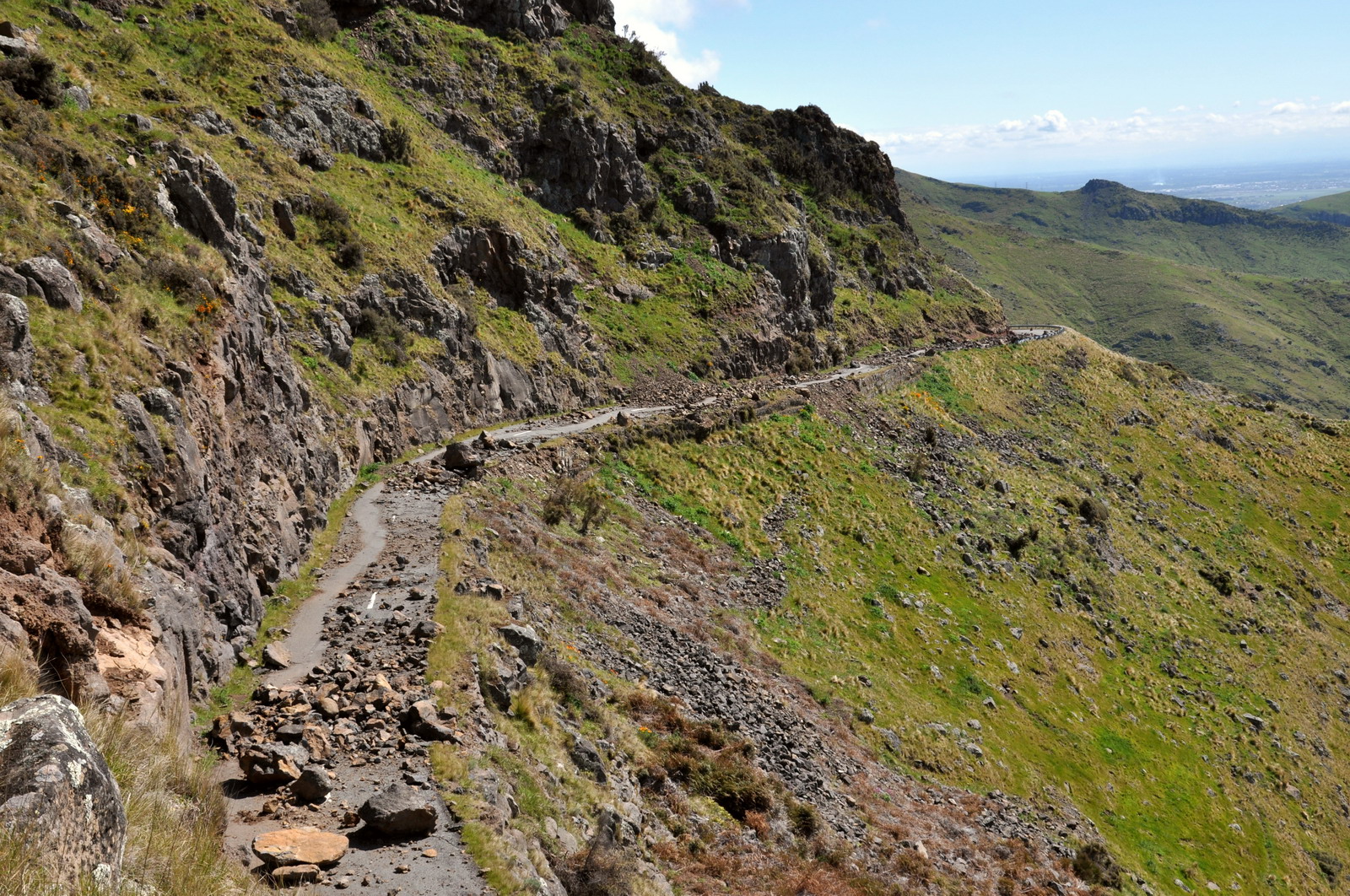
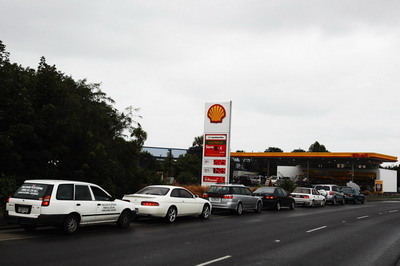
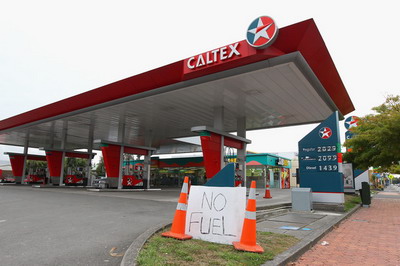
Getting supplies in from other towns would take time. There were enormous queues at the handful of petrol stations still open. Our tank was empty. All we could do was wait for better times.
Both our cars came through almost untouched. We were lucky. Plenty of garages had collapsed, but most of the cars lost were parked out on the street.
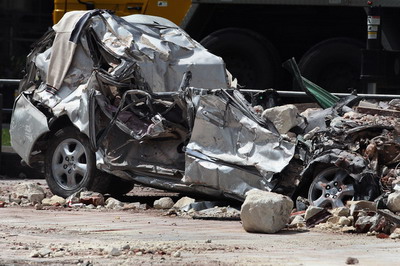
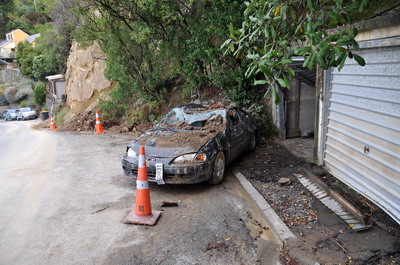
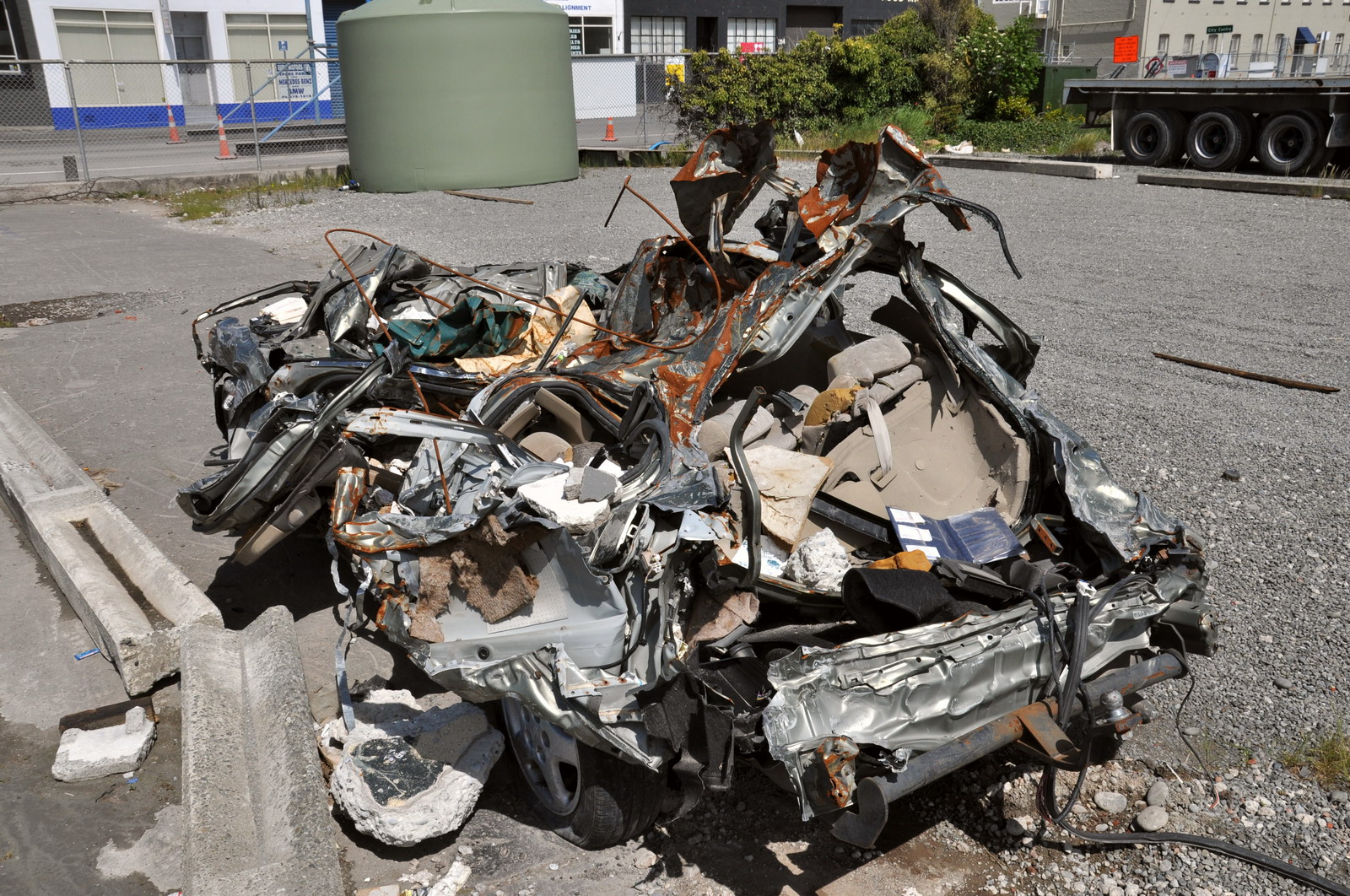
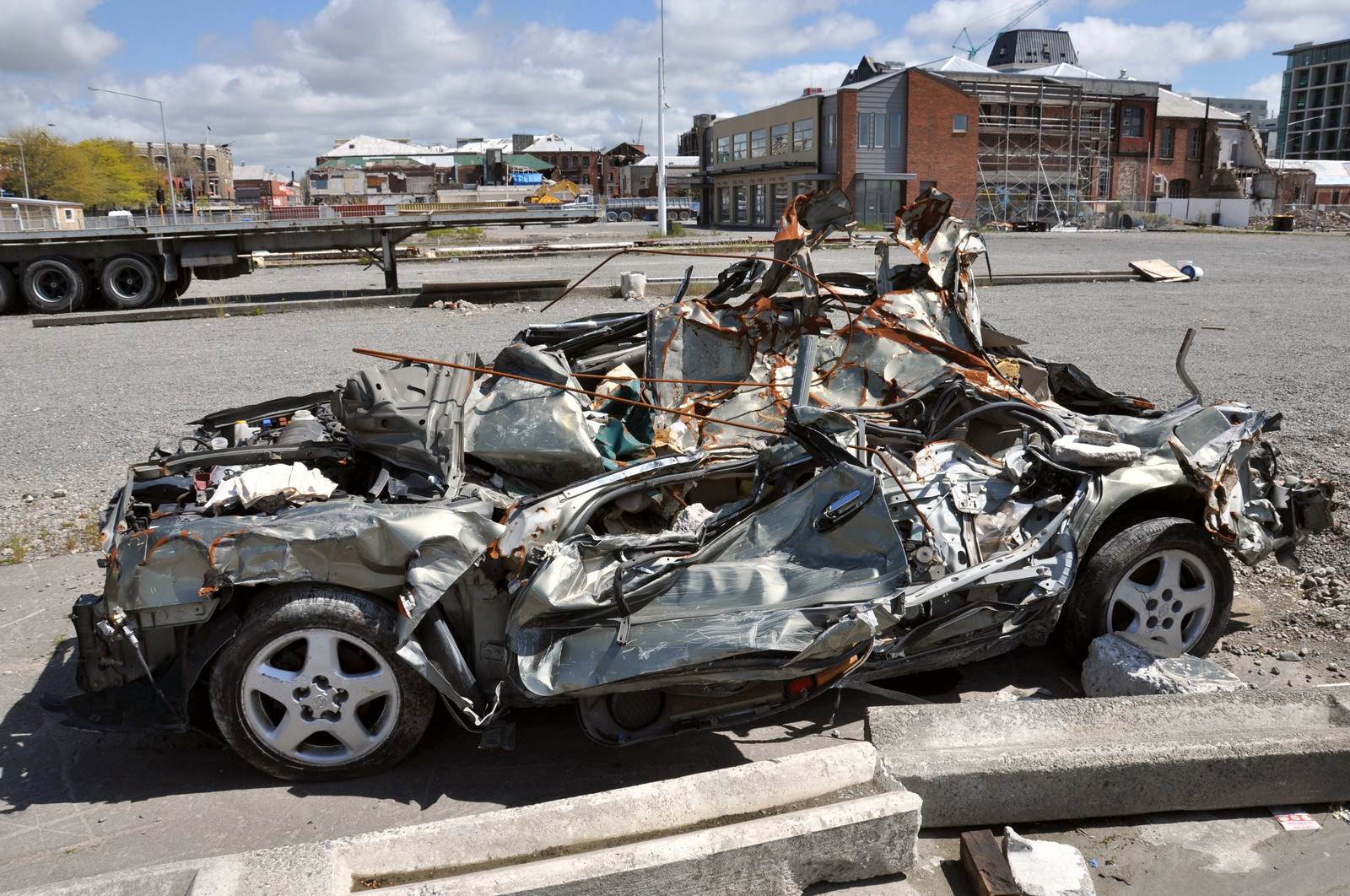
Building walls came down on cars. An hour later Tanya would have been parked at the polytechnic. Her car would have been a write-off there.
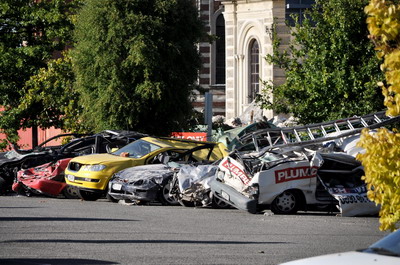
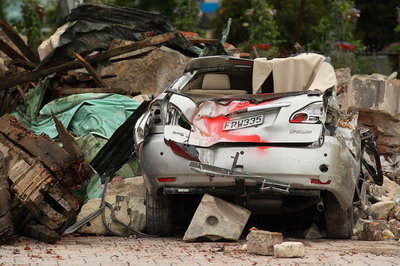
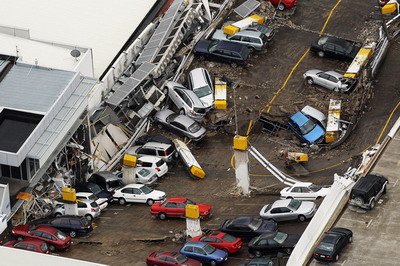
Cars in multistorey car parks mostly survived, even where the decks had given way.
The professional rescue teams reached our neighbourhood. They were all in black gear, looking like astronauts.
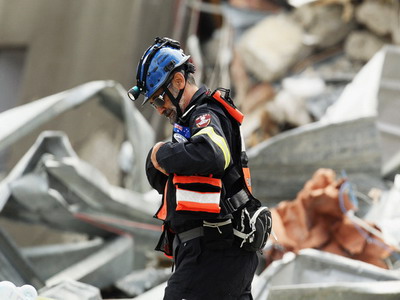
The kit was meant to keep them alive even if a building came down on them. They had a dog trained to sniff out survivors. By day three, sadly, they were finding only the dead in our area. Chunks of cliff had fallen onto houses. There was little hope that anyone could have survived in those flattened homes, but the rescuers came and searched anyway. They found only bodies.
Towards evening the police suddenly decided to evacuate people living on the streets along the cliff edge.
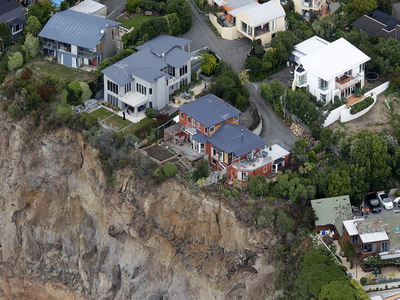
Photo source: Zimbio
There were fears that the rock was riddled with cracks and would give way, taking a whole row of houses with it. The police arrived in the evening and ordered everyone out under threat of arrest. High-precision GPS receivers were set up along the cliffs to track rock movement down to the millimetre.
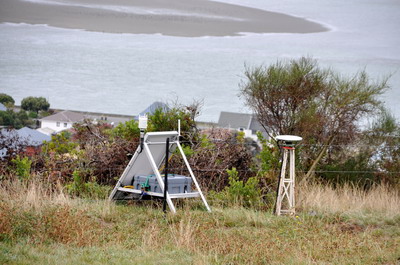
A few days later it turned out that the cliffs were still where they had been, and people were allowed back.
People without homes settled wherever they could. Anyone who asked would get help. It might be a shared place, but there would be a bed and a blanket. The blankets had been collected ahead of time. I had even brought all our spare ones over from Russia a year earlier and given them to the Salvation Army. It was good to think that they had come in handy.
Not everyone wanted to live in a public shelter. We were still in our tent. At one neighbour's place, the children's treehouse had come through best, so the family moved into it. Others made do in garages and cars. Most of those left without a home went to stay with neighbours and friends.
We had a new pastime. Put a bottle on the floor and see whether it rolls.
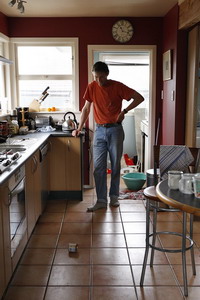
If it stays put, good. If it rolls, bad. The house will have to come down or need major repairs. Everyone is occupied with this simple test. It doesn't really roll, but if you give it a little push it sort of does. Does that count?
Day four
The first supermarkets opened. The roads were almost fixed. There was no fresh asphalt or road marking, of course, but every crack had been filled with gravel. As fast as the cracks were filled, though, they were dug up again. The utilities had suffered enormous damage. Plumbers and electricians had been brought in from all over the South Island. Everyone was digging, with no end in sight. Pipes and cables were broken every few metres. An enormous boulder fell on our substation and flattened its heavy steel transformer.
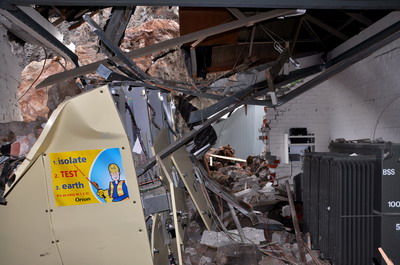
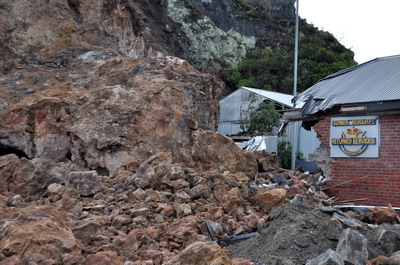
Our water pumping station met the same fate, and so did the telephone exchange. Land is expensive in our suburbs. Utilities had been built below the cliffs, where housing wasn't allowed. Probably a good thing. Better a flattened transformer than a flattened family and home.
While the government pondered where to find petrol, private fuel companies sorted it out themselves. A BP station reopened just five kilometres from us. They hadn't put up the prices, either. We had fuel at last.
The mobile operators got hold of diesel generators.
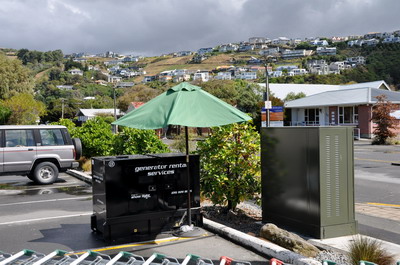
They rattled away beneath every mast. In Russia you'd have to put a guard on them in three shifts. Here they ran unattended. Nobody stole them, despite people going without electricity. A number of districts still had no power and wouldn't get it back soon. A new high-voltage cable and substation were needed, but there was some hope for us. The lights were already coming on in neighbouring streets (the power company's map for 27 February 2011).
Mobile phones were working again. You could even get online through them. The trouble was that we didn't have any computers. Or rather, we didn't have any electricity to see what was left of them.
Some neighbours had found generators too. They put sockets out in the street and pinned up notices inviting people to charge their phones. An inverter plugged into the car's cigarette lighter did the job for us.
By Friday evening most of Christchurch's suburbs had electricity and water back. Friends were inviting us over to stay and have a wash. They were starting to take offence at being ignored. Sooner or later we'd have to give in, especially as the neighbours were gradually leaving too.
The local paper even said our Redcliffs, once New Zealand's Riviera, had become a ghost town. Leaving was frightening, though. We didn't want to abandon our belongings in a house that couldn't be locked. We hadn't seen any looting after the earthquake, but ordinary theft was still a fact of life. Things were getting back to normal, so it paid to keep an eye out.
We finally gave in and moved in with Gerda, our neighbour from our old place on Clarendon Terrace. She had converted a garage into living quarters.
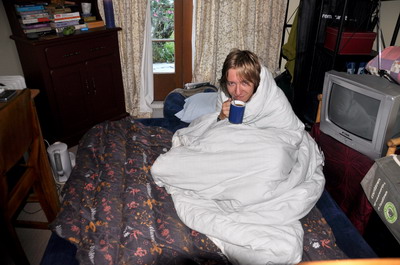
We fired up the computer there and found it worked as if nothing had happened. Even the enormous monitor was fine. The only problem was that the coffee Tanya had been drinking when the earthquake struck had flooded the keyboard. Fancy managing to spill it like that. It missed the cupboard and the ceiling, yet found the keyboard in a big room. It must be a property of coffee, like its colour or its smell.
Nearly every appliance and bit of furniture had flown from corner to corner. Even the fridge and the stove, torn from its fittings. The square microwave had battered all its corners off and turned into a ball. But a miracle had happened. Our big old tube television was still sitting on its stand. The large floor mirror had survived too.
Getting back on the web cheered us up. From what we read at the time, the seismologists were putting the jolt down to a new fault. So the main event, the Big One everyone had been waiting seventy years for, was still ahead of us on the main fault 120 kilometres away. The figure being mentioned was magnitude 8–9.
The first comment underneath summed up the mood. “Couldn't the bastards have waited a month before telling us?”
The weekend
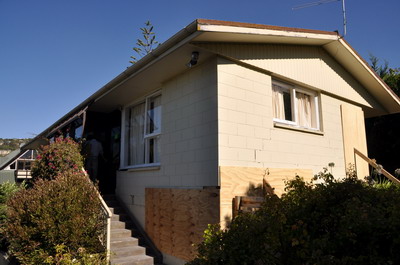
The working week that had brought the earthquake was over. The builders and rescuers had been the ones doing the work, of course. Everybody else had tried to patch up their homes as best they could. Our landlord decided to look after ours too. Once they inspected it, things looked worse than they were. The stone cladding had collapsed, but the wooden frame was intact. A crack big enough for a cat ran through the house. The foundation had split too. One wall was hanging in mid-air, with the other three still resting on the foundation. After the previous earthquake that would have counted as a disaster. This time everyone's standards had shifted closer to “she'll be right.” You can't knock down the whole city.
Our house was declared repairable. All that was needed was to nail up plywood to hold the loose bits of stone in place. It was our landlords' last source of income. They had lost one house in the previous earthquake and two more in this one. Ours, the third, was their last hope. On the weekend they turned up with some builder friends to put up the plywood. There was no electricity, and you couldn't hammer a nail into stone. They still wanted to get it done, so they leaned the sheets against the walls and propped them with stakes driven into the ground. They really wanted us to stay on, but it was difficult without running water and power.
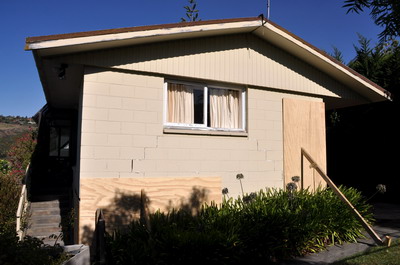
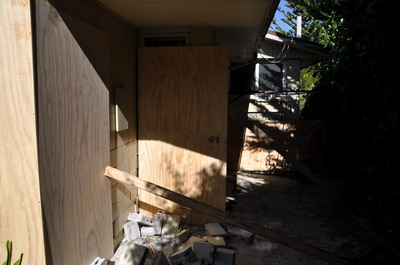
A day off is always a treat. This was probably the first day people came out of their homes and went exploring to see what had happened and what had fallen down. Almost everyone had a camera or, failing that, a phone. Everyone took pictures of the wreckage. The owners of wrecked buildings didn't mind, it should be said. They wanted to go out and take pictures too.
After the previous earthquake they had even printed a handsome book on glossy paper with very artistic photographs of the ruins. They printed postcards as well. I wondered what would happen this time. The losses were greater. A lot of people had died. It hardly seemed the time for entertainment. Still, I thought there would be more pictures and a second volume in print.
By evening a strong wind came up and lifted all the dried dust into the air. It was the dust of demolished houses and the fine sand that had surged to the surface during liquefaction. You couldn't see a thing. It was like a desert dust storm. Dust was everywhere. No point washing the car or anything else that was left. One thing in our favour was the absence of the smell of death that usually comes with earthquakes. We'd already been through a major earthquake in Turkey in 1999, and the smell there had been terrible.
But the smell was the least of it. What mattered was the number of people killed. At the time we were hearing that roughly 180 people had died in Christchurch. In poorer countries, earthquakes like this have sometimes killed hundreds of thousands. The final toll from the 22 February earthquake was 185.
The second week
It was time to think about how to carry on. There was little hope left of finding anyone alive under the rubble. It was time for excavators and bulldozers.
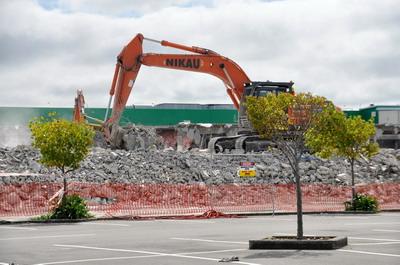
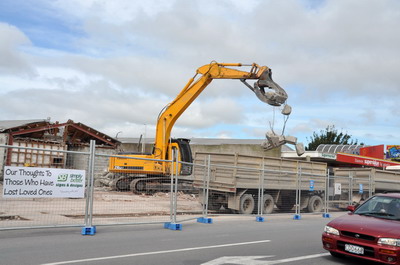
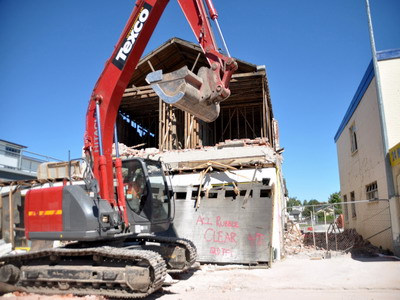
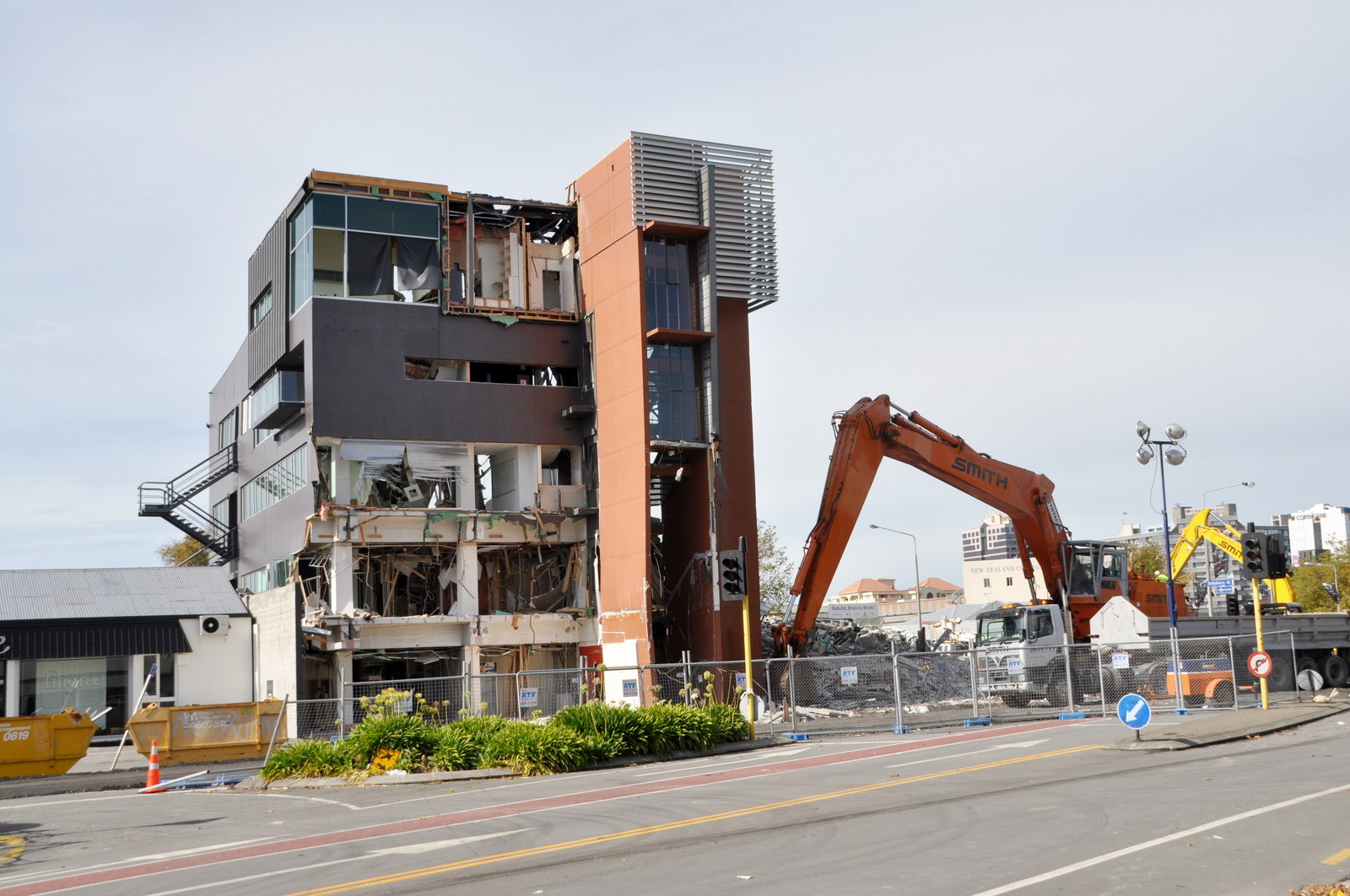
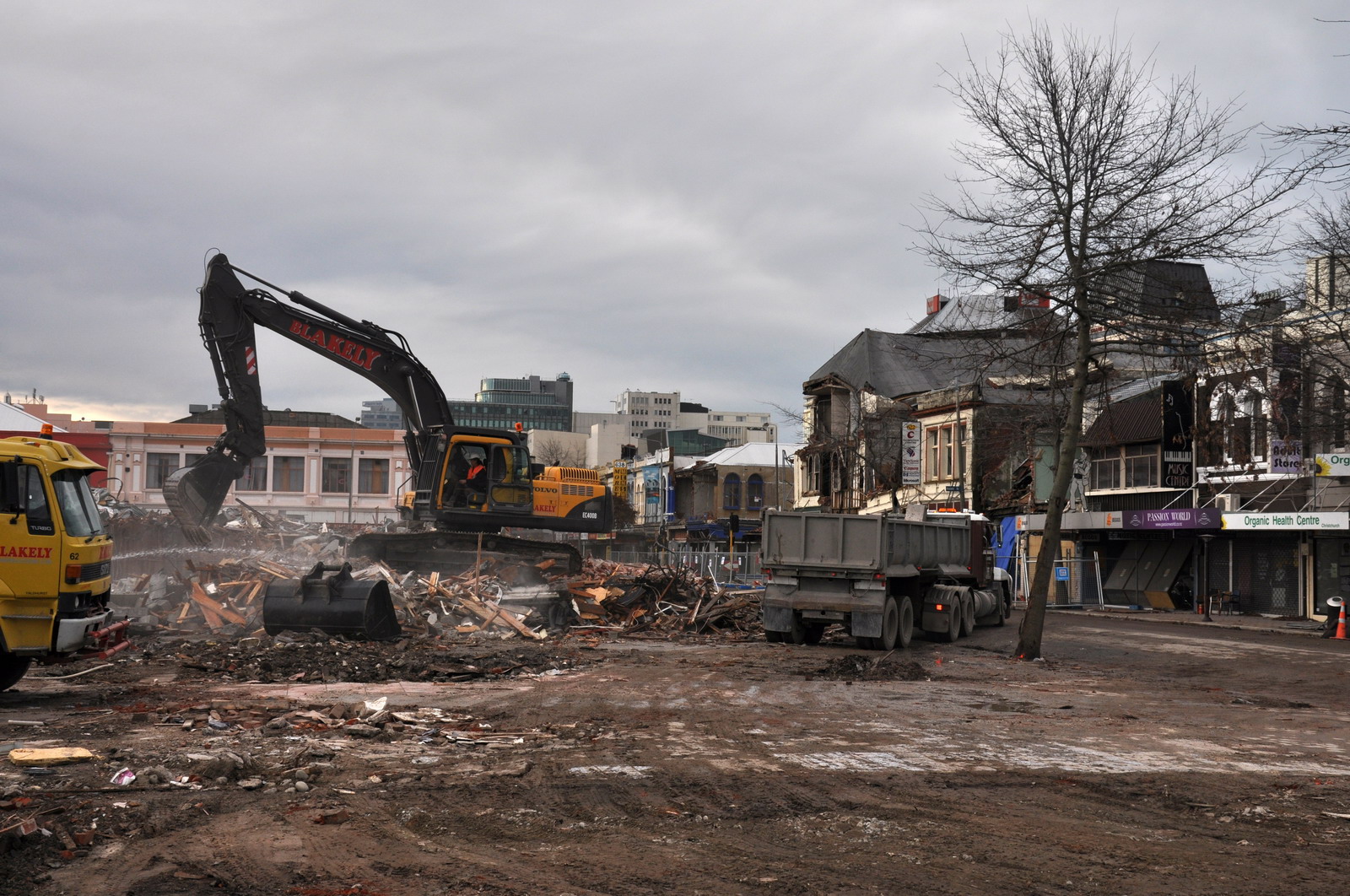
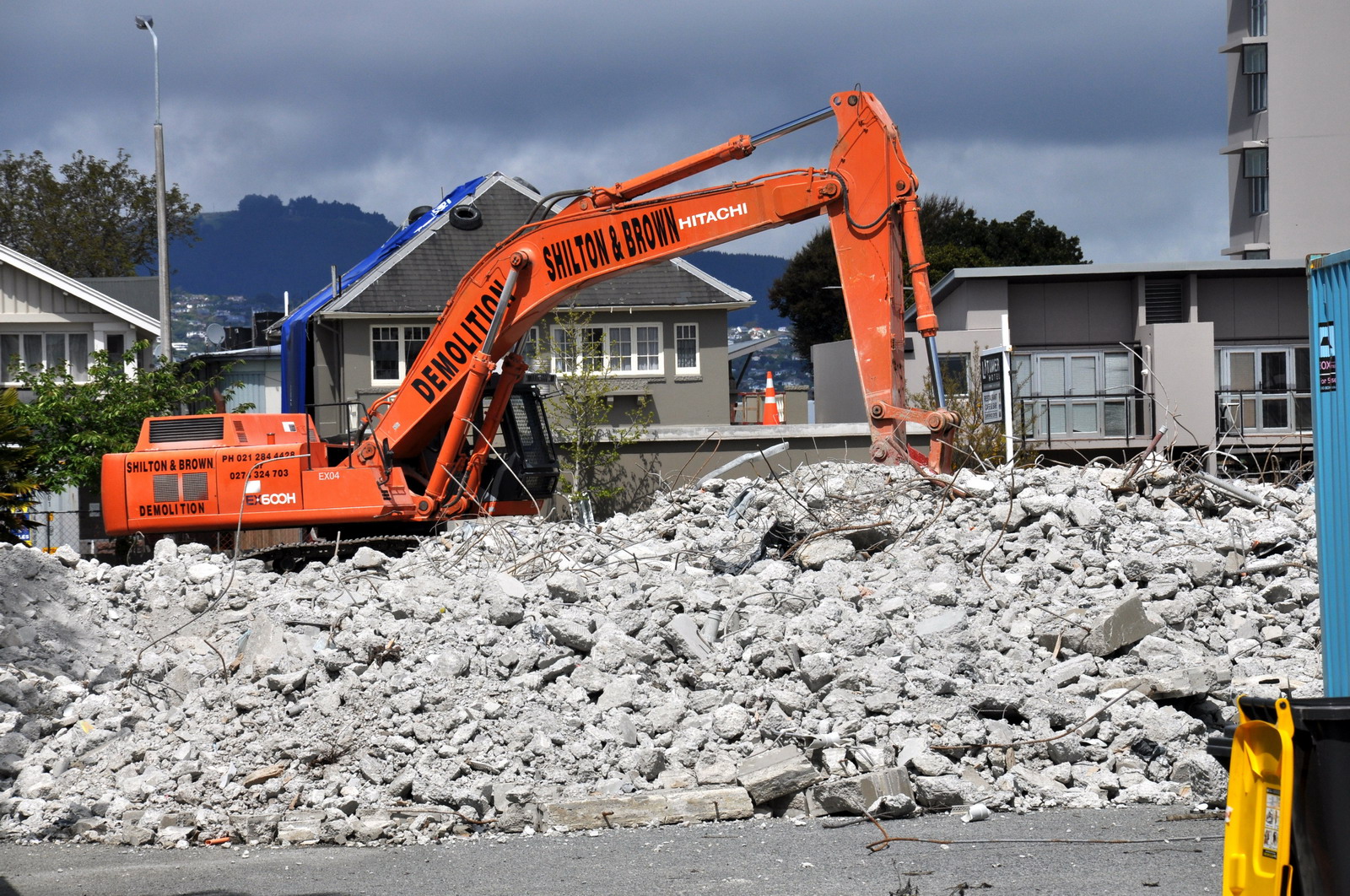
Rubbish collection resumed on Monday. This time, anything could go in any bin. How were you supposed to sort it all with broken glass, bricks and rotten food all over the floor? People had cleaned up over the weekend. Everything we’d worked so hard to acquire went in the rubbish. When the truck tipped the bins in, the glass crashed like someone had smashed a shop window. Both the crockery and the contents of the wine cellars had been wiped out.
After that earthquake clean-up, the city rubbish service asked people to keep bricks and dead pets out of the bins. Human waste, on the other hand, could be wrapped carefully and put in the red bin with the household rubbish. That put an end to digging holes under the bushes.
Speaking of animals, after both big shocks the cats disappeared for five to ten days. Nobody knew where they’d gone. About a week later they started turning up again. Our neighbour Wendy was terribly worried about hers.
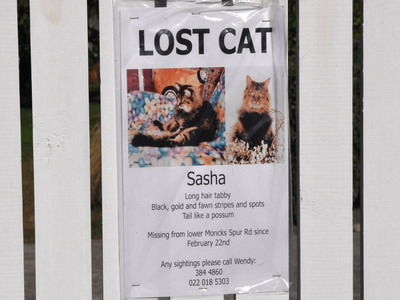
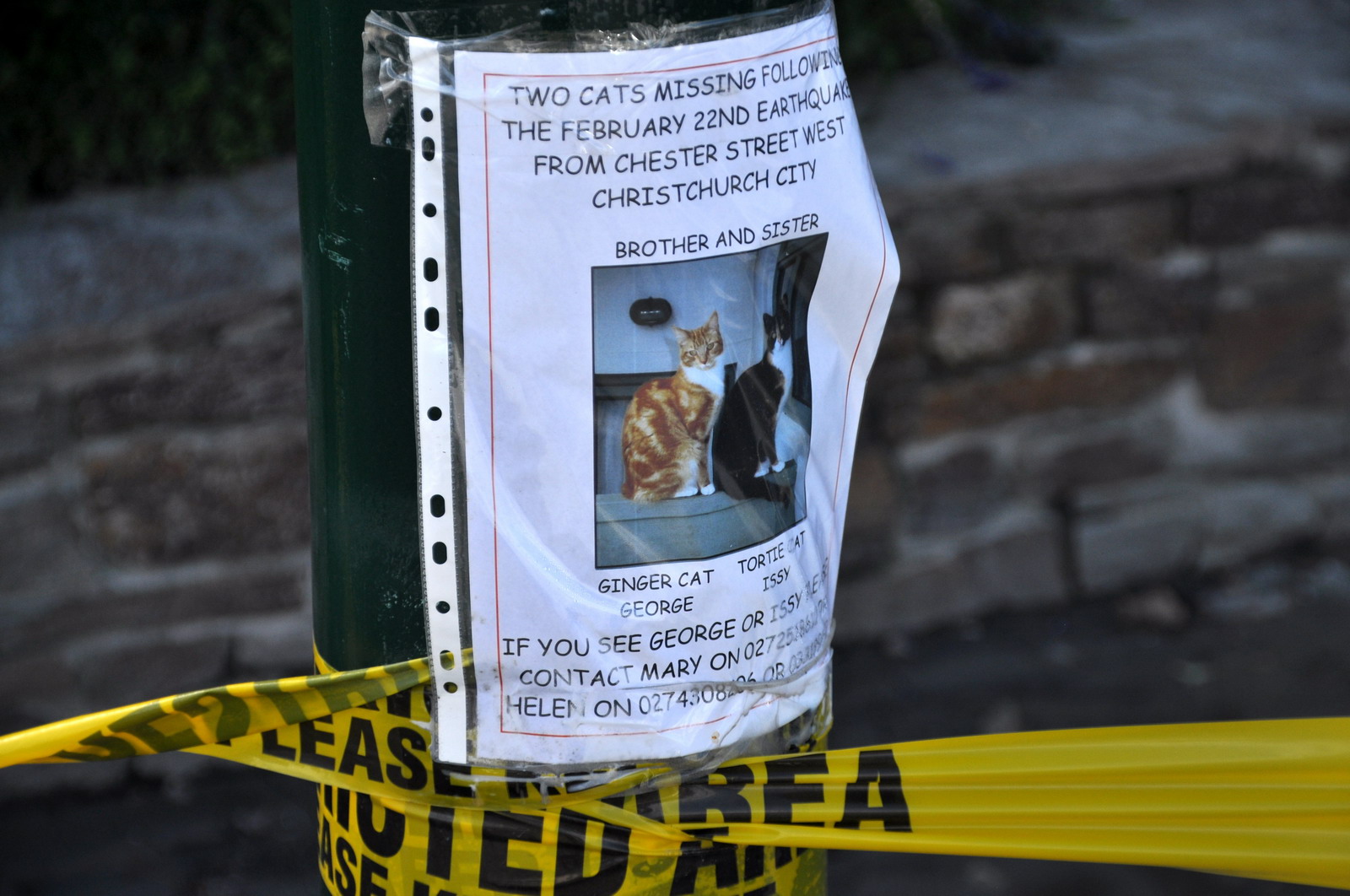
She spent most of the day standing on the ruins of her house with a tin of cat food, calling for her beloved cat. Exactly a week later the cat turned up and began yowling in the middle of the yard. Another neighbour’s cat came home with a broken leg.
With dogs it was the other way round. They appeared from somewhere, nobody knew whose they were, and then they vanished again. I can think of only one explanation. All that hardship turned the cats into dogs. Everyone put up missing-pet notices on the wall down the road. Someone’s turtles had even got away. A special service was set up to look for them.
As the shaking died down, engineers began making preliminary assessments. Of the seven houses on our little street only two could be repaired. The rest would be easier to knock down. They said 80 per cent of the buildings on our street would have to go. The house across the road came through best. A man had built it himself forty years earlier, without plans or building standards, and spent his life there with his wife. Imagine how proud she is of him now.
The whole city was covered in inscriptions, stickers and bits of paper. Many of the messages were spray-painted. Rescue crews wrote Clear on buildings they’d checked. Engineers marked places you couldn’t enter with NG. Electricians marked houses that had been disconnected. Someone had even gone round the gun shops and written in silver paint that the firearms had been removed.
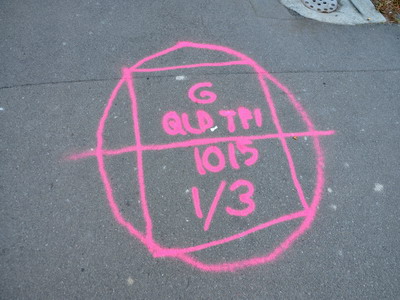
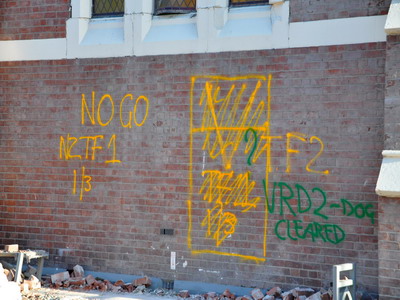
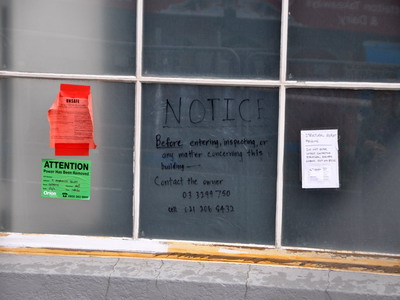
Supermarkets started reopening in the affected suburbs. Around our place there was nothing for ten kilometres. The two closest shops were judged beyond repair and the staff were laid off. You heard that awful phrase more and more. If your house came down, we thought at the time, you could rebuild it on a year’s wages. If you lost your job, even an intact house might be taken to pay your debts.
It felt as though all the usual rights and obligations had evaporated overnight. We’d normally expect a landlord to put things right or put us up in a hotel while repairs were done. Now we were left to sort it out ourselves. The same went for debts and evictions.
It seemed to take less for a building to be deemed usable. One of the nearest supermarkets had been red-stickered on the first day, then the sticker was changed to yellow. That meant you could go in to do repairs. Some of the concrete floors had collapsed and were being carried out through the door. The pile of rubble by the entrance kept growing. They promised it would open in a week. A year later it was still shut.
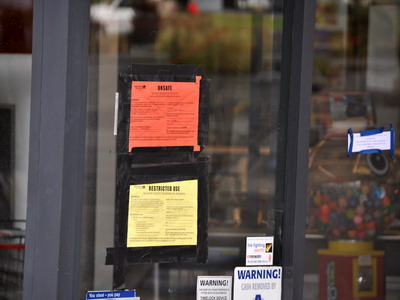
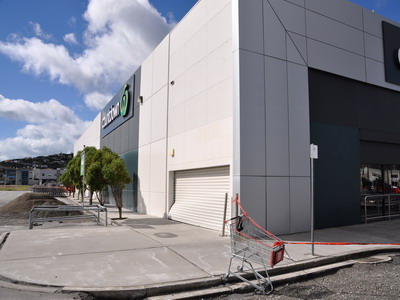
We drove to have a look at another shopping centre nearby. Some floors had collapsed there too. As we approached, something seemed to be missing.
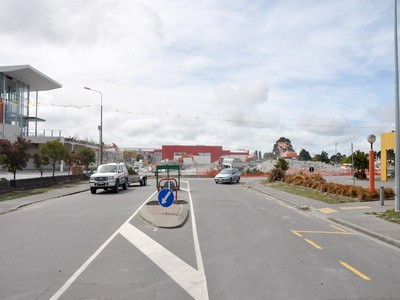
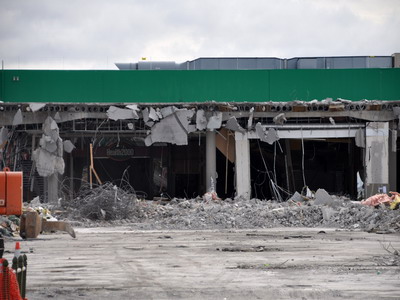
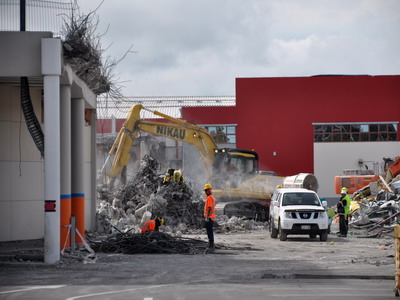
It soon dawned on us what it was. The supermarket itself. An Australian company had swiftly pulled down the bits of the building that had collapsed. All that was left was a pile of rubble. They promised to put walls around the surviving part of the mall and reopen it within two months. They did. They hadn’t even moved the stock out. It looked rather lonely sitting on the shelves with excavators at work all around it.
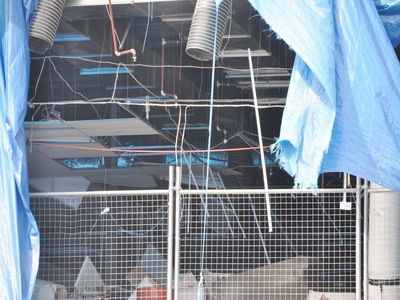
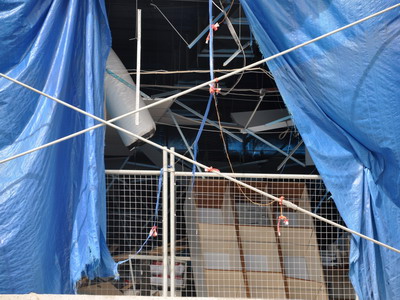
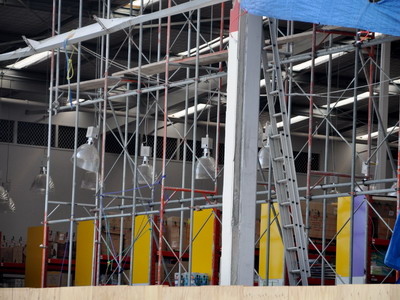
What a shame. They used to have such good apple Danishes.
In another shop the ceiling had come down. They cleared it off the floor and opened the shop again. Pieces of the ventilation and lighting systems were still hanging overhead. In place of lighting there was a notice saying the shop closed at six, in other words when it was still light. There was less to choose from, especially anything that came in glass. A few lonely bottles stood on the shelves with stained labels and chips of broken glass stuck to them. The wine aisles smelled permanently of wine.
How did they ever clean it up? Apparently volunteers helped. In some shops the slurry from liquefaction had come up through the cracks in the floor. You could still see traces of it on the bottom shelves. It had mixed with spilled flour, sugar and grain, and the whole lot had to be shovelled out. Those floors were going to take a long time to come clean. The prettiest ones were in the hardware shops that sold paint. In the food shops the worst stains came from the brightly coloured fizzy drinks sold for children. Their stomachs must be made of something tough to cope with all that.
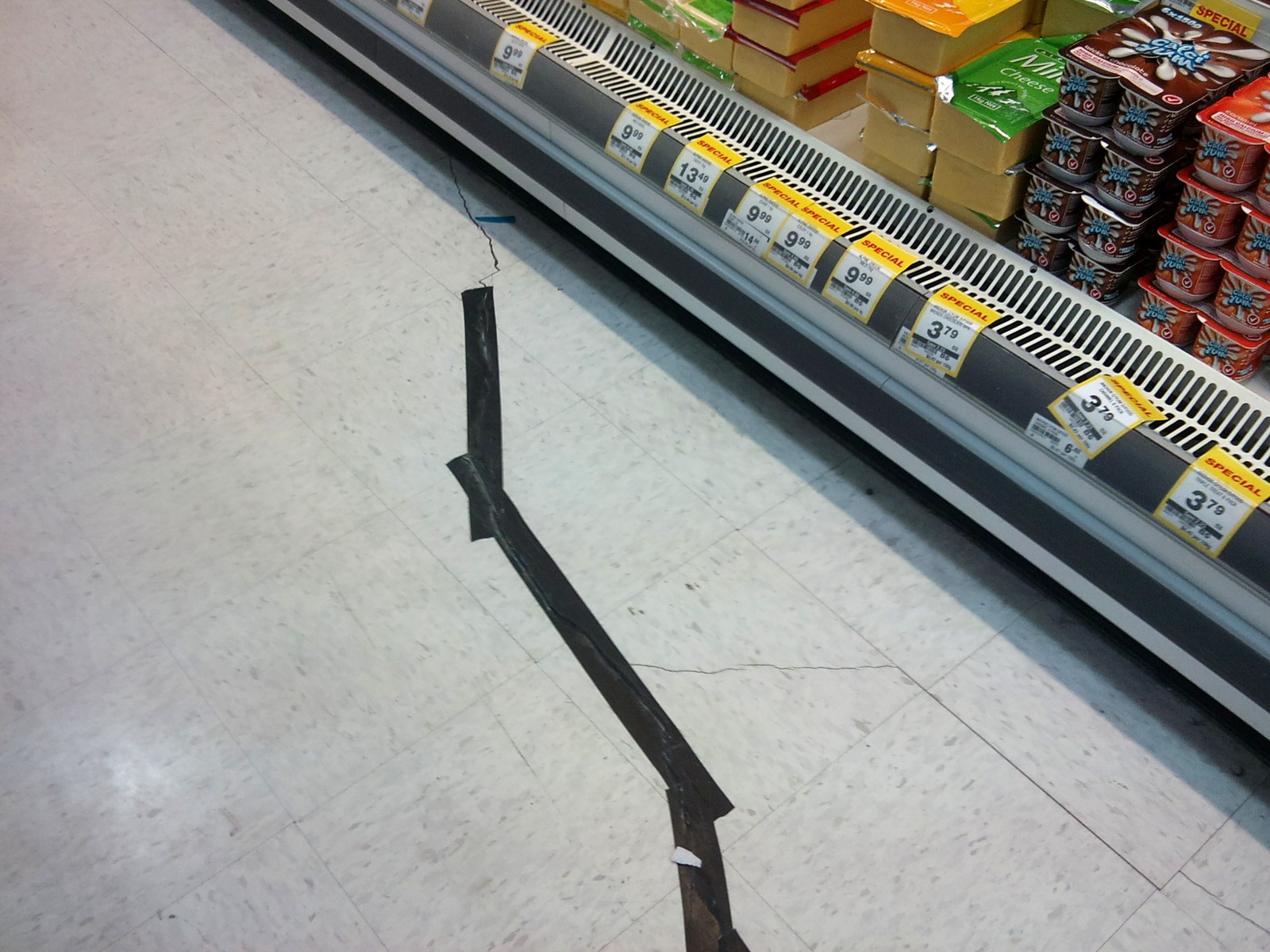
The buildings themselves had cracked too. Sections underneath damaged beams and ceilings were cordoned off with rope, and the departments there stayed closed. Someone had carefully covered the cracks in the floor with tape. Apparently that was meant to reassure the shoppers.
We were tired of eating relief-supply tuna with pasta. The roads were passable by then, though jammed. With fewer lanes open, it took up to half an hour just to get out of our neighbourhood. We started driving twenty kilometres to a part of the city that had been spared. Everything was as before. People in good spirits, a little Chinese restaurant, cream buns. It was hard to believe the ruins were so close.
Towards the end of the second week the power came on. Then it went off again and someone put a sticker on the house. The house was damaged and an engineer had to check the wiring. We rang the number on the sticker. They said someone would get to it eventually. Everyone was busy with the main lines. Years of living in Russia had taught me that waiting for things to sort themselves out gets you nowhere. Denis and I went to the street distribution box ourselves, and the lights came on. Hooray! We still had no water, but we could wash at friends’ places and eat in cafés.
Getting power back to our suburbs took a new high-voltage substation and a cable. It had needed doing for a long time anyway. They’d talked about finding a billion dollars before the earthquakes, and the job was meant to take a year or two. Getting approvals in New Zealand takes years too. The one difference is that there are no bribes. So it takes even longer. After the earthquake they did it in a week. As it looked to us at the time, they started the work without waiting for the usual approvals or funding. And they got it done.
Water was another story. They’d knocked down our pumping station and were building a new one out of plywood.
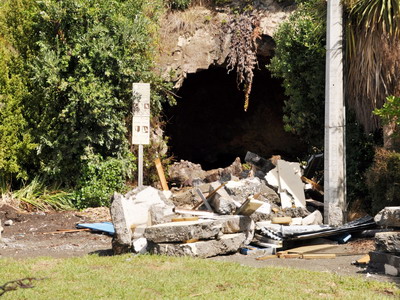
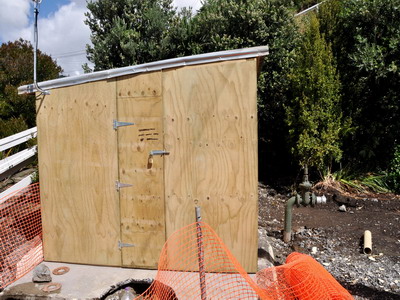
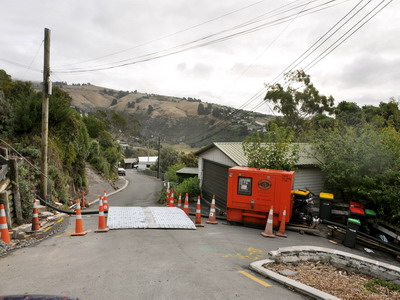
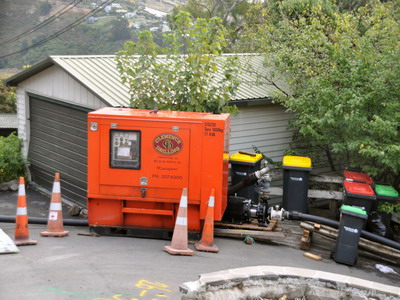
In the worst-hit suburbs they gave up trying to fix the old pipes. Temporary pipes went in above ground and pumps went up on the pavements.
University classes weren’t going to start for a while. There was nothing keeping us in town, so it was time to go somewhere quiet. It seemed a quarter of the city had already done exactly that. The neighbouring towns were full. We heard that twenty thousand people had gone to Timaru. The joke was that Timaru was the fastest-growing town in the world.
On 11 March an even more terrible earthquake and tsunami struck Japan. Rescue workers and television crews immediately turned their attention to Japan. Fair enough. Most of the work here was for builders by then. The only trouble was that the aid would go there now, and another ten billion wouldn’t have gone amiss here either. Though of course Japan needed it more.
We spent the third week in the far south. We went tramping twice and stayed in Invercargill.
One month on
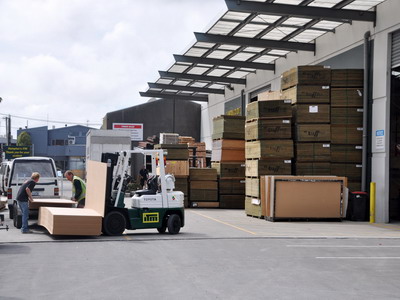
By the time we got back, the water was on in our street but our house had been cut off. The pipe had burst in several places. That made sense. It ran straight across the cracks. If the ground can crack, why should the pipe have it any easier? It’s hardly made of rubber. We needed a plumber, and so did everyone else. I took a shovel and went to dig. It took a day to cobble together a temporary fix. I’d have made it permanent, but the shops had been stripped of every part you might need. Everyone wanted parts and plywood, which was being used to patch up holes all over town. At least they’d brought in plenty of plywood. It was stacked to the ceiling at the hardware shop, and the racks spilled out the door.
The internet came back on its own. Only the fixed IP address had changed. The old one must have perished in the ruins of the telephone exchange. All the computers started up, except that one had lost Windows 7. Who’d have guessed it wasn’t earthquake-proof? The screens and hard drives were fine, but Windows… No wonder they named it after something made of glass.
We had running water, though what was happening with the sewers was anybody’s guess. You could flush the toilet, but how far would it all go? The council said at the time that if you had water you could flush. If there was a problem you’d find out, or your neighbours downhill would tell you. It’s a steep hill where we live, so I imagine there was plenty of pressure at the bottom. The sewer pipes were broken almost every metre. While they repaired them, the plumbers dug a hole, put in a pump and ran a hose out into the sea. Up went a sign saying it was unsafe to swim.
They asked people to flush less often. There was even a rhyme:
If it’s yellow, let it mellow
If it’s brown, let it down.
Everything was fine at our place, though. What a luxury to walk straight to the toilet instead of looking for the car keys and driving there along a mountain road. We could wash ourselves, do the dishes and make soup. Tanya made borscht. It always makes a mess. This was how she called Denis to lunch:
Denis, come and have some soup!
Come on, Denis…
If there’s an aftershock, who’s going to clean it off the floor?
It’s borscht. Come quickly!
You’d think nothing could shake a Christchurch resident more than an earthquake. It turned out something could. They decided to move the Rugby World Cup matches out of Christchurch. This was a blow you couldn’t measure on the Richter scale. They haven’t come up with numbers that big.
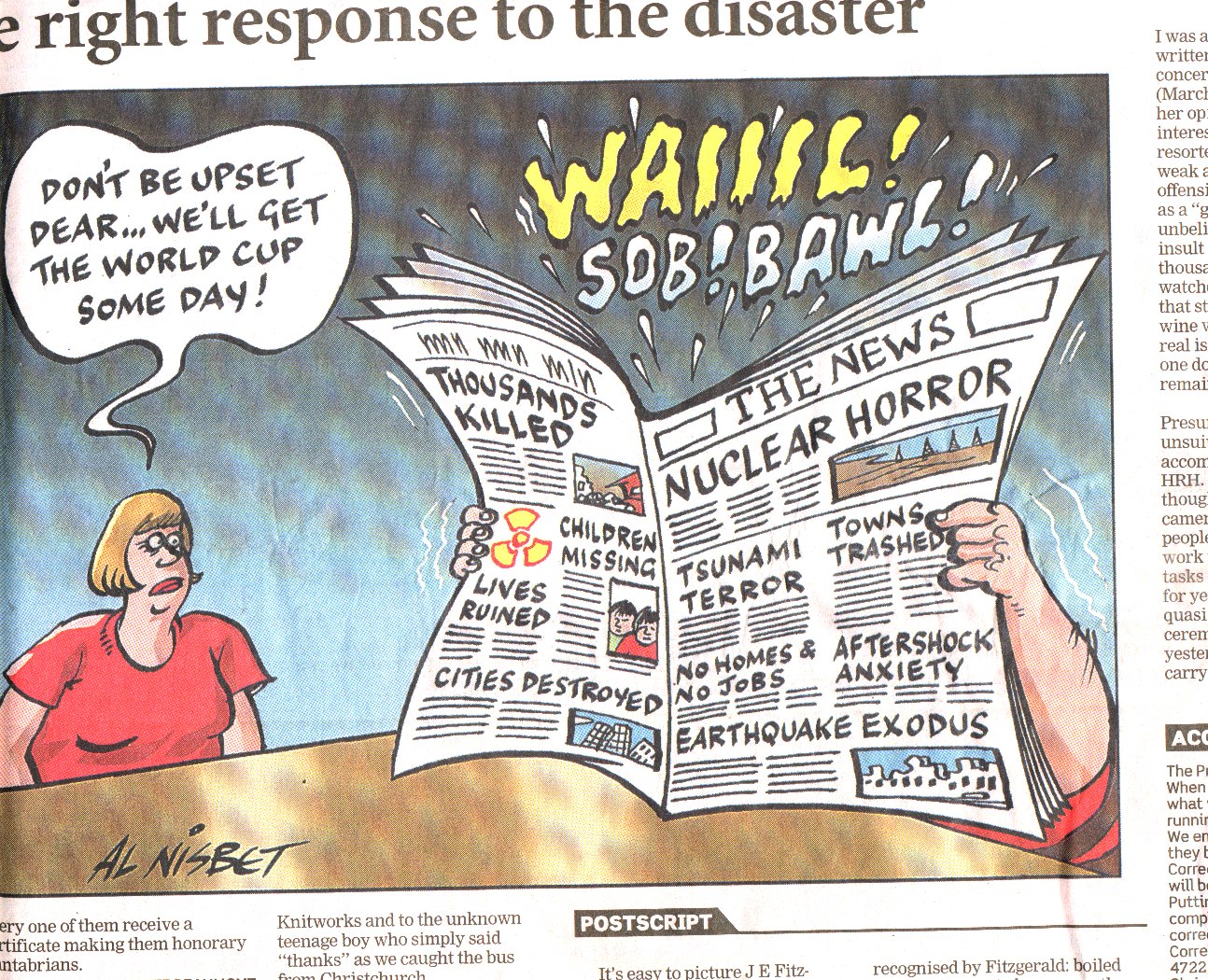
Cartoon from The Press.
And to Auckland, of all places. The North Island! An outright insult. The South Island and the North Island get on about as well as Moscow and Saint Petersburg. They could at least have sent the matches to Dunedin. It was all anyone talked about for three days. People had to be placated with talk of flights and hotel rooms for just two hundred dollars. One match was moved to Dunedin in the end.
18 March was set aside as a public holiday to remember those who died. The shops and banks closed. That morning Prince William flew into our neighbourhood, one of the hardest hit. Tanya and I were drinking coffee when I saw an unusual helicopter, the sort you’d expect Obama to have. “Look, Tanya, someone’s coming. Must be a prince.” She said those helicopters had been buzzing around all week. “They’re probably bringing another portable toilet.” The helicopter landed. It was the prince.
Then came the citywide memorial service in Hagley Park. By our reckoning at the time, about twenty thousand people gathered on the huge field. They sat on the grass with their children, food and barbecues.
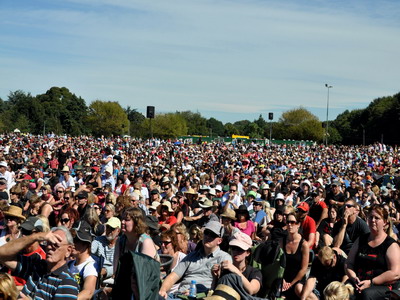
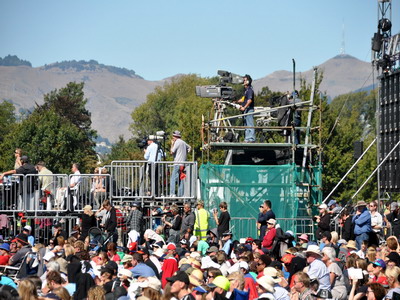
There was the prince again, the mayor, the prime minister, the opposition leader, the Australian prime minister and the church leaders. They took turns speaking.
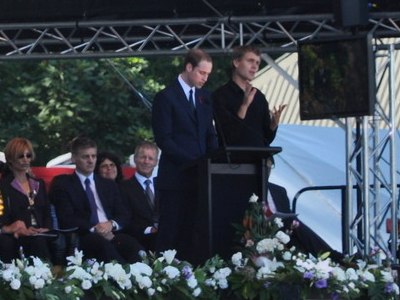
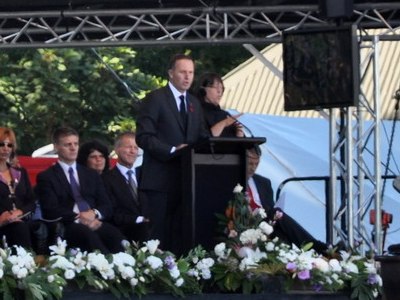
The television crew caught me singing “God Save the Queen”. The prince got the warmest welcome. Everyone stood and applauded for a long time. The prime minister didn’t get the same reception. The locals had a bone to pick with him.
The New Zealand government normally keeps quiet. Its officials are more likely to bring their own money to work than to steal any, and they only make decisions after hearing out every elderly lady, child, Māori and household pet. Then came the earthquake. An emergency. And off our mild-mannered officials went. They’d had a taste of power the previous time, though back then they were still a little timid. Now they took control of the city centre, set up military cordons and kept everyone out.
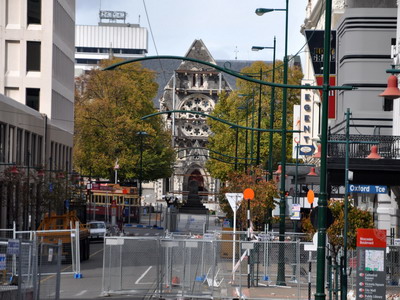
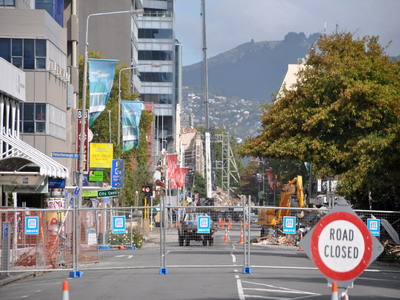
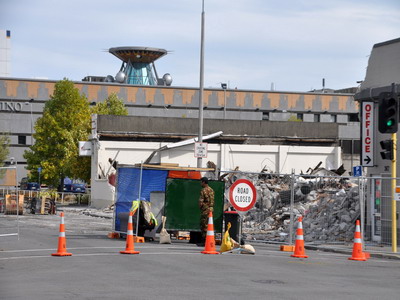
We were told that trying to get into the red zone could land you in prison.
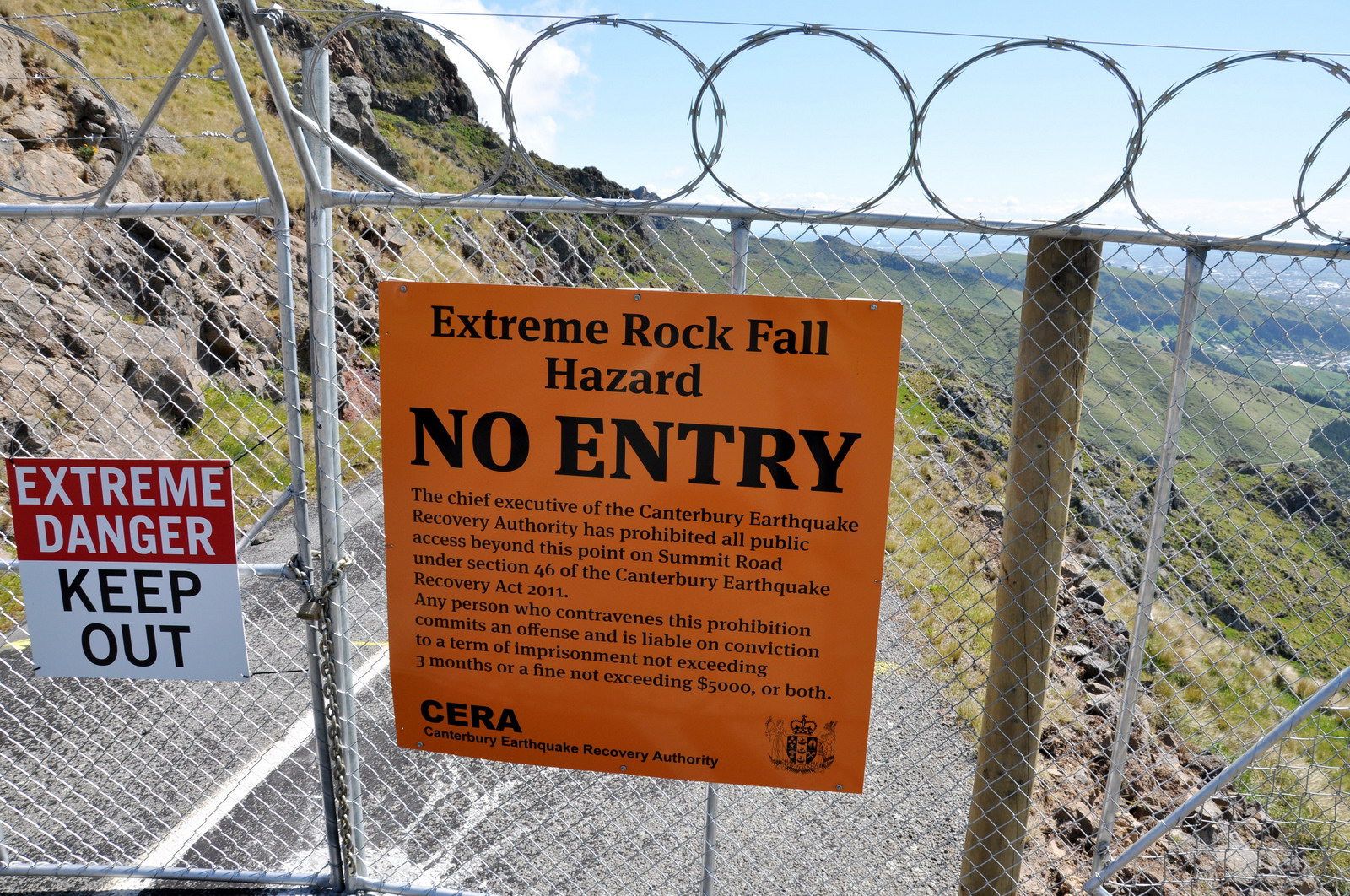
While the rescuers were still working, you could understand it. Even when they knocked down a handful of historic buildings, people nodded. Last time they hadn’t knocked them down, people said, and this time people had died. Never mind the lovers of old buildings or the heritage trusts. No building, no problem. The success of putting up the power line without the usual permits had whetted their appetite. They started talking about knocking everything down and rebuilding it to a single plan.
At that point people objected. It’s our land and our property, we’ll decide for ourselves. But no one could get through the fence, for their own safety, they said. Then the prince flew in and they let him through. So the public had to wait, but the prince and the prime minister could go in? Rumours began to seep out that they’d demolished some buildings that had survived simply because it made the damaged buildings next door easier to reach.
The way the residents were treated added to the anger. New passes were dreamed up every day and a curfew was imposed. There was no water or power, and electricians and plumbers weren’t allowed in. The rubbish couldn’t be collected and you couldn’t have visitors. They suggested digging a toilet hole in the yard. In a block of flats? In the built-up city centre? And only in the daytime, before the curfew started? People couldn’t even retrieve their cars from the car parks. That was dangerous too, apparently.
It all seemed particularly absurd because, as we saw it, the centre hadn’t been hit much harder than the suburbs alongside it. They had muddled through without such measures and were almost back to normal. The newspapers carried angry protests against demolitions without the owners’ knowledge. Some of the comments invoked state terrorism and compared the authorities to fascists. Protest posters went up on the fences.
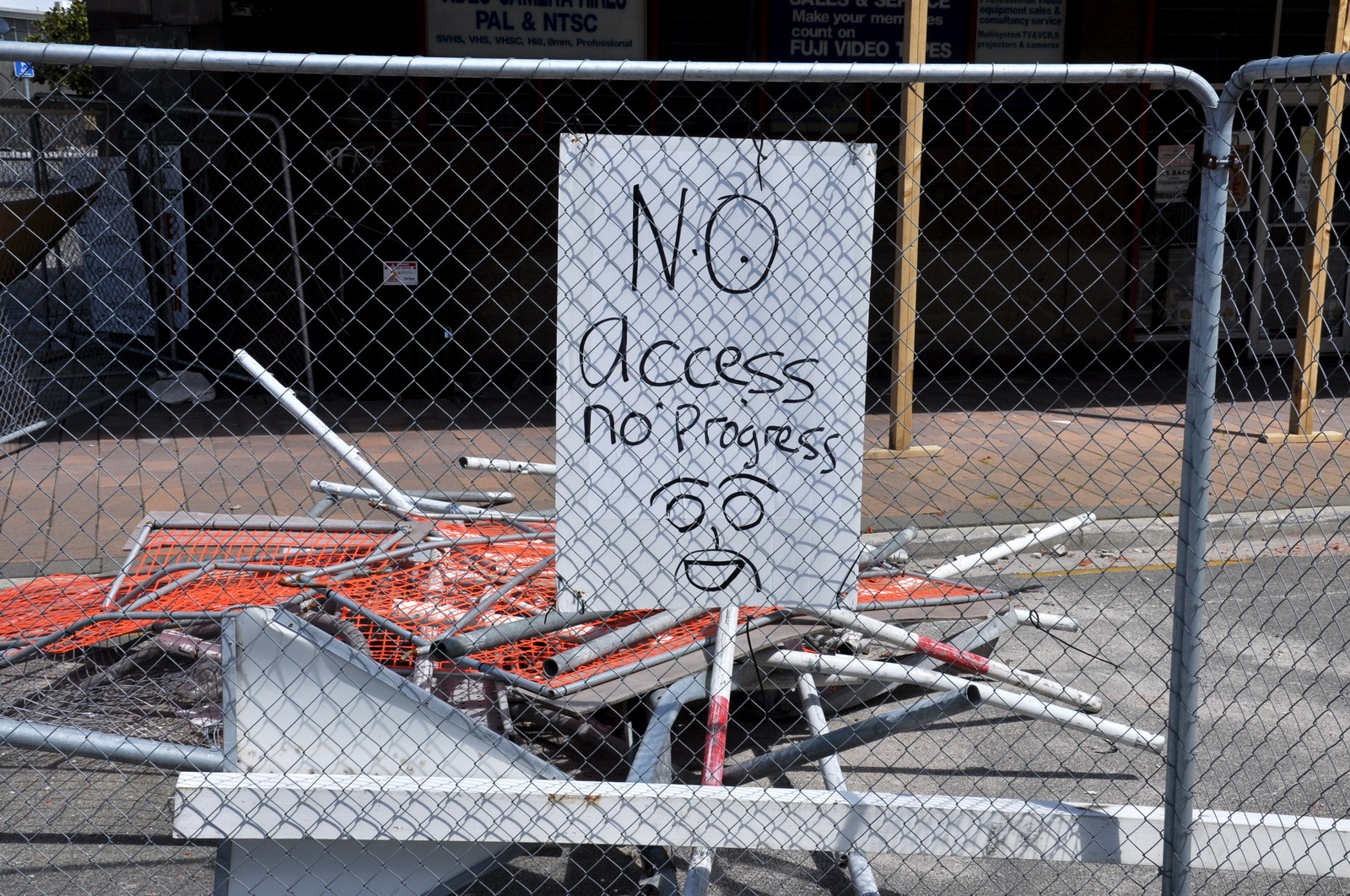
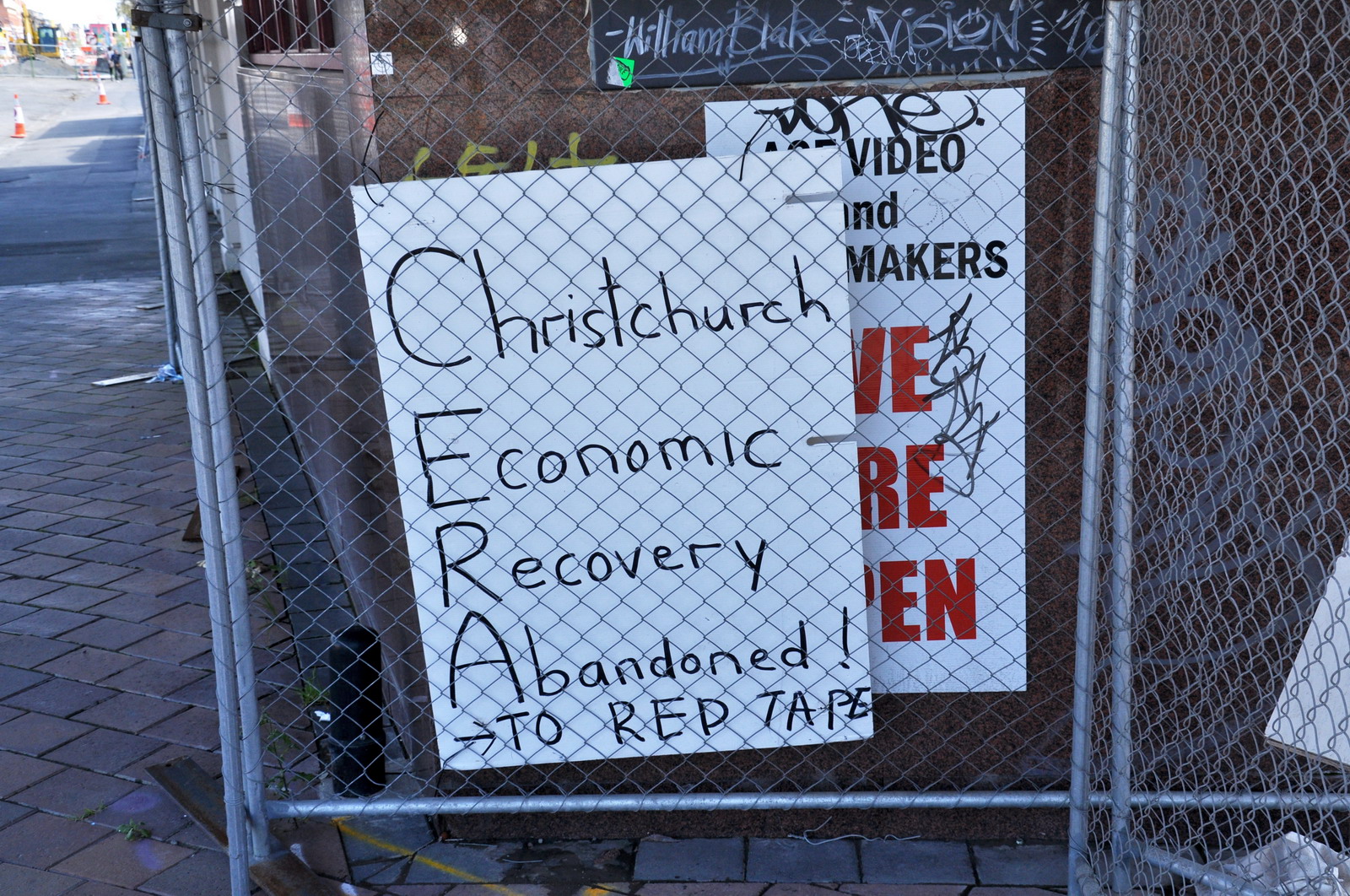
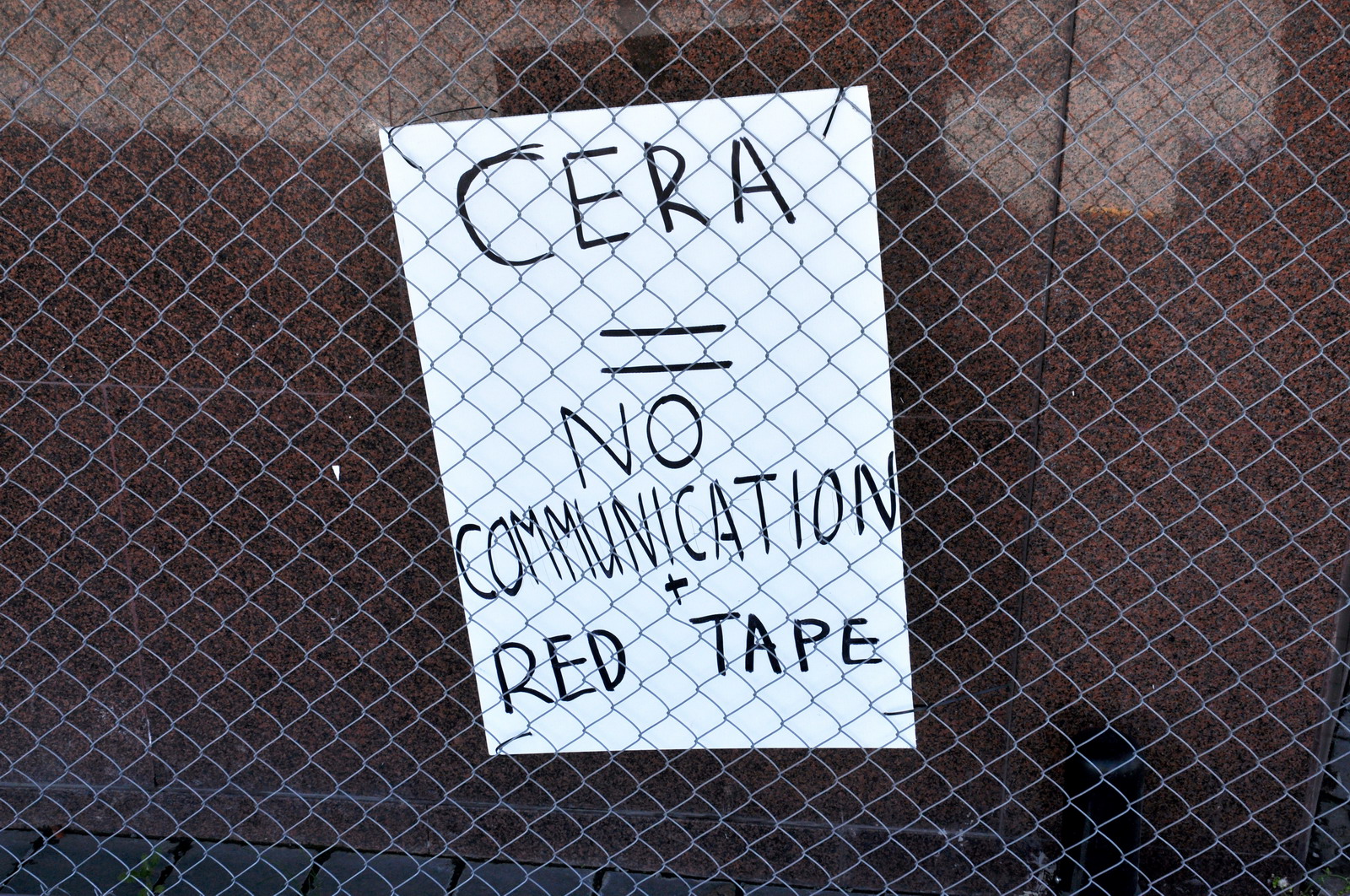
The authorities kept making promises, and the business owners organised. In New Zealand that gives them some clout. The state of emergency was extended yet again. In response a group of business owners got through the military cordons and took the essentials out of their buildings. An ominous silence followed. The authorities threatened arrests next time, and the owners talked about suing. A few even talked about shooting.
Nothing was ever quite resolved. The army stayed, but most demands were met, and they even drove the cars out of the car parks and back to their owners. I was eager to see who would prevail. The election was unfortunately still a long way off, and the issue only affected the centre. I thought the mayor of Christchurch really cared about the business owners. He even opened his speech at the memorial service by saying that getting their businesses running again was a priority. As for the prime minister, what did you expect?
There weren’t enough soldiers for the rest of the city and life there was almost back to normal. The earthquake disappeared first from the world’s television channels, then from local websites and newspapers. The children went back to school. Some had to go in the afternoons because nine schools needed extensive repairs or might have to be demolished. Denis and Tanya went back to their studies too.
The insurers began the long job of assessing the damage. They hadn’t finished with the previous earthquake. The government promised to cover damage up to a hundred thousand dollars, but the payments were slow. We were lucky. Our damage was assessed at more than a hundred thousand, so our landlords could claim from their insurer and the insurer would do the waiting for the government money. Until the damage was assessed, you weren’t supposed to build. Then there’d be approvals and permits to get through. Once people realised how long it would take, many started rebuilding at their own expense. Even if it was just plywood.
It was worse for those who lost their jobs. Businesses closing was perhaps the most frightening of the long-term consequences for Christchurch. The dead would be buried, their families helped and a public remembrance held each year. Who would think of the business owners who drank themselves into ruin out of grief? Those who went broke would face bankruptcy. They could lose their homes. I feared some of them might envy those who died on the first day.
Students at a language school died in the television building. After that, it seemed the other schools couldn’t attract new students either. There was talk of a hundred jobs gone. A textile factory closed, and other factories were closing too. Manufacturing had already been hard to justify in a country with such a high standard of living and wages to match. The companies still going out of habit could now close or carry on somewhere in Asia with lower wages.
I think of Deborah. On her own, she adopted a big black-and-white cat called Marsel. He became her best friend. When he died, she opened a café in his memory, called it Marsel’s Picnic and painted it in his colours. The café fell down on 4 September.
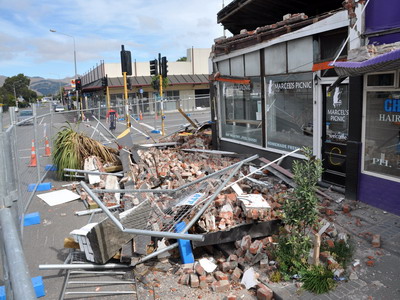
Her own home suffered twenty thousand dollars’ worth of damage. Deborah tried to fix up the café, but the Boxing Day aftershock wrecked the building again. She decided to move, went into debt, fitted out a new place and reopened the café in her cat’s name on 21 February. Twenty hours before the big shock undid everything she’d done. They wouldn’t let her in to see what had become of her business either.
Tanya and I decided that if she opened a third café, we’d go there for coffee. Though by then we knew a lot of places we ought to go. There was the Chinese takeaway owner who’d been the first to reopen near our house, the South City shopping centre that was the first to reopen behind the army cordons, our butcher, the BP station…
As always in a disaster, the fortune-tellers came out. They all claimed to have predicted everything and been ignored. Ken Ring, nicknamed the Moon Man, linked a close approach of the Moon to another devastating earthquake and named 20 March as the day. Tidal forces are studied, but a seismologist’s probabilistic forecast can’t give a precise day and magnitude for a future quake. Adding to the anxiety was the fact that a major quake had long been expected in the Southern Alps. The Christchurch shocks weren’t the ones people had been anticipating.
Ken Ring set off a real panic. Tens of thousands of people left town for the weekend. A group of engineers, teachers and scientists who didn’t believe him gathered at the Sign of the Kiwi café, one of the old buildings that had survived. Until the next aftershock, as we later found out. Television crews came and filmed a story about science and the harm done by charlatans.
Nothing happened at the appointed hour. In the evening there was a strong magnitude 5.1 shock all the same. One little shop collapsed and the apples came down from our tree again. The timing was good. I flew to Russia the next day and took some apples for my colleagues and family.
In a month, life had come back together.
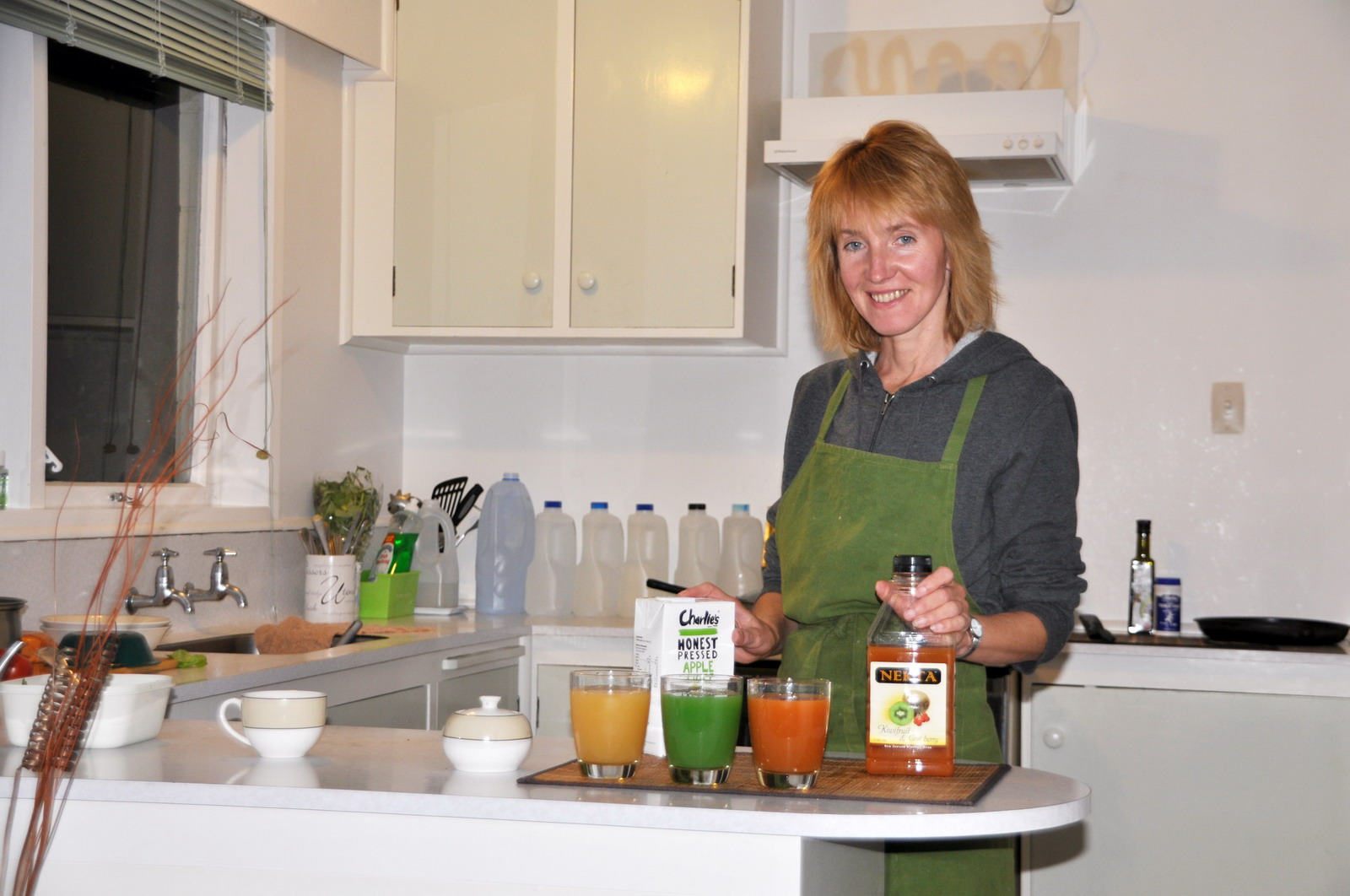
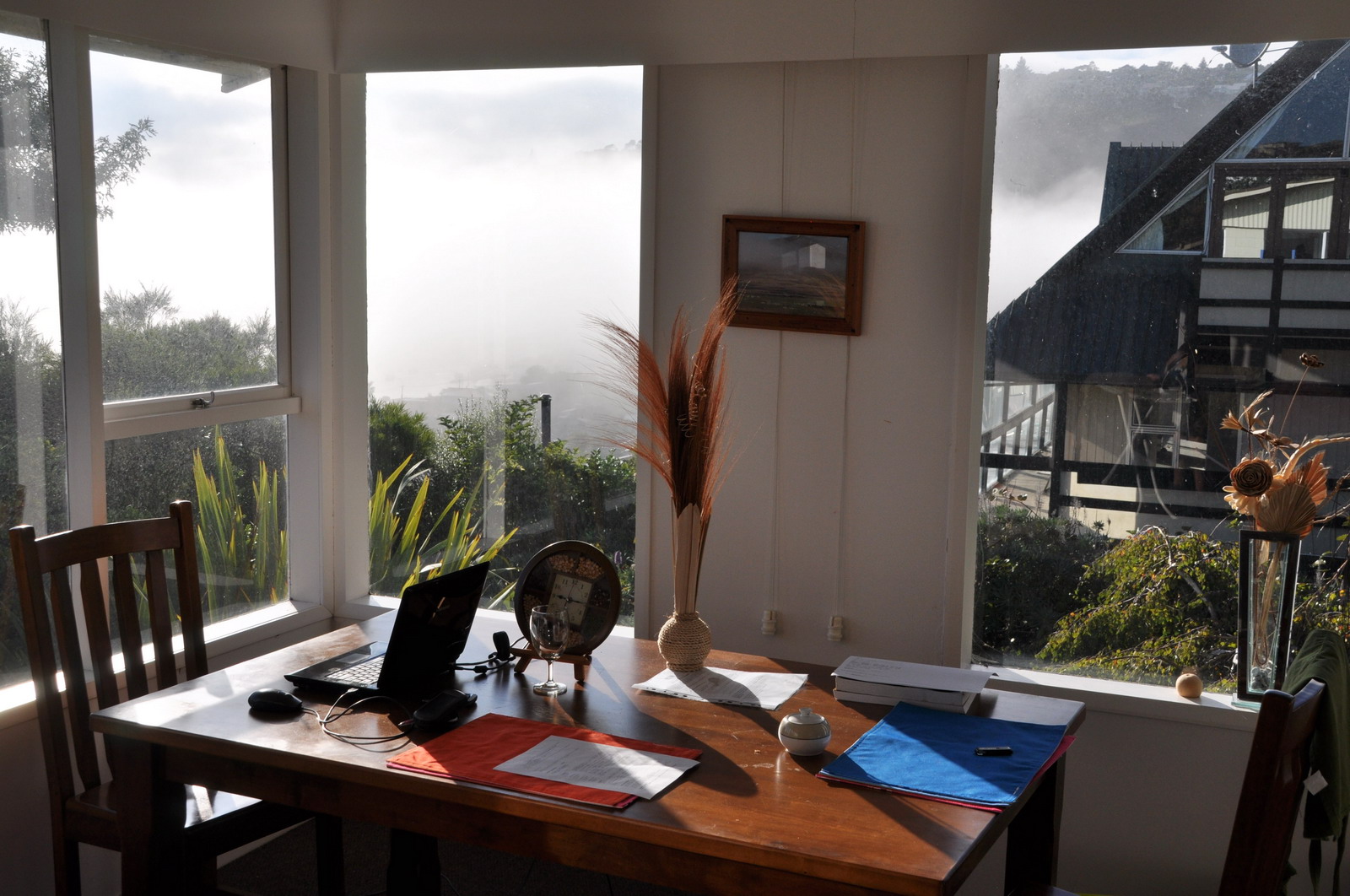
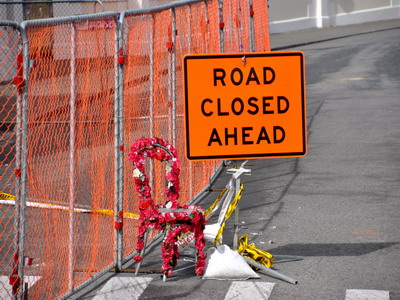
The hills and the sea were still beautiful. From a distance you could almost believe the houses on the next hill were intact. If only. The view had changed too. We used to look out of our window and see Shag Rock sticking out of the water.
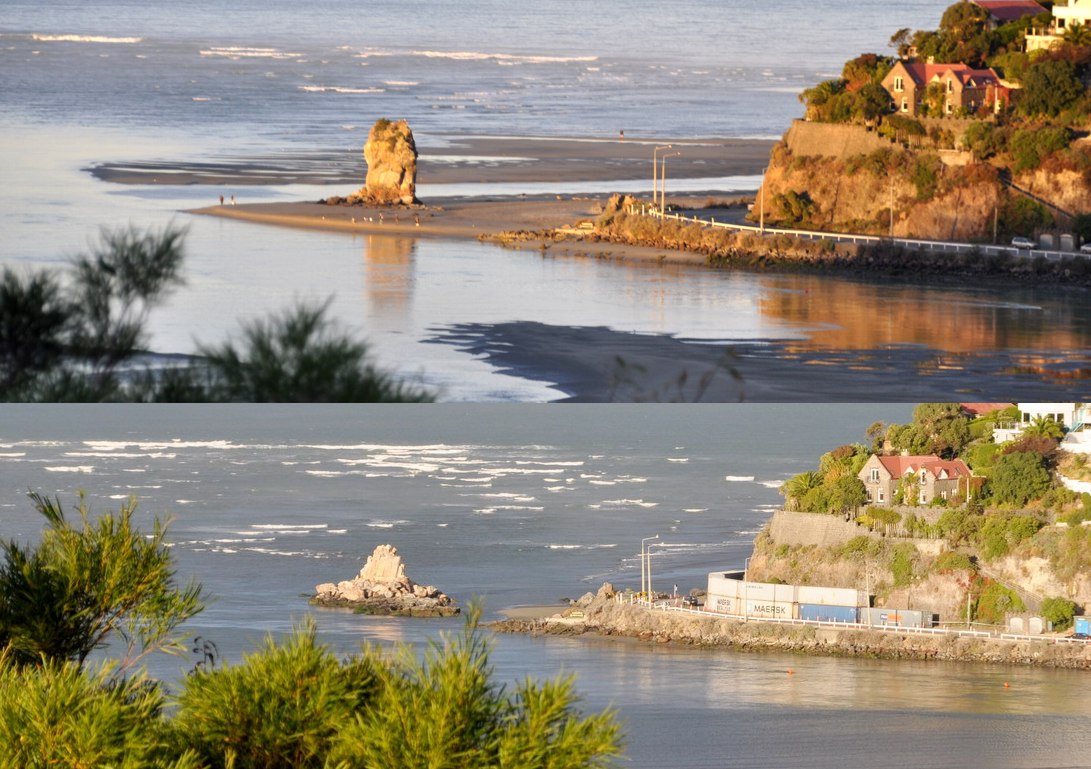
It had suffered too. All that was left was a pile of rocks half the height. But the Australian portable toilets had finally reached our street. What for? Everyone who’d stayed already had water. Never mind, they’ll come in handy next time. At least it made going for a walk more convenient. Wherever you went, there was somewhere to stop. Diarrhoea no longer held any terrors.
The Garden City looked more like a garden than ever. The trees and flowers didn’t mind the shaking. The birds disappeared for a week like the cats, then came back. People were still walking hand in hand along the paths. The huts in the bush were unscathed. Our favourite Christchurch beer and apple Danishes were in the shops again, along with fresh strawberries and cream. Only in the first week had there been so many empty shelves.
We’ve got nothing left to fear. We could put a sign on the house that says Tested 2.2g. Let some other city do the worrying now. Everything that could be shaken loose here has already come loose. We even live forty centimetres higher up in the hills. All that’s left is for the volcano to wake up. I doubt it will. It’s been asleep for millions of years.
The red zone
Put up a fence and it becomes something to climb. Unlike last time, sneaking in now felt scary. They were threatening three months in jail. I might have done the time for the pleasure of it, but my visa… They could take it away, and that would be that. To me, that was scarier than a sniper with orders to shoot.
Still, I wanted to get into the red zone. Our friend Pasha had made the list of engineers eligible for passes to assess buildings and help recover property. Business owners also won the right to retrieve their belongings. That gave us a chance.
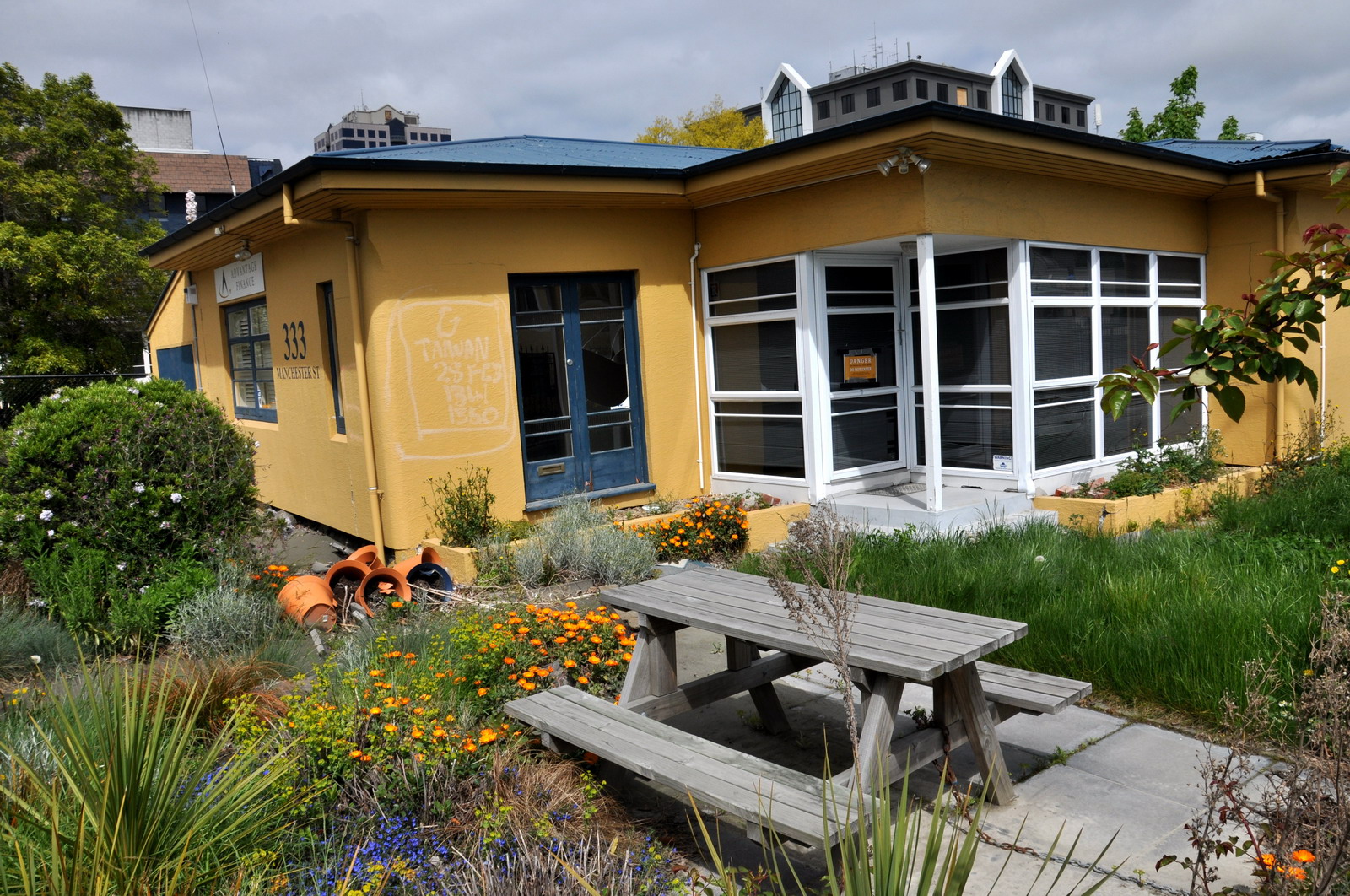
Andrei and Olga ran the Olivia Tree ice-cream café on Manchester Street, in one of the worst-hit areas. Amazingly, their café was still standing, so they could take their equipment out. I offered to do the lifting because I wanted to see the place.
It took several days to get all the permits. Early one morning, we went to the Arts Centre.
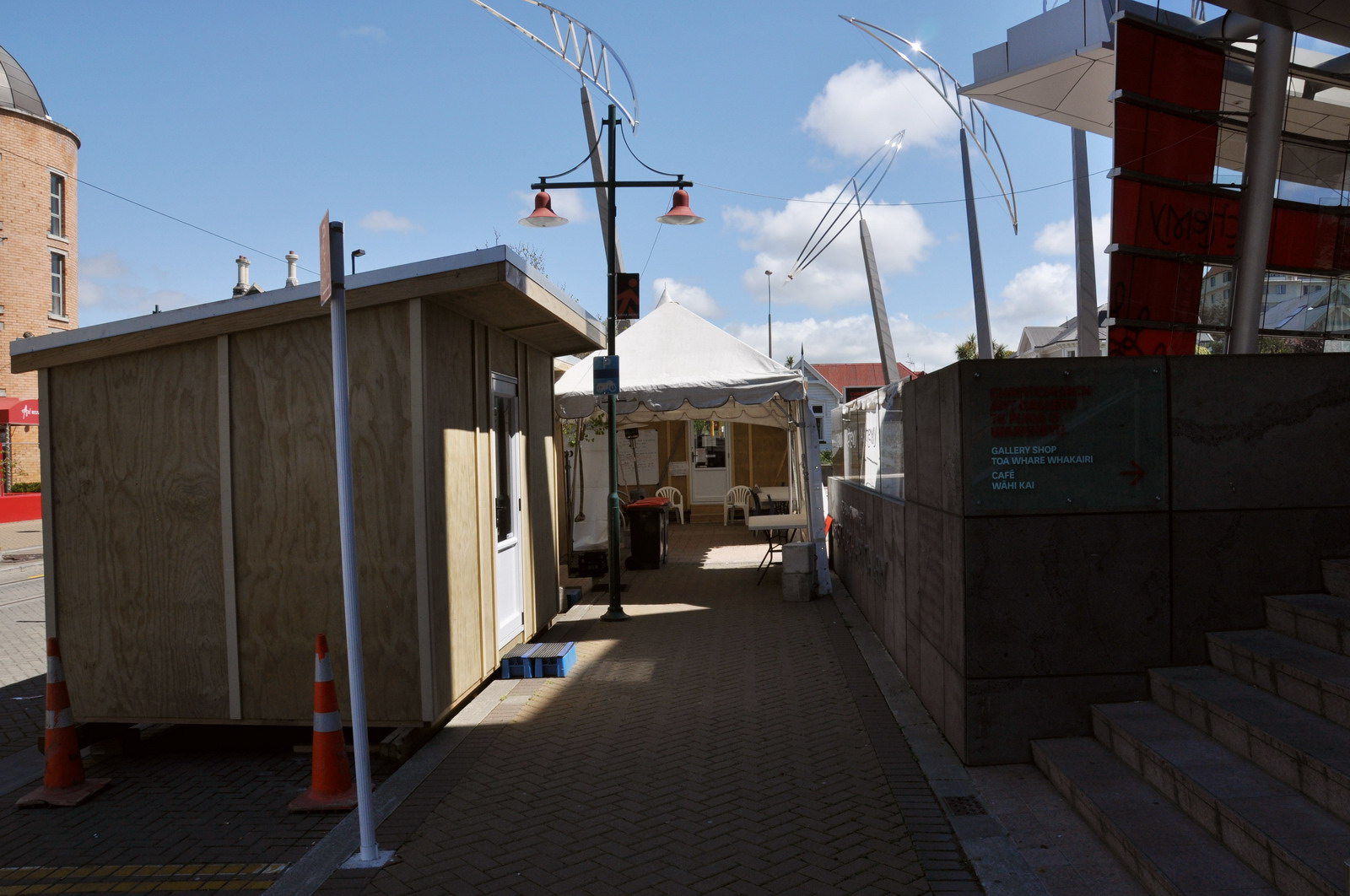
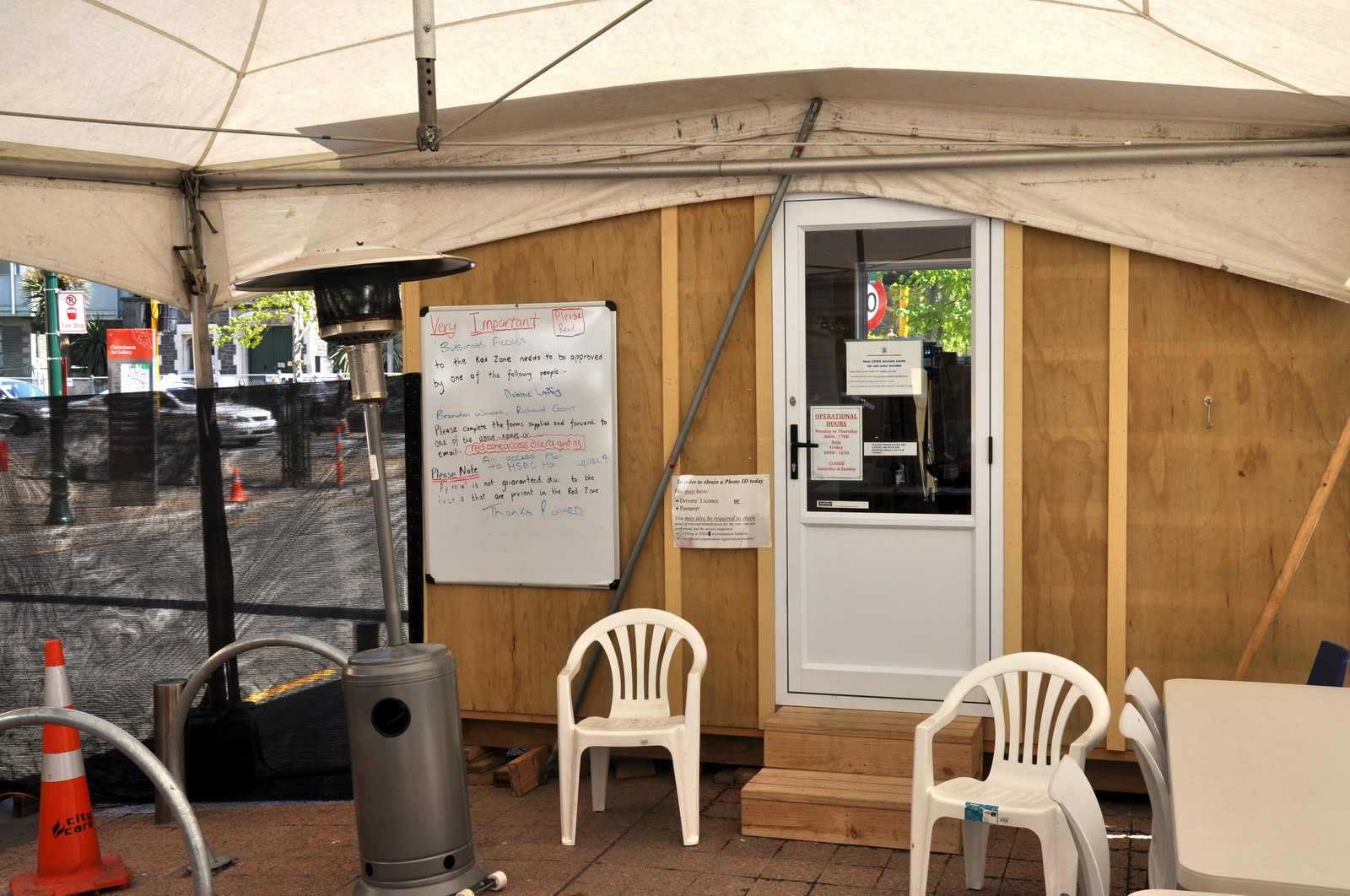
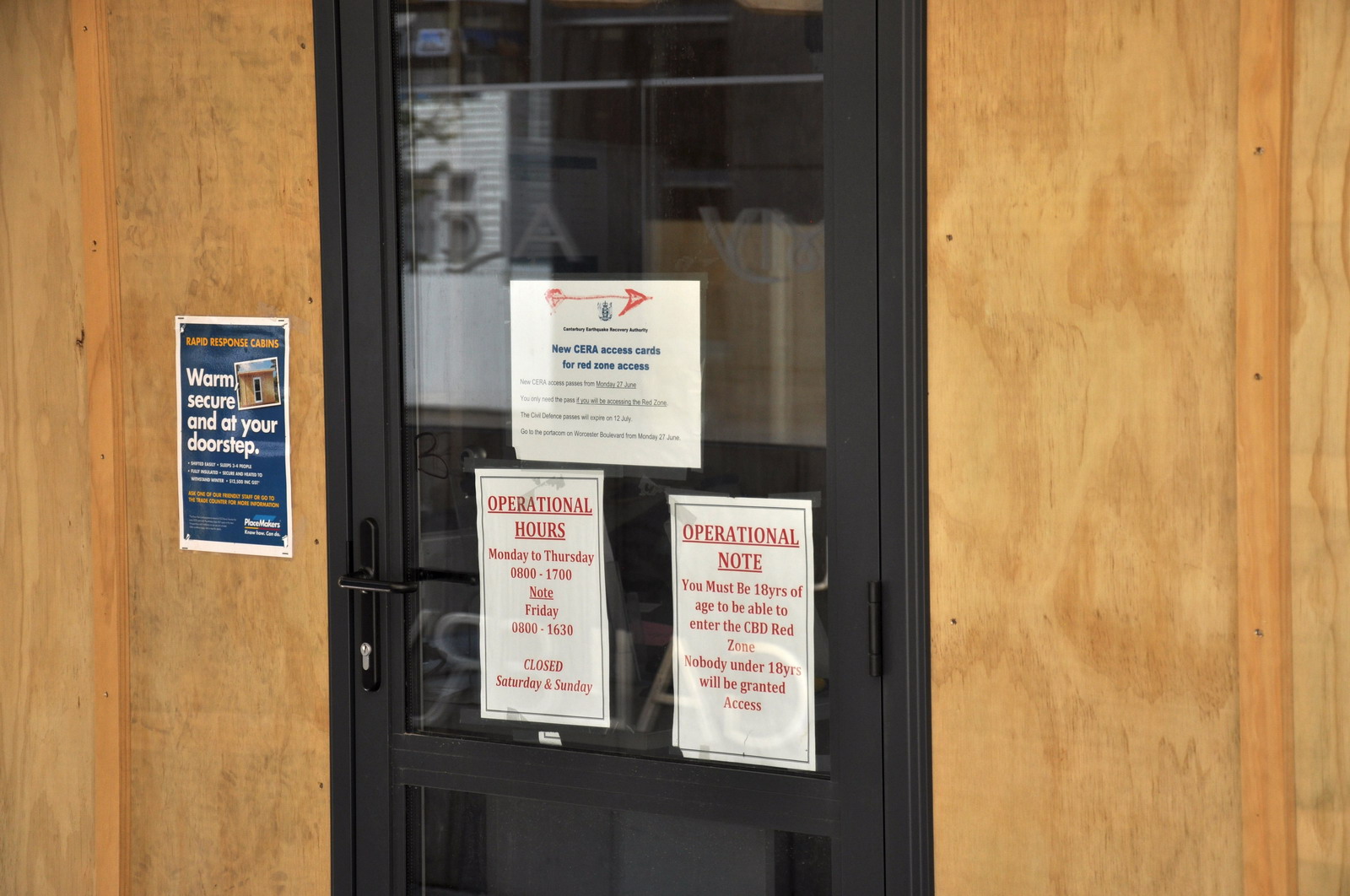
The people in charge of protecting property from its owners had set up headquarters there. They issued us a red placard. The way was open.
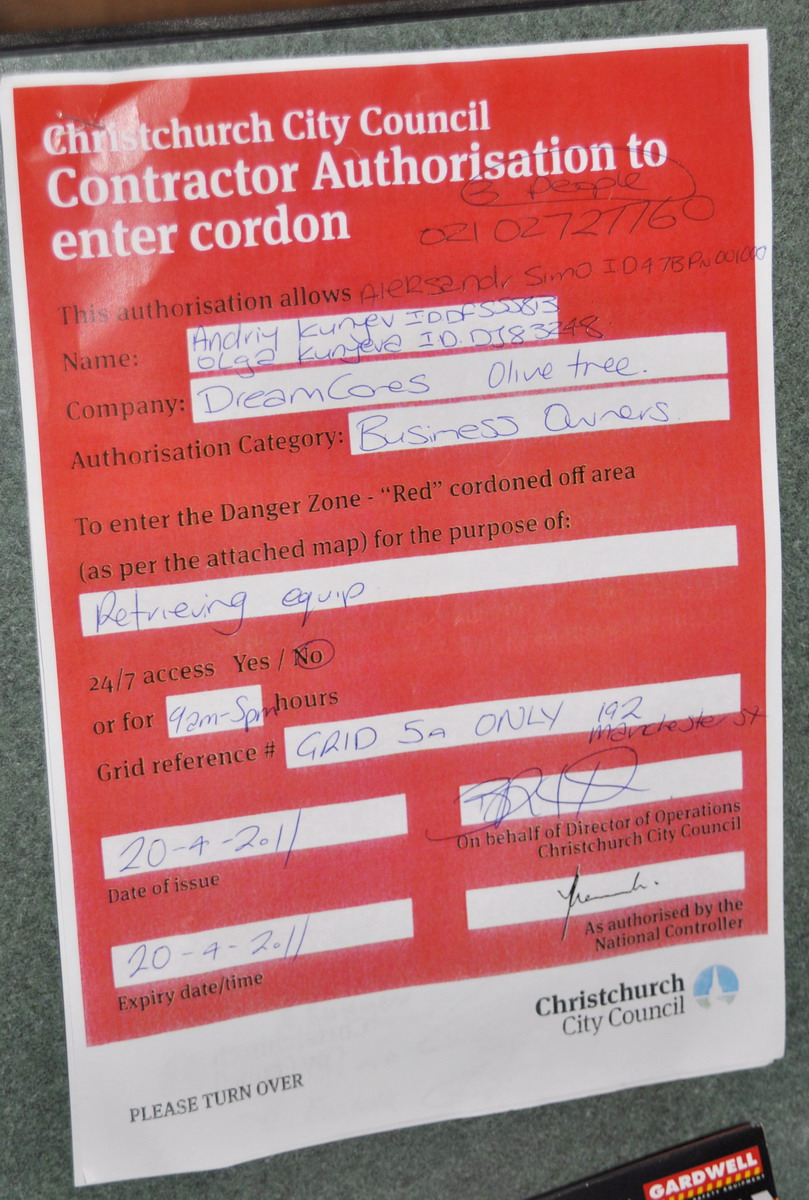
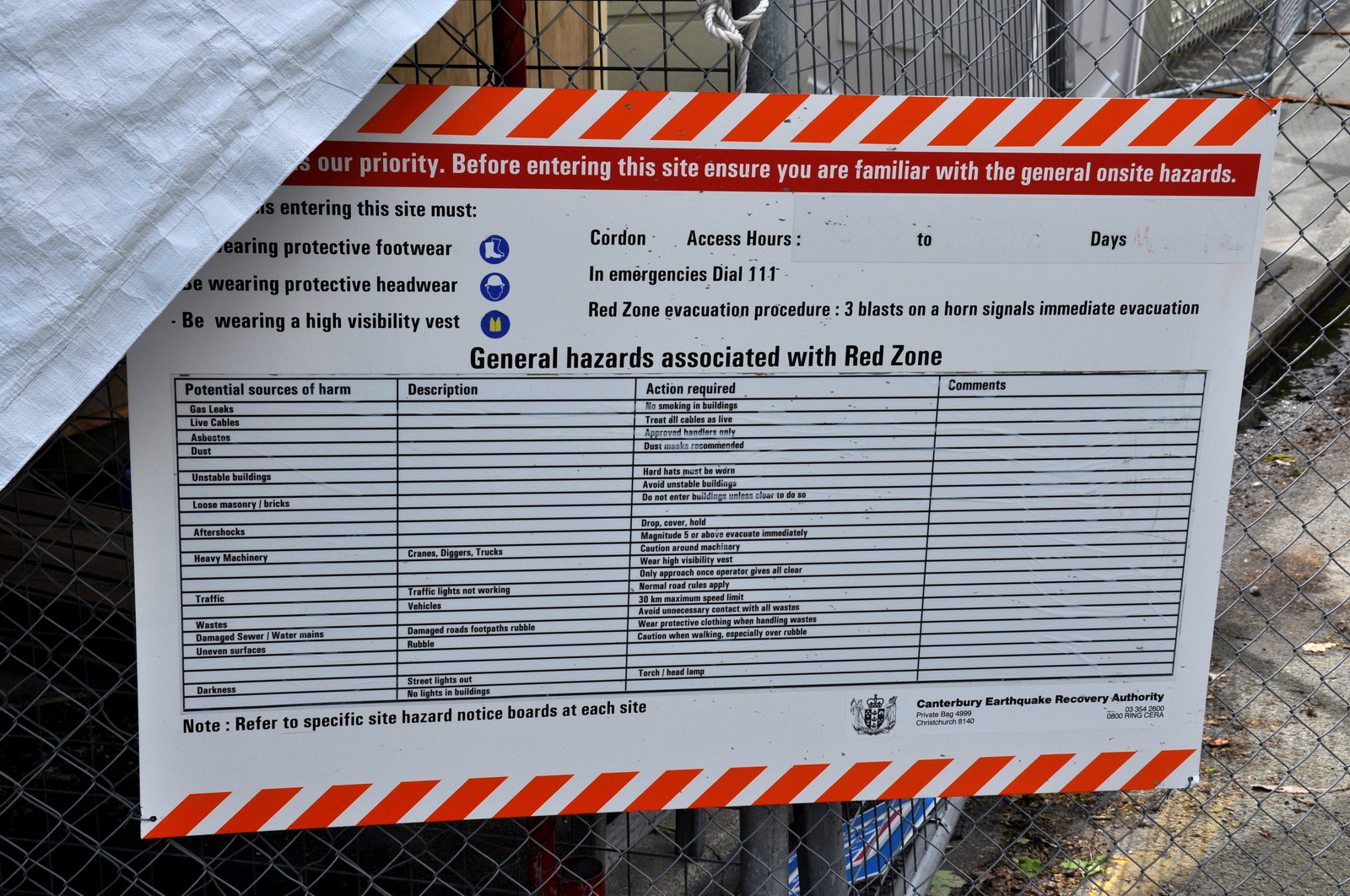
Getting in was the hard part. Once inside, we tried to stay out of the soldiers’ way. The rules said to follow the approved route straight to the property, and a detour could get you sent out. In practice, we got around the zone and stopped in a few places to photograph the city.

First, we got to work taking the equipment apart and cleaning up the café.
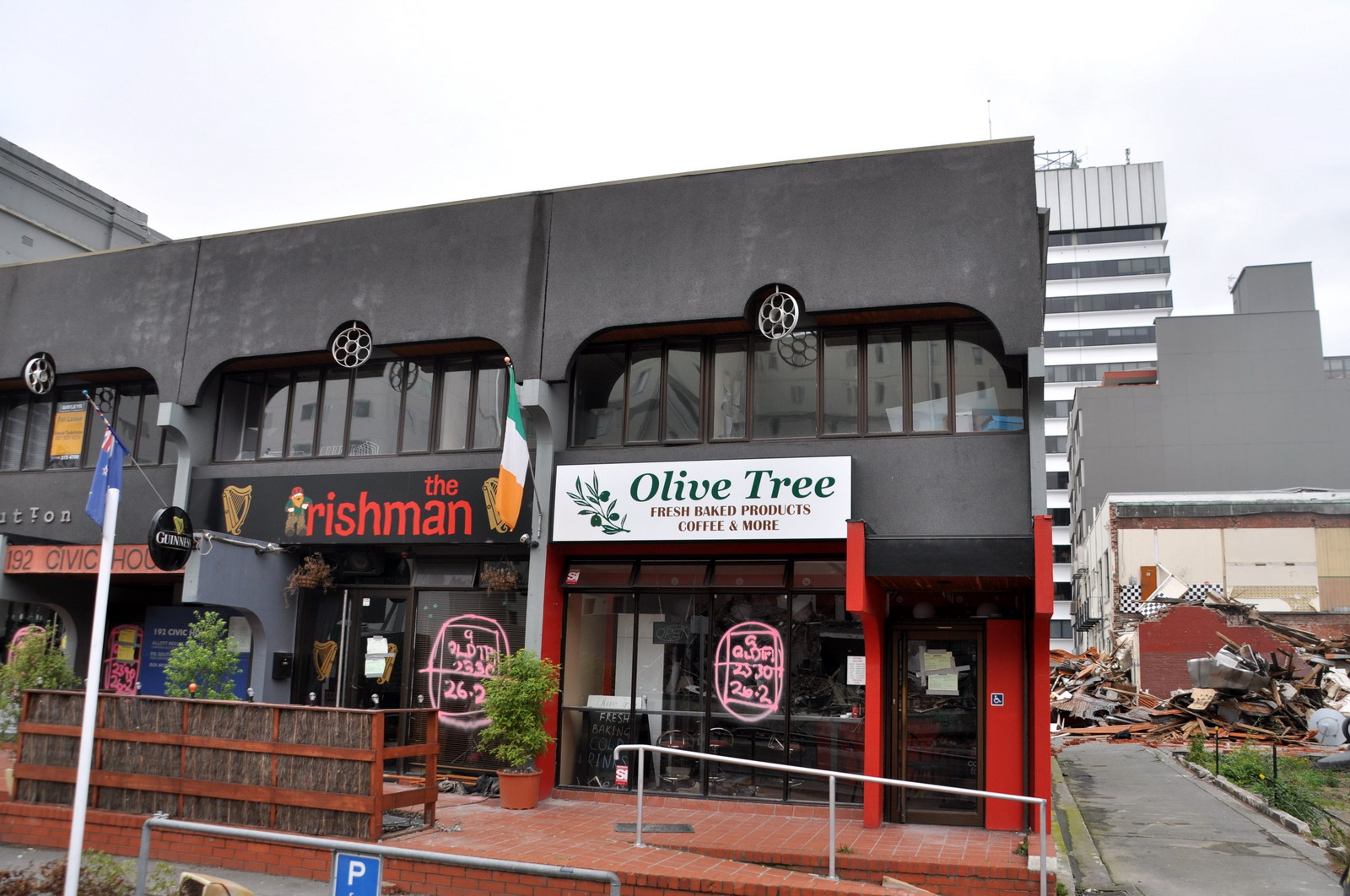
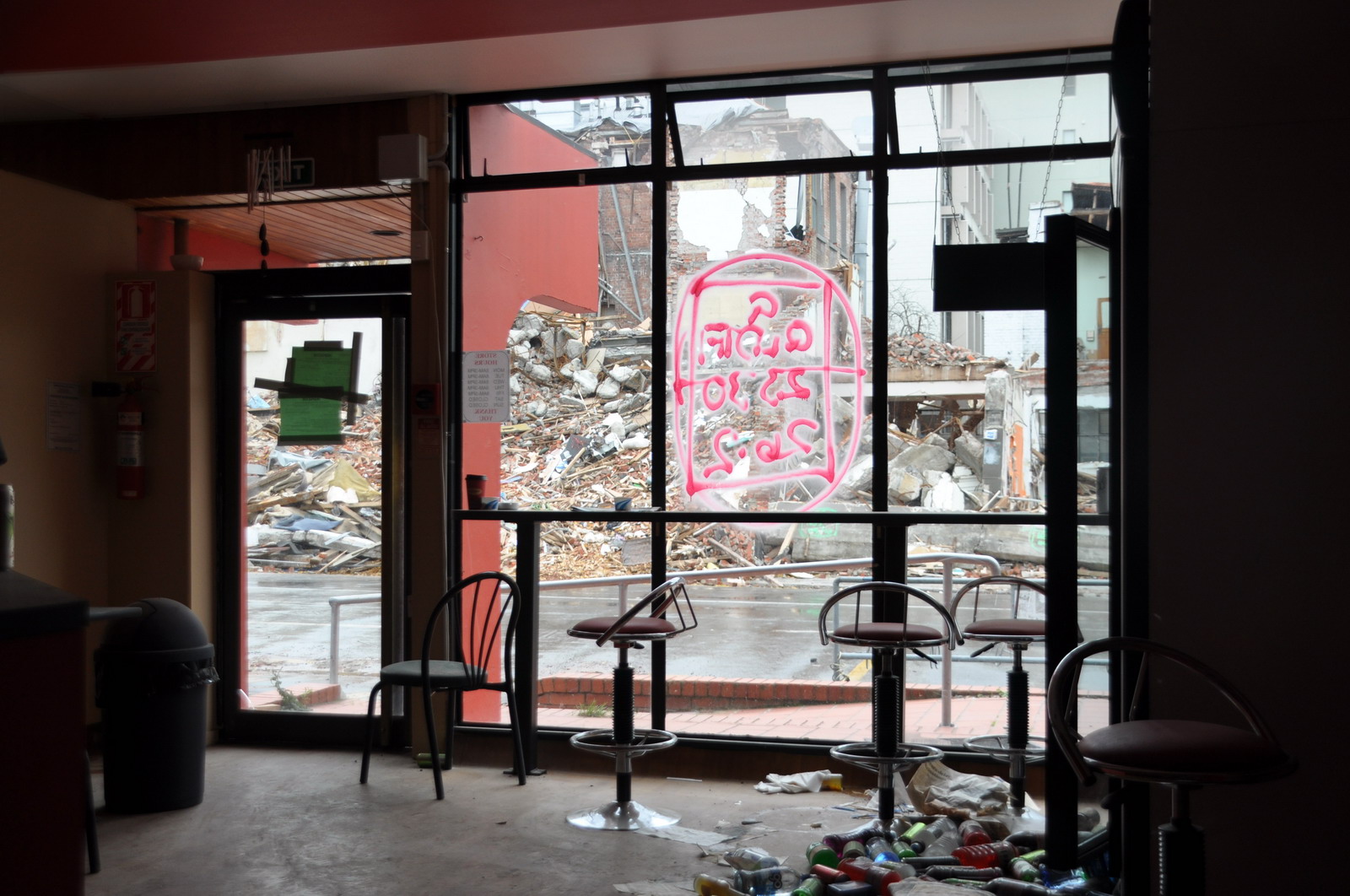
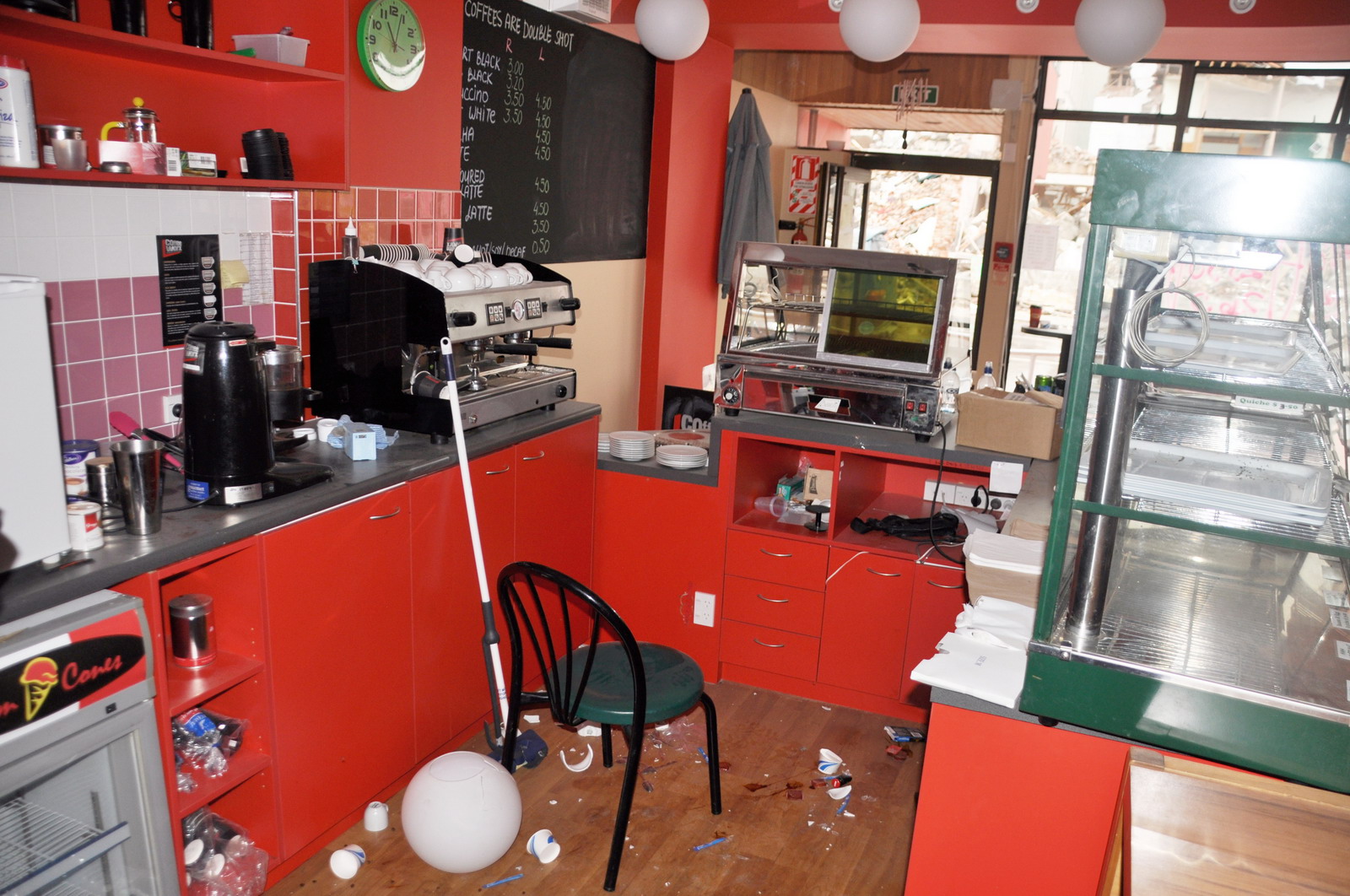
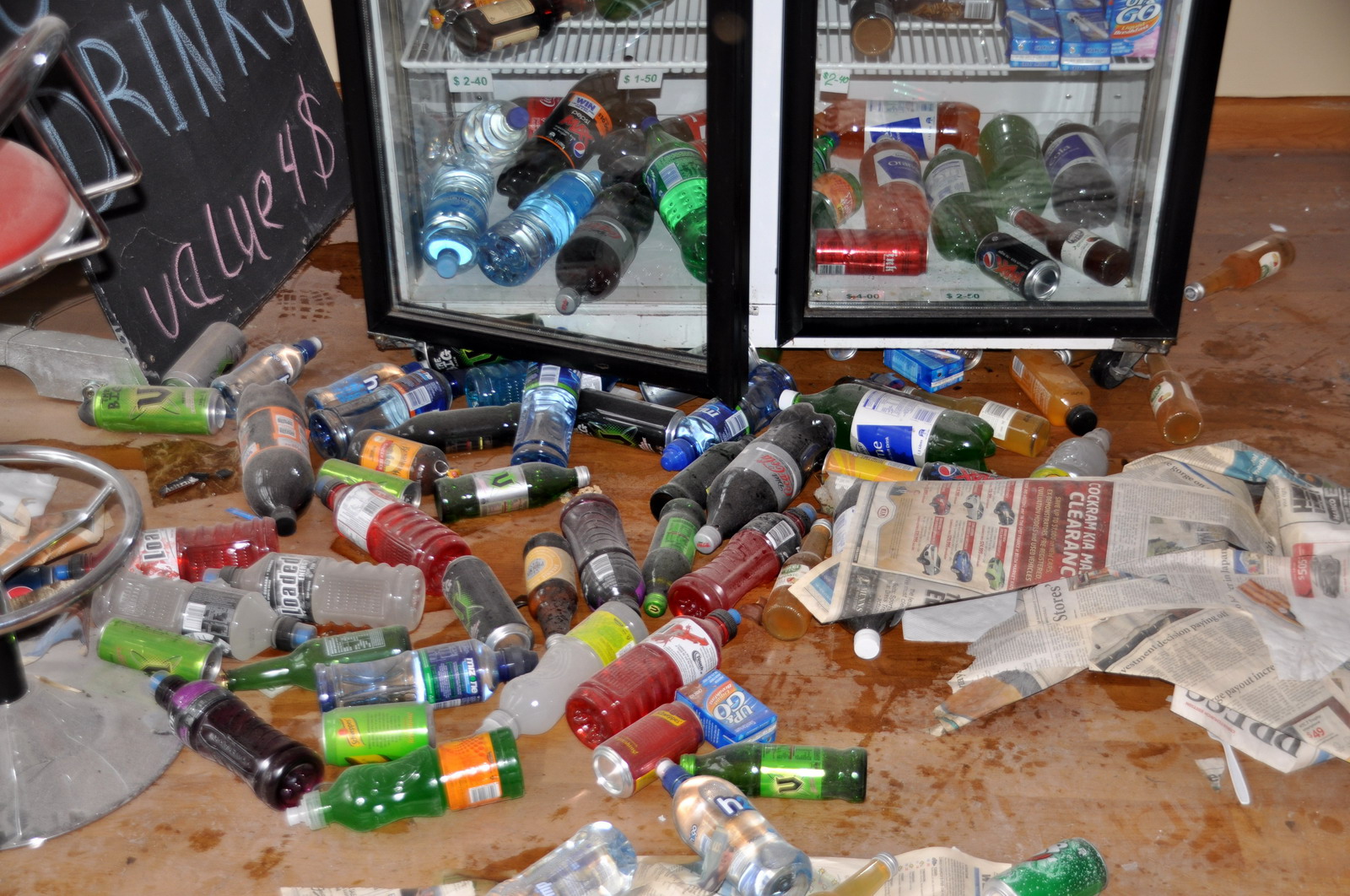
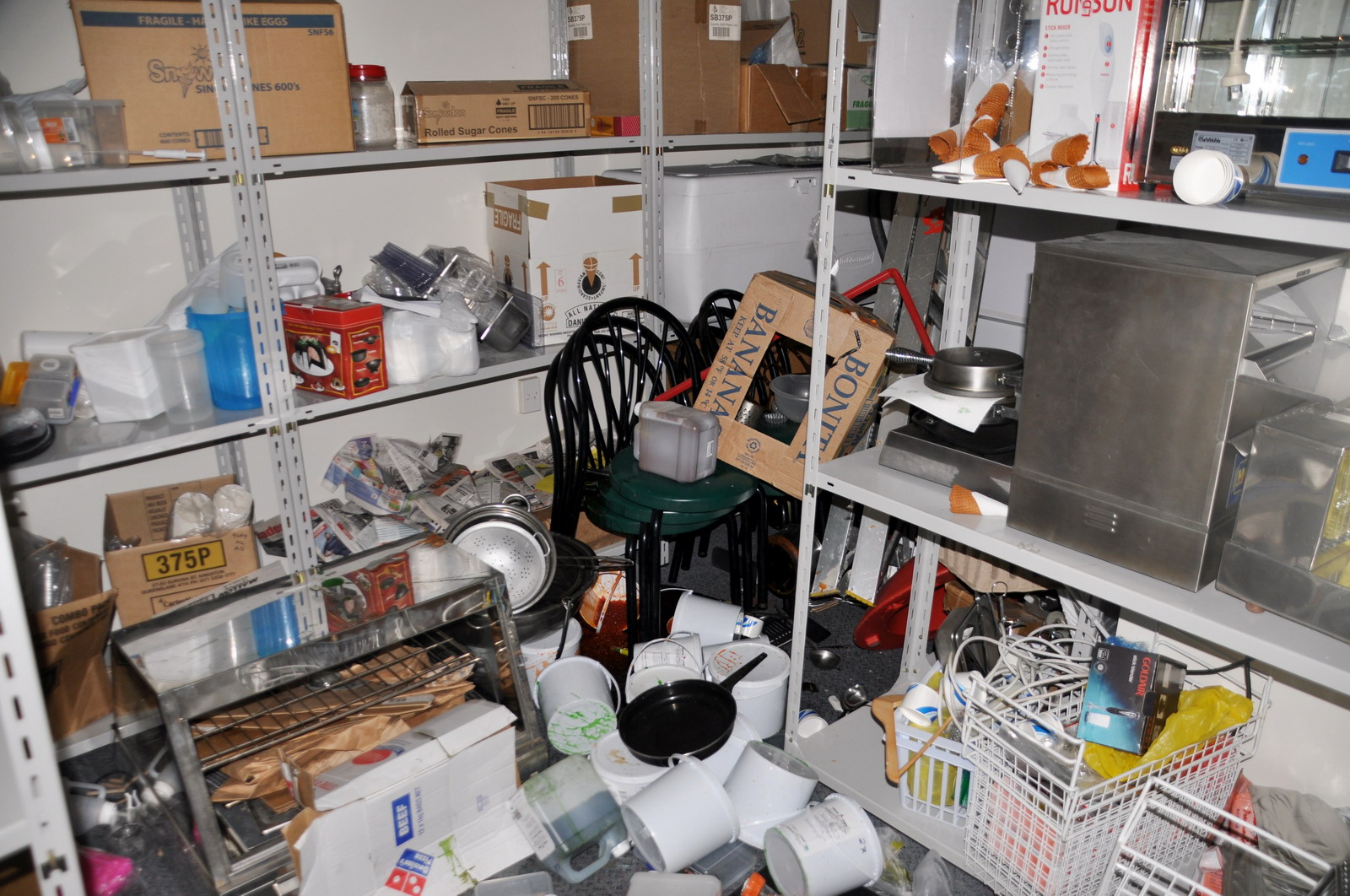
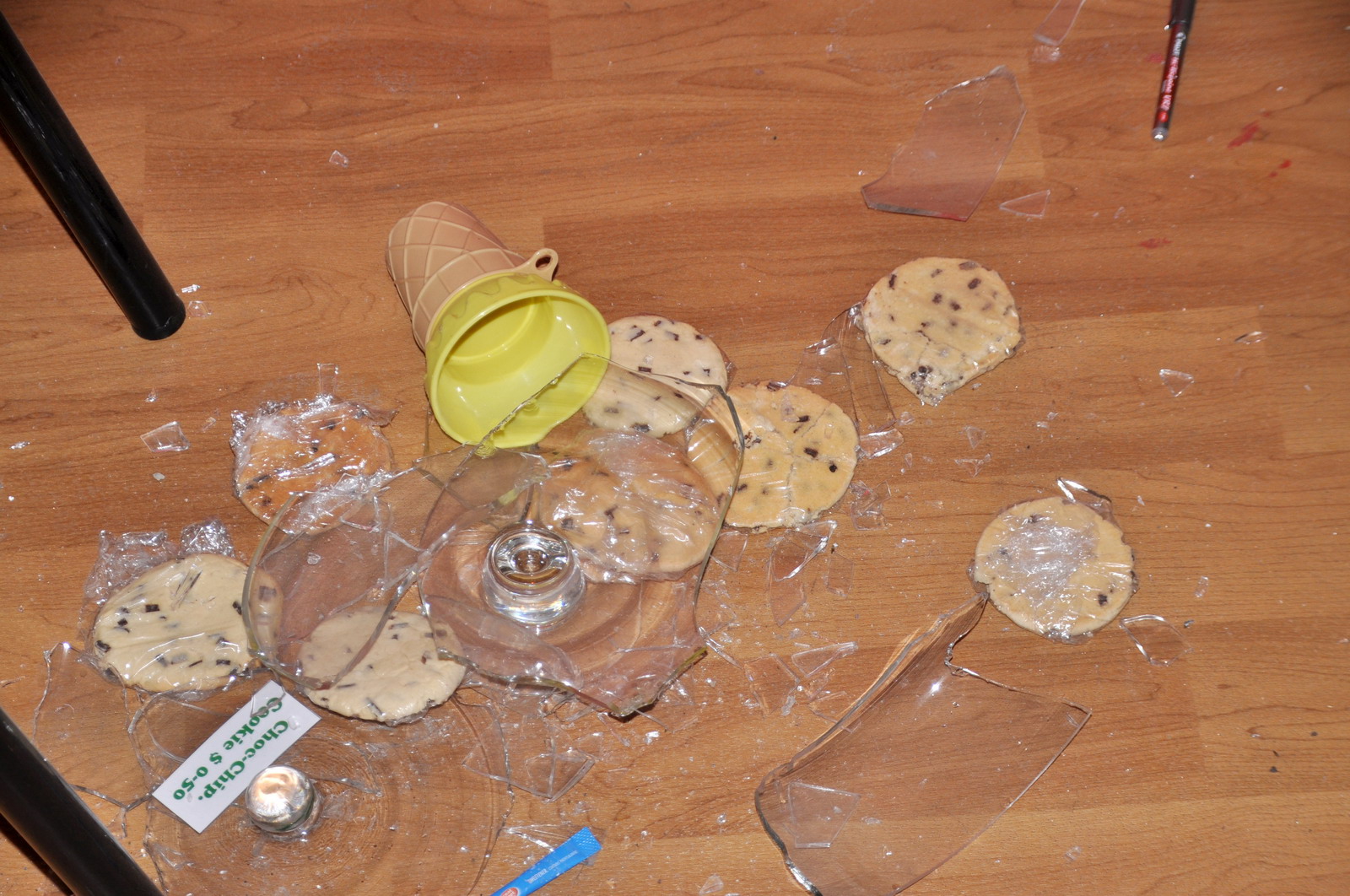
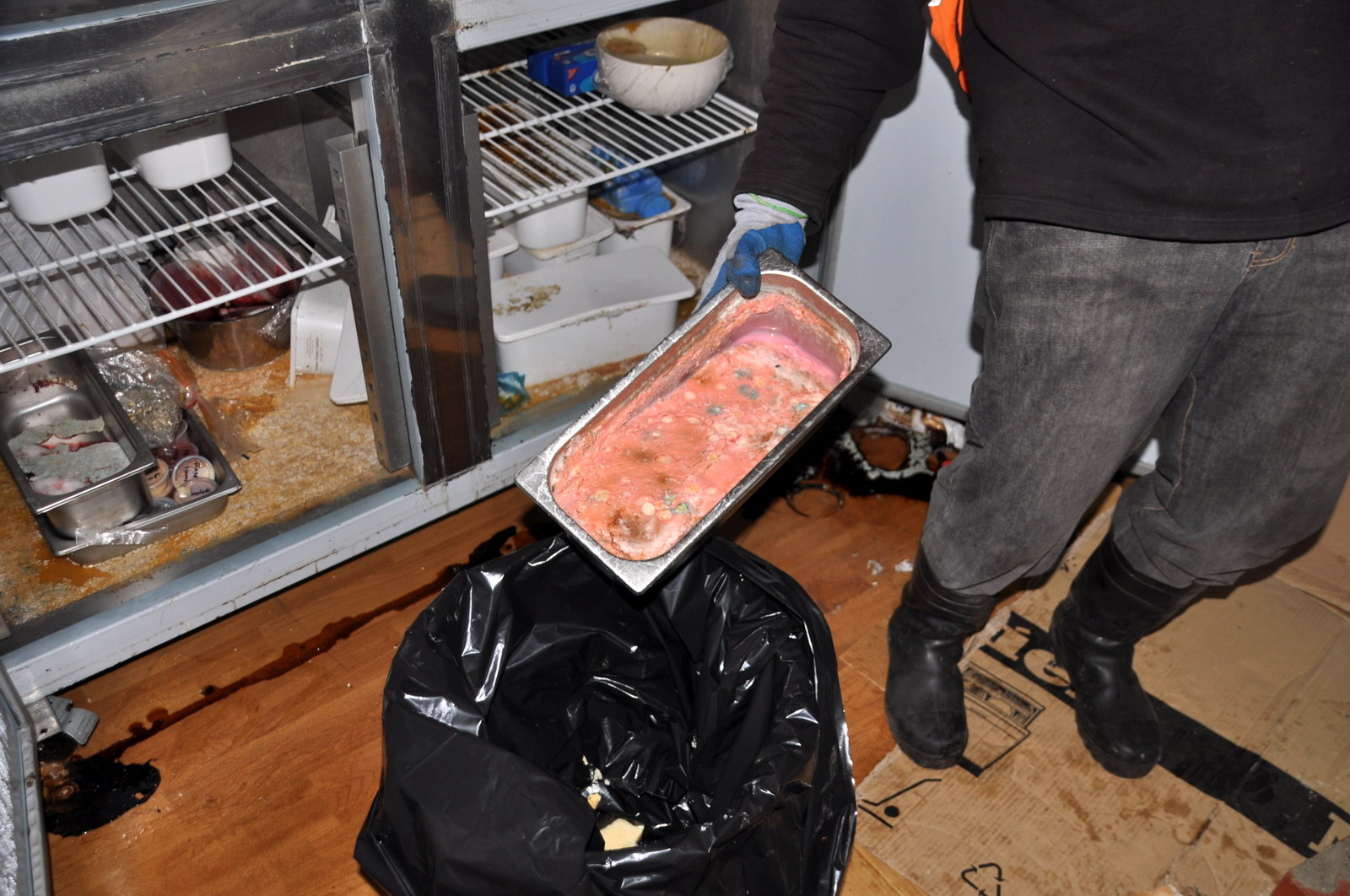
In a month everything had rotted and grown thick with mould. There were millions of flies. The smell was like nothing else.
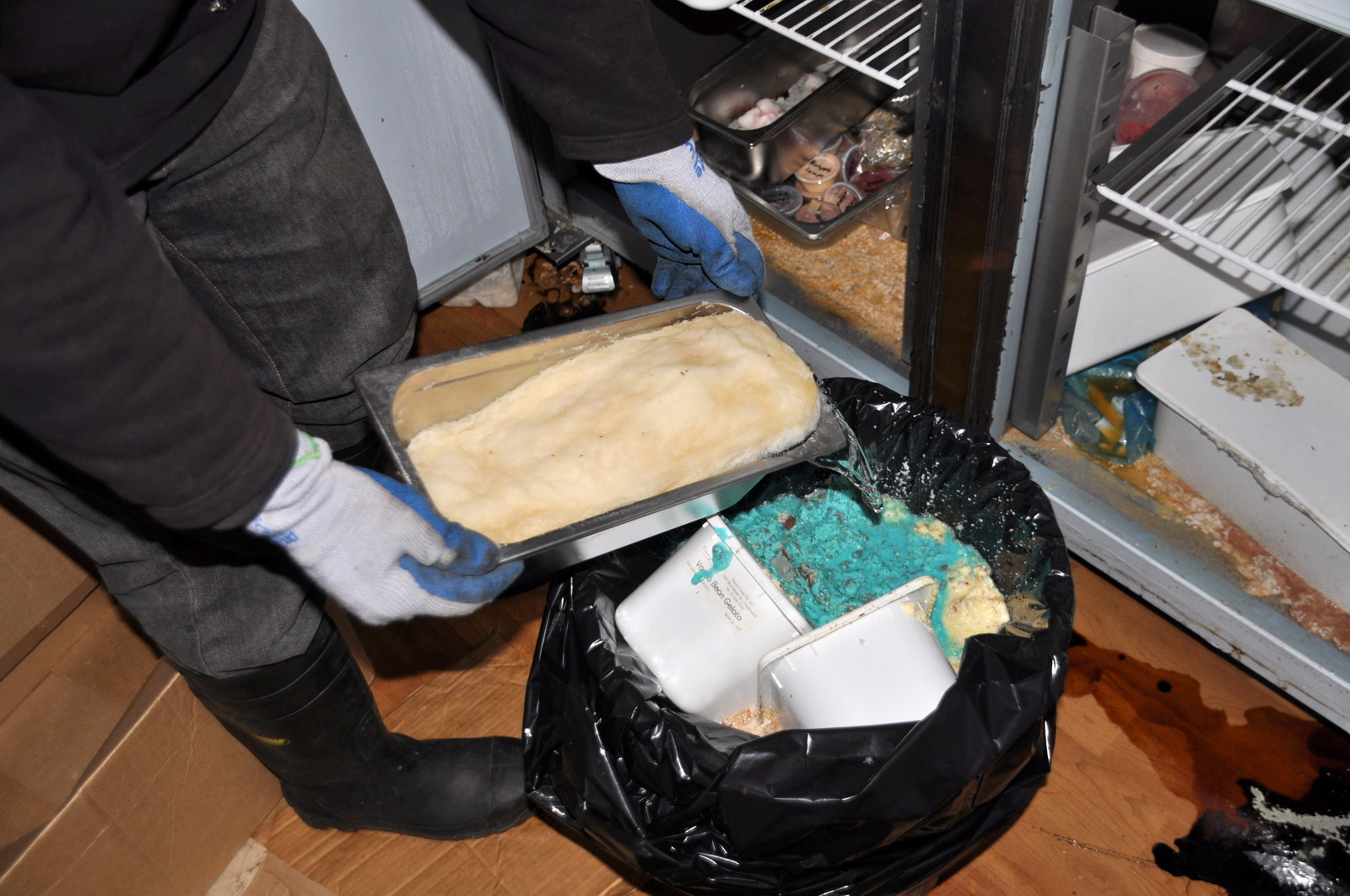
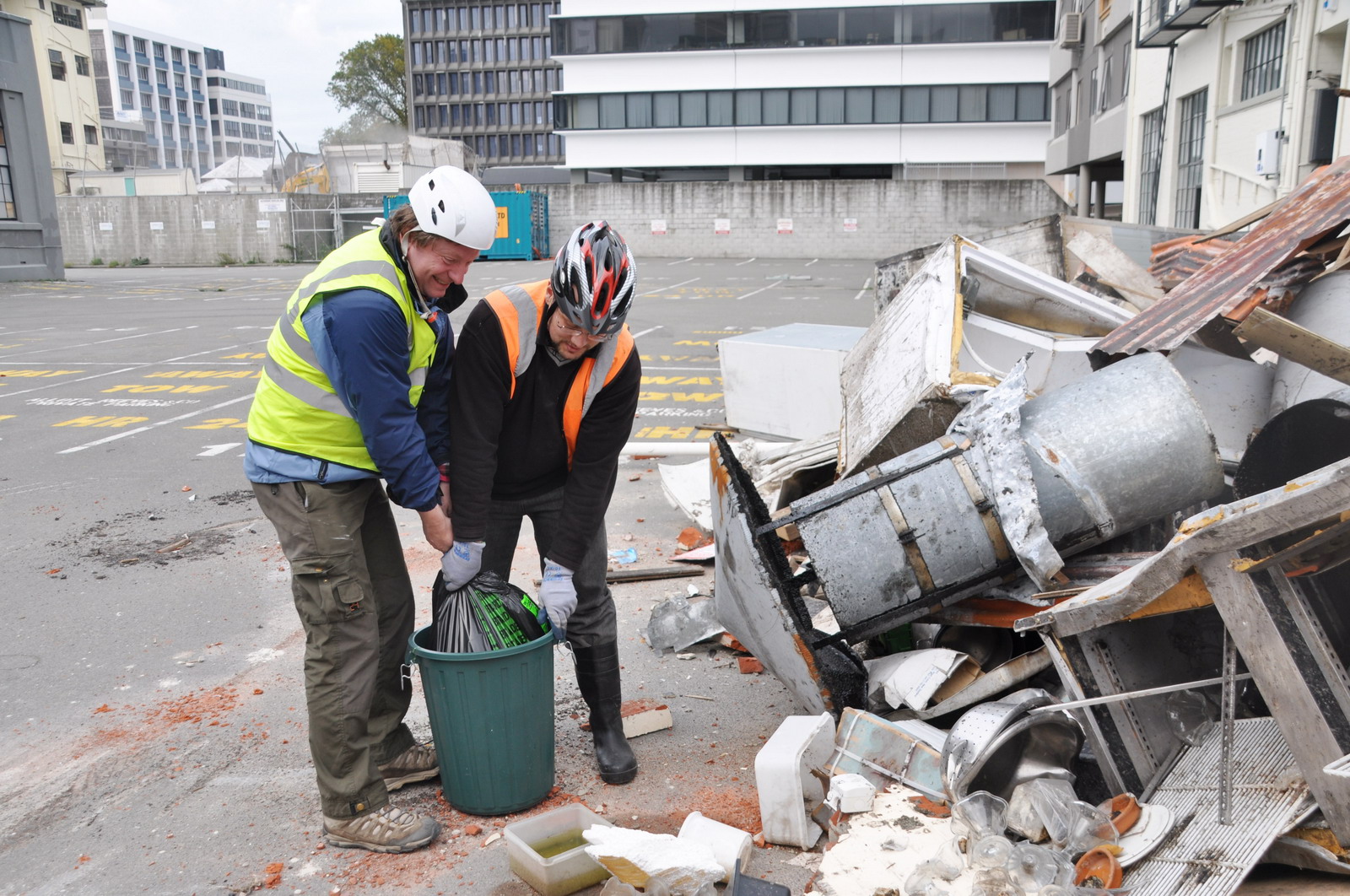
Some things had survived. Among the broken glass we found bottles of coffee and, more importantly, a bottle of rum. You have to take your chances when you get them. We made it into the heart of the red zone and managed to have a drink there, too.
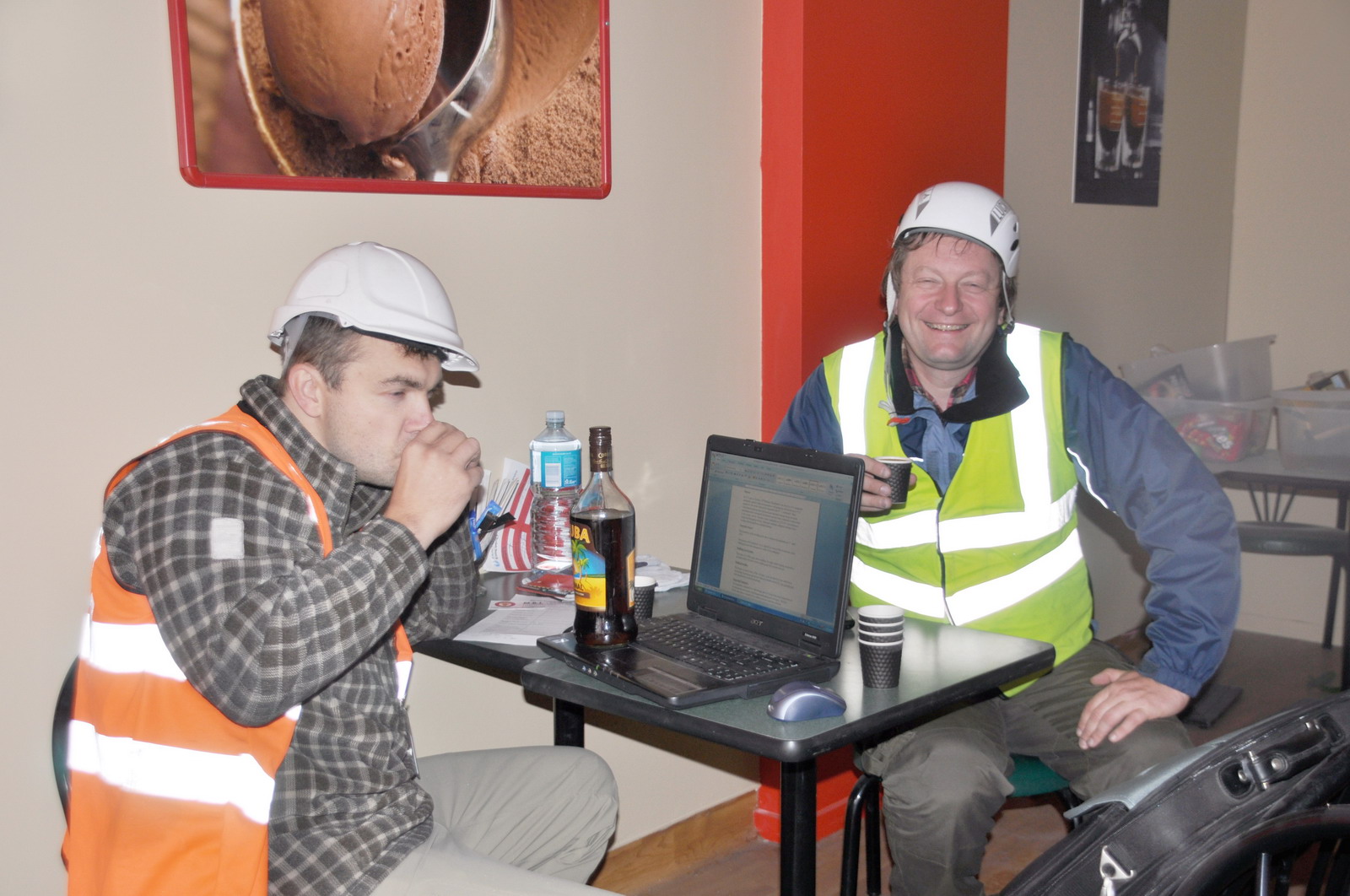
God helps those who take an interest. I felt like saying thank you. The work took nearly all the daylight, but at the end we found half an hour to drive round the main streets downtown.
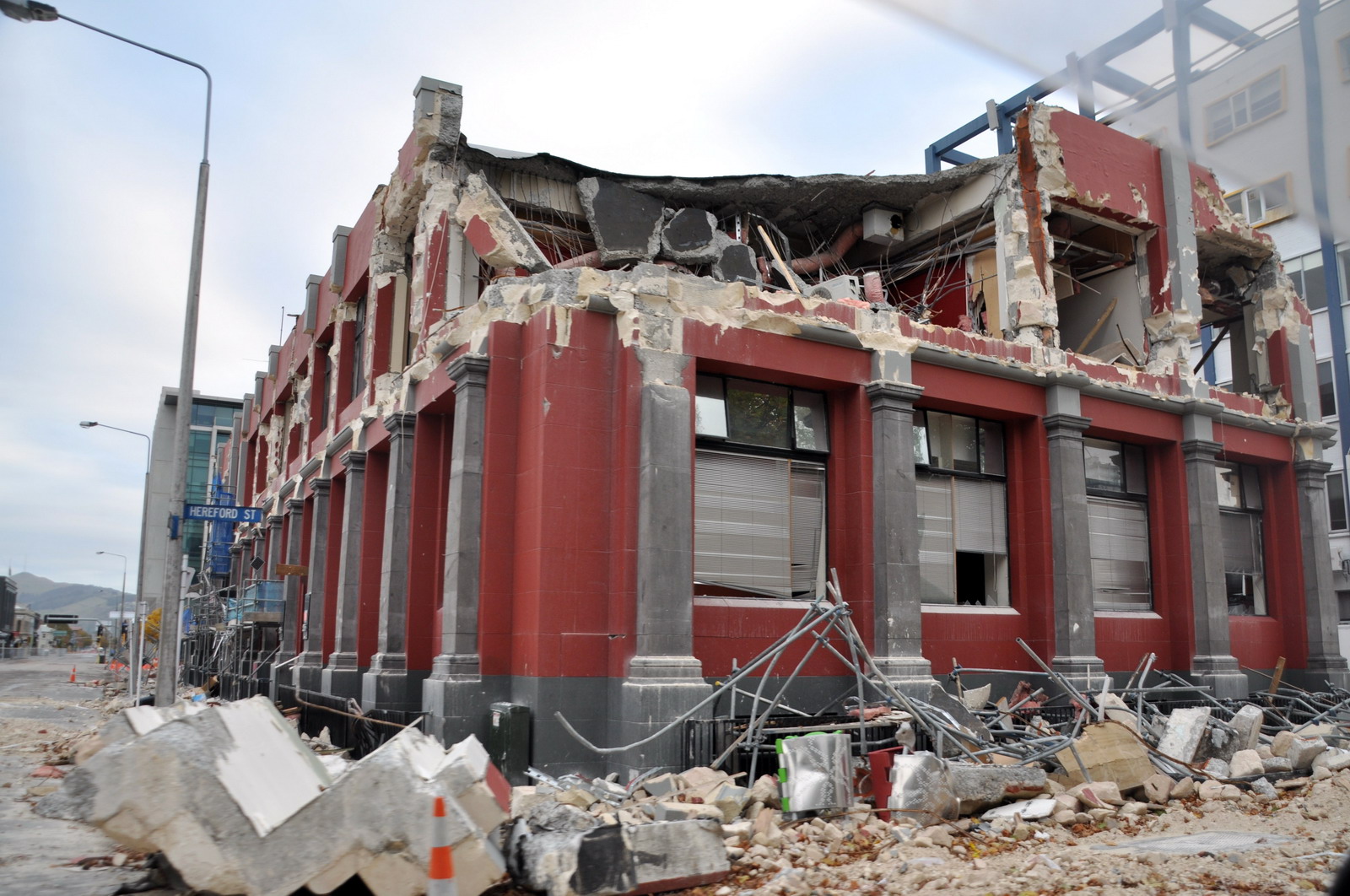
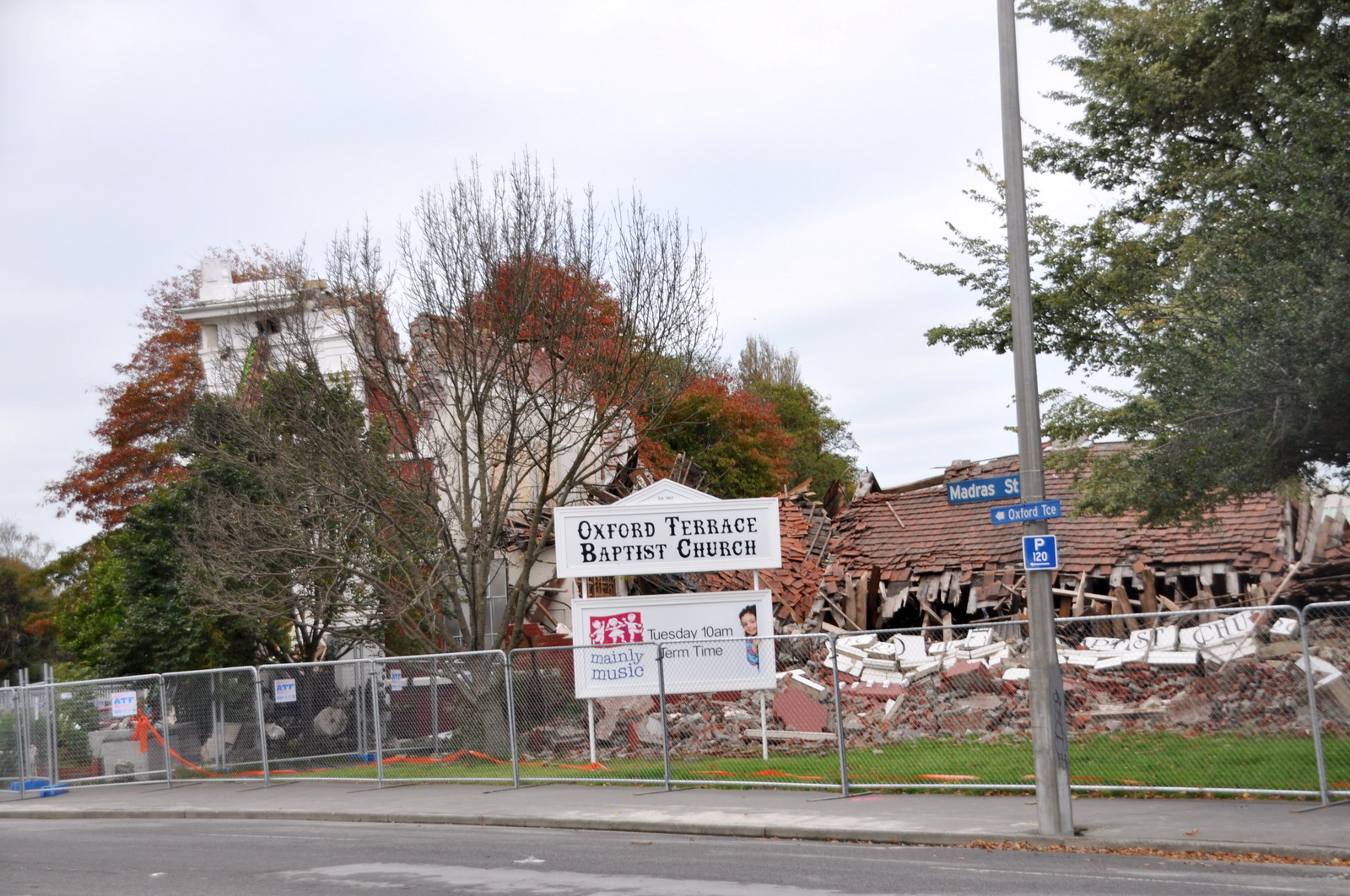
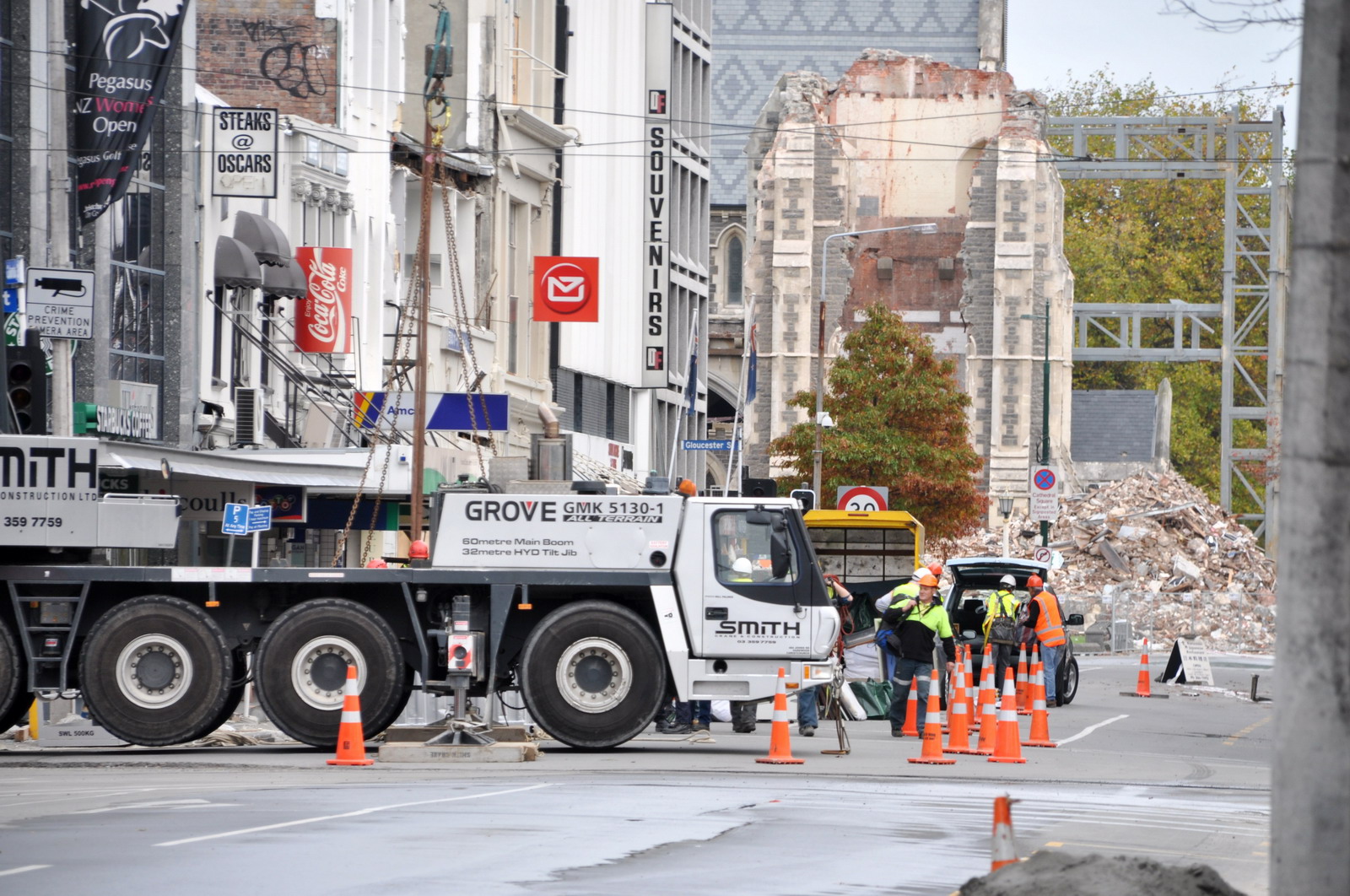
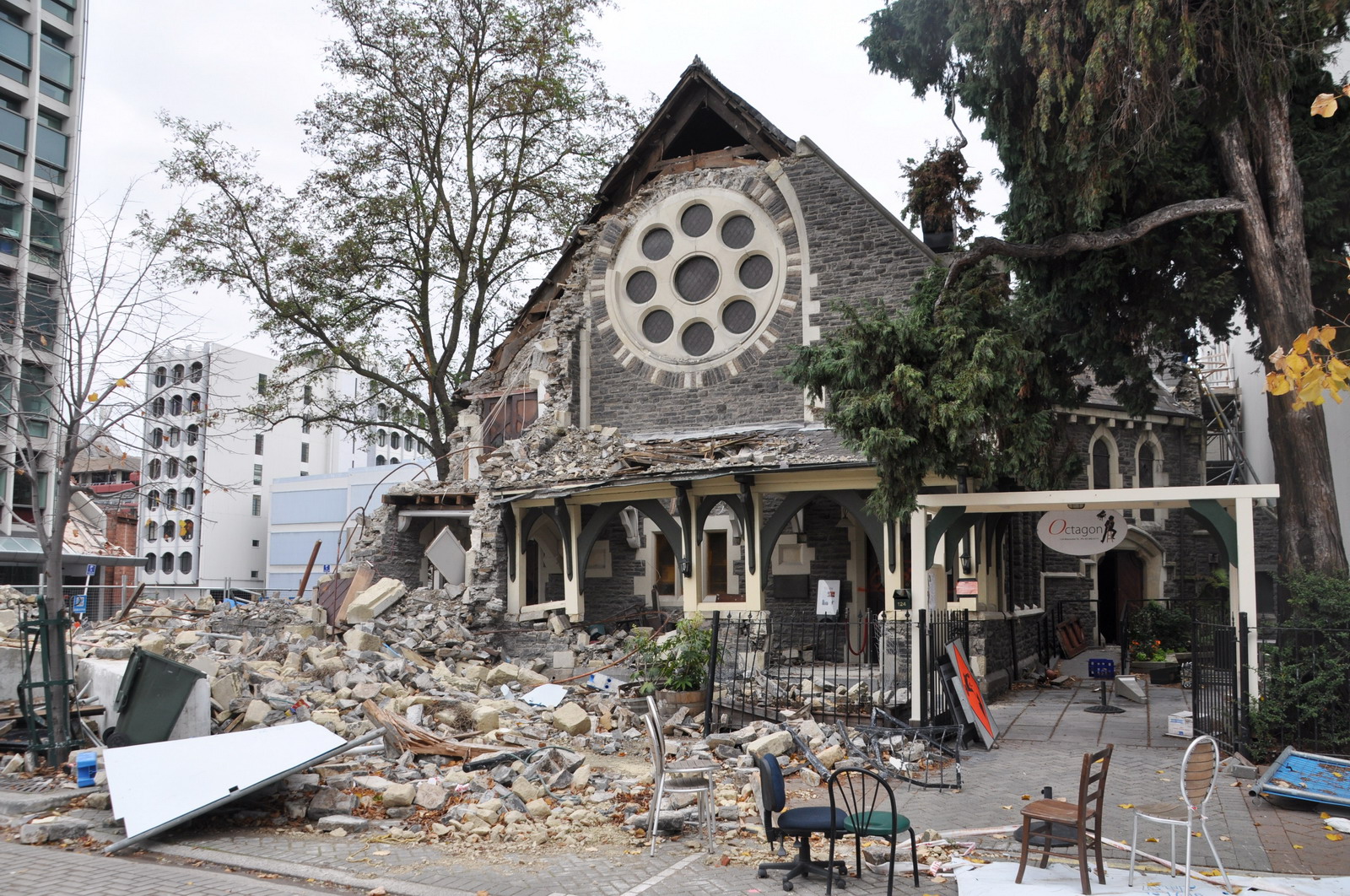
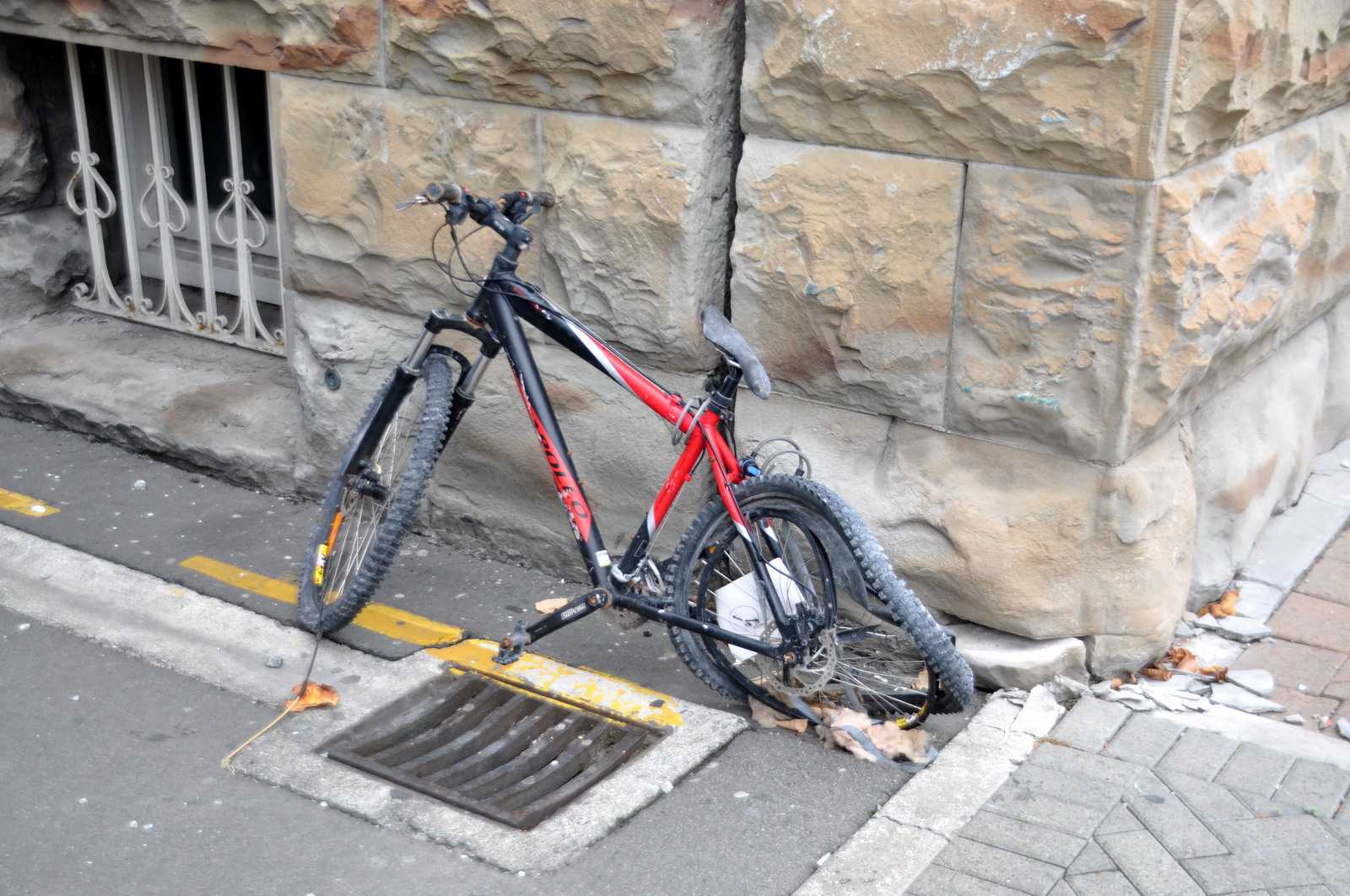
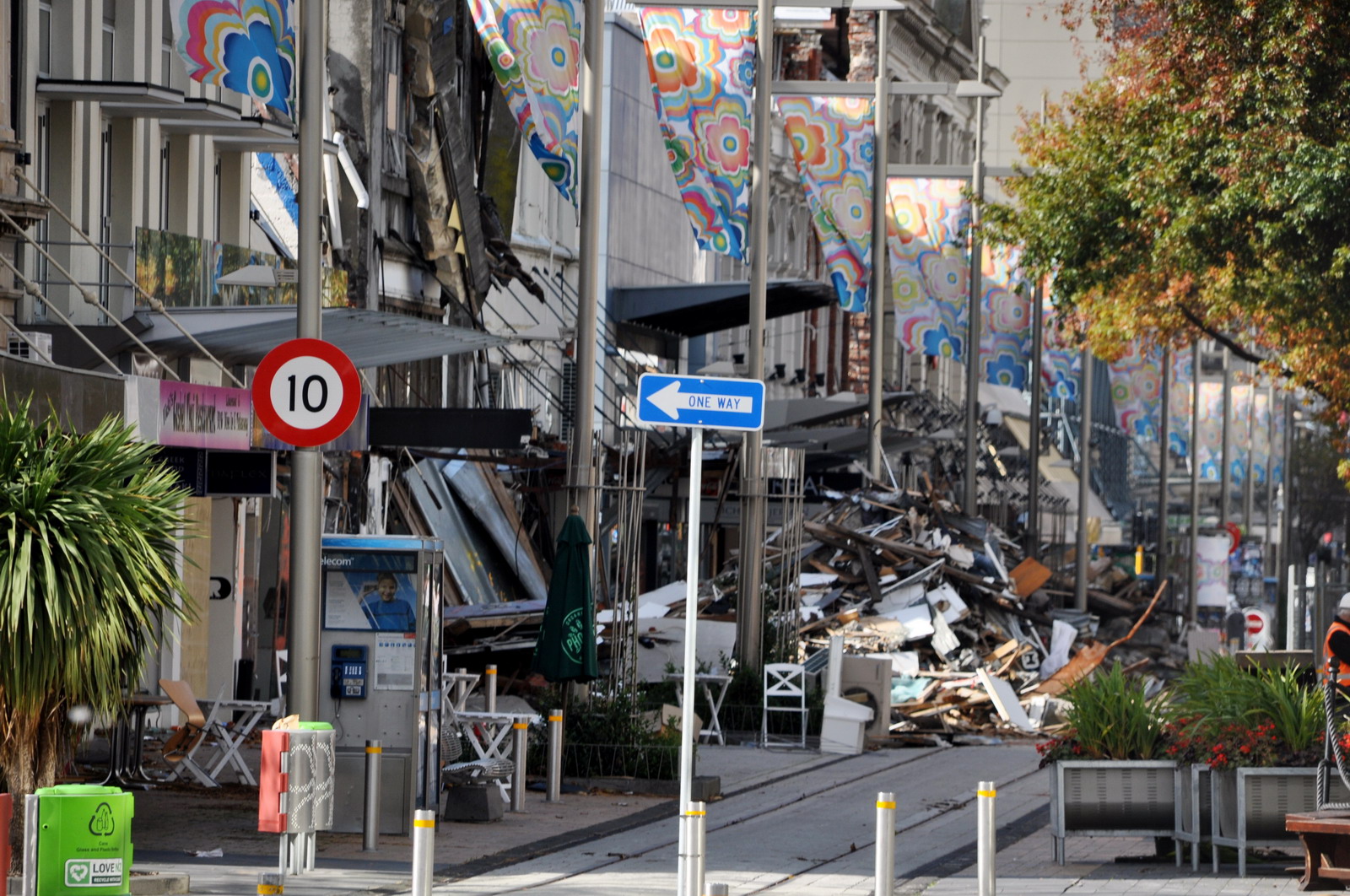
The damage itself did not surprise me much. It was much the same as the damage outside the zone. What struck me then was the way the authorities had turned the centre into a show of force and folly.
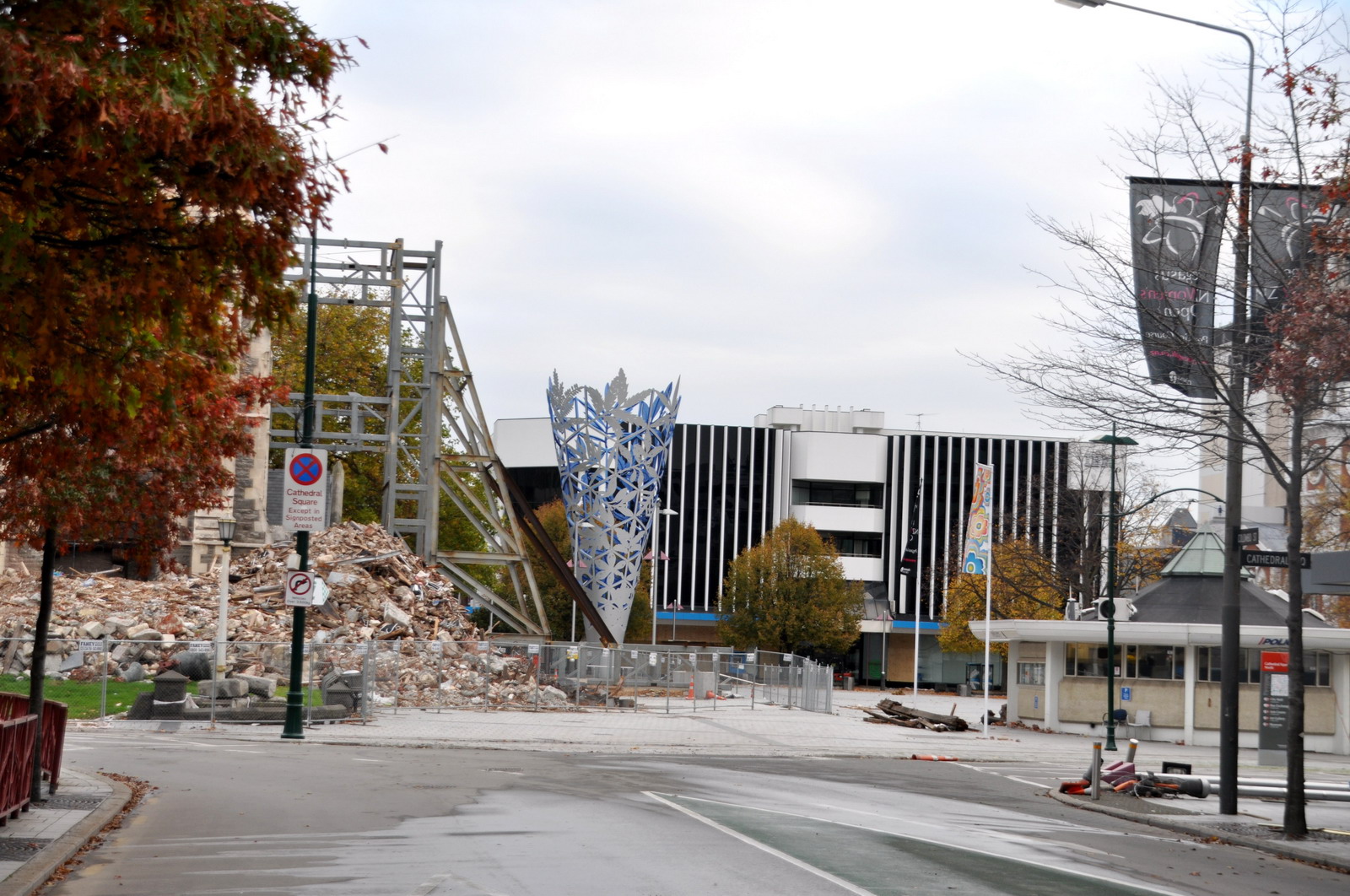
Cathedral Square still looked almost as it had immediately after the quake. The rescue work had only just finished, and there had scarcely been time to demolish anything.
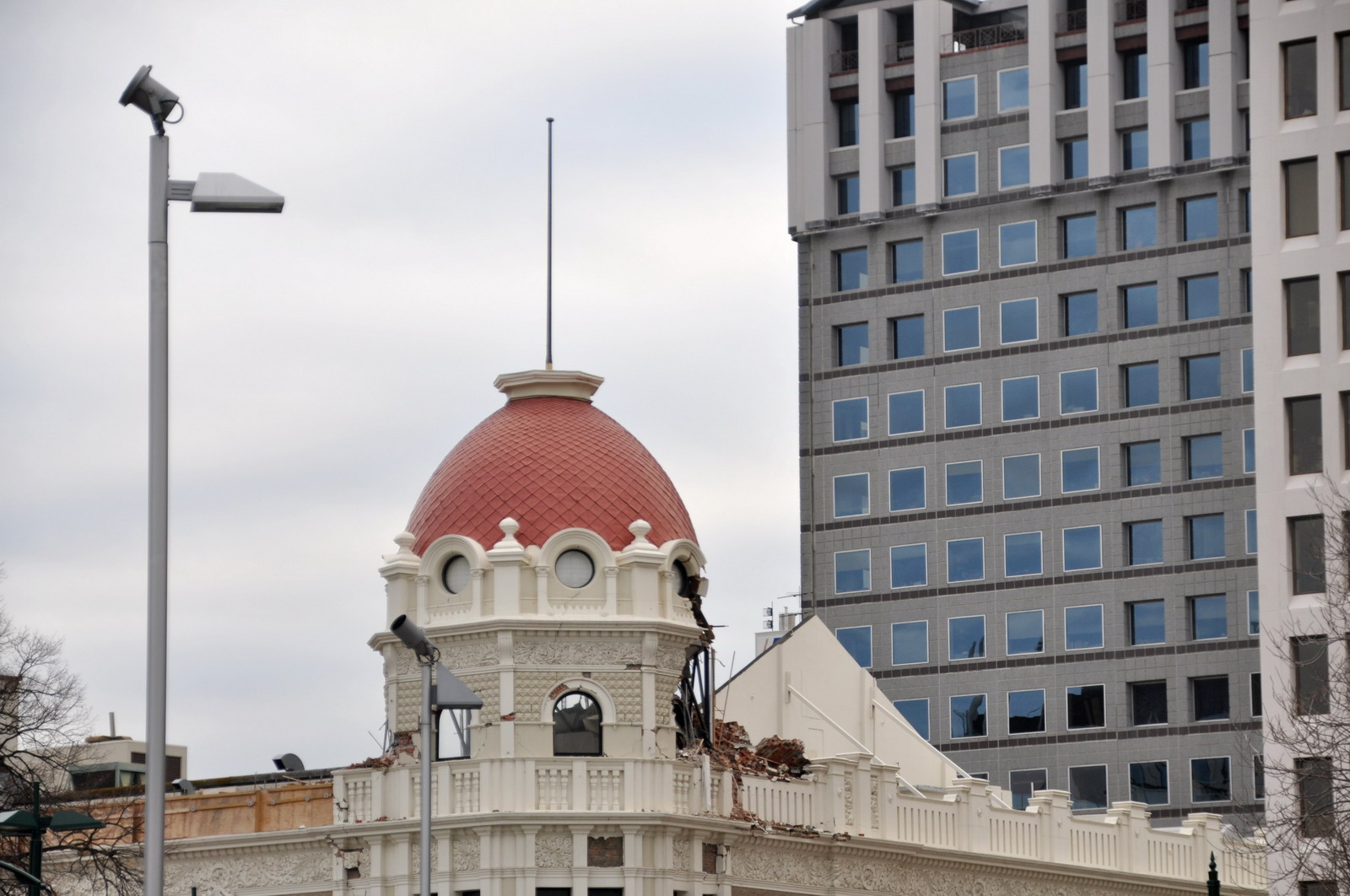
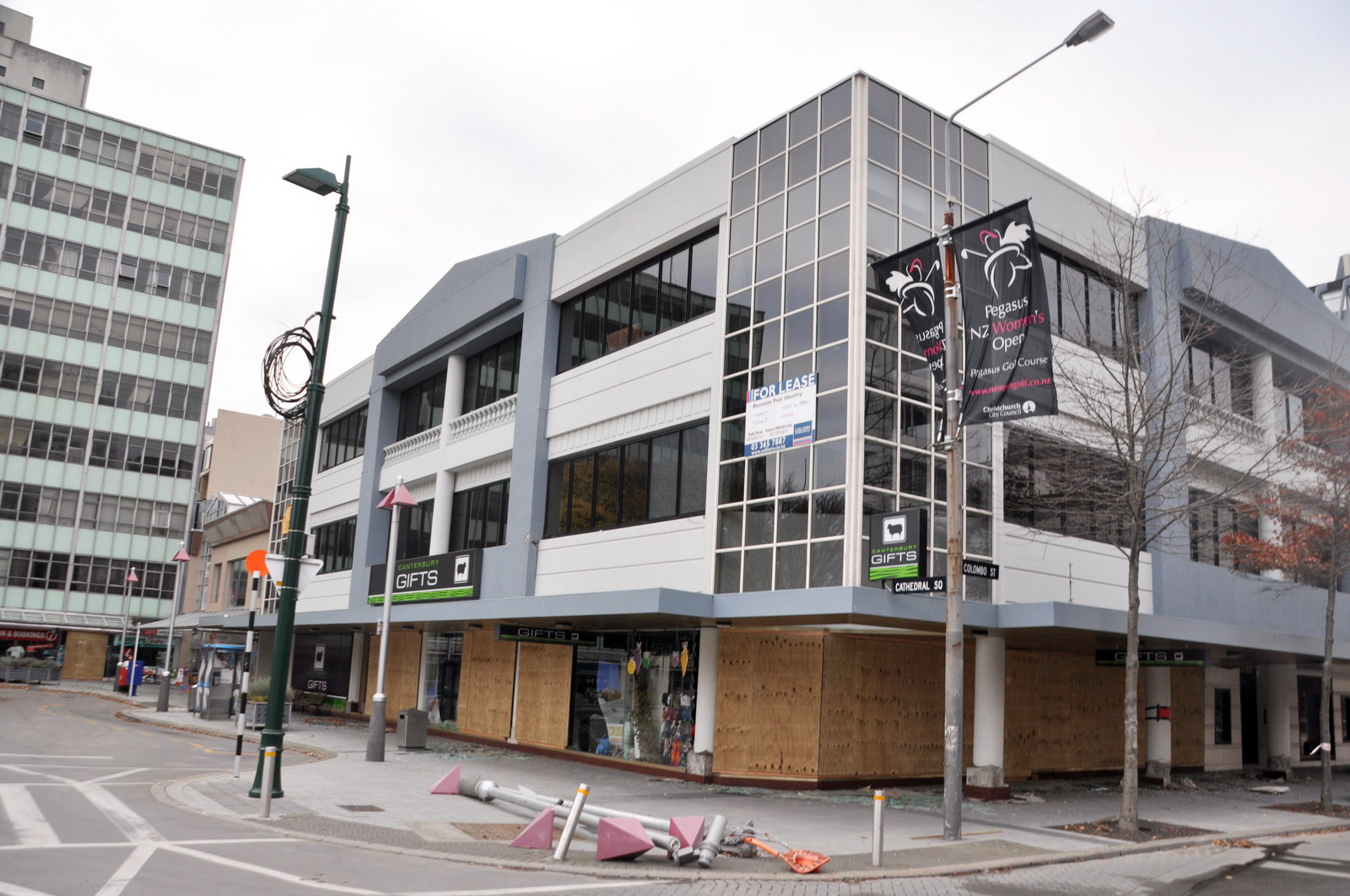
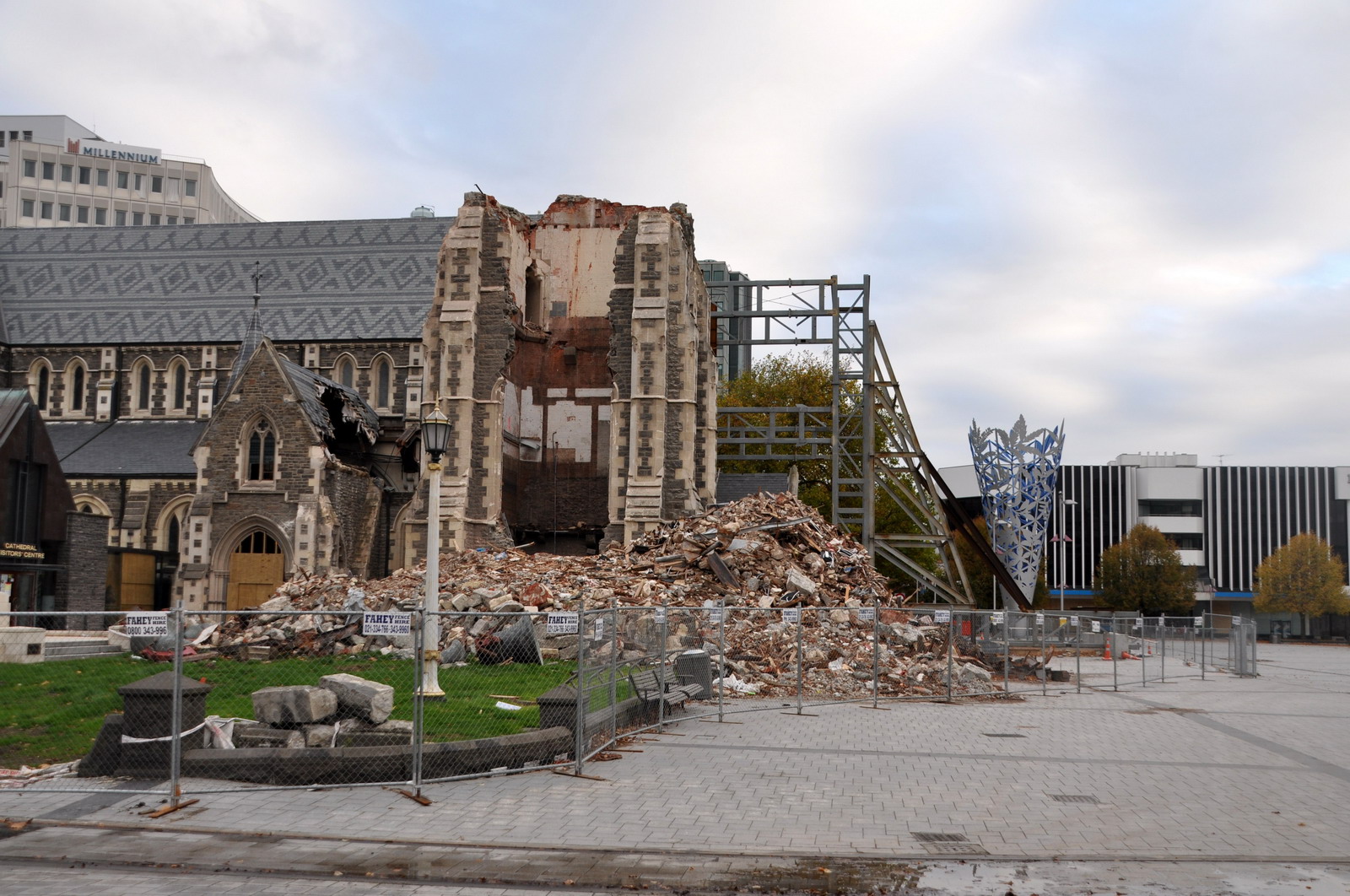
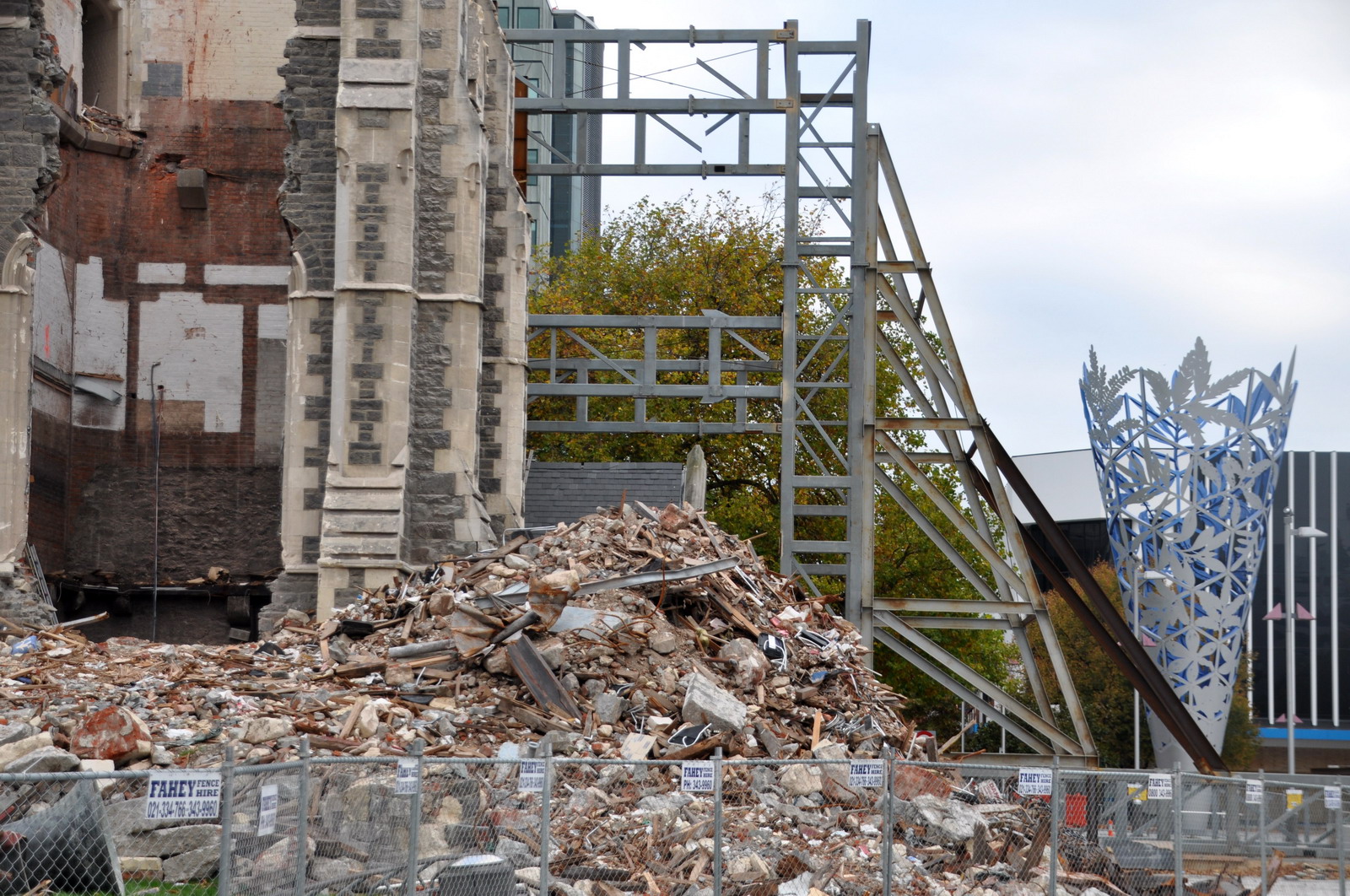
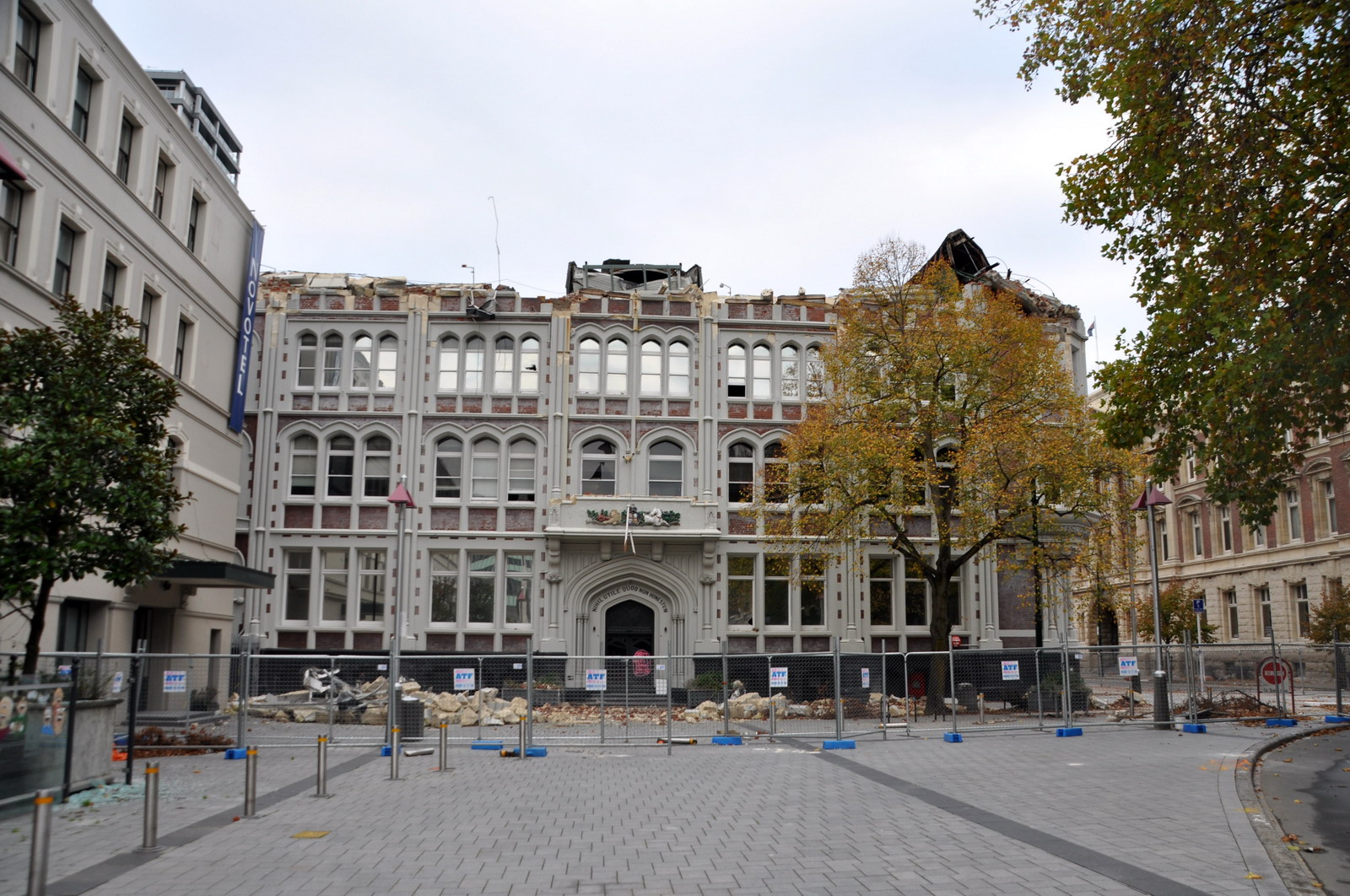
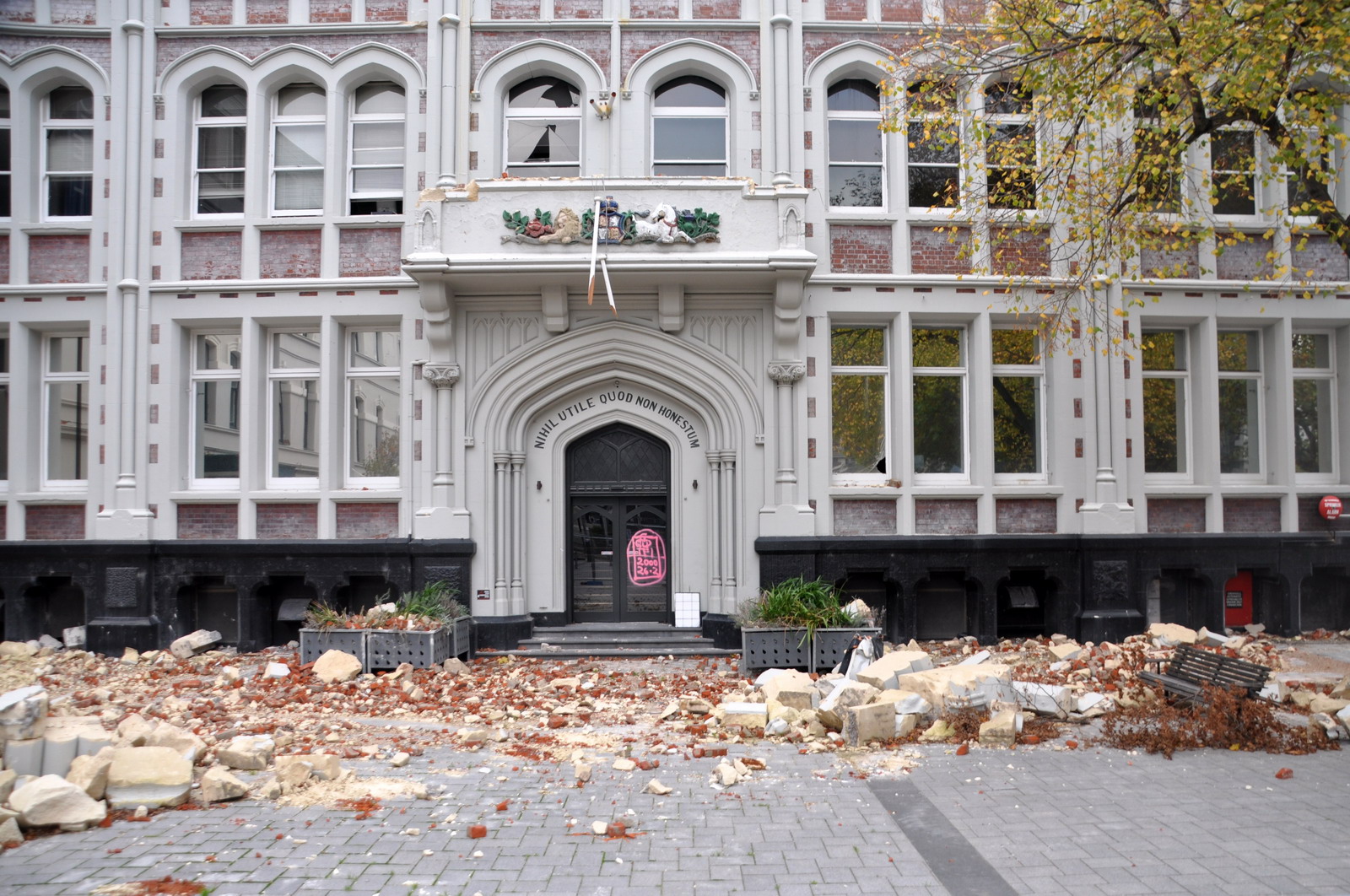
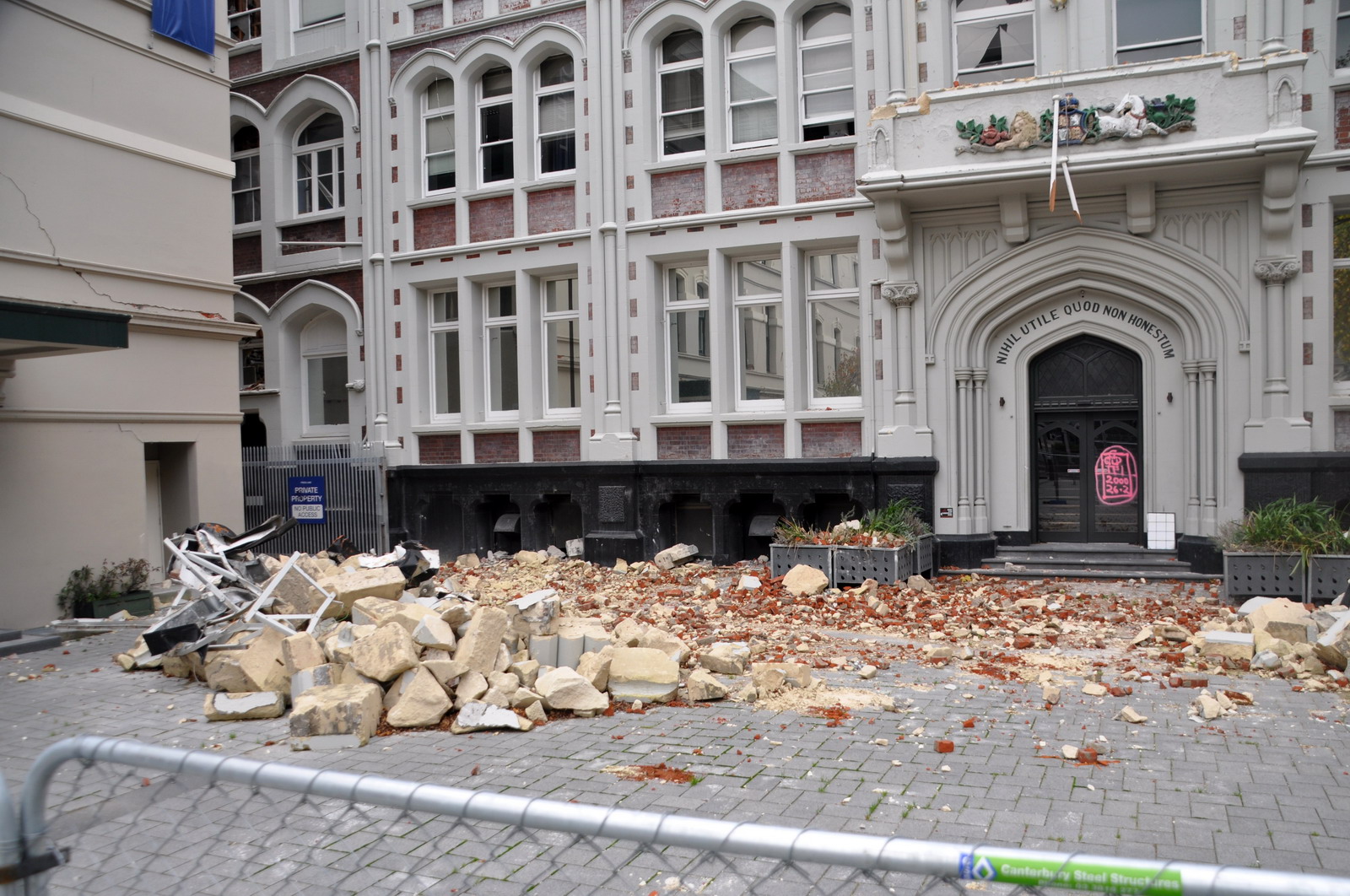
It was the same on High Street and Colombo Street.
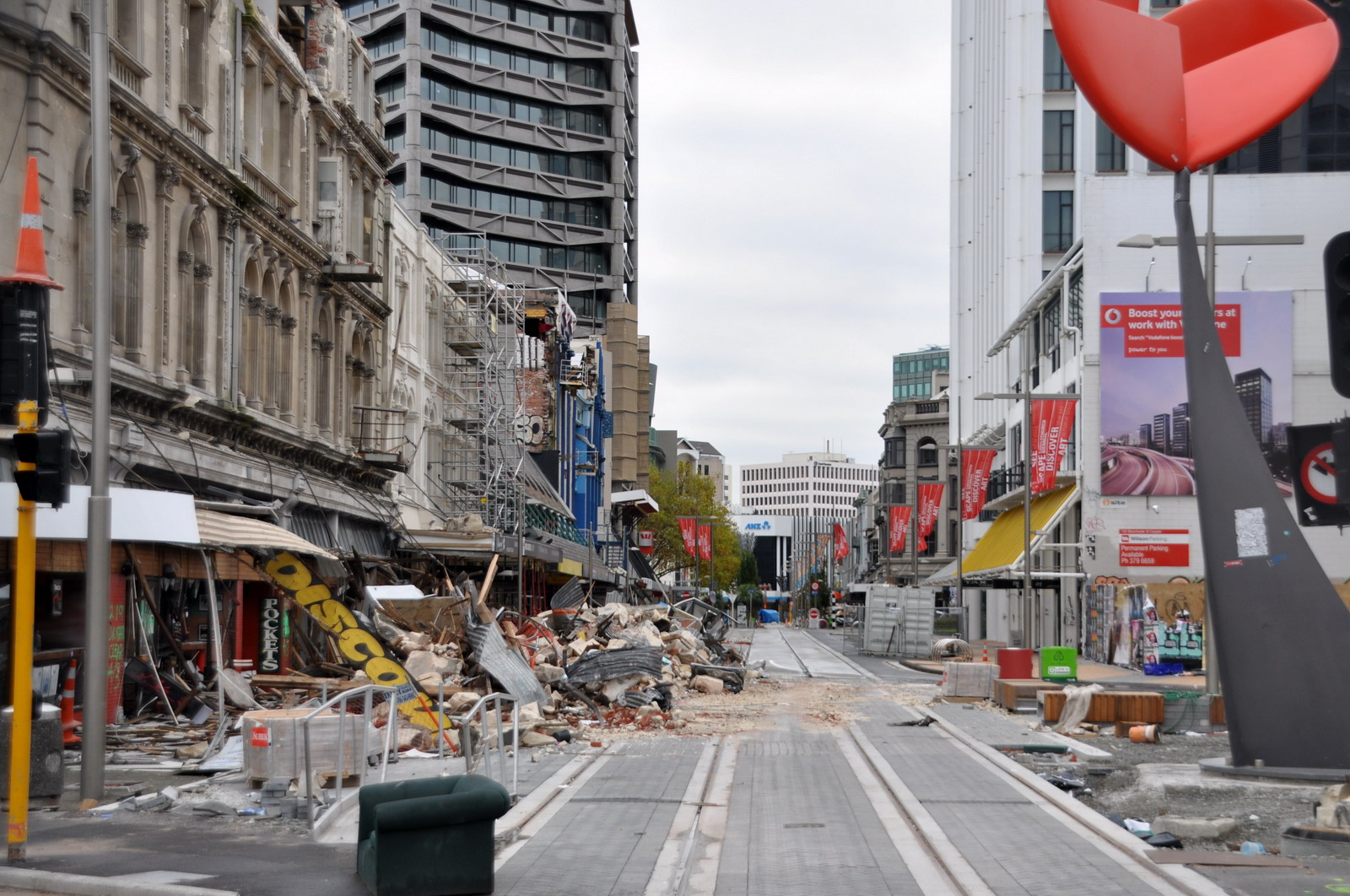
The television building had been cleared away, but part of the surviving staircase was still standing.
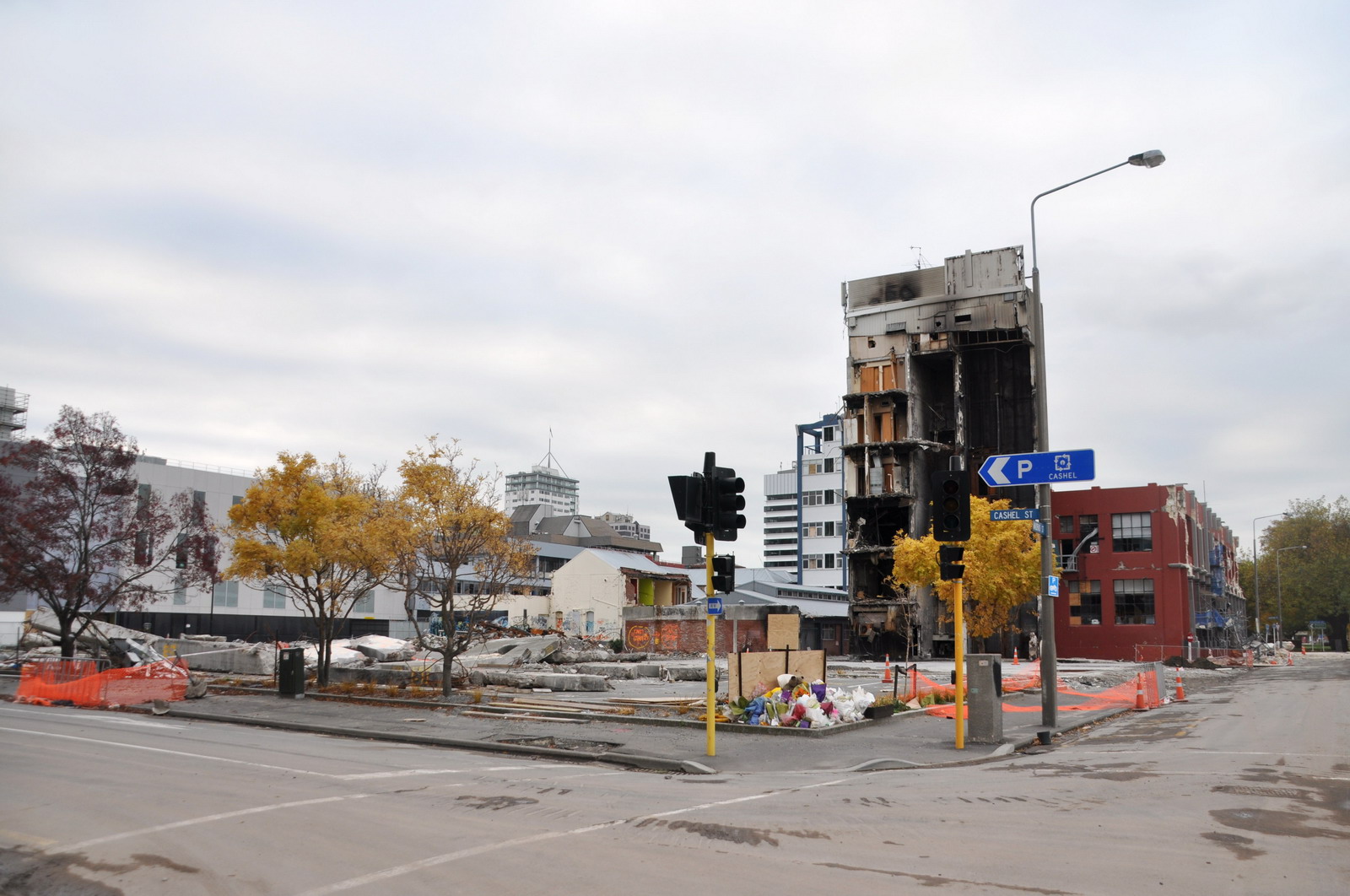
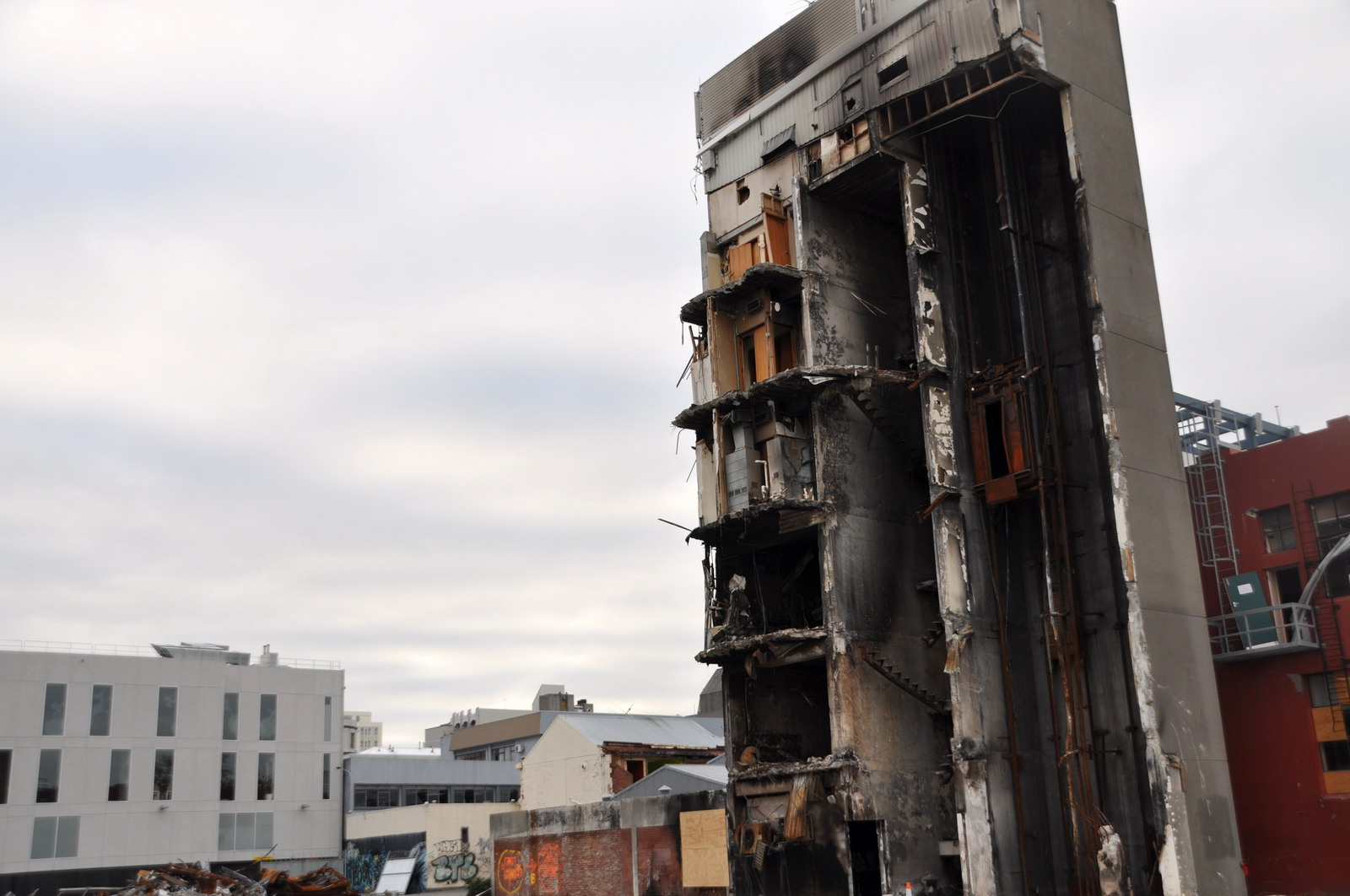
Demolition and removal had only just started at another destroyed building, the Pyne Gould Corporation offices.
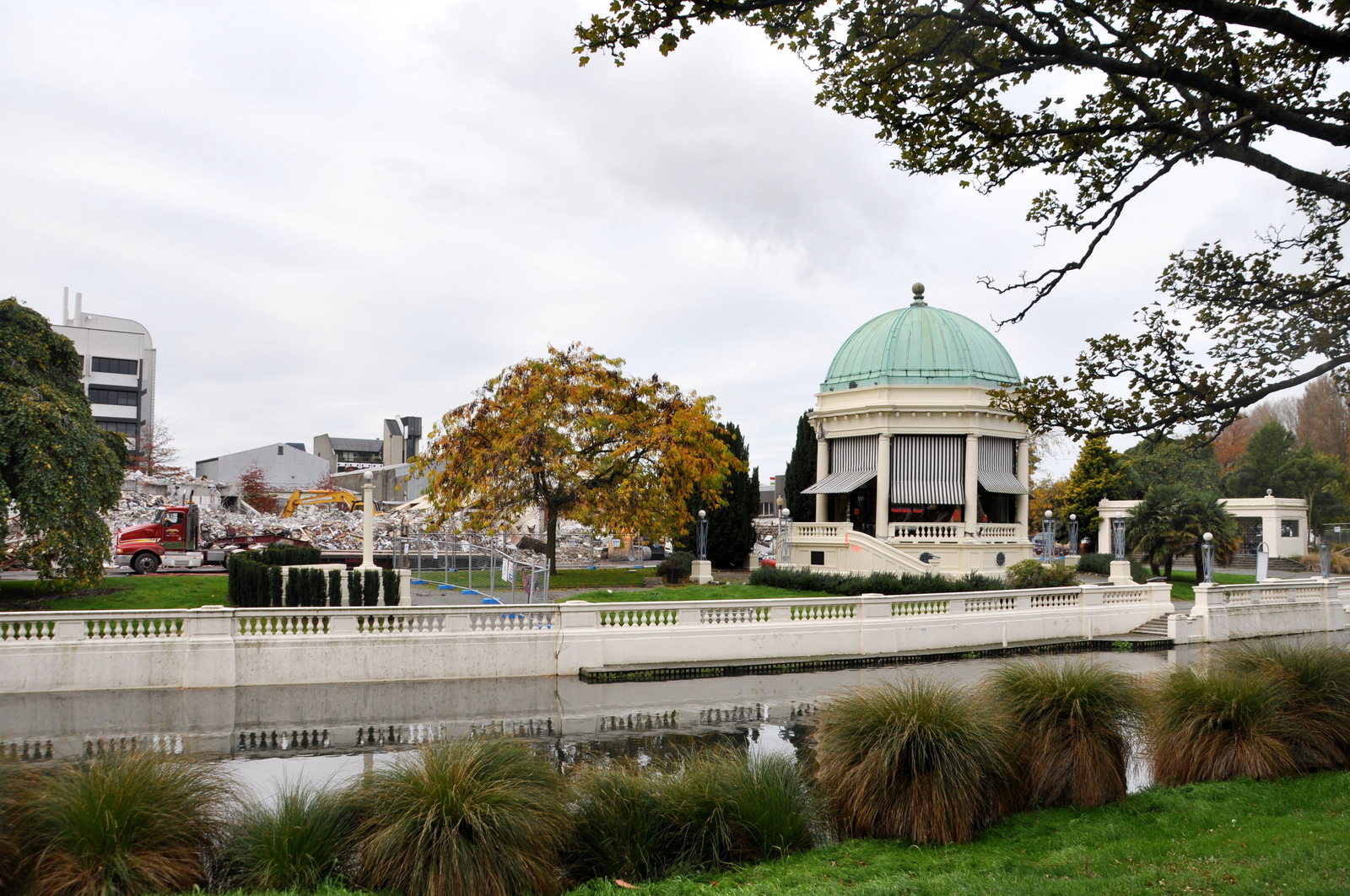
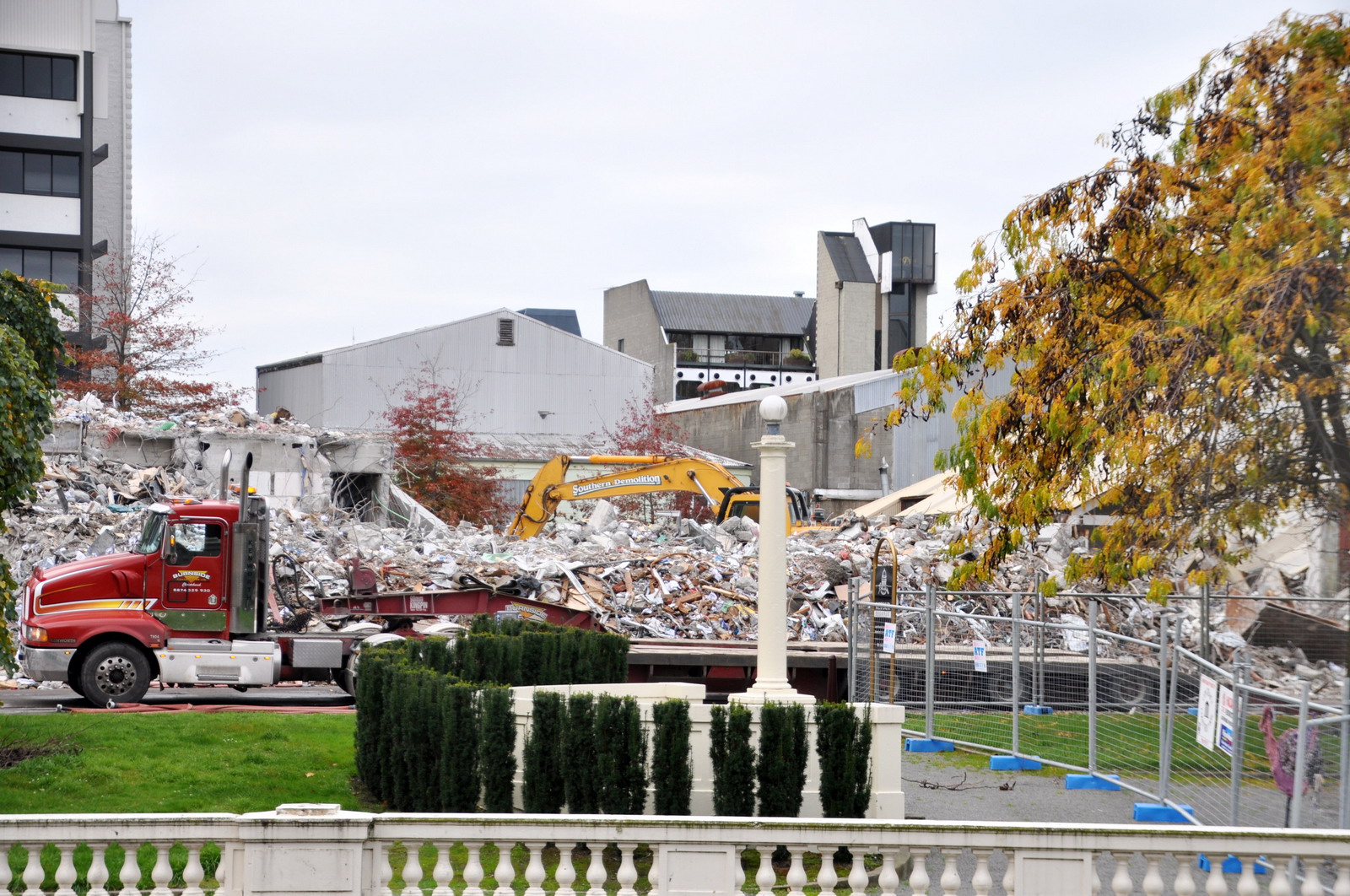
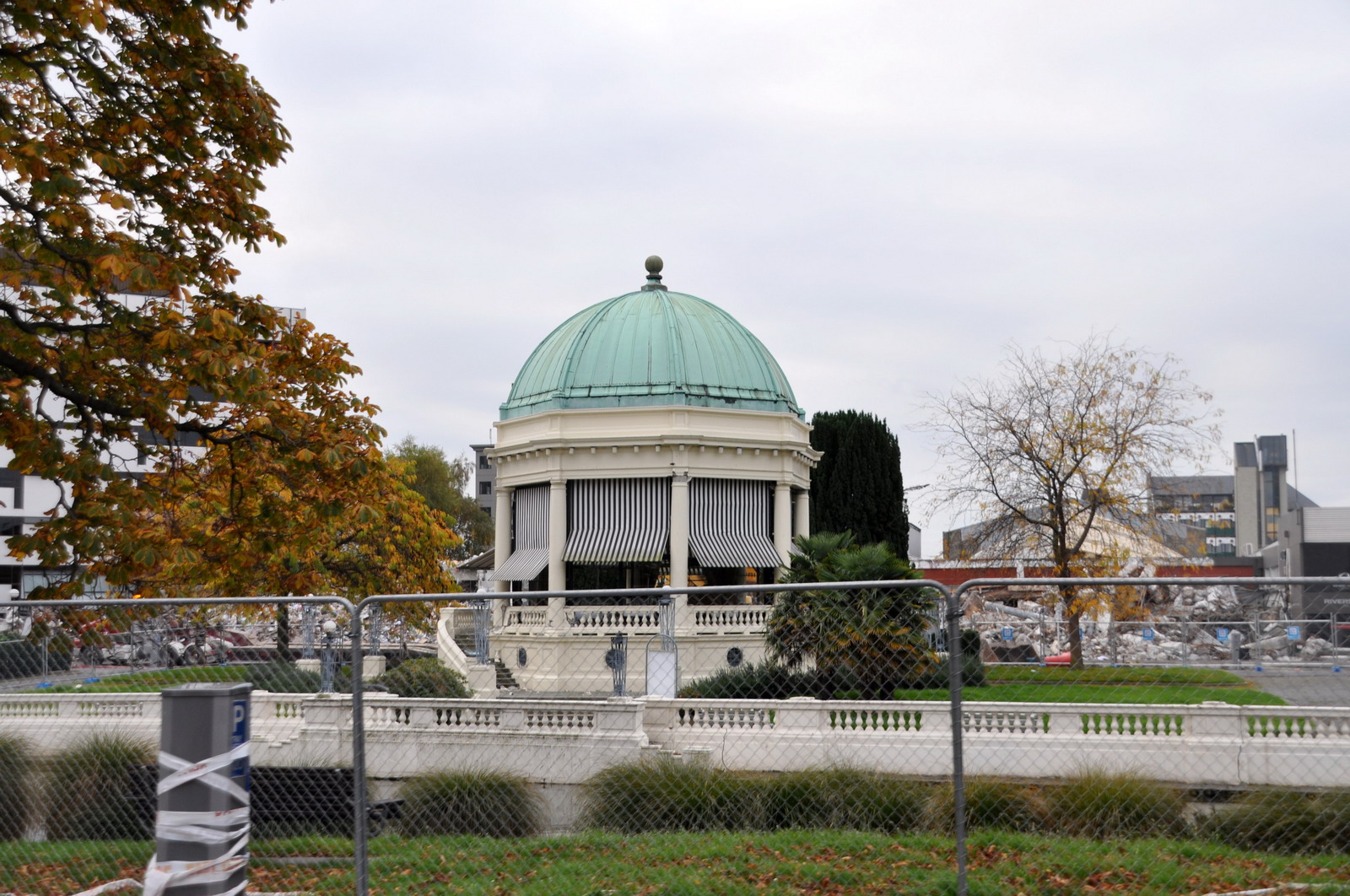
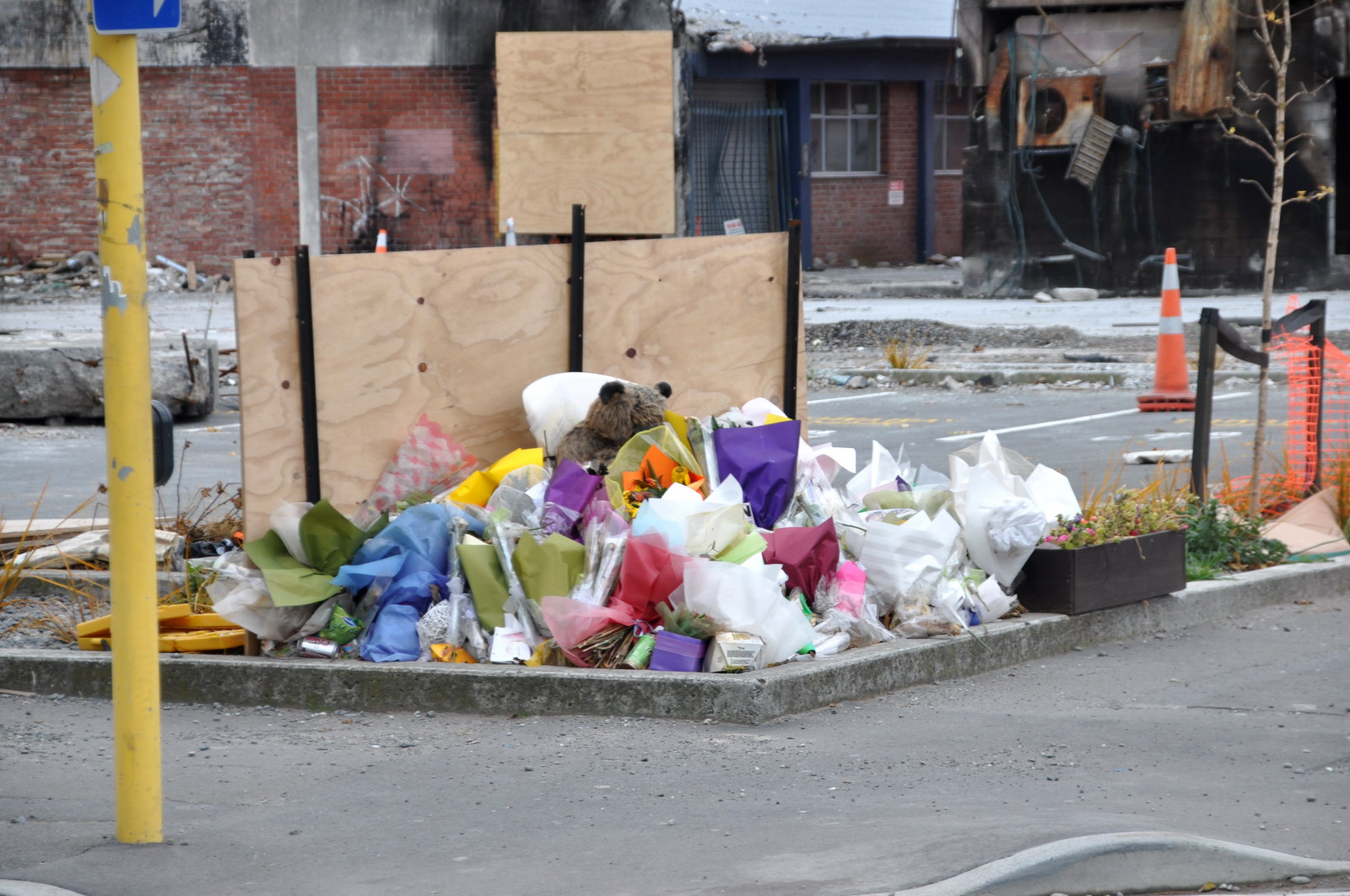
The worst damage was along Manchester Street.
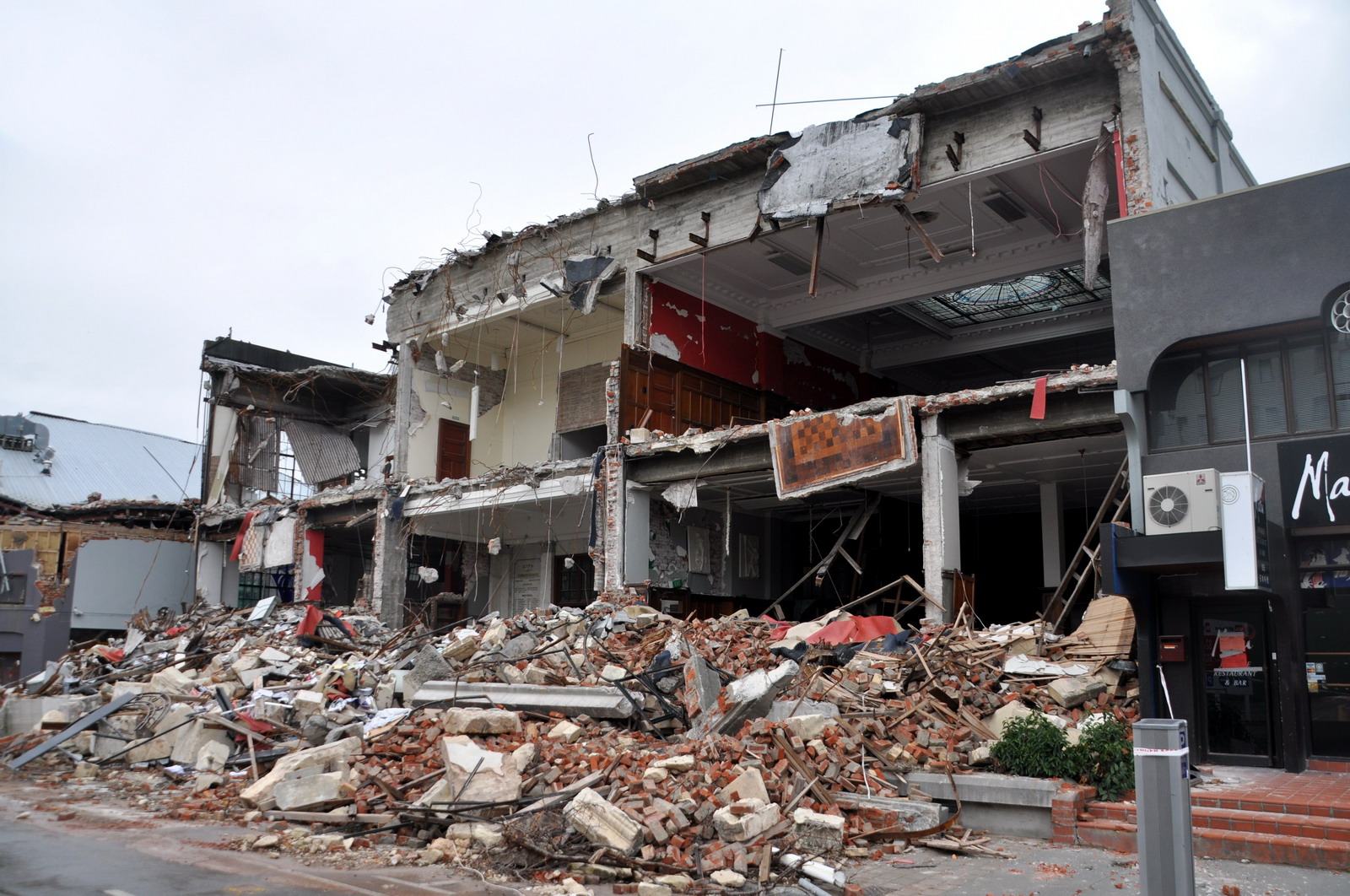
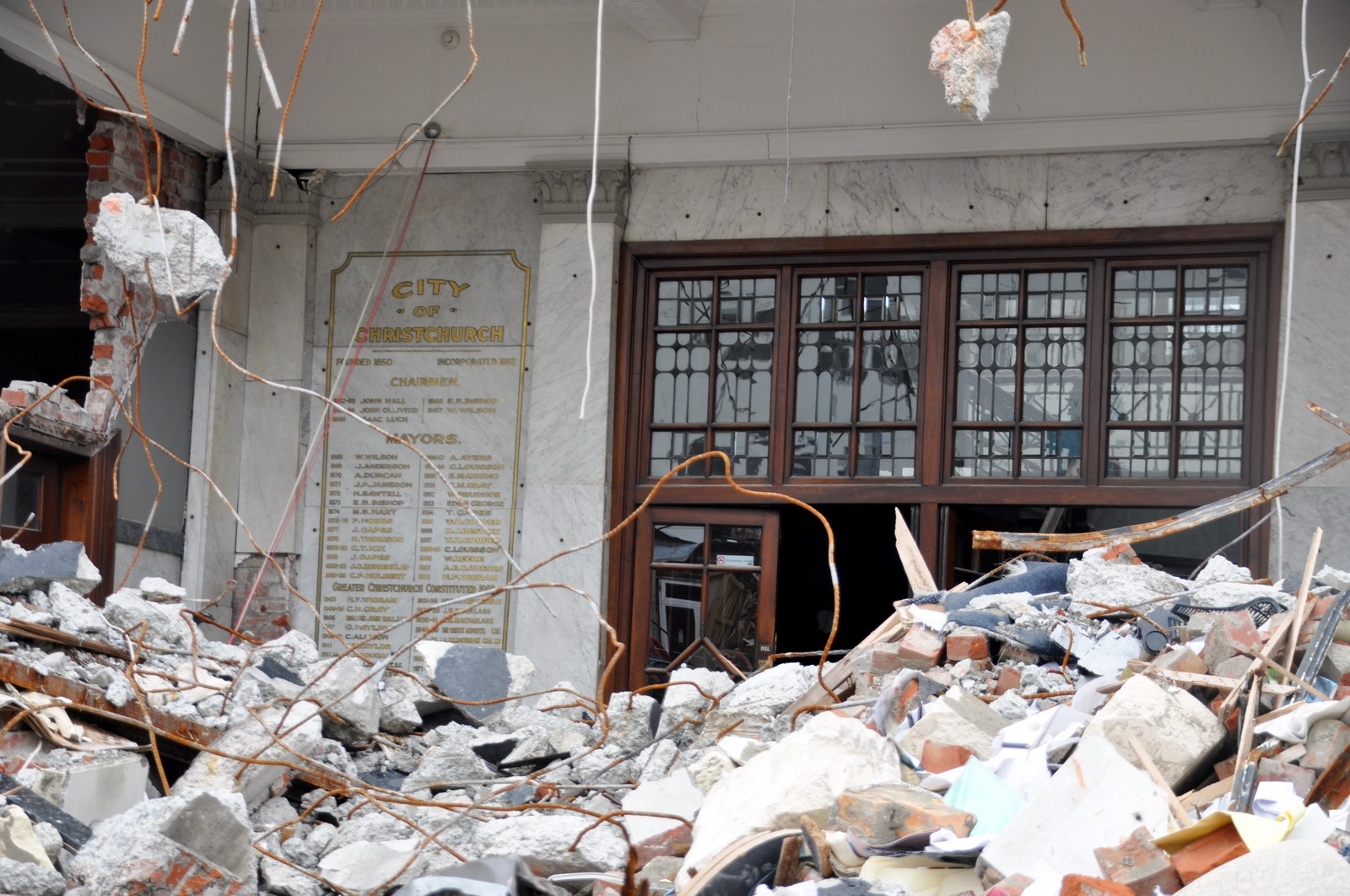
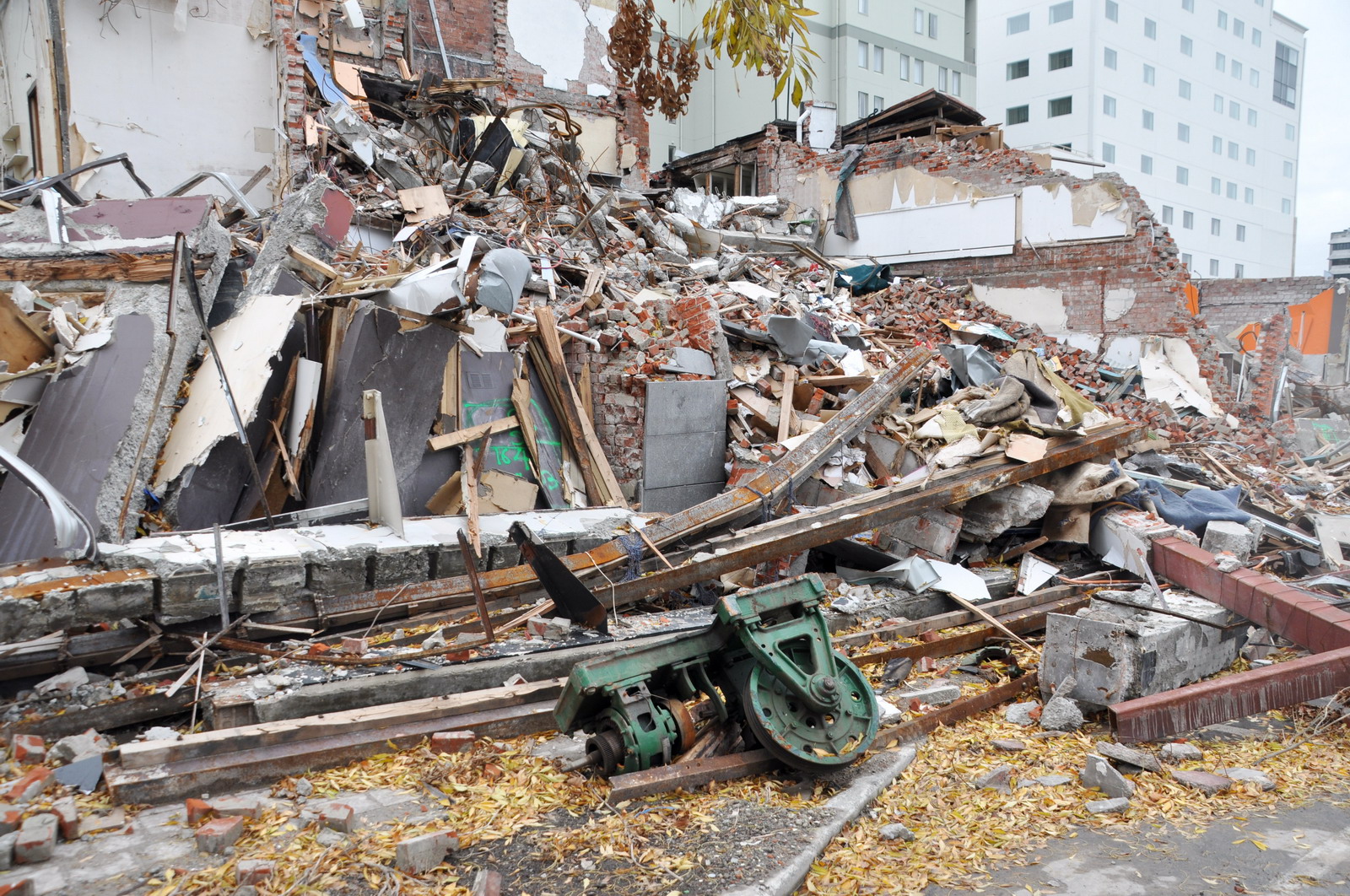
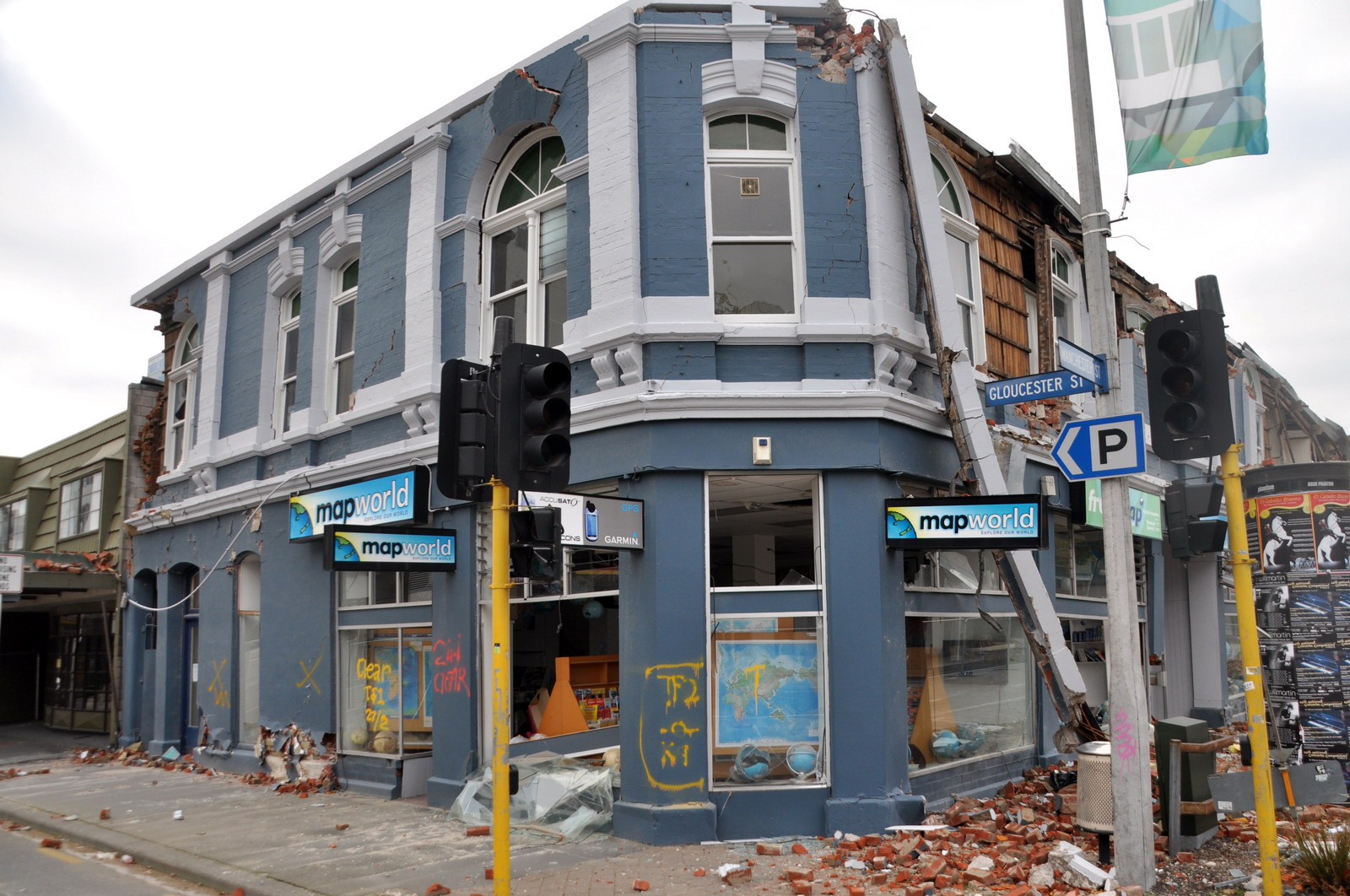
I was particularly sorry about my favourite topographic map shop. I’d bought all my GPS units there, going back to 2003.
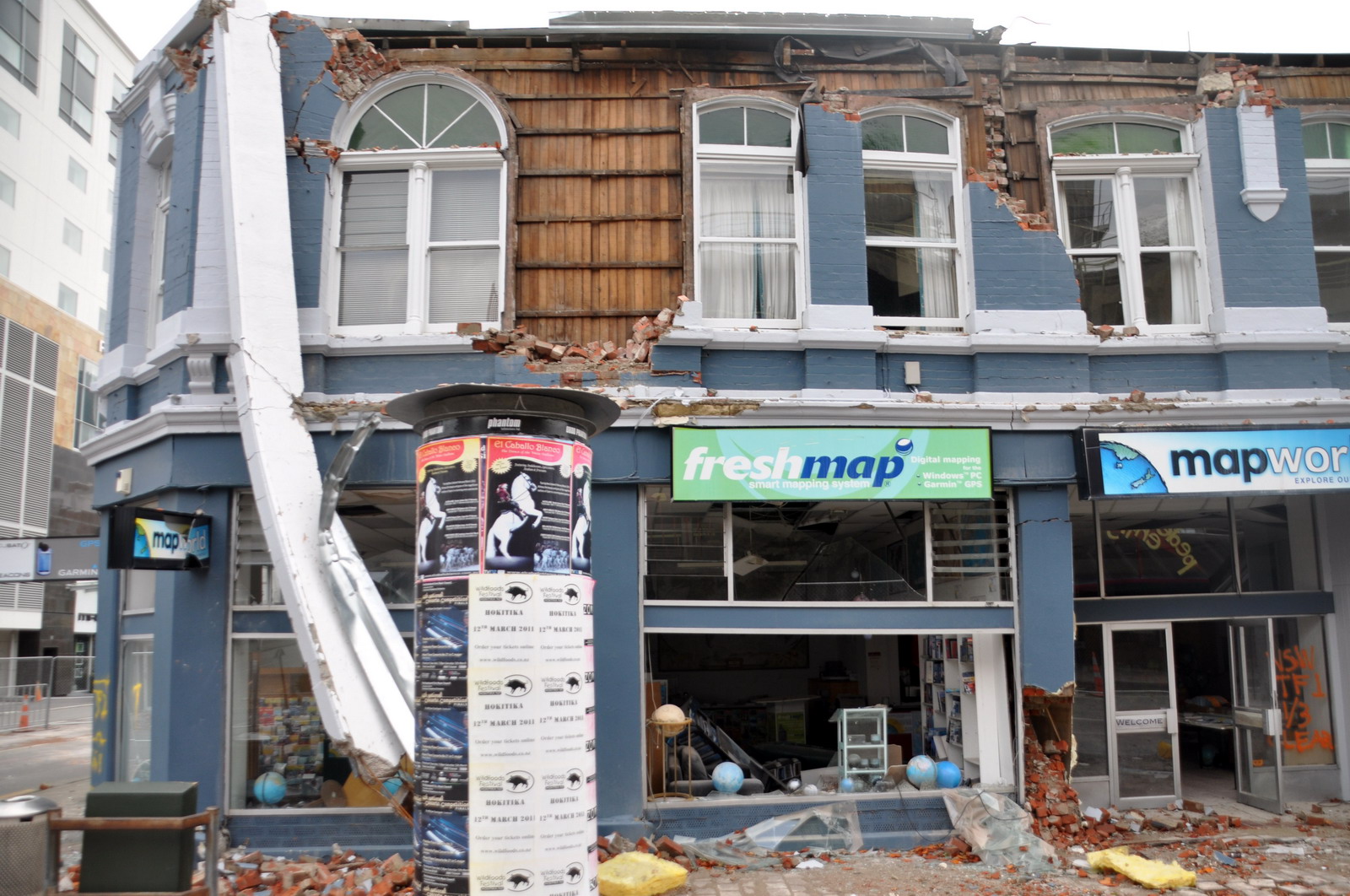
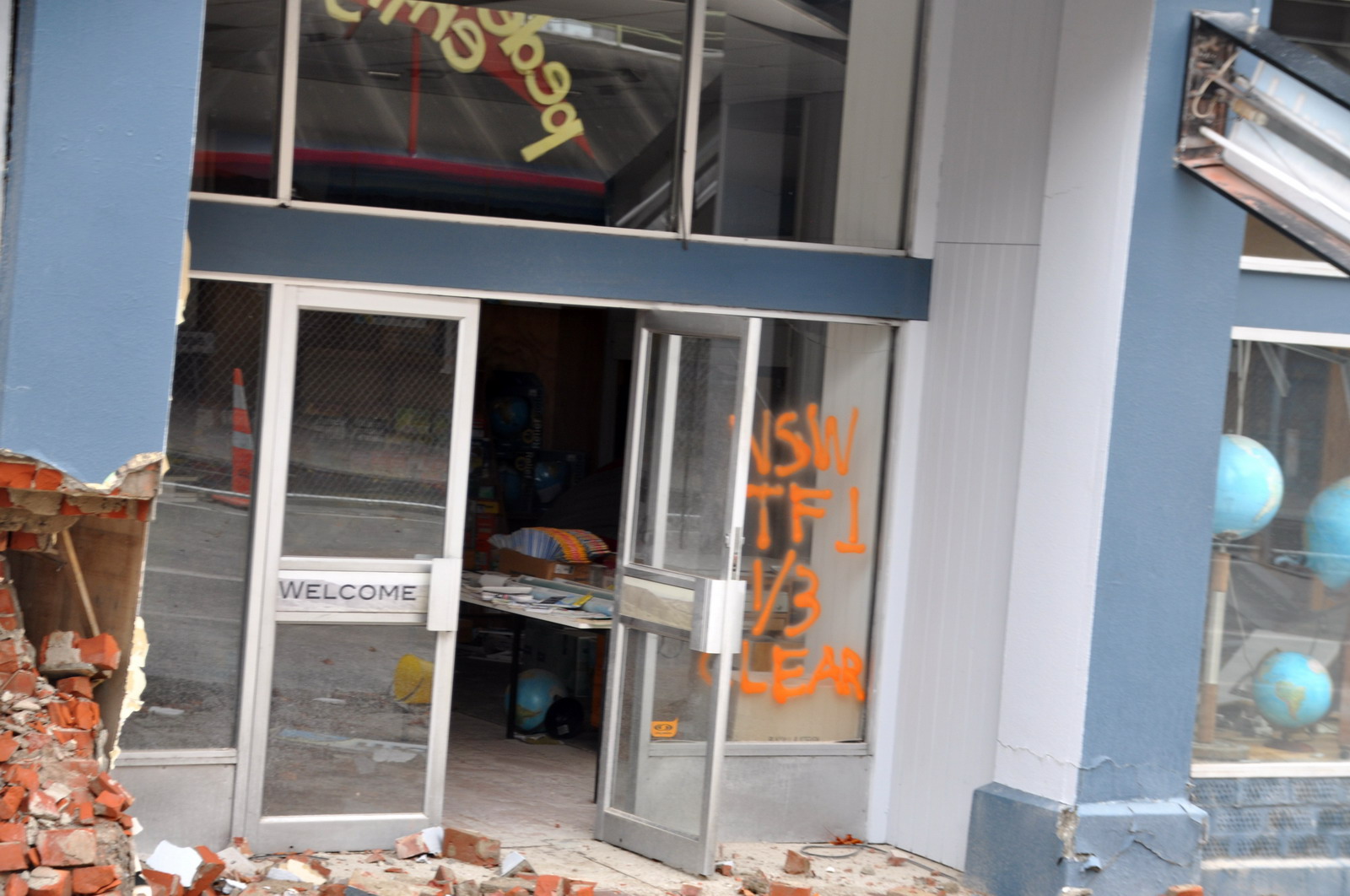
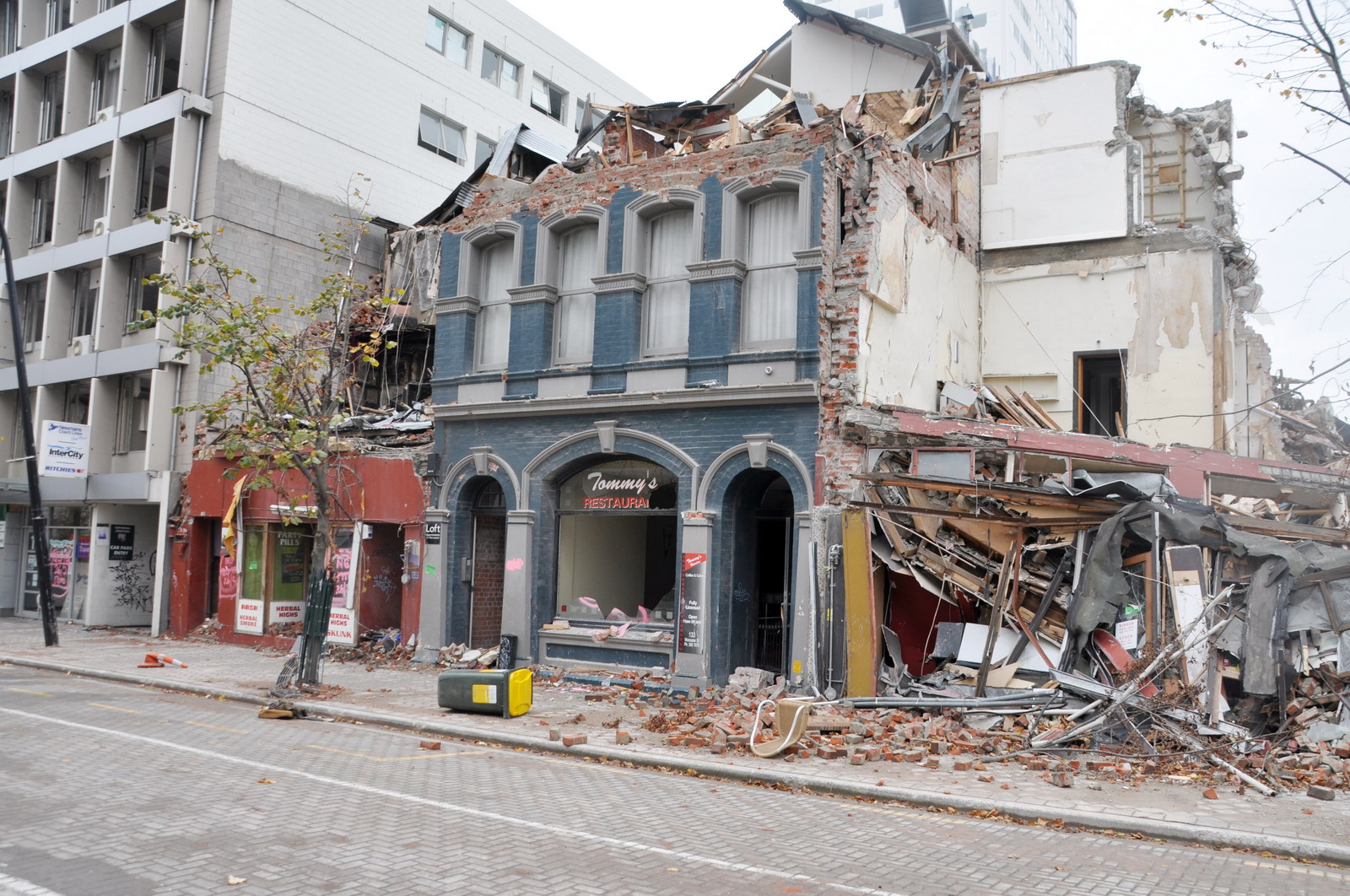
The Russian restaurant someone once tried to persuade me to buy was wrecked as well.
Inside the red zone, next to the leaning Hotel Grand Chancellor, there was an area marked NO GO.
To our surprise, there was no extra fence. We went in there, too, and even took photos.
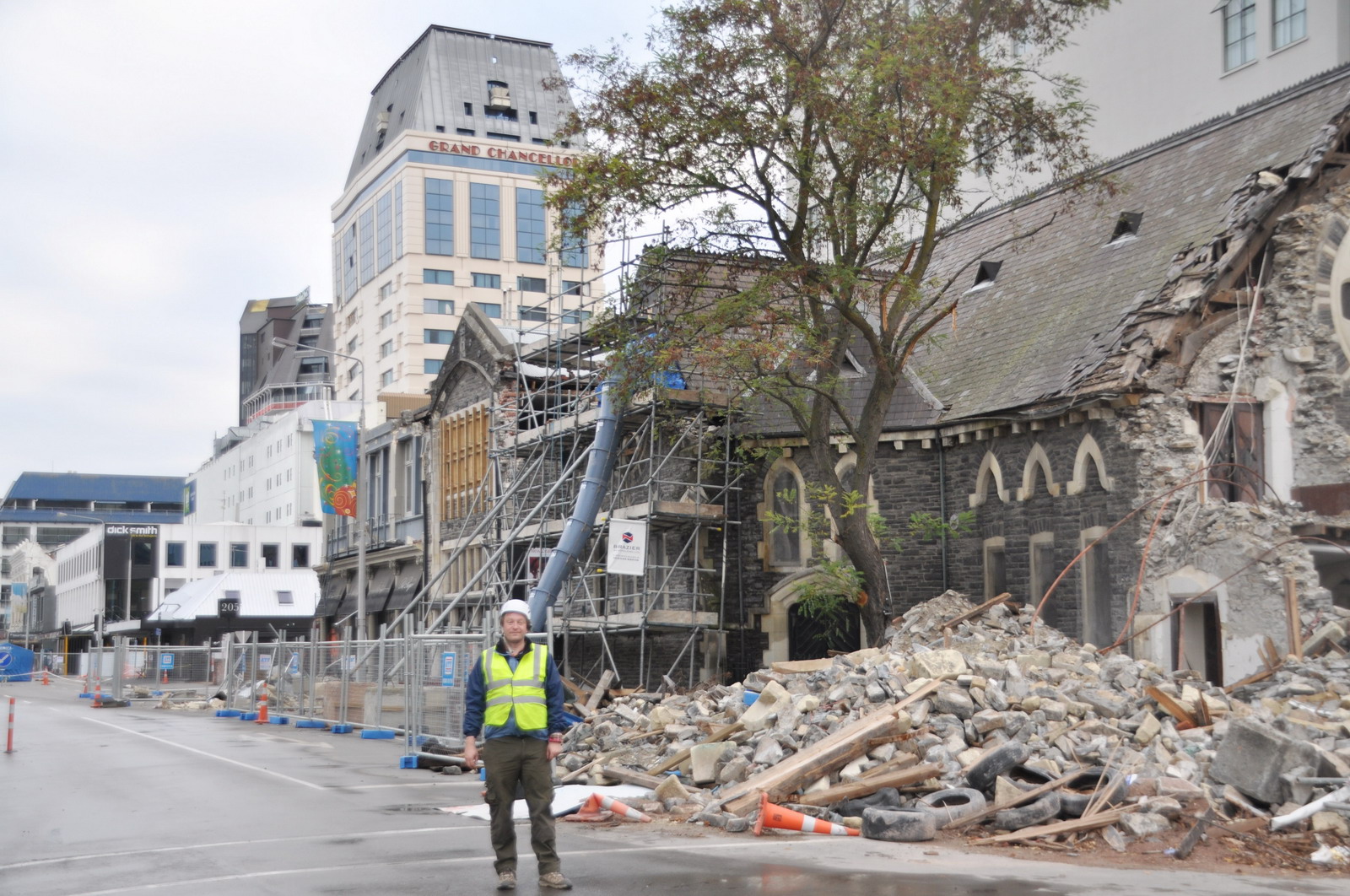
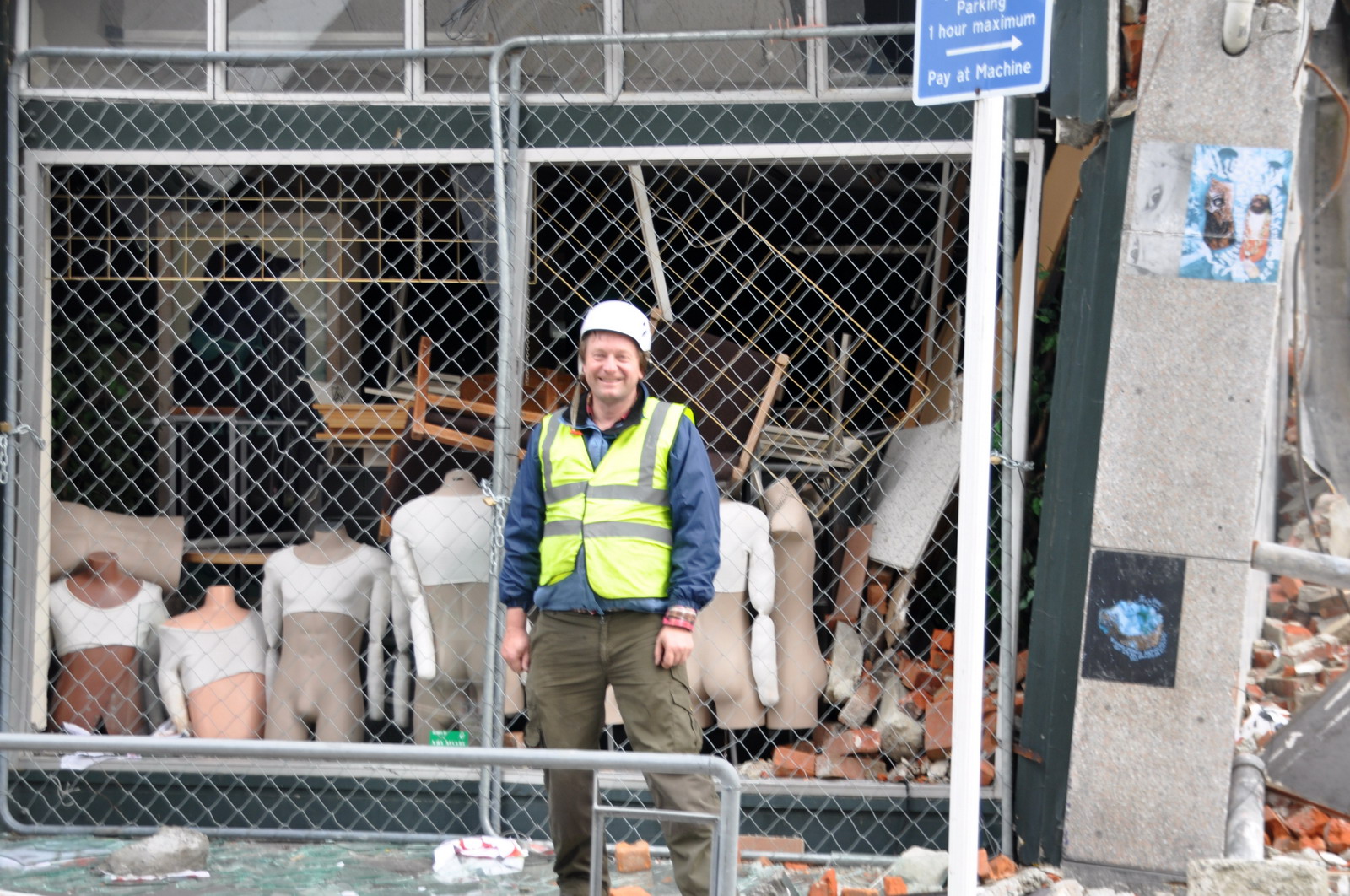
There were very few construction workers. Streets that had once been full of people were eerily empty.
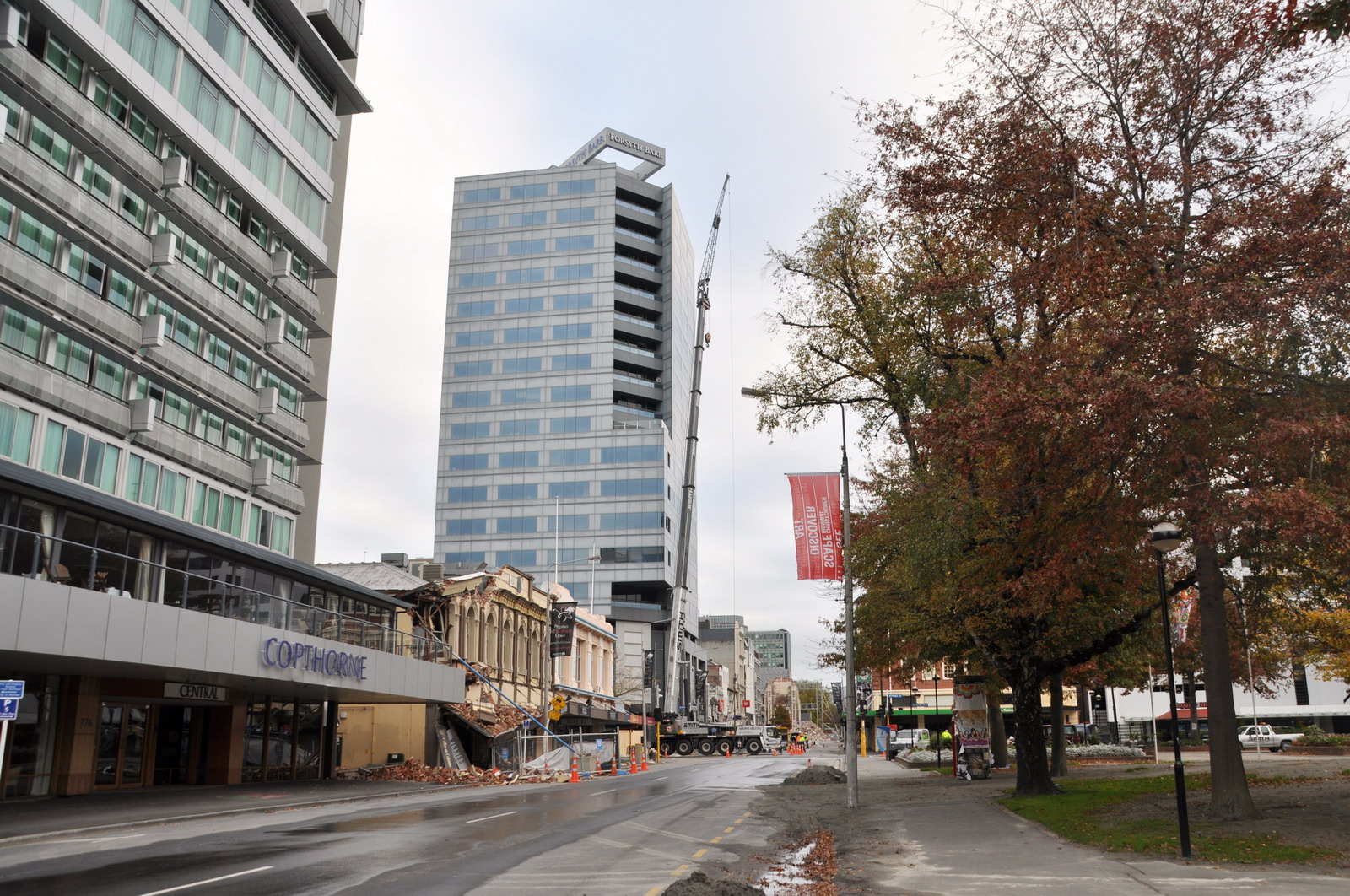
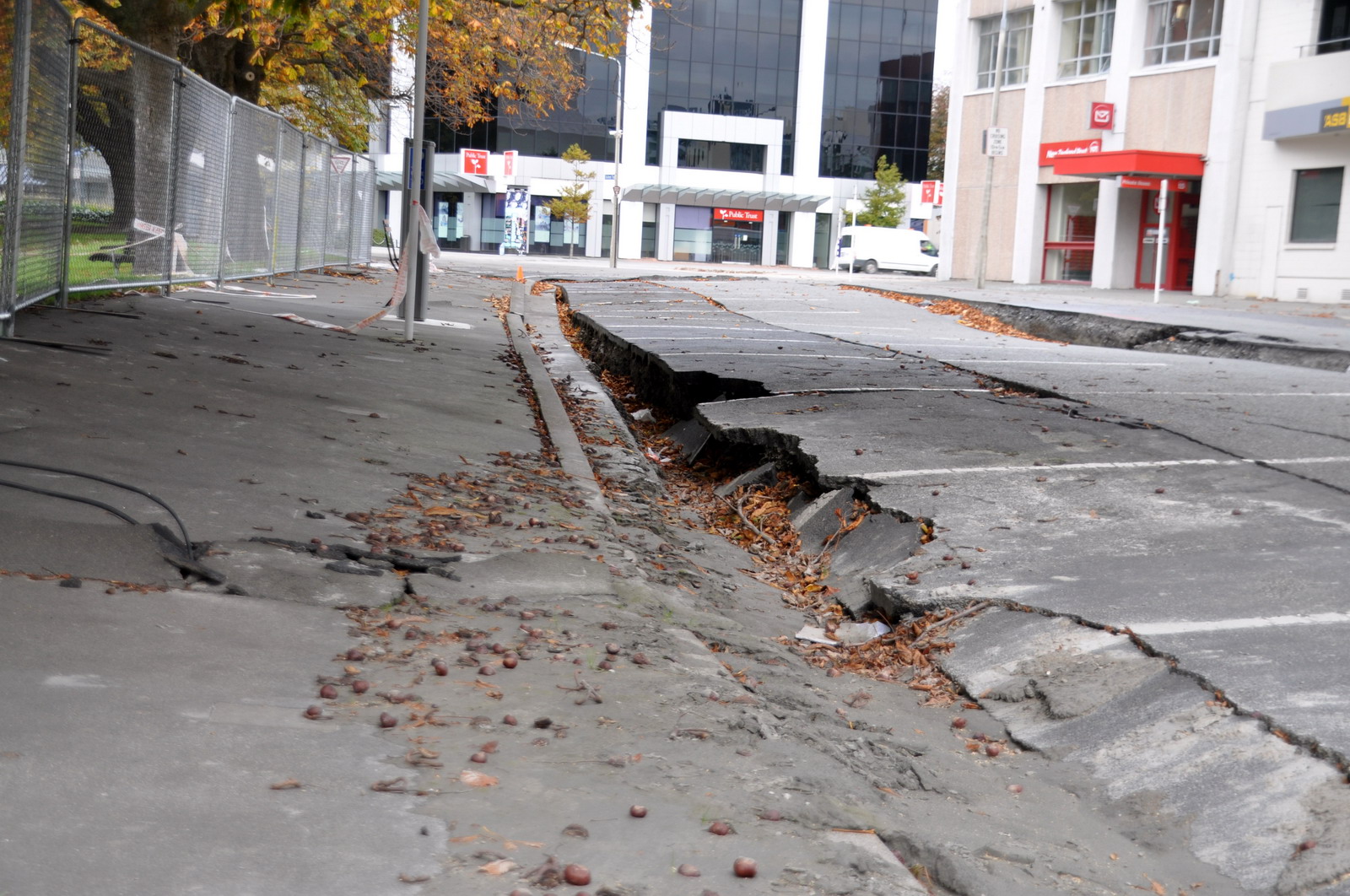
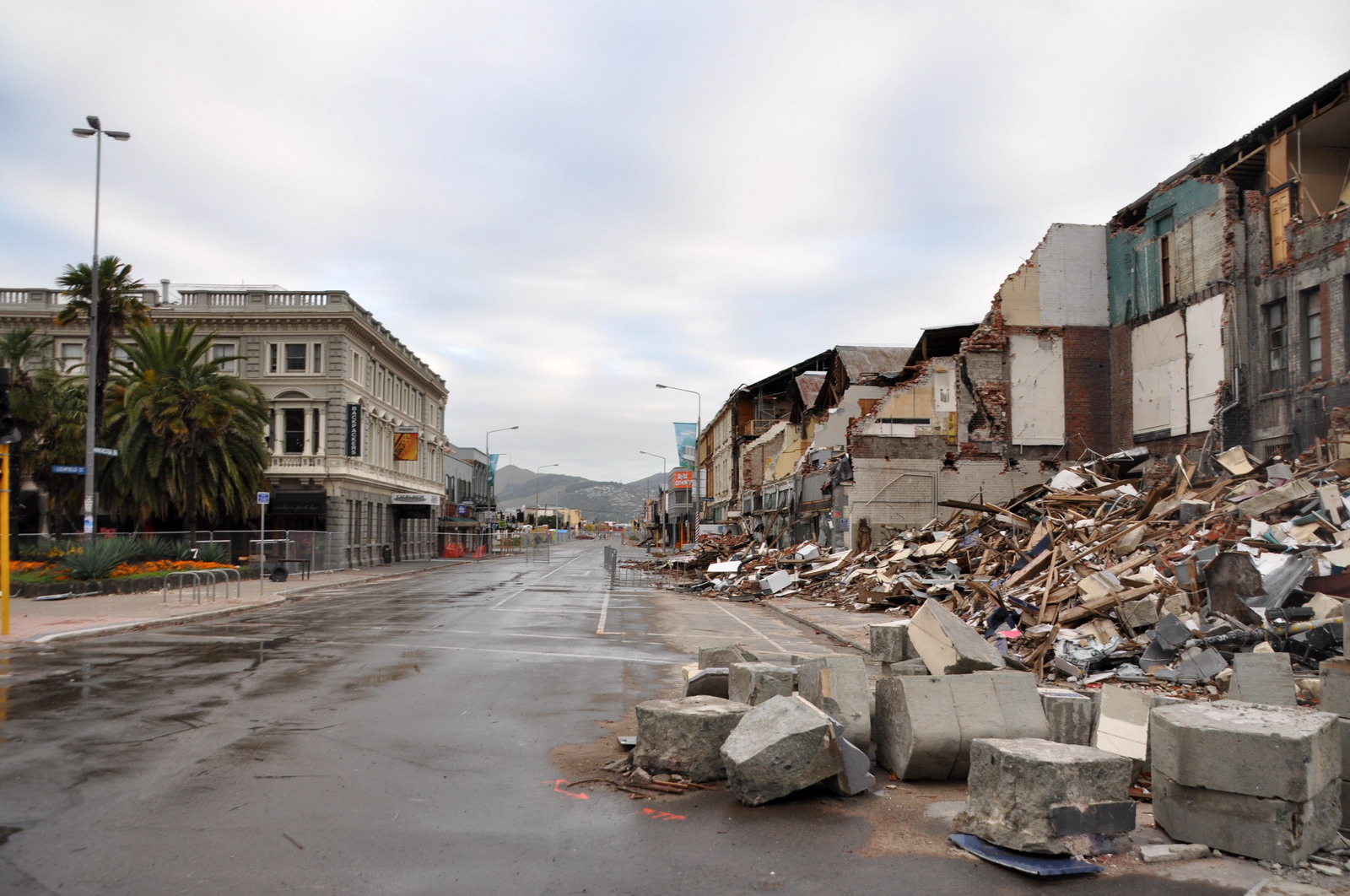
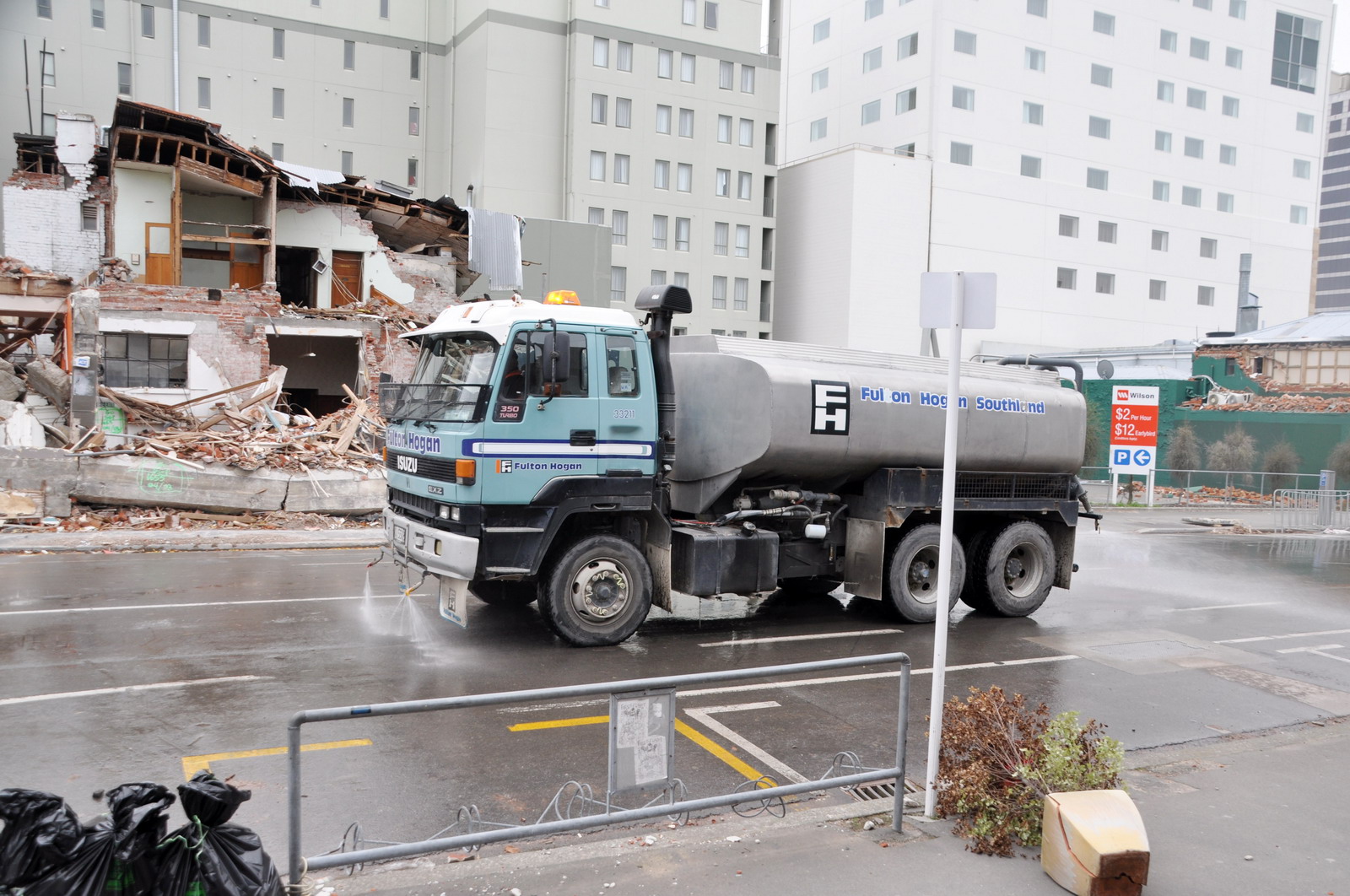
Water trucks were everywhere. Keeping the dust down and disinfecting the streets were the first priorities.
December update. The zone still hadn’t reopened, but they’d knocked down everything they could. There were tours now, with very little left to see. Just a large expanse with a few surviving buildings.
The last brick in the wall
On 16 April there was another strong aftershock. This time, the last stones in the wall cladding came off.
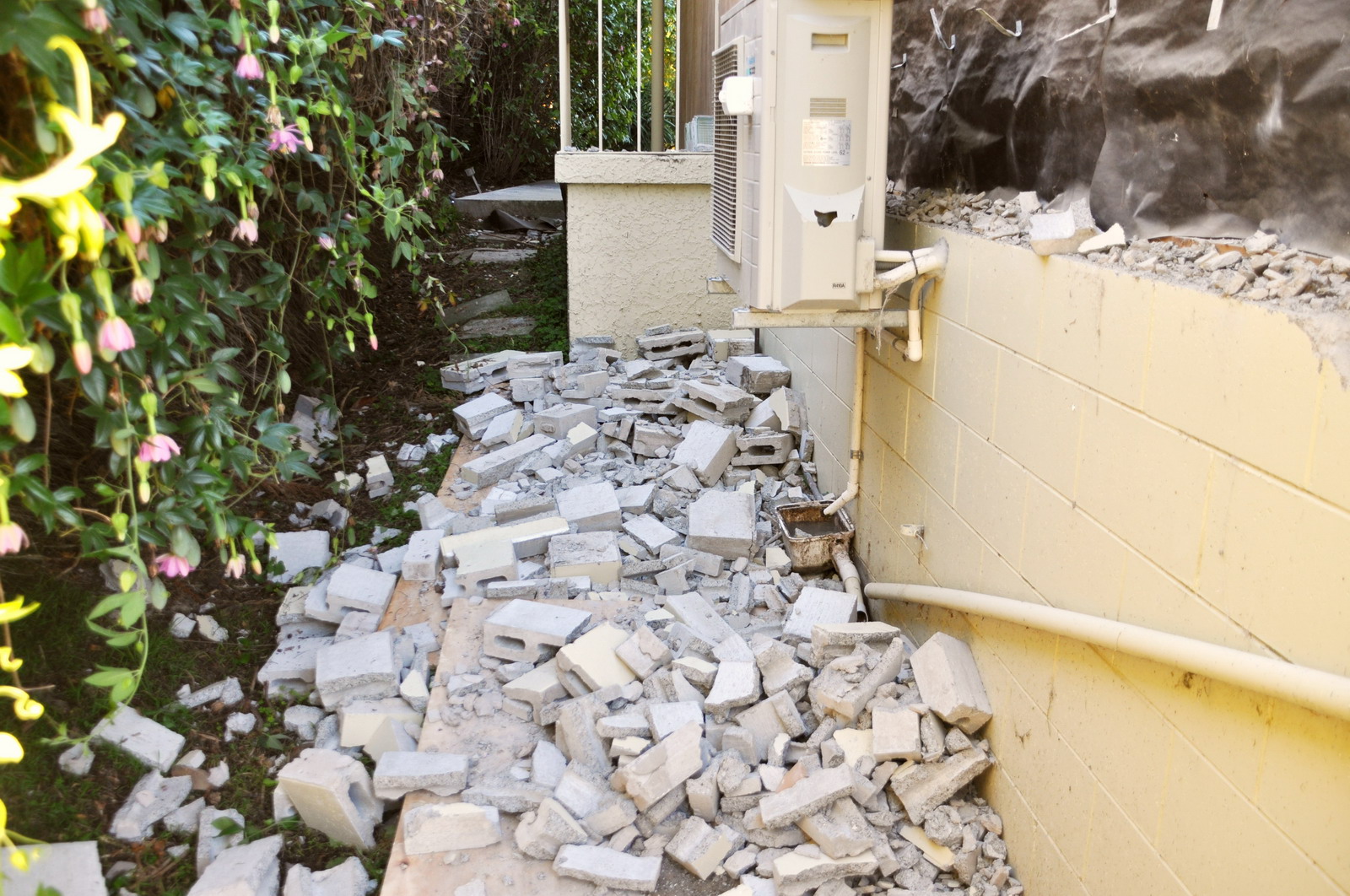
Surprisingly, the power didn’t go off straight away. The recorder caught the last concrete blocks falling.
Everything indoors was overturned again.
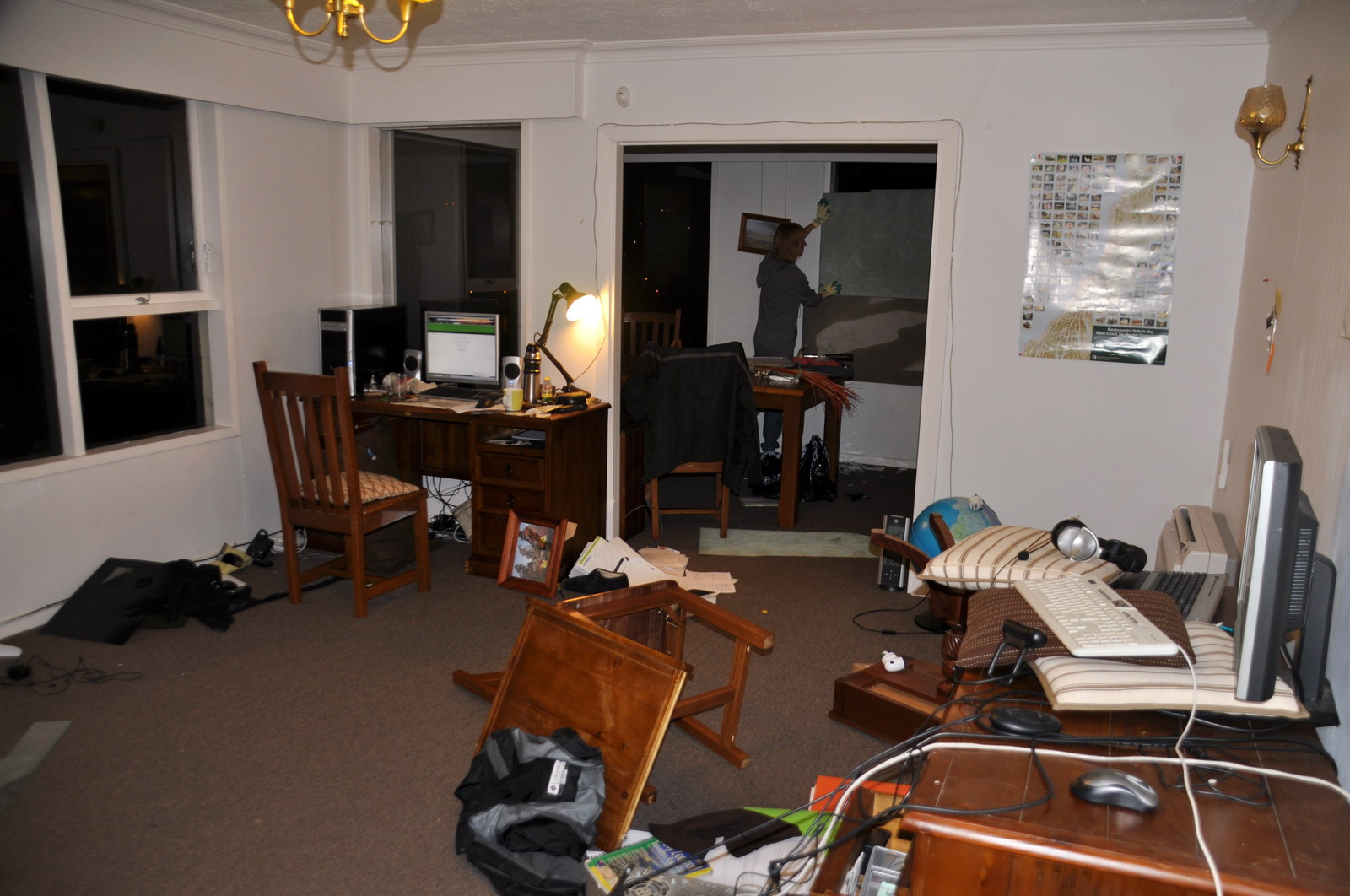
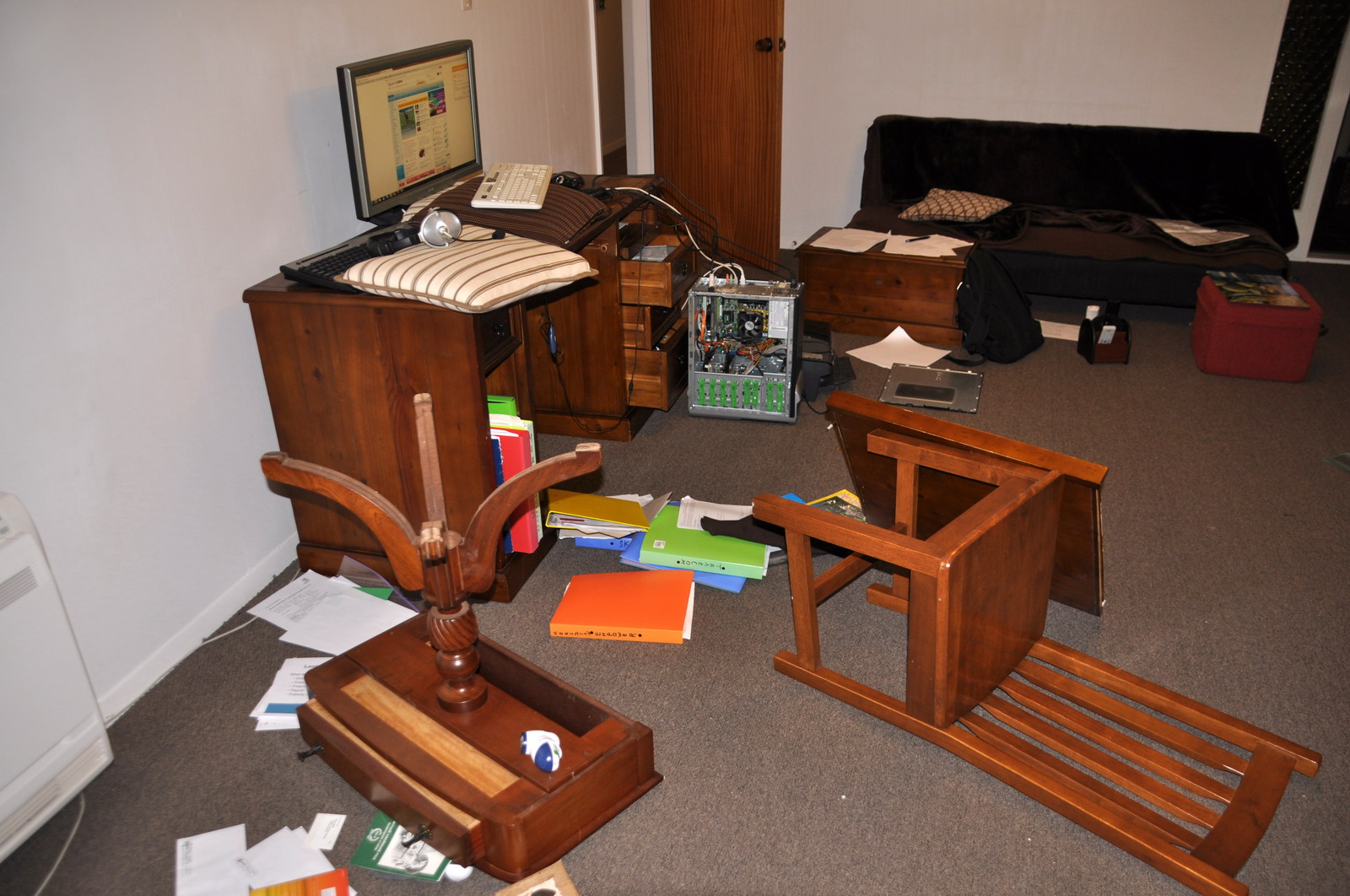
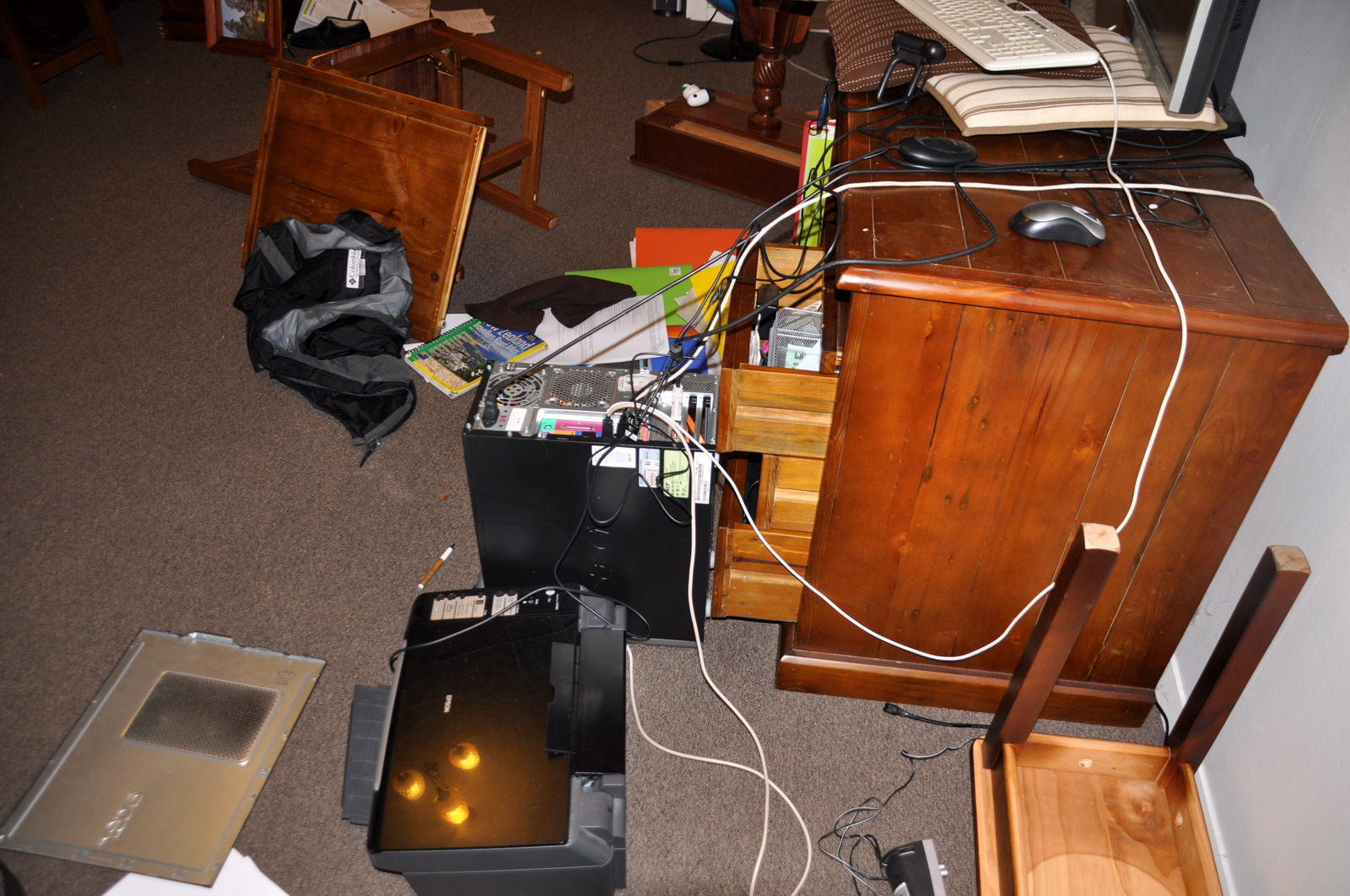
A window broke. The crack under the house got a little wider. The insurers were back to look at the damage and add up new sums. Our chances of actually receiving the money seemed to be fading.
On 13 June came two more shocks. The maps we had at the time gave the first a magnitude of 5.6 and ground acceleration of 0.68 g, and the second 6.3 and 2.12 g. GeoNet’s current catalogue lists the second shock at magnitude 6.0. To us it felt almost like February, and it was right nearby again. We were back to broken things everywhere.
The cameras on our house caught the first shock.
Another microwave rolled away like a ball. This time our water heater was wrenched out. We went without hot water for a long time, and without cold water too. The television went flying. Its plastic case broke, but the enormous picture tube survived. The thing still worked, a little miracle. There wasn’t much left to break at our place, but the suburbs further east were badly hit. We spent the night by candlelight. Here is the power company’s outage map for 13 June. More damage, more insurers.
This time the power company worked quickly. The power was back after a day, but our spirits were low. We were hearing about huge losses for overseas reinsurers. We couldn’t have imagined a disaster on this scale in a city where almost everything was insured.
This time the cliff collapses reached houses. The most expensive ones, with ocean views out on the edge, began to fall.
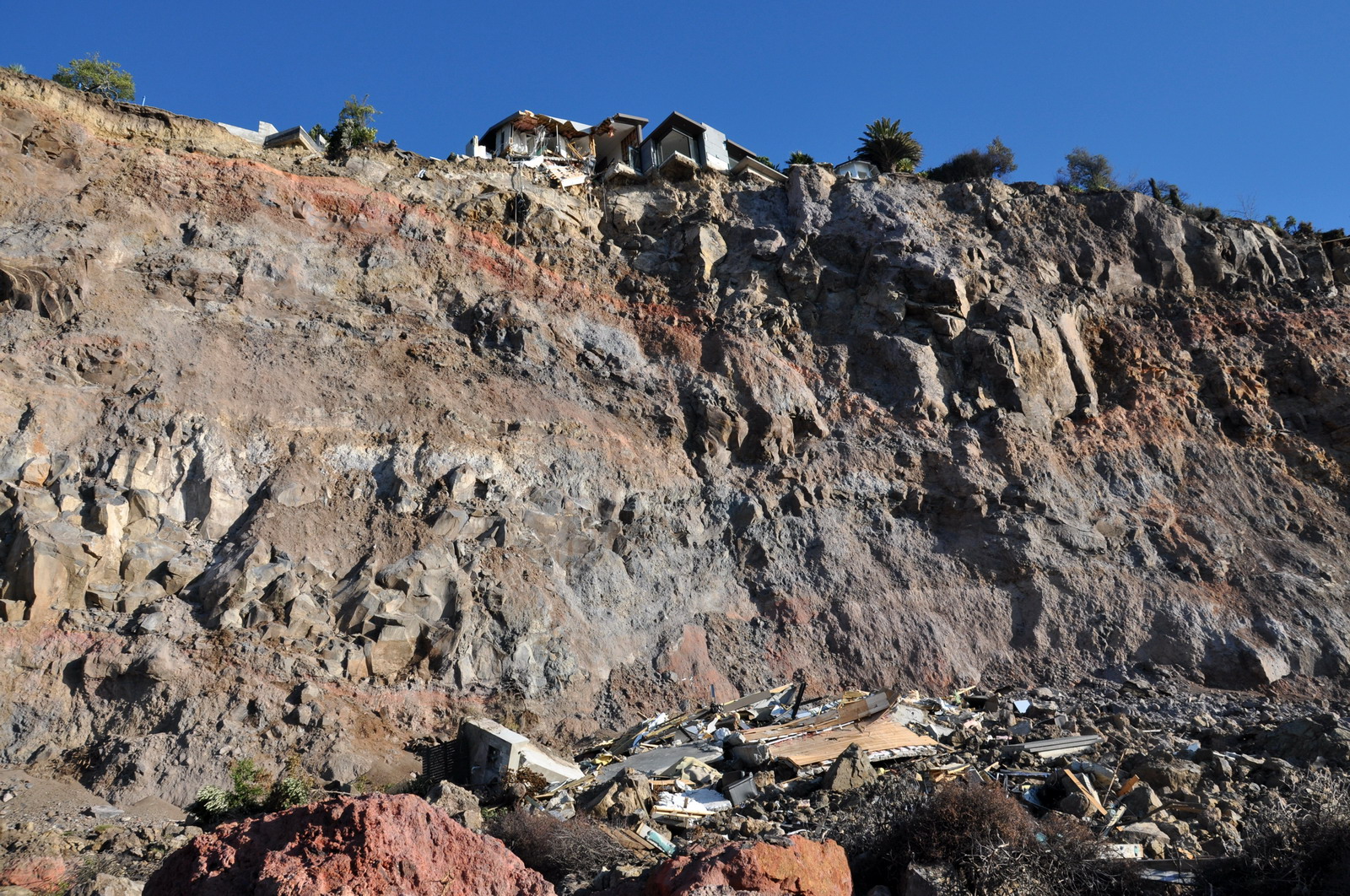
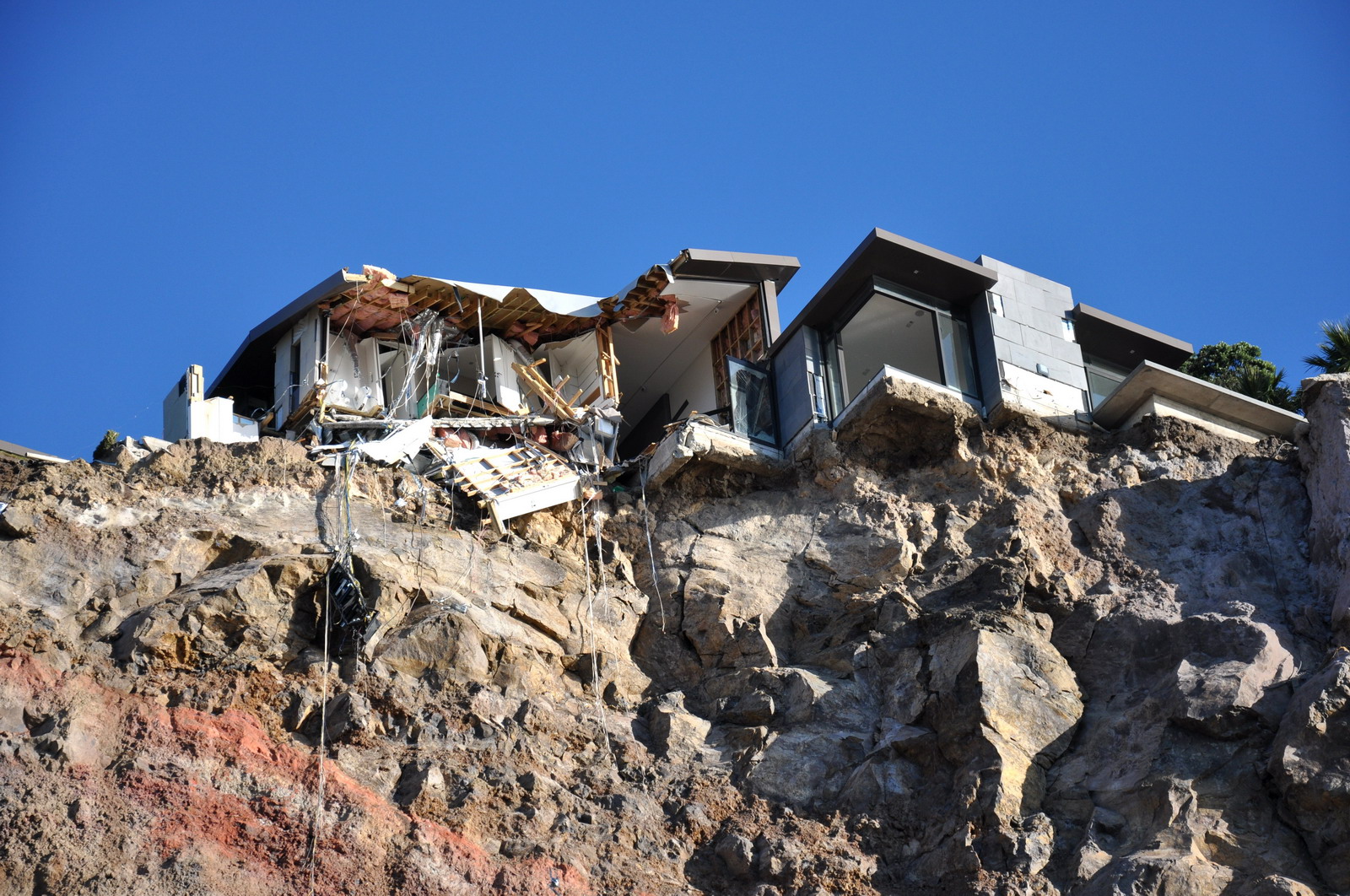
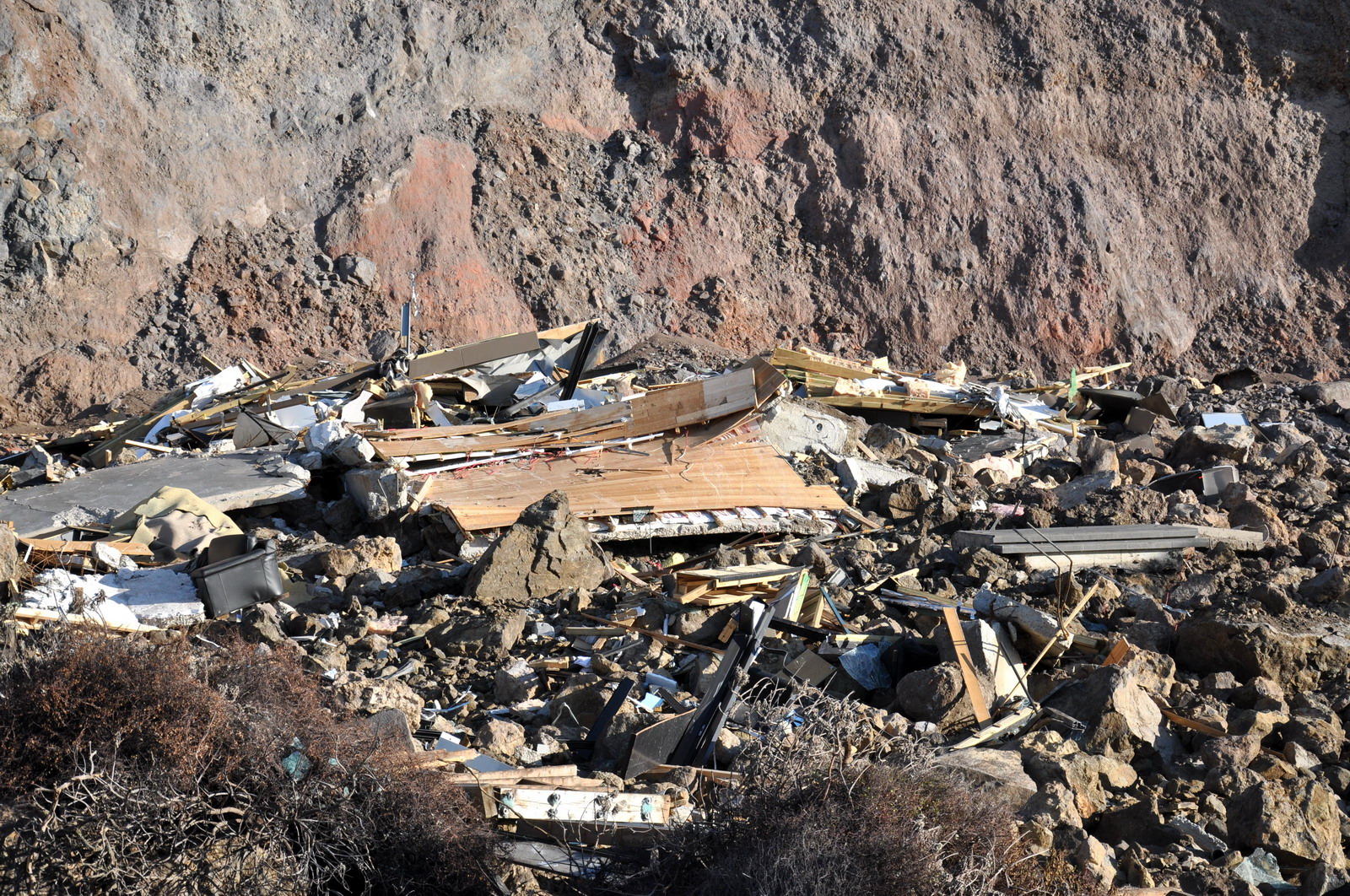
The houses down below were finally crushed.
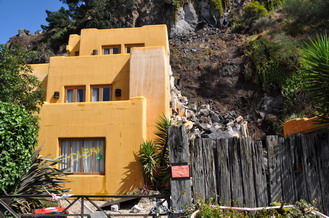
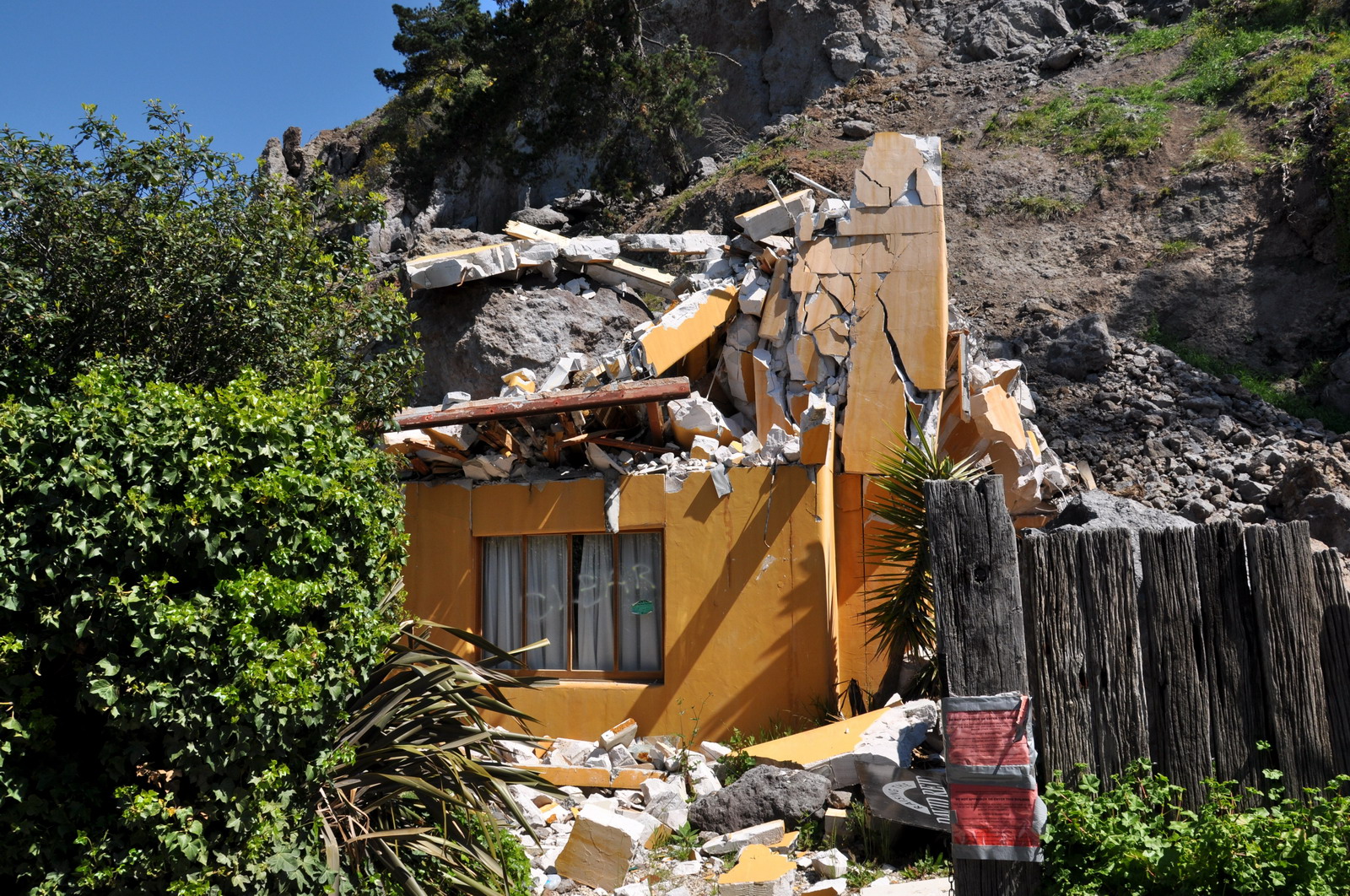
Worse still, no one knew if there was any point building. How many more times would everything fall over? For residents it was a question. For insurers it was a reason to stop taking on new risks. The city was divided into green, white and red zones. You could build in the green zone. Building was off limits in the red zone. The white zone was still the biggest, and everything there was still up in the air.
And summer was over. It was a remarkably hard winter. The snow, people said, was like nothing they’d seen in forty years.
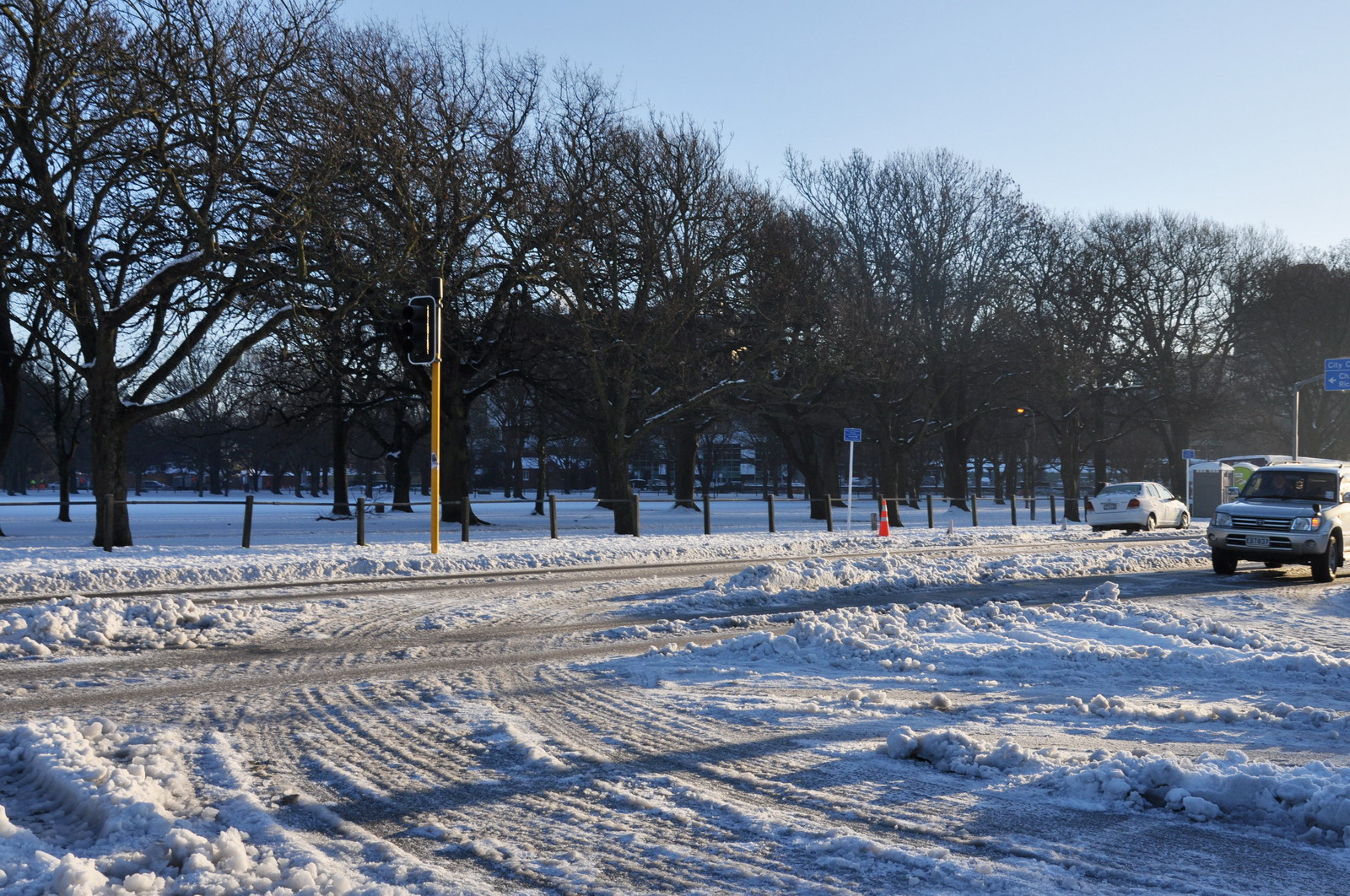
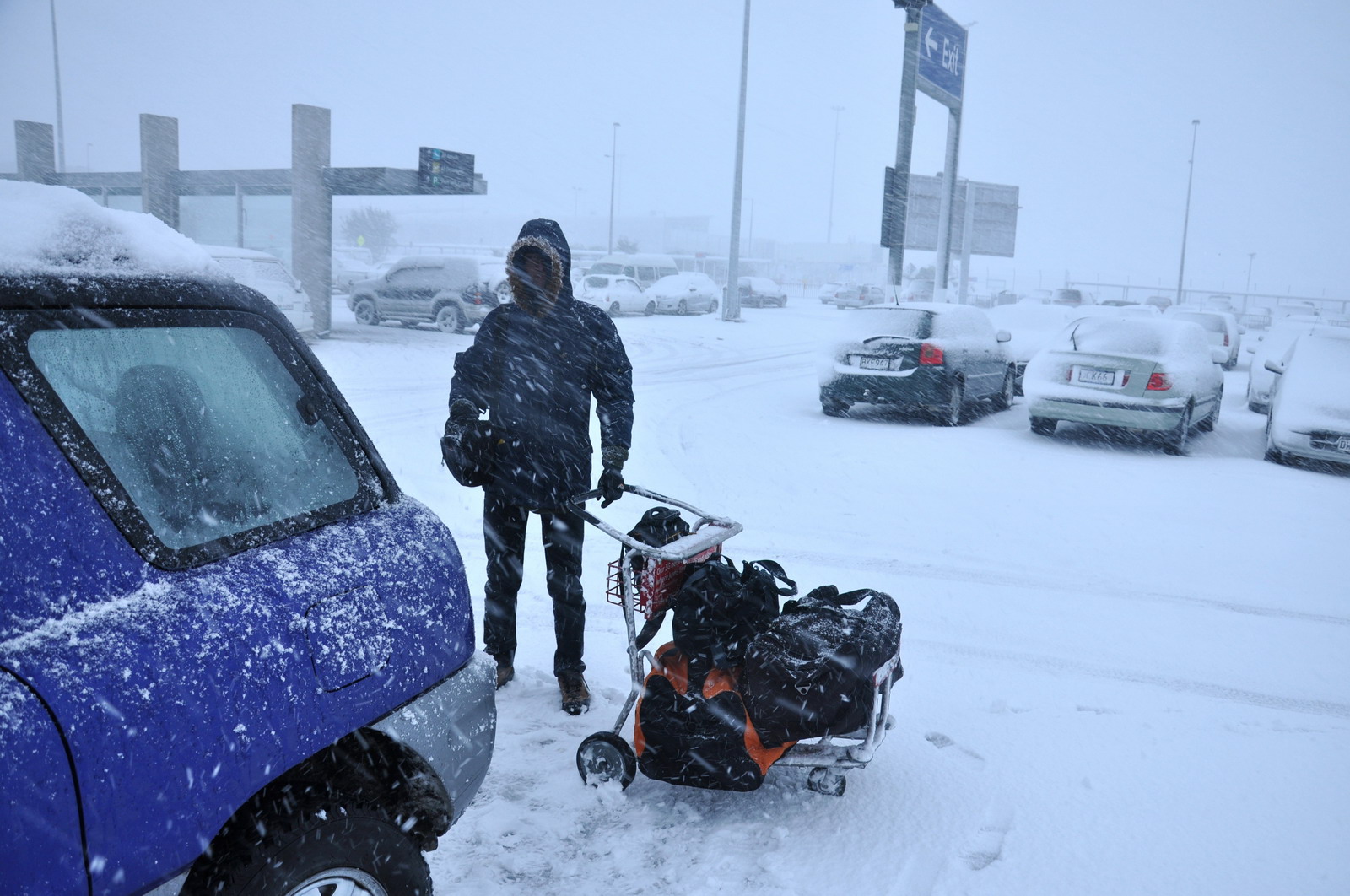
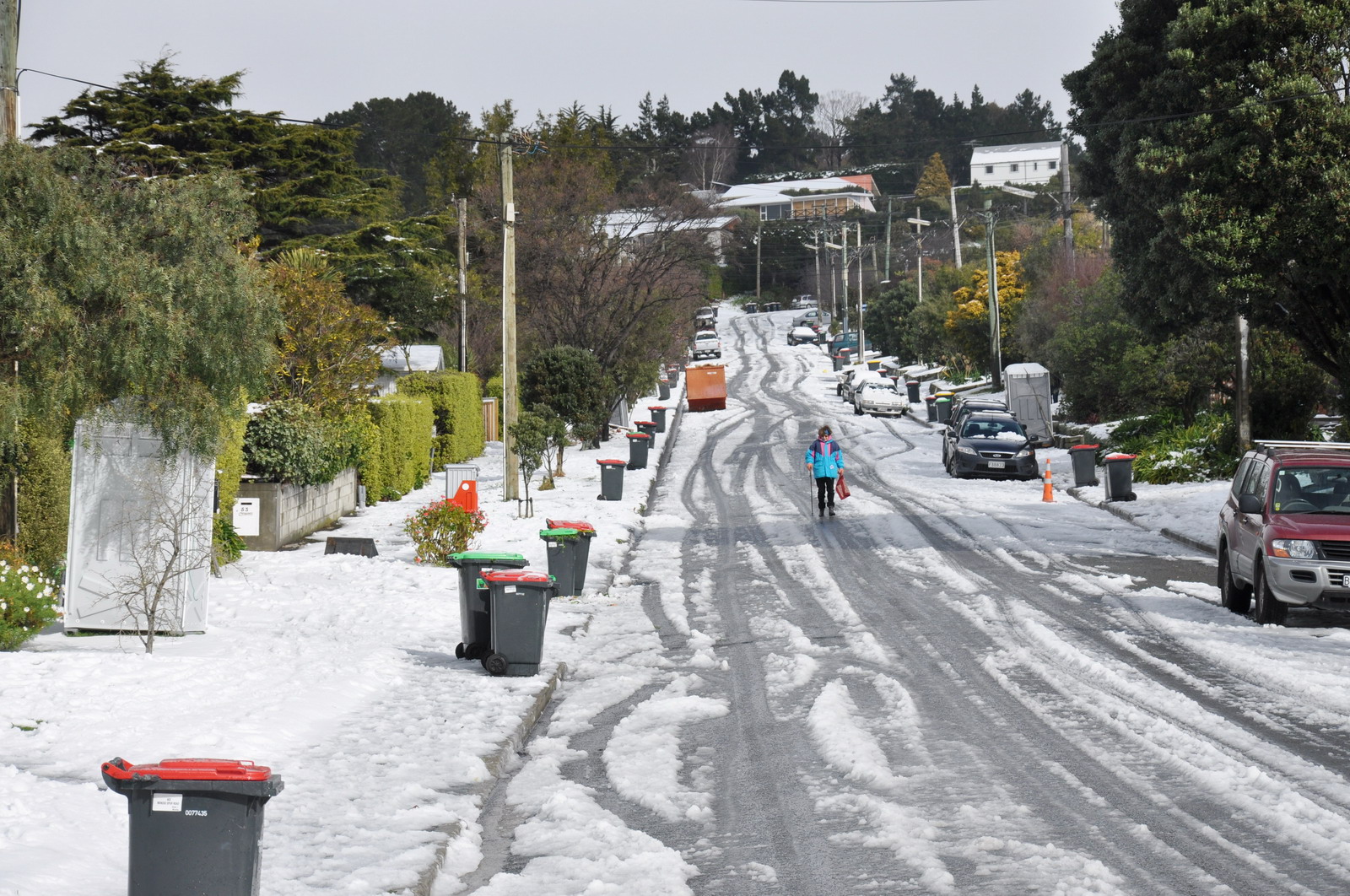
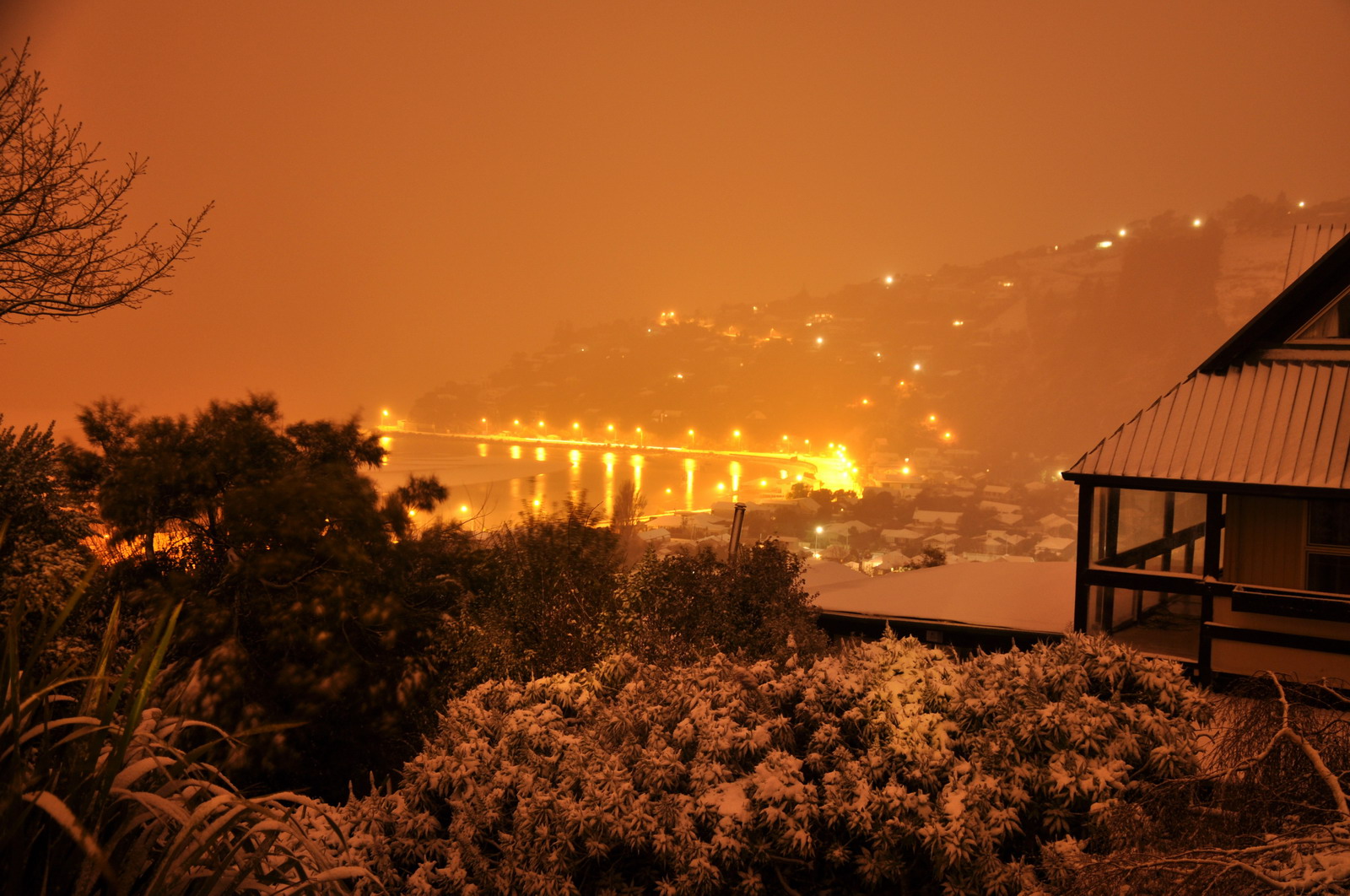
It was cold in a tent. Never mind the tent, we were getting cold in our plywood house. The insulation had come away. At least the heating was good. The electricity bill was good and big too, although the power company took the situation into account and kept rates down.
Spring
As always, to our surprise, flowers appeared as soon as the snow melted.
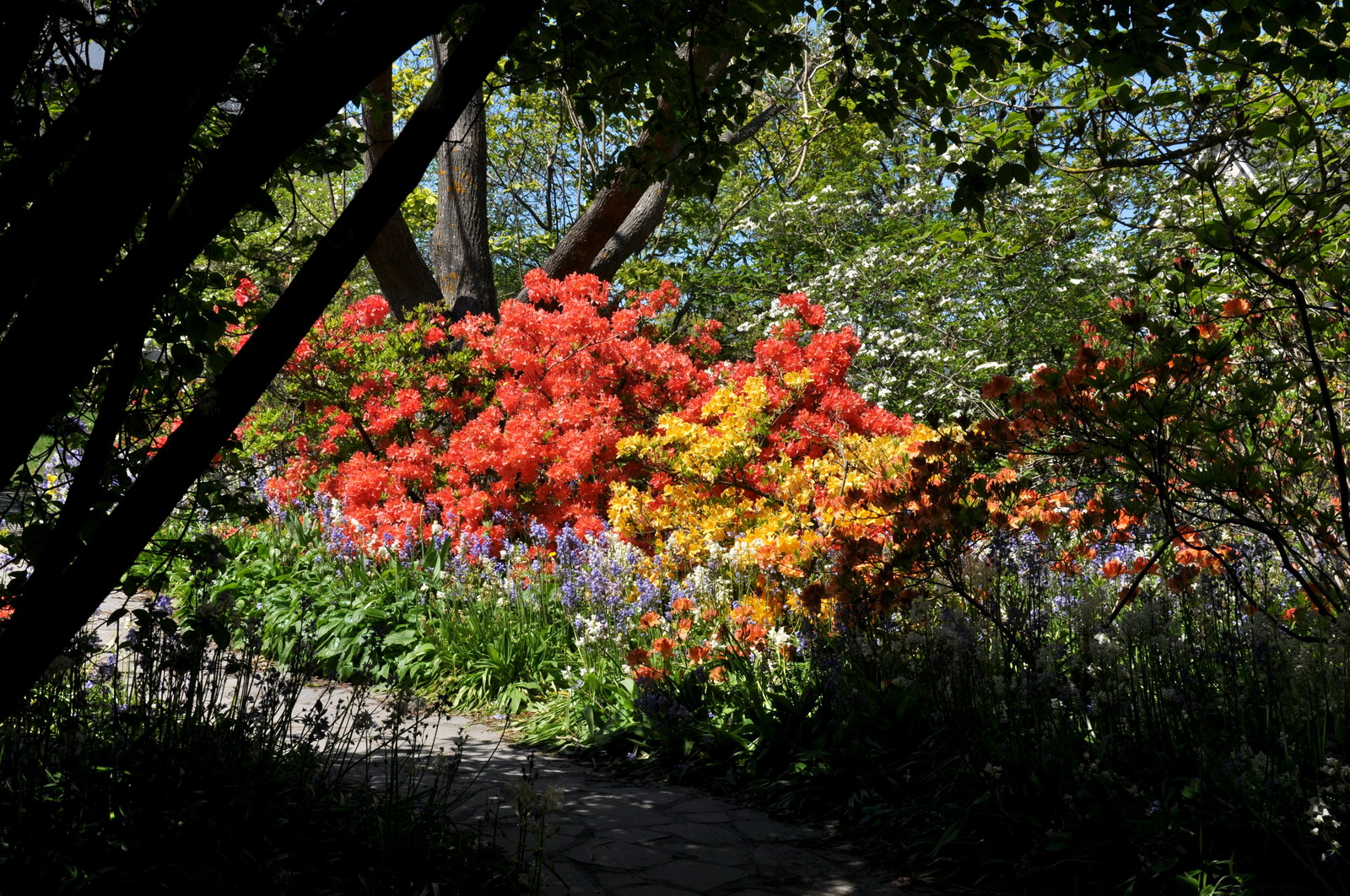
The shocks had nearly stopped. A magnitude five still came along of course, but getting worked up about it was growing tedious. Besides, anything that could come loose was now fastened to a wall or a table.
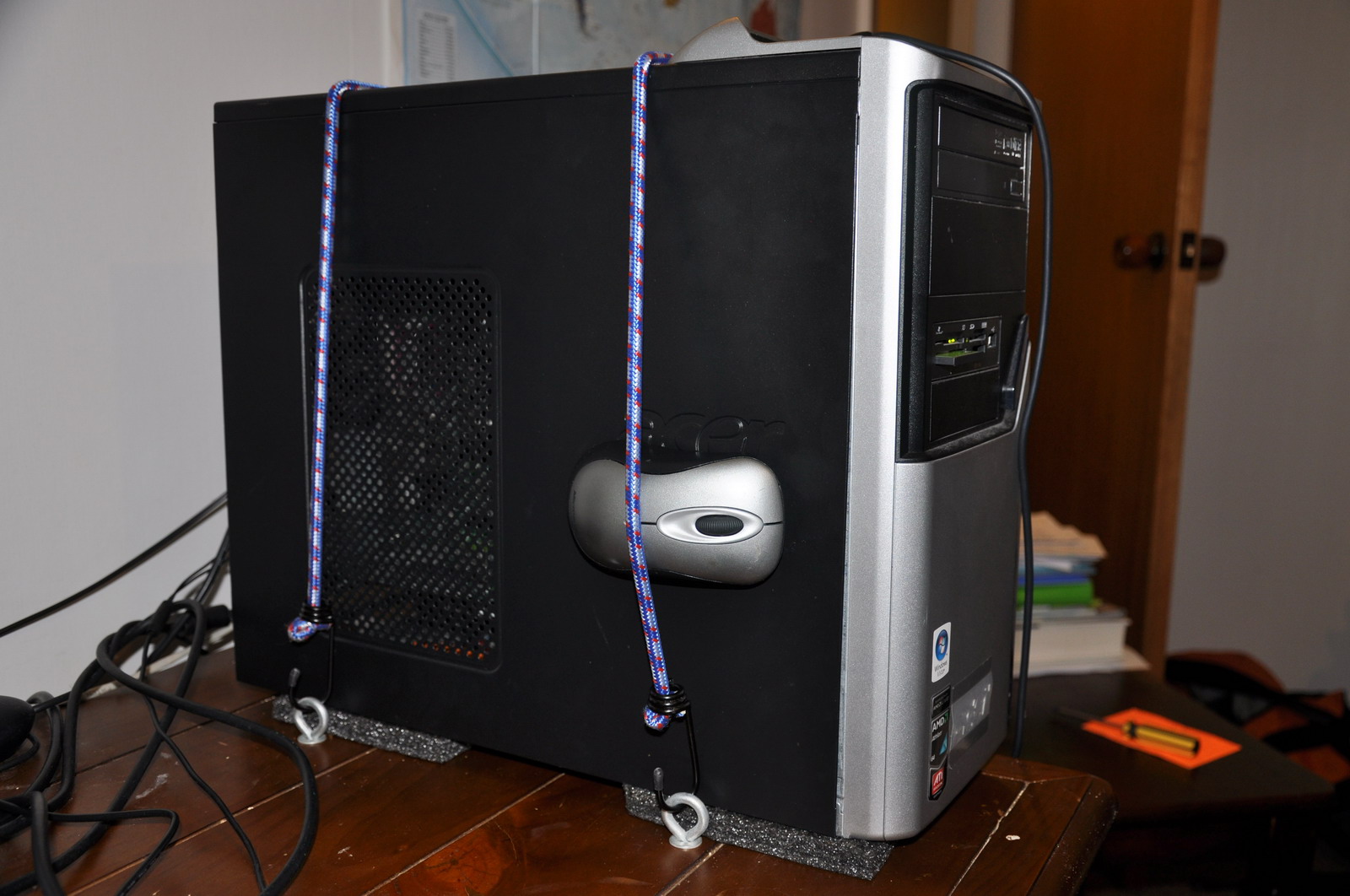
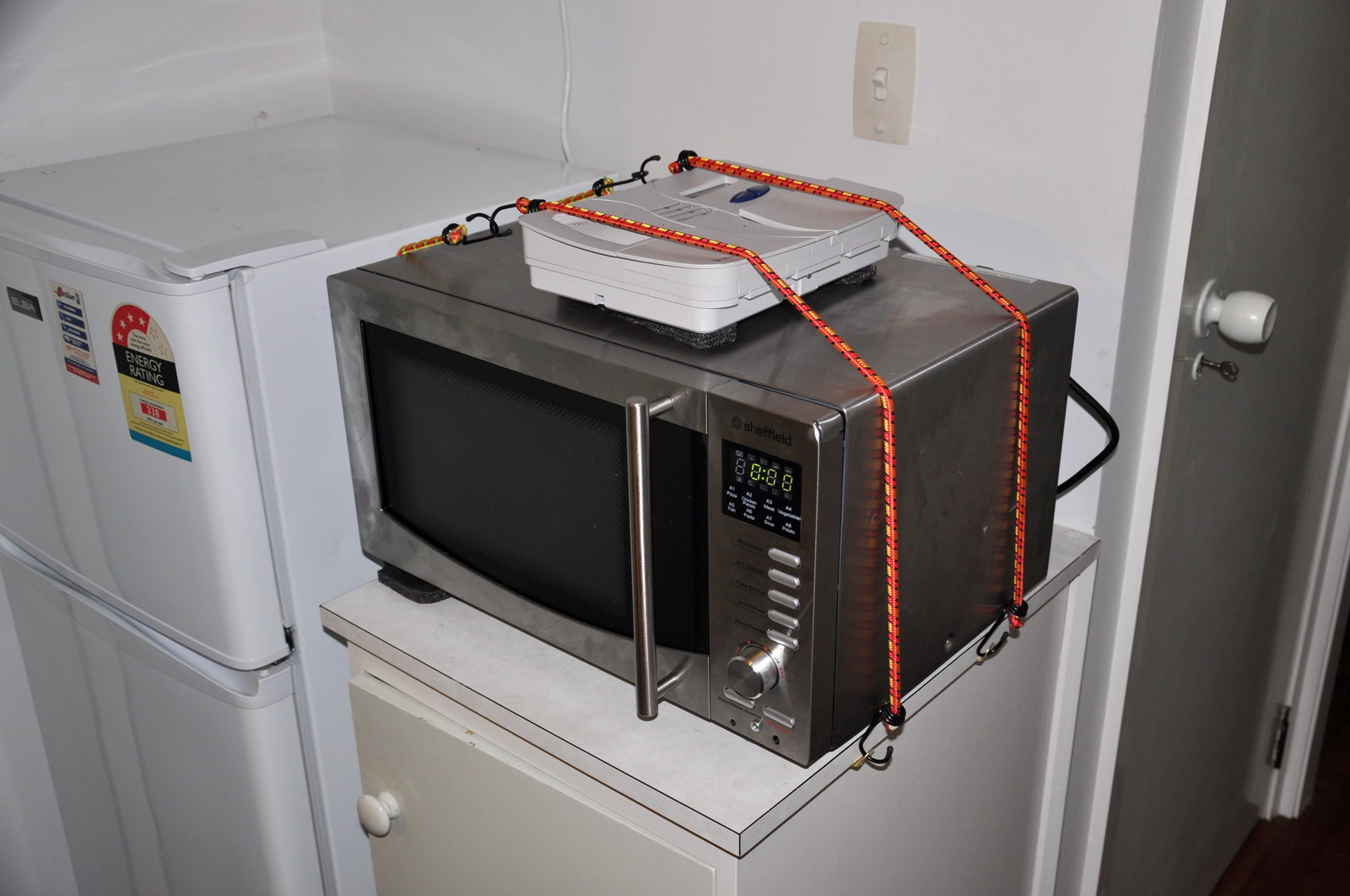
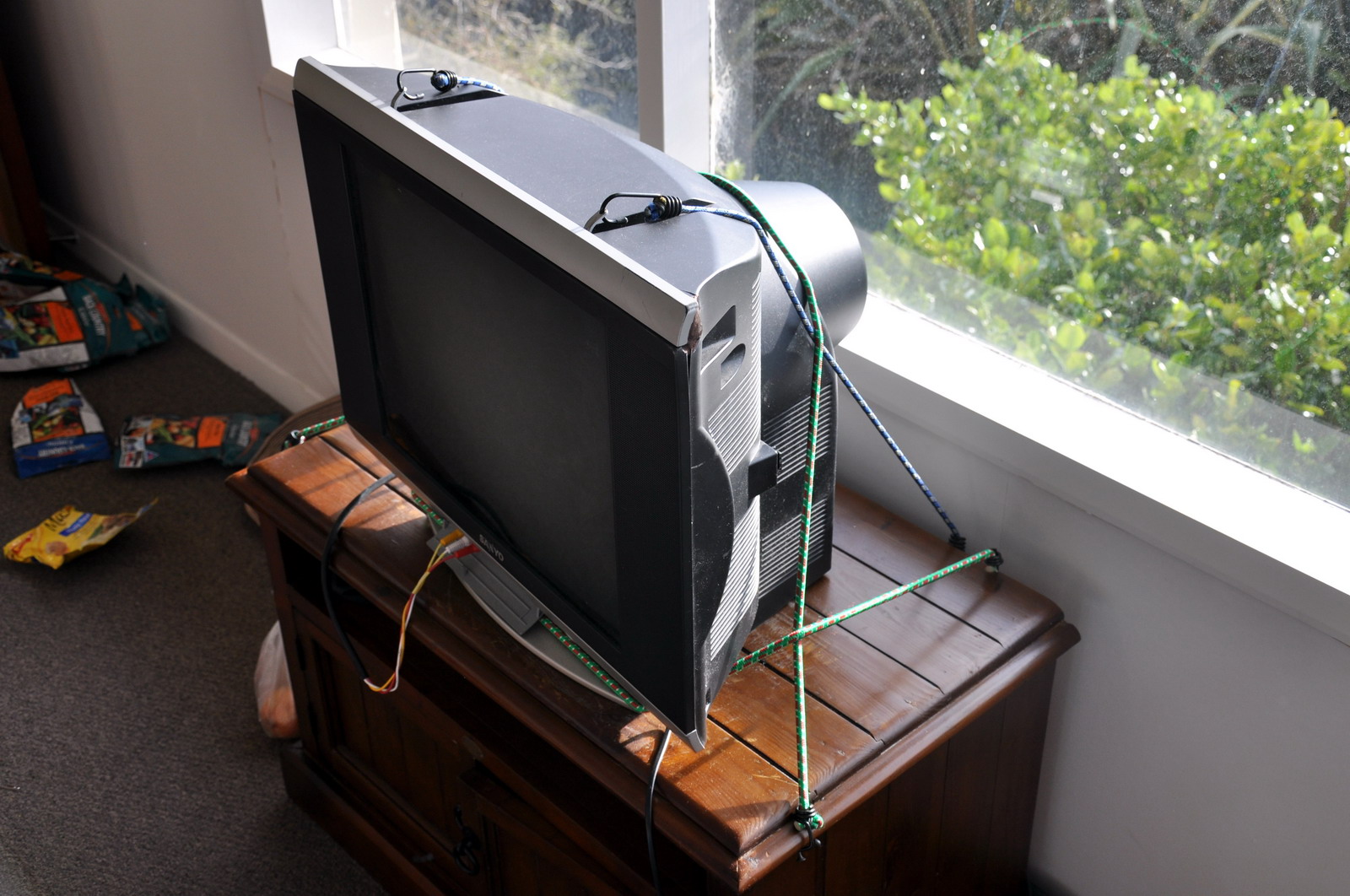
The rest went on the floor, surrounded by cushions. All the bags were clipped shut.
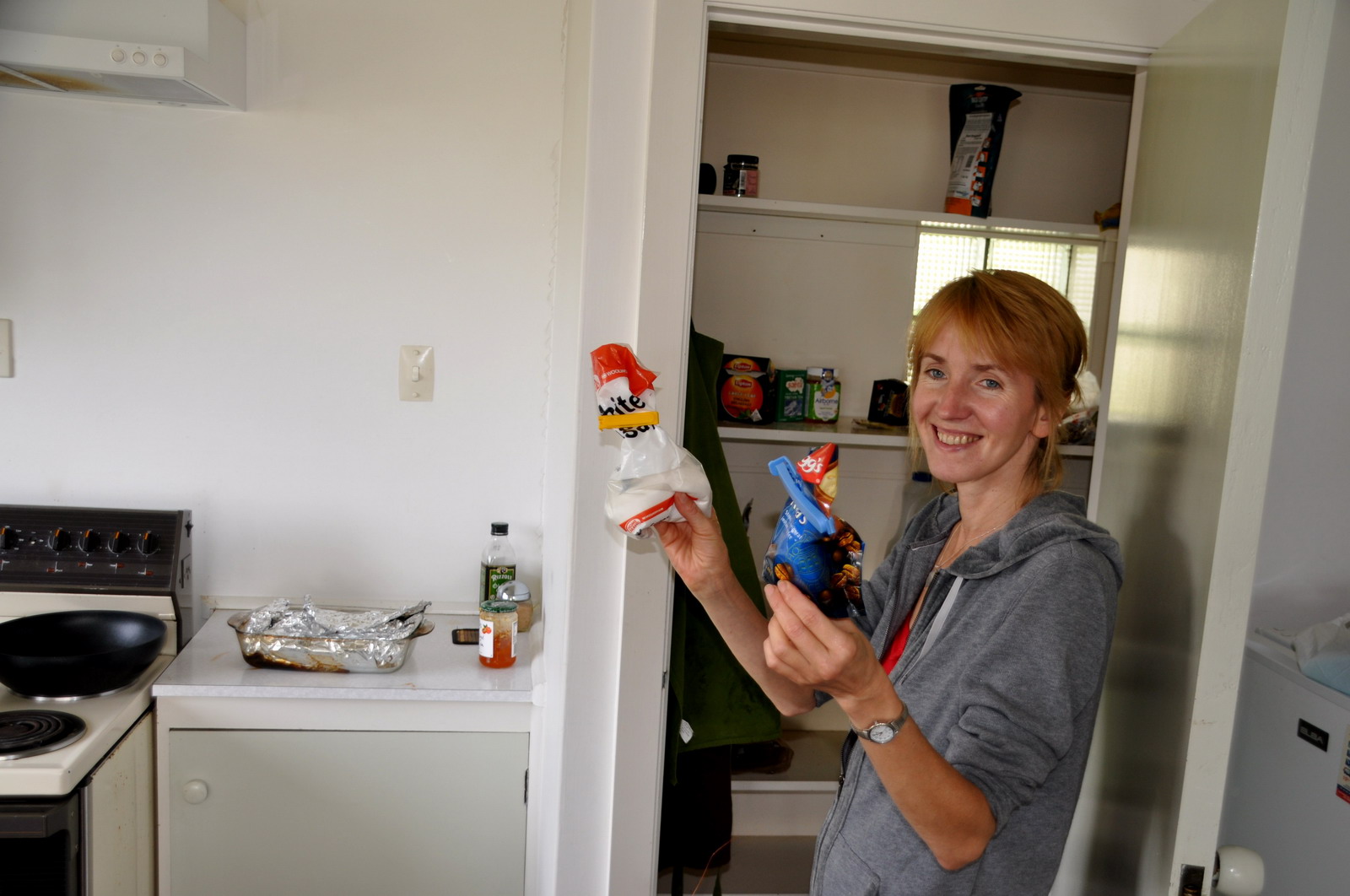
The crockery lived on the bottom shelf. The earthquake would probably be reminding us it was there for several more years, but spring was stronger. Grass and flowers covered the dark grey patches left by liquefaction. Bindweed draped its white bells over the ruins. Soon Christchurch would look like a Renaissance painting of ancient ruins.
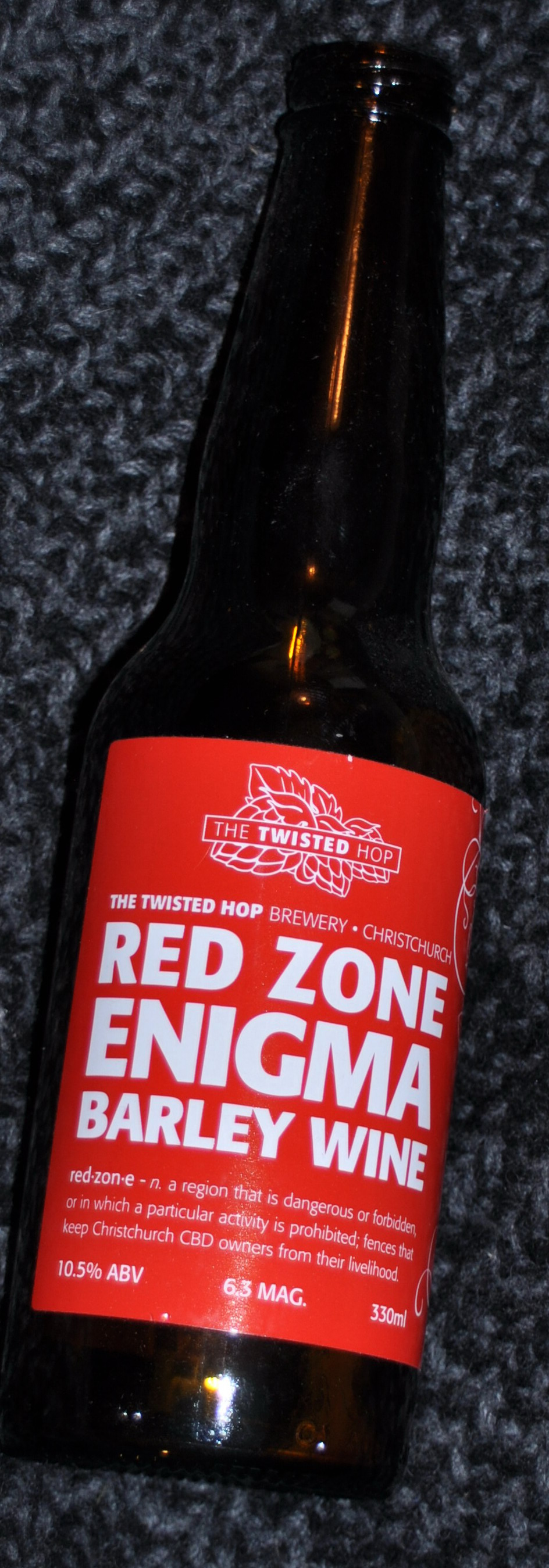
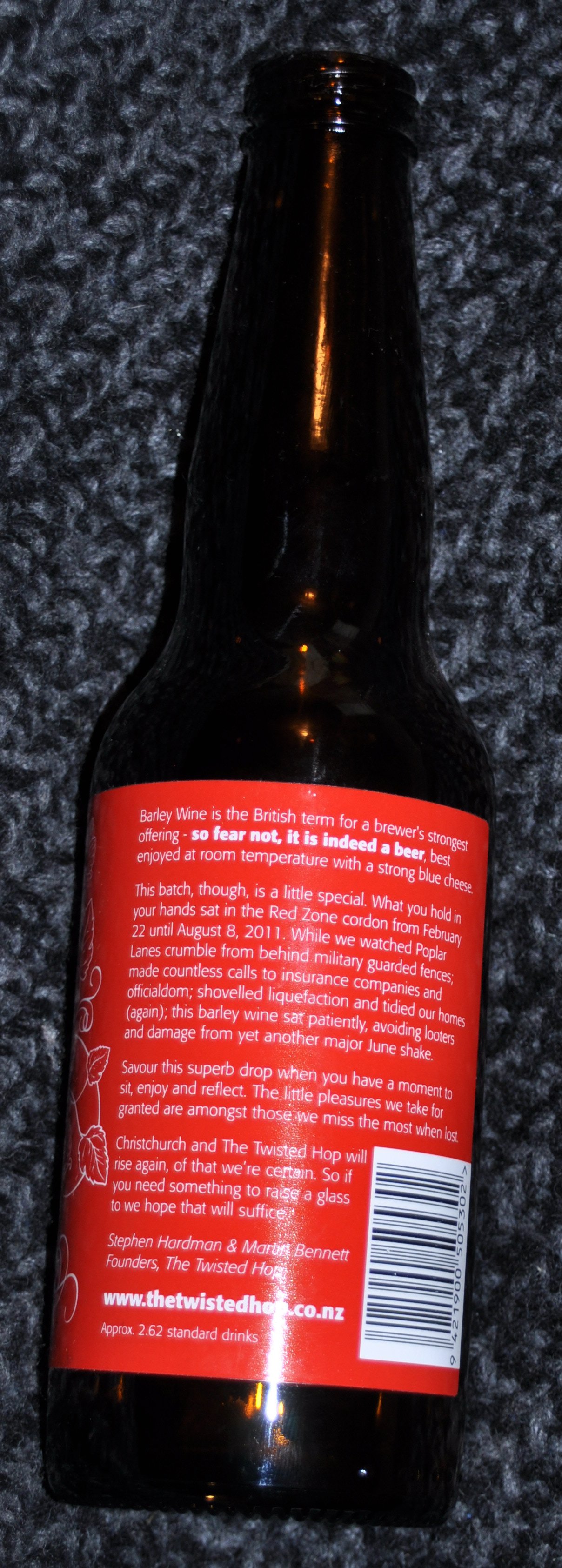
The red zone was gradually retreating. Rebuilt shops opened. Business owners got what they could out of damaged buildings. The brewers even managed to pump out beer that had spent the winter there. They were selling it at double the price under the name RED ZONE.
There were scandals too. The authorities said a building was too unsafe for its owners to go in, even to fetch their computers. Then stories went round that those same computers had turned up for sale. It was an unthinkable scandal in New Zealand. After that, almost everyone was given access to their own property.
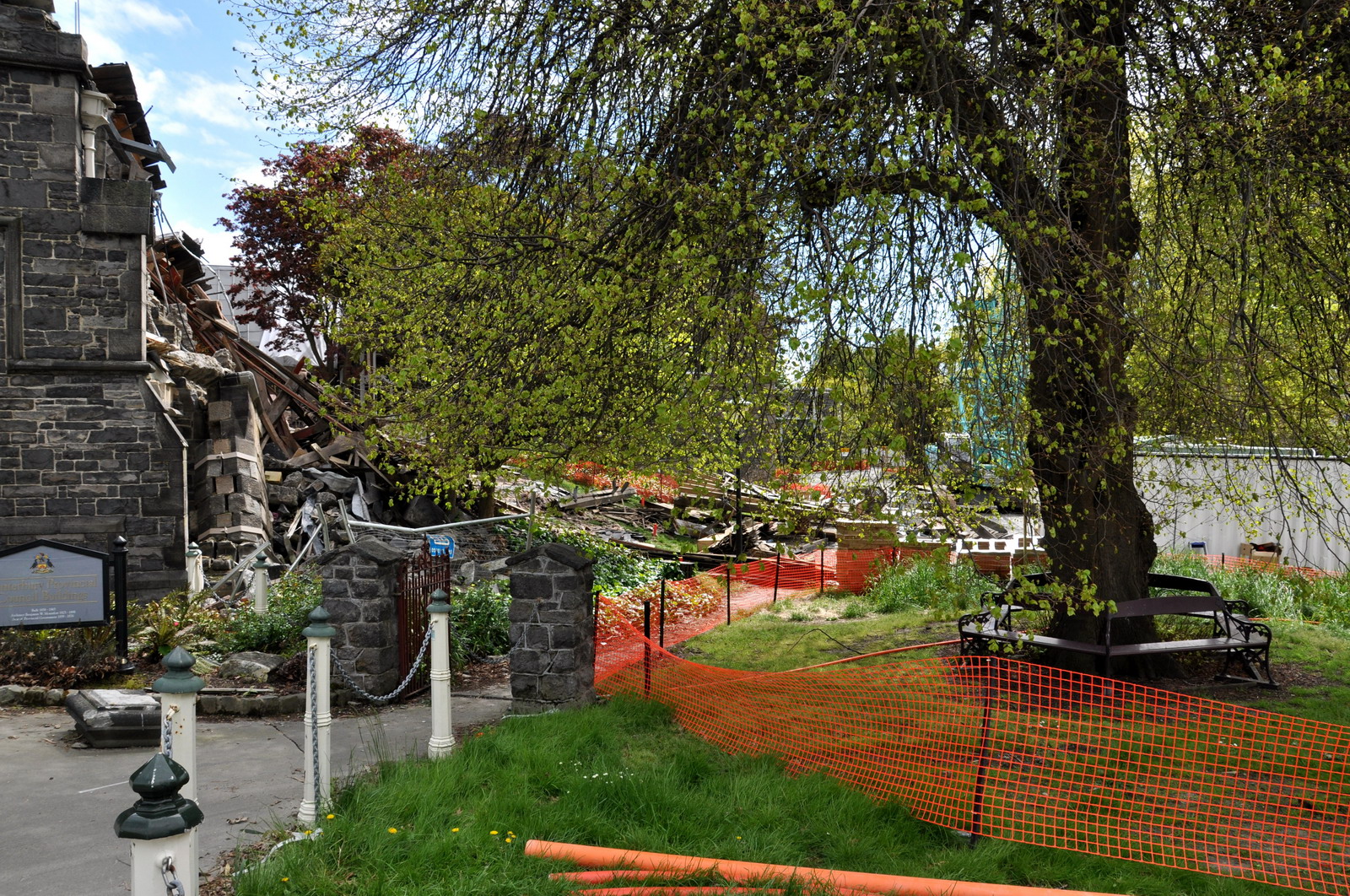
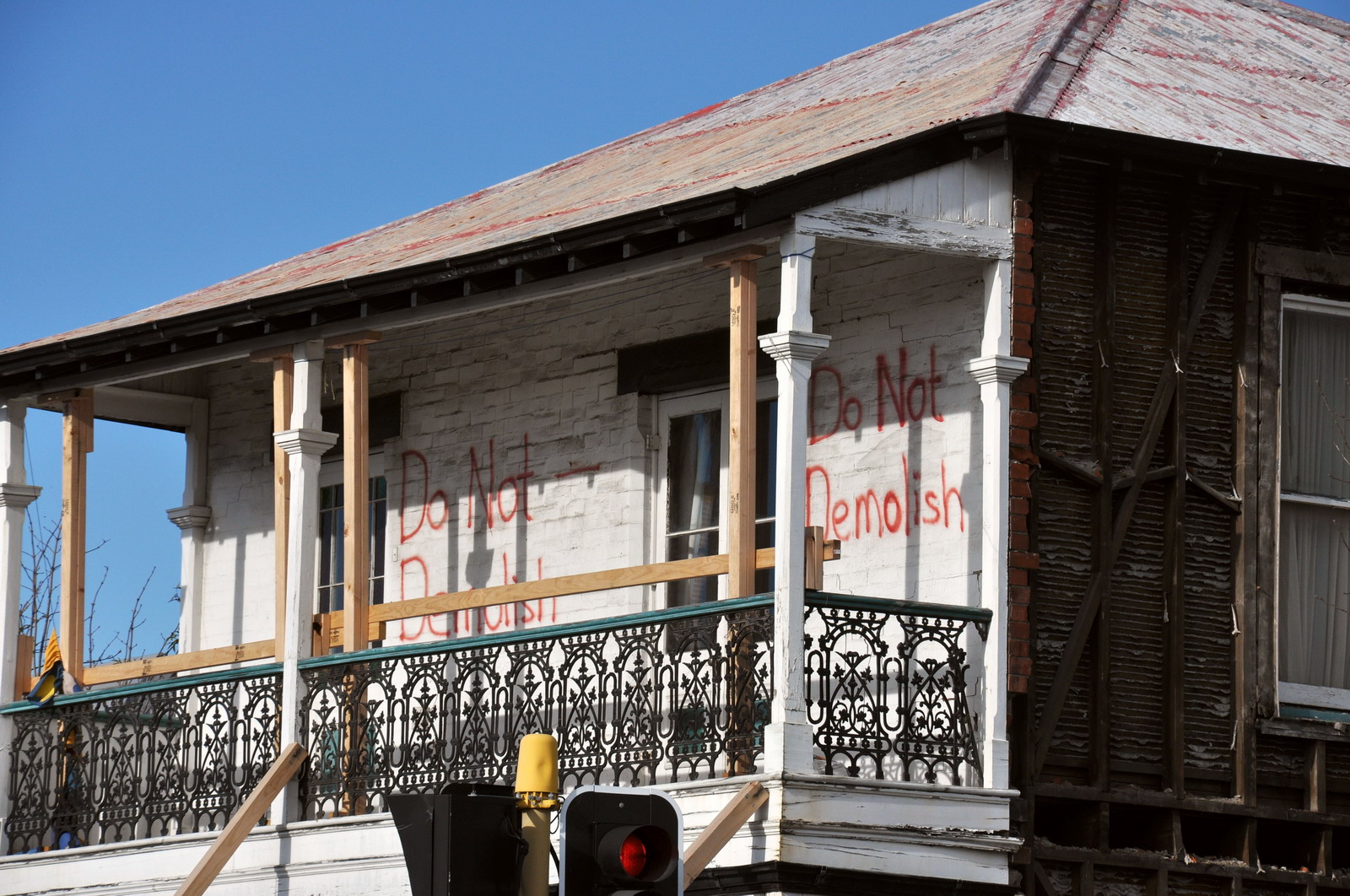
For the moment, buildings were mostly being demolished, even heritage buildings. We thought only the main churches would be restored. The Catholics had already made a serious start. They cleared the rubble and numbered each stone. What remained was being taken down one stone and one board at a time.
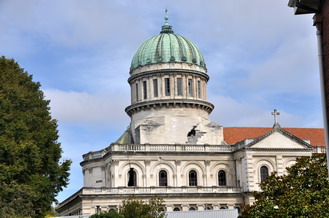
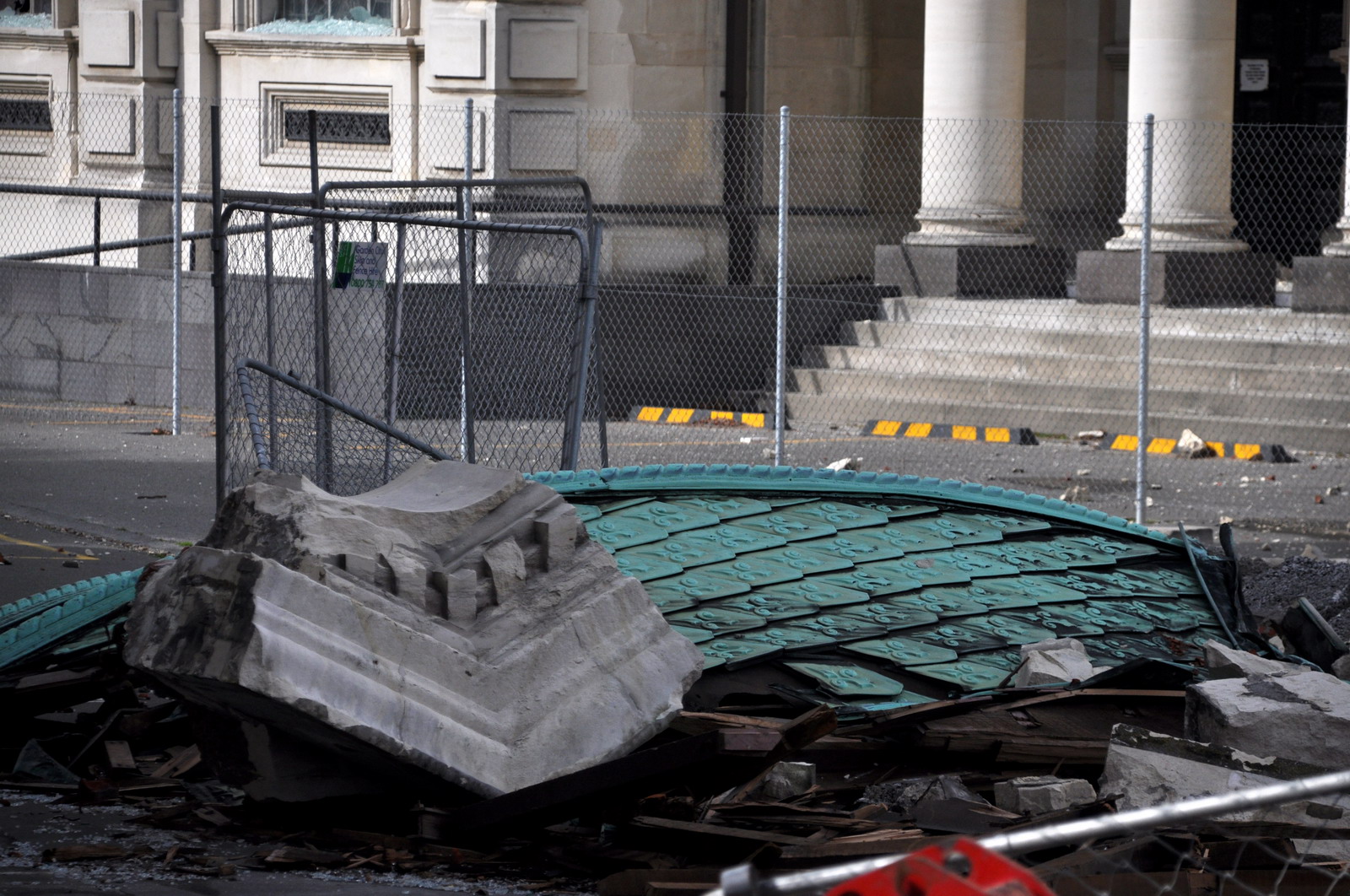
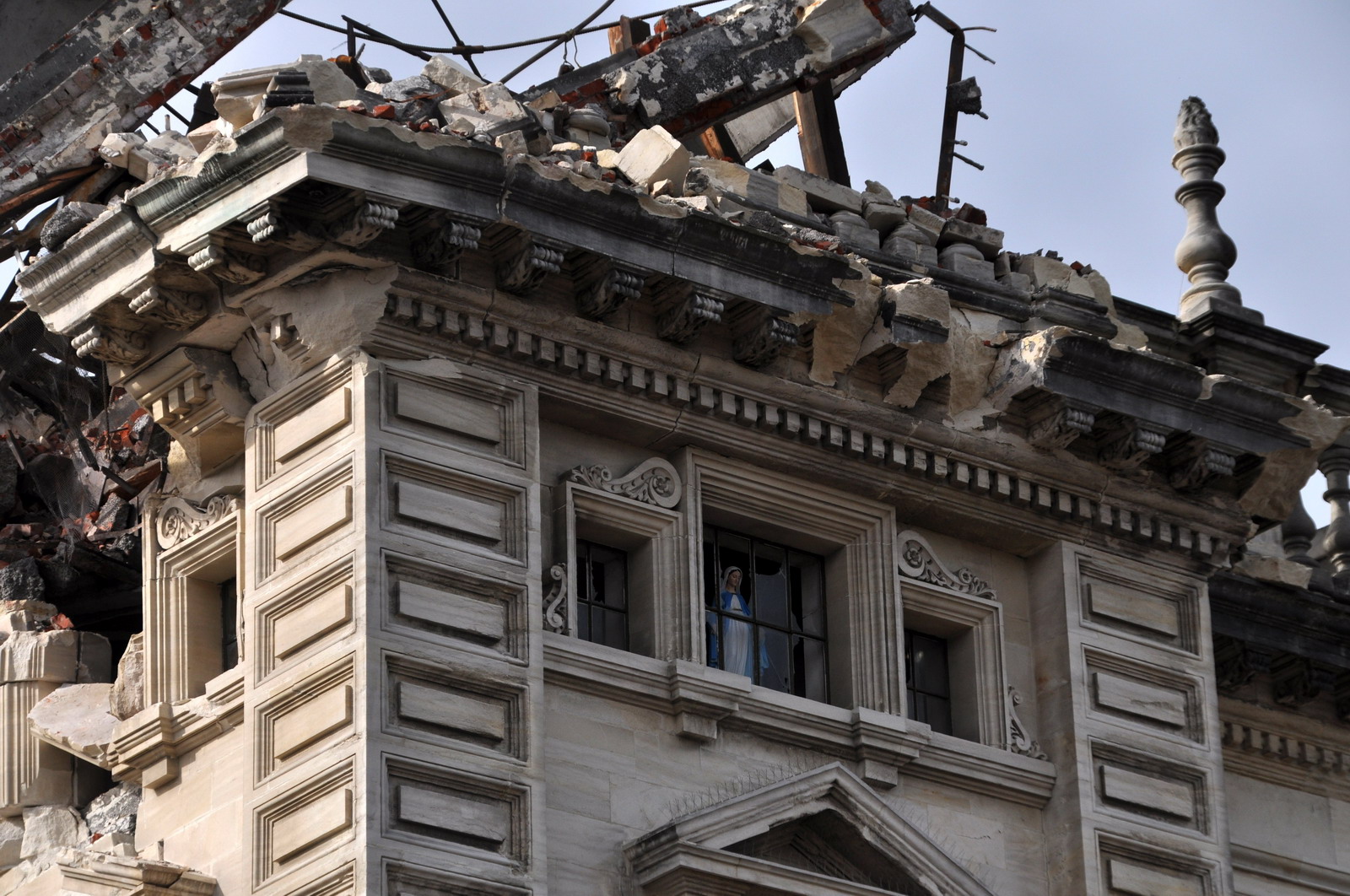
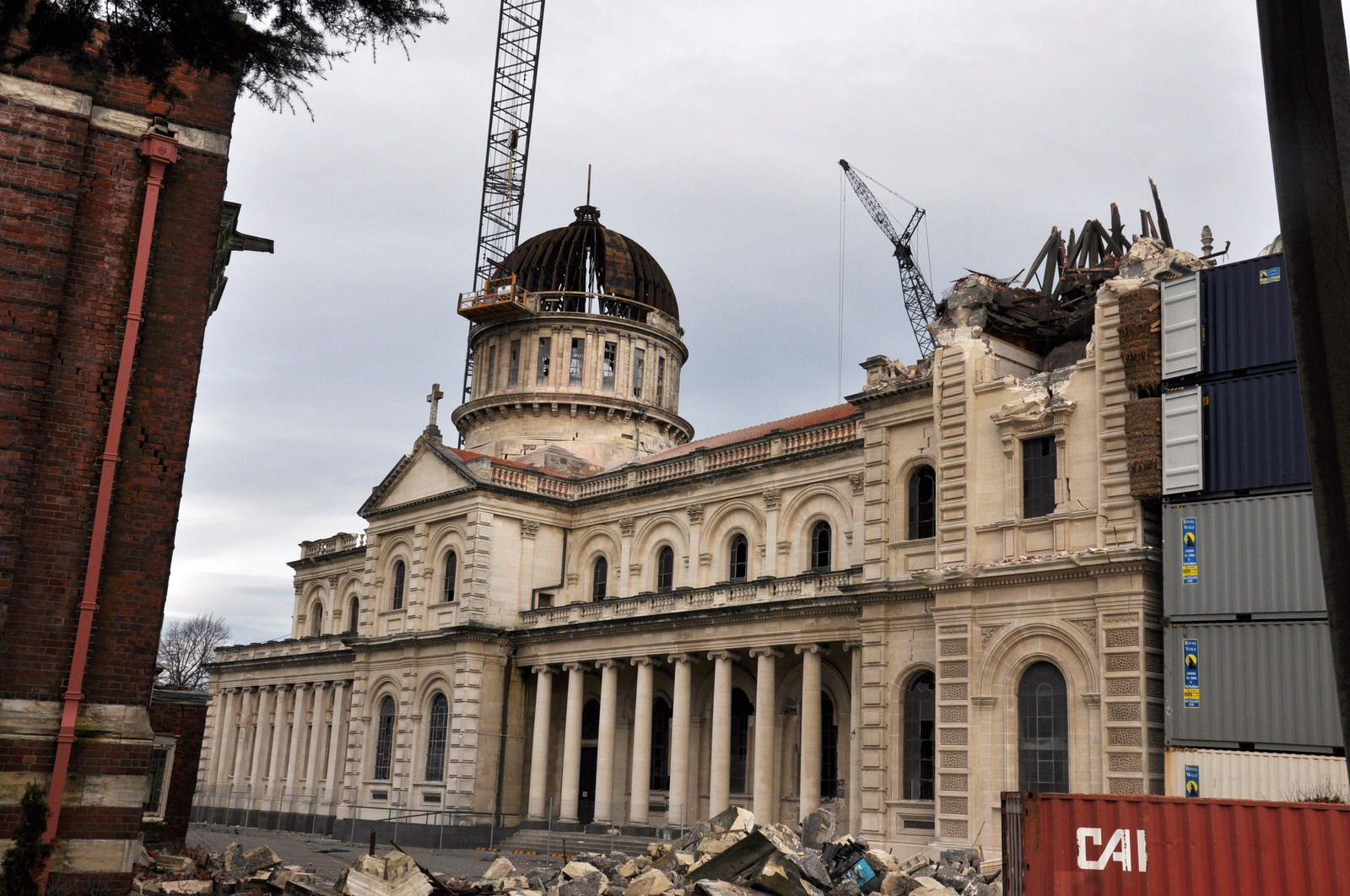
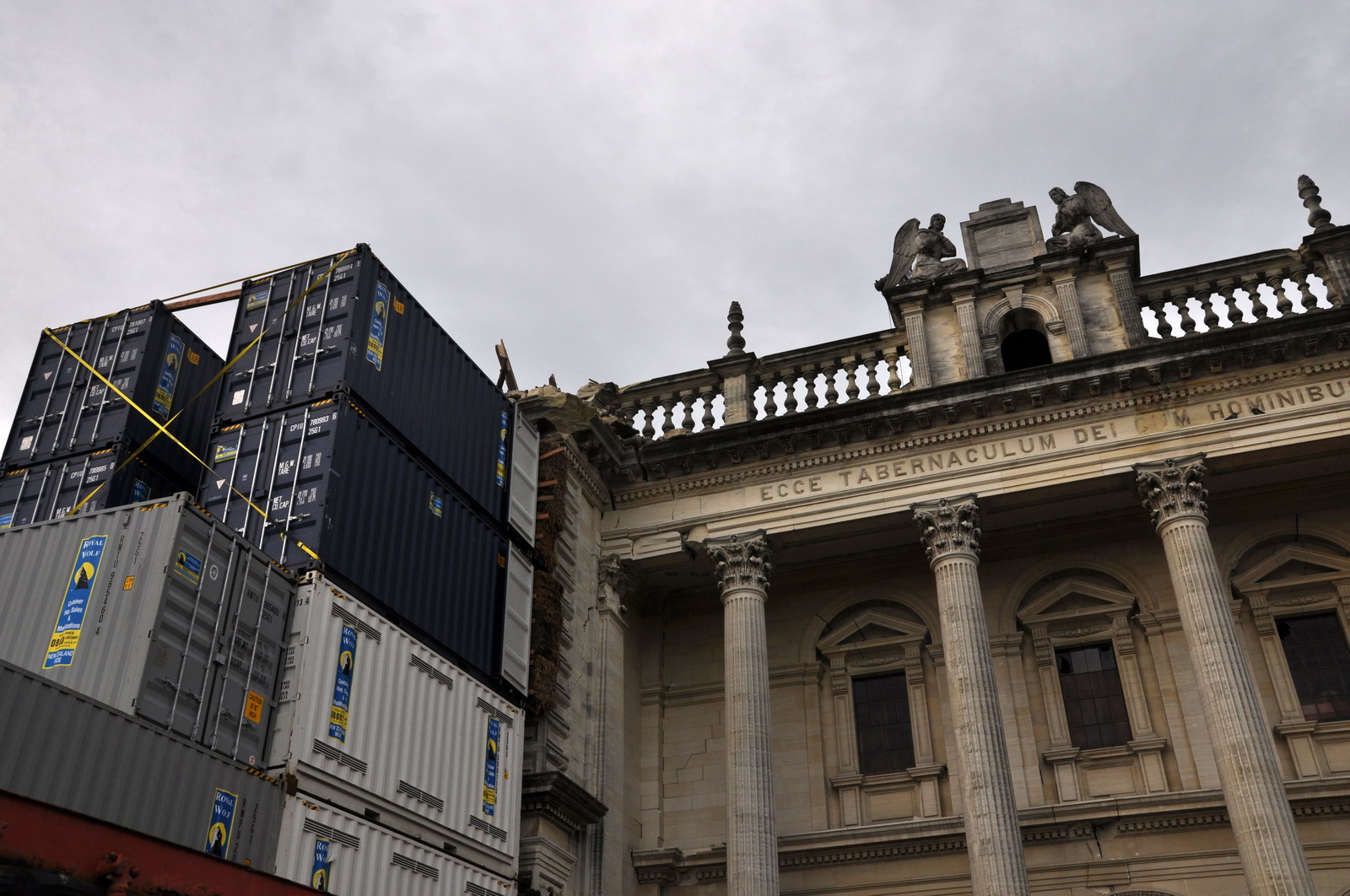
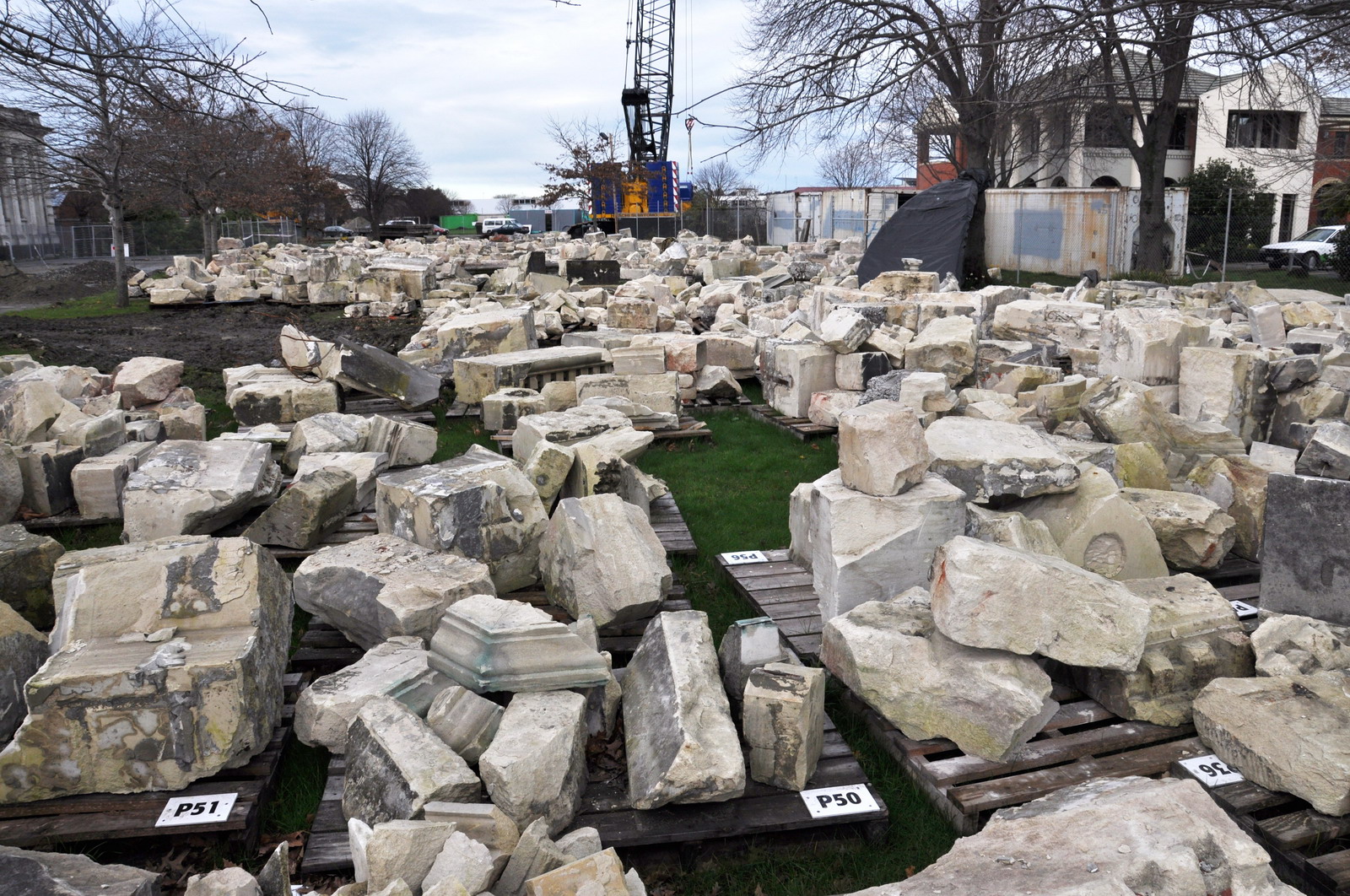
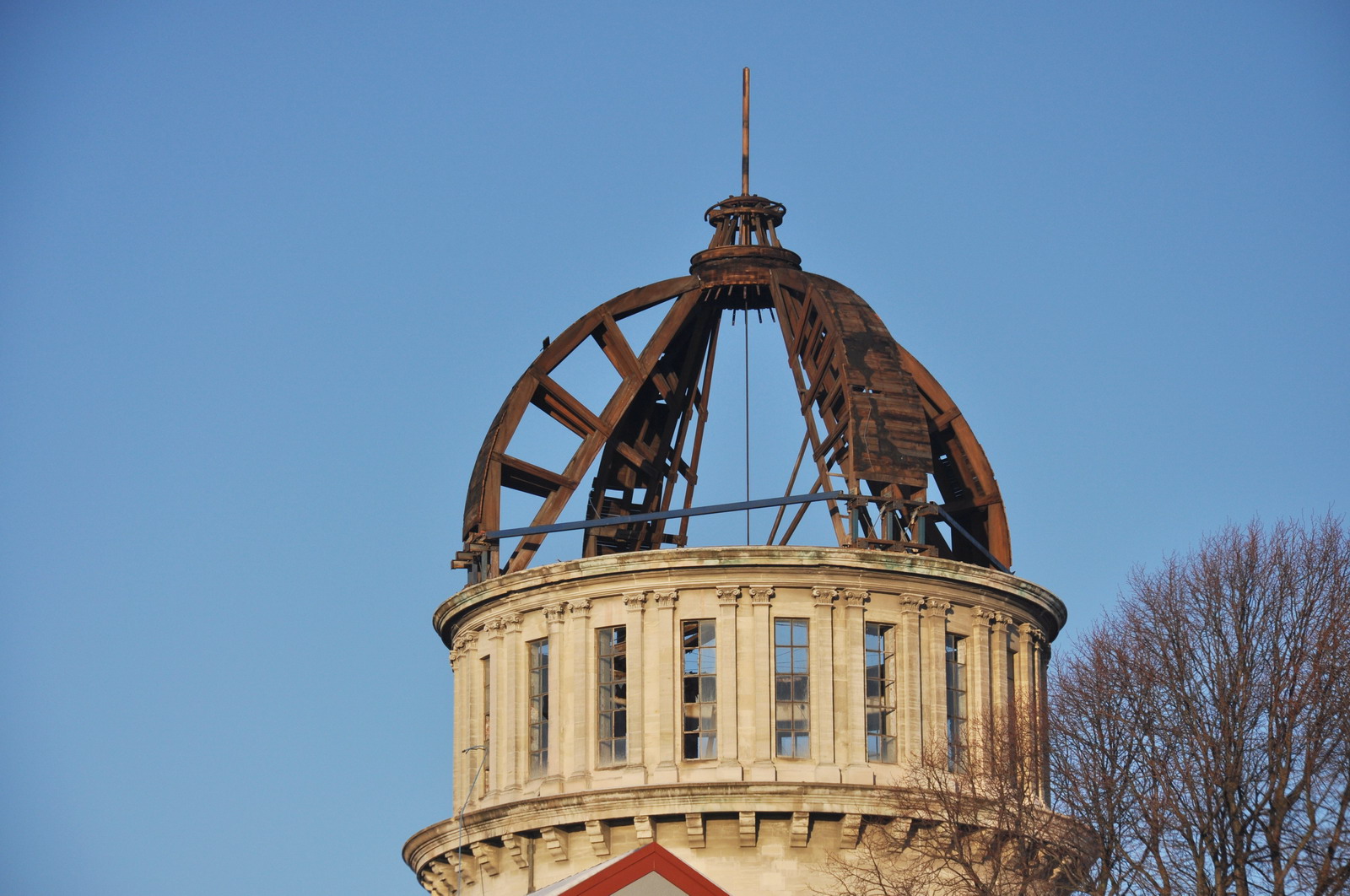
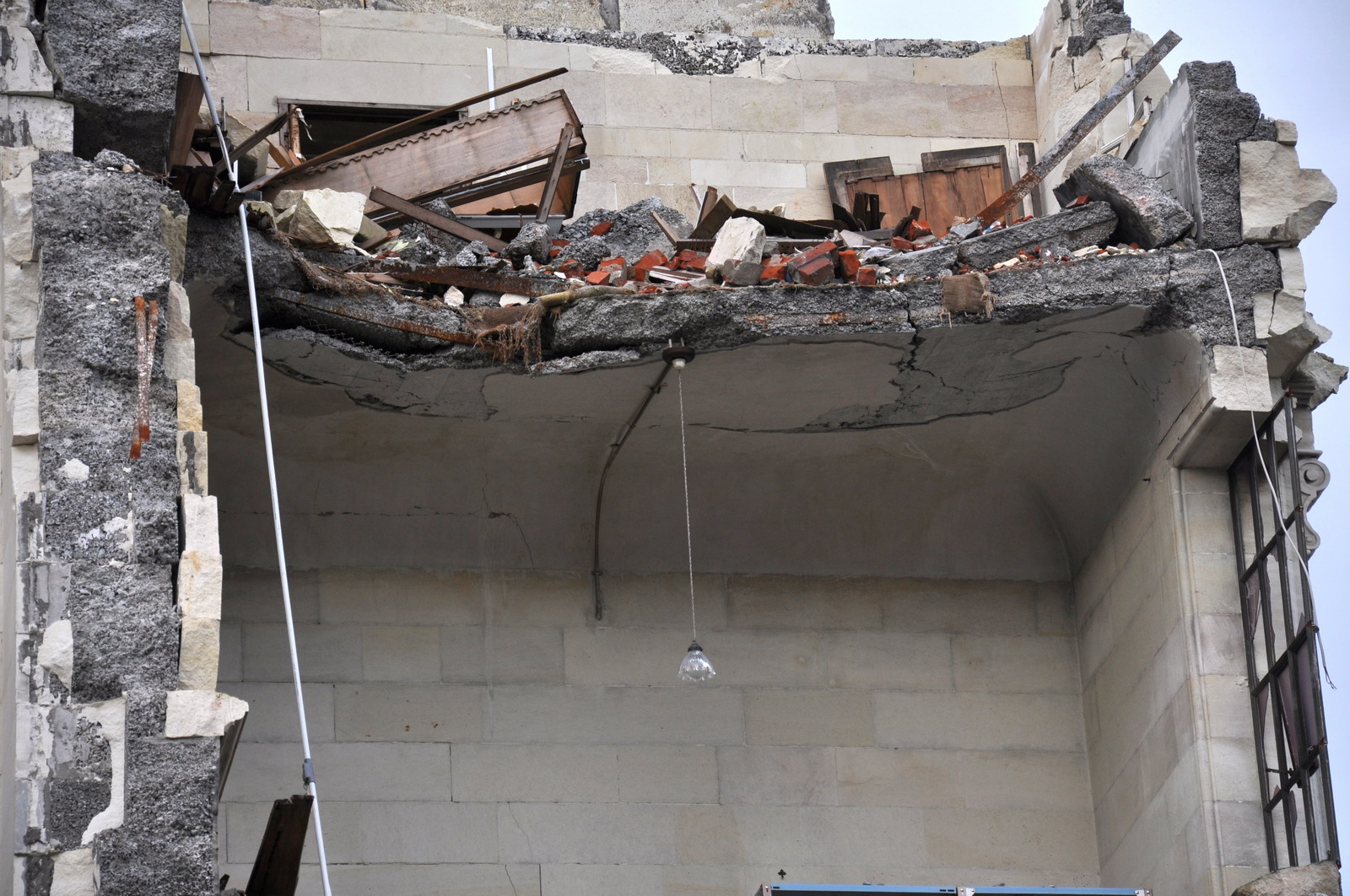
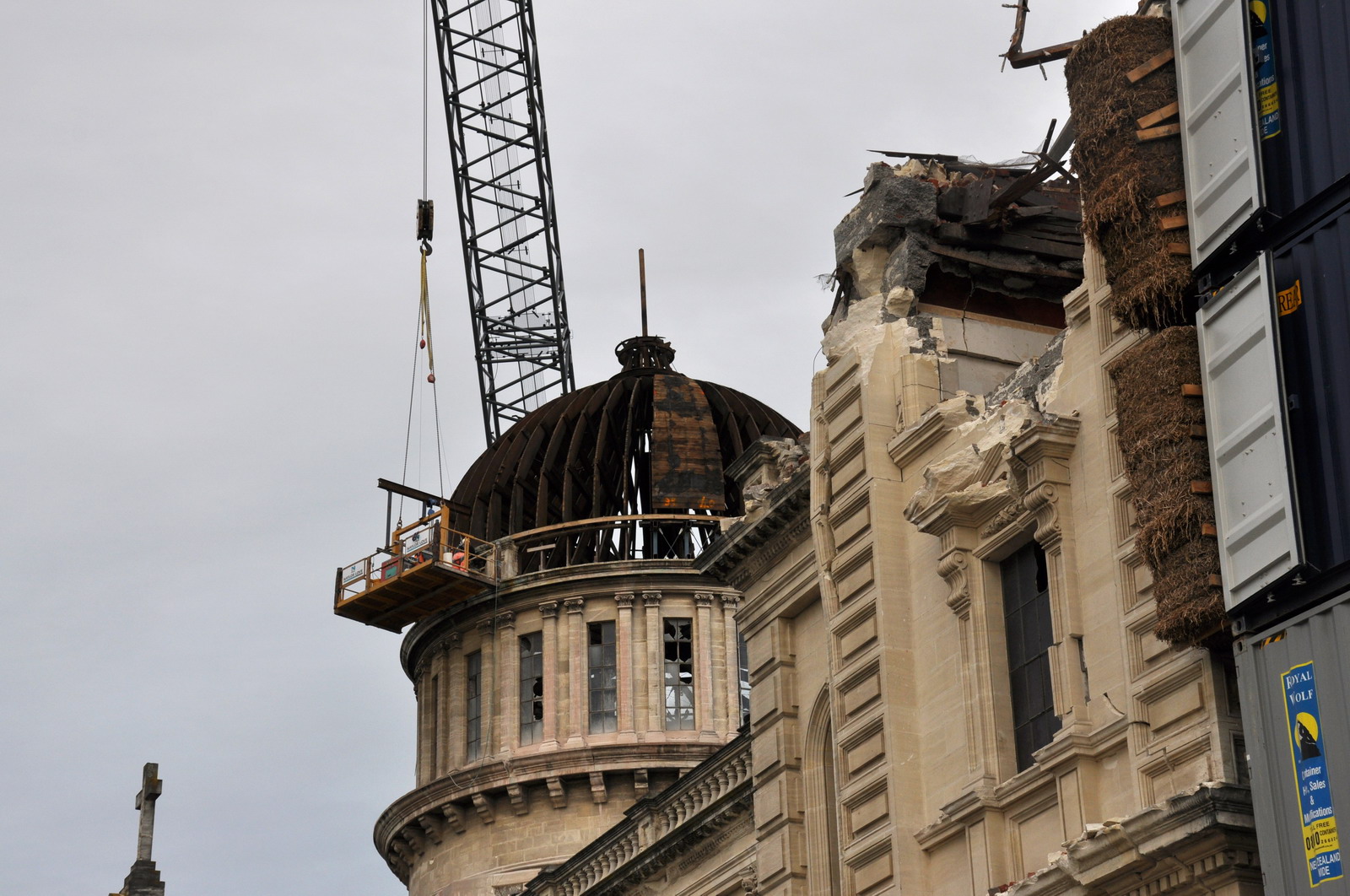
Other residents were gradually thinking about how to save the historic buildings too.
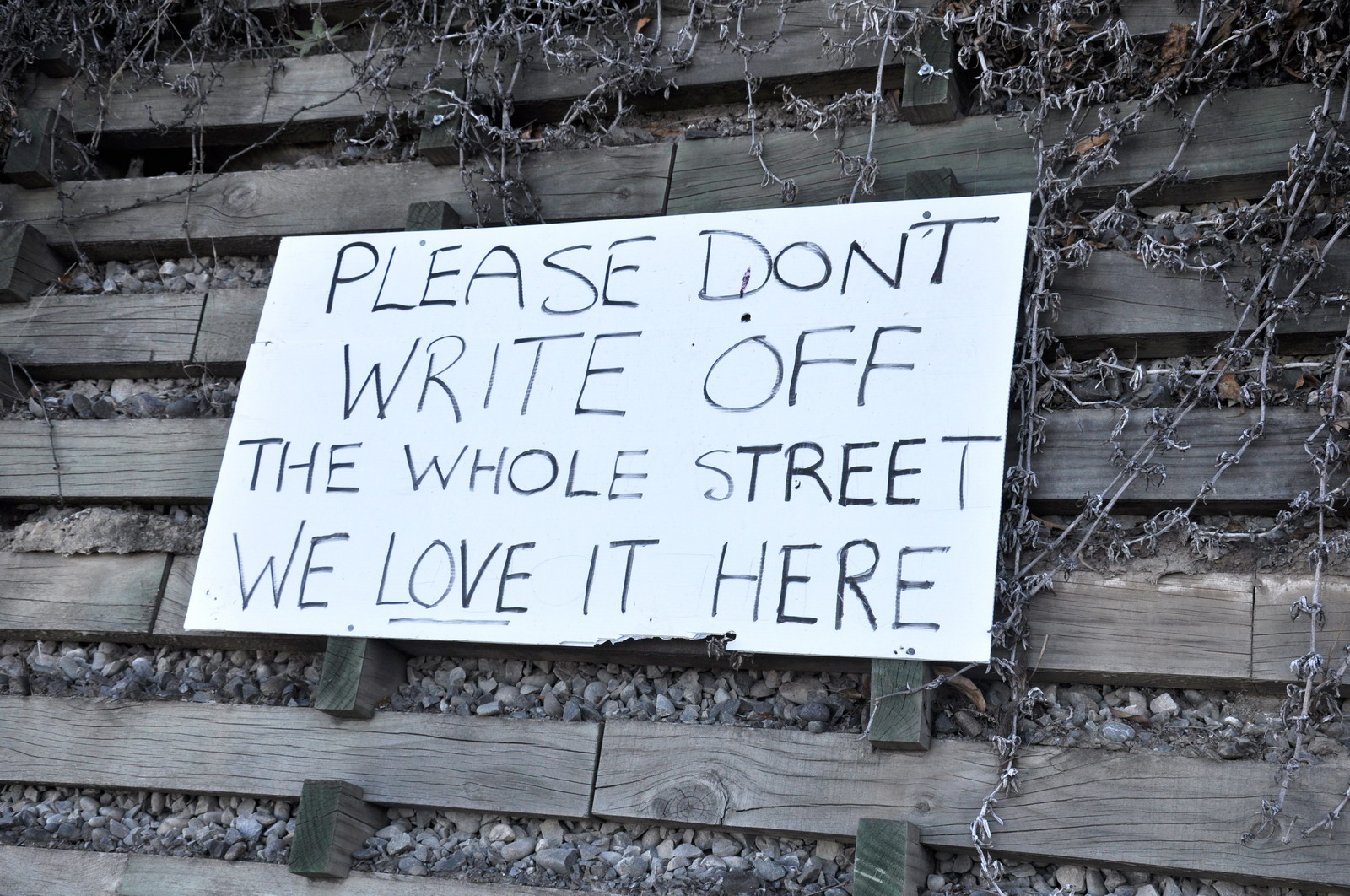
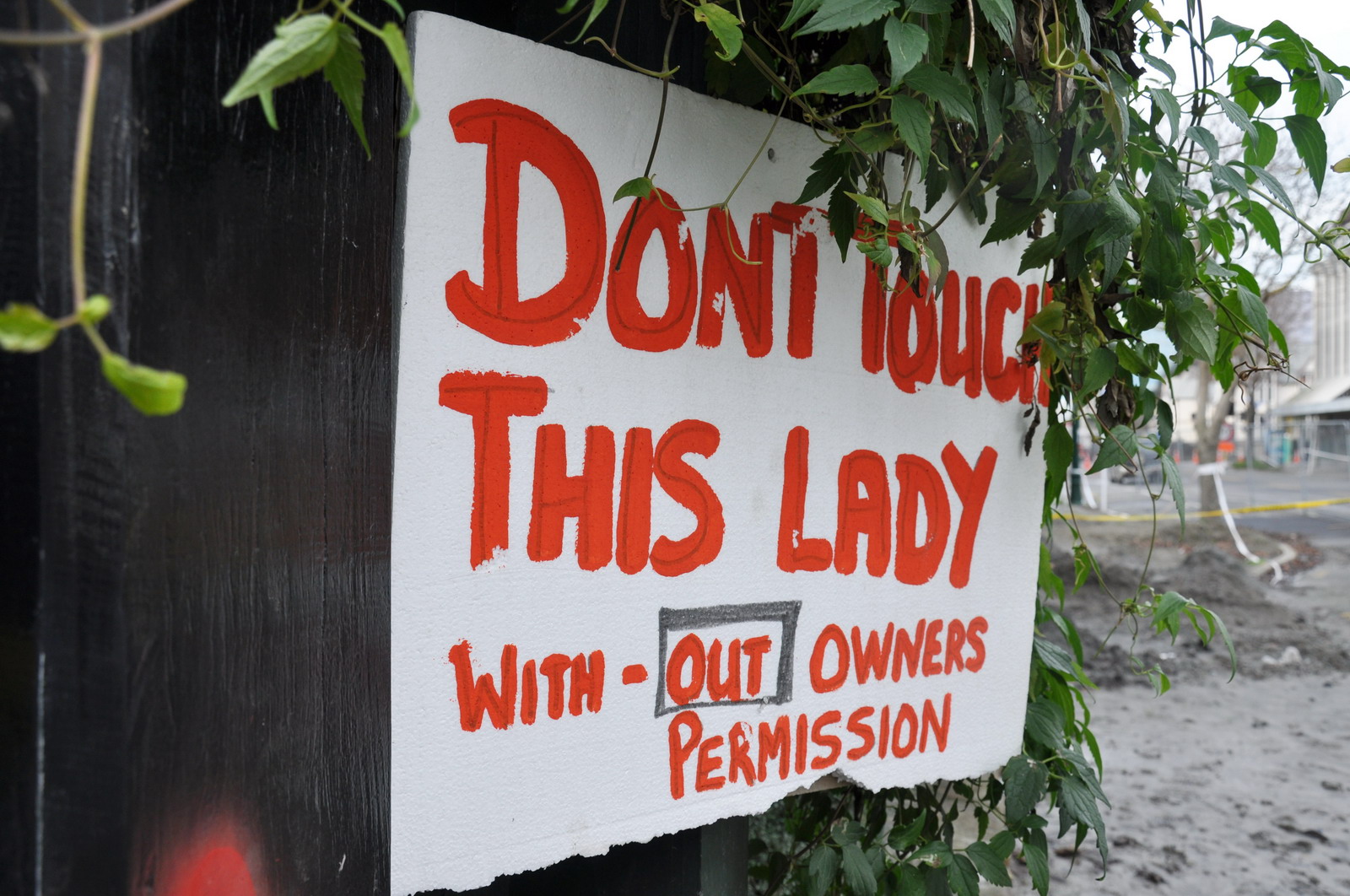
Our All Blacks won the World Cup. We usually don’t root for anyone and have little time for sport, but this was different. A triumph of justice. Christchurch had lost its games, but as consolation they put up a big screen in Hagley Park. Even the prime minister came to watch. We understood the game was one that should have been played here. And wouldn’t you know it, a strong shock hit in the middle of the match. Everything flew off the shelves again. But our side won.
There was a parliamentary election too. John Key held on and strengthened his position. Whatever people’s complaints about him, Labour’s socialist programme looked so awful to me that he got away with everything.
The country went on its Christmas break. We bought a tree and took out the decorations we’d brought from Russia, quite a few of which had managed to stay in one piece. We bought a red-and-white holiday flower. In New Zealand that’s as indispensable as a snowman. Tanya and Denis finished their studies with top marks.
Then on 23 December came two new shocks, magnitudes 5.7 and 6.0.
The tree fell. The decorations broke. The Christmas turkey went unbought and was left to spoil without refrigeration in a closed supermarket. Much of Christchurch would spend Christmas by candlelight.
This time it was a different part of the city that suffered. Our power didn’t even go off. The straps holding the computers to the desks did their job. Even the microwave stayed in their gentle embrace.