Trip report
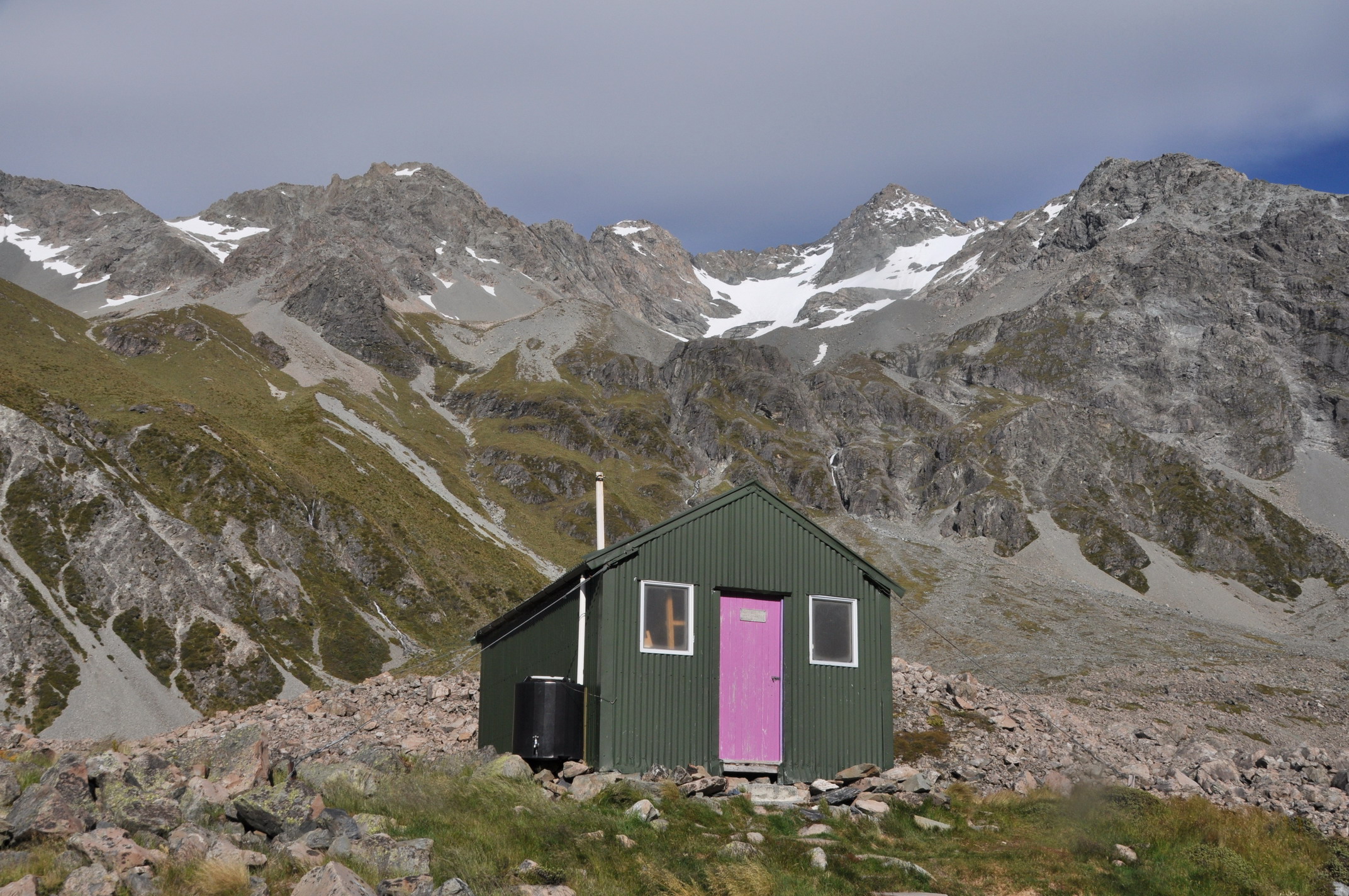
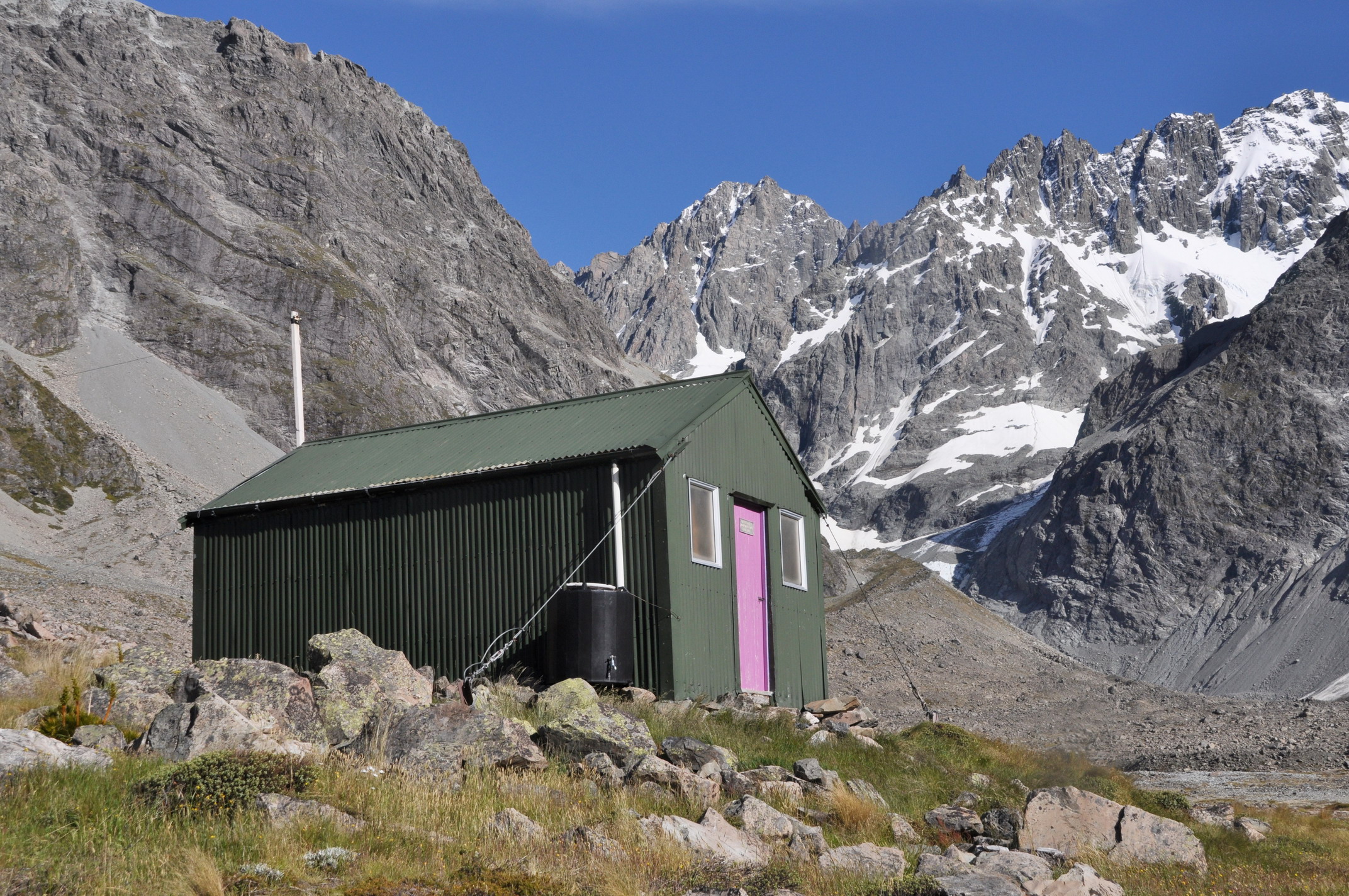
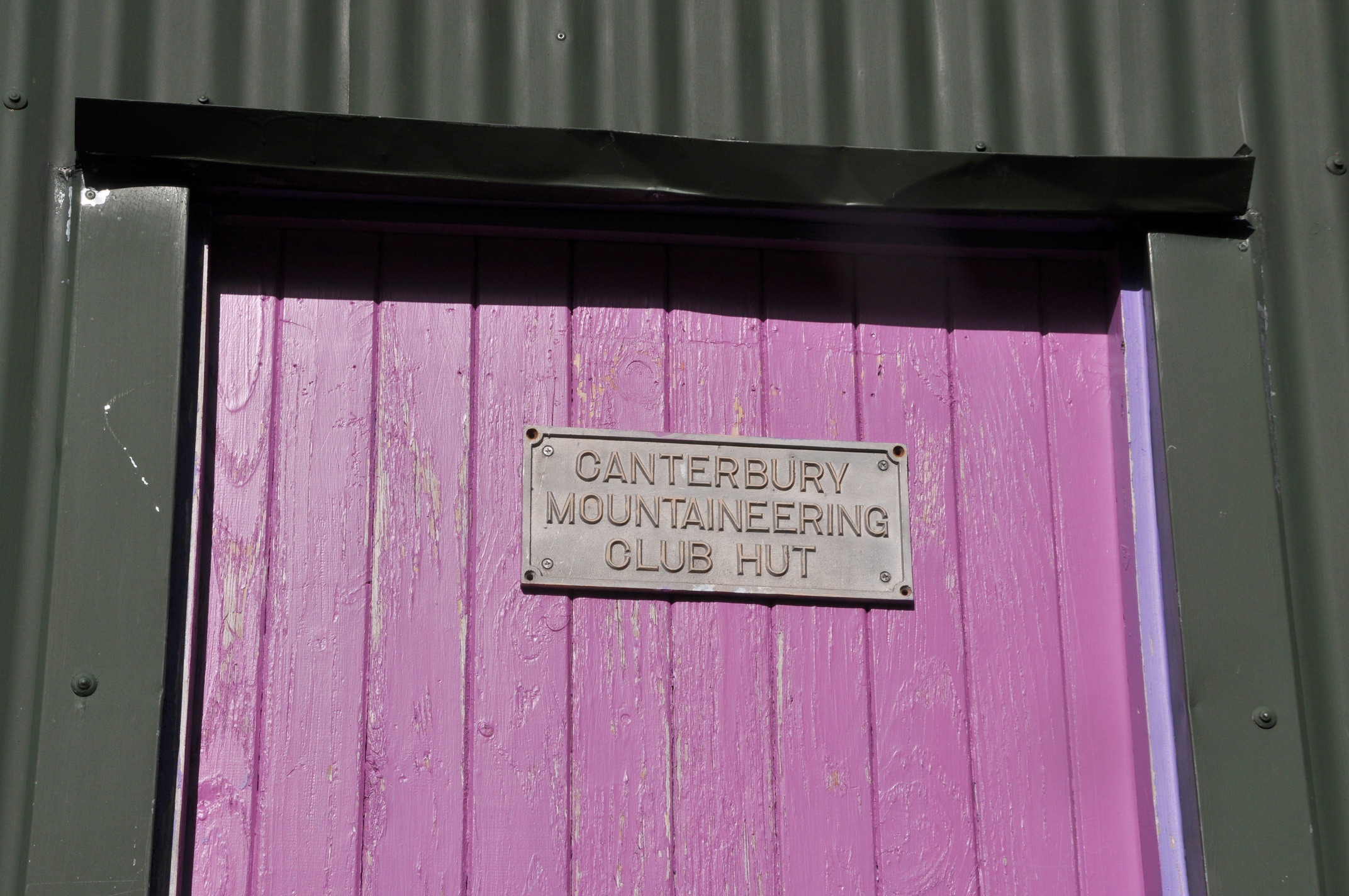
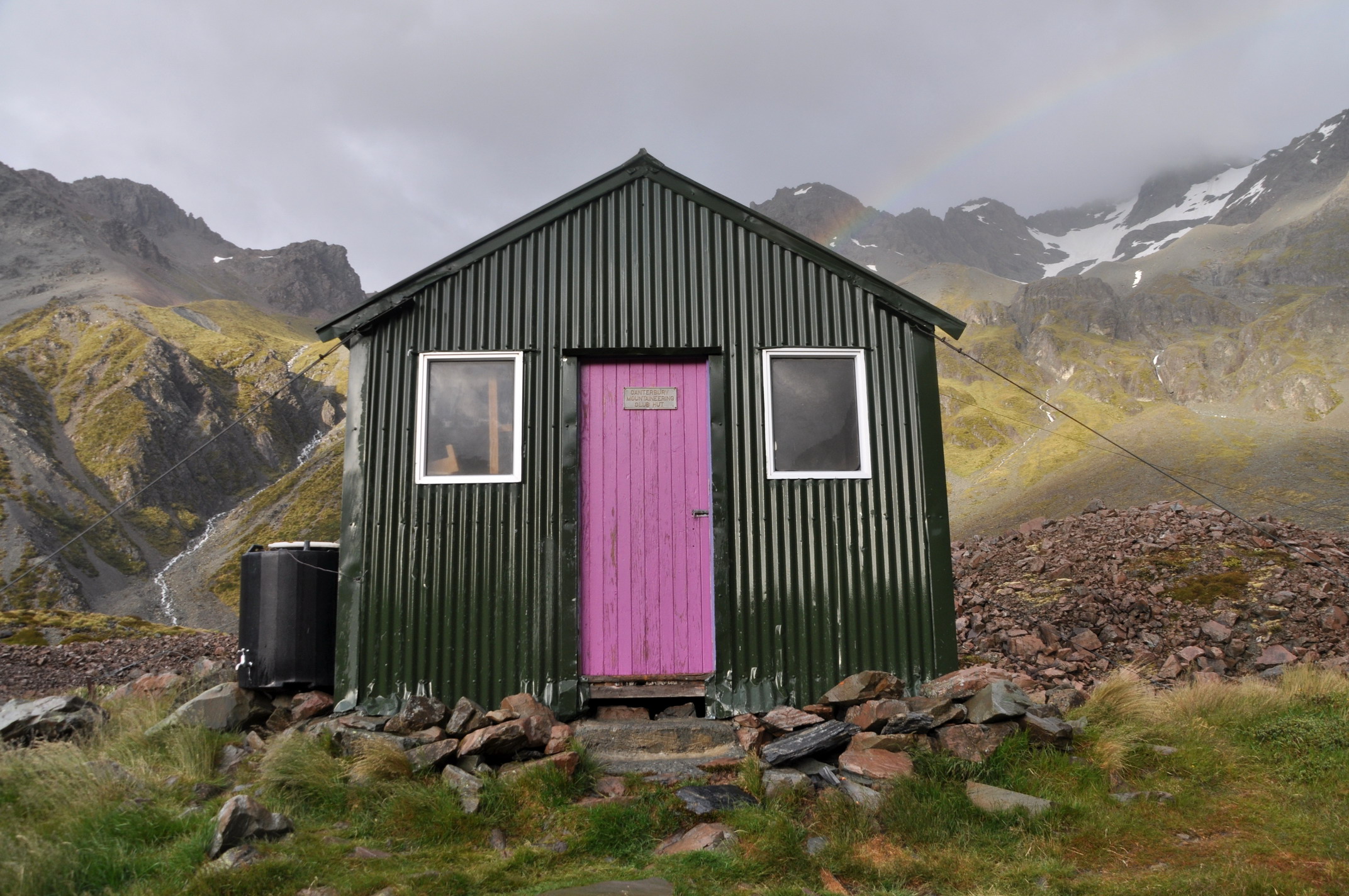
We had a little time to spare, but there was a catch: the weather was fine in only one small corner of New Zealand, near us on our side of the Southern Alps. That reminded us of Cameron Hut near Mount Arrowsmith. It belongs to the local alpine club, and climbers usually stay there. There are plenty of rocky peaks and difficult faces nearby. The hut is normally busy, but the forecast was poor and we hoped to have it to ourselves.
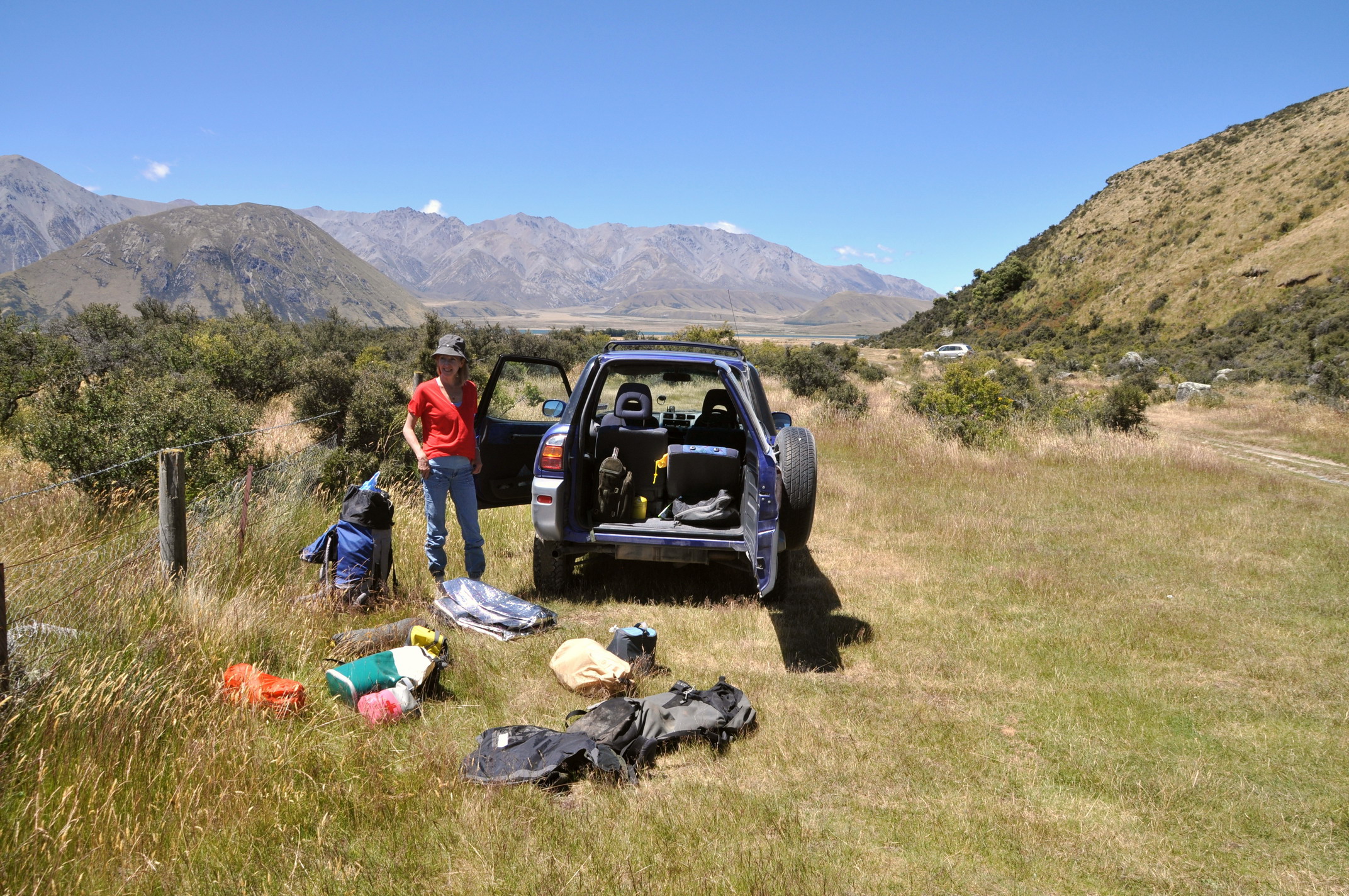
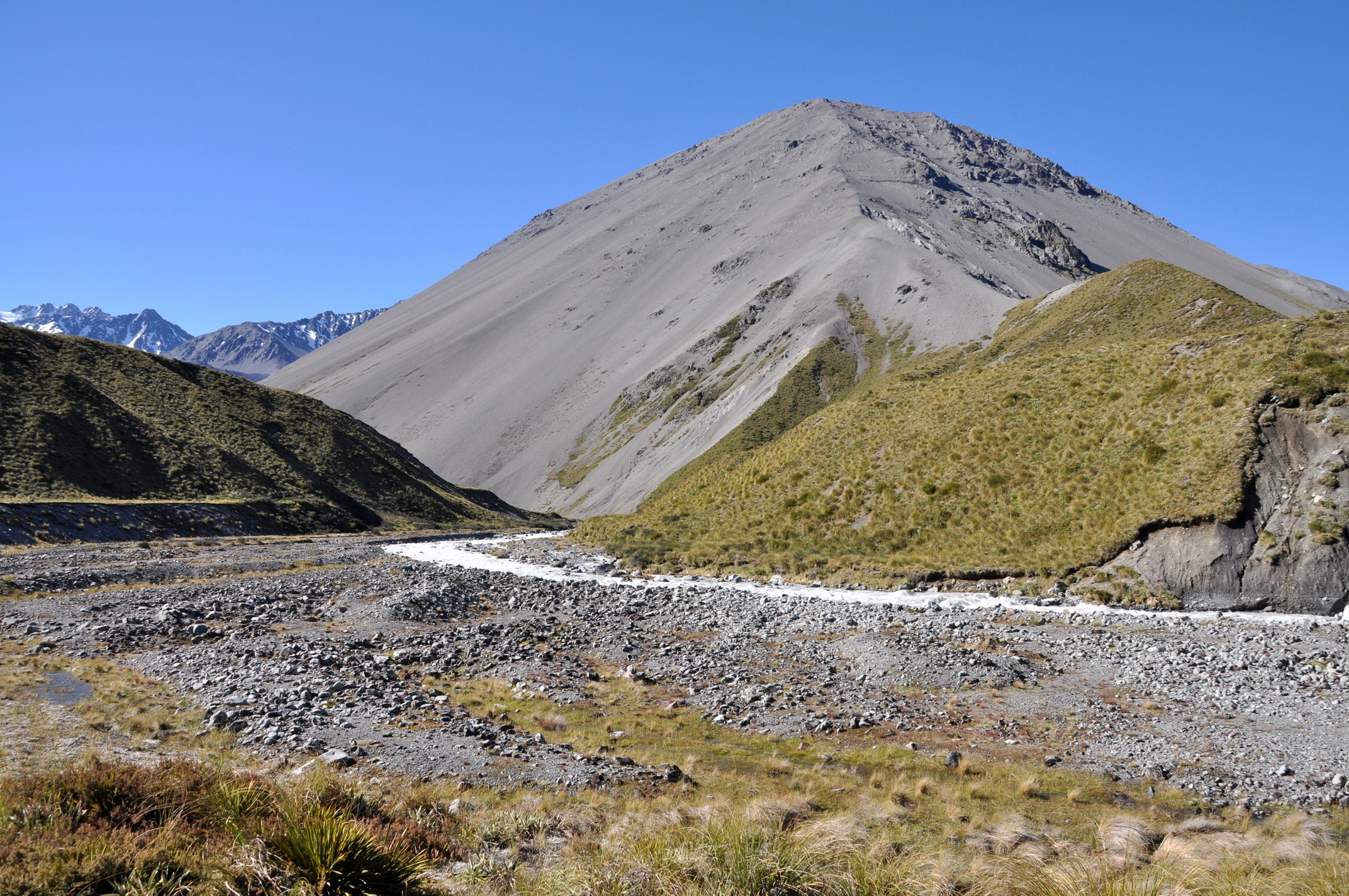
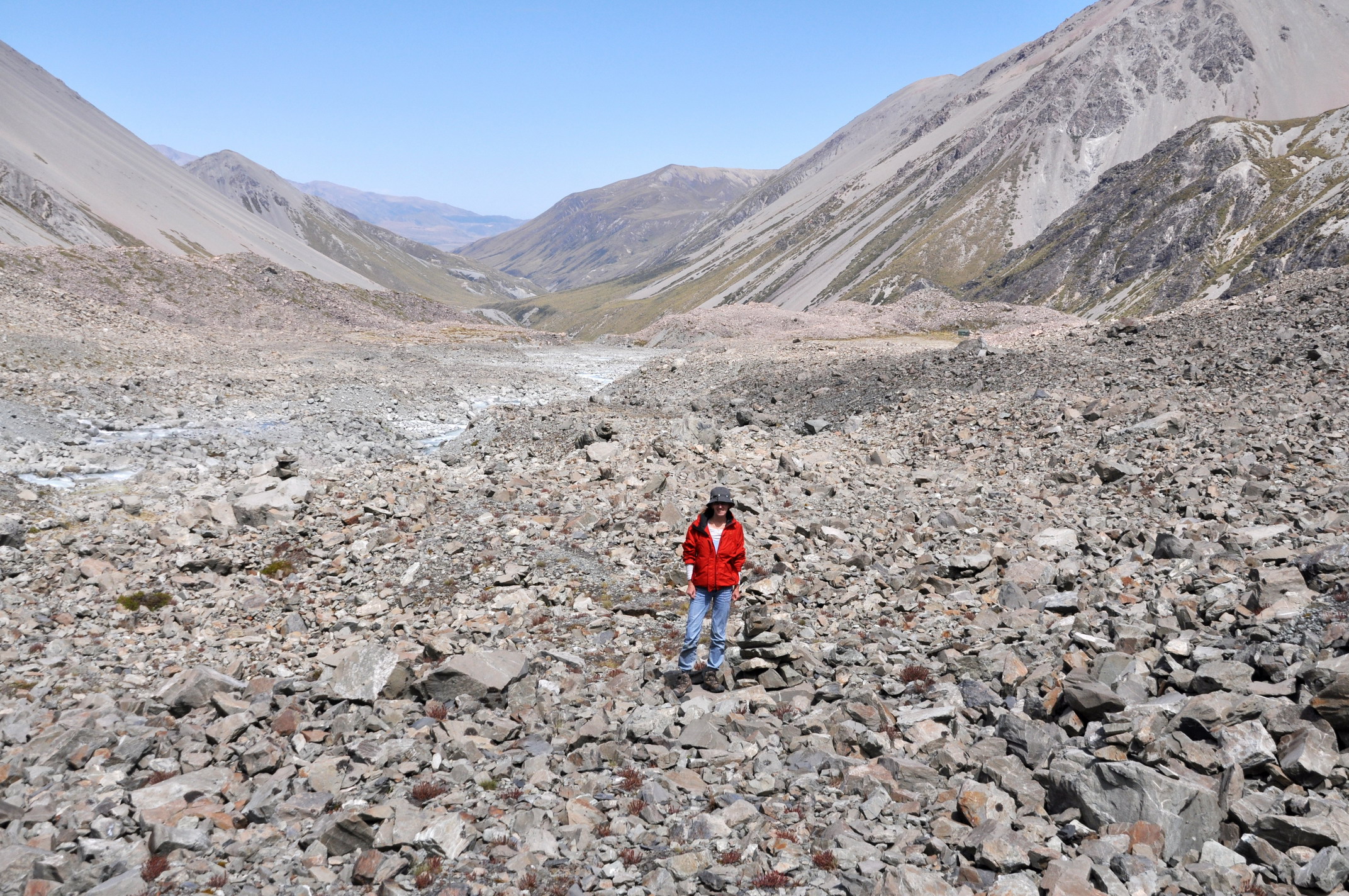
The track starts from the shore of Lake Heron (43°27.120′S, 171°08.397′E). The whole route to the hut follows the banks of the swift Cameron River.
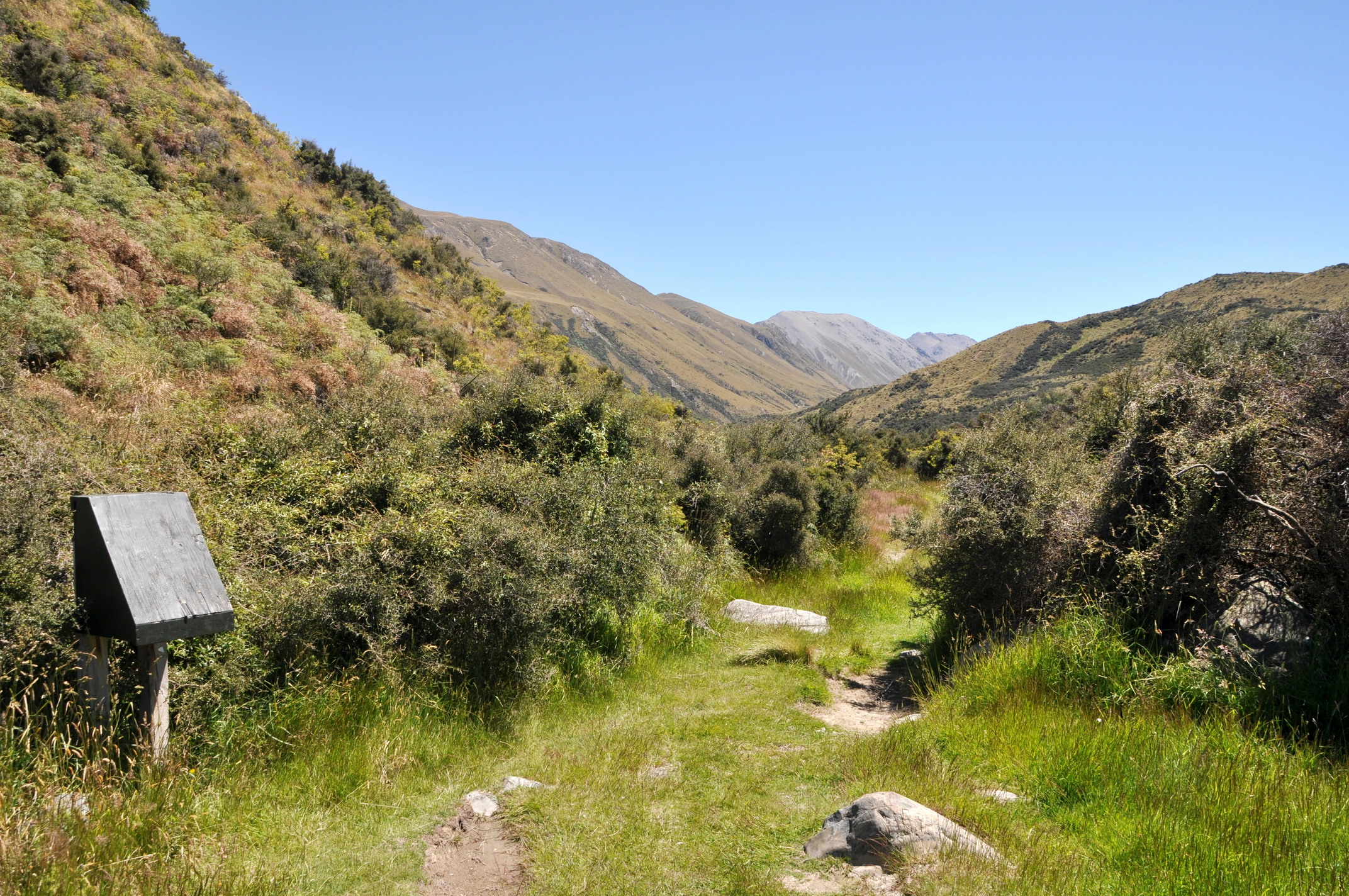
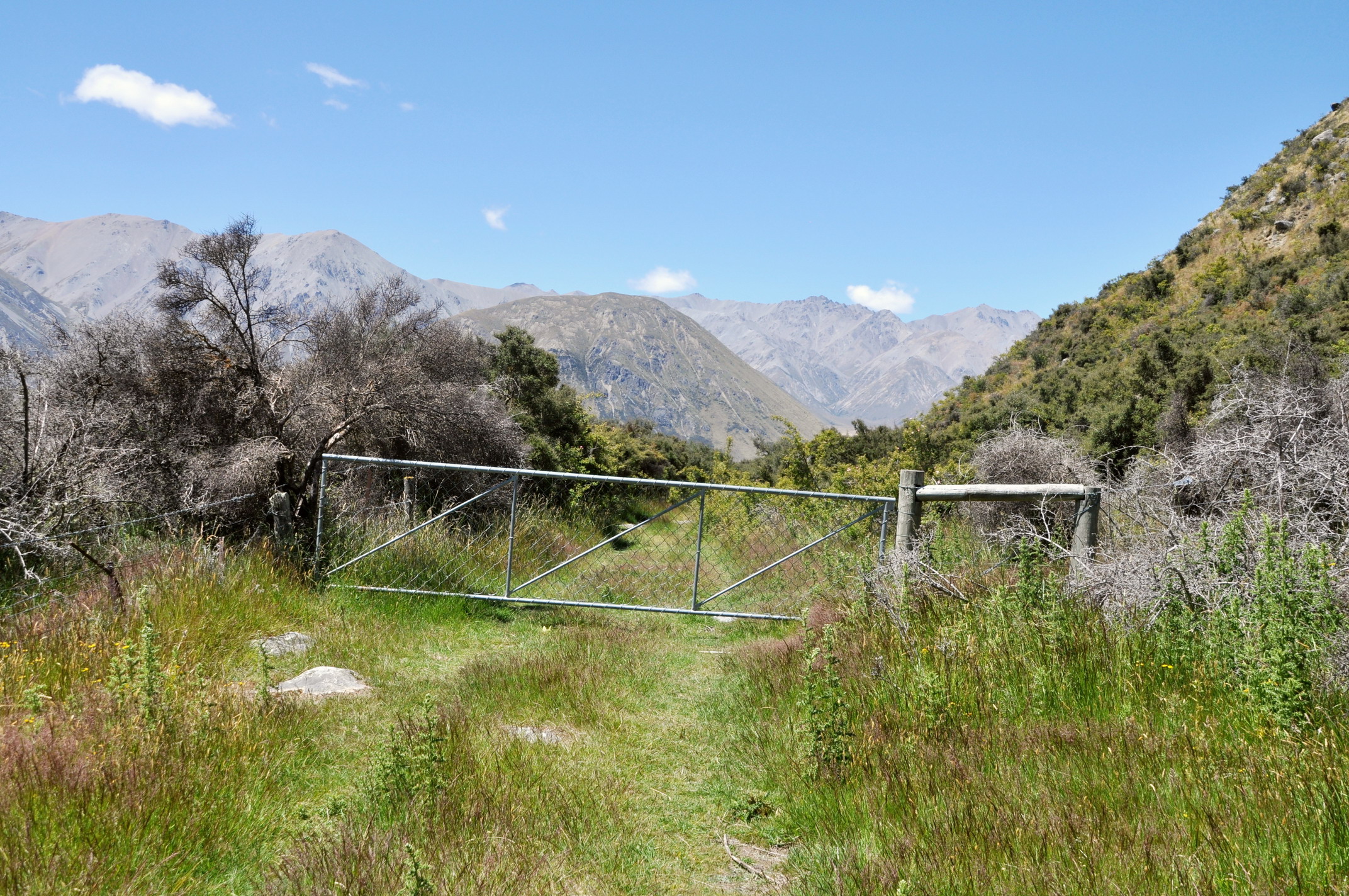
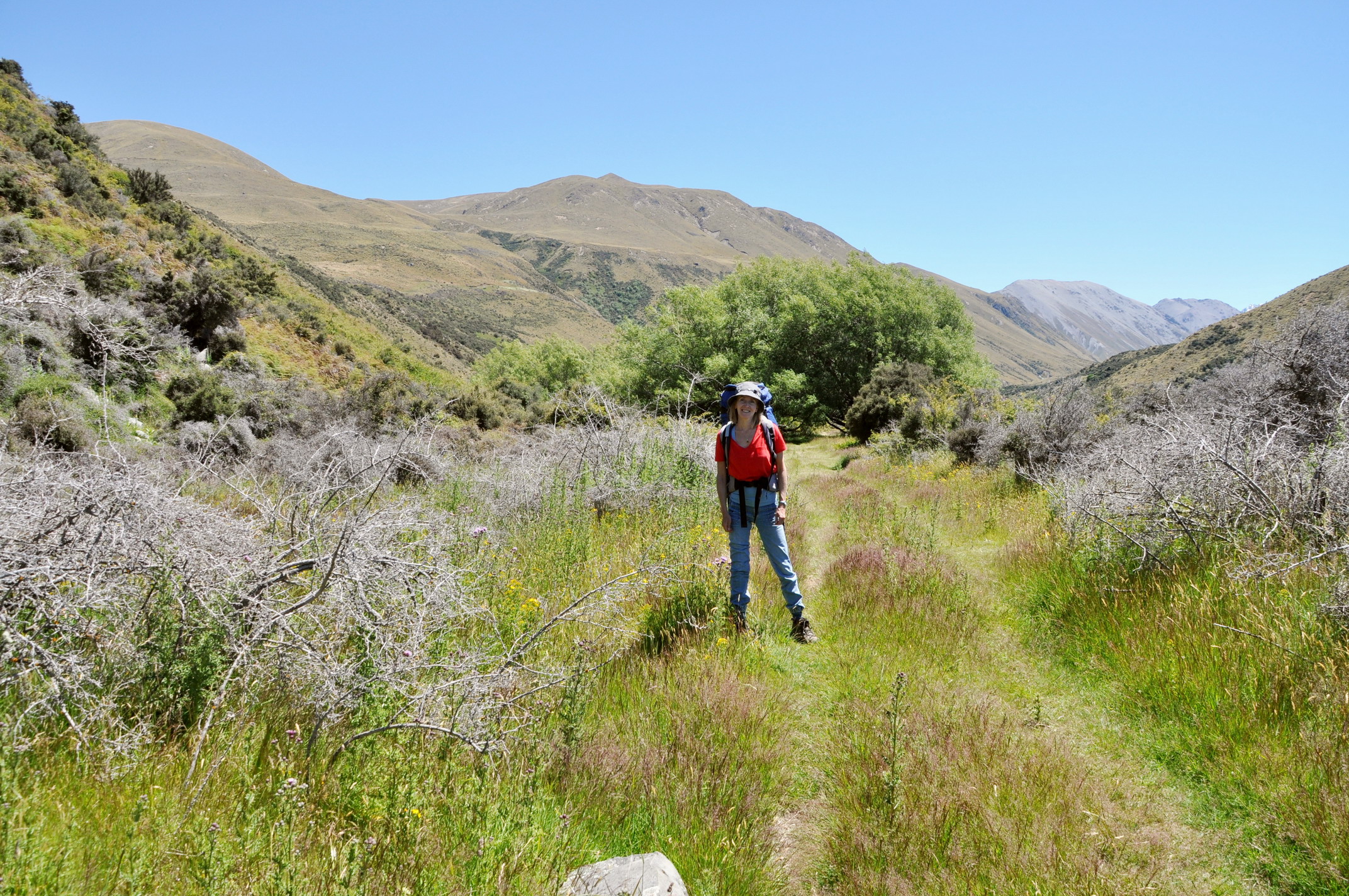
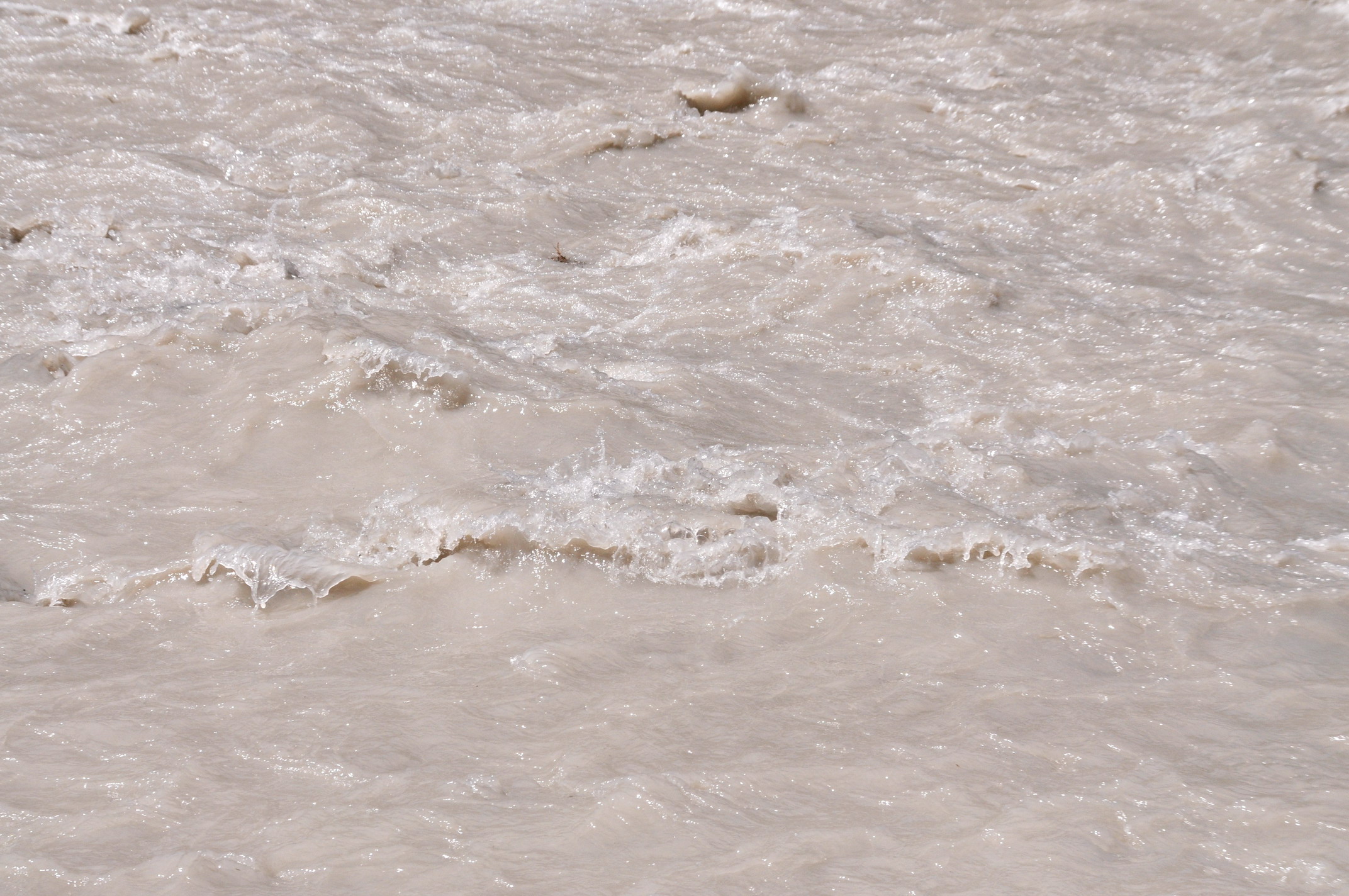
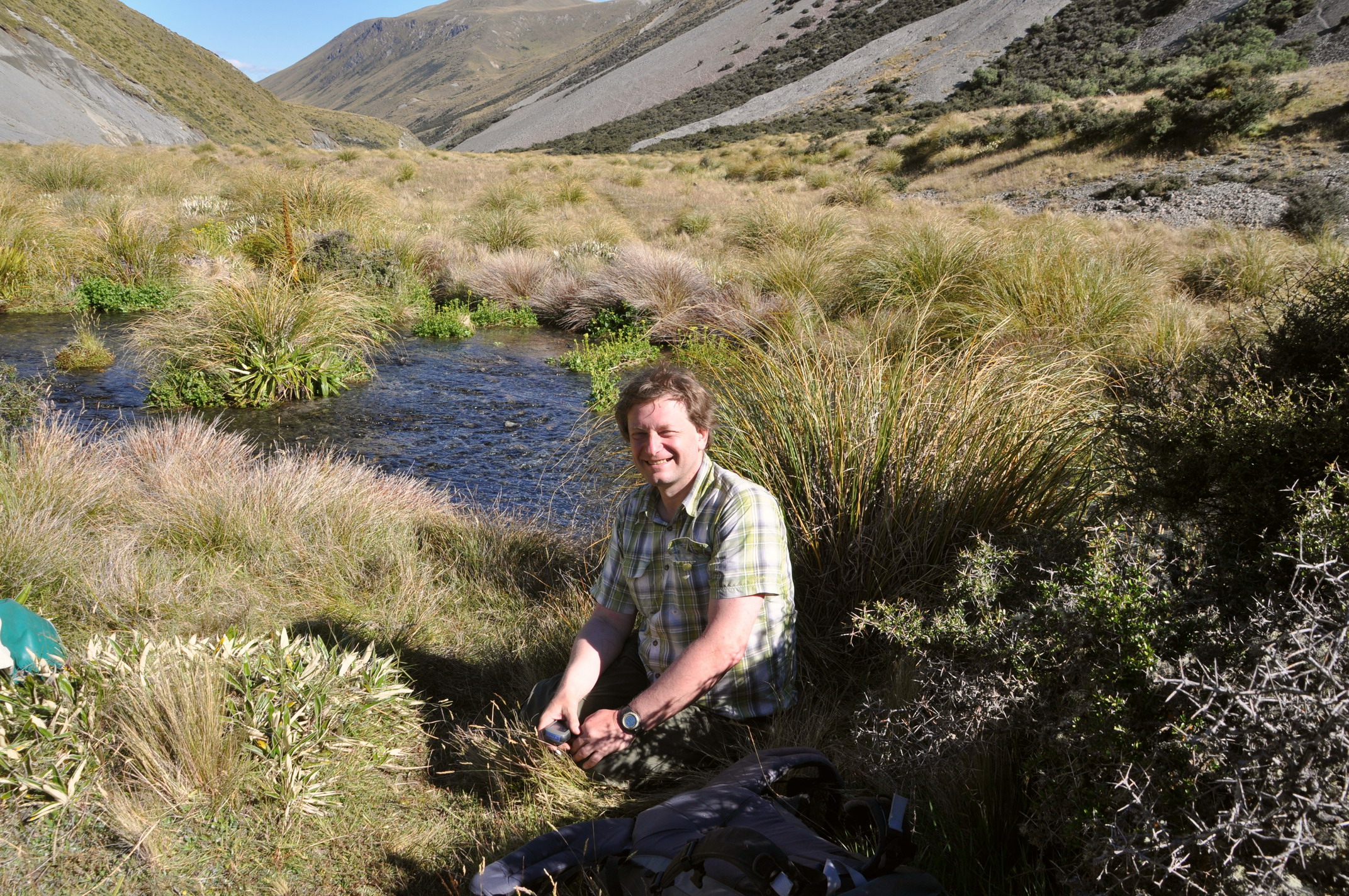
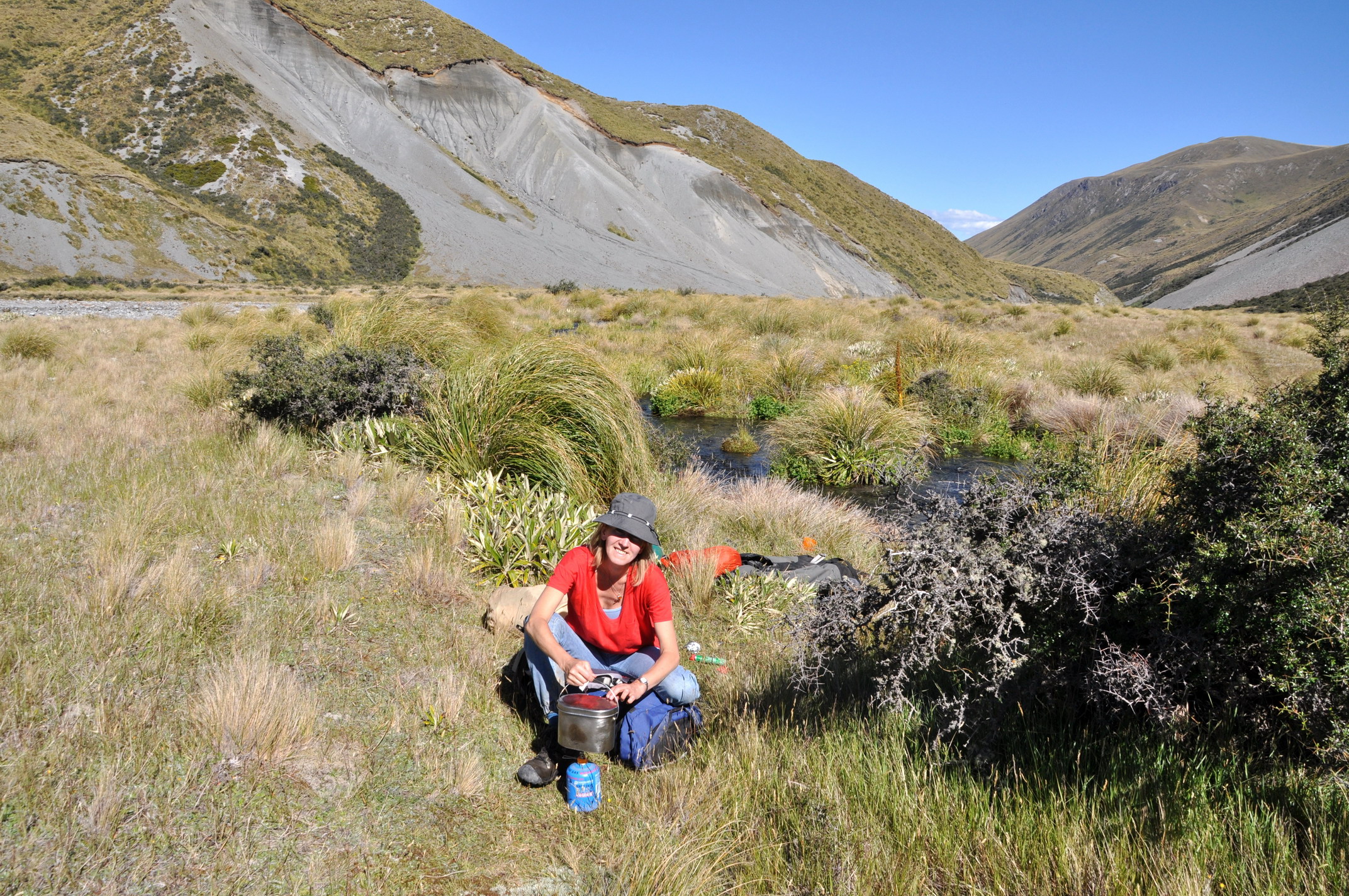
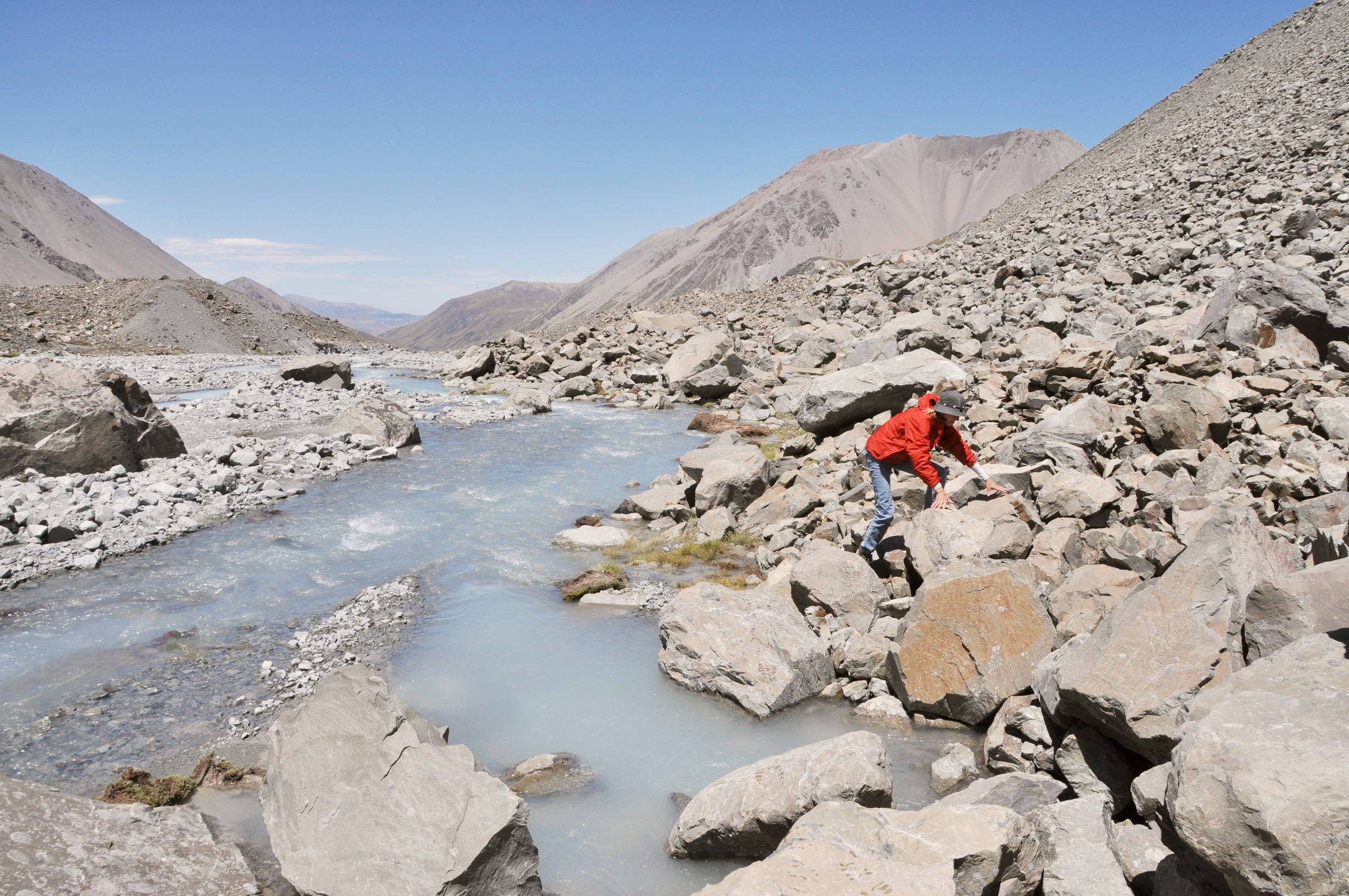
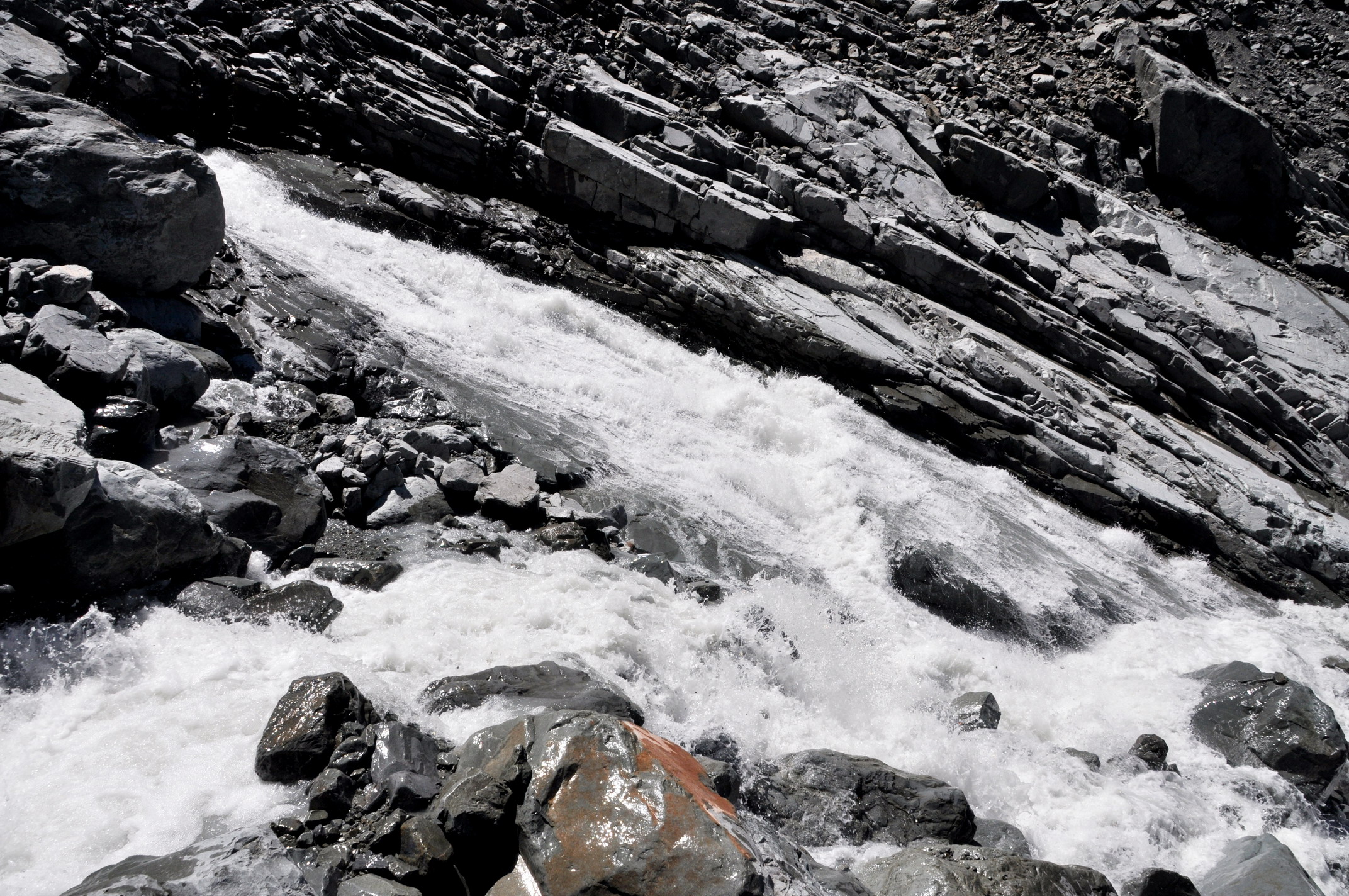
The track is straightforward. It stays on one bank, so there is no need to cross the river. That was just as well. It had rained heavily, and the river had become a wide, roaring torrent. Its tributaries are little creeks, but two of them, Big Gully and Spean Stream, were so high that we got water in our boots crossing them.
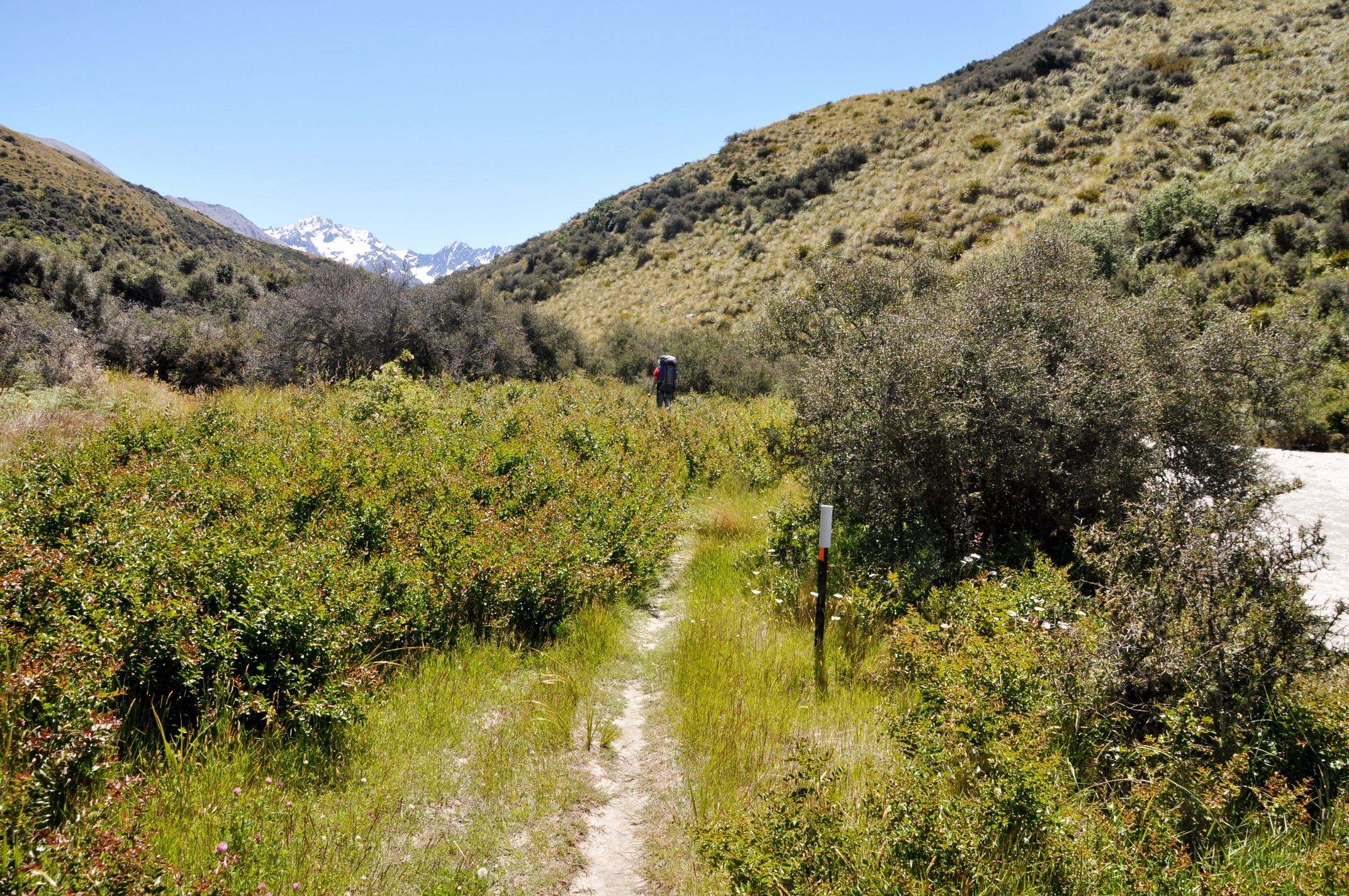
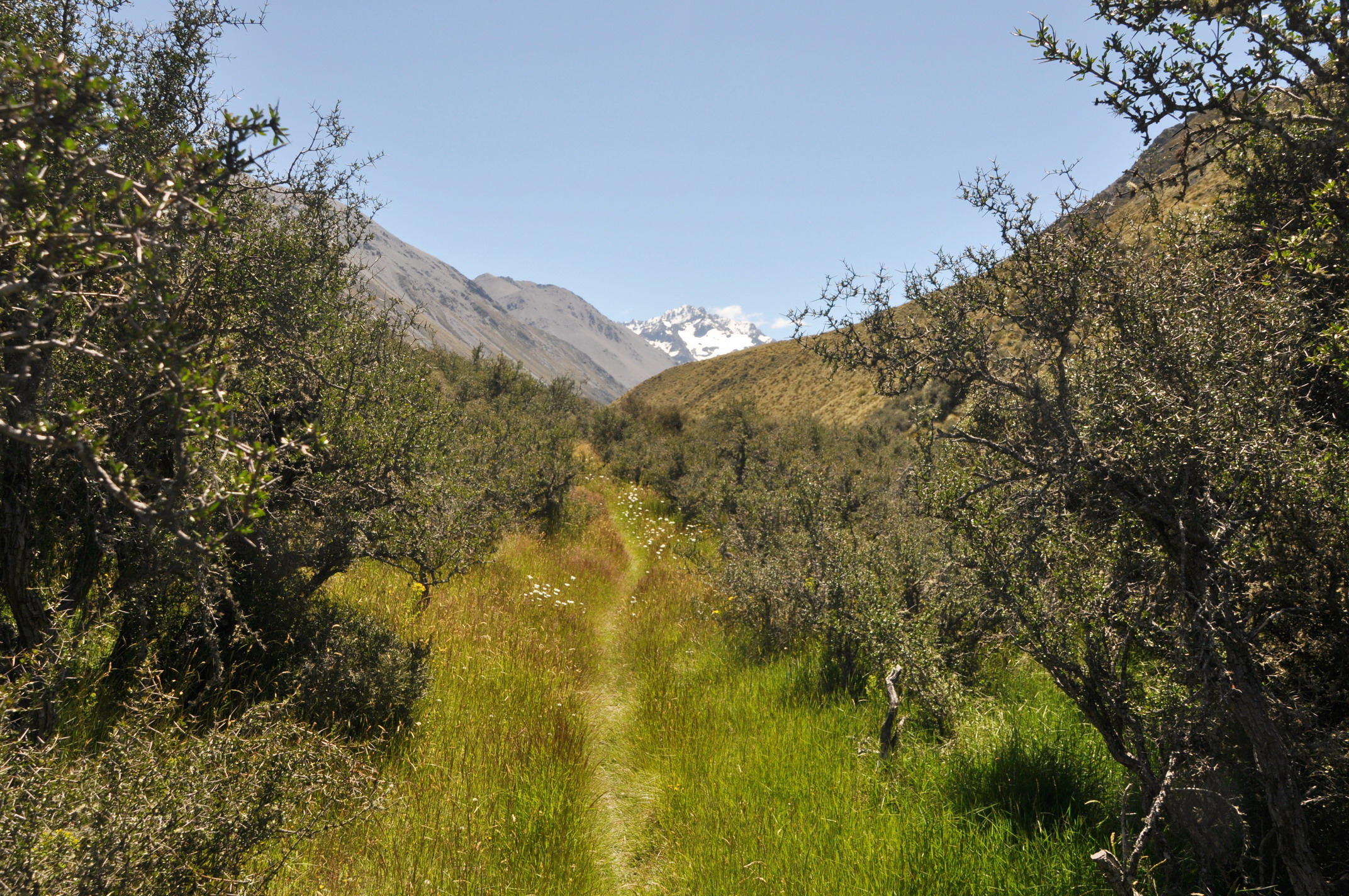
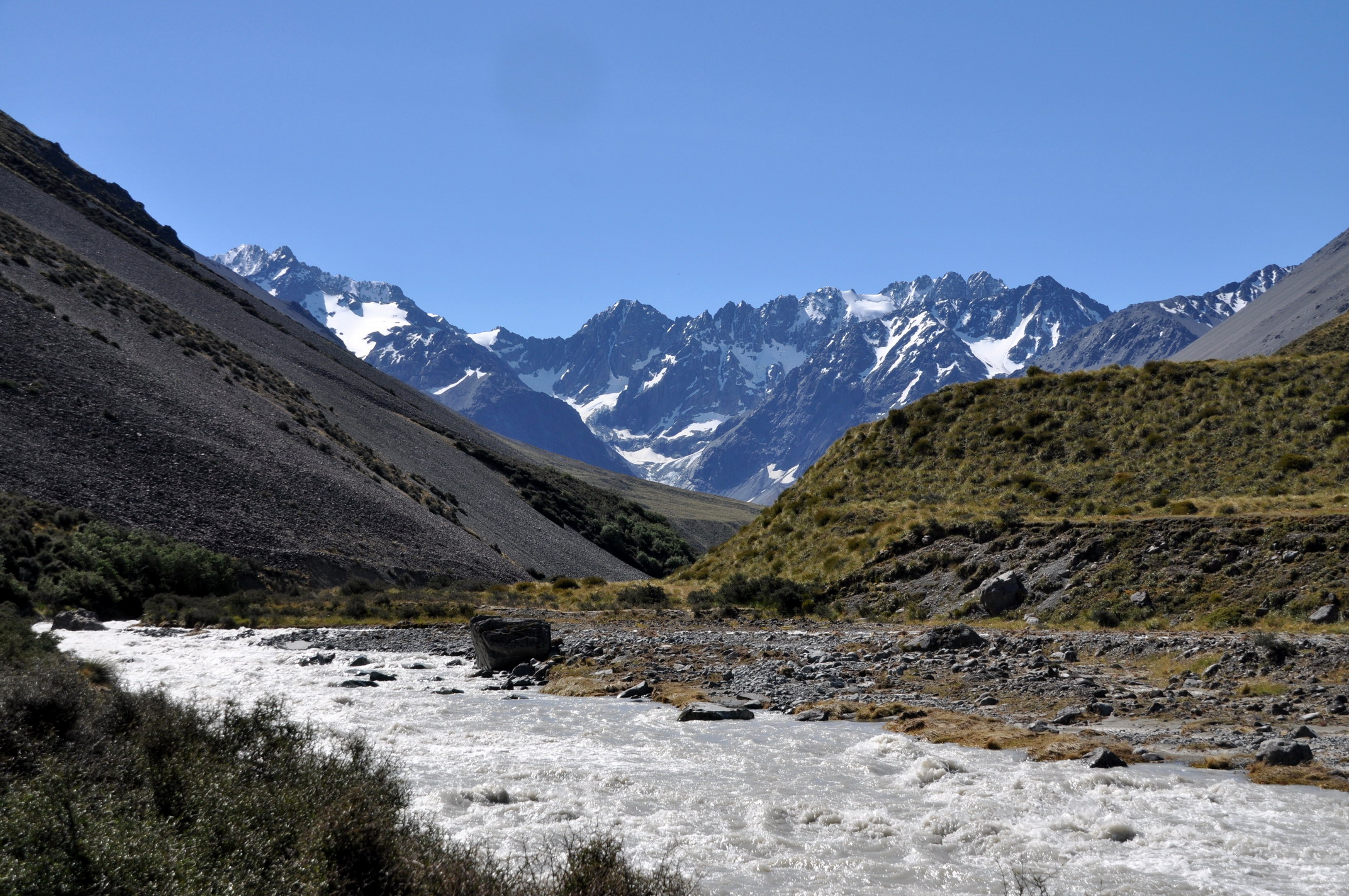
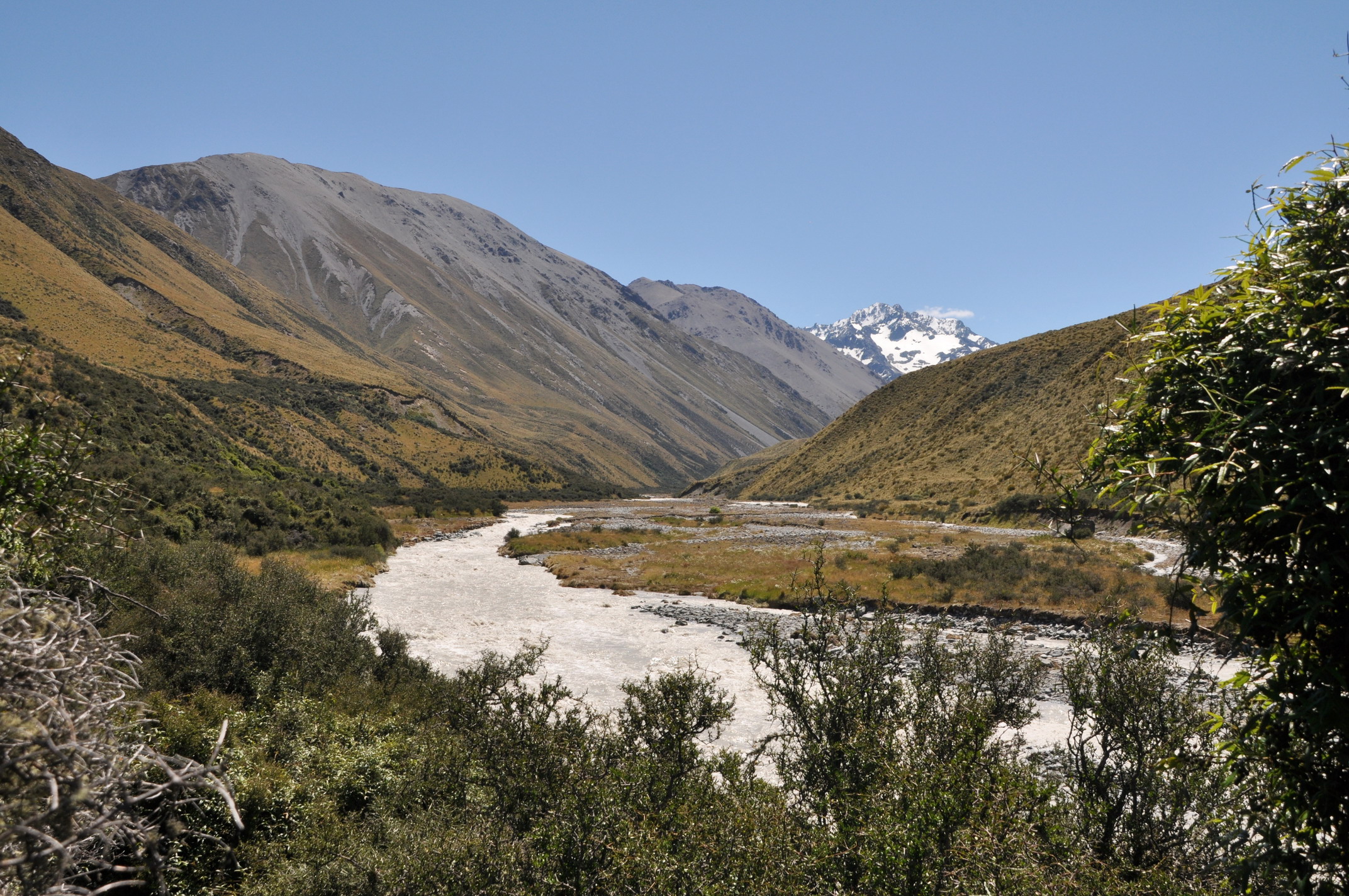
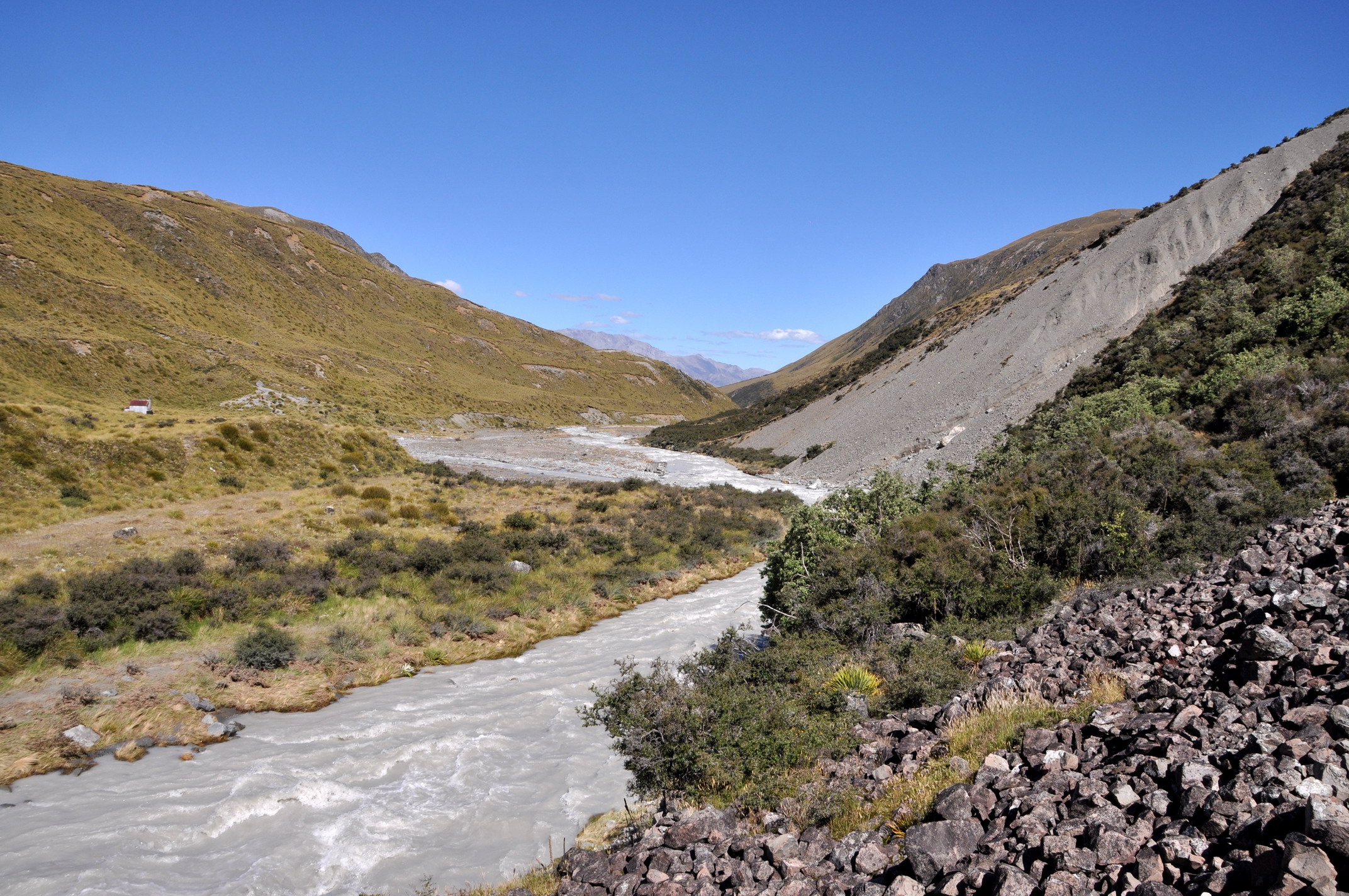
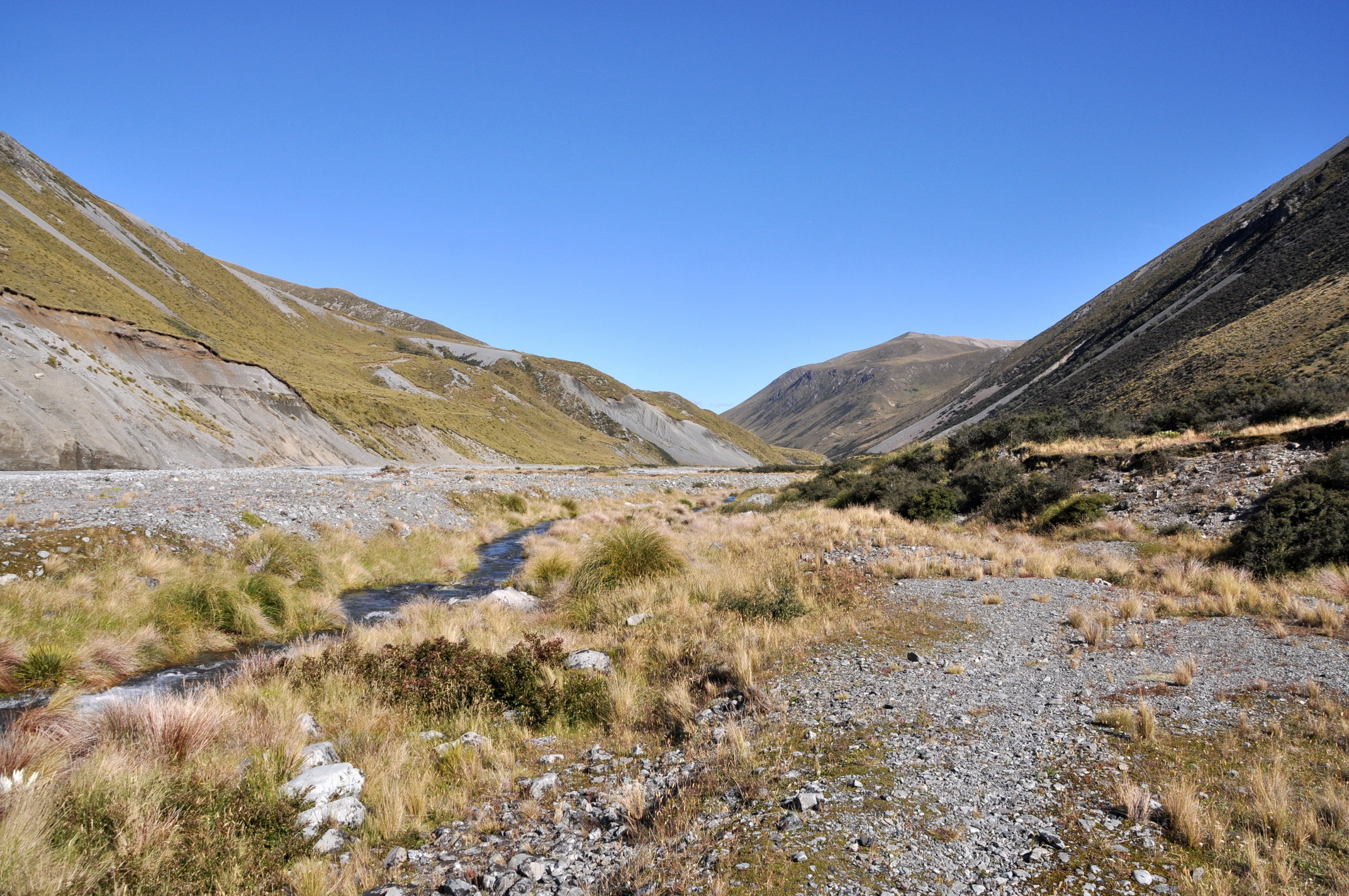
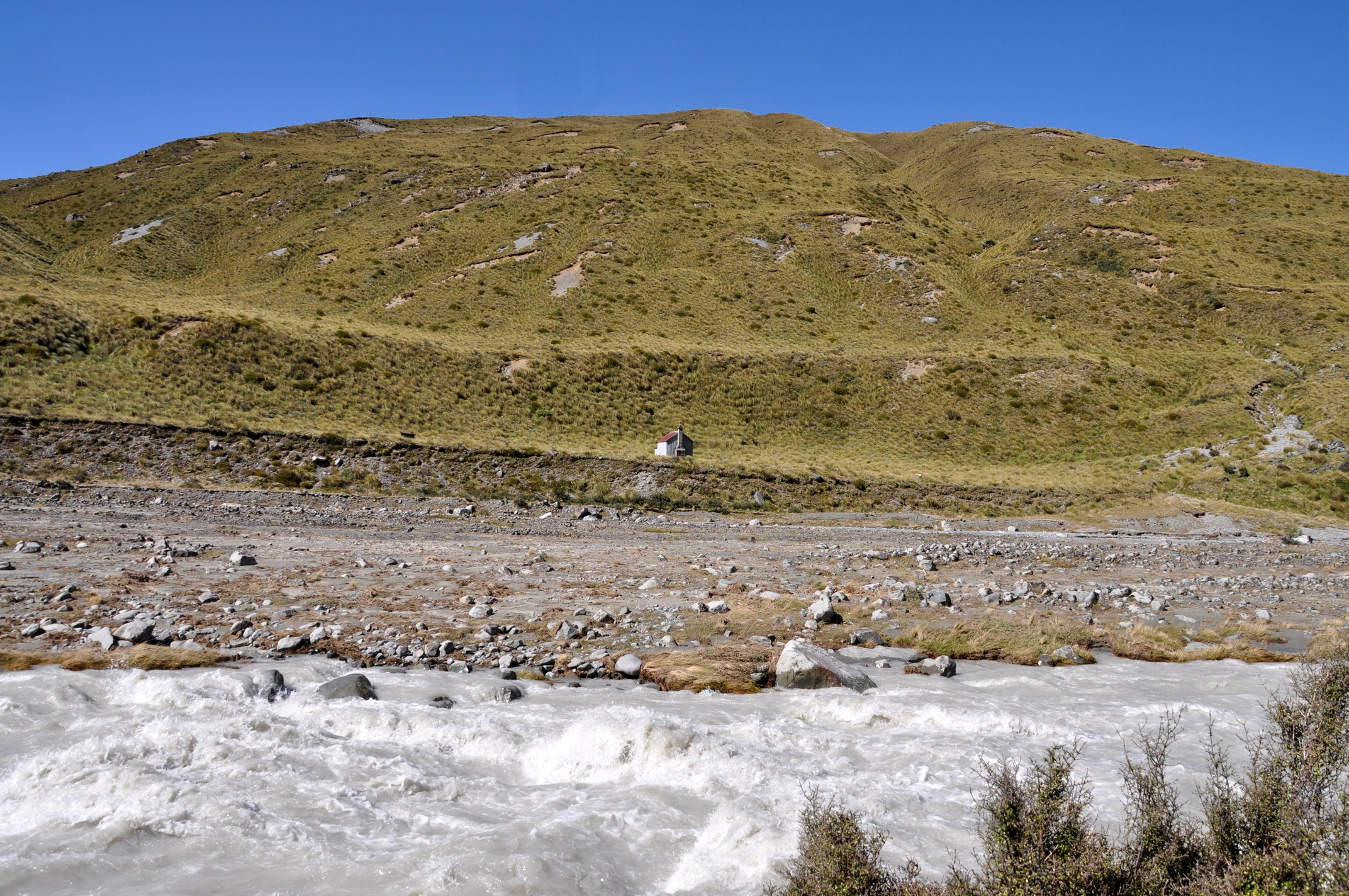
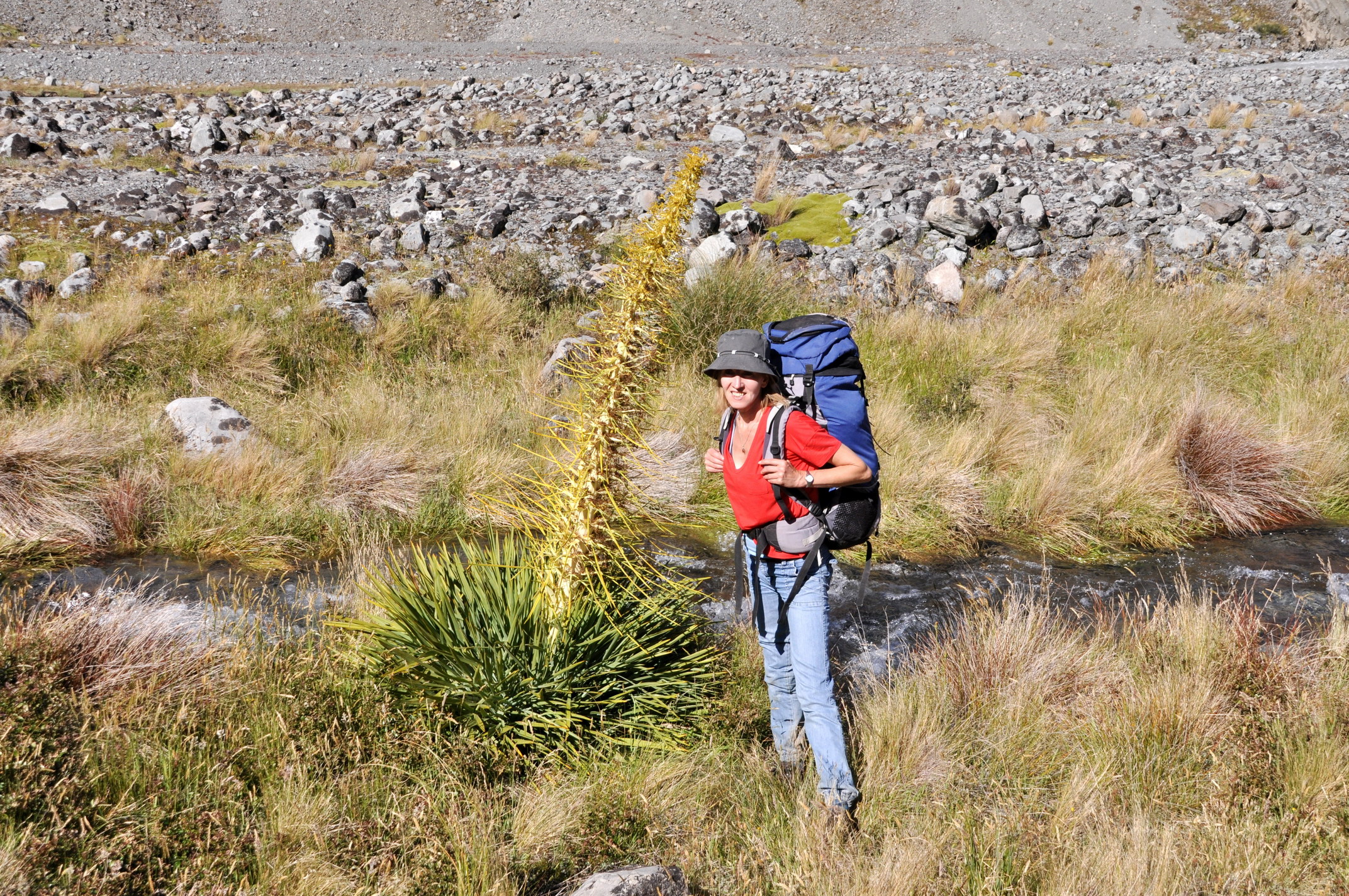
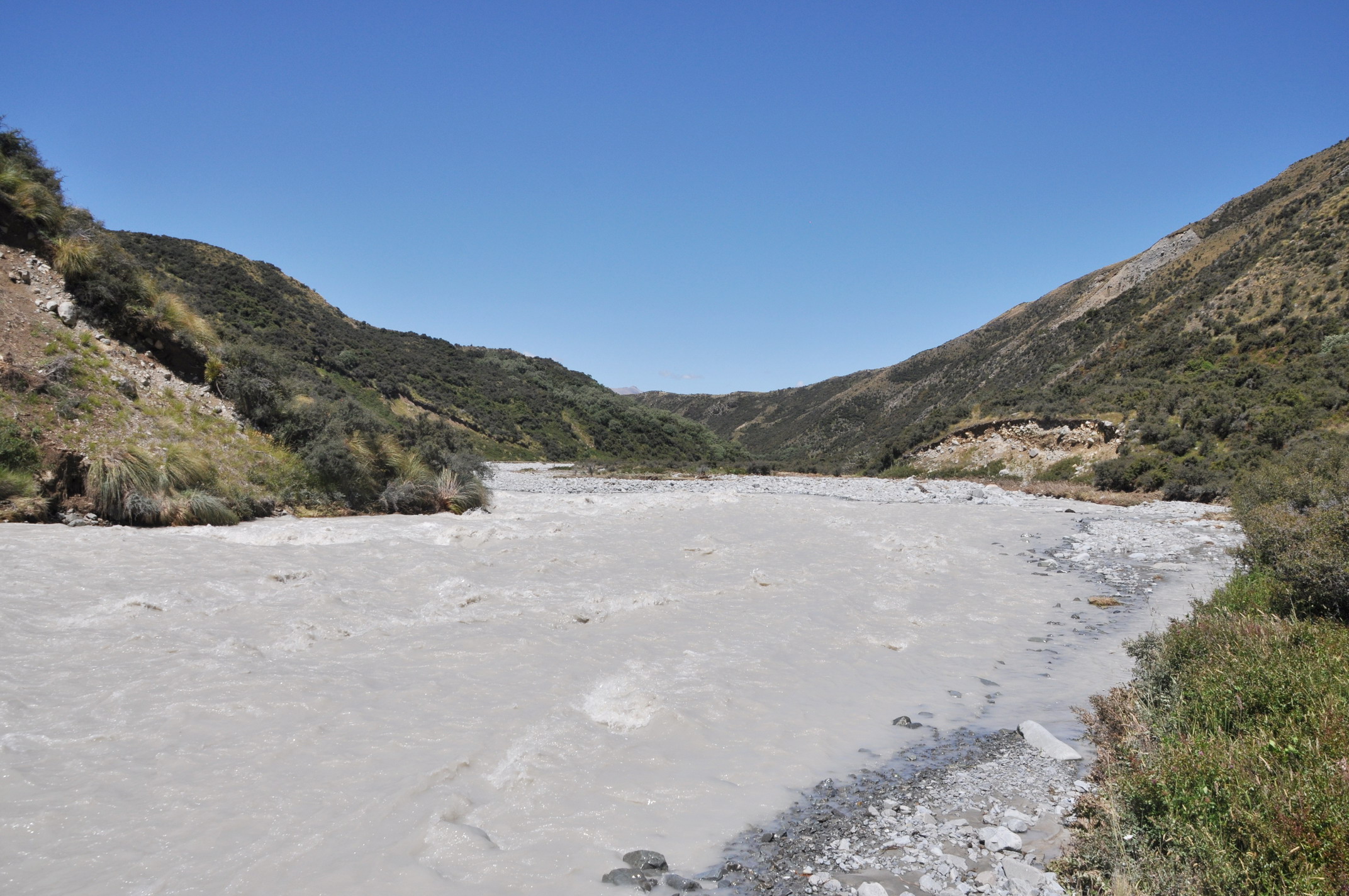
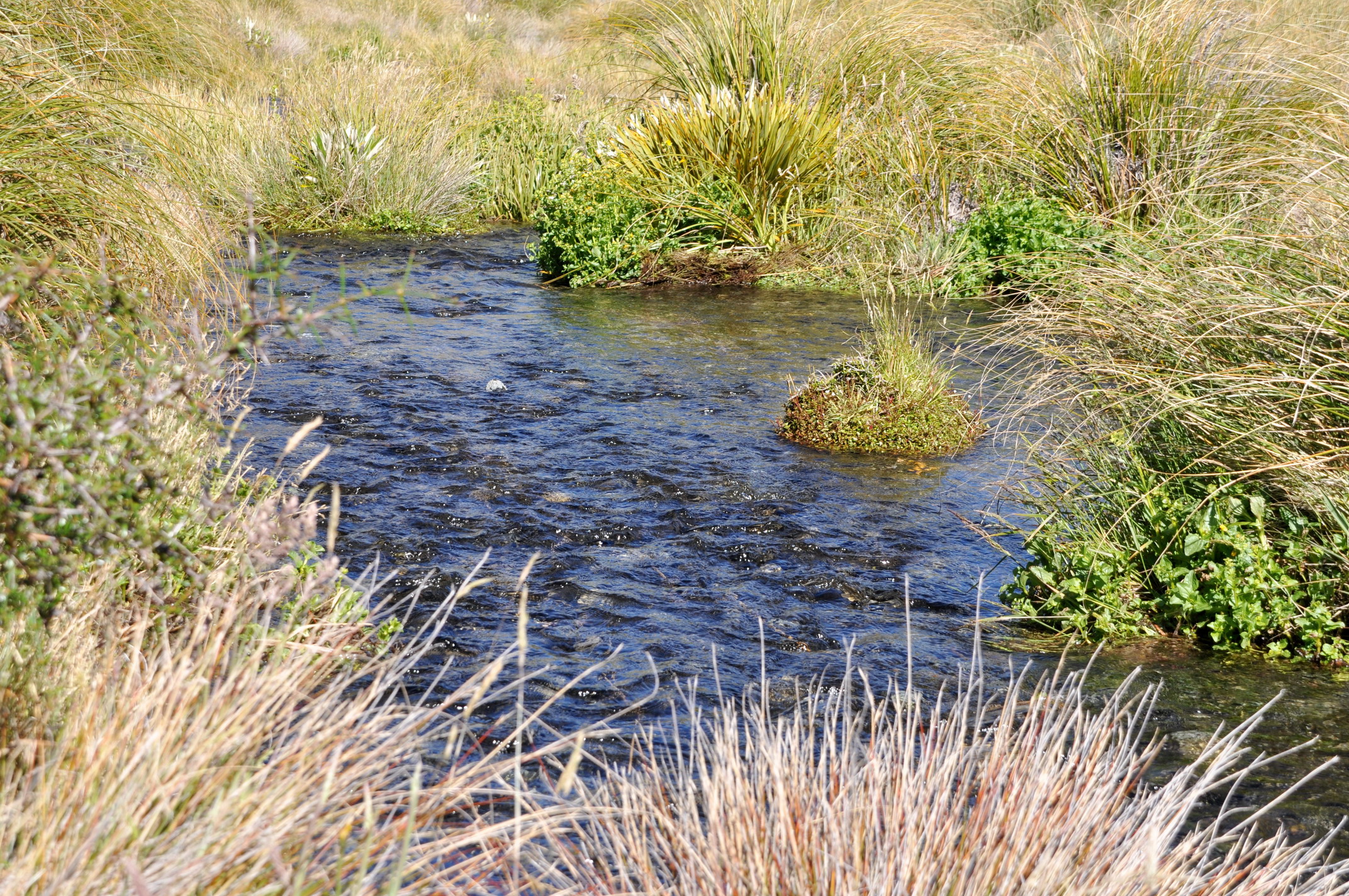
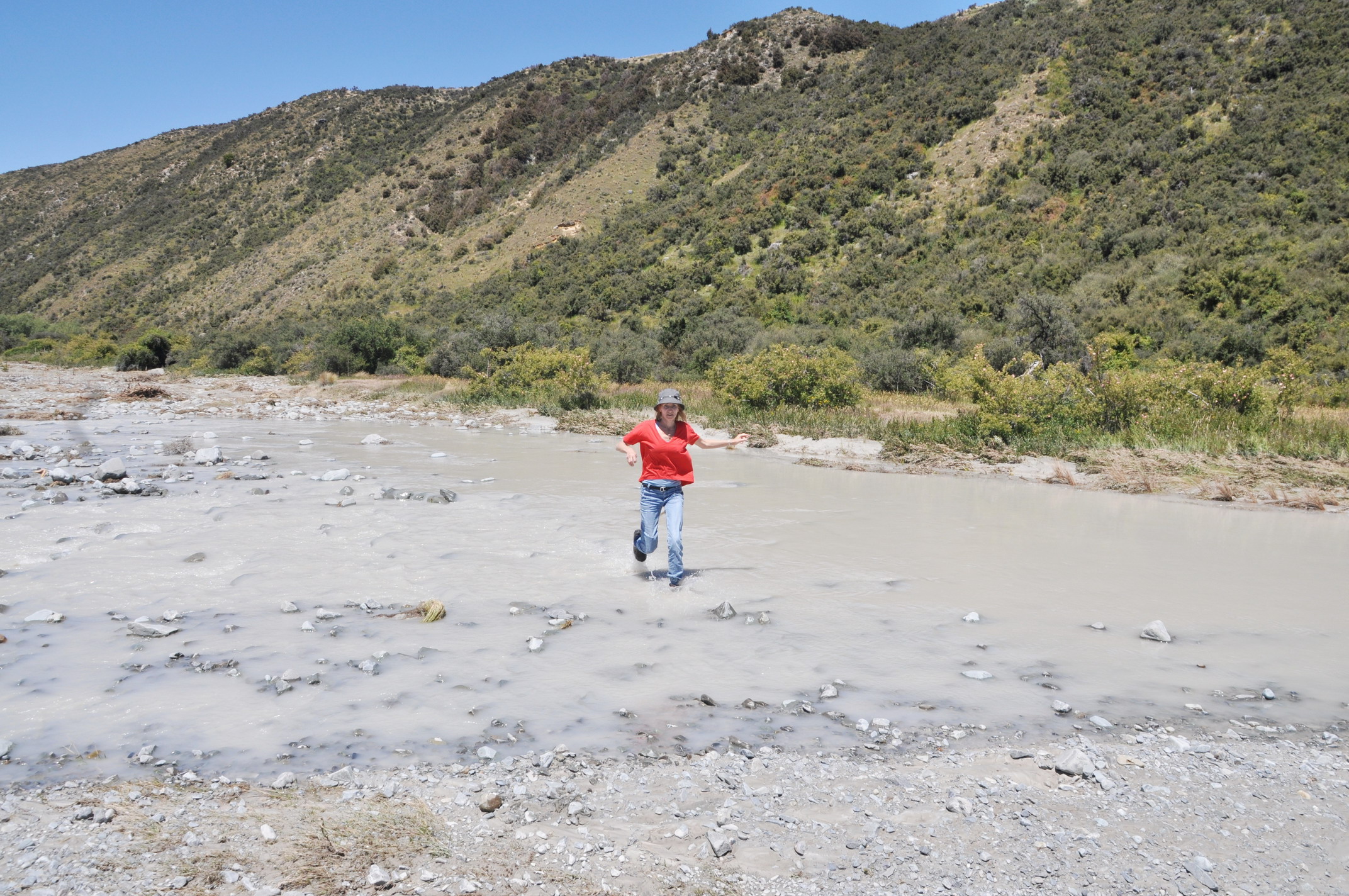
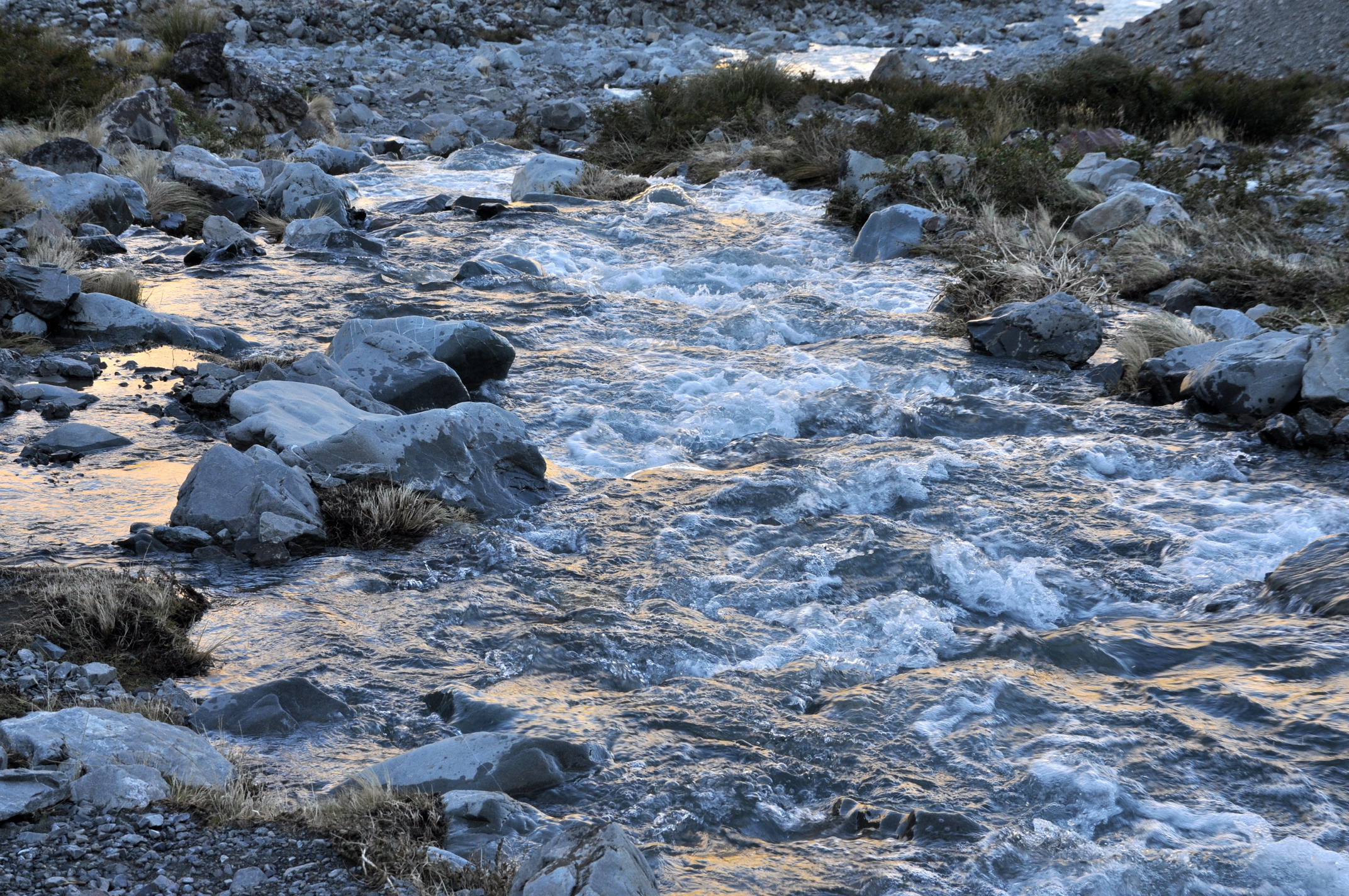
The river had eroded its banks, taking the track with it in places. Twice we had to force our way through dense stands of native prickly scrub and mānuka. It was nearly impossible. The only way was to pretend to be kiwi and crawl under the bushes. In the last third of the walk, the river gorge narrows and the track climbs a hundred metres, then follows the spurs above the river. When the river is low you can hop across the rocks at its edge, but we had to climb up. There is one more steep climb just before the hut.
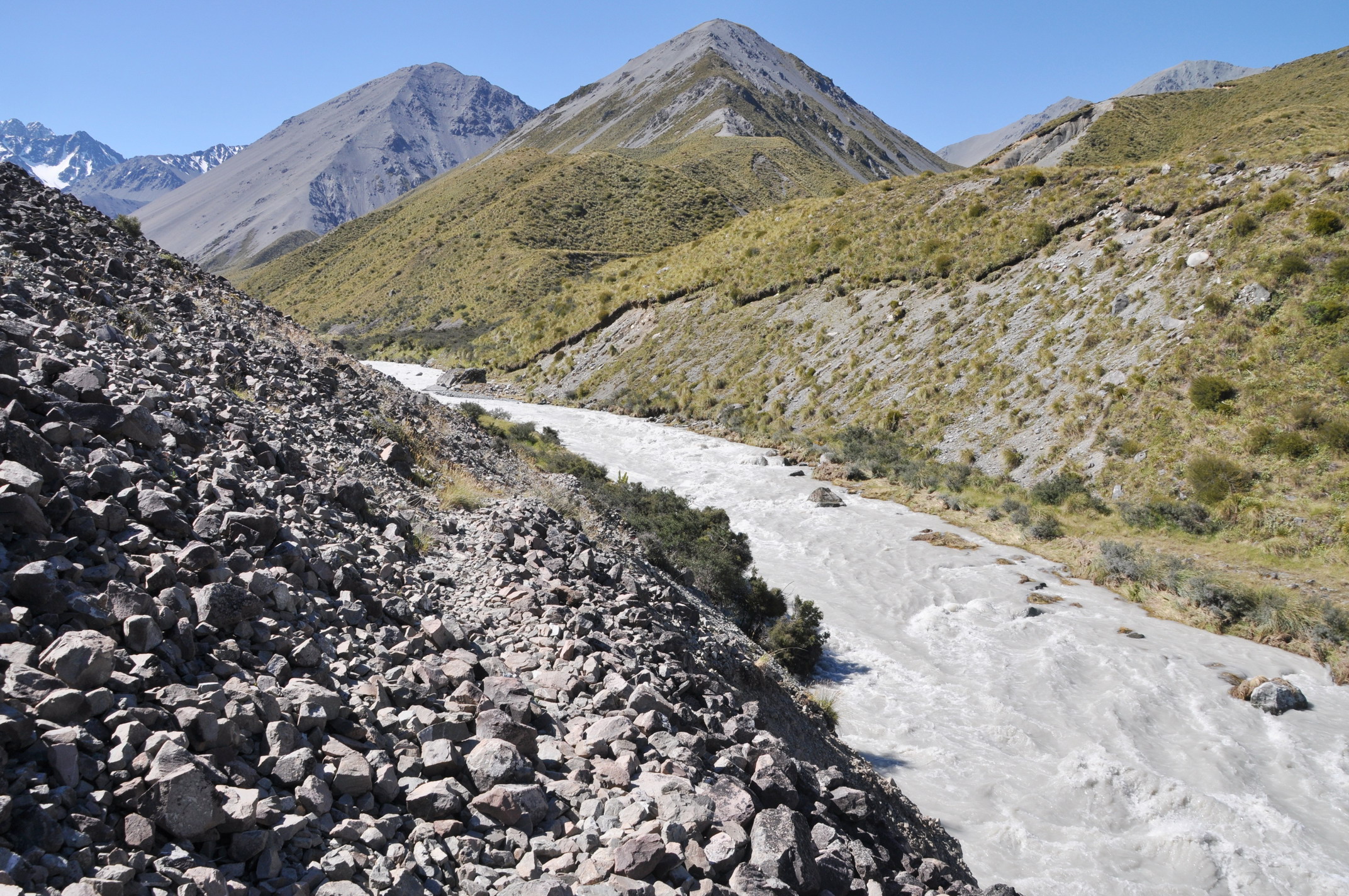
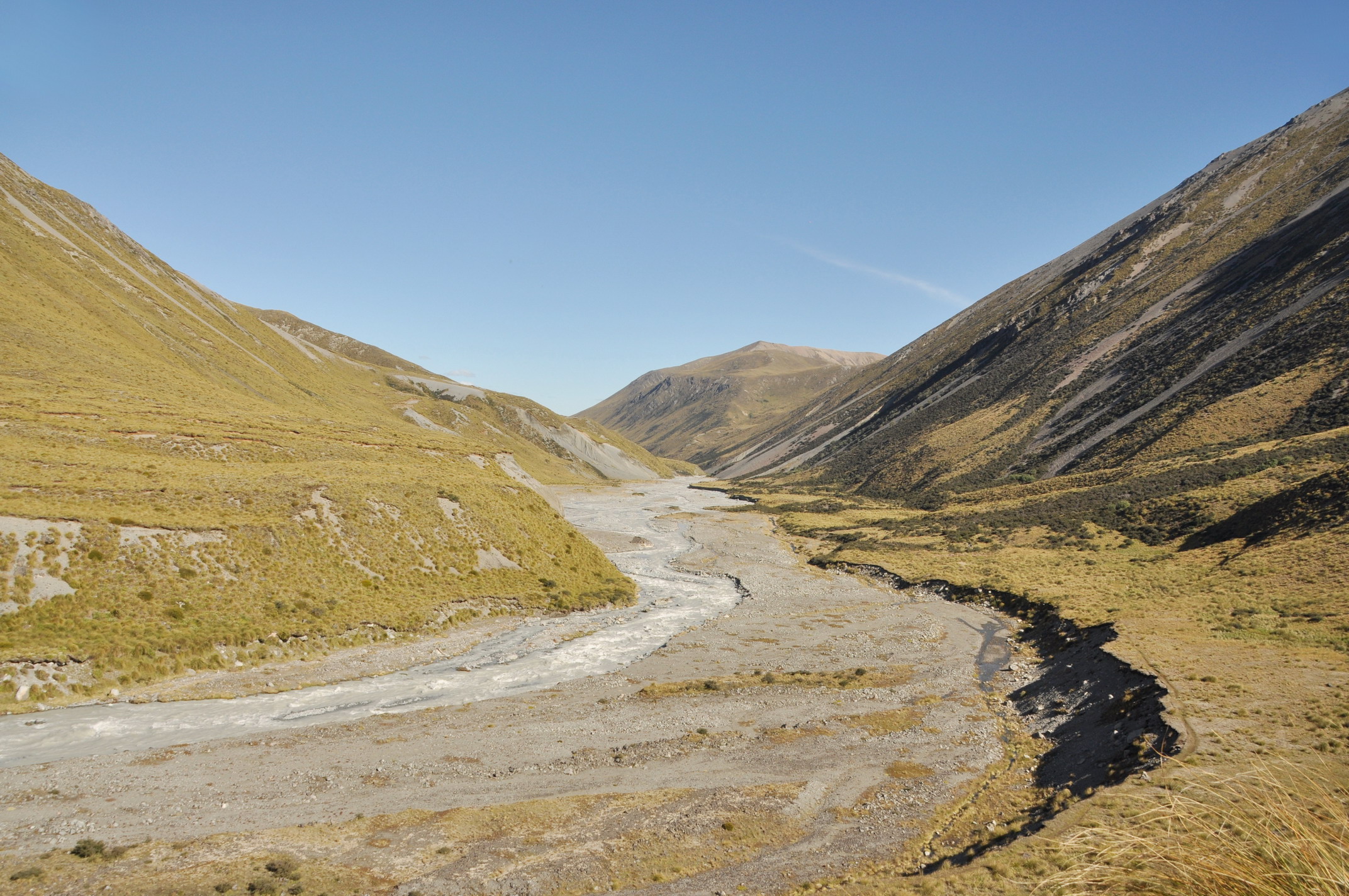
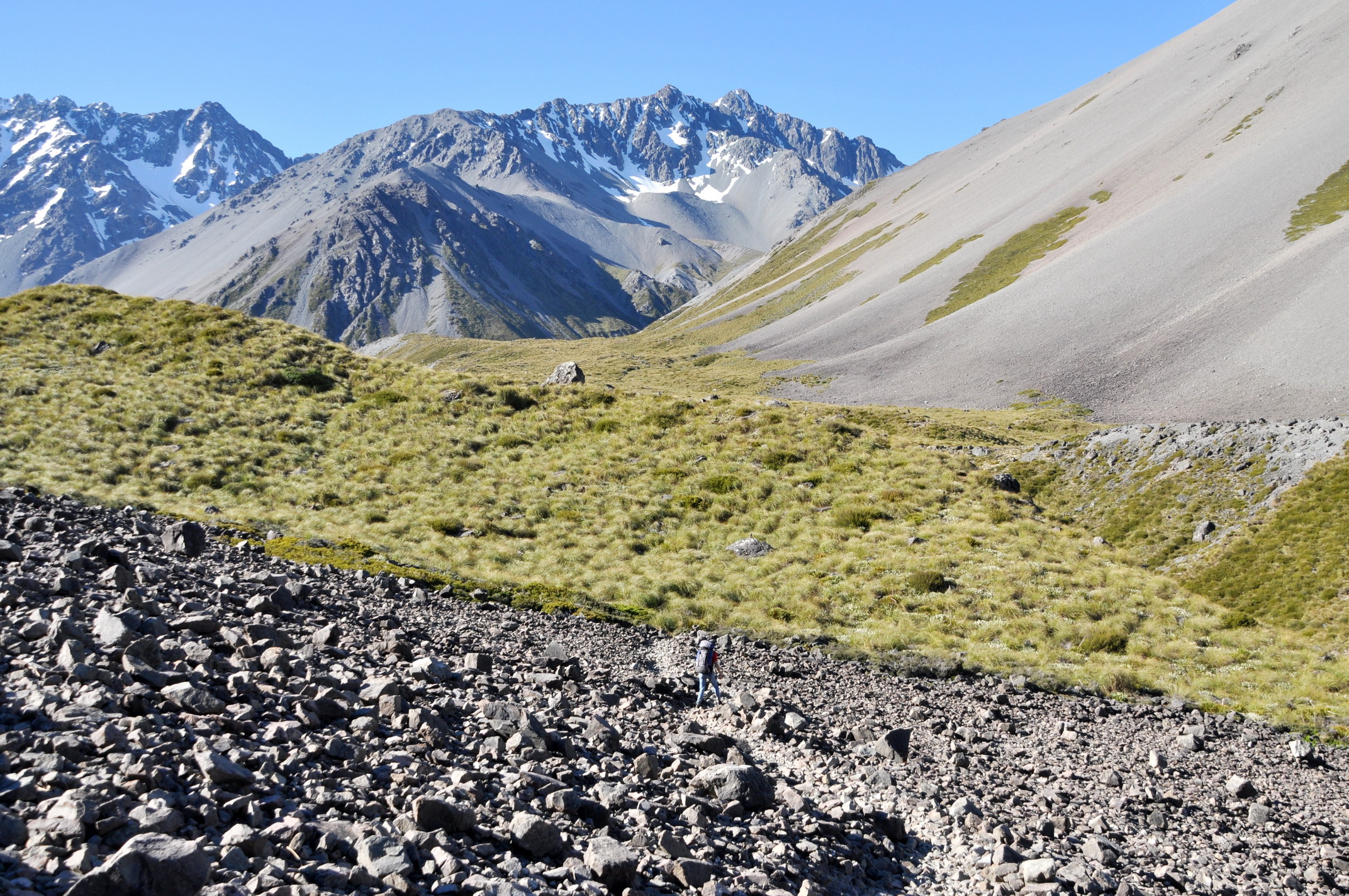
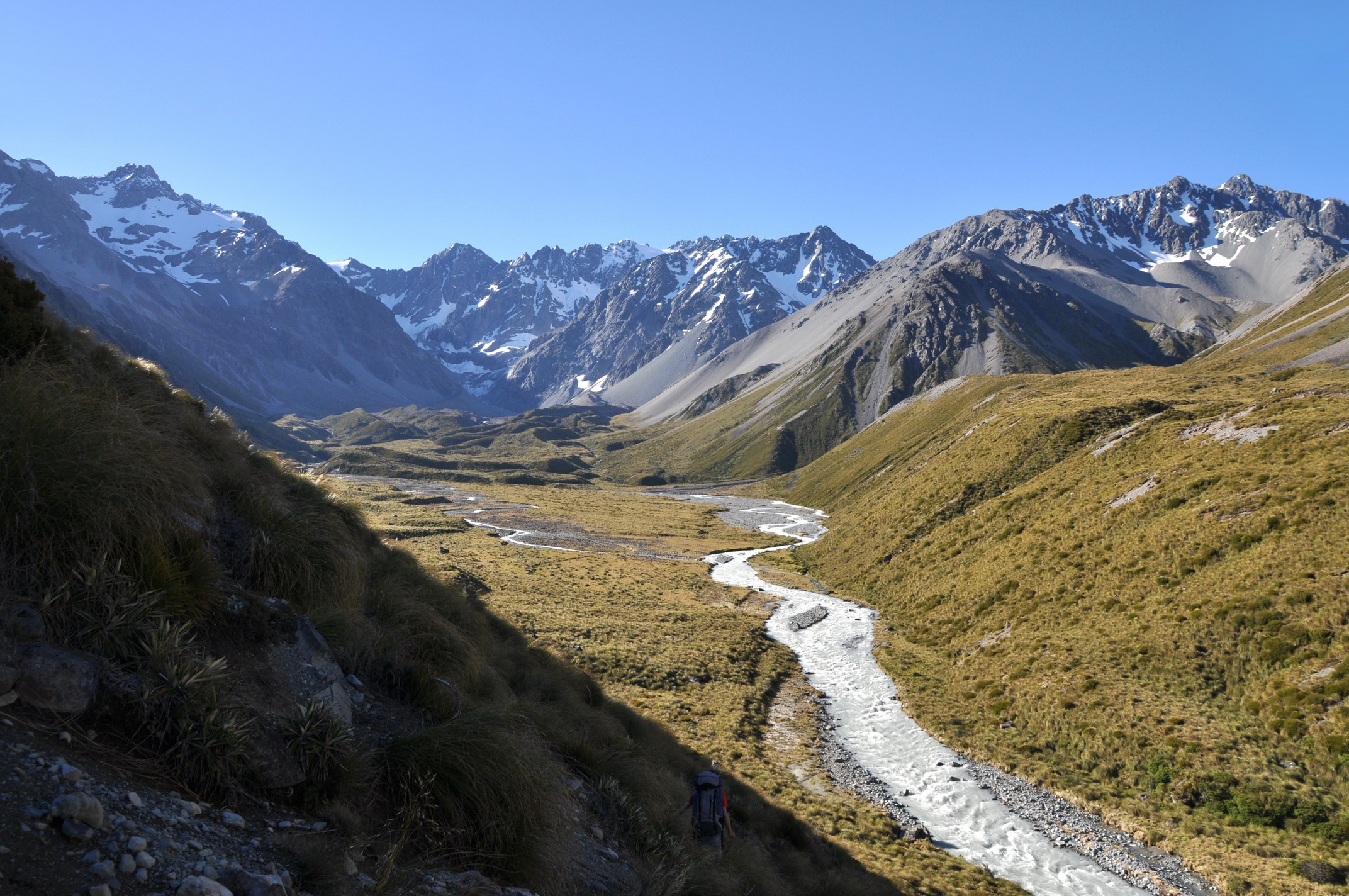
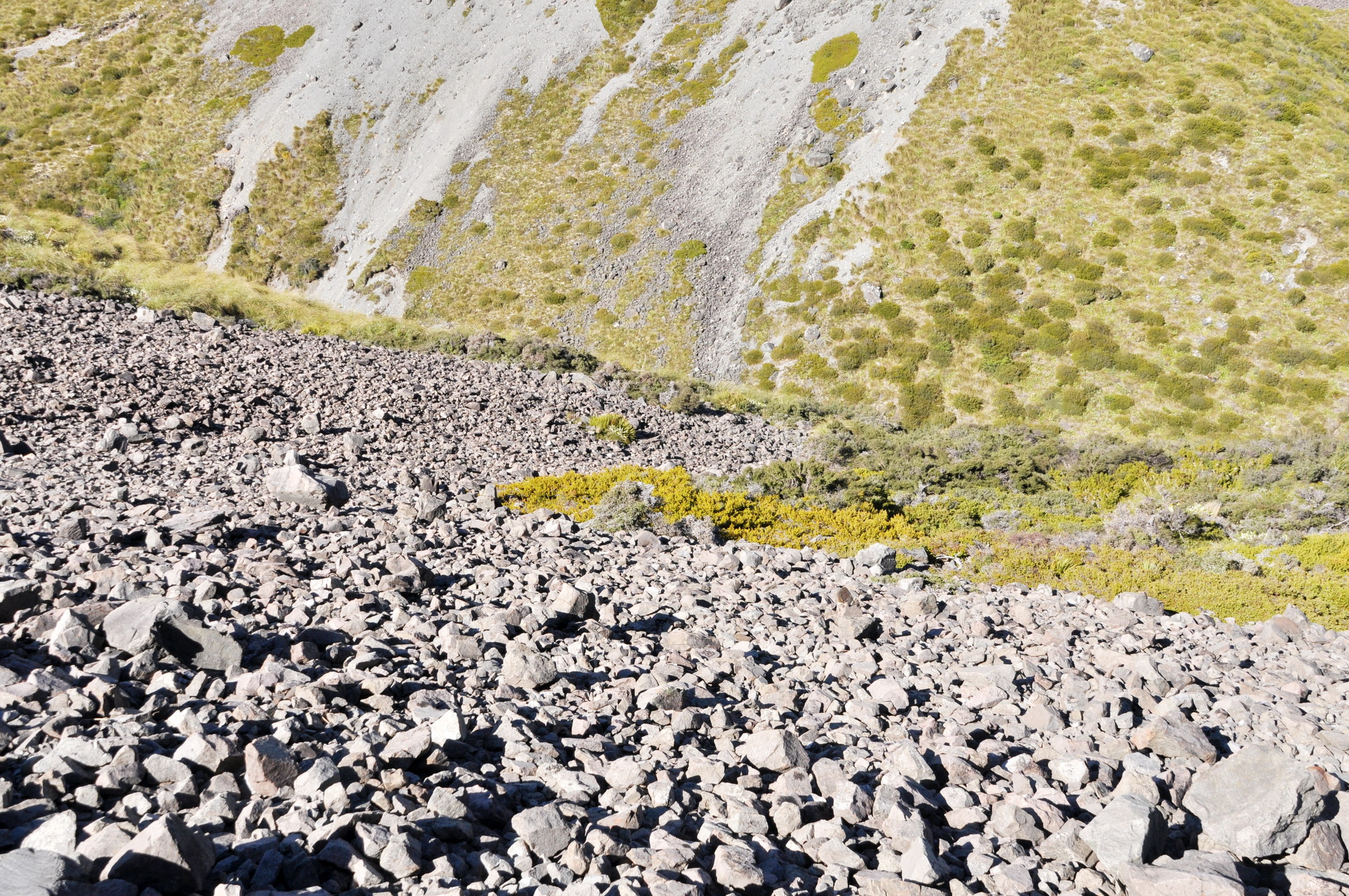
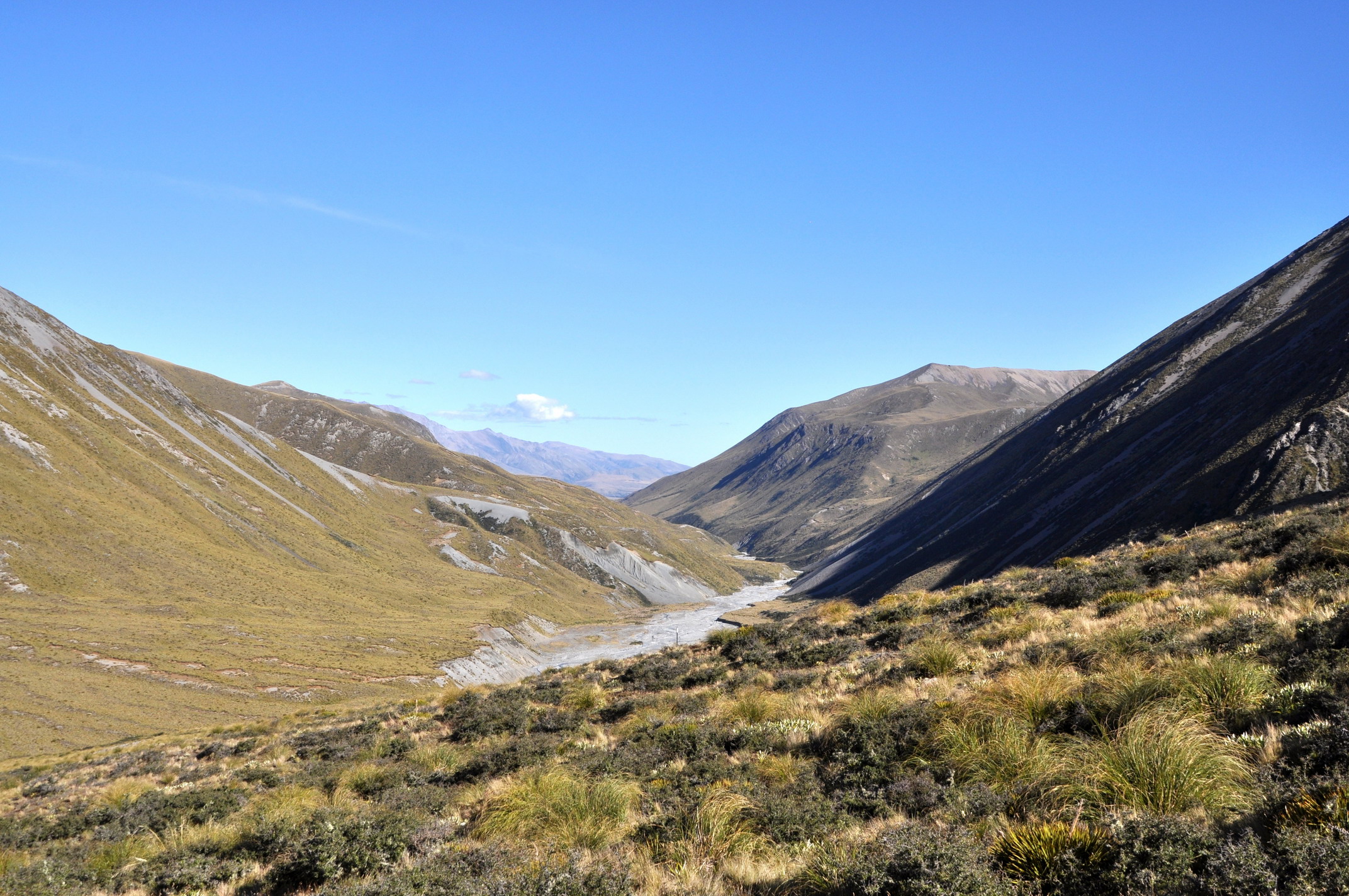
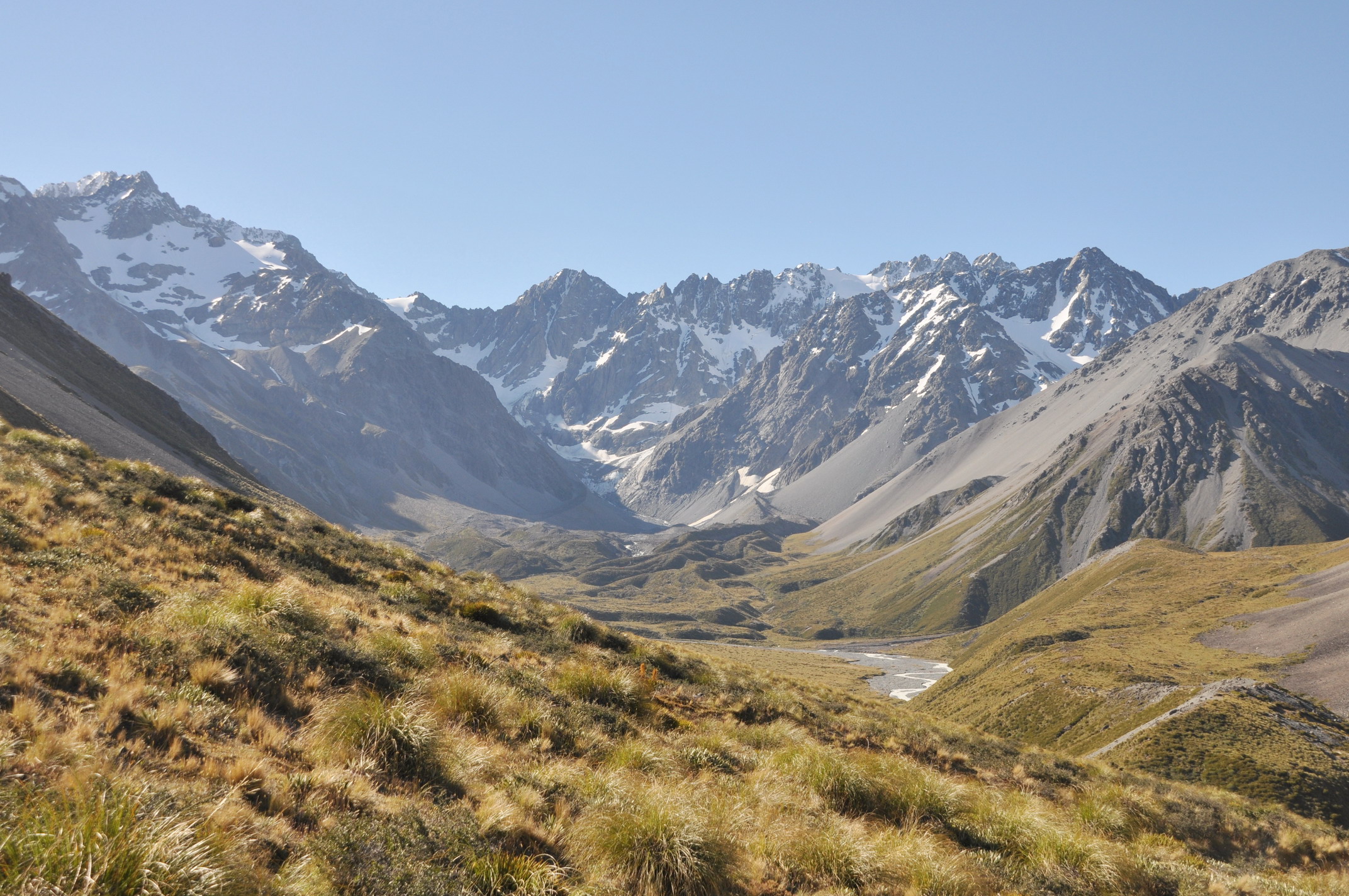
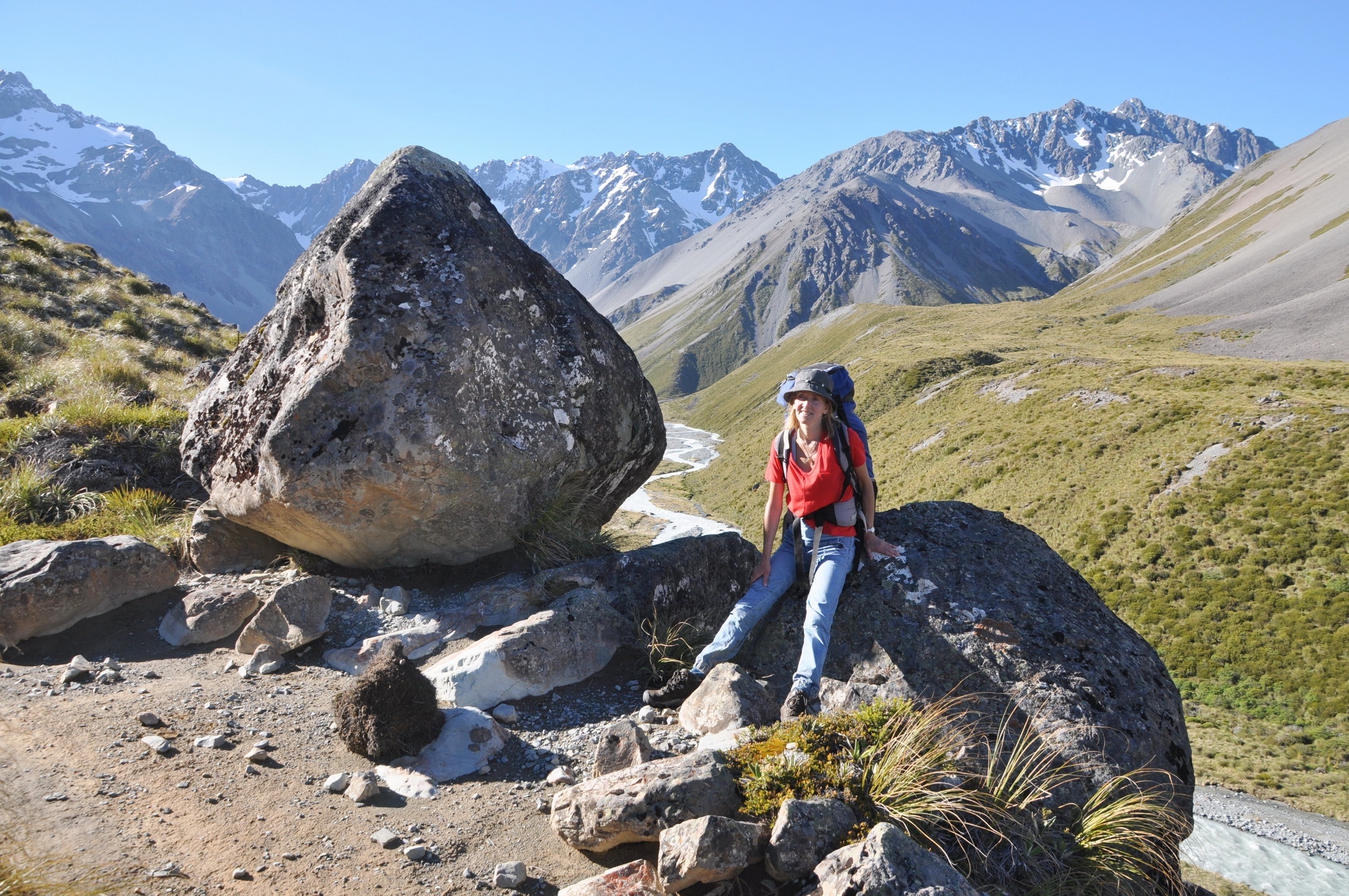
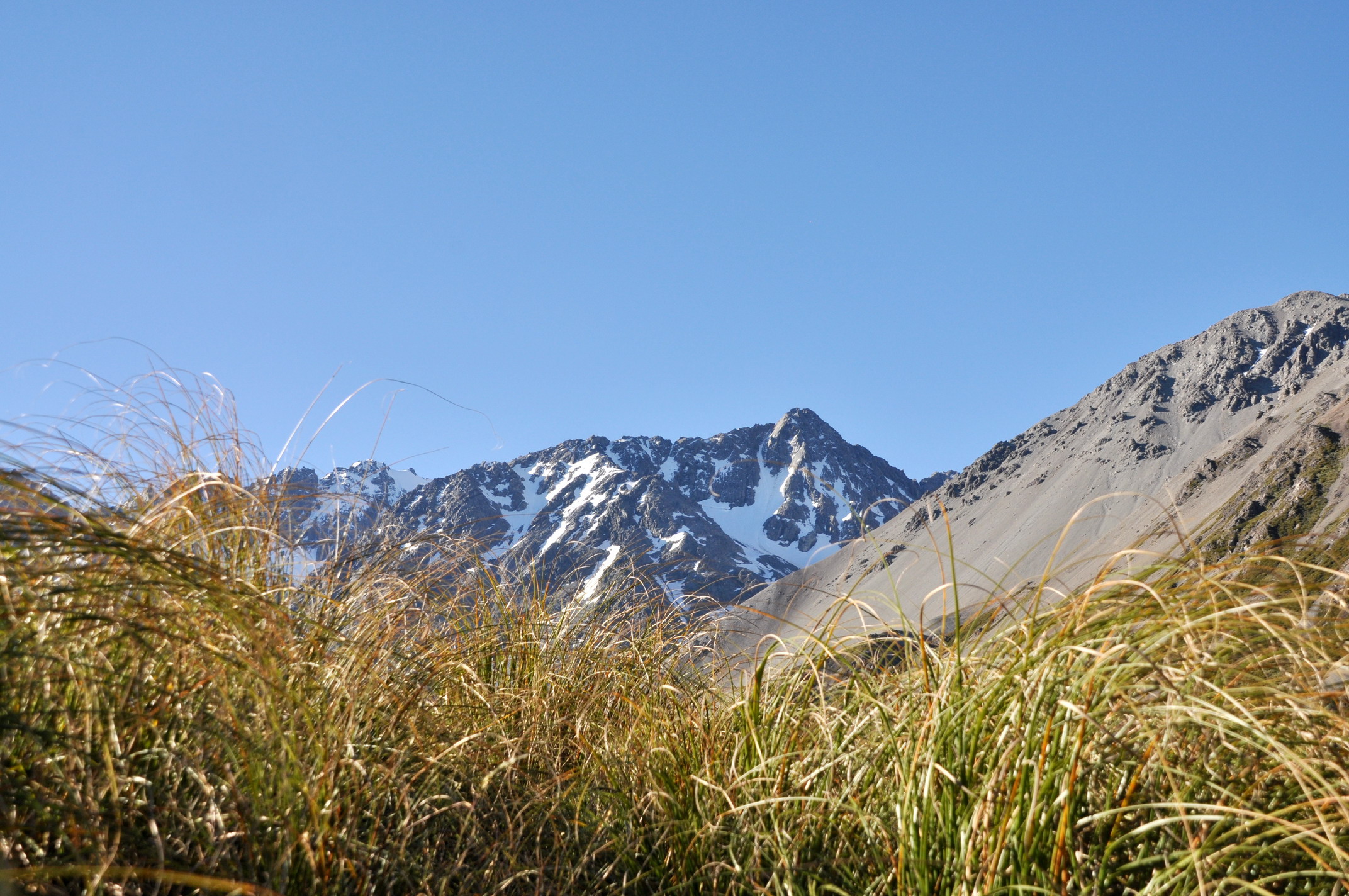
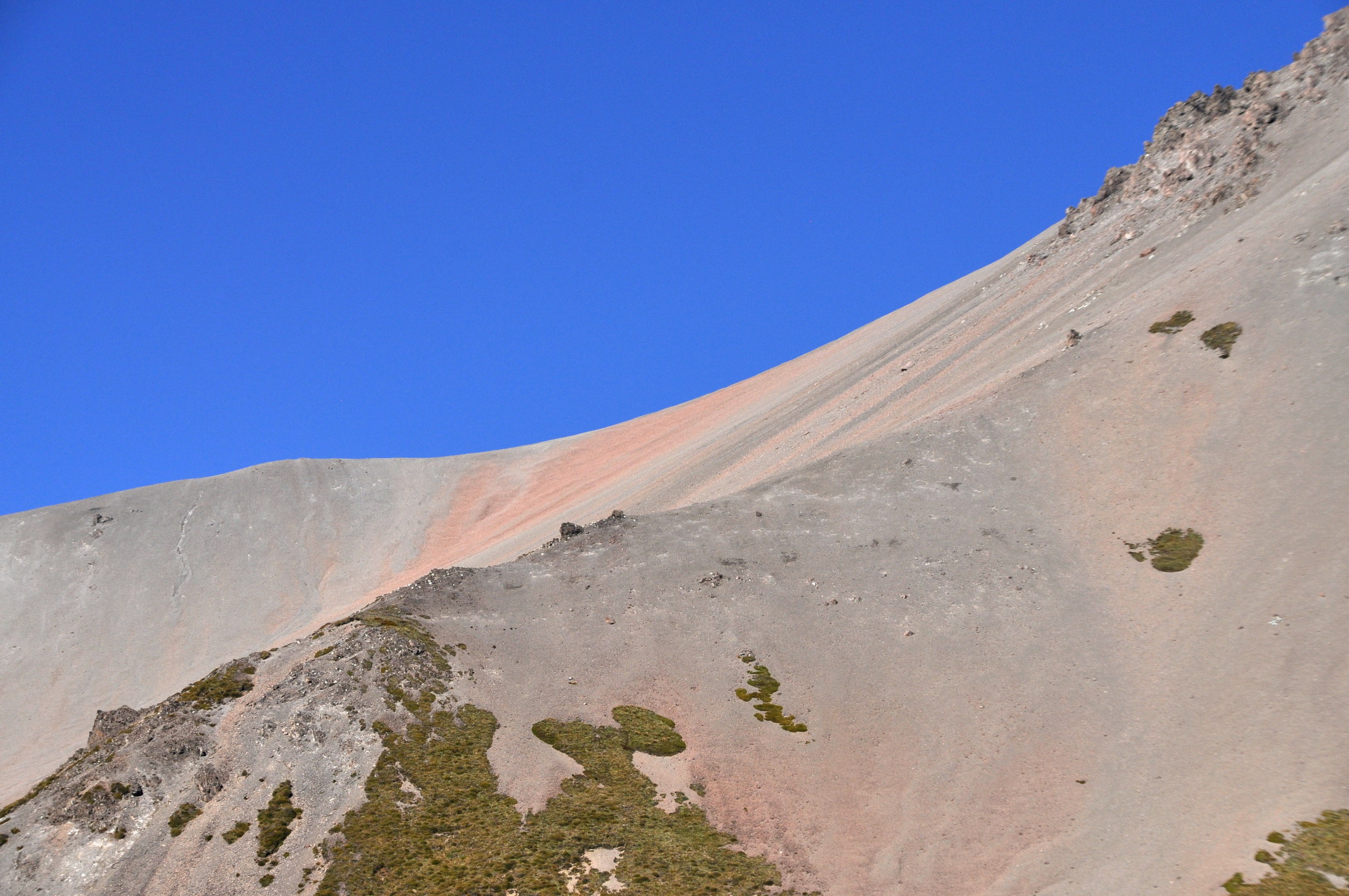
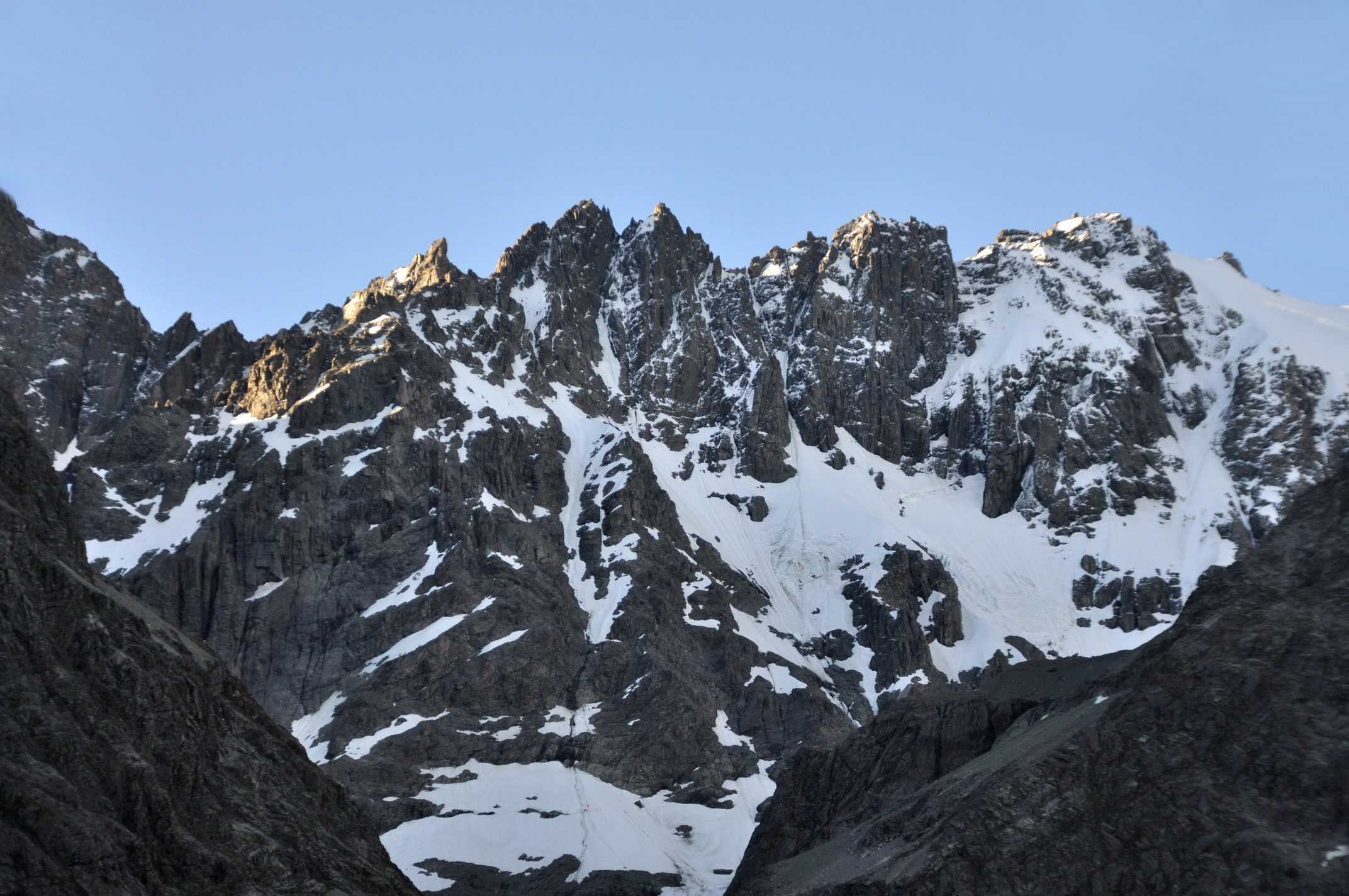
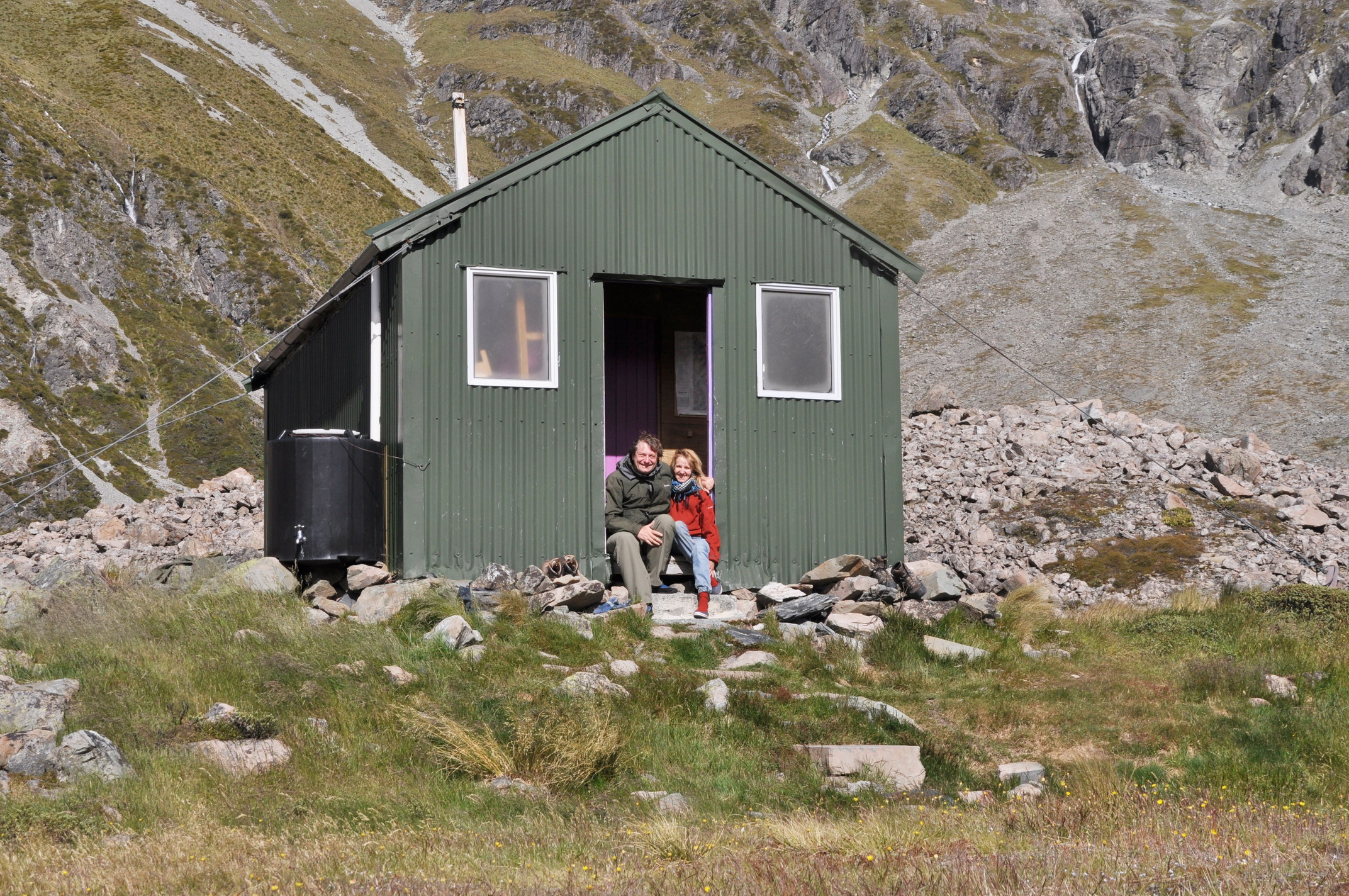
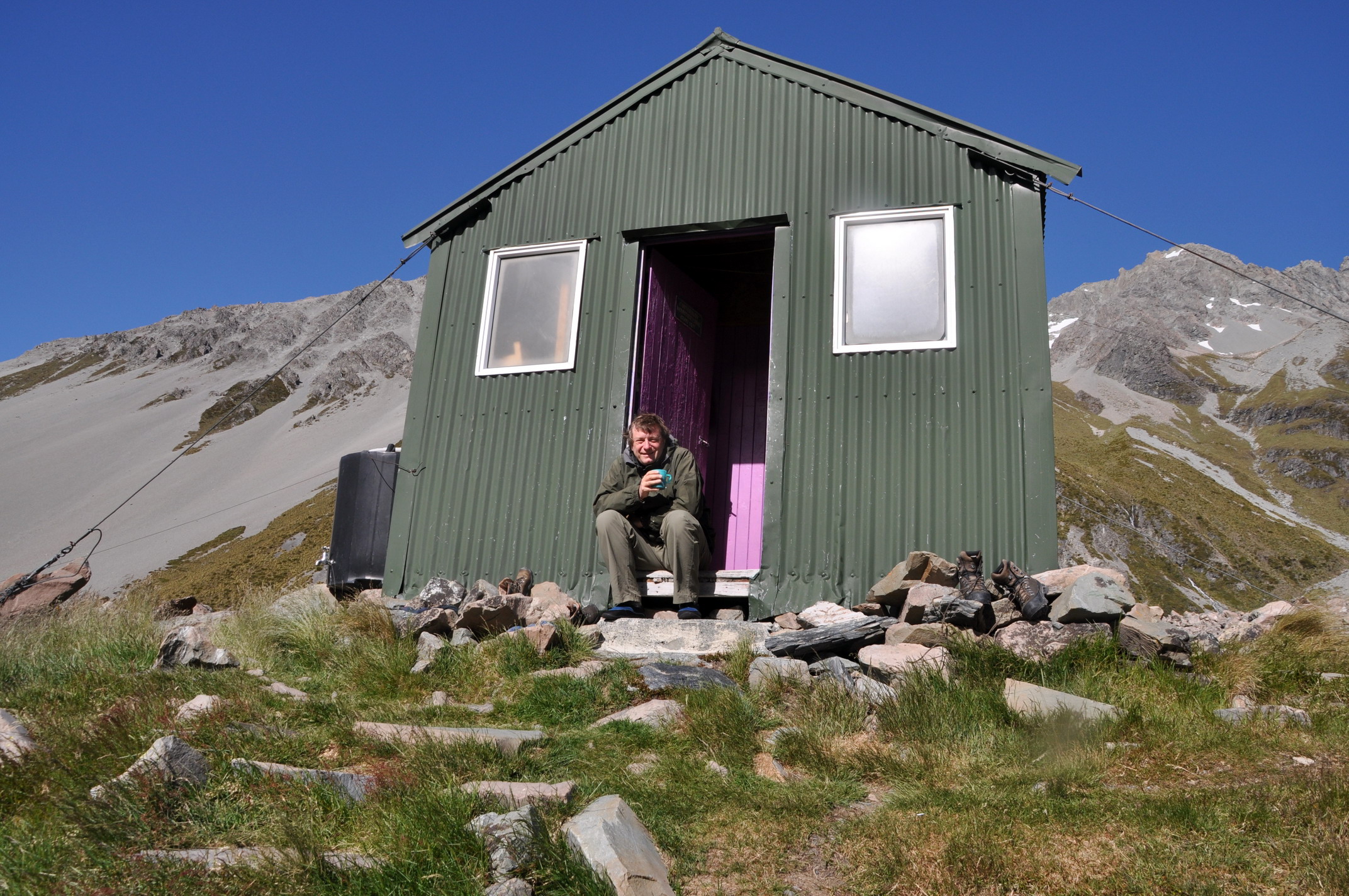
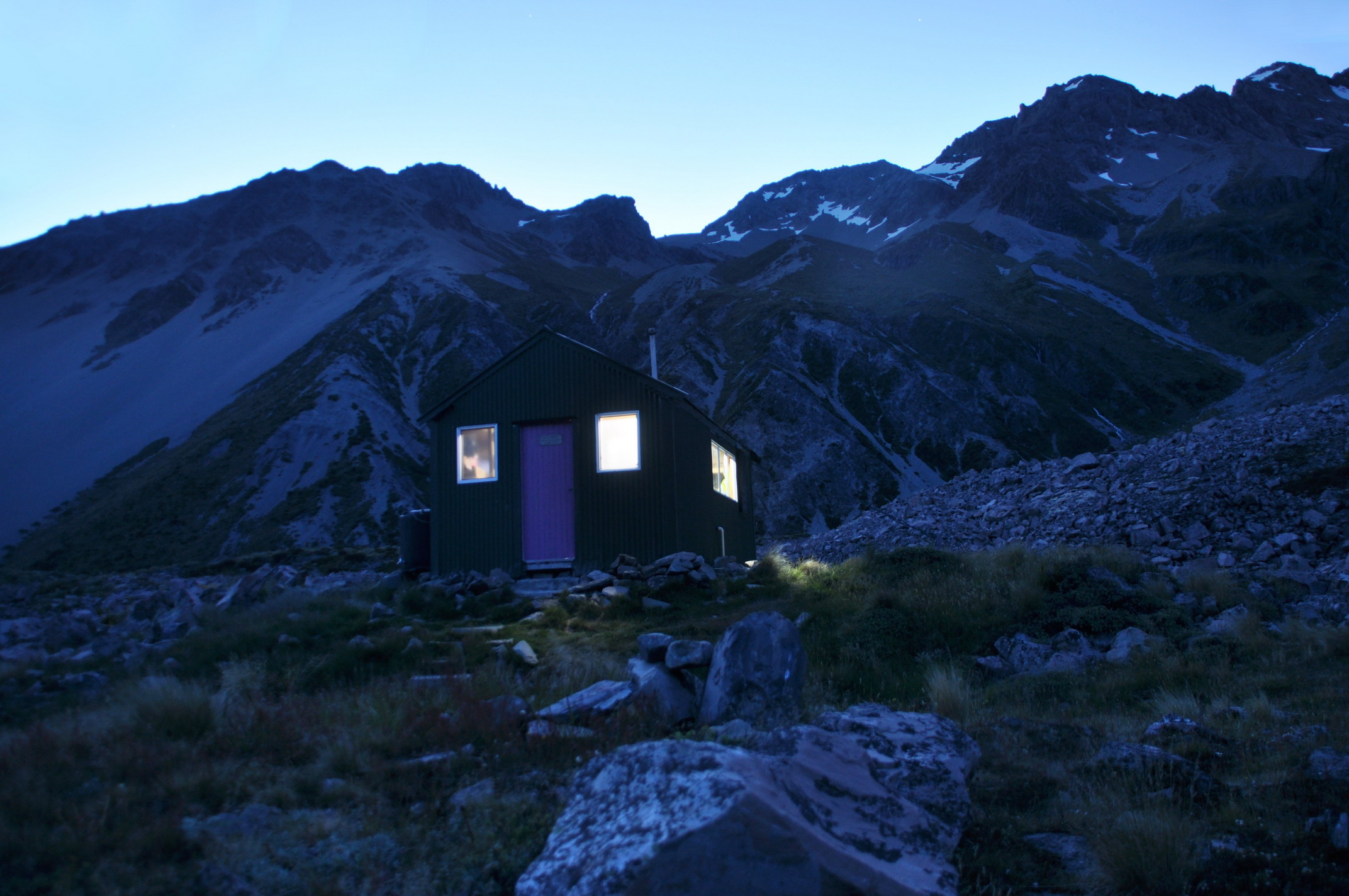
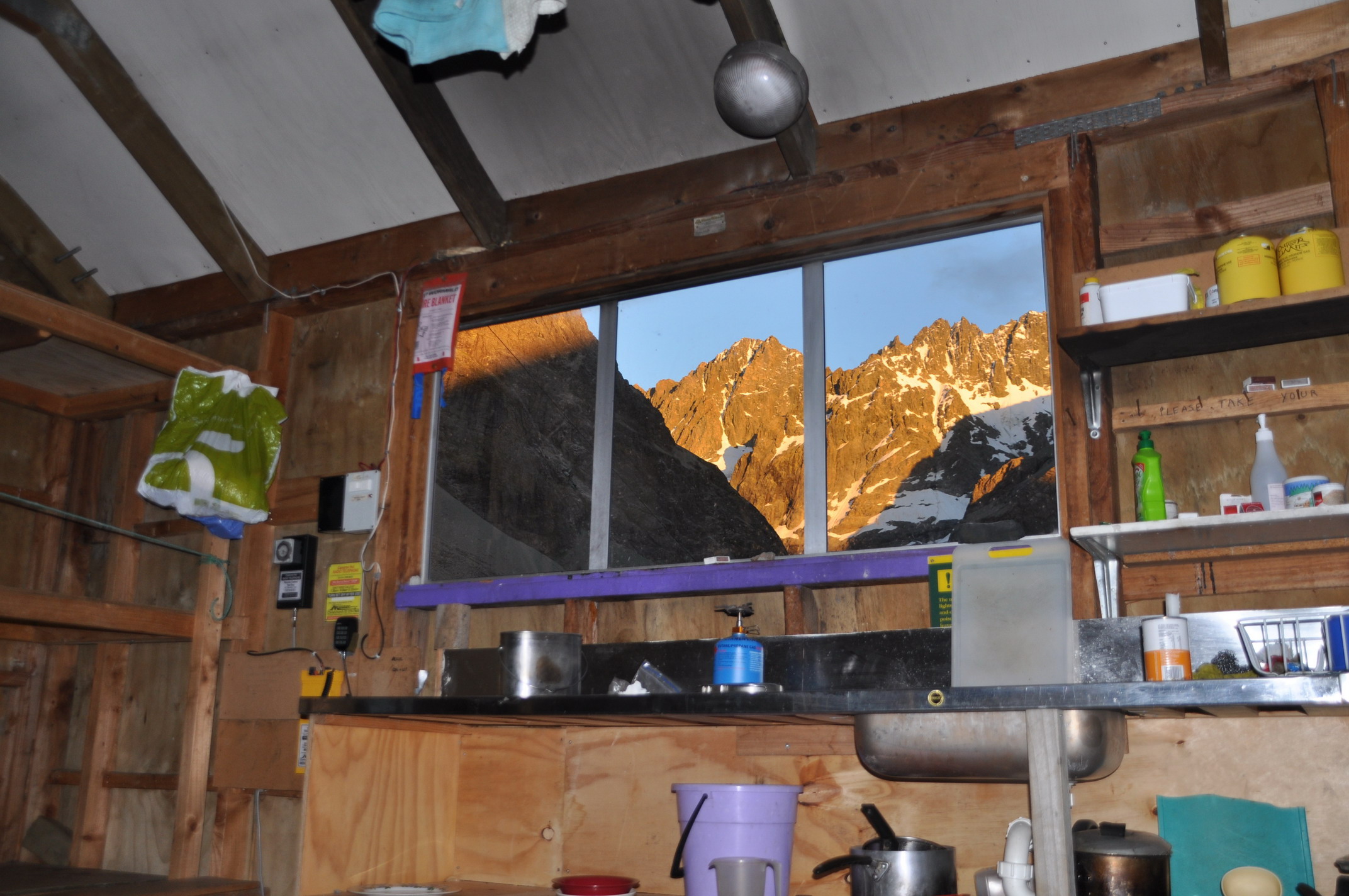
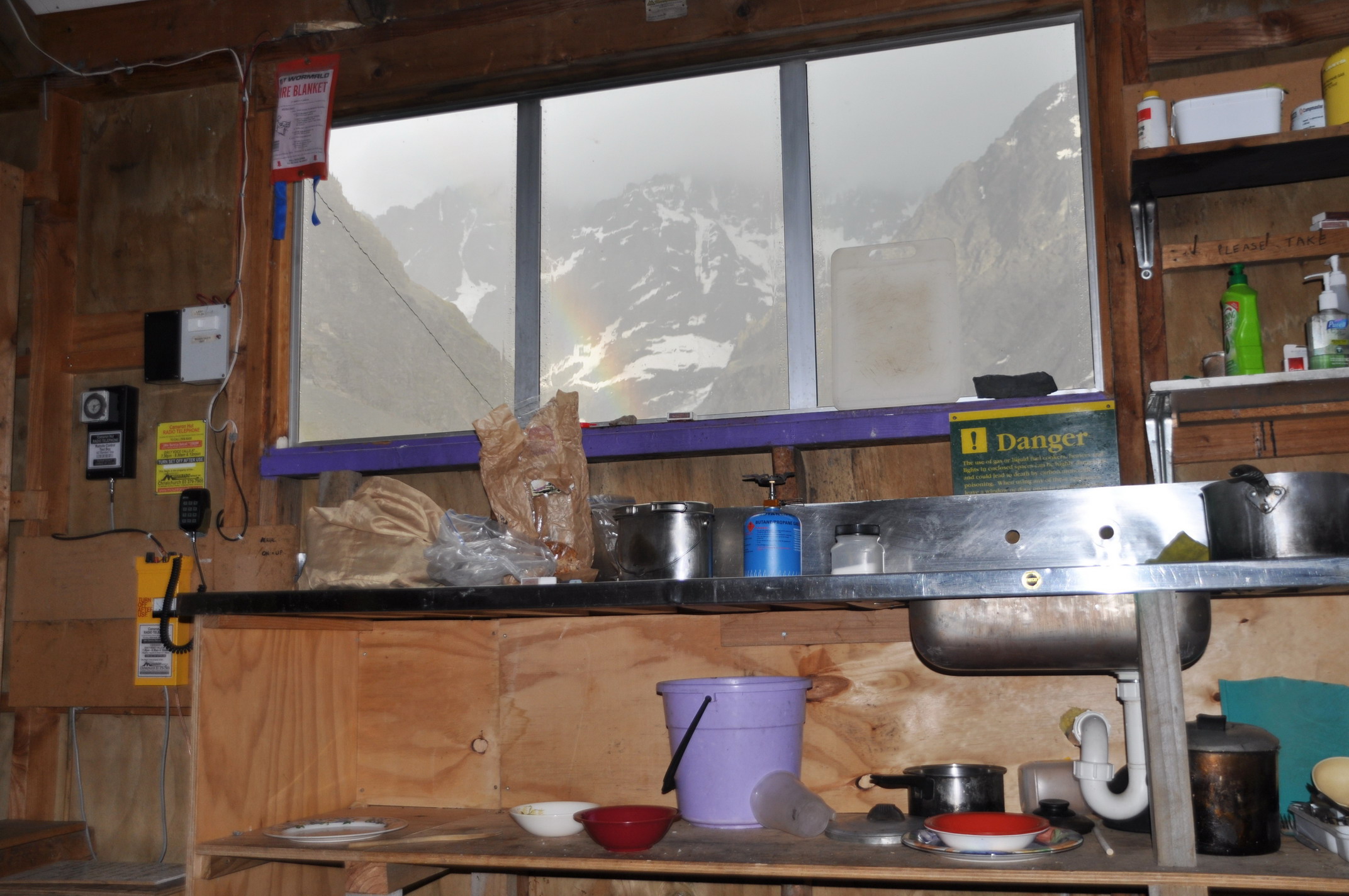
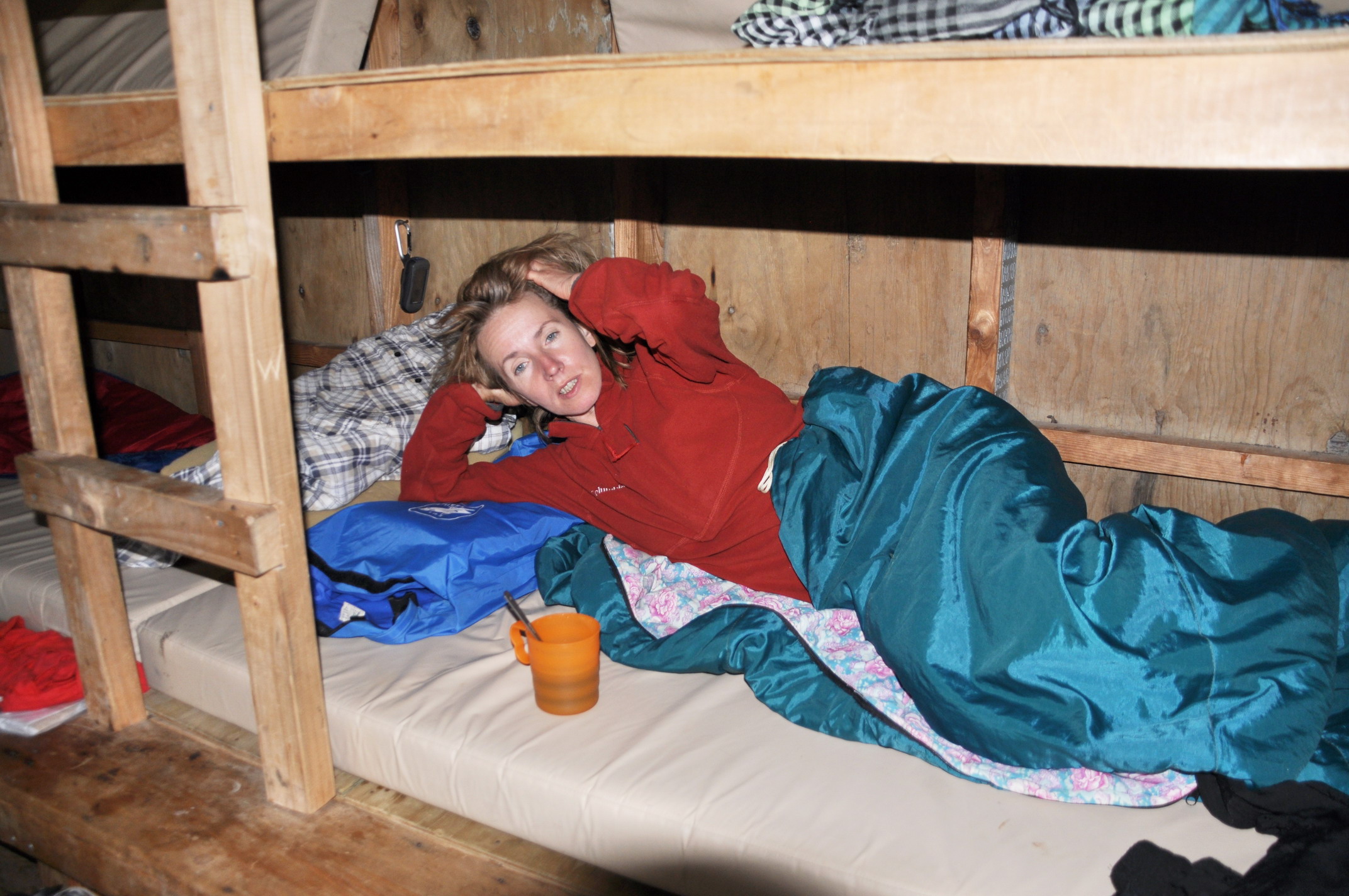
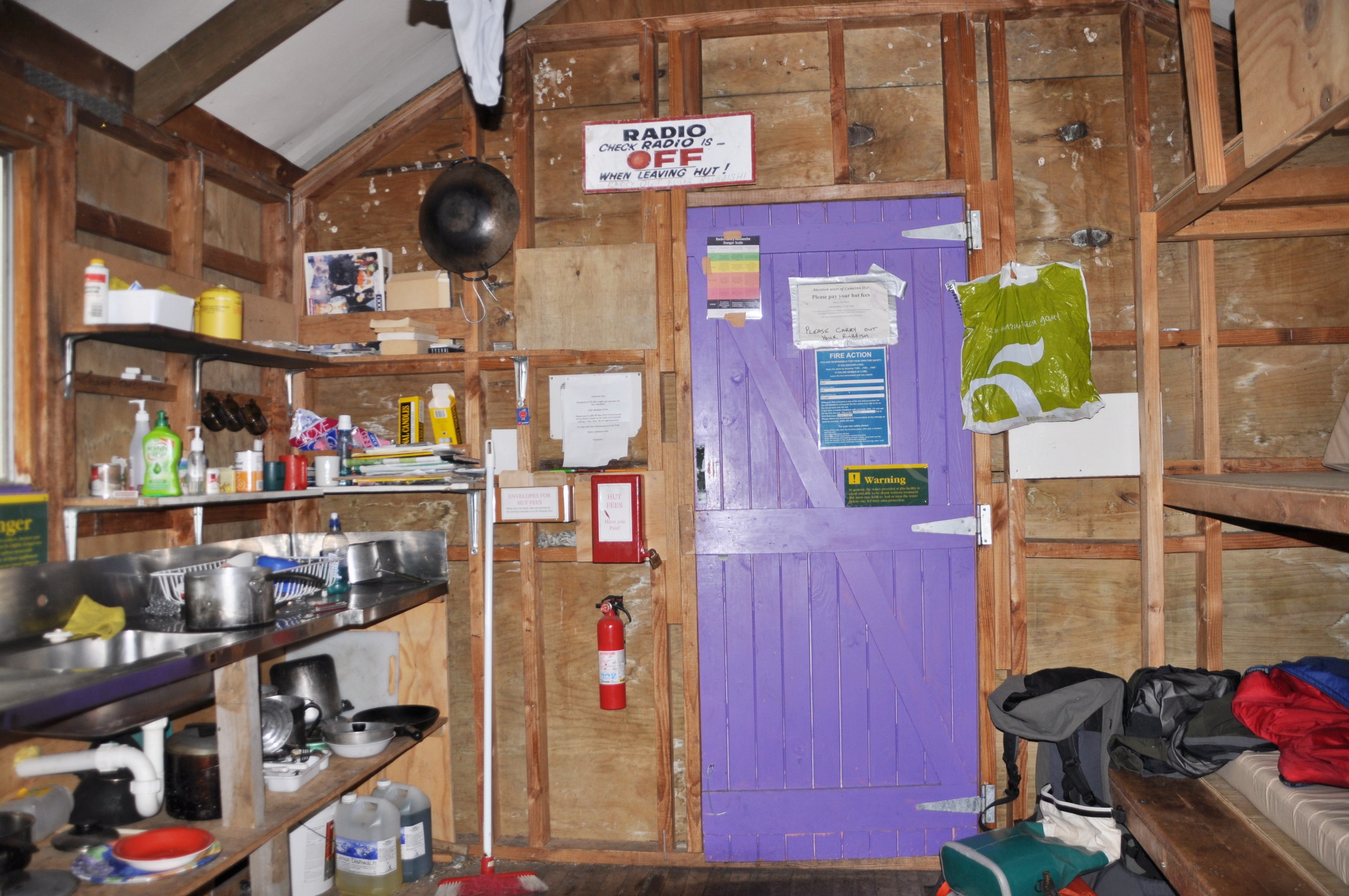
The hut stands on a rocky plateau (43°22.039′S, 171°01.089′E, 1,269 m). There are no trees or firewood here, and no stove in the hut either. There is, however, solar lighting and a mountain radio.
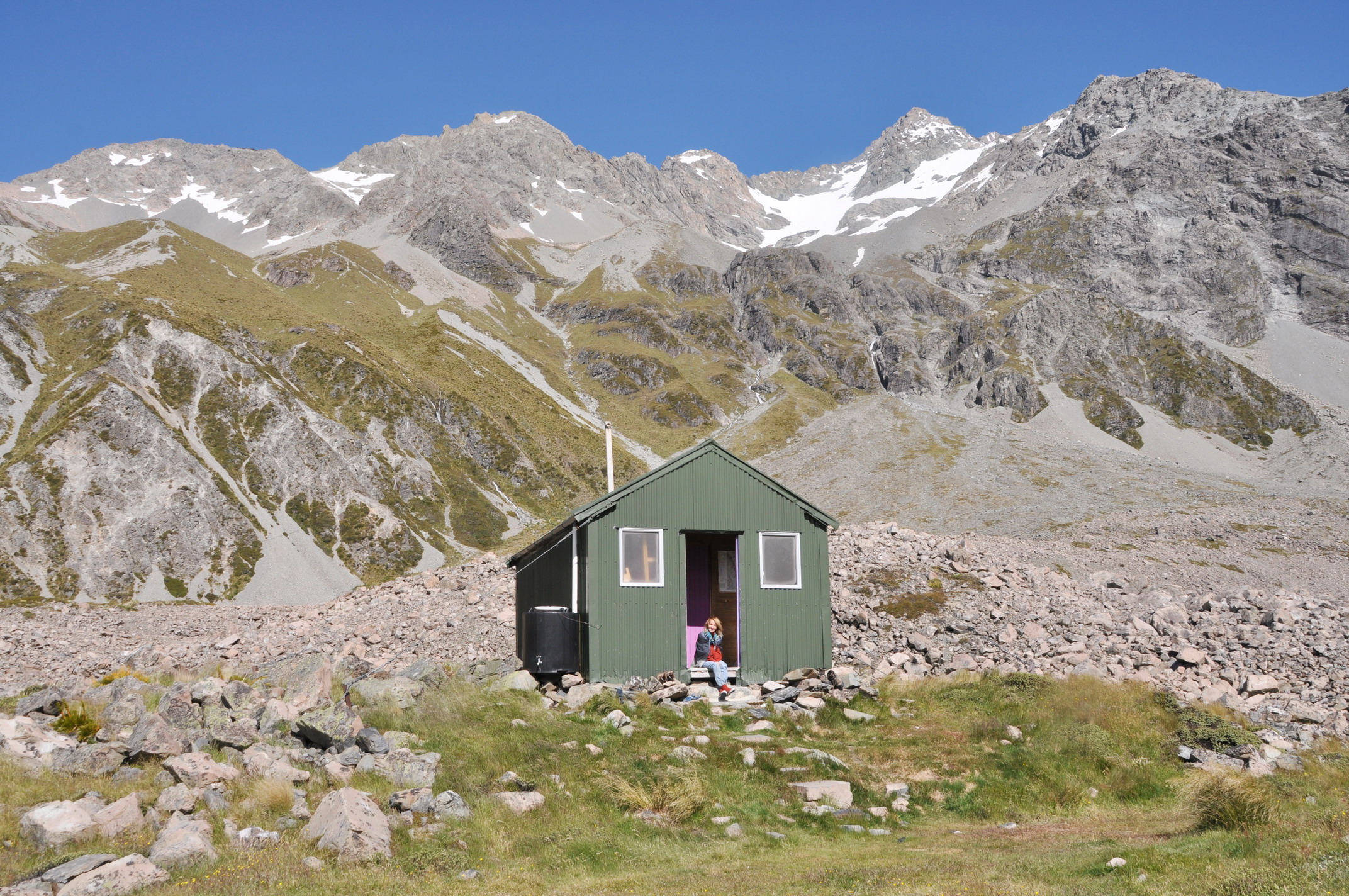
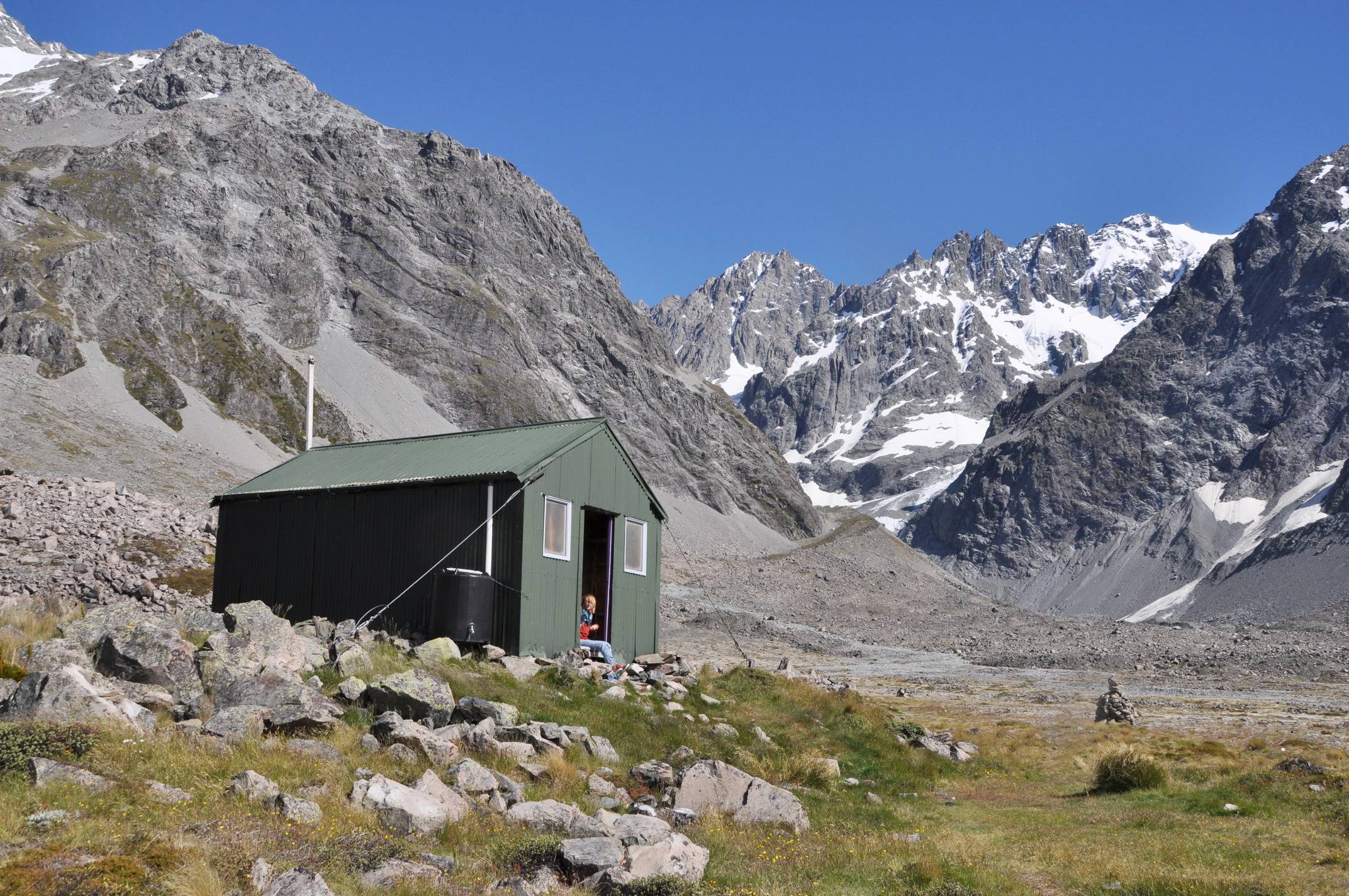
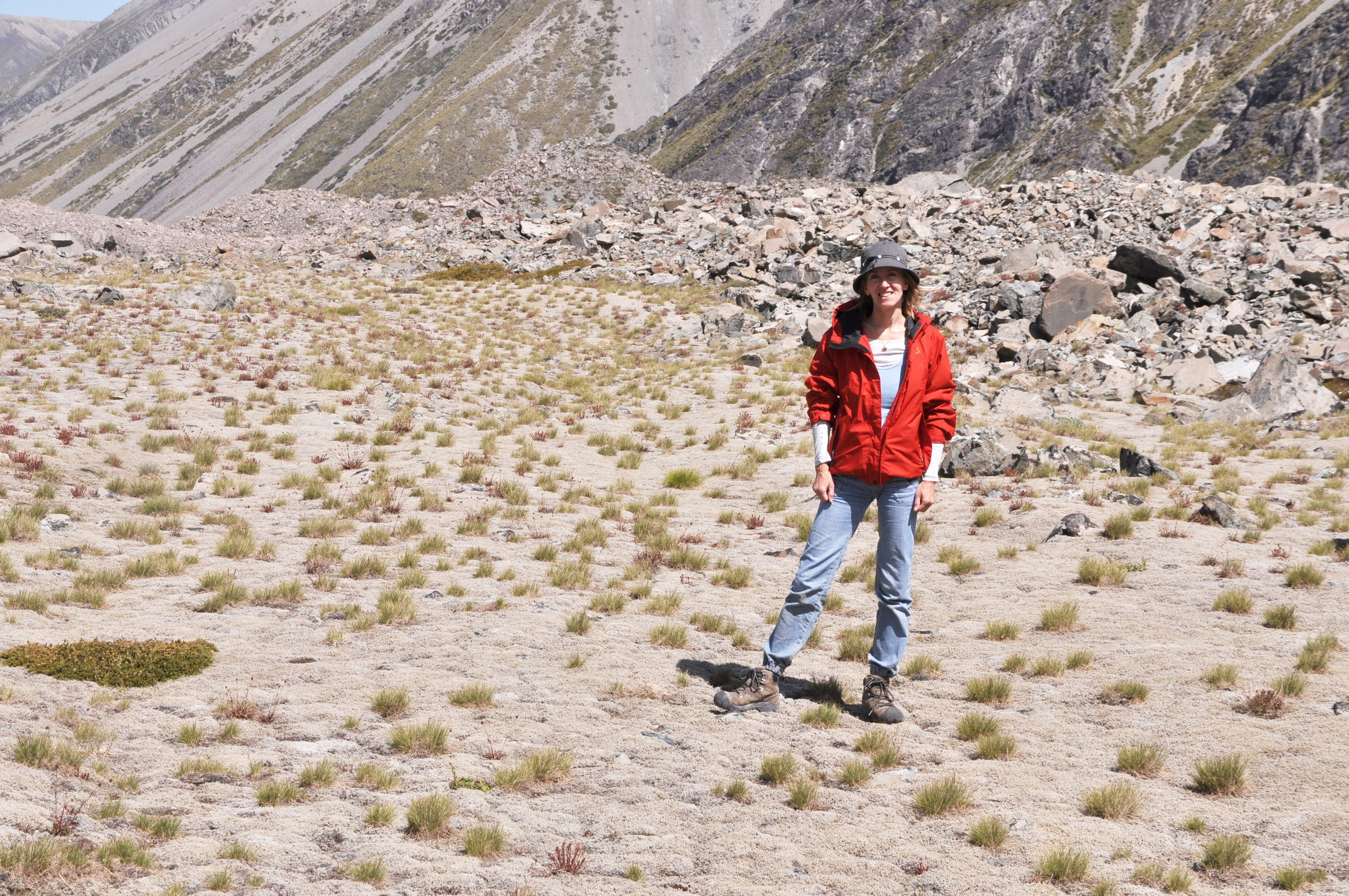
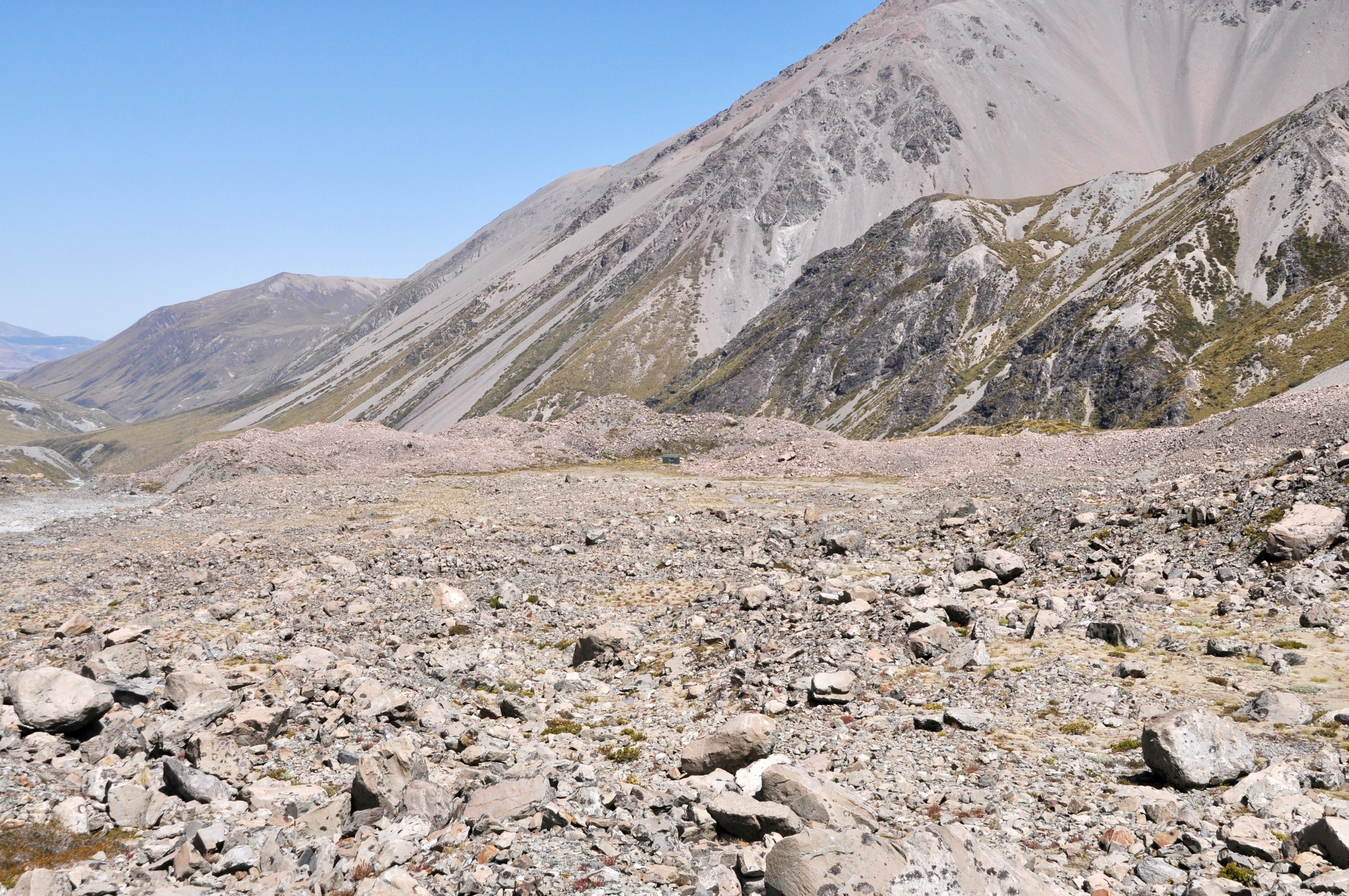
As far as DOC was concerned, the hut was free. The alpine club saw it differently and asked for five dollars per person per night.
On the first day we only set out at one in the afternoon and reached the hut at 8.30 pm after six hours of walking, compared with the posted five. It was very hot, and we often stopped to rest and have some tea.
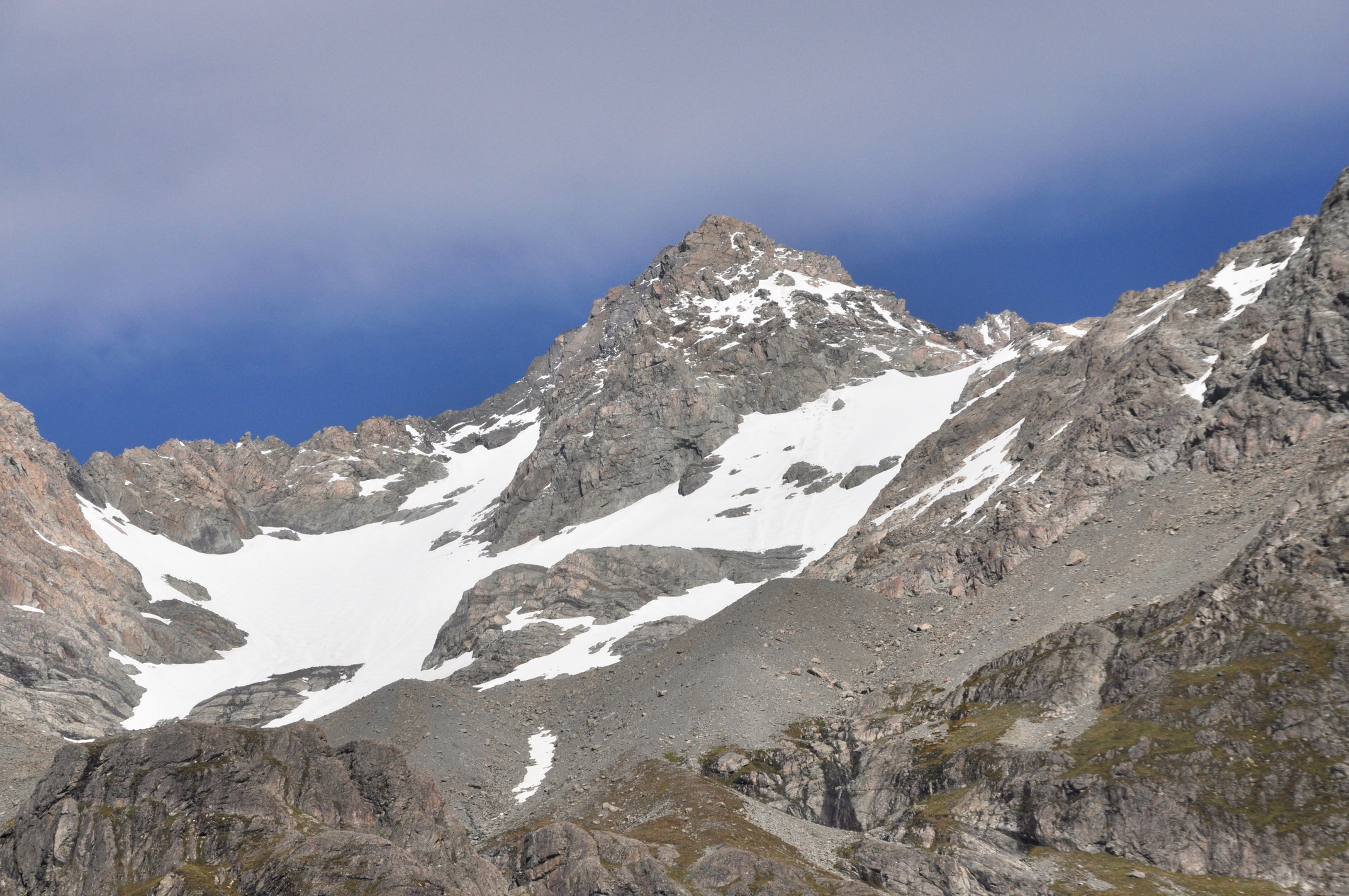
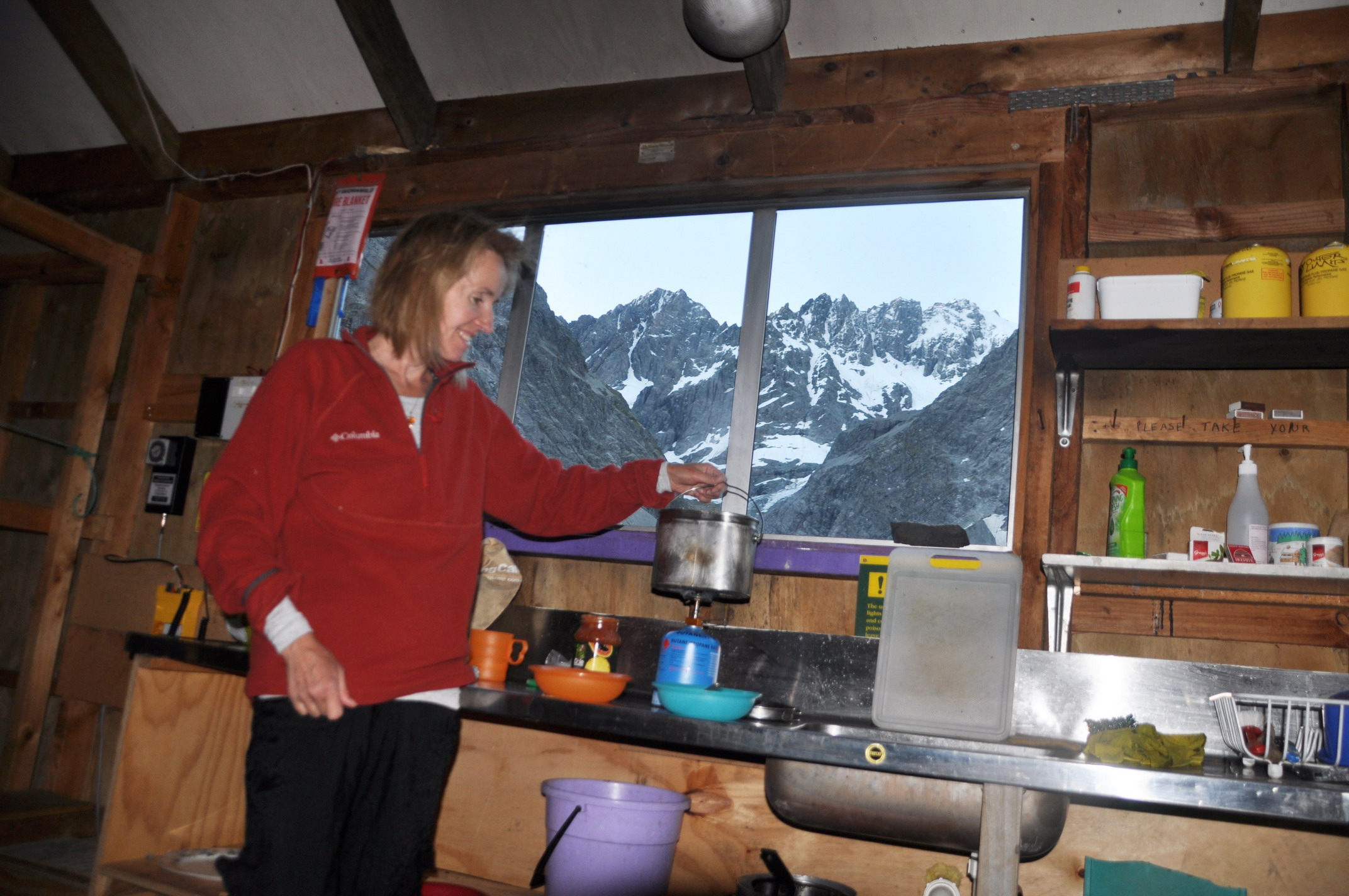
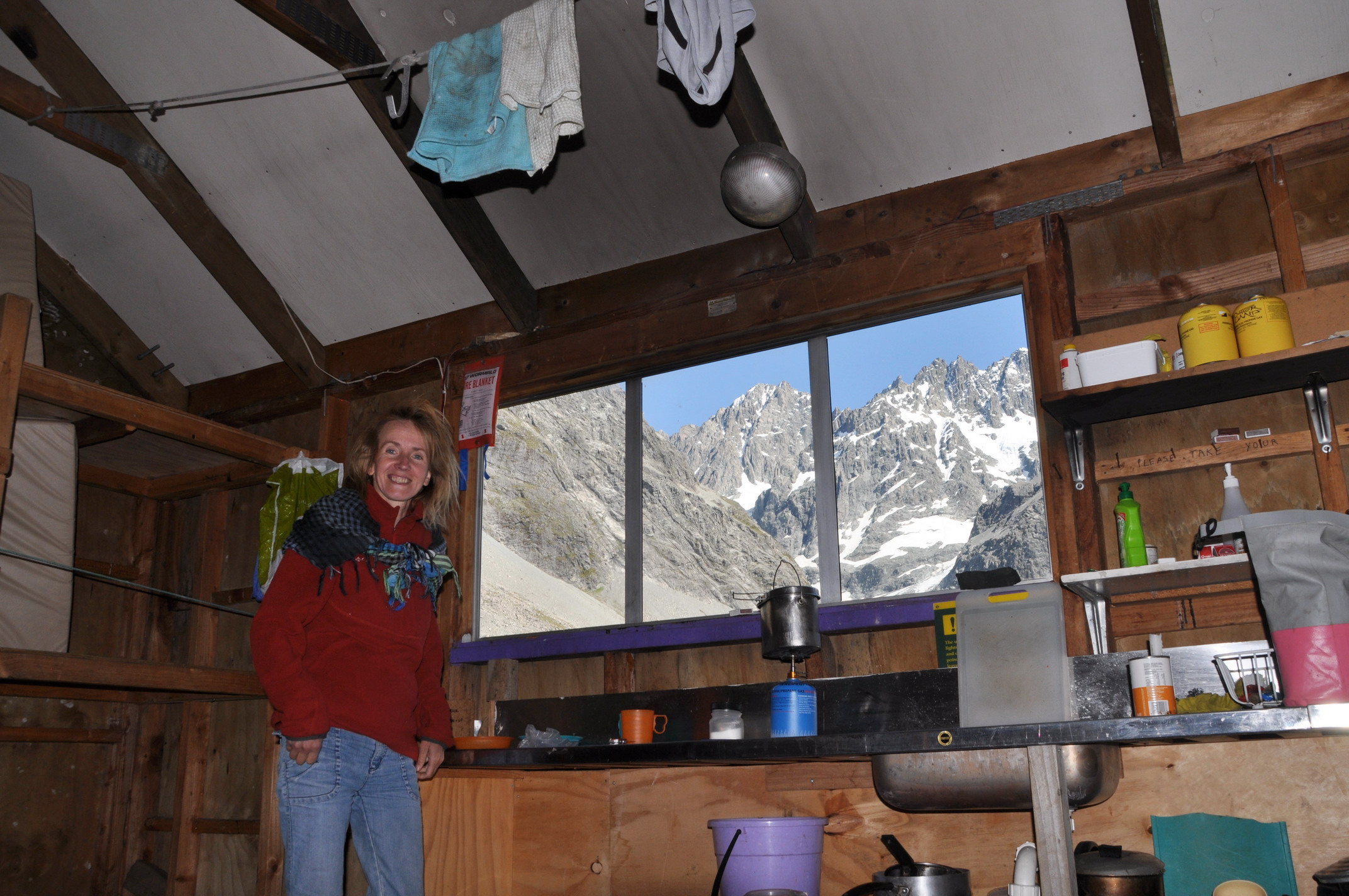
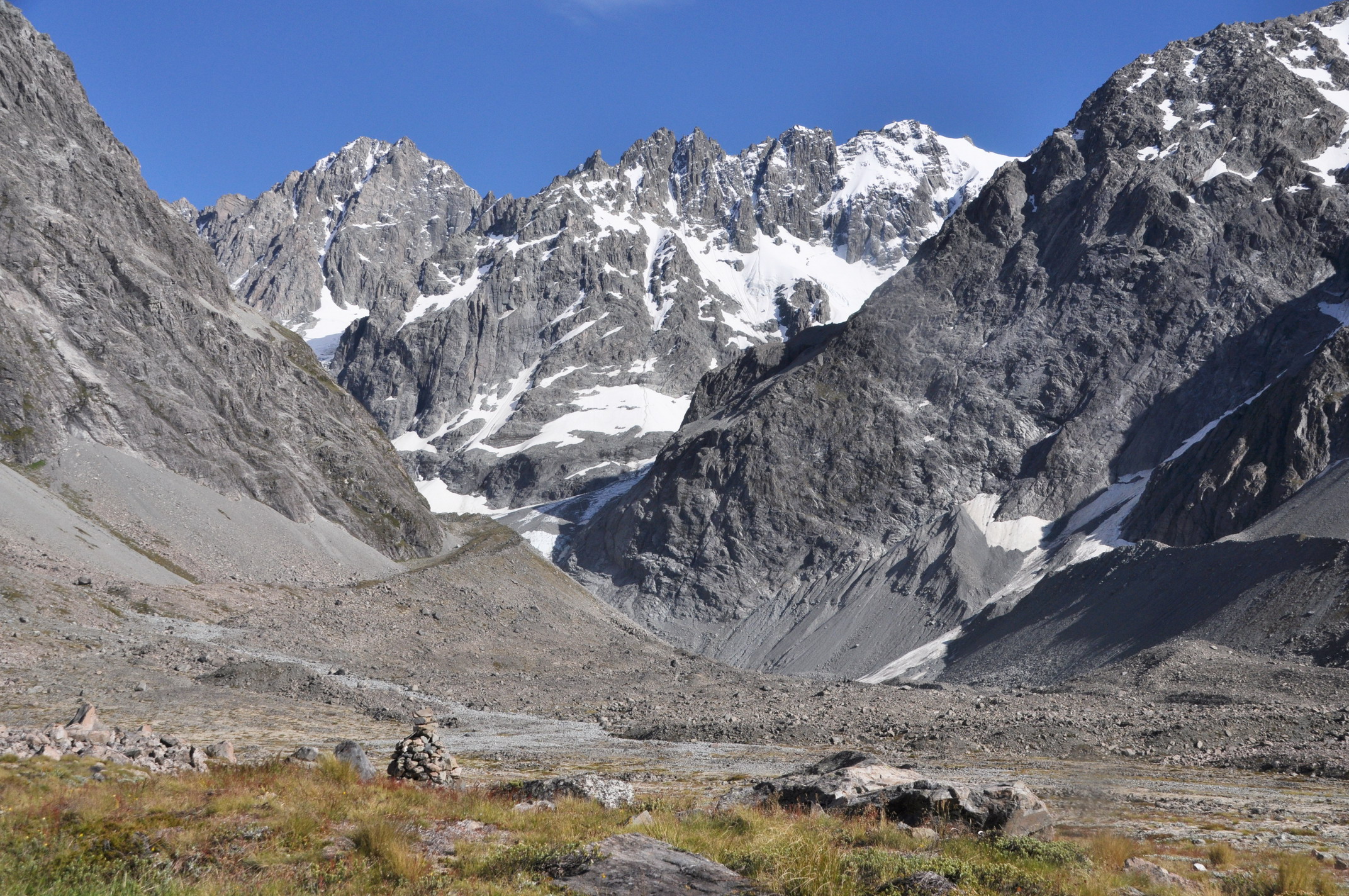
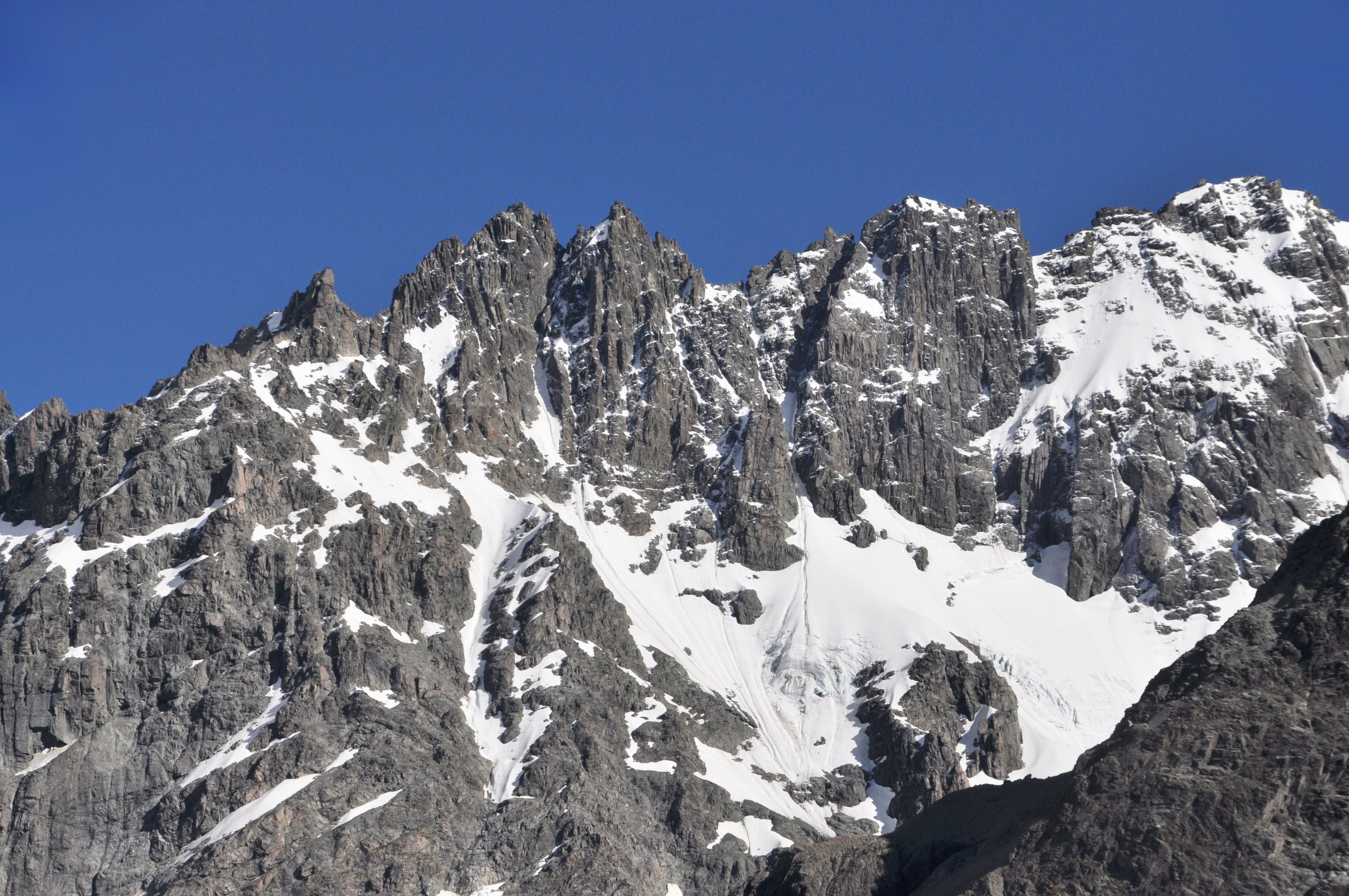
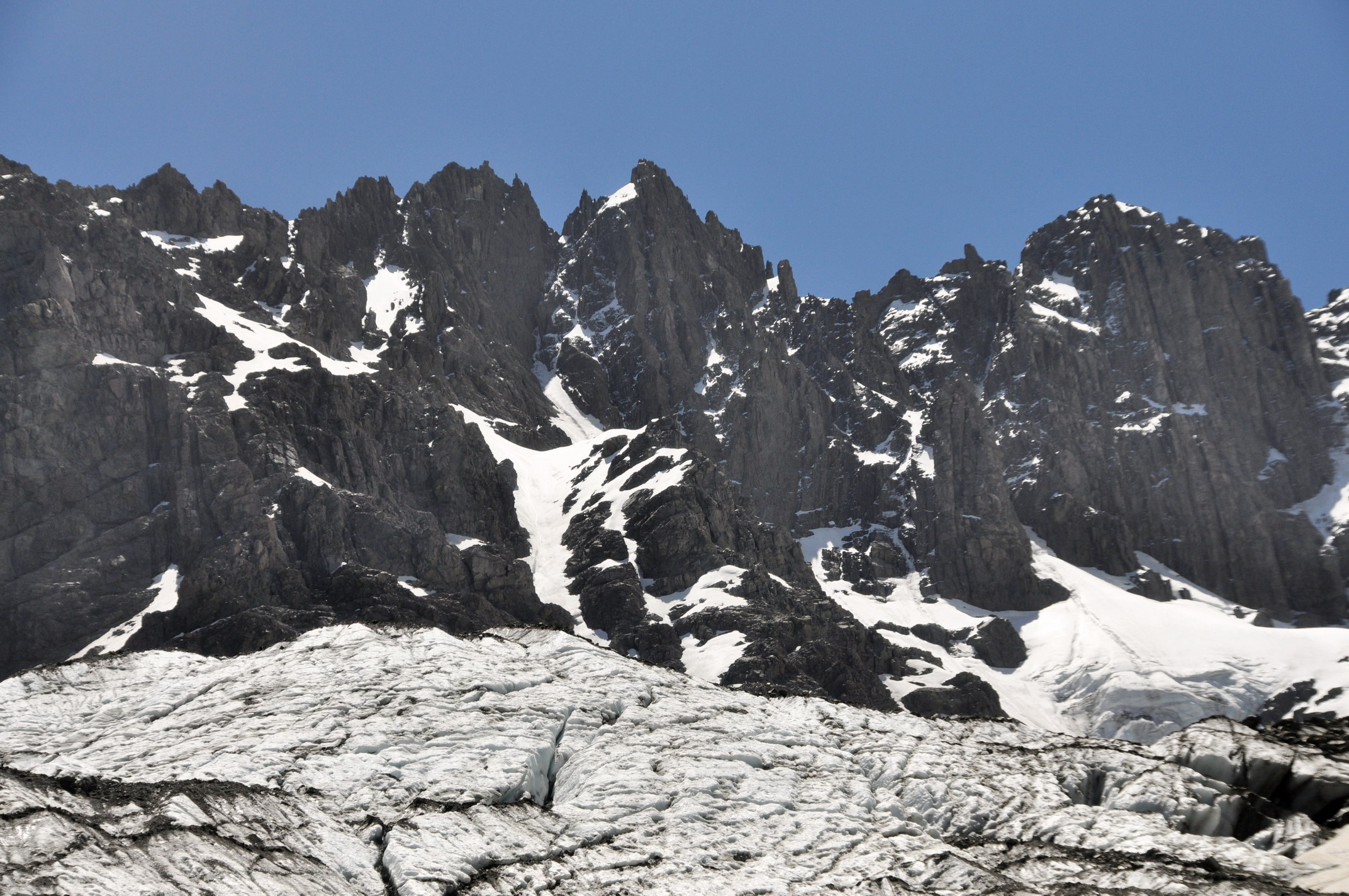
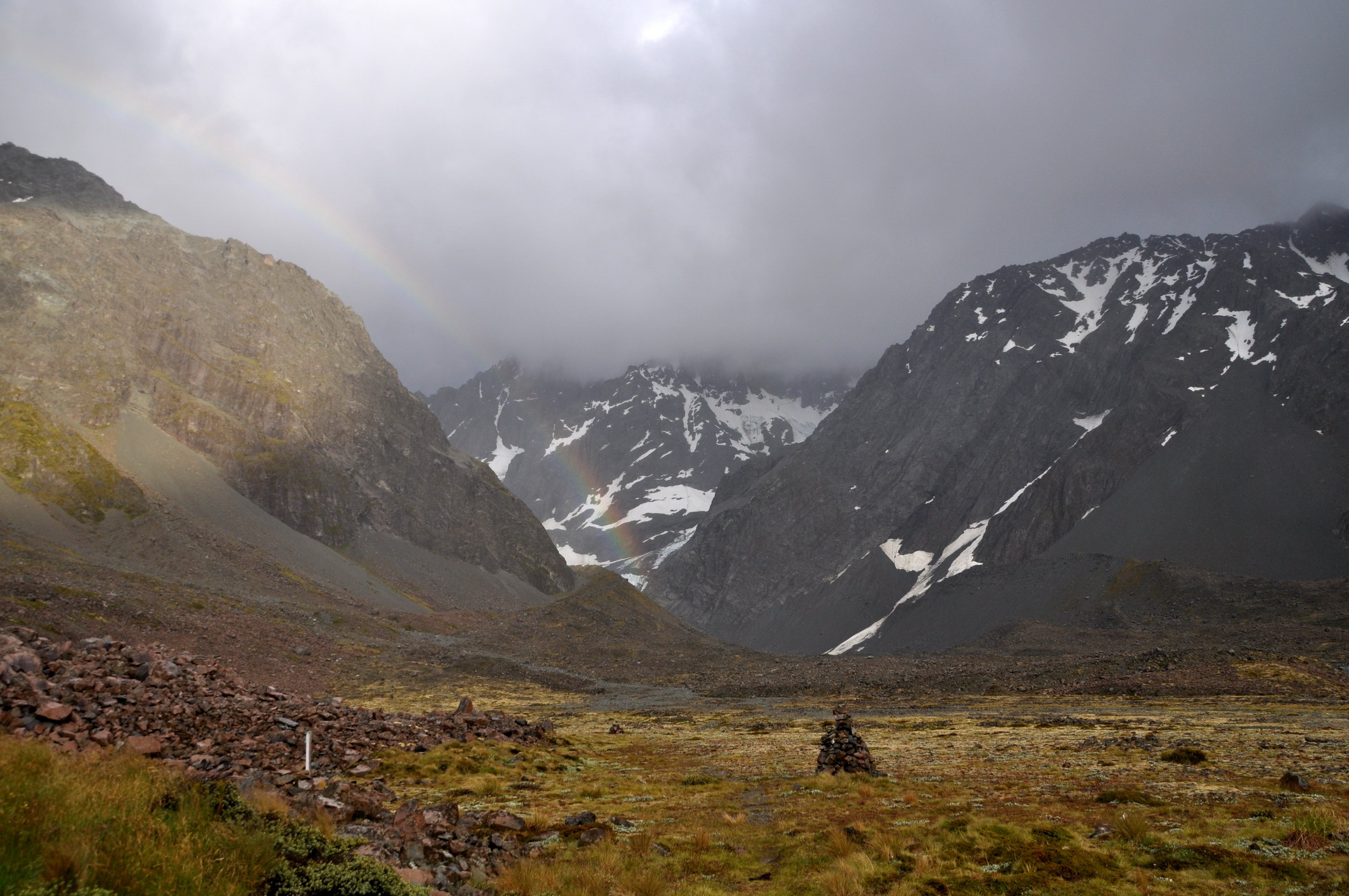
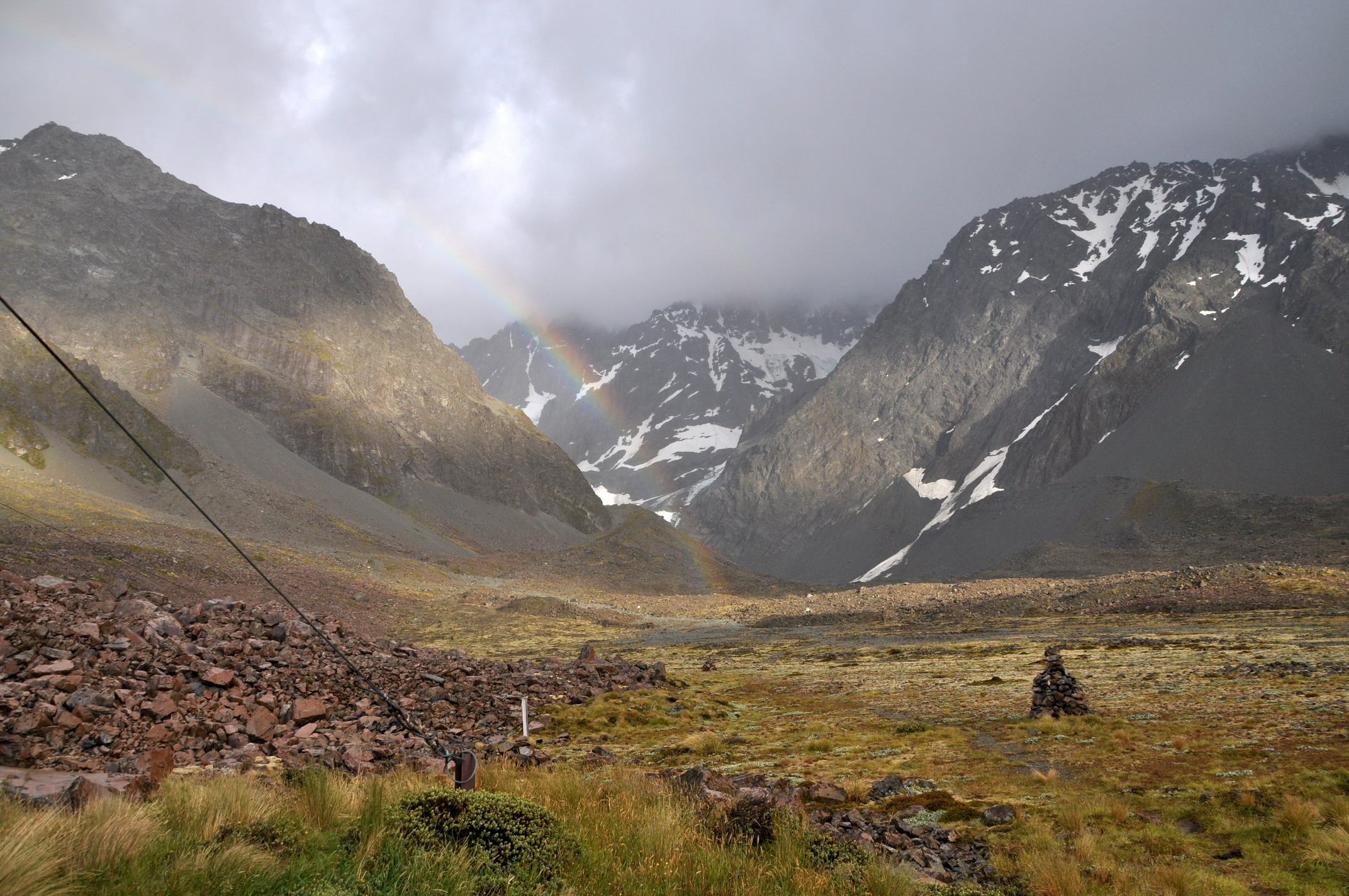
The hut turned out to be empty, and we were able to spend an enjoyable evening there. Right from the window we could see rocky peaks sticking out of the glaciers.
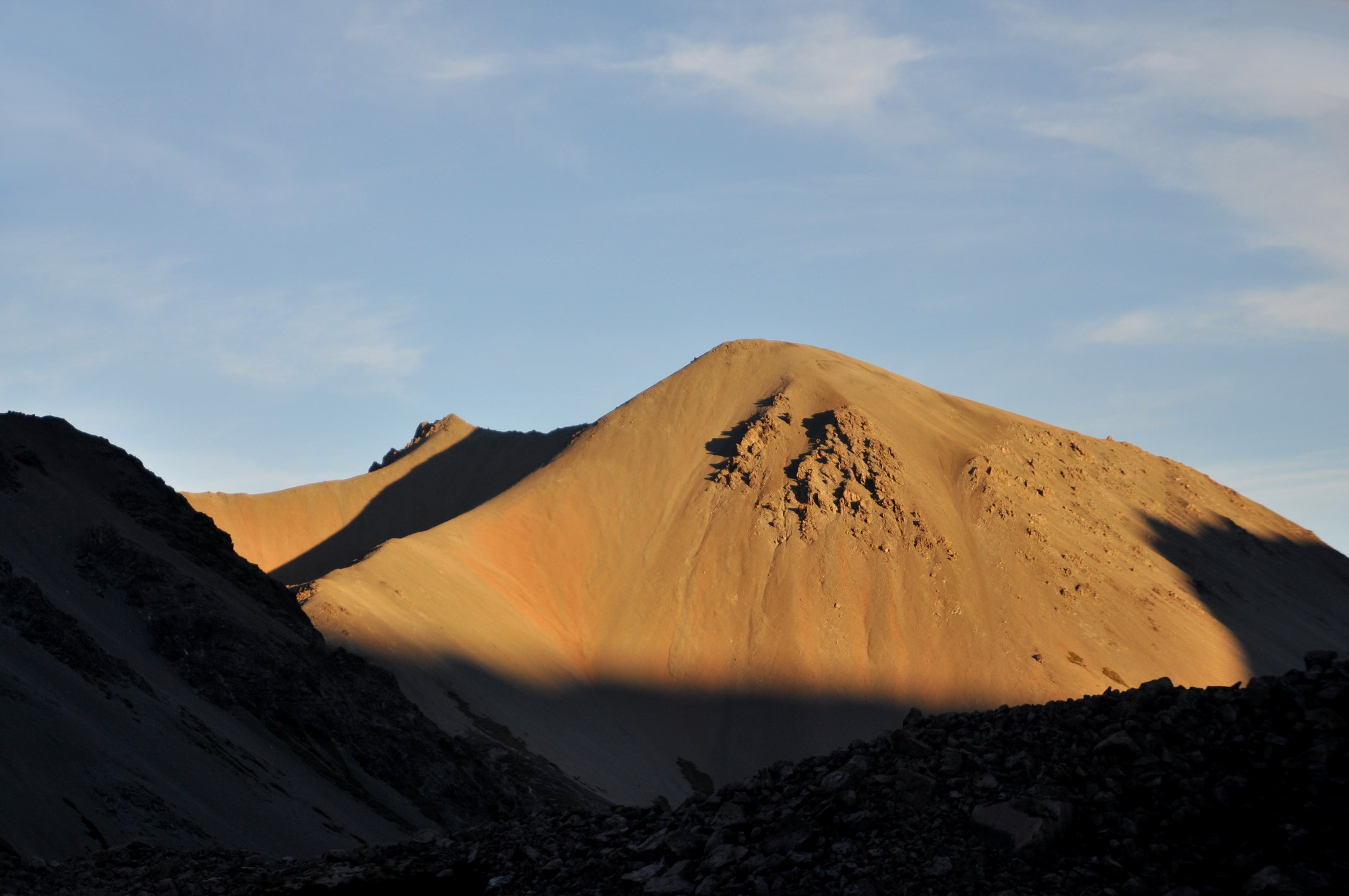
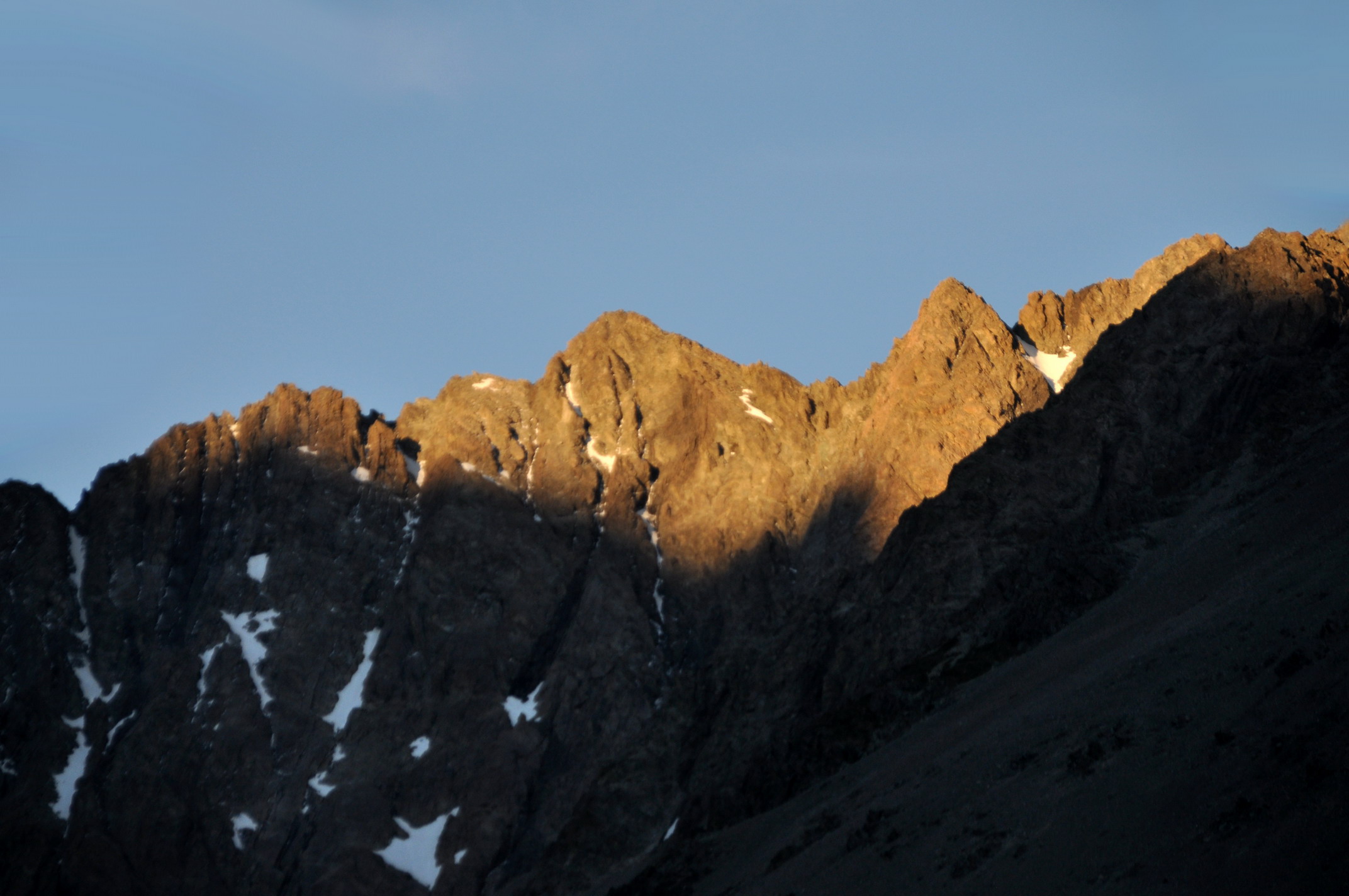
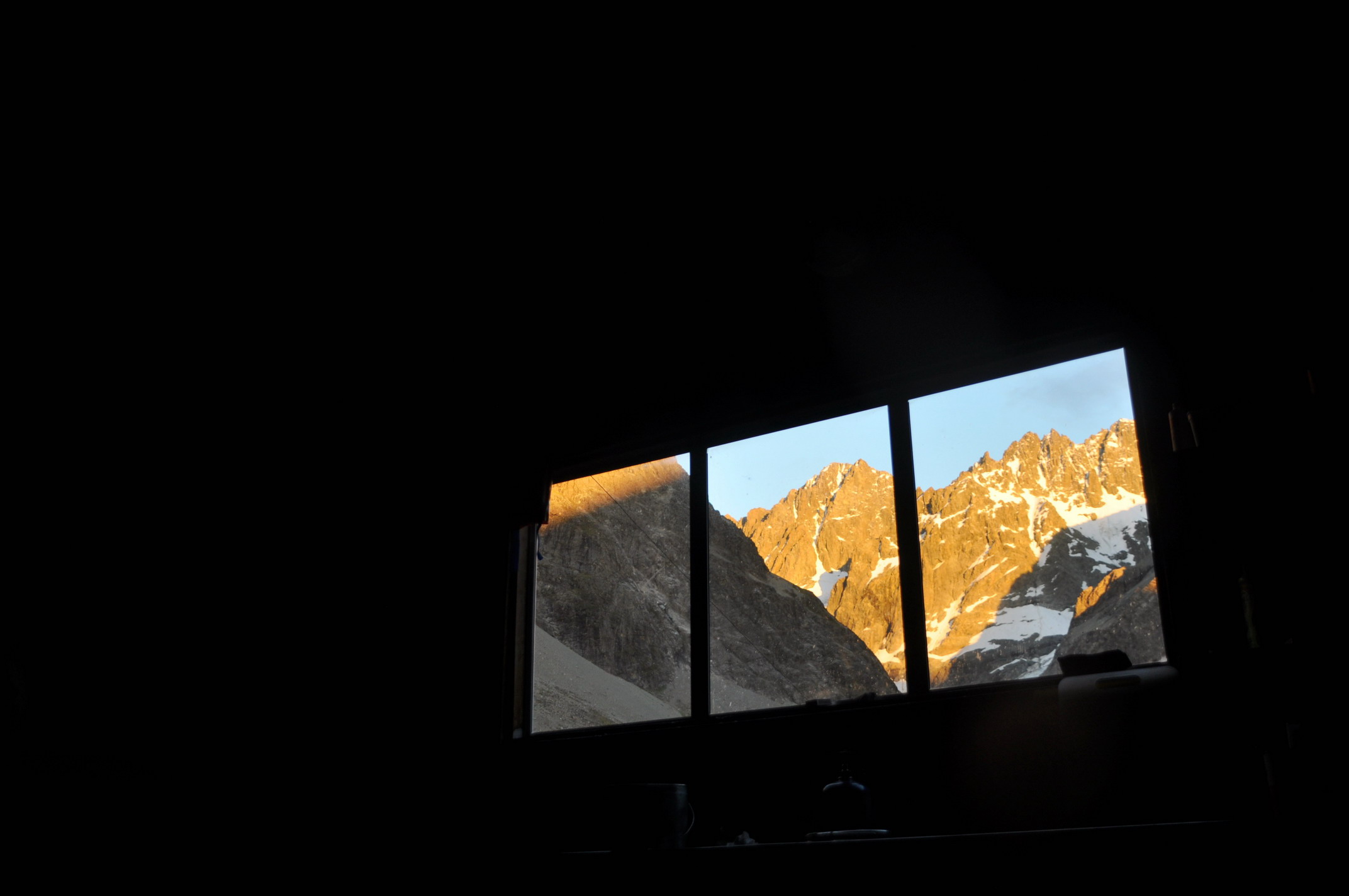
In the morning the wind picked up. We had barely woken up when an older couple who had been trying for the summit came down from the mountain. The wind had blown their tent away. They had spent the whole night awake and had been forced to abandon the climb at first light. This was their fourth unsuccessful attempt. They had already made the trip from Australia three times to pursue their dream.
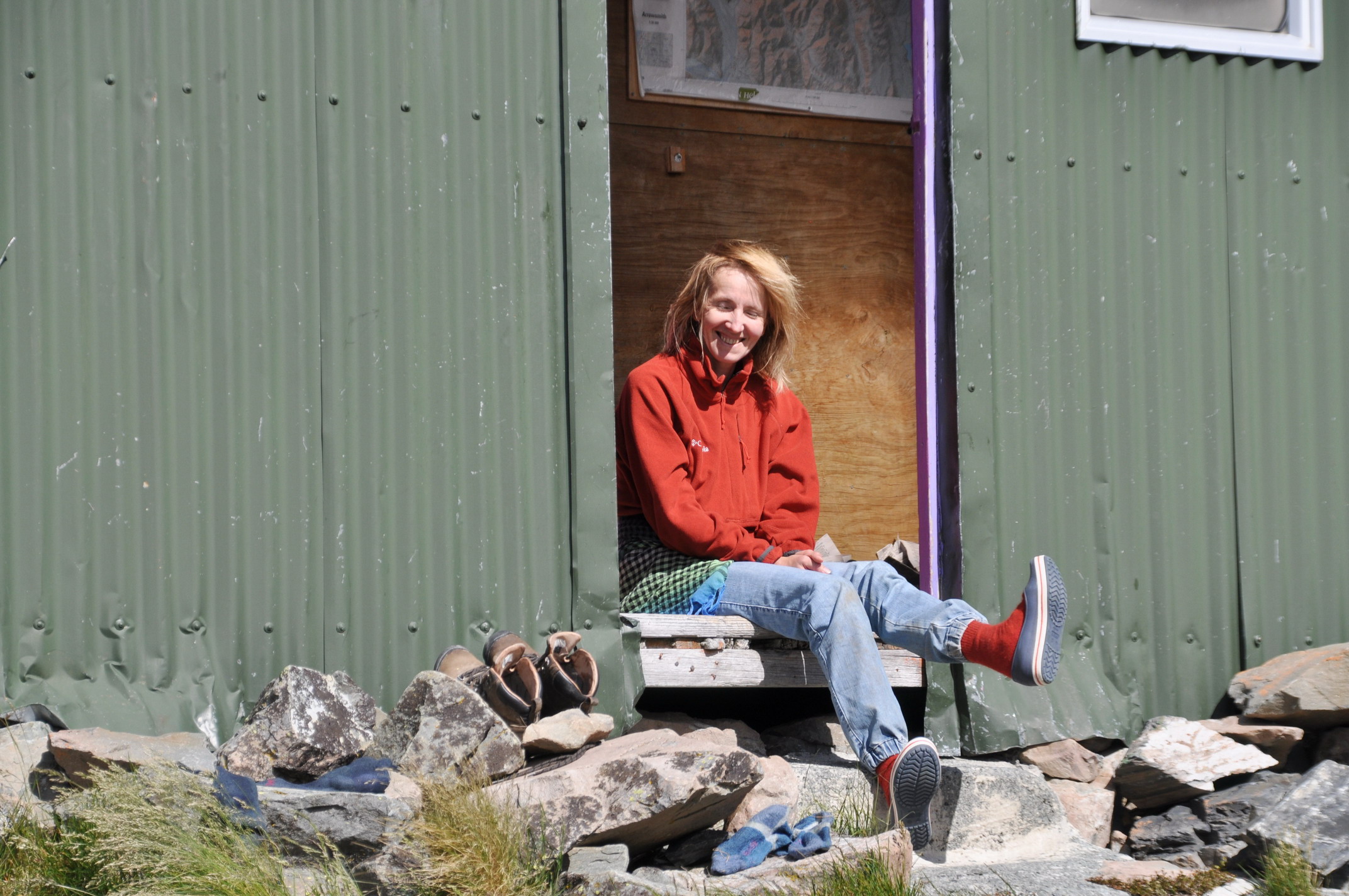
Both worked in security in the Australian military. The husband often went on assignments to Afghanistan and Iraq. His wife fought her battles in the office, but was proud to be the first woman to serve in Australia's military security forces. All their kit was military issue, right down to the round packs like the ones American soldiers carried in photographs from the Second World War and Vietnam. They ate military rations and had waterproof matches bearing the Australian Defence Force emblem. They had thought of everything. Unfortunately, what works in a war can make for a very heavy load in the mountains.
We got chatting, and it turned out they were excellent company. We covered all the world's problems and found ourselves agreeing on almost everything. We even discussed all the politically incorrect subjects and agreed on those too.
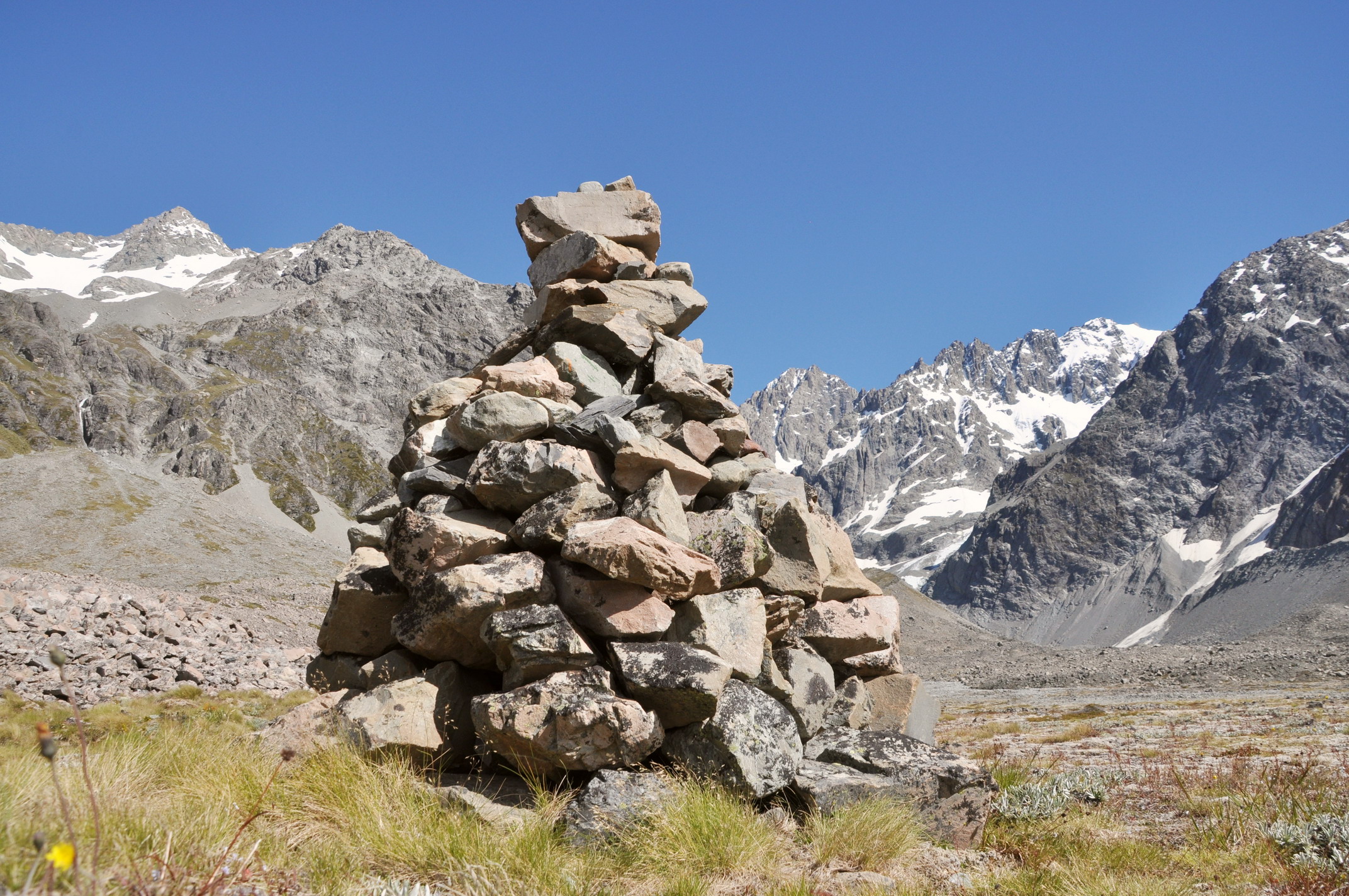
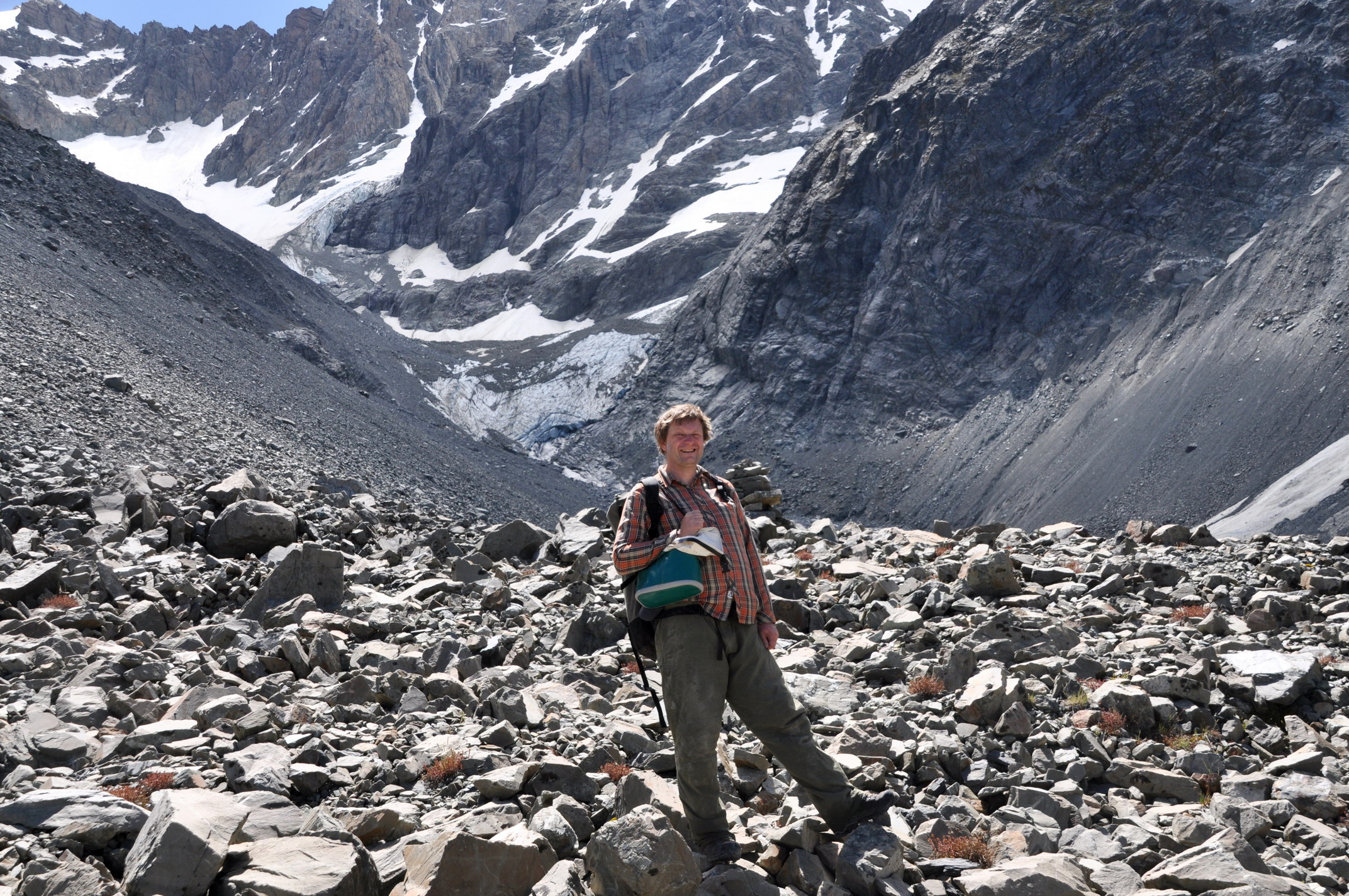
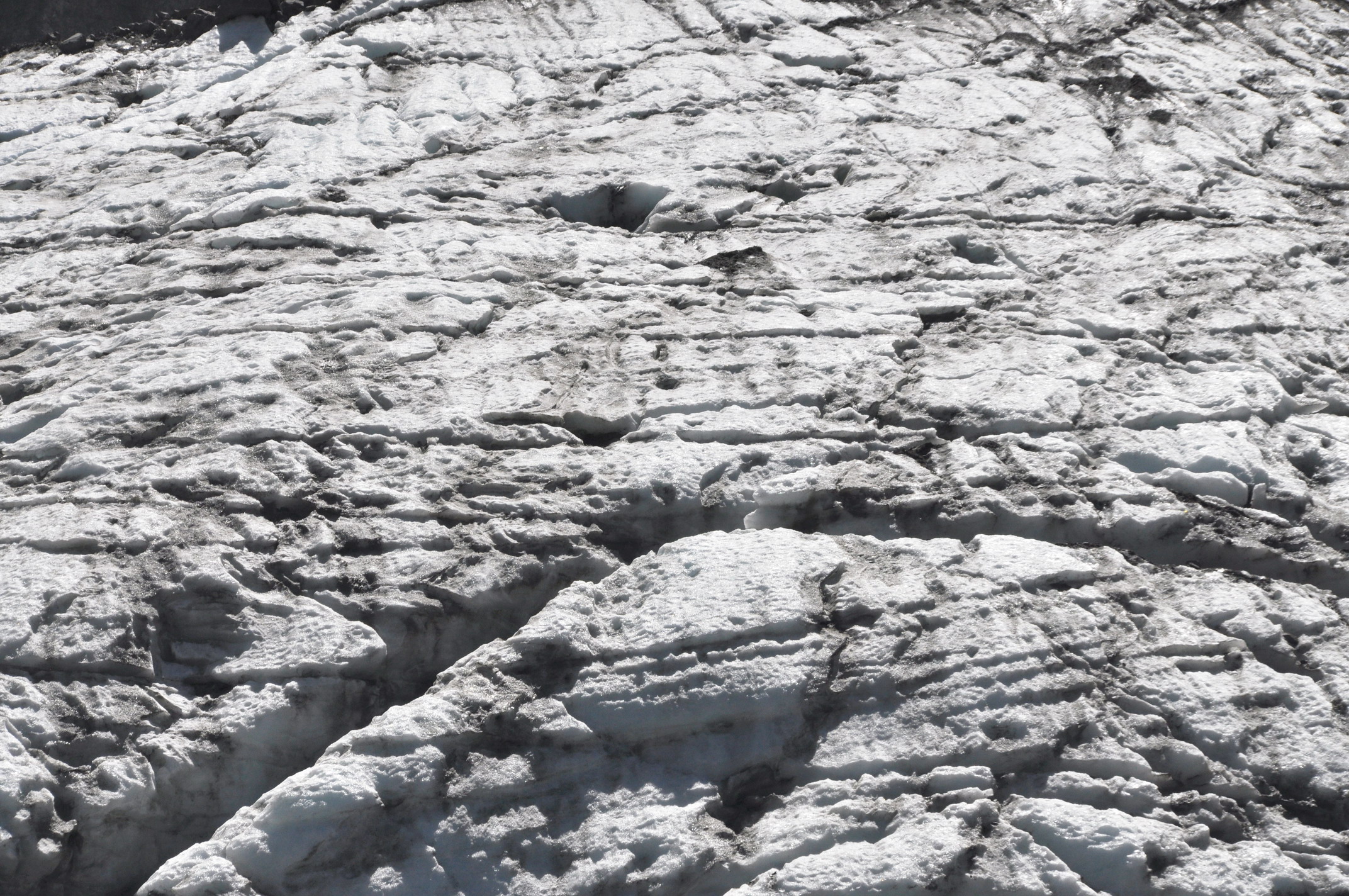
That afternoon we went for a short walk up the gorge of the river. We climbed several hundred metres to the glacier (43°21.132′S, 171°00.167′E). We made it a rest day.
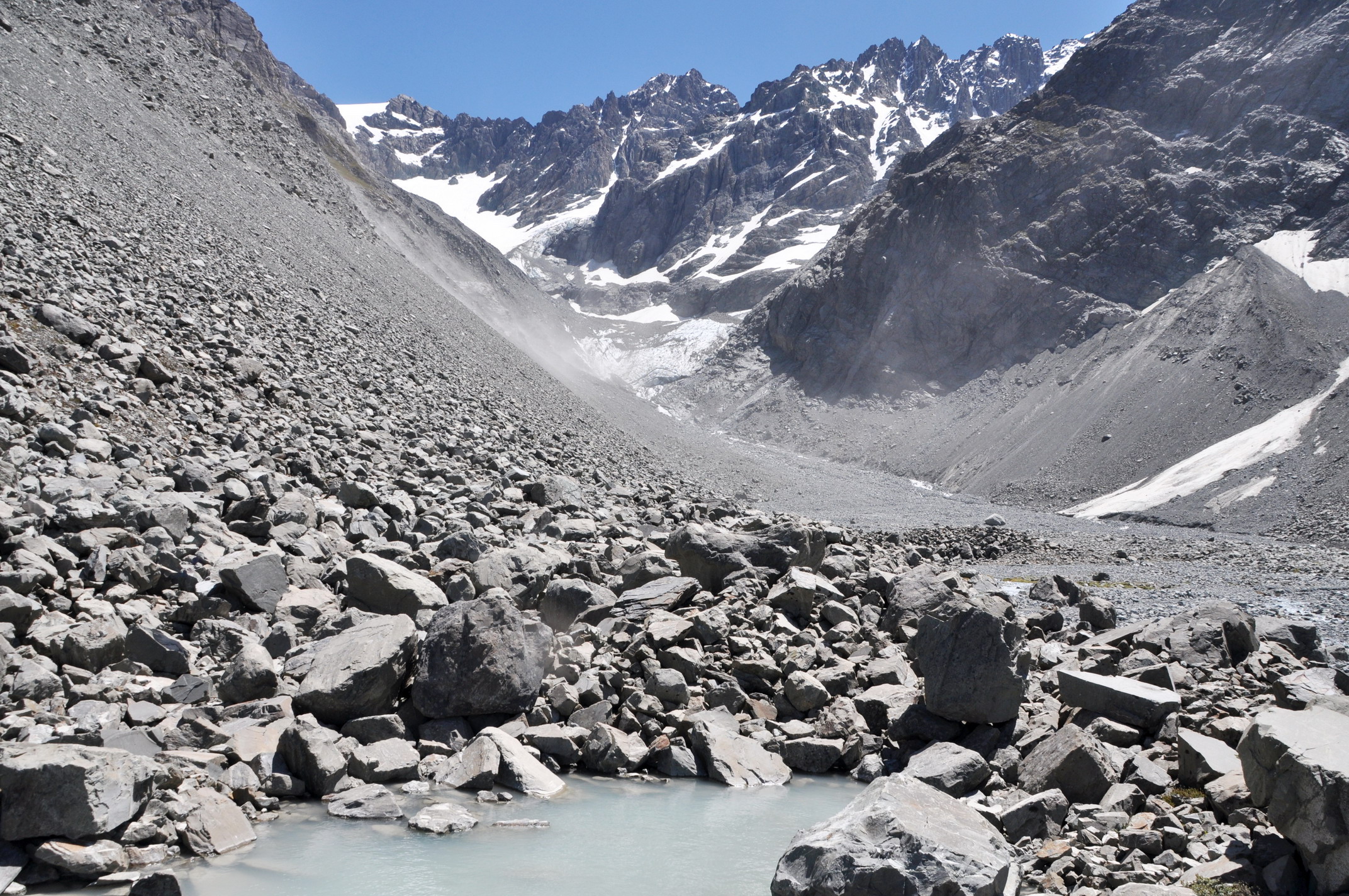
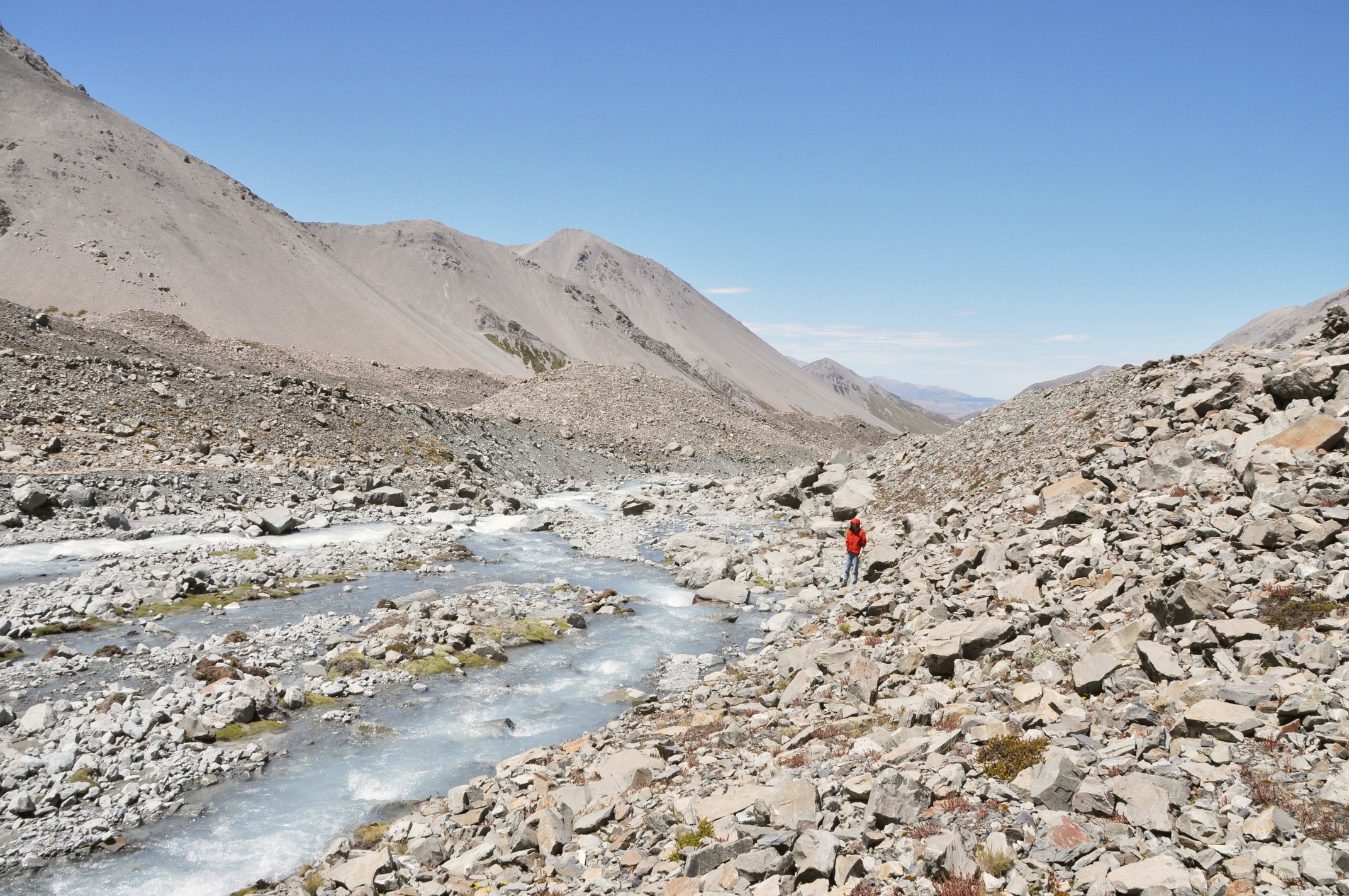
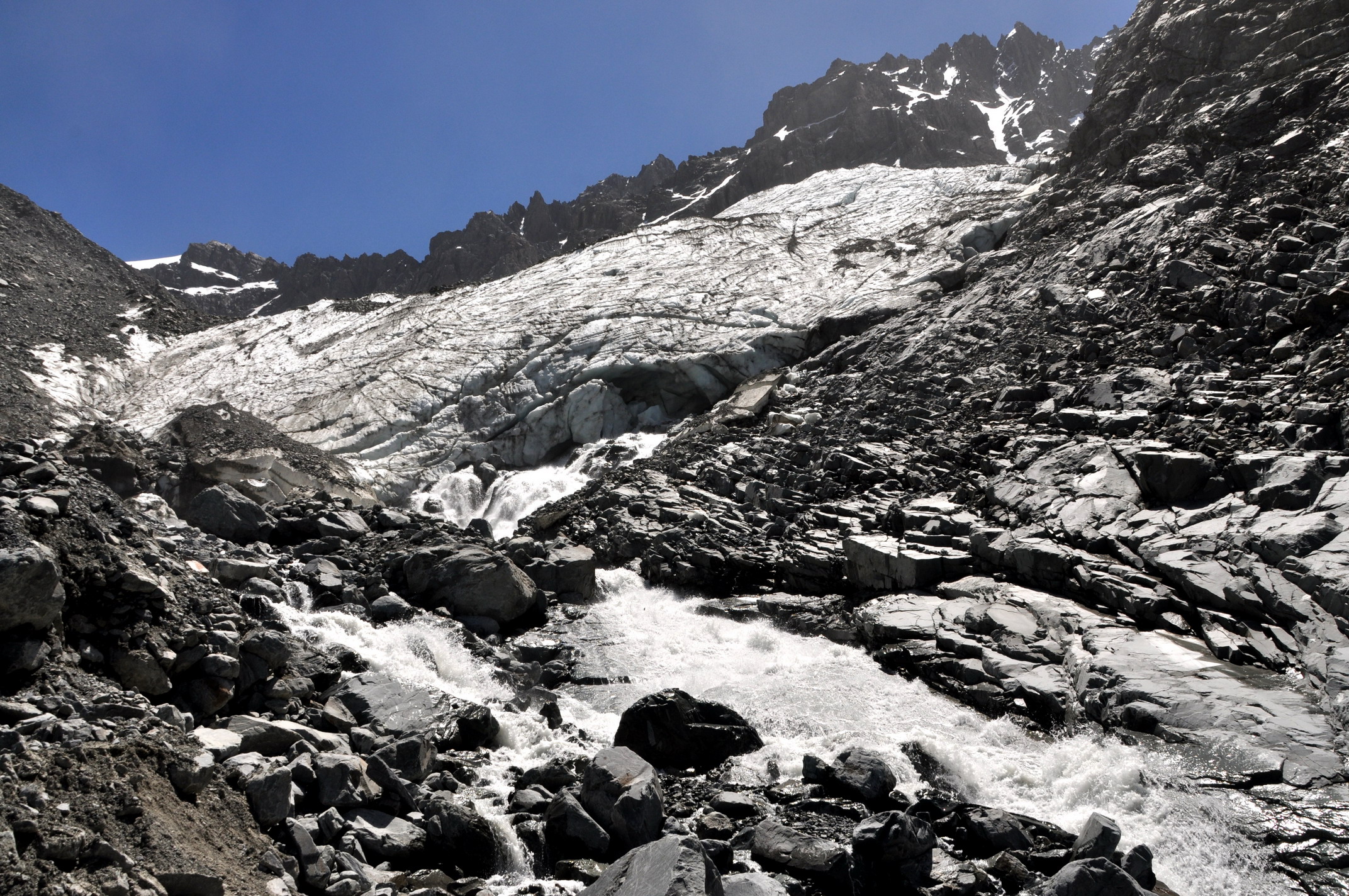
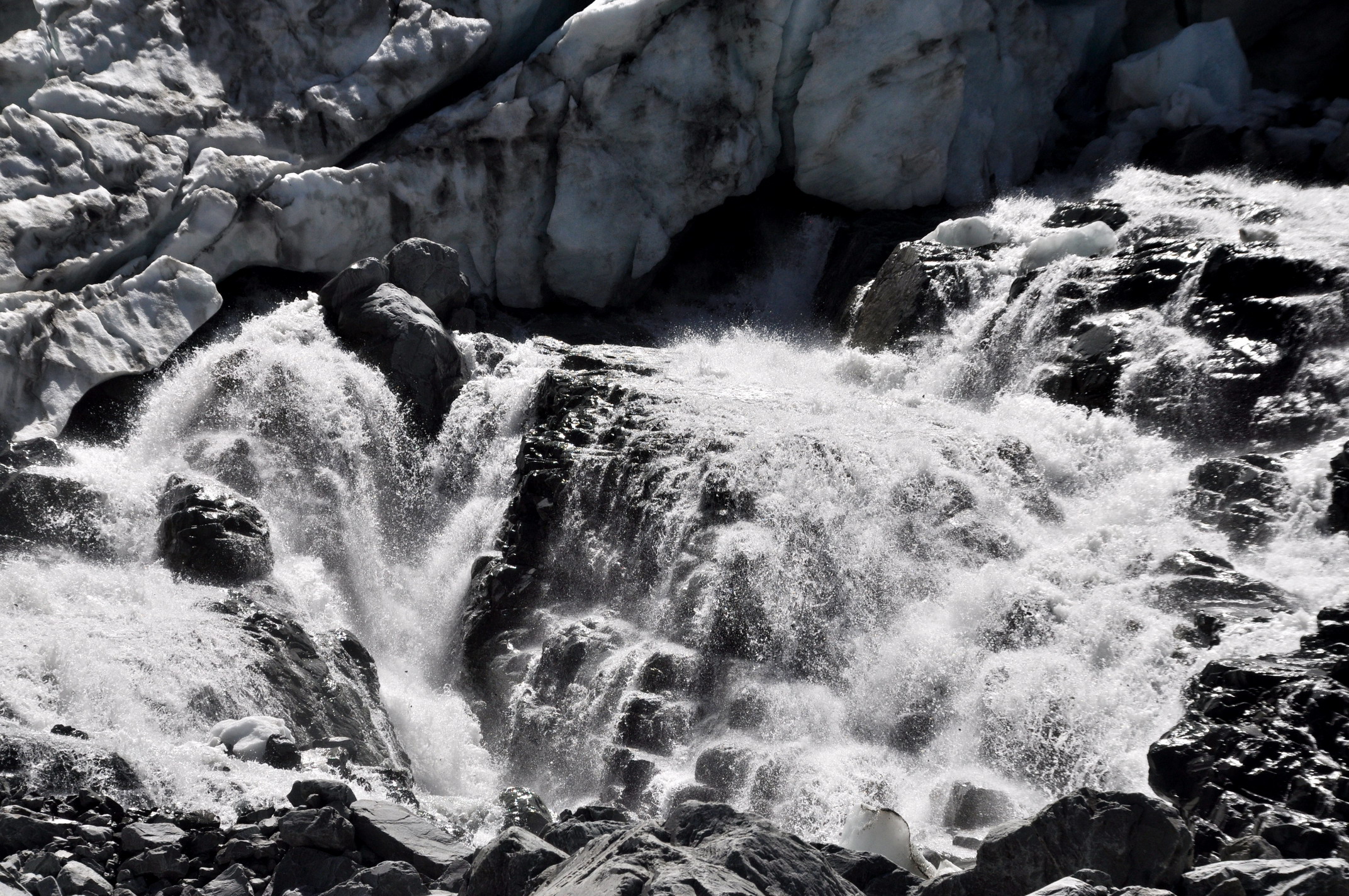
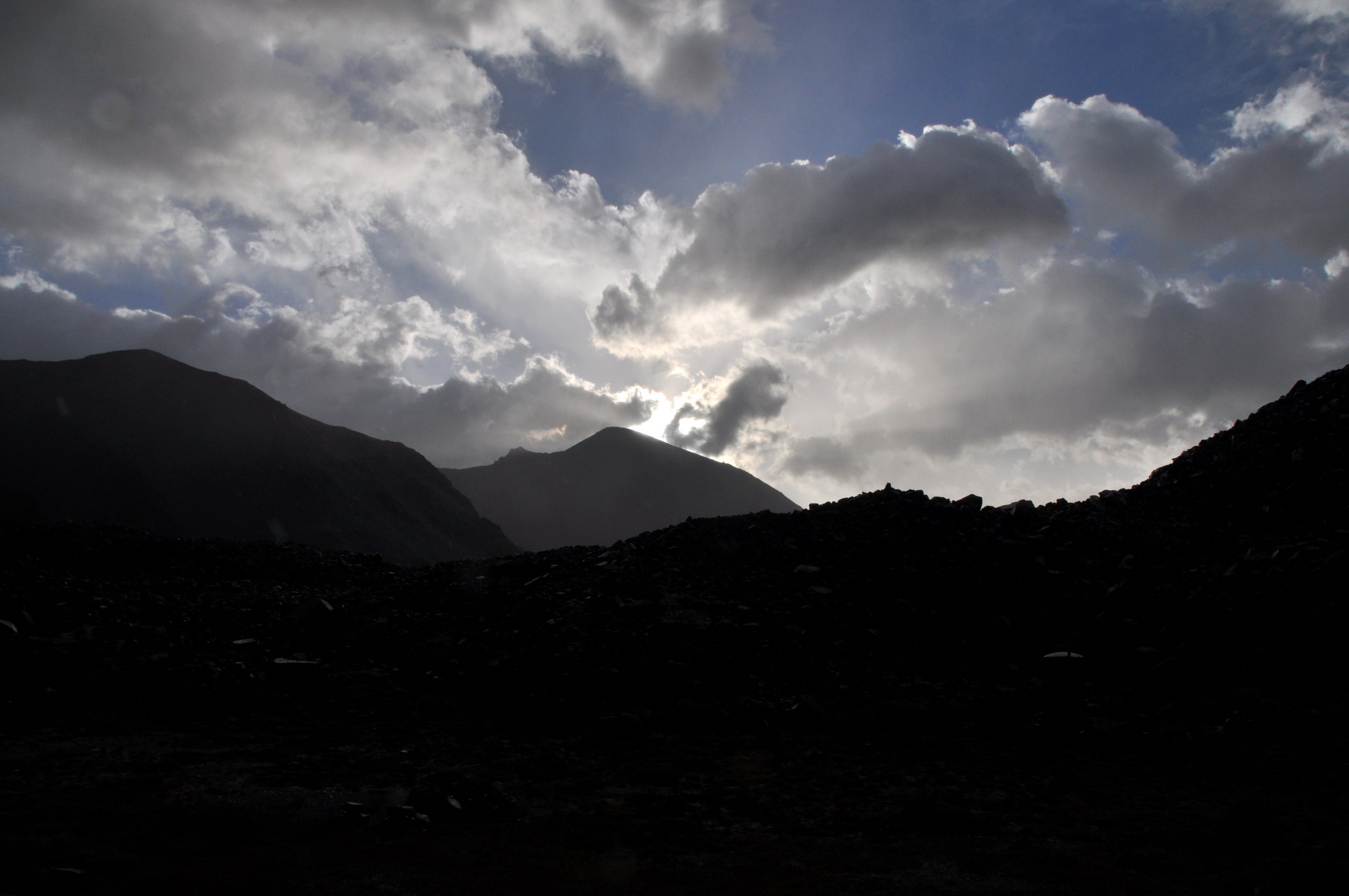
The wind strengthened overnight, and by morning it was pouring. The forecast put us on the very edge of a cyclone, and that was exactly how it felt. To the east the sun was coming up over the Canterbury Plains, while rain fell on us. There was a rainbow. We let the Australians go ahead, then reluctantly left our cosy hut for the driving rain and gale. Even so, the walking was easy. After a few kilometres we came out of the rain.
About halfway back we caught up with the Australians, who had got tangled in the prickly scrub while going around a washout. The track had still been there on their way in, so the obstruction had taken them by surprise.
They were trying to push through and hack away the endless branches. We heard a voice over the scrub: “It's really shit.” We crawled under, overtook them quickly and made it back to the car in four and a half hours.
The sun was already shining in the car park. Behind us the mountains were hidden by a wall of rain.