Trip report
A two-day trip in Lake Sumner Conservation Park.
Tanya and I have been together for twenty years. The day we celebrate is the day we met. That’s when it all happened, at a railway station and on a train, on the way to the White Sea. That was the real thing. The woman who stamped our passports at the registry office had nothing to do with it. Every year we try to spend the day somewhere special.
We celebrated five years by the White Sea, where we watched the solar eclipse when we first met. Ten years found us in a warm pool in the crater of Mutnovsky volcano during an eruption. For sixteen we walked to the village of Nyukhovo. Twenty years was worth doing something special for.

19 July. Winter here in the Southern Hemisphere. I’d just flown in from Argentina, but that was no reason to give up. New Zealand has plenty of hot springs to warm your soul, even on the bleakest day.
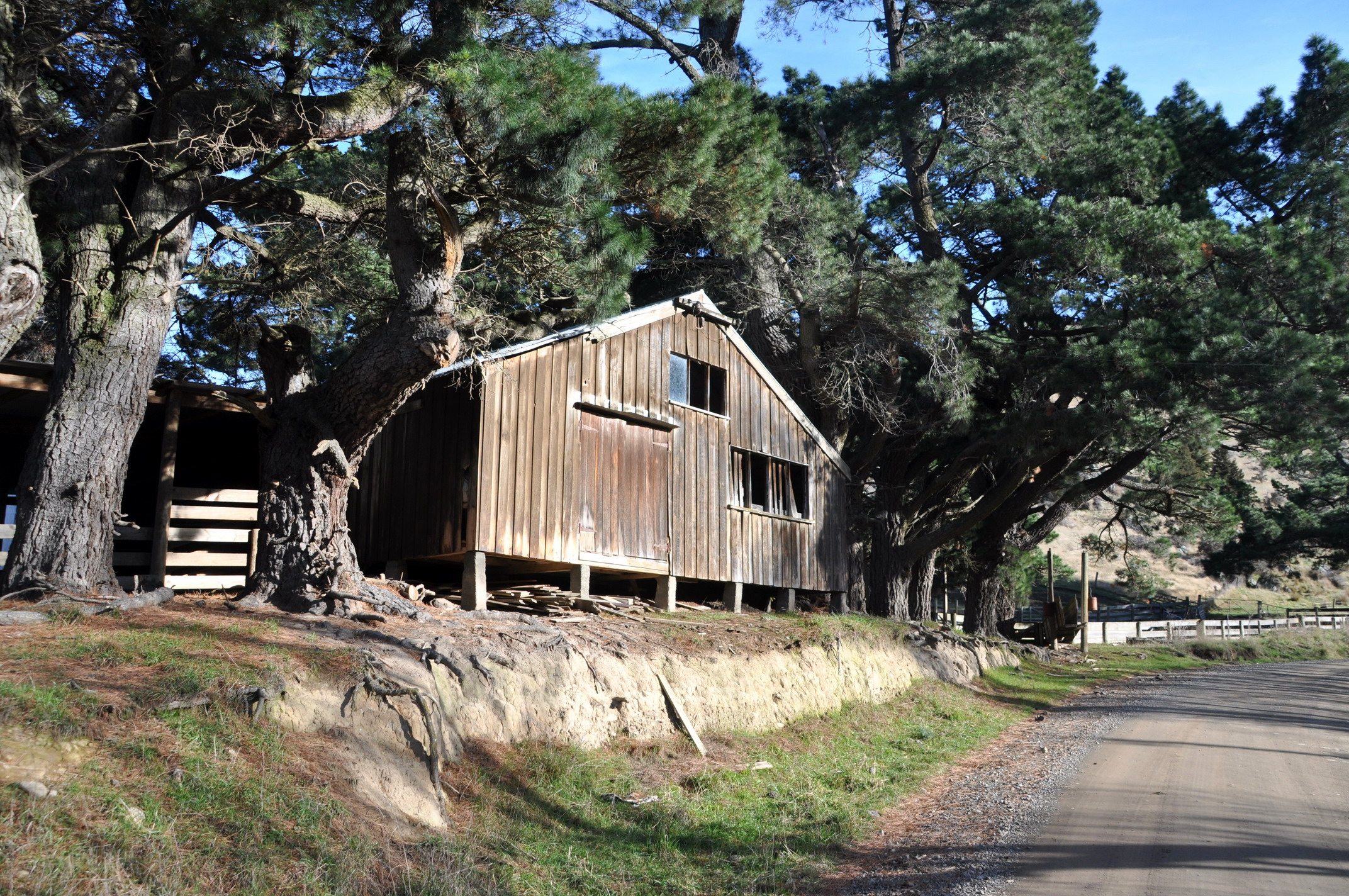
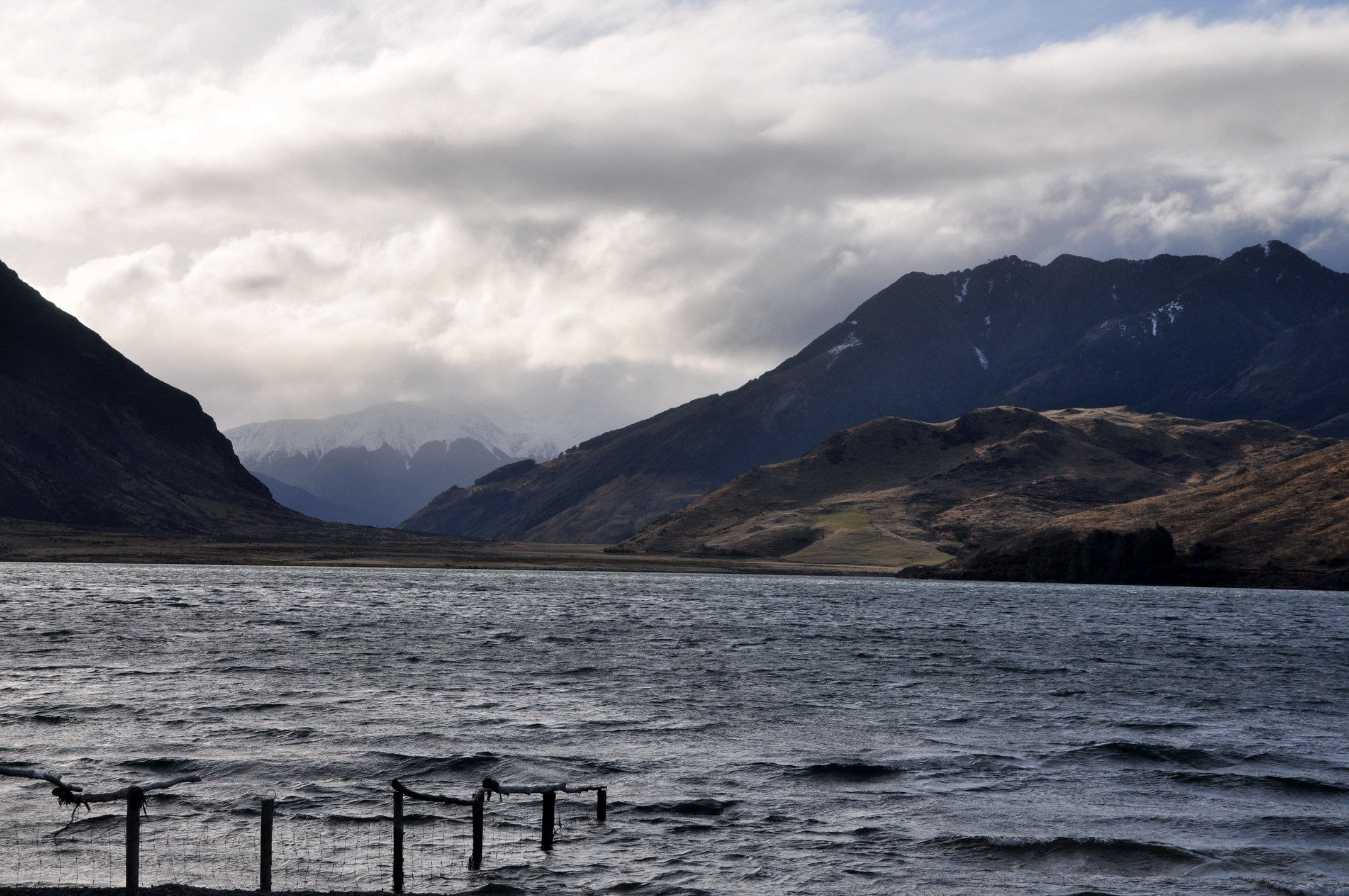
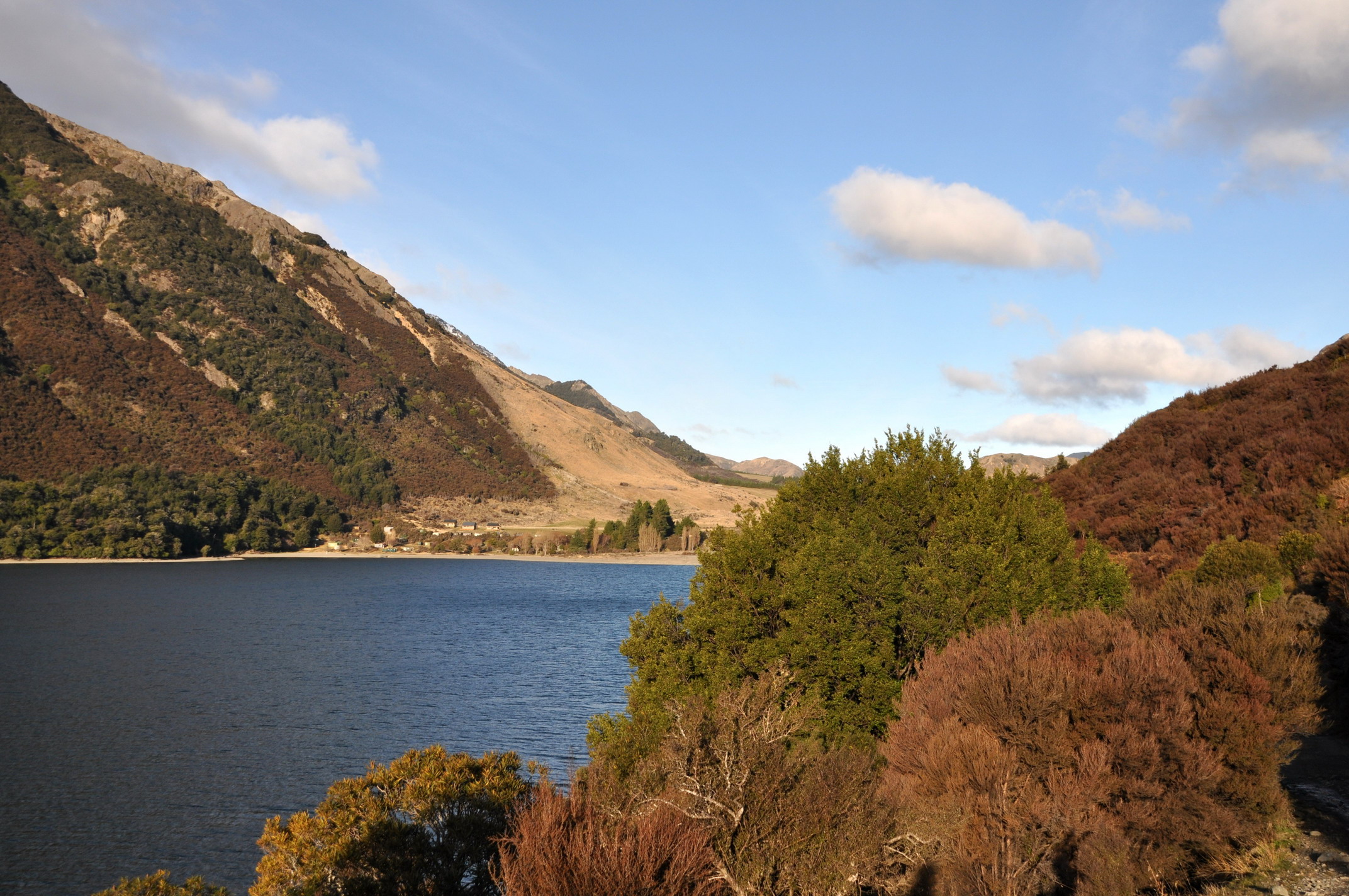
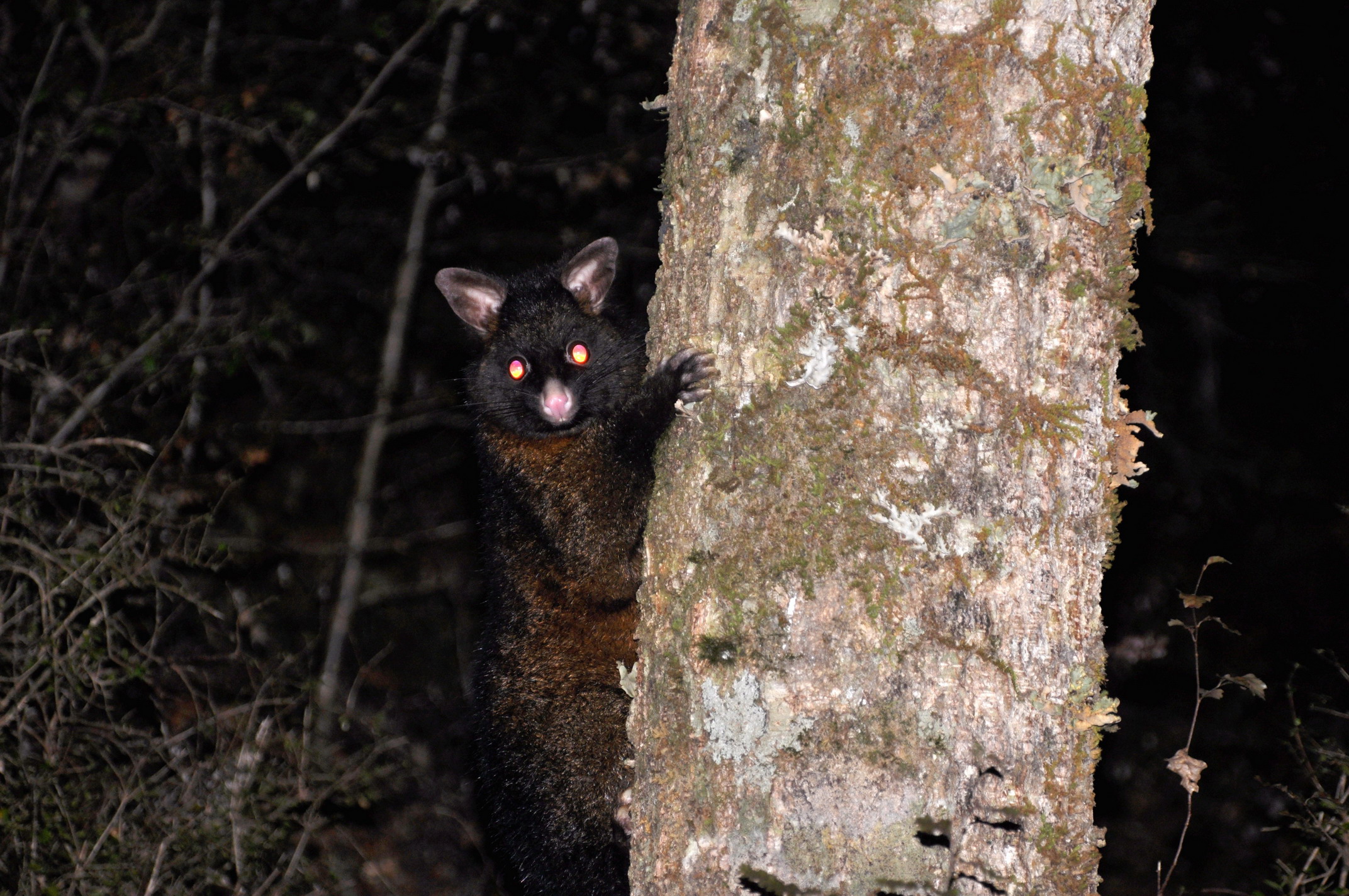
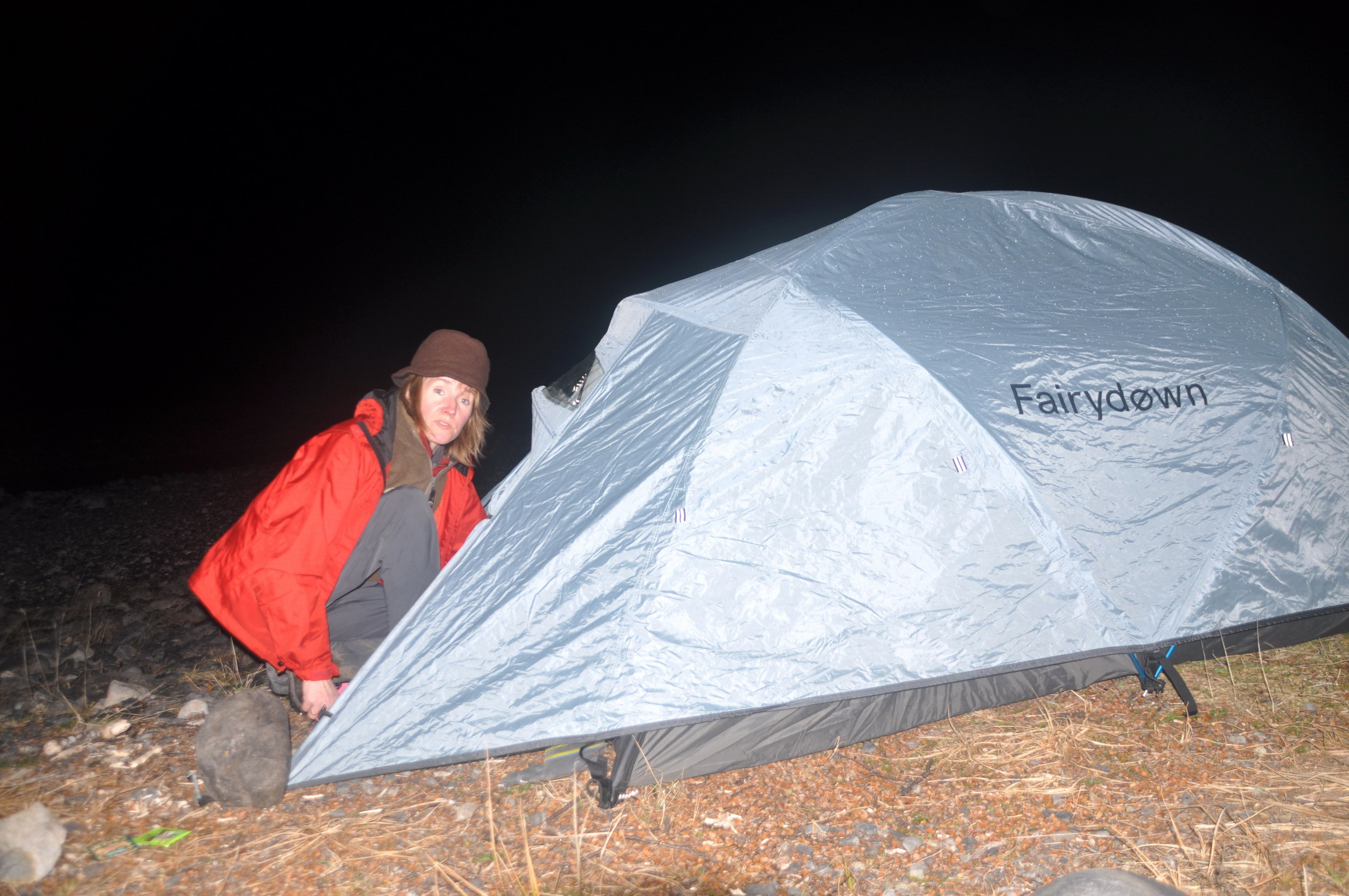
We spent the morning looking for a camera memory card. The drive swallowed almost all the daylight, but eventually we reached Lake Sumner. From there you have to walk another 19 kilometres to find a warm pool on a ledge above the Hurunui. It was a long walk. By the last few kilometres it was properly dark. The possums came out into the trees to see who was crashing through the forest on a night like that. We were beginning to think we’d missed the pool or lost the way altogether when I recognised the place. There was warm water pouring down the hillside. We’d made it. We pitched the tent and went off to celebrate.
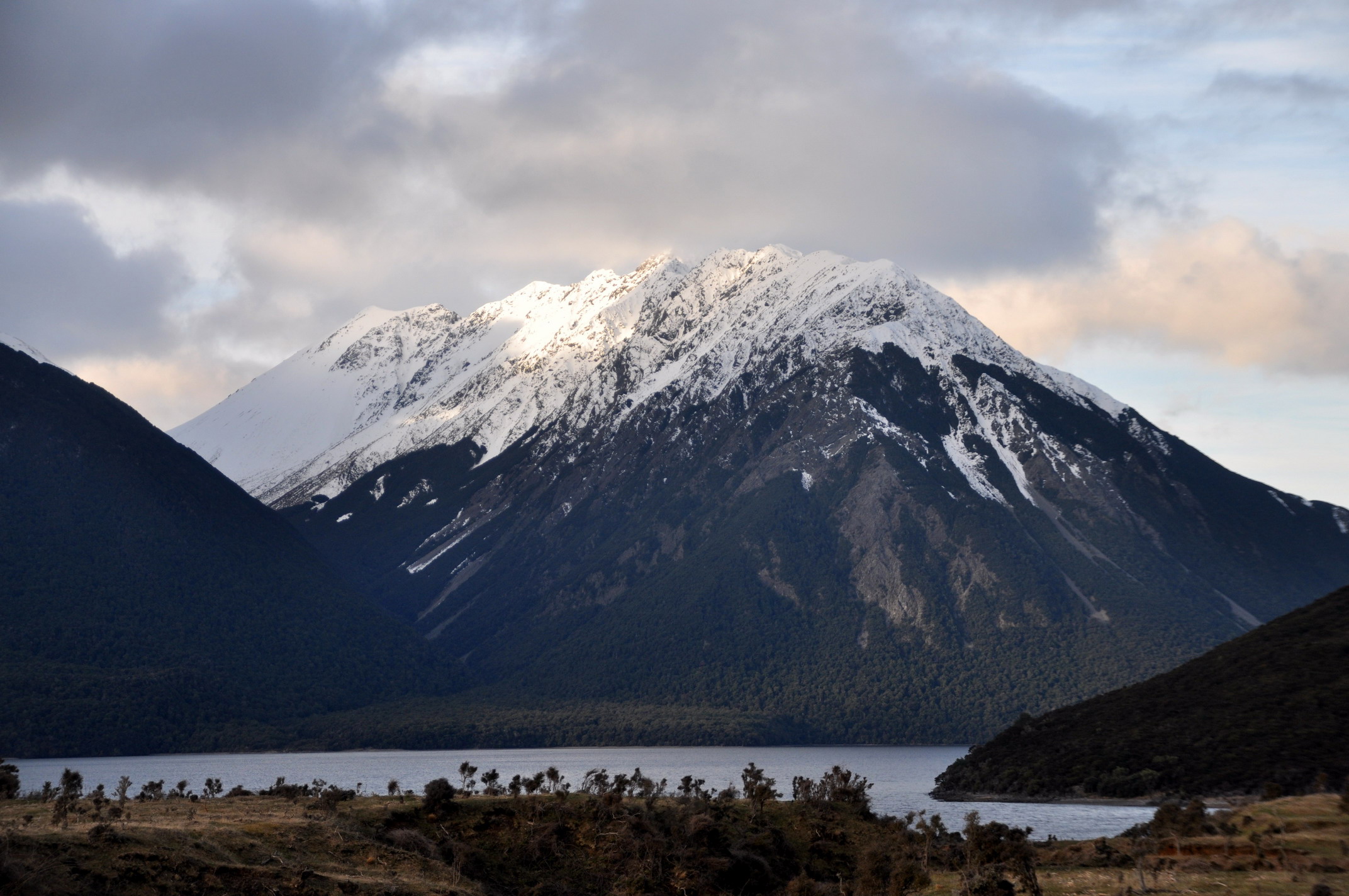
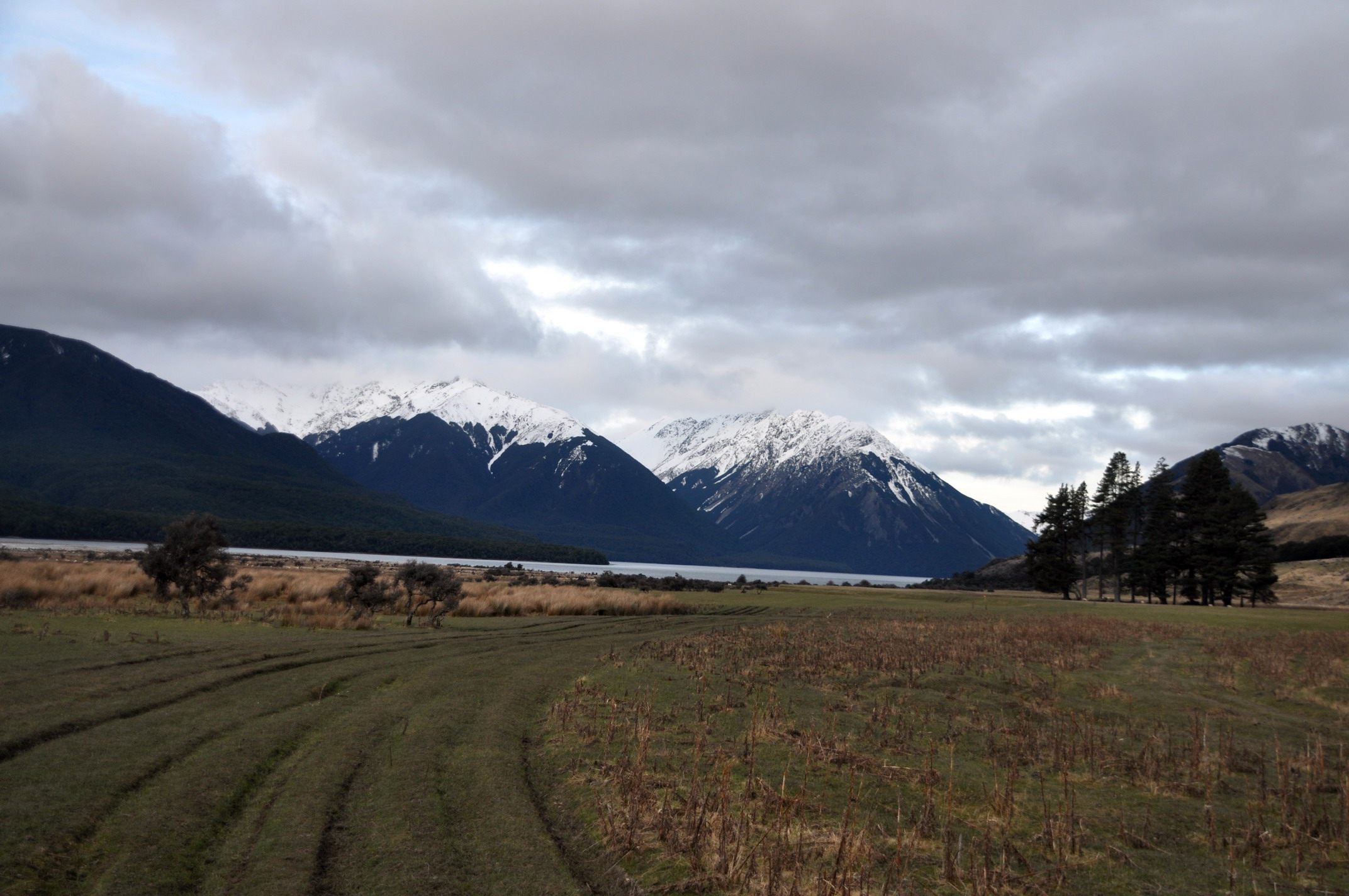
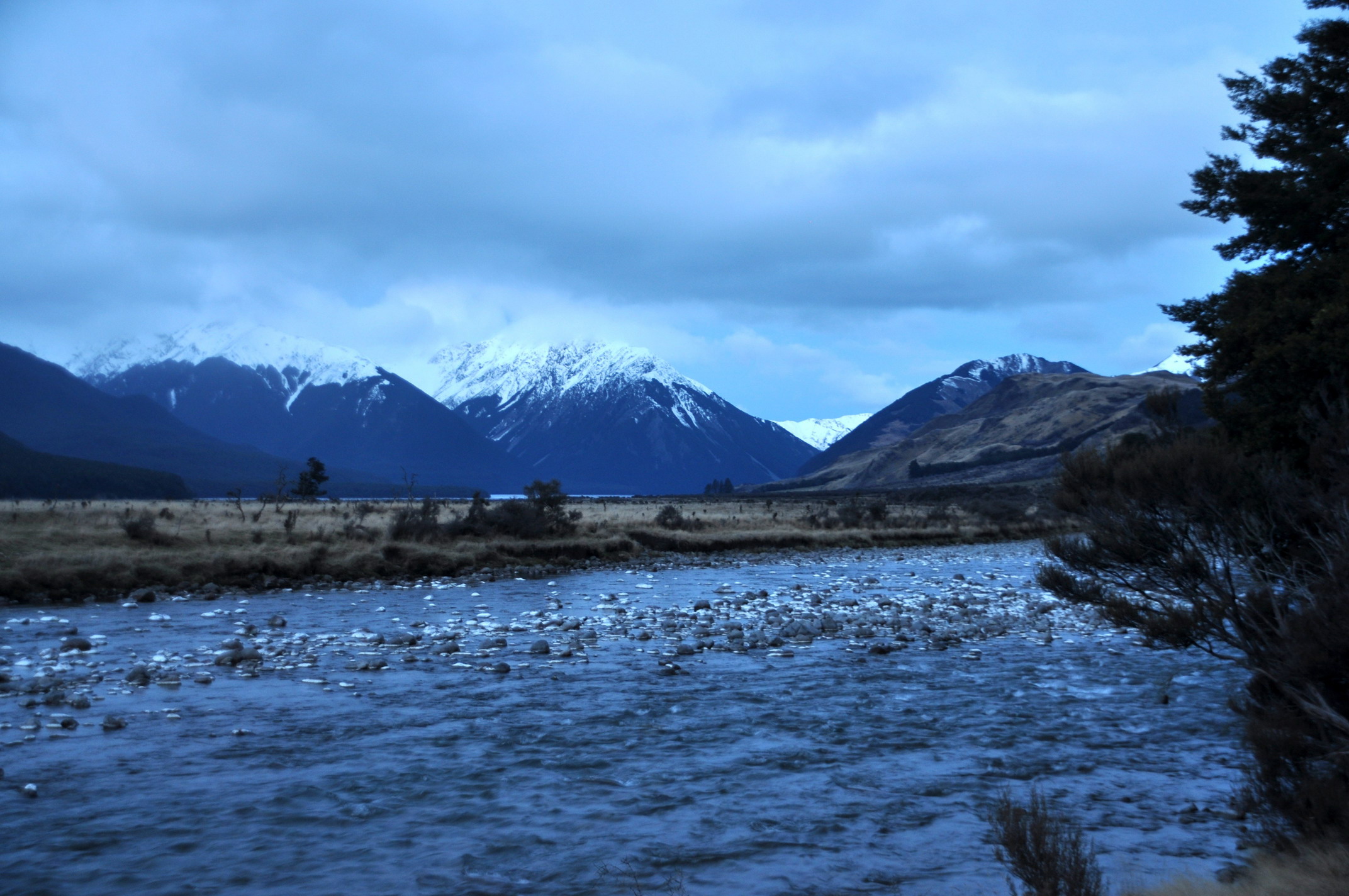
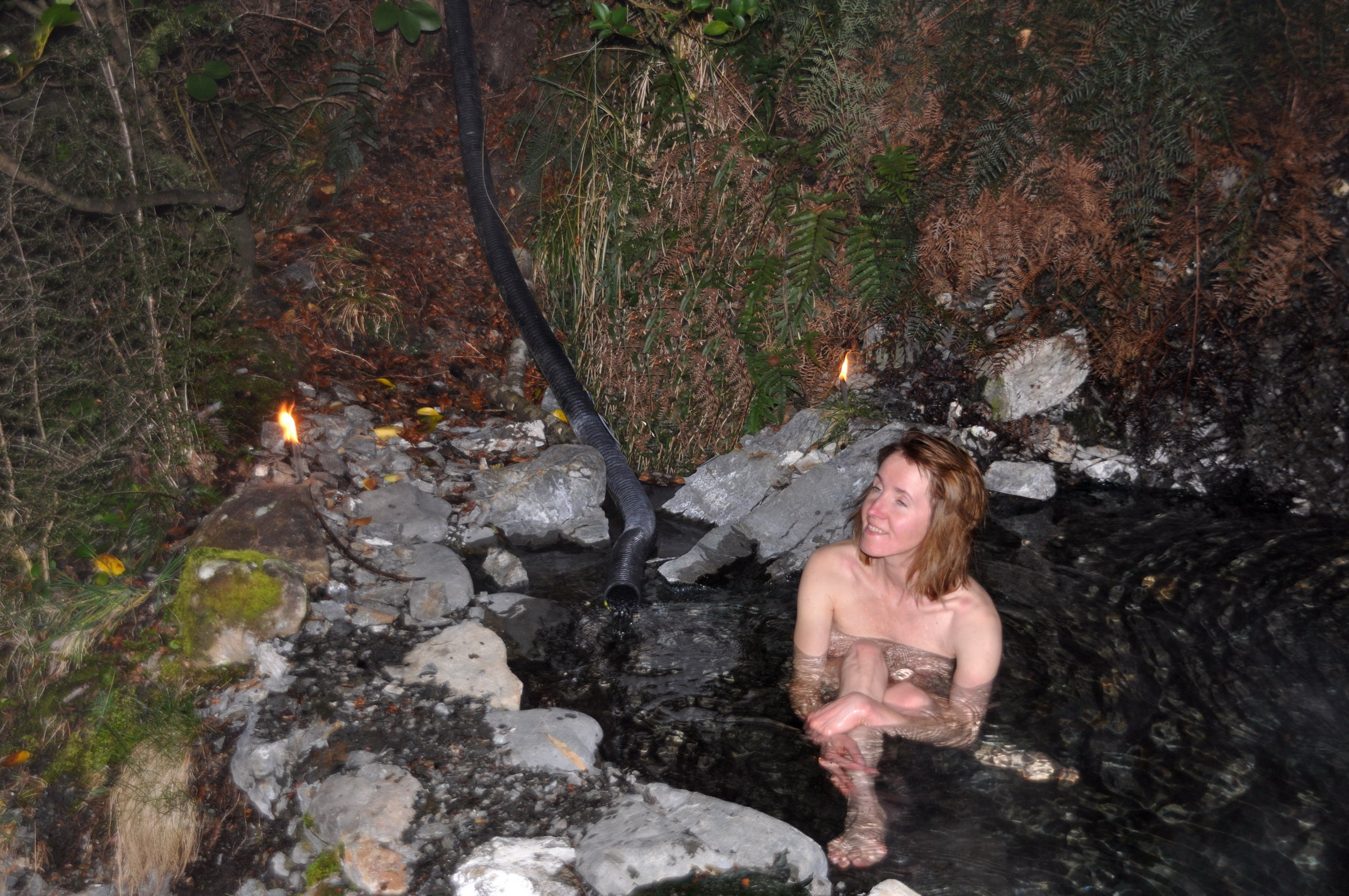
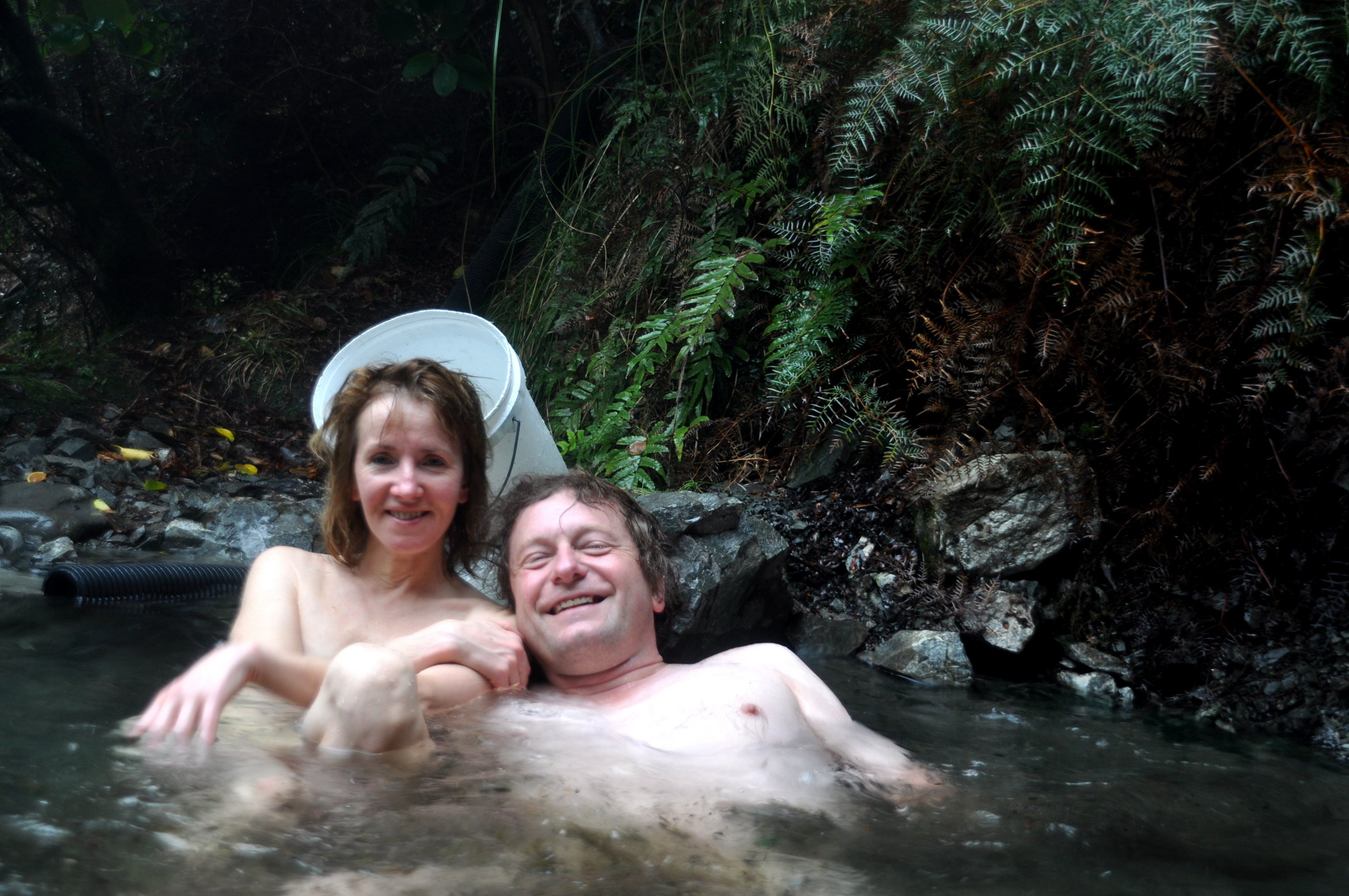
Hurunui Hot Springs is a deep pool of hot water. Along the edges we set torches made from sticks of acrylic, which burn nicely in the wind without smoking. I’d cut them years ago, back when I was at the Polytechnic and making trips to Lake Vyalye. Who would have thought they’d come in handy so far away and so many years later?
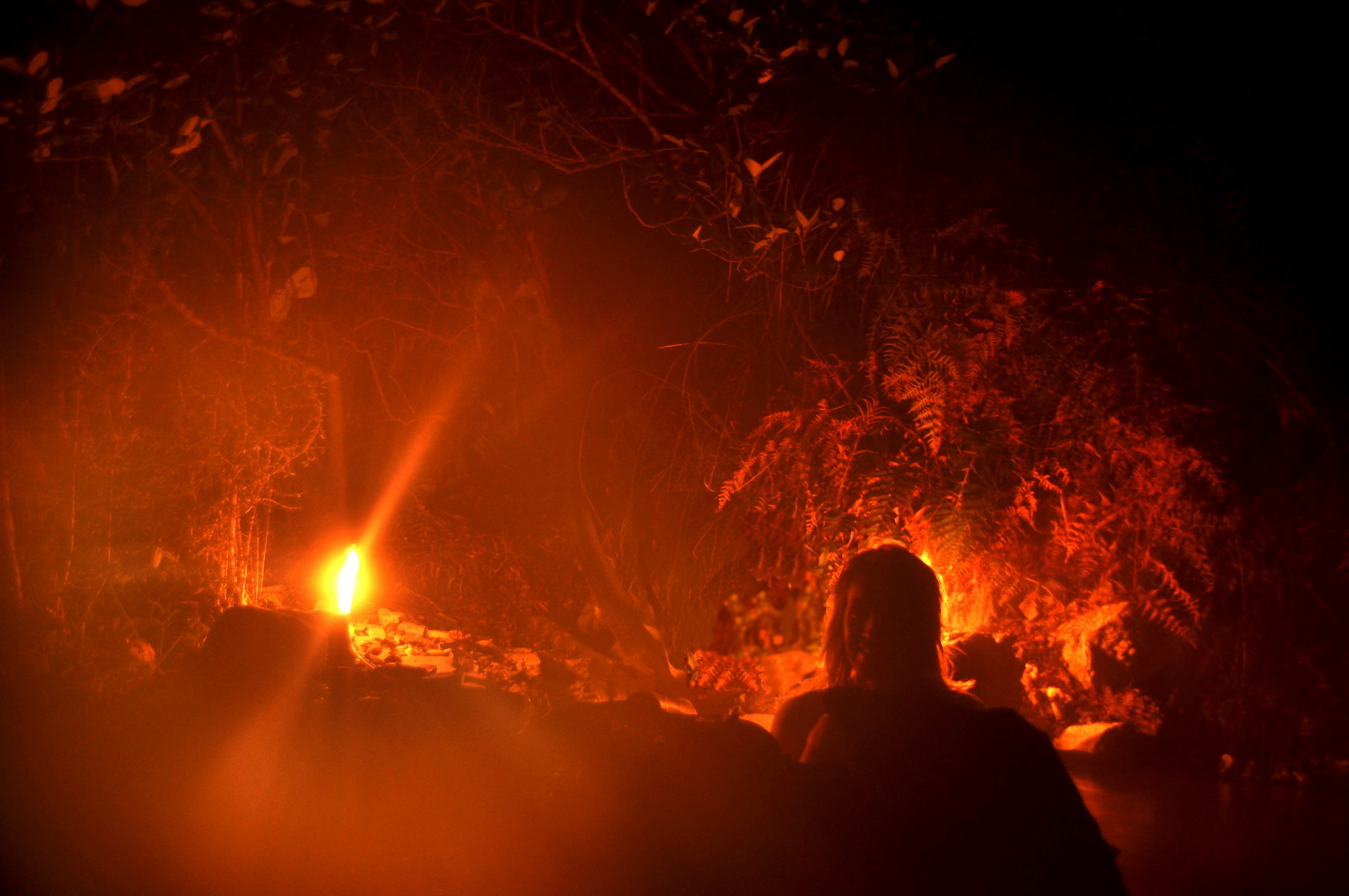
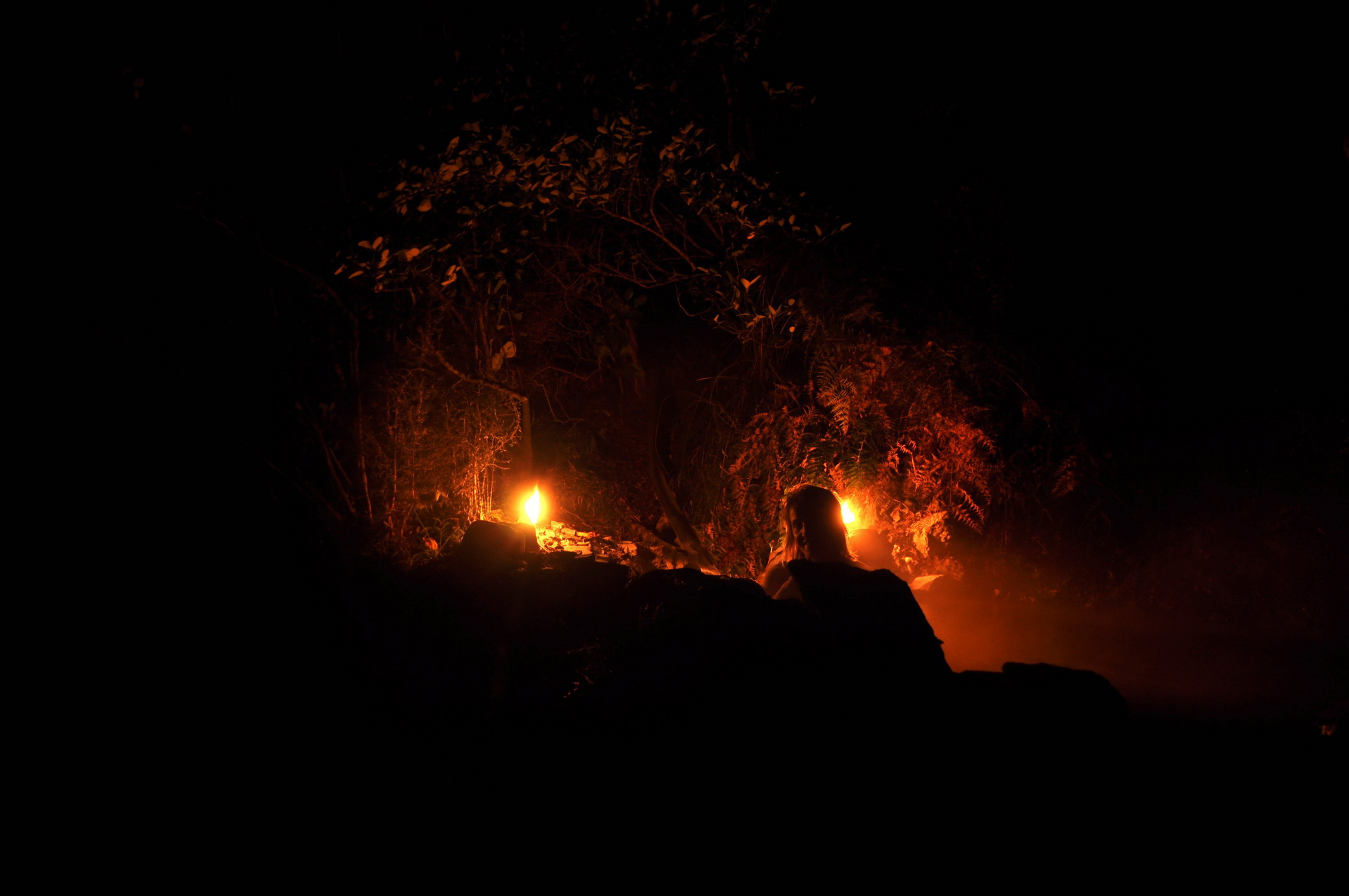
We had the best New Zealand bubbly I could find, and I’d brought our favourite Pisco Sur back from Chile, bought just a week before at a supermarket on the outskirts of Santiago. We had lovely Bohemian glasses, and we set sandwiches, cheese and other nibbles around the edge. Then we stripped off and climbed in. It felt too hot at first and soon felt just right. Above us the mist turned to drizzle. Life had its share of trouble, but here we were warm, together in the same little pool.
We had a splendid anniversary. We finished both bottles and barely made it down the hill to the tent. In the morning we switched to tea and cocoa, had another soak and went back.
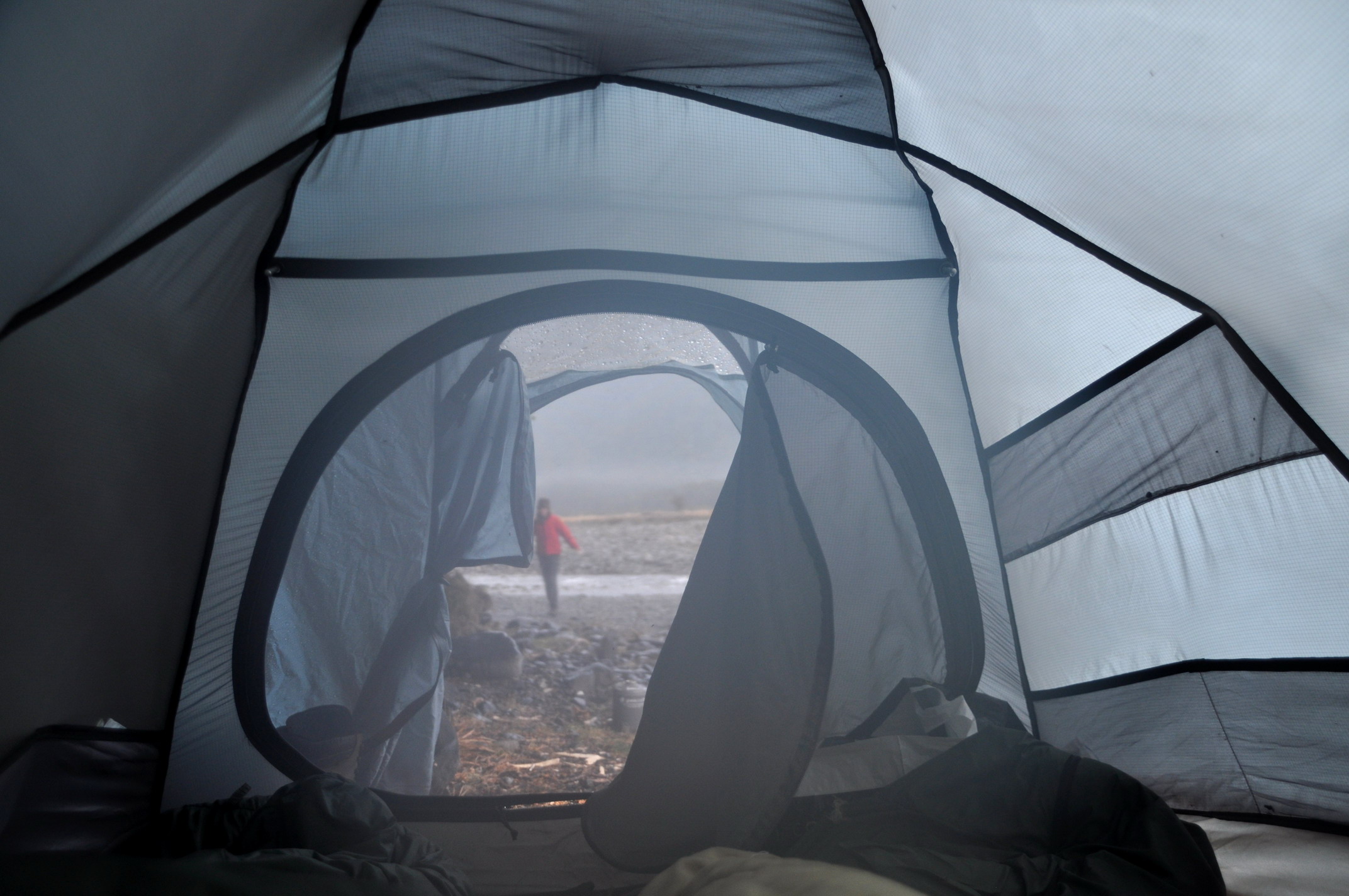
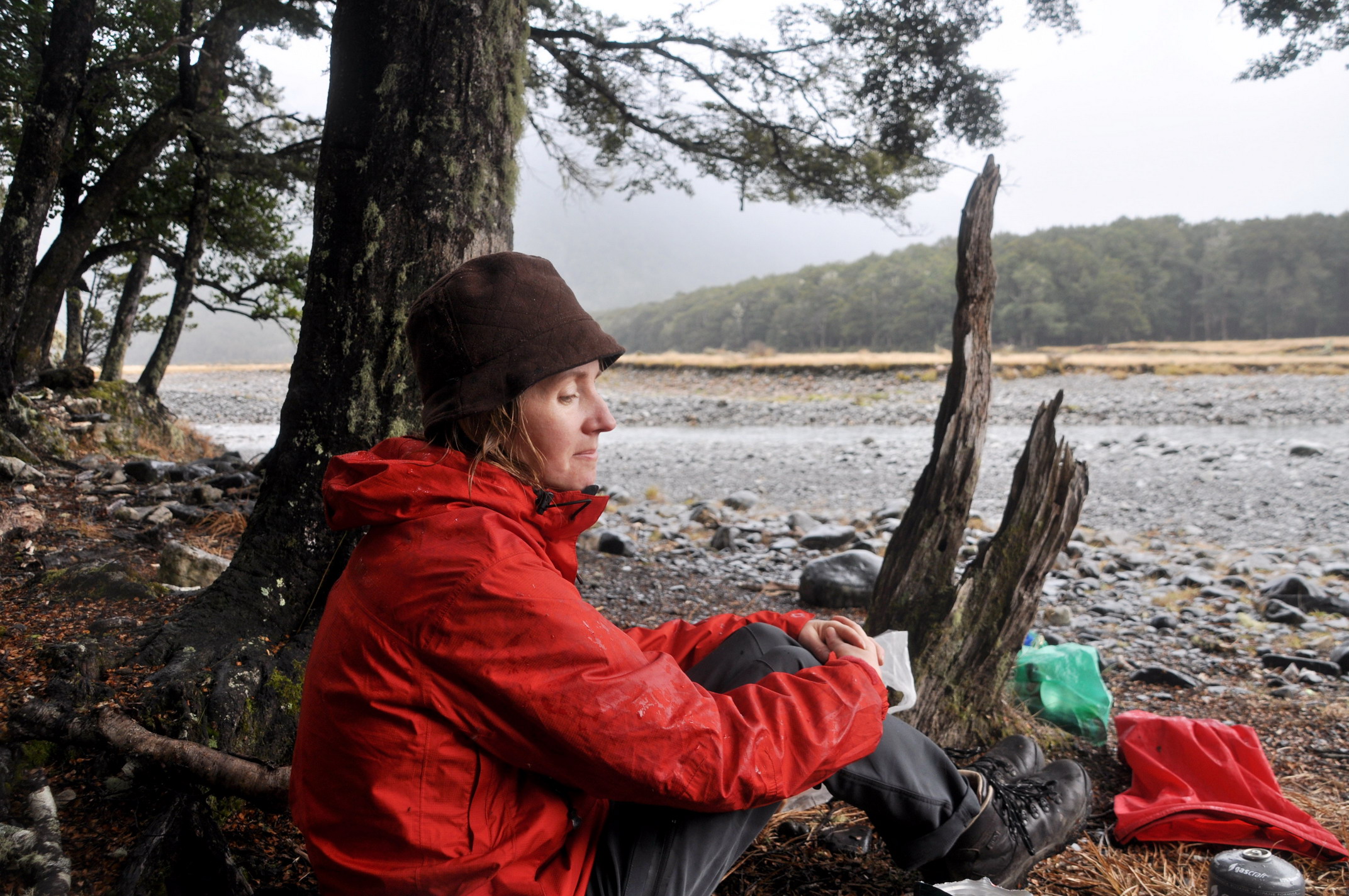
It started raining on the way. We waited it out over lunch at Hurunui Hut (42°42.224′S, 172°05.761′E). There was a magazine there with an article about other hot springs, so we planned another trip for the next weekend. Winter, after all, is just the time to look for warm places.
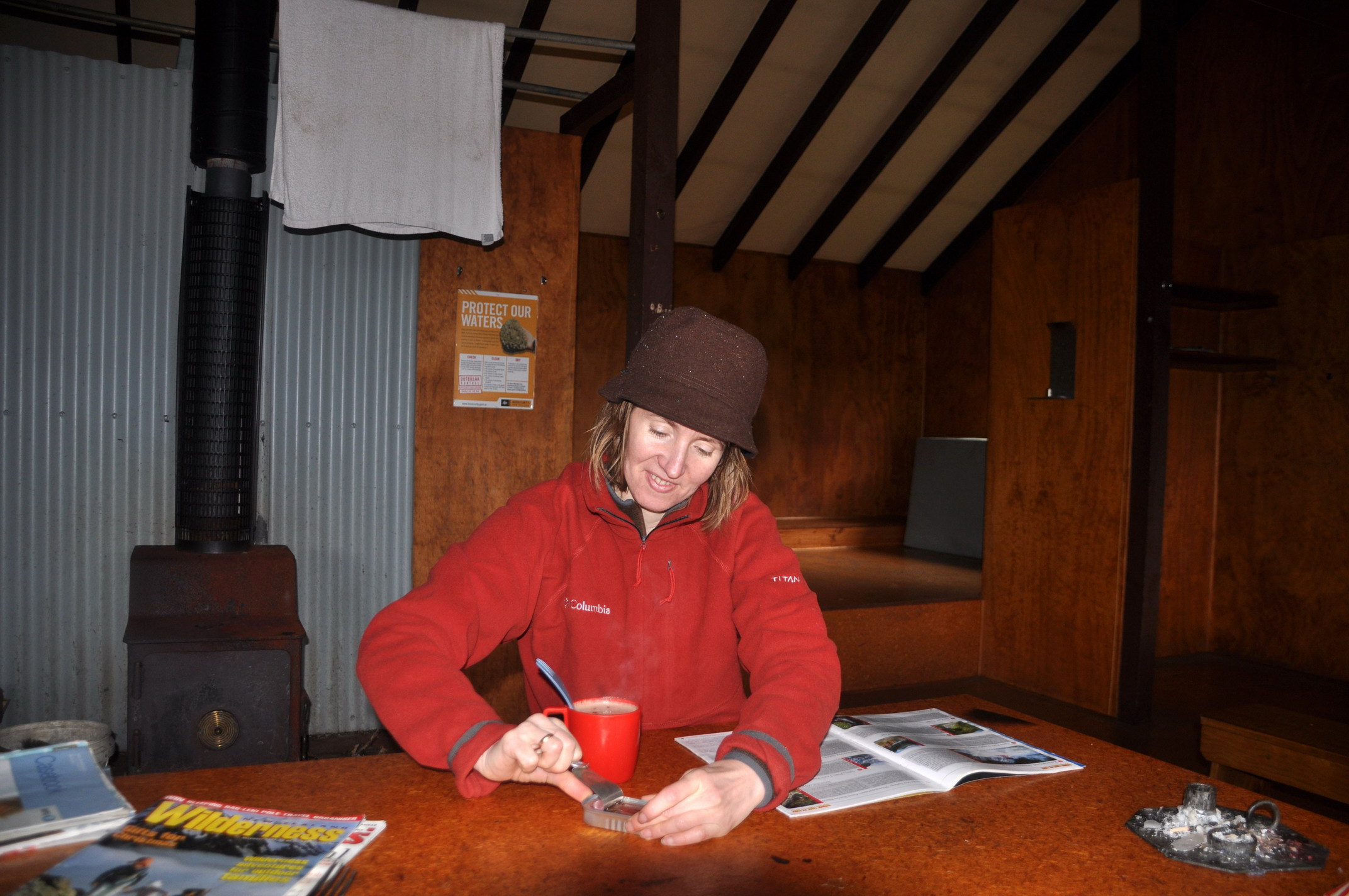
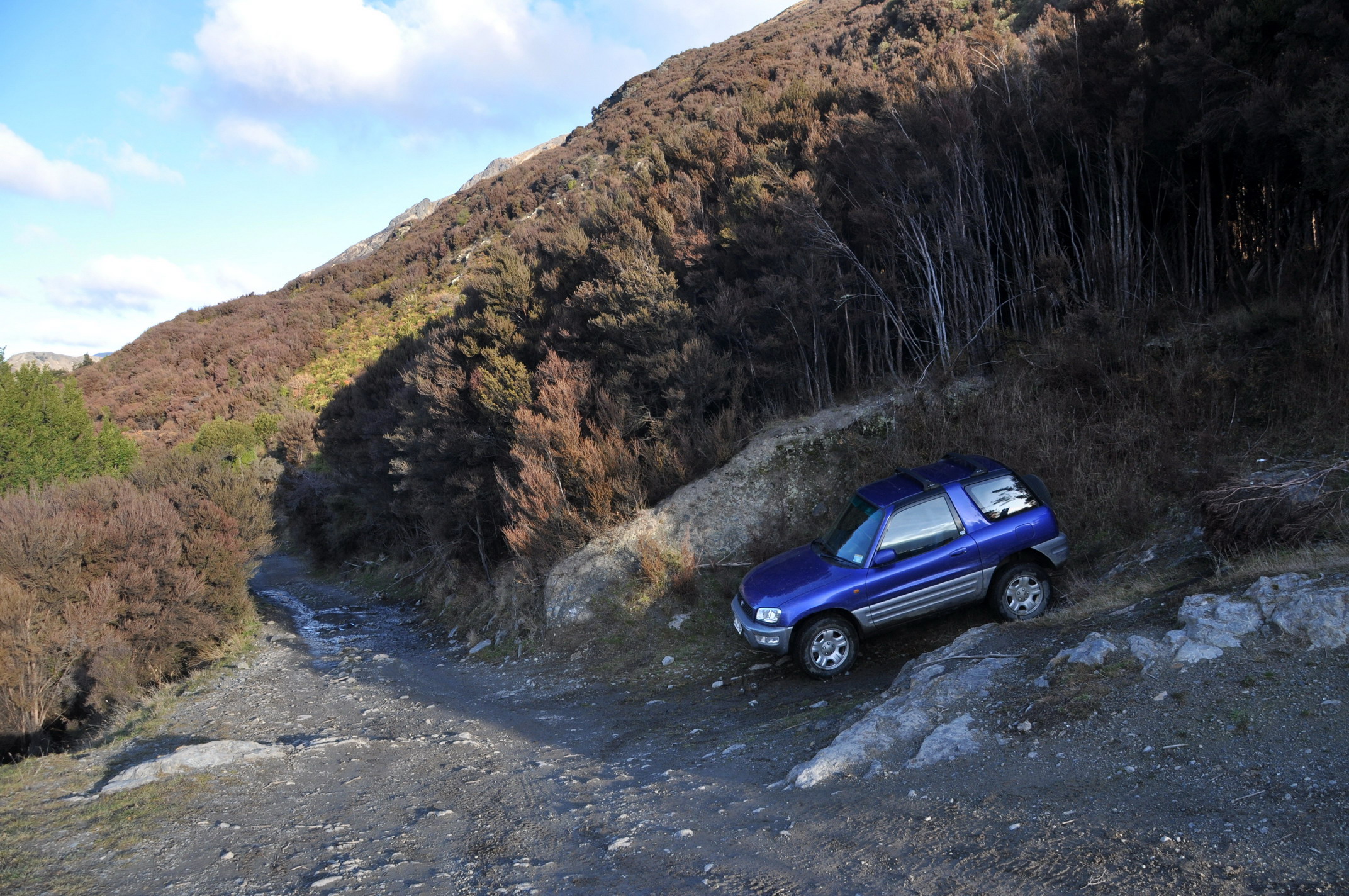
We’d walked 38 kilometres in two days. Our legs felt worn right out. In summer you could get almost to the springs by car. We’d done that in 2007. In winter the gate (42°43.168′S, 172°11.821′E) was locked to keep cars from chewing up the road. Even in summer, access was limited. You rang DOC for the code, which was free but issued to only a set number of vehicles each day.
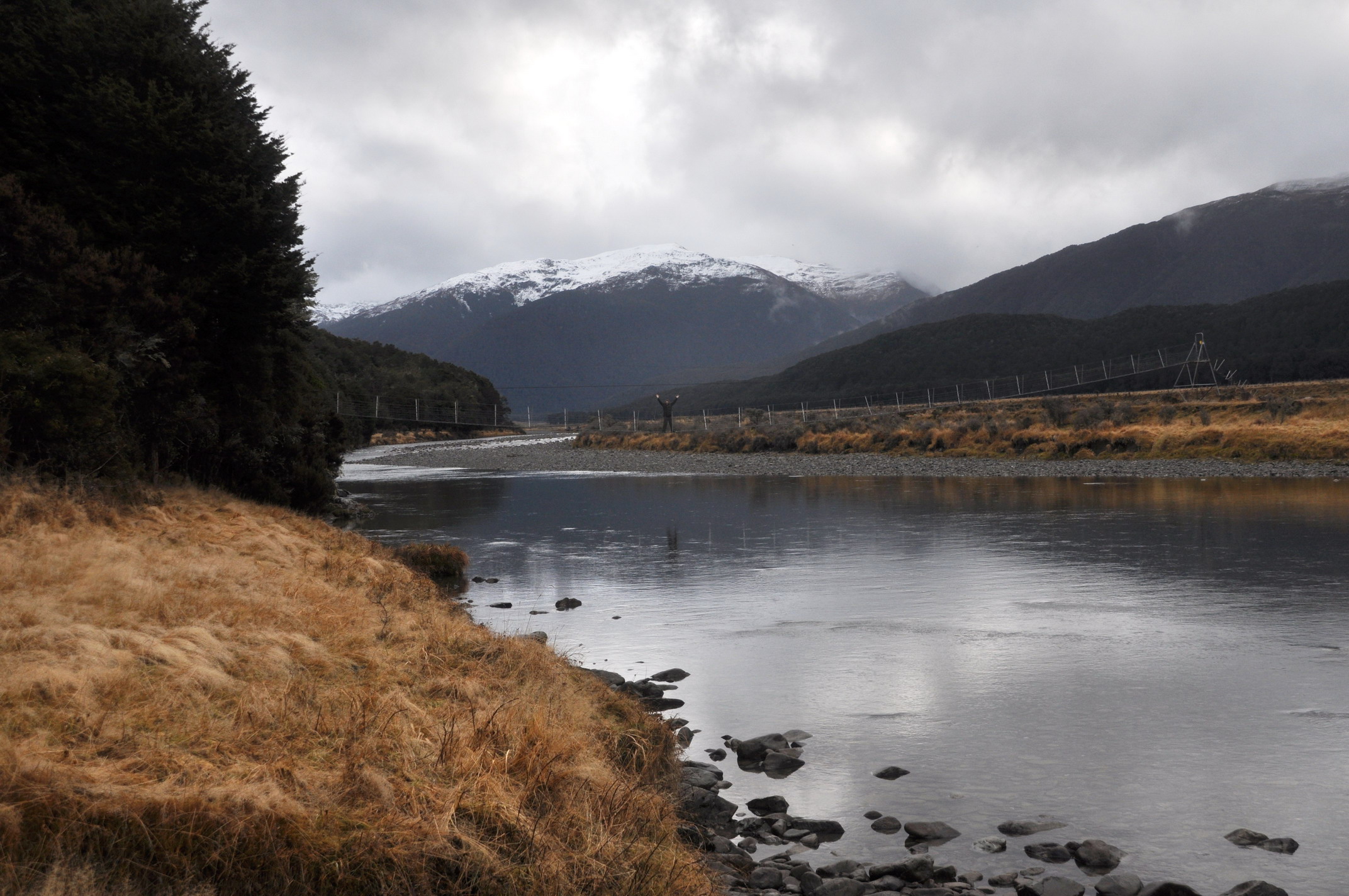
Harper Pass
The walk to Hurunui Hot Springs is a short part of the historic Harper Pass Route, a five- to seven-day journey. Māori used the route to trade pounamu from the West Coast. It then became the main route for Europeans travelling from Canterbury to the West Coast. After the road over Arthur’s Pass opened in 1866, the track over Harper Pass became a route for trampers.