Trip report
Fifty in Africa
Gabon
Years and years ago I thought life went by terribly slowly. I’d already seen a fair bit and I was only 23. Of course there are people younger still, and by then there were things I’d missed that I’d never get back. But still: I was young!
Now I’m 50. I want to ask myself: is this really happening to me?
Maybe I’ll wake up any minute, go out to the road, stick out my thumb and the whole world will be mine. I’ll be glad of everything I come across, jump for joy and climb trees… If only.
No, I’m not complaining. My head is full of roads, cities, years, mountains and seas in dozens of countries, with the world’s finest birds singing in them. A wonderful family, children, a business, emigration… A fairy tale, not a life. But you can’t live on a fairy tale. I’ve already eaten and digested that one.
I had to celebrate properly. Not around a table, of course. Anyone who feels like it can sit round a table at my wake someday. For now I’m alive and I want to get out into the open. It’s been too long. I want to spend these days as if I were still 23.
Tanya is finishing university in New Zealand. She can’t get away. Come to think of it, what do you mean, fifty? My wife is a New Zealand student!
I have work to do at the end of the year too, naturally, but I could forget about it for a week.
Where could I spend the big birthday? Where is the wildest place in the world? If I wanted to climb trees, equatorial Africa seemed about right. I wanted my beloved tropics, all bright and colourful, with gorillas and crocodiles, with no rules and no one to count on but myself.
Nature looked after me. The Russian government had already made my birthday a day off. And when the solar system was put together, someone arranged a total eclipse of the Sun on the Gabon–Congo border at just the right time. The decision had more or less been made for me.
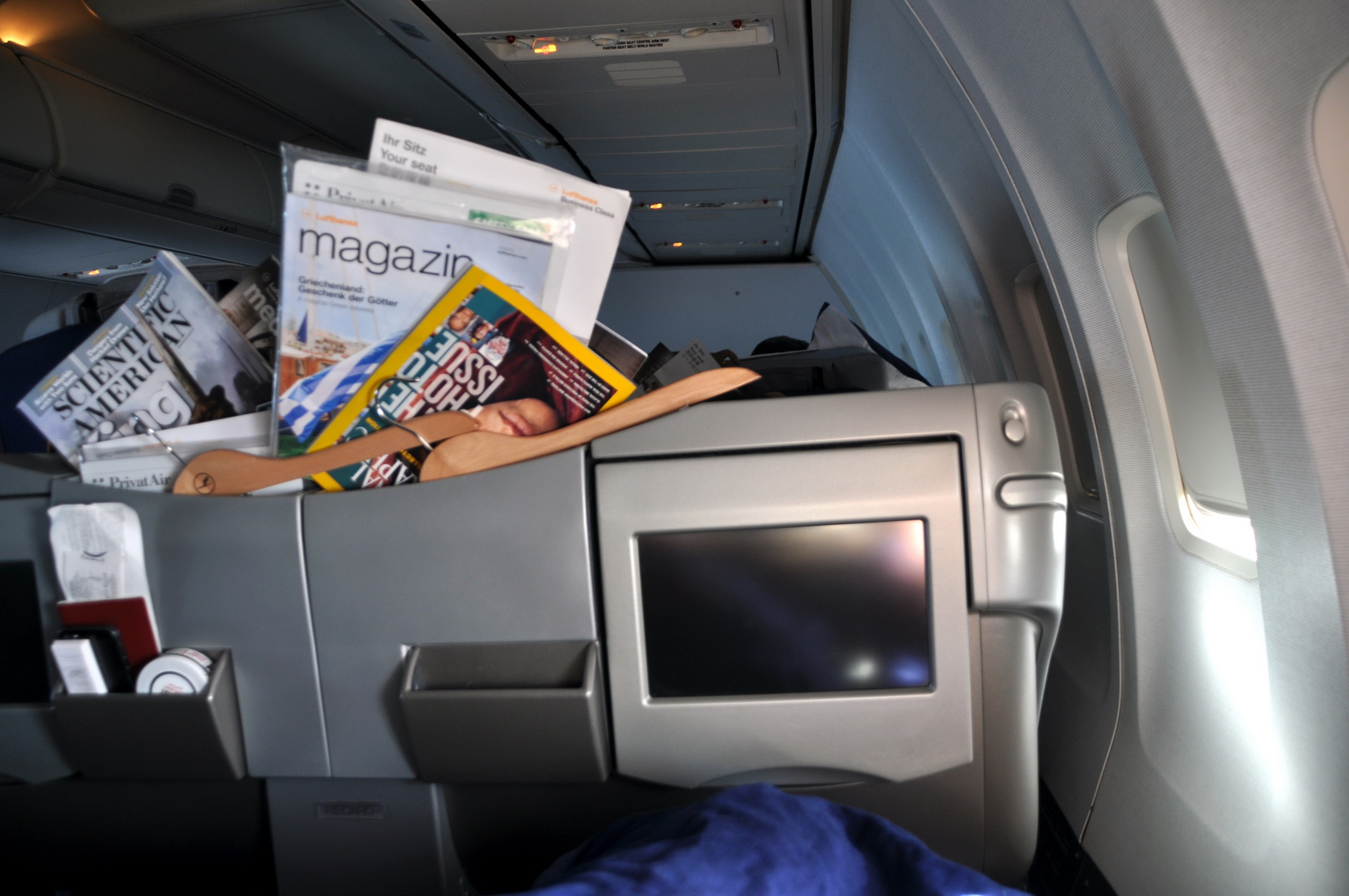
No, sadly I didn’t walk out to the road with my binoculars and ask for a lift to Africa. There are limits. I had only a week, and an enormous telescope rather than binoculars, so my place in a caravan crossing the Sahara went unfilled. I was flying from Frankfurt to Libreville, the capital of Gabon, on a German PrivatAir flight. Which was quite pleasant too, I have to say. I discovered I had several hundred thousand Lufthansa miles, and this was a way to use them.
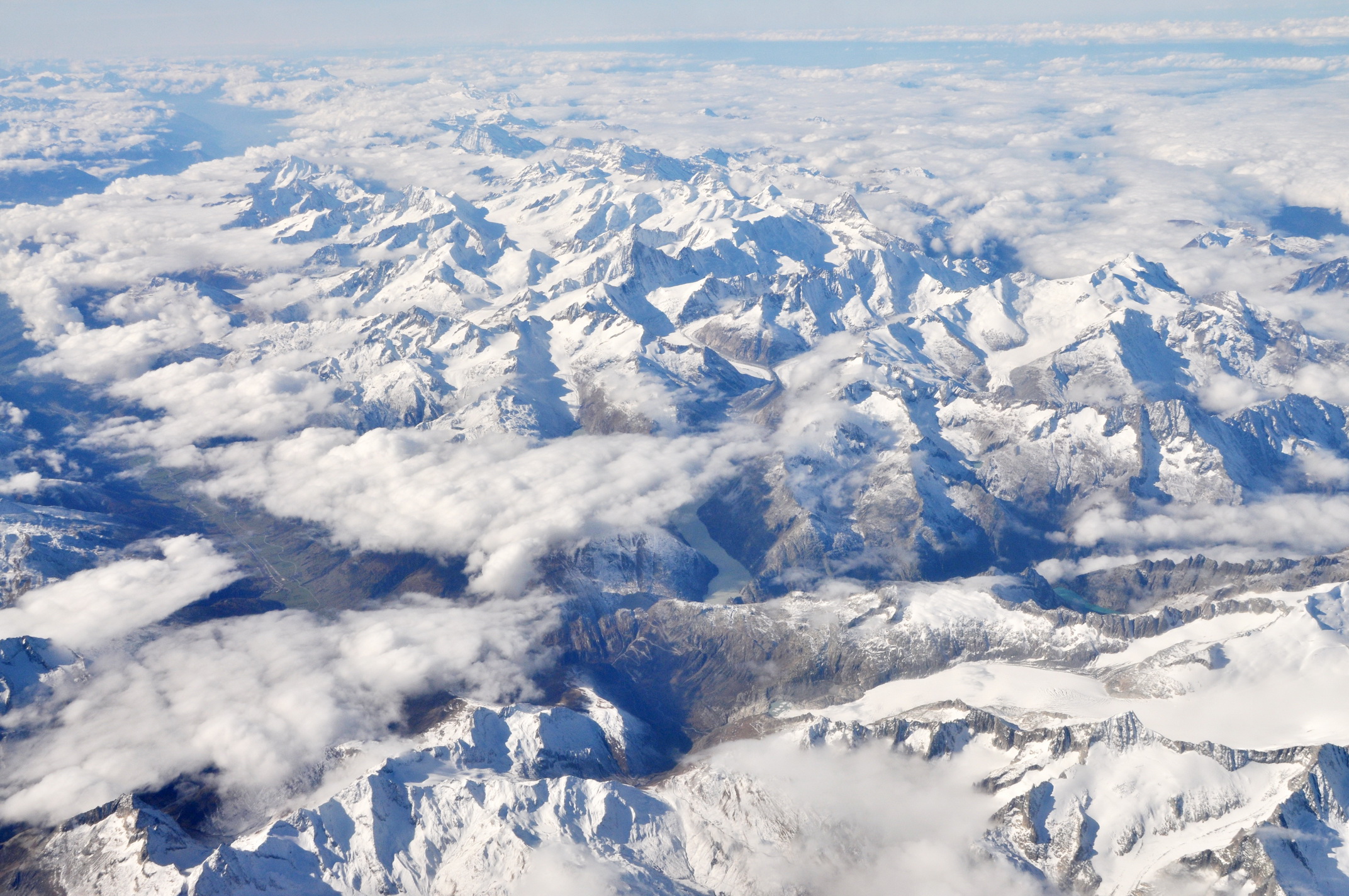
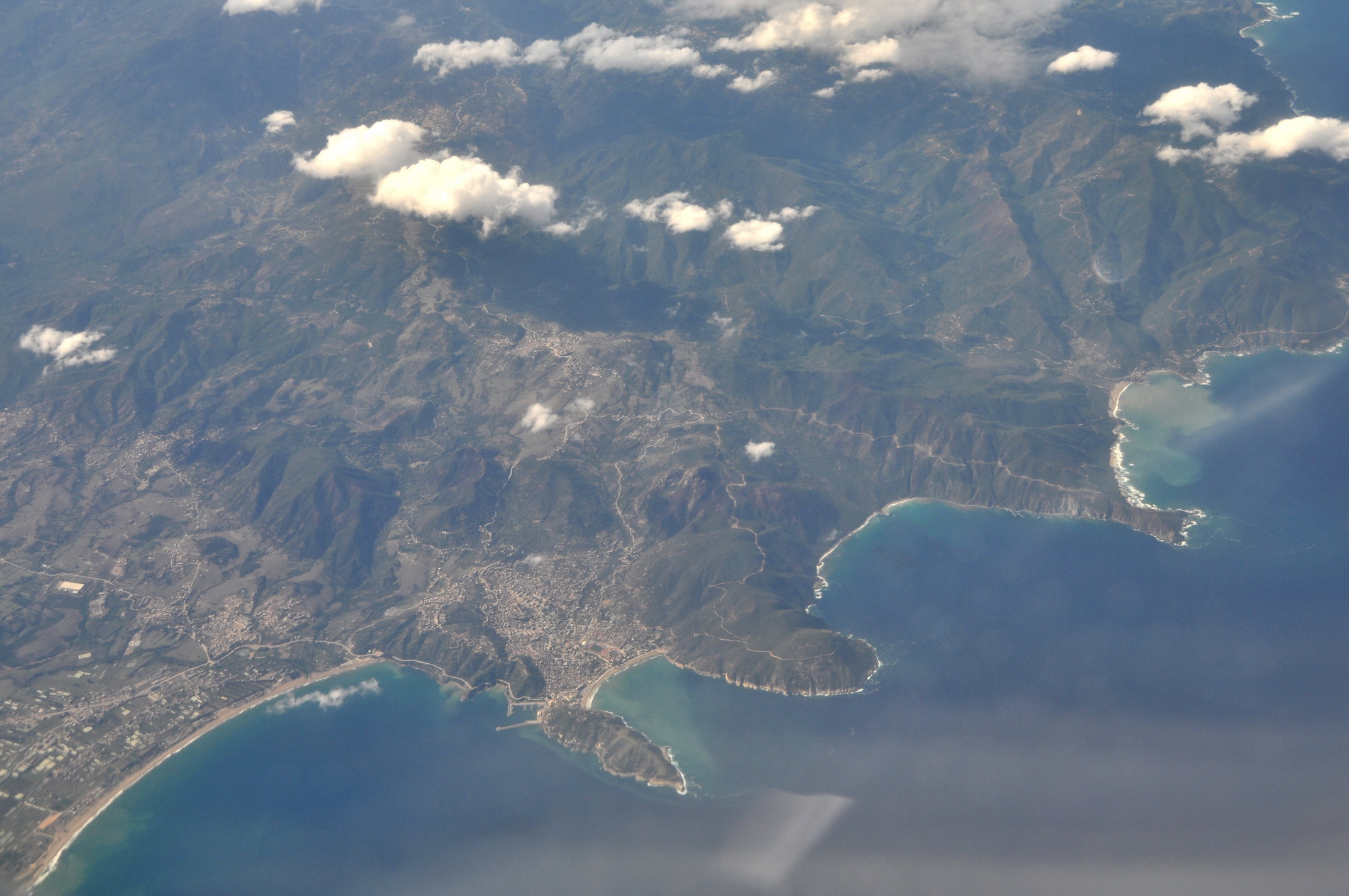
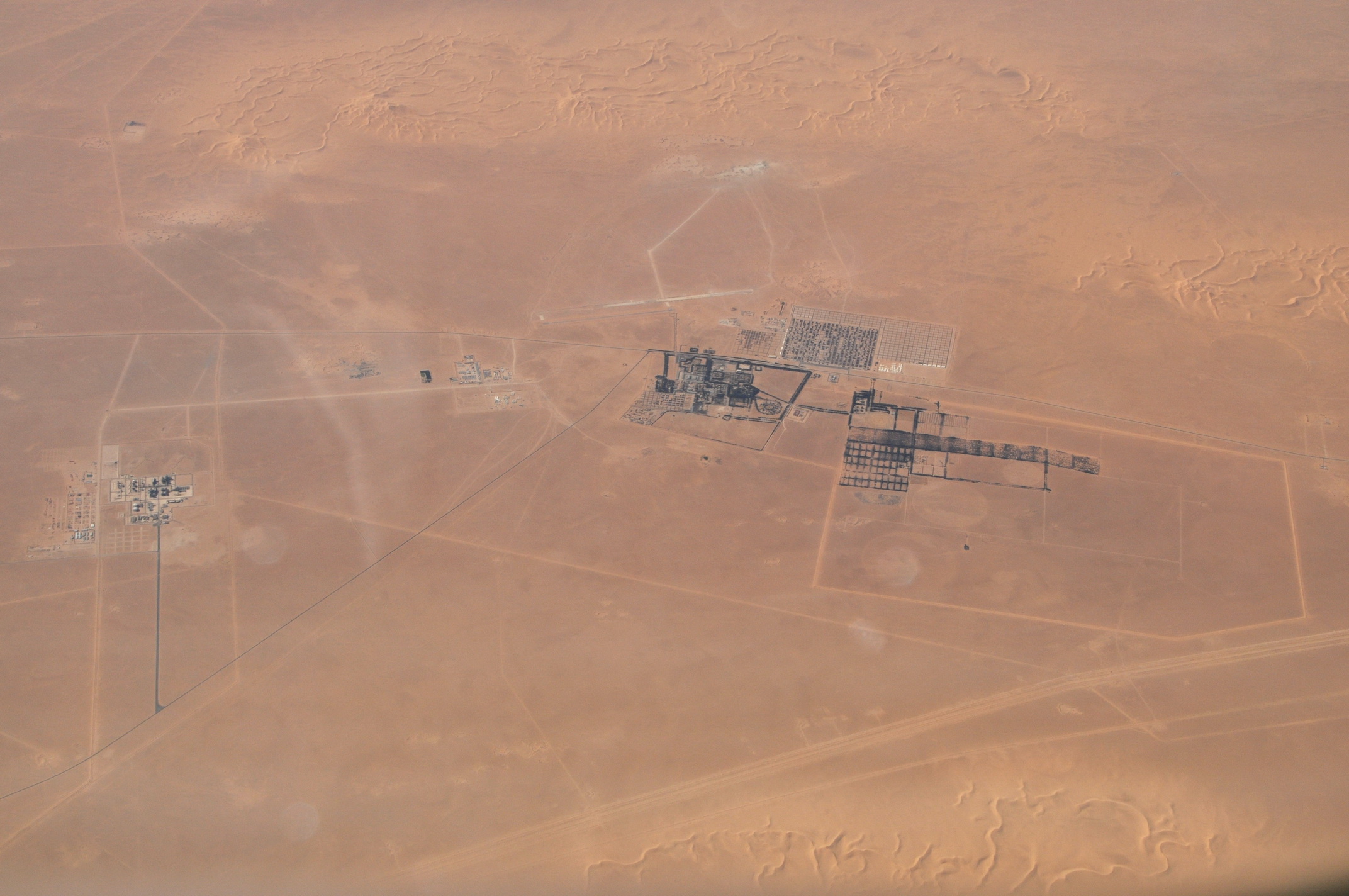
The Alps below. I’d driven and walked down there somewhere. From above I looked for places we’d camped years ago. Then the coast of Algeria and the Libyan border. We’d got lost down there once. The Acacus Mountains, where we’d negotiated with the Tuareg. I was taking stock of my life.
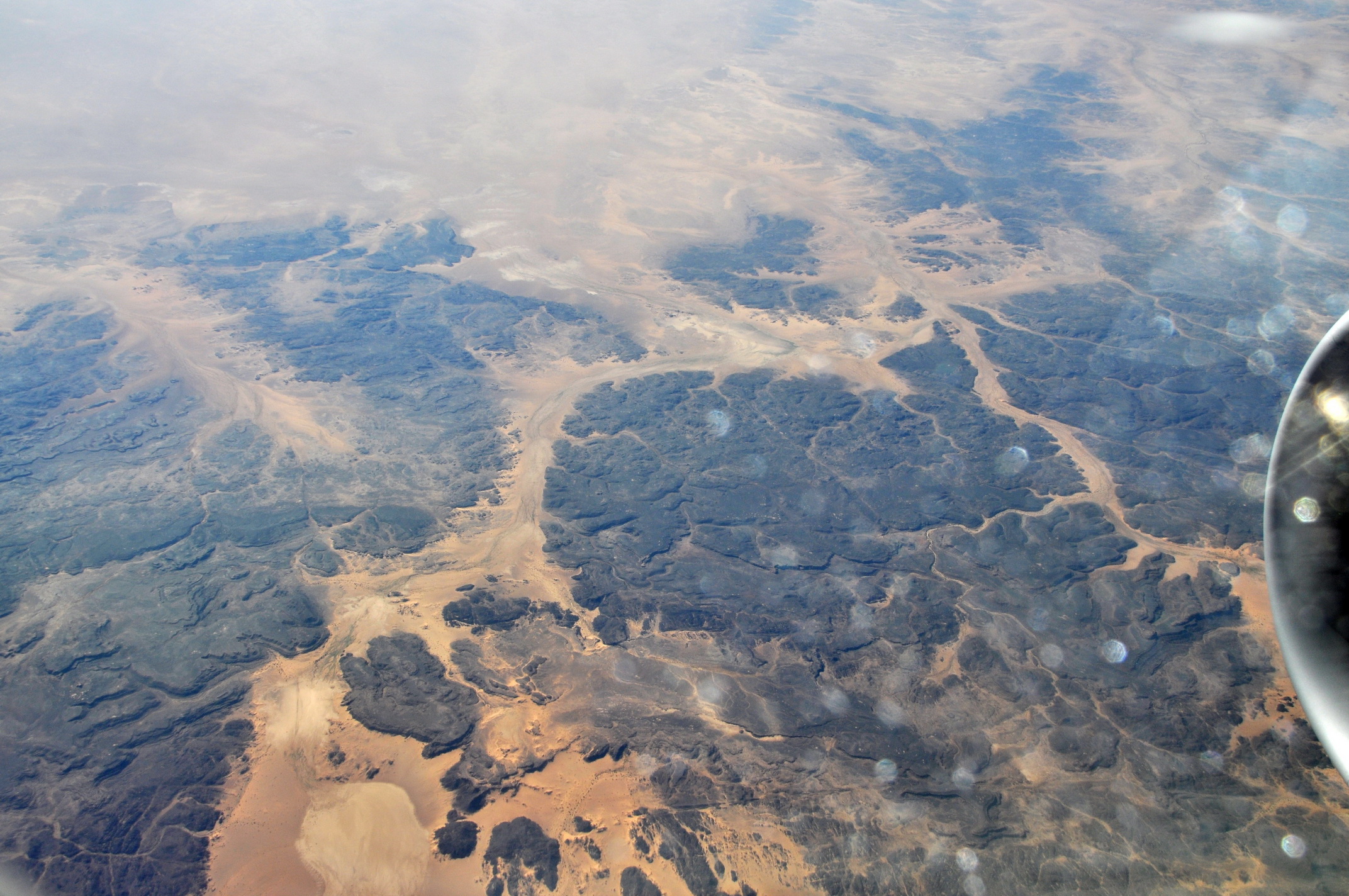
At last, something new.
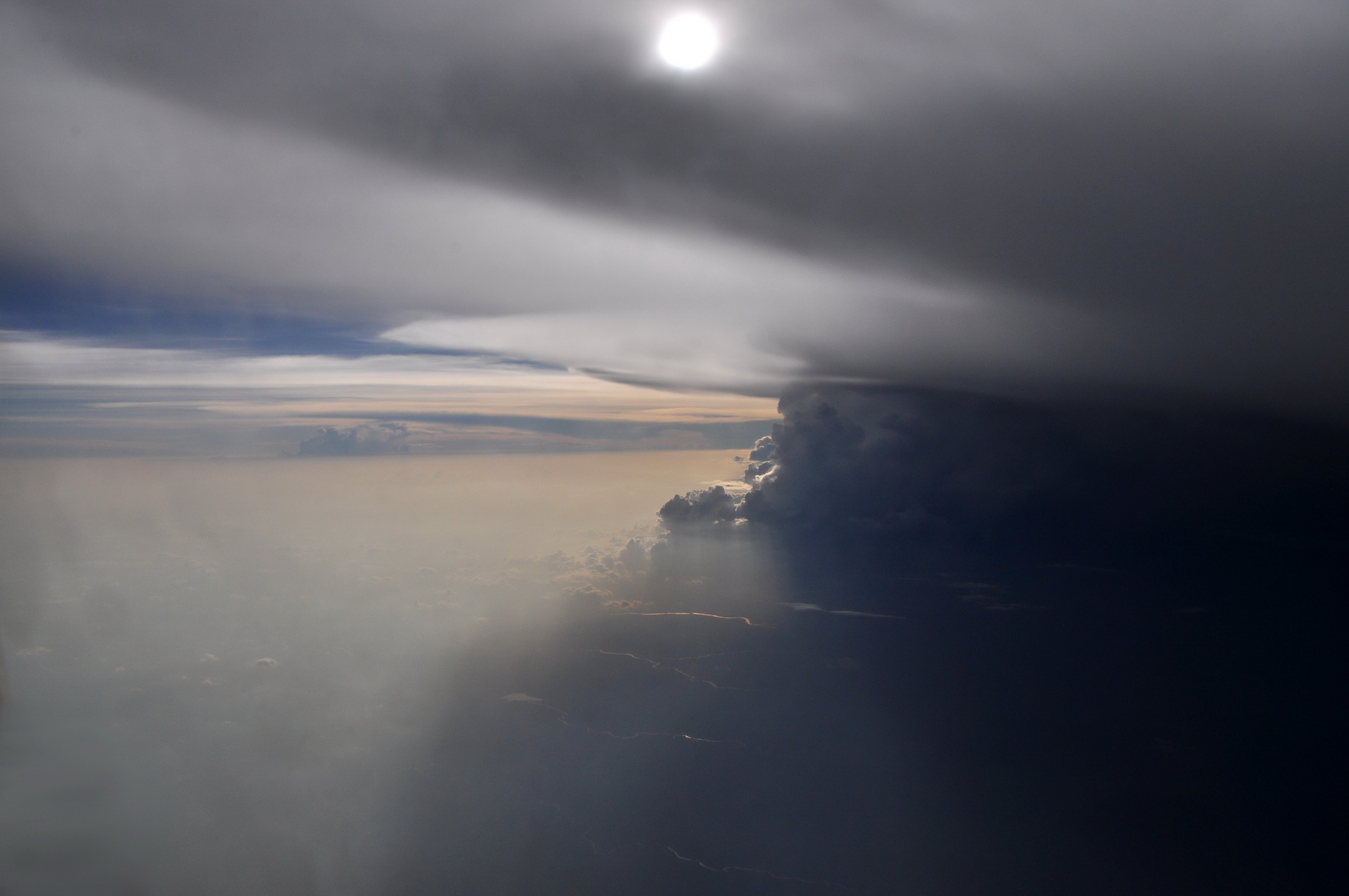
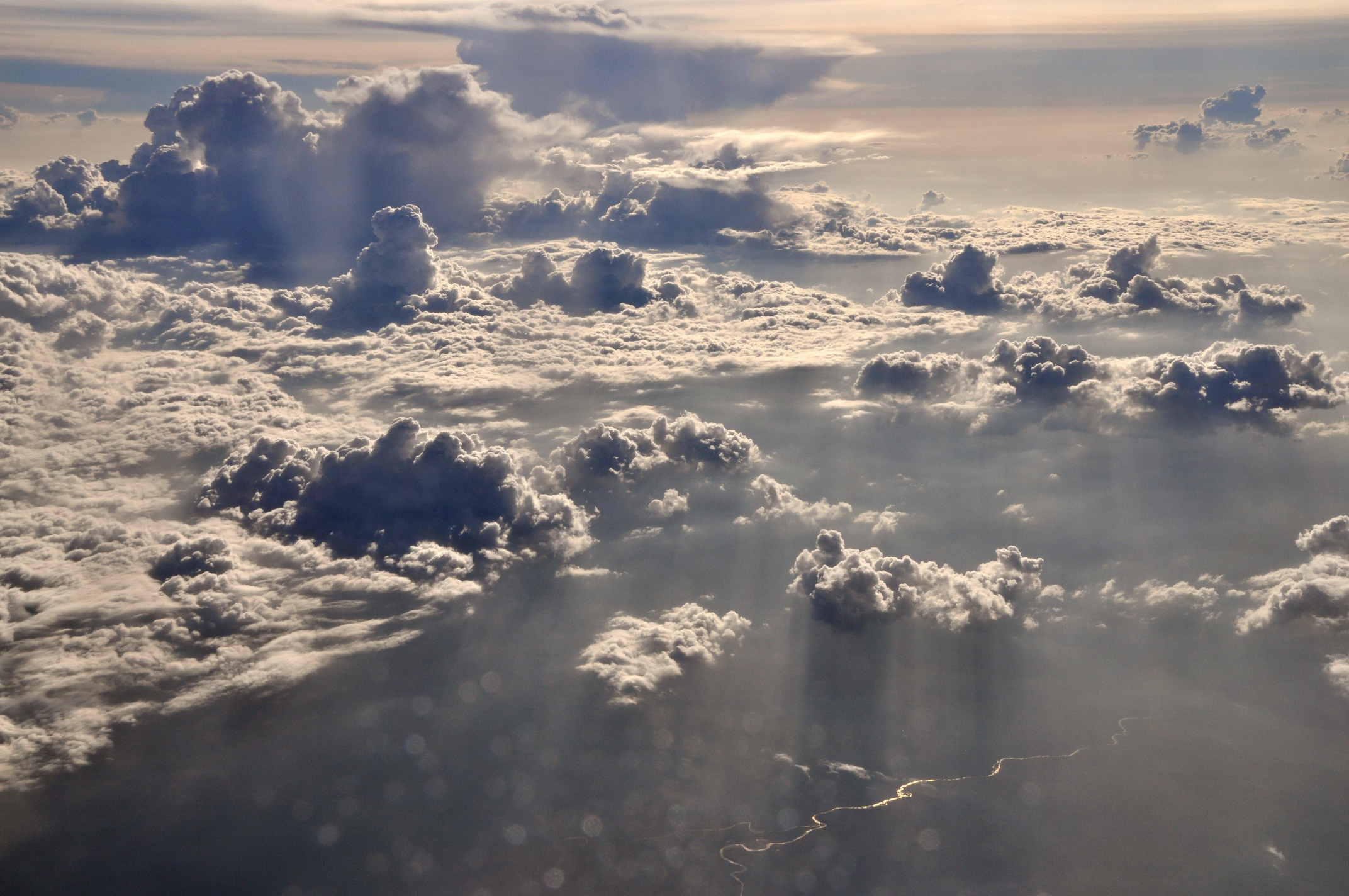
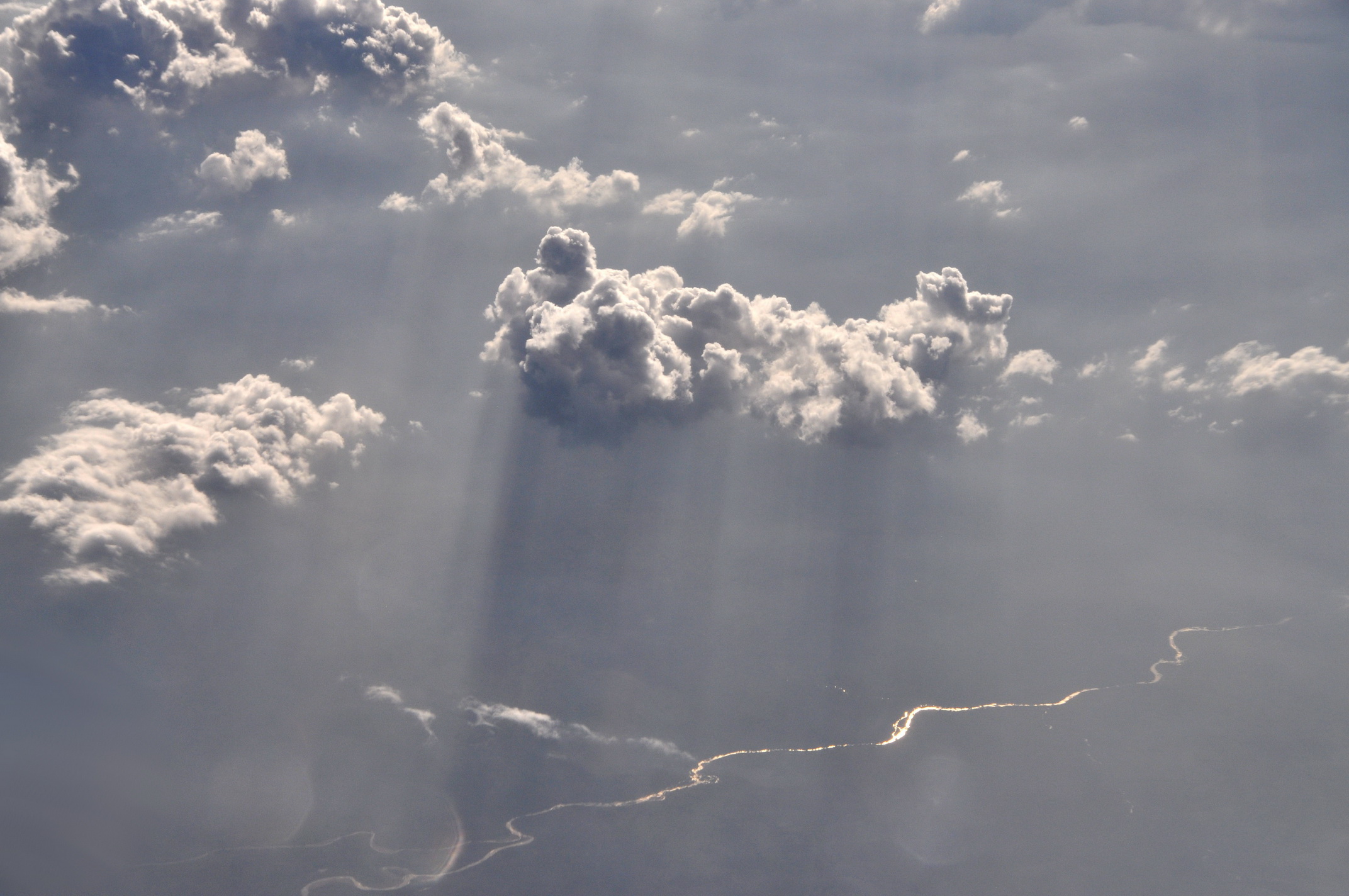
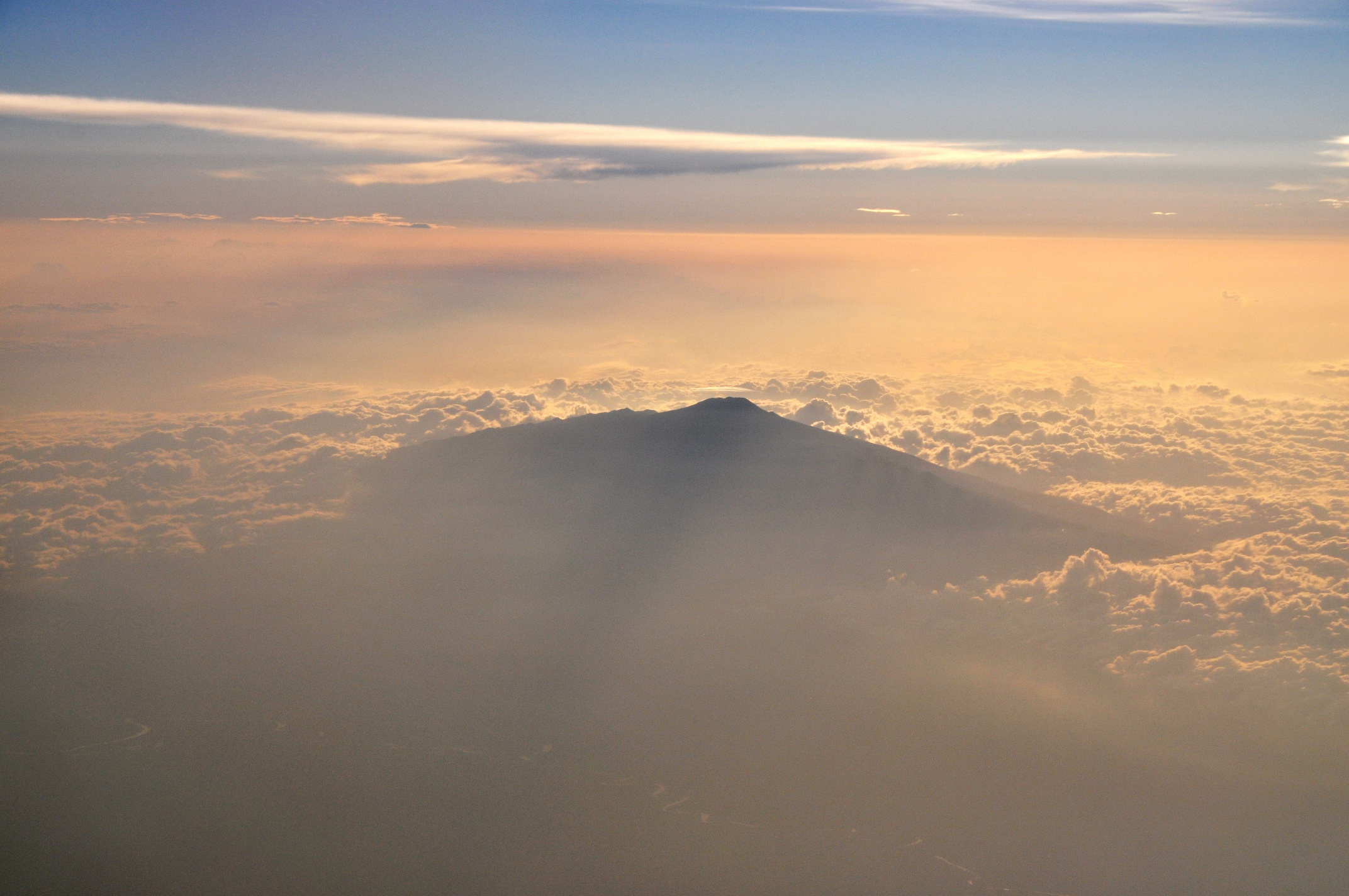
The desert haze gave way to enormous cumulus clouds. Somewhere below me in Nigeria there was an afternoon downpour and a civil conflict. Through breaks in the clouds, once they had emptied themselves, there was Mount Cameroon and its little sister Fernando Pó, with the Limpopo wandering through, as the old children’s verse would have it.
Libreville
We landed in Libreville after dark. I was in Africa! Even on the runway I could smell the forest, see the southern stars and hear the cicadas ringing in my ears.
The border officials were still ahead of me. I expected questions about the telescope. Luckily I wasn’t the first one coming through customs for the eclipse. I didn’t have to explain in unfamiliar French what made this tube different from a shoulder-fired missile launcher or where the drugs might fit in it. The top brass had already told the staff this was science, it was supposed to be here, and shame on anyone who didn’t understand. They let me through with scarcely a question. The one thing I did need in Gabon was proof of yellow-fever vaccination. The local passports had a yellow sticker in them, almost like a visa. Anyone without one could be vaccinated there and then behind a screen, presumably with a disposable syringe. I reassured myself at the time by thinking of a local statistic I’d heard on HIV. My Russian booklet printed on newsprint, with its round blue stamp, was accepted too.
I’d needed a visa for Gabon. The embassy in Moscow issued it quickly. In 2013 they asked me for an HIV-test certificate and a bank statement. I confess I bought the first near a metro station for 300 roubles; I got the second honestly from the bank. Having 100,000 roubles in the account was enough. The embassy processed the application the same day on the basis of my tickets. The period of stay was given in days from entry, so a change of travel dates would not necessarily have been a problem. The visa also specified the number of entries; a single entry was the default then.
That was it for the border officials; I was free. The arrivals hall was full of Black people. I couldn’t help looking around: was I the only white person there? It looked as though I was. I should say a word about the language of the Russian original: I meant no insult by it. The people I met were lovely, with dark skin, smart clothes and broad, genuine smiles.
They certainly weren’t African Americans either, and calling them African Africans would have been even sillier.
I took out some money at an ATM. The local currency is the Central African CFA franc, a stable currency whose convertibility is guaranteed by France. The exchange rate is fixed at 655.957 CFA francs to the euro. The same franc is used in six countries: Gabon, Cameroon, the Republic of the Congo, the Central African Republic, Chad and Equatorial Guinea. The banknotes are the same, but there are slight differences in the coins, so collectors have something to look for.
At this point you may be expecting me to buy a camel in the airport car park and disappear into the jungle. No again; apart from anything else there are no camels in tropical forest. A man from the hire company was waiting for me. I’d booked a four-wheel drive. And here, at this very point, Europe ended and Africa began. I’d certainly booked a car. Where was it? No one appeared to have thought about that yet. My car wasn’t in the car park. We had to drive around town and find it. The man took me to a hotel first, evidently intending to put me up and sort it all out tomorrow. I explained again that I needed the car here and now. He gave me a charming smile, said “Yes, sir!” and drove me off somewhere else.
Three hours later I got a Hyundai Santa Fe. No money, no paperwork, no insurance; anything to be rid of me. Go on, take it. Come by the office tomorrow and we’ll get it sorted.
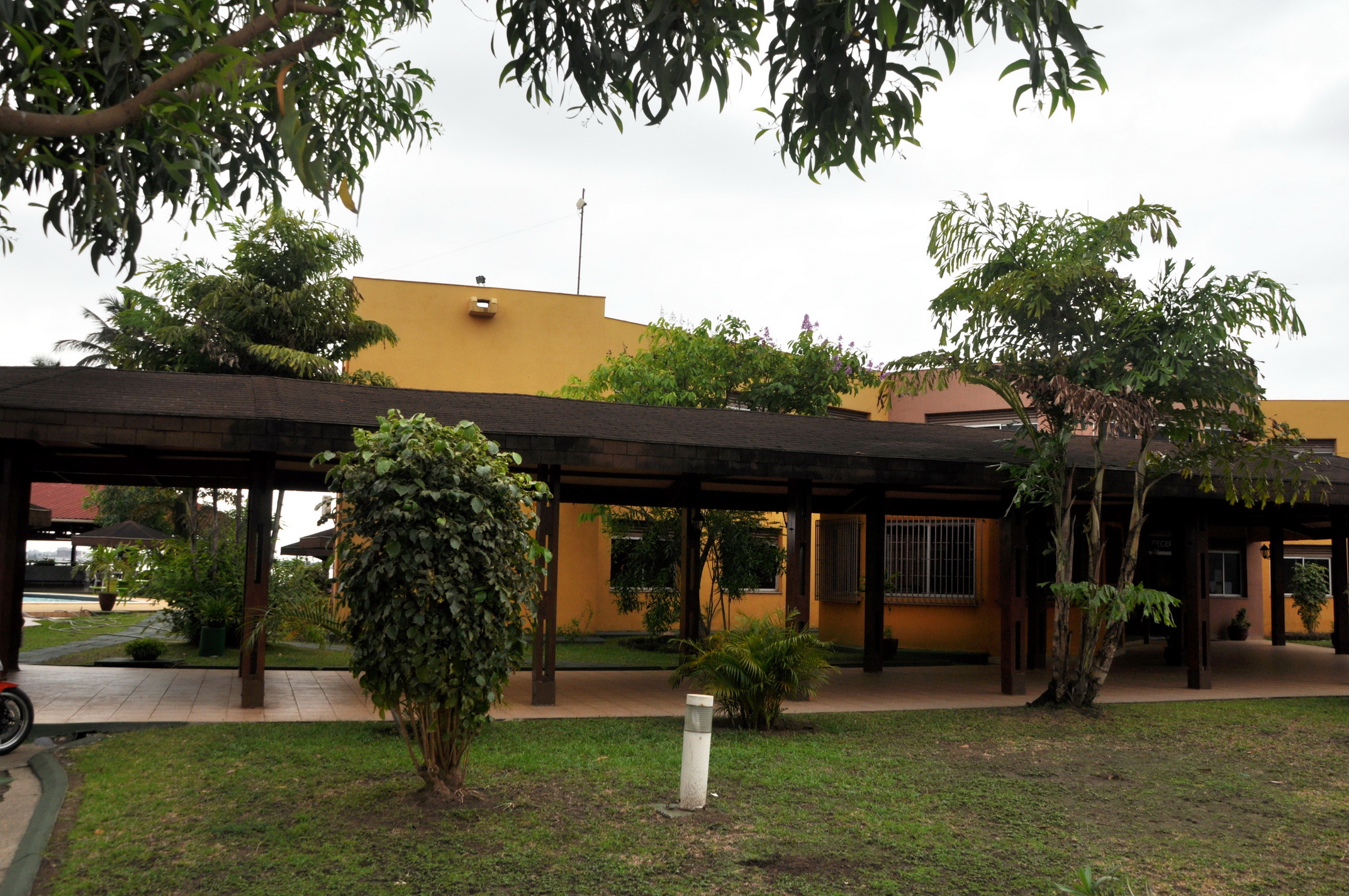
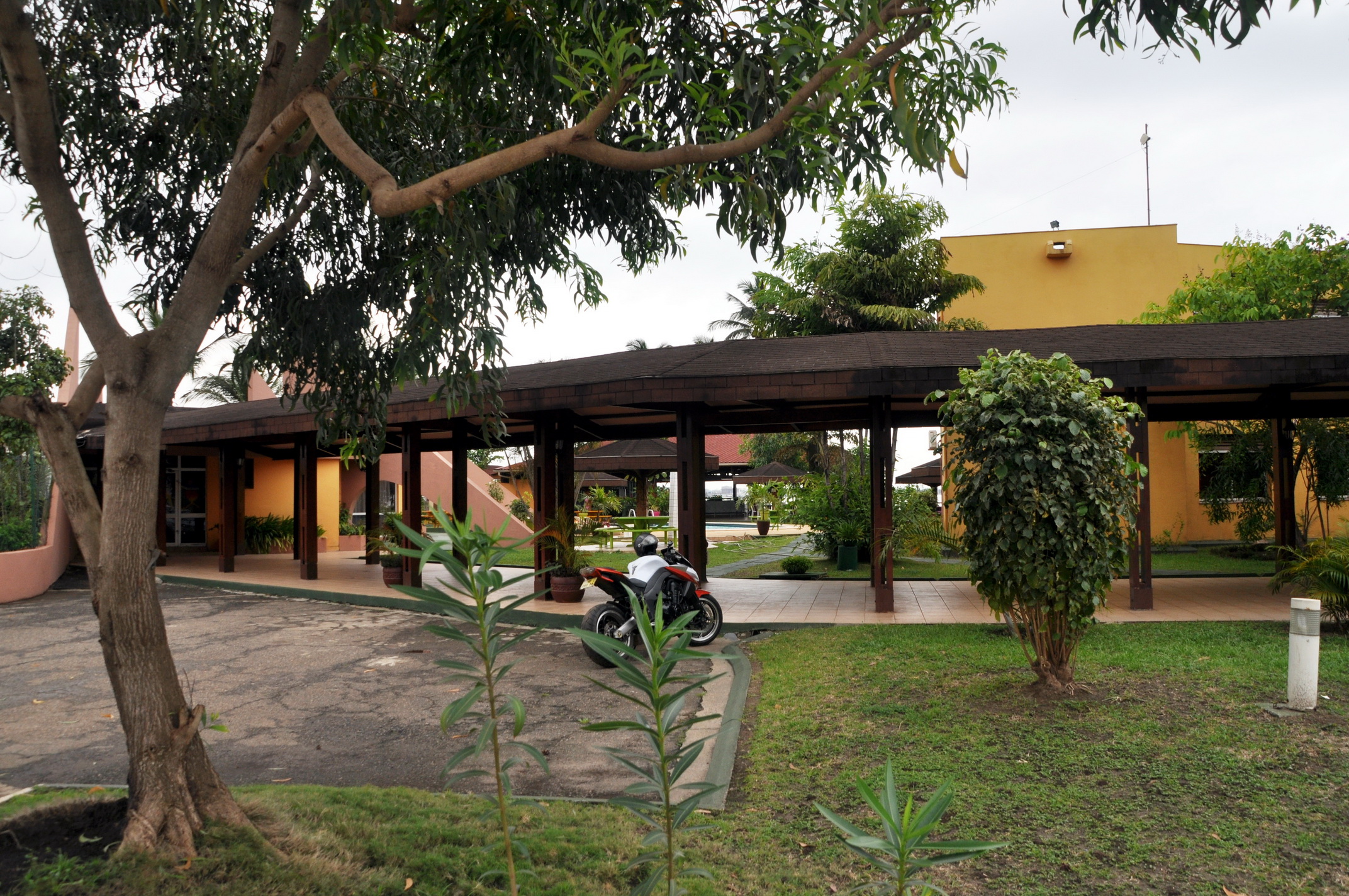
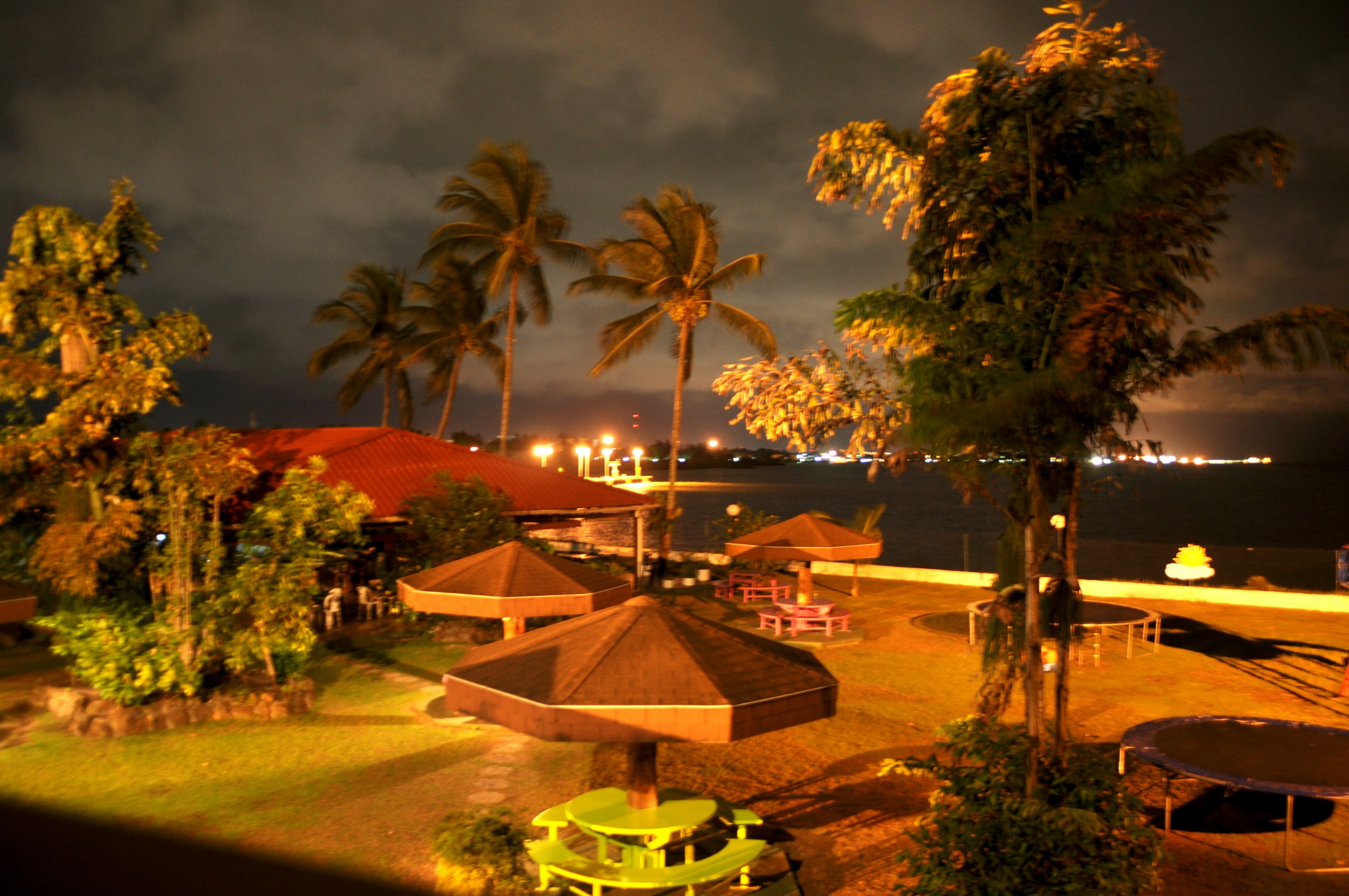
They did eventually take me to the place I’d chosen, Alize Bay (00°22.064′N, 09°27.514′E). A thoroughly decent hotel at 90,000 Central African francs, about half what the proper tourist hotels cost. It looked modern and sat on the seafront. It was all very civilised, with palms and a children’s playground. Inside it was quite nice, if simple. The only snag was that the way there led along dirt roads through some run-down districts. For the first time I thought the four-wheel drive had been worth getting.
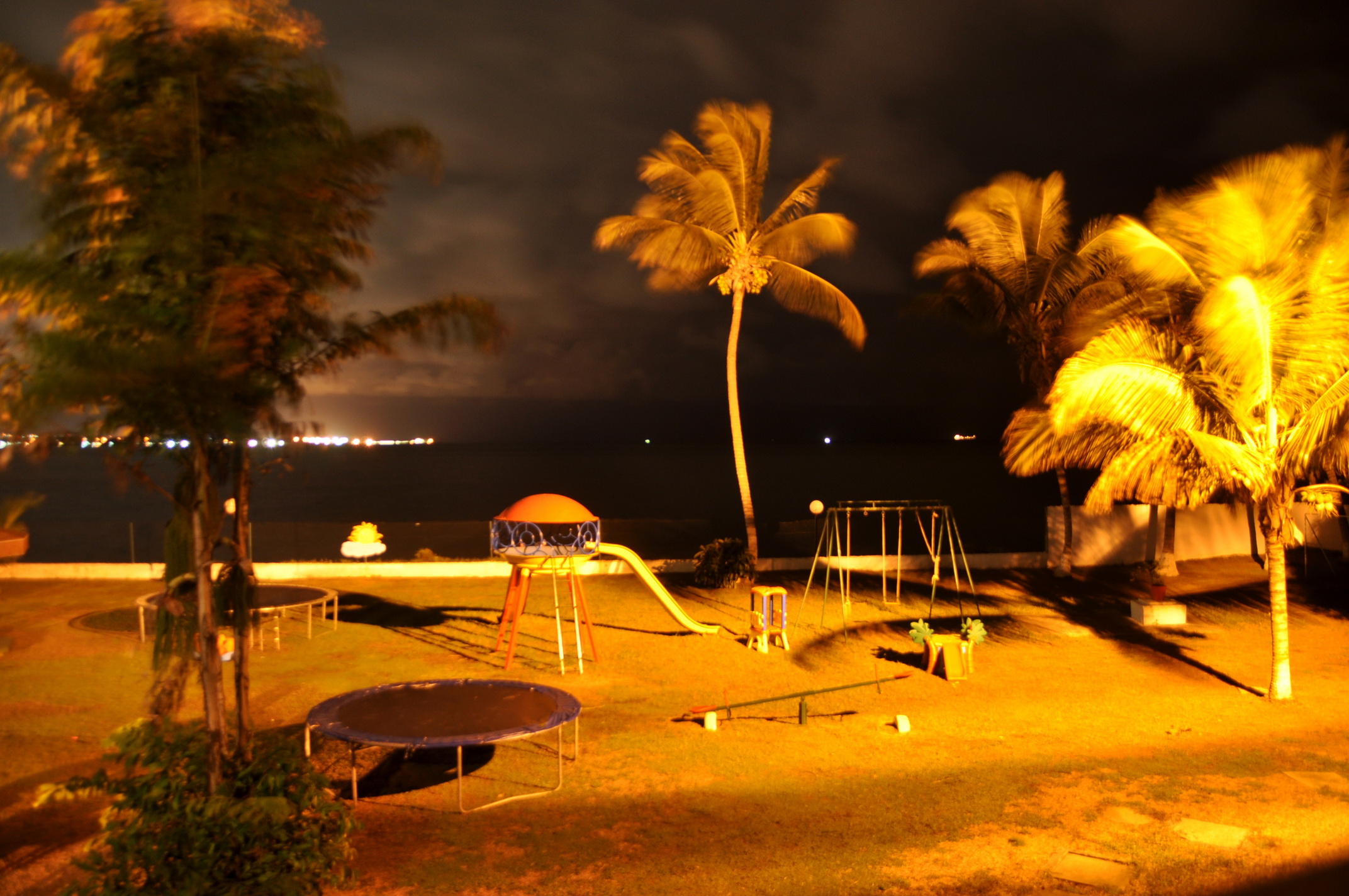
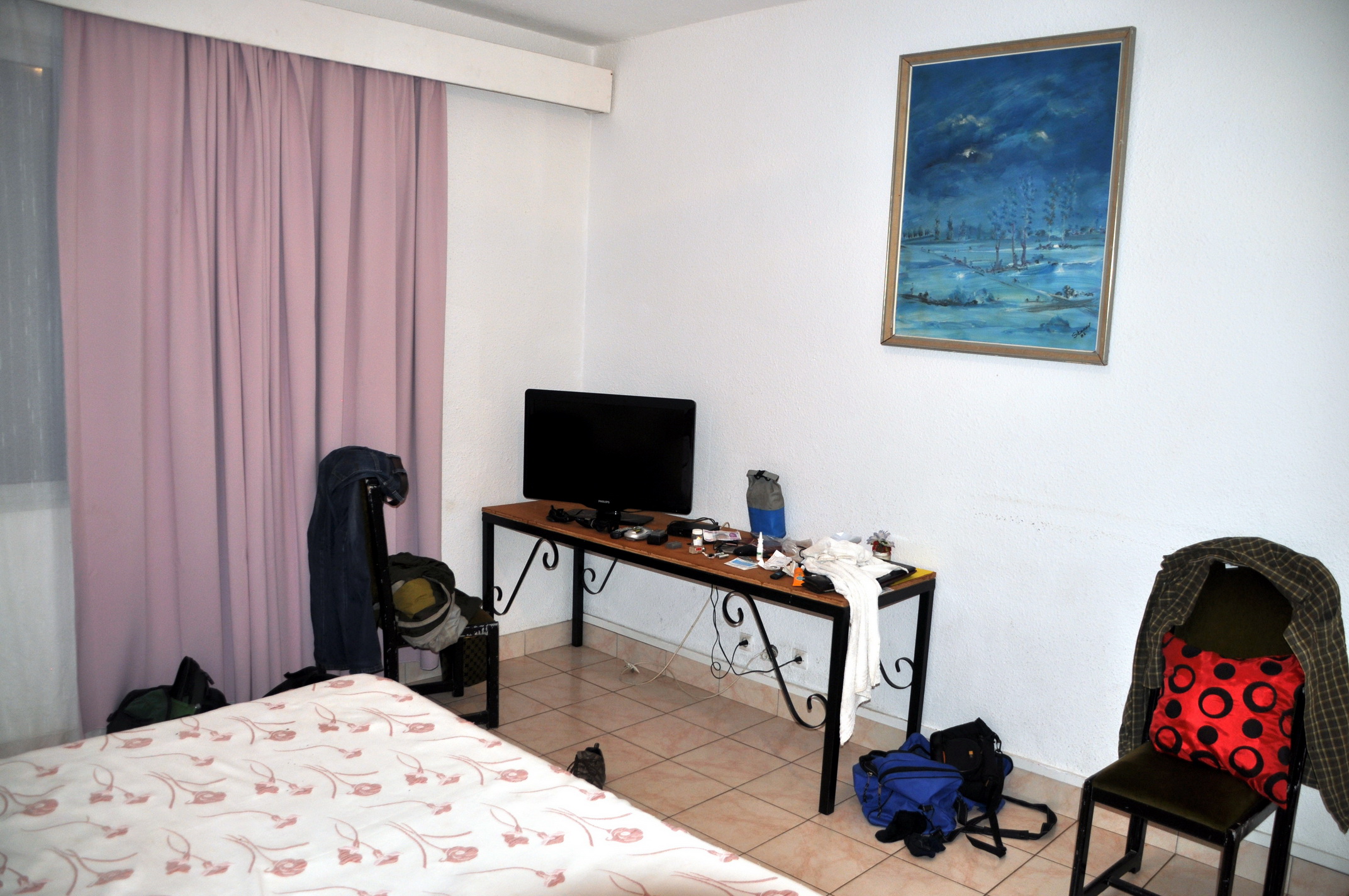
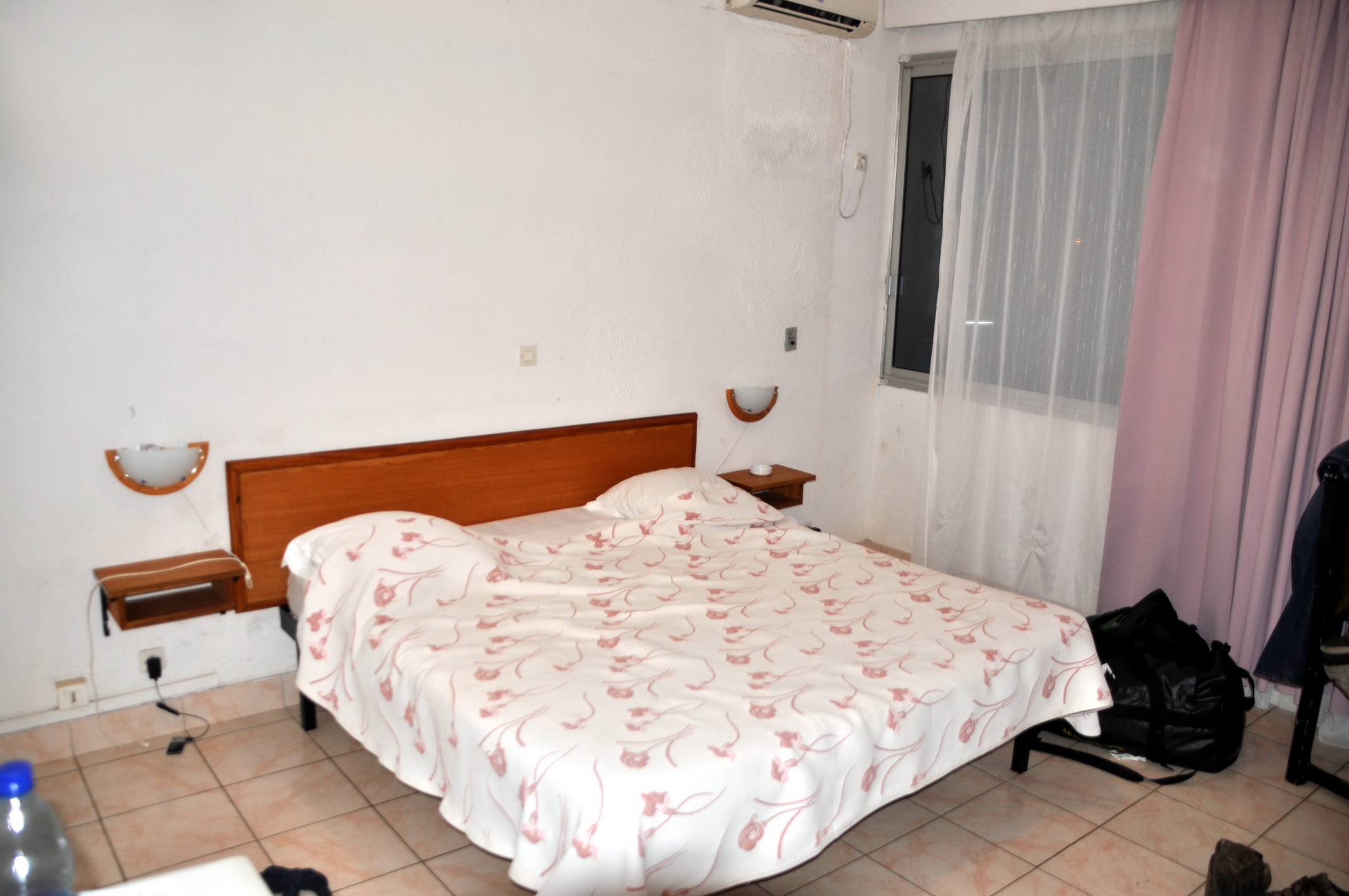
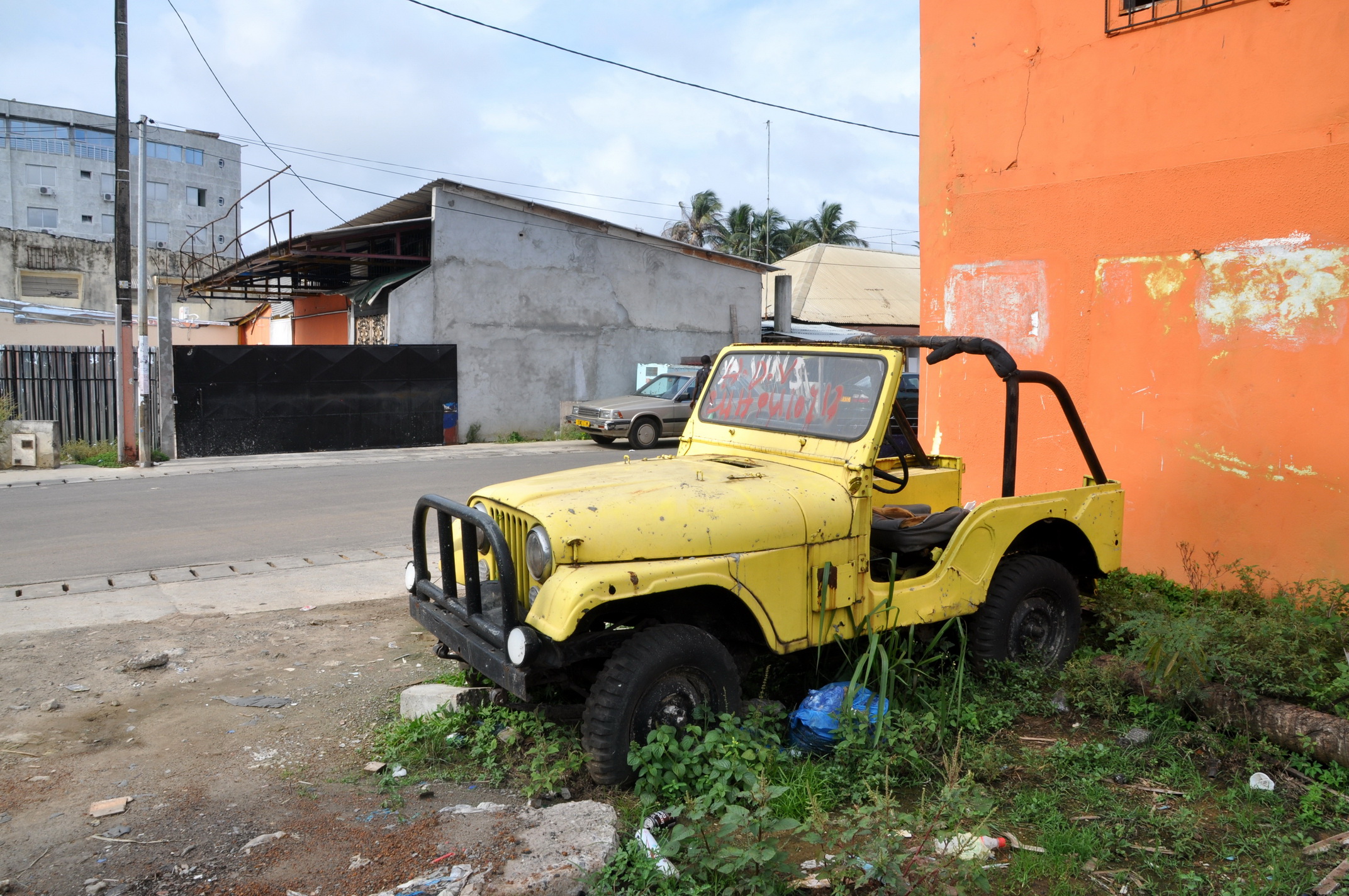
Then a problem: I went into town for food and couldn’t find my way back. I hadn’t switched on the GPS; I thought I knew the way. Left at the chicken stall, right at the men outside the bar, straight into the mud at the skeleton of the old tractor. I kept going round those ruts, and the hotel might as well have sunk underground. All over the place, people were getting drunk and selling chicken in the mud. At about one in the morning I gave up and asked a taxi driver to take me to the Alize. It was the first he’d heard of it, so he started taking me round the hotels that paid him a commission.
I didn’t get much sleep, although I did eventually find the hotel. I woke up to birdsong and brilliant African sunshine.
I won’t go on about how I spent the day trying to pay for the car. No one could stand the full account. Here is what I learned from the long affair.
First, when someone at a business in Gabon says “Yes, sir, of course,” it probably means they haven’t understood the question. If they have understood and the answer is no, they’ll still say, “Yes, sir!”
For instance: “Are there many filling stations away from the capital?” … “Of course, sir!”
Second, when someone working behind a counter says they speak English, it means they speak French. The genuine English speakers belonged to an endangered species and seemed to hide in corners for fear of being discovered.
Third, “Of course, sir, you can pay by credit card” means there are plenty of cash machines in town and you can go and get the cash yourself. That was only half the trouble. Visa was the usual card that worked then. Only some of the Union Gabonaise de Banque (UGB Net) cash machines took Mastercard, and even Visa didn’t work at every machine. Outside a few large towns, I didn’t see cash machines at all.
Fourth, if you speak to a manager, step outside for a minute and come back, you may not recognise him among the dozen people sharing his office. I was no good at remembering names or telling the faces apart. Perhaps I should have looked at the colour of his tie.
In short, if you don’t speak French you’ll learn in a week… The corollary to point two: the person who says he speaks French may only be comfortable in his own local Bantu language. Languages were a struggle for me there. Besides French, Spanish did help.
They charged only what the hire was supposed to cost, with no deposit. In theory they had a credit-card reader; in practice putting the payment through the till didn’t seem to be part of the local custom.
Every cloud has a silver lining. While all this was going on I got to know the capital. It reminded me of somewhere. There had been a lot of oil here too, and a great deal of windfall money. Democracy, to put it mildly, had not done so well.
President Omar Bongo twisted and turned every which way to avoid retiring on schedule. He abolished multiparty politics, converted to Islam, changed the constitution to lift presidential term limits and extended each term to seven years.
Multiparty politics had to be restored in the end, though, when the French troops who had come into the country made the suggestion.
Gabon is a predominantly Christian country, by the way; Muslims are a minority.
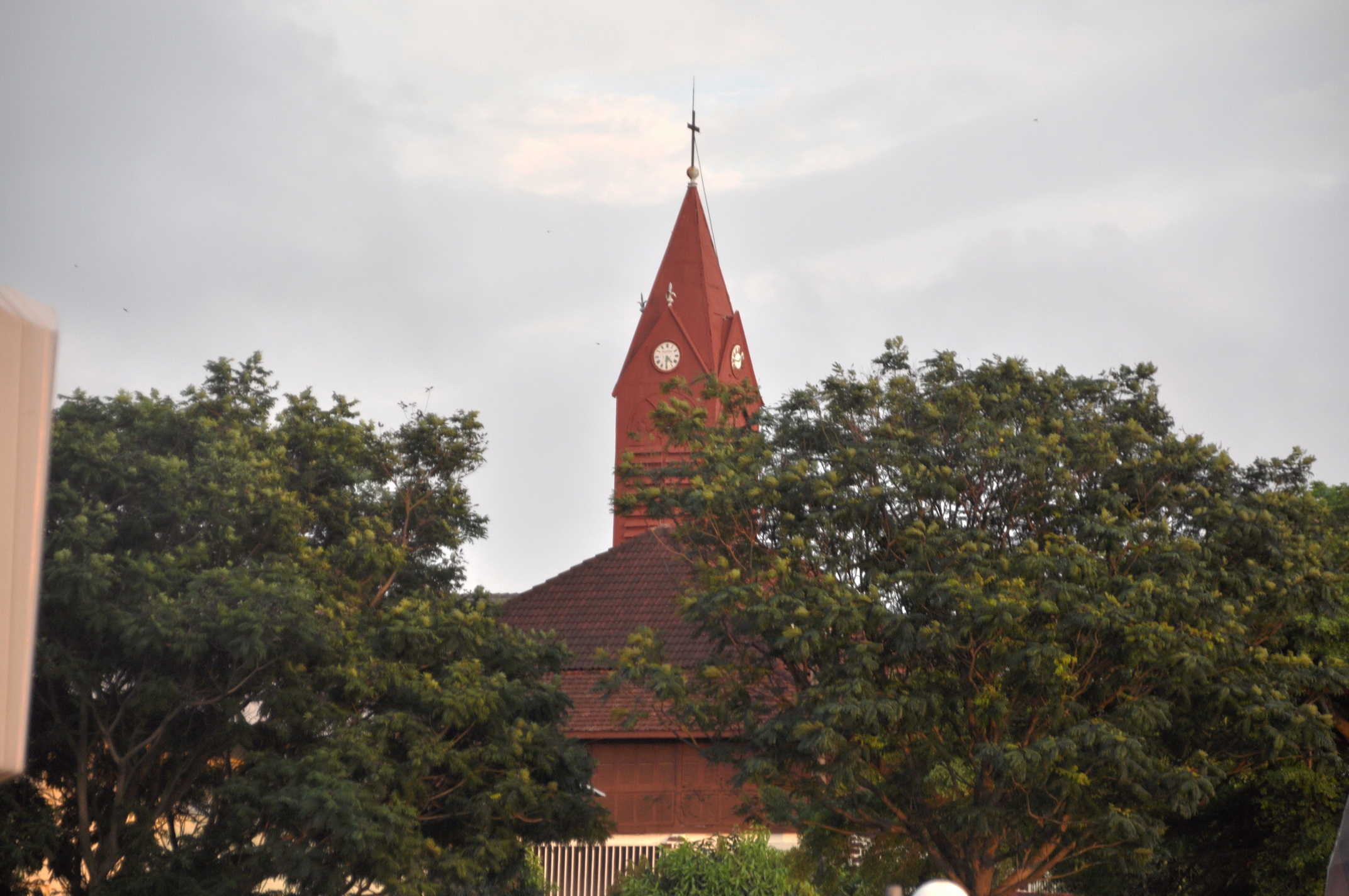
Bongo converted to Islam in 1973 on a visit to Gaddafi. That allowed him, in my reading, to put himself above tribal and religious disputes. The churches in Gabon looked very modest to me. Religion had not been given the starring role in state ideology.
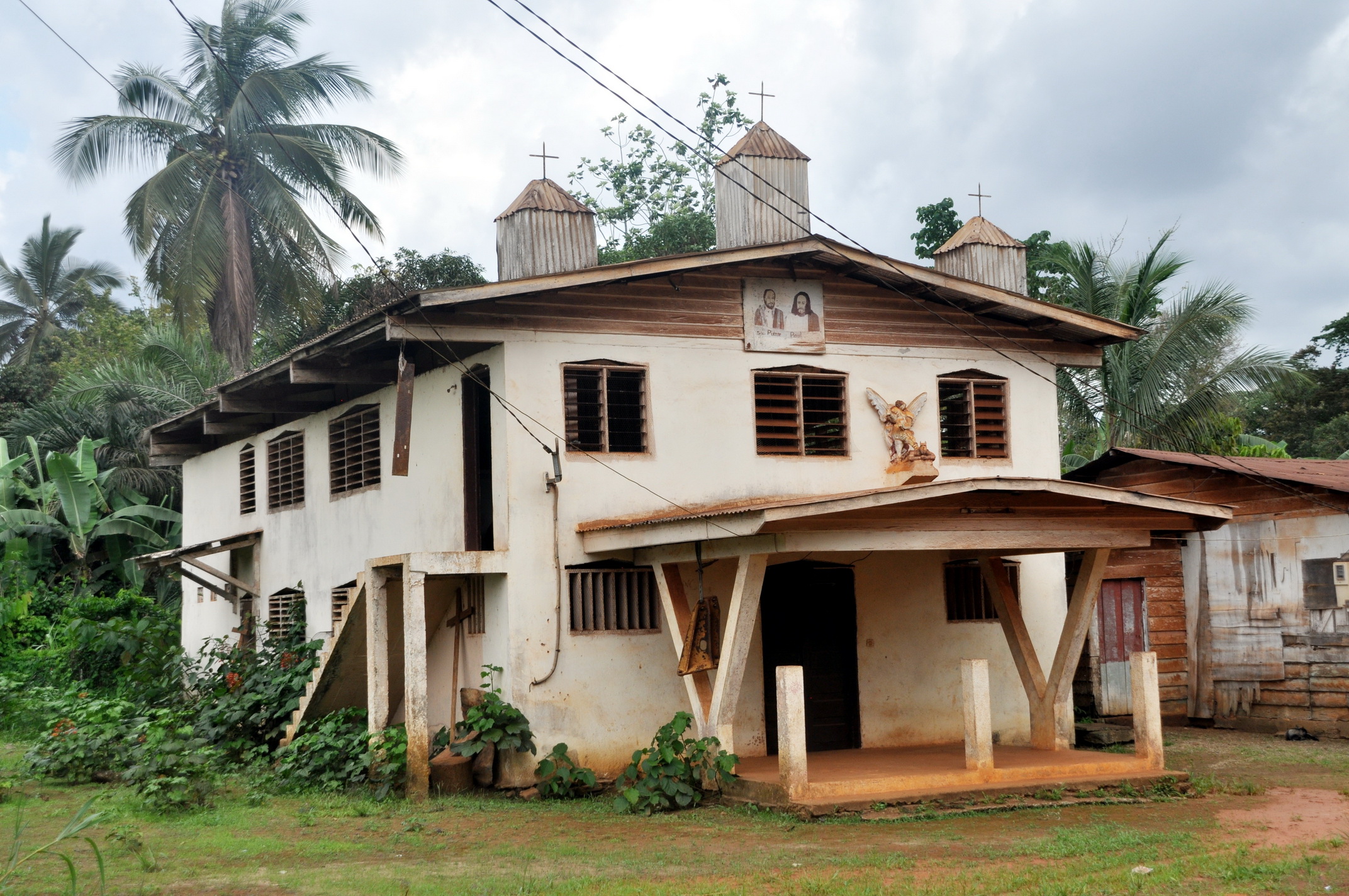
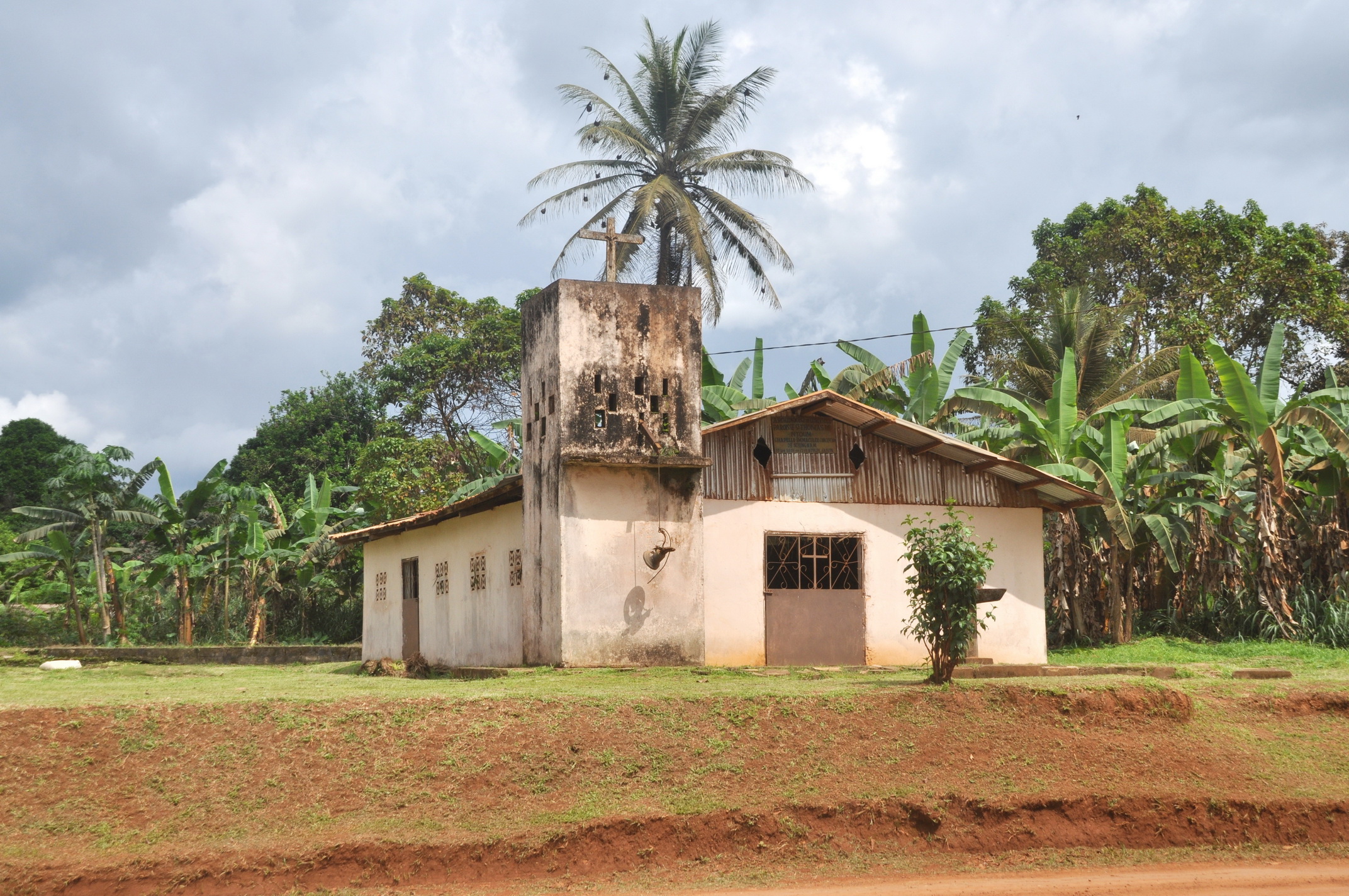
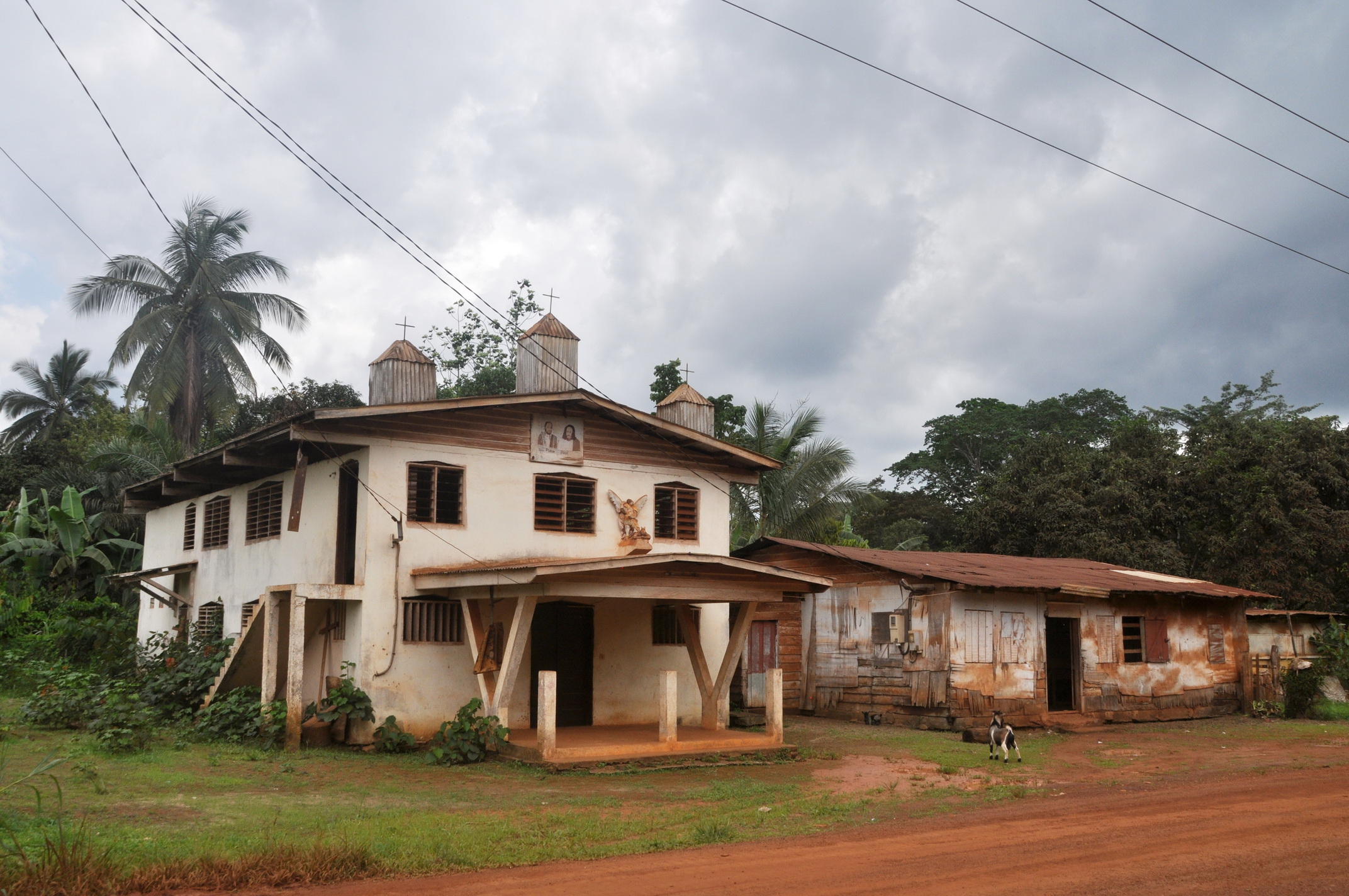
Omar Bongo ruled for 42 years until his death. By the time of my visit his son, also Muslim, was serving his first seven-year term.
In the early 2000s, I thought the Russian authorities were taking Gabon surprisingly seriously as a model for building a country. Putin met Bongo.
Besides his son, Bongo left the country and the world an astonishing ideological book, Blanc comme nègre, meant to bind the nation together. The great idea, as I understood it, was that all Gabonese tribes came from Egypt and so could call themselves heirs to the greatest civilisation in the world: in fact they were white, just very thoroughly tanned after living on the equator. It reminded me in a way of his friend Gaddafi’s Green Book.
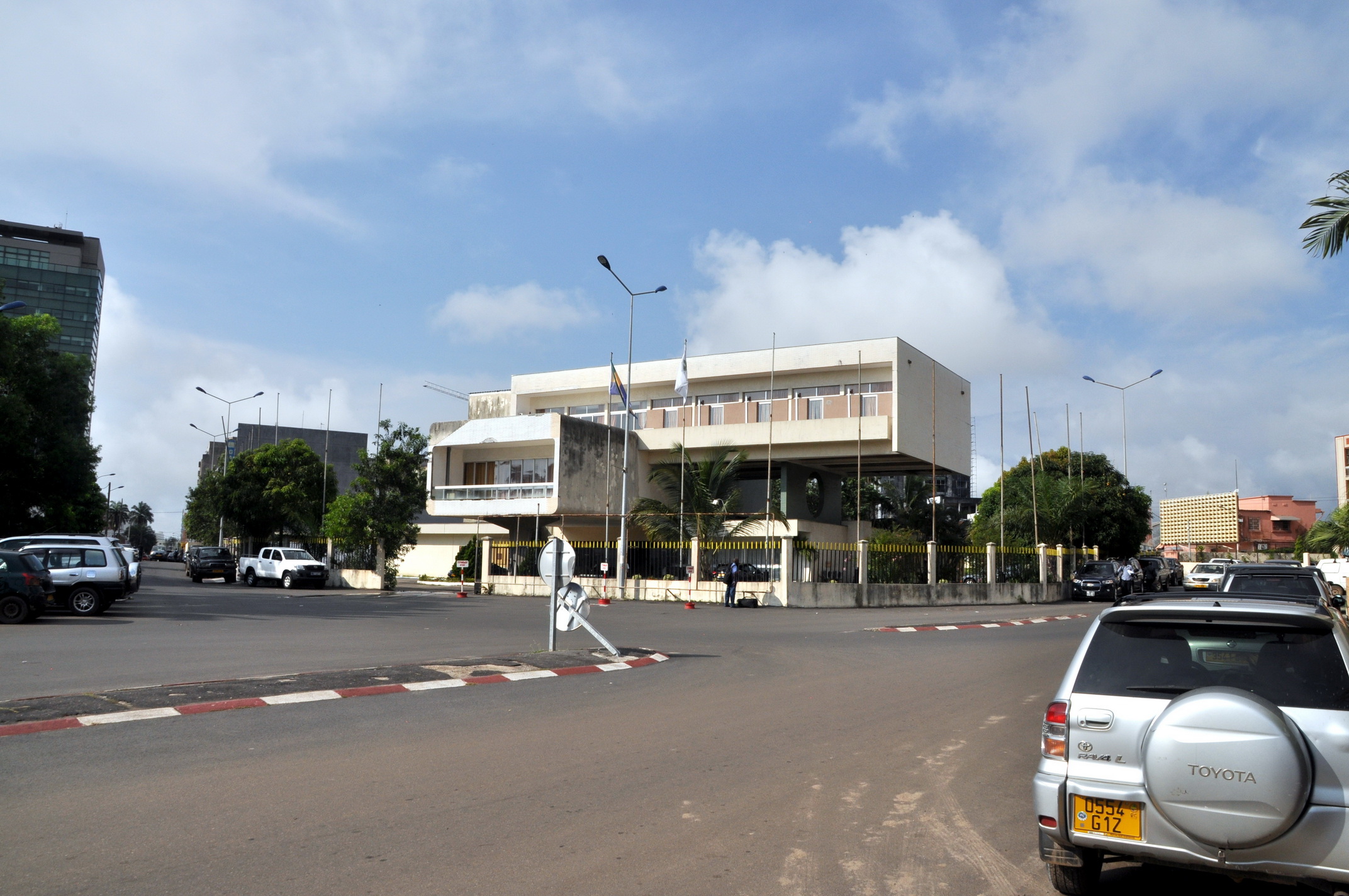
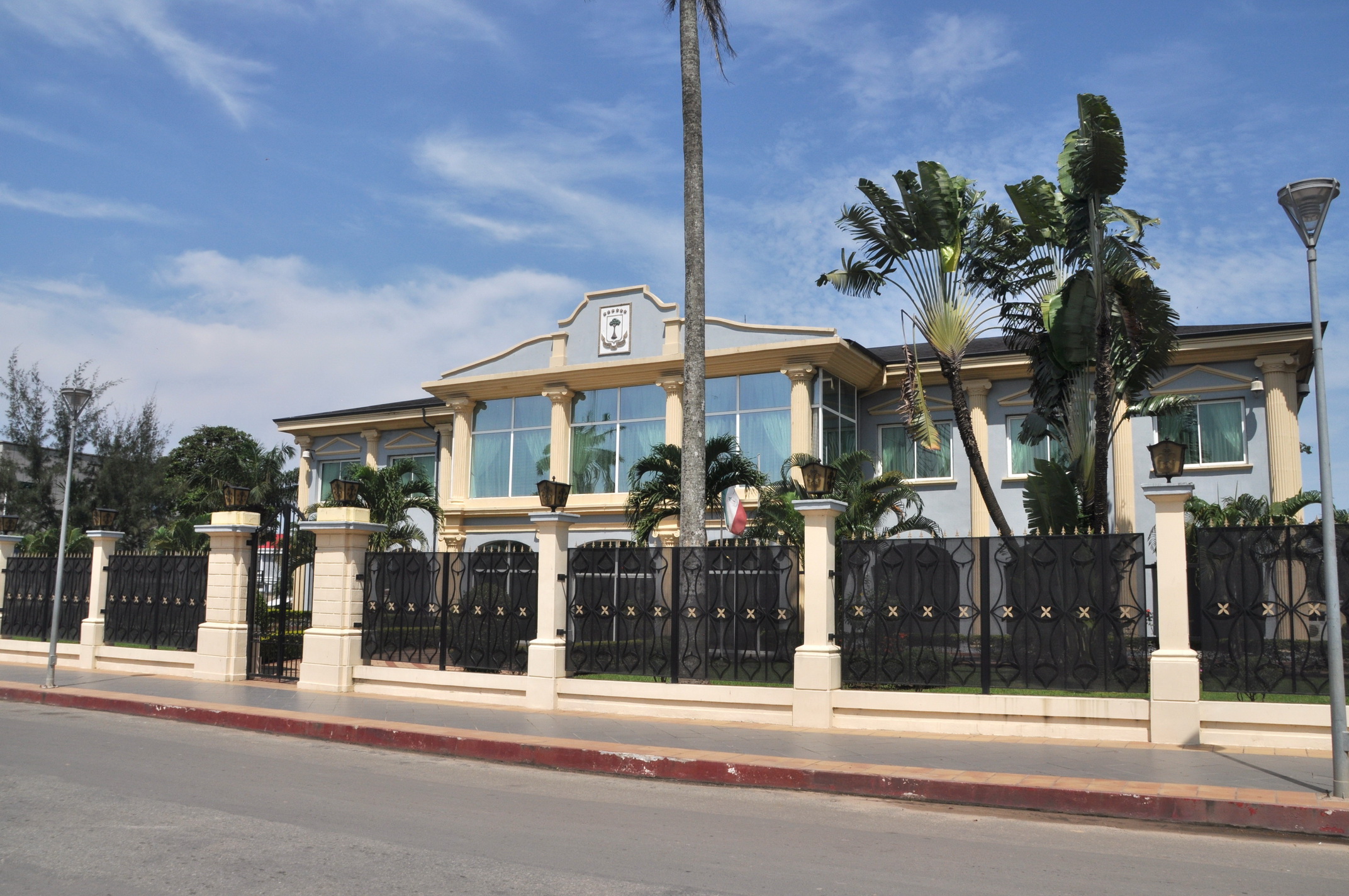
The president lived in a palace. For security reasons one was not allowed to photograph it.
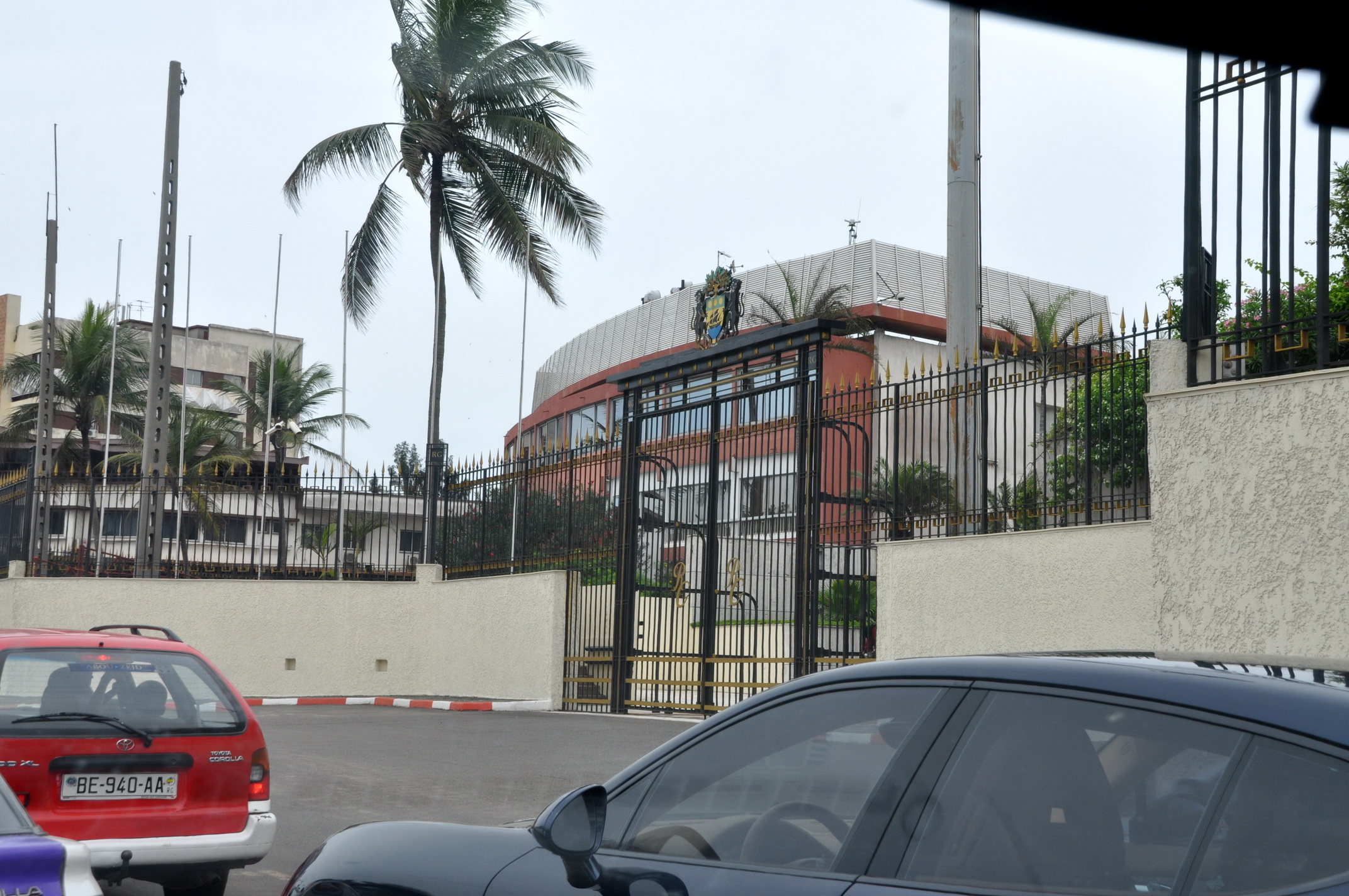
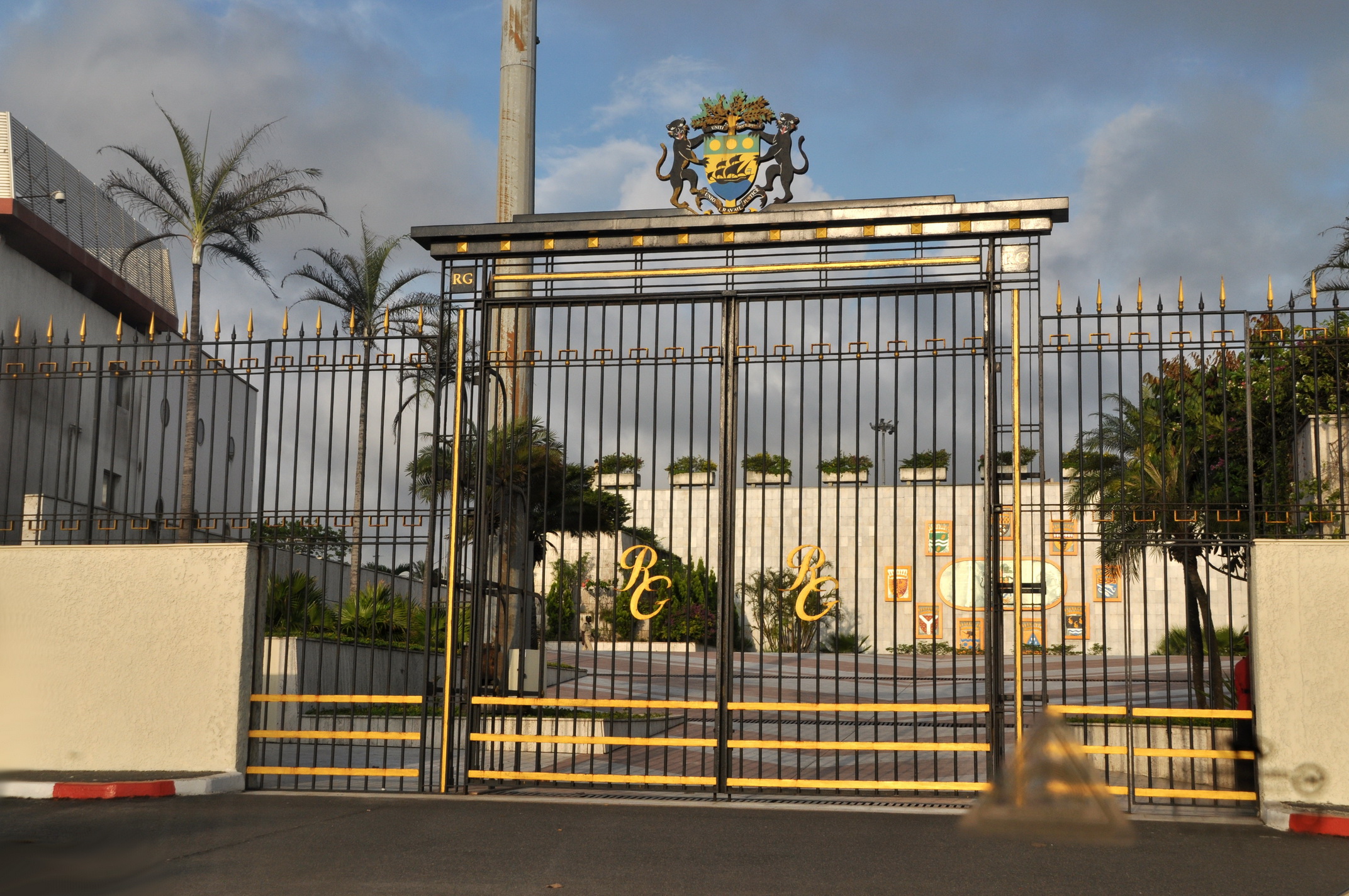
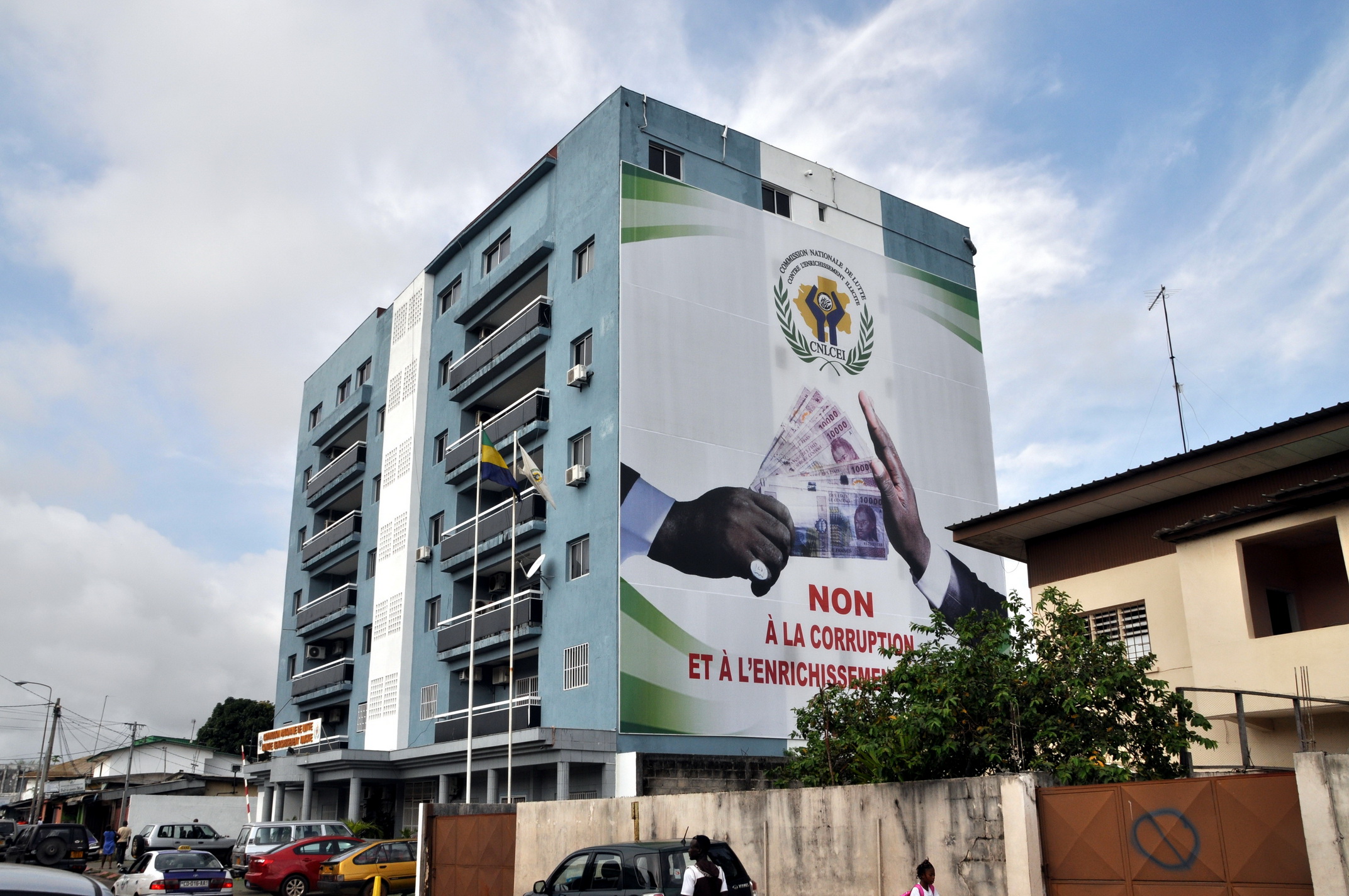
Since there were posters on every wall about the unremitting fight against corruption, I concluded corruption was doing very well: it was there, and nothing threatened it.
It seemed as if most Gabonese worked as civil servants and left the rest of the work to migrant workers, whom I heard made up 35 per cent. The army looked French and the police Moroccan.
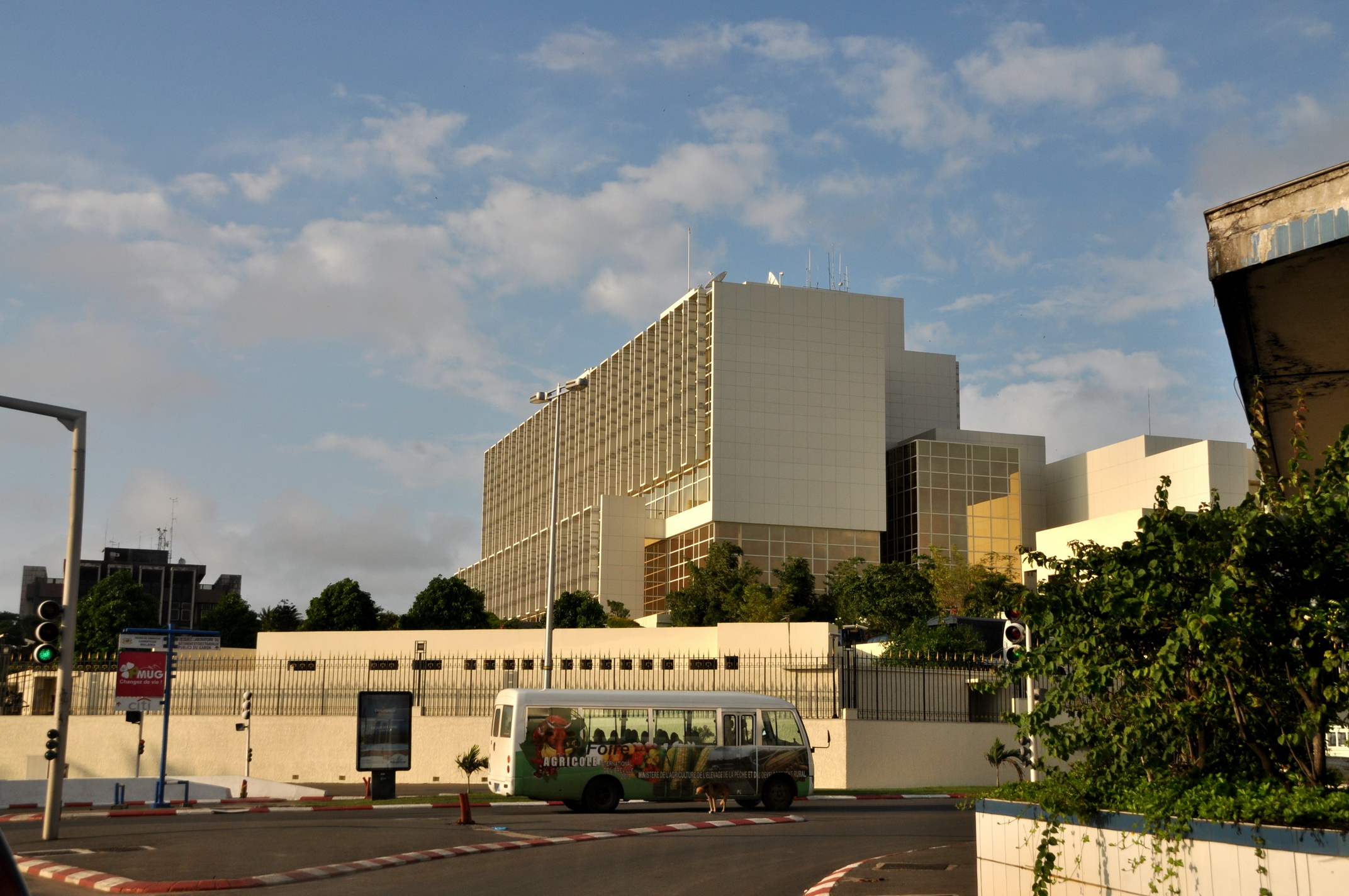
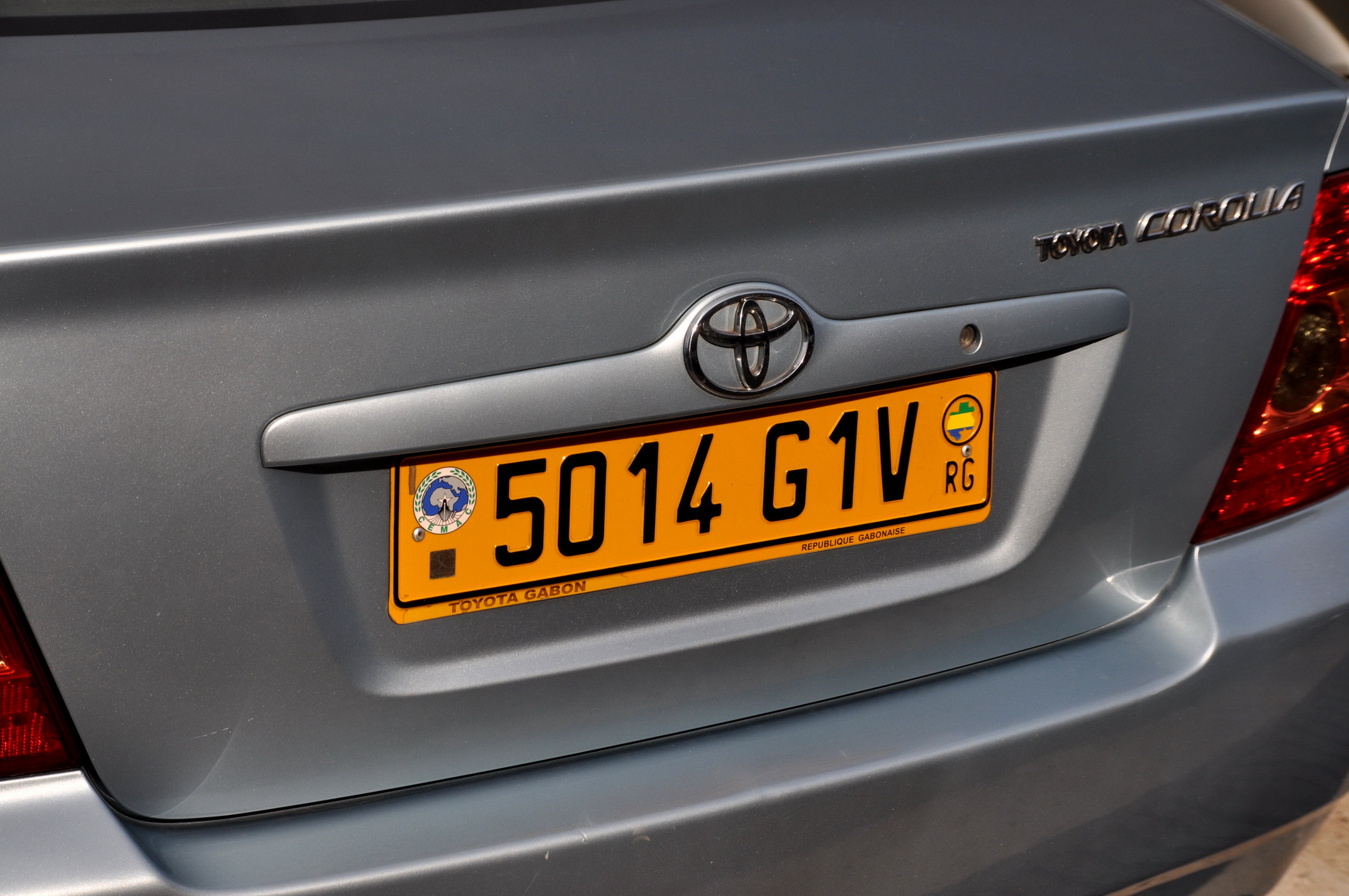
The president hadn’t forgotten himself either. Palaces, property on the French Riviera and bank accounts with billions in them: none of this was foreign to the Bongo family.
They loved Apple products and were developing nanotechnology. At any rate, there was an official Bureau for the Modernisation of Gabon.
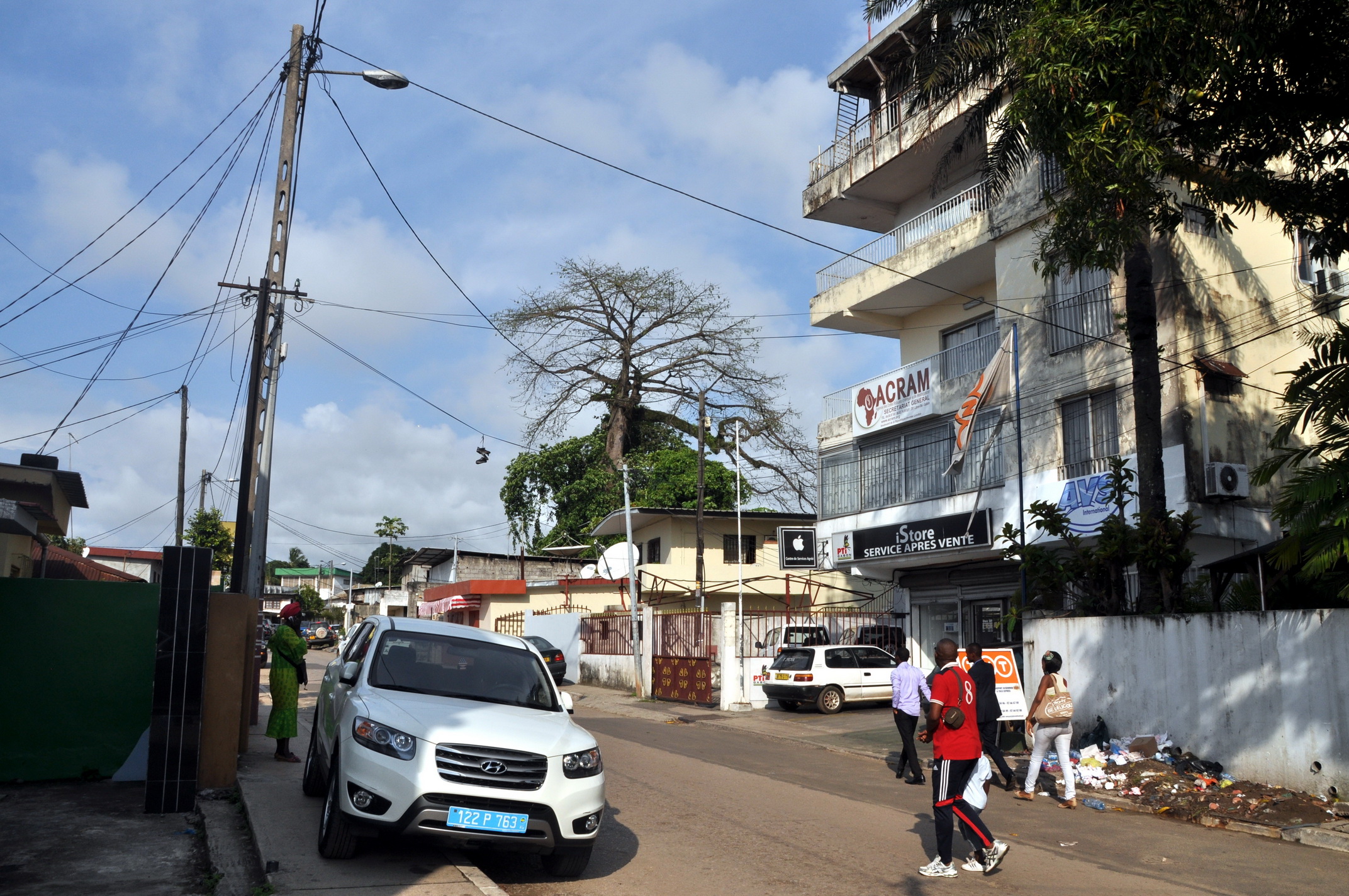
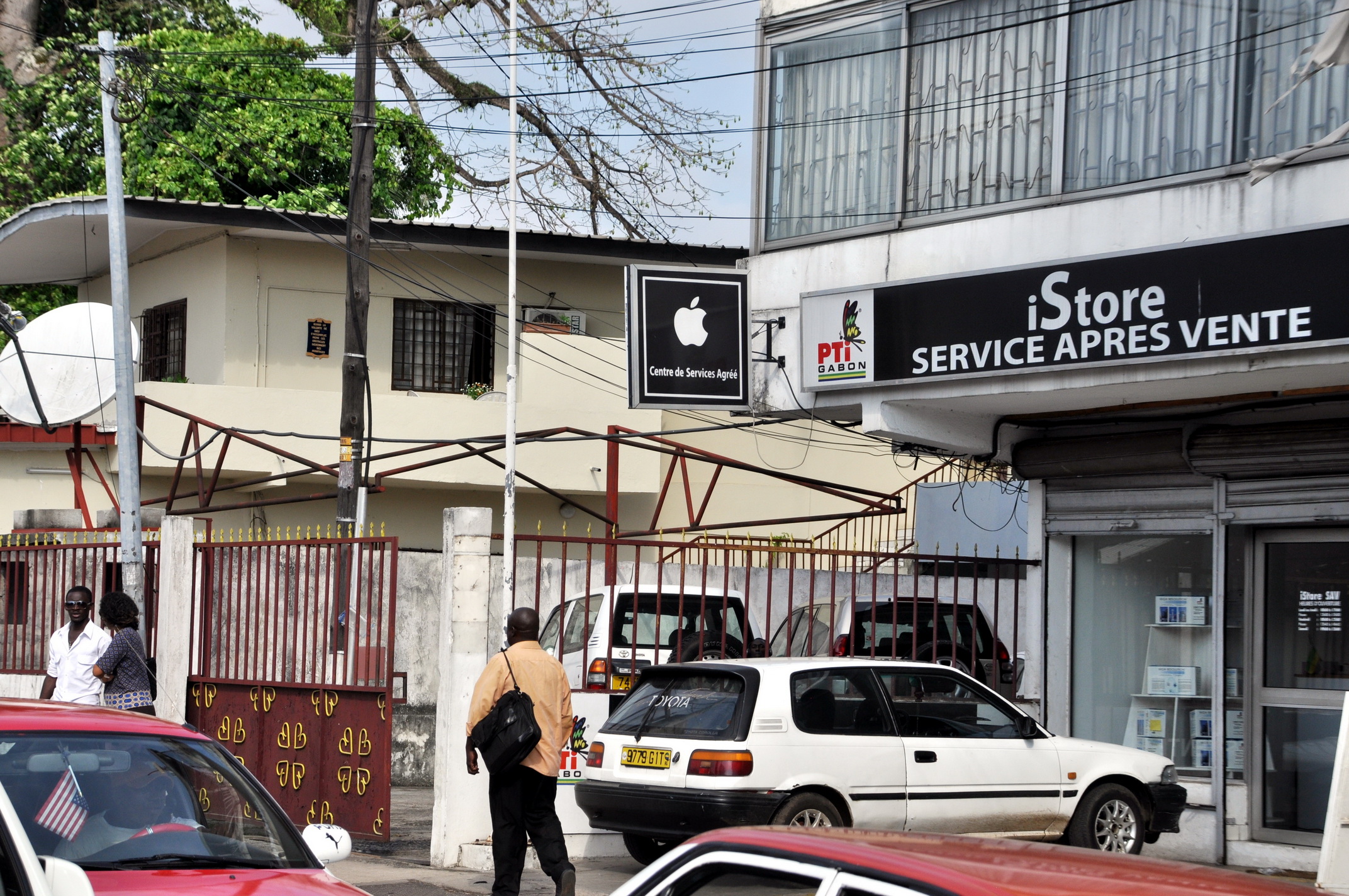
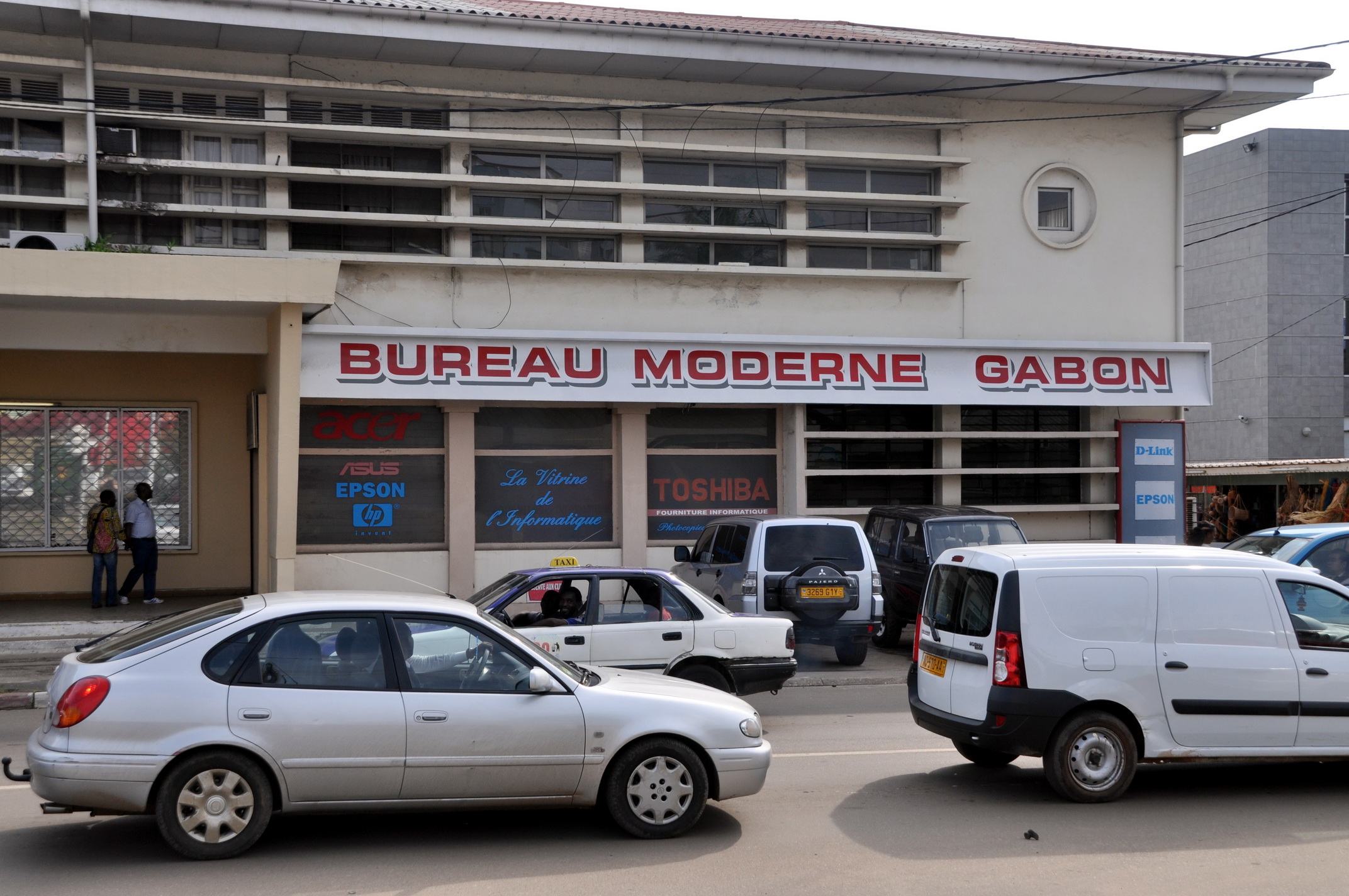
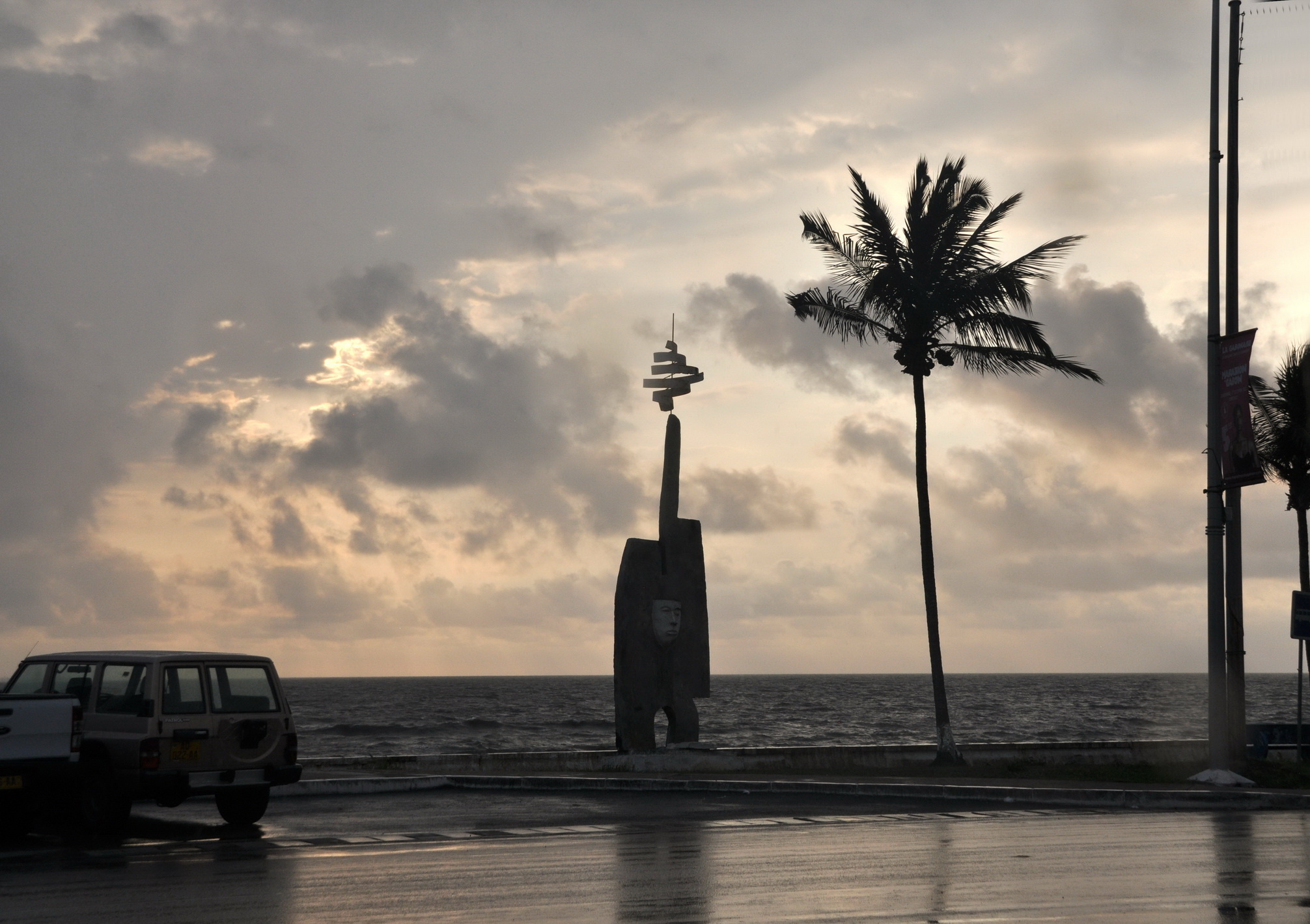
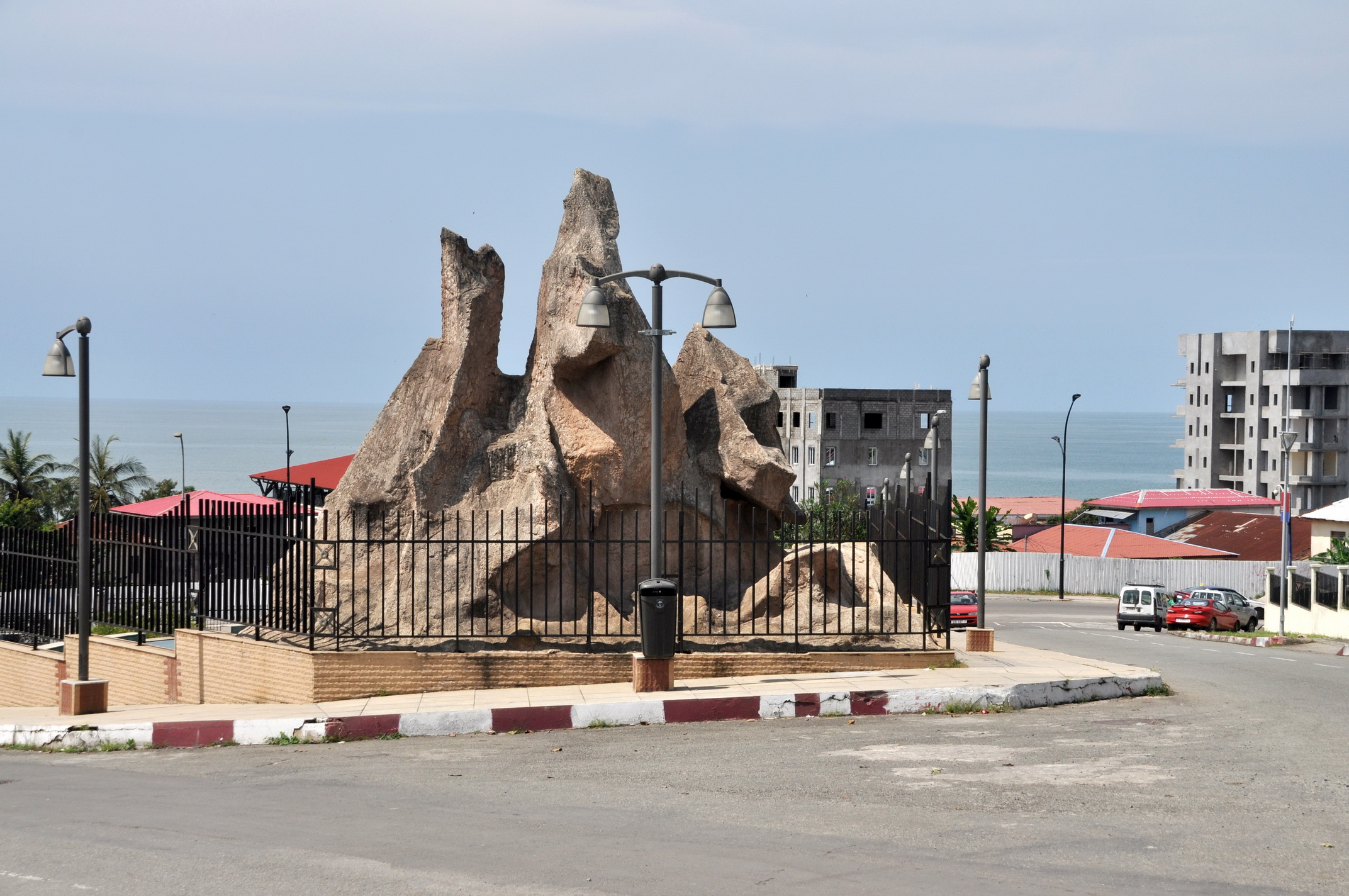
Libreville even had its own answer to Zurab Tsereteli. You could tell by the strange sculpture.
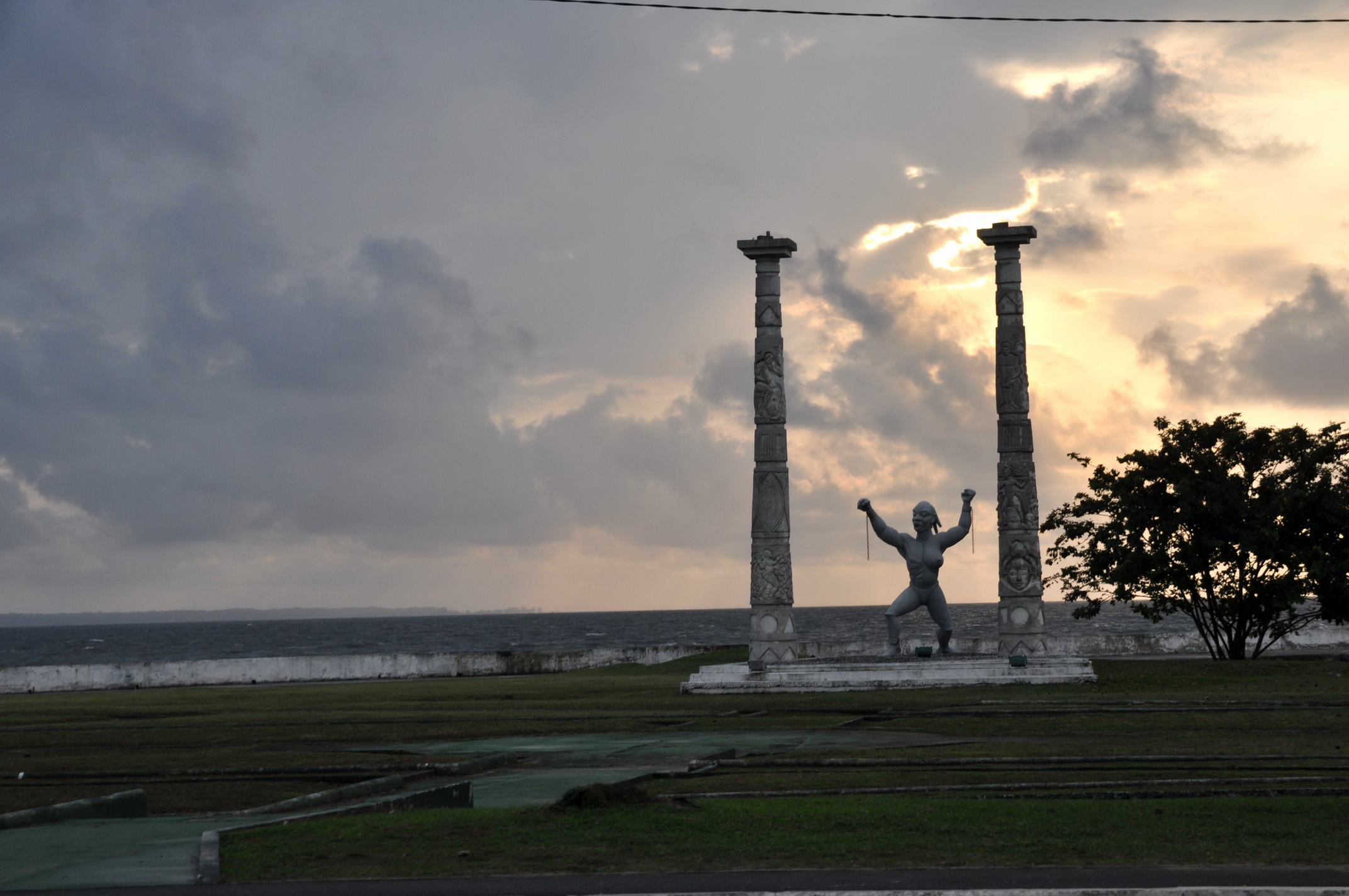
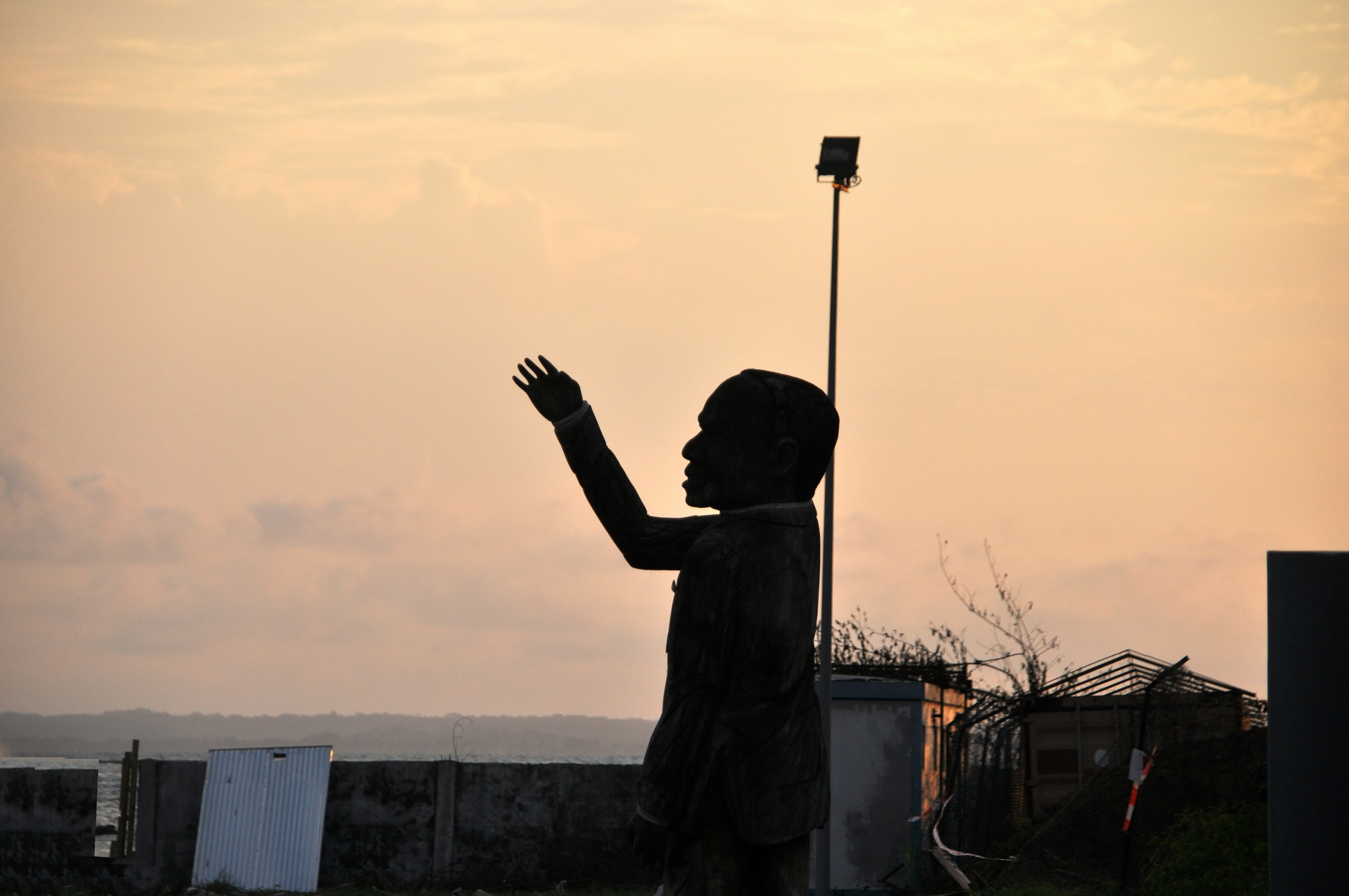
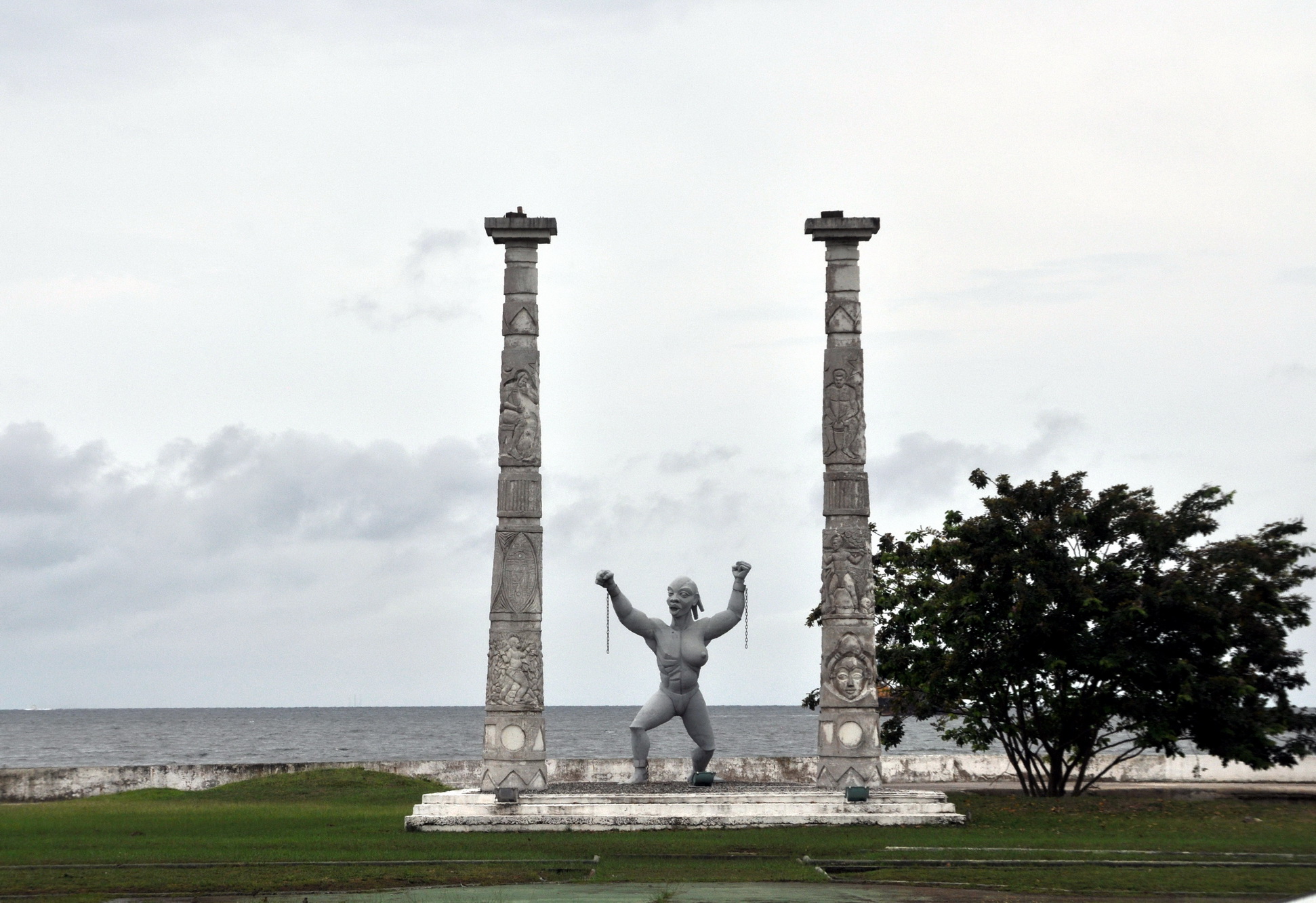
There was no democracy to speak of, I thought, but there was common sense and a measure of prosperity. Perhaps in a country with so many separate communities things were hard to arrange otherwise. I heard there were 42 ethnic groups in Gabon, and getting them all to get on might not be simple.
Gabon didn’t try to go to war with its neighbours. Its army was small, trained and voluntary. No slavery by conscription.
Gabon recognised France as a mainstay of its economy and culture. The relationship was not seriously in doubt. As Bongo used to say, Gabon without France is like a car without a driver or fuel.
Gabon wanted to attract tourists, turn itself into the world’s great national park and give French pensioners somewhere to retire. Anything, in short, to become part of the wider world.
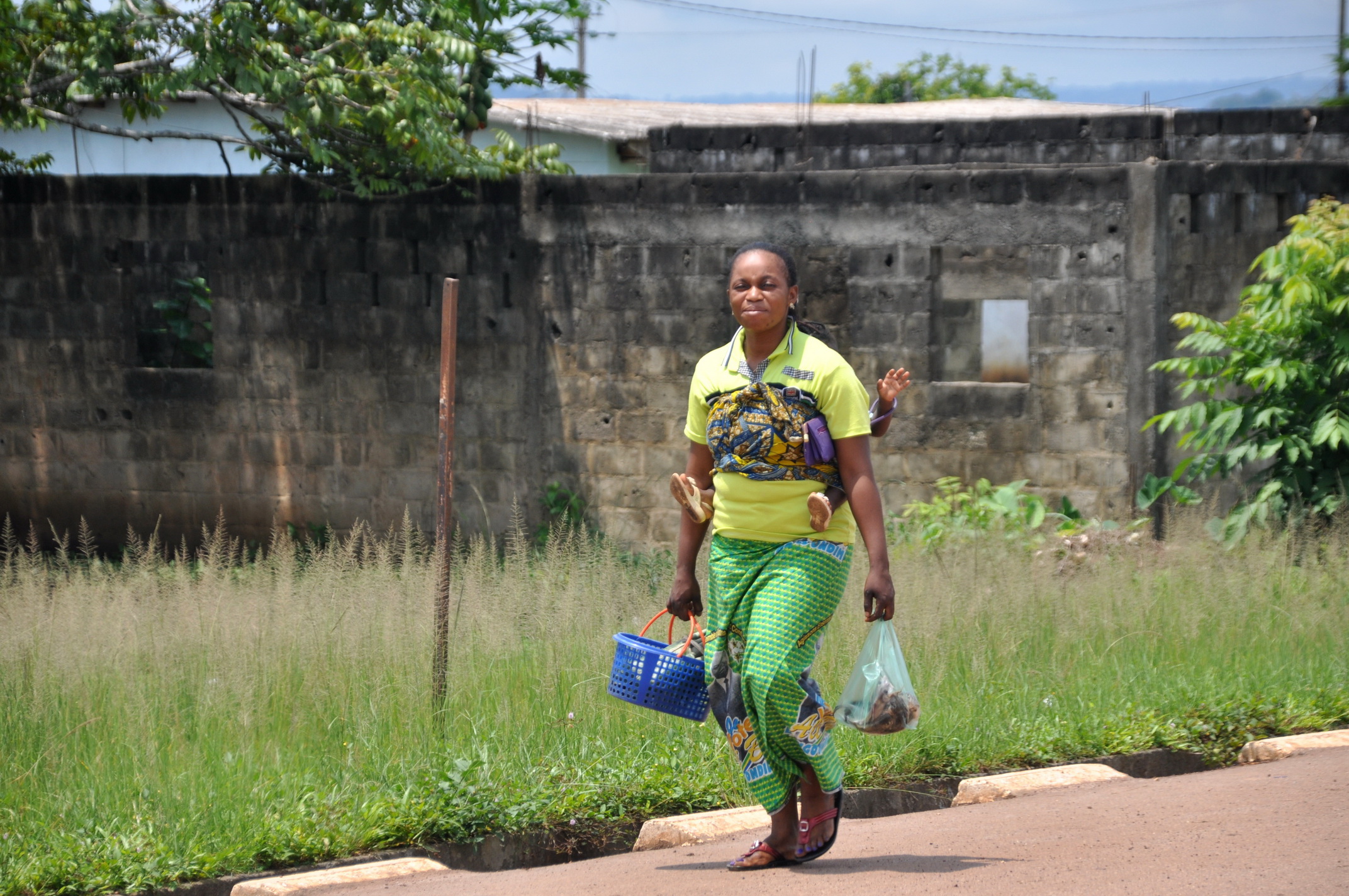
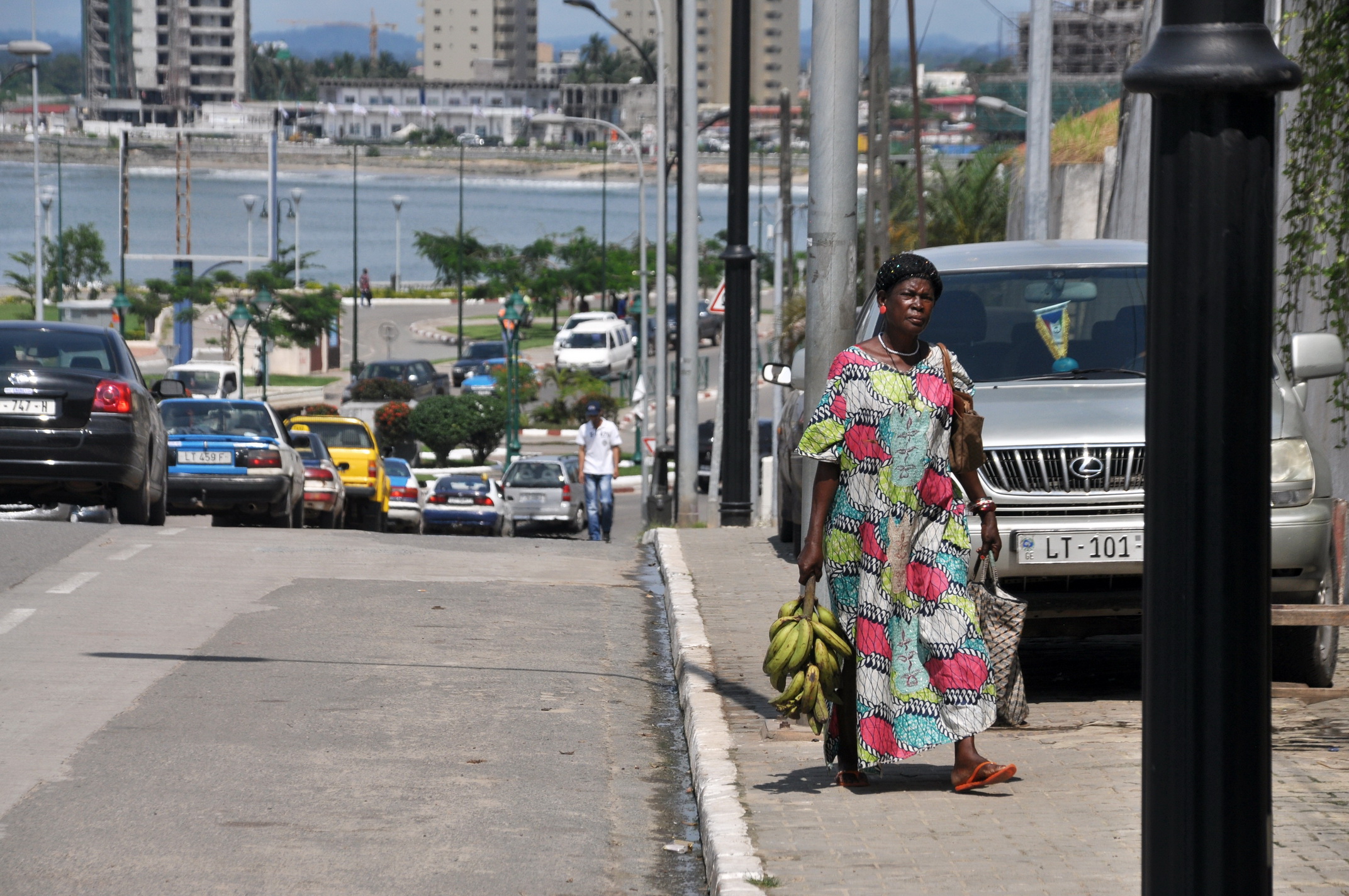
Otherwise, this was Africa, of course. Women in bright dresses carried anything that came to hand on their heads. At best it was fruit; at worst a car battery, a bucket of paint or a couple of sheets of corrugated roofing. The women, incidentally, were tall, slender and beautiful. The crude story I heard about the early days of the oil boom was that people spent some of their first windfall dollars buying wives from neighbouring countries. A woman supposedly cost $200, and the young people I was looking at would be their descendants. That was the story, at any rate.
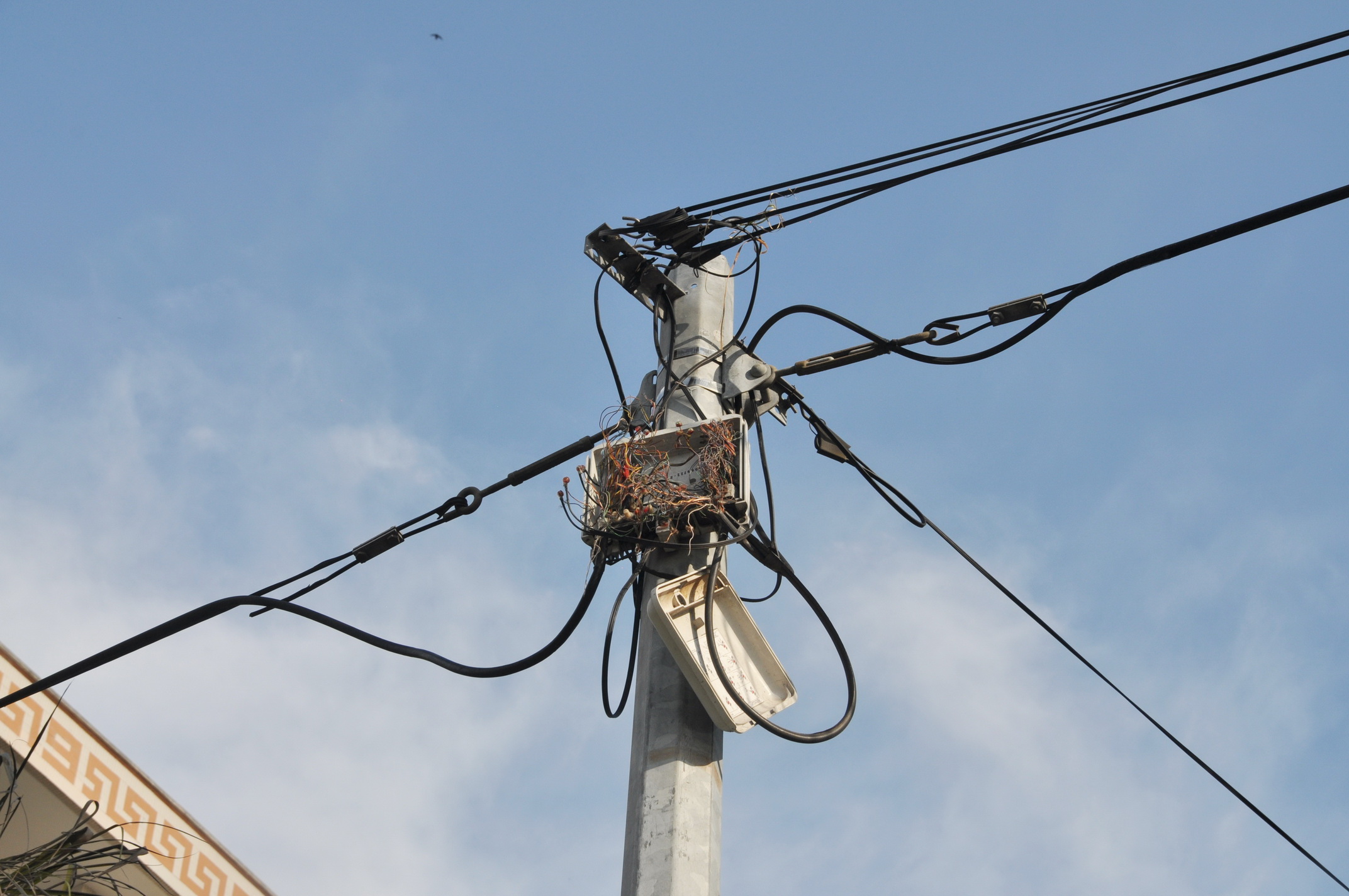
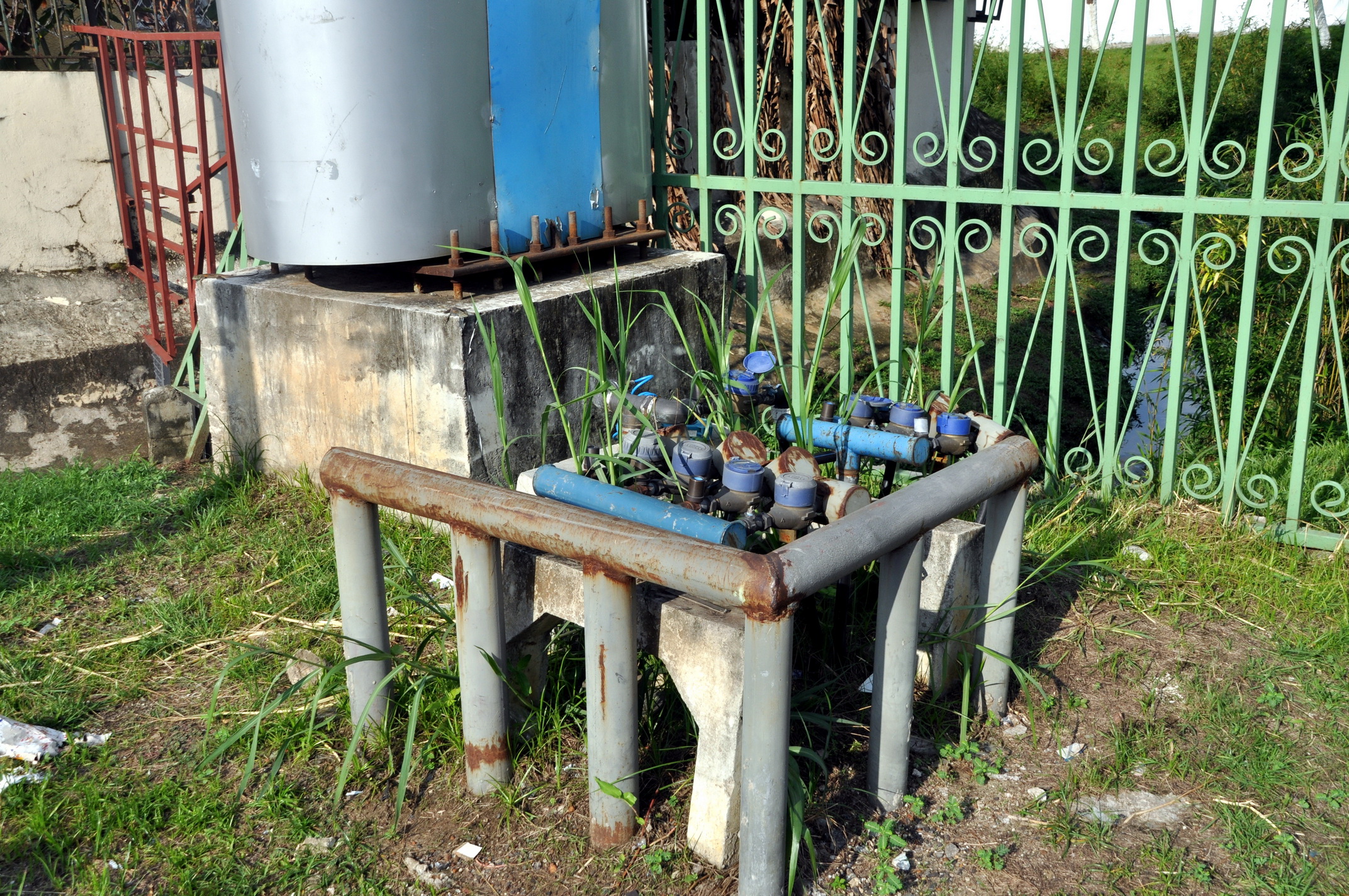
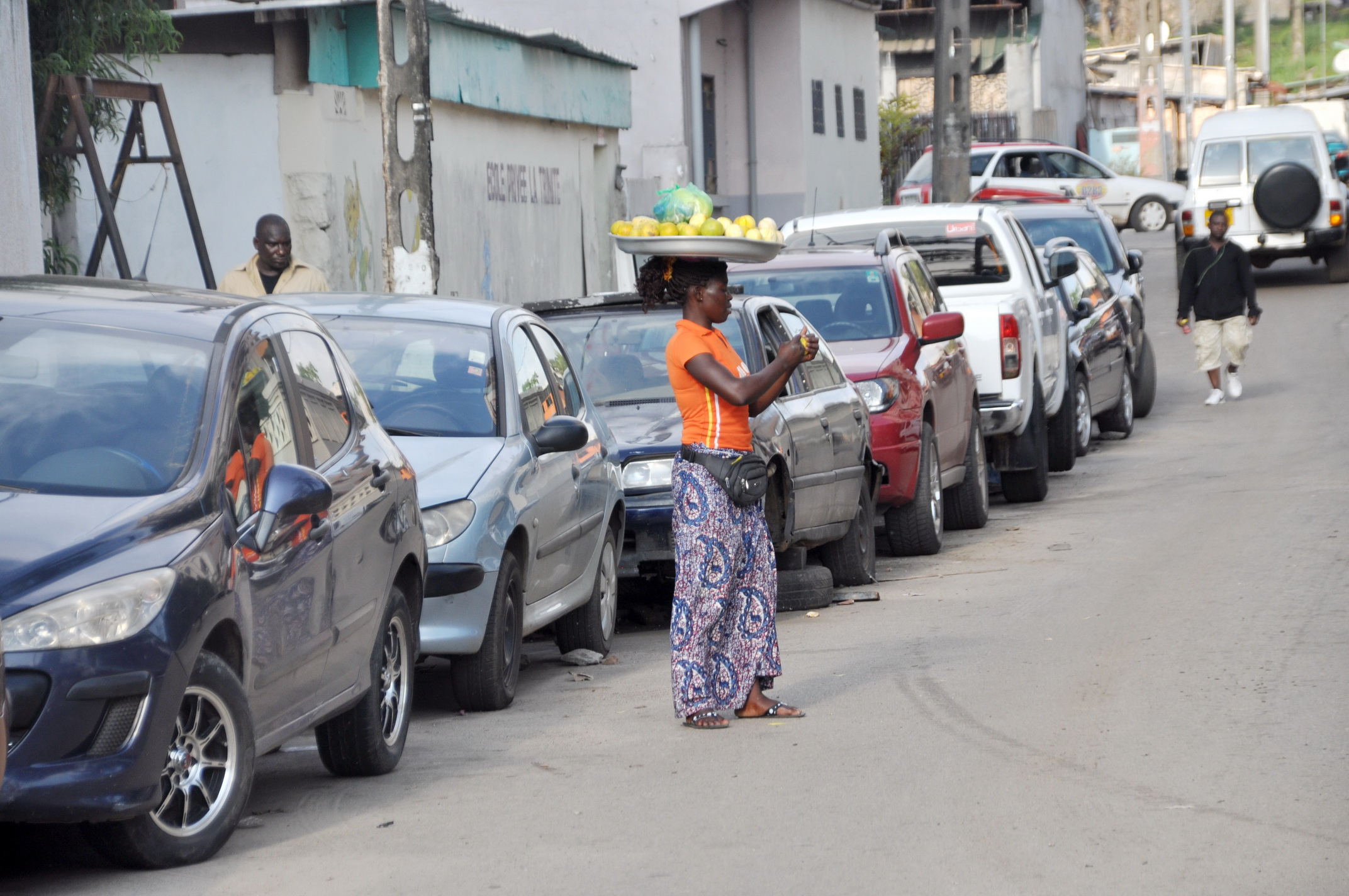
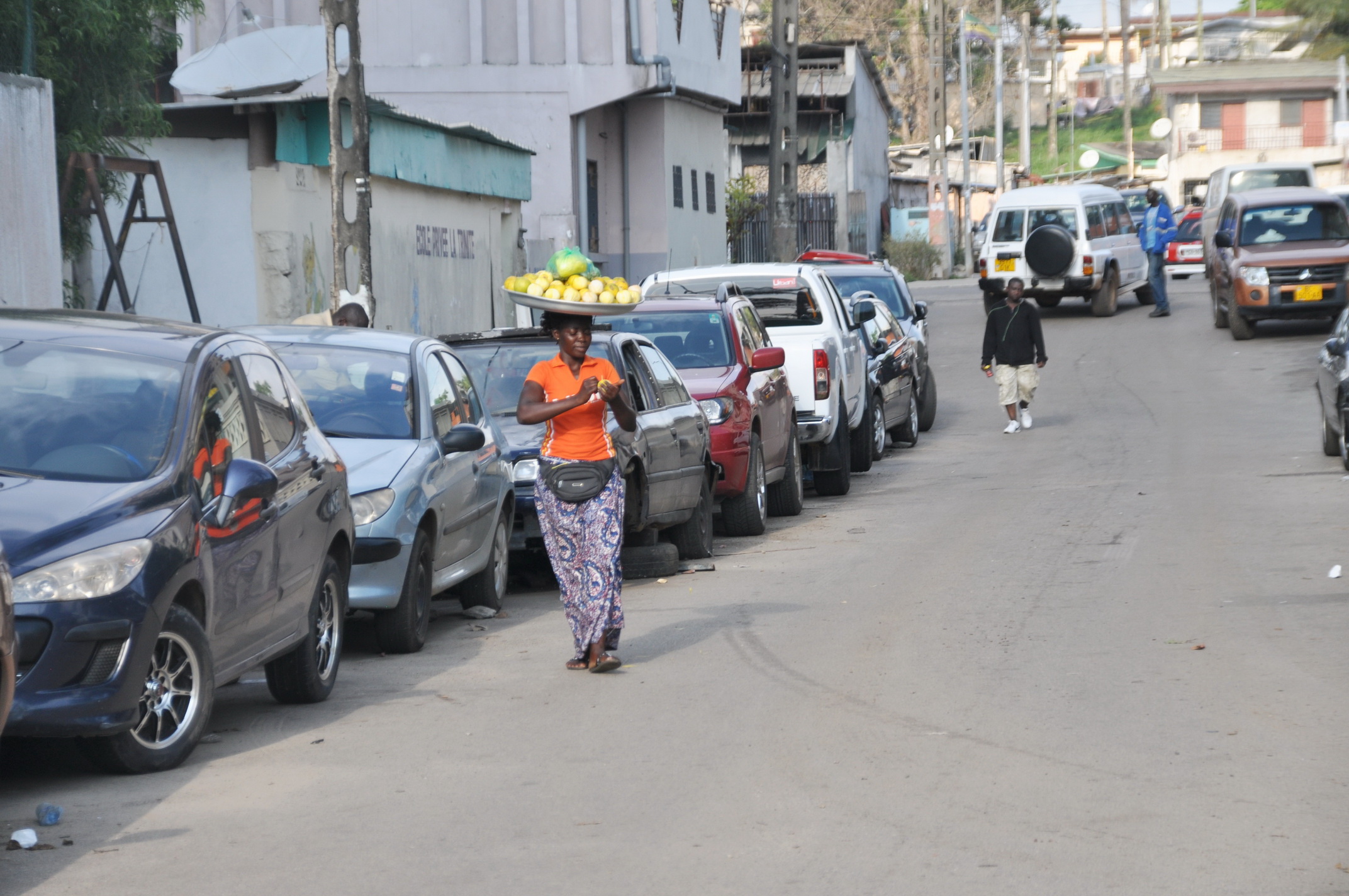
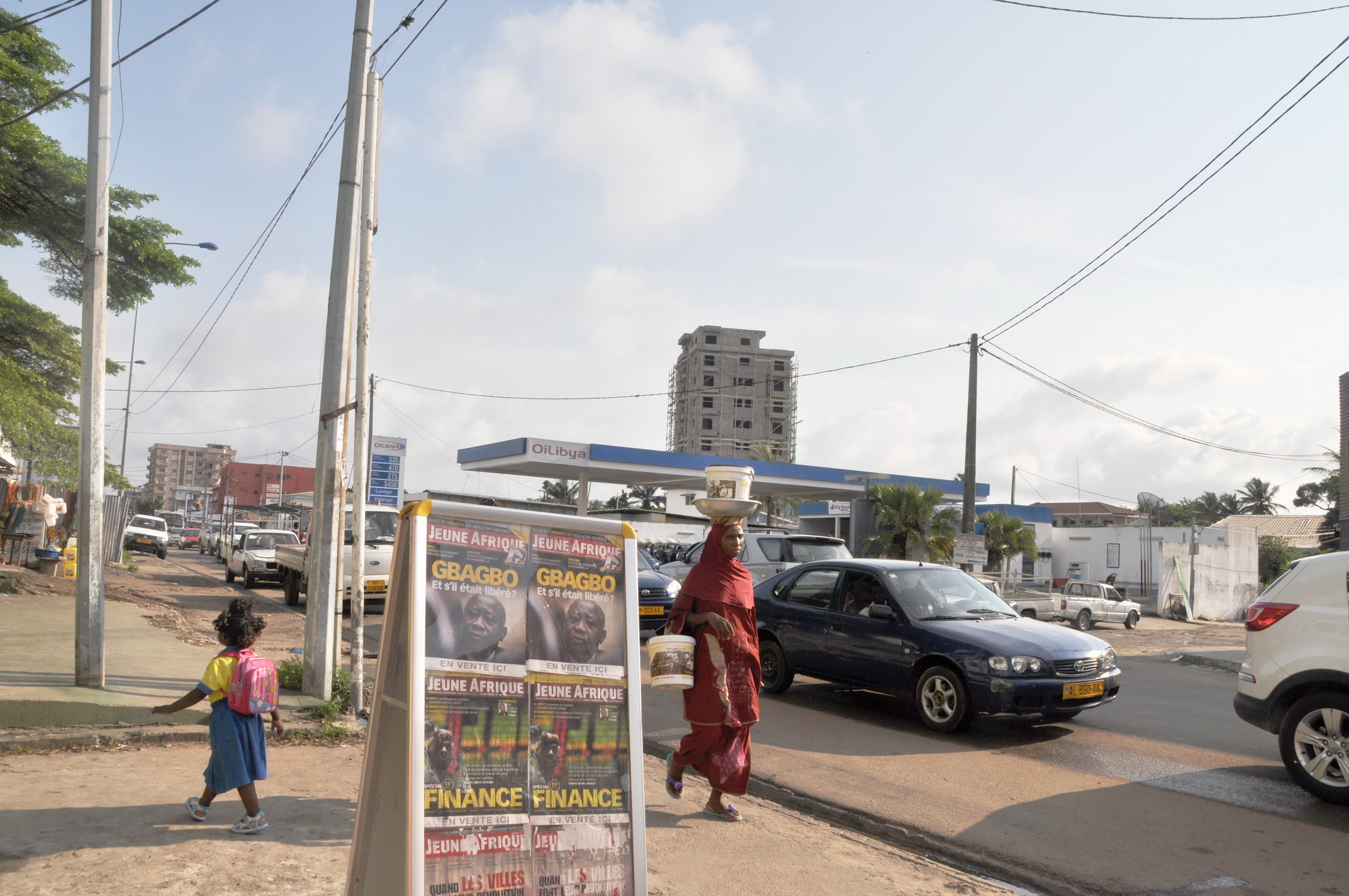
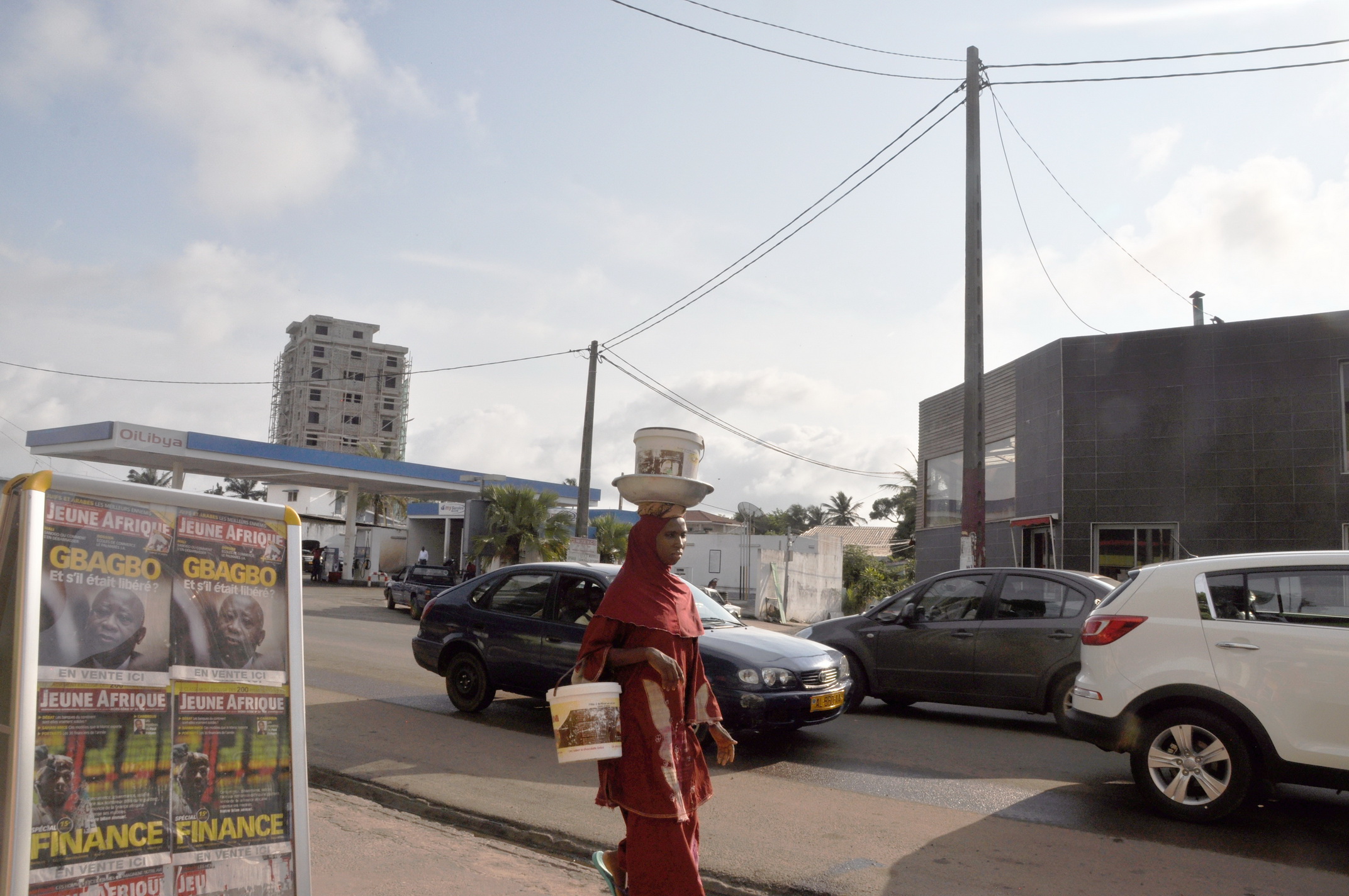
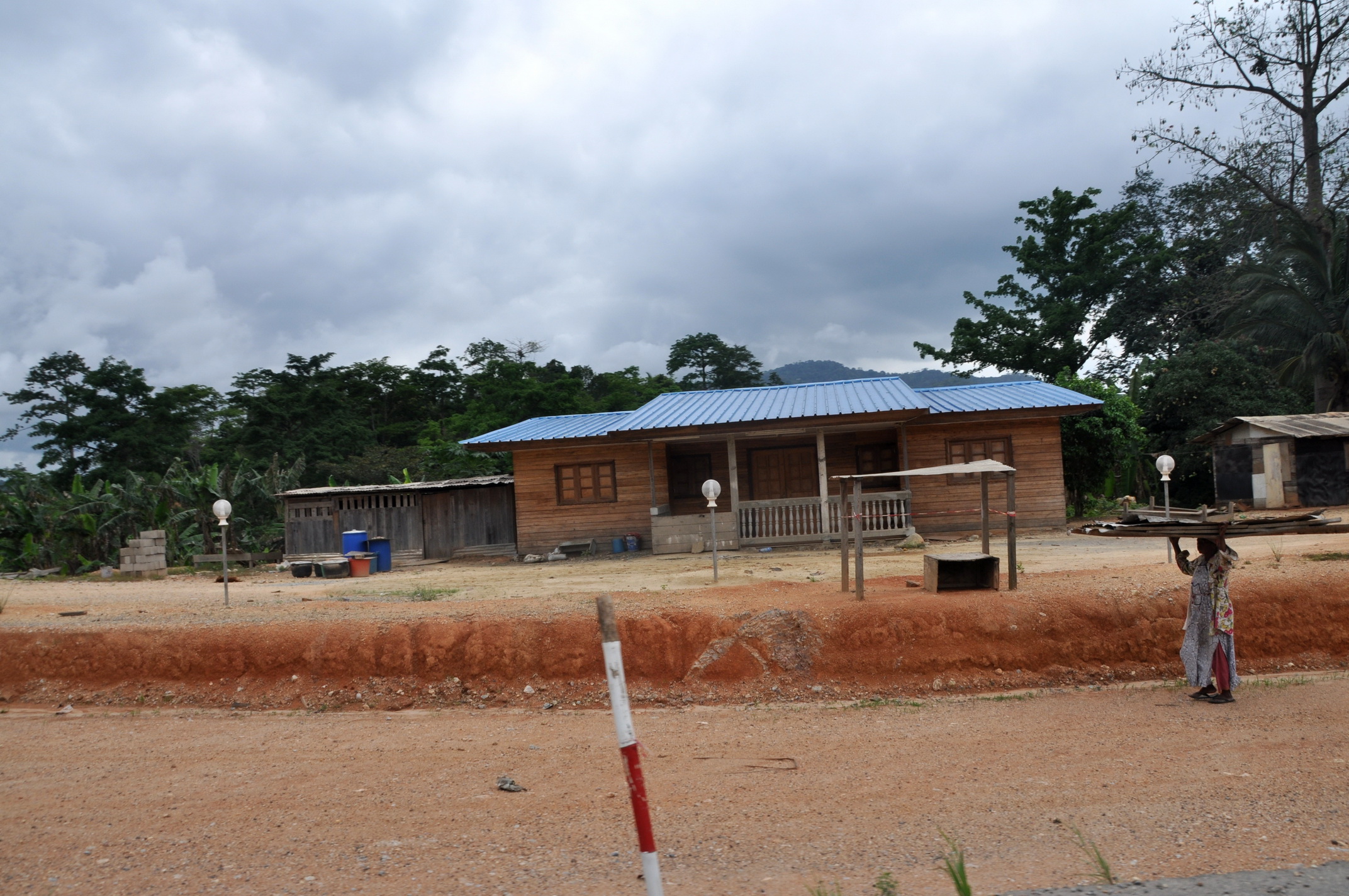
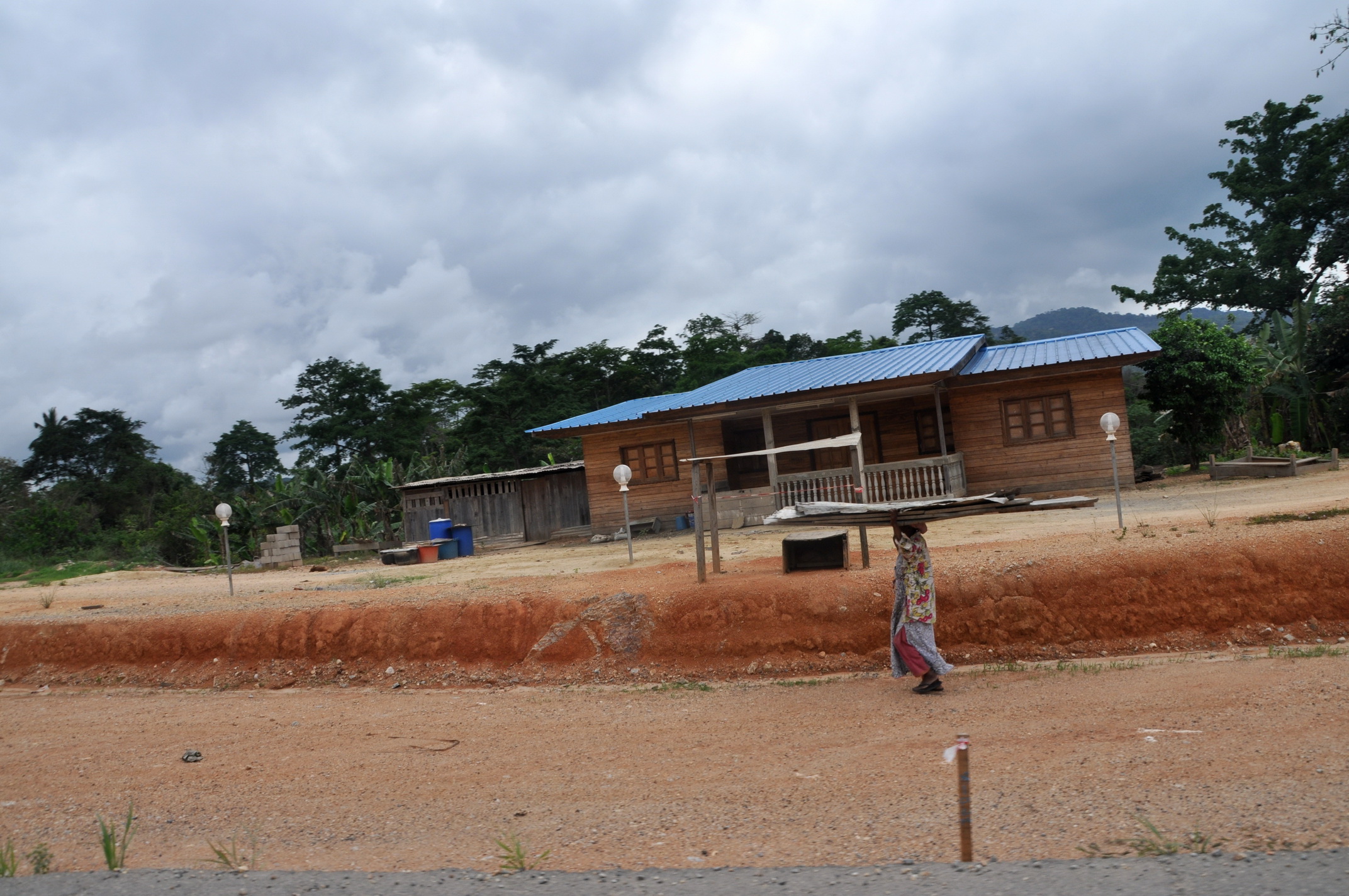
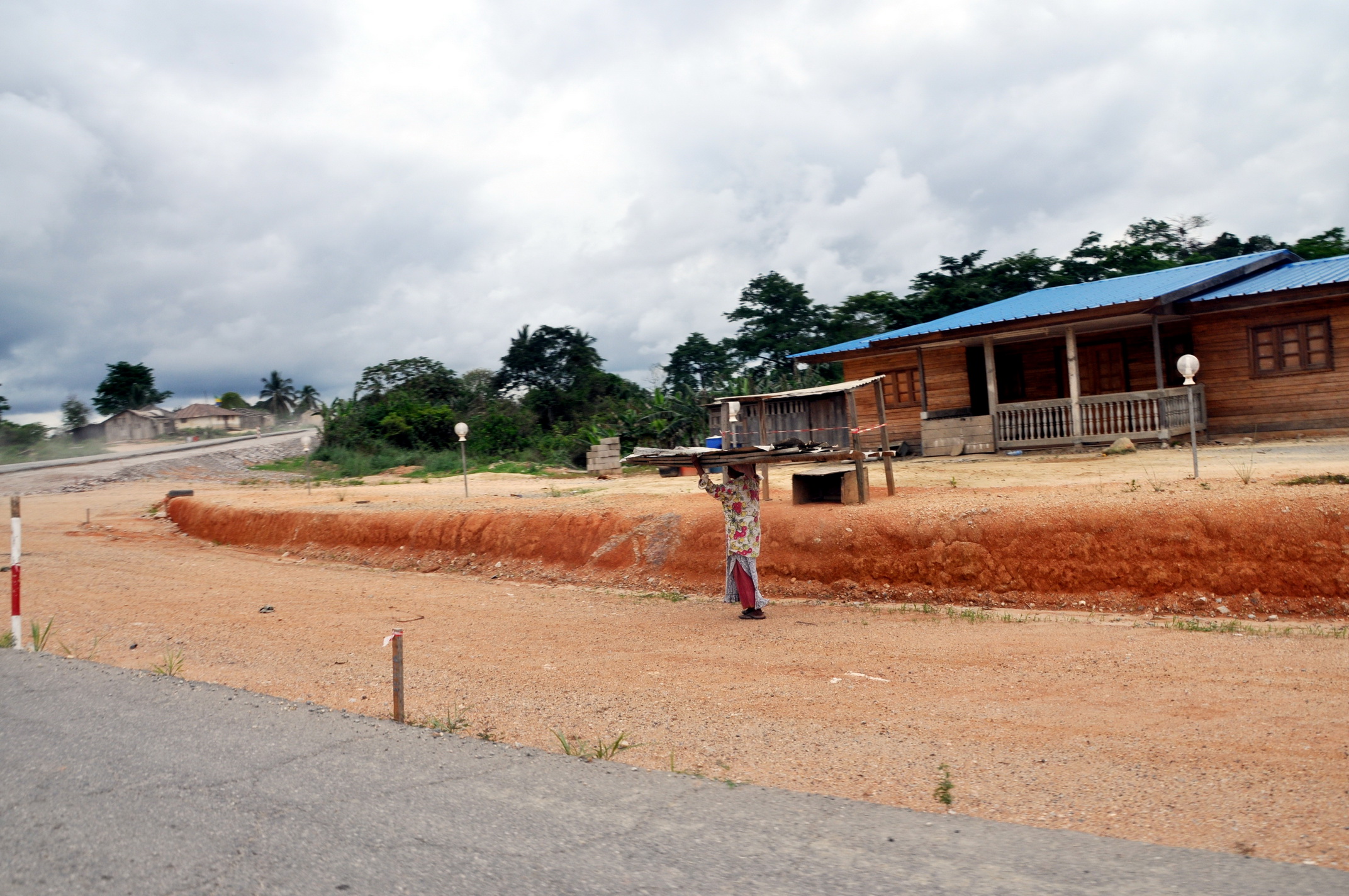
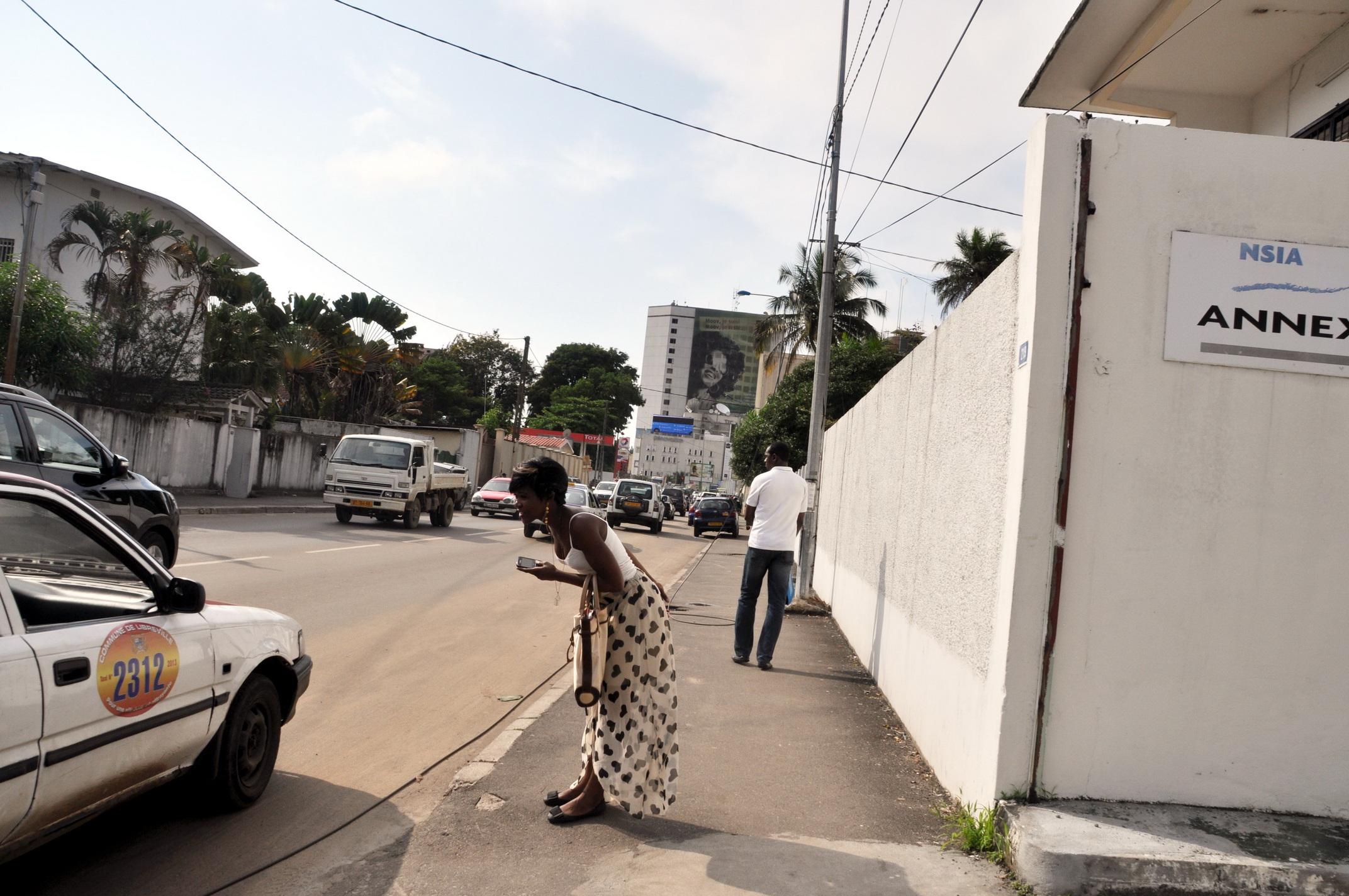
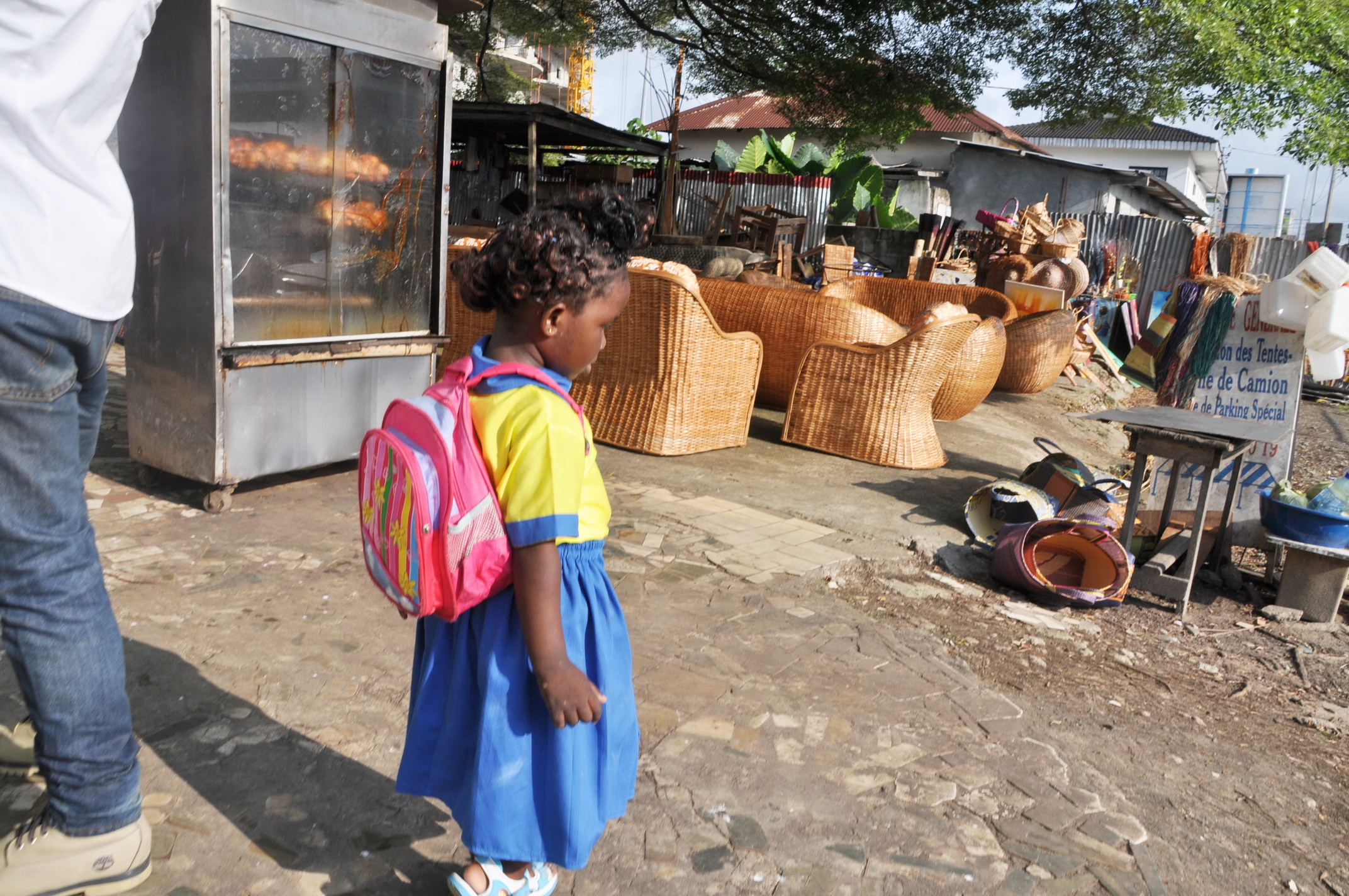
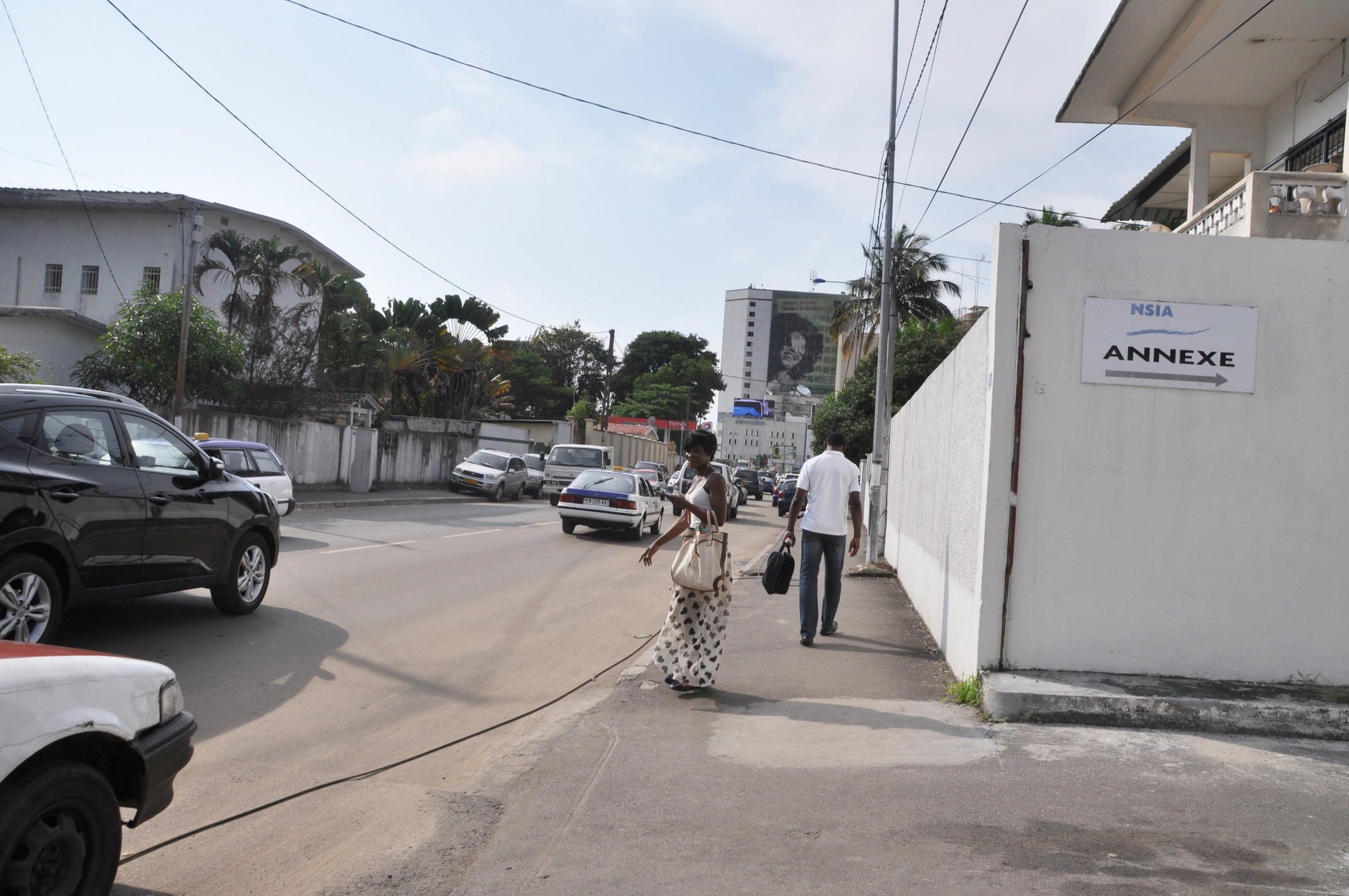
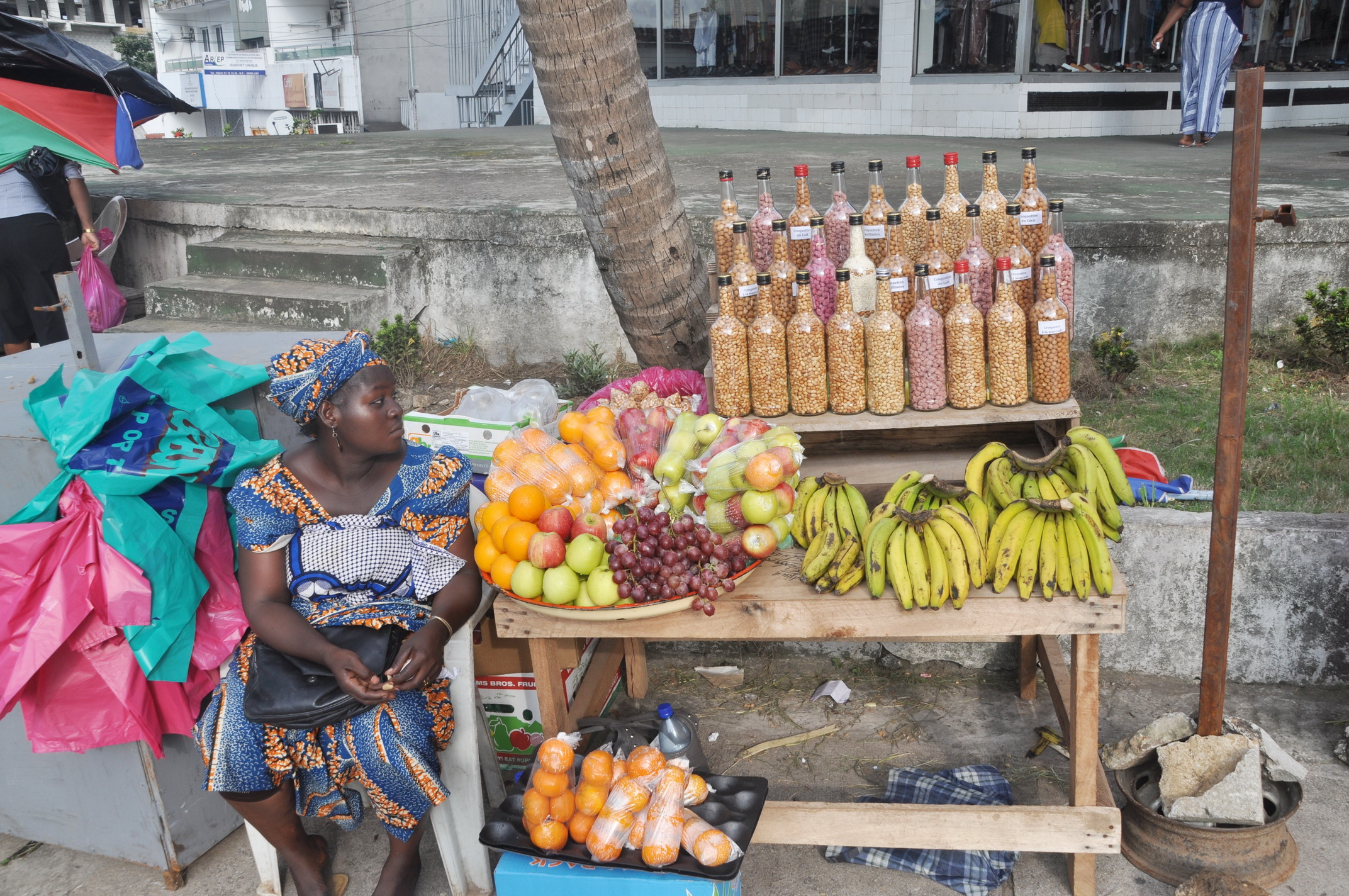
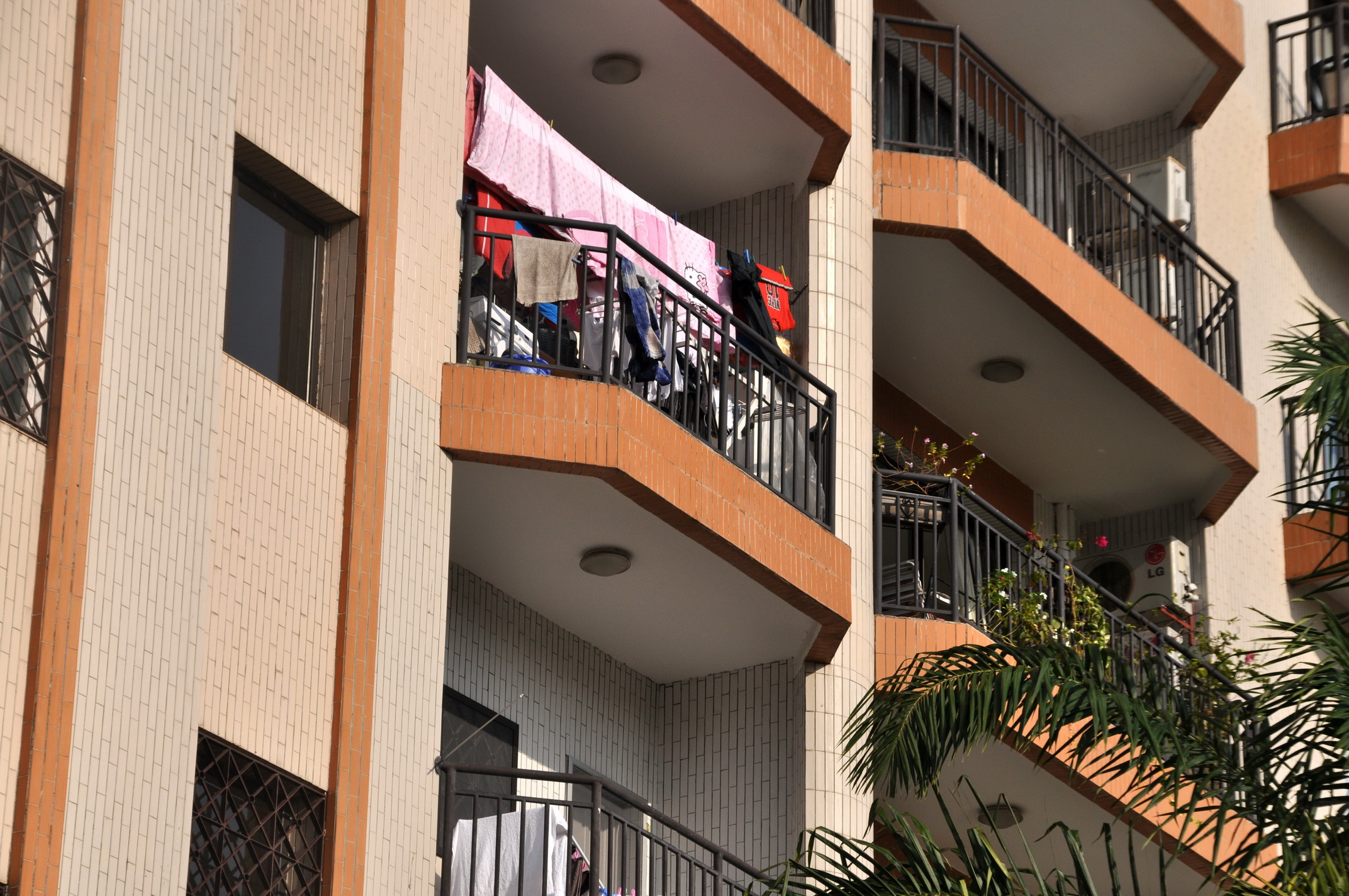
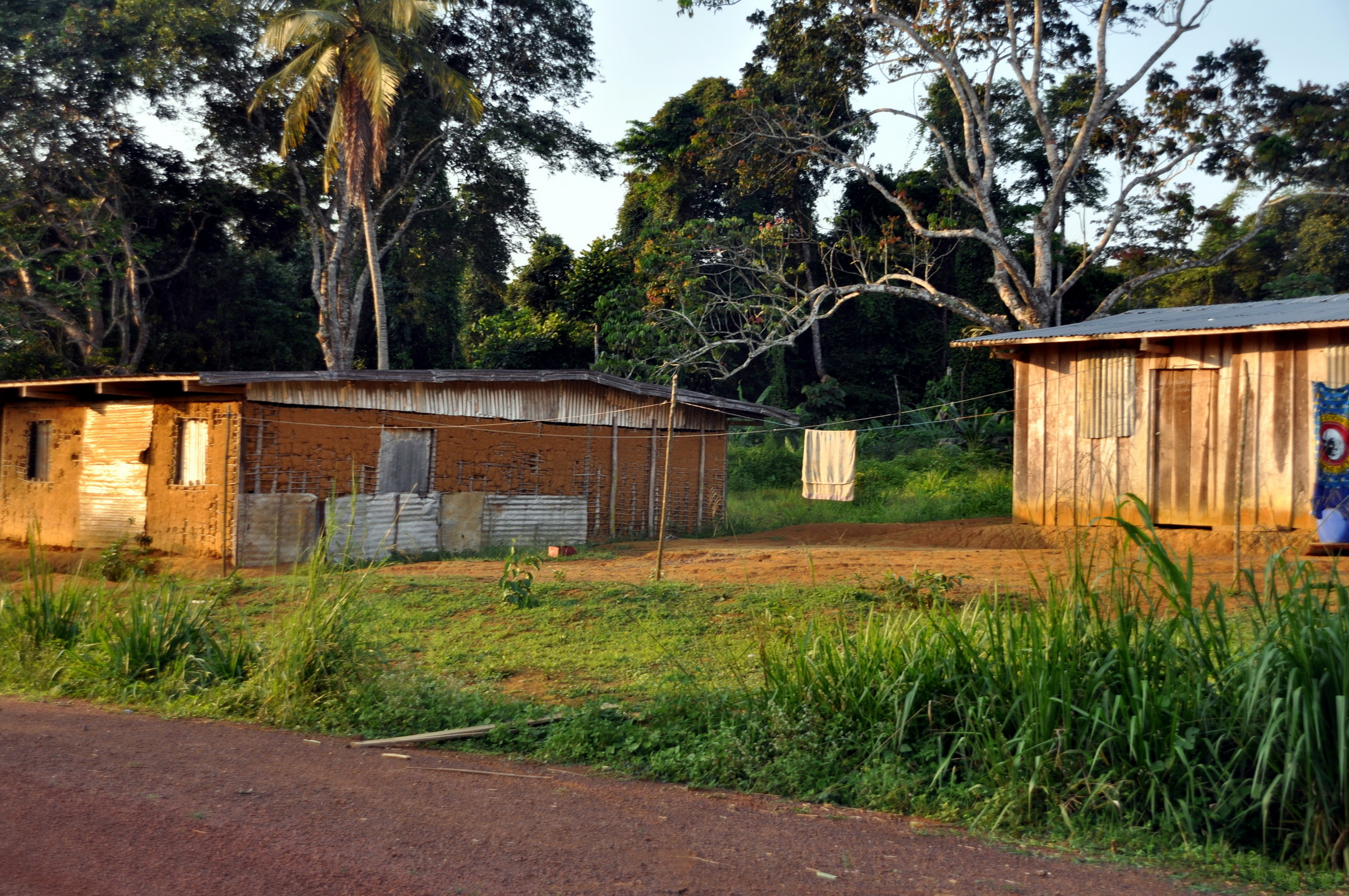
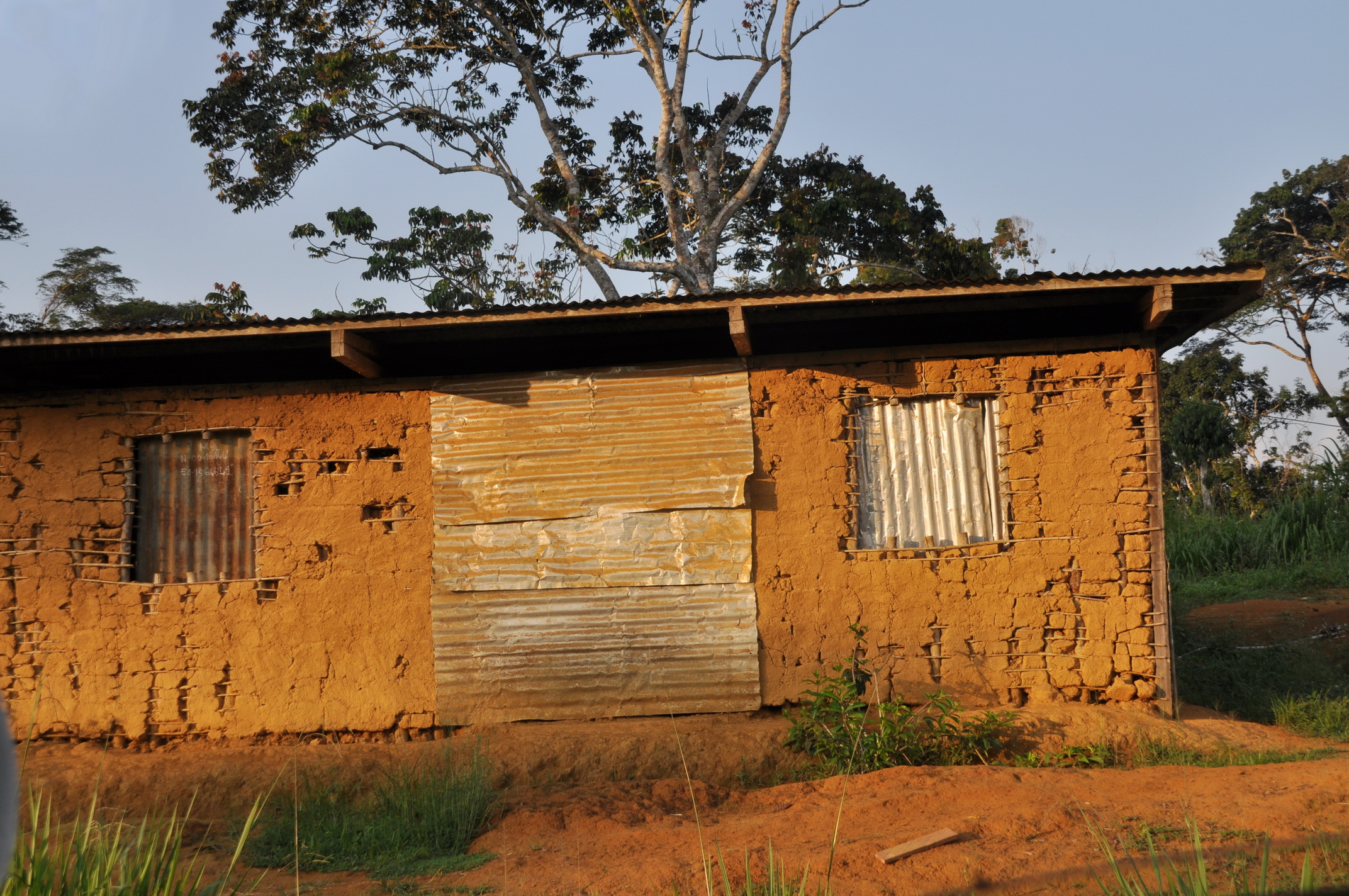
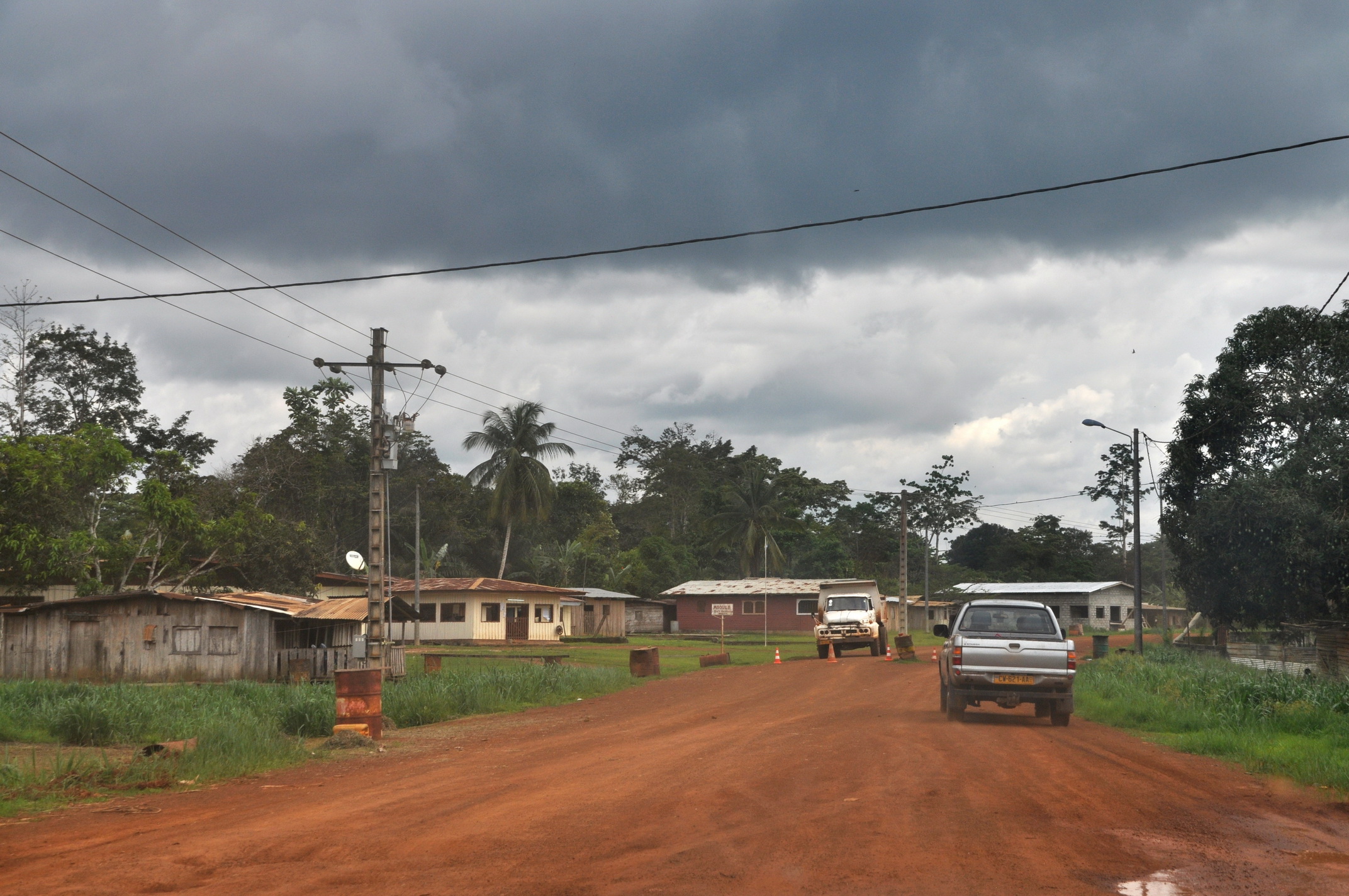
Everything you need to be happy was sold without the help of shops. There was a supermarket in the capital, of course, and a few buildings with European-style flats, but ordinary people lived in small houses of mud brick.
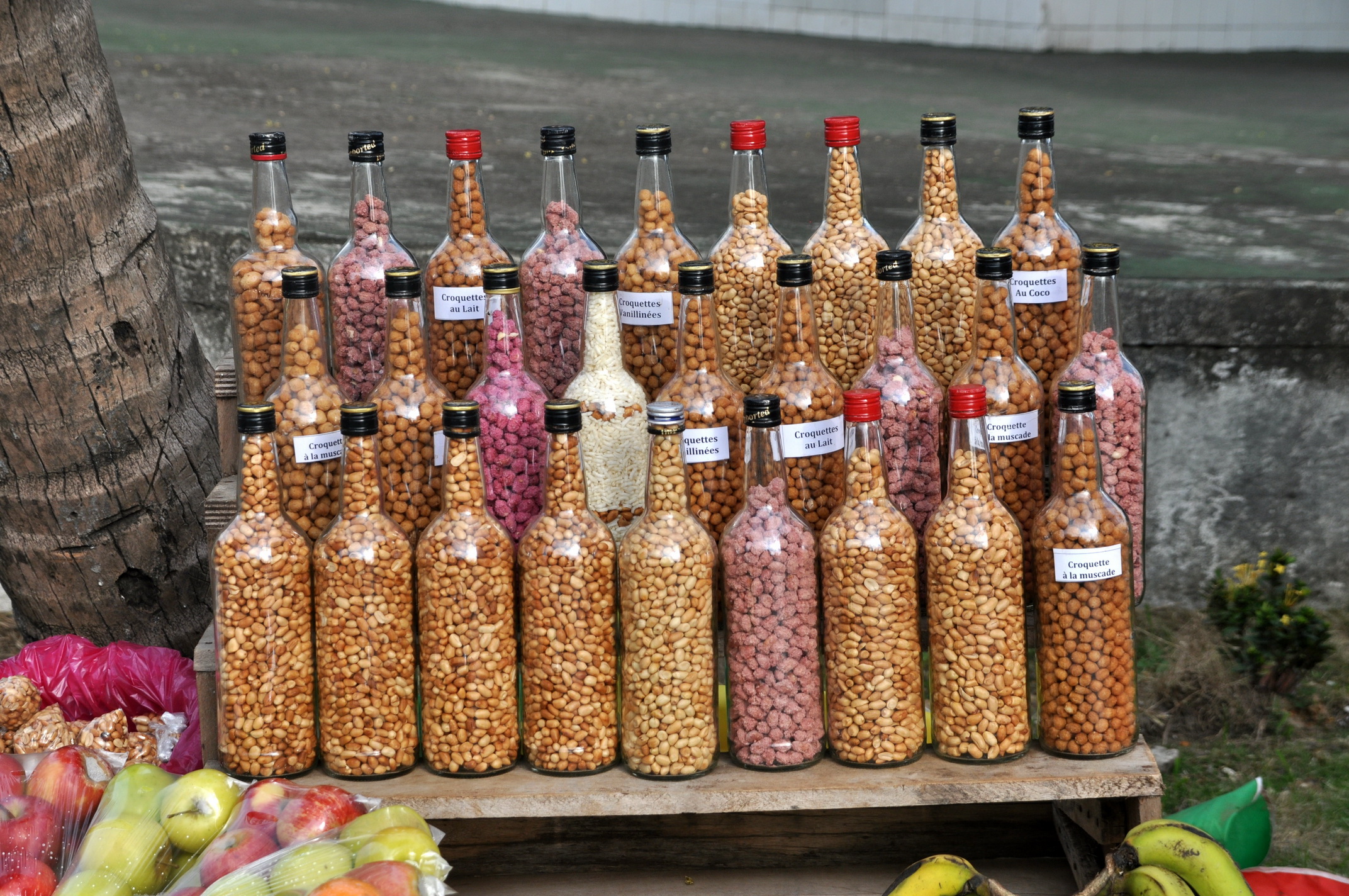
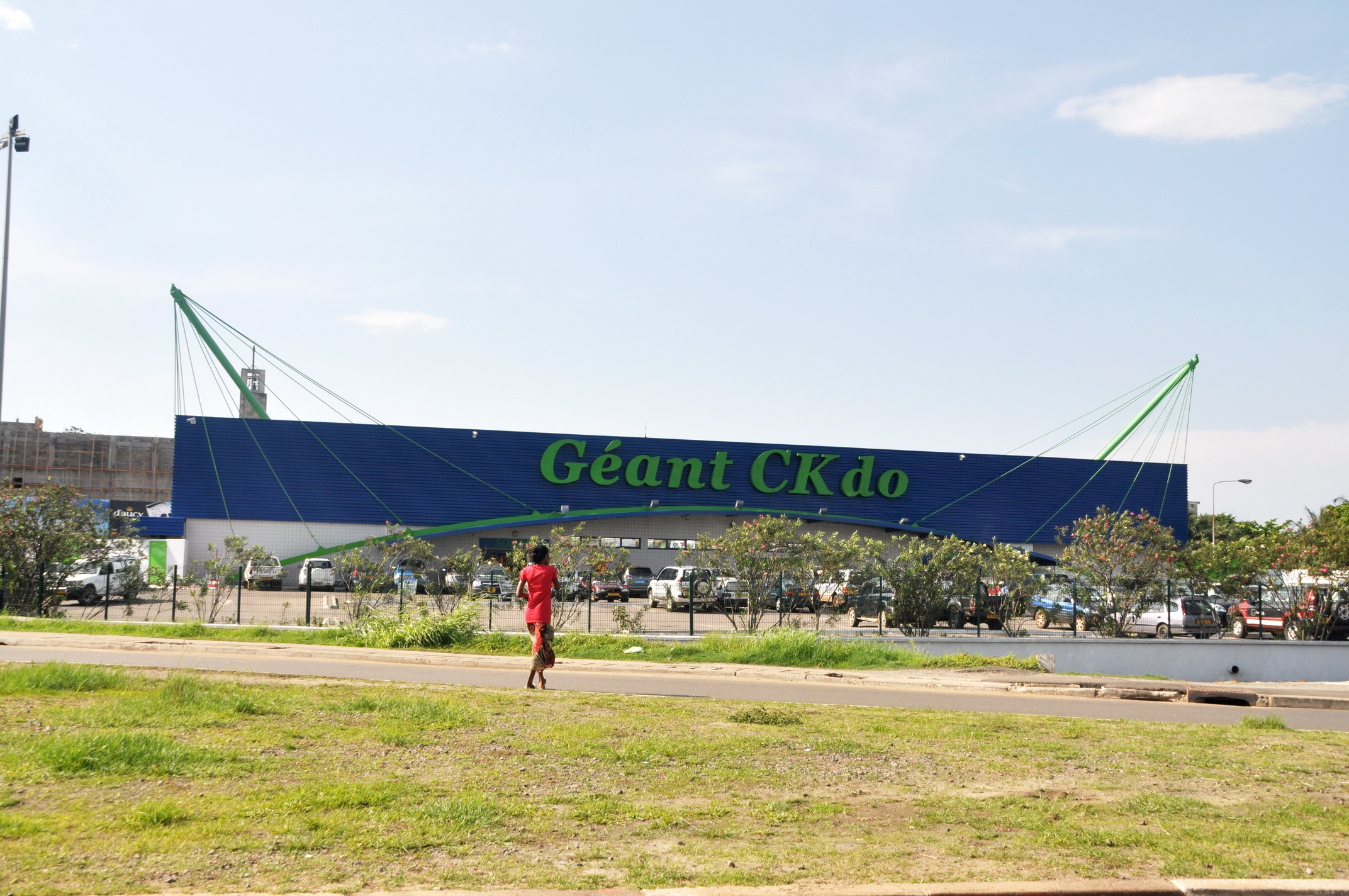
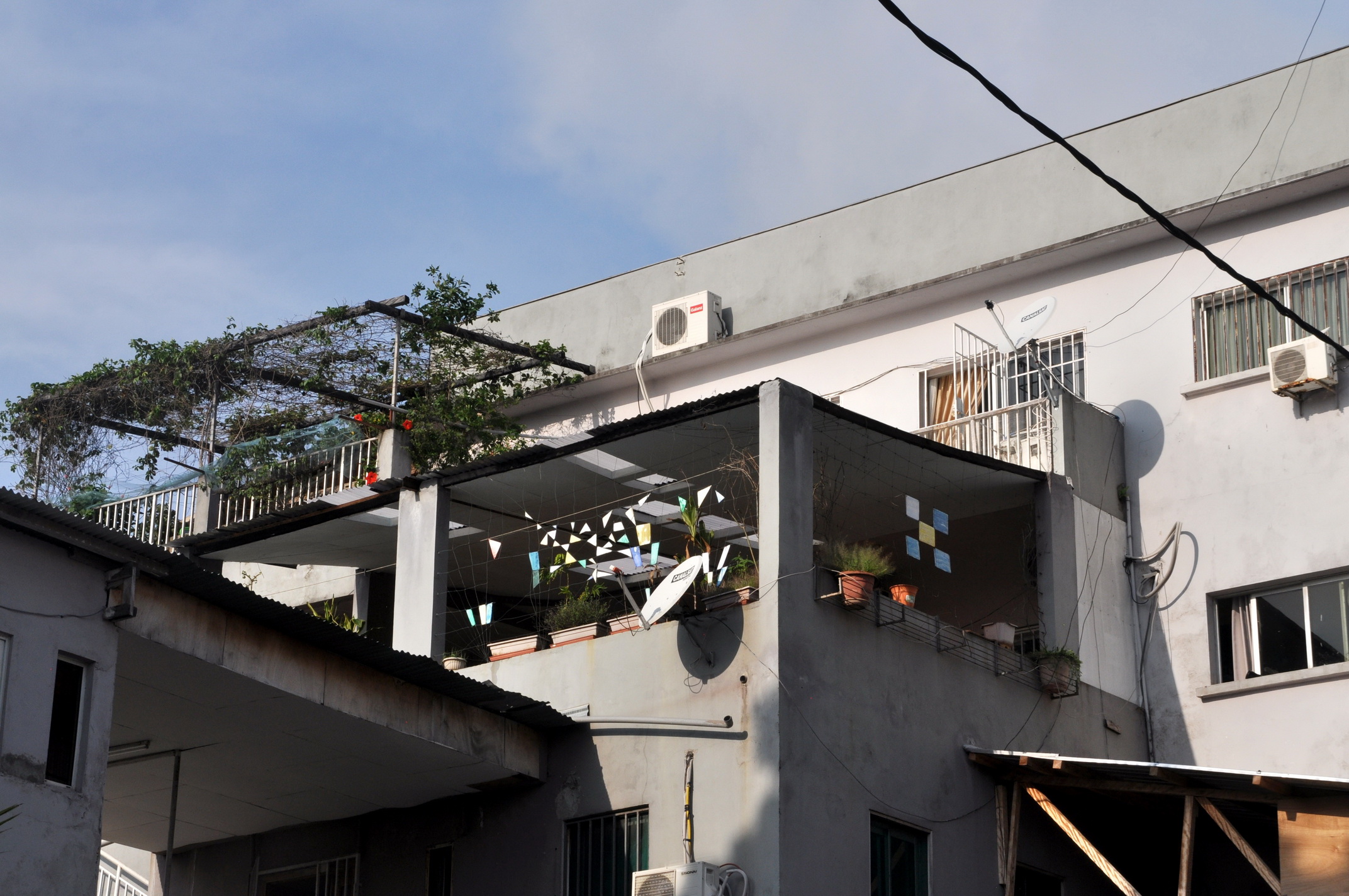
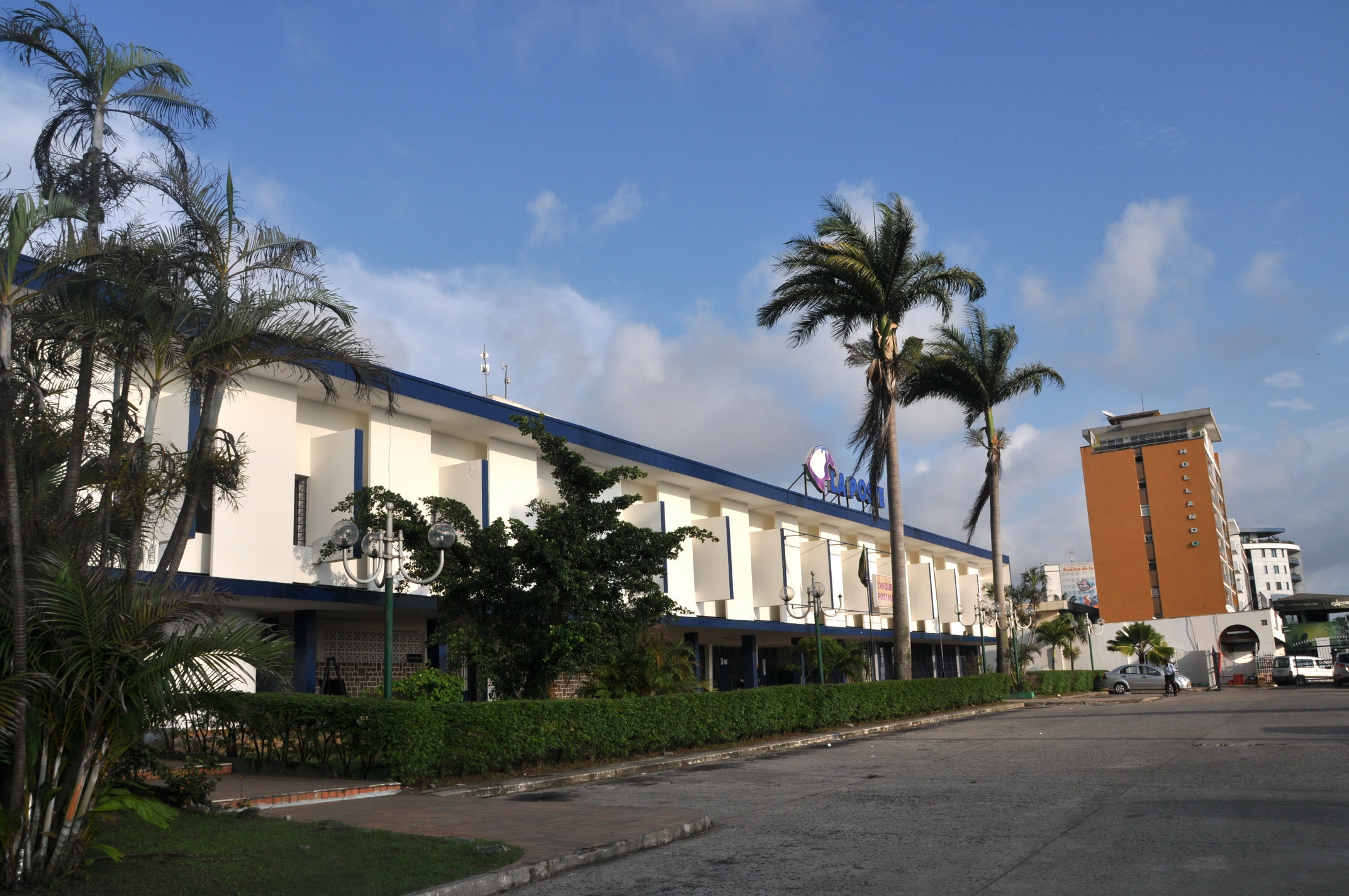
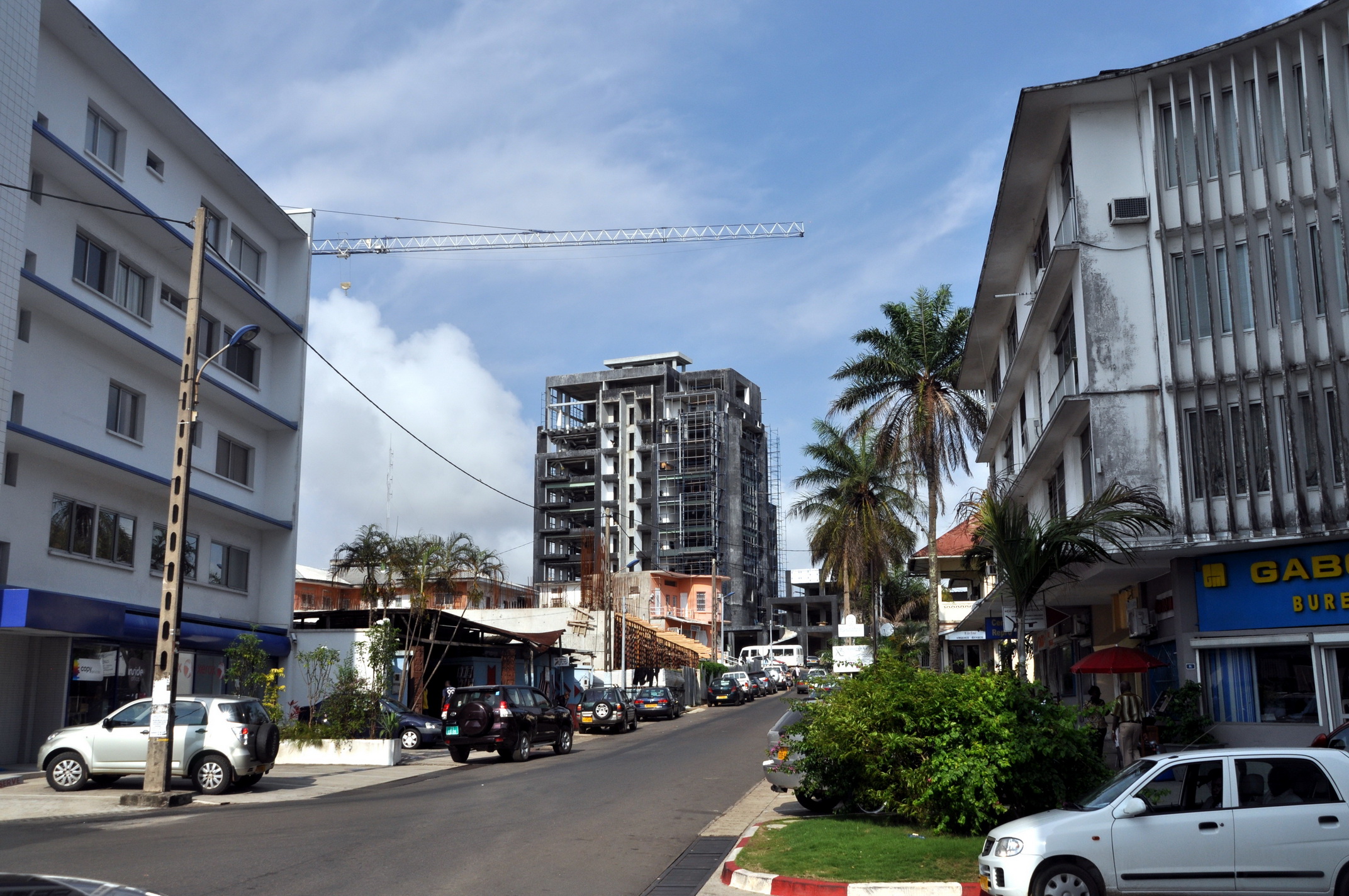
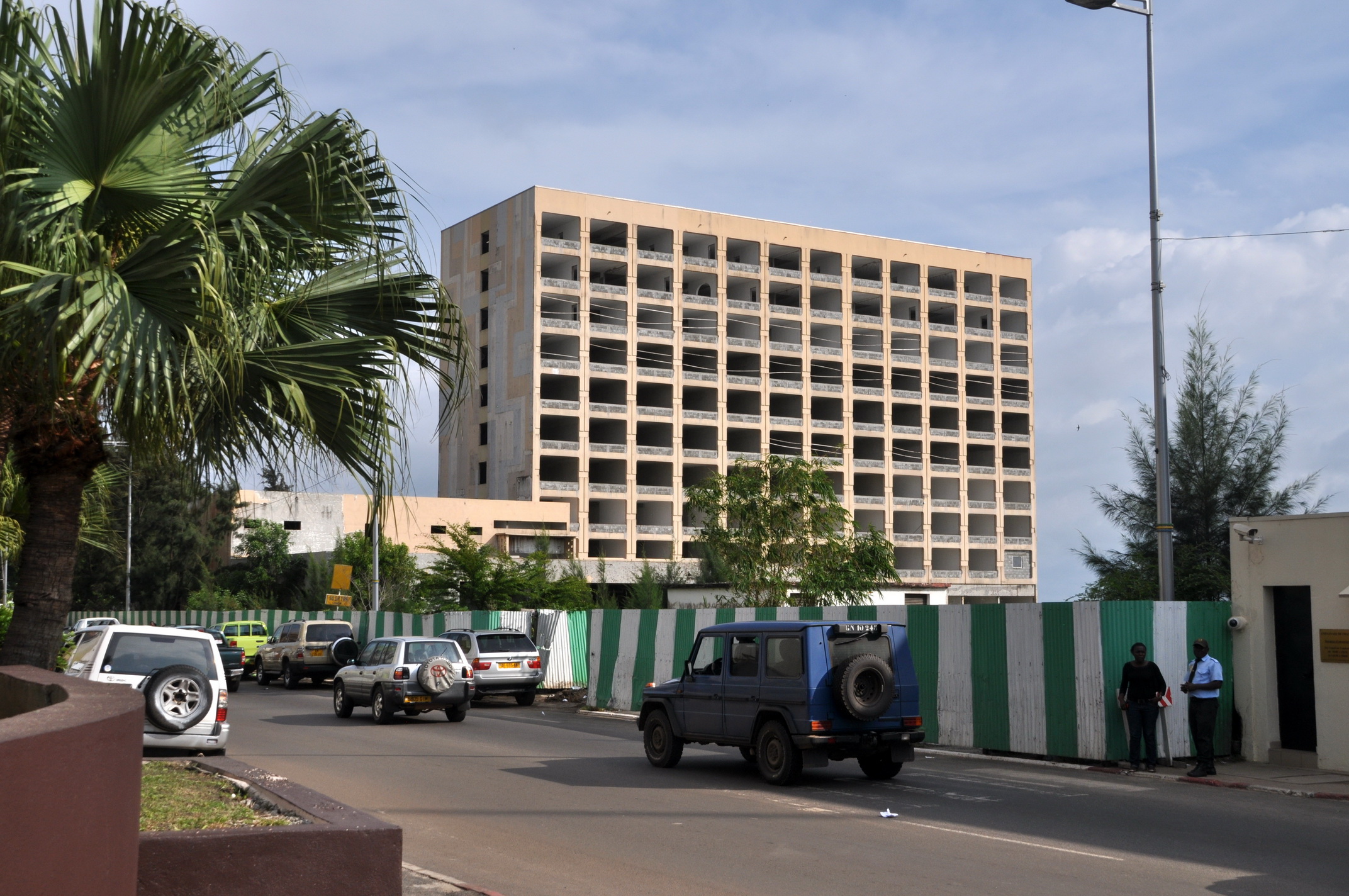
There were many unfinished high-rises in the centre. Libya once wanted to be a great power and made its way into the economies of its neighbours. Now all that remained of Gaddafi’s regime were abandoned cranes and the skeletons of concrete monsters. The OilLibya filling stations, at least, had survived.
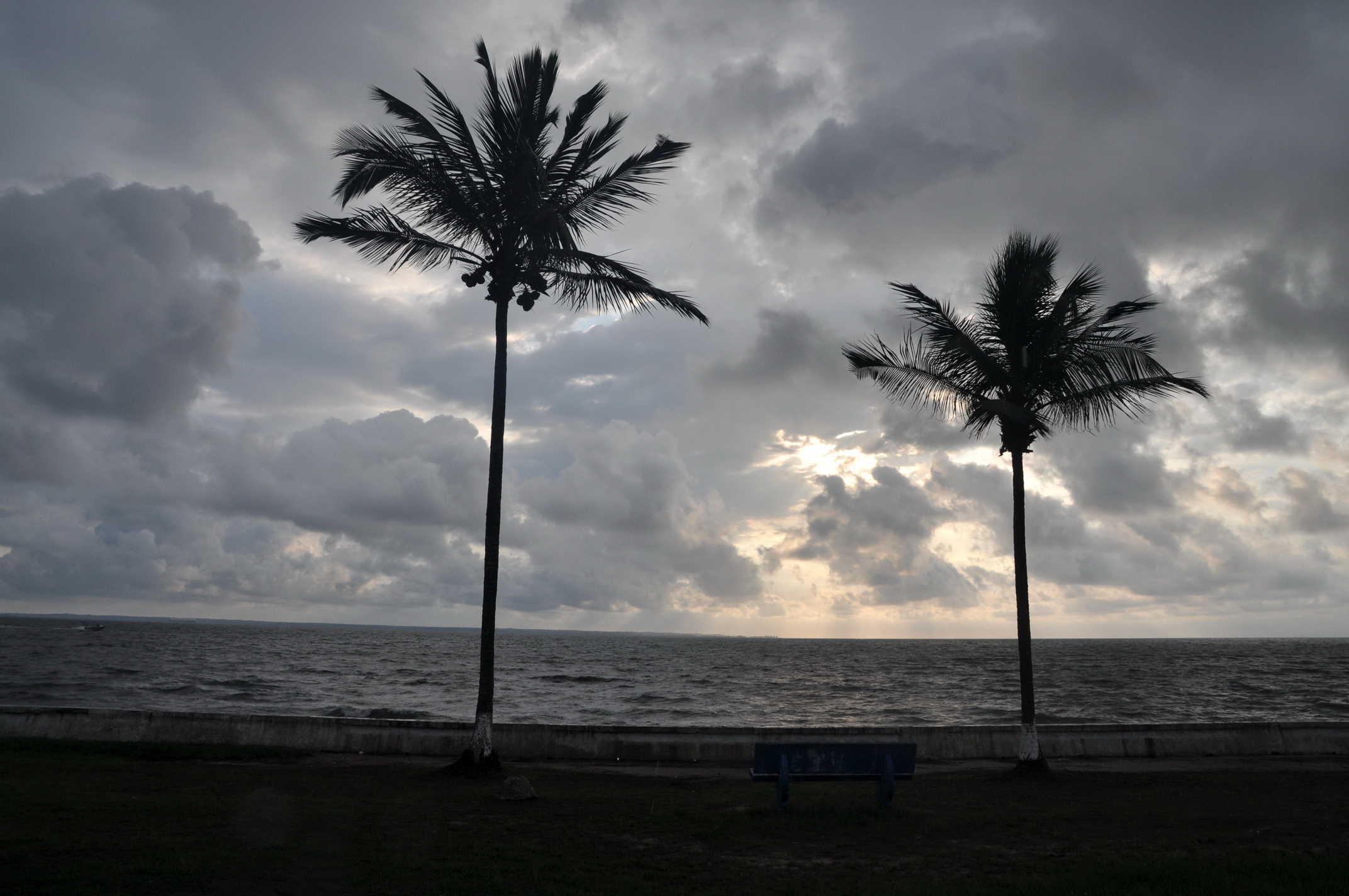
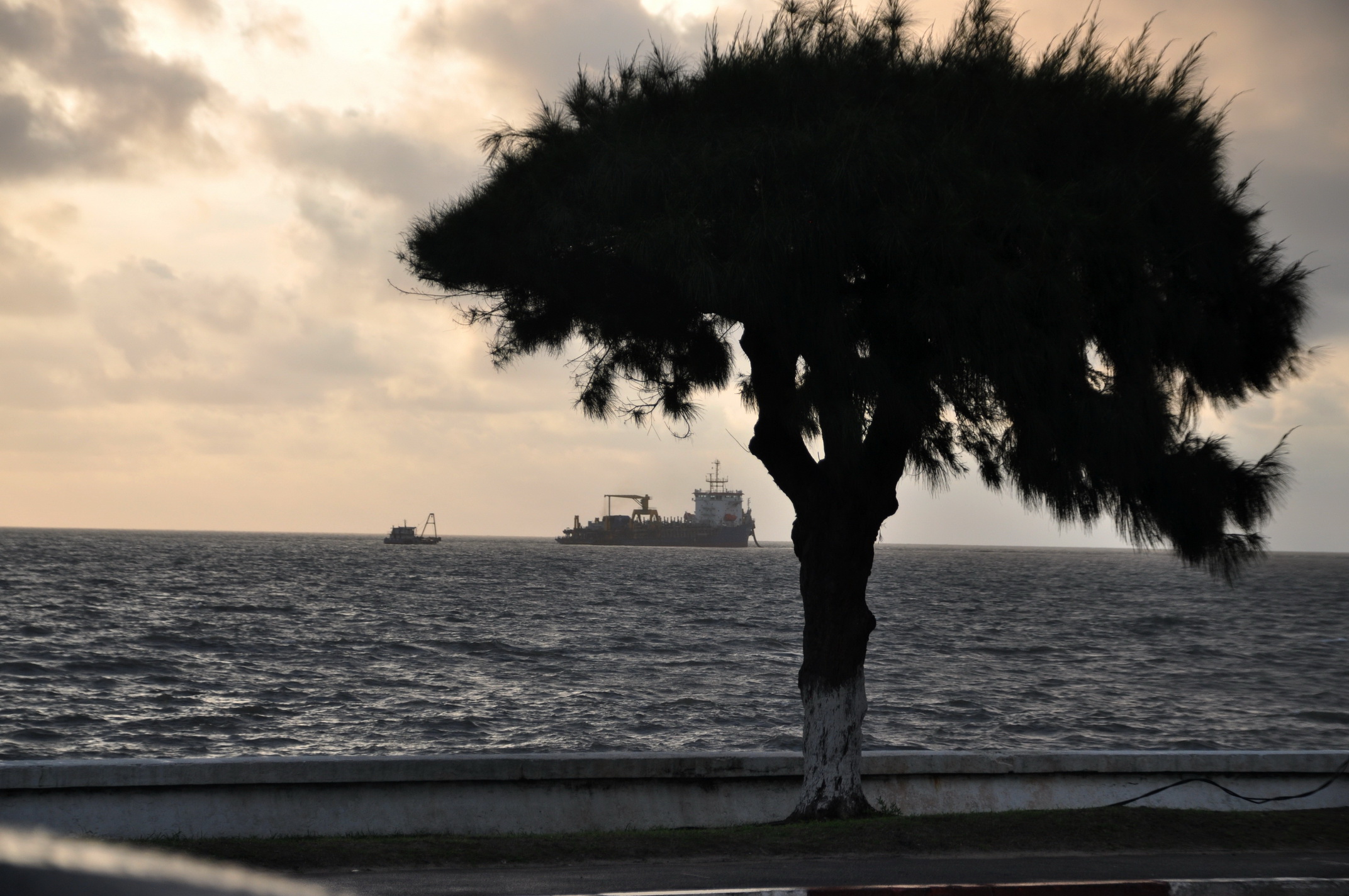
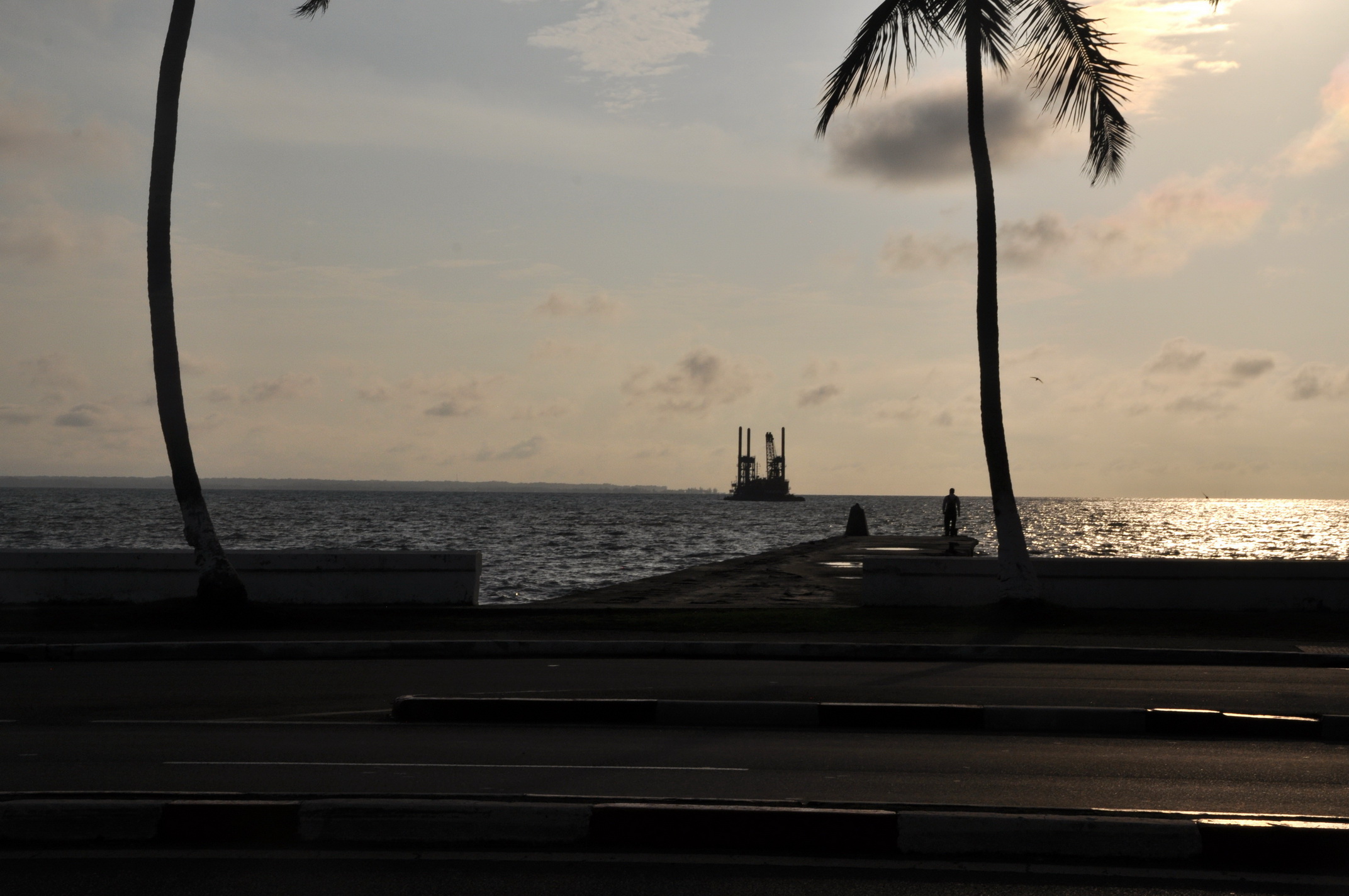
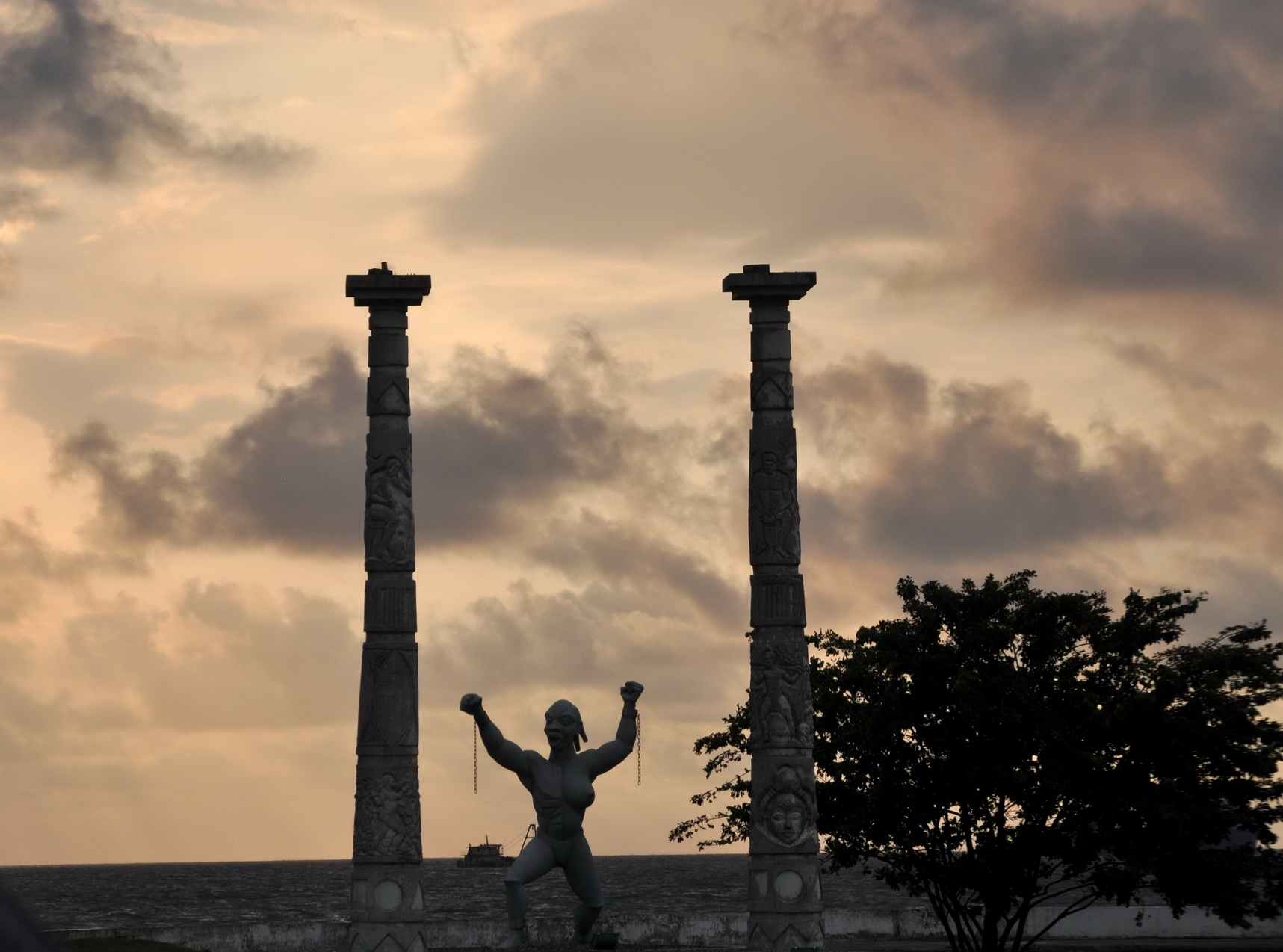
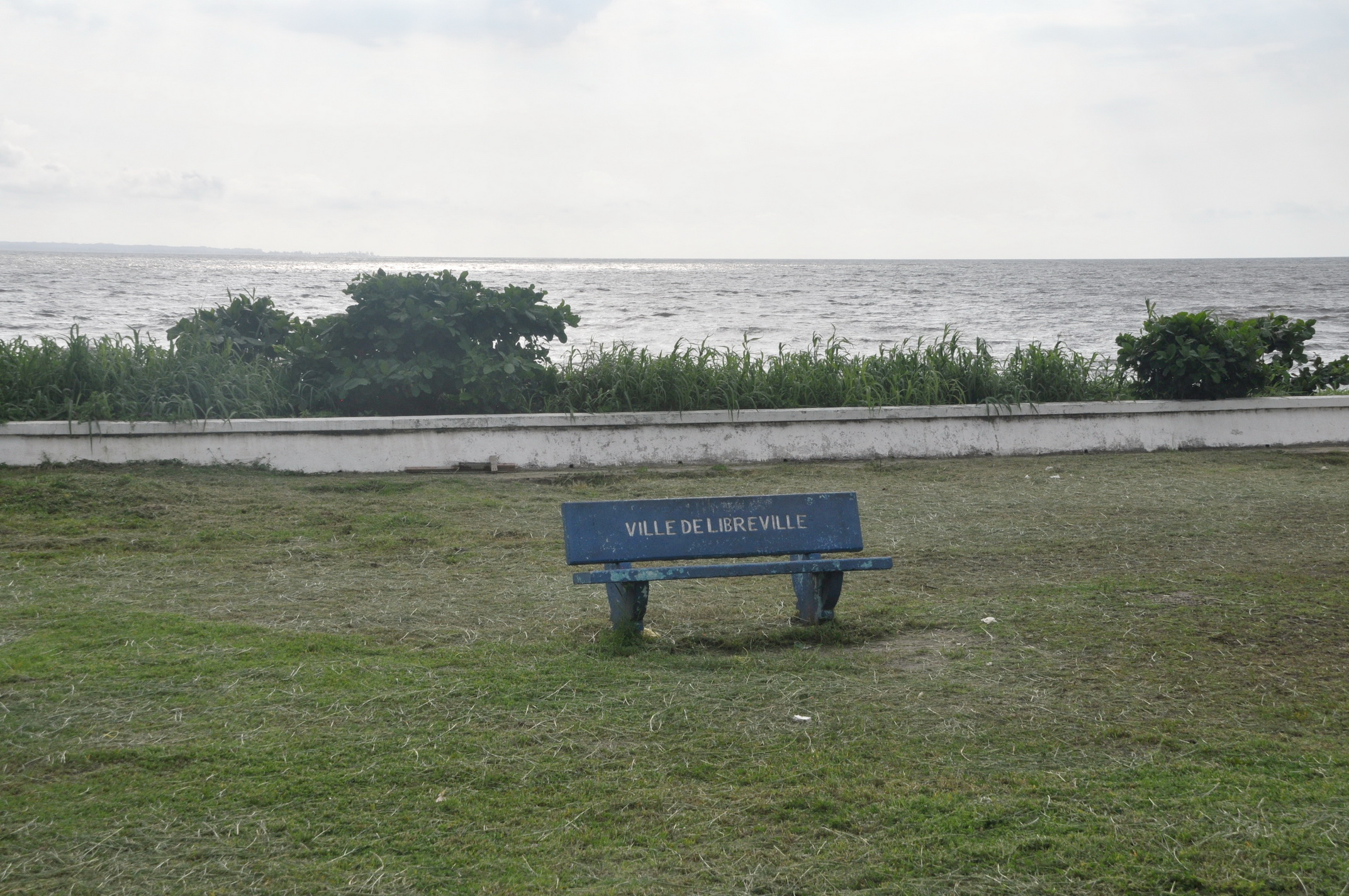
Libreville stands on the sea. A fine promenade had been built by the presidential palace. Outside the centre, the new rich had taken the whole waterfront and there was no way down to the water. The only public beaches were some way out of town.
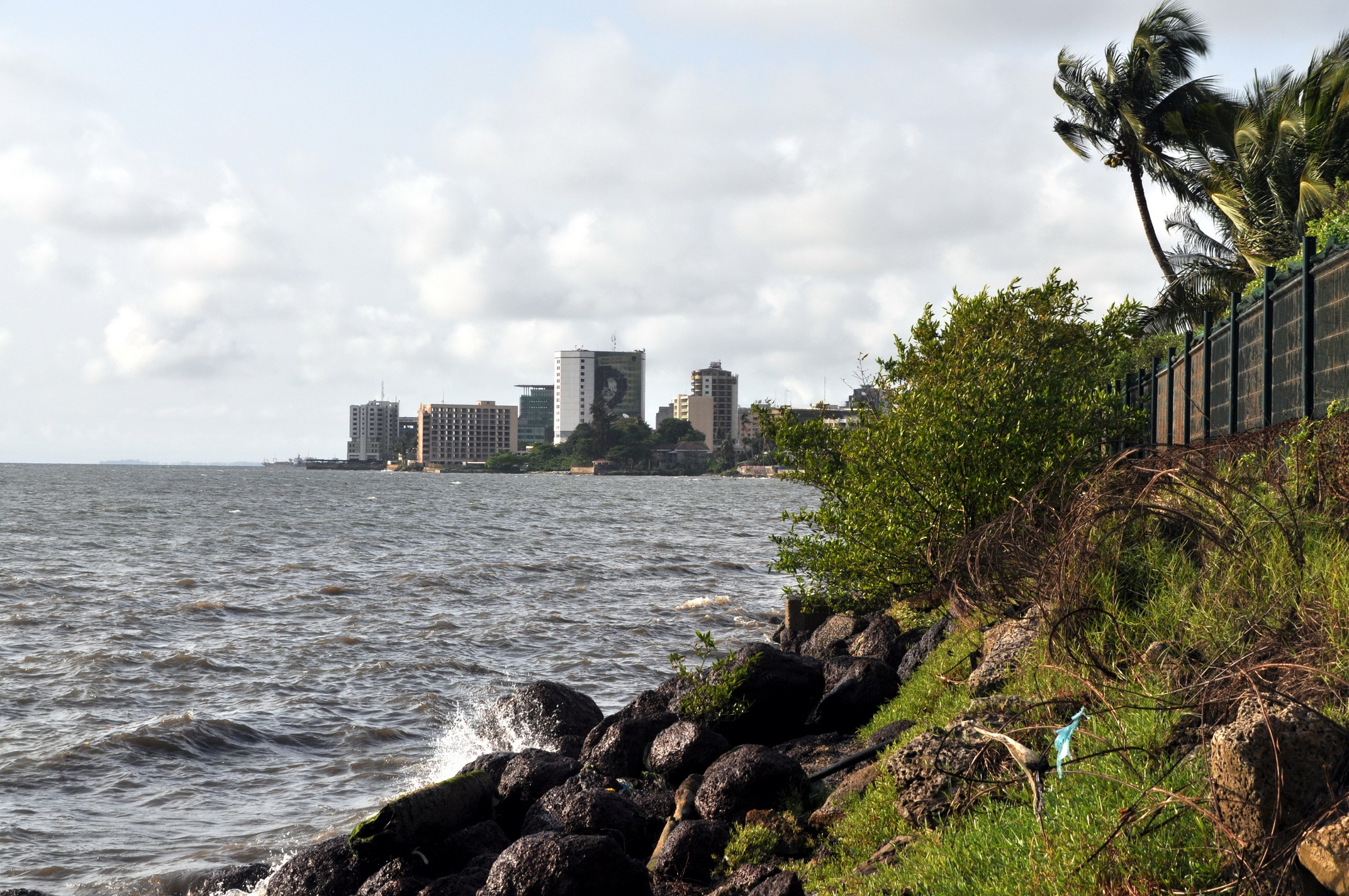
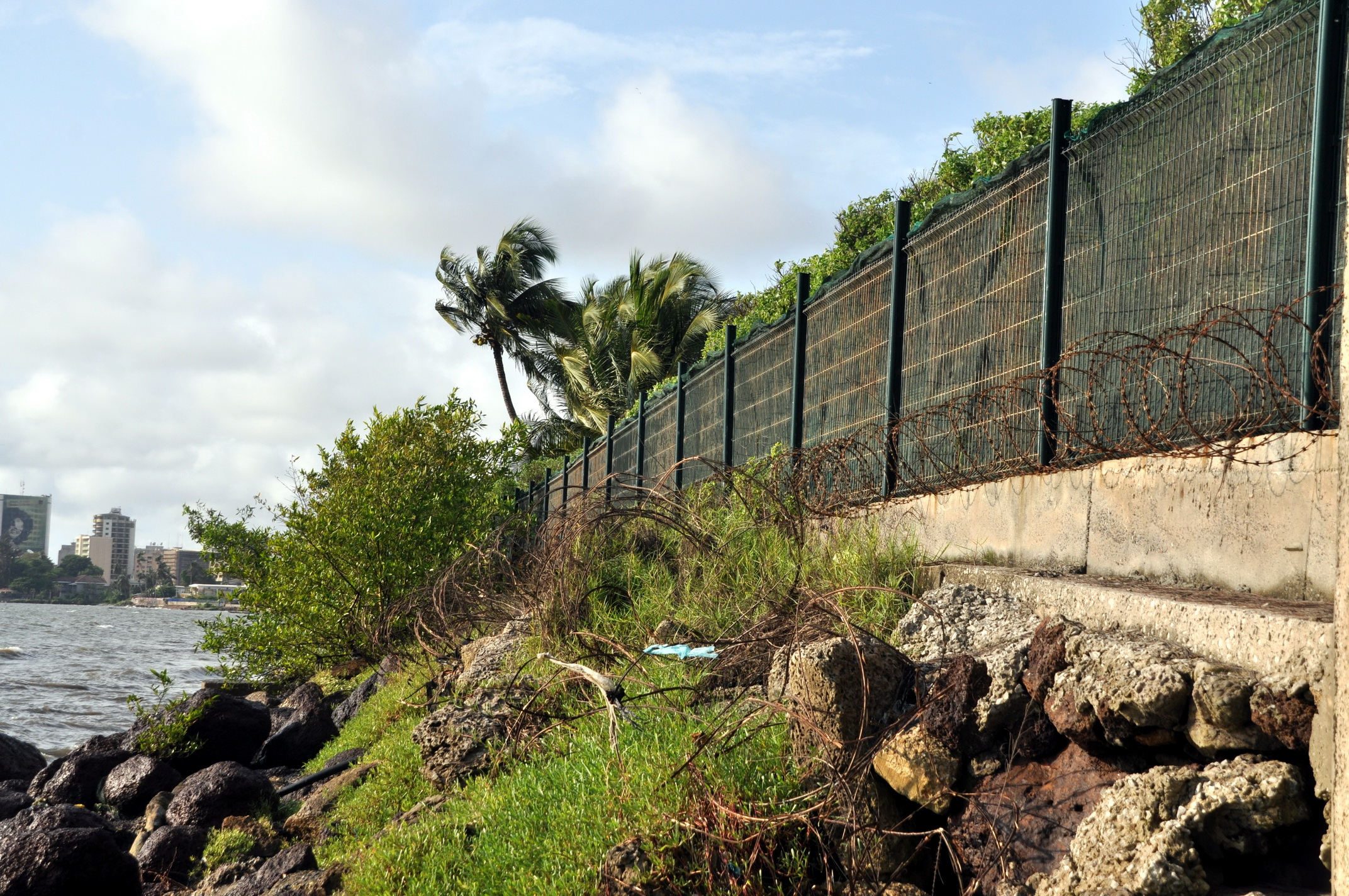
The mobile networks were quite well developed, but roaming didn’t work well for me. I was better off with a local SIM.
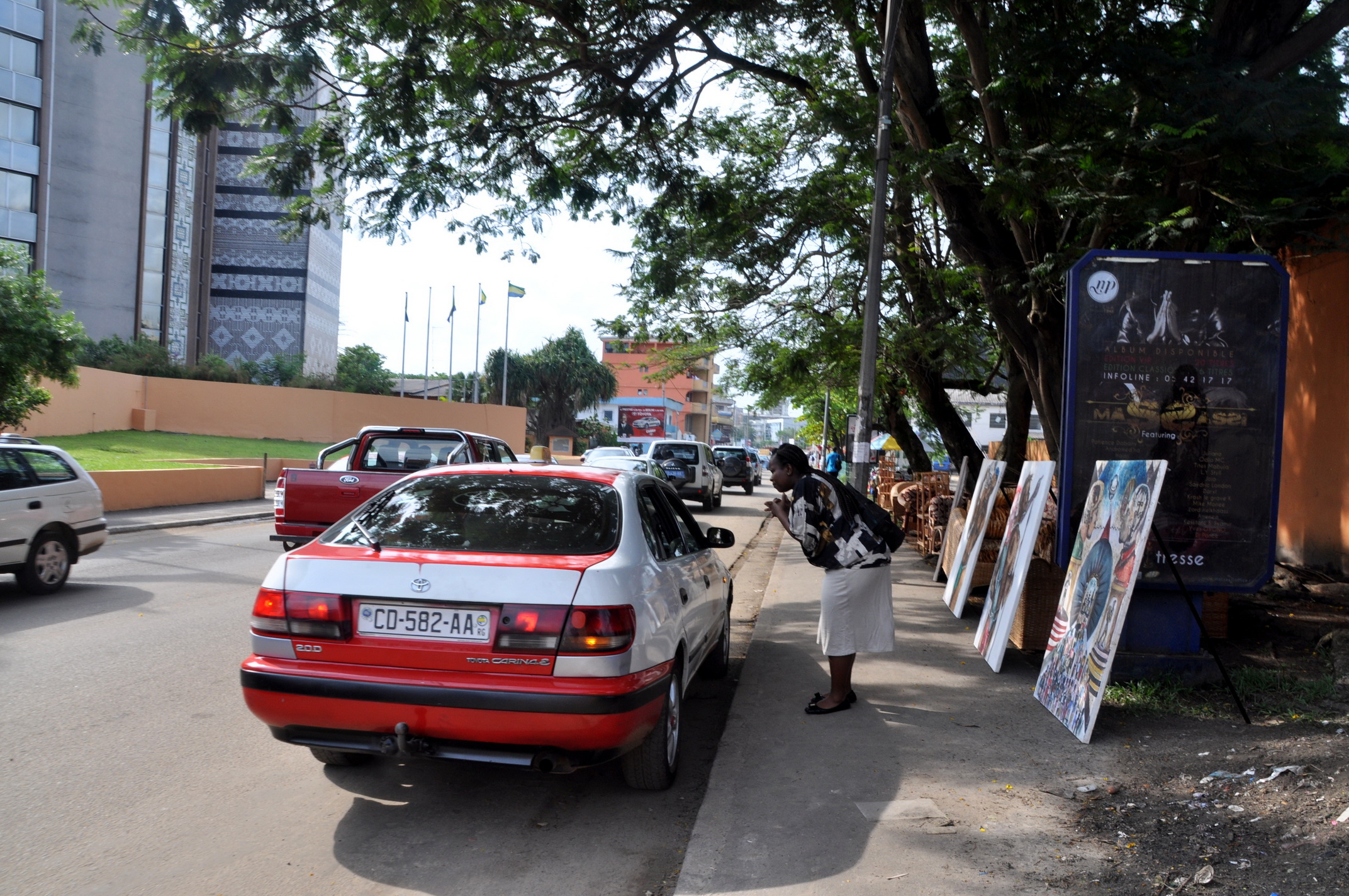
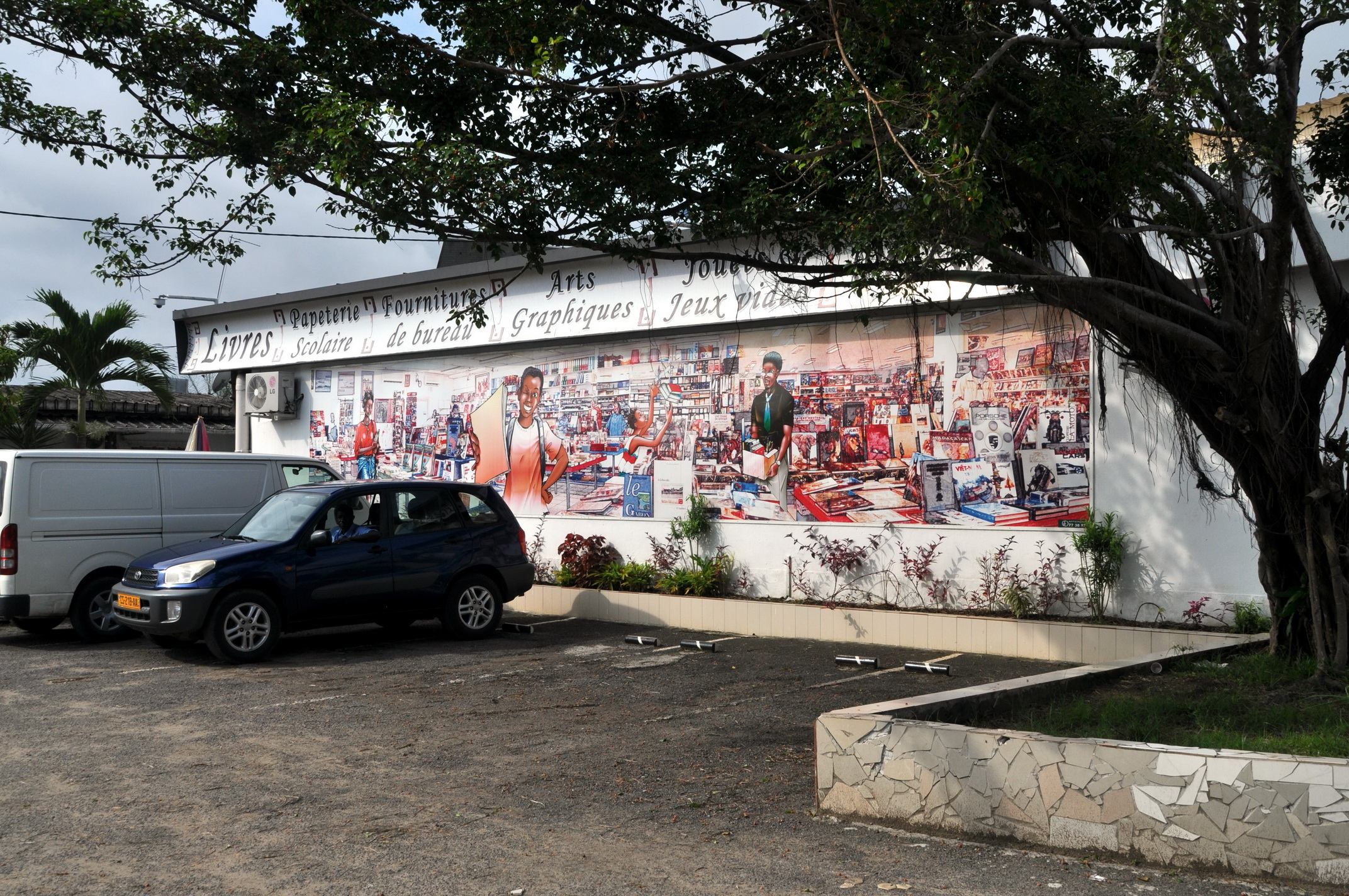
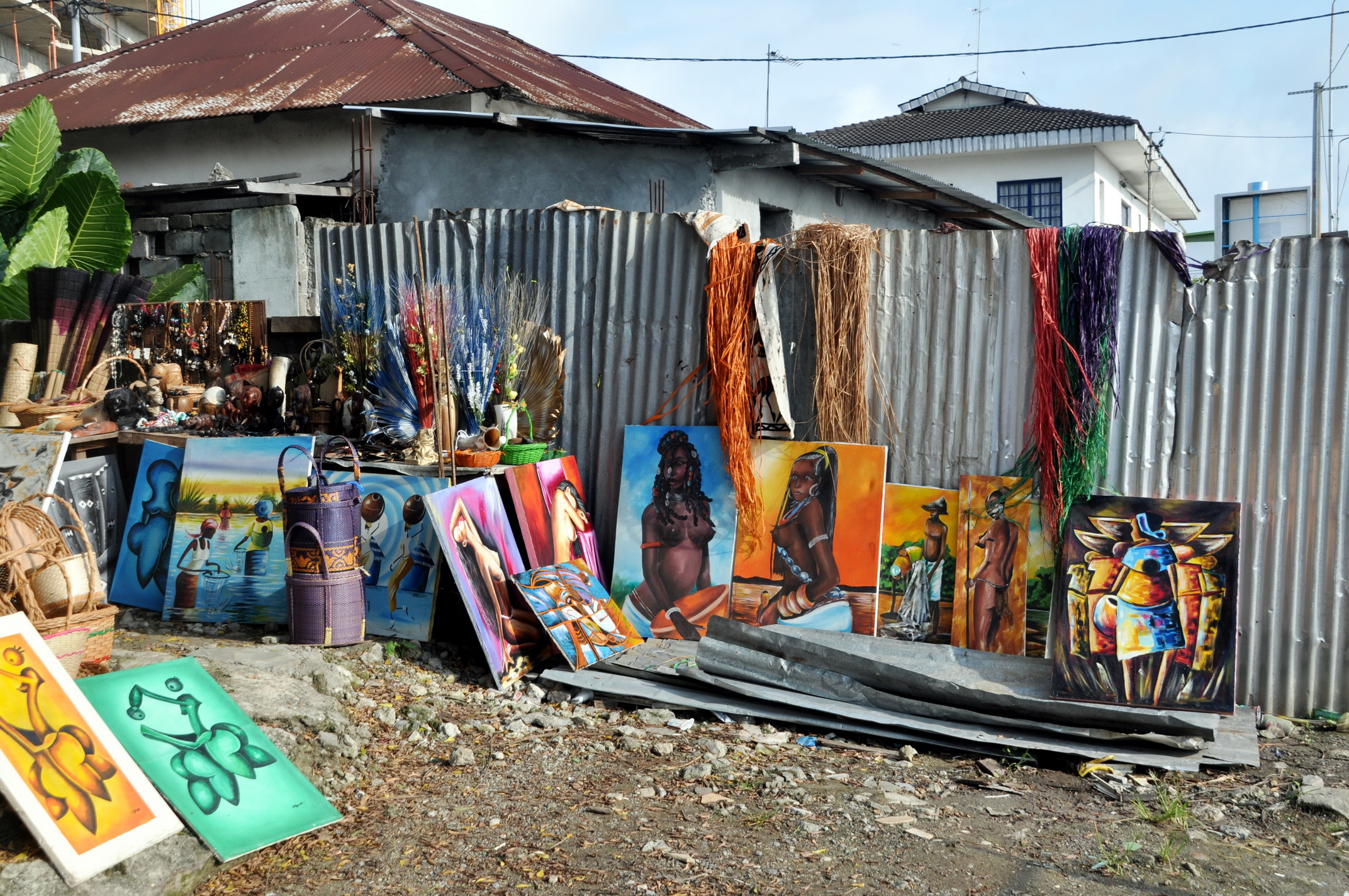
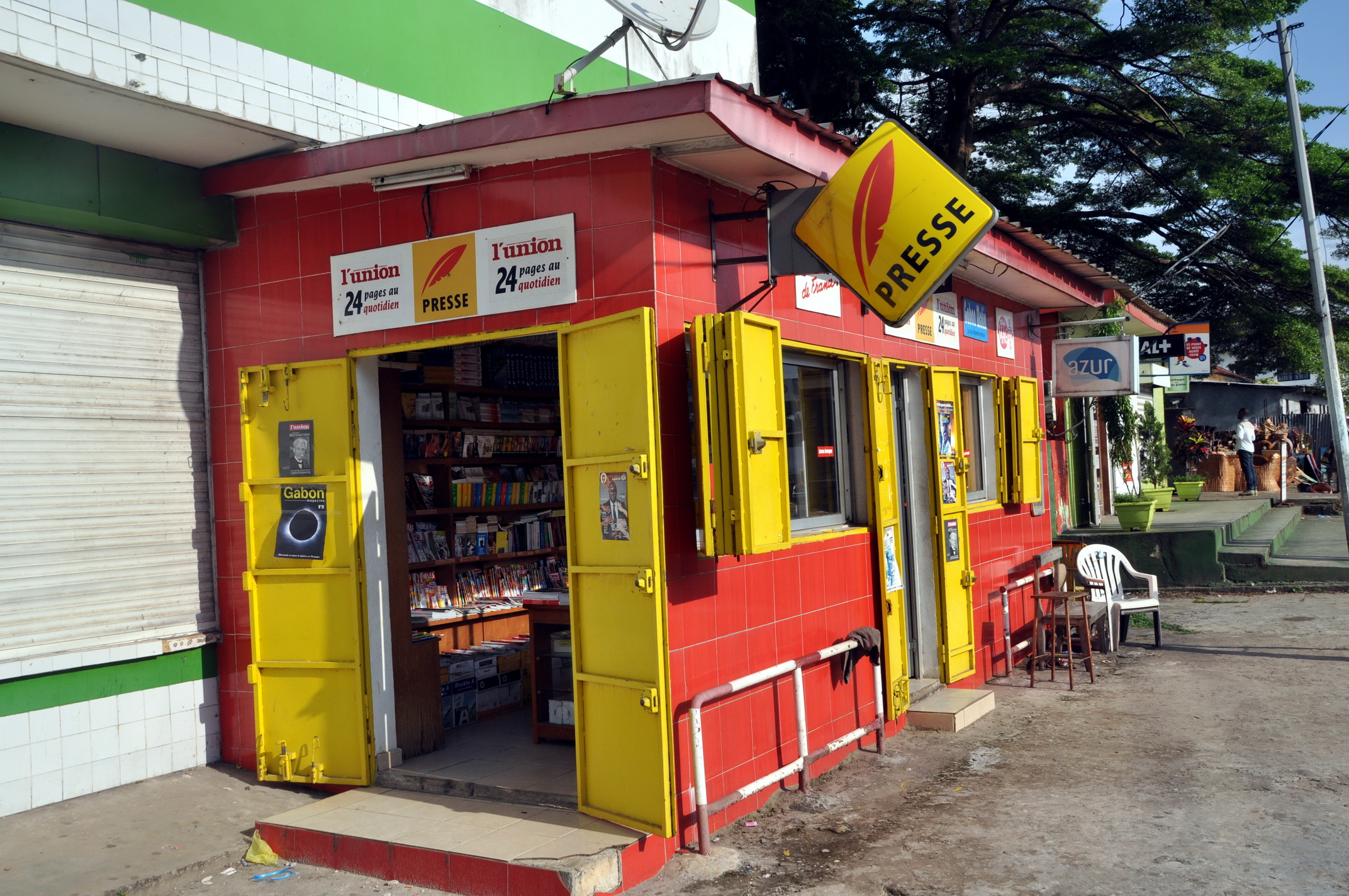
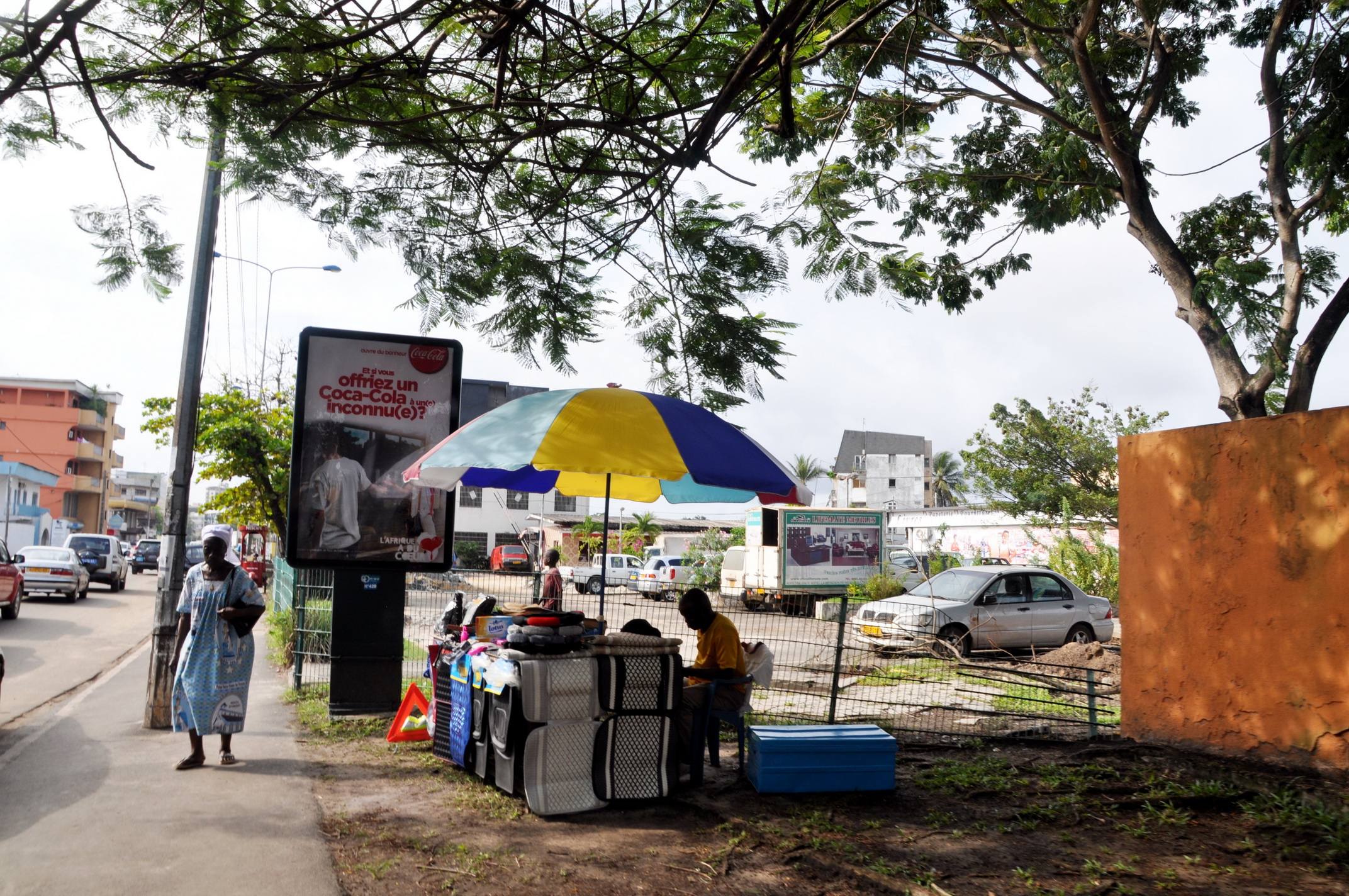
Of course, there were things to buy as a tourist on the main street, particularly opposite the grandest tourist hotel, Le Méridien Re-Ndama. On the whole, though, the country was built for people who work and live here.
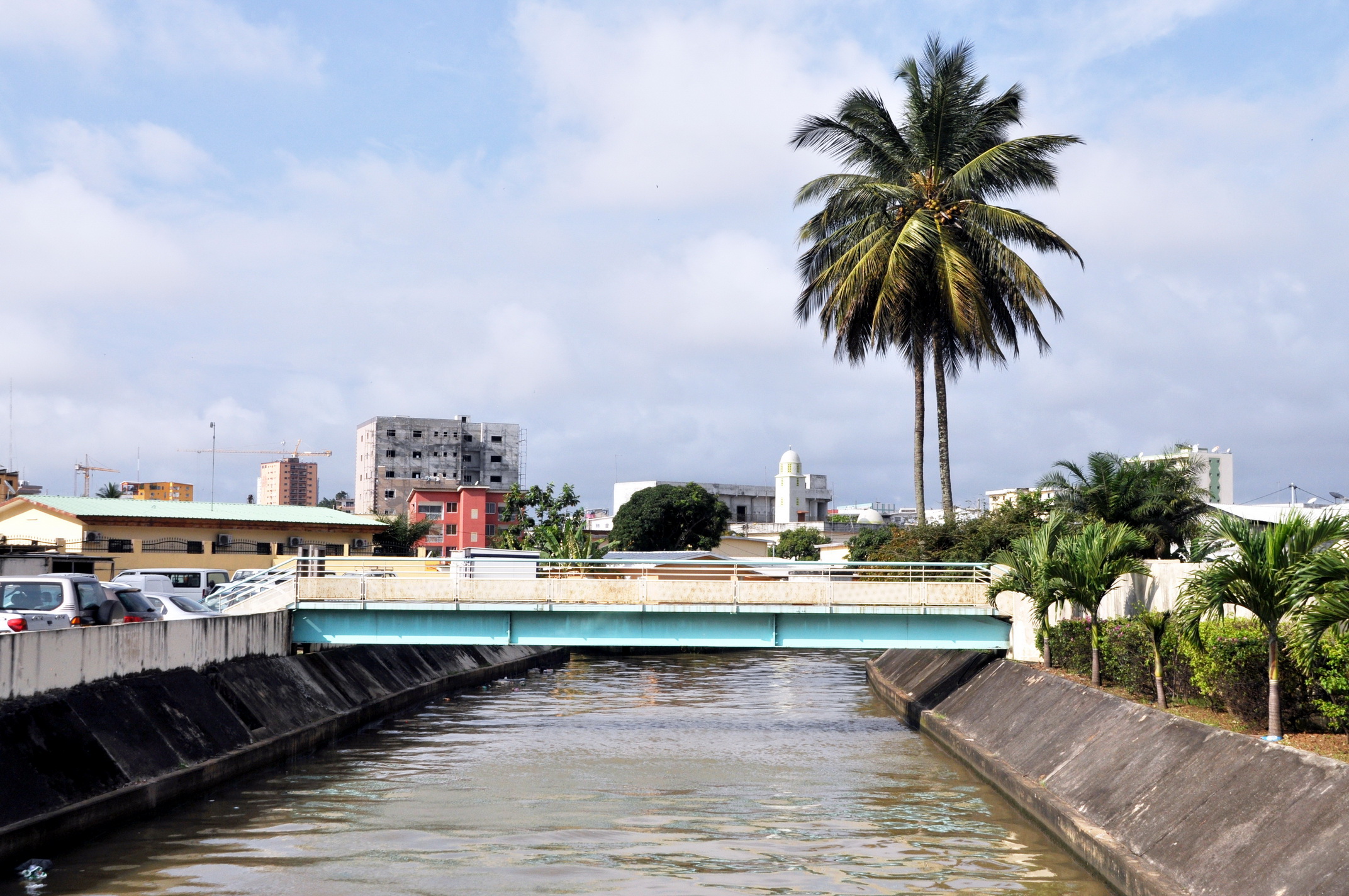
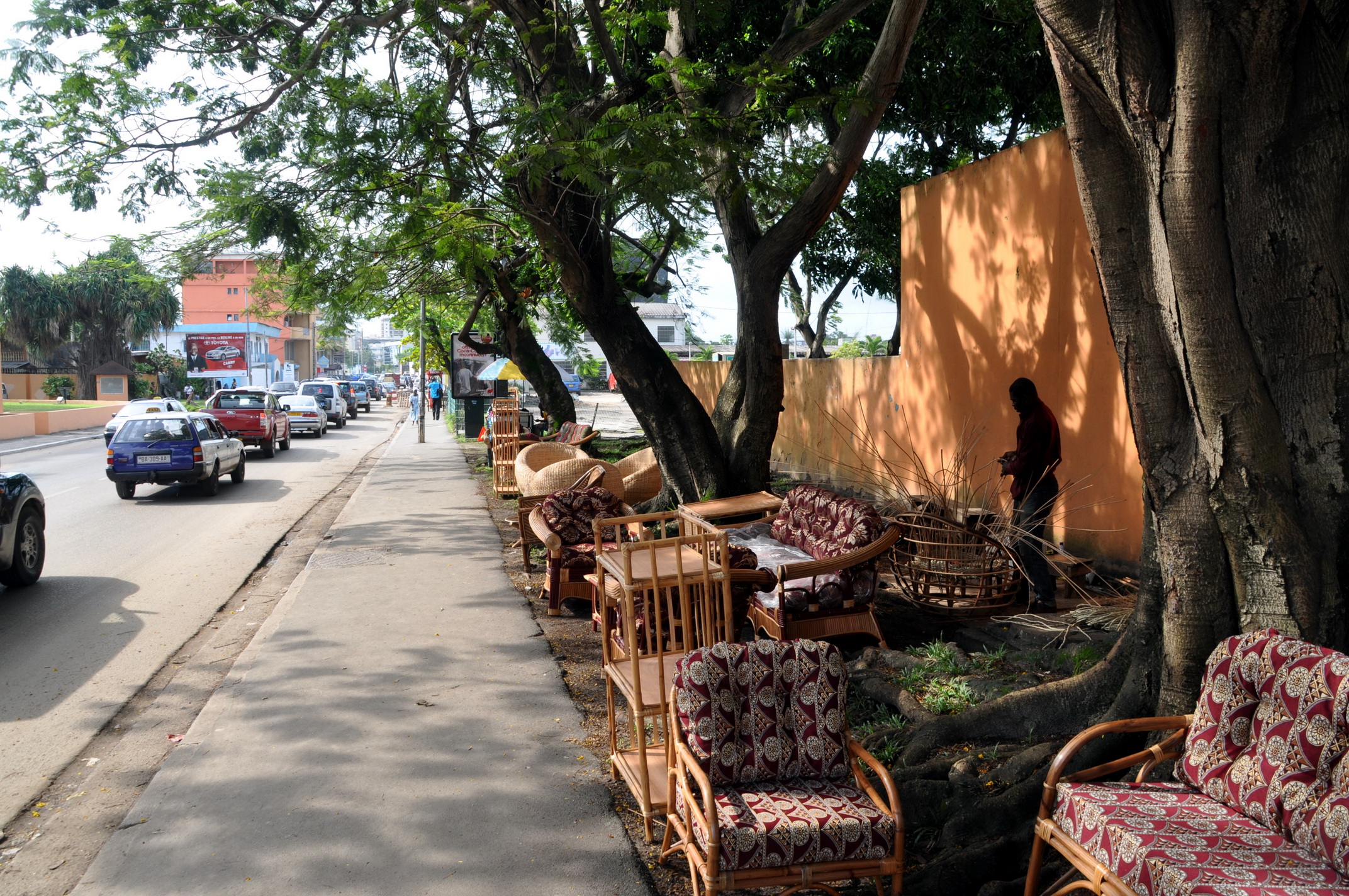
To Lambaréné
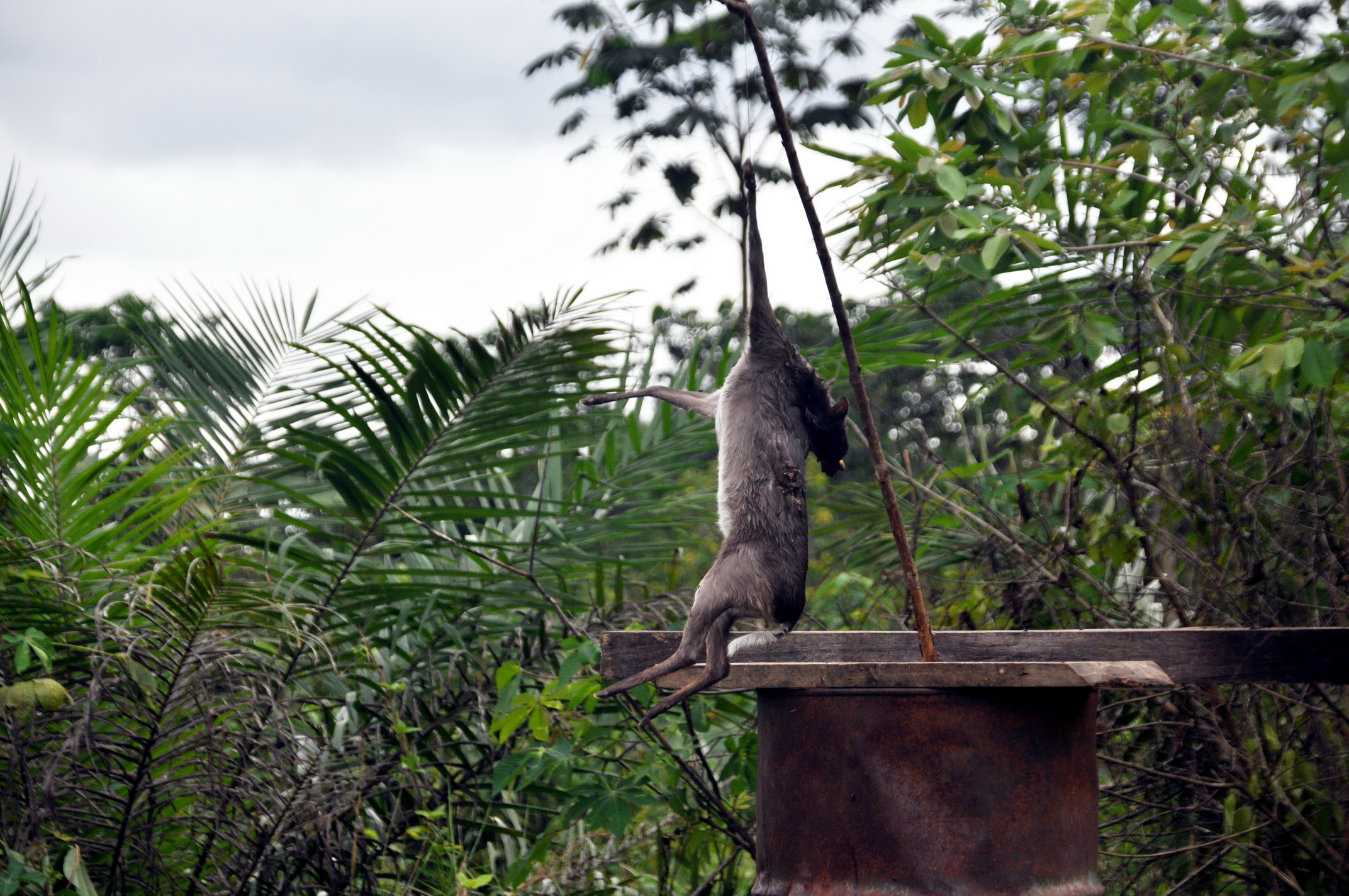
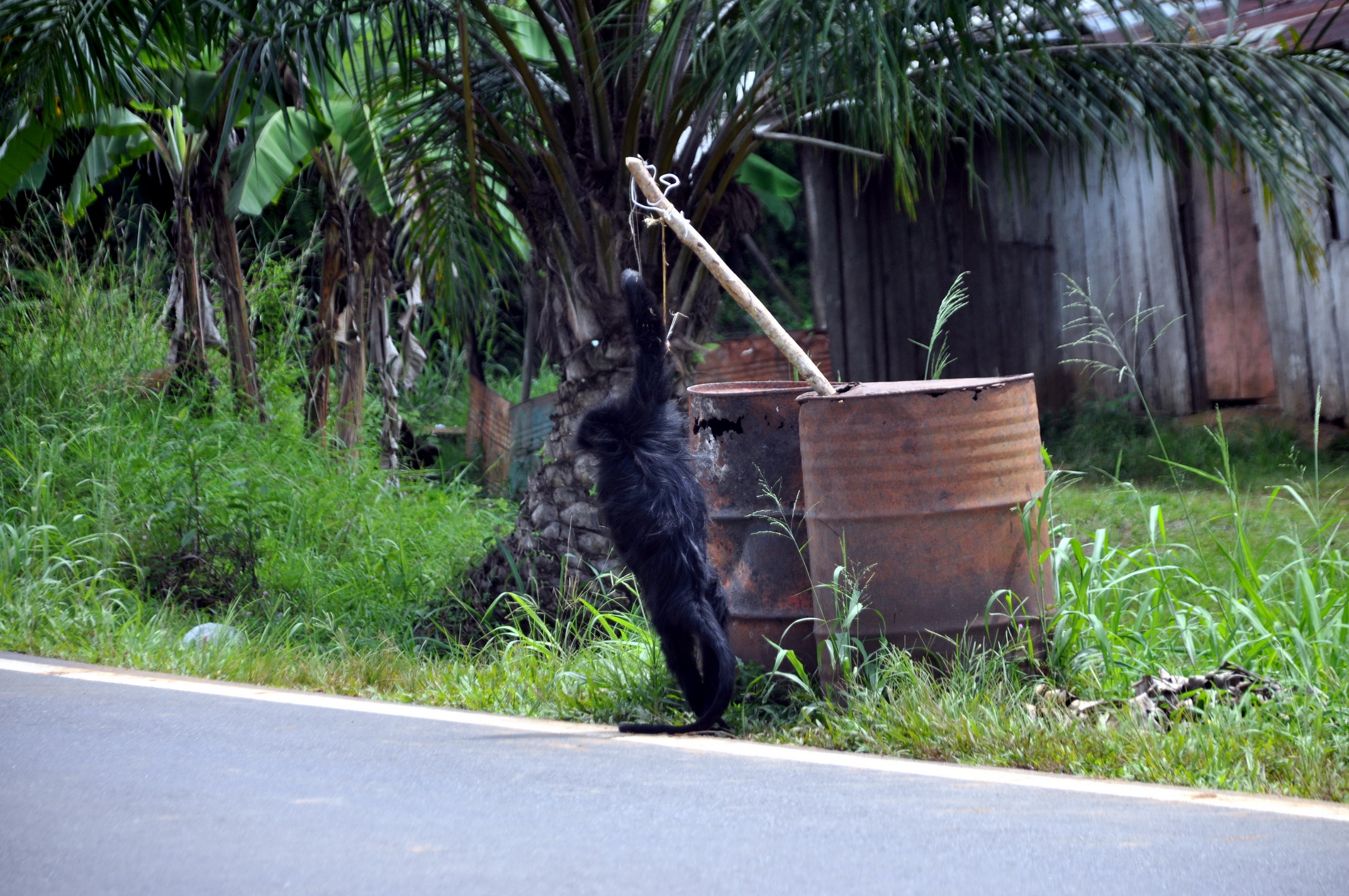
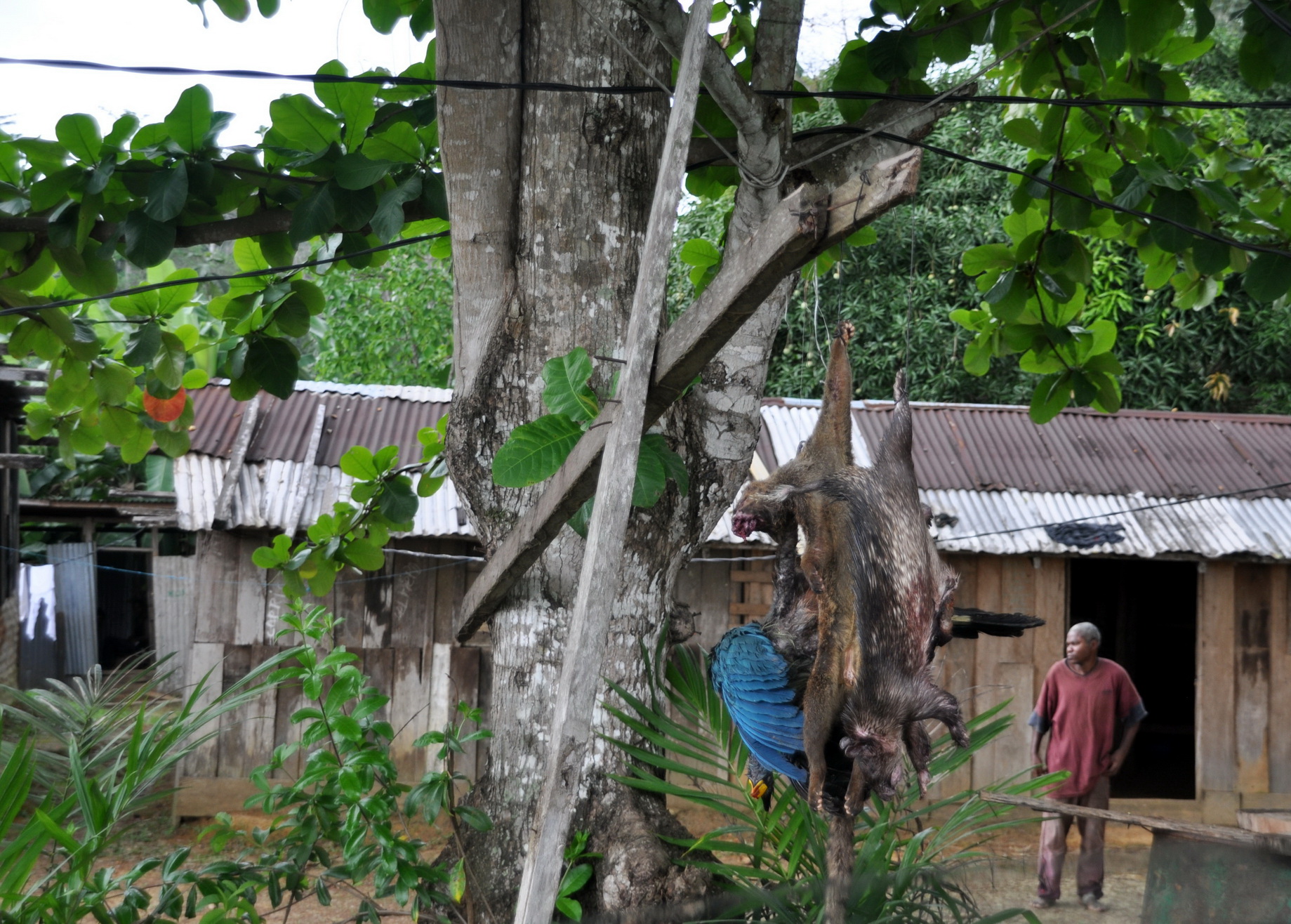
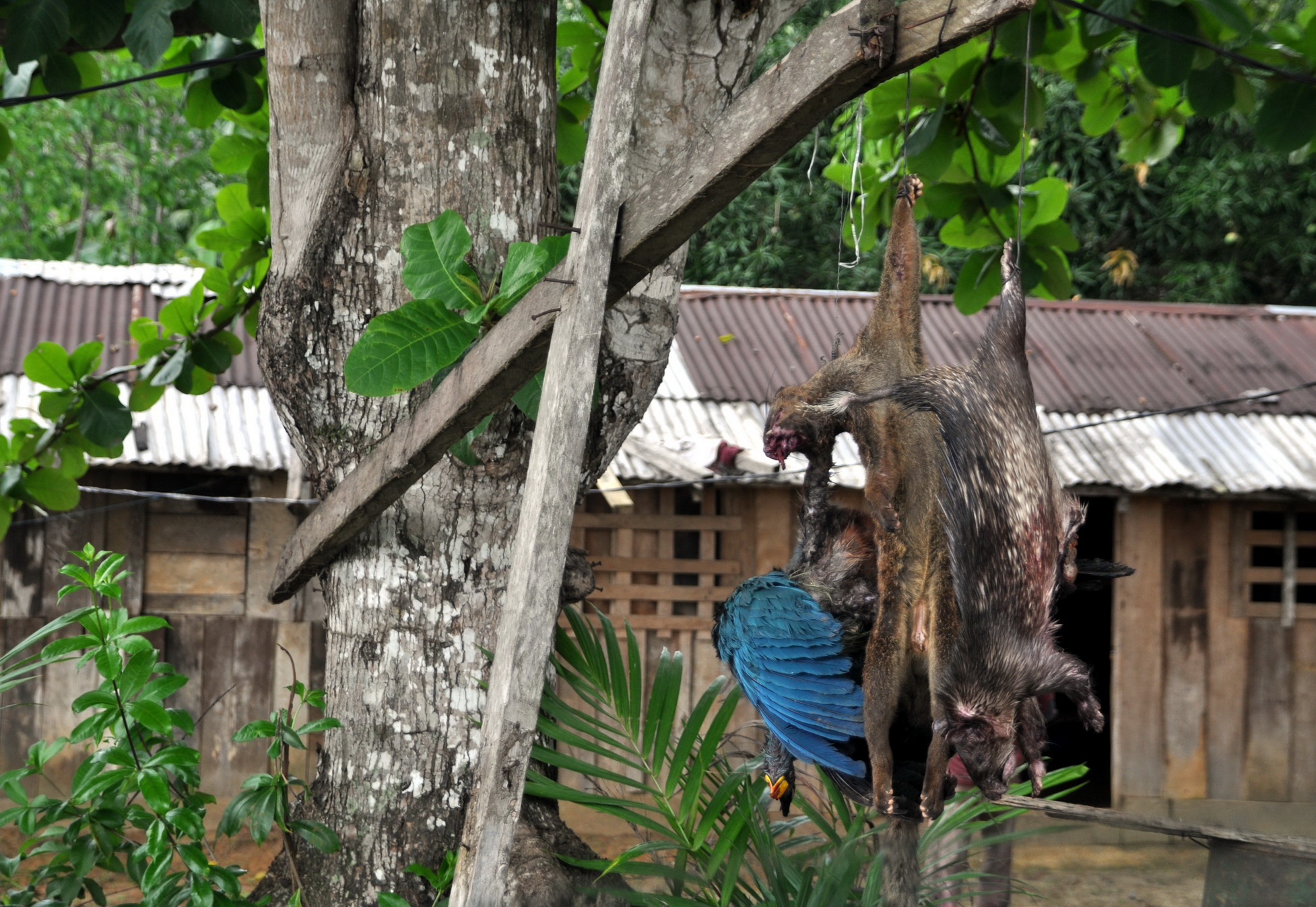
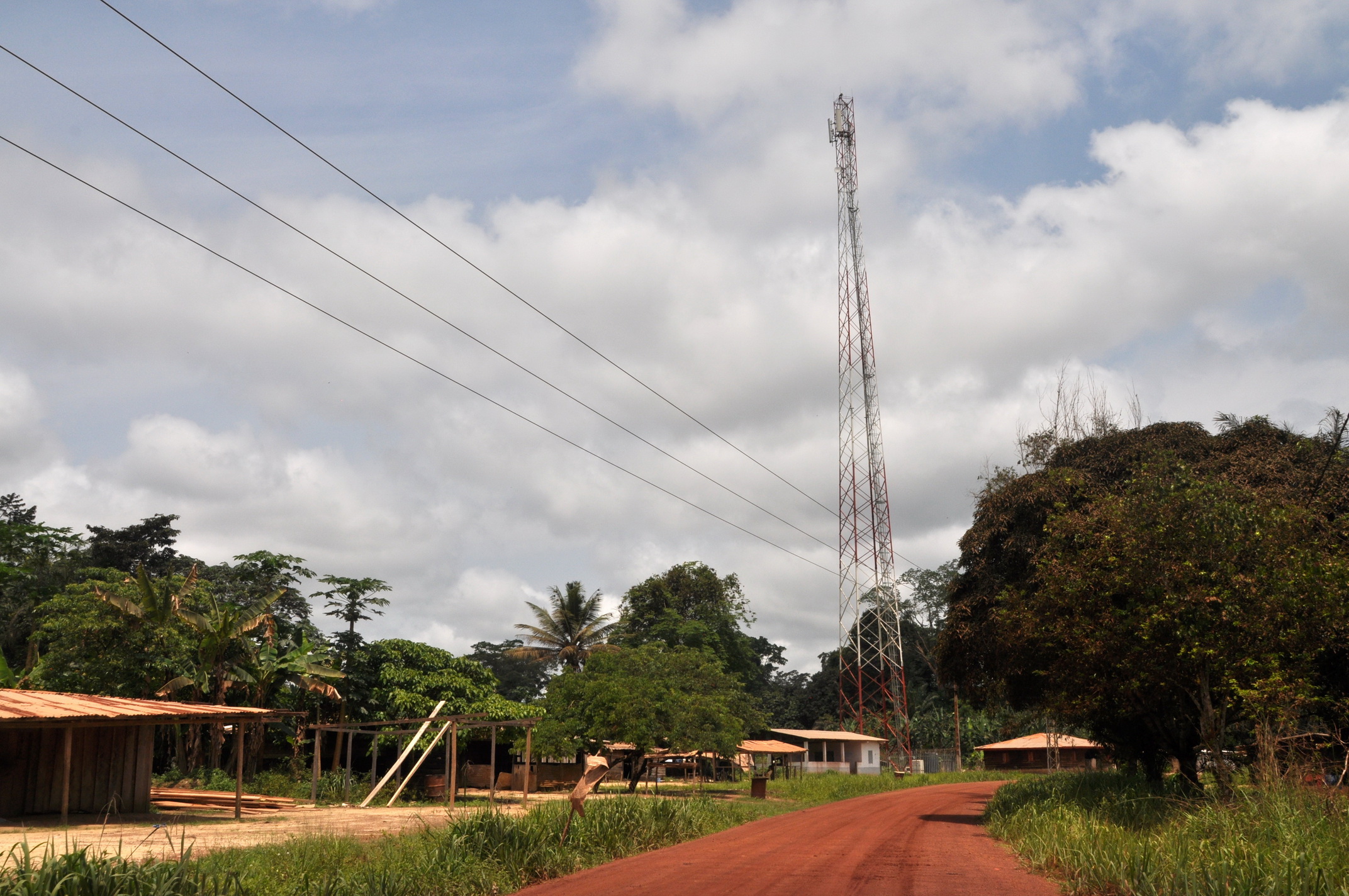
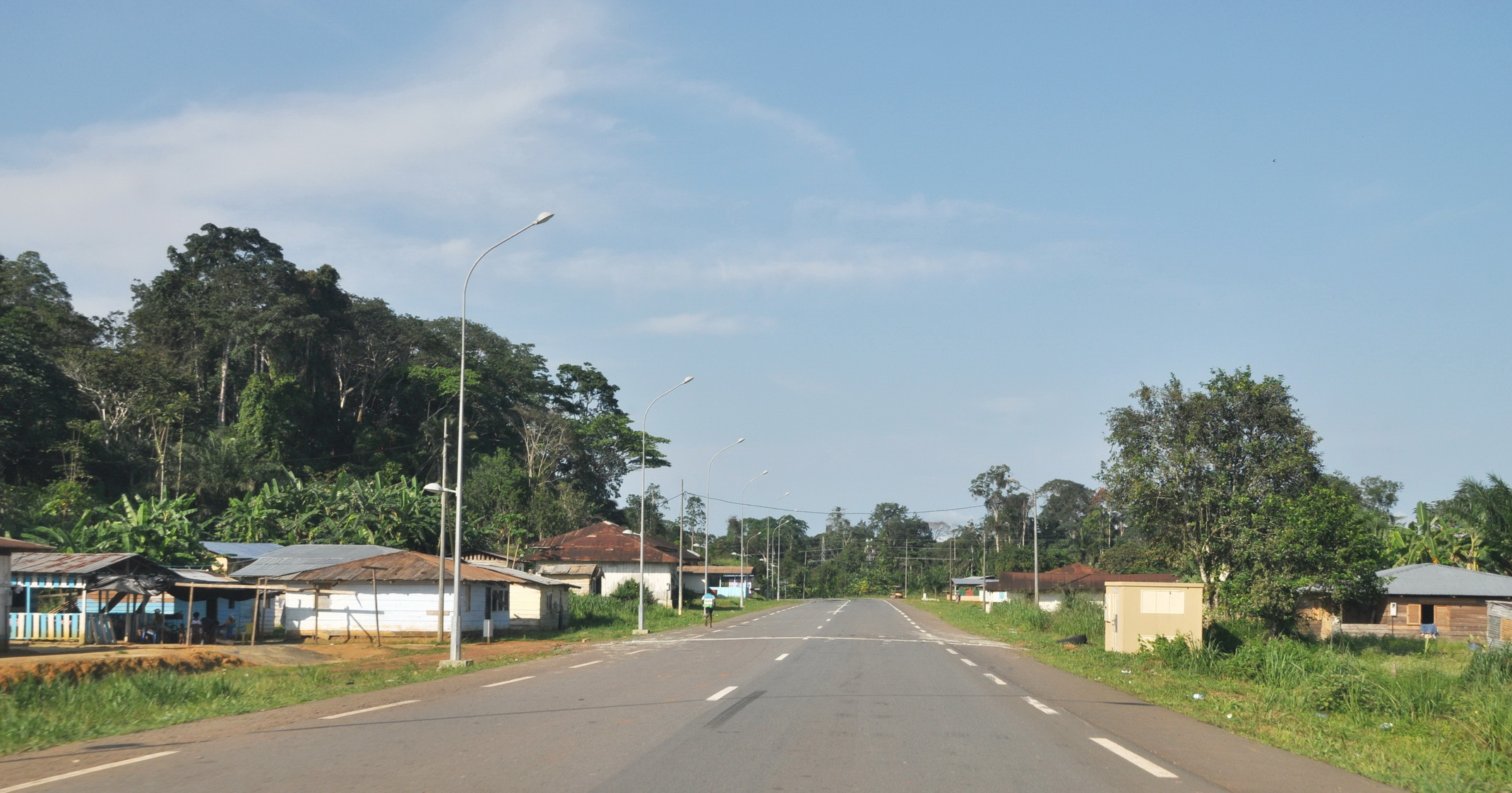
Right, I’d got the hang of the capital. Time to get out into the jungle. It took an hour or two to leave Libreville, with tailbacks on the roads out to rival Moscow’s. Roadworks everywhere, one-way stretches, gravel diversions. It was dark by the time the traffic cleared near Kango, a hundred kilometres from the capital, and a fine modern road began, with crash barriers and lane markings. Impressive, a highway as good as any. It had its own touches, though. Instead of cosy filling-station cafés, the parking areas by the road had freshly shot monkeys hanging by their tails from poles, and other game for sale. I wouldn’t get bored here.
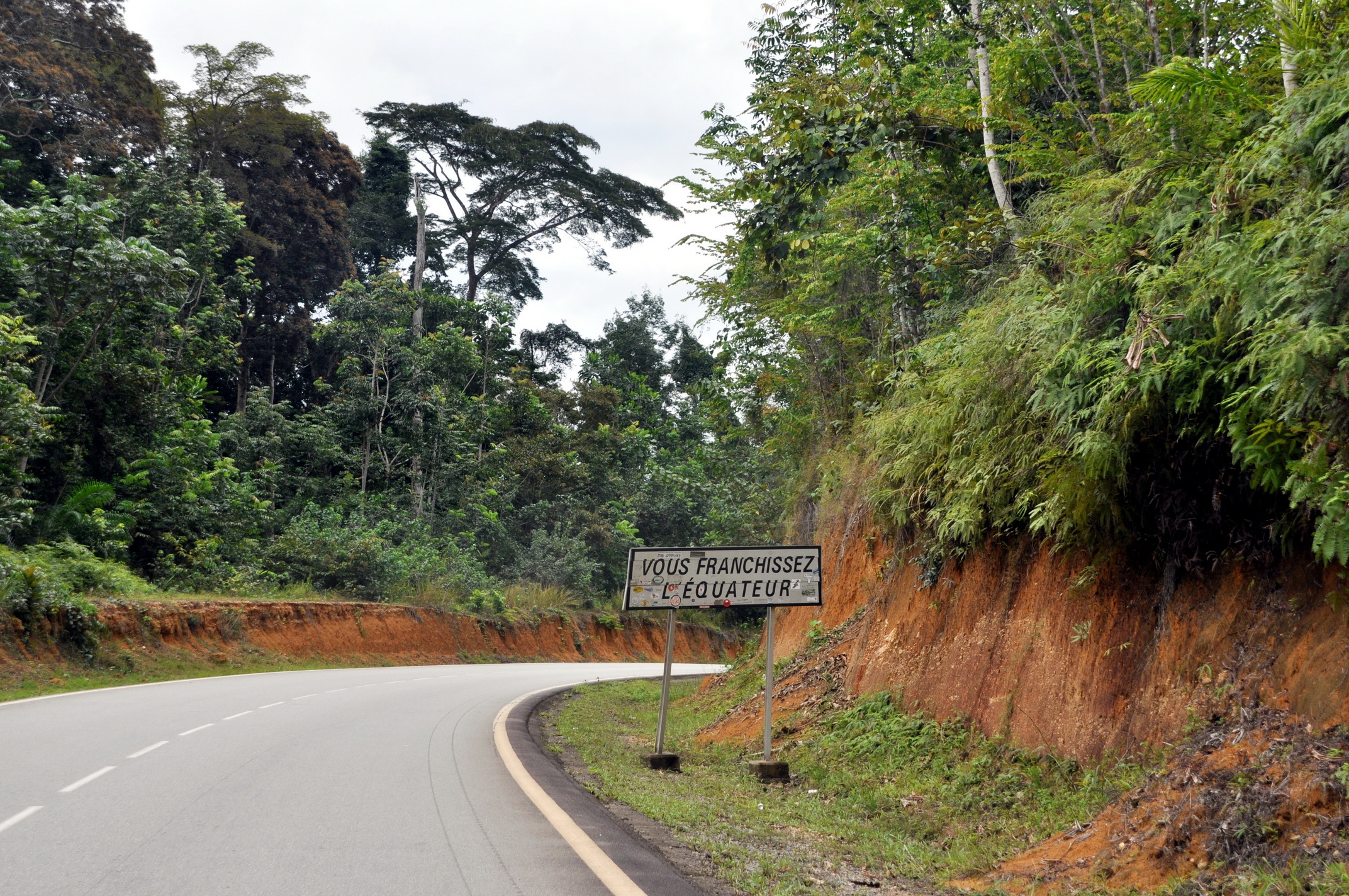
The traffic had gone but the endless village carried on. People, fields, houses and cooking fires were everywhere. Not one turn-off into the forest where I could pitch a tent. I drove and drove, crossed the equator and still saw nowhere to camp. A new hemisphere and a new day began together. I was desperate to sleep. I pulled over in a quiet car park by a village (00°05.014′S, 10°20.384′E; elevation 77 m) and tried to sleep in the car. With the windows shut it was stifling; with them open I imagined every flying creature eating me down to the bone before morning. The air buzzed. I was taking antimalarial tablets, of course, but I was still uneasy. Malaria is a serious concern here, and there were tsetse flies to boot. In the end friendship won out. I explained to myself that the flying things wanted to live too, and fell asleep.
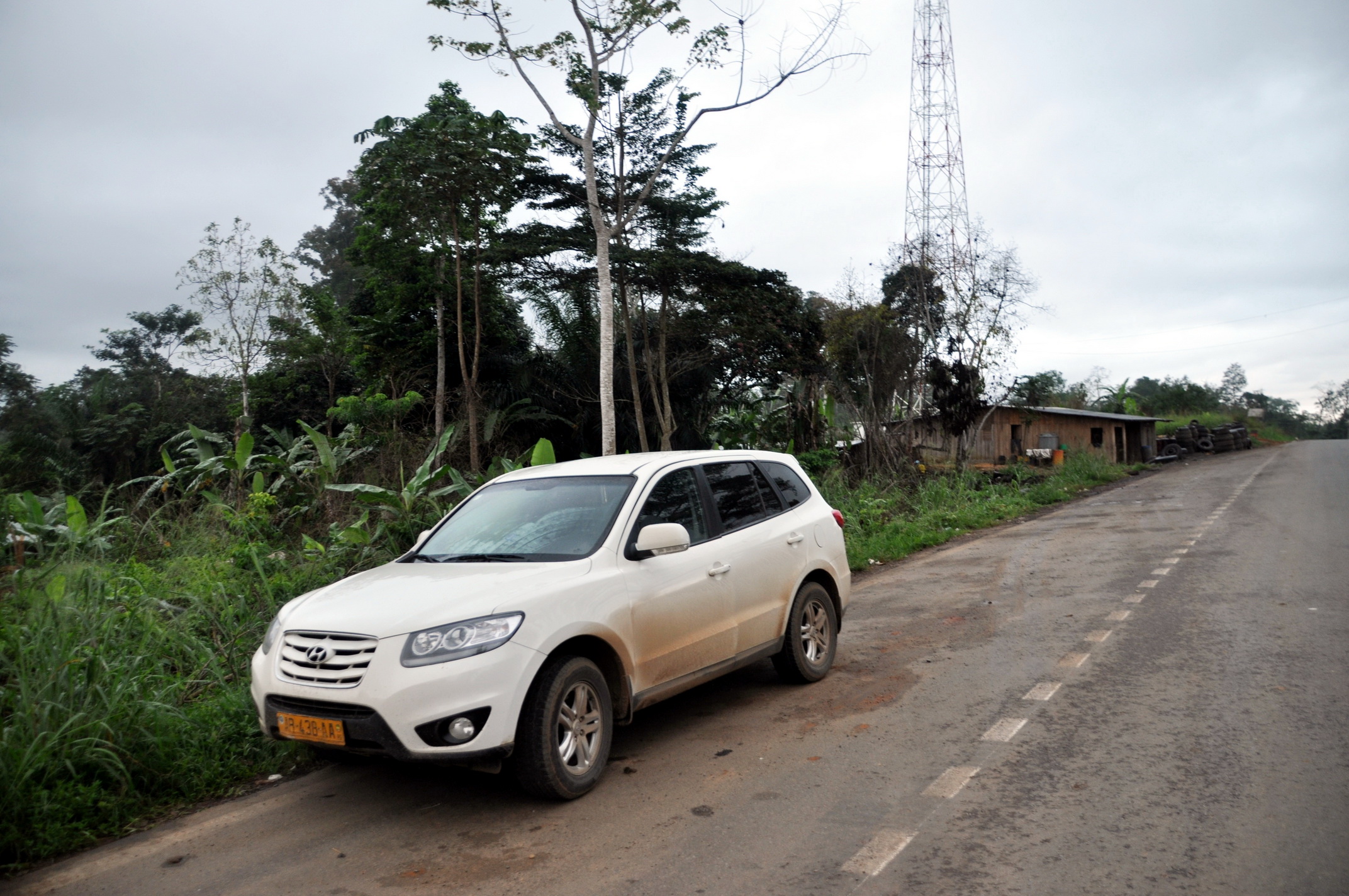
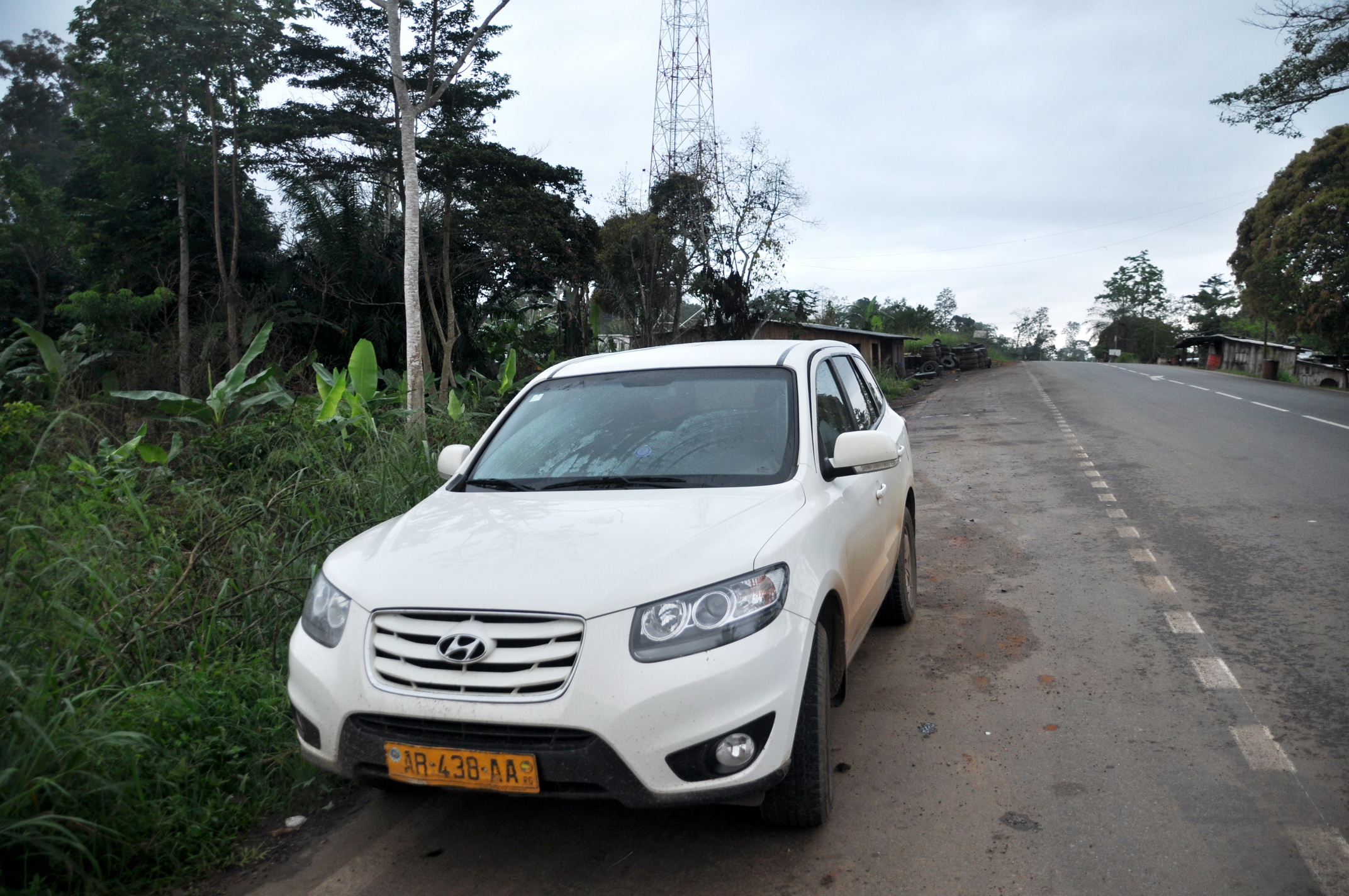
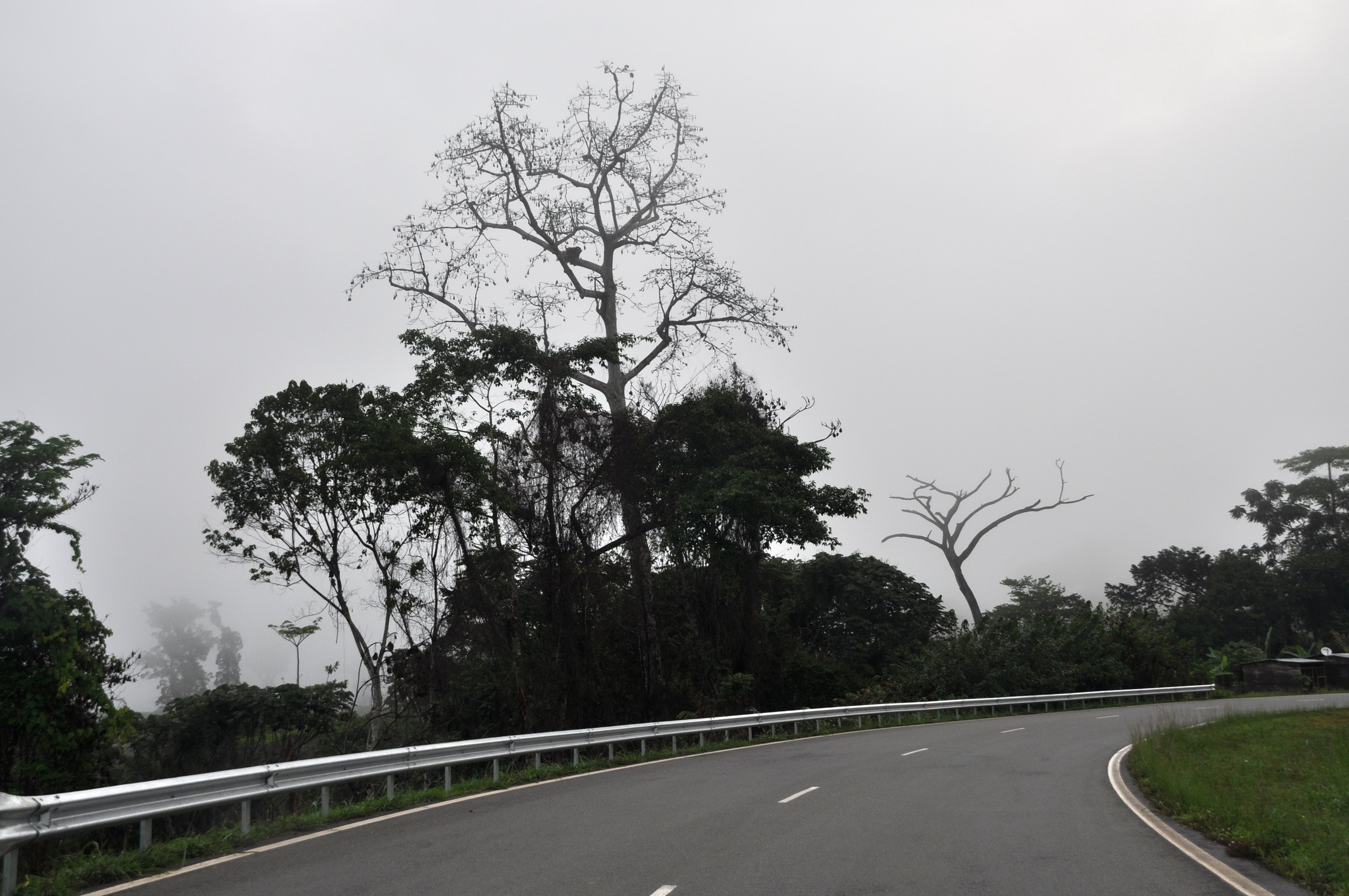
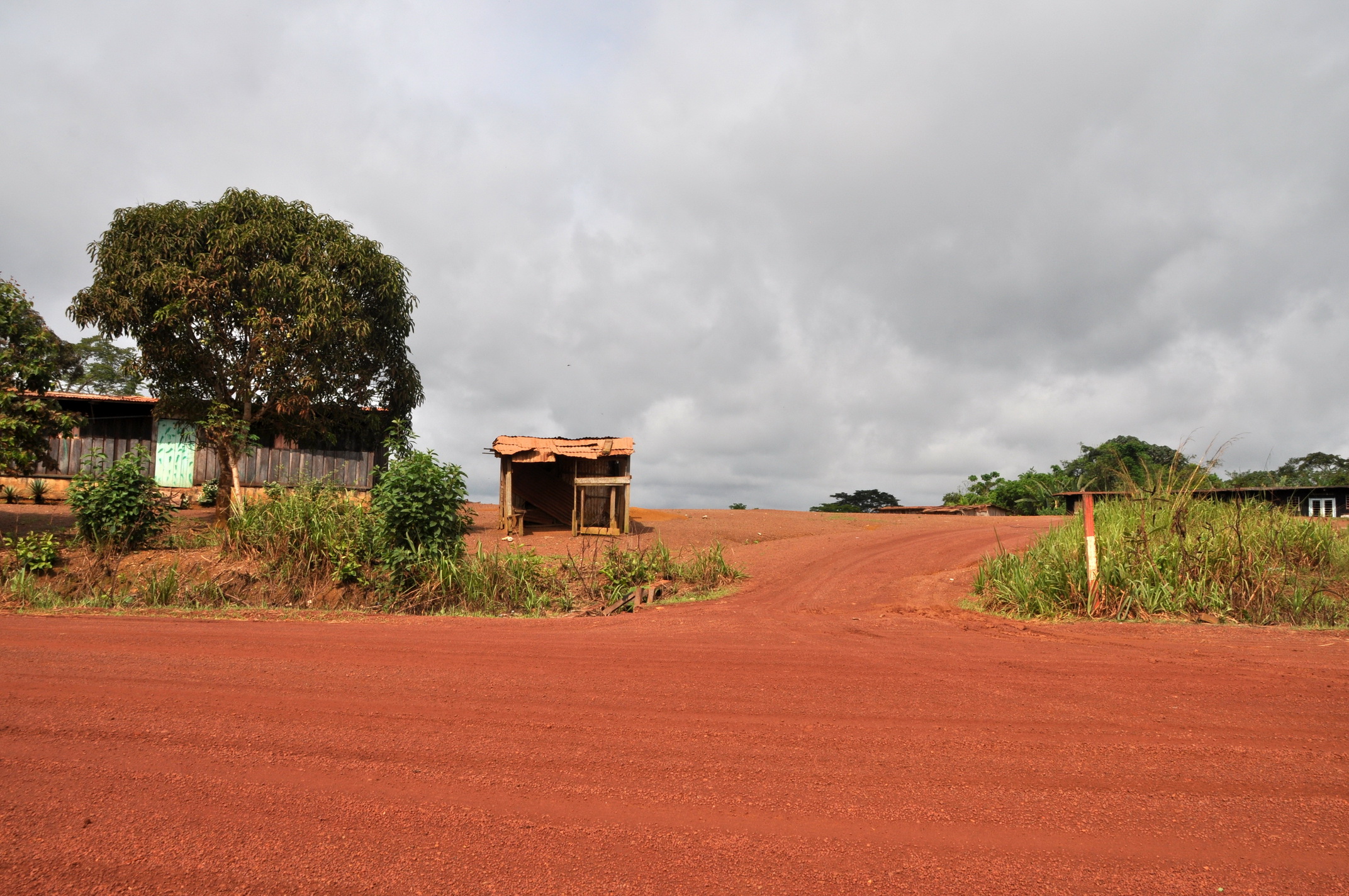
I woke at the first cockcrow, quite literally. I was parked in the middle of a village, as it turned out, and there were chickens and roosters all around. A misty morning. Baobabs rose like ghosts out of the fog at the bends. Naturally, the village ended just beyond where I’d stopped. On either side of the road was real tropical forest where I could have spent an excellent night, if only I’d driven another ten kilometres.
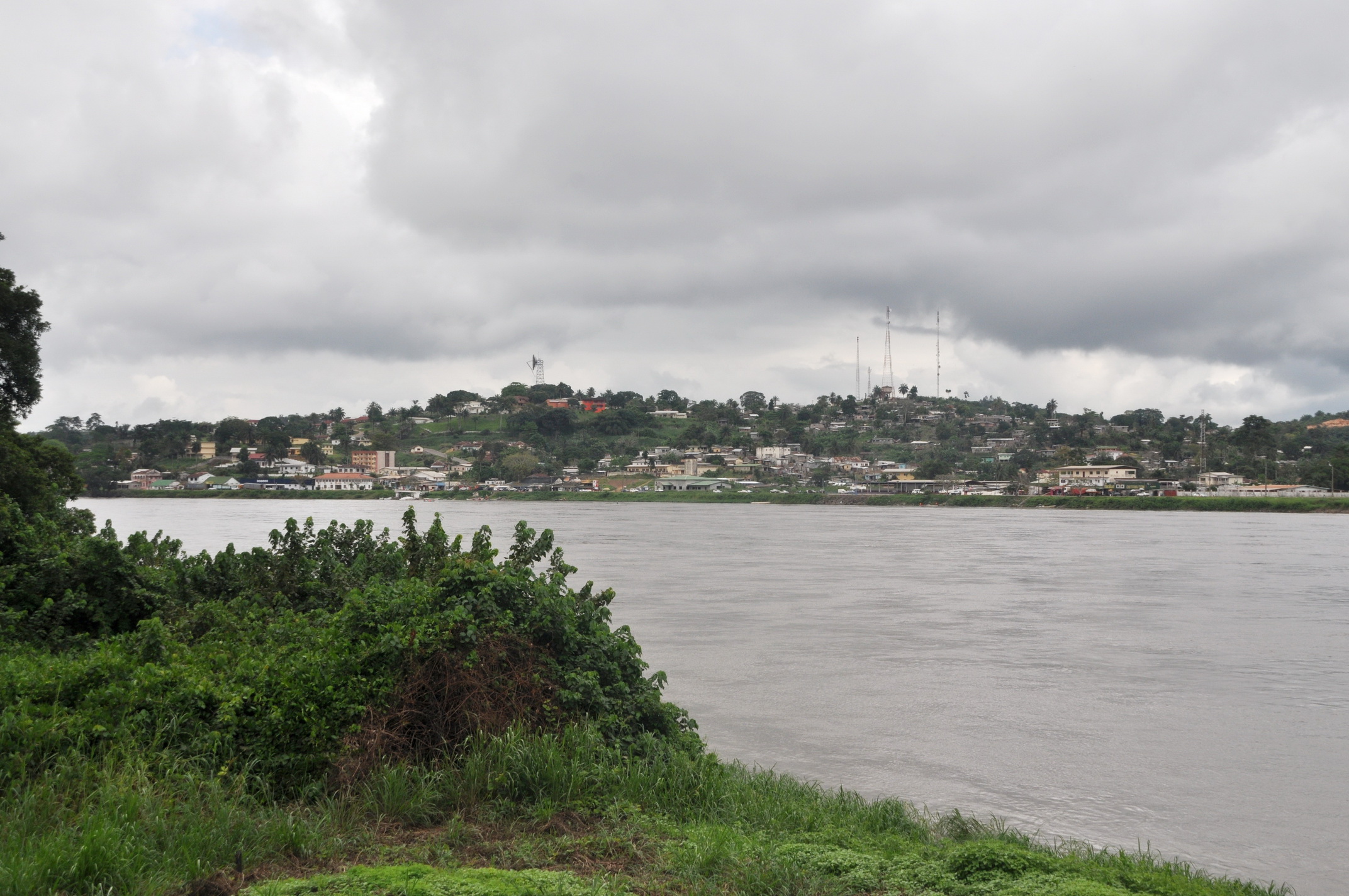
At Bifoun the road forks. I went south to see the town of Lambaréné, where Albert and Hélène Schweitzer founded a hospital in 1913. Albert had a remarkable life and died here at the age of 90. He had chosen what seemed to me the most neglected, swampiest place in the world down by the river, the Ogooué (sometimes written Ogoué). I imagined every microbe in the world being happy in this warm swamp. It put me in mind here of Ebola and HIV, although the Ebola River that gave its name to the virus is in what is now the Democratic Republic of the Congo, and researchers trace the origin of the main pandemic HIV lineage to south-eastern Cameroon, not Lambaréné.
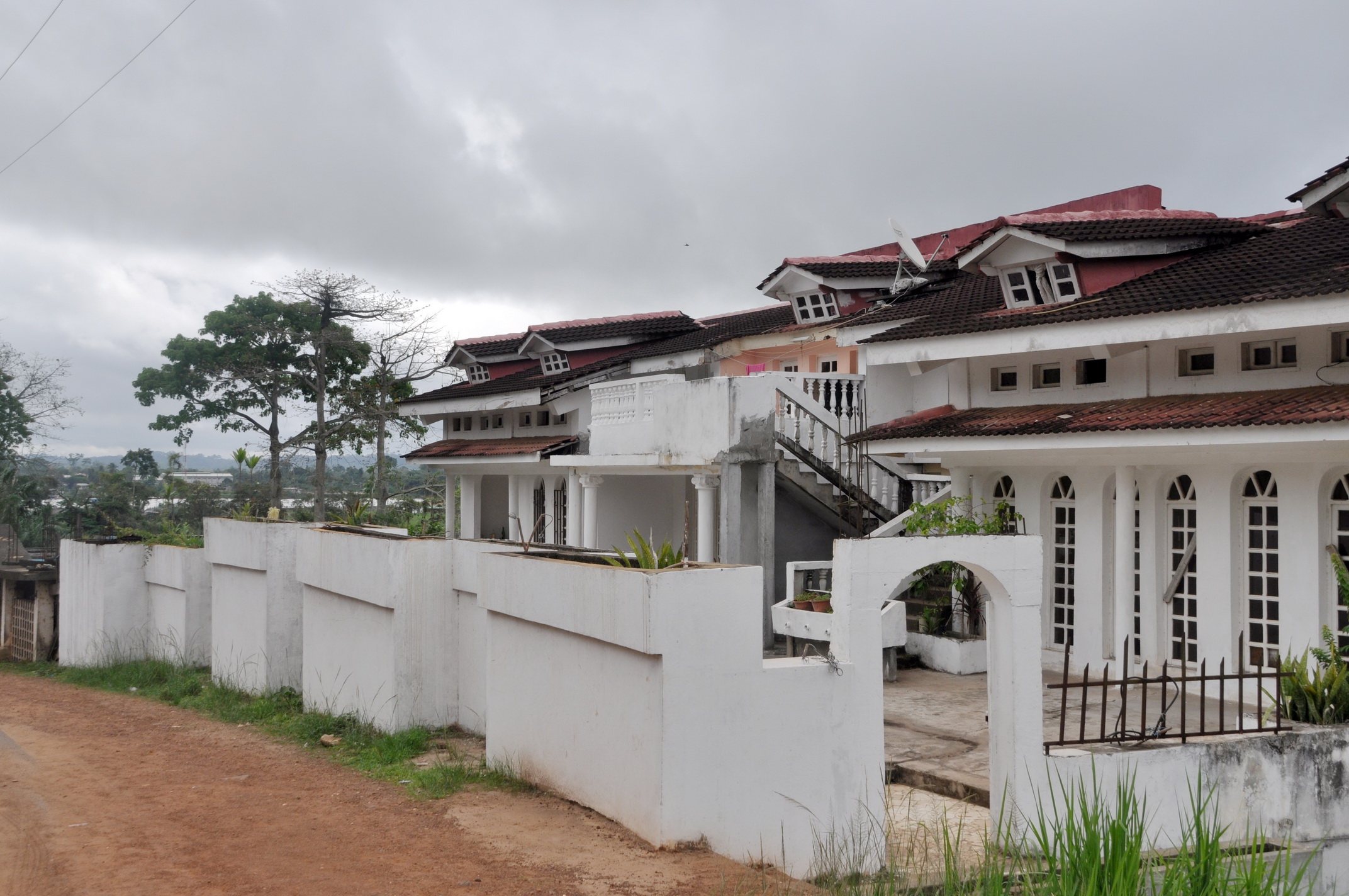
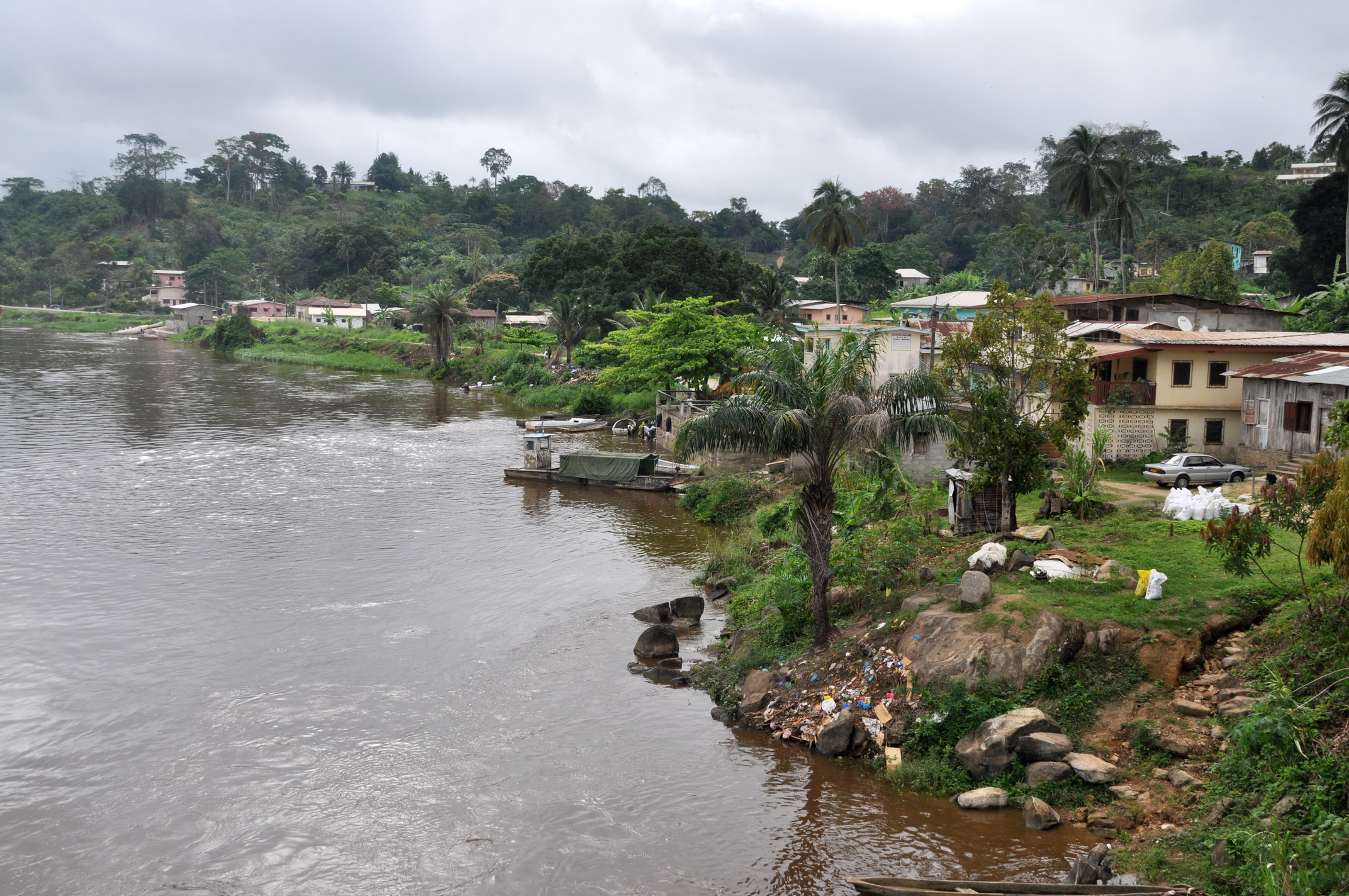
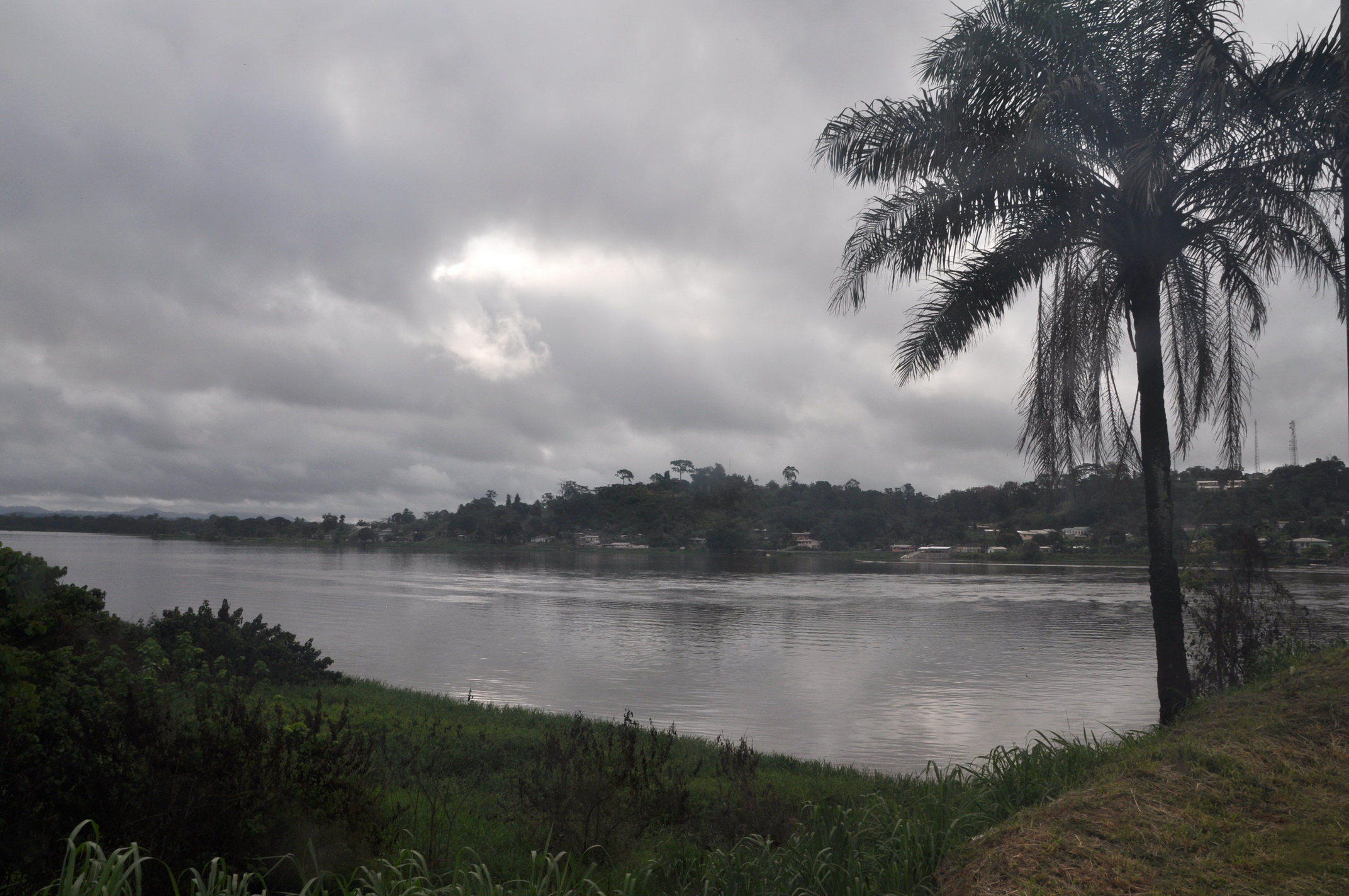
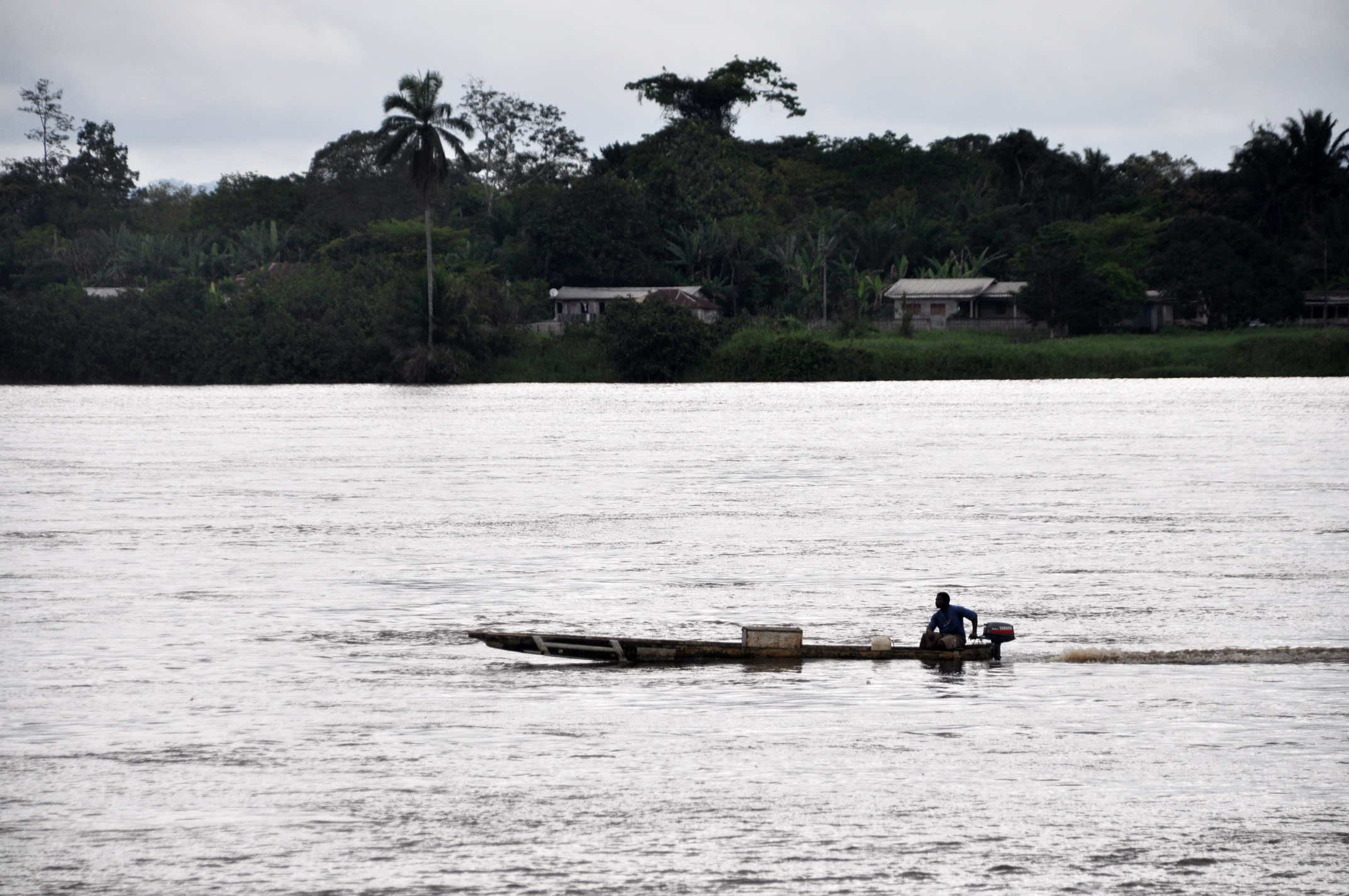
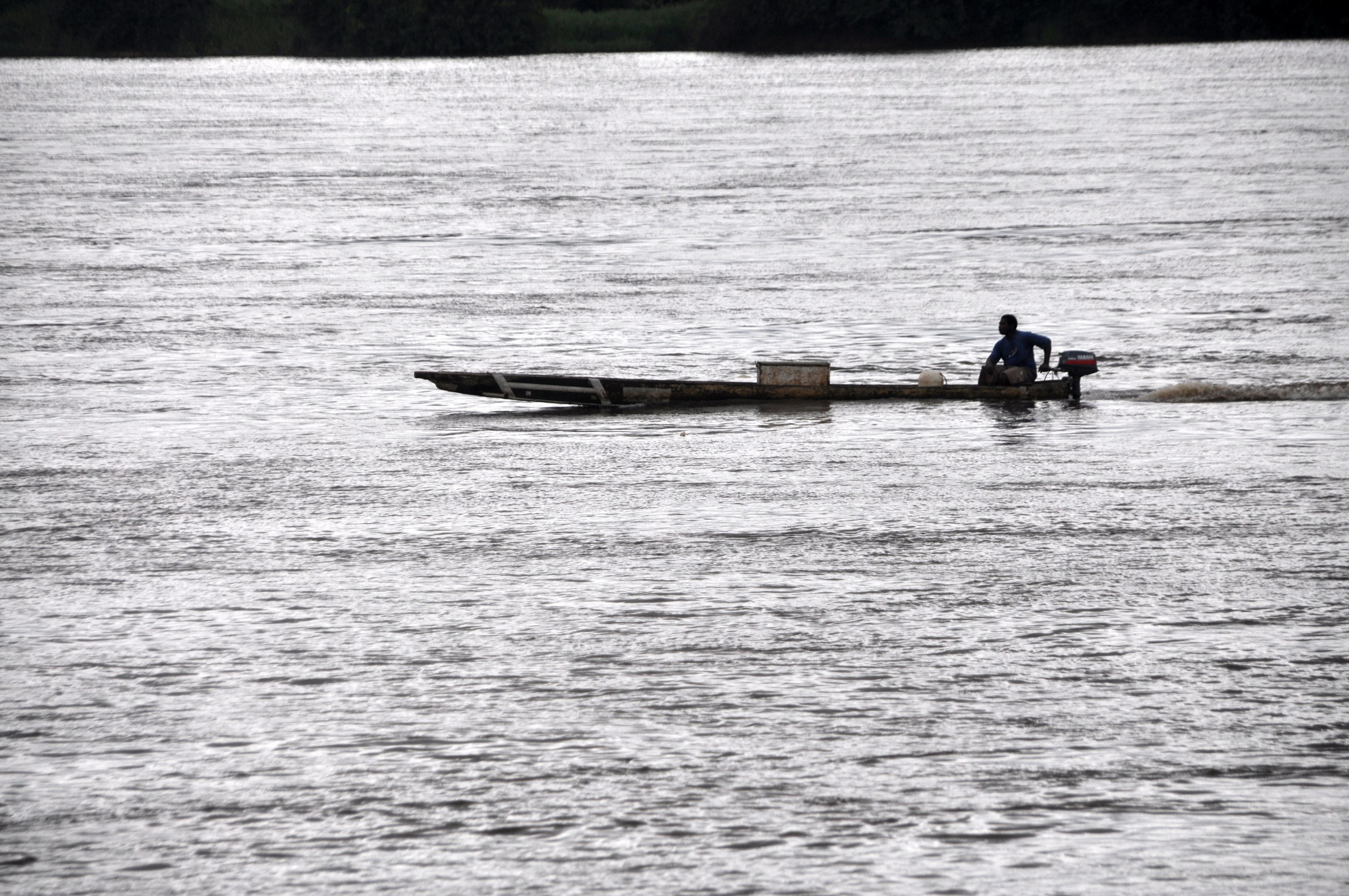
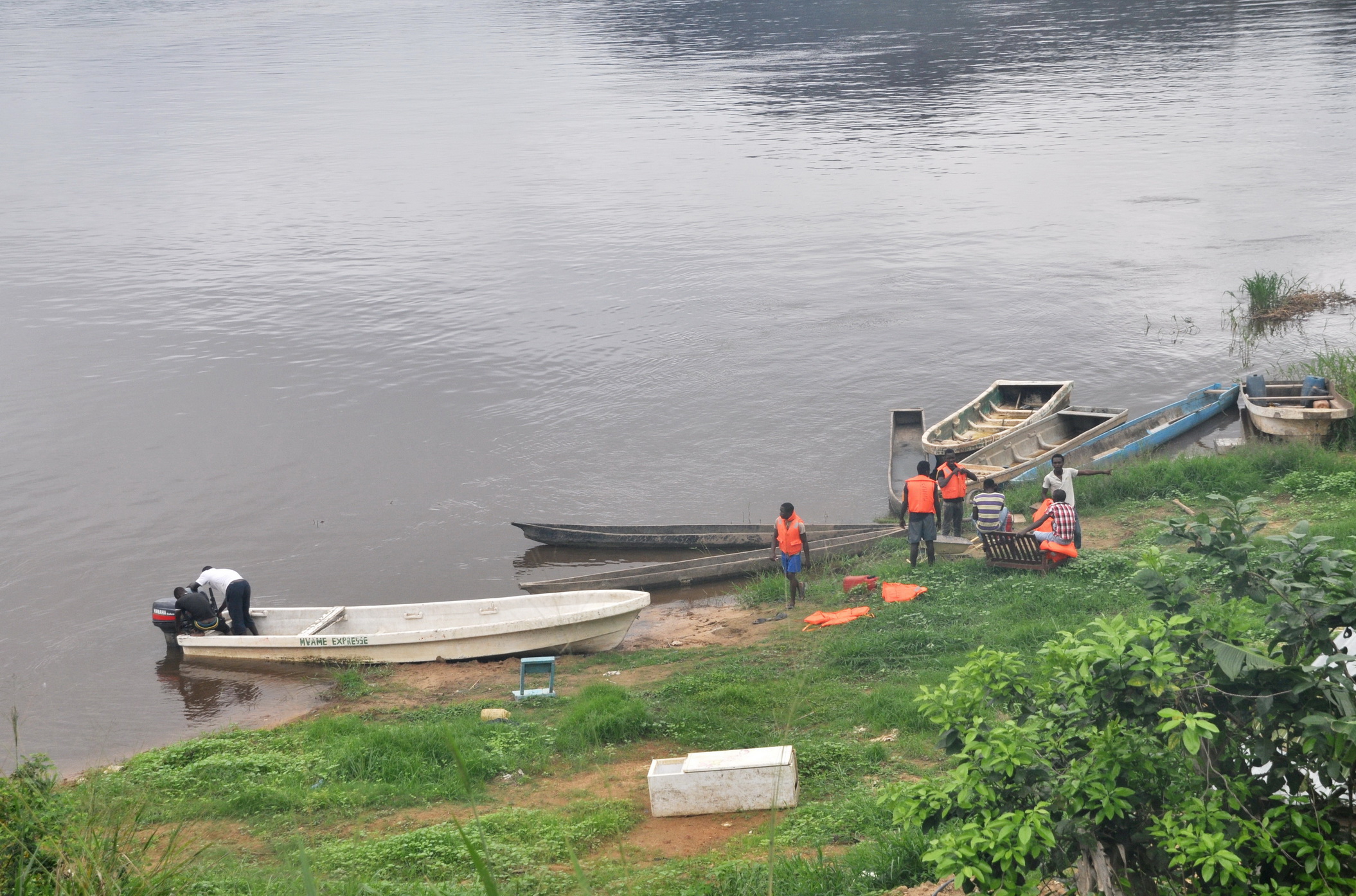
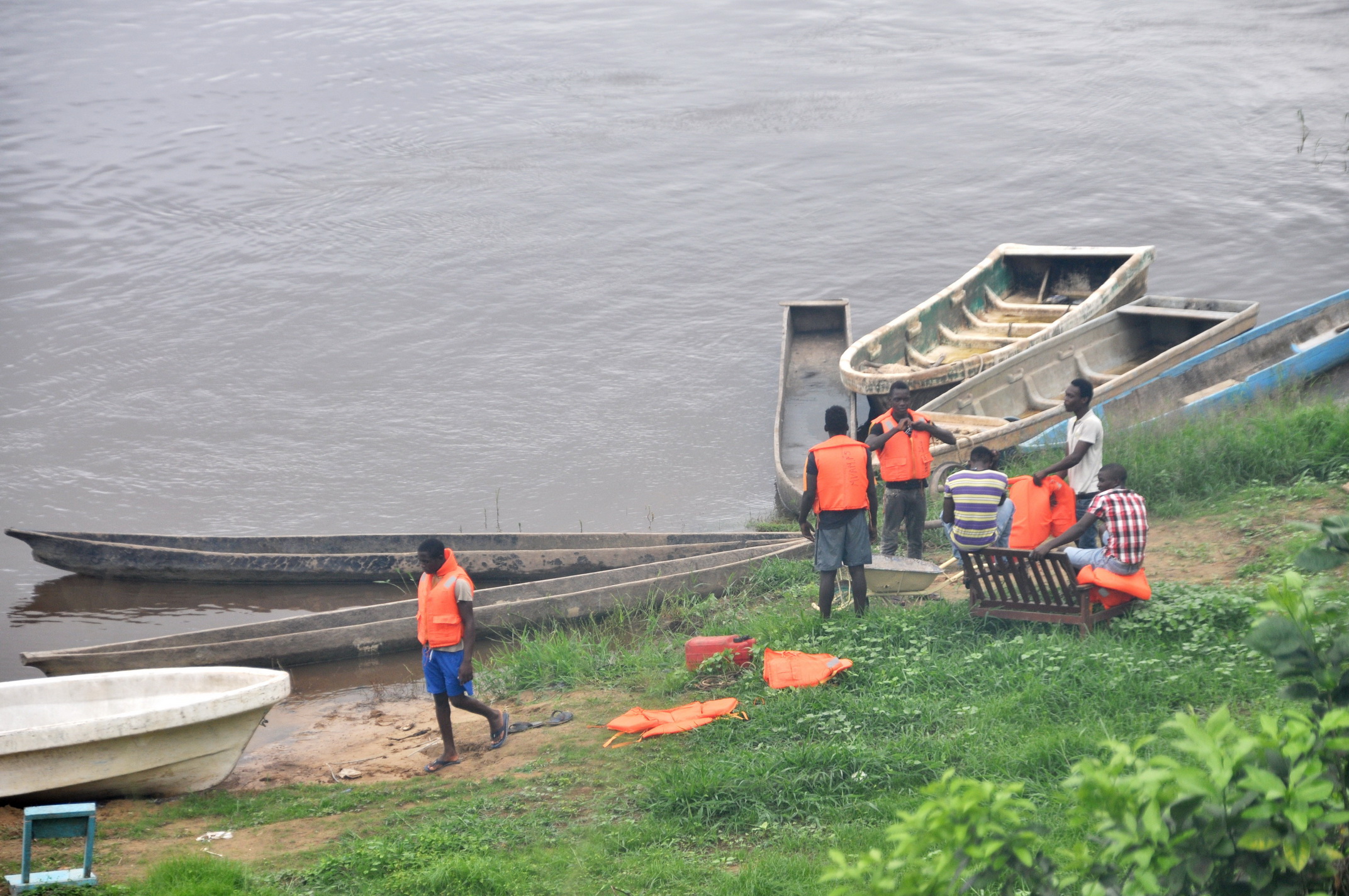
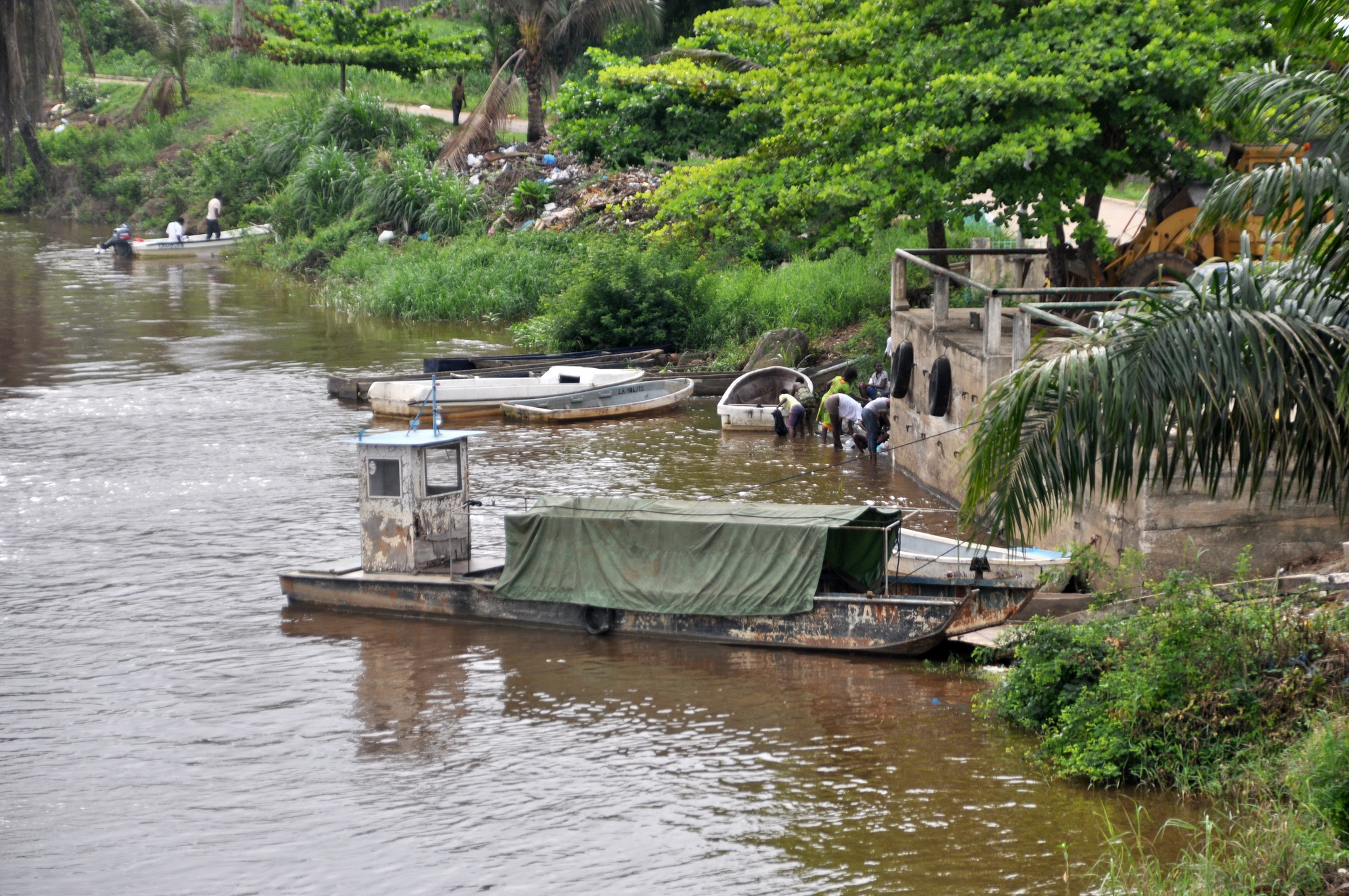
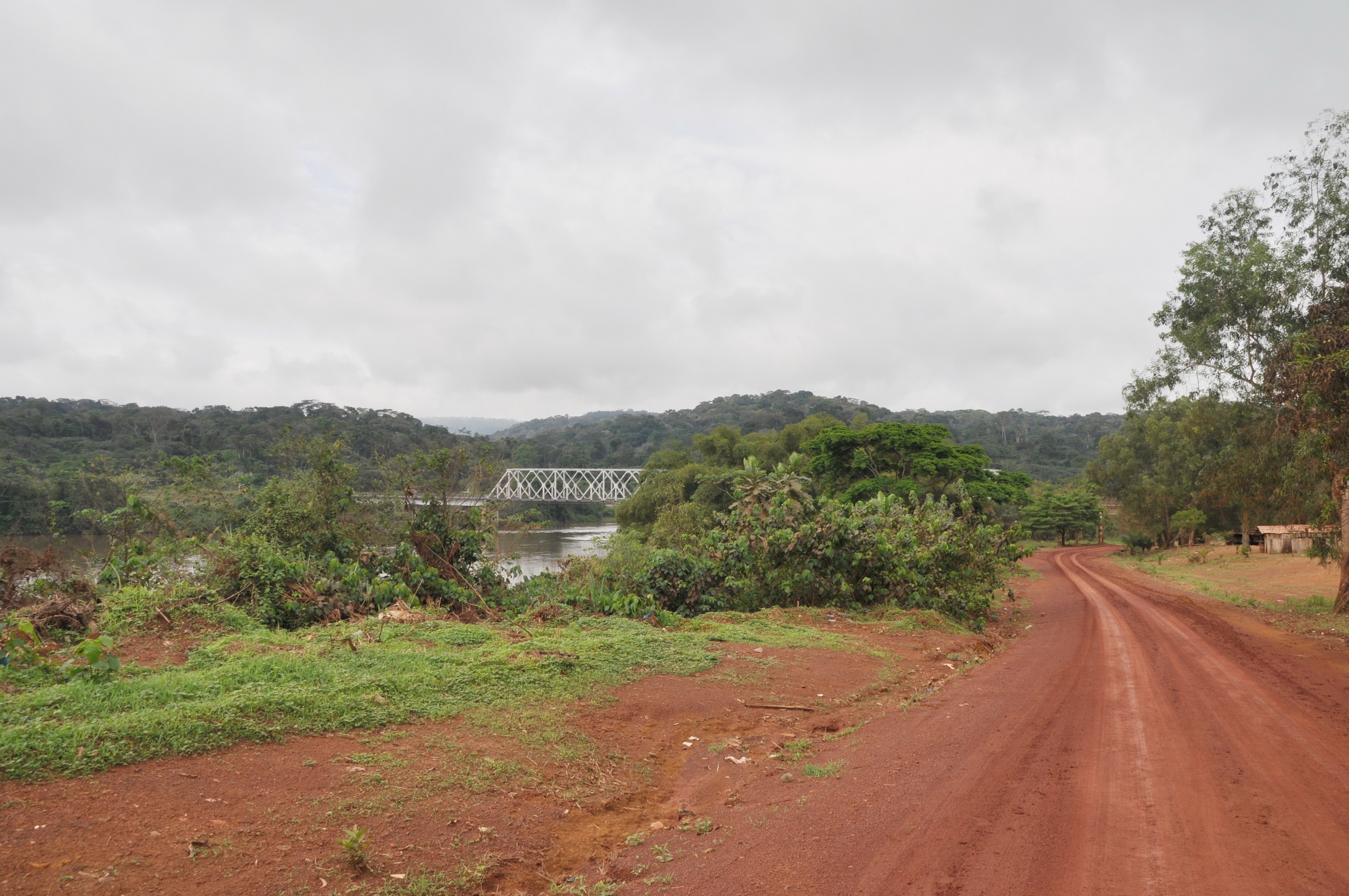
Schweitzer came to a village lost in the jungle. Now there was a fine road and even a very long bridge across the great African river, the Ogooué.
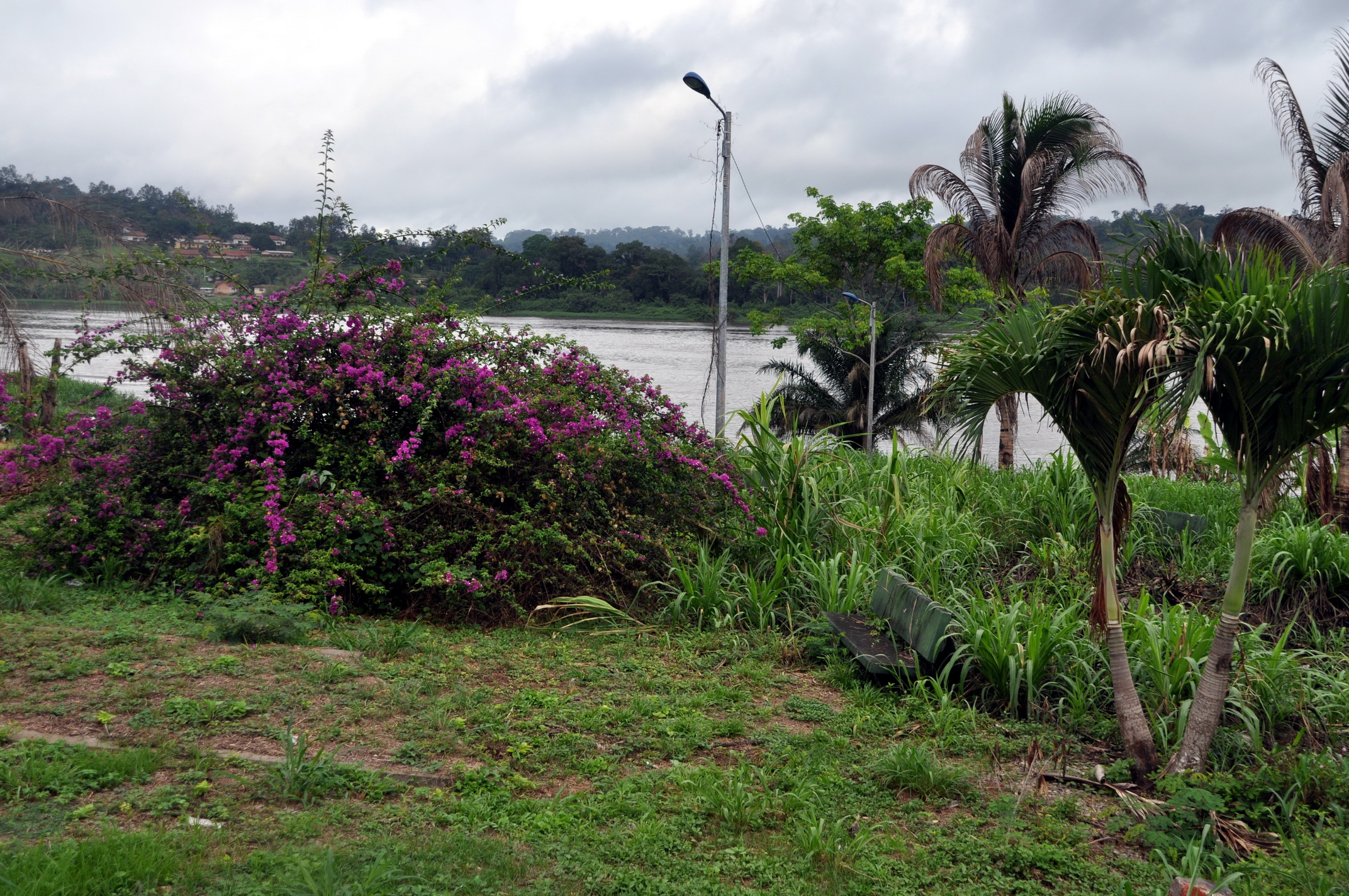
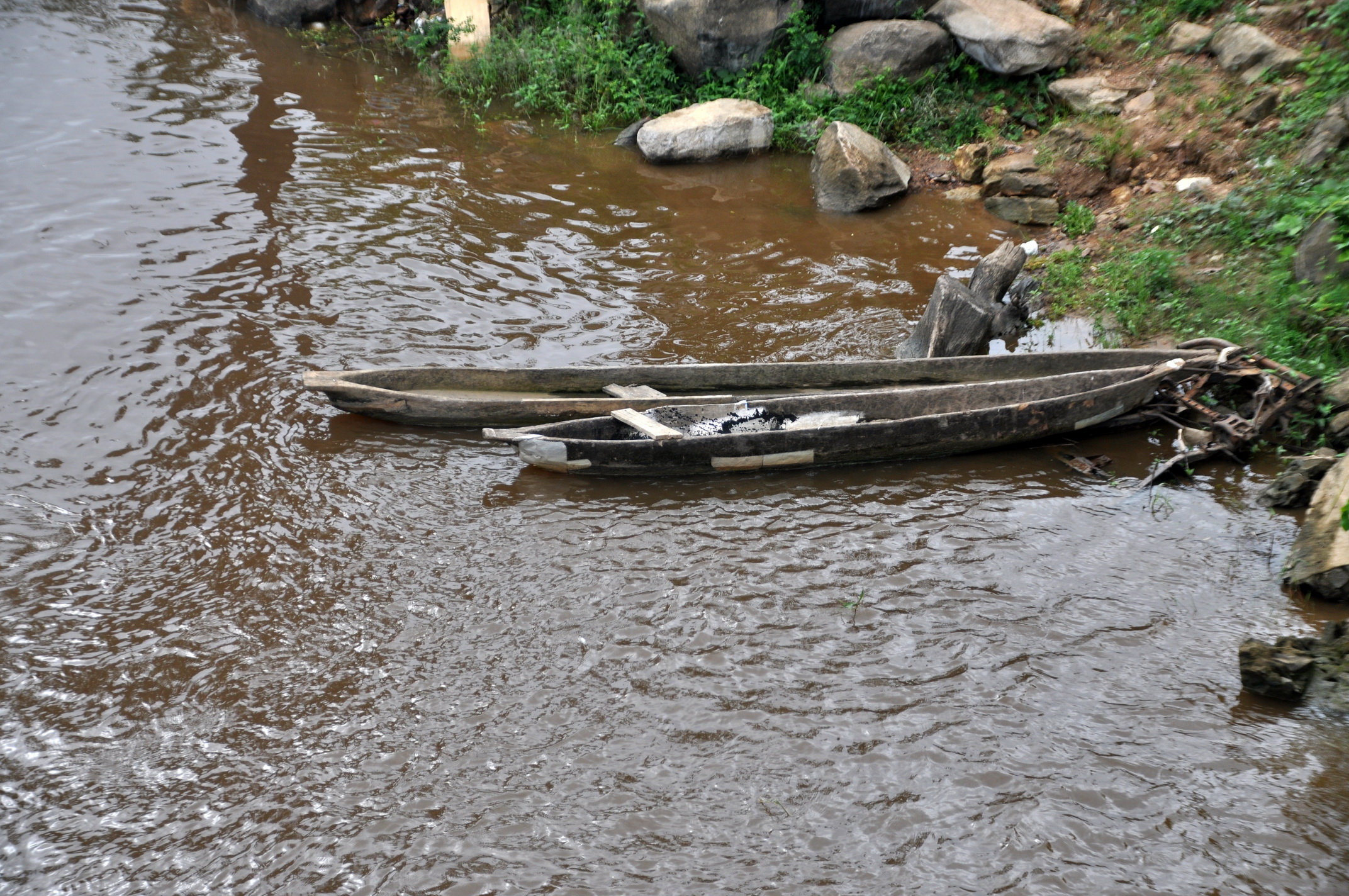
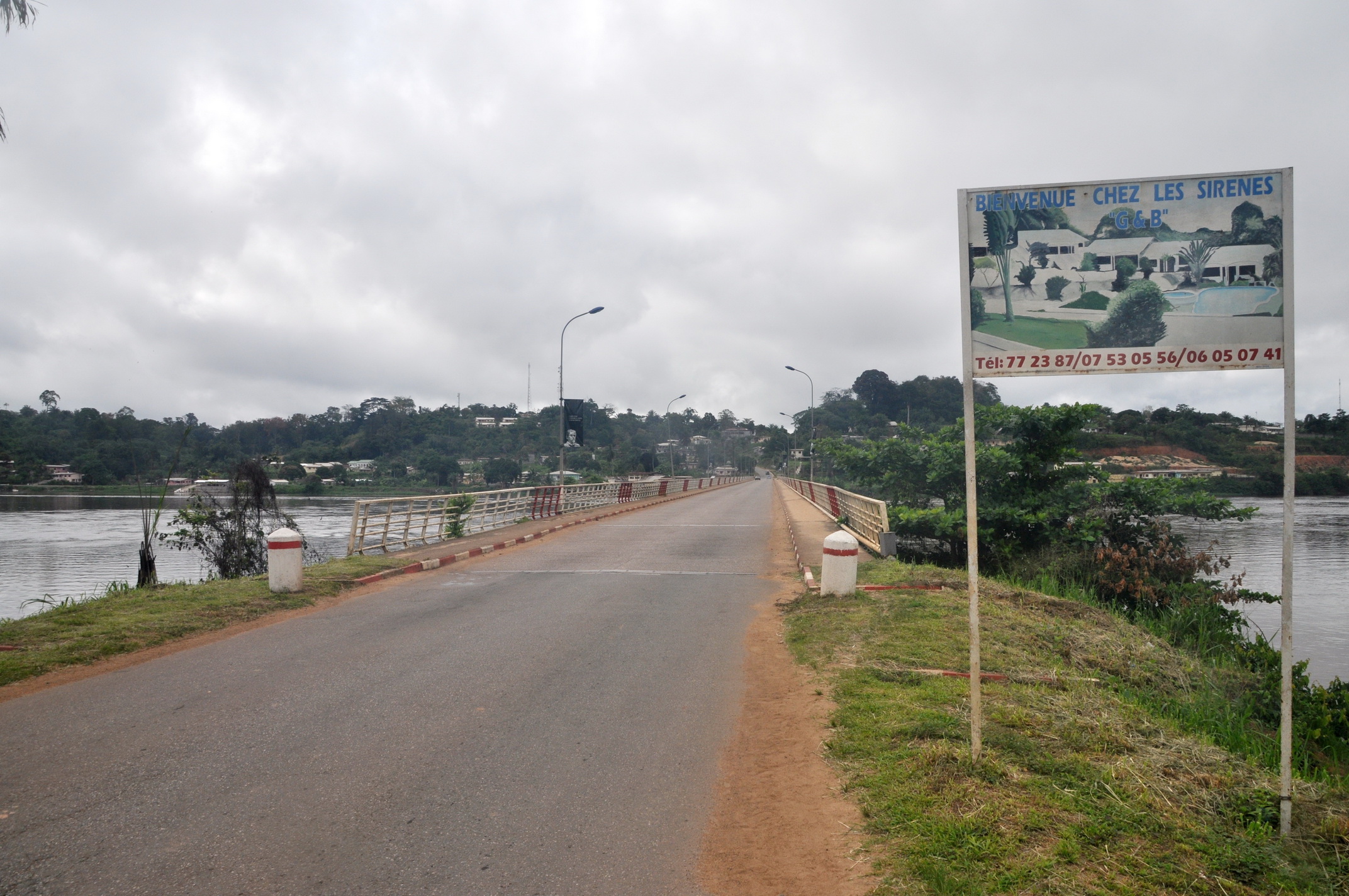
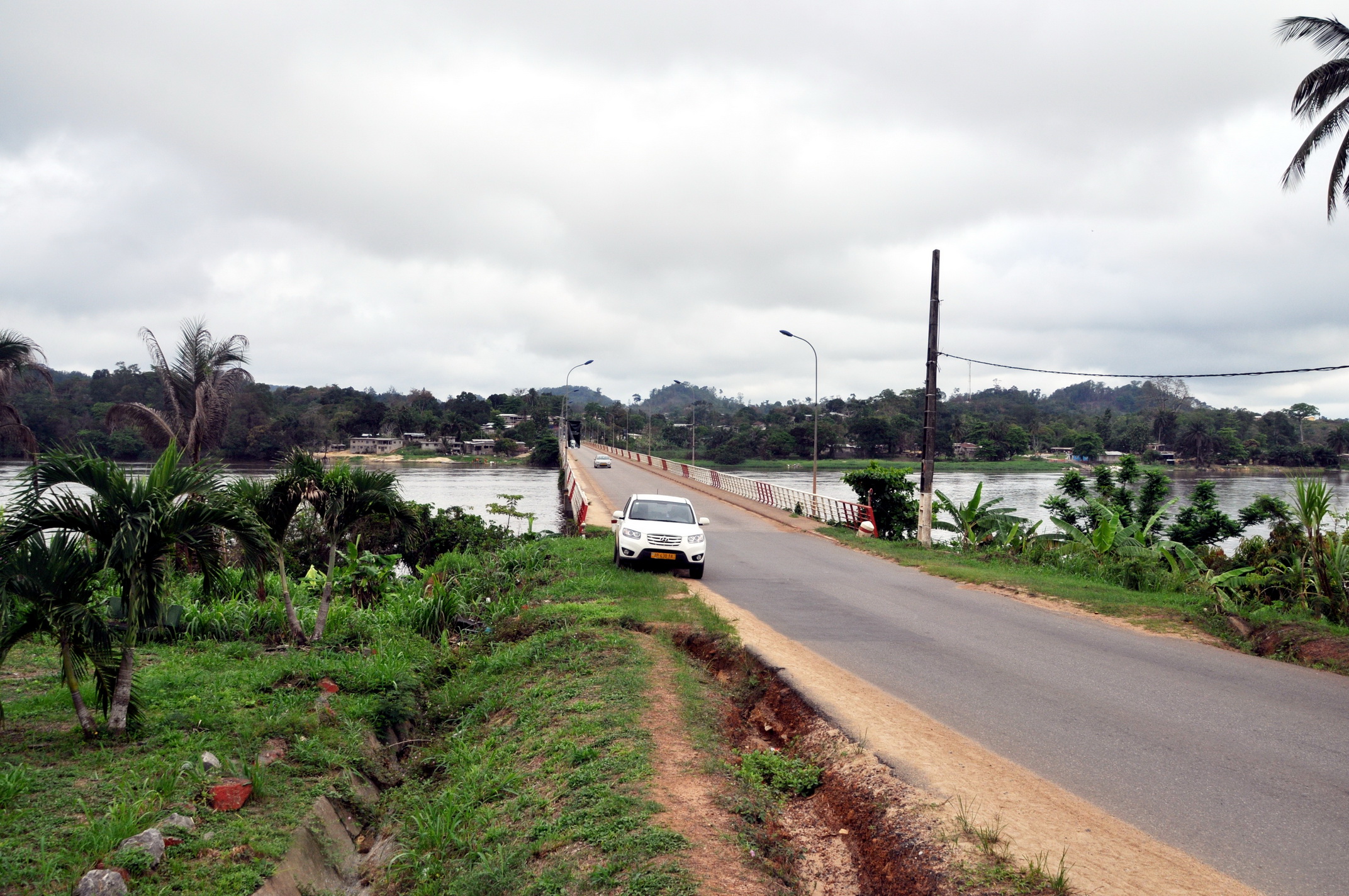
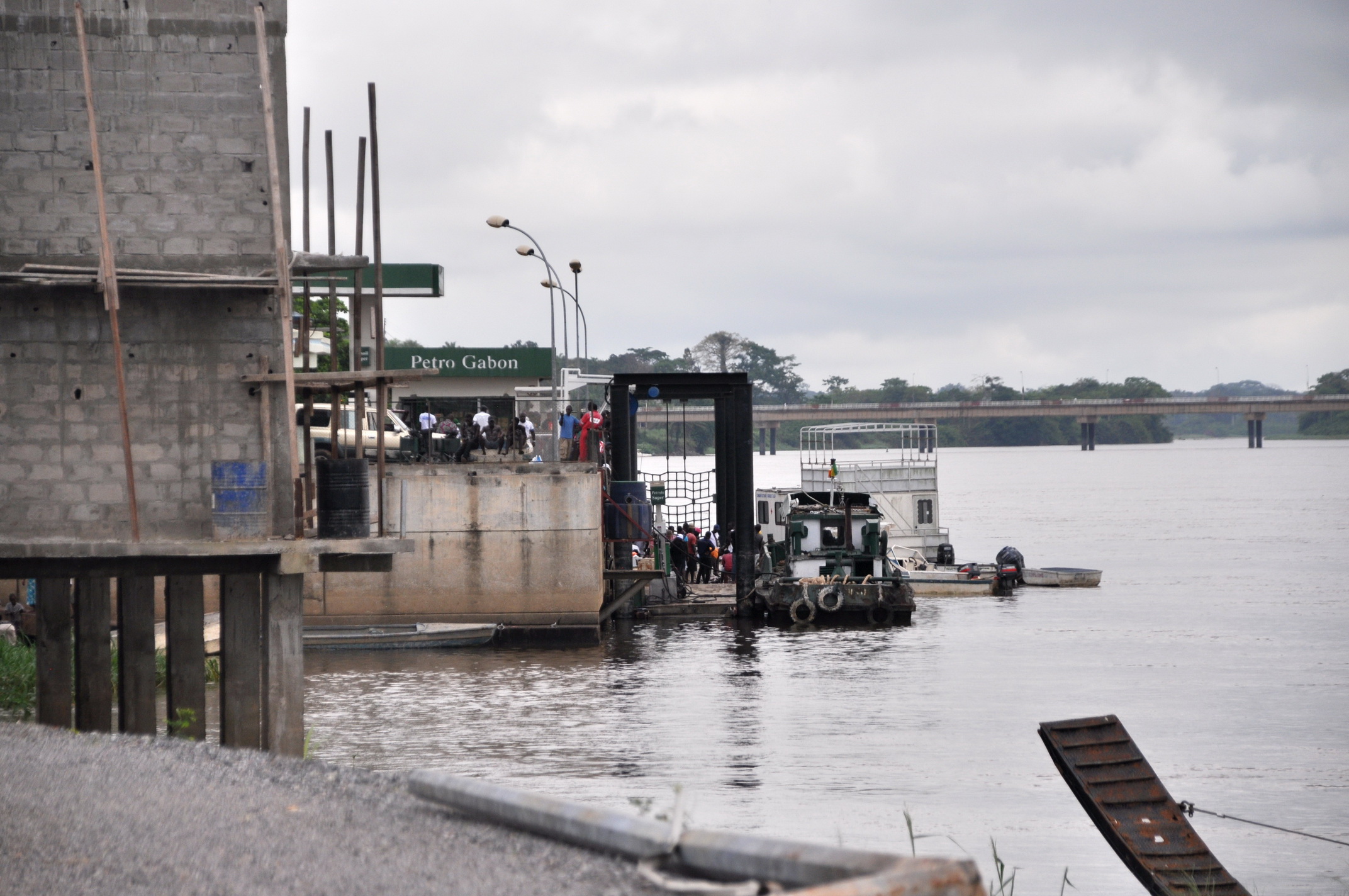
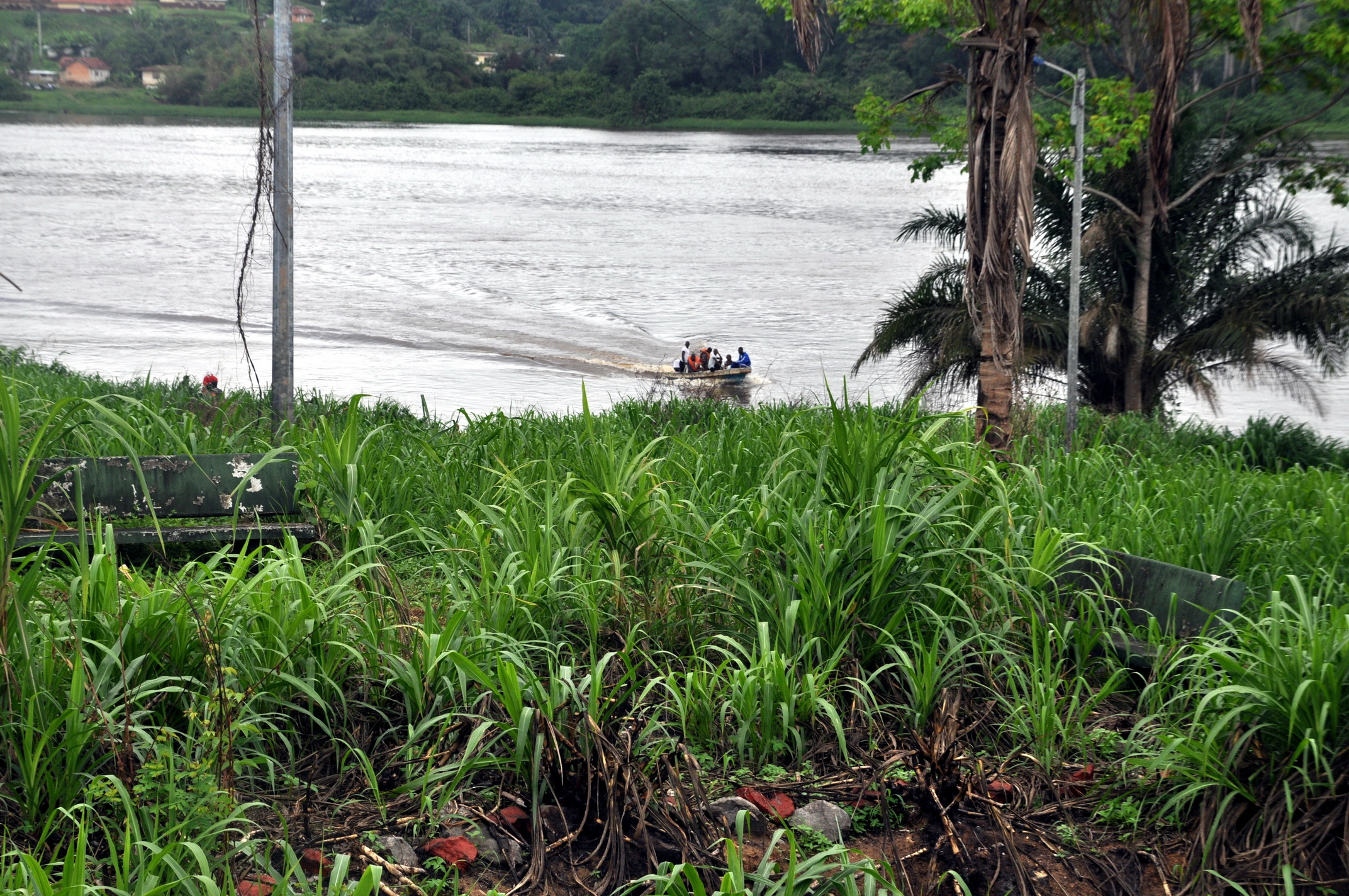
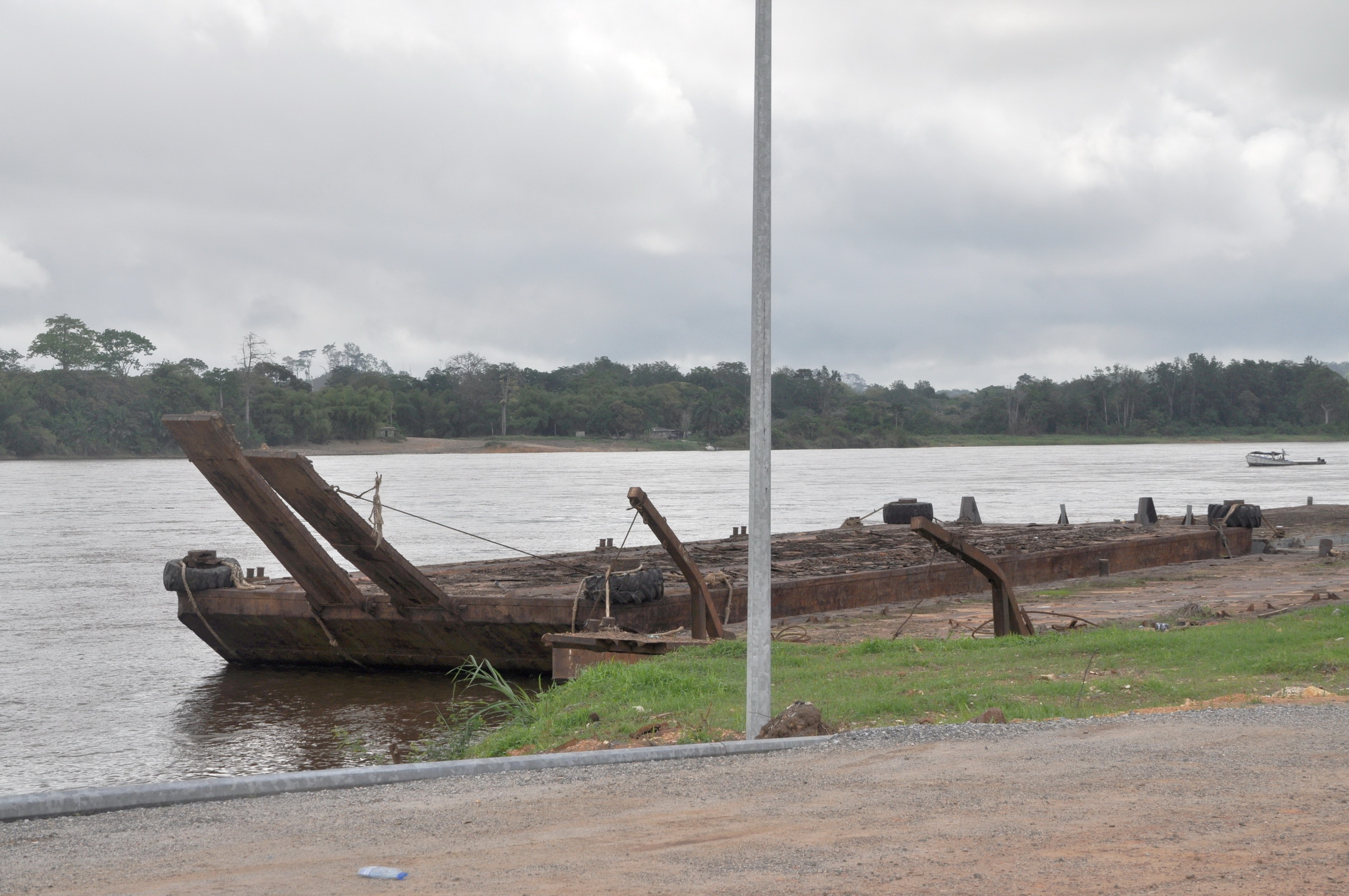
Before the bridge there is a monument to Nkombe Y’ademba, king of the Galwa and Enenga. Even Yandex couldn’t tell me why he was famous at the time.
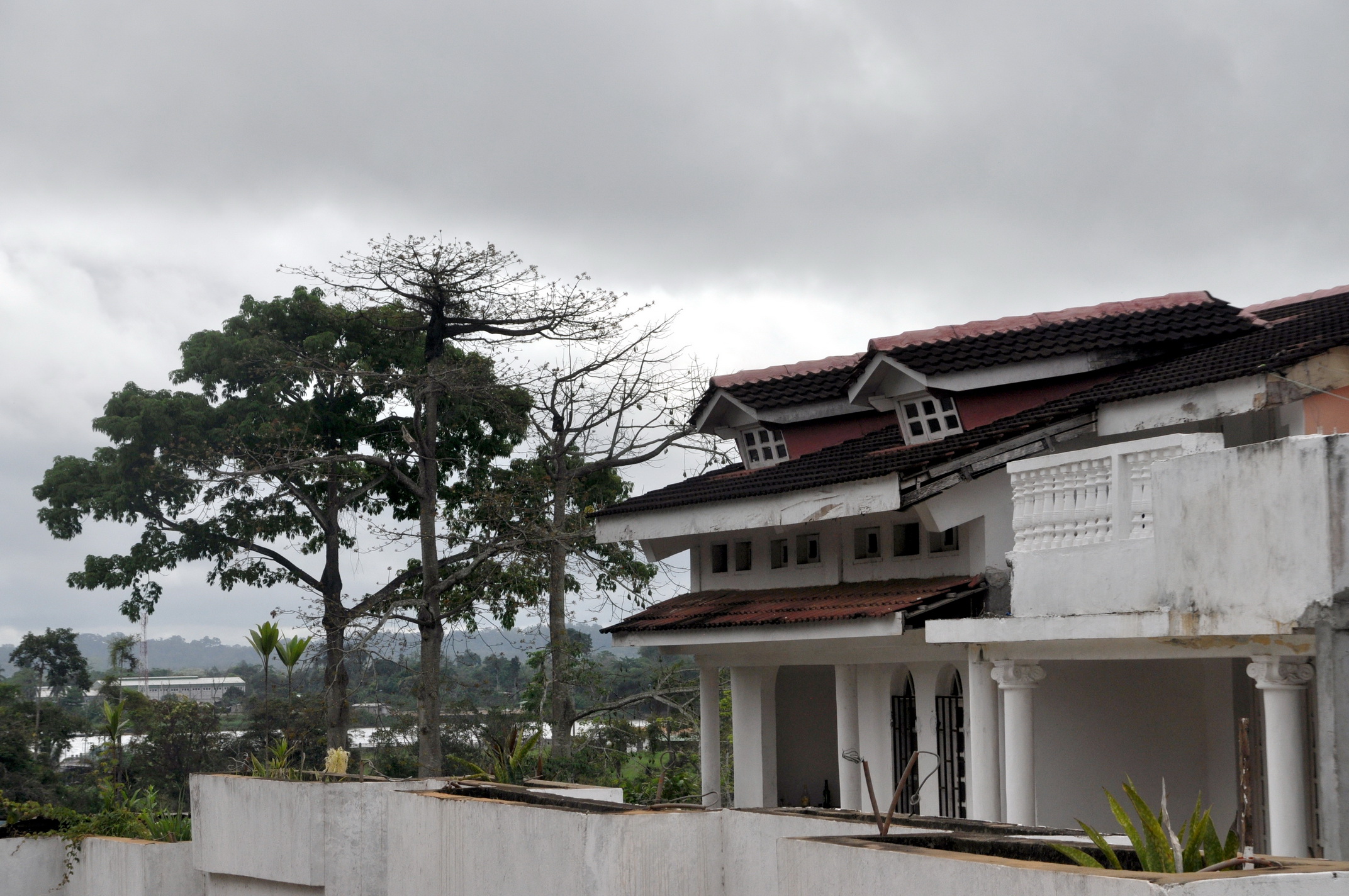
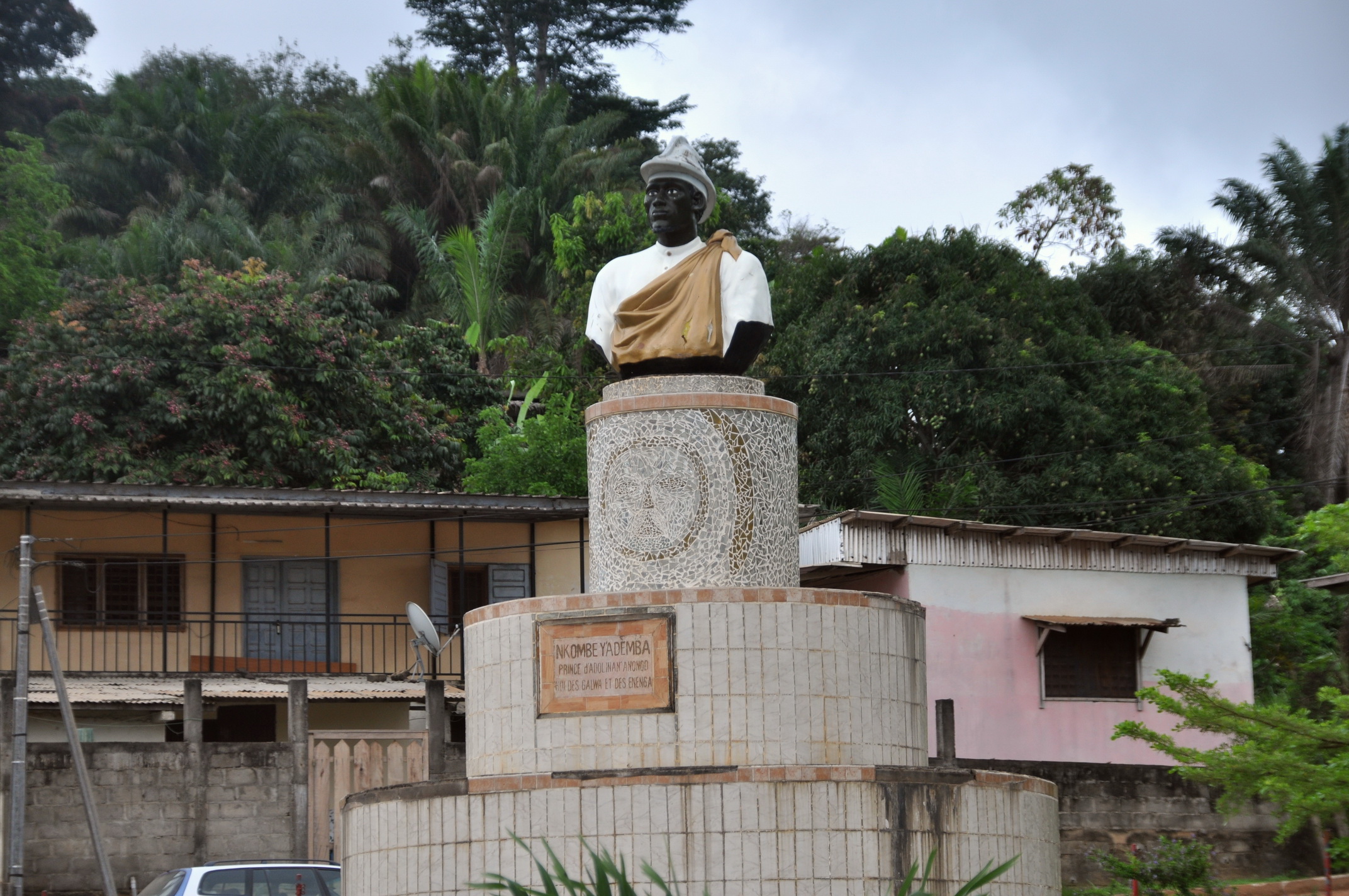
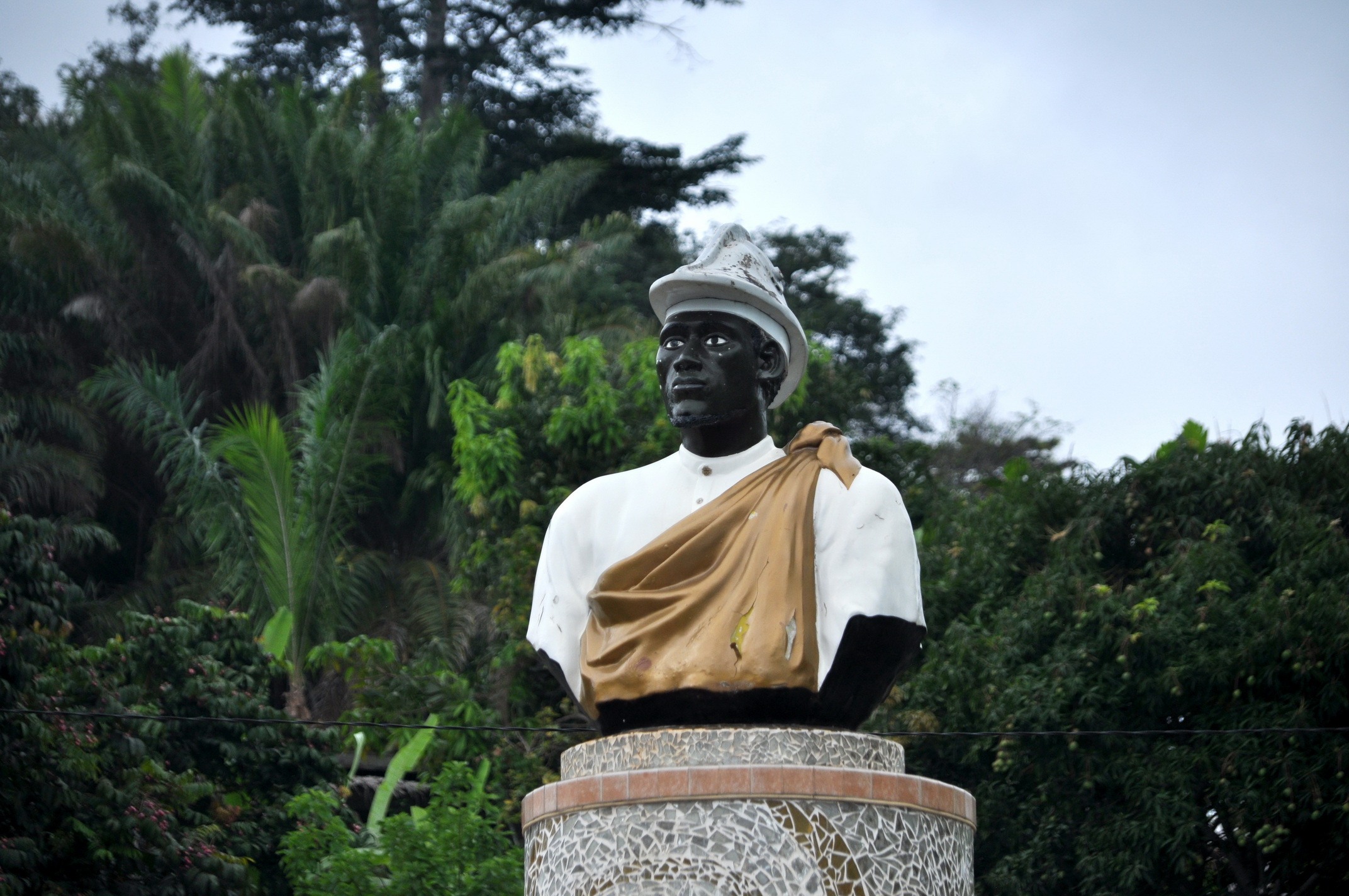
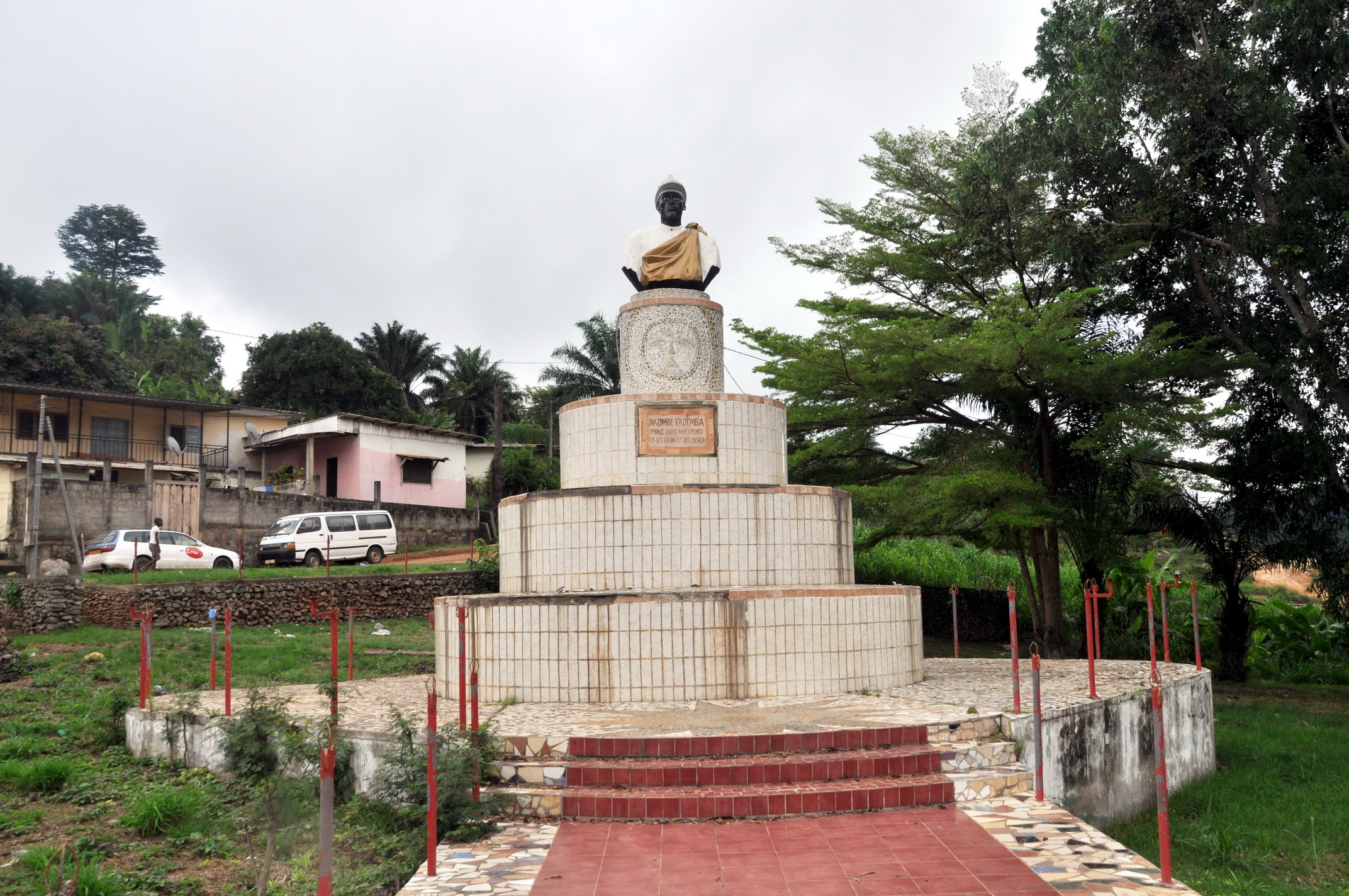
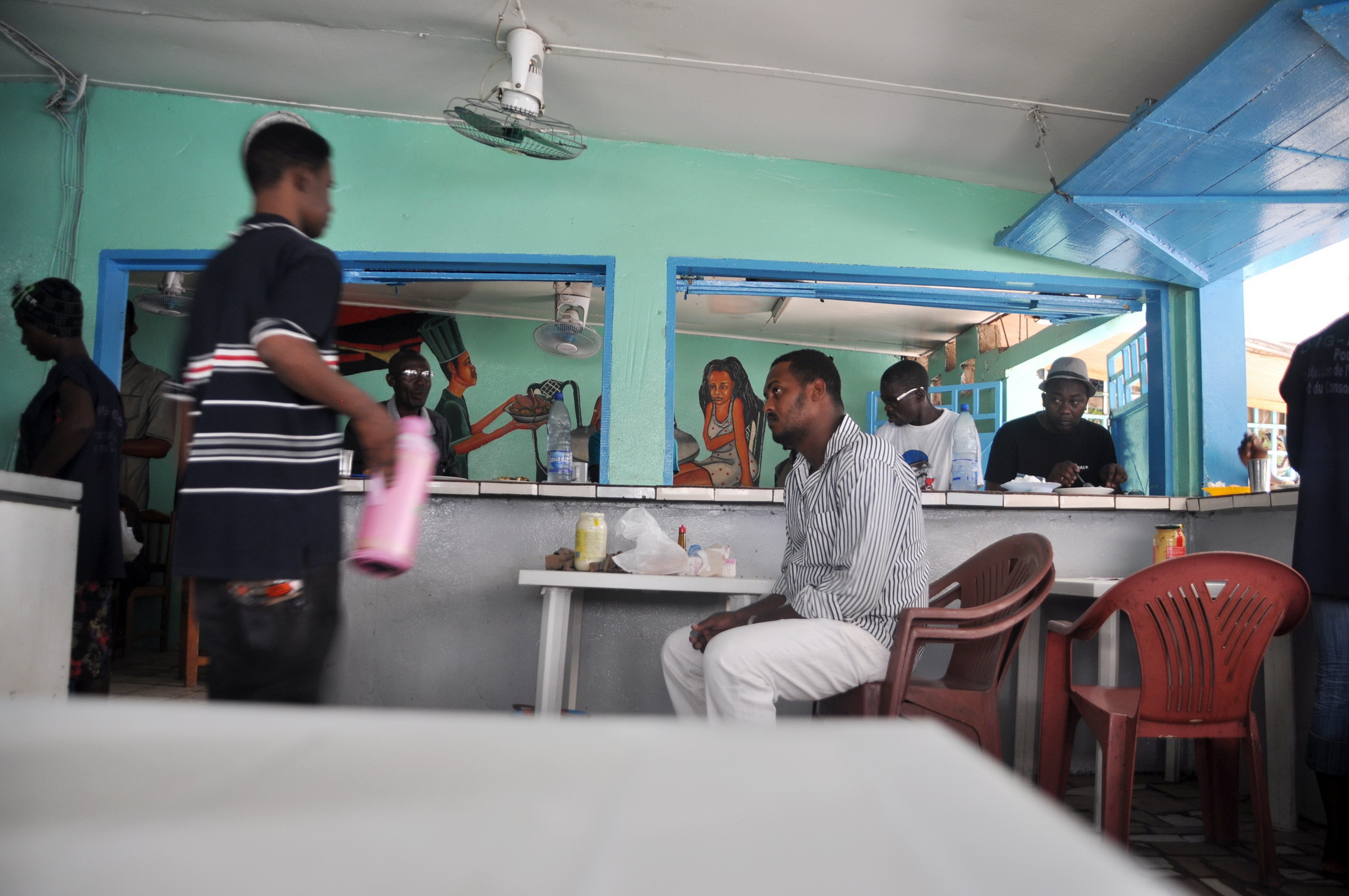
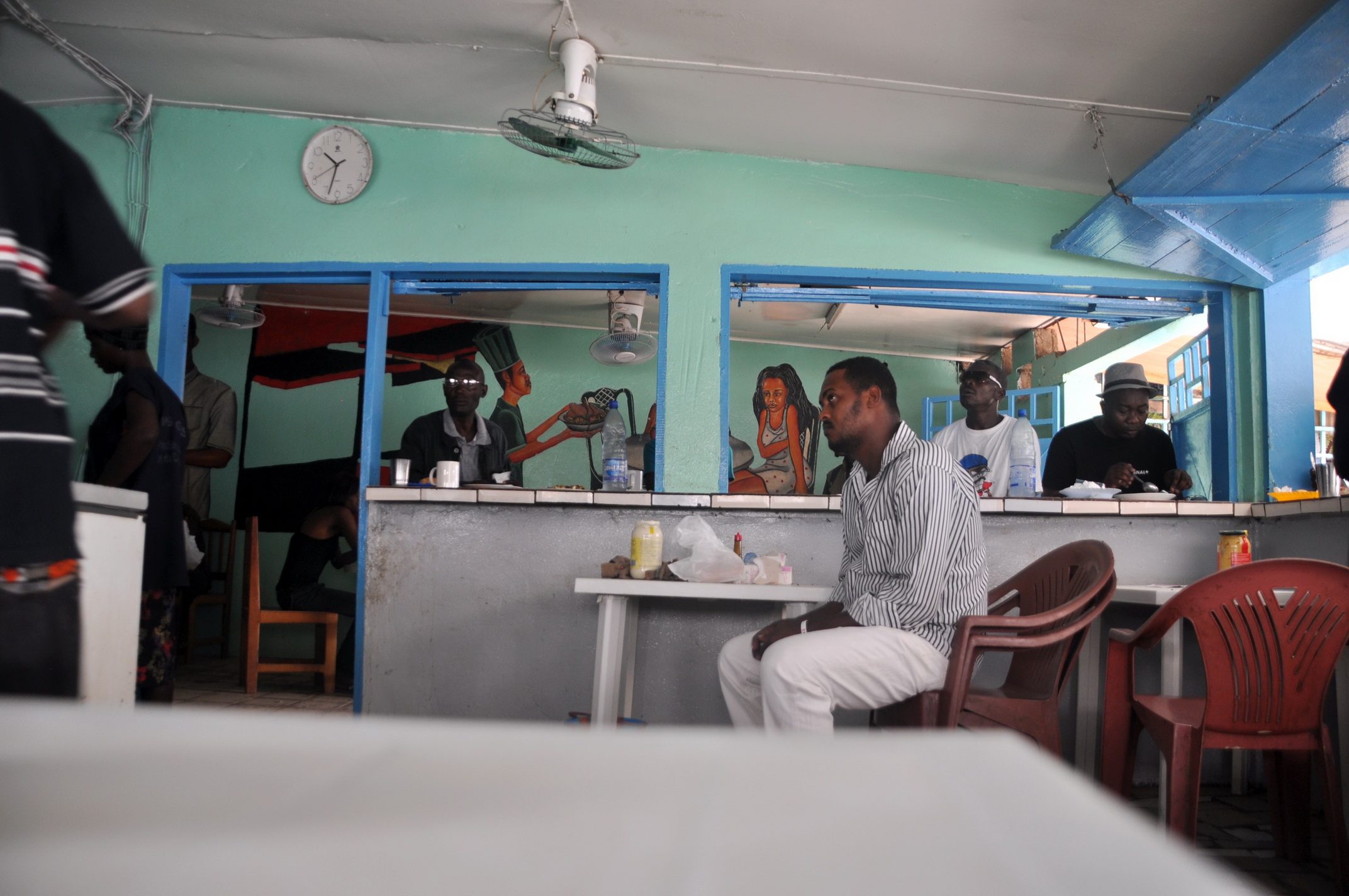
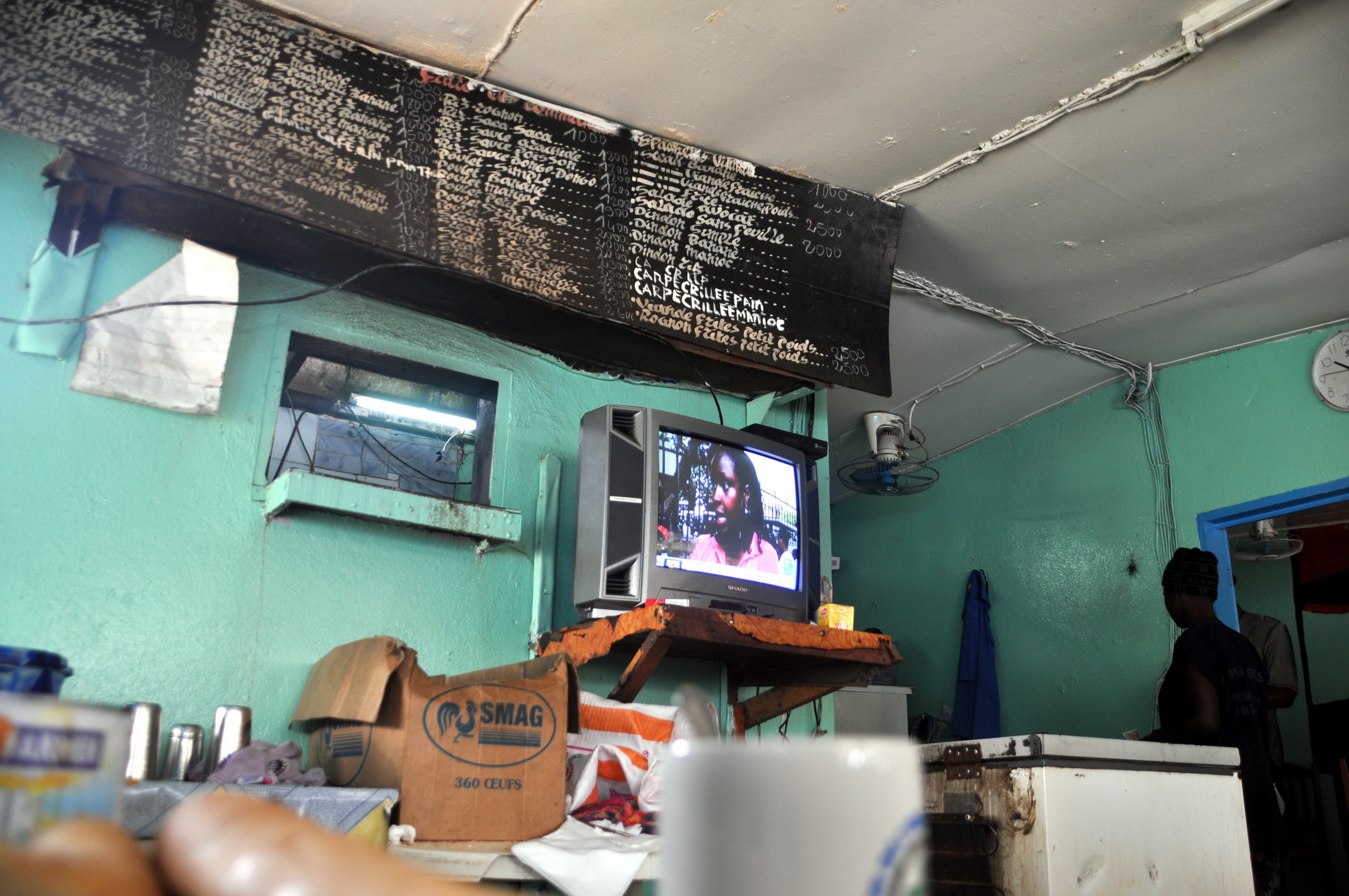
But I wanted food. First of all I went to the market (00°42.142′S, 10°13.388′E). There was plenty of fish, fruit and vegetables too, but nothing in the way of a proper meal. I found a café on the other bank in the middle of town. In I went and read the French menu. I couldn’t make head or tail of it. People had something that looked delicious on their plates, but how to explain? I pointed: I want that. The questions kept coming, as they do. How did I want it cooked? What did I want with it? The only thing I knew about food in French ran through my head: “Monsieur, je ne mange pas six jours.” I didn’t understand them and they didn’t understand me, but I ordered something. While I sat waiting, I read the menu and began to recognise words: omelette, fish, rice, meat… I’d live. I’d ordered an omelette with meat, which also turned out to have some kind of beans in it.
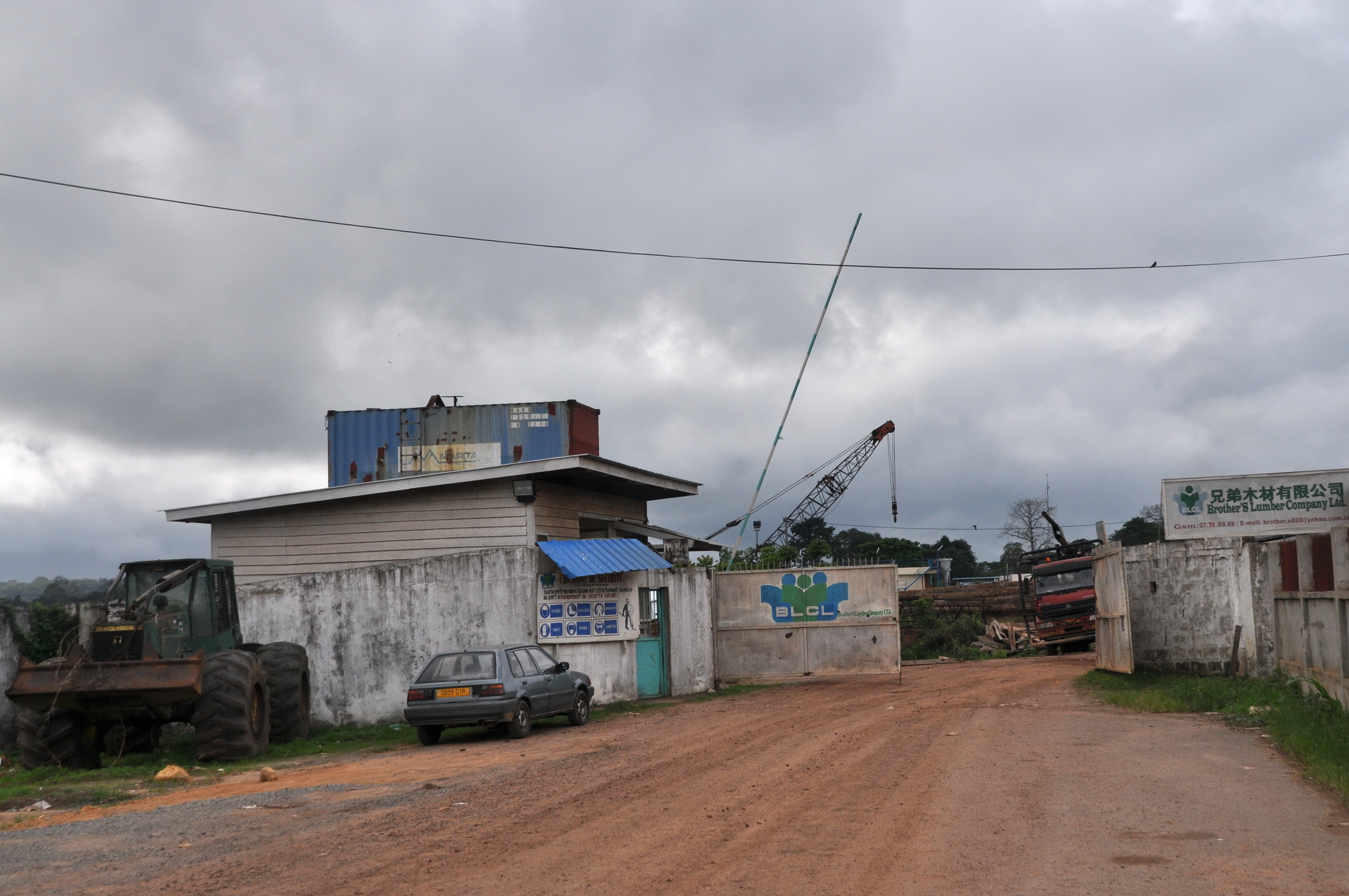
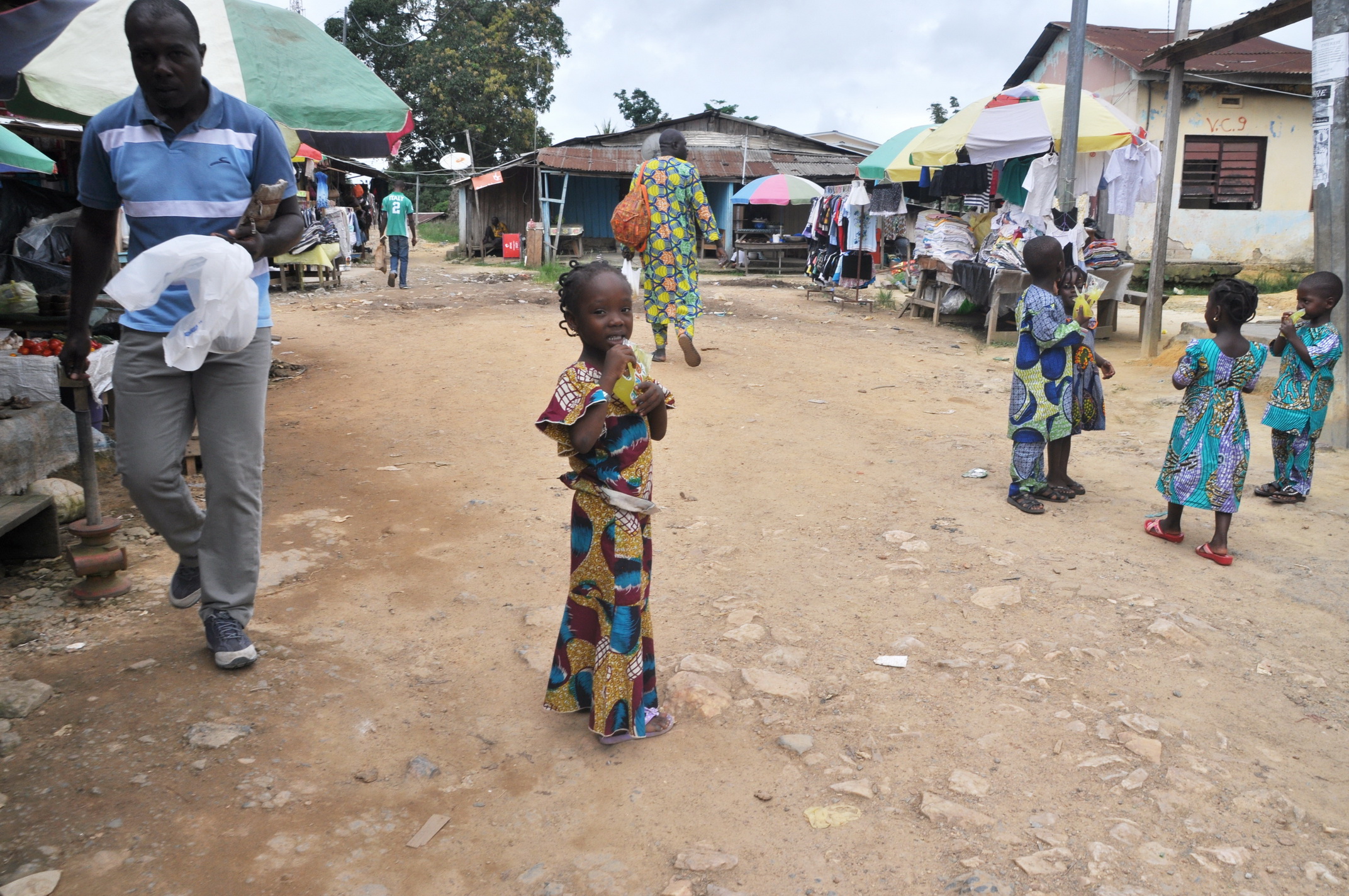
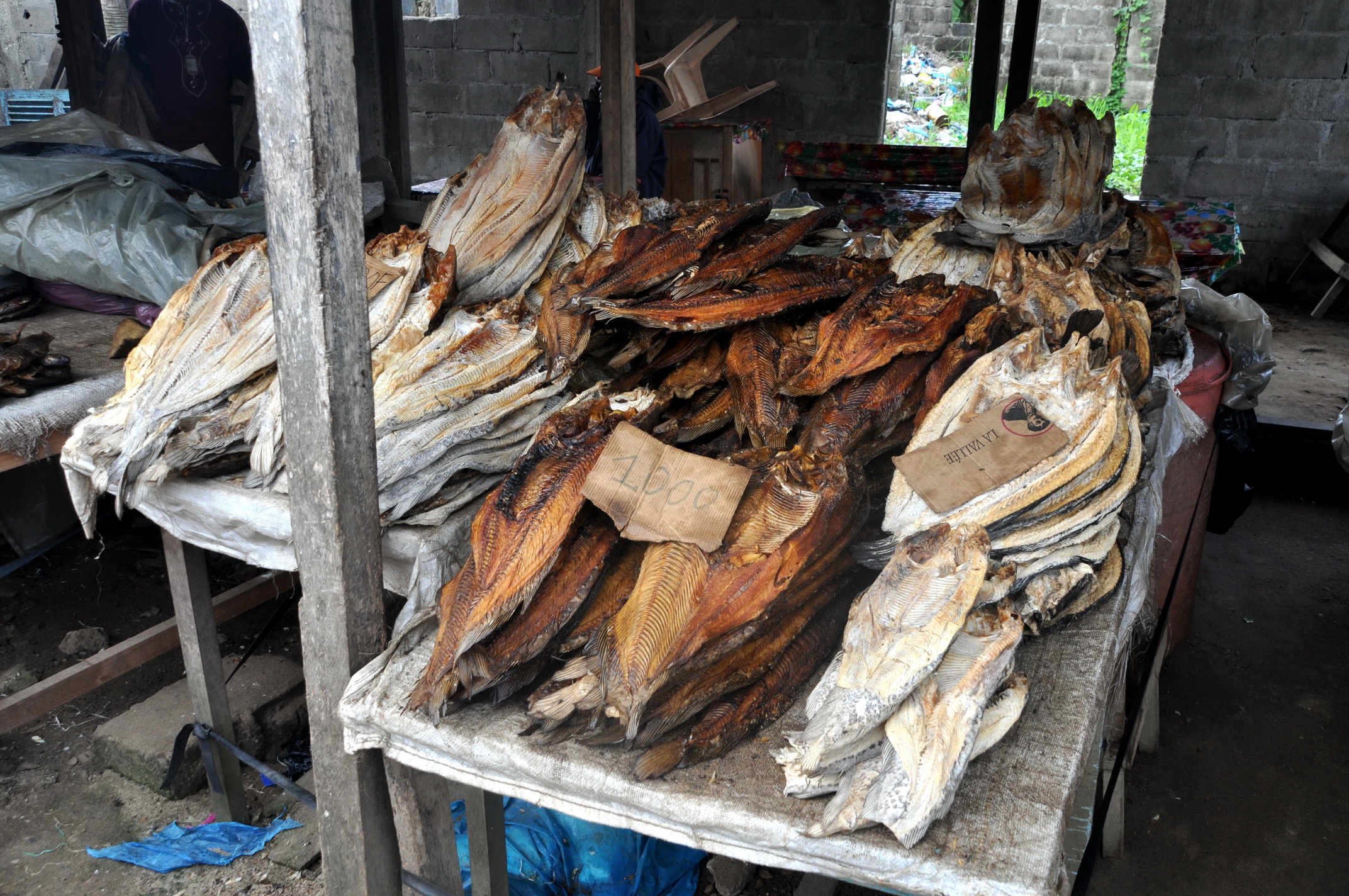
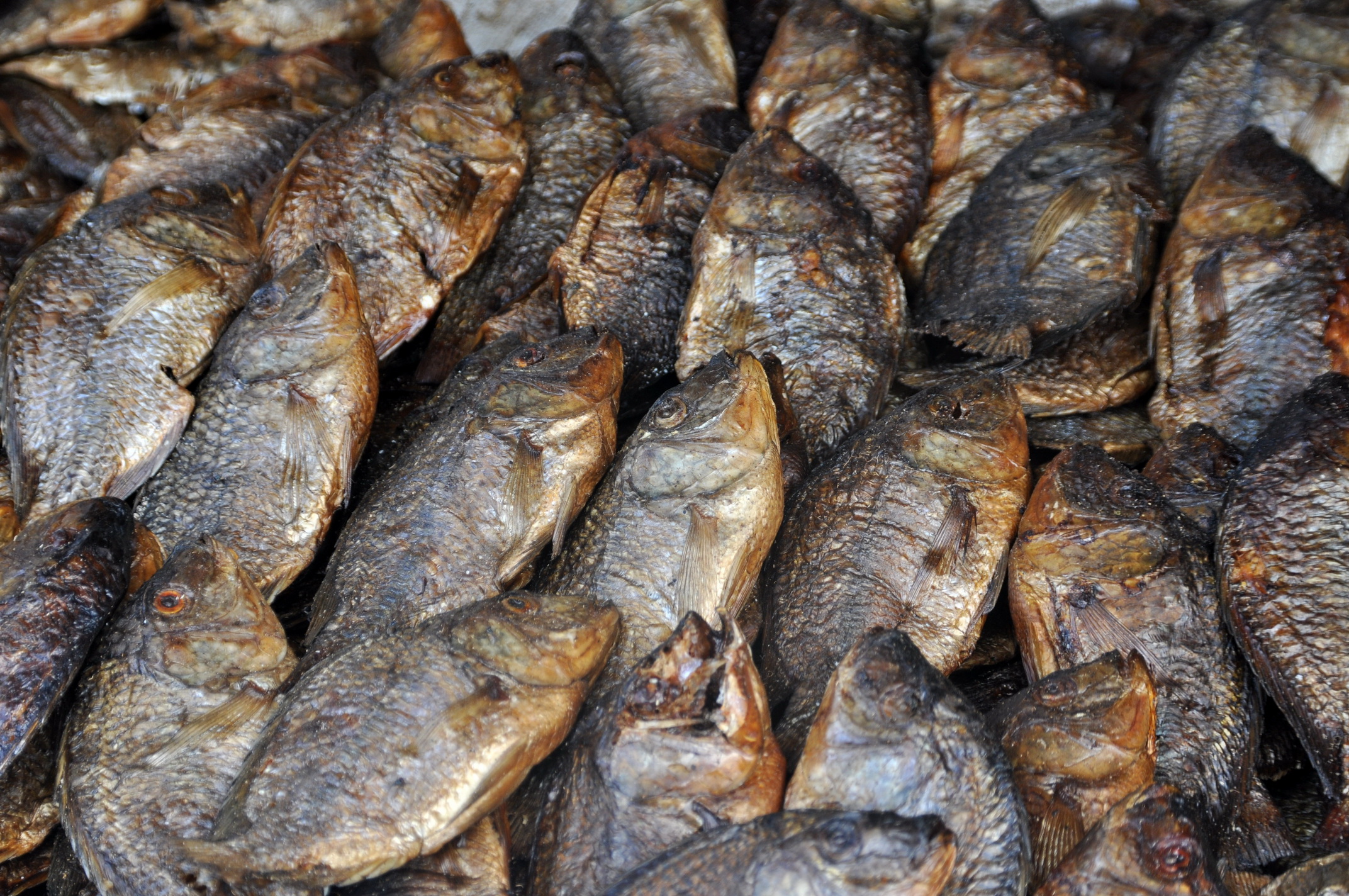
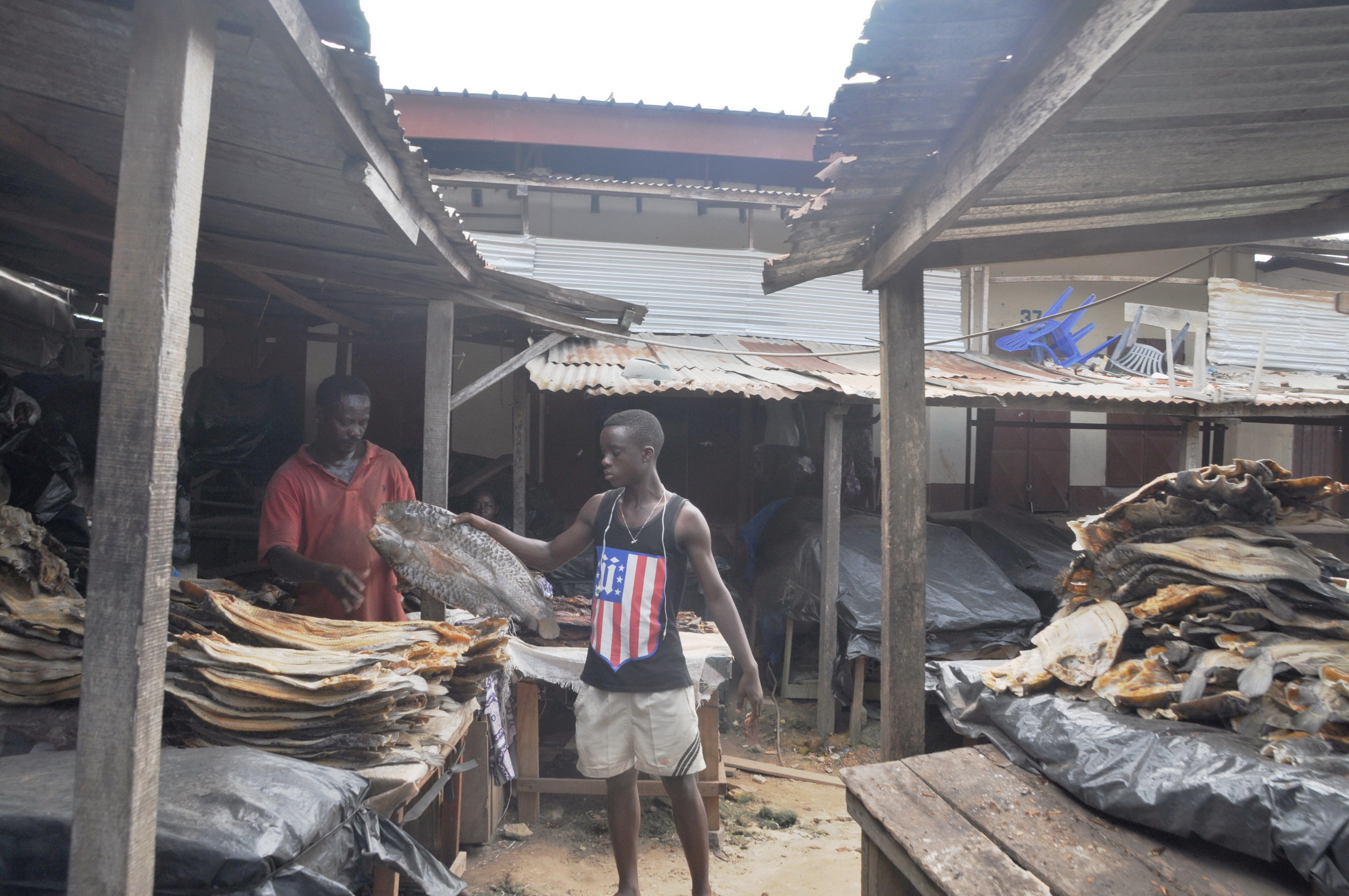
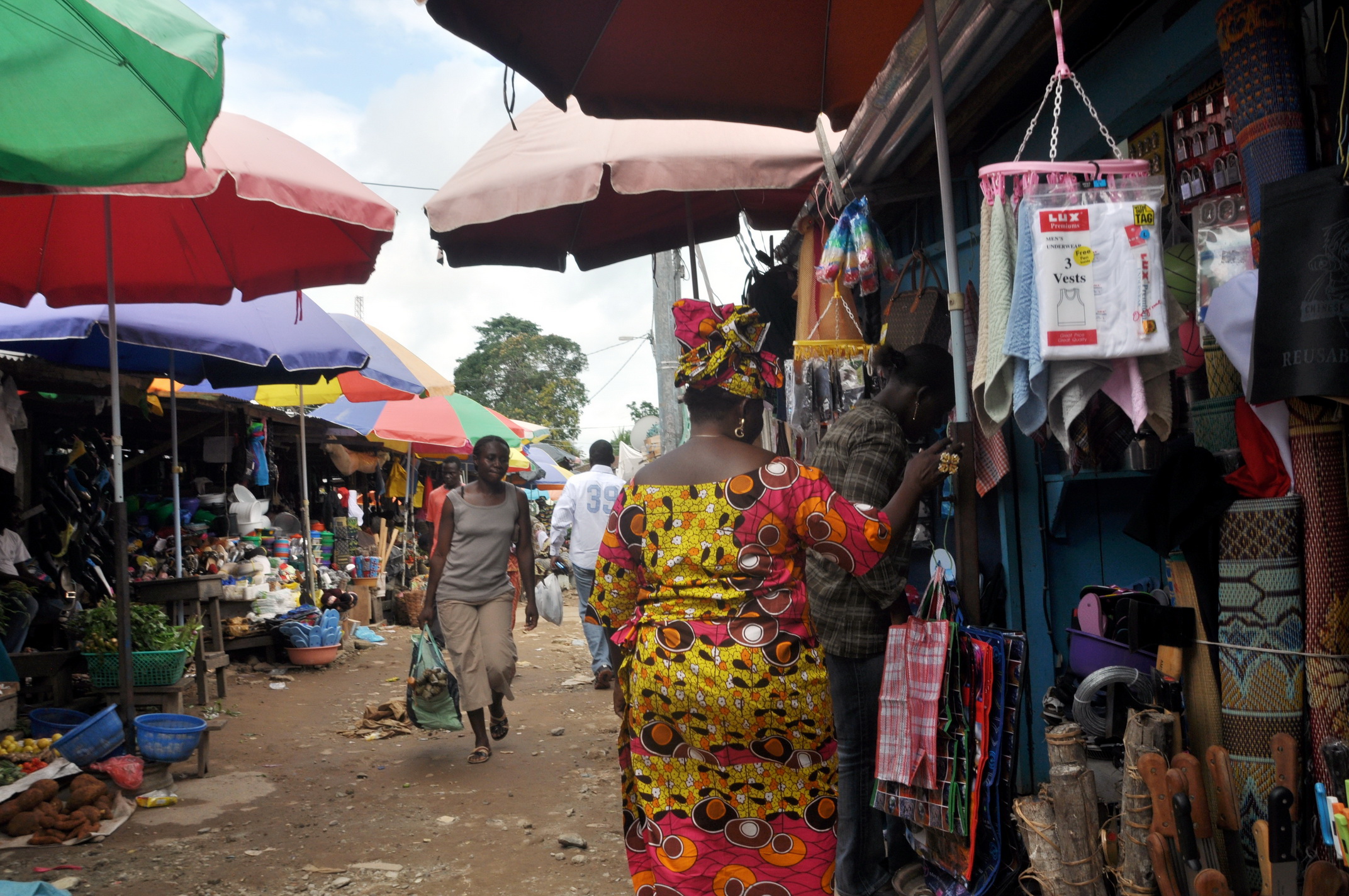
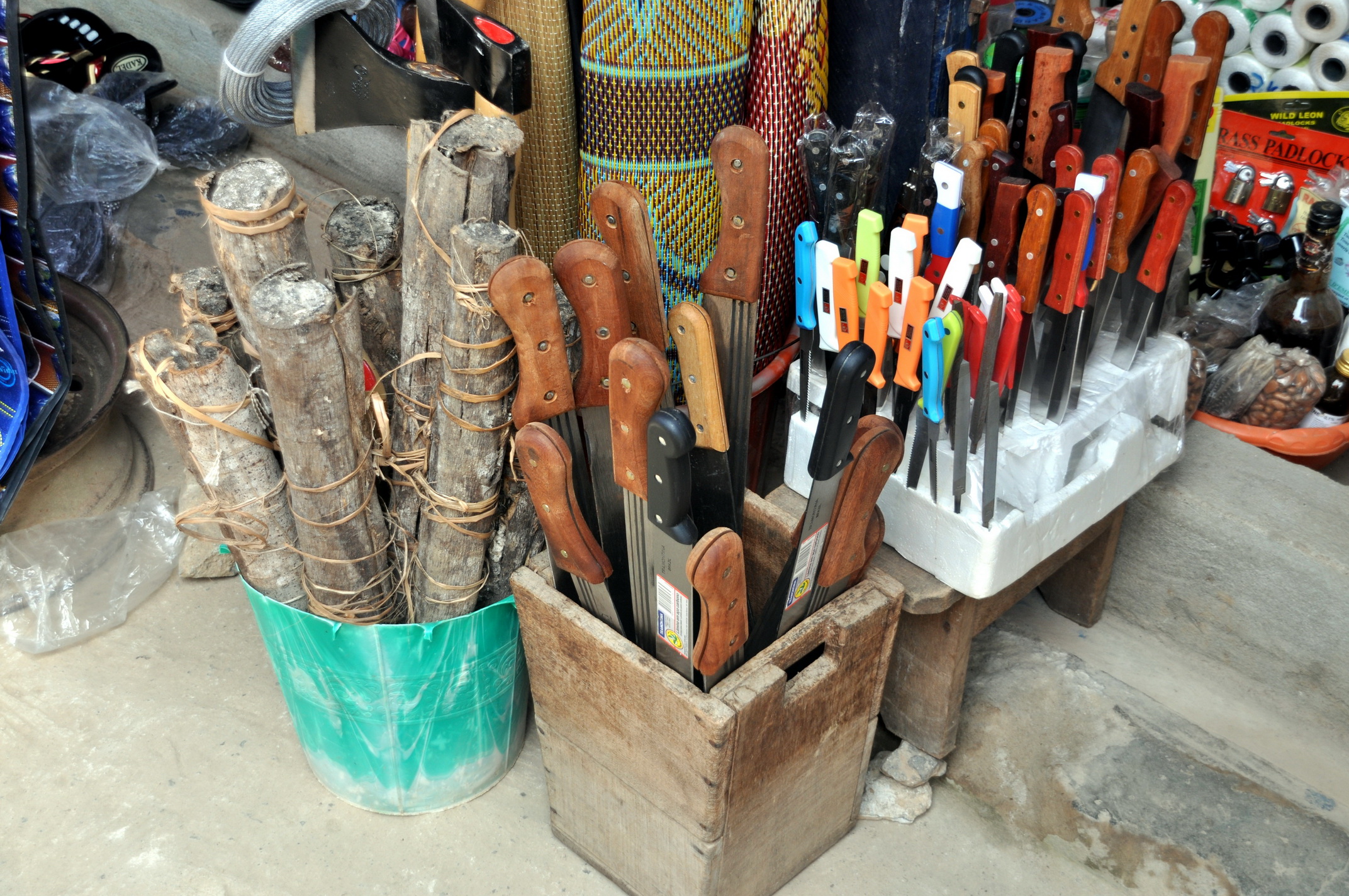
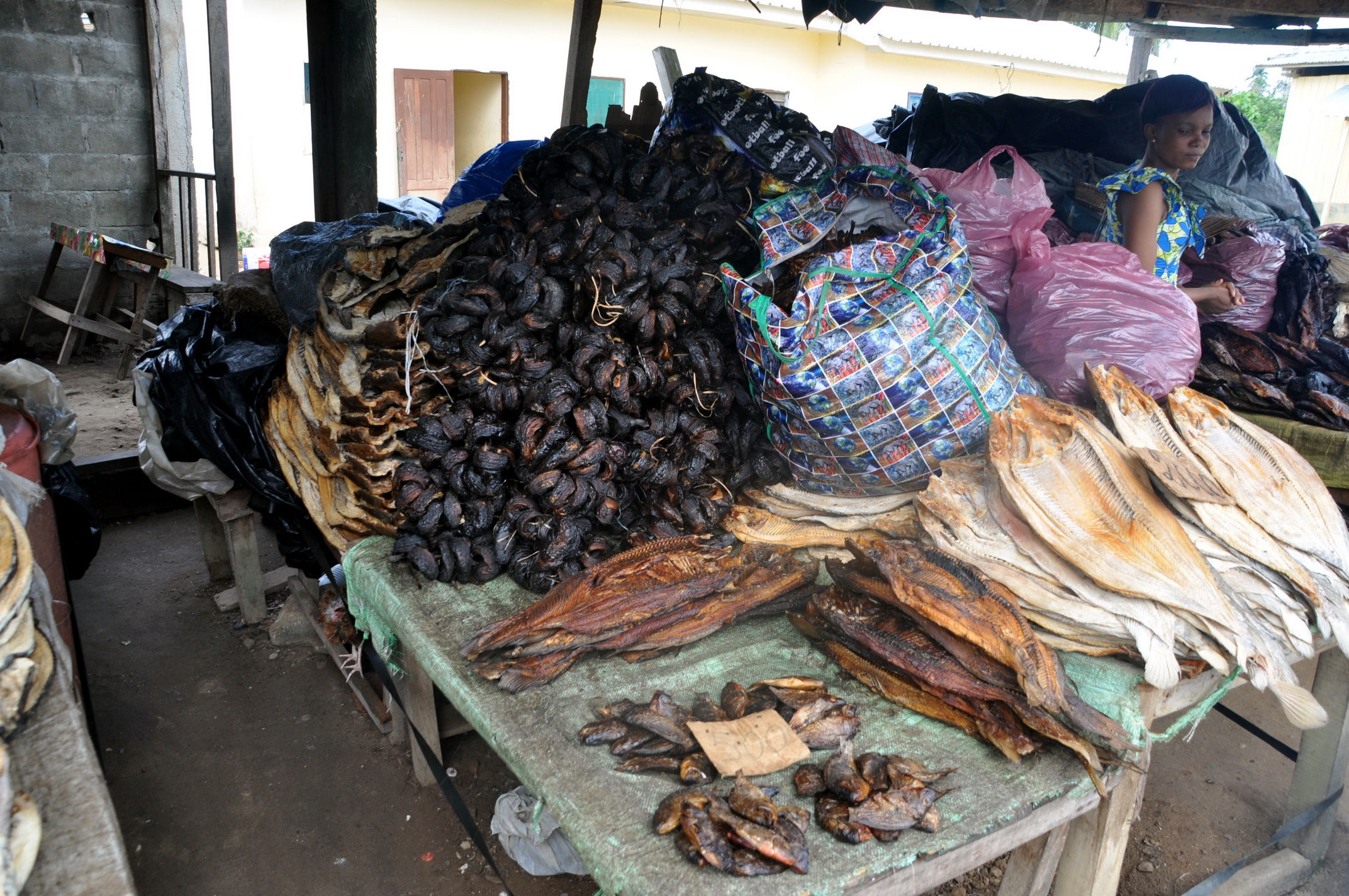
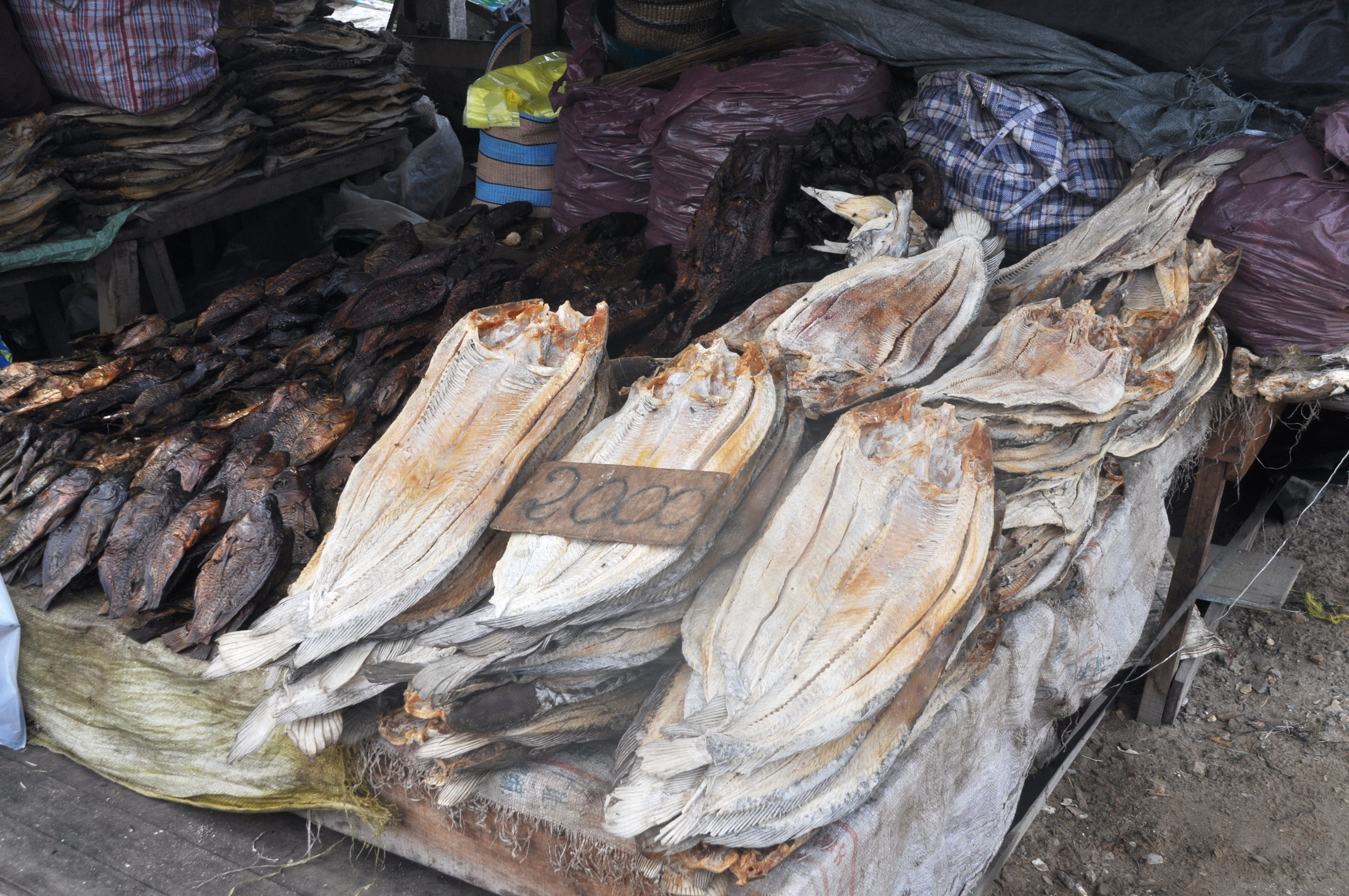
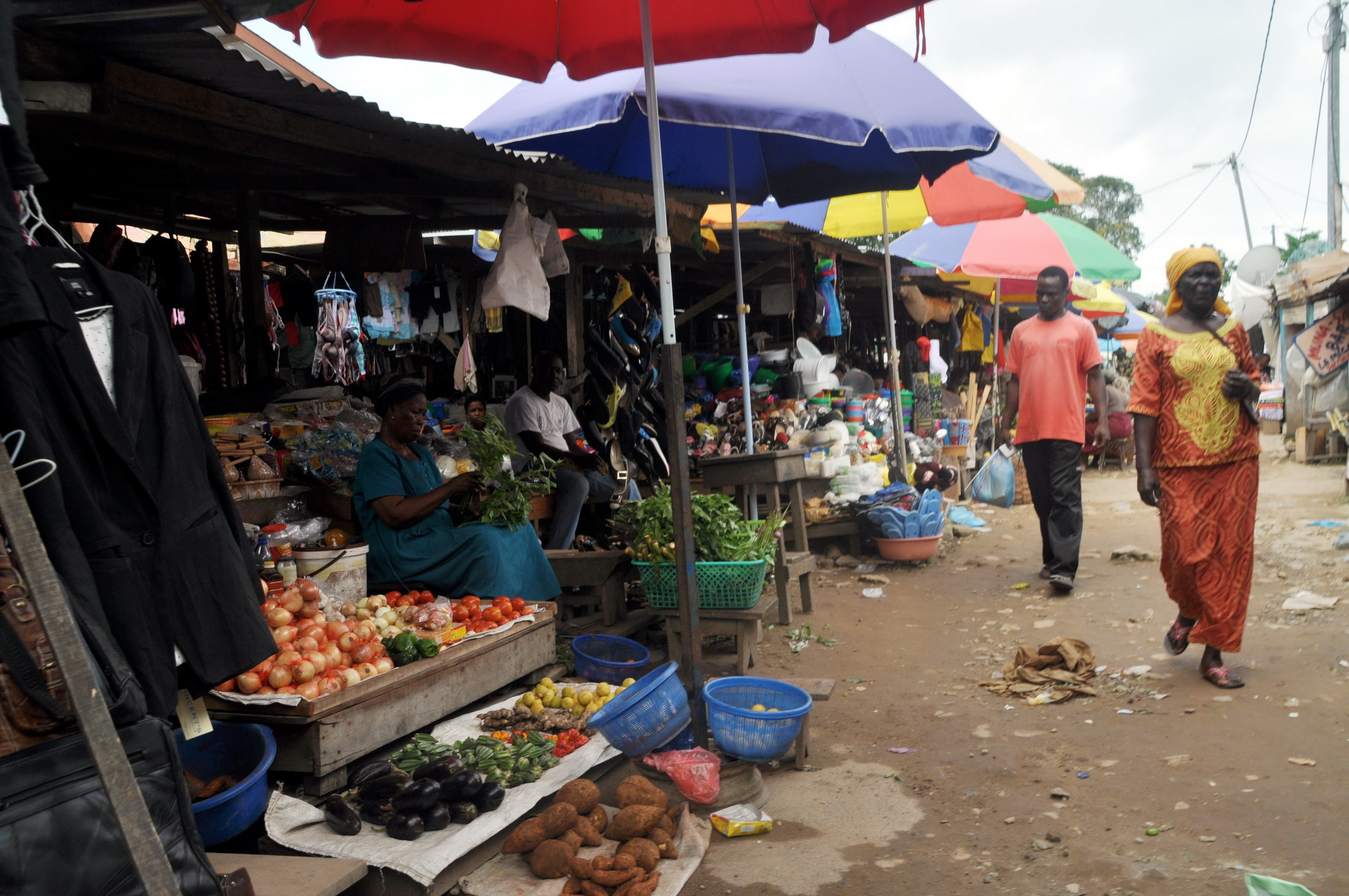
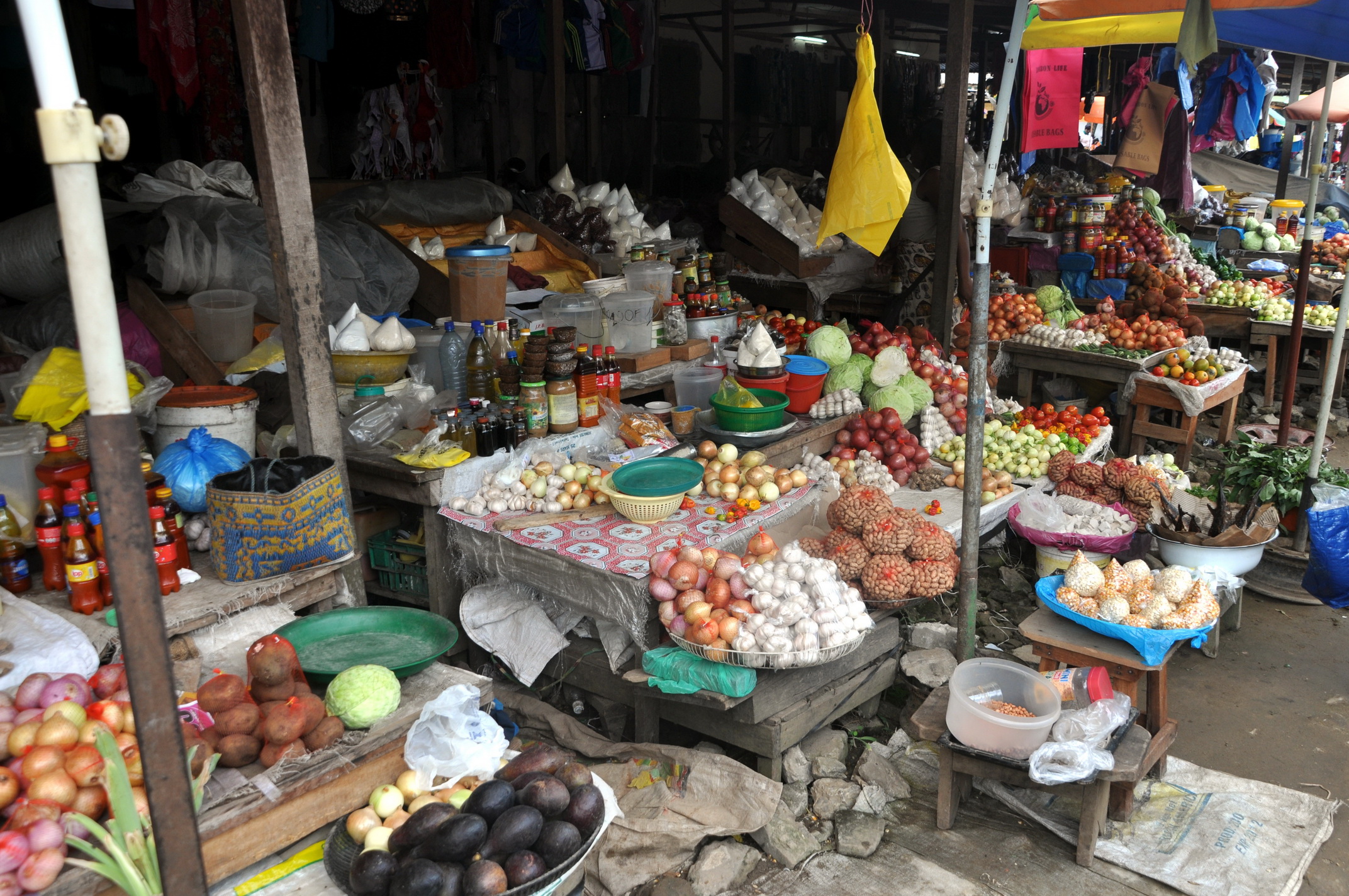
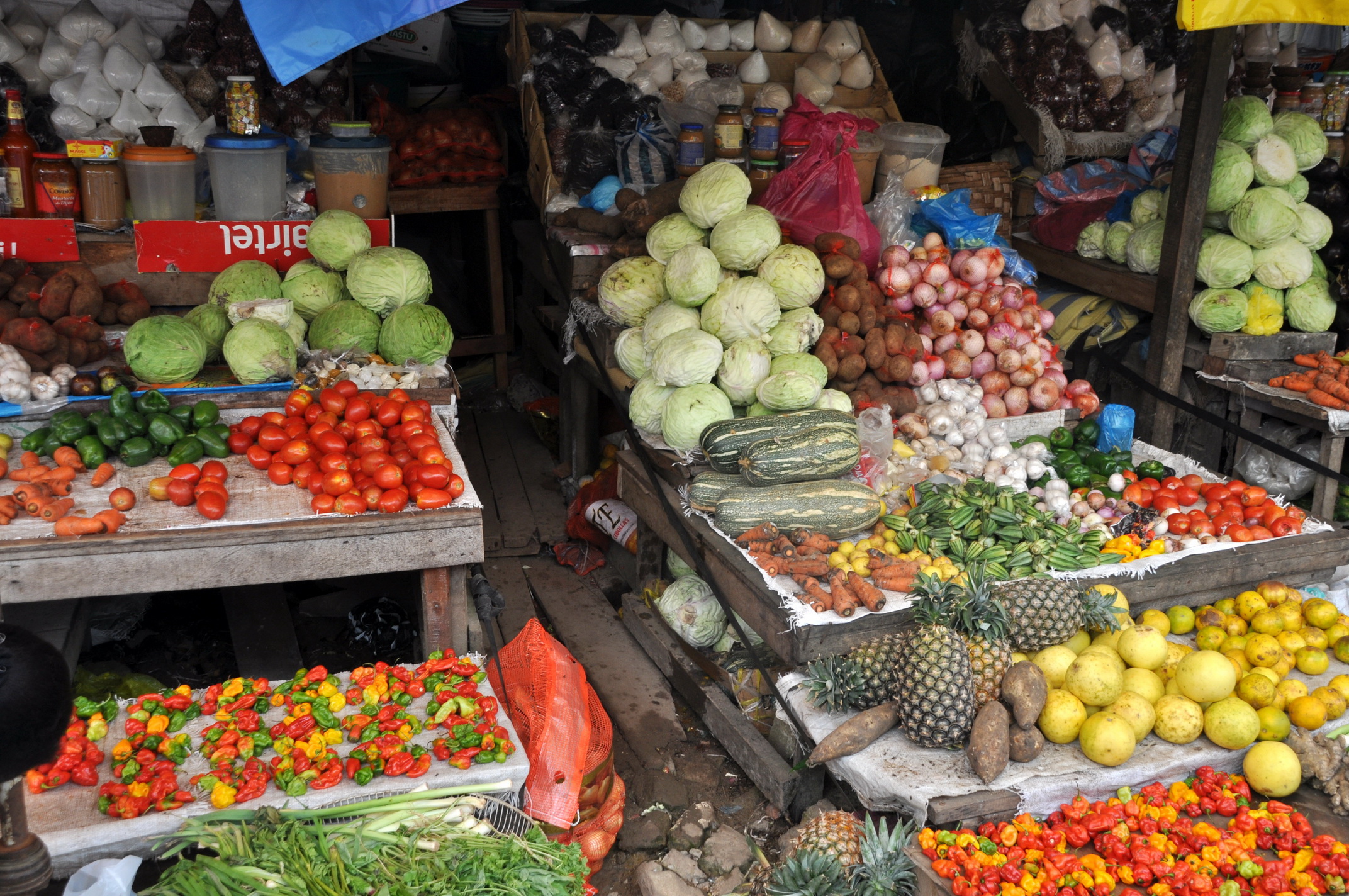
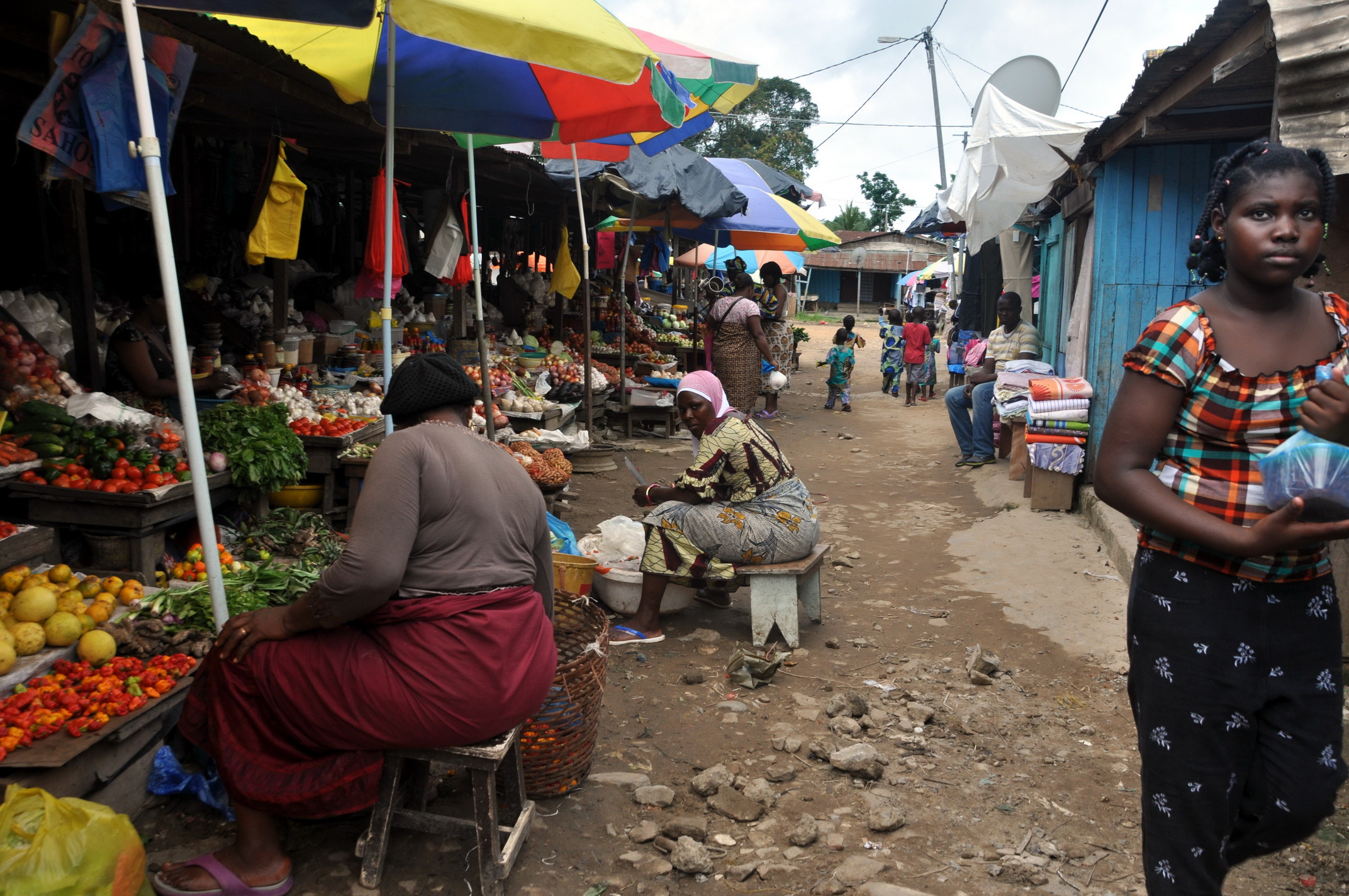
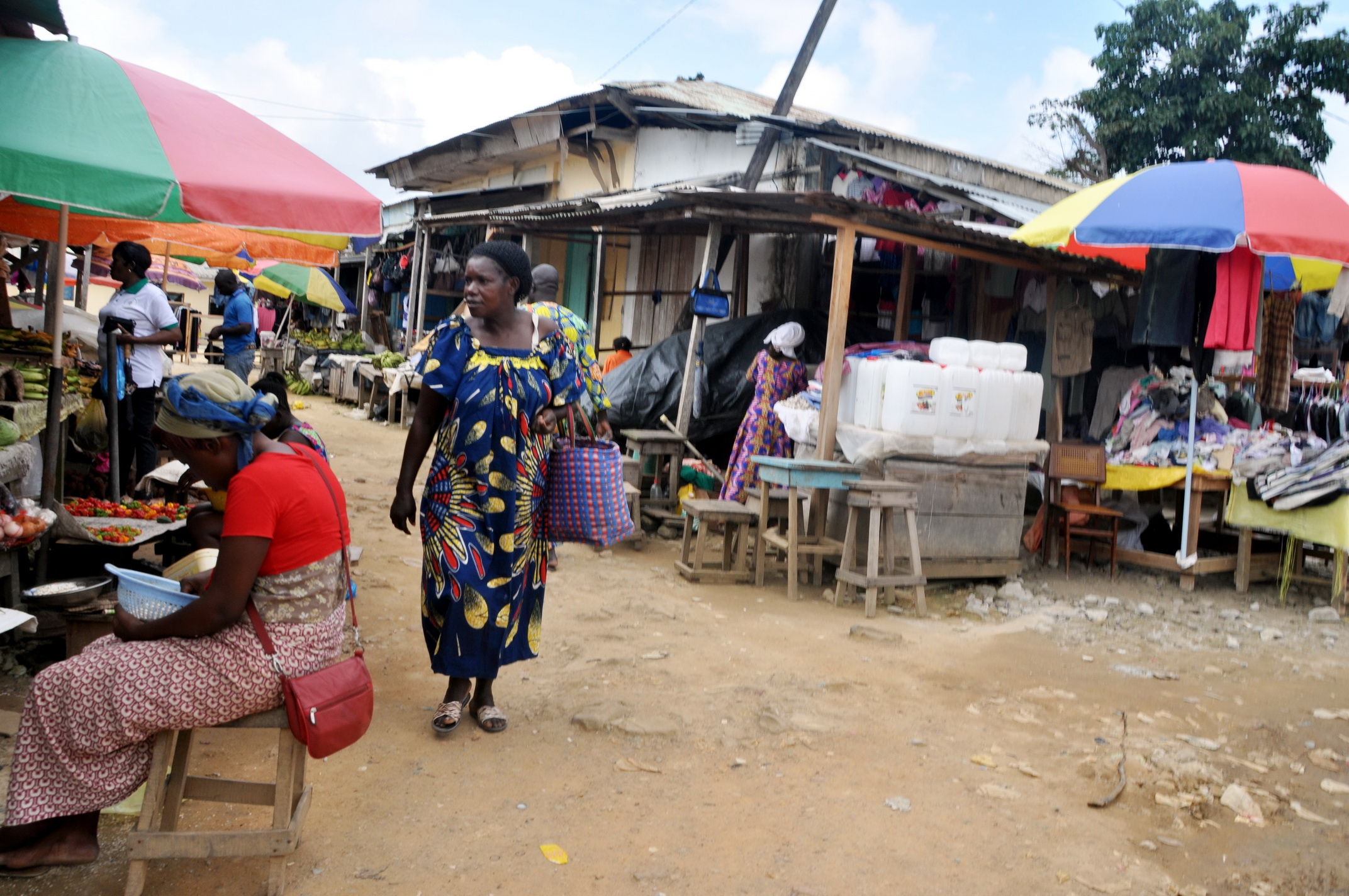
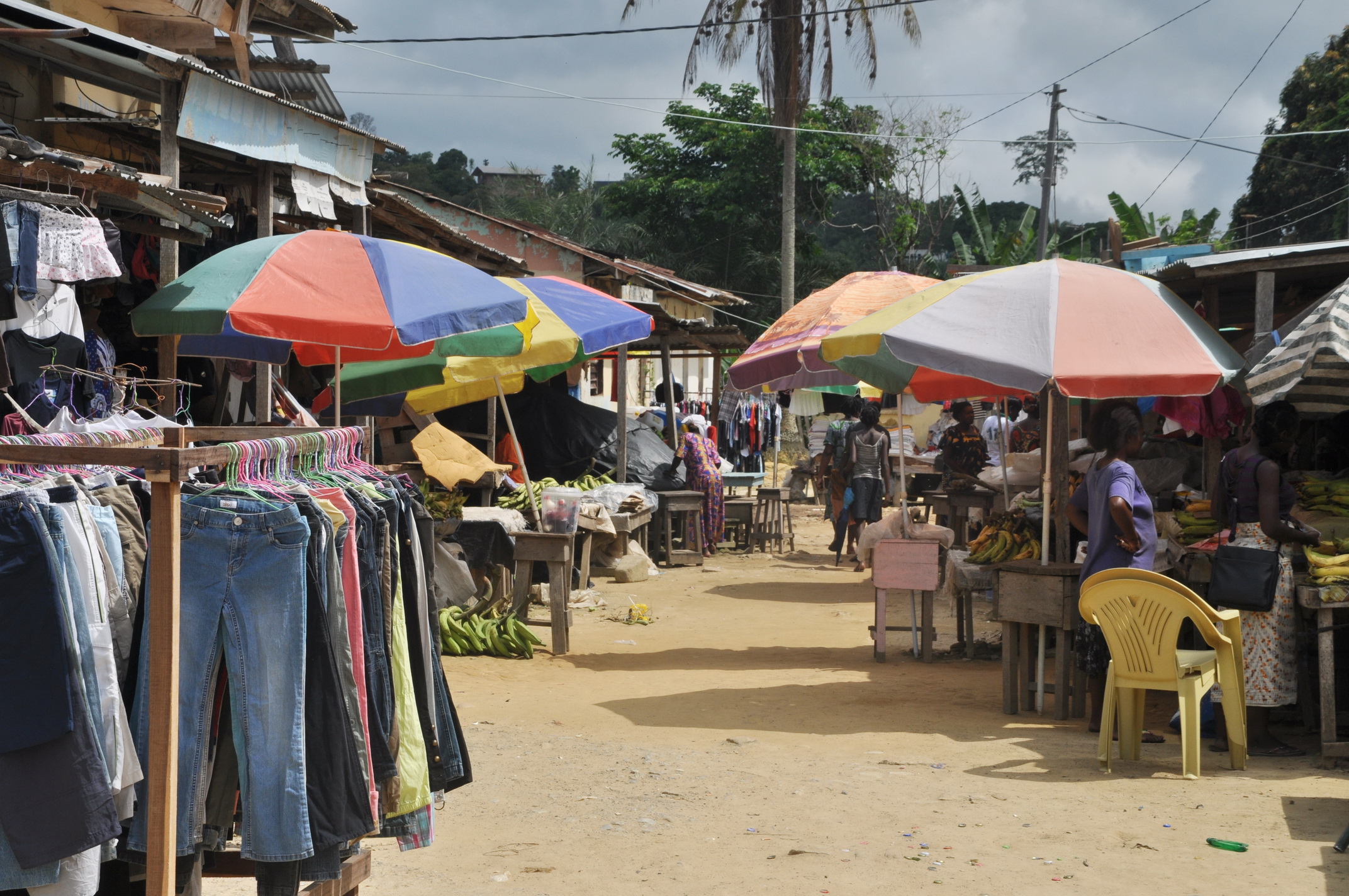
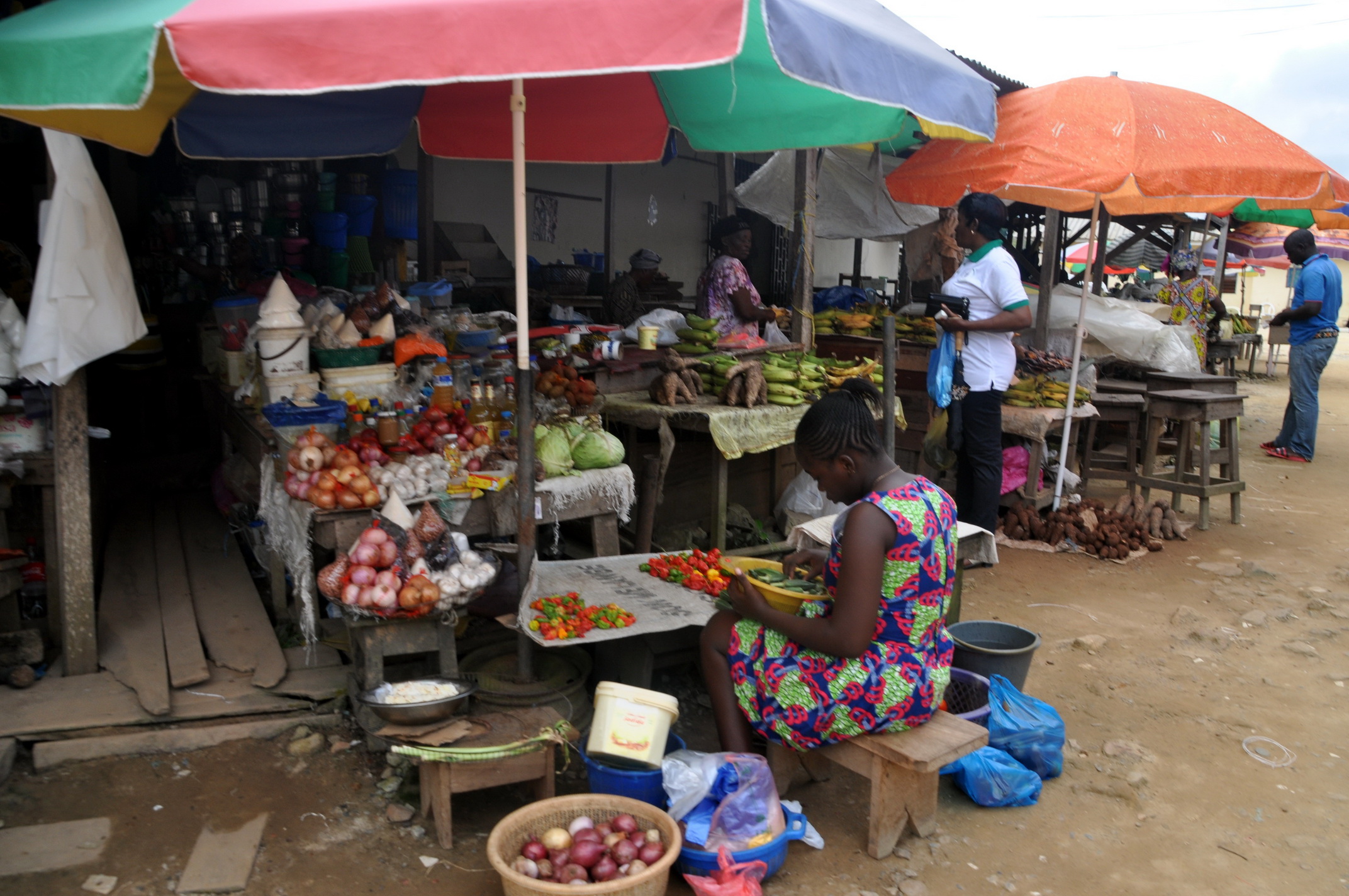
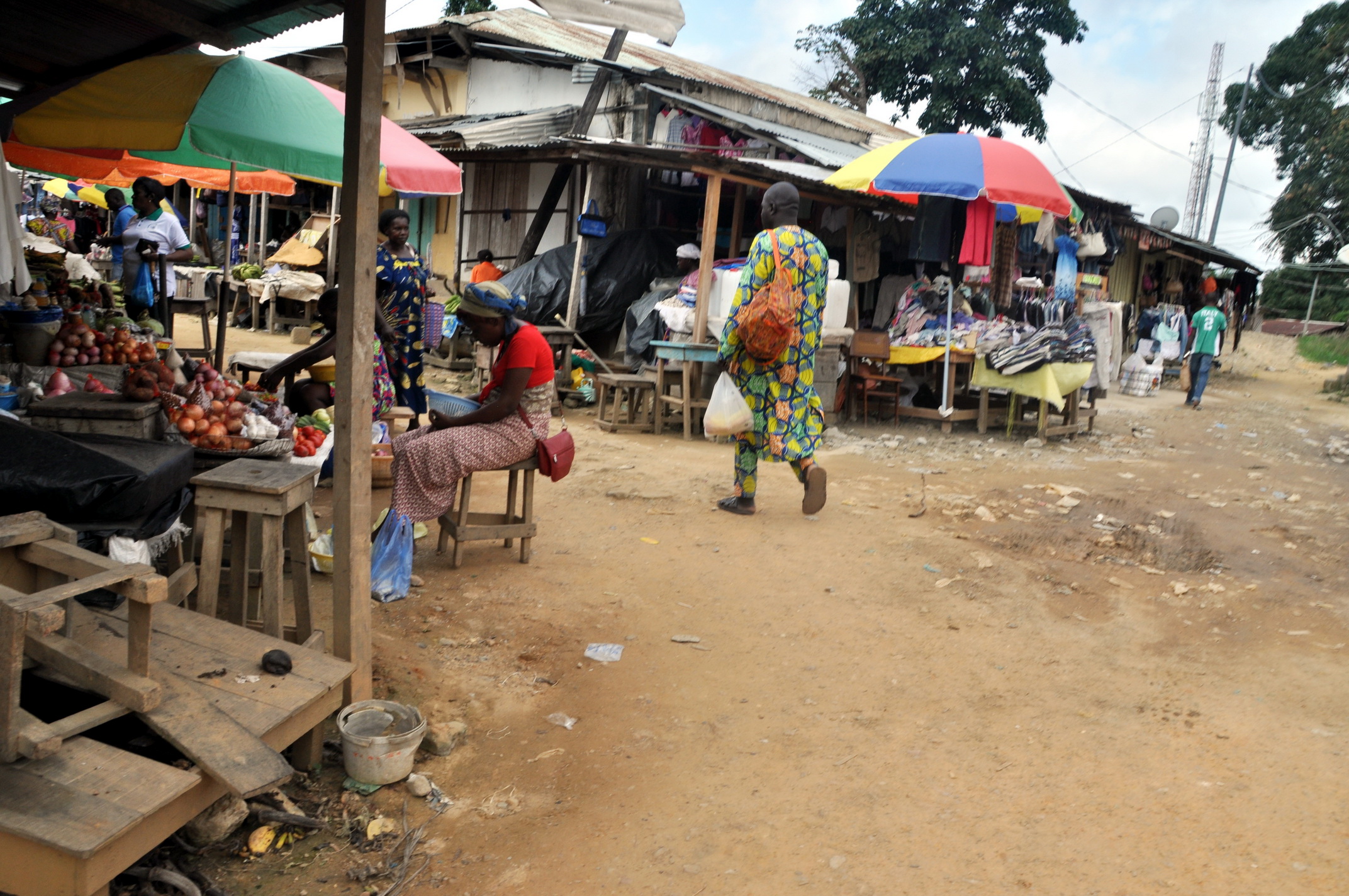
I took a walk around town. The people here were resourceful. Take the lorry-tyre repair shop. They had a crowbar and a few choice words for tools, and managed just fine. A man half my size was wrestling with a tractor wheel.
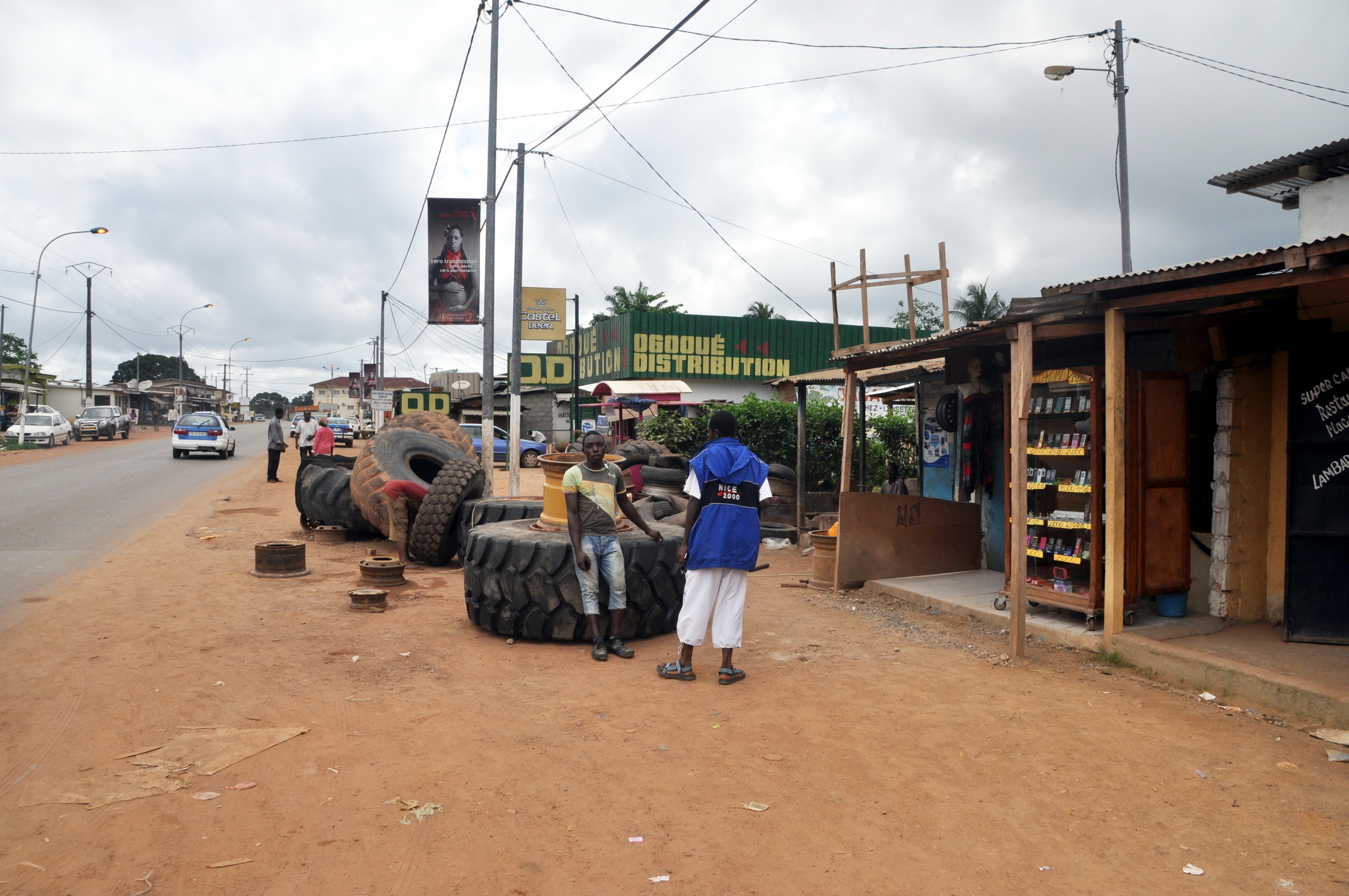
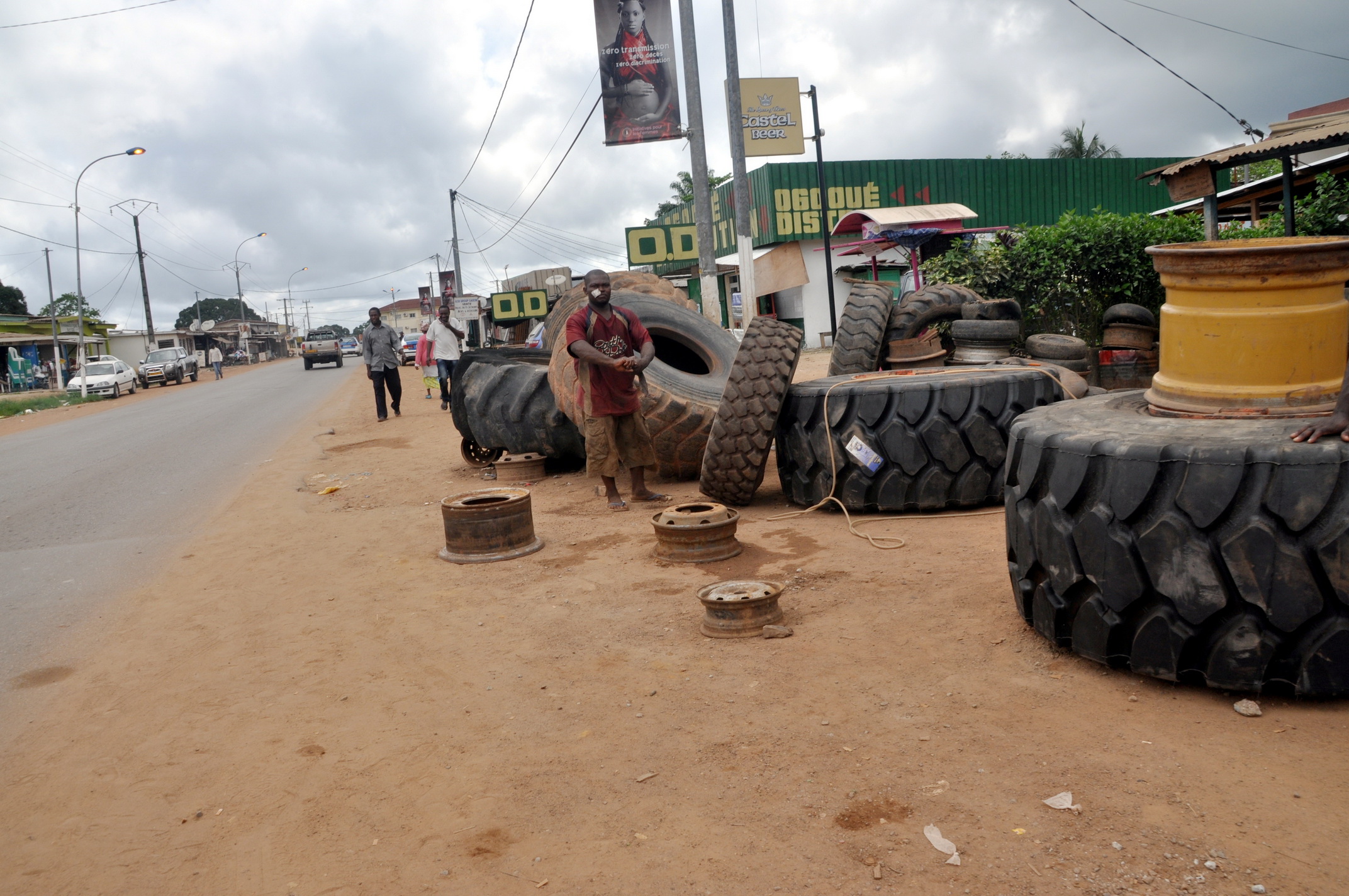
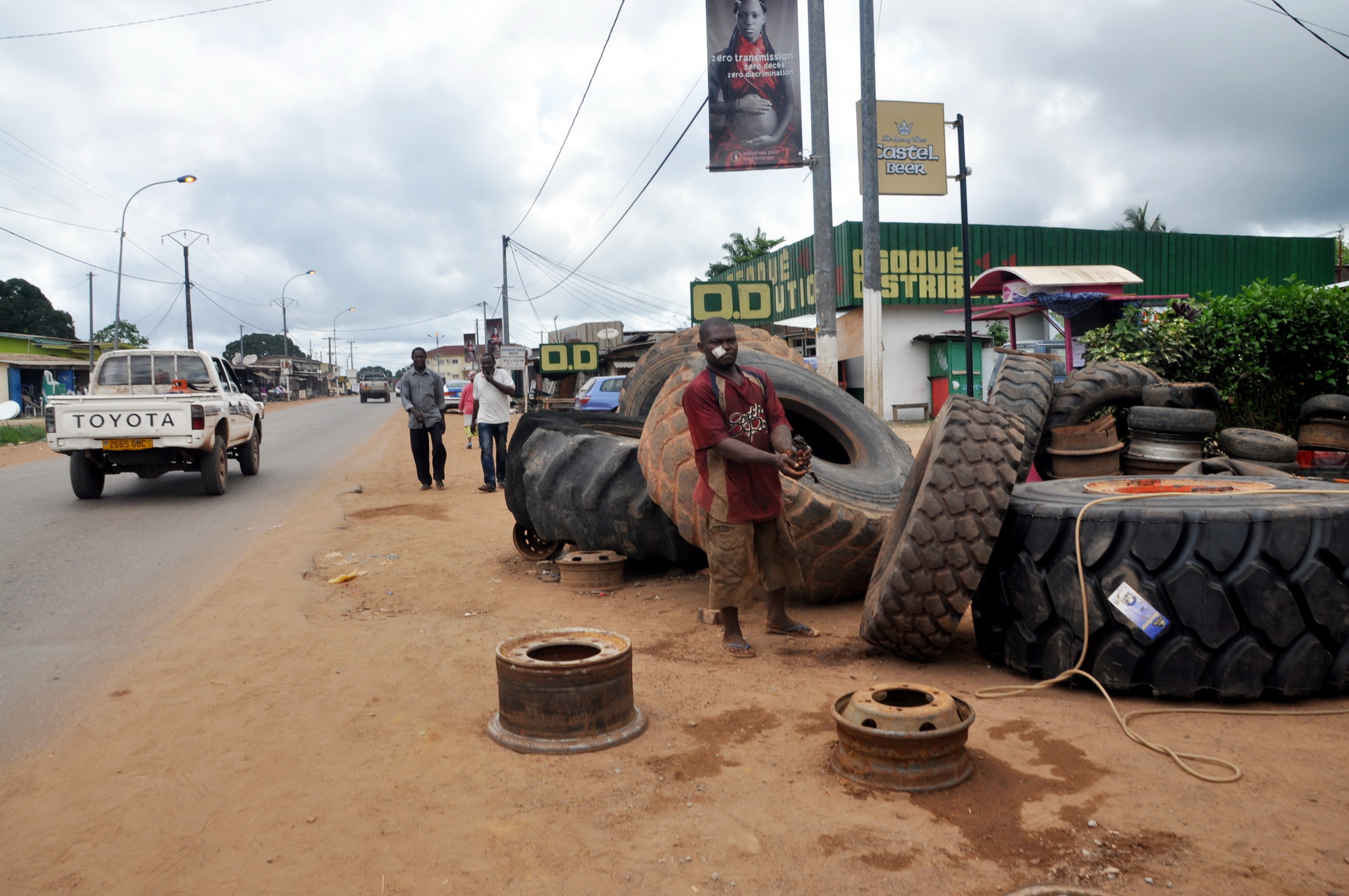
I also rather liked the hotel in a shed on leaning stilts.
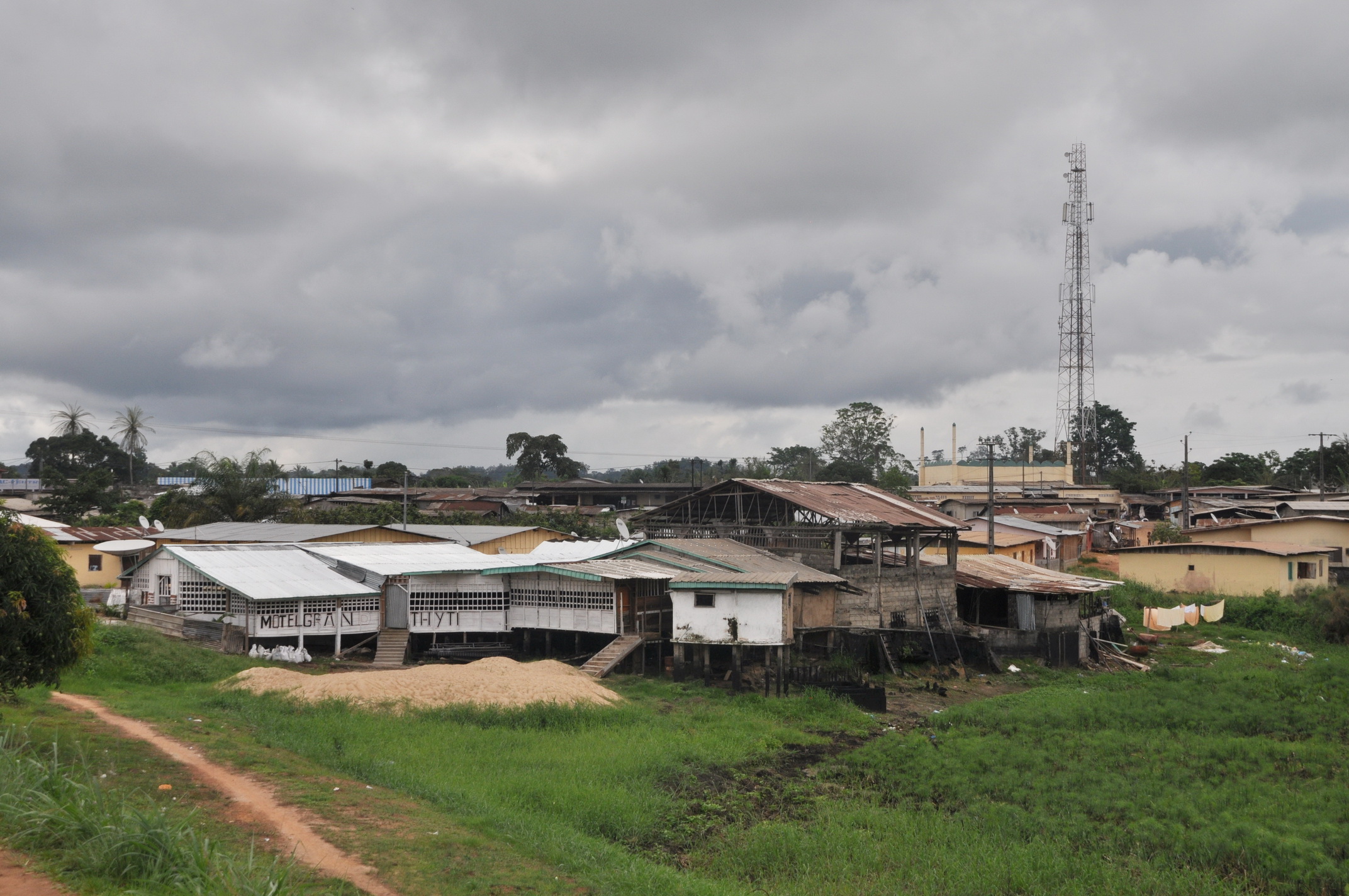
People here didn’t much like being photographed. Sometimes they even said “No photo.” I still took the occasional picture quietly.
Schweitzer’s hospital is on the other side of the river. It still operates, in new buildings, and gives children free vaccinations. Schweitzer’s house is now a museum.
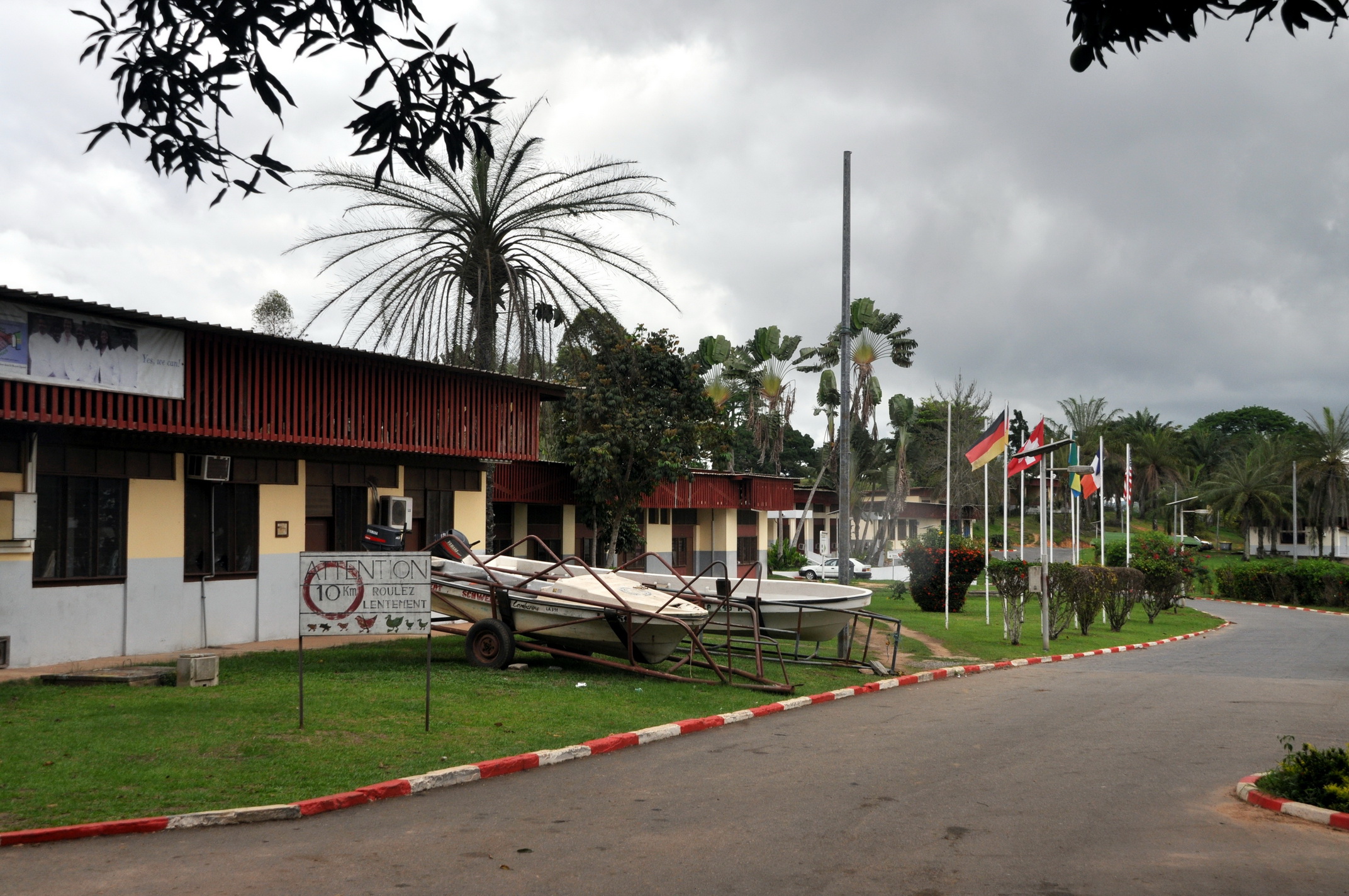
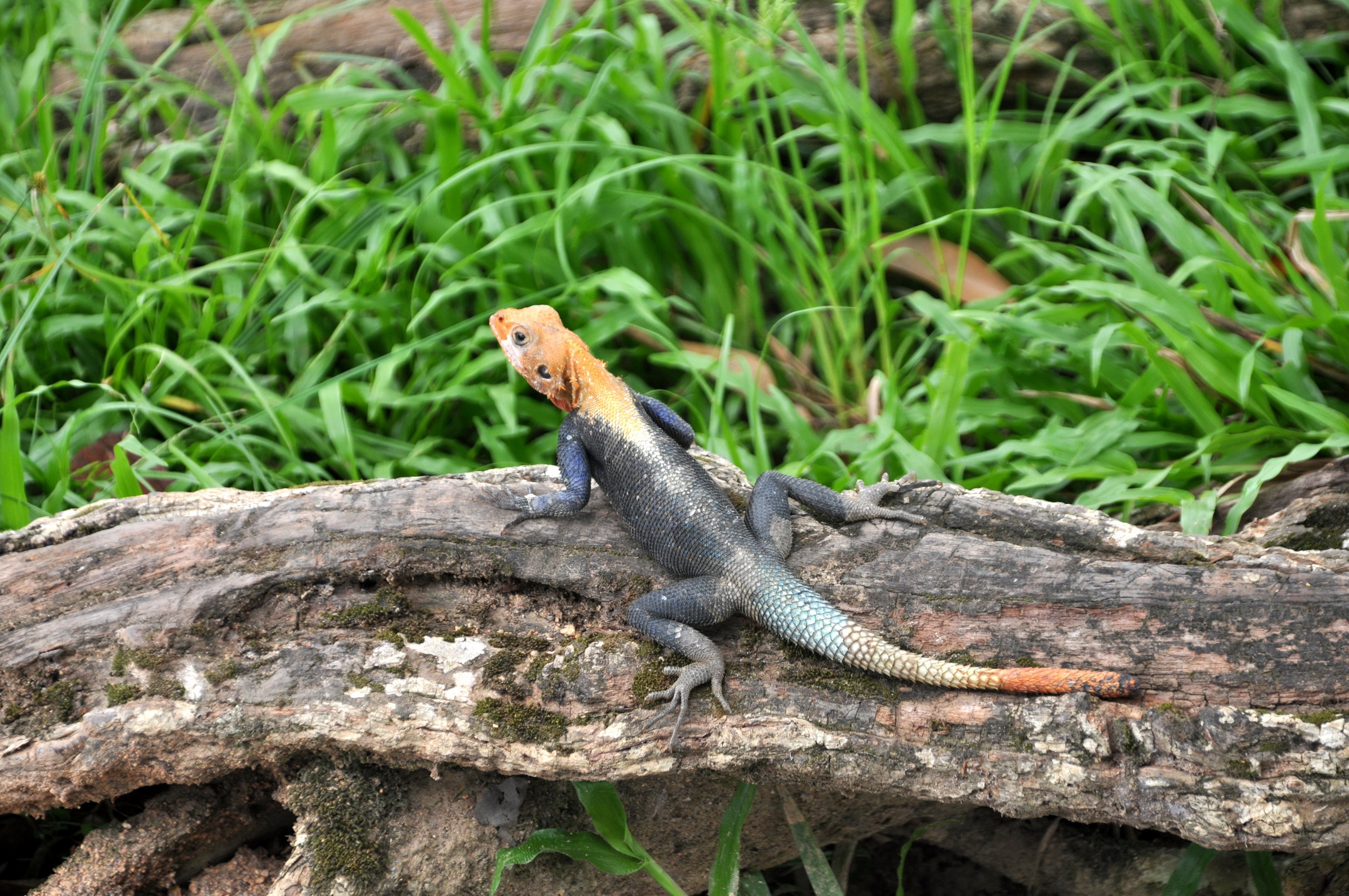
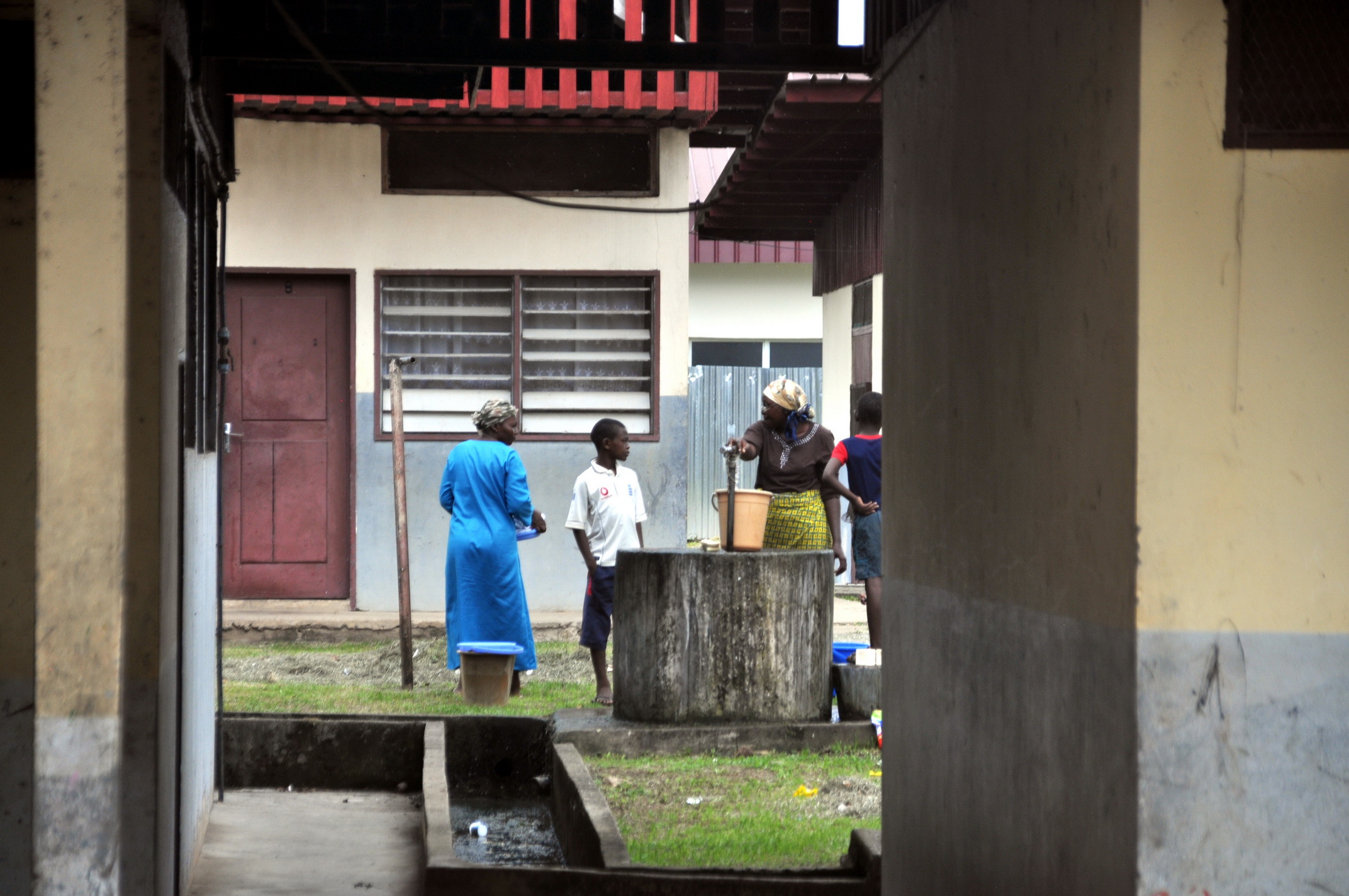
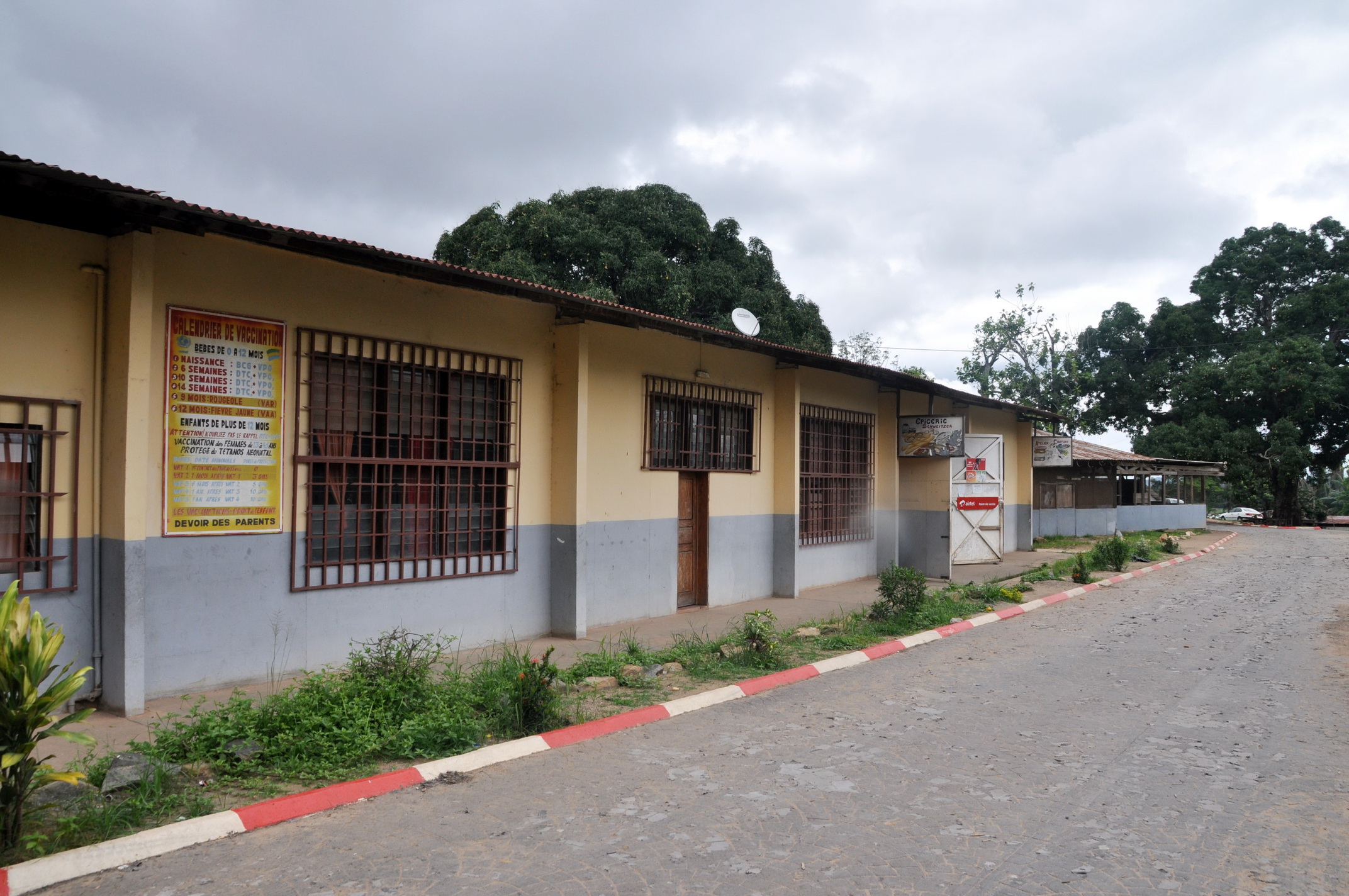
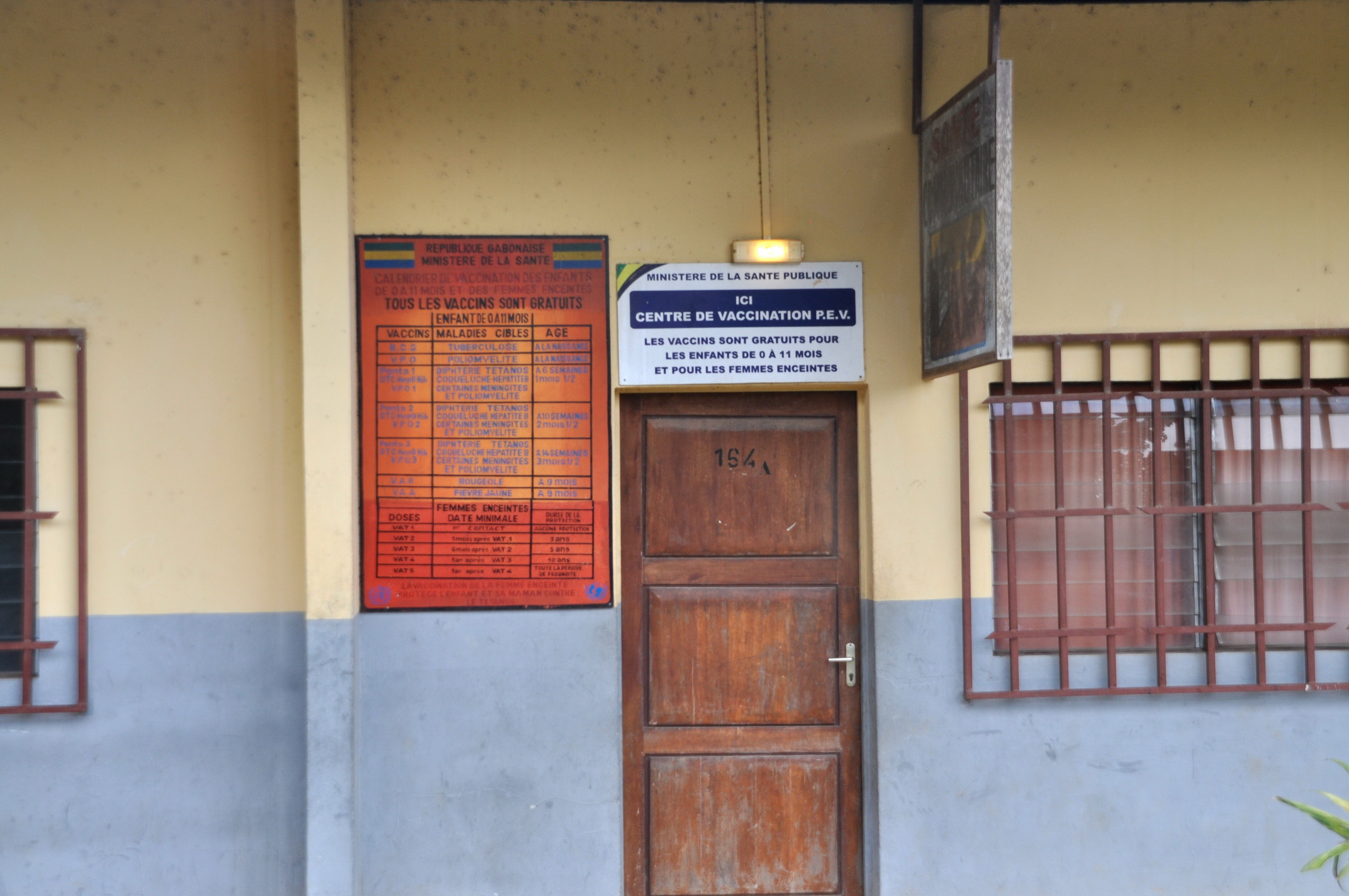
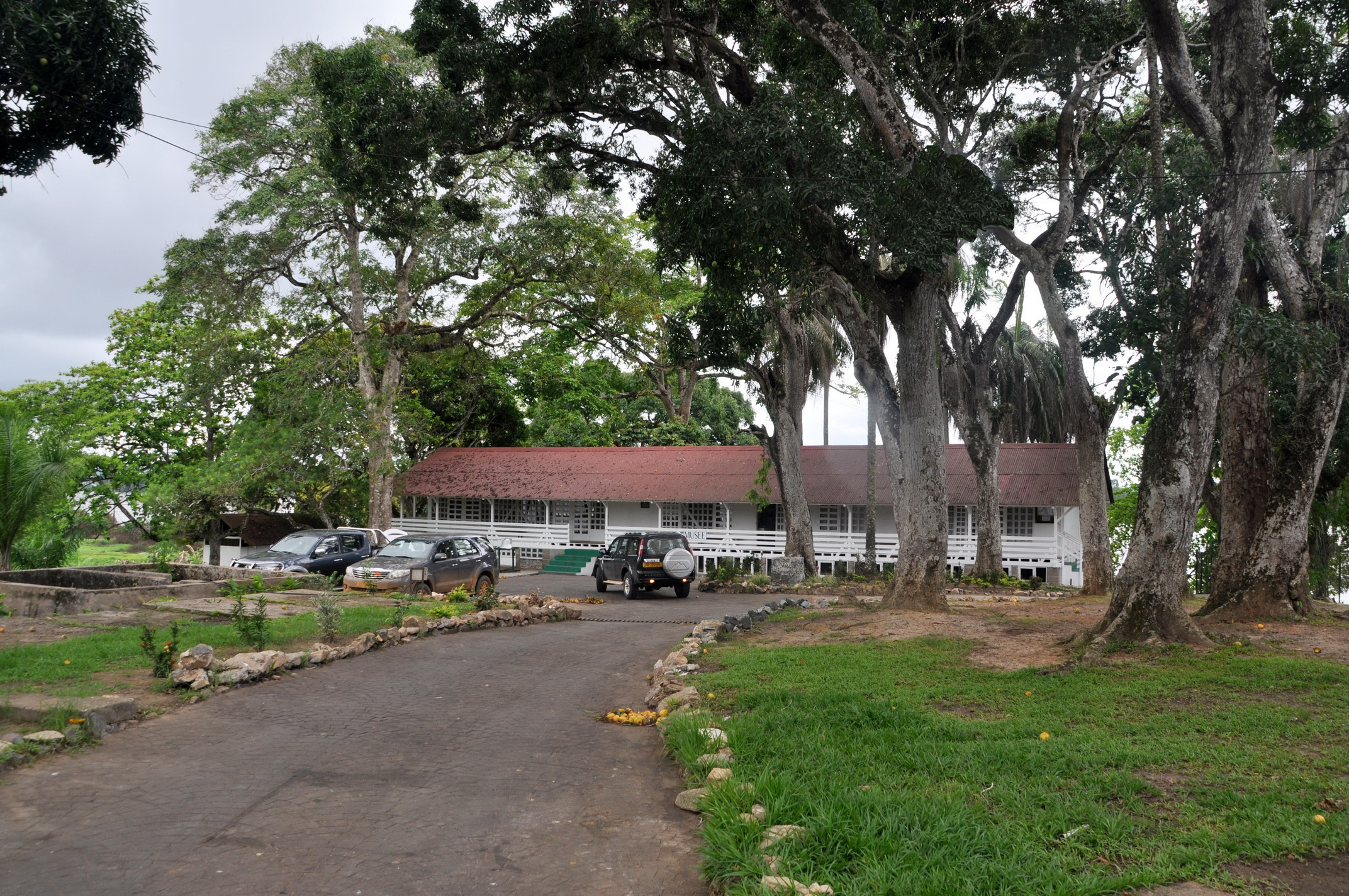
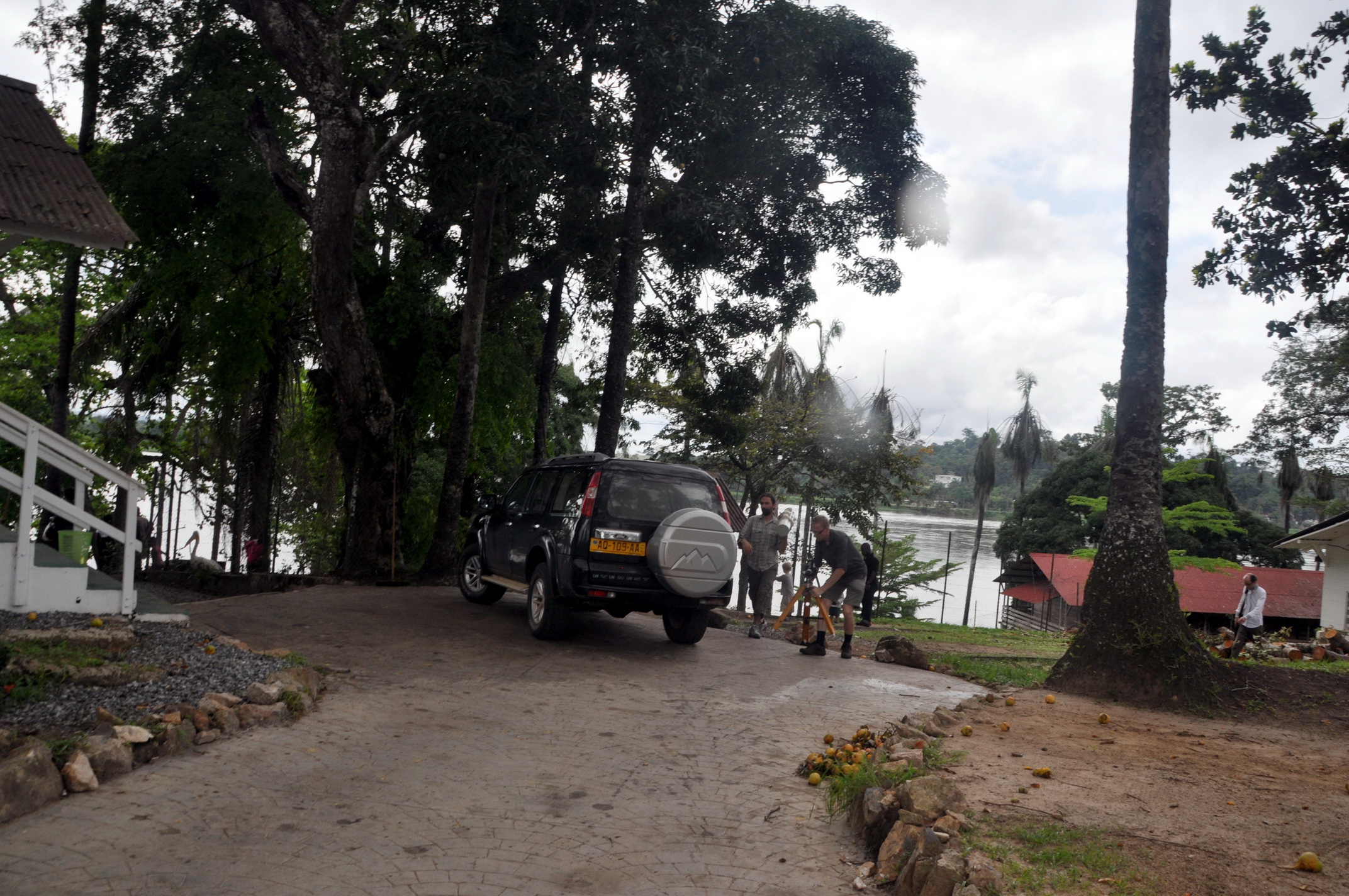
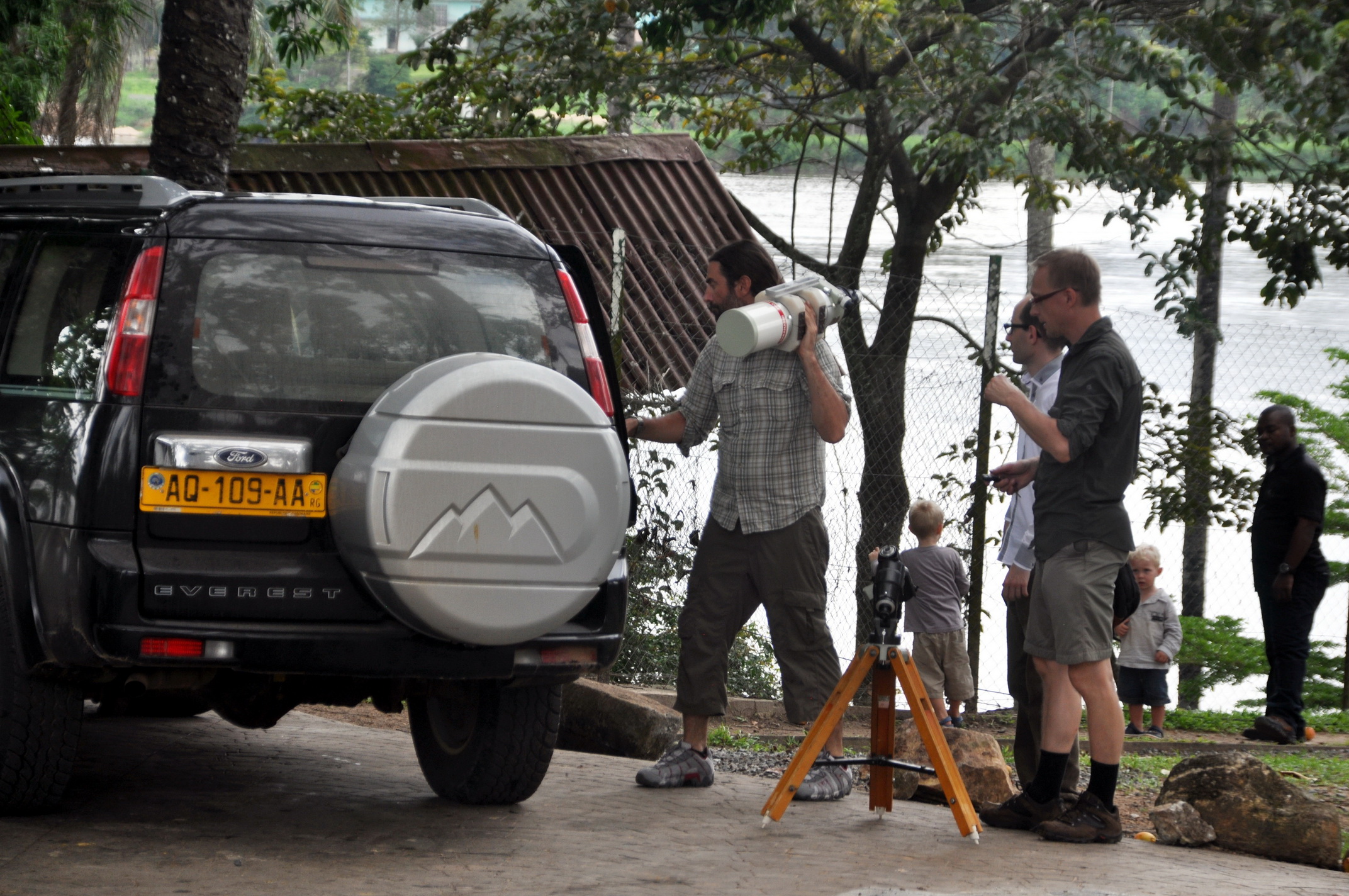
By then I was already running into amateur astronomers with telescopes. The town was close to the path of totality. I could have stayed, but it was too near the sea and the chance of rain was high. I intended to get to the savanna, where the sun was usually out after noon instead of a tropical downpour.
The Ogooué and Lopé National Park
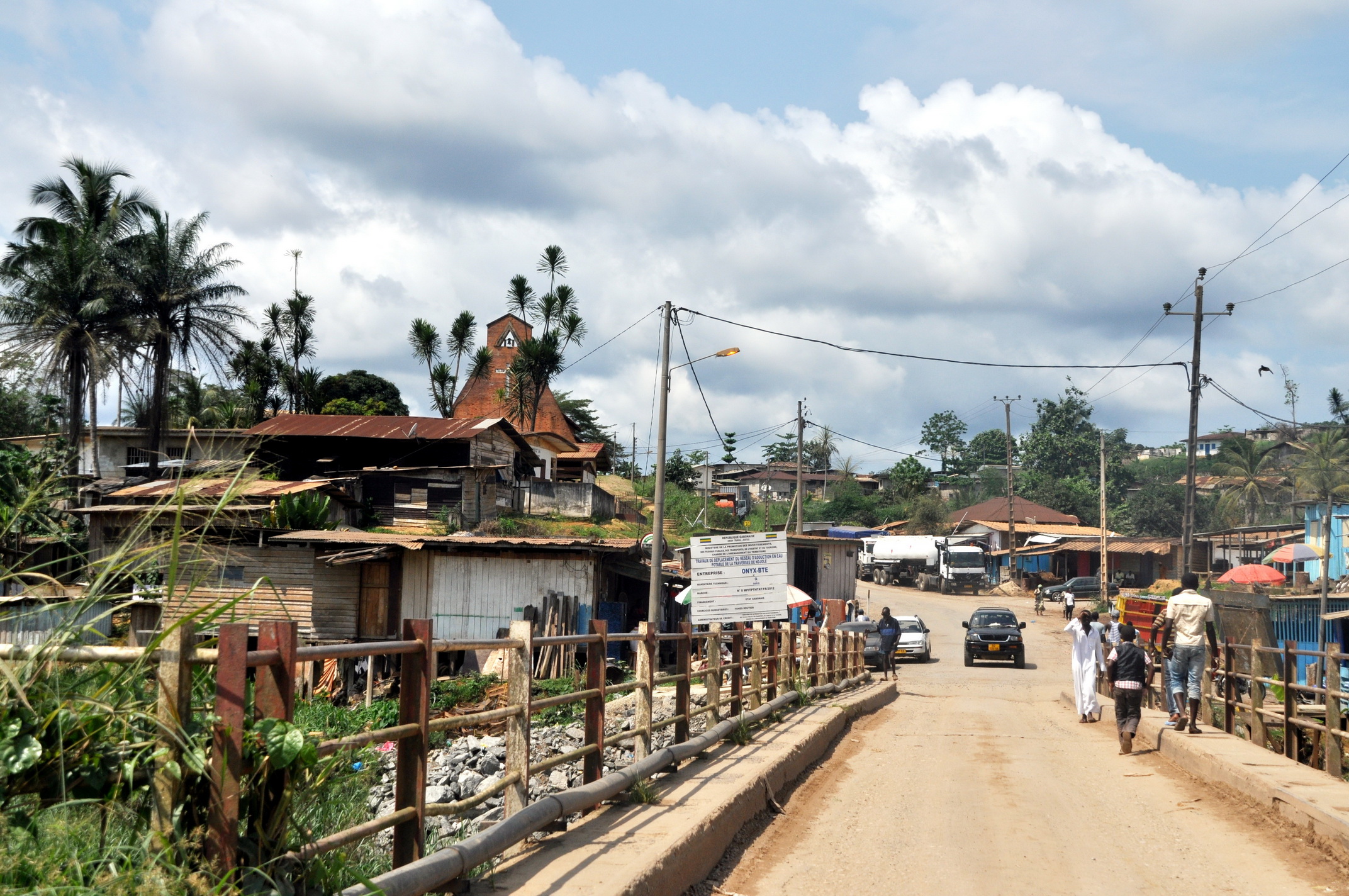
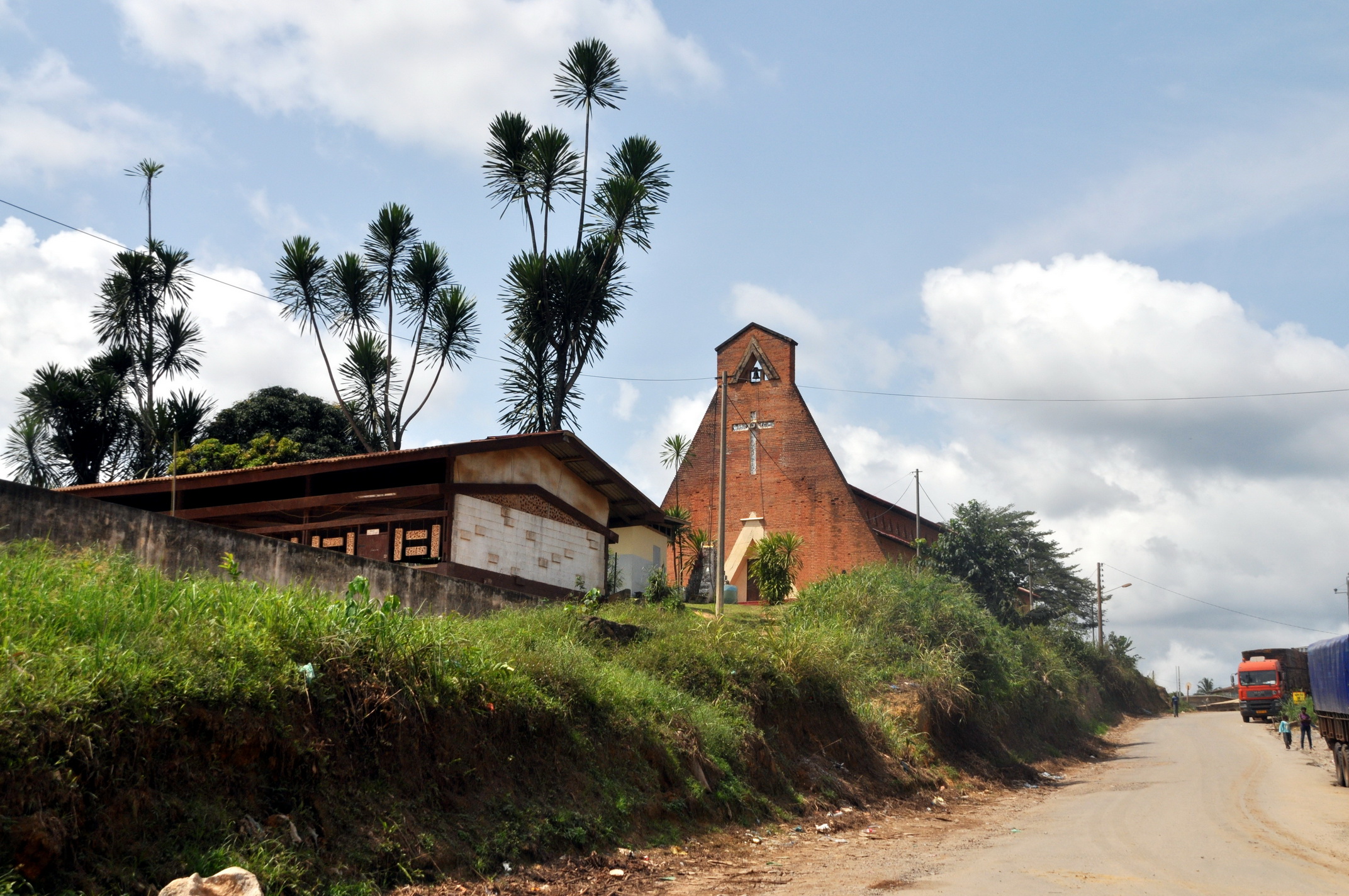
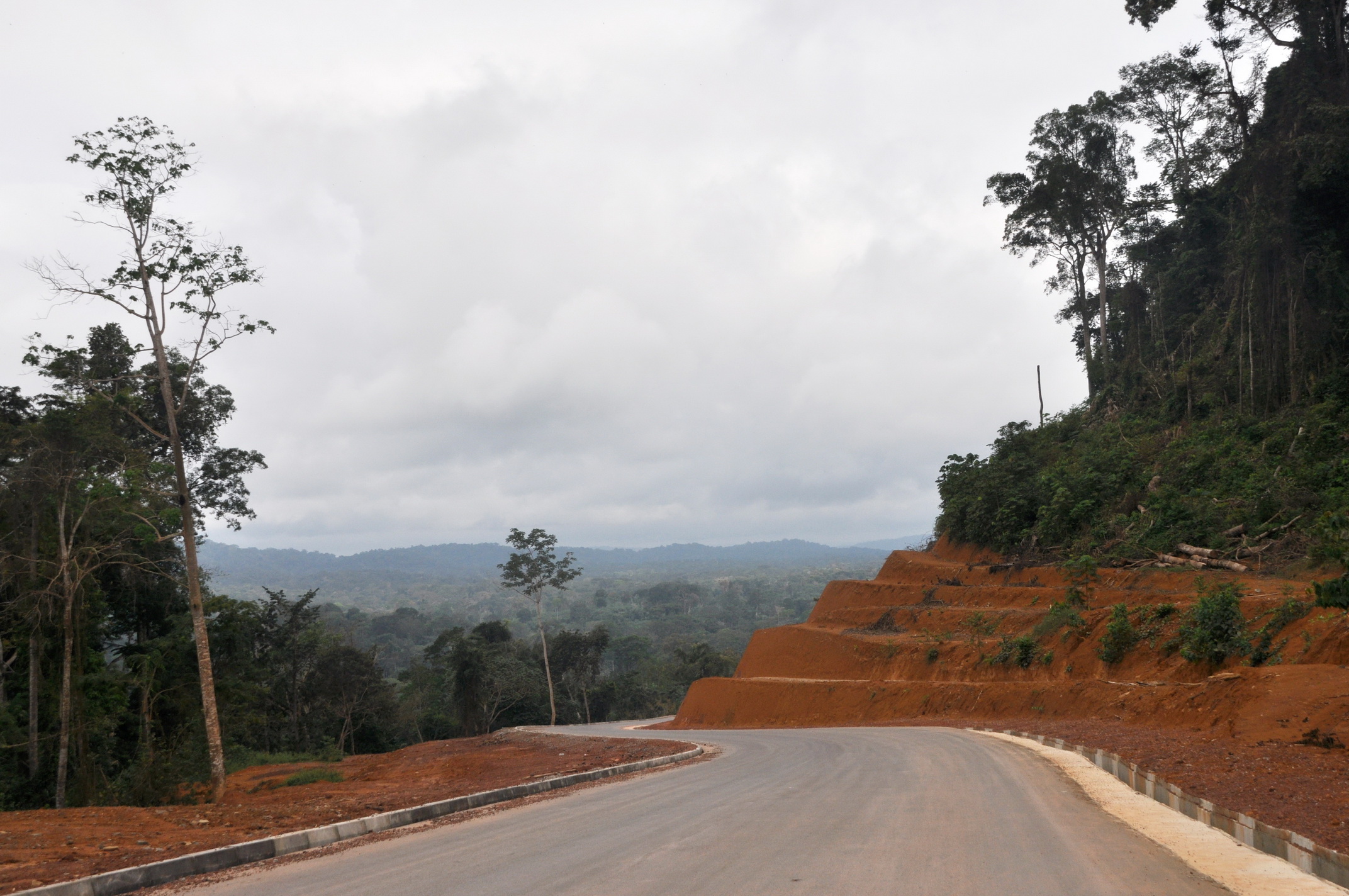
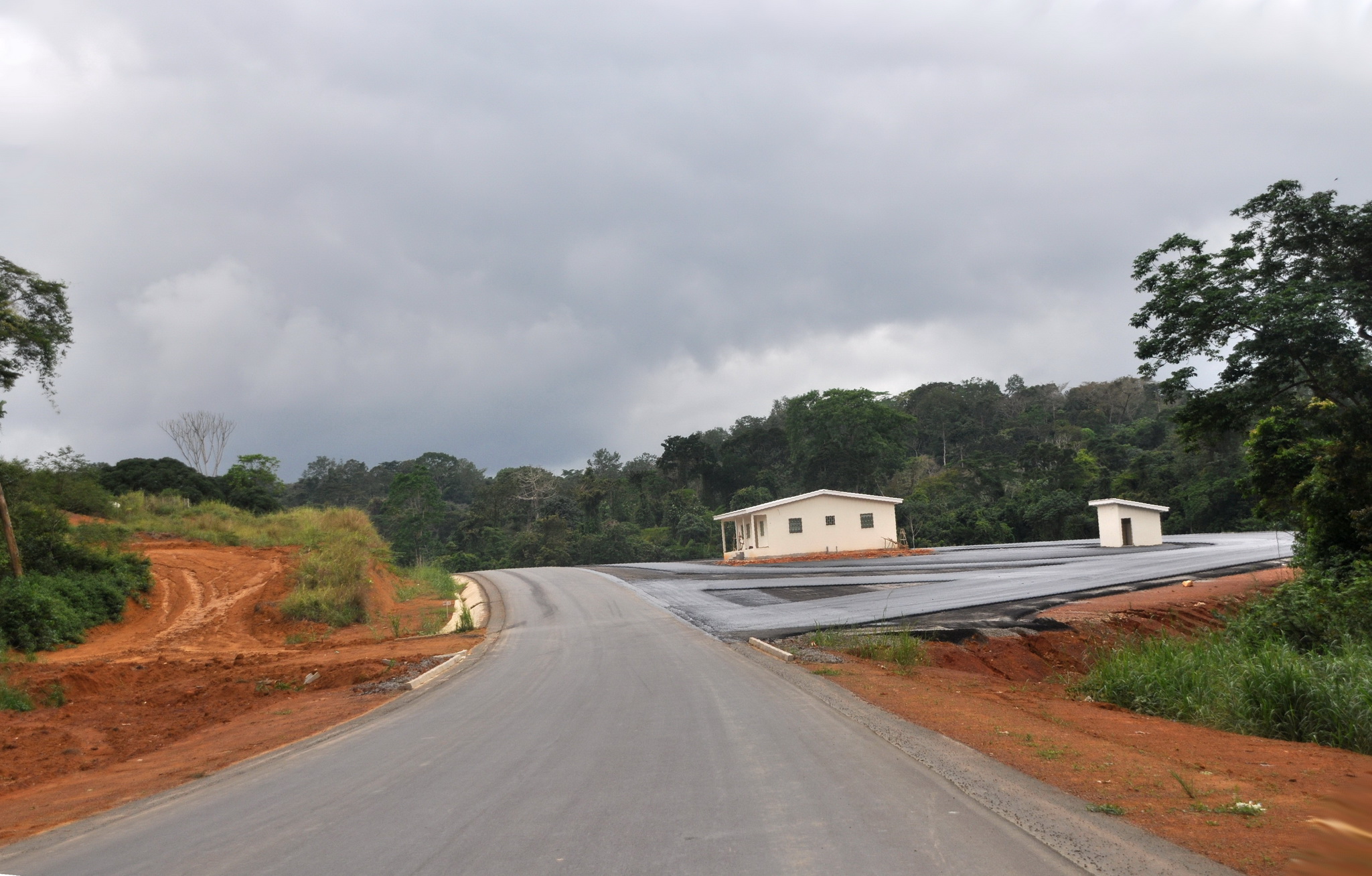
The savanna was a long way off, nearly a thousand kilometres of roads of uncertain quality. Time to get moving. I returned to Bifoun and turned inland towards the town of Ndjolé. This, in effect, was the last outpost of civilisation going east: the last filling station, hotel, shop, phone, garage and car wash. Gabon was building roads, turning its oil into something useful. The Makokou road towards the Congo border was almost ready then, and work had begun on the road to Franceville.
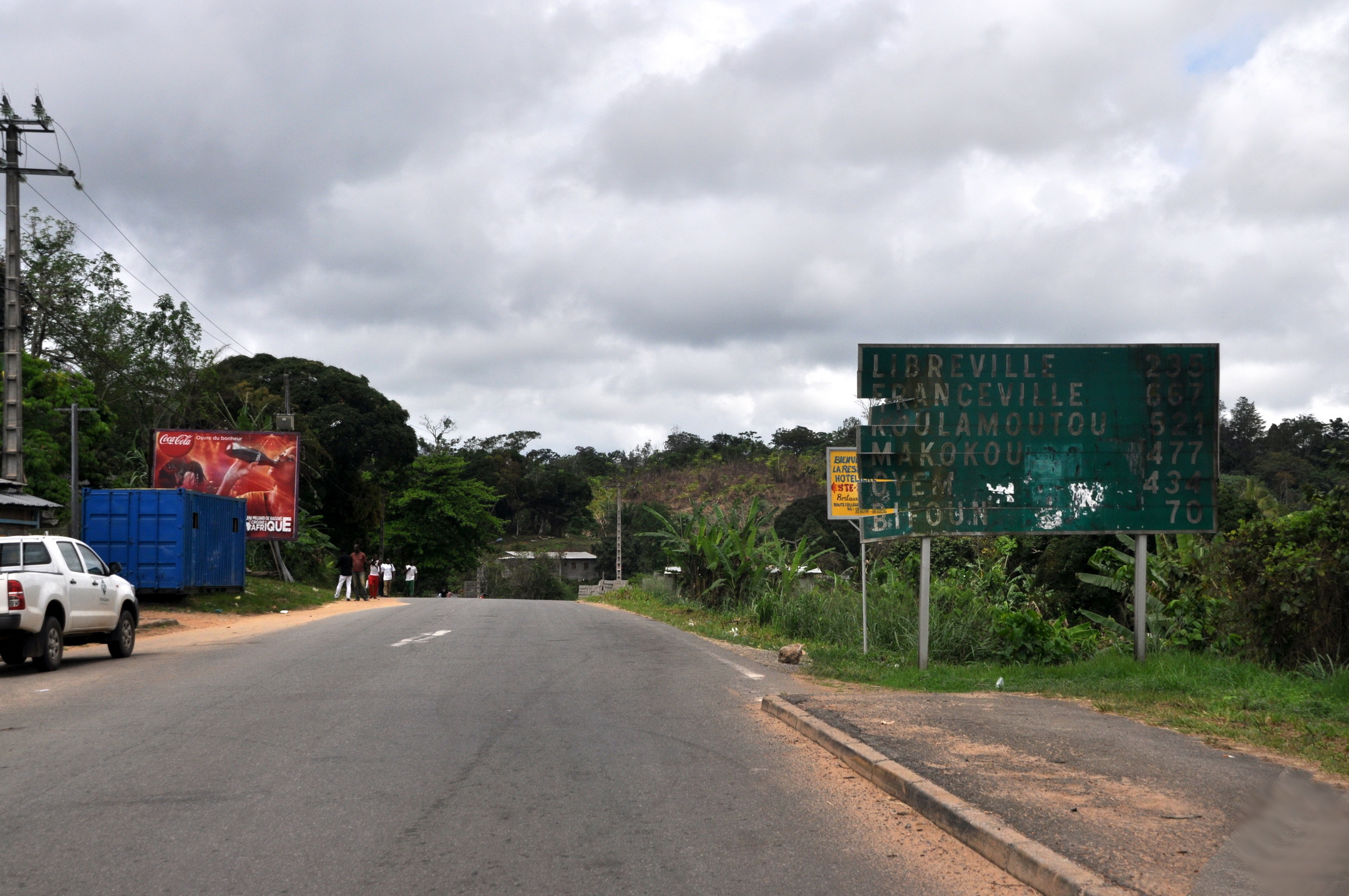
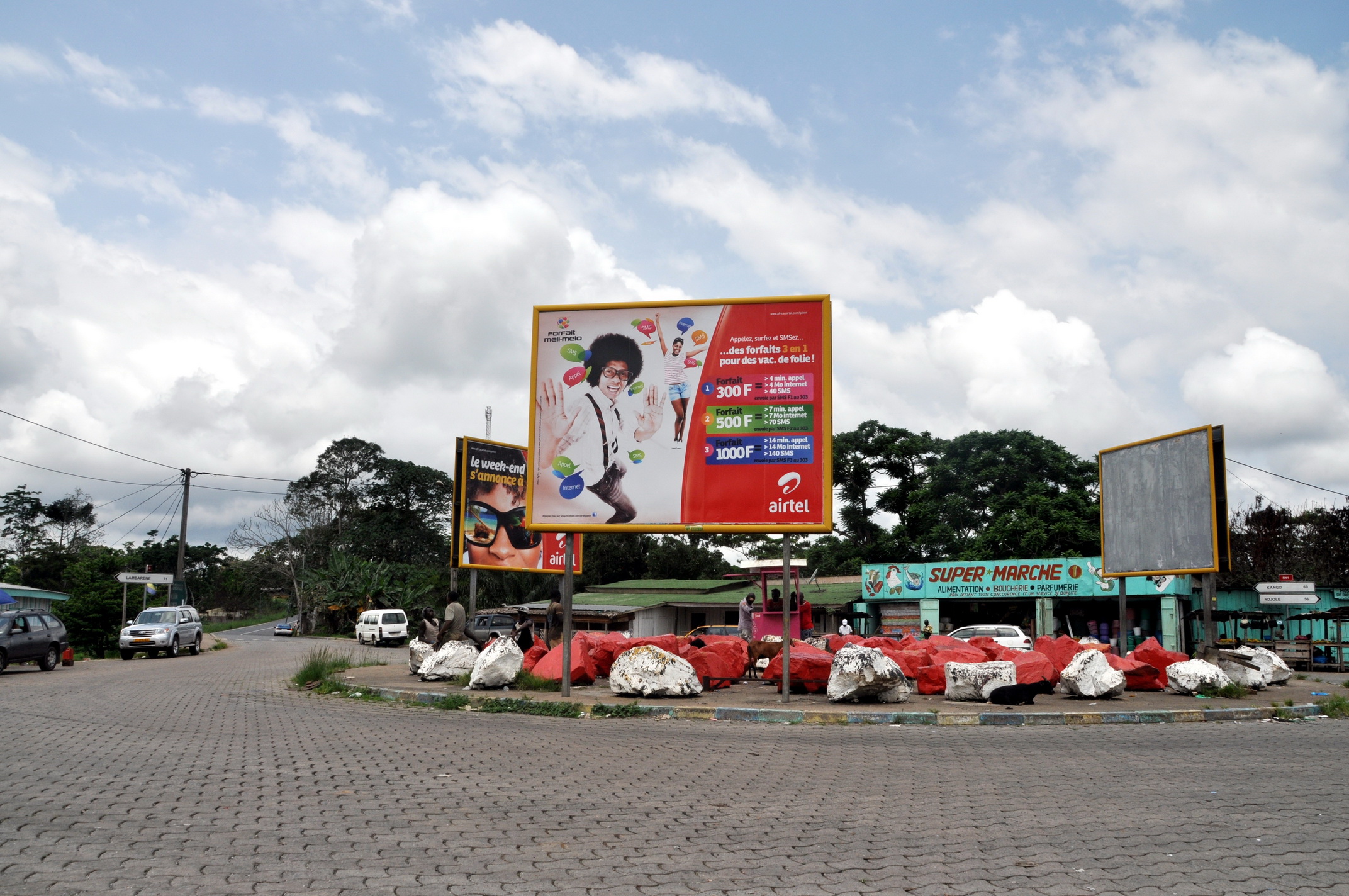
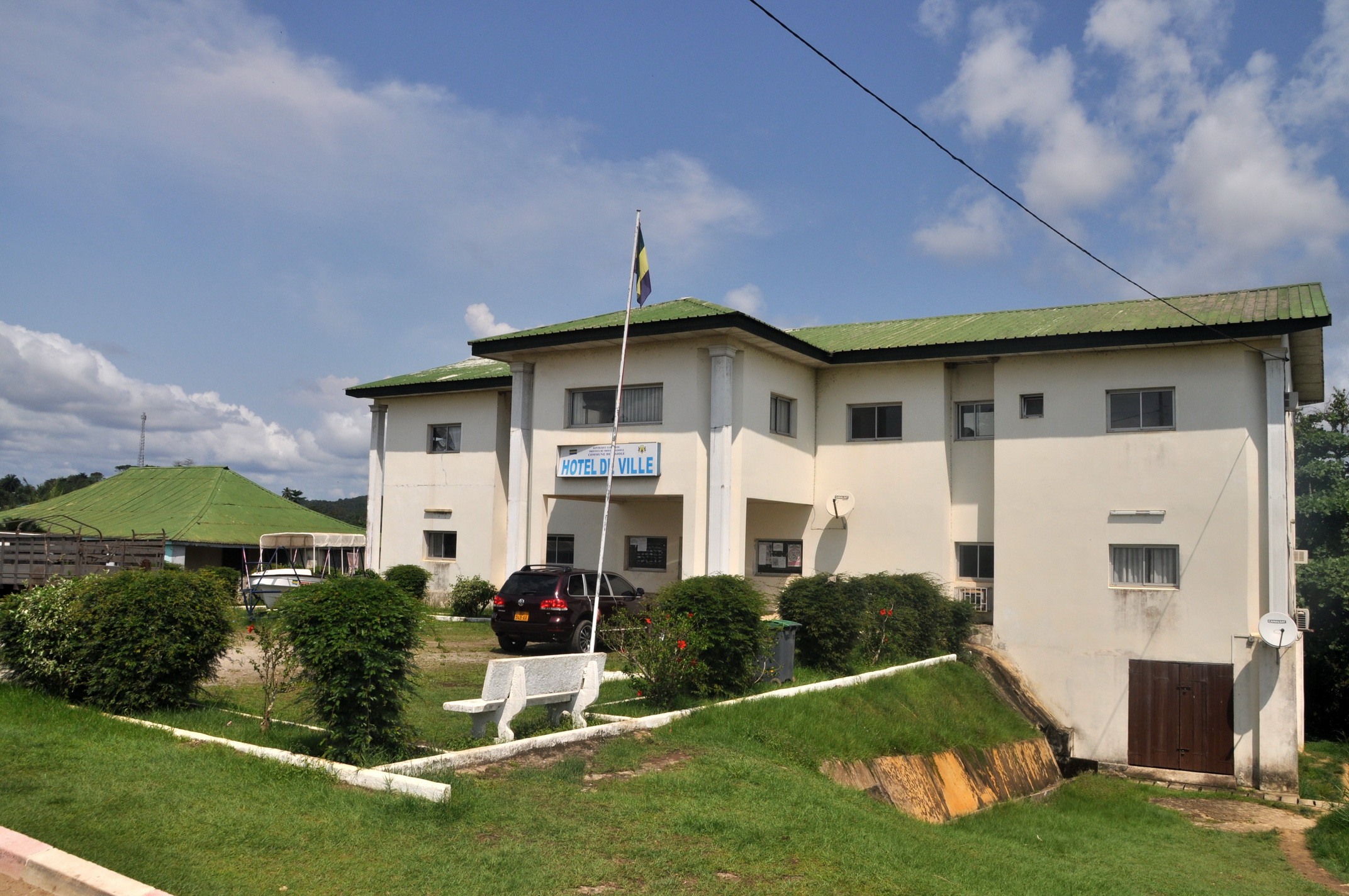
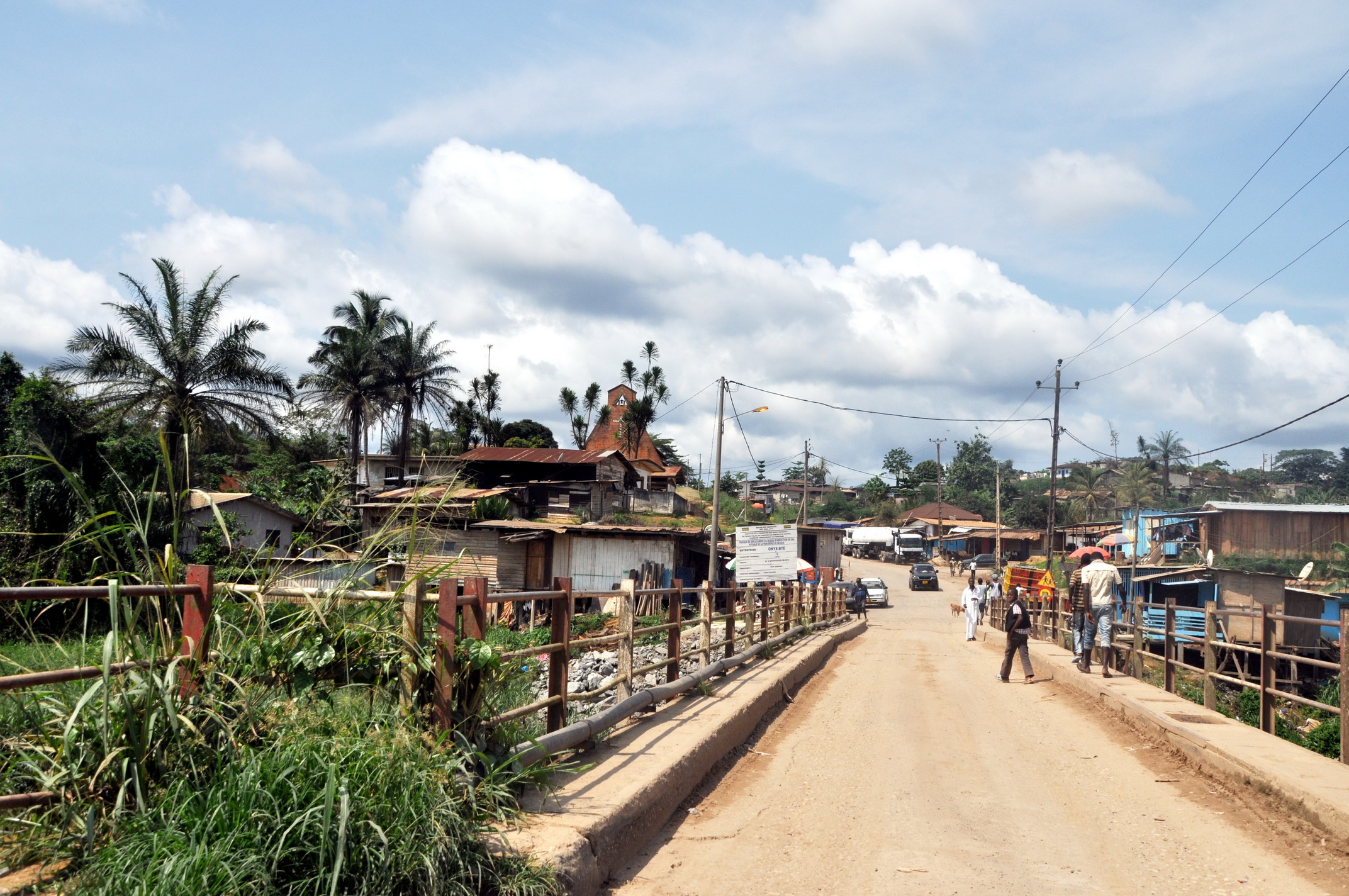
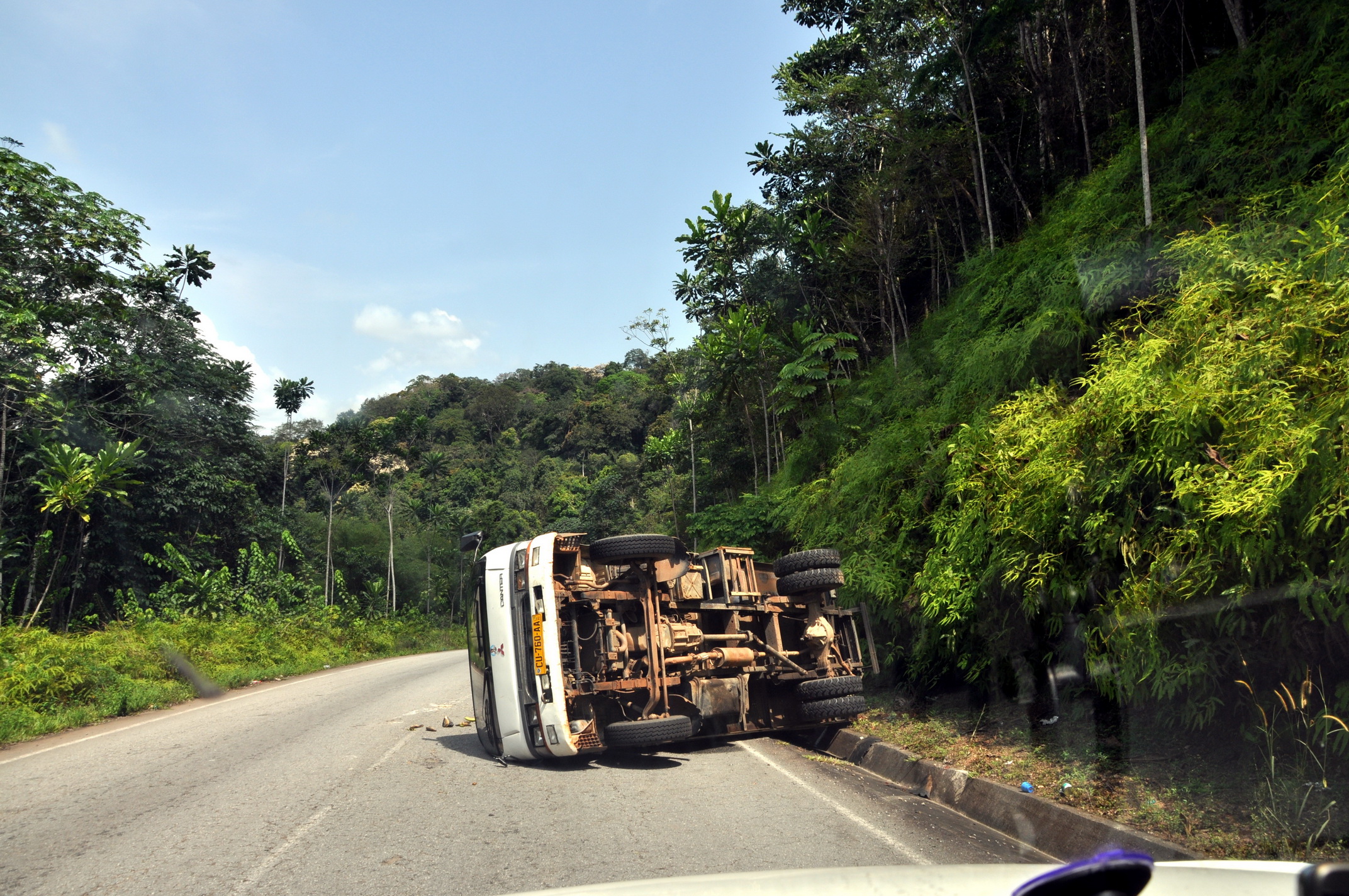
Local drivers unused to these roads went a little mad and put their feet to the floor, then rolled over. I saw an extraordinary number of cars that hadn’t made it round the next bend.
Unfortunately most of my drive on the N3 to Lastoursville was still going to be on dirt roads.
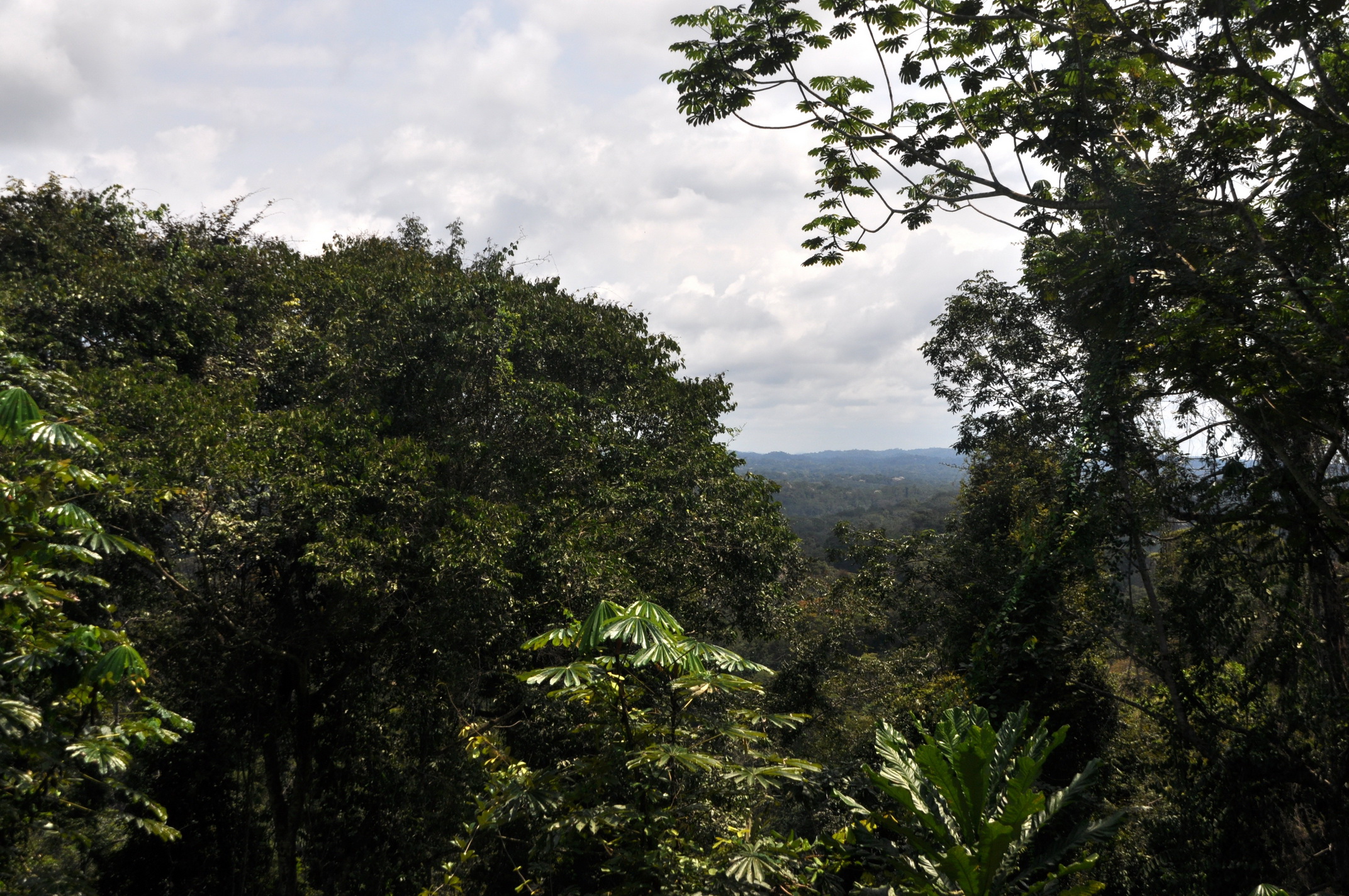
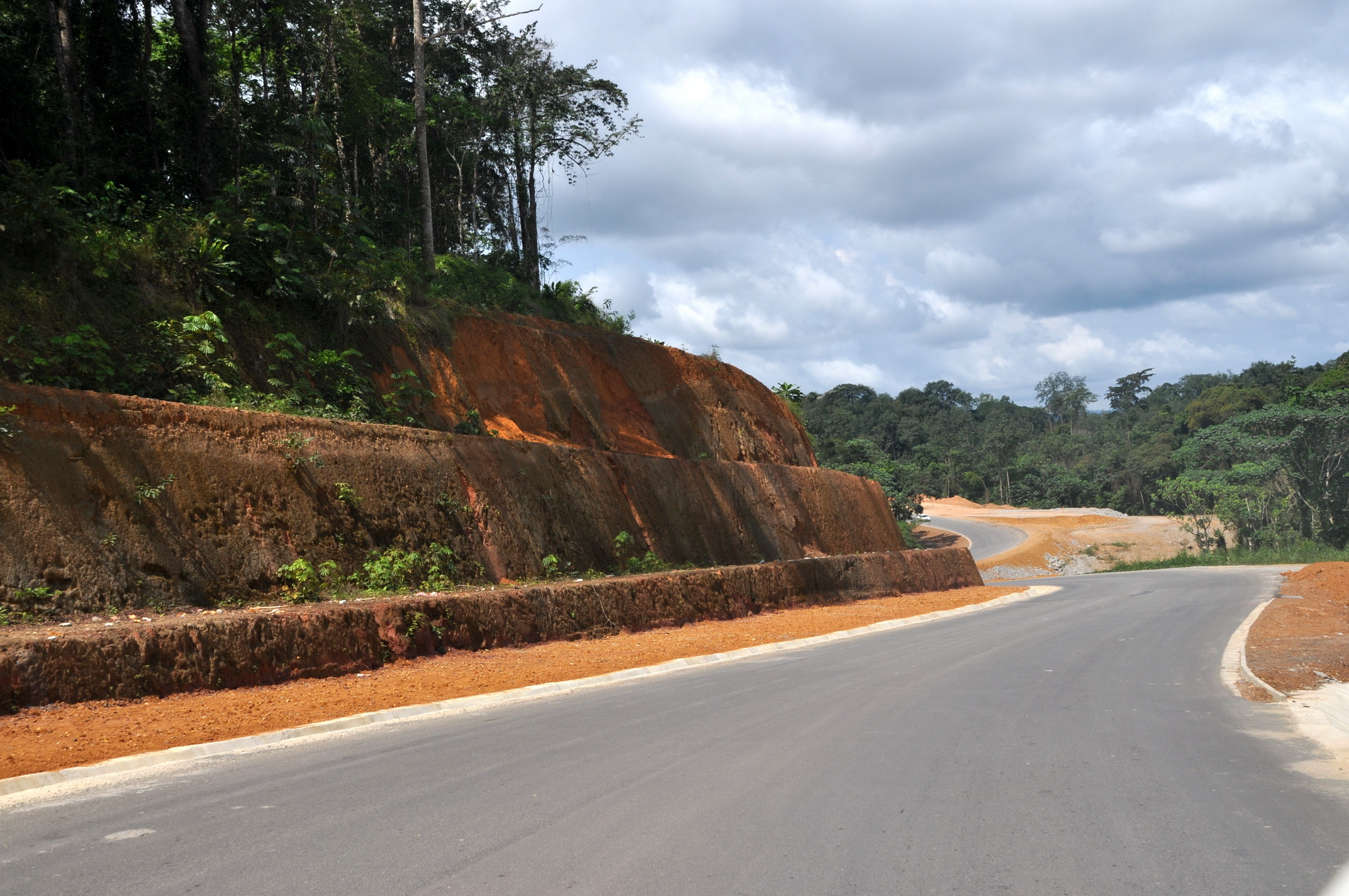
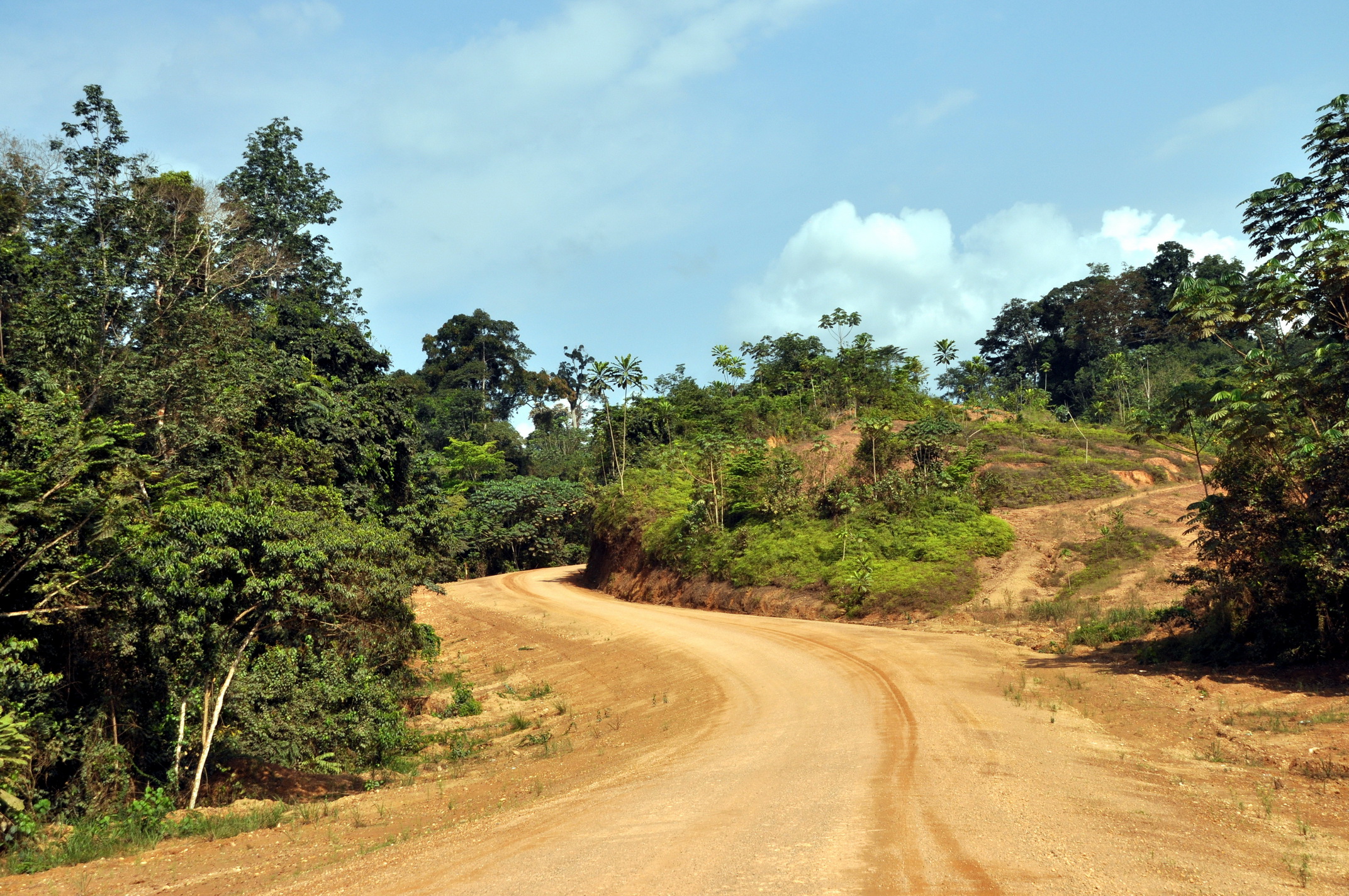
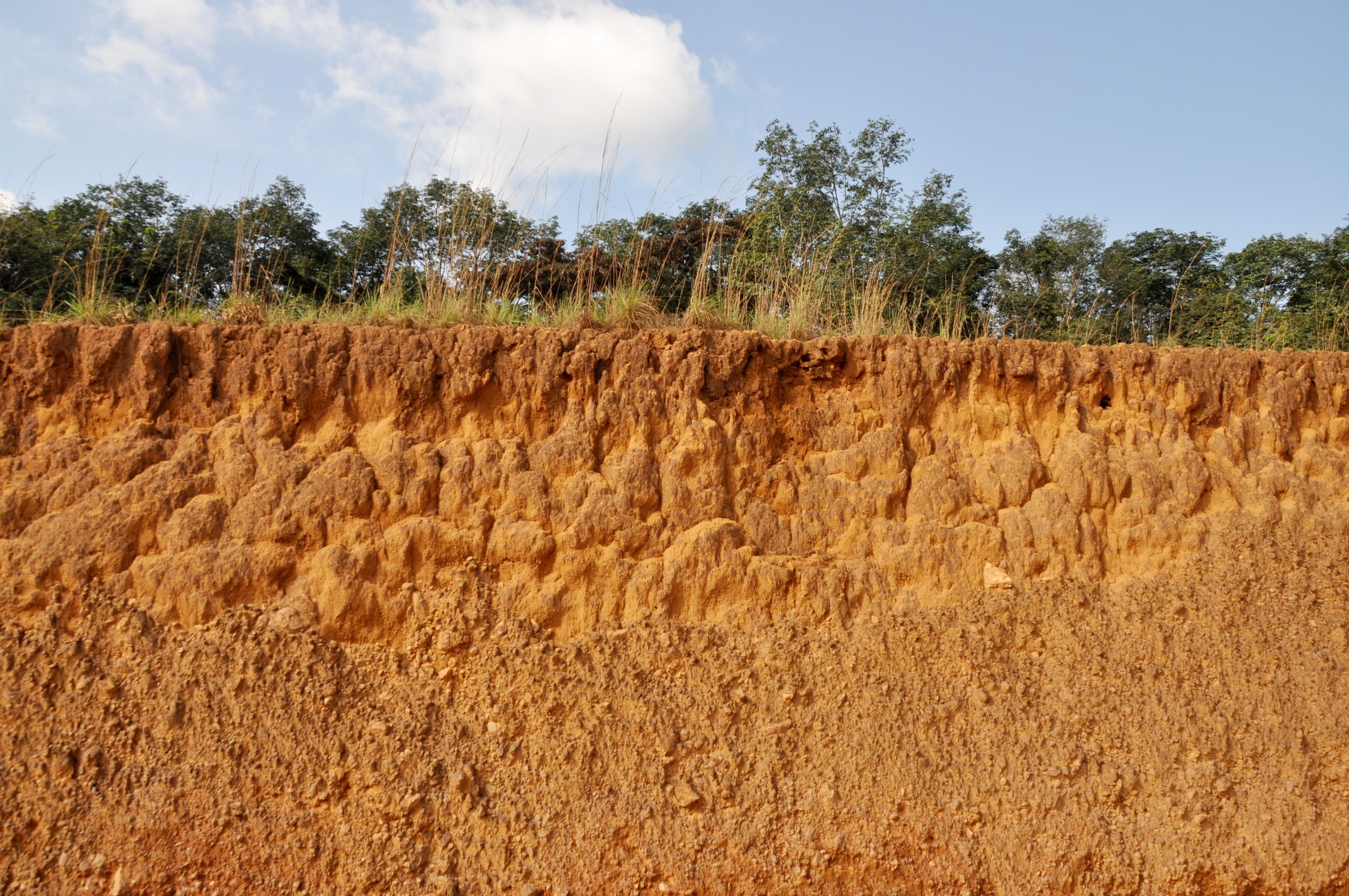
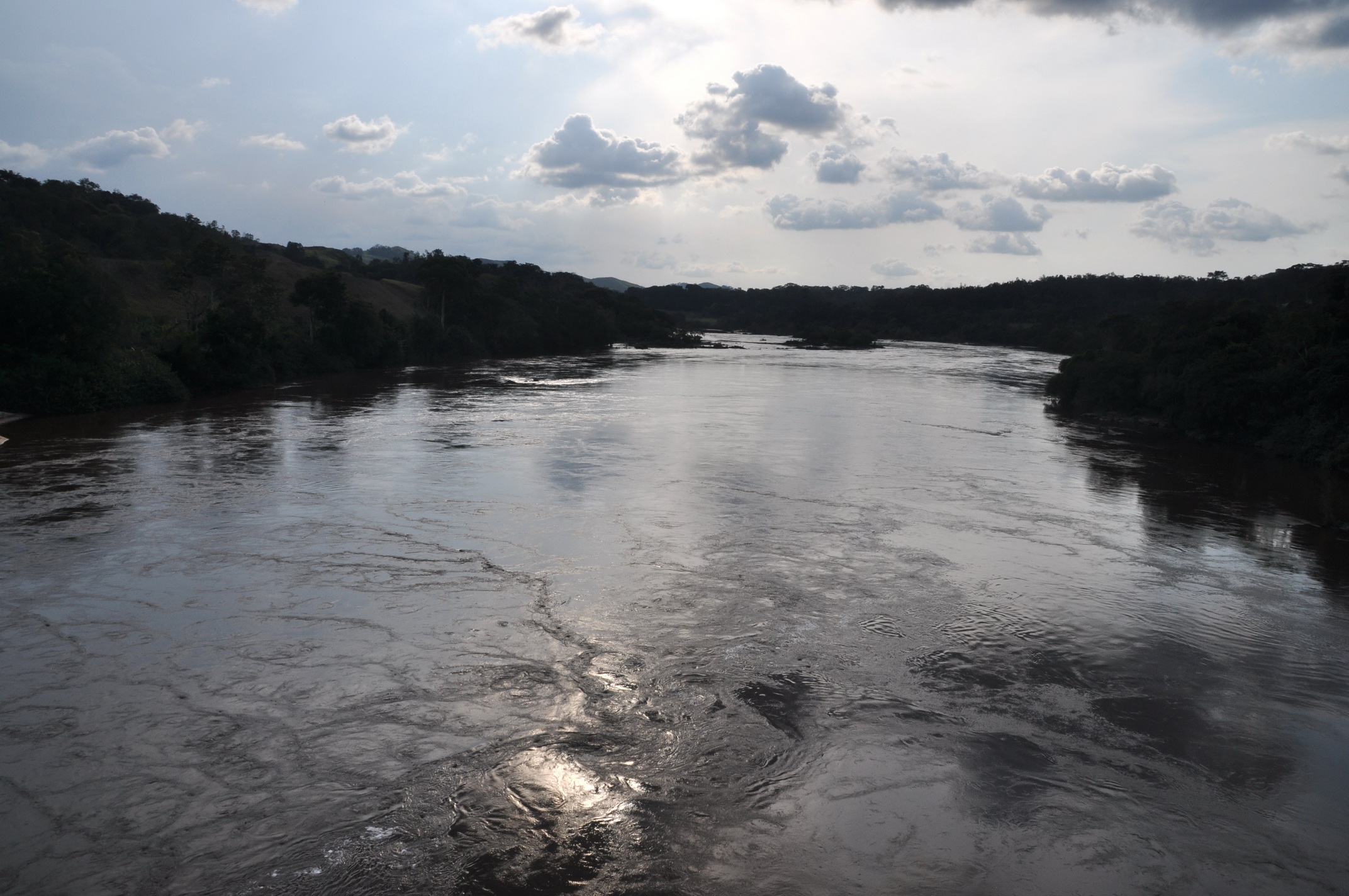
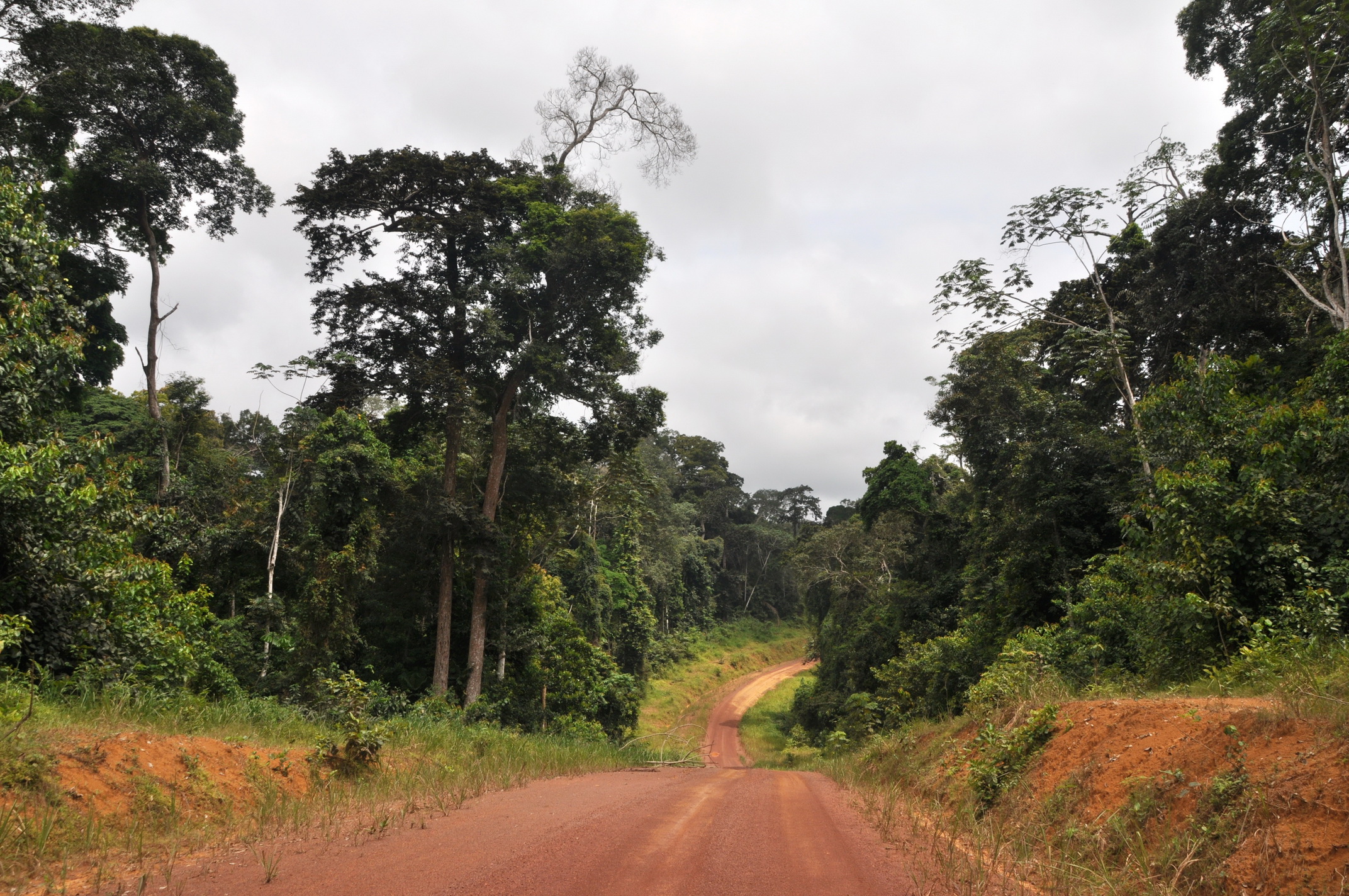
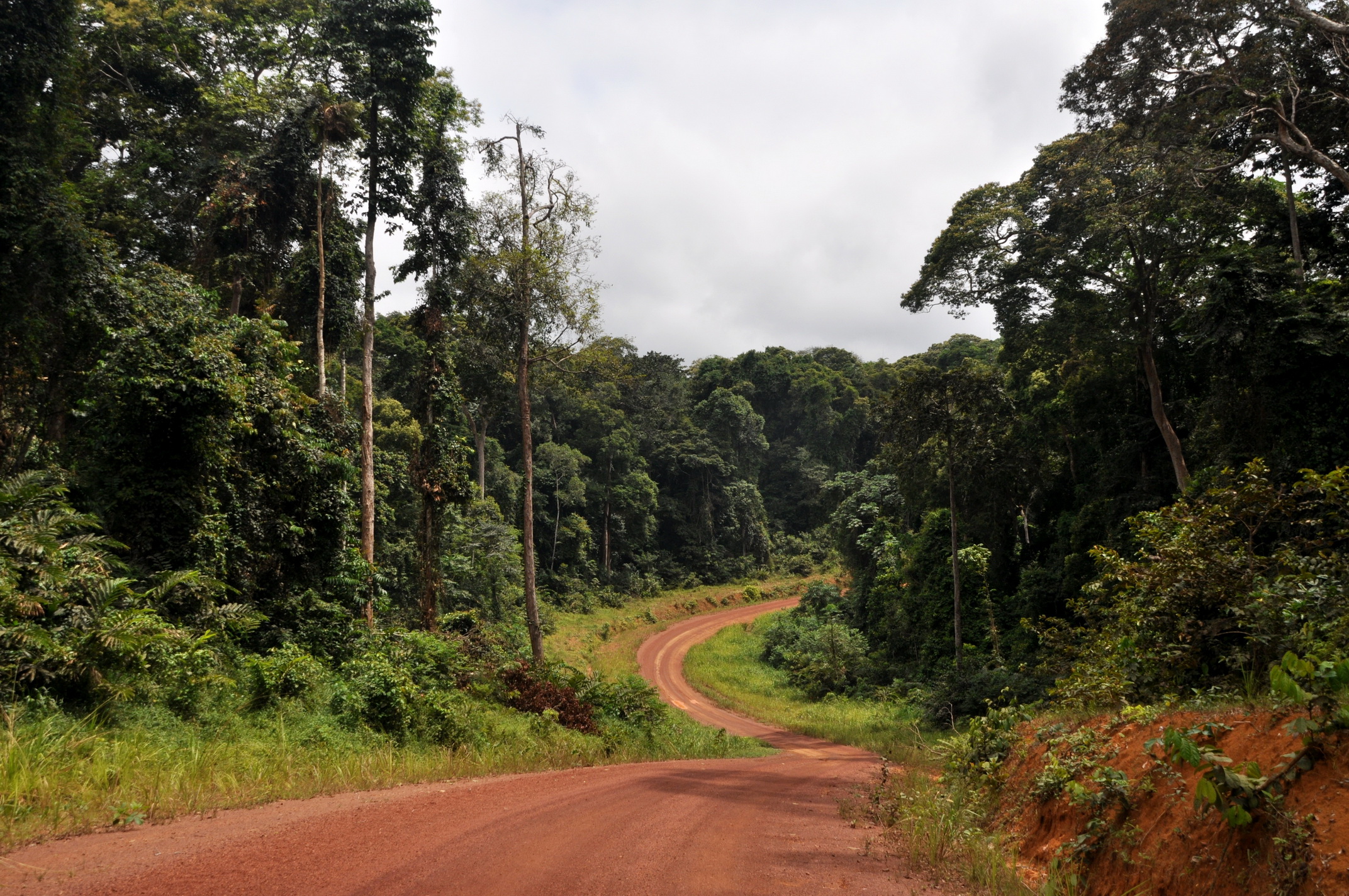
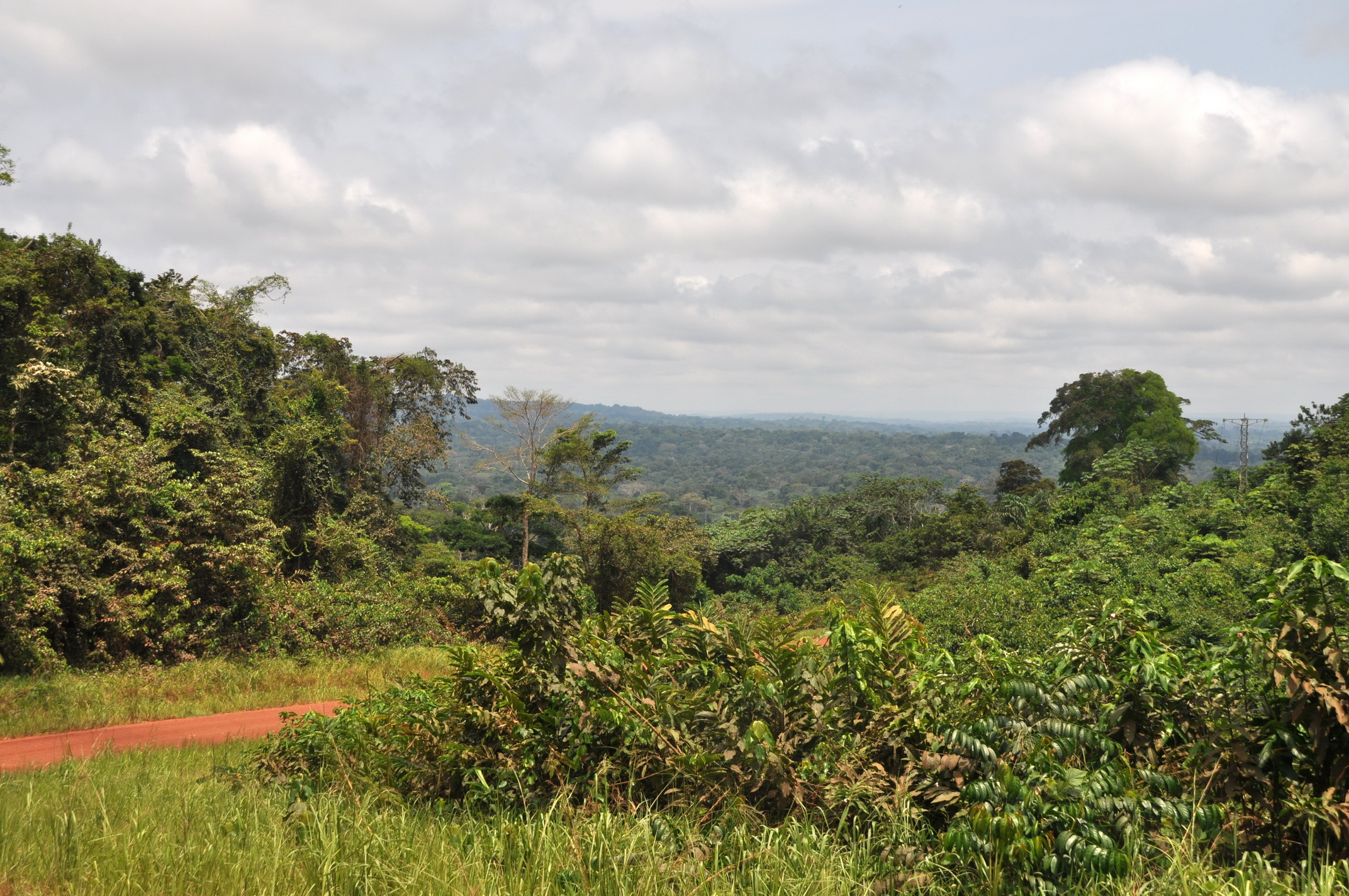
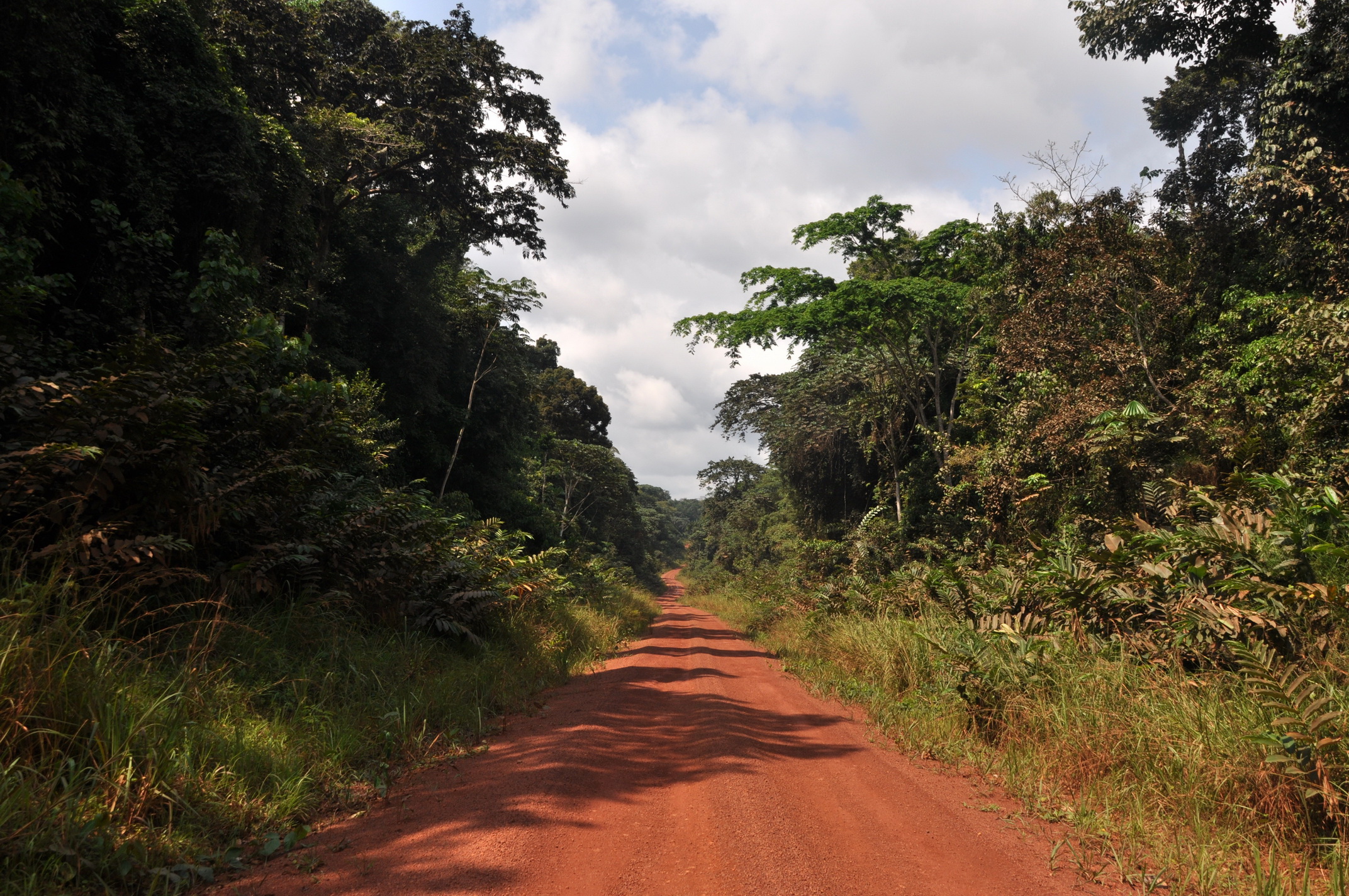
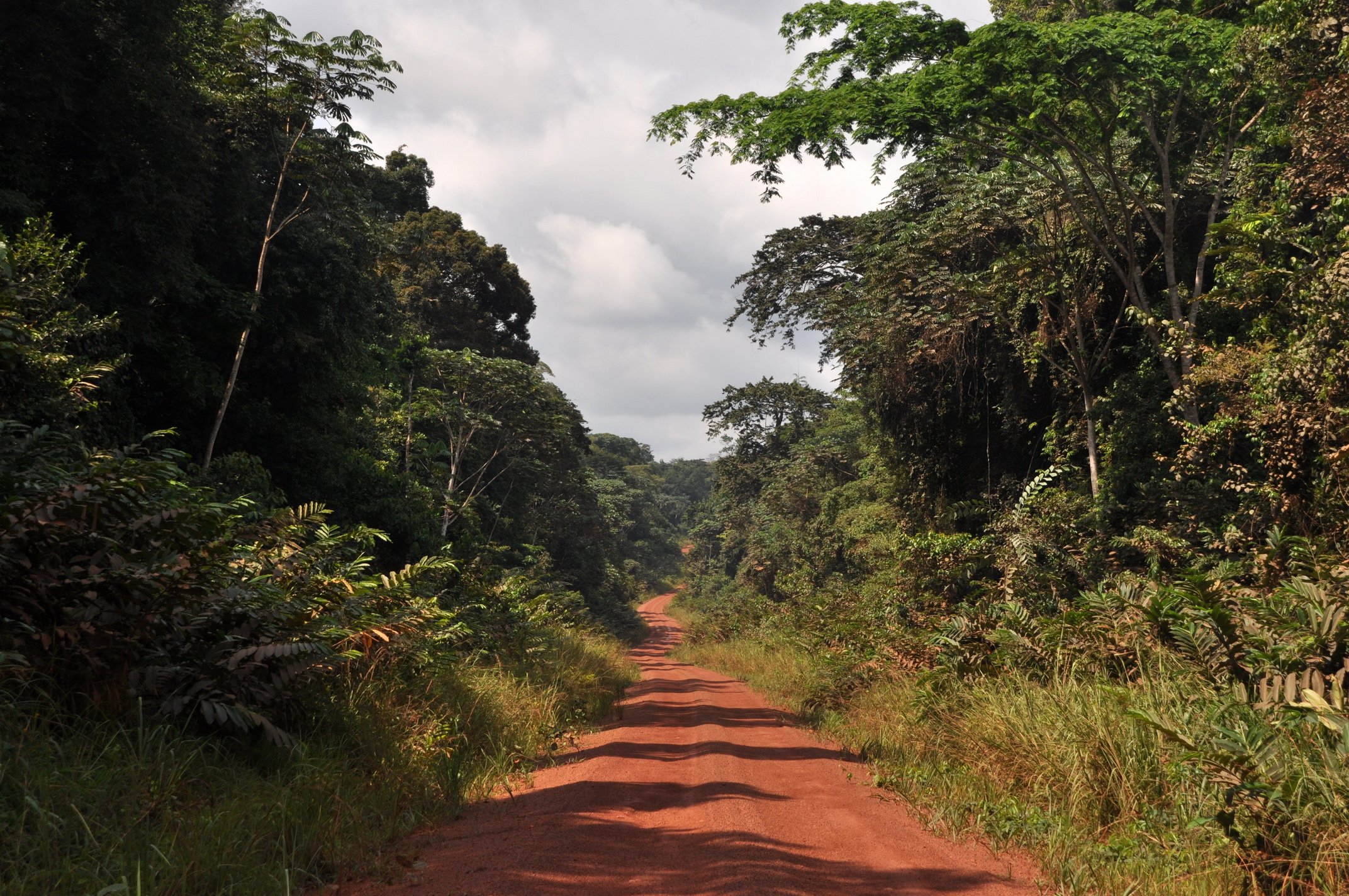
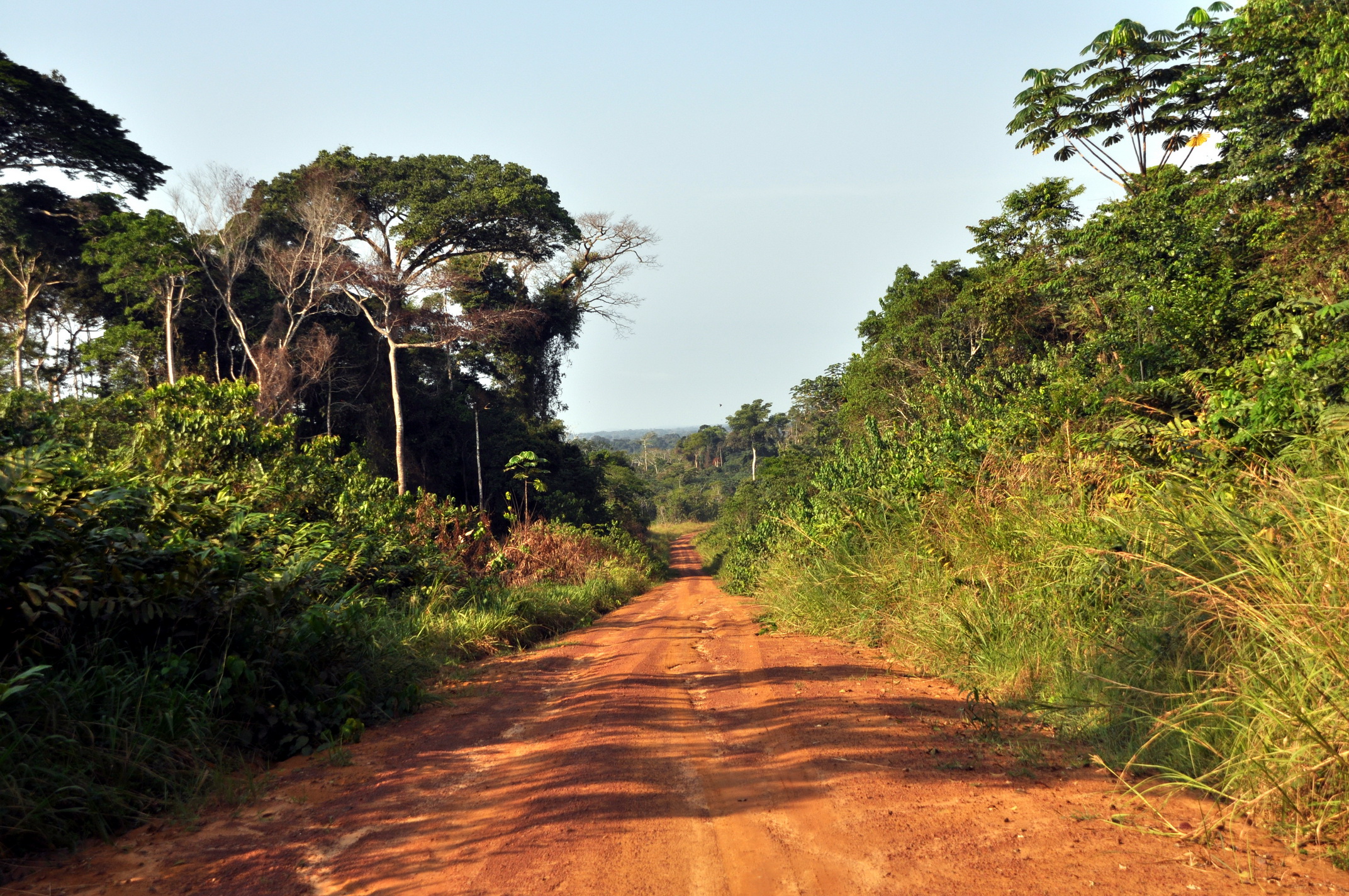
At first everything was splendid. A brand-new highway cut picturesquely through the forest and riverside hills, following the course of the Ogooué. The Ogooué is the main local river, rather like the Volga in Russia. It was lovely up to the bridge over the Okano. After that came ordinary dirt, with no gravel, an organic road, so to speak: all-natural, no additives, palm oil or GMOs. On the other hand, the scenery was extraordinary. Red African hills all around, unmistakably Africa. In places, tropical forest gave way to grassland, and here and there, far off, mountains came into view. As the savanna began to the east, I took it for secondary grassland where forest had once been cleared and ploughed.
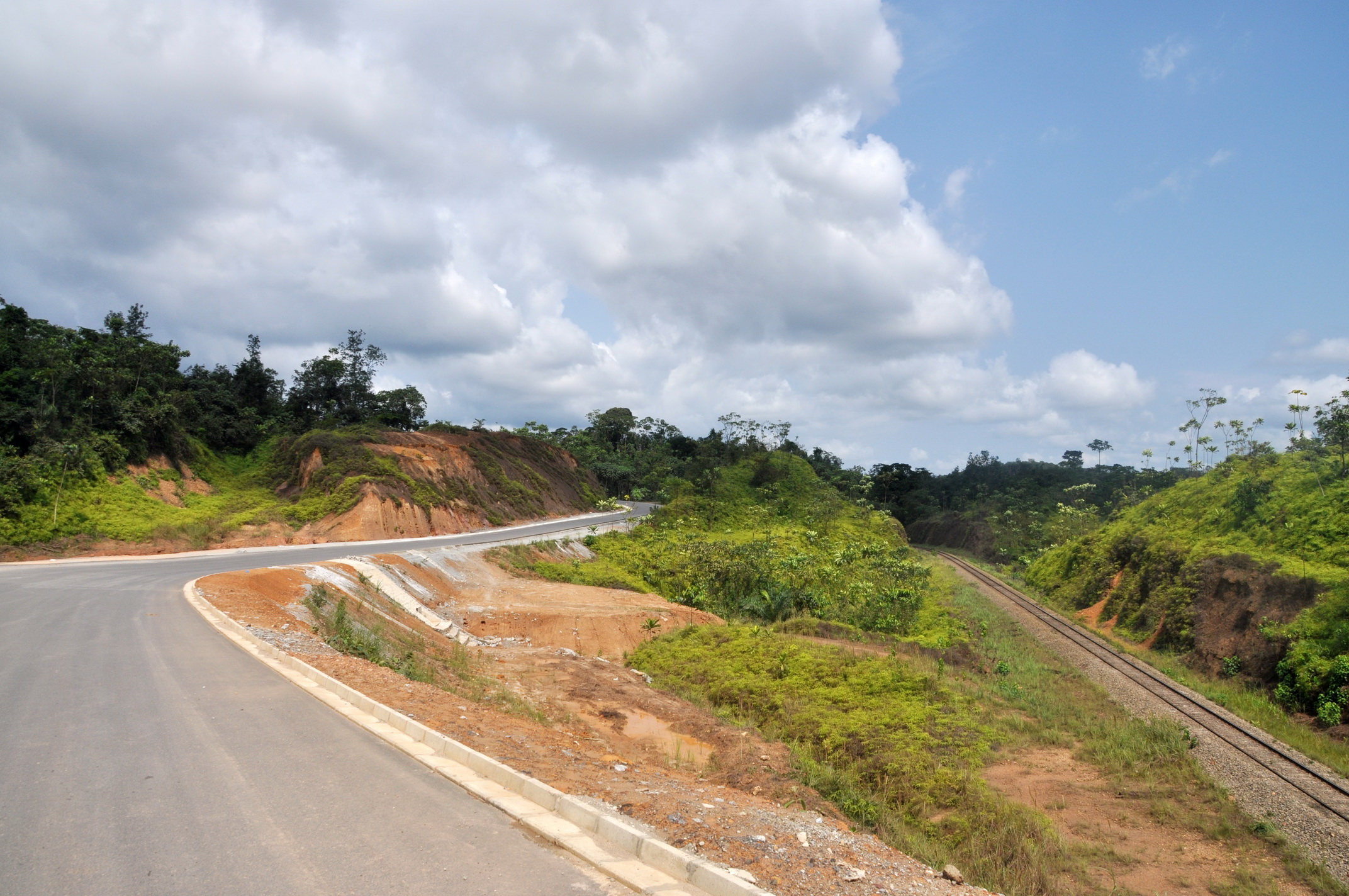
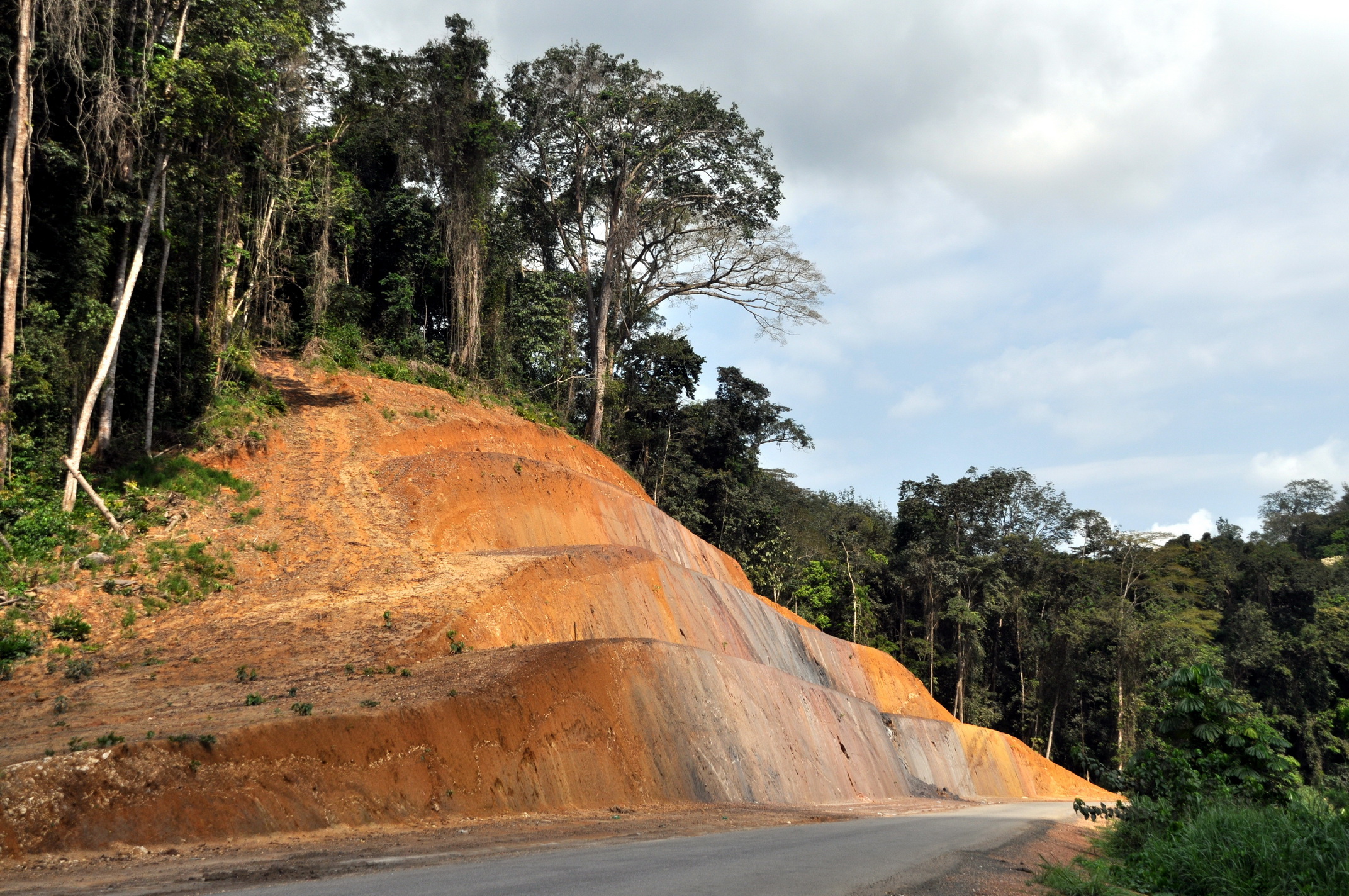
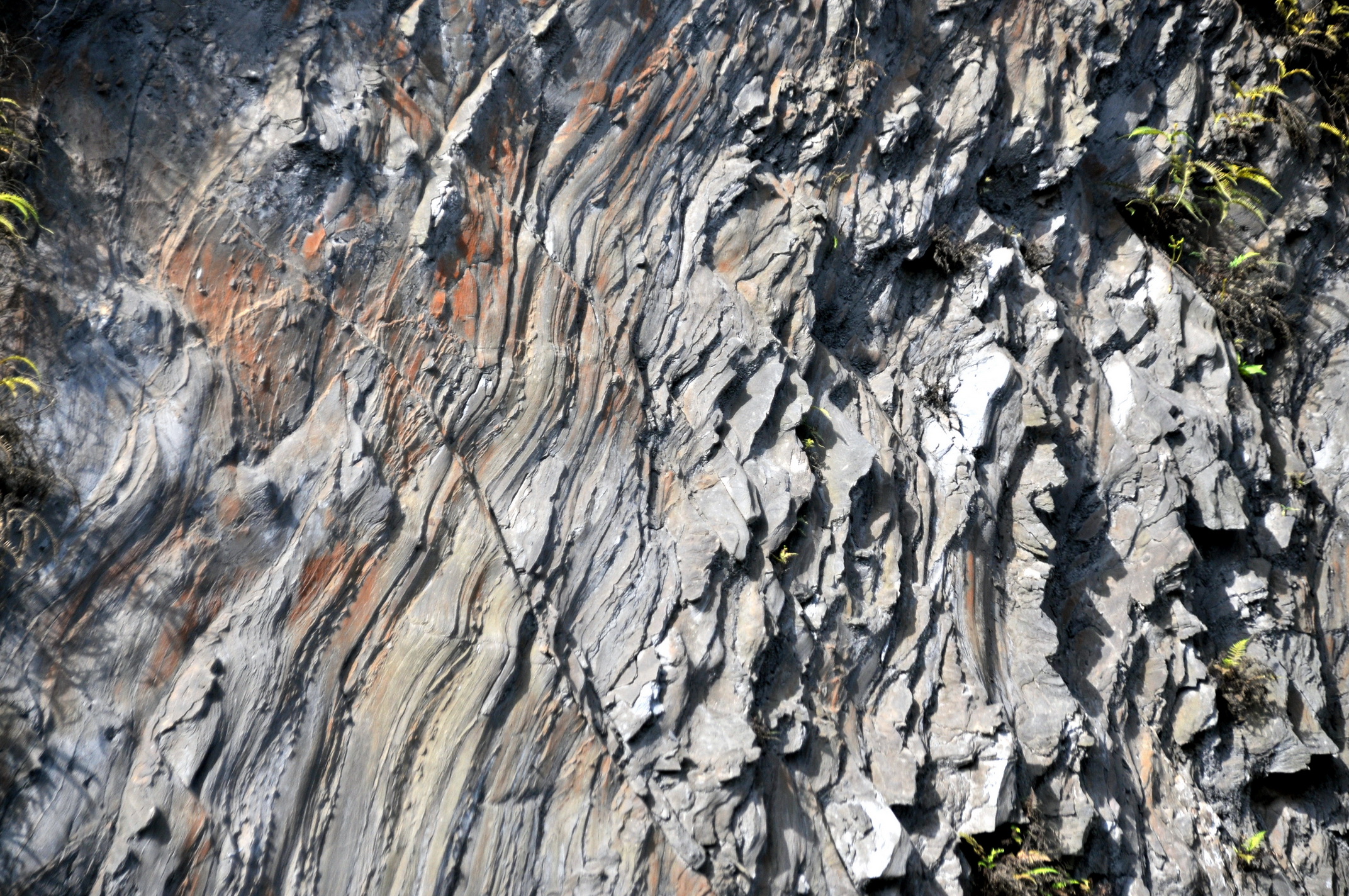
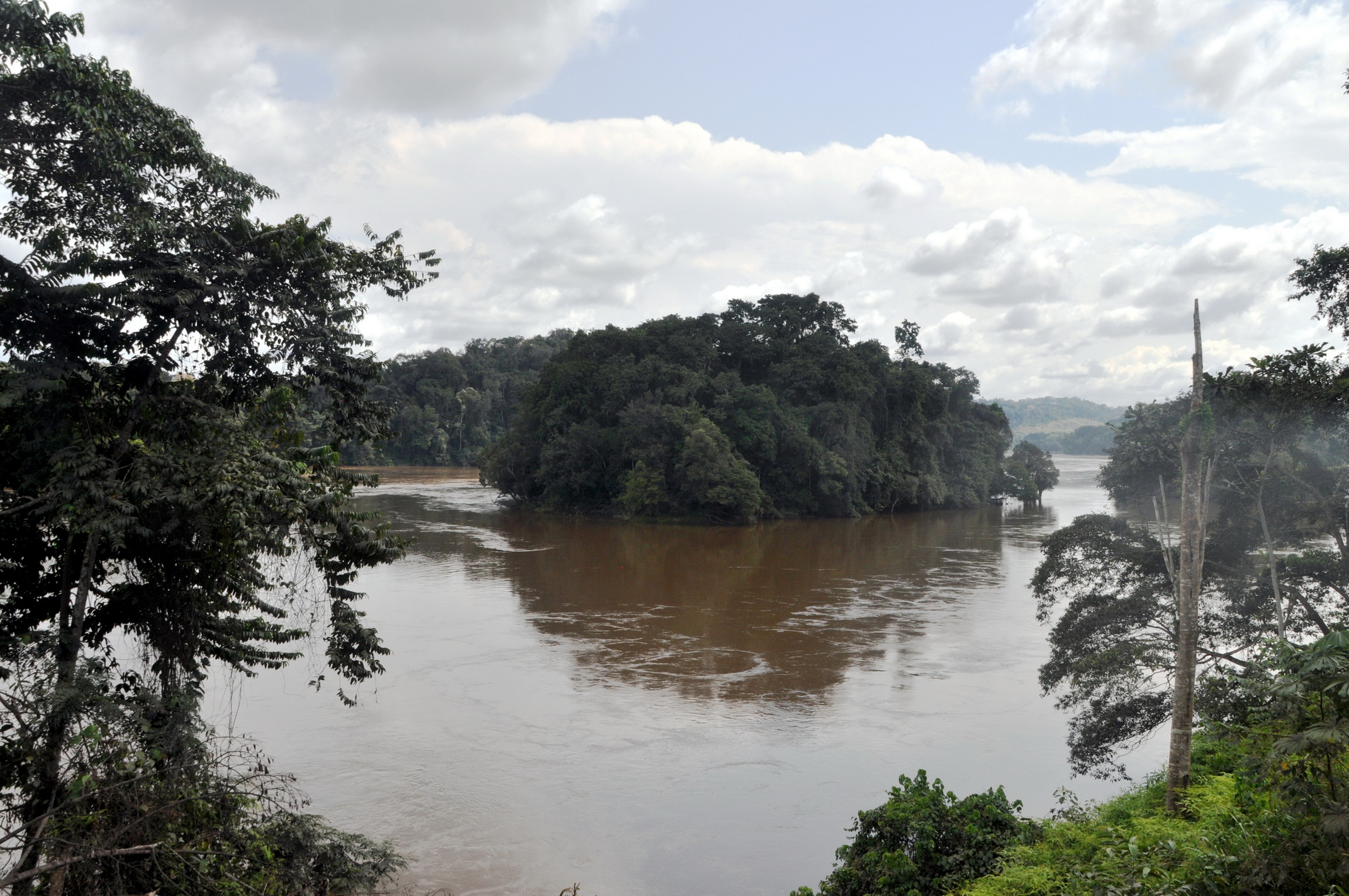
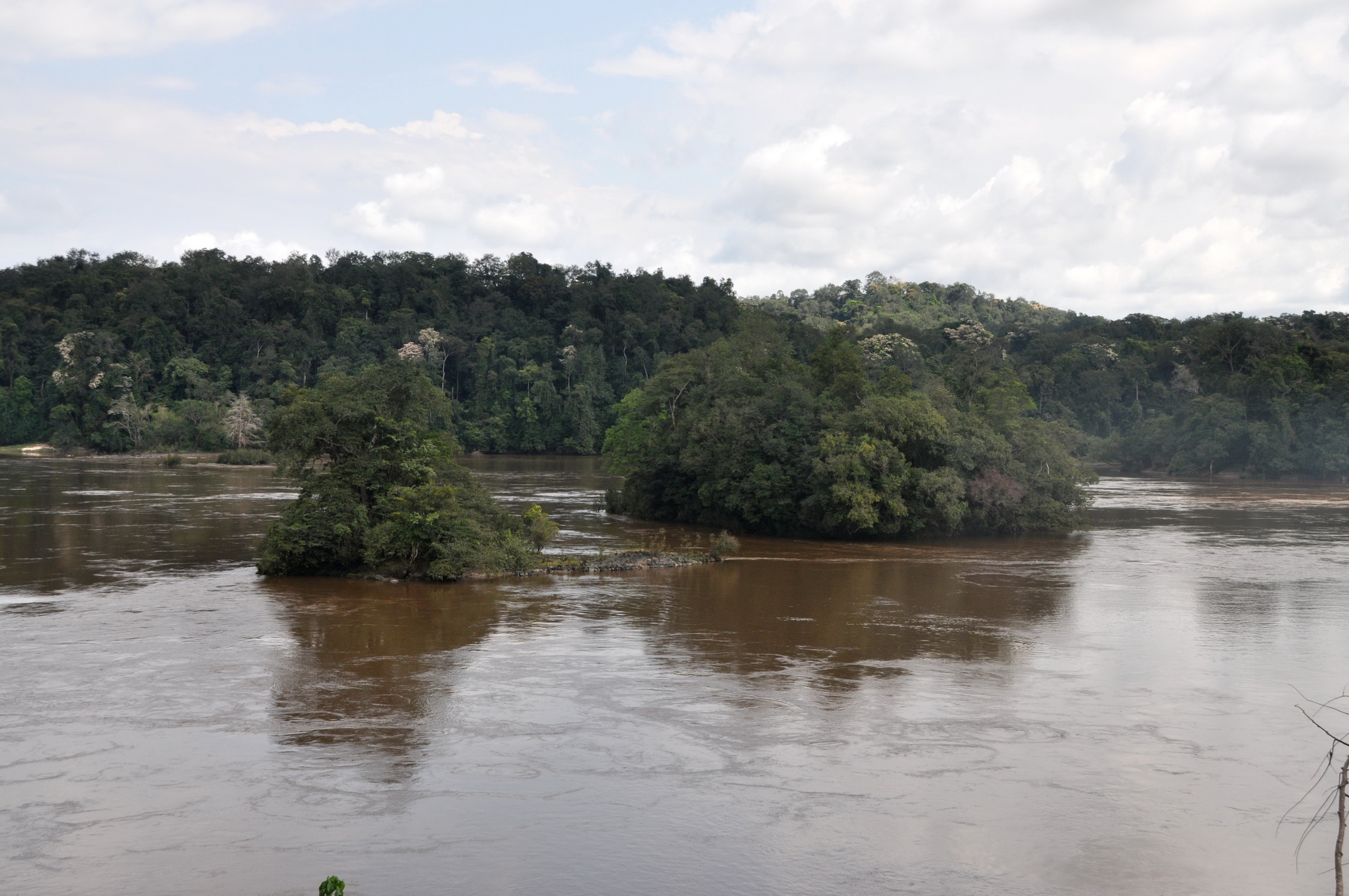
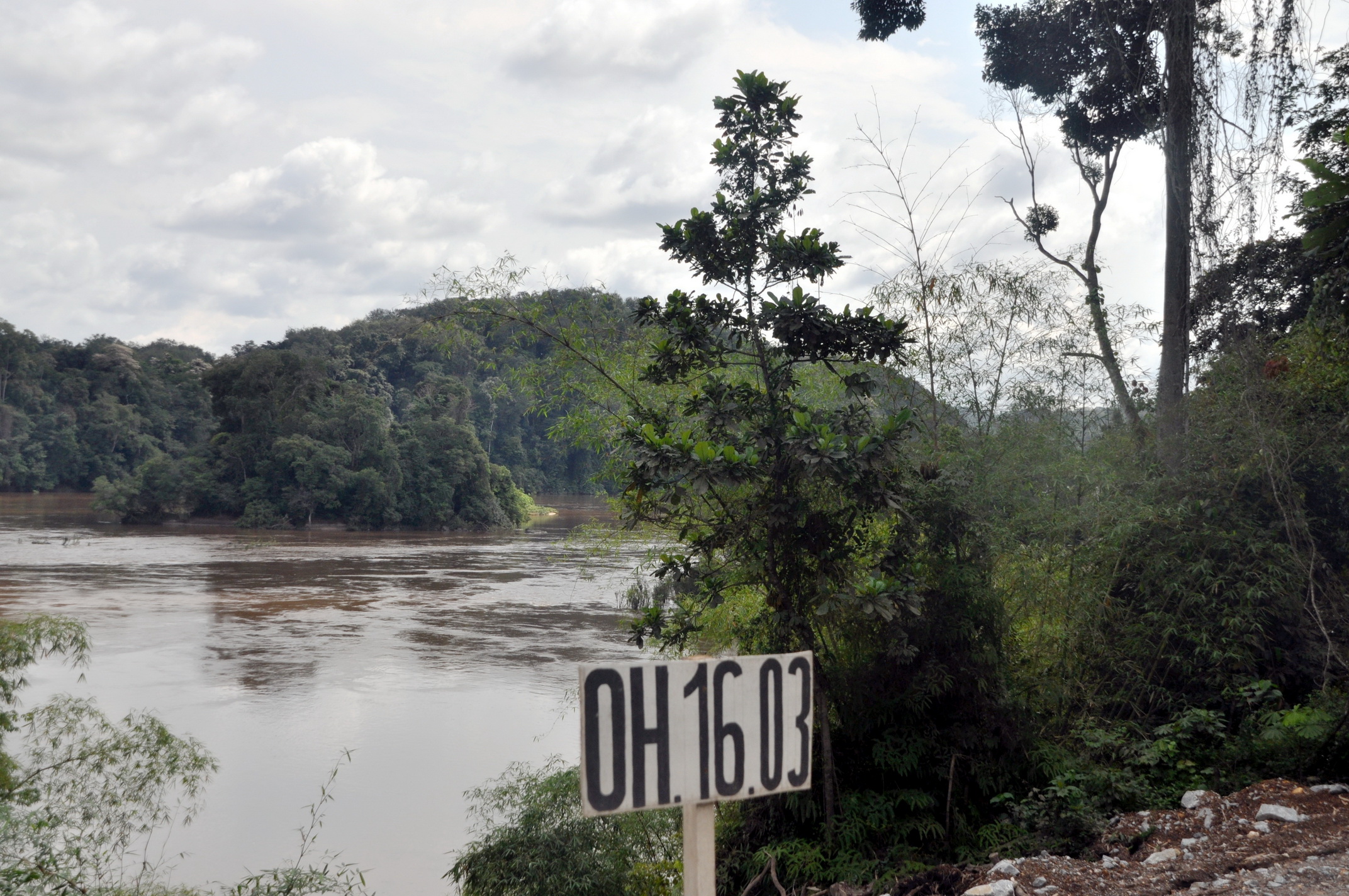
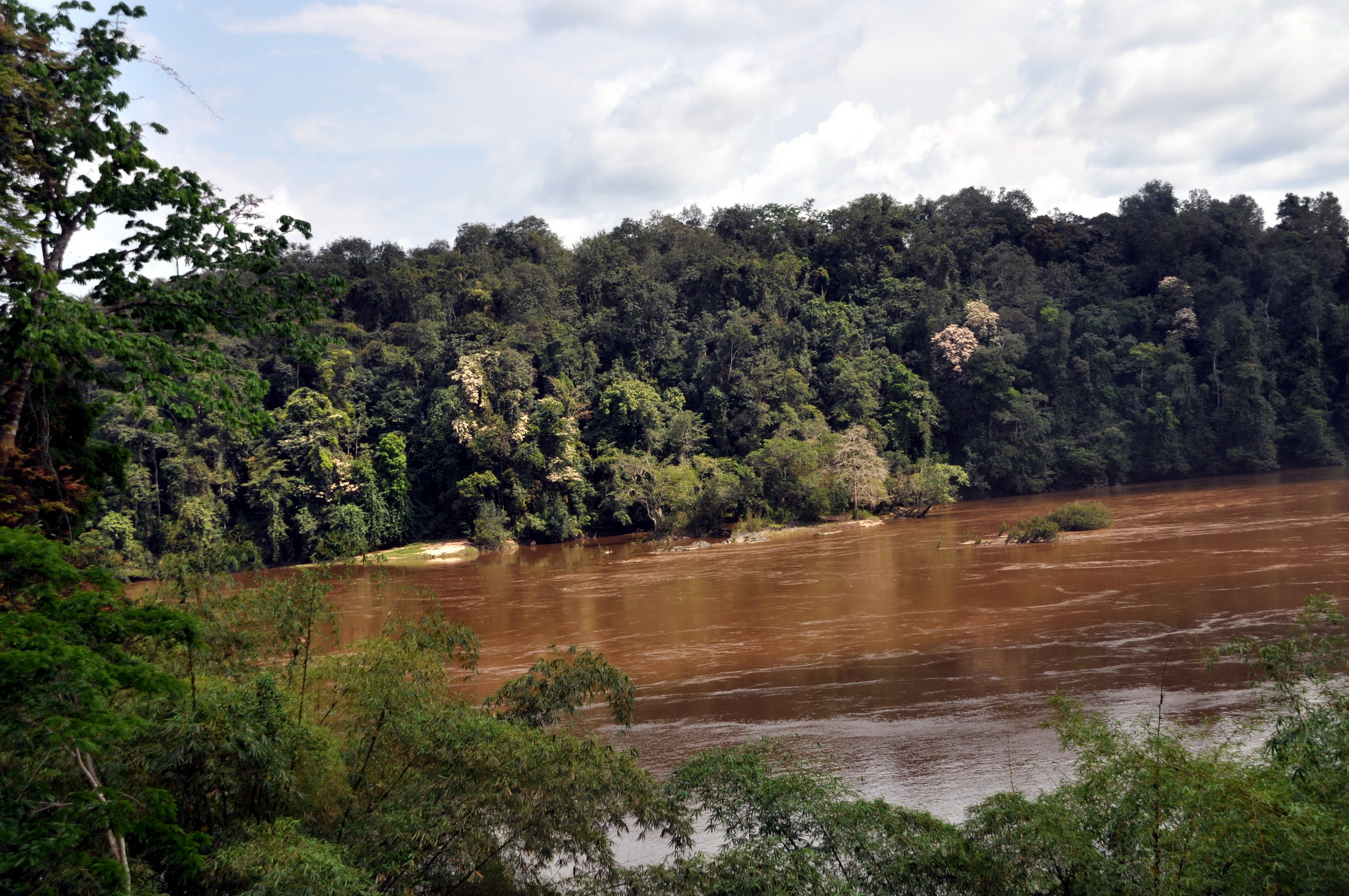
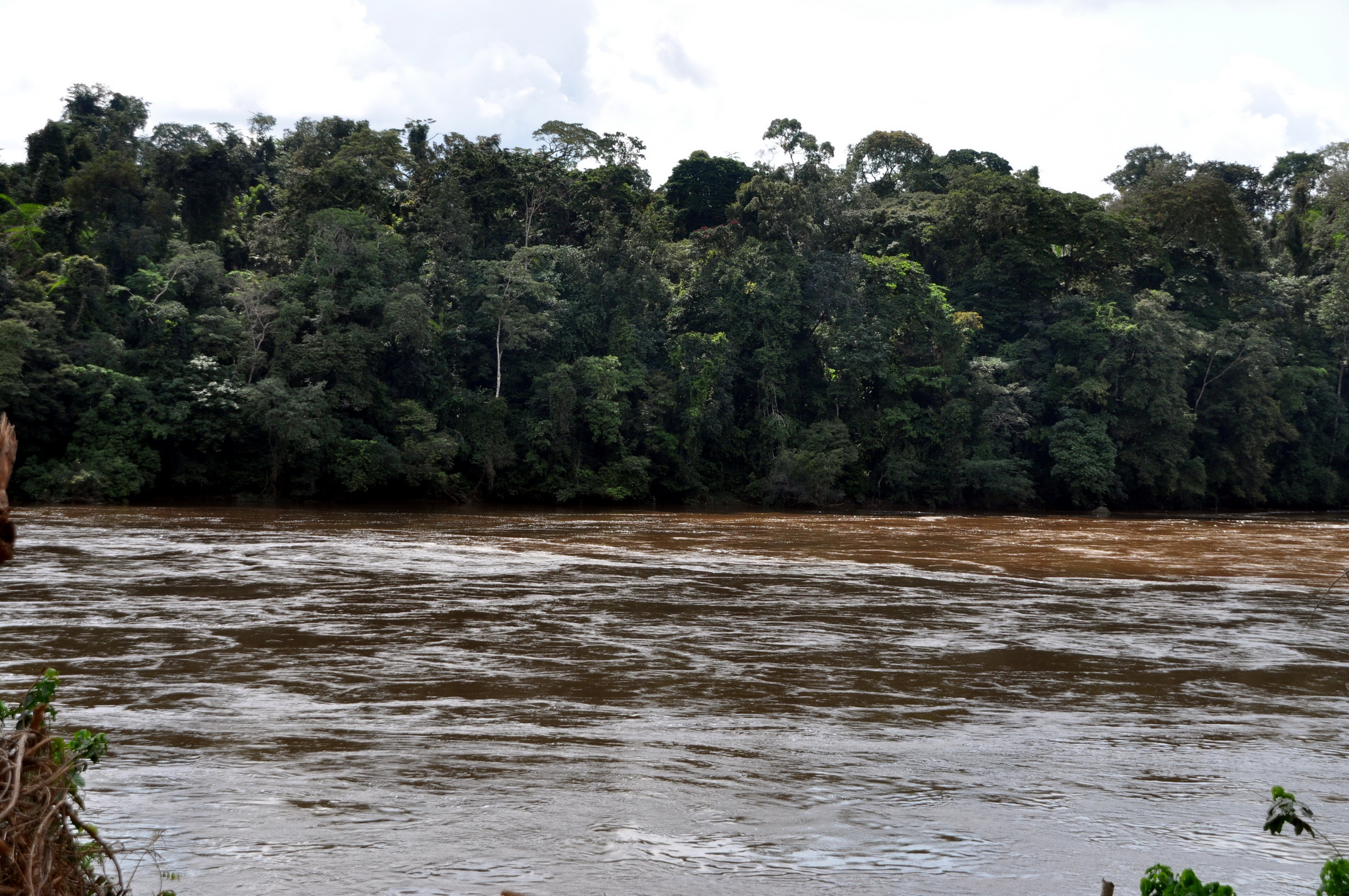
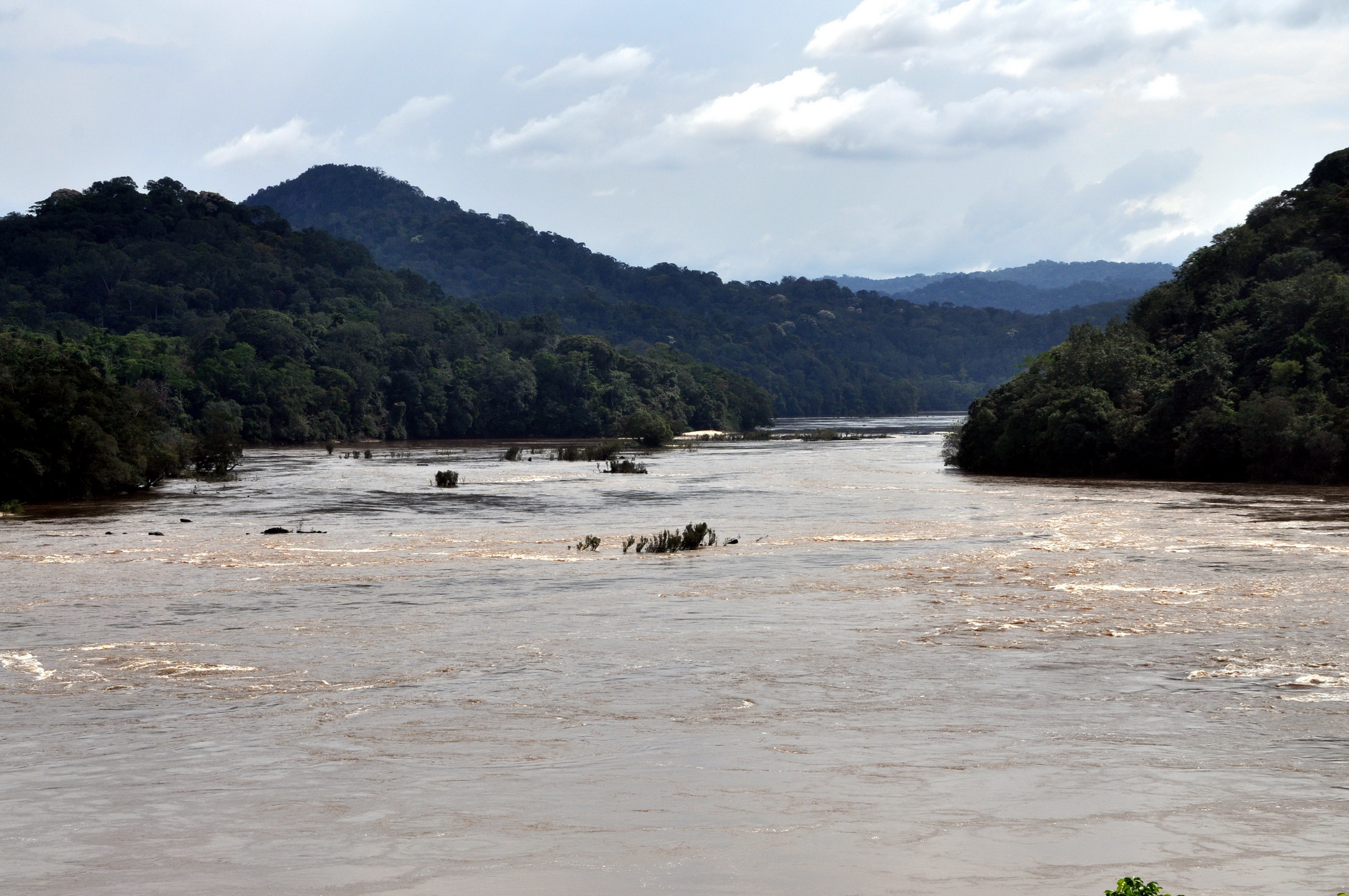
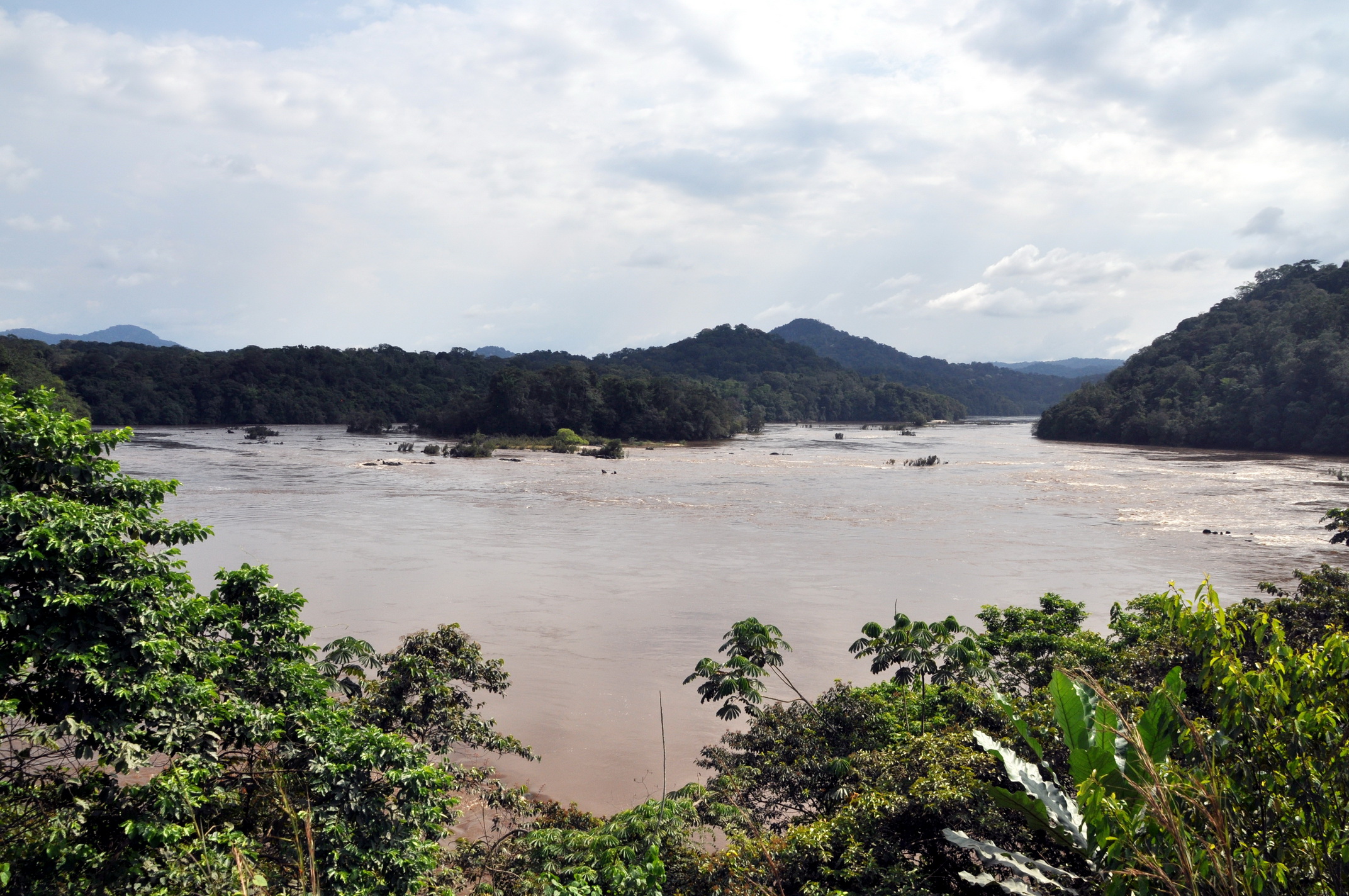
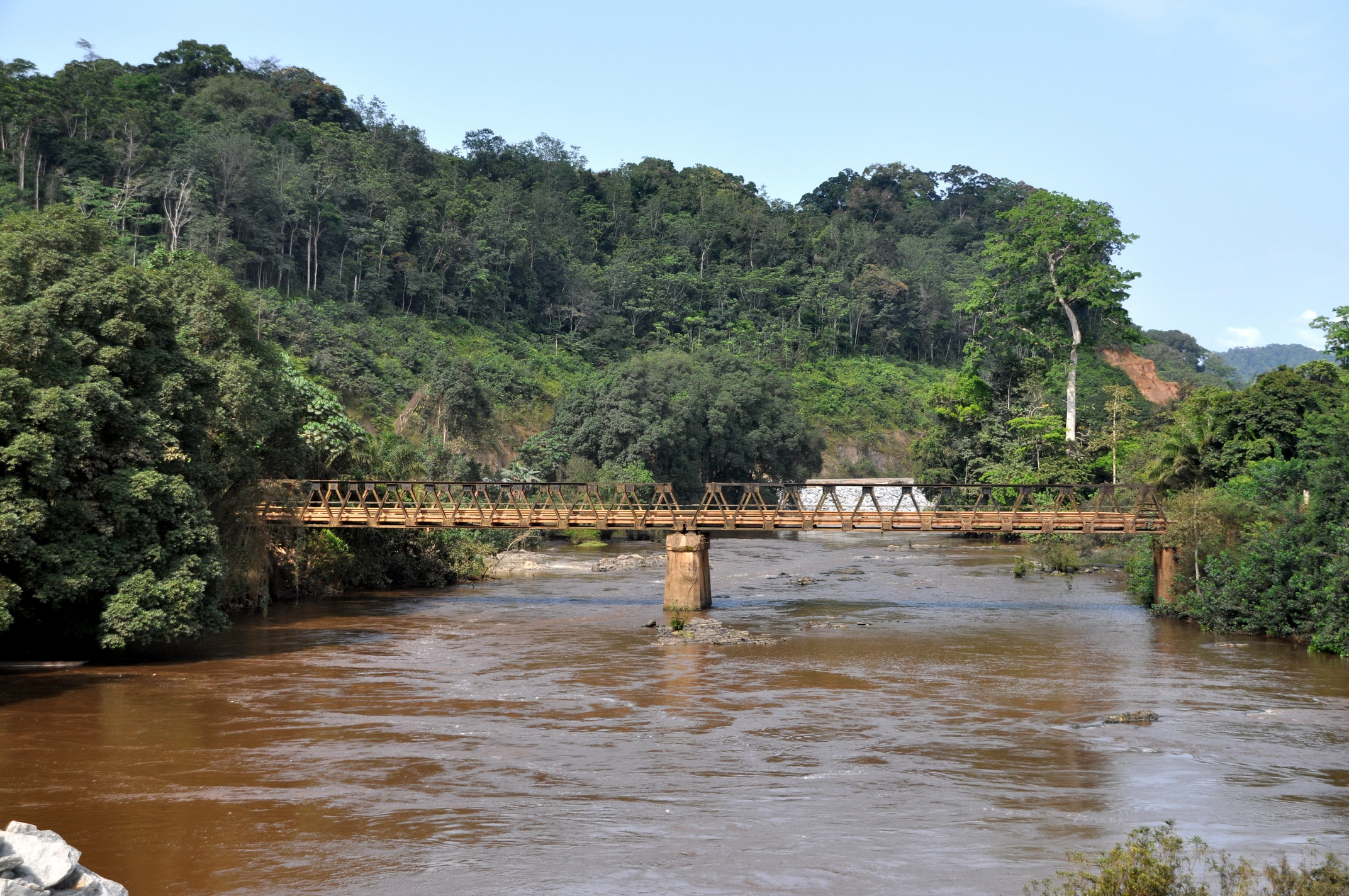
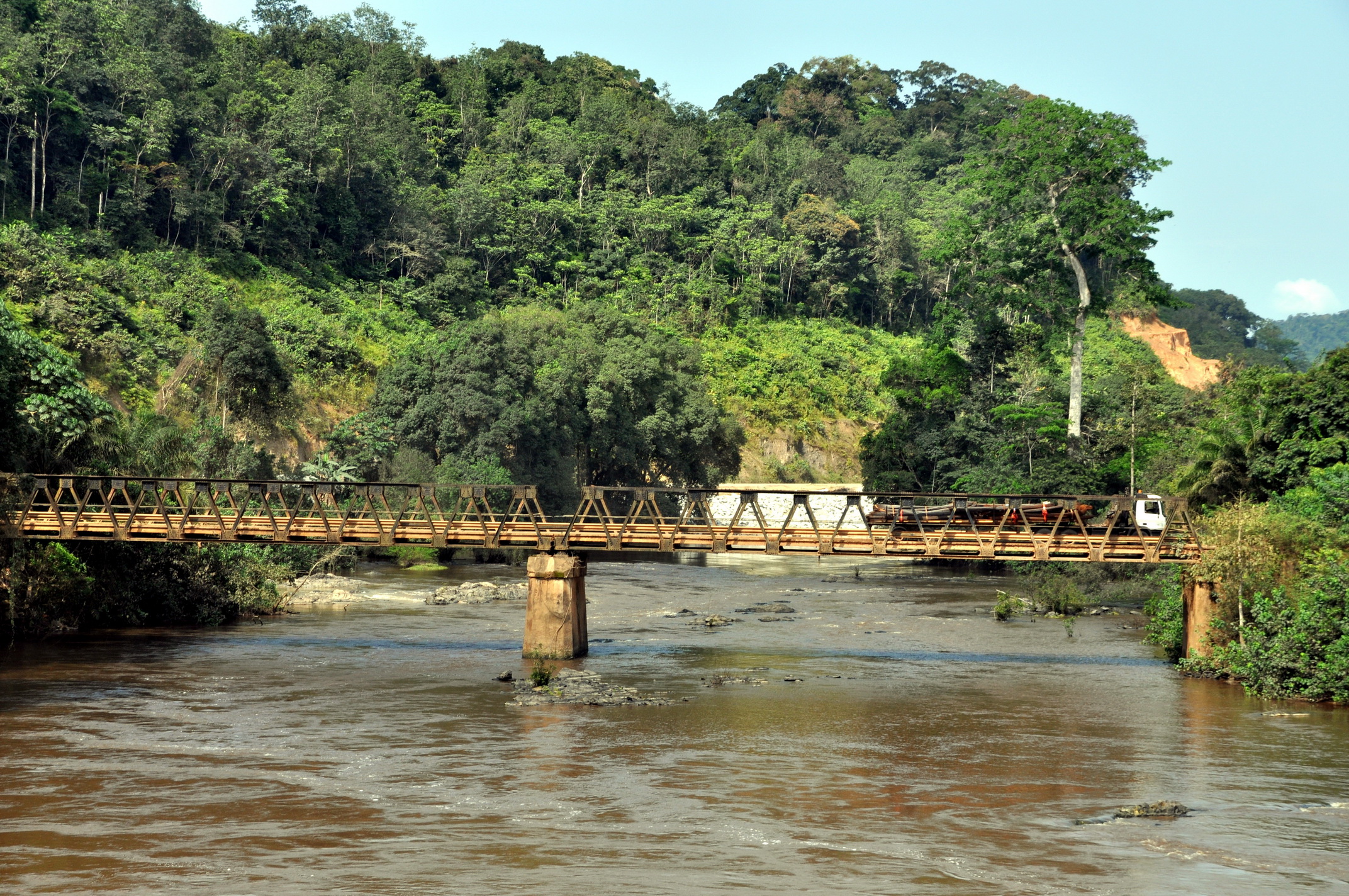
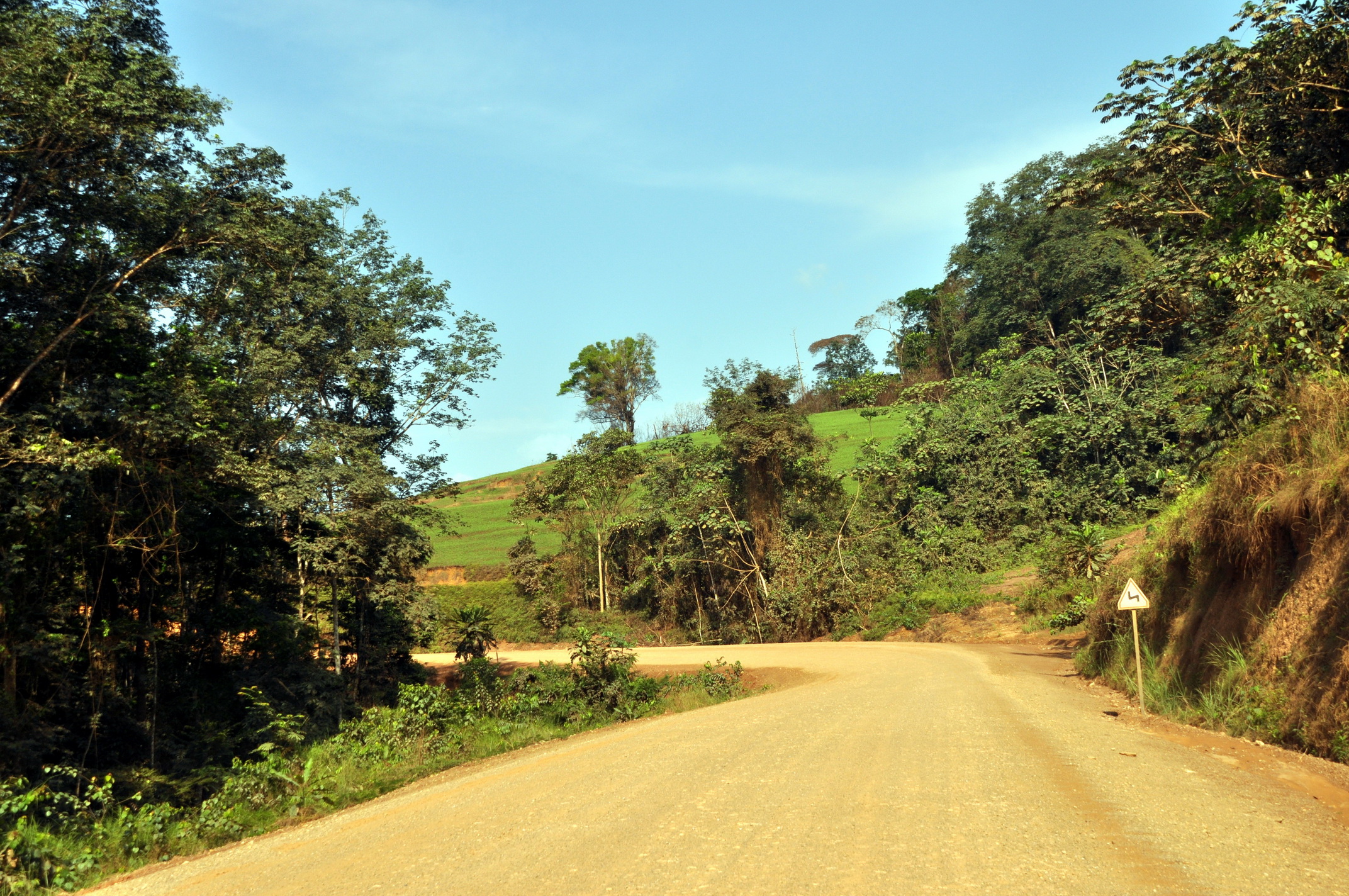
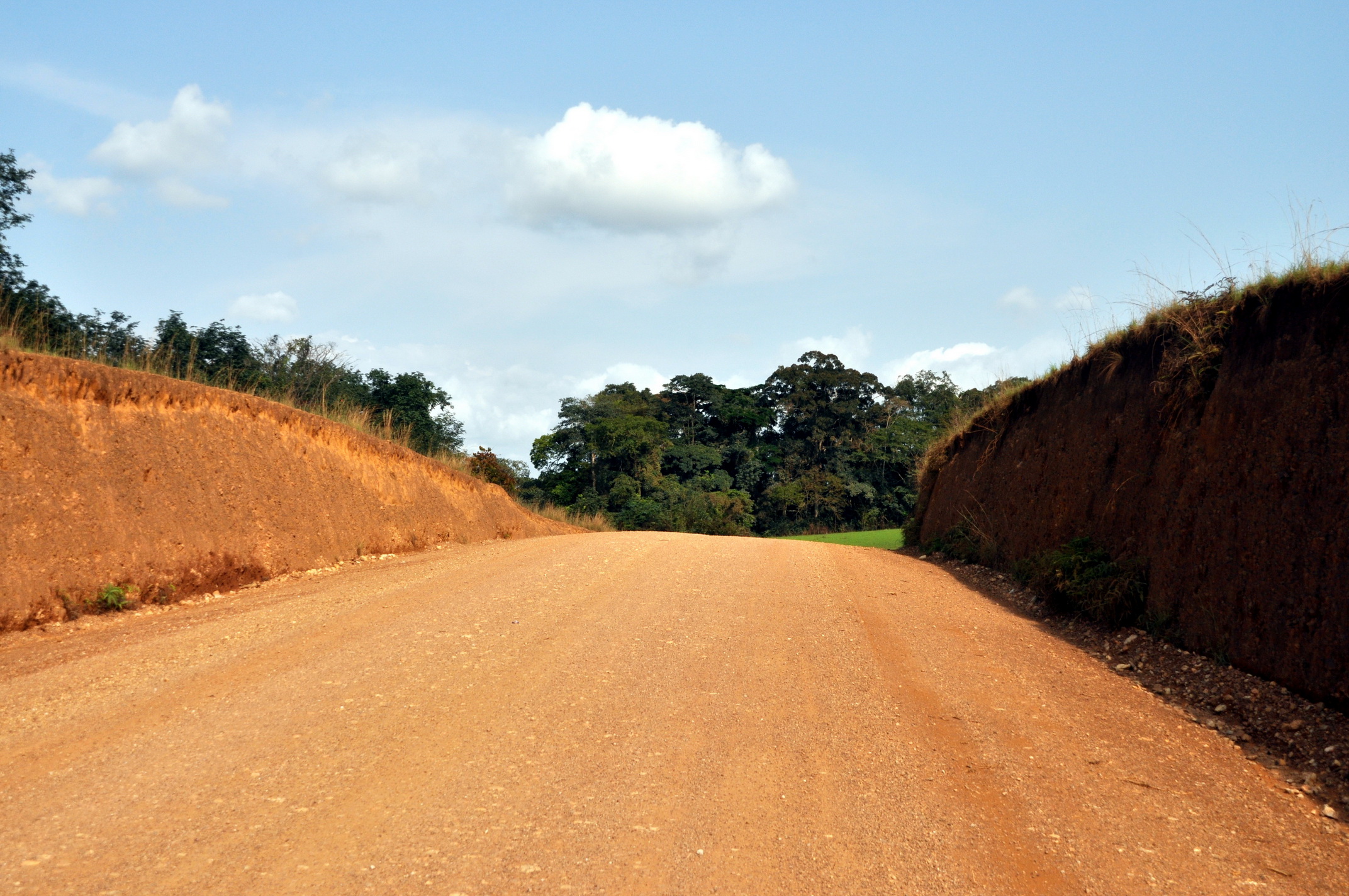
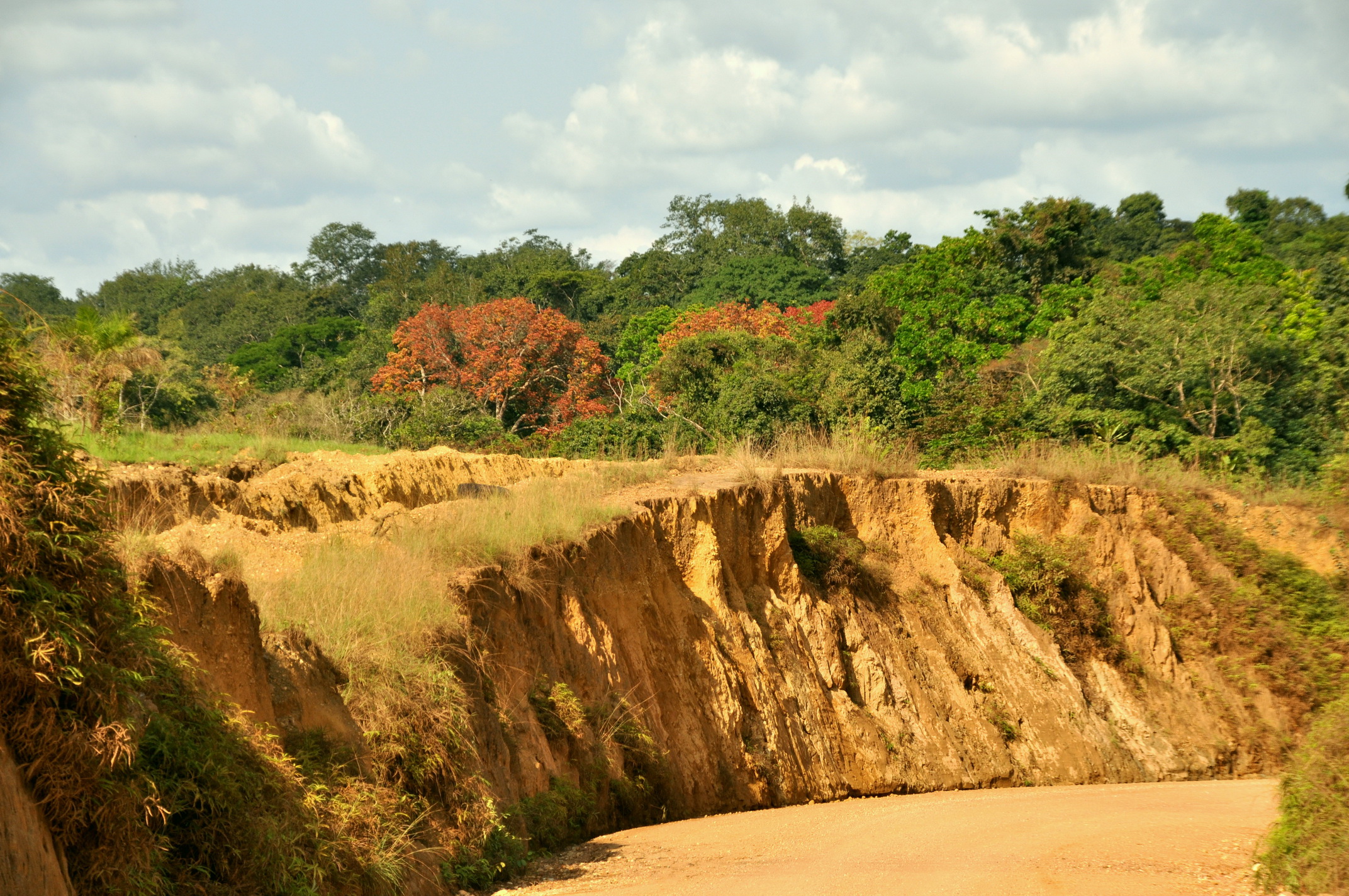
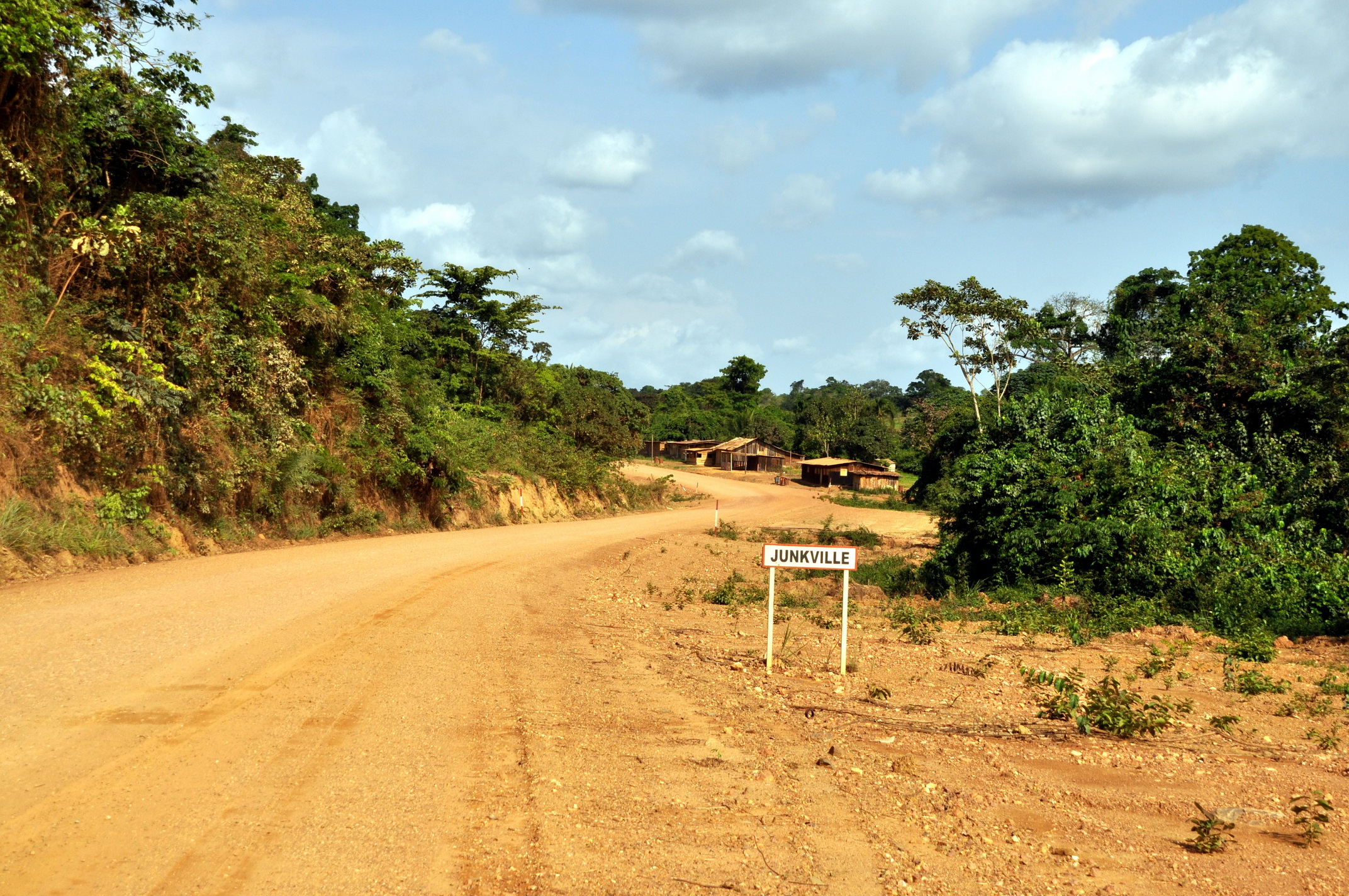
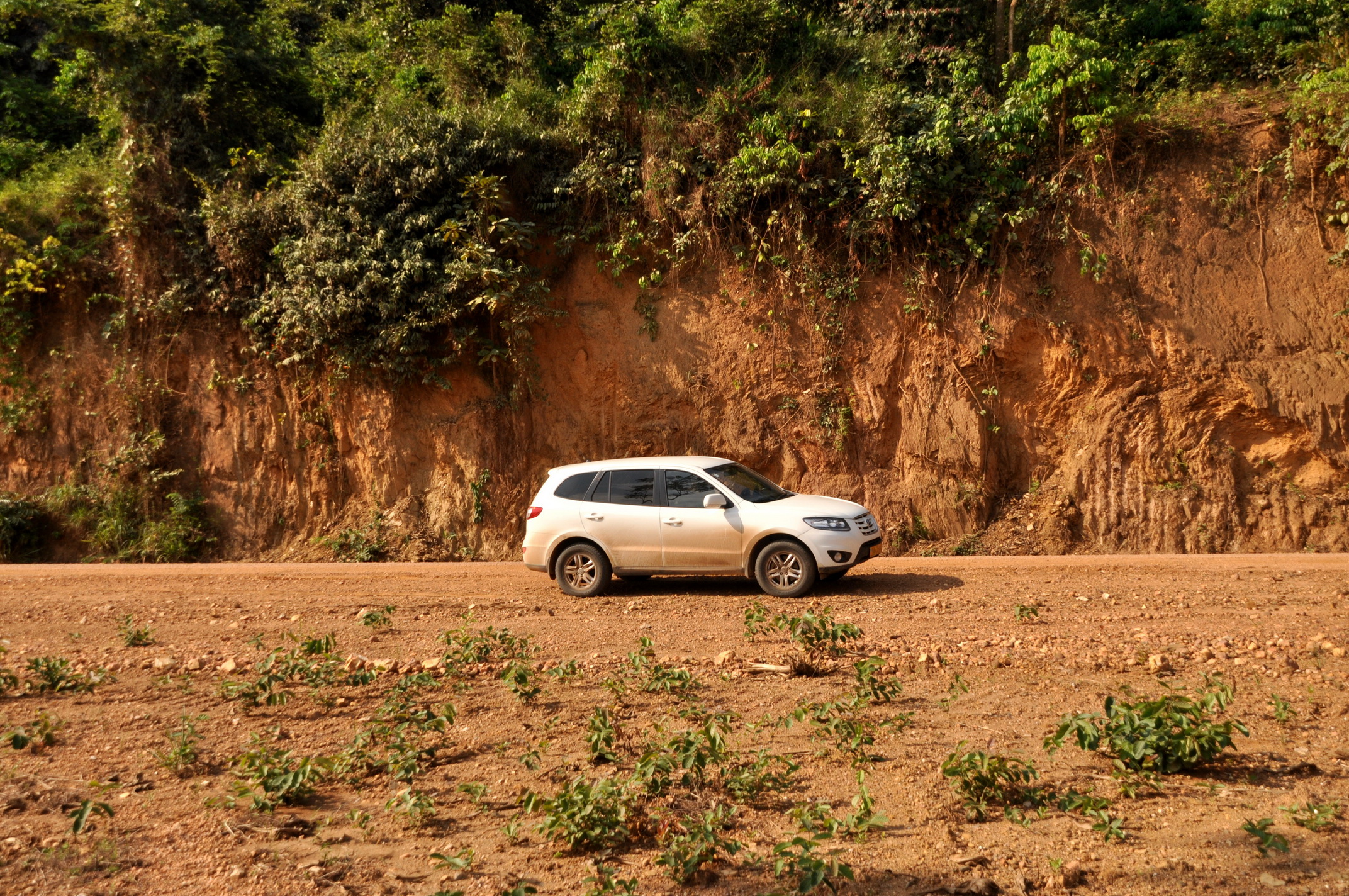
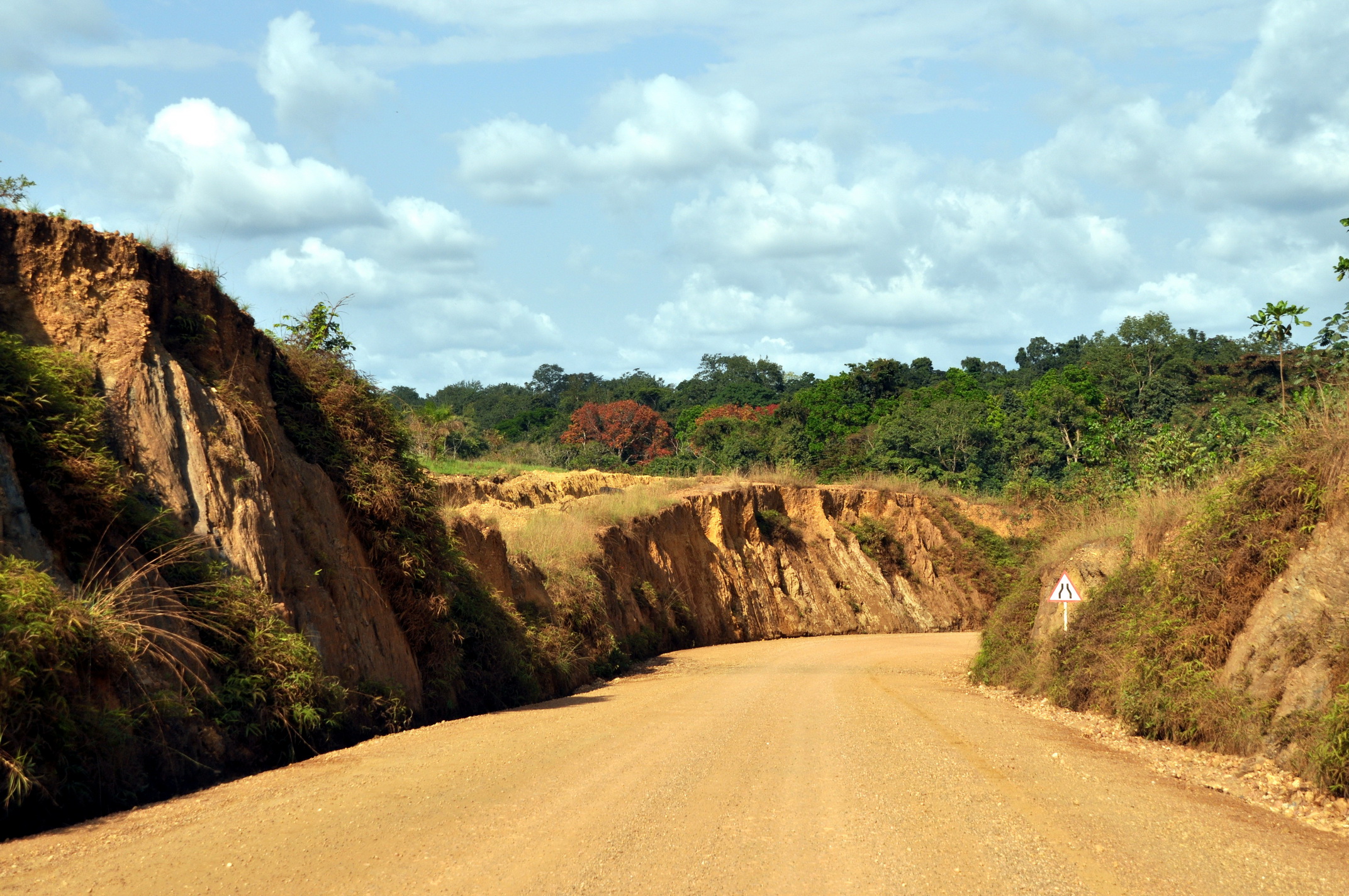
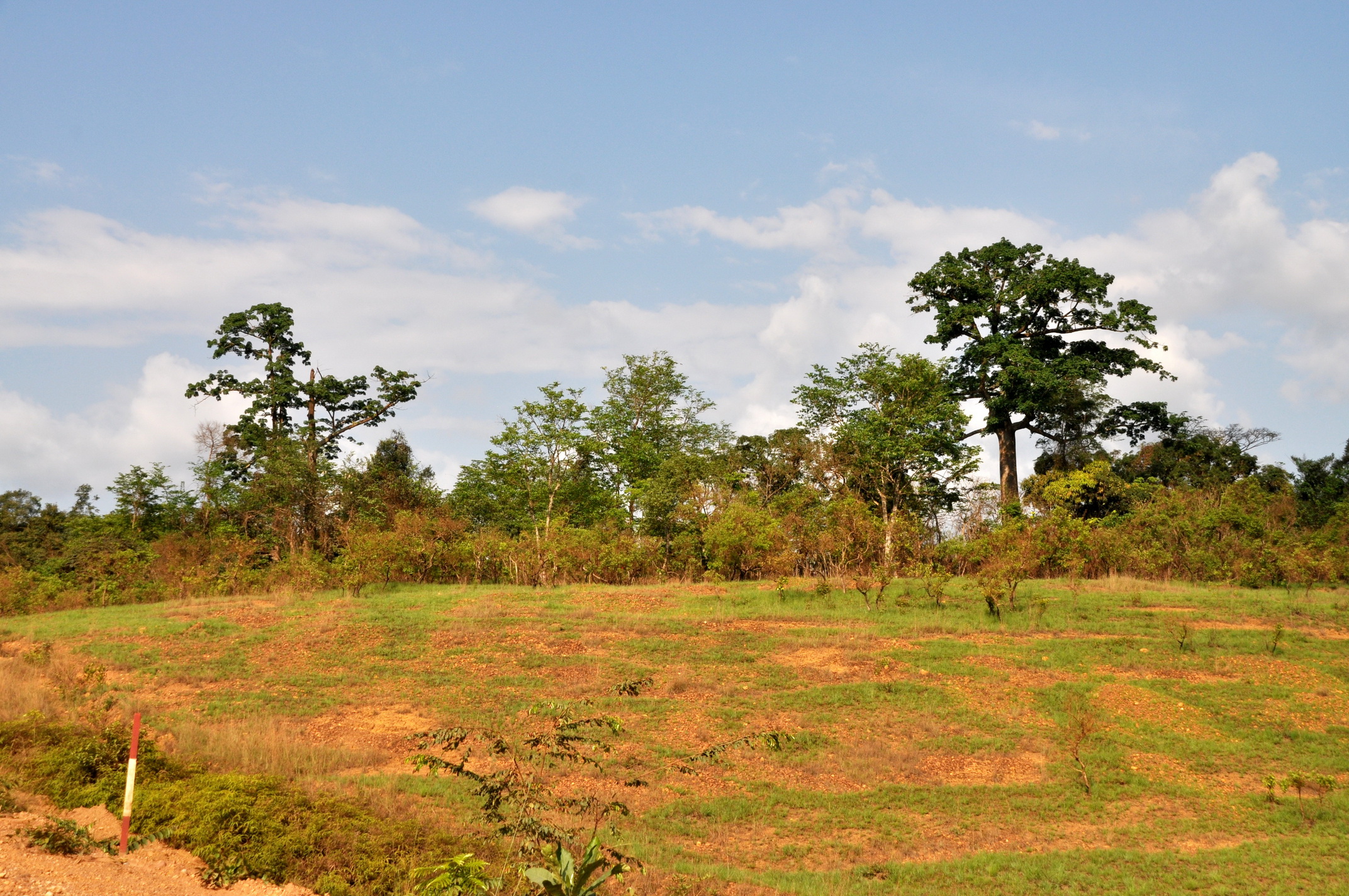
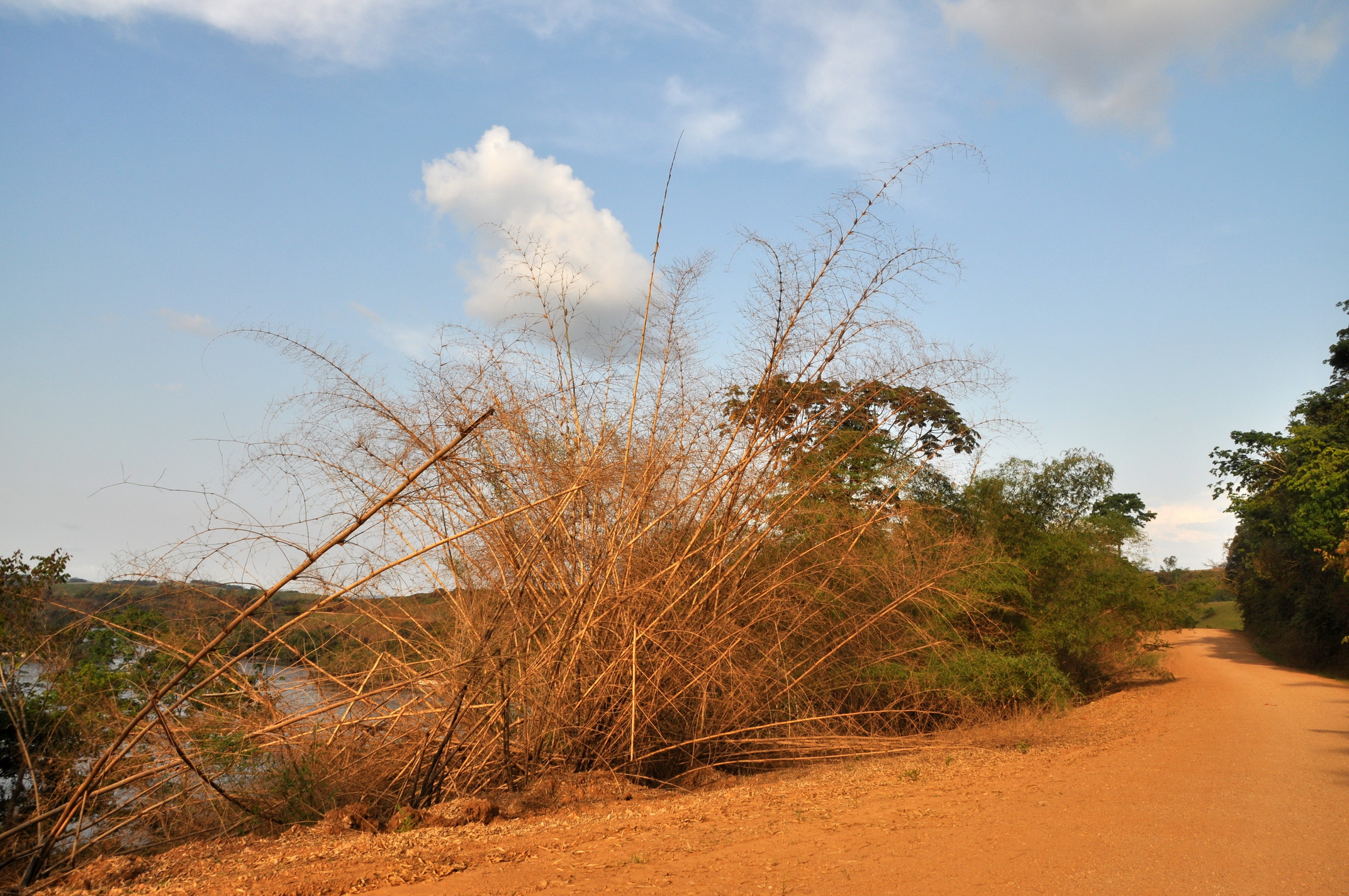
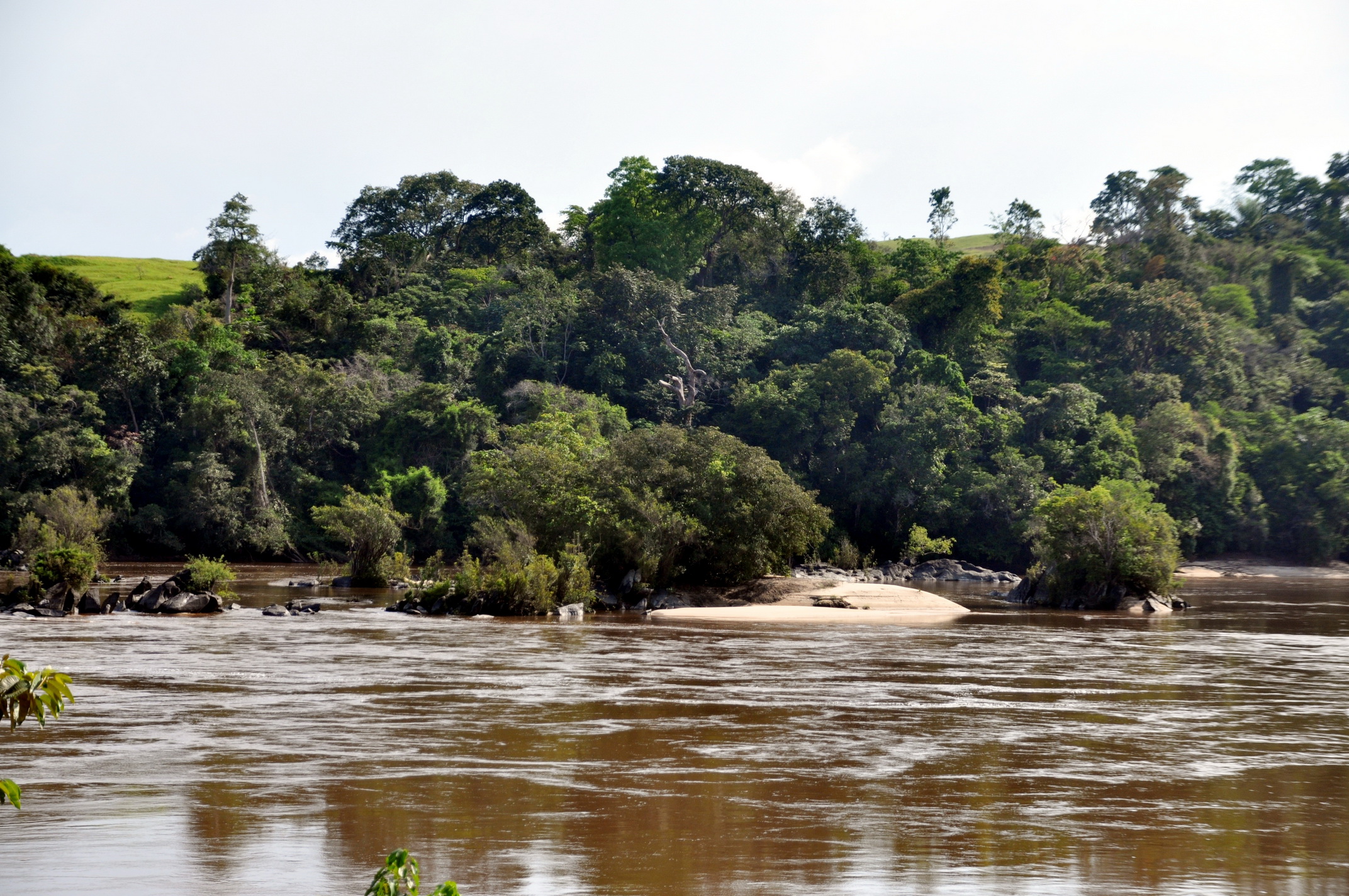
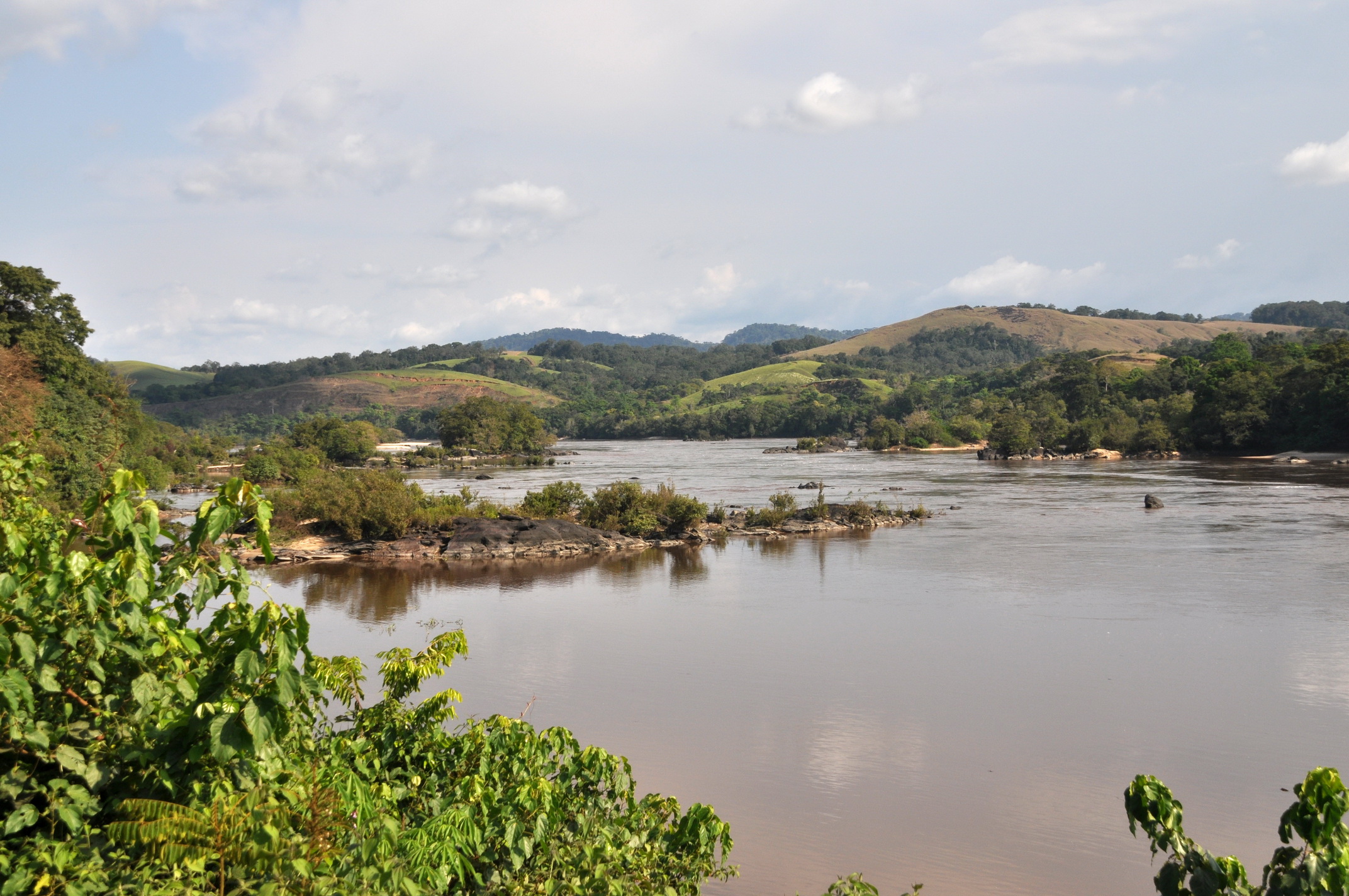
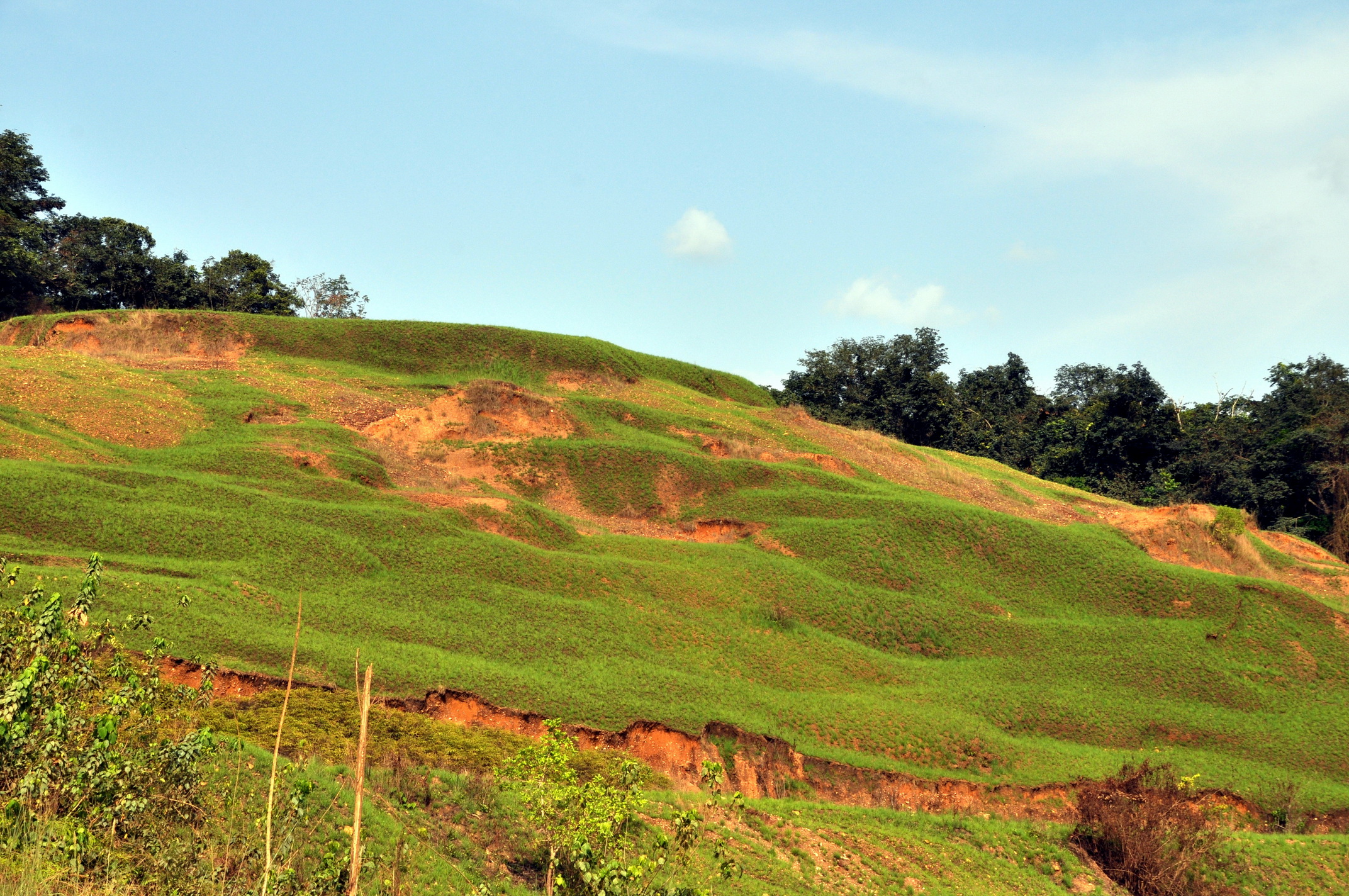
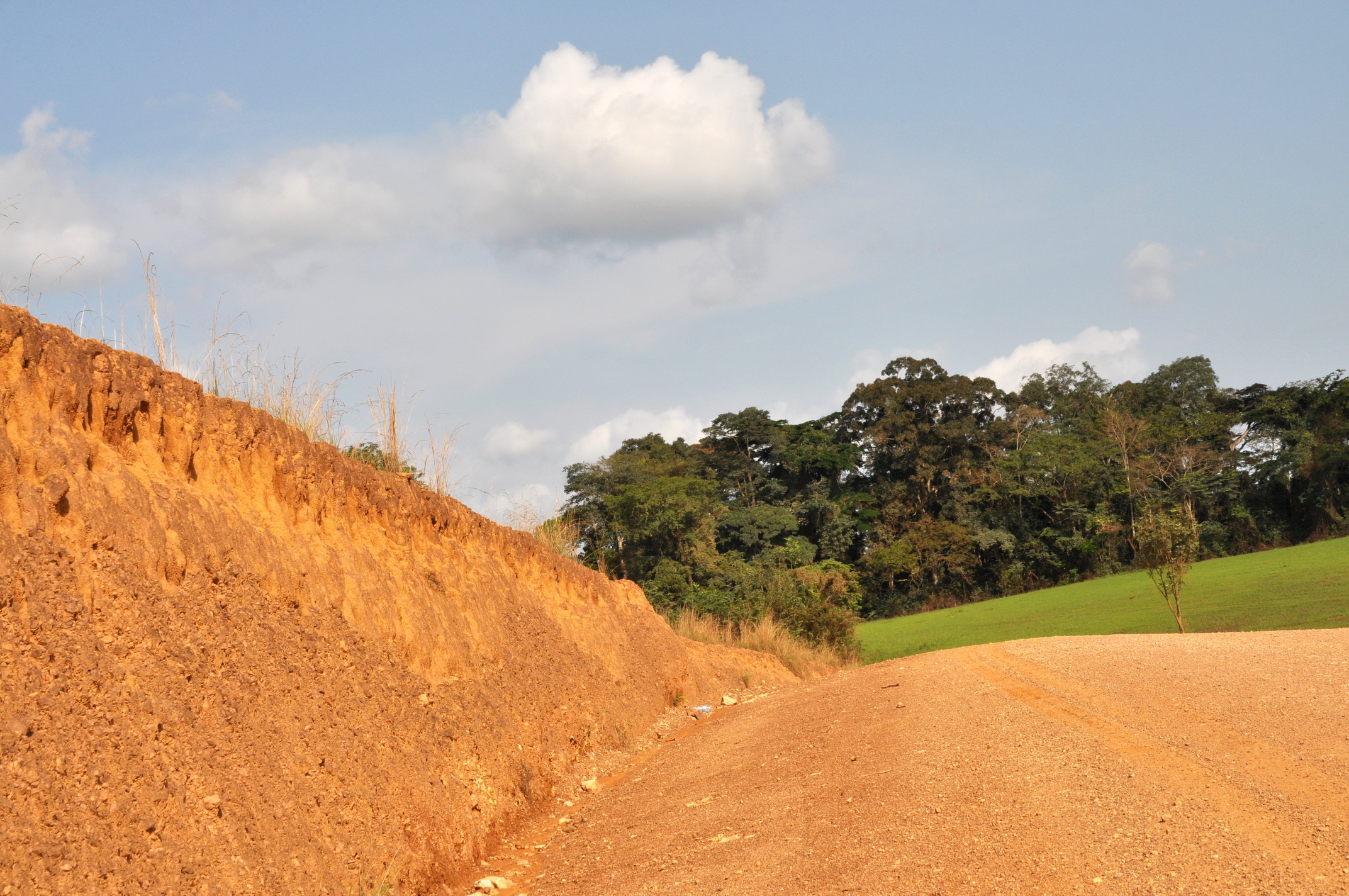
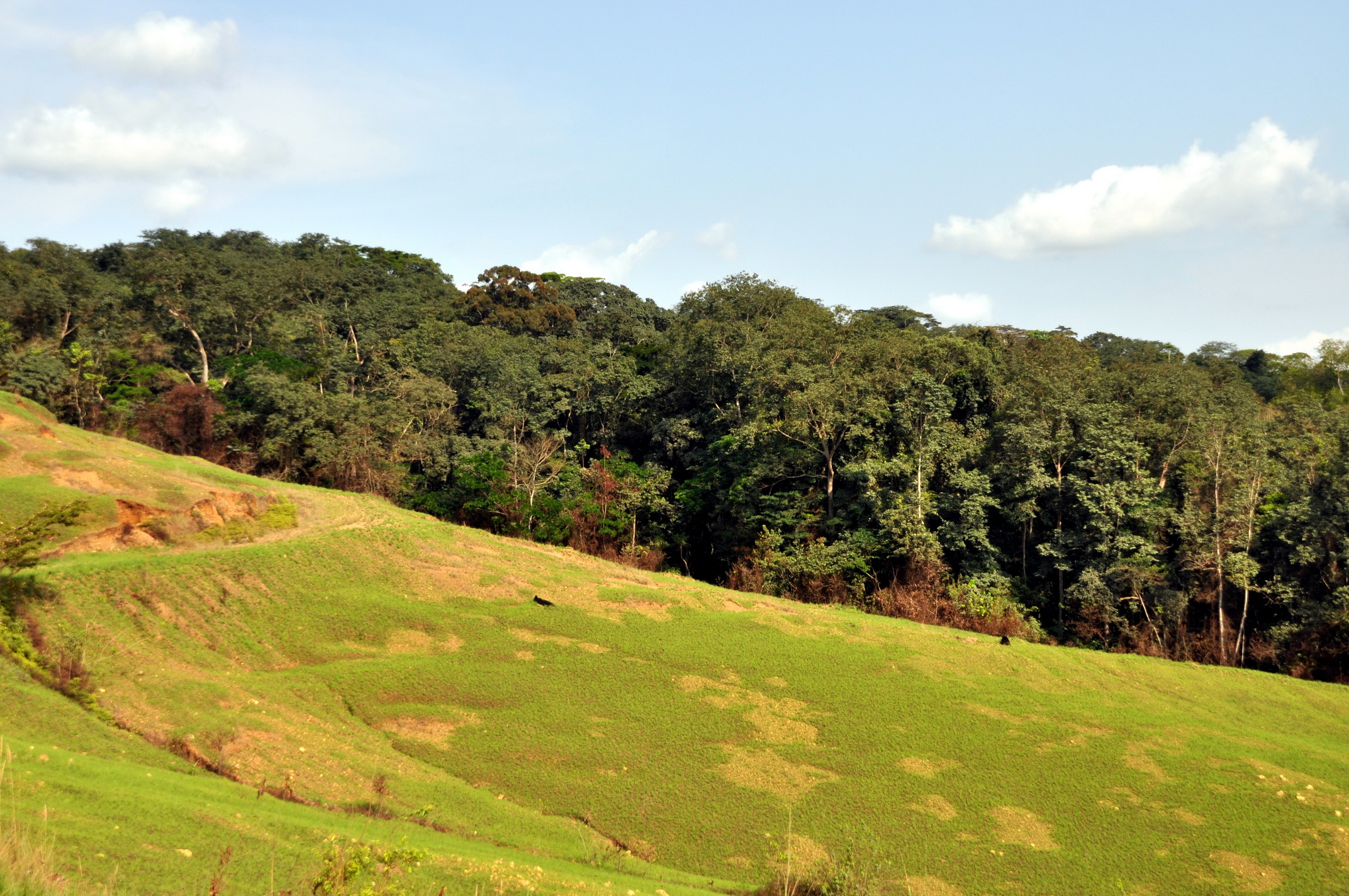
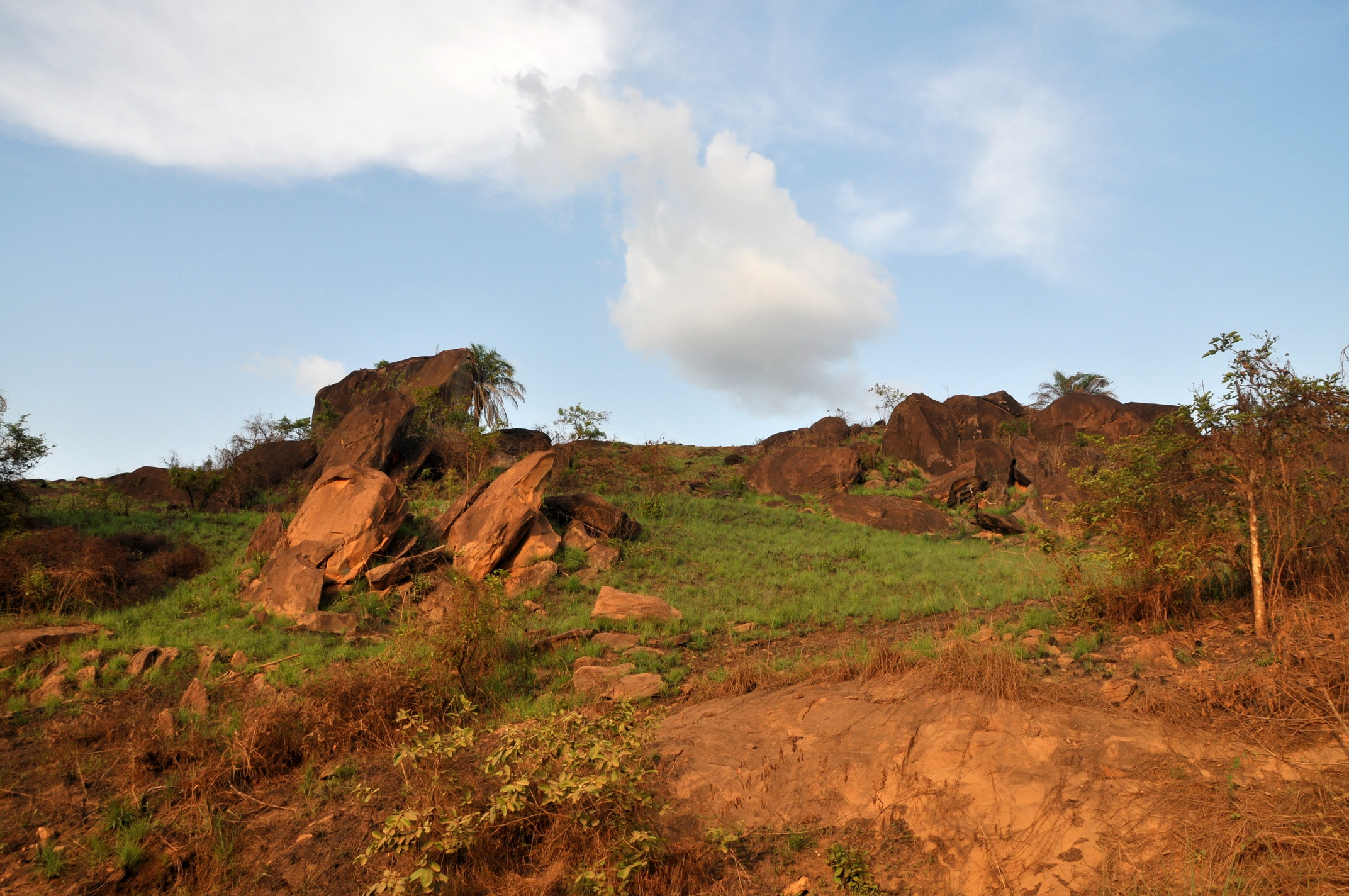
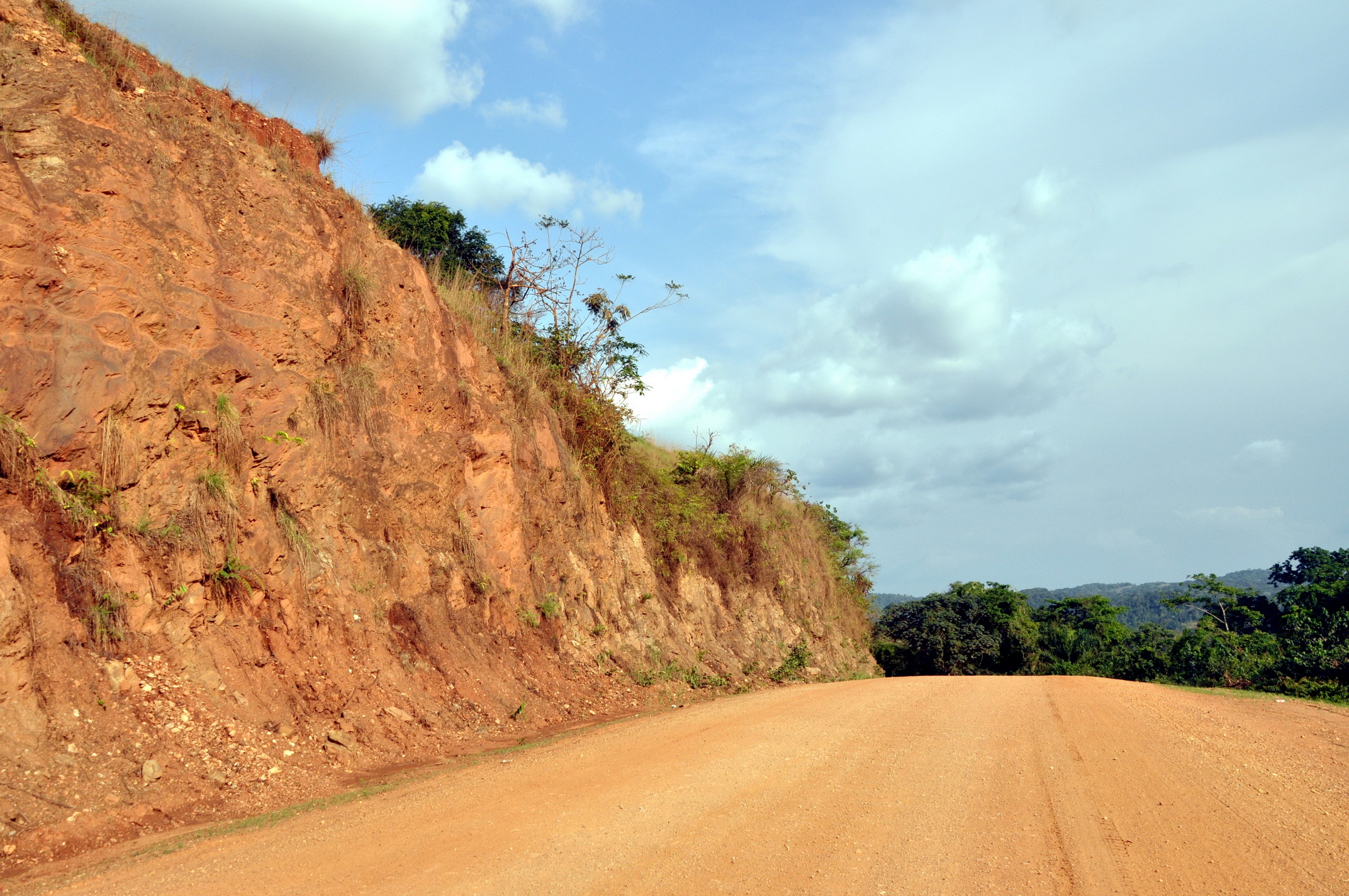
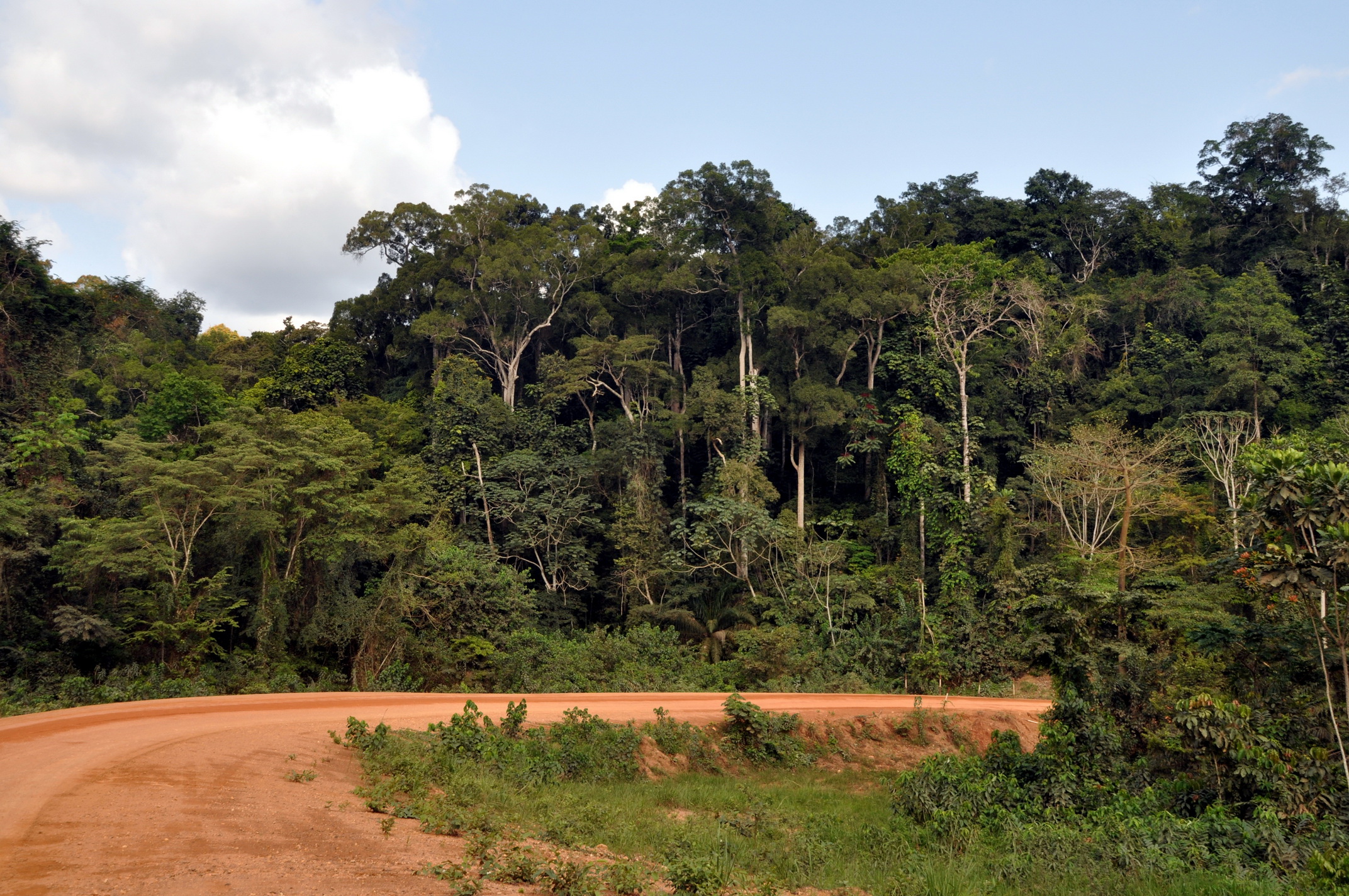
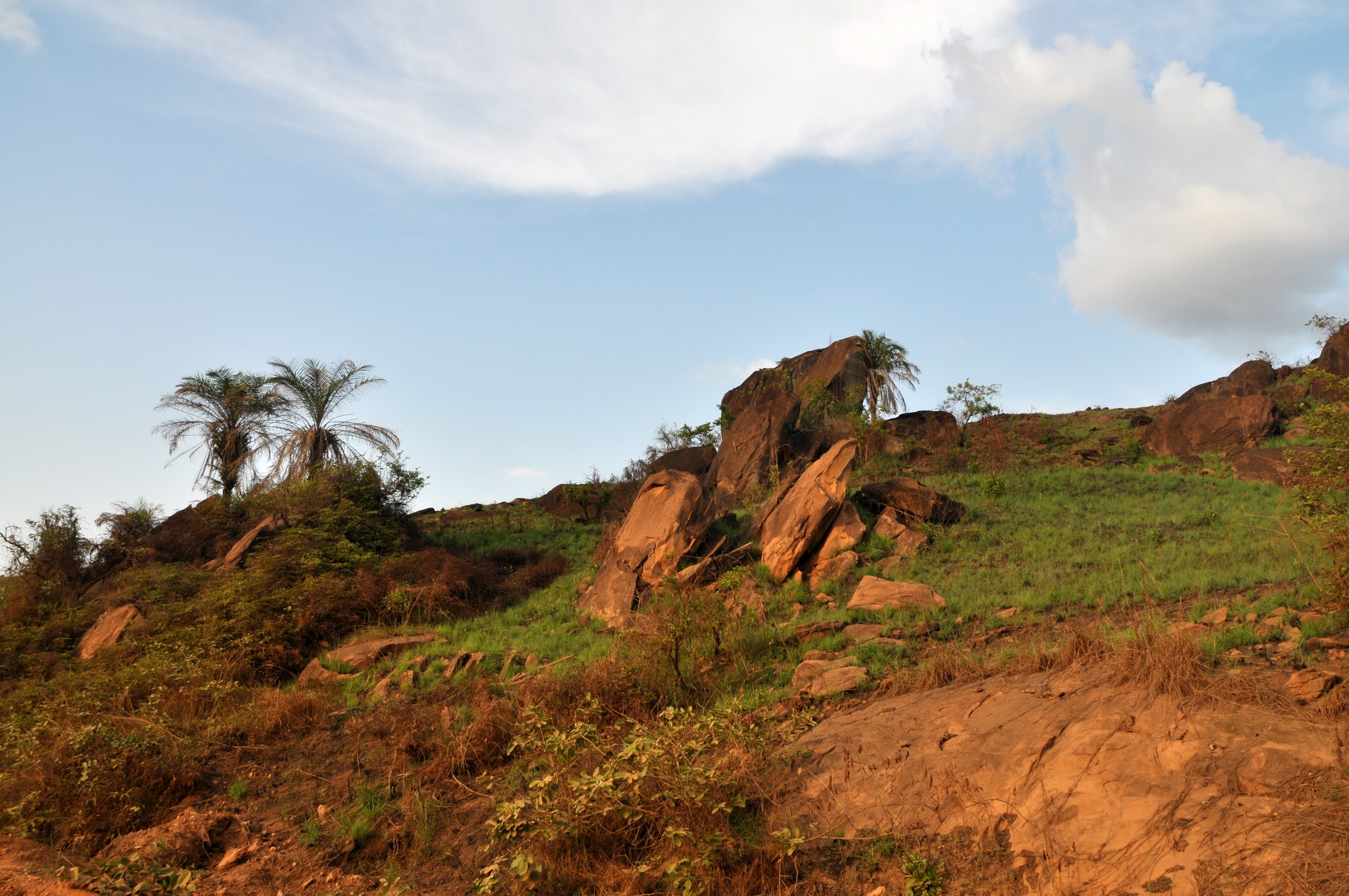
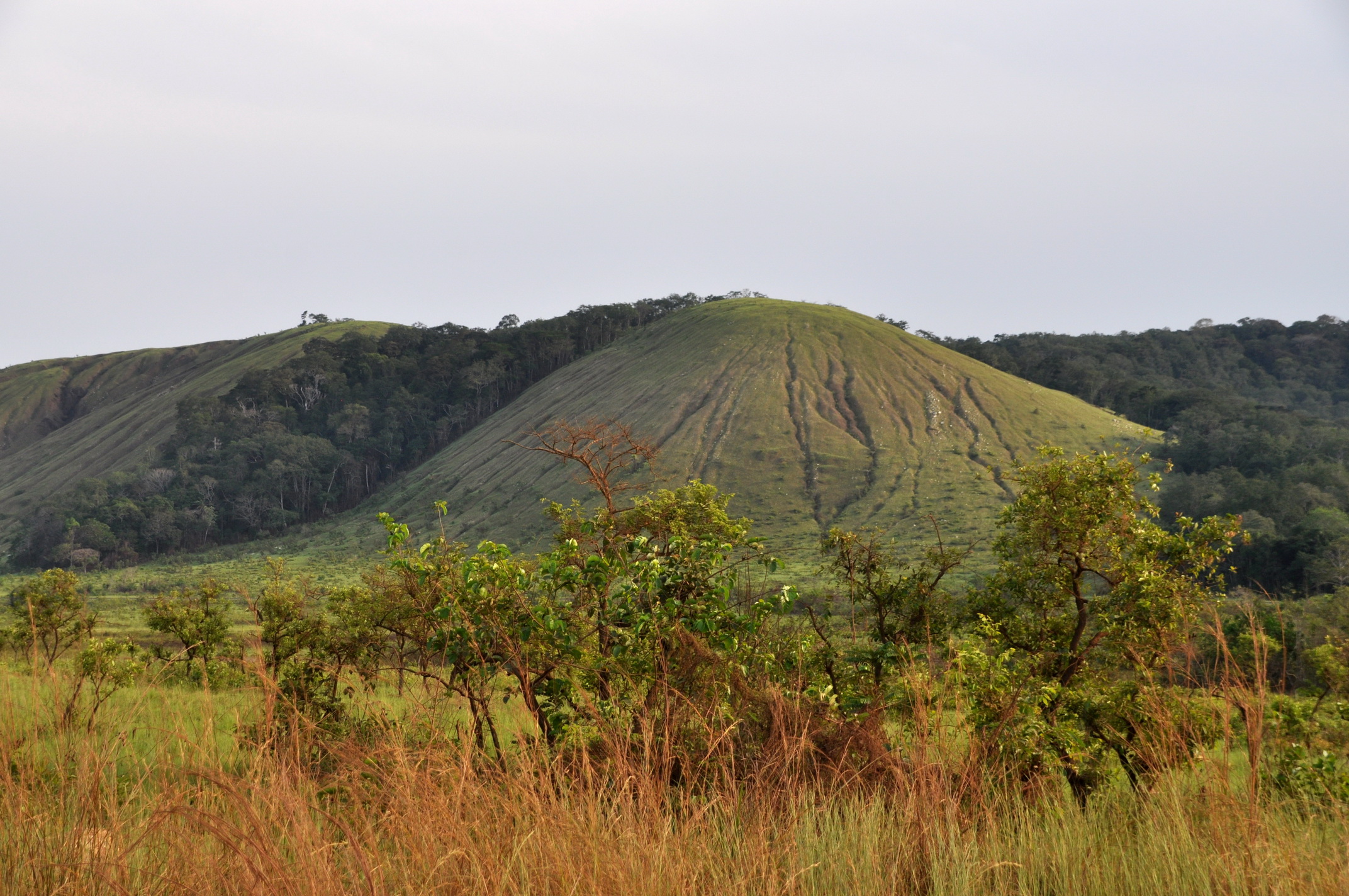
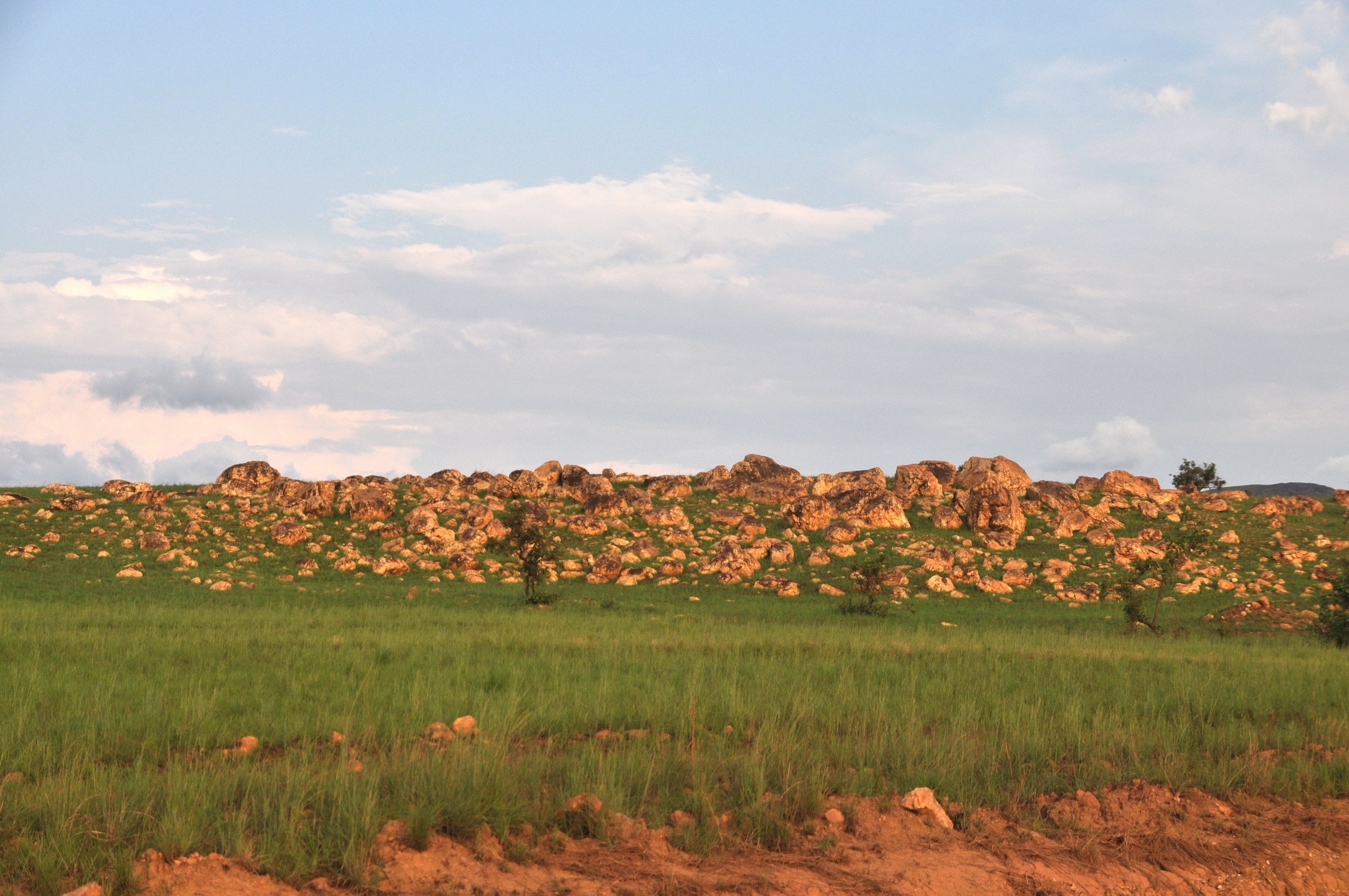
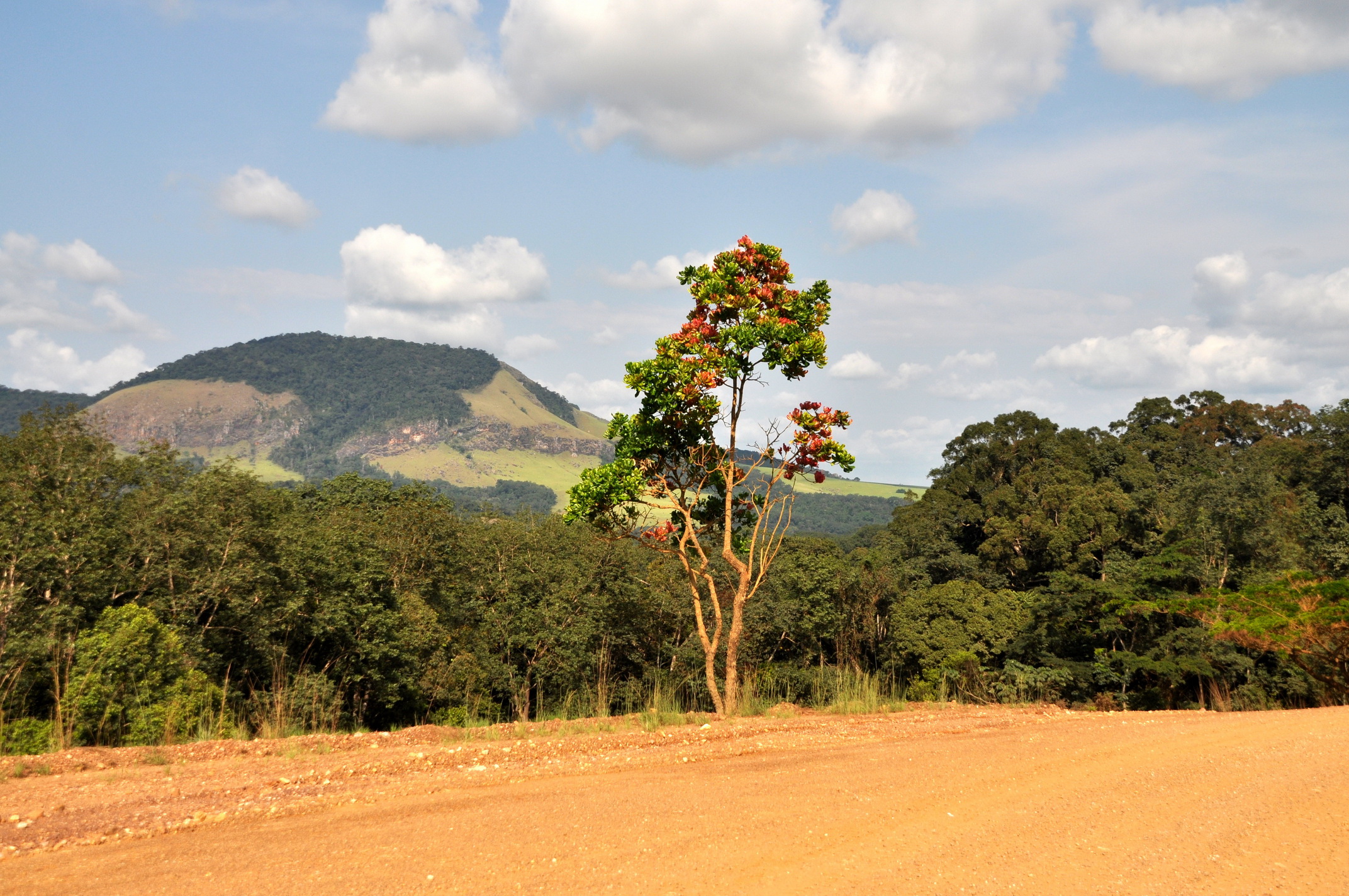
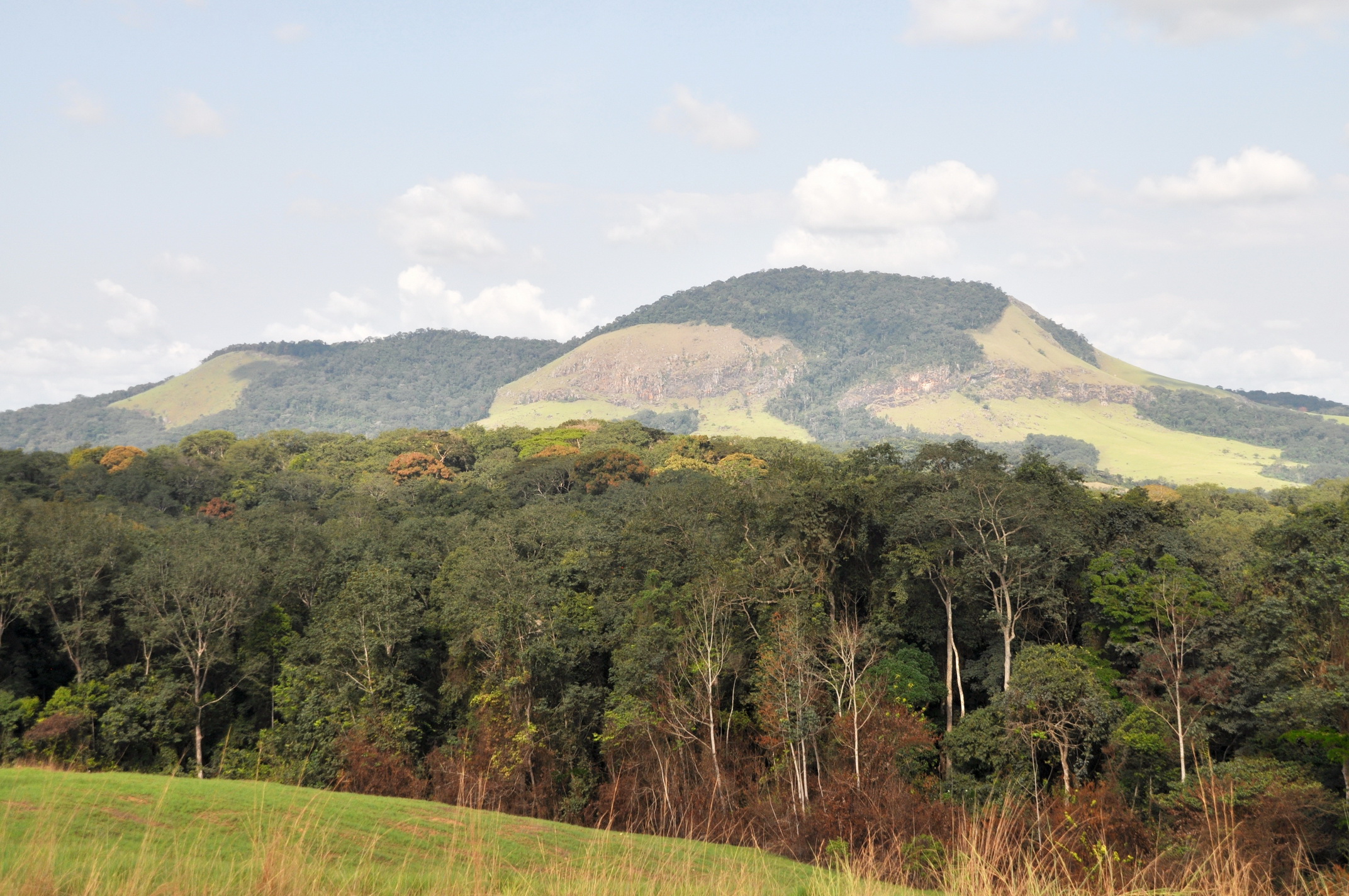
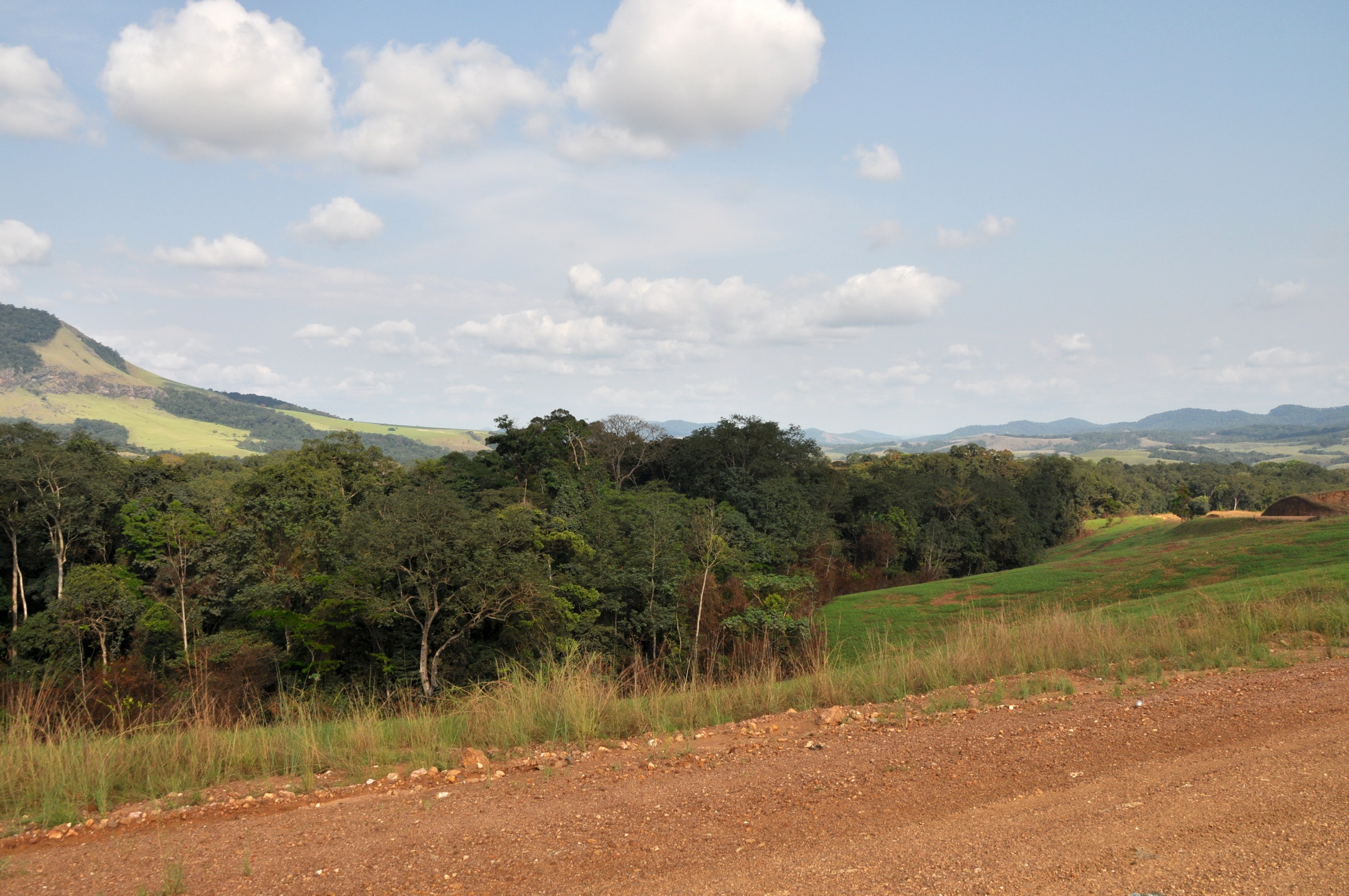
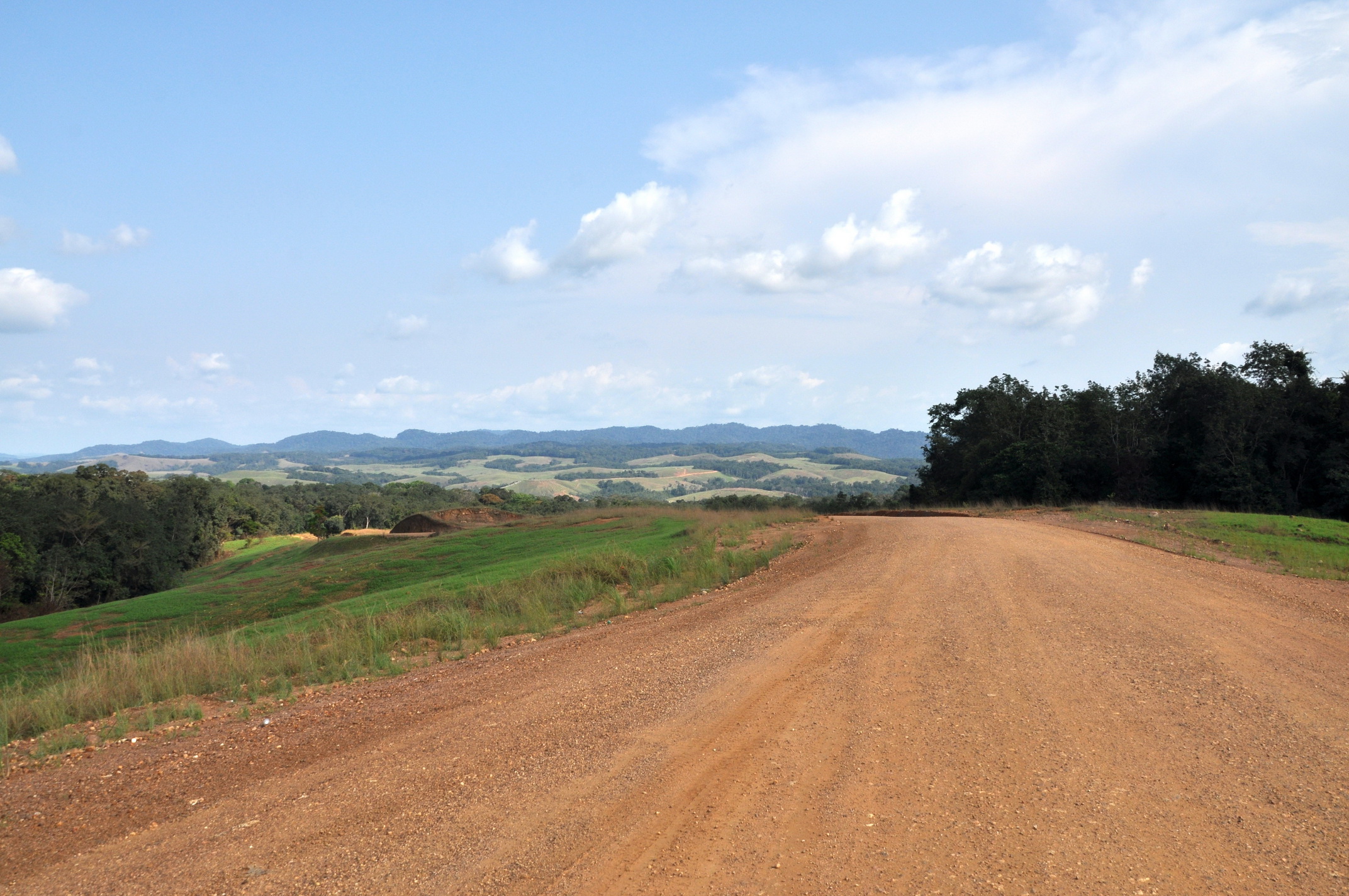
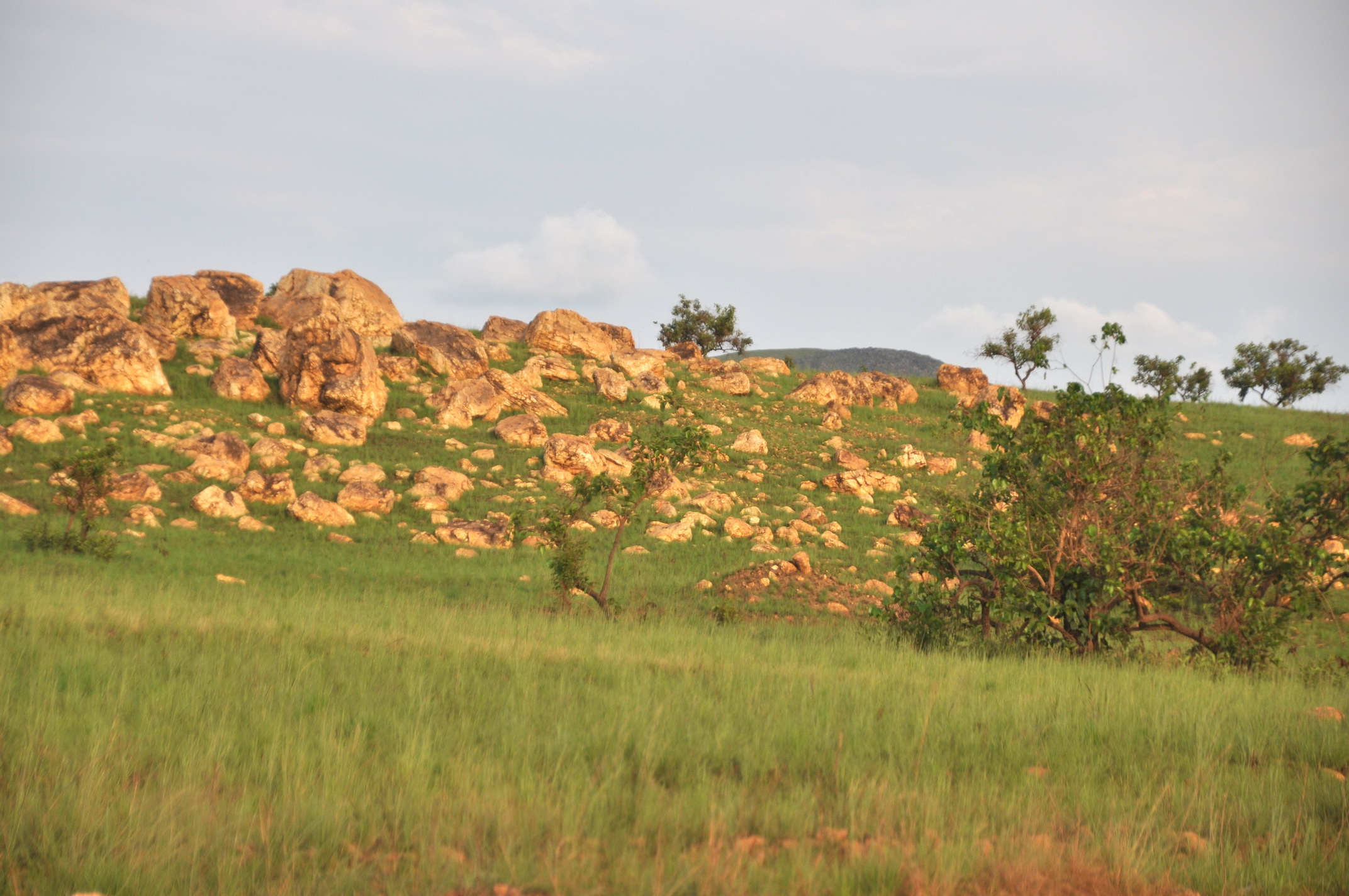
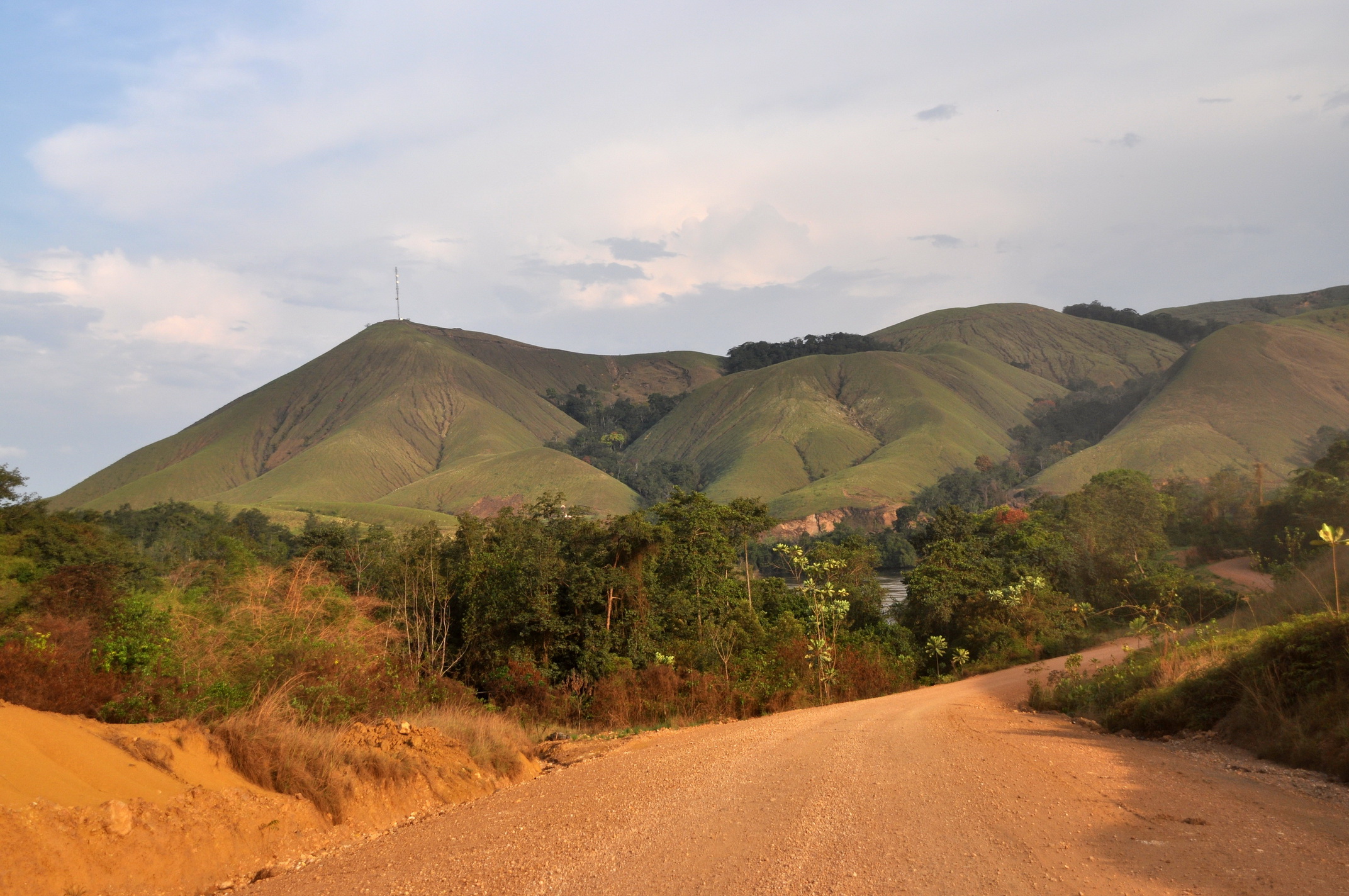
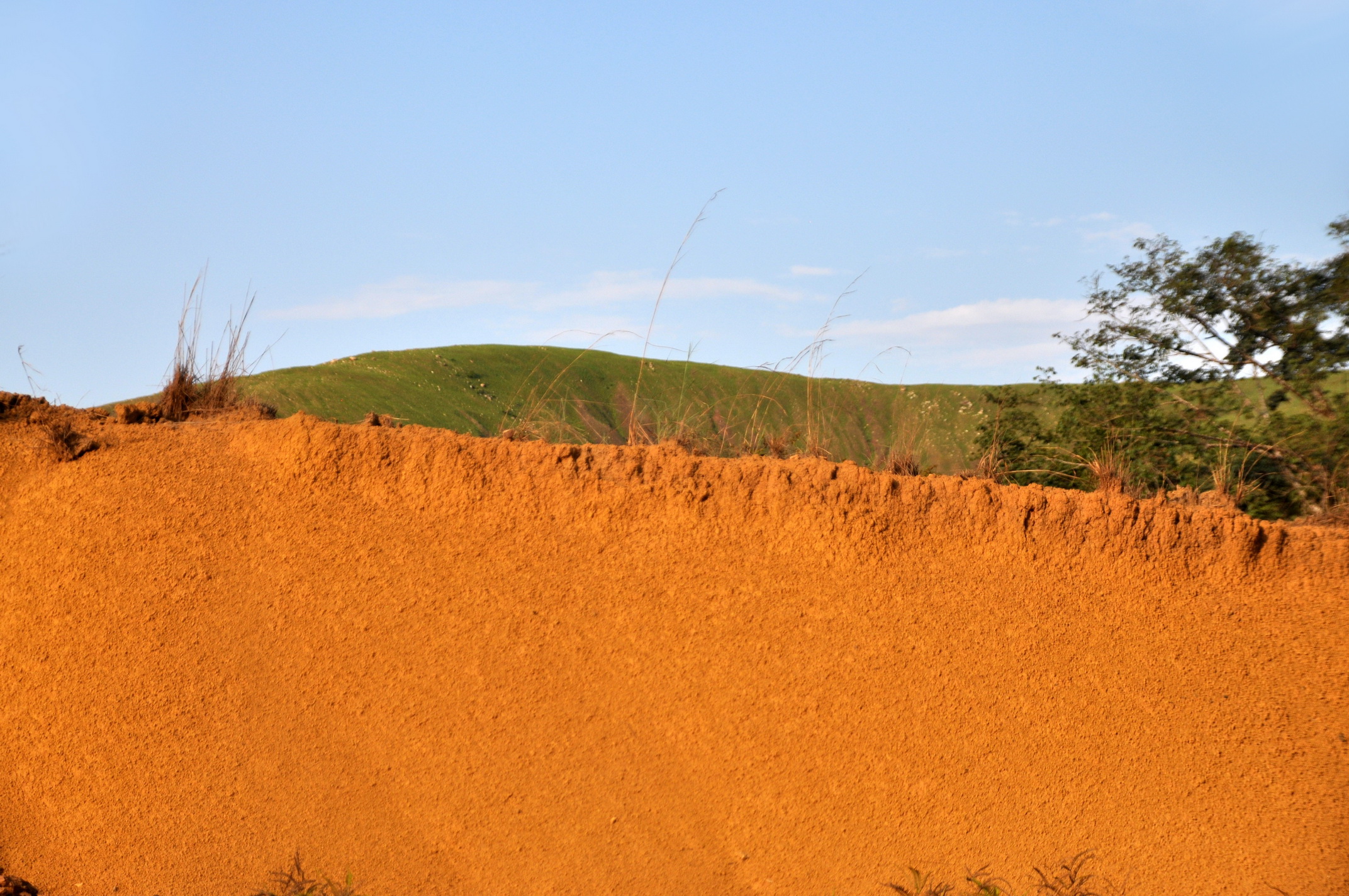
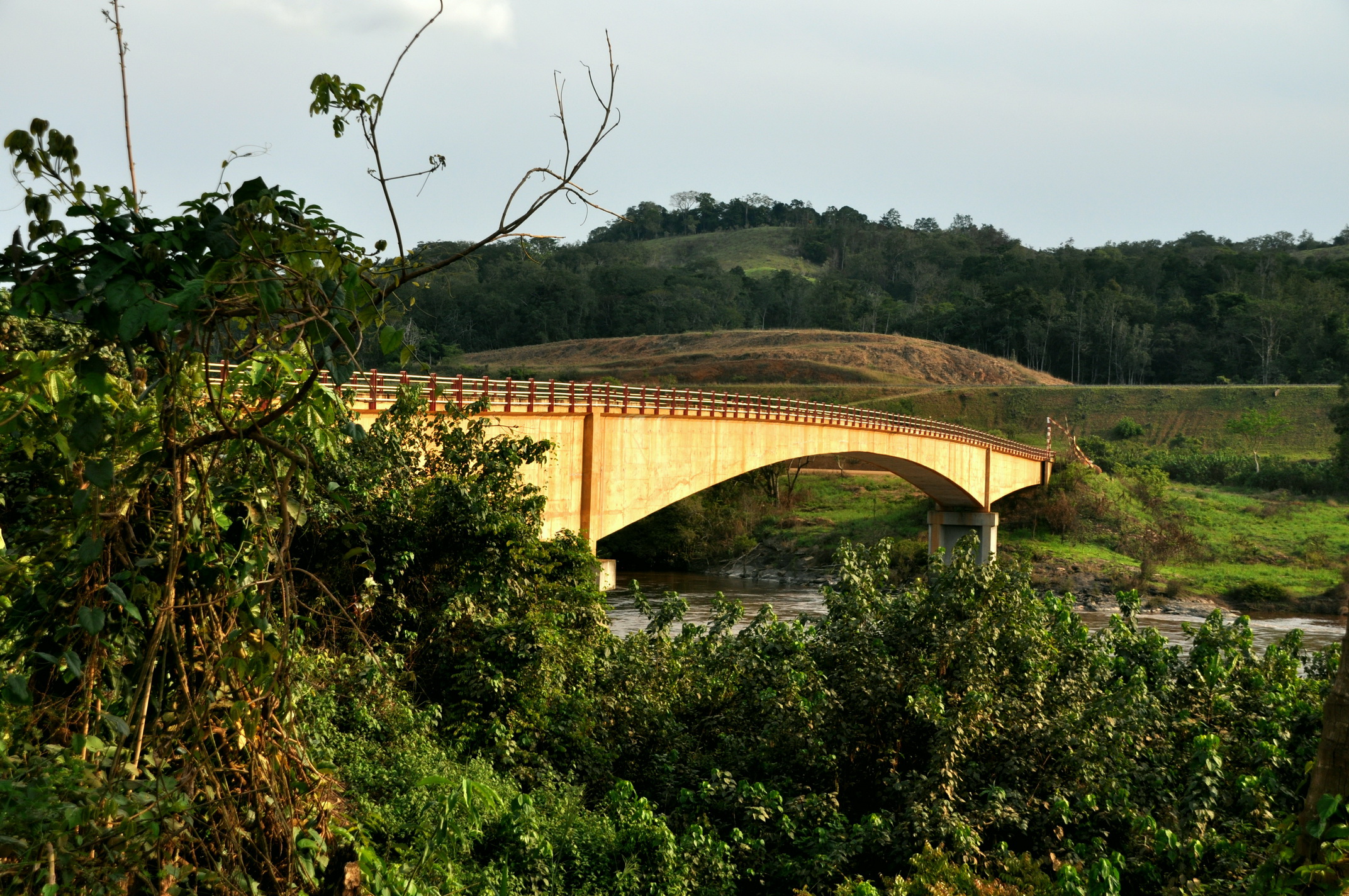
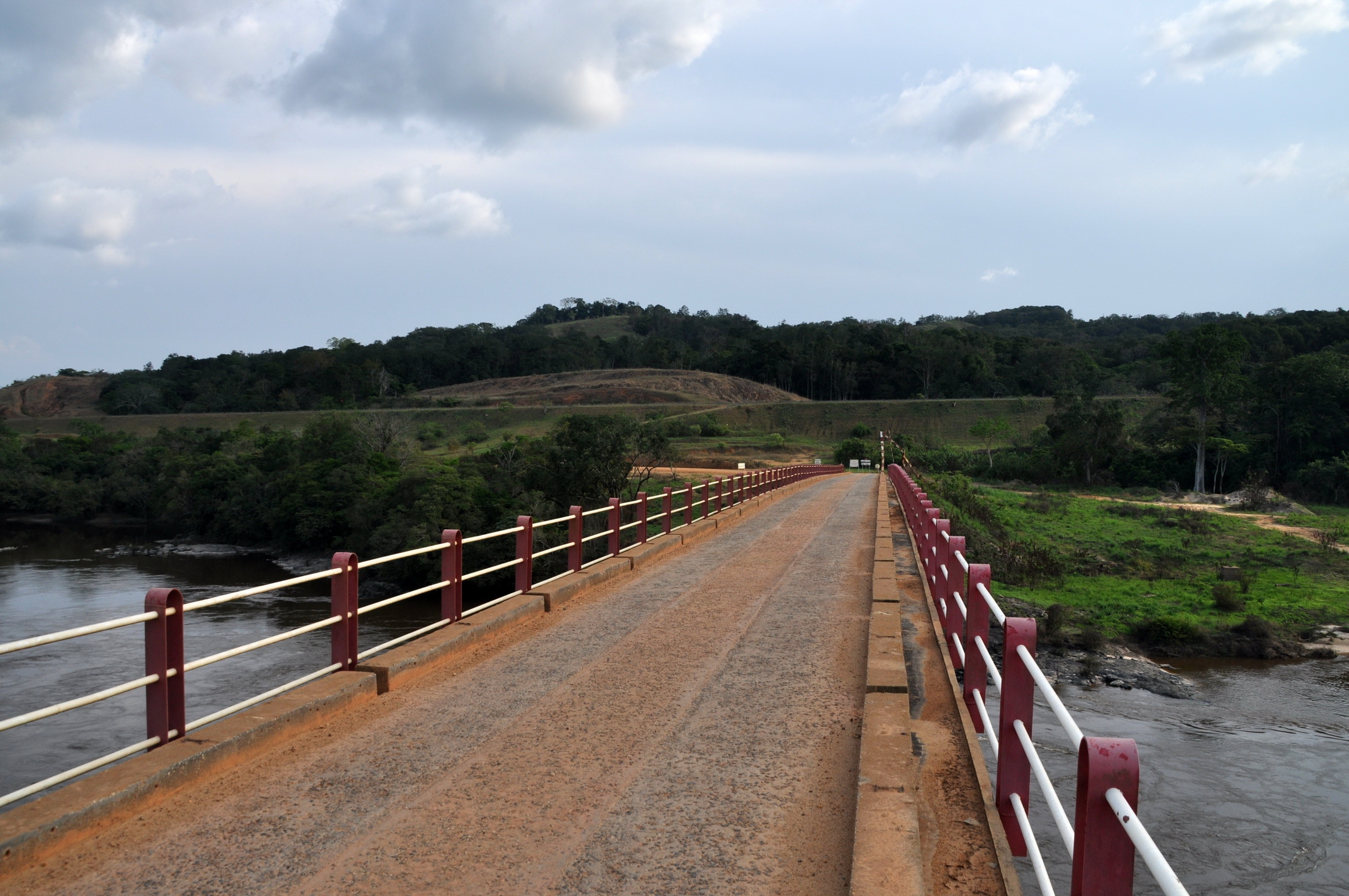
It’s worth noting that this was already the new road. It didn’t follow the route on my maps at all. It crossed the Ogooué at another spot on a modern concrete bridge (00°06.180′S, 11°24.950′E).
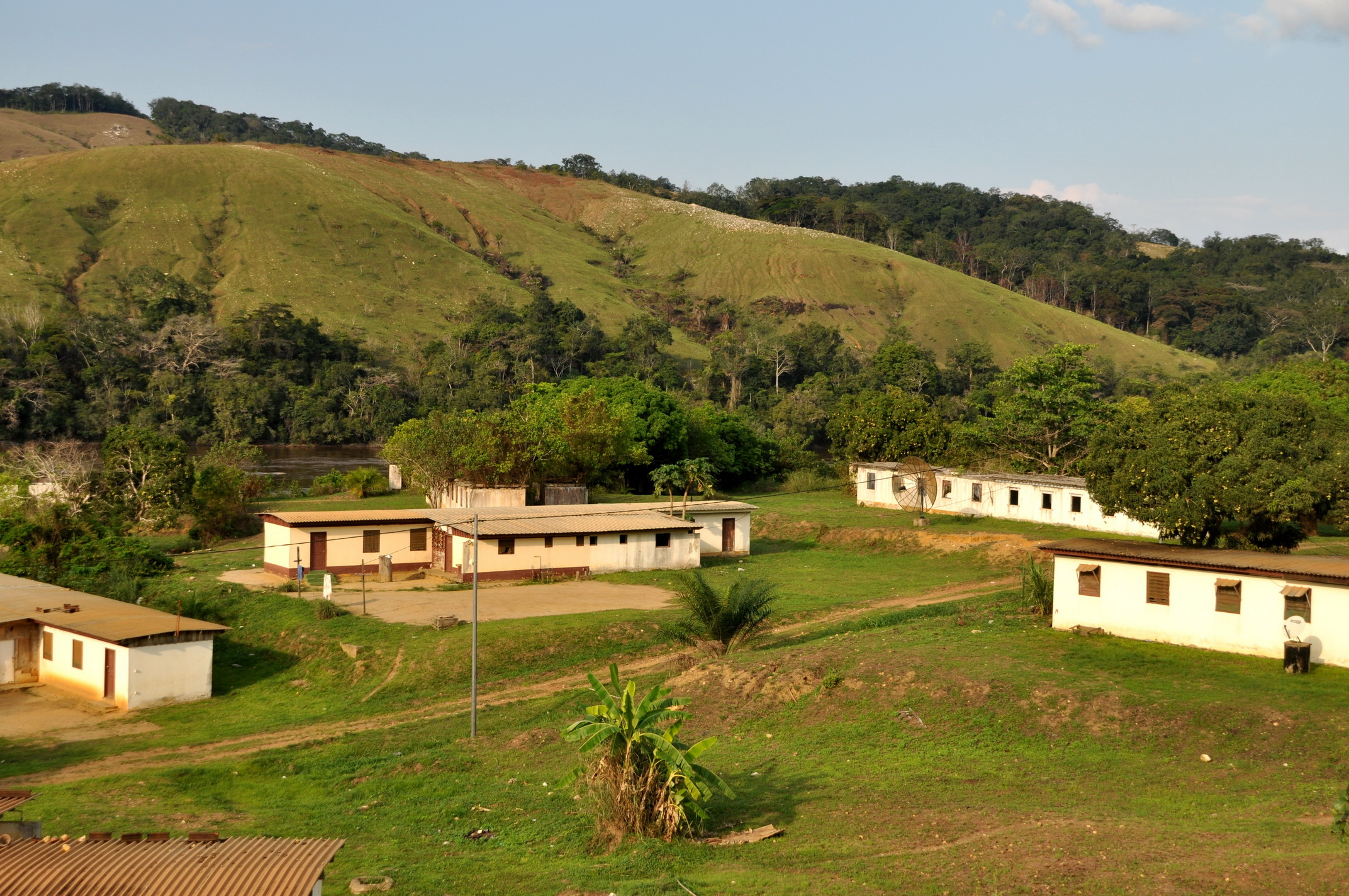
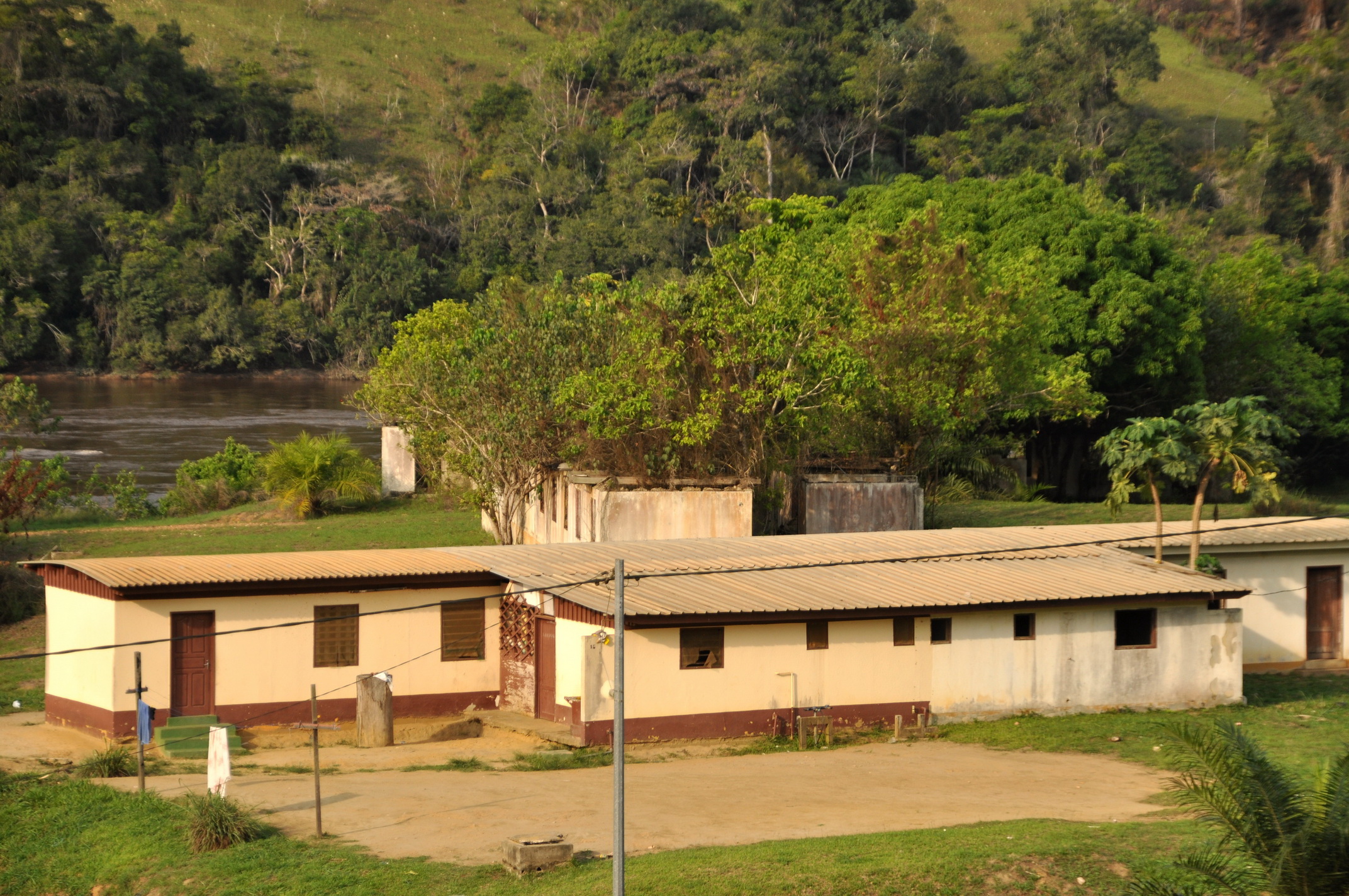
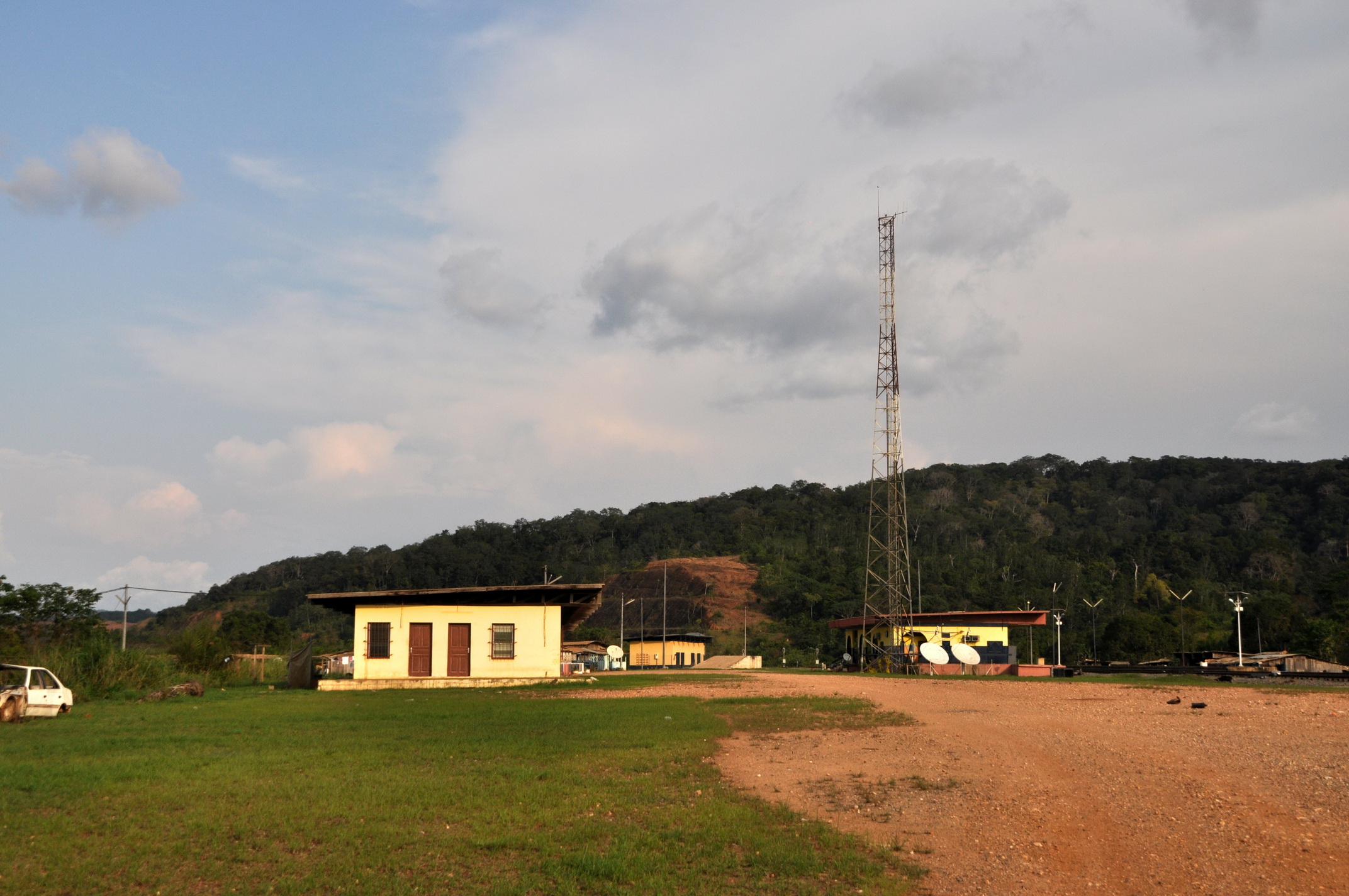
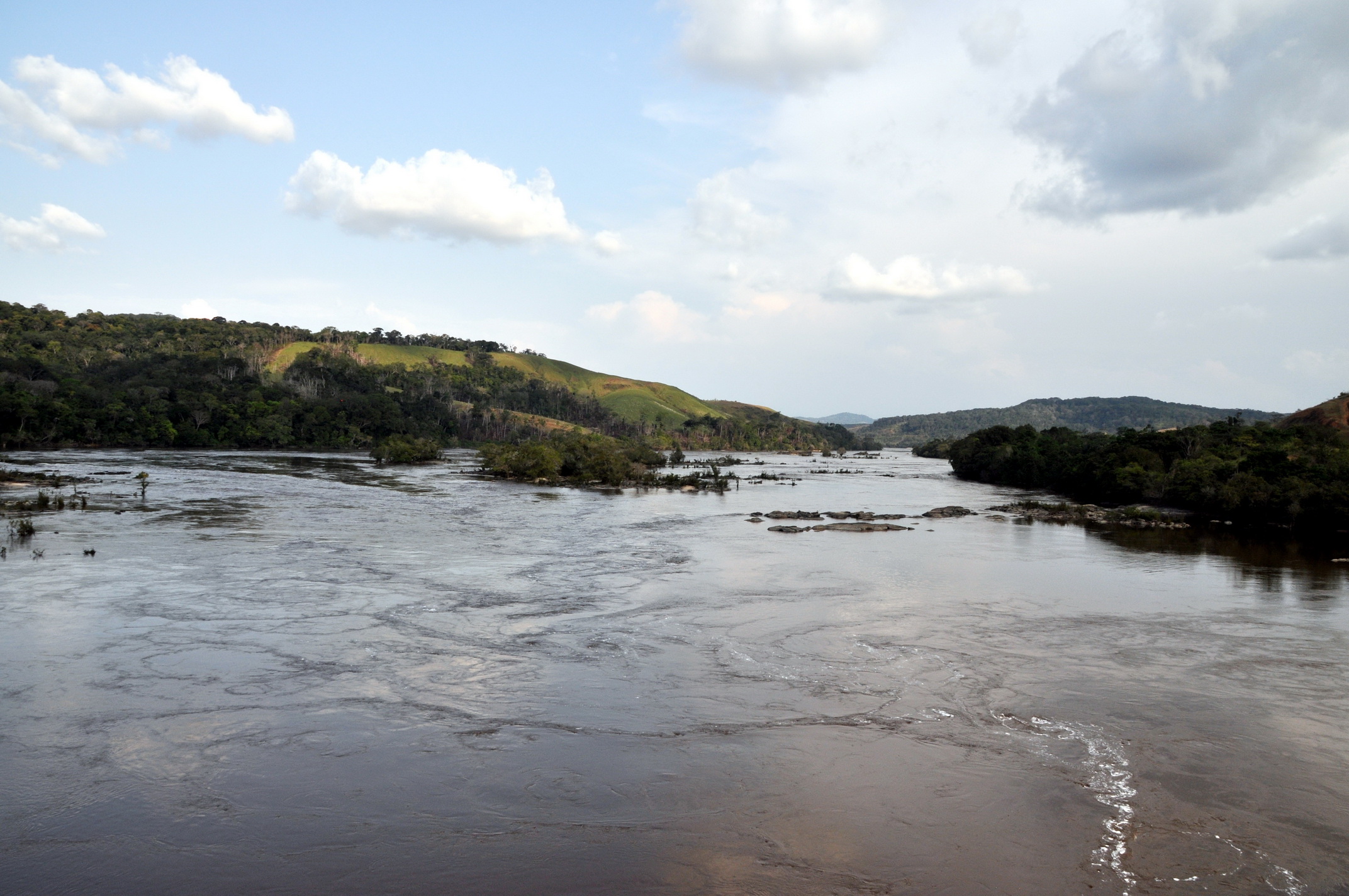
In the rivers you can see elephants bathing.
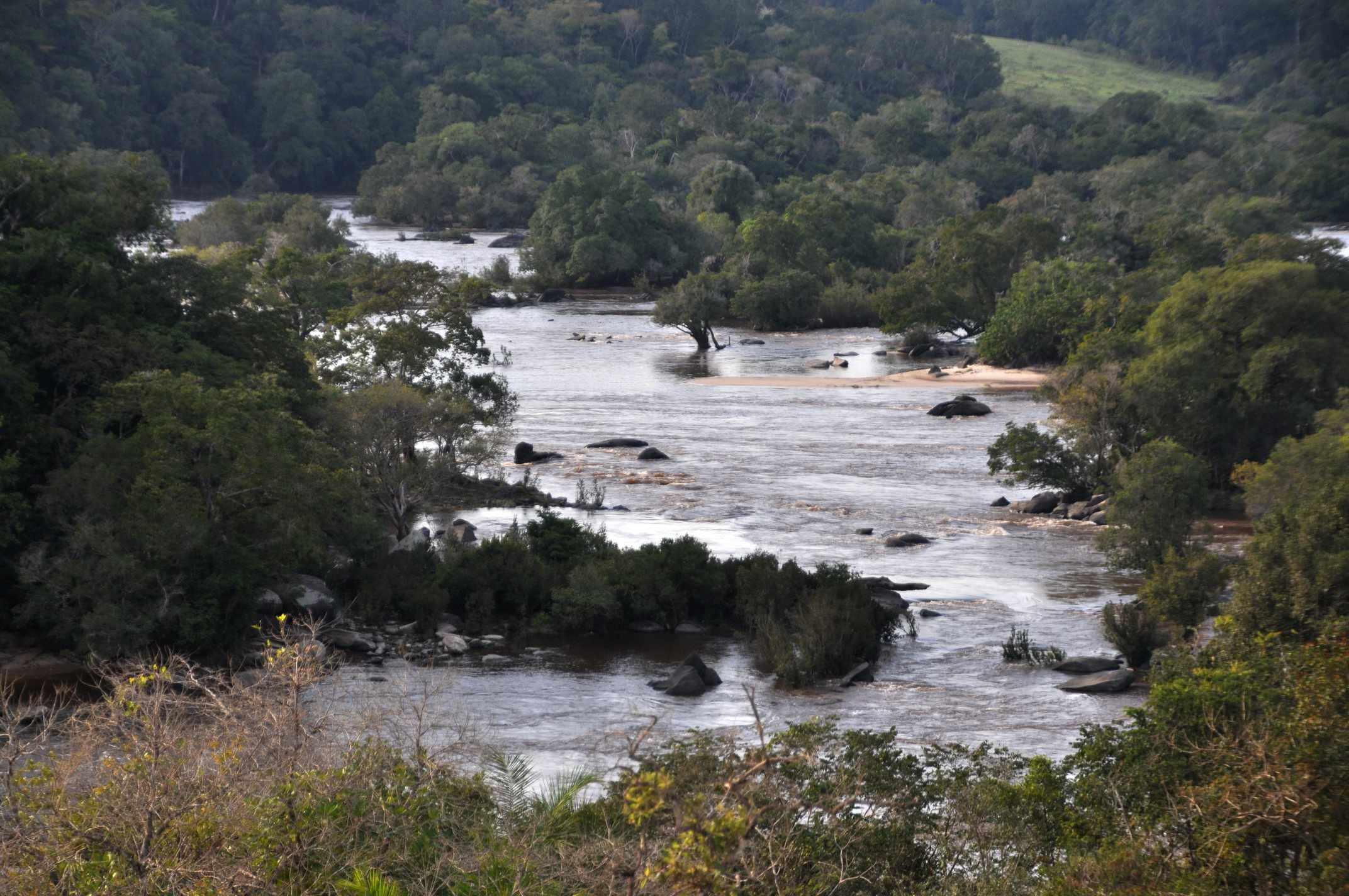
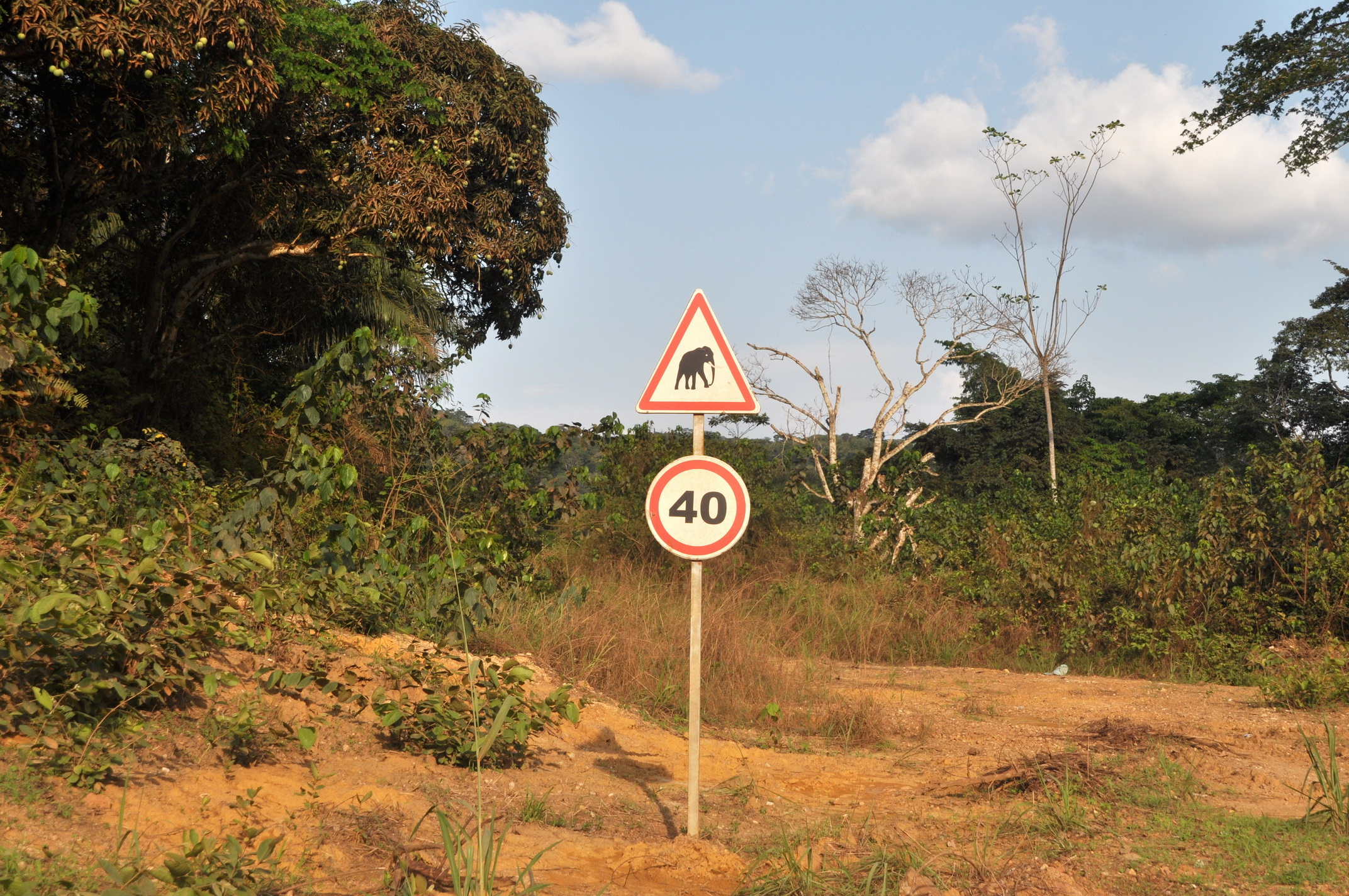
Gabon must have one of the richest varieties of wildlife. There’s everything: hippos, elephants, leopards… But unlike on the dry savannas of southern Africa, they’re not easy to see in the forest. You need sharp eyes. I could always dig the telescope out of the boot, come to think of it. A pity I hadn’t attached the camera to it.
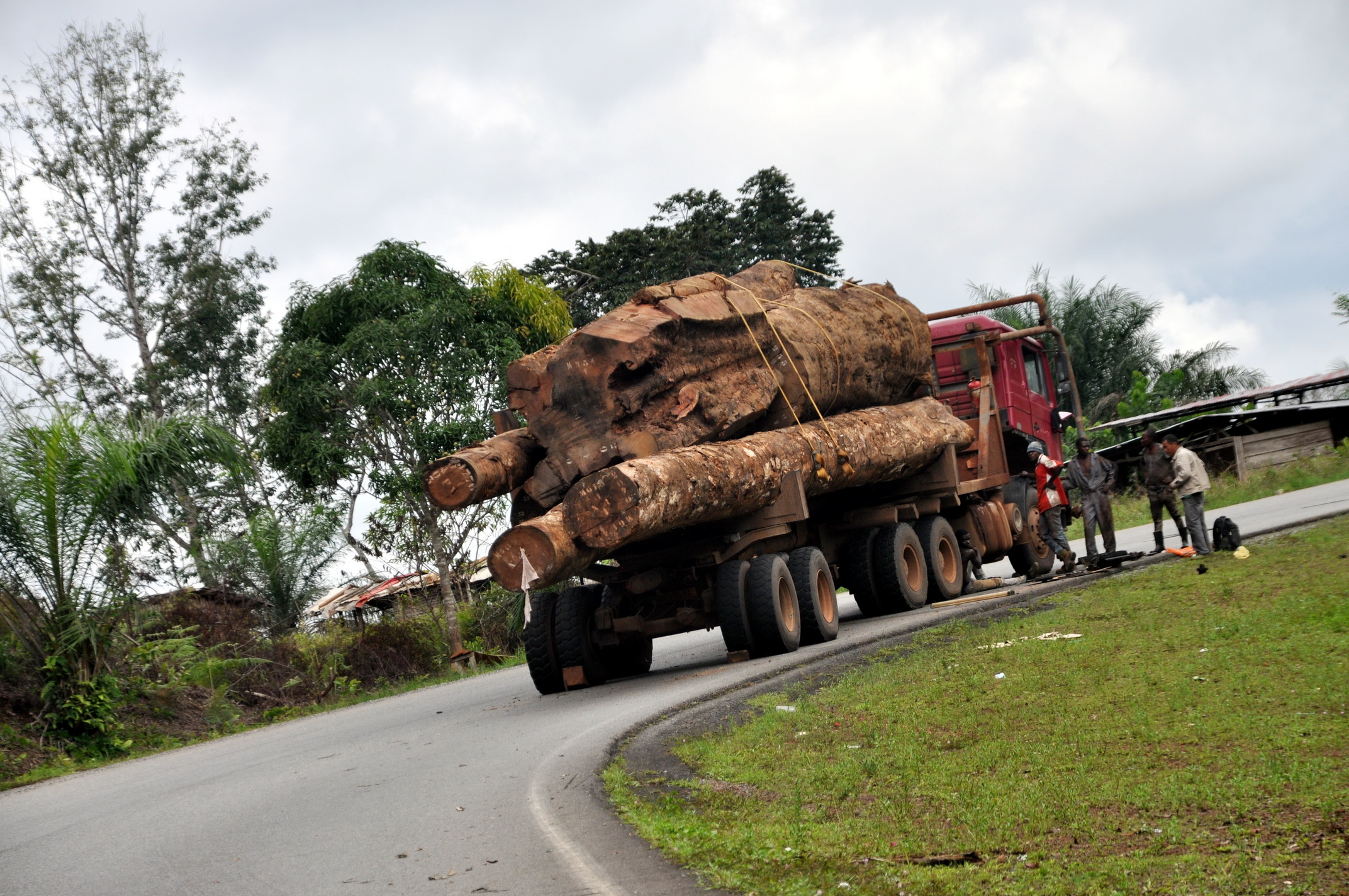
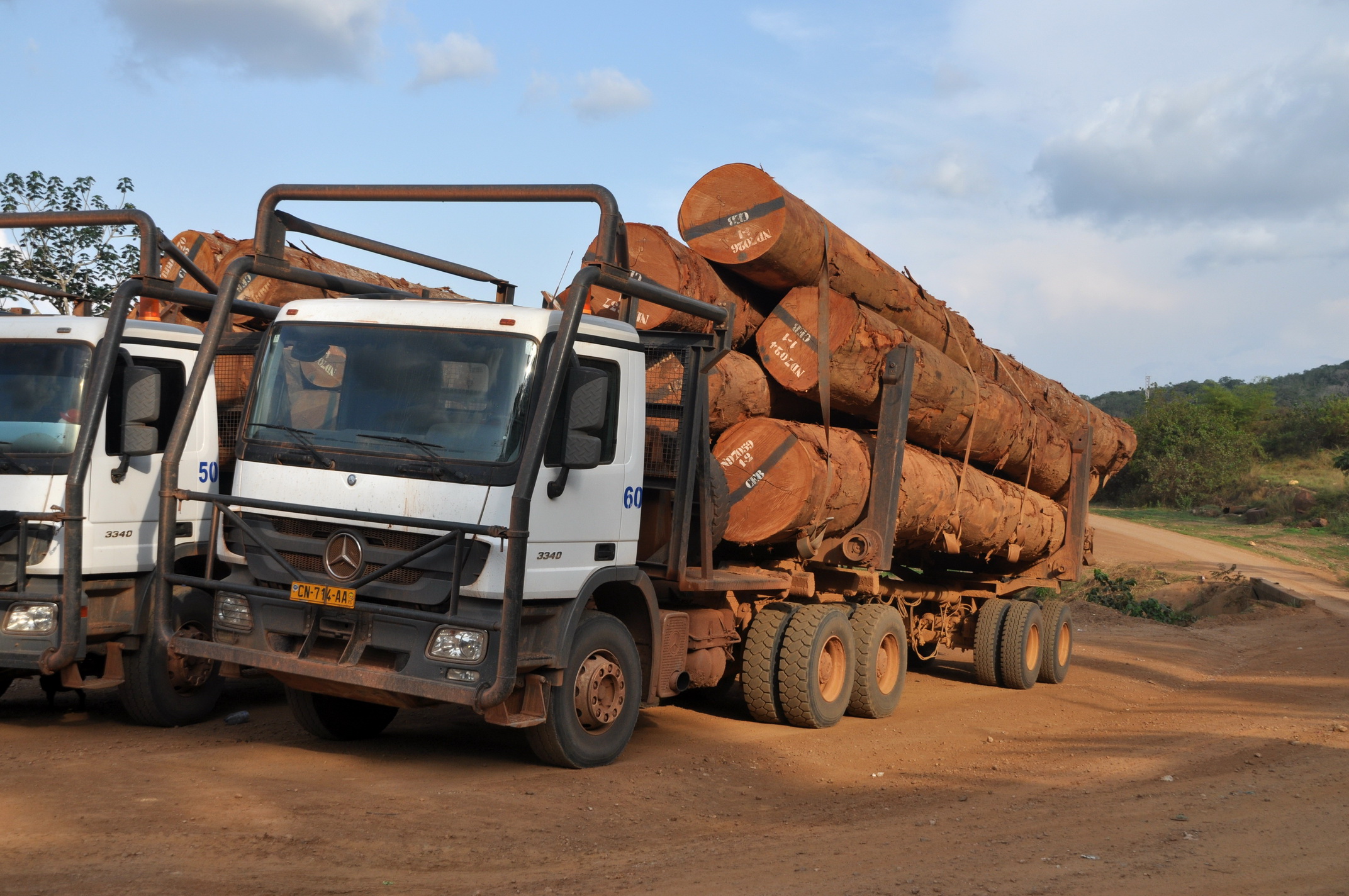
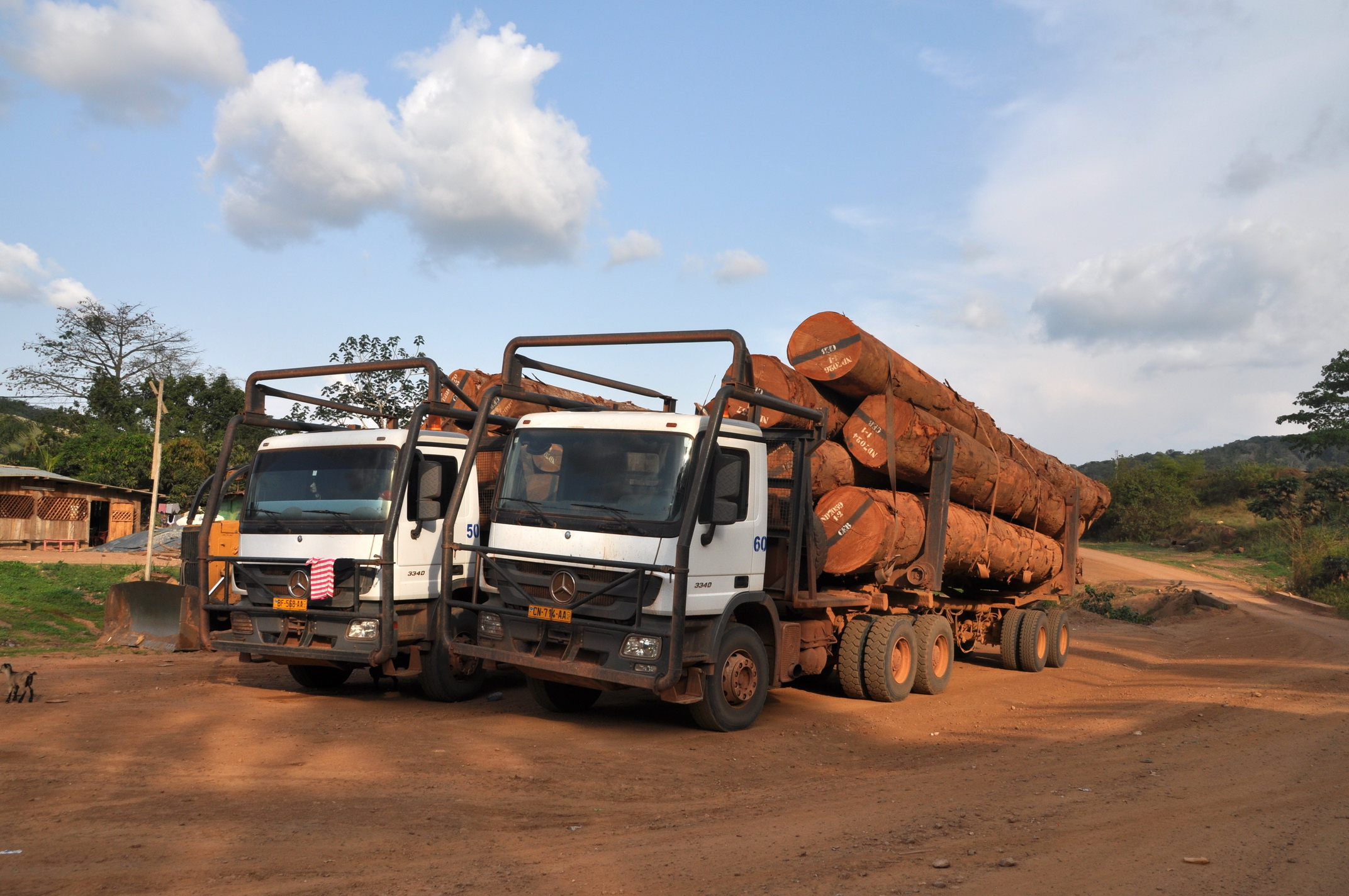
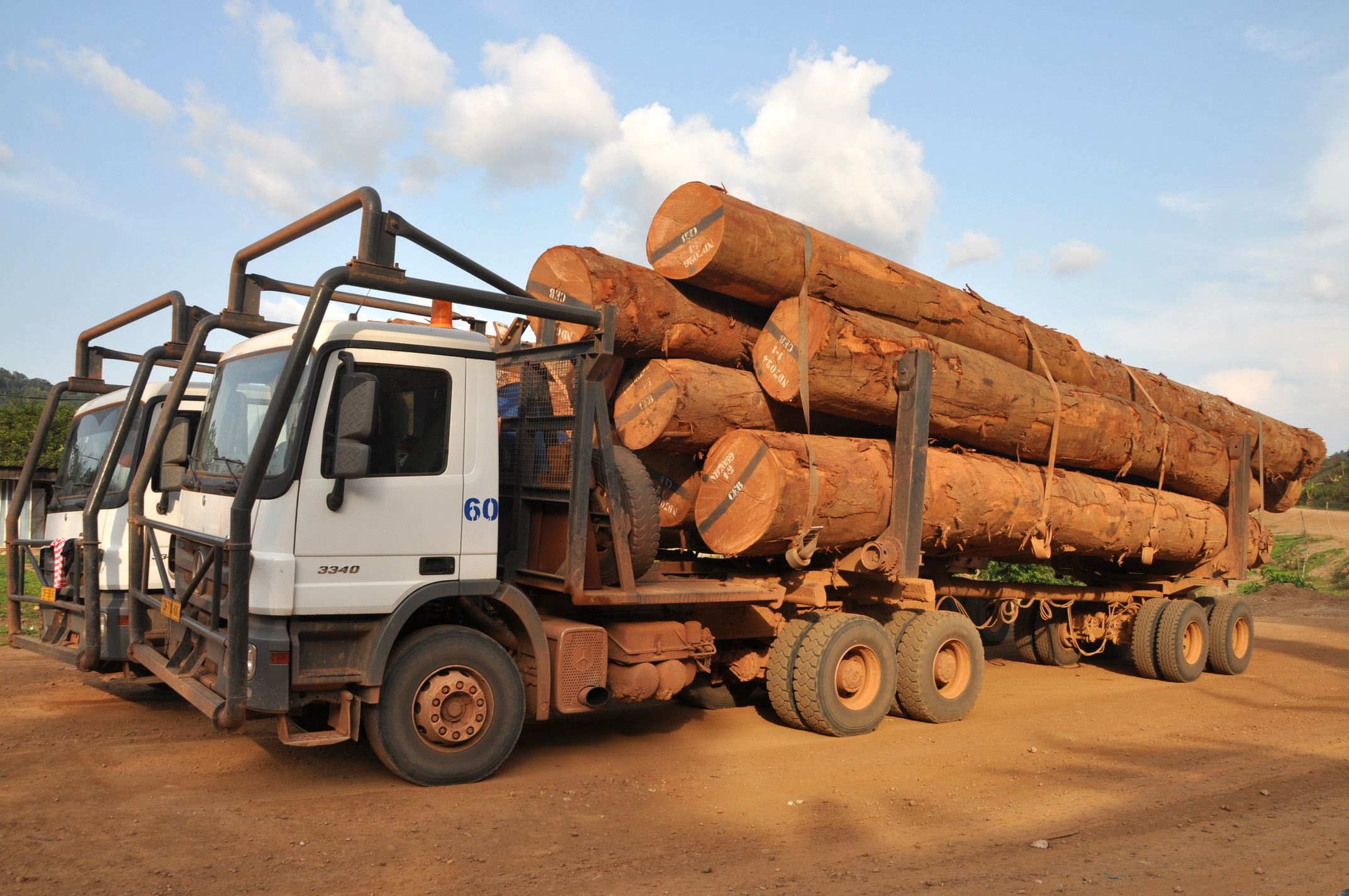
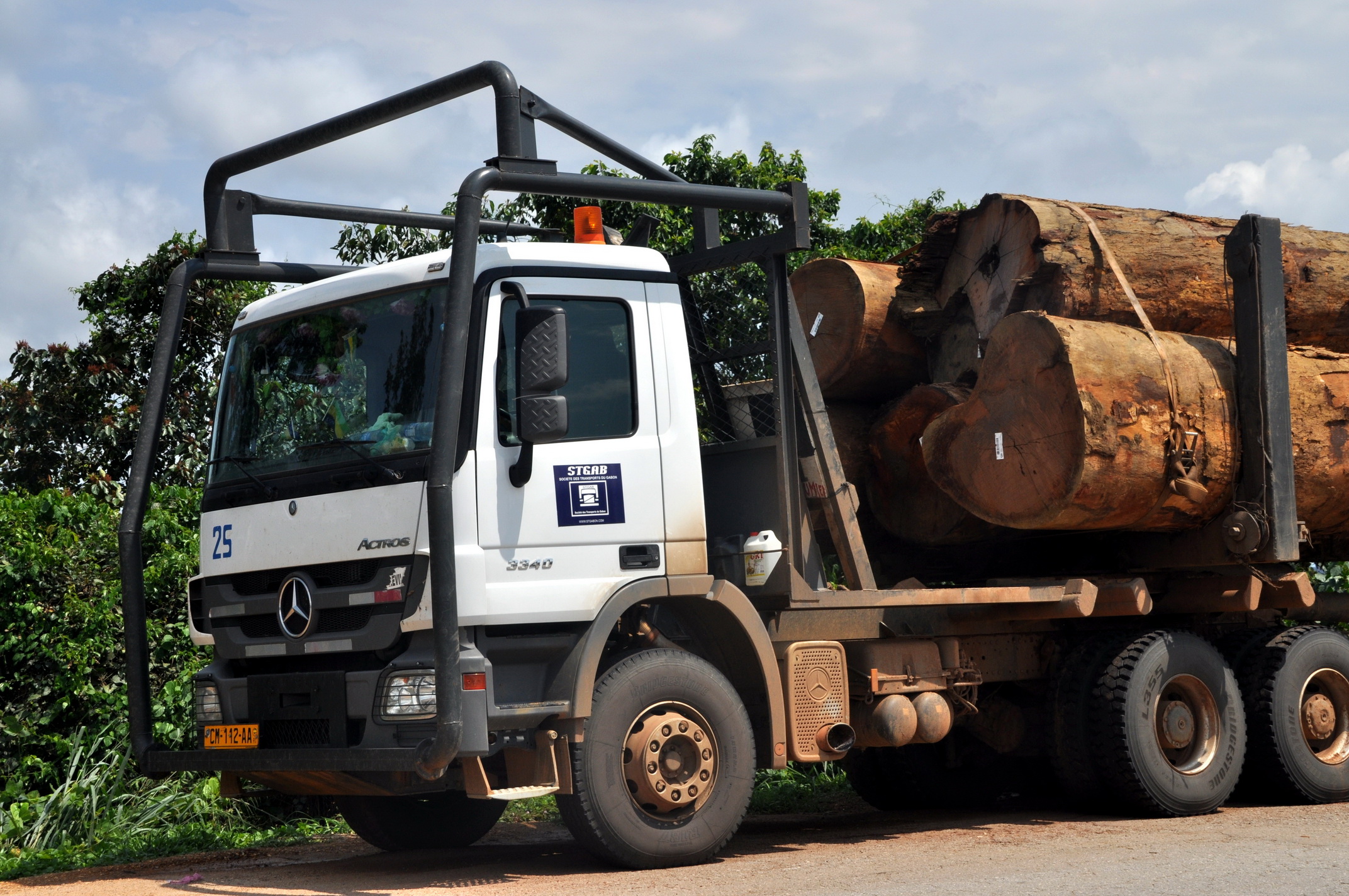
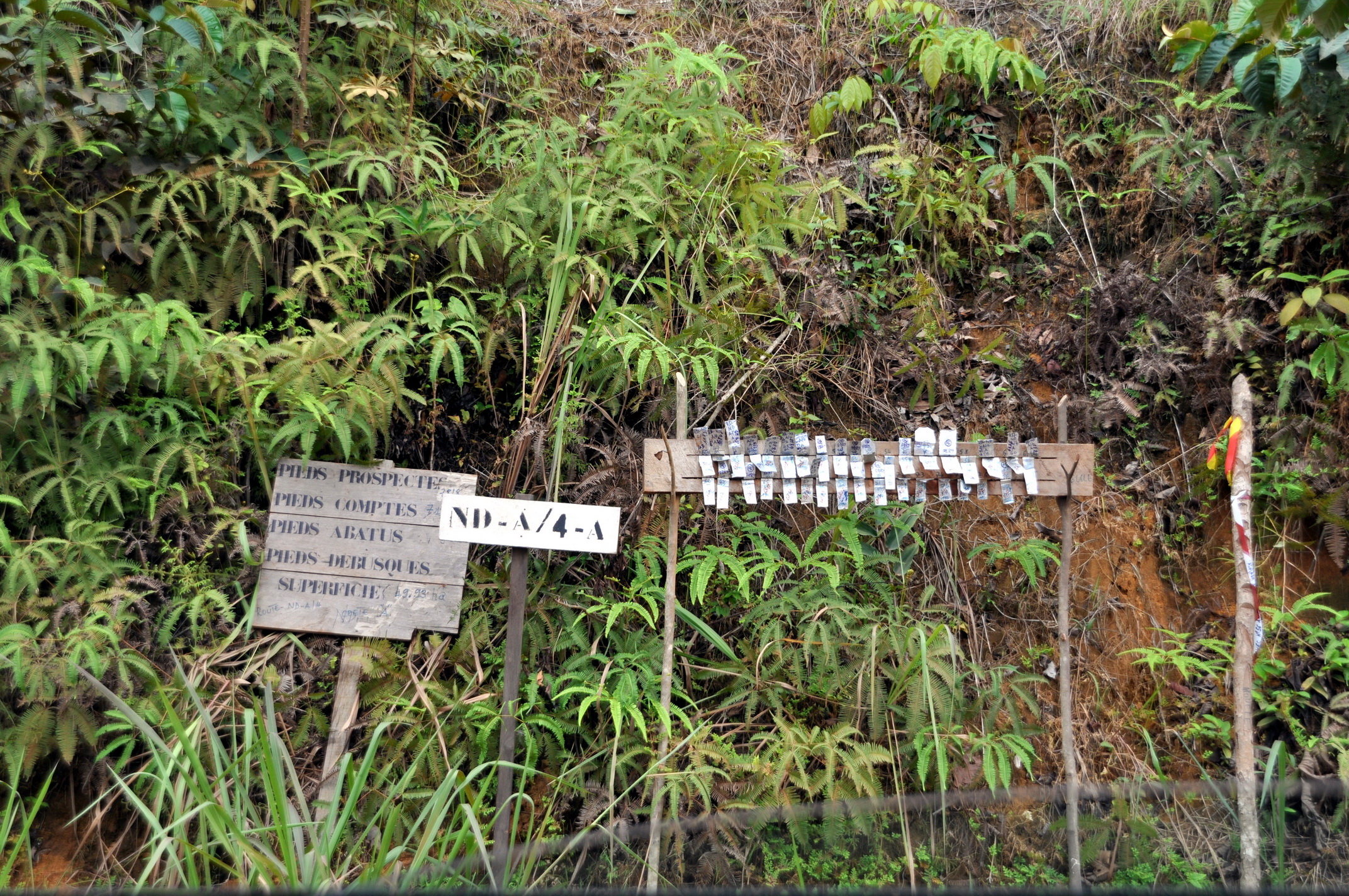
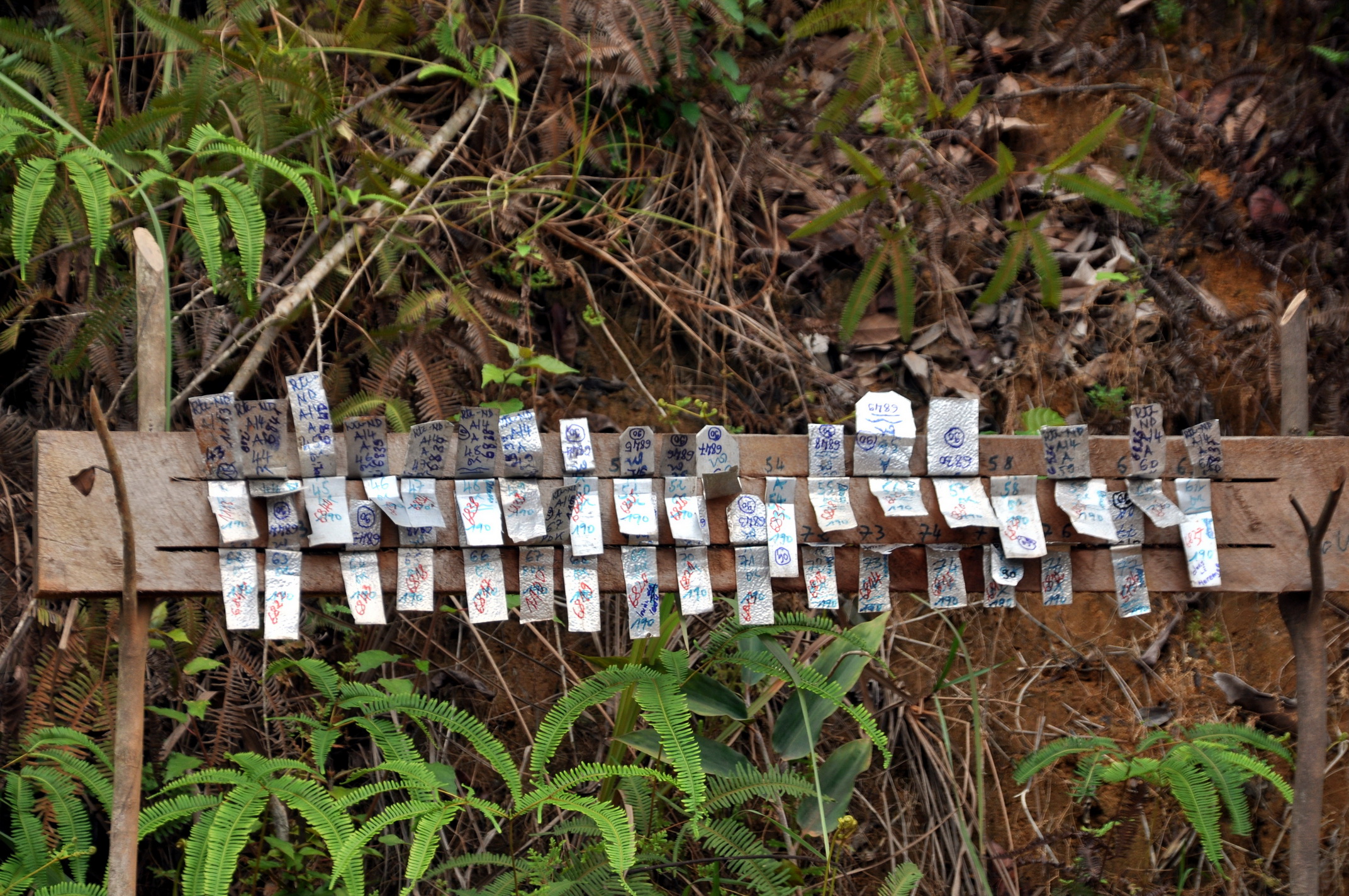
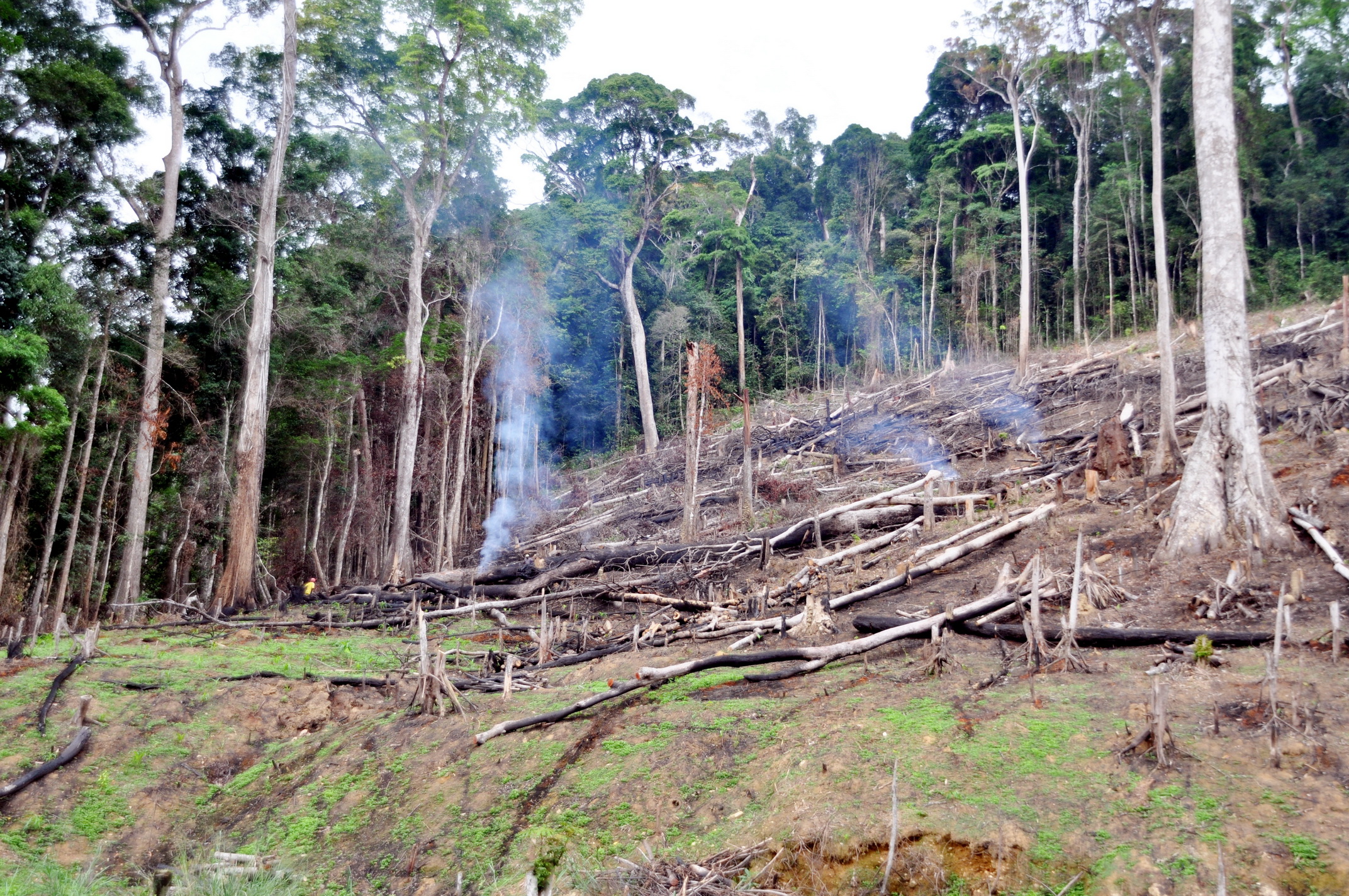
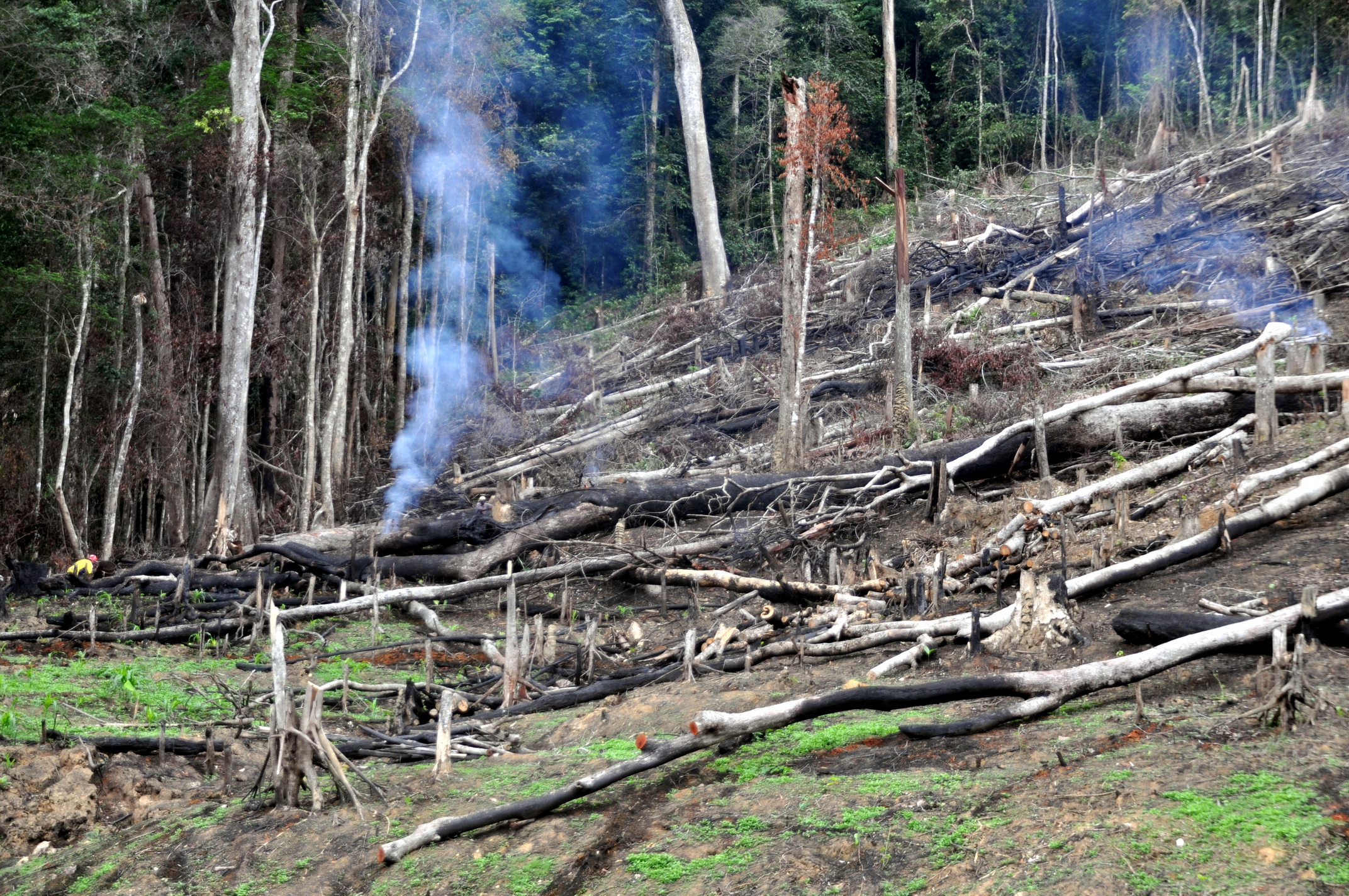
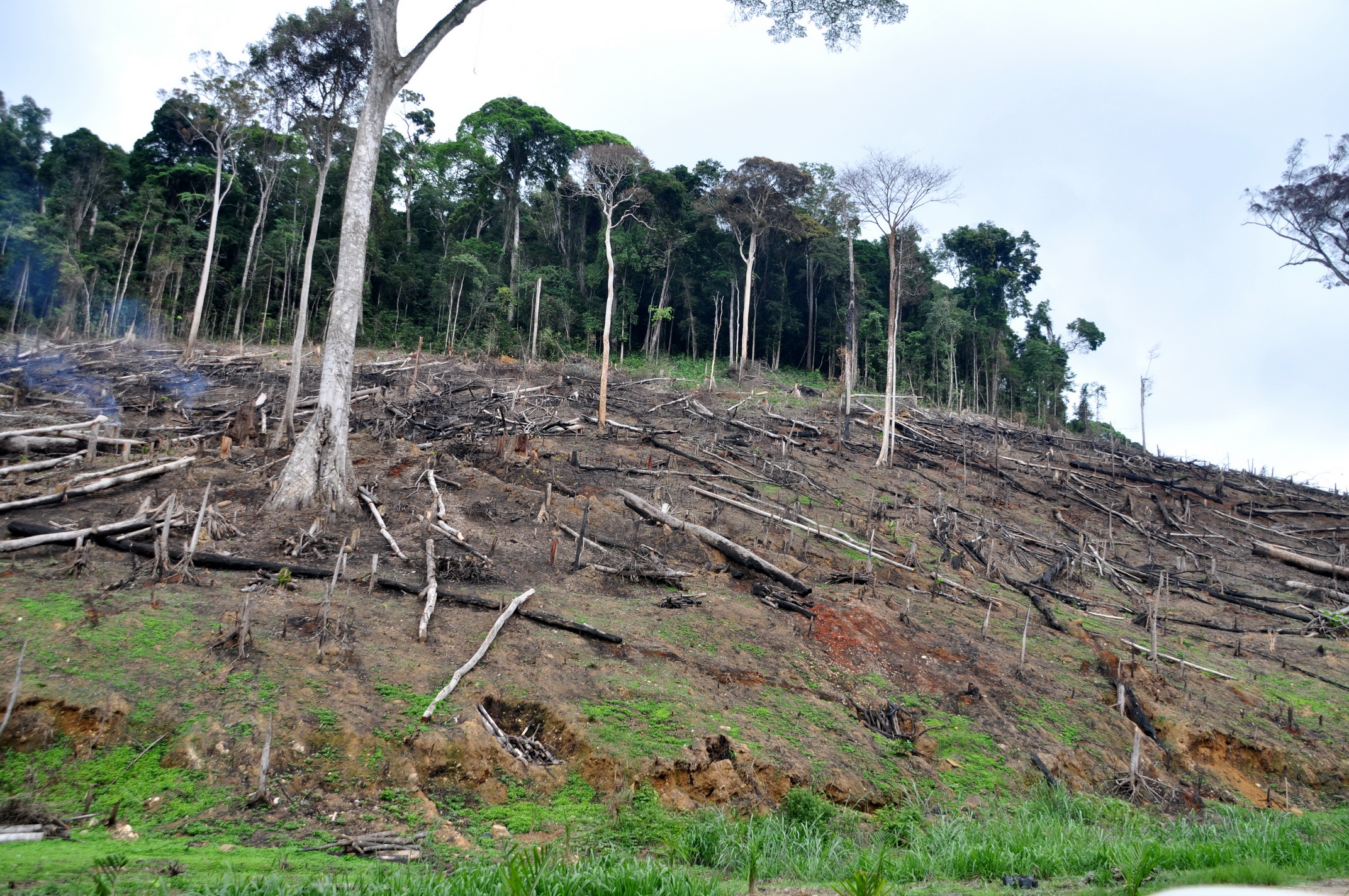
Besides animals, they grow some superb trees. A single log of valuable tropical hardwood may be worth thousands of dollars. A logging truck carries six logs at most. Each has its own number. The strict controls on logging are less a matter of everyone instinctively obeying the law than of being able to sell timber in developed countries. In places the West isn’t involved, I still saw slash and burn farming, with no talk of environmentalism at all.
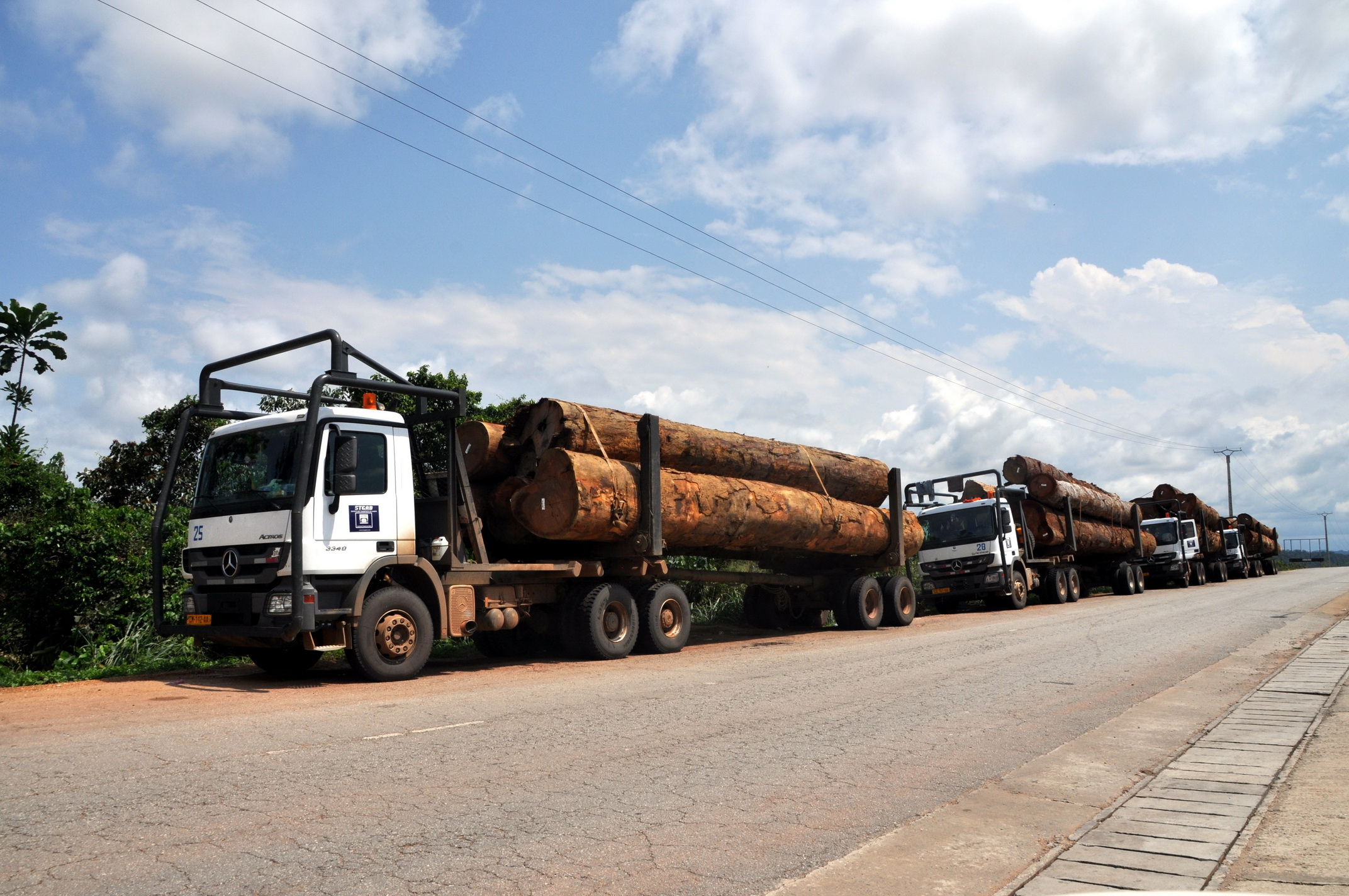
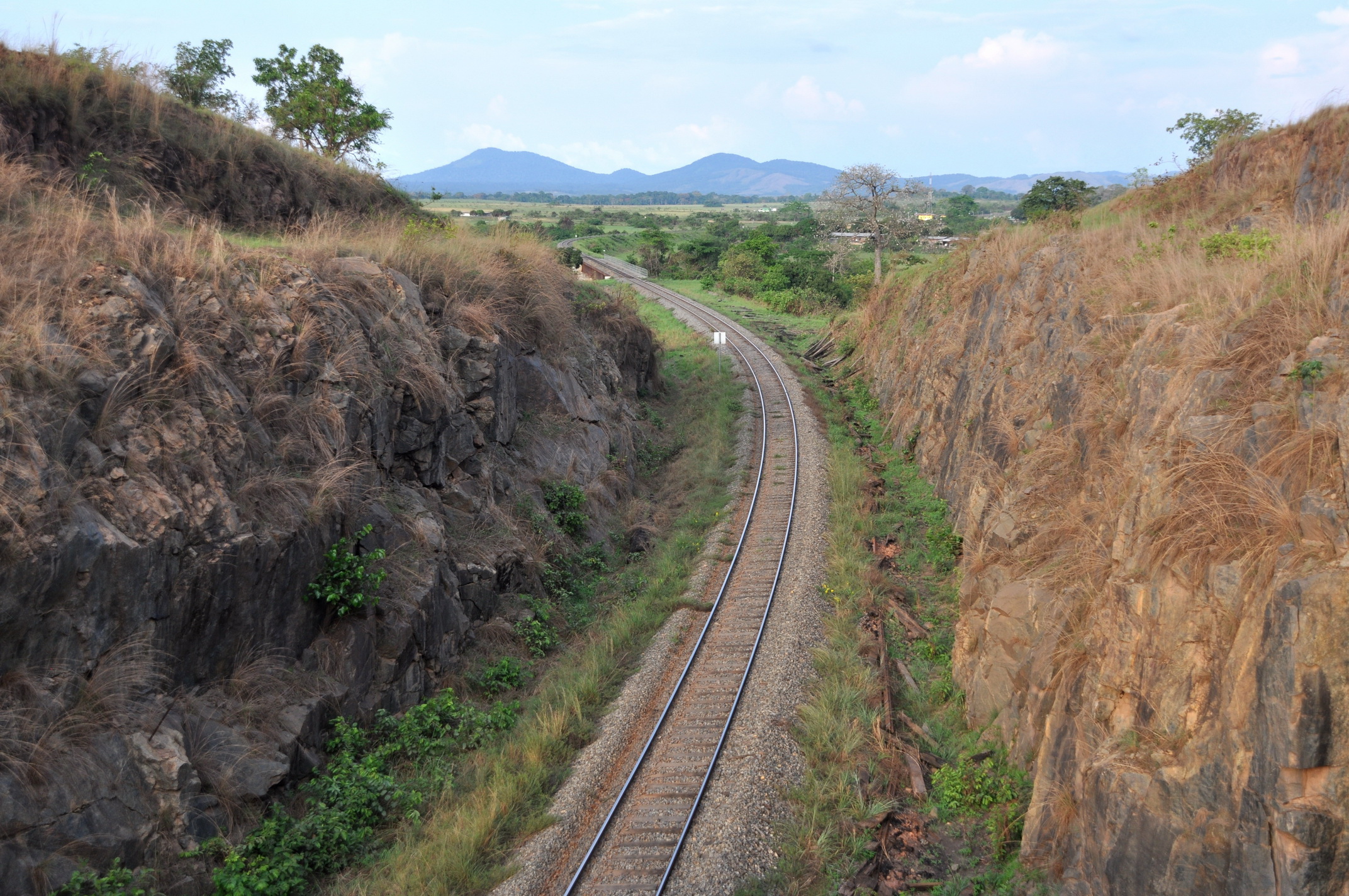
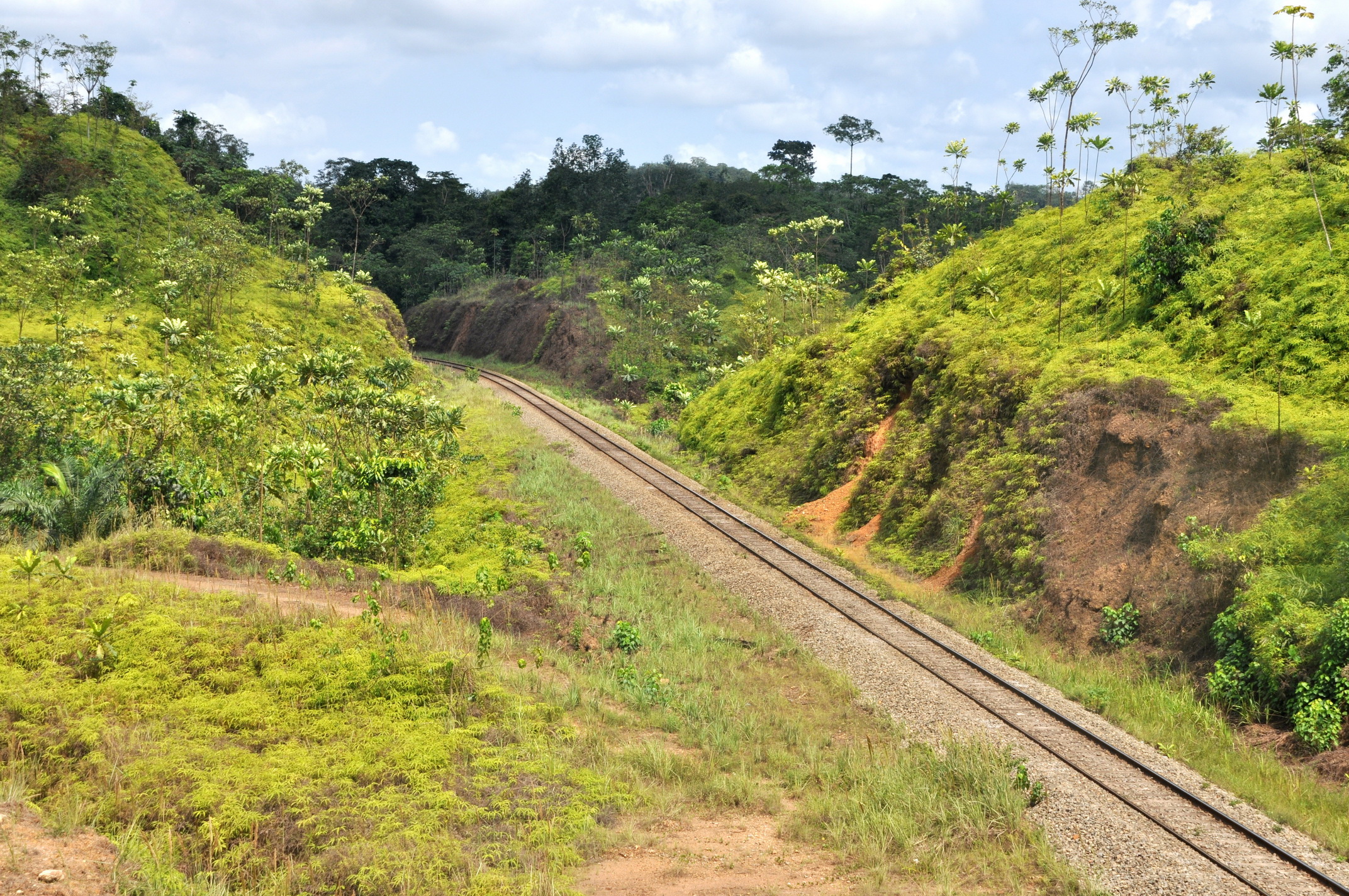
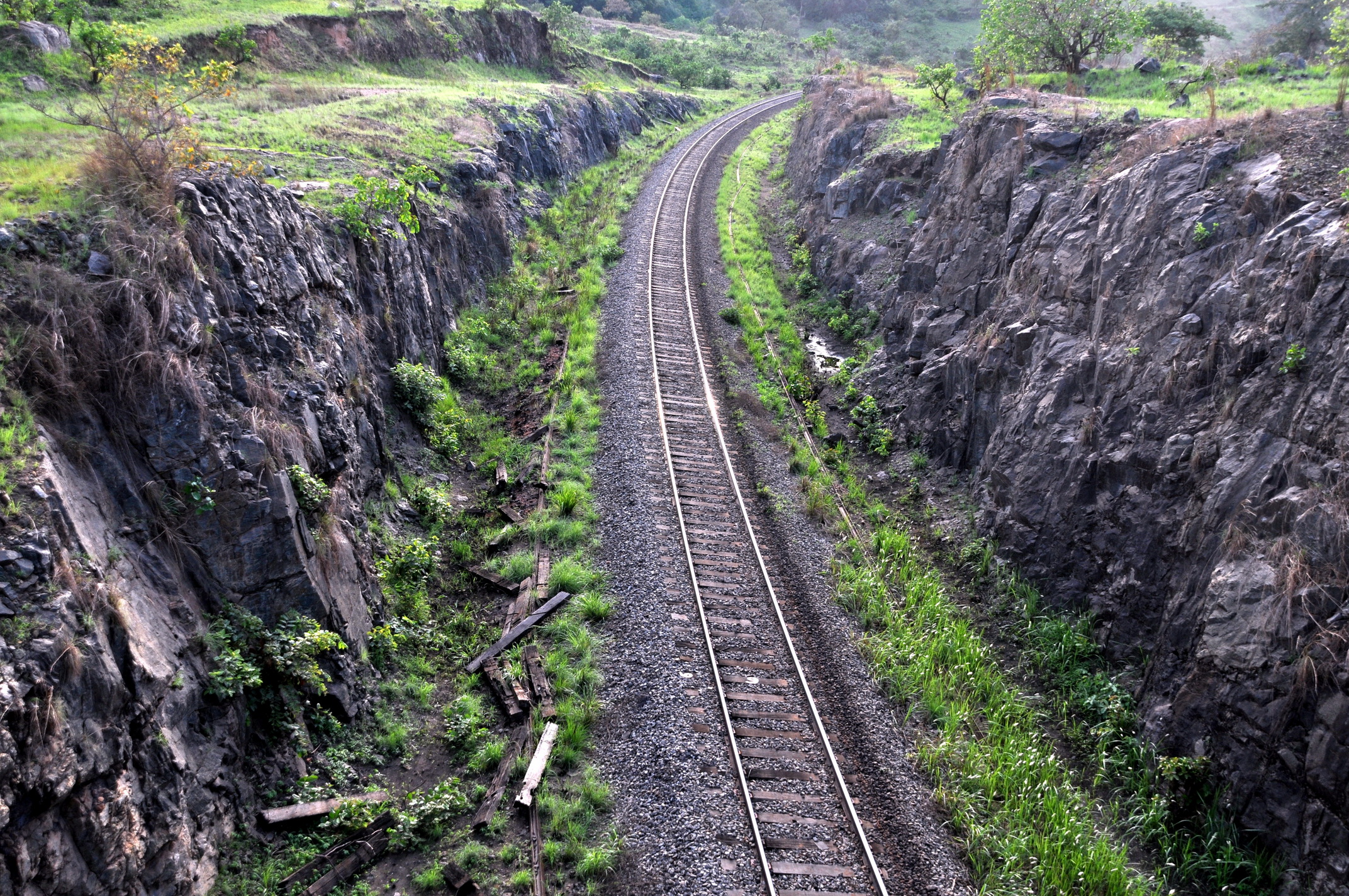
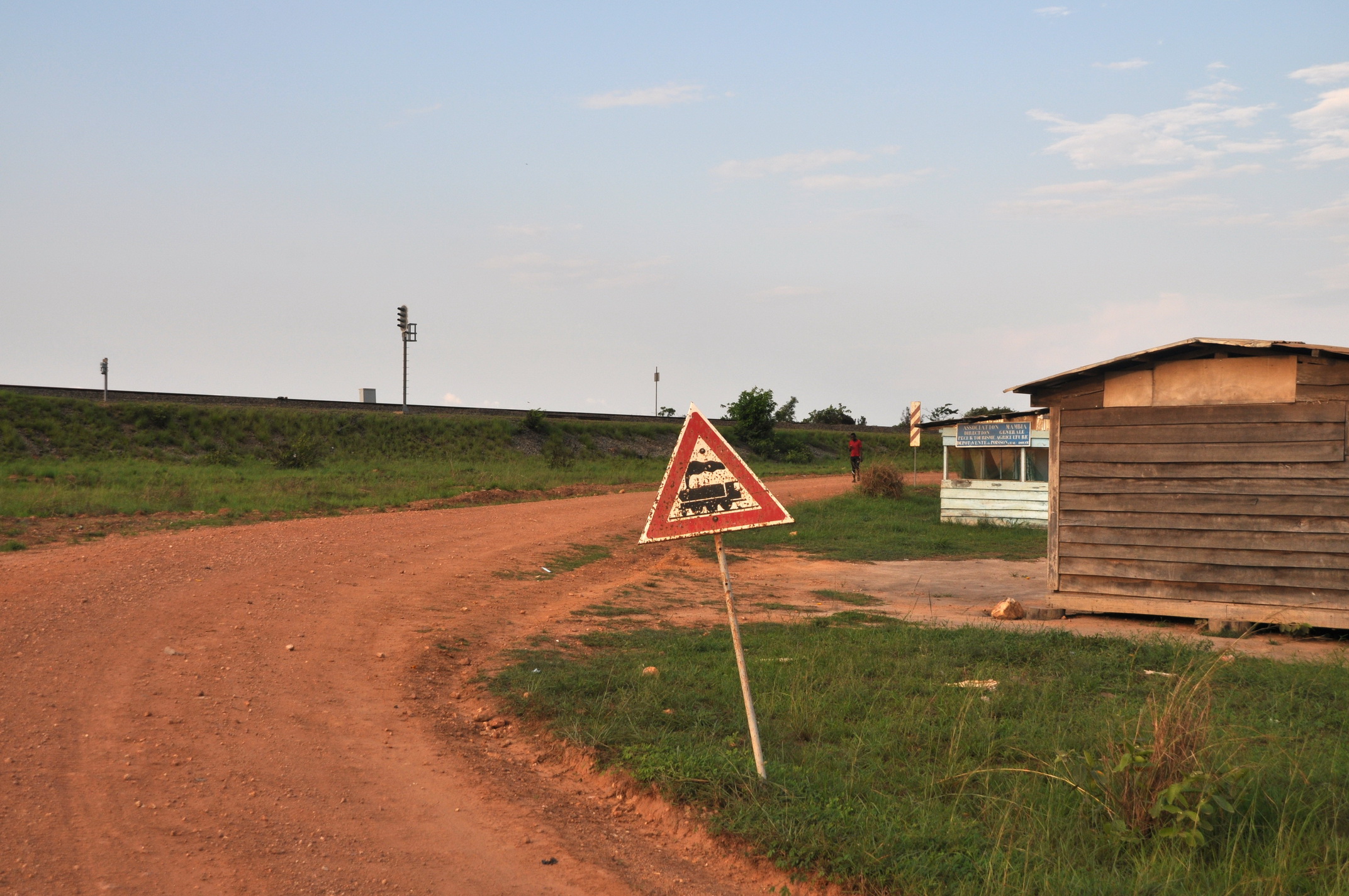
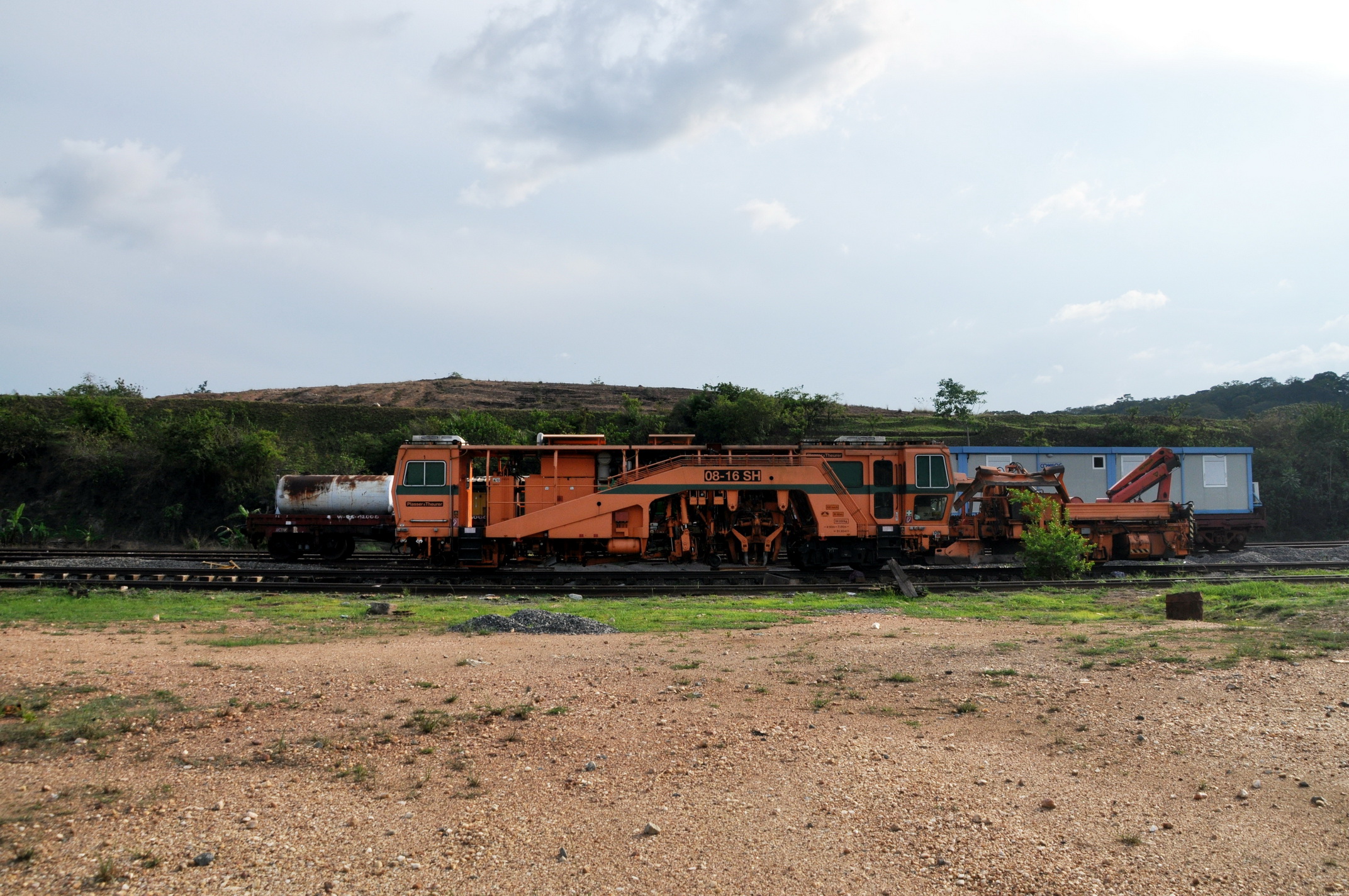
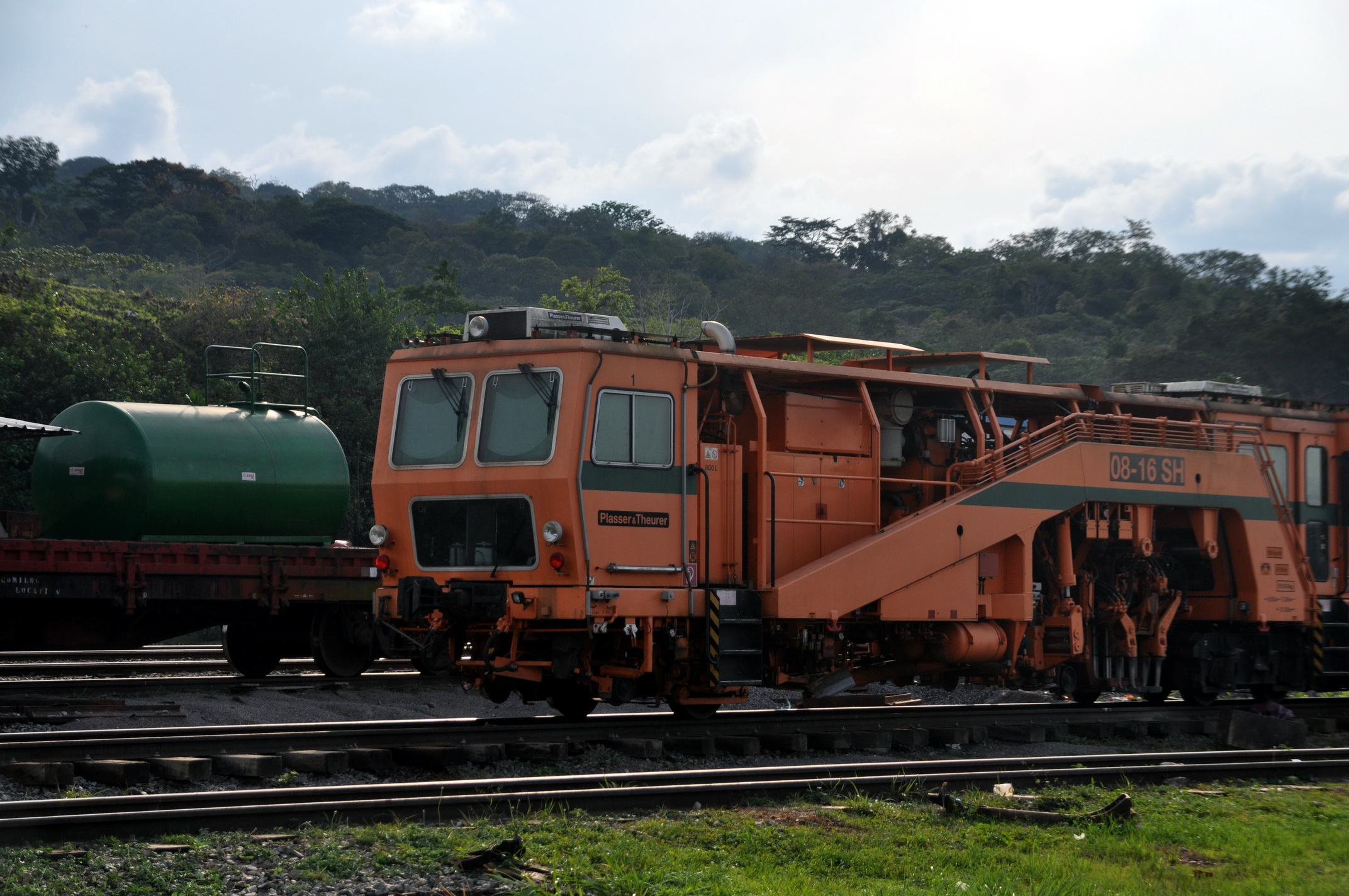
A branch of the railway line runs beside the road. It is very well maintained and busy with trains. Even the passenger trains can carry people from Libreville to Franceville or back overnight, like going from Moscow to Saint Petersburg. Until the highway was finished, the railway was indispensable. People can fly; freight’s another matter.
By evening I had reached Lopé National Park. This is one of the places left in the world where gorillas, chimpanzees, mandrills and many other kinds of monkey live.
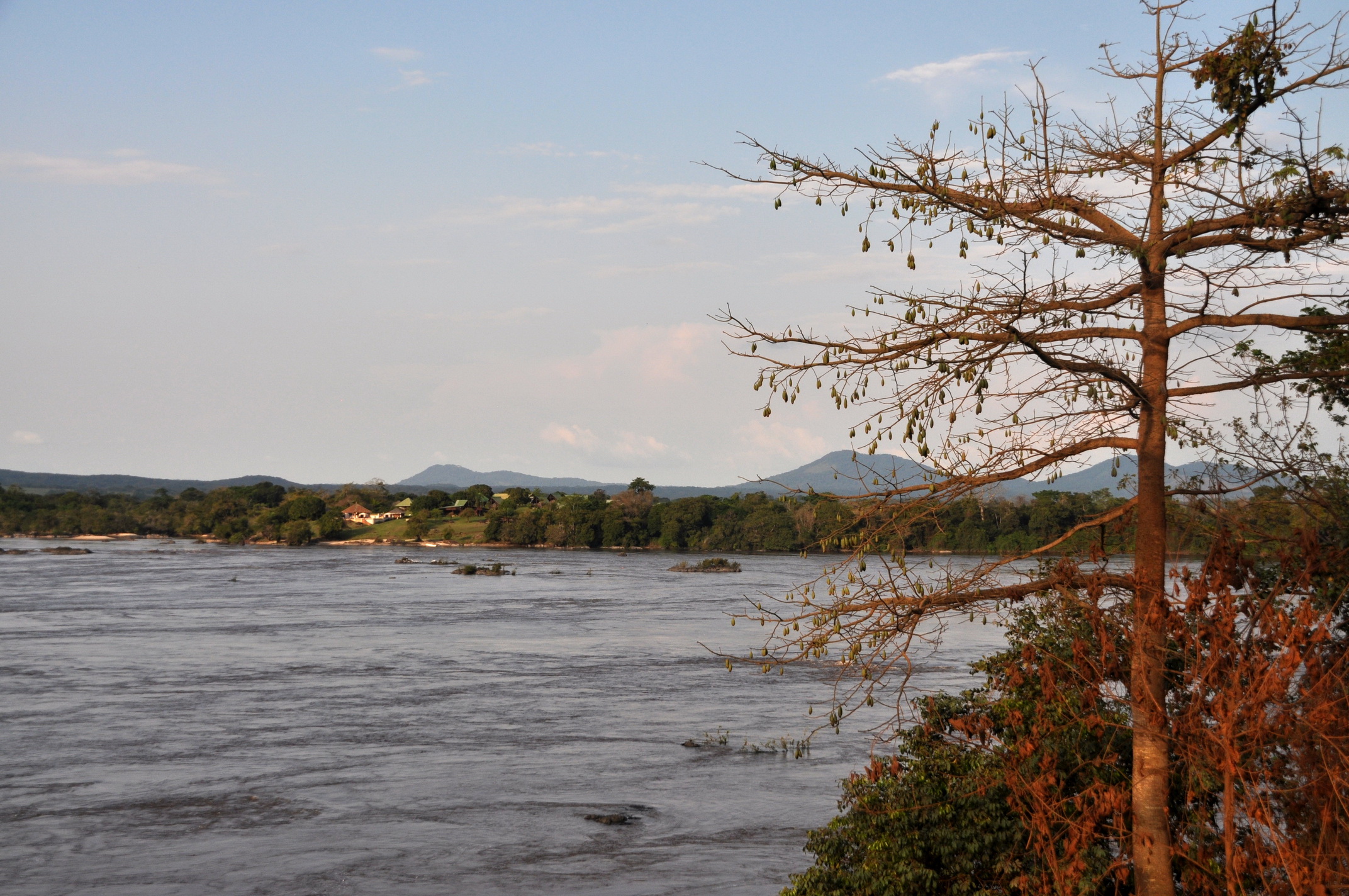
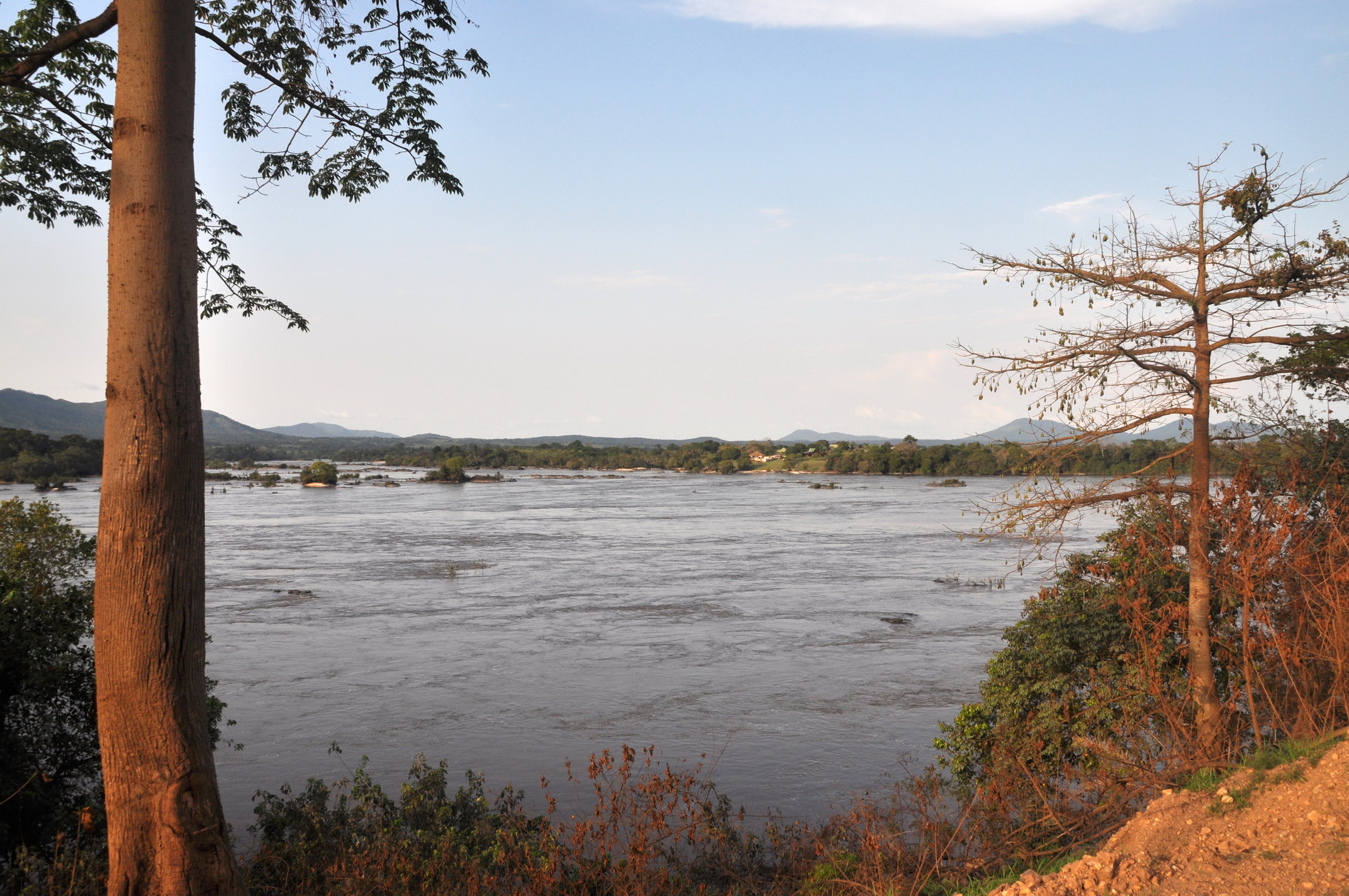
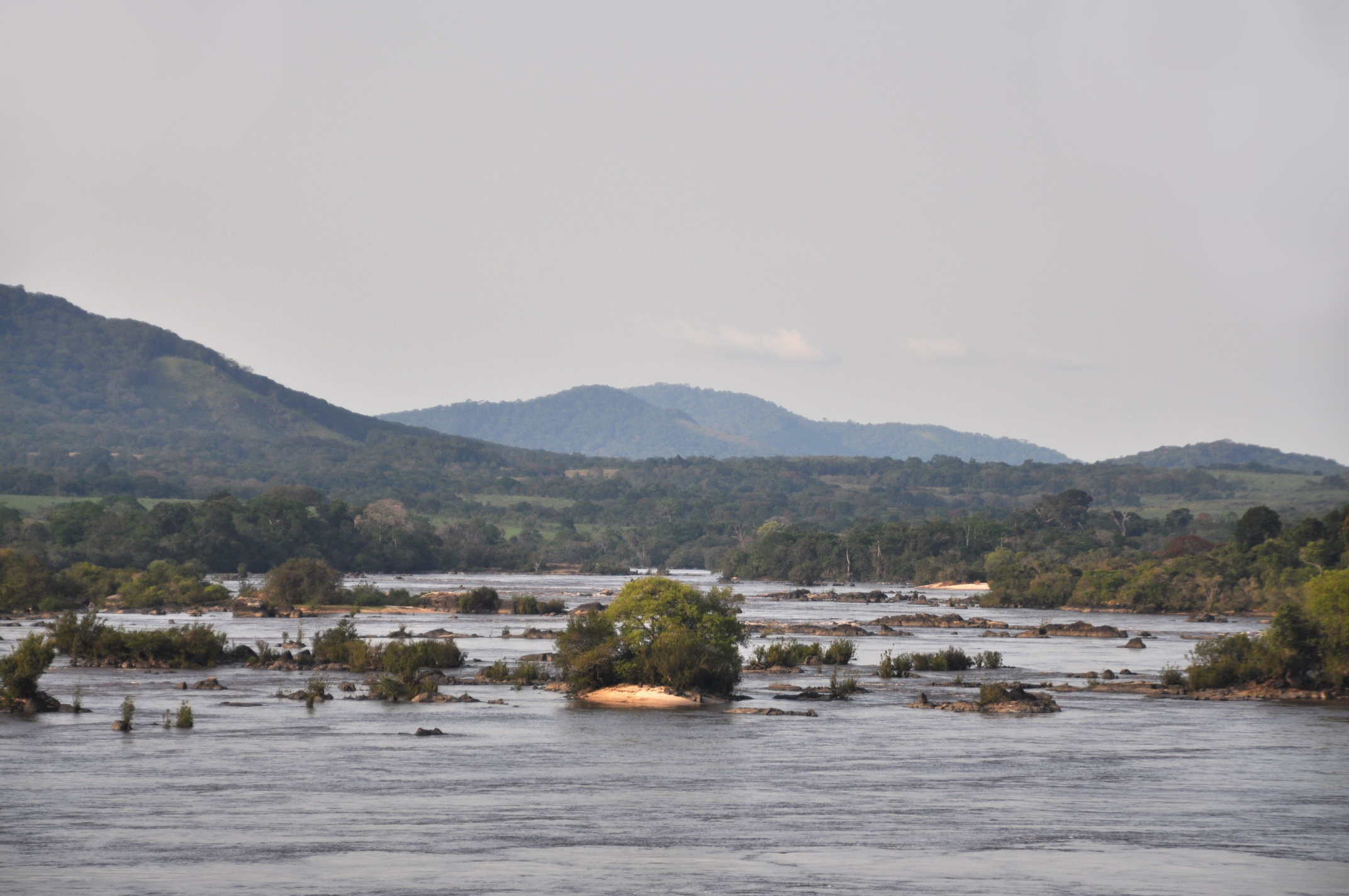
The village was marked Achouka on my map, but it was actually called Lopé. Maps of Gabon were very approximate in general.
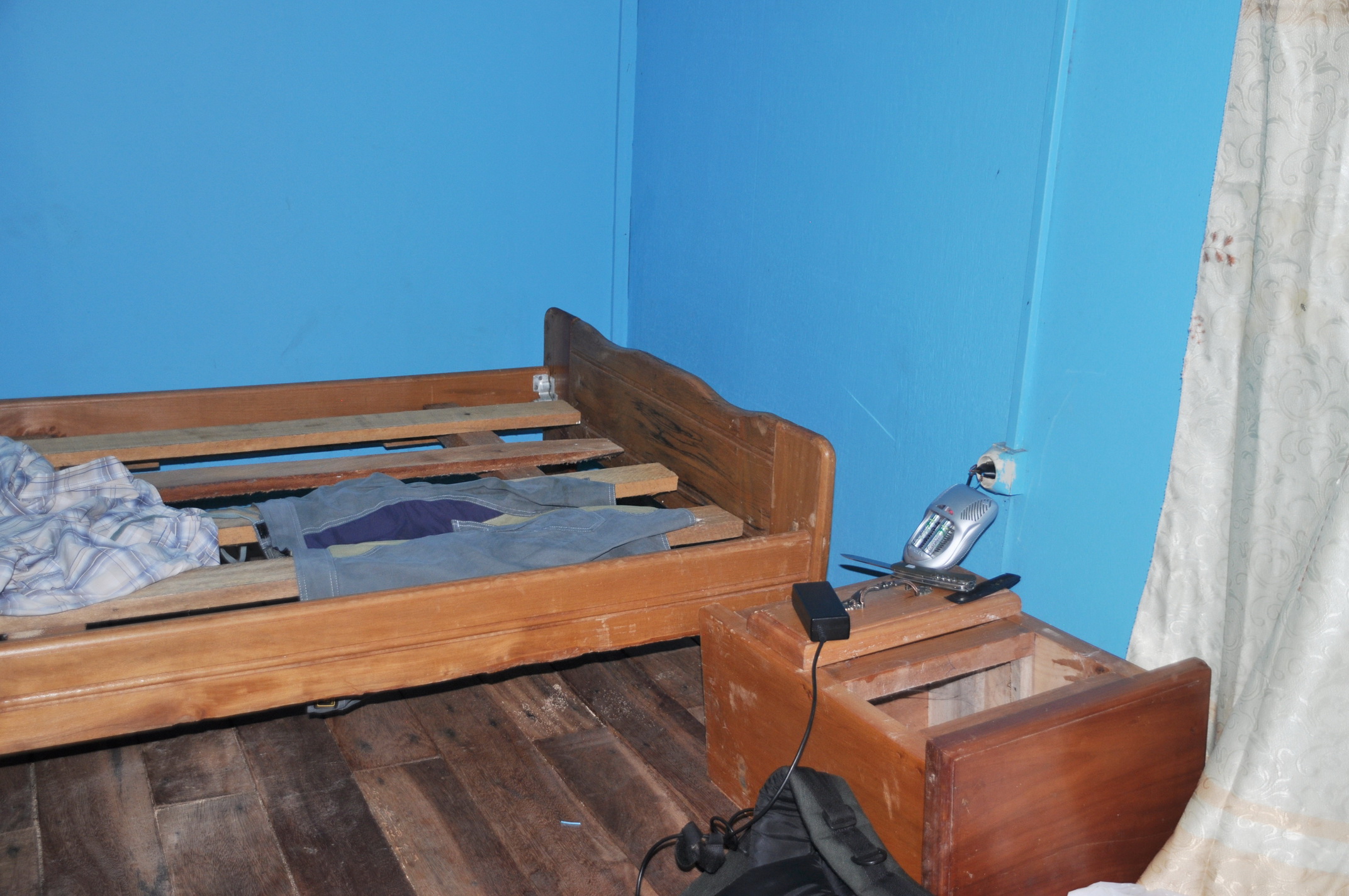
Lopé gets a fair number of visitors. It has a few hotels with cabins. They were all booked, which was no wonder: holiday season and an eclipse. Still, there was one little room for me at Lopé Lodge (00°05.873′S, 11°36.636′E; elevation 118 m).
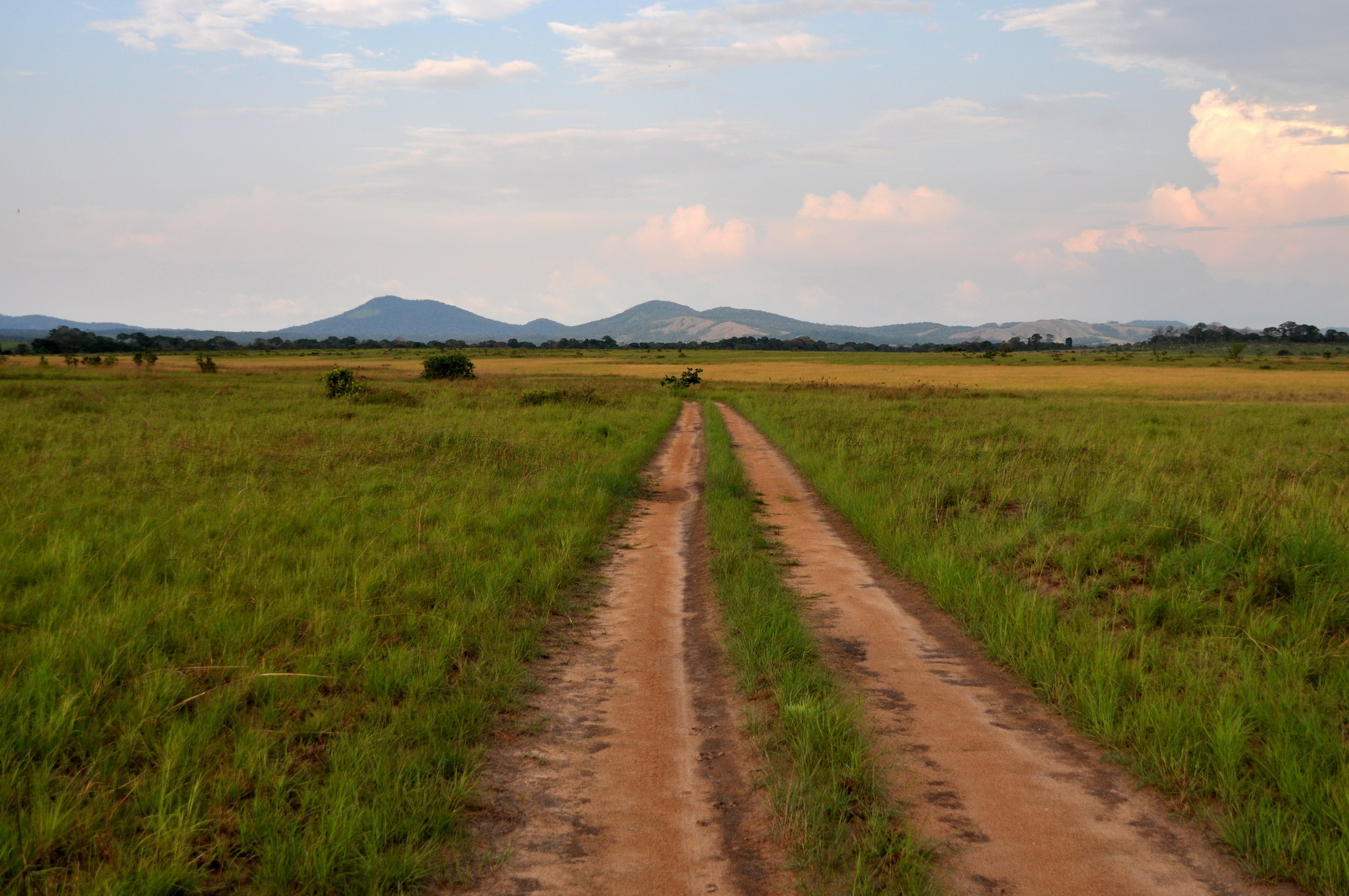
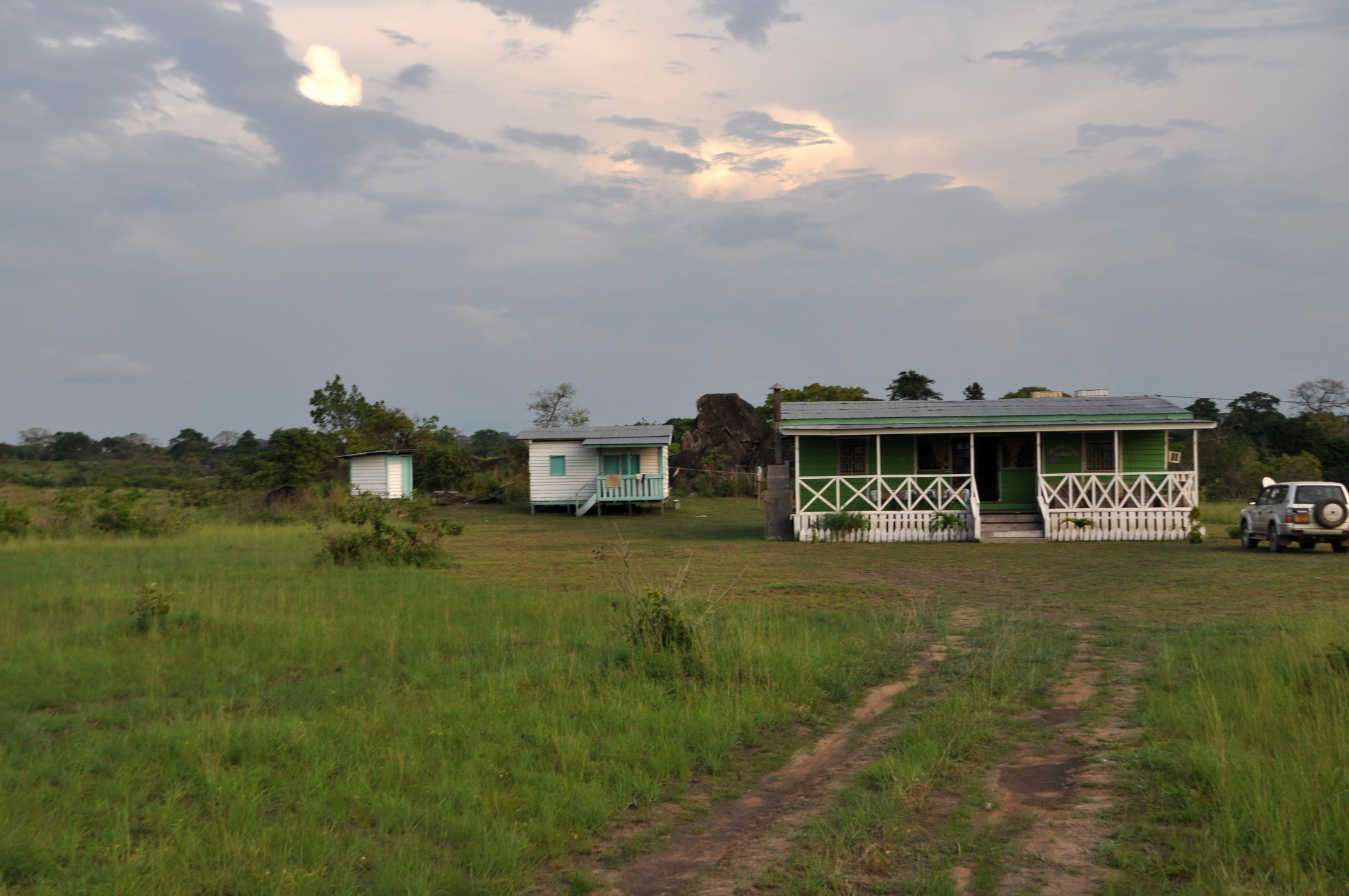
My neighbours were French. On seeing fellow white travellers, I went over to talk, but to my disappointment they didn’t speak English either. I’d got so used to the idea that white people must speak English. There are exceptions, though. The French, for instance.
In the village I arranged for a guide the next day. Visits to the park were supposed to be with a guide. In practice I didn’t think anyone was going to catch you, but you wouldn’t find a gorilla on your own either. The guides were booked too, but it helped that I had my own car. It was at least 30 km from the village to the car park and campground, with a few wooden cabins (00°18.401′S, 11°42.117′E), inside the national park.
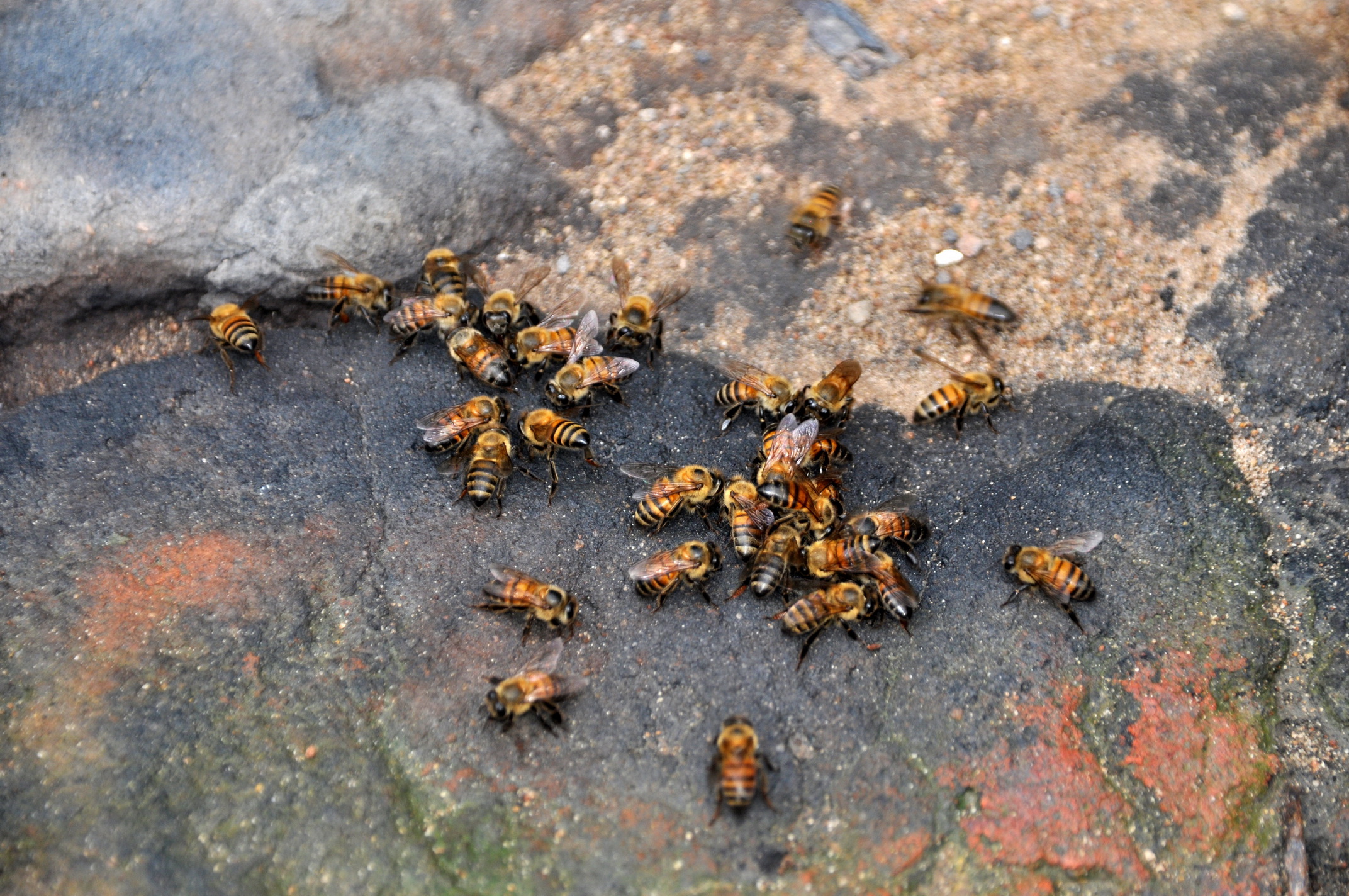
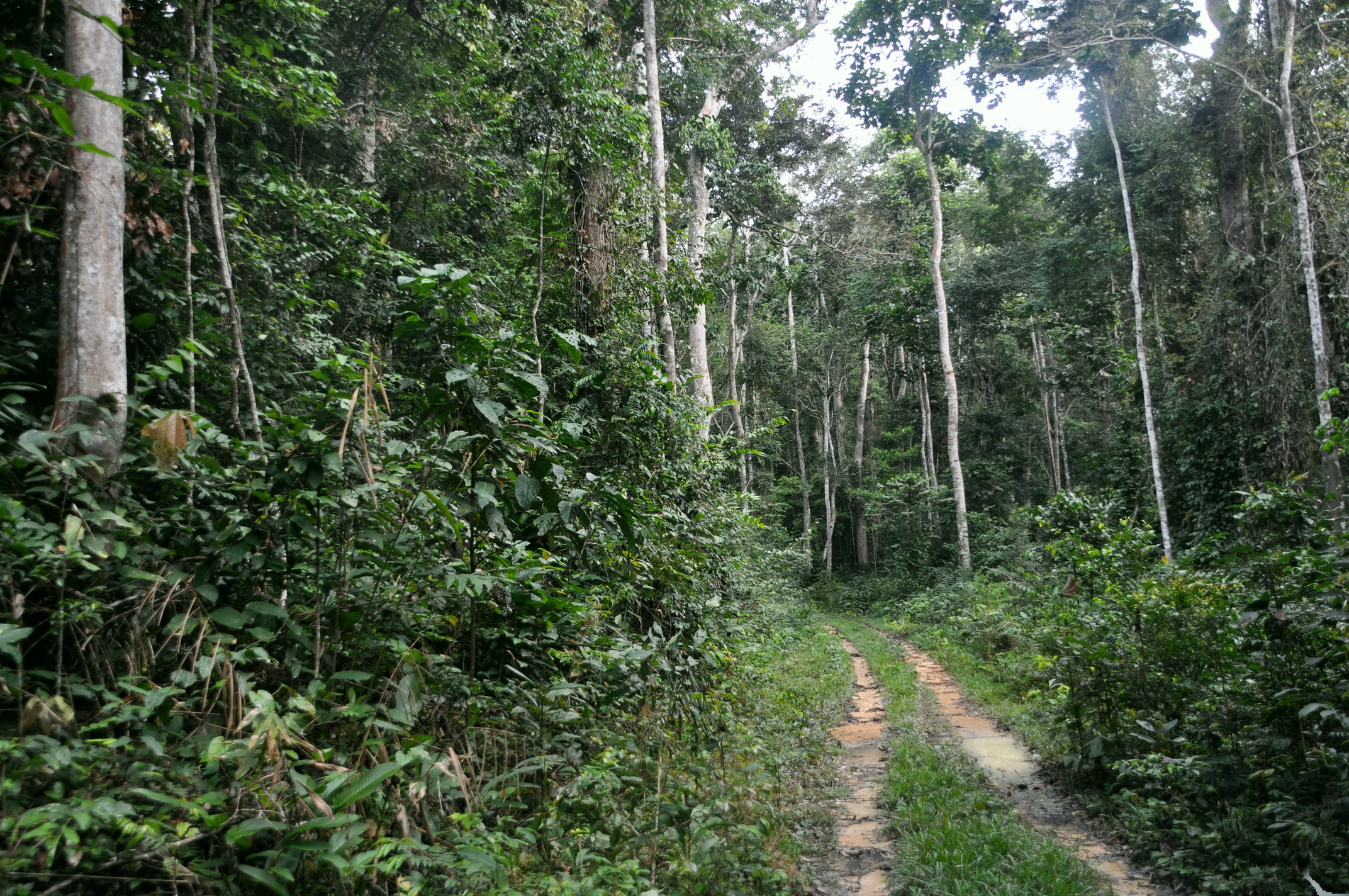
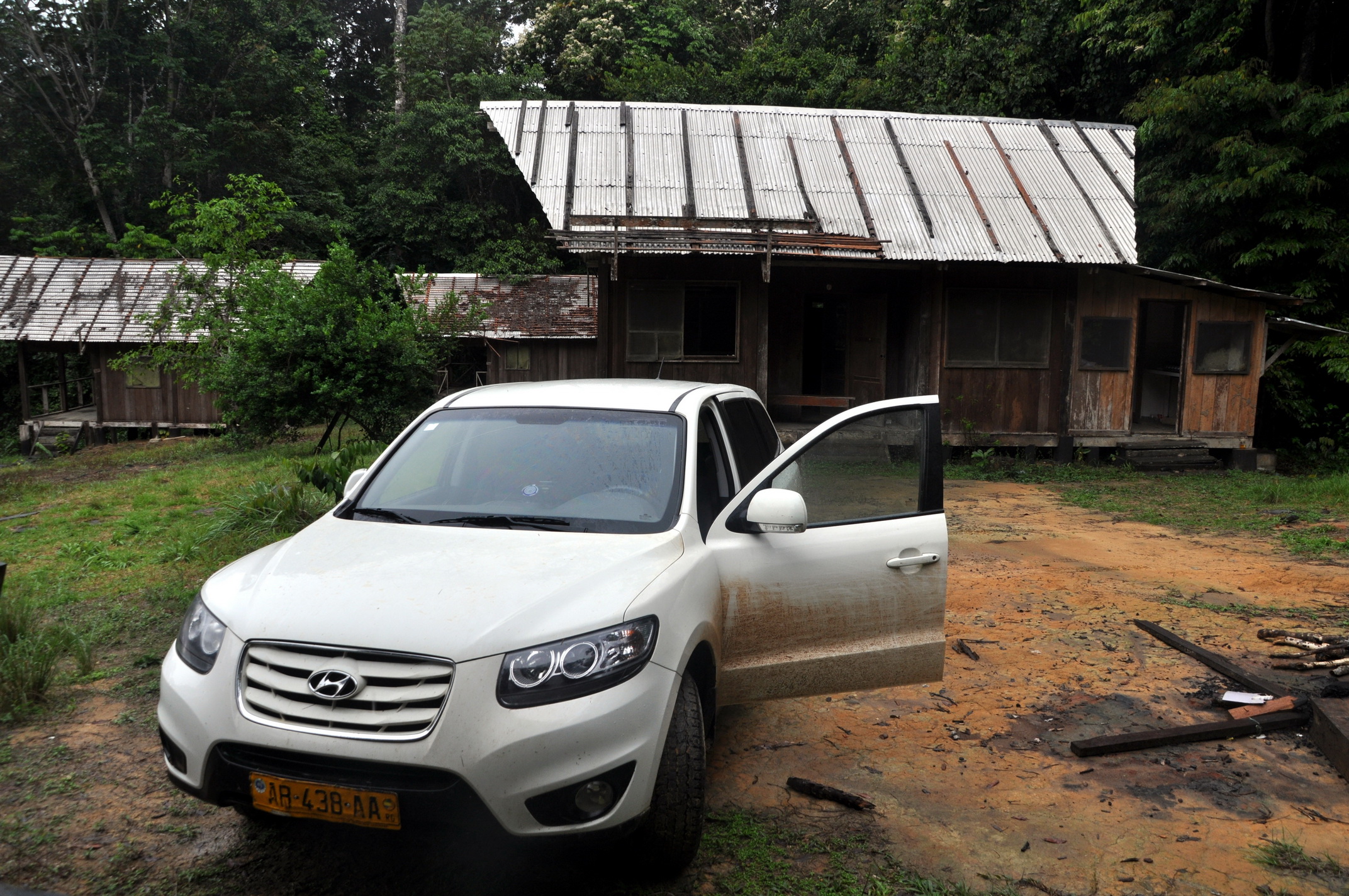
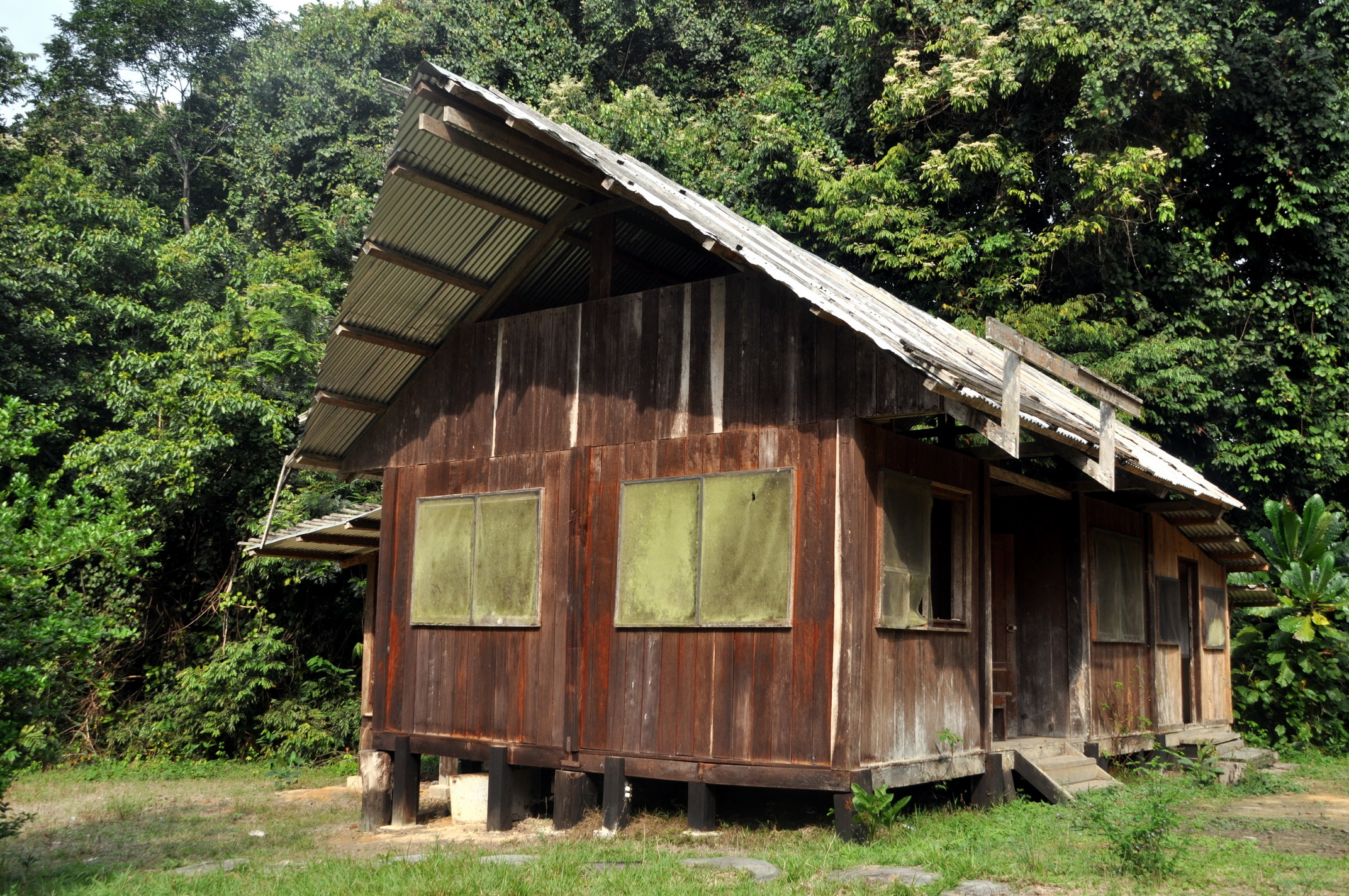
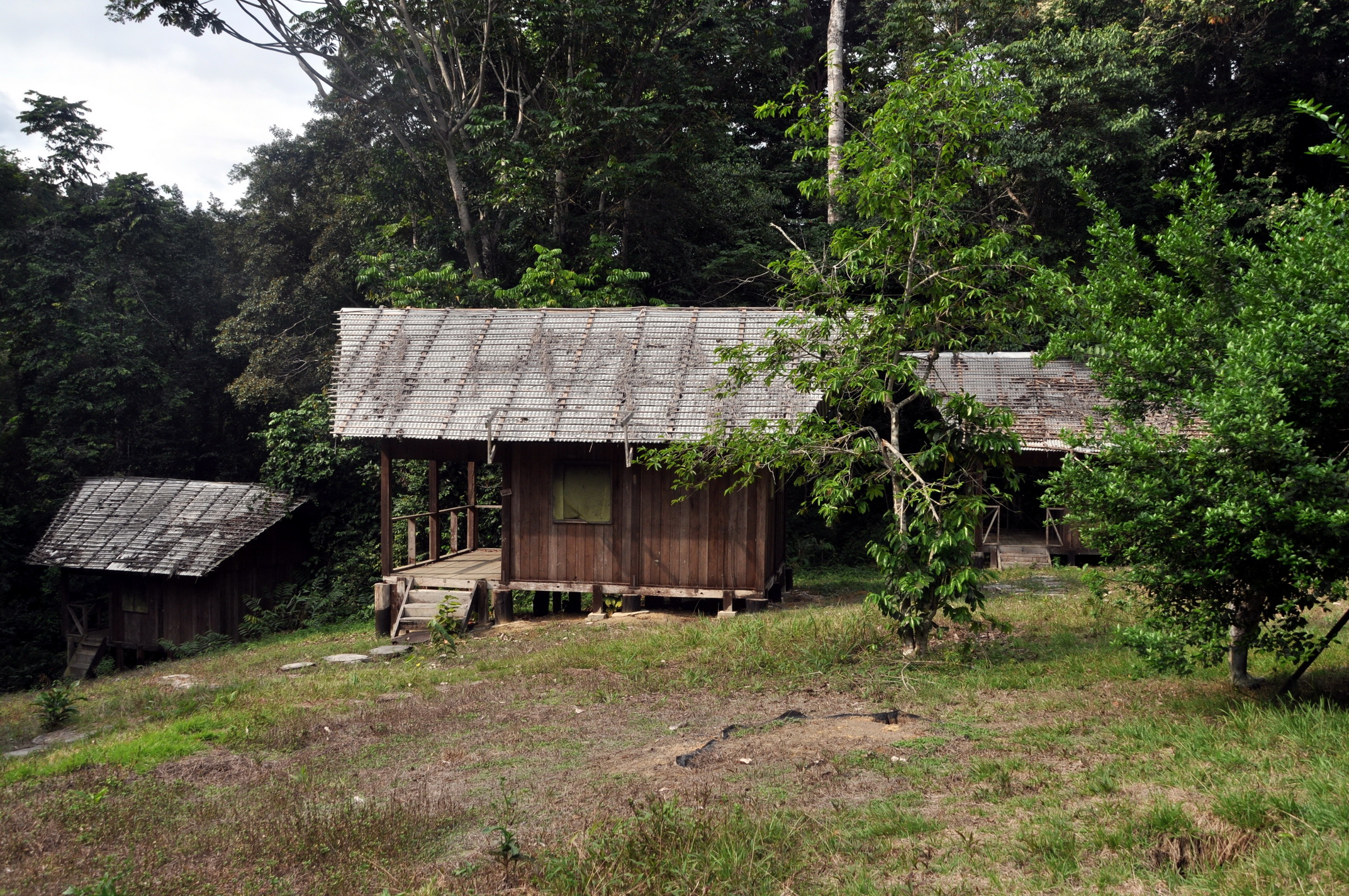
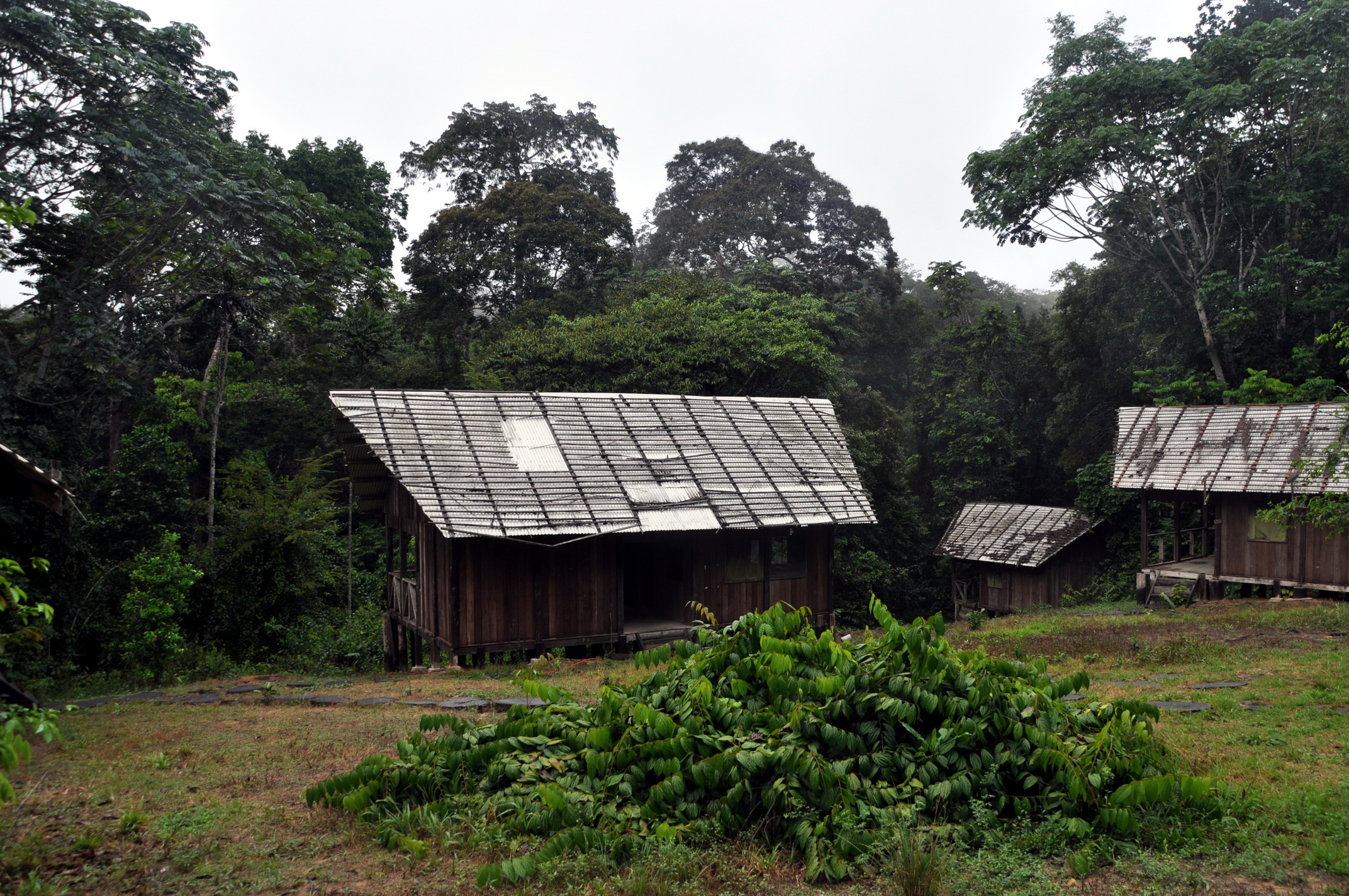
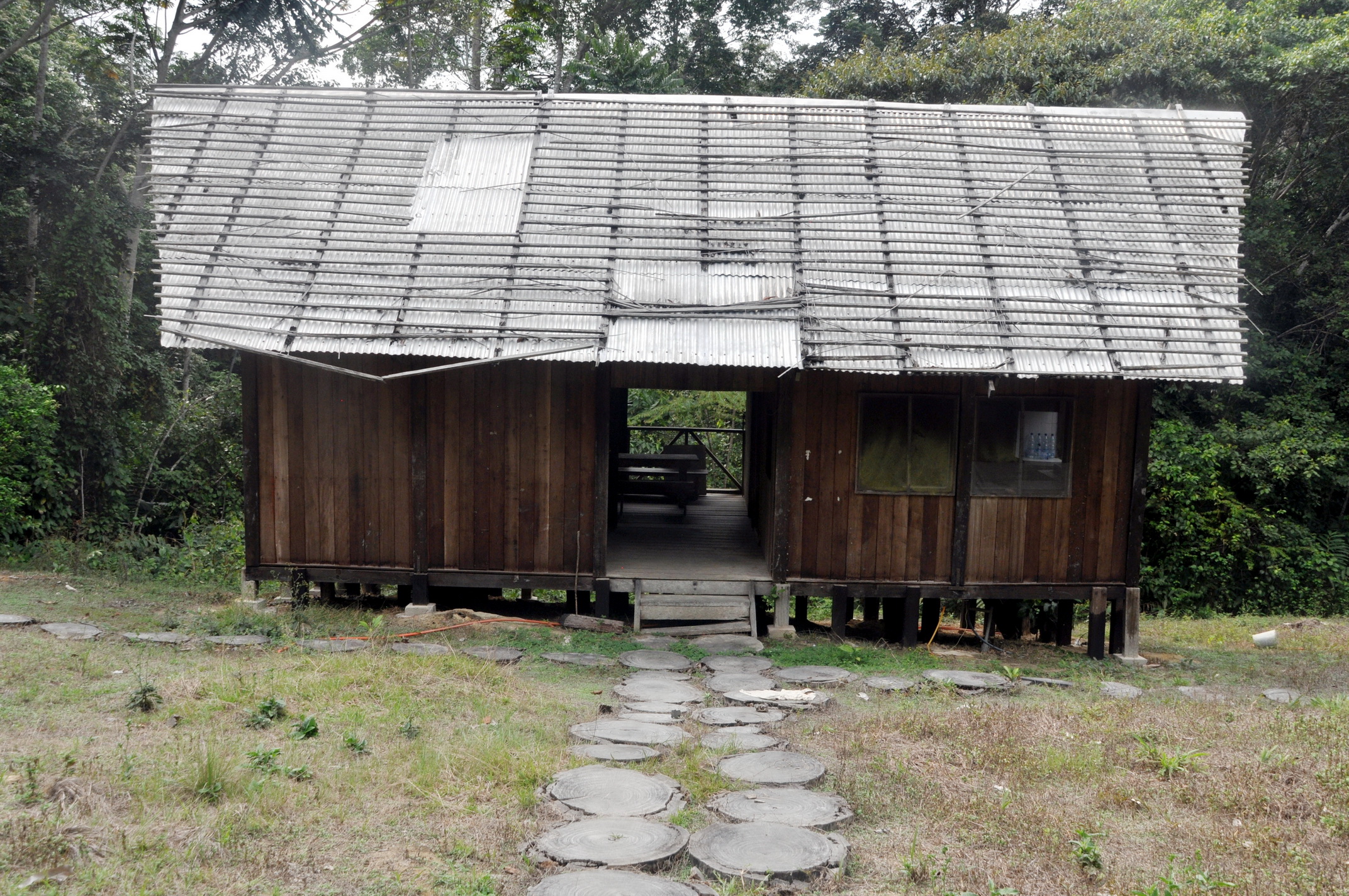
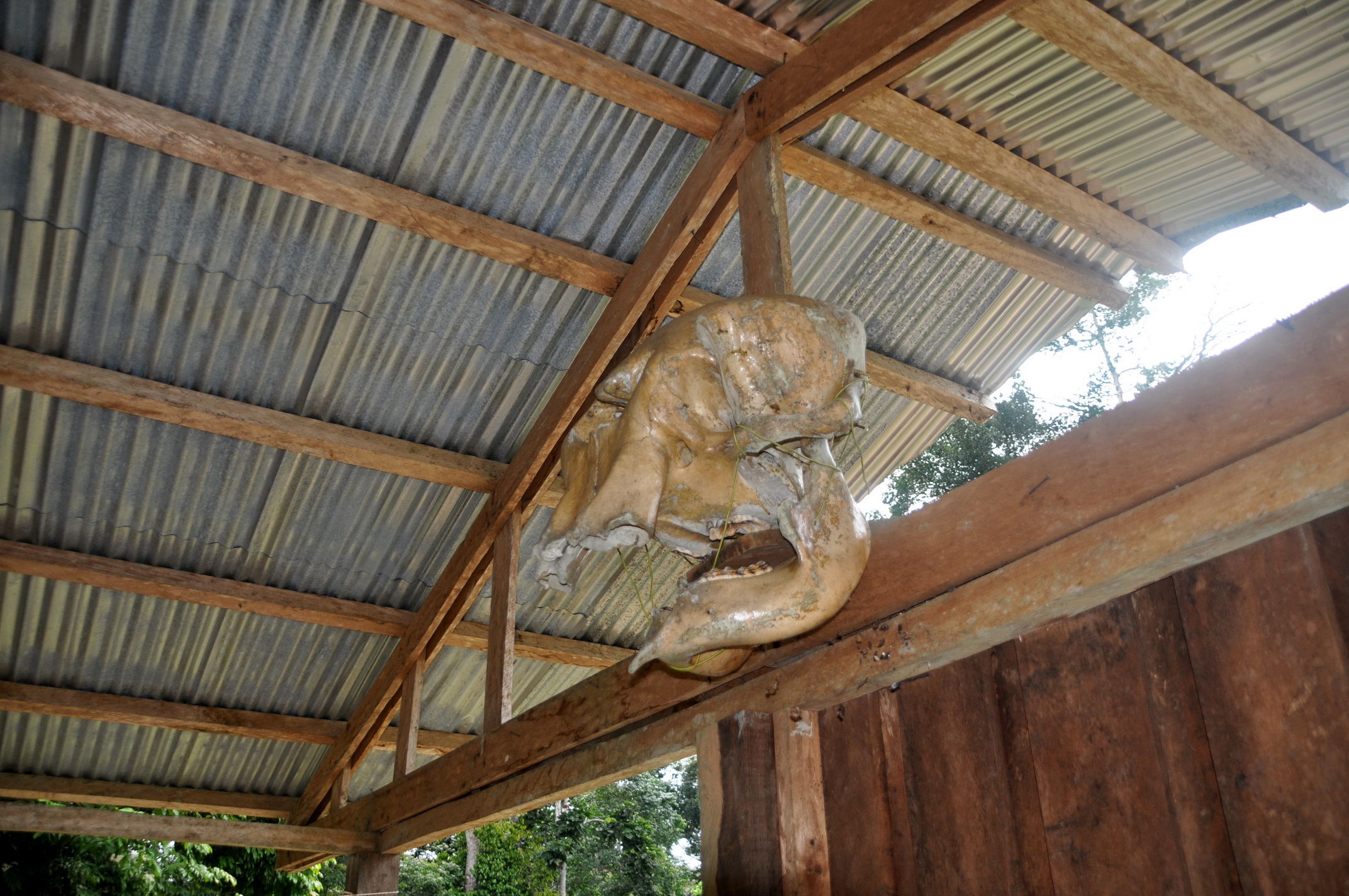
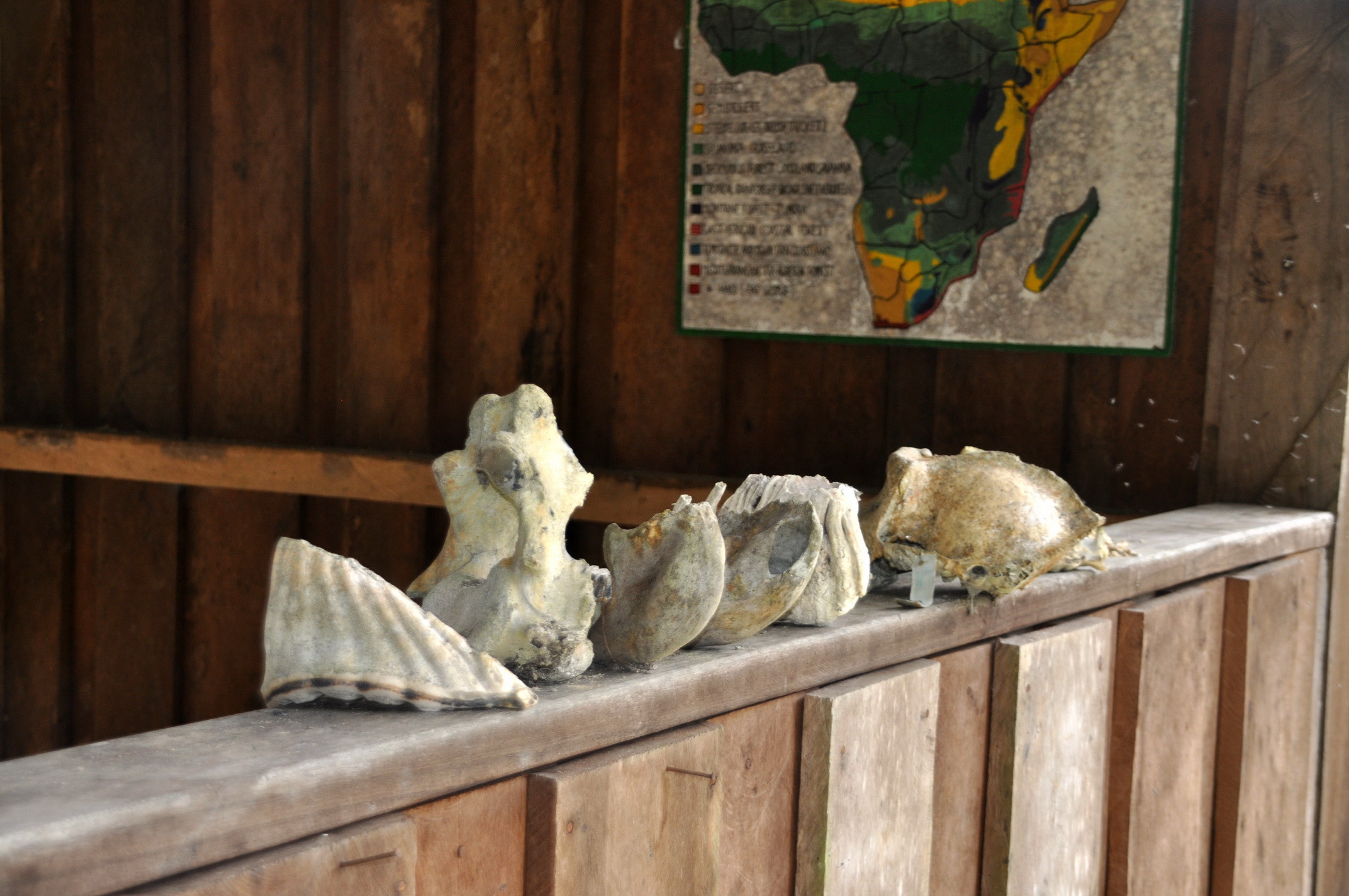
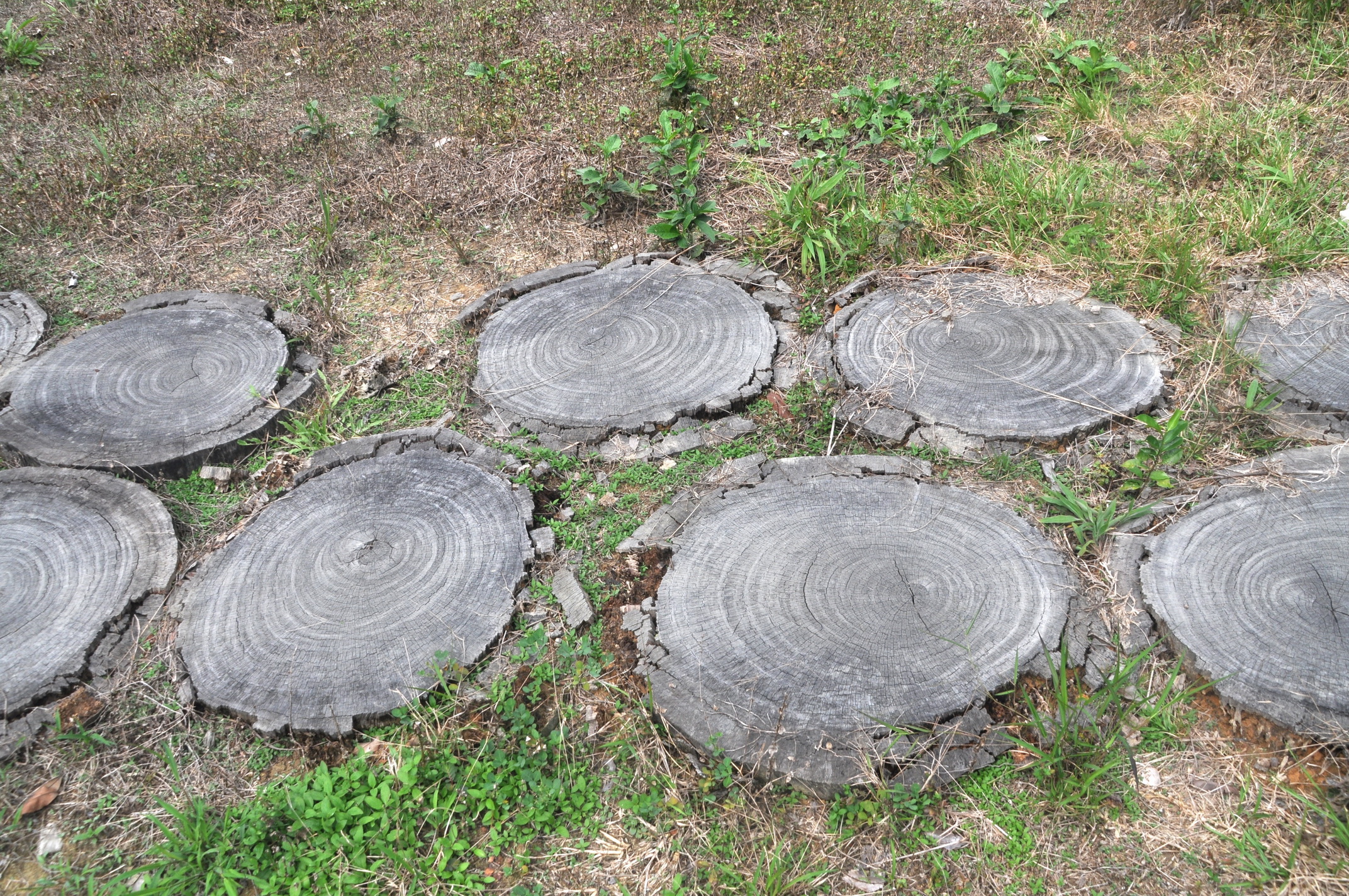
In the morning I picked up my guide where we’d agreed. He was a smiling, short man with five children. Fortunately he spoke reasonable English. He charged 65,000 francs for the day. He loved his work and knew a great deal about it.
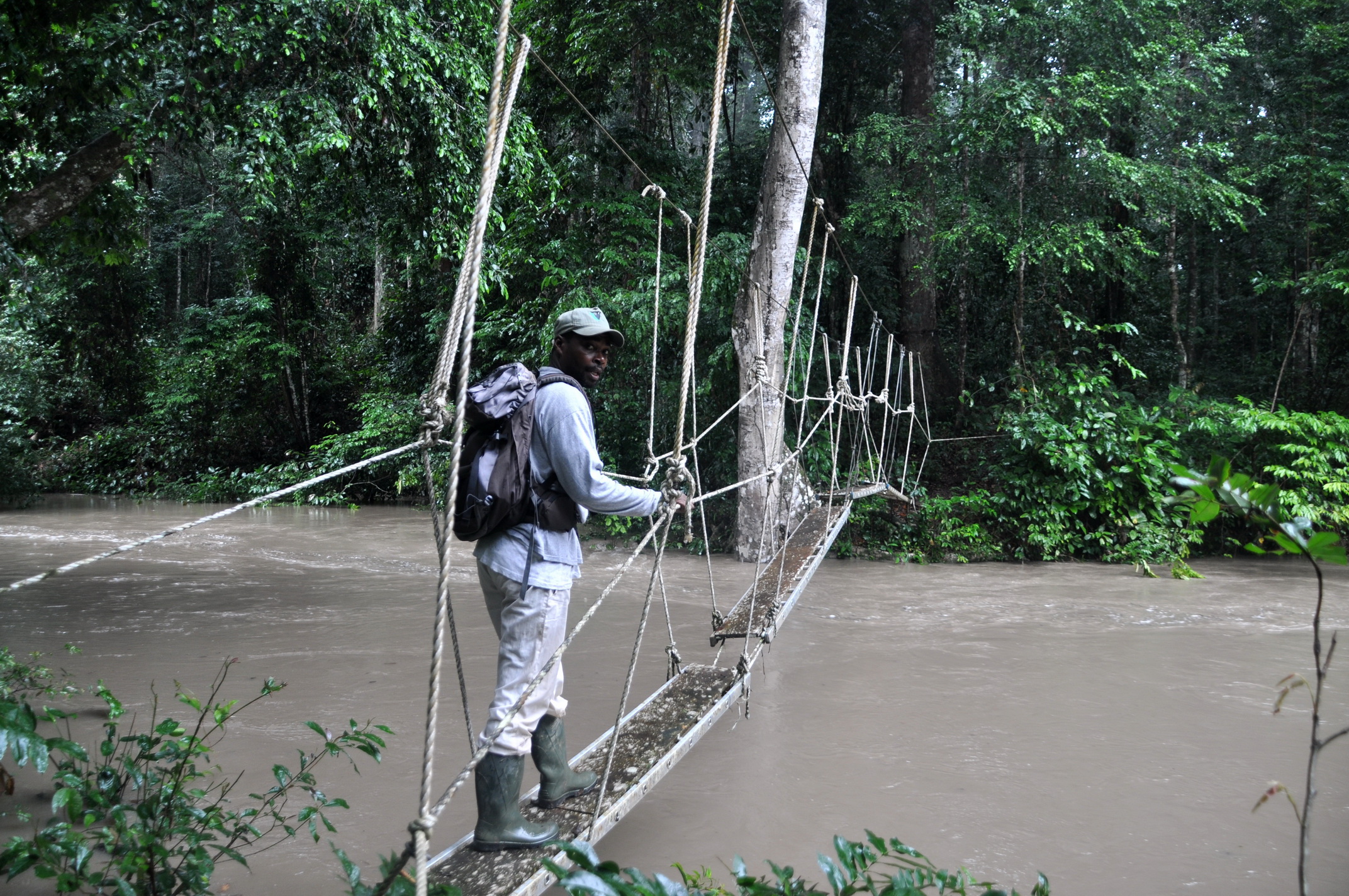
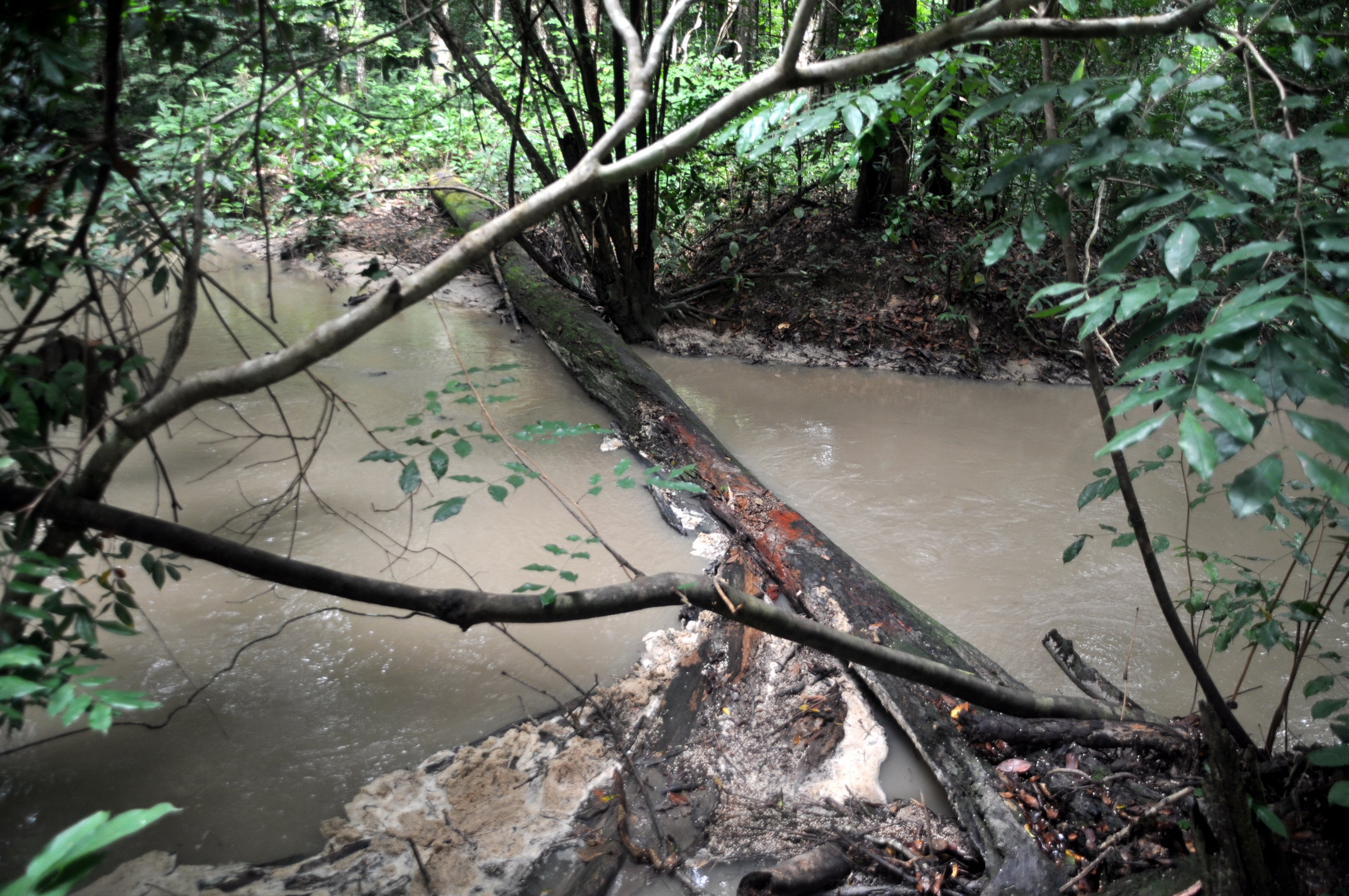
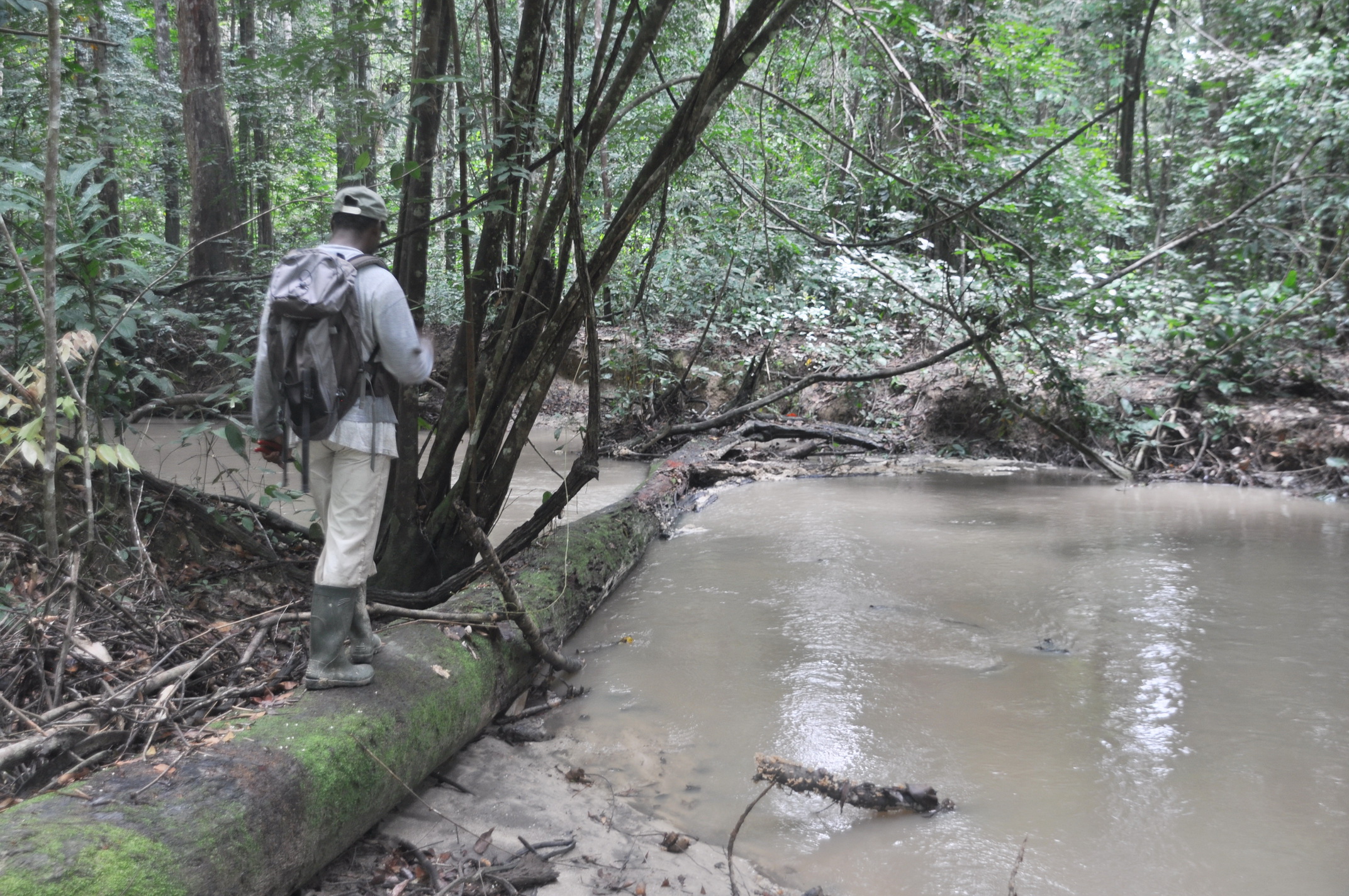
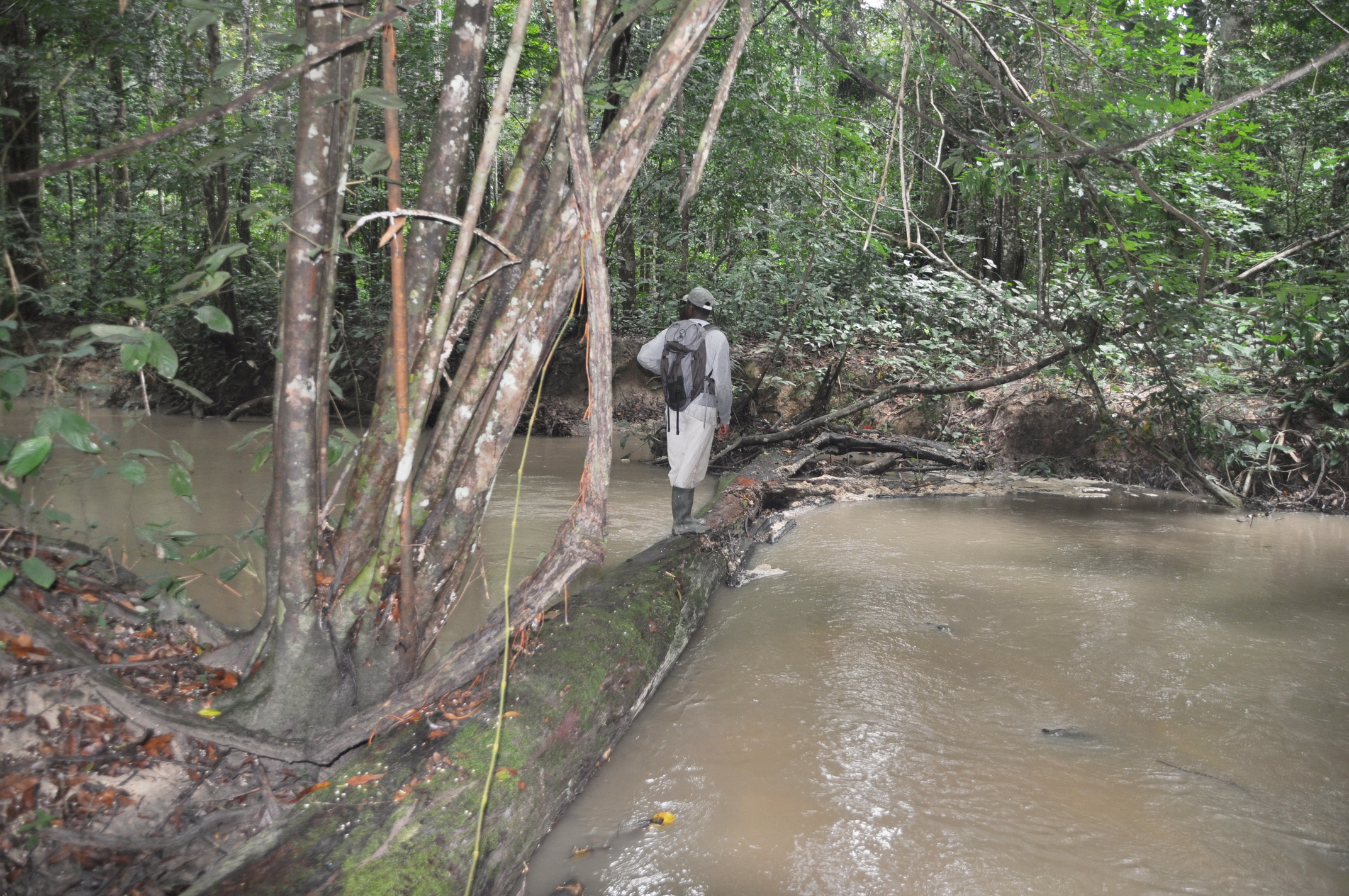
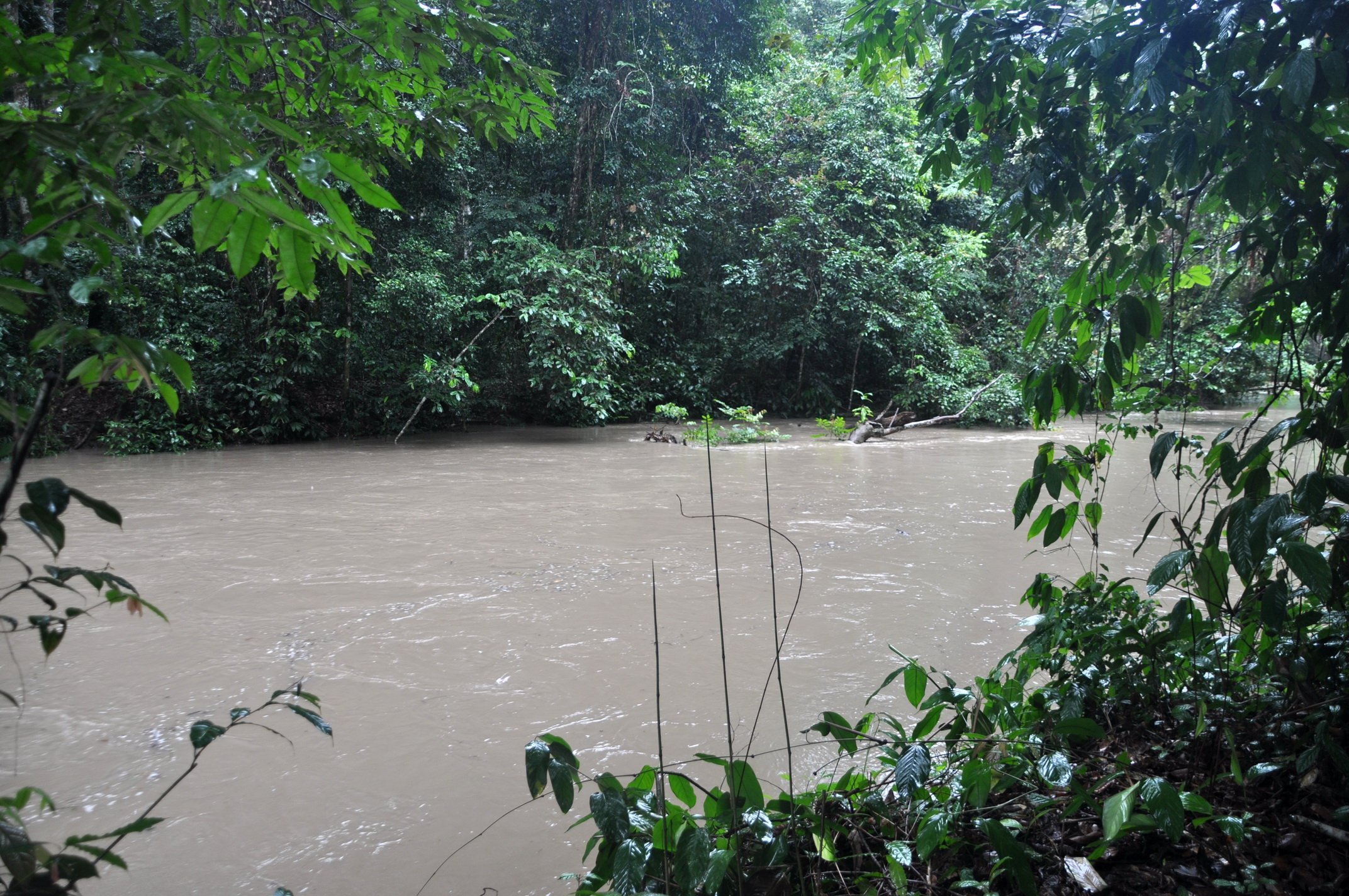
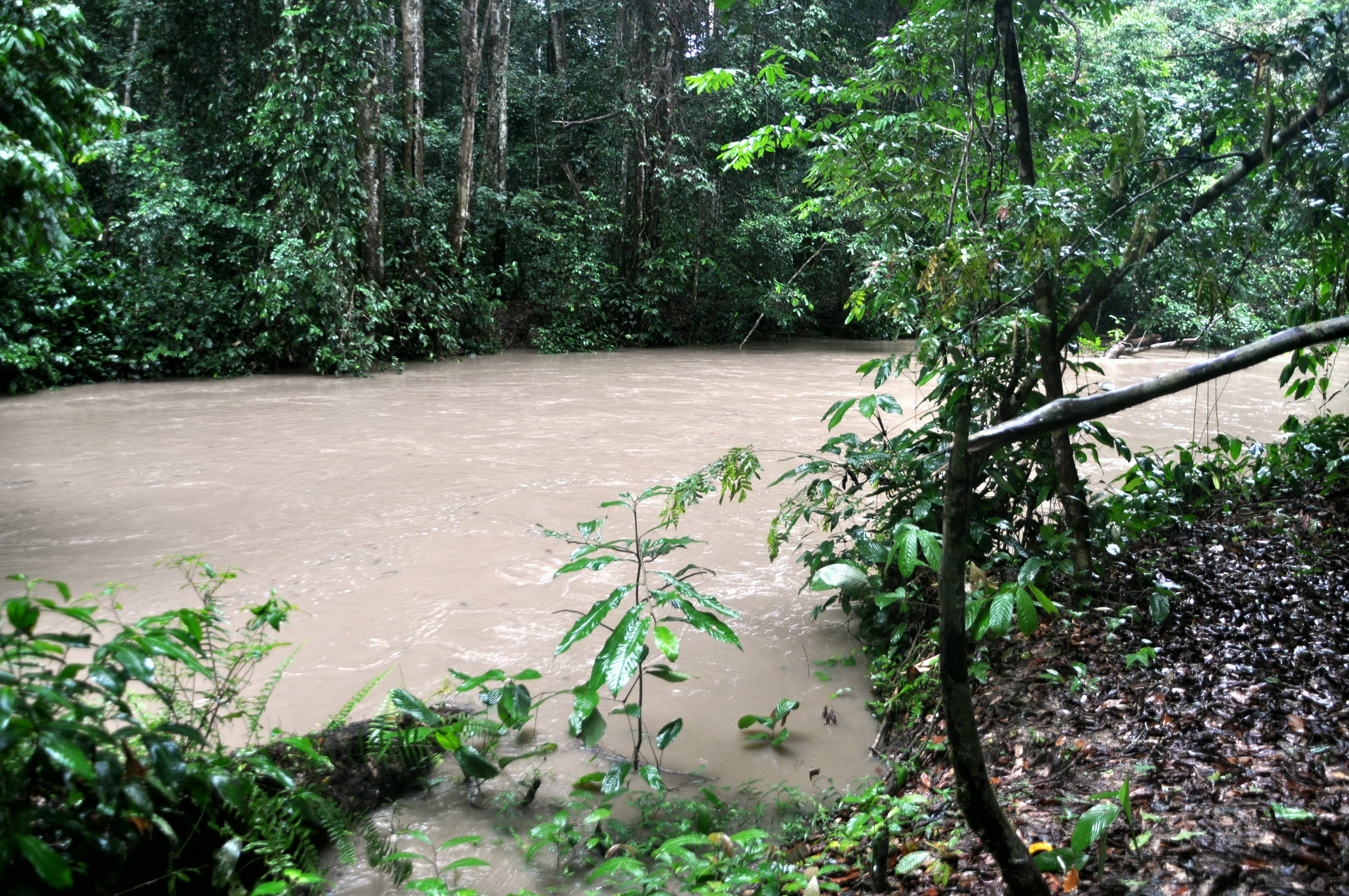
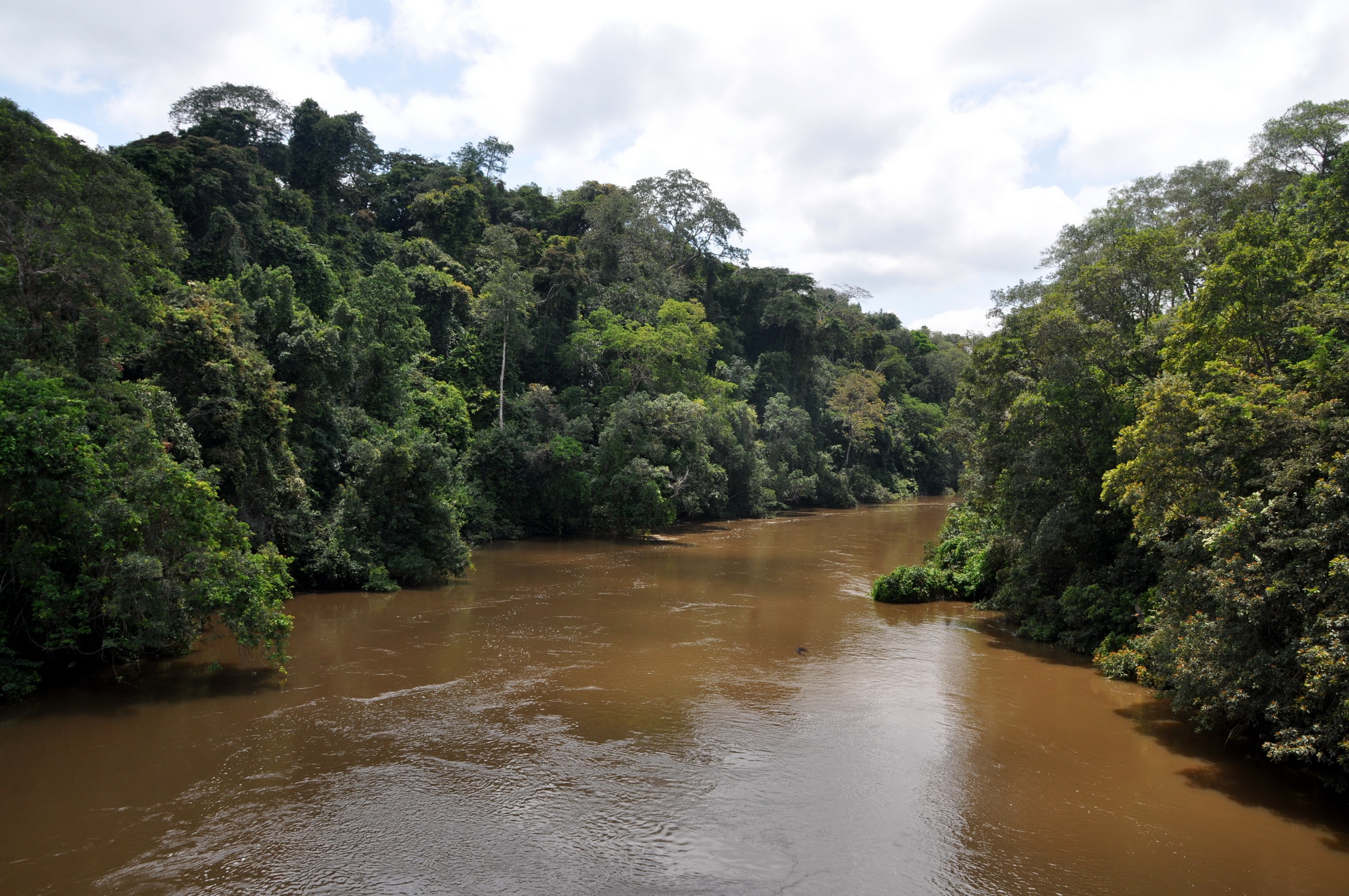
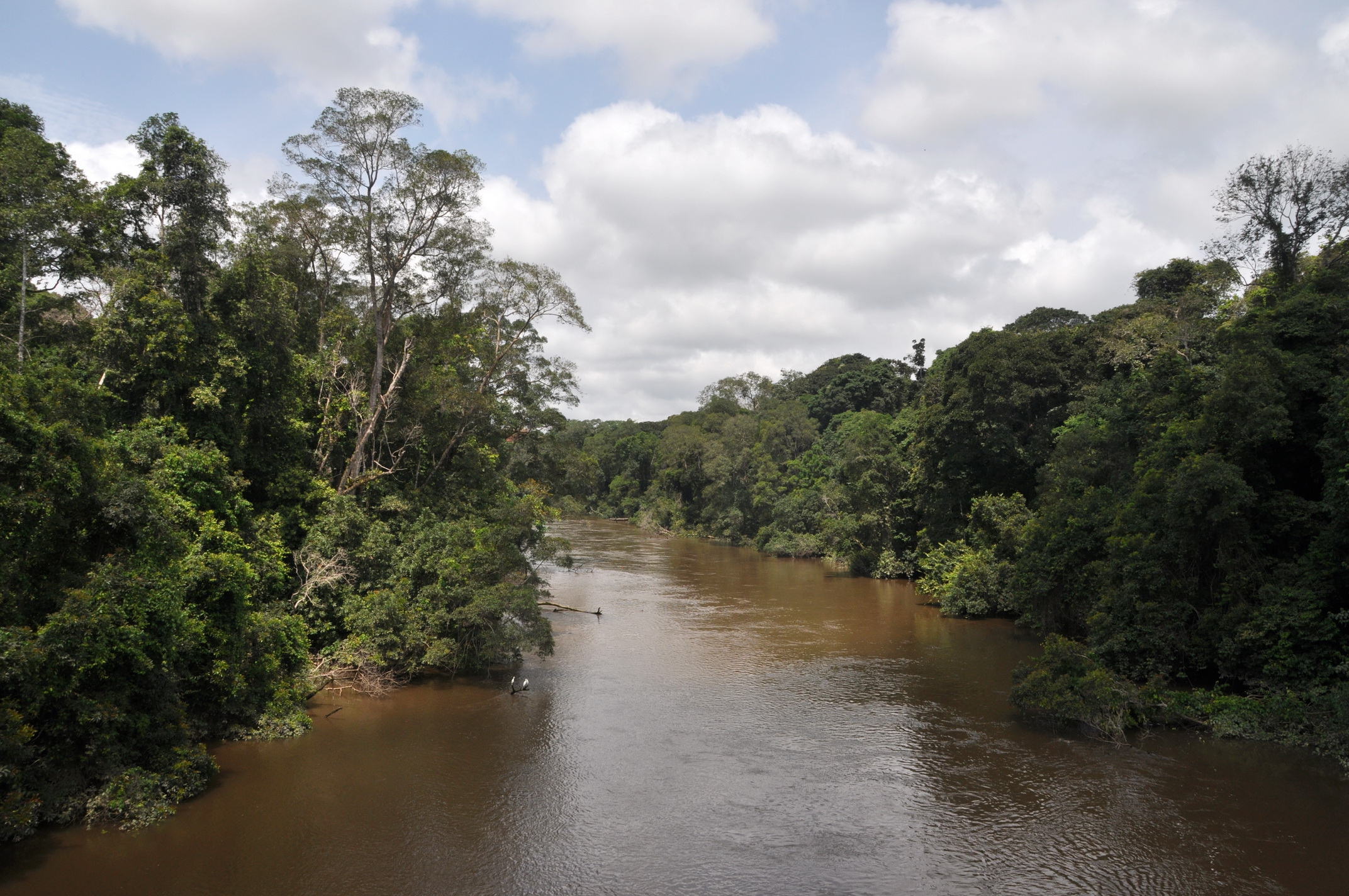
The track crossed a river right from the car park. It was brimming with water from the previous day’s rain.
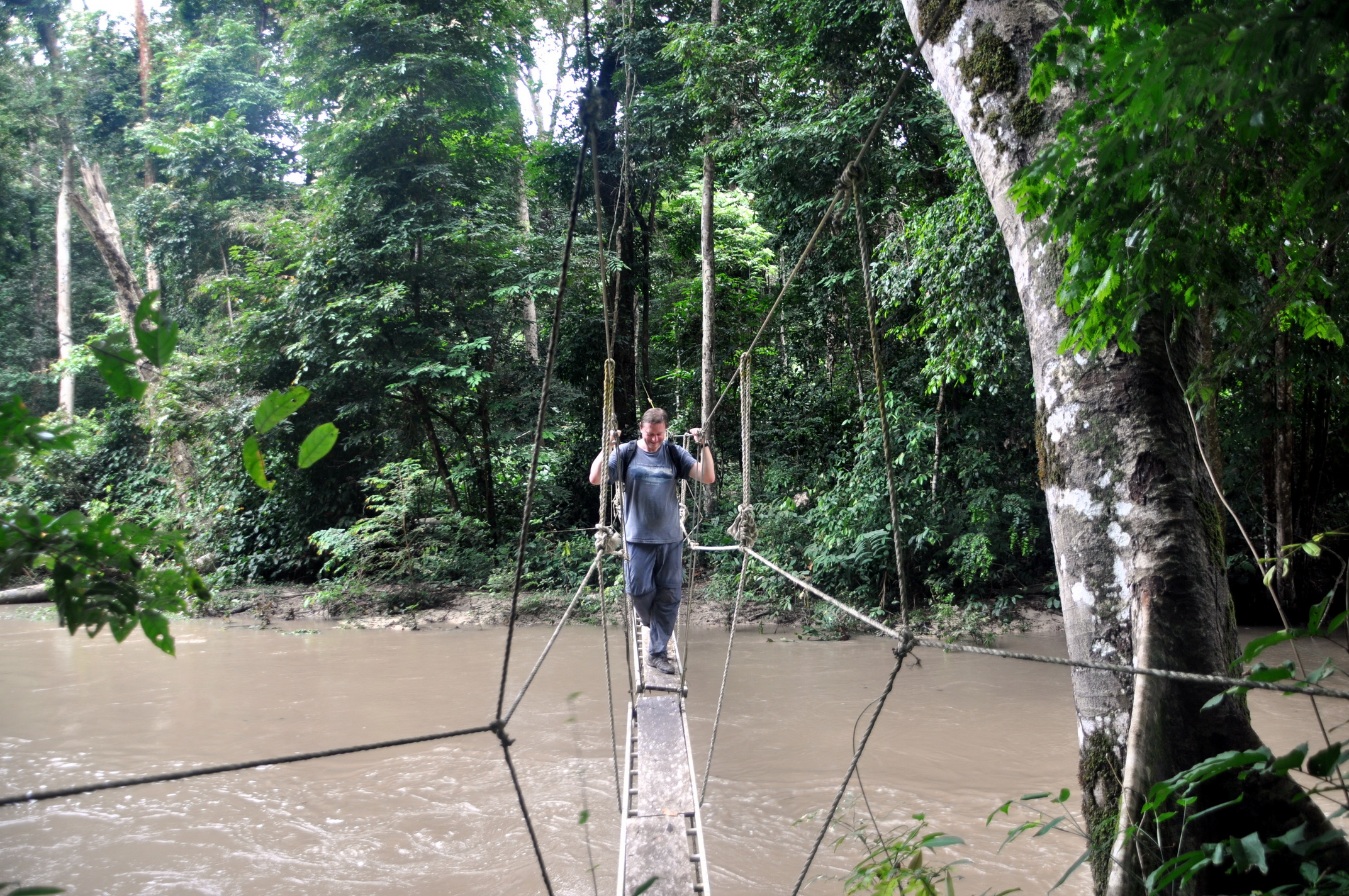
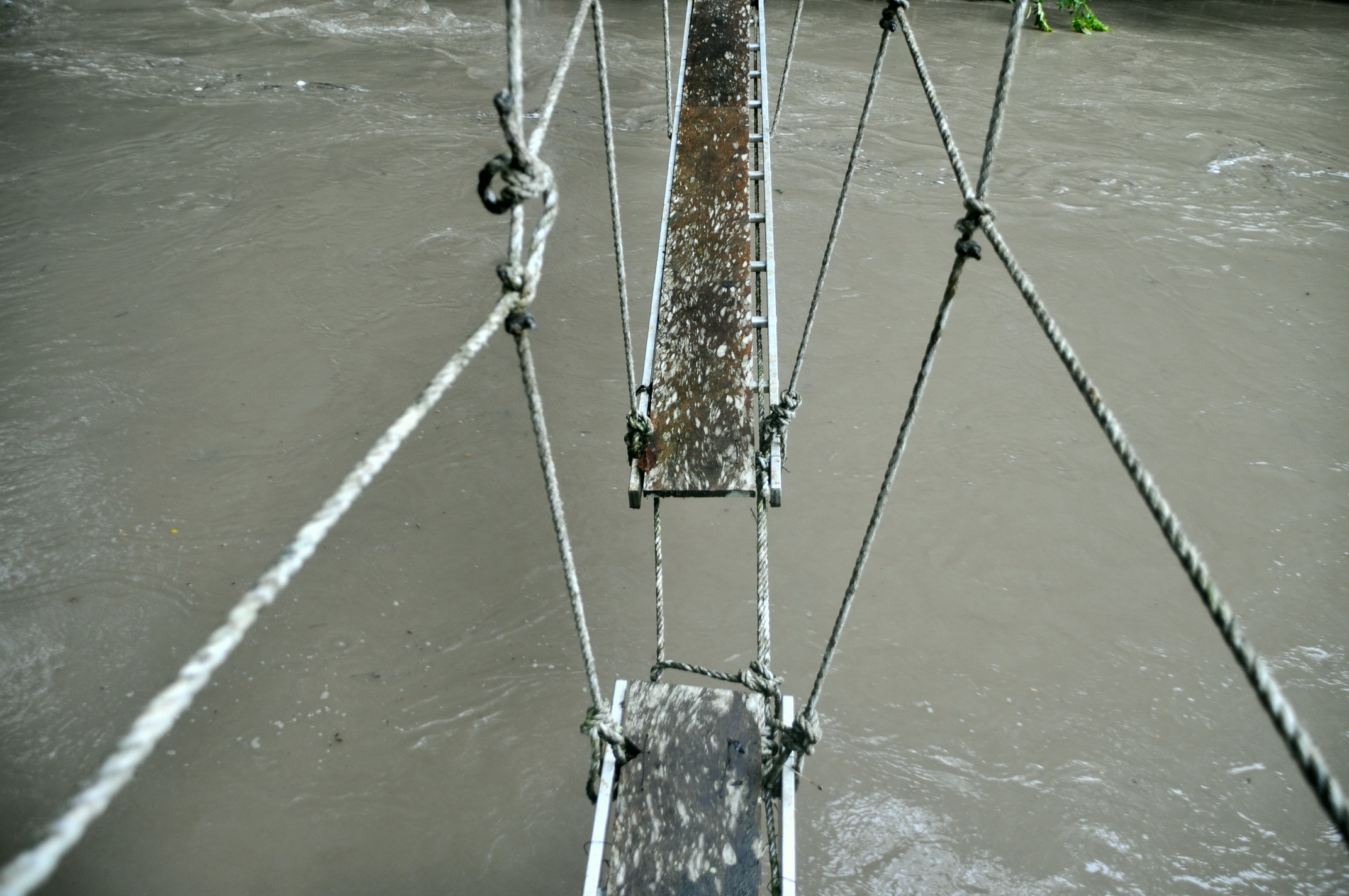
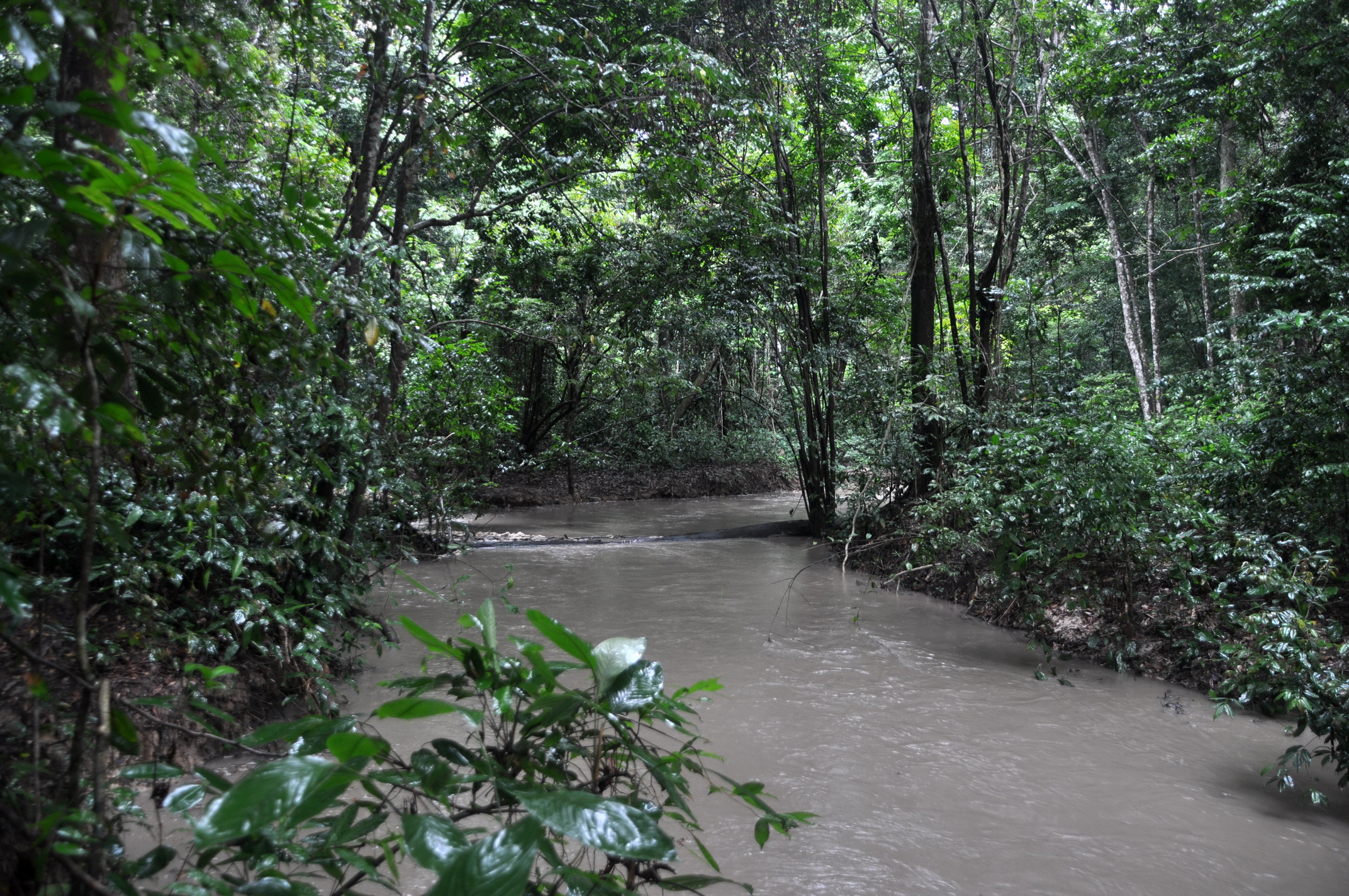
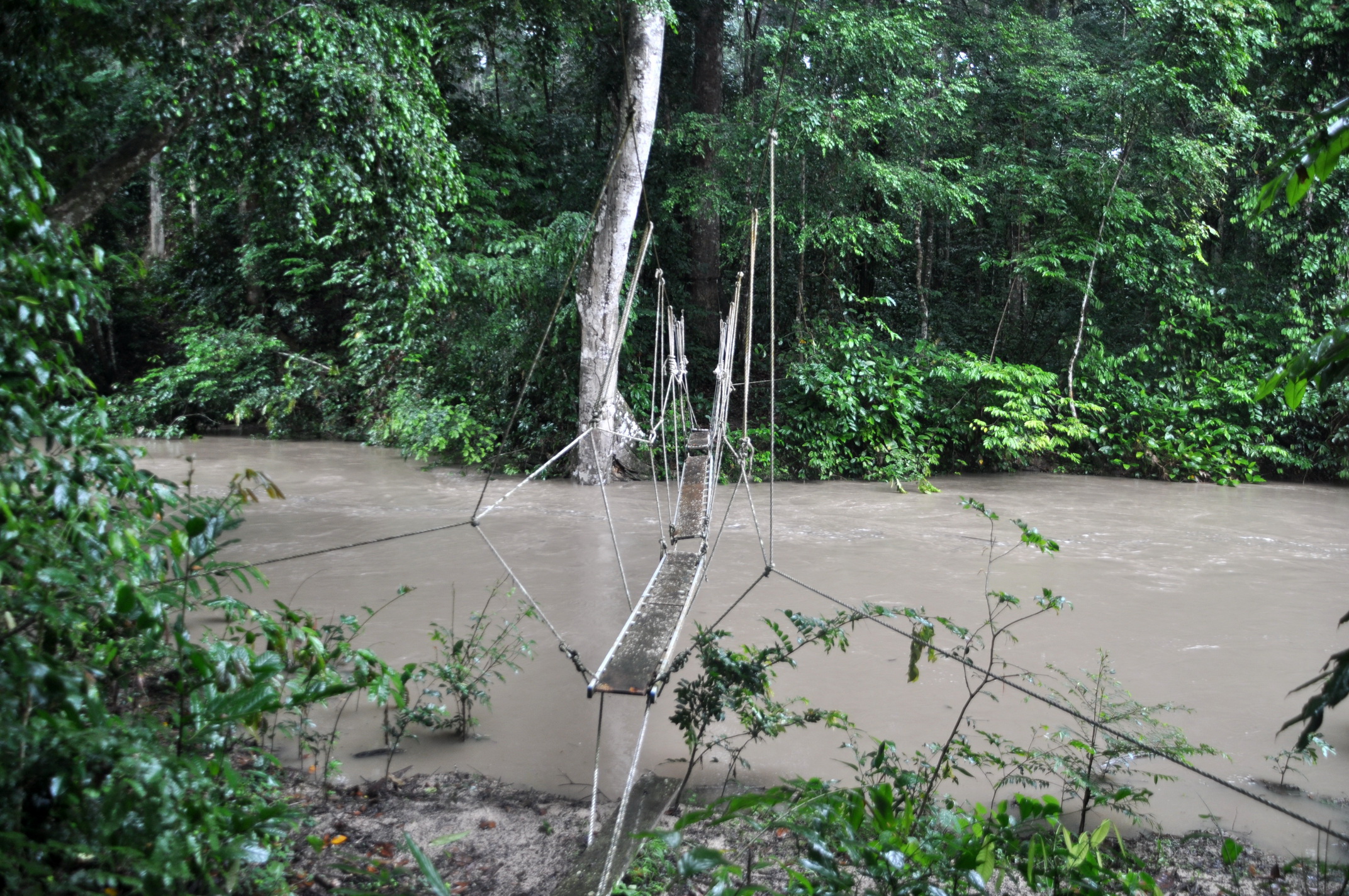
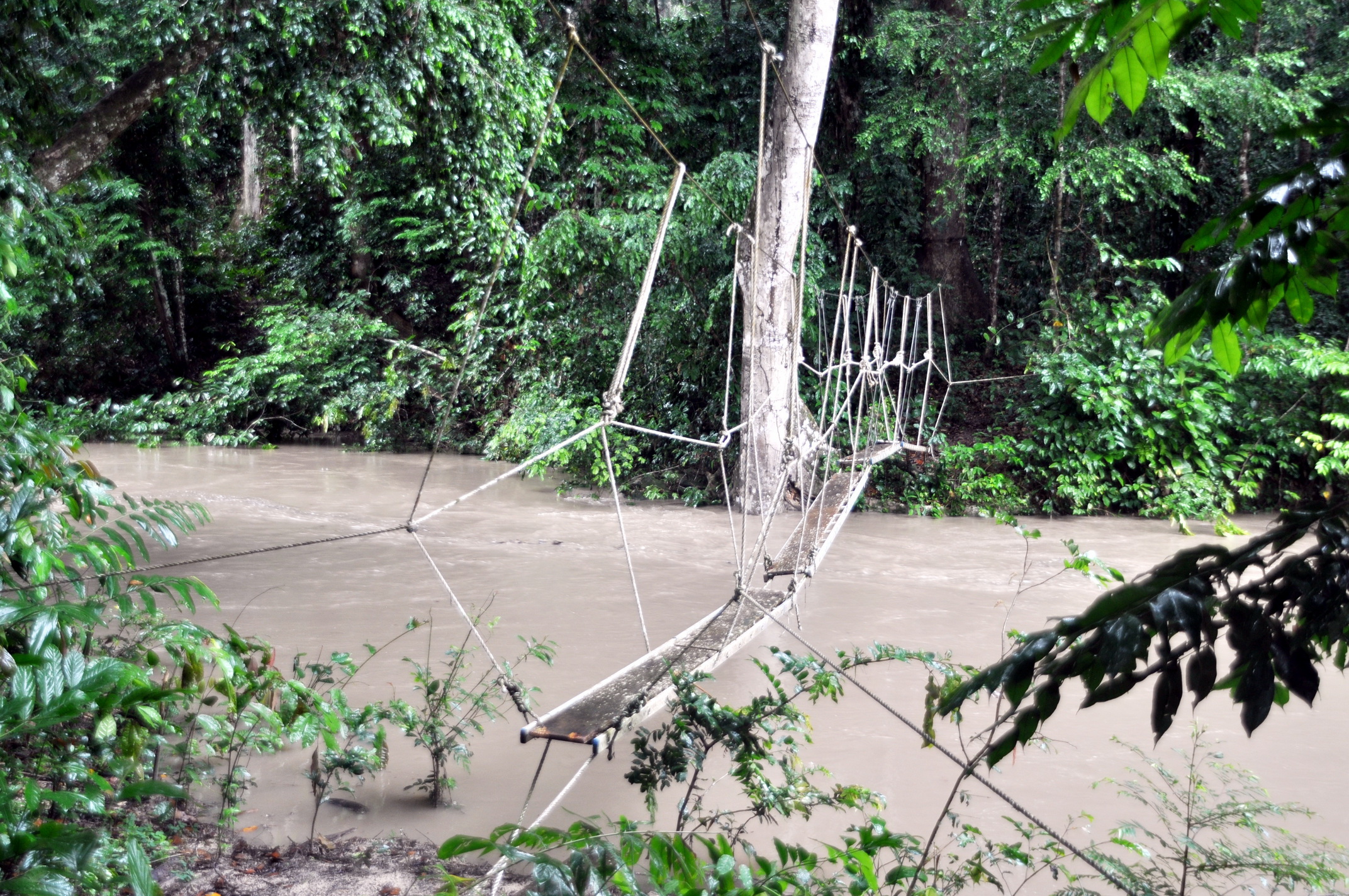
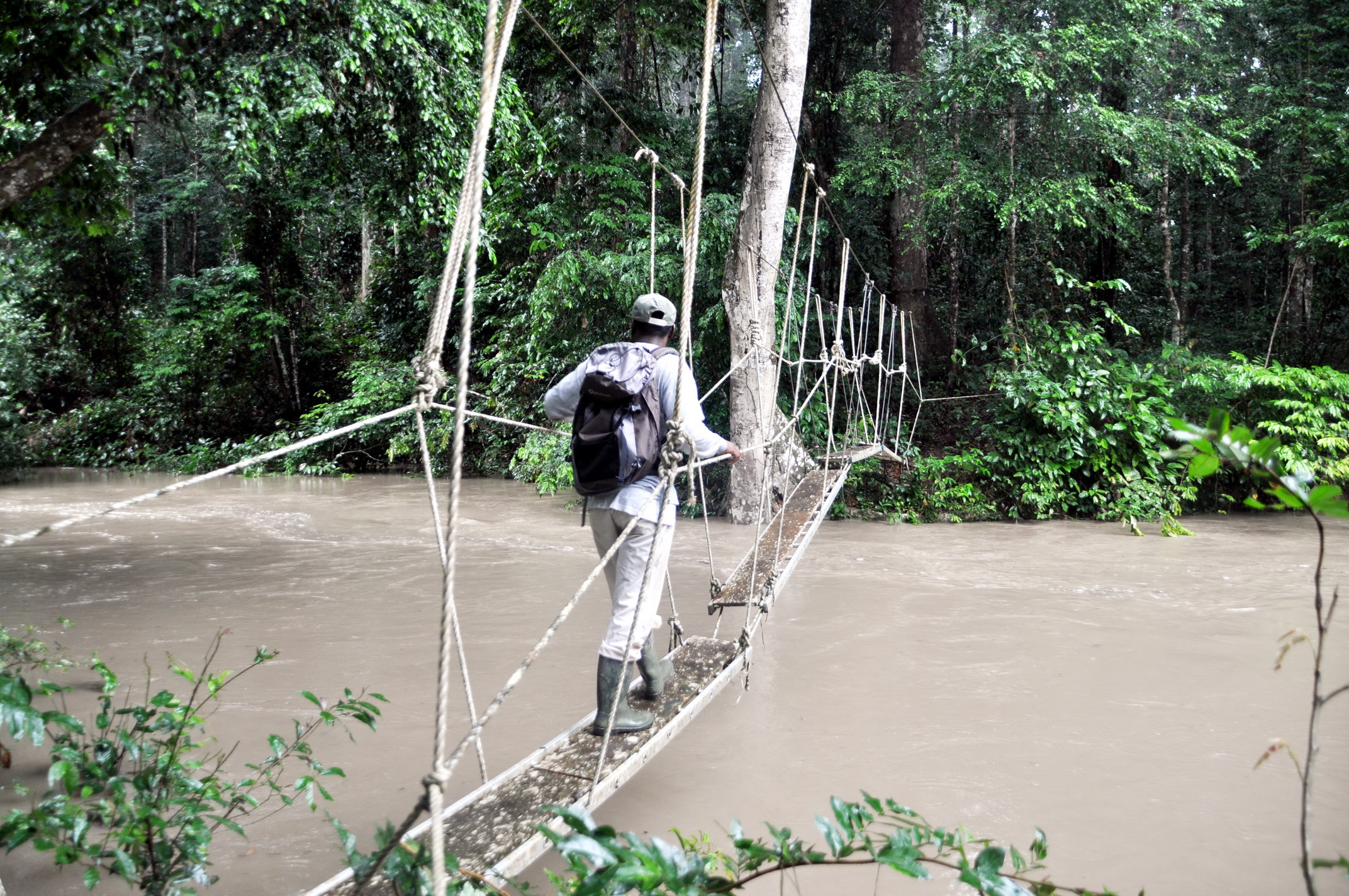
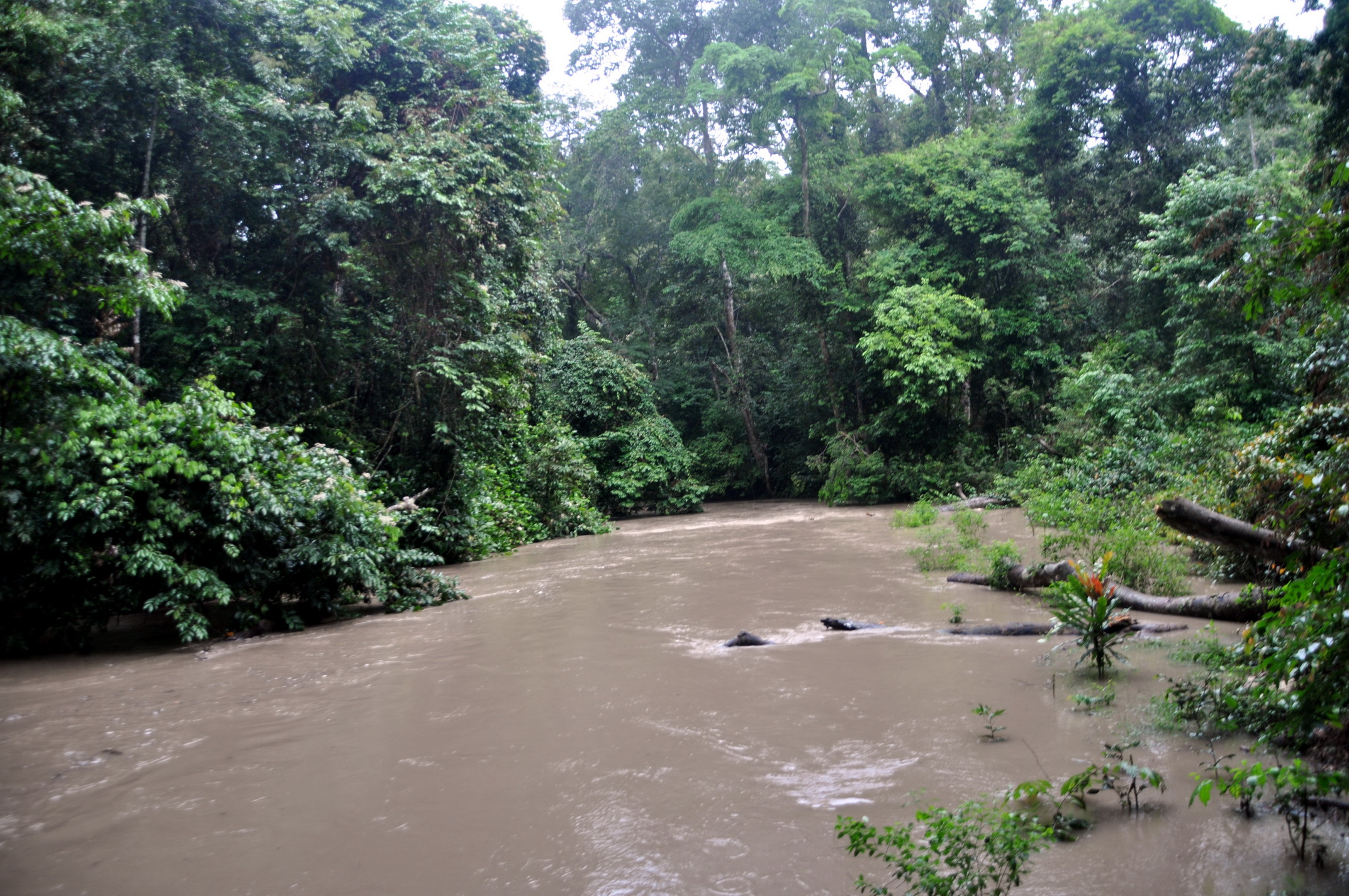
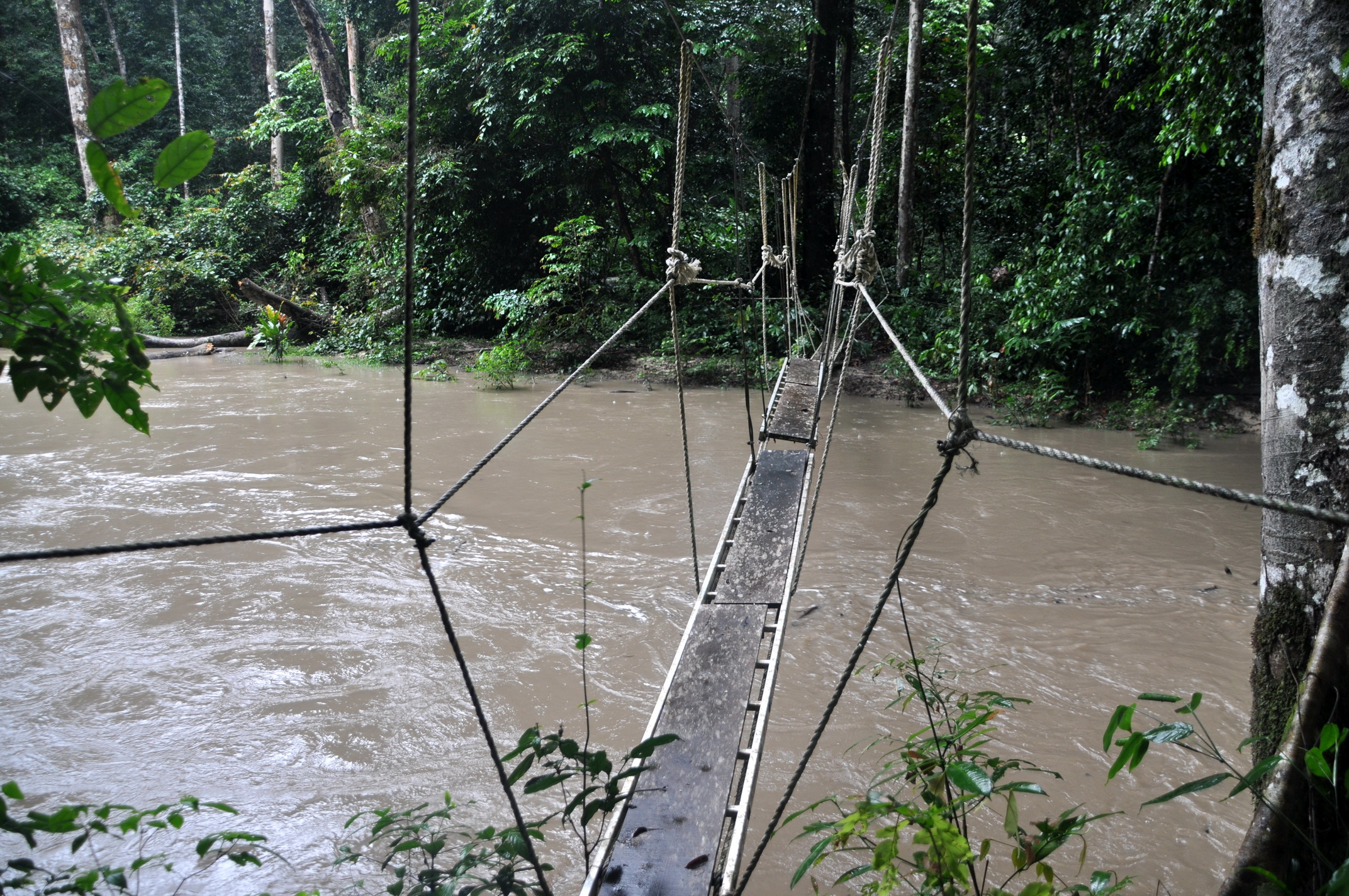
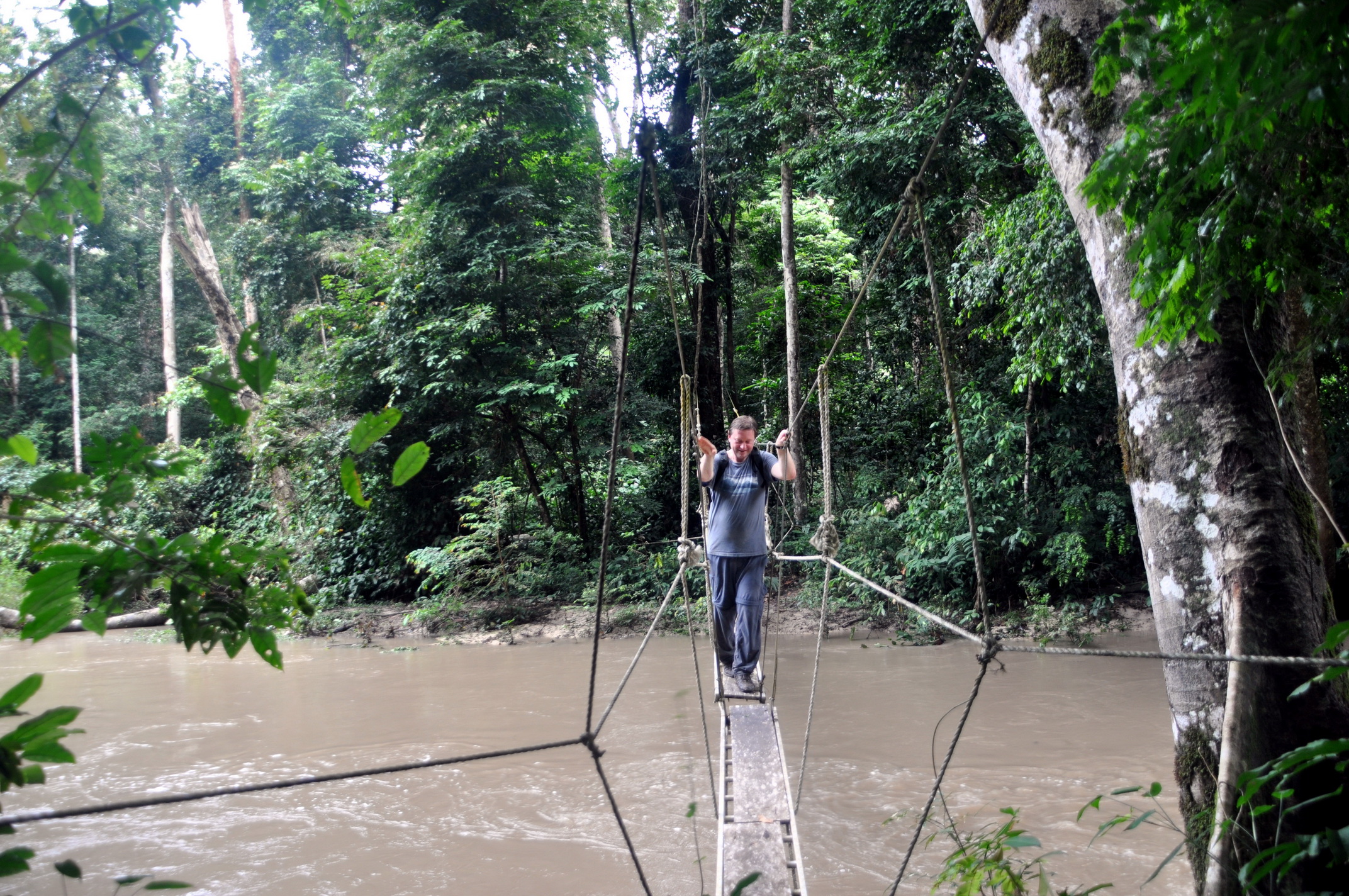
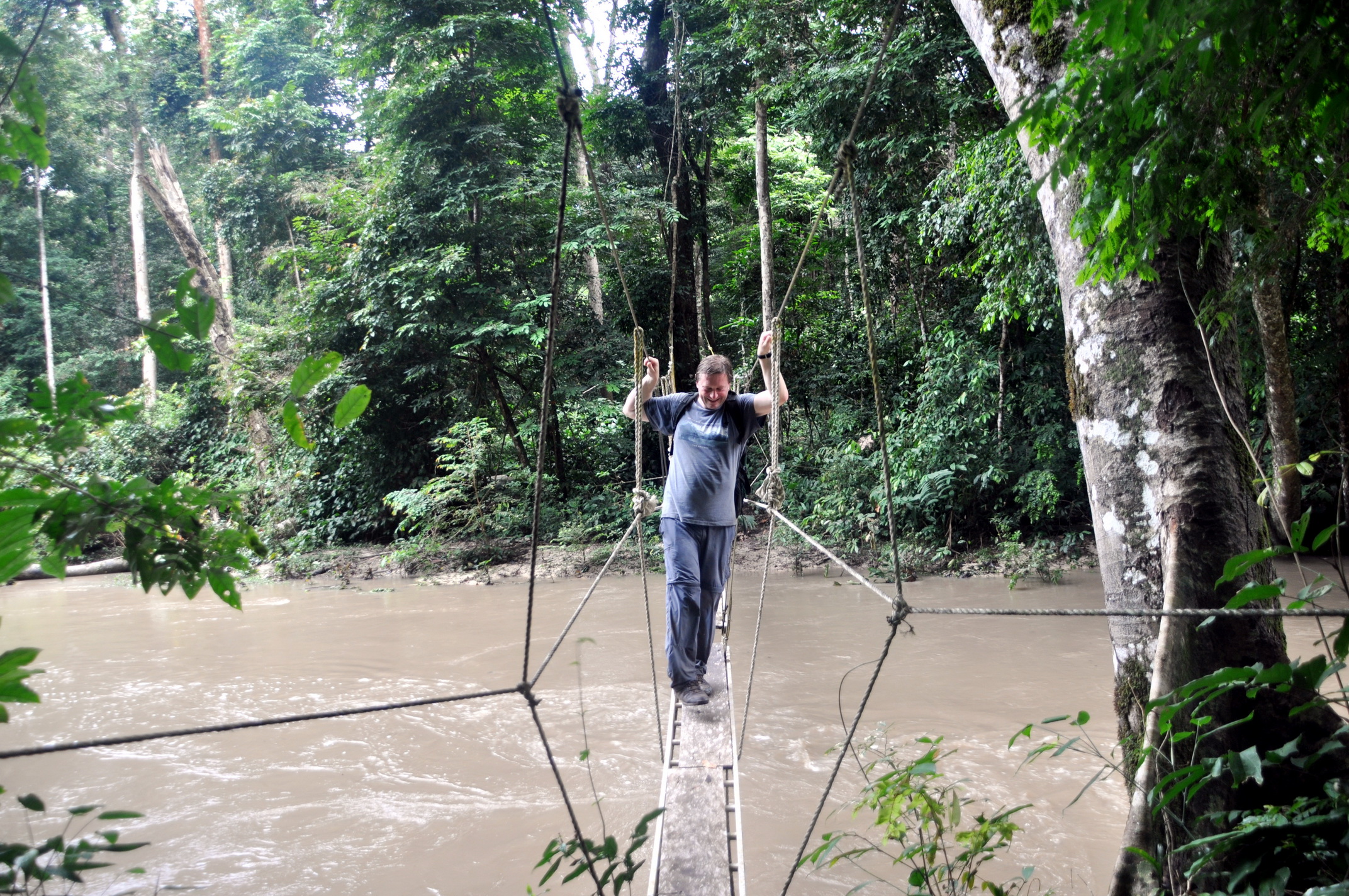
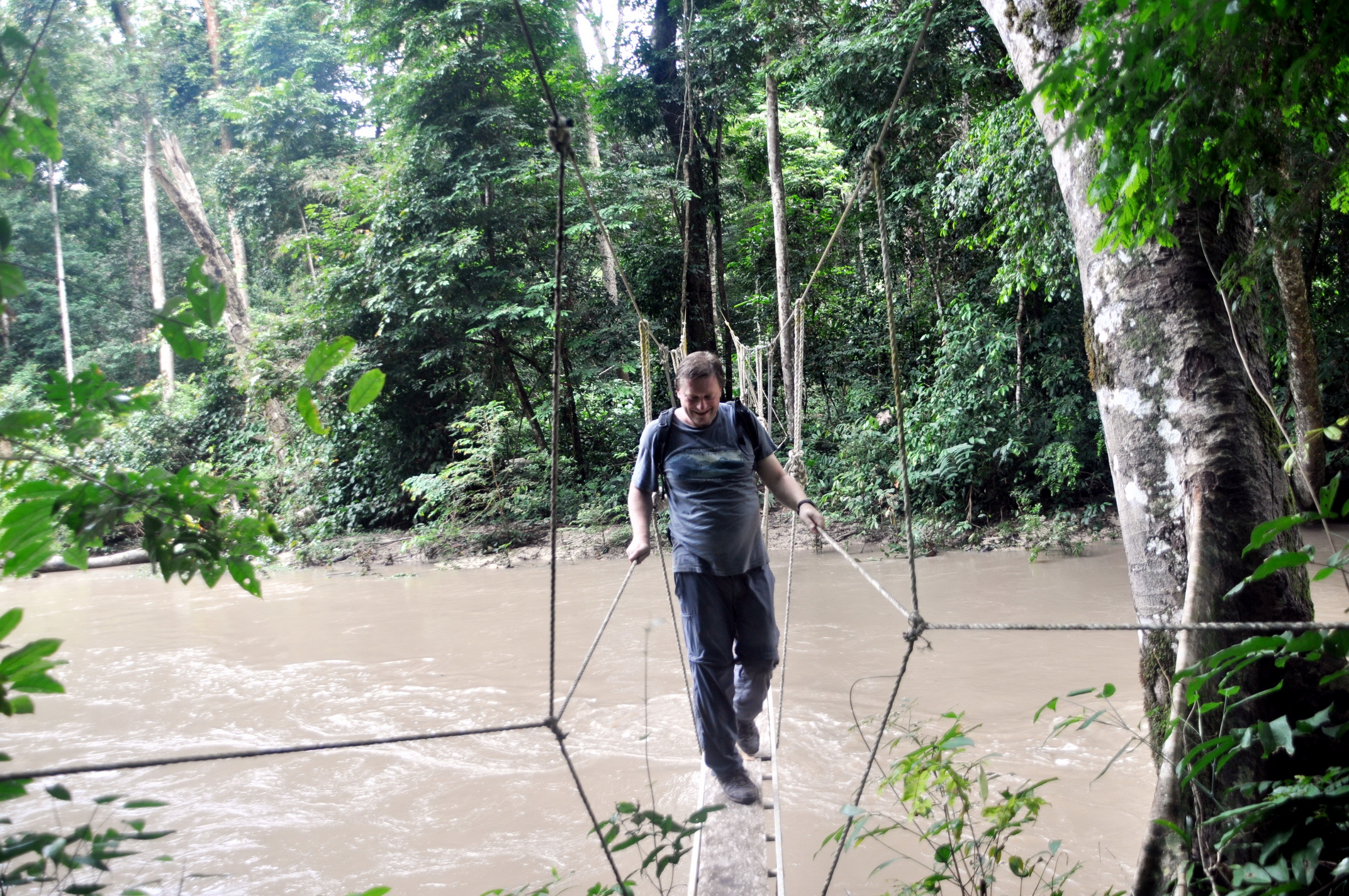
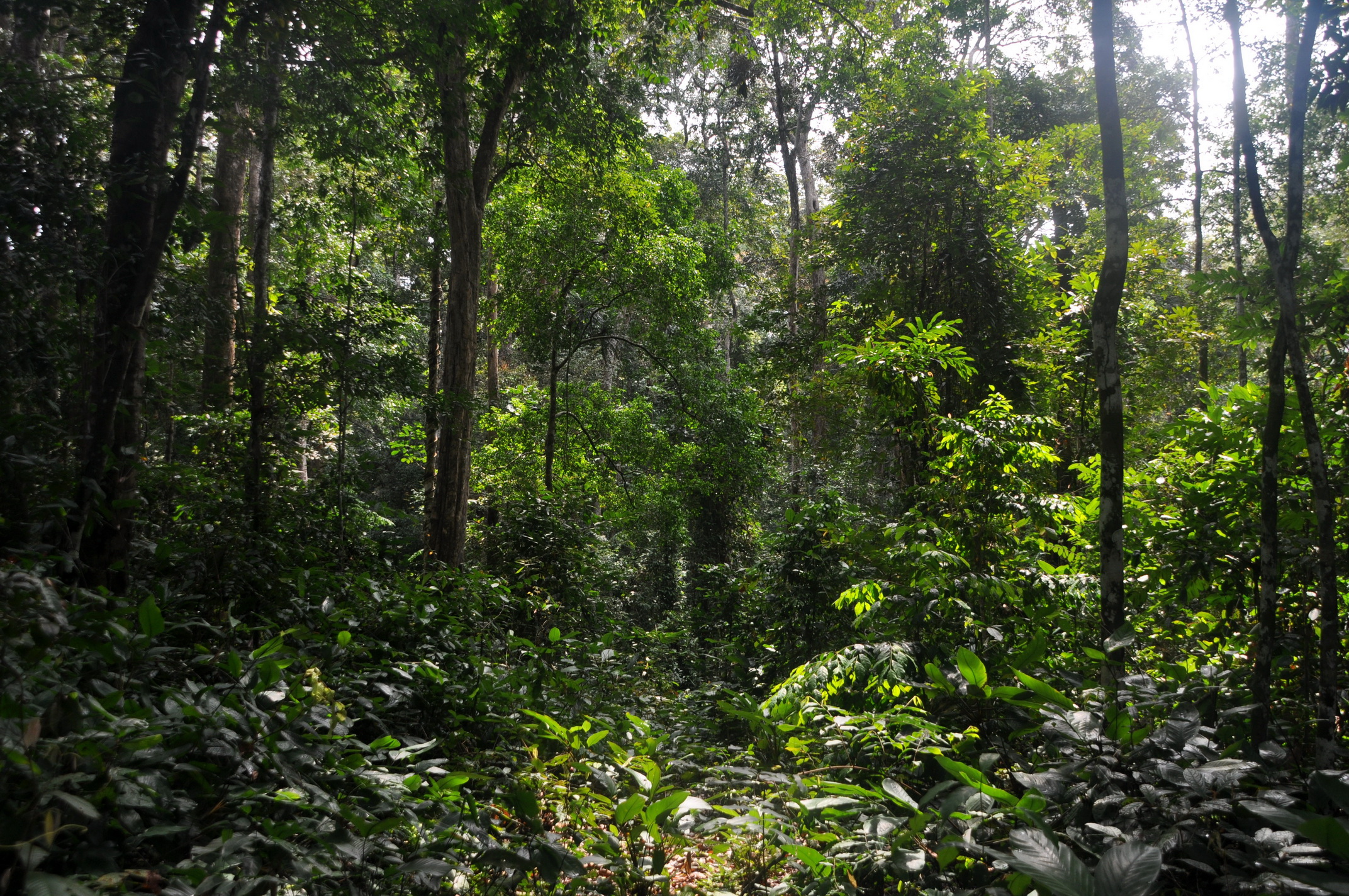
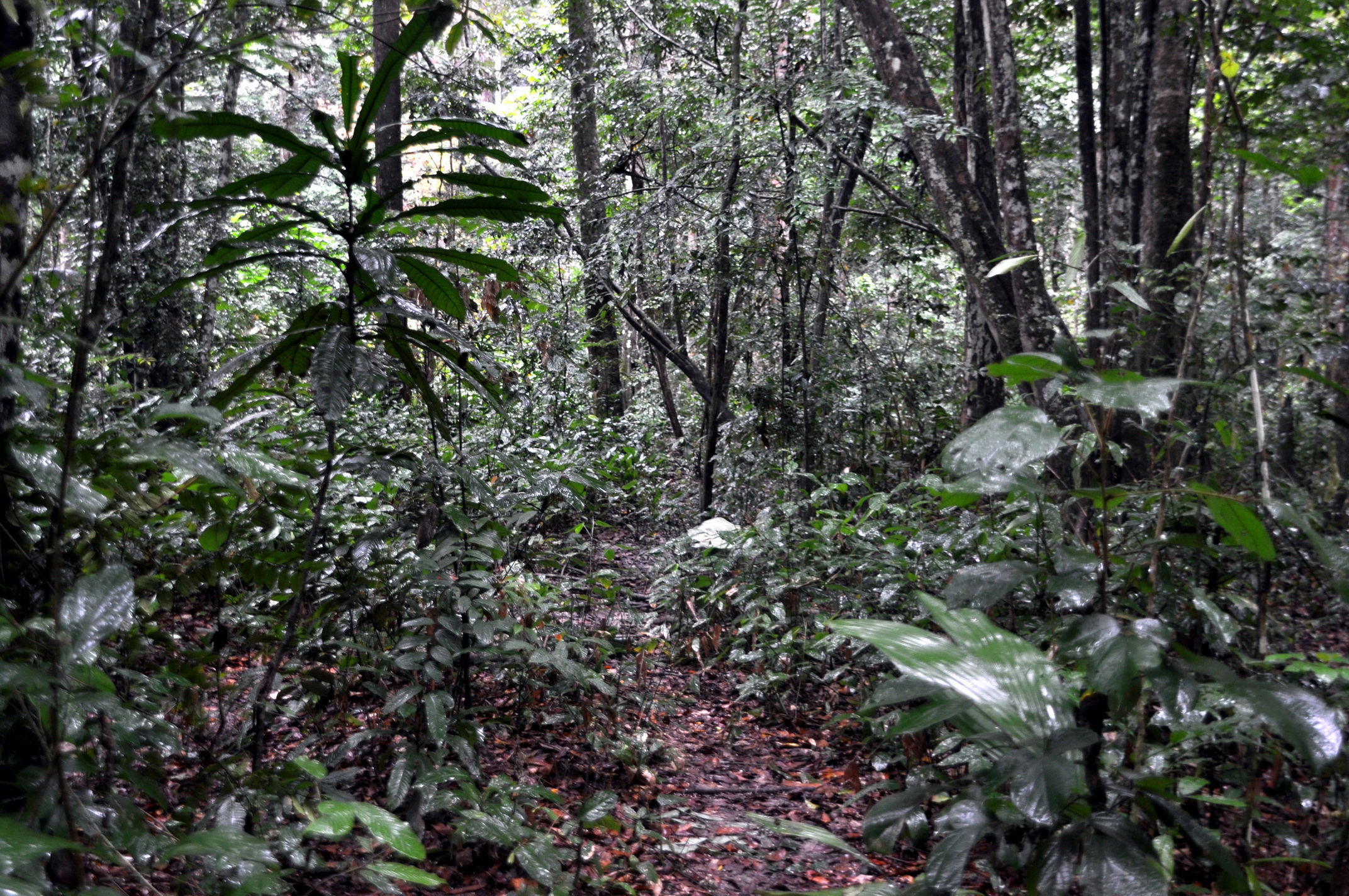
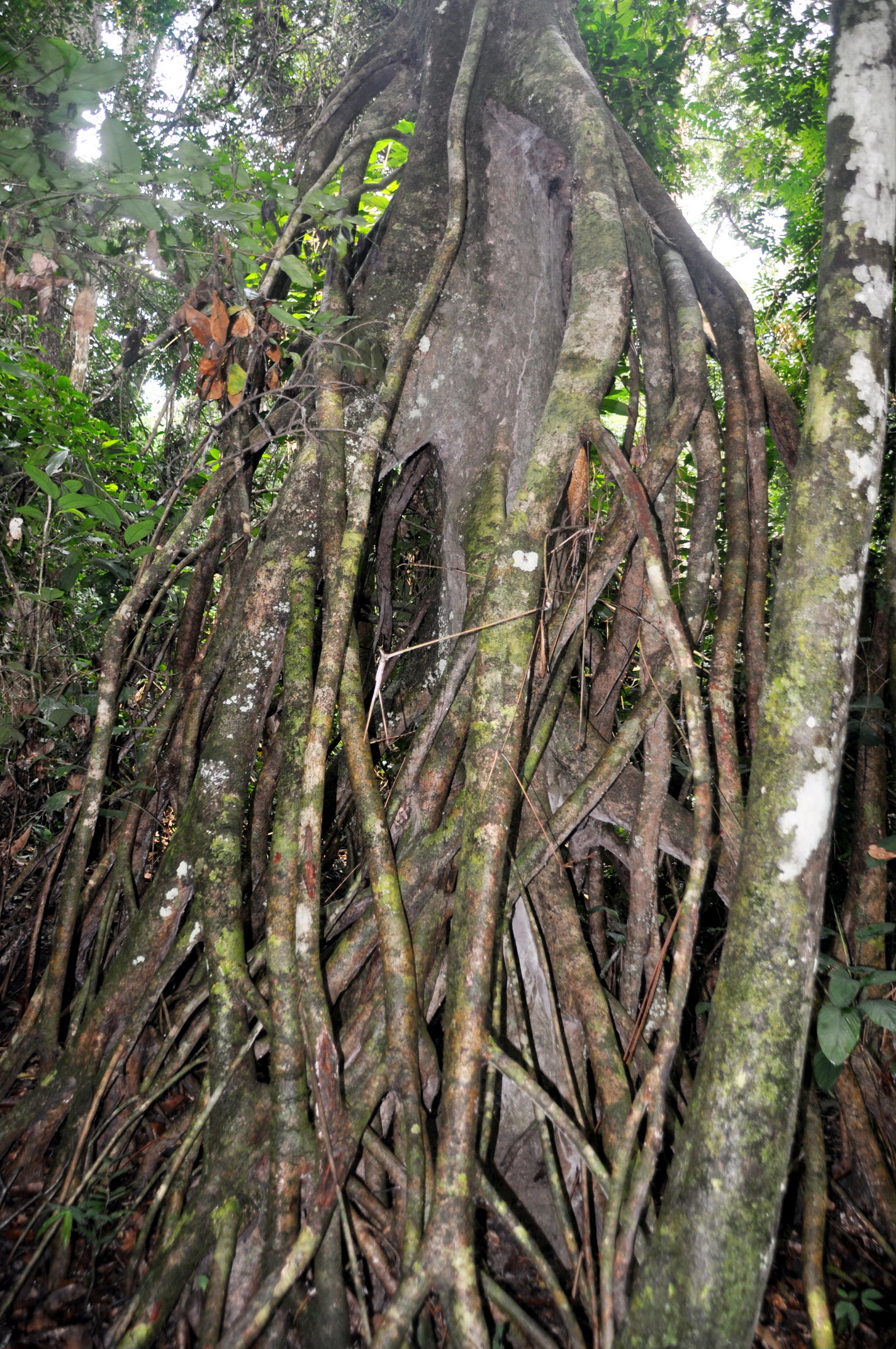
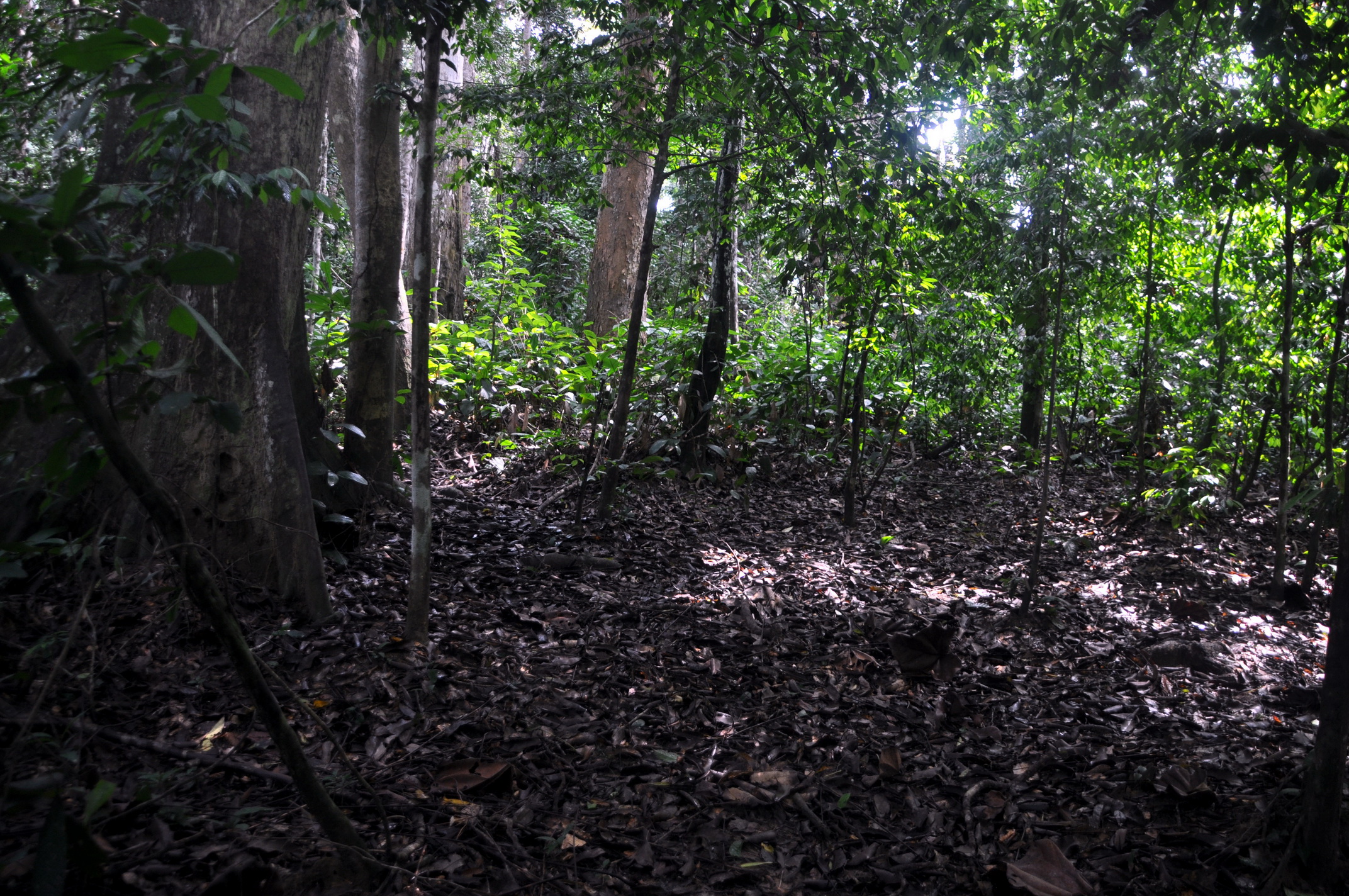
The forest was full of monkeys, mostly guenons. They jumped around in the branches, threw cones down at us and spat out fruit stones. Nothing miraculous about that; you can see plenty of them in the world. Apes, on the other hand, are wonderful. At first they can look like people, until you notice how differently they move, walking with their legs bent. We saw a mandrill quite close up, and chimpanzees in the distance, but no luck with the gorilla. We walked the whole forest, saw a lot of nests and found fresh droppings everywhere, but a face-to-face encounter eluded us.
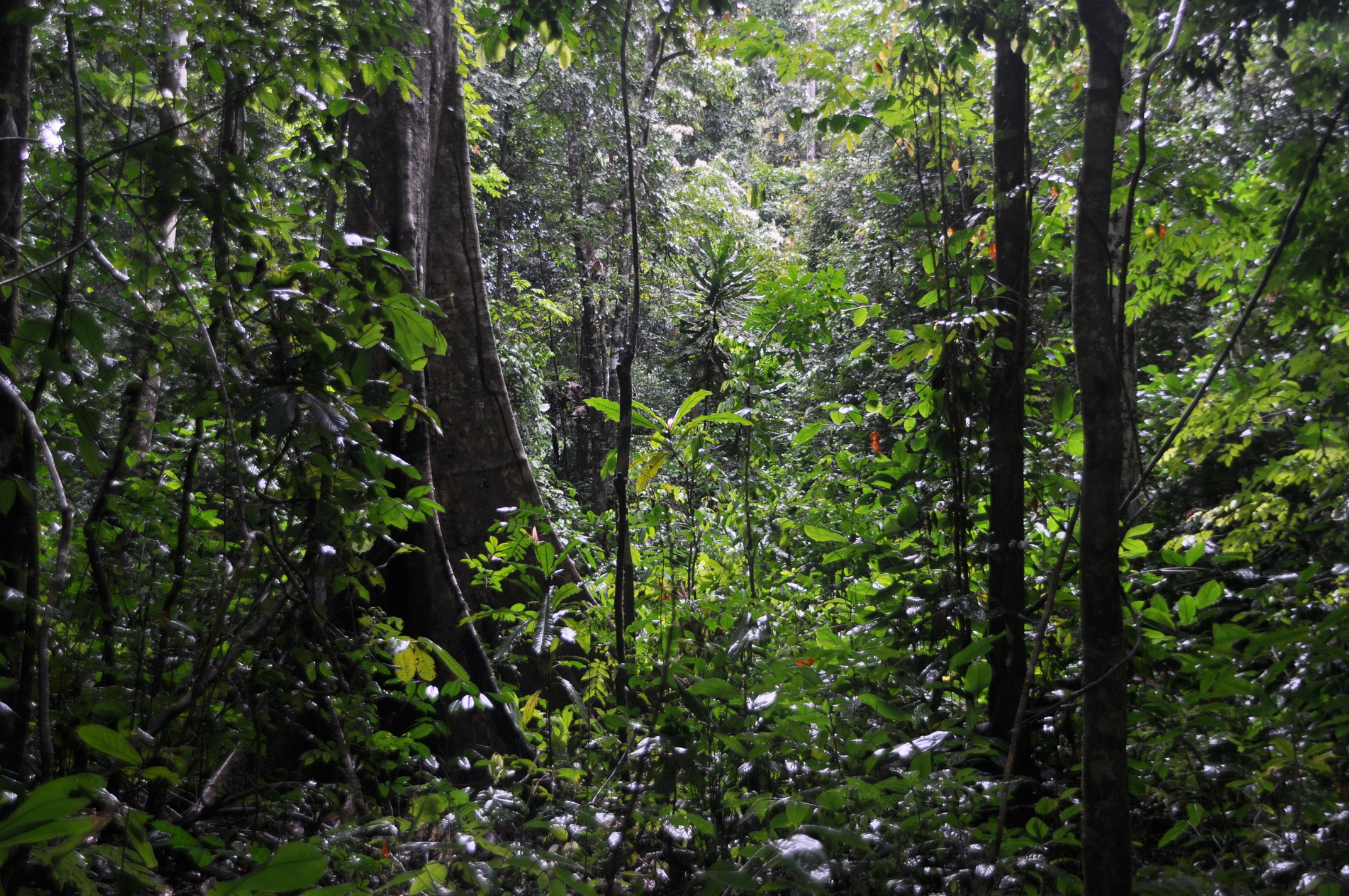
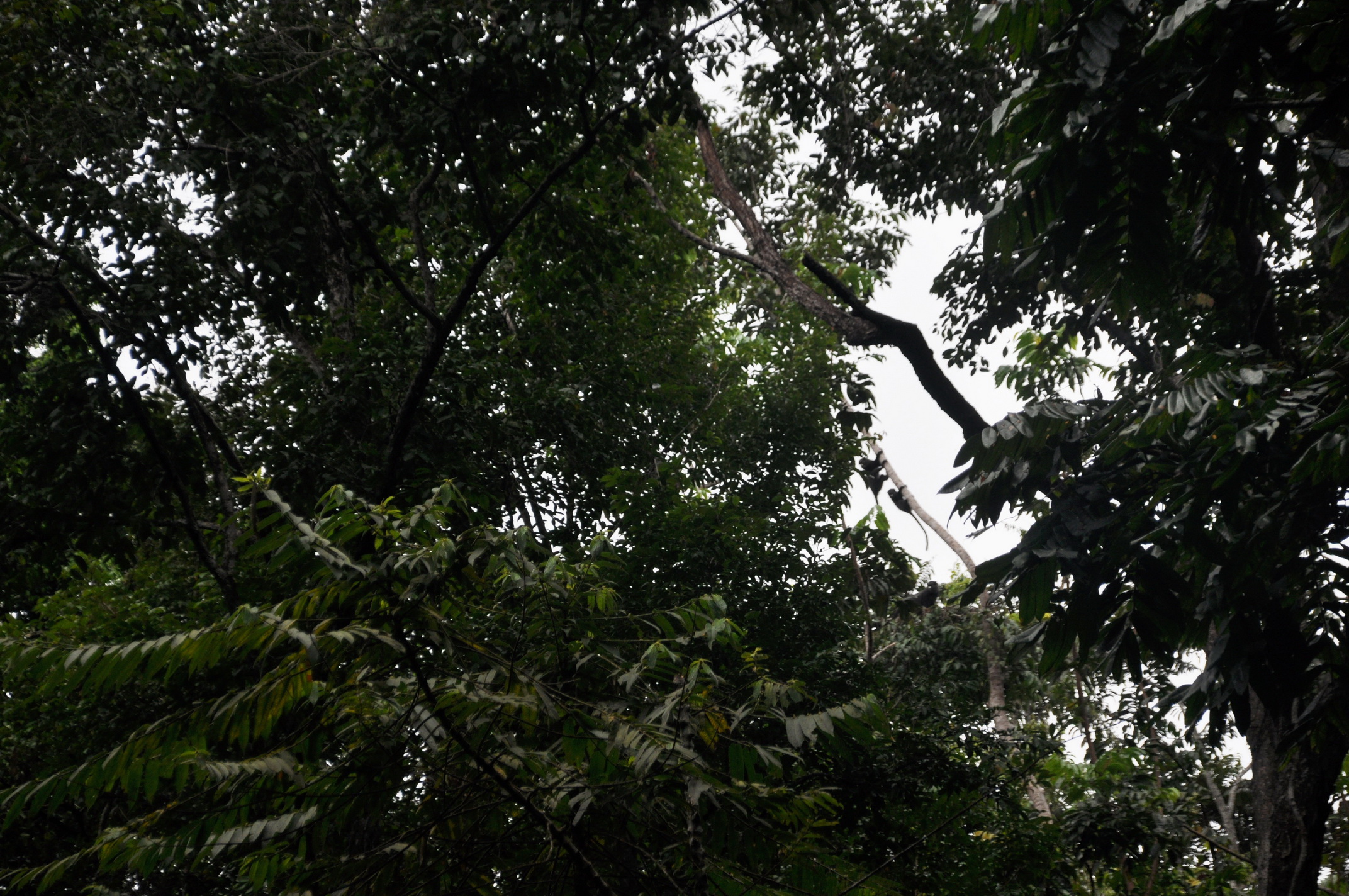
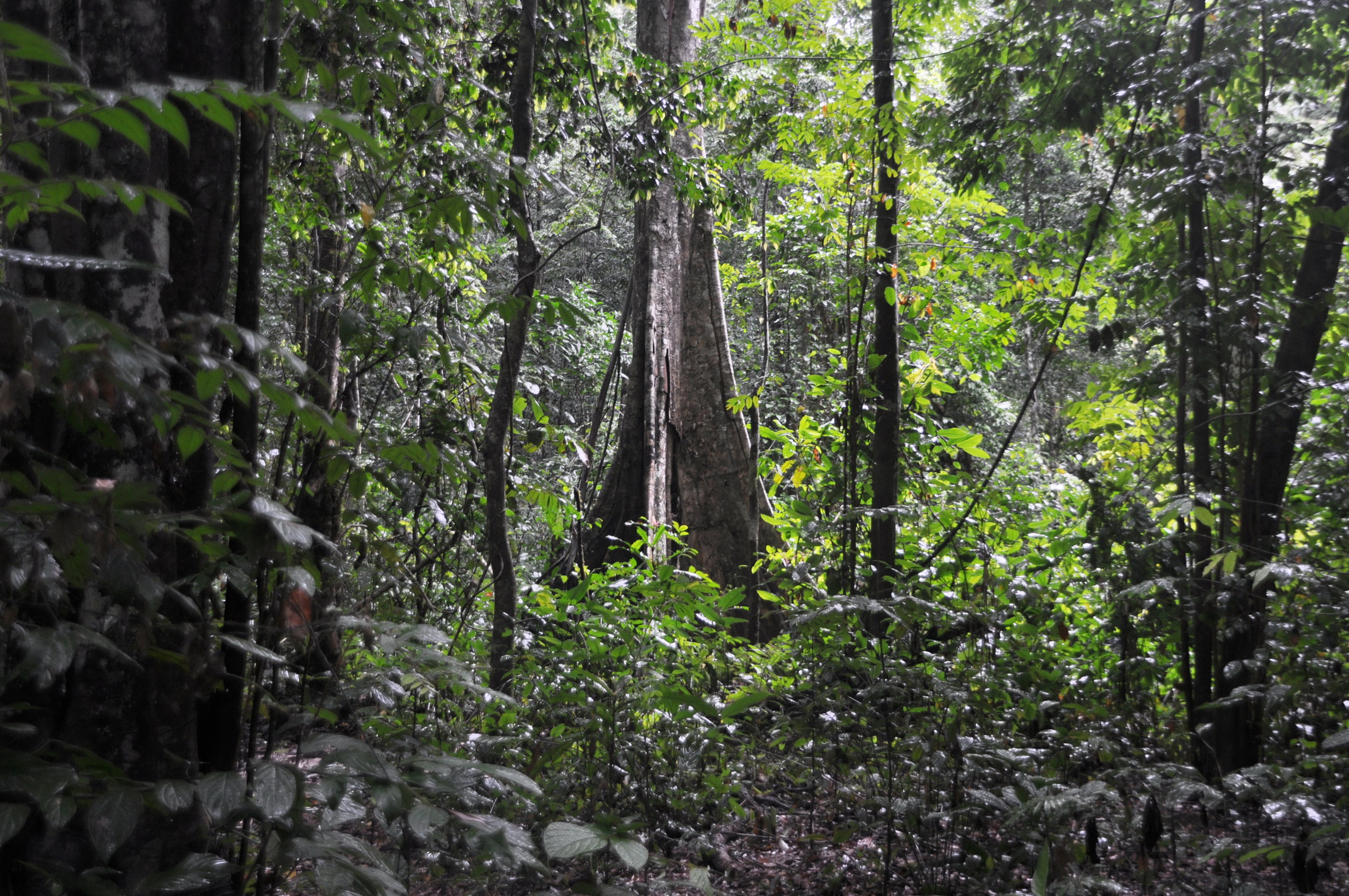
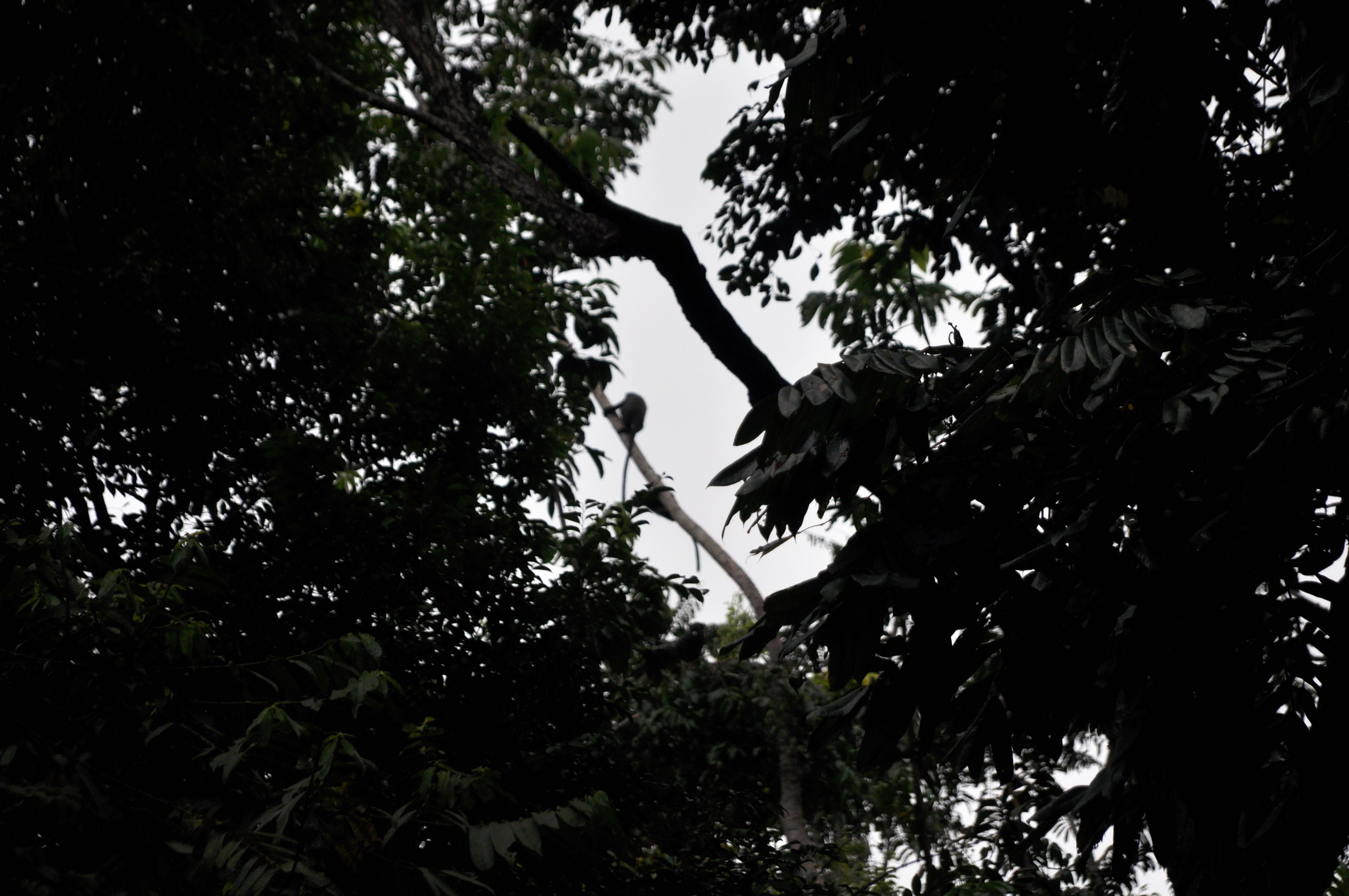
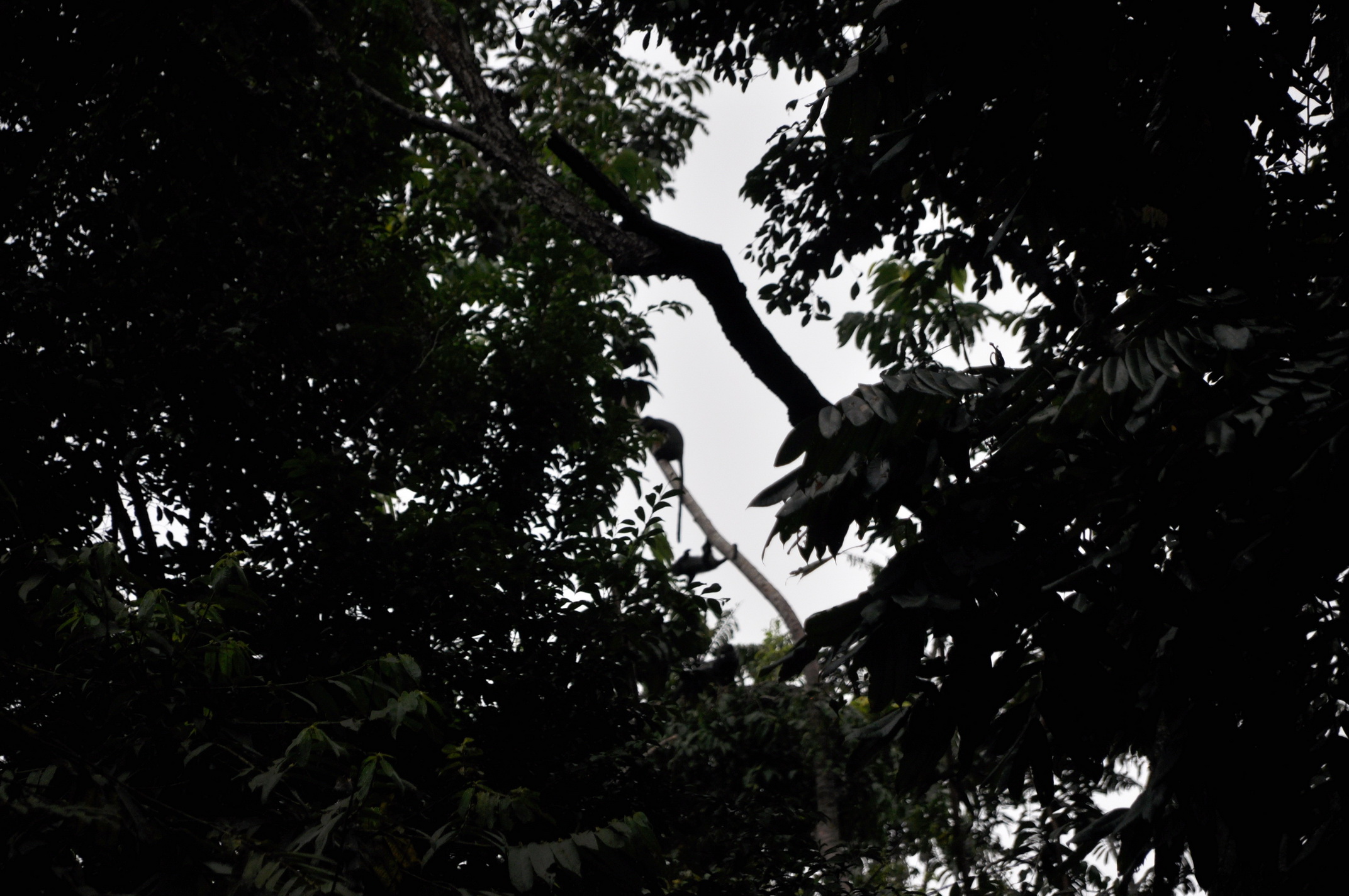
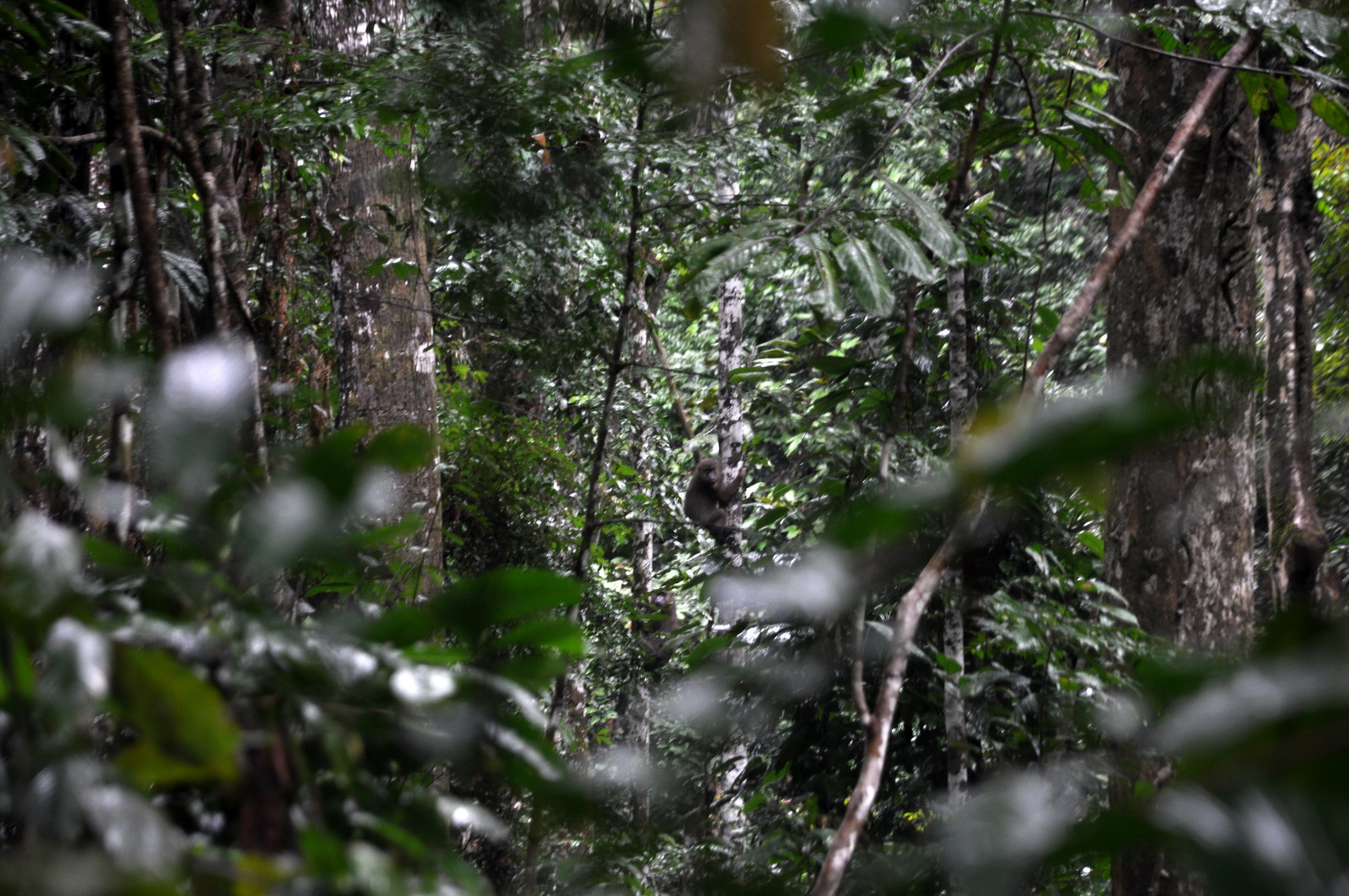
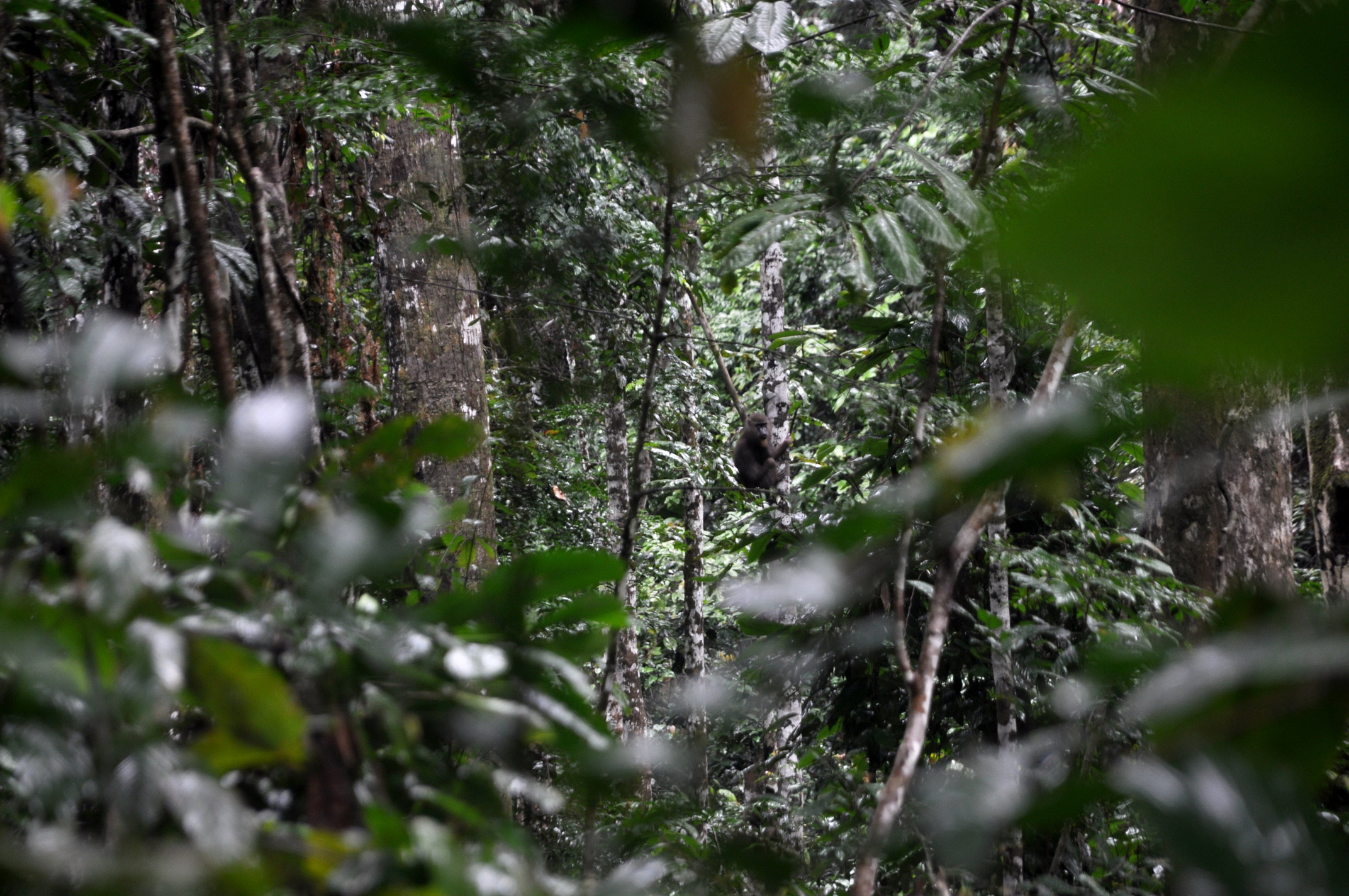
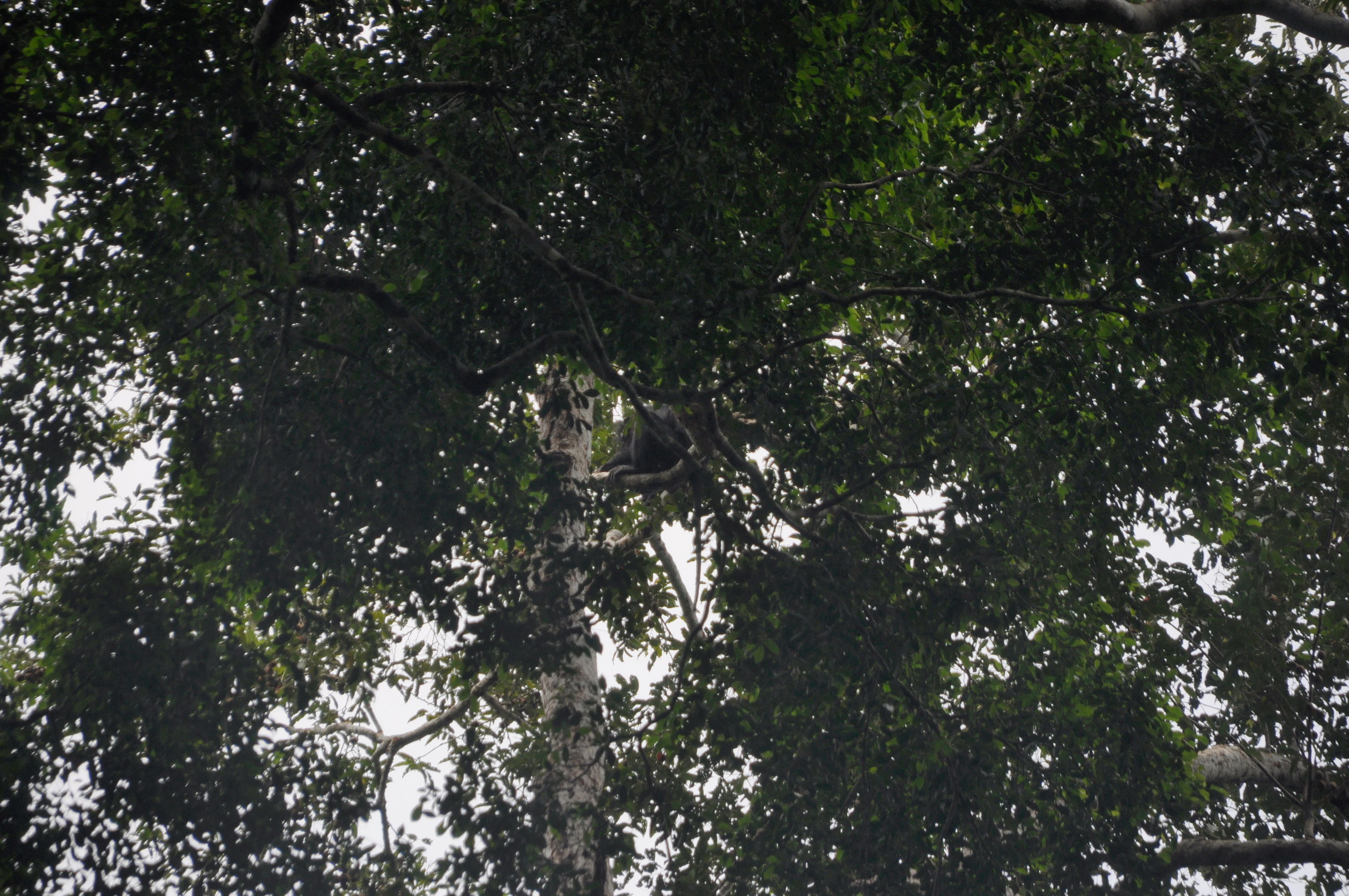
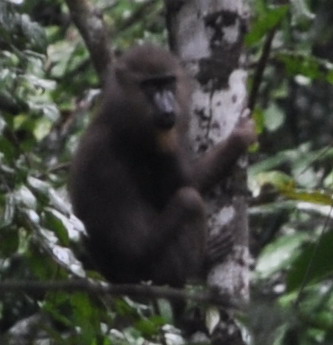
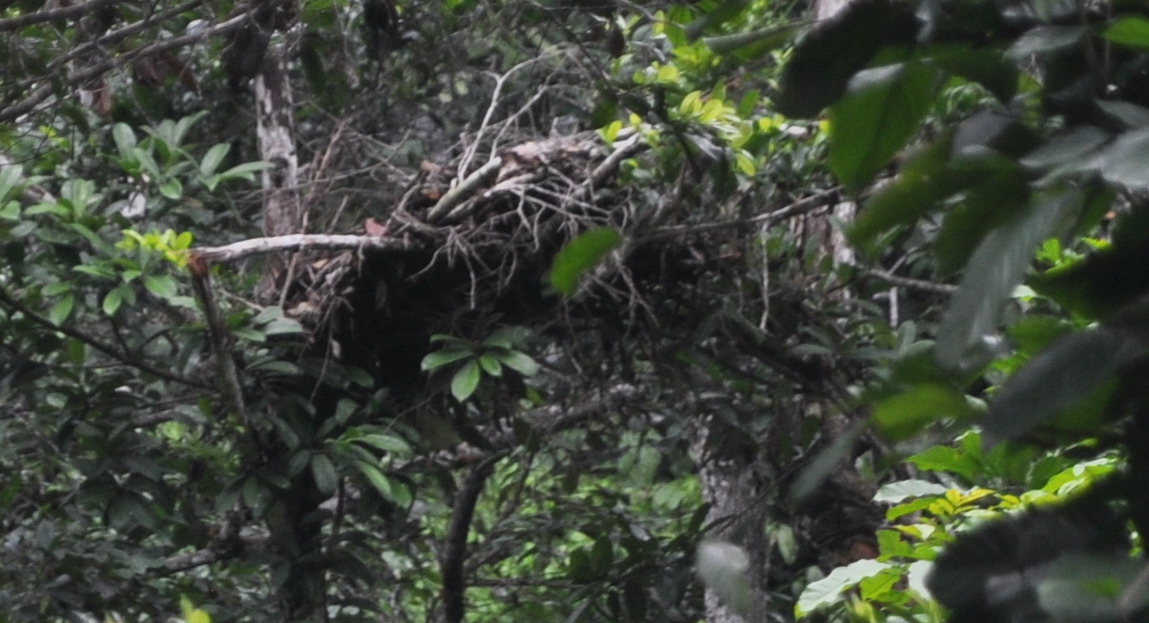
We reached a place where the gorillas had rested, a clearing on a rocky rise by a little stream (00°17.531′S, 11°41.252′E). A lovely place. The nests were further away in tall trees, rather like a stork’s nest. What a shame. I’ll have to come back.
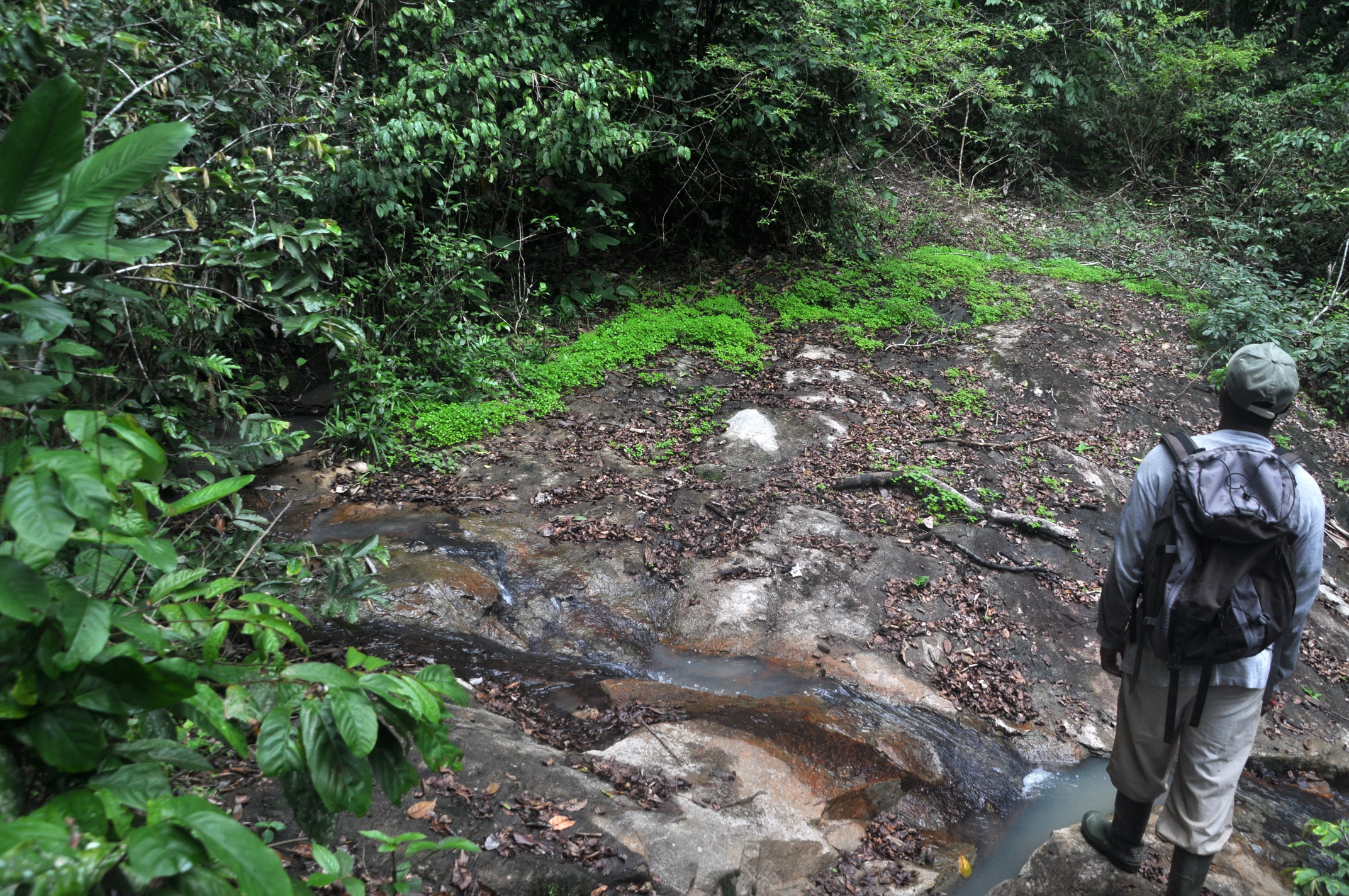
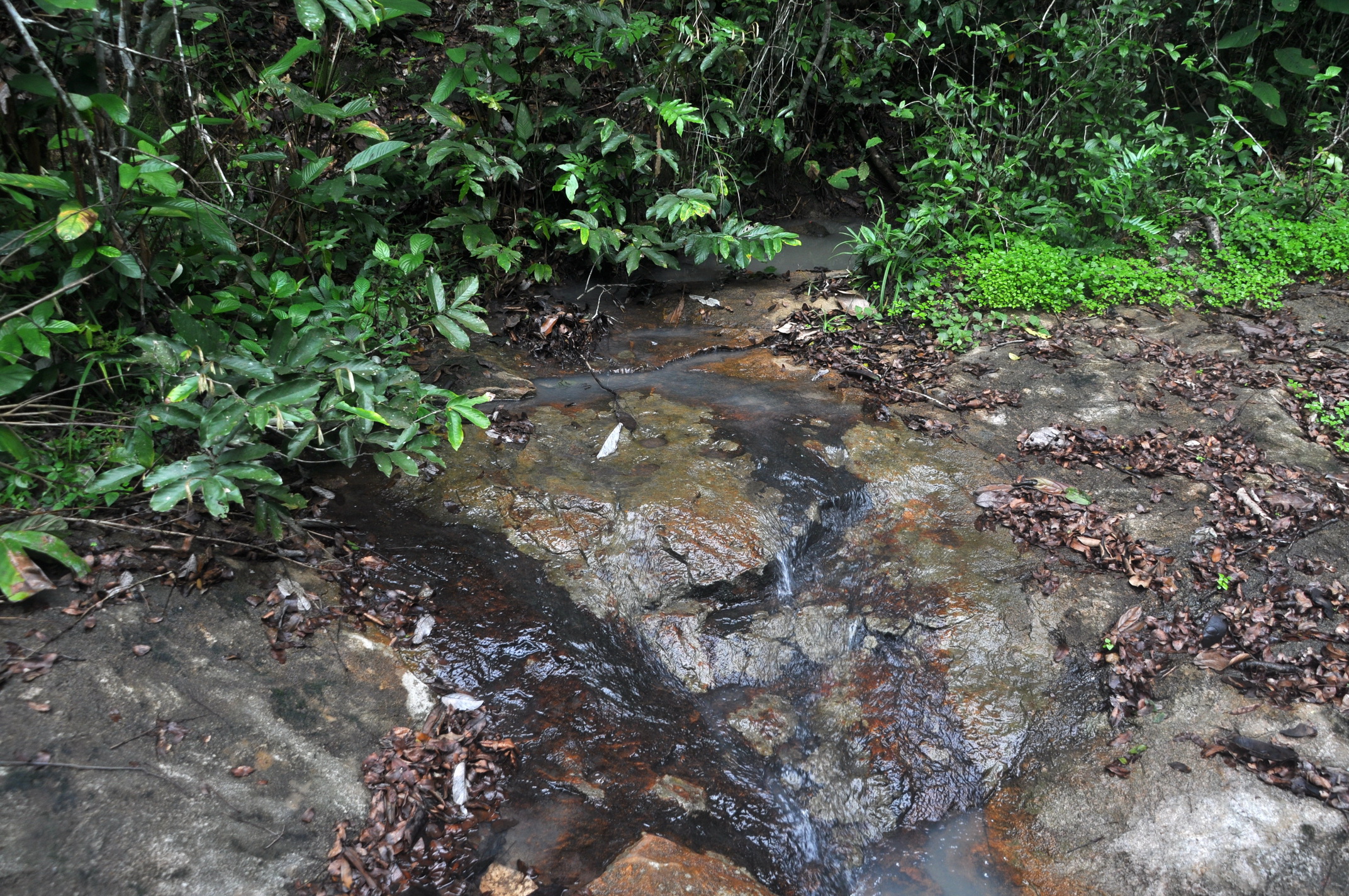
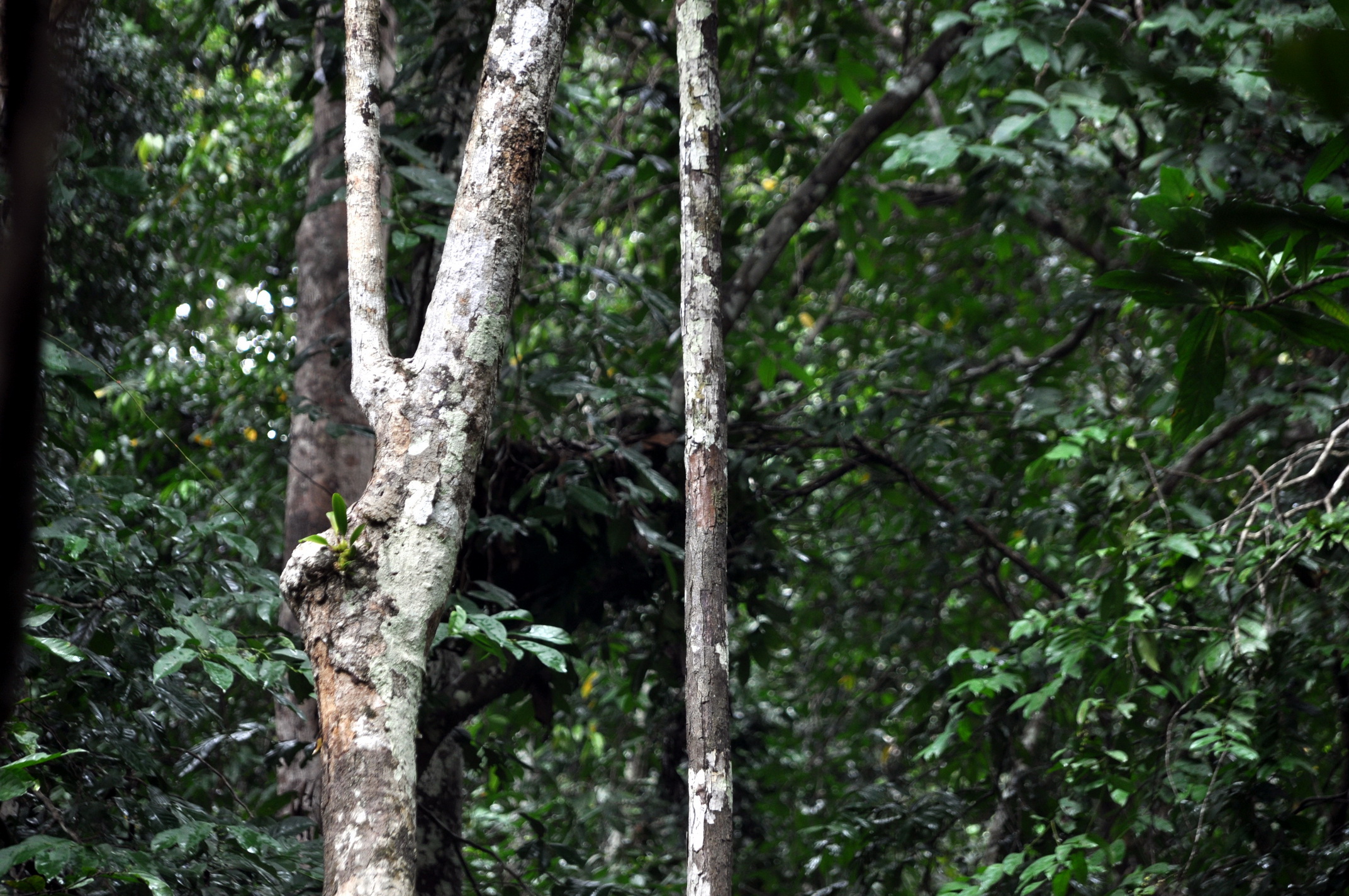
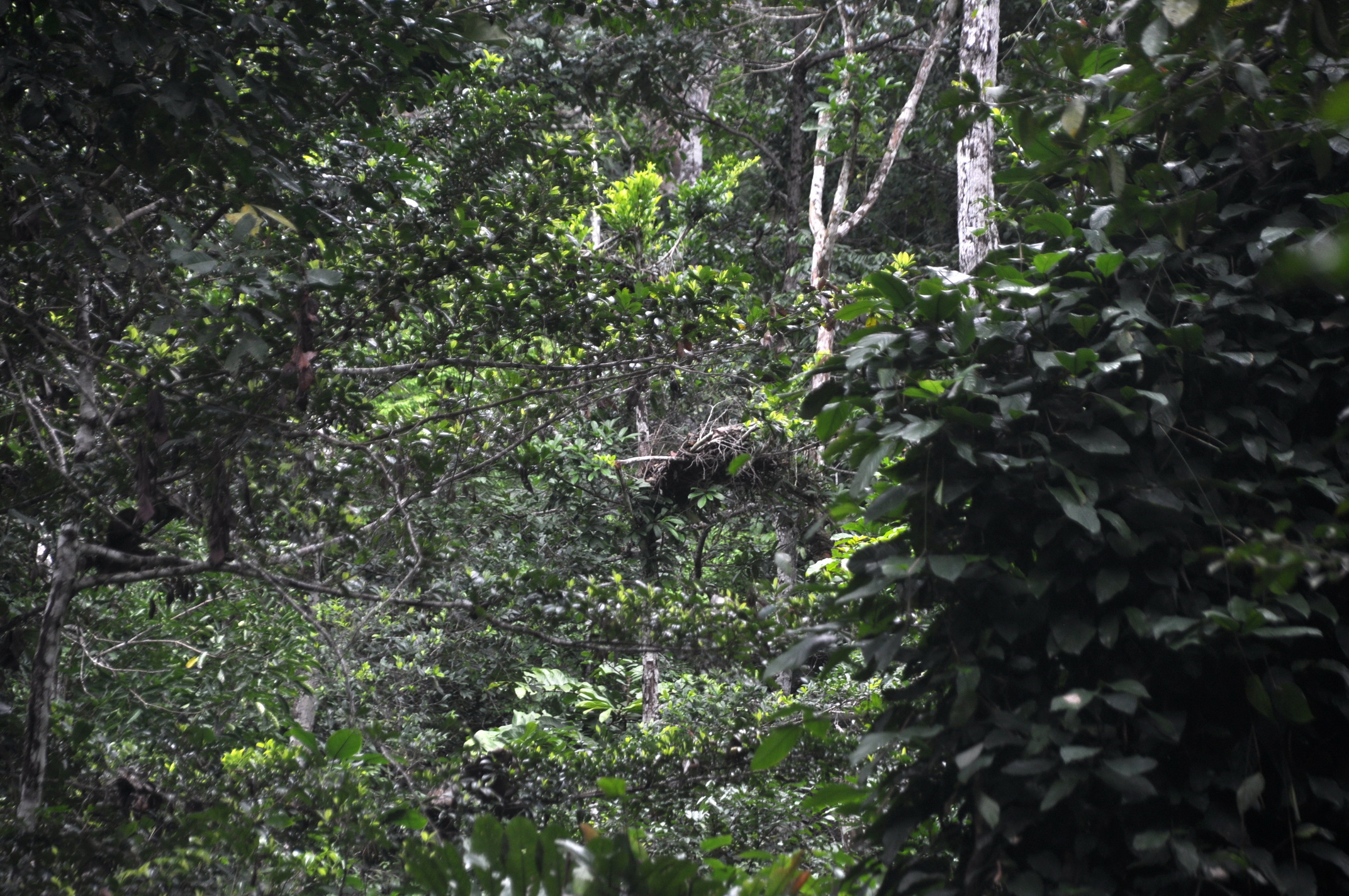
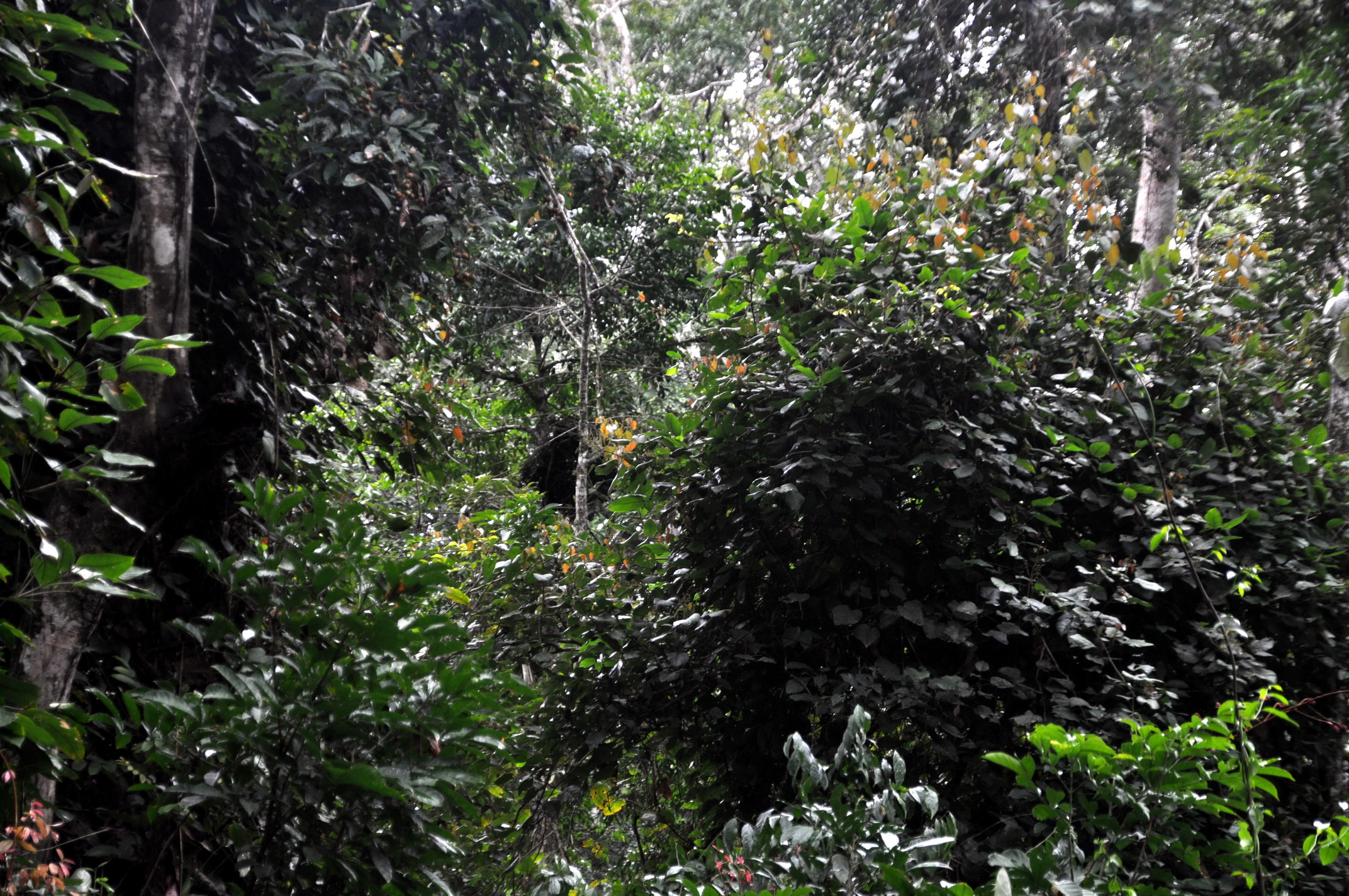
What can you do? In this forest the monkeys and apes are really wild. You can’t tell them where to pose for tourists.
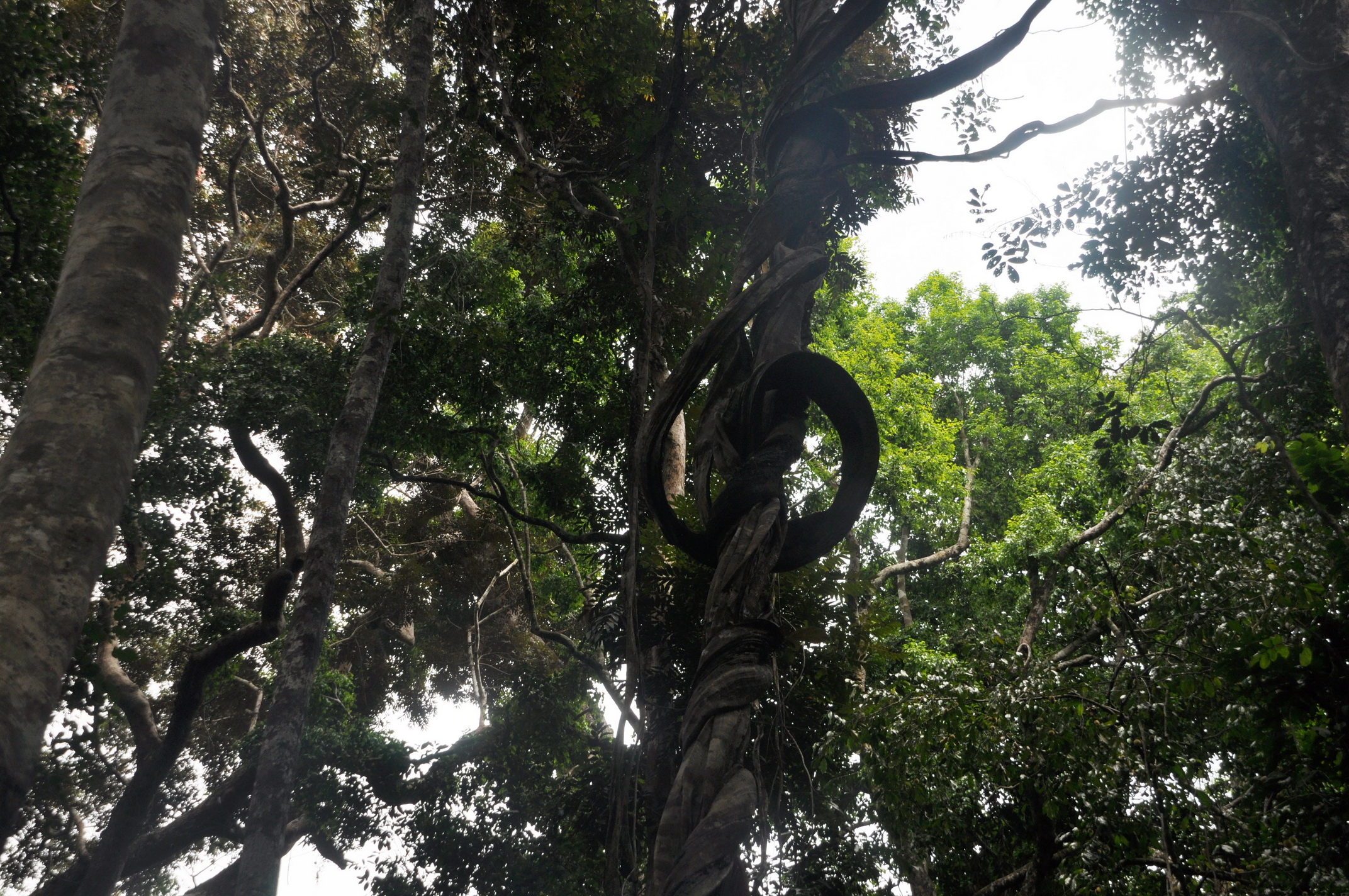
There’s another place to see gorillas in the east of the Congo. To my mind it’s practically a zoo: the drive there is long and wild, and dangerous without a troop of armed men, but at the other end the gorillas have practically been put on the payroll.
Gorillas are quite unlike people, incidentally. We’re closer to chimpanzees. Chimpanzees are omnivorous; I imagined their nastier social habits as an alpha male’s playbook, biting rivals in the tender parts, making life miserable for an unruly female and devouring some former leader’s young. They can certainly be dangerous to people.
Gorillas eat plants. Their droppings look more like a cow’s. They get along without quite so much fighting, though they too can kill another male’s young. As it was explained to me, a frightened gorilla might charge, stop close to you and beat its chest, or actually bite in an extreme case.
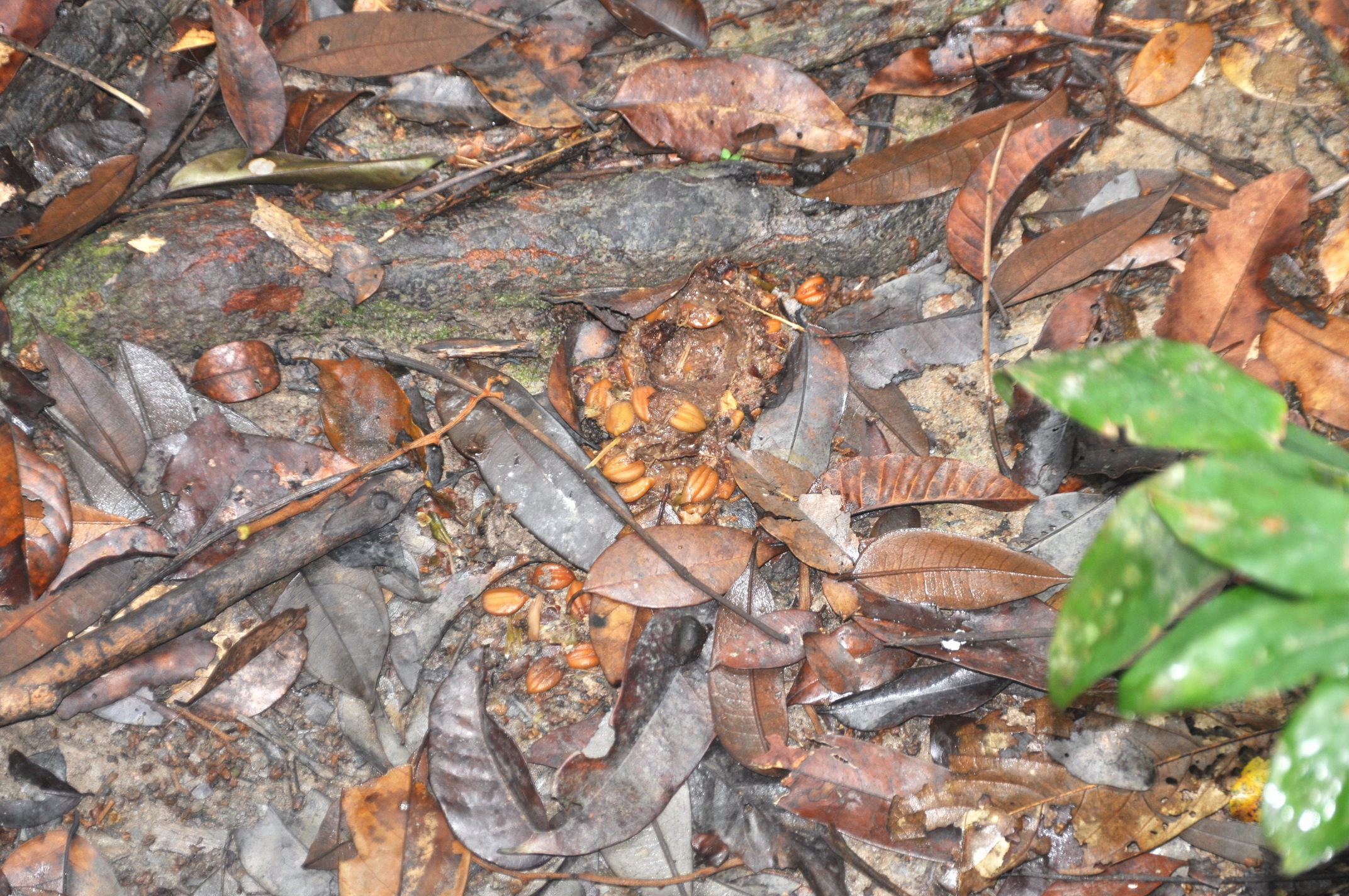
A male’s canine teeth can be five centimetres long. One turn would be quite enough.
Males can weigh up to 200 kg and are immensely strong. In a fight between a gorilla and a leopard, I wouldn’t bet on the leopard. Now I see why leopards are afraid of me: I’m about the size of a slim gorilla.
I was told the females, about half the size of the males, slept in nests in the trees. The branches could hold them but not the men, who had to wait until the women came down.
There is a fanciful tale that if gorillas quarrel with a human village, they take women with them and treat them as favourite wives. The story goes on from there into absurd speculation about human-gorilla offspring and strange creatures in the forest. Why go all the way to Africa? If an extra chromosome is all it takes, our minister Medinsky and his extra chromosome for spirituality would do nicely…
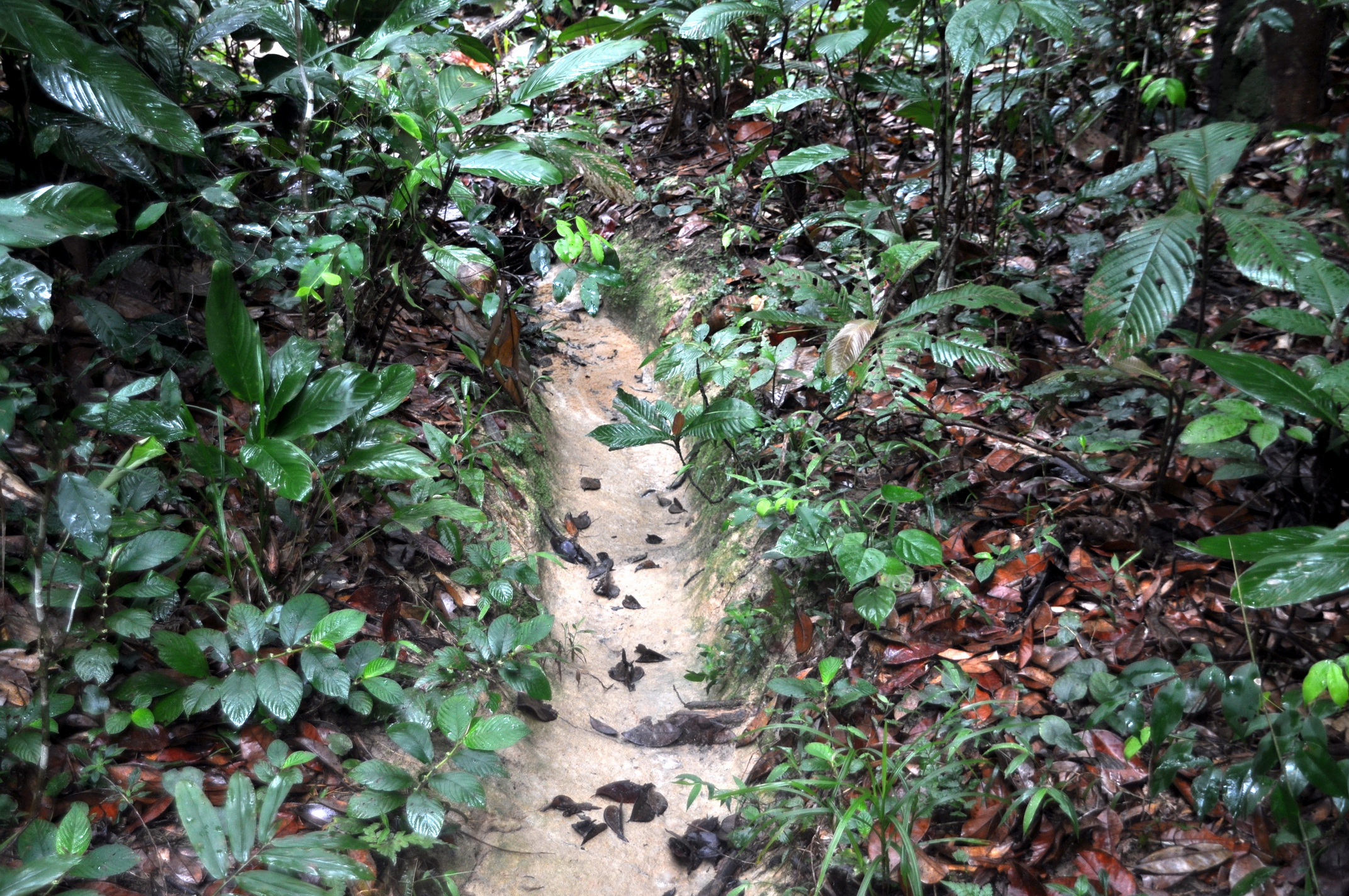
Besides the primates we met elephants. In the deep forest they follow the same routes until they wear channels into the ground. Unfortunately I couldn’t photograph them. An elephant would come out of the dense vegetation for a few seconds and melt straight back in.
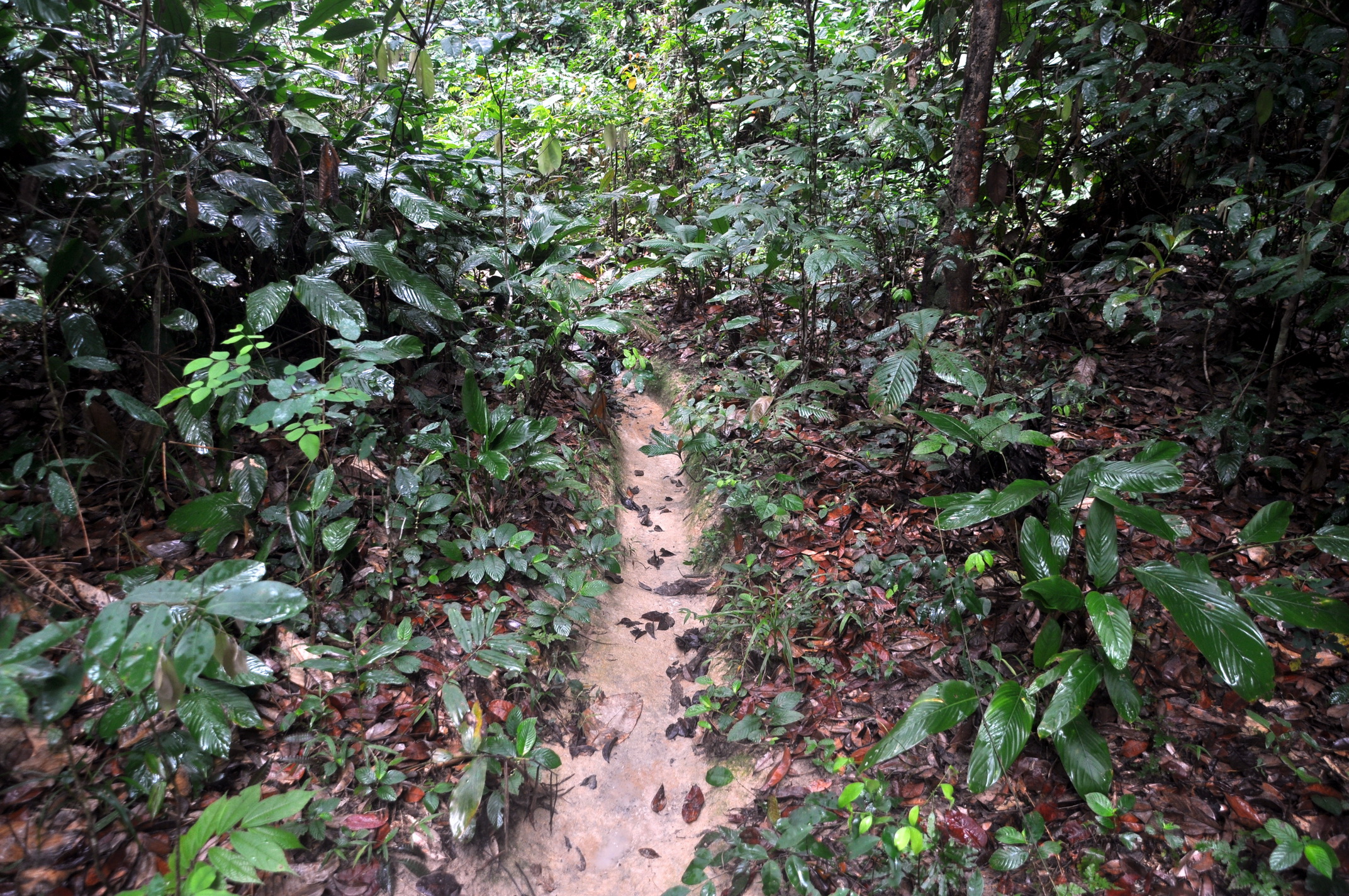
It’s much the same with a lion, except it’s you that melts, inside its stomach…
A joke. I was glad there were no lions about.
There are leopards, but they’re hard to meet. My guide had seen them twice in his life. A Gaboon viper was even rarer to him. He wouldn’t talk about it. I felt it would embarrass him to say he hadn’t seen one, and embarrass him even more to pretend he had.
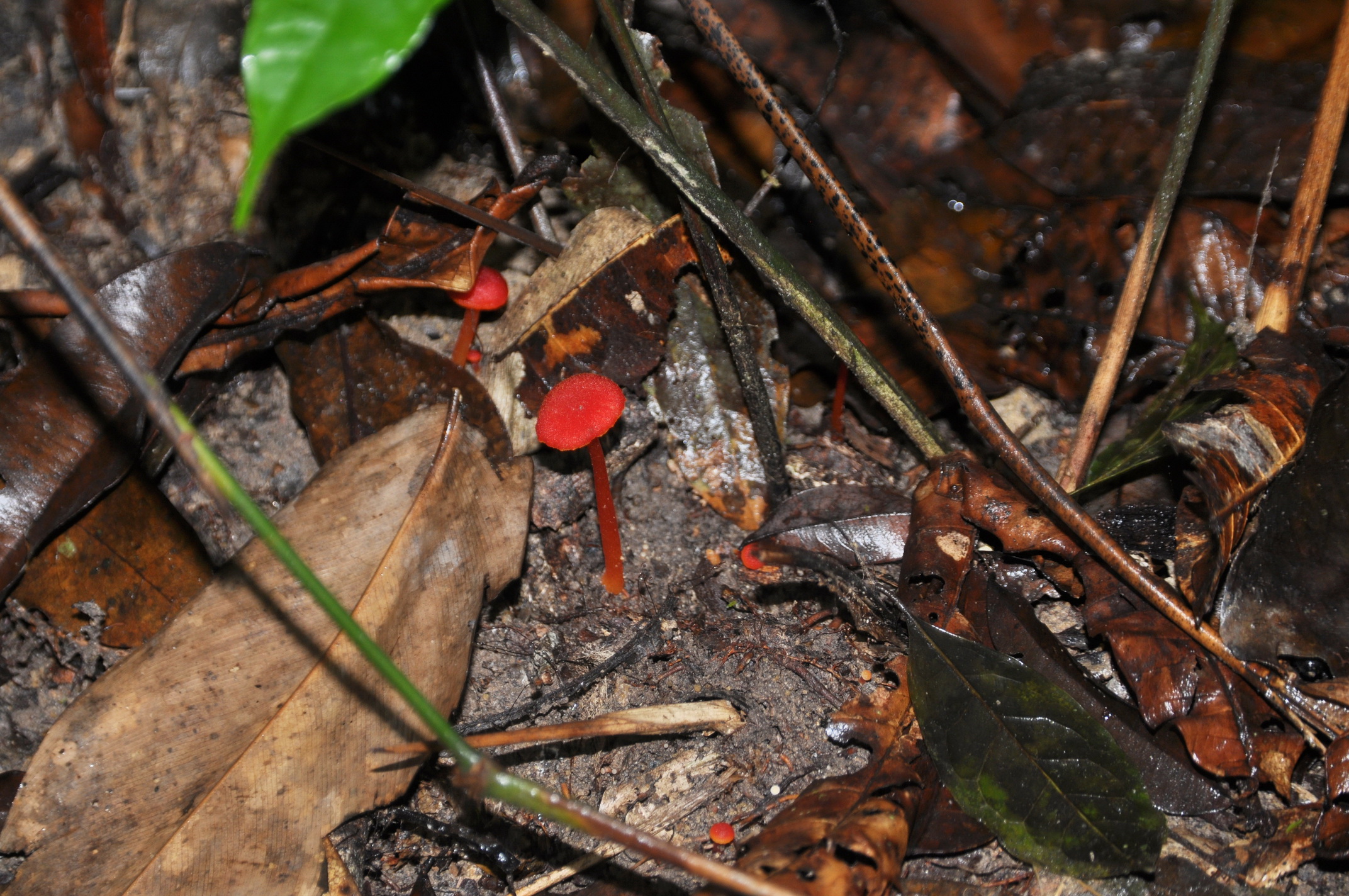
There were plenty of mushrooms in the forest, at least, and some people in nearby villages seemed to live mainly on them. I asked the guide to show me which ones were edible. I’d have fried them for dinner, but either it wasn’t the season or he feared the consequences of my mushroom eating.
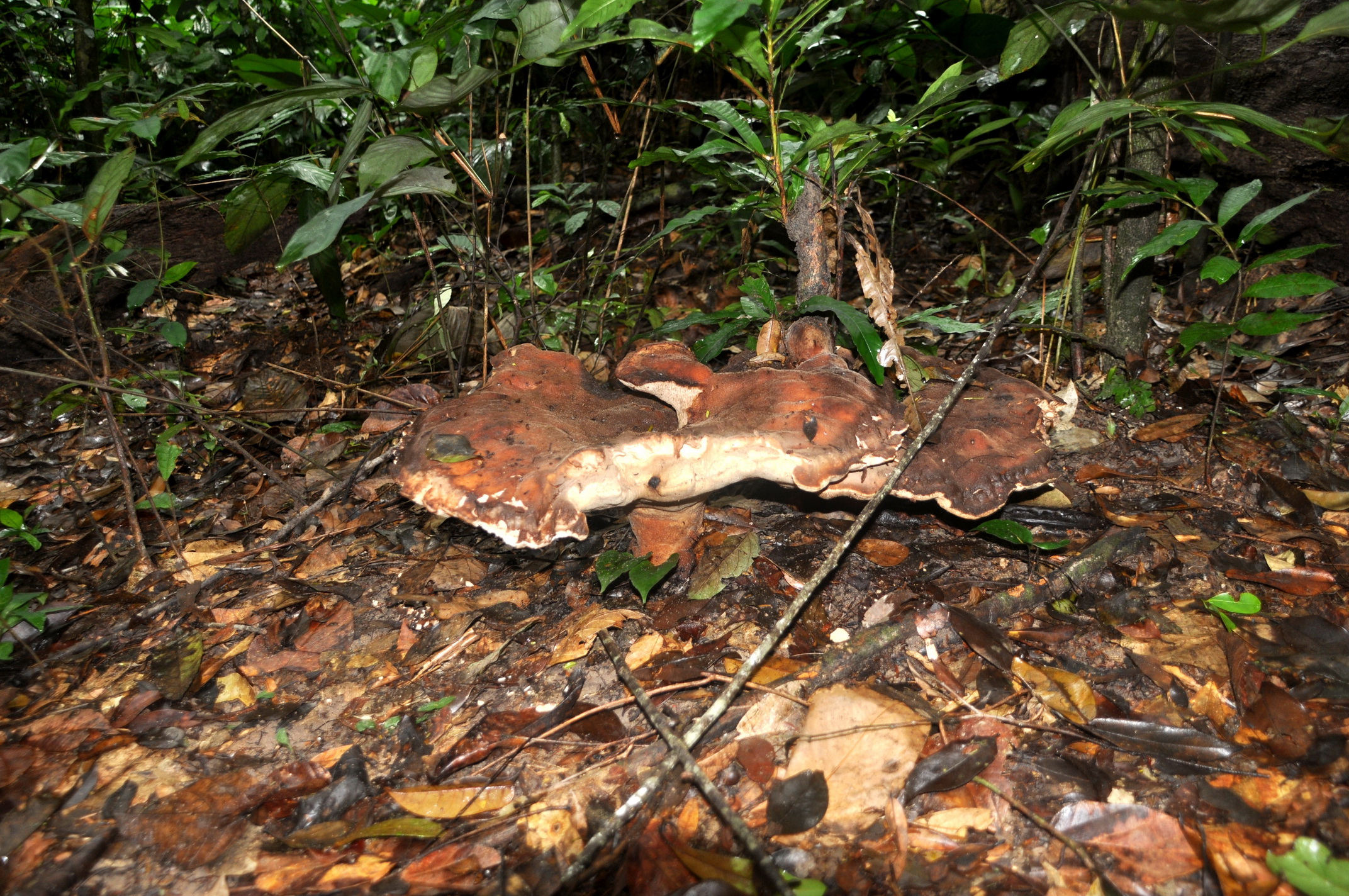
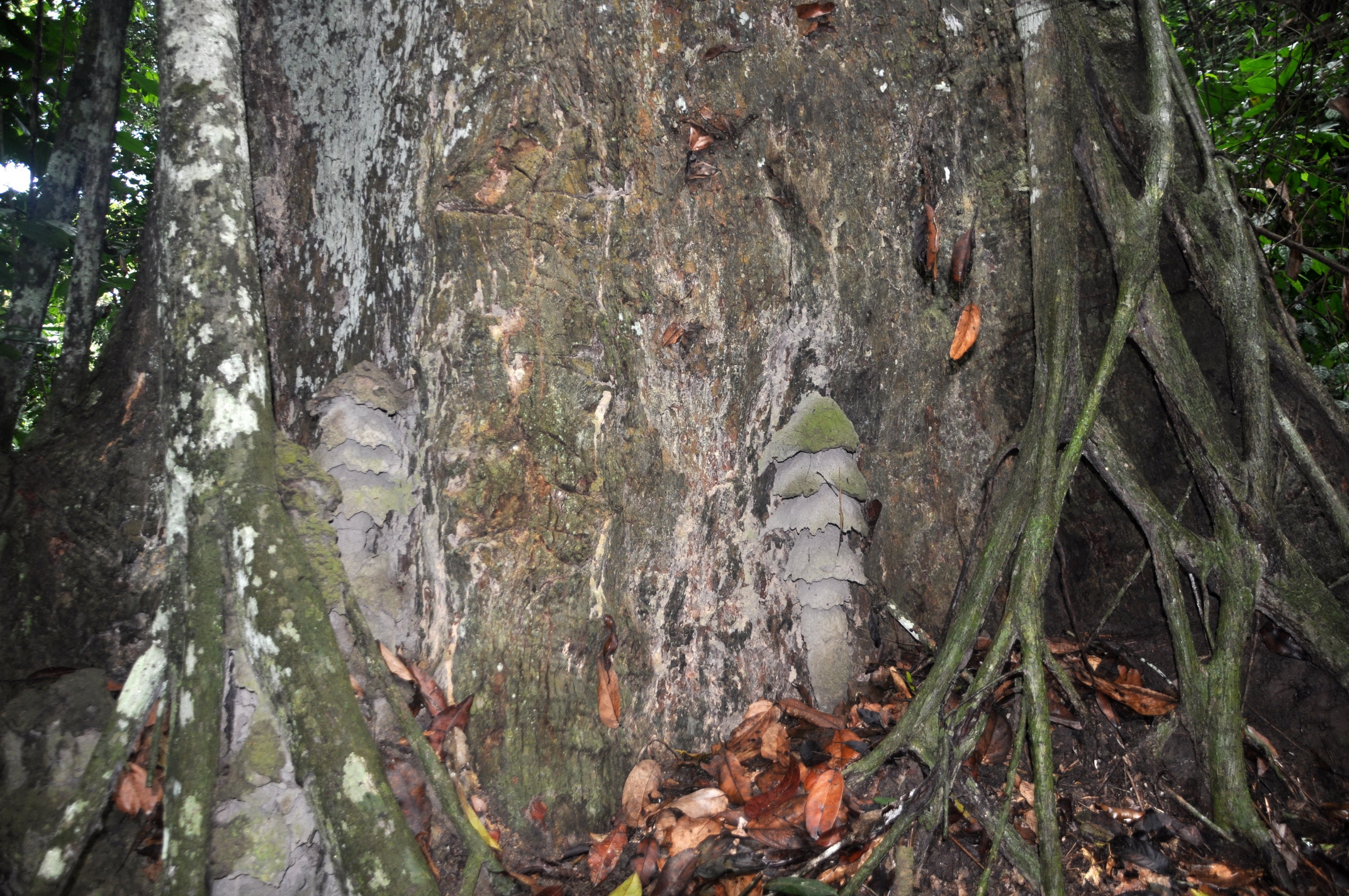
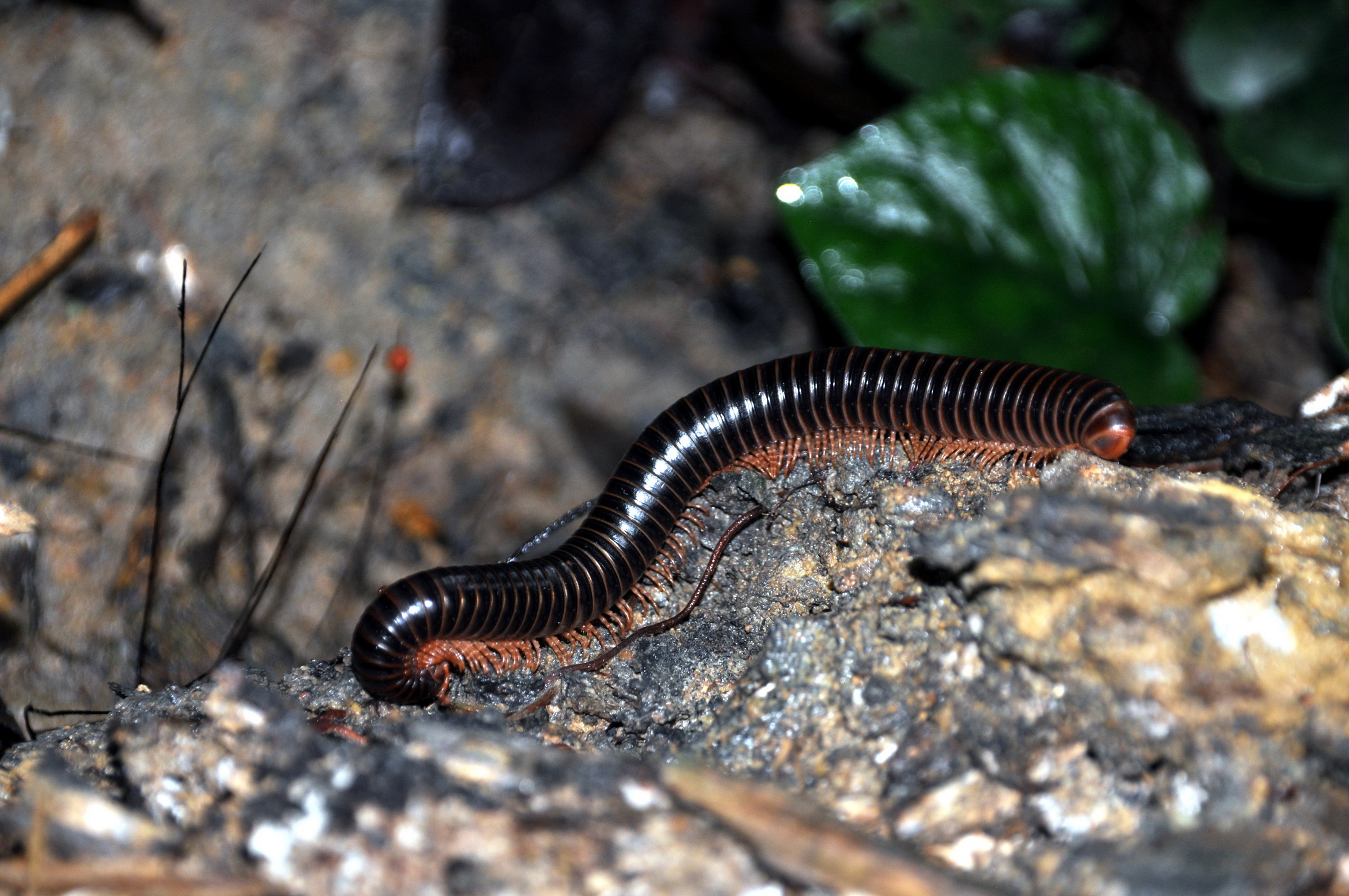
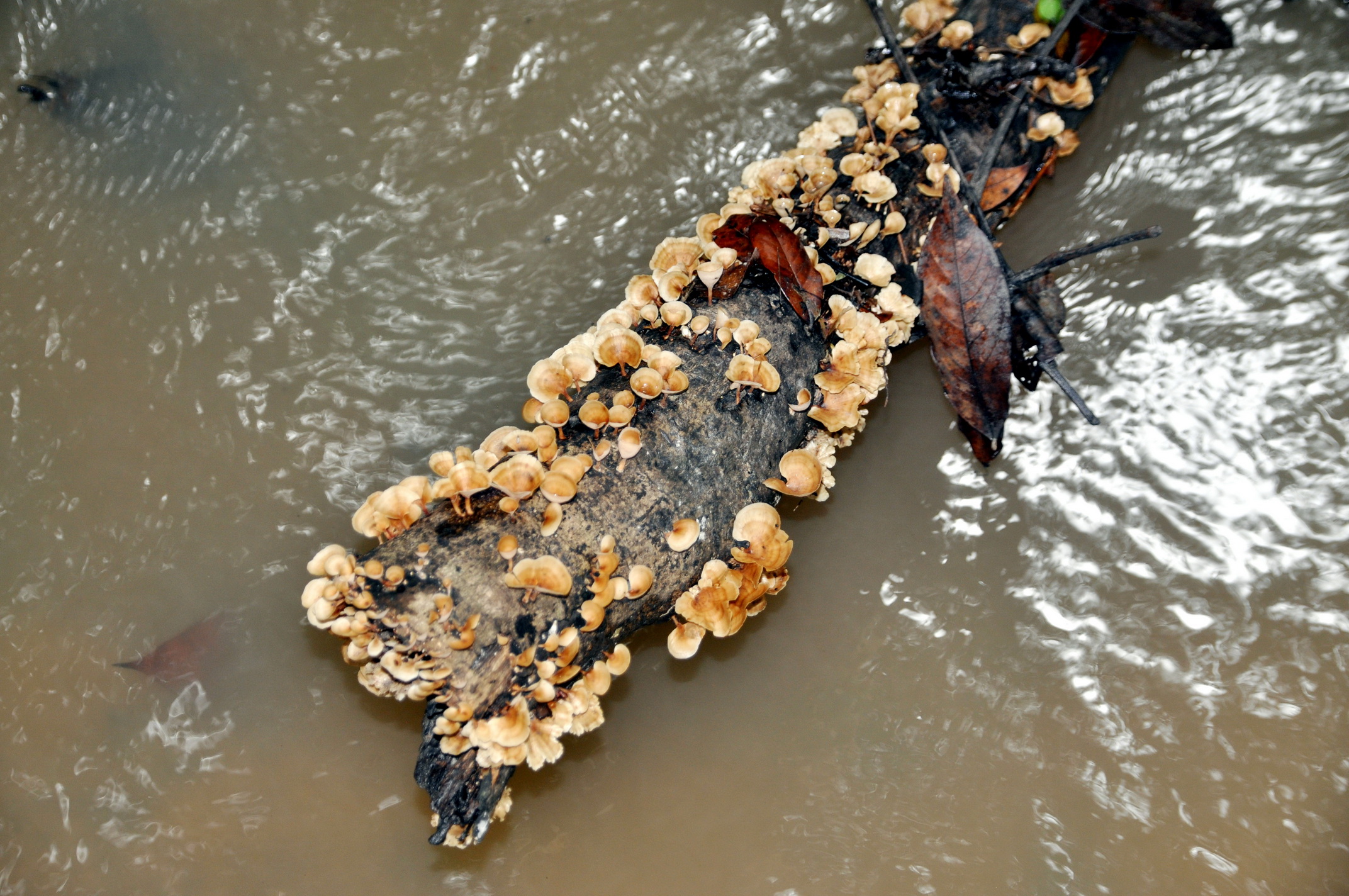
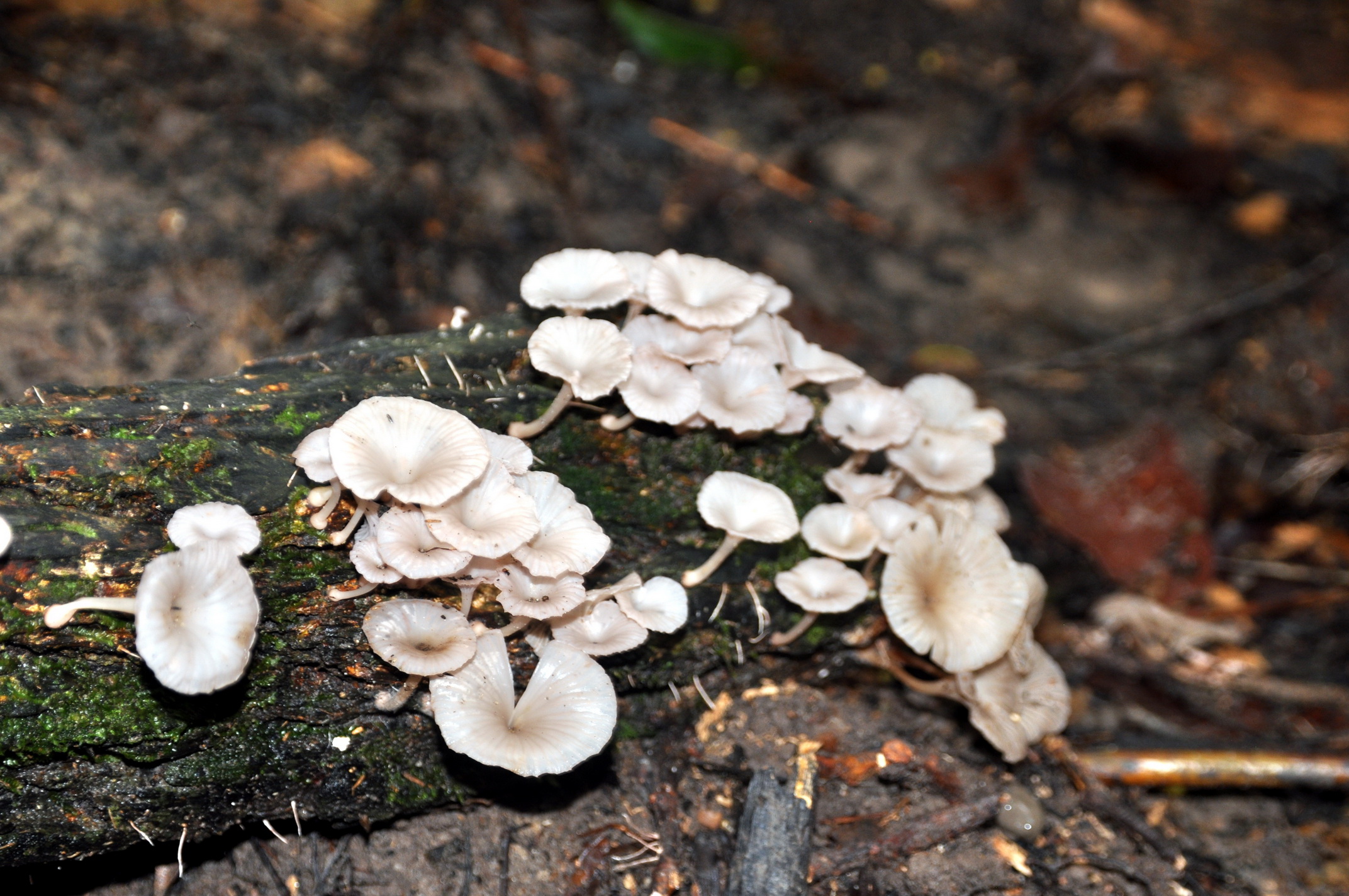
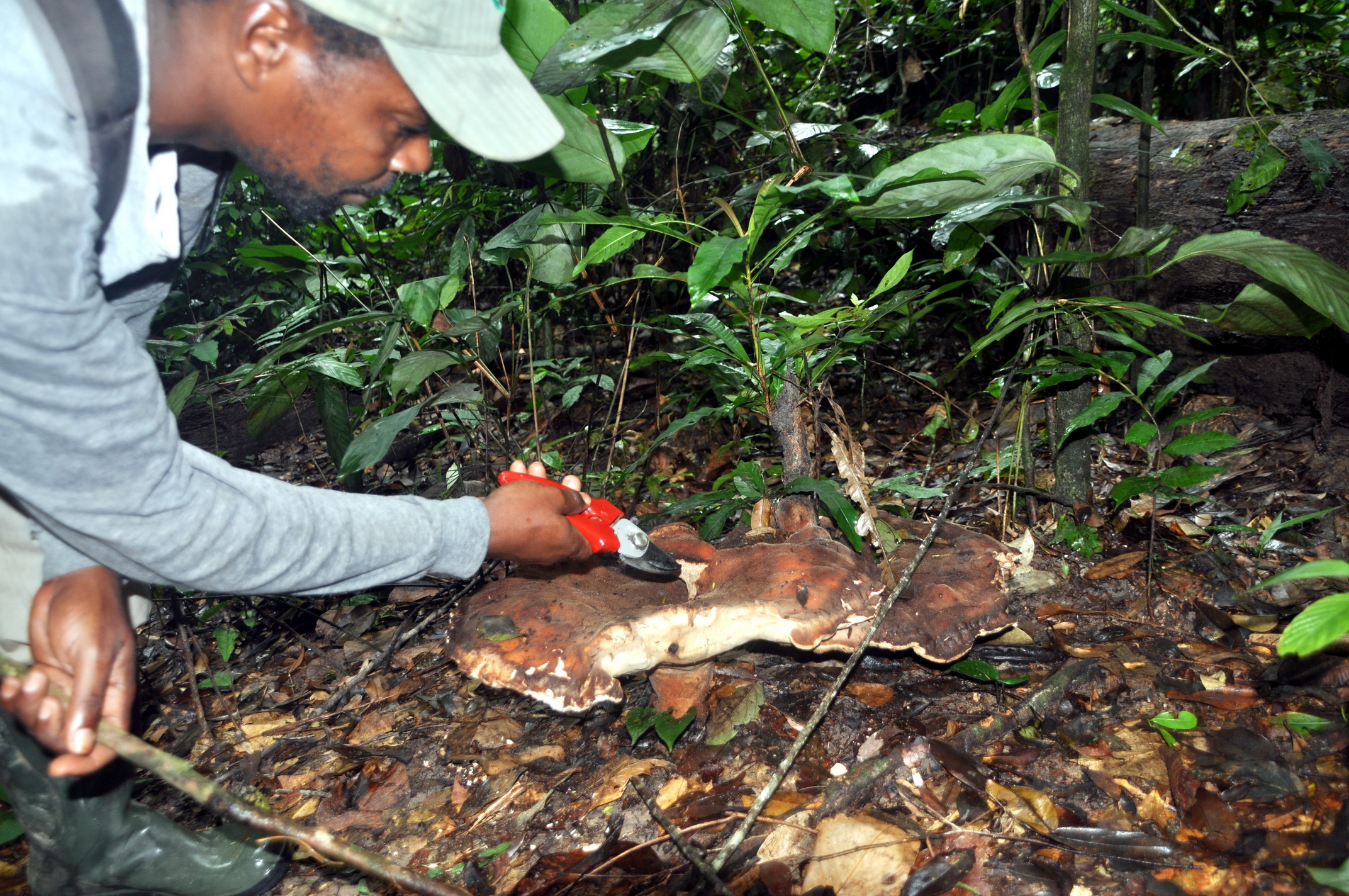
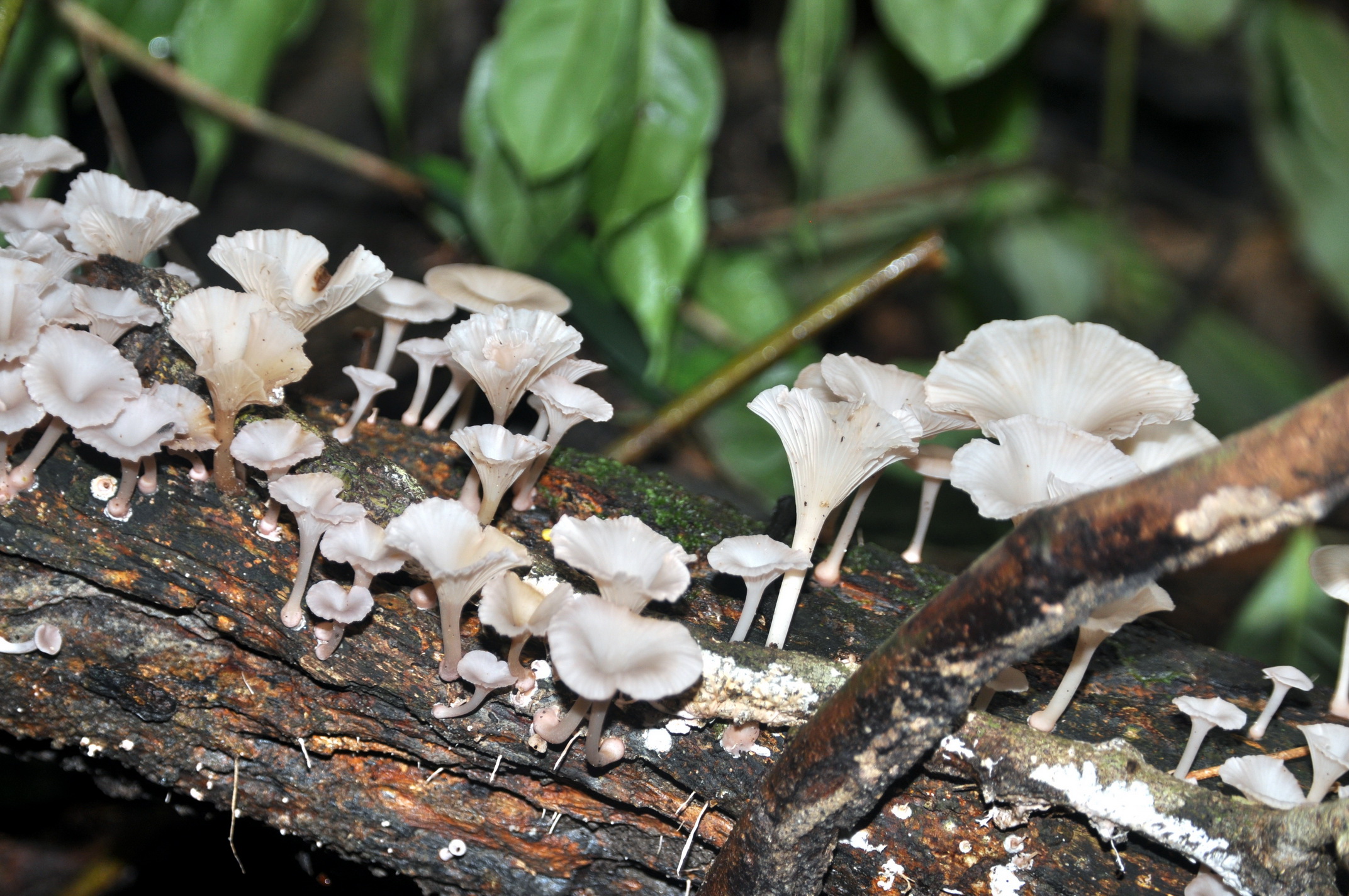
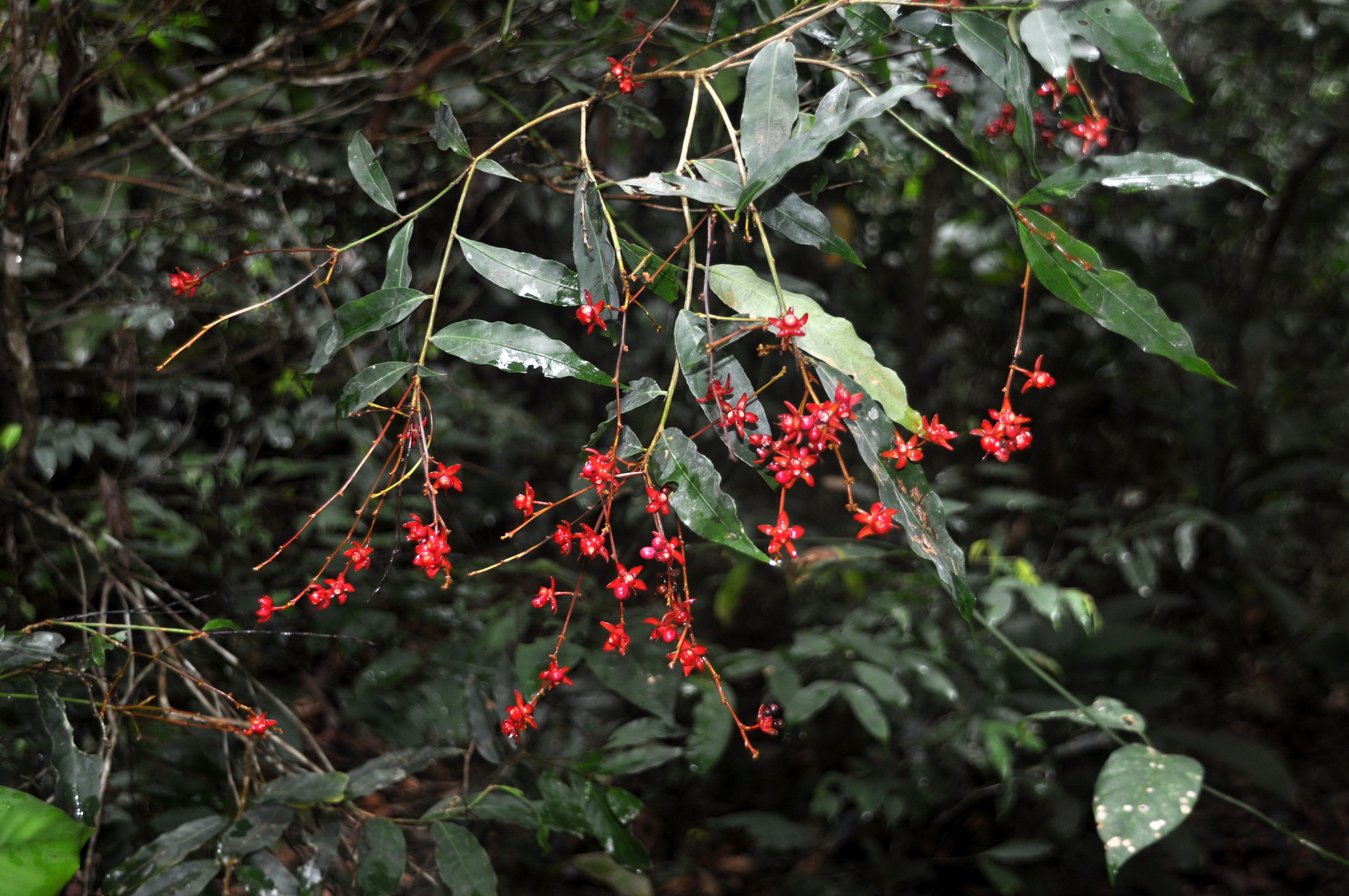
A multitude of branching paths criss-cross through the forest. At first it seems a miracle that the guide knows his way, but it’s simple enough in practice. The paths join up with one another, and all of them run along streams. I recorded a GPS track, which might give an idea of our route, though the gorillas can move and only a local will know the latest news. And the guide’s money goes to good people.
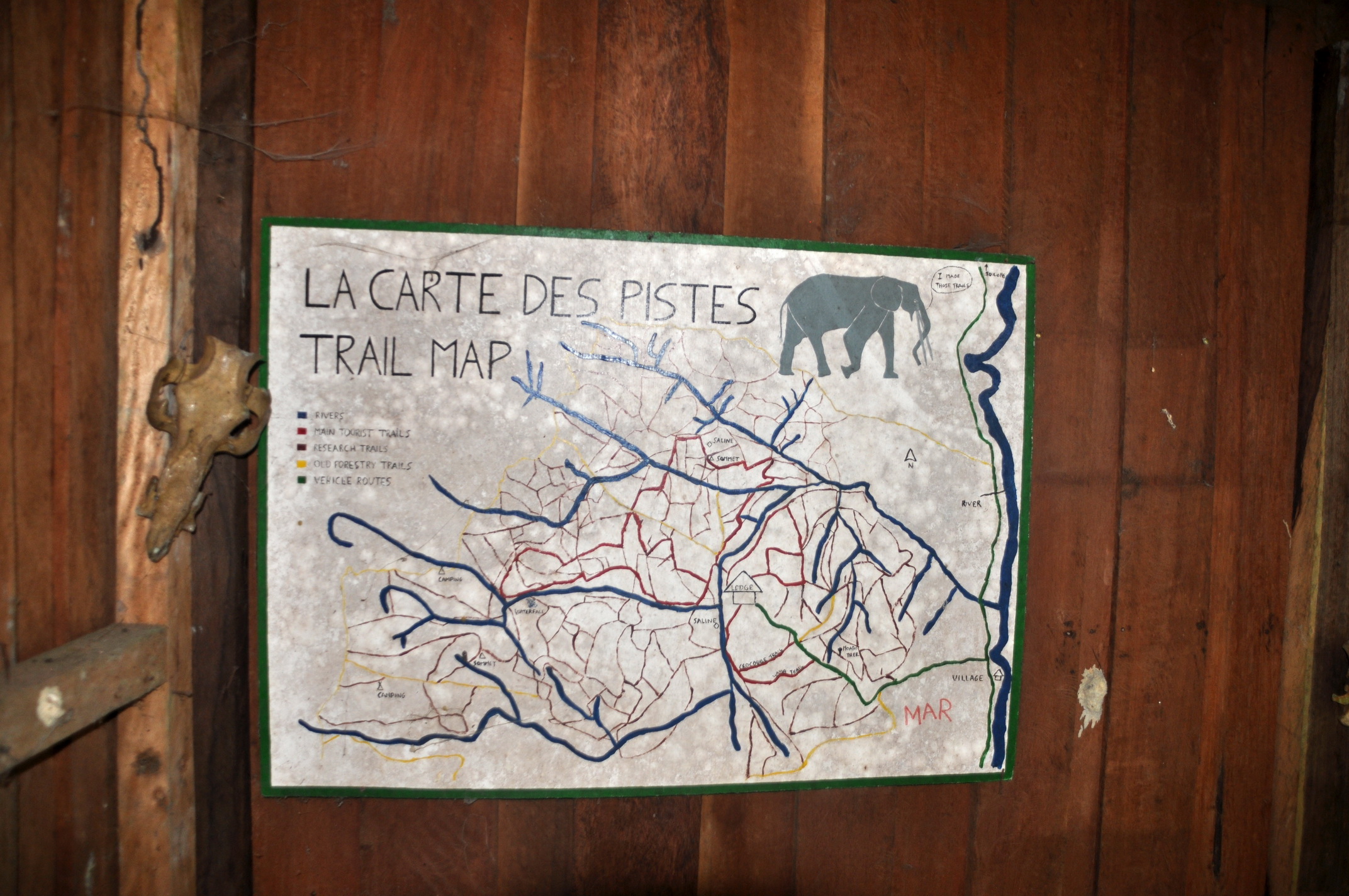
That evening I took the guide back to the village, where a surprise awaited me. The filling station on the map had never existed. What’s more, the local fuel was leaded petrol or diesel, neither of which would suit my Hyundai from the capital. With considerable trouble I found a single 20-litre can of the right petrol. The man who sold it took a look at the car and said it would get to Lastoursville. I was doubtful. It was a long way through thick jungle. What if I took a wrong turning? The eclipse was tomorrow, and I still had miles and miles ahead of me.
I left Lopé well into dusk. I’d thought about going back to the gorillas for the night, but time was running short. Heavy rain began in the evening. The weather was getting worse. The eclipse forecast wasn’t promising.
I switched on the radio and, a miracle: someone speaking English. It was the music show Music Time in Africa.
Voice of America, Brazzaville. Well, who’d have thought it! The programme was already a favourite: it had been running since 1965. In my mind it was bound up with the history of wartime broadcasts, when soldiers far away from their families listened to messages of freedom and truth in answer to Nazi propaganda, and later with broadcasts for people resisting communism. Both times it had seemed as though totalitarian forces might crush everything free and sensible in Africa. I’d read about stations of that sort in books and heard them recalled in films. Somewhere the idea of them had lodged in my mind as a scrap of the real world. Wars and atrocities had come and gone in the Congo, but the programme was still on the air, like a Central African Good Morning, Vietnam.
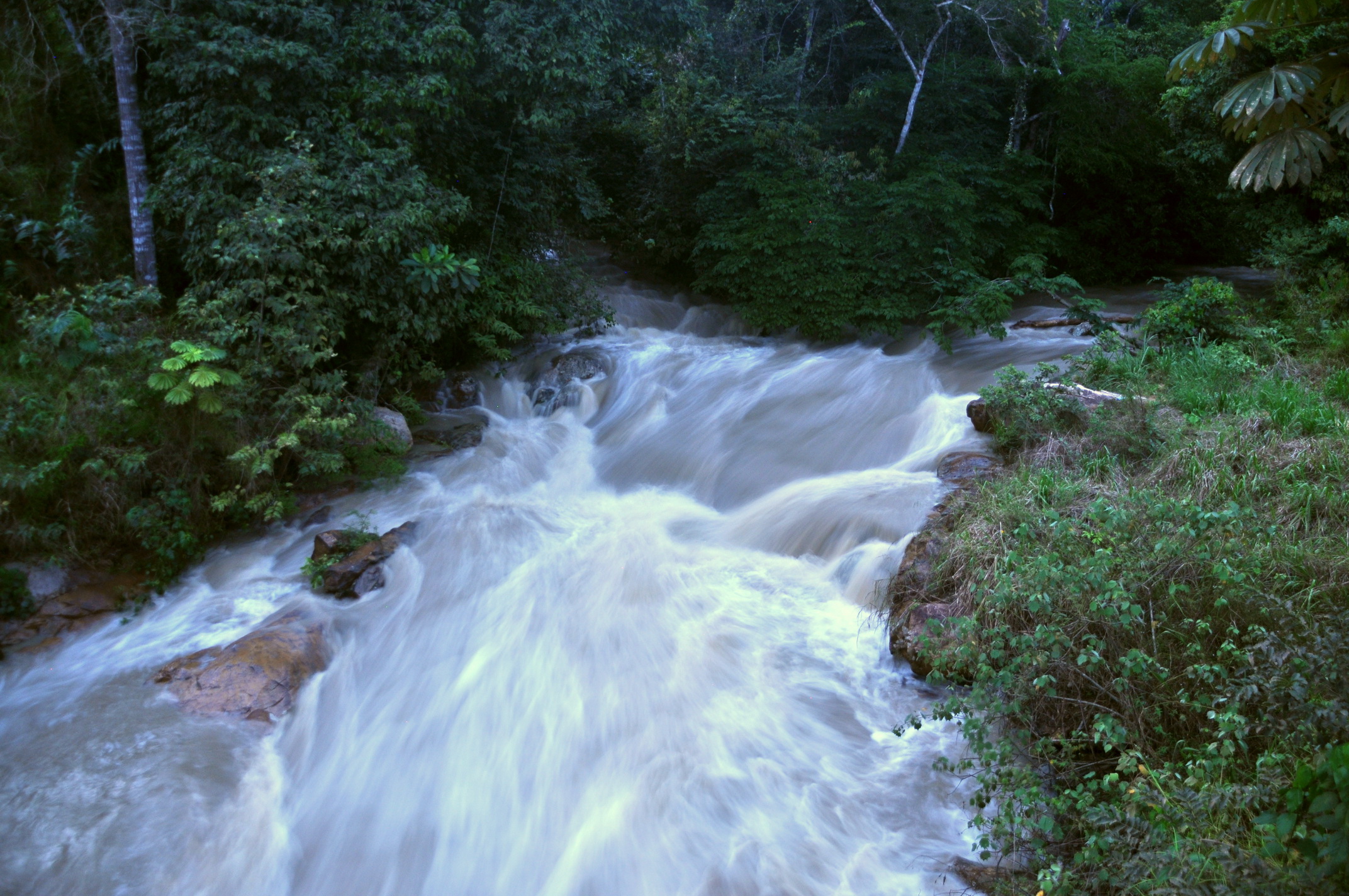
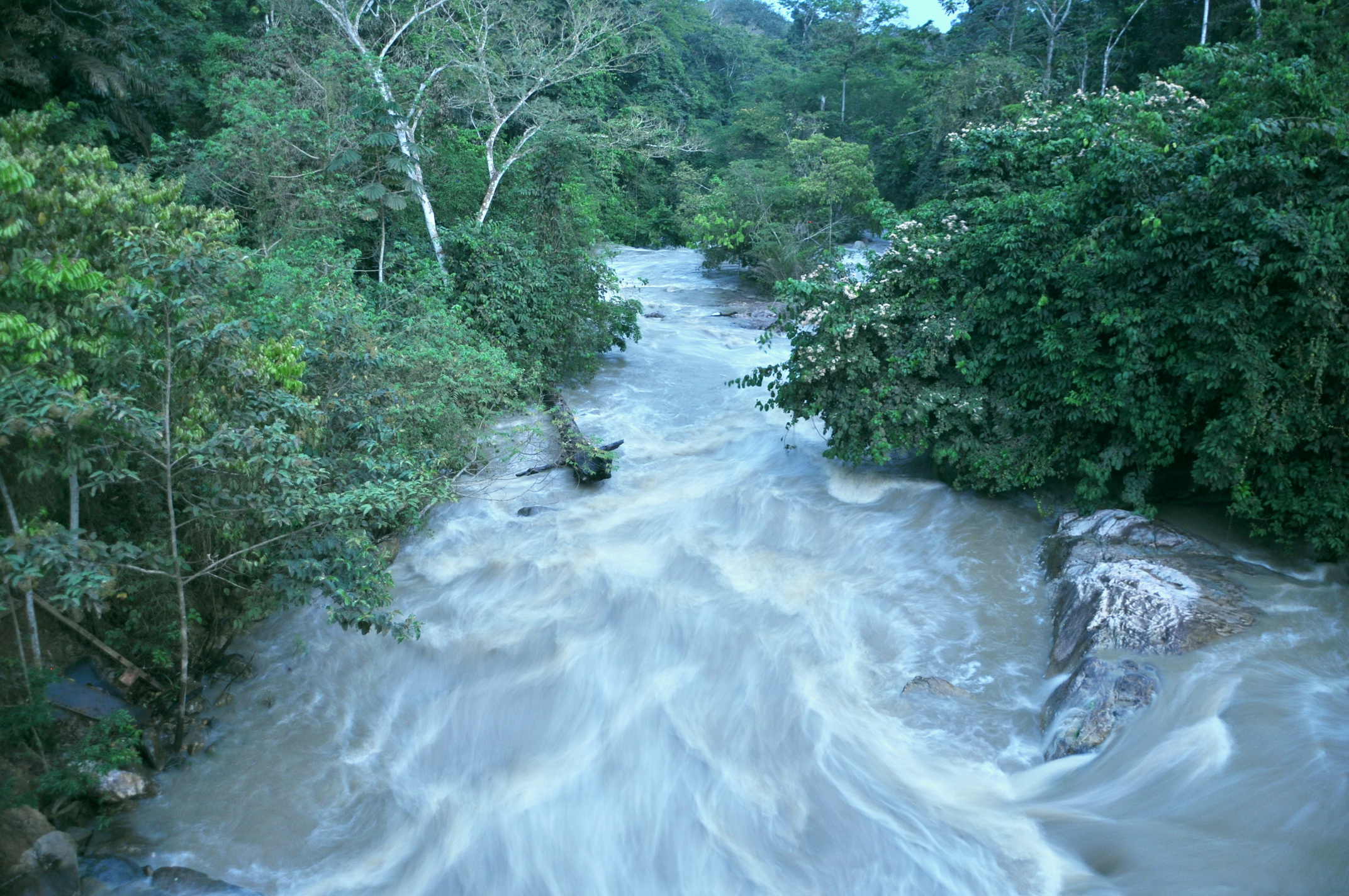
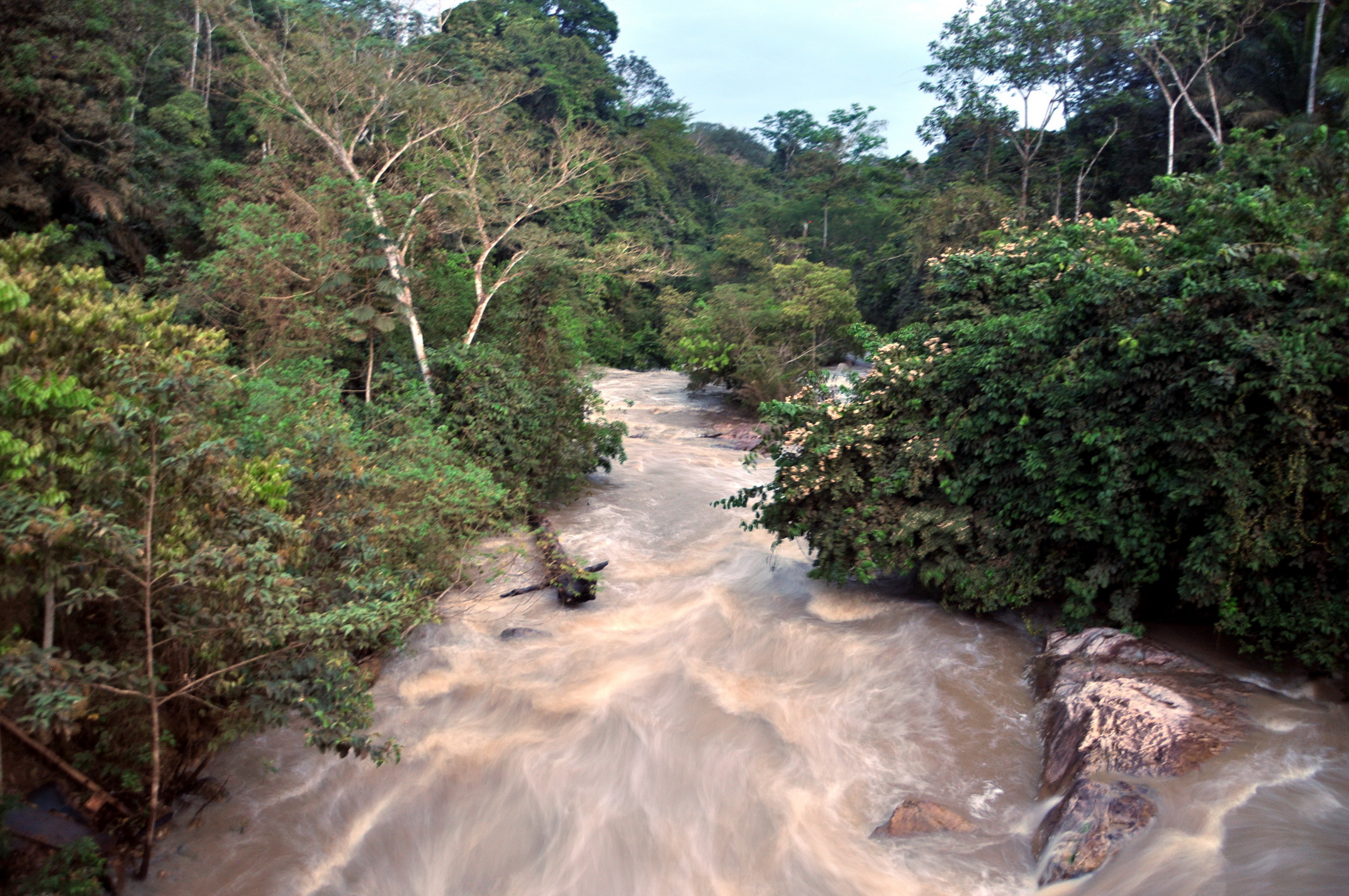
Back in the real world, I was driving along a wet, slippery rut in absolute darkness in the jungle. There was lightning and everything shook with the thunder. The petrol was running out, the car slid on the steep bits, and ancient wooden bridges creaked underneath it. Through the interference I could hear the legendary station my father must have told me about long ago. We might even have listened in Vyritsa. I tried to remember our old radio. It had the names of cities on the dial instead of frequencies and wavelengths; one of them was Brazzaville. I wanted to say thank you to this wonderful world for allowing a thing like this to happen. Who in 1960s Vyritsa could have imagined it?
In the night, after the fuel light had been on for at least 90 km, I reached Lastoursville. There was a filling station, and by a stroke of luck the hotel owner hadn’t gone home (00°48.570′S, 12°44.049′E; elevation 261 m). I spent the night and in the morning filled the tank to the brim with the precious unleaded petrol.
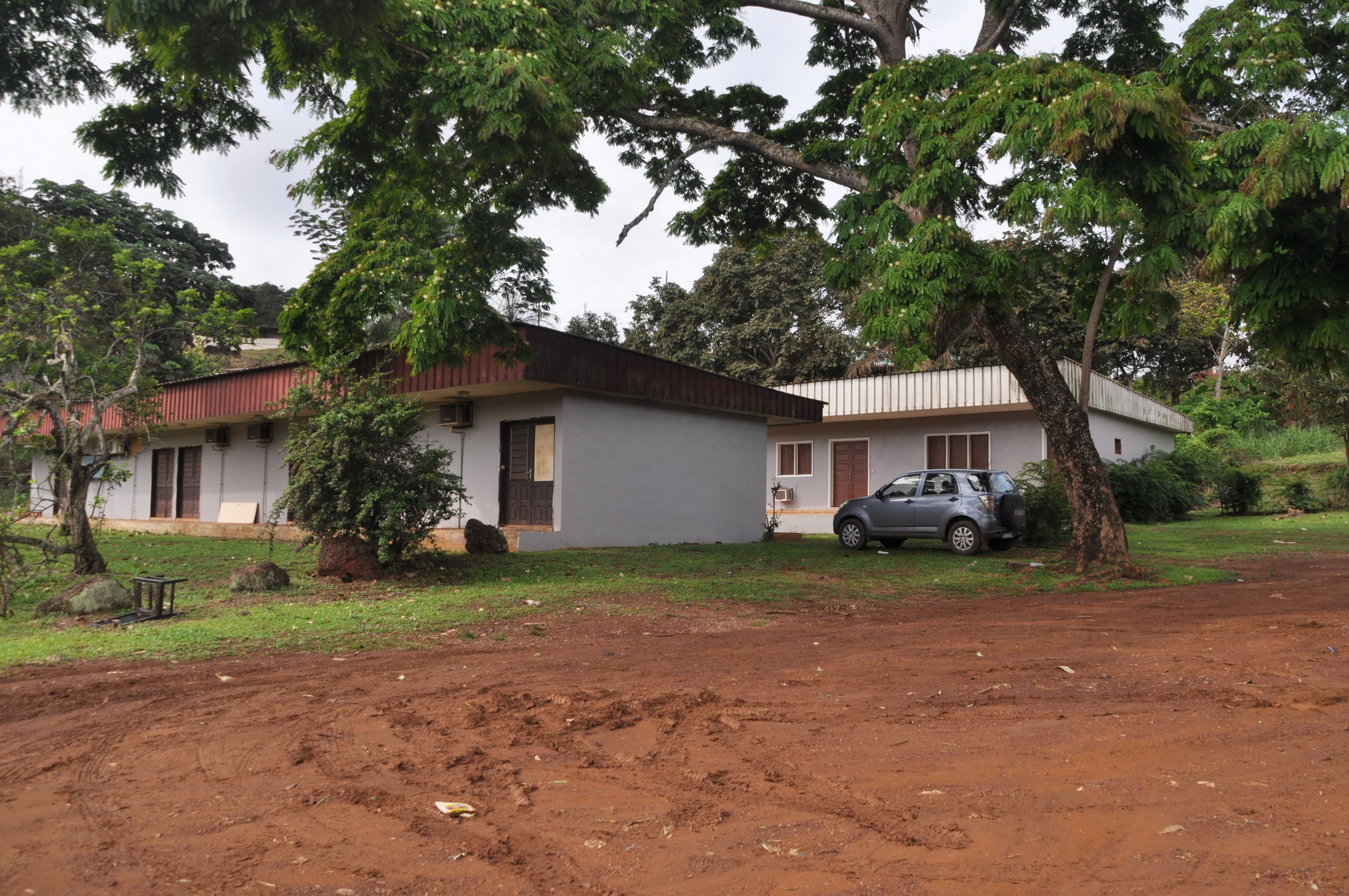
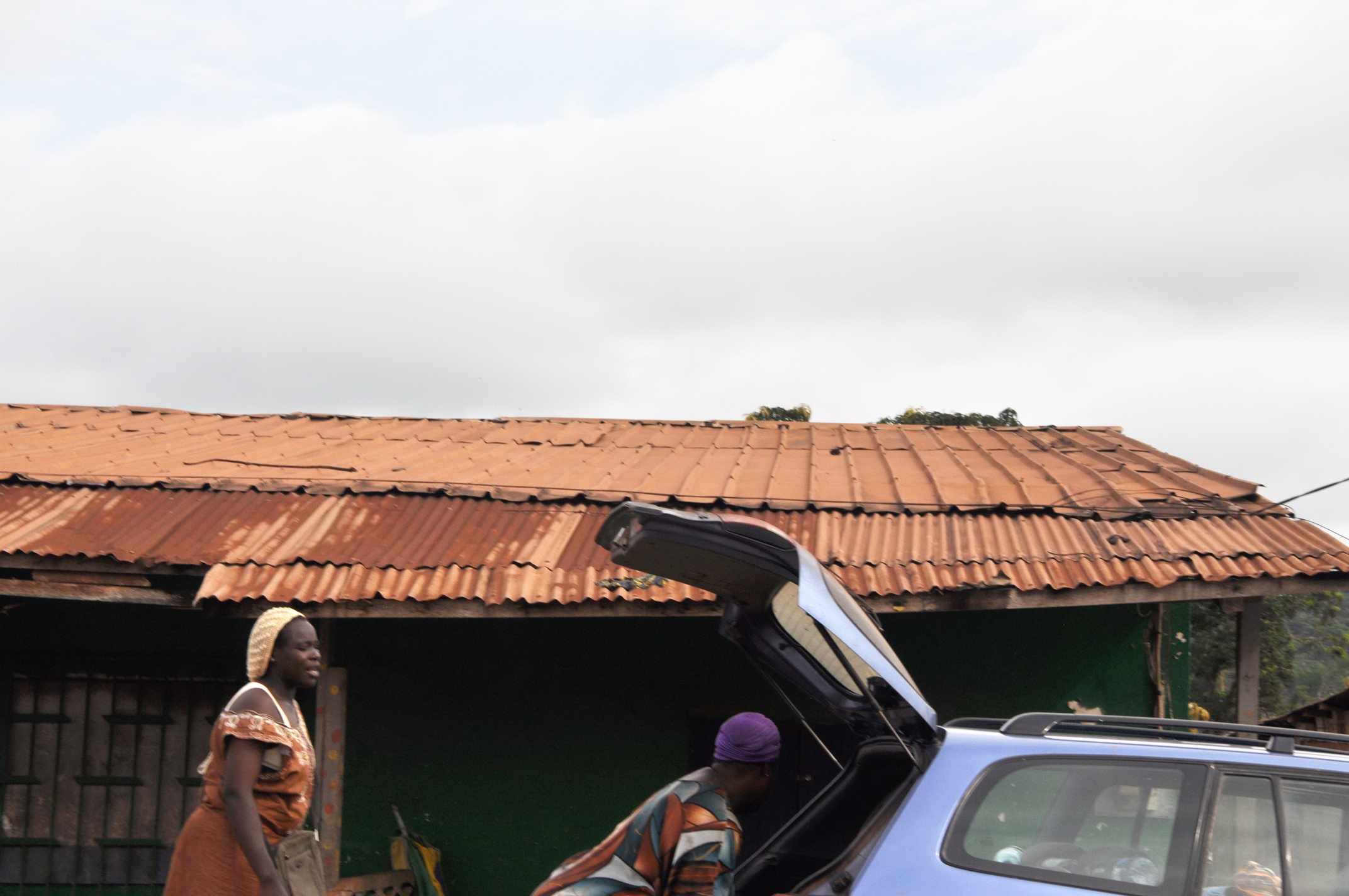
I went for breakfast at the Barack Obama café. He was popular here. The African dream, now. After all, his father’s home village wasn’t so terribly far away. He was a symbol of success in Africa now, not that odious Che Guevara. I ate another morning omelette, courtesy of Barack Husseinovich.
Into the path of the eclipse
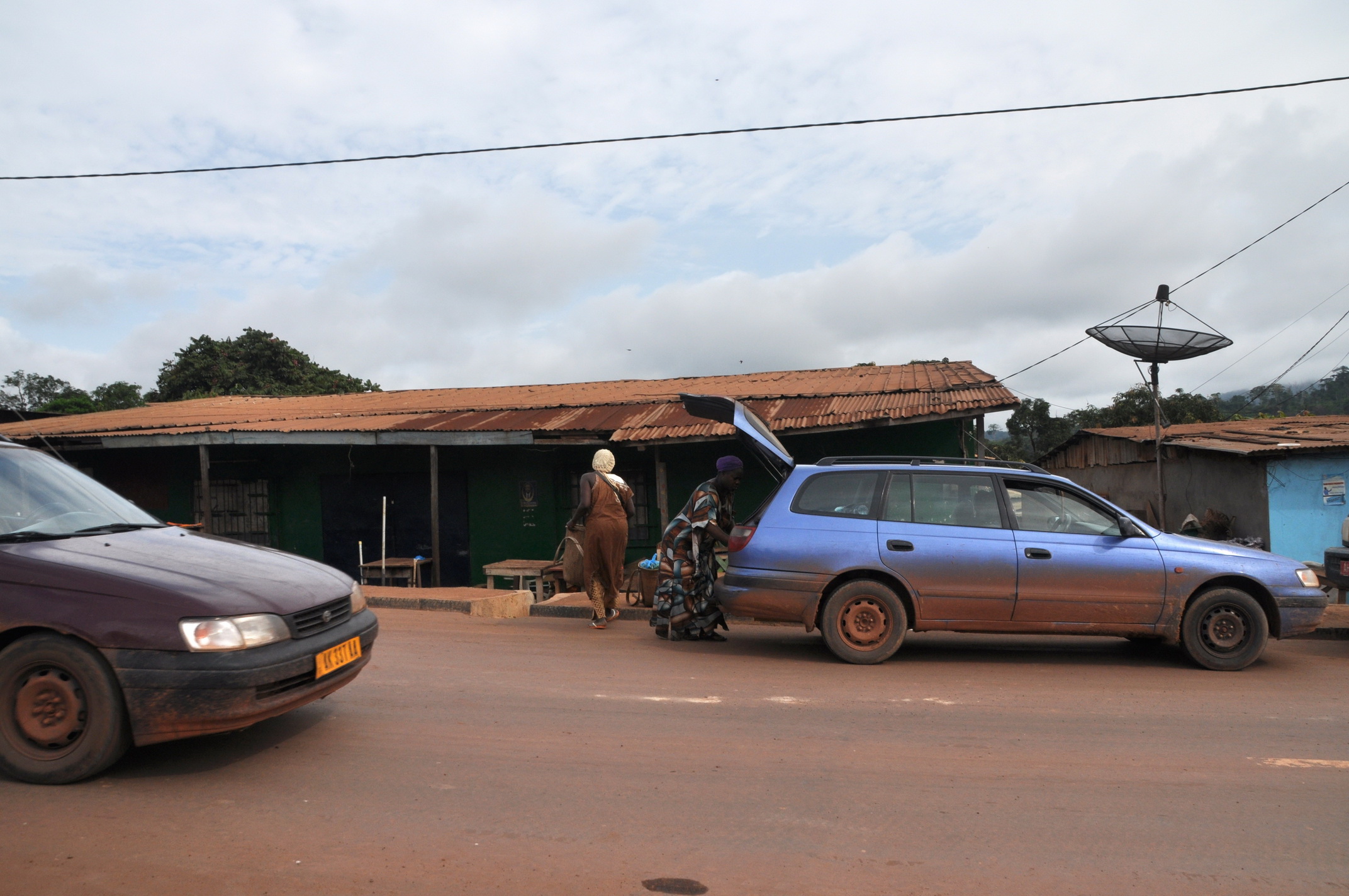
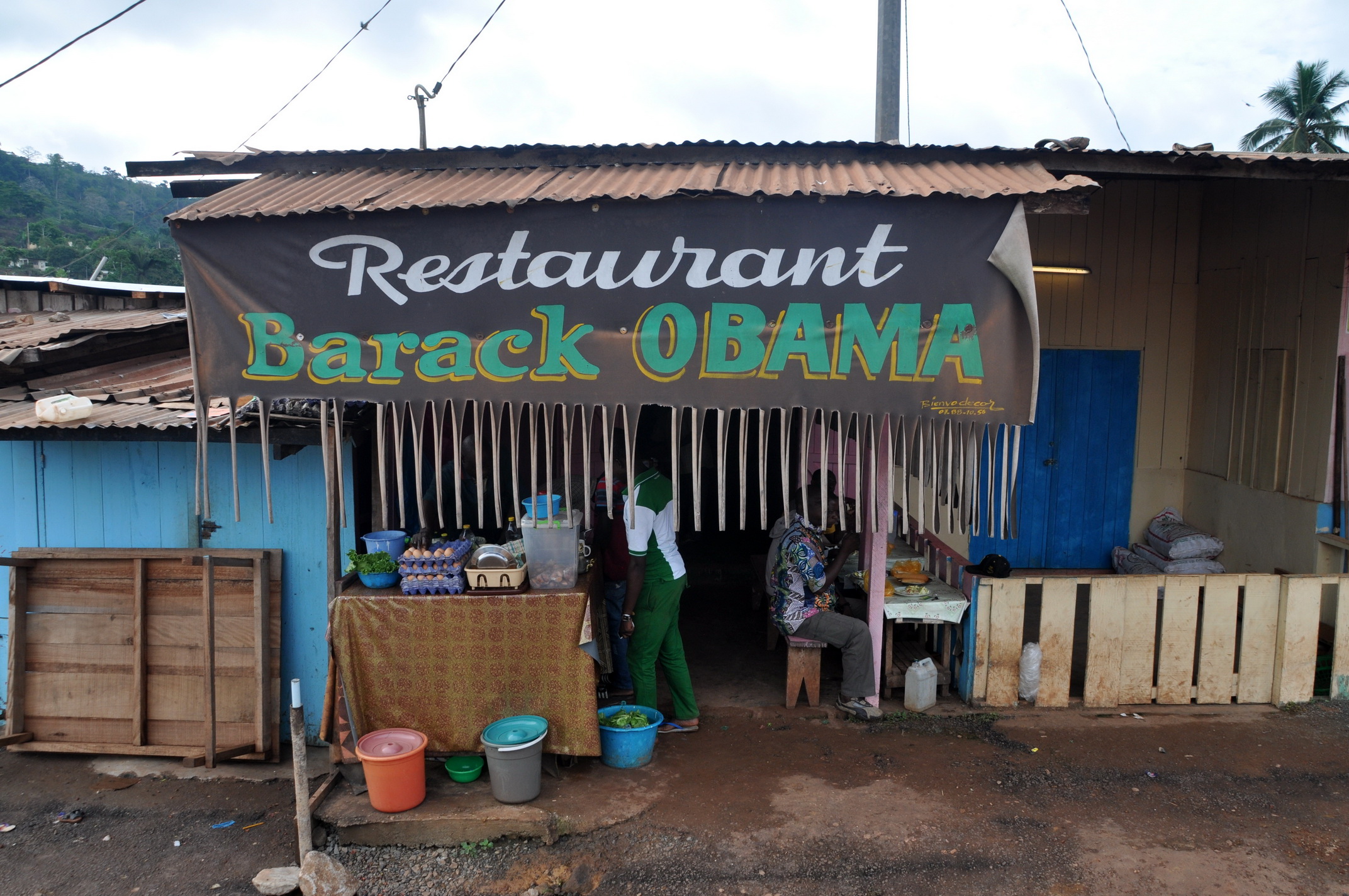
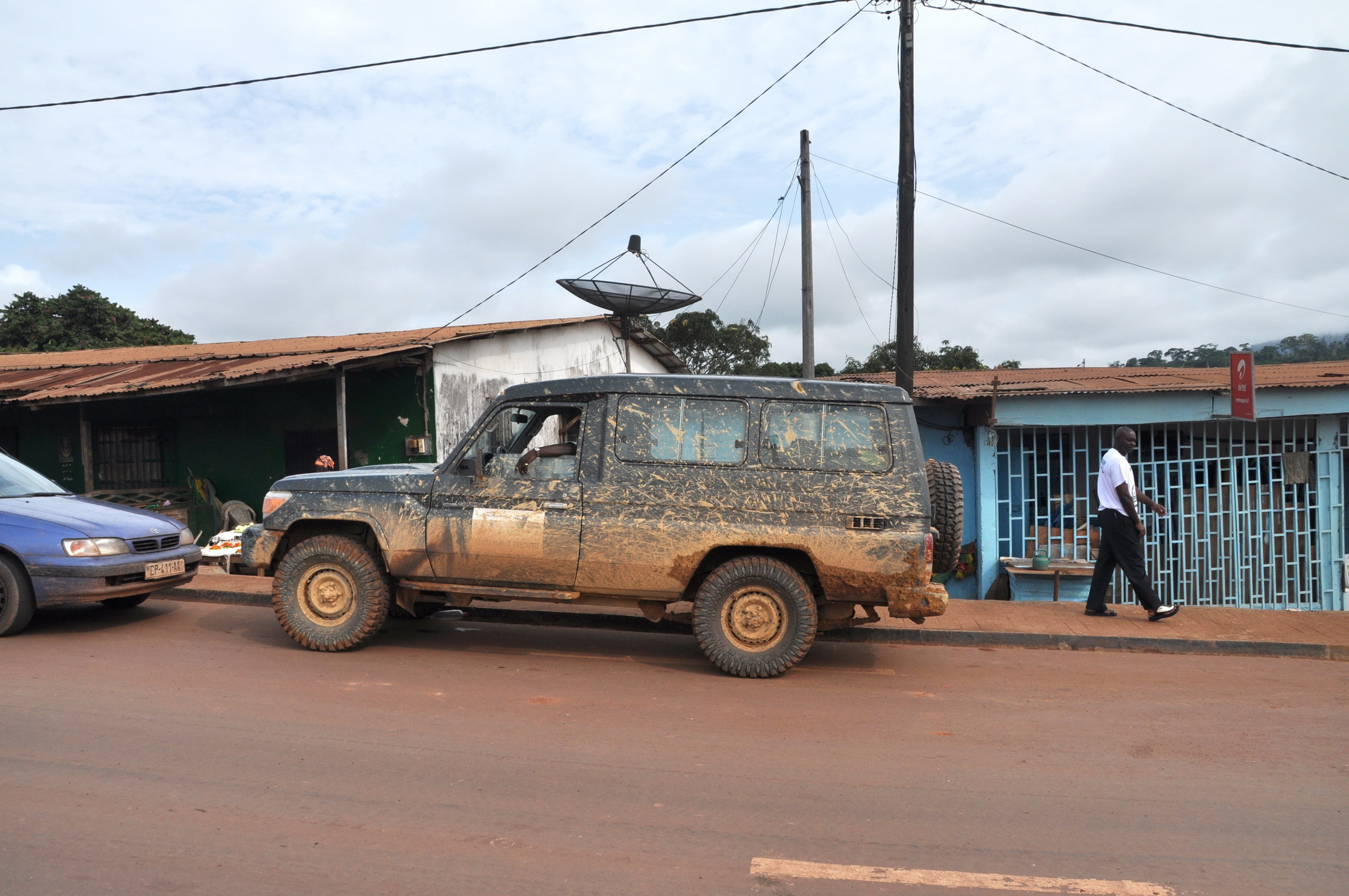
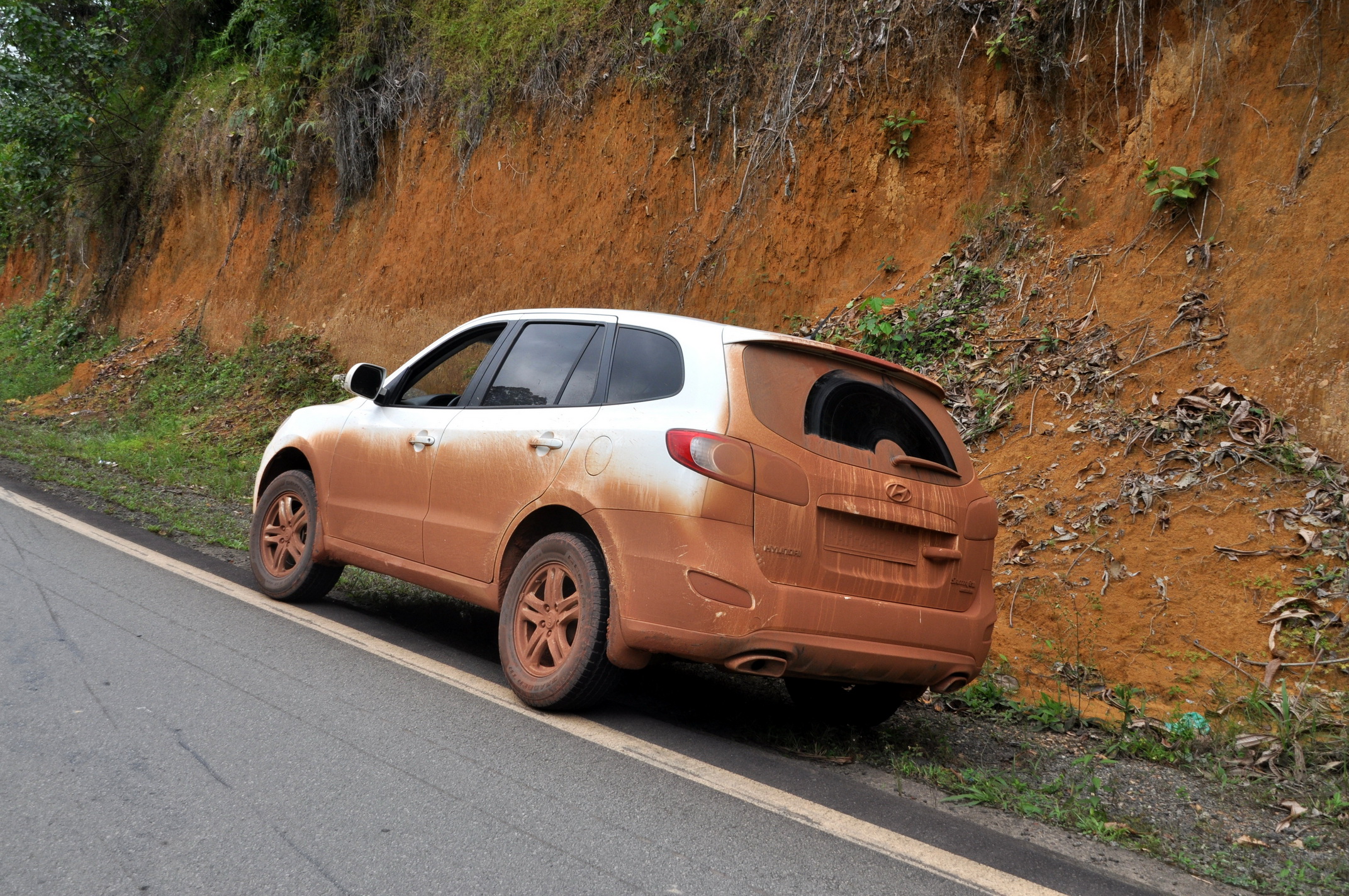
An even wilder road lay ahead, along the Congo border. The cars by the café were so spattered with mud that I didn’t expect much smooth asphalt. One consolation: the path of the eclipse was getting close.
The day began on the small local road R19 from Lastoursville to Okondja. I drove it without any trouble. Along the way I met a hunter of monkeys. People here regularly ate guenons instead of chicken. In the morning a hunter would go into the forest to see what he could get for lunch. It seemed that an ancient gun, a couple of cartridges and a little fire made a barbecue. A monkey, as food, also had the advantage that the tail served as a sort of handle; the hunter carried it over his shoulder like a bag. Eco-friendly, I thought rather bleakly. No plastic bags.
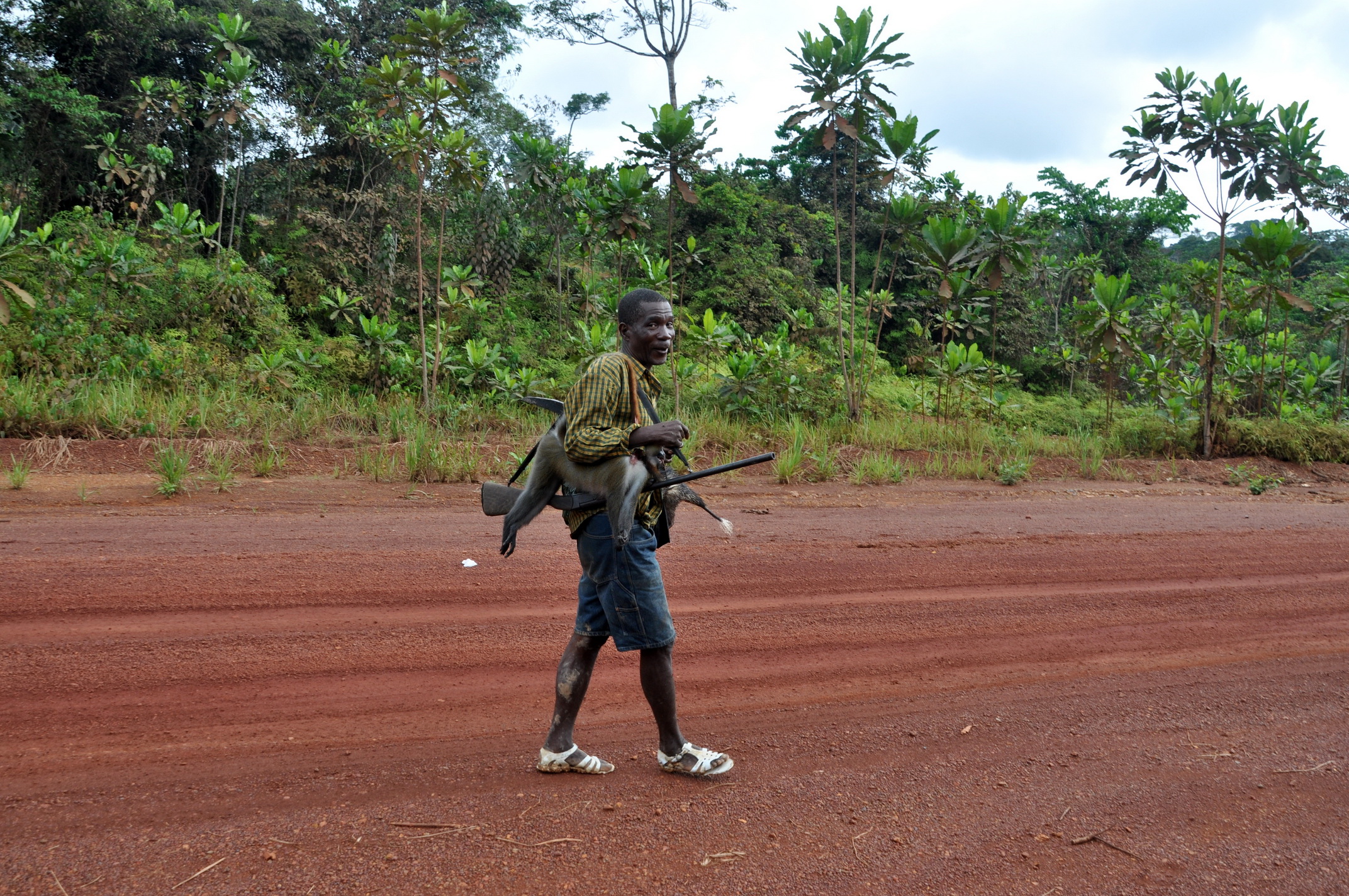
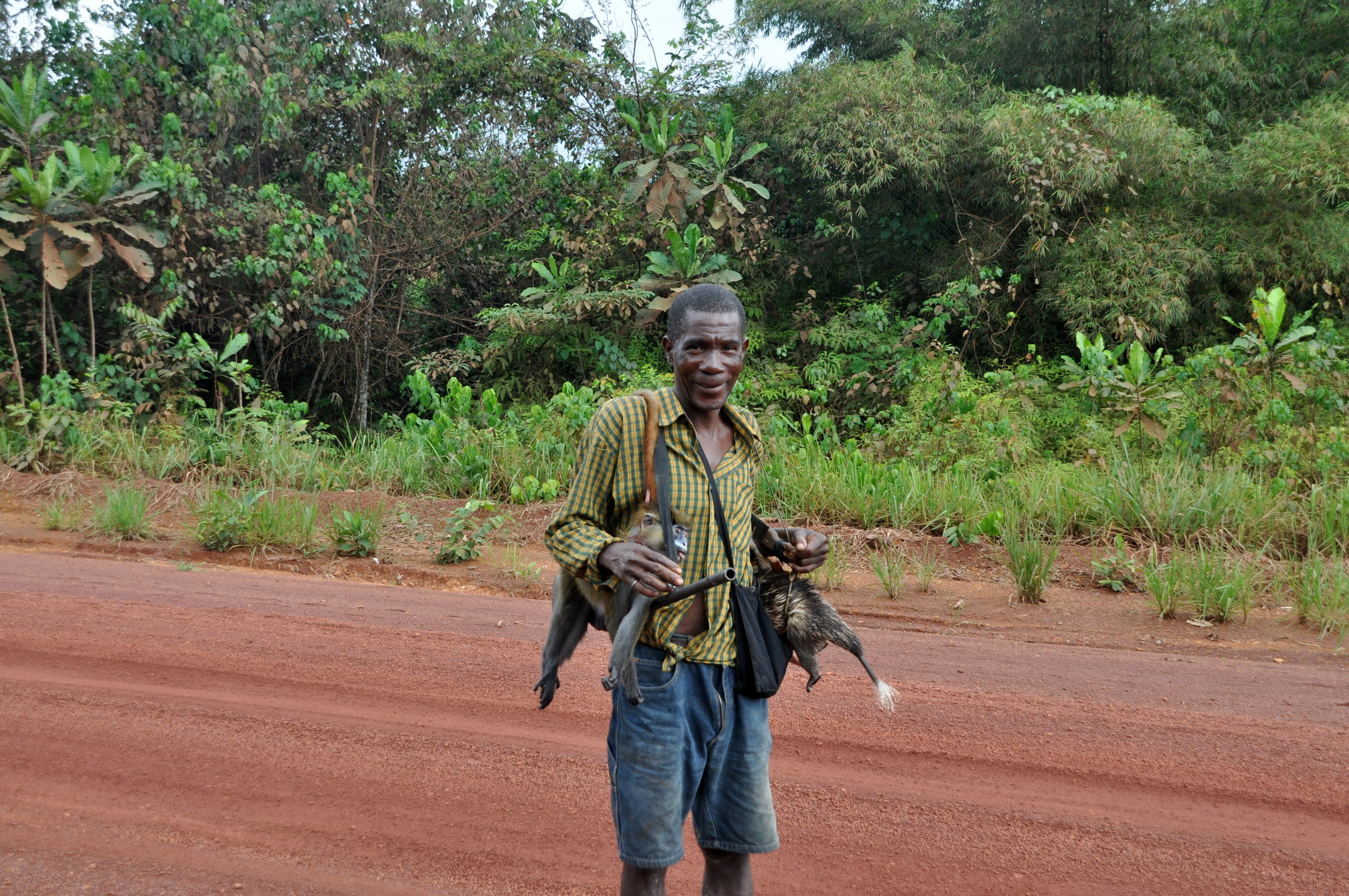
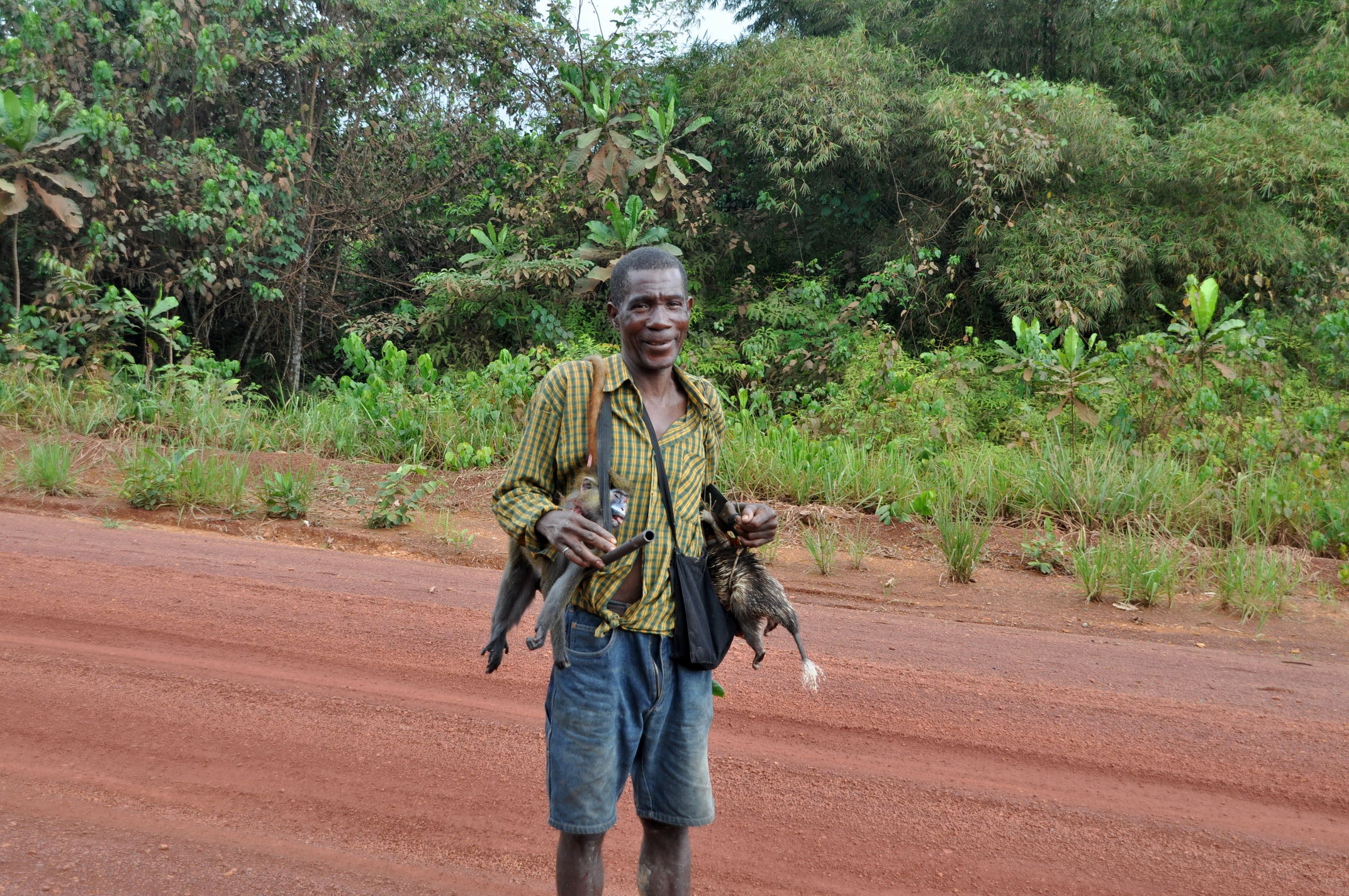
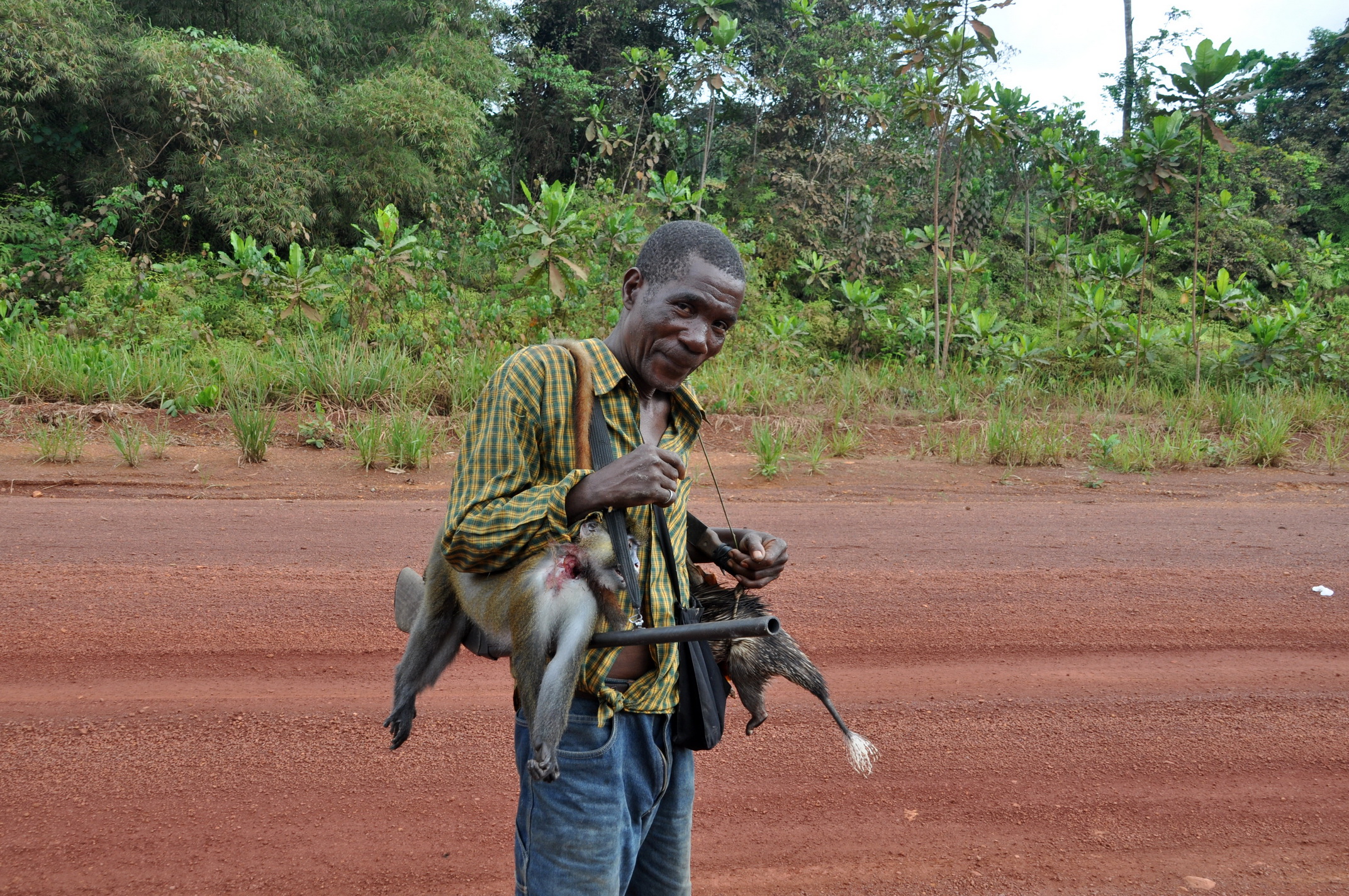
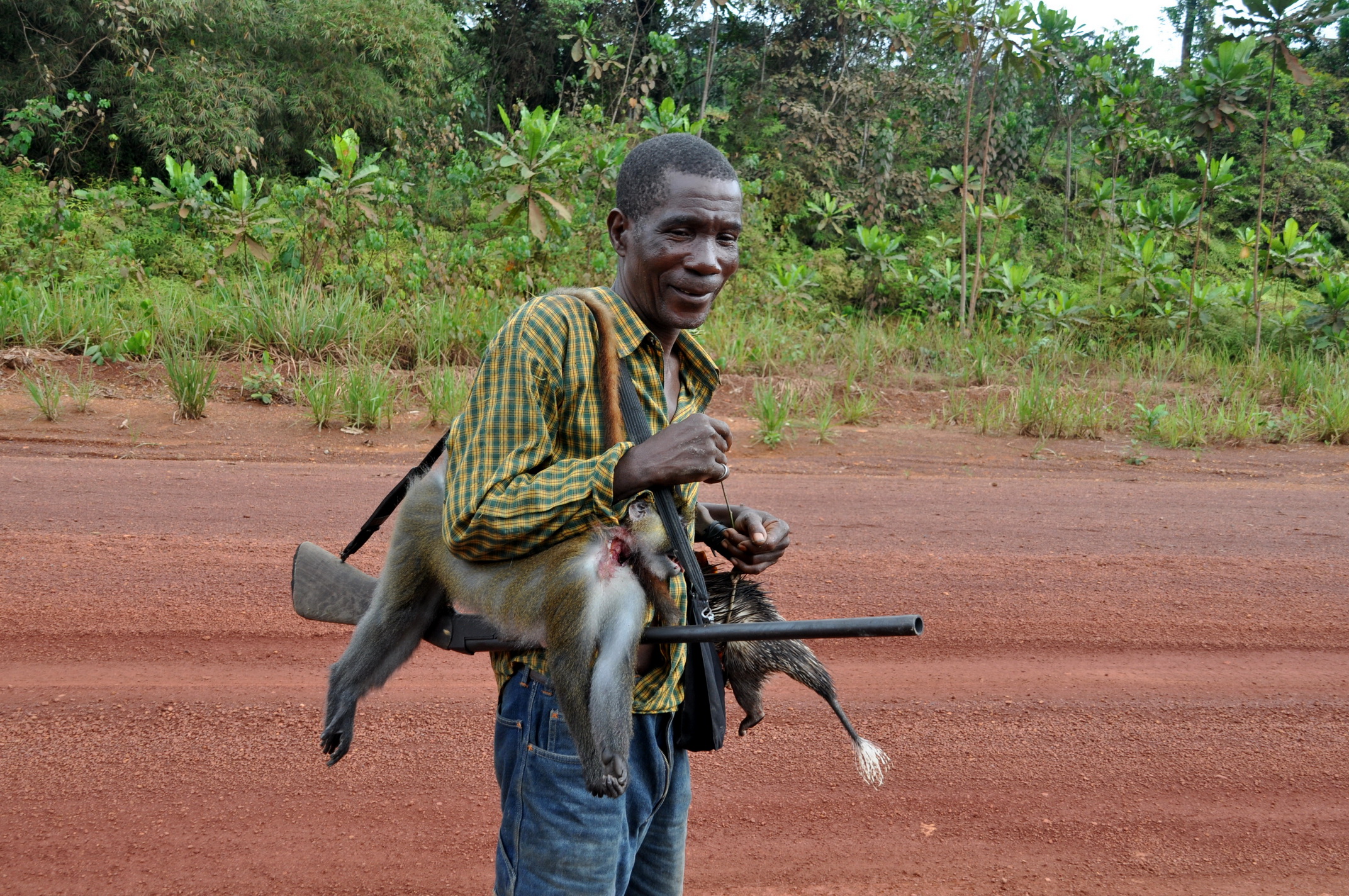
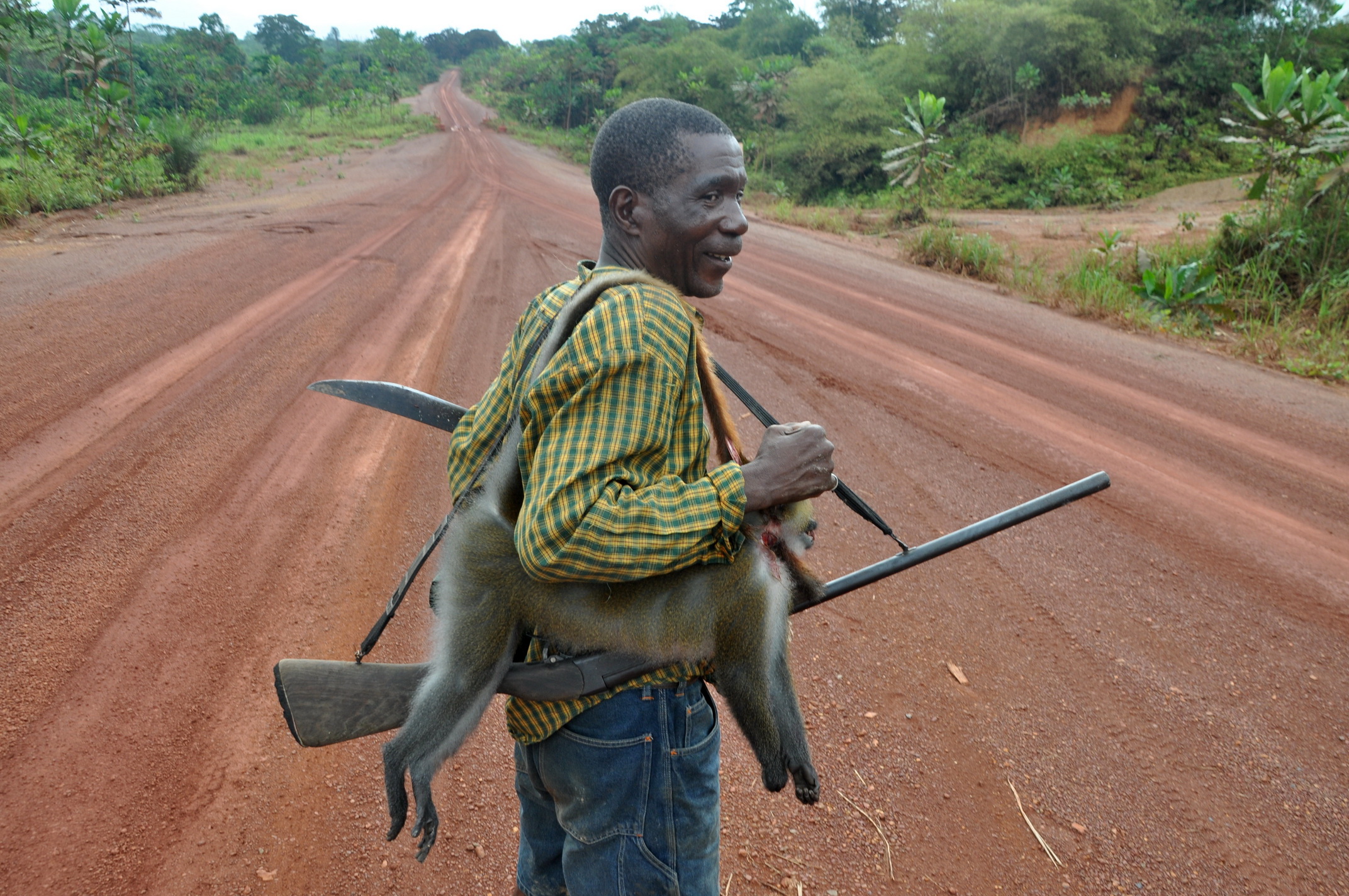
Hunting apes was strictly prohibited, but I was told it went on all the same, above all with chimpanzees, which also live outside national parks. Every gorilla was accounted for. People didn’t generally talk about it with Europeans, in case the person they ran into was a conservationist.
I knew now what my birthday dinner might be…
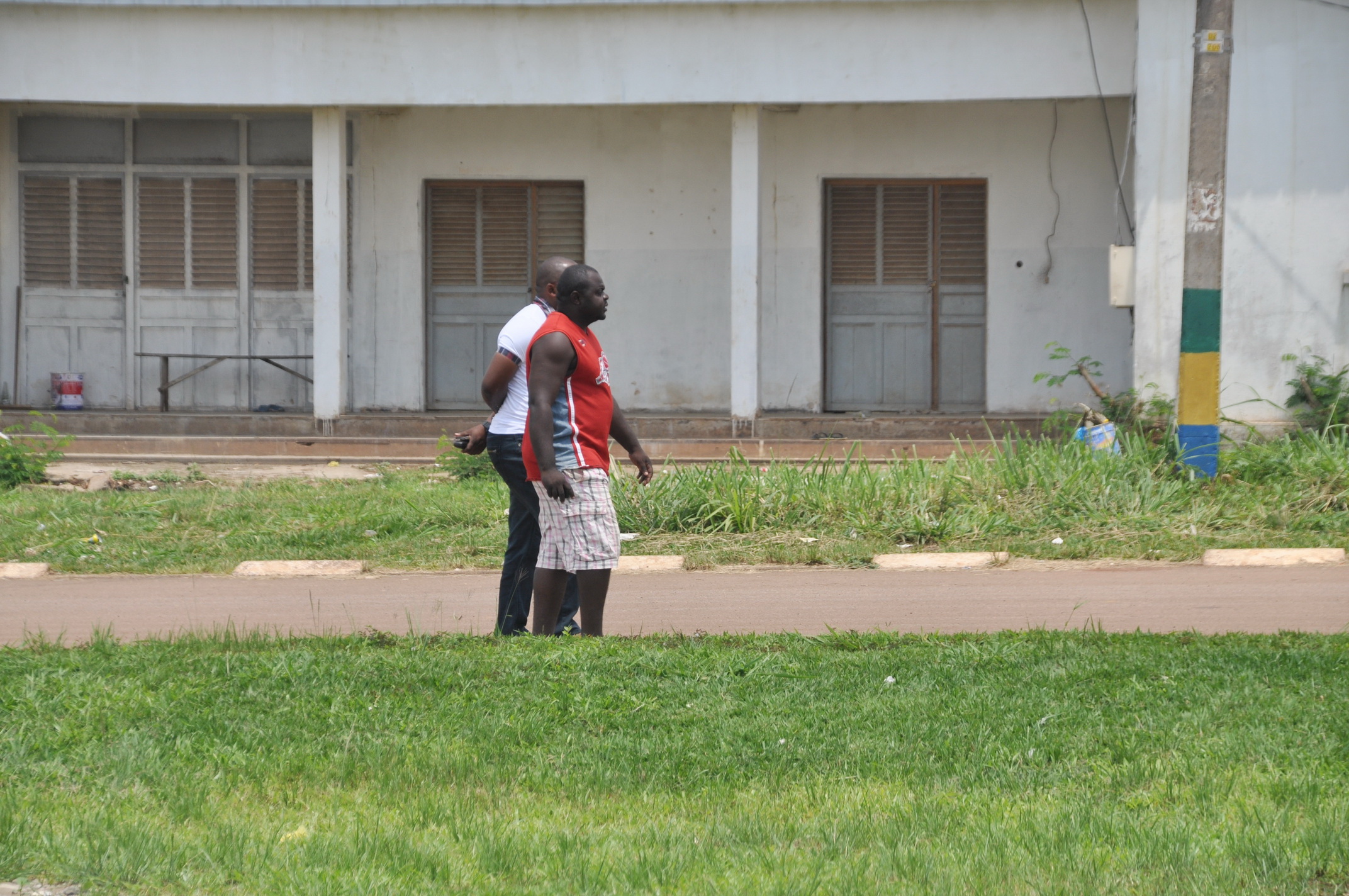
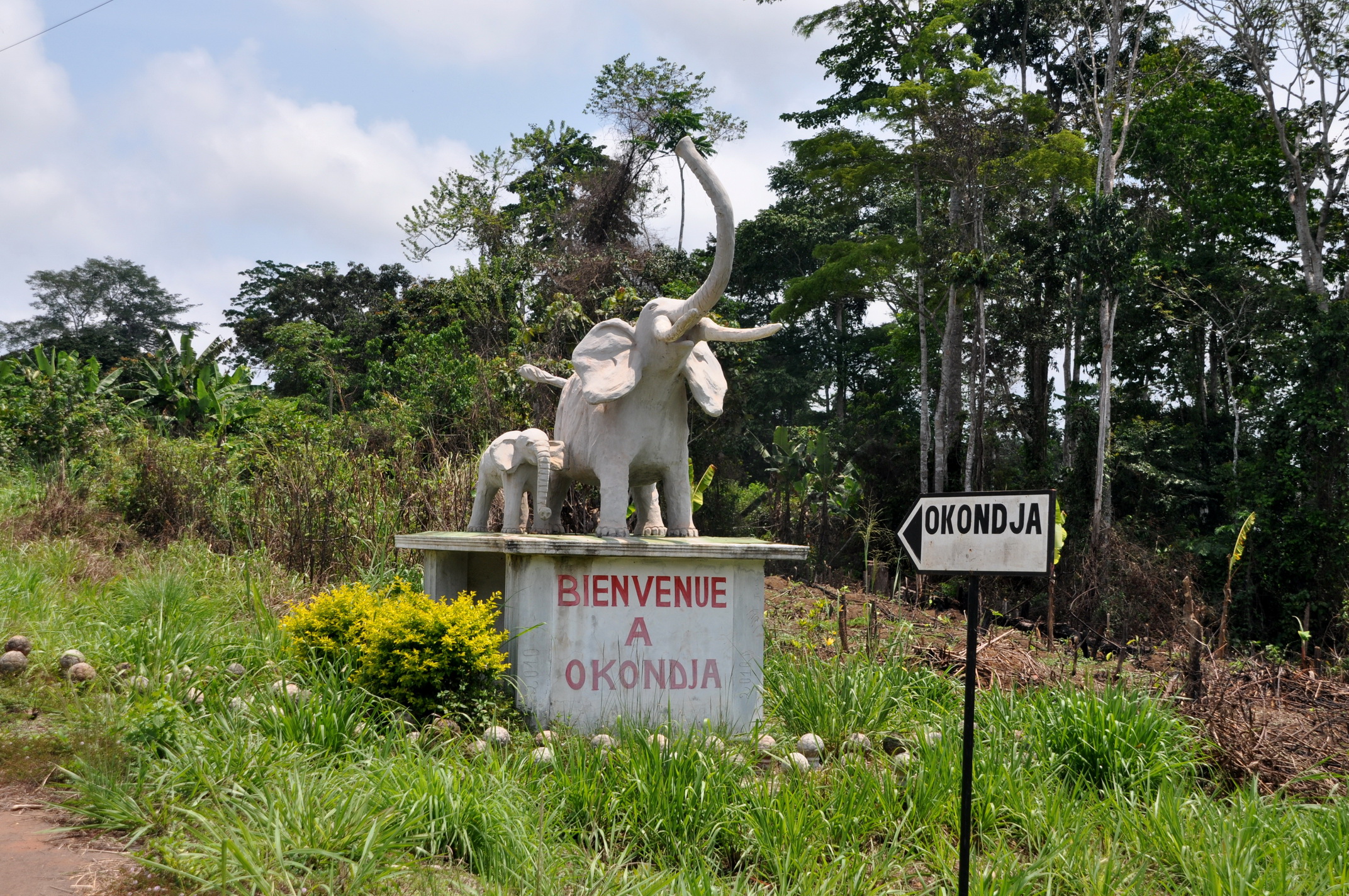
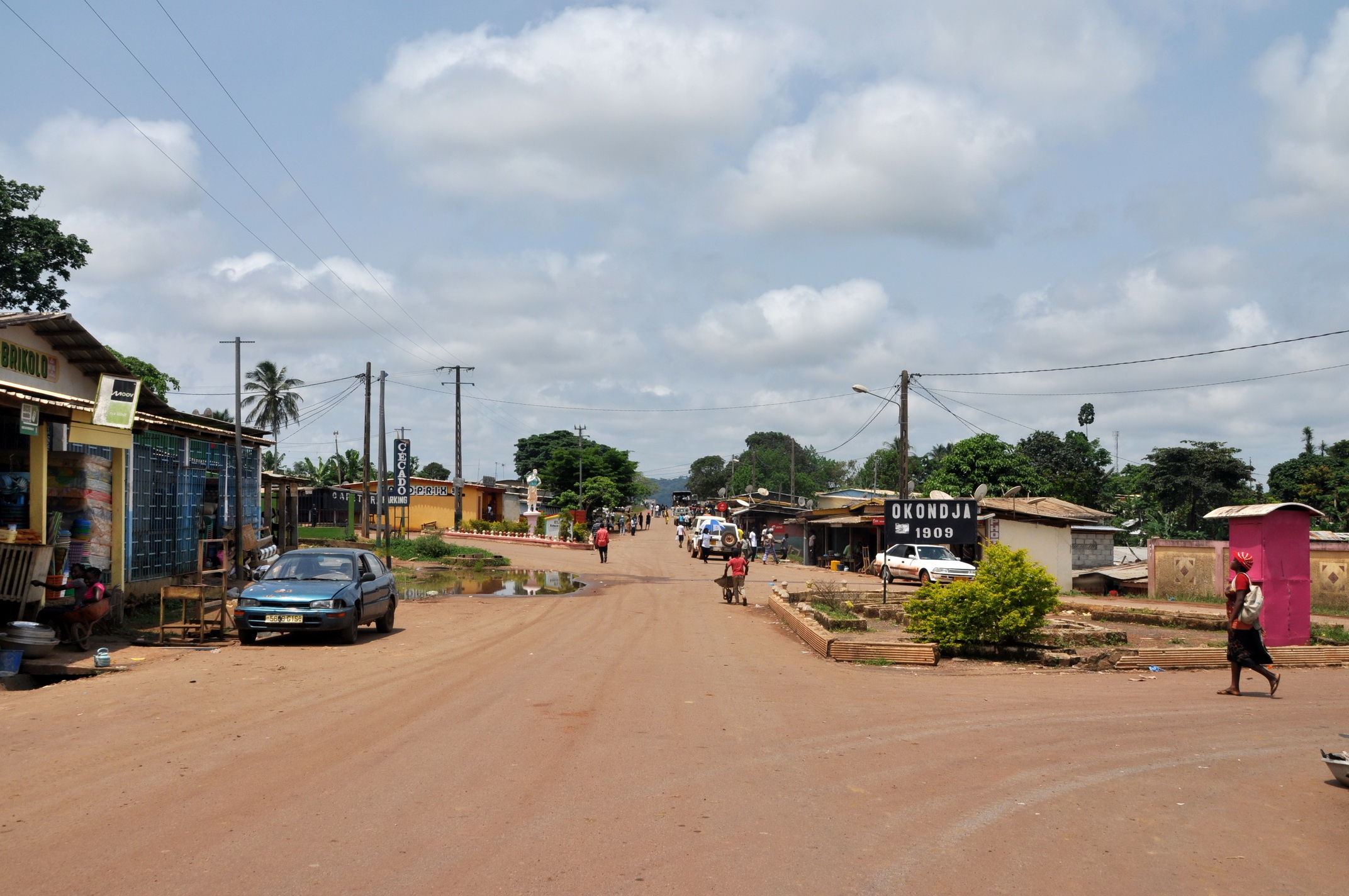
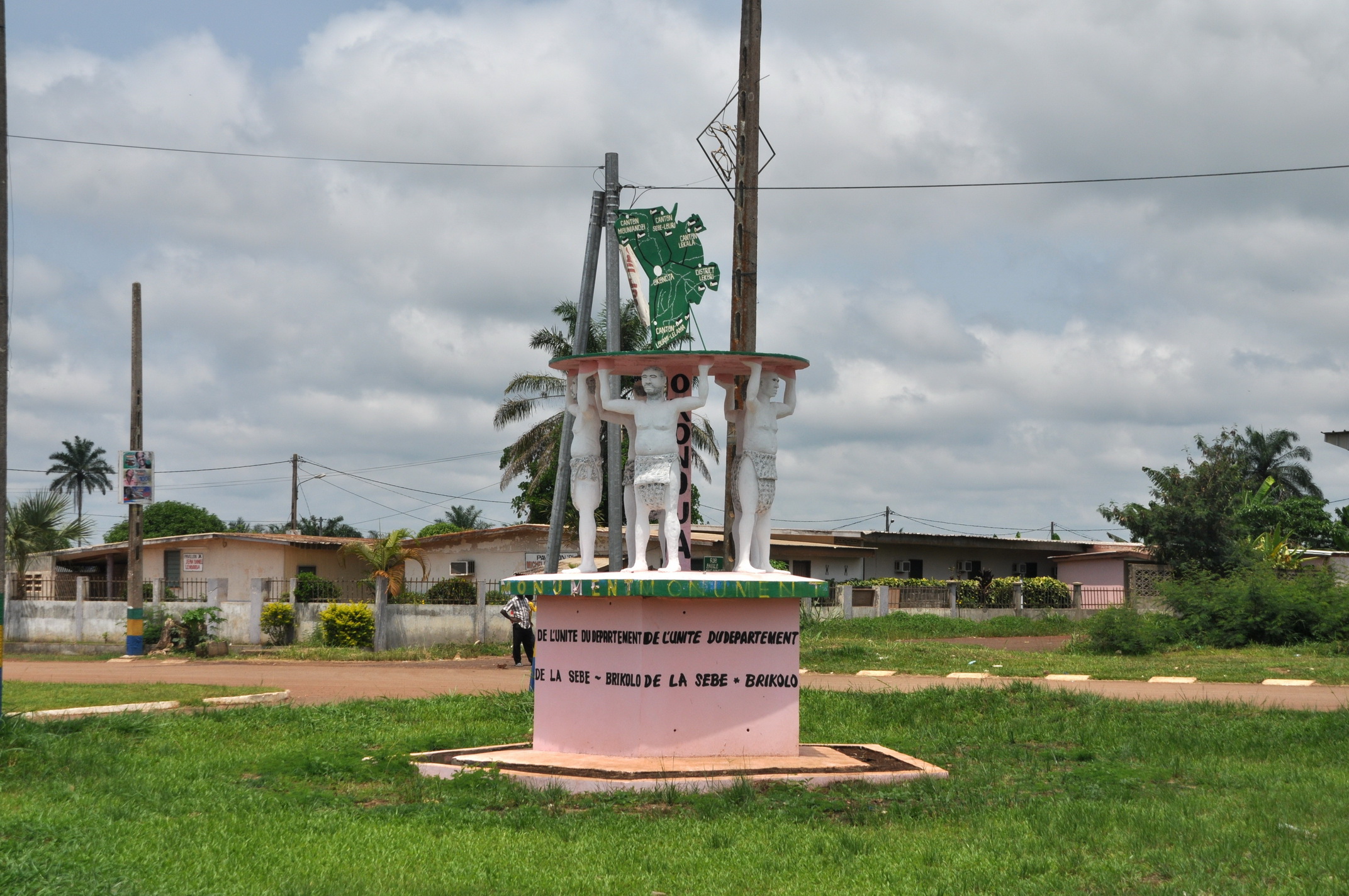
Three hours before the eclipse I drove into the town of Okondja. A wonderfully colourful little place, with an astonishing sculpture. It was gaudy, of course, but look at the subject! Four statesmen holding up a slab in the shape of the outline of the district, with Okondja at its centre. Imagine your own local councillors in their place…
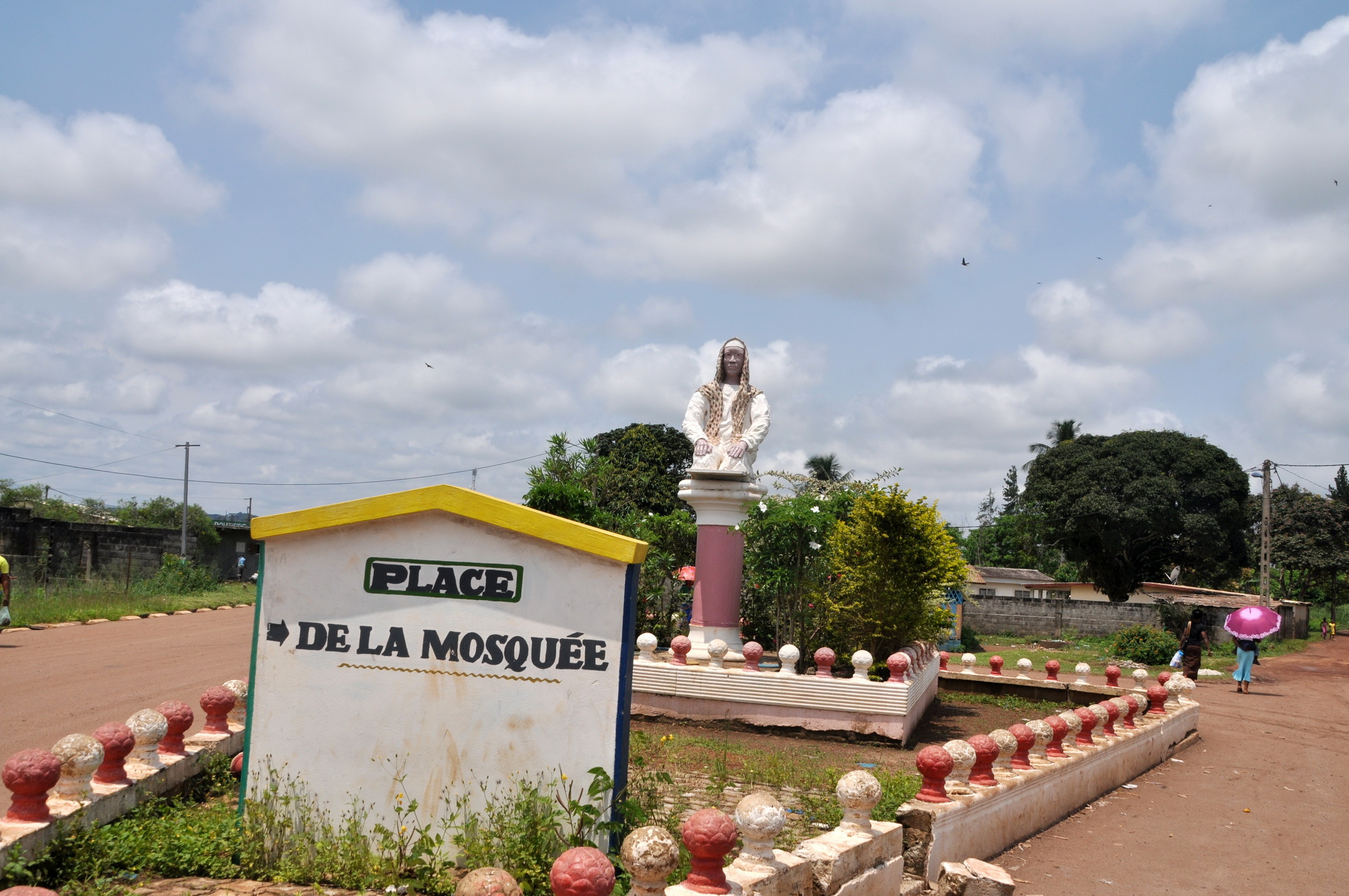
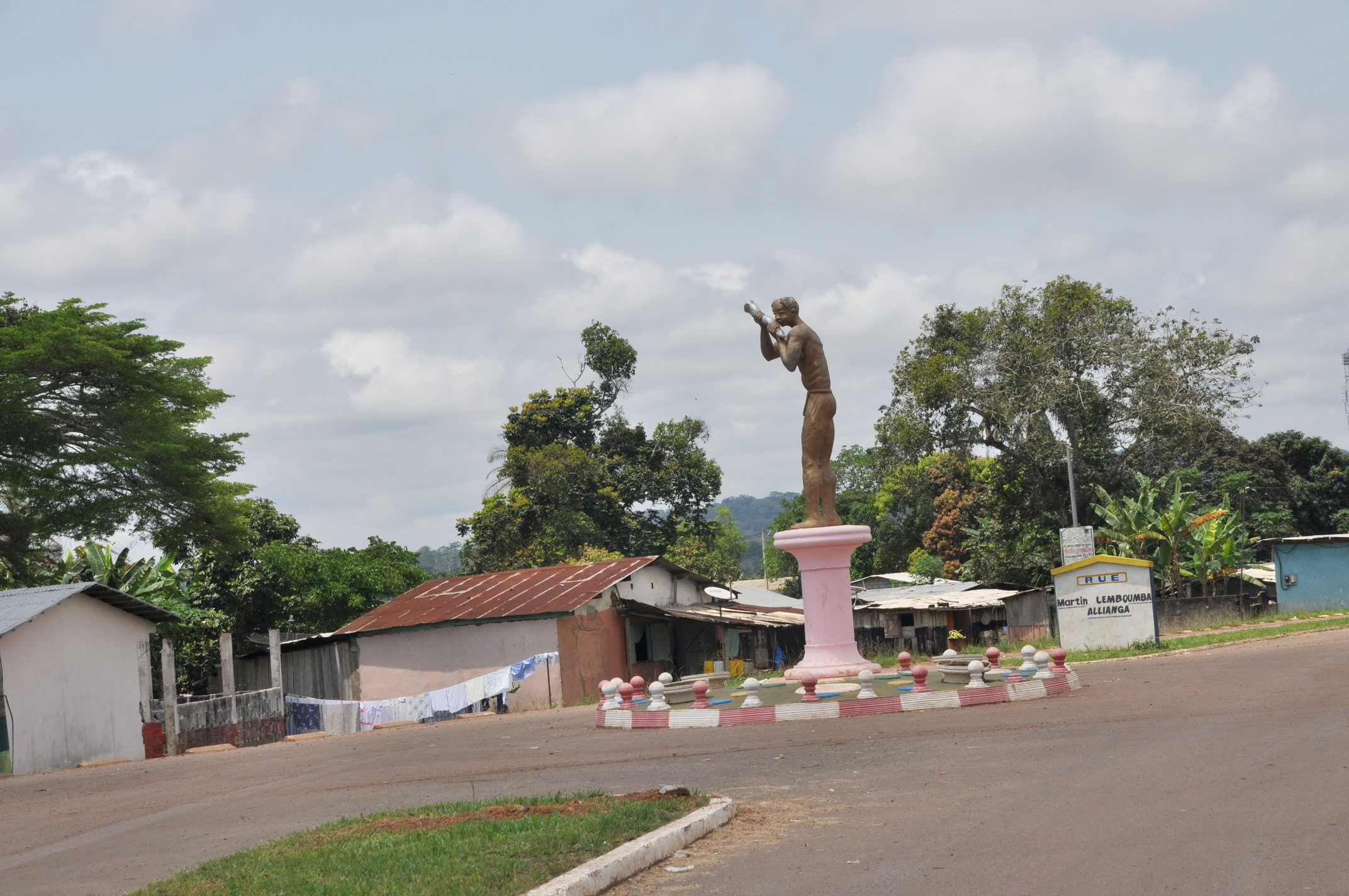
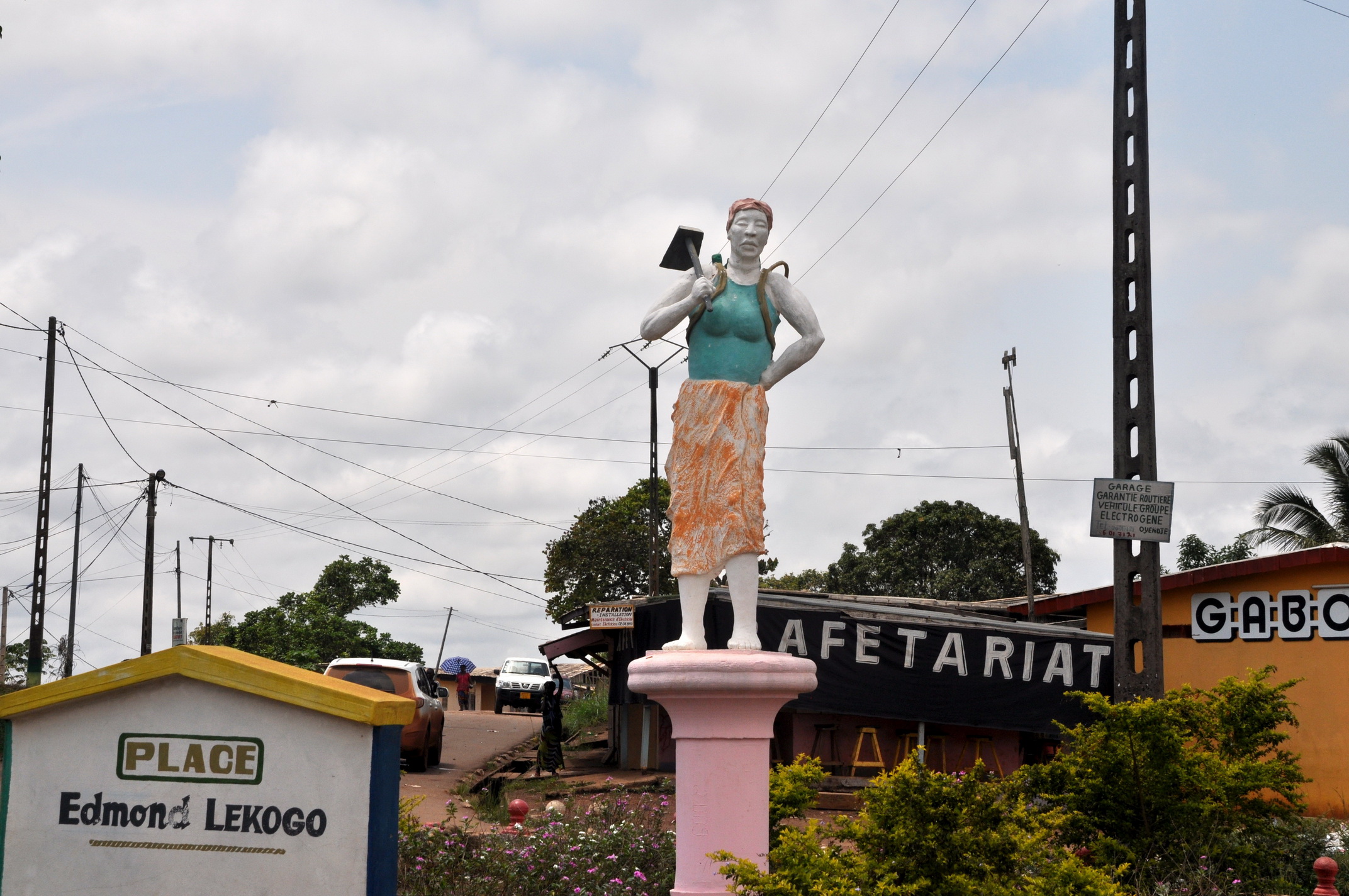
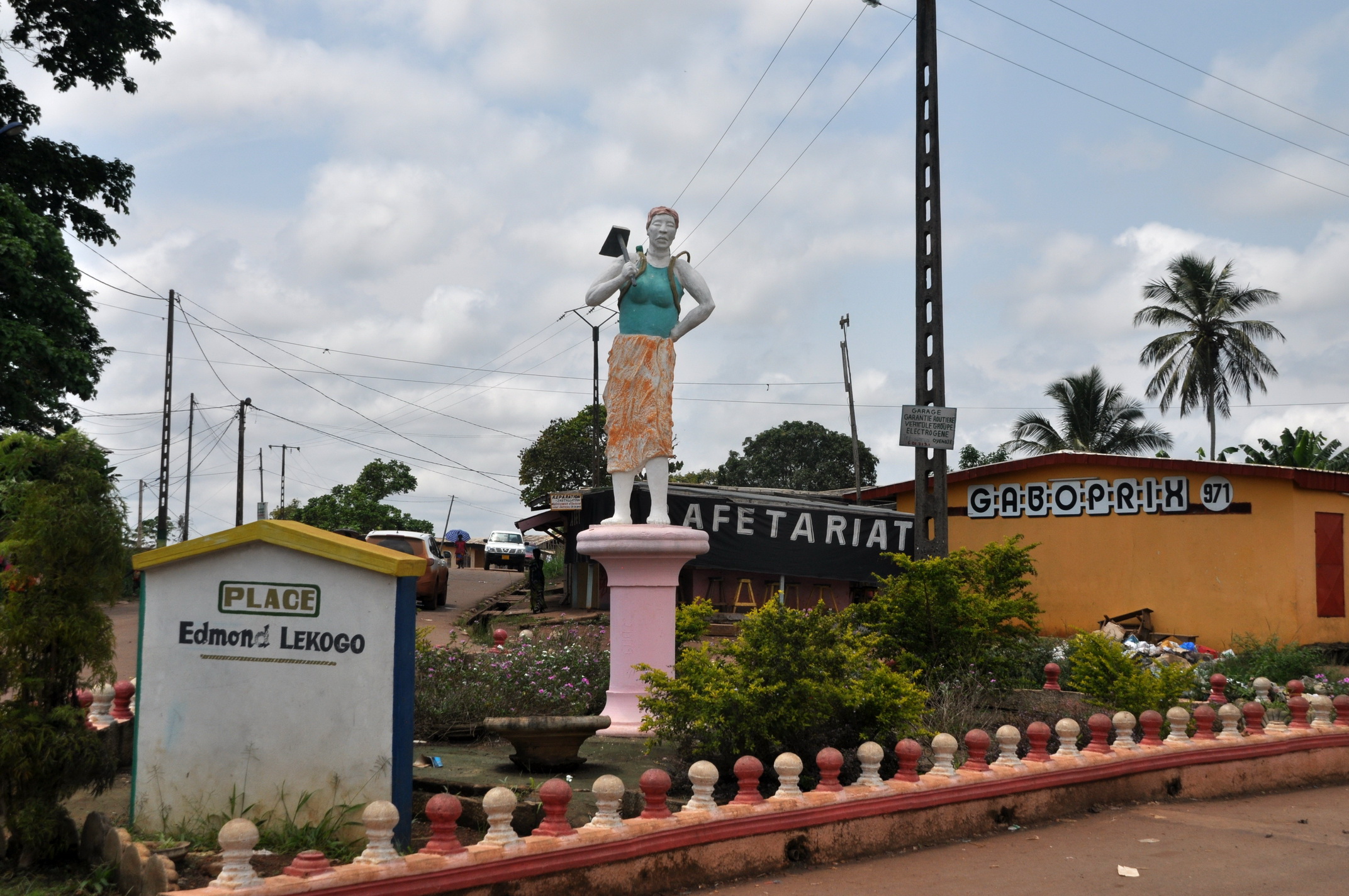
The farmer with the hoe was the very image of Lena Kazachenko. And here was a golden man releasing doves. A local man of importance, I supposed, now serving as mayor.
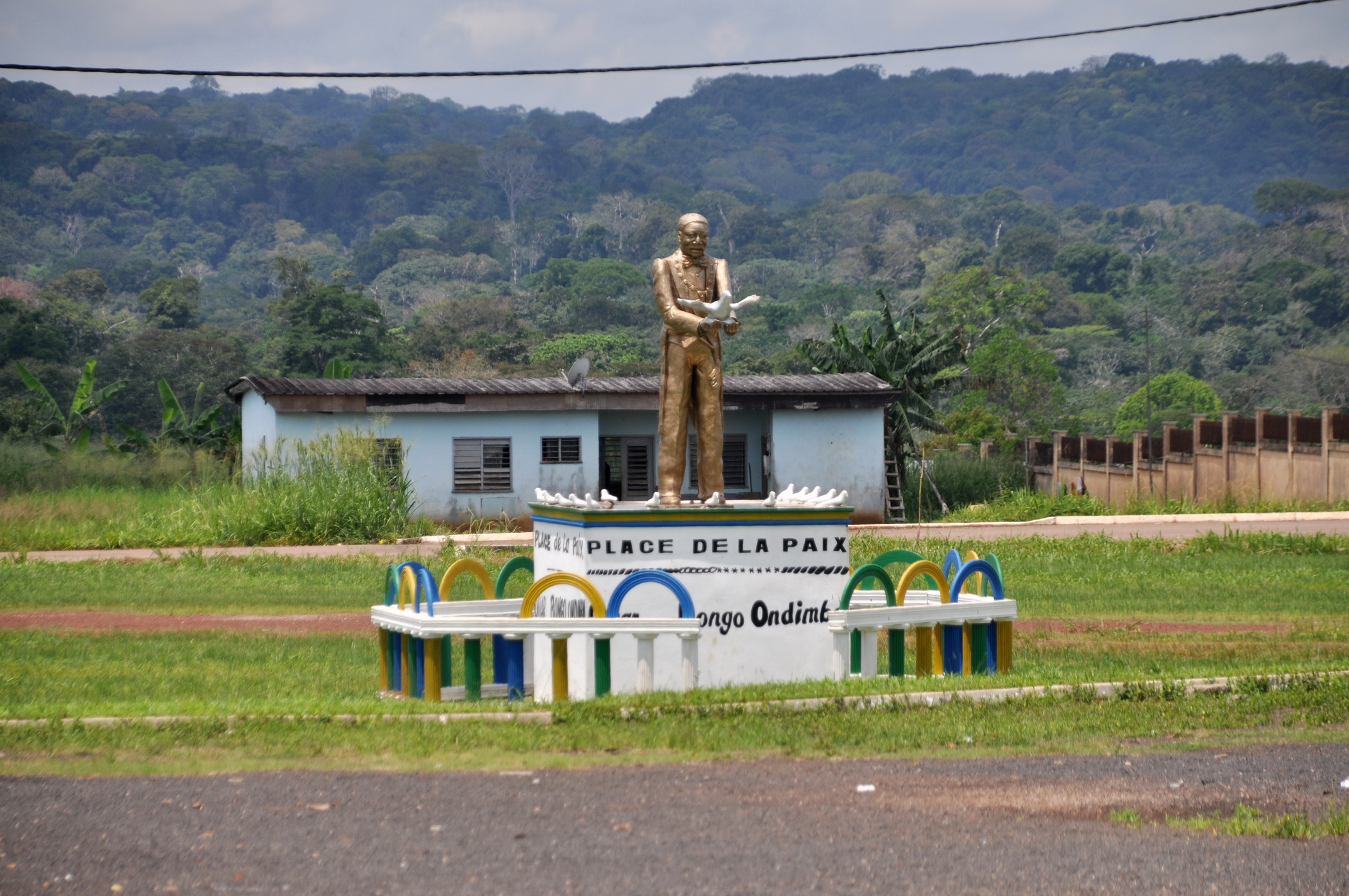
Past Okondja, the road became just two ruts among the palms. I began to doubt I was on the right track. Time had grown very short. I stopped at a construction site and asked the way. They said I was right but should stay with them, as we were already in the path of totality. The workers were from Europe, including a Bosnian. He was easy to talk to. His English was exactly like mine.
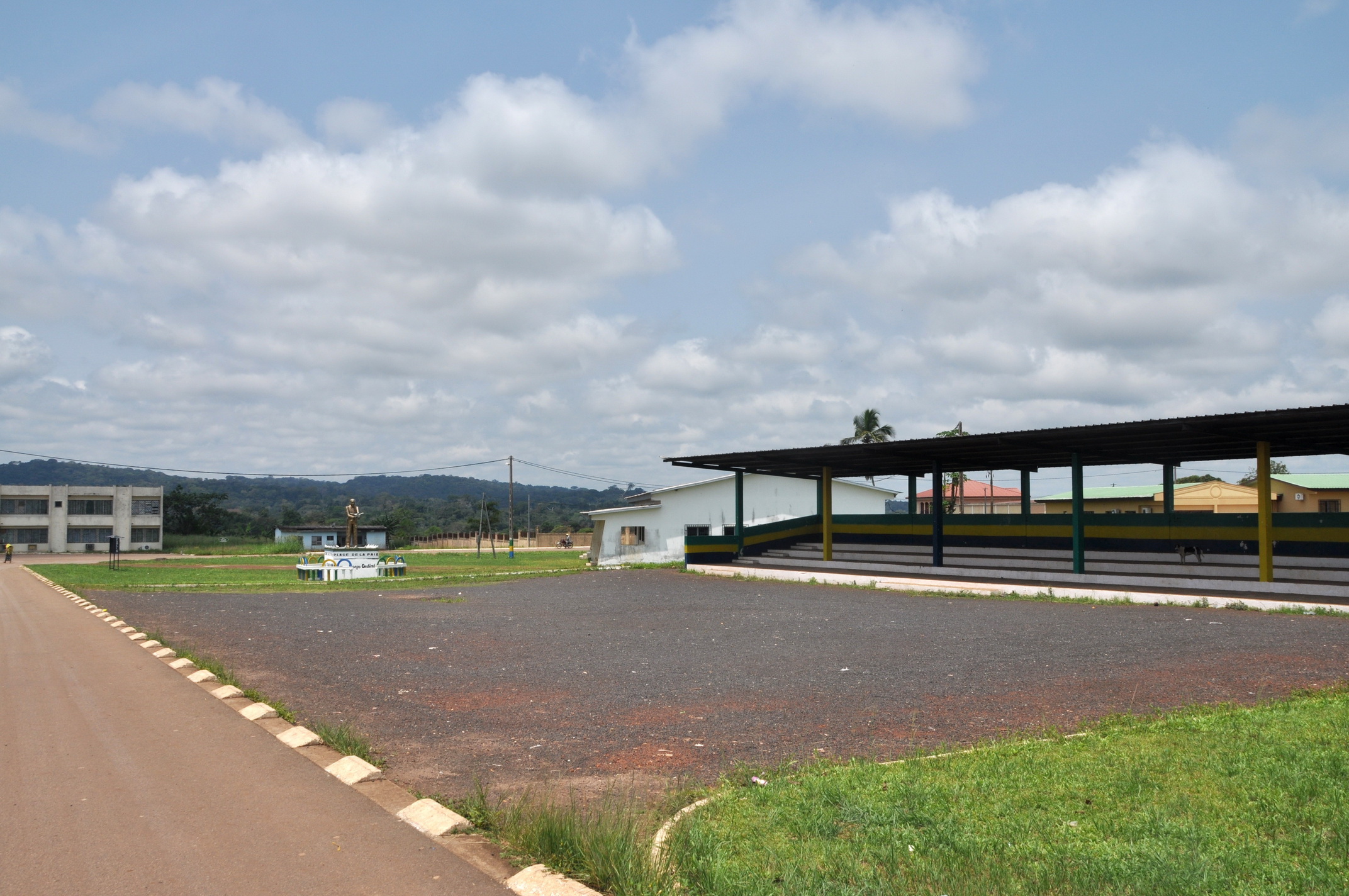
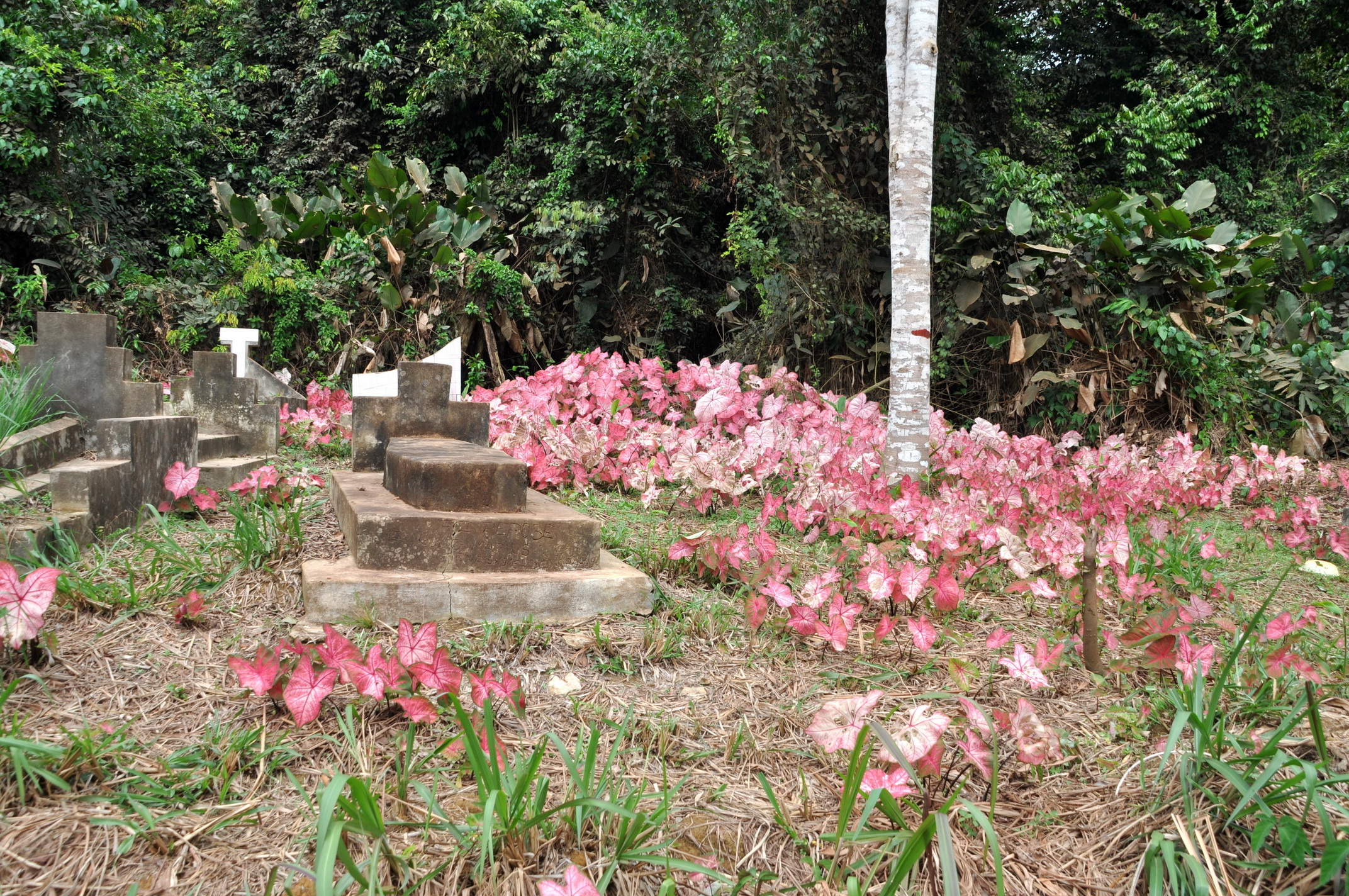
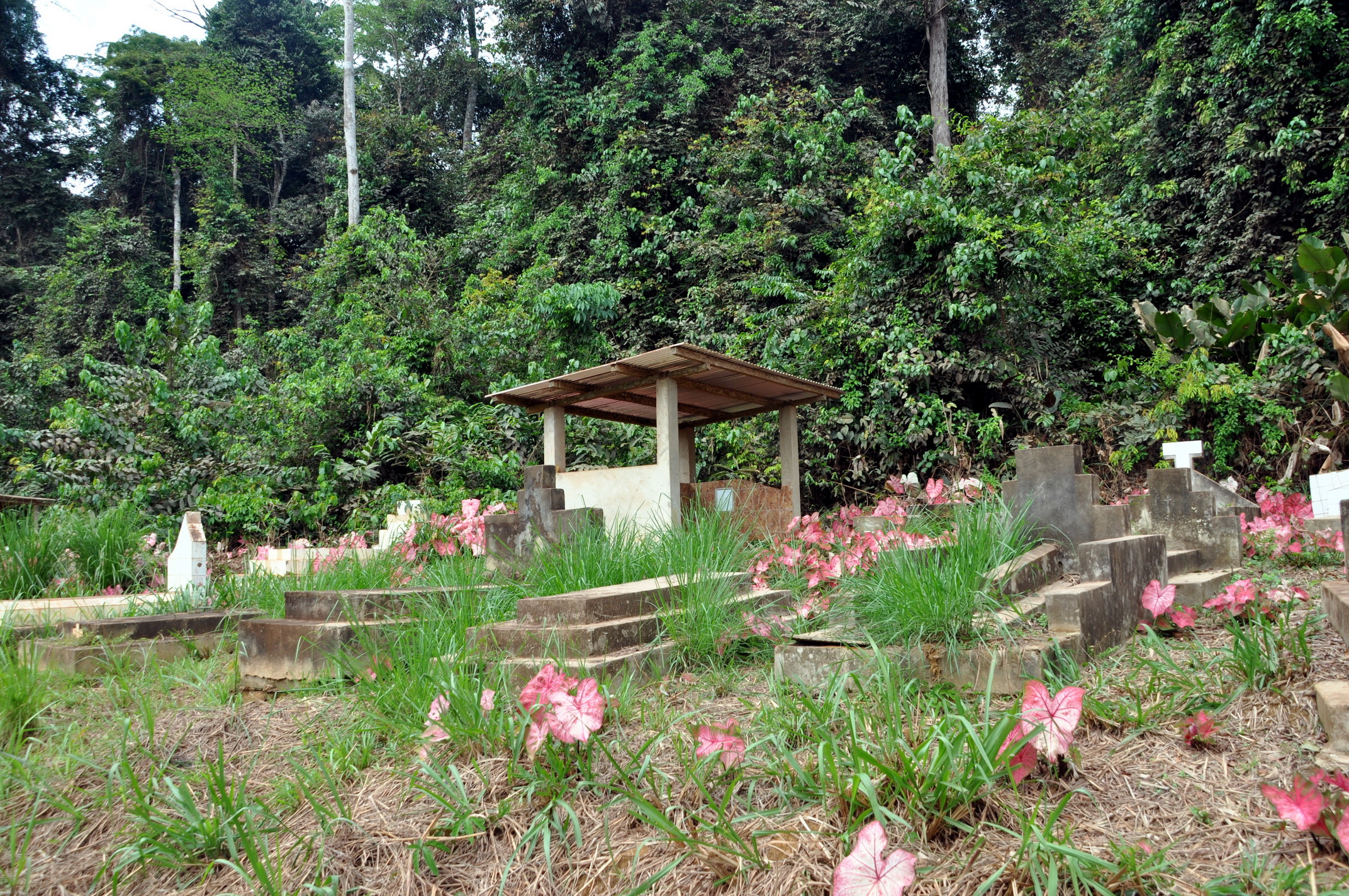
Company would have been nice, but I wanted the centre line. There was still an hour’s driving and two hours until totality. The sandy road ran up and down hills and was easy enough. The trouble was that the sun couldn’t break through the low cloud left from yesterday’s storm. By the time I reached Ndjounou, the village nearest the centre of the path, the partial phase had already begun: the Moon was beginning to cover the edge of the Sun. At the entrance to the village the police stopped me, at just the wrong moment. Gabon had quite a few of these posts, and they looked rather like traffic-police posts in Russia. For the most part the police ignored foreigners, but on the road to Okondja they’d already stopped me once and recorded my plate number, in case I vanished. The Congo border wasn’t far away; all the stories I’d heard about fighting, hunger and atrocities across it came back to me. Anything could happen, I thought, with no one guarding the border.
At Ndjounou they not only stopped me and took down the details but started going through my luggage. They found the telescope and were quite taken aback.
I’d expected not to be alone. This was the best place to see the eclipse: surely they’d seen dozens of telescopes today? But they looked completely at a loss. They didn’t even understand my questions about where the astronomers, the television people or the village officials were gathering.
In the end I set up the telescope and showed them the Sun, which finally broke through the clouds as if on cue. They decided to let me go, convinced that I was just another European eccentric.
I decided to move, packed up the telescope and went to look for the eclipse watchers.
I drove through the village and, lo and behold, there was none of the usual team of Europeans and Japanese with telescopes. Not one. The lazy eclipse chasers hadn’t ventured so far; they’d stayed where it was near rather than where you could see. The world was going downhill. This clearly wasn’t Kipling’s time. There I was alone on the front line, the entire white man’s burden on my shoulders.
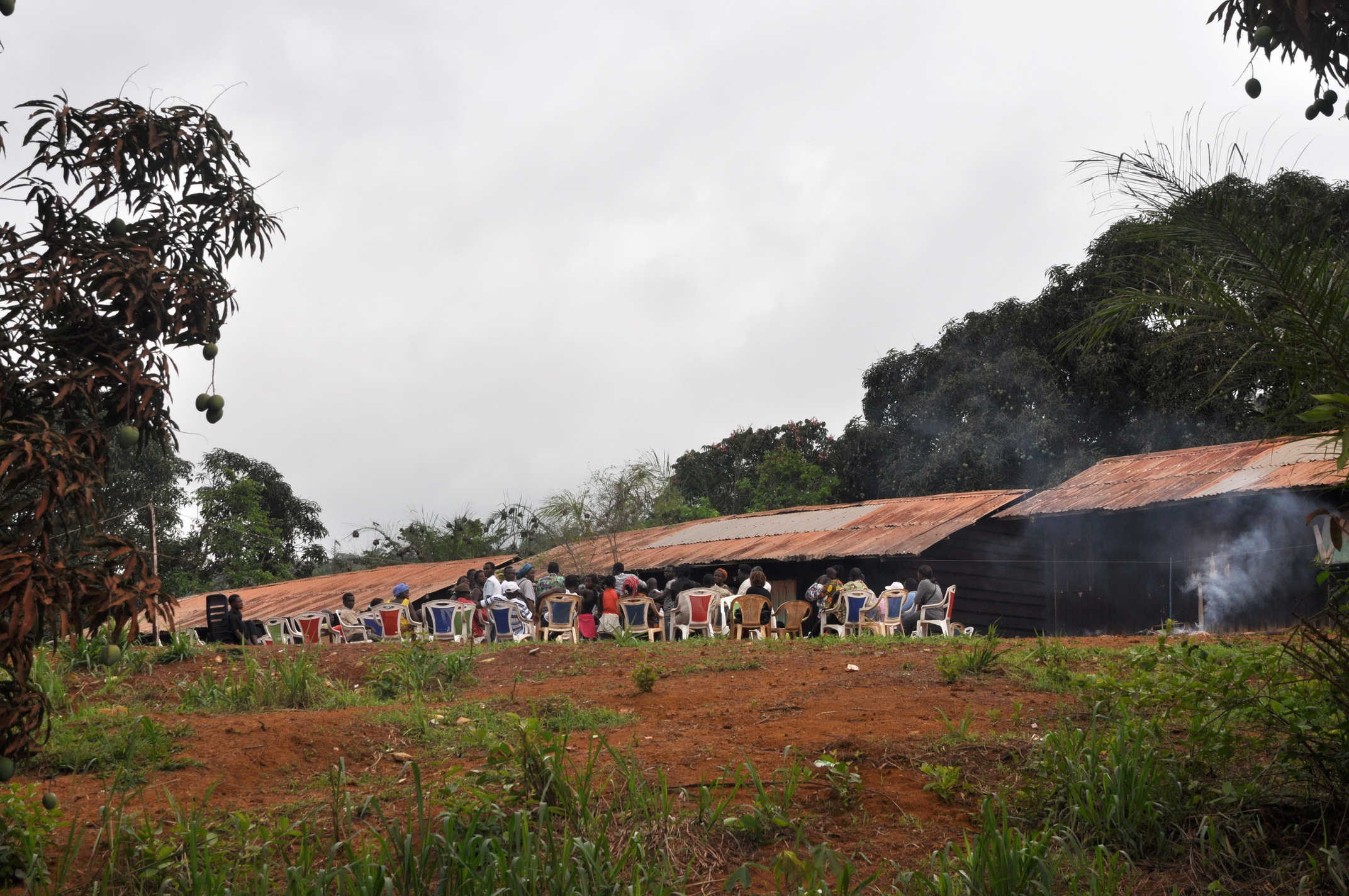
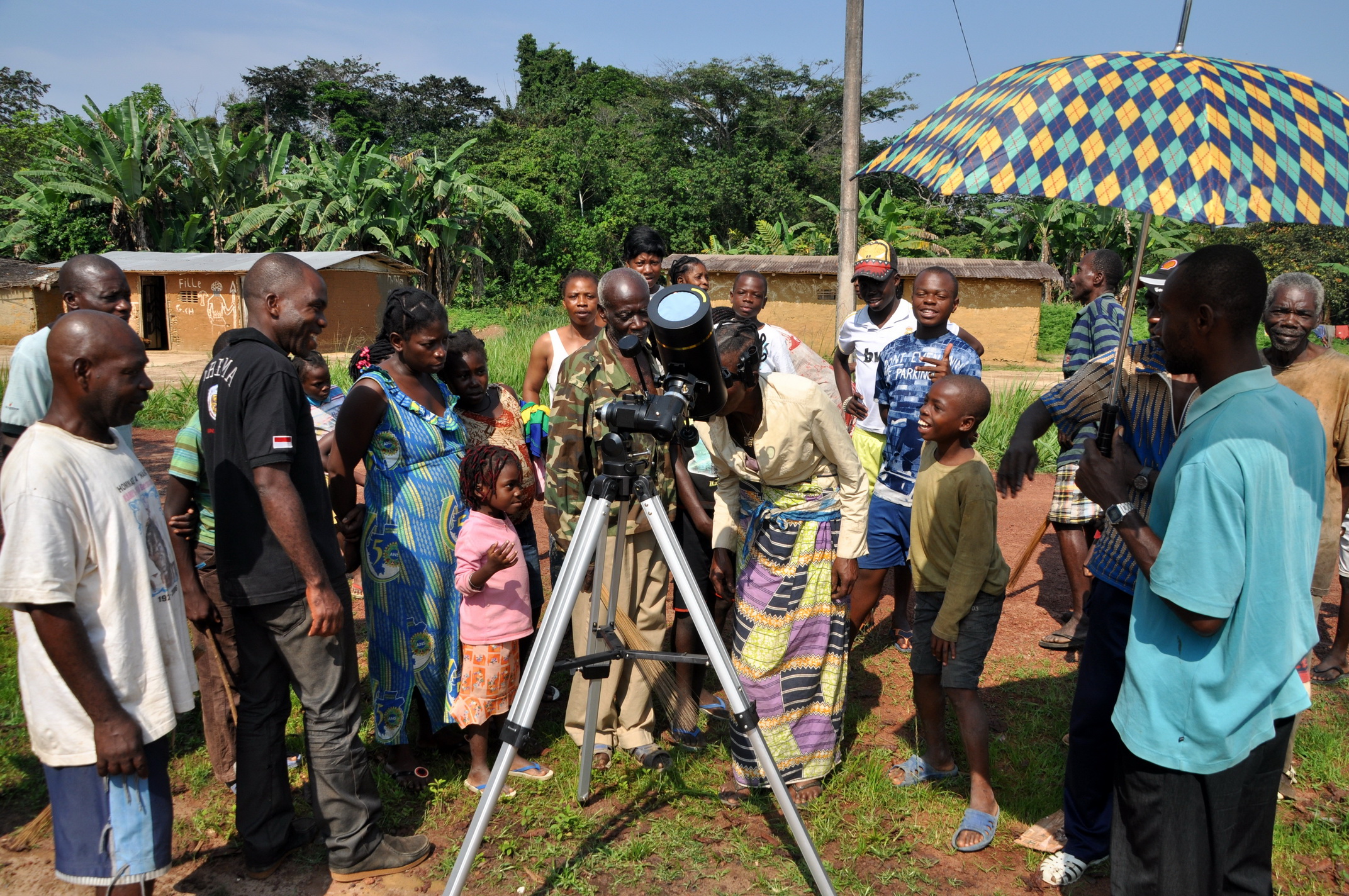
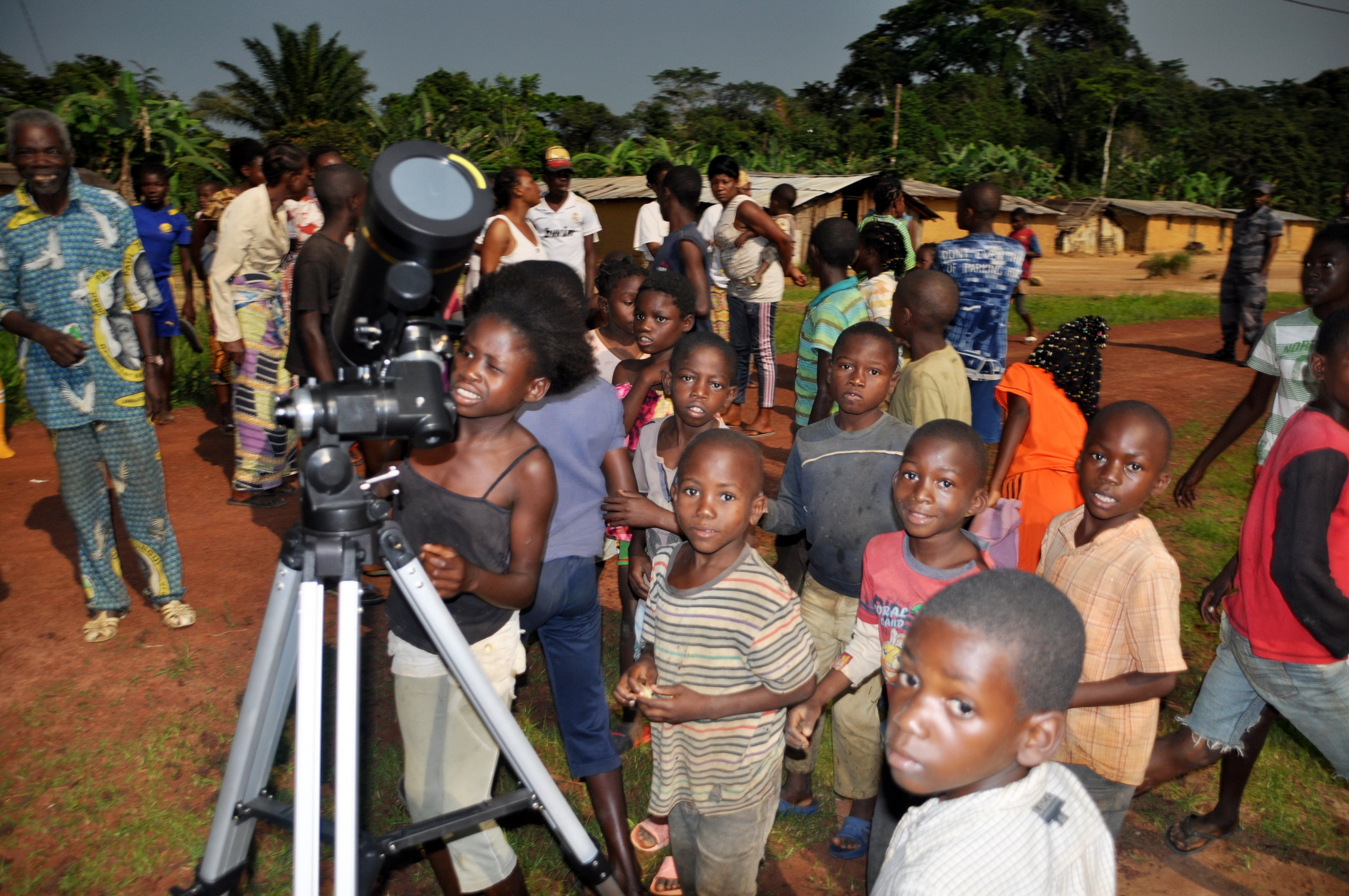
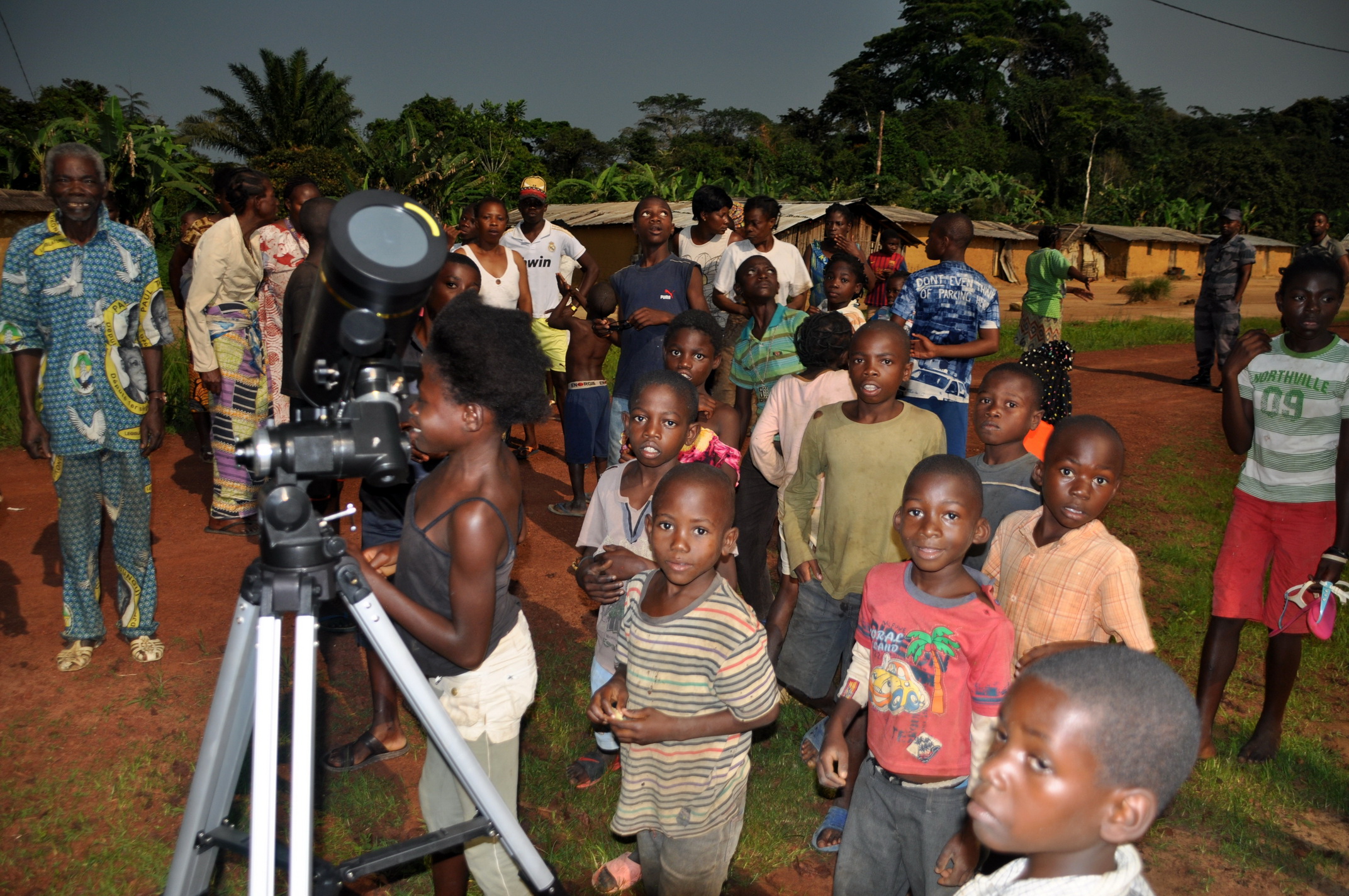
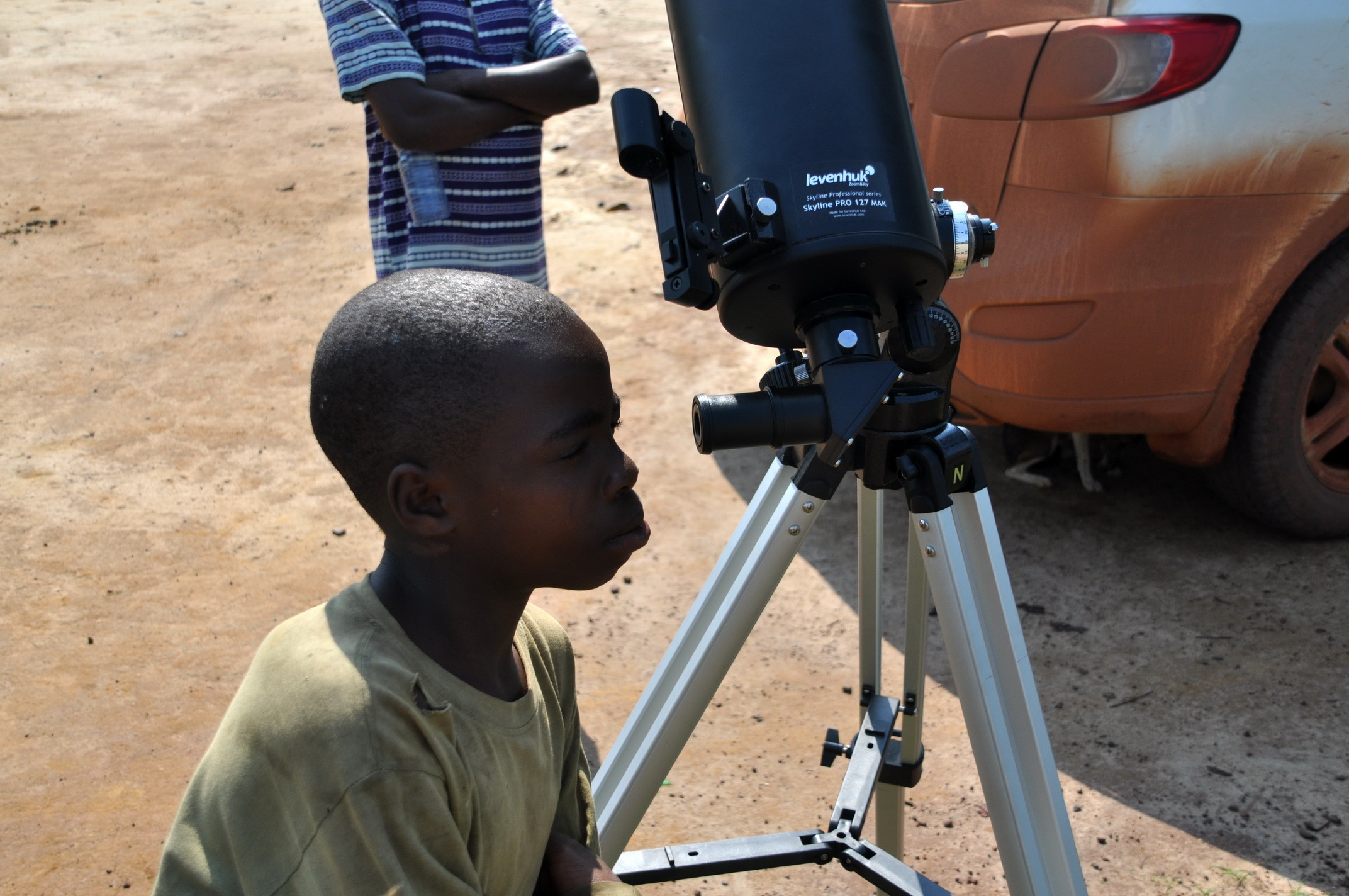
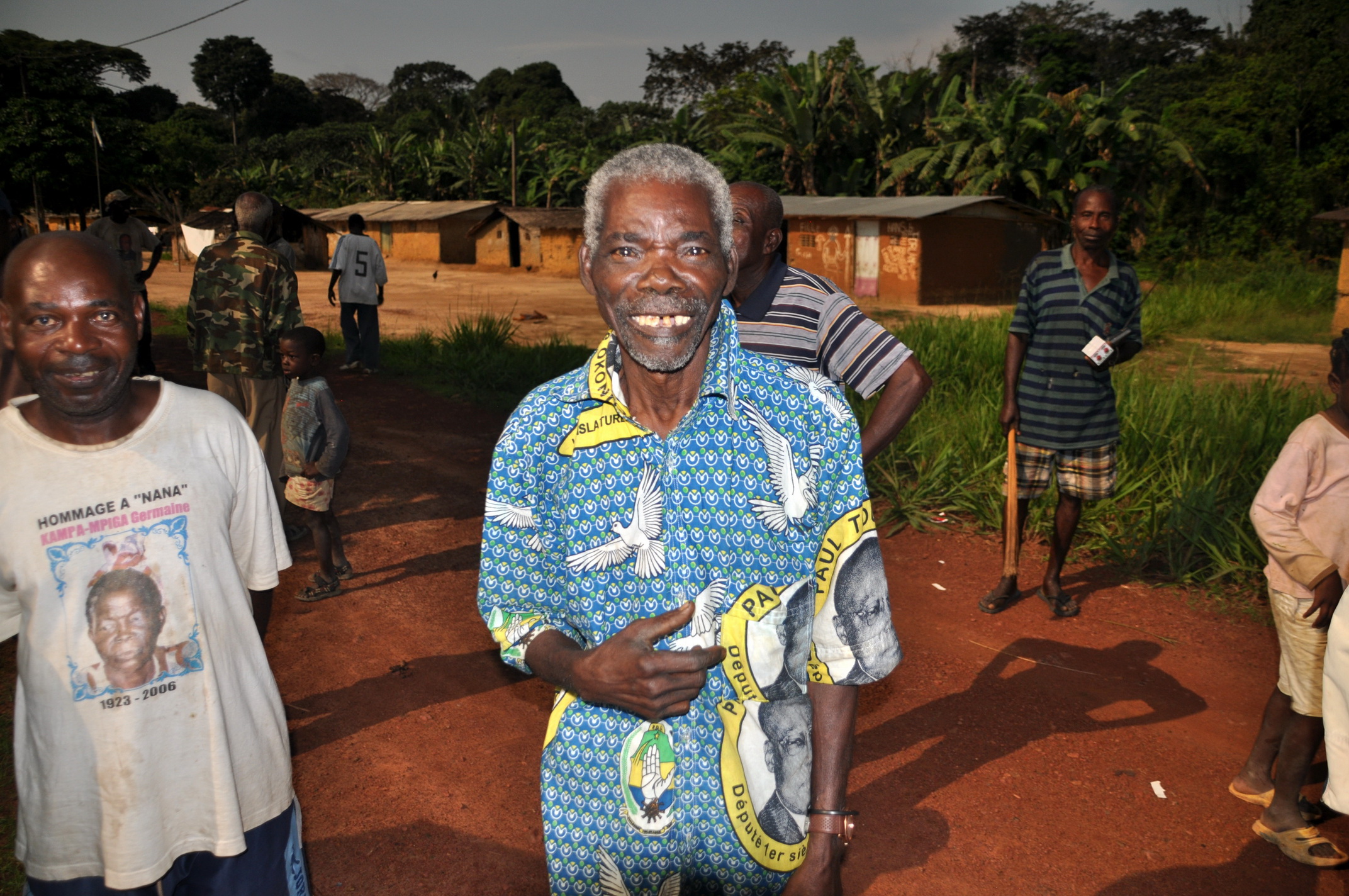
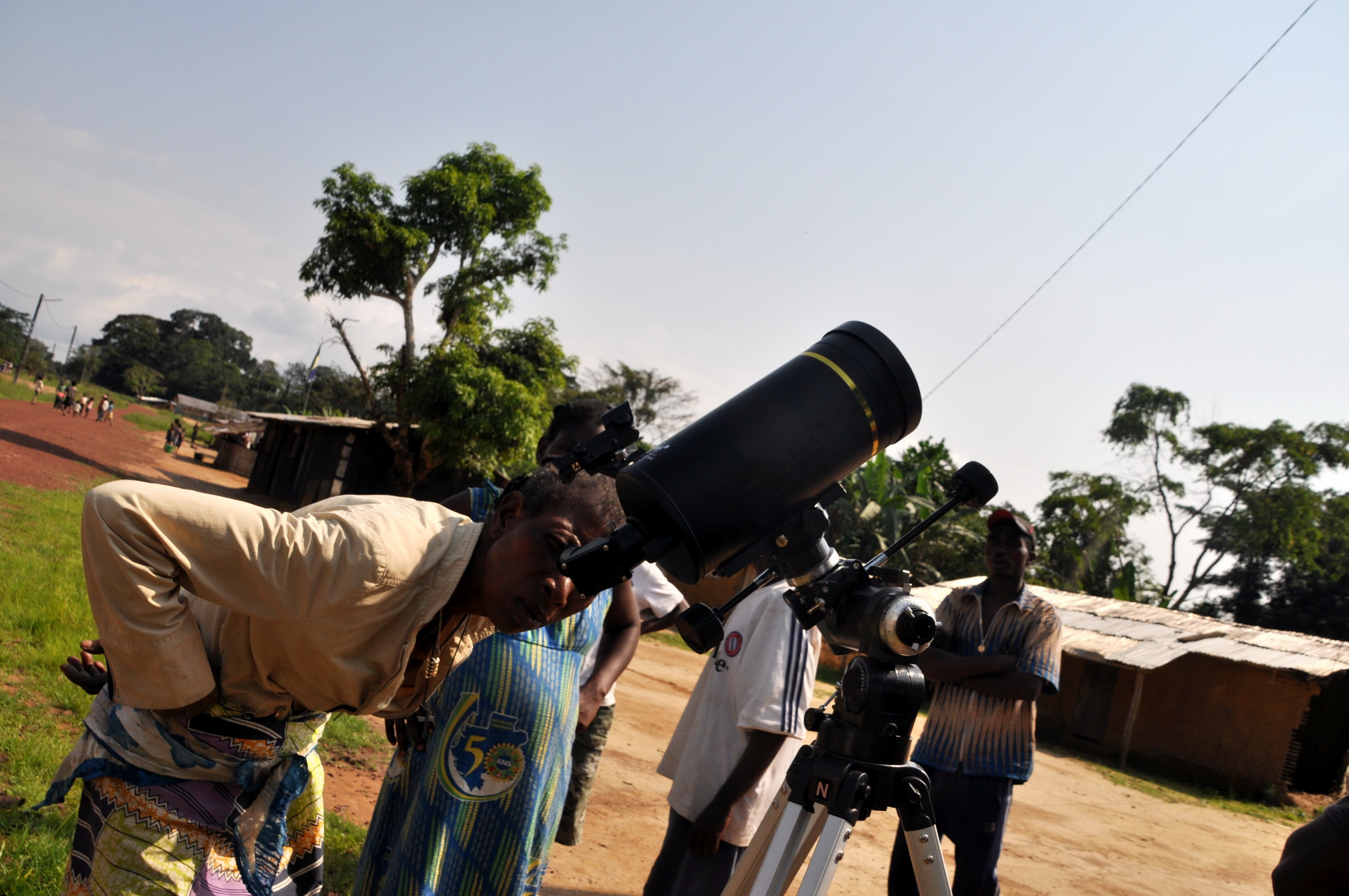
What else could I do? I set up my telescope in the middle of the village (00°10.090′S, 13°44.922′E). A crowd gathered around. People seemed quite decent. They lived poorly, certainly, but with dignity. The whole village lined up around me. An old man came over, the village chief, and shook my hand. One by one I showed everyone how the Moon was passing in front of the Sun, as well as sunspots and mountains on the Moon. I pointed out the crescent shapes the trees were casting on the ground.
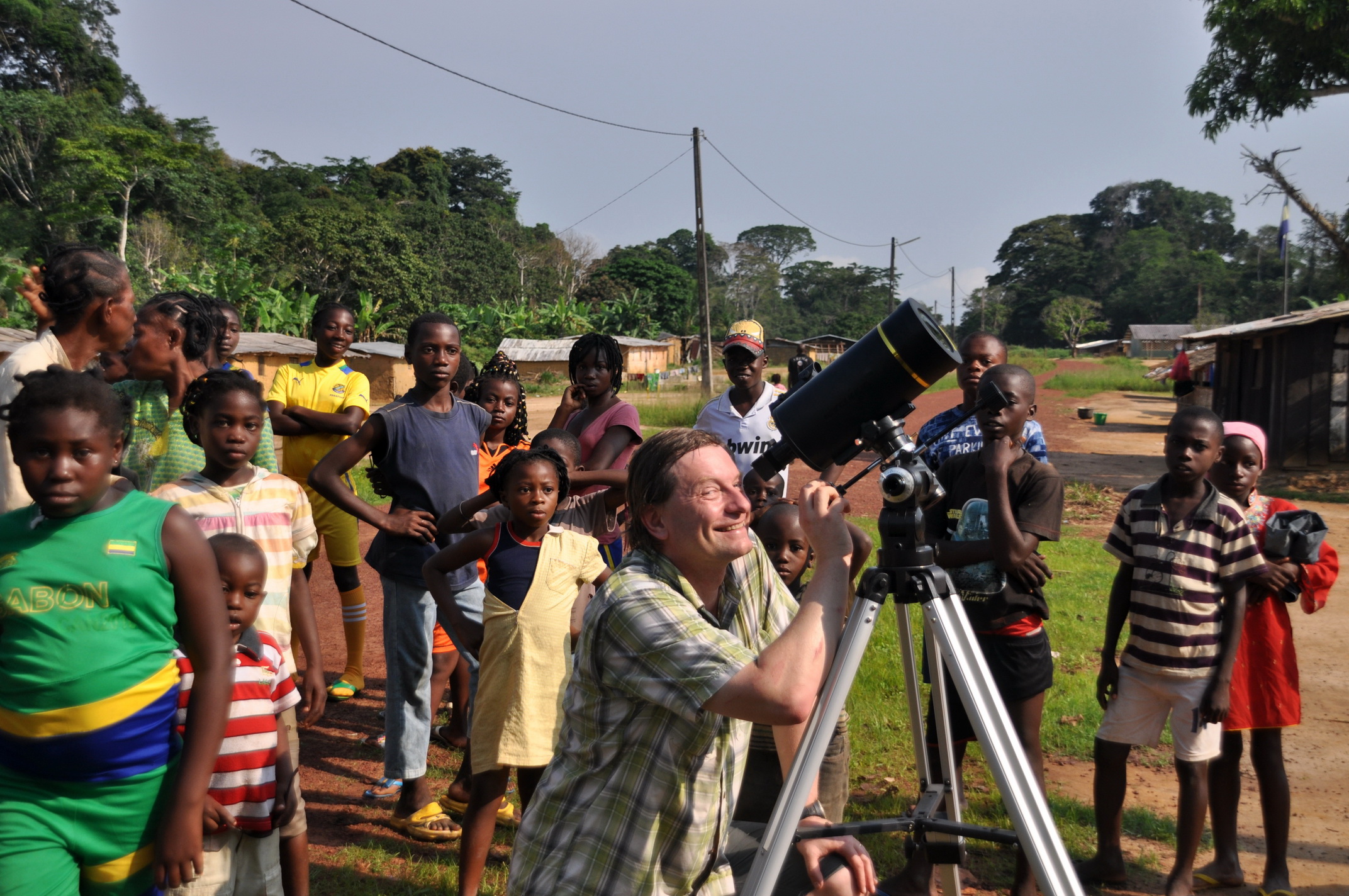
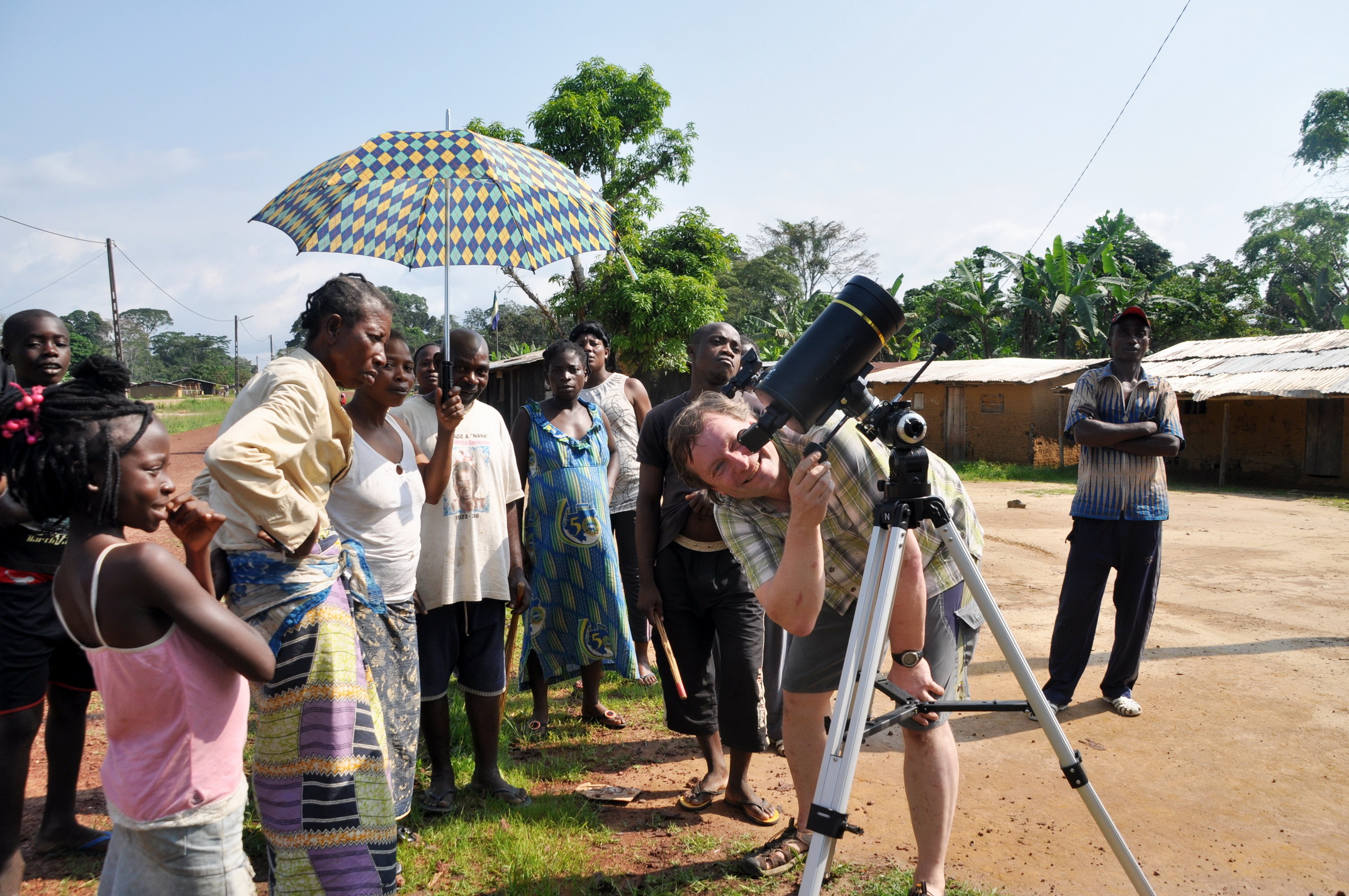
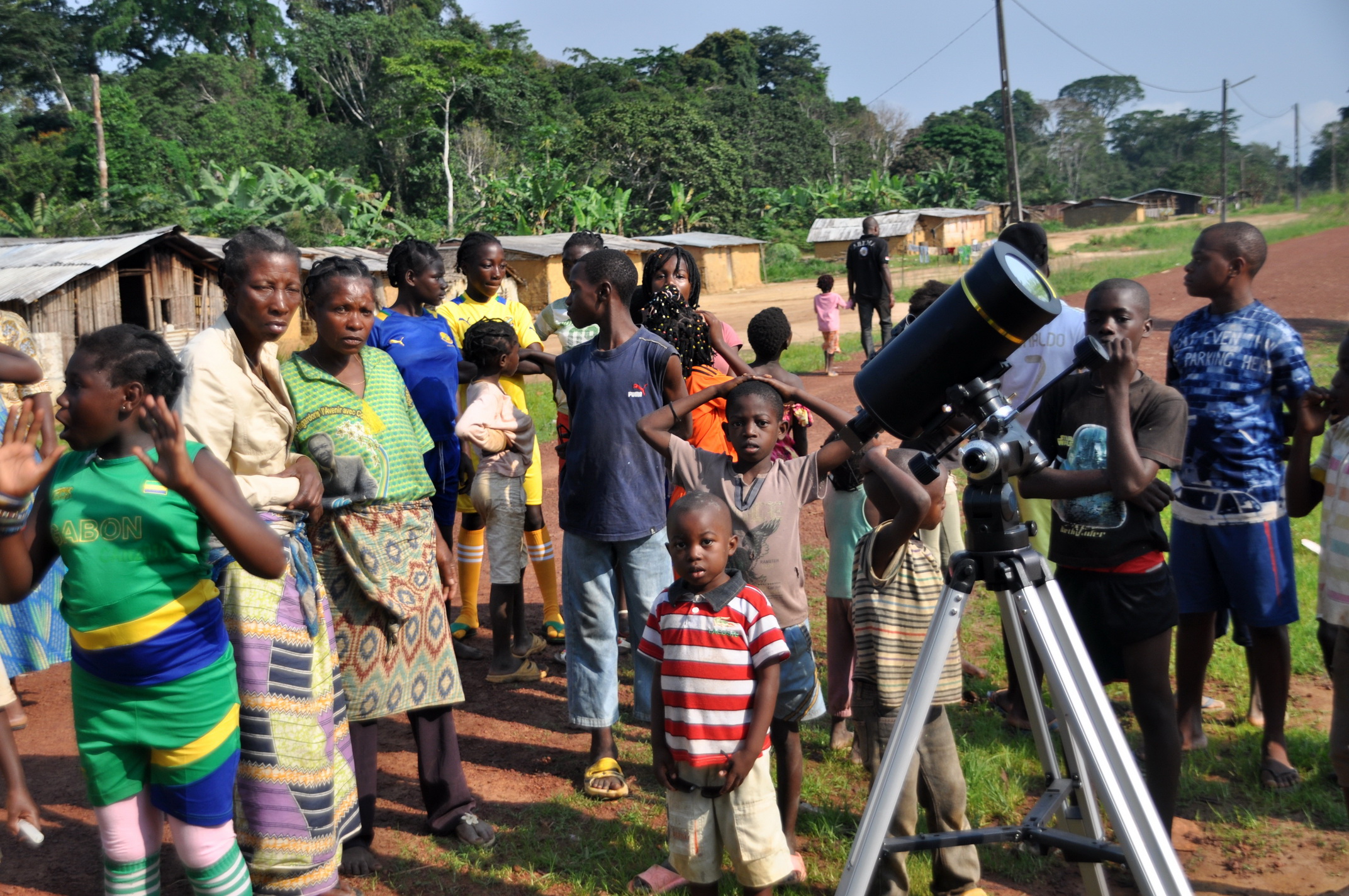
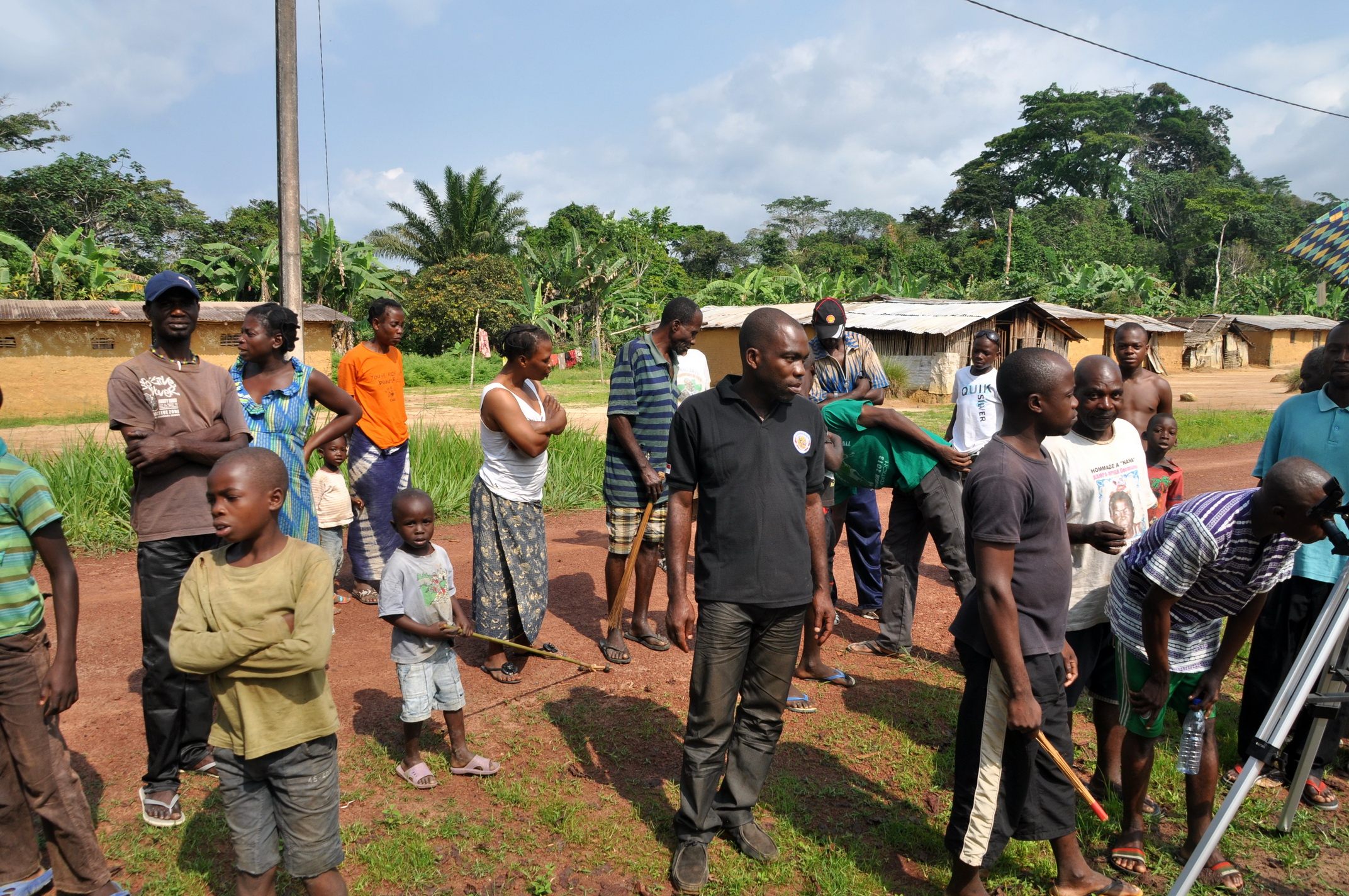
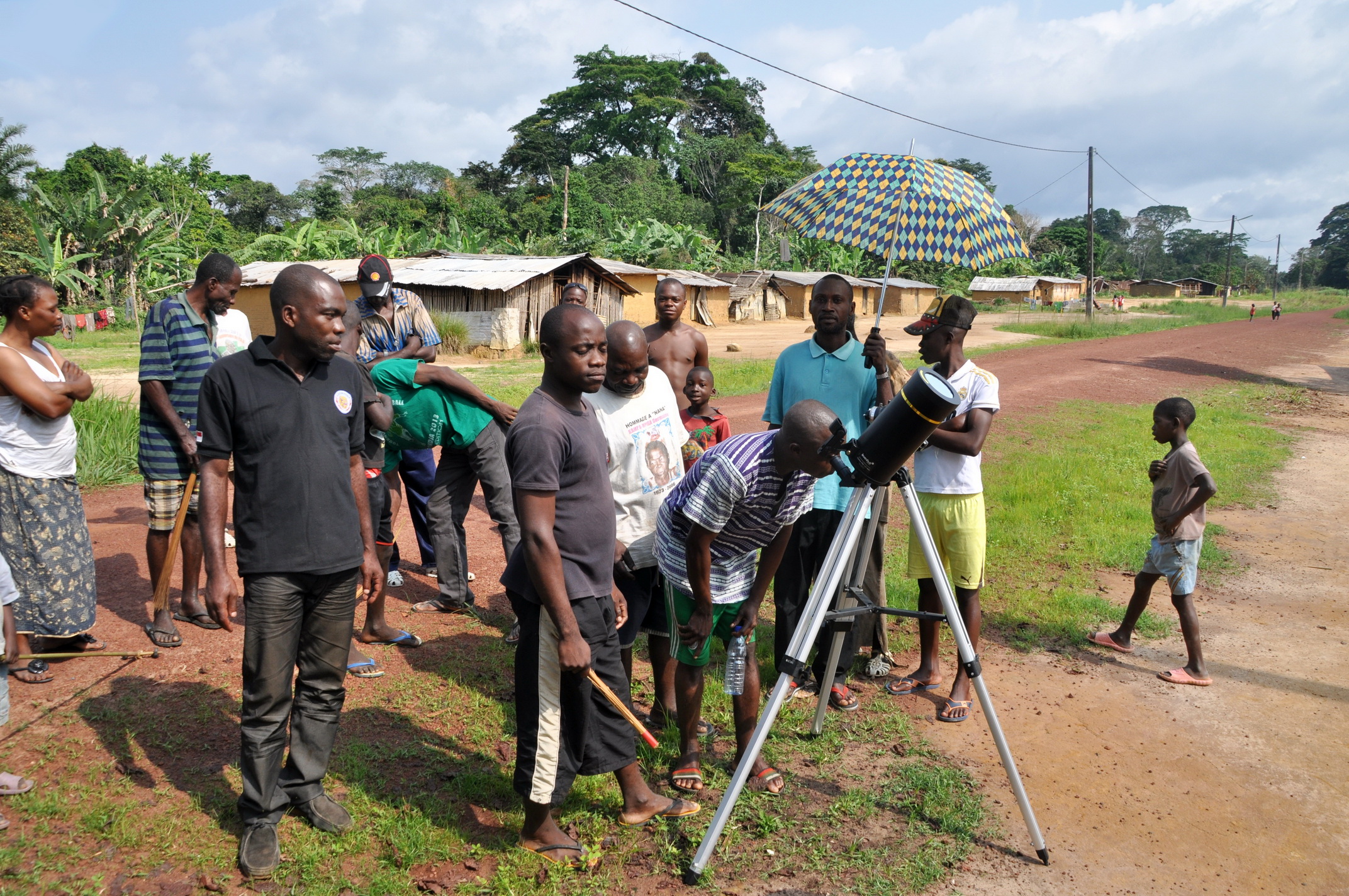
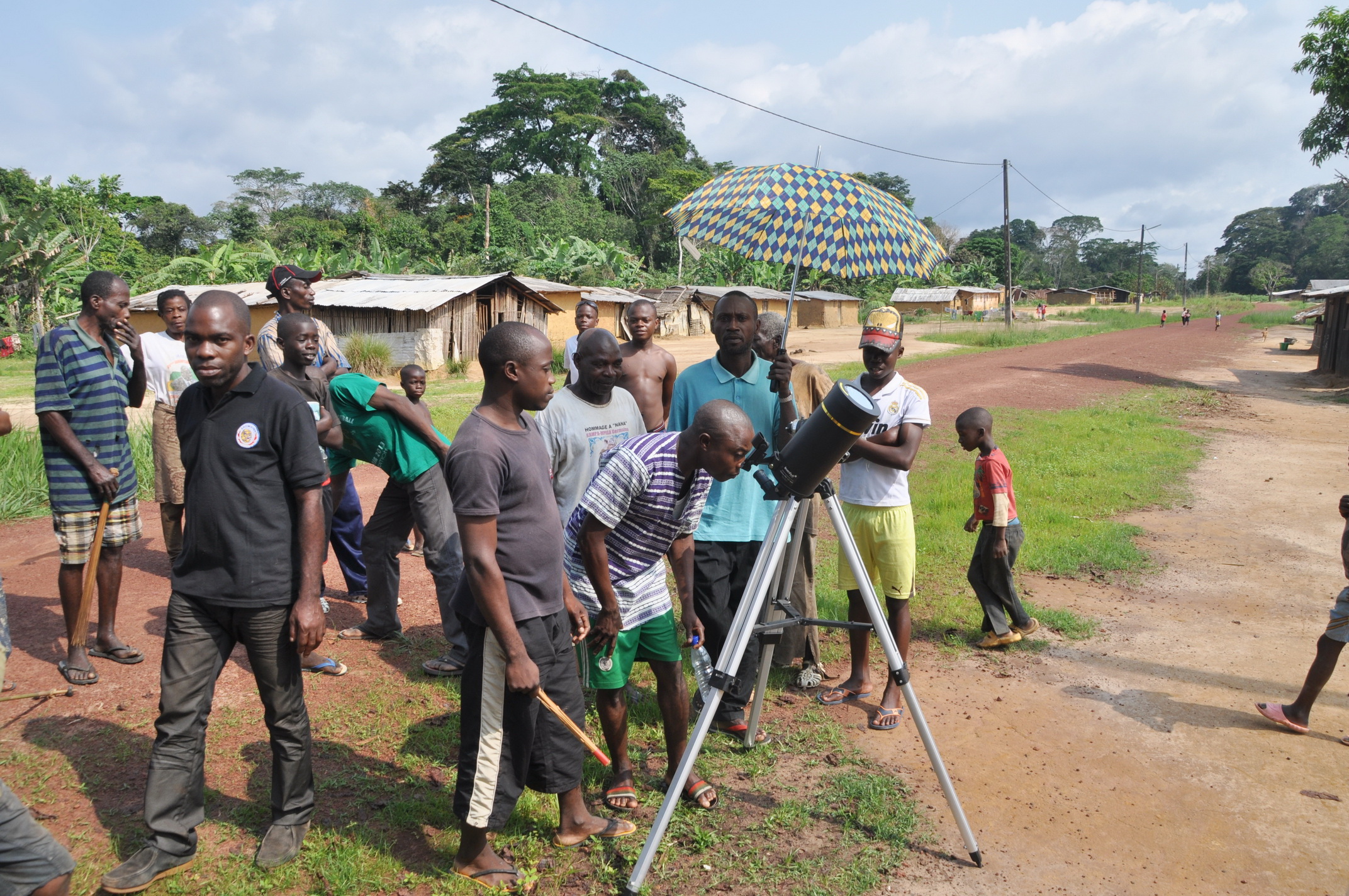
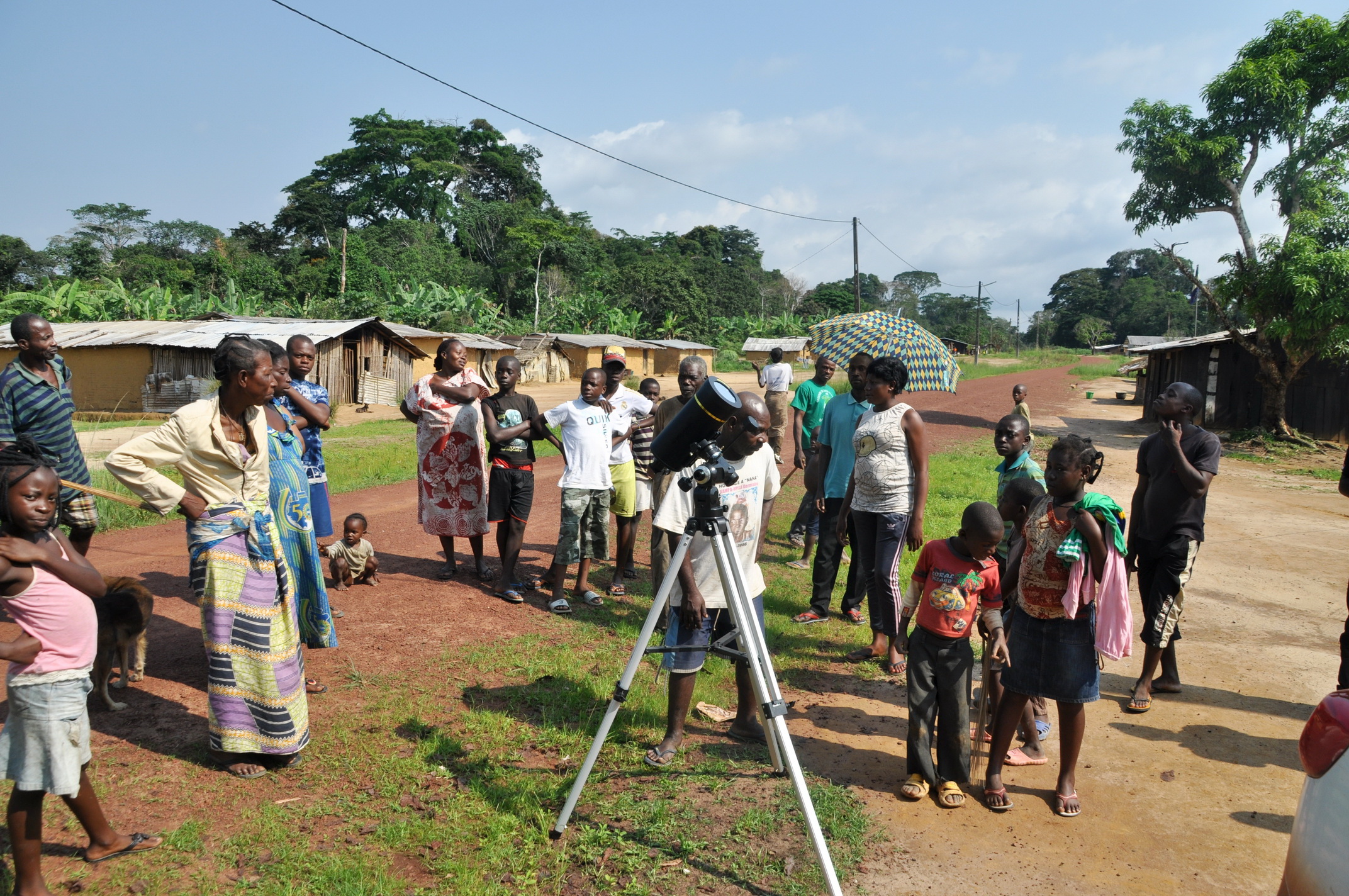
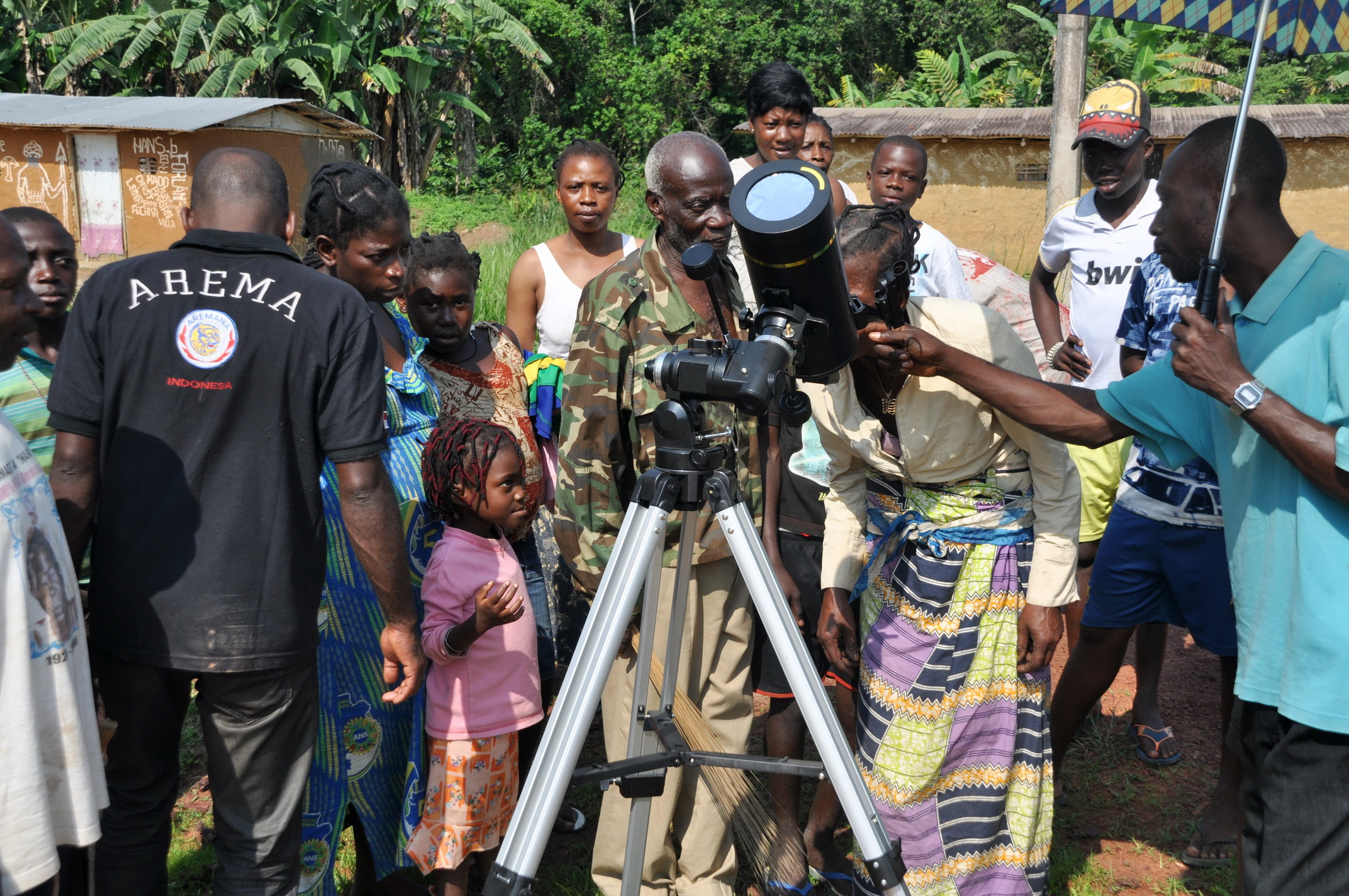
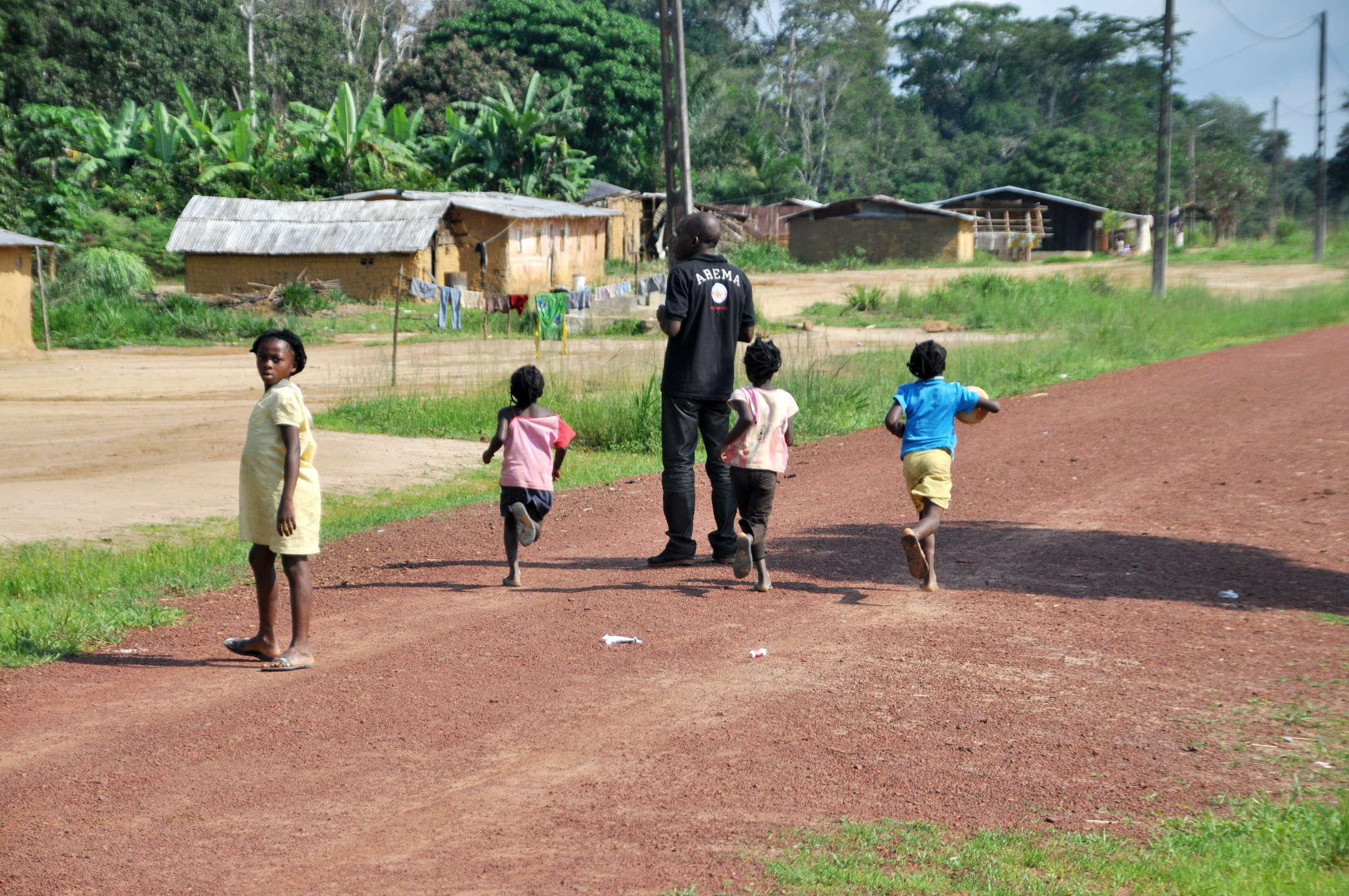
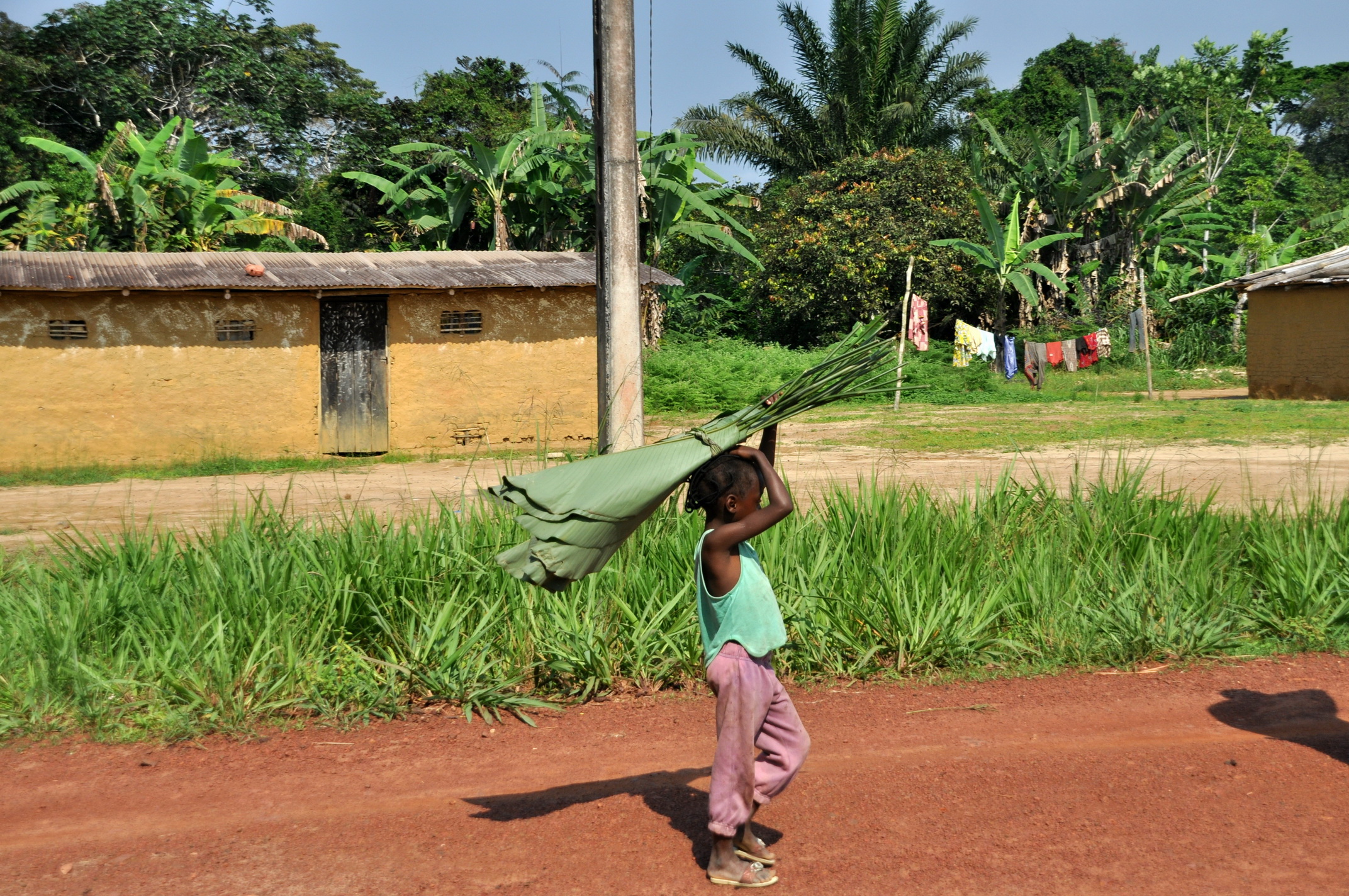
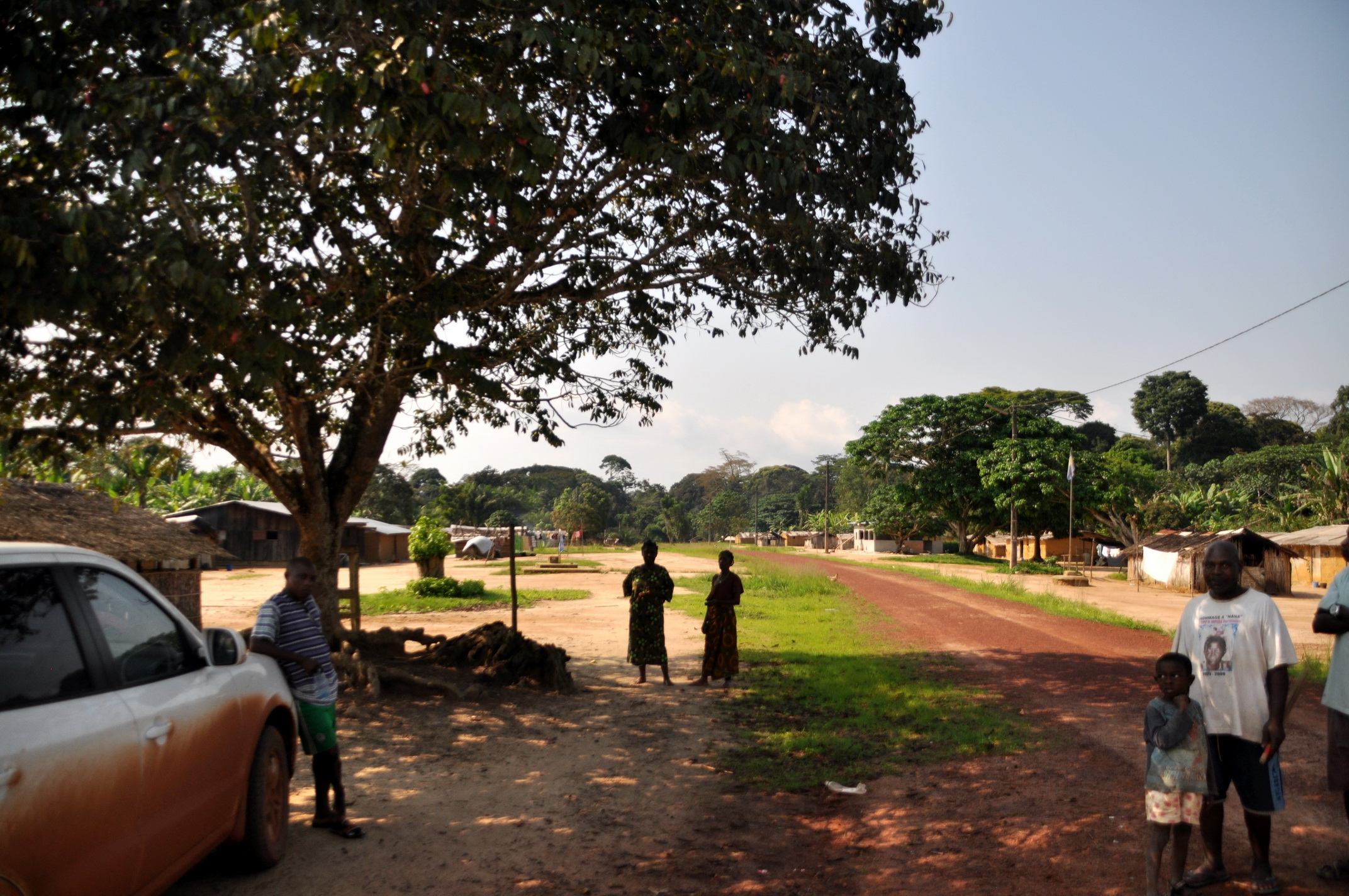
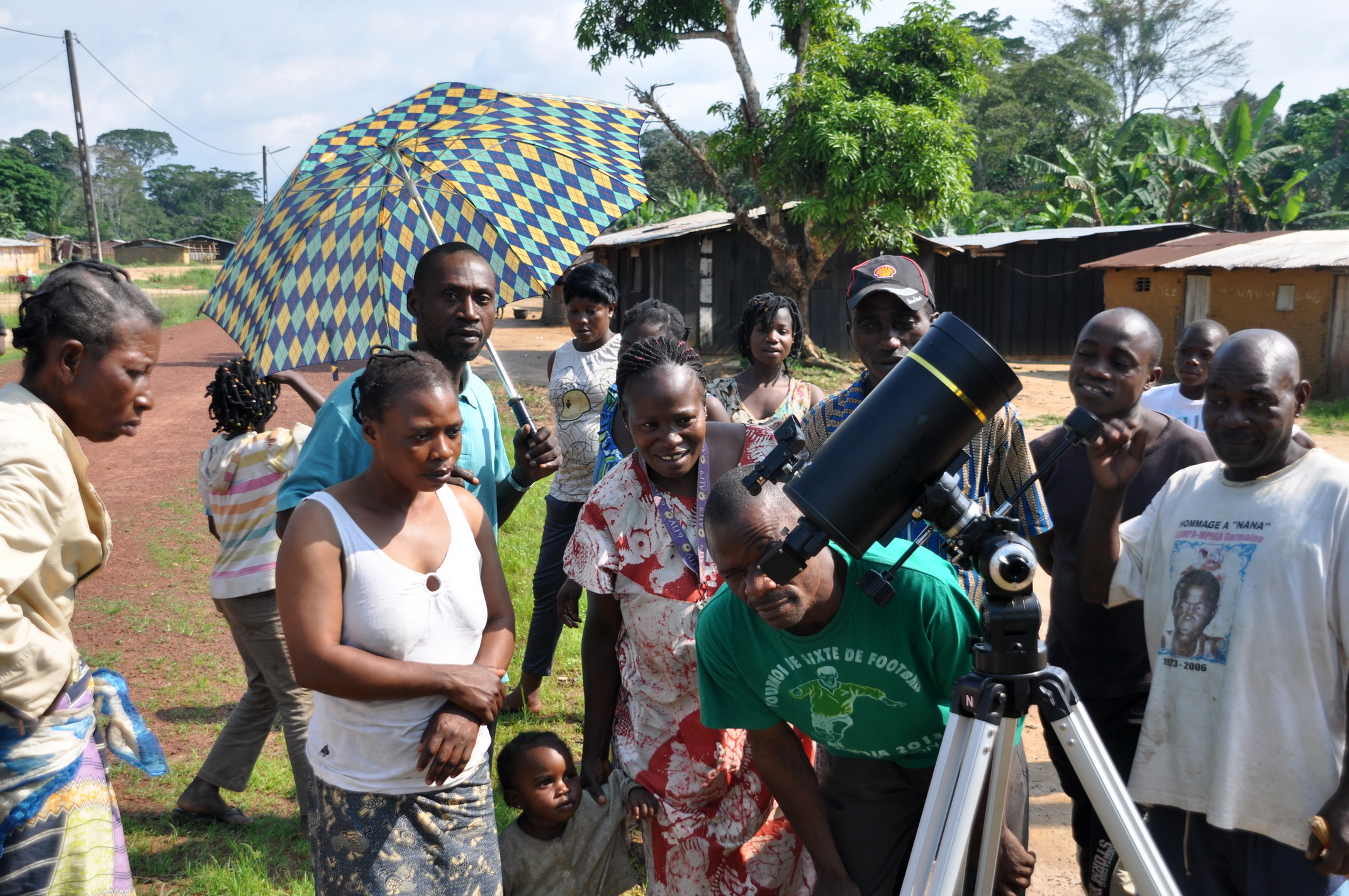
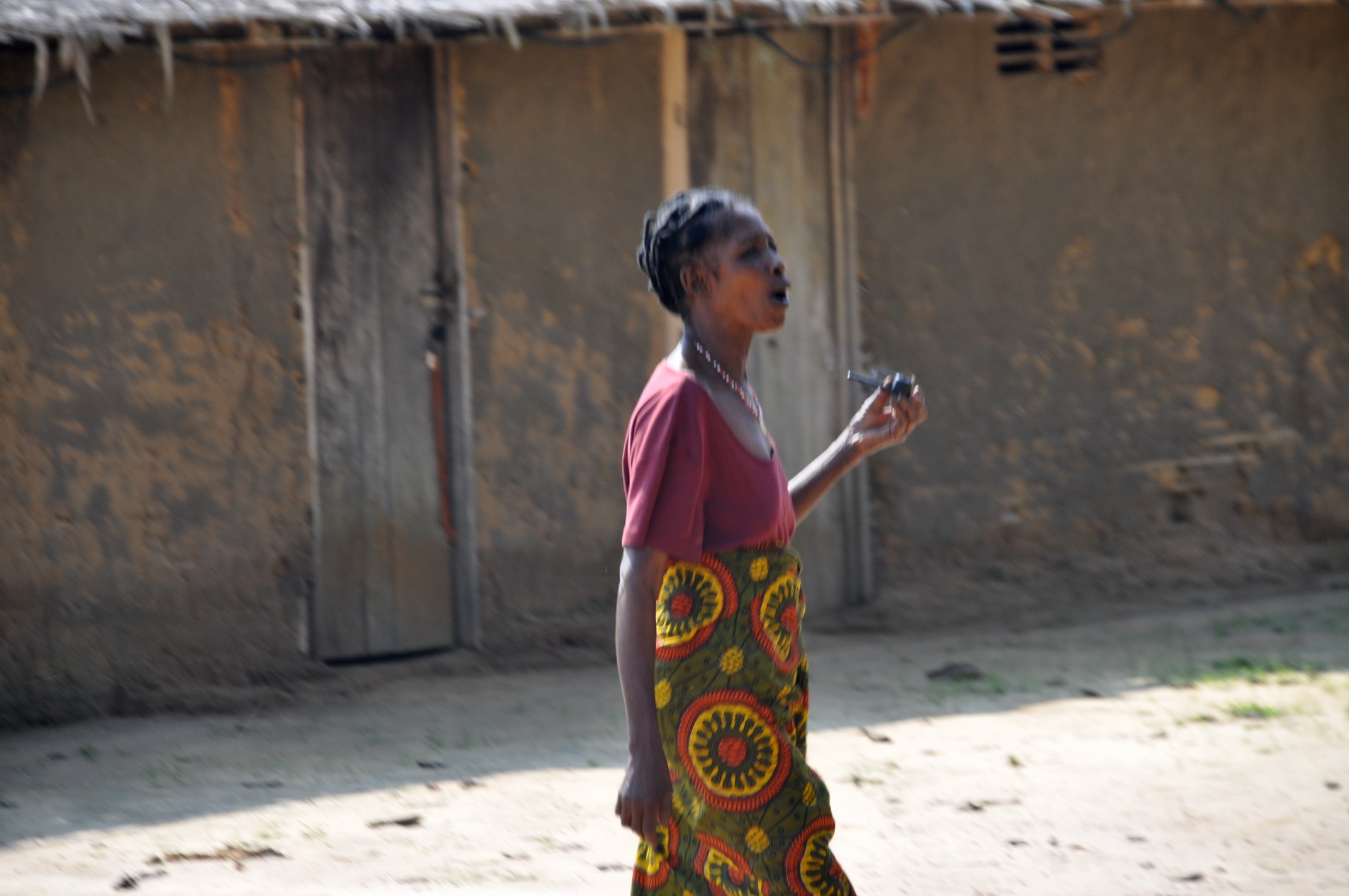
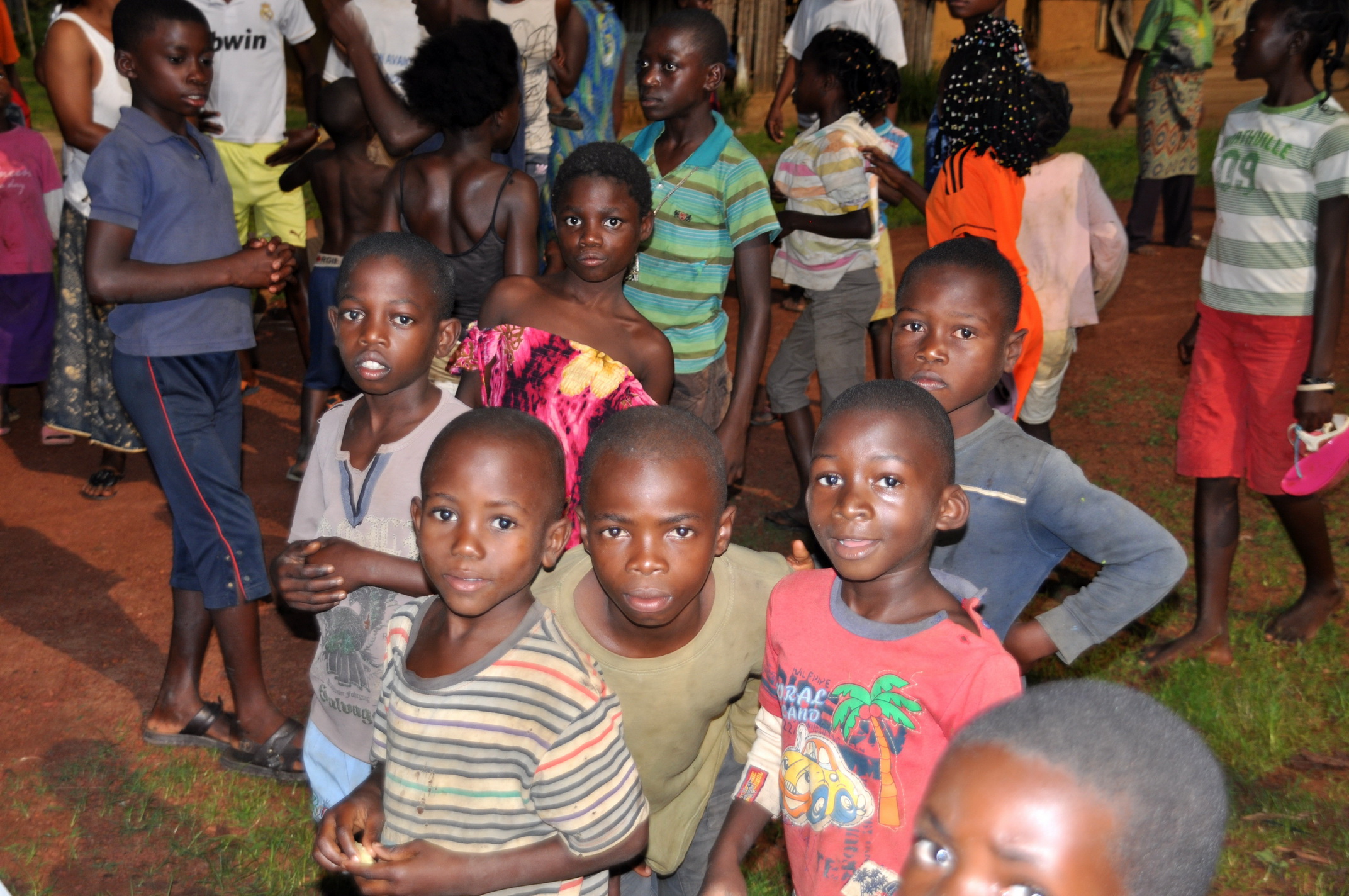
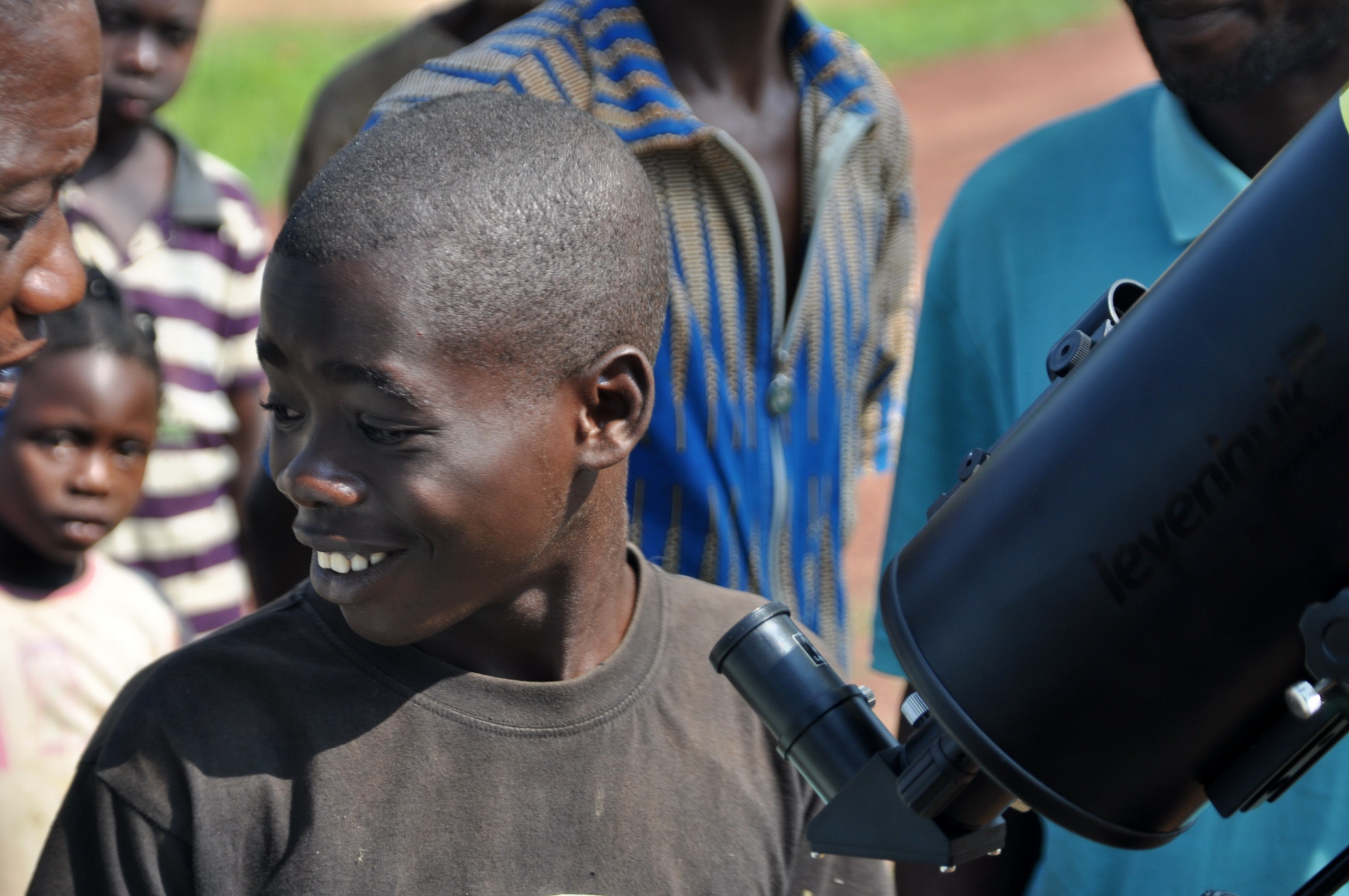
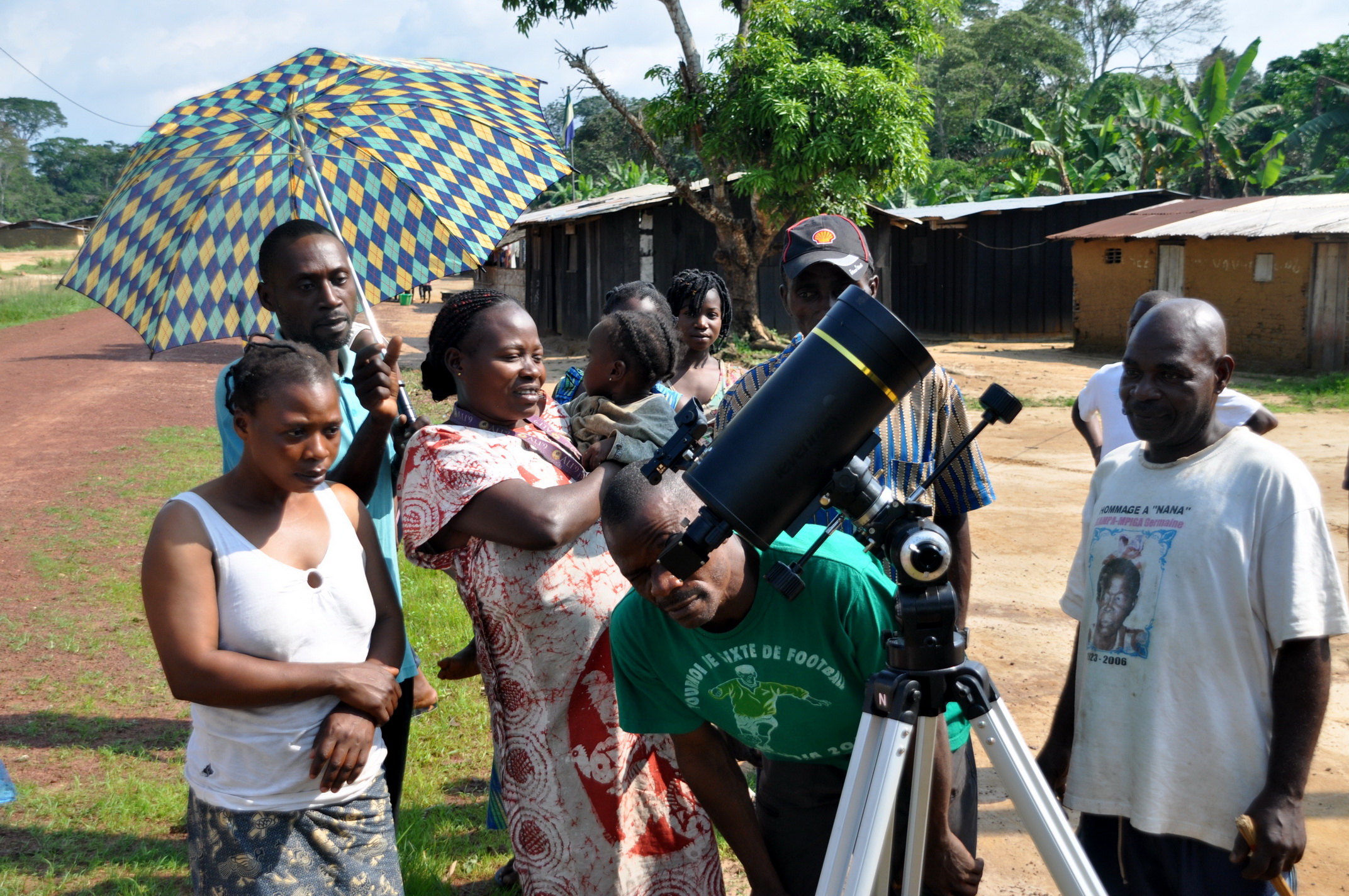
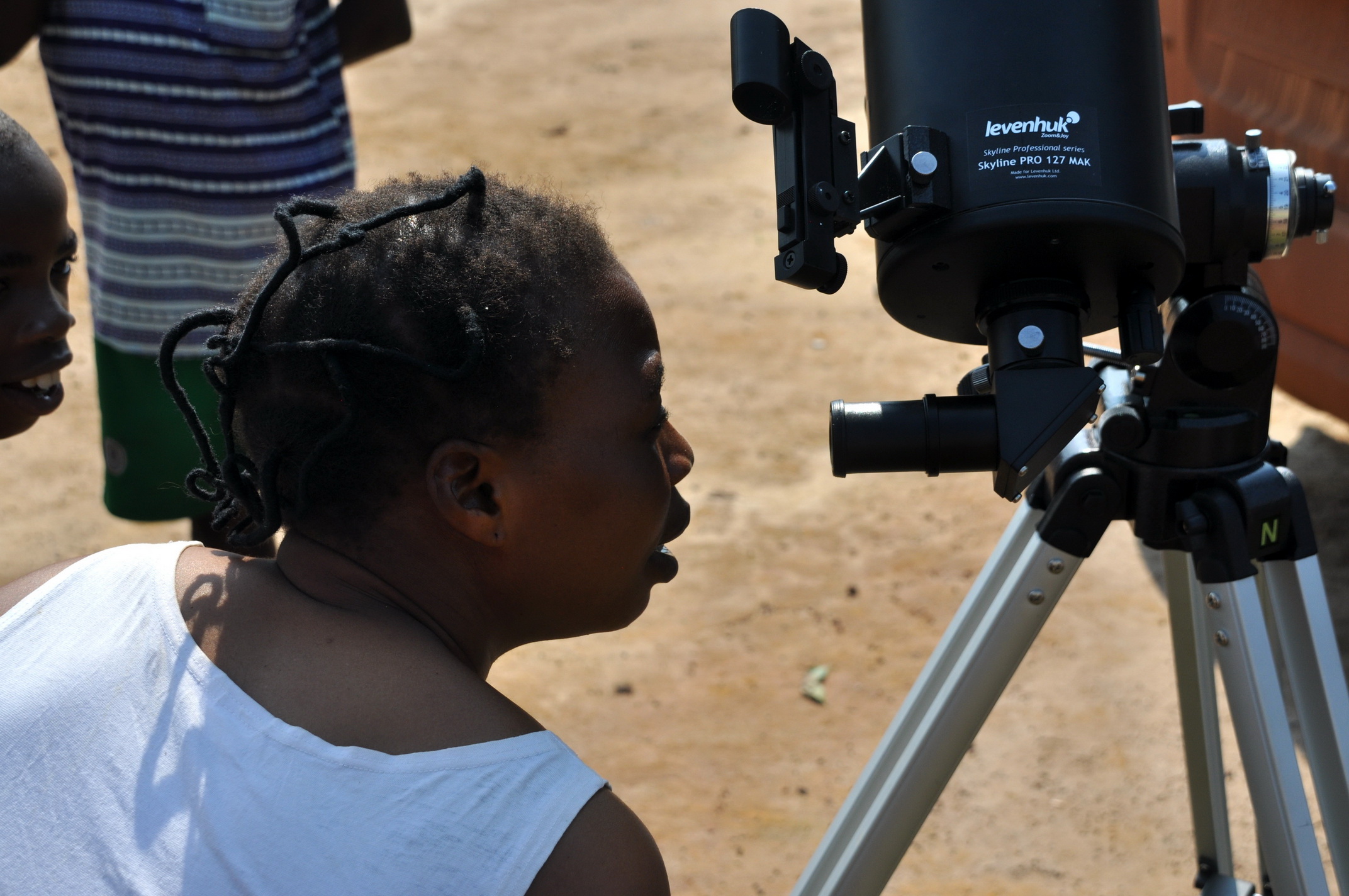
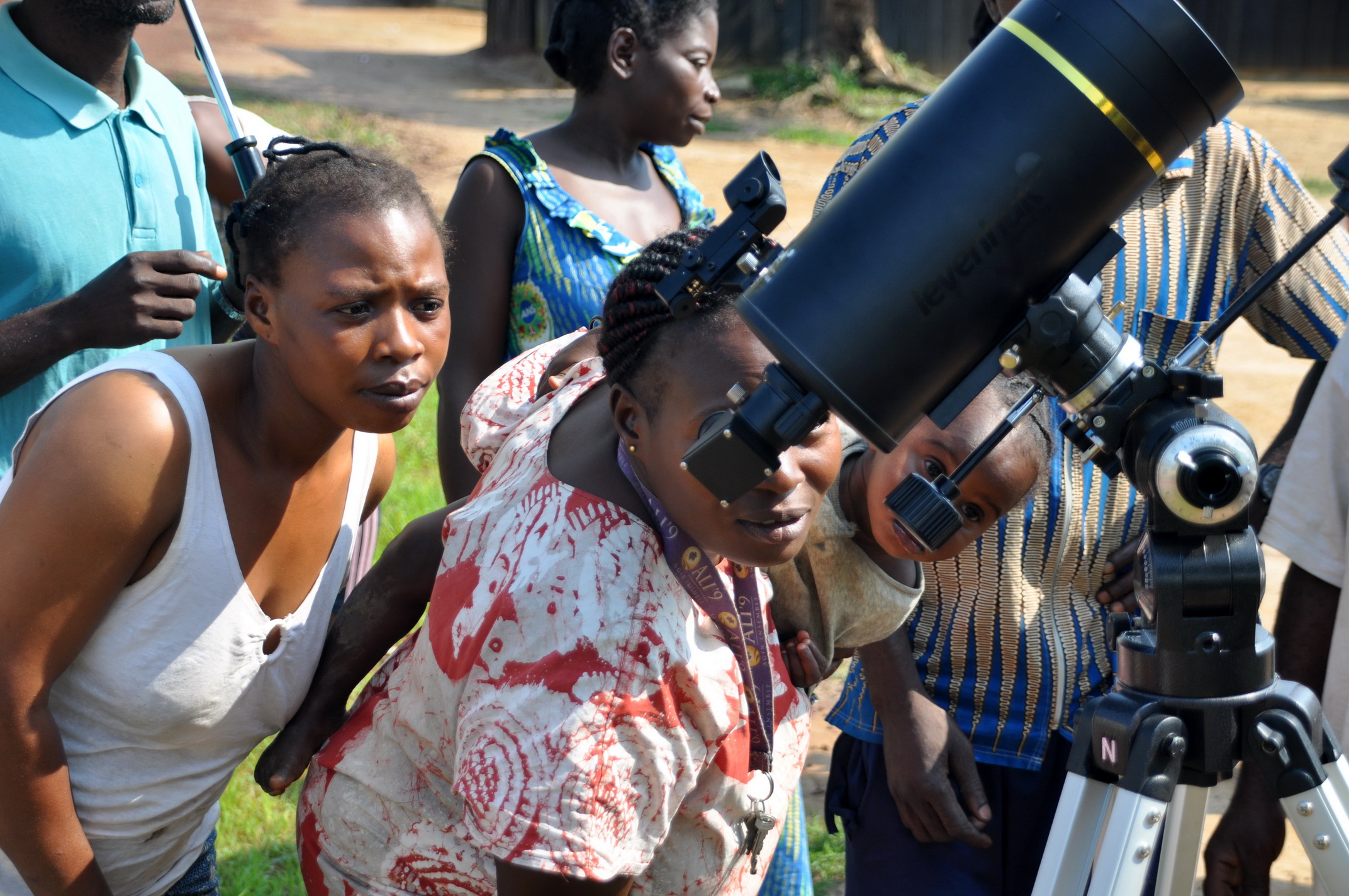
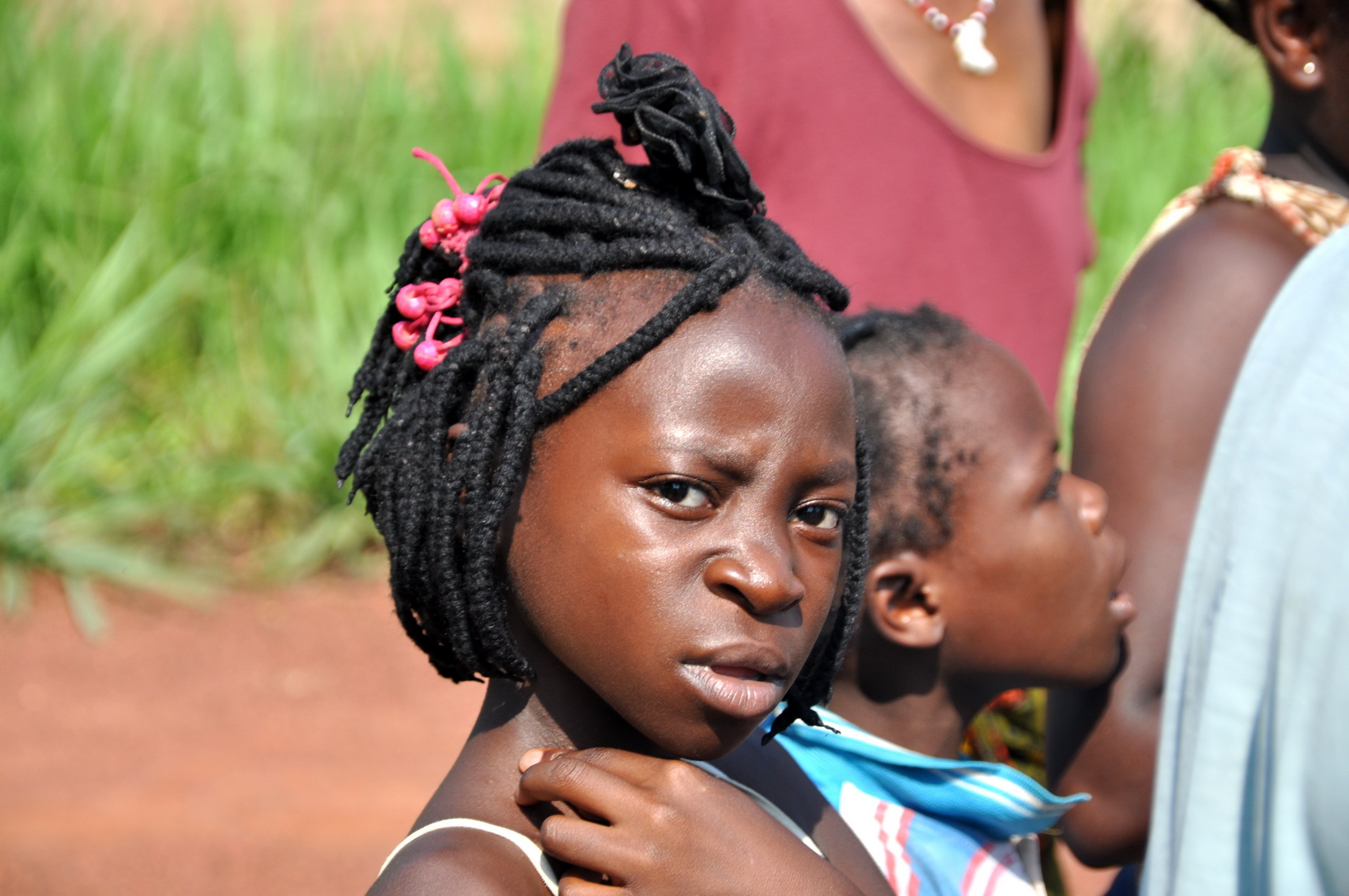
Some local beauties strolled at a distance, doing their best to show that they were more interesting than a telescope or an eclipse, and had happened to pass by only because an impulse to take a walk had seized their tender hearts.
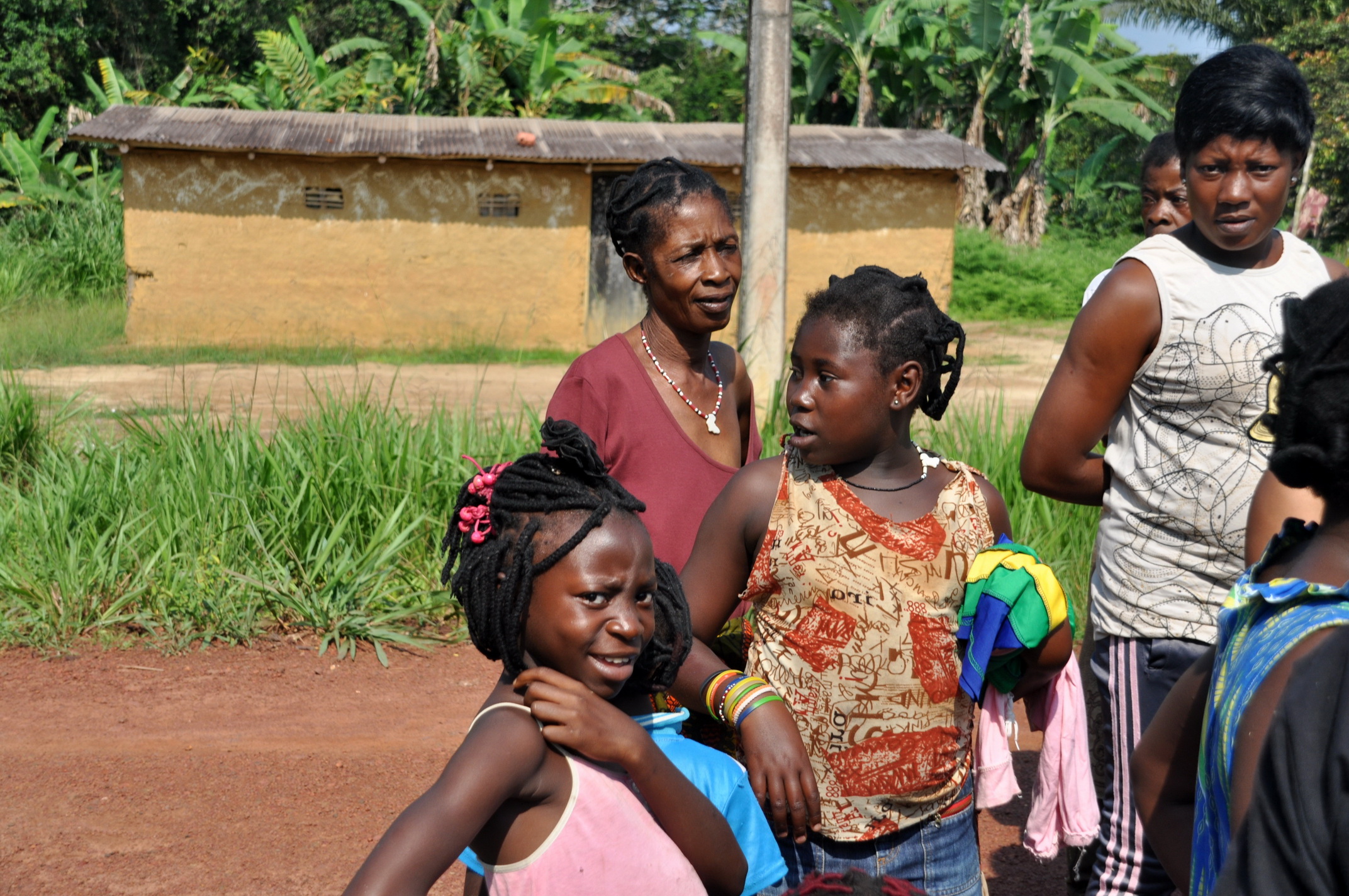
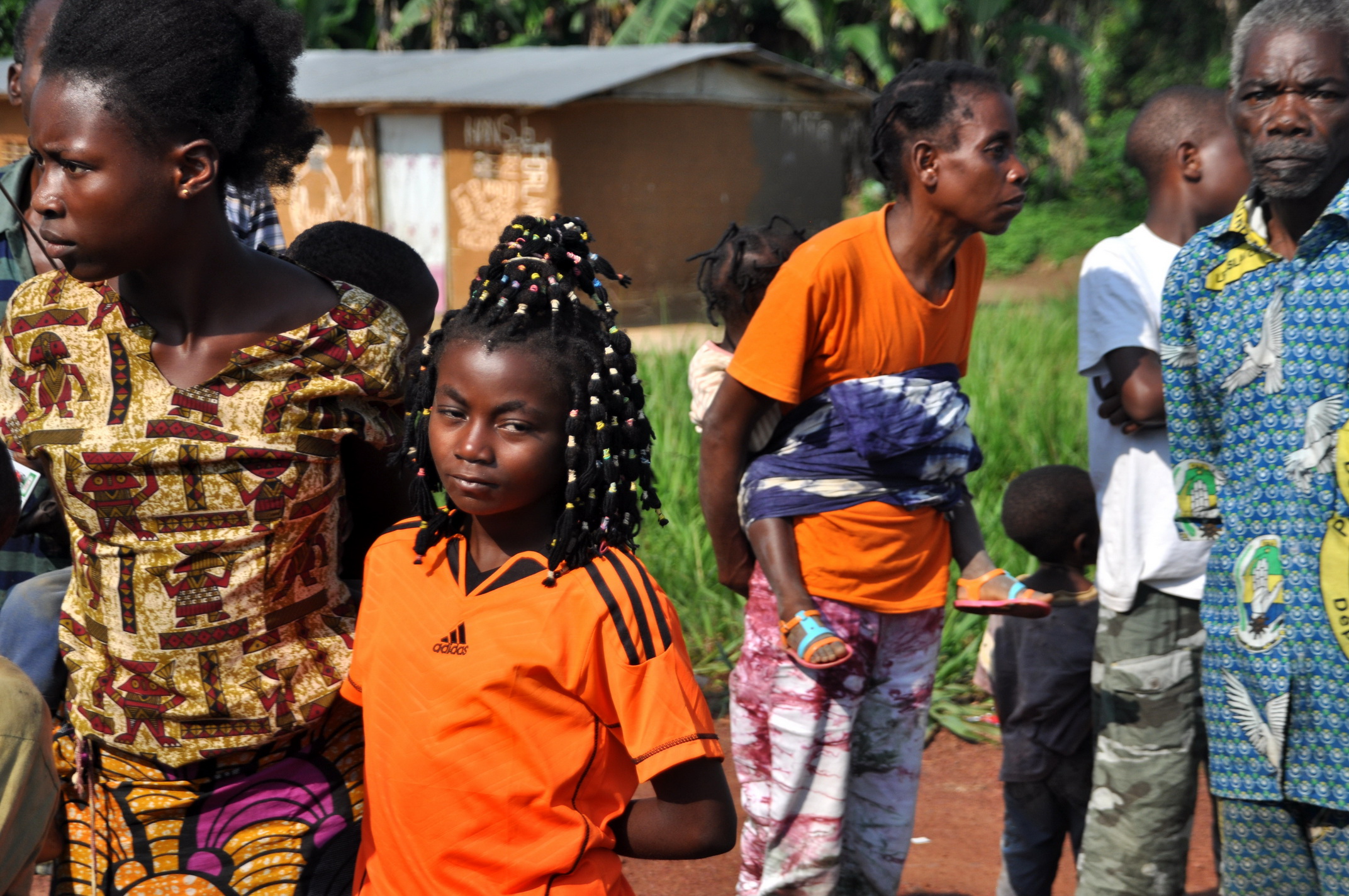
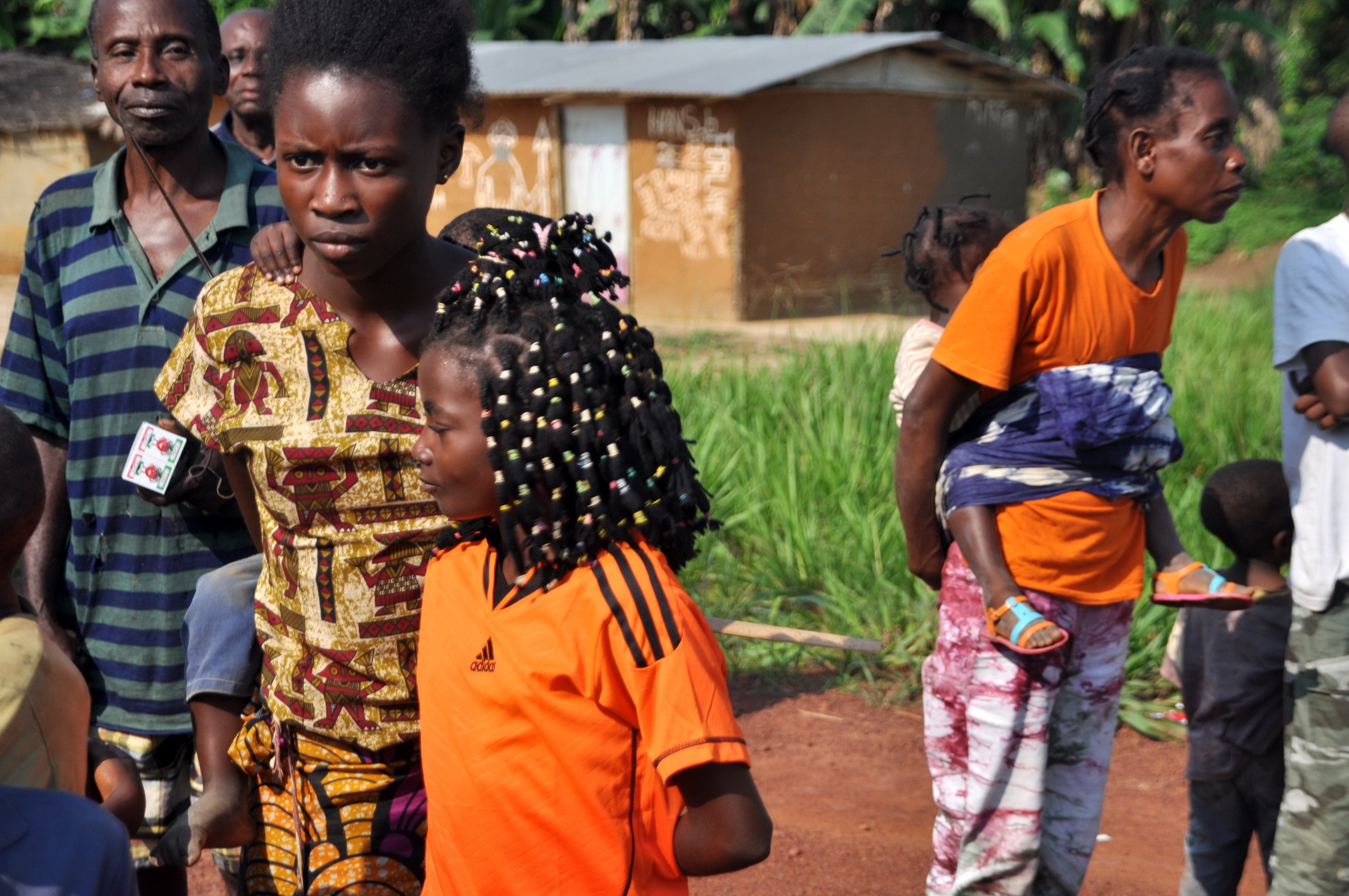
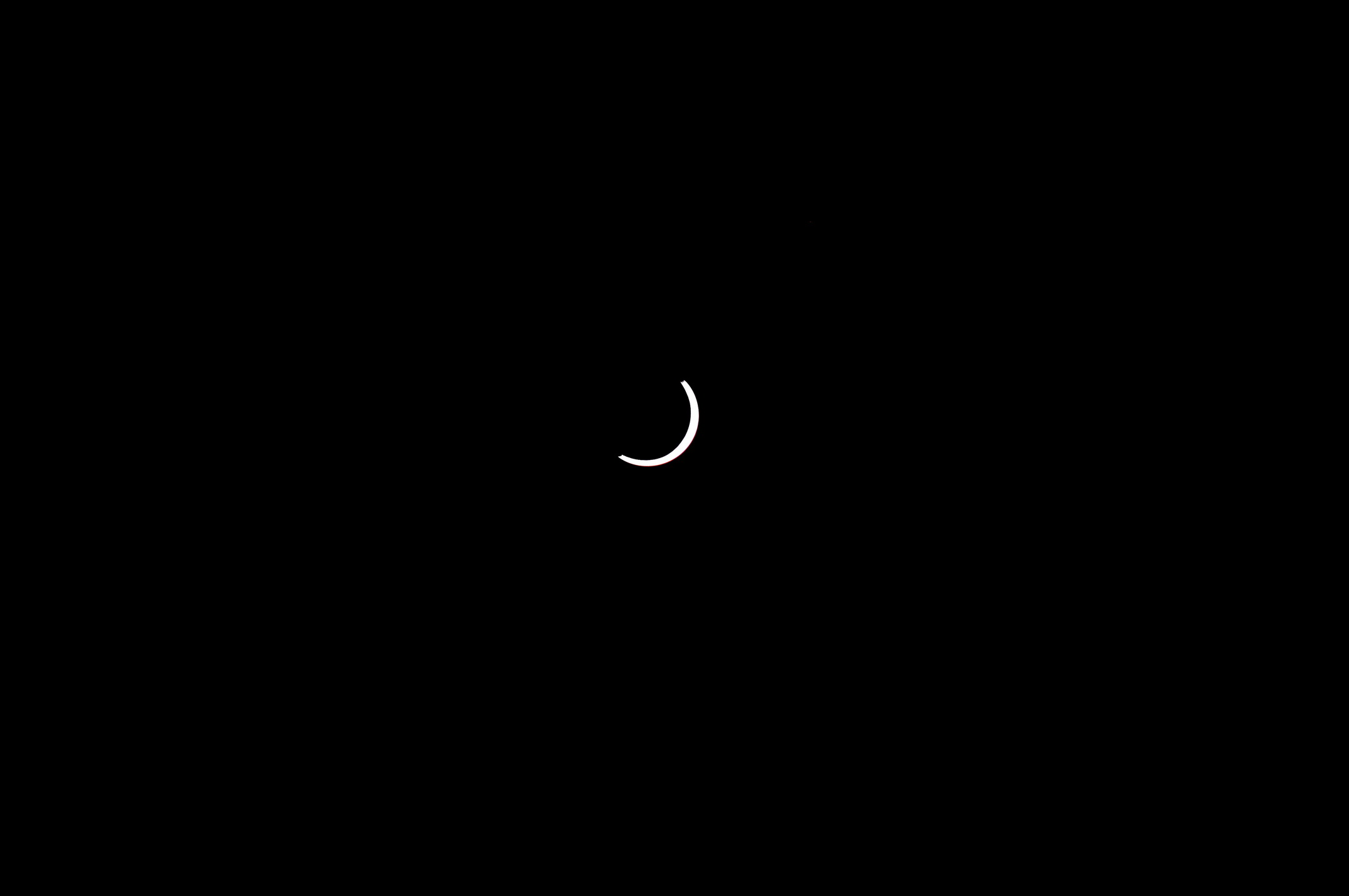
At the moment of total eclipse, the whole village gasped. Even the beauties mentioned before came to the telescope. The night birds flew out. The scene was fantastic: me with a telescope, surrounded by the people of a Central African village, some from Indigenous forest communities. I had seen yet another eclipse. Those who’d stayed nearer the capital, by the way, saw nothing. It rained there.


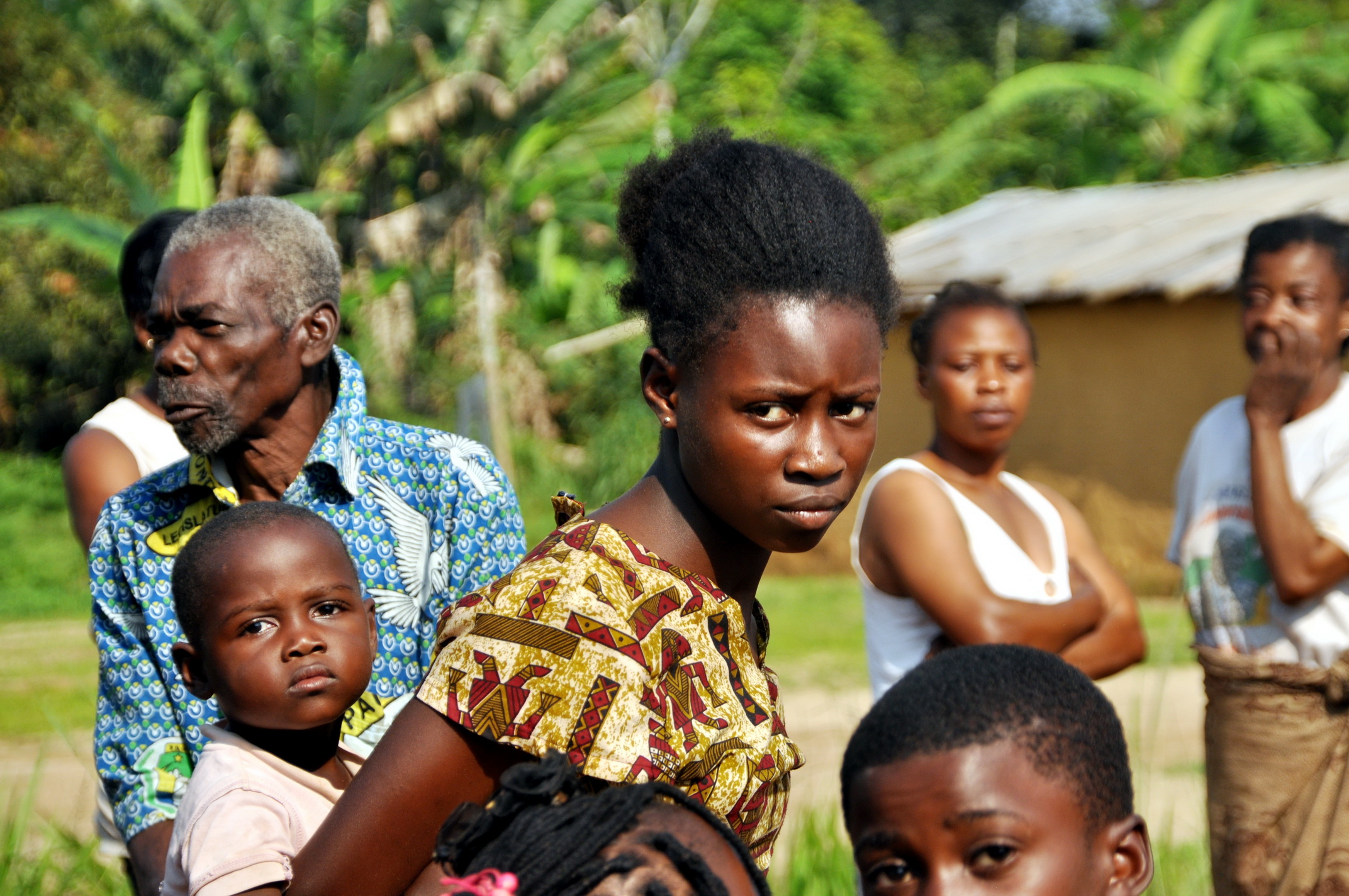
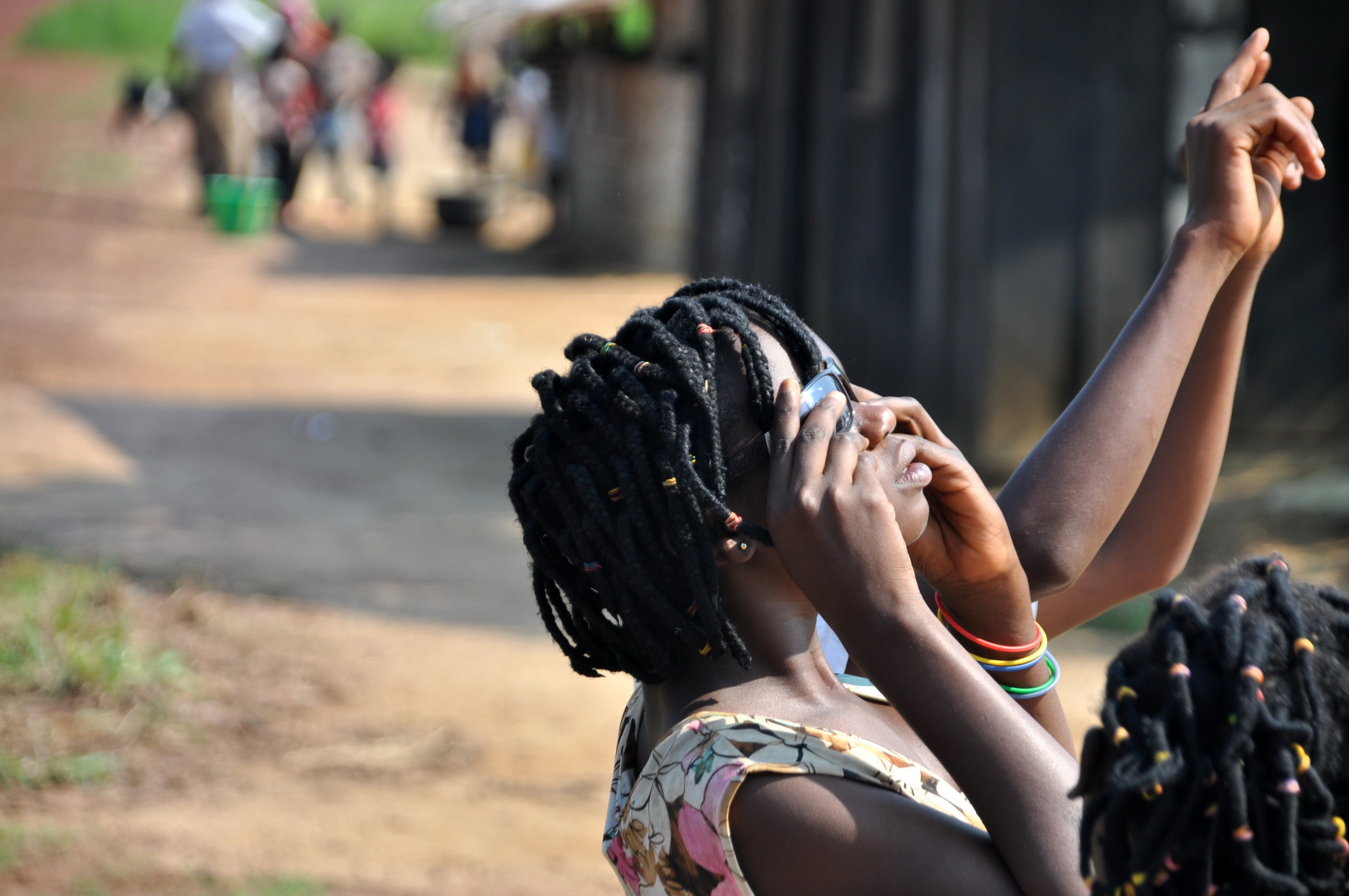
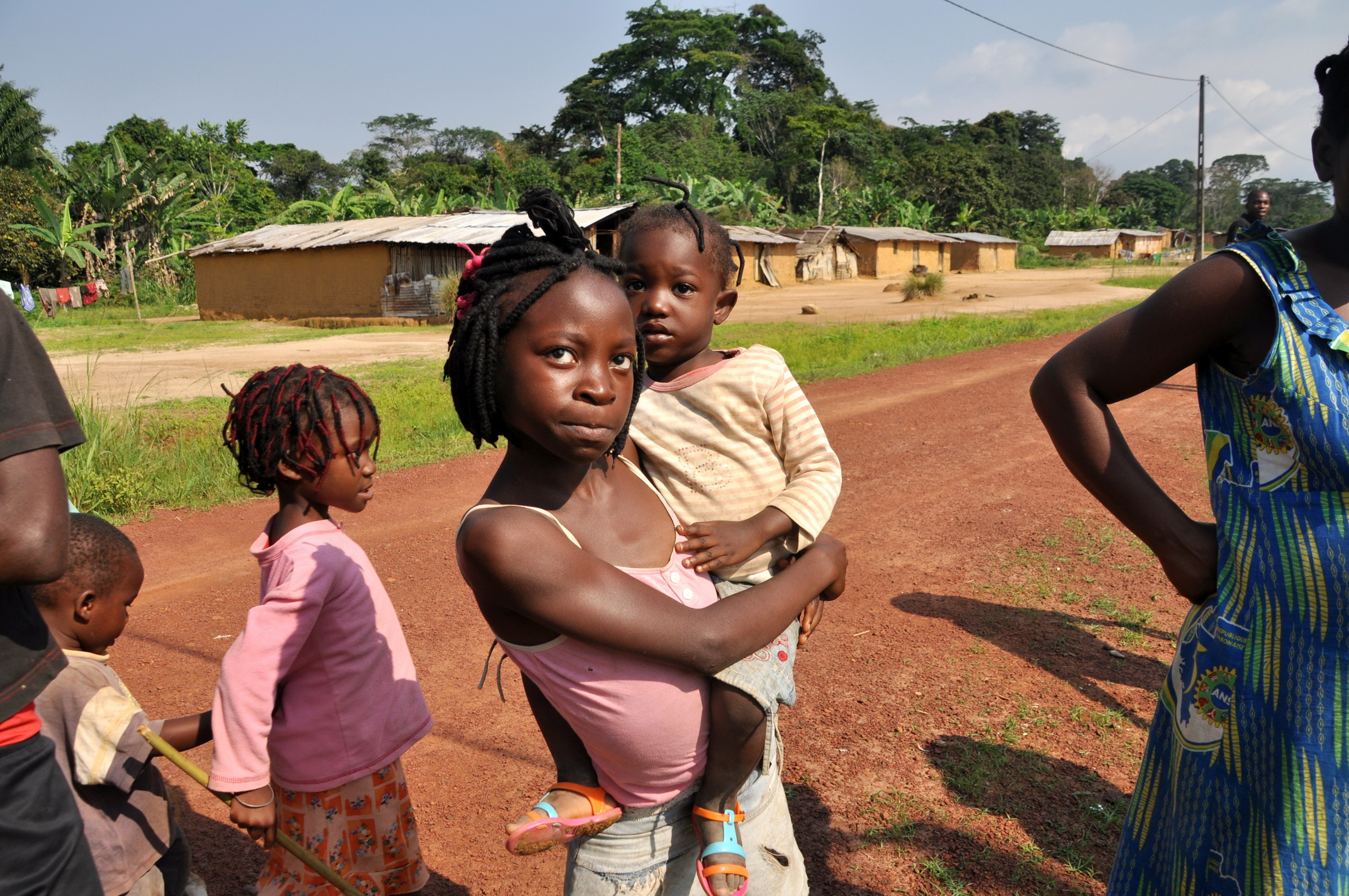
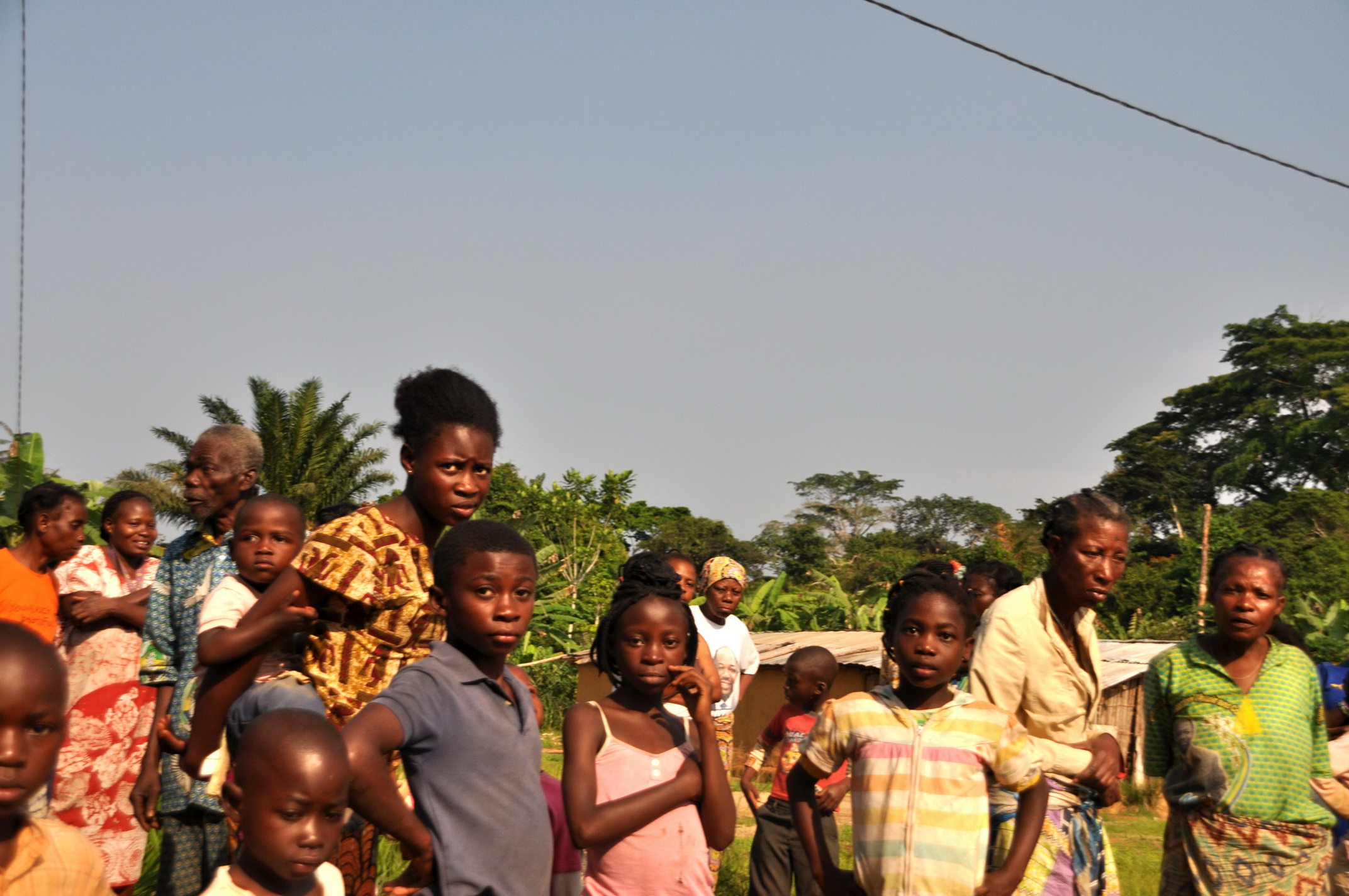
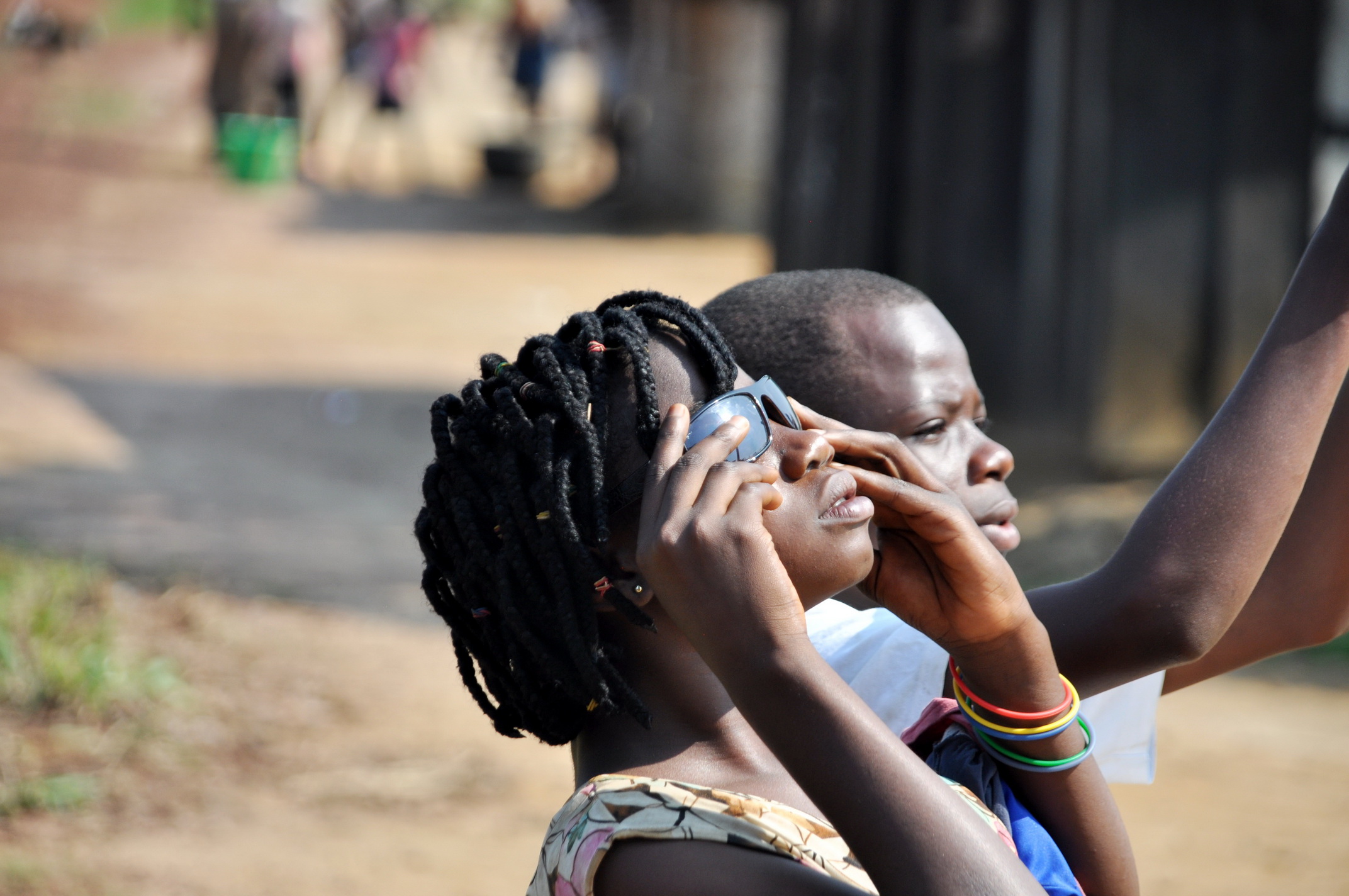
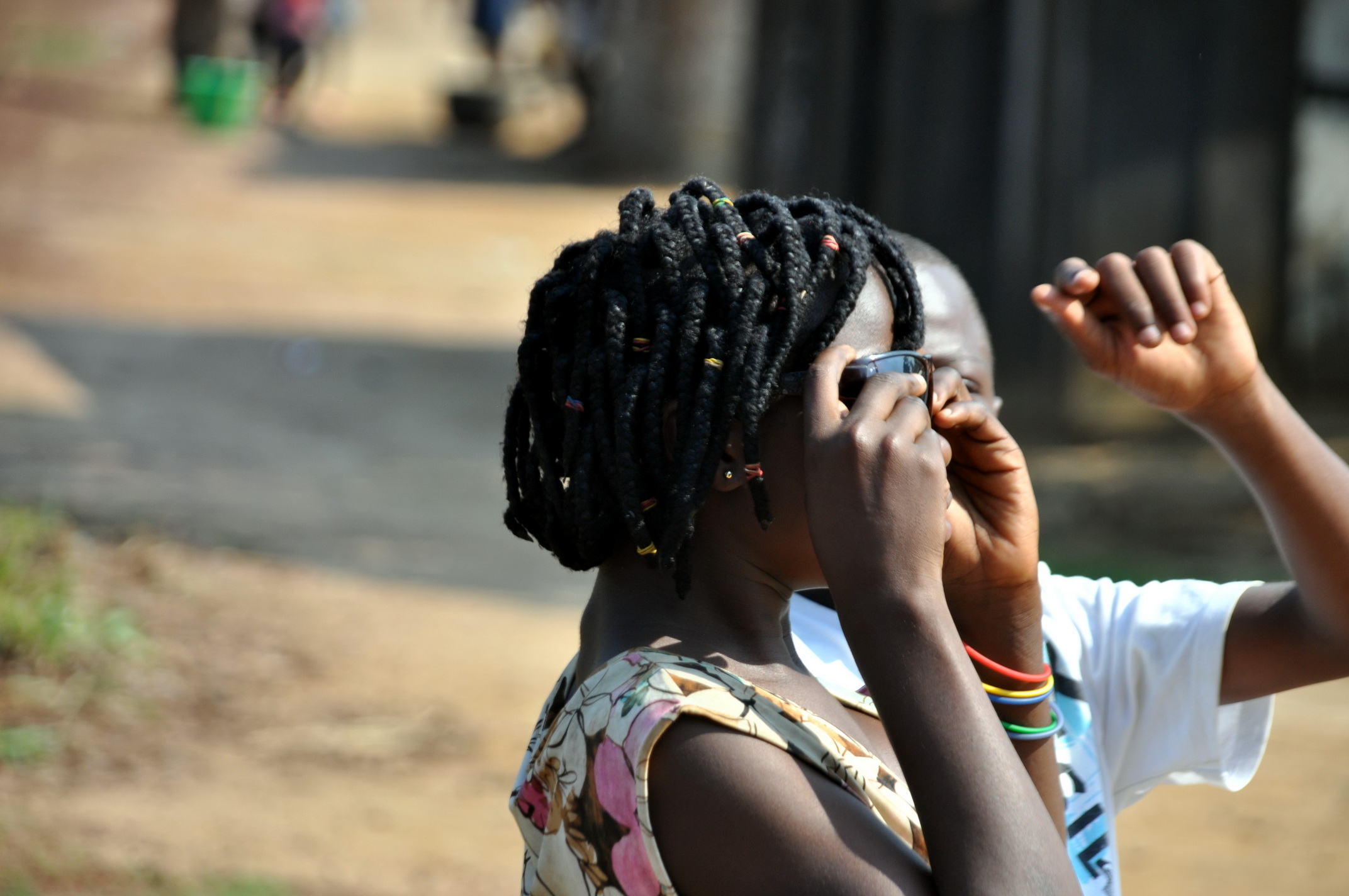
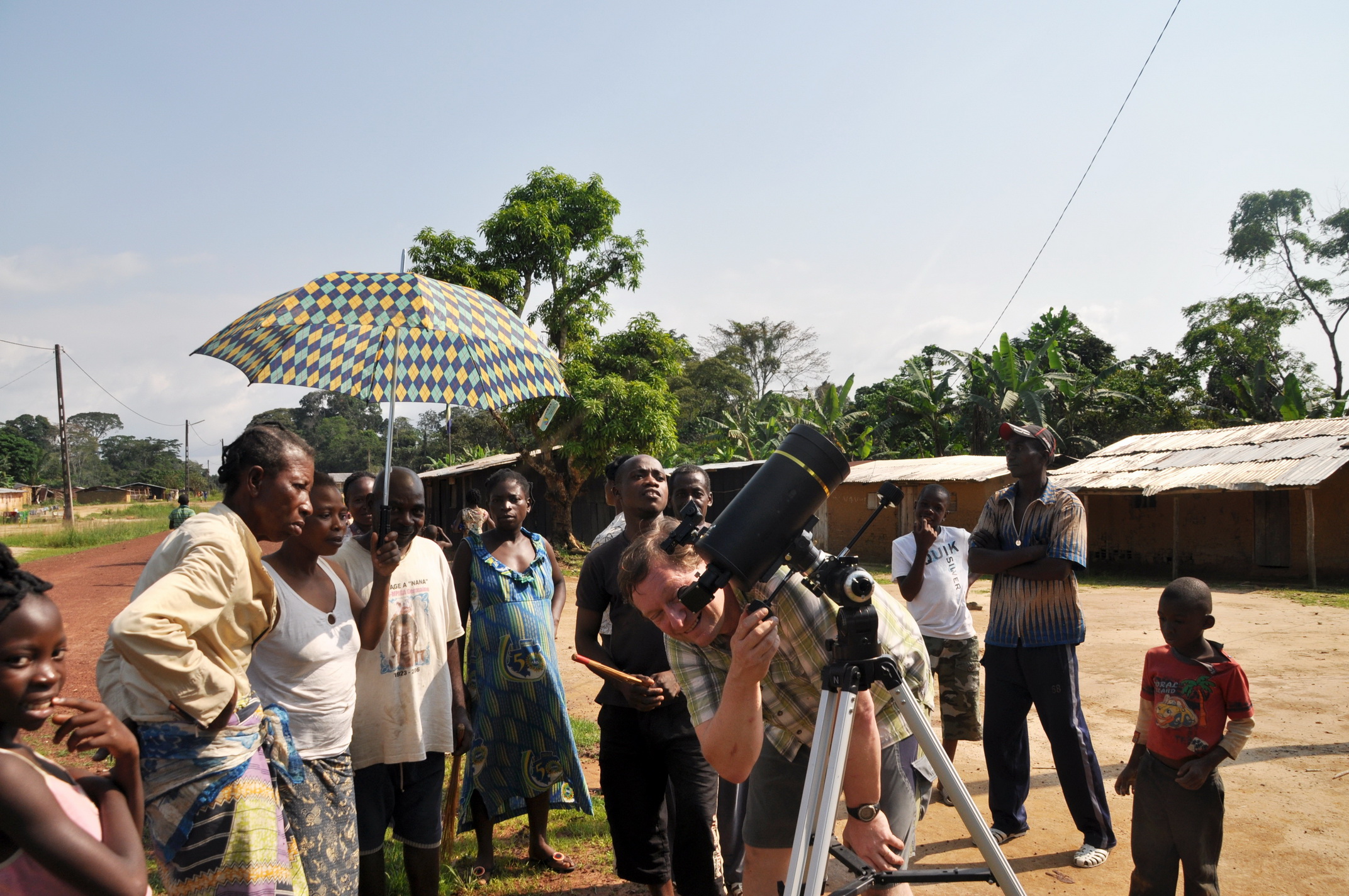
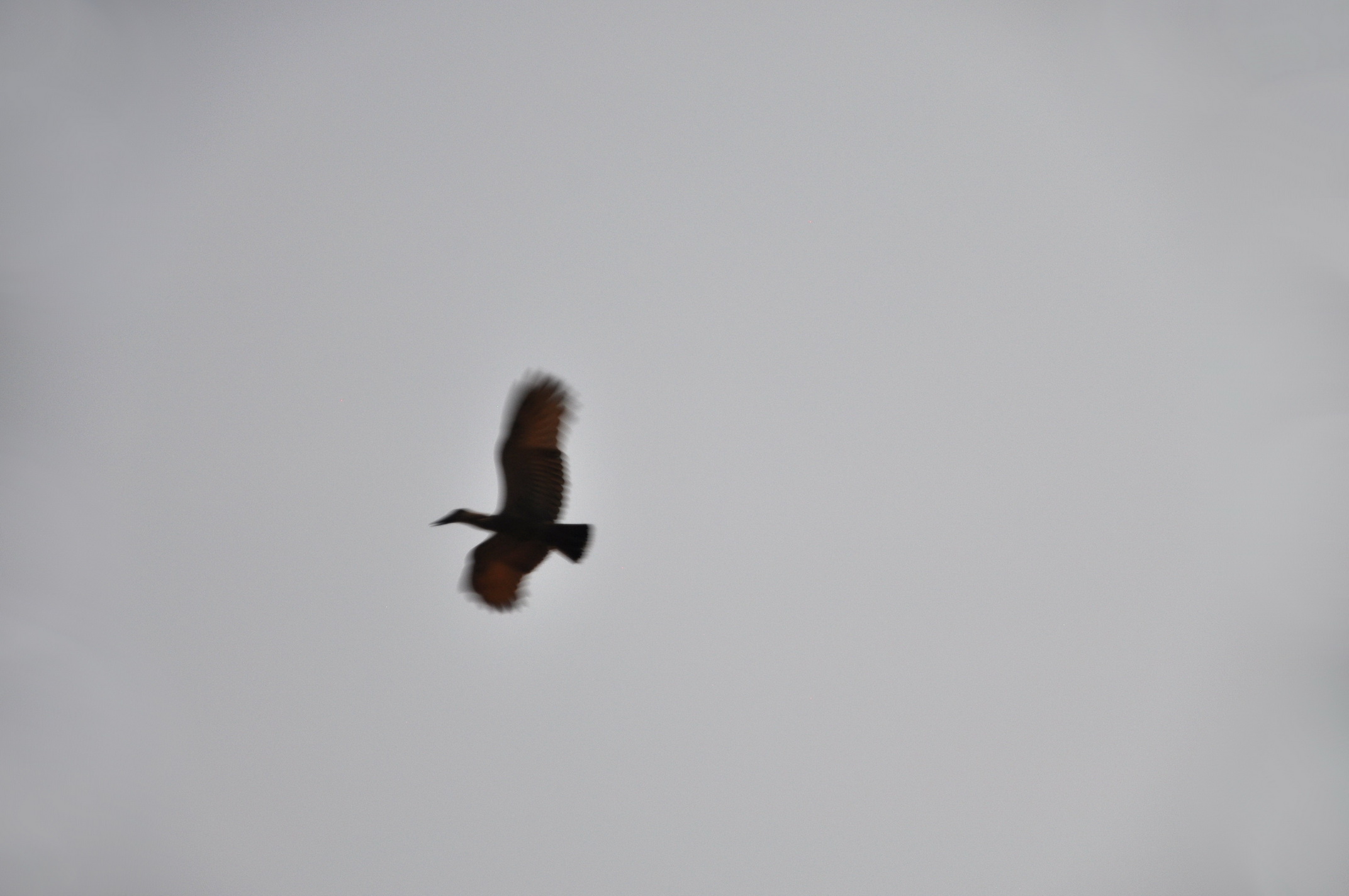
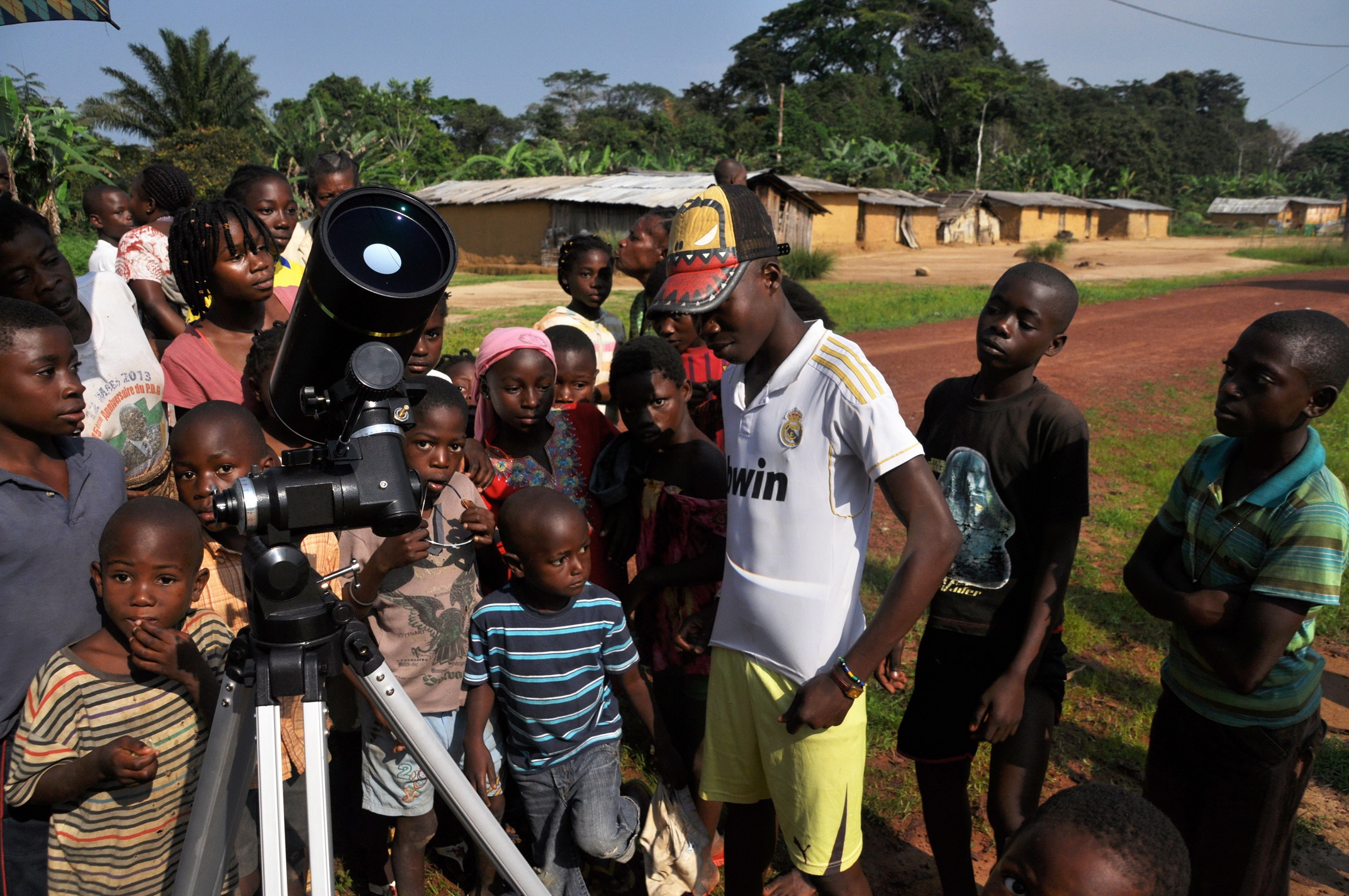
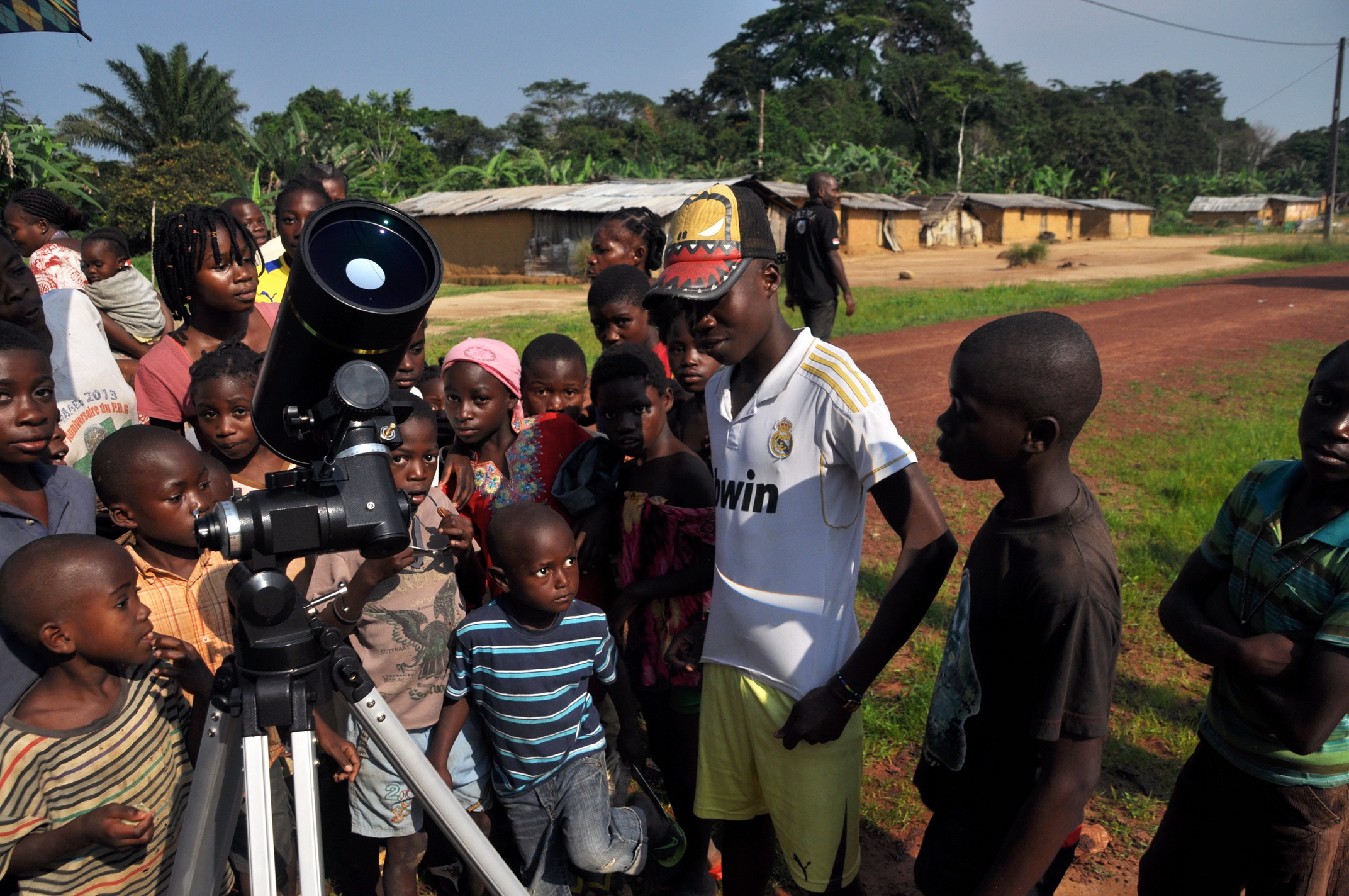
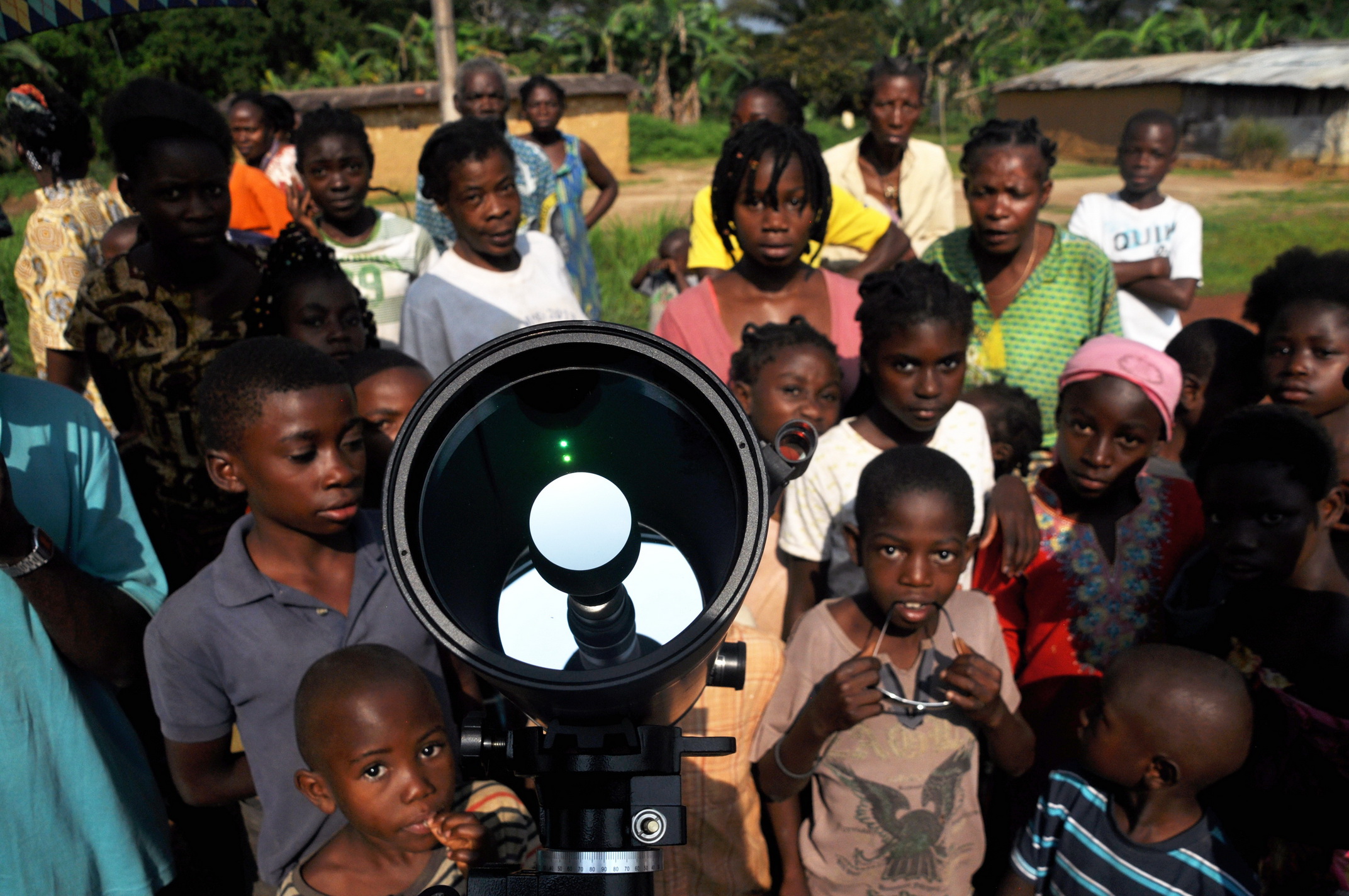
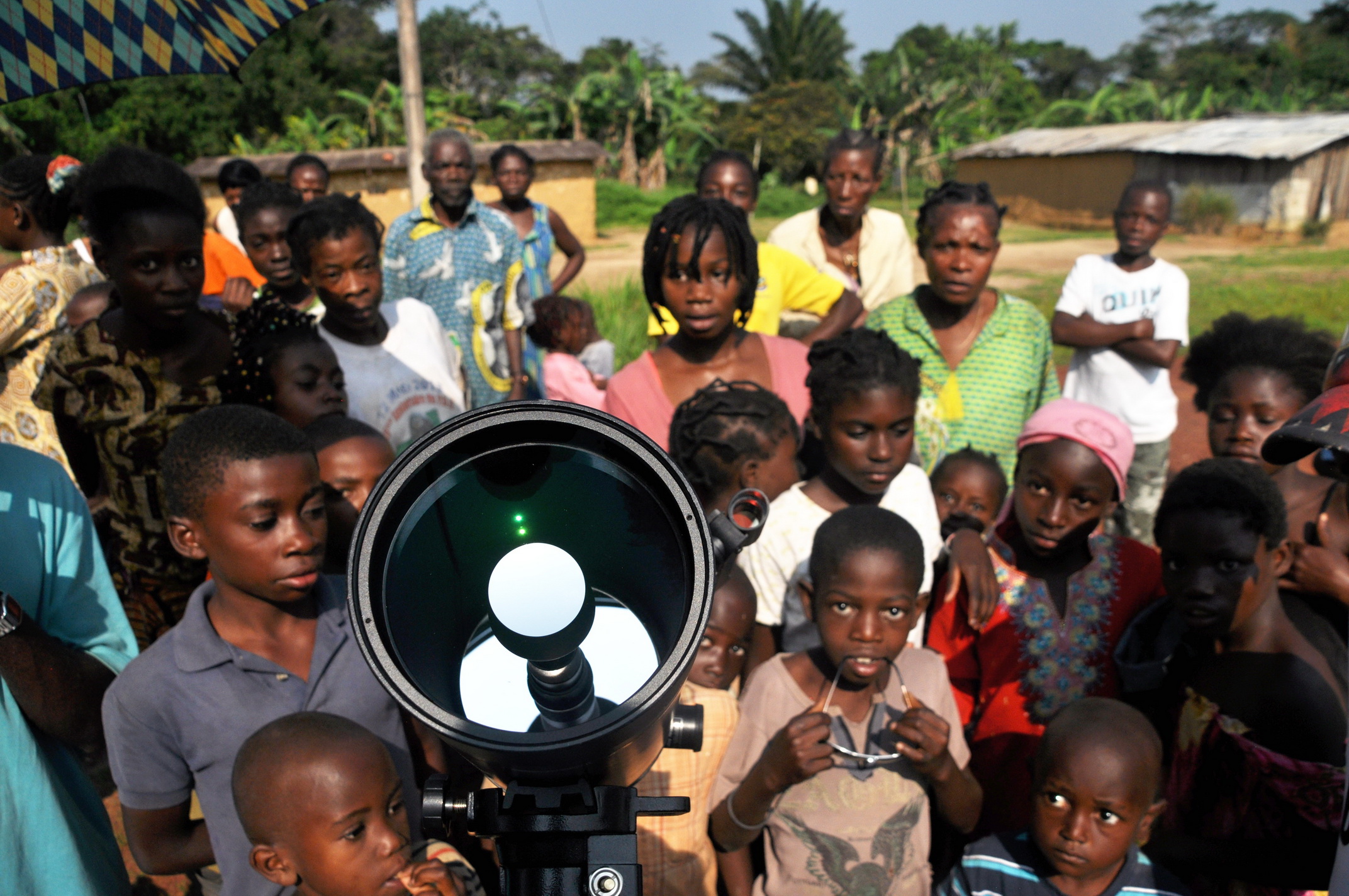
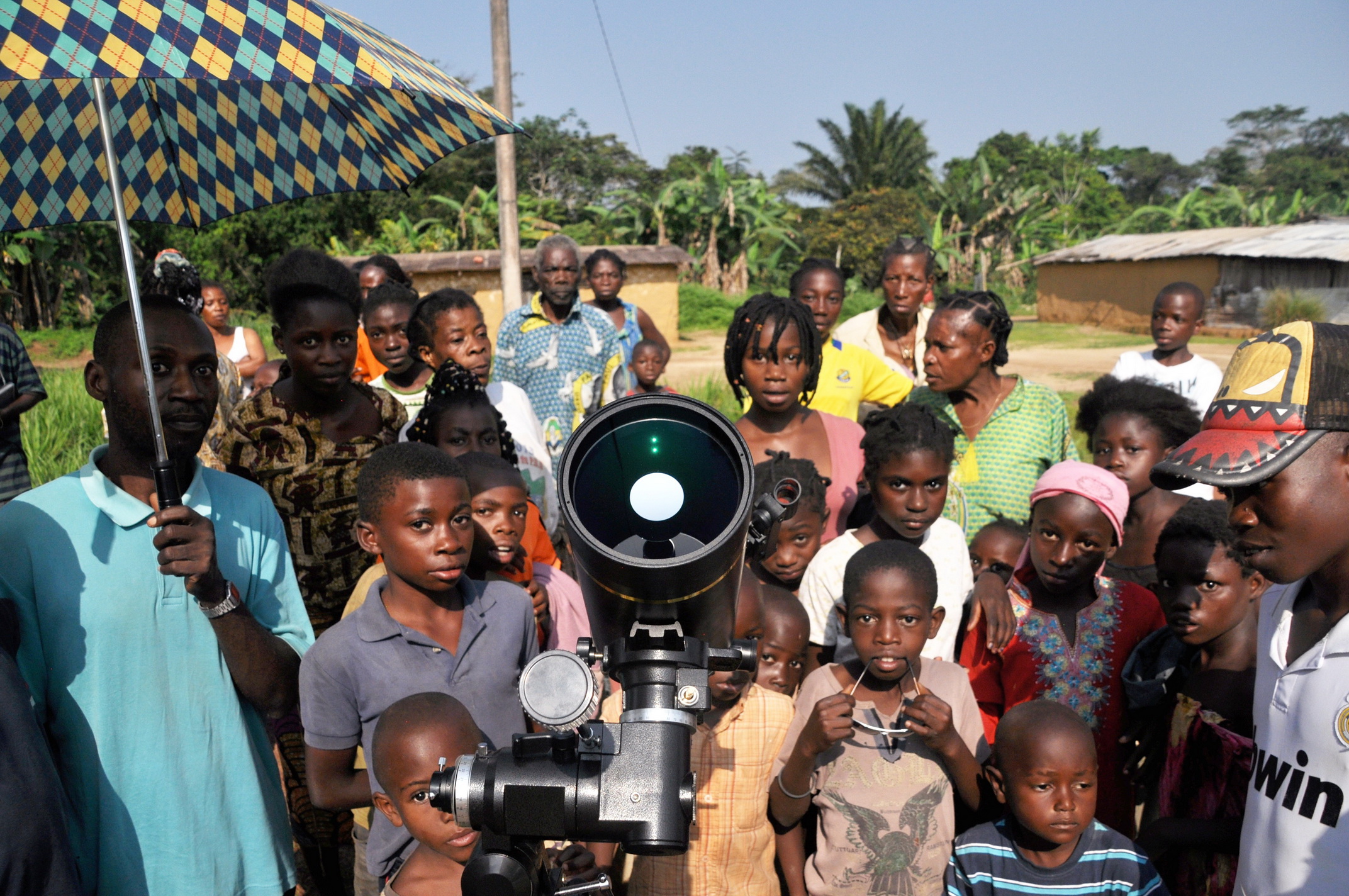
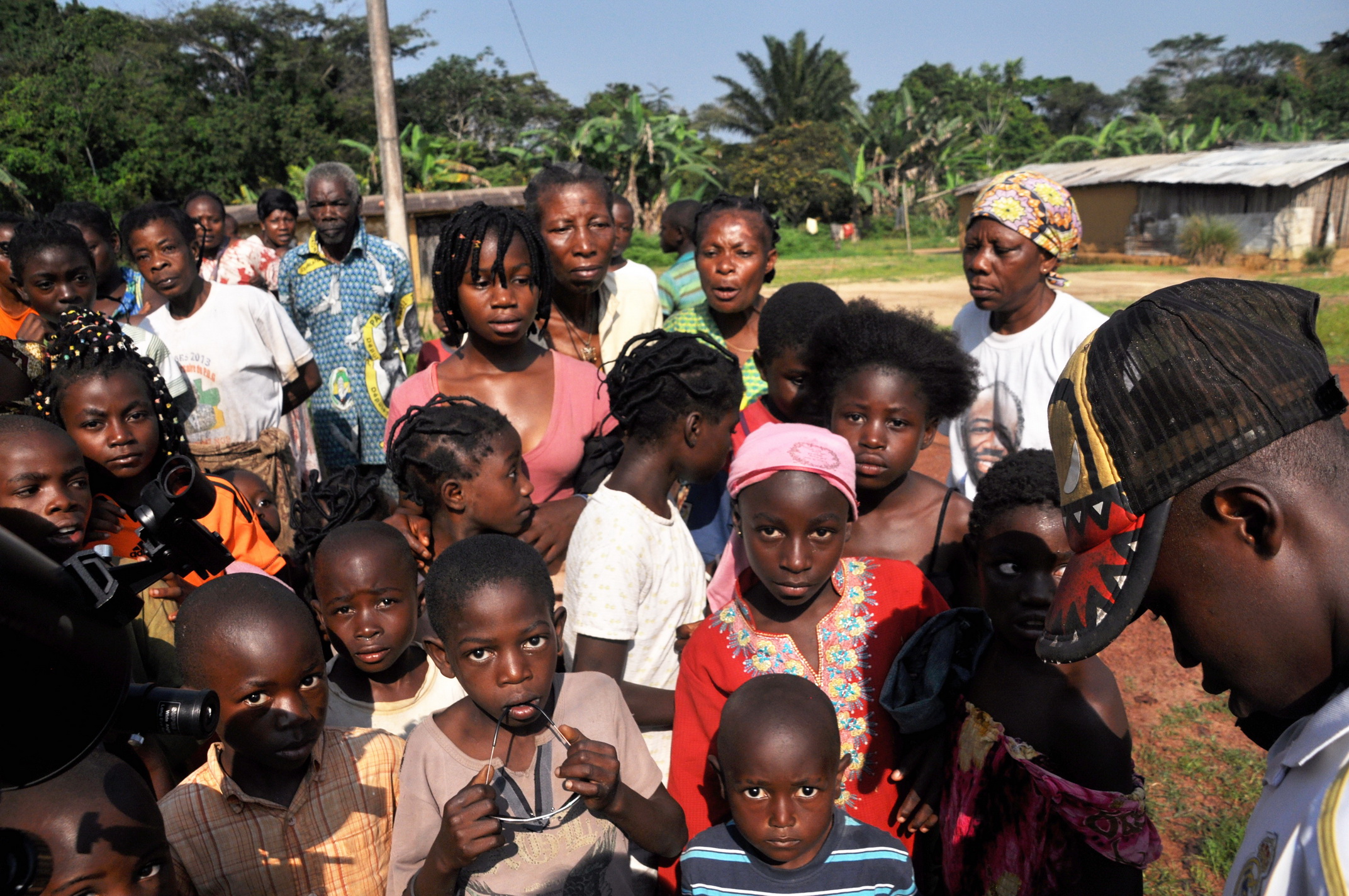
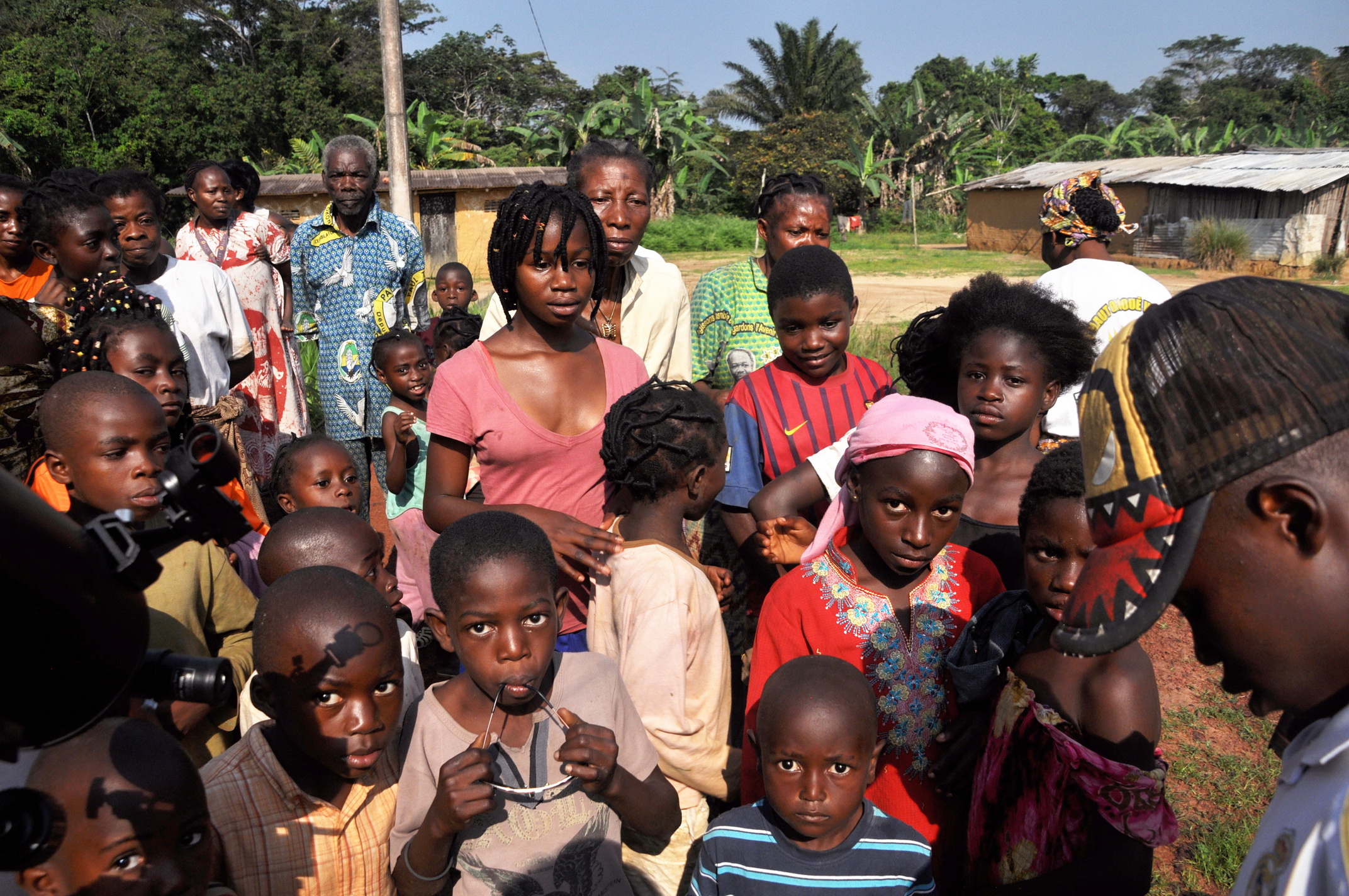
The village was delighted. They danced, the women hugged me, and the children asked to look through the telescope again and again. At the nearest trees this time.
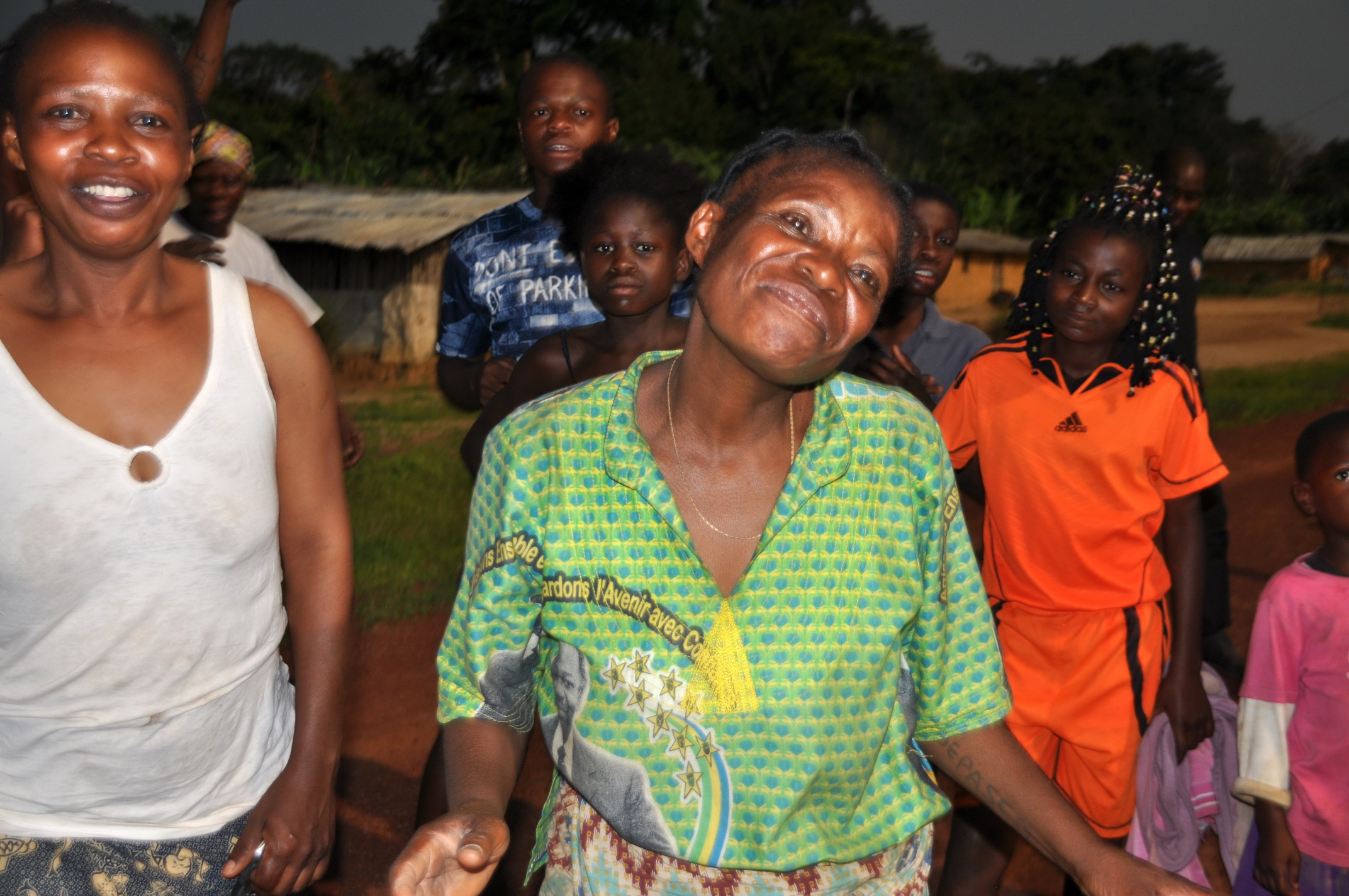
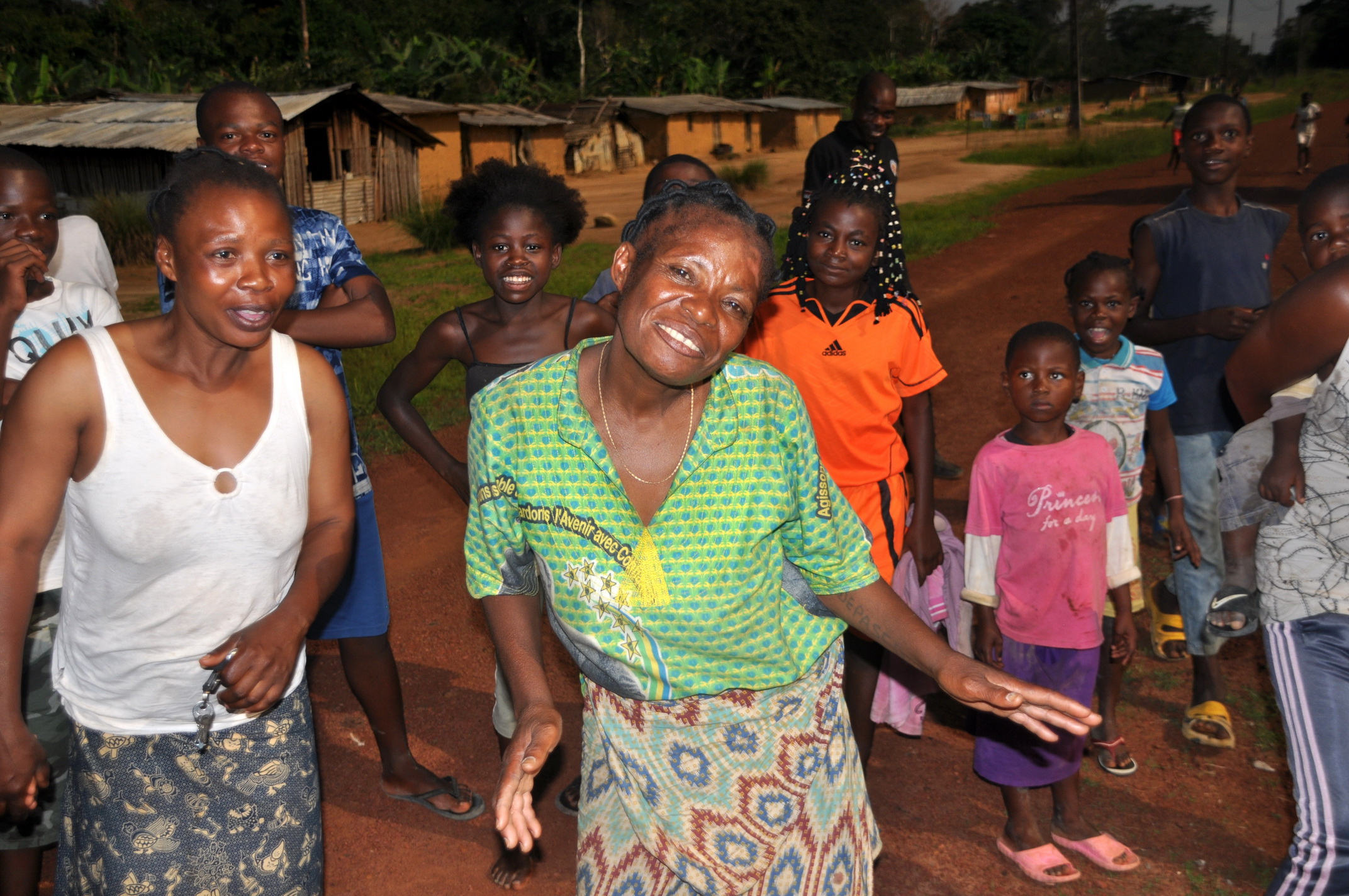
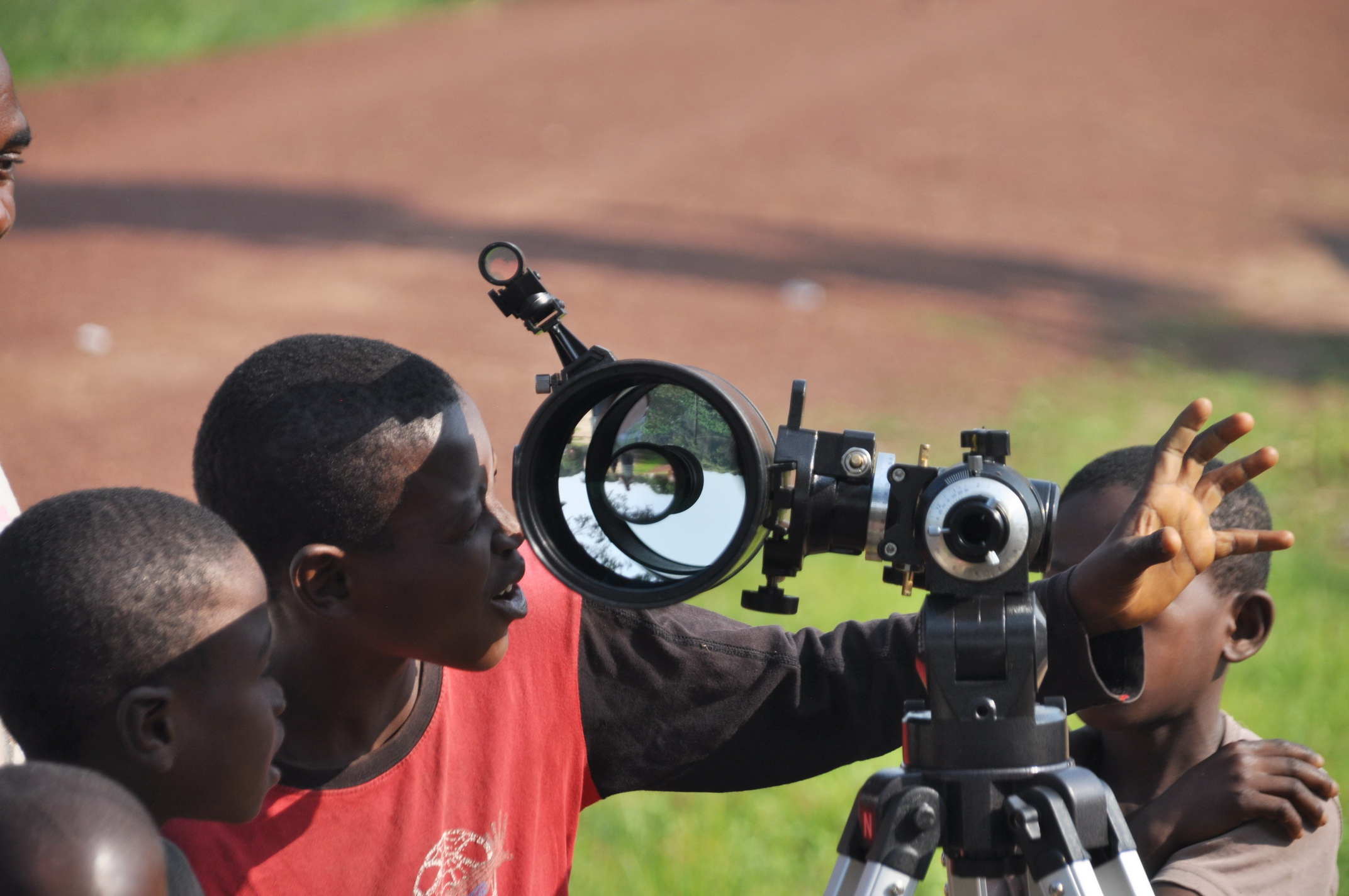
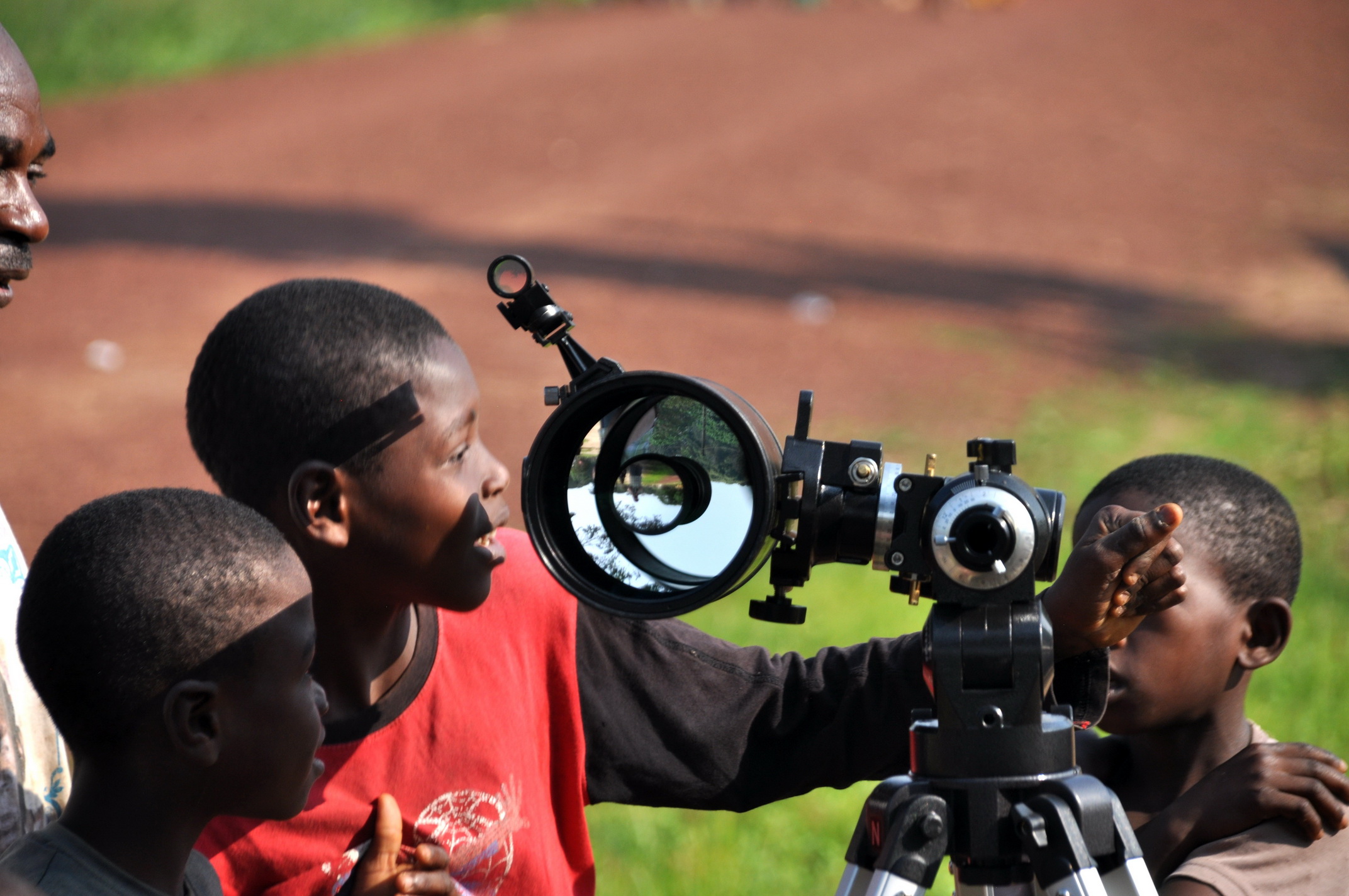
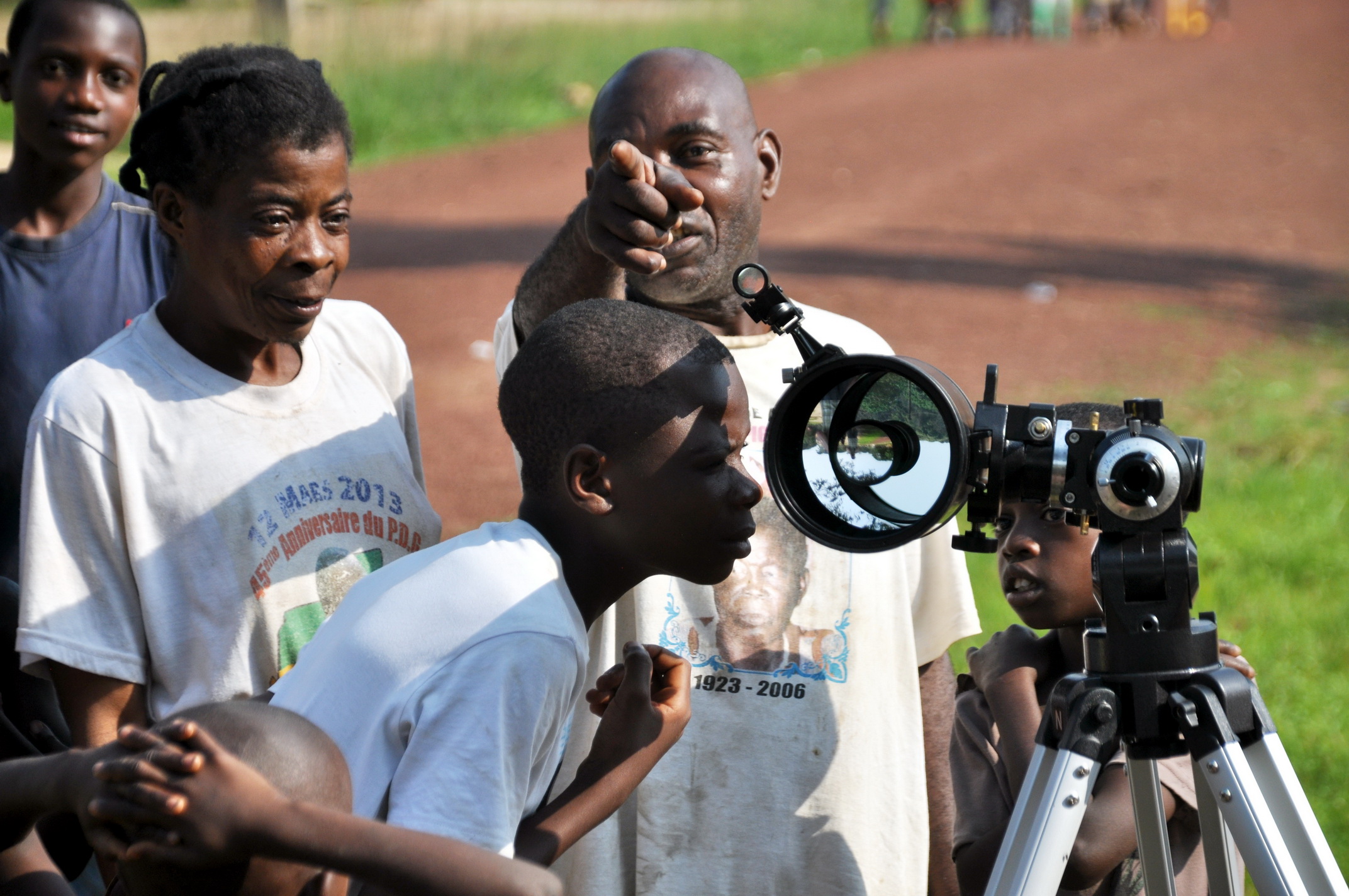
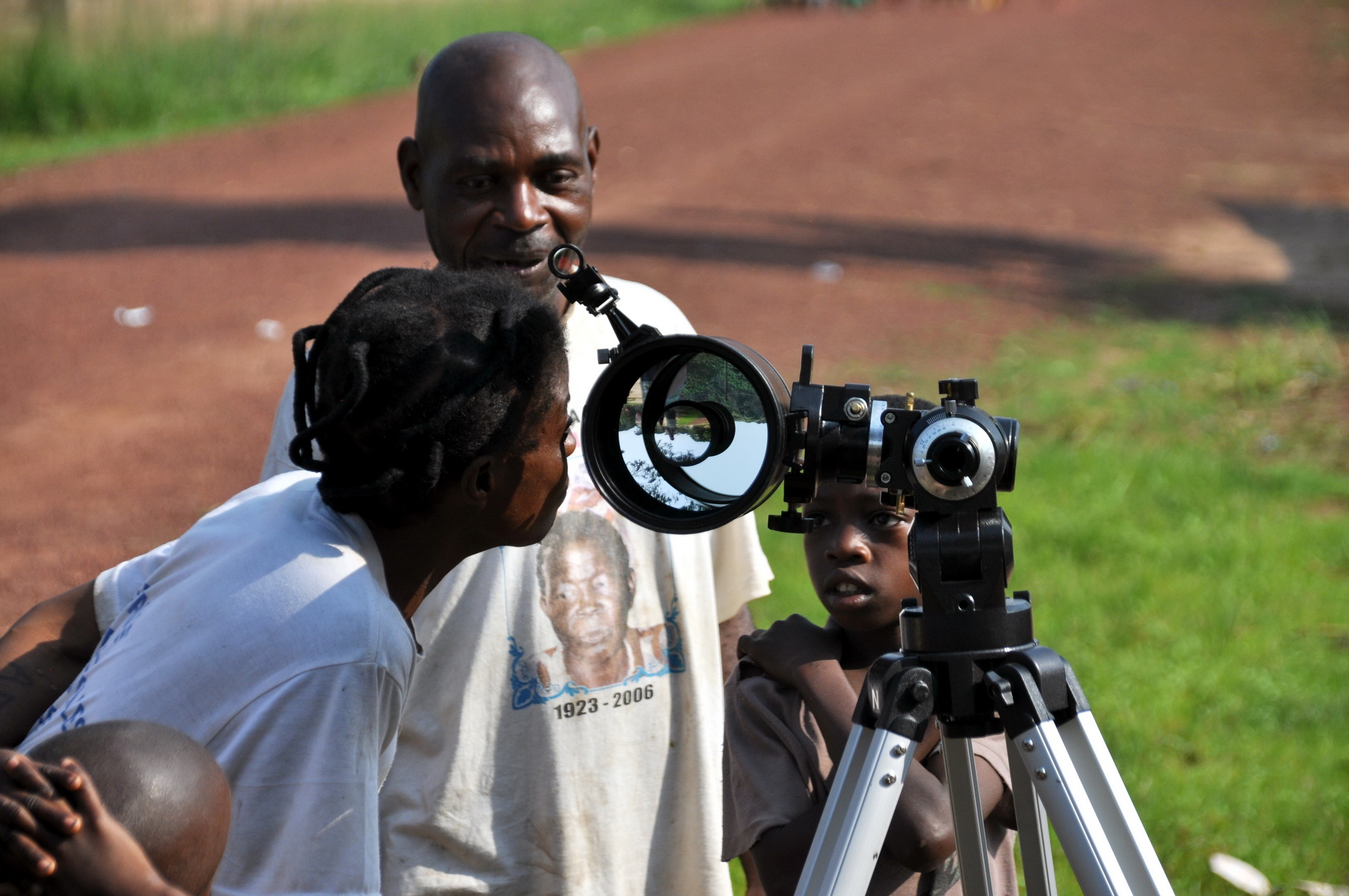
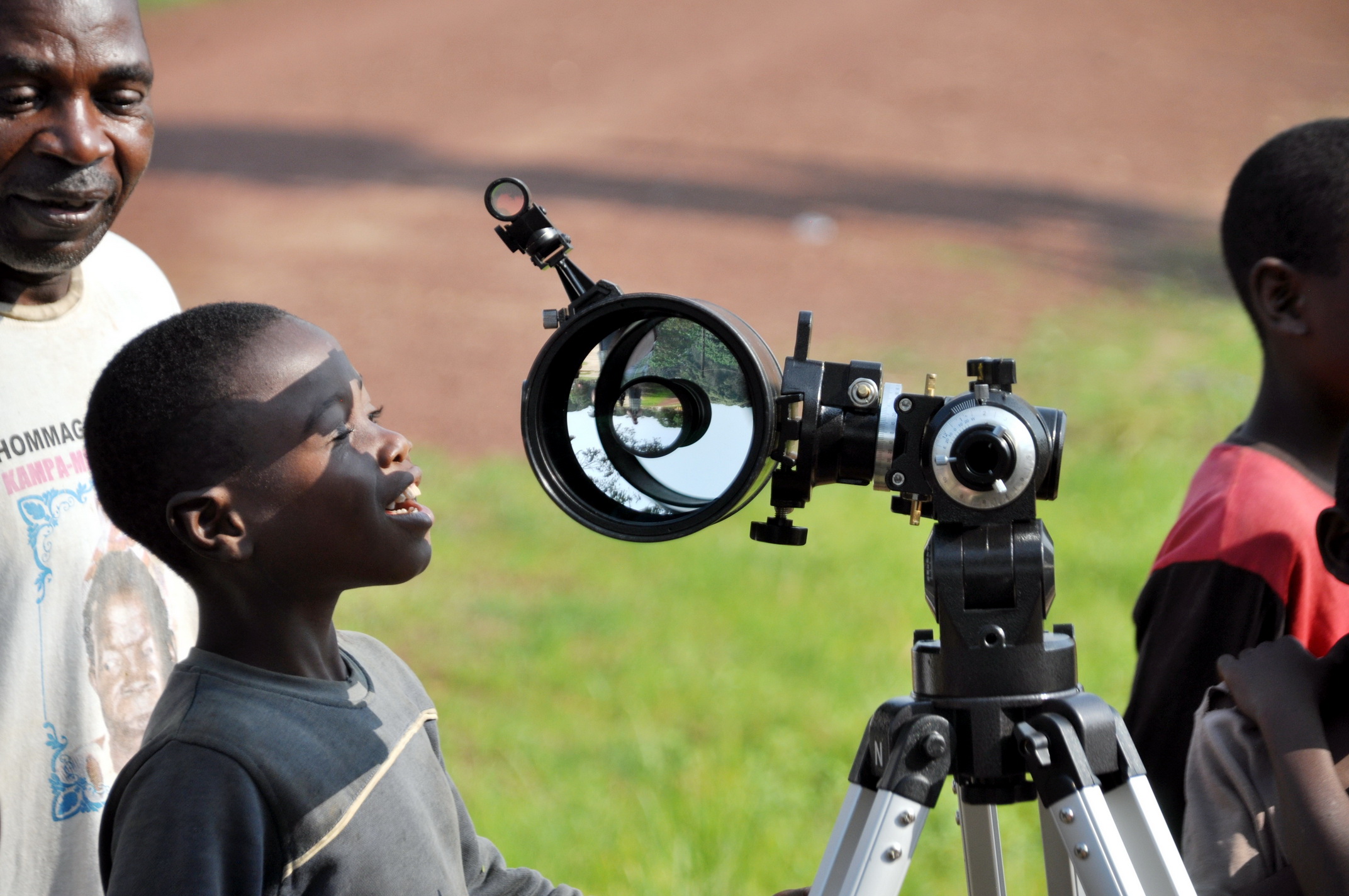
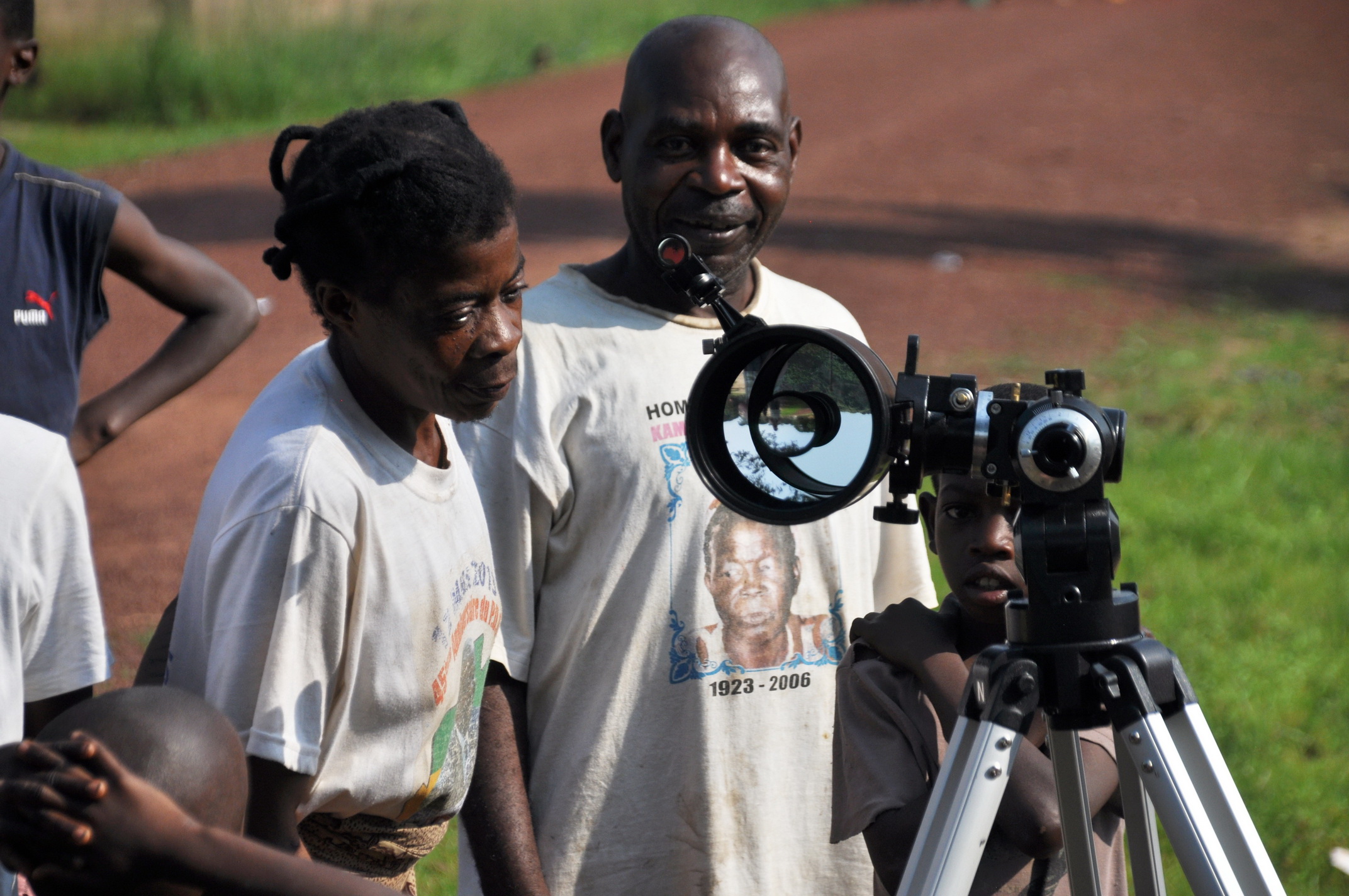
How spontaneous the people were, how bright the colours, how happy they were to see and learn something. It brought back those Soviet posters from the fifties with African children eager for an education. Perhaps I did a little missionary work that afternoon.
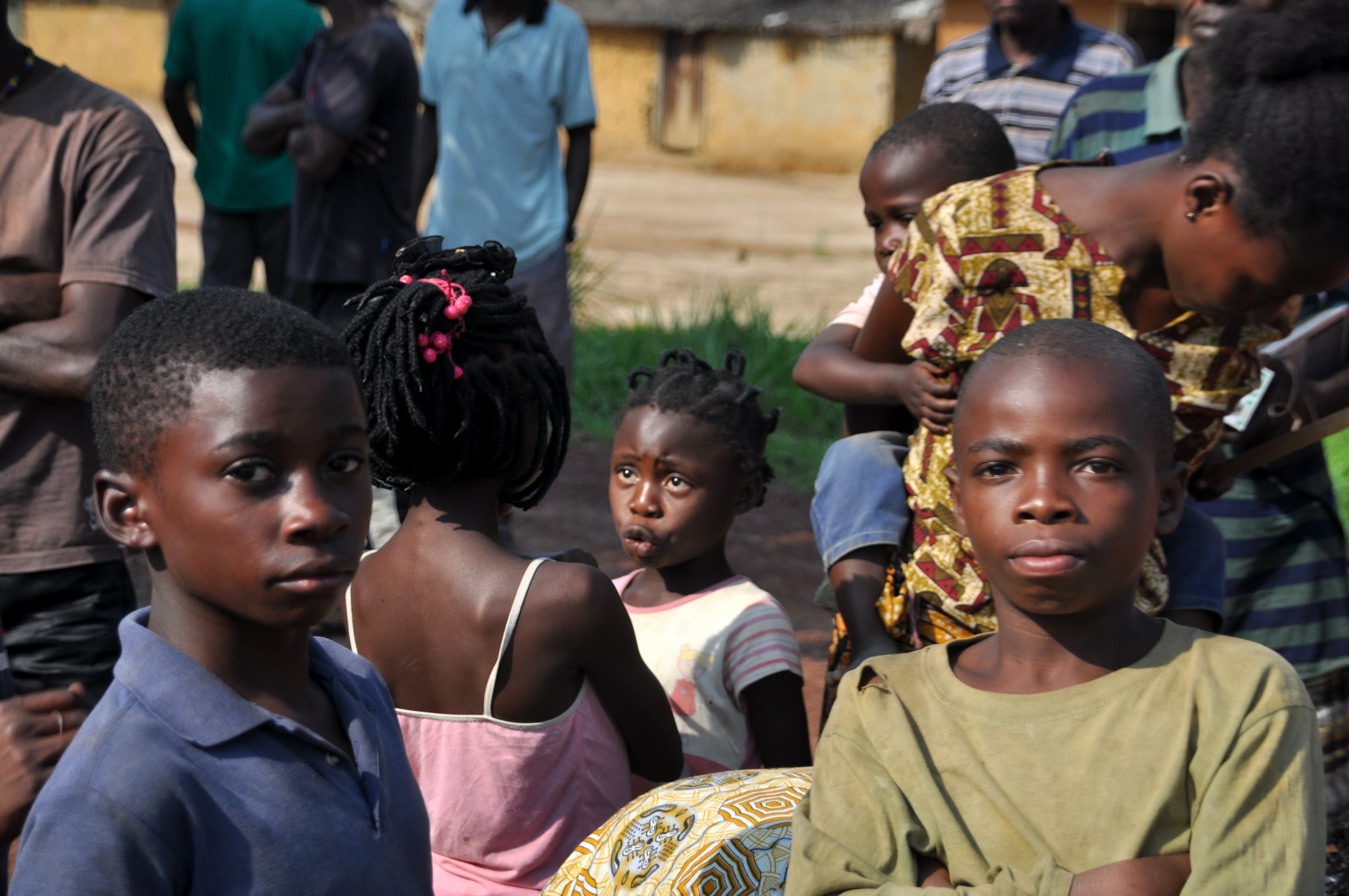
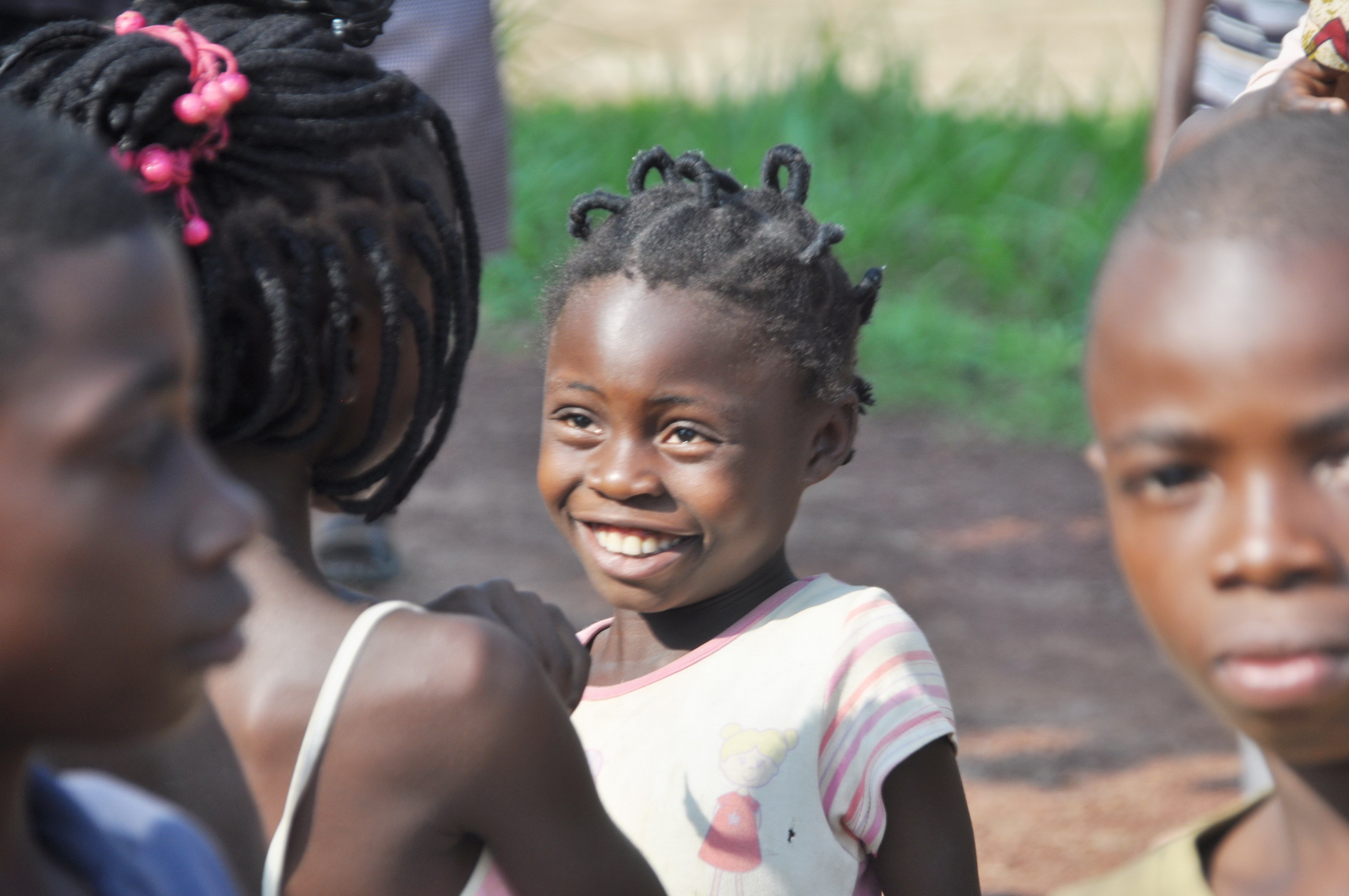
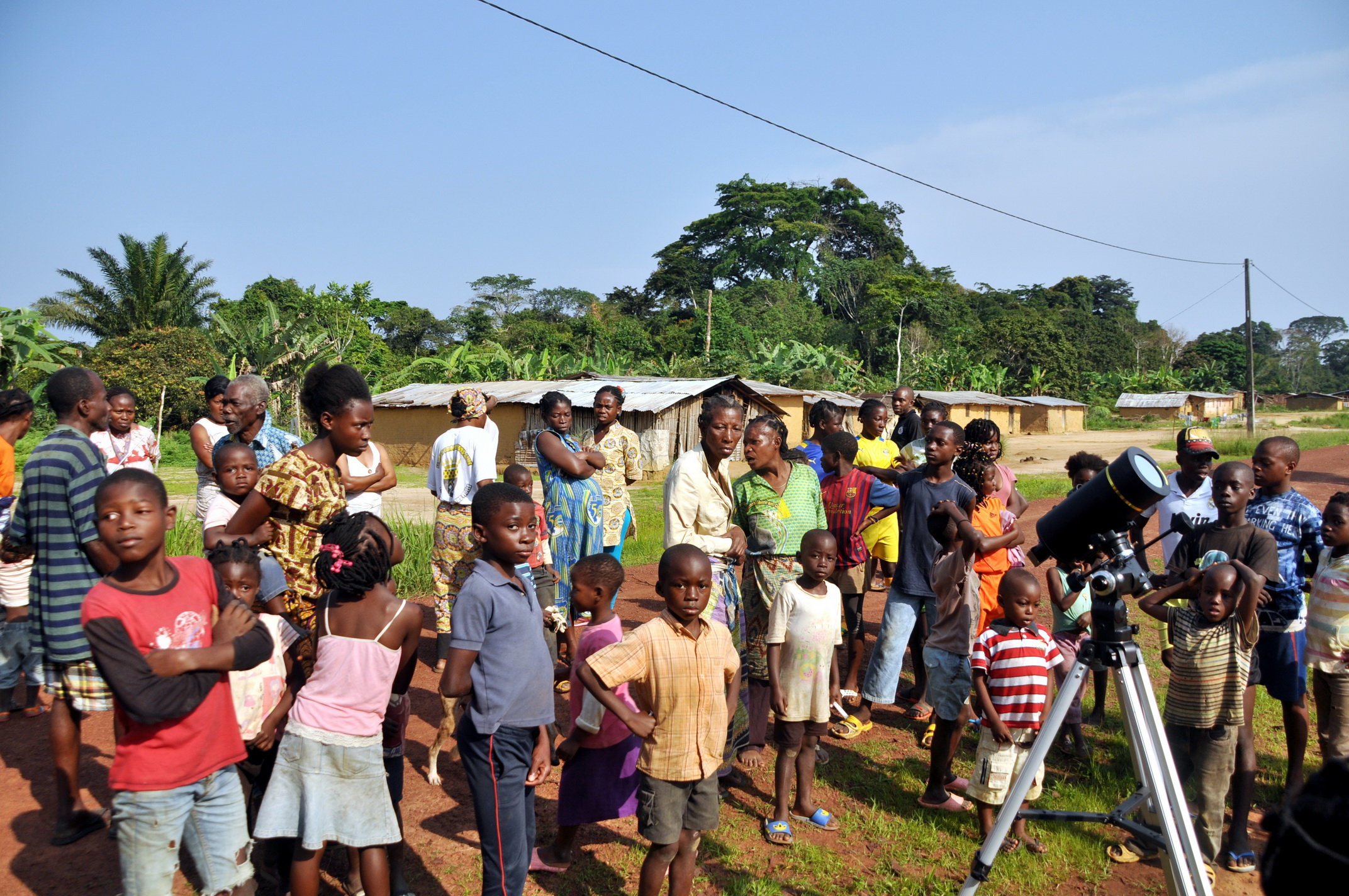
What a pity I didn’t speak French. I could have told them so much. Learn languages while you’re young…
I packed away the telescope and wondered what a hard-drinking Russian village would have made of an American with a telescope.
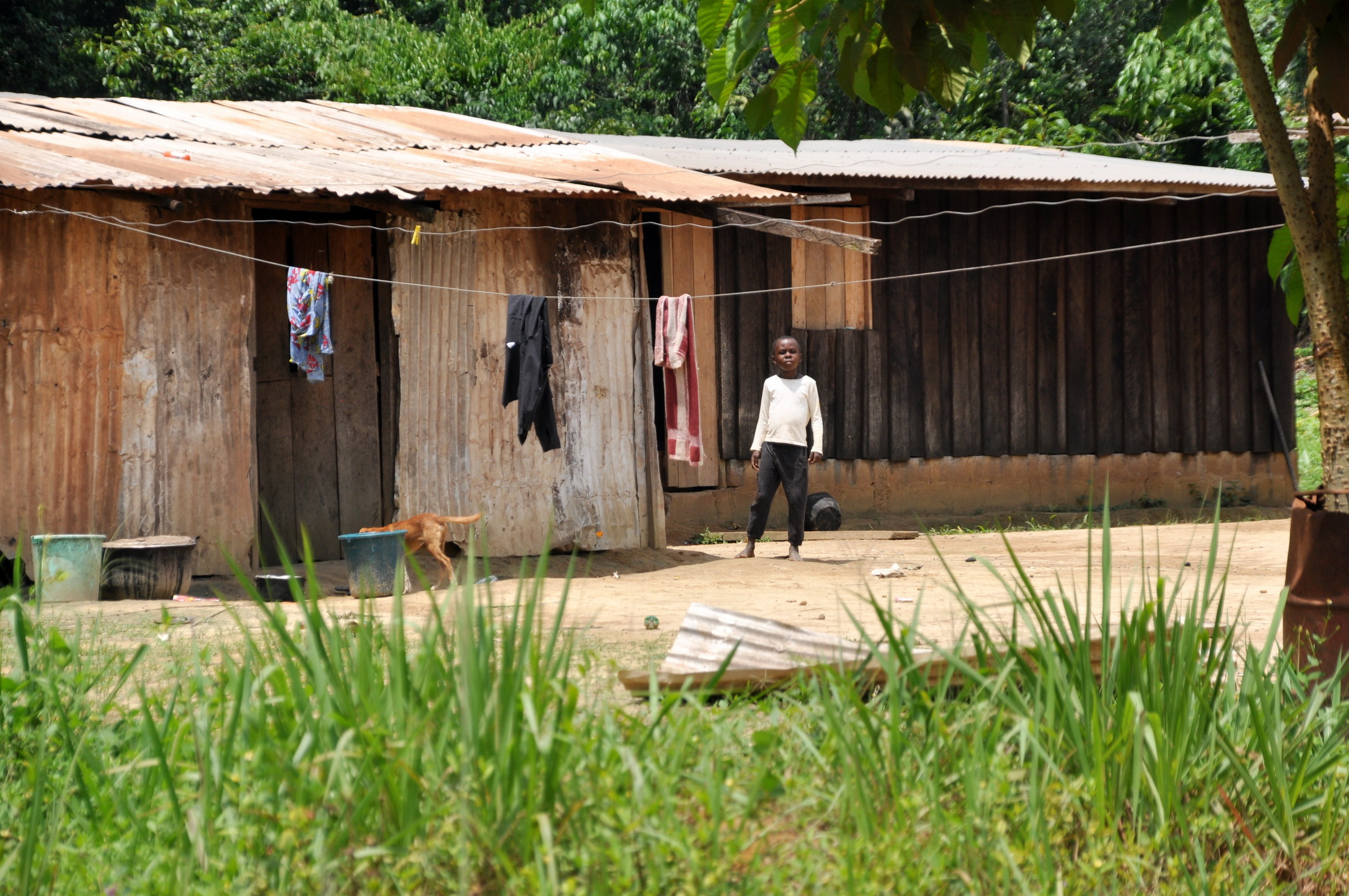
After the eclipse I continued north, as happy as could be. I began meeting more and more people from Indigenous forest communities, called Pygmies in the old account. I heard talk of men from other villages marrying their daughters, mixed in with unkind stereotypes about obedience and eating little. Many of these people had come from the Congo, where life had been hard for them. There were grim stories of wartime atrocities against forest peoples there, including cannibalism. People told me a woman marrying in wealthier Gabon had done well for herself. I remember the talk turning to a ghastly joke about whether you held the frying pan or ended up in it.
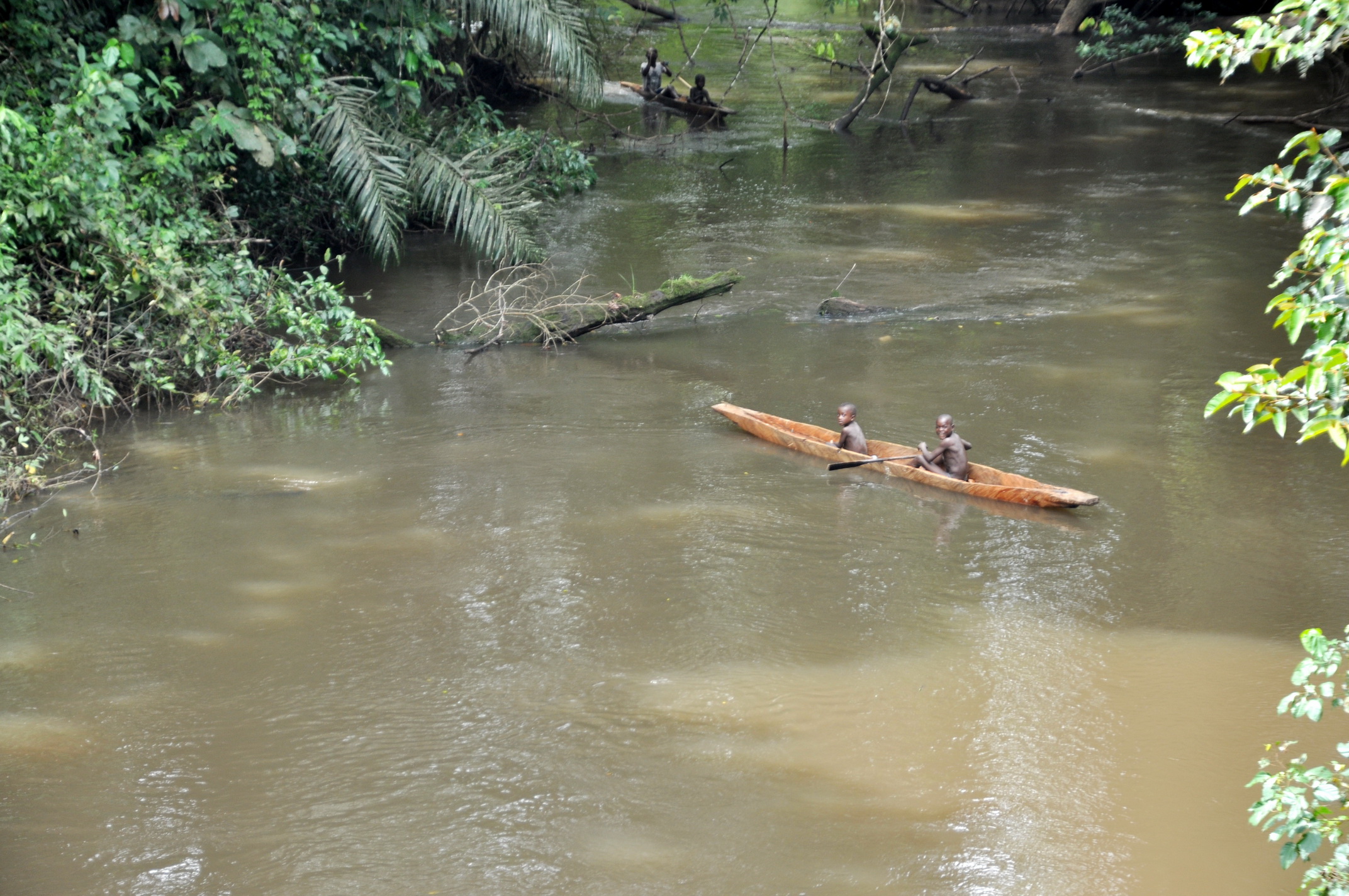
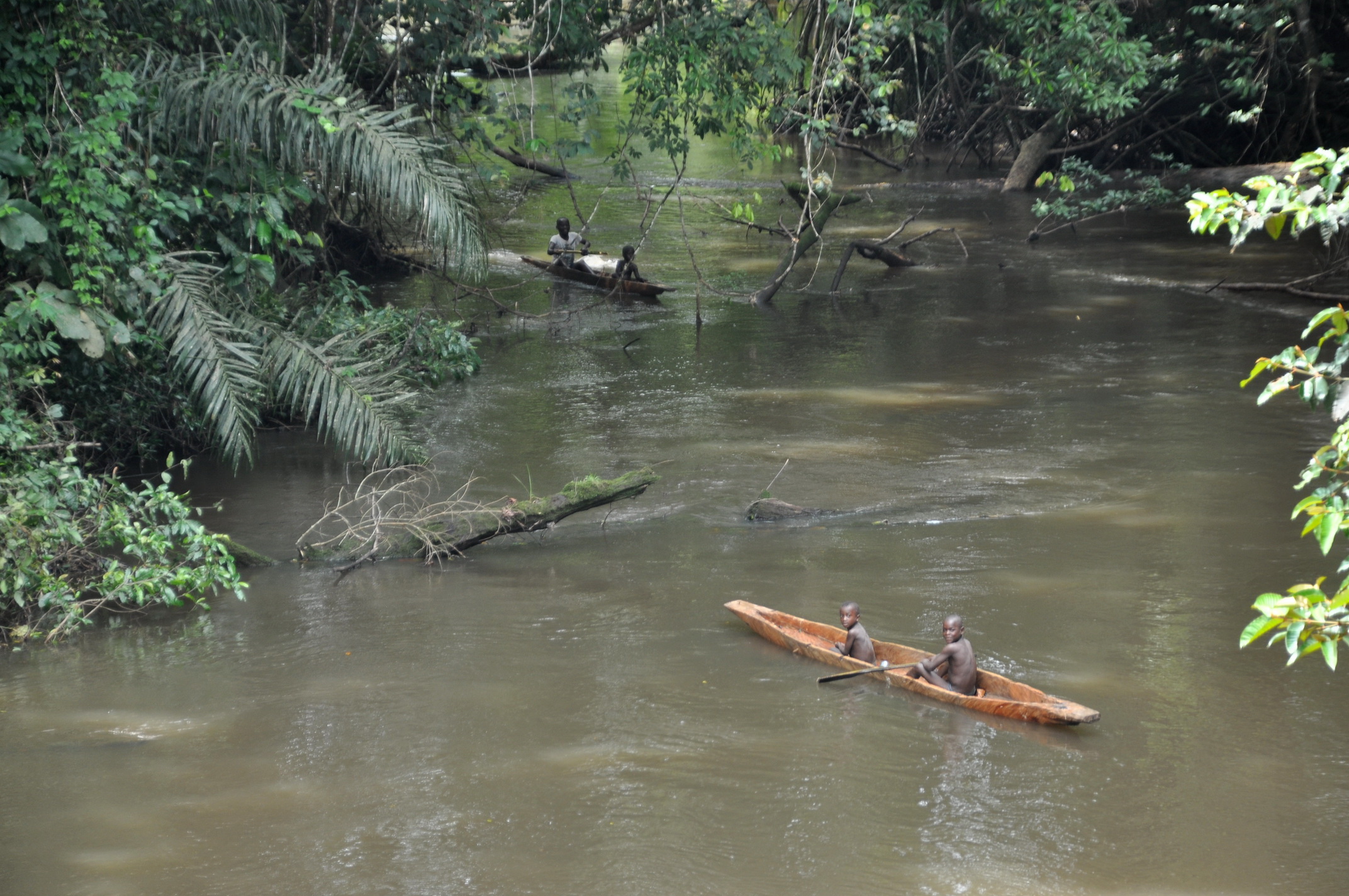
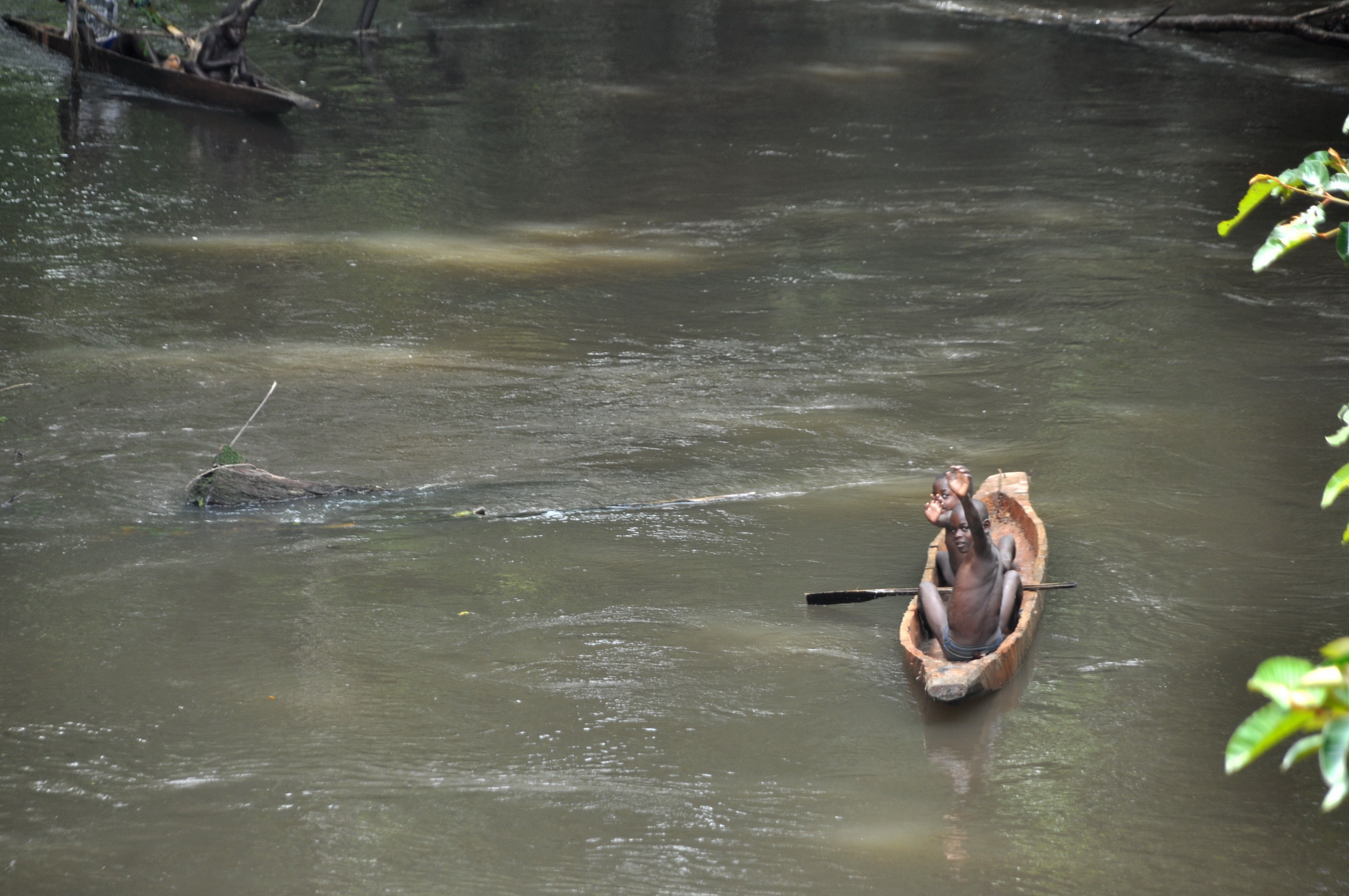
The Central African forest peoples did not seem to be a fashionable subject in the things I had read. The old classifications I came across divided them into three groups.
What interested me was that the different forest peoples were not all closely related. Different communities developed a short stature, and I wondered if the demands of life in those forests could explain the resemblance.
I’d read about old lineages in the Y chromosome among Central African populations, and imagined that the ancestors of all living human beings might have lived in forests somewhere in this part of Africa tens of thousands of years ago. I decided I had come to my prehistoric homeland.
Perhaps that was why the villagers received me so warmly.
I couldn’t even get a rough figure for the population of these communities.
The estimates I saw ran from 40,000 to 280,000, a sevenfold difference. And these were people, not figures. They lived very close to the forest. I’d been told they once had languages of their own but had taken to speaking their neighbours’ languages before Europeans arrived, and some also spoke French by the time of my visit. The old vocabulary was said to survive in words for life in the forest. Just as the Chukchi are said to have many words for different kinds of snow, I heard that forest communities had dozens for the honey they gather. Written records were not part of the picture I saw.
People often remained outside the formal system of benefits, voting and civil registration, I was told. That made them wonderfully useful to neighbouring dictators who never had to leave office.
How easy to say, “A million forest people voted for me.”
Some of the things I heard were clearly travellers’ tales, among them a gruesome one about eating the dead, and another about how people had once kept a fire going but had not known how to make it, until aid workers brought lighters.
People wore little in some places, at times just a loincloth. The young women had none of our embarrassment about going bare-breasted.
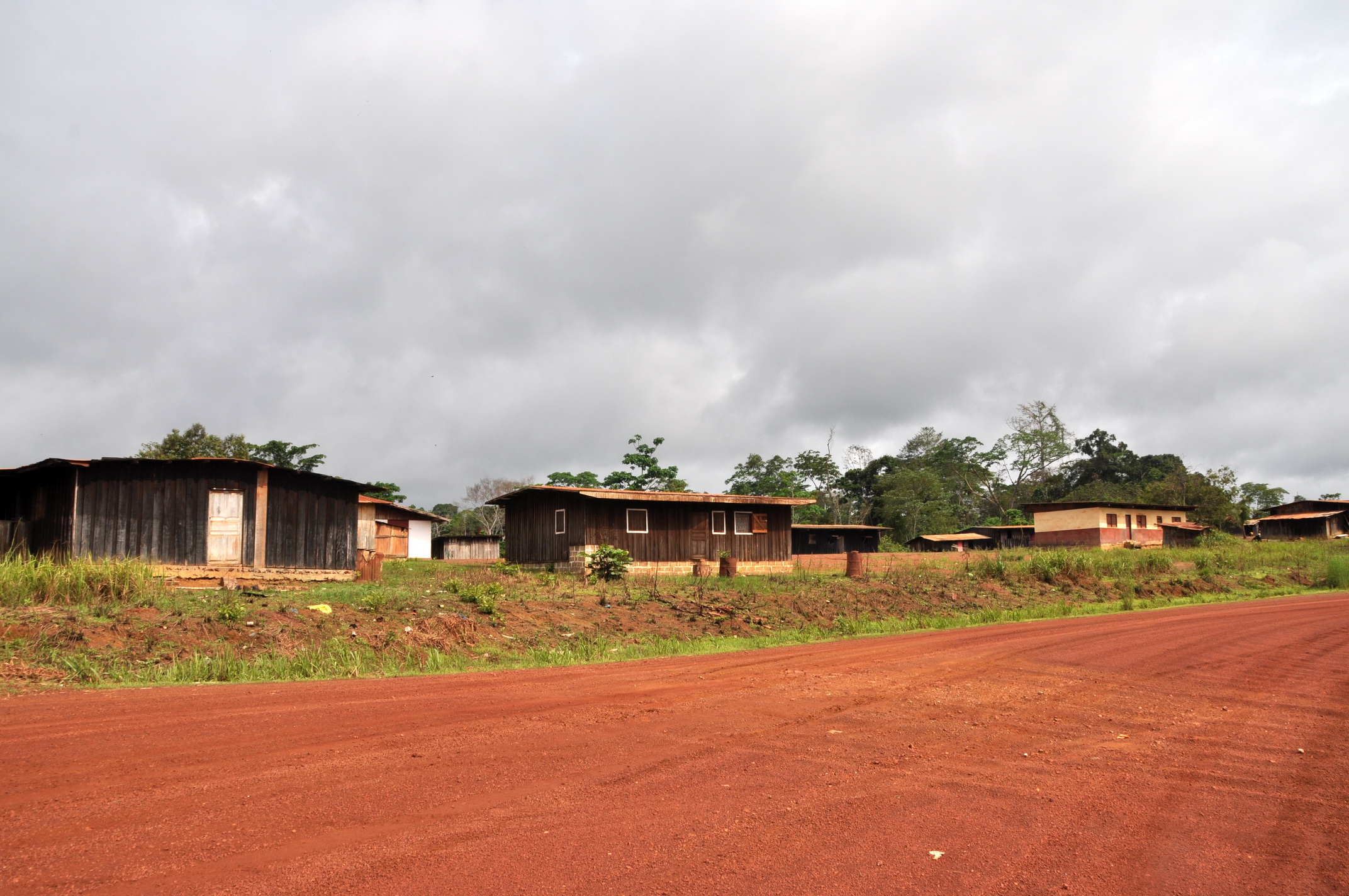
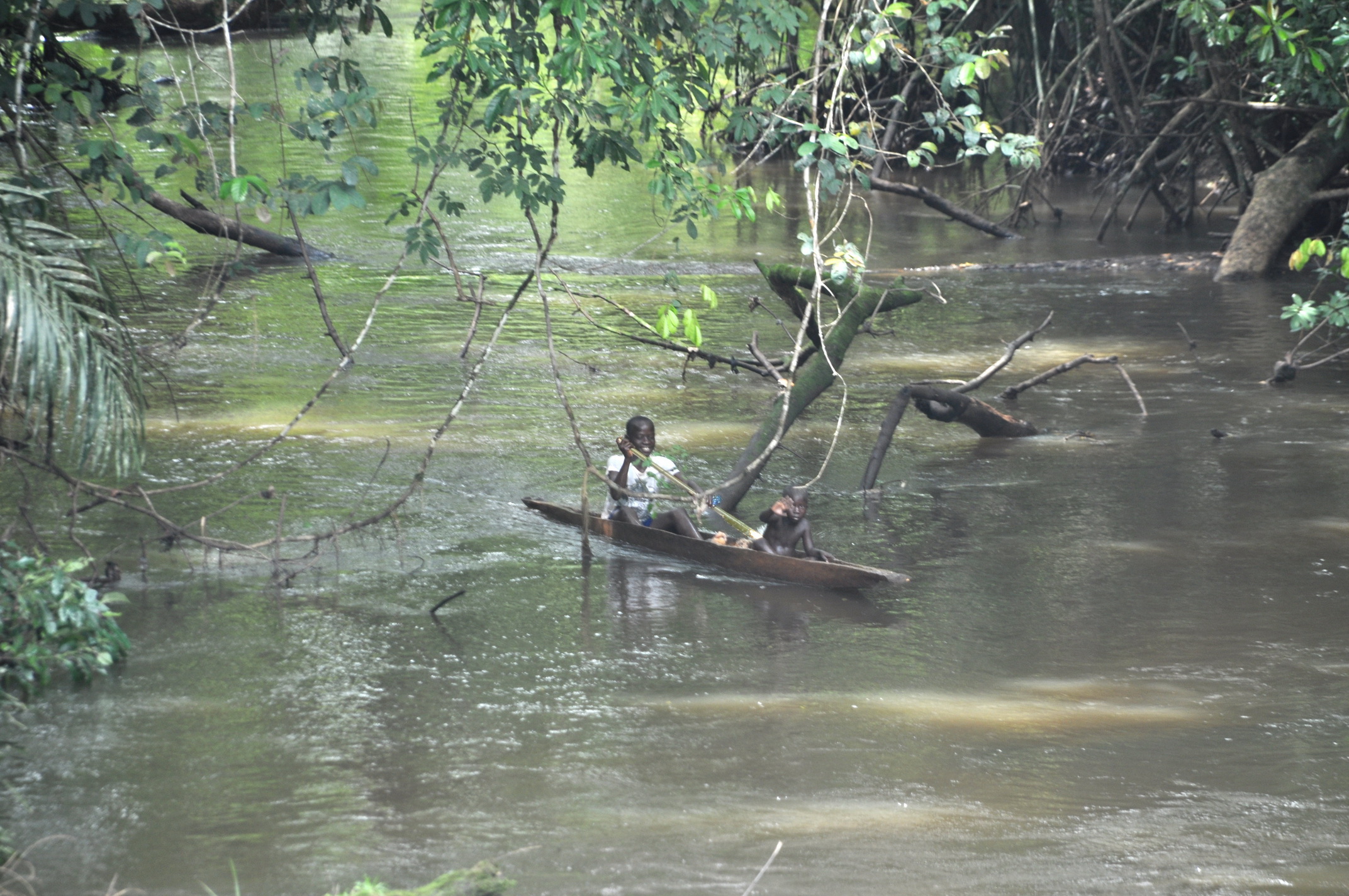
They often live along a river and travel in dugout canoes. They have their own villages, most of which weren’t on my maps. Many had no roads to speak of, because no road was needed.
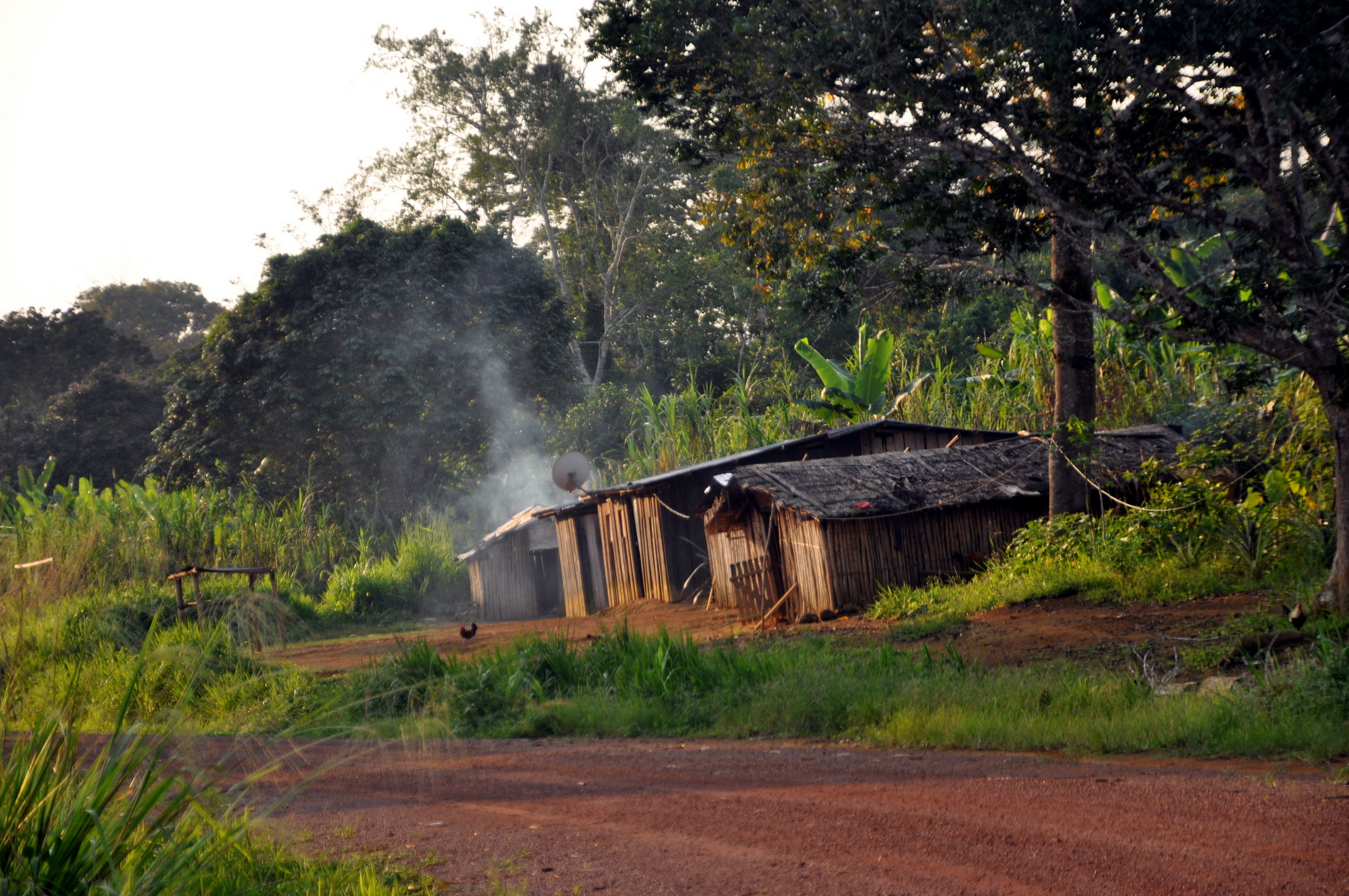
People lived in houses built of branches and leaves.
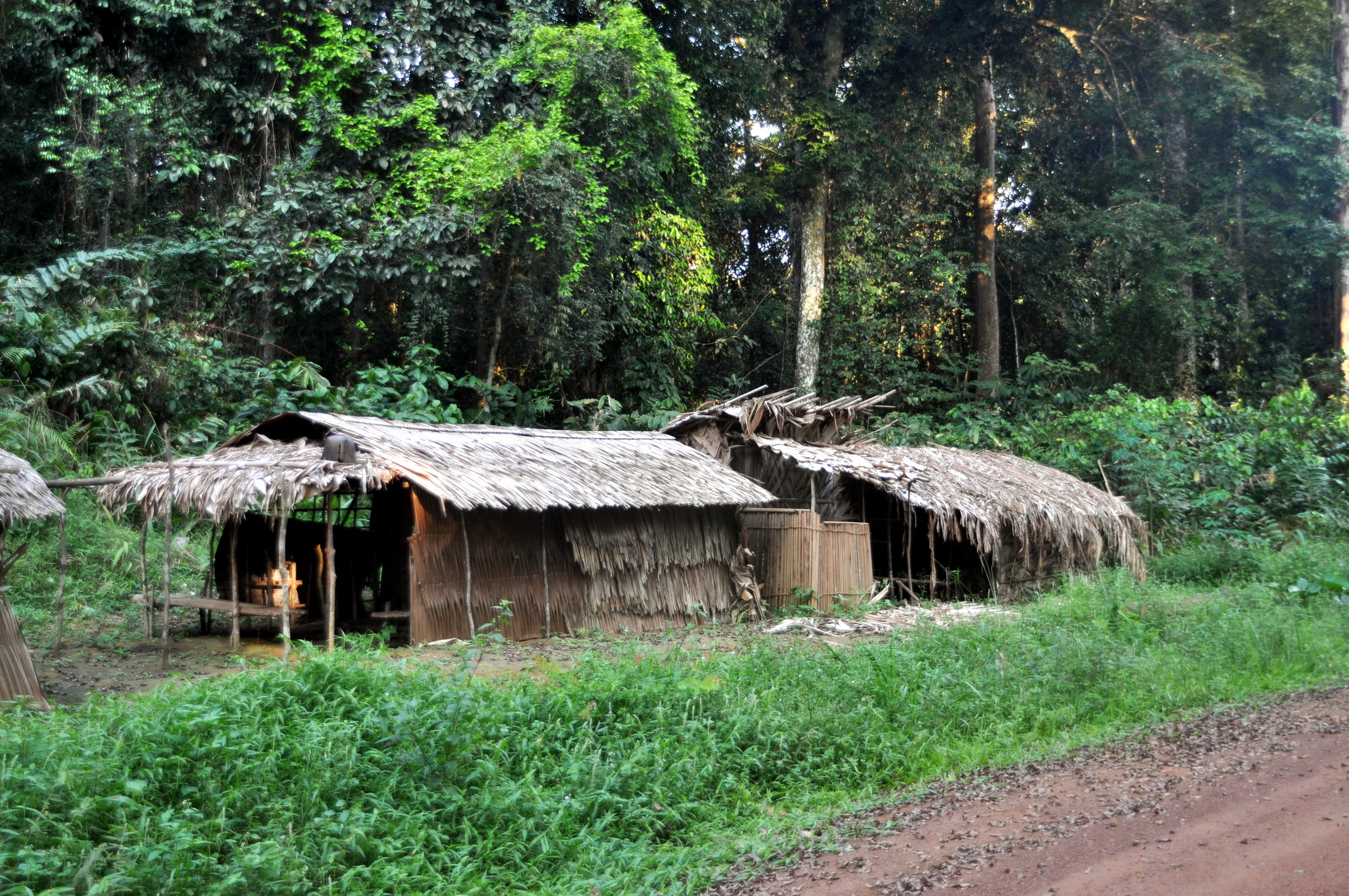
I found it remarkable to be seeing this in the twenty-first century, when there were so many humanitarian organisations agonising over refugees who had drowned—and those who hadn’t—and wondering what else to do for them.
It’s understandable, of course. Tropical Africa is a frightening place to go.
A pity life is so short. Give me another twenty years—another whole life—and I’d have come as a missionary.
At the sight of a white person, forest people sometimes took fright and disappeared in the blink of an eye into the forest they knew as home.
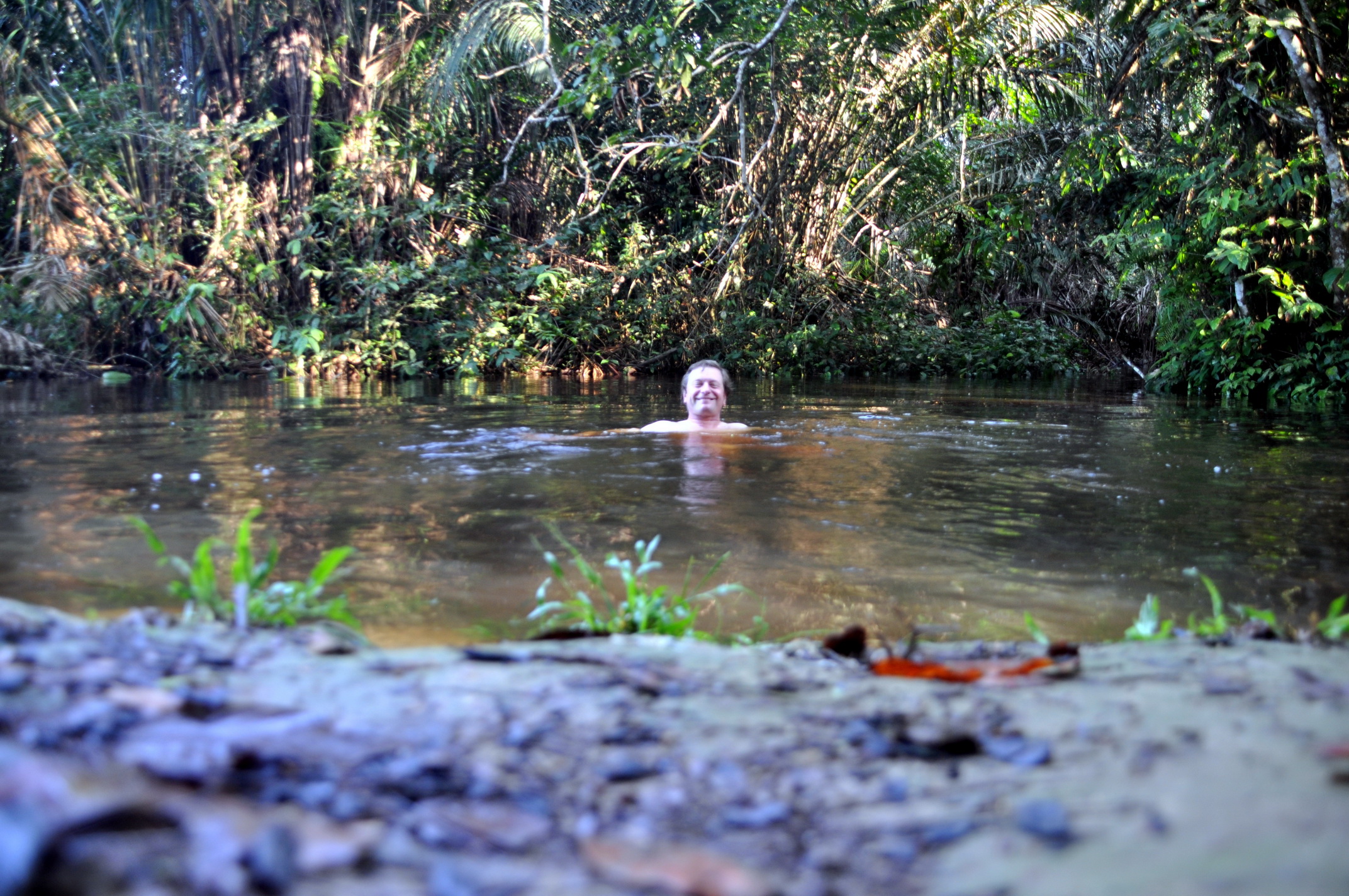
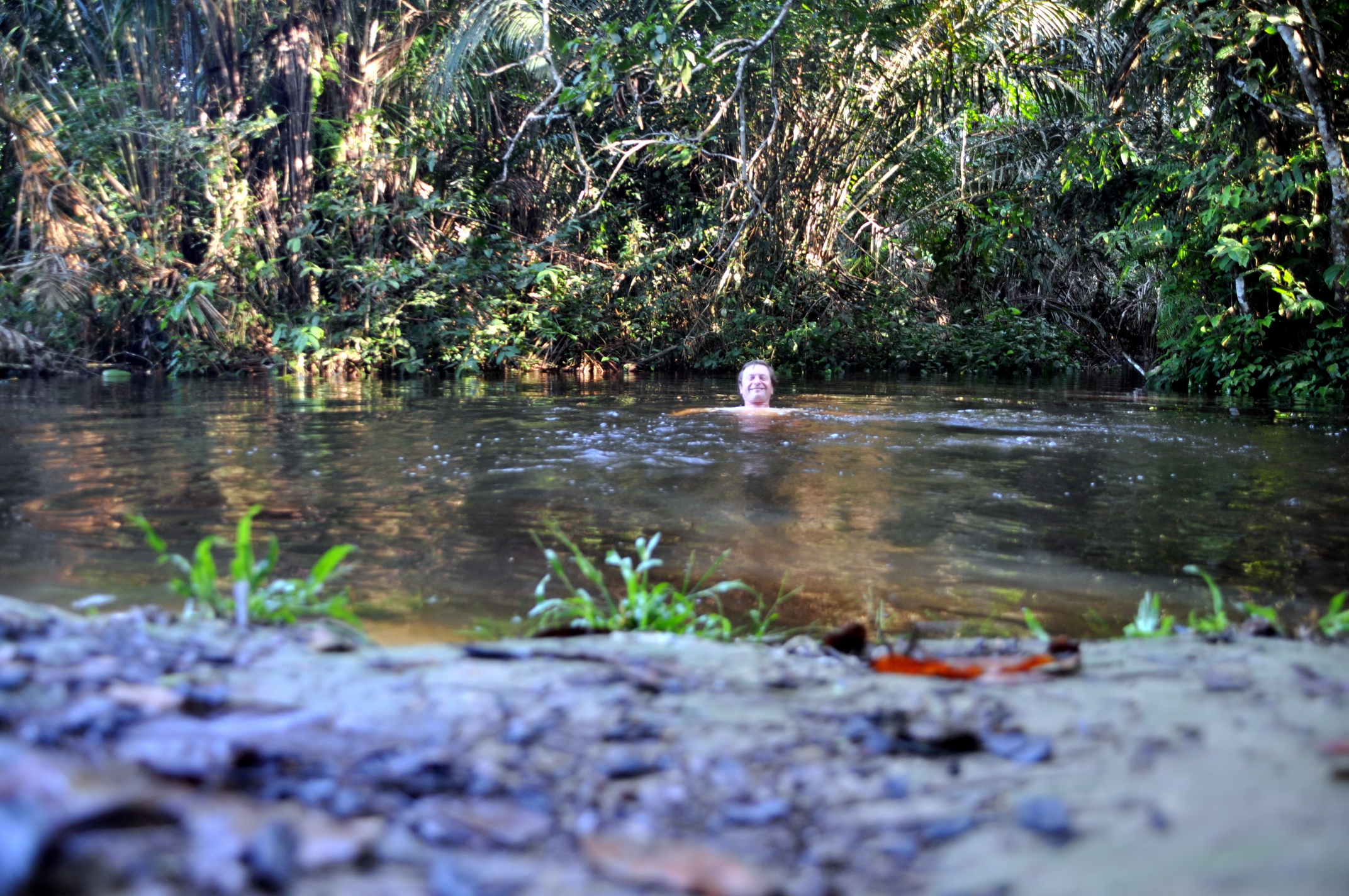
Not far from the equator I startled a group of local people who were bathing in a river. I was looking for a place to swim myself. The water everywhere looked a little turbid. Just the sort of place I’d picture crocodiles, but here was a spot with bathers already in it. I joked to myself that a crocodile which didn’t eat them would choke on me, four times the size. I didn’t see any large crocodiles there.
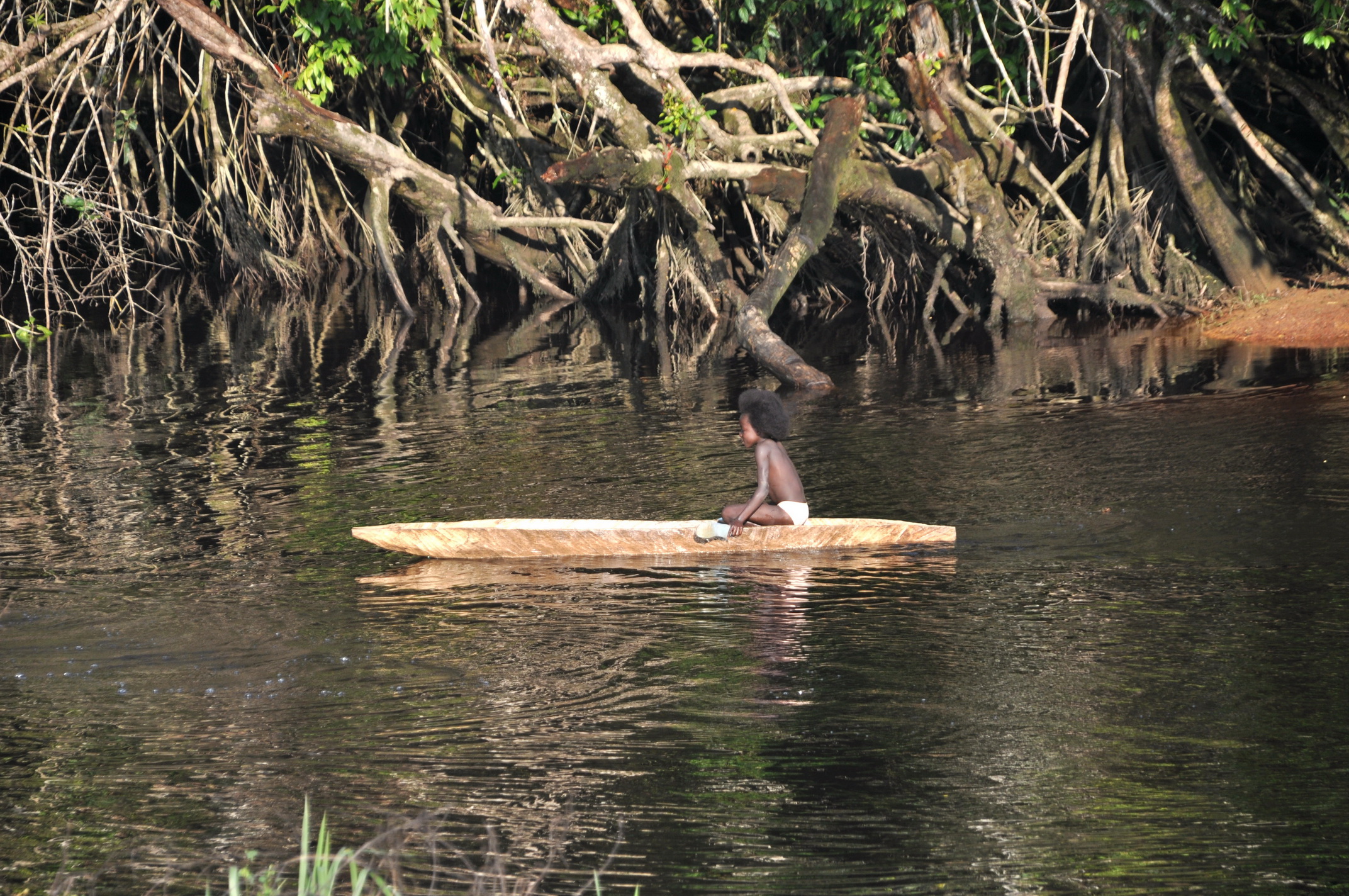
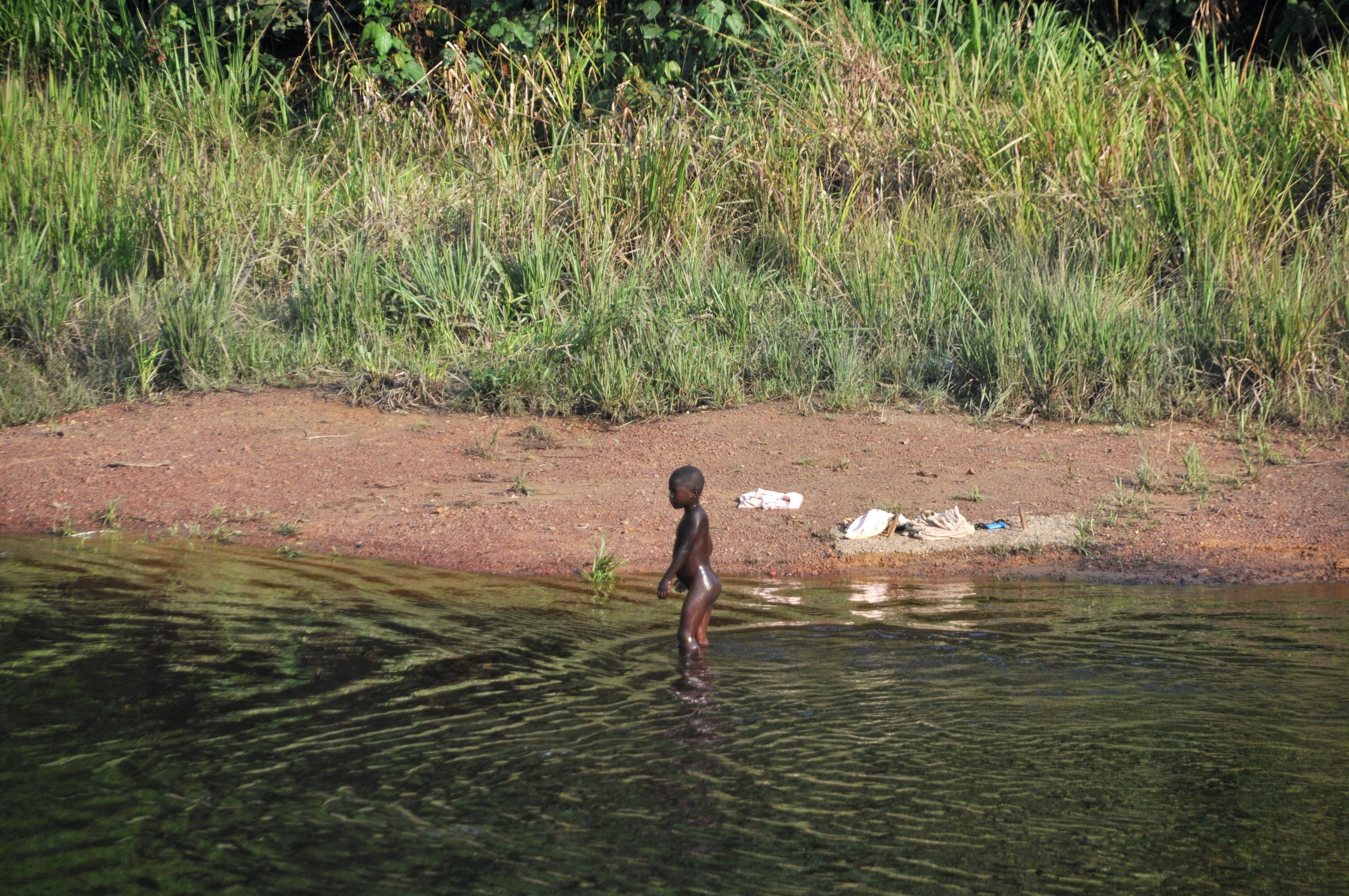
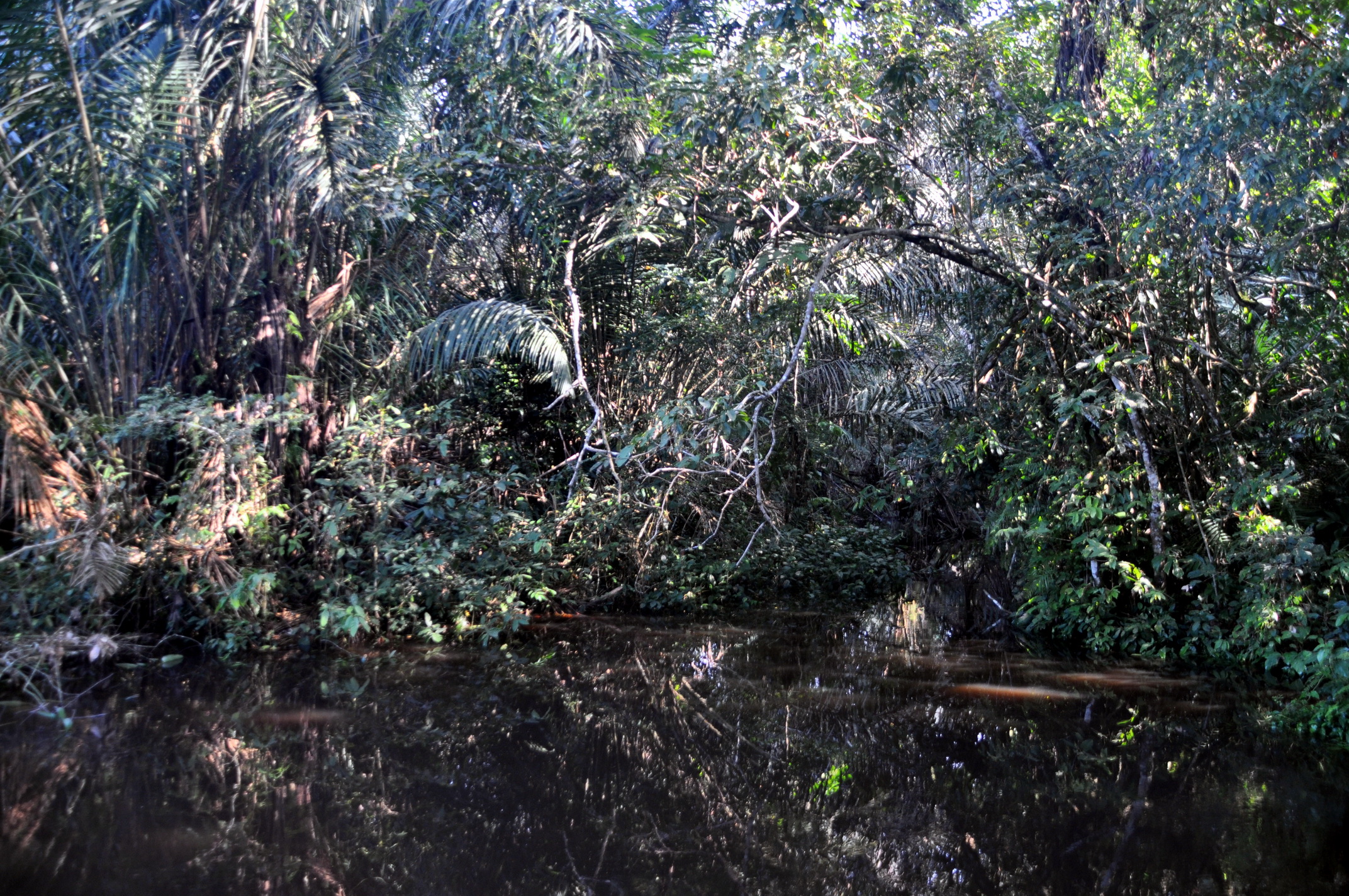
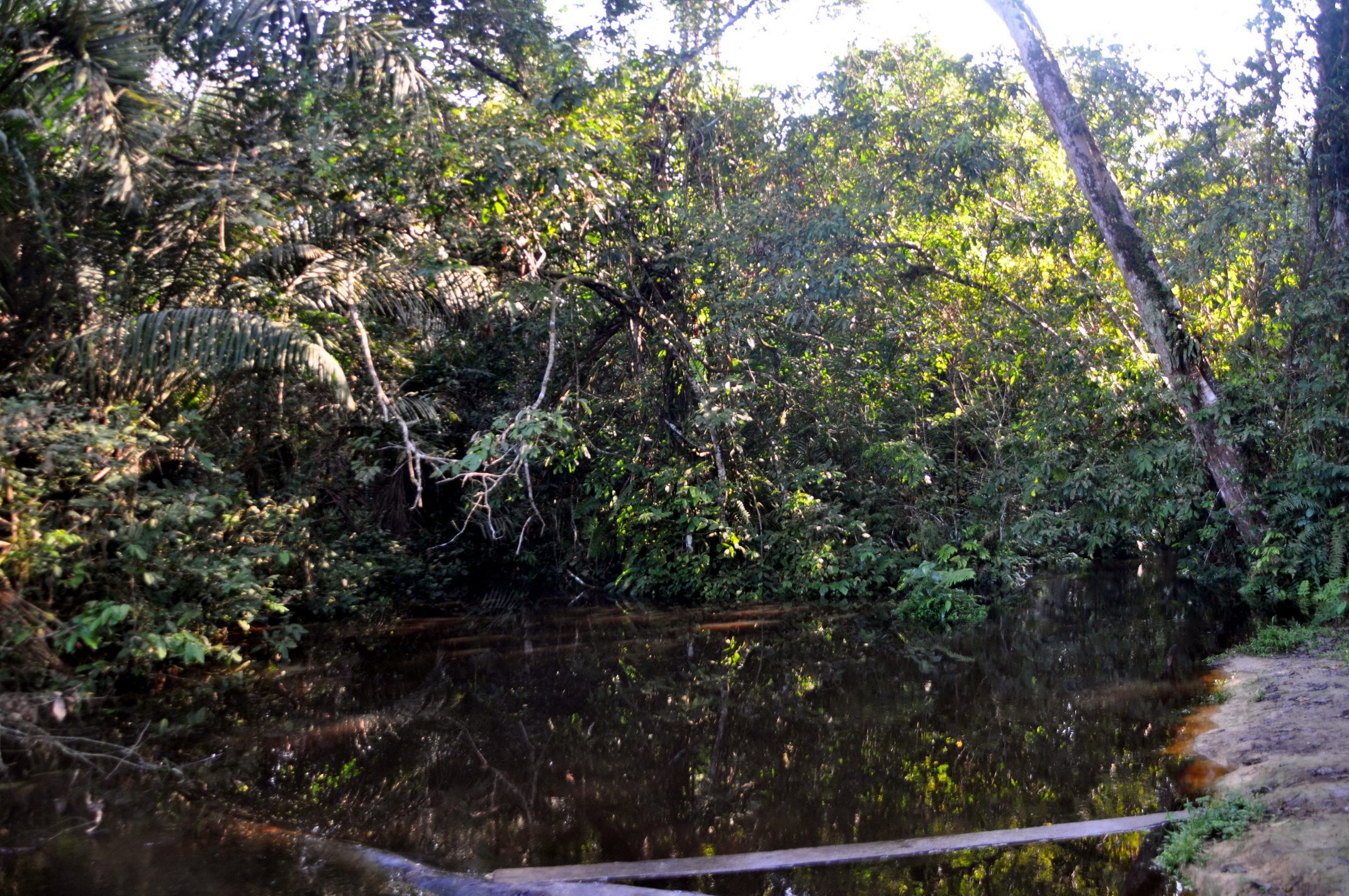
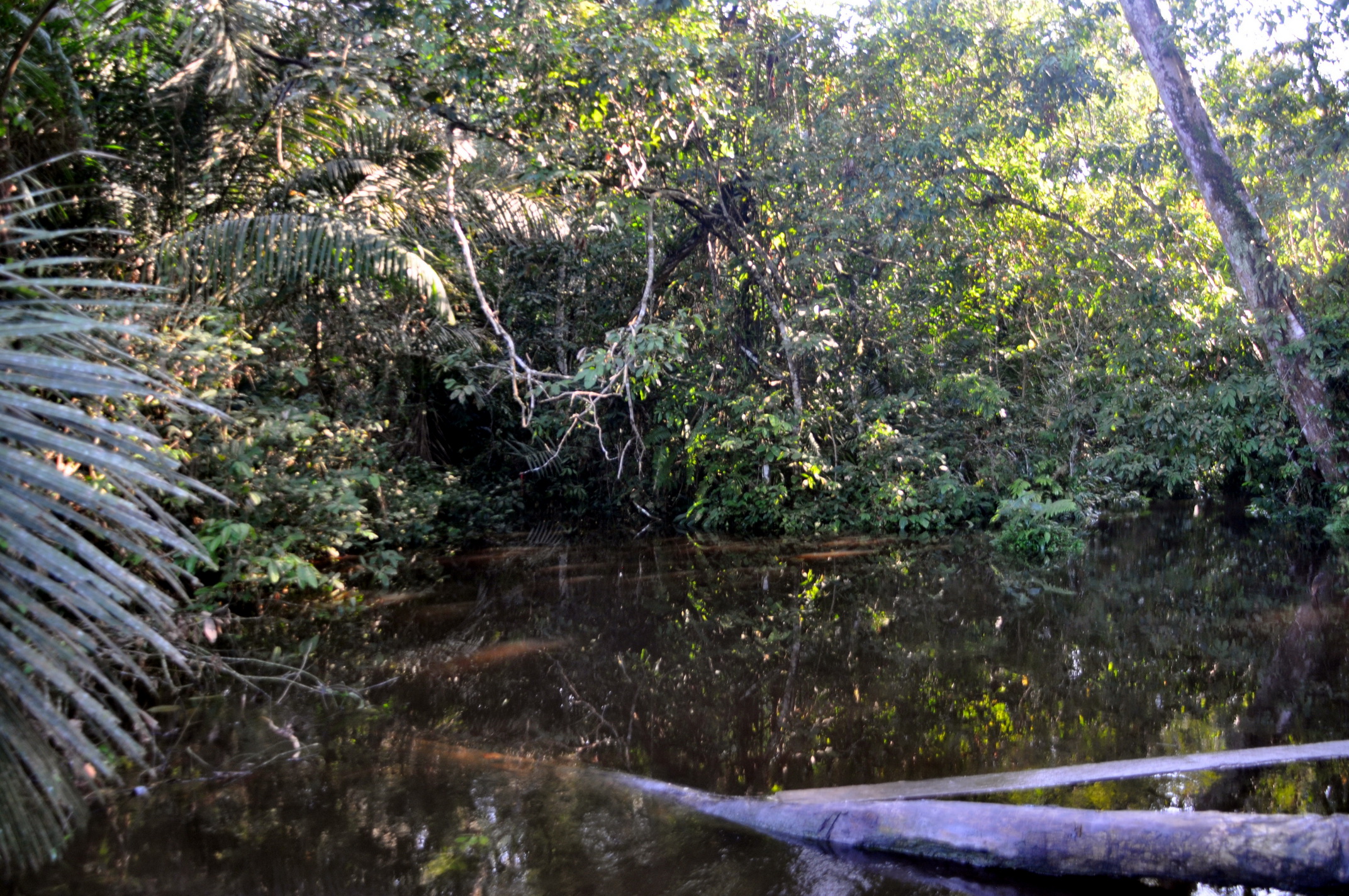
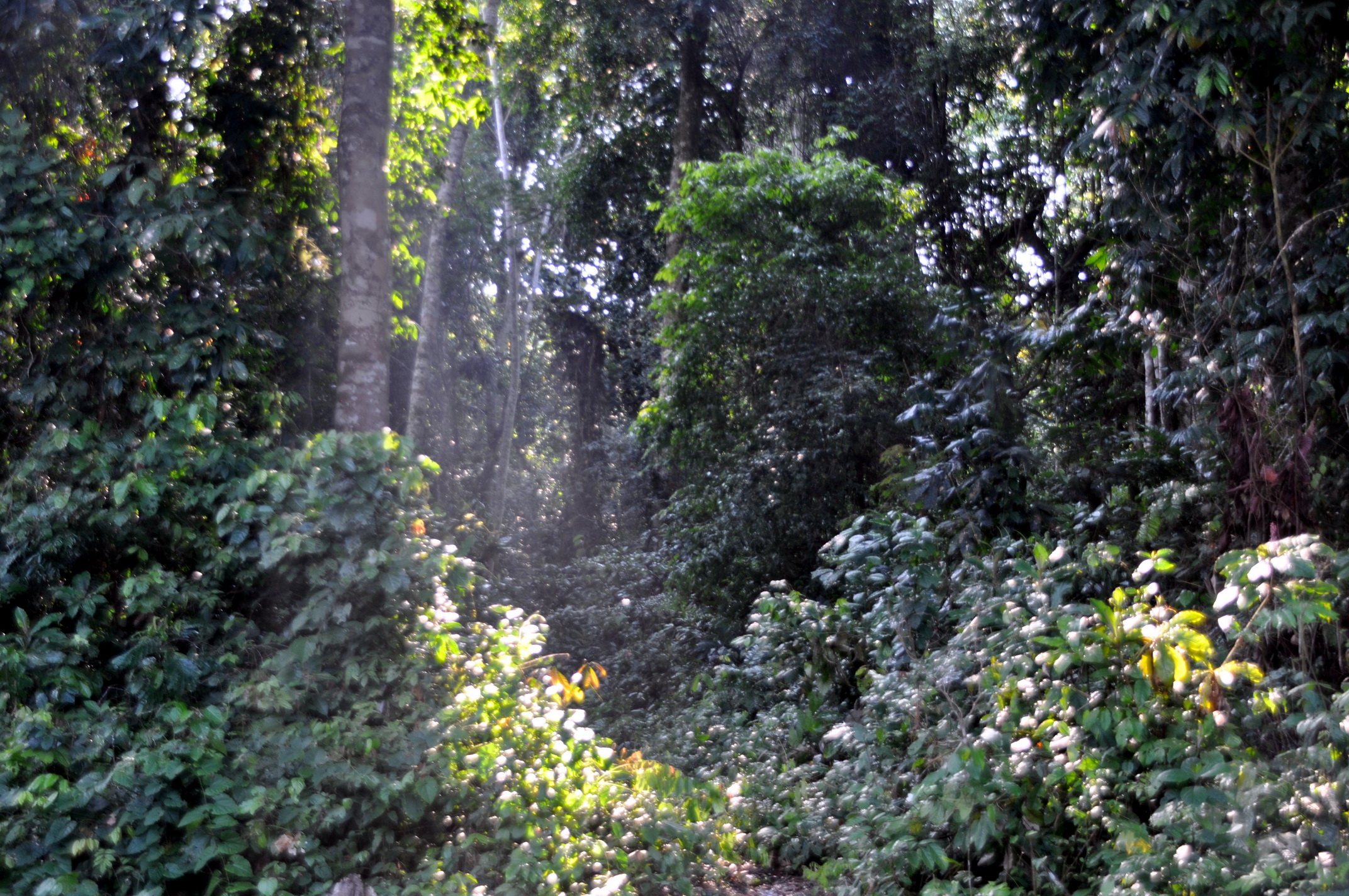
I got in, cooled off after the genuine African heat, swam and washed (00°06.025′S, 13°41.740′E).
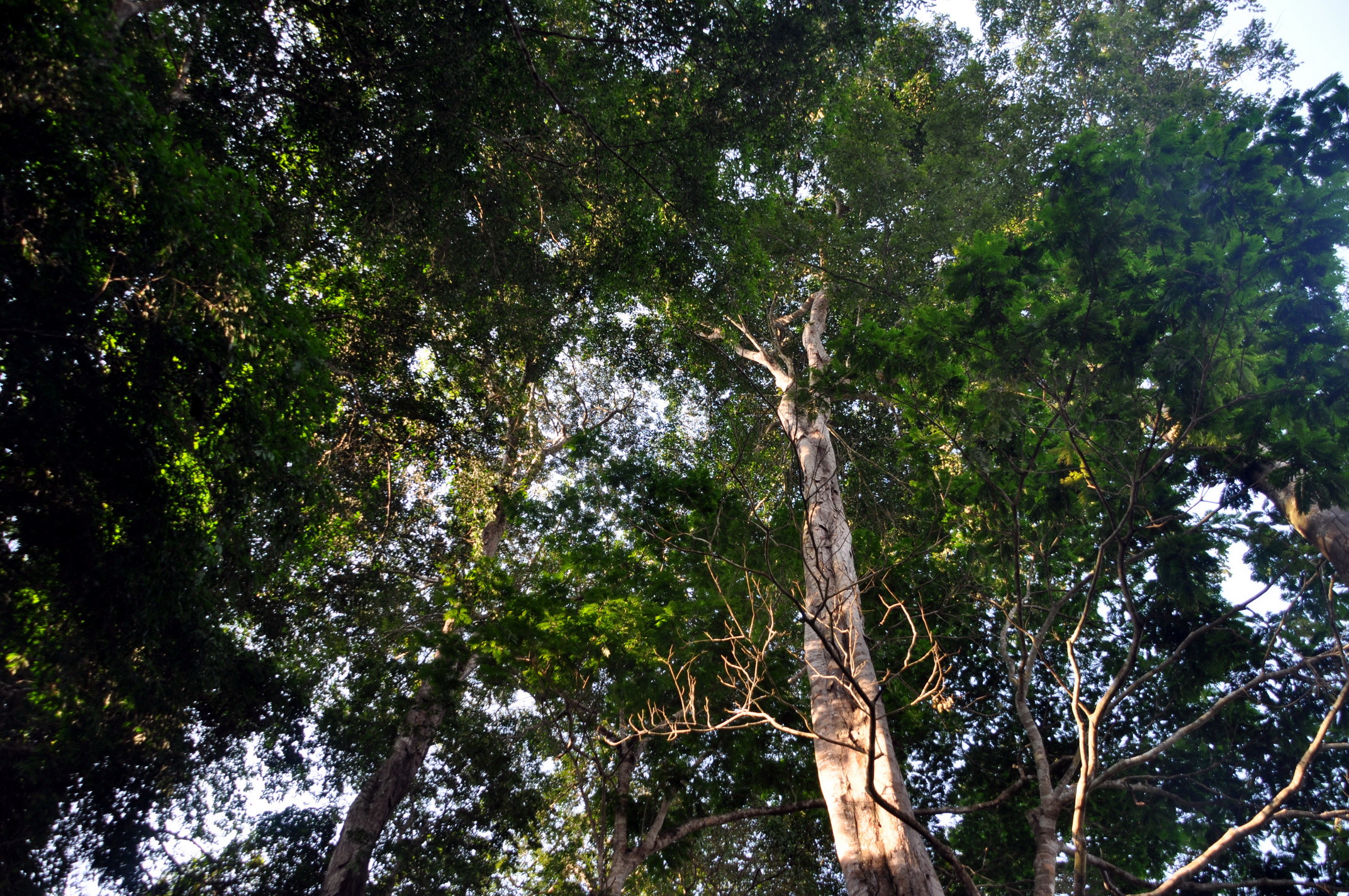
Then back on the road. There were good places to spend the night here. Wild places. No one would find me in the forest at night, not even the people who lived there.
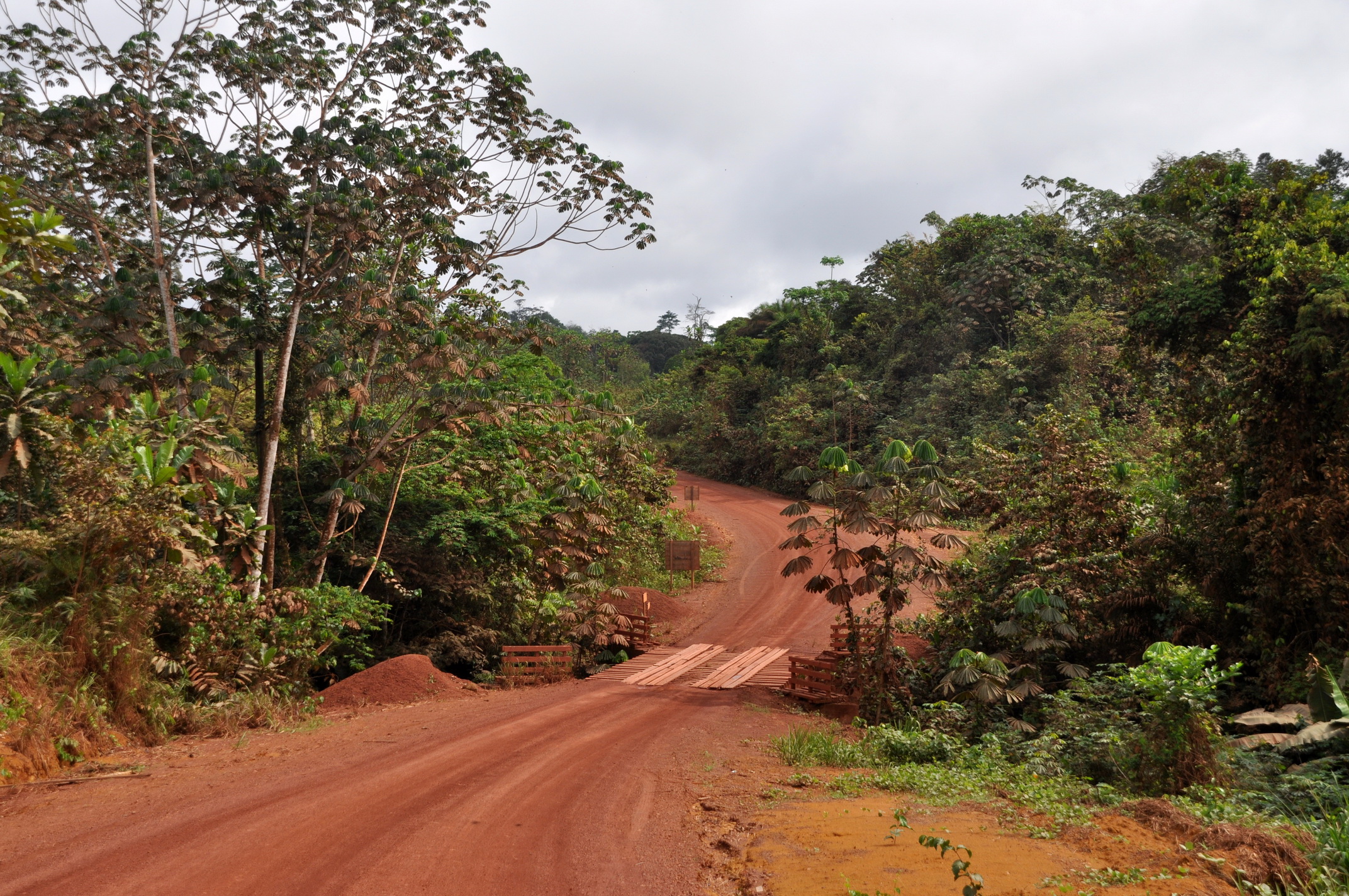
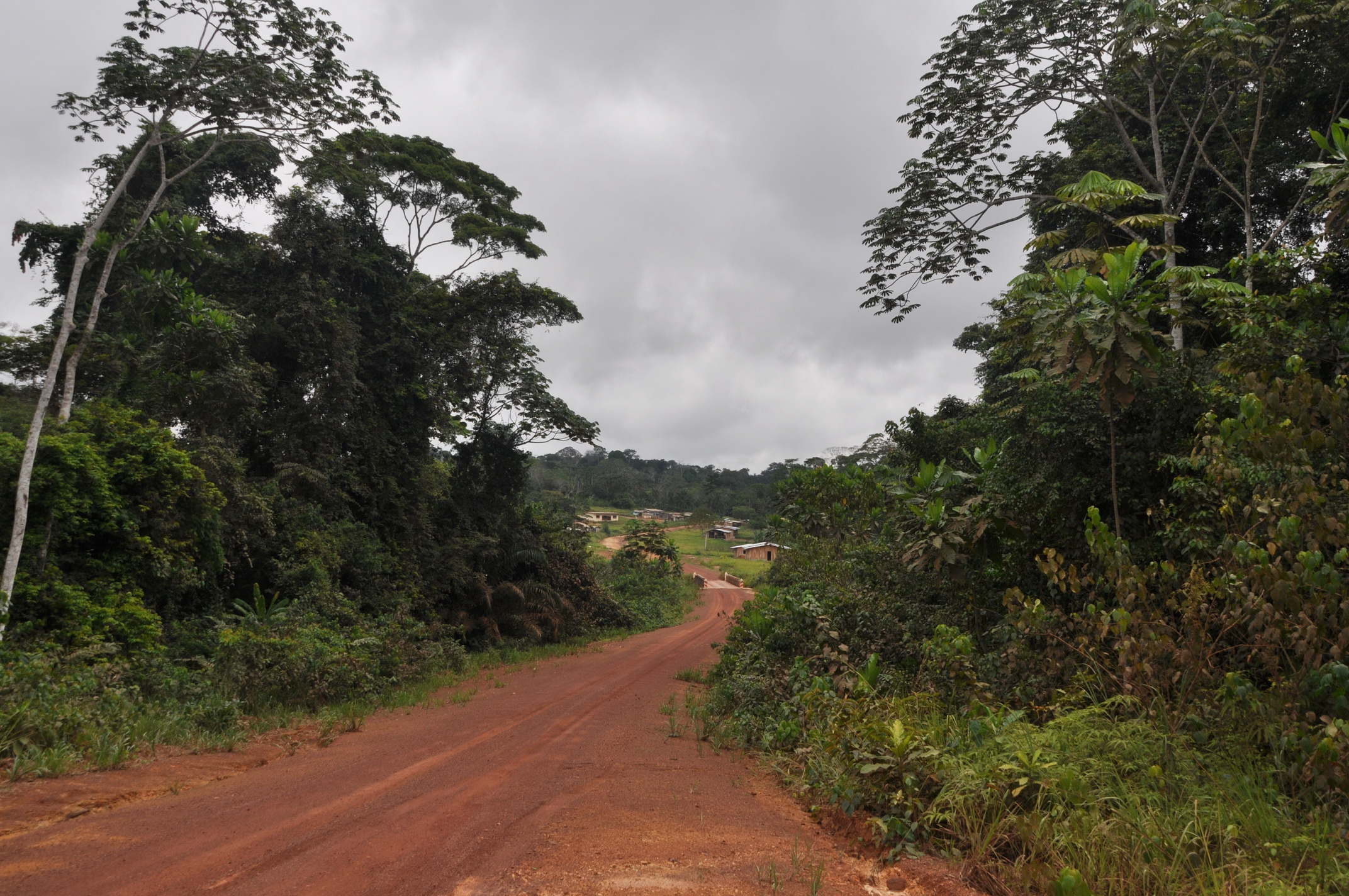
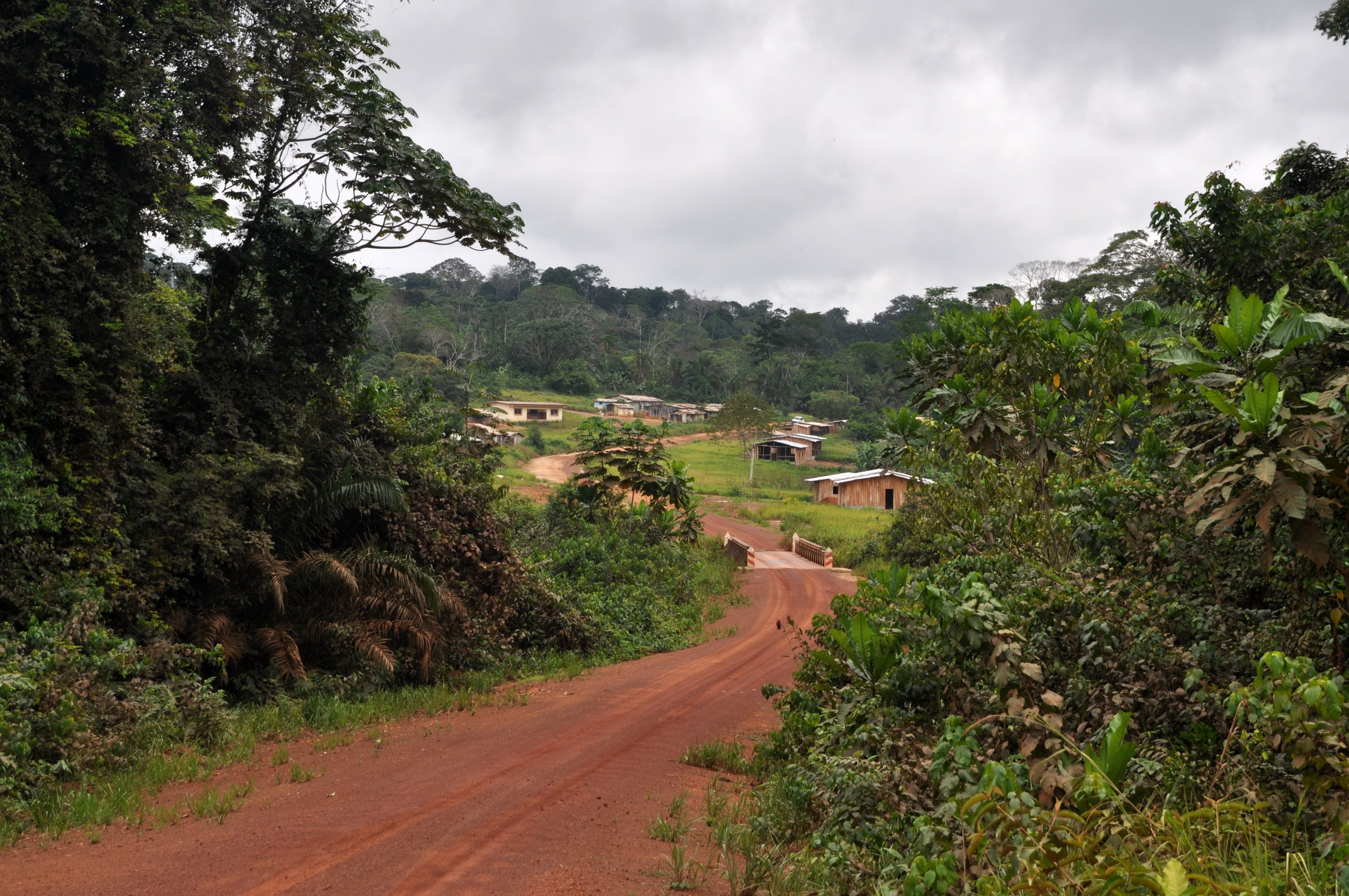
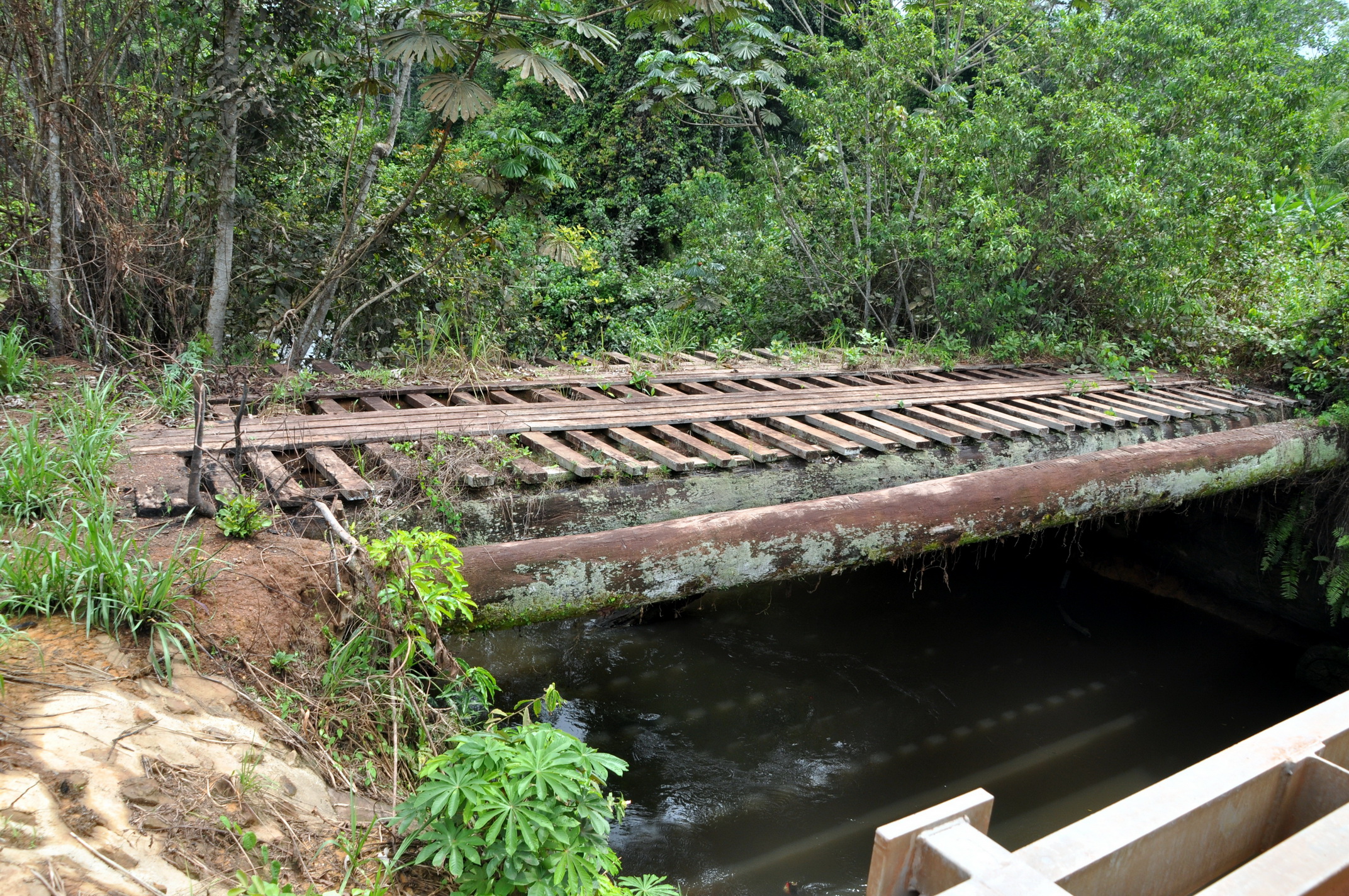
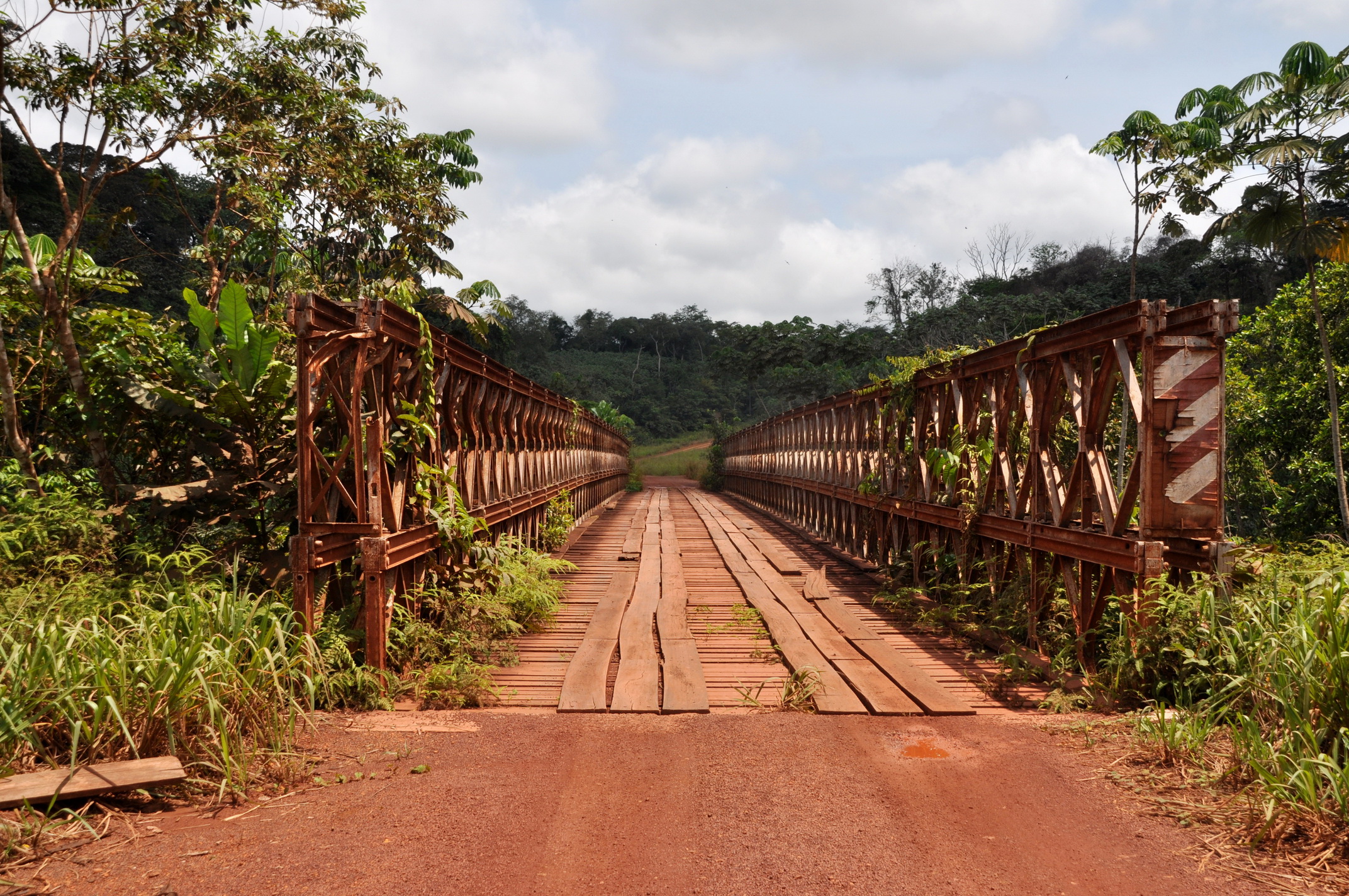
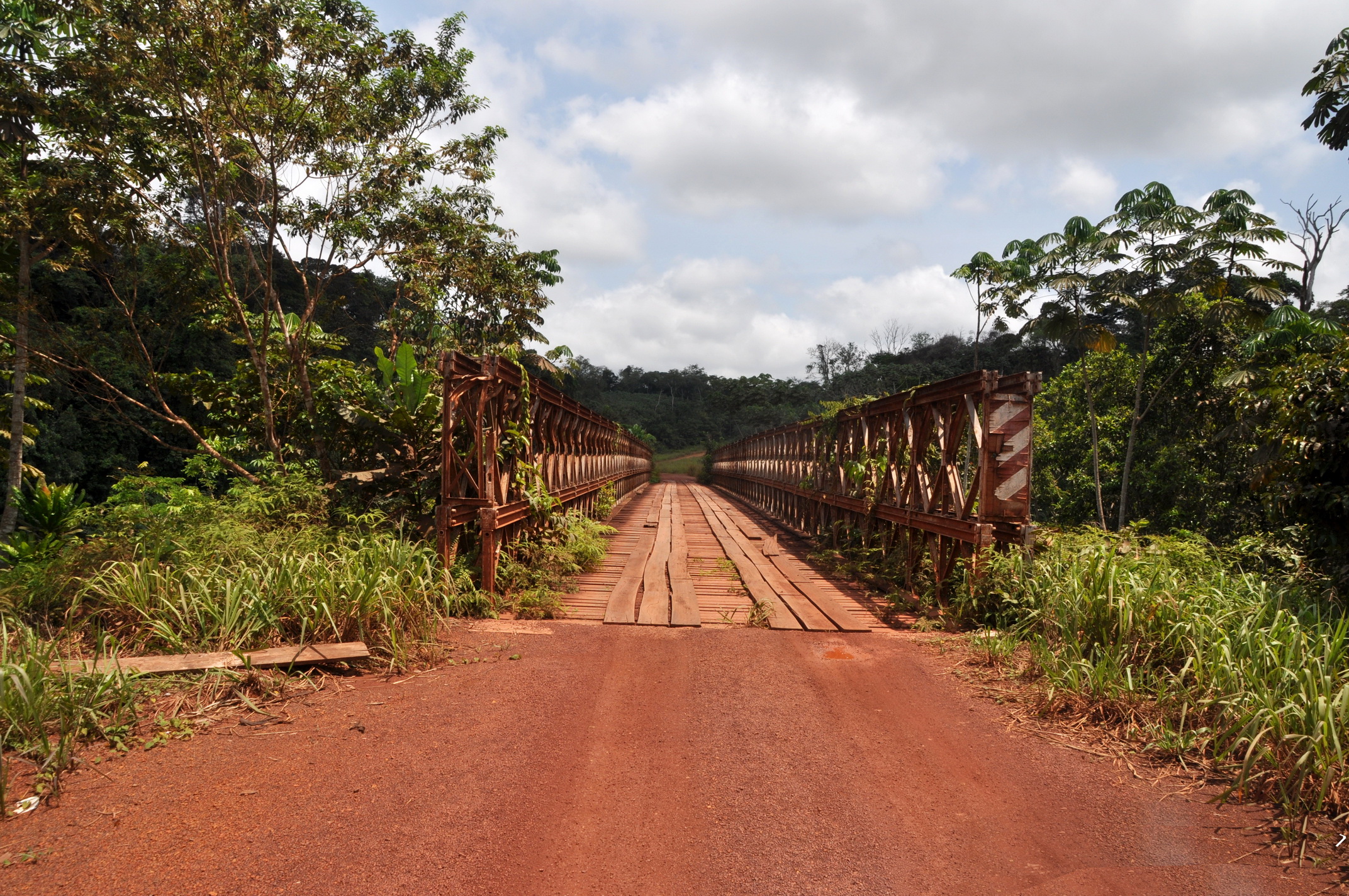
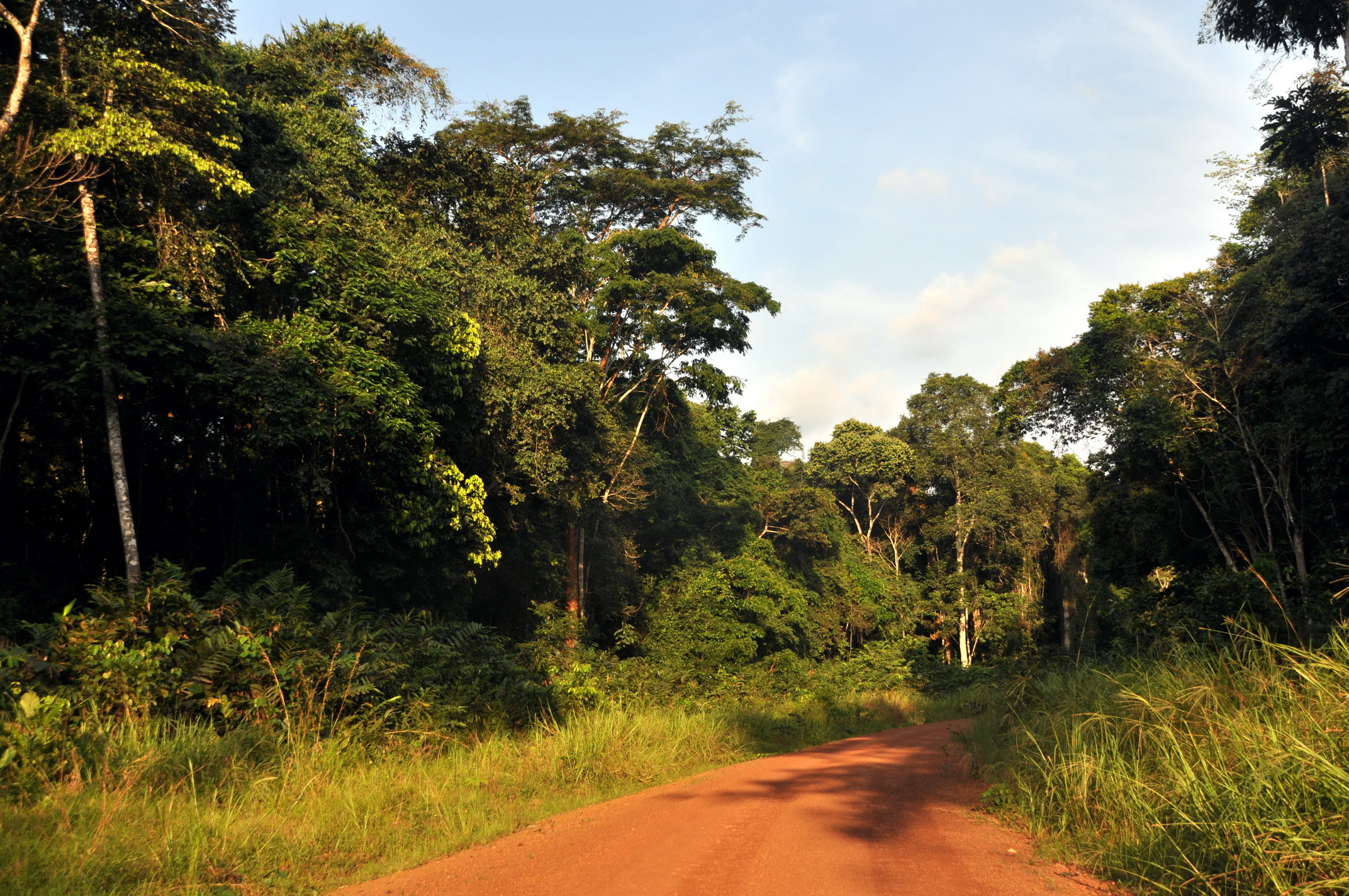
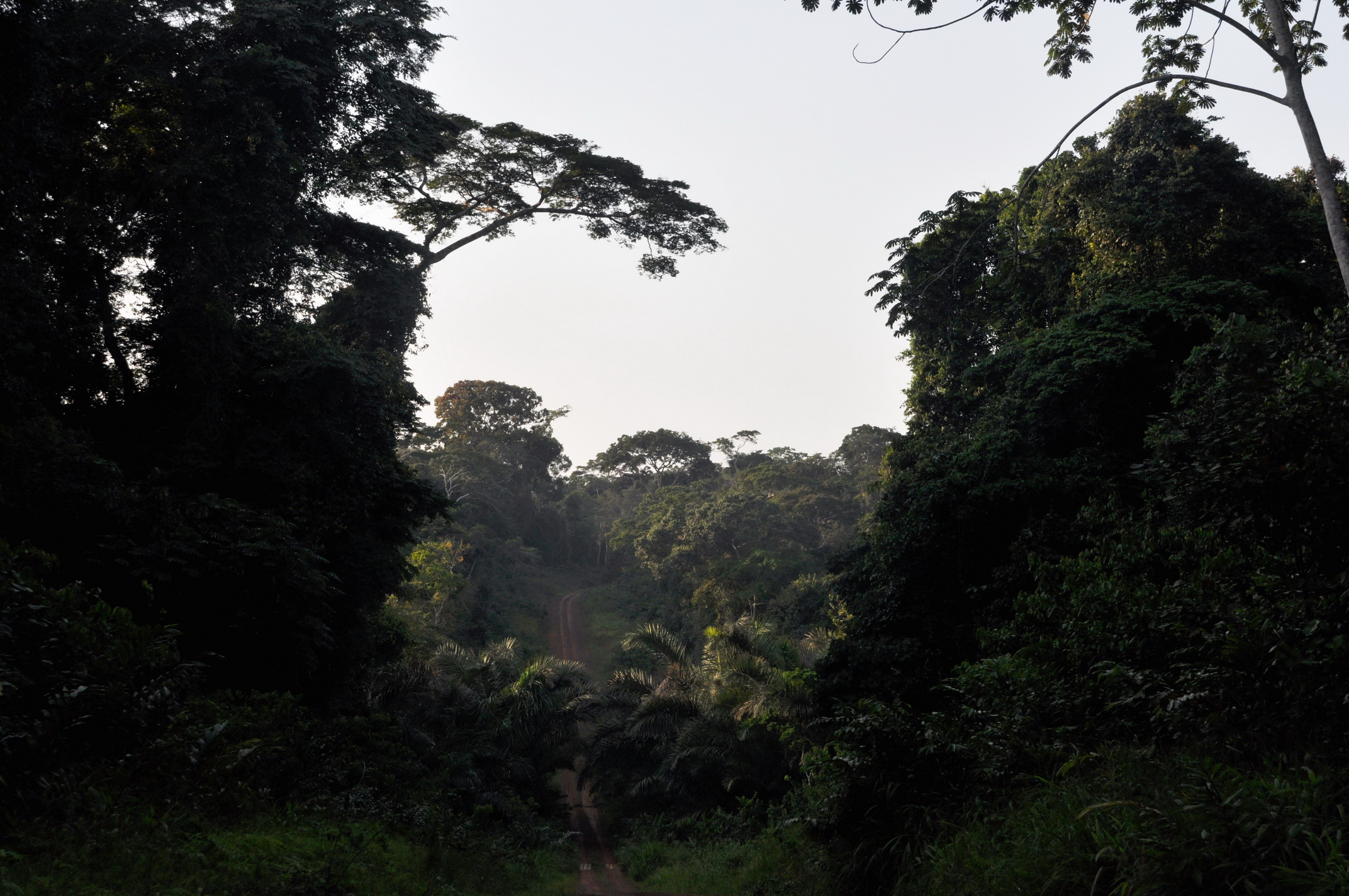
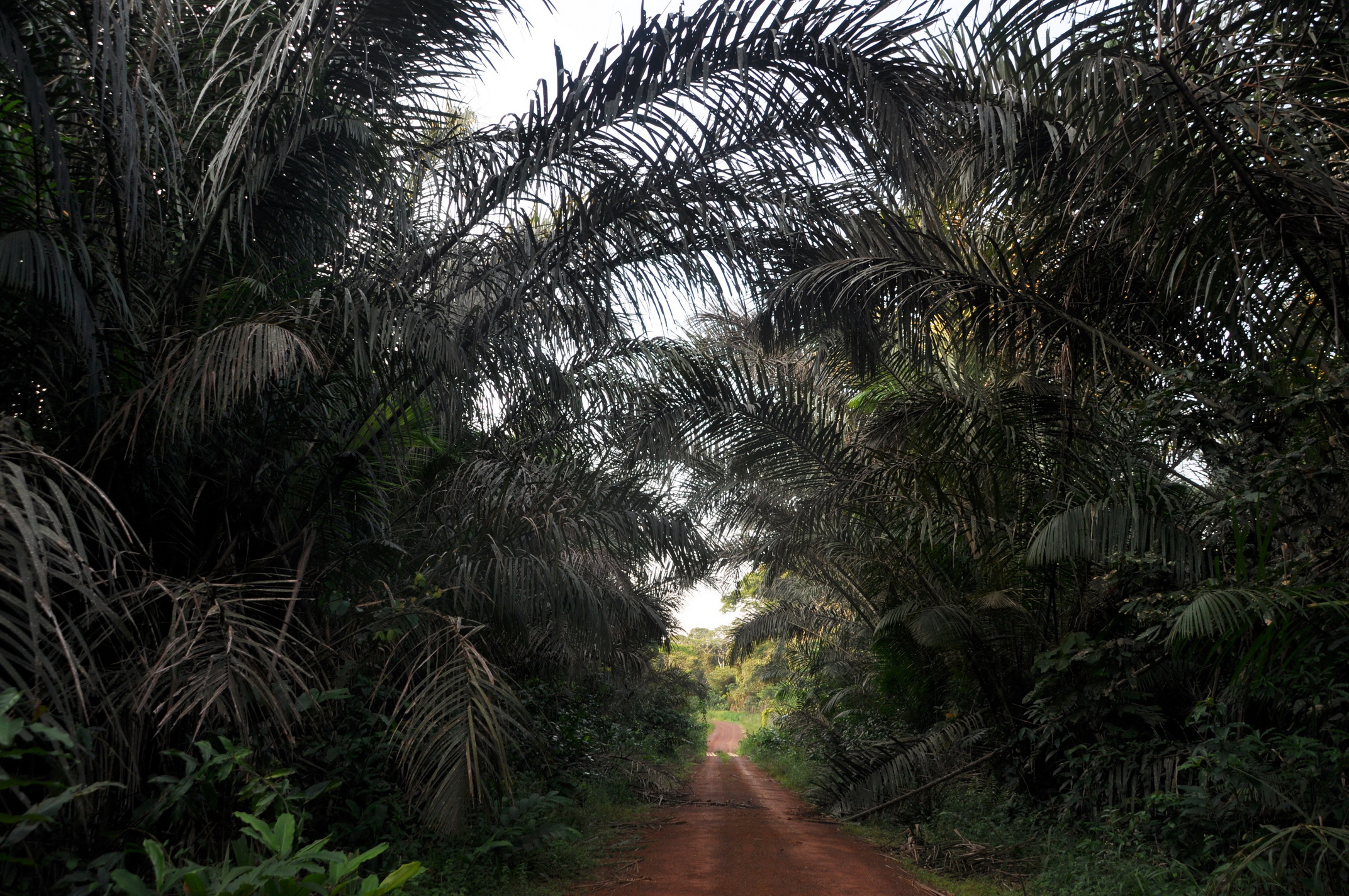
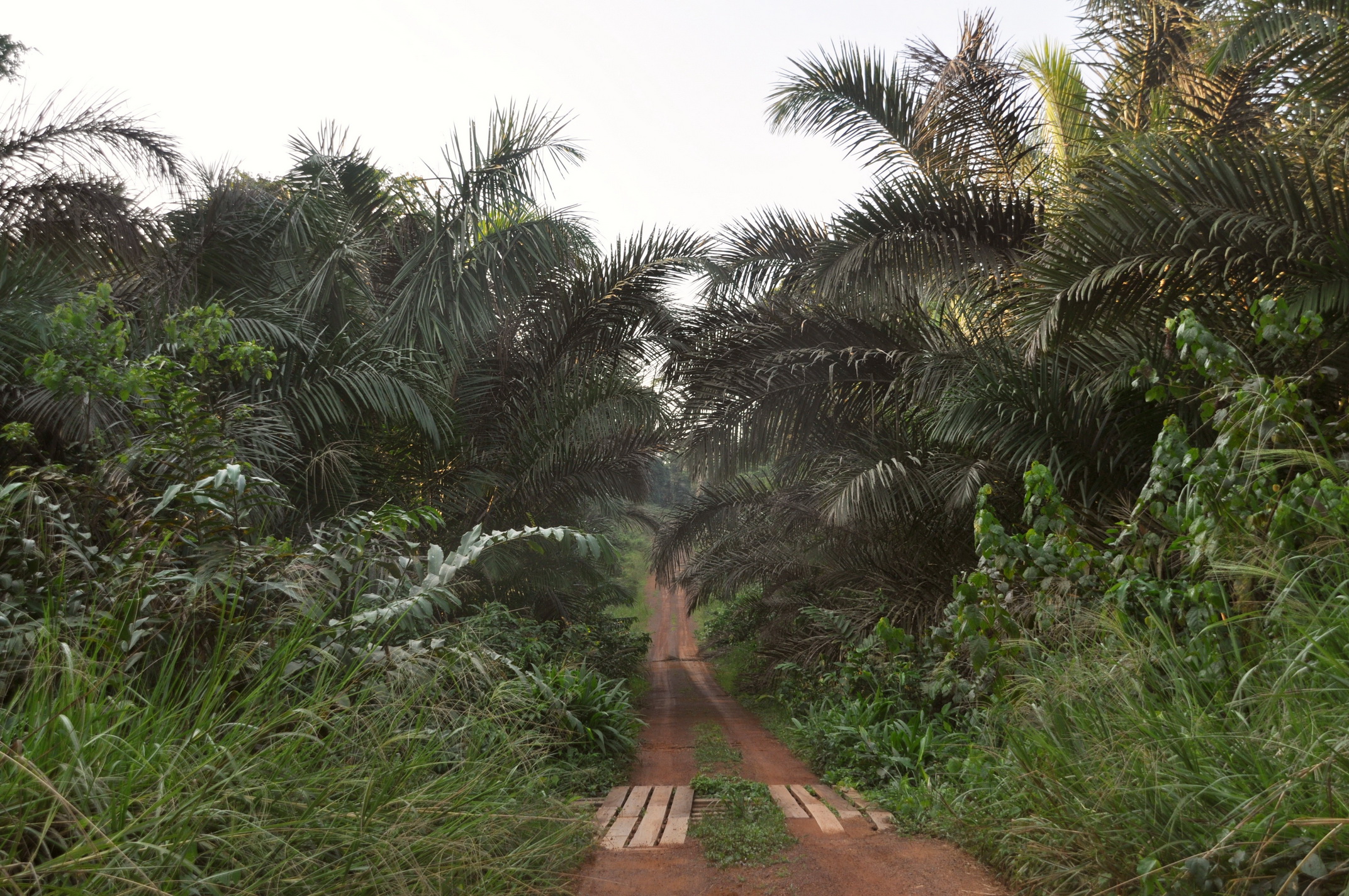
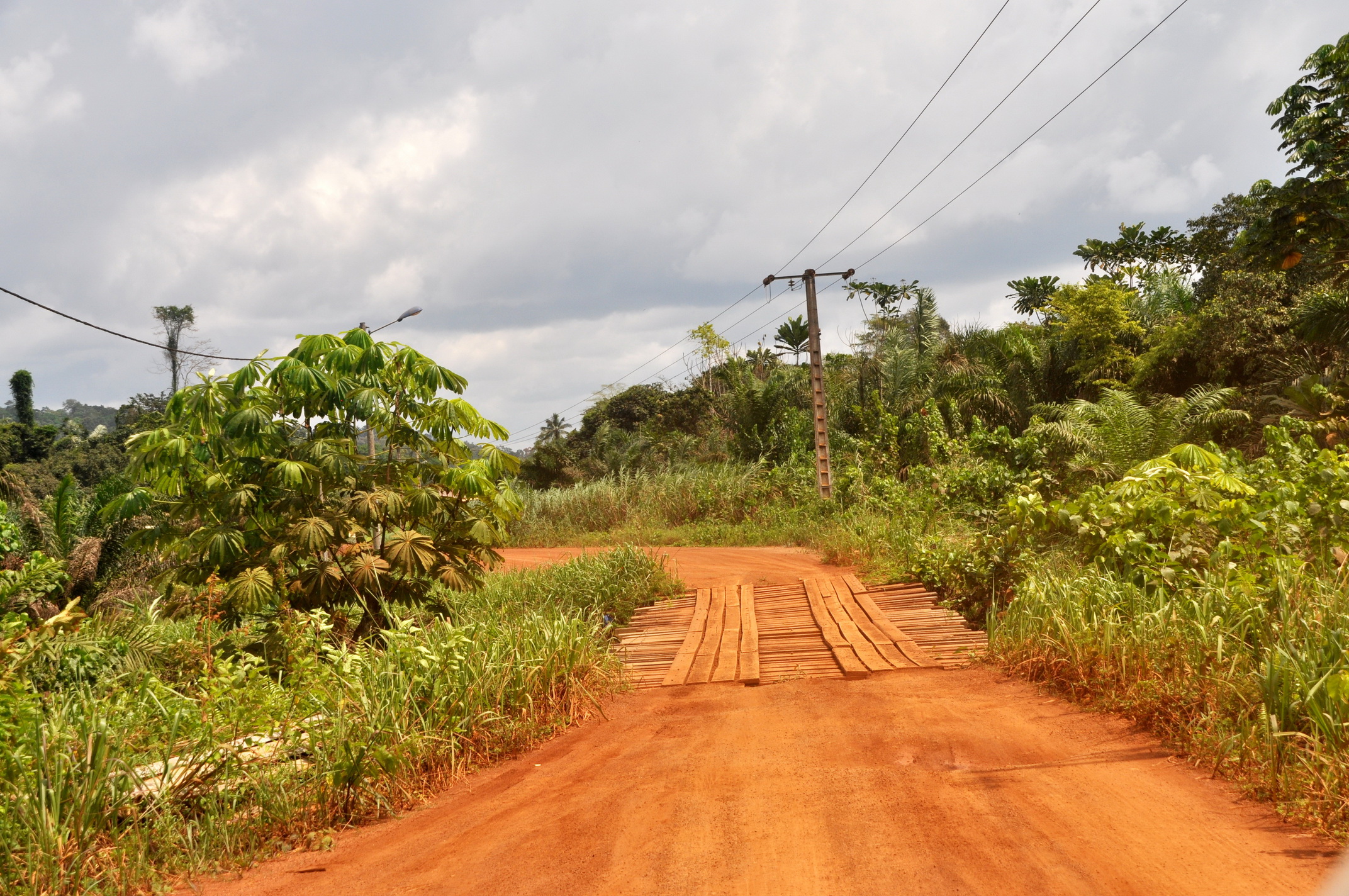
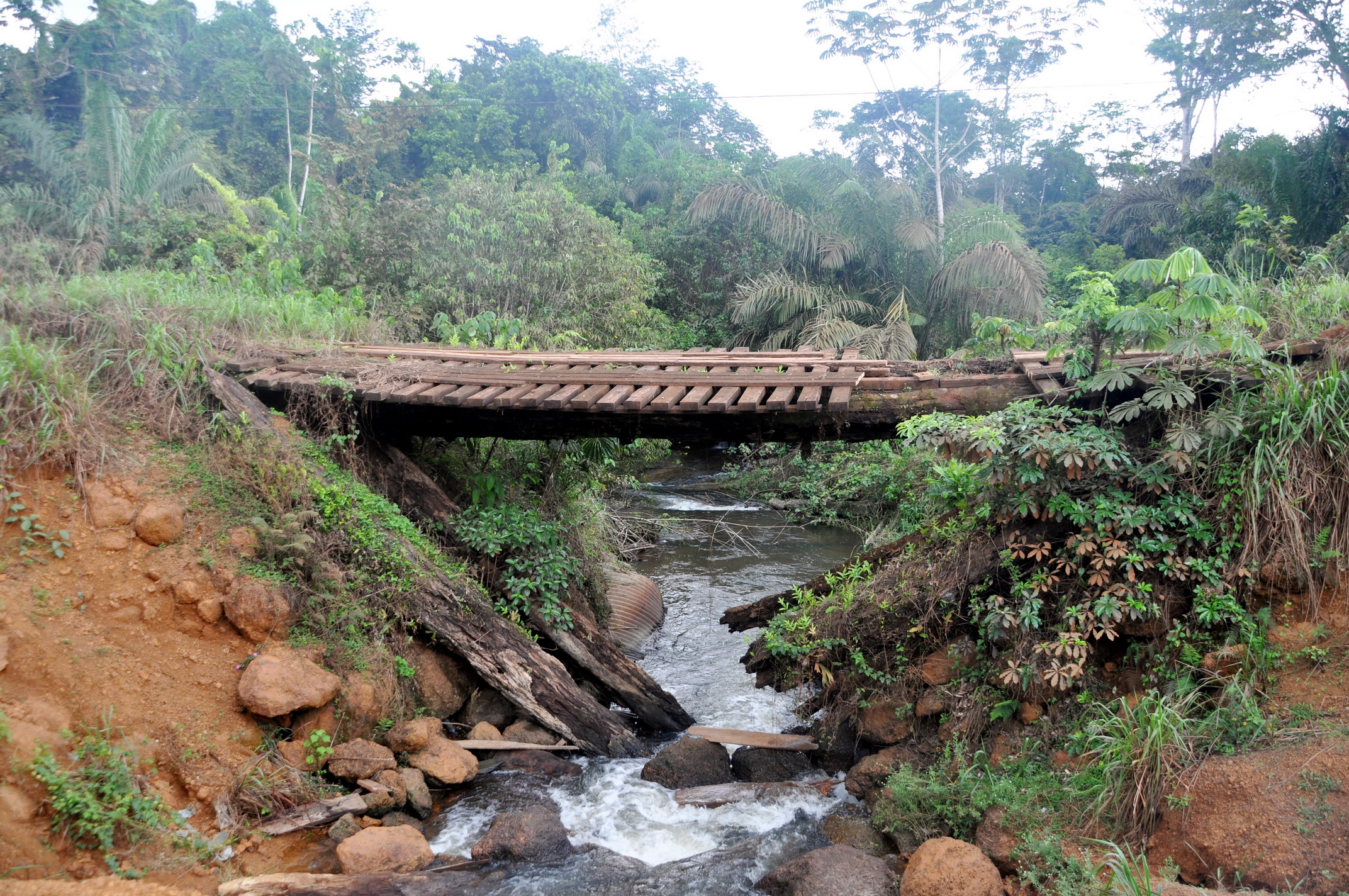
The road here grew even wilder. I was especially charmed by the bridges, two logs flattened on the top and thrown across a stream. They served every sort of vehicle, so the logs were spaced for lorries. In my Hyundai I came close to falling between them. It was so frightening I never even took a photograph of one.
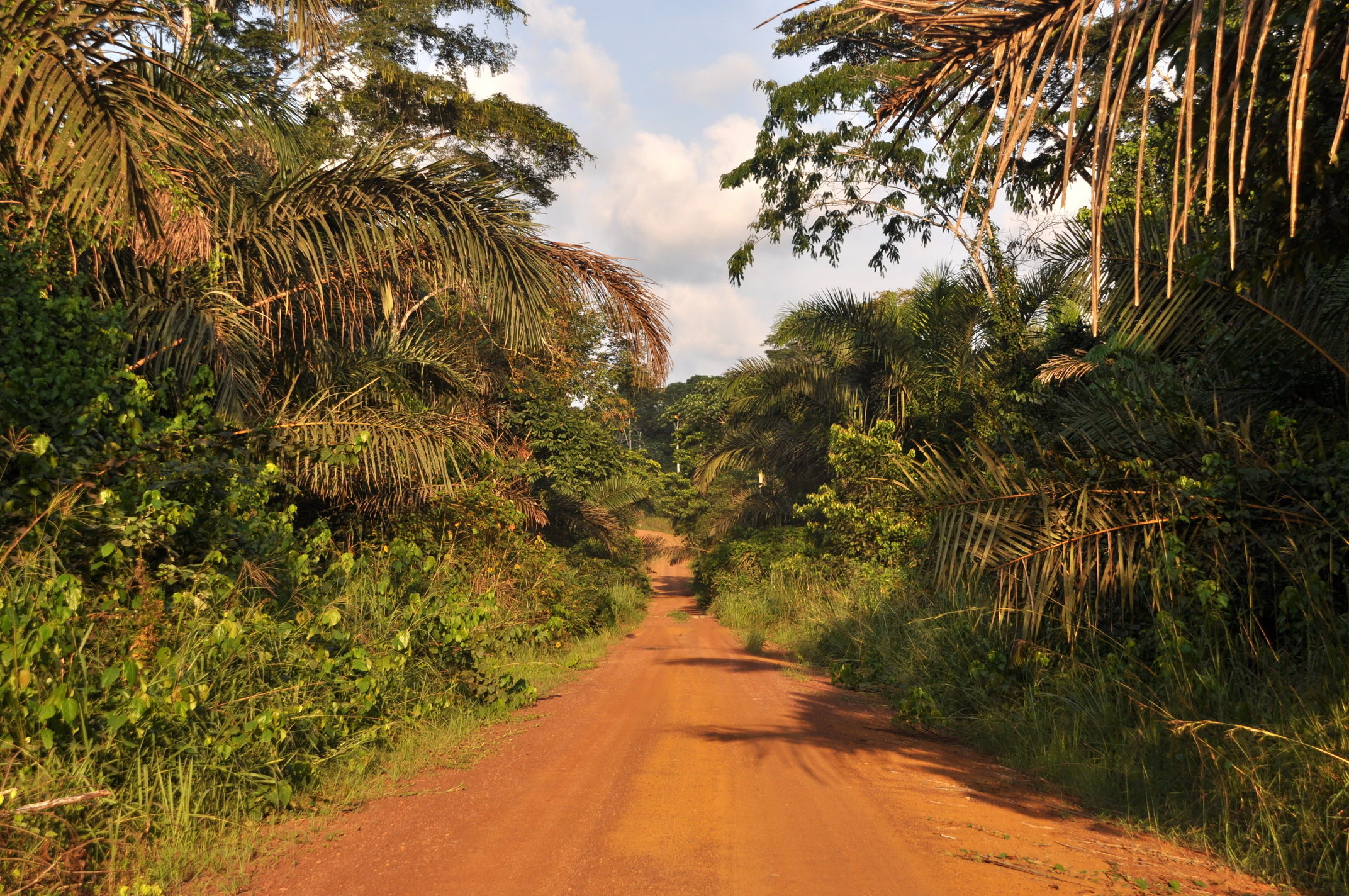
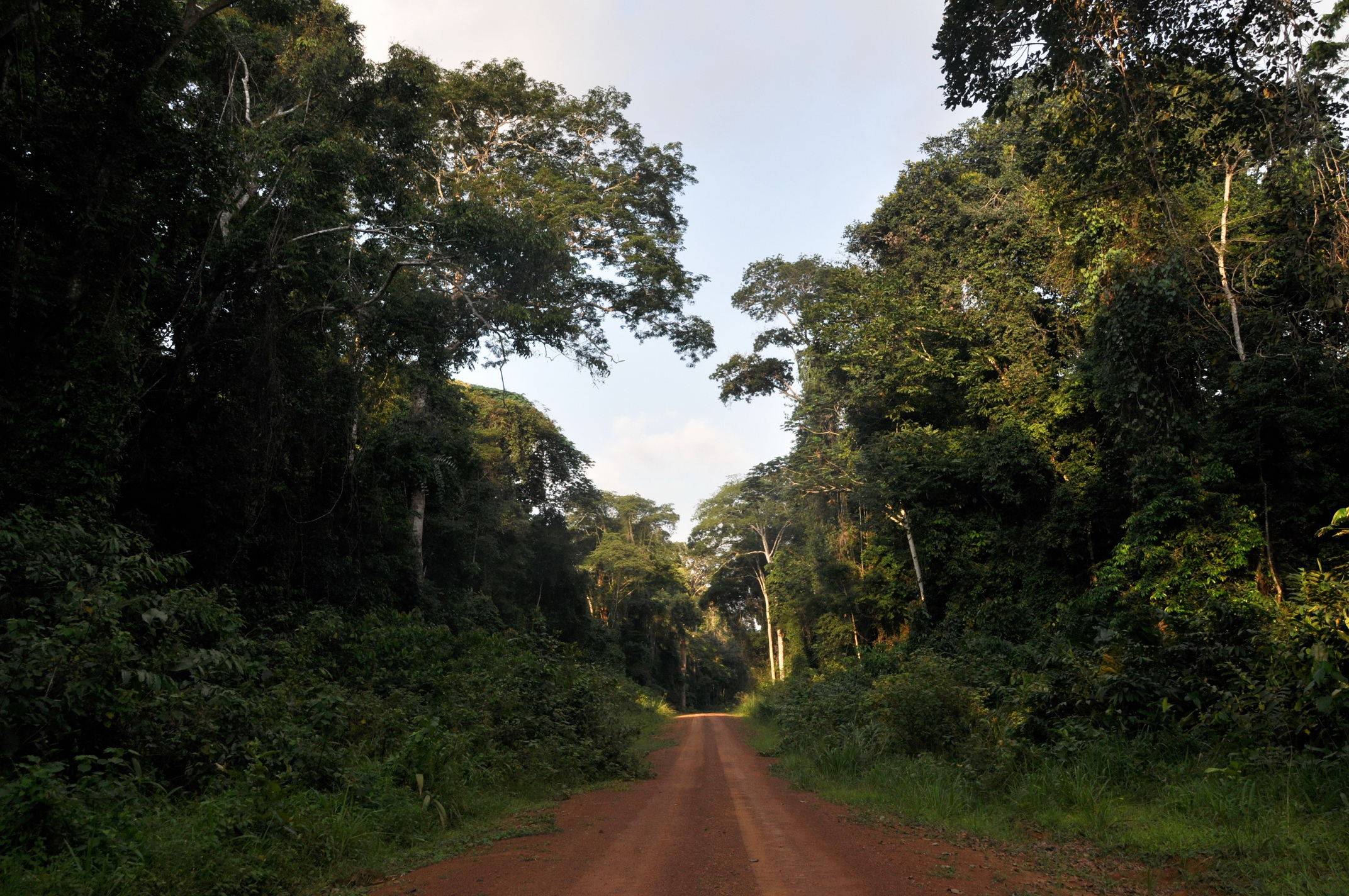
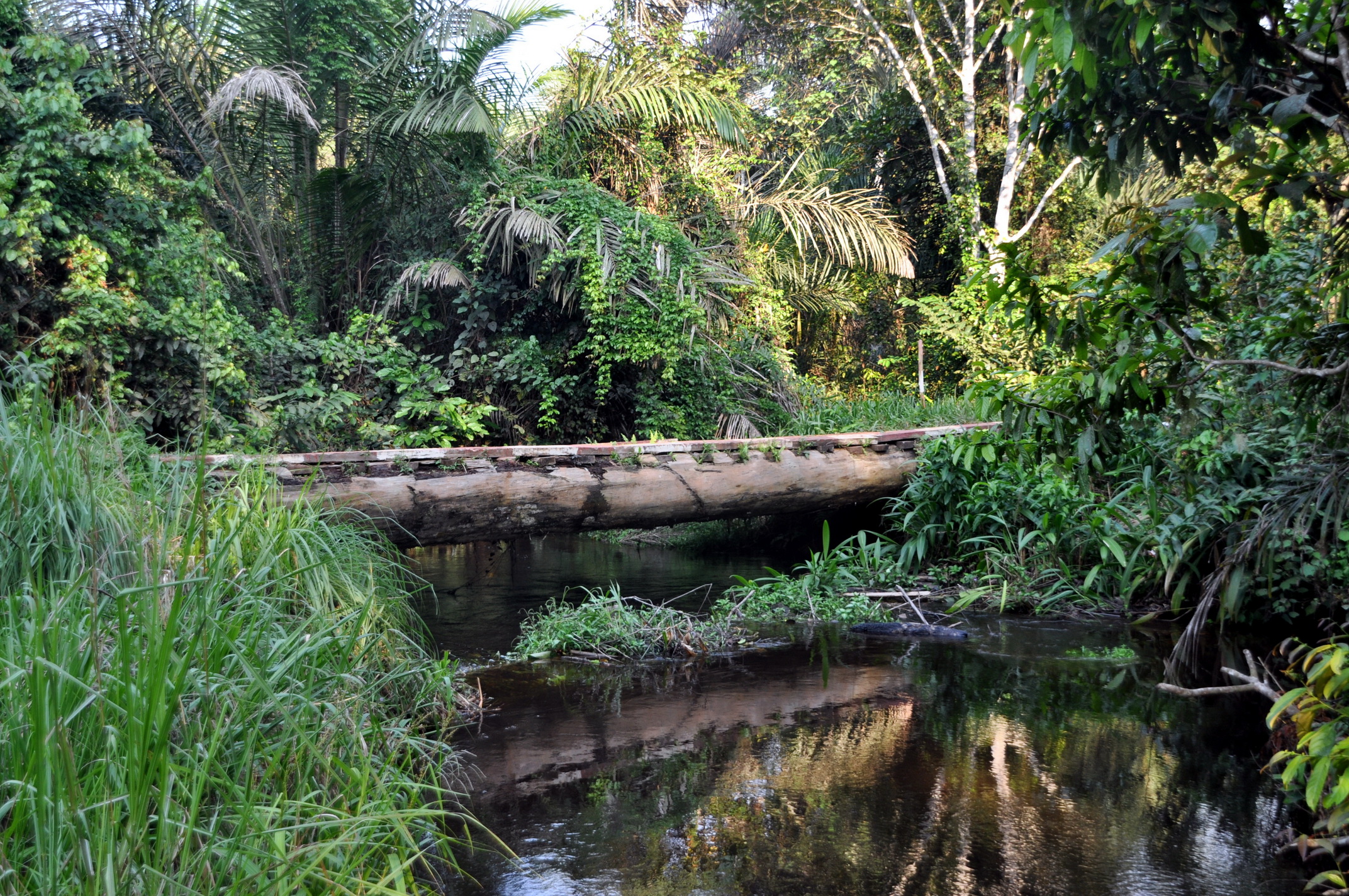
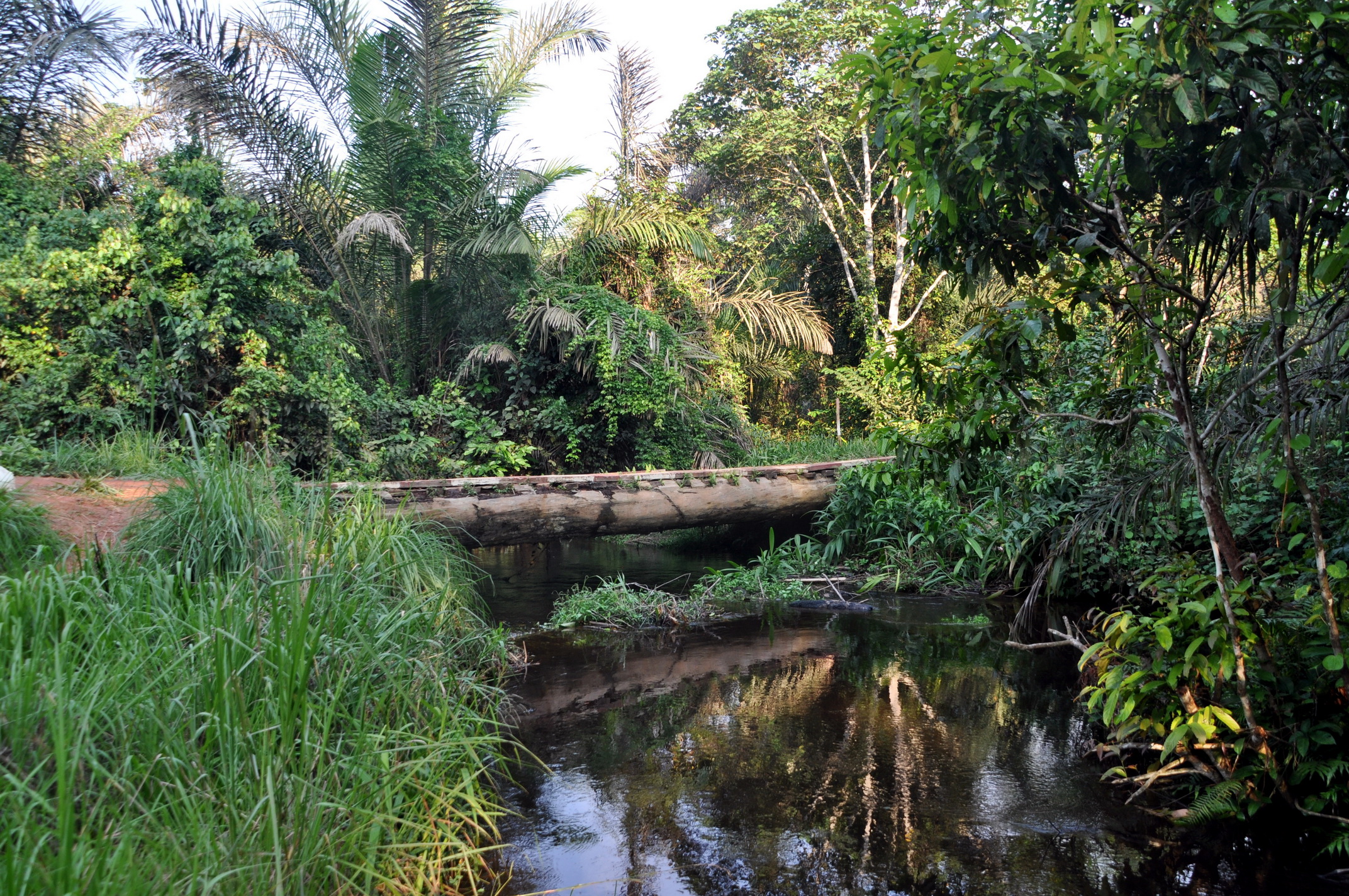
I crossed the equator back into the Northern Hemisphere.
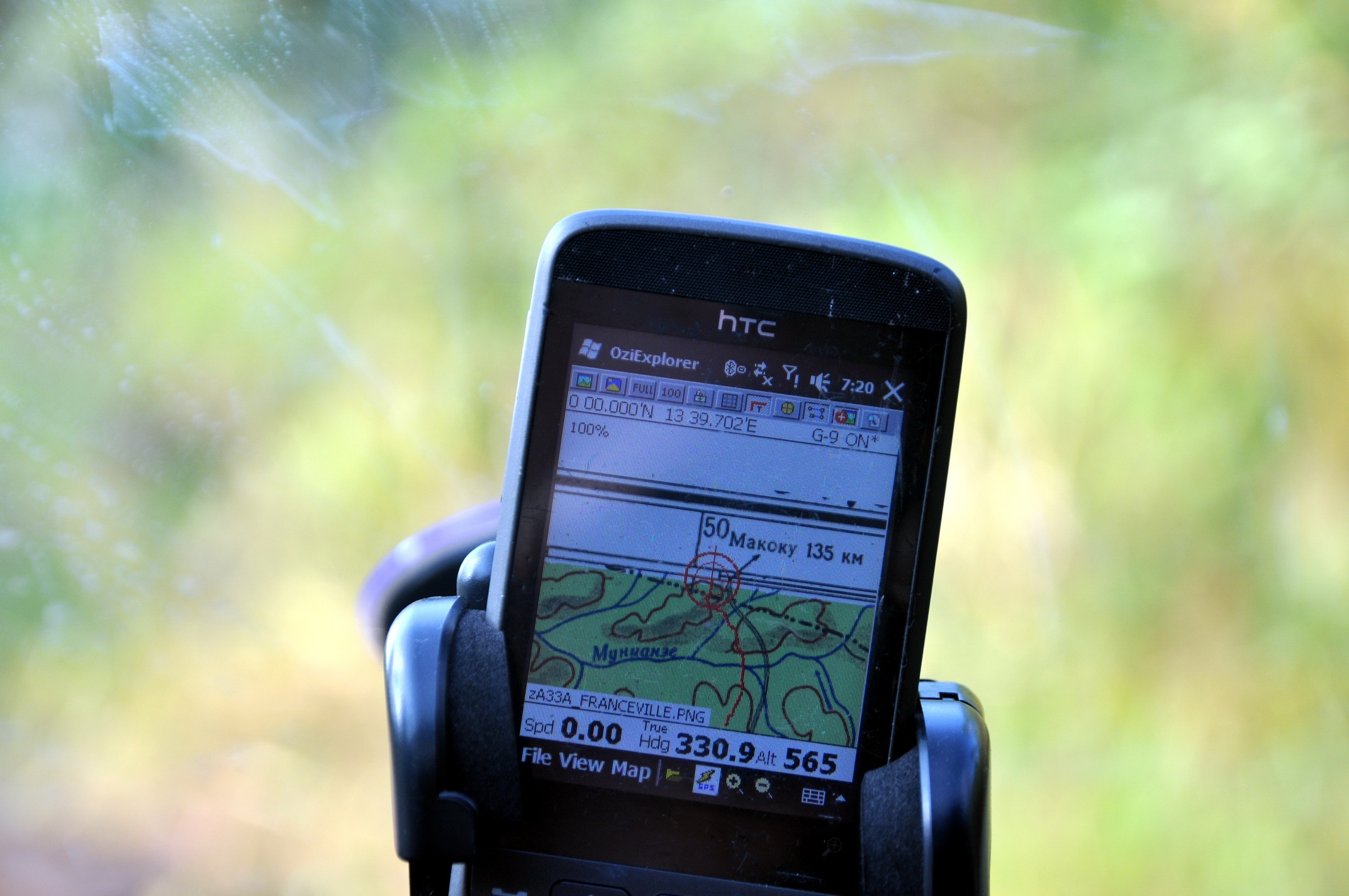
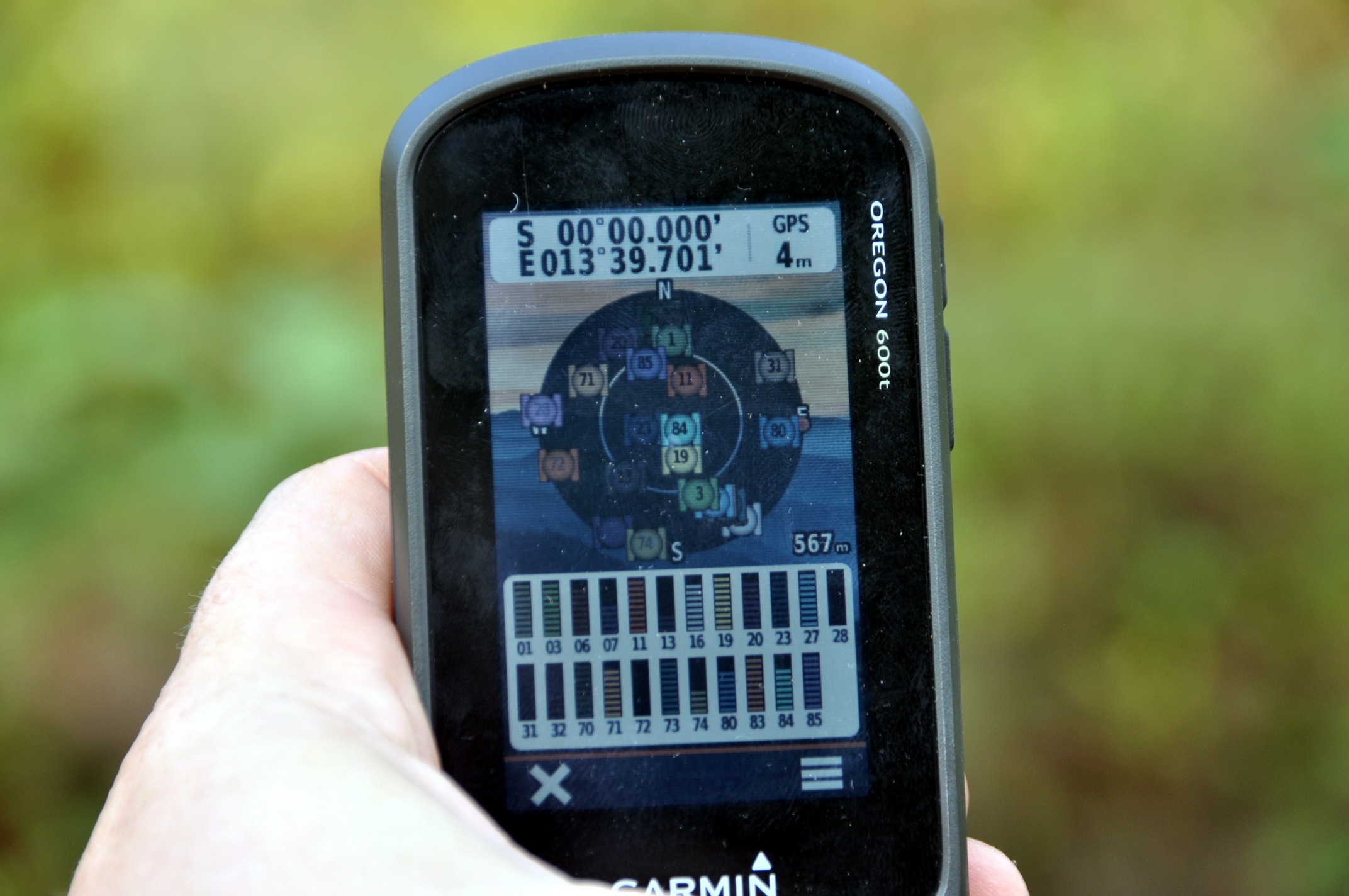
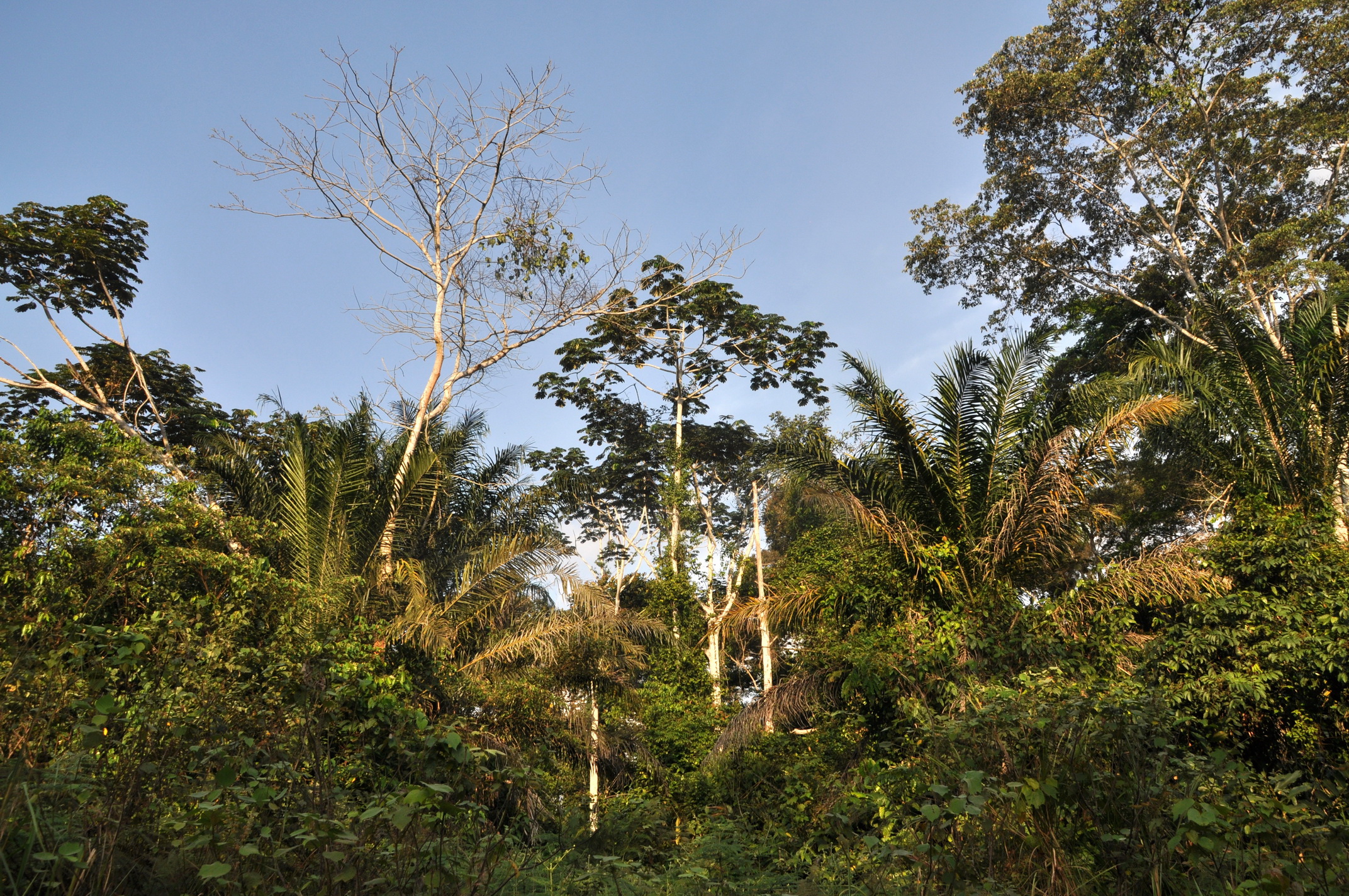
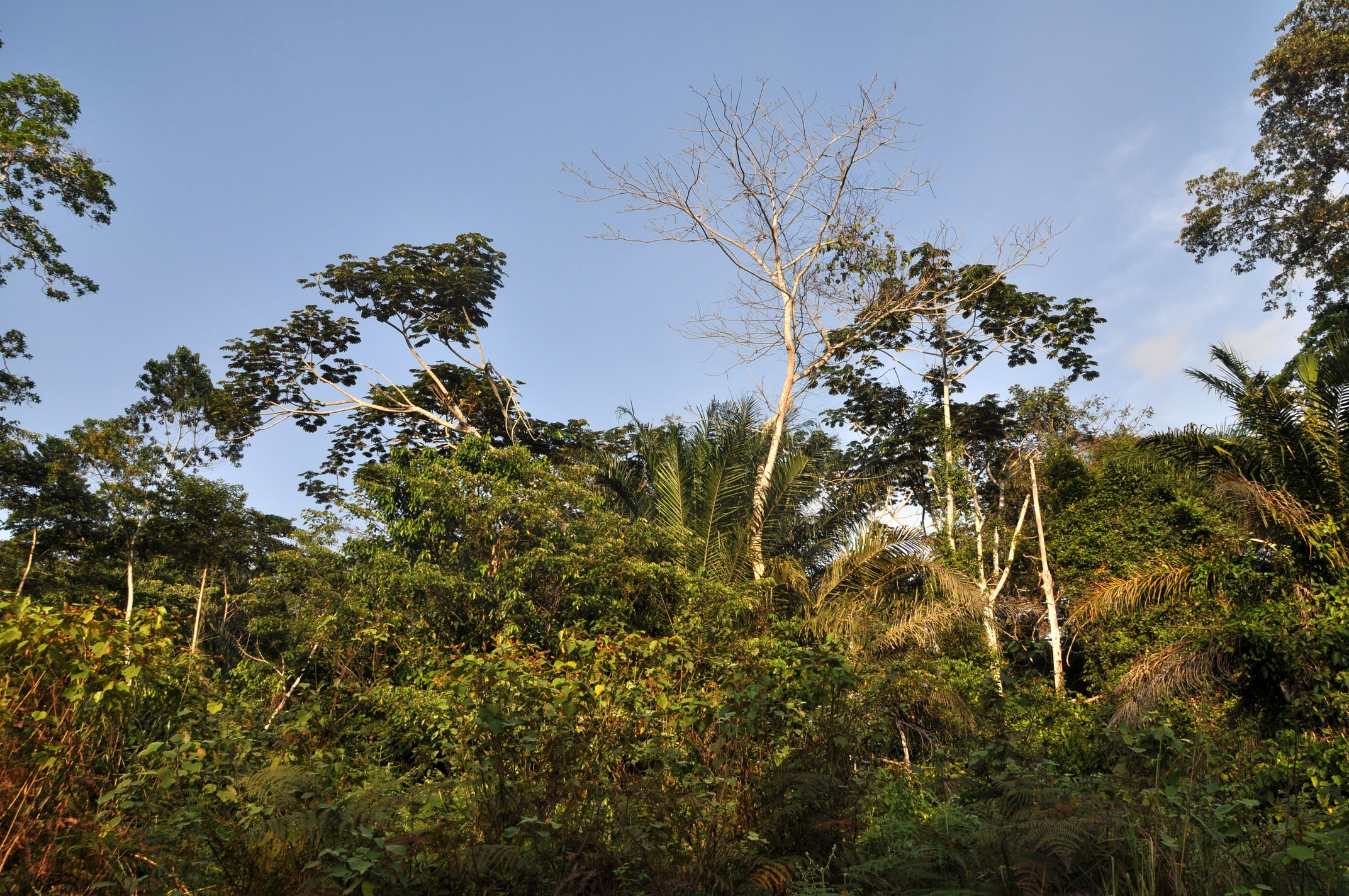
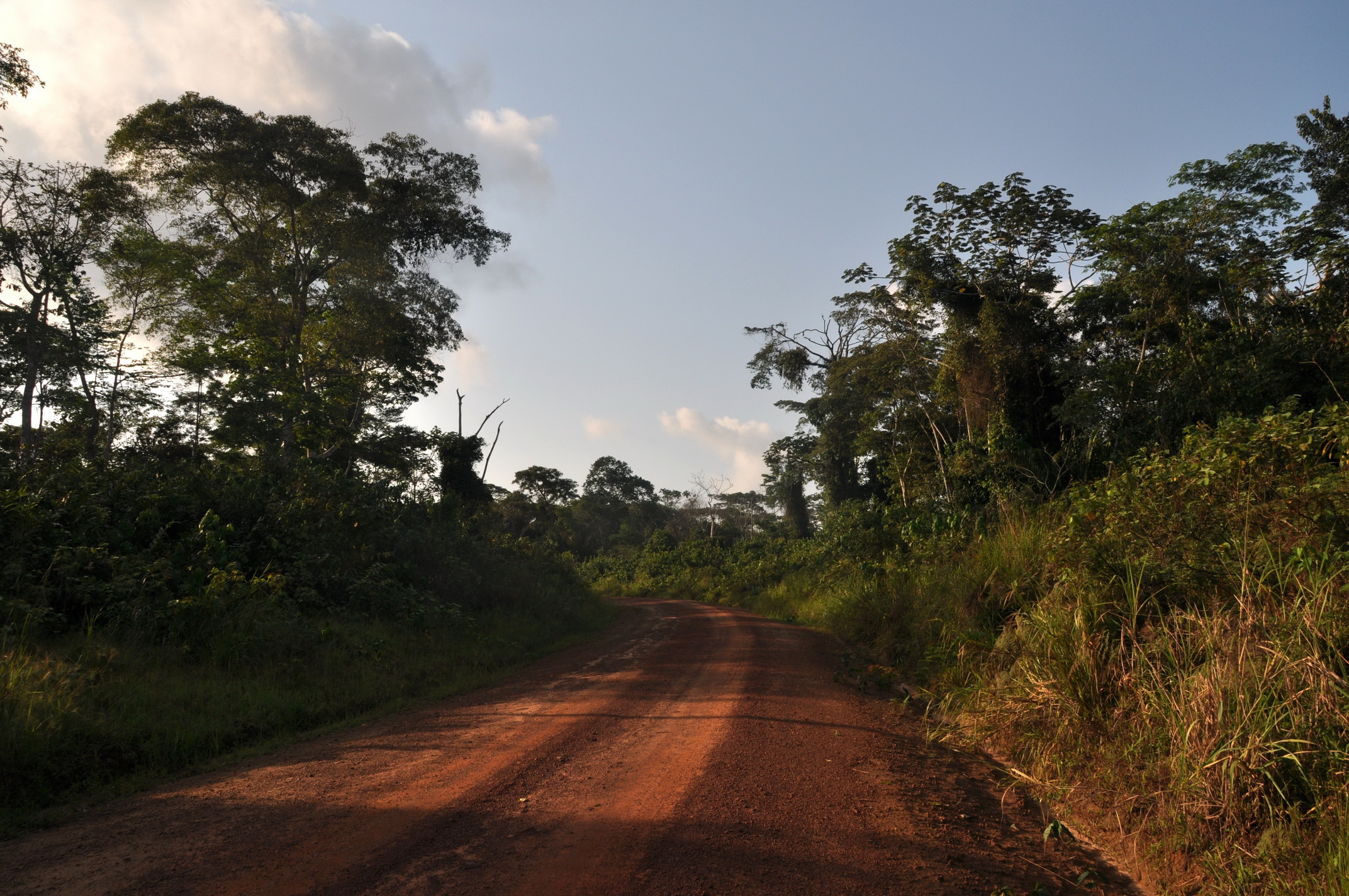
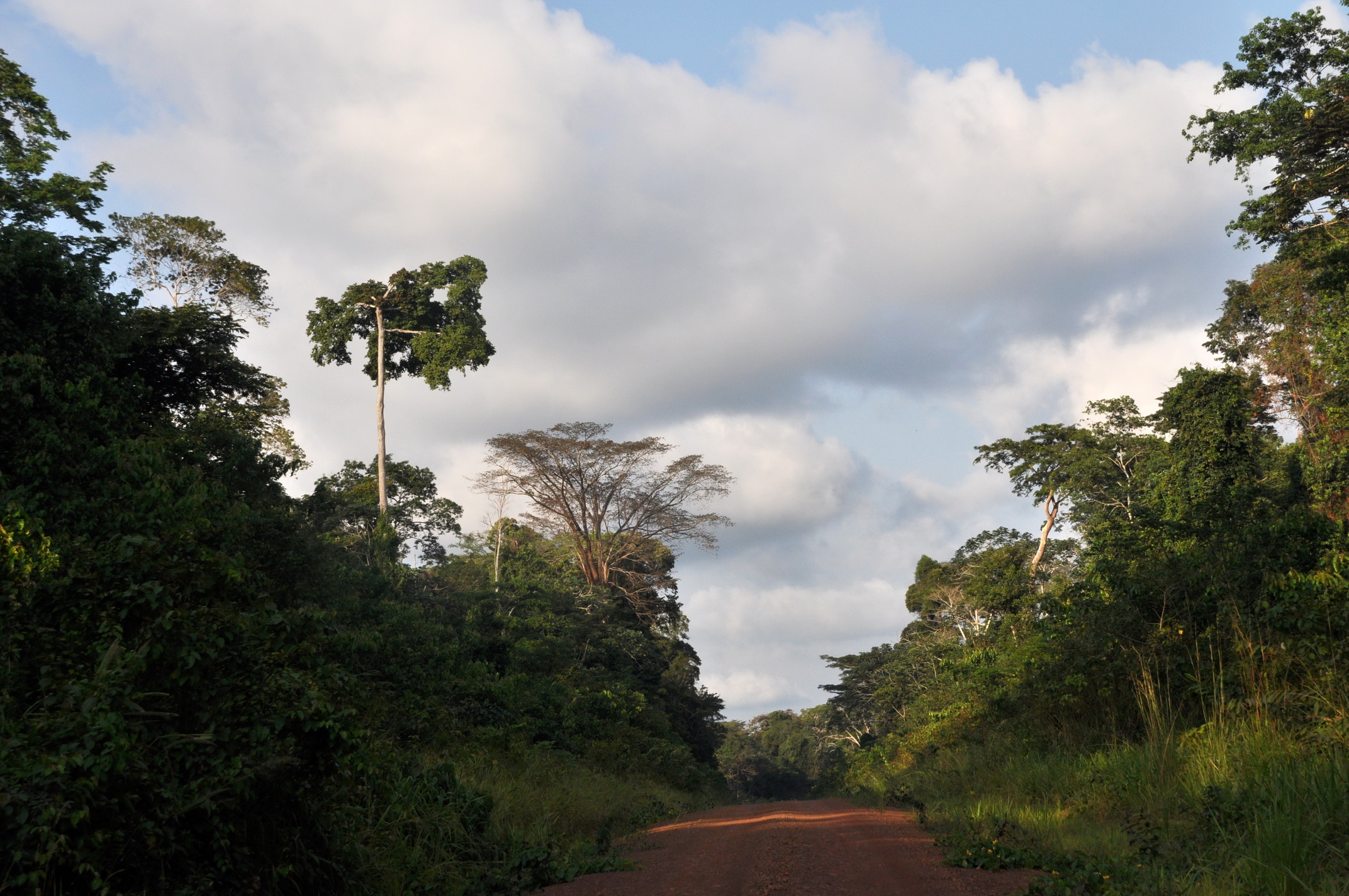
The sun was getting near the horizon when I spotted a promising track going into the forest. I went to scout it, looking for a place to put the tent. I rounded a bend and found myself looking straight into the eyes of a big black panther. Well, well. And I’d been told they were practically gone. Now that was a black cat. It isn’t a species of its own, just a black leopard; you can make out the spots in shades of dark fur. Encounters with people are rare, and people in these parts, I had heard, weren’t averse to eating leopard.
Meaning the leopard has reason to be afraid of us. I had no time to take out the camera, or even to think. One leap, and the agile creature was gone into the vast tropical kingdom.
Leopards do sometimes prey on people, though such cases are unusual. My favourite story was that it usually began when a leopard accidentally stepped on a porcupine. With quills in its paws it could no longer catch its normal food, and the only thing that couldn’t run away from a crippled leopard was a person.
Well, that settled it: my birthday had been a success. I didn’t put up the tent along that track all the same. There was no space anyway, and I wanted to drive a little farther. I had big plans.
It grew dark out on the road. Villages began to appear more often, the road grew wider, and I reached Makokou. A sizeable town. I wanted petrol for the car and a monkey for dinner. There were difficulties with both. The filling station was there, but the petrol wasn’t. No one had any. I looked here and there. The market had only local fish. Delicious stuff, but such bones! I’d never met a fish as bony as that. Life in those warm, fertile waters must be hard. Everything wants to swallow you, so make it choke—that must be what all the bones were for.
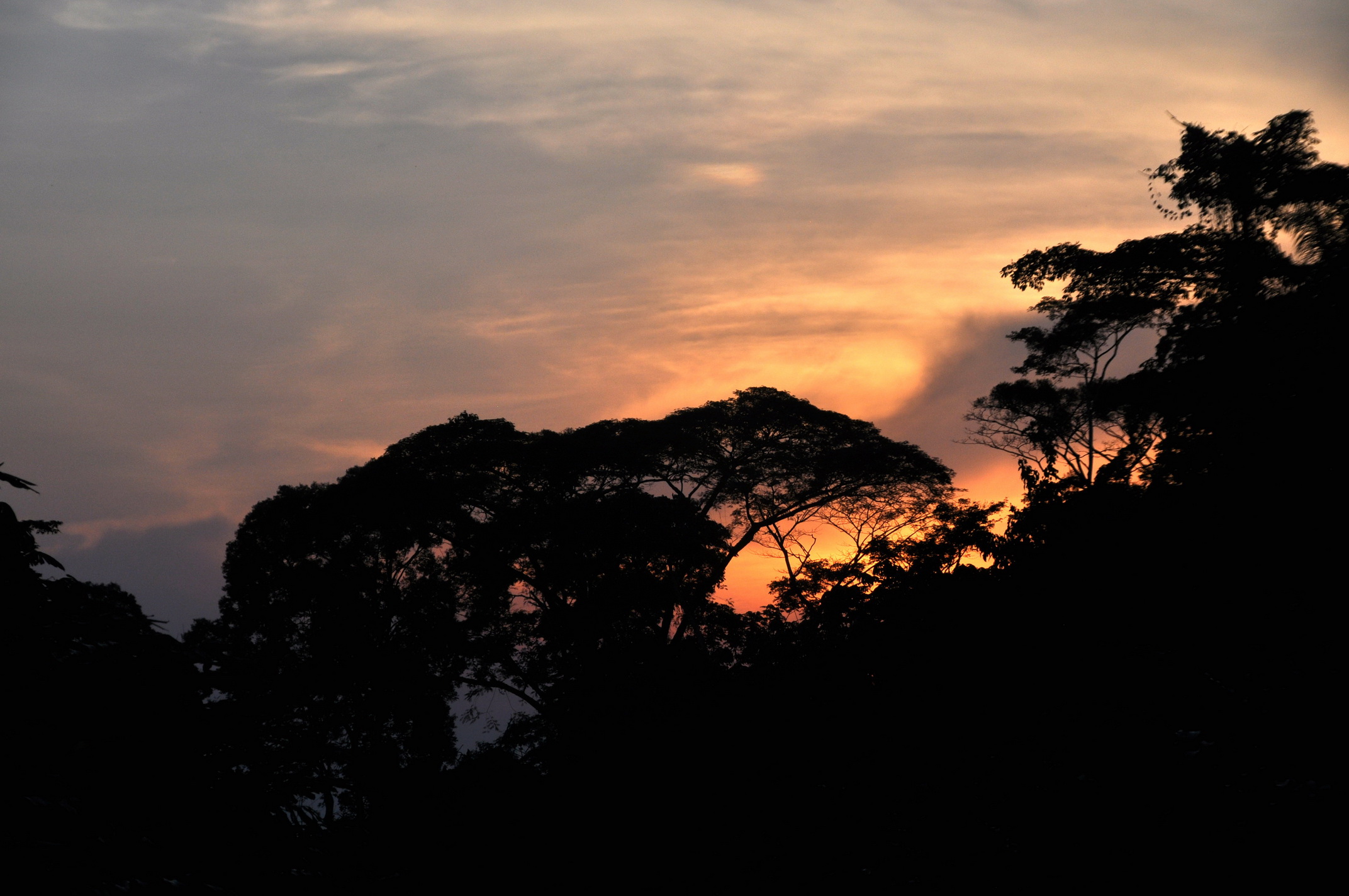
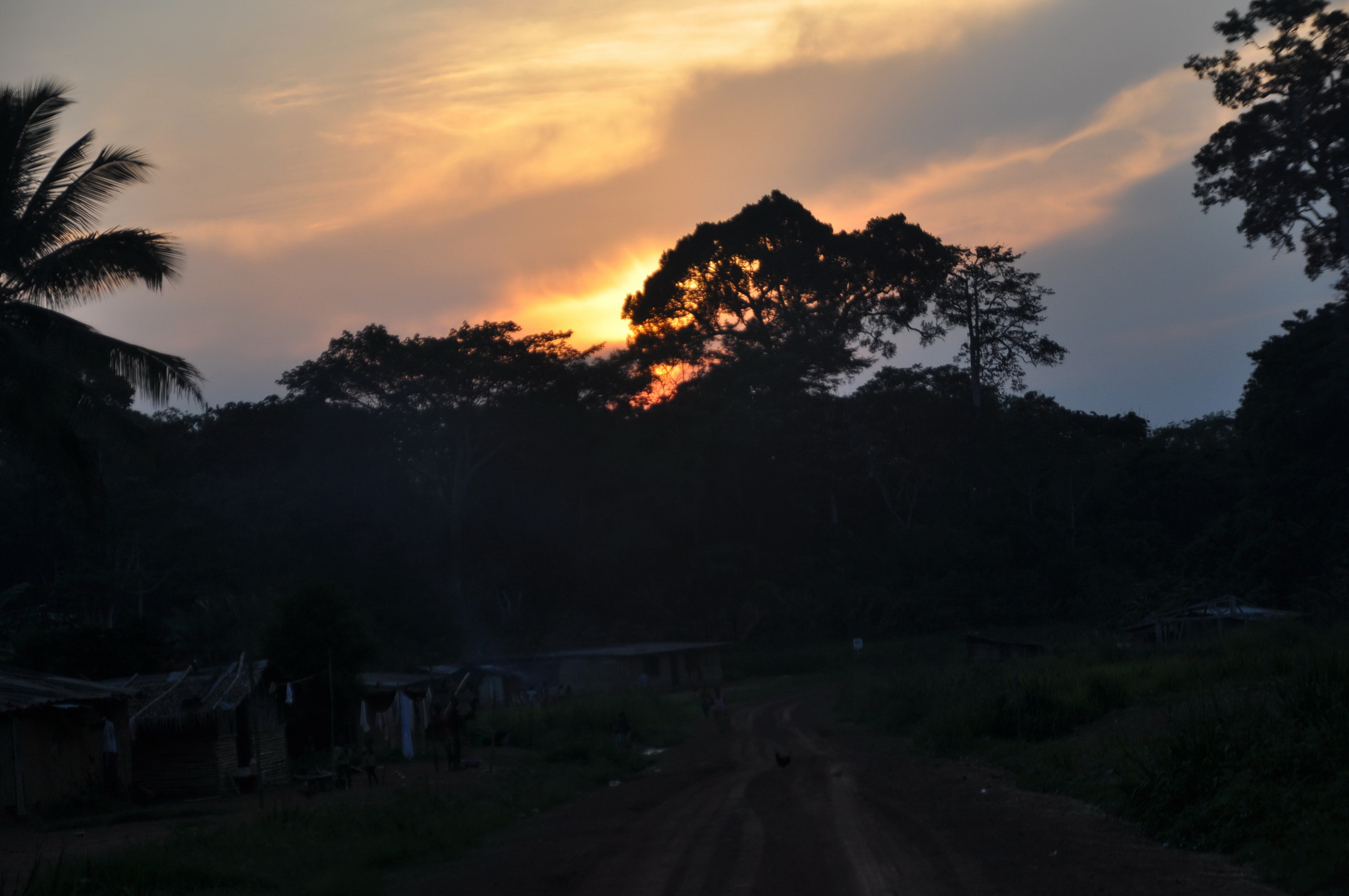
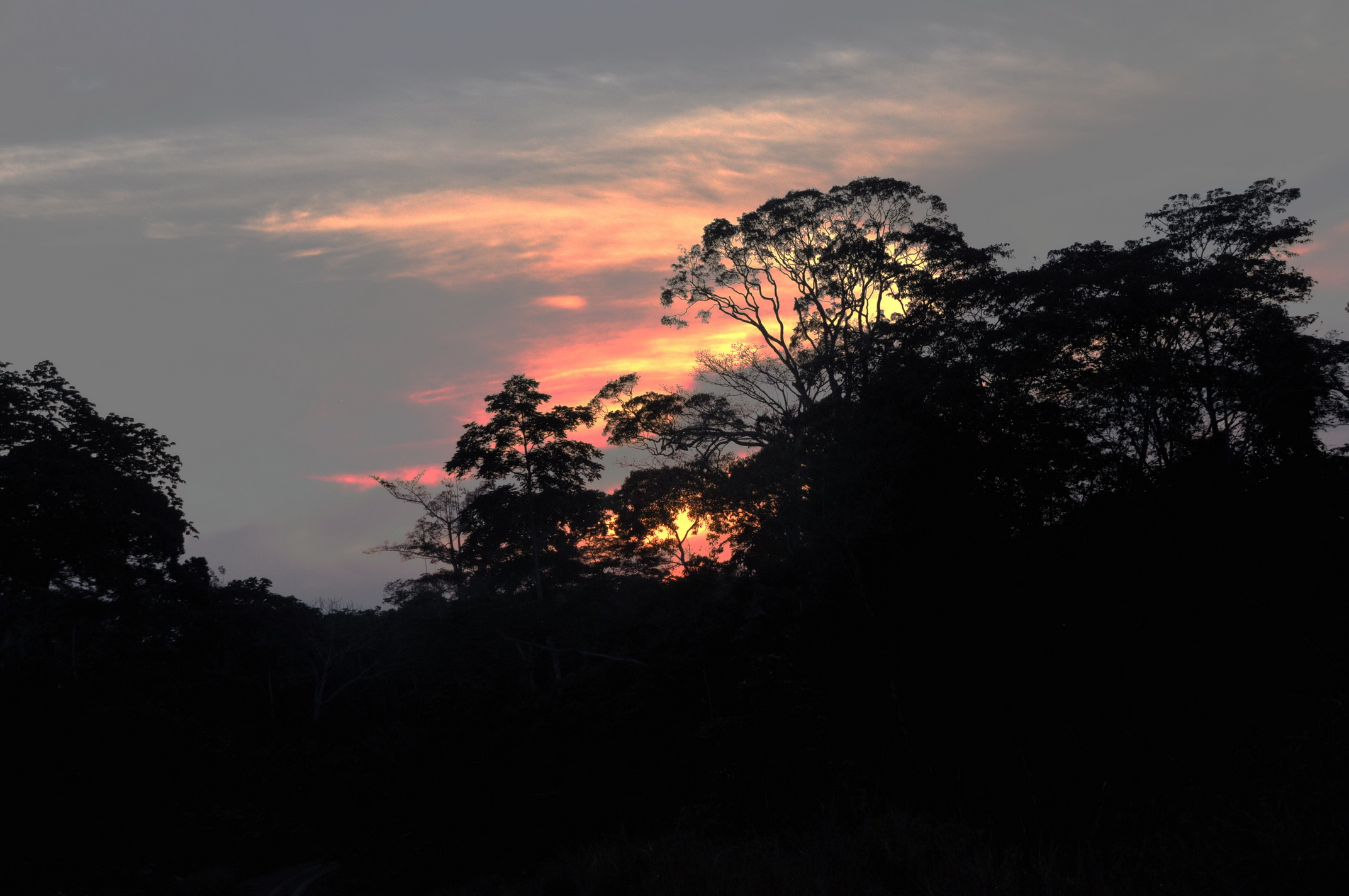
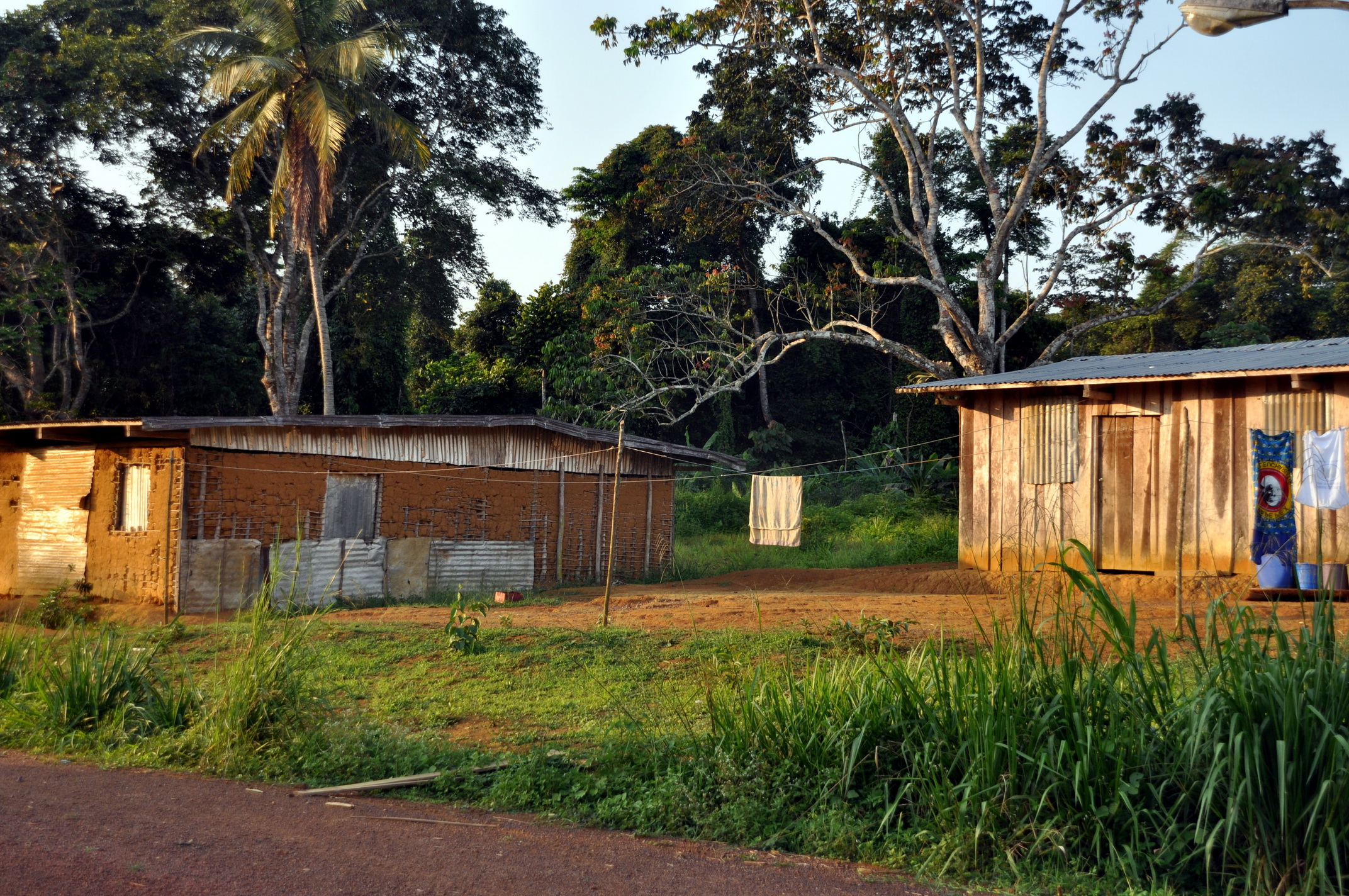
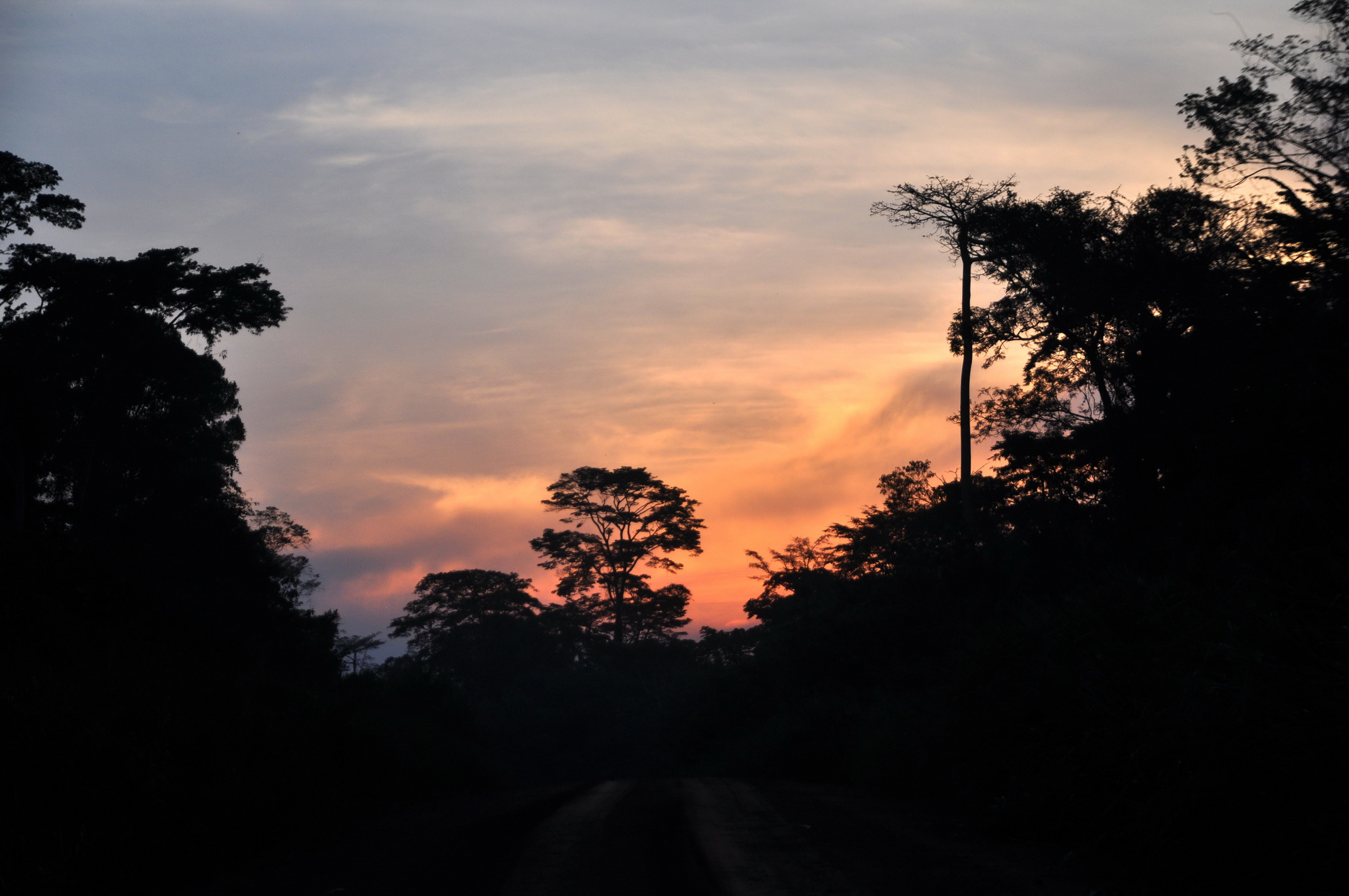
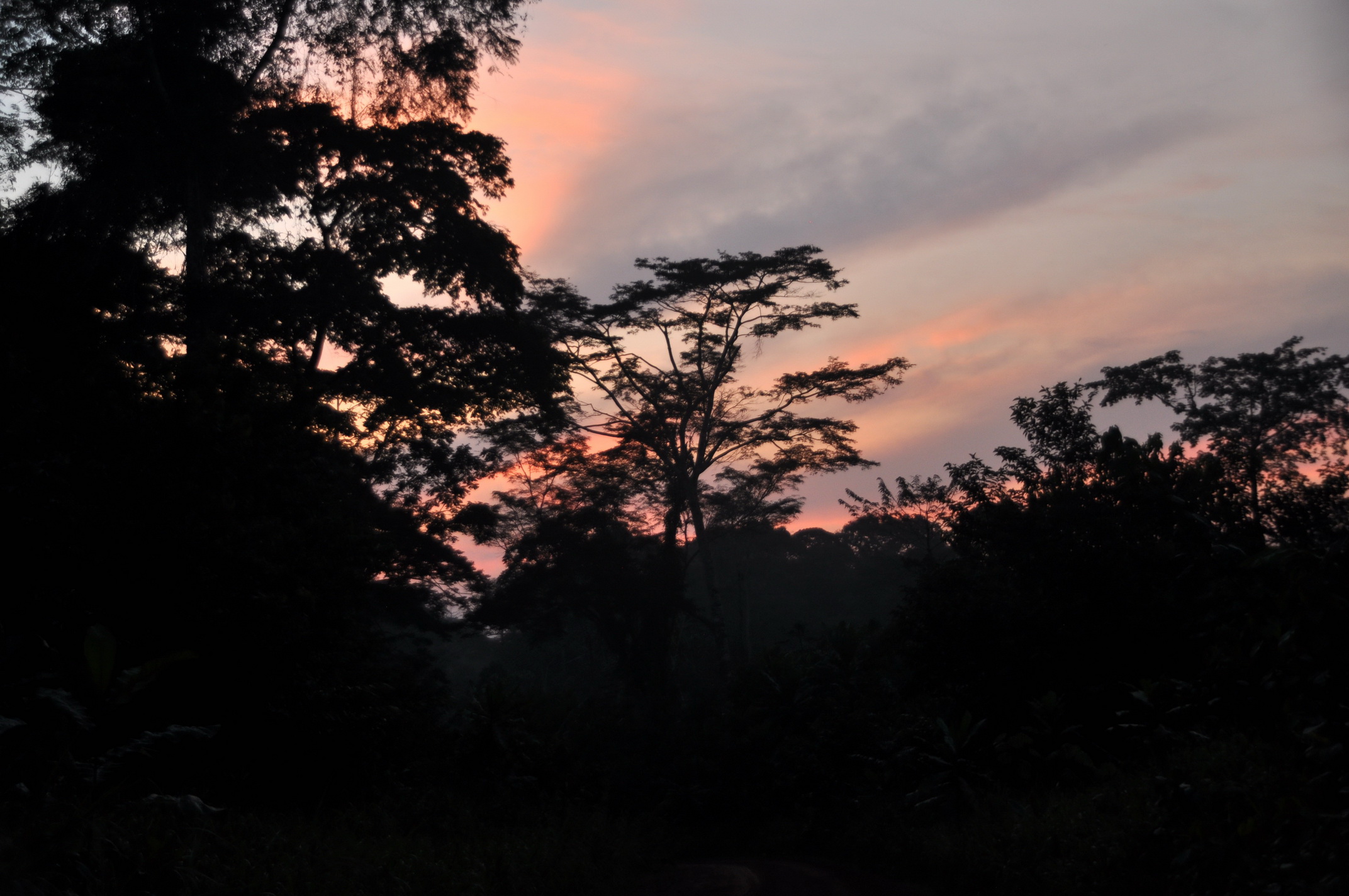
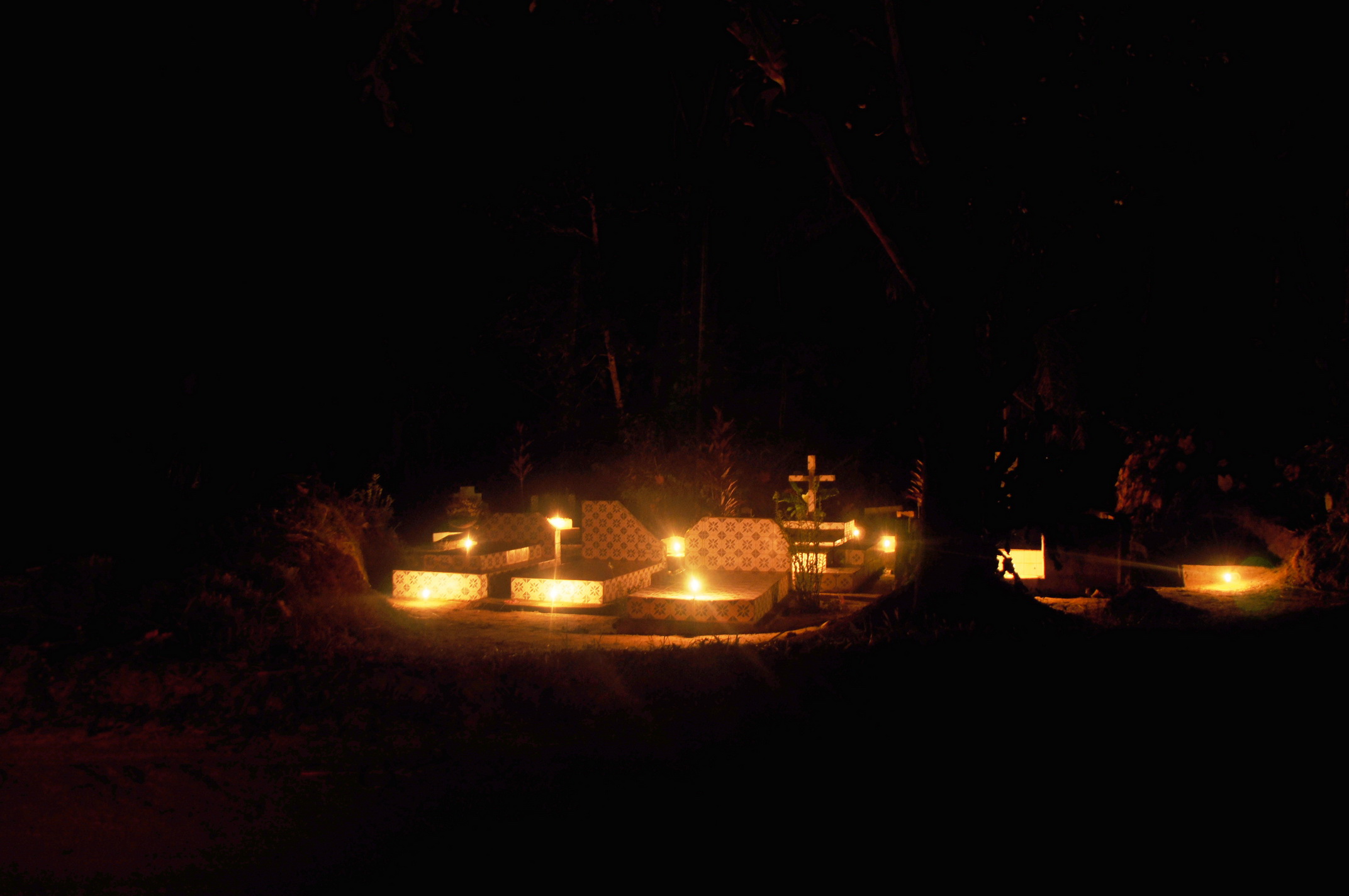
I went back to the filling station and offered twice the price. Petrol appeared. All right, they said, let’s see what the pump can suck up from the bottom of the tank. Perhaps something has run down the sides. They got 60 litres out of it. I was set as far as the capital. With that taken care of, I moved on to the main event. Now that I’d got a good corrupt relationship going, why waste it? I said I wanted roast chimpanzee.
No, they said. It was difficult these days. This was a delicate question. A chimpanzee was almost a member of the family, and you don’t go letting strangers have your relatives… You see what I mean, don’t you? A guenon, on the other hand, we can do.
All right, a guenon it was. The birthday dinner was ready. All I needed was somewhere to pitch the tent. I wasn’t going to celebrate in a hotel. I wanted the vault of the sky, full of stars. I was born on the night of 3–4 November, so in Gabon it was the third and back in Russia it was already the fourth. Two days to celebrate.
It took some time to find a place to camp. There were lots of wild tracks, but every time I turned off, someone would pop out of the undergrowth and watch me.
I had to get a good way out of Makokou. The villages thinned out, and eventually I was past the area where the forest people lived.
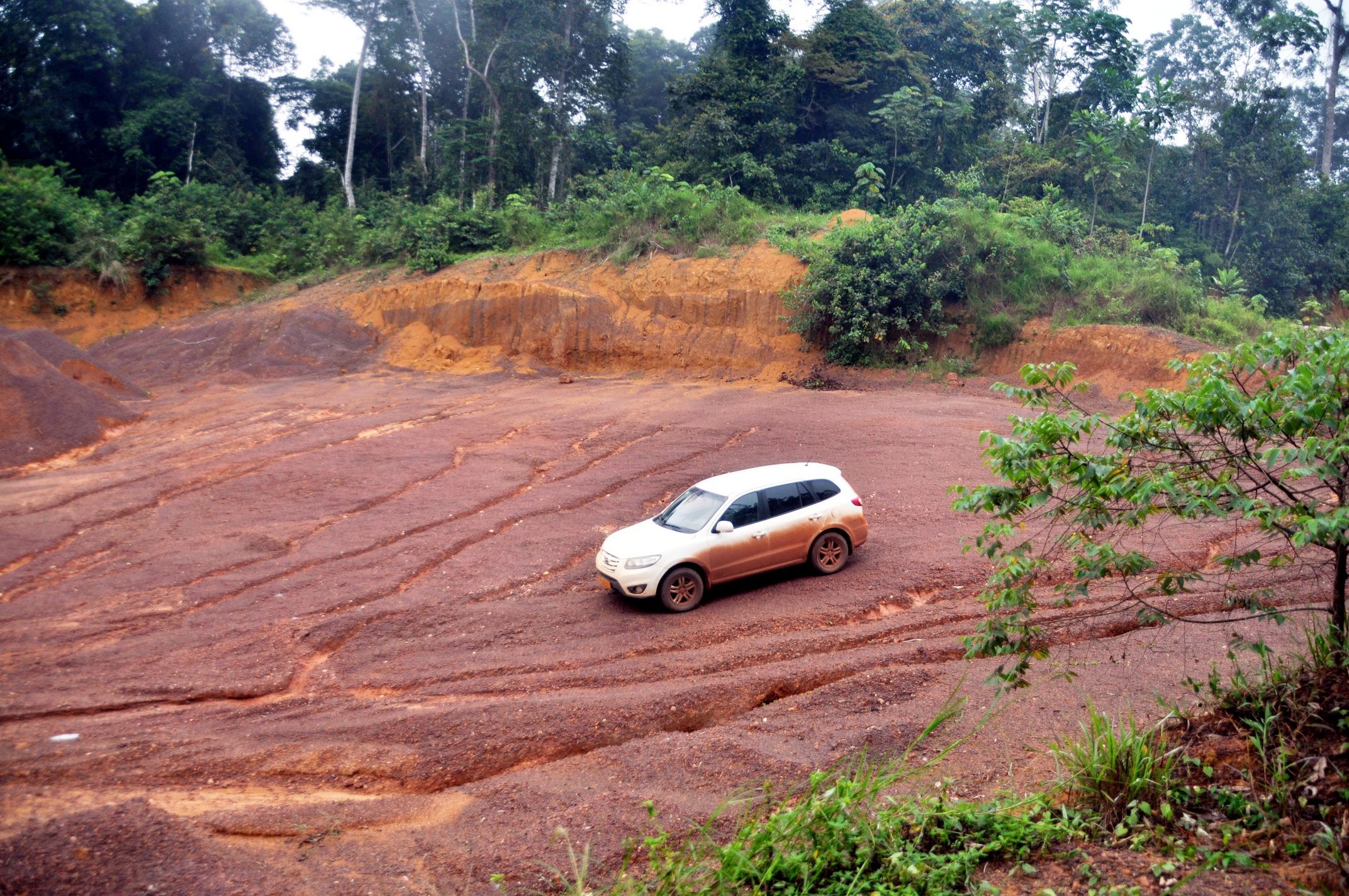
After a while I found a turn-off to a quarry that had been used to build the road and then abandoned. There wasn’t a village nearby on the map.
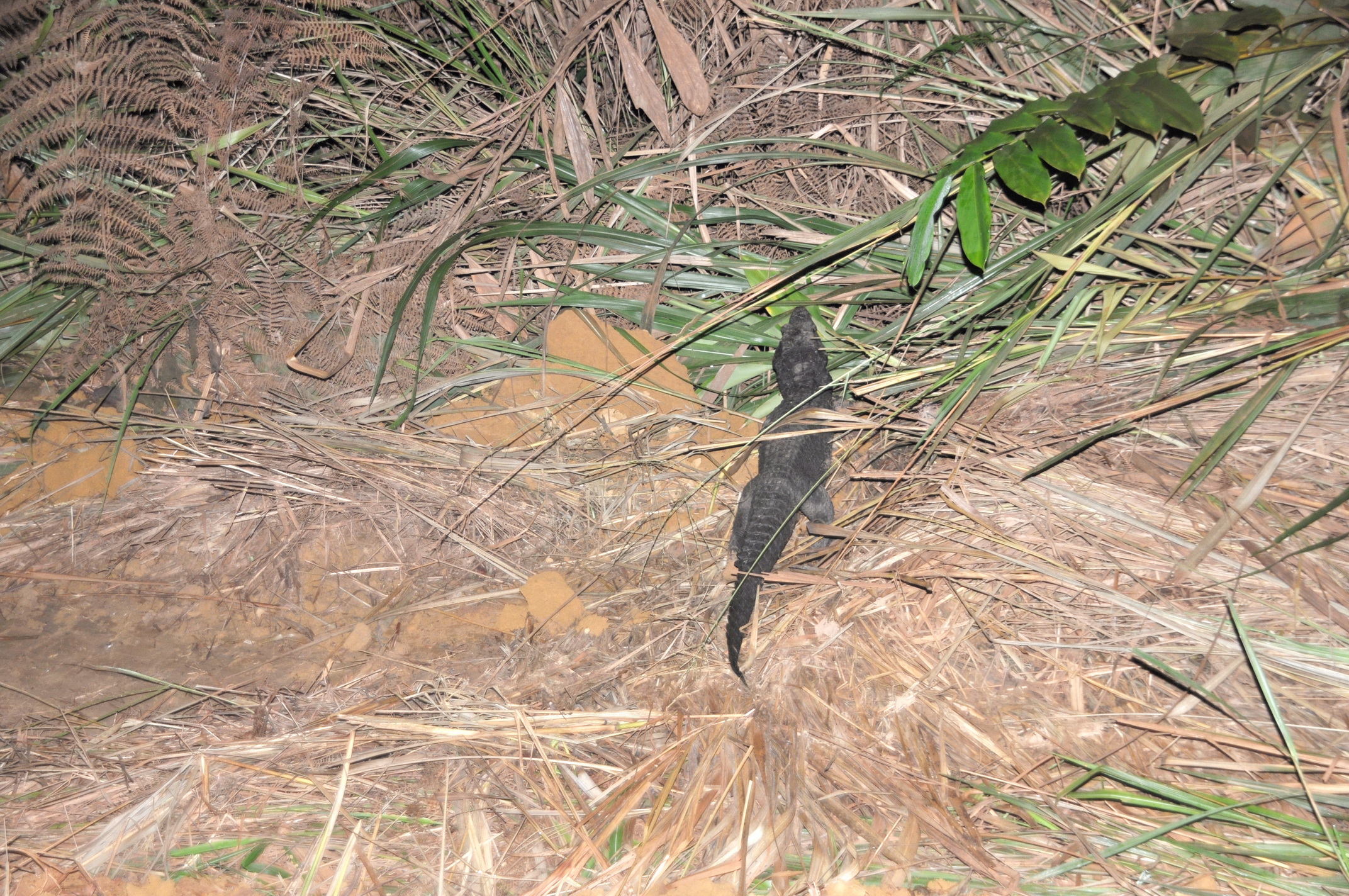
I hid the car in the quarry and went into the jungle to look for a flat spot (00°29.723′N, 12°26.605′E; elevation 514 m). A crocodile took to following me around. I put up my tent while it looked on. I shooed it with my foot and it came back. In language of perfect obscenity, I explained that it couldn’t eat people. It had probably smelled my roast monkey.
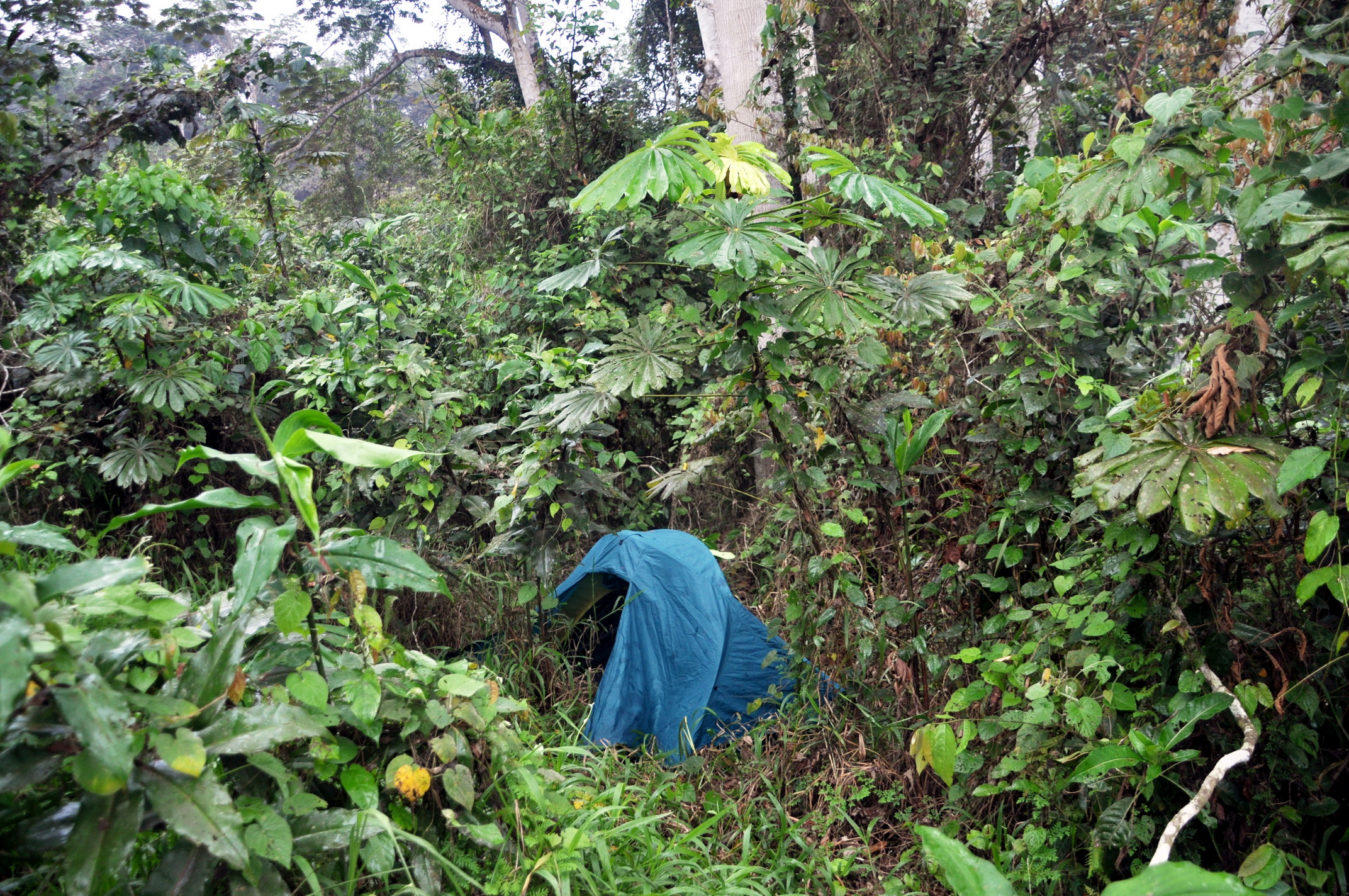
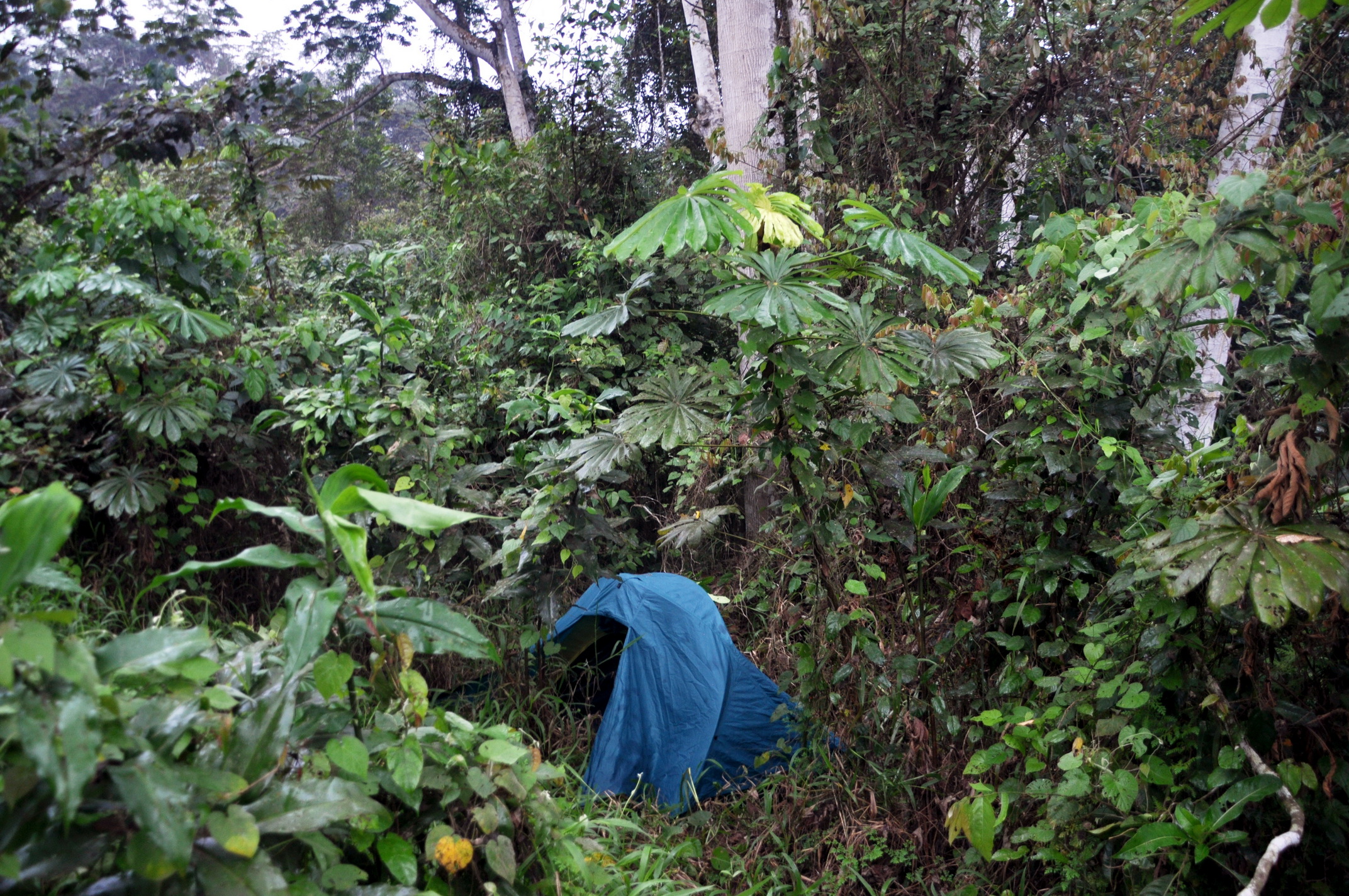
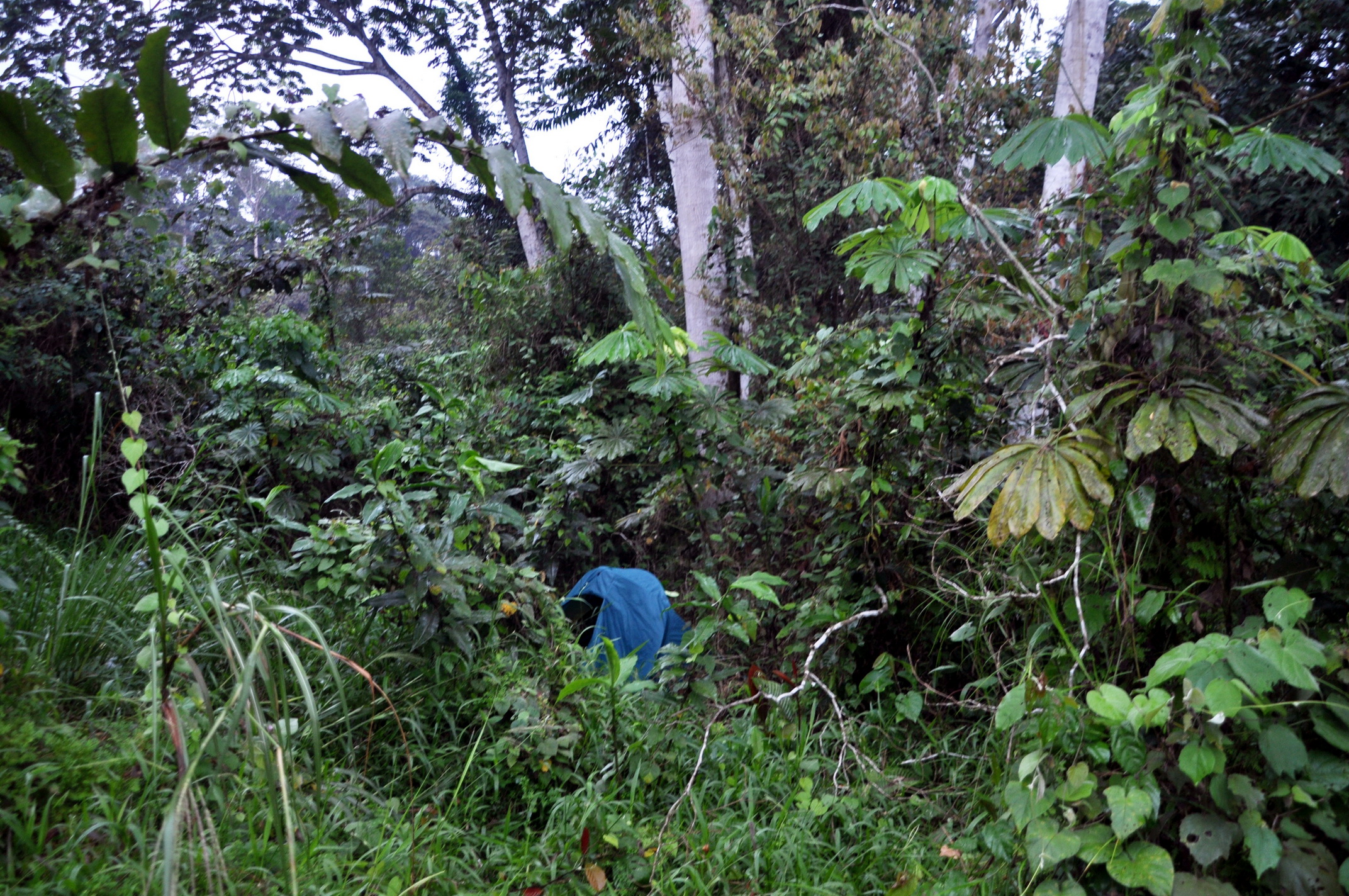
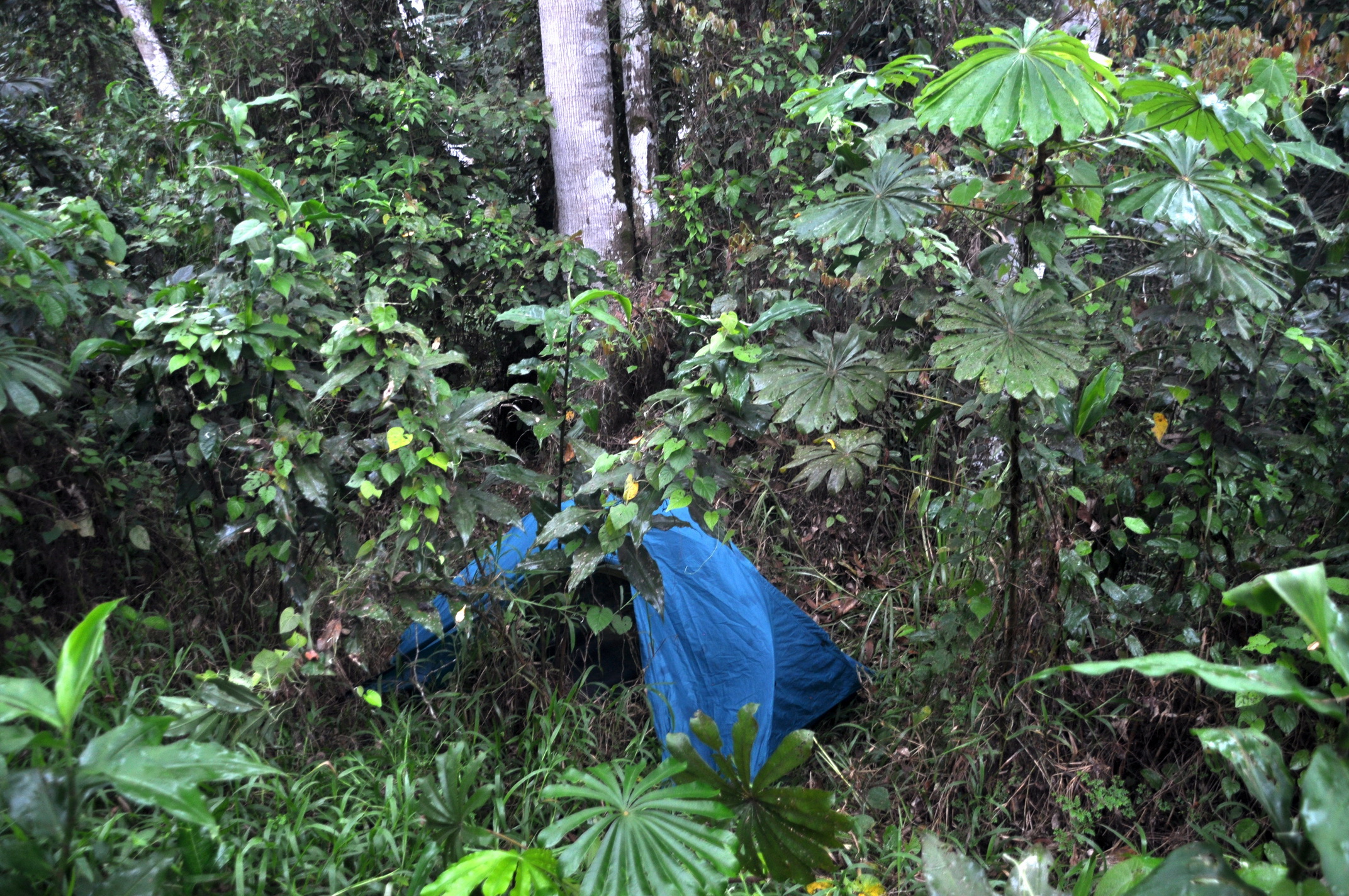
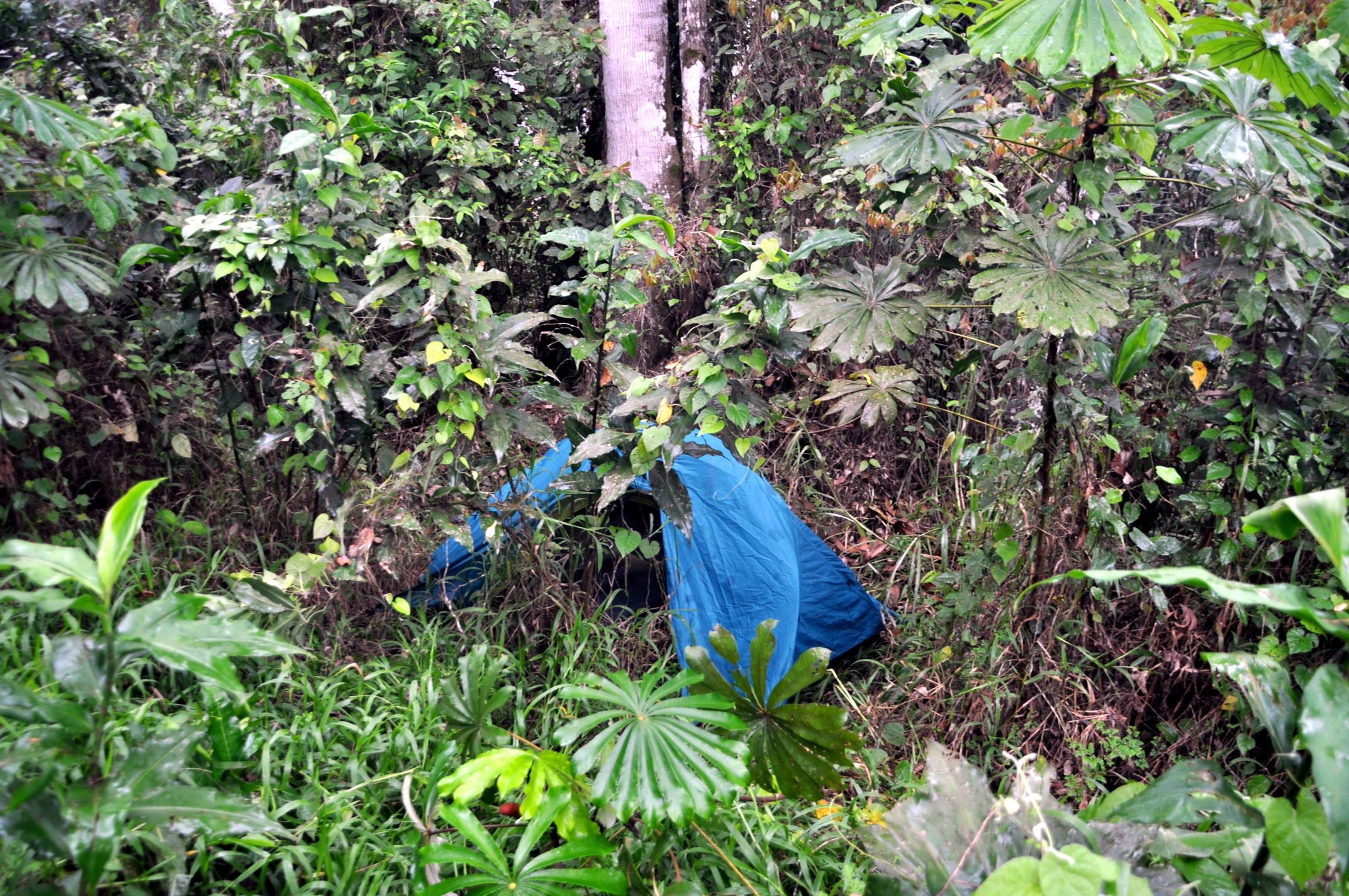
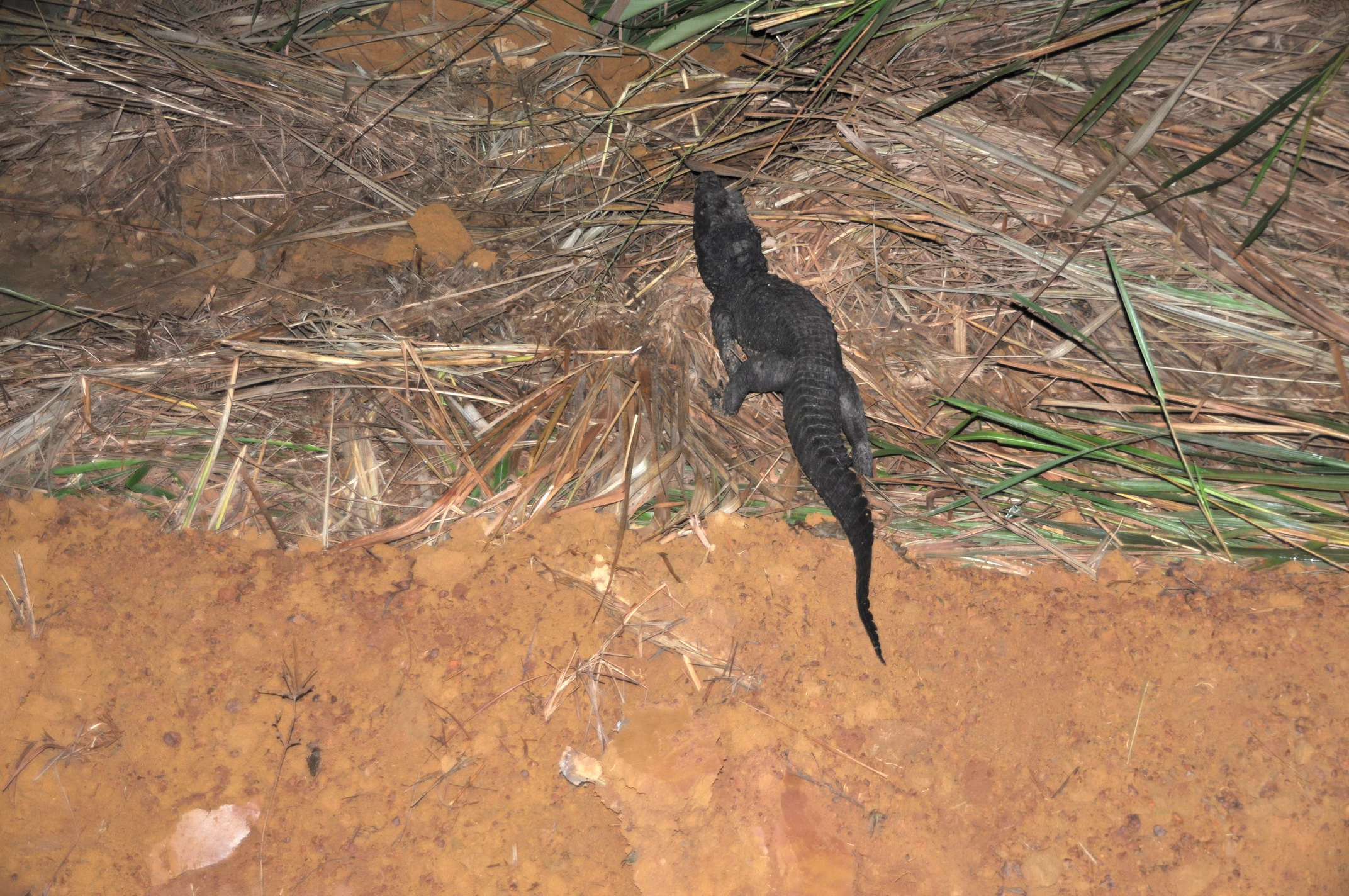
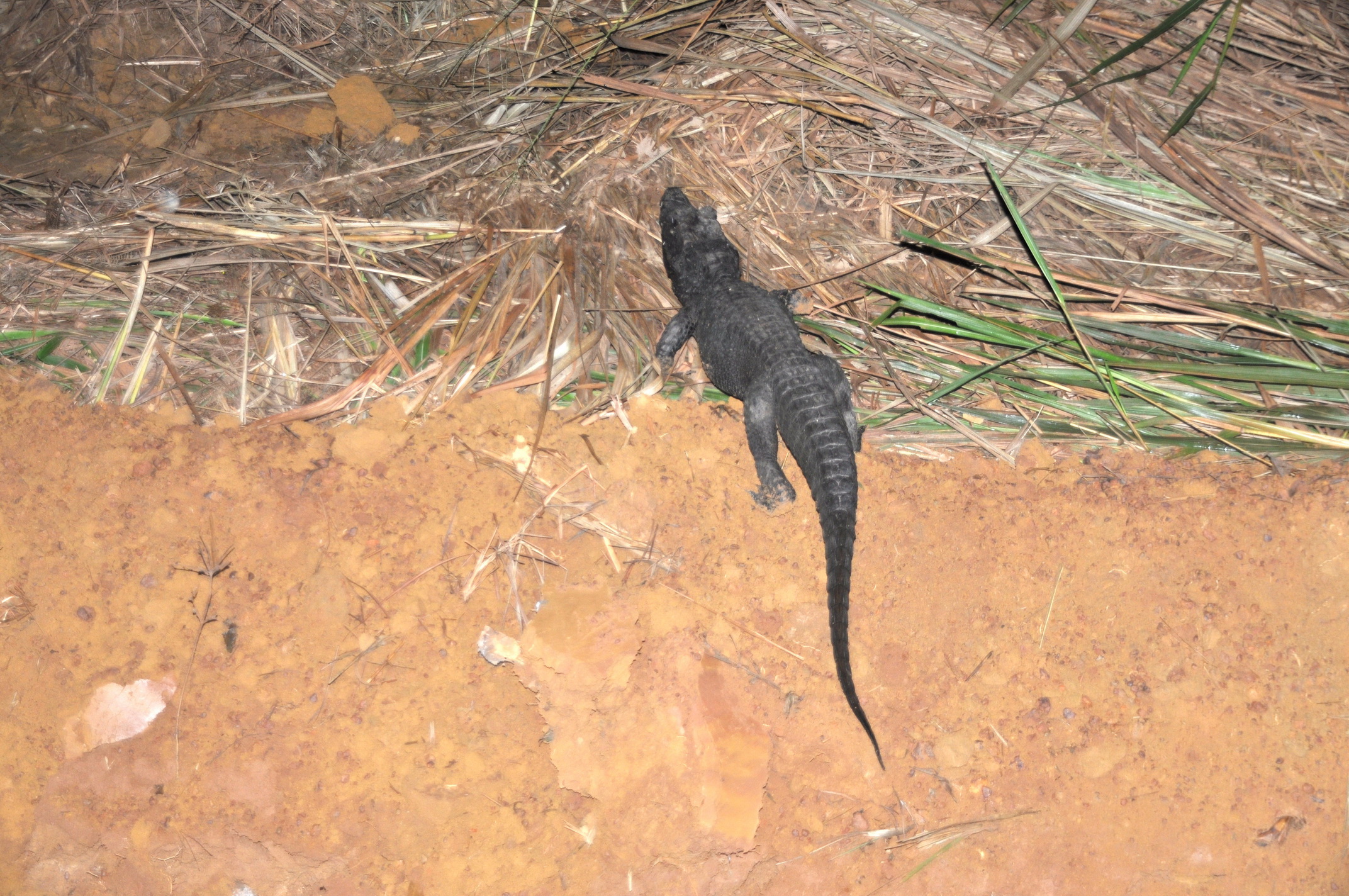
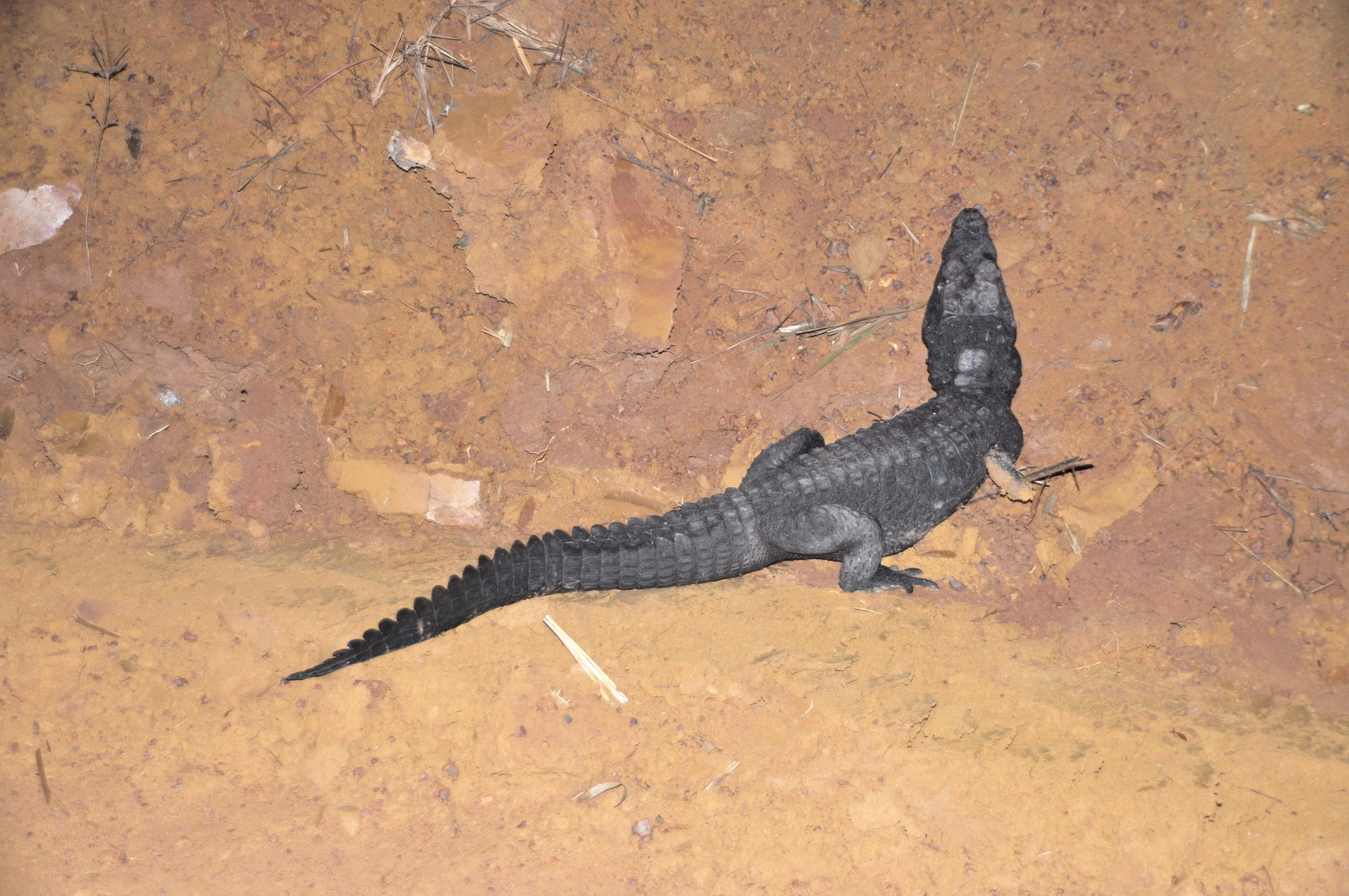
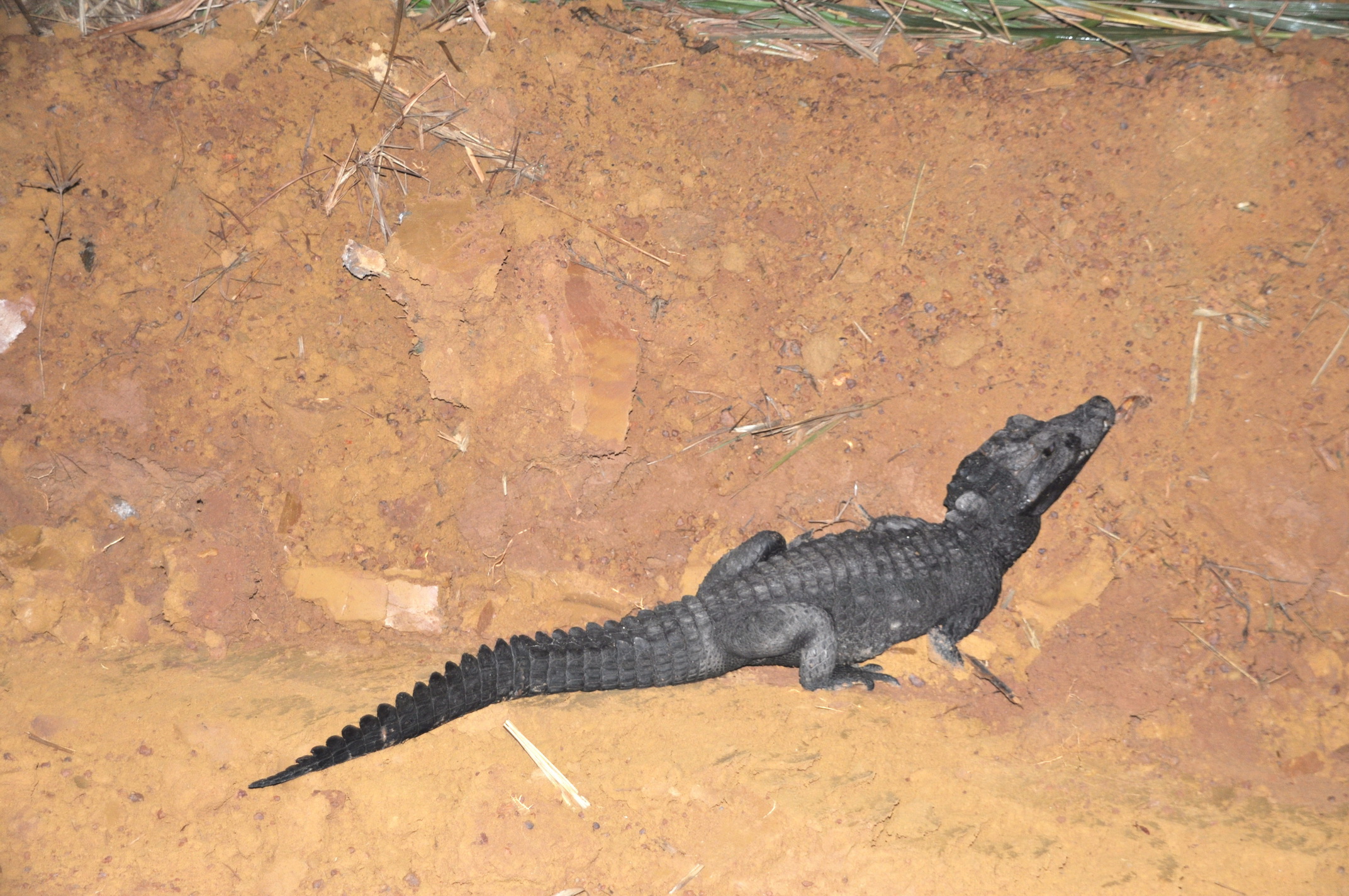
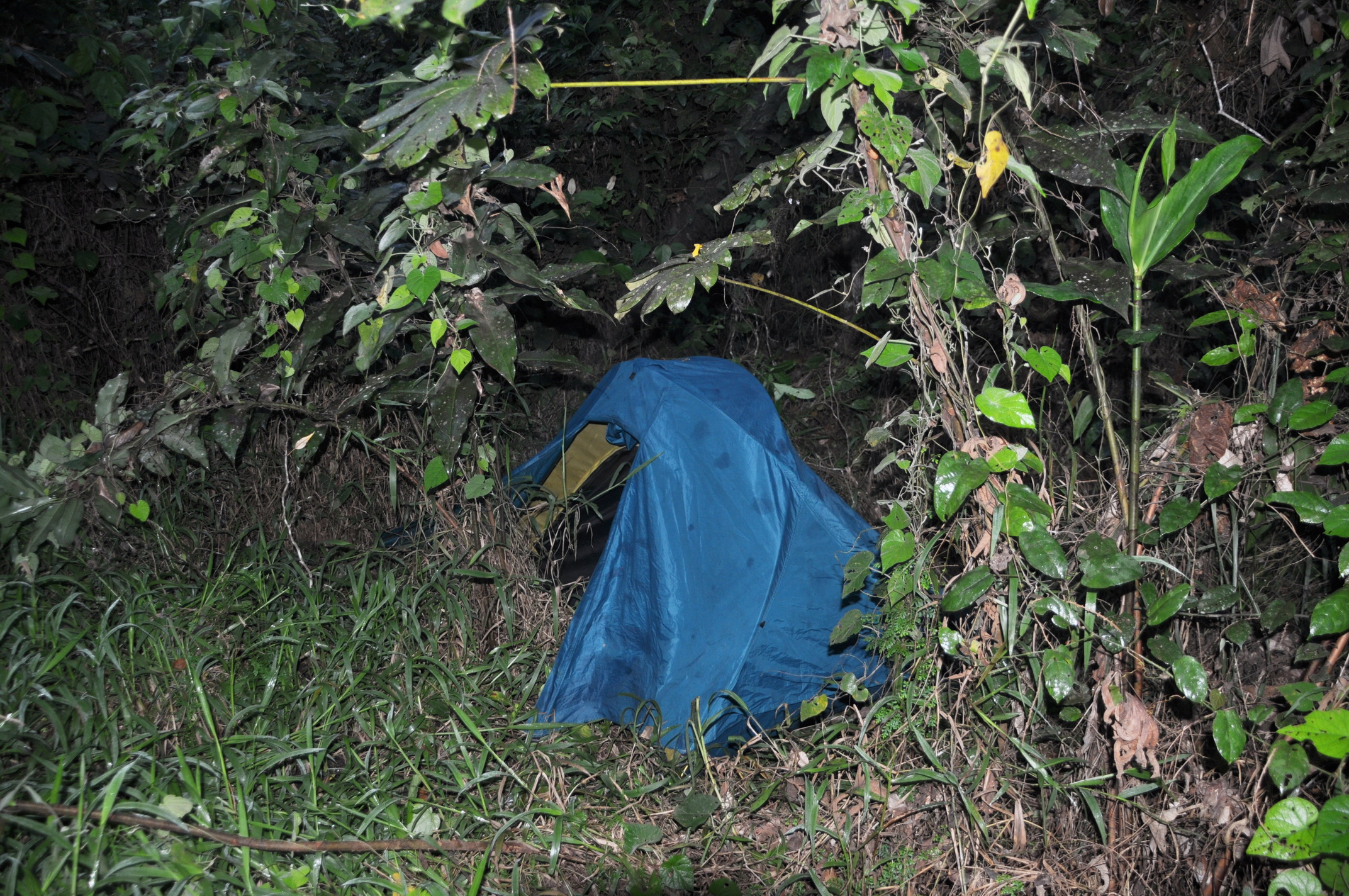
All right, you brute, wait in the bushes for what’s left, just don’t take a bite out of my tent.
I set out my birthday dinner in the clearing by the car. A beautiful sky full of stars, and the satellite phone worked. A cool African evening. I got dinner ready, produced a bottle of champagne, and called Tanya in New Zealand. My fiftieth birthday had arrived. I was in the heart of Africa with a tent, the Southern Cross overhead, African music on the radio, monkey and French champagne in my stomach, and my New Zealand Tanya on the phone. In my mind a colourful picture of the years gone by. The noise of a million kilometres of roads I had travelled. What could have foretold such a life fifty years ago, instead of the prescribed one as a captive engineer, broken up by compulsory trips to the vegetable depot and pulling carrots from the autumn slop at the Ruchyi state farm?
The monkey tasted good. Like good pork, a little sweeter.
People say you shouldn’t eat it because monkeys are so closely related to us. Think how much we have in common with pigs; that doesn’t stop most of us eating pork. Or so I told myself that evening.
Everything ends. So did my birthday banquet. I went to sleep and was woken again by a tremendous noise. This was no rooster. It was something much larger: an elephant had decided to bathe in the stream right beside me. What luck, to be woken not by an alarm clock to go to work but by an elephant to set out for Equatorial Guinea. It was still 800 km away, but I’d see if I could get there.
To the border at Cocobeach
It was easy driving on that grey morning, all the more so because I was right at the very start of the new paved road. My loop around Gabon was complete: Ndjolé again. How had I not understood that this was an important centre of civilisation, that it even had petrol, that it was virtually Europe? I hadn’t appreciated it or stocked up on food and petrol.
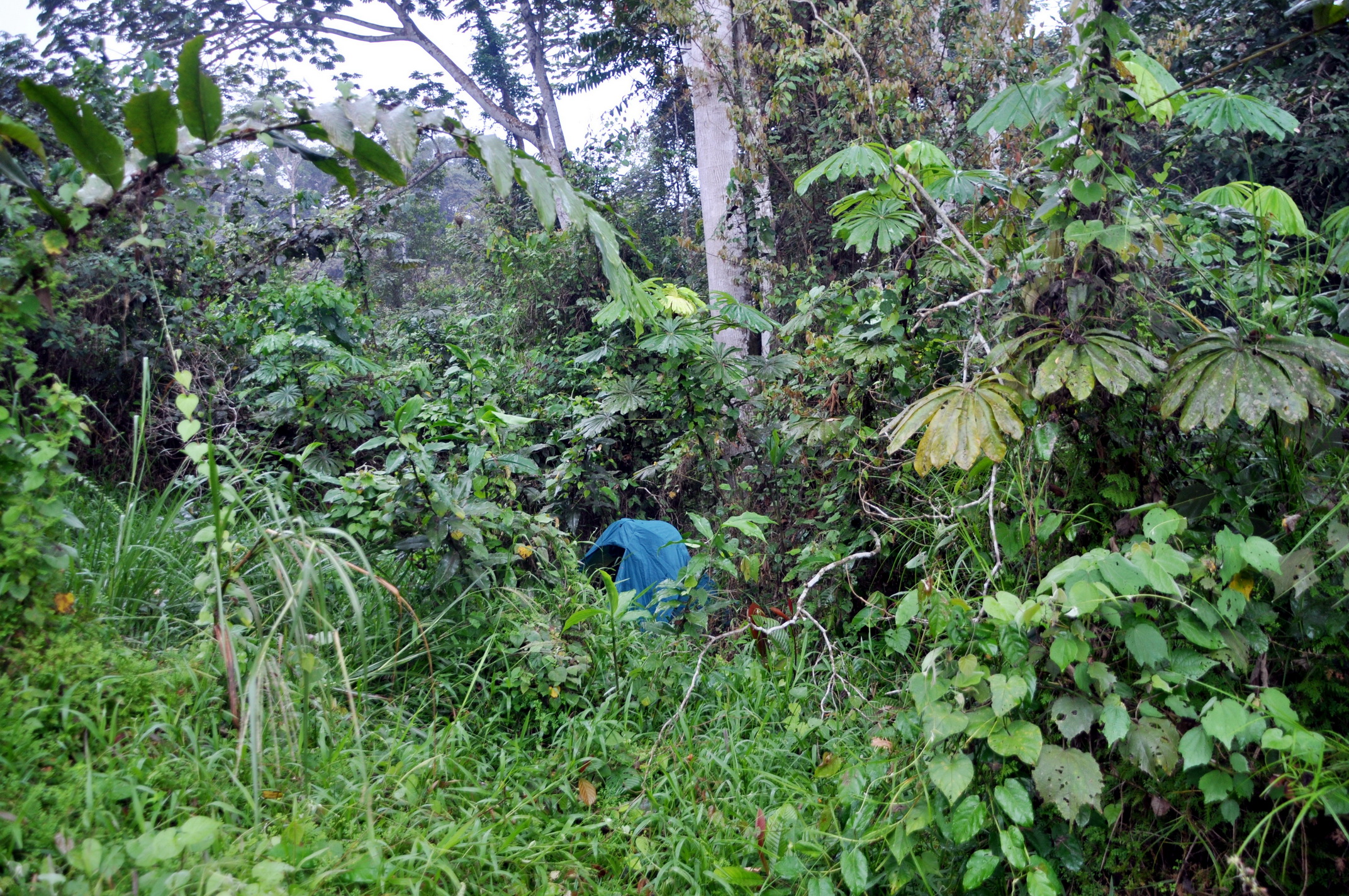
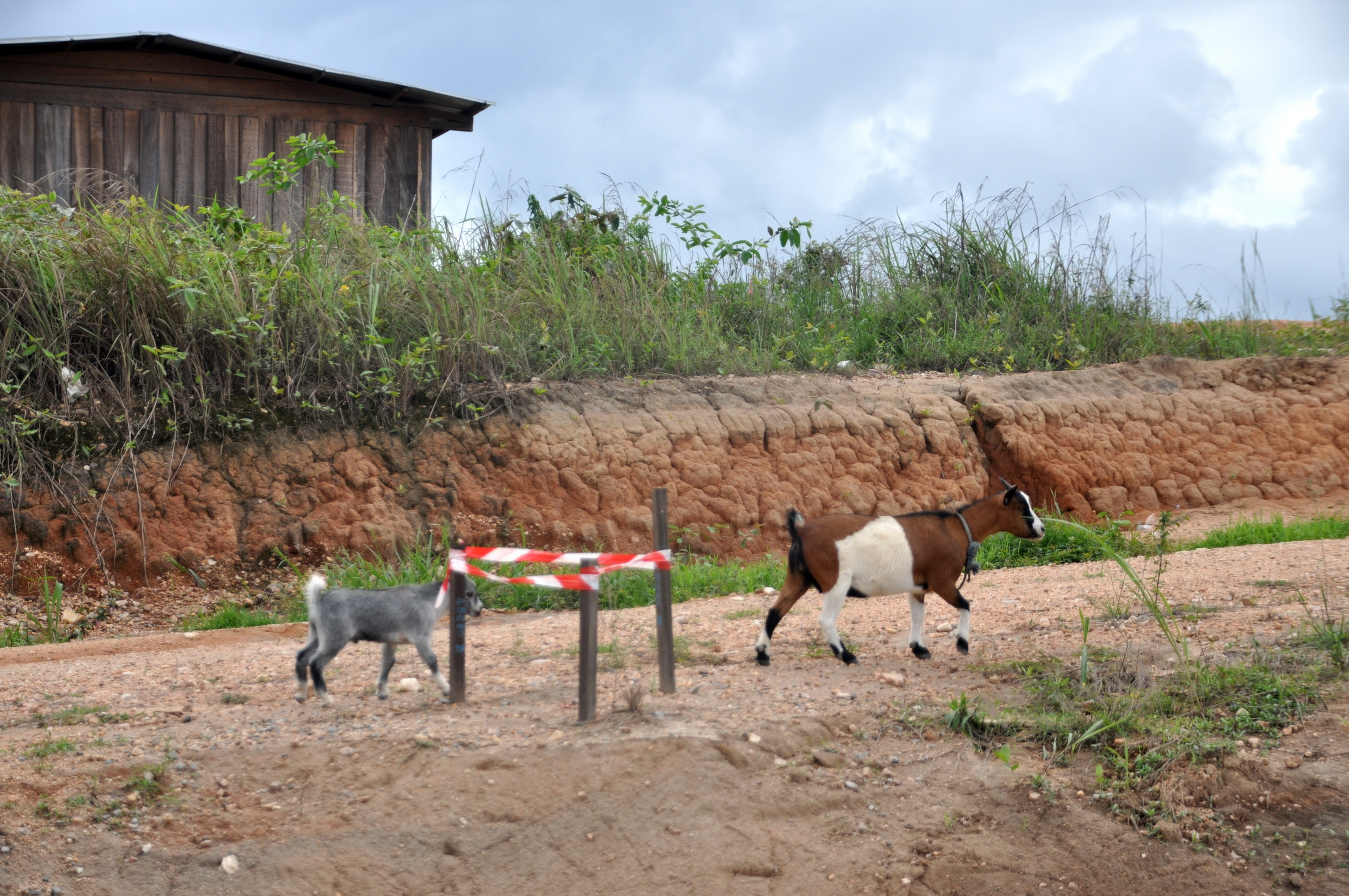
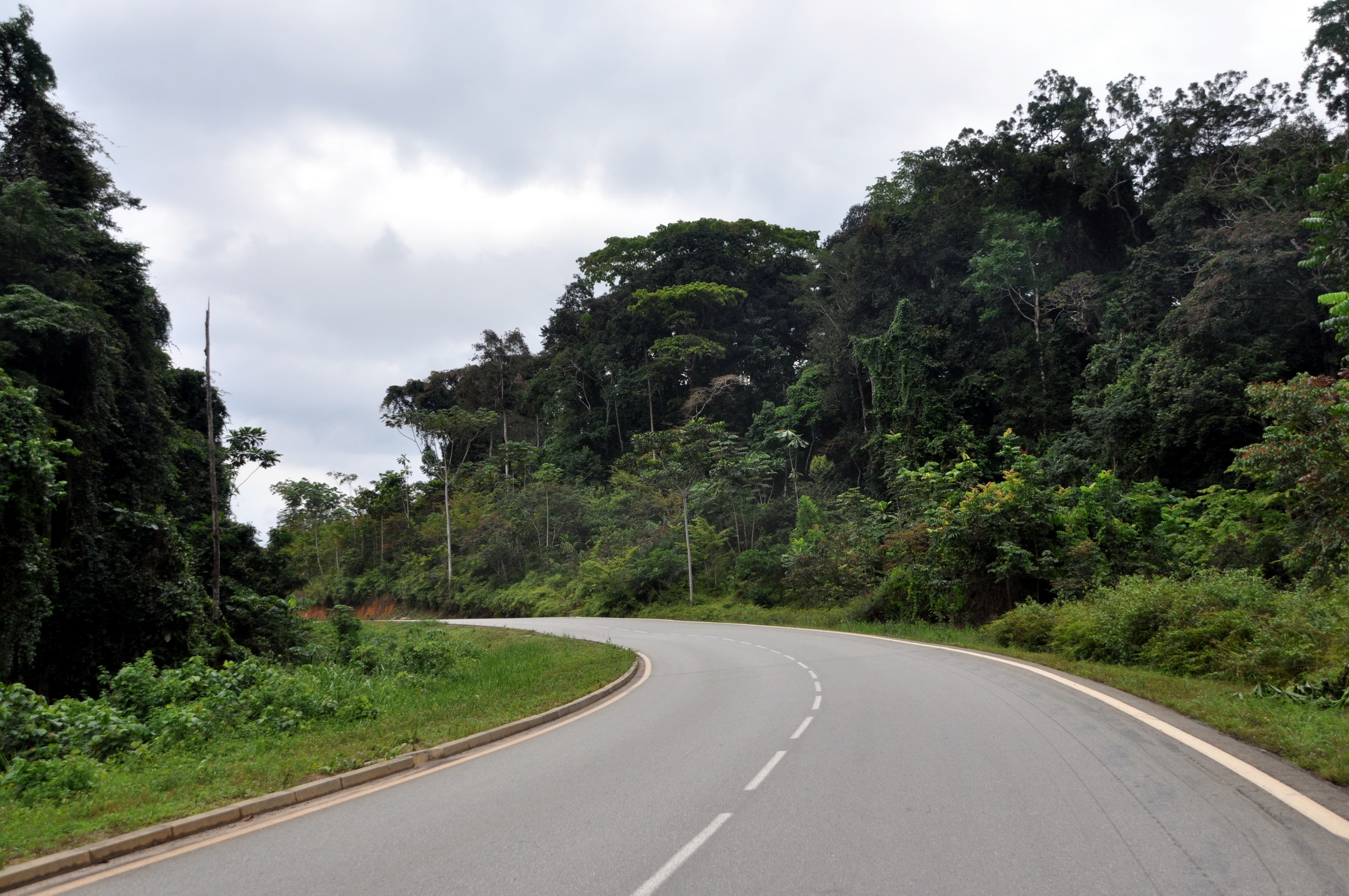
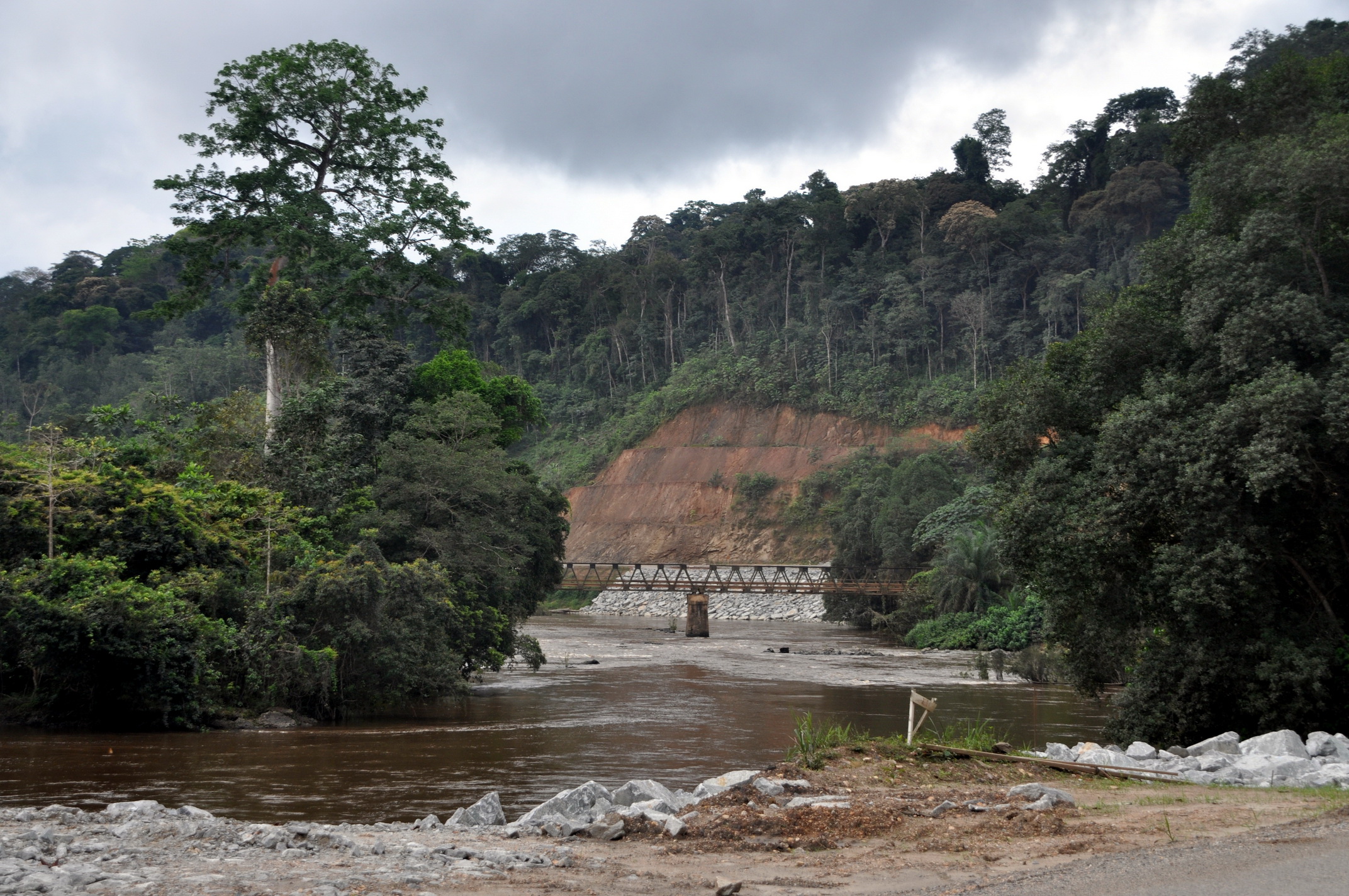
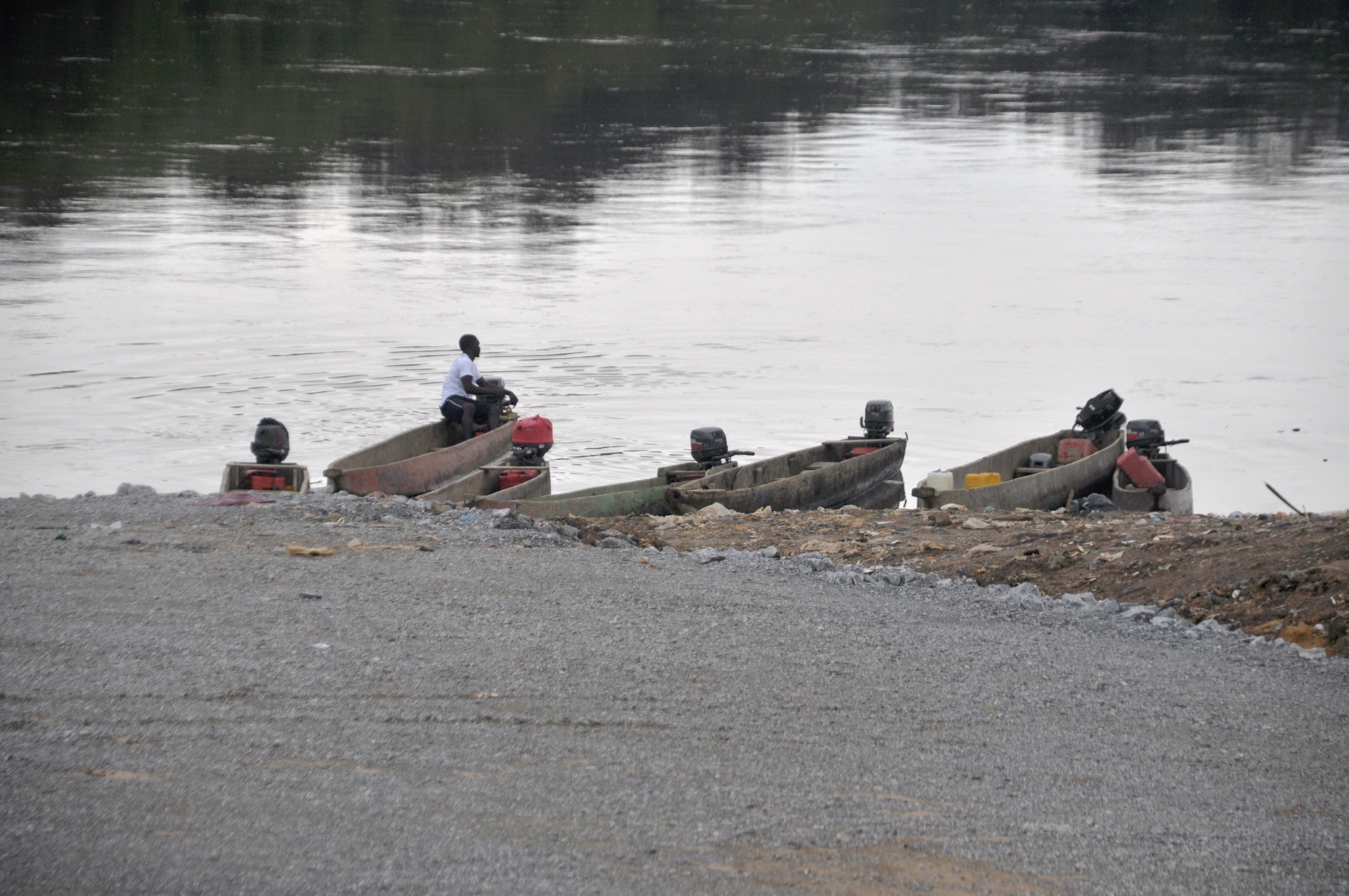
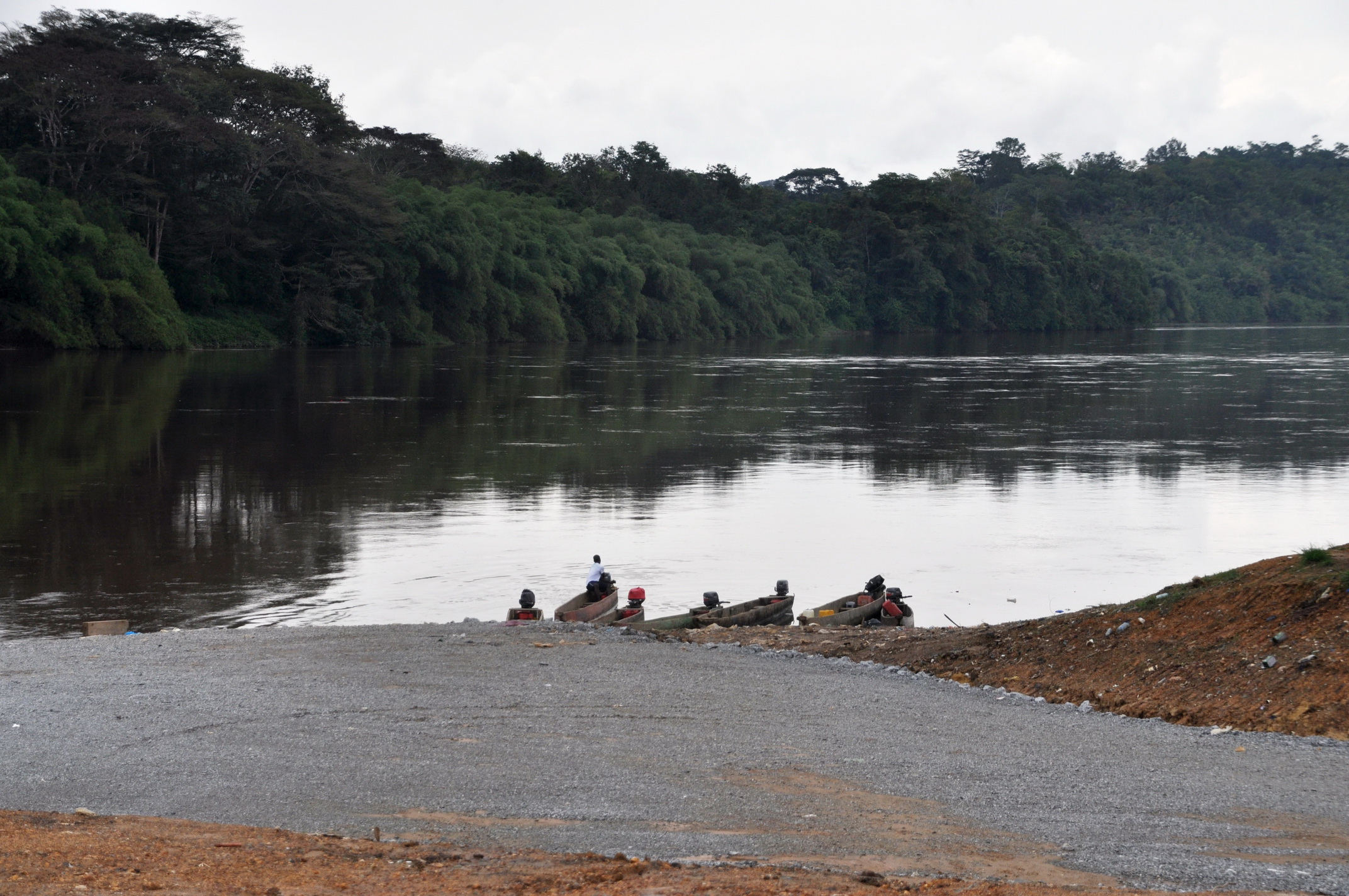
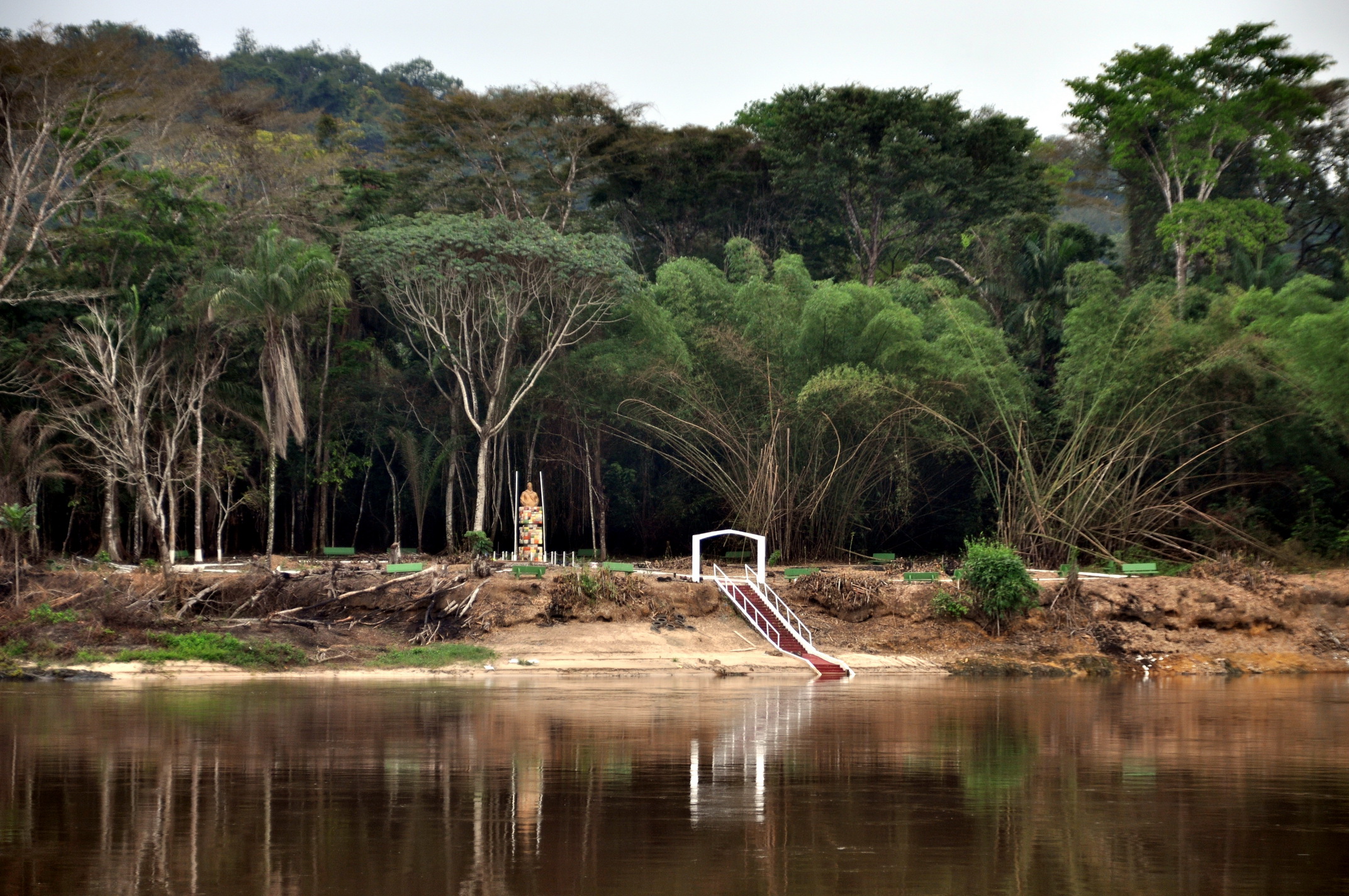
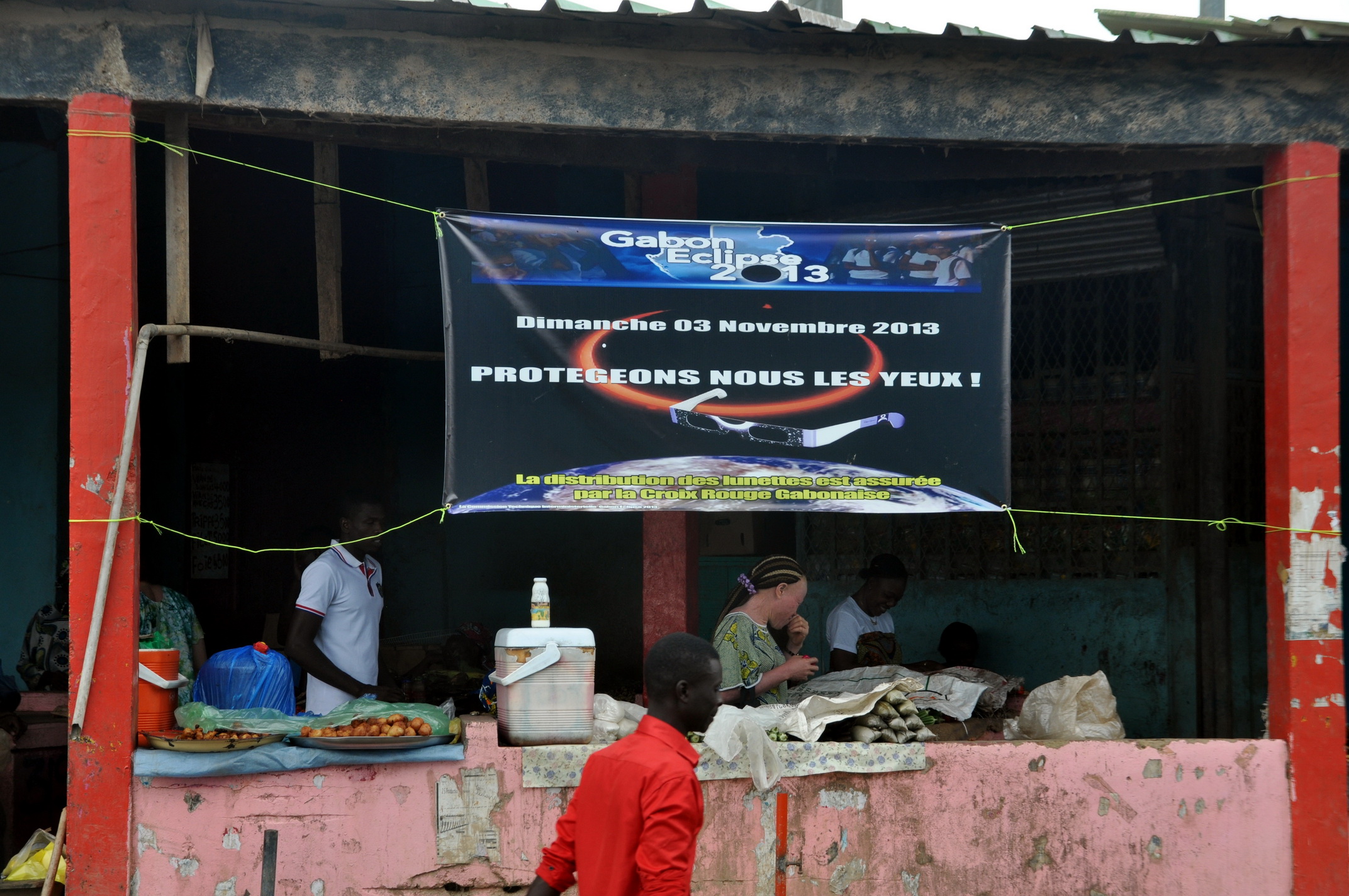
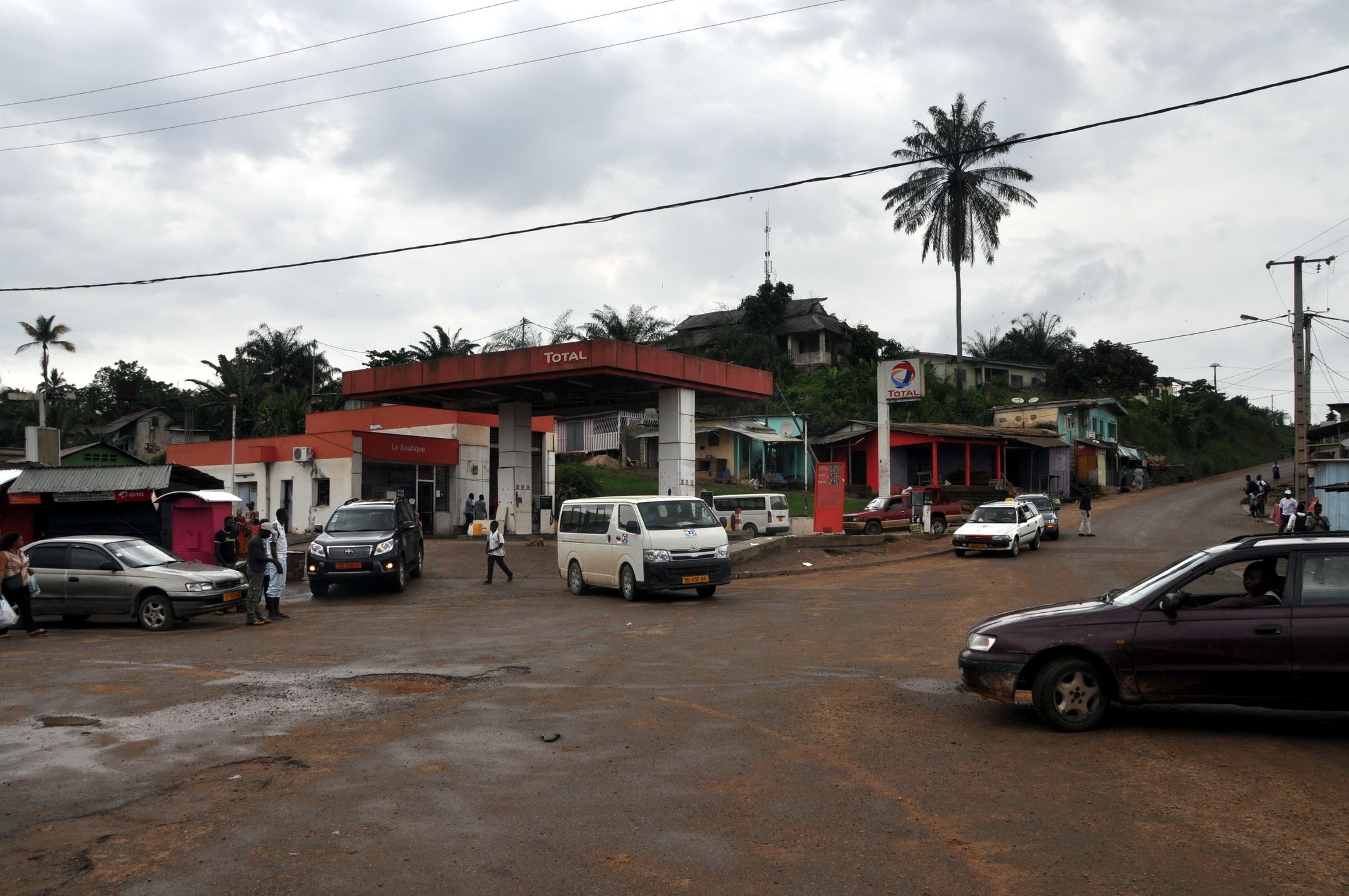
There are several crossings into Equatorial Guinea inland. From other countries I knew the busiest crossings tended to be on the coast, so I thought I might do better crossing by water at Cocobeach.
The Cocobeach road branches off from the main road to the capital about 60 km from Libreville.
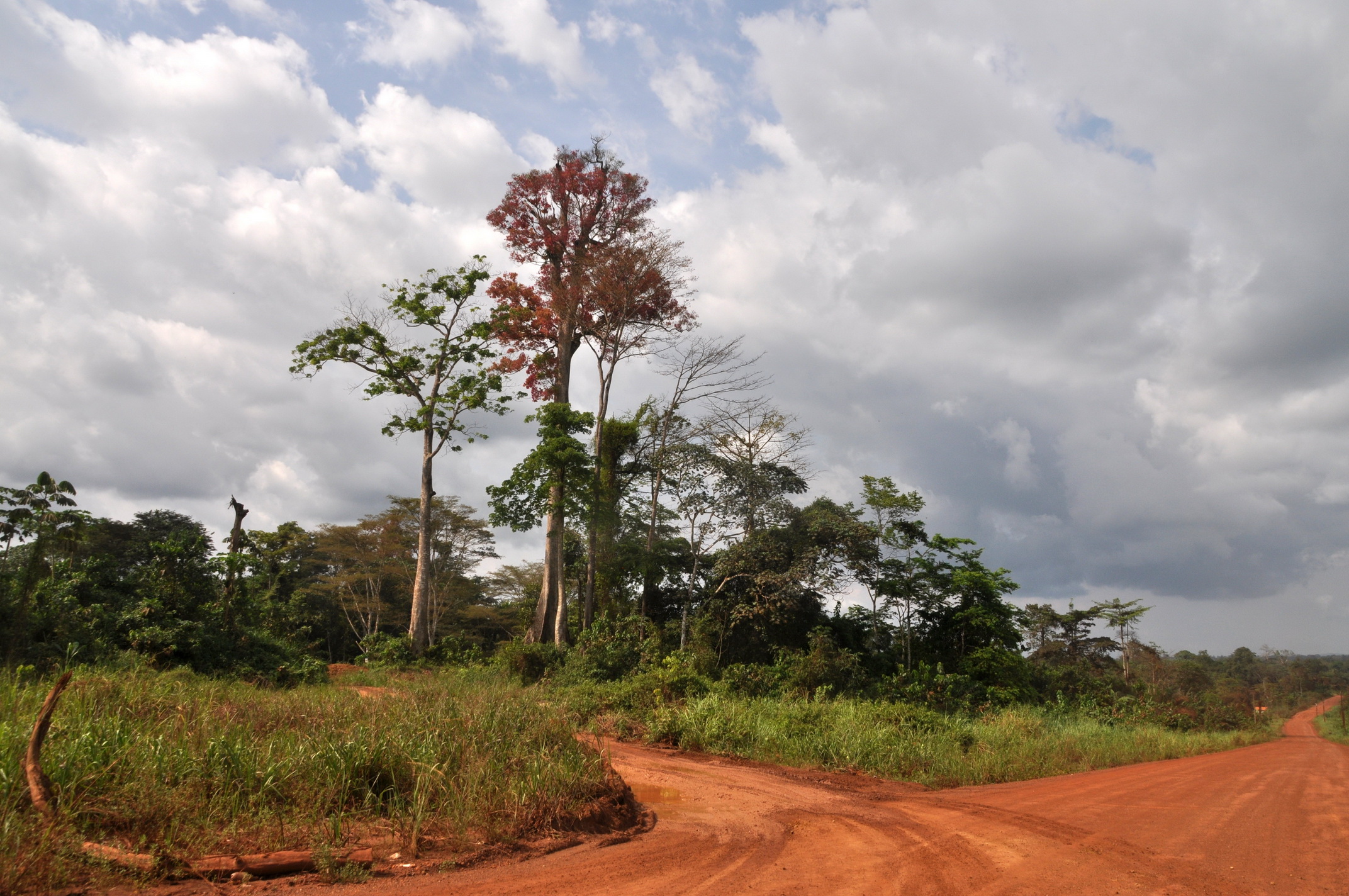
Road R10 was a regular dirt road, with mud in places. It’s wetter here than on the edge of the savanna, and the land is flat. No time to admire the views. I had to get across the border today.
The ferry terminal was puzzling. A grassy bank and a dugout canoe. I asked the border guards what this was. “International boat terminal,” they said (01°00.484′N, 09°35.157′E).
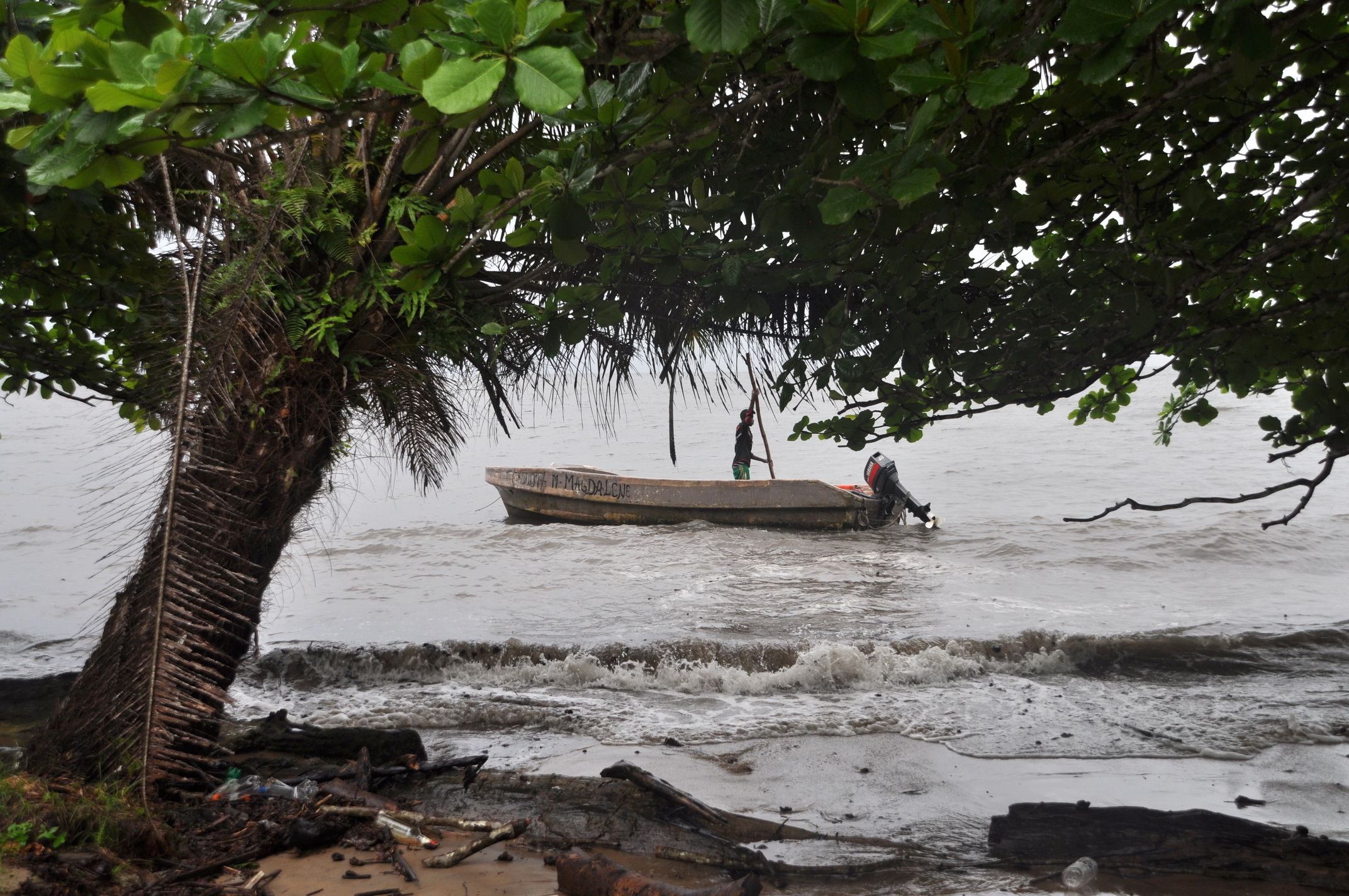
When did the ferry go? Well, the ferry never goes, but the canoe goes as soon as it’s ready. You’re the third passenger. It won’t take any more.
The customs people were cheerful and smiling. They promised to watch my car and wash it. Paperwork done, stamps in the passport, and I set off into the unknown with a little backpack.
Equatorial Guinea
The dugout, with an outboard motor and three passengers, left the International Boat Terminal at Cocobeach, Gabon (01°00.484′N, 09°35.157′E), about four in the afternoon. The port of Cogo in Equatorial Guinea (01°05.083′N, 09°41.657′E) was 20 km away across the estuary, which spreads a couple of kilometres wide on its way to the sea. Cogo is the name people use there; my map called it Puerto Iradier. We should have reached it before dark, except a storm was coming up. First the clouds thickened, then the wind rose. It all broke when we were right in the middle. The rain came down in buckets, metre-high waves rose around us, and the boat began to drift. I put my body over the bag with the camera and laptop as best I could. Waves were coming right over the canoe and down the back of my neck. The engine stalled. Fortunately we were being carried towards the mangroves on the Equatoguinean shore rather than out into the ocean.
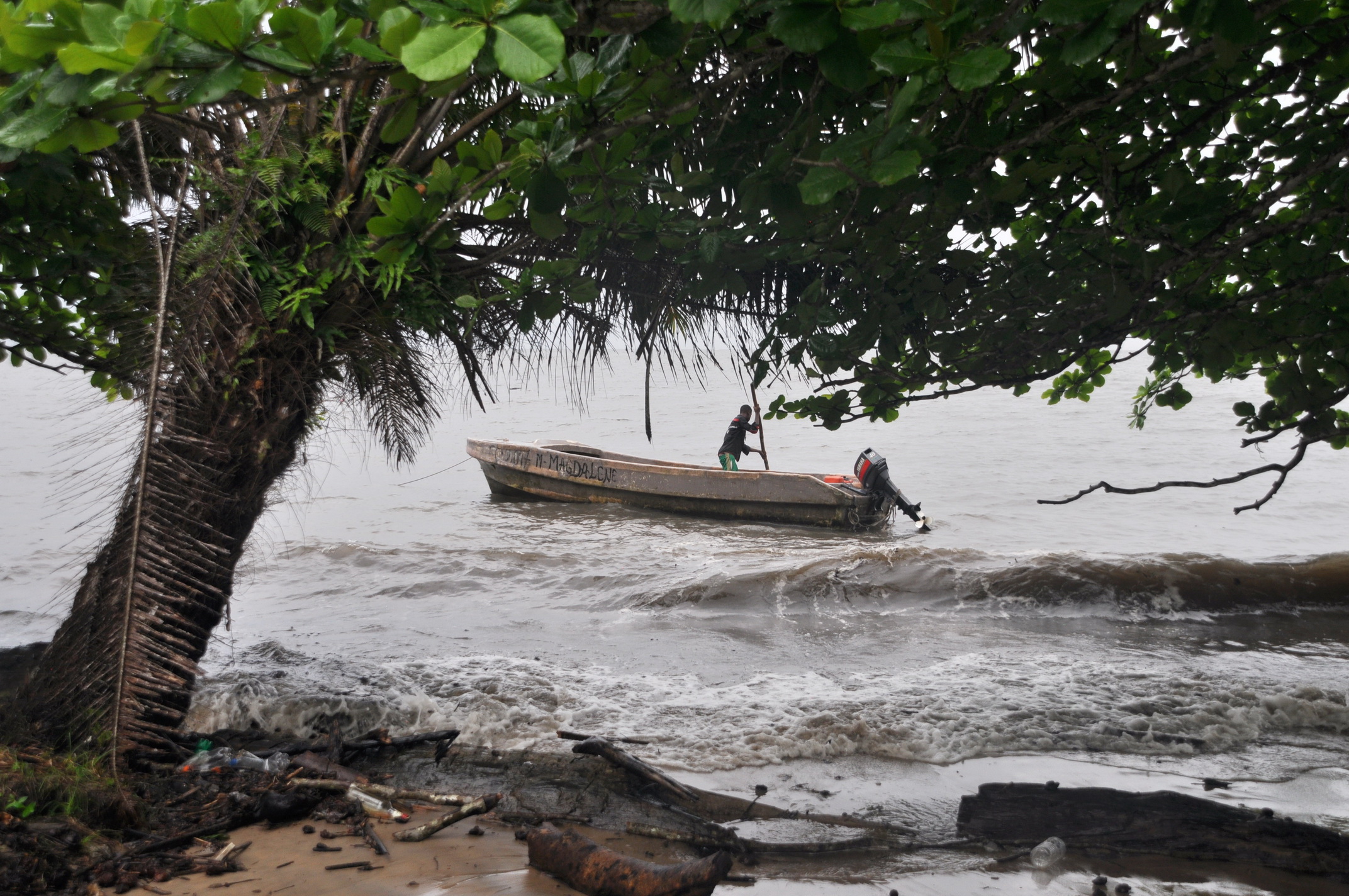
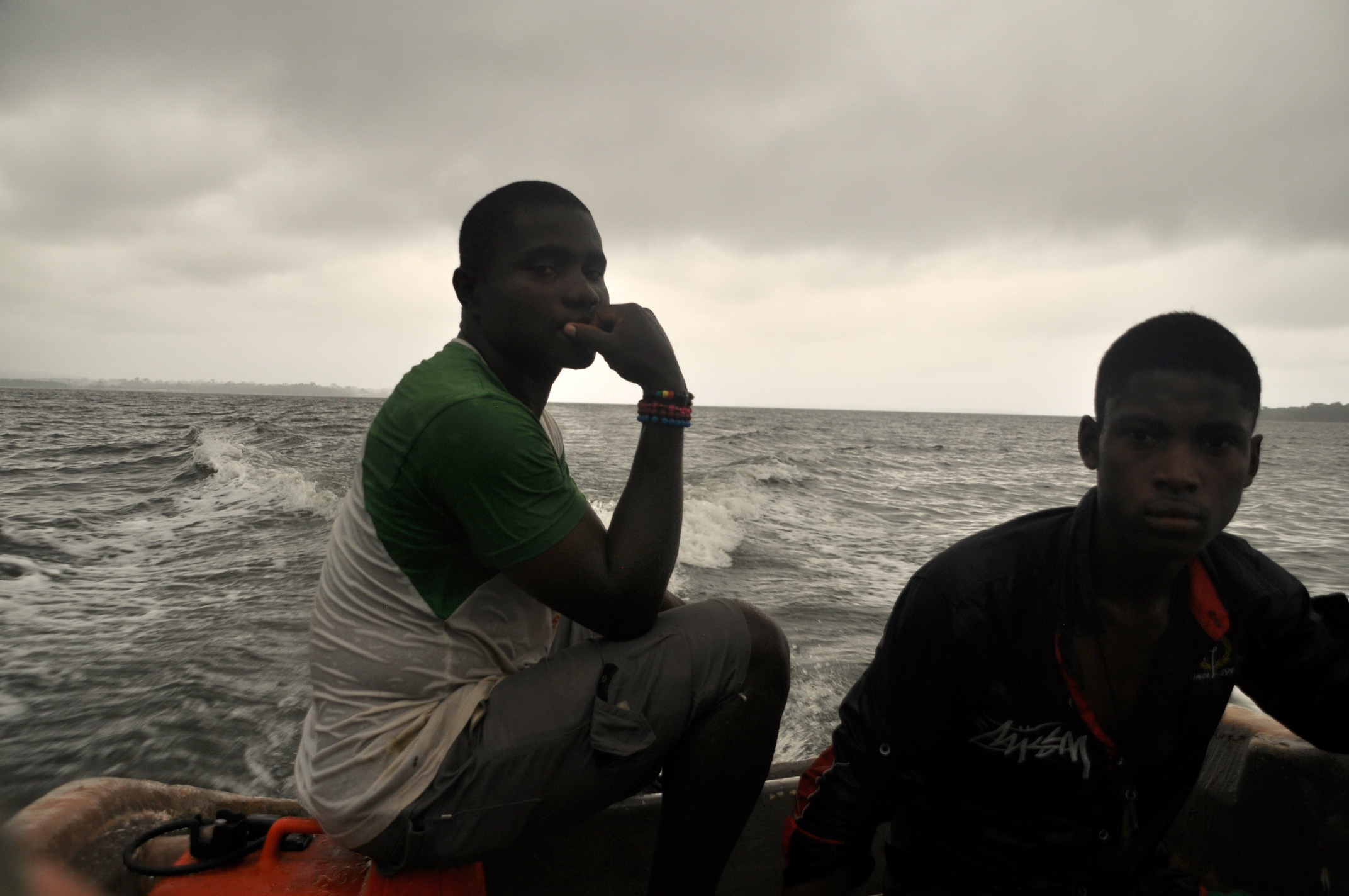
Two women who crossed the border to trade were in the boat with me, with a pile of luggage. One squealed like a piglet. It was extraordinary that so small and delicate a person could produce a noise so loud and high-pitched. The other clutched me and said “Oh, Padre” in a low voice. I’d have been happy to hug two women for free, but what I was holding to my heart was the backpack with its priceless contents.
When the canoe reached the mangroves, the waves steepened in the shallow water and rolled it over. Suitcases flew into the water. I held on to the backpack. Rain is one thing; salt water is another. I no longer remember how we all ended up perched in the mangroves waiting out the weather.
It was dark before the wind dropped. The boatman bailed the water and got the engine going. We could go on. It was a fabulous scene. Nearly pitch-black. Lightning struck the water very close to us, first on one side and then on the other. We moved among the trees and the wrecks of ships. Equatorial Guinea had built socialism, risen from its knees and set about becoming a regional superpower, so there were plenty of remains of the glorious future rusting away.
The women were still screaming with fright. How they hadn’t lost their voices I’ll never know. I was calm. If I got killed now, it would be a happy ending; I’d avoid a lingering death in the hands of doctors. Since I didn’t believe in happiness that straightforward, of course I would live and have to do without the camera and computer I’d lost to the water. Soaking wet, in complete darkness, we tied up at Cogo. The women rushed to embrace me in relief. I’d never entered a new country quite that way.
The relief was short-lived.
I’d found no reports of Equatorial Guinea by independent travellers. My visa had been surprisingly simple to arrange in 2013. A hundred dollars, a police certificate I had handy for the New Zealand authorities, and I had a 30-day visa.
Since I knew nothing of the country, I wasn’t worried. There are plenty of places one has never heard of. The GDP-per-person figure I’d seen was $36,600, nearly as much as England’s. I assumed that meant it was an ordinary country. I’d live.
The first surprise was at the border. First I was charged 20,000 francs for an immigration stamp. I’d never seen that anywhere in the world, but all right. Then 10,000 for customs, not duty but the right to fill in a declaration. It went on: police 5,000, the local “KGB” 5,000, plant health 5,000, special control for special oversight 5,000, port services 5,000. The ticket had already cost 90,000. You could cross the Atlantic for that! By my reckoning it had cost about $300 to cross the border.
The currency was the Central African CFA franc, at the fixed rate of 655.957 CFA francs per euro. The franc is shared by Gabon, Cameroon, the Republic of the Congo, the Central African Republic, Chad and Equatorial Guinea.
Well, money can be earned again. I wouldn’t go broke. Worse was being asked again and again about the purpose of my visit. Tourism? Where were my tourist papers? I showed them my hotel booking. Thank goodness I’d booked it. It usually helps at a border; here it seemed essential. But it clearly wasn’t enough. They went on asking for my tourist cédula.
Time went by. I had nothing beyond the hotel booking. The taxi driver was already whining that it was time to go and they might as well let me in. So they let me in.
Equatorial Guinea is the only African country where Spanish is a national official language. I knew a little and it helped enormously, though I understood it less readily here than in Latin America. Perhaps it was local expressions, or the accent, or just no idea that one should say simple things and work out what foreigners are trying to say in reply. In general, when people haven’t met foreigners or tried to learn a language, it’s hard for them to talk to a foreigner even in their own. A little confusion and they get cross and mutter, “Learn the language first and then try talking to me.” Like a Russian village shopkeeper faced with an Uzbek man buying noodles.
The taxi driver wanted 80,000 to Bata, the largest city on the mainland. There was space for the two women traders, another man and me. We agreed to split it: 20,000 each.
There was a police post as soon as we left the port. It was pouring. Nobody wanted to get out, least of all the police. The women with me did get out and somehow sorted it all in ten minutes or so. I went through as their complimentary extra. I grumbled that they could have been quicker, without yet understanding how much trouble the women and the unrelenting storm had saved me.
It turned out to be 80 km to the city, with four more of these posts. We sat waiting at every one.
There were new problems when we arrived. The women flatly refused to pay the taxi driver, on the grounds that I would pay for them. While the argument was going on the other man vanished without paying. I got out too: 20,000 or I’m off. I had only a 50,000-franc note. I wasn’t giving it to him without change, and he wasn’t giving me change.
As his customers scattered like rabbits, the taxi driver concentrated on the women. They were half the fare, after all.
I walked to the hotel. The taxi driver did find me later, and I gave him my 20,000.
I had a good room booked at the Ibis (01°51.605′N, 09°45.598′E; elevation 5 m). I was celebrating my birthday both yesterday and today. Yesterday in the tent under the open sky; today I could get clean, get some rest and get dry, because I was absolutely soaked.
Bata
I reached the hotel after midnight. It was an island of Western civilisation. The world around it was African, but the Ibis room was cleaner and better equipped than those in European capitals.
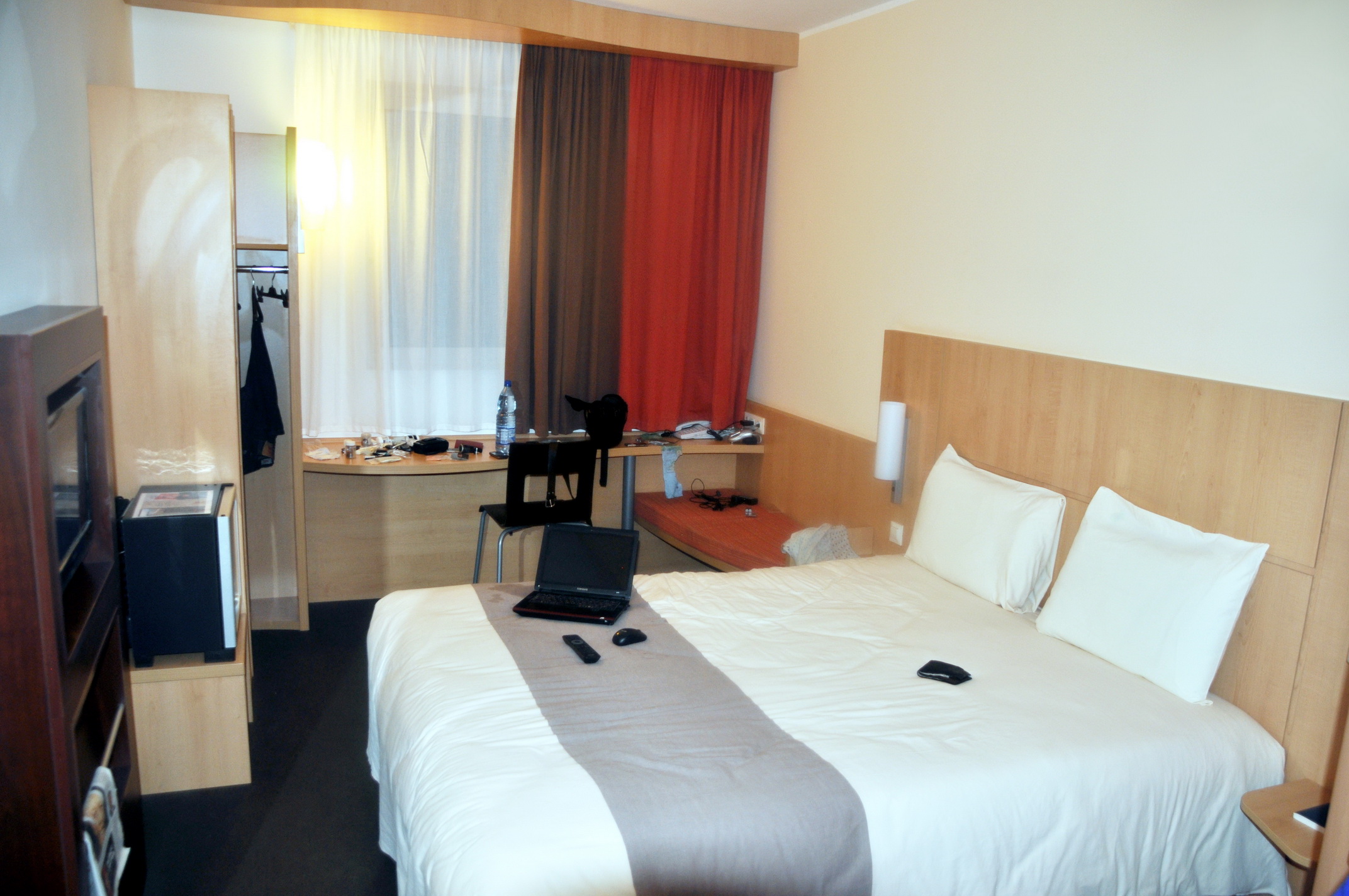
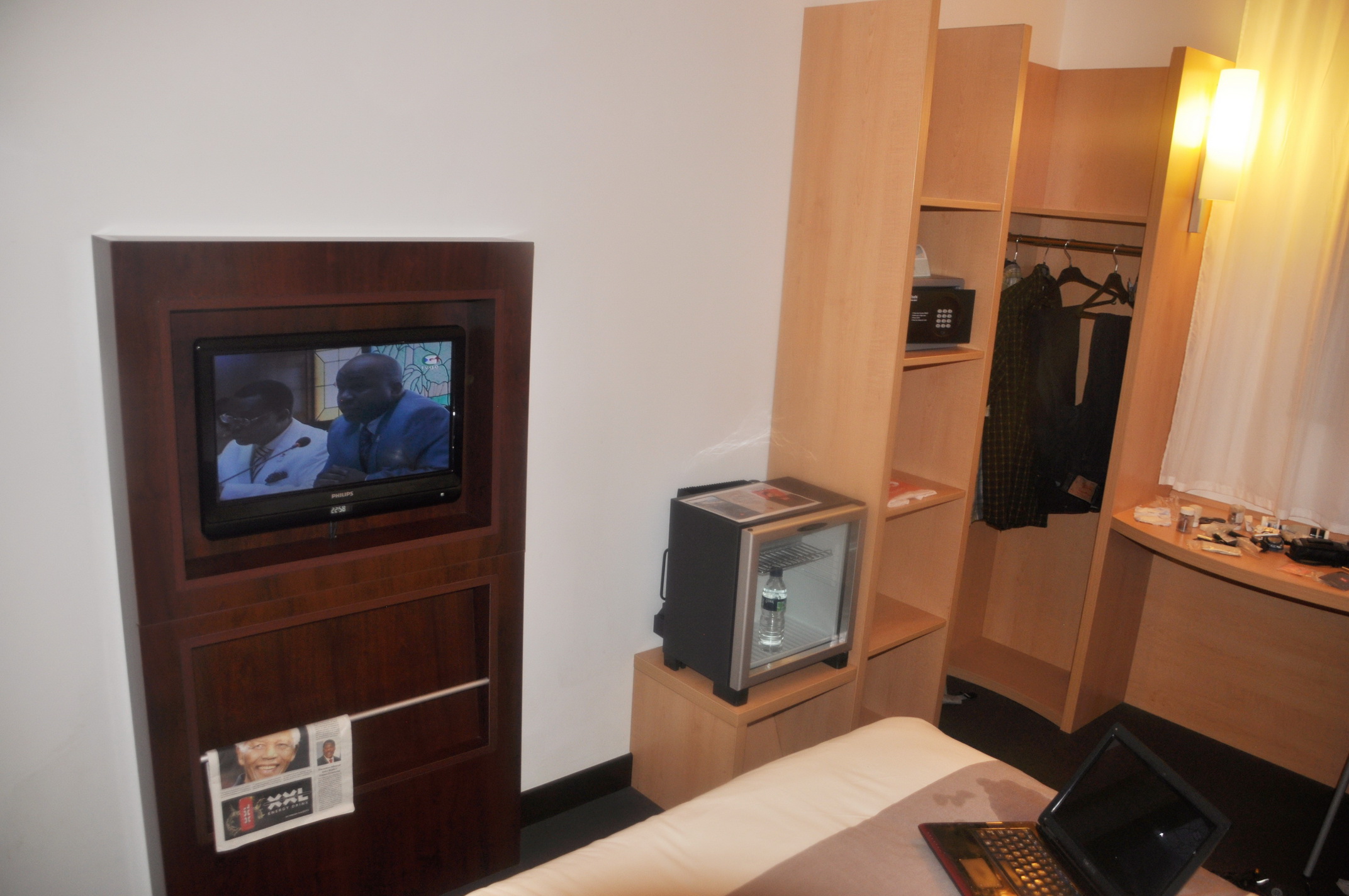
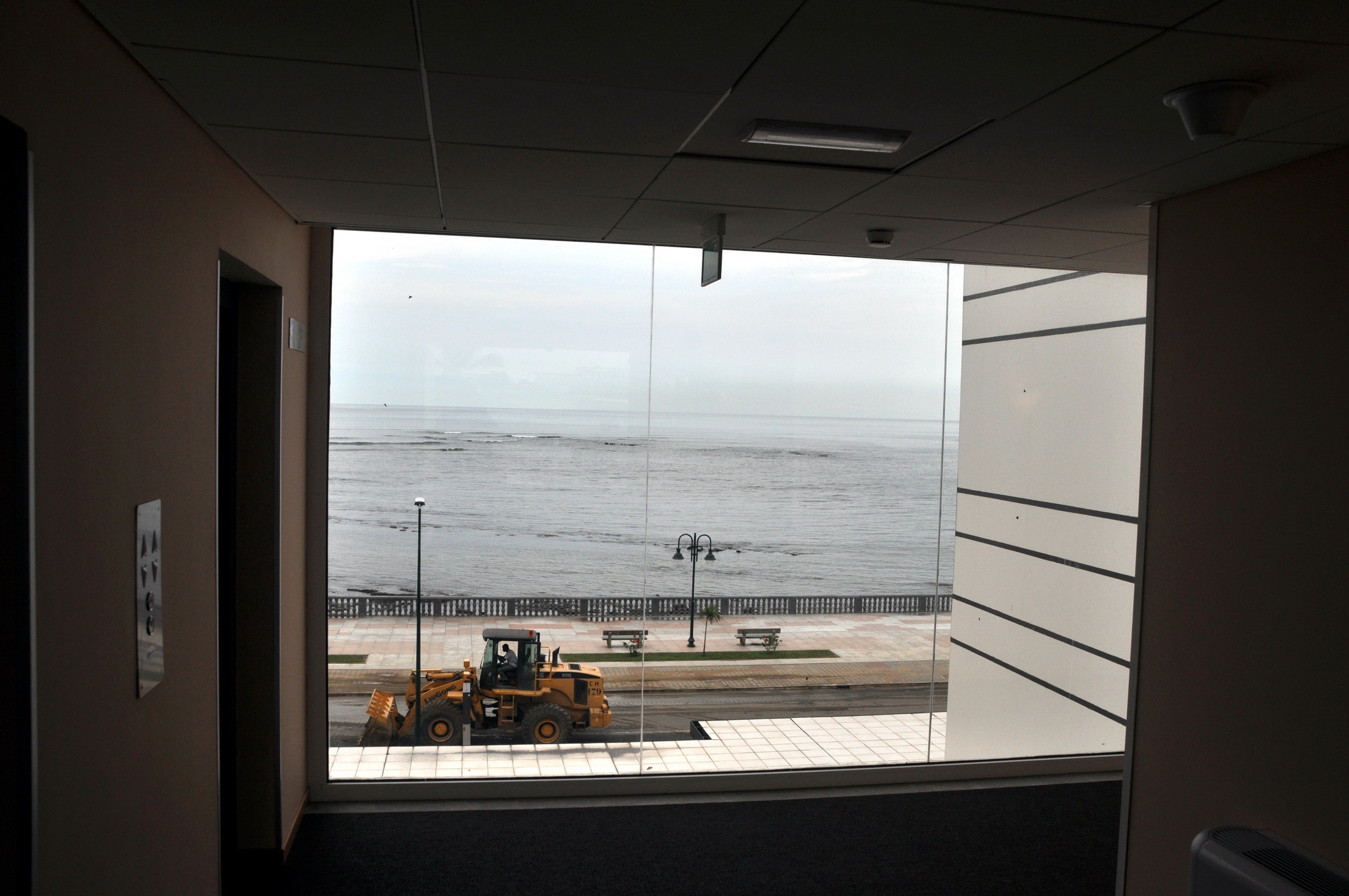
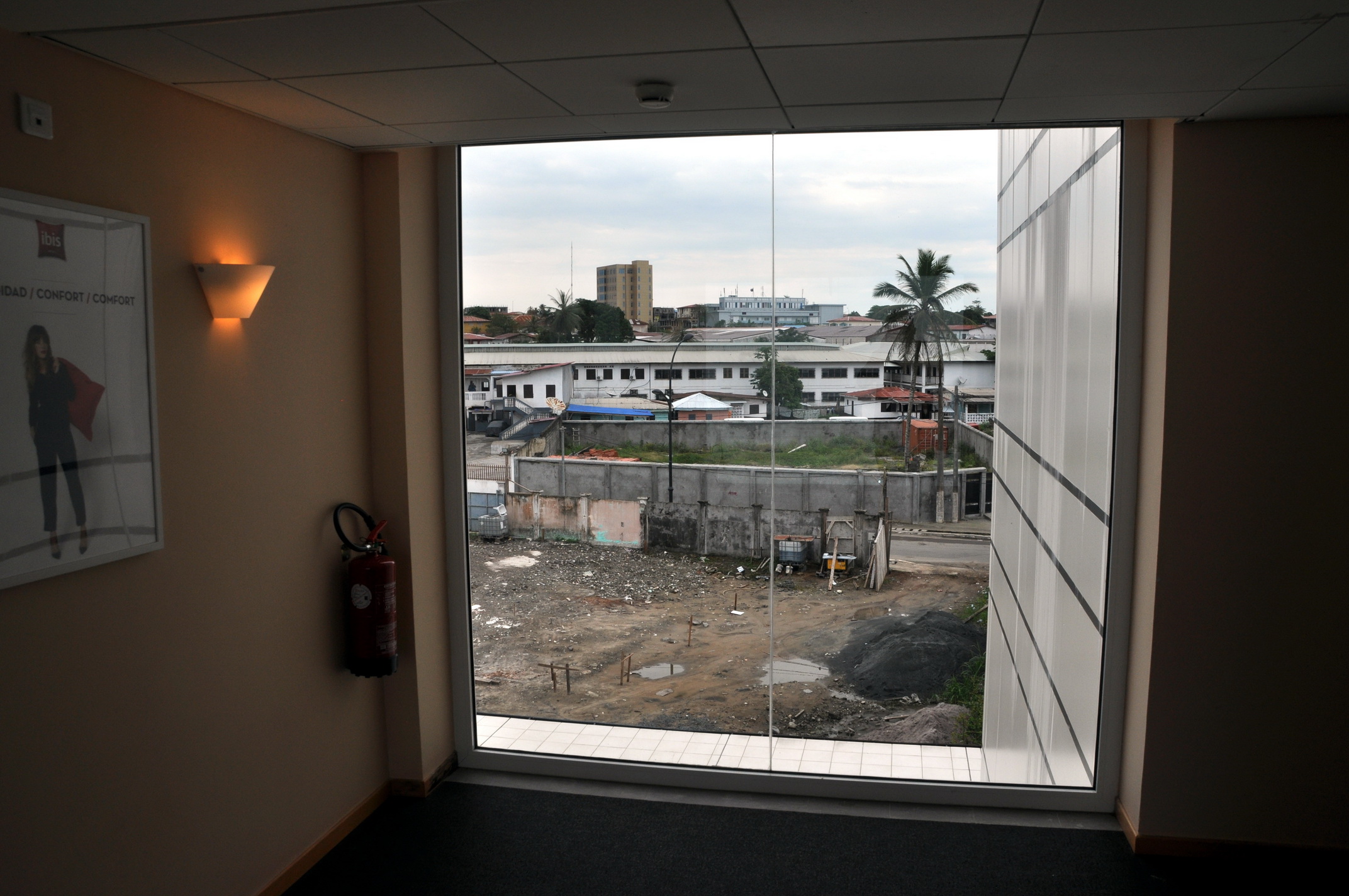
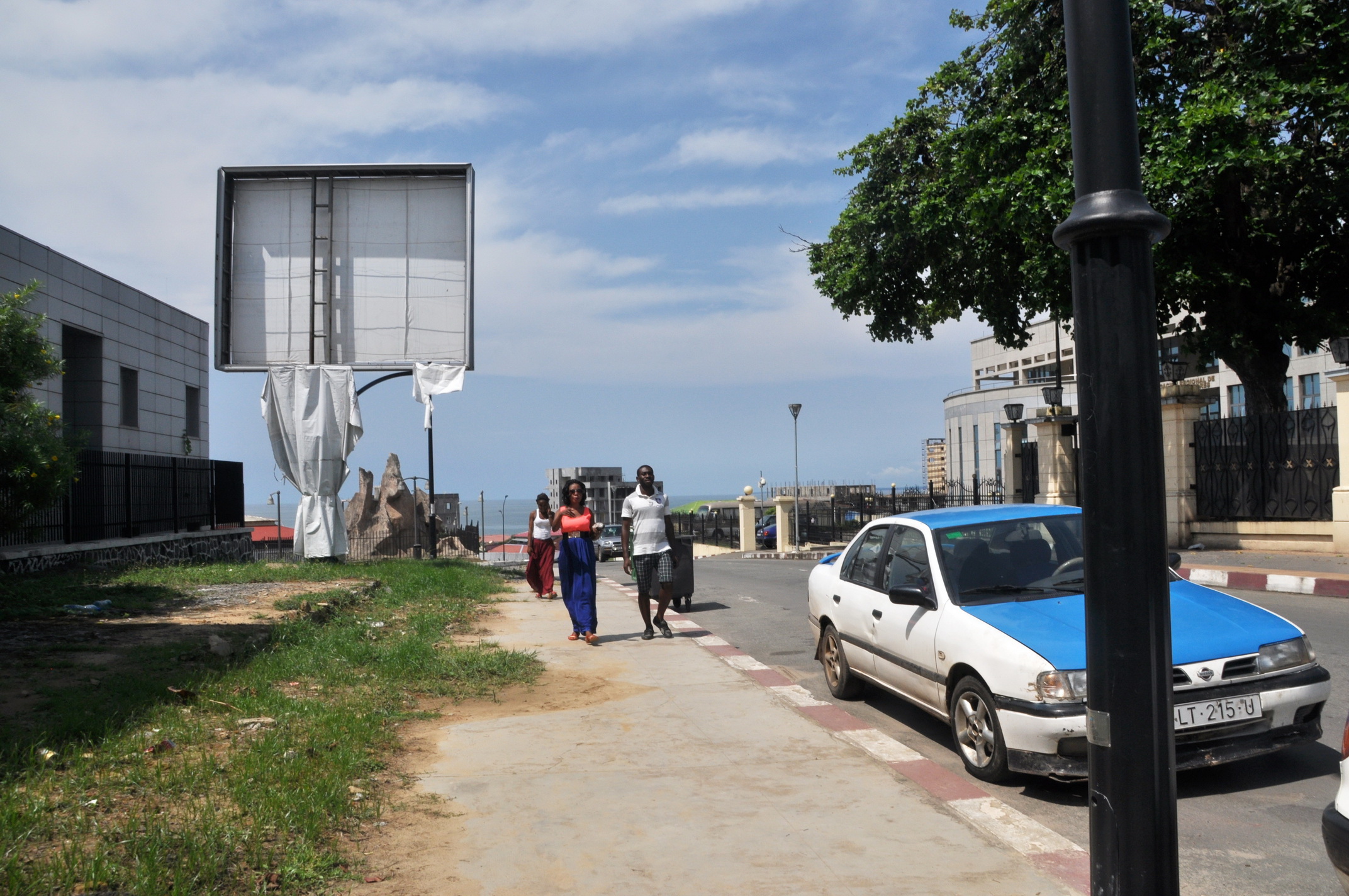
I found one living soul in the kitchen and asked him for anything at all to eat and drink. The restaurant had long since closed, but decent hotels respect their guests’ wishes. And that was how I ended my birthday.
I had to wash my things and wring them out. The camera worked; the laptop wasn’t so happy. I decided not to torture it. Let it dry for a couple of days.
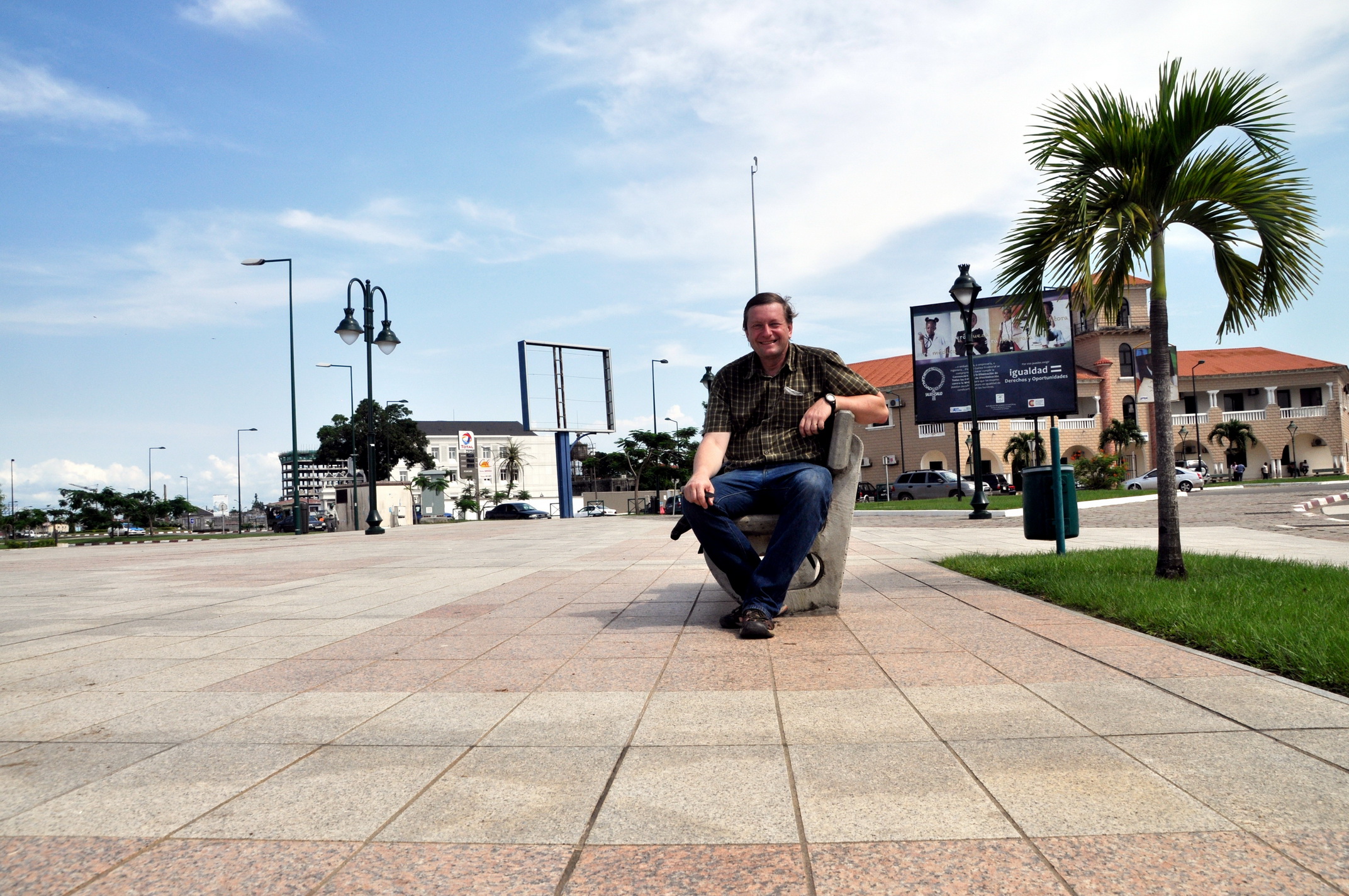
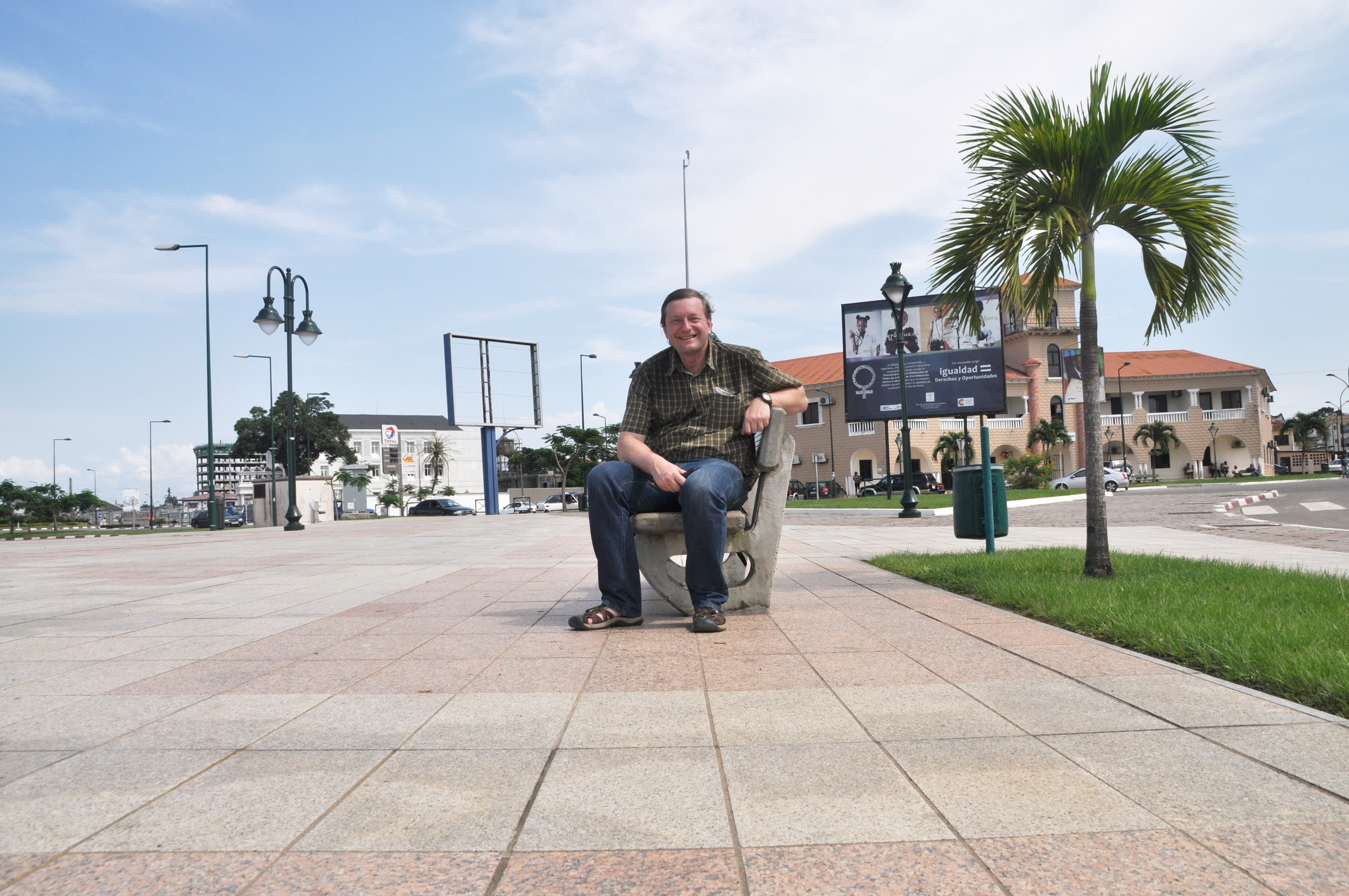
I went for a walk. The seafront on which the hotel stands was immaculate. A group of women in hard hats were mopping it with soap and water. Or rather they were flirting with the men as much as washing the pavement.
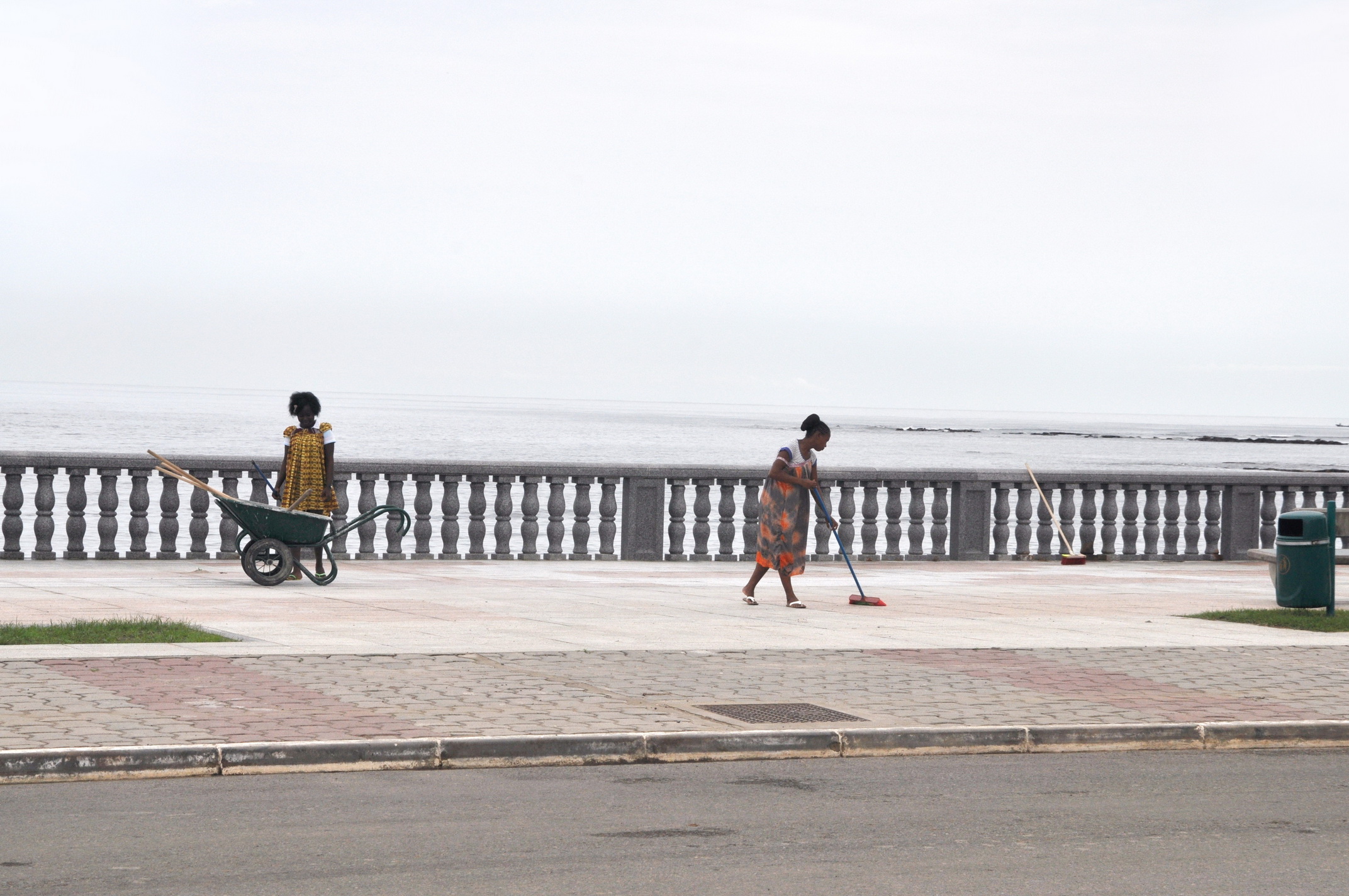
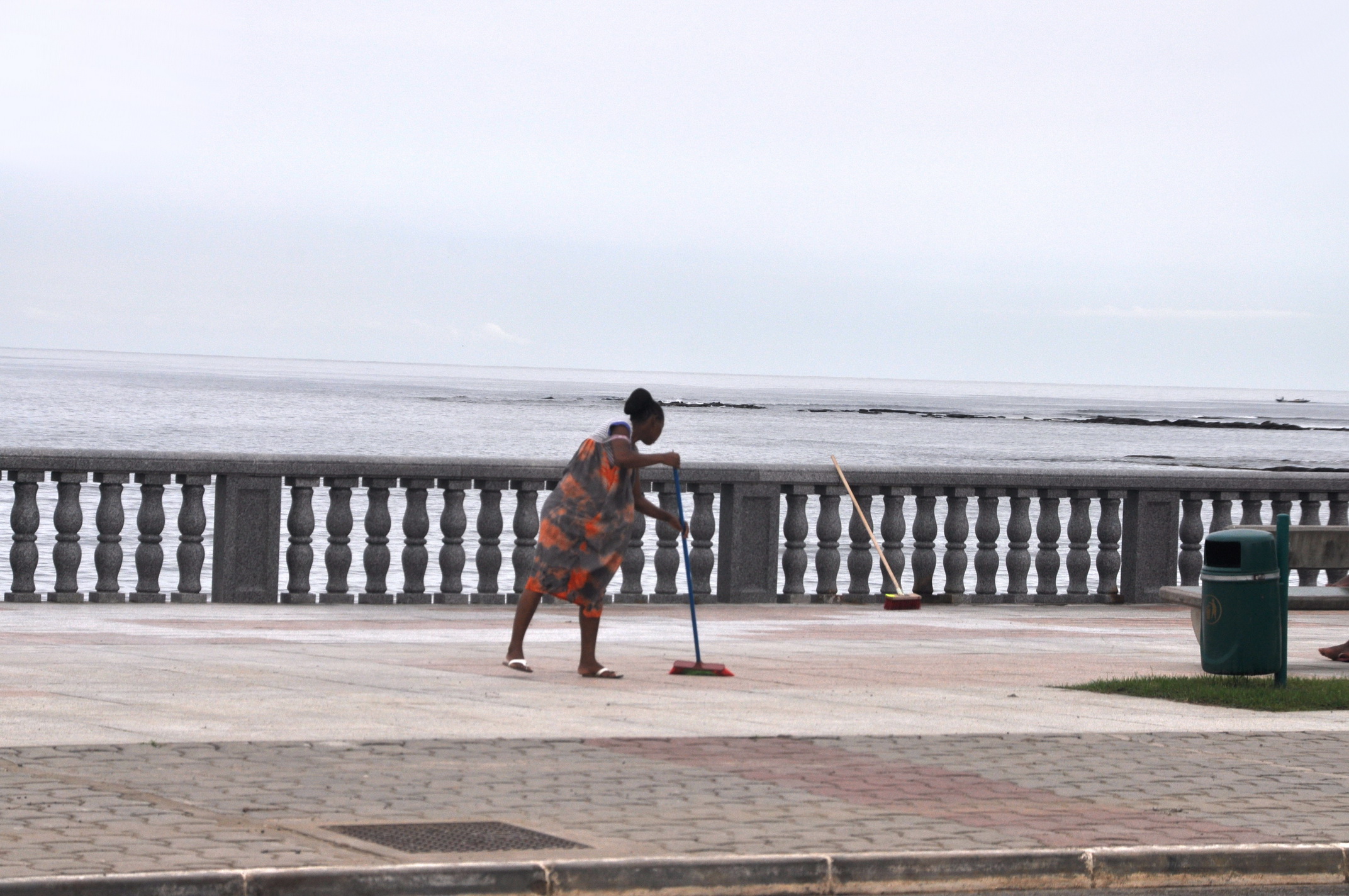
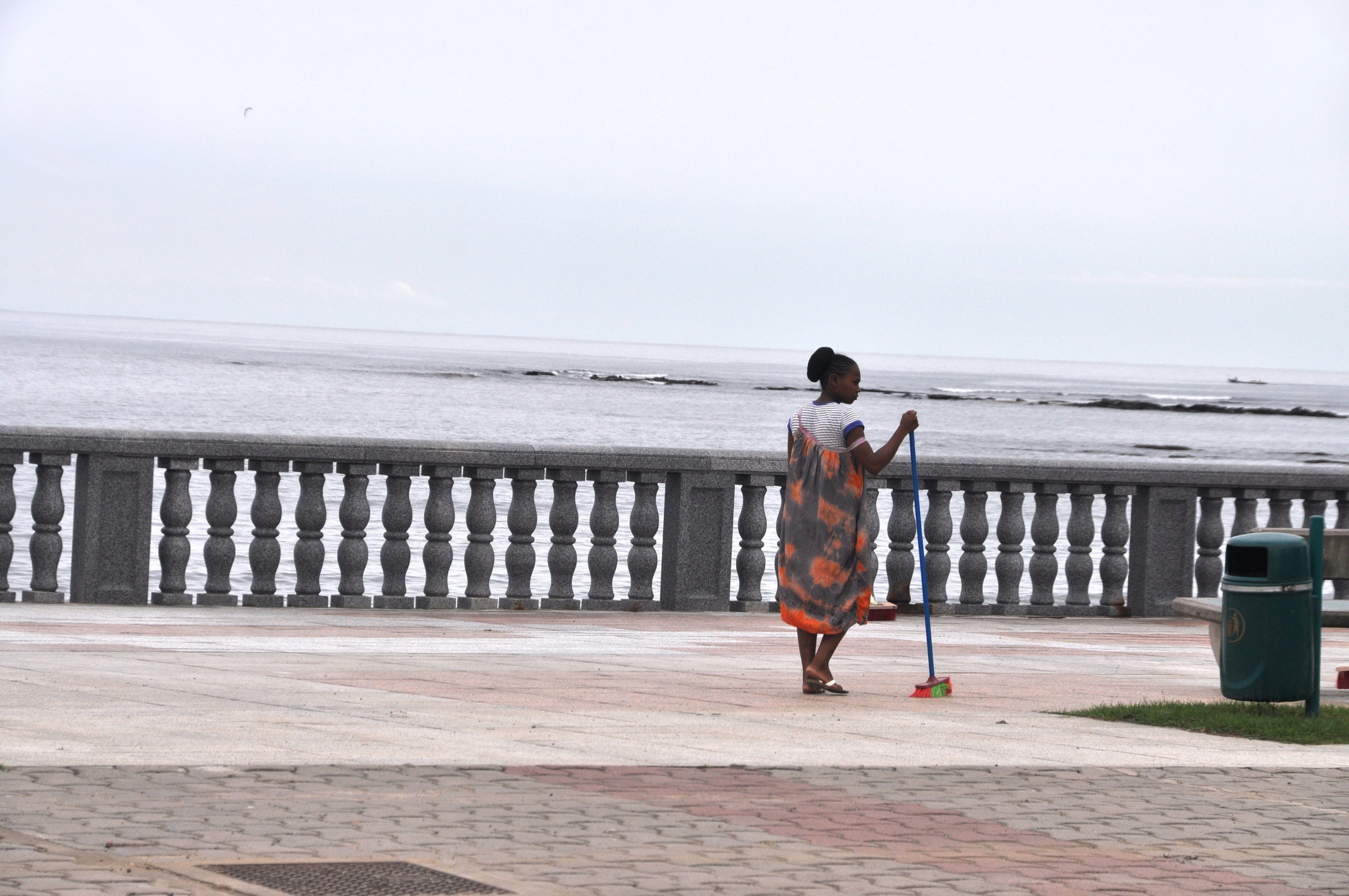
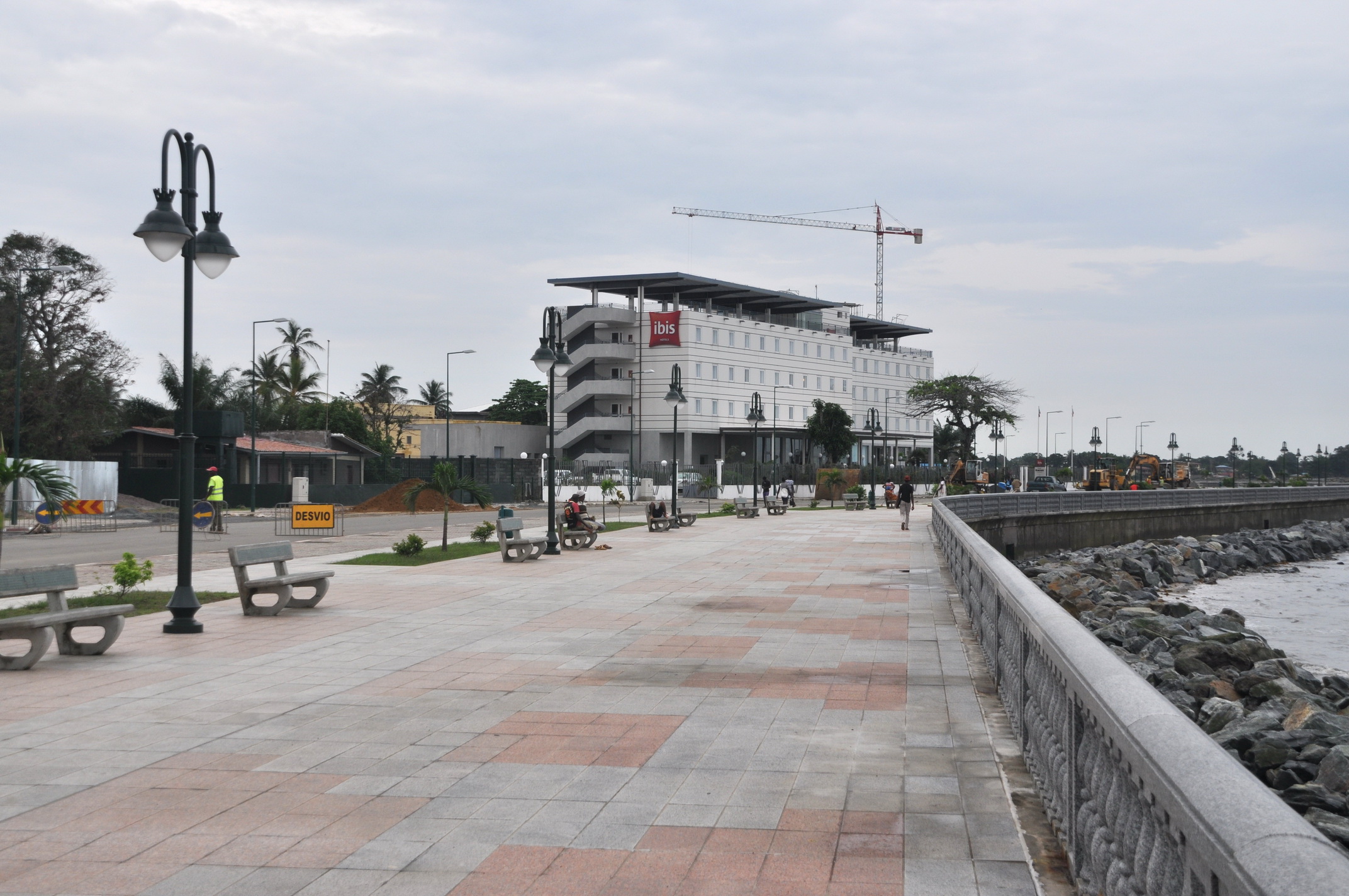
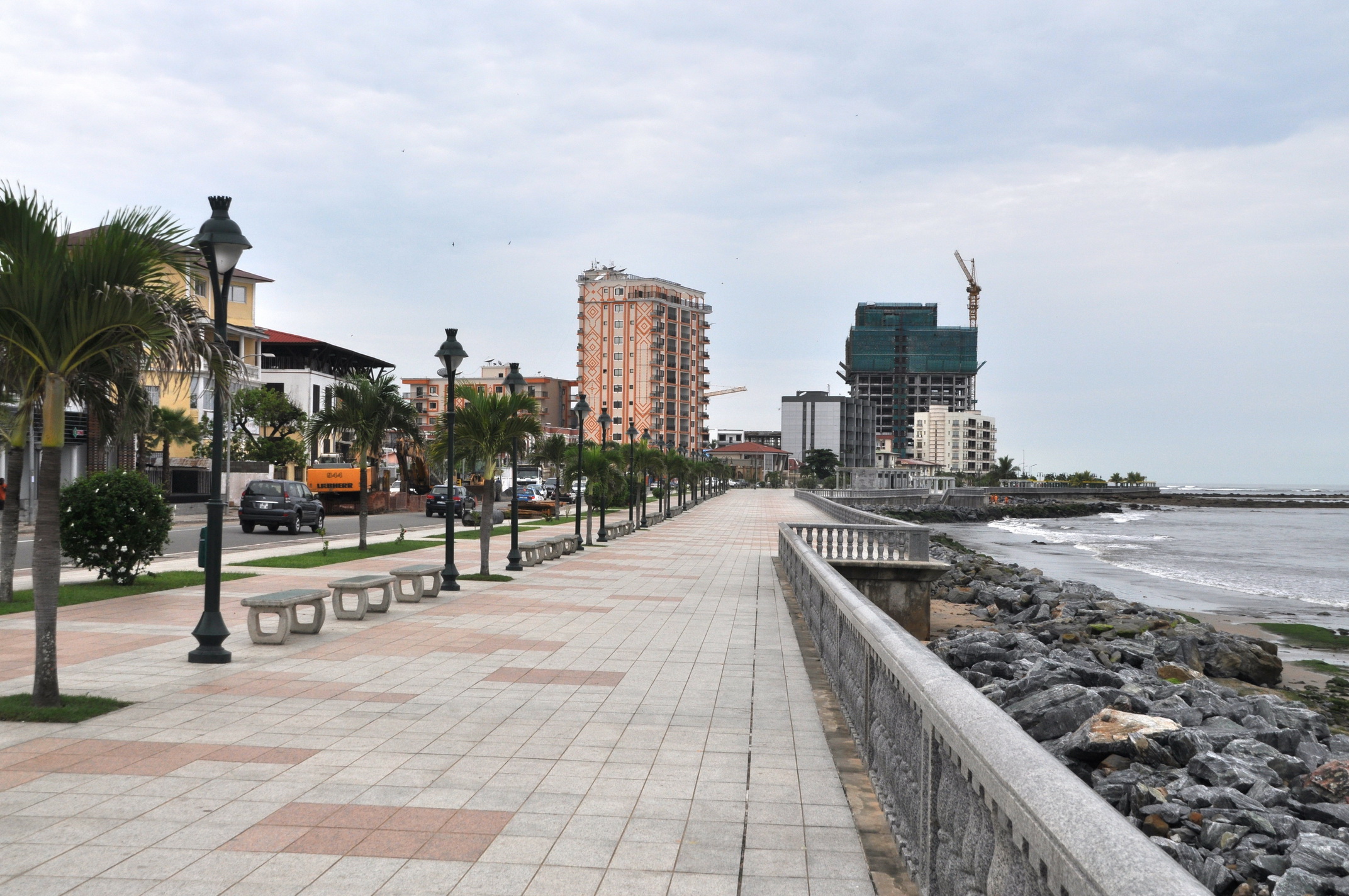
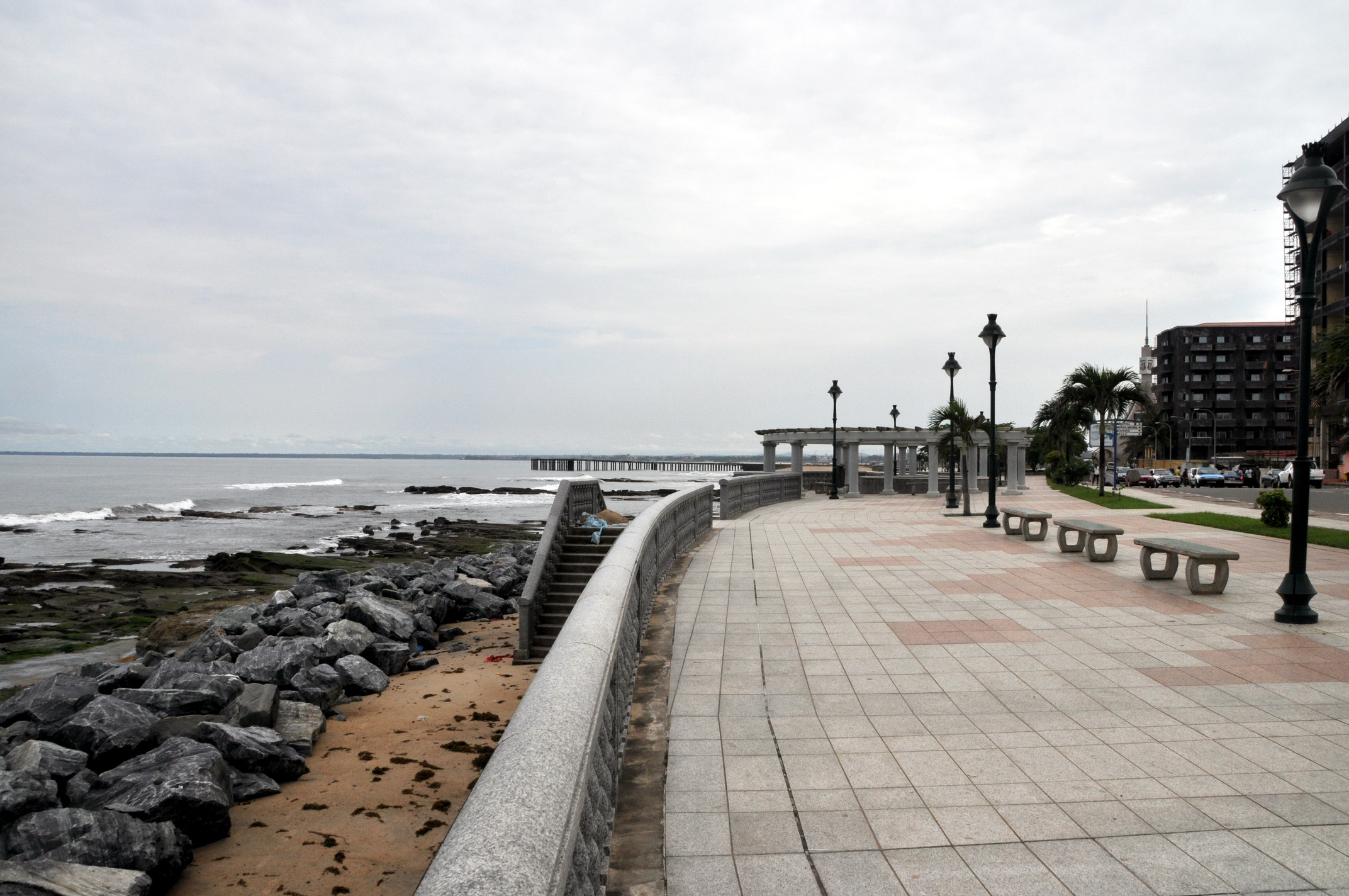
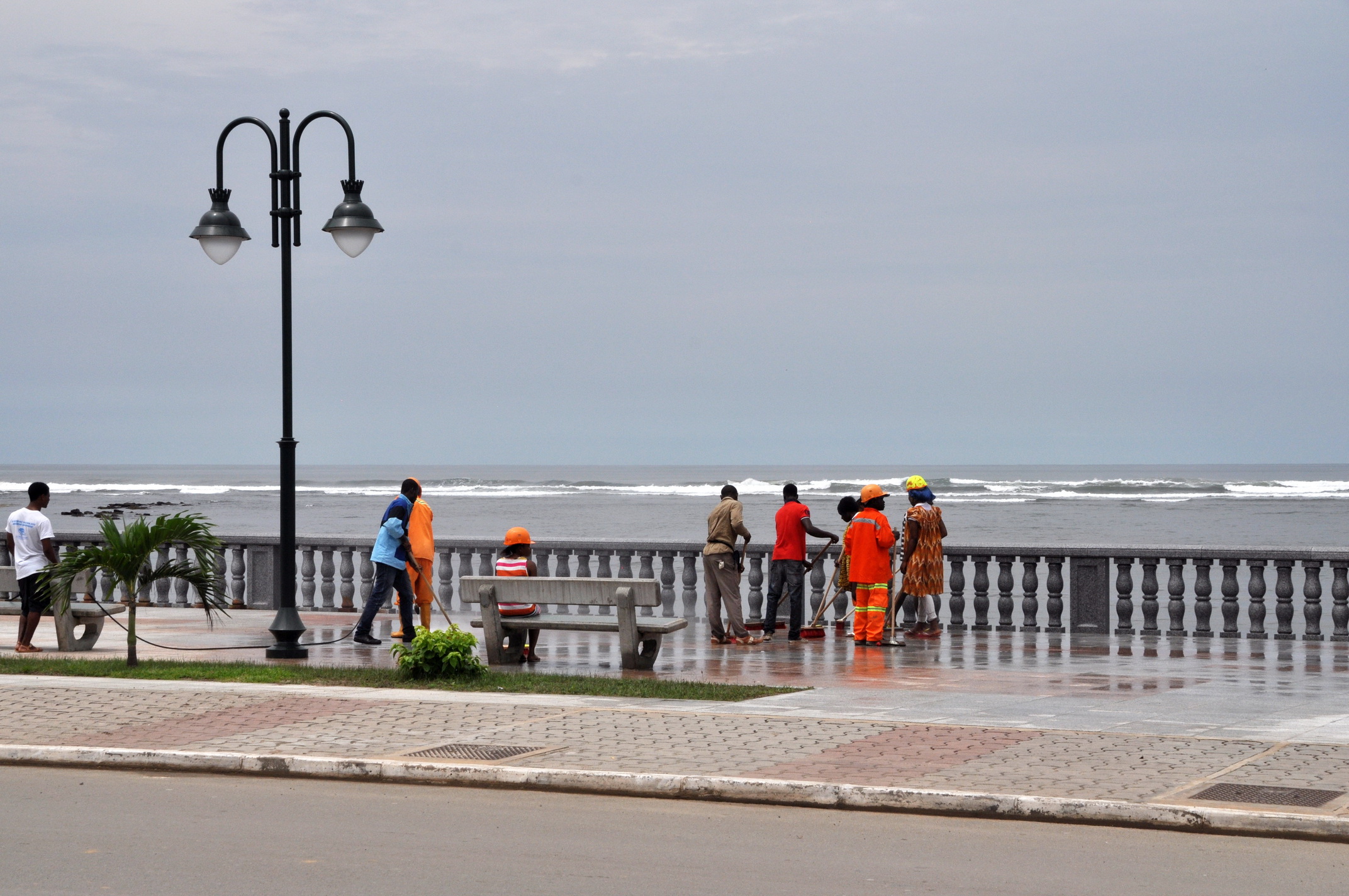
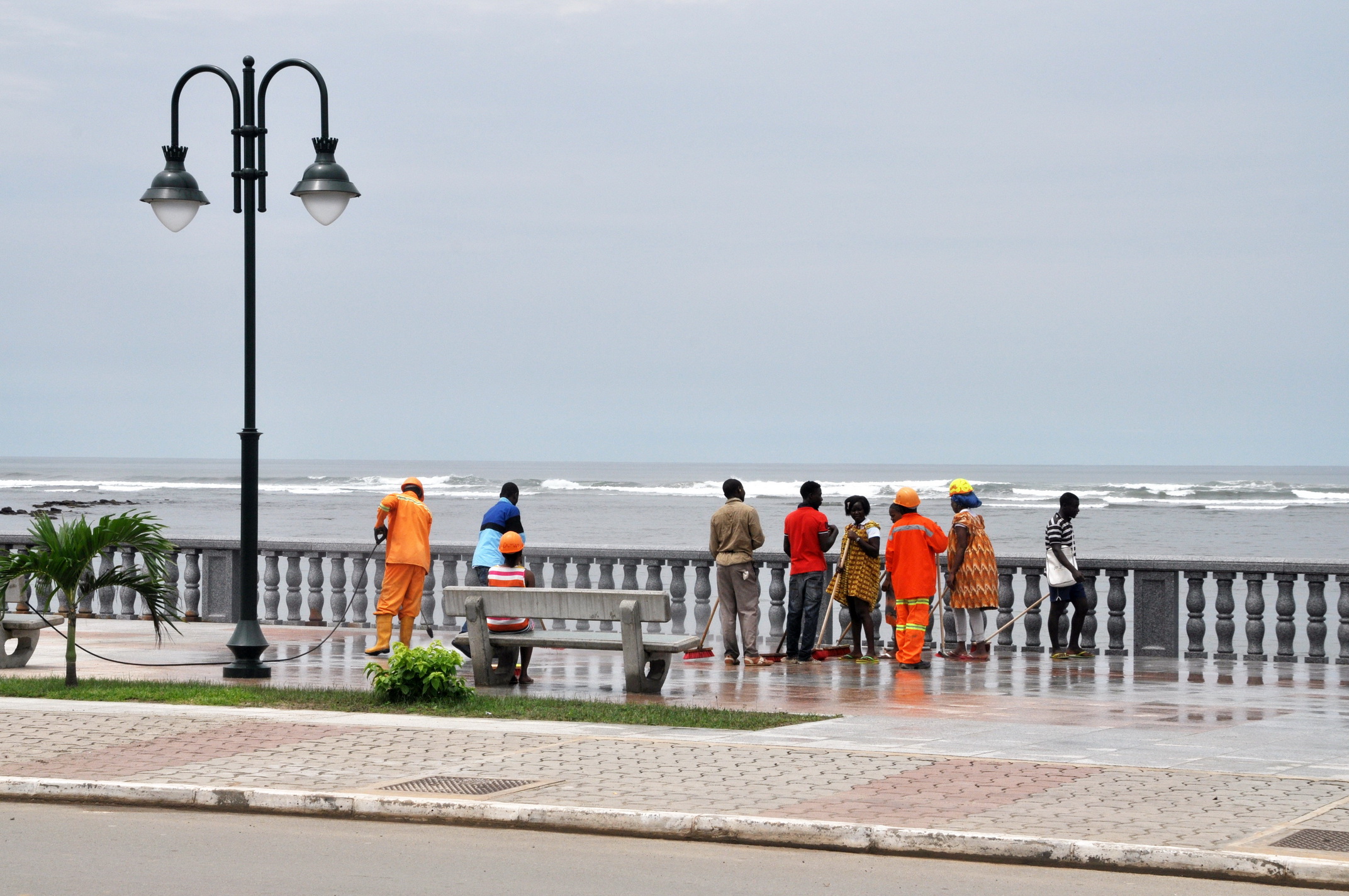
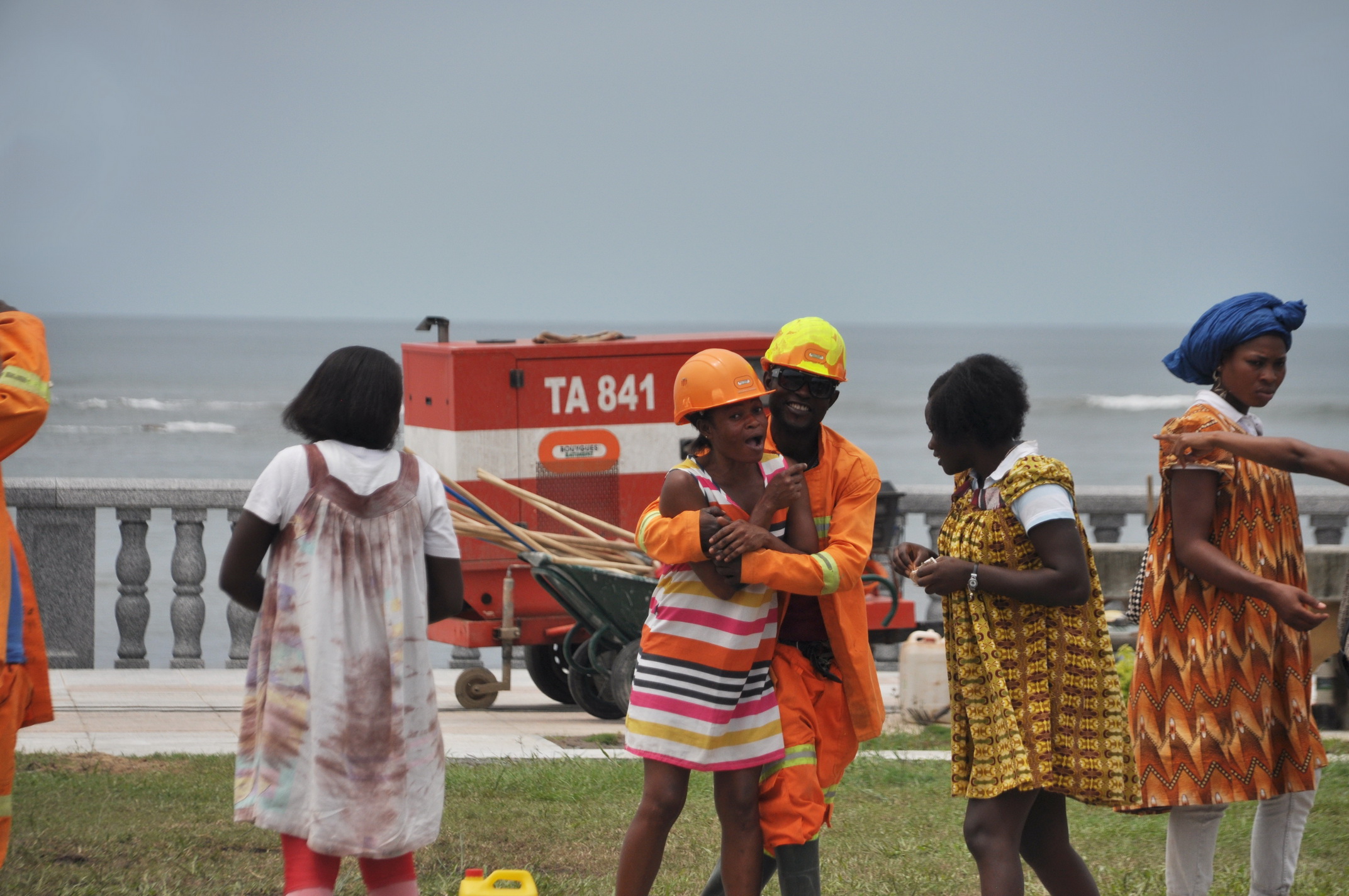
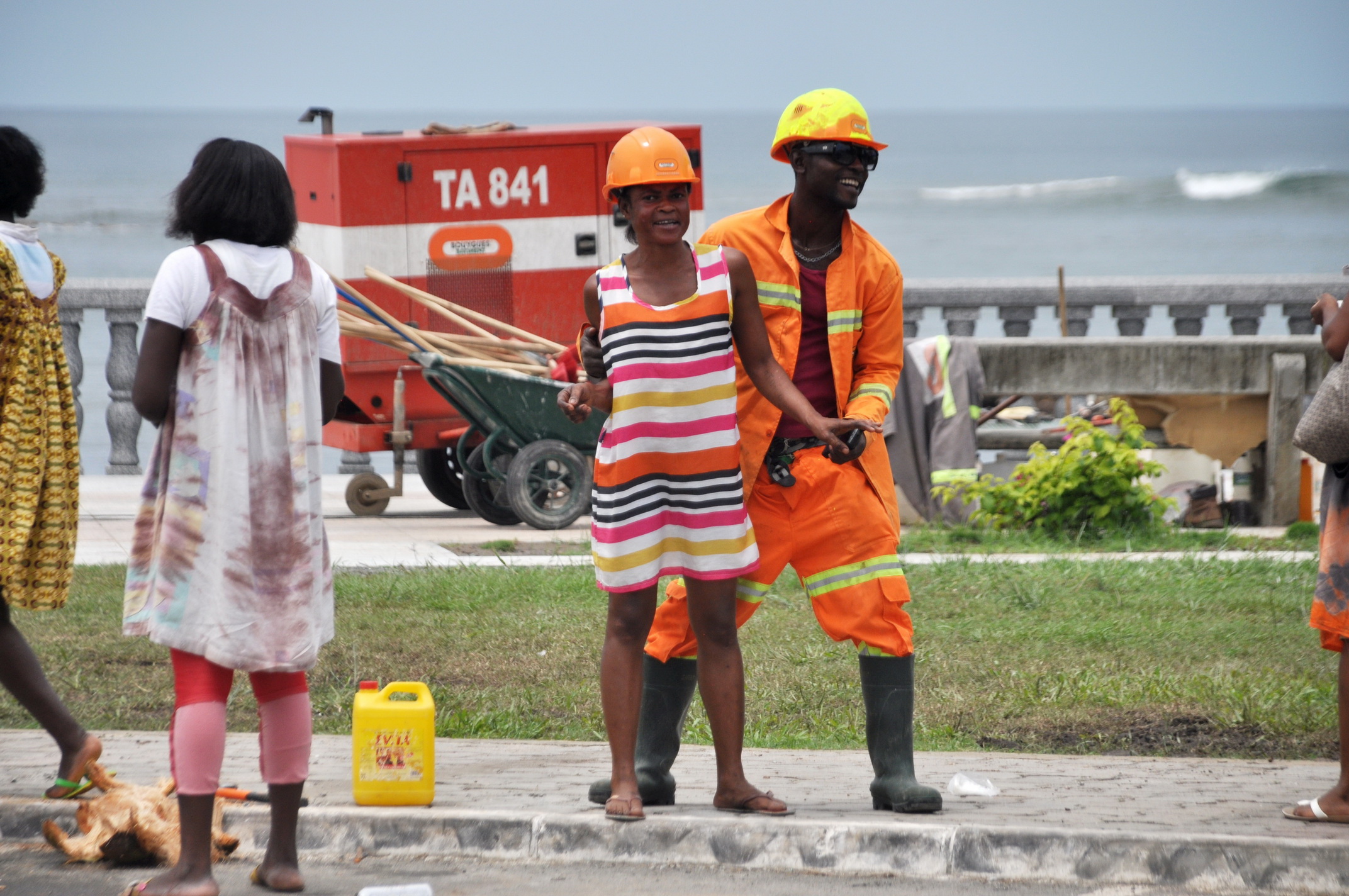
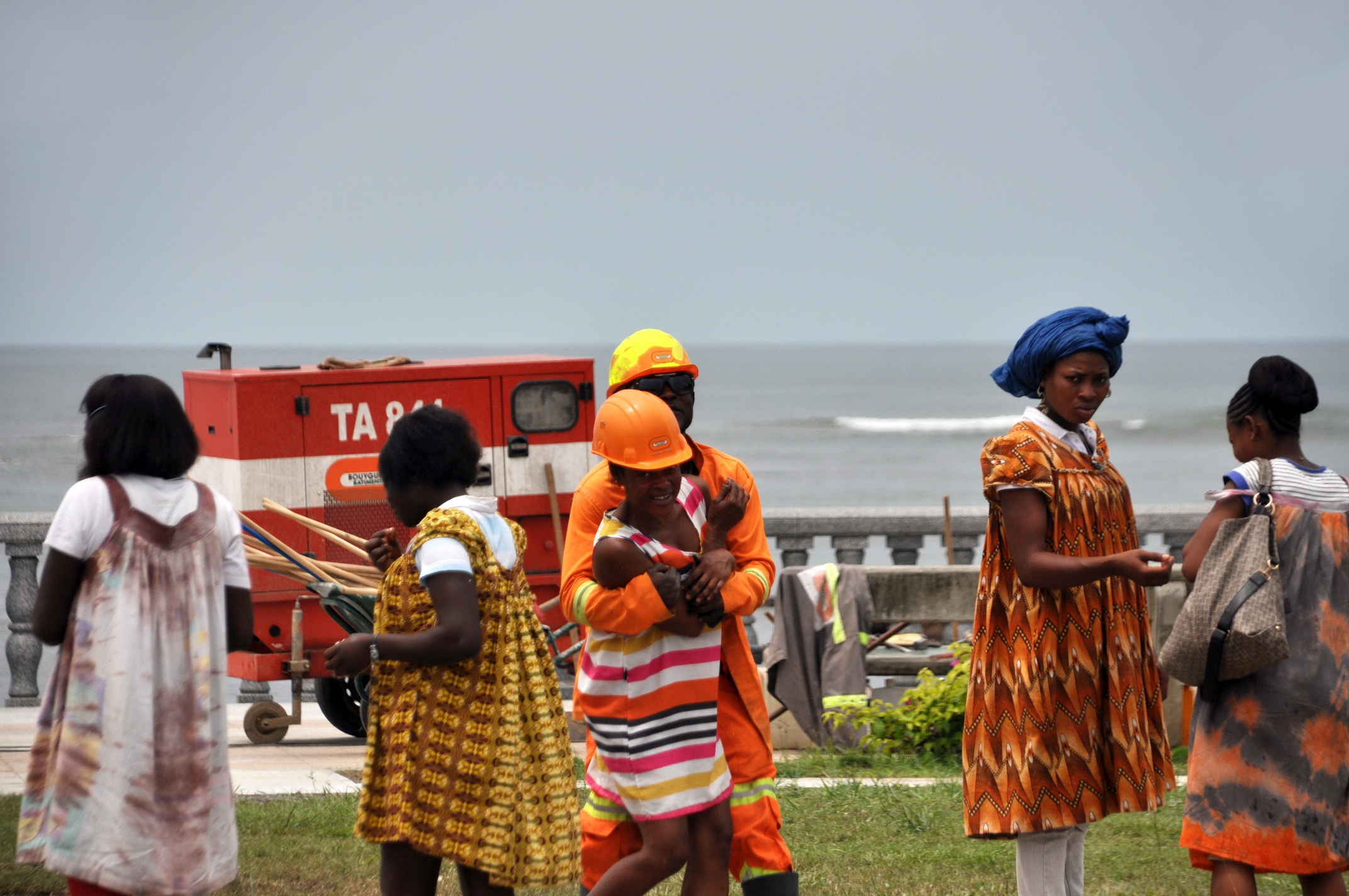
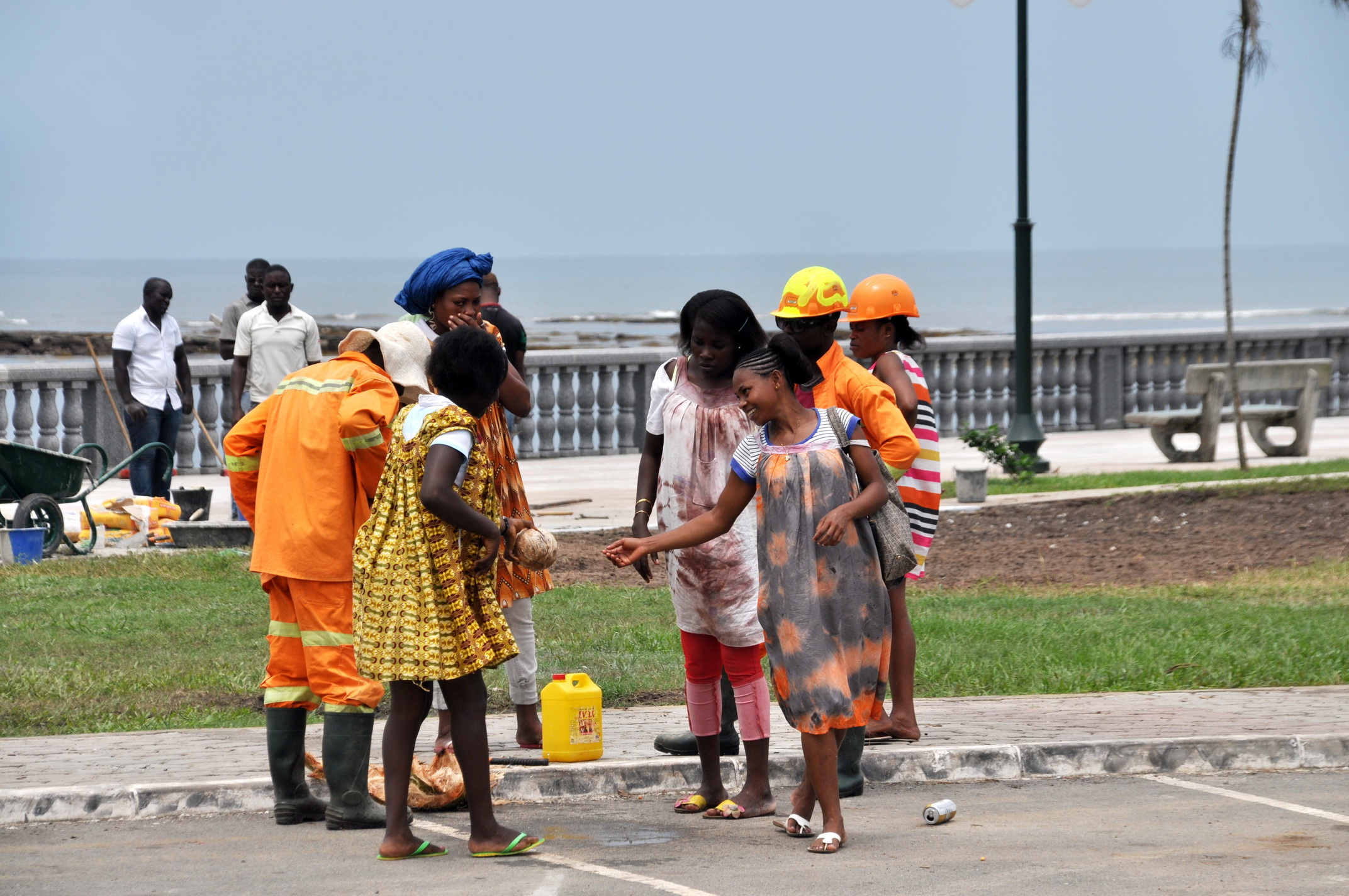
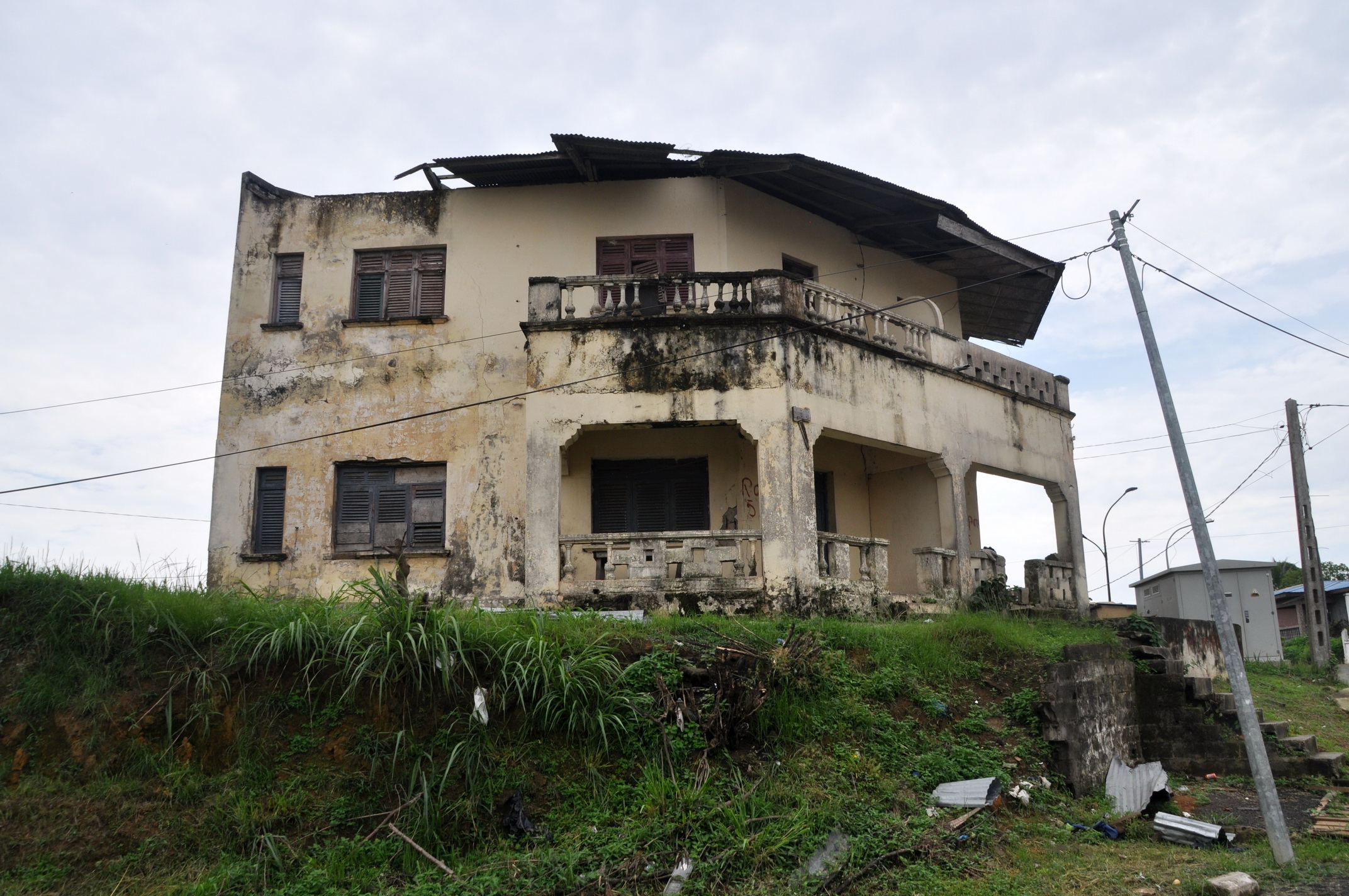
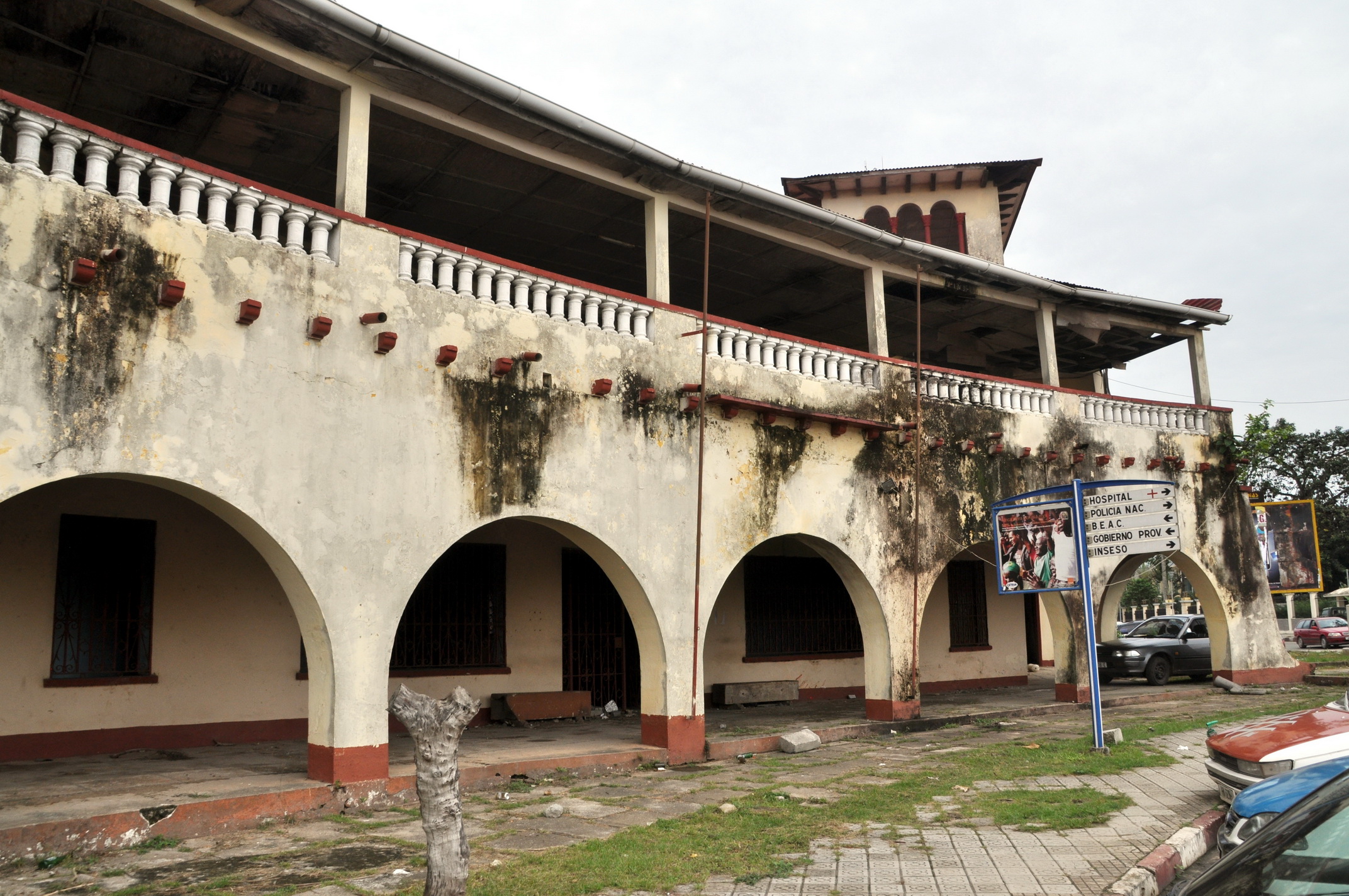
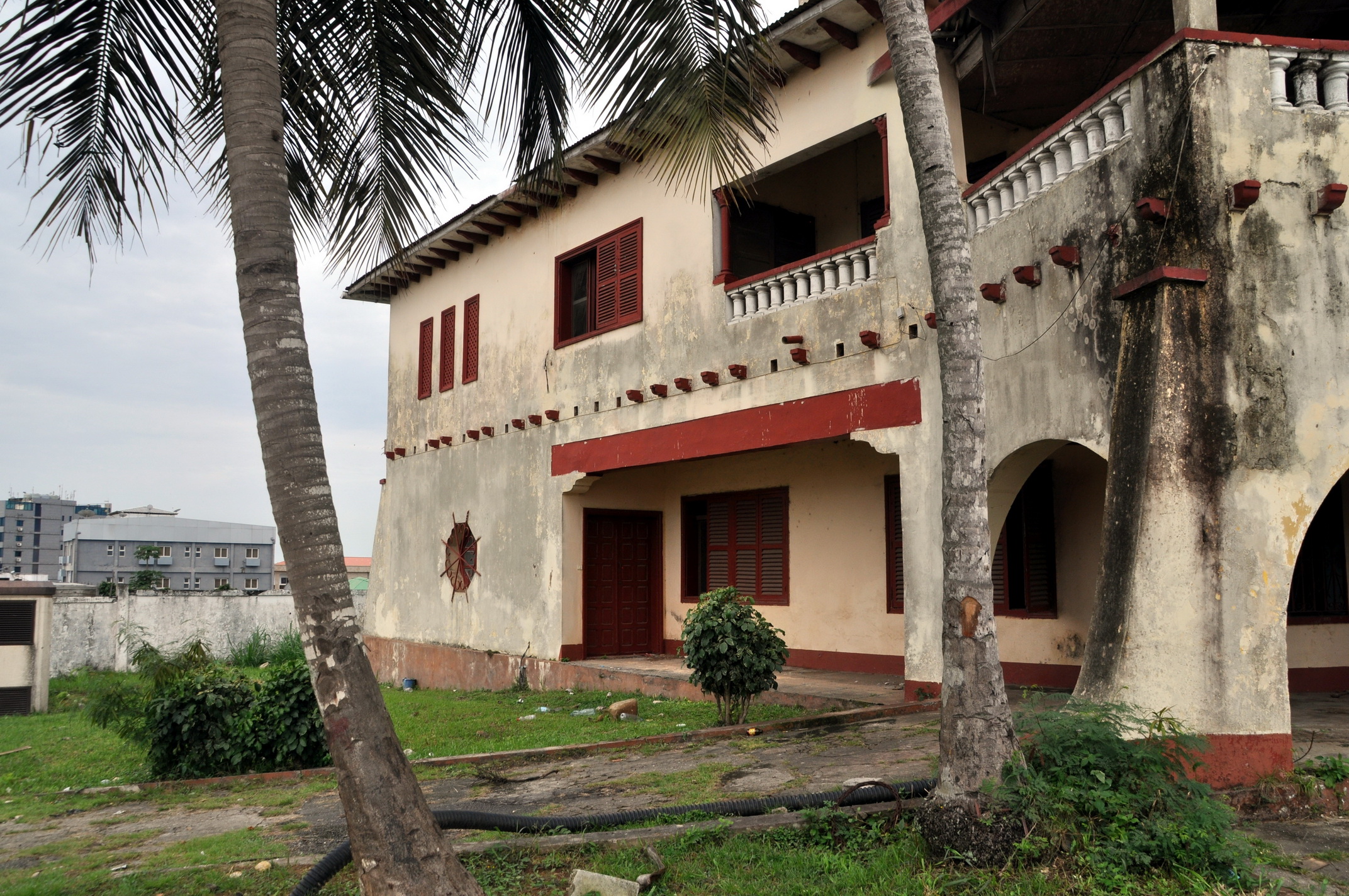
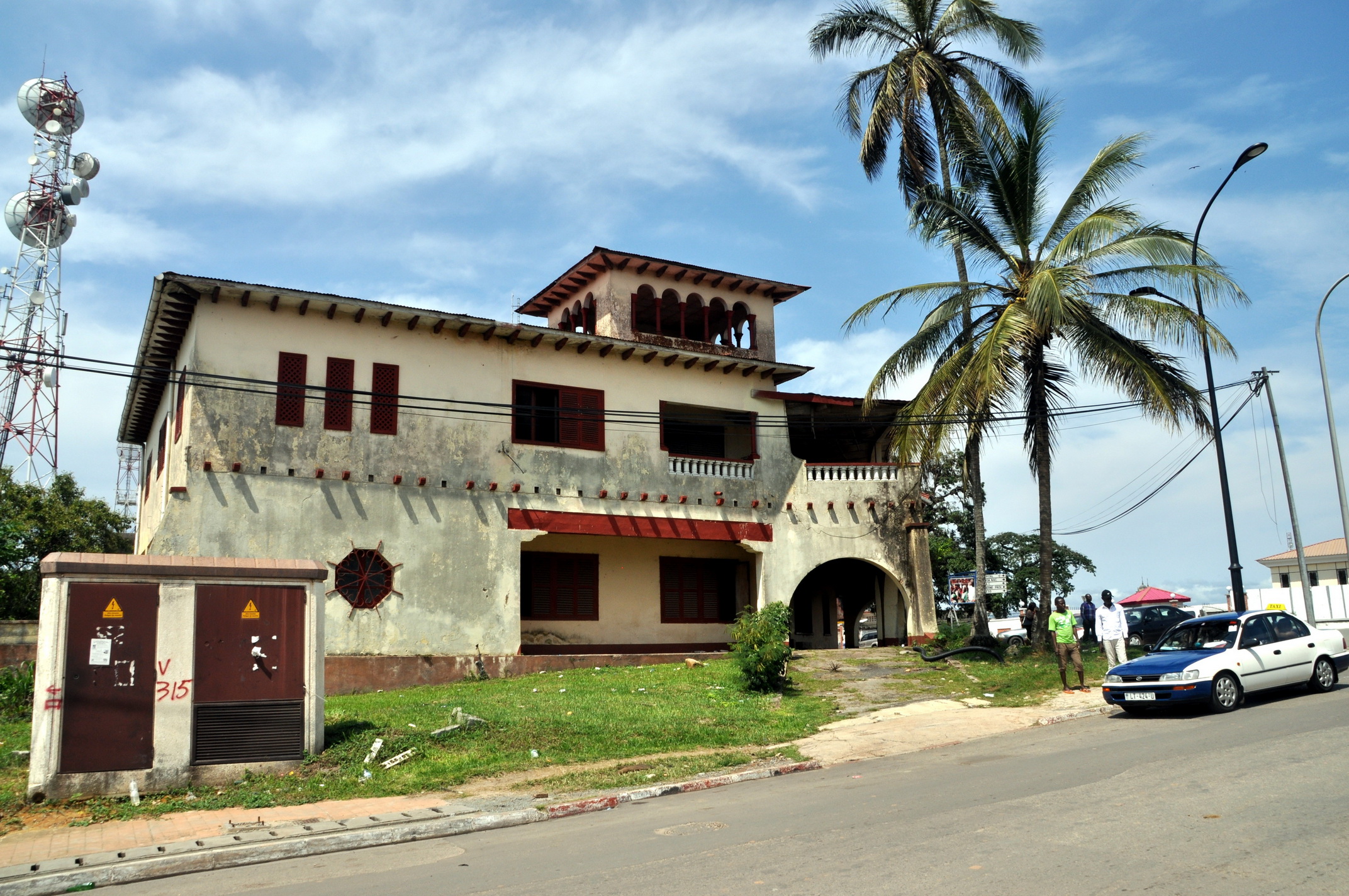
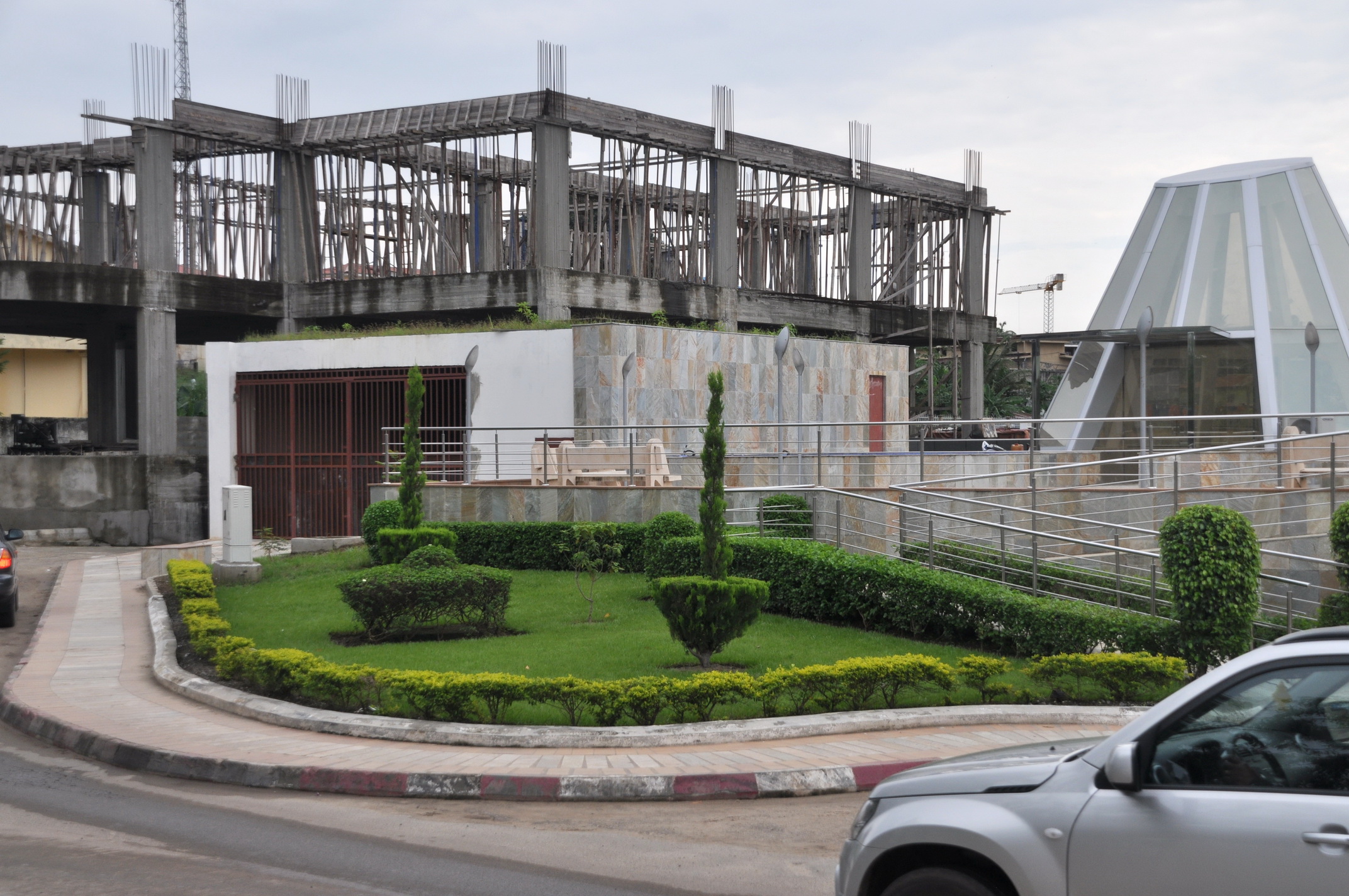
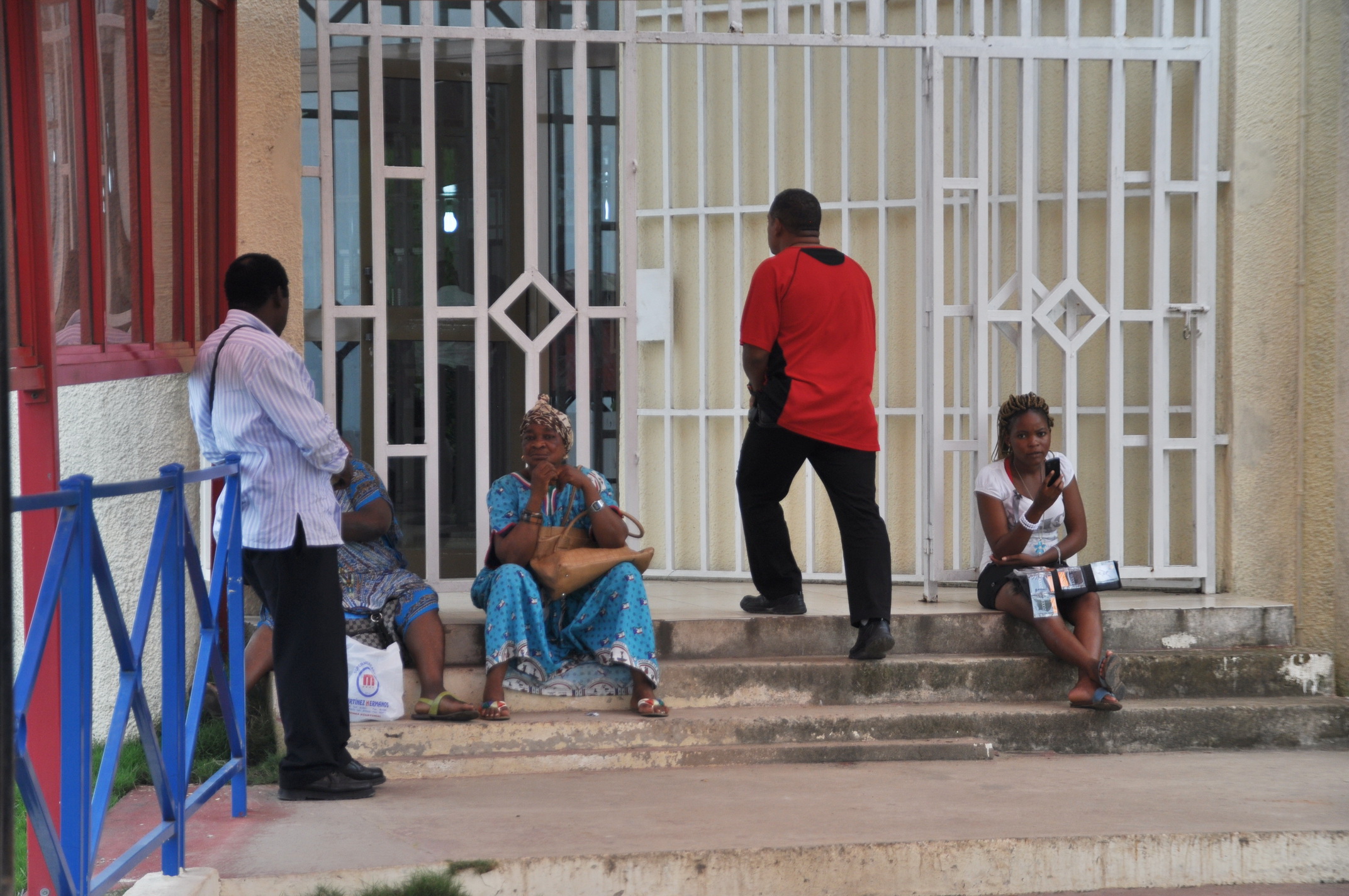
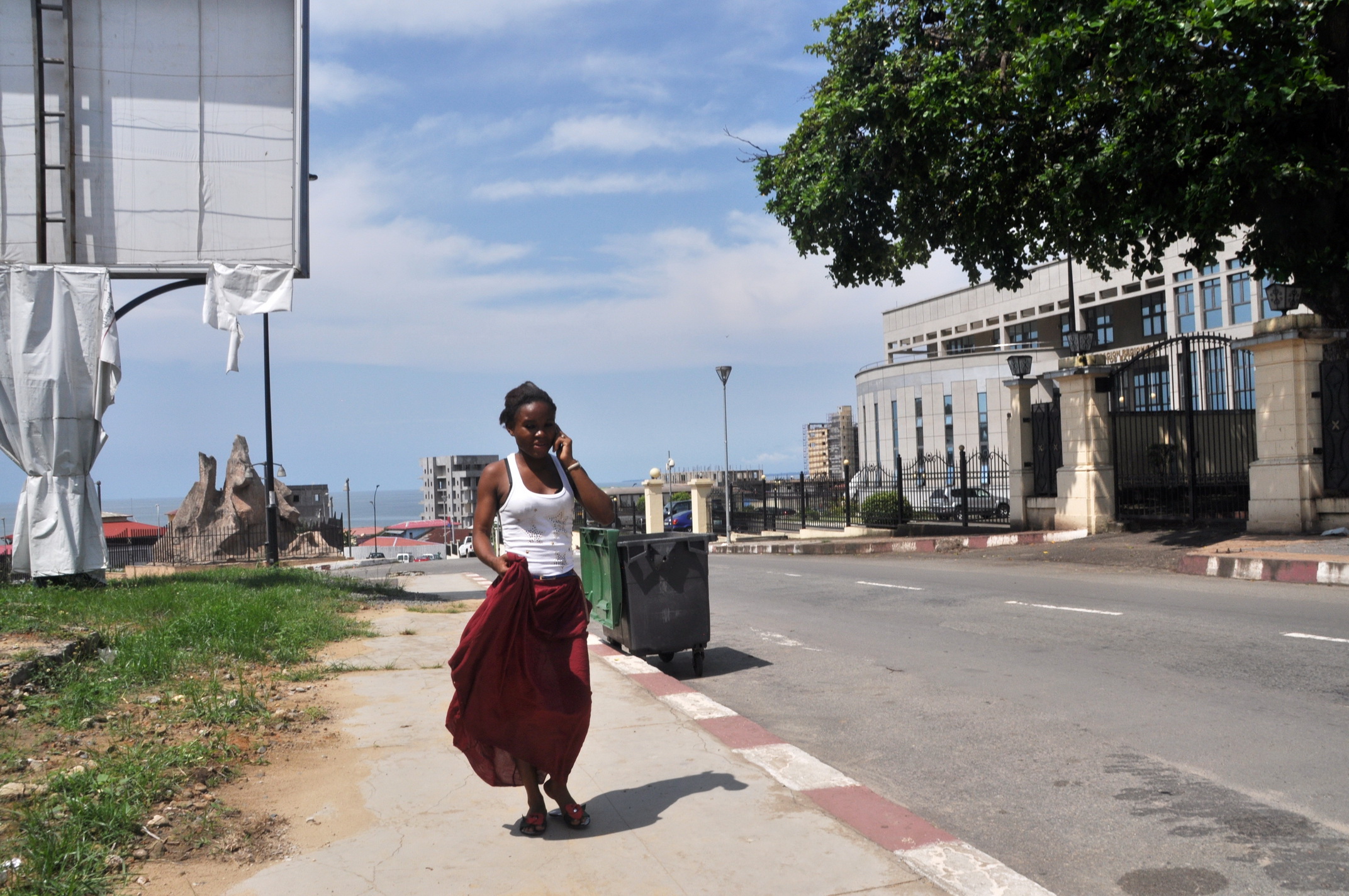
Beyond the promenade and a couple of squares, Bata was a typical African city, to my eyes: ordinary, tasteless buildings, crowds, dust, fences, traders with bags and litter.
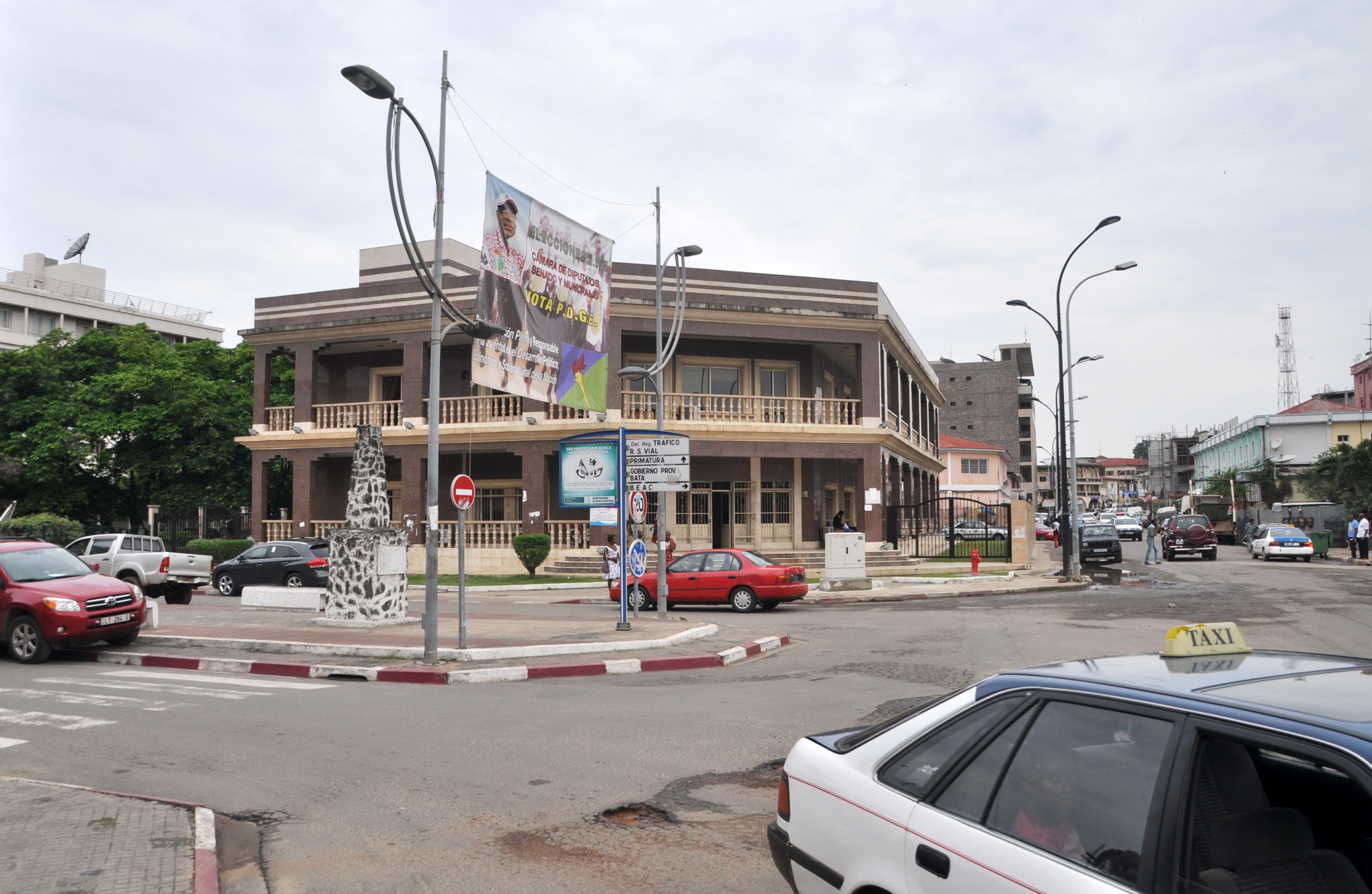
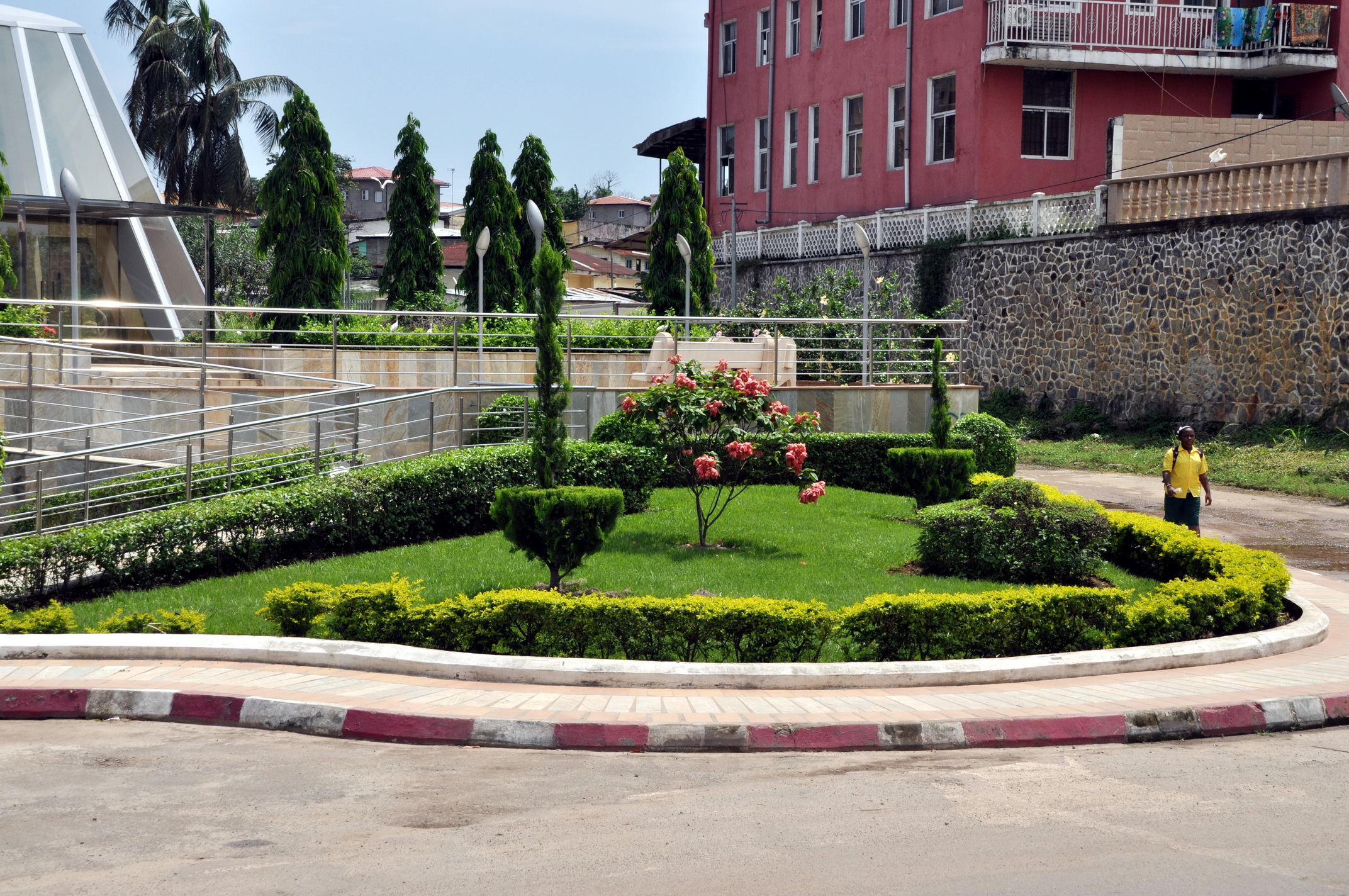
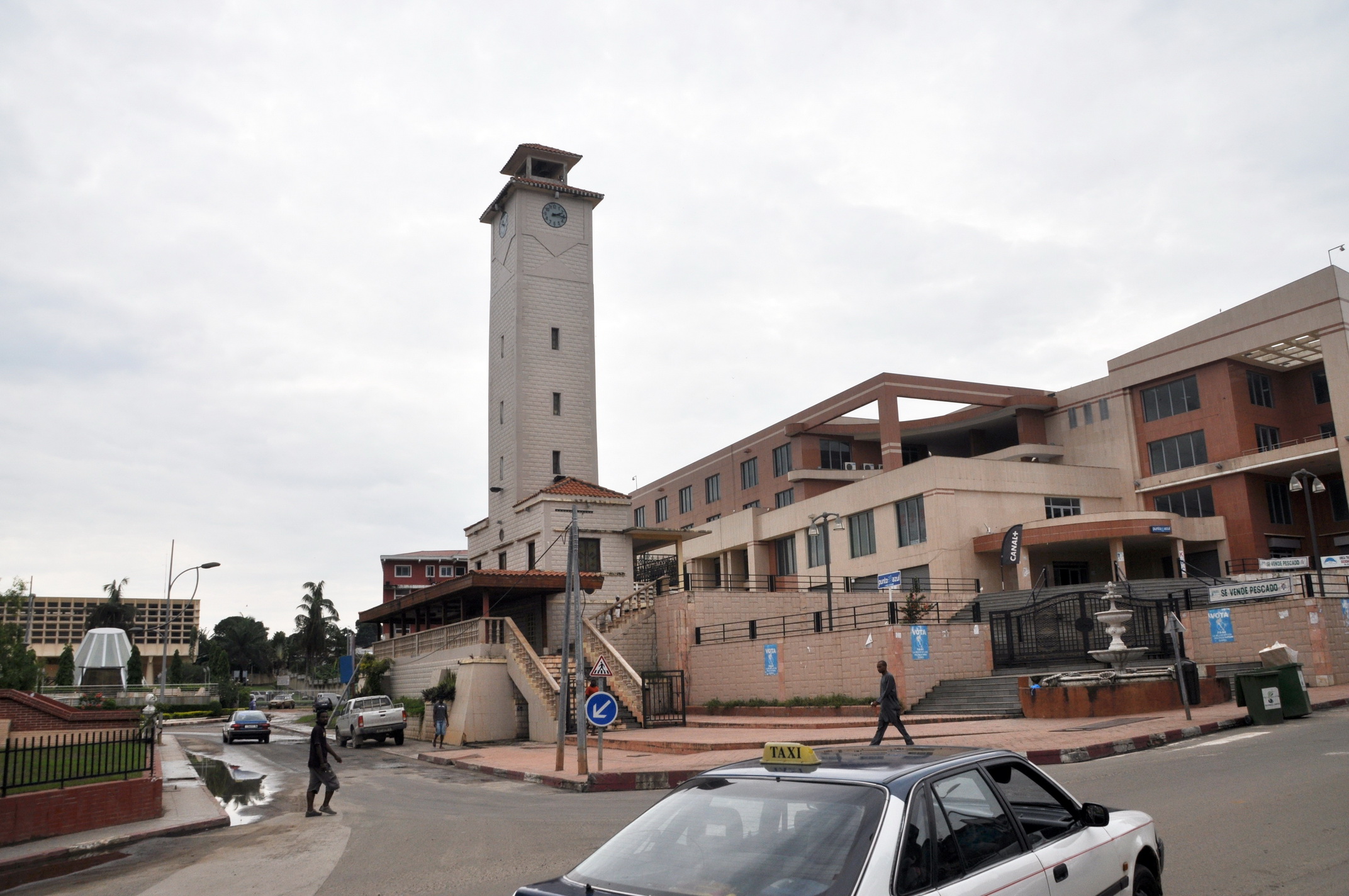
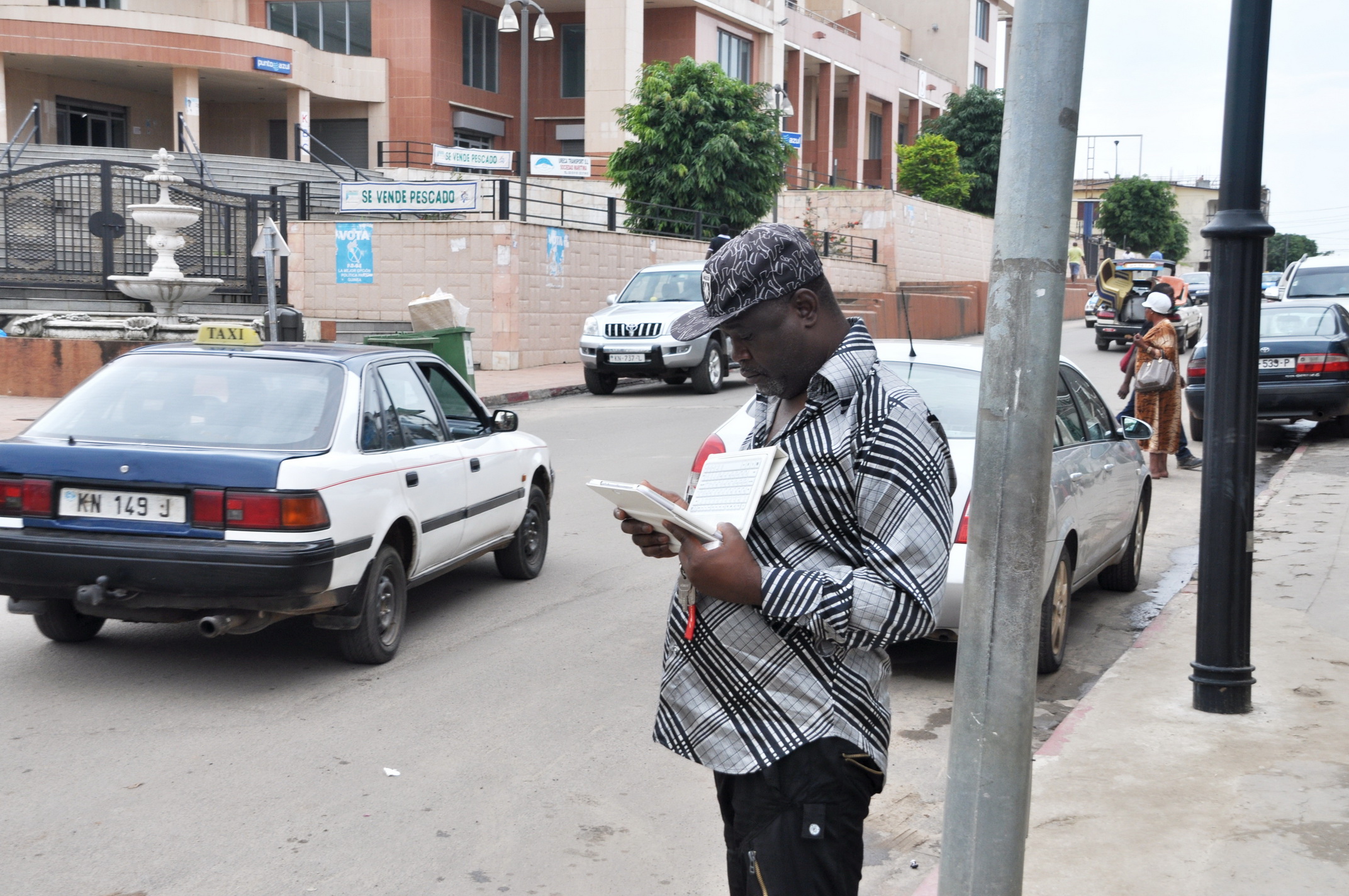
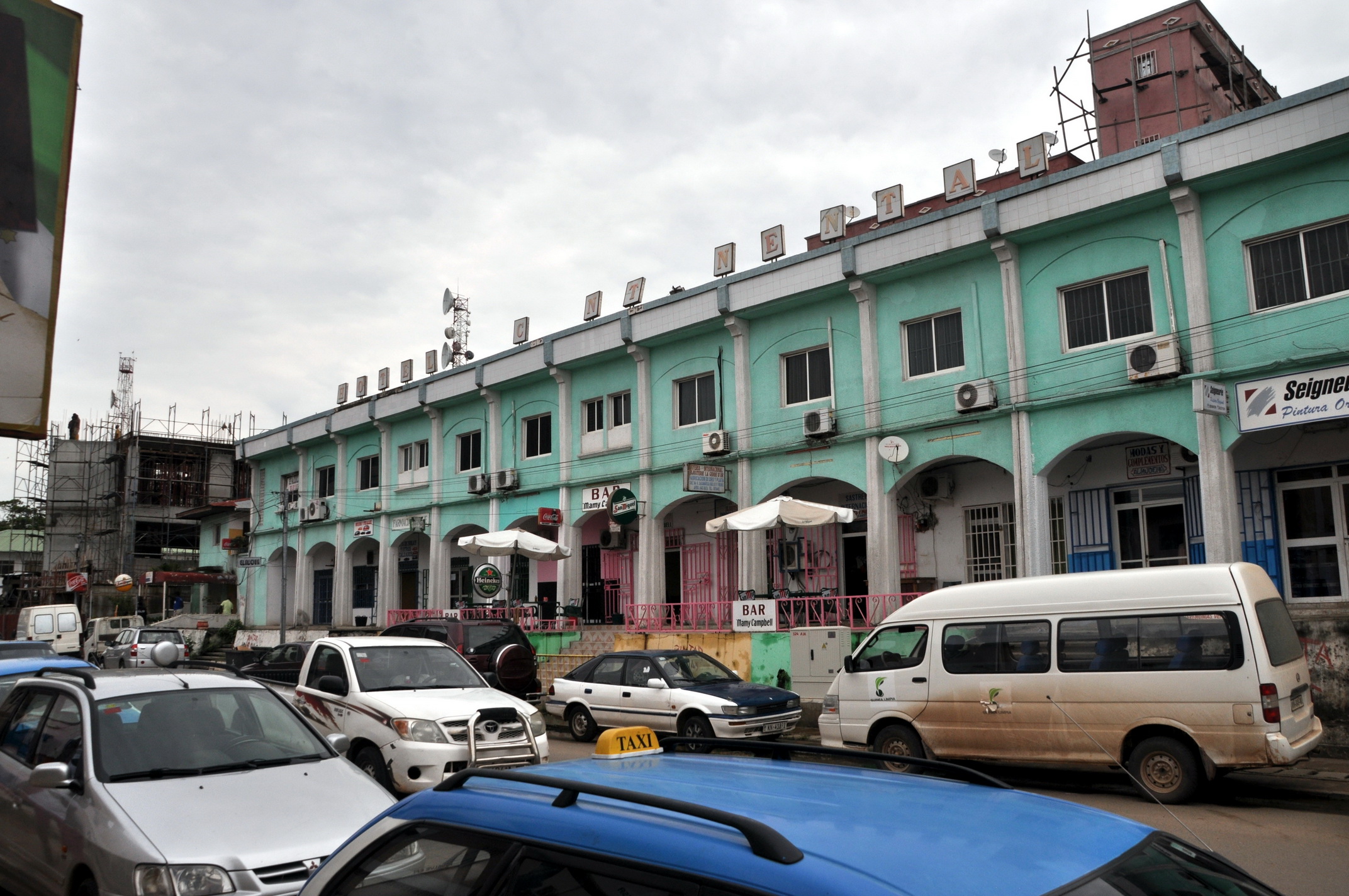
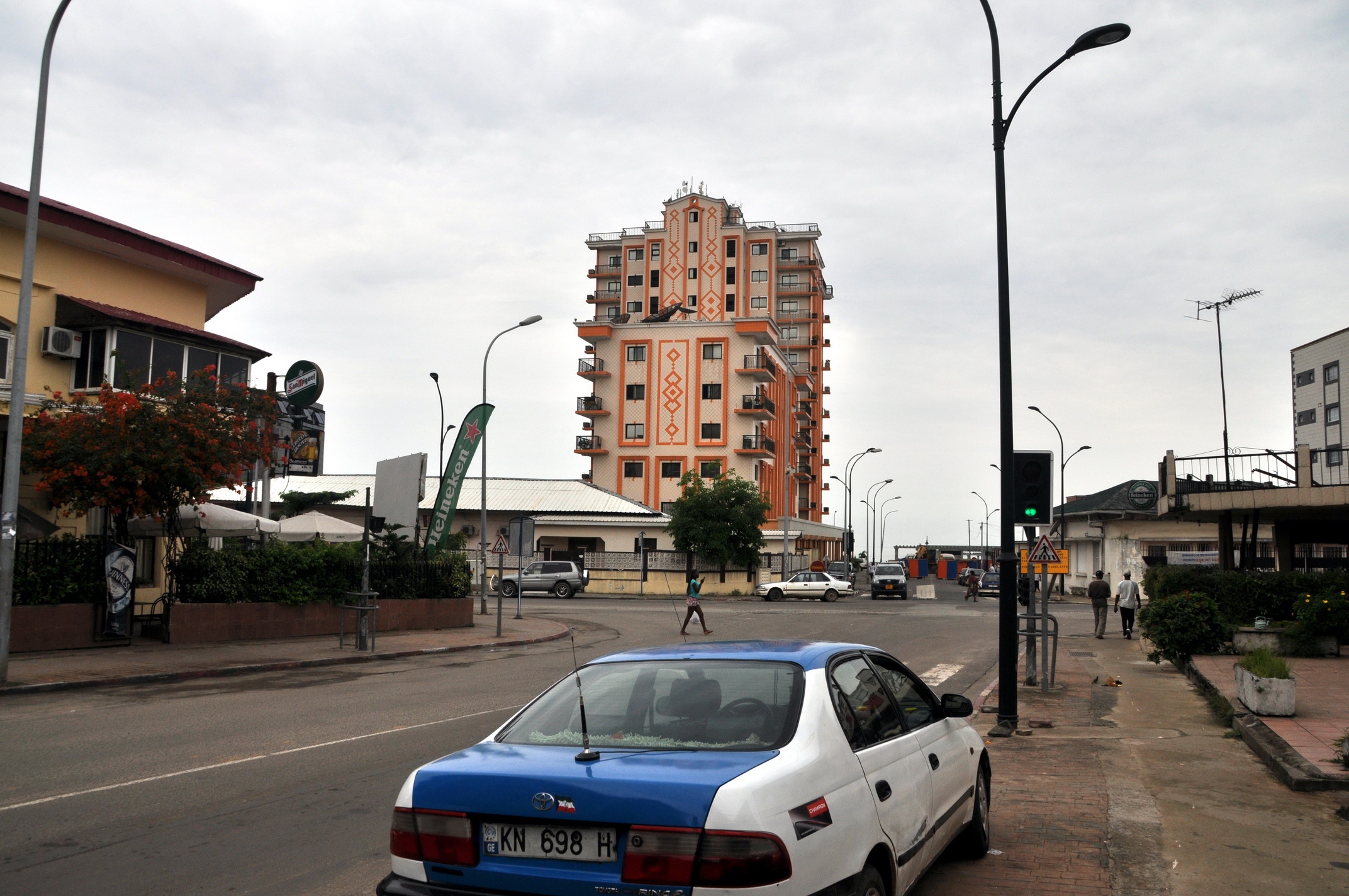
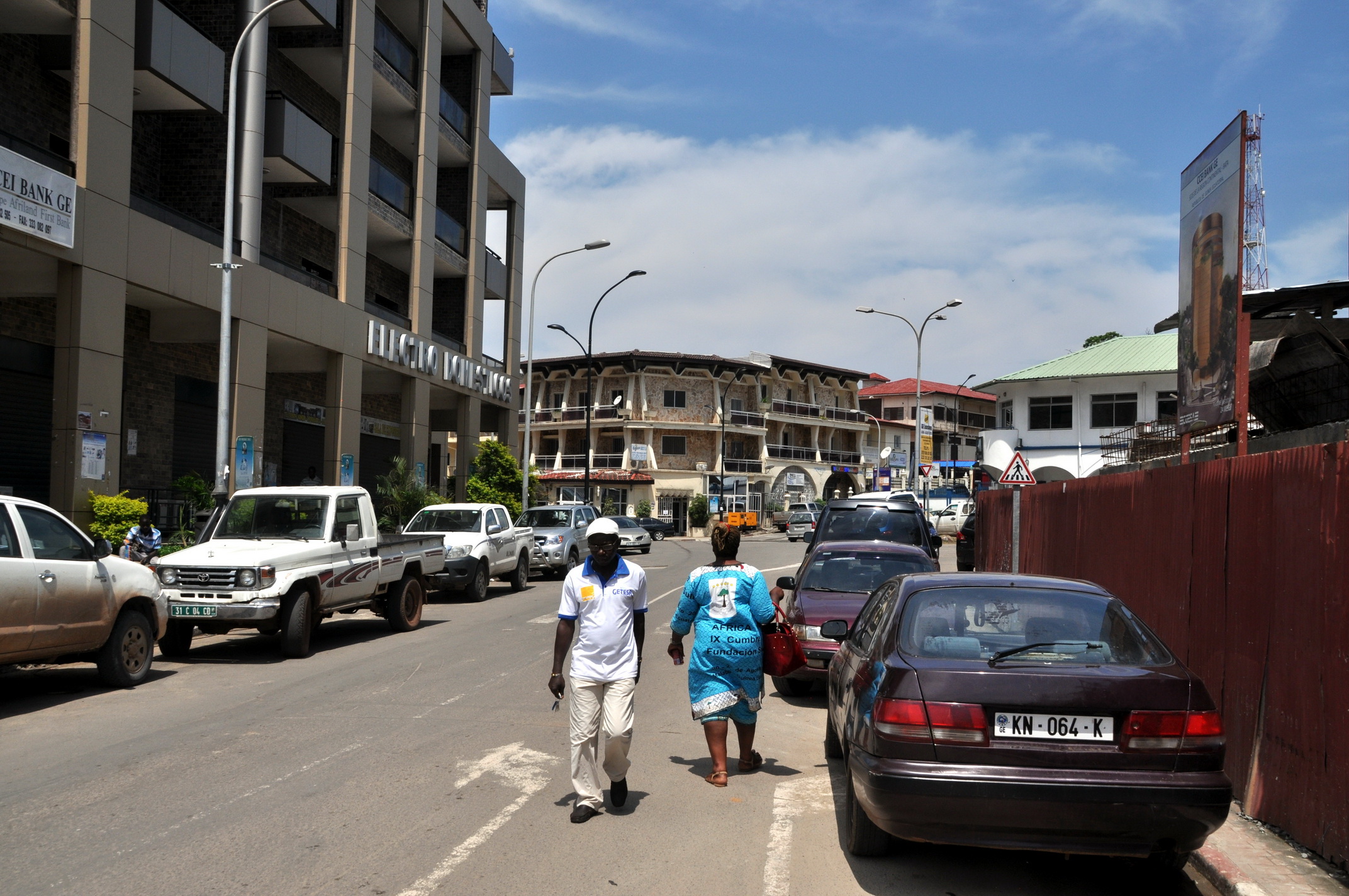
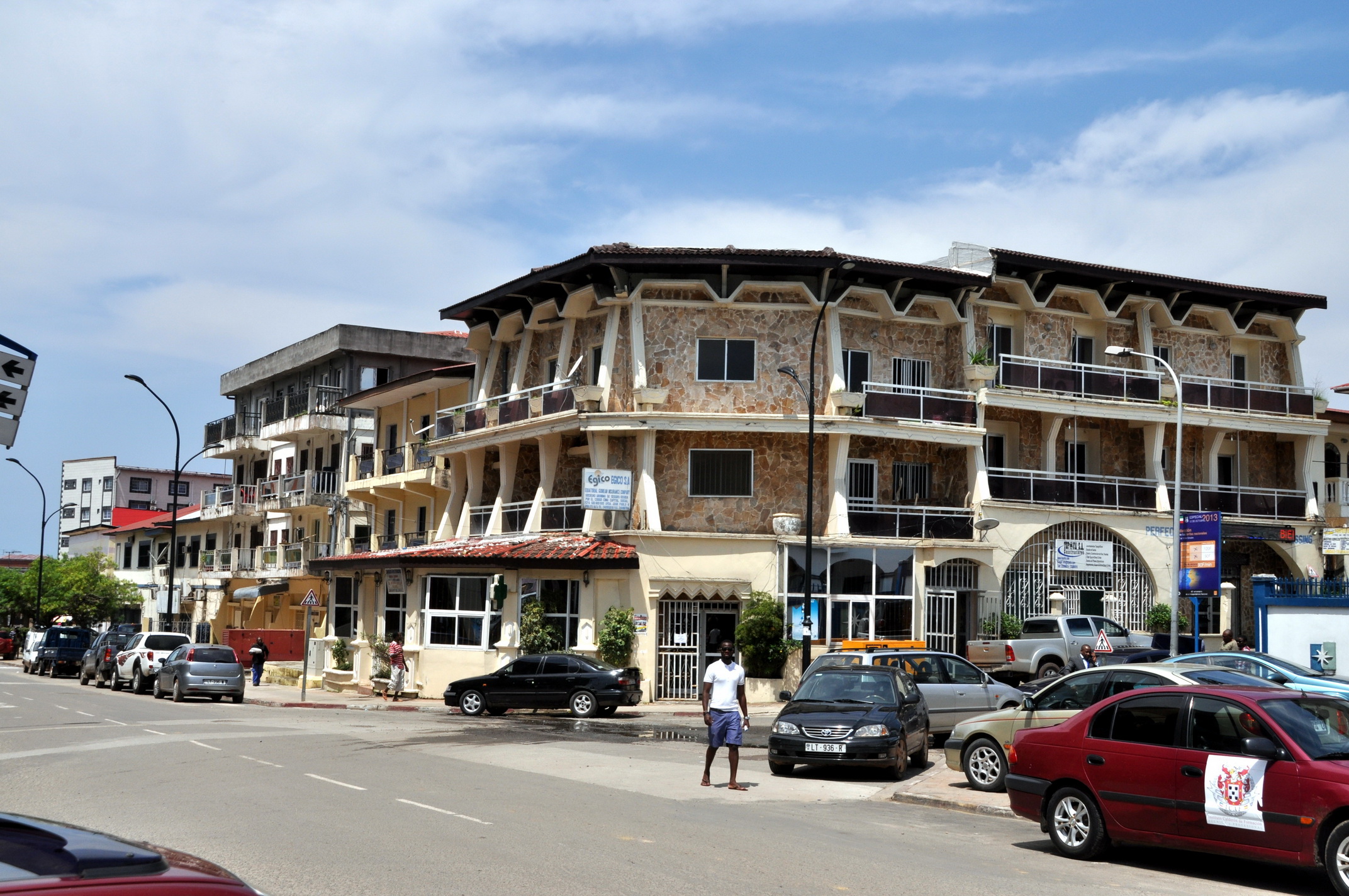
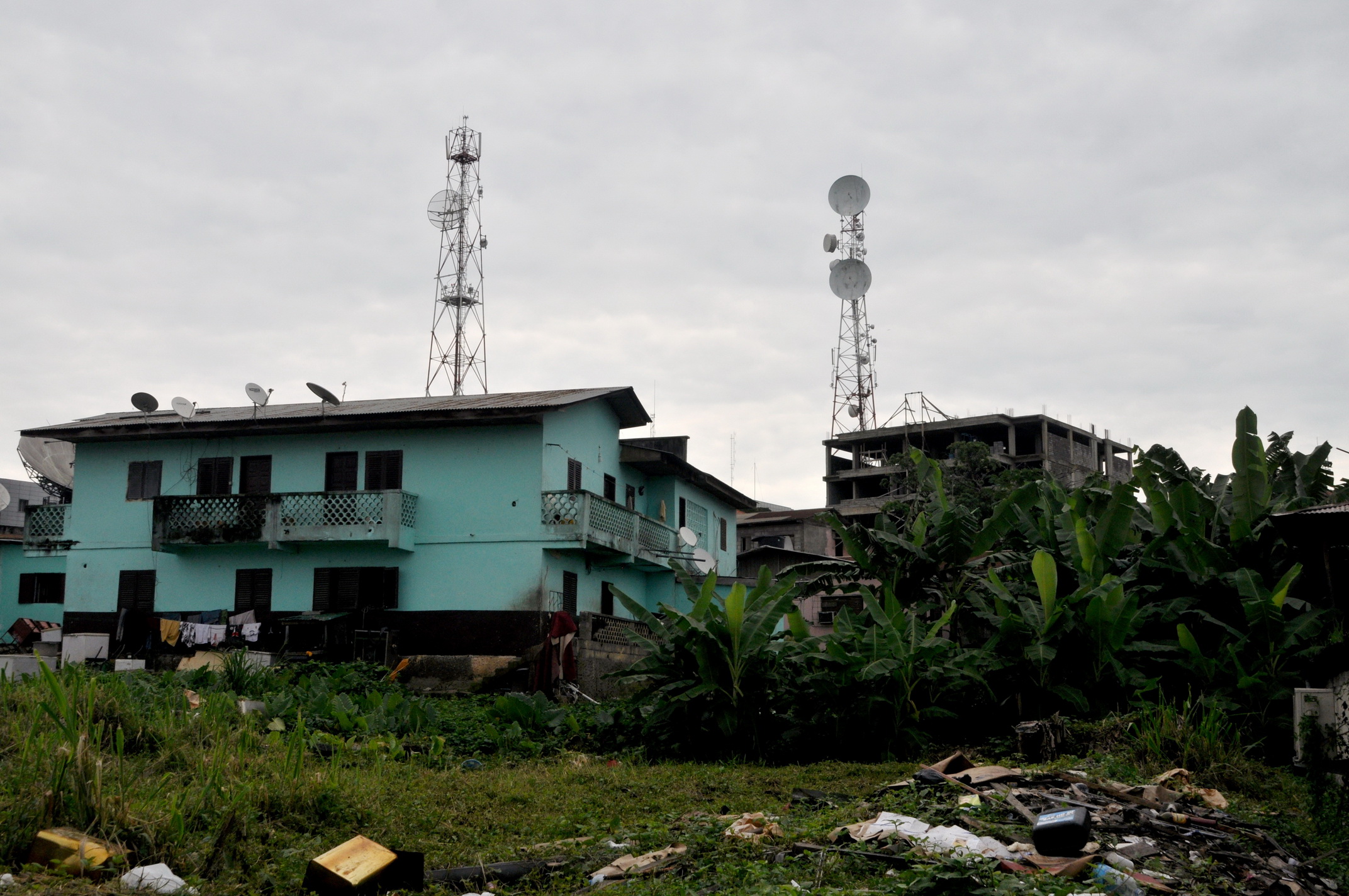
Of the older buildings I would pick out the police barracks. Add a dozen new office buildings on top, and that’s about it for the city as I saw it. With that sort of money they might have built Hong Kong, or at least Batumi.
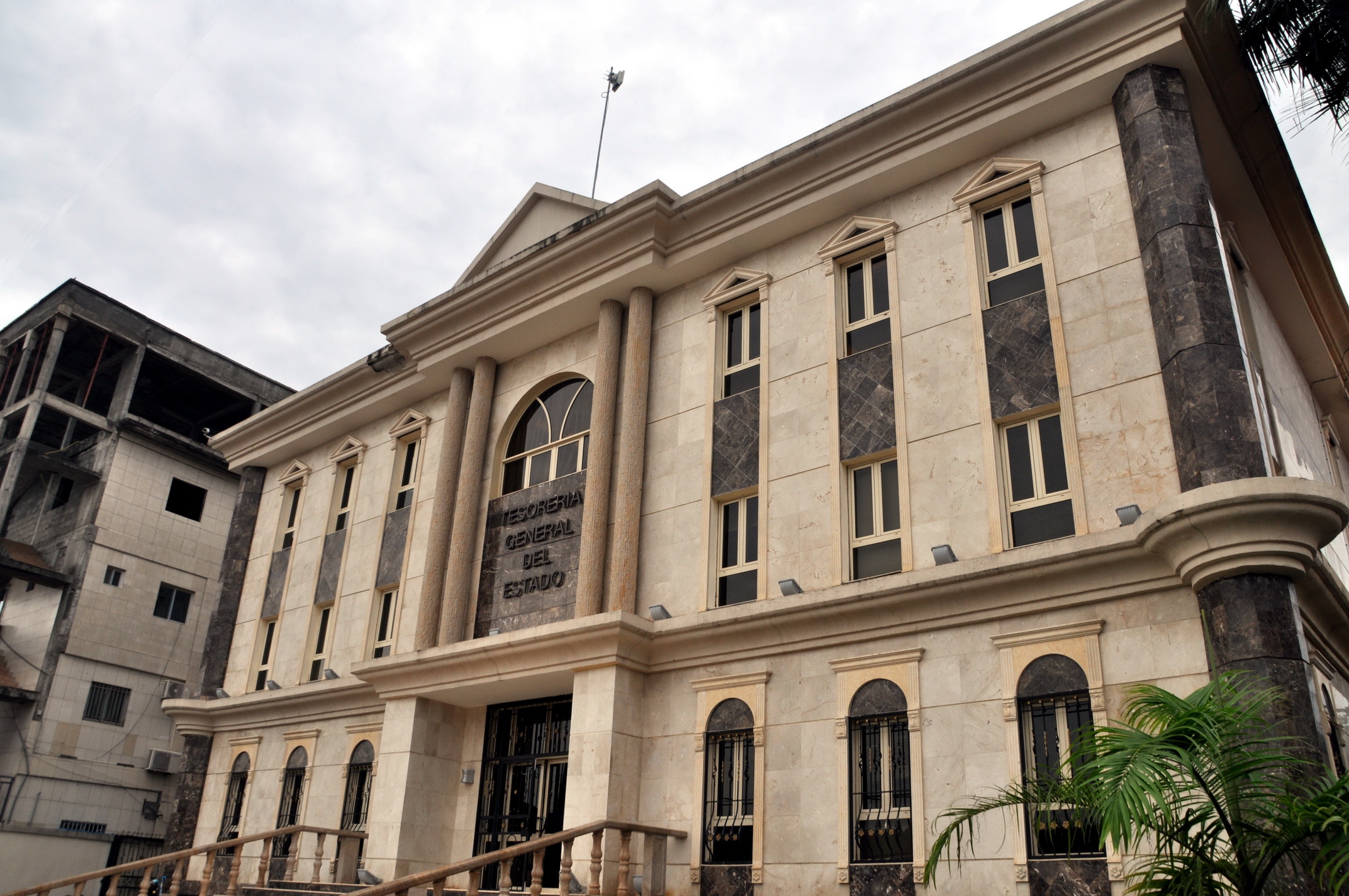
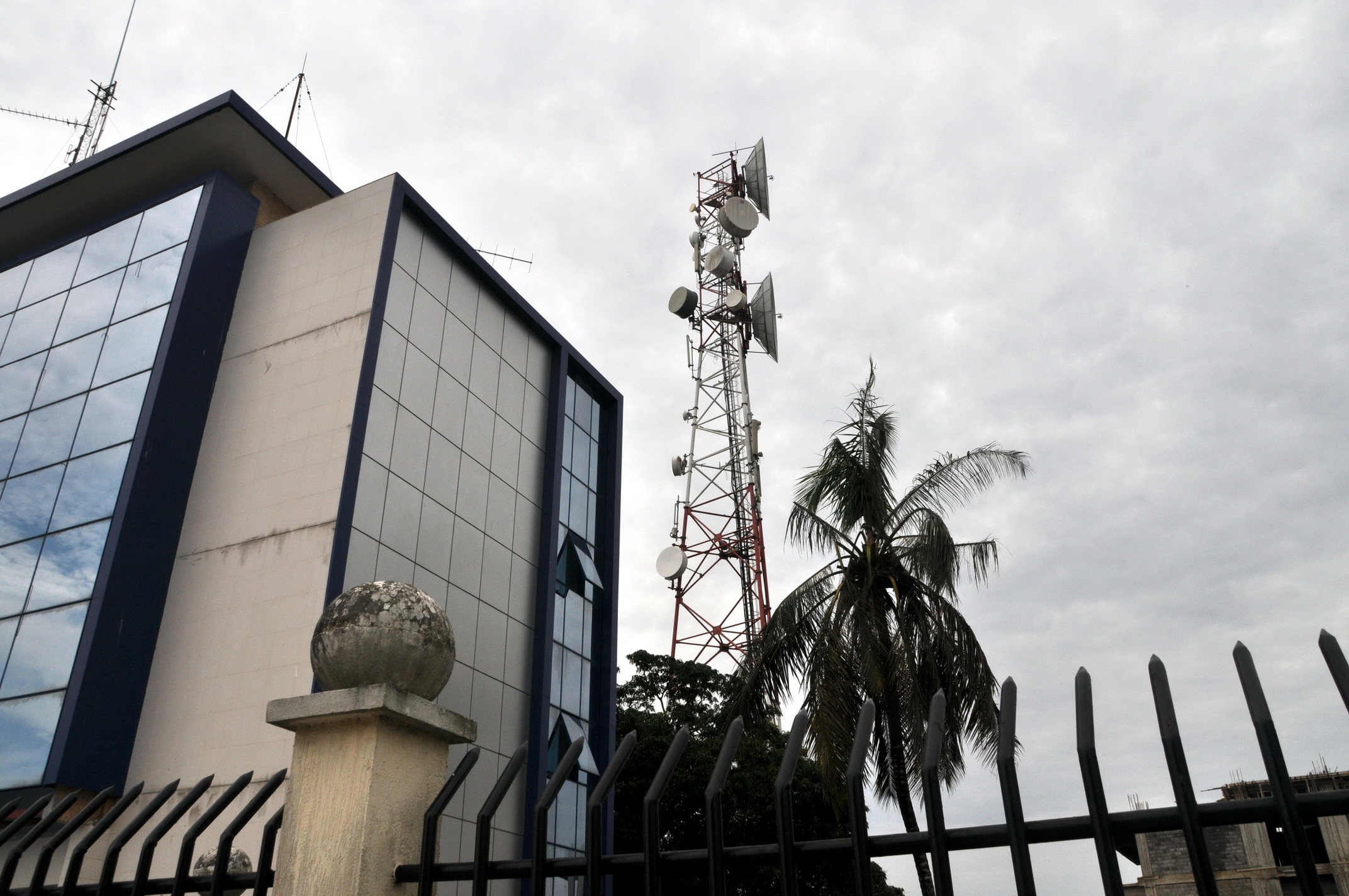
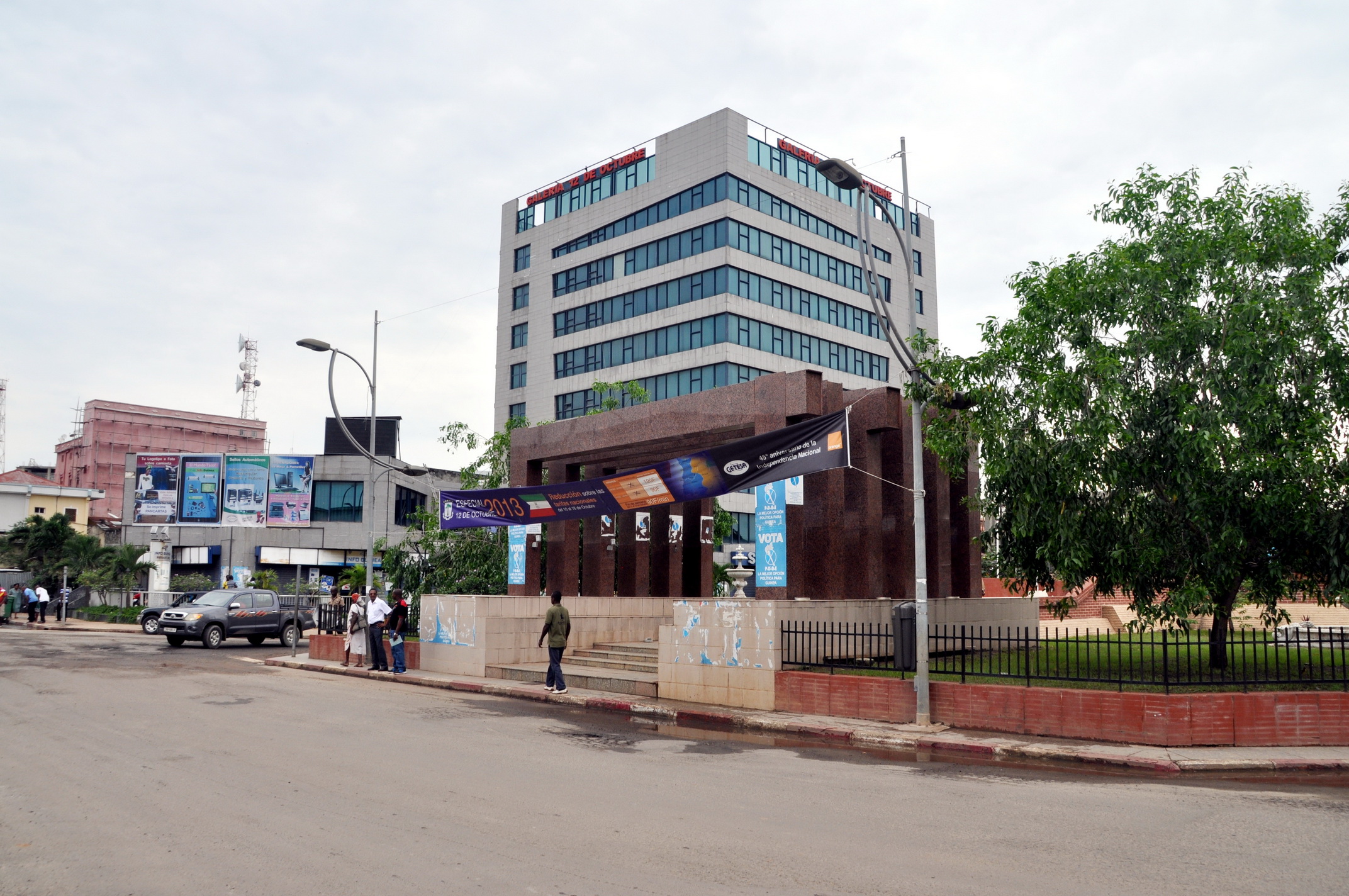
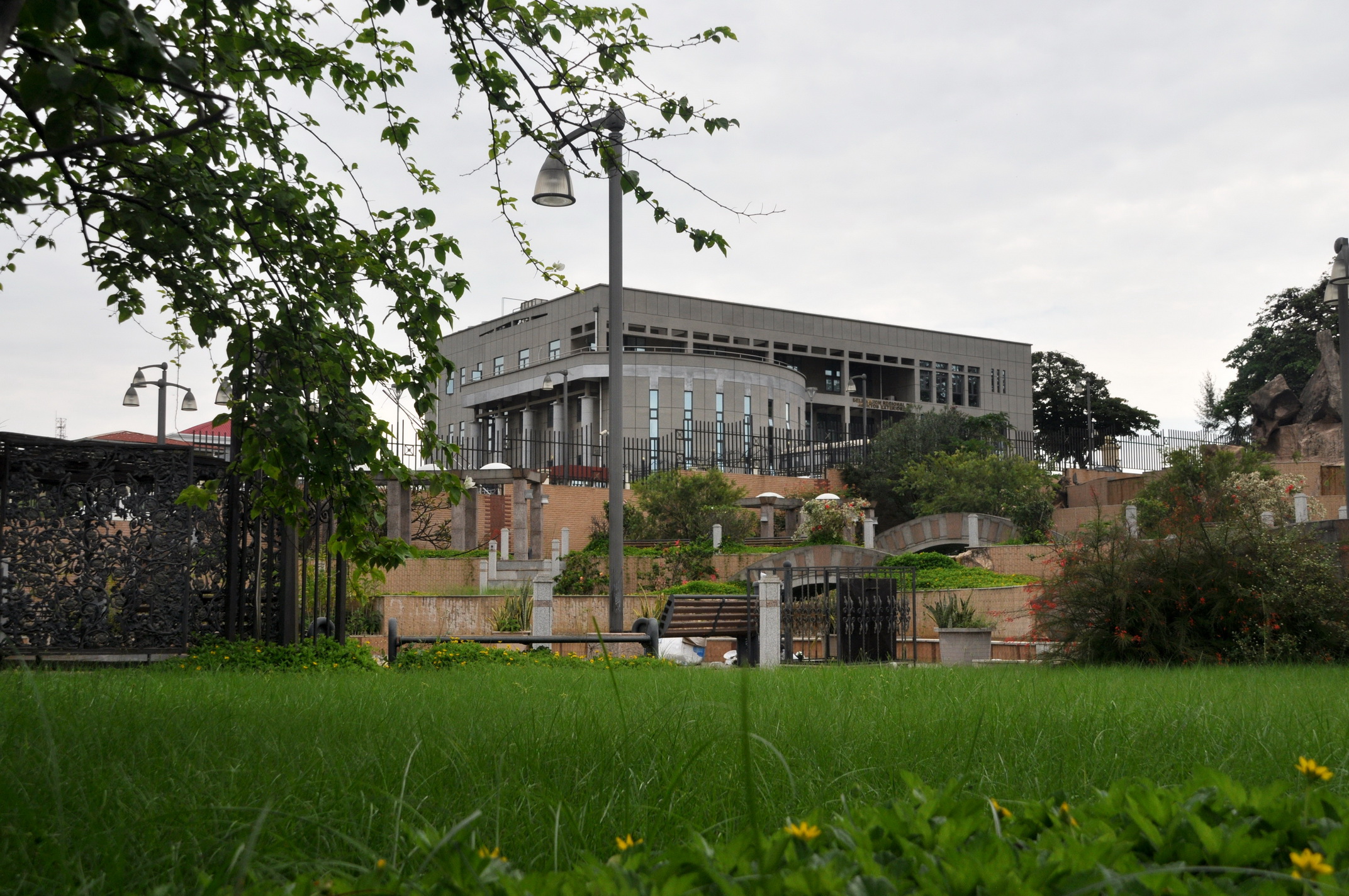
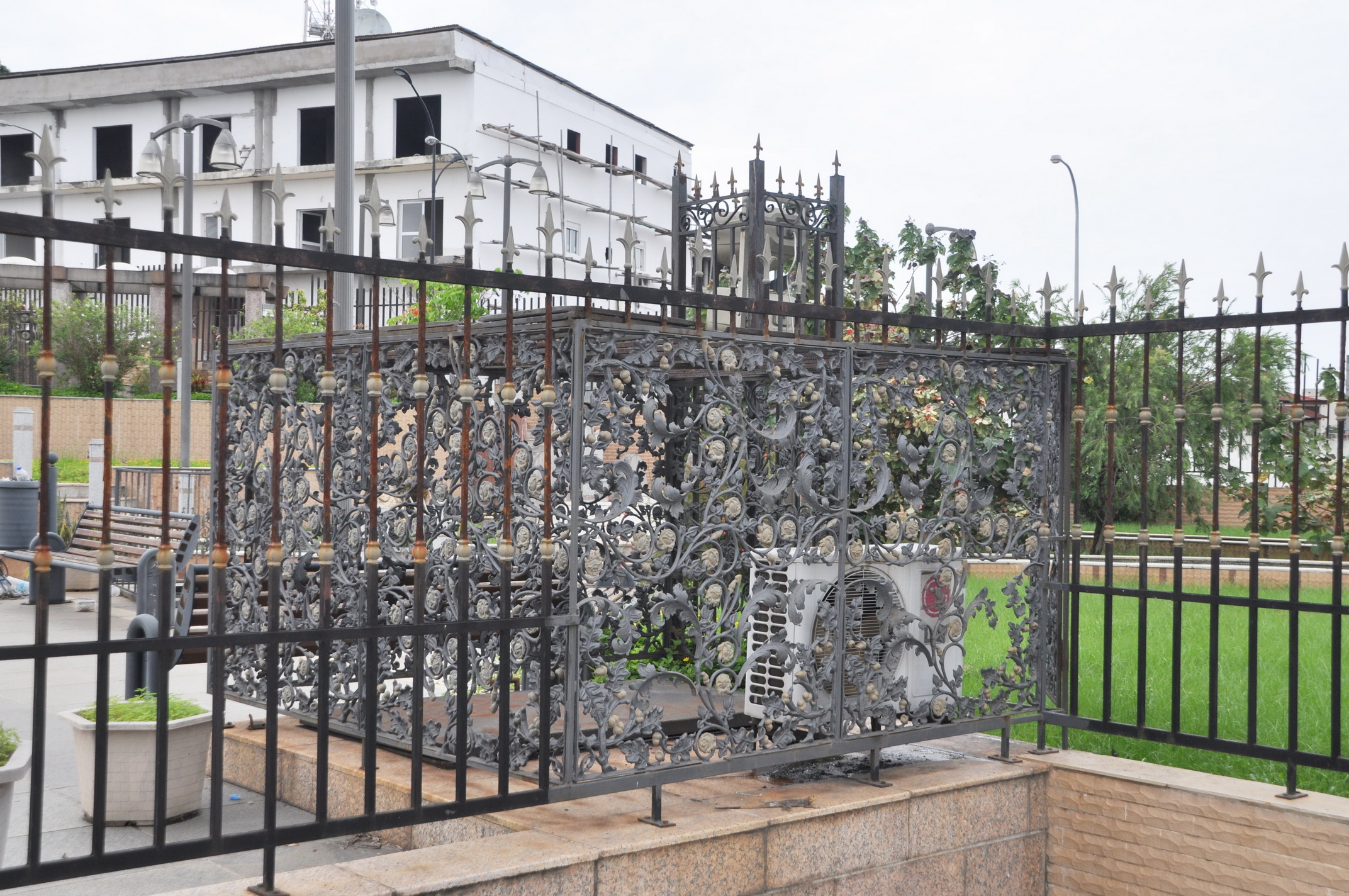
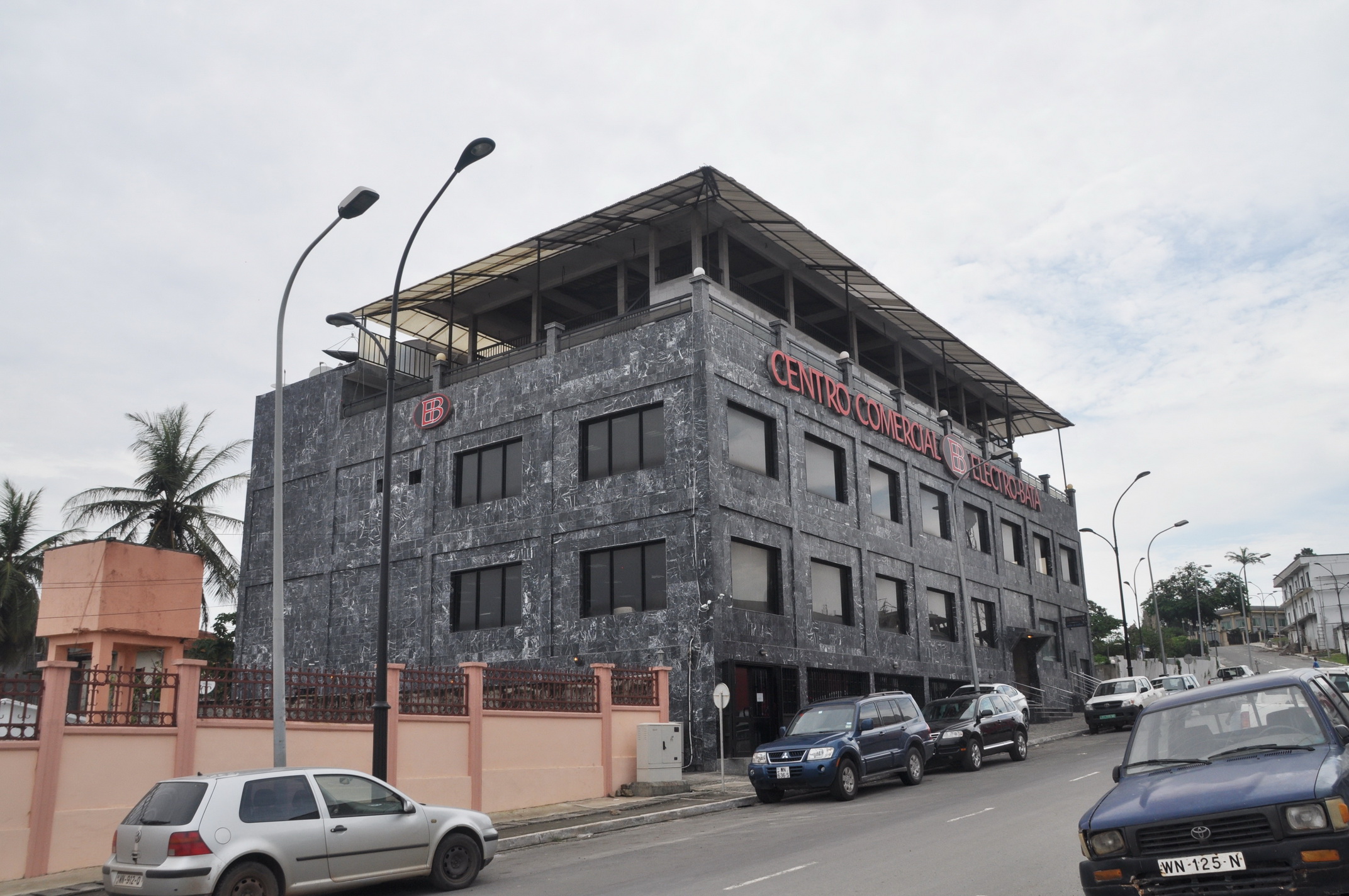
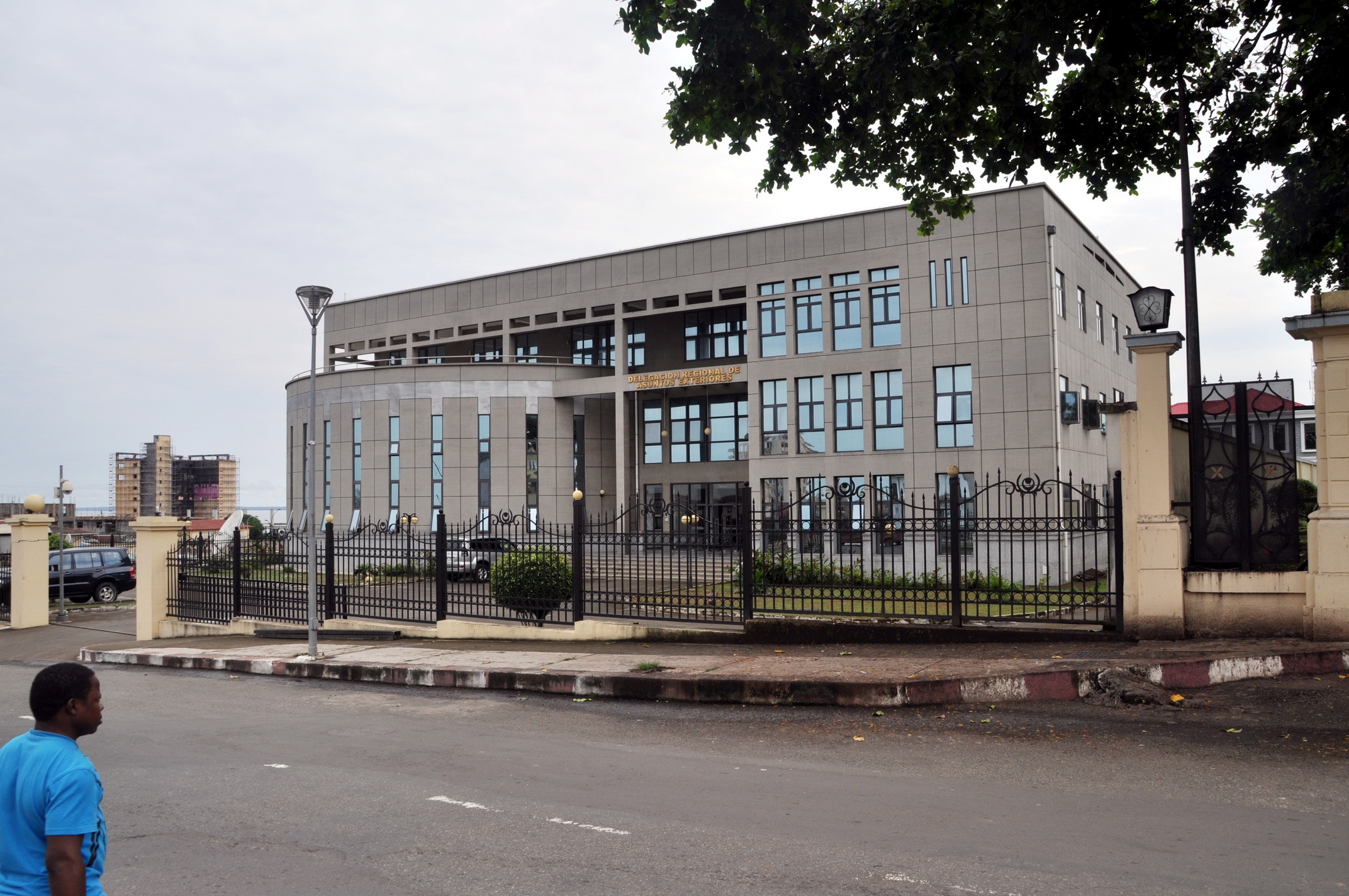
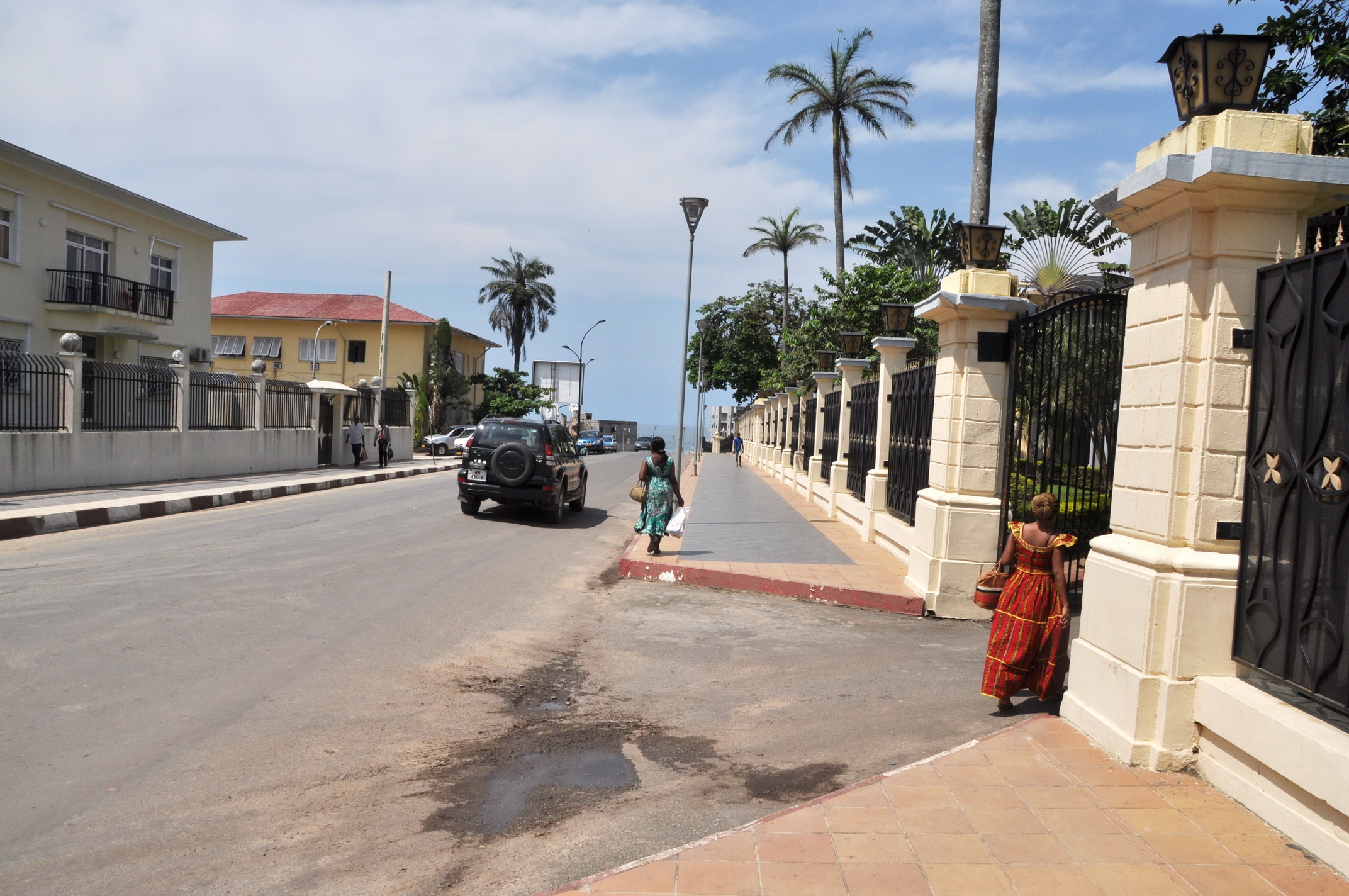
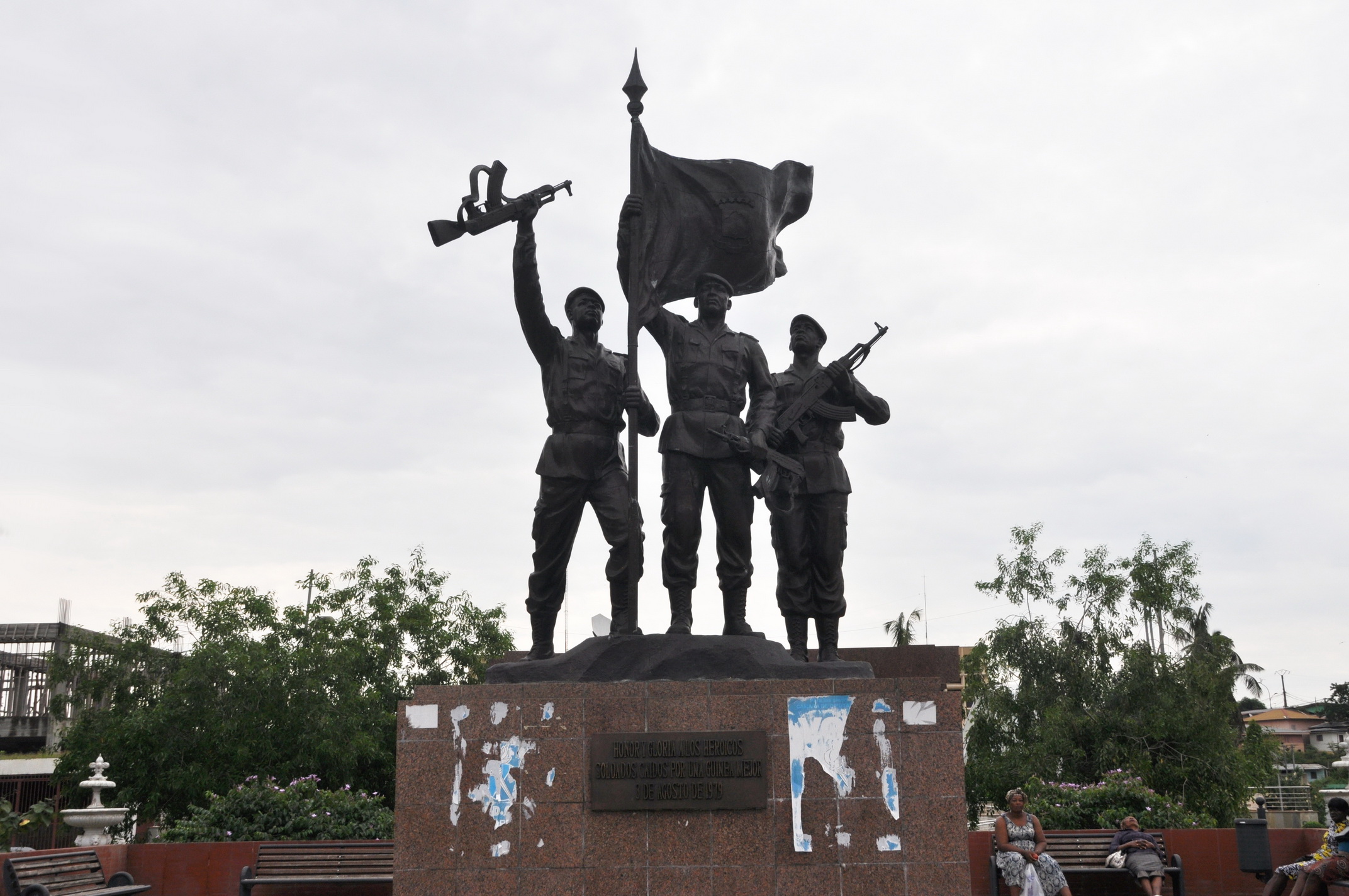
In the main square was a monument to the patriots: three men with Kalashnikovs and a flag. The heroes of the last military coup. No history existed before them, as far as the monument was concerned. As in any such country, each new set of “patriots” rewrites history. The new world began in 1979 in Equatorial Guinea, when the group in power during my visit took over. By then they’d nearly risen from their knees. The Americans had built them a liquefied natural gas plant. They were already producing enough to dream of becoming Europe’s largest LNG supplier. Get the second phase finished and there’s your energy superpower. Reserves enough for centuries, as people liked to say. Petrol at filling stations was expensive and often out of stock.
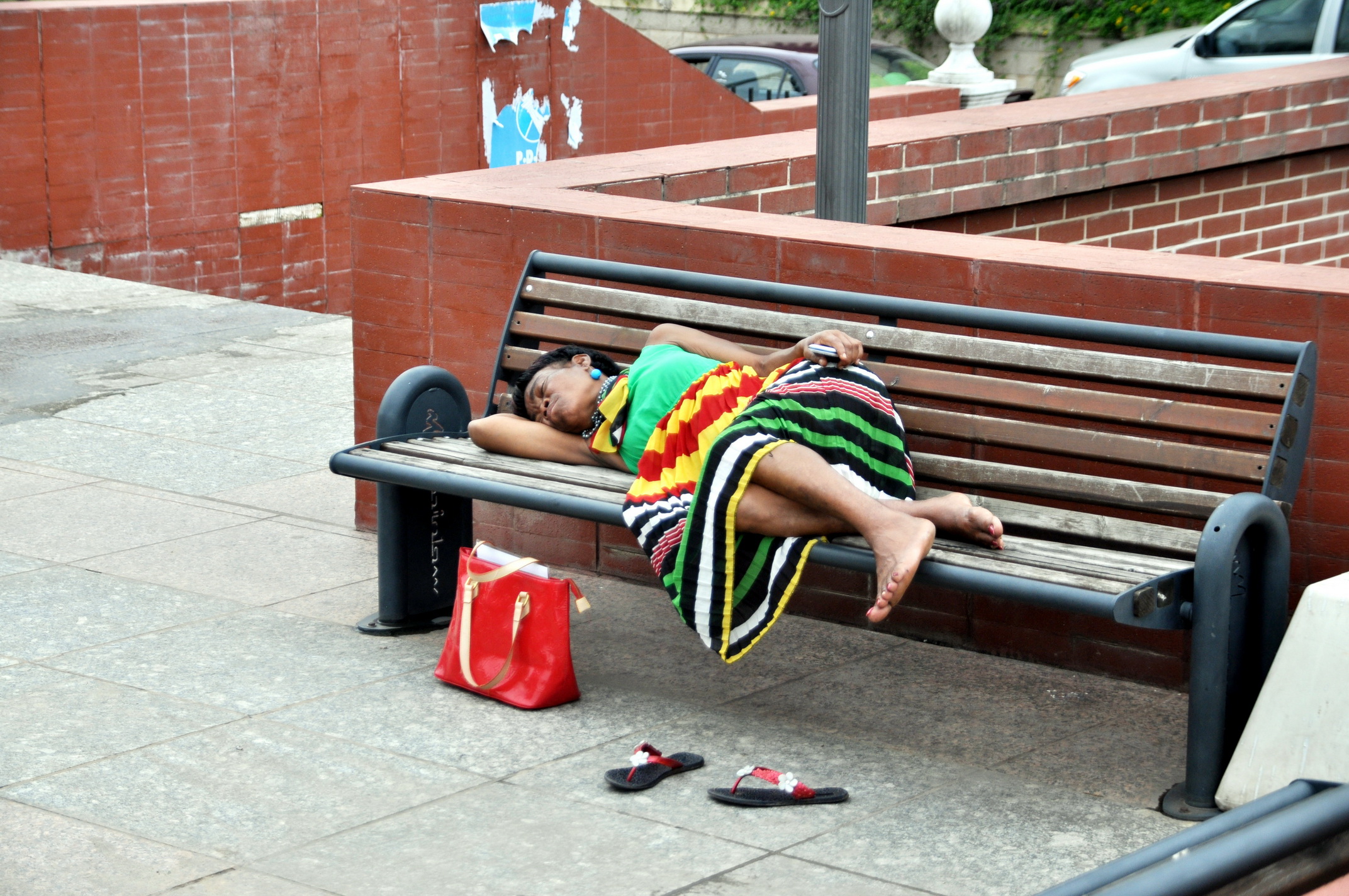
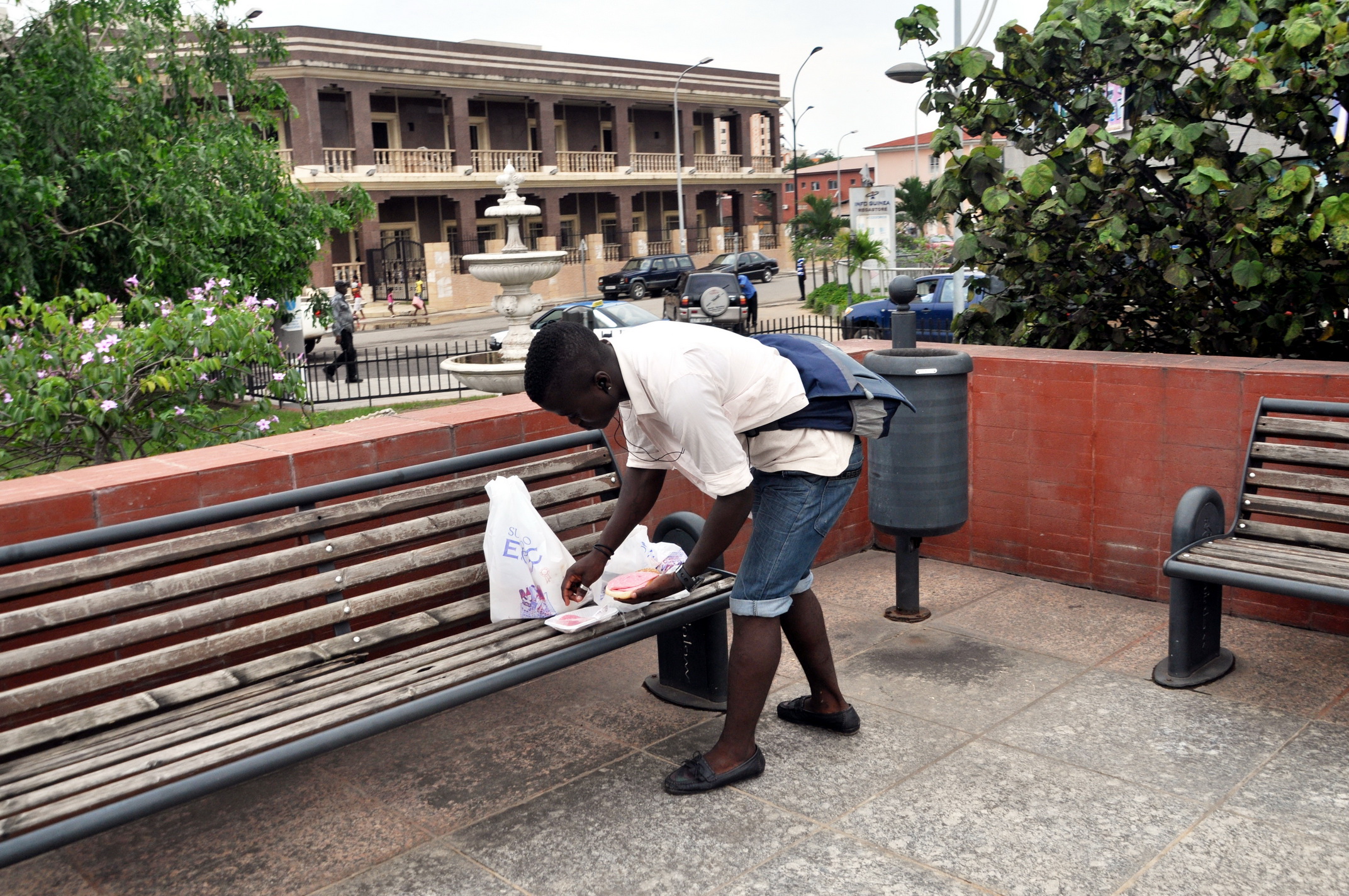
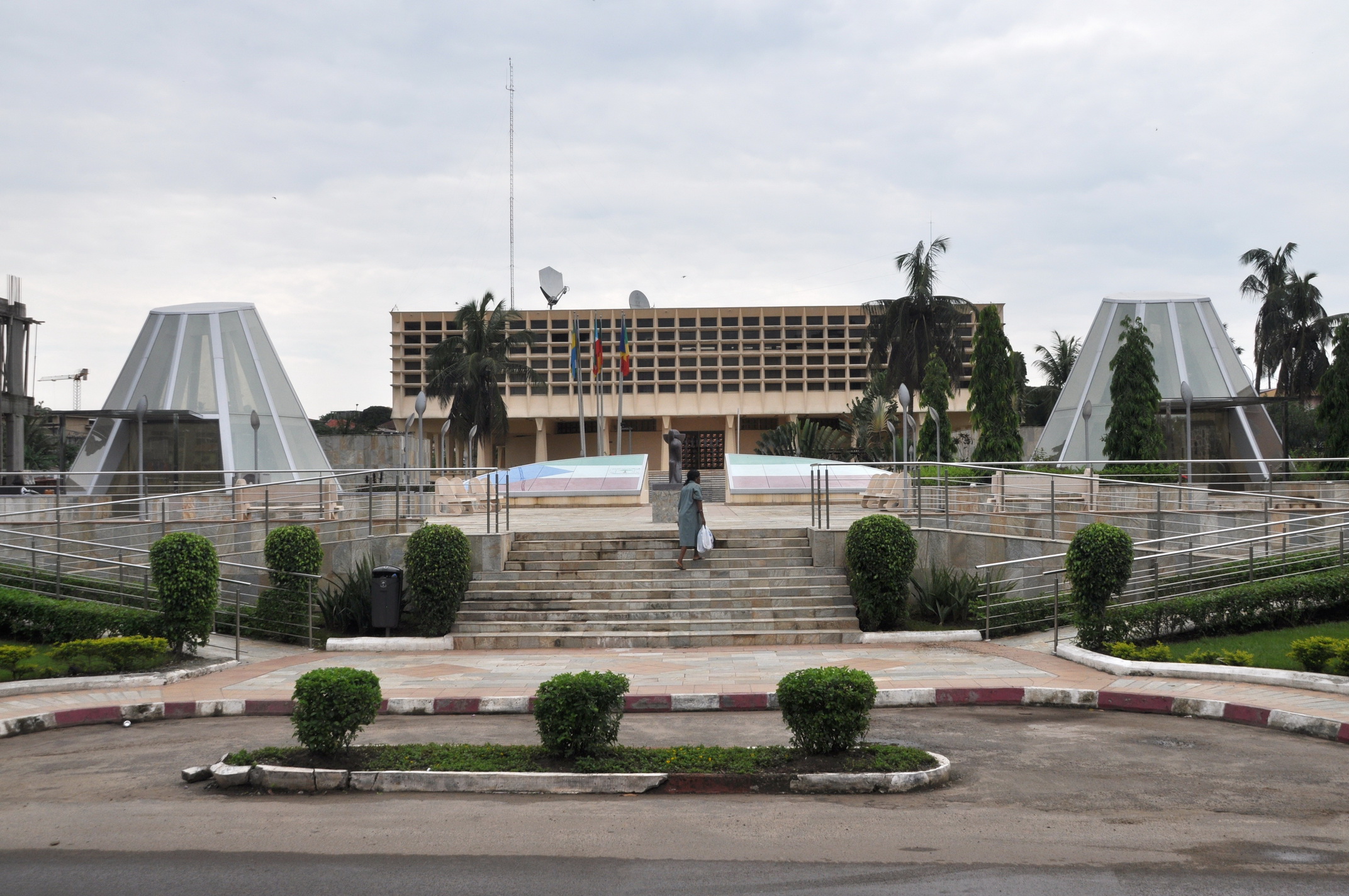
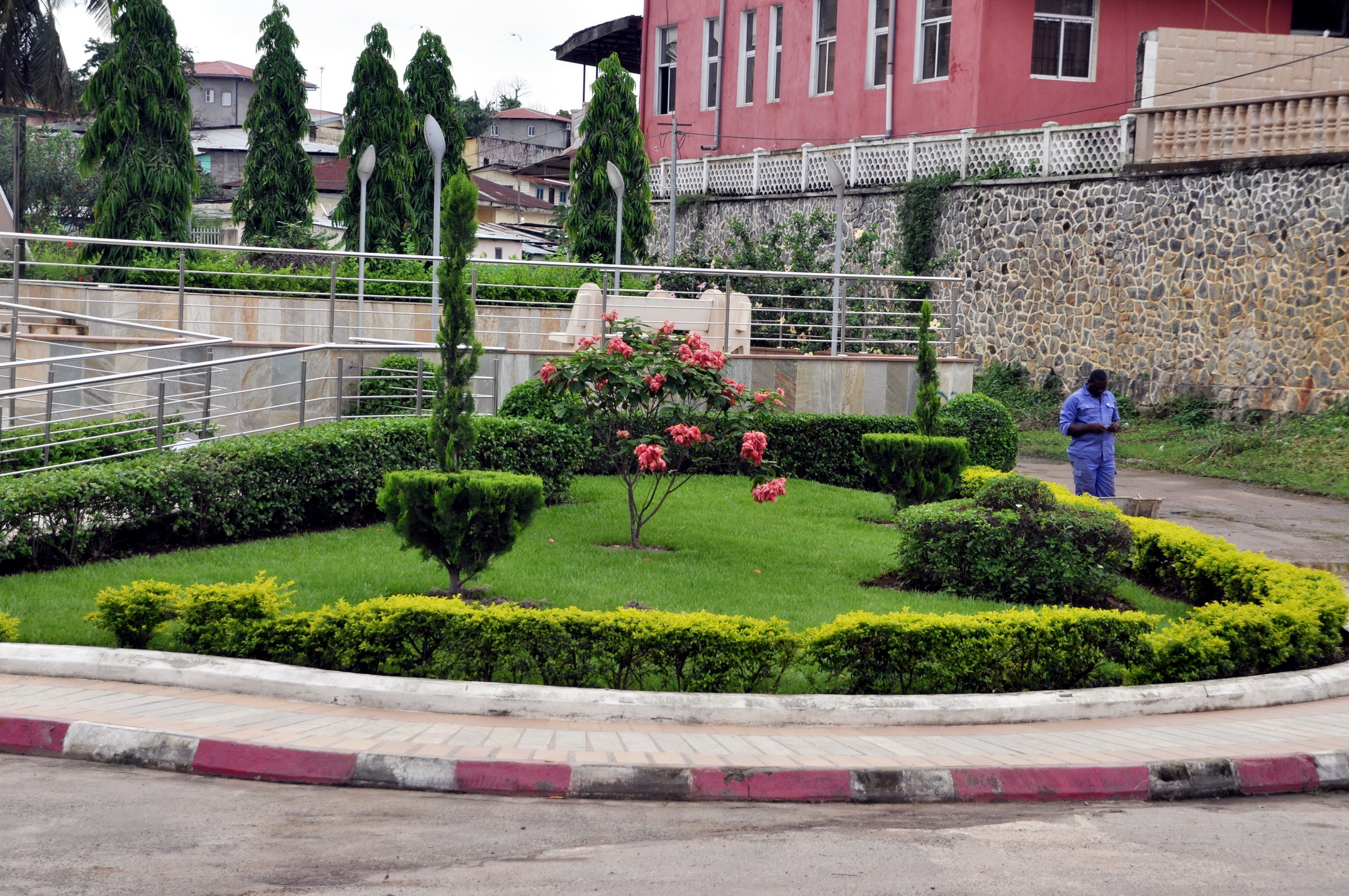
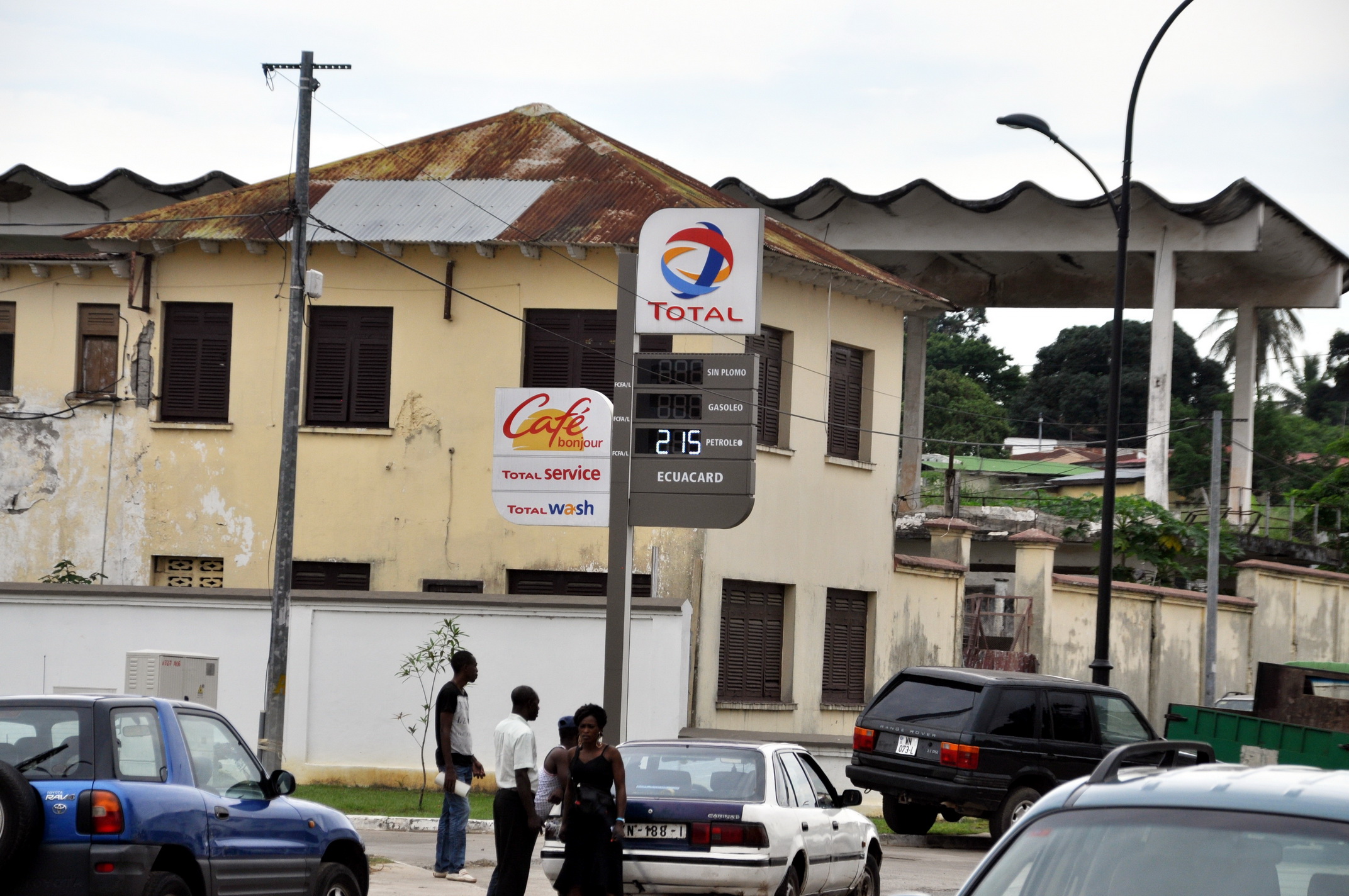
Hence the strange situation where I could hear figures putting GDP per capita up with Finland, while people with no access to the feeding trough lived like people in the poorest parts of Africa. The same mud-brick huts, straw roofs and earth floors.
There is always something to do with money. The Russians haven’t got a monopoly on carving up a budget. Typical post-socialism, really.
Bata was full of half a city’s worth of unfinished buildings. Libya had apparently been paying for them, hoping to become Africa’s capital and light up these allegedly godless places with Islam. It didn’t get there in time.
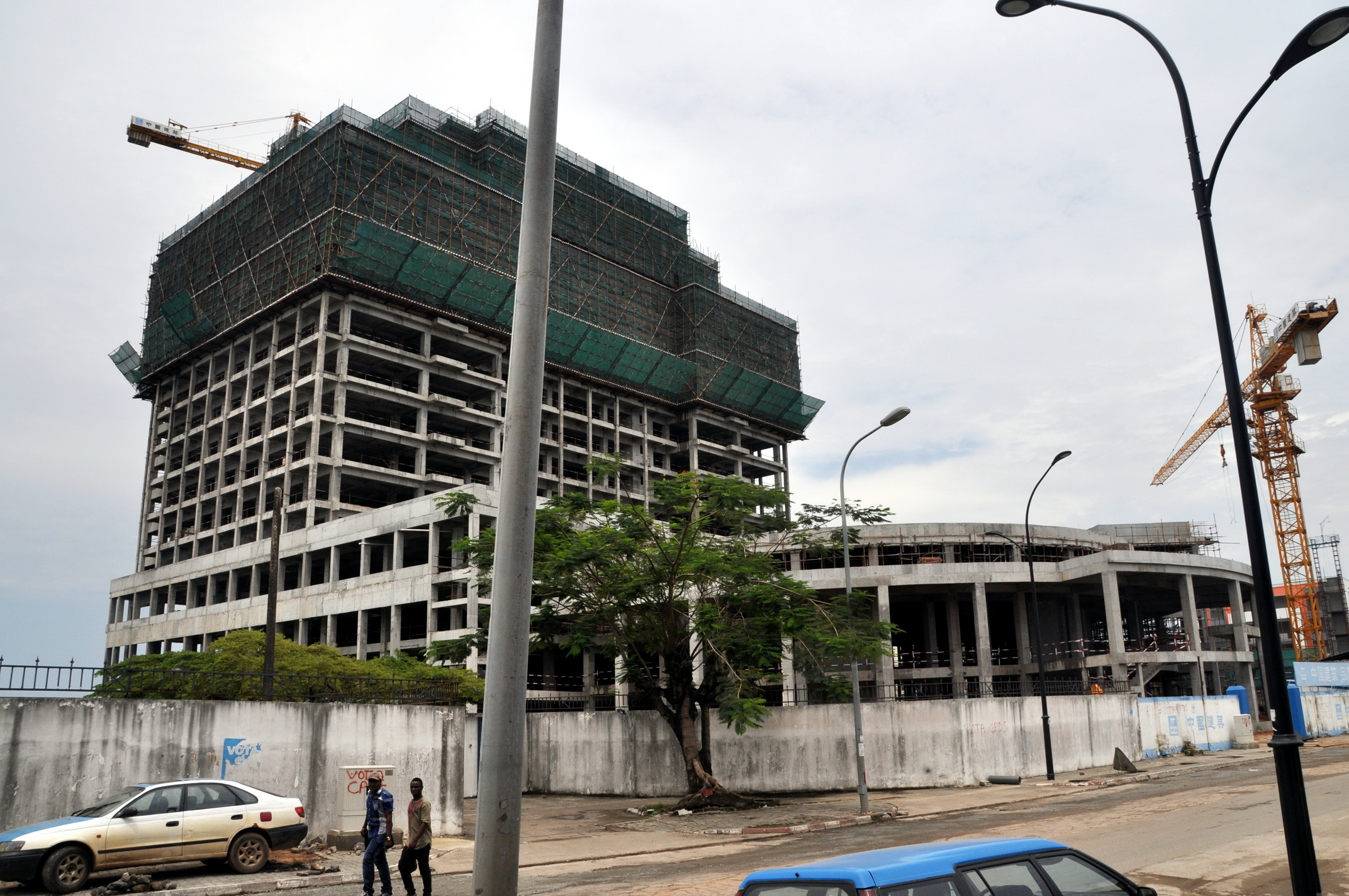
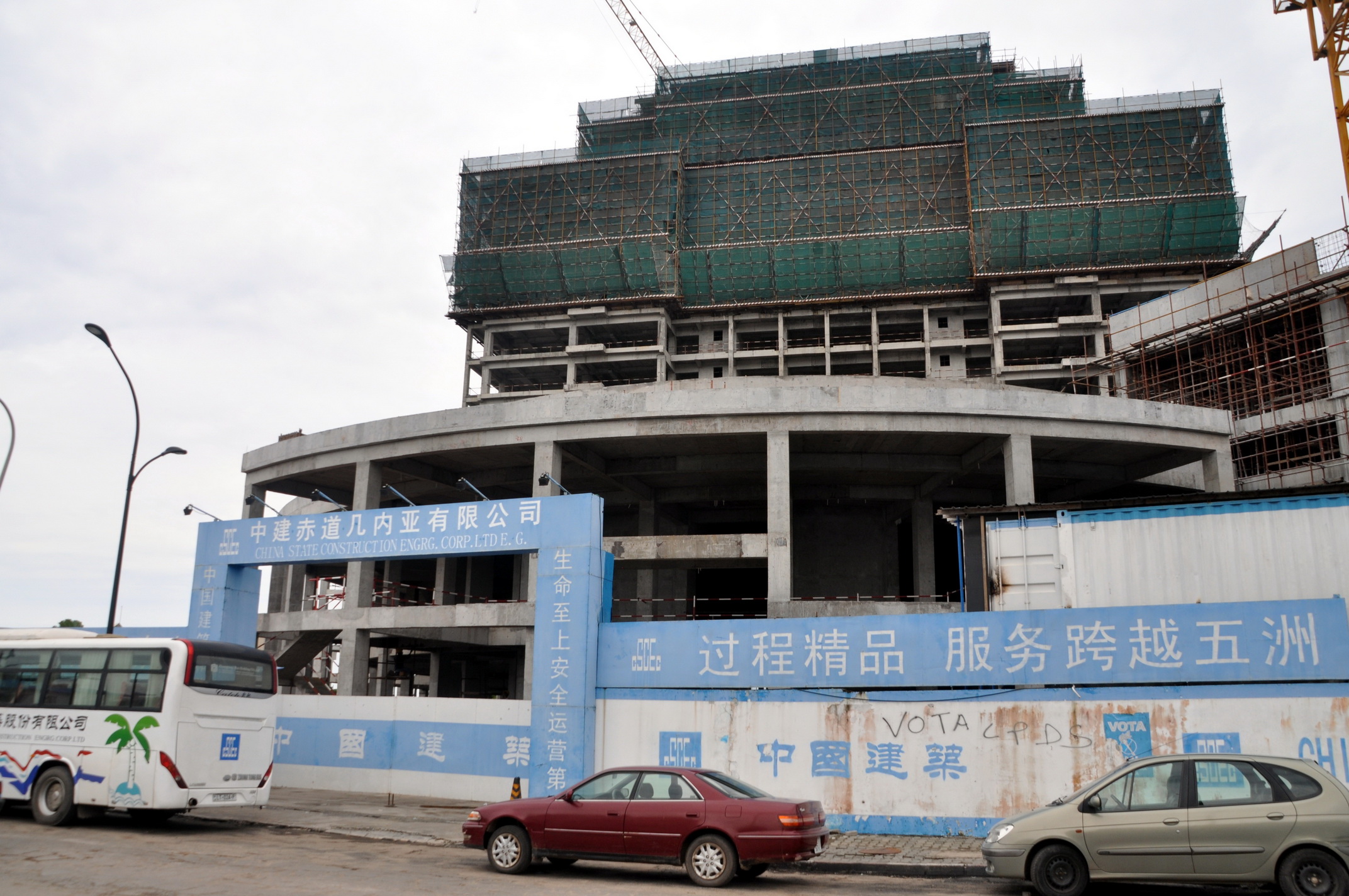
Equatorial Guinea is divided into an island part, with Malabo as the capital when I visited, and a mainland part, whose main city is Bata.
Flying to the island was expensive, so I’d stick to Bata, which was larger than the capital. I found one cash machine in the whole place. I very much needed cash. The border officials had cleaned me out and seemed quite likely to do it again on the way back. There was a catch: the machine took Visa, and most of my money was on Mastercard. I was glad I hadn’t believed the bank when it said Visa and Mastercard were all the same. They’re nothing like the same when the only ATM takes one of them. I had insisted on one of each. In a really sovereign country there’s no time for competition; whoever gets in first, keeps on good terms and pays the right people is the monopolist. That’s known as a responsible Western business respecting national traditions.
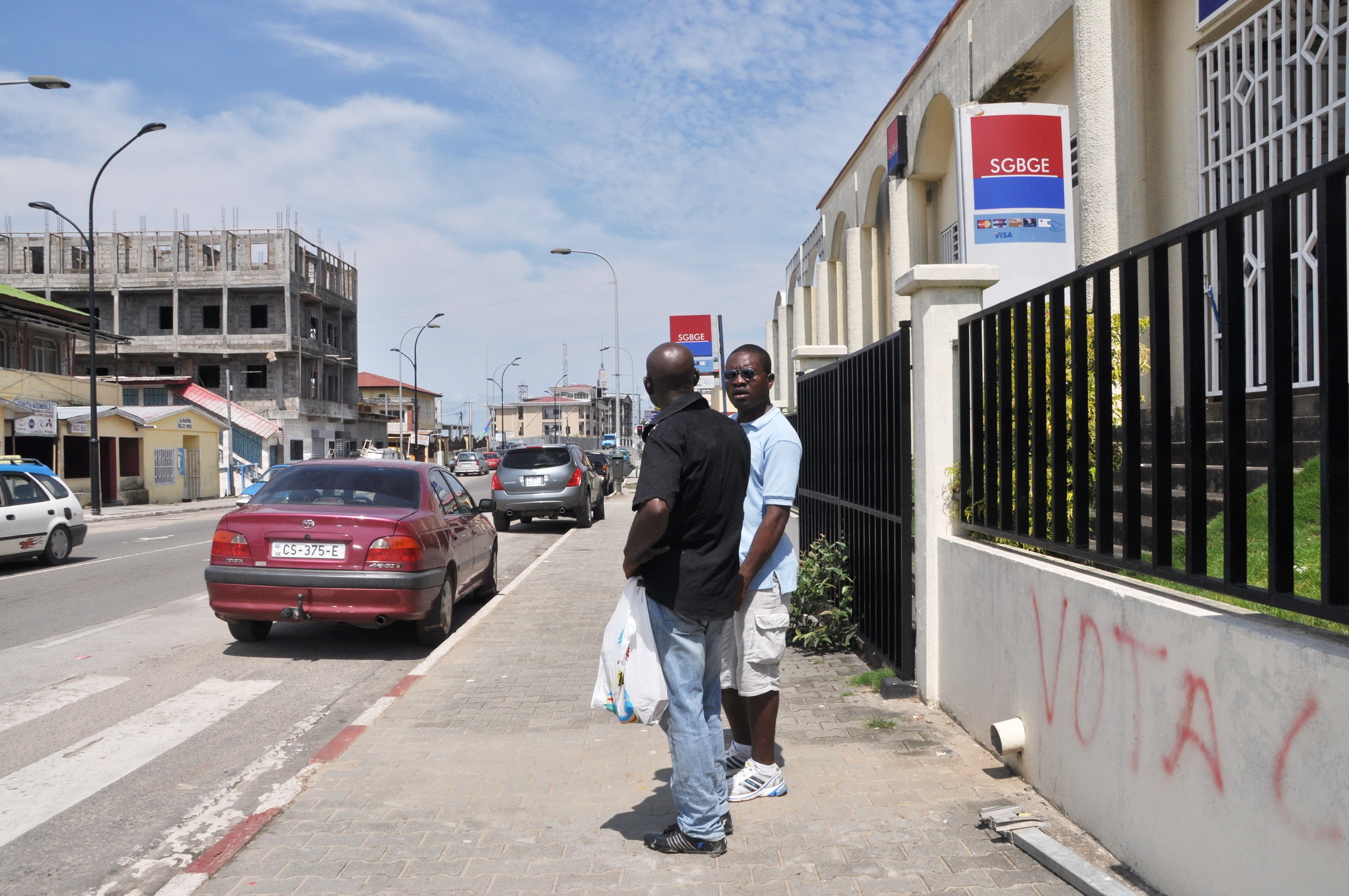
I shook every last penny off my Visa card.
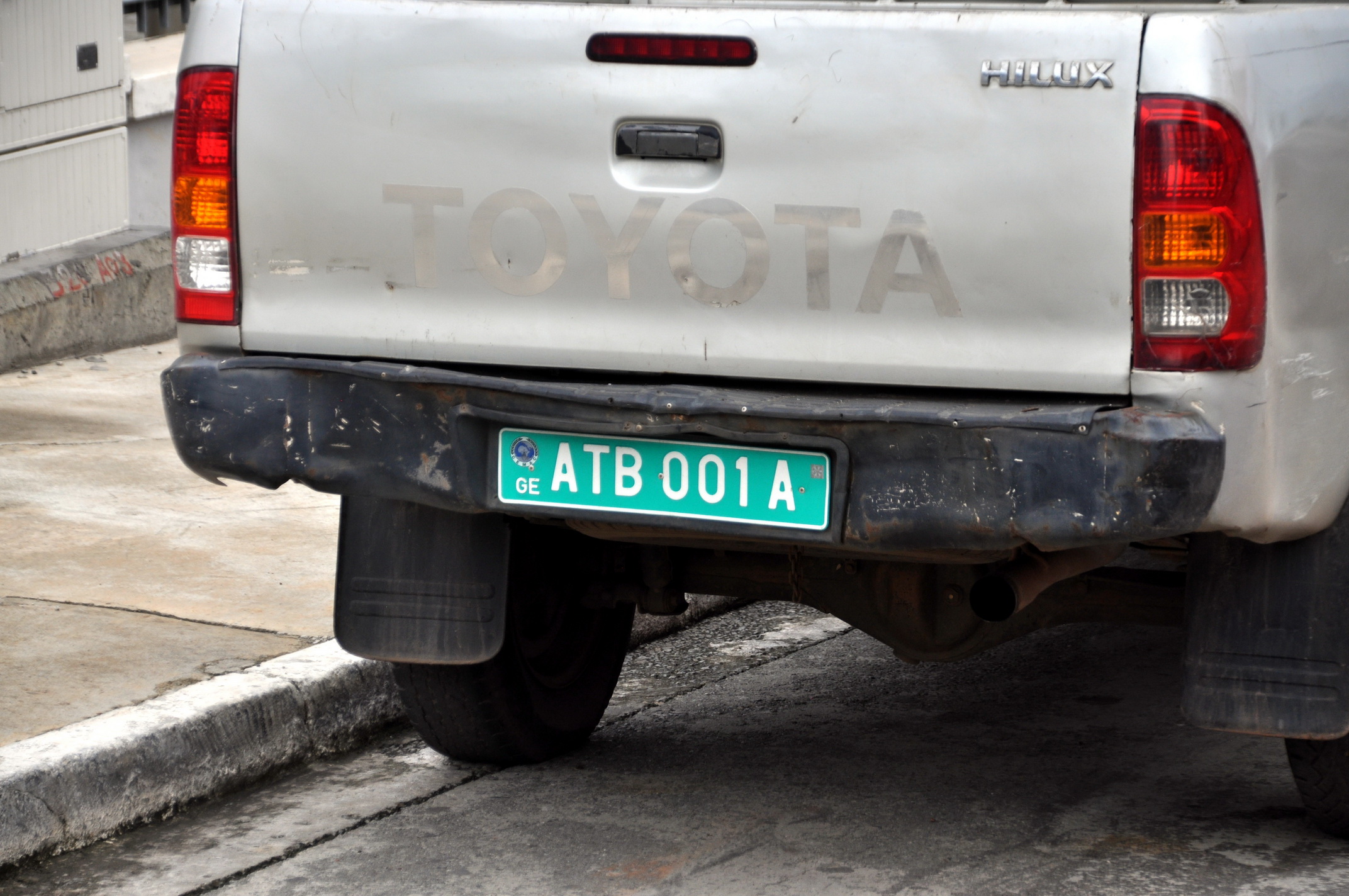
What struck me was how many bosses there seemed to be. Lots of cars with plates in different colours. I never worked out which was the grandest. They certainly had the system of ranking people by the colour of their trousers, like in Kin-dza-dza!.
A digression on the country’s recent history
The modern history of Equatorial Guinea is tragic. It had been a prosperous Spanish colony. At independence, GDP per head was put at $300, enough then to make people hope for better things. In 1968 Francisco Macías Nguema came to power and led the country into one-party rule.
Nguema was a villain of epic proportions. There were stories that he’d been unable to get on at school, failed the civil service exam three times under the Spaniards, and was given a pass on the fourth attempt only after his superiors intervened.
From that time, the story went, he hated education. Once in power he did away with schools and libraries, except for one in the capital as a closed collection. Children were to learn slogans by heart.
The opposition papers closed straight away, the government papers a few years later. Book publishing was banned.
Nguema soon broke relations with Spain and the United States and declared the Spaniards enemies. Those who did not escape were killed, according to accounts of the rule. Estimates of the toll varied, but I’d read that tens of thousands of a population of about 300,000 died and tens of thousands more left. One grim story tells of the head of the statistics office being murdered on the spot when he brought bad population figures.
With the Spaniards gone, anyone with a university education could be declared an enemy. It became a country from which the educated fled. Then came the Catholics. Nguema was to be spoken of as a god, in slogans to the effect that there was no god but Macías and the country could not exist without him.
Even that didn’t help. Churches were closed under his rule.
Fernão do Pó’s island and mountain were renamed after Nguema.
The government was dissolved. According to the account I read, ten of its twelve members were killed.
All parties but the United National Workers’ Party (Partido Único Nacional de los Trabajadores) were dissolved, and the country’s adults were enrolled in it. Nguema was declared irremovable president for life, and the constitution was rewritten to put all power in his hands.
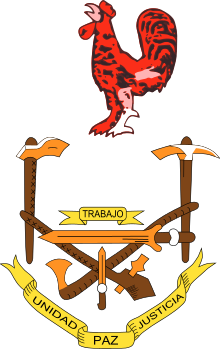
The head of the central bank was killed too, for corruption, naturally. Then money was declared a relic of capitalism, and the state’s cash went into Nguema’s hands at the palace.
He is said to have buried most of it in bamboo beside the house, where it rotted.
His relatives were said to have suspected he had gone mad, but there were no doctors left in the country. A doctor was brought from Cameroon with a promise of safety. According to the story, he was killed after the examination before he could give his diagnosis.
Nguema rarely left the country. When he did have to visit one of the other socialist countries, he was said to execute the accumulated political prisoners before his departure so nobody would step out of line in his absence and everyone would remain frightened and in mourning.
The planes stopped flying, the ships stopped coming, the power and the water went off, and the shops closed. People fell back on gathering food for themselves. In this telling, taking Westerners hostage for ransom became the only way the country earned any money.
The triumph of communism didn’t last long.
The police and the armed forces stopped being paid.
When a delegation of the security forces went to the palace to discuss their back pay, the dictator had them shot as well.
That was a step too far. Teodoro Obiang Nguema Mbasogo, the dictator’s nephew, who oversaw the armed forces and prisons, staged a military coup in August 1979. Nguema ran away into the forest with the money. The fantastical story that followed was that he ate part of the country’s reserves and burned the rest. Apparently securities were a favourite of his.
The tyrant was captured. What to do with him: treat him or try him?
They decided to try him and sentenced him to death by firing squad. That posed a problem, as the story goes. No one from Equatorial Guinea dared shoot Nguema for fear that he was a great sorcerer and would return from the dead to avenge himself. They had to bring in an executioner from Morocco.
The family and close associates of the deposed dictator found refuge in North Korea.
The nephew was still in power when I visited. He would go to Moscow and talk to the Russian president about geopolitics and a gas cartel.
Incidentally, I thought the mad African president in Frederick Forsyth’s The Dogs of War sounded as though he’d been based on Nguema.
Nearly forty years had passed since Nguema was shot, I wrote in my notes.
His nephew was a less vicious dictator, in my view. I had seen grim figures then for child mortality and spending on education, as well as grim reports on human rights. I also came across one of those dubious national IQ league tables. All this while the oil-and-gas figures for income per person were up with wealthy European countries.
Meanwhile there were grand plans to modernise the armed forces. According to government officials, the navy was to be able to land troops anywhere on the coast, and the air force anywhere in the jungle, and put down any threat of disloyalty. At least they were frank about what they wanted.
New vessels were being brought into service quietly, and there was talk of replacing a couple of old MiG-15s with something more powerful. I was told the army hired soldiers from Morocco, supposedly because they would be less reluctant to act against local people.
The implication I heard was: step out of line and we’ll show you what the soldiers of Allah can do.
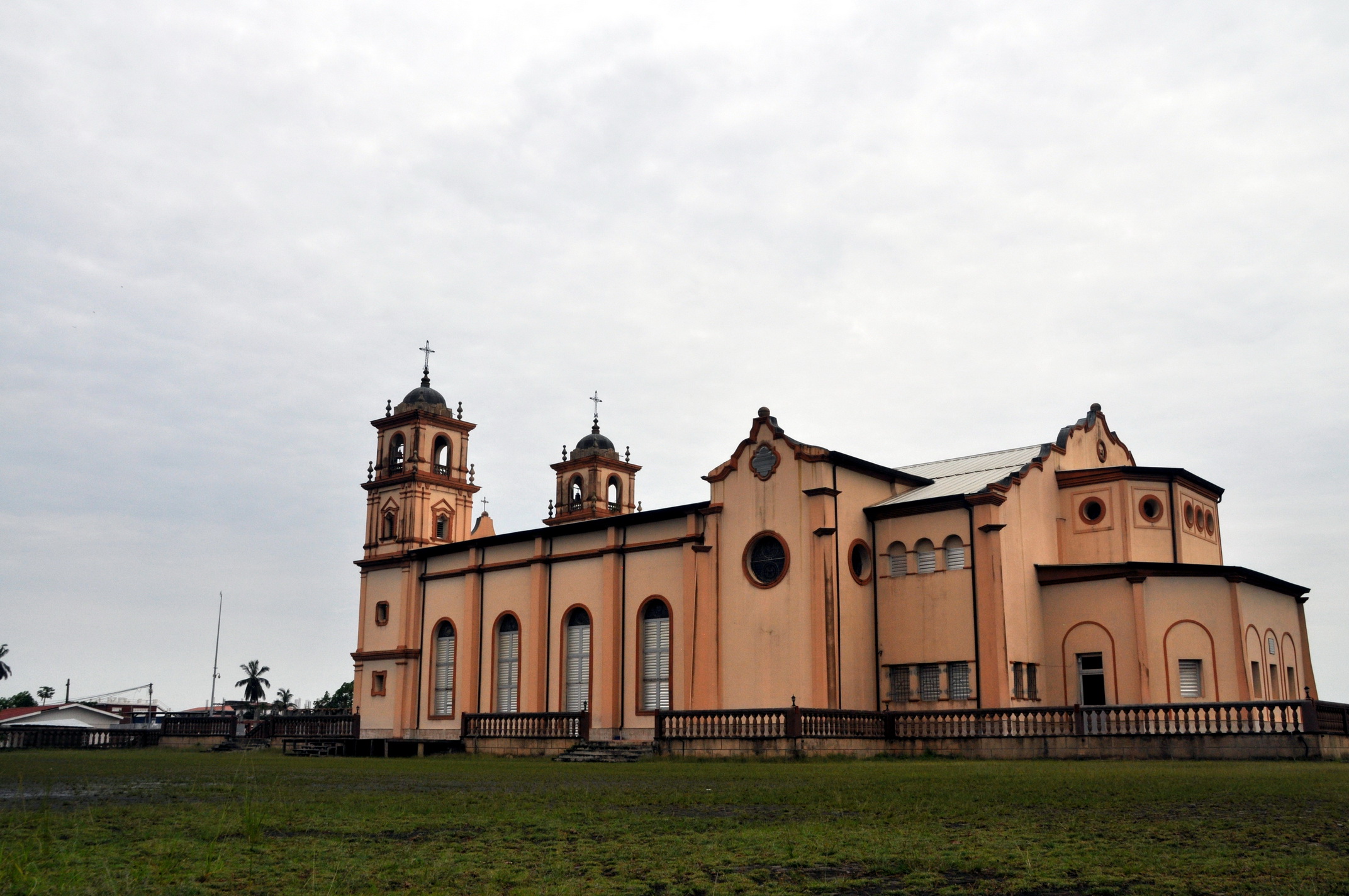
Equatorial Guinea is predominantly Catholic. There’s a large Catholic cathedral in the centre of Bata. Religious practice was allowed again, though I did not see many worshippers. There were Protestants too. I didn’t meet any local Muslims. I saw traditional dances carried on in Christian churches, and I joked that a prayer might still be said in private to that great sorcerer of all time, Nguema.
In search of a postcard
There weren’t many cars in Bata. Mostly very old taxis and the officials’ impressive four-wheel drives.
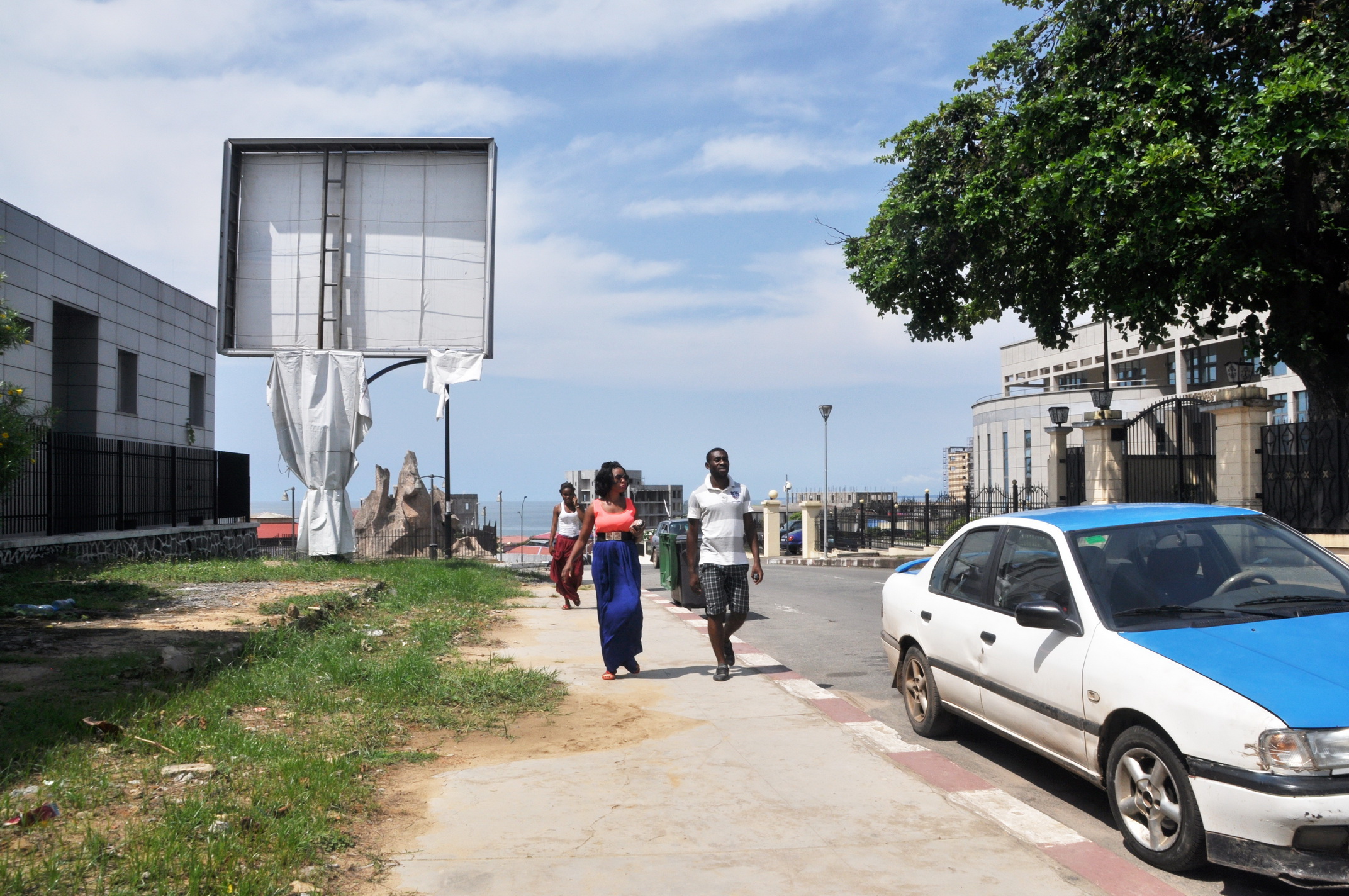
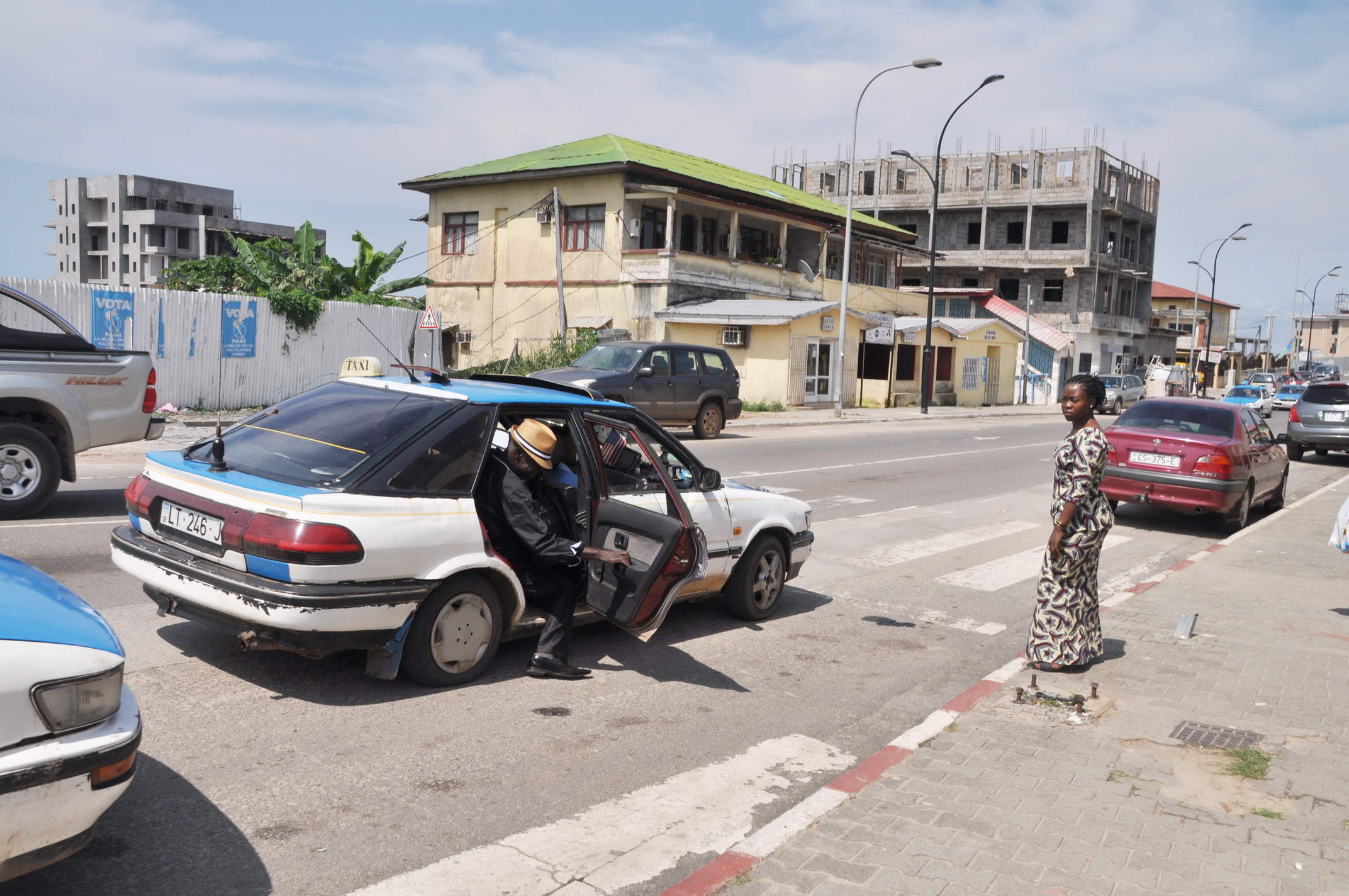
I bought a SIM from a local mobile provider, but I couldn’t phone Russia from it. They said there was no such country as one with the code +7. Incoming calls were painful to listen to.
The shops were quite decent but had little beside everyday goods. Everything was expensive and usually imported. Even fruit cost more than in a Finnish supermarket, and the bananas came from Cameroon. The choice of souvenirs was poor. No little magnets for the fridge, just one stall next to the tourist hotel. The same goods I’d seen in Gabon, only much dearer and fewer of them. I couldn’t find anything to bring home except a little flag and a bottle of beer. Come to think of it, I hadn’t seen another tourist.
The white people I met on the streets worked for the oil companies.
I like sending a postcard from remote countries. I found the post office in Bata easily enough, on a main square near the futuristic “Tower of Freedom.” And a miracle: local postcards on display! Stamps too! I asked to buy them. They were sold out. Was there anywhere else that might still have them? Doubtful, they said. We ran out in 1970, when the Spaniards left. That was the end of postcards.
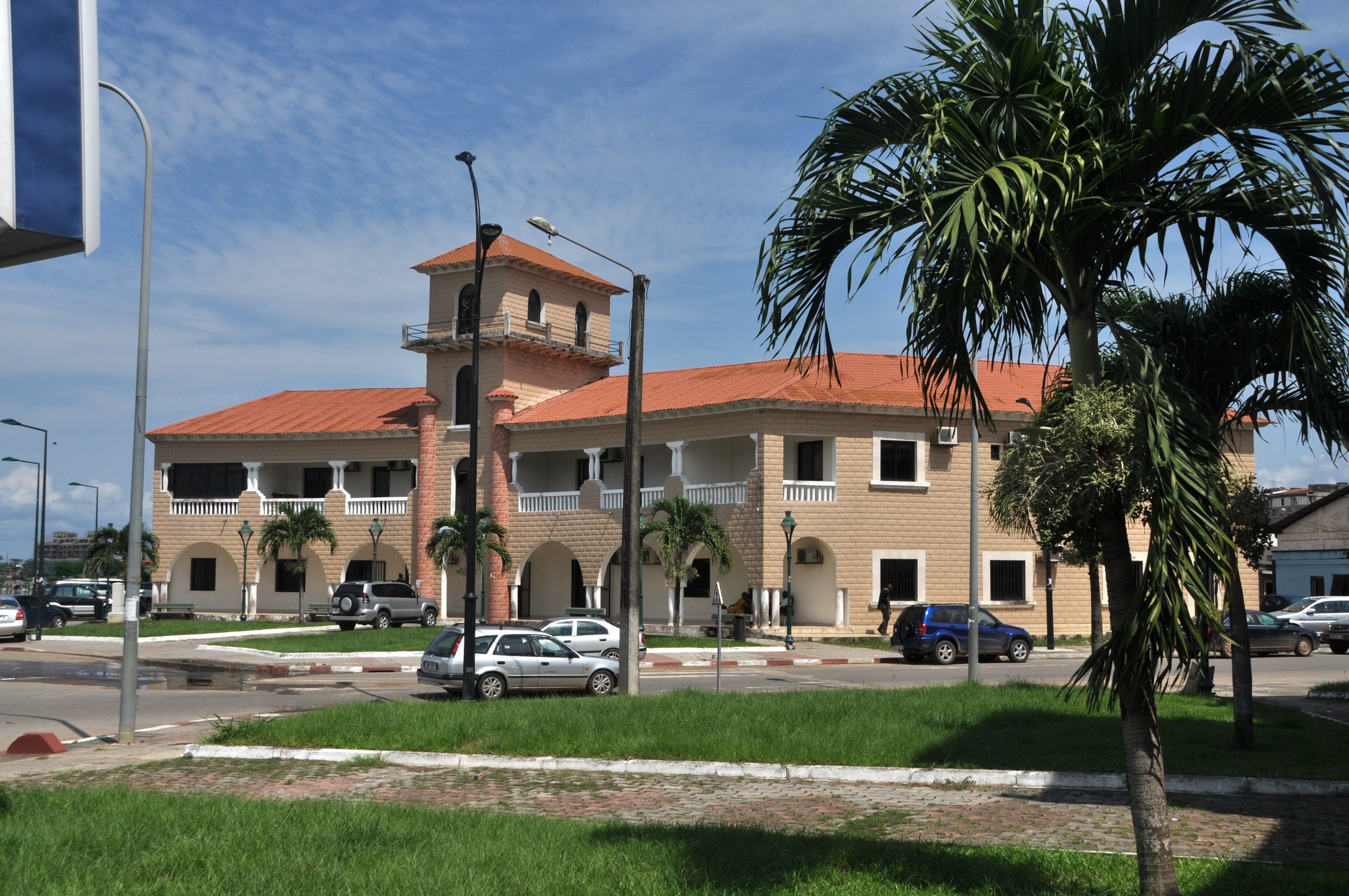
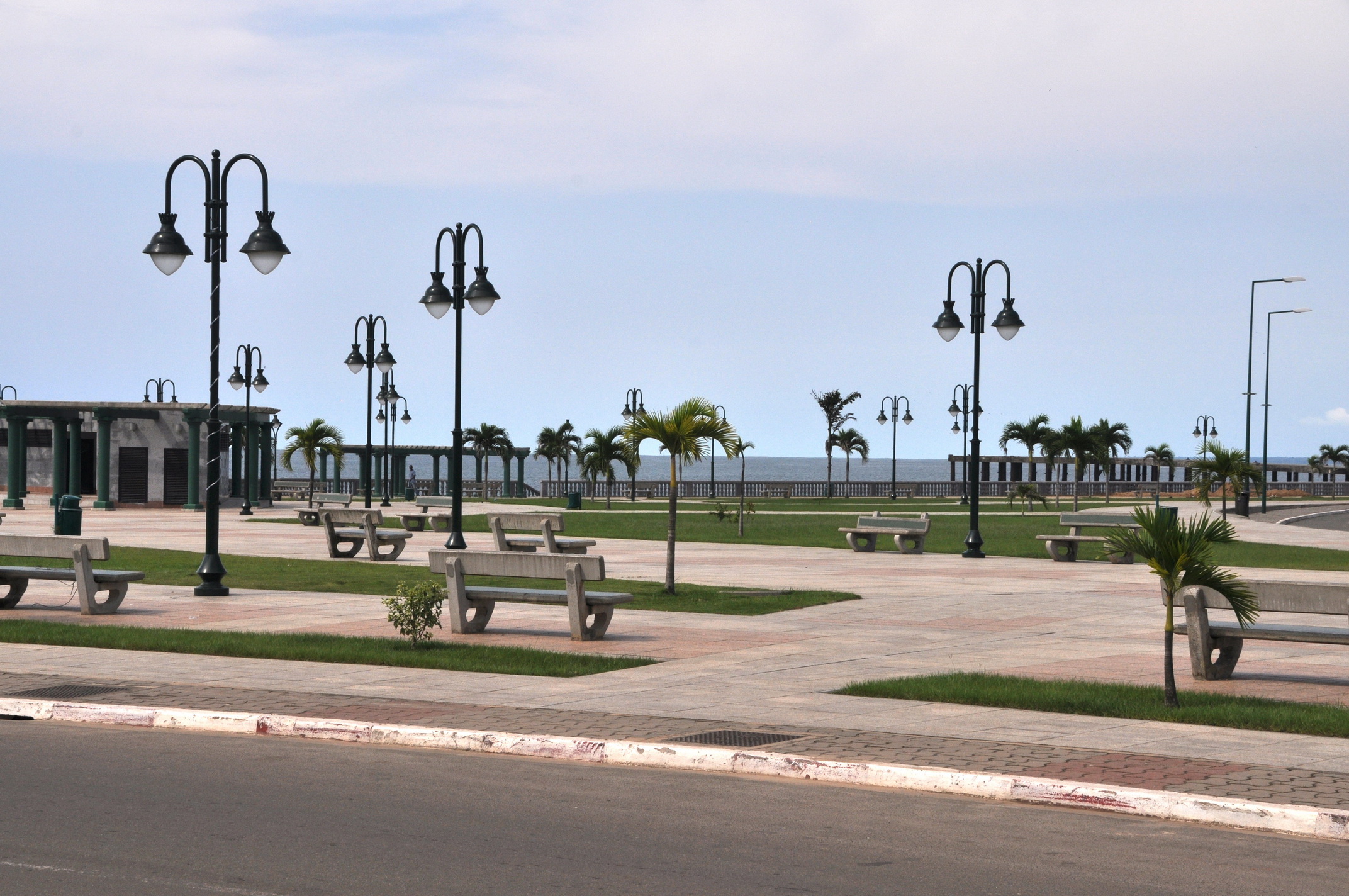
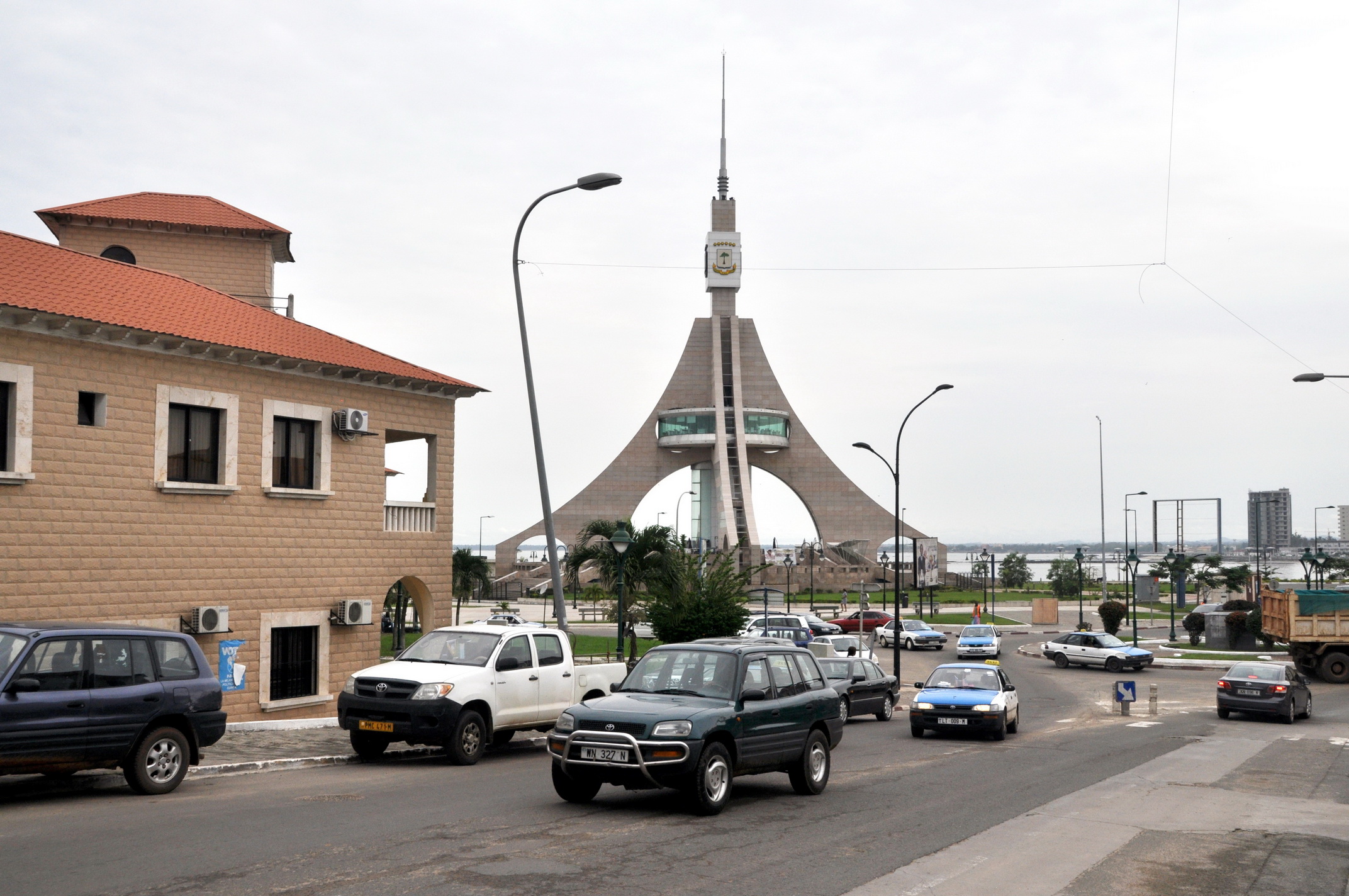
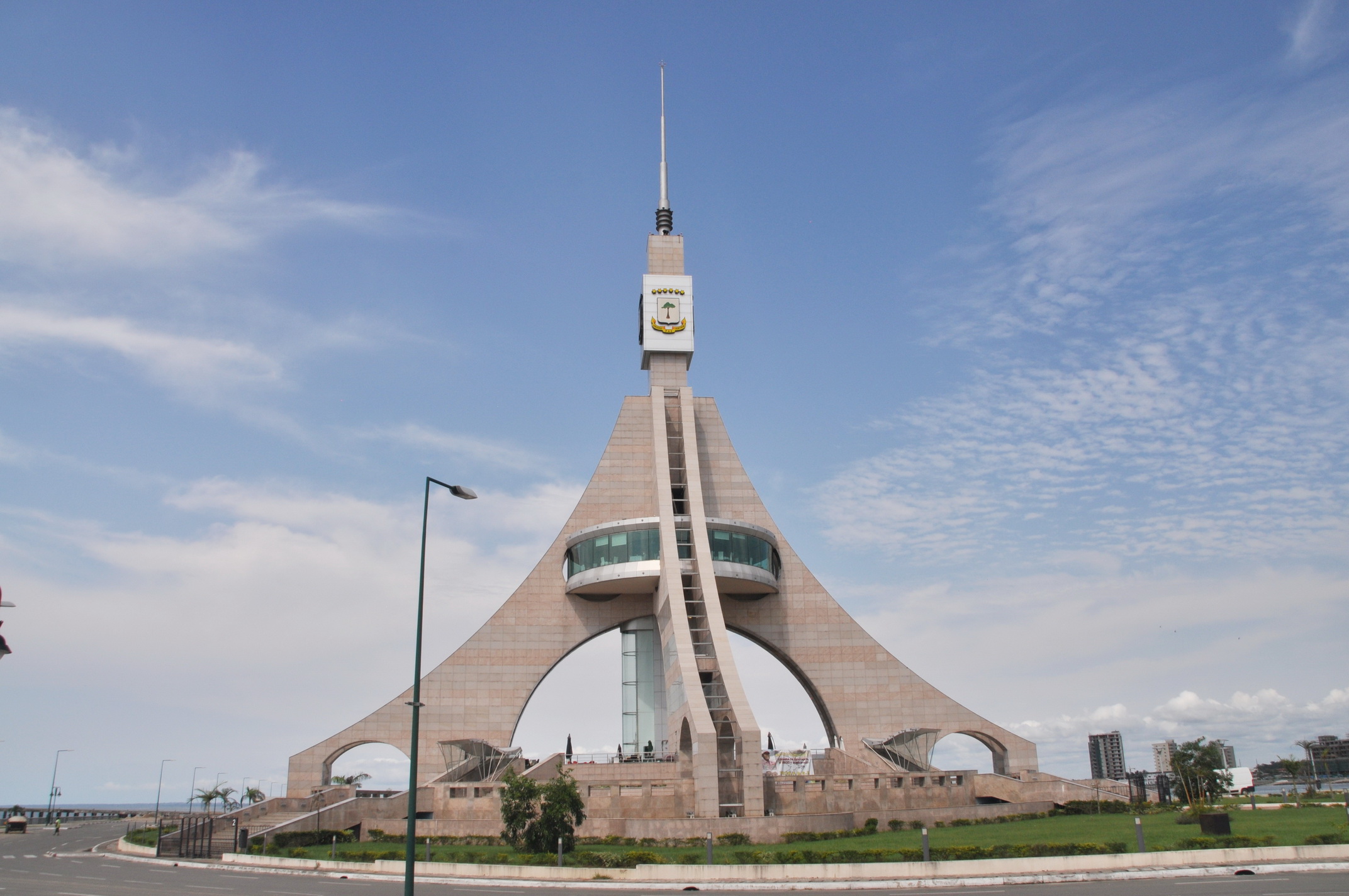
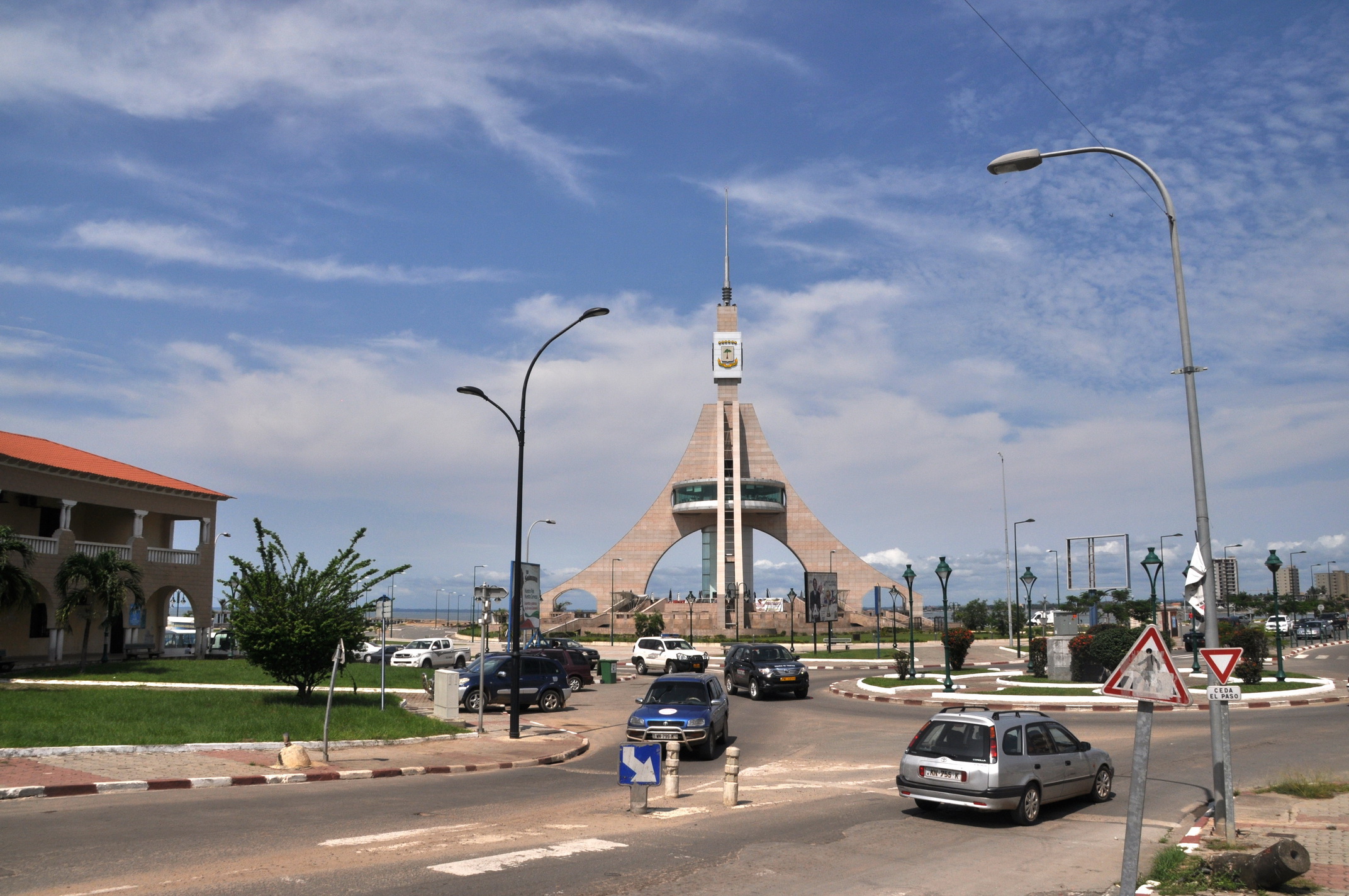
Indeed, not a shop had any. I found an Englishman who looked as though he had lived here a while. What he said was eloquent: You must be new here. In this … there’s nothing.
I found a photography shop in the end, with a Chinese man working in it. This conversation got me further. We made postcards out of my own photographs.
When I appeared at the post office with the postcards, they called their superiors. They hadn’t had to face anything so complicated as sending a postcard abroad in years. After a short consultation I was allowed to walk through the staff area and given permission to put the cards in the box from inside the post office. Why not give them to the person sorting the post? Well, for security reasons you aren’t allowed inside. You might be a spy. But I’d just walked inside to the postbox. Yes, but you were going to the postbox.
I sent them, anyway. Four months or so later they arrived, badly creased and torn.
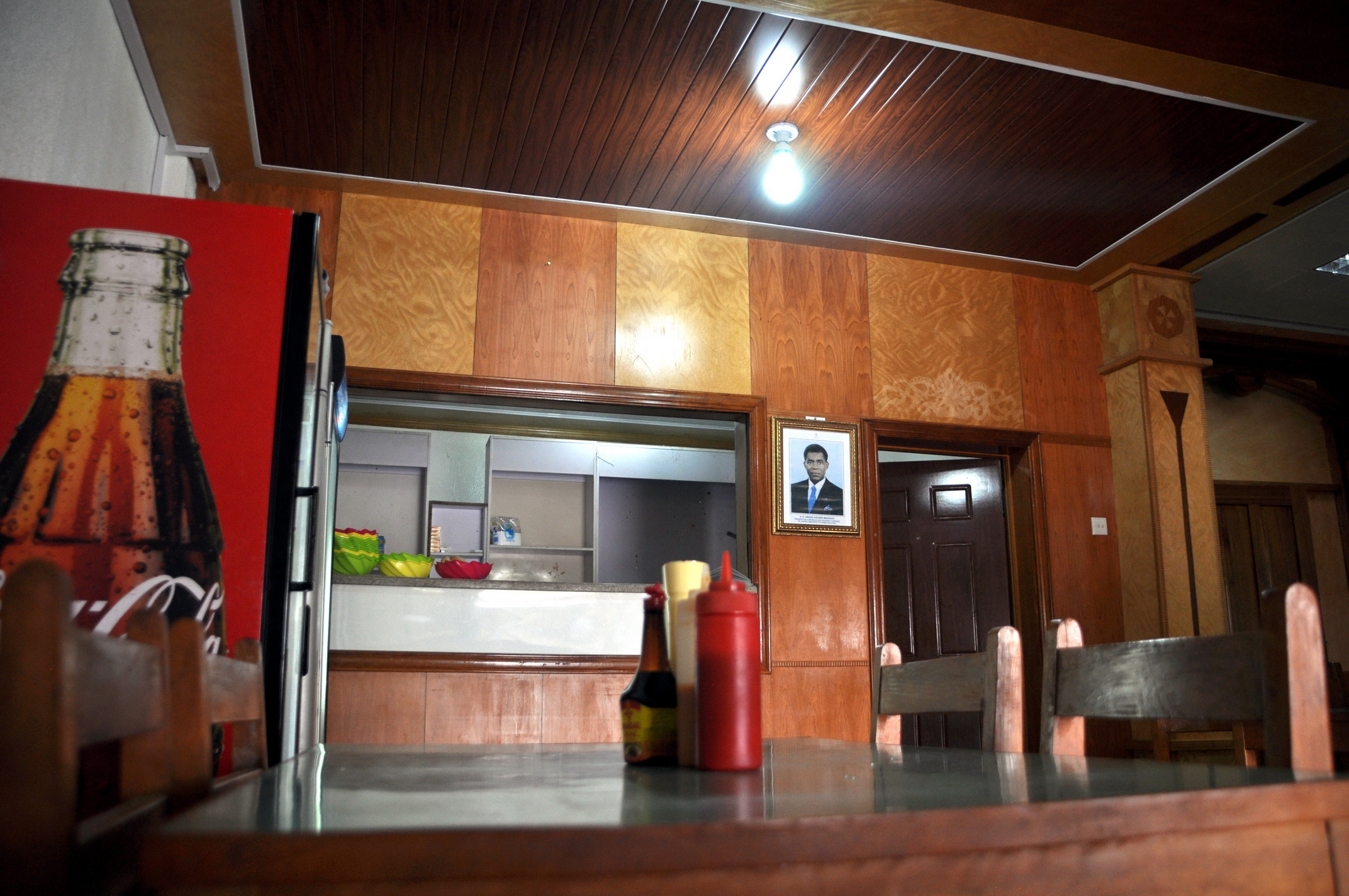
I had lunch in a café under the portrait of the latest great president. The food was good. People ate well here, at least where I went. In the streets they baked rolls and buns in huge ovens.
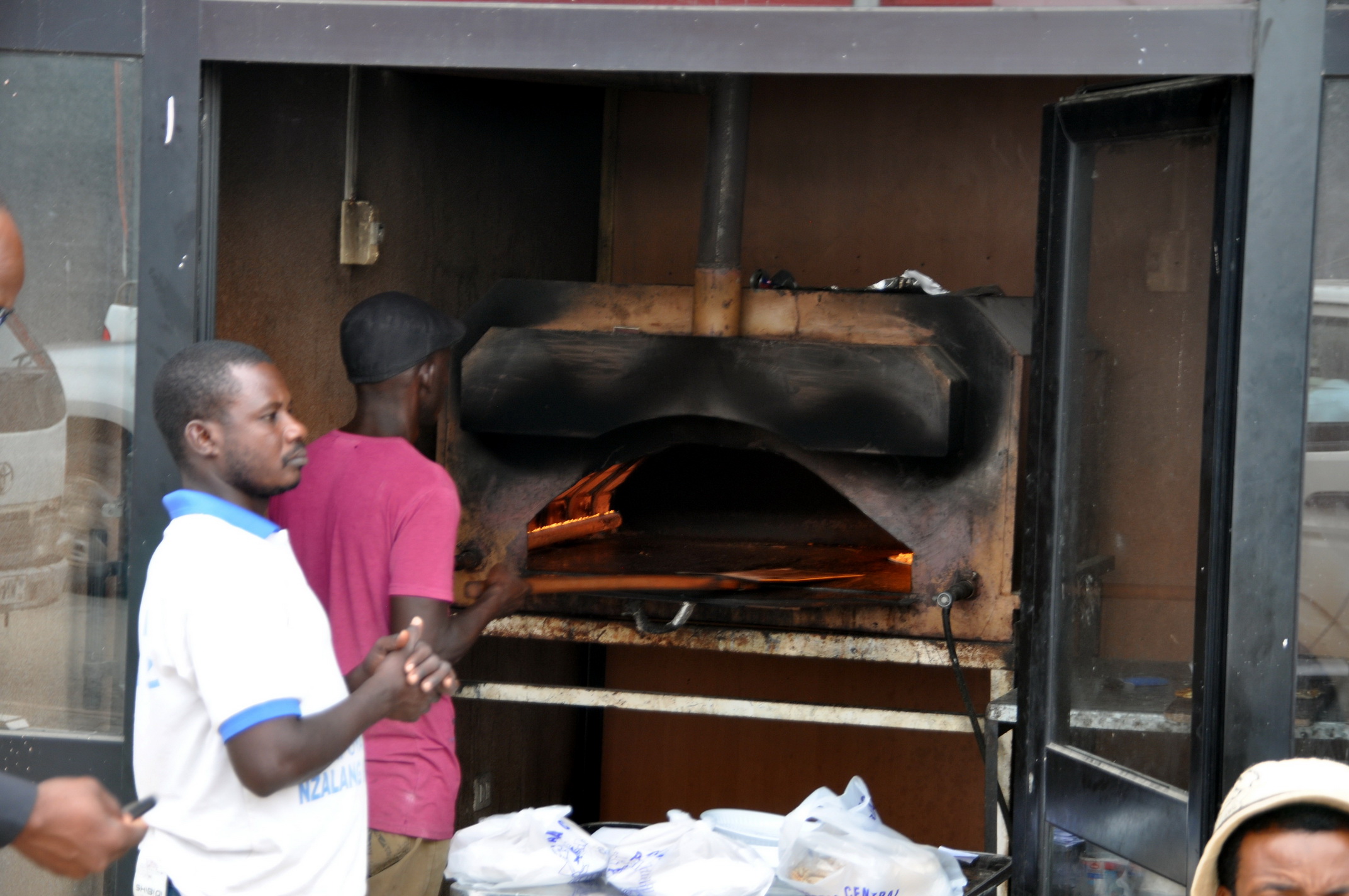
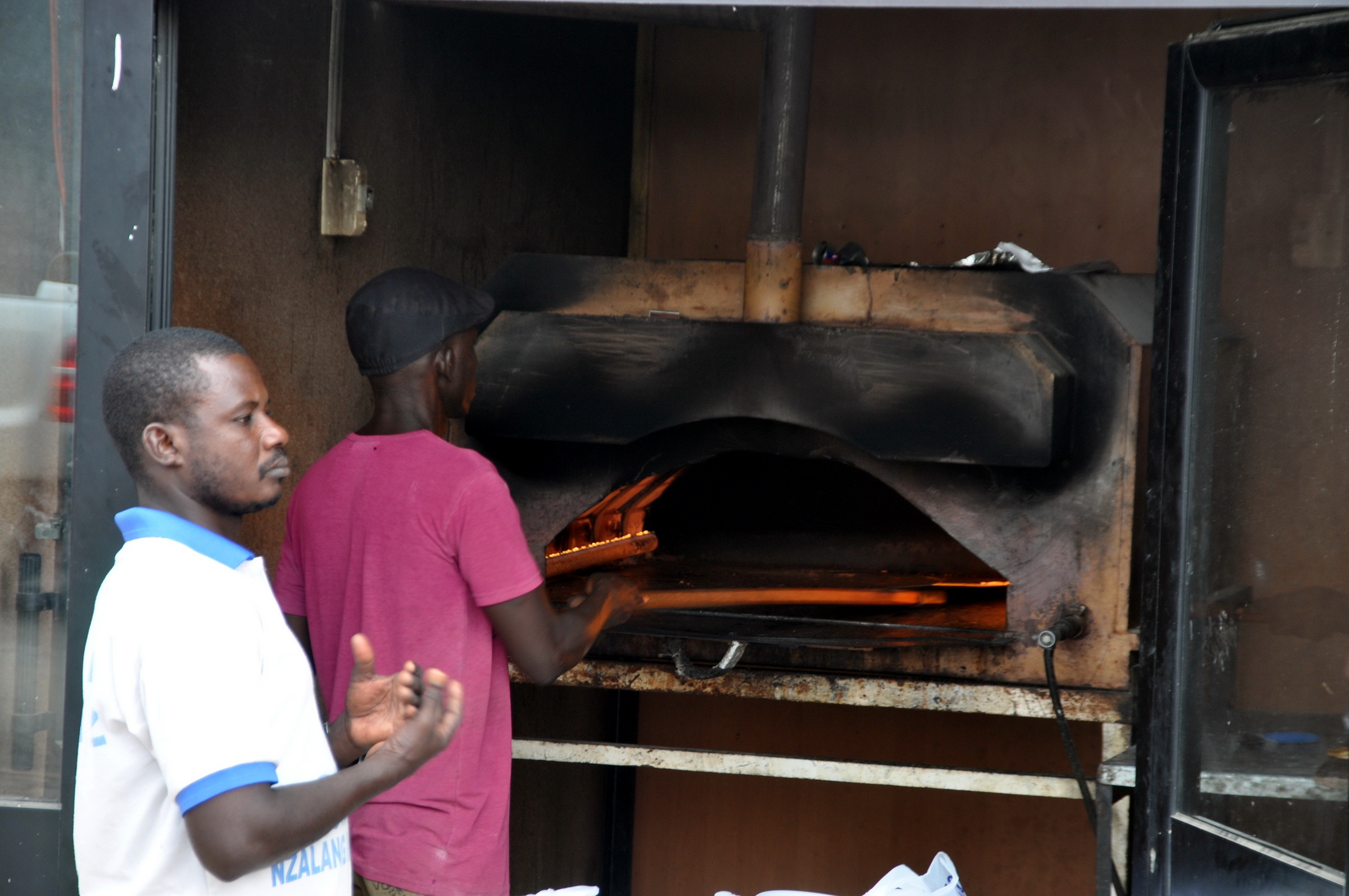
Enemy fast food hadn’t got through yet, whether McDonald’s or Chinese restaurants.
Unfortunately local people absolutely didn’t want to be photographed, and shied away from foreigners as in the early Soviet years. I ought to have stopped to think why. I didn’t. It had been a long time since I’d been to North Korea.
Trying to get back to Gabon
It was time to return to Gabon. I’d walked all around the city. Heading out into the countryside wasn’t practical without a car. Equatorial Guinea’s forest is as rich as Gabon’s, but so few tourists come that it isn’t readily accessible to a visitor.
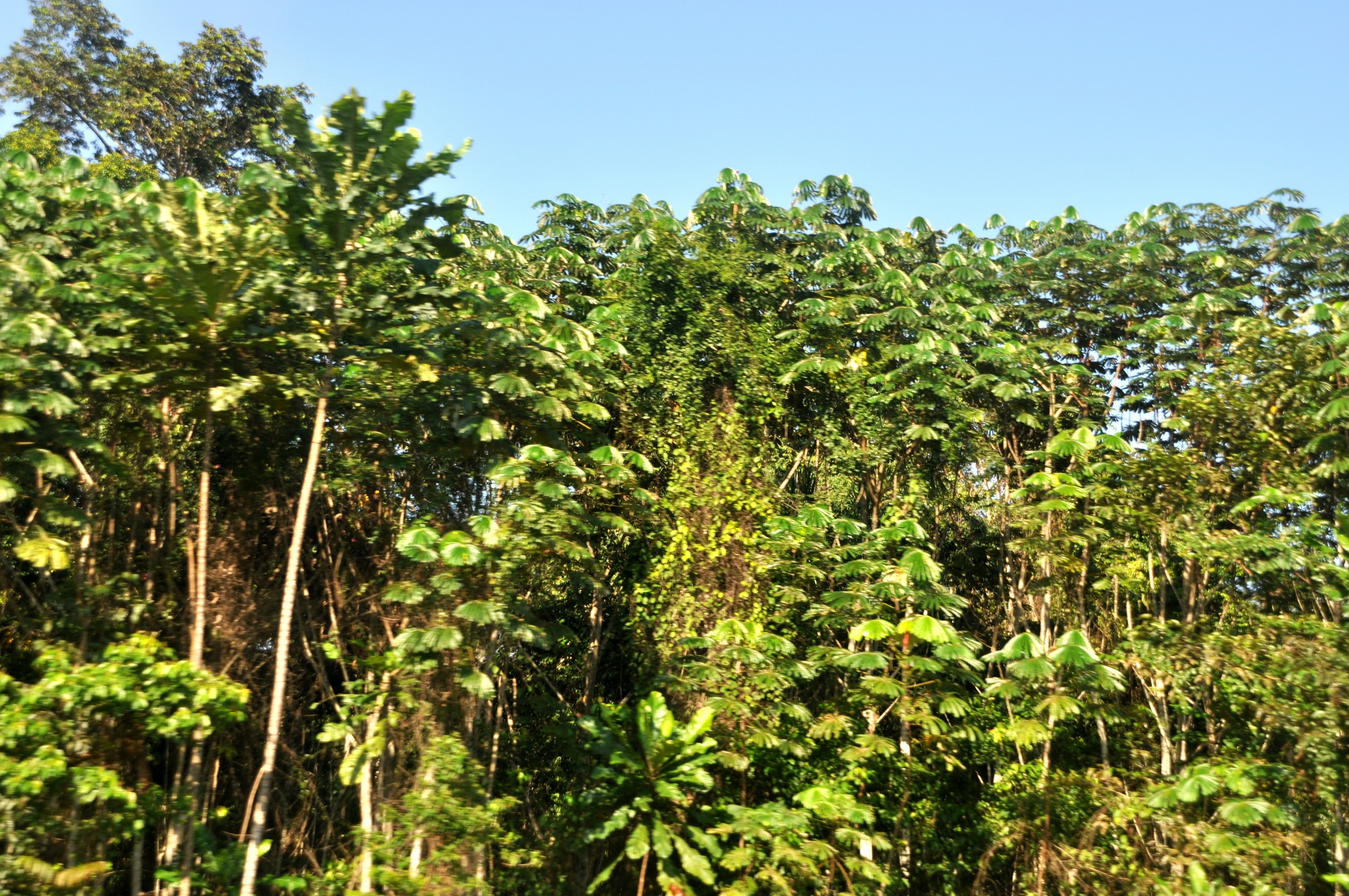
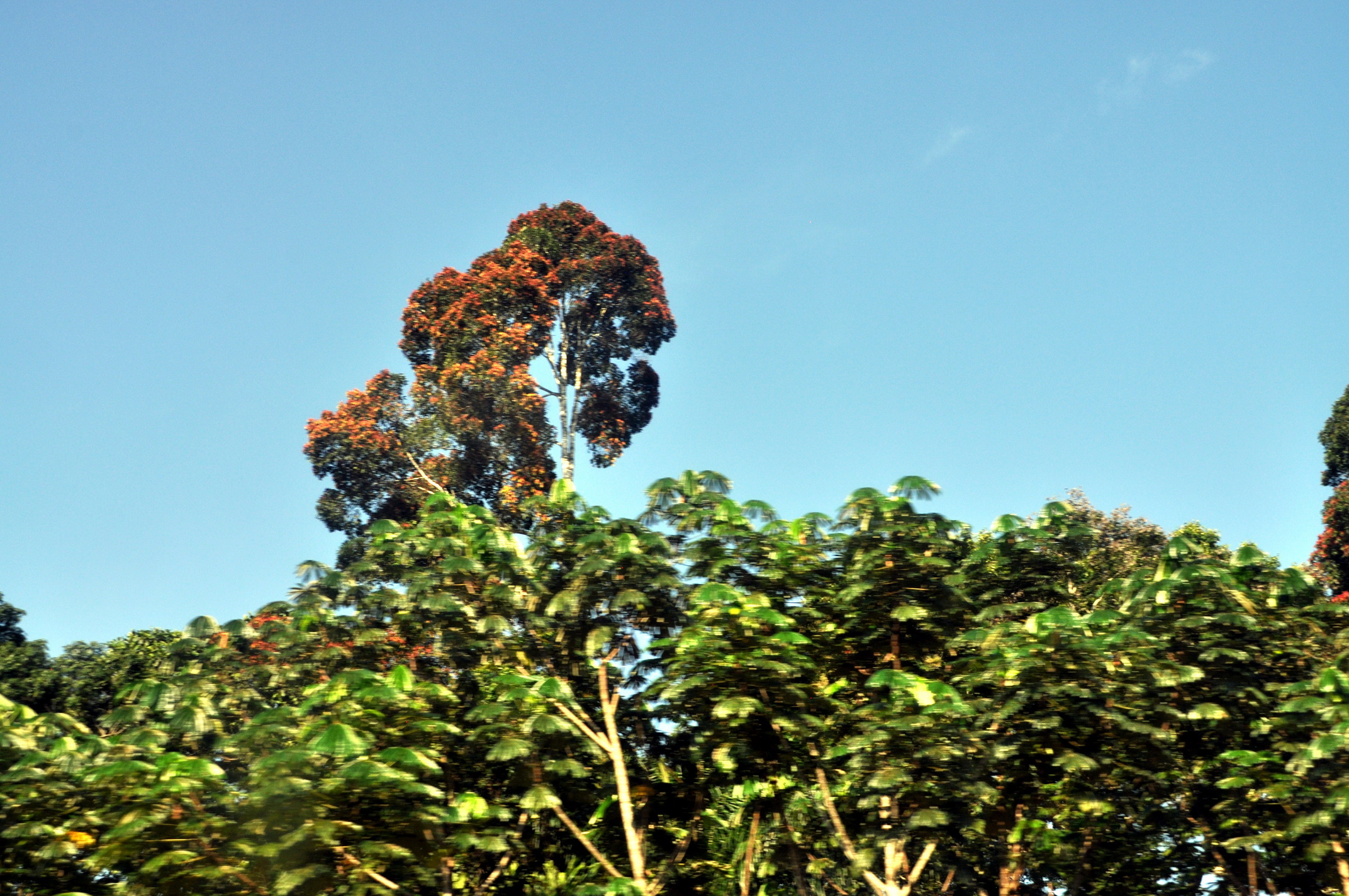
I tried to get a taxi. That turned out to be difficult. To start with, the drivers didn’t know where boats left for Gabon. They’d never been there. They looked at my map as if it were the first time they’d seen one of their own country. They wanted outrageous sums. The bargaining was fierce. I had only 400,000 francs to get out of the country.
That would be more than enough to get from the United States to Russia, but things here were more complicated.
100,000 for the driver, 100,000 at customs, 90,000 for the ticket, 100,000 in reserve, 10,000 for food.
One driver wanted 150,000; I would go no higher than 80,000. Several times we ostentatiously parted company. He drove off, but not for long. I stuck to my figure.
First the driver took the wrong road. I warned him, but try convincing a taxi driver. At least we saw some country. We crossed a new bridge built by the European Union over the Mbini River. The roads in Equatorial Guinea were very poor, with the odd stretch of gleaming new asphalt where a Western company had done some work.
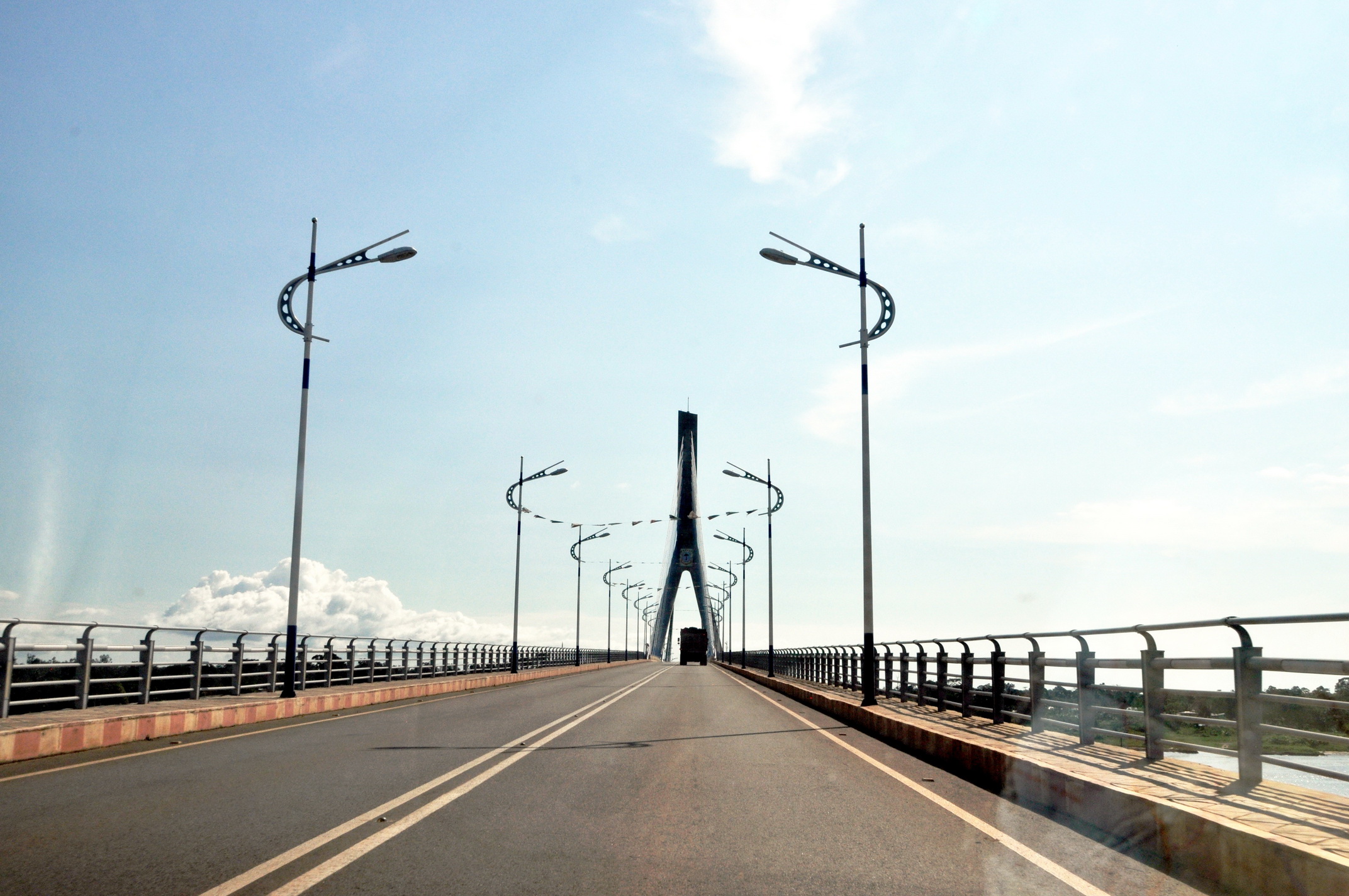
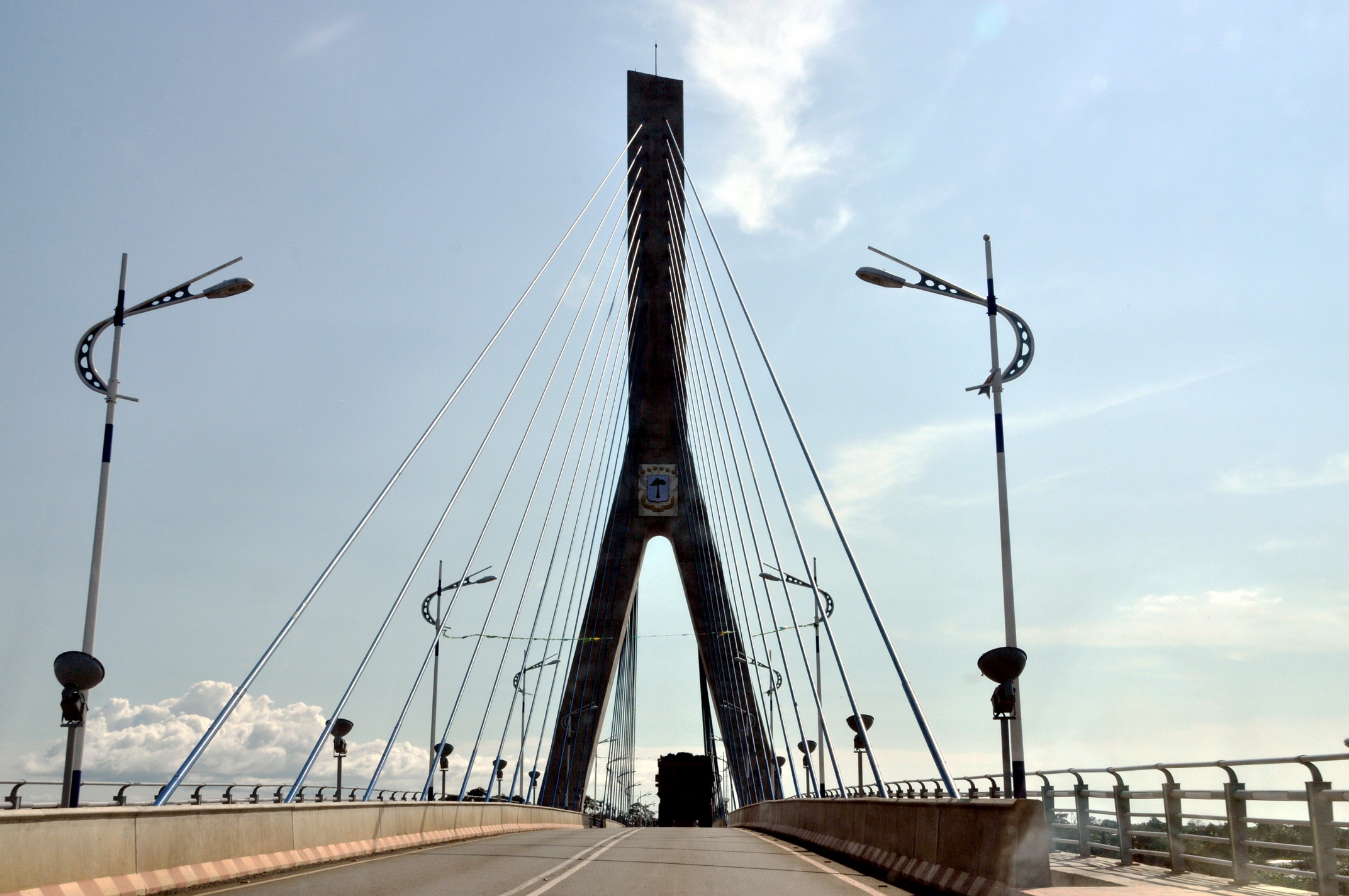
For a while the police checks went well. For some reason we hadn’t looked particularly appetising.
Then we were stopped. I had the camera in my hand. That was when it all began: a spy had been caught. The officer in charge came to the checkpoint and so did the elders from the nearest village.
Just imagine, he’s been travelling around taking photographs. What might have happened to our country…
The elders shook their heads knowingly.
I asked what might have happened.
Well, it’s been common knowledge for years what those damned State Department people are up to…
And look how far it’s gone: in a taxi! How could the driver have entered into criminal association with an agent of Soviet intelligence?
And your visa is a fake. There can’t be visas like this. If you’re a tourist, it must say tourist and carry the name of the company escorting you, whose representative has to be with you whenever you leave the hotel. It turned out to be like North Korea.
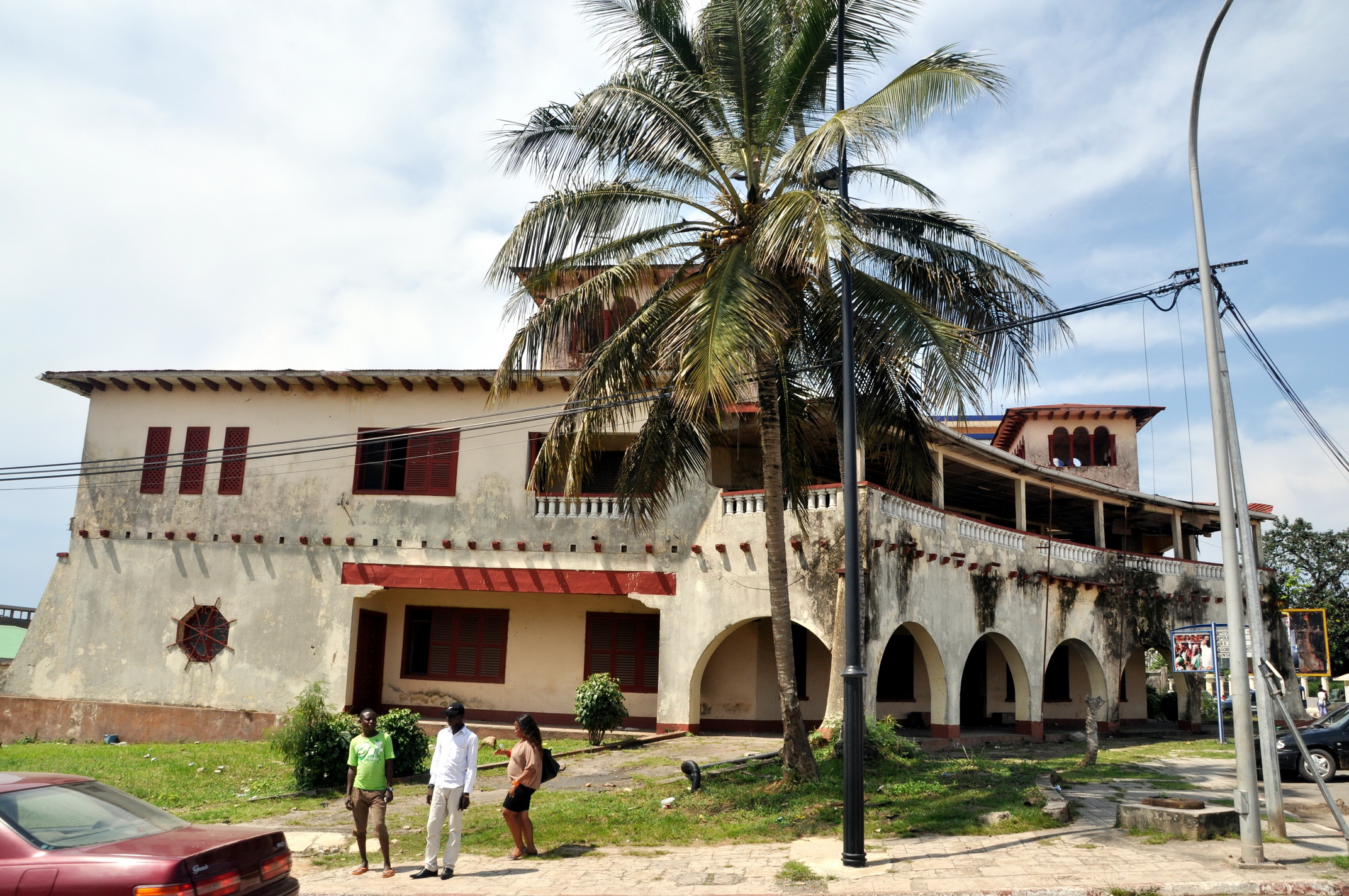
Let’s see what you’ve photographed. Aha, the police barracks, buildings of government agencies, an employee of the president’s office, the four-wheel drive of a very important person, pieces of infrastructure, the post office, the strategic secret bridge built by the EU, the secret presidential Mi-8 helicopter, registration 3C-LLE…
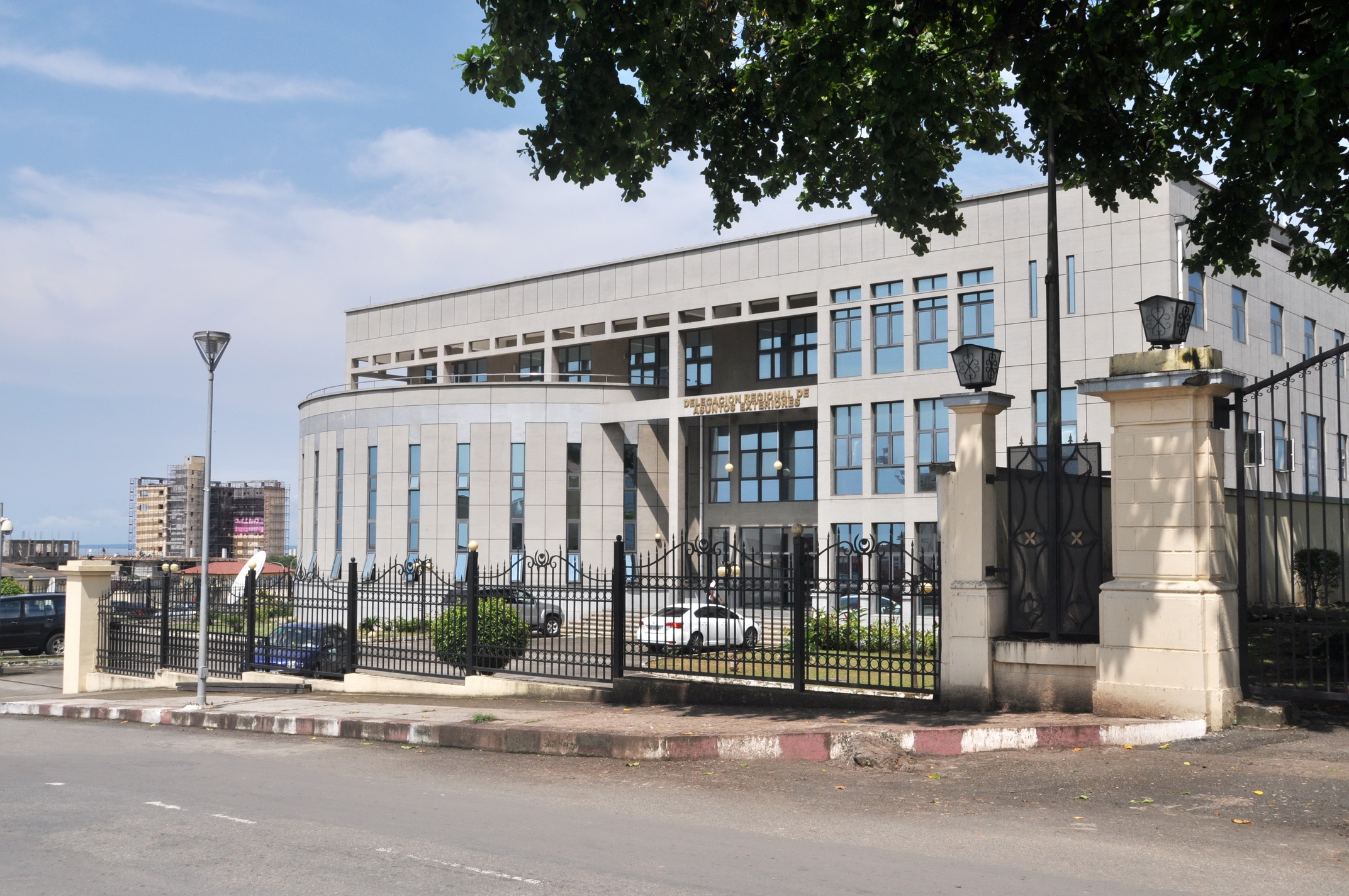
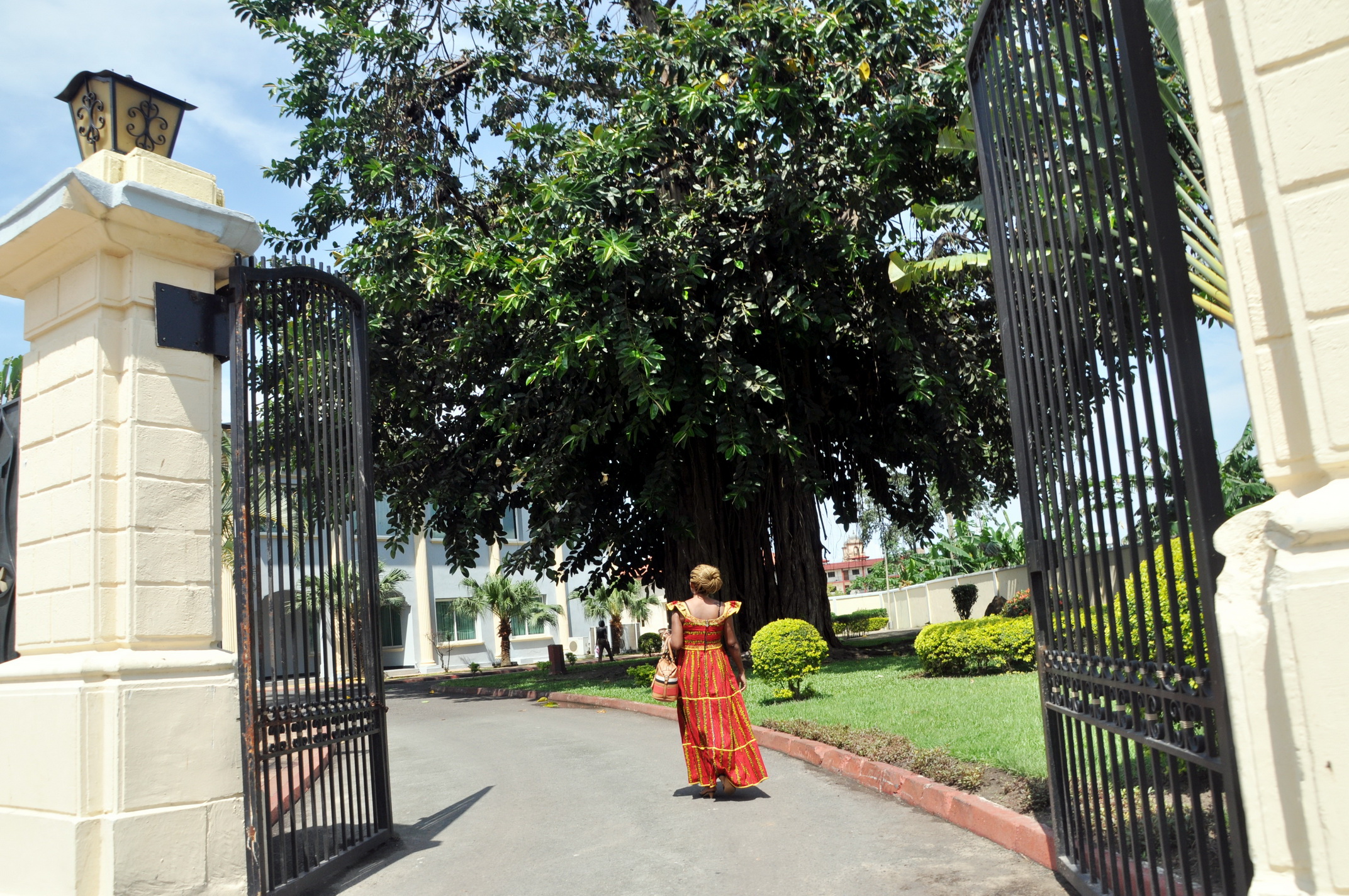
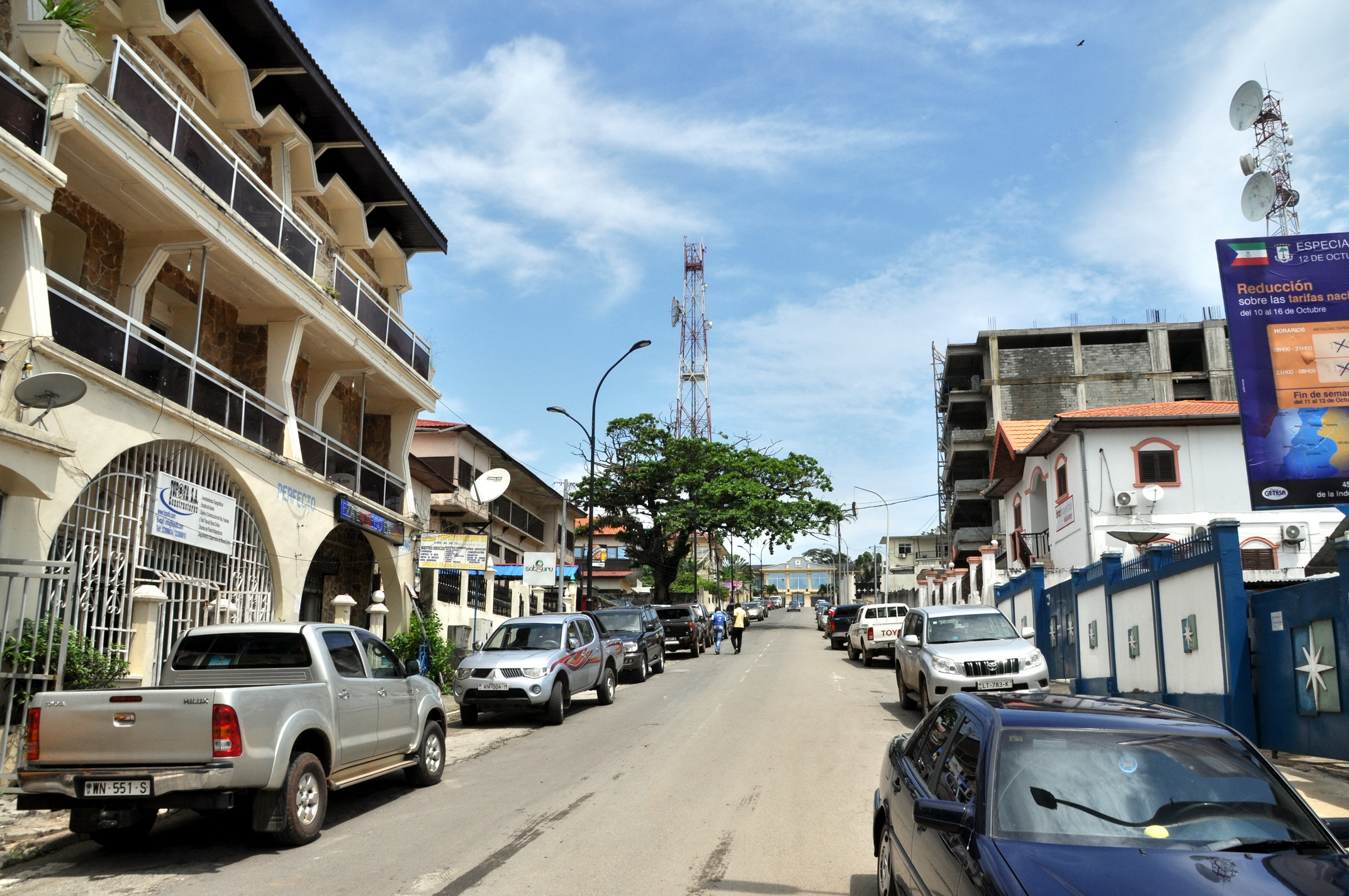
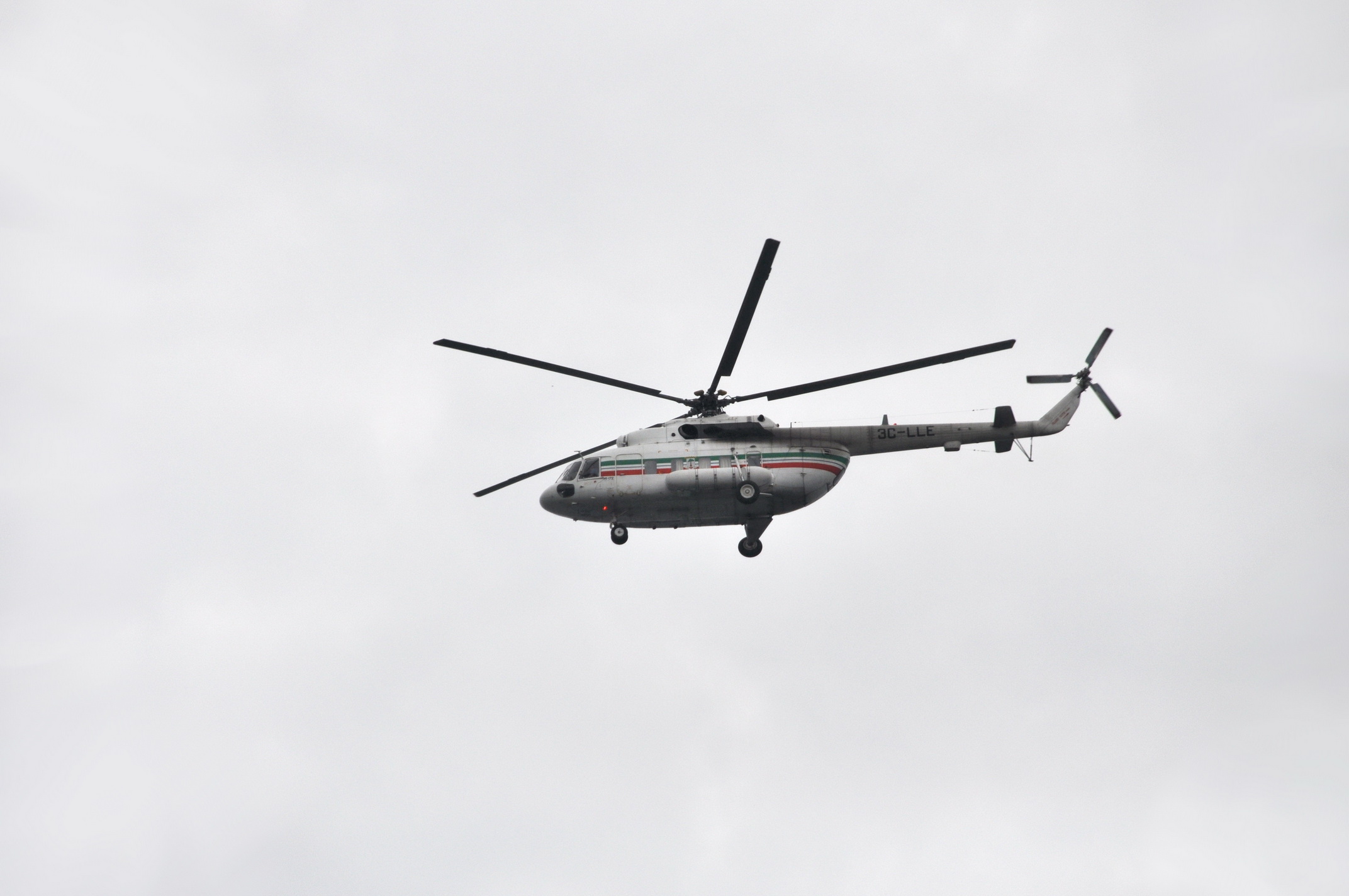
See what that showman Obiang has brought the country to. It was different under Nguema: anyone who went near a bridge or an airport, even without a camera, went straight up against the wall…
The elders rose to the occasion. A great event had just saved the country before their eyes.
I tried to explain. You have an iPhone yourself; there’s a camera and satnav in it. Everyone has one. And how am I to know what I can take pictures of and what I can’t?
You can’t take pictures of anything, except what the representative of our approved tourist company specifically lets you.
Right, I’m calling the KGB. Prison is your home now. Into the lock-up, I’m taking your passport, they’ll collect you tomorrow. The elders were delighted. The driver was detained too. He wasn’t allowed to carry foreigners; his licence was valid only in Bata; his vehicle inspection was out of date…
So there I was in the slammer. What next? It was naive to hope they’d exchange me for an Equatoguinean spy caught in Moscow. Unless Putin fell out with their president and the entire Russian embassy, with the Russian army and navy, came to rescue me in a carrier Rogozin had built for the purpose.
The silly idea that anyone would rescue me scarcely flickered at the back of my mind. I might improve my Spanish in prison, at least.
I called the guard over.
“Well, what do you want?”
“To get out, and get to the border.”
“That’ll cost you. If you hadn’t had a camera, all right. A camera makes it expensive.”
“Let’s talk about the price.”
“There’s nothing to talk about. 120,000 and you can go. No one will notice until tomorrow. Get out of the country before morning and you’re all right. If not, they’ll lock you up.”
“All right. My passport, camera, laptop and the driver with his car are included, yes?”
“Yes.”
He counted the money carefully. He held the notes up to the light. You can’t be too careful with a spy. All very ordinary. Saltykov-Shchedrin was supposed to have said that when the authorities start talking about patriotism, it means they’re stealing. Even in Africa.
And we were driving again. The taxi driver was whimpering. There were three more checks ahead. Well, give me 120,000 at least, otherwise I’d rather go to prison than drive for 80,000. I told him I’d already paid 120,000, all because he’d gone the wrong way.
At the next checkpoint much the same thing happened. They found a map I’d bought in New Zealand. Just imagine, a map as well as a camera. What will happen to our country if people go about with maps and even cameras? In Macías’s day…
I was lucky this time. The person questioning me was a rather severe older woman. I smiled. She made a stern face. Nothing to laugh at here, she said, a serious offence and a long sentence. I said people ought to smile at one another.
She thought for a minute. We’re confiscating the map, she said. As for you, clear off to your Gabon.
I don’t think anyone had smiled at her in a long time.
It also helped that the camera display wasn’t working. I could show anyone who asked that the screen had gone blank after the canoe rolled over and everything got soaked.
Everyone had heard about the shipwreck and nodded knowingly, and the camera would come off the charge sheet. As I’d already discovered, life was simpler without one.
I got through another two checkpoints without any real trouble, now I’d had practice: put on the nose bell, bow twice, move along, as they say in Kin-dza-dza! But I’d missed the evening canoe. The next was in the morning. I had to spend the night.
A dreadful hole. Mud, and what looked to me like plenty of people who would happily rob or denounce me. I’d have to find a hotel (01°05.083′N, 09°41.657′E; elevation 5 m). Fifty thousand bought a tiny room with torn, tacky posters. The shower was the toilet: a hole in the floor and a jug beside it. Use the jug to wash or in place of the toilet paper, as you please.
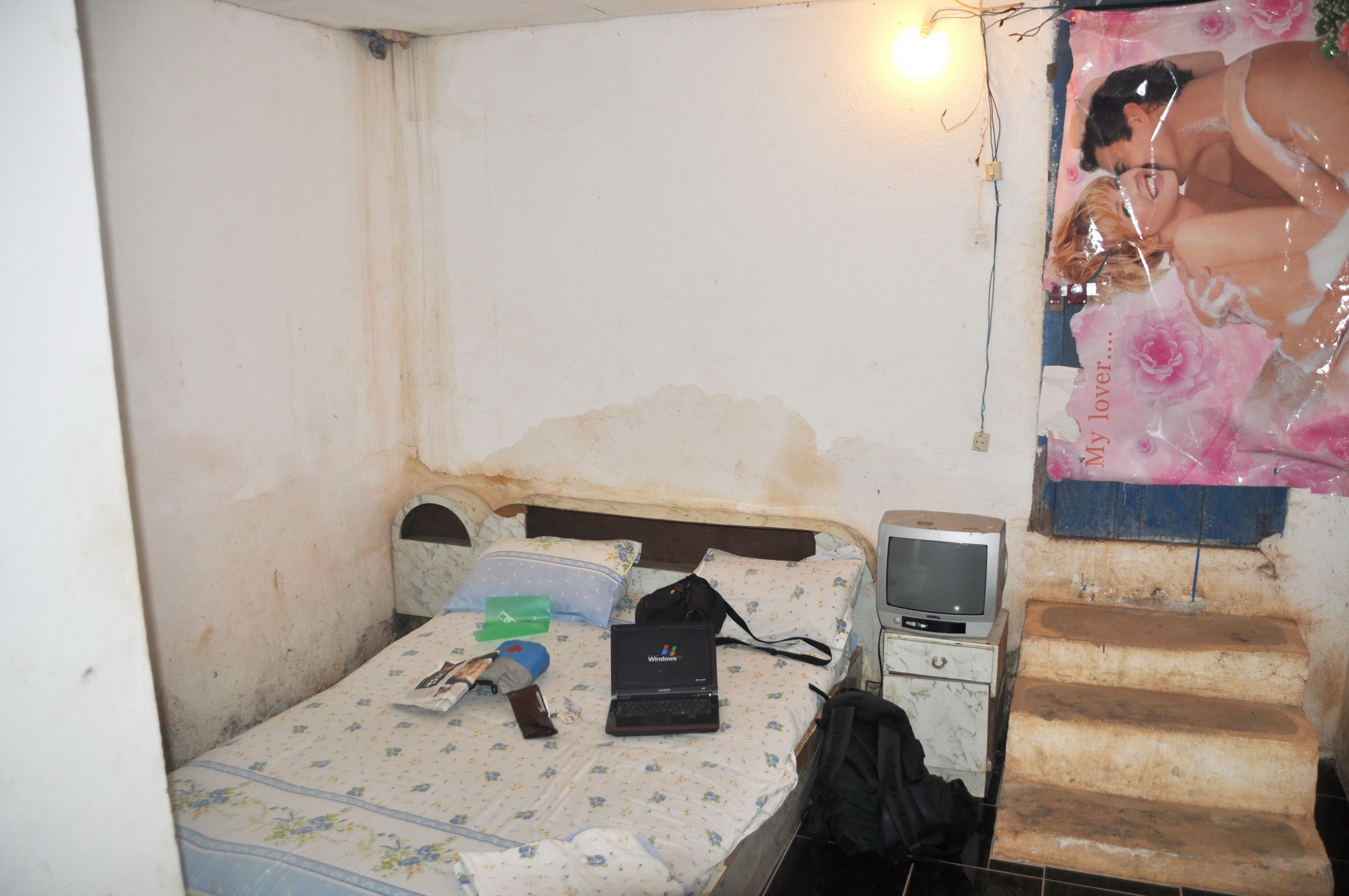
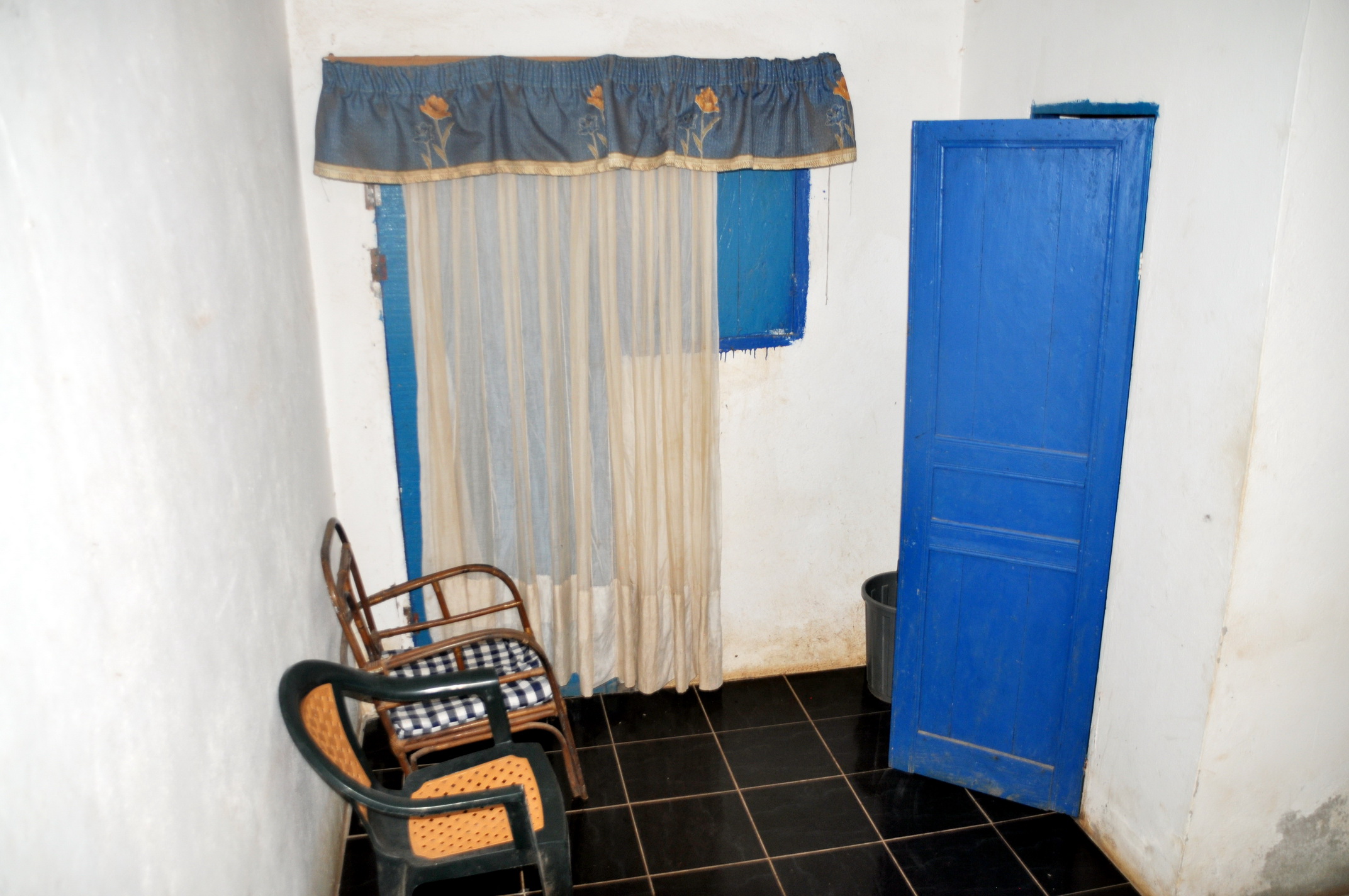
I couldn’t sleep. One thought kept going round in my head: would I get away tomorrow before they came looking? It was stifling. There were holes in the wall instead of windows and mosquitoes flying about.
I was particularly worried about malaria in Equatorial Guinea, especially near the coastal swamps. I had Lariam with me but I didn’t think it made me invulnerable.
I promised myself that if I got out of here I wouldn’t go to the Congo. My surroundings were hard to reconcile with the thought that I was due back at work in a Saint Petersburg office the day after tomorrow.
I had to phone home. There was no mobile signal. So there I was in the dark in the bushes with my satellite phone out, calling the family. All going well. I’m healthy, the tsetse flies haven’t got me.
I was glad the police hadn’t found me doing that. Talking on a satellite phone probably merited life in a cage with nails.
Morning crawled by. The border officials weren’t in any hurry. They made desultory preparations, drank tea, opened the cases with their stamps in them, talked to their wives on the phone… I remembered Stierlitz and Kat crossing the Swiss border in Seventeen Moments of Spring.
Going out through immigration was just like coming in. A stamp for 20,000, four lots of 10,000, or something of the kind.
I had 60,000 francs left for the canoe. I bargained as best I could. The man seemed to believe that was all I had. There was another €200 tucked away, in fact, but I bargained to the last.
At last I had a place in the canoe. The boatman started the motor and pushed off from the bank.
A crowd of policemen ran out of customs shouting “Stop!”
It rather reminded me of the end of Argo. Unfortunately the man driving the canoe turned back.
What’s the matter? Well, the KGB man was late for work and has only just arrived. You owe another 5,000.
I borrowed it from the boatman and promised to pay him on the other side.
How glad I was I could get by in Spanish. I wouldn’t have got out without it. Once more: learn languages.
This time we really did set off. I waited for the dot on my GPS, and me with it, to leave Equatoguinean waters. There was Gabon. I was as good as home.
What an unpleasant country Equatorial Guinea had turned out to be for me. A vicious system, and the officials I encountered had been vicious and foolish. Oil and gas had fallen into their laps by divine favour, and the proceeds had been squandered more disgracefully than in Russia. A magnificent tropical forest and a great deal of very natural gas, certainly; all the rest that came attached to them I found abominable. Were the monkeys in their forests more savage and stupid than their neighbours’ too? Did the mosquitoes bite more fiercely? I was ready to credit the mosquito theory after all my worries about malaria. A subject worthy of the Ig Nobel Prize.
Back in Gabon
I welcomed the border guards in Gabon like family. All smiles, no shakedown. They’d washed my car. If you didn’t want it, they said, you don’t have to pay; we just didn’t have anything else to do. How good it was to be here. I went to the post office, bought stamps and sent postcards to friends.
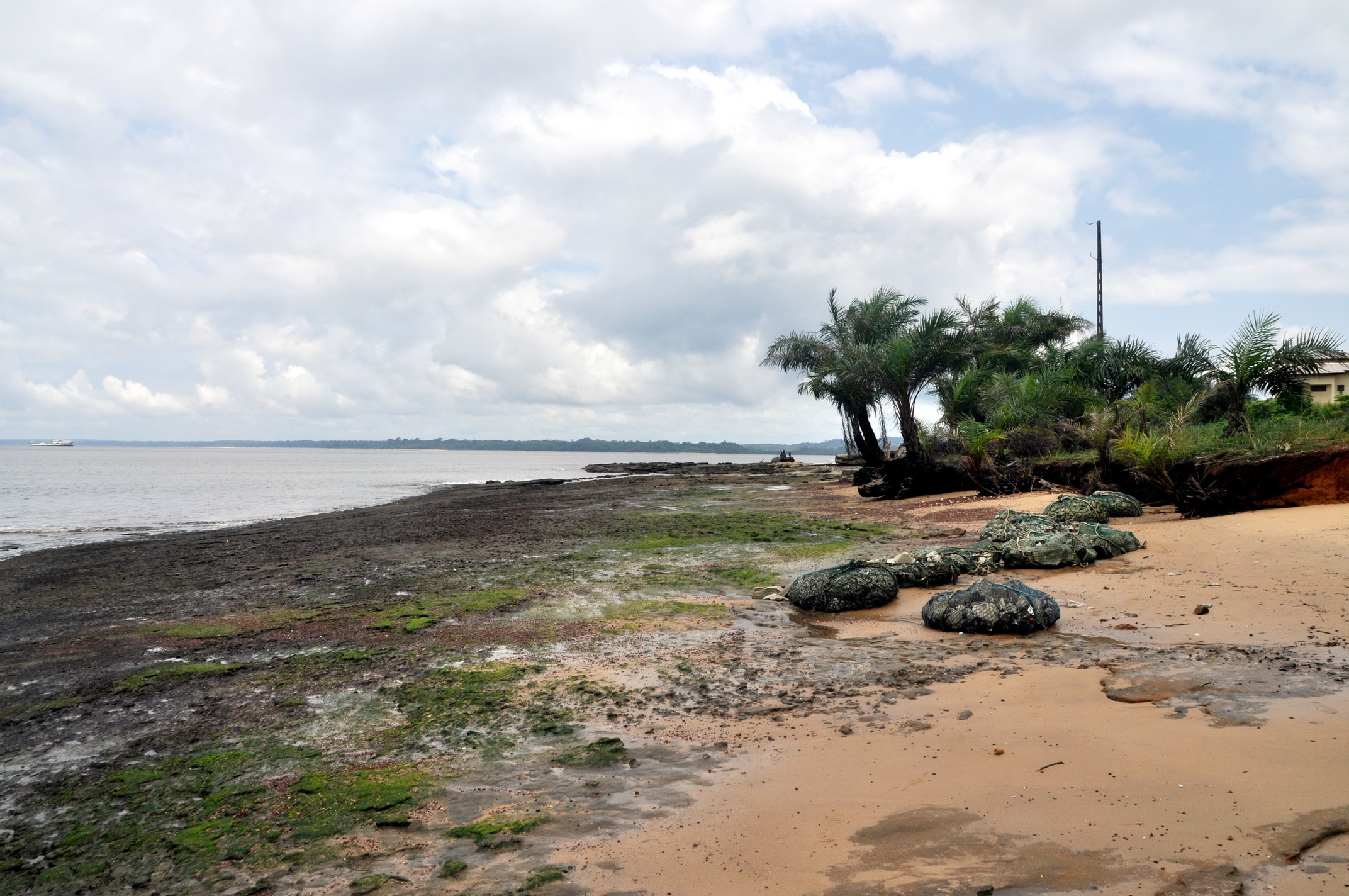
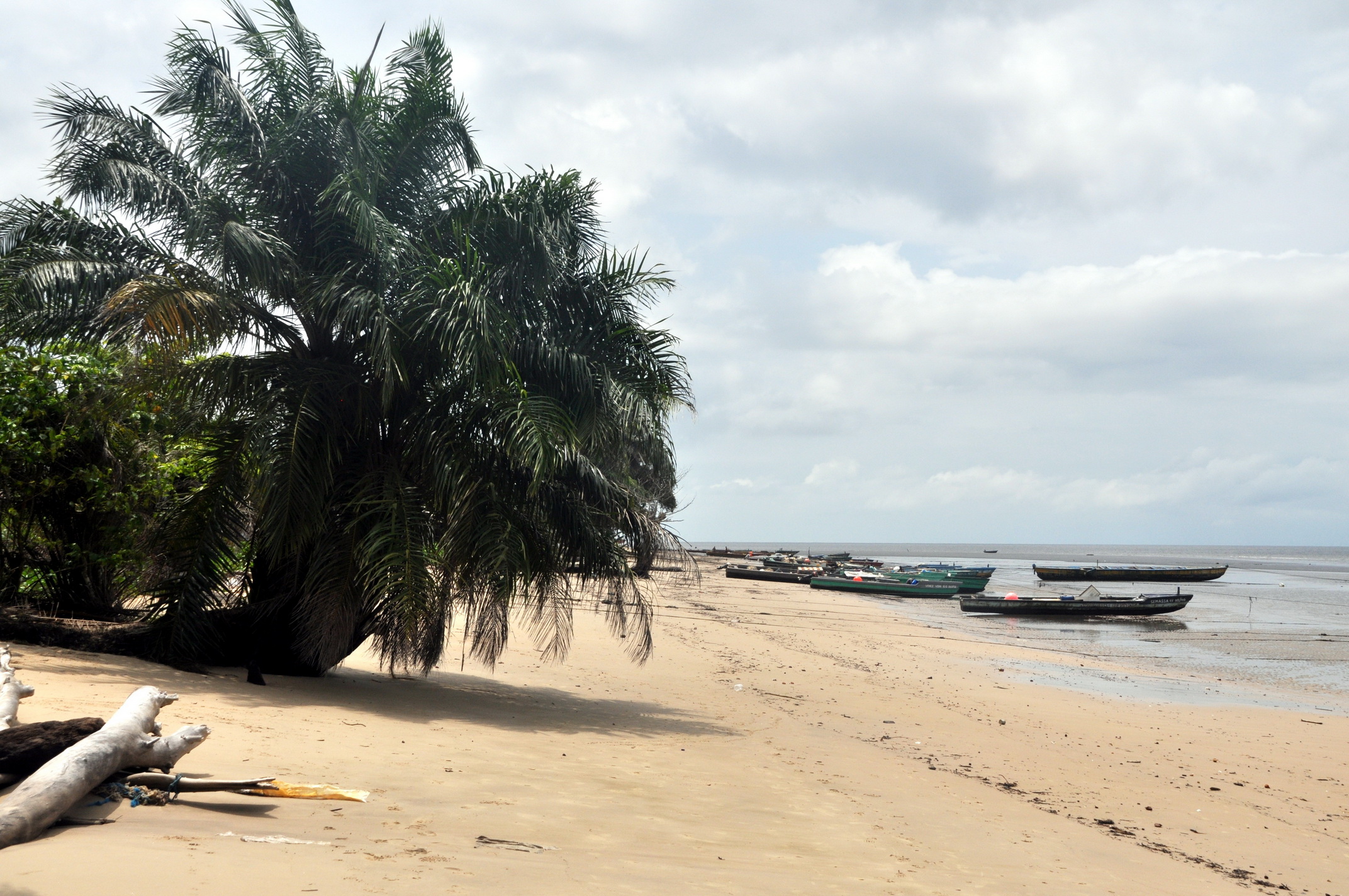
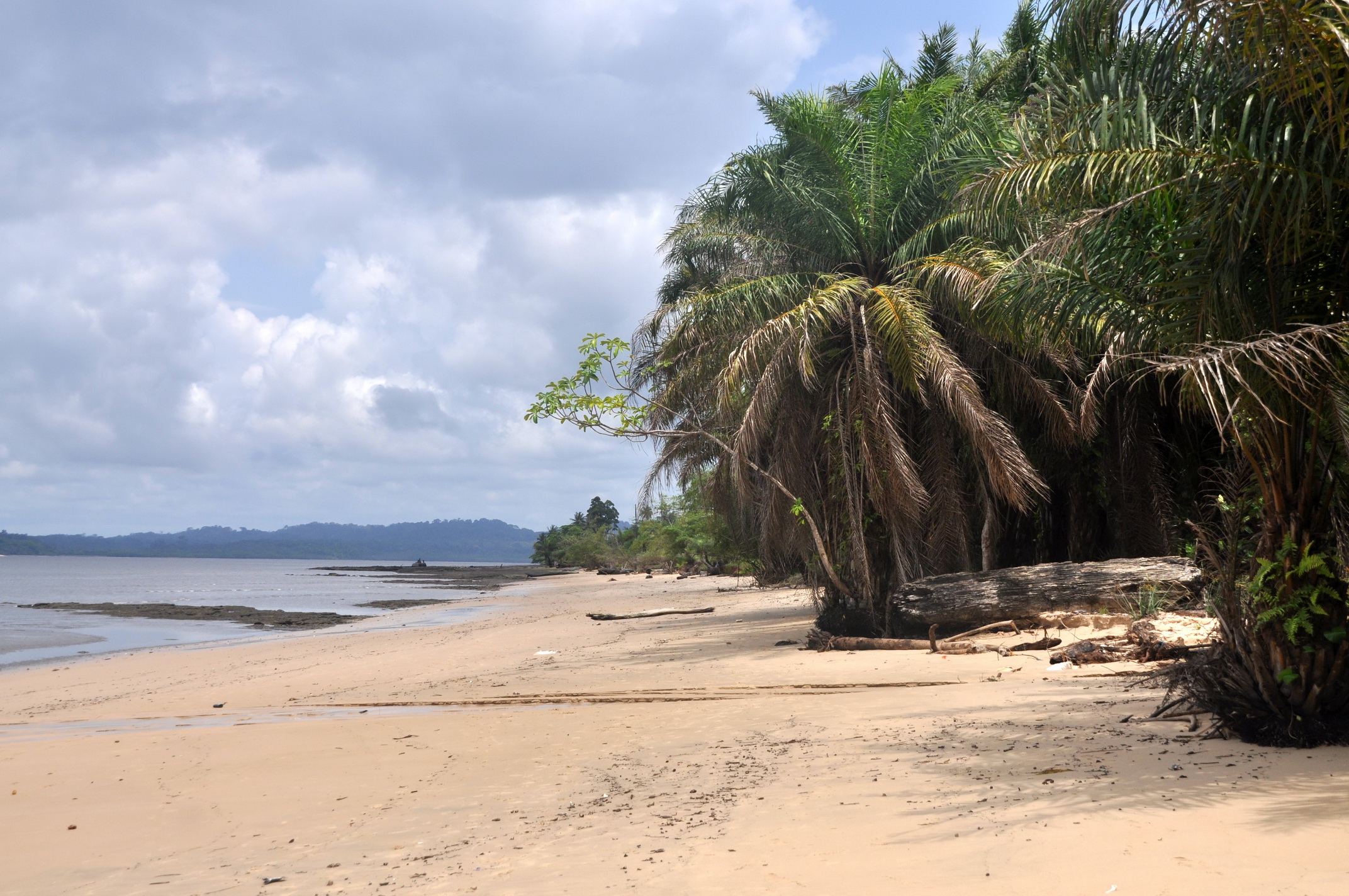
I bought something to eat, drove to the beach, swam and changed. Now I had a car and could go wherever I wanted.
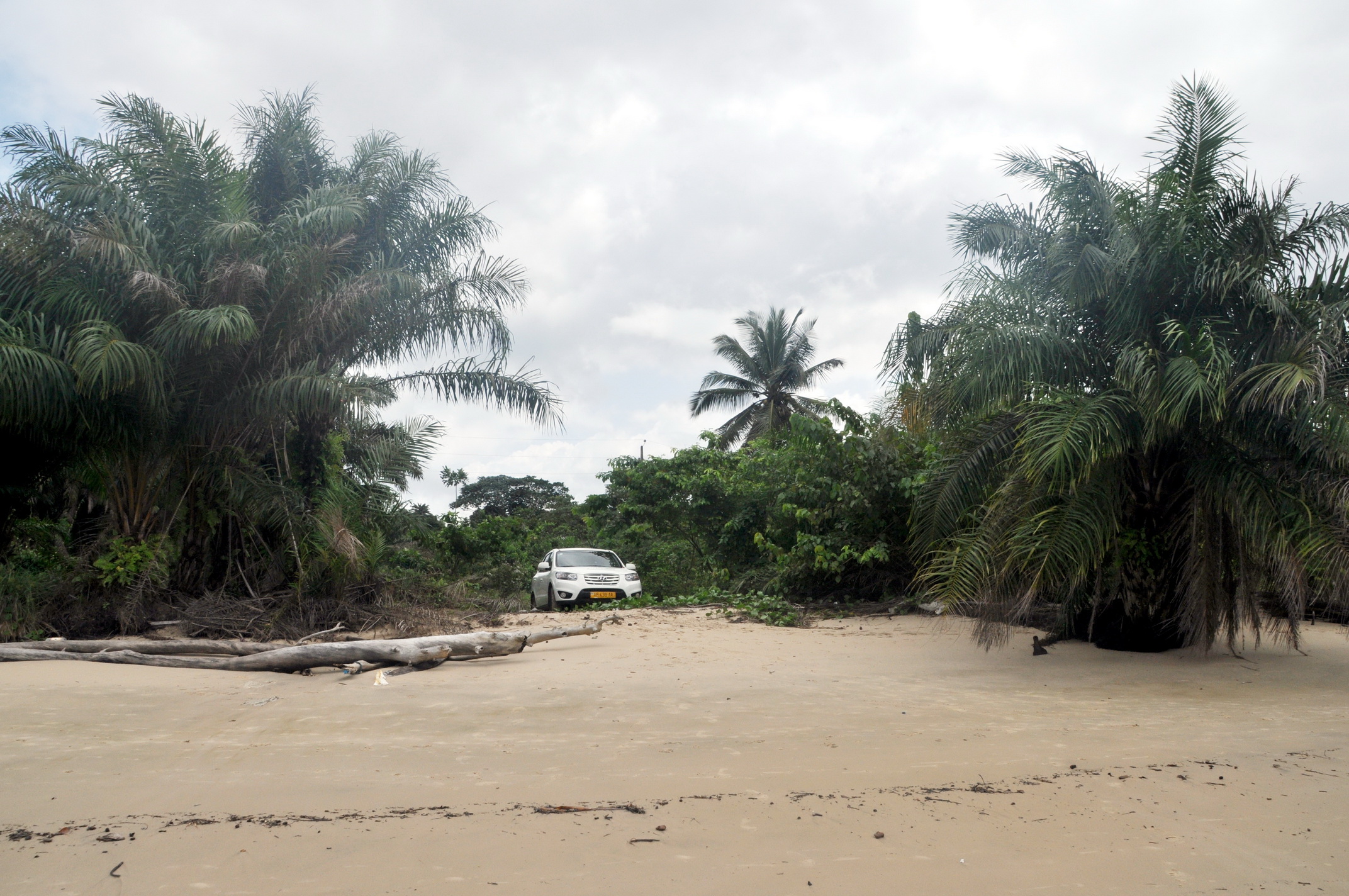
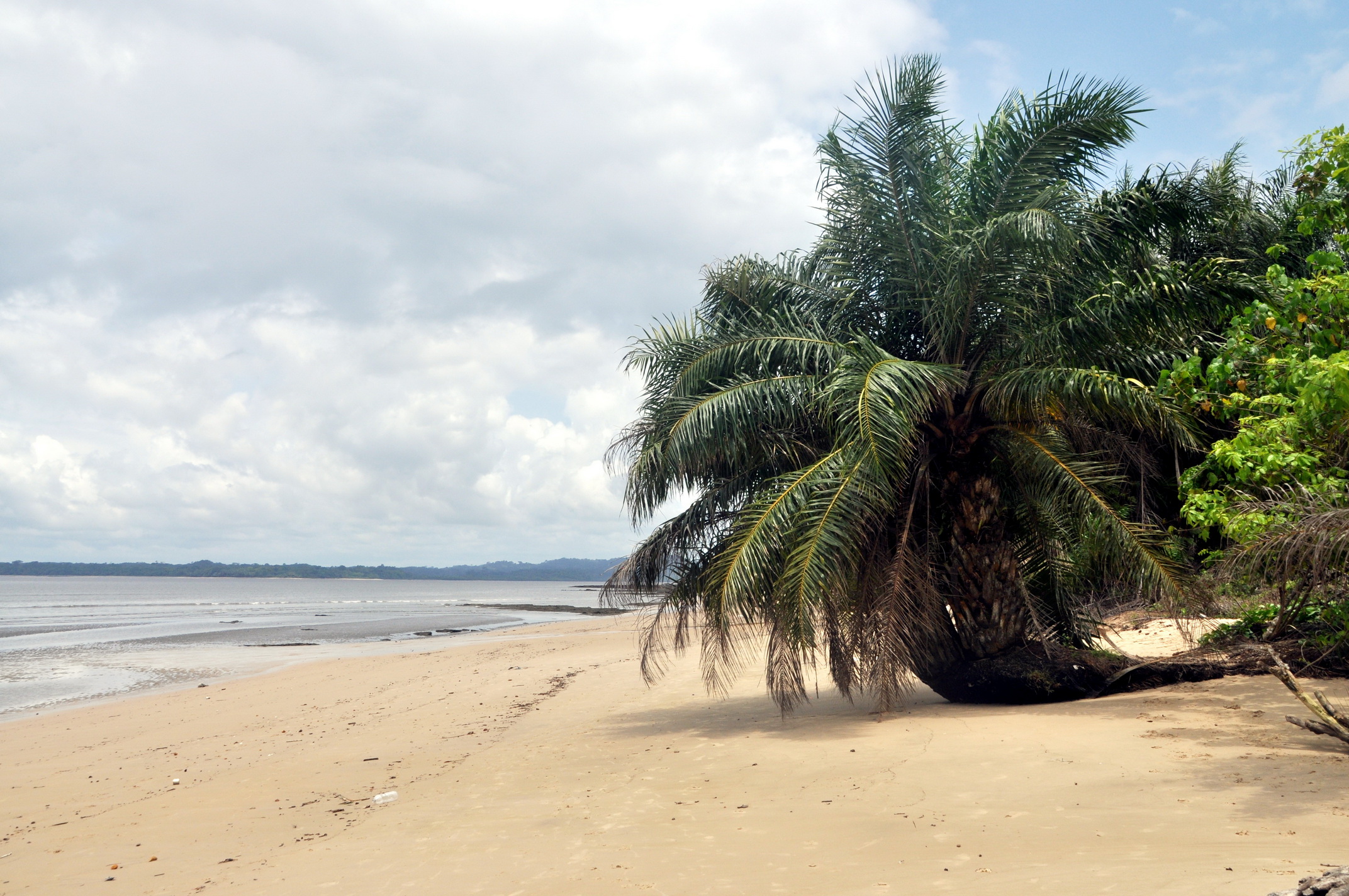
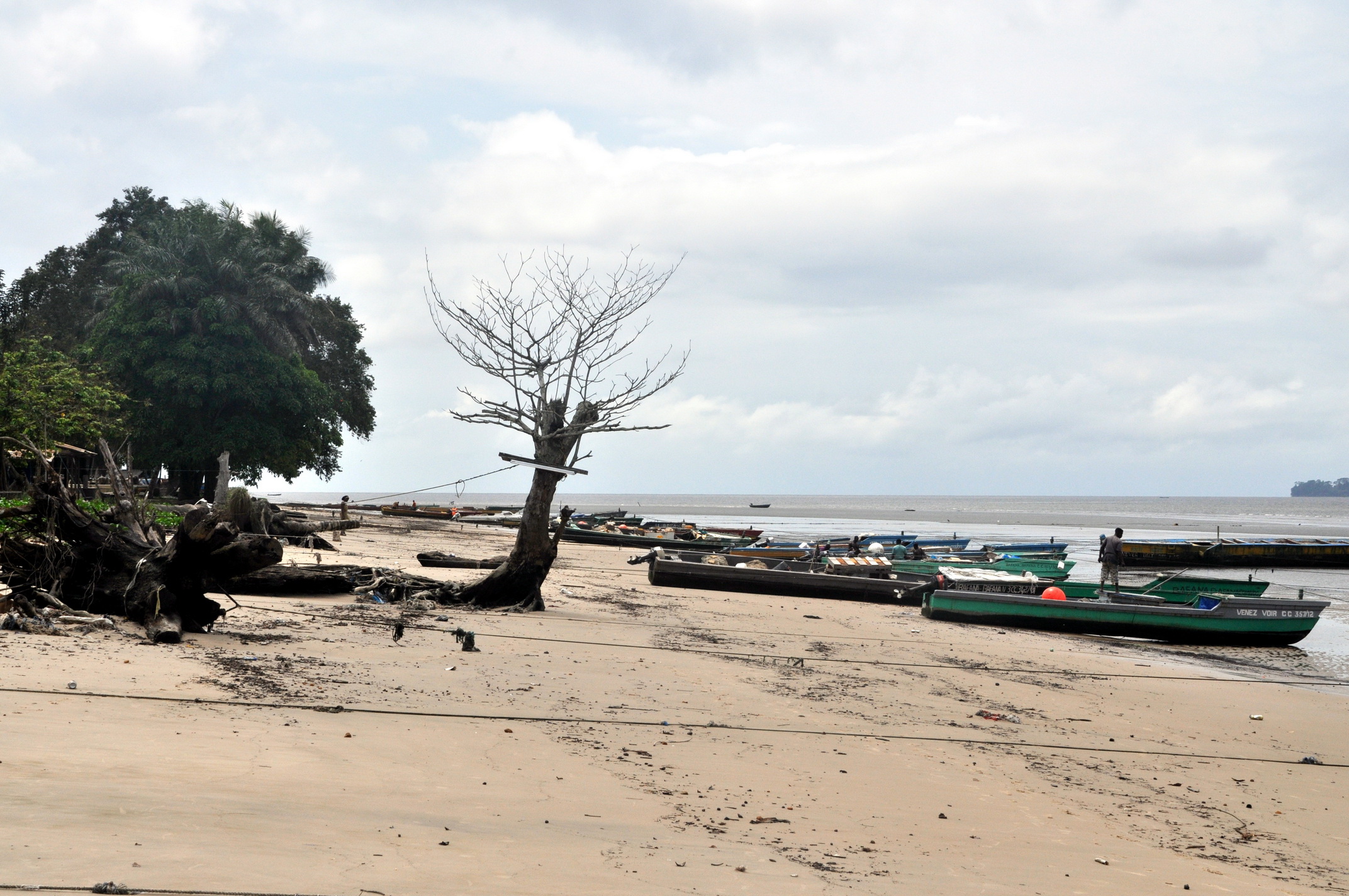
Alas, I had to go to the capital. My flight was that evening.
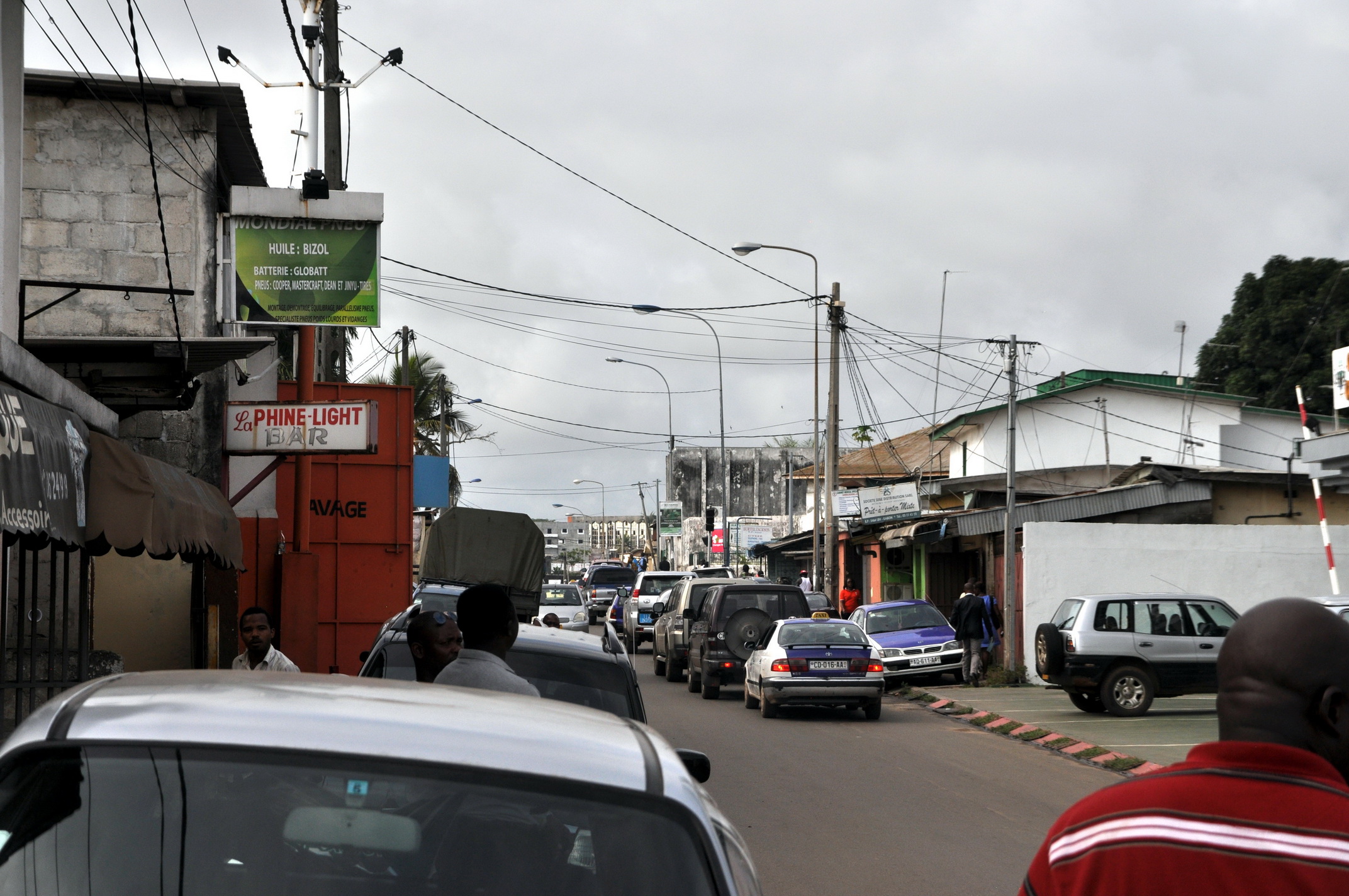
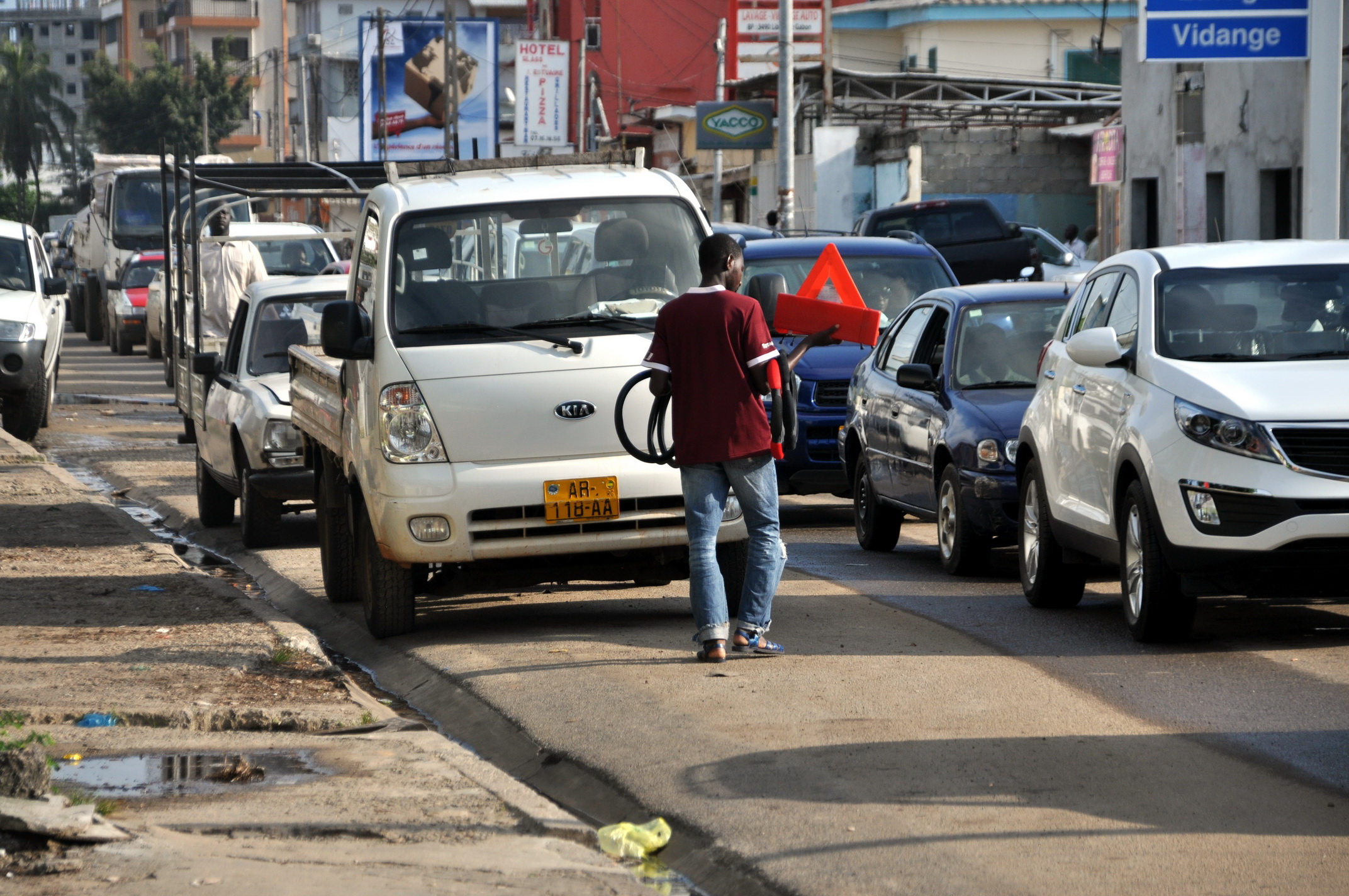
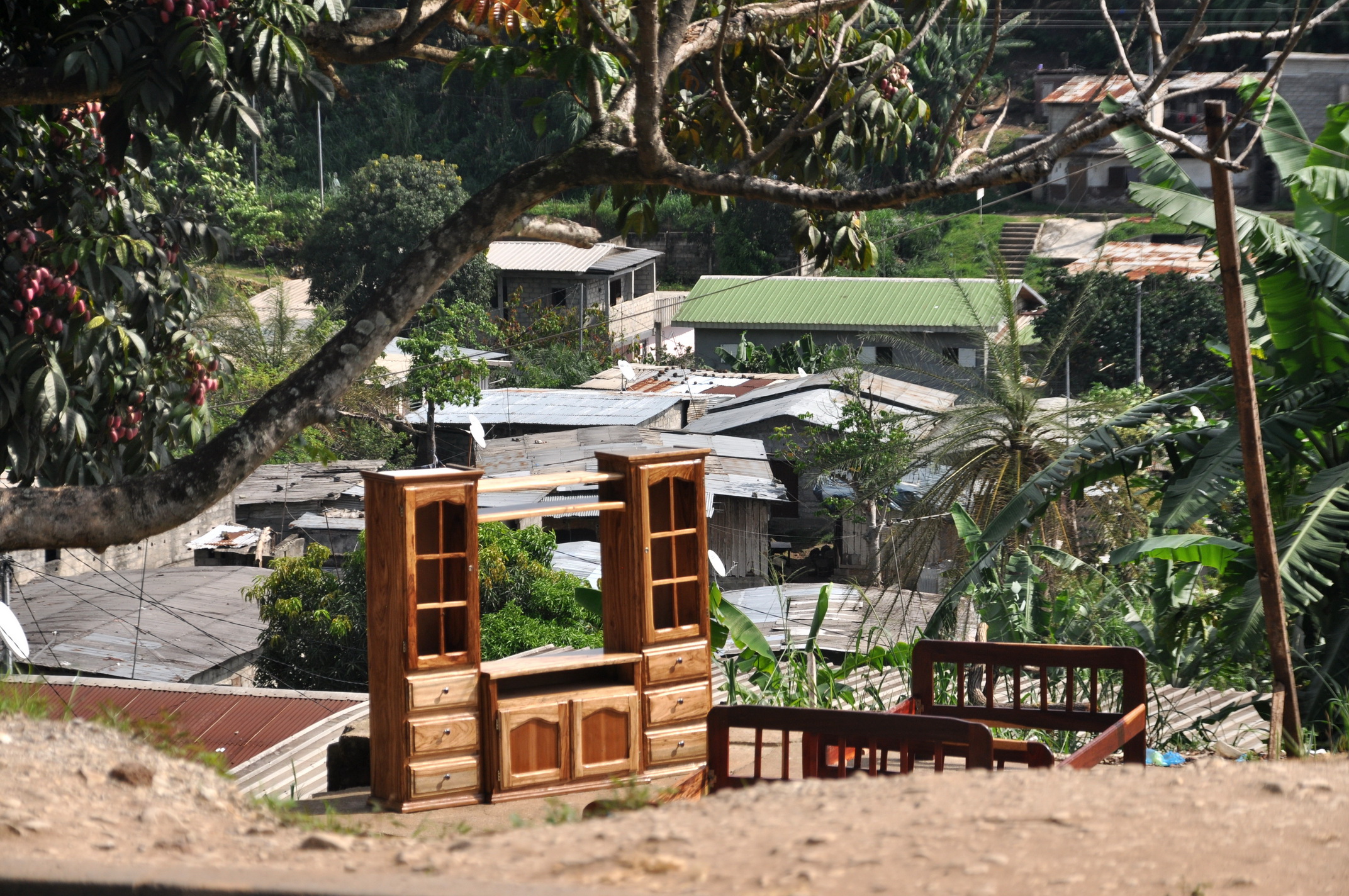
The road to Libreville runs through numerous suburbs. Endless poor neighbourhoods and a flea market stretching for many kilometres. Every kilometre had its own speciality. Here car repairs, there fruit, and somewhere else, believe it or not, furniture.
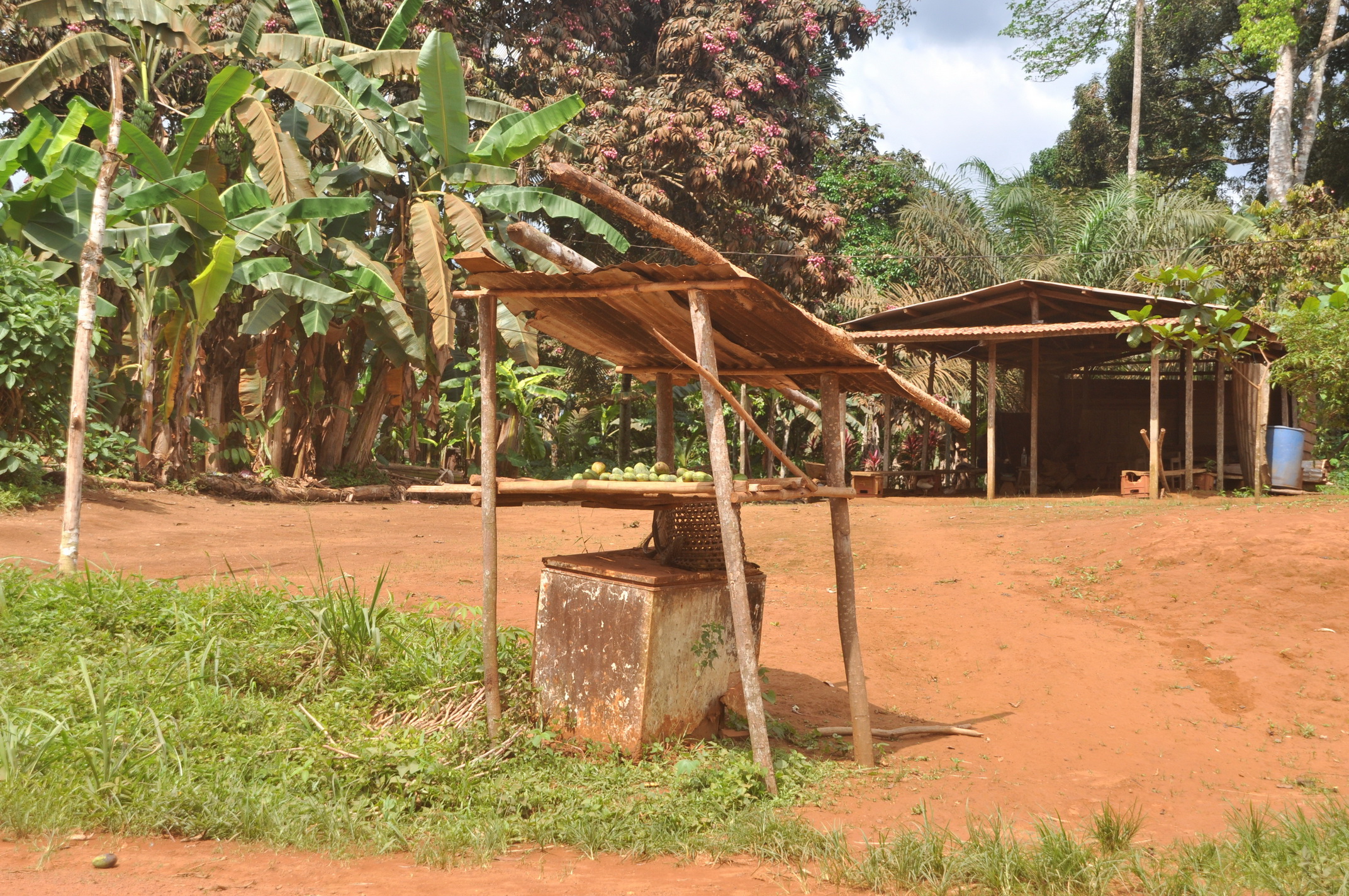
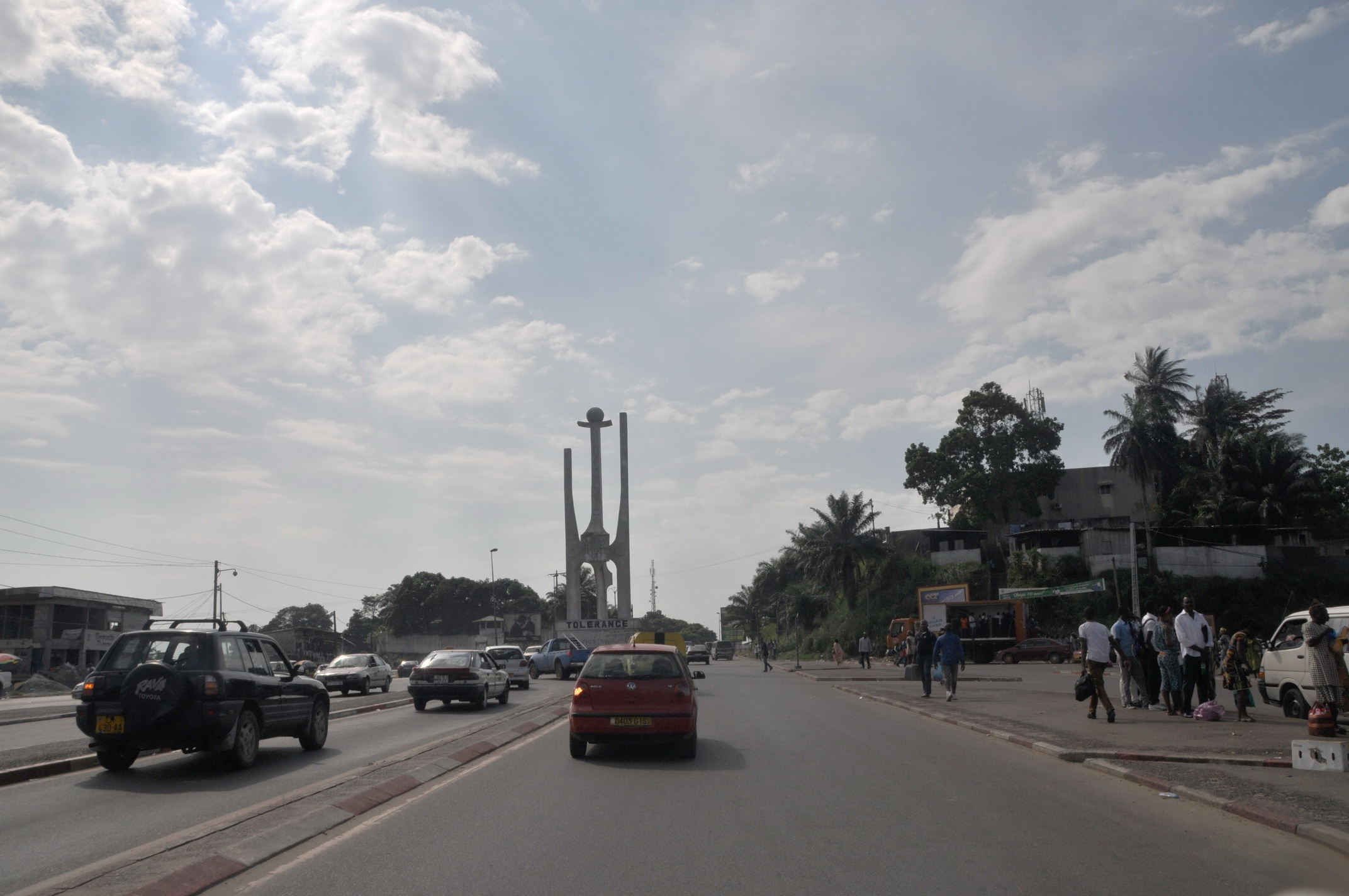
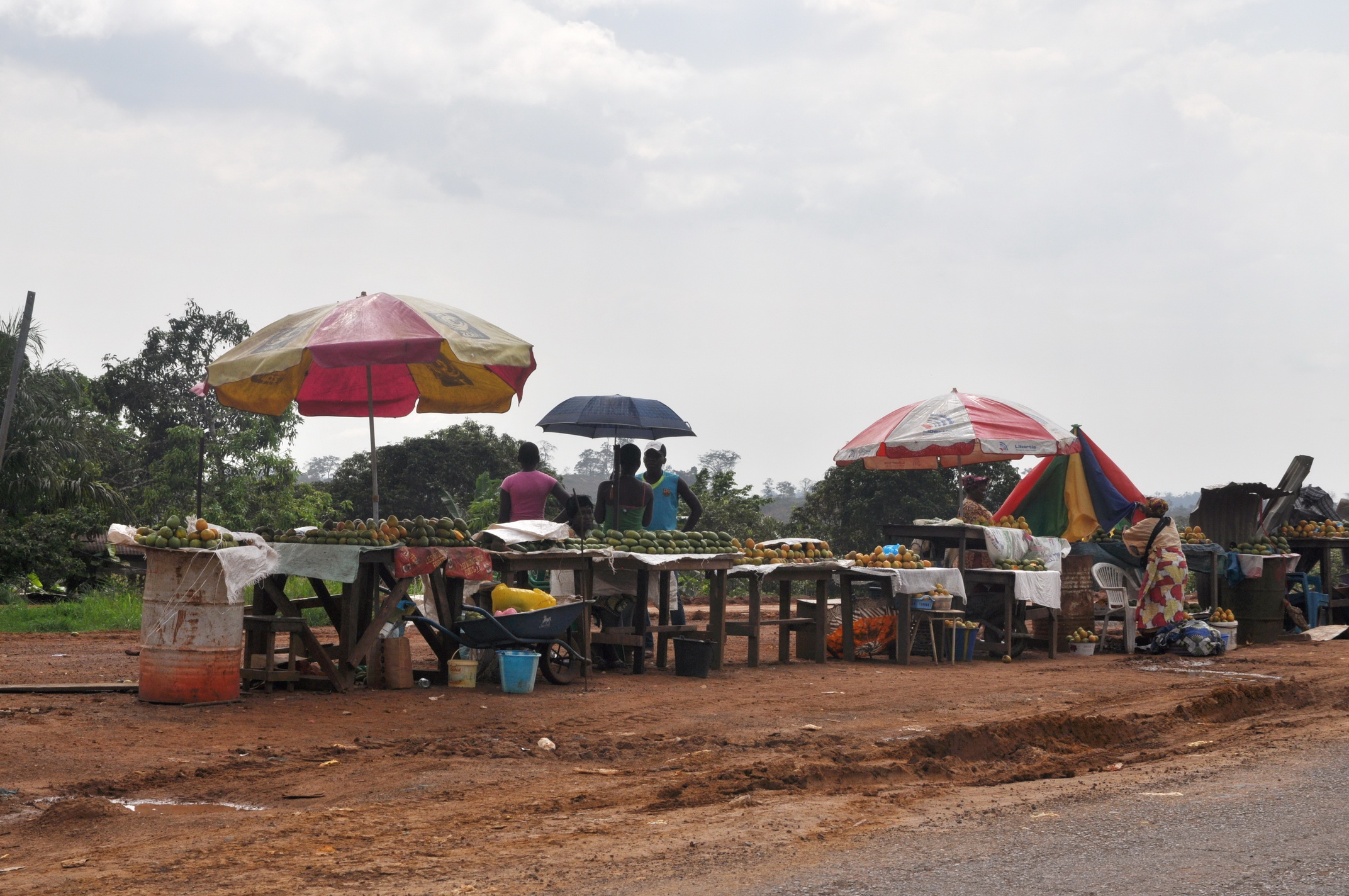
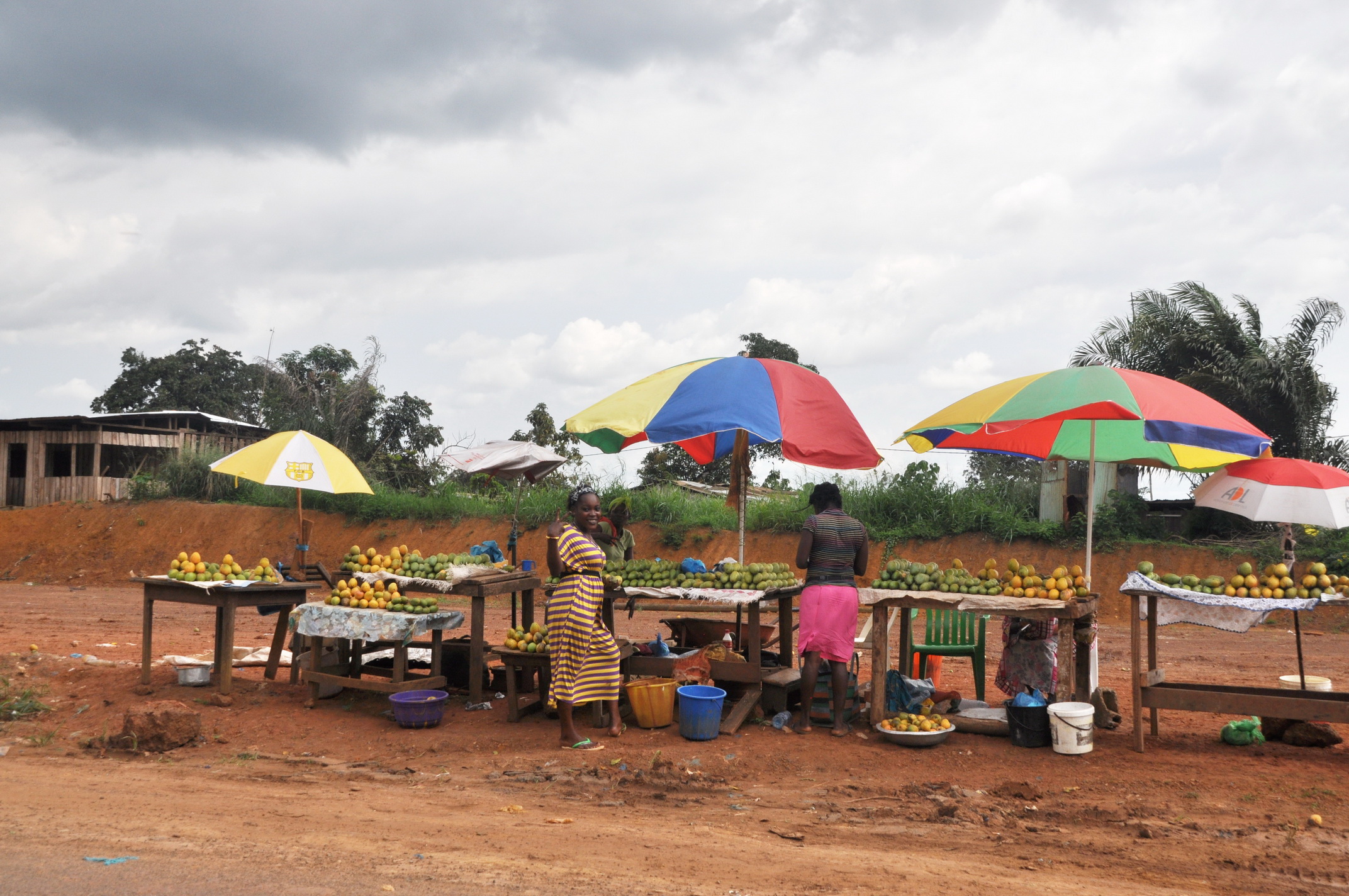
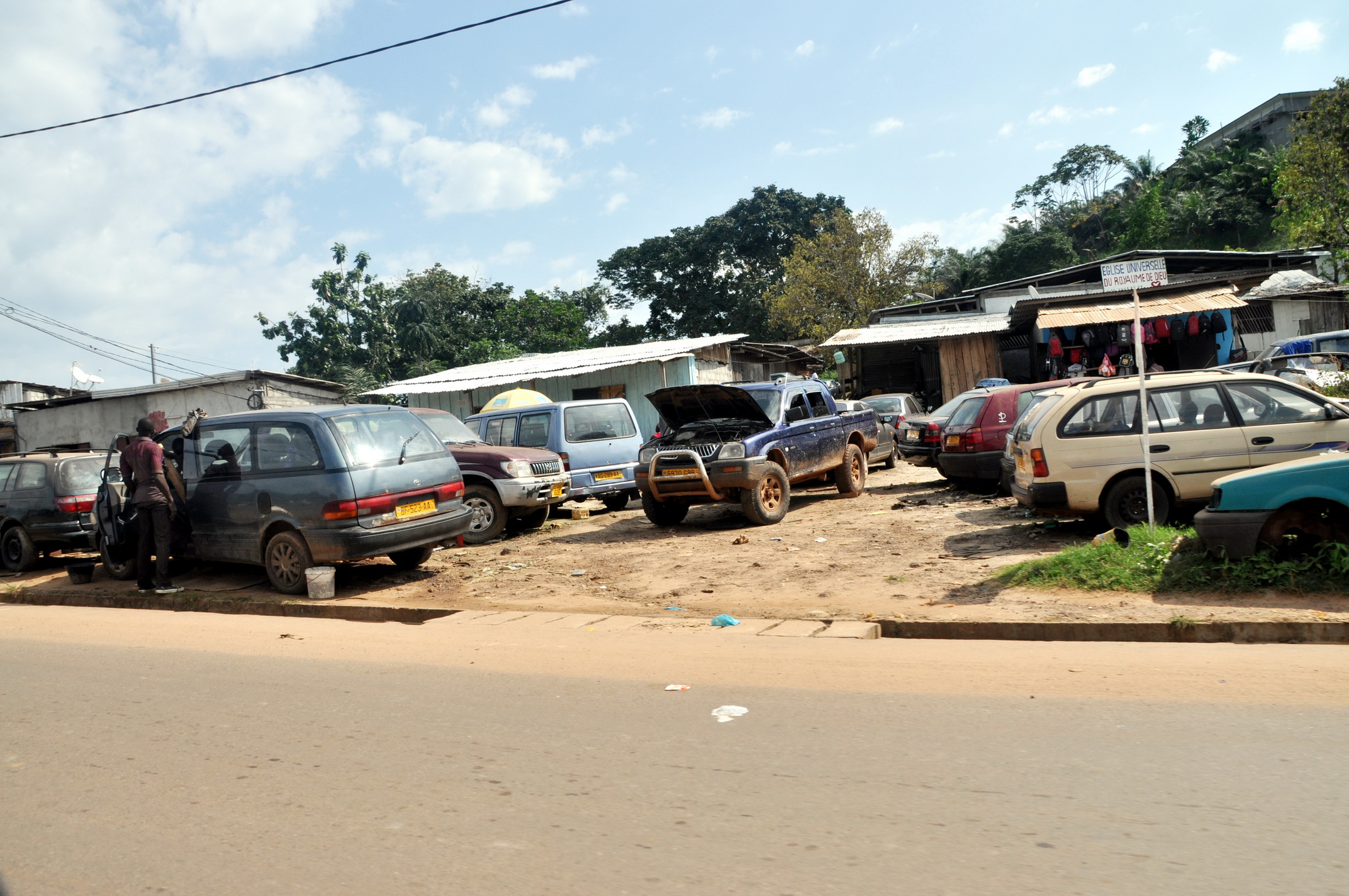
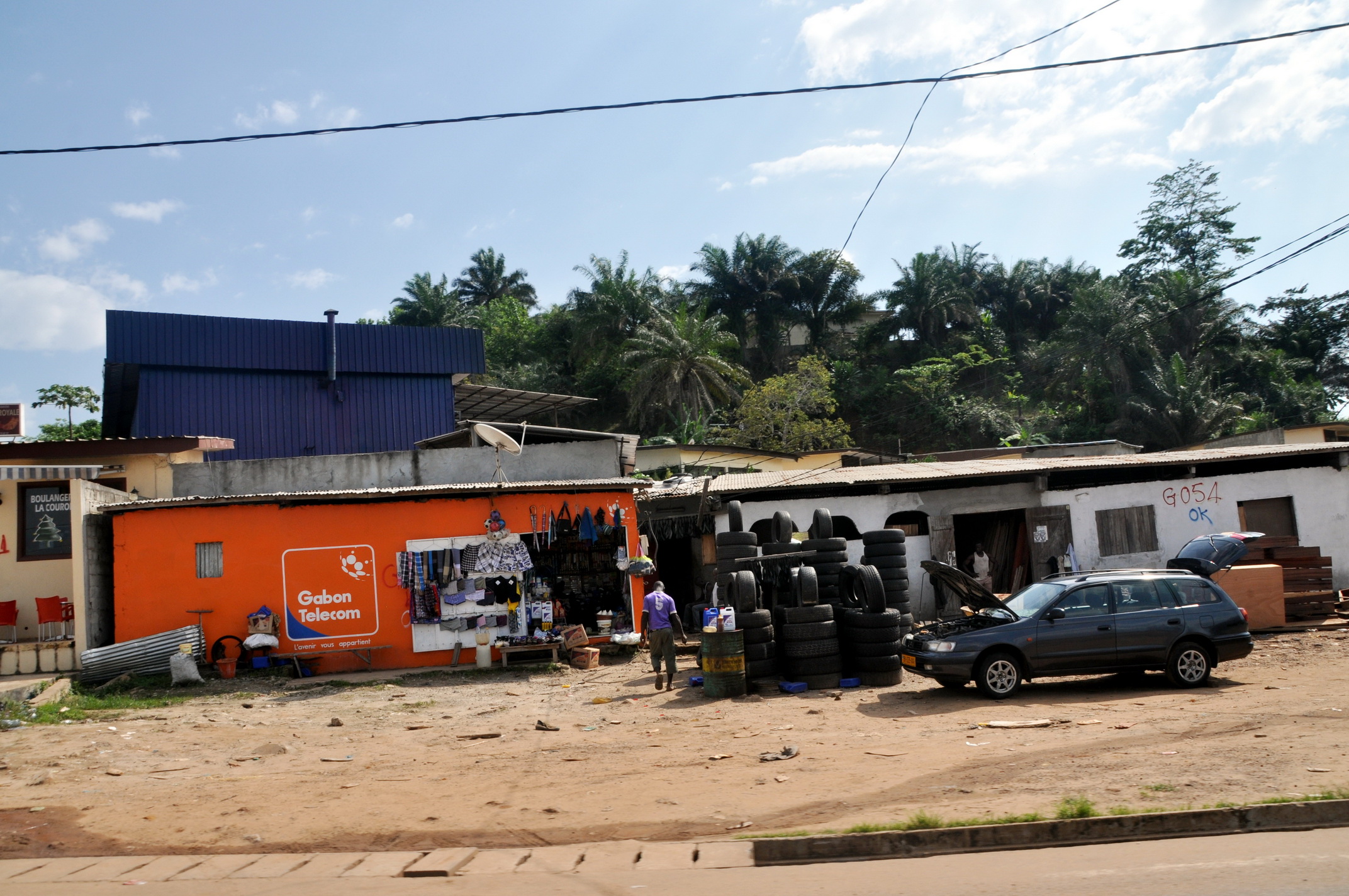
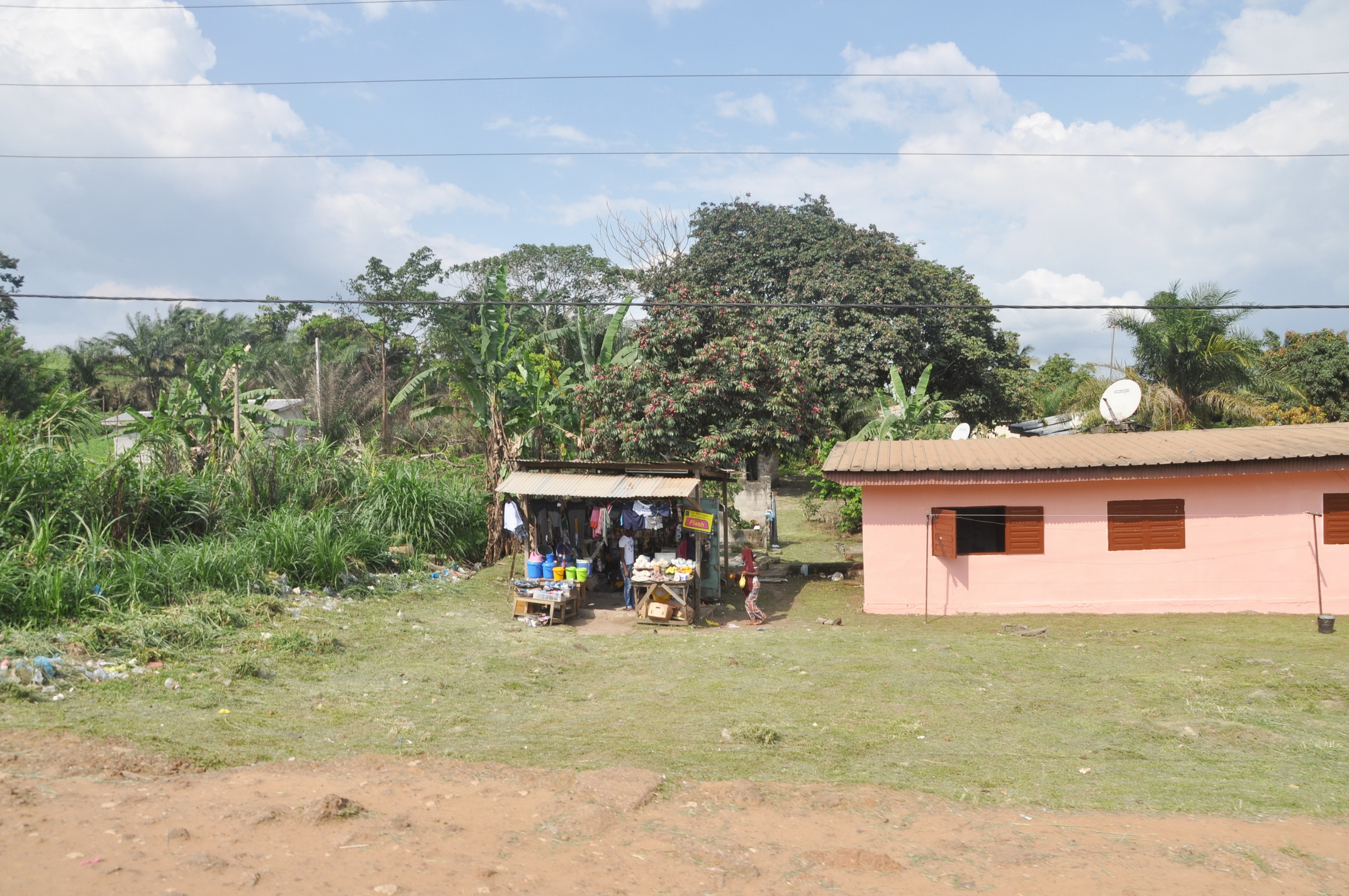
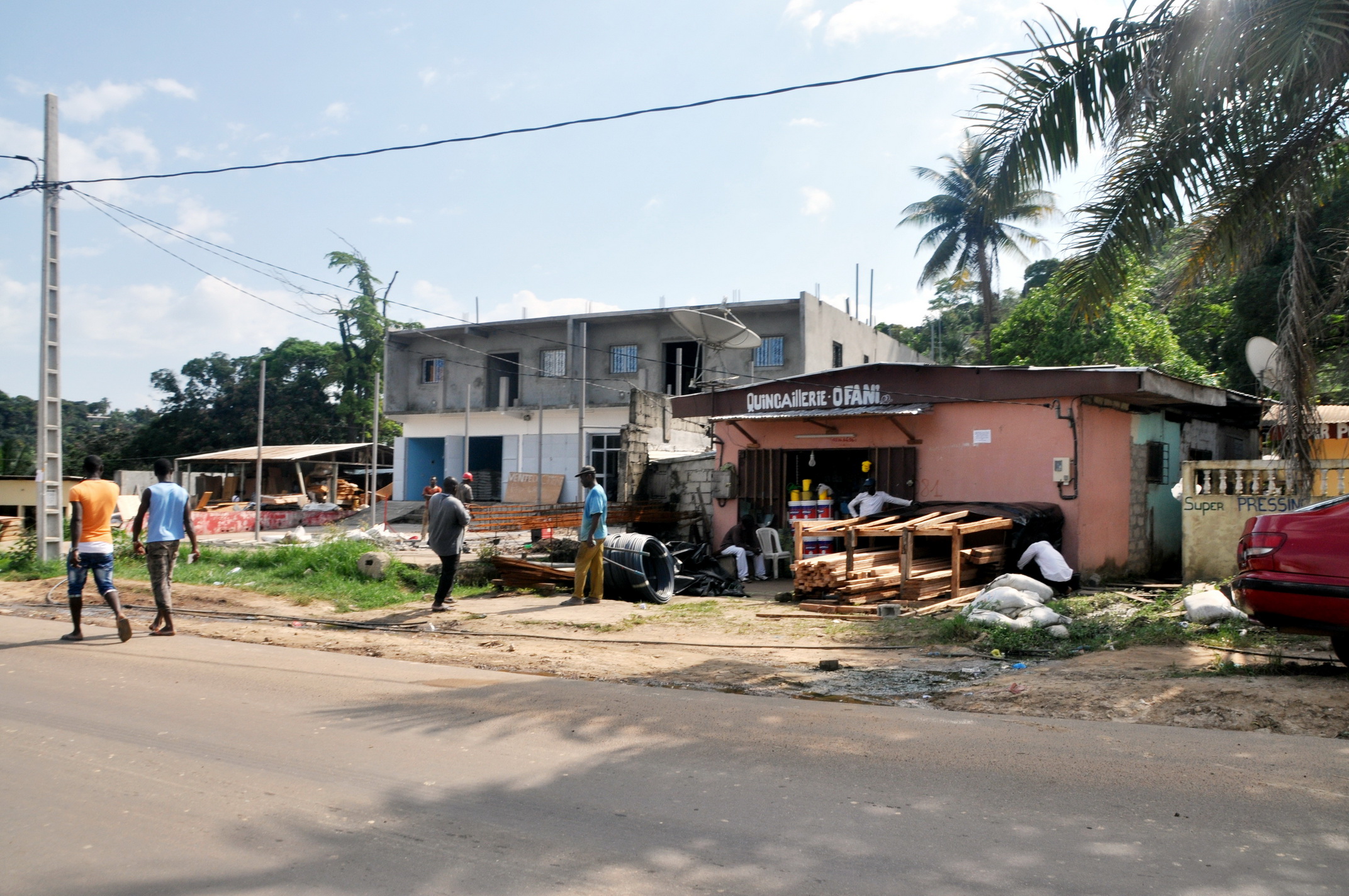
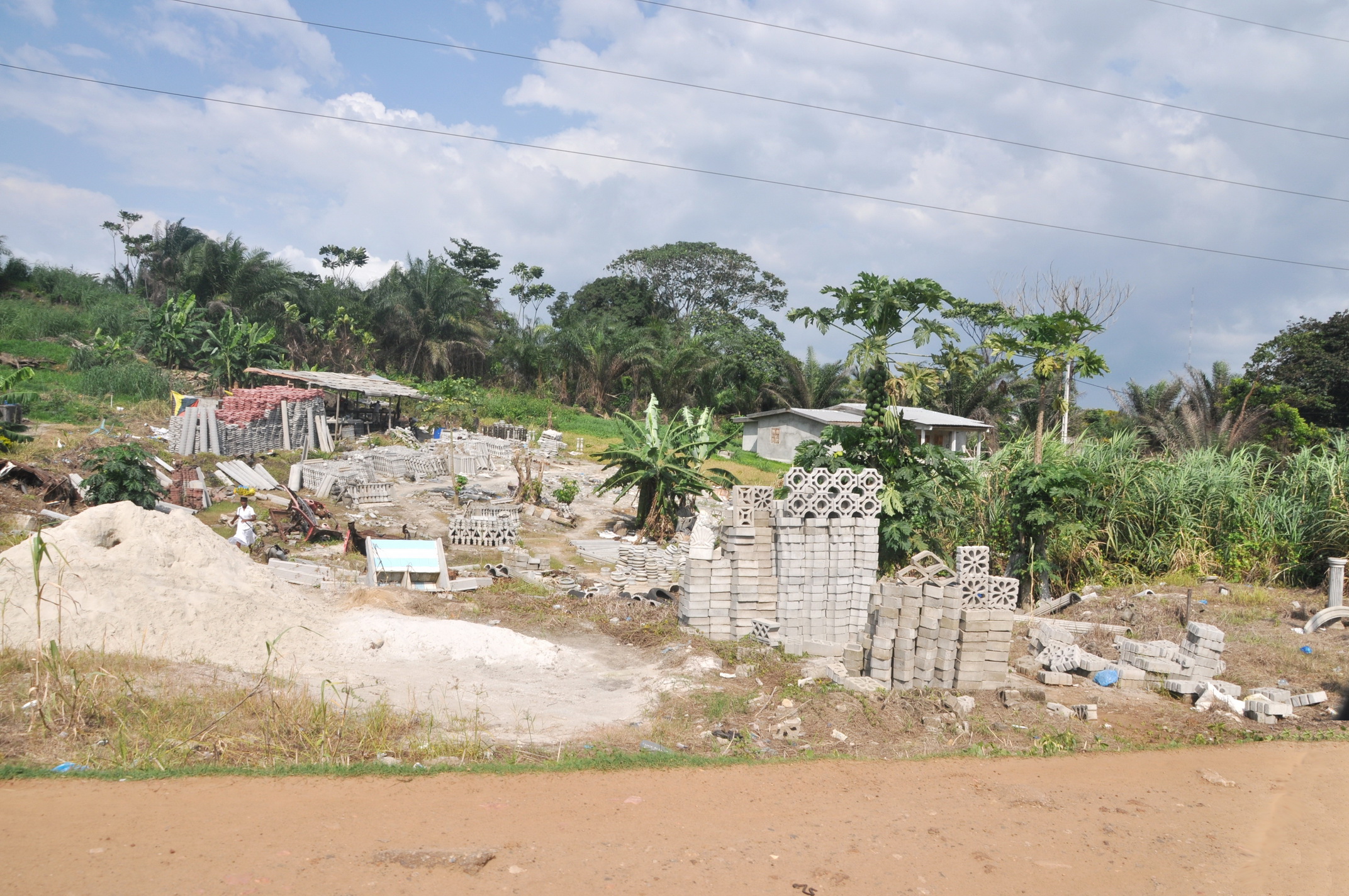
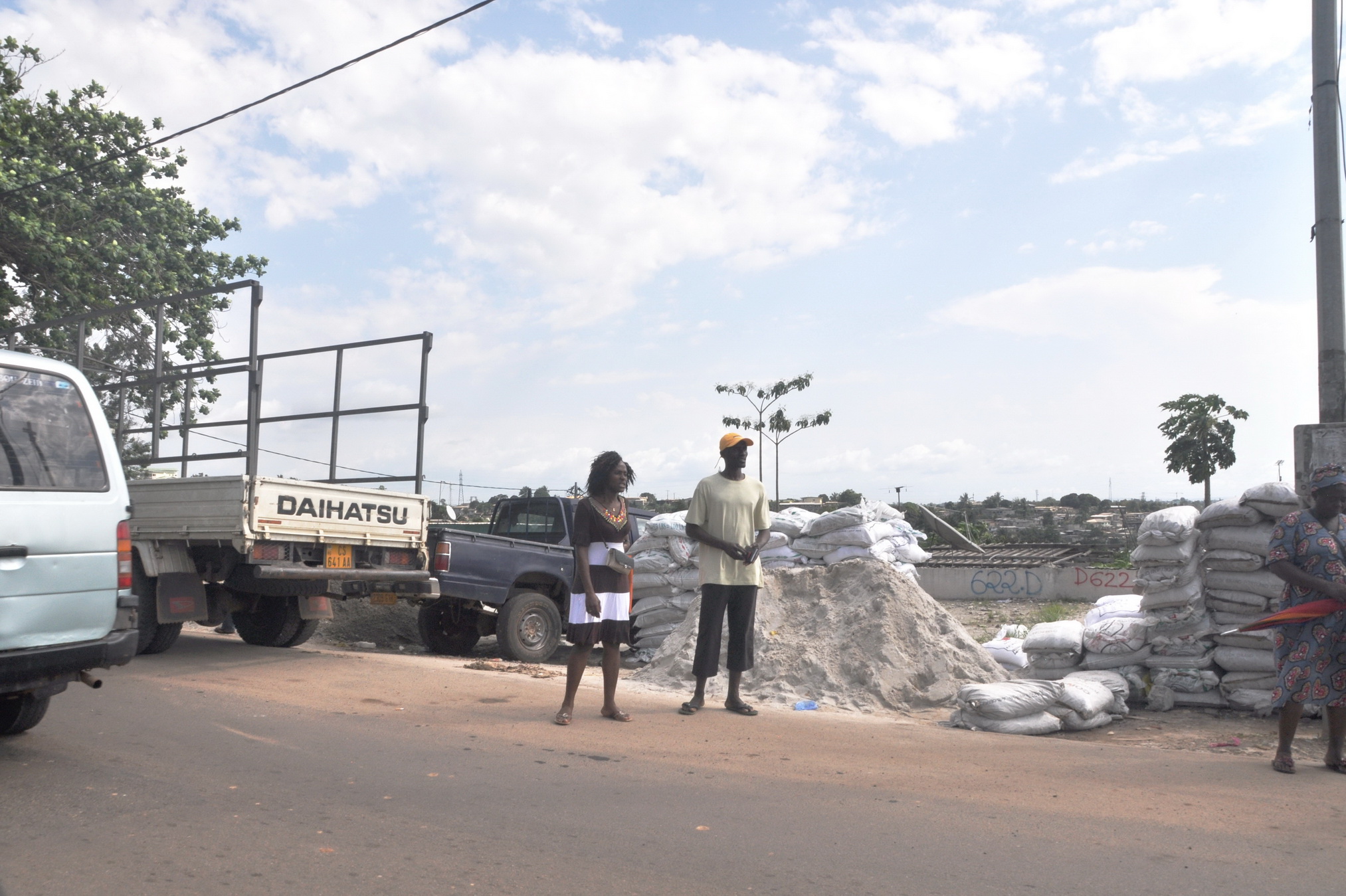
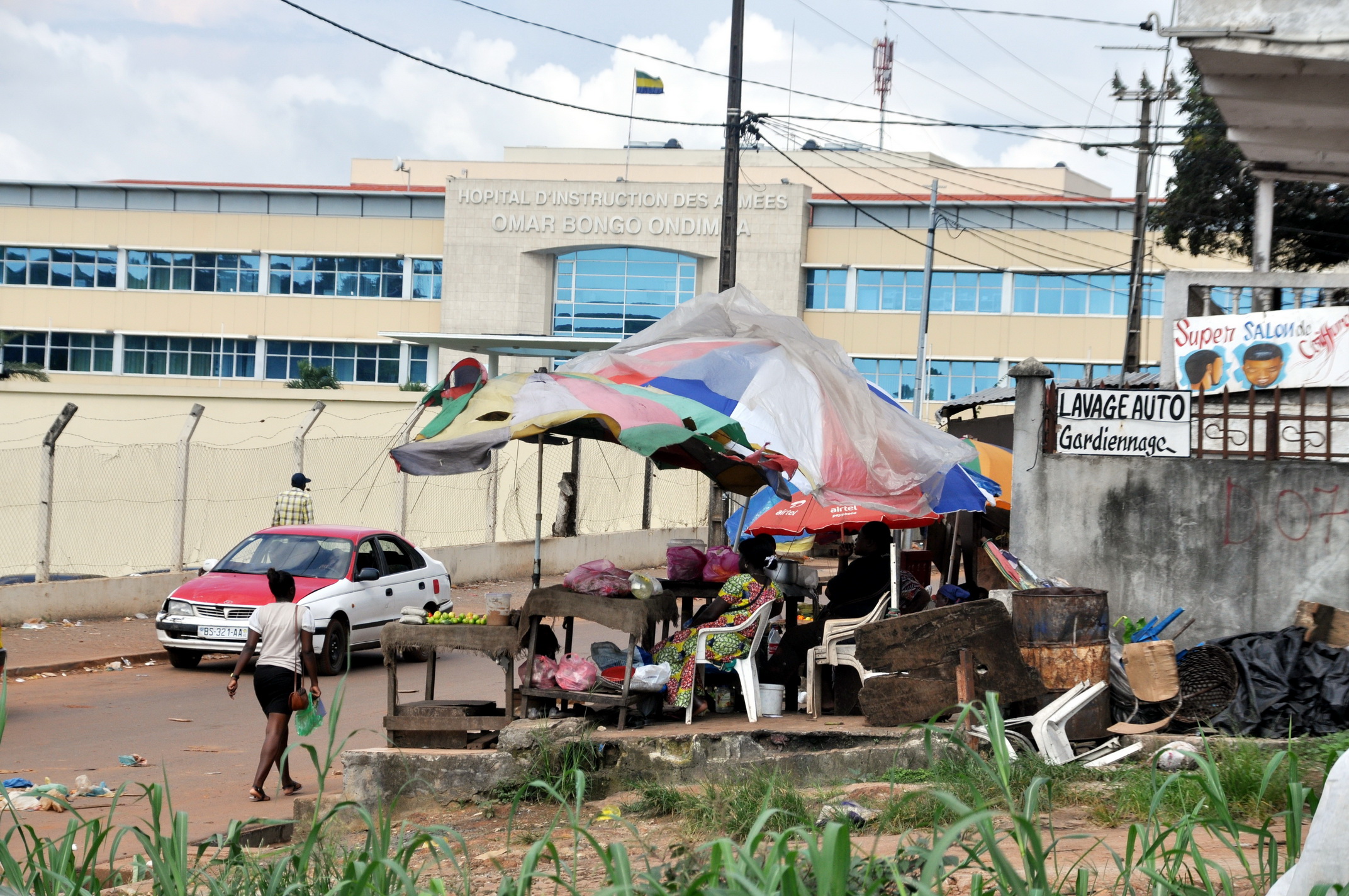
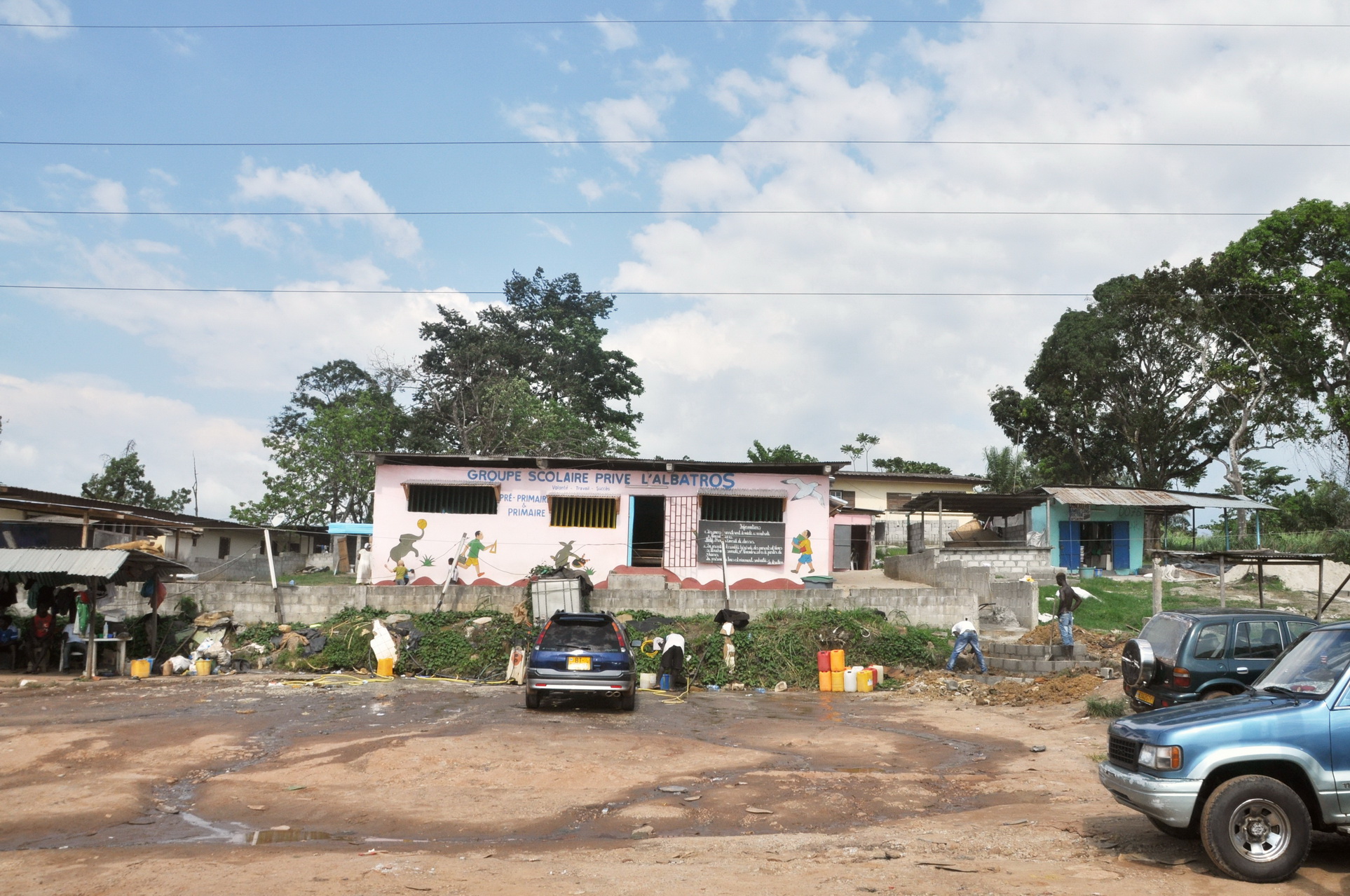
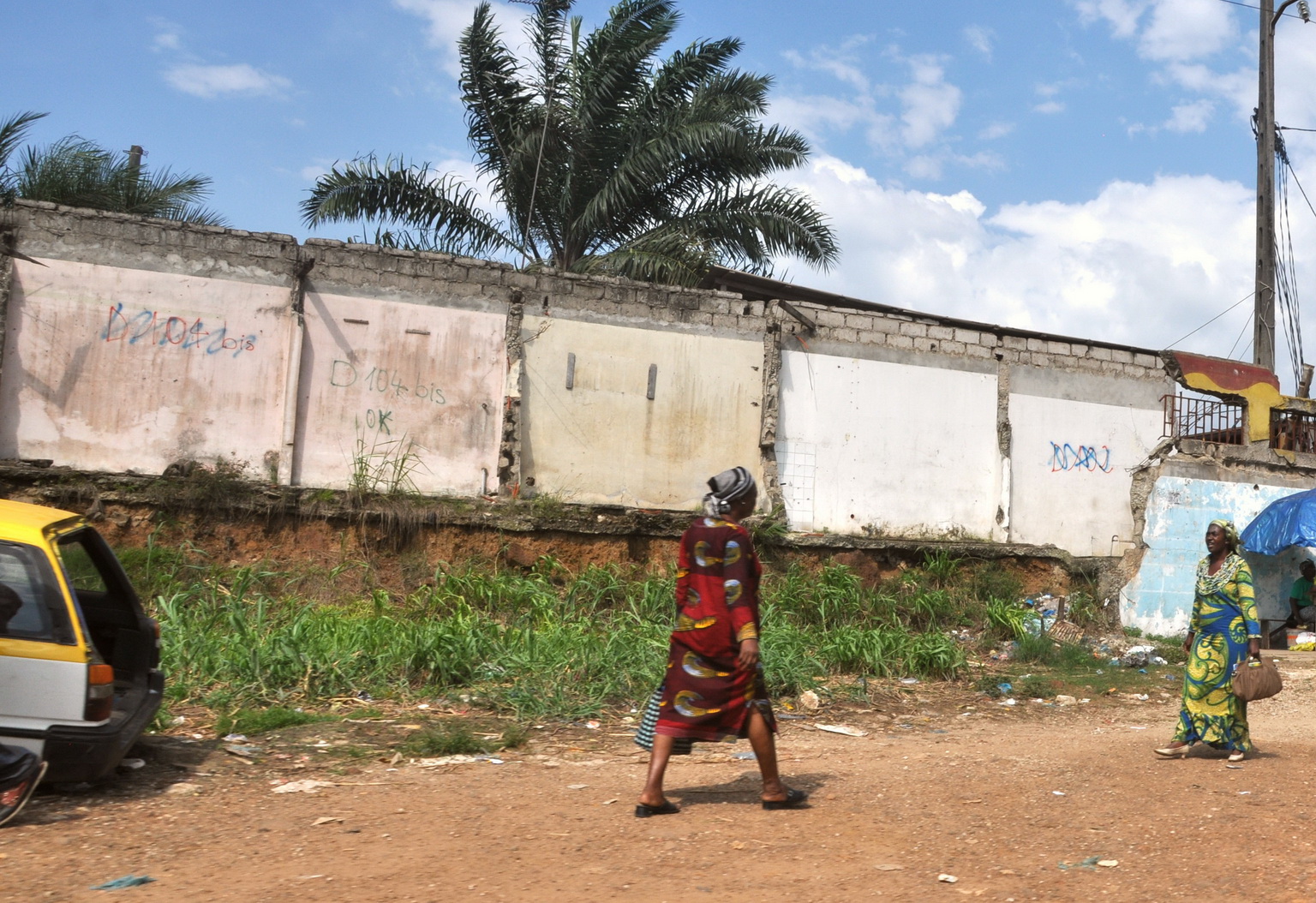
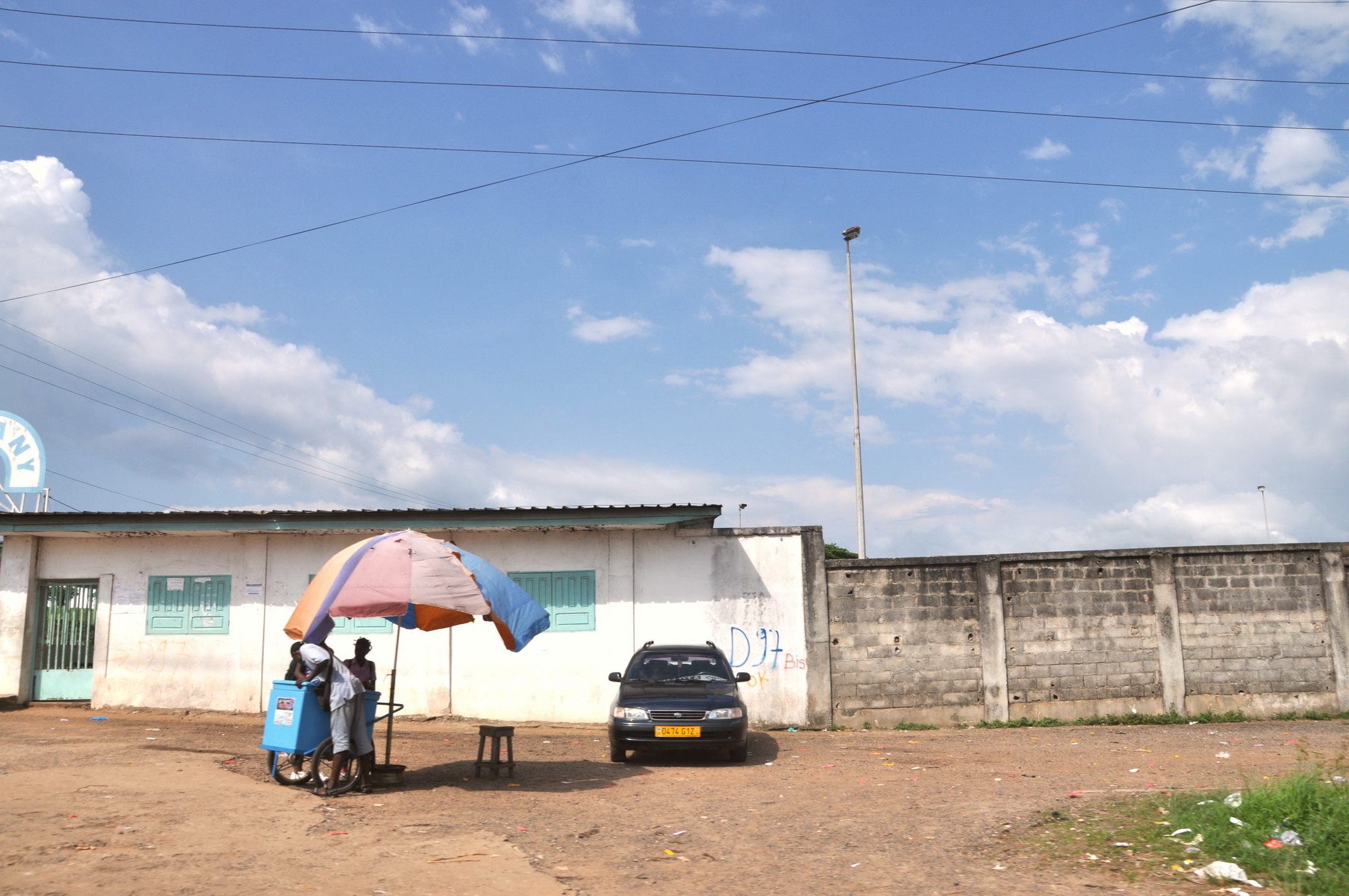
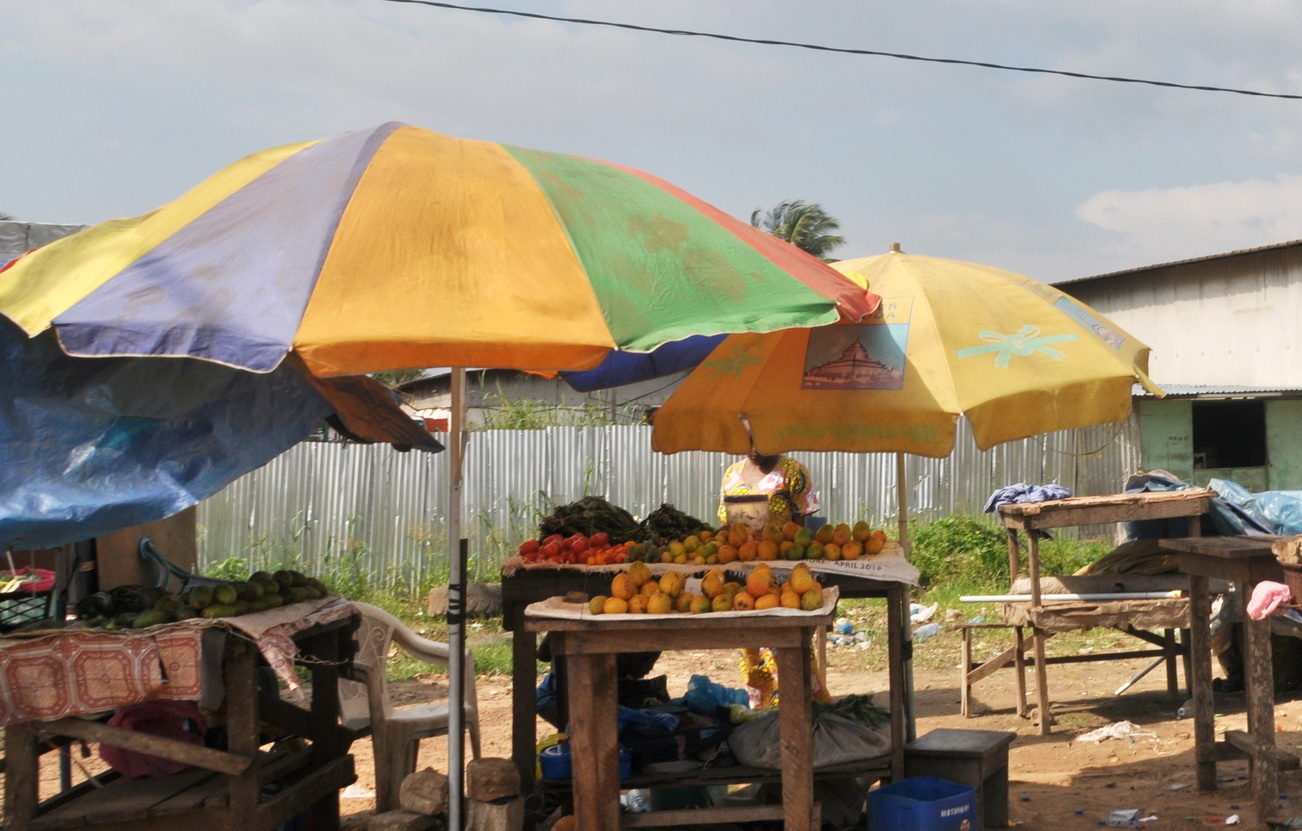
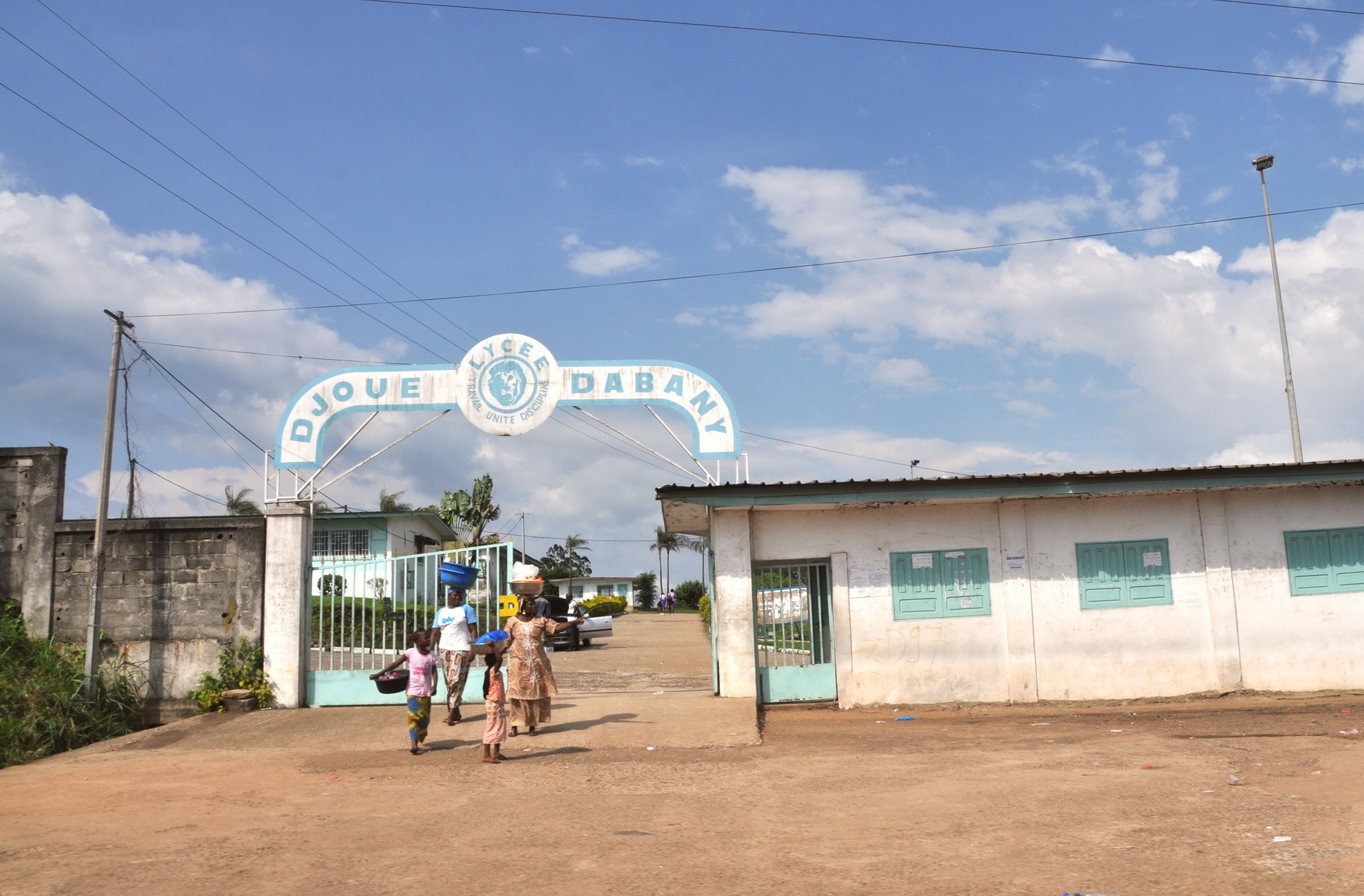
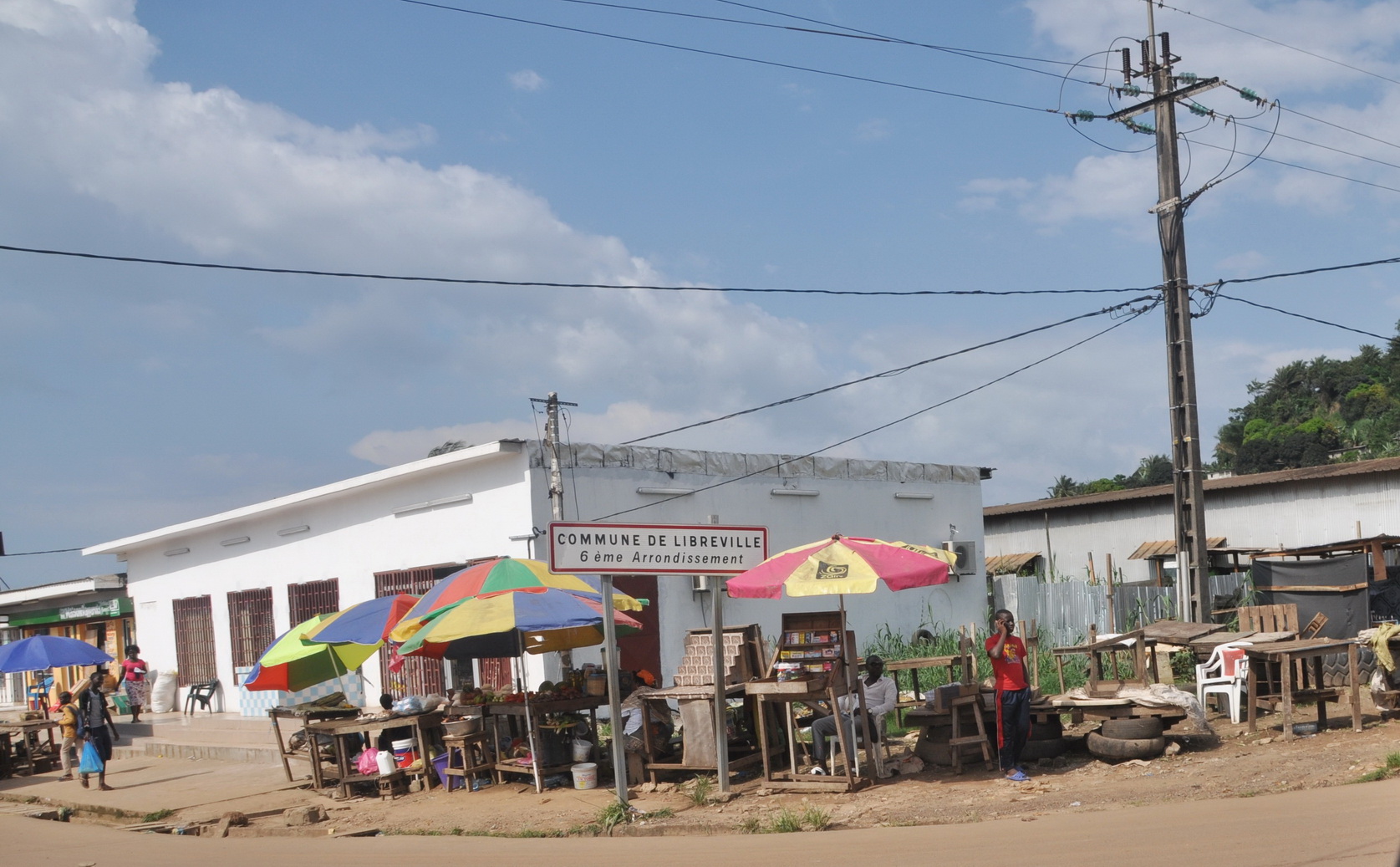
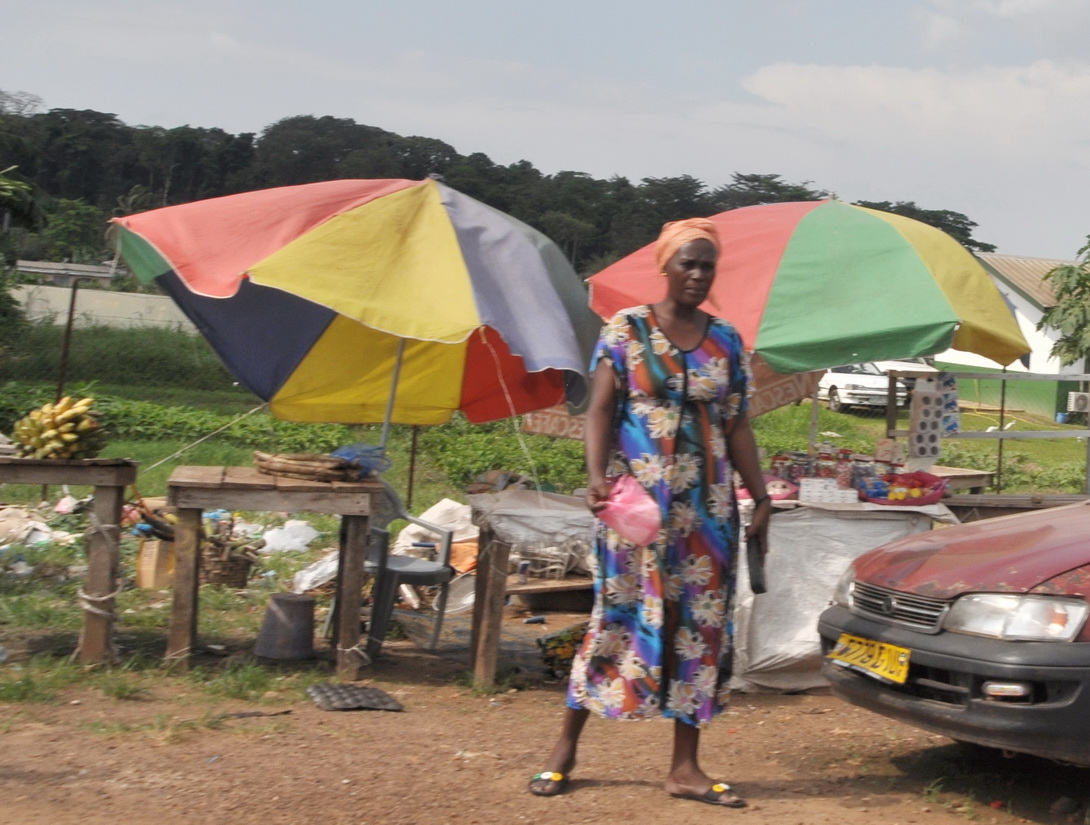
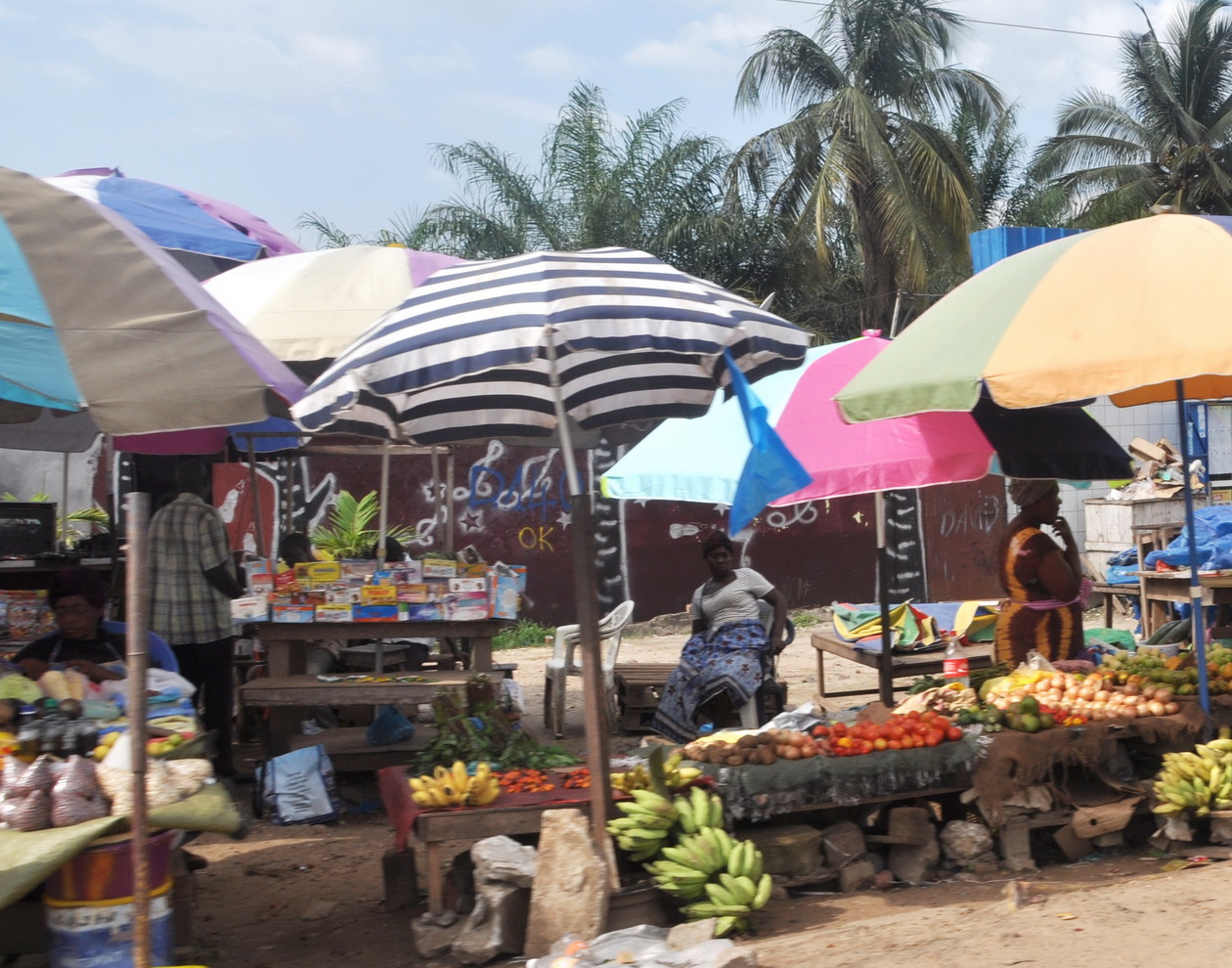
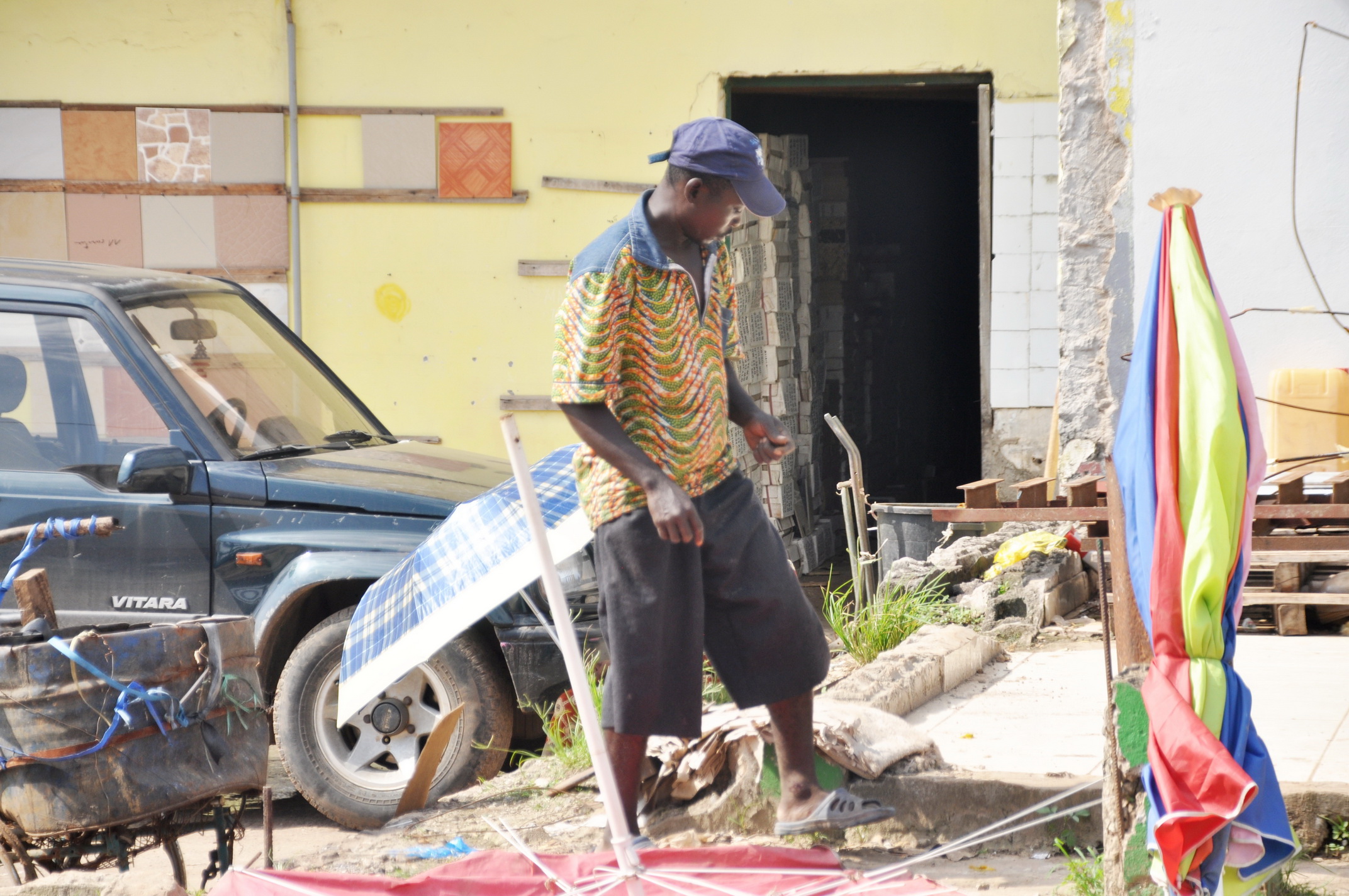
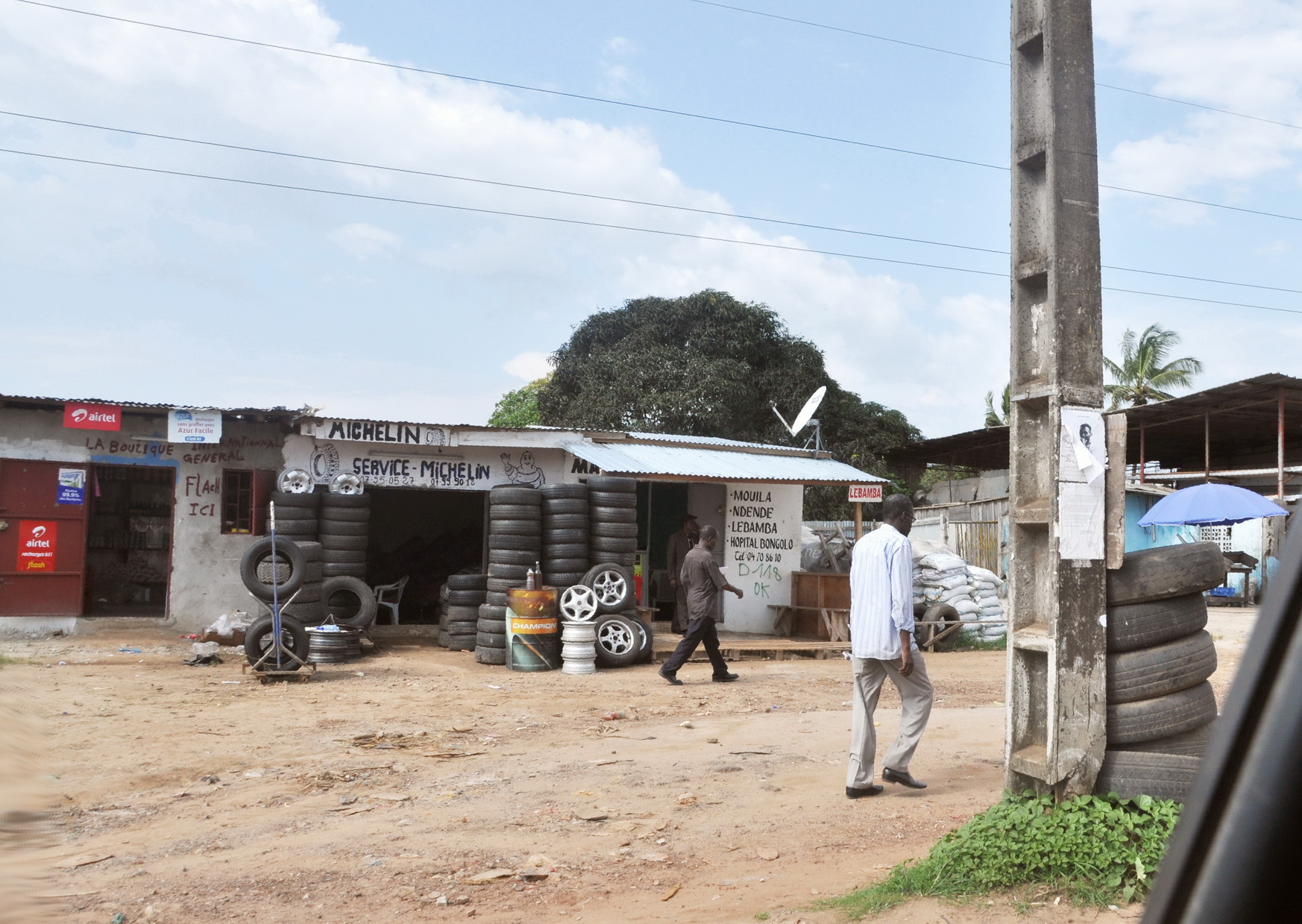
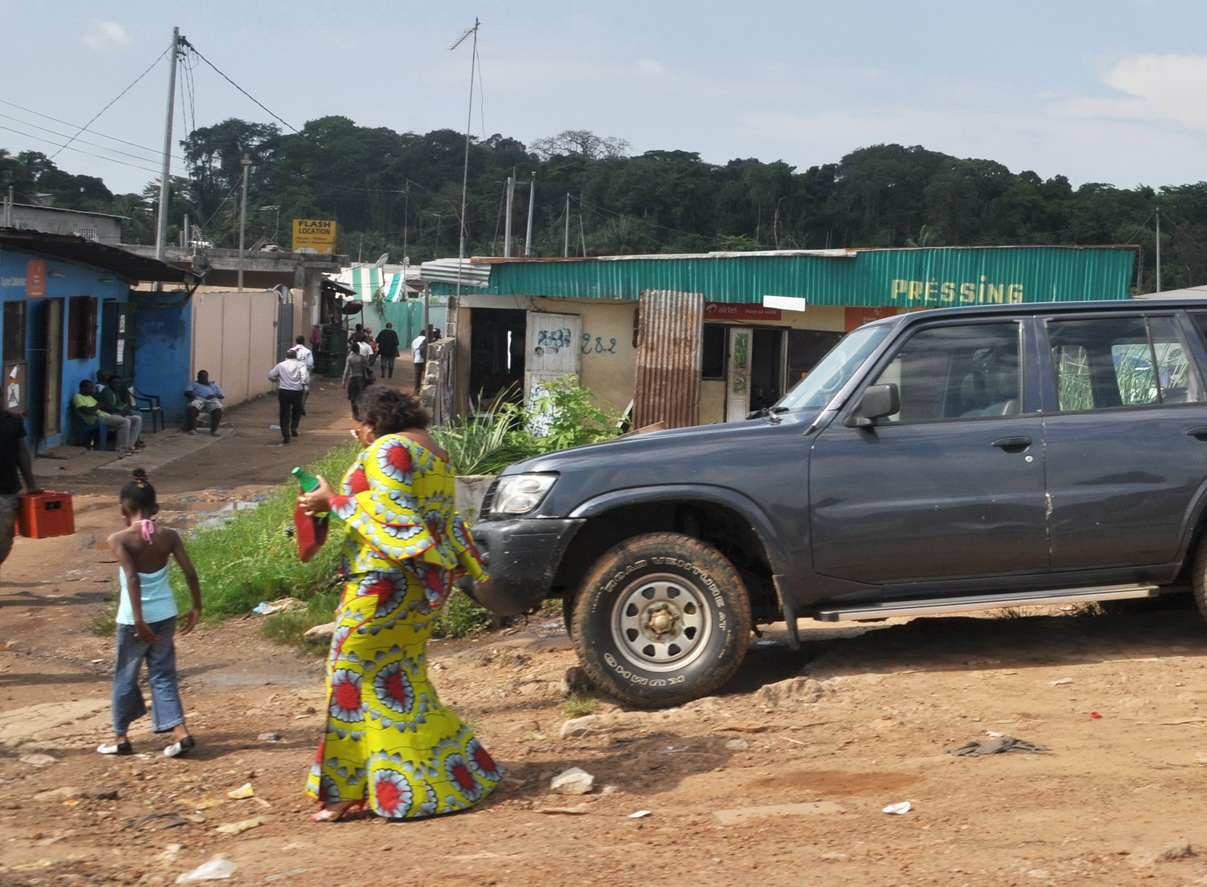
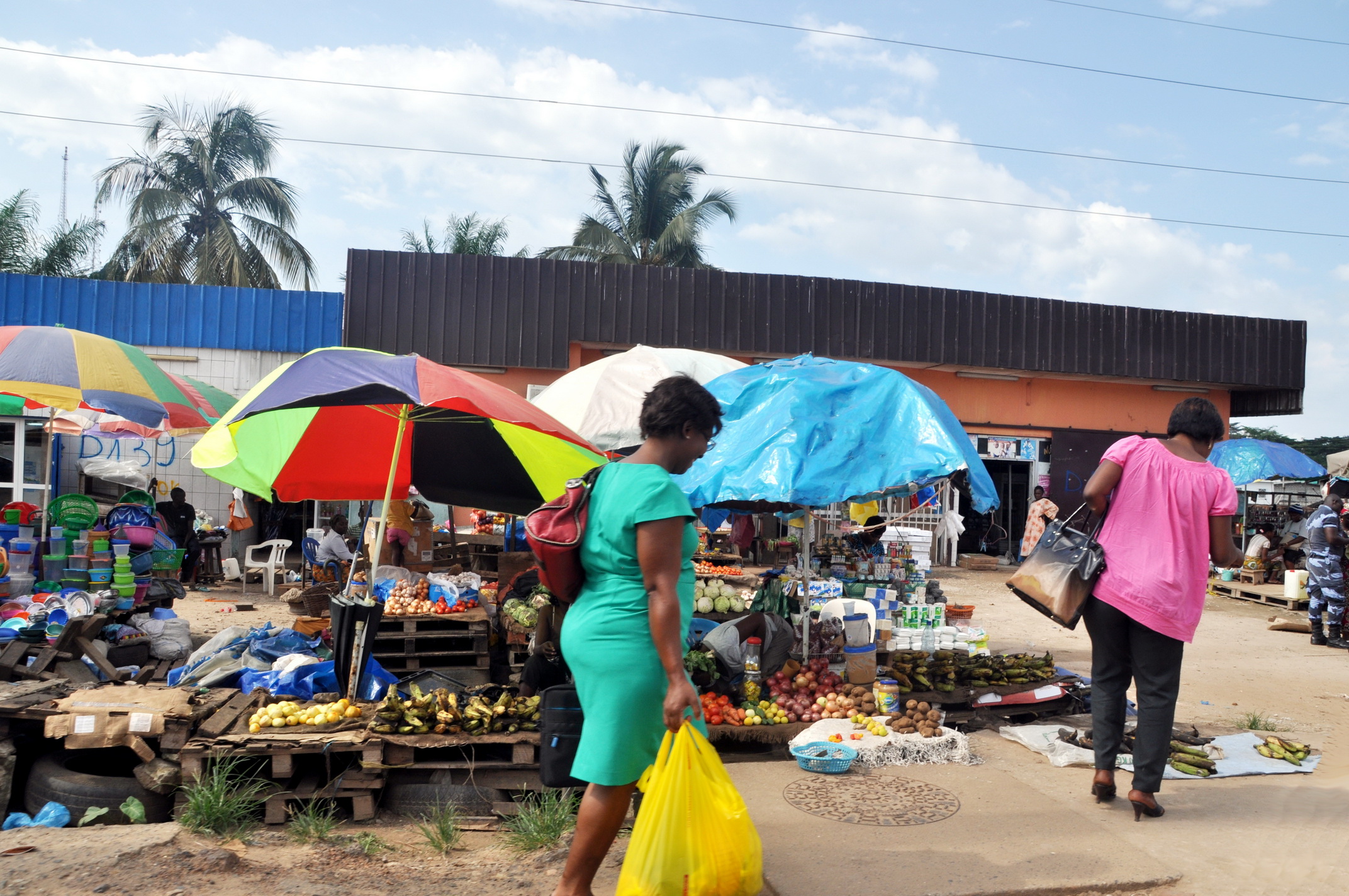
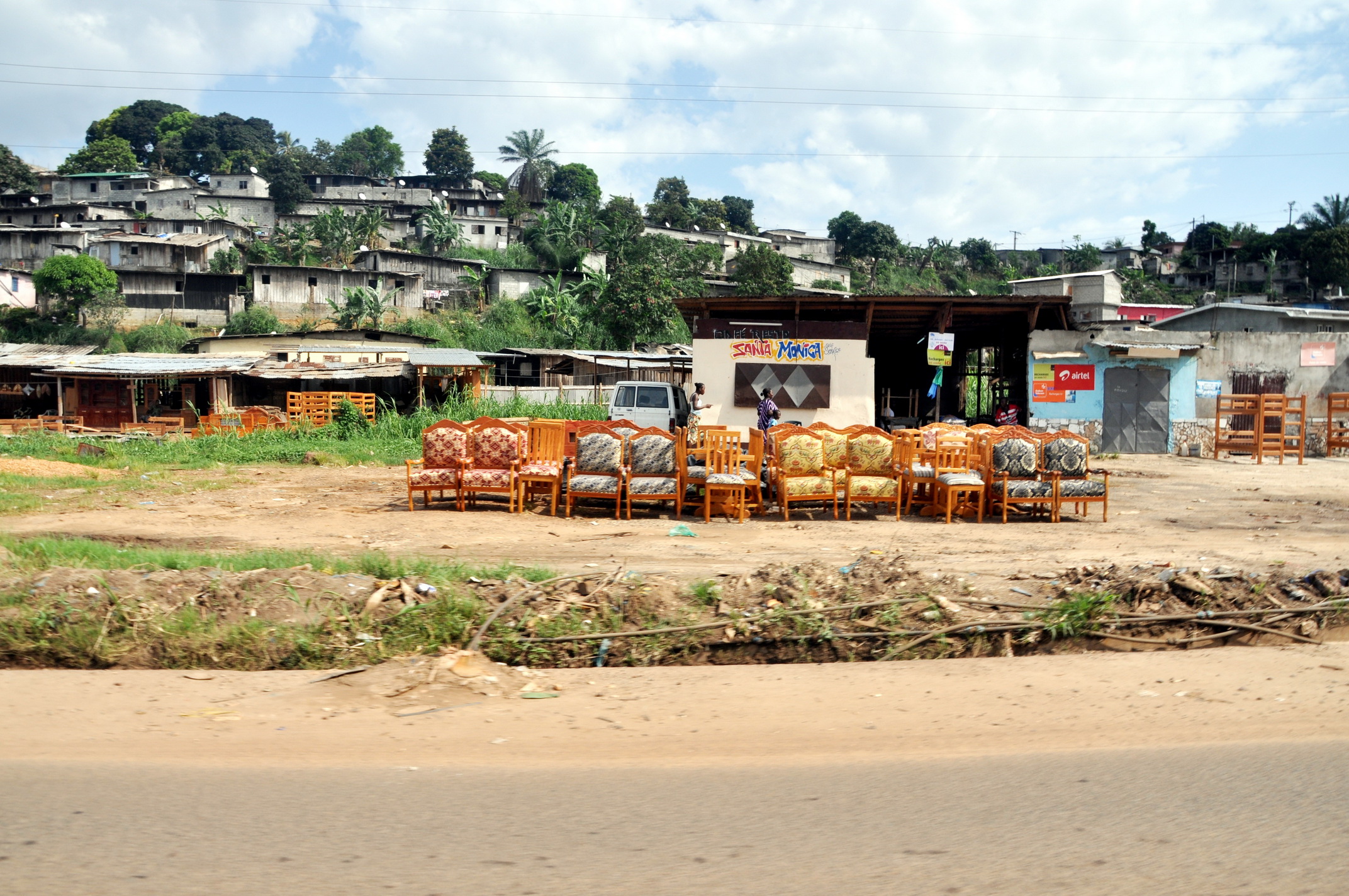
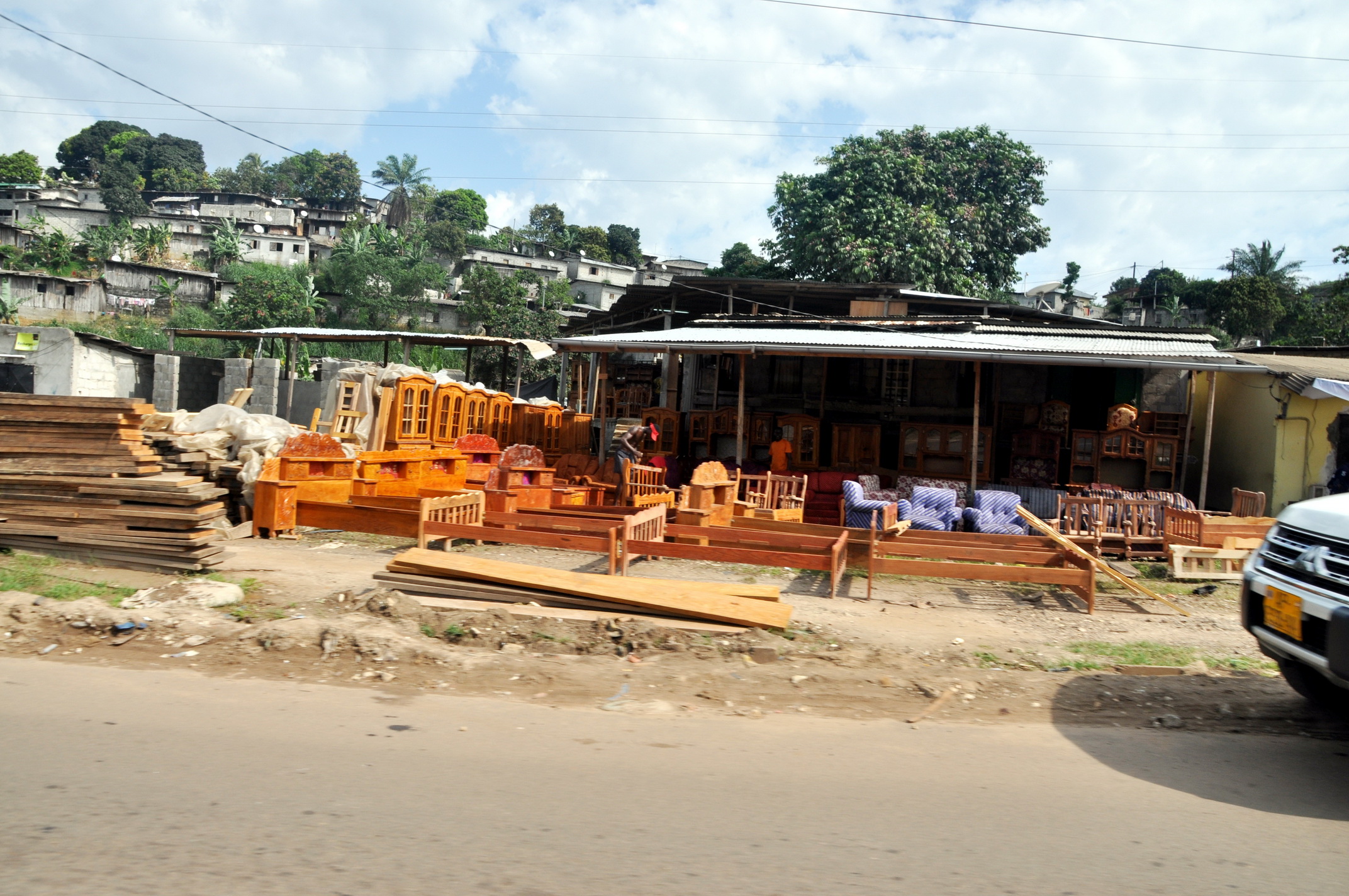
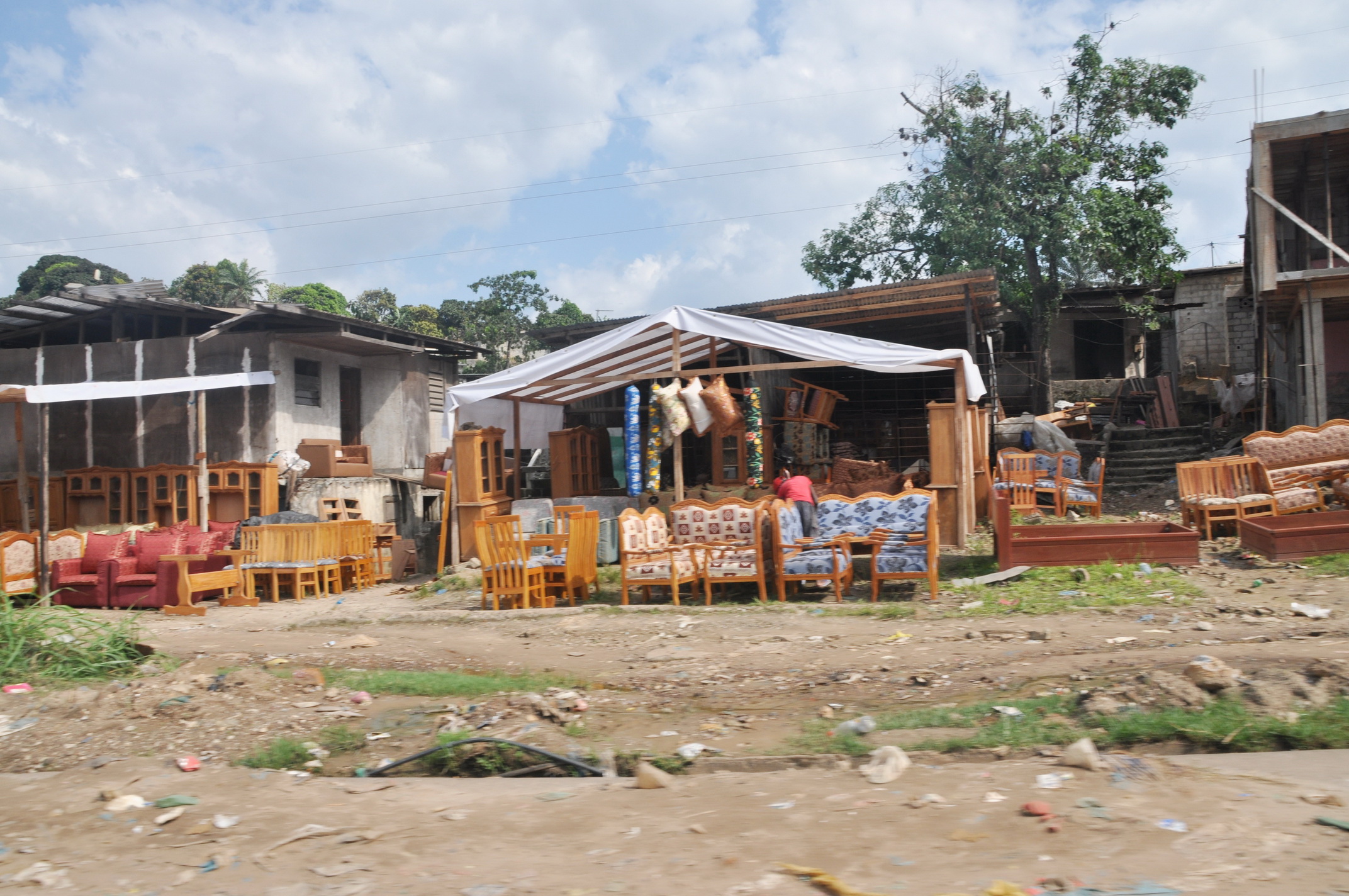
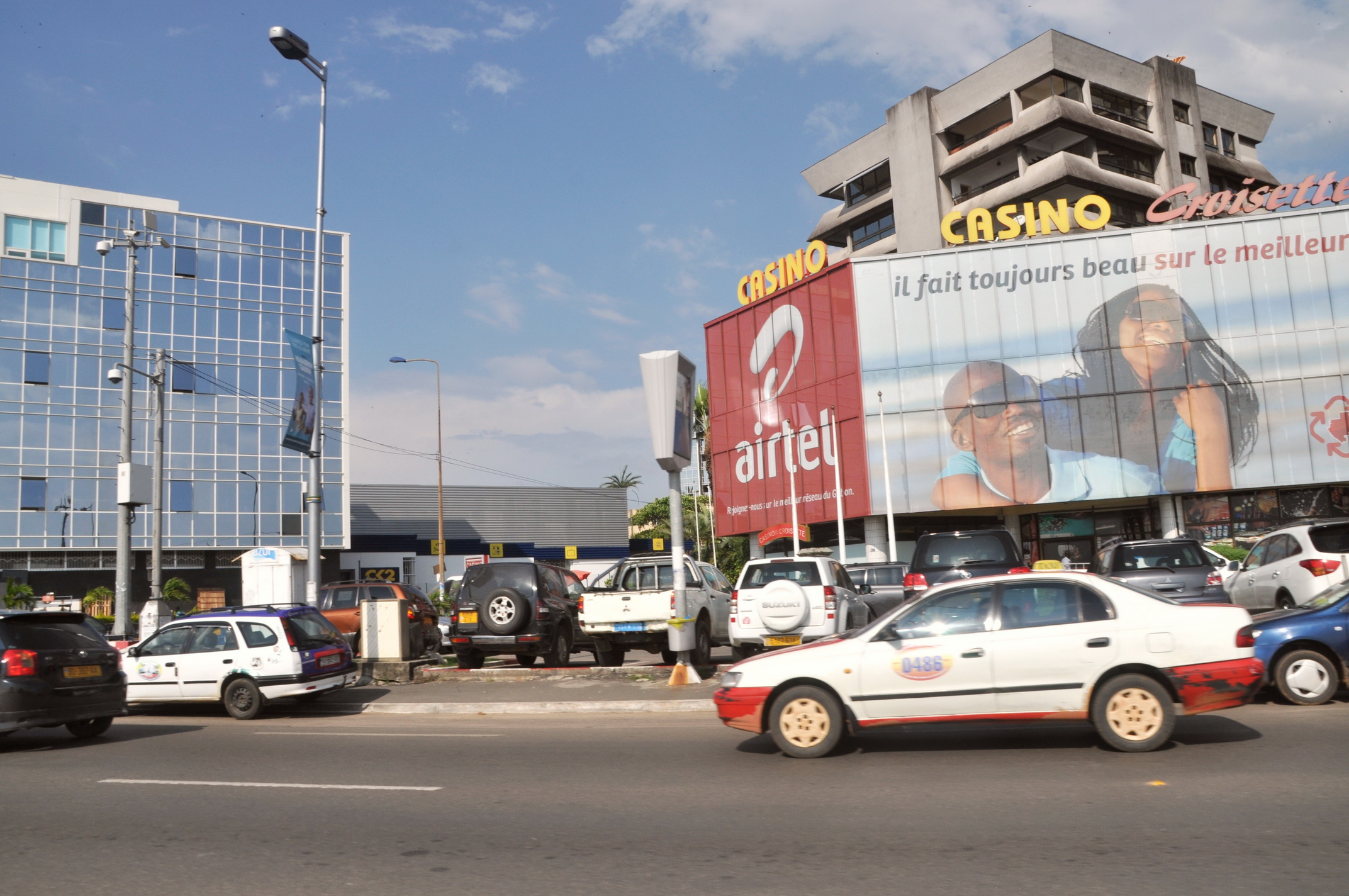
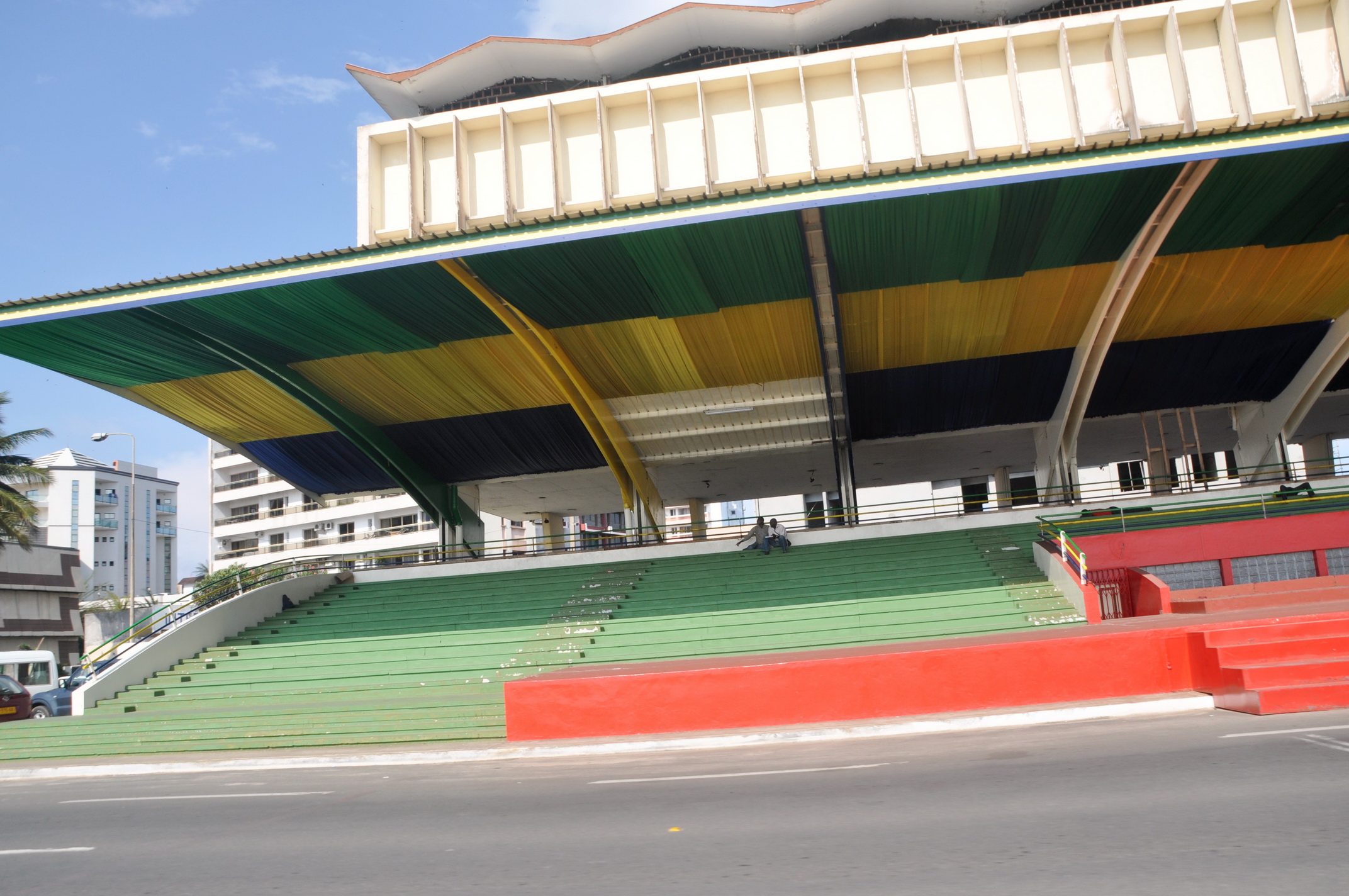
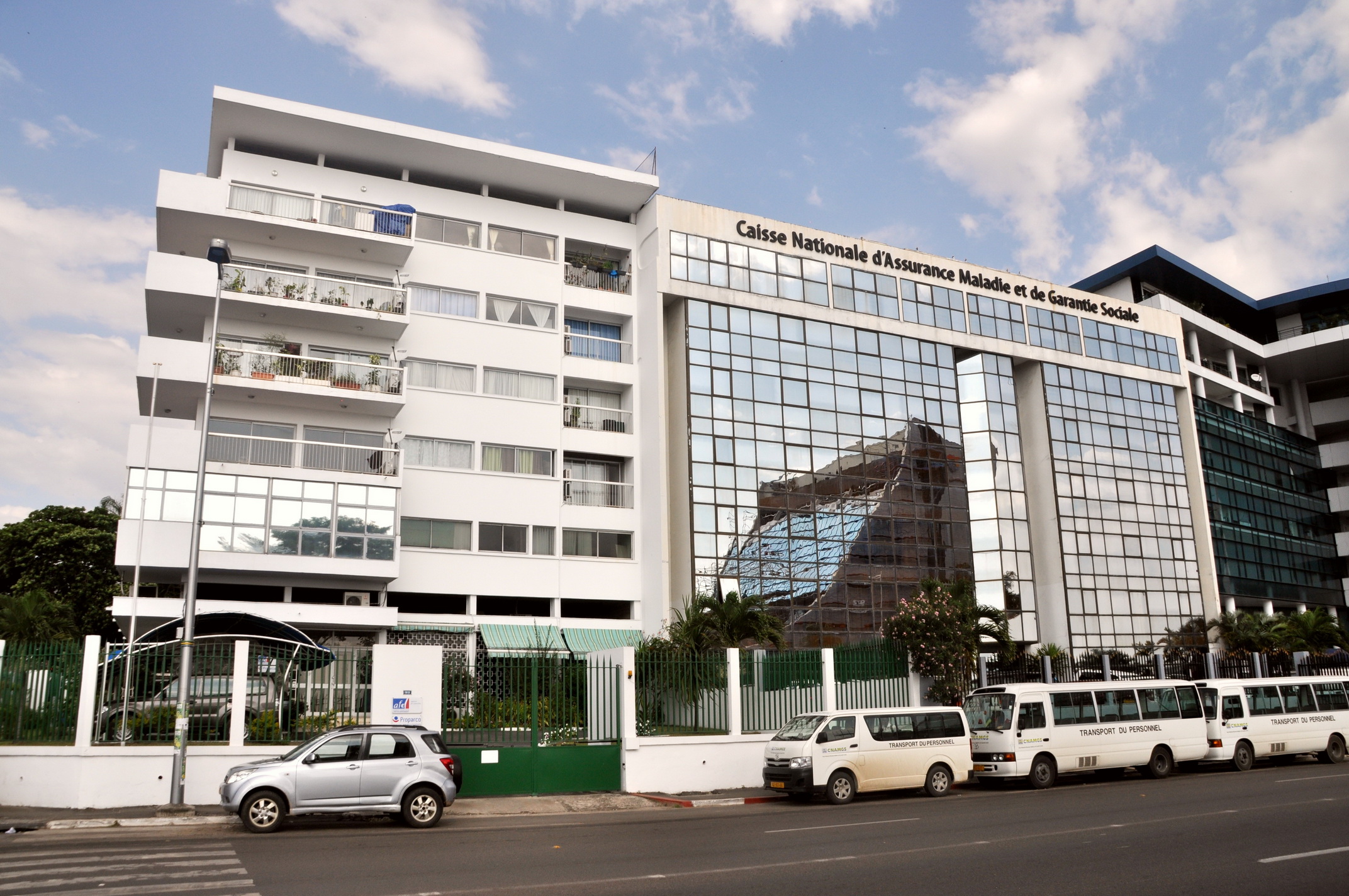
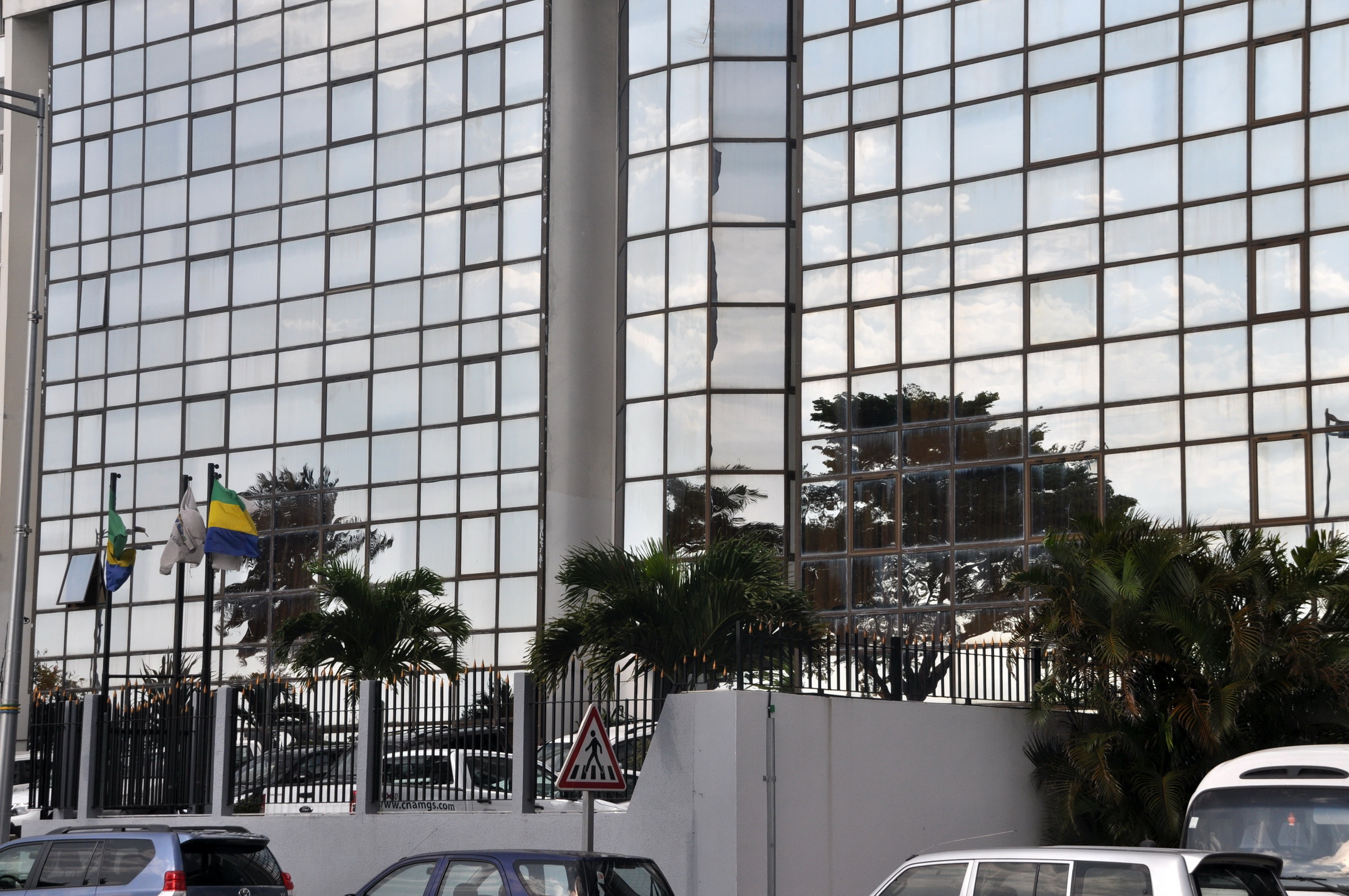
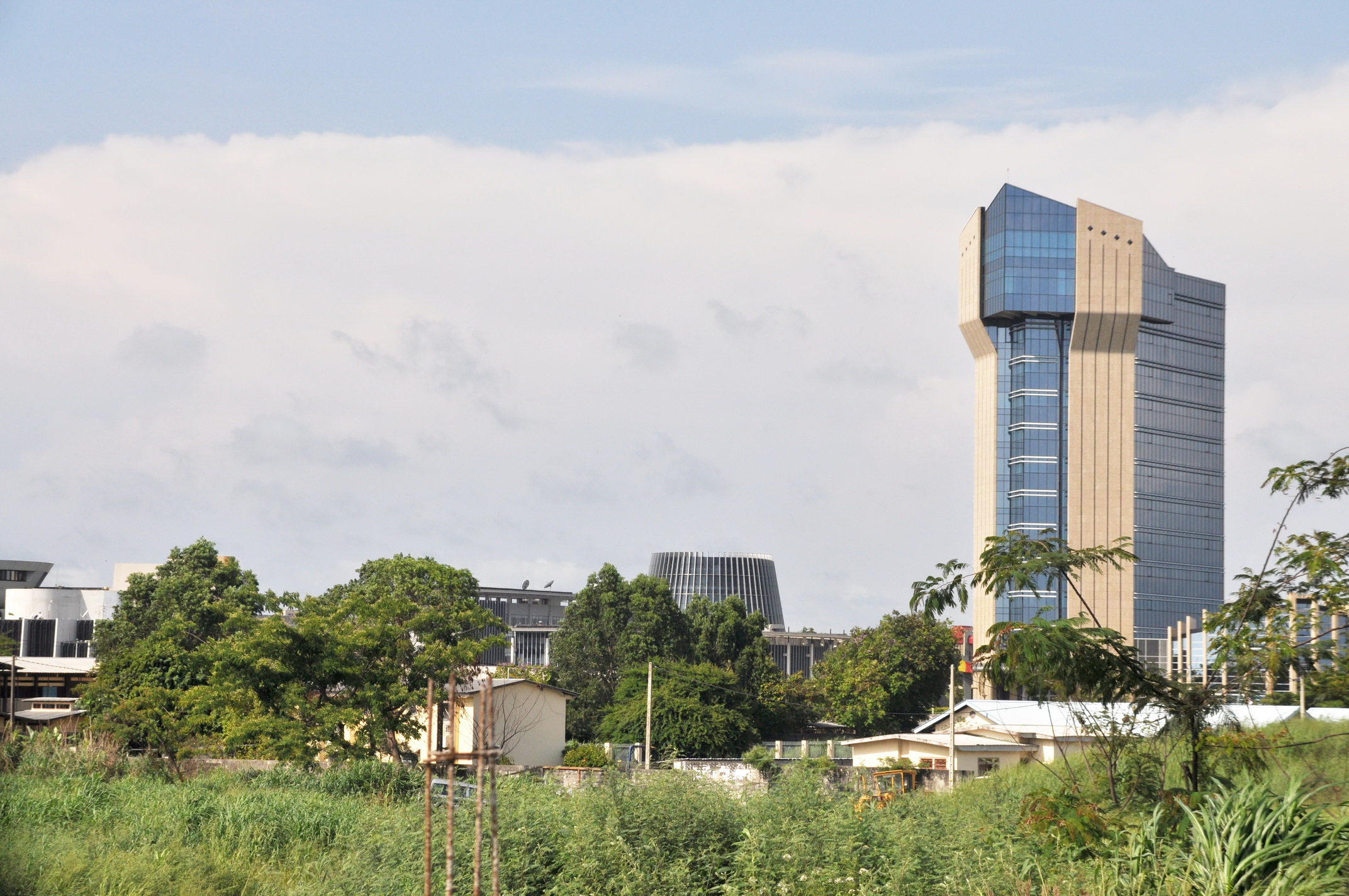
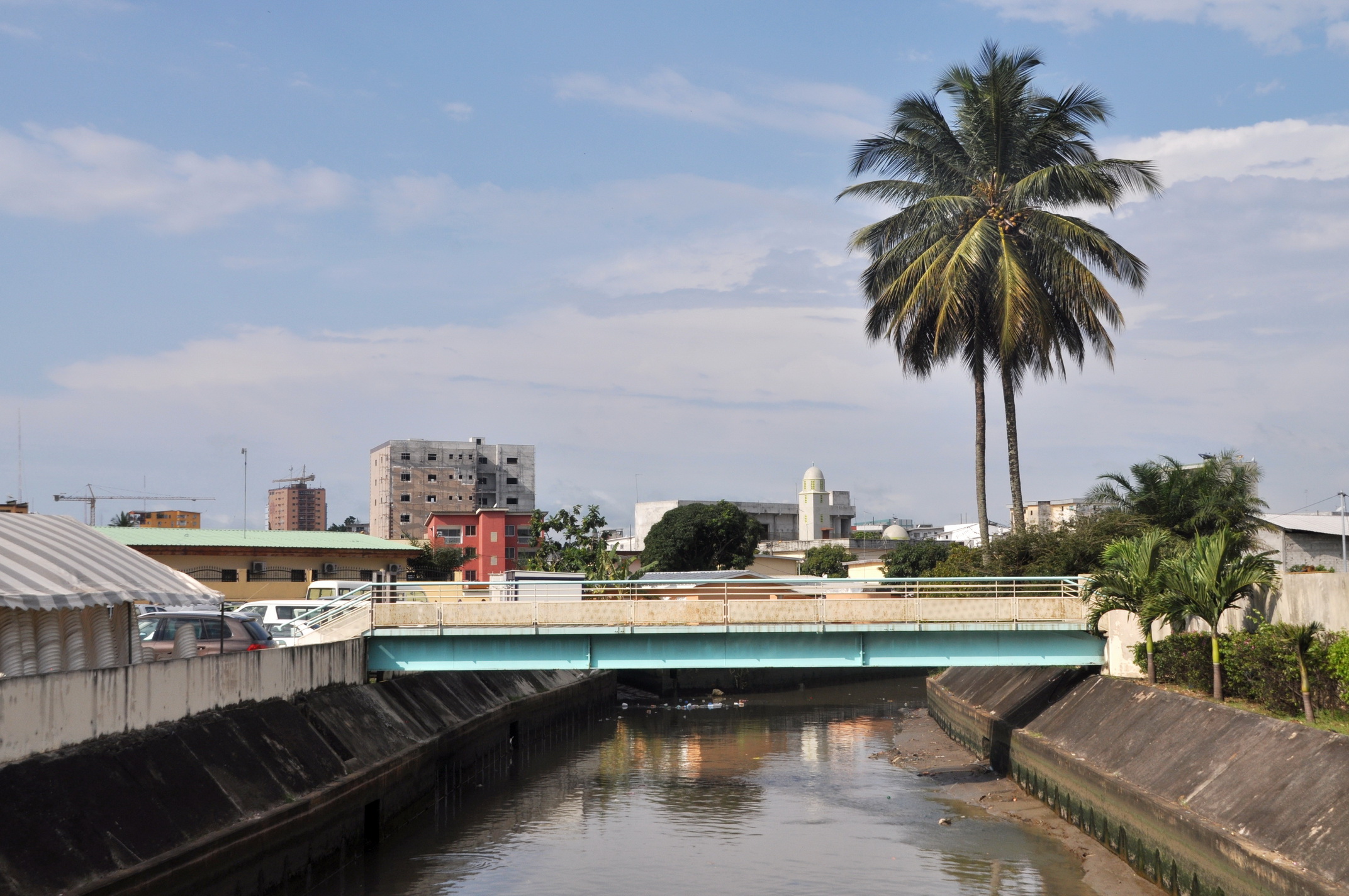
Central Libreville surprised me with its cleanliness and skyscrapers. In a week I’d already grown unused to this kind of civilisation.
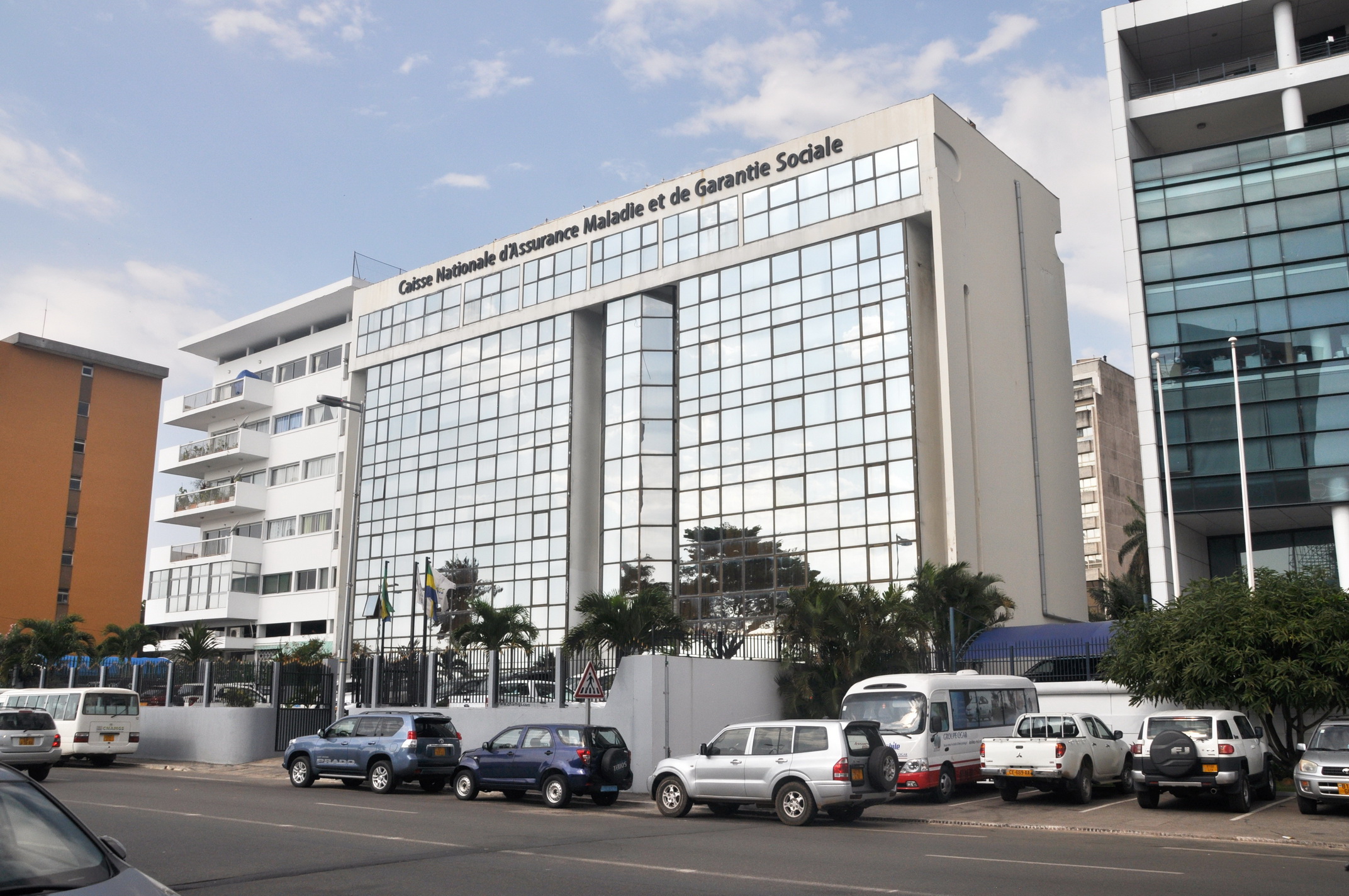
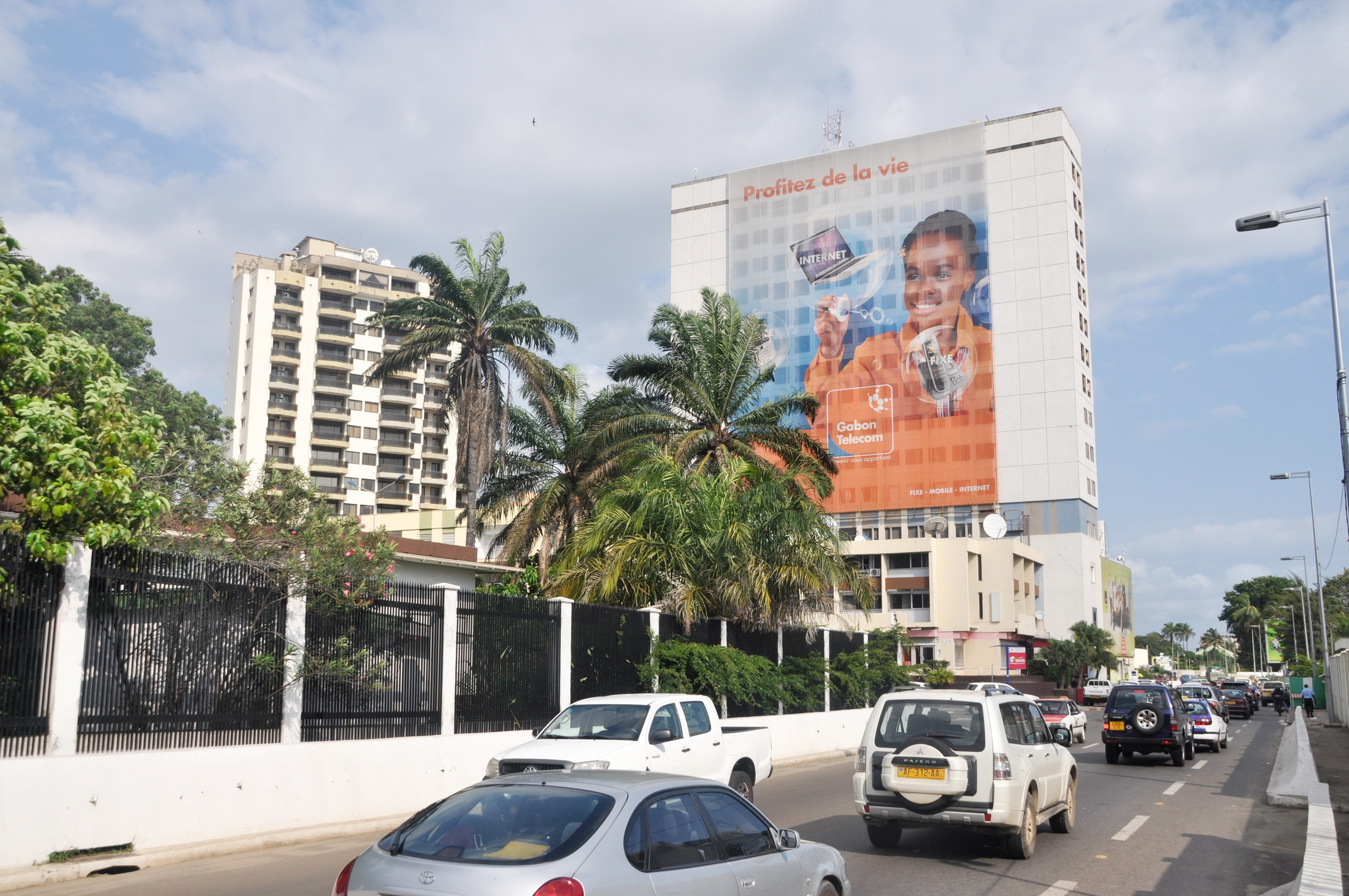
I managed to get more cash and buy a great pile of souvenirs. There was really only one little market where you could do that. Everything was rather expensive but of very good quality. Masks from different countries, each made for a particular purpose.
I particularly liked the idea of wish masks. There were male and female ones. Even the money had a woman’s wish on one side and a man’s on the other.
Besides masks there were batiks, bright African paintings, stones and cast brass.
Individual items cost five to fifteen thousand francs.
Libreville had a modern supermarket where you could buy anything, although European goods were much dearer than in Europe. You could manage without them; the local food was good. As a last purchase I bought fruit and vegetables to make full use of my 45 kg baggage allowance. There’s a good produce market right by the airport.
Finally I tried to buy some clothes to replace the ones that had acquired a fairly powerful smell. Unfortunately people here were smaller than me and the gorillas still went about naked, so there wasn’t enough demand for a supply. I found a few things anyway.
All I had to do now was stay awake until the plane arrived at three in the morning.
I lay down on the grass to rest. Africa was still warm around me; there was that beautiful sky and the sound of cicadas. I think I’d celebrated the right way this time. Thousands of kilometres on dirt roads in Africa, gorillas and chimpanzees, an eclipse, people in the forest and a leopard, escape from a jail, a shipwreck and roast monkey. I wouldn’t forget any of it. I’d dream about it even when what woke me in the mornings was no longer a bathing elephant but the alarm clock bringing me back to a dark, cold autumn.
Then there I was on a PrivatAir flight. A soft business-class seat, champagne. We were in the sky over Equatorial Guinea, over the very places I’d been escaping from that morning.
I flew back to Russia. The customs people found the telescope. I tried to explain to the young woman on duty that it wasn’t expensive, I was within the allowance, I’d taken it out of Russia in the first place, and there wasn’t another eclipse for a year, so I had time to discuss it. It turned out to be hard to explain even in Russian. “You have to understand,” she said. “I can’t let it in. What if you’re lying and it’s a part some big factory can’t run without, and I just let you take it through? And you have that expensive camera as well.”
As a last resort I showed her the pictures on the laptop and smiled. Oh, and the camera is broken, I said. It doesn’t work. And as we all know, it’s simpler without a camera. She nearly cried. Get out of here with your telescope. I’ve got enough to put up with.
Gabon turned out to be a very interesting country and a friendly place. The richness of its national parks is extraordinary. I didn’t have to worry about lions, which suited me. And there were welcoming people, good roads and a wonderful climate.
There weren’t many tourists and we weren’t treated as cash cows. It was an unexpected discovery. It was somewhere I’d happily have brought the family.
I thought I understood why, in 2013, Gabon asked me for a bank statement and HIV paperwork, whereas Equatorial Guinea wanted a police certificate. In Gabon I found affection and joy; in Equatorial Guinea I found jail and hostility. In Gabon my adventure might have ended in someone’s bed; money and good health would have come in handy. In Equatorial Guinea I nearly came away with a criminal record. Well, enough of remembering Equatorial Guinea. I’d rather think about Gabon. I’d recommend it, especially if you speak French. At the time I thought people had better hurry before falling oil prices brought the place down around them.
And, by the way, perhaps I should go to the Congo when I turn 60 after all?